Rattlesnakes… Lots of Them: Eek!

The eastern diamondback rattlesnake has been known to grow almost eight feet long.

I’ve have been to Albuquerque, New Mexico several times over the years. One place that I always wanted to go but never managed to was the American International Rattlesnake Museum. They have one of the largest collections of live rattlesnakes in the world. Could it be that whoever I was traveling with didn’t share my enthusiasm?

Peggy, however, is game for almost anything and snake images almost always show up among the petroglyphs that fascinate her so much. So off we went to the museum two weeks ago. 

Peggy even bought a rattlesnake T-shirt from the museum. Is there a message here?

That I have a certain ‘fondness’ for rattlesnakes isn’t news to my blog followers. I’ve had numerous encounters with them over the years and have written about several. I’ve even been known to get down on my stomach when they are crawling toward me so I can get better head shots. (Peggy gets a little ouchy about that.) I suspect my attitude would be considerably different if I’d ever been bitten by one. Rattlesnake bites can be deadly, or at a minimum, extremely painful. It’s not something one wants to test. 

Fortunately, rattlesnakes come with an early warning system. They rattle. The rattles are made up of keratin, that’s the same thing your fingernails are made of. When irritated, the snake vibrates its tail, knocking its rattles together. It makes a very distinctive sound, one you never forget, one guaranteed to shoot your heart rate up faster that a skyrocket on the 4th of July.

Each time a rattlesnake sheds its skin in grows a new rattle. This makes up for ones it has lost. The bigger the snake the bigger the rattle.
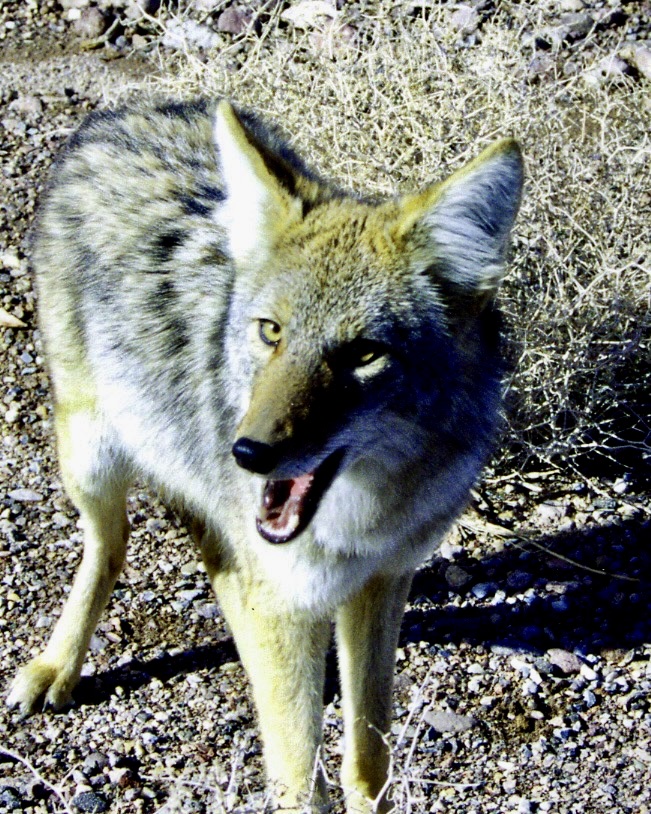
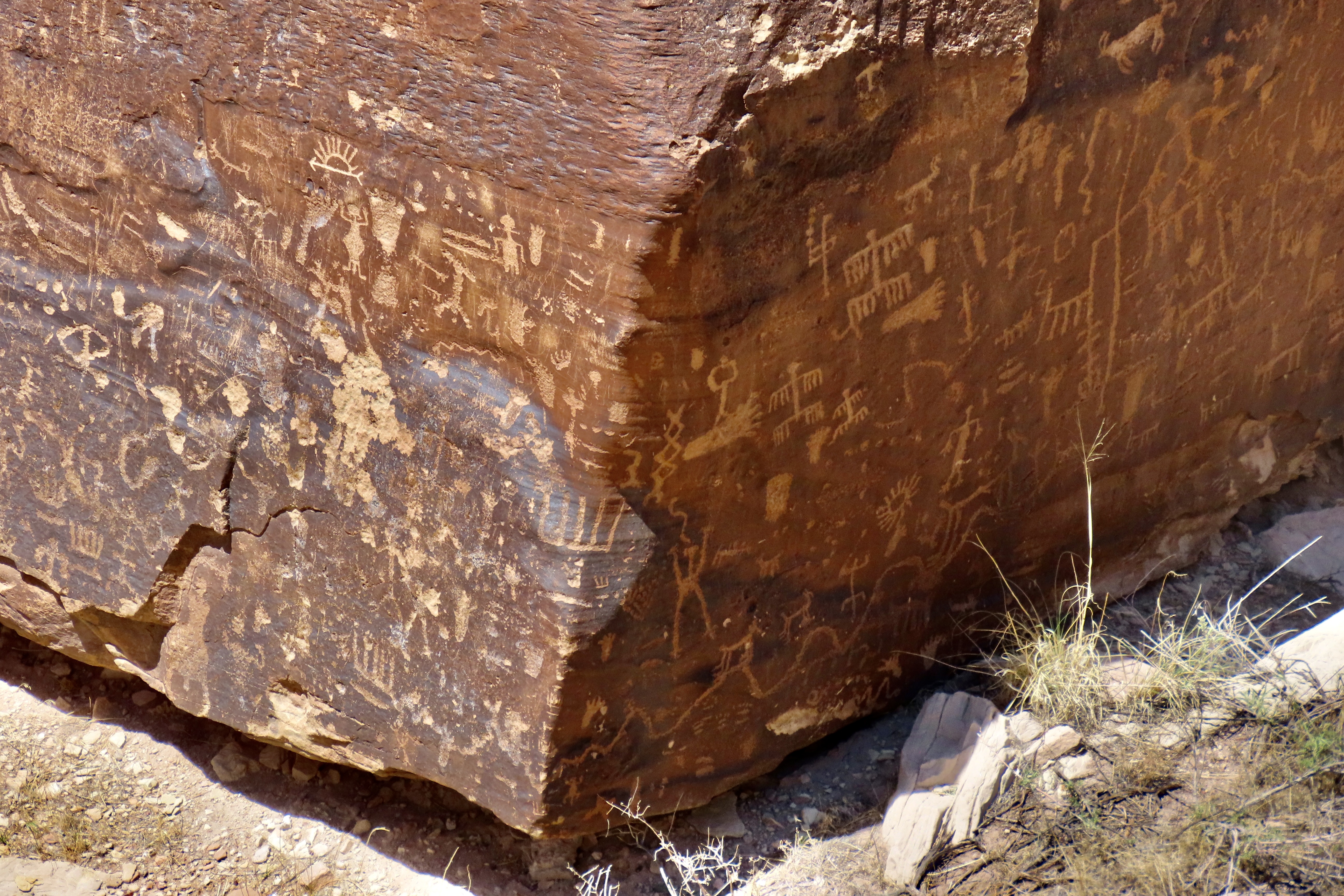
The Ancestral Puebloans included a rattle on this petroglyph of a rattlesnake in Petroglyph National Monument, Albuquerque. It’s probably a coyote or a dog beneath the rattler, obviously not worried.

A rattlesnake you see coiled up, rattling its tail, and ready to strike is worrisome, to put it mildly. It’s not a problem, however— as long as you stay clear of its strike zone, which can range from half to two thirds of its body length. For a six foot snake (which is a very big snake), that would be from 3 to 4 feet. If you want to check this out, use a long stick. I have. (Don’t try this at home, kids.)

One you can hear but can’t see is a quantum leap scarier. I stepped on a dead log once ‘that started to rattle’ and found myself an olympic winning 15 feet down the trail before my mind registered snake. There is some evidence that our fear of snakes is instinctive. For example, have you ever come close to stepping on one you didn’t see in advance. Did you find yourself thinking, “snake, maybe I should be concerned.”

Odds are your reaction was more like this guy from another petroglyph at Petroglyph National Monument. Eek!

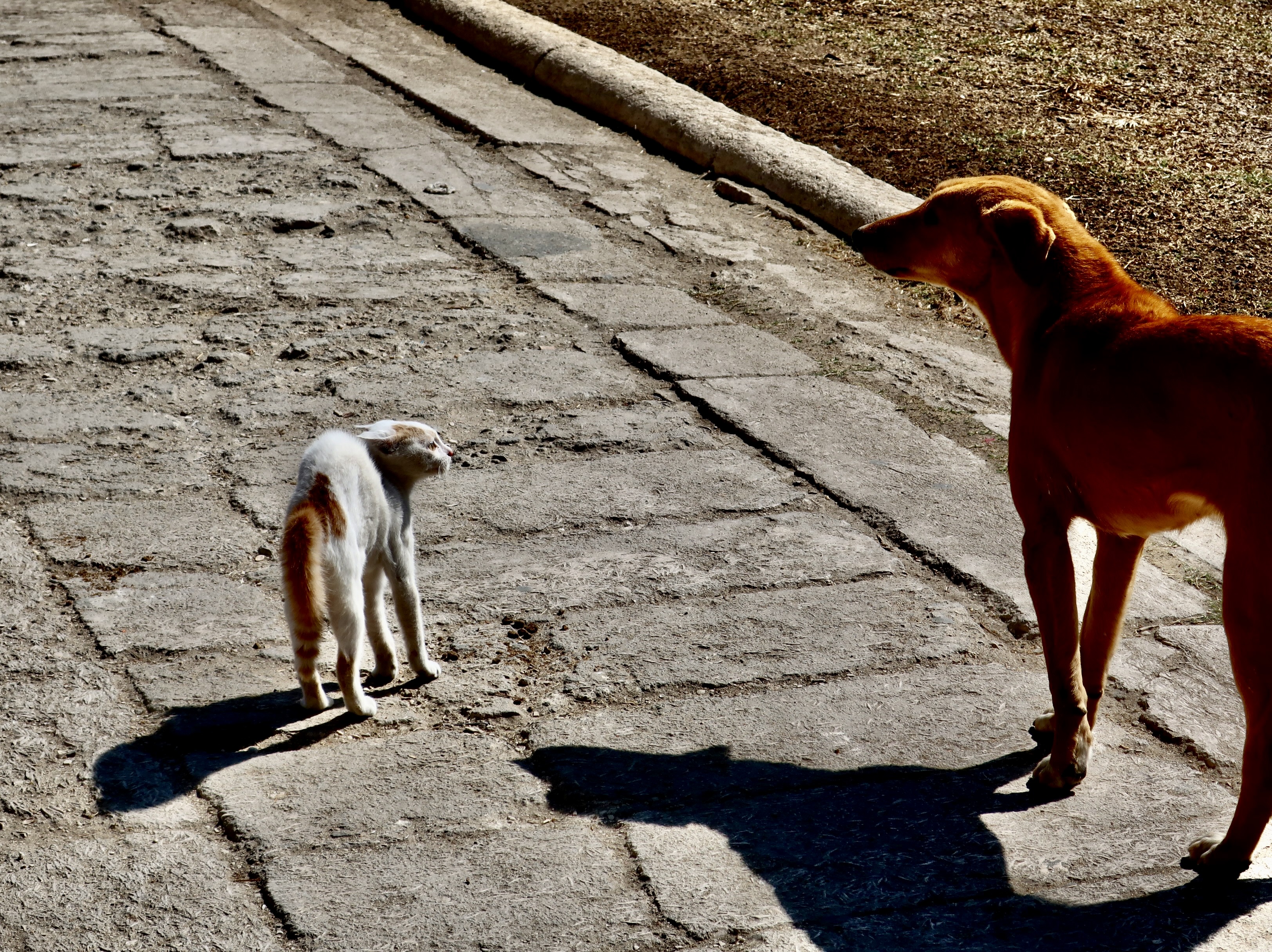
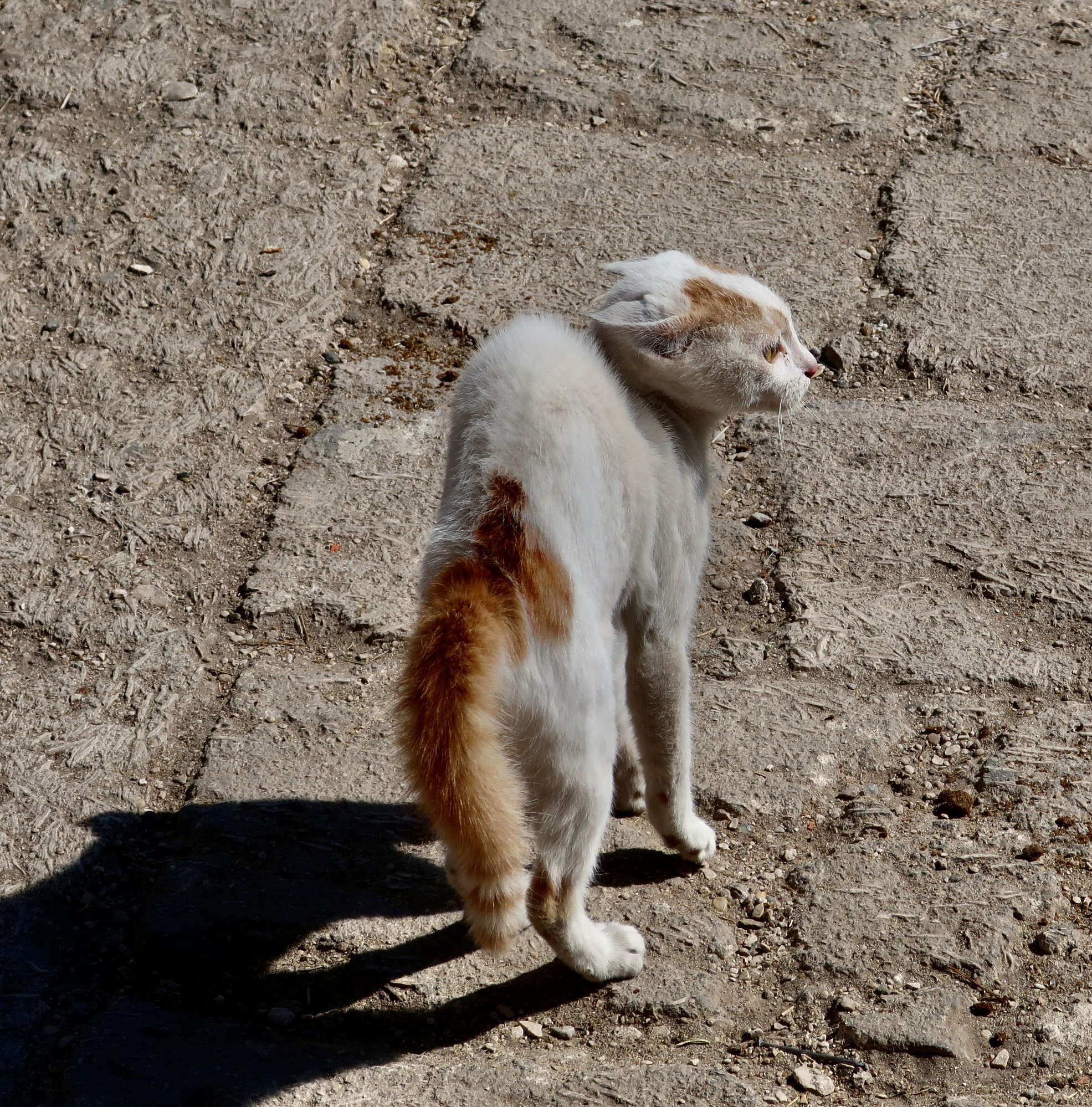
When I was a Peace Corps Volunteer in West Africa, I had a cat named Rasputin that proved the hypothesis about fear of snakes. I discovered if I took the old fashioned spring off my back door and rolled it toward him, he would leap 6 feet into the air and land on our couch or other piece of furniture well out of reach from the deadly ’snake.’ Being scientifically oriented, I did it 3 or 4 times just to make sure. 

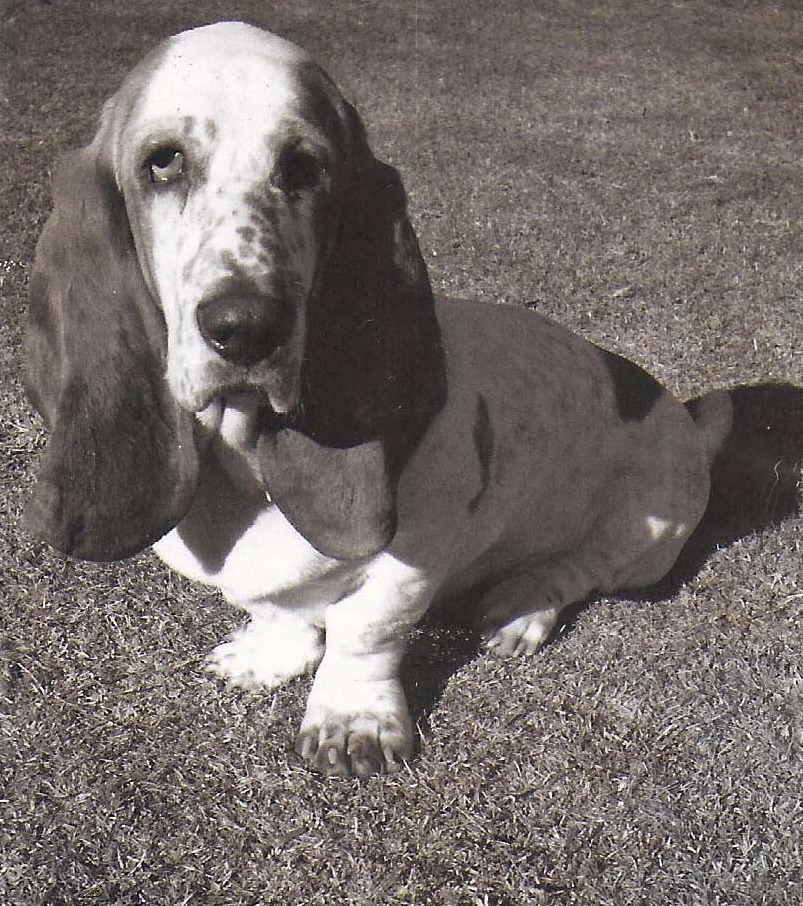
On the other hand, back in California I had a basset hound named Socrates that seemed to counter the theory. I was hiking with him one day at Folsom Lake near Sacramento when I noticed him walk out on to a granite ledge and start sniffing down into the cracks. Suddenly he began barking like the baying hound he was: Loud. Simultaneously, the rock became alive with rattles. Socrates had discovered a rattlesnake den. They can get big, big like in a hundred snakes. Some have even been found with a thousand. Talk about an Indiana Jones’ nightmare…

It was for me, as well. “Socrates, come here!” I demanded. And then again. And again. Each time louder and more desperate. All, to no avail. He just kept barking louder. Damn, that dog could be stubborn. Finally, there was nothing I could do but walk out on the buzzing rock, grab him by the collar, and bodily drag him off. I was lucky I didn’t pee my pants. Had I not immediately put his leash on and pulled him away, he would have gone right back to barking up a storm at the irritated, poisonous serpents.

Here are a few facts on rattlers: 

  • There are between 32 and 45 species of rattlesnakes, many of which live in the Southwest where Peggy and I just spent five months wandering around outside. They can range in size from 15-24 inches like the pigmy rattlesnake of the South up to close to 8 feet like the eastern diamond back. Peggy’s brother John and his wife Frances found one of these monsters in their backyard in Texas. 
  • They are superb predators. While lacking an outer ear that would allow them to hear their prey, they have an inner ear that allows them to sense the vibrations of a prey’s movements. Vertical pupils aid in depth perception for strikes and pits on the side of their faces serve as heat detectors which allow rattlers to see their prey in pitch dark situations. Being members of the pit viper family they have large, sharp, hollow fangs that are designed to deliver venom. The fangs fold back against the rattlesnake’s mouth when not in use.
  • And finally, here’s a long word for you to impress your friends with: ovoviviparous. It means the rattlesnake mommy hatches her eggs inside of her body and her babies are born alive, ready for action as soon as they can bite their way out of the protective sack they are born in.

And now for a few of the photos we took at the museum.

The museum had a book of Gahan Wilson cartoons on snakes.
One way to recognize a rattlesnake, beside the obvious rattles, is by the distinctive shape of its head, which it shares with other pit vipers.
Okay, a bit scary.
Beautiful brown.
Coiled and ready.
Note the vertical pupils.
Moving along.

Plus a couple of snakes that weren’t rattlers, but we were fascinated by their colors.

An albino milk snake.
And this striking green snake which, as I remember, was a python. (Don’t quote me.)
And finally, Peggy and I in front of the museum, which is located in the historic section of Albuquerque. Not sure why they chose the skull and string of peppers instead of a rattlesnake but they are symbols of New Mexico. Next up, we will conclude our posts on Canyon de Chelly National Monument.

Canyon de Chelly National Monument: Beauty, Culture, and History… Part 1

Canyon de Chelly (pronounced shay) is famous for its spectacular canyon views and ancient history. Today, the national monument is jointly operated by the Navajo Nation (who owns the land) and the US Government.

Peggy and I have visited Canyon de Chelly twice, first in 2019 in October and then this year in June. In 2019 we drove the South and North Rim roads and then explored the inner canyon. The two roads are open for anyone to drive. The tour of the inner canyon requires that visitors have a Navajo Guide along. Our friends Tom and Lita from Sacramento joined us in June where we did the inner canyon tour but, unfortunately, didn’t have time for the rim drives. I’ve opted to use photos from both visits.

We are going to feature the scenic side of the canyon today. Next week, we will look at the canyon’s ancient history in terms of pueblos that the Ancestral Puebloans built in the canyon and petroglyphs and pictographs from both the Puebloan and Navajo time periods. I also want to discuss the Long Walk where Navajo were forced to abandon their homelands to settlers pouring in from the eastern US. It’s the type of story that President Trump is now trying to ban from national parks and monuments because it detracts from his concept of a great America.

But first, the beauty.

We admired this prominent landmark from inside the canyon in both the summer and fall. First summer…
The long view. Not bad, huh.
And now for fall.
Both summer and fall were beautiful. Do you have a preference? I confess to being taken more by the contrast created by the fall foliage, but it’s close.
Fall doesn’t get much more colorful than this.
I thought green fit this tree well, however. The stripes on the wall are created by minerals left behind by flowing water.
Here, they ‘painted’ an unusual picture worthy of a modern art gallery.
This was one of many rock monuments found in the canyon. Note the petroglyphs on the bottom. It is no surprise that the Navajos and Ancestral Puebloans selected this dramatic rock as a canvas.
Looking up provided this view of an arch.
At first, I felt that the tracks left by all of the visitors took away from the beauty. There were bunches. But then I found the shadows created by the sun made them photogenic. Four wheel drive was essential.
Another example.
Rocks breaking off the walls add to the beauty and mystique of the canyon. It takes little imagine to turn these into a tree.
Speaking of imagination, mine turned this old car into an alligator disguised as a flower box lurking in wait for a tourist dinner. ( Admittedly, my imagination can be a bit wild at times.)
Navajos live and farm in the canyon. Some offer horse rides. Our guide on the fall trip raised horses and rented them out for Western’s. He had also performed in some of the movies.
The Navajo raise sheep up on the rim of the canyon.
Driving the south and north rim roads of Canyon de Chelly provides a totally different perspective on the canyon and its amazing rock formations.
Close up.
There was no end to the variety of patterns in the rock.
Sometimes it looked as if the rock was melting.
The most recognizable monument in Canyon de Chelly is Spider Rock, a 750 foot (230 m) spire that is said to be the home of Spider Woman, an important figure to several different Native American tribes. To the Navajo, she is a helper and protector. It’s also said that they tell their children that she will catch them in her web and eat them if they are bad. Way to go Spider Woman. Grin. You can see one of the canyon’s roads working its way up the canyon.
A close up of Spider rock.
More of the canyons interesting rocks lit up by the late afternoon sun.
A last view of the inner canyon in fall.
We’ll wrap this post up with a photo of sunset from the canyon rim.
Our next post will be on the pueblos and petroglyphs of Canyon de Chelly.
I may, however slip in a quick post on one of my favorite subjects: Rattlesnakes.

A Journey Back in Time… Backpacking into an All-Time Favorite at 75 and 82: The Five Lakes Basin

One of many lakes found in the Tahoe National Forest’s Grouse Ridge Non-Motorized Area where Peggy and I went backpacking last week. I’d asked Peggy what she wanted to do for her 75th Birthday. Her first answer was to visit our son Tony and his family in Florida, which we did and had a great time. The second thing was go backpacking! “I’ll pass on the 750 miles you did for your 75th, however, Curt,” she informed me. “I think 7.5 sounds more reasonable.” We laughed. At 82, I also gave a sigh of relief. Possibly you heard me.
Since we were visiting friends and family in Sacramento on a break from our five-month exploration of the Southwest, the Five Lakes Basin was a natural for our trip. This is a view from one of the lakes looking up at the Black Buttes. While there are several ways to enter the Grouse Ridge Non-Motorized area, our normal way is to follow I-80 from Sacramento and take the Highway 20 cutoff toward Nevada City for approximately 5 miles.  Turn right on Bowman Lake Road and continue on that road for 5 miles. Turn right on the unimproved, ultra-bouncy, dirt Grouse Ridge Road for 6 miles until you reach the Grouse Ridge Campground. The road has always been a challenge. This time it featured holes that would eat a VW bug! (Slight exaggeration but not much.)
I’ve been backpacking in the Grouse Ridge/Five Lakes Basin since 1969, 56 years ago. It’s an all time favorite of mine. I actually remember the exact day I started to backpack: July 20, 1969. The day Neil Armstrong took his first step on the moon, I took my first step backpacking near Grouse Ridge. I made it into the Five Lake Basin in 1970 and camped just to the right of this little waterfall.
Twenty years later in 1990, a few months after I had met Peggy, I bought her a backpack for her 40th birthday and took her into my favorite lake. Her only requirement was that I carry in a water bottle full of Harvey’s Bristol Cream Sherry. I don’t know whether it was the beauty of the area or the sherry, but Peggy came to love backpacking and the Basin— almost as much as I do.
This map shows the trail system from Grouse Ridge Campground into Five Lakes Basin and Glacier Lake. Peggy and I followed the Glacier Lakes Trail for her 75th birthday, the Sand Ridge trail for her 40th. In the early 70s, off-road enthusiasts could follow the route I outlined here up to the first lake at the end of Sand Ridge. I did that once with my friends. The following year I watched an off-road dirt bike rider tear up a beautiful meadow doing brodies, which led me to join forces with the Nevada County Sierra Club in advocating for the non-motorized status, an effort that was successful.
Having just finished her 75th Birthday backpack trip, Peggy stands with a big smile at the Grouse Ridge Campground with the Black Buttes behind her. We camped just beneath the highest peak at Glacier Lake. The Five Lakes Basin lies just beneath Glacier Lake. (Her T-Shirt features Big Foot, the world’s hide and seek champion.) I’ll include more photos of our trip at the end of this blog.

I’ve done a number of posts on the area over the years. People researching the Basin are bound to come across them. In fact, I was amused a couple of days ago when I was trying to remember when glaciers carved the basin with its lakes and googled the question. 20,000 years ago was the AI response. I looked up the source, as I usually do with AI answers. It was Wandering-Through-Time-and-Place. A fairly reliable source, I’d say. Grin.

I noted in an earlier post that the Grouse Ridge Non-Motorized Area is well-loved. Maybe too much so, especially for someone like me who prefers his/her wilderness rugged, wild and relatively people-free. But I make an exception for this region. It’s an easy place for people to get to and is very backpacker-friendly for families and newcomers to the sport. It serves as a great introduction. There is considerable value in this— for the people of course— but also for our world. People who experience the wilderness in a positive way are much more likely to appreciate it, and want to protect it, which is critically important for ourselves, our children, and future generations. As I have emphasized over and over in this series.

Especially in this era when the Trump Administration wants to open up national forests, BLM lands, and national monuments for logging, mining and housing developments. His most recent target is roadless areas. Information this month suggests that the administration is moving to repeal the 2001 Roadless Area Conservation Rule, opening up approximately 58 million acres of national forest lands to road building and logging. I doubt it will include the Grouse Ridge area. But it could.

Here are some photos taken from my posts that emphasize what might be lost.

The serenity of the Five Lakes Basin’s ‘biggest little lake’ could be shattered by the sound of chainsaws. When I see this photo, I always think of Gary Snyder, the Nobel Prize winner, “poet laureate of Deep Ecology,” and who— along with his friends Jack Kerouac, Allen Ginsberg and Alan Watts— was prominent in introducing Zen Buddhism to America. Living on San Juan Ridge near Nevada City, he fell in love with the Sierras and the Grouse Ridge area in much the same way I did. He even wrote a poem about the Five Lakes Basin:

Old Pond

Blue mountain, white snow gleam
Through pine bulk and slender needle-sprays;
little hemlock half in shade,
ragged rocky skyline,

single clear flat nuthatch call:
down from the tree trunks

up through time.

At Five Lakes Basin’s
Biggest little lake
after all day scrambling on the peaks,
a naked bug with a white body and brown hair

dives in the water,

Splash!

Like Snyder, my spiritual views of the world are more Eastern than Western, but it really doesn’t matter what your religious perspective is when it comes to the value gained by connecting with nature. I agree with John Muir’s statement: “The clearest way into the Universe is through a forest wilderness.” Here, in this photo by Peggy, I am reading Hermann Hess’s classic about a young man’s spiritual journey at the time of Buddha, Siddhartha.
I suspect that Snyder would love this twisted manzanita I found near his biggest little lake.
And this ancient juniper.
I’m a fan of reflection shots. Every lake in the Five Lakes Basin provides examples of why. This is morning on a lake I once named Peggy’s since I couldn’t find a name for it.
Evening on the same lake.
Just for fun, I’ve discovered that turning reflection shots on their side can provide interesting results. This one had a wonderfully-fat-monster-insect look. Start with the feelers and work down.
Another example from a normal perspective.
Flipped it on its side. Beyond the monster look, there was the woman in a green dress with the long green hair.
The basin is filled with granite. I liked the green contrast of the manzanita growing on the boulder.
As you might imagine, Peggy and I have taken hundreds of photos of the Basin and Non-Motorized Area over the years, but I’ll conclude our quick tour of the basin with a sunset photo and move on to Peggy’s 75th Birthday trip to Glacier Lake.
Peggy poses for her ‘official’ backpacker photo looking snazzy. Note the hiking sticks (poles). ‘We don’t leave home without them’ when venturing into the woods. They are essential for balance, even more so as we age. My hips and knees were screaming at me as we made our way down Grouse Ridge, like “What the F are you doing.” (Growing older is so much fun.) The sticks assured we stayed upright.
The area was much drier than we had expected from previous trips in July, thus we were grateful when we came across this meadow. One look and we simultaneously thought CAMP!
One tired, but happy, puppy. Or maybe that should be old dog. That’s my food bag draped across my legs. Camp was set up. We’d had a cup of hot soup, cheese, a beef stick, and a celebratory shot of Irish liqueur. I still had to cook Peggy a post-birthday dinner, but that consisted of boiling water, pouring it into a container of freeze-dried backpacking food, letting it sit for five minutes, and eating. Mmmm, beef stroganoff. All was right with the world. Just don’t ask me to get up! Peggy managed to abandon her Therma-rest seat for this photo. Good thing I married a younger woman.
The next morning we found a snow bank on our way up to the lake. I don’t think Peggy has ever found snow without lobbing a snowball at me!
She followed up by carving a heart with P+C in it. Aw….
The trip up to the lake was relatively easy, considering we took two days to do what is normally a one day trip. (I’ll note here that some of these photos here are from earlier trips since we were only carrying our iPhone to save weight.)
An obligatory photo of camp. Looks peaceful, doesn’t it. Shortly afterwards, a group of 35 teenage girls and their adult leaders showed up and camped next to us. Must say they were relatively quiet, polite, and only spent the night. The most noise was their scream as they jumped into the lake’s snow fed water. While the group size was too large, I appreciated the effort their leaders put into introducing them to backpacking and the beautiful area. They left their camp immaculate.
After the girls packed up and left, we had the camp and lake to ourselves for the day.
While the moon was only partial, at 8000 feet it was like someone was shining a flashlight on our tent at night.
Bone, who had joined us on the trip, insisted on having his photo taken before we headed back for Grouse Ridge.
Naturally, we took a selfie when we made it back to our truck— happy to be back but ever so glad we had gone. That’s it for now. Peggy and I are in Albuquerque, New Mexico for a week before we begin our journey back East. Next up…
Canyon de Chelly National Monument

The Marble Mountain Wilderness: Magnificent Views Up Close and Far Away… Part 2

This is view of Mt. Shasta from the Marble Mountains Wilderness. My 750 mile trek down the PCT gave me northern views of the mountain, western views and and southern views. This was one of the best. Given its mystical/magical look, it’s hardly surprising that tales of beings like Bigfoot, Lemurians, and Lizard people are associated with it. The local Native American Modoc Tribe, whose legends include Bigfoot sightings around the mountain, refer to him as Matah Kagmi, meaning keepers of the woods.I like it. The Lemurians are a New Age creation connected to highly advanced lost continent of beings that live under the mountain. As for Lizard People, think aliens and UFOs.

As part of our series about protecting national parks, monuments and other public lands, I’ve been reading news releases from the directors appointed by President Trump who oversee these areas. It’s not a task I would wish on anyone. It isn’t surprising that the directors all support the president’s objective of significantly reducing many public lands in size and opening up others for profit making operations. That’s why they were appointed.

The news releases are full of statements designed to hide their real purpose. Here’s an example:

“President Trump promised to break the permitting logjam, and he is delivering,” said Energy Secretary Chris Wright. “America can and will build big things again, but we must cut the red tape that has brought American energy innovation to a standstill and end this era of permitting paralysis. These reforms replace outdated rules with clear deadlines, restore agency authority, and put us back on the path to energy dominance, job creation, and commonsense action. Build, baby, build!”

Let’s did a little deeper. By ‘permitting logjam’ and ‘red tape’ and ‘outdated rules,’ he means rules that have been developed to protect our air and water quality, save rare and endangered species from extinction, and maintain areas of great beauty and/or cultural significance that the majority of Americans support protecting. The Administration’s perspective is that these rules get in the way of progress. Who needs clean air or water. “Build, baby, build!”

And how about American energy innovation and dominance? Obviously, he’s not talking about solar, wind and water power. We’ve been moving ahead quickly in the development of clean energy. The Trump Administration is actively discouraging this progress. Incentives designed to encourage their use have been cut. His passion is for coal, gas and oil, all three of which are nonrenewable resources and have been prime factors in the development of global warming that has been having such devastating impacts on the US and the world. The Texas floods of this past week are but one of a multitude of examples.

Several countries in the world have now reached the point where 80-100% of their energy needs are supplied by renewable clean energy. I’d argue that they are the ones achieving energy dominance, one that will last long beyond our nonrenewable resources and is vital to our battle against global warming.

On another subject, it’s interesting that right-wing Republicans played an important role in blocking the administration’s plans to sell off millions of acres of public lands in the West. Here’s what Christopher Rufo, a culture warrior and leading supporter of Trump in in the state of Washington had to say:

“Pre-2016, you’d have the small government argument against a kind of federal domination over the land, but Trump and MAGA is a nationalist movement,” he said. “I think many conservatives are now reassessing these questions, and many of us in the West understand that part of a great nation is the preservation of its natural beauty.” There is hope.

The Marble Mountain Wilderness, the subject of this post, is an example of this beauty.

On the subject of ‘far away views’ seen from the PCT in the Marble Mountain Wilderness, here are two more. These are the Trinity Alps.
Beautifully green.
When I left off in my last post, I was just coming up to Paradise Lake. I was captured by the reflections, in the lake and…
…this outcrop of lime above the lake.
The sign told me that I had left Paradise Lake and was on my way to Marble Valley. It seemed like an easy walk, but don’t quote me. Some photos from along the way.
One of the names of this Mariposa Lily is cat’s ear. It’s easy to see why.
Always a favorite: Penstemon.
The value of this tree isn’t in its board feet, which is how the Trump administration sees it. It is in its beauty. Old growth forests deserve our protection.
I’m glad I wasn’t around when this gorgeous chunk of limestone came rolling down the mountain.
I came on this patch of snow shortly afterward. I planned my trip to allow time for most of the snow along the trail to melt. Hiking in snow is hard and requires extra caution in the summer when it often melts beneath the surface.
The trail then took me past this limestone outcrop up close.
Looking up, a view of Marble Mountain was one of the treats I found in Marble Valley.
As was looking down. Dozens of butterflies in the mud next to a stream provided a photo op.
Close up!
My hike through the rest of the Marble Mountain Wilderness featured hiking across scree/talus covered slopes…
Past serene mountain lakes…
Through a high mountain meadow with an rock filled stream…
And covered in flowers. Including rosy spiraea.
Red mountain heather.
Siskiyou lewisia.
And Western Pasqueflower also known as Dr. Seuss mop heads.
Past more old growth giants,
More mountains,
And forests.
Until I came to this rock. “We’re all mad here. Be you!” Bone, who’s never been anything but, insisted on having his photo taken with the rock. I found several of these rocks along the way, usually near a trailhead. I was getting excited.
Peggy would be somewhere near with her welcoming smile and cold beer.
She caught a photo of me hoofing it up the mountain!
I got an extra long and tight hug for having finished/survived my first solo section of my 750 mile Trek down the PCT. And a cold beer. Cheers.
Sunset in the Northern Sierra Nevada Mountains.
As you read this post, Peggy and I are on a backpack trip into the Five Lakes Basin north of I-80 in the Sierra Nevada Mountains. It’s where I made my first ever backpack trip in 1969, a while ago. It’s also the first place I ever took Peggy on a backpacking trip. That was in 1990 just after we met. She requested that we hike in to the basin as part of her 75th Birthday Celebration. This is a photo of the Black Buttes that overlook the basin at sunset. The trip will be our next post. Can a 75 year old and an 82 year old still pull it off? Grin. Wish us luck!
Our post after the Five Lakes Basin will take you into the Canyon de Shelly with its towering cliffs and marvelous pictoglyphs and petroglyphs, which brings me to a reminder: If you enjoy word searches or know someone who does, Peggy’s new book on the unique and magical petroglyphs of the Southwest makes an excellent gift, either for yourself or a friend. It’s available on Amazon.

Hiking the PCT through the Marble Mountain Wilderness… Part 1

Today’s post is on California’s Marble Mountain Wilderness in northwestern California. I led backpacking treks through the area in the 80s and 90s but the photos on this blog were taken from my 750 mile backpack trip down the PCT in 2018. I started this section of the trail at the Grider Creek Campground in Klamath National Forest about 12 miles from the wilderness border. A significant portion of my trip up to the wilderness was a pleasant hike along the creek. Big Foot, towering forests, flowers galore, and butterflies entertained me along the way.

This post is part of Peggy and my series on national parks, monuments, wilderness areas and other public lands with an emphasis on their unique beauty, geology, flora, fauna and history that makes them so important to us today— and to our children, grandchildren and future generations.

There are a couple of interesting developments in the Trump Administration’s efforts to sell off public lands and post signs at national parks urging visitors to report on any negative historical signs or comments about the past. An example of the latter would be the forced removal of Native Americans from their homelands to make space for settlers from the East.

The Sierra Club reports that the plan to sell off public lands was stripped from the Administration’s ‘Big Beautiful, Mega-Deficit Bill’ in the Senate. This doesn’t mean that the Administration won’t move ahead in selling lands by claiming it doesn’t need permission from Congress.

As for public comments generated so far by the signs, an analysis done by the National Parks Conservation Association and summarized in the Washington Post shows strong support for the parks:

The comments overwhelmingly praise the parks as beautiful national treasures, with dozens complimenting rangers for their knowledge and navigational help. Many called for undoing funding cuts and rehiring staff who were fired by the Trump administration.”

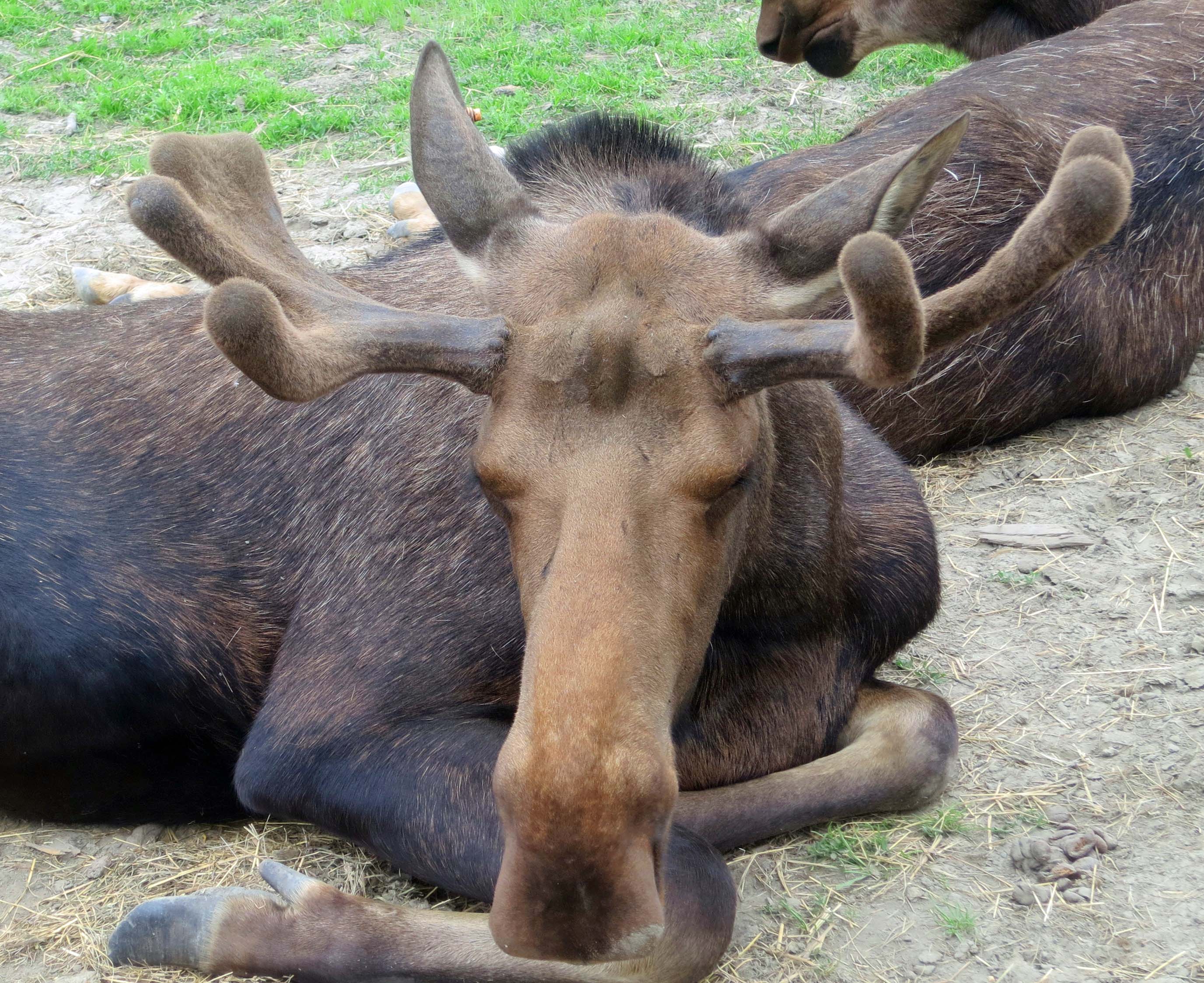
On the other hand, some felt that there were too many mosquitoes and not enough moose.

I think the message to the Administration might be “to watch what you ask for.” Whether the Administration chooses to report on the responses, select out the ones that support its policy, or simply bury the results, is another issue. I seriously doubt that it will report on the overwhelming support Americans show for national parks and other public lands.

Just before my solo trip through the Marble Mountains, Peggy and I had concluded a 60 mile section of the PCT from Mt. Ashland in Southern Oregon to Seiad Valley in Northern California. Naturally, we had to reward ourselves. Cold beer was part of it. And no, I didn’t drink the other five! Just two. Our travel van is behind us. We had parked it in Seiad a few days earlier. Peggy would take over driving it from here as my backup ‘trail angel’ and meet me once a week for resupply and a break.
Eating was another reward. The Seiad Cafe welcomed through hikers with its ‘Infamous Seiad Pancake Challenge.’
There’s this thing about long distance hiking, you get hungry. Think about burning 5000 calories a day and taking in around 1500. There’s a deficit. By the end of my 750 mile trip, I resembled an escapee from a concentration camp. Each time I completed a section of the trail I stuffed myself. I had permission. I felt entitled. And manners? Grin. I was goofing around here. The actual pancake that the Seiad Cafe offers as its challenge is umpteen sizes bigger than the one I am chowing down on. Eat the whole thing and it’s free.
A little hallucination can be expected when you are out on the trail for weeks or months. Especially if you are hiking by yourself. This handsome fellow was hanging out in the small Seiad Store where we bought the beer. That’s when I decided that a six pack was called for.
Peggy drove me up the six miles to Grider Creek camp from Seiad. It was ‘cheating’ in PCT lingo, where every foot of the 2, 650 mile journey is supposed to be walked, even if it’s walking down a paved or dirt road. Through-hikers take that seriously. Admittedly, I was under pressure to reach my goal of backpacking 750 miles for my 75th birthday, but, truth be told, my trip was primarily an excuse to be out in the woods. This was the first section of the trail I would be hiking alone. Peggy was a bit nervous, as were our kids. Me? Not so much. I had done lots of solo trips over the years. Still, at 75… Okay, I was a little nervous.
I started out slowly.

Once people got over their concern about my hiking alone, they wanted to know how in the world I would entertain myself. It’s easy. Just be aware. Walk quietly. Explore your surroundings in detail with your eyes, ears, nose, and even touch. There are always things to discover. They can be entertaining, educational, beautiful, or a combination—like this snail. Or they may present something of a conundrum, like the image below.
This had a wow factor of 10. I came across the image in a burned tree trunk and could only wonder. Was it there before the tree burned? Was it a natural growth of the tree or had it been carved. I tend to think the latter, but over the years, Peggy and I have seem some amazing images created by nature. Then I let my imagination run wild. I was traveling though Bigfoot country. A number of ‘sightings’ had been reported in the Marble Mountains over the years. Could this be a self-portrait by Bigfoot!?
The many moods of Grider Creek caught my attention many times: Its beauty, the unique character of a riparian habitat, the sound of rapids, even the cool touch of its water. I took a break and dangled my feet in the creek.
Trees provided shade for my hike up the creek. The first one I stopped to admire was this madrone. If you come on one, be sure to run your fingers over the smooth bark. It borders on sensuous.
Old growth trees reached for the sky. Hopefully, Trump’s plans to open up millions of acres of new forest service lands for cutting down trees won’t include these beauties. Lumber companies drool over these giants with their potential for high profits. So what if they took a couple of hundred years to reach their size. Or a thousand. Getting to the trees would involve bulldozing a road up the creek.
Even the leaves were impressive. Some of them came close to rainforest size. I liked the light and shadow contrast here.
Then there were flowers galore, a lot more than I can put in this post. But here are a few. This is golden brodiaea, sometimes known as prettyface.
A thimbleberry with its future fruit in the center.
Scarlet Gilia.
And snow brush ceanothus that a butterfly has apparently captured and is claiming, “Mine, all mine!” What I noticed when I looked at the photo, however, was its long proboscis buried in a flower sucking up nectar. The proboscis rolls up when not in use, like a party noisemaker. This was the first of many butterflies I would meet along the trail.
And finally, I have to say, the hike up into the mountains was one the most pleasant I’ve experienced over the years. In the Sierras, especially on the east side, it seems like the first day is always straight up.
My first priority was water. It had been a few miles since I left the river behind. I drank the second third of my water supply and went in search of Buckhorn Spring, which as I recall was a few miles ahead.
And here it is, the Buckhorn Spring— a 2 by 3 foot pool with a muddy bottom and a bunch of happy water bugs scurrying around. Appealing? You bet! The water was fresh and cold and I was carrying a water filter to take care of bugs, or more nasty things like Giardia. In 15 minutes I was sipping pure water that was a match for anything you might get out of a faucet or buy from a grocery store— or better. And much more appreciated. In addition to filling my water bottles, there was plenty for cooking. I had done my miles for the day and could settle in for the night. I was one happy camper!
I was up early the next morning and on the trail by 7:00. Through-hikers, who have to average between 20-30 miles per day, tend to get up and be on the trail as soon as there is enough light to see by. Some even get up earlier and walk their first miles using a flashlight. I did 15, which accommodated my years and allowed time for lollygagging. My first objective of the day was to hike over a pass just to the right of the seemingly tiny peak in the middle of the photo. Part 1 of my post on the Marble Mountains ends there: Here are a few photos from along the way.
A photo op I can never resist: A live or dead tree draped over a rock.
This intriguing creature with its delightful ears obviously had something to say to me. I listened carefully. “Come closer,” it whispered. I declined.
Almost there…
The route up.
One of my favorite photos from the Marbles. For me, this pine tree symbolized the power of nature to survive, thrive, and add beauty to a what was basically a rocky, barren peak.
Arrived.
The other side. My first good view of the ‘white’ of the Marble Mountains, which actually isn’t marble but is lime laid down by an ancient ocean. Given a few million years under intense pressure and heat far underground, however, it can become marble. And there are marble deposits in the Marble Mountains.
Next post: I continue my hike along the PCT through the Marble Mountains. This is a reflection shot taken at Paradise Lake. There is mist on the Lake.

Peggy and I often get a question about where we are now, given that we wander a lot and our blogs may reflect a recent adventure or be back in time. Right now we are in Safety Harbor, Florida. Peggy and I flew out here from Sacramento to celebrate Peggy’s 75th Birthday with our son, Tony his wife, Cammie, their three sons: Connor, Chris and Cooper, plus…

Lyla, the Golden Poodle, who had interrupted her summer haircut for a photoshoot with Peggy’s foot. Actually, she was irritated about sharing the limelight with a foot. Here’s what she had to say about it….

The Granite Chief Wilderness… Lake Tahoe’s Next Door Neighbor

There is a fascinating world to be discovered on America’s pubic lands. For example, you will occasionally find a pile of sawdust next to a dead tree. Odds are that carpenter ants have been at work building an apartment complex. This ‘cut-away’ view in Granite Chief Wilderness provides an inside view of their home. If you are lucky, you will see the ants plying their carpenter trade. They appear out of a crack or hole in the wood with mandibles filled with sawdust, which they drop on their pile and then return to chew/break out another load. Unlike termites, they don’t actually eat the wood. The ants provide a valuable service in the forest breaking down dead wood (not so valuable when it’s the lumber in your house).
So, who or what opened up the tree? Clue, it wasn’t me. Nor was it the caterpillar, obviously. I photographed it just above the ant apartment complex for perspective on the size of the slashes just above it. They tell the tale. They are bear claw marks. A bear had torn open the log for breakfast. Or was it lunch?
While I was backpacking through Lassen National Park on my 750 mile/75th birthday trek in 2018, Peggy caught this photo of a bear and her cubs opening up a log on a trail near the park’s road. “Dust and wood were flying everywhere!” she told me. Peggy quickly vacated the premises. You do not want to get close to a mama bear with cubs!

Today, Peggy and I are continuing our series on national parks, monuments, wilderness areas and other public lands with an emphasis on their unique beauty, geology, flora, fauna and history that makes them so important to us today— and to our children, grandchildren and future generations. I can only repeat how vital it is at this point in history to let decision makers know how we feel about protecting and maintaining public lands.

In my last post, I discussed a bill by Republican Senator Mike Lee of Utah to be included in President Trump’s “Big Beautiful Bill” that would require the government to sell of 50-75% of BLM and National Forest Lands in America over the next five years. Here’s what the Southern Utah Wilderness Association has to say about the bill:

  • It bypasses public process, allowing public land to be sold with minimal transparency, and depriving the public of input on the future of their public lands. It also bypasses any environmental, cultural resources or endangered species reviews. 
  • While Senator Lee attempts to make his bill more palatable by claiming that it will create opportunities for affordable housing, it does no such thing. There is no requirement that any housing developed on sold public lands would be affordable or meet any affordable housing requirements. 
    • There is no provision to prevent lands sold under Lee’s bill  from being developed into high-end vacation homes, Airbnbs, or luxury housing projects, which would be especially desirable near scenic or high-demand areas. 
    • The bill will primarily benefit real estate developers and speculators rather than addressing real housing needs. 

The Pacific Crest Trail Association also noted this week that the bill would have serious implications for the PCT by blocking access to the public lands that the trail now crosses over. The 750 mile trip I did for my 75th birthday would not be possible. But that’s nothing compared to the millions upon millions of people who would forever lose future access to these lands that now belong to all of us. Please, let your Senator know Lee’s bill will do irreparable damage.

But, now on to my post about hiking through the Granite Chief Wilderness on the Pacific Crest Trail.

I began this section of the PCT where I hiked through the Granite Chief and Desolation Wilderness areas on historic Highway 40 near the Sugar Bowl and Donner Summit. Before it was replaced by I-80, it was part the Lincoln Highway, America’s first cross country road. Like most of the Sierra Trails I know, the PCT here begins with a climb. The peak you see up ahead is Tinker’s Knob. The Knob, BTW, was named after James A. Tinker, a freight-hauling teamster in the area. Legend has it that it was named after his nose, which was said to resemble the knob.
Having got a late start after Peggy dropped me off, I camped that night with a view of Tinker’s Knob. As far as I know, not one other person was camped in the valley. That’s one of the beauties of backpacking.
The views from my campsite were gorgeous.
I watched as the sun set on Tinker’s Knob, outlining it in golden, warm colors.
And then went for a short walk and watched the sun set in the west. A note here: Tinkers Knob is just outside of the Granite Chief Wilderness in the Tahoe National Forest. It’s part of the land that Lee’s bill might open for sale. I can see a land speculator grabbing this and making it available to developers for huge profits who would then sell it to multi-millionaires for homes at even greater profits. No trespassing signs would quickly follow.
This map of the Granite Chief Wilderness provides a fairly accurate view of the trail system. Tinker’s Knob is on the top, just outside of the wilderness to the north of the 9005 Granite Chief Pass.
I caught this photo the next morning. There are two Needle Peaks in the Granite Chief Wilderness. Needle Peak and Little Needle Peak. This is the former. Both are made up of volcano cores.
Leaving my camp, the PCT took me through an extensive field of corn lilies.
I came across this old PCT Trail sign placed before the name of Squaw Valley was changed. The name squaw had become controversial. Since the 1960 Winter Olympics were held at the Squaw Valley Ski Resort, the name was changed to Olympic Valley.
The Granite Chief Wilderness is just behind the mountains. All I had to do was hike over them.
I actually made two trips though the Granite Chief Wilderness on my 750 mile PCT Trek. The first was with my grandson Ethan. We took the tram up from the Olympic Valley floor to reach the wilderness area and then hiked through Granite Chief Wilderness and part of the Desolation Wilderness when Ethan sprained an ankle. I decided on a do-over starting at historic Highway 40. I needed the miles given the areas I had to skip because of forest fires. The following photos are from both trips.
Ethan and I spent our first night at Little Needle Lake beneath Little Needle Peak. It’s a relatively short hike from where we got off the tram and an old favorite of mine going all the way back to the 1974 when I first started leading hundred mile backpack trips through the Sierras.
Instead of following the PCT through the Granite Chief Wilderness, we dropped down off the ridge to Five Lakes Creek. Once, this trail marker, known as a blaze, would have marked the trail along the creek. It’s likely that carpenter ants carved the holes.
Another old blaze on a tree that still lives. I’ve followed blazes many times over the years. Especially when the trail disappeared under the snow.
A limb came out of this snag when the tree was young. The rings take you back in time to its youth. I thought it made a neat photo.
A small amount of water was still flowing in Five Lakes Creek.
The trail follows the creek for five miles and reaches what is known as Diamond Crossing where I have often camped.
Earlier in the season there is a small, but photo-worthy waterfall just up Five Lakes Creek from Diamond Crossing.
With a great swimming hole to cool off in.
The trail leaves the canyon at Diamond Crossing and heads up a long steep climb following Powderhorn Creek. I heard something splashing in Powderhorn on my second trip when I was by myself. I snuck up and discovered two bobcats frolicking in the water. They took off before I could get my camera out but I was able to pick up one very wet track left behind.
I continued to follow their trail out of the canyon. Here kitty, kitty, kitty.
By late August most of the flowers were finished, but I did find abundant goldenrod…
And Queen Anne’s Lace.
There is ample evidence of volcanic activity throughout the Sierras. This view is of a basalt lava flow that cooled and contracted into vertical hexagonal columns can be seen from the upper section of the Powderhorn Creek trail. The tree on the right is a red fir. Unlike pine cones, red fir cones disintegrate.
Another view of ancient volcanic activity: A volcanic mudflow. I believe the talus slope in the background is from the basaltic lava flow.
The climb up from Diamond Crossing is no joke. Ethan had every reason to celebrate! The Granite Chief Wilderness stretches out to the farthest peaks in the background where Ethan and I started and I had hiked twice in a row. You can barely see Big Needle Peak below Ethan’s right arm. The Barker Pass road provides and easy exit or entry point for both the Powderhorn Creek Trail and the PCT.

Peggy and I will be taking a break from our blog over the next three weeks. We are in Sacramento this week visiting with friends and relatives. Next week we are flying to Florida where we celebrate Peggy’s 75th Birthday with our son and his family. The following week we fly back here and will continue to celebrate. This time with a backpack trip retracing the route of the first backpack trip I ever took— in 1969! Then we will continue our exploration of the southwest and blog series.

A Backpack Trip through the Mokelumne Wilderness on the Pacific Crest Trail… Part II

Look deep into nature, and then you will understand everything better” – Albert Einstein.

A view from the Pacific Crest Trail as it makes its way through the Mokelumne Wilderness.

I’m continuing my trip through the Mokelumne Wilderness today, a 30 mile hike along the Pacific Crest Trail between Carson Pass on Highway 88 to Ebbetts Pass on Highway 4 in the Sierra Nevada Mountain Range south of Lake Tahoe. I made the trip in 2018 as part of my 750 mile trip down the PCT to celebrate my 75th Birthday.

This post is part of the series Peggy and I are doing that stresses the great value and need to protect our national parks, monuments, wilderness areas and other public lands in light of efforts by the Trump Administration to reduce them in size and— in some cases, totally eliminate them— to open new areas for economic development and exploitation as part of his Make America Great Again plan.

There have been two instances of administrative and legislative actions since my last post that are particularly worrisome:

One: A decision by Trump’s Department of Justice this past week that the President has the right to abolish National Monuments on his whim without any public input or due process.

Two: A Senate Bill in support of Trump’s efforts was introduced by Republican Senator Mike Lee of Utah to require that not less than 50% or more than 75% of BLM and National Forest Service land be sold off. Lee’s claim is it will provide land for affordable housing. Really? Given that his support for accessible housing in the past has been to introduce legislation to eliminate or defund affordable housing programs, one can only wonder what his actual motivation is.

Now, back to our celebration of the beauty and value of our remaining wild areas with photos I took while backpacking through the Mokelumne Wilderness.

As in the first half of the journey, there were flowers to admire.
Including thistles.
And one of my all time favorites, a monkey flower.
There was even a ‘dried’ floral arrangement.
The trail climbed up and over a ridge and then worked its way off into the distance across a seemingly barren landscape as smoke from forest fires continued to fill the air.
But small streams complete with flowers and cool water provided a welcome respite…
And the smoke could not hide the area’s beauty. In ways, it even enhanced it.
I even found a photo frame.
The trail soon provided other views. This rock formation was the result of an ancient volcanic mud flow.
A juniper tree stood beside the trail, adding its unique brand of beauty.
I remembered this juniper and its boulder from a previous trip 22 years ago. How could I forget?
Rocky crags soon dominated the views along the trail.
Looking south from my campsite above Pennsylvania Creek.
Hiking out of the Mokelumne Wilderness the next morning provided many classic northern Sierra Nevada scenes.
And in conclusion: More volcanic mud flow working its way down the mountain.
Colorful lichens.
A close encounter between a bumble bee and a flower.
And a bit of humor to end the post. Two limb monsters going head to head. My money was on the guy with tusks.
Next up, in our continuing focus on the beauty of wilderness areas, I travel north of Mokelumne Wilderness to the Granite Chief and Desolation Wilderness areas west of Lake Tahoe. This is an evening reflection of Little Needle Peak in Little Needle Lake. I’ve camped there many times over the years.

Mokelumne Wilderness: Where Mother Nature Prevails… Part 1

The clearest way into the Universe is through a forest wilderness.” John Muir

A small unnamed lake reflects the beauty and peace of the Mokelumne Wilderness. There’s a chance that John Muir stopped to admire it, given all of the time he spent exploring California’s Sierra Nevada Mountains. I’ve spent a bit of time wandering there as well— starting in 1957.

The Wilderness Act of 1964

“A wilderness, in contrast with those areas where man and his own works dominate the landscape, is hereby recognized as an area where the earth and its community of life are untrammeled by man, where man himself is a visitor who does not remain.” –Howard Zahniser, Author of the Wilderness Act

What does this mean? Transportation is by foot or horse. No bicycles or motor vehicles are allowed. Even chainsaws are banned for use on trail maintenance. No one can build permanent structures of any type. It’s just you and nature.

As of 2023, there were 806 wilderness areas located in 44 states and Puerto Rico. These areas are overseen by the National Park Service, the US Forest Service, the US Fish and Wildlife Service, and the US Bureau of Land Management. All in all, some 5% of land in the US is set aside as wilderness area, the majority in Alaska.

Over the past three months, I’ve been blogging (with Peggy’s help) about our national parks and monuments with an emphasis on their unique beauty, geology, flora, fauna and history that makes them so important to us— and about the threats that they are presently facing from the Trump Administration. Today we are switching to wilderness areas with the same emphasis. I’m going to cover three that I backpacked through on my 750 mile trip down the PCT in 2018 to celebrate my 75th birthday: The Mokelumne, Granite Chief/Desolation, and Marble Mountains Wilderness areas. If you’ve been with this blog for a while, some of the photos may be familiar to you.

The Mokelumne Wilderness is conveniently located between two of California’s highways that cross the Sierras. Since I was hiking north to south, I started at Carson Pass (elevation 8573’) on Highway 88 and ended at Ebbet’s Pass (elevation 8732’) on Highway 4. The distance on the PCT is approximately 30 miles, which is relatively short— but there are plenty of ups and downs! And, as you will see, great diversity and beauty.

By the time I got to the Mokelumne Wilderness section of the PCT, I was looking a little scruffy, not to mention skinny.
Peggy, who is never scruffy, sent me off with a smile. She hiked three sections with me and provided support on all of the others, for both me and through-hikers. By this point, she was almost over being nervous about sending me off on my own.
Almost immediately, I came on this old snag. I always enjoy their personality and beauty. You will see several on my two Mokelumne Wilderness posts. This one is all about roots.
And how about this lodgepole pine that was insisting on doubling back on itself. It must have had a warped childhood.
This is Frog Pond, maybe a mile along the trail from Carson Pass and a tenth of a mile off the PCT. I’d hiked by it several times over the years and not stopped. My loss. If it looks like the end of the world on the opposite end, close. There is a steep drop off just beyond the rocks.
This well known landmark is known as Elephant Back. My first challenge of the day would be hiking around it on the left.
Fortunately, it was all downhill. But there’s a truism about hiking in the Sierras, what goes down inevitably goes up!
The Mokelumne Wilderness features flowers galore. There were whole gardens of them, planted and tended by nature. This one was also tended by a bumble bee,
Pennyroyal, a member of the mint family. I picked a leaf and munched on it as I hiked down the trail.
Ranger’s buttons. People who name flowers have great imaginations. As noted in the beginning, there are lots of them along the trail.
Birdie on a granite rock. It sang me a song so I took its photo.
I camped under this magnificent Jeffrey pine my first night…
And met this young fellow in his 60s. He had quite a story to tell.
He had hiked all three of America’s National Scenic Trails including three times on the Appalachian. He was now doing the PCT a second time.
Did I mention the trail went up?
I figured an alien from a UFO planted this so I avoided touching it… just in case.
This, on the other hand, was an old friend of mine from growing up in the Sierra foothills: California Holly.
Looking down on Upper Blue Lake from the trail. Note the smoke. It was a summer of fires along the PCT and I ended up breathing lots of smoke and avoiding fires.
The distant knob was a prominent landmark for pioneers. Any guess for what they named it? The Nipple.
Another snag.
The trail worked its way through granite boulders and junipers.
Which are one of my favorite trees.
Heading off the trail, I found an attractive small lake to camp on. The clouds were threatening a thunderstorm.
But the lake remained calm, reflecting the surrounding trees from impressionistic…
To realistic.
The next morning found me back on the PCT by 7 am, which will be the subject of my next Mokelumne Wilderness post…
With a very different terrain.

El Morro National Monument: Part 2… The Ancestral Puebloans Who Lived on Top

In our last post we emphasized the beauty of El Morro and checked out the waterhole that has drawn people to El Morro for the past thousand years. Our focus was on the Spaniards and the pioneers who left their signatures behind. Today we are going to spotlight the Ancestral Puebloans who lived on top of the monument in the 1200s and left petroglyphs on the cliff near the waterhole.

Peggy and I were admiring the petroglyphs and signatures on the walls of El Morro when a woman walked by and gushed, “Aren’t the signatures wonderful.” And then, dismissively, “You can find petroglyphs anywhere.” We didn’t disagree on the signatures. The first one had been carved into the rock by the Spaniard Don Juan de Oñate, 15 years before the Pilgrims landed at Plymouth Rock. But the petroglyphs reflect the life of a people who were living here hundreds of years before Oñate was born.

While our understanding of the petroglyphs is limited, we can appreciate the creativity and at least guess at their meanings. The four big horned sheep walking in a row on the Inscription Loop Trail are still four big horned sheep walking in a row, regardless of what else the petroglyph might mean. With insights from the beliefs, legends, and interpretations of modern pueblo people and other indigenous groups, our guessing can improve, opening a whole new world of wonder for us. They certainly have for Peggy and me.

The pueblo, signatures, and petroglyphs are part of the rich history that our public lands preserve and protect. It’s an important aspect of what our national parks and monuments do. Without this protection in El Morro, graffiti would likely cover the inscriptions and petroglyphs on the Inscription Loop Trail, while much of the Atsinna Pueblo would be dug up with zero concern for history— left in shambles as treasure hunters search for ancient artifacts to sell. Before the creation of our park system, such pillage was common. It still can be in unprotected areas.

Today we are facing an even more insidious threat: erasing our history. Apparently, the Trump Administration has decided that including what we have done wrong in history detracts from America’s greatness rather than serving to remind us that we can do better. For example, my Great Grandfather in Illinois utilized his house as a part of the Underground Railroad. It was dangerous. He was helping free slaves. In early April, a page on a national park website described the effort this way: “The Underground Railroad — the resistance to enslavement through escape and flight through the end of the Civil War — refers to the efforts of enslaved African Americans to gain their freedom by escaping bondage,” the page began. The statement was removed as well as a photo of Harriet Tubman, who was central to the effort. The Underground Railroad became part of the Civil Rights movement. There was to be no mention of slavery. After a sustained outcry and substantial media attention, slavery and Harriet Tubman were returned to being part of our history.

It continues. Two weeks ago, Interior Secretary Doug Burgum issued Secretarial Order 3431 that instructs all land management agencies, including the National Park Service, to post signs asking visitors to report any negative stories about past or living Americans by rangers or in signage— even if it is historically accurate.

Rewriting history to match the President’s concept of it and asking Americans to spy on Americans is a whole new type of scary.

And now, it’s time to return to our post on El Morro National Monument, which is part of our series emphasizing the beauty and value of our national parks, monuments, historical sites and other public lands.

We found these holes in the rock near the waterhole. We’ve seen similar holes at a number of other pueblos. They are foot and hand holds that the Ancestral Puebloans used to reach their cliff dwellings, and, in this instance, Atsinna, the pueblo up on top of El Morro.
The water hole is off to the right. The foot holes are behind the pinyon trees center left. It’s thought that the Ancestral Puebloans worked their way up the draw to the head of the canyon where they would have used a ladder or rope to climb up to the top. Note the door like structure on the left. Peggy was fascinated with it. The rangers told us it was caused by how the minerals in the sandstone split. The major splits, like those to the right and left of the ‘door,’ cut through the whole bluff and help determine where major erosion takes place.
A close up of the canyon gives a better perspective on the nature of the climb. Imagine carrying water up! Not easy. My imagination (plus experience from 50 years of backpacking) would have them work across the canyon to the dark split, follow it up, work around the boulder and then use a ladder or rope on the last section. I was amused to learn that one type of ladder that Ancestral Puebloans reportedly used was cutting foot notches in a slender log…
Like this one I used as a Peace Corps Volunteer in Africa (1966). Grin.
El Morro National Monument protects the petroglyphs found in the park. Some of these would have been carved by the residents of the Atsinna, while others would have been left by Ancestral Puebloans living in different locations in El Morro Valley. Add to this, petroglyphs left behind by indigenous peoples living in the area before the Ancestral Puebloans, and it’s likely that the petroglyphs represent several cultures. We found 25 on this panel alone including several hands, a likely bear print, lizards, a snake, a deer and possible sandal prints. Some of the petroglyphs may represent various clan symbols. I would guess the holes were made by people using the petroglyphs for target practice.
There are times when Peggy and I just have to smile at a petroglyph whether the original artist meant us to or not. This long legged coyote or dog is a case in point. Road Runner, of cartoon fame, might have been in serious trouble had Coyote had legs like this.
While this may not be the case here, this petroglyph is often used to represent a woman having a baby. It isn’t surprising that such an important event is commonly found among petroglyphs.
We rarely find petroglyphs in the Southwest that don’t include lizards (and snakes). No surprise.
This particular series of petroglyphs contained three important symbols of Ancestral Puebloan culture. The large round petroglyph with its two lines represents the Sun Father, one of the most important deities of Zuni Culture. The squiggly line is the water serpent that helped Ancestral Puebloans find water, a critical contribution to their survival in Southwest deserts. The swastika-like symbol on the right was used in Europe, Asia and America long before it was adopted by Hitler. In the Southwest, it was used by both the Navajos and the Ancestral Puebloans with a positive message. The Zuni saw it as a whirling log that represented the six cardinal directions: North, South, East, West, Up and Down— and the guardians associated with each direction.

I joked with the park rangers when we came back to see Atsinna about using the Ancestral Puebloan route up. He laughed, “I’d recommend the stairs. There are 130 of them.” “Piece of cake,” had been my response. “Actually,” he amended, “there are 132.” “Oh no!” I whined.

Some of the steps leading up to Atsinna. I suspect that the Ancestral Puebloans would have loved them.
We stopped frequently on our way up to Atsinna to admire the view over El Morro Valley.
And admire the wildlife. Not our best lizard picture, but she’s special. The desert whiptail lizard reproduces by parthenogenesis, which is a rather long word that means she doesn’t need a male in her life to make babies. (Although she can do it the old fashioned way.)
Eventually, we reached our goal. The climb up had been easy, given our stops to admire the scenery. The name Atsinna, which means ‘place of writing on the rock,’ was given to the pueblo by the Zuni whose home pueblo is a short 34 miles away.

One of the real treats on our visit to El Morro was to meet two Monument Rangers who are Zuni and live at the Zuni Pueblo: Calvin and Valentino. We first met them when we were hiking up to Atsinna and they were doing trail work, and again when we came back down, this time just outside of the Visitor Center, where we talked for a half hour or so. Before we could ask, Valentino explained to us he was named Valentino because he was born on Valentine’s Day. I’m sure he gets asked that question a lot. I had been picturing the dashing “Latin Lover” of the silent film days, Rudolph Valentino.

In addition to working at the Monument, both held important roles of educating children at the Zuni Pueblo on tribal history, culture and language. At 70, Valentino was a tribal elder. Our discussion ranged from the preservation and restoration of Atsinna Pueblo to the Zuni Belief system.
Atsina was built around 1275 CE and occupied for a hundred years or so. It covers an area of 200’ by 300’ and accommodated between 500-600 people. There were 355 interconnected rooms that surrounded an open courtyard.
This old aerial shot by the National Park Service shows the original size of the Pueblo outlined by the difference in vegetation as well as the rooms that were excavated in the 50s.
Another view of the excavation. The room in the front is one of two kivas excavated at Atsinna, this square one and a larger round one.
Kivas were central to Puebloan life for important religious rituals and ceremonies. They also played a role in maintaining social cohesion and supporting cultural traditions. Most were laid out in a similar fashion. Pueblo people today continue to build kivas and use them much in the same way.
Preservation and restoration has become an important part of maintaining Atsinna and other Pueblos. Valentino and Calvin told us that the excavation of the 1950s had used concrete to reinforce the upper walls. The added weight had caused the walls to collapse. Walls are held together today using materials that mimic the original in texture and hardness.
A view of the top as seen from the pueblo. I found the contrasting colors of the red and white sandstone both interesting and photogenic. Atsinna rests on the red Dakota sandstone deposited in a Mid-Cretaceous Sea. In turn, the Dakota sandstone rests on bleached Zuni sandstone that was laid down around 150 million years ago when a vast Saharan type desert of sand covered the area. What’s known as an unconformity of 80 million years exists between the Zuni and Dakota sandstone, i.e. 80 million years of geological history was eroded between the two! That’s enough for today! More than enough?

Next up I am going to explore three wilderness areas in California as part of my series: The Mokelumne, Granite Chief/Desolation, and Marble Mountains Wilderness areas. While these wilderness areas are not presently threatened by Trump Administration policies, there is no guarantee that they won’t be.

First up, the Mokelumne Wilderness.

El Morro National Monument… Towering Cliffs, Pueblo People, Spaniards, and Camels: Part 1

El Morro National Monument is located in western New Mexico about 40 miles south of the Route-66 town of Grants (just off I-40) in a water starved region. It’s hardly surprising that a year round waterhole located at the base of the promontory has been a welcome stop for people passing through and/or living in the area for over a thousand years. Many left their mark.

Ancestral Puebloans— whose descendants include modern day Zuni— came first. They lived on the top of El Morro in a pueblo that the Zuni have named Atsinna, and climbed down to the waterhole where they gathered water and used rocks to pound and carve petroglyphs into the relatively soft Zuni sandstone.

The Puebloans were followed by Spanish treasure hunters driven by an insatiable hunger for fabulous wealth and everlasting glory. They believed they would find it in the legendary, gold-filled Seven Cities of Cibola. (El Morro is in modern day Cibola County.)The treasure hunters were accompanied by Spanish missionaries with a different goal: Winning souls for God and King. Turns out the the cities of gold were a myth and the indigenous population didn’t understand why they couldn’t keep their own deities while accepting God’s help as well. They were even more dubious about a distant king whose motives were questionable at best.

Finally, American pioneers and soldiers passed through in the mid-1800s. The pioneers were seeking a new life from the one they had left behind in the East. They, too, were searching for treasure but theirs was to be found as farmers, ranchers, miners, loggers and merchants. The fact that indigenous populations already lived in the areas they wanted to settle was of little concern, unless, of course, the natives objected. That’s what soldiers were for.

The Spaniards and Americans, like the Puebloans, left their marks on the cliff, but this time they signed with their signatures using chisels and knives. One of the primary reasons people visit El Morro is because of the various signatures and petroglyphs. There are over two thousand. Some, like Peggy and me, also come because of the beauty and culture.

Because of the length of this post, I’ve decided to break it into Part 1 and Part 2. The first part will emphasize the area’s beauty and the early visits by Spaniard treasure hunters and American pioneers between the 15th and 18th centuries. In the second part, Peggy and I will focus on the Ancestral Puebloans from the 11th century.

Today, Peggy and I are continuing our series on national parks, monuments, and wilderness areas with an emphasis on their unique beauty, geology, flora, fauna and history that makes them so important to us today— and to our children, grandchildren and future generations. I can only repeat how vital it is at this point in history to let decision makers know how we feel about protecting and maintaining public lands. It makes a difference.

For example, the Trump Administration’s provisions for selling off public lands and building a mining road through the Gates of Arctic National Park in Alaska were both removed by Republicans from his “Big, Beautiful, Bill” last week for FY 25/26. Once gone, the public lands (that belong to all of us) would be gone forever. As for Gates of the Arctic, it is one of the world’s largest remaining roadless and trail-less wilderness areas. A road through the heart of it would change its pristine nature significantly and open up other National Parks for similar treatment.

As with each of our previous posts in this series, we will present photos that focus on the beauty and unique characteristics of the park, monument, or wilderness we are blogging about. All photos have been taken by either Peggy or me unless otherwise noted.

Now, please join us as we explore El Morro.

This was our view of El Morro as we approached the National Monument on Highway 53 ( the Trail of the Ancients) from Grants,New Mexico. The Spaniards gave El Morro its name, which translates as a promontory or headland. Geologically speaking, El Morro is a cuesta with a sharp, steep face on one side and a gentler slope on the other. I was interested in the white top you can see on the left (more on that later). The signatures and petroglyphs started to the left of the two Ponderosa pines where the waterhole is and extended along the base of the cliff to around the corner.
Like most national park and monument visitor centers, El Morro’ was beautifully designed to fit into its environment. (Note: Peggy and I made two visits to the Monument: One to check out the petroglyphs and signatures, and two, to hike up to the top and explore the Atsinna Pueblo. That’s why our photos include cloudy and relatively clear skies.)
The low profile of the building provided excellent views of the main attraction. We were eager to explore, but first we stopped at the Visitor Center…
Where we were greeted by staff with welcoming smiles and a ton of information they were eager to share about the monument. Both staff and displays are vital to enhancing the national park/monument experience. The illustration is what Atsinna Pueblo on top of El Morro would like if fully excavated. Note Peggy’s new haircut. El Morro is only open five days a week. That may be because of the Trump Administration’s cuts in staff.
An easy, paved trail leads from the Visitor Center over to the water hole, petroglyphs and signatures.
The waterhole is at the bottom the bottom of the hill behind the fence. The cliff above the pool is about 200 feet high. A large rock with a ponderosa pine stands on top.
This impressive rock monument stood to the left of the pool. We imagined an Ancestral Puebloan looking down at us.
It’s hard to believe that this pool of water surrounded by cattails could play the significant role it has. But the fact that it holds up to 200,000 gallons of water and doesn’t run dry made it a treasure for everyone from the Ancestral Puebloans in the 1200s to cattlemen in the 1900s. Up until 1961, it even provided water for the monument headquarters and visitor center. At first it was thought that the water was provided by a spring. Actually it is fed by runoff from the top. The dark stains on the side (desert varnish) are left behind by minerals in the water such as manganese.
I’ve always liked cattails. One of my favorite hangouts in my unsupervised youth was a small pond about 1/3 filled with cattails. When the heads reached this stage, I would break them off with a portion of their stem, shake them vigorously, and send their aerial seeds flying off in all directions!
We thought looking up at the desert varnish provided an interesting perspective. I believe the section that is missing was a rockfall in 1942 that filled the waterhole and had to be cleaned out.
We were quite curious about this boulder embedded in the sandstone above the spring. While the timing was off in terms of when the sandstone was created, it looked like a petrified tree stump.
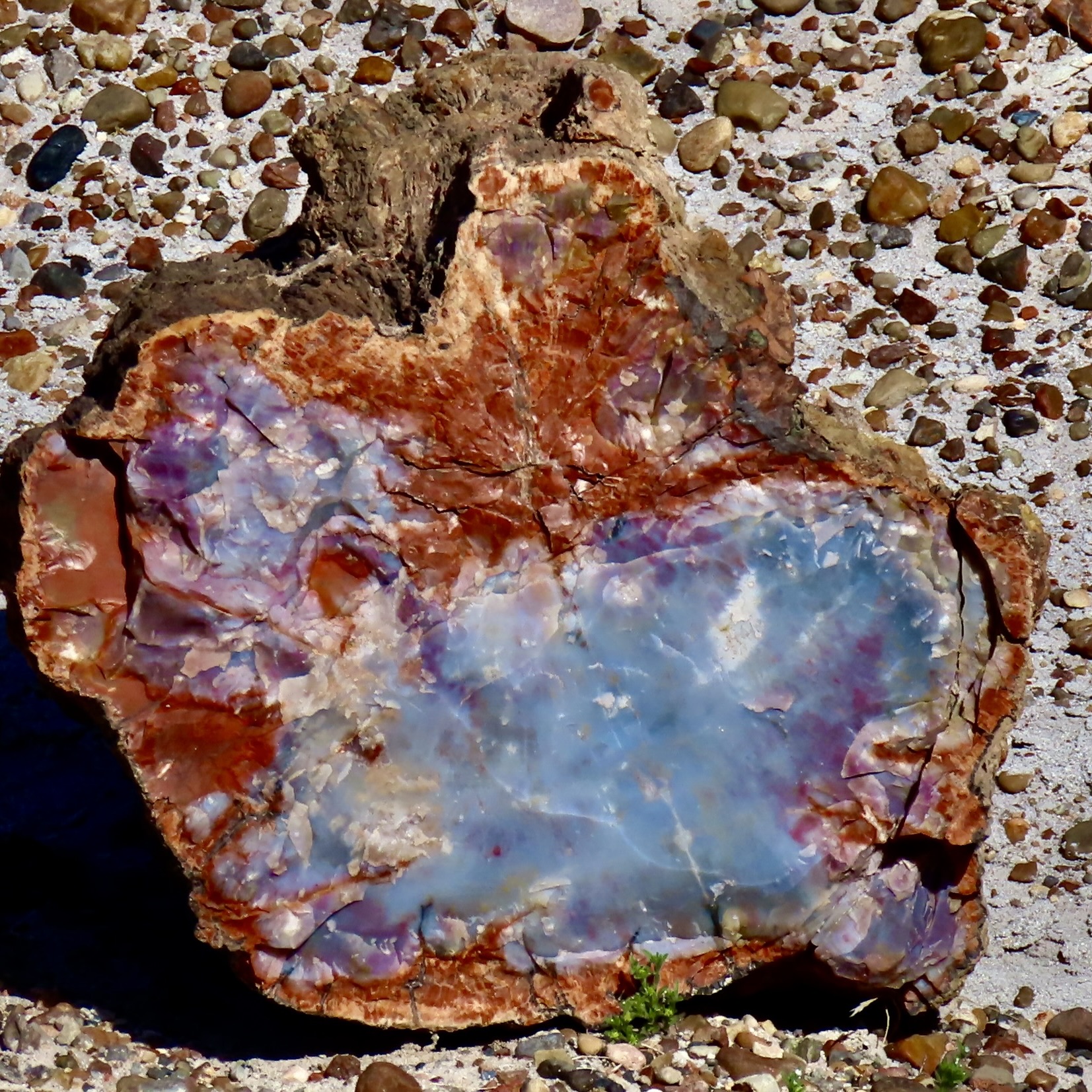
We were at Petrified Forest National Park last week. This was one of many petrified logs we saw.
A cliff swallow’s concept of a pueblo! They make their nests above the waterhole. In addition to being a safe location, the insects that live around the waterhole provide a convenient supply of food for feeding squawking, hungry chicks.
Leaving the waterhole, we hiked along the path at the base of the cliff checking out signatures along the way. (I’m saving the petroglyphs for my next post.)
A close up.
Looking up…
I’ve selected Don Juan de Oñate to represent the many Spaniards that signed their names on the rock. He was the first. It was in 1605, 15 years before the Pilgrims landed at Plymouth Rock. Oñate was a Spanish conquistador, explorer and first Spanish governor (viceroy) of New Mexico.  At some time, the signature had been written over with a black pen to make it more visible. The inscription translates “Passed by here, the adelantado Don Juan de Oñate from the discovery of the sea of the south the 16th of April of 1605.” The sea he discovered was the Gulf of California.
I chose Breckinridge’s signature because he represents a fascinating footnote of American history: The US Camel Corps. In the mid 1850s a unique experiment was undertaken by the US Army to tackle problems created by the severe water shortage in crossing the Southwestern deserts. Some men were sent off to Africa to explore the possibility of using camels for transport. They came back with 33 and and 3 Arab handlers. After a period of training in Texas, a test expedition set off across the desert for LA. They passed by El Morro with Breckenridge in charge of the camels. The camels did well— much better than horses or mules. They could carry more weight, travel farther during a day, and get along without water for a significantly longer period of time. Unfortunately, the Civil War came along and the experiment was abandoned.
People choose a variety of ways to display their names.
Some signatures were scribbled, some quite beautiful, and some encased. Each represented a different life, a different story.
The Monument has a brochure that provides information on some of the people who signed their names. RH Orton is one. He was a captain in the Federal forces during the Civil War. He may have been on his way home when he signed this. Later he would become an adjutant-general in the California National Guard. One could easily spend weeks researching the various names. I’m sure people have.
That’s it for today. Next, we will post about our trip up to the the Atsinna Pueblo and also explore the petroglyphs we found scattered among the signatures, predating them by 400 years. We will also include an interesting discussion we had with two Zuni Rangers working on the trail up to the Pueblo, Calvin and Valentino. (“I was born on Valentines Day,” Valentino told us.)
Atsinna Pueblo.