The Stairs, Doors and Gates of Santorini… Personality Plus!

Stairways of all shapes and sizes went snaking down off the cliff in Oia, Santorini. This one was rather grand.

Stairways of all shapes and sizes went snaking down off the cliff in Oia, Santorini. This one was rather grand.

When I was growing up in Diamond Springs, California, significant stairways were few and far between. Most of our homes were single floor western style ranch homes. Our climbing was more or less relegated to trees and lumber stacks, the latter much to the dismay of the grumpy watchman at Caldor Lumber Company who could never catch us. We learned a number of interesting words from him, however.

I’ve always been fascinated with stairs, particularly stairs that disappear around corners. They almost beg exploration, like a trail in the woods. Doors share a similar characteristic, especially interesting doors. I’m convinced that people who live behind interesting doors lead interesting lives. Unfortunately, doors tend to be very private affairs; they hide secrets.

Gates are different.  They don’t say ‘stay out’ in the same way a door does… even when they sport a no-trespassing sign. Gates in Diamond Springs tended to be low on design and high on barbed wire. We climbed over with impunity except for being chased by dogs or yelled at. Old Tony Pavy was an exception; he had a shotgun that he was quick to pull when he caught kids gigging frogs in his pond or plunking squirrels out of his trees, especially the time I hit one of his pigs by mistake with a ricocheting bullet. The man had zero sense of humor. “Get my gun Mama!” he roared to his wife as we disappeared over the hill.

They have to have stairways in the town of Oia, Santorini. Houses are built right down the cliff and there are no elevators. People must be in great shape from all of the hiking. And here’s the fun part, all of the stairs are different and I think quite attractive. Peggy and I kept our digital cameras busy. We also found our share of interesting doors and two very attractive gates to photograph.

Another set of stairs with unique personality works its way down toward the Mediterranean in Oia, Santorini.

Another set of stairs with unique personality works its way down toward the Mediterranean in Oia, Santorini.

This set of stairs on Santorini added a touch of color.

This set of stairs on Santorini added a touch of color.

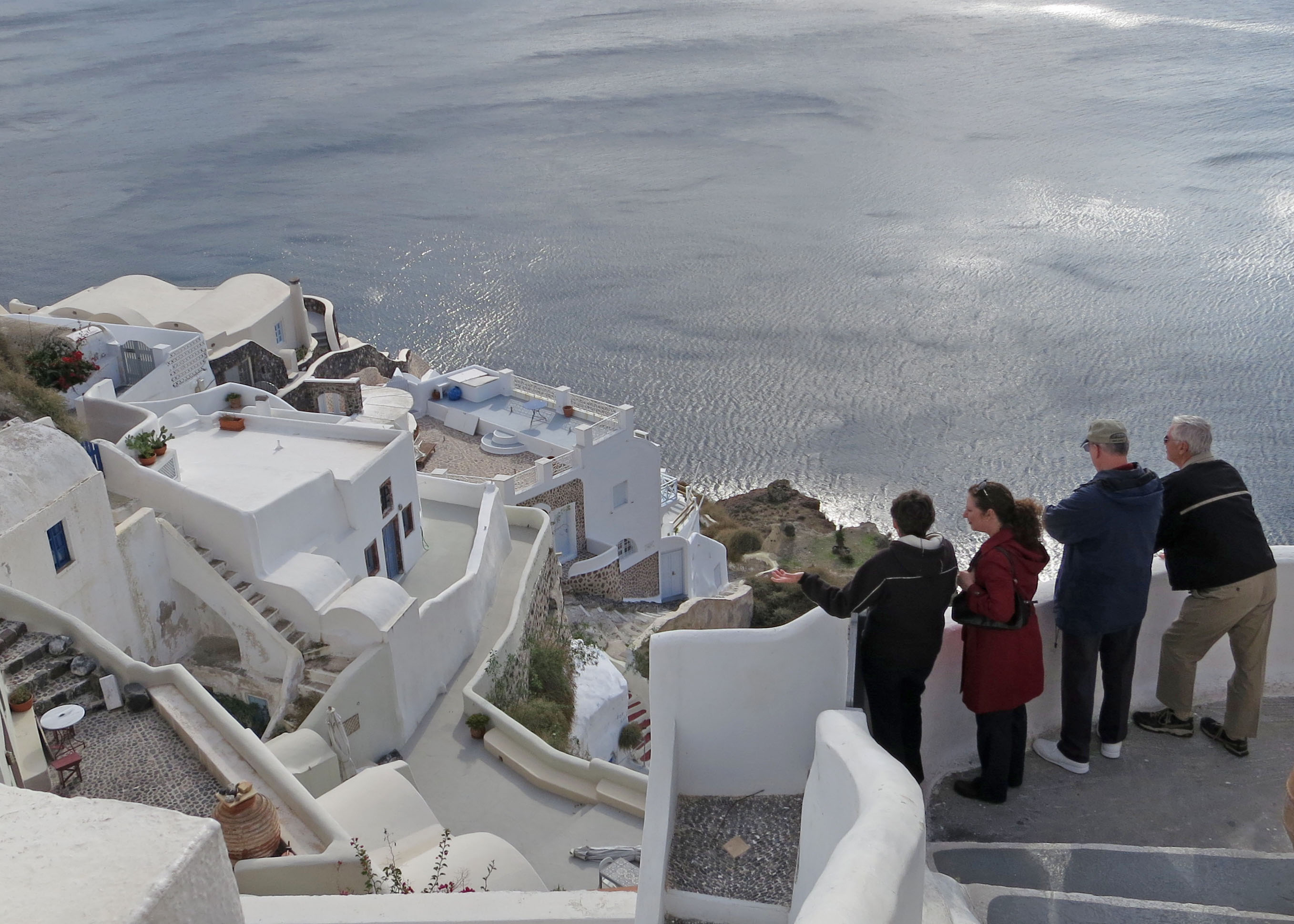
Our traveling companions, the Dallens from Austin and Saages from San Francisco look down on  several sets of stairs. It reminded me of an Echer painting.

Our traveling companions, the Dallens from Austin and Saages from San Francisco look down on several sets of stairs. It reminded me of an M.C. Escher painting.

Mules working down on the cliff used these stairs for carrying construction debris up to the top. These were definitely one-way stairs: the one-way being whichever way the mules were traveling.

Mules working down on the cliff used these stairs for carrying construction debris up to the top. These were definitely one-way stairs: the one-way being whichever way the mules were traveling.

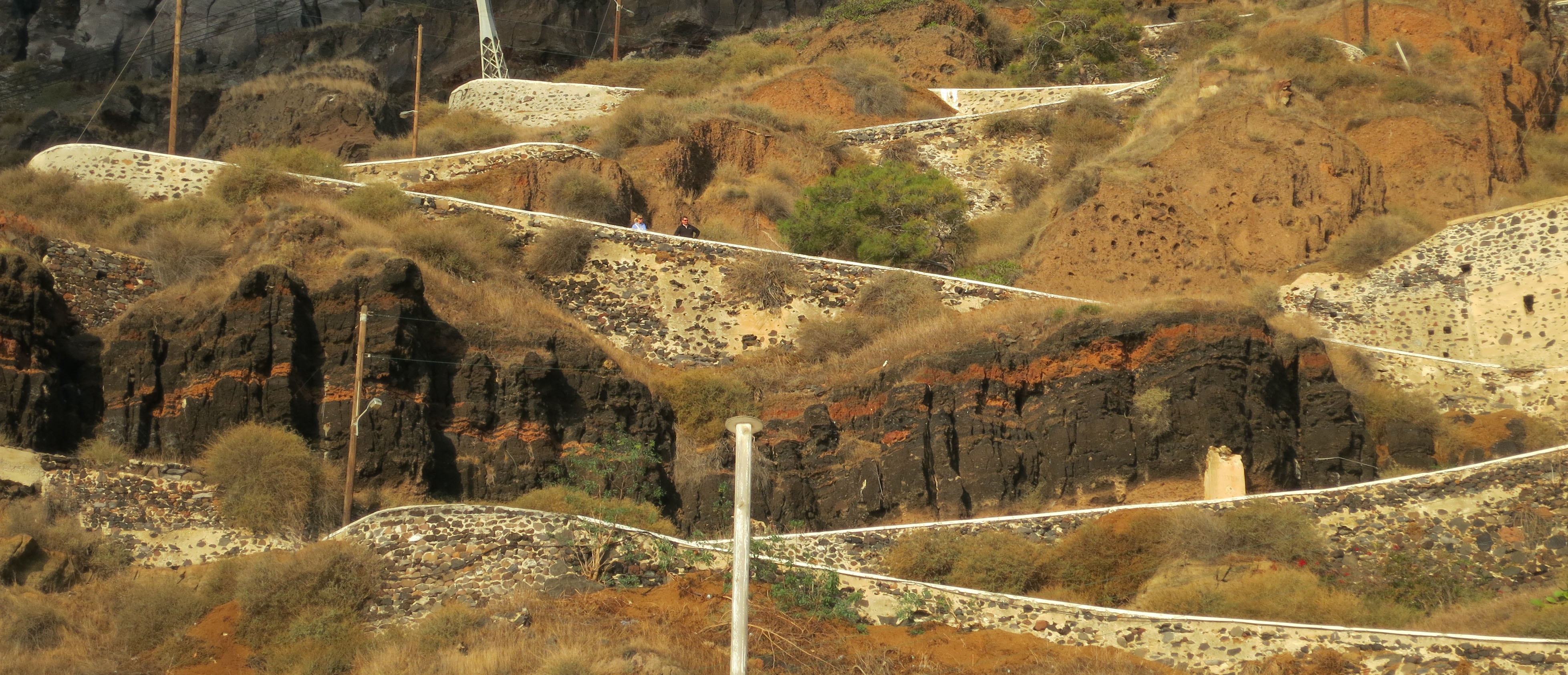
The ultimate stairway on Santorini... the one that takes you from the old port up a thousand feet to the town of Fira.

The ultimate stairway on Santorini… the one that takes you from the old port up a thousand feet to the town of Fira.

Blue was about as close as it got to being a common door color on Santorini.

Blue seemed to be the most common door color on Santorini.

This halfway hidden door in Oia on Santorini caught my imagination. I wanted to go up and knock.

This halfway hidden door with its plant in Oia,  Santorini caught my imagination. I wanted to go up and knock.

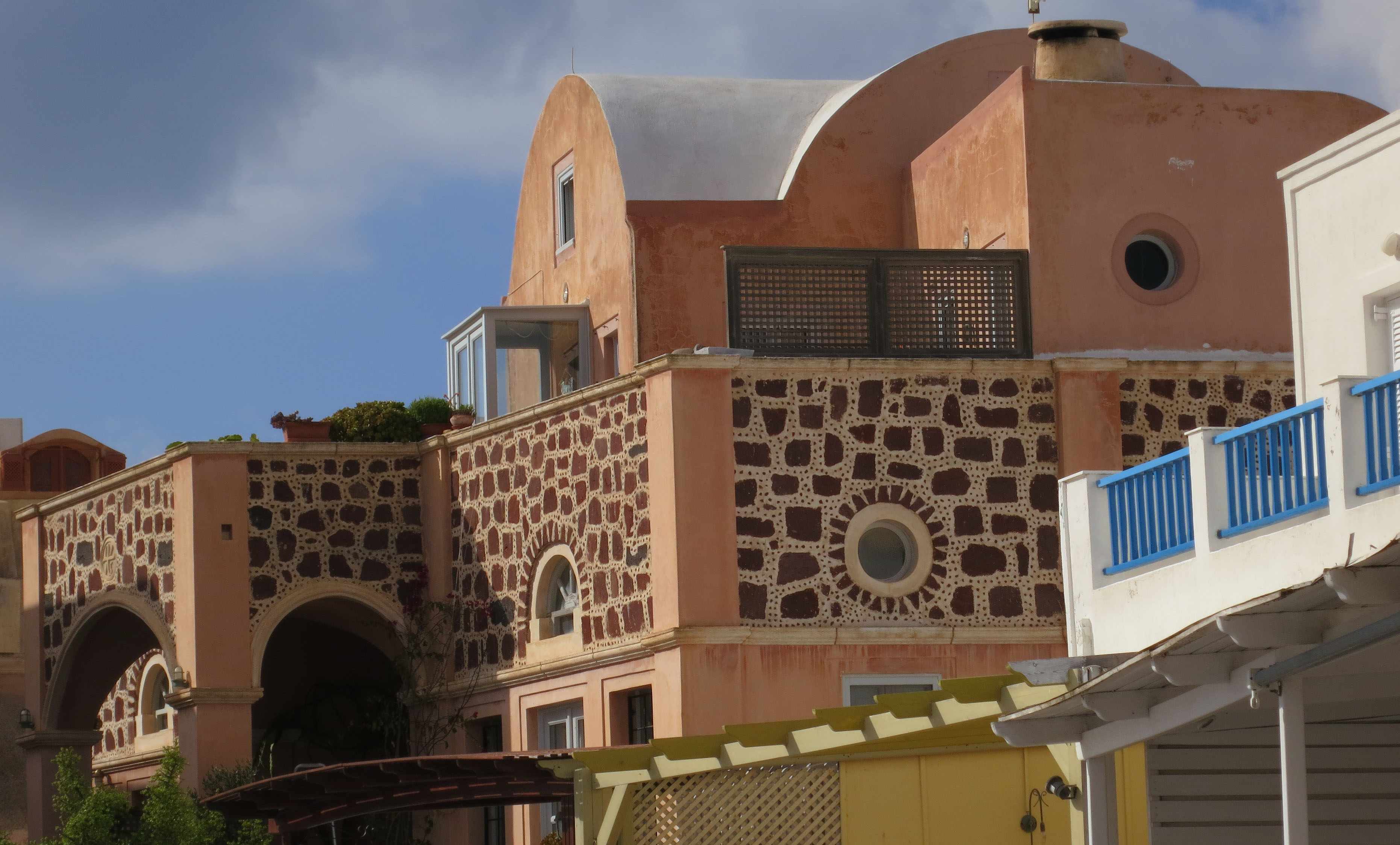
This house in Oia displayed an interesting choice of colors.

This house in Oia displayed an interesting choice of colors.

The most secretive of doors are old ones like this one in Oia.

The most secretive of doors are old like this one in Oia. It must have a thousand stories to tell.

This simple gate in Oia with its dramatic shadows was quite beautiful.

This simple gate in Oia with its dramatic shadows, white pillar and Mediterranean background was quite beautiful. (Photo by Peggy Mekemson.)

The door/gate to nowhere? Peggy shot this photo in Fira, Santorini. There was nothing behind it except open space... and a set of stairs that went downward.

The door/gate to nowhere: Peggy shot this photo in Fira, Santorini. There was nothing behind it except open space… and a set of stairs that went downward to a restaurant.


NEXT BLOG: We travel back in time 4000 years to Santorini’s ancient civilization of Thira. Could there be an Atlantis connection?


The Beautiful and Unique Churches on the Greek Island of Santorini

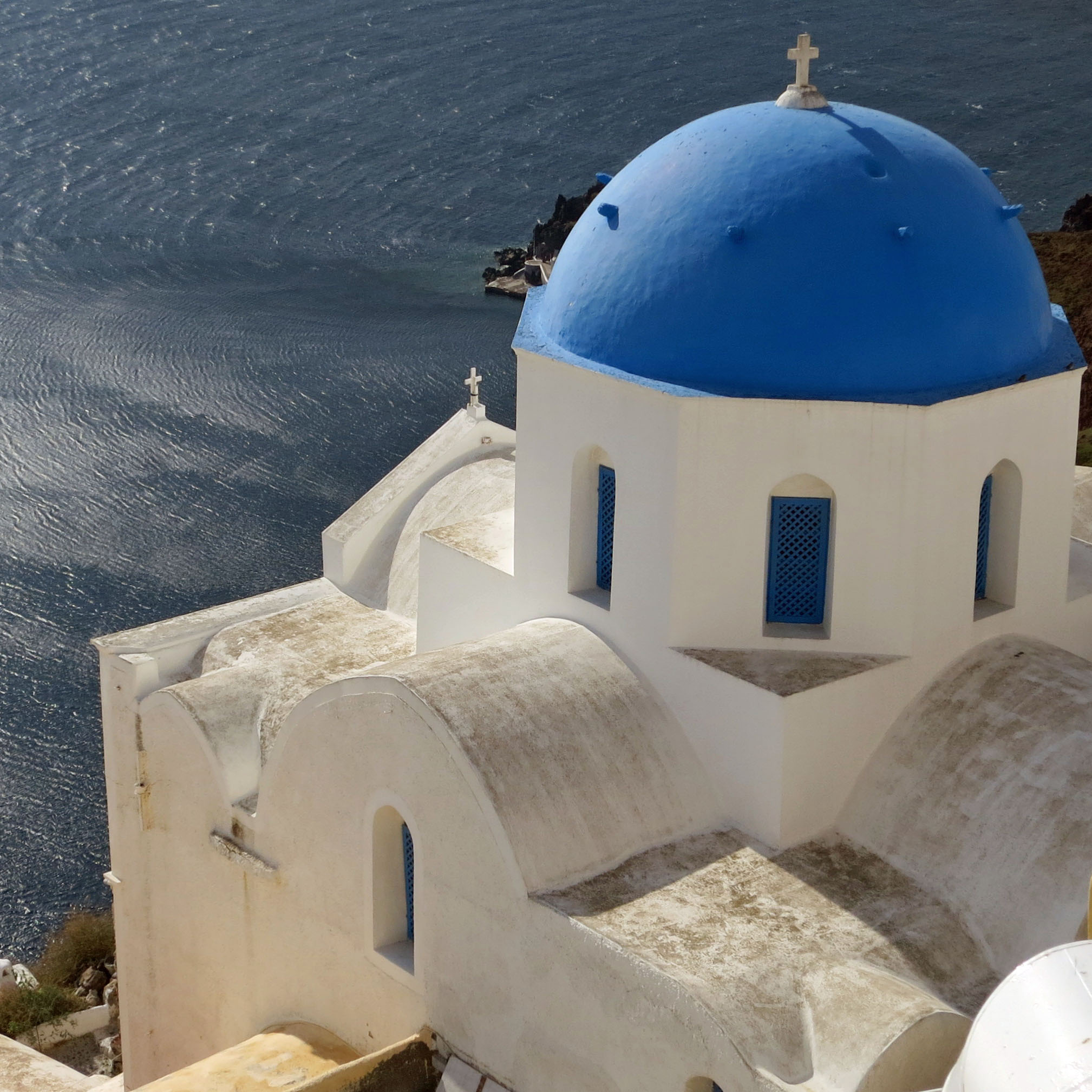
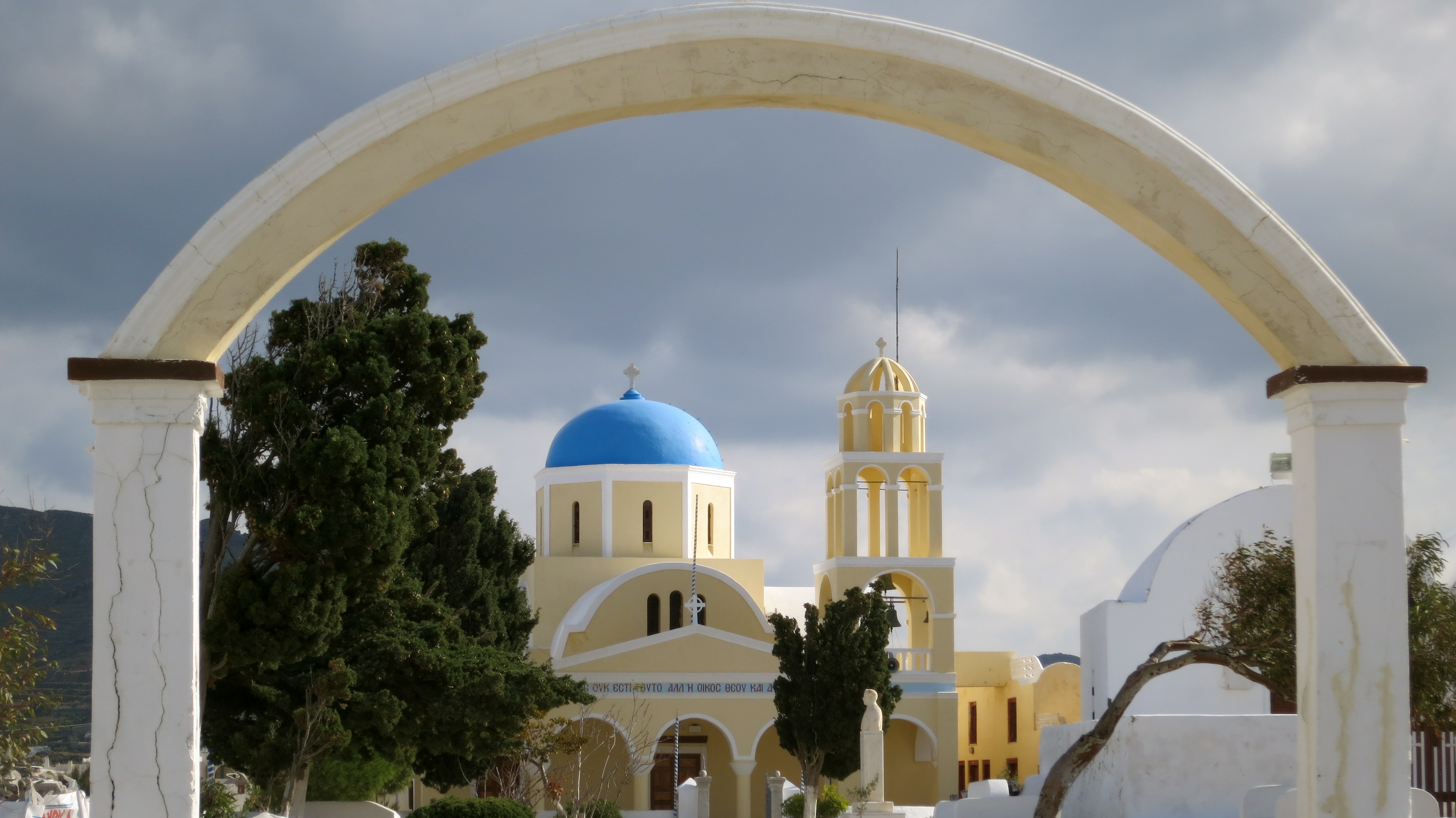
The Church of St. George in Oia, Santorini. Most, but not all of Santorini's churches featured a blue dome.

The Church of St. George in Oia, Santorini. Most, but not all of Santorini’s churches featured a blue dome.

Europe is filled with great churches that are known as much for their art and architecture as they are for religion. Our cruise through the Mediterranean would take us to some of the world’s most renowned cathedrals. While the churches on the Greek Island of Santorini are no match for the splendor of what you find in Venice, Rome or Florence, they have a subtle beauty and uniqueness of their own.  The following photos are meant to capture something of their beauty.

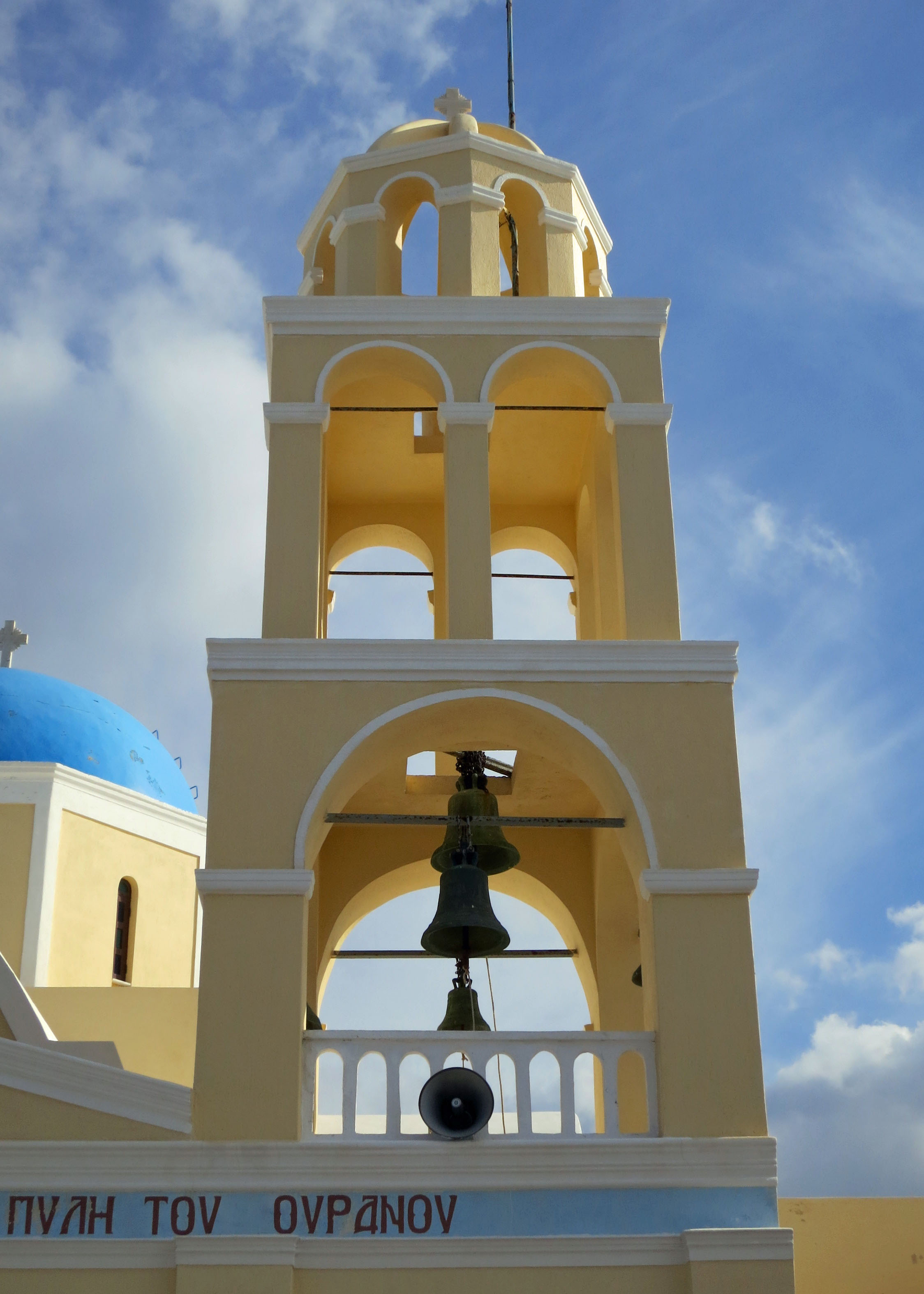
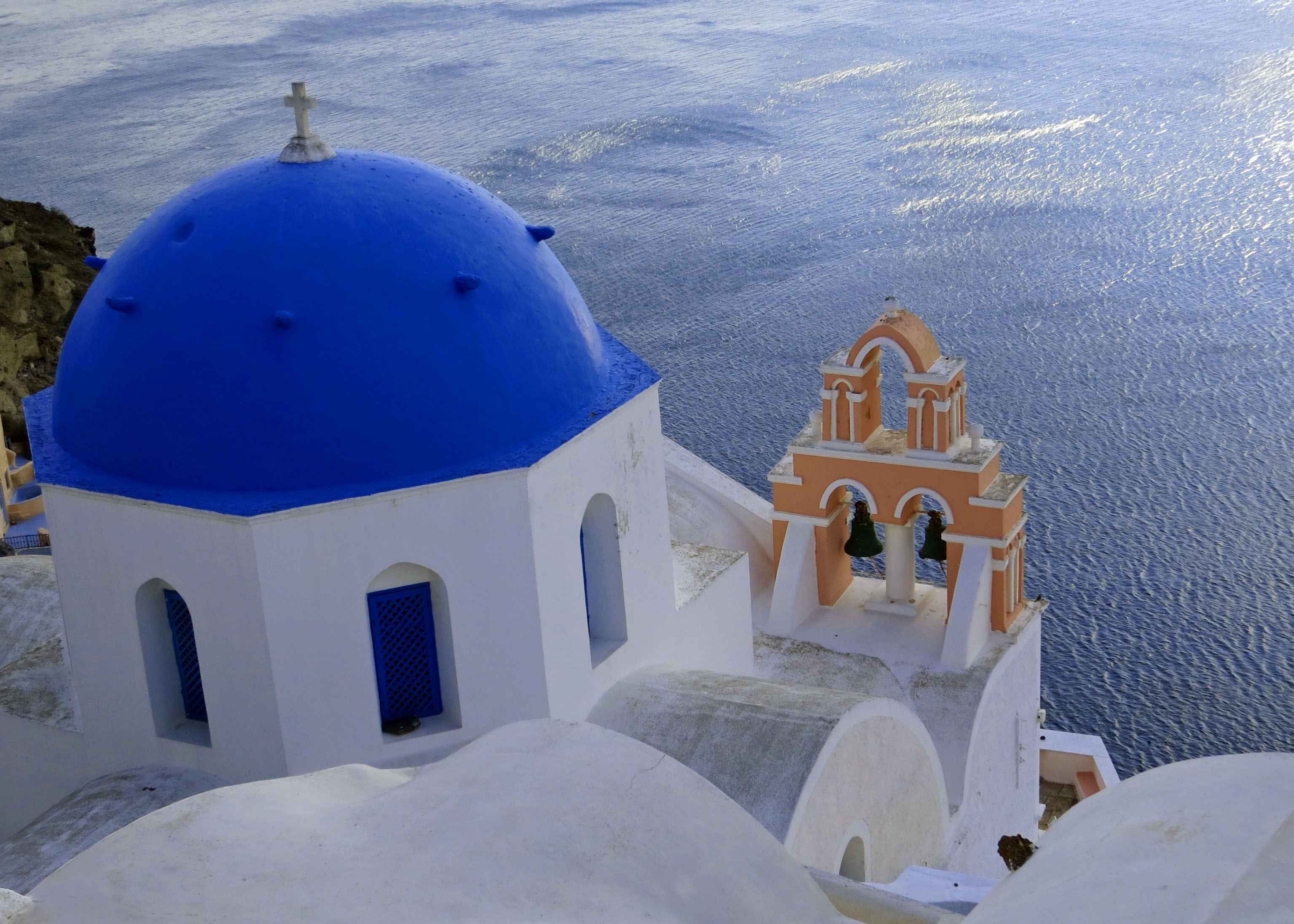
This is a close up of the bell tower on the Church of St. George in Oia, Santorini. The bell towers throught the town were as unique as the churches.

This is a close up of the bell tower on the Church of St. George in Oia, Santorini. The bell towers throughout the town were as unique as the churches.

I found this church with its white rocks surreal.

I found this church with its white rocks surreal.

A view of the same church seen in the photo above from behind.

A view of the same church seen in the photo above from behind.

This church provided and interesting backdrop for the homes in front.

This church provided an interesting backdrop for the homes in front. I also liked the fun play of light and shadow.

The Church of Panagia provides a gateway into Oia on Santorini. Once again, dramatic clouds added interest to our day of photography.

The Church of Panagia provides a gateway into Oia on Santorini. Once again, dramatic clouds added interest to our day of photography. (Photograph by Peggy Mekemson)

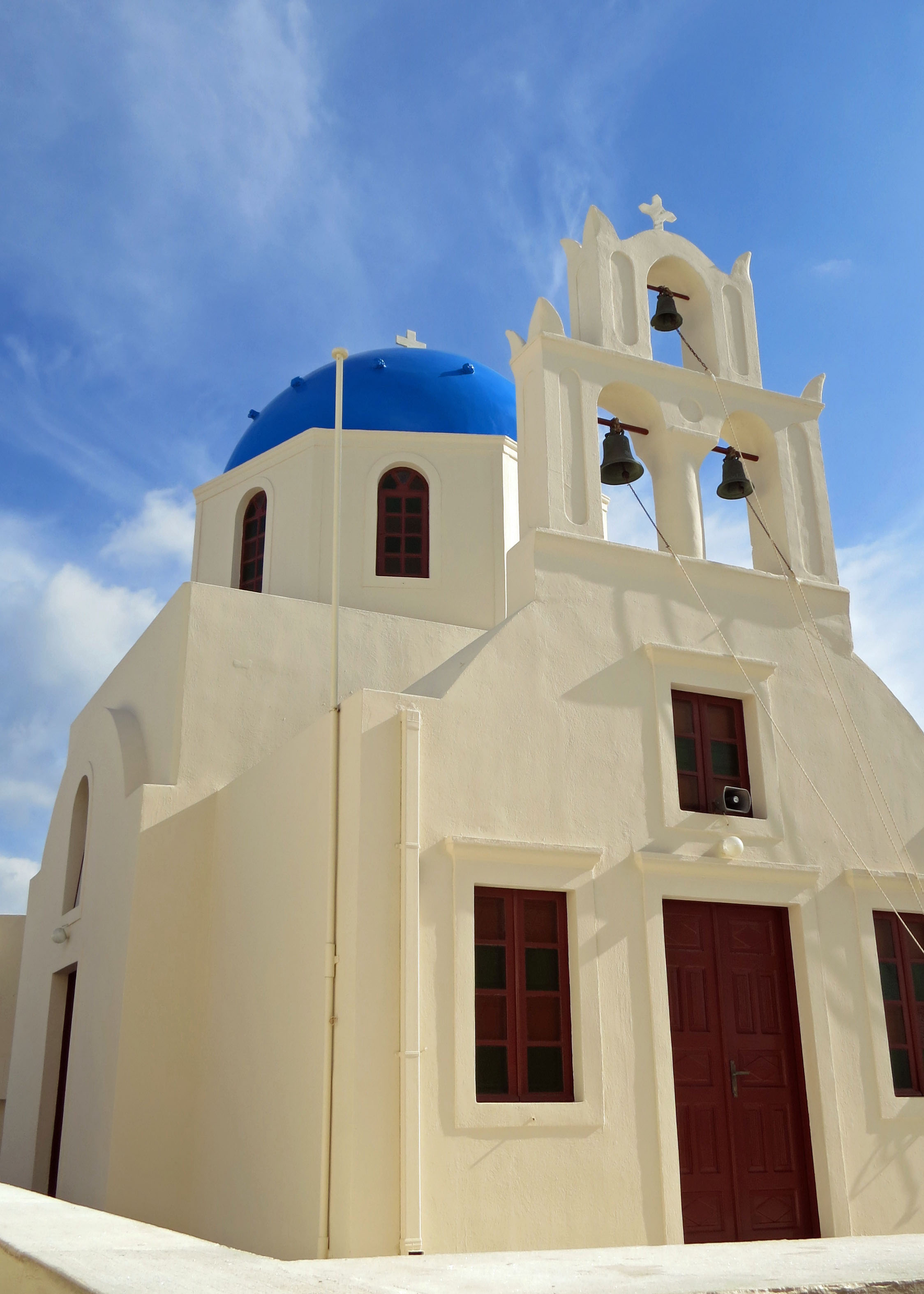
The bell tower of the Church of Panagia in Oia, Santorini.

The bell tower of the Church of Panagia in Oia, Santorini.

Another of Santorini's uniquely beautiful churches.

Another of Santorini’s uniquely beautiful churches.

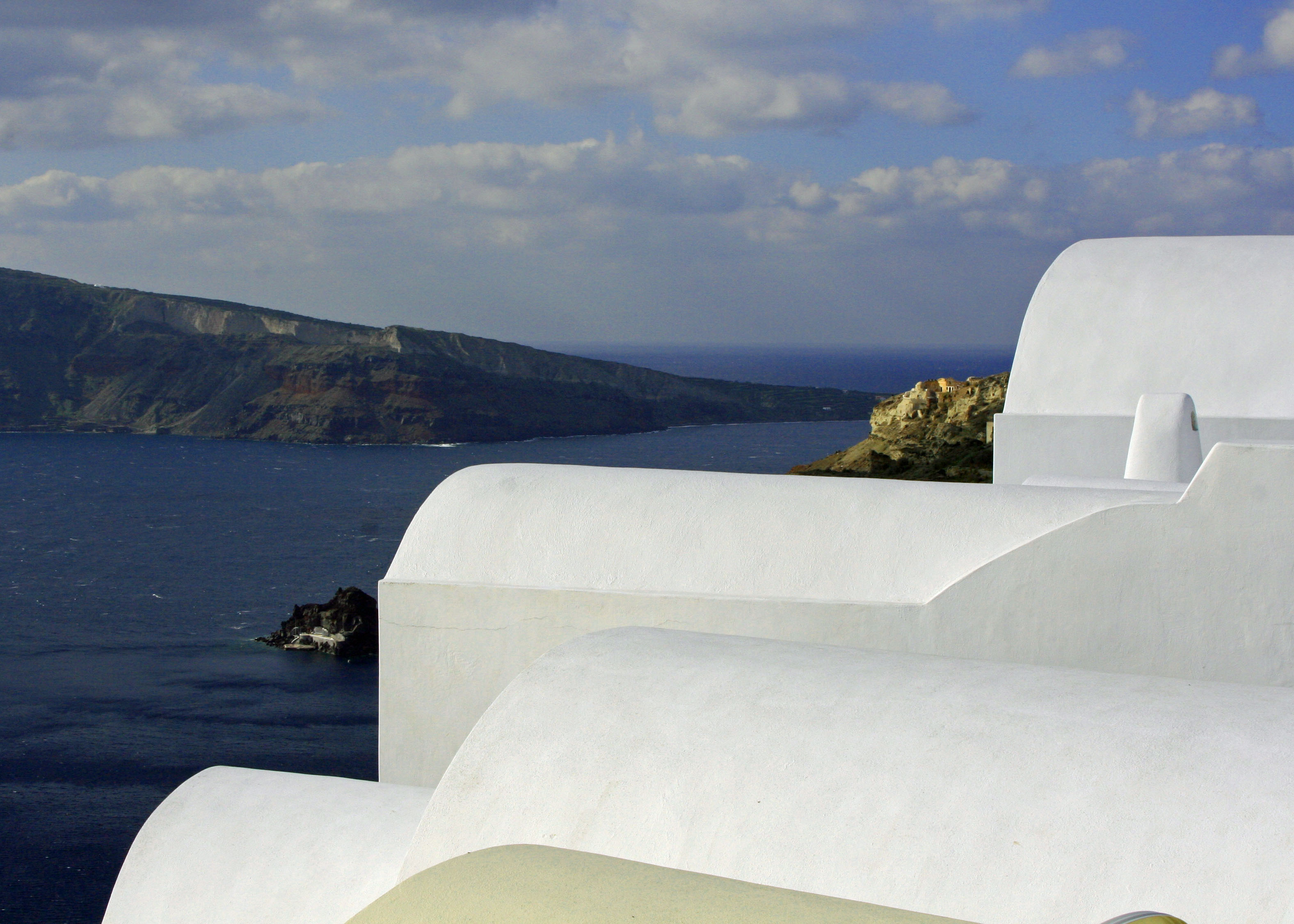
I like this church on Santorini because of its almost sensuous lines. Can a church be sensuous? Having the Mediterranean for a backdrop didn't hurt either.

I like this church on Santorini because of its almost sensuous lines. Can a church be sensuous? Having the Mediterranean for a backdrop didn’t hurt either.

This is another perspective on the Santorini church shown above featuring its salmon colored bell tower.

This is another perspective on the Santorini church shown above featuring its salmon colored bell tower.

My concluding photo on the beautiful and unique churches found on the Greek island of Santorini.

My concluding photo on the beautiful and unique churches found on the Greek island of Santorini.

NEXT BLOG: Join me as I explore the picturesque stairways and doorways of Santorini.


Oia, Santorini… A Photographer’s Paradise

Oia is built on a cliff that drops off a thousand feet into the Mediterranean Sea. Its colorful buildings with their unique architecture and the beauty of the area combine to make the town truly unique.

Oia is built on a cliff that drops off a thousand feet into the Mediterranean Sea. Its colorful buildings with their unique architecture and plunging stairways combine with the beauty of the area to make the town truly unique.

Fira, the administrative center of Santorini, is a pleasant town and definitely worth wandering through. It is filled with shops selling everything from cheap souvenirs to fine jewelry, all of which are designed to separate tourists from their euros. But that’s OK, Santorini makes much of its living off tourists. What most impressed me about the town was its small but excellent Museum of Prehistoric Thira. I’ll blog about the museum next week.

What I am going to do now is make the short trip from Fira to Oia, which is arguably one of the most attractive towns in the Mediterranean, or anywhere. Oia, BTW, is pronounced EE-ah. As the daughter of a friend reminded me, it sounds like something Eeyore might say minus the donkey emphasis.

My recent blogs about my Peace Corps experience in Africa have been long on words and short on photos. That’s about to change as I make why way through the Mediterranean. Oia is best enjoyed by being there, but if you can’t be, the next best thing is through the eye of a camera.

Each of my next three blogs will provide a different perspective on the community. First, I am going to provide a general overview including buildings, animals, flowers and other miscellaneous items that caught our attention. (Peggy took several of the photos.) Next I will focus in on Oia’s unique churches. I’ll finish by looking at stairways and doors, which might seem strange… but don’t miss it. Enjoy.

Another view of the town that provides a perspective on how it clings to the cliff. The whitewashed buildings reflect heat from the intense summer sun.

Another view of the town that provides a perspective on how it clings to the cliff. The whitewashed buildings reflect heat from the intense summer sun.

The rounded roof of this home is typical. Once these homes provided housing for poor sailors. Now they provide housing for millionaires. Another note on these downward trending homes. One person's patio becomes another person's roof.

The rounded roof of this home is typical. Once these homes provided housing for poor sailors. Now they provide housing for millionaires. Another note on these downward trending homes. One person’s patio becomes another person’s roof.

While the sailors lived in their homes on the cliff, sea captains built mansions on top.

While the sailors lived in their homes on the cliff, sea captains built mansions on top.

I would have happily bought this colorful home. Darn, where's my million dollars when I need it.

I would have happily bought this colorful home. 

Peggy captured this artistic shot from Oia looking down on the Mediterranean.

Peggy captured this artistic shot from Oia looking down on the Mediterranean.

I mentioned the unique doors found in Oia. These are color coordinated.

I mentioned the unique doors found in Oia. These are color coordinated.

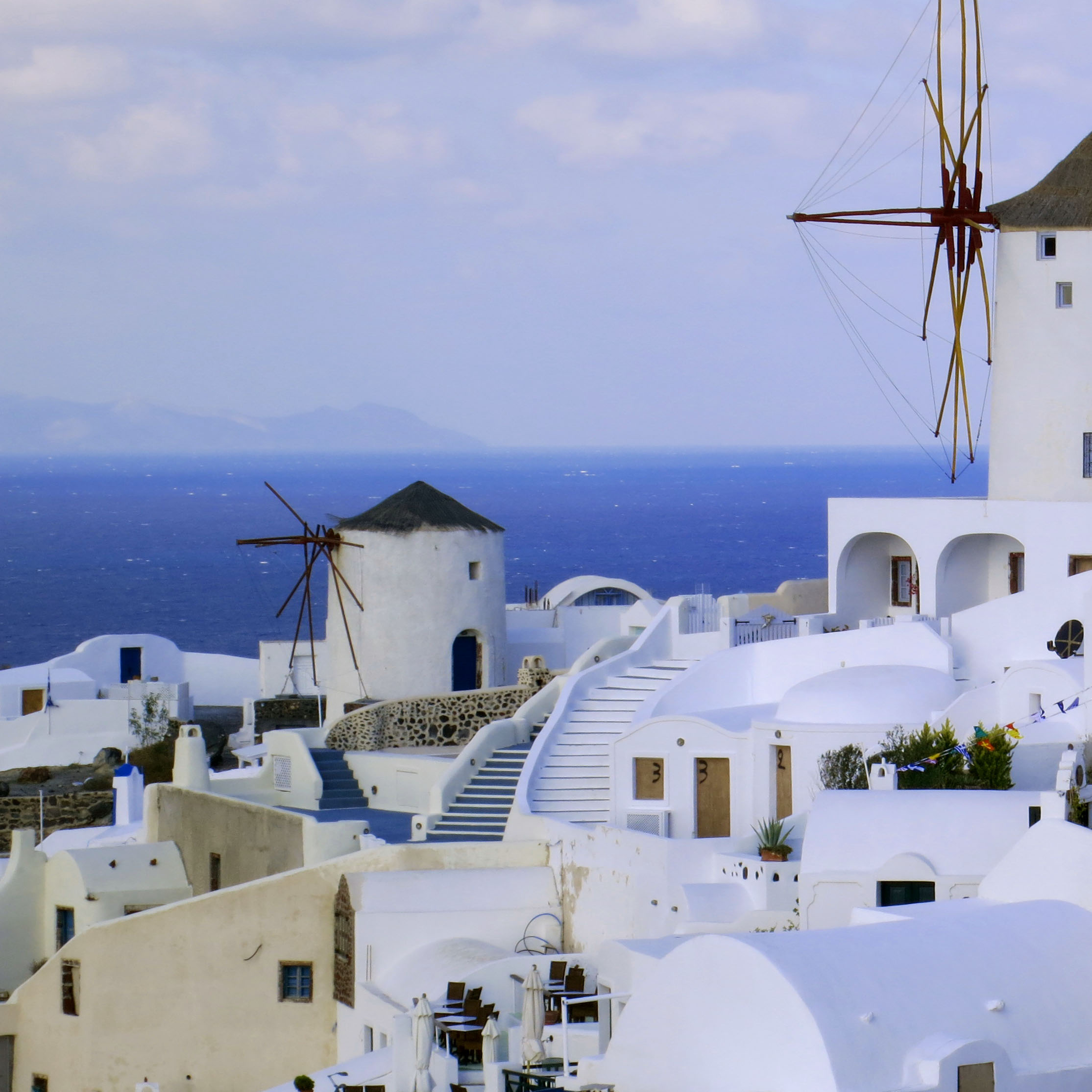
Retired windmills are found on both Santorini and the island of Mykonos.

Retired windmills are found on both Santorini and the island of Mykonos.

This sphinx in Oia provided an artistic touch and seemed right at home.

This sphinx in Oia provided an artistic touch and seemed right at home.

Peggy discovered this sculpture on the side of a building in Oia. Everyone should have a goal in life.

Peggy discovered this sculpture on the side of a building in Oia. Everyone should have a goal in life.

This restaurant sign promised a leisurely meal.

This restaurant sign promised a leisurely meal… or was that poor service?

Dogs ran free in Oia. We found this one climbing about on walls before he settled in for a nap. All of the animals seemed well fed and happy...

Dogs ran free in Oia. We found this one climbing about on walls before he settled in for a nap. All of the animals seemed well fed and relaxed around the tourists…

Maybe too relaxed. (grin)

Maybe too relaxed. (grin)

There was no relaxation for this mule. He and his buddies were carrying debris being generated by a construction site down the cliff. These guys literally ran us off the road.

There was no relaxation for this mule. He and his buddies were carrying debris being generated by a construction site down the cliff. These guys literally ran us off the road.

I discovered this colorful plant and couldn't resist taking its picture.

I discovered this colorful plant and couldn’t resist taking its picture.

Event the souvenirs featuring Santorini were colorful.

Even the souvenirs featuring Santorini were colorful.

One of the narrow walkways we followed through town. The lack of people was indicative of the fact we were traveling off season. Instead of 3 or 4 cruise ships in port, there was only ours.

One of the narrow walkways we followed through town. The lack of people was indicative of the fact we were traveling off-season. Instead of 3 or 4 cruise ships in port, there was only ours.

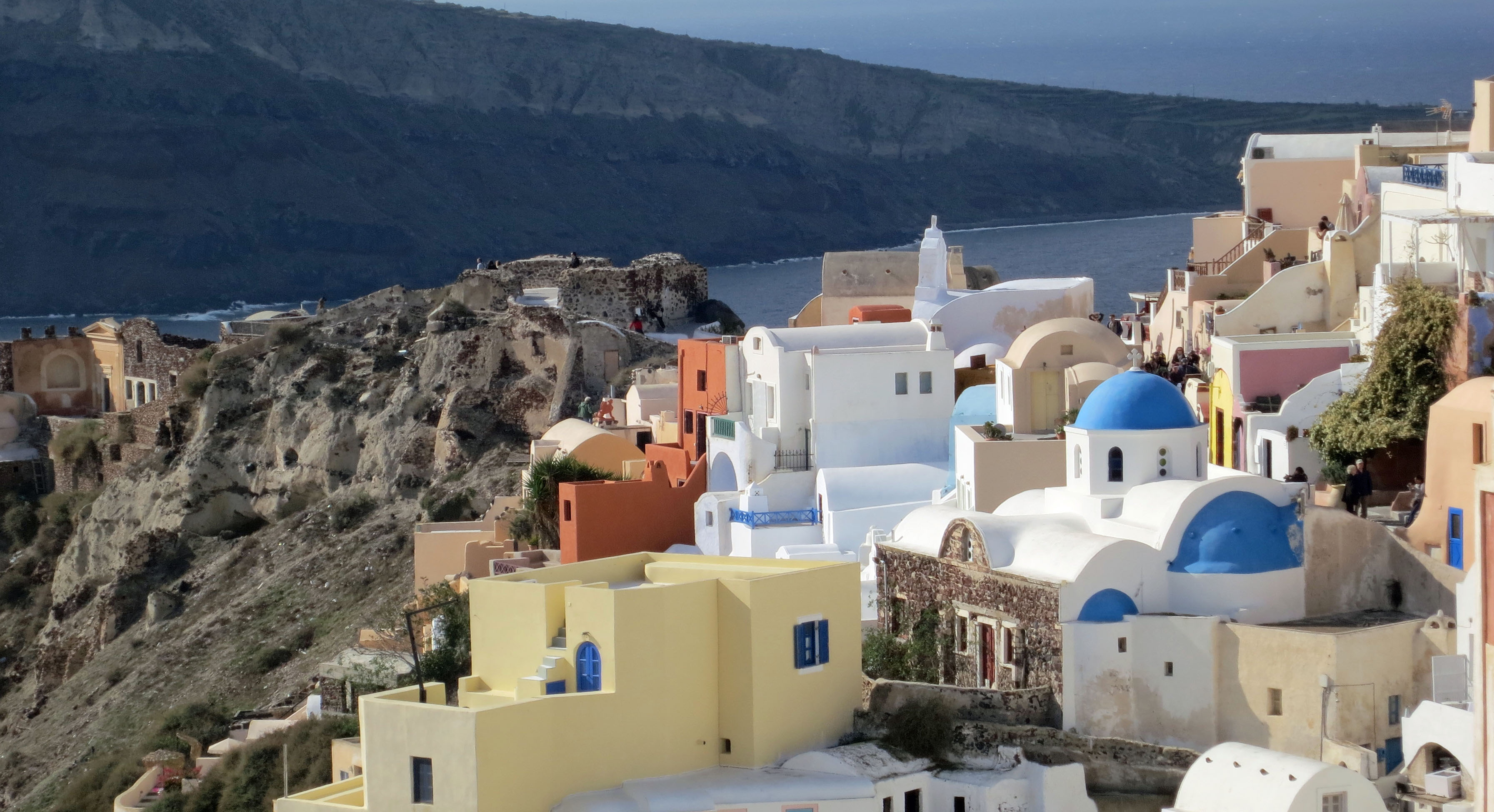
I'll close this blog with a final shot of Oia. The blue domed building is one of the towns many beautiful churches, which I will feature in my next blog.

I’ll close this blog with a final shot of Oia. The blue domed building is one of the towns many beautiful churches, which I will feature in my next blog.


Let the Cruise Begin: Santorini… A Magical Greek Island

Buildings cascade down the cliffs on the Greek island of Santorini located in the Aegean Sea.

Churches, homes, shops and hotels cascade down the cliffs on the Greek island of Santorini located in the Aegean Sea.

I am normally not the cruising type; it’s too social, crowded and regimented for the part of me that demands solitude, wide-open spaces, and independence. Still, when my brother-in-law, John Dallen, sent my wife Peggy and me an itinerary of a 32-day repositioning cruise he was planning to take with his wife Francis, I was intrigued.

The cruise included visits to a number of Mediterranean ports I had always wanted to see and a voyage across the Atlantic I had never made. It sounded like an adventure. It also took place during our Twentieth Anniversary and Peggy, unlike me, loves to cruise. It seemed like a great way to celebrate. We signed on the dotted line and sent off our deposit.

Our ship, the Crown Princess, anchored in the caldera located off Santorini.

Our ship, the Crown Princess, anchored off Santorini. The island behind it is a small volcanic island.

Over the next couple of months I will blog about the journey we just completed. Join us as we visit the Greek islands of Santorini, Mykonos and Corfu, stop off at the historic sites of Pompeii and Ephesus, scale the walls of Dubrovnik, and explore the cities of Athens, Venice, Rome, Florence, Barcelona, Cannes and Lisbon. I’ll conclude with our brief stopover on the Azores Islands and trip across the Atlantic.

I will also describe shipboard life where food was served 24/7, our bed was always made, and entertainment was just a few floors away. Be warned, though, the trip wasn’t all four-course meals plus dessert; there was also the Noro-Virus that reached red alert status and forced employees to wear rubber gloves, rolling seas that threatened to dump us out of our bed, the guy who dropped dead in our dining room, and the daring Coast Guard rescue off of Louisiana.

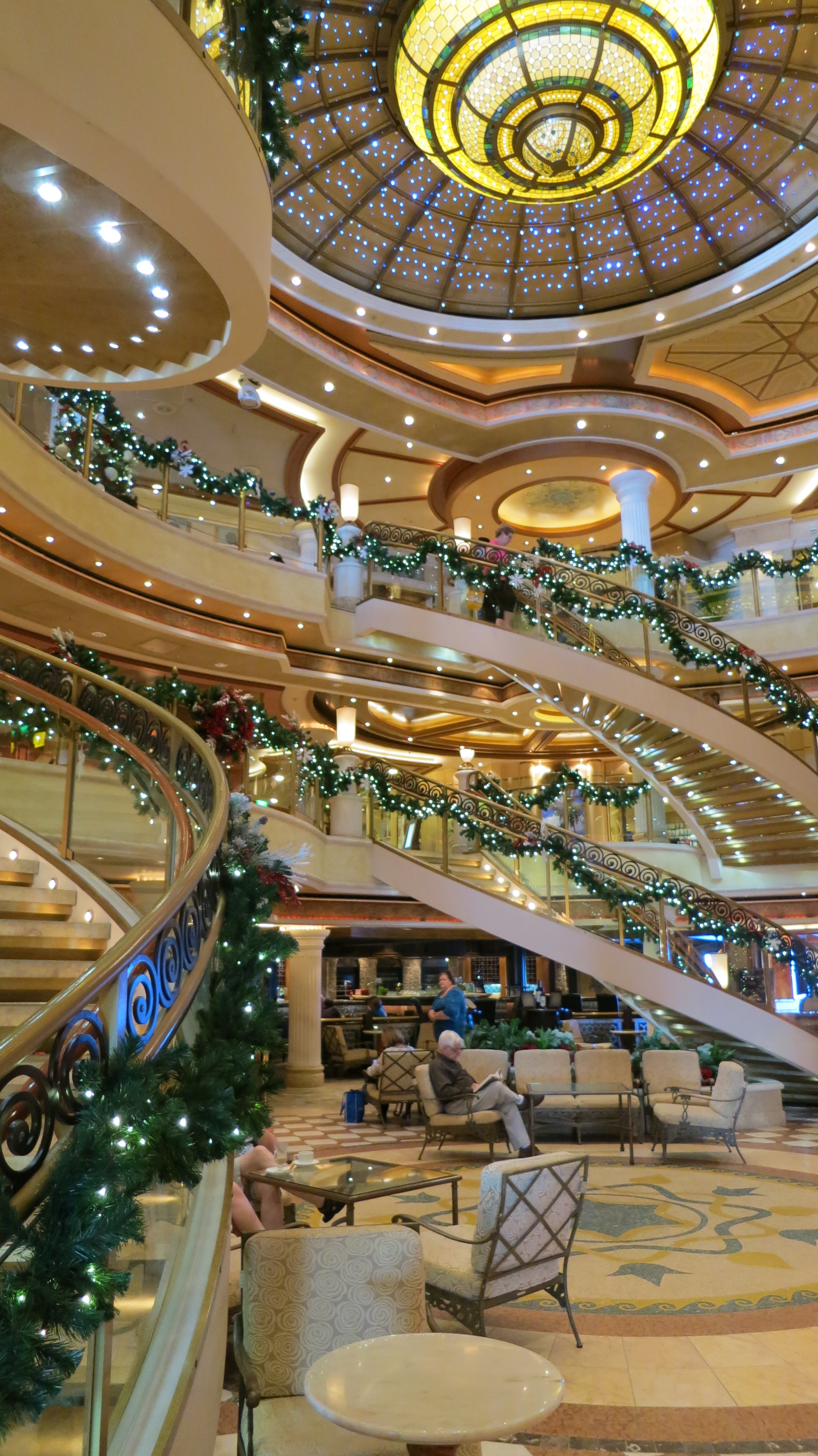
Cruise ships sell luxury and visits to exotic locations. This is an inside view of the Crown Princess.

Cruise ships sell luxury and visits to exotic locations. This is an inside view of the Crown Princess.

I am going to start this series with the Greek island of Santorini rather than Rome where we began our cruise. Santorini is more personal, easier to comprehend, has an intriguing history, and is exactly what I imagined a Greek island to be. In 2011 Travel and Leisure magazine declared it the World’s Best Island. Rick Steves, the renowned travel expert on Europe, said, “If you can’t snap a post-card quality photo here, it is time to retire your camera.”

A post card type photo of a church in the town of Oia on Santorini

A post card type photo of the Church of St. George in the town of Oia on Santorini

Santorini is located in the southern part of the Aegean Sea southeast of Athens. Once upon a time it was a huge volcano, now the island is part of a large caldera. When Santorini blew its top somewhere around 1600 BC, it was one of the largest volcanic explosions in the last 5000 years. Effects were felt as far away as China where crops withered. The resulting tsunami destroyed much of the Mediterranean’s Bronze Age Minoan civilization. Legend is that this destruction included Atlantis. In fact, the ruins of Akrotiri on Santorini are considered a prime candidate for being the Lost City.

Excavated ruins of the ancient city of Akrotiri on Santorini are a candidate for the lost city of Atlantis. If so, this mural taken from the ruins may show a resident of the Lost City.

Excavated ruins of the ancient city of Akrotiri on Santorini are a candidate for the lost city of Atlantis. If so, this mural taken from the ruins may show a resident of the Lost City.

Arrival in Santorini by ship quickly reinforced that we had sailed into a caldera.  Everything was up. Fira, the islands administrative center, was perched above us on top of daunting cliffs a thousand feet high. Getting to the top involved hiking, riding a donkey or taking a tram. Riding the donkeys sounded romantic except we would end up smelling like donkeys and not able to sit down for a day. Walking had more appeal but then we would be dodging Donkey poop. We opted for the tram. Once on top, we were prepared to explore.

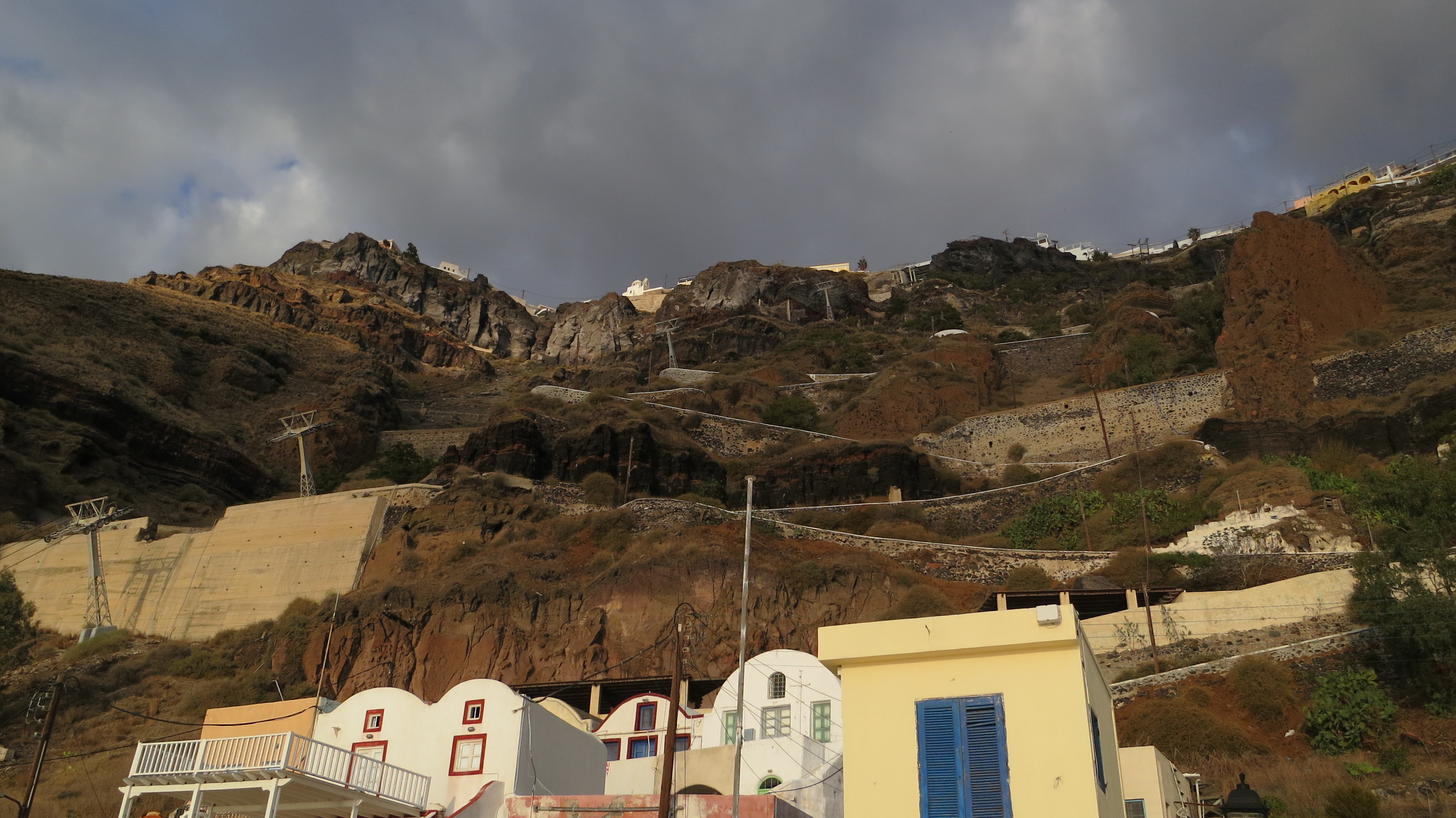
Looking up toward Fira our options were to take the tram or follow the zigzag trail.

Looking up toward Fira our options were to take the tram on the left or follow the zigzag trail in the center of the photo.

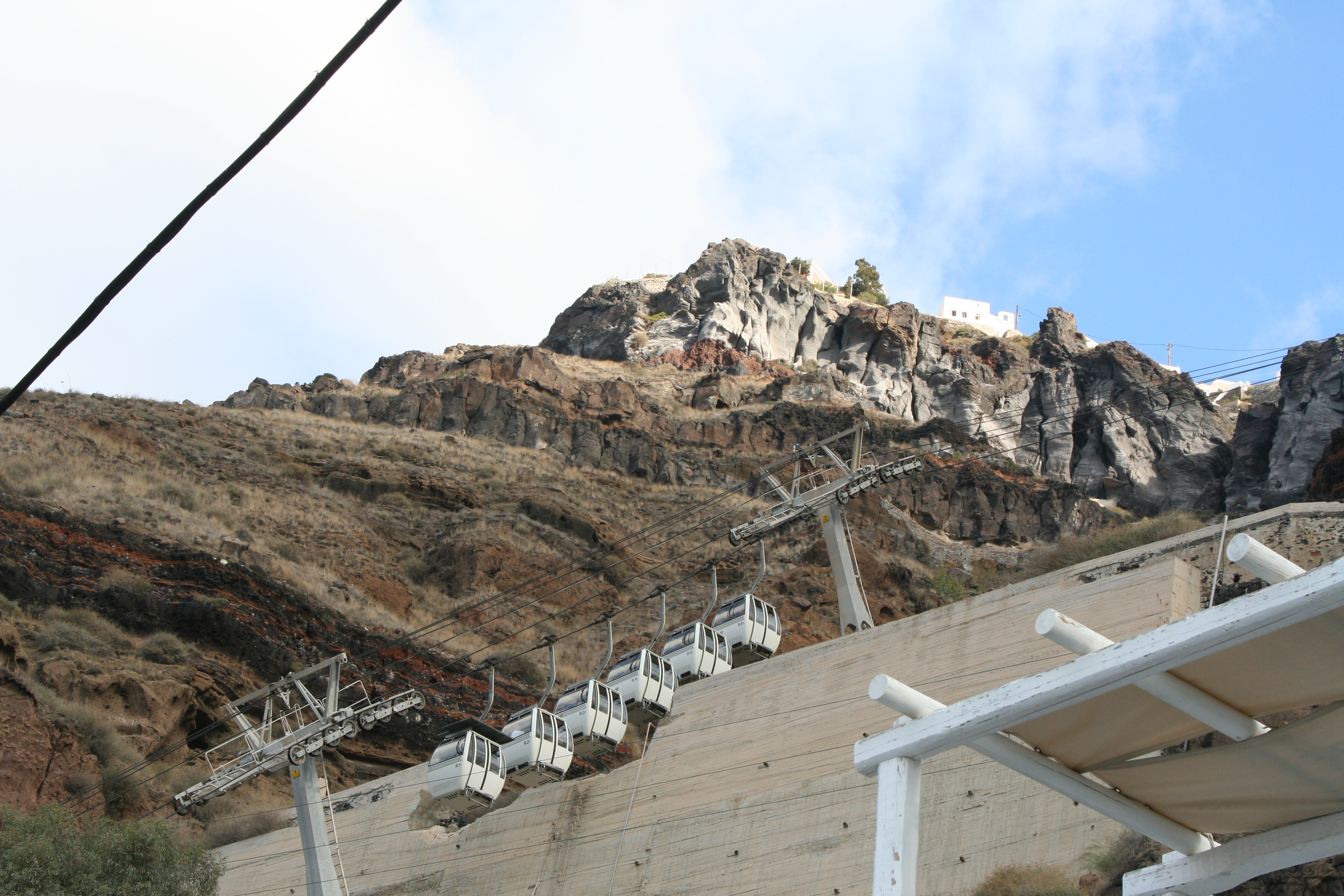
We wisely chose the tram.

We wisely chose the tram.

Looking back down the donkey trail toward the dock from the tram.

Looking back down the donkey trail toward the dock from the tram.

NEXT BLOG: The Santorini town of Oia, a photographer’s paradise.

Chapter 36: Goodbye Liberia…

My Senior Class from Gboveh High School, took top honors in the National Social Studies Test.

My Senior Class from Gboveh High School took top honors in Liberia’s National Social Studies Test.

When we returned from East Africa, a shift had taken place; Jo Ann and I had become grizzled, respected veterans. Peace Corps V had left the Country and Peace Corps VIII had come in. With a year and a half under our belts, we were the folks to go to for sage advice. We were even entitled to reminisce about the old days. I was, after all, 24 years old.

Cuttington College sent student teachers to learn from me while the fame of Jo’s choir continued to increase. My seniors took top honors in the national social studies test… competing against the best public and missionary high schools in the country.

What seemed most surprising to us was that Peace Corps requested we spend our last six months touring the country and working in different schools as master teachers. We quickly declined. Our skill level may have fooled Peace Corps but not us. We thought it best to keep our little secret. We also had several projects going at the school we wanted to complete.

Jo and I, along with other selected PCVs, were also asked to help develop a manual for future Volunteers coming into the country. I chaired the section on Liberian culture. According to staff, my experience in doing research for the second grade reader qualified me for the task. (Grin) I had my doubts but took the job seriously. I was fortunate to have several Volunteers working with me who came from different sections of the country and added depth about their regions and tribes.

Apparently our effort caught the attention of the American Embassy in Monrovia. A State Department official was sent to interview me about my views on tribal culture and Liberian politics. At least I hoped he was from the State Department. Embassies also housed CIA agents and a careful line was drawn between the Peace Corps and the CIA. Our mission was based upon trust and that trust could be severely damaged if it was found we worked with the CIA. Whatever my visitor’s affiliation, he came bearing a six-pack of Heineken. We talked way into the night drinking his Heineken and then doing serious damage to my supply of Club Beer.

I shared three concerns. The first was about tribalism. The government’s efforts to put the nation first and tribes second had barely scratched the surface. The influence of tribal identification had been dramatically driven home to Jo and me during our first months in the country. One day we were walking home from the elementary school and found a very sick child sprawled out on the road. Rather than stopping to help, our students were detouring around him. They hardly seemed to notice that he was there. Jo Ann ripped into them. I had never seen her so angry.

“Why aren’t you helping this sick child?” she demanded. The question seemed to confuse them.

“He’s not Kpelle,” was the response. Why should they help him? He was from another tribe. He was less than human. My sense was that the vast majority of tribal people put their tribe first, other tribes second, and the country a very distant third in terms of identity and loyalty. There was very little glue to hold the nation together.

Second, I had been deeply disturbed by the effort to make Mamadee Wattee sick during the student body election. Our students were highly educated from a tribal perspective and becoming president of the student body was hardly a great prize. And yet, here they were willing to use ‘dark magic’ with the potential of killing a friend. It was all out of proportion, a form of insanity that might cause great damage if not held in check.

Finally, I believed that Liberia was headed for a revolution unless dramatic changes were made in the relationship between Americo-Liberians and the tribal populations. President Tubman talked about bringing more tribal people into the government but it was a tortuously slow process. Americo-Liberians were clinging desperately to their power and prestige. The paranoia that I had personally experienced was a prime example of that desperation. On one level, I could understand the government’s reaction to the student body elections. But the reaction to the second grade reader I had written was ridiculously stupid. At some point tribal Liberians would run out of patience and all hell would break loose. I was not optimistic that Americo-Liberians would ever willingly share power.

But the future of Liberia was not in my hands. Jo and I had done what we could as Peace Corps Volunteers though our positions as teachers and efforts in the community. We had gained tremendously from our experience in Gbarnga and hoped our students had as well.

Time flew and the reality of going home could no longer be ignored. Our last days came and we said our goodbyes to friends, the school, our house and the countryside. We found a good Peace Corps Volunteer home for Rasputin and packed up our African treasures. Sam had already left to attend Liberia’s top boarding school and we were helping pay costs. A school assembly loaded us down with gifts and good wishes. It was sad to be leaving, but bearable. New adventures waited.

On the last morning I arose early to go outside and to have my last cup of coffee while sitting on our old jeep seat couch. A Doo-Doo bird plaintively issued his comment on the world, “doo, doo, doo” and I found myself agreeing. The sun hit the rain forest and then the school. The first students were making their way up the hill. They waved.

Do Your Part came trotting over. Do Your Part who was my dog but wasn’t. Do Your Part who followed me wherever I went. Do Your Part who had exquisite manners and never jumped up on me, climbed onto my lap and looked into my eyes. She was shivering; she knew I was leaving and her knowing made it real. It almost broke my heart. I said my final goodbye.

This ends my series of blogs on my time as a Peace Corps Volunteer in Liberia, West Africa. I hope you have enjoyed the stories. Presently I am working with an editor to get the blogs ready for self-publishing this spring. There will be both electronic and printed versions. I am also adding several chapters. After my experience as a Volunteer, I worked as Peace Corps staff in the Southern United States and the West for three years. There are many more stories to tell. I also want to address the devastating war that took place in Liberia. I will finish by looking at Liberia, and Peace Corps Liberia, today.

NEXT: Join me on Tuesday when I begin a photographic exploration of the Mediterranean Sea. Just prior to Christmas, my wife Peggy and I spent a month traveling from Turkey to Portugal while stopping off in such great places as Ephesus, Santorini, Mykonos, Athens, Corfu, Dubrovnik, Venice, Naples/Pompeii, Rome, Florence, Barcelona, Cannes, Lisbon and the Azores. I will begin with one of my top favorites: Santorini.

Chapter 35: Teacher

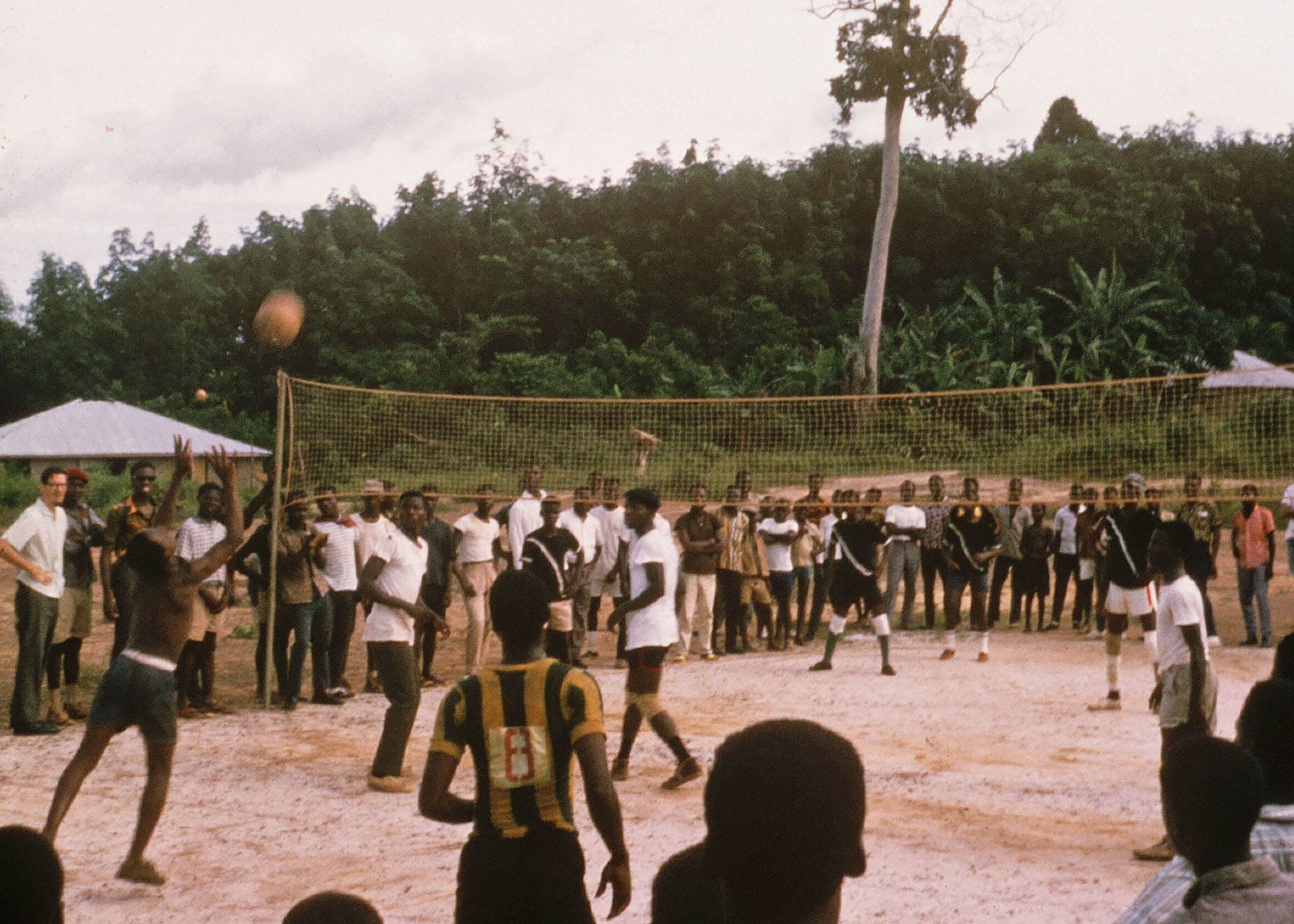
Good teaching involves capturing the imagination of students and encouraging them to become active participants in the classroom. Often it also involves participating in extracurricular activities. In this 1966 photo I am coaching Gboveh's High Scool volleyball team in Gbarnga, Liberia.

Good teaching involves capturing the imagination of students and encouraging them to become active participants in the classroom. Often it also involves participating in extracurricular activities. In this 1966 photo I am coaching Gboveh’s High School volleyball team in Gbarnga, Liberia.

I am not sure I earned the title of teacher at the elementary school, even though I put in the time and occupied the chair. I did learn that teaching was hard work and developed a life-long respect for elementary school teachers. I like to believe, had to believe, that I had some impact on the life of my students.

High school was different. From the beginning I was teaching subjects I truly enjoyed: World History, World Geography, African History and African Geography. I had never understood how history and geography could be boring. The best of my teachers had brought the subjects to life and made them exciting and relevant. I was determined to do the same for my students. We debated, did projects and made maps.

As strange as it may seem, my high school African History course was a first for Liberia. We travelled back in time starting with the exciting discoveries being made at Olduvai Gorge in East Africa about the early beginnings of humanity. We looked at the major West African kingdoms such as the Songhai and Mali. We explored the impacts of slavery, Colonialism, Islam and Christianity on Africa.

In geography we started locally and moved outward, from Gbarnga to Liberia to Africa and the world. Like their elementary school counterparts, the high school students found it almost impossible to accept that Liberia occupied such a small part of the African Continent. They became incensed, like it was my fault.

I wisely opted out of teaching Liberian History. It’s likely that I would have deviated from the Americo-Liberian version and been run out of the country. How could I teach the kids that Matilda Newport was someone they should idolize when her claim to fame was blasting their great-great-grandfathers with a cannon? I even had to be careful what I taught my World and African History classes. The students were bright and would draw their own conclusions.

“Gee Mr. Mekemson, the way the white minority in South Africa controls things is a lot like Americo Liberians control things here.”

“Oh really?’’ was about as far as I dared go in response. Things had a way of getting back to the authorities. Favors could be earned by reporting supposedly seditious comments to paranoid government officials and I had already earned enough black marks from the second grade reader and Boy’s appetite for Guinea Fowl.

But I didn’t stay out of trouble. During our second semester at Gboveh, I decided that creating a student government would help our students prepare for the future. I argued that the best way to prepare for democracy was to practice it. Everyone, including students, teachers and Mr. Bonal, agreed. We pulled together interested students, worked through developing by-laws, and set up elections. The students even decided they would organize and run for office on party tickets. Why not? It sounded like fun.

It never entered my mind that this relatively innocent gesture would strike terror in the hearts of Americo-Liberians. Once again, I had failed to comprehend just how paranoid the Liberian government was. Within 24 hours we had been accused by the Superintendent of Bong County of setting up competing political parties to the Government’s True Whig Party.

Student leaders were told to cease and desist or they would be arrested and thrown in jail. Mr. Bonal called me in and suggested I should start packing my bags. There was no way that he was prepared to take responsibility. I didn’t blame him. At a minimum he could lose his job… and that would be a stroll through the rainforest in comparison to rotting in a Liberian jail.

On one level, the government’s paranoid behavior made sense. The True Whig Party was how the Americo Liberians maintained control of the government and, more importantly, their privileged positions. The Kpelle Tribe was the largest tribe in Liberia and my students were becoming the elite of the tribe through education. A political party set up at high school might indeed morph into a political party of the Kpelle, given time.

So we eliminated the tickets and names. We were then allowed to proceed but I have no doubt we were closely monitored. I couldn’t help but wonder which of my students or fellow faculty members reported regularly to the Superintendent on my treasonable behavior.

Somewhat on the lighter side was the business of keeping the names of my students straight. It wasn’t that I had a lot to remember; there were five students in the 12th grade, ten in the 11th and sixteen in the 10th. Most teachers would kill for that student-teacher ratio. The problem was that the students changed their names frequently.

John Kennedy was big in Liberia at the time so there were several John Kennedys. Moses was also popular. Five trillion missionaries made sure of it. Kids would also take the name of whomever they were living with. Most of them had left villages and were trying to survive life in the big town. By adopting the name of the family taking care of them, they encouraged better care. Sam even told me he considered becoming Sam Mekemson, our African son. Finally, as students became more aware of their heritage, some switched back to their tribal names. What a unique thought that was.

Roll call was often a challenge. Students wouldn’t answer if I didn’t use their name of the moment. I finally adopted a rule that students could change their names but only at the beginning of a semester. It worked, sort of.

My school activities increased as time went on. I chaired the social studies department from the beginning. This wasn’t too significant since I was the social studies department and my primary responsibility involved keeping me in line. (Some misguided people claim that is not an easy task.) I also took on more work for Mr. Bonal and eventually came close to functioning in the role of vice principal. Daniel Goe had returned to the U.S. for further education.

Jo created a high school chorus that became so good the County Superintendent wanted her to create a Bong County Chorus. She gracefully declined. This was, after all, the same man who wanted to throw us in jail when Boy ate his Guinea Fowl and was ready to kick us out of the country because we dared to develop a student government.
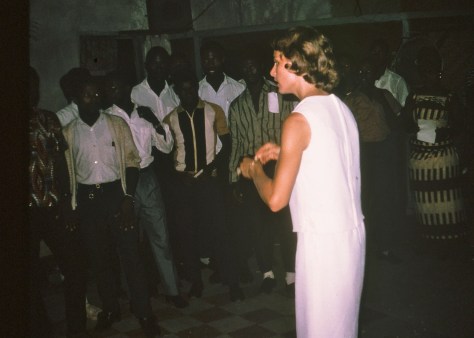
Jo Ann directing her Gboveh High School chorus. At Berkeley, she had belonged to the University's elite Glee Club.

Jo Ann directing her Gboveh High School chorus. At Berkeley, she had belonged to the University’s elite Glee Club.

There were a multitude of other activities. I developed a library for the school by raiding departing PCVs book collections. For some reason I was roped into coaching the school’s football/soccer team, a task I quickly traded for volleyball.  (There were four-year olds in town who knew more about soccer than I did.)

I also created a local Boy Scout troop. I taught them how to tie knots and they took me for great jungle walks. Jo Ann contributed by sewing Patrol flags. All in all, we kept busy carrying out the same type of work being done by thousands of Peace Corps Volunteers around the world.

One of my many activities as a Peace Corps Volunteer was serving as a scout master. My scouts took me on outdoor adventures.

One of my many activities as a Peace Corps Volunteer was serving as a scout master. My scouts took me on outdoor adventures.

Chapter 34: African Safari by VW Bug: Part 2

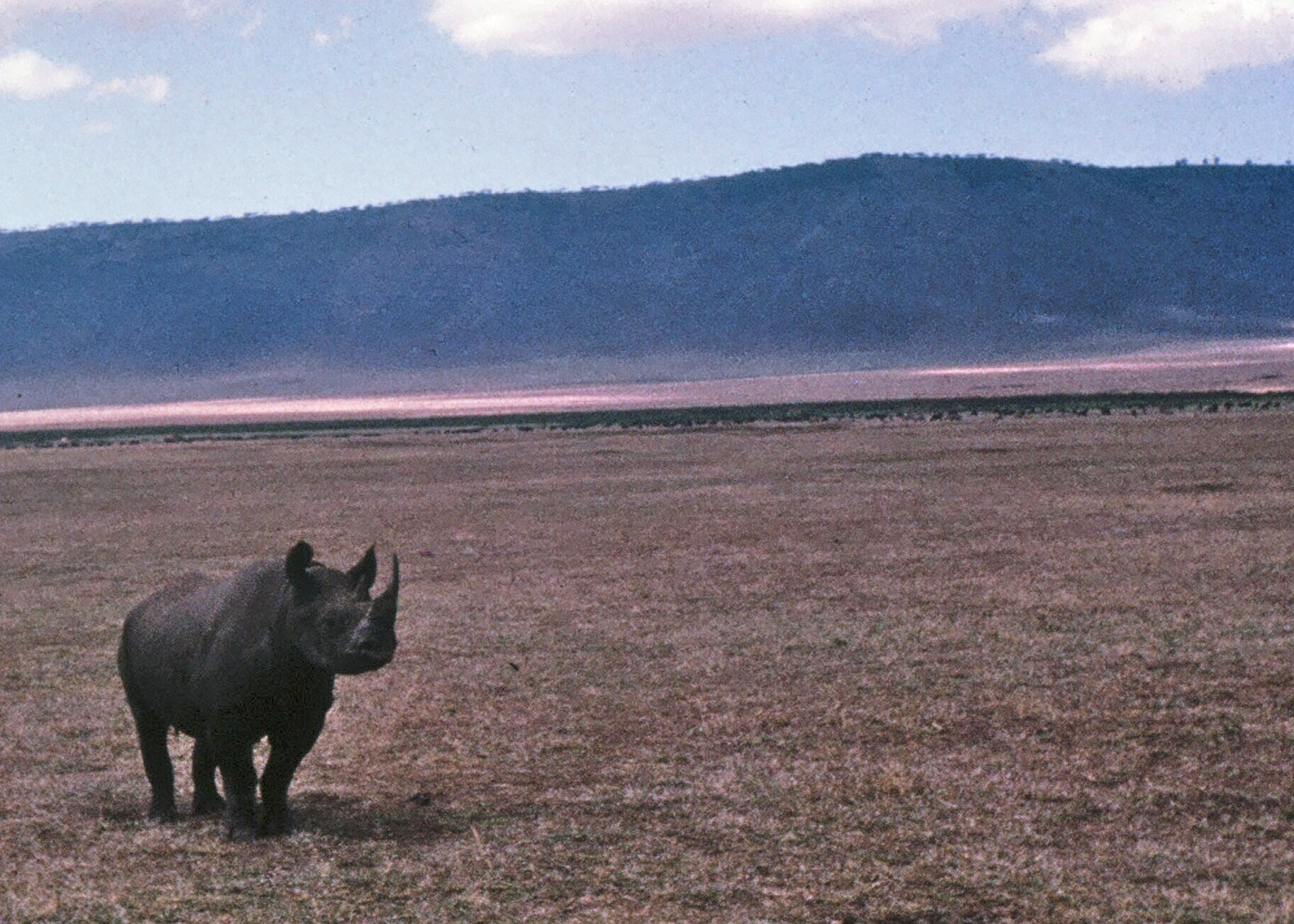
George, the Rhino, stood quietly and watched us in Ngorongoro Crater until I was precariously perched on our landrover to take his photo... The he charged.

The Rhino stood quietly and watched us in Ngorongoro Crater until I was precariously perched on the Land Rover to take his photo… Then he charged.

In my last blog I described how Peace Corps Volunteers from Liberia, West Africa ended up exploring the big game parks of East Africa. My ex-wife, Jo Ann, and I joined another Peace Corps couple, John and Chris Ogden from New York, to rent a VW Beetle and go on a self-guided 2500 mile safari through Kenya, Tanzania and Uganda.

Our greatest wildlife adventure in East Africa was to be a toss-up between Ngorongoro Crater and the Serengeti Plains, both in Tanzania. Ngorongoro is an extinct volcanic crater ten miles across that offers one of the greatest wildlife concentrations in the world. We arrived in late afternoon and chose a nearby tent camp as home.

There was a beautiful old colonial hotel overlooking the crater, but its cost exceeded our budget by a factor of ten. We consoled ourselves by going there to drink beer on its verandah and watch the sun set over the crater. The hotel’s high-paying guests missed the experience we had that night of animals grunting, growling and grazing outside their bedrooms.

Mere mortals aren’t allowed to drive into the crater. For that we needed a bona fide Land Rover and licensed guide. We paid the price and descended the thousand feet to the floor of the crater.

Our first sight was a standoff between buzzards and hyenas over the remains of a dead zebra. Next we saw the King of Beasts, lying on his back with all four feet up in the air. Nice kitty. I felt a strange compulsion to rub its belly but resisted the urge. An ostrich performed a ballet for some reason, whirling in tight circles before dashing off on an important errand.

There was no "nice kitty" about this lion. It was thinking "food."

There was no “nice kitty” about this lion. It was thinking “food.”

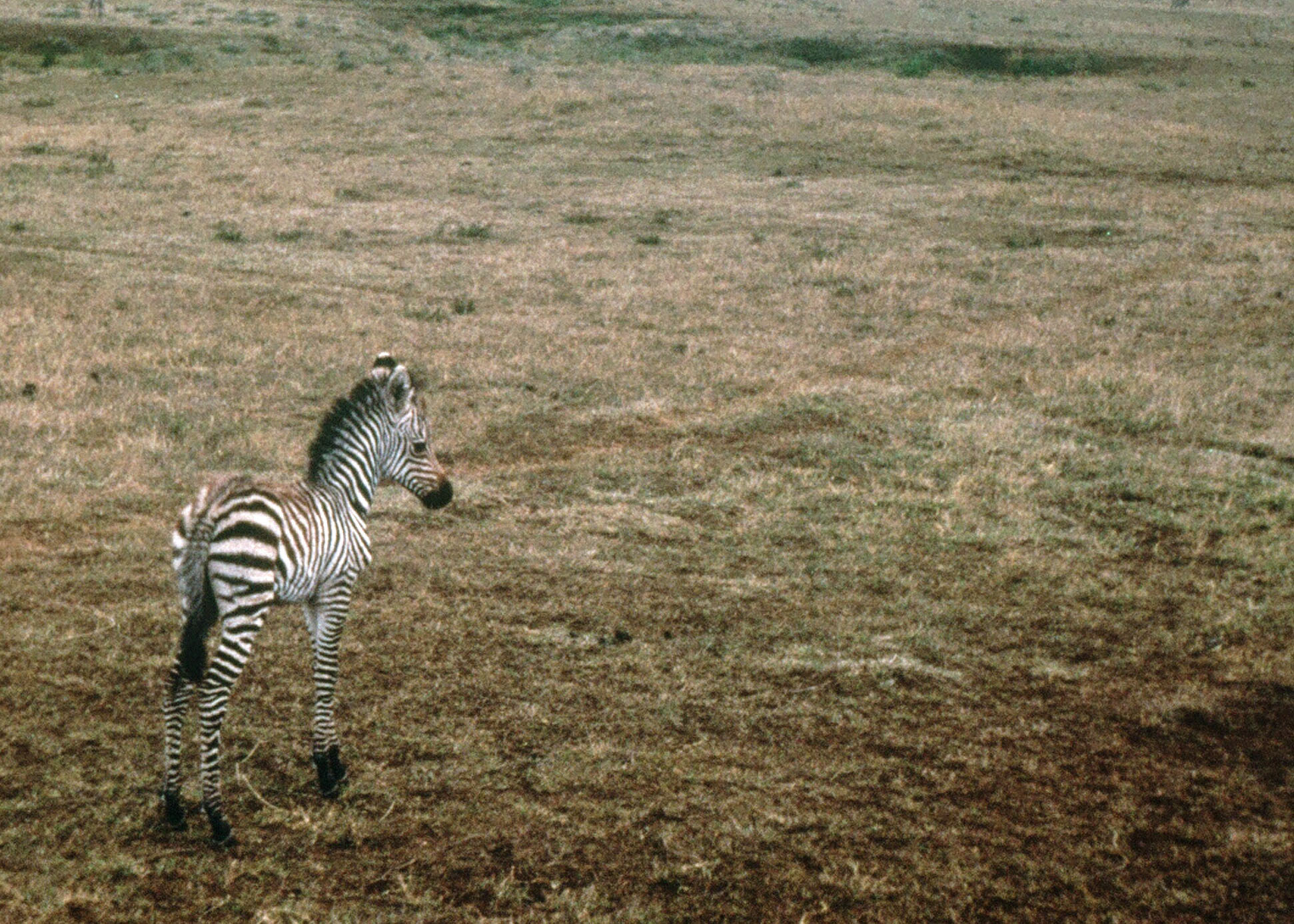
On the opposite end of the food chain from the lion, was this cute baby zebra I photographed in Ngorongoro Crater. Mom was standing nearby.

On the opposite end of the food chain from the lion, was this cute baby zebra I photographed in Ngorongoro Crater. Mom was standing nearby.

Ungainly hartebeests and wildebeests also appeared to have appointments and patiently joined up in organized lines for their journey. George, the Rhino, just stood and stared until I was precariously perched on top of the Land Rover snapping his picture. Then he charged. The driver took off and I almost didn’t. I never did learn why his name was George but I was ever so thankful I didn’t get close enough to ask.

After Ngorongoro, we dropped into one of the cradles of humanity, a rather dry and rocky Eden known as Olduvai Gorge. It was here that the Leakeys discovered the skull of Zinjanthropus, a 1.7 million year old precursor to humankind. We were lucky to engage a guide who had been with Mary Leakey when she found the skull seven years earlier in 1959. The guide took us to the discovery site and excitedly relived the experience. We were almost ready to grab shovels and begin hunting for our own ancient ancestors.

An assistant to Mary Leaky, this man was with her when she made the exciting discovery of Zinzanthropus. Here, he excitedly relives the experience with us.

An assistant to Mary Leaky, this man was with her when she made the exciting discovery of Zinjanthropus. Here, he relives the experience with us in Olduvai Gorge, Tanzania.

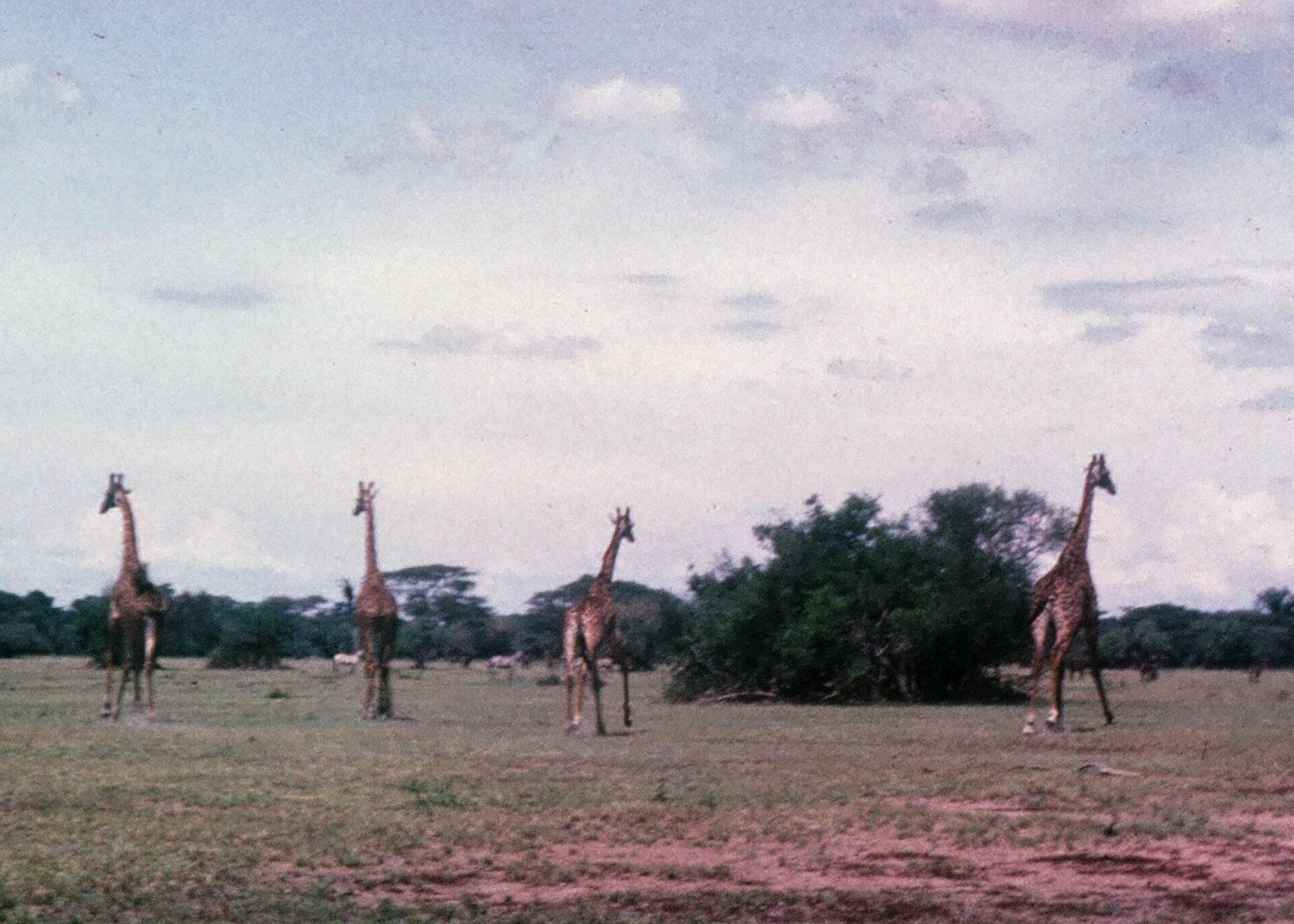
The Serengeti is flat; so flat you can leave the road and drive across it. That provided an opening for all sorts of mischief such as chasing giraffes, ostriches and gazelles. We spotted a cheetah perched in a tree and drove under her. She didn’t pounce. A momma warthog and four little pups, all with tails straight up in the air, provided a humorous diversion.

Captured on my inexpensive Kodak Instamatic camera, these giraffes were running away from our VW bug as we chased them across the Serengetti Plains of Tanzania.

Captured on my inexpensive Kodak Instamatic camera, these giraffes were running away from our VW bug as we chased them across the Serengeti Plains of Tanzania.

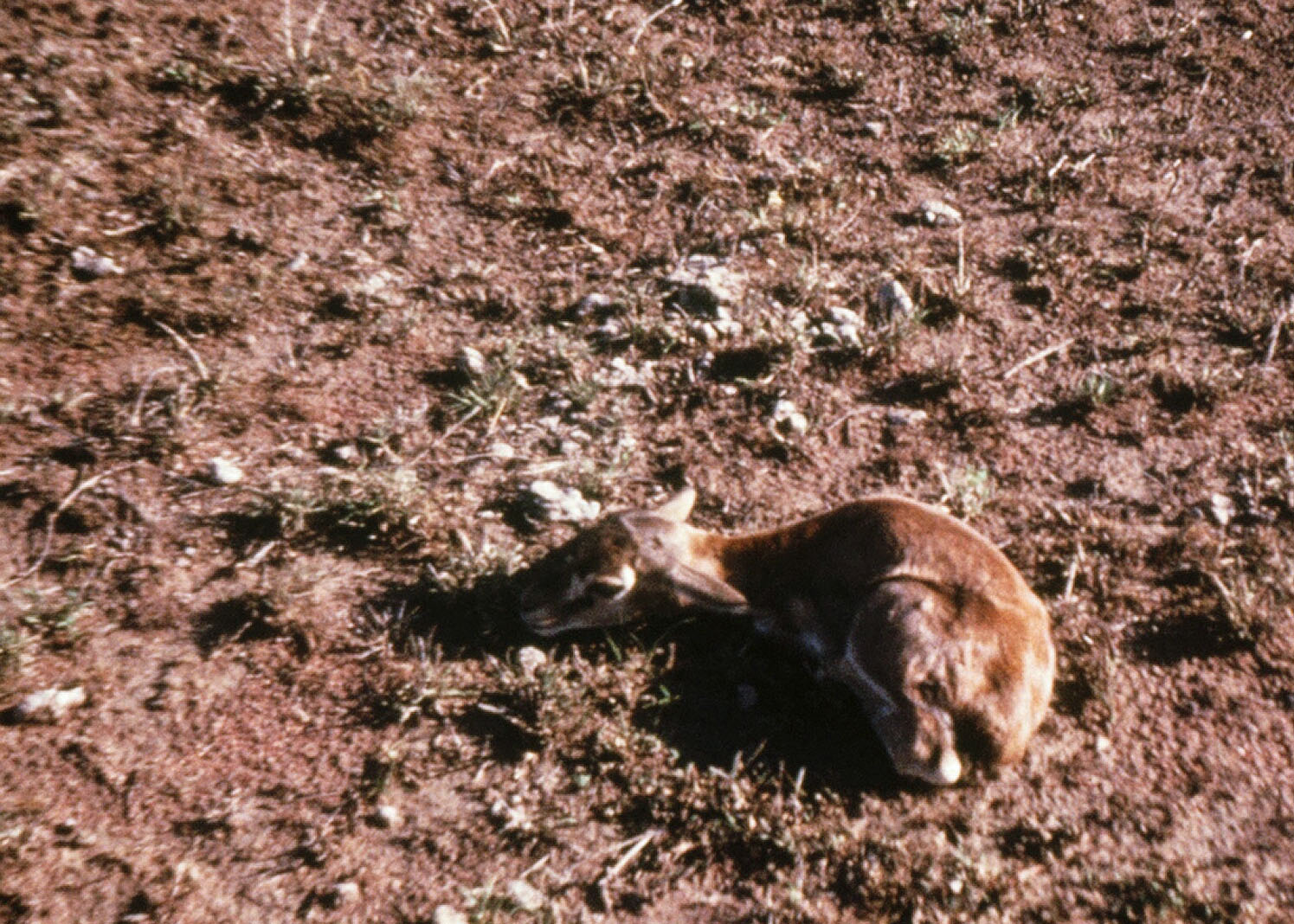
I discovered that tiny Dik-diks, members of the antelope clan, are truly small when I was able to sneak up within two feet of one that was sleeping. Again we had the same feeling that we had numerous times during our journey; we were in the world’s greatest zoo but we were the ones behind bars. The animals ran free.

I discovered this young Dik Dik sleeping on the Serengetti Plains. It's possible its mother had told it to stay put. Shortly afterwards it jumped up and dashed away.

I discovered this young Dik-dik lying on the Serengeti Plains. It’s possible its mother had told it to stay put. Shortly afterwards it jumped up and dashed away.

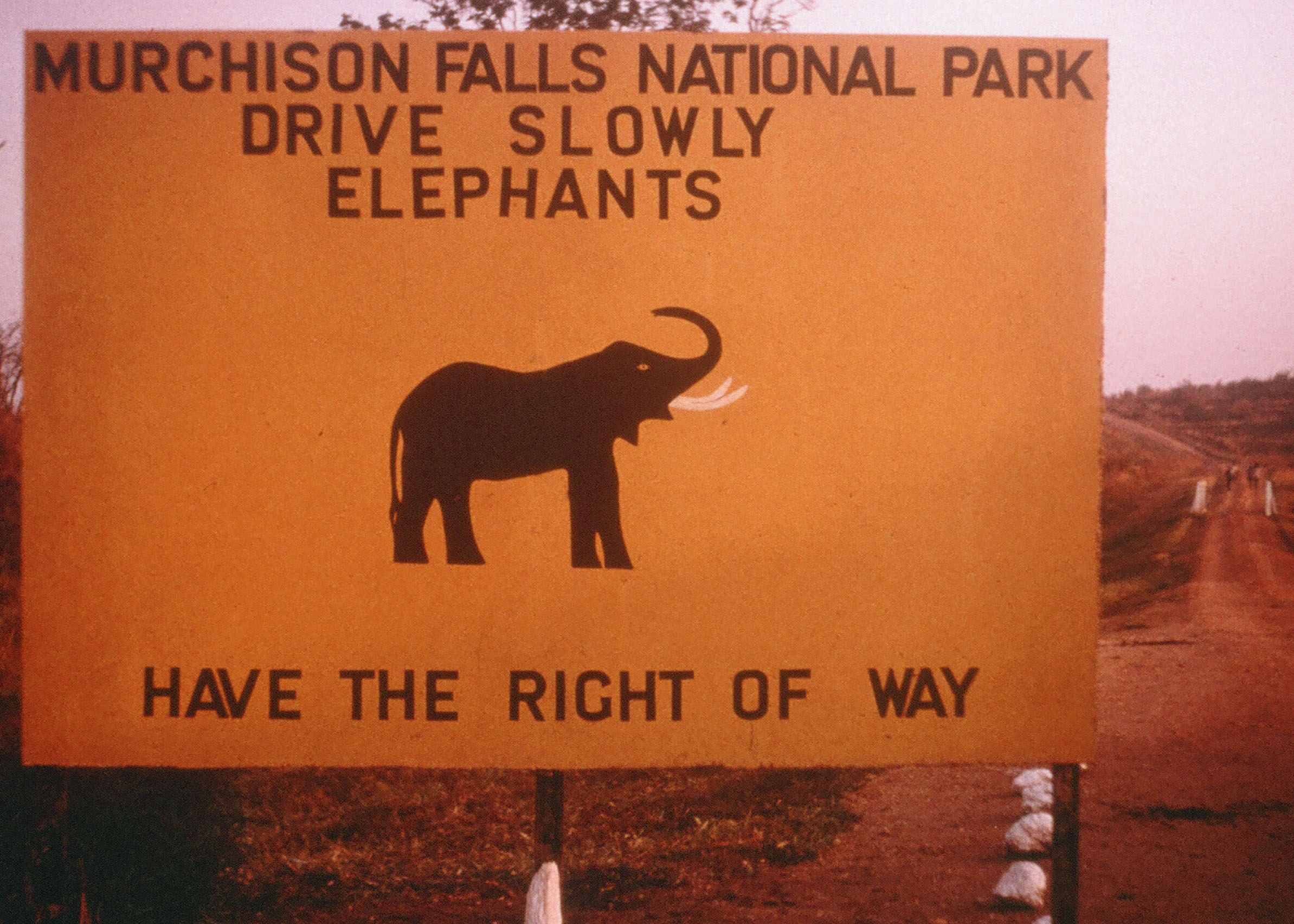
After the Serengeti, the majority of our wildlife viewing was over. We drove around Lake Victoria, crossed the Equator going north, entered Uganda in its relatively peaceful days, visited Kampala and made a beeline for the Victoria Nile. Here we chugged up river amid memories of the African Queen. Hippos dutifully wallowed in the mud, crocodiles slid down the banks and Murchison Falls rumbled. At last, it was time to return to Nairobi and turn in our faithful VW. The 2500-mile safari was over.

Jo stands in the Southern Hemisphere and I stand in the North in this photo taken by John Ogden.

Jo stands in the Southern Hemisphere and I stand in the North in this photo taken by John Ogden.

This photo provides a fitting end to my two blogs on traveling through East Africa when I was serving as a Peace Corps Volunteer in Liberia 1965-67.

This photo provides a fitting end to my two blogs on traveling through East Africa when I was serving as a Peace Corps Volunteer in Liberia 1965-67.

Chapter 33: African Safari by VW Bug… Part 1

I climbed out of our VW bug to photograph this elephant family in Manyara National Park with my Kodak Instamatic. Ah that I would have had a better camera.

I climbed out of our VW bug to photograph this elephant family in Manyara National Park with my Kodak Instamatic. Ah that I would have had a better camera.

African Water Buffalo are known for their nasty attitudes and we were facing a whole herd of nastiness. Thirty minutes before the gas pedal linkage on our Volkswagen Beetle had broken on our trip through Manyara National Park in Tanzania. We had jury-rigged a temporary fix by tying the pedal down. Stopping involved pushing the clutch in while the engine revved at full throttle. It was loud.

The herd of water buffalo crossing the road in front of us apparently didn’t like loud. Or maybe it was just my imagination. I get nervous when 2000-pound beasts with large, formidable horns are contemplating a charge. The fact that our VW Bug tipped the scales at just over 1700-pounds and all its horn could accomplish was a puny beep did not reduce my anxiety.

My travel companions were already nervous. Earlier in our exploration of the park, I had received a solid lecture for stopping and getting out to snap pictures of an elephant family. The week before a bull elephant in Manyara had caught a whiff of tourists in a VW Van and chased them down the road in an earth-pounding run. Having caught up, he rammed his tusks through the rear widow.

Fortunately, neither the elephants nor the water buffalo considered our tiny car and its inhabitants worthy opponents. Just after dark we drove the limping VW back into our lodge overlooking the Rift Valley and Manyara National Park. We had successfully accomplished another adventure in our 2500-mile safari through East Africa.

Peace Corps Volunteers in Liberia were encouraged to go on vacation during the second “summer” of their two-year tour. The majority of Group VI had chosen to charter a jet to East Africa for our month of escape. Our share of chartering the jet had seriously depleted Jo Ann and my savings, thus the self-guided VW safari. We hooked up with another married couple, John and Chris Ogden from New York, to share the adventure and expenses. Like Jo and I, John and Chris had graduated from college in 1965, married and joined the Peace Corps.

John and Chris Ogden join me in front of the Plum Hotel in Nairobi, Kenya during out 1967 adventure.

John and Chris Ogden join me in front of the Plum Hotel in Nairobi, Kenya during out 1967 adventure.

Our first stop was Nairobi, Kenya, an attractive, modern city where we could actually drink the milk. It is amazing how much meaning such a small thing can assume. I would have been happy to just hang out and enjoy the amenities except adventure called; there were lions and gazelles and rhinos, “oh my!” We rented our VW bug, crammed the four of us plus luggage in, and rolled off across Tsavo National Park on a narrow dirt road. Our eyes were glued to the windows searching for wildlife.

“There’s an elephant!” Chris shouted and we screeched to a halt. It looked impressively big from the perspective of our VW Beetle. So were its droppings. We drove around rather than through them. High-centering on elephant dung was not part of the adventure. We spotted an ostrich and then a giant porcupine. John and I jumped out of the car to check out the porcupine. He stood at least three feet tall, had six-inch quills and exuded a ‘don’t mess with me’ attitude. We called him sir. Just as dusk arrived we spotted our first zebras. John raced down the road to keep pace with them while Jo Ann and Chris squealed about juvenile behavior.

Mysterious Malindi on the Indian Ocean came next. Visiting there was like dropping into the middle of an Arabian Night’s Tale. Vasco da Gama had come through here at the close of the Fifteenth Century, picked up a local pilot to guide him onward, and left behind a stone cross. Long before Europe came crawling out of the Dark Ages and Vasco da Gama began his perilous journey, Malindi had been an important port on the busy Indian Ocean trade routes. Goods from as far away as China had made their way through its bustling markets while the words of the Prophet Muhammad echoed through its streets.

Visiting Malindi, Kenya in 1967 was like dropping into a Tale from the Arabian Nights.

Visiting Malindi, Kenya in 1967 was like dropping into a Tale from the Arabian Nights.

We camped out on the beach in huts and were introduced to sailing by John and Chris. We also tried snorkeling. A native outrigger canoe, complete with three natives, carried us out to a beautiful coral garden. A jellyfish seriously stung me for my efforts while Chris and Jo Ann received exotic shells from the natives. Unfortunately, the shells were still occupied by their rightful owners. After several days of hot tropical sun, opening our trunk became an exercise in courage. We ended up paying five dollars to have the shells cleaned. It was a small fortune for the guy that did it, but we thought it was a great bargain.

Mombasa was next on our agenda. We drove into town under giant, sculpted elephant trunks, a reminder of the role that the ivory trade had played in East Africa’s history. There was also a reminder of when tiny Portugal had been a major world power; a dark, foreboding Fort Jesus looked out to sea with the objective of protecting precious spice routes to the Indies. What impressed us the most, though, were the intricate, highly crafted wood carvings the city was famous for. Out came our wallets as we shipped off piece after piece to the U.S.

Giant elephant tusk sculptures greeted our entrance to Mombassa.

Giant elephant tusk sculptures greeted our entrance to Mombassa.

We crossed from Kenya into Tanzania and Mt. Kilimanjaro slipped by, hidden in the clouds. Several volunteers from our group had chosen to climb the mountain. (The Kilimanjaro link is for a tour group that follows my blog.) We opted for a more sedate experience and drove up its side to check out the coffee plantations. Heading on to Arusha, we dined at a hotel that Hemingway had frequented during his East Africa sojourns.

Much to the amusement of my companions, a large swarm of flies chose to buzz around my head during dinner. Even more annoying was the Tanzanian waiter who chose to point out with a very British accent that I used the wrong knife on my fish.

“That, sir, is your butter knife!” he announced in a booming voice. Hemingway probably would have challenged him to a duel.

I did have one important responsibility in Arusha, buying meerschaum pipes for Morris Carpenter, who had already returned to America. Unfortunately, I kept one when we returned to Gbarnga and made the mistake of trying it out while enjoying my porch. It would be years before I could break the addiction. Tobacco was much more dangerous than the elephants and water buffalo we encountered at Manyara National Park where we went after Arusha.

In my next blog we encounter George the Rhino on the floor on Ngorongoro Crater, chase giraffes across the Serengeti Plains, and dodge crocodiles on the Victoria Nile.

Chapter 32: Goat Soup, Greed and Everyday Life

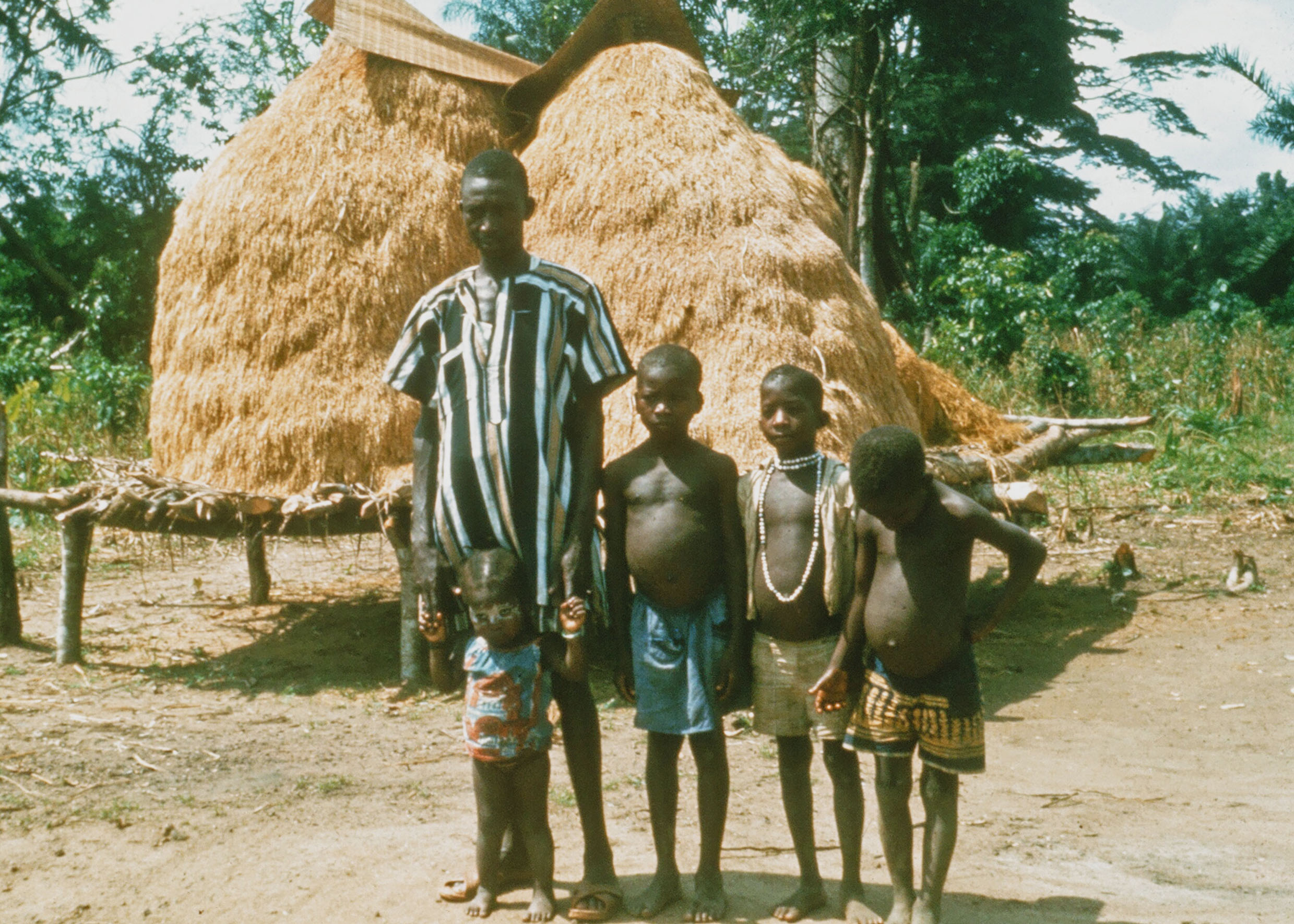
After a day of teaching at Gboveh High School, I would follow jungle trails to surrounding villages and farms. This picture features a Kpelle farmer with his three boys and young daughter. Harvested rice is piled behind the family.

After a day of teaching at Gboveh High School, I would follow jungle trails to surrounding villages and farms. This picture features a Kpelle farmer I met along with his three boys and young daughter. Harvested rice is piled behind the family.

In some ways our everyday life as high school teachers resembled our everyday life as elementary school teachers. We would crawl out of bed at 6:30, eat a quick meal and walk to school. Shortly after 1:00 we would be home downing peanut butter and jelly sandwiches with the school day finished. Our nap was next.

The new location encouraged wandering. After siesta, the dogs and I would disappear into the jungle. This continued a tradition of hiking in the woods from my earliest childhood years. I explored the surrounding village trails going farther and farther afield. Sometimes I would take my compass so I could draw primitive maps and figure out where I had been. Tribal folks were surprised to find me out in the bush but were always friendly.

I discovered where the cane fields and whiskey stills were, found a primitive but well-built wooden bridge across the river, made my first acquaintance with Driver Ants, and avoided the numerous poison snakes.

Sometimes Jo Ann would join me and on occasion I would take Sam, other Volunteers and Peace Corps staff along. The hikes provided an opportunity to explore aspects of tribal life not normally found in Gbarnga. They also served as a major part of my exercise program. I became svelte, or maybe just skinny.

A Kpelle woman and her daughter take turns pounding palm nuts in this 1966 photo taken near Gbarnga, Liberia.

A Kpelle woman and her daughter take turns pounding palm nuts in this 1966 photo taken near Gbarnga, Liberia.

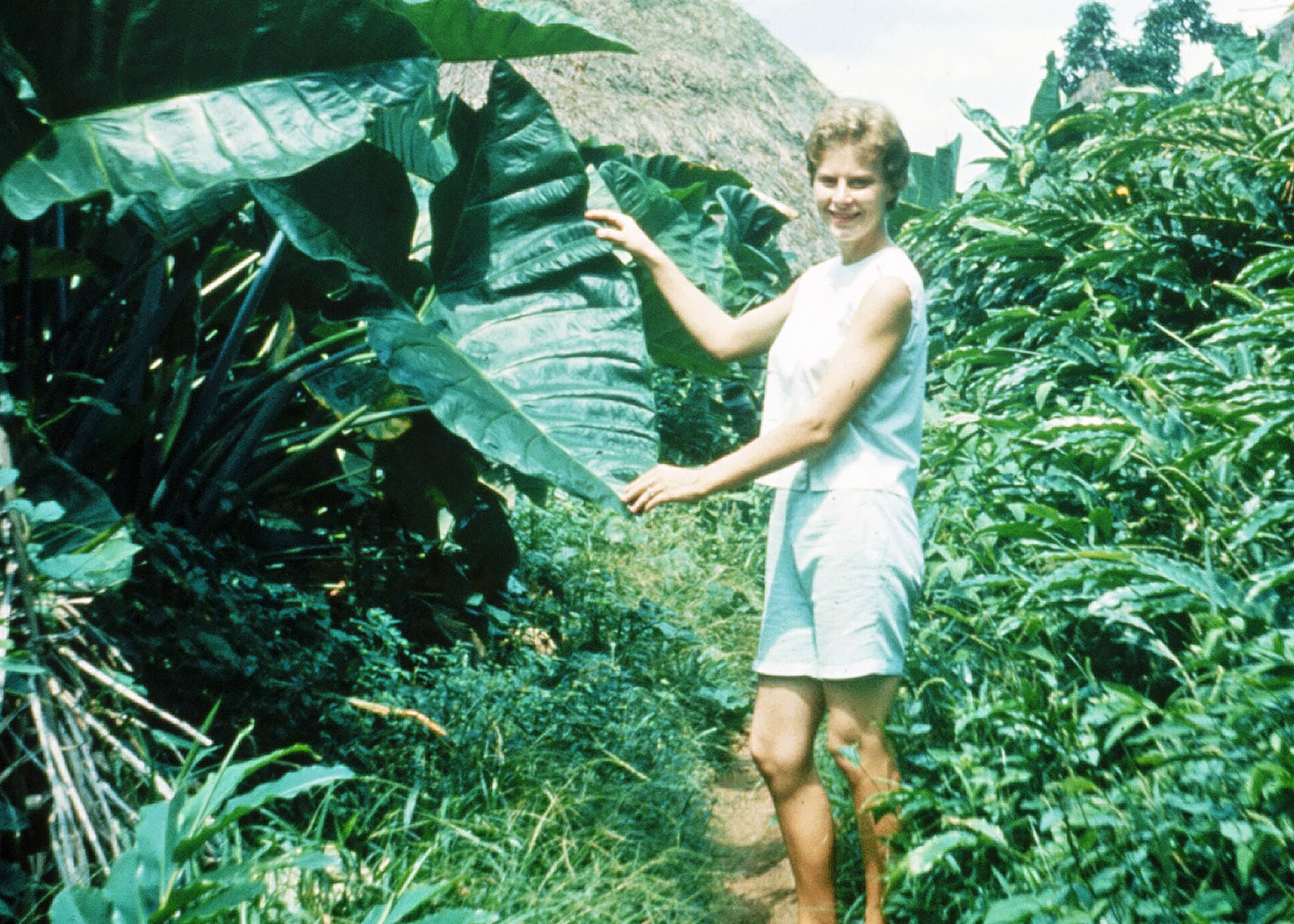
Jo Ann holds an Eddo or Taro leaf. The tubers of this plant are used as food throughout the tropics.

Jo Ann holds an Eddo or Taro leaf. The tubers of this plant are used as food throughout the tropics.

Hidden by palm fronds, I climb up a Kpelle ladder I discovered on one of my jungle hikes. Notches in a trunk serve as rungs.

Hidden by palm fronds, I climb up a Kpelle ladder I discovered on one of my jungle hikes. Notches in the trunk served as rungs for the primitive but effective climbing device.

Peace Corps staff member Dick Hyler and his wife Maureen join me on a hike through the jungle.

Peace Corps staff member Dick Hyler and his wife Maureen join me on a hike through the jungle.

Our social life was nothing to write home about. Unlike single Peace Corps Volunteers, we had each other for amusement. We did maintain our friendship with other married couples. Occasionally students or teachers would drop by. Sam was always hanging around, even when not working. I maintained an ongoing chess game with the minister of the Presbyterian mission. We would send our house boys back and forth with moves.

The largest social event we hosted was a goat feast for our fellow teachers from the high school and elementary school. Between finding a goat, having it slaughtered and making soup, it turned into a major project. Three women teachers from the elementary school came over to help with the cooking chores. They wanted to make sure the goat was properly cooked. The soup along with rice was delicious, and plenteous. No one went home hungry, or sober for that matter. I’d bought two cases of club beer and one case of Guinness Stout to accompany dinner. Drunk driving was not an issue. No one owned a car.

Even with everyone stuffed, there was ample goat chop left over to feed the dogs for a week. It lasted a night. Liberian dogs always ate like they were on the edge of starvation, even fat Liberian dogs. Somewhere in the midst of the four-legged feeding frenzy, I heard a yip and went outside to find that Brownie Girl had shoved a goat bone through her cheek. The medical emergency was minor; her real concern was being knocked out of the action. The other dogs and Rasputin were gobbling down her share. I pulled the bone out and Brownie Girl jumped back into the fray. It was pure greed. Not a scrap was left in the morning.

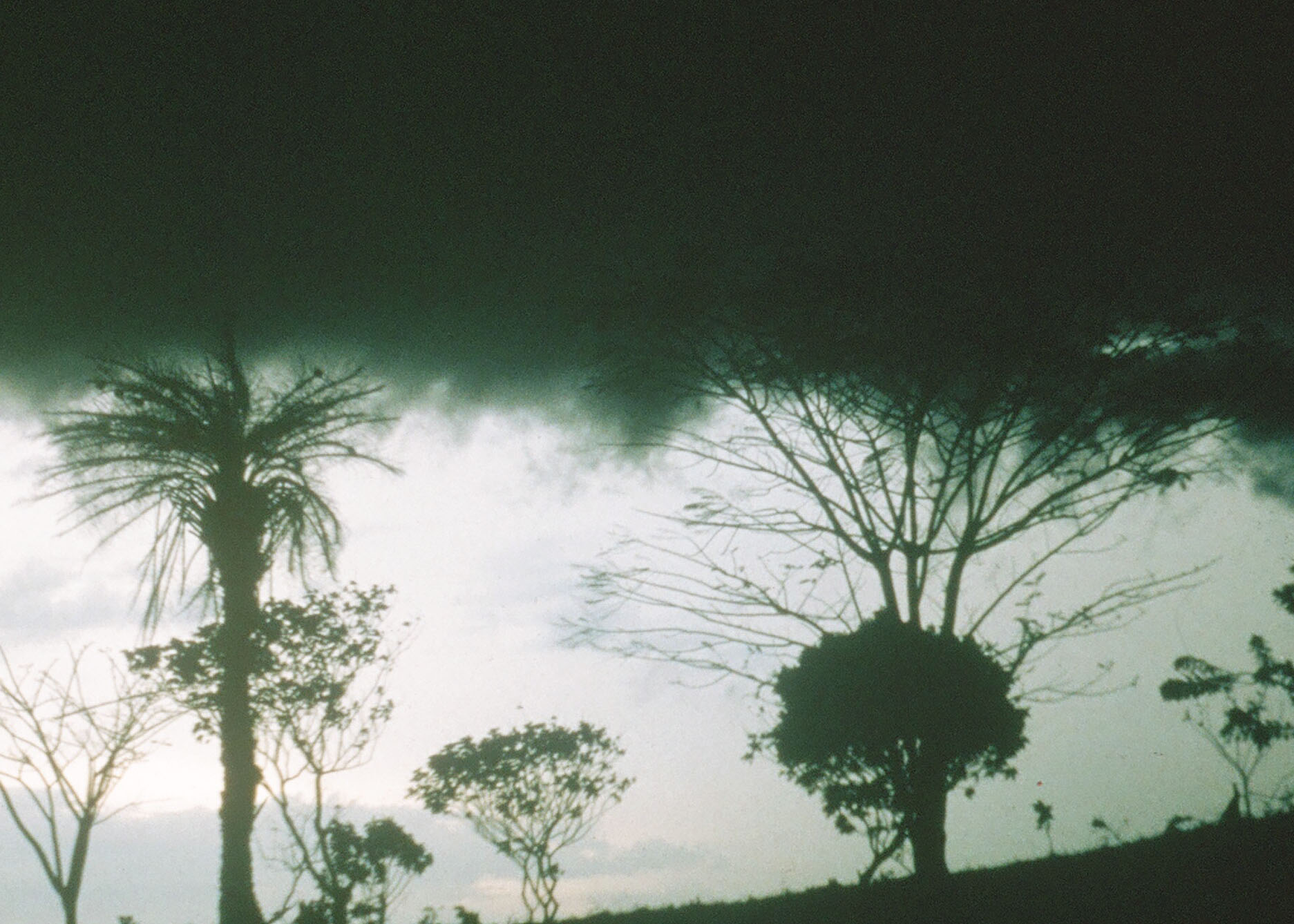
One of my favorite pastimes was to sit outside in the late afternoon, drink a gin and tonic, and watch the incredible tropical lightning storms. We found a jeep seat somewhere that made a comfortable couch for our porch. On occasion the sky would turn an ominous black and we could hear the storm as it ripped through the rainforest. The impending mini-hurricane would send Jo and I scurrying to yank clothes off the clothesline and batten down the hatches, i.e. make sure doors and shutters were firmly closed.

Dark storm clouds like these over Gbarnga suggested it was time for Jo Ann and I to quickly take in the laundry and shut up our house.

Dark storm clouds like these over Gbarnga suggested it was time for Jo Ann and I to quickly take in the laundry and shut up our house.

Every month or so, we would visit Monrovia for a touch of city life. Eating at the French restaurant by candlelight, spending an hour in the air-conditioned super market, hanging out in a book store or seeing the latest movie did wonders for morale. It almost made up for the three to four-hour harrowing taxi ride. We even took Sam with us once for his ‘birthday.’ He really didn’t know when it was so we declared it was during the trip. He still uses the same birth date.

Our really big break from teaching was a one-month trip to the big game parks of East Africa. In my next blog I will feature facing elephants and lions and water buffalo in a Volkswagen beetle, Oh My.

Chapter 31: Minced Green Mamba

Welcome to “The Dead Chicken Dance and Other Peace Corps Tales.” I am presently on a two month tour of the Mediterranean and other areas so I thought I would fill my blog space with one of the greatest adventures I have ever undertaken: a two-year tour as a Peace Corps Volunteer in Liberia, West Africa. Every two days I will post a new story.

When I have finished, I will publish the stories in digital and print book formats.


Tropical rainforests are home to numerous species of snakes. A large boa lived in this lake, which was just down from our house.

Tropical rain forests are home to numerous species of snakes. A large boa lived in this lake, which was just down from our house in Gbarnga, Liberia.

Another denizen of the rain forest that receives considerable press is the snake. As a youth I had become aware of their treacherous ways by reading Tarzan comic books.

We encountered a number of the wily serpents in our two years. They came in a myriad of sizes, shapes and colors. I already mentioned the tiny orange snake in the driver ants’ nest. “Very poisonous,” Sam had said.

I also found a black one coiled up in our flower garden and another poised in a tree above my classroom door. One dark, rainy night Jo and I were walking home from chaperoning a high school dance. Our flashlight was on the verge of dying. I looked down and found my foot three inches away from landing on top of a snake that stretched all the way across the road… which was just about the distance I managed to hop on one leg.

The Liberians assumed that all snakes were poisonous. We decided while in Liberia to do as the Liberians did. The only good snake was one with its head chopped off.

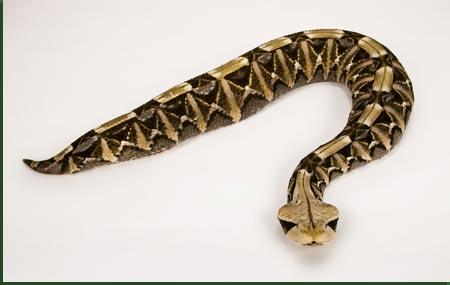
The most poisonous was reportedly the cassava snake. This ugly pit viper was about as long as your arm and twice as thick. It was supposedly sluggish; you had to step on it to get a reaction. When you did, it was all over though. Sluggishness disappeared. It whipped around and struck causing instant death. On my jungle hikes I always encouraged the dogs to go first and watched them closely. Like Rasputin, they were snake-wise. They detoured; I detoured.

Of all of Liberia's snakes, the Cassava Snake was the most deadly.(Google image)

Of all of Liberia’s snakes, the Cassava Snake was the most deadly.(Google image)

We even had a giant boa constrictor hanging out in the neighborhood. It lived in the reservoir just down the hill from our house. Town folks would spot it occasionally slithering through lake like the Loch Ness monster. I started calling it Nessie. Whenever a local dog or cat disappeared, it was assumed the snake had eaten it. My thoughts tended more toward a hungry Liberian, but this didn’t discourage me from suggesting to Boy the Bad Dog that he go play in the lake. He refused.

Soldiers eventually drained the lake in an unsuccessful attempt at finding the boa. Maybe it had developed a taste for Guinea Fowl and moved up the Superintendent’s compound.

The green mamba was an even more feared snake. It was said to climb trees, leap from limb to limb, and chase people. Jo Ann and I assumed that the Liberian who told us this story had been sipping too much fermented cane juice.

At least we did until we looked out the window one day and saw a green mamba climbing our tree. Faster than I could say, “Let’s sit this dance out,” Jo had grabbed our machete and was through the door. The mamba saw her coming and wisely made a prodigious leap for a higher limb. It missed.

Down it came amidst a mad flurry of machete strokes. Not even the three musketeers could have withstood that attack. It was instant minced snake. After that I learned to have more respect for Jo Ann when she was irritated.

In a slight reversal of roles, a snake did manage to ‘tree’ Jo once. I was happily ensconced in my favorite chair when I heard a scream from our outdoor bathroom. Talk about primitive male instincts. Hair on end, adrenaline pumping and blood rushing, I grabbed the machete and charged outside.

I threw open the bathroom door and there was Jo Ann, standing on the toilet with her pants down. Meanwhile a small black snake was merrily slithering around on the floor in hot pursuit of the little toads who considered our bathroom home. It had crawled under the door and across Jo’s foot while she was sitting on the pot. Had it happened to me, I might have been on the toilet, too.

Needless to say, I quickly dispatched the snake and saved the day. What a man!