The Last Colors of Fall… At Home in Southern Oregon

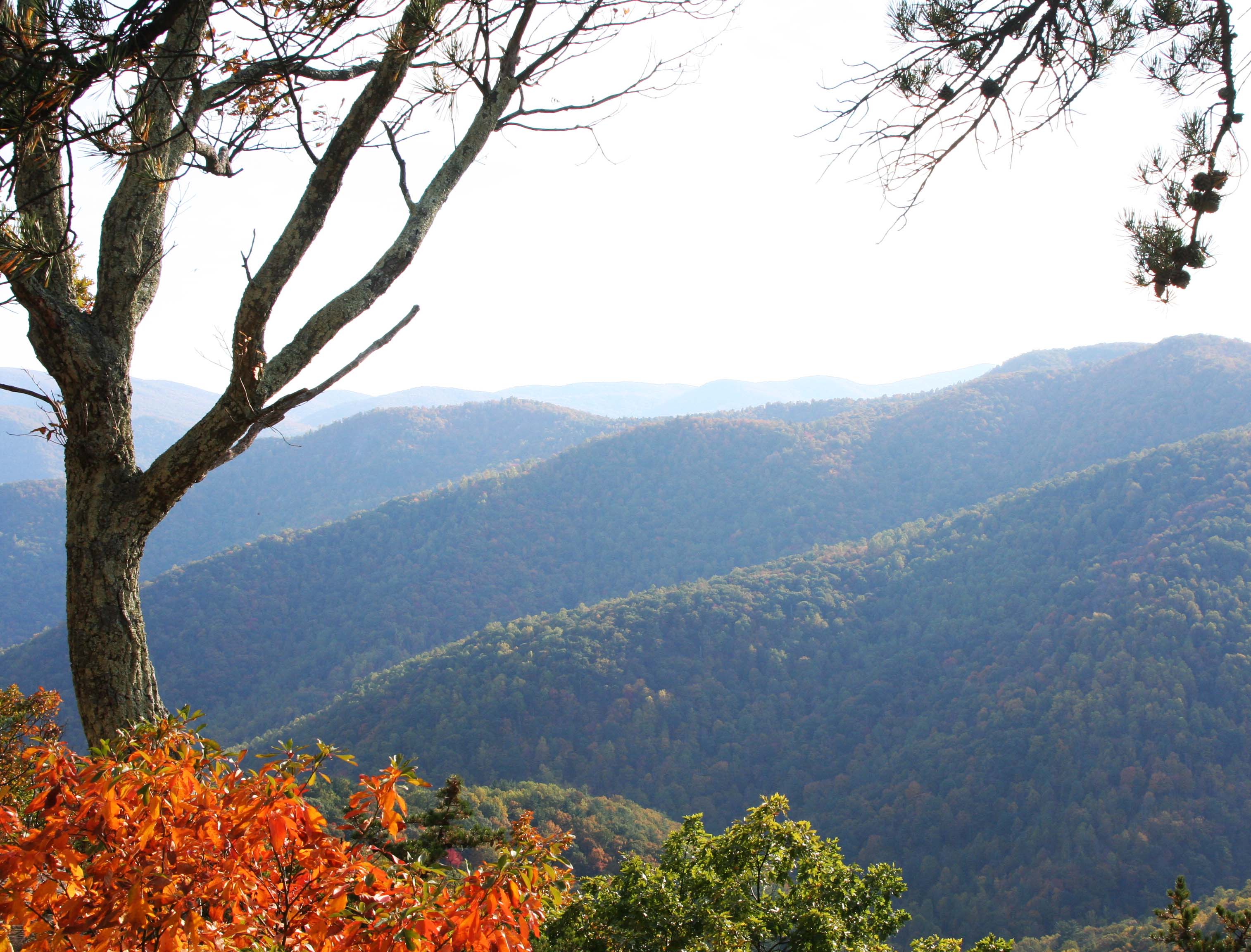
View from Curtis and Peggy Mekemson's patio in southern Oregon.

A view from the patio. Our white oaks provide a dash of golden orange to set off the green forests and blue mountains.

Several years ago Peggy and I were in the middle of a year off when we were treated to most of what America has to offer in fall’s brilliant display of leaves changing color. We began our adventure in late August. Our trip had taken us into Alaska and the weather was changing. The geese were getting restless, preparing for their journey south. We decided to migrate as well. Since our next scheduled stop was in Florida for Thanksgiving, we had three months to wander.

Our route took us down through the Yukon Territory and into British Columbia’s impressive national parks of Jasper and Banff in the northern Rockies. We then made our way east through Alberta and Saskatchewan, dropped down into North Dakota, and then traveled through Minnesota, Wisconsin, Michigan, Ohio, Pennsylvania and New York. We arrived in the New England states of Vermont, New Hampshire and Maine at the height of leaf peeping season. We then journeyed south through the Mid-Atlantic States into the Blue Ridge Mountains. The trees were spectacular the whole way. We were following fall, so to speak.

Photo by Curtis mekemson

Fall in the Rockies. I took this photo on the western side of the mountains in Colorado.

Fall photp of Blue Ridge Highway by Curtis Mekemson.

Fall along the Blue Ridge Highway.

Fall photo of Blue Ridge Mountains by Curtis Mekemson.

Fall view looking out on Blue Ridge Mountains.

Our rather mild weather in Southern Oregon doesn’t produce the magnificent colors of New England, but we get a decent showing. I kept promising myself I would get out and take photos but writing and procrastination interfered. When I finally managed to be out and about with my camera, there were more leaves on the ground than in the trees. I was left with the last colors of fall, but they were still impressive.

Southern oregon fall photo by Curtis Mekemson.

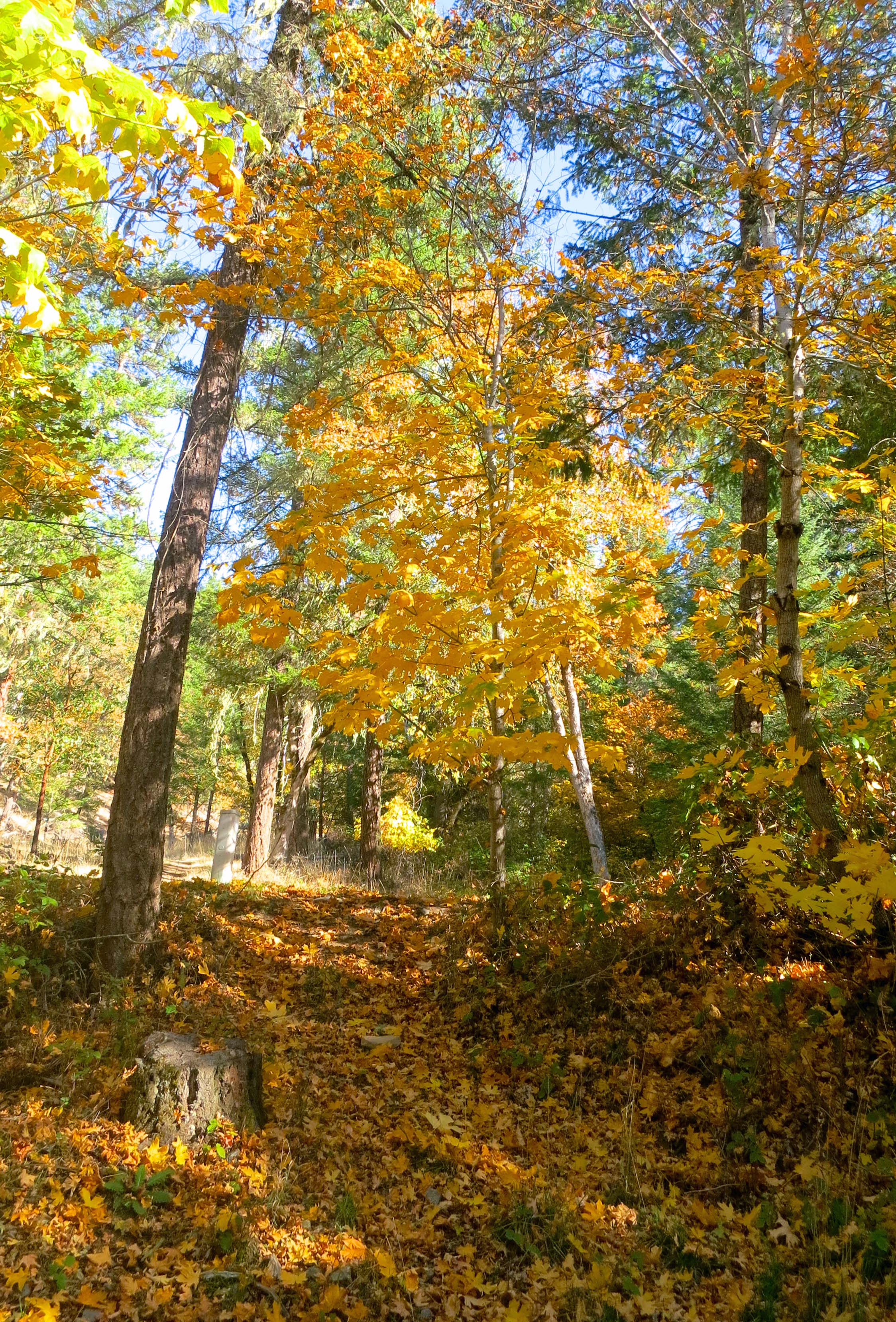
Trails snaking through our five acres are named after our grandsons. Connor’s Cutoff, hidden under leaves, does a good job of capturing fall colors.

Southern Oregon fall photo by Curtis Mekemson.

This photo follows our road down the hill and past the white oaks.

Oregon Maple photo by Curtis Mekemson.

An Oregon Maple adds a touch of yellow to our yard.

Photo of Oregon Maple by Curtis Mekemson.

A close up of the Oregon Maple. I like the contrast provided by the dark limbs.

These red berries decorated a neighbors yard. As I recall from my youth in California, we called them California Holly.

These red berries decorated a neighbor’s yard. As I recall from my youth in California, we called them California Holly.

Photo along Upper Applegate Road in Southern Oregon by Curtis Mekemson.

Our drive into the town of Jacksonville, Oregon provided more fall views.

Photo of fall view on Upper Applegate Road in Southern Oregon by Curtis Mekemson.

Another view along Upper Applegate Road on our way into Jacksonville.

Fall photo of the Applegate River by Curtis Mekemson.

Our property fronts on the beautiful Applegate River. I took this photo on one of the bridges across the river on Upper Applegate Road.

NEXT BLOG: We will visit one of America’s premier parks (where I happen to be as I type this), Pt. Reyes National Seashore, north of San Francisco, California.


The Attack of the Graveyard Ghost… Happy Halloween


It's that time of the year when my sister and I get together with my wife Peggy and Nancy's husband Jim for our annual pumpkin carving contest.

It’s that time of the year when ghoul

I had lunch with my sister Nancy and her husband Jim yesterday. With Halloween a day away, my thoughts turned to the the Graveyard we grew up next to. While my brother Marshall and I had a healthy respect for its inhabitants, my sister Nancy Jo’s fear of dead people bordered on monumental. This tale relates to her encounter with the Graveyard Ghost as a teenage girl. I trot it out every couple of years for Halloween on my blog, so you may have read it before.

My sister was seven years older than I and lived on a different planet, the mysterious world of teenage girls. Her concern about ghosts makes this story a powerful testimony to teenage hormones. It begins with Nancy falling in ‘love’ with the ‘boy’ next door, Johnny.

Johnny’s parents were good folks from a kids’ perspective. Marshall and I raided their apple trees with impunity and Mama, a big Italian lady, made great spaghetti. I was fascinated with the way she yelled “Bullll Sheeeet” in a community-wide voice when she was whipping Papa into line. He was a skinny, Old Country type of guy who thought he should be in charge.

I use the terms love and boy somewhat loosely since Nancy at 15 was a little young for love and Johnny, a 22-year-old Korean War Veteran, was a little old for the boy designation, not to mention Nancy. Our parents were not happy, a fact that only seemed to encourage my sister.

Her teenage hormones aided by a healthy dose of rebellion overcame her good sense and she pursued the budding relationship. Johnny didn’t make it easy. His idea of a special date was to drive down the alley and honk. Otherwise, he avoided our place. If Nancy wanted to see him, she had to visit his home.

It should have been easy; his house was right behind ours. But there was a major obstacle, the dreaded Graveyard.

Nancy had to climb over the fence or walk up the alley past the Graveyard to visit. Given her feelings about dead people, the solution seemed easy… climb the fence. Marsh and I had been over many times in search of apples. Something about teenage girl dignity I didn’t understand eliminated fence climbing, however.

Nancy was left up the alley without an escort.

While she wasn’t above sneaking out of the house, Nancy asked permission to see Johnny the night of the Graveyard Ghost attack. She approached Mother around seven. It was one of those warm summer evenings where the sun is reluctant to go down and boys are granted special permission to stay up. Marshall and I listened intently.

“Mother, I think I’ll go visit Johnny,” Nancy stated and asked in the same sentence. Careful maneuvering was required. An outright statement would have triggered a parental prerogative no and an outright question may have solicited a parental concern no.

Silence. This communicated disapproval, a possible no, and a tad of punishment for raising the issue.

“Mother?” We were on the edge of an impending teenage tantrum. Nancy could throw a good one.

“OK” with weary resignation followed by, “but you have to be home by ten.”

What we heard was TEN. Translate after dark. Nancy would be coming down the alley past the Graveyard in the dark and she would be scared. Knowing Johnny’s desire to avoid my parents, we figured she would also be alone. A fiendish plot was hatched.

At 9:45 Marsh and I slipped outside and made our way up the alley to a point half way between our house and Johnny’s. Next we took a few steps into Graveyard where weed-like Heavenly Trees and deep Myrtle provided perfect cover. Hiding there at night was scary but Marshall and I were operating under inspiration.

Marsh stripped the limbs off of one of the young trees, bent it over like a catapult, and draped his white T-shirt on the trunk. We then scrunched down and waited.

At exactly ten, Nancy opened the back door and stepped outside with Johnny. Our hearts skipped a beat. Would he walk her home? No. After a perfunctory goodnight, Johnny dutifully went back inside and one very alone sister began her hesitant but fateful walk down the alley.

She approached slowly, desperately looking the other direction to avoid seeing tombstones and keeping as far from the Graveyard as the alley and fence allowed. At exactly the right moment, we struck. Marshall let go of the T-shirt and the supple Heavenly Tree whipped it into the air. It arched up over the alley and floated down in front of our already frightened sister. We started woooooing wildly.

Did Nancy streak down the alley to the safety of the House? No. Did she figure out her two little brothers were playing a trick and commit murder? No. Absolute hysteria ensued. She stood still and screamed. She was feet stuck to the ground petrified except for her lungs and mouth; they worked fine.

As her voice hit opera pitch, we realized that our prank was not going as planned. Nancy was not having fun. We leapt out to remedy the problem.

Bad idea.

Two bodies hurtling at you out of a graveyard in the dark of night is not a recommended solution for frayed nerves and intense fear of dead people. The three of us, Nancy bawling and Marshall and I worrying about consequences, proceeded to the house. As I recall, our parents were not impressed with our concept of evening entertainment. I suspect they laughed after we went to bed. Sixty years later, Nancy, Marshall and I still are.

One of many pumpkins we have carved over the years.

One of many pumpkins we have carved over the years.

NEXT BLOG: Beautiful fall colors are surrounding our home on the Upper Applegate River in Southern Oregon. I will take you on a tour.

Mr. Fitzgerald Is Dead, Very Dead… Ghostly Tales

Marshall and I with the family dogs. I am on the left holding Happy. Marshall has Coalie.

Marshall and I with the family dogs in a photo taken about the time of our graveyard adventure. I am on the left holding Happy. Marshall has Coalie. The Graveyard starts about 30 feet away.

Ghosts  are out and about. I saw several today. And scary things they are with their booing and disappearing and haunting and tattered sheets. I thought I better get with the season and reblog some earlier ghostly tales from my youth.  Our family lived next to a graveyard. Many were the encounters we had with the creatures of the night. I would like to begin by reporting Mr. Fitzgerald is dead, very dead.

He has been for decades but I still have a clear memory of spying on him, trying to get my six-year-old mind around old age. I was perched in my favorite lookout, a Black Locust tree on the edge of the Graveyard. Dark clouds heavy with rain marched in from the Pacific while distant thunder announced the approaching storm. A stiff, cool breeze sent yellow leaves dancing across the ground.

Mr. Fitzgerald was a bent old man preparing for a future that might not arrive. He wore a heavy coat to fight off the chill. I watched him shuffle around in his backyard. He sharpened his axe on a foot operated grinding wheel and then chopped wood.

When he slowly bent over to pick up the scattered pieces and carry them into his shed, I scrambled down from the tree. I located a convenient knothole in the wall so I could continue to spy on him. He stopped stacking wood and stared intently at where I was, as though he could see through the weathered boards.

It frightened me.

I took off like a spooked rabbit. Mr. Fitzgerald was intriguing but his age and frailty spoke of death. I already knew too many dead people. They lived next door.

The Graveyard was out the backdoor and across the alley. We lived with its ghostly white reminders of our mortality day and night. Ancient tombstones with fading epitaphs whispered of those who had come to seek their fortune in California’s Gold Rush and stayed for eternity. Time had given their resting place a sense of permanence and even peace. But not all of the graves were old. Occasionally a fresh body was buried on the opposite side of the cemetery. I stayed far away; the newly dead are restless.

At some time in the past, Heavenly Trees from China had been planted to provide shade. They behaved like weeds. Cut them down and they sprang back up twice as thick. Since chopping them down provided Diamond Springs Boy Scout Troop 95 with a community project every few years, they retaliated by forming a visually impenetrable mass of green in summer and an army of sticks in winter. Trailing Myrtle, a cover plant with Jurassic aspirations, hid the ground in deep, leafy foliage.

During the day, it took little imagination to change the lush growth into a jungle playground populated with ferocious tigers, bone crushing boas and half-starved cannibals.

Night was different; the Graveyard became a place of mystery and danger. Dead people abandoned their underground chambers and slithered up through the ground.

A local test of boyhood bravery was to go into the Graveyard after dark and walk over myrtle-hidden graves, taunting the inhabitants. Slight depressions announced where they lived and tripped you up. My older brother Marshall persuaded me to accompany him there on a moonless night. I entered with foreboding: fearing the dark, fearing the tombstones and fearing the ghosts. Half way through I heard a muzzled sound. Someone, or thing, was stalking us.

“Hey Marsh, what was that?” I whispered urgently.

“Your imagination, Curt,” was the disdainful reply.

Crunch! Something was behind a tombstone and it was not my imagination. Marshall heard it too. We went crashing out of the Graveyard with the creature of the night in swift pursuit, wagging her tail.

“I knew it was the dog all of the time,” Marsh claimed. Yeah, sure you did.

NEXT BLOG: The Attack of the Graveyard Ghost. 

An Introduction to The Bush Devil Ate Sam… and other Peace Corps Tales

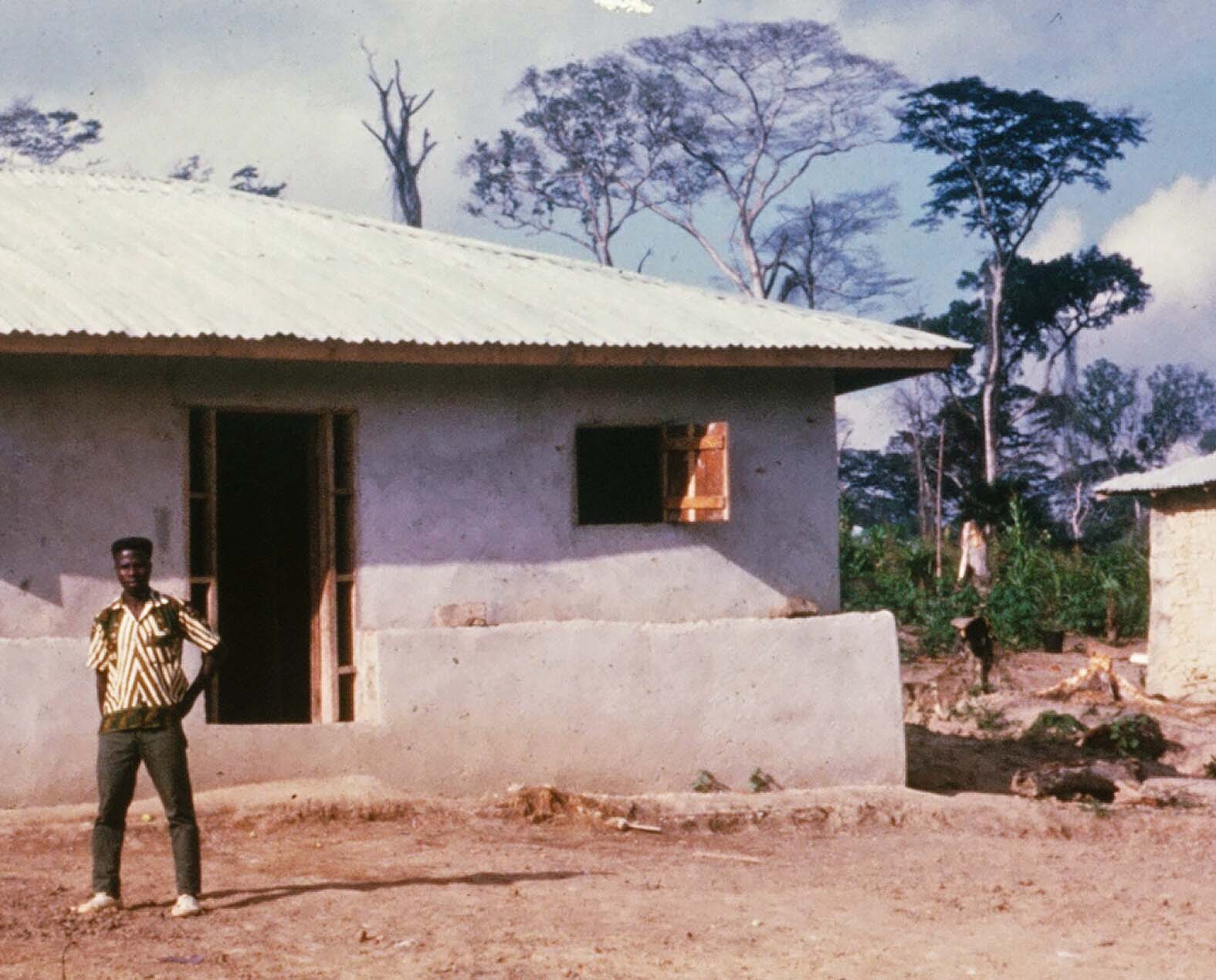
Mandingo mosque in Gbarnga, Liberia circa 1965.

I watched as this mosque was built in Gbarnga, Liberia in 1966 and then showed up for the opening ceremony– the only non-African present. I was sitting up front with the dignitaries when Do Your Part the Dog came whipping through the door and made a beeline for me, almost causing a riot.

(I’ve been working hard on a book about my Peace Corps adventures in West Africa. It is actually getting close to being published as an Ebook– with close meaning some time in the next three months (grin). I’ve  posted a number of my draft chapters on this blog over the past year. They are listed under Africa Peace Corps Tales in the sidebar. Today I will post a draft featuring part of the book’s introduction. It is designed to give readers a taste of what is included in the book.)

The soldier pounding on our door with the butt of his rifle in the middle of an African night made me seriously question my decision to join the Peace Corps. When he demanded that I go off with him into the dark, my questioning became epic. People had been beaten and even killed under such circumstances. I told him to screw off.  The sergeant was not pleased.

My decision to become a Peace Corps Volunteer was one of the best decisions in my life, however. The way I was raised and educated, even my DNA, had pointed me in the direction of volunteering and striking off for parts unknown. But there was more.

I am very much a “child of the 60s.” Civil Rights, the Vietnam War, and student activism dramatically effected how I viewed the world. Being a student at UC Berkeley during the Free Speech Movement in 1965 intensified my involvement in these issues. Looking back, I can see how the Berkeley experience, my ‘wandering’ genes, and the influence of family, friends and teachers combined to encourage my decision to join the Peace Corps.

In 2007 I was working on my memoirs. I had retired from my career as an environmentalist and public health advocate, needed a new challenge, and loved to write. Conventional wisdom and a thousand books on writing dictated I should write about what I knew best. Having finished the first draft, I bravely decided to share the manuscript with the book club my wife Peggy and I had belonged to for 17 years, the BSBC out of Sacramento, California. We had a fun night and the book club was kind. It can be feisty.

At the end of the evening, John Robbins, an iconoclastic professor and physician with the University of California Medical School at Davis, suggested that I pull out the section I had written about my Peace Corps experience and turn it into a book on its own. His suggestion led me to consider the idea. The Fiftieth Anniversary of the Peace Corps in 2011 clinched the deal.
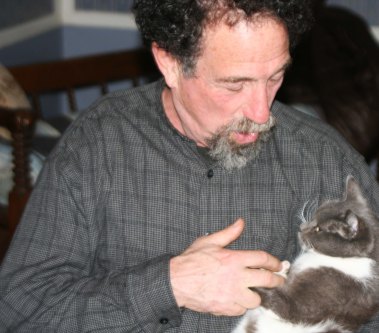
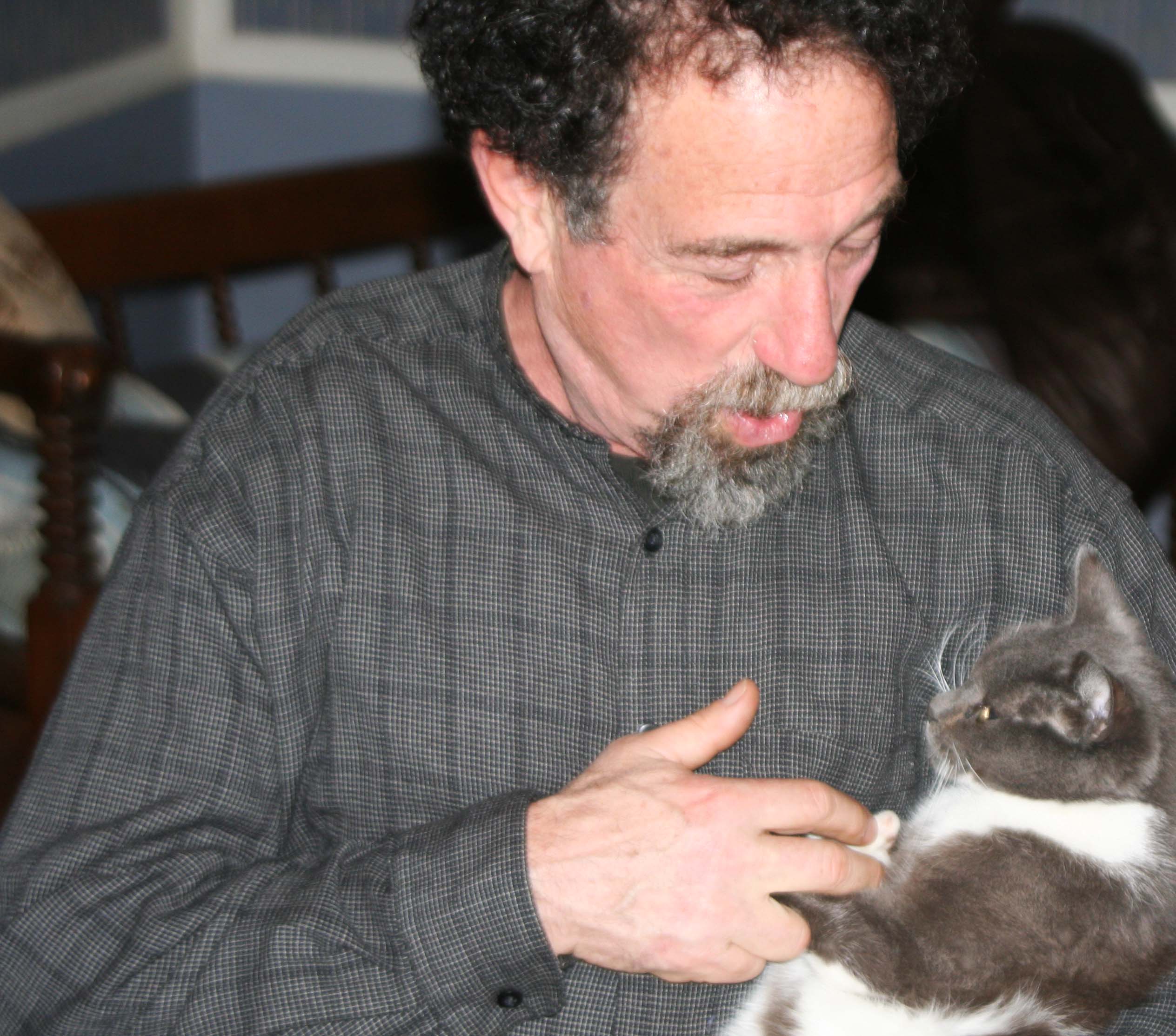
Dr. John Robbins of the University of California  Medical School of Davis.

John Robbins has a discussion with his cat at his home in Sacramento, California.

John Kennedy created the Peace Corps in 1961 as one of his first acts as President of the United States. His reasons were both idealistic and pragmatic. Yes, he wanted to help third world countries combat the terrible poverty, disease, hunger, illiteracy and conflict they faced, but he was also interested in winning hearts and minds for the West. The mindset of Kennedy, and most other leaders of his generation, was that we were in the midst of a worldwide conflict between capitalism and communism, totalitarianism and democracy, and Christianity and Atheism. The Cold War was raging and much of this war was being fought in third world countries.

While few Peace Corps Volunteers would list “making friends for America” as their reason for joining the organization, it more or less comes with the territory of being from the United States and working intensely in another country to help people improve their lives. In this sense, the Peace Corps is one of the most effective foreign aid programs ever created by the US. It is certainly one of the least expensive– especially when the work Volunteers do overseas and the skills and commitment they bring back home are considered. A recent Peace Corps budget justification noted that the total cost of running the Peace Corps for the past 50 years could be covered with what the US spends on the military every six days.

My assignment was to serve as a teacher in Liberia, West Africa.  The country has a unique history dating back to the early 19th Century when freed slaves from America were shipped back to Africa. Within 30 years, the freed slaves, or Americo Liberians as they came to be known, had established themselves as the rulers of Africa’s first black republic. When I arrived in 1965, their descendants still controlled the political, military, justice, education and economic systems of Liberia– i.e. almost everything. William Shadrach Tubman, President of the country since 1944, had invited Peace Corps into Liberia to help tribal Liberians, who made up 95% of the population, prepare for a larger role in the nation’s future. Not all Americo-Liberians agreed with this goal– as I would learn.

“The Bush Devil Ate Sam” is a the story of adventures that I, along my ex-wife, Jo Ann, had in Africa, but it also includes, background on my decision to join the Peace Corps and some thoughts on the tragic history of Liberia since the 60s.

I begin with a brief look at the influence of my family’s restless nature and discover that I was right to be worried about the soldier knocking on our door: wandering can be hazardous to your health. William Mekemson has his head chopped of by tomahawks during the Blackhawk War and George Marshall, my mother’s great grandfather, is killed for his gold after striking it rich during California’s gold rush.

Following in the footsteps of my ancestors, I wander off to UC Berkeley where police occupy the campus, liberally use nightsticks, and drag students down stairs. A roommate tells the FBI I am a Red, a Communist– and I not even pink. But this is a time when innuendo is more important than facts and J. Edgar Hoover believes there is a Russian agent hiding behind every tree on campus. I figure my chances of making it into the Peace Corps are ruined. Sargent Shriver, the first director of the Peace Corps, likes people who challenge the status quo, however, and I soon find myself in the Sierra Nevada Mountains decapitating a chicken as part of my training.

In Liberia I am thrown into a second grade class of 7-22 year olds where children who barely speak English are taught reading out of aging California textbooks featuring middle-class white kids and Spot, a pet that resembles dinner. Peace Corps encourages me to write a Liberian second grade reader using Liberian children and African folk tales, which I do. Americo-Liberians in the Department of Education determine the book is subversive. It’s torpedoed and I am told to never mention the project.

The high school principal recruits me to teach social studies to 10th, 11th and 12th graders and Jo Ann to teach French and English. Somewhat to my surprise, I discover I enjoy teaching and may even be good at it. Things run smoothly until the Liberian government determines that the student government I create to teach my students about democracy is a direct challenge to the country’s one party state. I am told to pack my bags. My students are told they will be arrested.
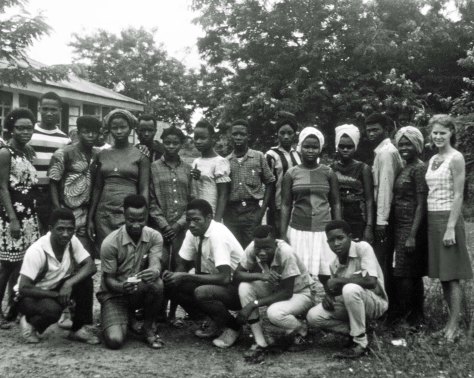
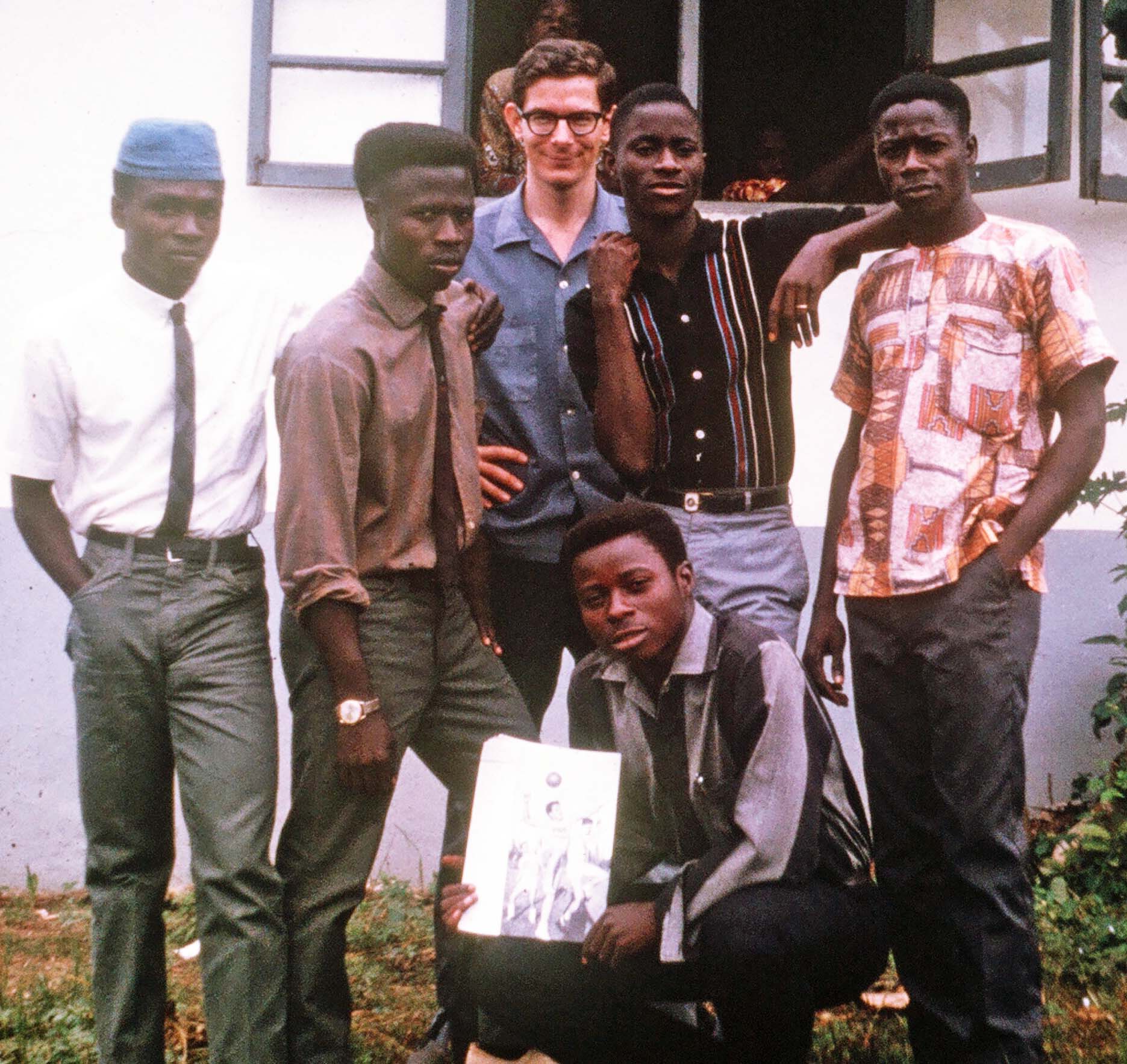
Our tenth and eleventh grade classes and Jo Ann at Gboveh High School in Gbarnga, Liberia (1967)

Our tenth and eleventh grade classes and Jo Ann at Gboveh High School in Gbarnga, Liberia (1967)

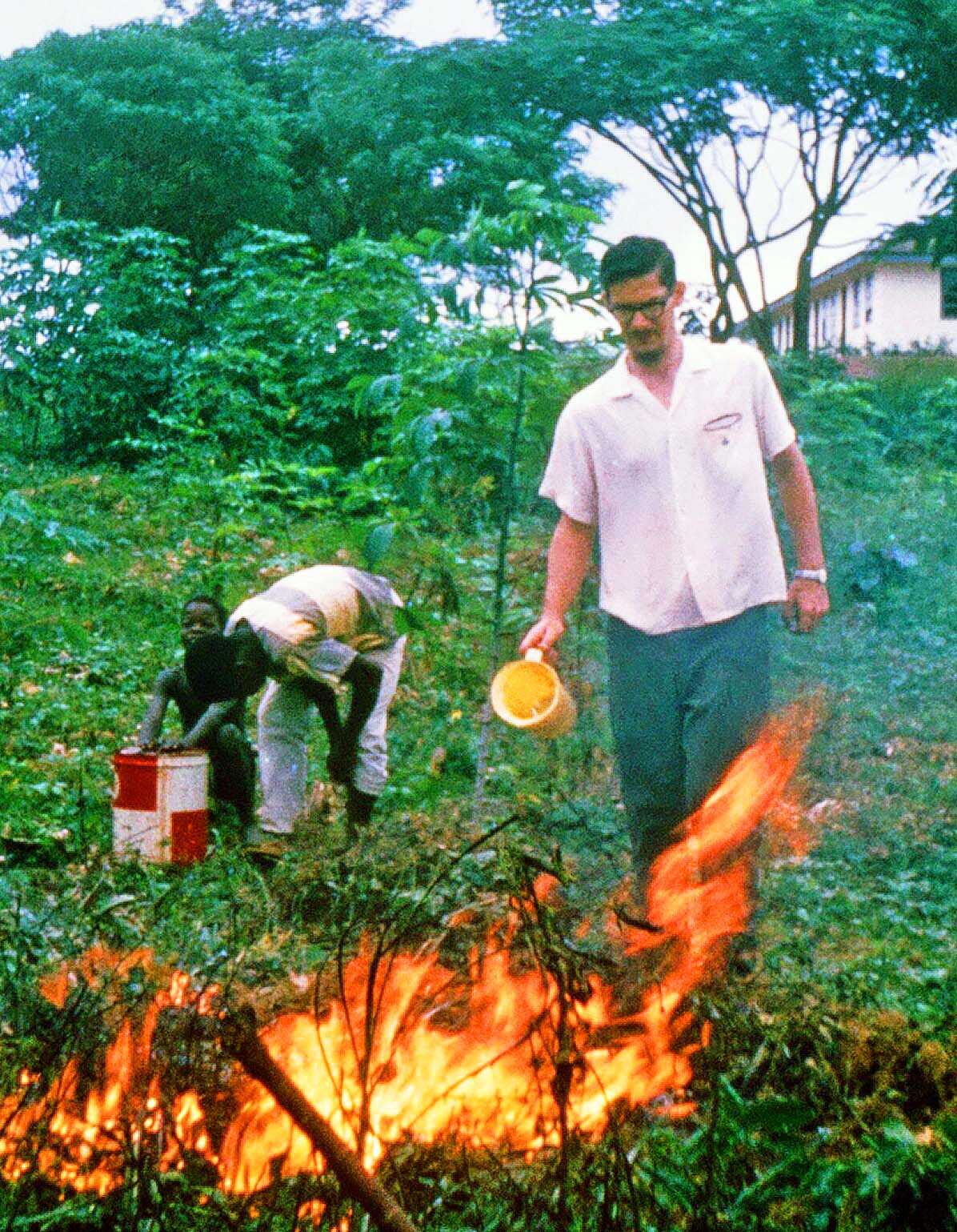
On the home front I repulse an invasion of army ants, breed rhinoceros beetles, and watch Jo Ann make mincemeat out of a Green Mamba, one of the world’s more deadly snakes. A menagerie of animals adopt us and provide both companionship and comic relief. They also create mischief. Rasputin the Cat collaborates with the Cockle Doodle Rooster to wake us at five every morning. Do Your Part the Good Dog crashes a solemn ceremony I am at attending at a mosque and causes a riot while Boy the Bad Dog develops a penchant for eating guinea fowl that belong to the Superintendent (governor) of Bong County. It’s the latter that brings the soldiers to our house in the middle of the night. Apparently, the illegal consumption of would-be chickens is a more serious crime than writing a subversive second grade reader or teaching high school kids they can be part of the government.

Burning out a nest of army ants in Gbarnga, Liberia circa 1966.

The army ants invaded our home. Here I burn out their nest in an effort to persuade them to move elsewhere.

I learn that the scarification marks marching up the chest on Sam, the young man who works for us, were ‘made’ by the Kpelle Bush Devil’s teeth, which leads to an interest in tribal culture. I discover the Lightning Man can make lightning strike people, sit in on a trial where justice is determined by a red-hot machete, and find myself involved in a situation where Juju, the dark magic of West Africa, is being used on one of my students.
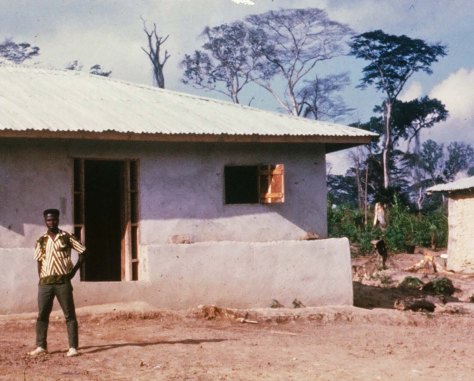
The use of Juju in West Africa.

Mamadee Wattee, shown here, appeared at our house on a dark, stormy night to tell us that juju, dark magic, was being used to make him sick.

A year and a half into our service, we are numbered among the veteran Peace Volunteers of Liberia, the people to go to for sage advice. Jo and I take a month off to tour the big game parks of East Africa in a rented VW Bug, my students receive top national honors in social studies, and we turn down a request from Peace Corps’ to spend our last six months touring Liberia and training teachers. Instead we spend our time with the students who have earned our allegiance and the animals that have won our hearts.

I snapped this photo of a baby zebra with a Kodak Instamatic camera on our trip through East Africa.

I snapped this photo of a baby zebra with a Kodak Instamatic camera on our trip through East Africa.

One of my final encounters is disturbing. A representative from the US Embassy in Monrovia requests that I meet with him at our house in Gbarnga. He wants my views on the future of Liberia. My experience with the paranoid reactions of the government leads me to suggest that the future is bleak unless drastic changes are made in how Liberia is governed. Unfortunately, as I share in the Epilogue, much of what I feared in 1967 comes to pass. Only today is Liberia recovering from the tragic results.
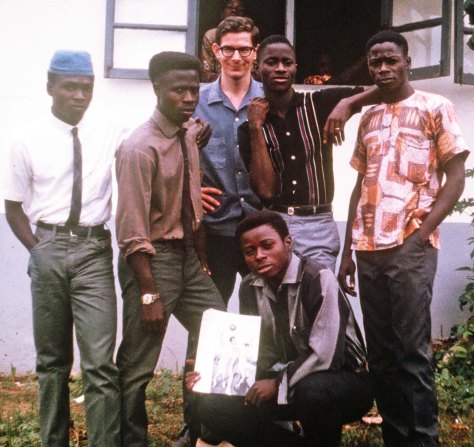
12th Grade Class of Gboveh High School, Gbanrga, Liberia (1967)

A photograph of my twelfth grade class along with me standing in front of Gboveh High School. (1967)

NEXT BLOG: I join the spirit of the season by re-blogging hair-raising stories of the ghosts that lived in the graveyard next to the house I grew up in.

Burning Man 2013… Three Million Photos Later

The Man and his flying saucer at Burning Man 2013

I’ve had another thought about the flying saucer the Man was perched on for 2013. Maybe it was a huge clam. BTW, do you see the two small feet extending out from each side. Those were slides you could exit the Man on. I clocked myself at 60 MPH after Tom/Adios Lovering guaranteed it was a gentle ride down. Note to self: Never believe anything Tom tells me. But I knew that.

Having burned the Man in my last blog, it is time to wrap up Burning Man for another year. I decided to do so with photos. Enjoy.

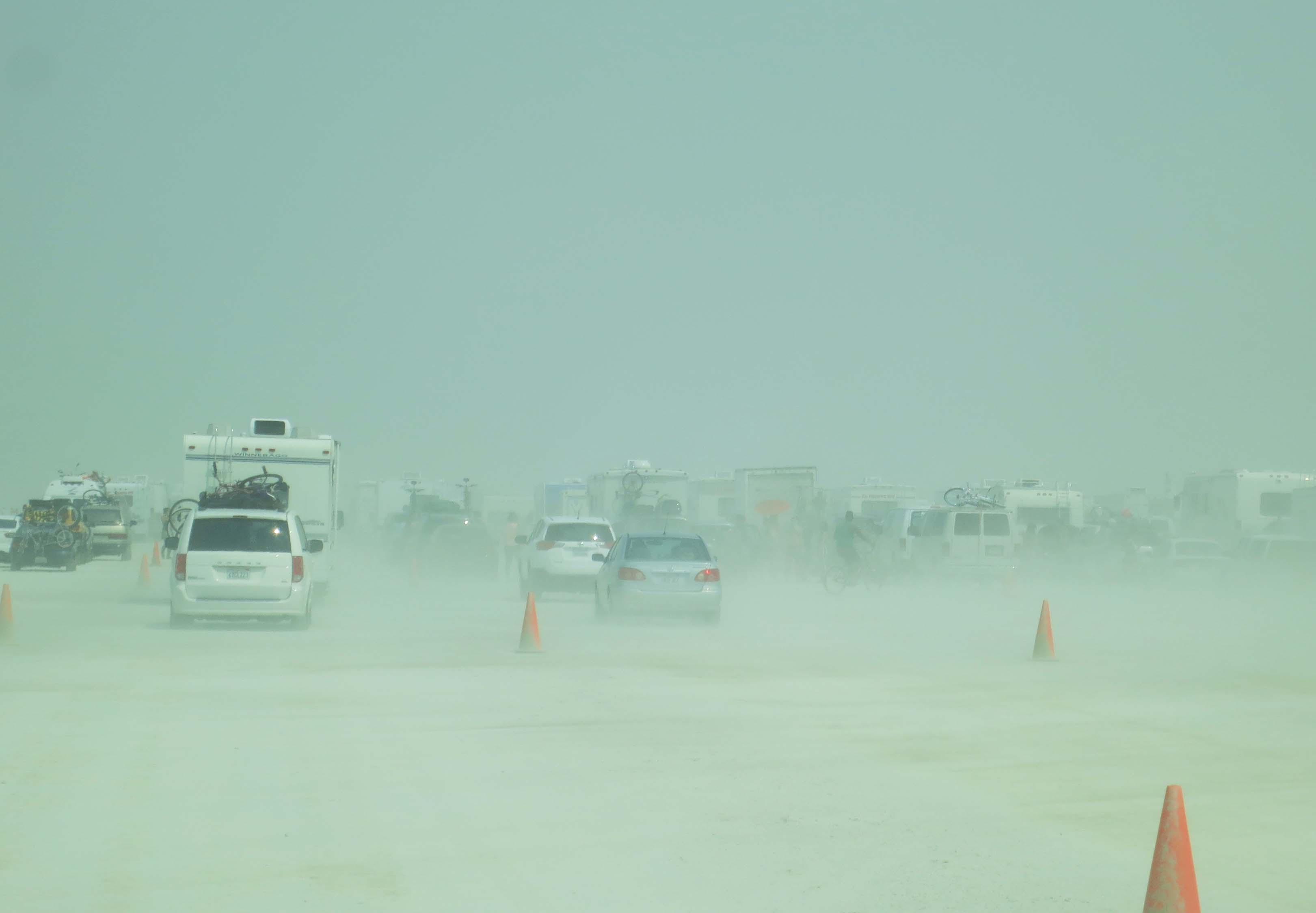
Burning Man is located in the remote Black Rock Desert of Northern Nevada.   These roads can be very lonely– except when Burning Man takes place. Local jurisdictions use the Burning man traffic count to justify their highway budgets.

Burning Man is located in the remote Black Rock Desert of Northern Nevada. These roads can be very lonely– except when Burning Man takes place. Local jurisdictions use the Burning Man traffic count to justify their annual highway budgets.

There is nothing lonely about the road when you arrive at the entrance to Burning Man. We lined up with umpteen thousand other people on Monday. The drive from our home in Oregon to Burning Man was eight hours. The last four miles: four hours.

There is nothing lonely about the road when you arrive at the entrance to Burning Man. We lined up with umpteen thousand other people on Monday. The drive from our home in Oregon to Burning Man was eight hours. The last four miles took four hours. Did I mention dust?

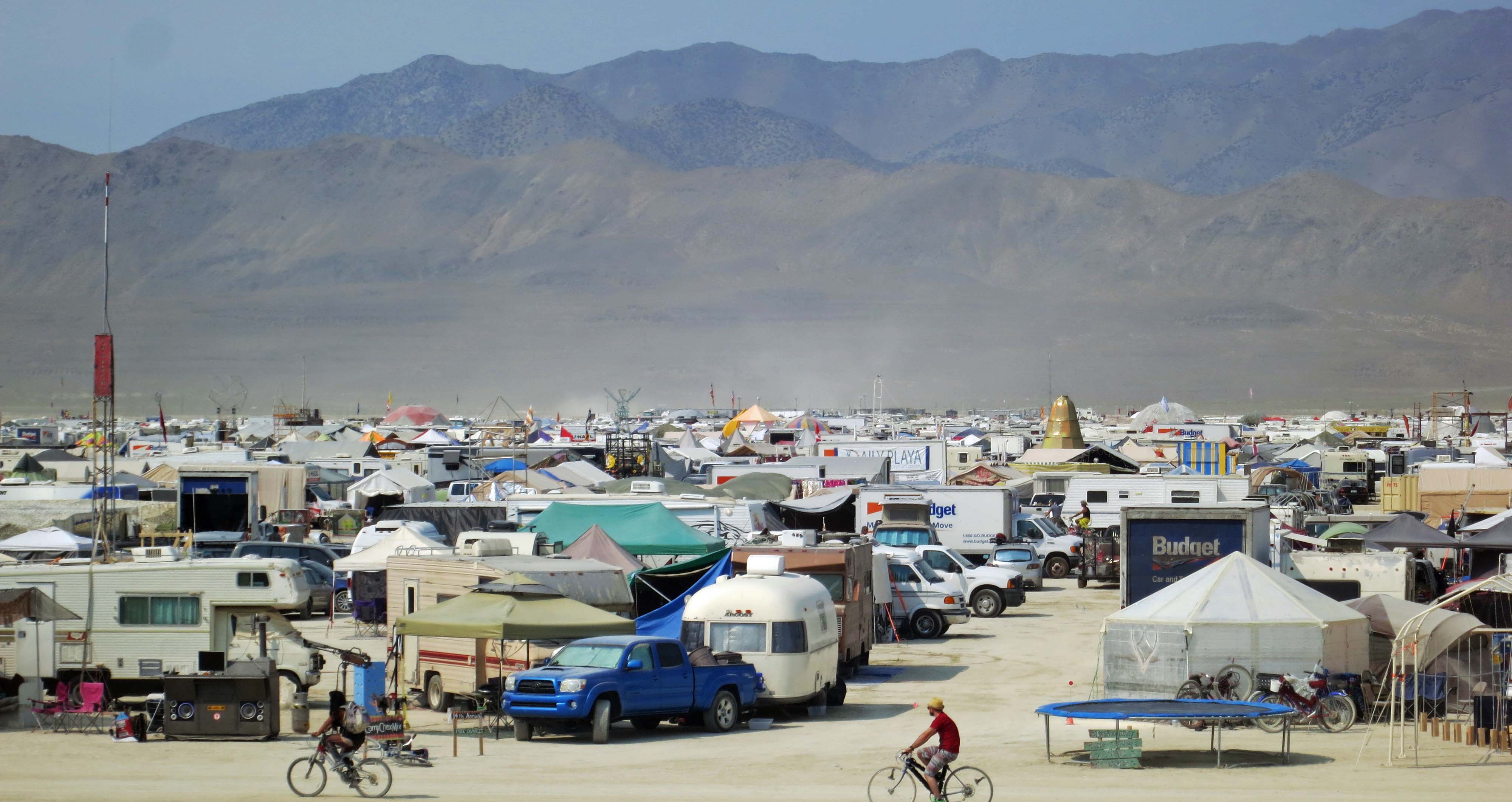
Black Rock City, Nevada

A city of 60,000 grows up over night, literally. Black Rock City, for its one week of existence, is the third largest city in Nevada. I suspect the coyotes say, “There goes the neighborhood.” (Photo by Peggy Mekemson.)

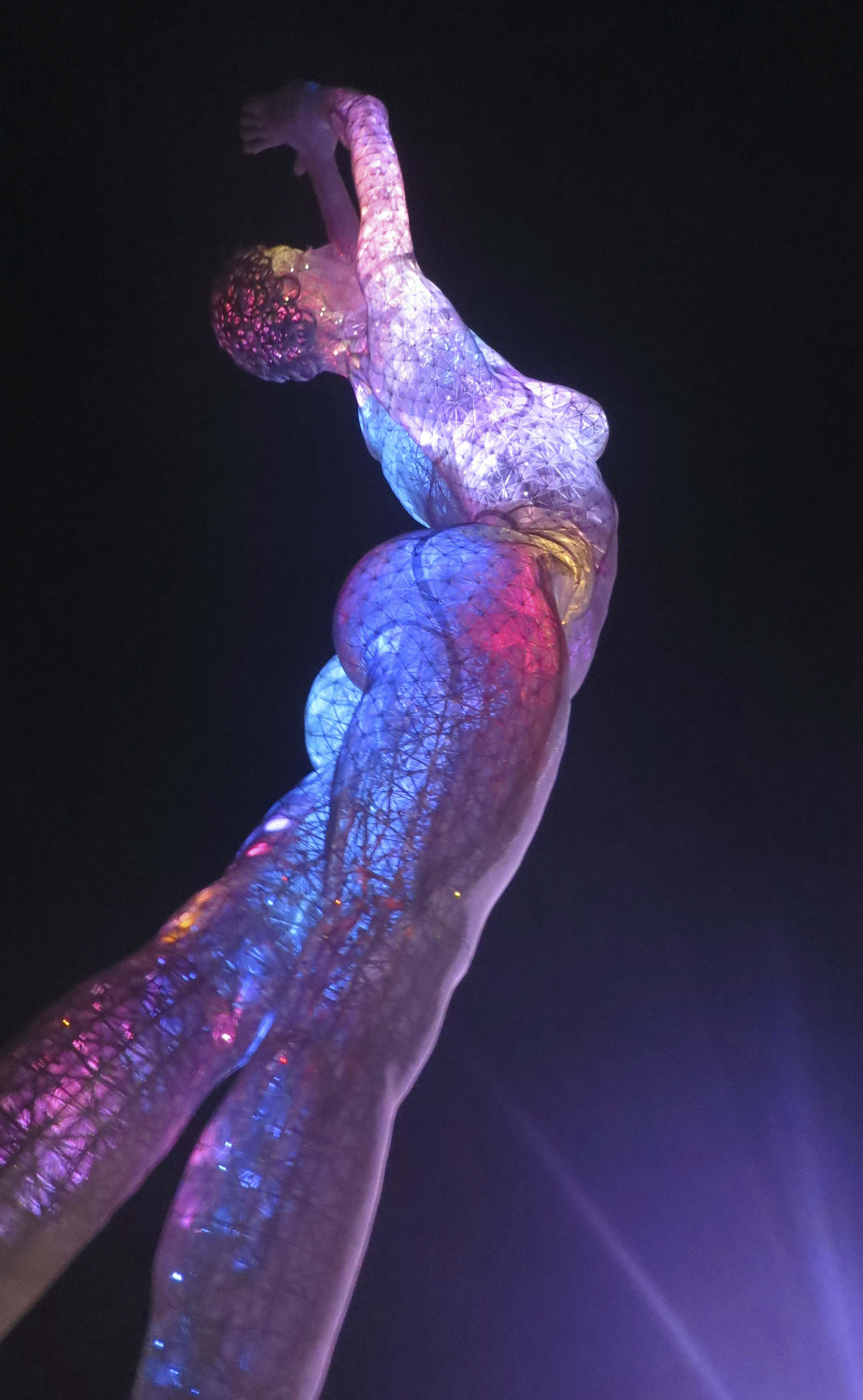
People come to Burning Man for numerous reasons, but one of the most important is the art. It can be monumental such as this 60 foot tall woman, and...

People come to Burning Man for numerous reasons, but one of the most important is the art. It can be monumental such as this 60 foot tall woman (Truth Is Beauty) and…

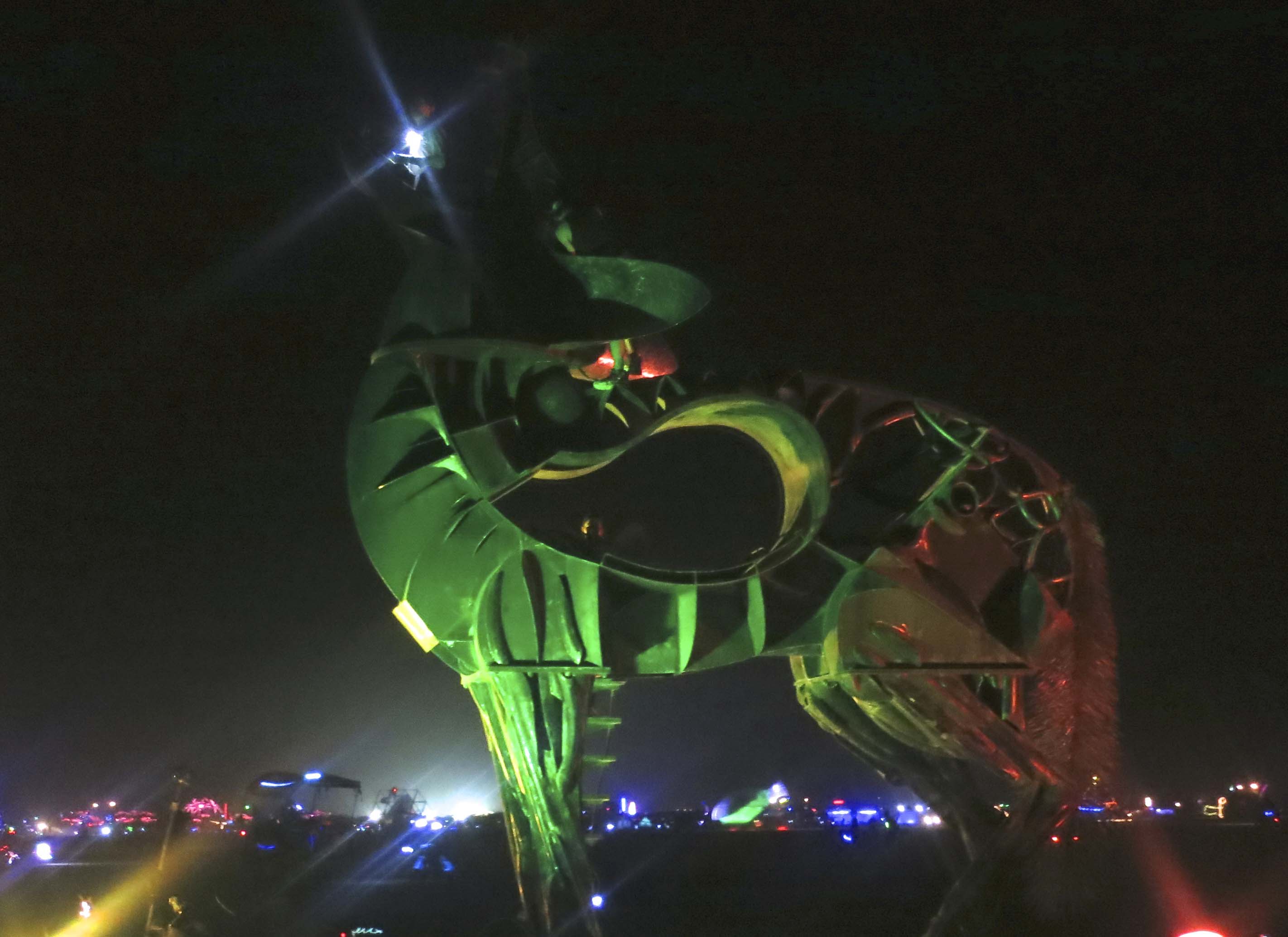
Seven ton coyote at Burning Man.

…this seven ton coyote. Someone is standing in his mouth with a flashlight. Maybe it’s a dentist. People crawled all over the coyote until a few too many fell off. Equation: Number of beers = odds of falling.

Tail of Coyote at BurningMan 2013

A tail’s-eye view of Coyote during the day. Need a wire brush? One person rests in Coyote’s belly while another climbs up the sculpture.

Oriental art at Burning Man

The art of Burning Man is as different as the artists that create it. We discovered a whole tent full of beautifully rendered paintings with mythical/Eastern themes.

Art collage ar Burning Man 2013

Art is often humorous, such as this collage featuring a puffy cloud with a Cheshire Cat  grin and silverware.

Burning Man art

Admittedly, much is strange.

Art at Burning Man 2013.

And stranger.

Mural at Burning Man 2013.

Every blank wall begs for a mural. And usually gets one– or several.

Metal snake at Burning Man.

This blank floor space demanded a snake.

A photo op of a photo op. Tom needed a photo and somehow decided that Peggy resting on his shoulders was better than me resting on his shoulders. I wonder why?  Anyway, 60,000 people at Burning Man pretty much guarantees 60,000 cameras. Let's assume for the moment that each person takes an average of 100 photos, which is a conservative estimate in today's world of digital cameras.  That means a conservative 6 million photos were taken at Burning Man 2013.

A photo-op of a photo-op. Tom needed a photo and somehow decided that Peggy resting on his shoulders was better than me resting on his shoulders. Anyway, 60,000 people at Burning Man pretty much guarantees 60,000 cameras. Let’s assume that each person takes an average of 50 photos, which is a conservative estimate in today’s world of digital cameras. That means upwards to 3 million photos were taken at Burning Man 2013.

Skull tree at Burning Man by day.

What you see by day…

May appear considerably different at night.

May appear considerably different at night. Are you ready for Halloween?

El Pulpo at Burning Man 2013.

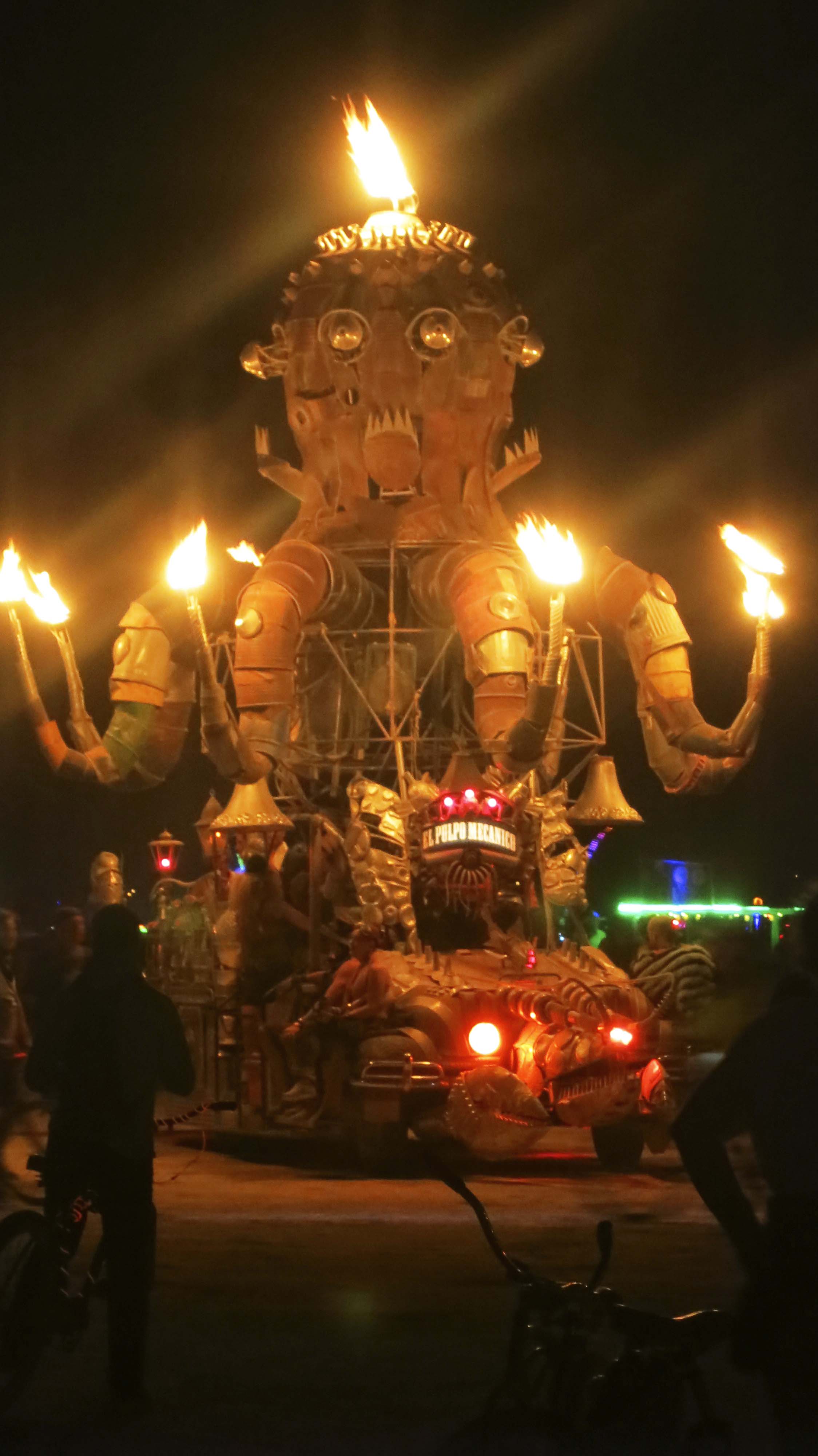
Strange creatures wander the Playa at night. In the streets of New York City, or London, or Tokyo… El Pulpo Mechanico would create a panic. Here its, “Oh look, here comes the octopus.”

Rooster mutant vehicle at Burning Man 2013.

Or maybe a giant rooster will come to visit.

The Toilet Bowling Alley at Burning Man 2013.

If you need a break, there are always games to play. I knocked down nine of the ten pins at the Toilet Bowl. (Next to the Toilet Bowl was a long string of port-a-potties.) 

Decapitation warning sign at Burning Man.

Some games can be injurious to your health. Here’s a Burning Man style caution sign.

Metal man at Burning Man.

“Ouch, I think I’ll keep my head.” (Photo by Tom Lovering.)

You reach a point at Burning Man when your mind goes on overload, when you believe you have see it all.

You reach a point at Burning Man when your mind goes on overload, when you believe you have seen it all.

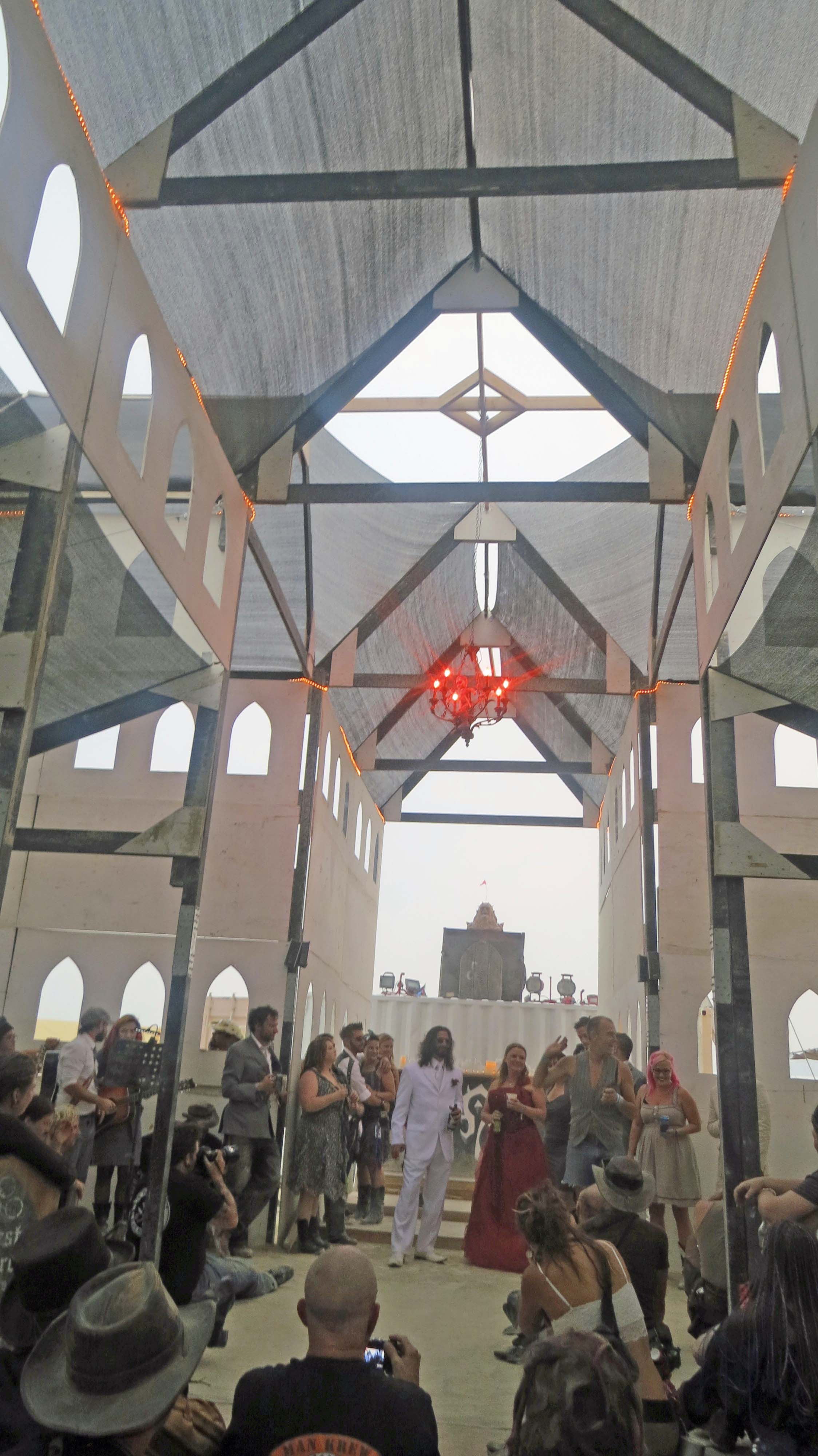
Church of the Jerk at Burning Man.

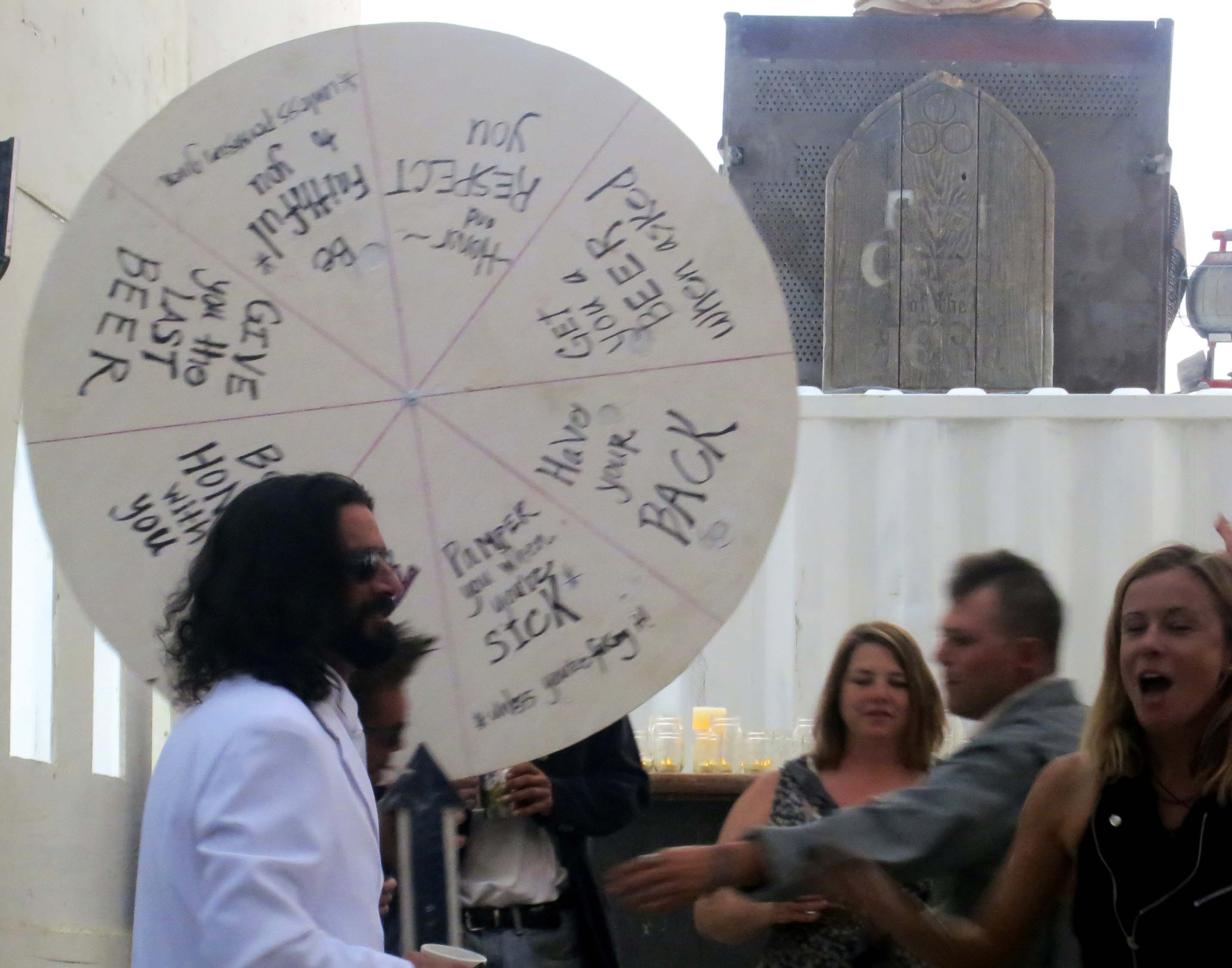
And then something happens to blow your mind. A man and his friends built this church to last for the week so he could get married.

Church of the Jerk wedding at Burning Man 2013.

We crashed the wedding. Well, we did ask, sort of.

Burning Man 2013 wedding at Church of the Jerk.

Vows were determined by spinning the wheel.

Later, we attended the wedding of Bone and Bonetta at the church. Bone has been wandering the world for 45 years. He rescued Bonetta from a Florida swamp four years ago. They finally decided to get married.

Later, we attended the wedding of Bone and Bonetta at the church. Bone has been wandering the world for 45 years. He rescued Bonetta from a Florida swamp four years ago. They finally decided to get married. Bone’s kilt was made by Ann Baughman, an 80 plus year old woman who lives in Kansas. Punkin aka Beth Lovering made Bonetta’s gown. Both are members of the International Society of the Bone.

Ken Axon of New York provides Bone with a pep talk just prior to the wedding.

Ken Axen of New York provides Bone with a pep talk just prior to the wedding.

Punkin solemnly recites the wedding vows.

Punkin solemnly recites the wedding vows.

The Cradle of Mir burns at Burning Man 2013.

A final burn. The Cradle of Mir.

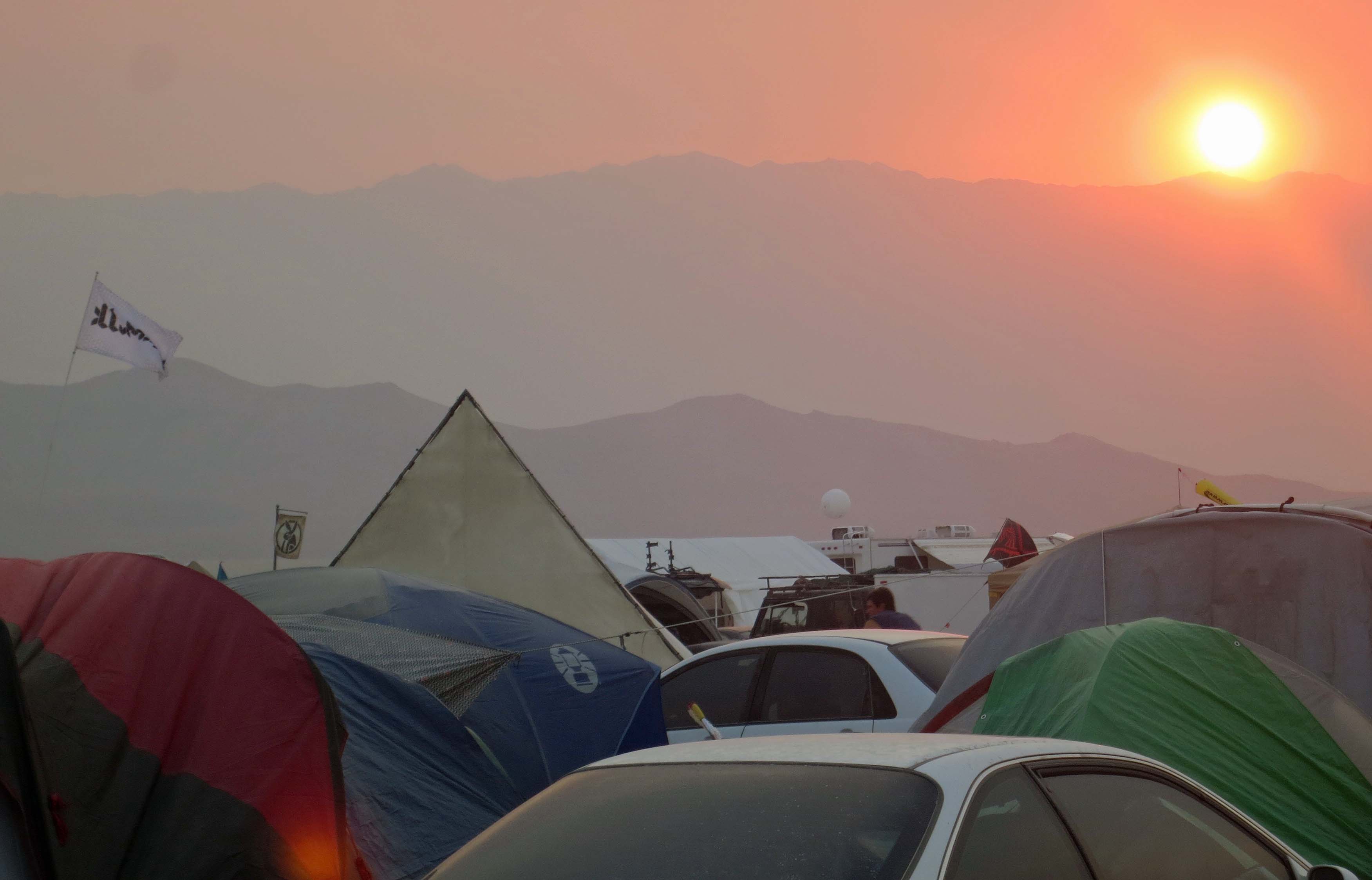
Sunset at Black Rock City, Burning Man 2013.

The sun sets on Burning Man 2013.

Until next year. I hope you've enjoyed this series on Burning Man.

Until next year. I hope you’ve enjoyed this series on Burning Man.

NEXT BLOG: I am close to finishing “The Dead Chicken Dance,” my book on the sometimes scary/sometimes humorous adventures I had as a Peace Corps Volunteer in the jungles of West Africa. I’ve posted several blogs on the experience. My next blog will be the introduction to the book.

The Burning of the Man: Part 2… A Flaming Ritual

The burning of the Man is Burning Man's signature event and is surrounded by ritual. (Photo taken by Kenneth Axen, a New Yorker who joined our California/Oregon group this year.)

The burning of the Man is Burning Man’s signature event and is surrounded by ritual. (Photo taken by Kenneth Axen, a New Yorker who joined our California/Oregon group this year.)

Rituals have grown up around the burning of the Man that date back to the day when he was first burned in San Francisco on Baker Beach in 1986. He was probably soaked in kerosene and lit by a match, although I don’t know that. I do know that white gas, which I occasionally use to start campfires with when the wood is wet, has a little too much poof, like BOOM.

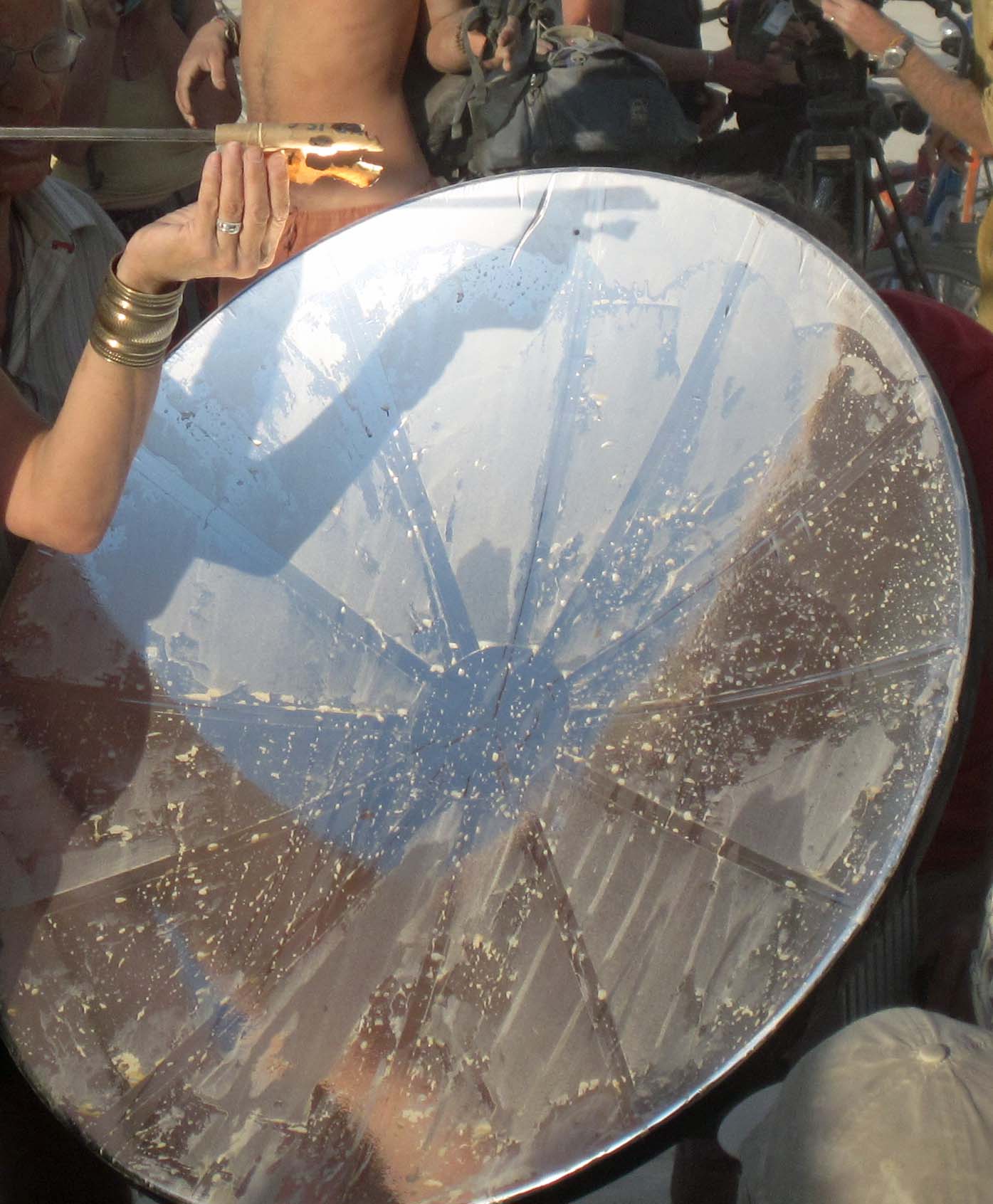
The days of lighting the Man with a match have long since passed, however. Now it is much more akin to preparation for the Olympics where eleven Greek women representing Vestal Virgins focus the suns rays using a parabolic mirror to create the fire that is then transferred to the Olympic Torch. The tradition dates all of the way back to classical Greece and Rome, although I doubt virginity is still a requirement.

A parabolic mirror is used to light the flame that will eventually light the Man. (Photo by Tom Lovering.)

A parabolic mirror is used to light the flame that will eventually light the Man. (Photo by Tom Lovering.)

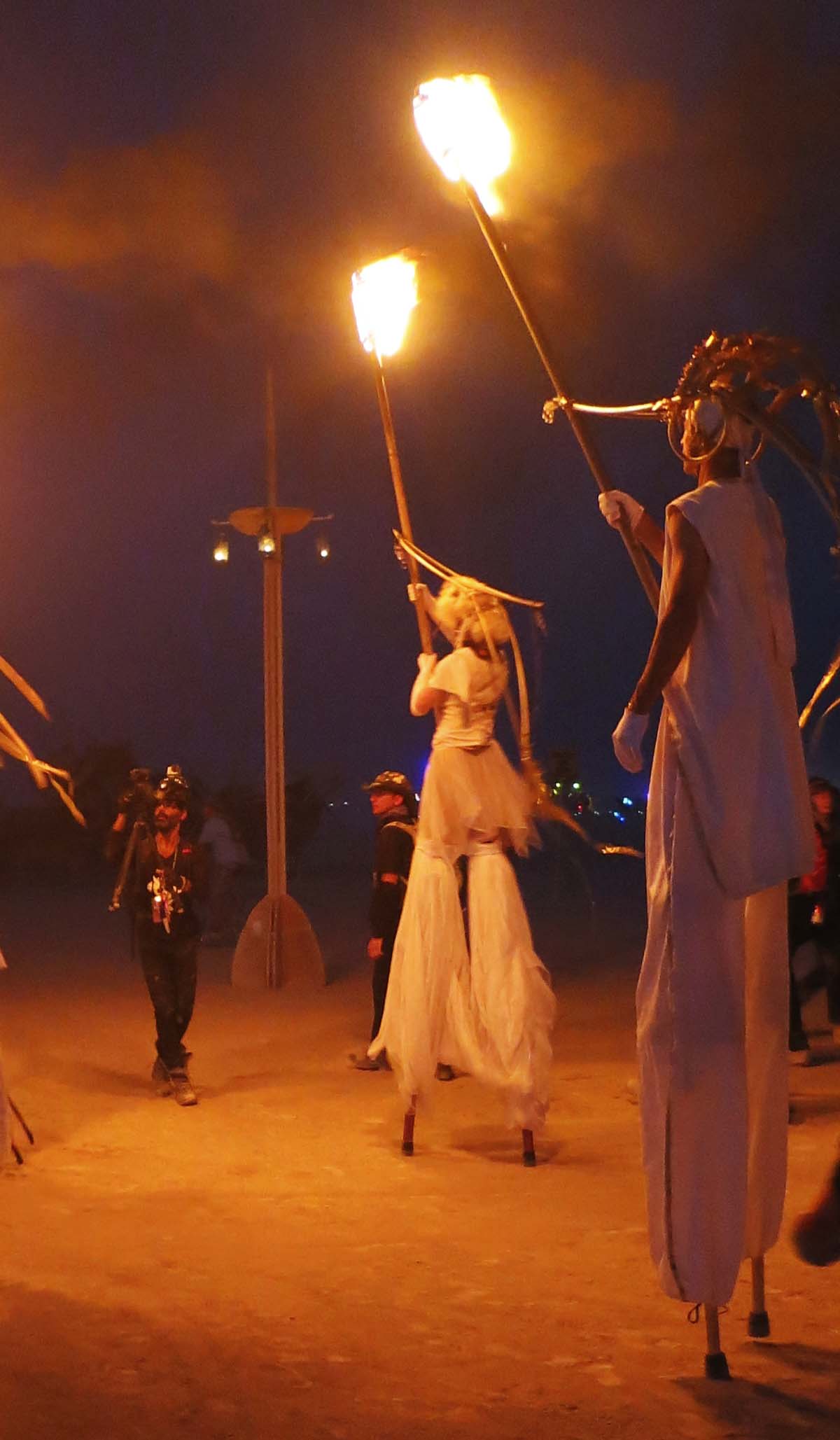
A parabolic mirror is also used to light the fire for Burning Man. The fire is started on Monday and then maintained throughout the week in front of Center Camp until Saturday night. We watched this year as four women wearing white, carrying torches, and perching on stilts led a solemn parade that carried the flame out to the Man.

Parade carrying fire out to burn the Man at Burning Man 2013.

Women dressed in white and walking on stilts, lead the fire parade out to the Man.

Once the parade has arrived, the fire dance starts as hundreds of dancers arrayed around the Man twirl fire in every possible way. Musicians ranging from bongo drummers to marching bands provide the rhythm. Next comes a very impressive fireworks display, and finally, the Man burns. 

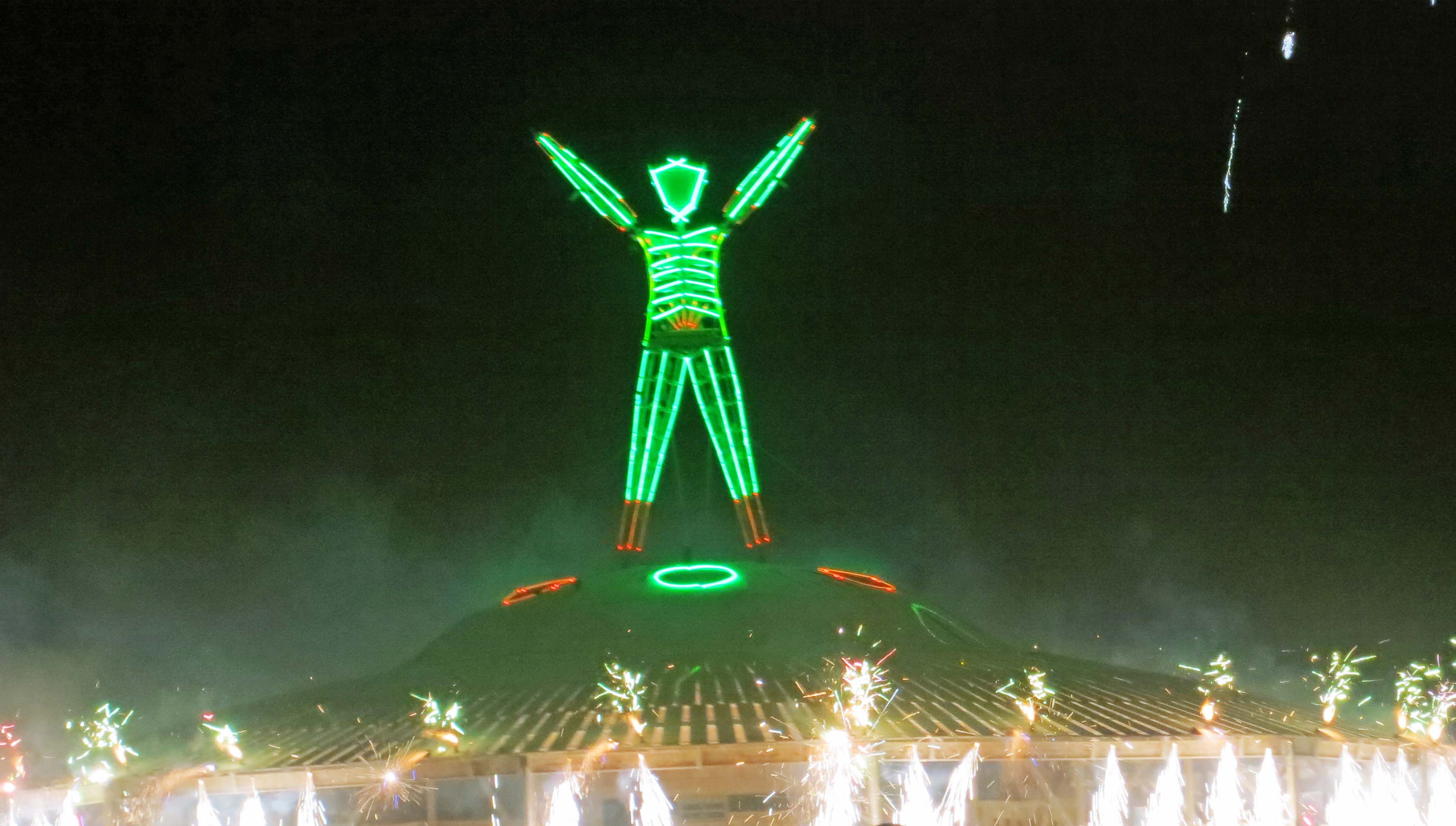
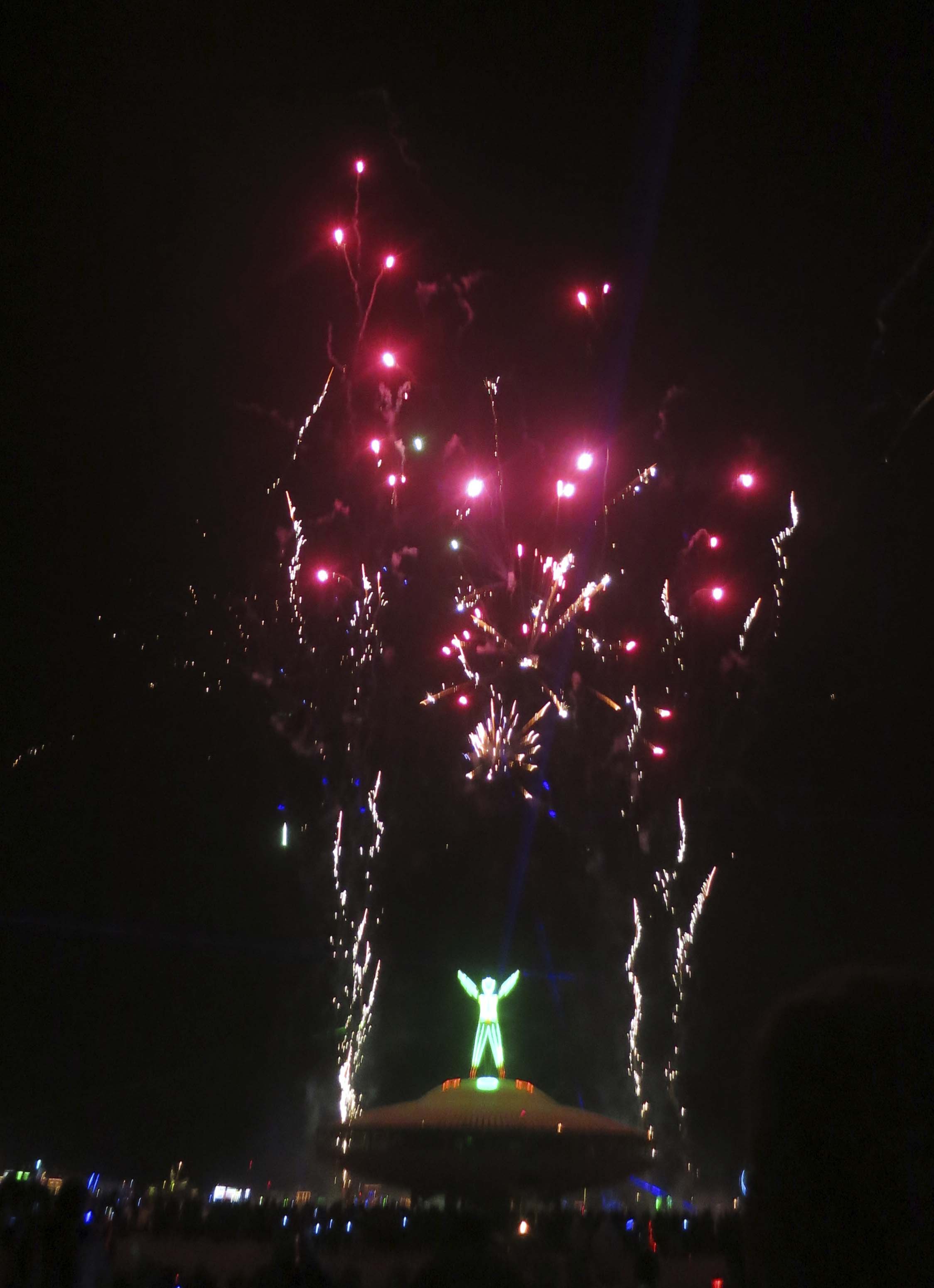
The Man at Burning Man raises his arms just prior to the burn.

The Man’s arms are up; let the party begin.

Flying saucer seems to prepare for takeoff at Burning Man 2013.

White flames shooting out and down from the flying saucer provide an illusion that it is about to launch.

Fireworks above the Man on burn night at Burning Man 2013.

Fireworks suddenly light up the sky.

Fireworks at Burning Man 2013

Fireworks at Burning Man 2013

And go on, and on…

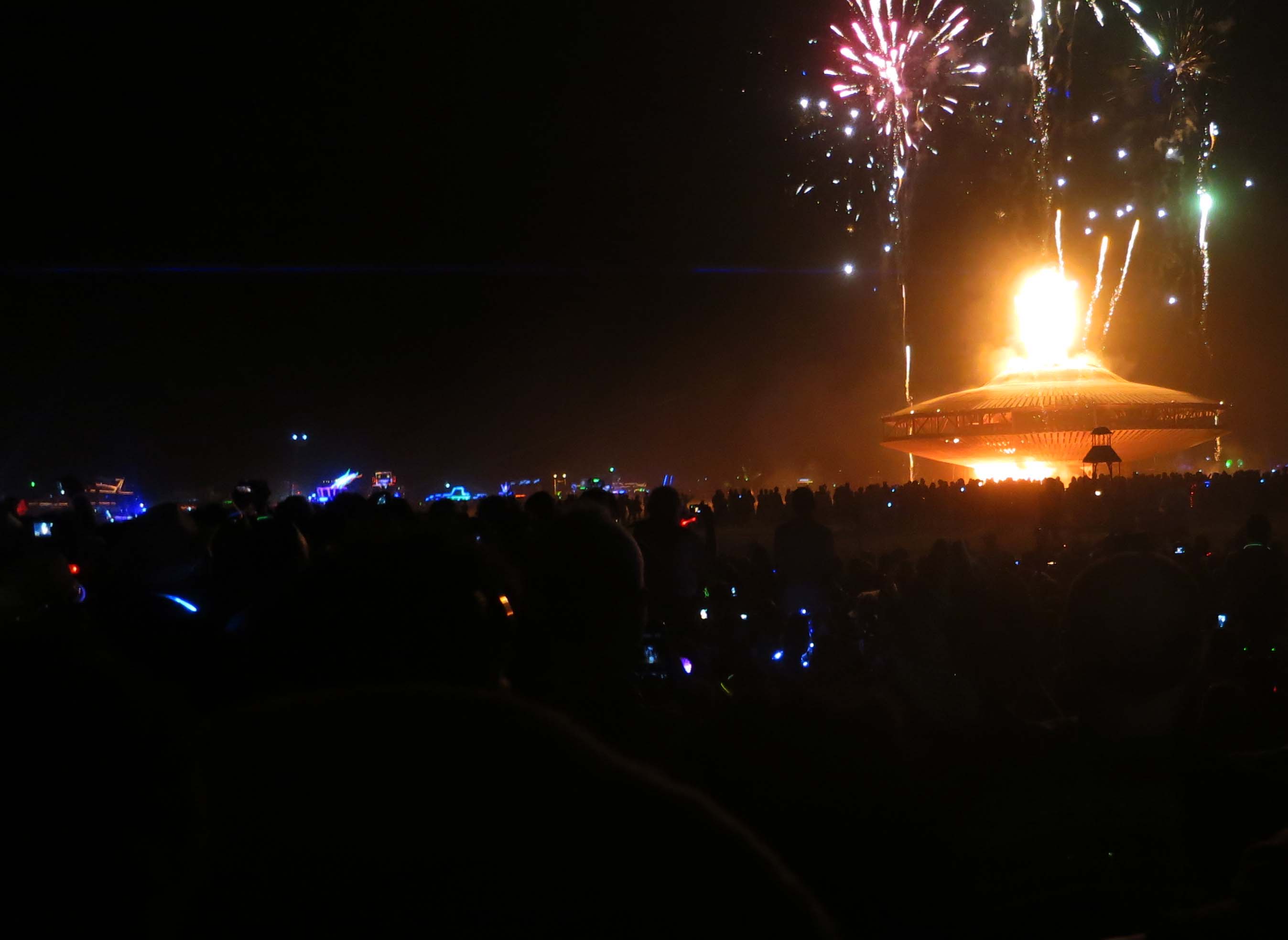
The Man Burns at Burning Man 2013.

The legs of the Man are set on fire, which then works its way upward…

The Man burning at Burning Man 2013.

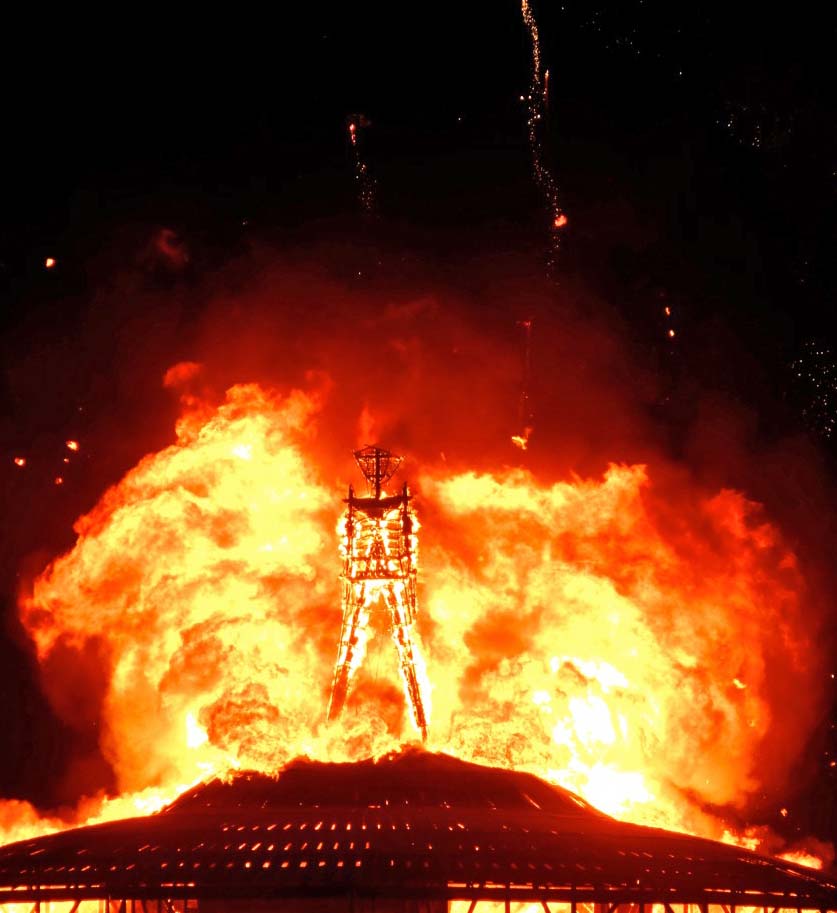
The Man engulfed in intense flames at Burning Man 2103.

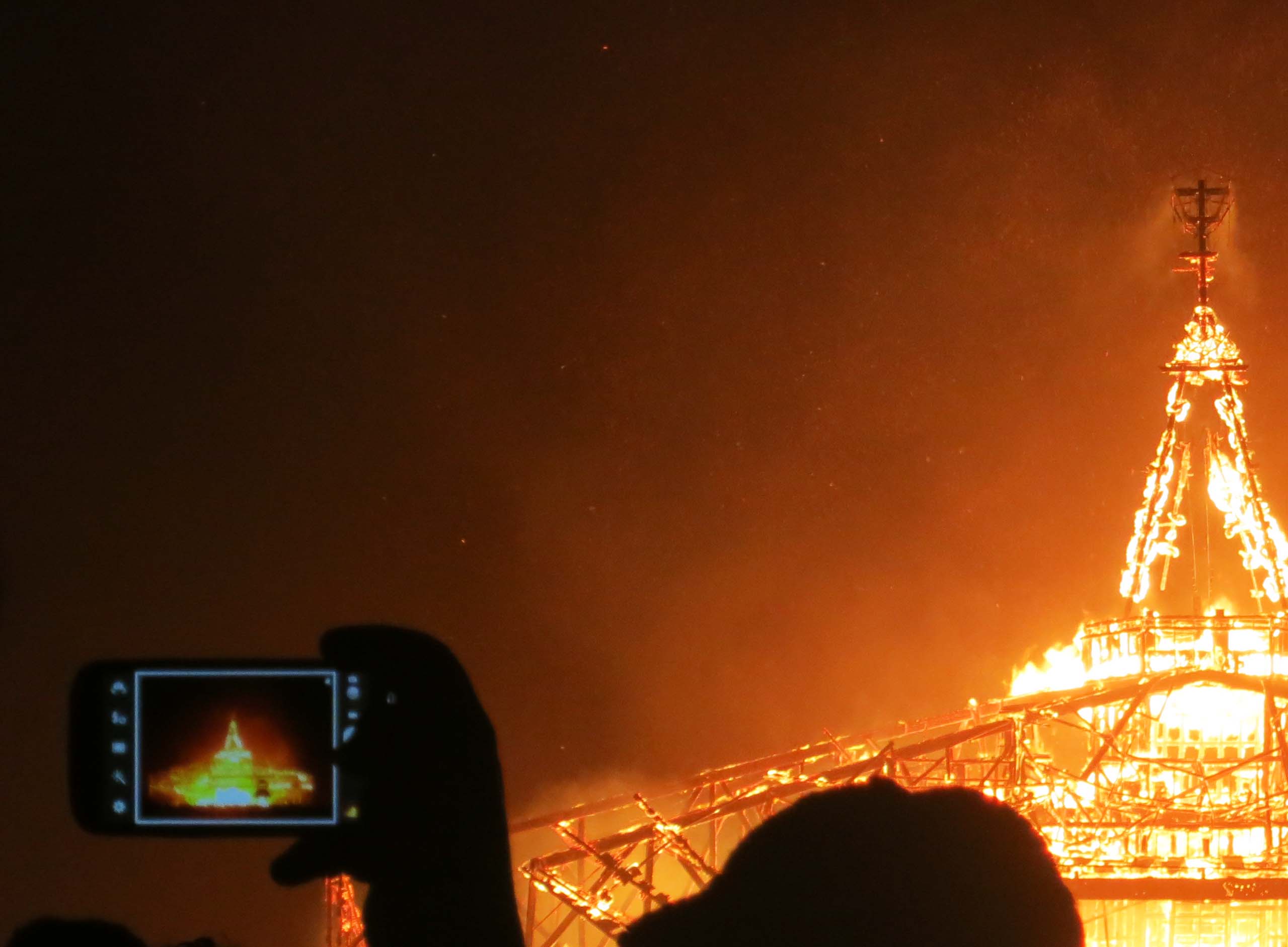
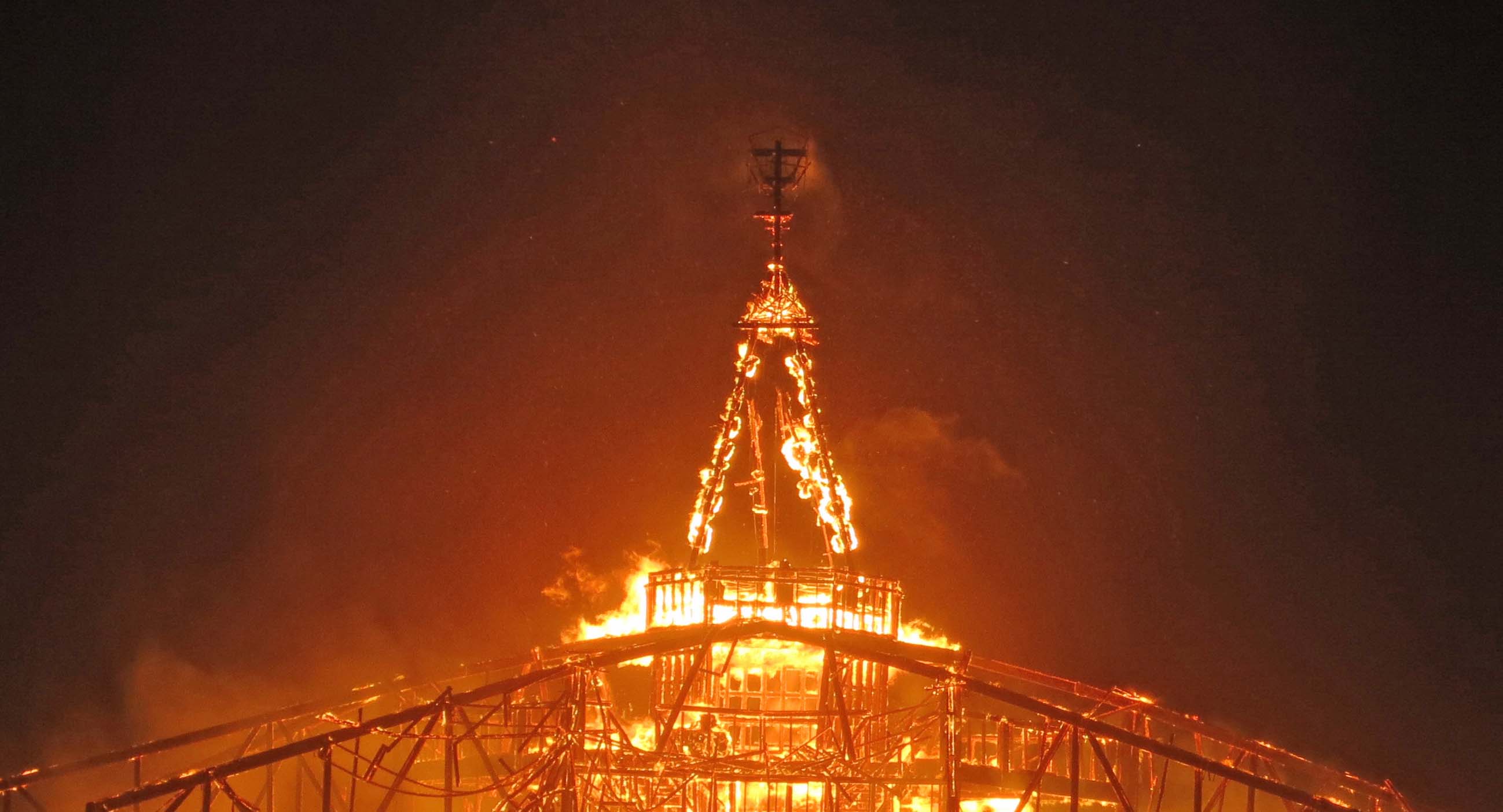
Soon, the whole Man is engulfed in bright flames as tens of thousands watch. The flying saucer has started to burn as well.

The flames quickly eat away at the Man and saucer. One year, the man was built on huge timbers that took over an hour to burn through. Not so this year.

The flames quickly eat away at the Man and saucer. One year, the man was built on huge timbers that took over an hour to burn. Not so this year.

The burn of the Man at Burning Man is photographed thousands of times in any given year.

Another photographer shoots the same photo I do.

A few remaining timbers hold up the Man at Burning Man 2013 before he crashes into his fiery grave.

The Man is on his last legs, prepared to crash downward to his fiery death as the 2013 burn draws to a close.

NEXT POST: Burning Man 2013 wrap up.

The Burning of the Man: Part I… Bacchanalian Revelry or Symbolic Gesture

Burners gather to watch the Man burn at Burning Man 2013.

Thousands of Burners gather in the Playa the night the Man is burned in what is both a huge party and a symbolic celebration. Burners arriving early get prime seats in the dirt while volunteers and staff make final preparations for the burn. The Man stands (looking alien) on top of his flying saucer, arms down. Mutant vehicles can be seen in the distance. A string of helium balloons stretches across the sky.

They gather in the tens of thousands, trekking out from their temporary homes in Black Rock City to an event viewed by some as the world’s greatest party and others as a celebration– a final goodbye to the tall, wooden man who serves as a magnet by day and a beacon by night.

Burners arrive on foot, bike, and mutant vehicles, forming concentric circles around the Man: an inner circle of fire dancers, a second circle of sitting and standing Burners who settle in for the show, a third circle that serves as both a promenade and the world’s largest dance floor, and a fourth circle dominated by huge mutant vehicles that throb with music, shoot fire into the air, and provide convenient viewing stands for various theme camps.

The burning of the Man is sometimes described as a Bacchanalian Revelry, and maybe it is. The Roman God Bacchus would have loved the spectacle. And I suspect most Burners would have liked him. Nobody could throw a better party than the God of Wine. But Bacchus had other traits Burners could agree with as well. In his Greek Dionysian persona he was considered a “protector of those who do not belong to conventional society,” a phrase that might describe a significant number of those who make the trek to Black Rock City.  The Romans believed that his wine, music and ecstatic dance freed his followers from fear and cares– and lessened the power of those who sought control over their lives.

Besides the huge party and celebration that take place on Saturday night, there are also ritualistic aspects to the evening. The Burning Man represents the end of the week and the end of his “life.” The Man’s week of dominating Black Rock City is over. Burners go silent just before he tumbles into his fiery grave, the music stops, and the dancers cease their gyrations. A huge shout accompanies his fall. The ashes have hardly cooled and been scooped up off the desert floor when planning starts for next year’s burn. Like the Phoenix, the Man will rise again.

I spend my night of the burn making a full circle of the Man and doing what I do best, wander. I have sat and watched the show of fire dancers but my body has no tolerance for sitting in the dirt for two hours. It never has. Also, I don’t like being hemmed in. And finally, people can be rude. Late-comers occasionally try to force their way to the front. But the primary reason I wander is that I love the show on the outer two circles. The costumes are fantastic, the dancing wild, and the mutant vehicles magnificent. The total walk may be two miles in length and I make an evening of it. I will feature the walk on this blog and the actual burn in the next. The short video below captures some of the action on my walk.

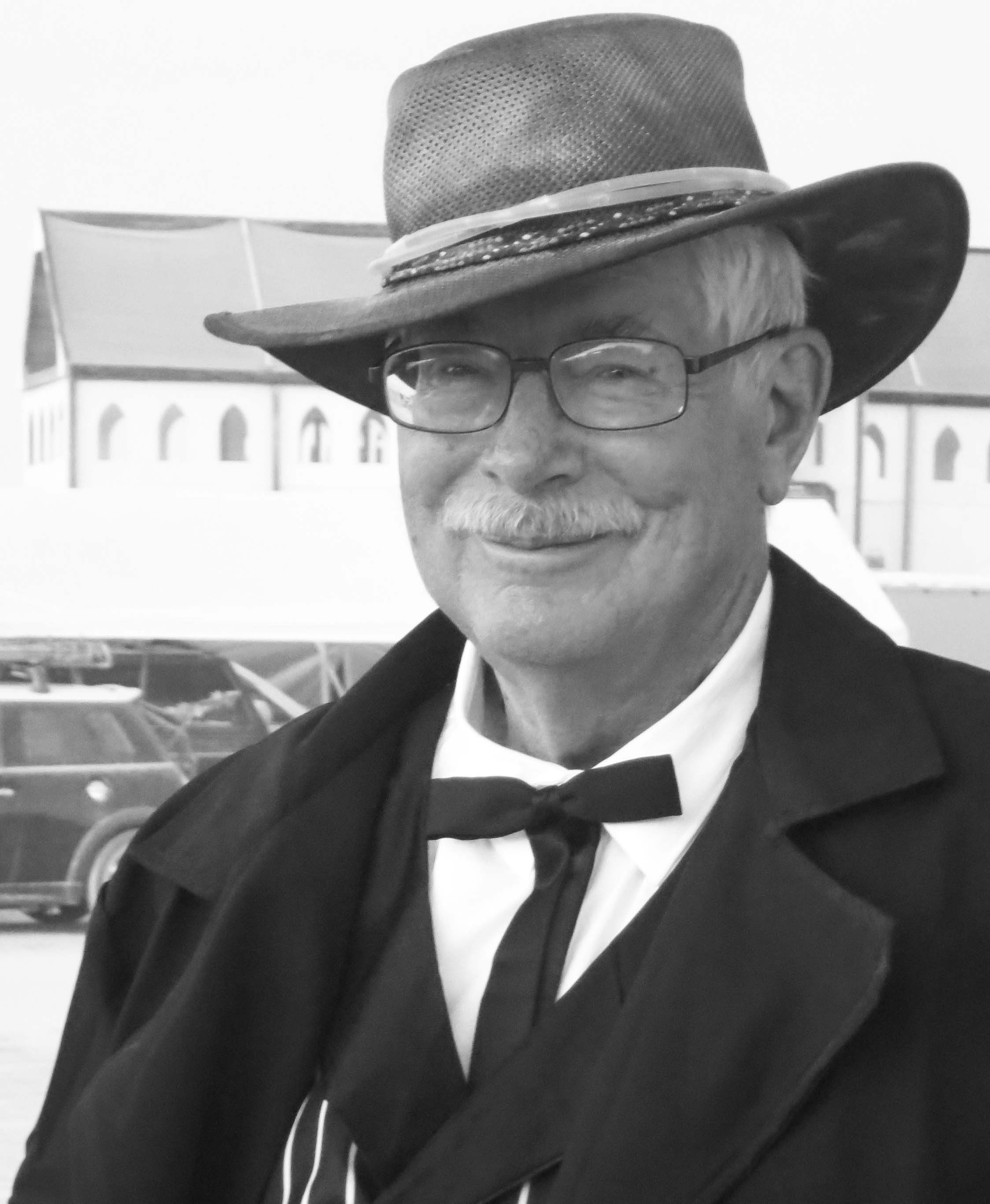
Dressed in a log black coat with a vest, white shirt, and bow tie, I am ready to head out to the burn. My hat displays a week's worth of playa dust. The glow sticks are to make me visible on the dark walk out and back.

Dressed up as Outlaw in a long black coat with a striped vest, white shirt, and bow tie, I am ready to head out to the burn. My hat displays a week’s worth of playa dust. The glow sticks are to make me visible on the dark walk out and back. (Photo by Peggy Mekemson.)

Palm tree mutant vehicle at Burning Man 2013.

While I love the costumes and action, the mutant vehicles are the main attraction on my two-hour stroll around the Man. The night of the Burn is the only time you will find them all in the same place. This one has chosen a tropical setting.

Mutant vehicles come in all shapes and sizes, ranging from what I call the squid car...

Mutant vehicles come in all shapes and sizes, ranging from what I call the squid car…

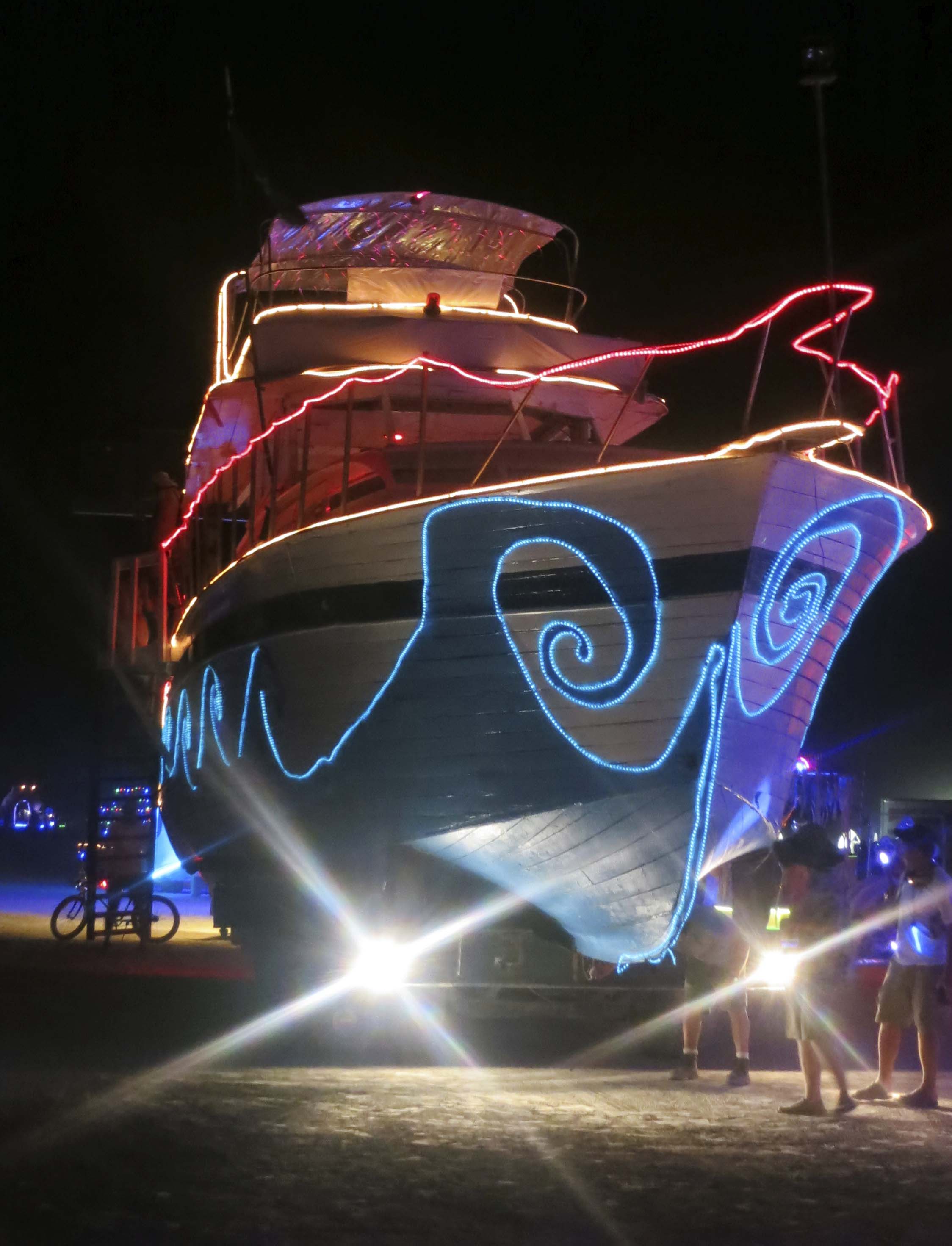
...to the 'ocean liner.'

…to the ‘ocean liner.’

Hanging lanterns at Burning Man 2013.

Color is everywhere, as demonstrated by these hanging lanterns…

Colorful segmented mutant vehicle at Burning Man 2013.

…and on this segmented mutant vehicle.

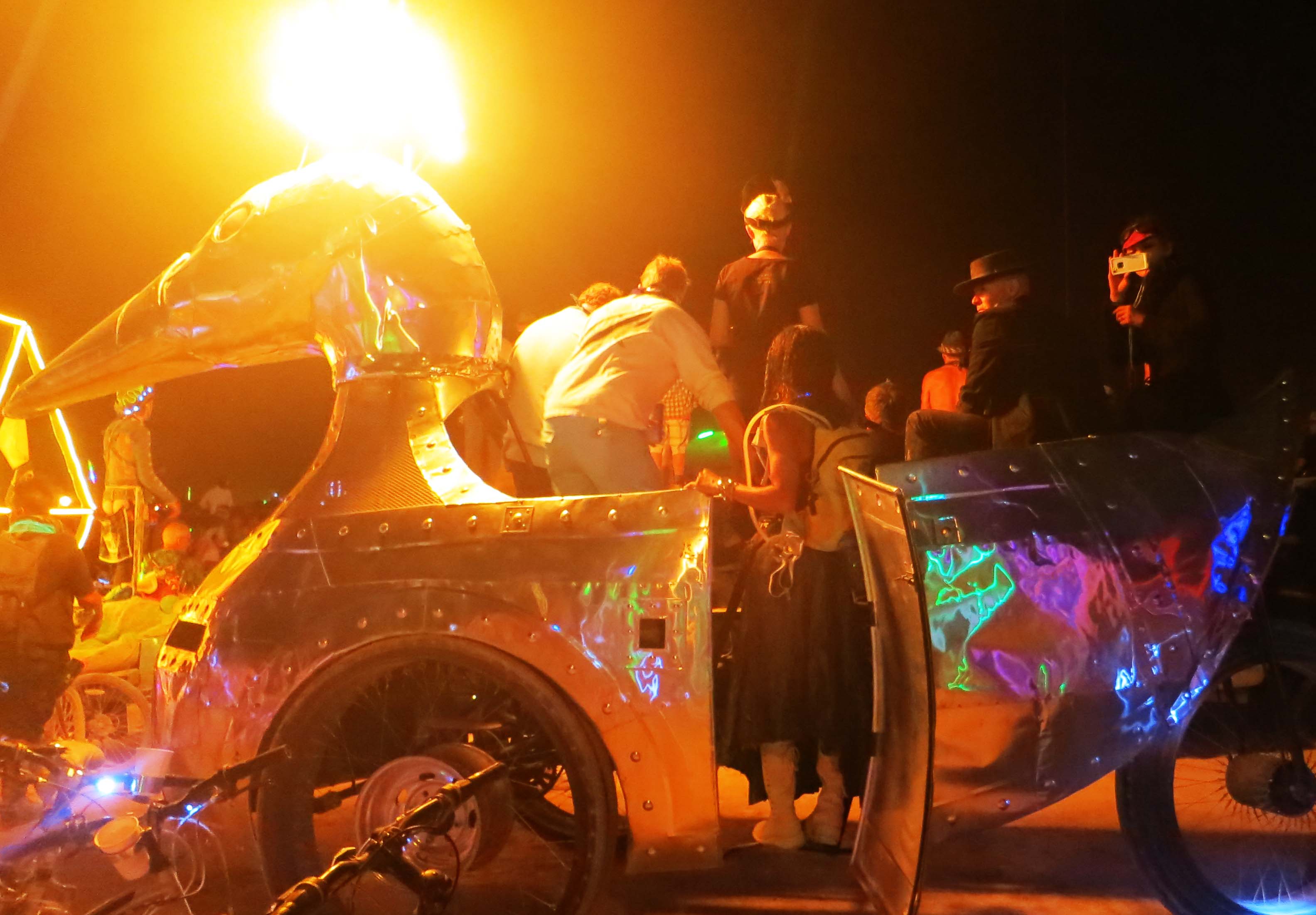
Duck spouting fire at Burning Man 2013.

Many of the mutant vehicles, such as this duck, shoot fire into the air.

Flames from El Pulpo Mechanico light up the crowd that has gathered to watch the burning of the Man at Burning Man 2013.

The light can be blinding, and hot. I took this shot as El Pulpo Mechanico was shooting flames from his eight legs and head.

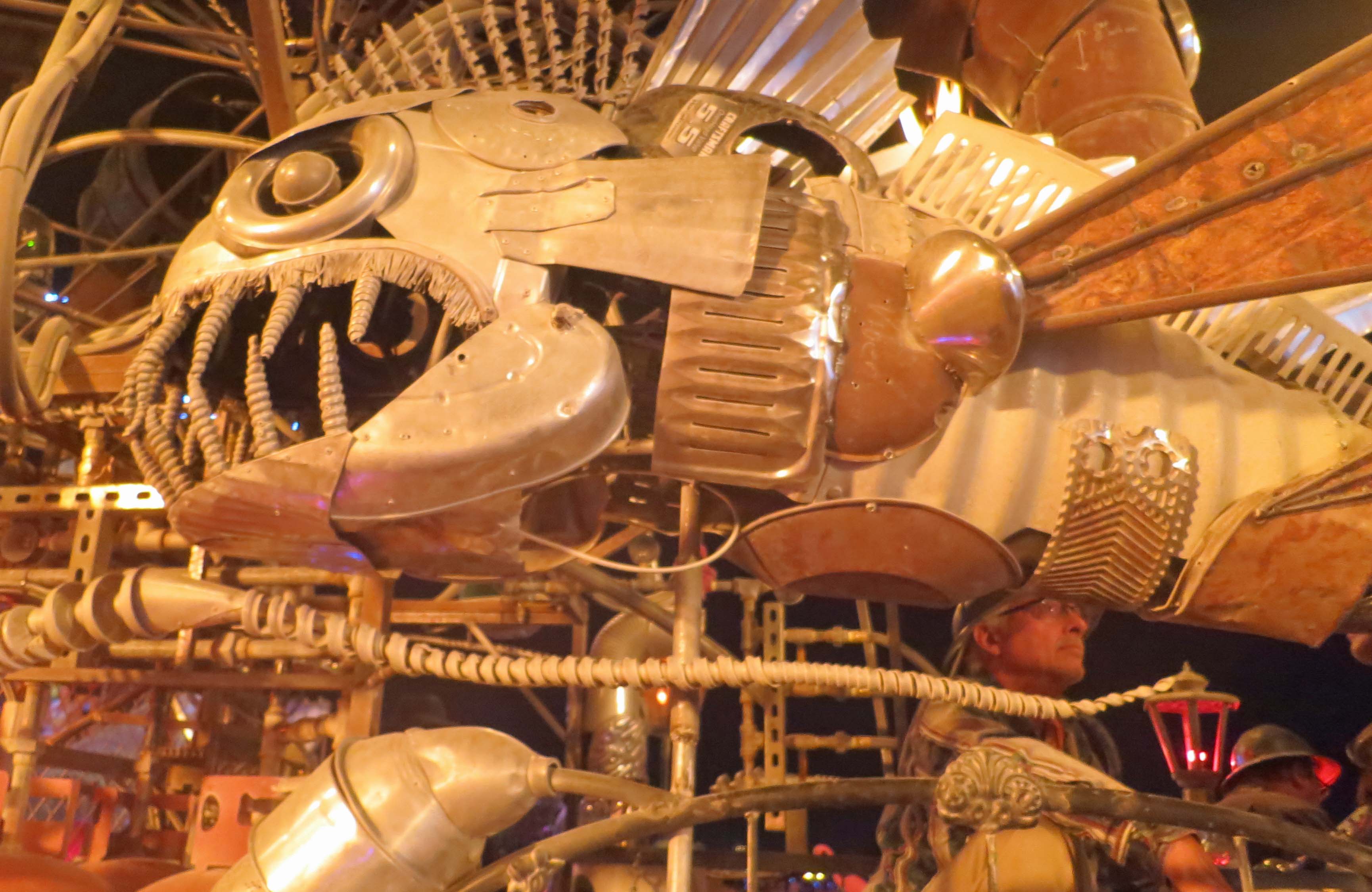
Fish sculpture on side of El Pulpo Mechanico at Burning Man 2013.

Speaking of El Pulpo, he featured this fish on his side. The detailed work that goes into creating mutant vehicles can be incredible.

Rubber ducky mutant vehicle at Burning Man 2013.

The big rubber ducky.

The vase I love...

The vase I love…

Mutant vehicle vase at Burning Man 2013.

…that constantly changes colors.

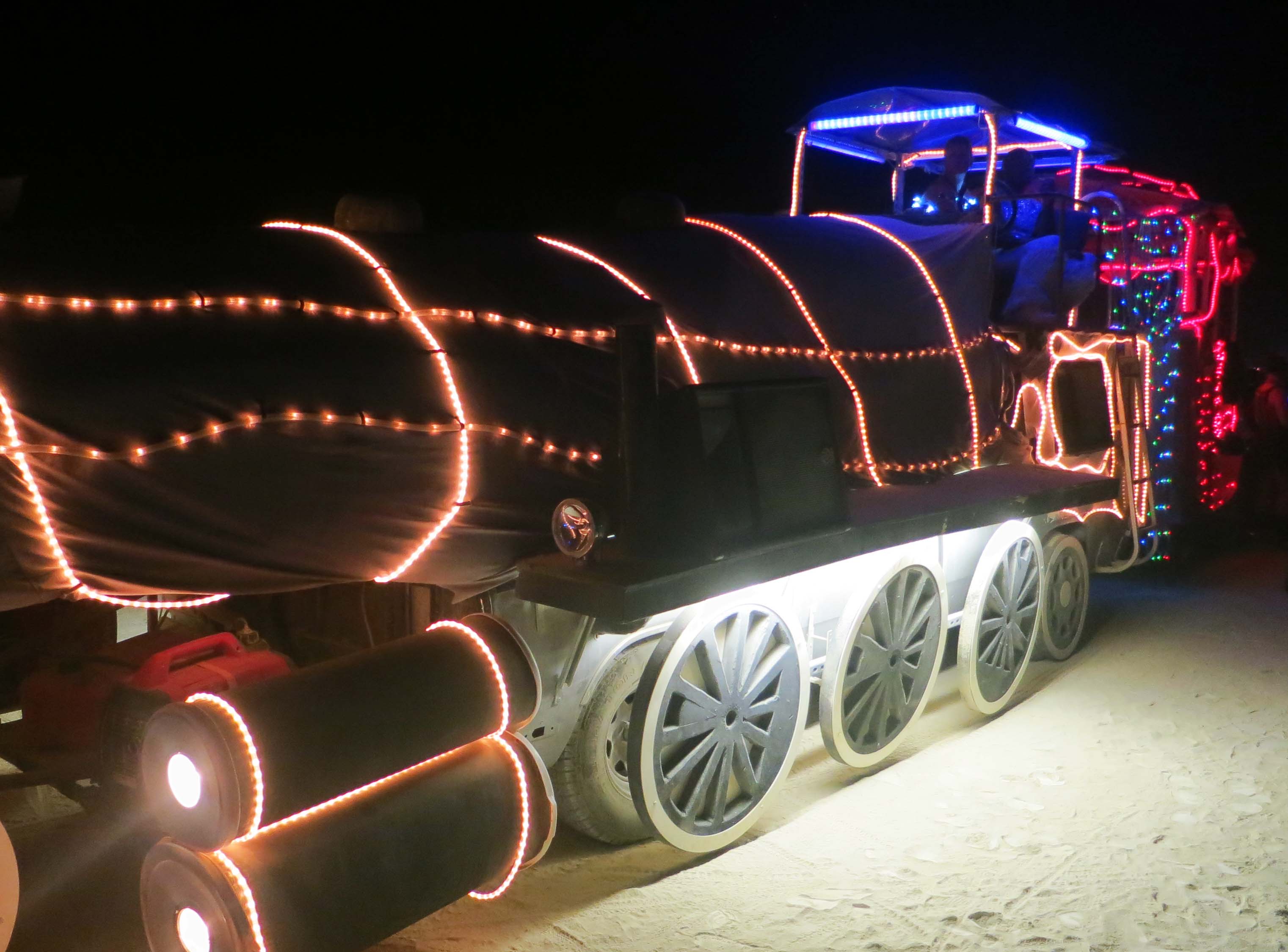
Mutant vehicle train at Burning Man 2013.

A train…

A clothes hangar...

A clothes hanger…

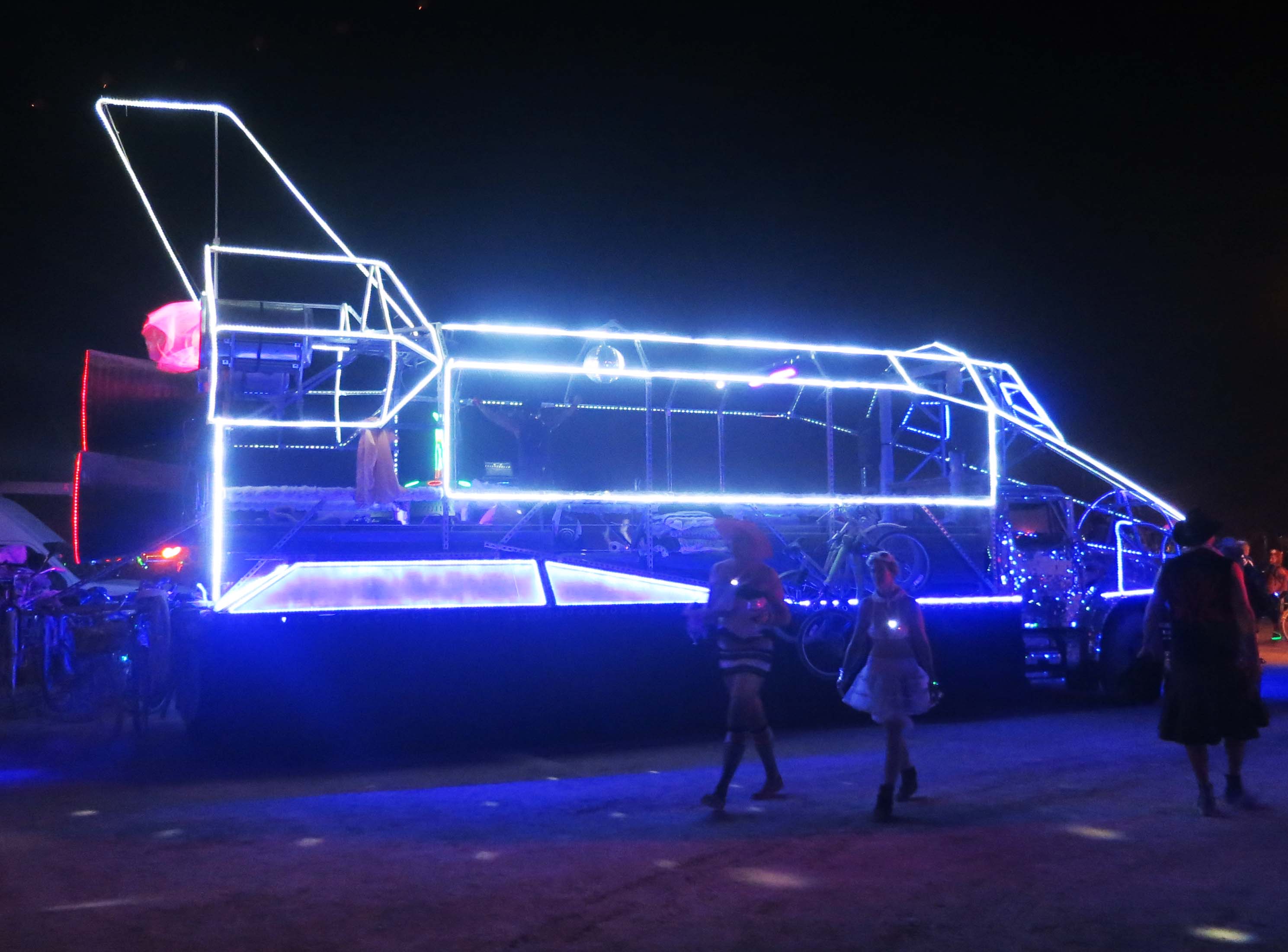
Space Shuttle mutant vehicle at Burning Man 2013.

And the Space Shuttle.

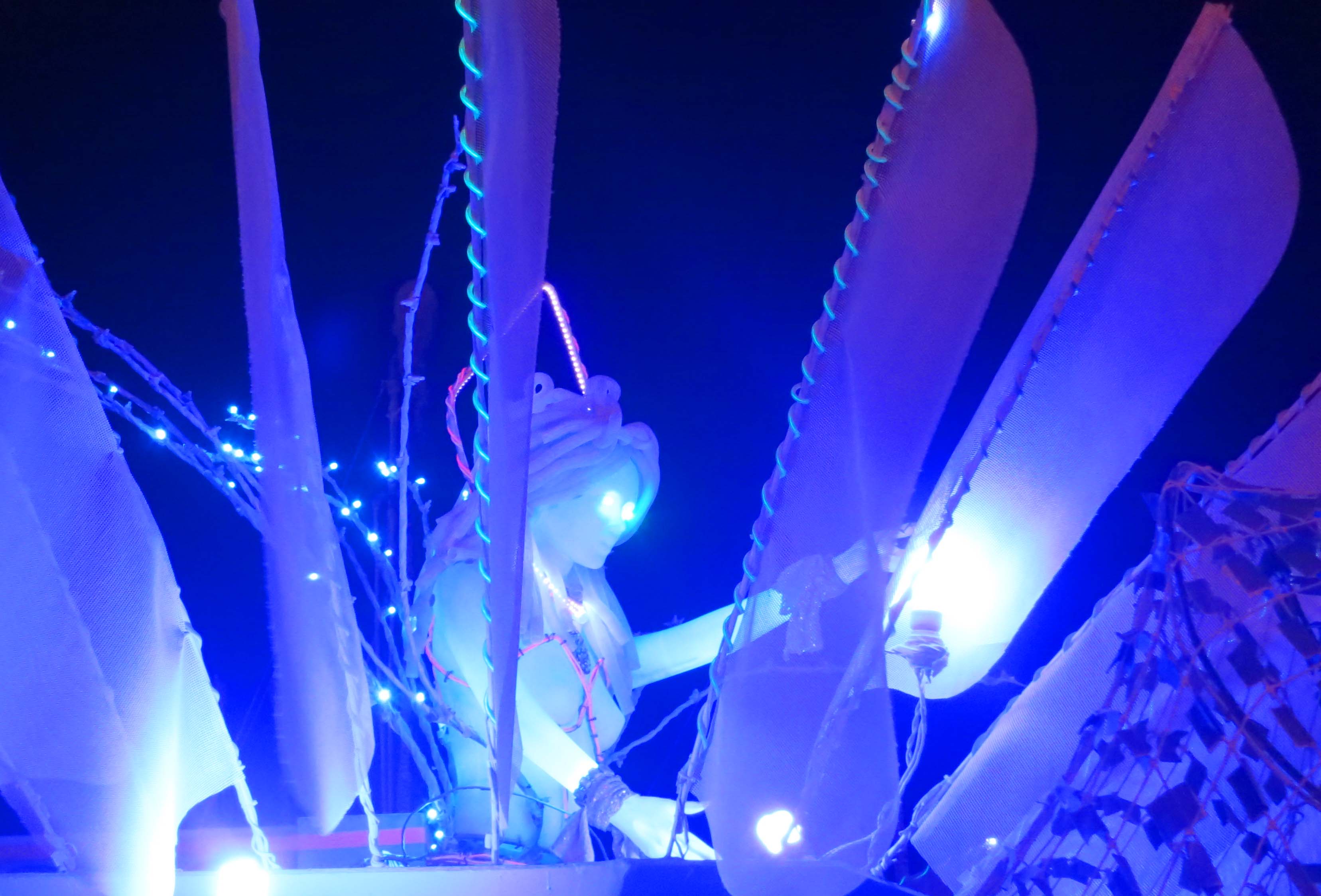
Mutant vehicle features blue lady with flashing eyes at Burning Man 2013.

This blue lady with her flashing eyes caught my attention.

As I did this strange horned creature at Burning Man 2013.

As did this strange horned creature.

Mutant vehicle boom box at Burning Man 2013.

Music was everywhere. This mutant vehicle boom box was booming. BTW, I saw on Craig’s list where it was for sale.

Hot band at Burning Man 2013.

Some mutant vehicles bring their own live bands. A hundred or so Burners were dancing in front of this one. I could barely make my way through the gyrating bodies, so I danced my way through.

Watching the Man burn from a mutant vehicle at Burning Man 2013.

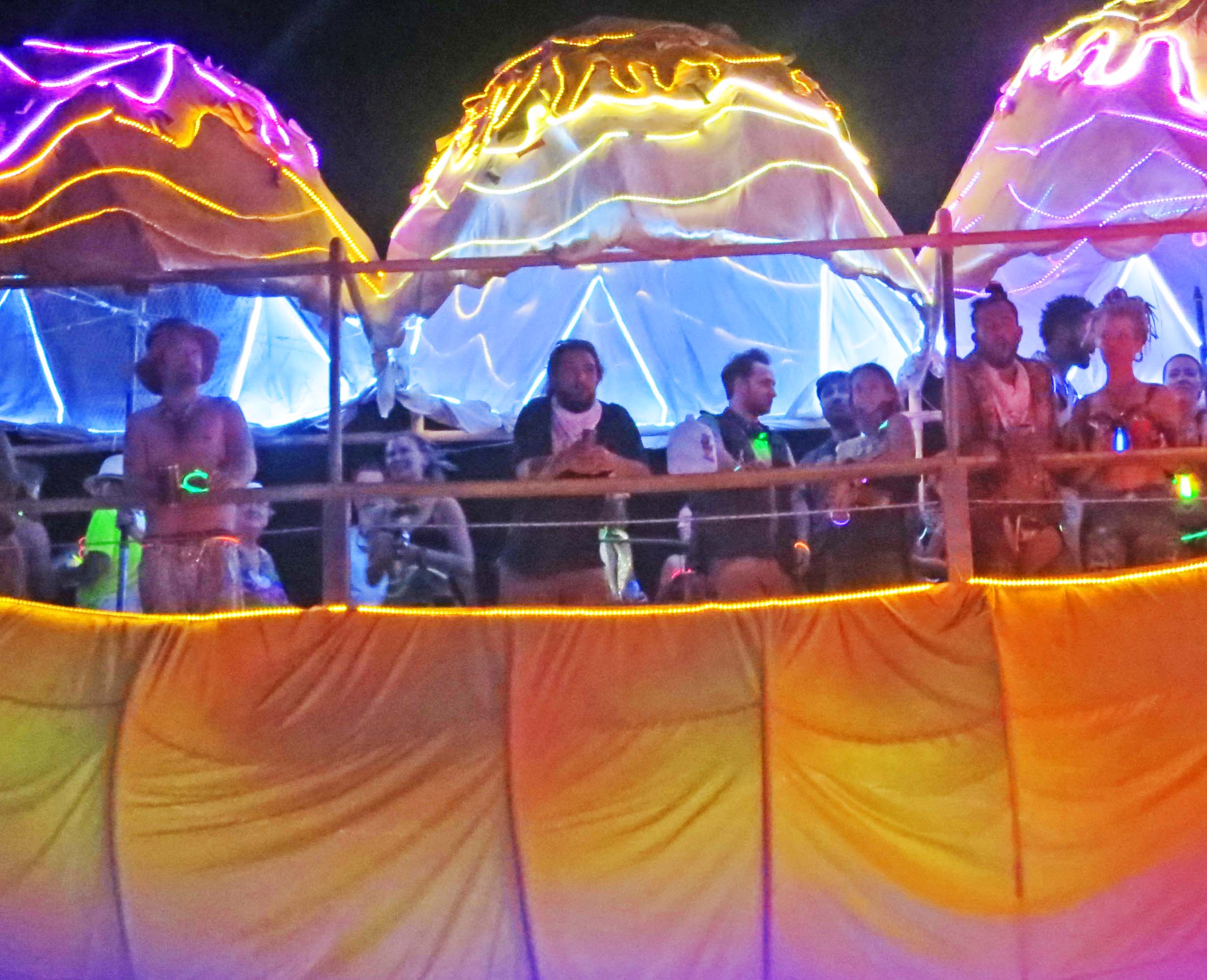
Mutant vehicles provide prime viewing opportunities for the theme camps that build them.

Crow's nest view of the burn at Burning Man 2013.

I thought this crow’s nest on a sailing ship provided the best seats in the house. I was jealous. (grin)

Man outlined by fireworks at Burning Man 2013.

NEXT BLOG: The man’s arms are raised; it’s time for the burn.

The World’s Largest Cockroach… Burning Man 2013

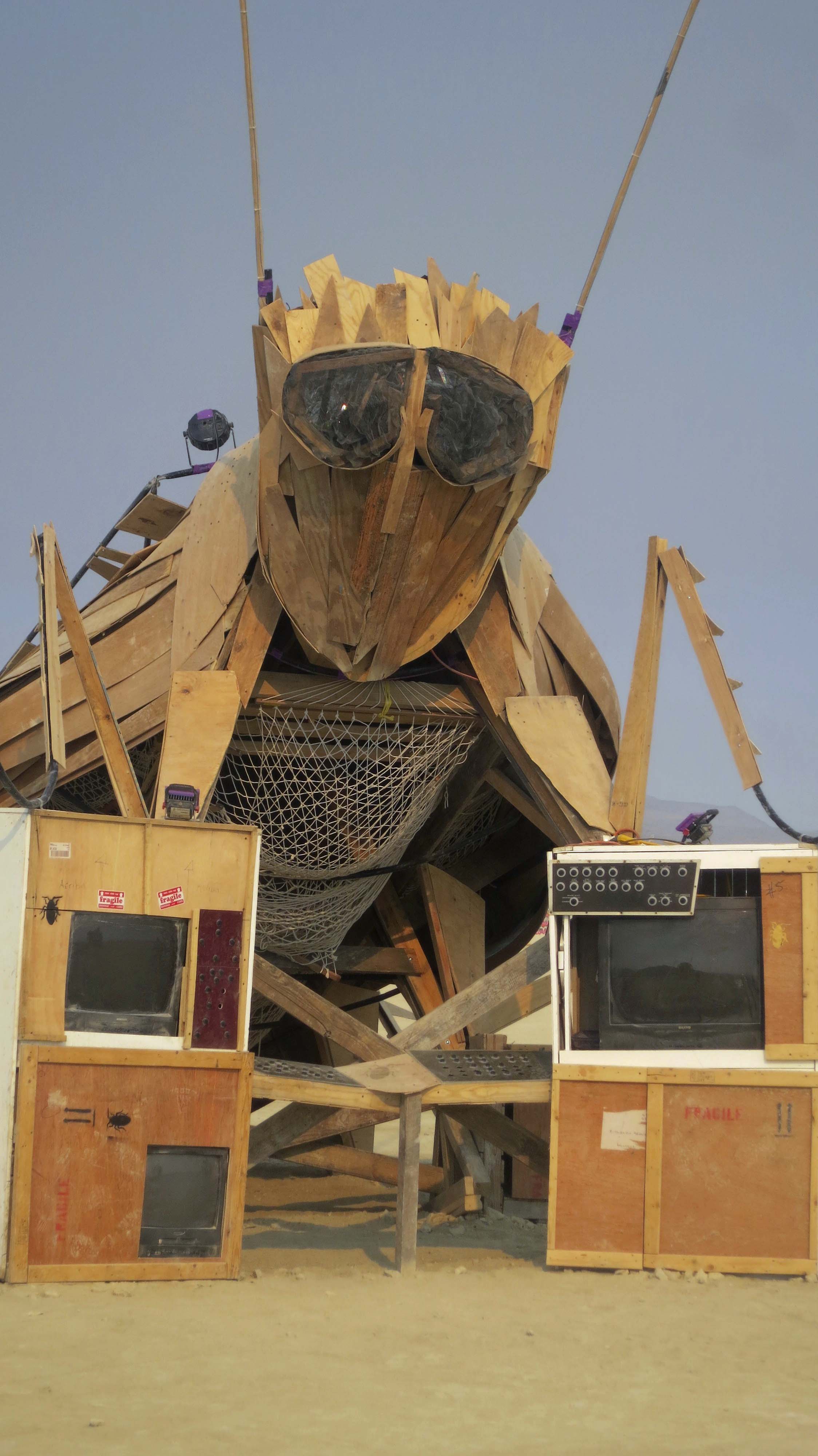
Burners blithely ignore the fact that they are about to be attacked by the world's largest cockroach. (Photo by Peggy Mekemson)

Burners blithely ignore the fact that they are about to be attacked by the world’s largest cockroach. (Photo by Peggy Mekemson)

They grow things big in Texas. Just ask a Texan. But I never thought that the folks from the Lone Star State would fess-up to having the world’s largest cockroaches. Apparently they live in Houston. Regional Burners from the area brought a replica of one to Burning Man. Eventually it was sacrificed to the fire gods, burned up. But, hey, that’s what Burners do, right?

Houston was one of 24 locations from around the US and world that brought art to Burning Man 2013 to represent their regions. The Dutch bought a windmill, for example. Utah had a rock arch. Sacramento featured a riverboat and Reno a wedding chapel. You get the point.

The Netherlands brought a windmill to represent their regional group in Holland.

The Netherlands brought a windmill to represent their regional group in Holland. (Photo by Tom Lovering.)

Burning Man is big on regionalization. Groups are now located in areas ranging from France to Taiwan and Israel to South Africa, as well as all over the US. Their art this year was organized in groupings around the Man and burned simultaneously on Thursday night. It made quite the bonfire.

Texas cockroach at Burning Man 2013.

A front view of the Texas Cockroach. The media center was set up to teach facts about the cockroach, such as they will be around long after humanity has gone the way of the big lizards.

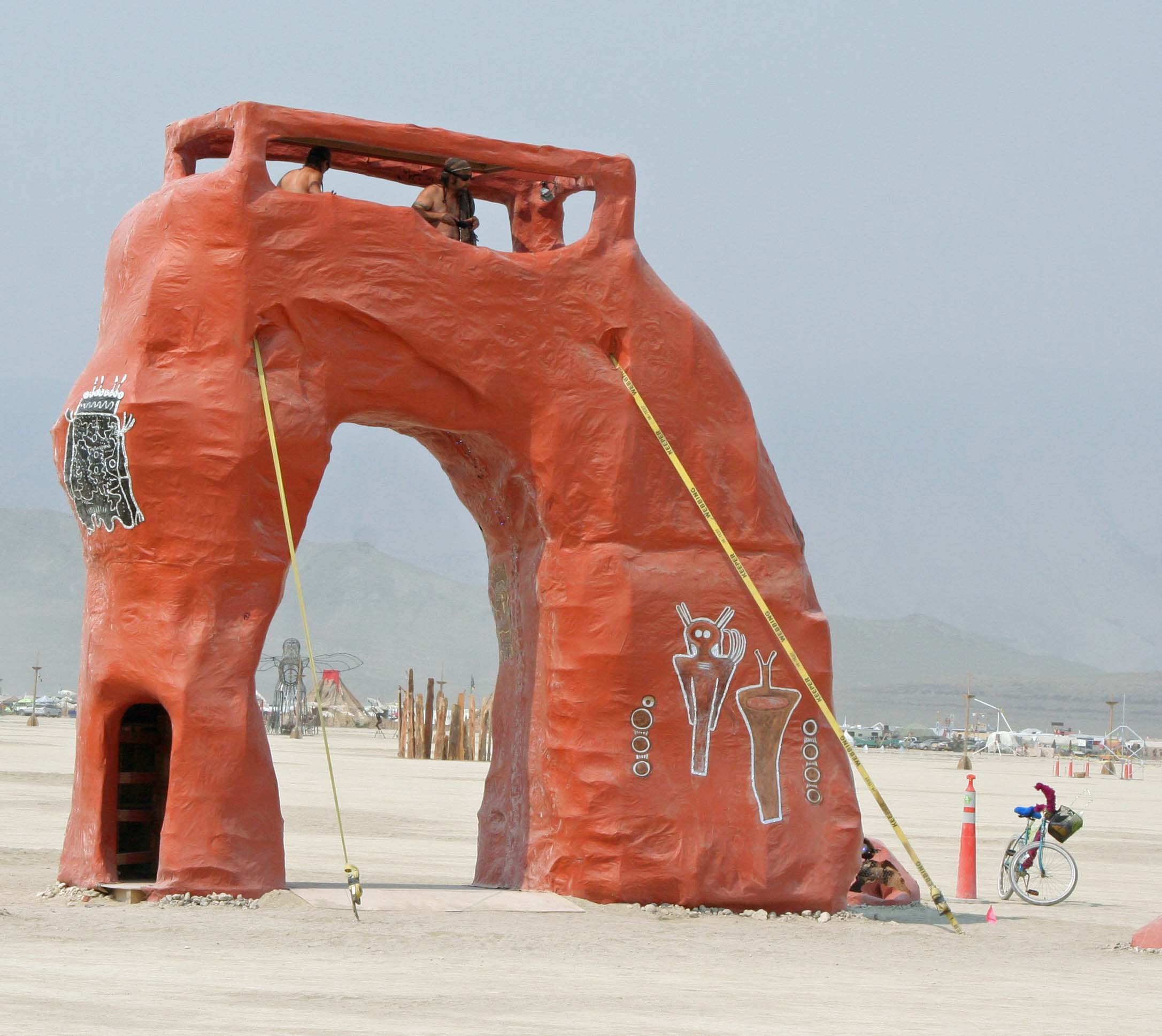
Utah regional art at Burning Man 2013.

Utah chose to represent one of its famous rock arches, the type you find in Arches National Park. It also featured petroglyphs, a subject I have written on in my blogs. (Photo by Peggy Mekemson.)

Arches National Park

One thing Utah has a lot of is beautiful rocks. I took this photo at Arches National Park.

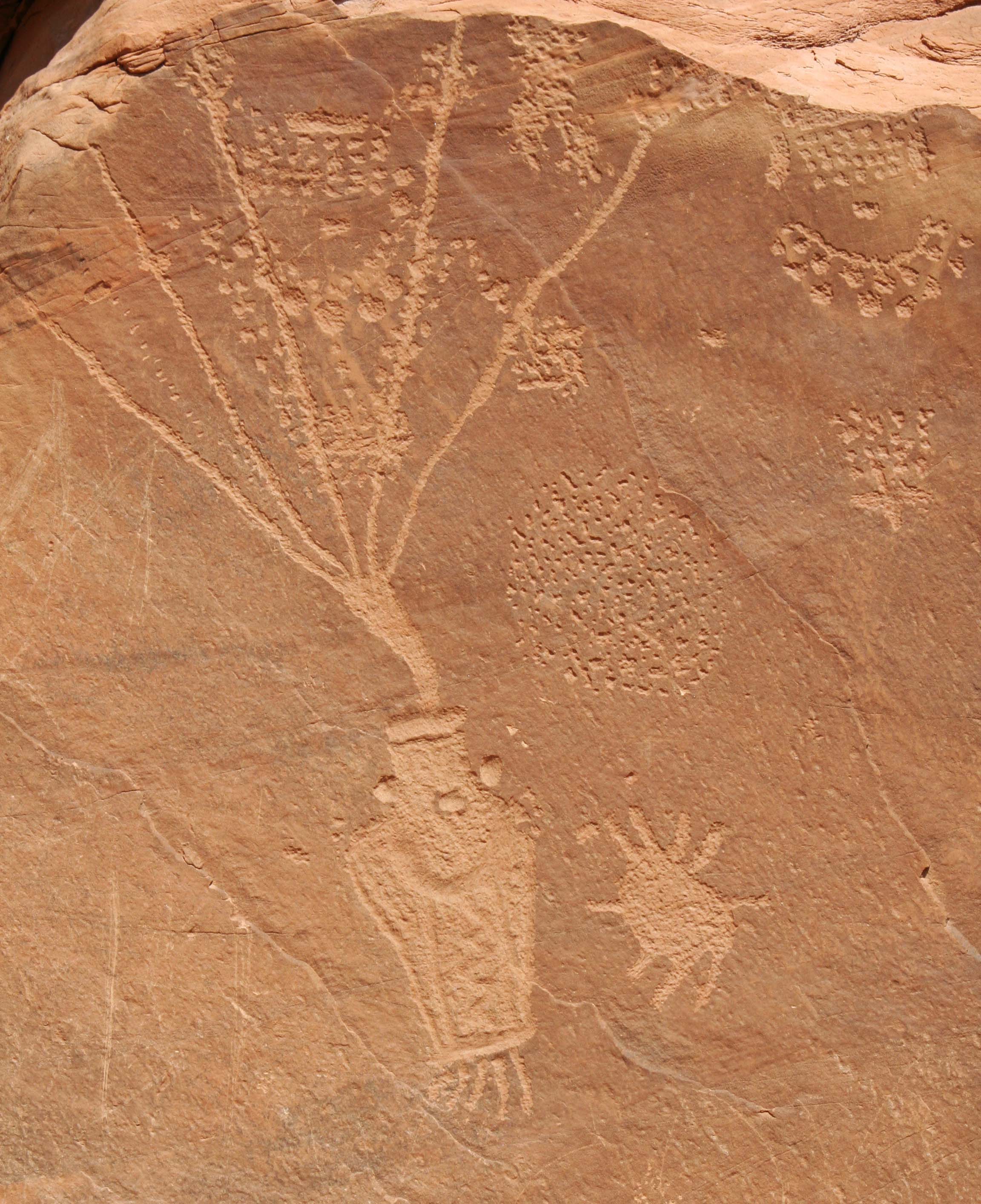
Dinosaur National Monument petroglyph.

Nor could I resist posting this petroglyph I found at Dinosaur National Monument given Burning Man’s 2013 focus on aliens. This guy and his dog are about as alien as you get.

Dinosaur national Monument petroglyph.

I may have seen this guy walking by our camp. I am surprised Utah didn’t include him on its arch.

Idaho Marvin, regional art at Burning Man 2013.

Idaho produced this sculpture that they named Marvin. (Photo by Tom Lovering.)

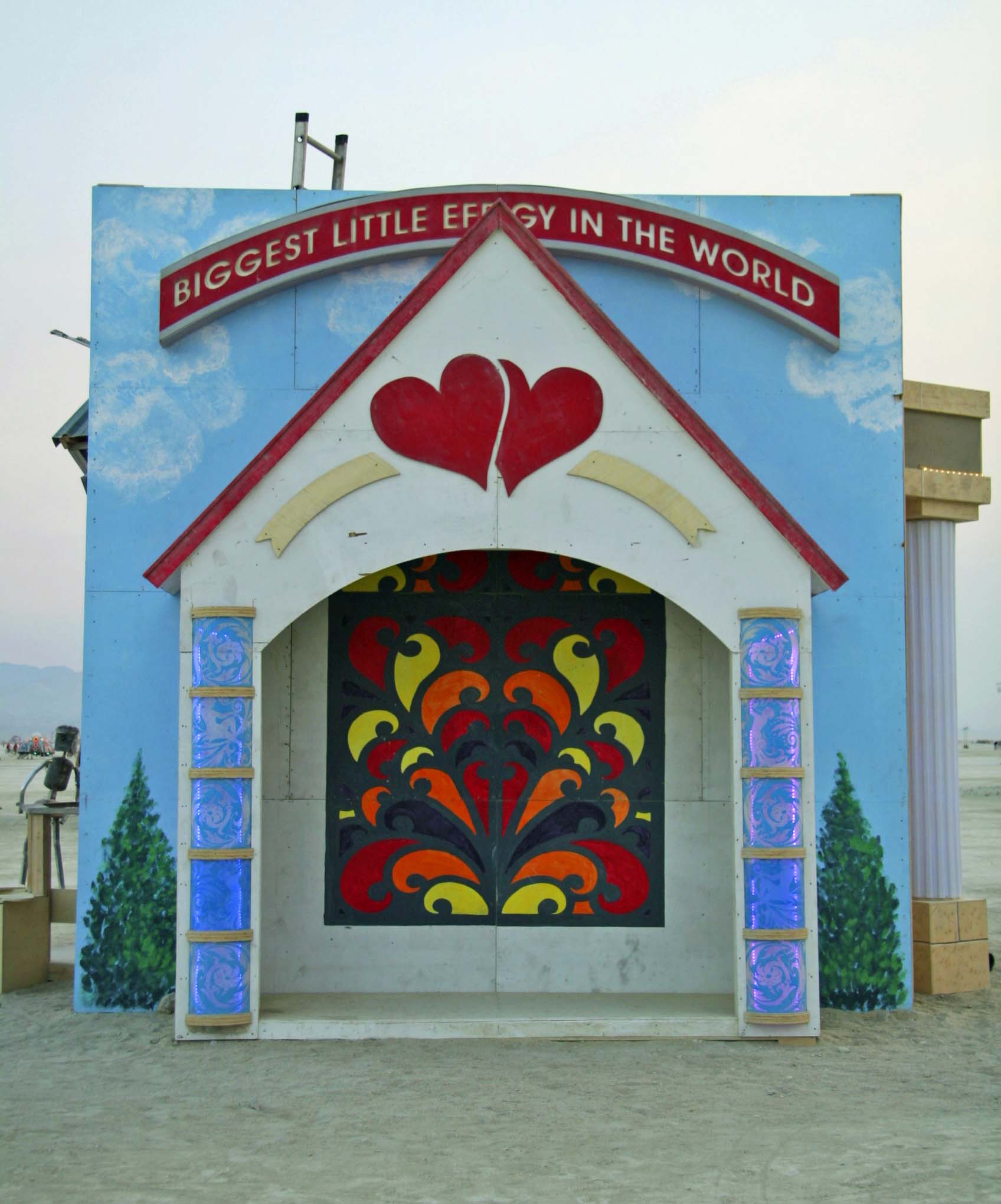
Reno appropriately produced a wedding chapel. My parents got married at a Reno wedding chapel. But did it make me legitimate? Hmm.

Reno appropriately produced a wedding chapel. My parents got married at a Reno wedding chapel. But did it make me legitimate? Hmm. (Photo by Tom Lovering.)

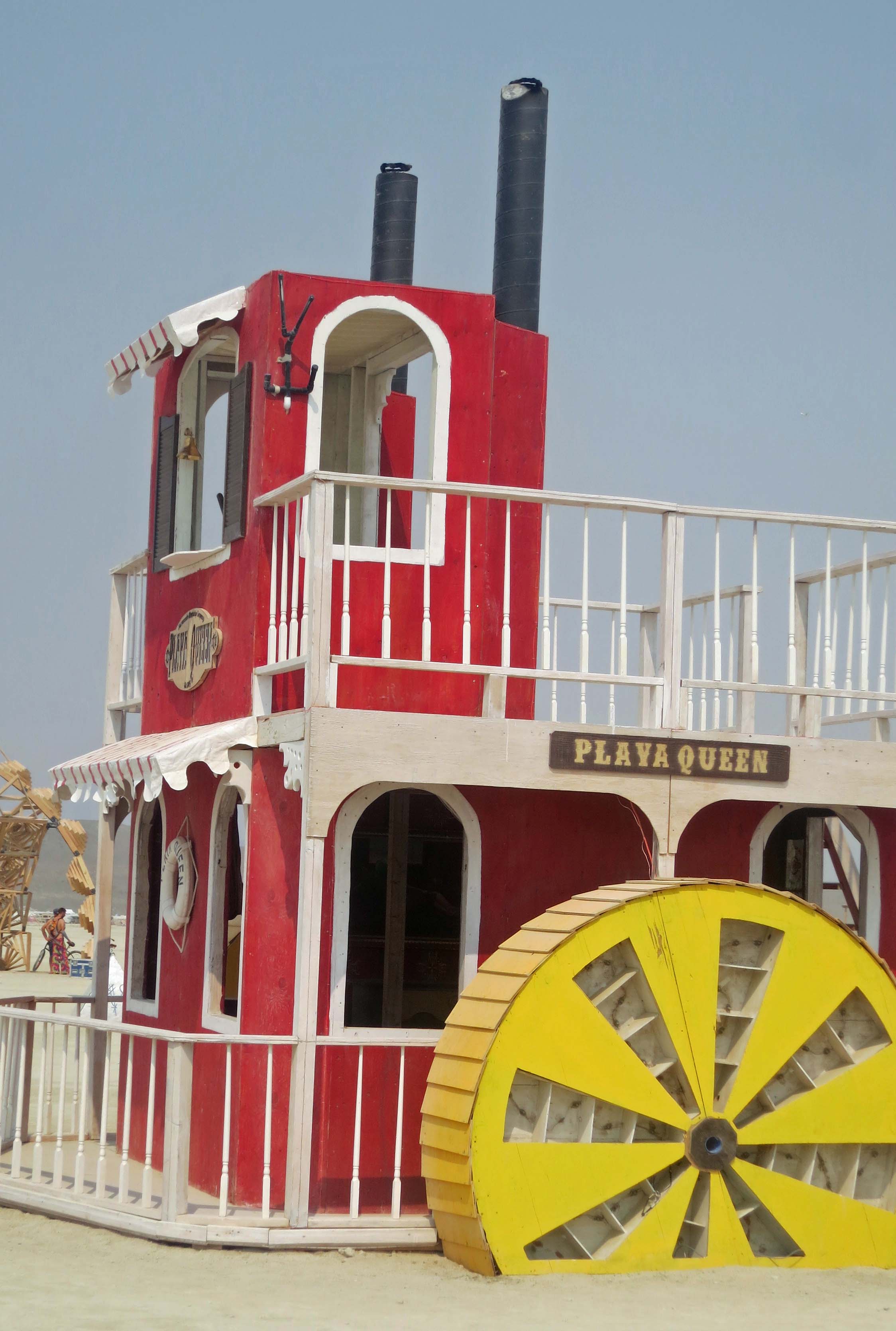
Sacrament brought the Playa Queen, which represented the Delta King, a Sacramento Riverboat that once carried passengers between Sacramento and San Francisco. Before that it had carried rice. It was brought over from France by the grandparents of a friend of mine, Jean Snuggs.

Sacrament brought the Playa Queen, which represented the Delta King, a Sacramento Riverboat that once carried passengers between Sacramento and San Francisco. Before that it had carried rice. It was brought over from France by the grandparents of a friend of mine, Jean Snuggs.

New York regional art at Burning Man 2013

I found New York’s piece, a representation of the iconic top of the Chrysler Building to be particularly graceful.

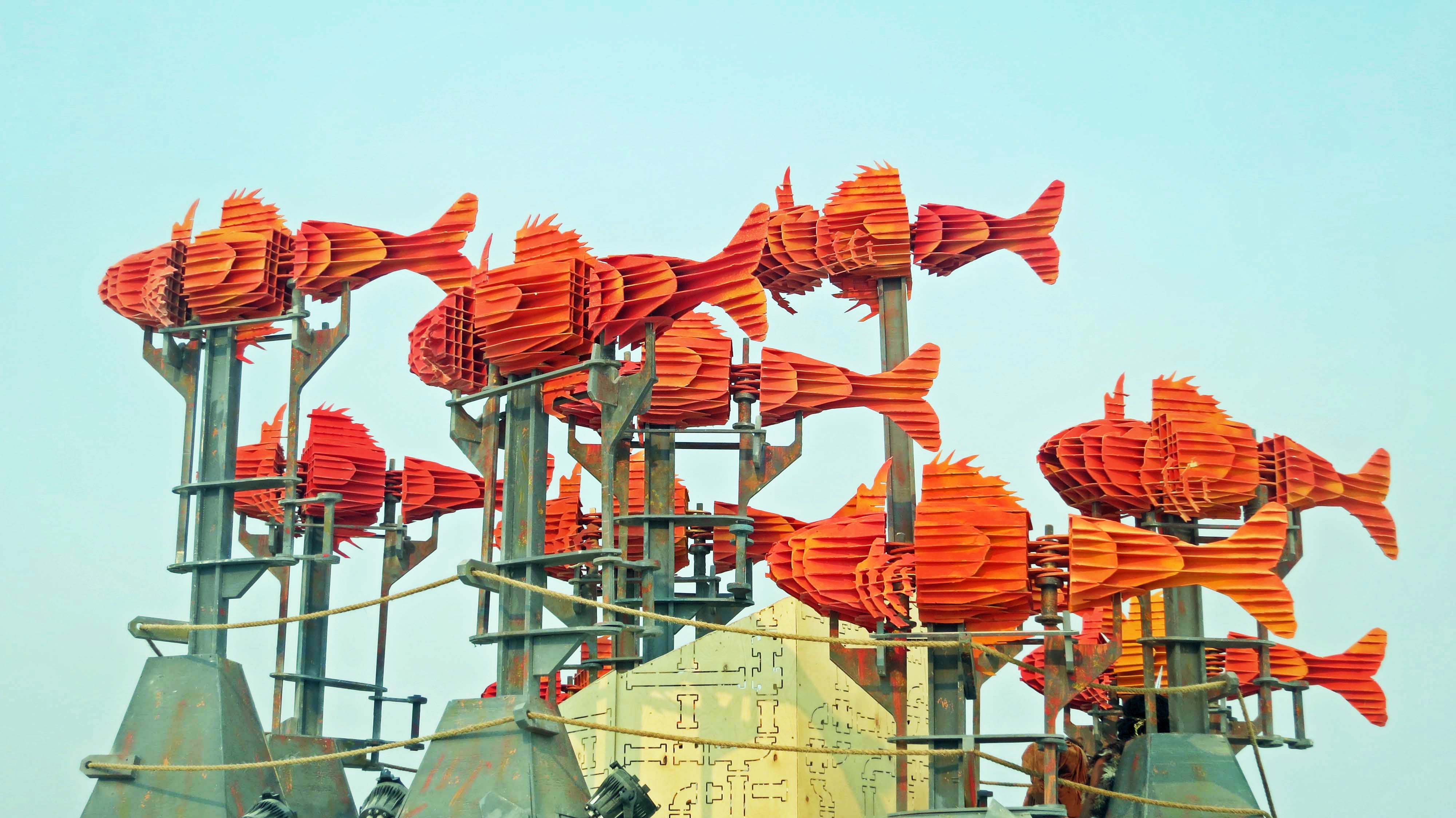
New Orleans regional art at Burning Man 2013.

There was something fishy about New Orleans.

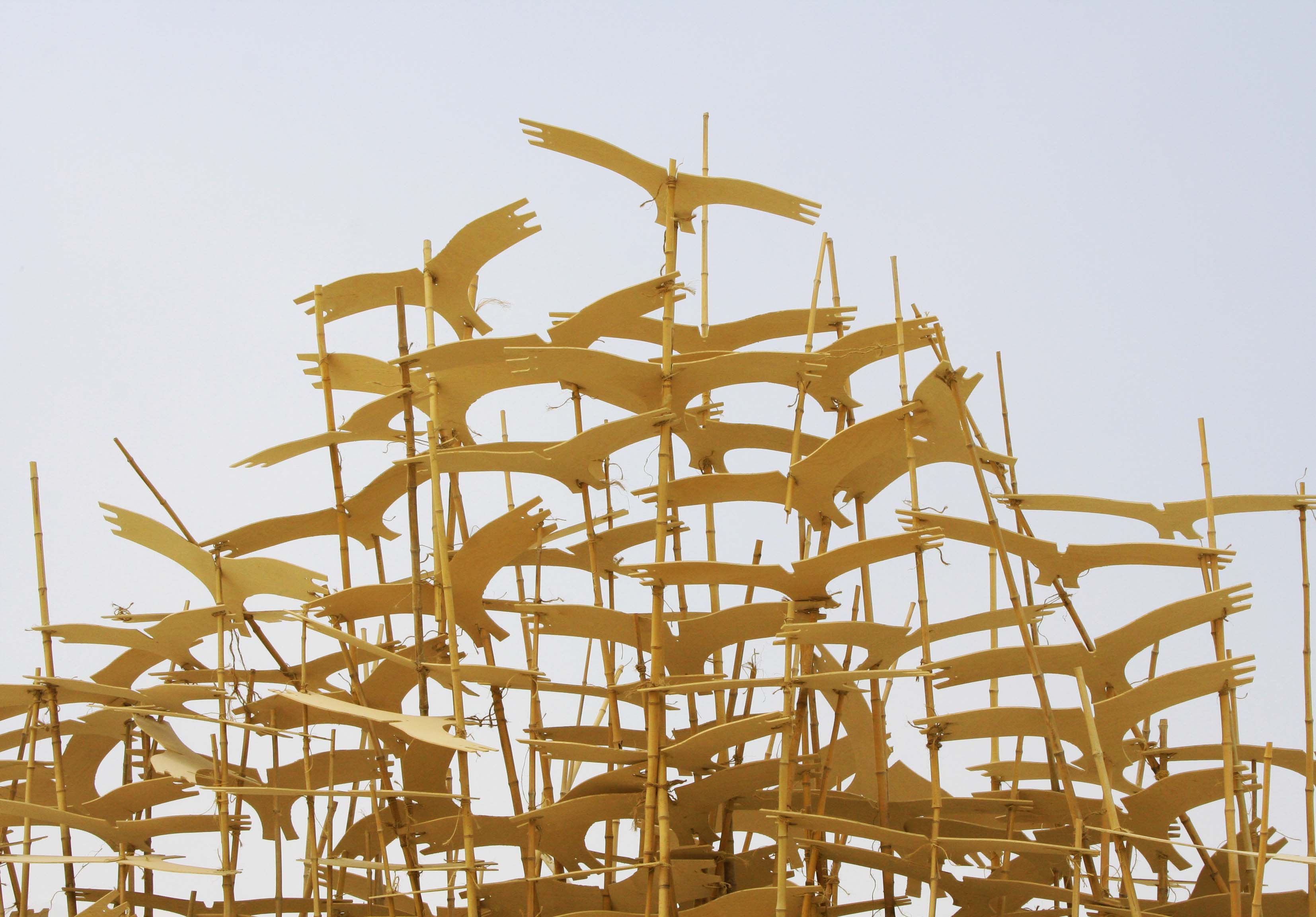
Lithuania art at Burning Man 2013.

Peggy and I were particularly interested in Lithuania’s regional work, which featured birds. While we were at Burning Man, Peggy’s sister, brother and cousin were visiting with relatives in the country. (Photo by Peggy Mekemson.)

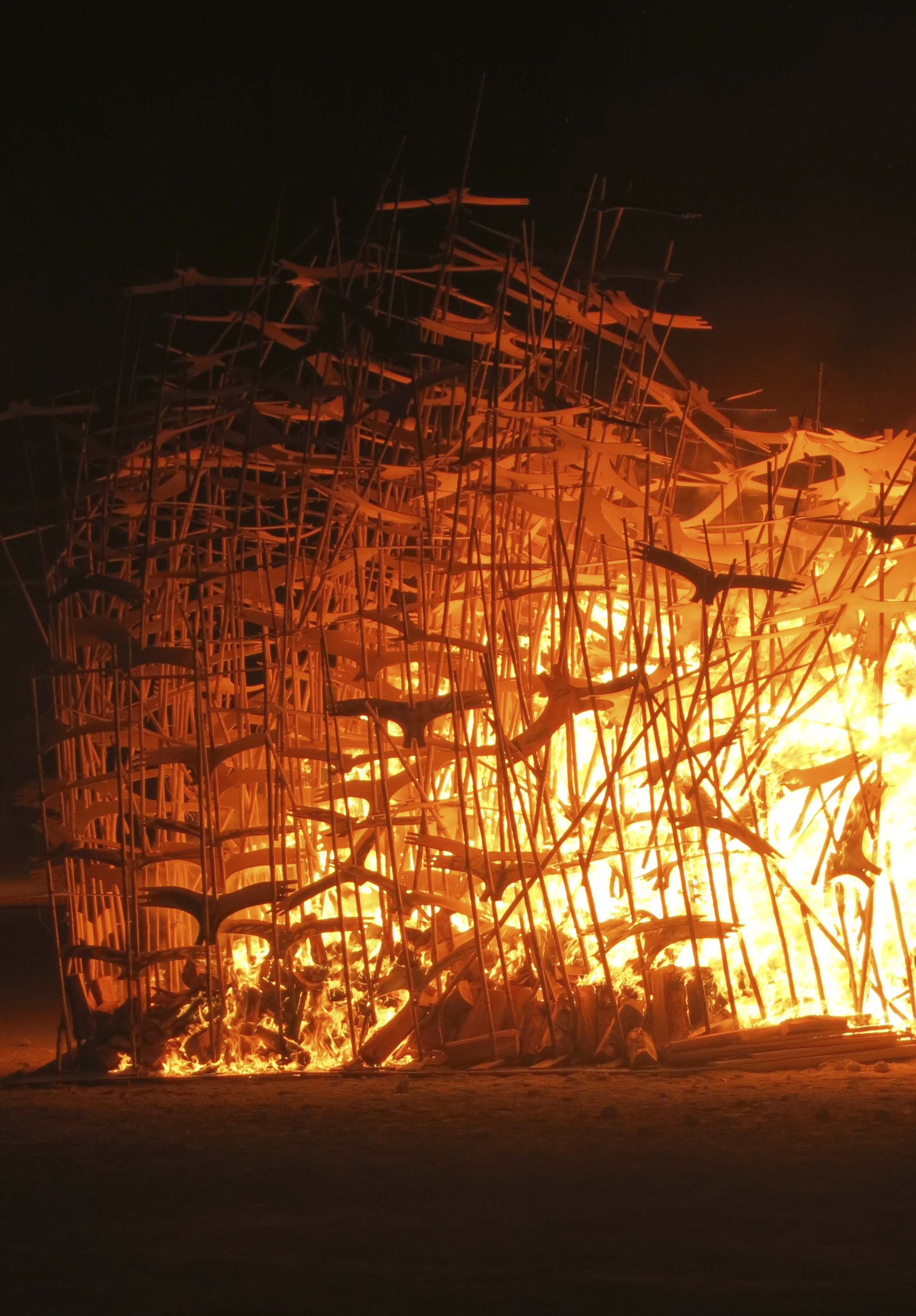
Burning of Lithuania's regional art at Burning Man 2013.

Our connection with Lithuania’s art brought us back to watch it burn on Thursday night.

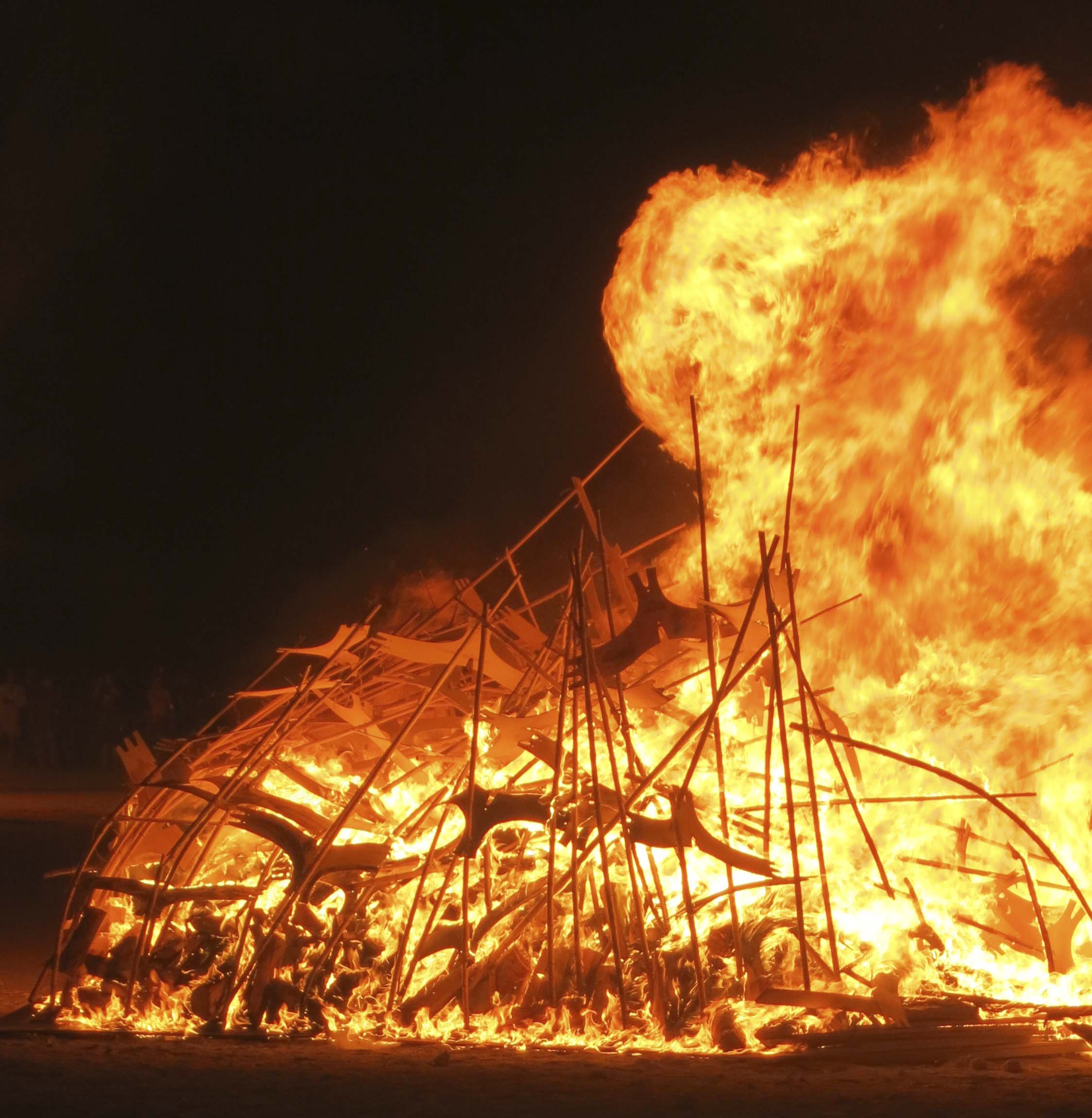
Burning of Lithuanian Regional art at Burning Man 2103.

The piece comes tumbling down.

Washington DC's pyramid at Burning Man 2013.

The glowing remains of Washington DC’s pyramid stand behind the embers of the Lithuania’s work. 22 other regional pieces were burning at the same time.

New York City's regional art burns at Burning Man 2013.

NYC’s art piece burns on the right.

The East Bay Area structure burn.

The East Bay Area’s structure burns.
I've included this because of what appears to be an eerie face burning at the bottom.

I’ve included this because of what appears to be an eerie face burning at the bottom.

Beth and Tom Lovering, along with Peggy, glow in the firelight from the burn.

Beth and Tom Lovering, along with Peggy, glow in the firelight from the burn.

NEXT BLOG: The incredible ceremony surrounding the burning of the Man.

The Department of Mutant Vehicles (DMV)… Burning Man 2013

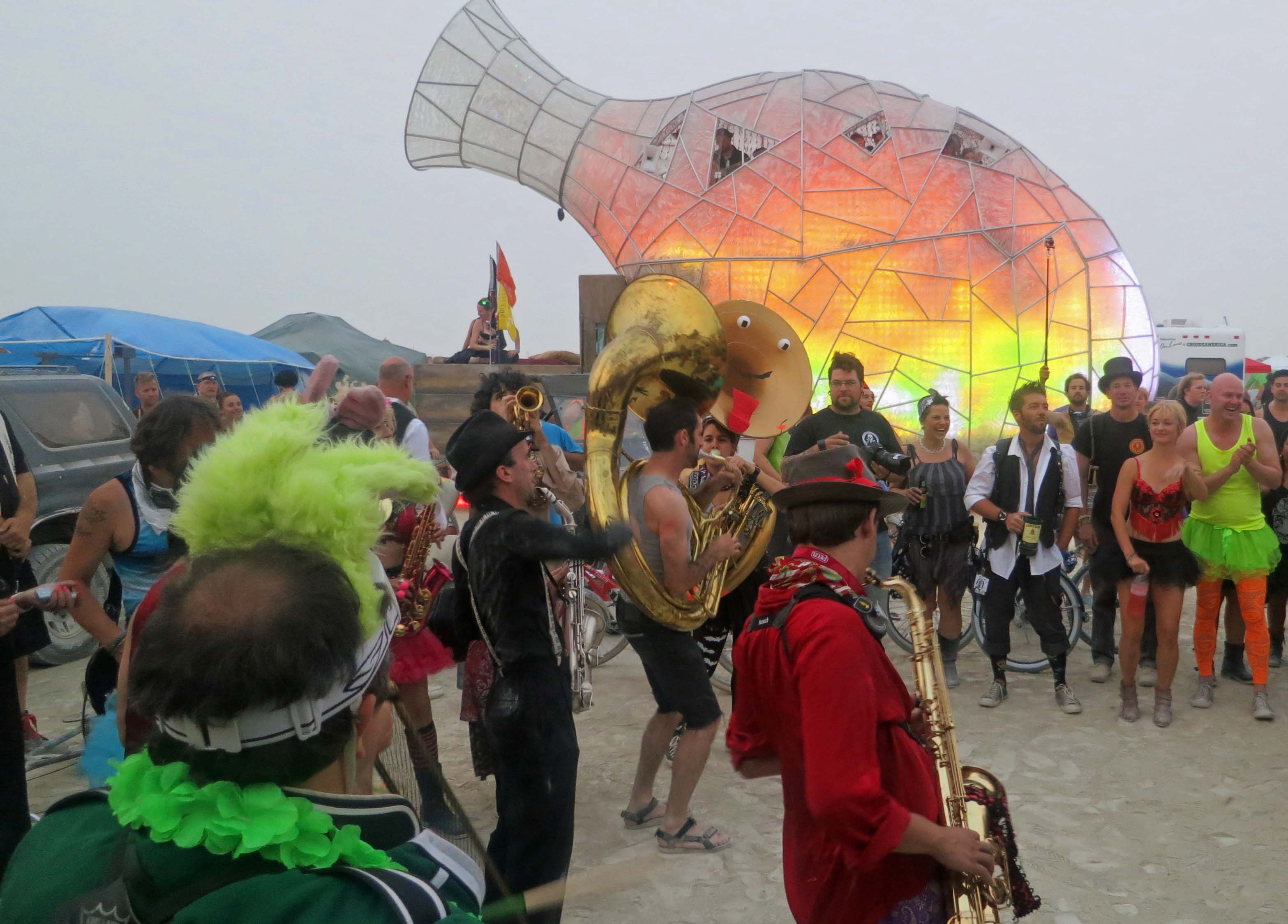
The mutant vehicle vase at Burning Man 2013.

One of my favorite mutant vehicles at Burning Man is this large vase. Here it had shown up to help celebrate a Black Rock City wedding at the Church of the Jerk we were attending.

DMV is a well-known abbreviation in the US. It stands for the Department of Motor Vehicles and each state has one. I am sure other countries have a similar government agency. The mere initials can make a teenager sweat. It’s where they go to take their driver’s test and obtain their first driver’s license. Adults sweat too, or possibly curse. They go there to pay all kinds of fees and taxes associated with owning a car. Driving records are monitored as well. A DUI (driving under the influence) is bad news.

The DMV is slightly different at Burning Man. But isn’t everything? DMV stands for the Department of Mutant Vehicles. If you are going to drive in Black Rock City, your vehicle must be mutant. No way can it look like an ordinary car, truck or bus. No way! DMV exists to make sure your wheels are sufficiently weird. And safe. Some hold up to 40 gyrating Burners dancing to the throb of heavy metal into the wee hours.

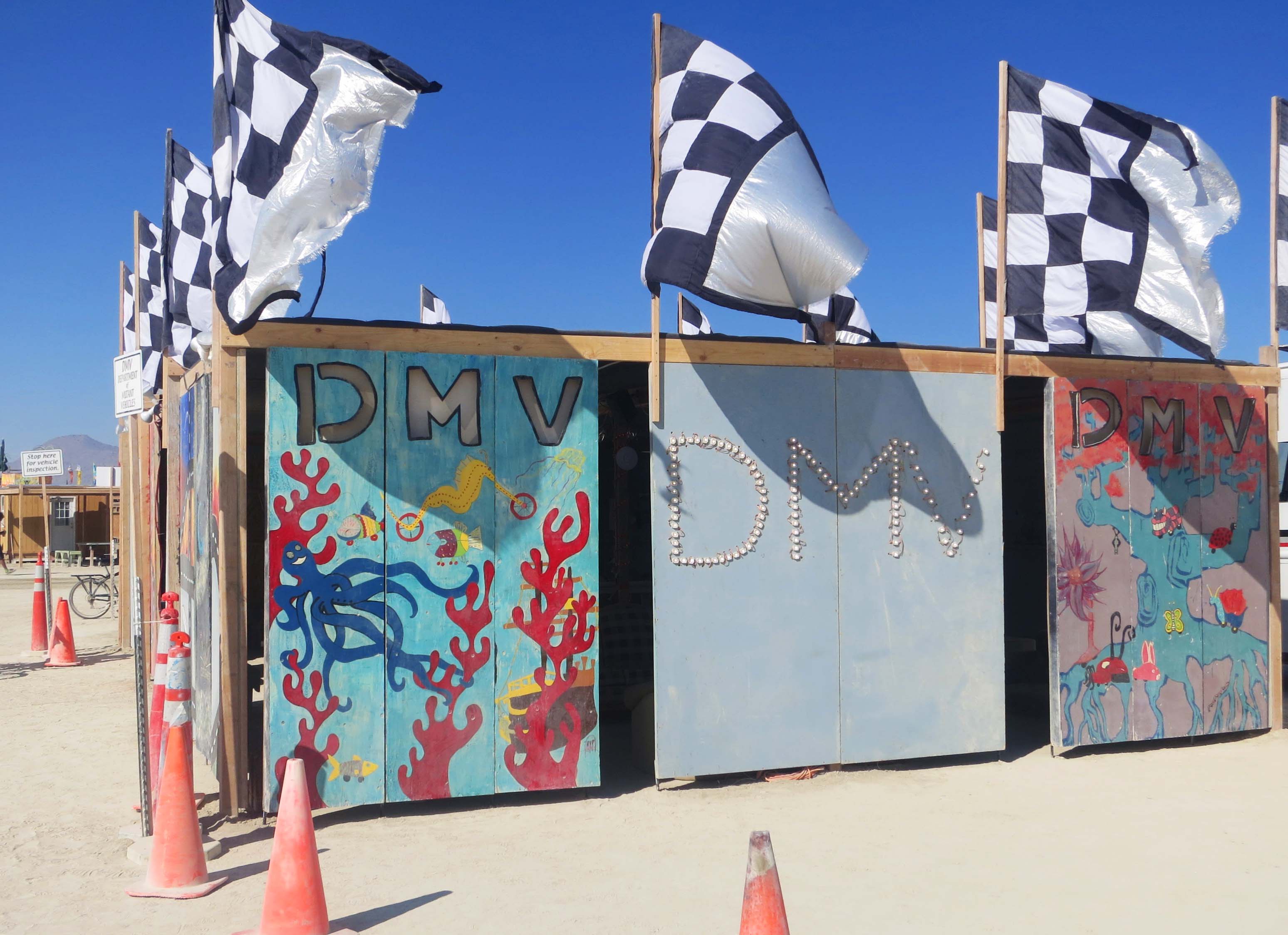
Department of Mutant Vehicles at Burning Man 2013.

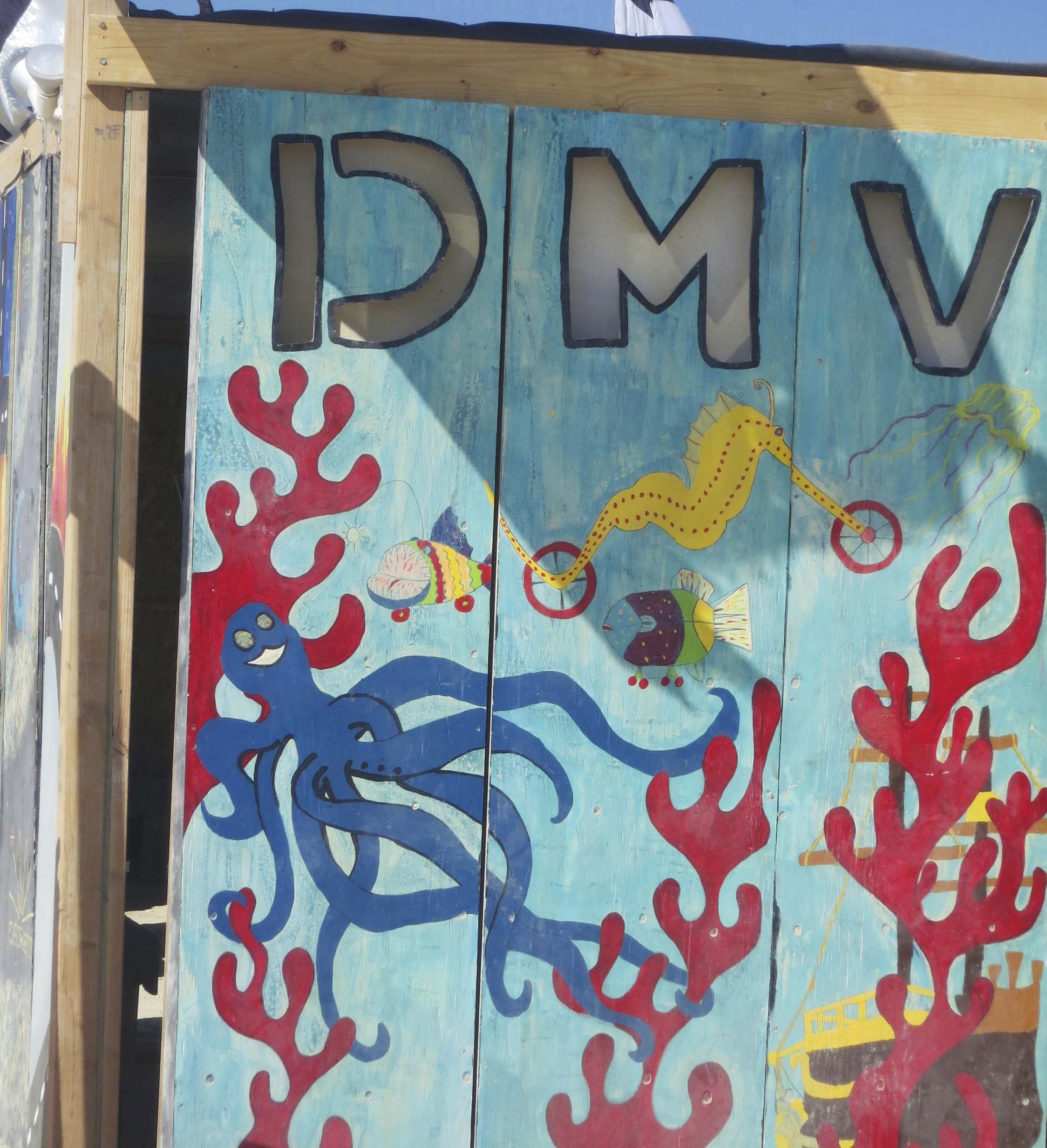
The DMV building at Burning Man 2013 fit the character of its job. Early in the week, long lines of mutant vehicles wait patiently to be approved and obtain licenses to operate in Black Rock City.

DMV building at Black Rock City 2013.

A close up of the DMV building featuring an octopus. Strange, huh? But look below.

Burning Man mutant vehicle octopus.

An octopus mutant vehicle, El Pulpo Mechanico, demonstrates fire-power at Burning Man 2013.

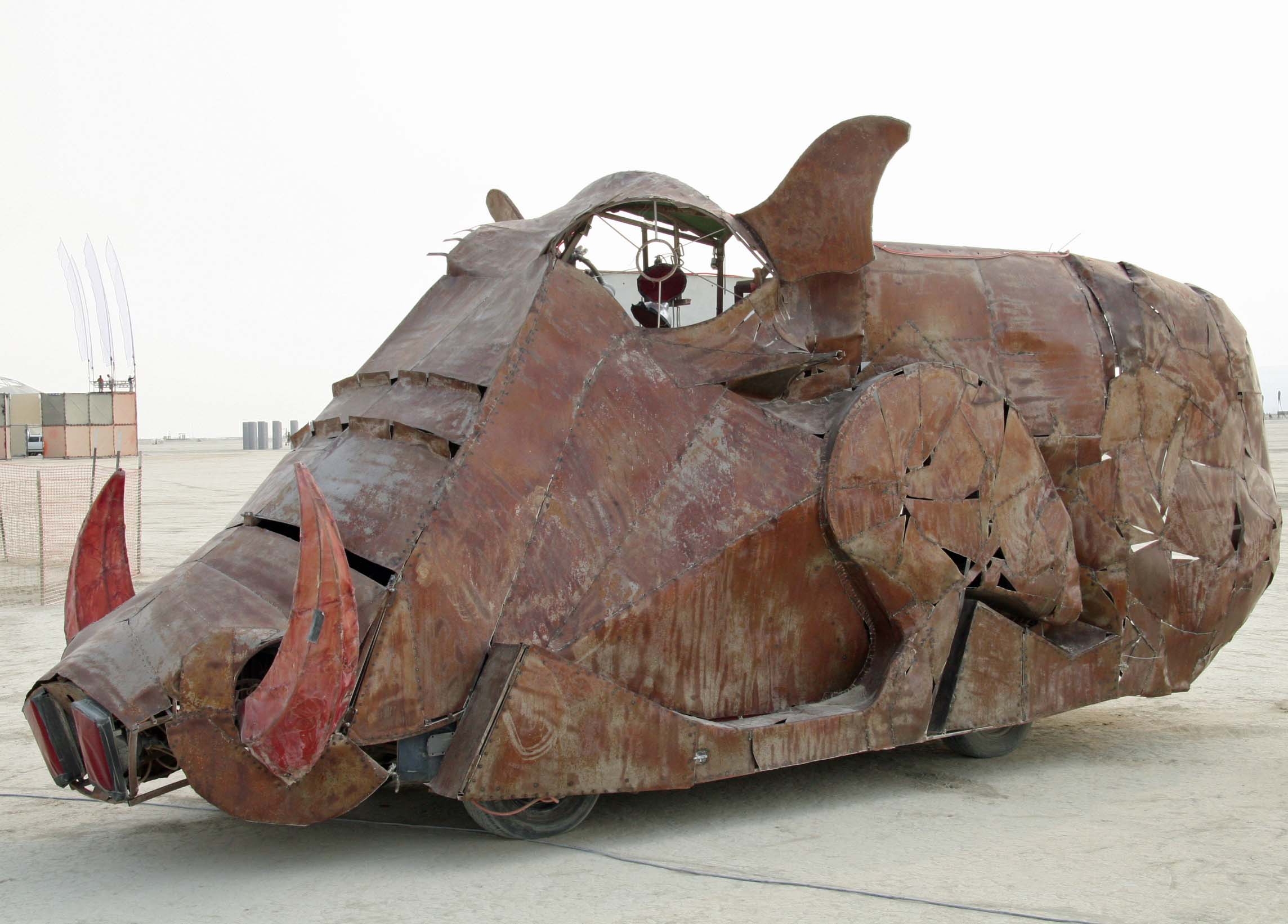
Beyond the art of Burning Man, my next favorite things are these wonderfully creative forms of transportation. Fire spewing dragons, boats ranging from ocean liners to pirate ships, bugs, fish, steam punk fantasies, a unicorn, a wart hog, and even a vase wander through Black Rock City and out onto the Playa. Some bristle with speaker systems guaranteed to wake a sleeping vampire at noon. (And yes, Burning Man has vampires.)

One of the most significant facts about mutant vehicles is that they morph. The admittedly unique vehicles of the day become fantasy creatures at night that create a magical world that out-magics the Magic Kingdom.

Ocean liner mutant vehicle at Burning Man 2013.

I’ve seen many mutant vehicle boats at Burning Man over the years but never an ocean liner. This big guy was lined up at DMV waiting to be checked out.

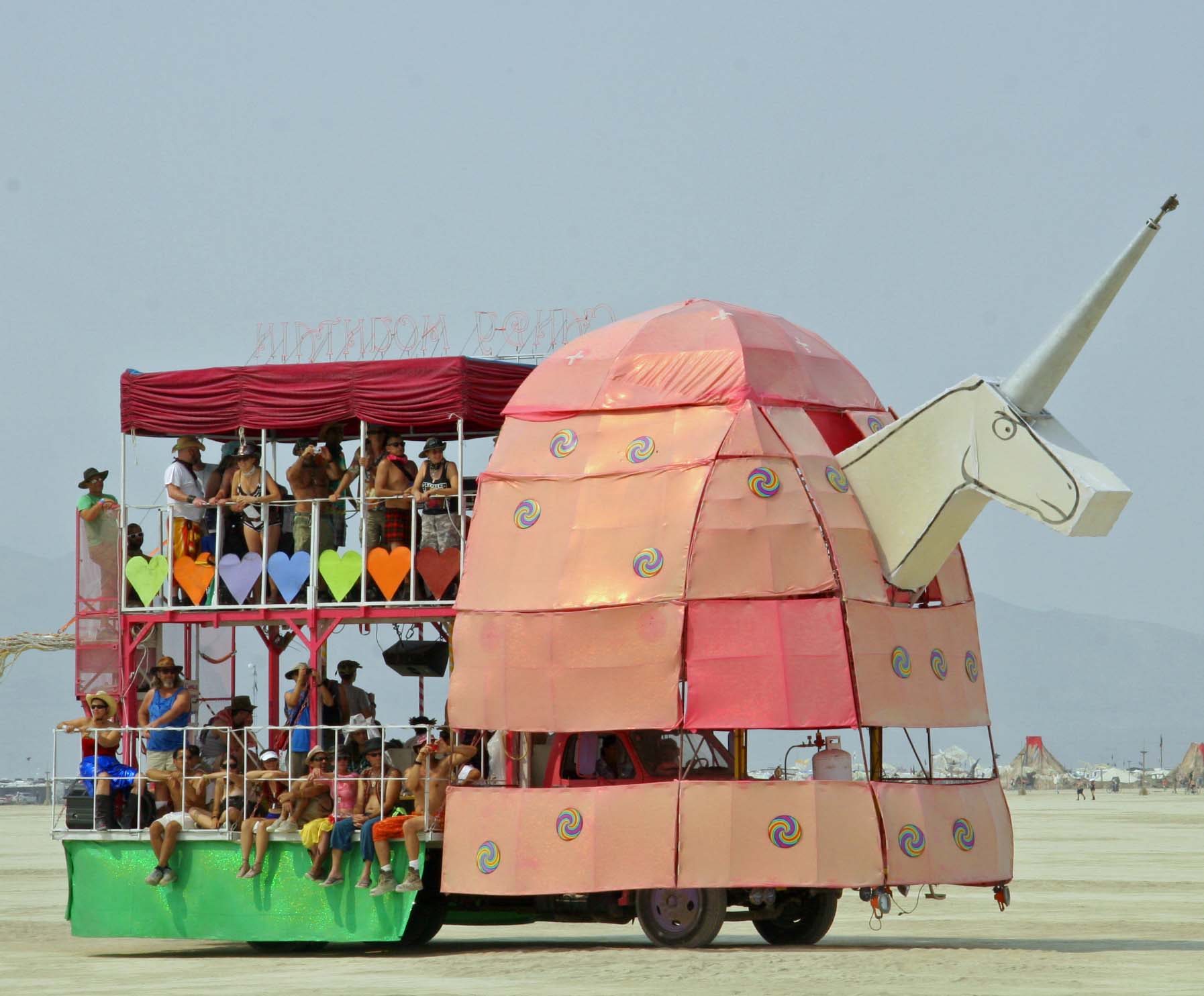
Unicorn mutant vehicle at Burning Man 2013.

This unicorn mutant vehicle carries a crowd. (Photo by Tom Lovering.)

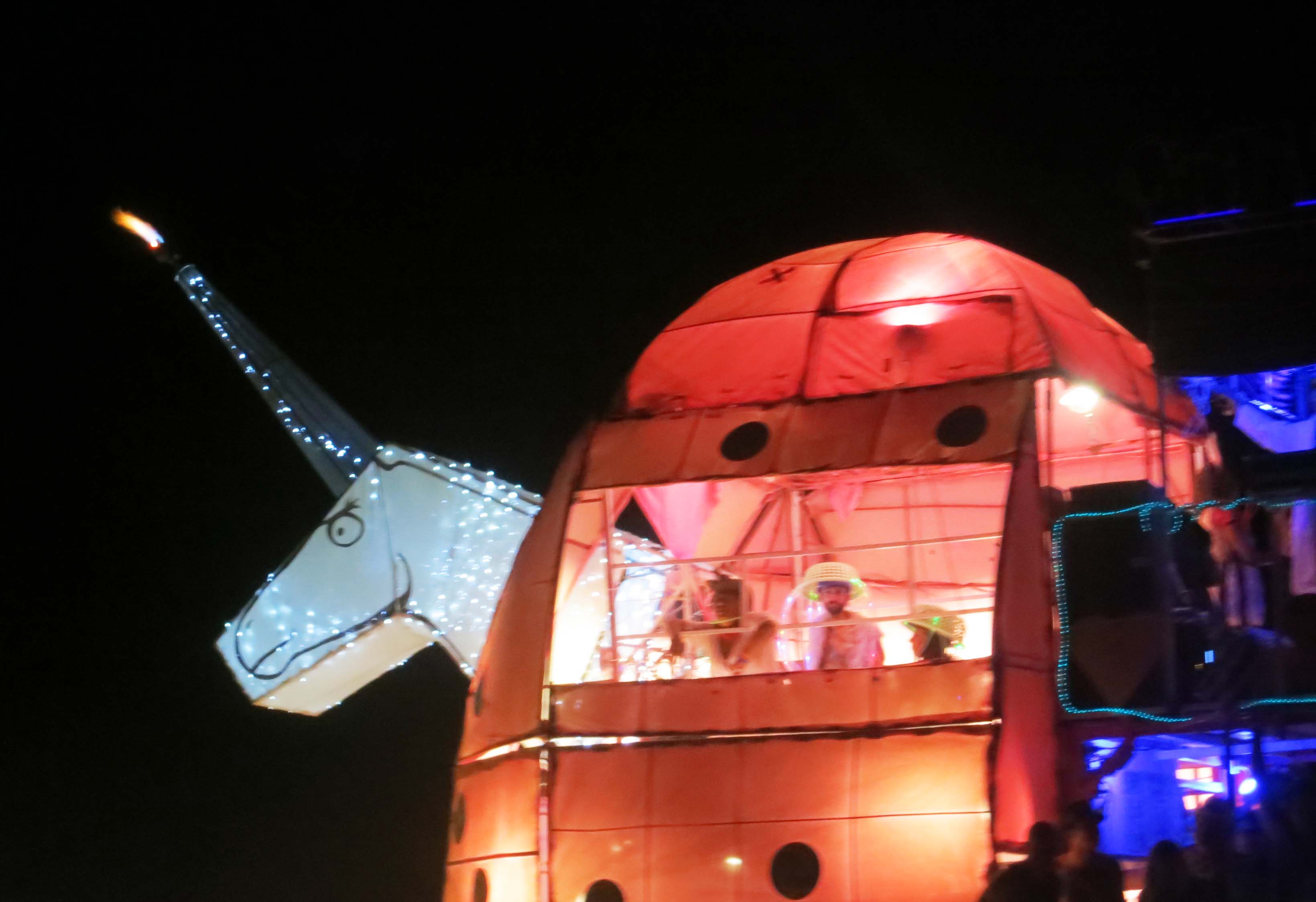
Unicorn mutant vehicle at night Burning Man 2013.

The unicorn lights up at night.

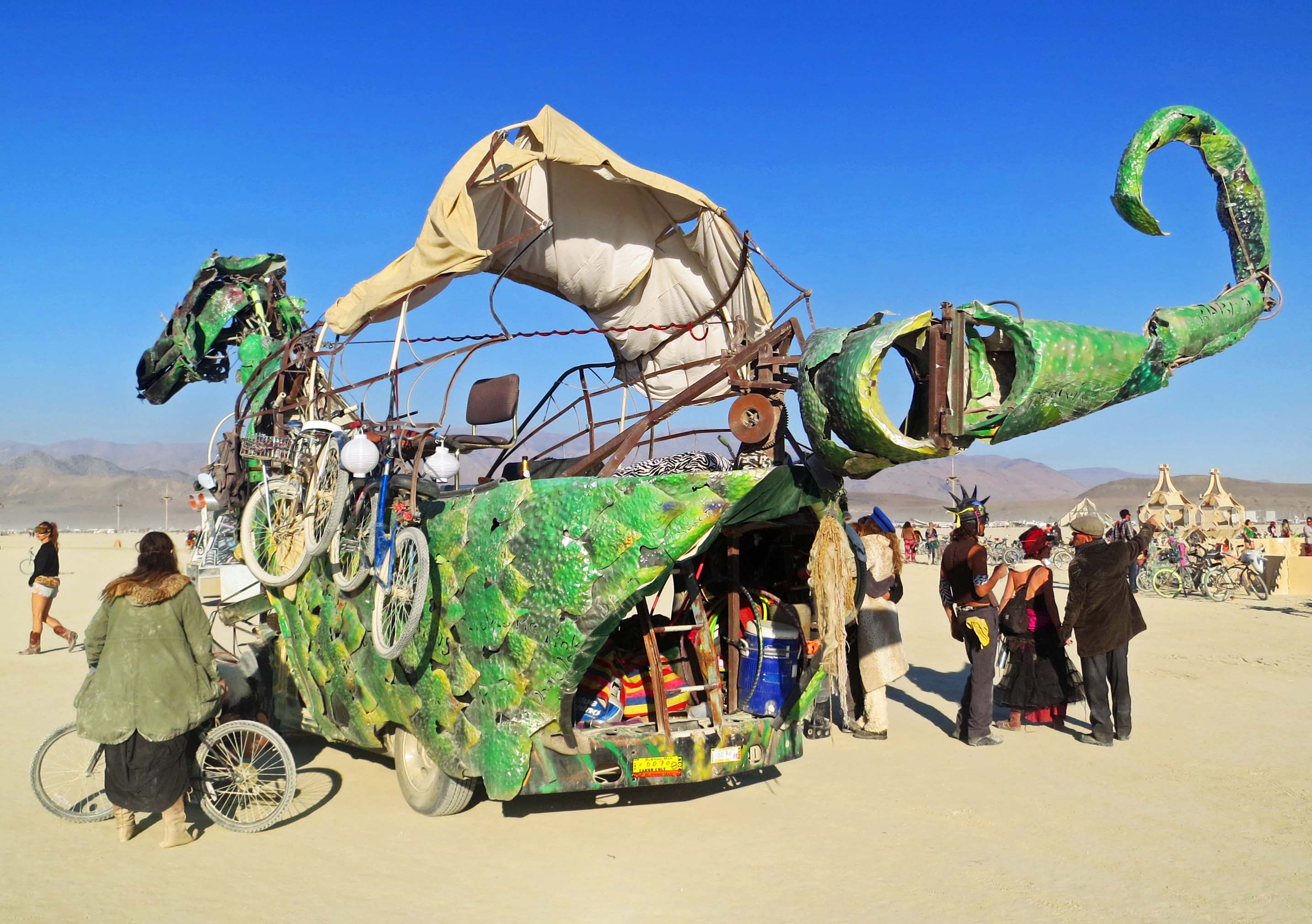
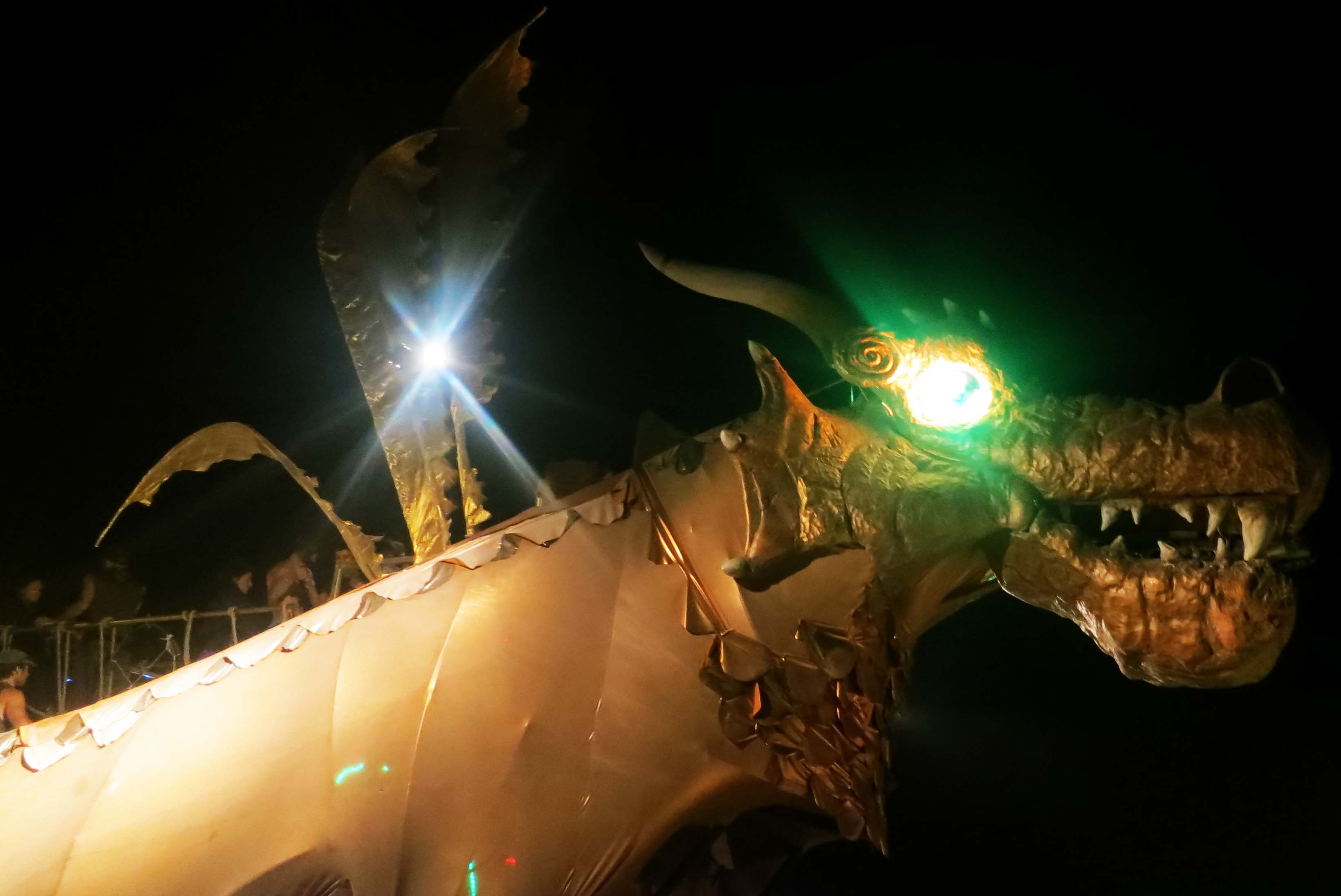
Green dragon mutant vehicle at Burning Man 2013.

Dragons are as common at Burning Man as fleas on a dog. This one could wag his tail.

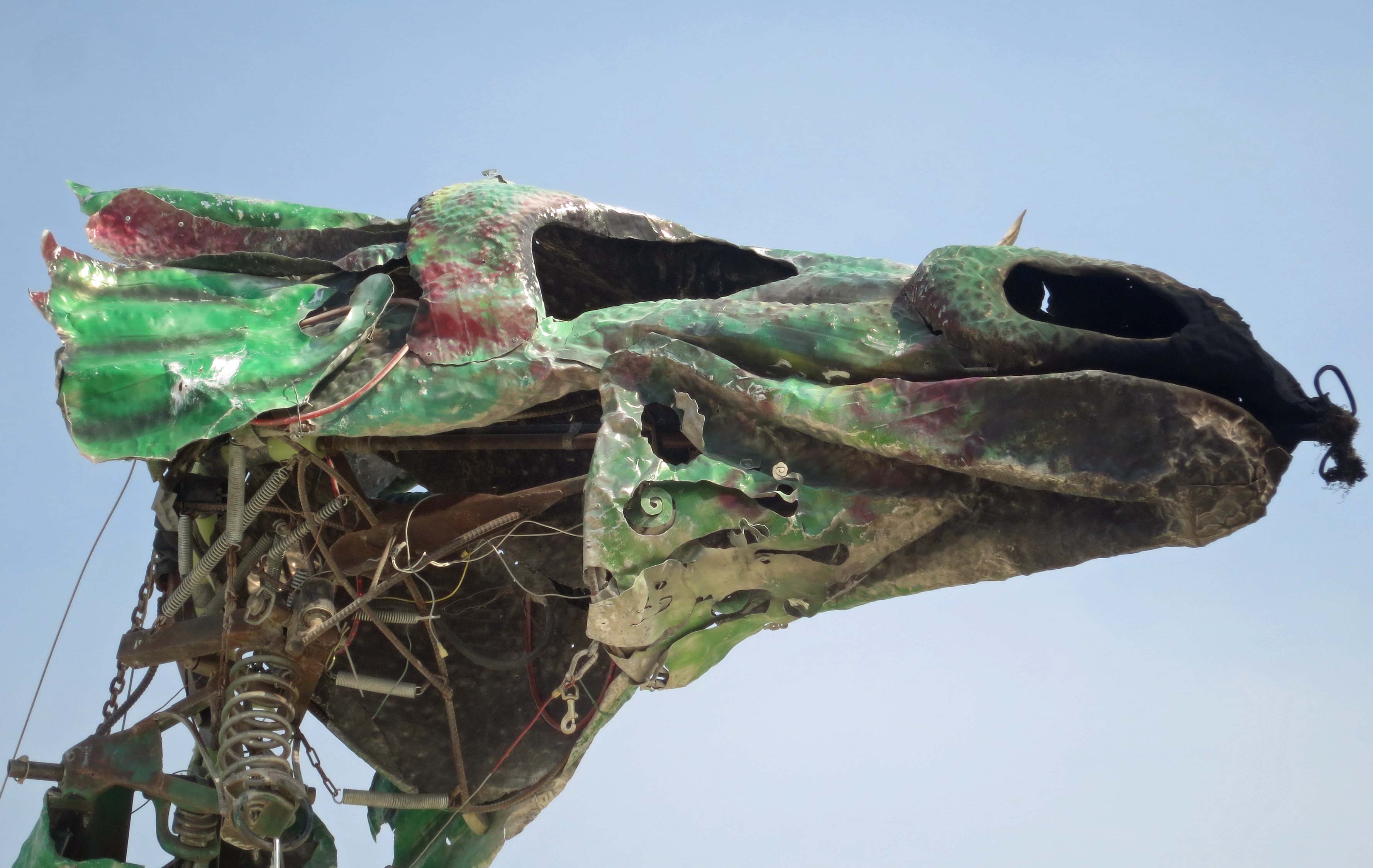
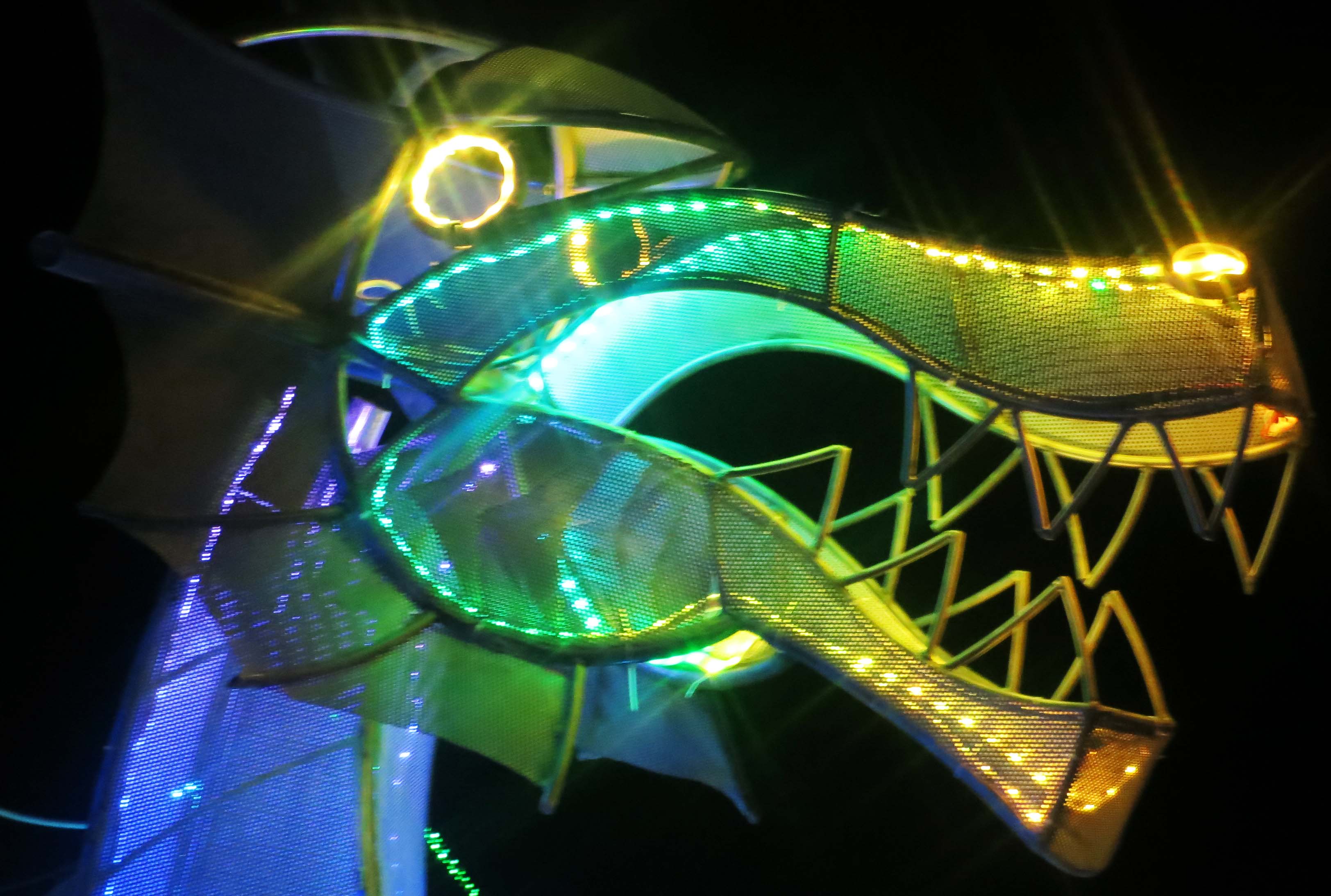
Green dragon at Black Rock City 2013.

A close up of the dragon’s head. His black snout suggests he is a fire-breathing dragon.

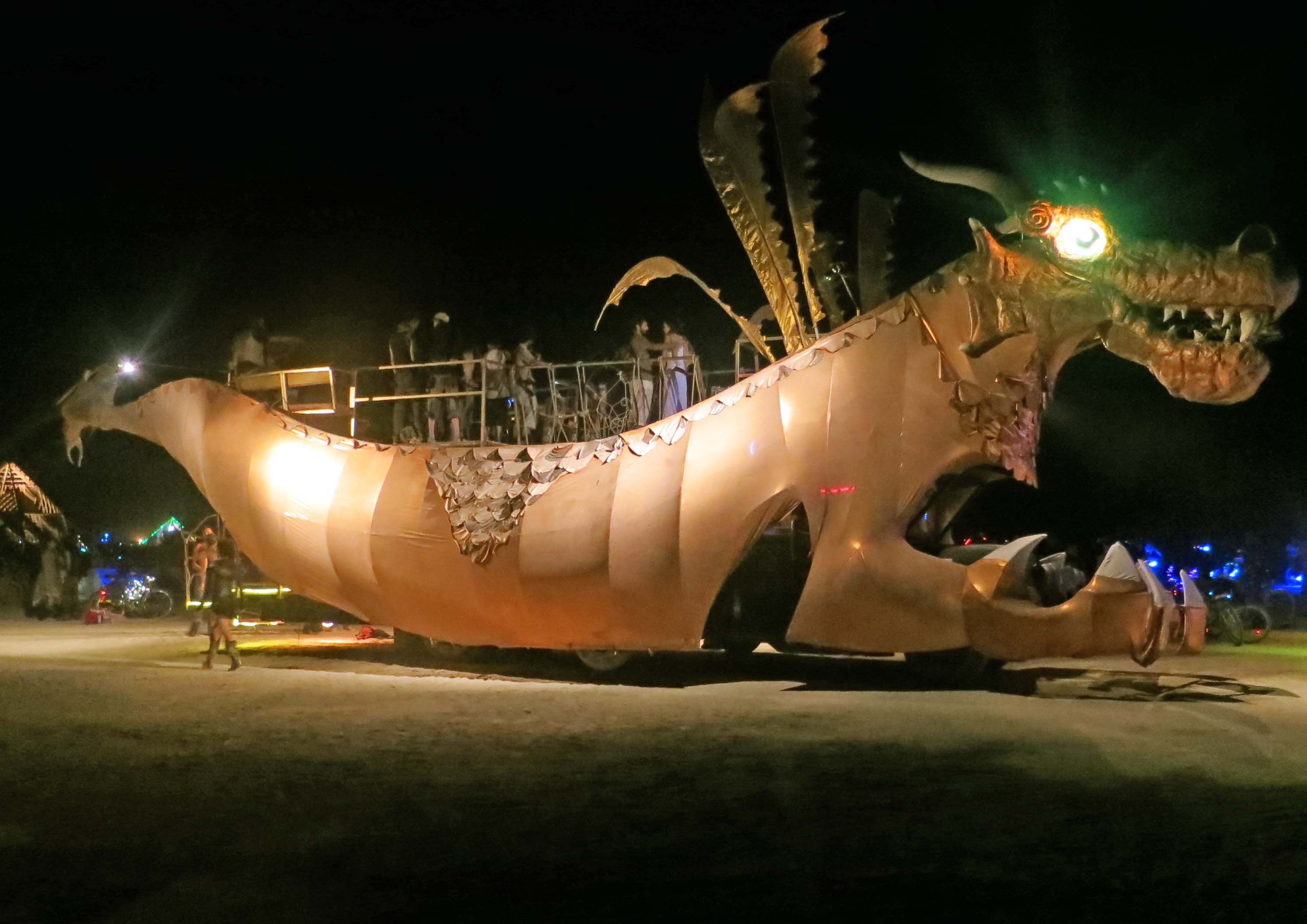
Black Rock City dragon 2013.

This dragon at Burning Man 2013 received my nomination for the dragon I would least like to meet in a dark woods by myself. Note the claws and teeth.

Dragon teeth at Burning Man 2013.

Close up featuring big teeth!

Burning Man 2013 dragon

A friendlier dragon?

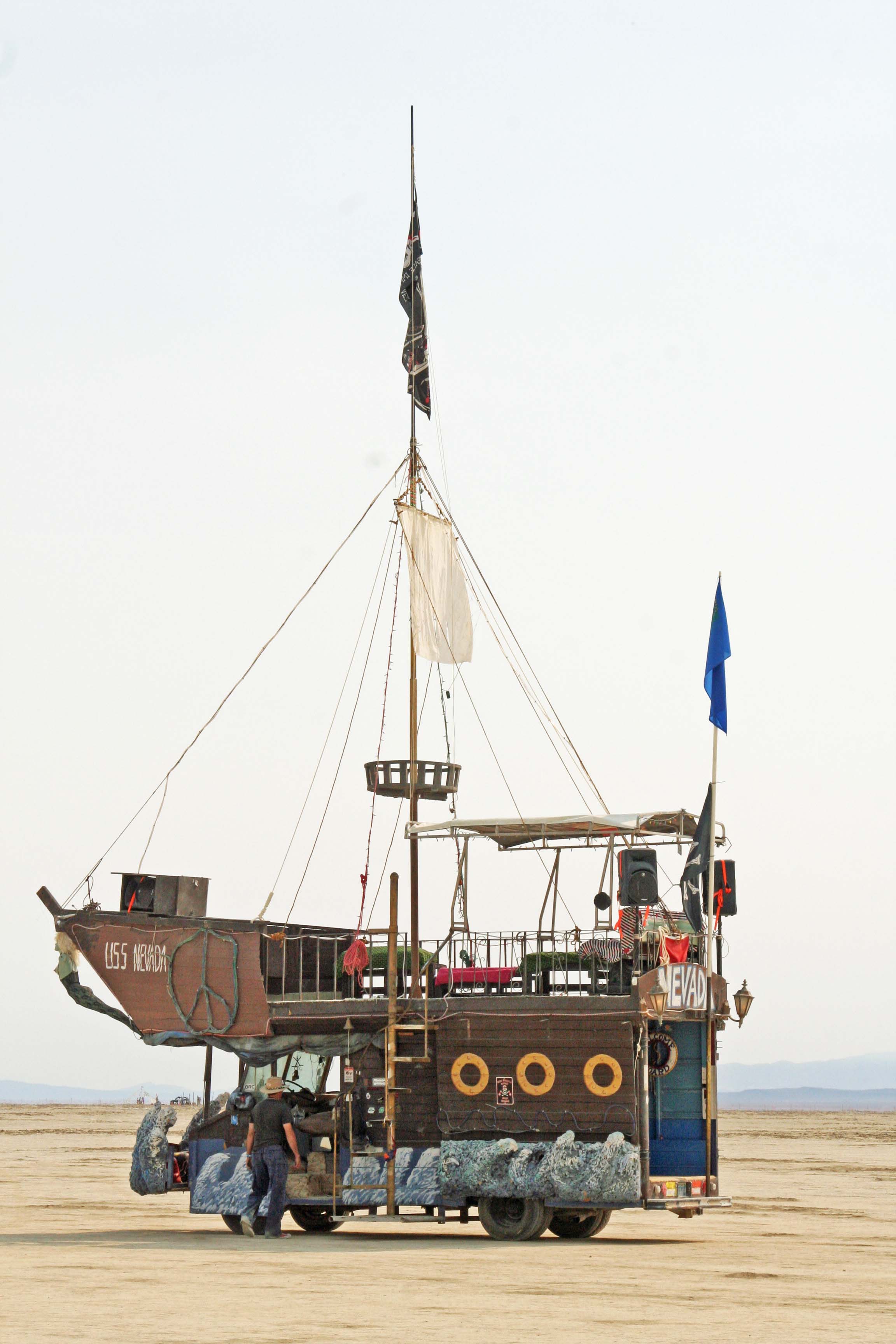
Boats are among the more common mutant vehicles at Burning Man. Here we have the USS Nevada. (Photo by Peggy Mekemson.)

Boats are among the more common mutant vehicles at Burning Man. Here we have the USS Nevada. (Photo by Peggy Mekemson.)

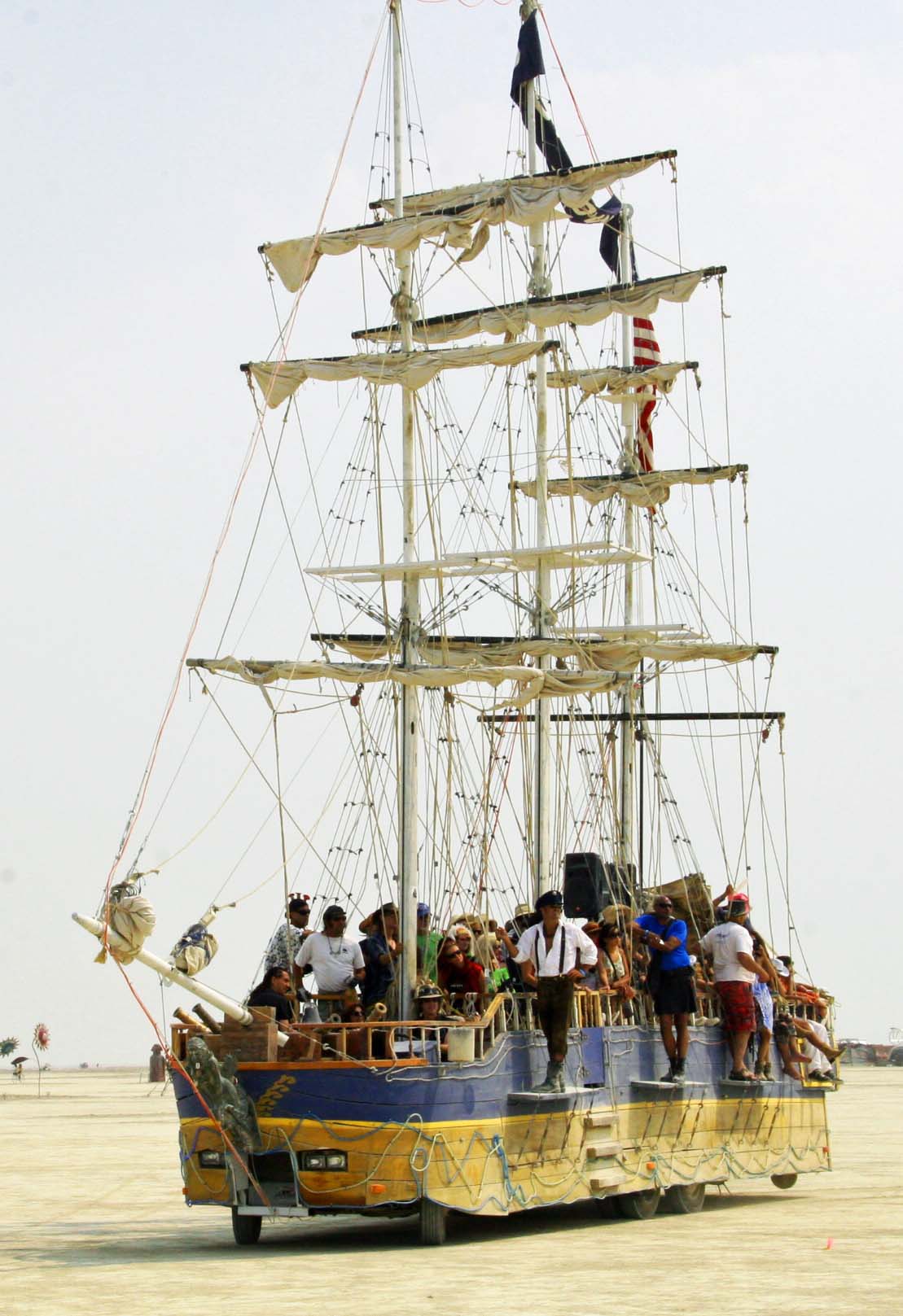
Detailed sail rigging on a Burning Man 2013 mutant vehicle.

Check out the detailed rigging on this ship.

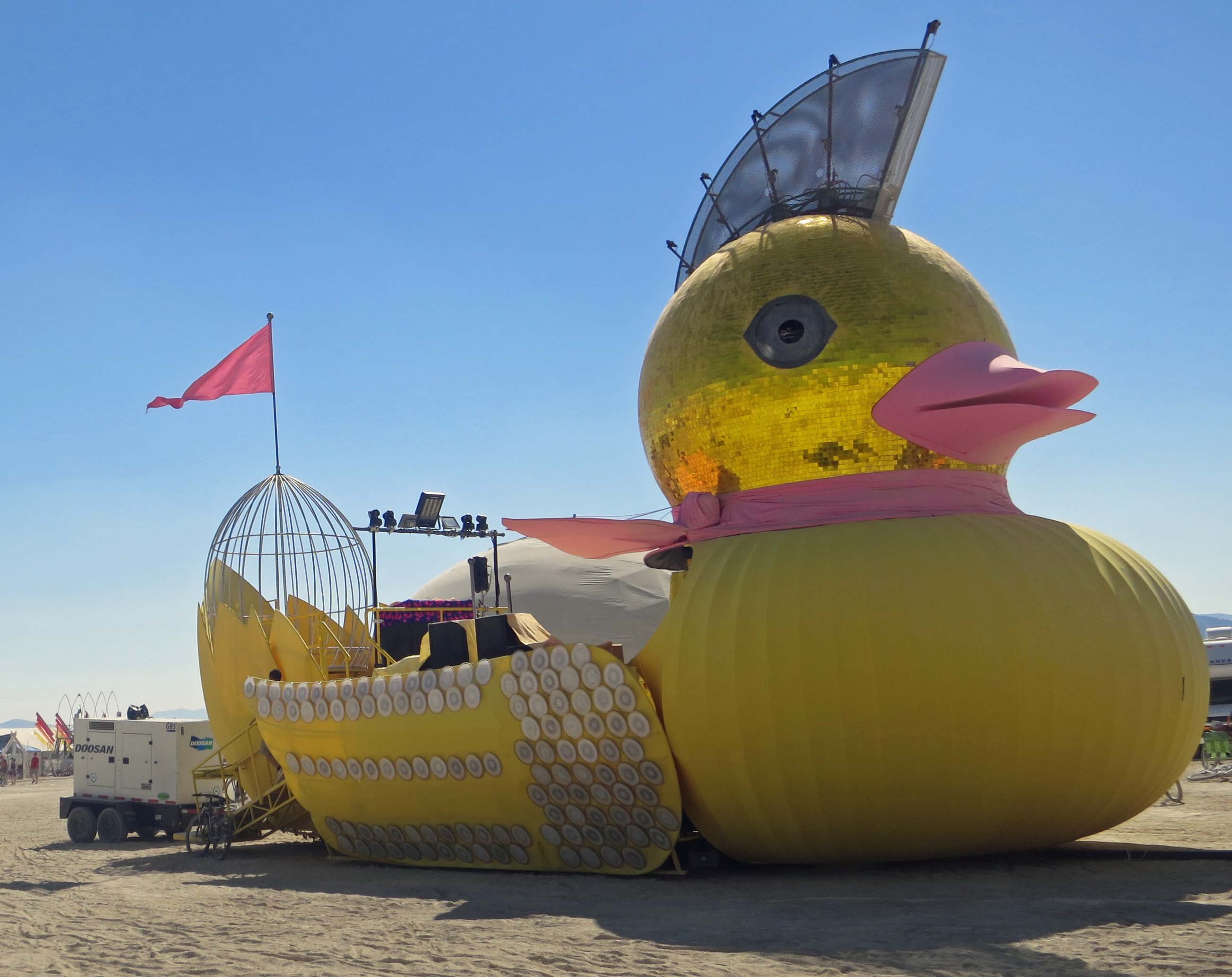
Big yellow baby duck mutant vehicle at Burning Man 2013.

This “rubber ducky” was a giant.

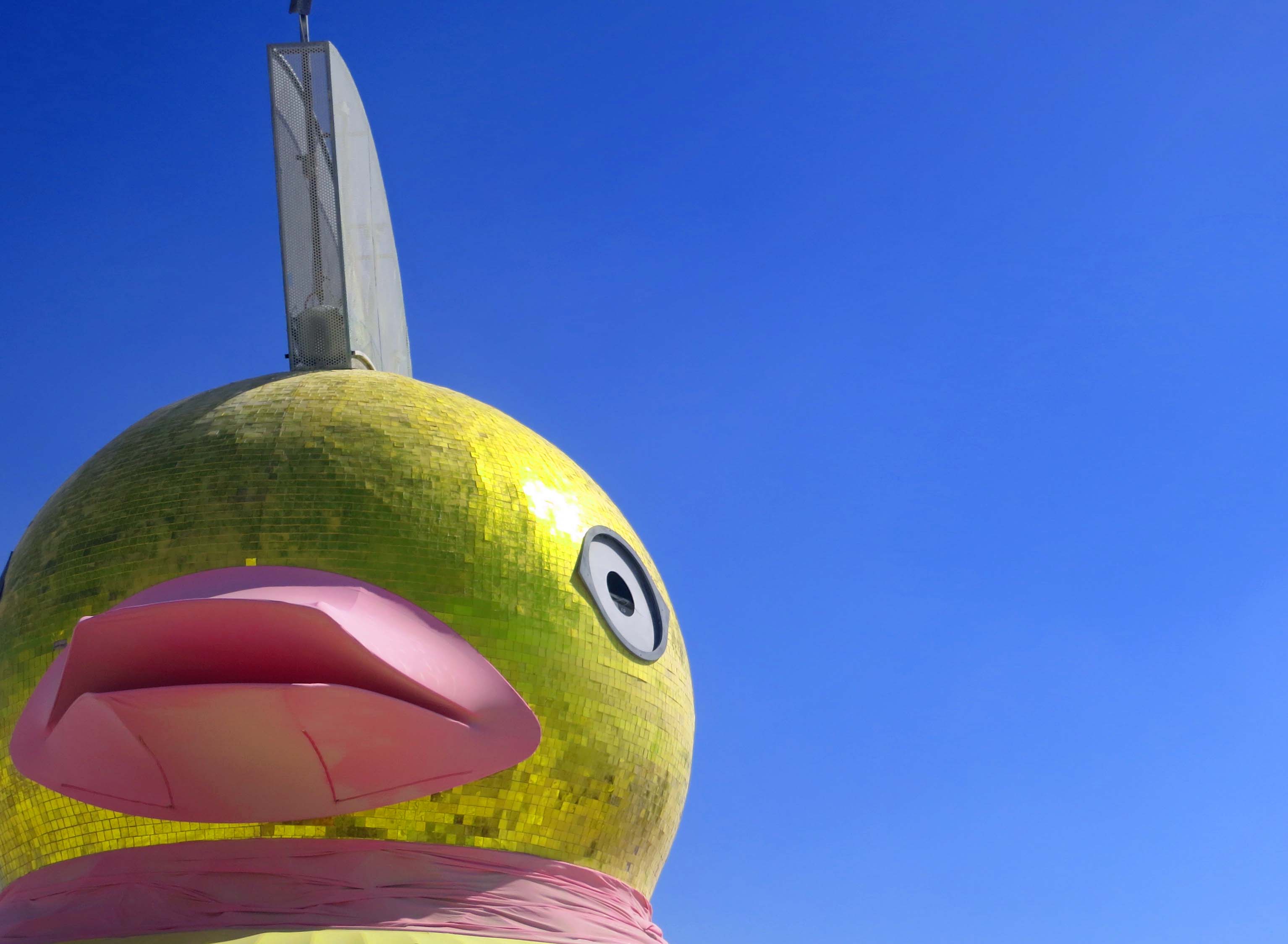
Baby duck mutant vehicle at Black Rock City 2013.

Possibly a creature of nightmares.

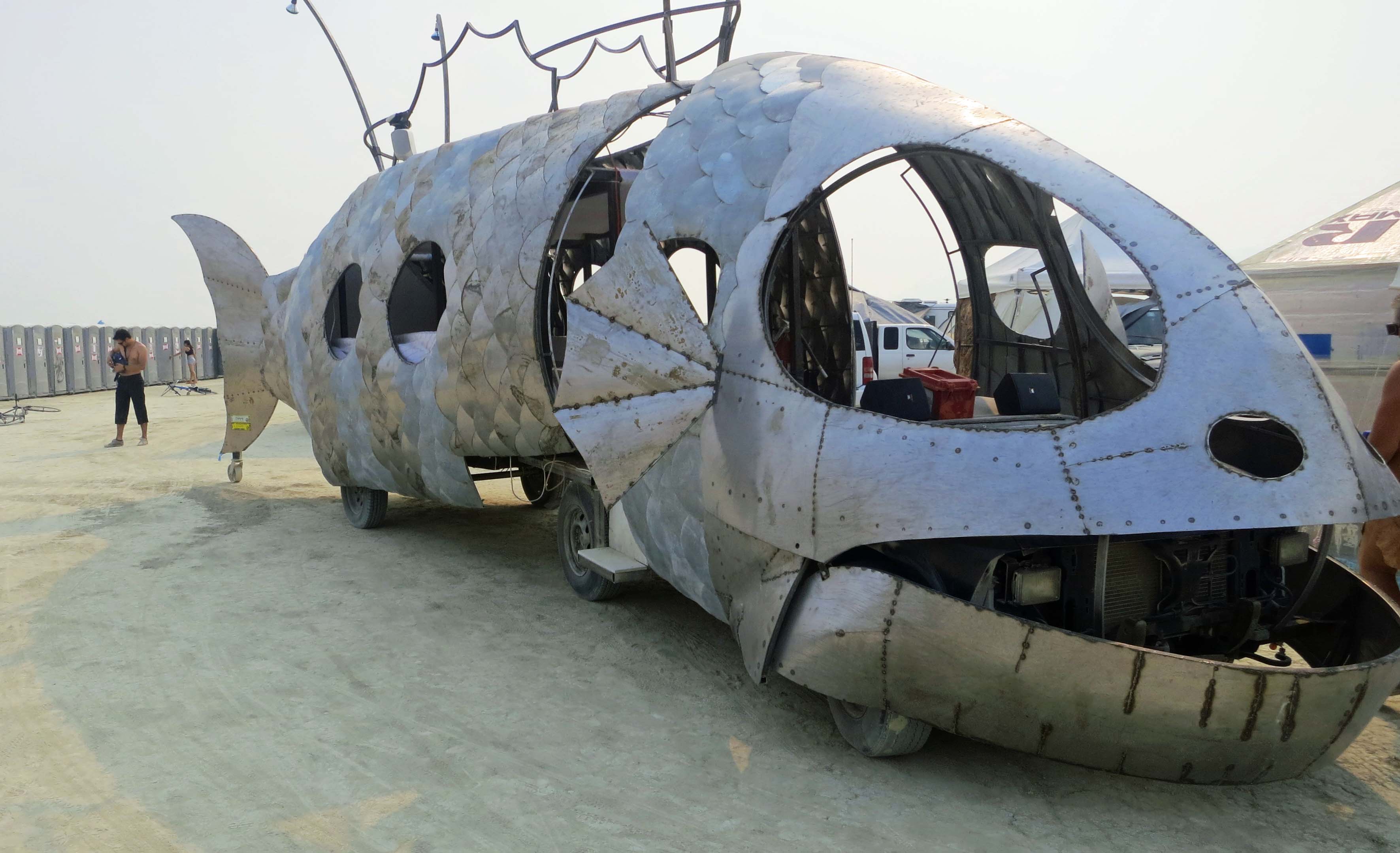
Large fish mutant vehicle at Burning Man 2013.

A large fish lived not far from our camp, next to the infinite line of port-a-pots.

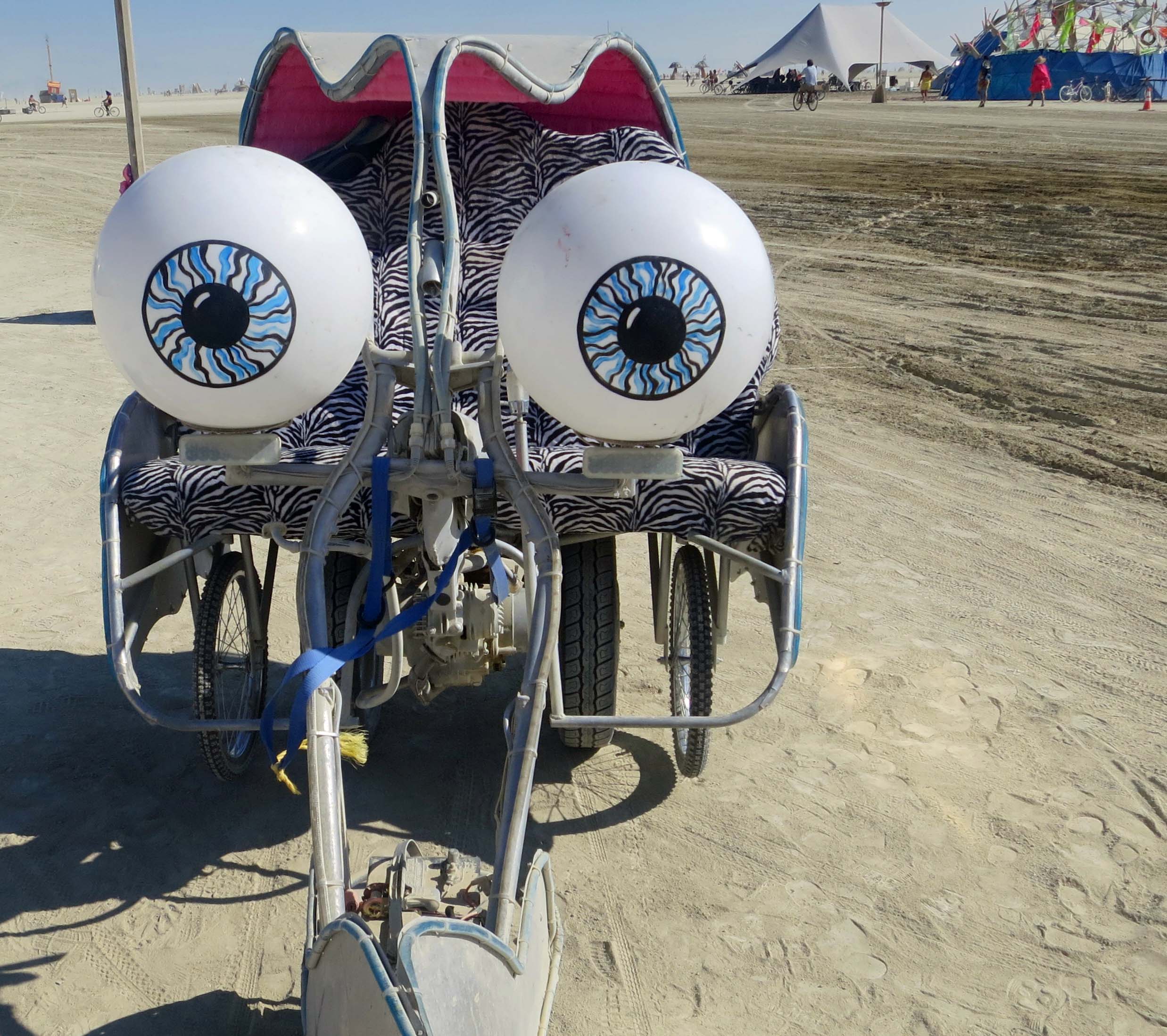
Mutant vehicle with huge eyes at Burning Man 13.

I found this blue-eyed mutant vehicle charming.

This returnee wart hog was also a charmer. (Photo by Tome Lovering.)

This returnee wart hog was also a charmer. (Photo by Tom Lovering.)

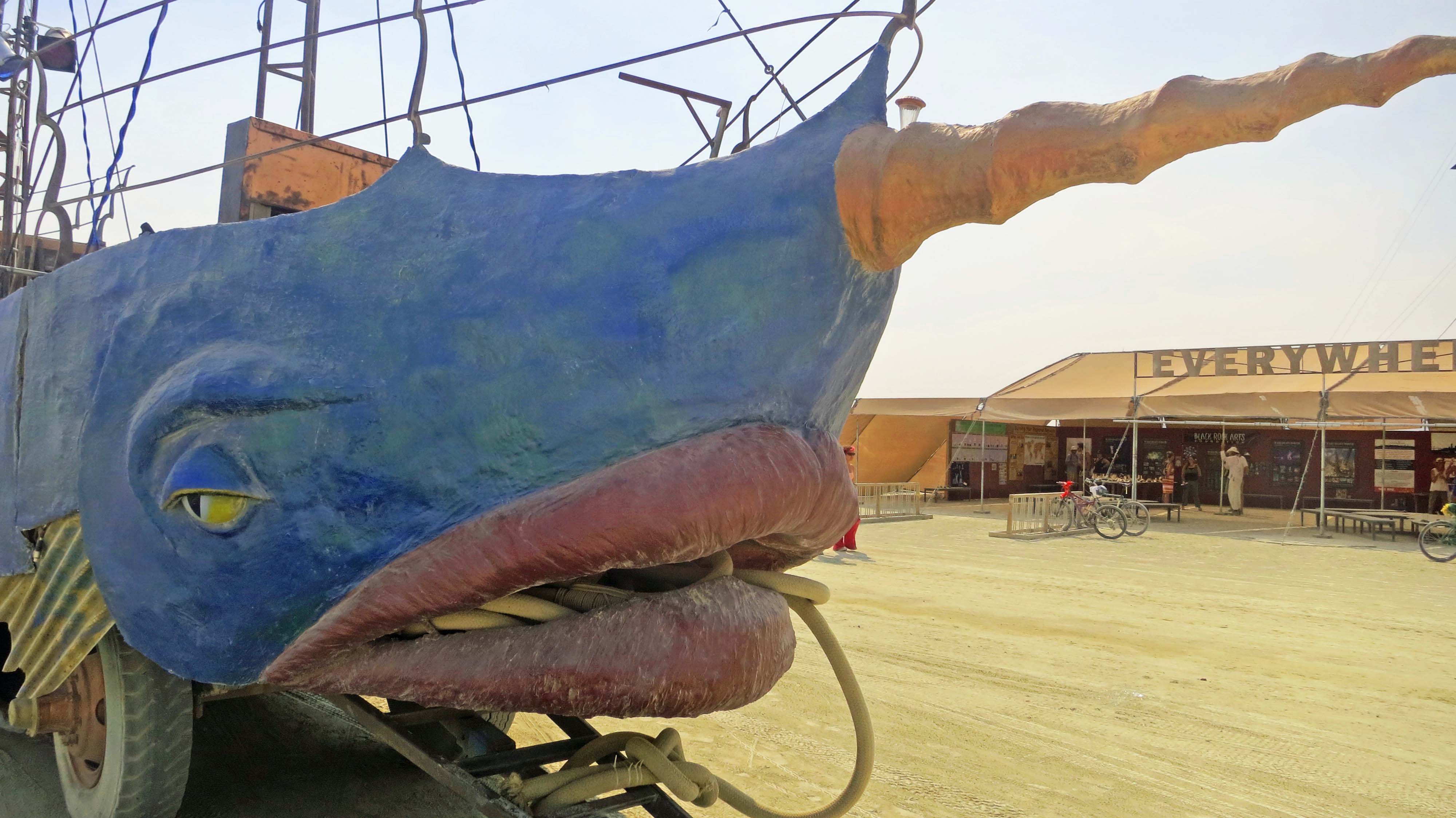
Narwhale at Burning Man 2013.

This narwhal seemed, um, more pensive than hungry.

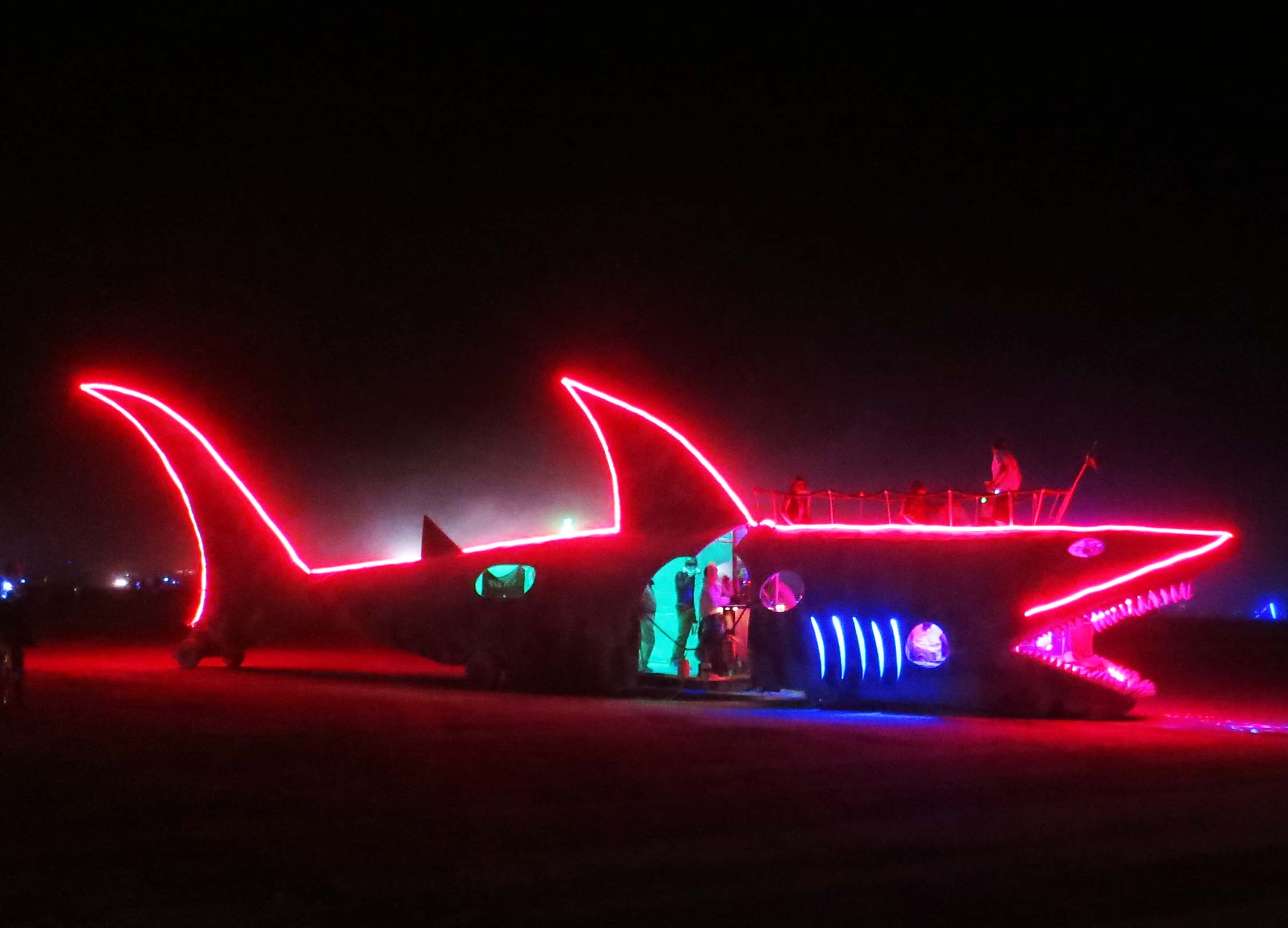
Mutant vehicle shark at Burning Man 2013.

Which wasn’t the case with this shark…

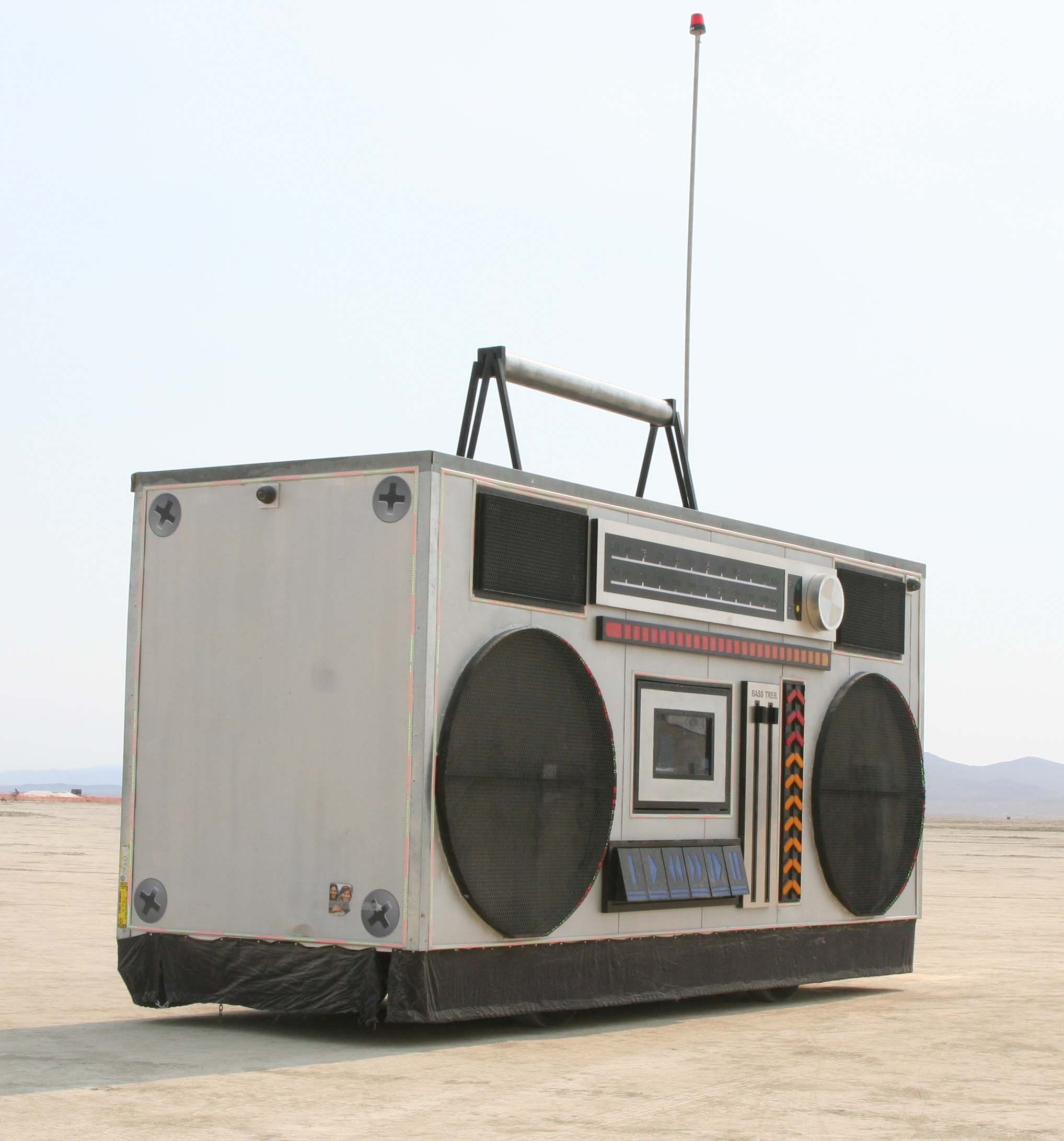
Boom box mutant vehicle at Burning Man 2013.

Music anyone? Choices ranged from this truck-sized boom box…

Mutant vehicle with a city of large speakers at Burning Man 2013.

To this city of speakers on wheels.

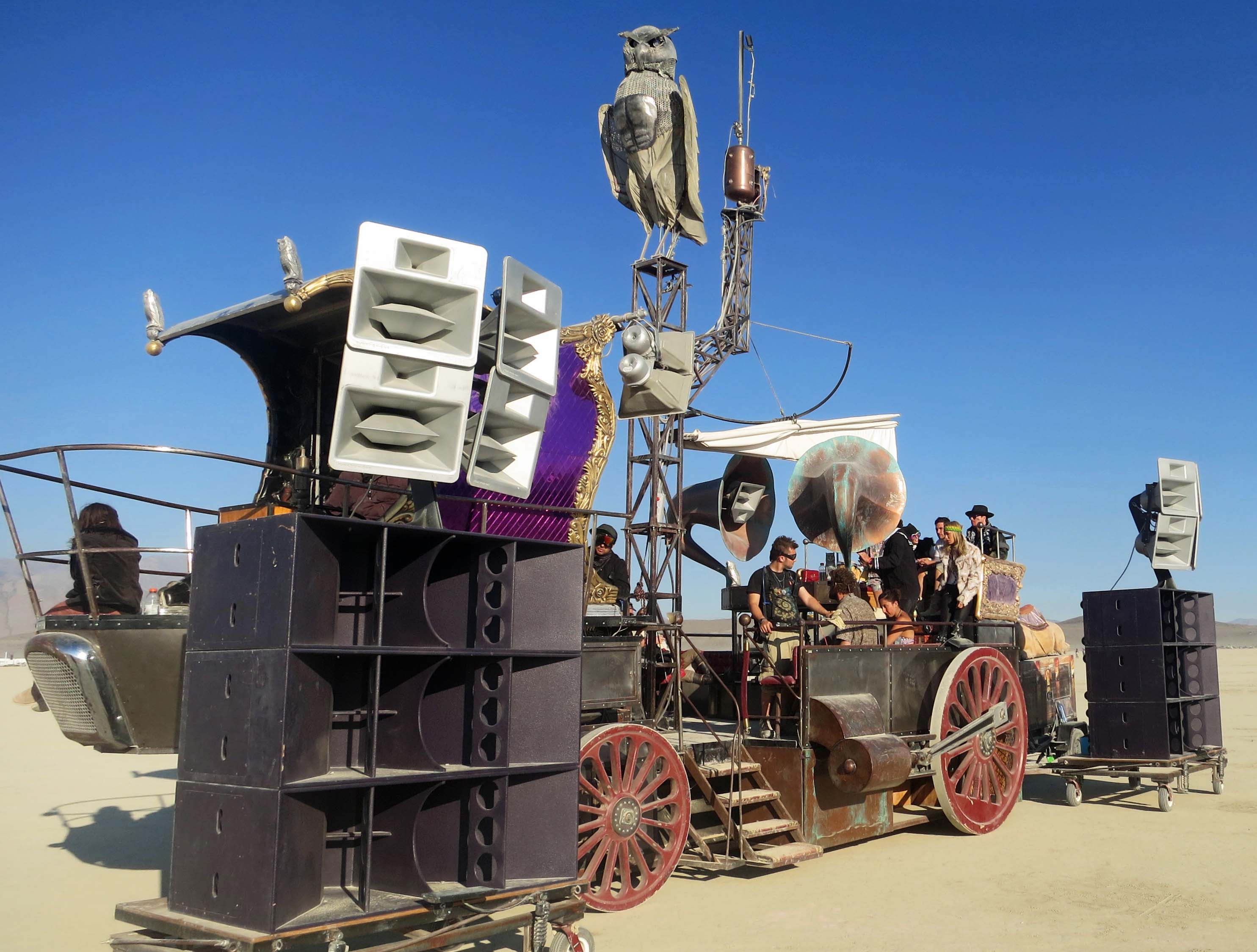
Steam punk vehicle at Burning Man 2013.

While I have photos of dozens of other mutant vehicles and am having to restrain myself from putting them all up, I’ll conclude with this Jules Verne-type steam punk vehicle.

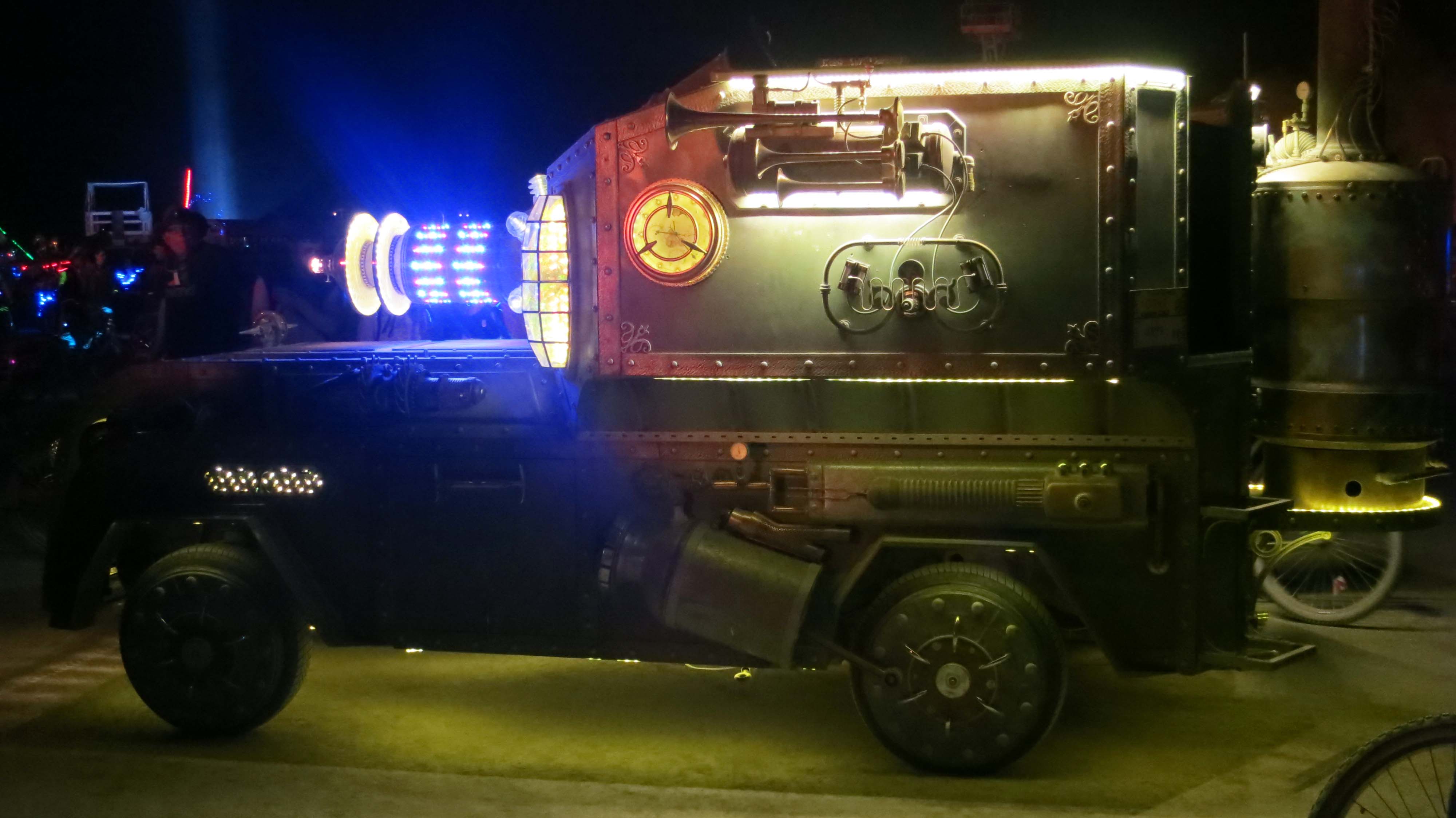
Steam punk mutant vehicle at Black Rock City 2013.

The details were incredible.

NEXT BLOG: Burning Man is about burning, right so its time to burn some things down.

The Temple of Whollyness: A Sacred Place… Burning Man 2013

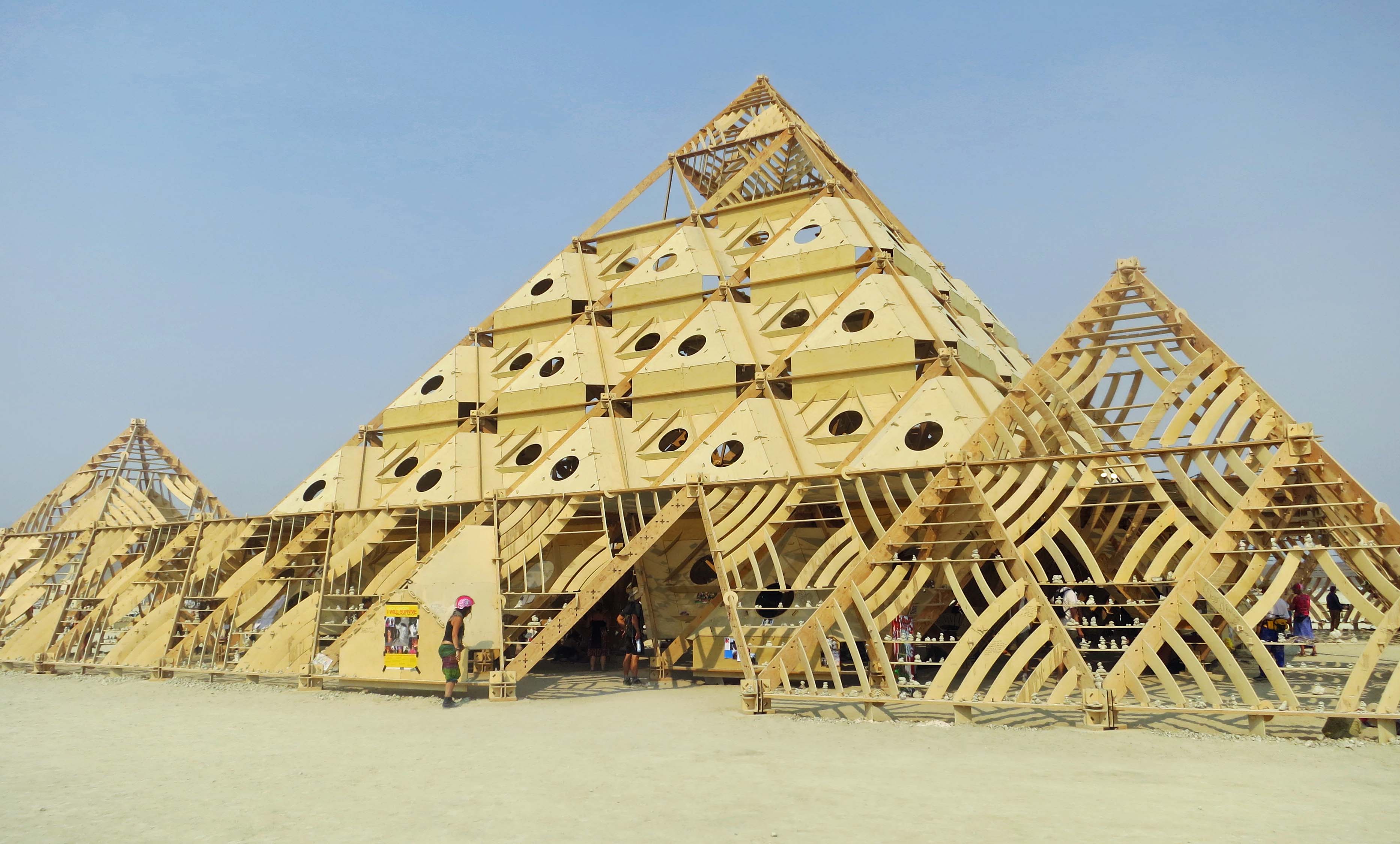
The Temple of Whollyness at Burning Man 2013.

The 2013 Temple at Burning Man was built in the shape of a pyramid and made completely of interlocking wood pieces without the use of nails, glue, or metal fasteners. (Photo by Peggy Mekemson.)

We were sitting in camp when the first police car went by on Sixth Street. We hardly looked up.  With six law enforcement agencies patrolling Burning Man, police cars are a common sight. But then a second and a third car followed– and they just kept coming. I stopped counting at 40. Something big was coming down.

They drove out to the Playa and surrounded the Temple while blasting their sirens. Rumors were rampant. Was it a major drug bust? Was a riot about to erupt?

The police got out of their cars, formed two solid lines leading up to the entrance, and took off their hats. A woman, escorted by another person carrying a plaque, slowly made her way between the lines and into the temple. Her husband had recently passed away. He had been a BLM law enforcement officer who had spent several years helping patrol Burning Man.

The man had come to love the event and now he was to be honored at the Temple by his fellow law officers. Burners and lawmen alike stood silently in respect as the eulogy was read and the plaque was placed on the stone altar. Spontaneous applause filled the Temple as the woman left.

An altar or cairn made of black, igneous basalt graced the center of the temple.

An altar or cairn made of black, igneous basalt graced the center of the temple.

Later, Peggy and I were sitting in the Center Camp Café when an older man sat down next to us and begin sobbing. I was about to ask if we could help when another person leaned over to me and said, “He’s been out to the Temple saying goodbye to his wife.”

The Temple is truly a unique, and I would say, sacred place. Thousands of Burners leave messages of love and grief, honoring friends and saying goodbye to those who have passed on. On Sunday, the Temple is burned and the messages are sent skyward in a ceremony of letting go that dates back to the very beginnings of humankind.

Each year’s Temple is different. The 2013 structure, designed and built by Gregg Fleishman of Culver City, California, consisted of a central pyramid and four smaller pyramids. Named “The Temple of Whollyness,” the sanctuary was constructed out of interlocking wood pieces without the use of nails, glue or metal fasteners.

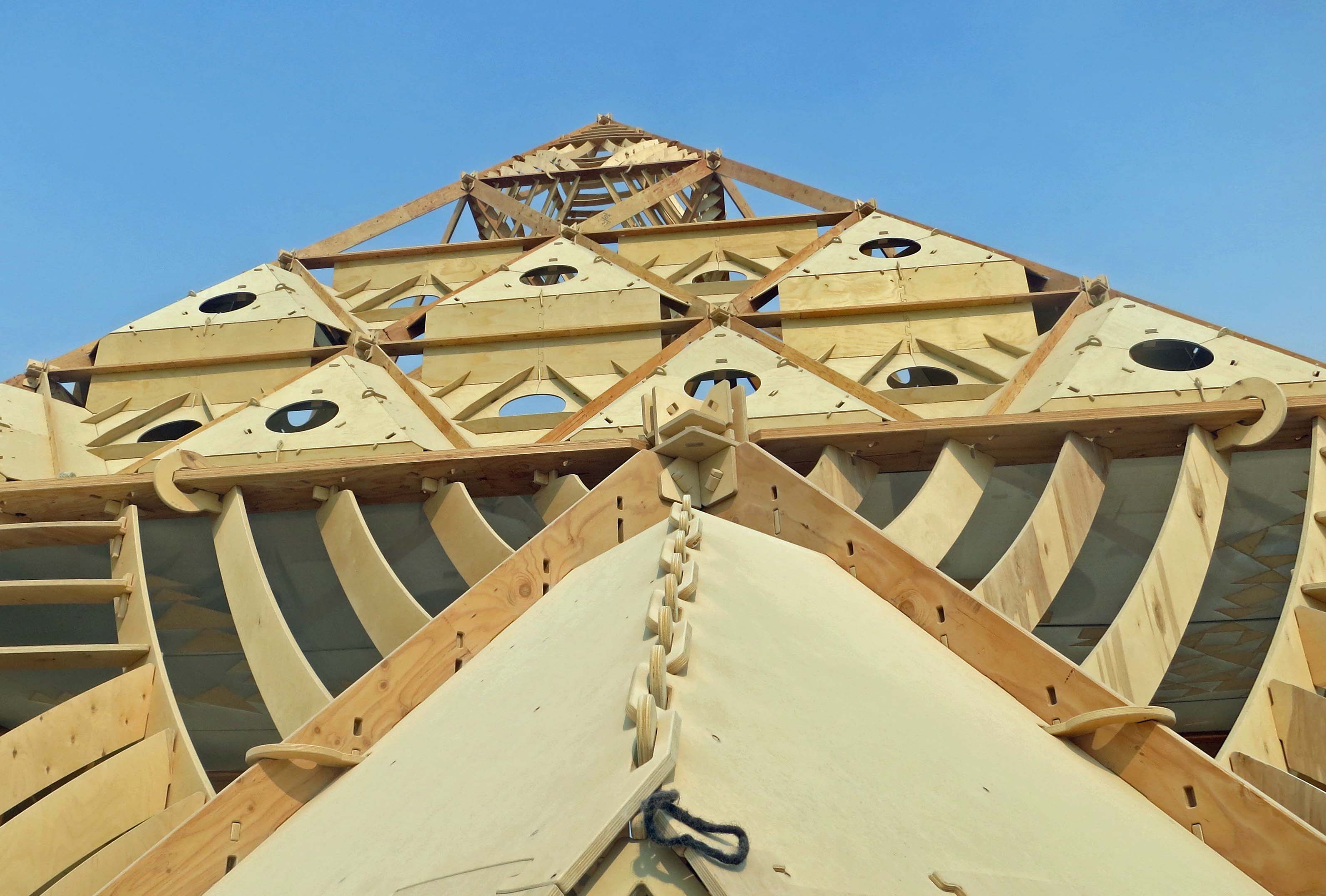
The Temple of Whollyness by Greg Fleishman.

This photo emphasizes Fleishman’s use of geometric forms in creating the Temple.

2013 Temple at Burning Man

A close up of the Temple. Note the interlocking pieces.

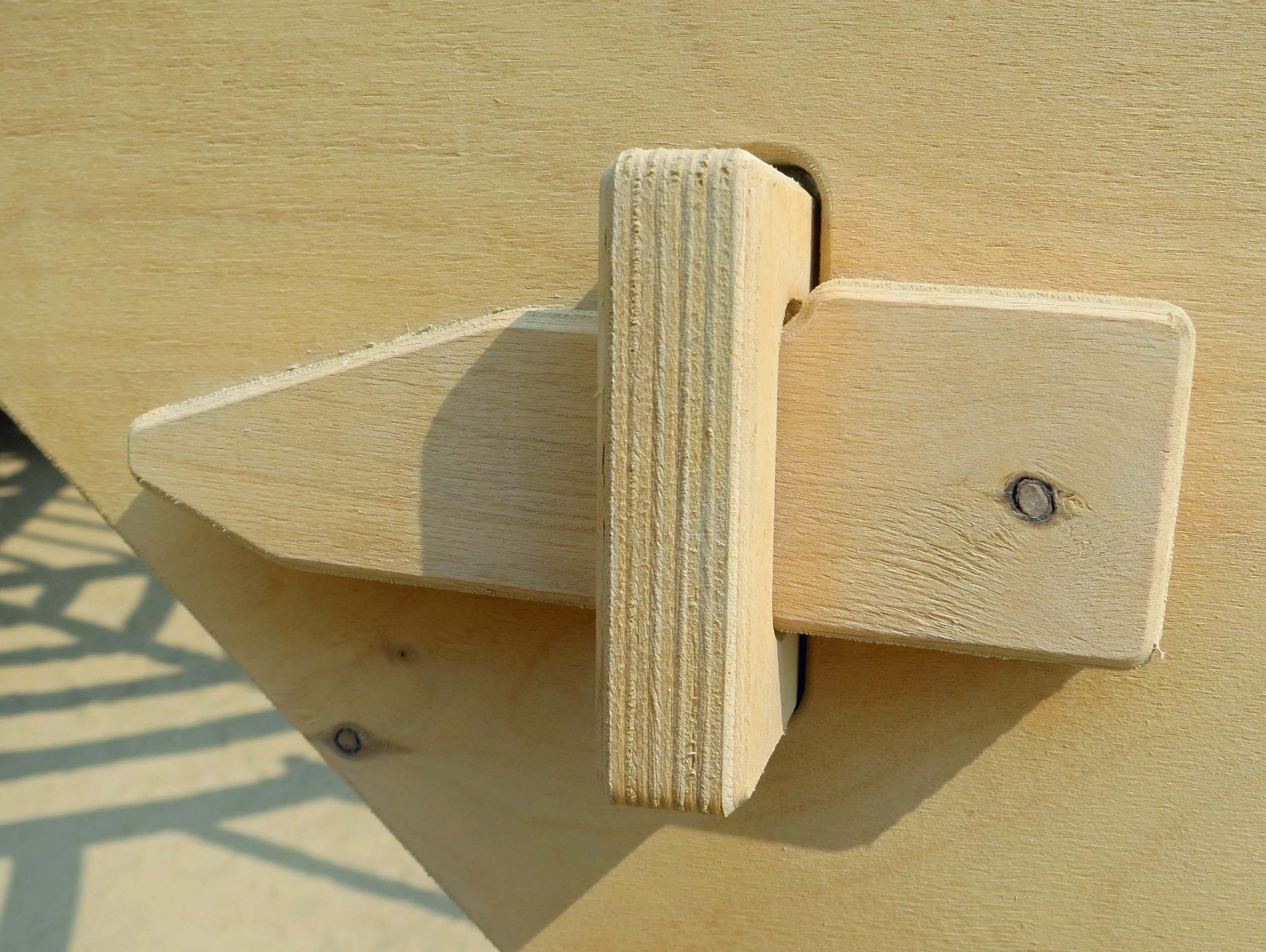
wood fastener at Burning Man's 2013 Temple.

Cairns on the Temple of Burning Man 2013.

Small sets of stacked rocks soon filled all of the Temple’s flat spaces matching the large cairn inside. Cairns, BTW, are used in the wilderness to mark trails. They mean that you are on the right path. (Photo by Peggy Mekemson.)

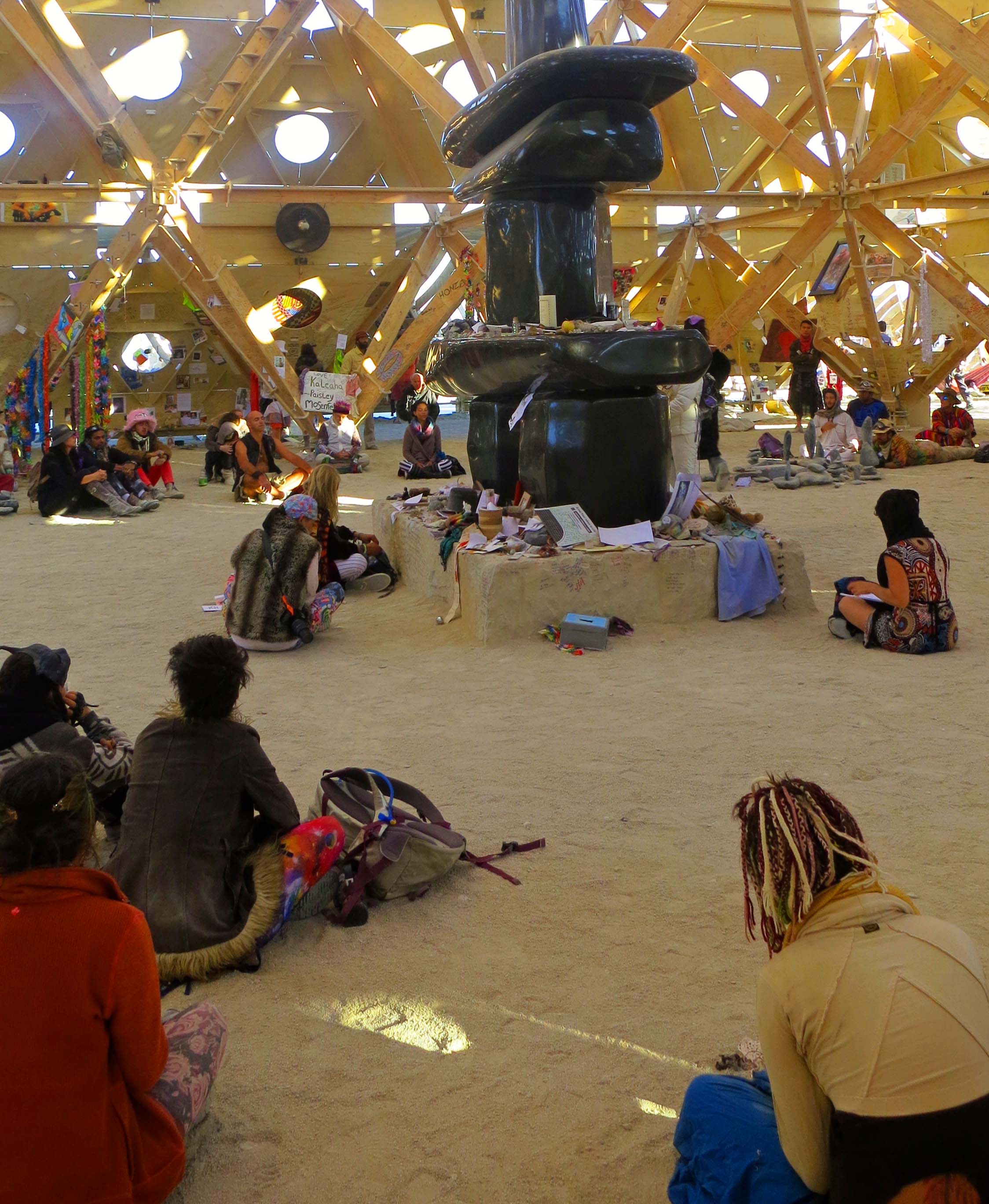
Black Rock City residents quietly meditate in the Temple of Whollyness at Burning Man 2013.

Inside the Temple people quietly meditate or write notes to be left behind. Gongs, located on the walls, provided soft, melodious tones. The altar is covered with tributes such as that left behind by the wife of the BLM officer.

Gongs at the Temple of Whollyness at Burning Man 2013 provided melodious sounds.

Tribute at Burning Man's 2013 Temple.

Tributes, such as this, filled every available wall space by the end of the week.

Tribute at 2013 Burning Man Temple.

A tribute to a fallen comrade.

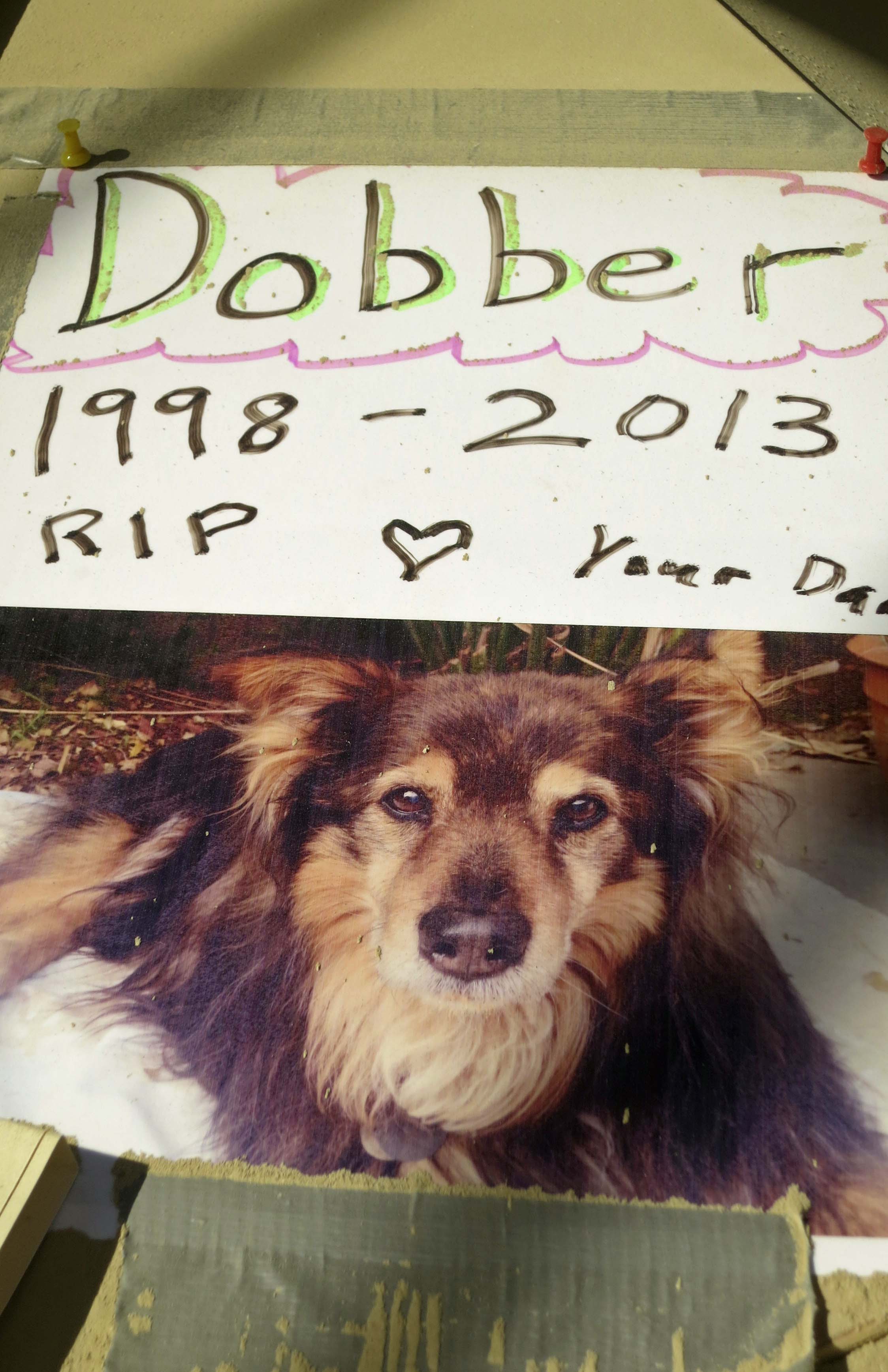
Tribute to pet at Burning Man Temple 2013.

Dozens of touching tributes are also left for family pets. This one to Dobber was signed, “Your Dad.”

I love this tribute left behind for Zippy.

I conclude with my favorite pet tribute. “Go get the ball, Zippy!” I suspect if there is a dog heaven, they have tennis balls there.

NEXT BLOG: It’s time to check out the strange world of Mutant Vehicles.