Dog Stew, Smelly Feet, a Rattle Snake and Hypothermia… The Story of How Bone Was Found: Part IV

Peggy and I are off journeying through Greece, Scotland and Ireland over the next several weeks, so there won’t be much time for blogging. Initially, I decided to put the blog on hold, but I’ve decided to republish some of my favorite posts that may eventually make it into UT-OH!.

Today’s post completes the tale of how Tom Lovering and I found a bone in the Sierra Nevada Montain Range and he/it began his transition to being Bone.

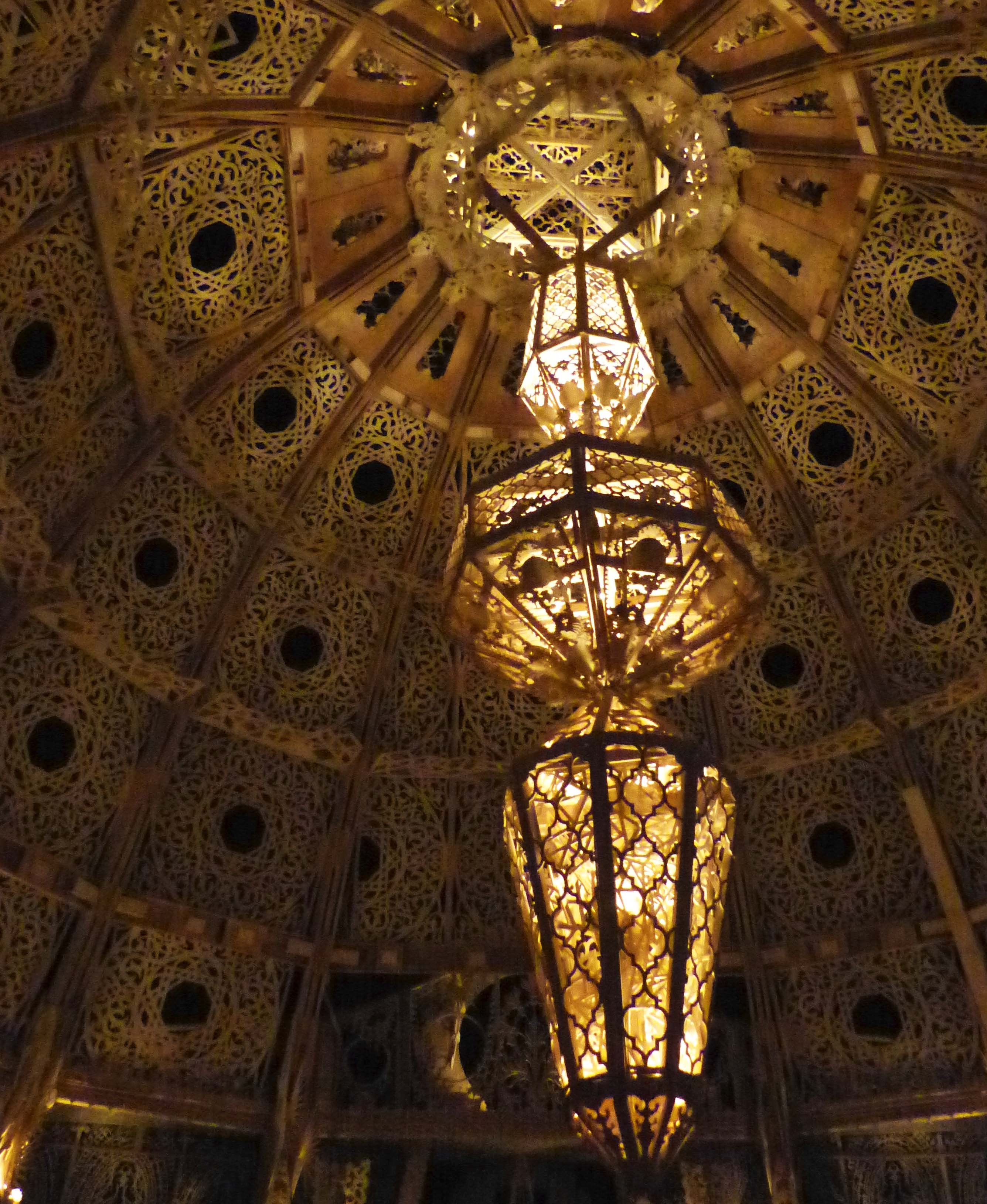
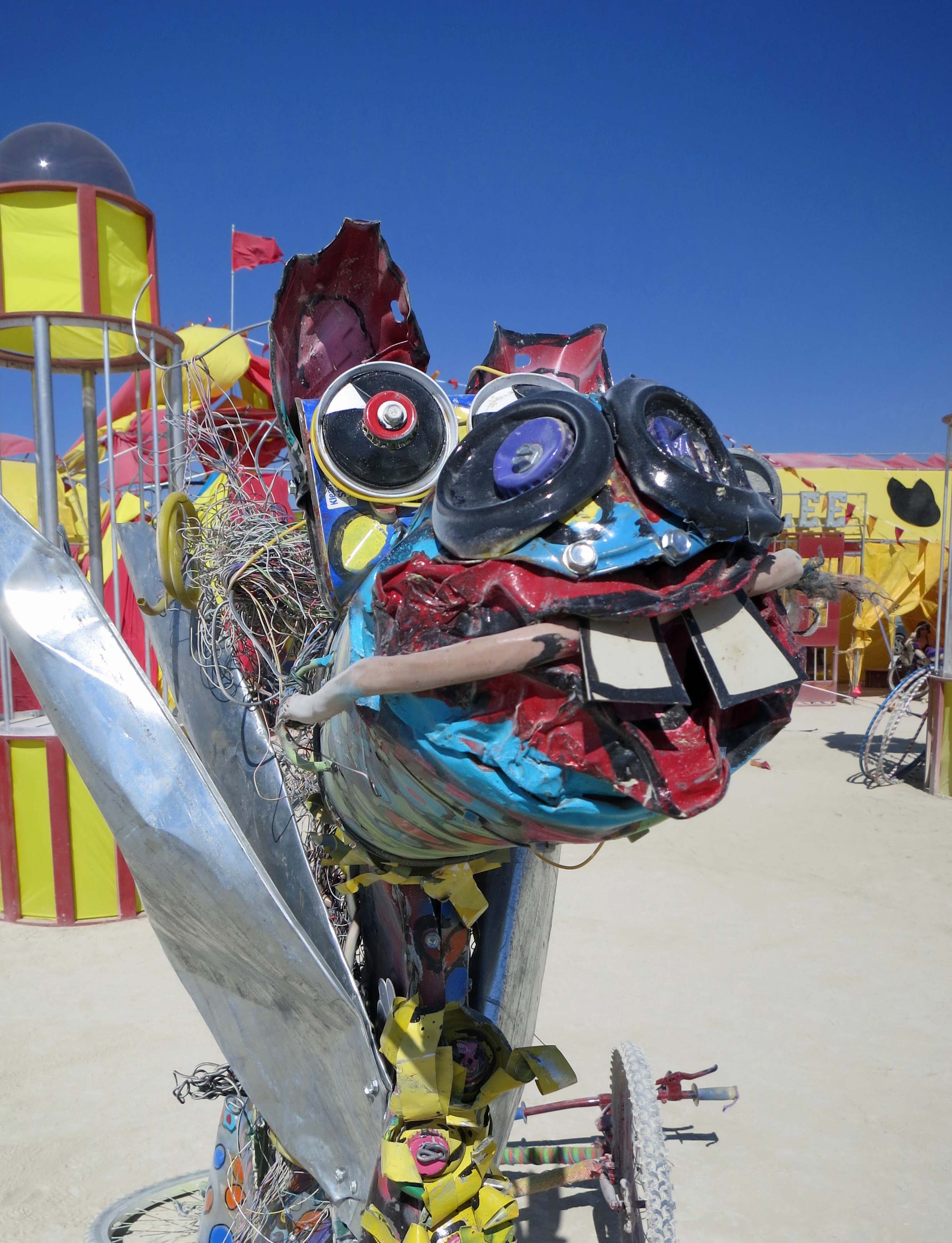
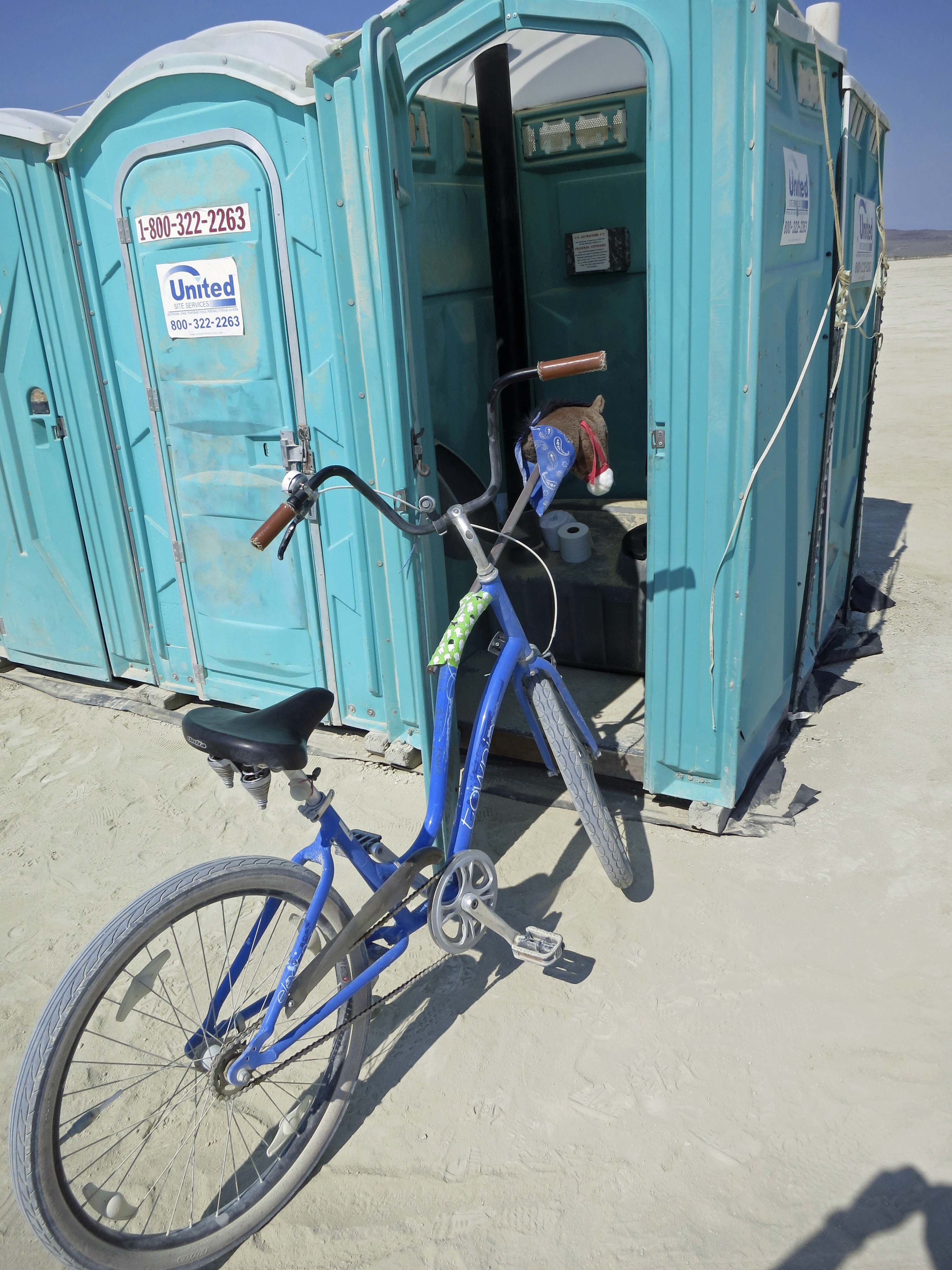
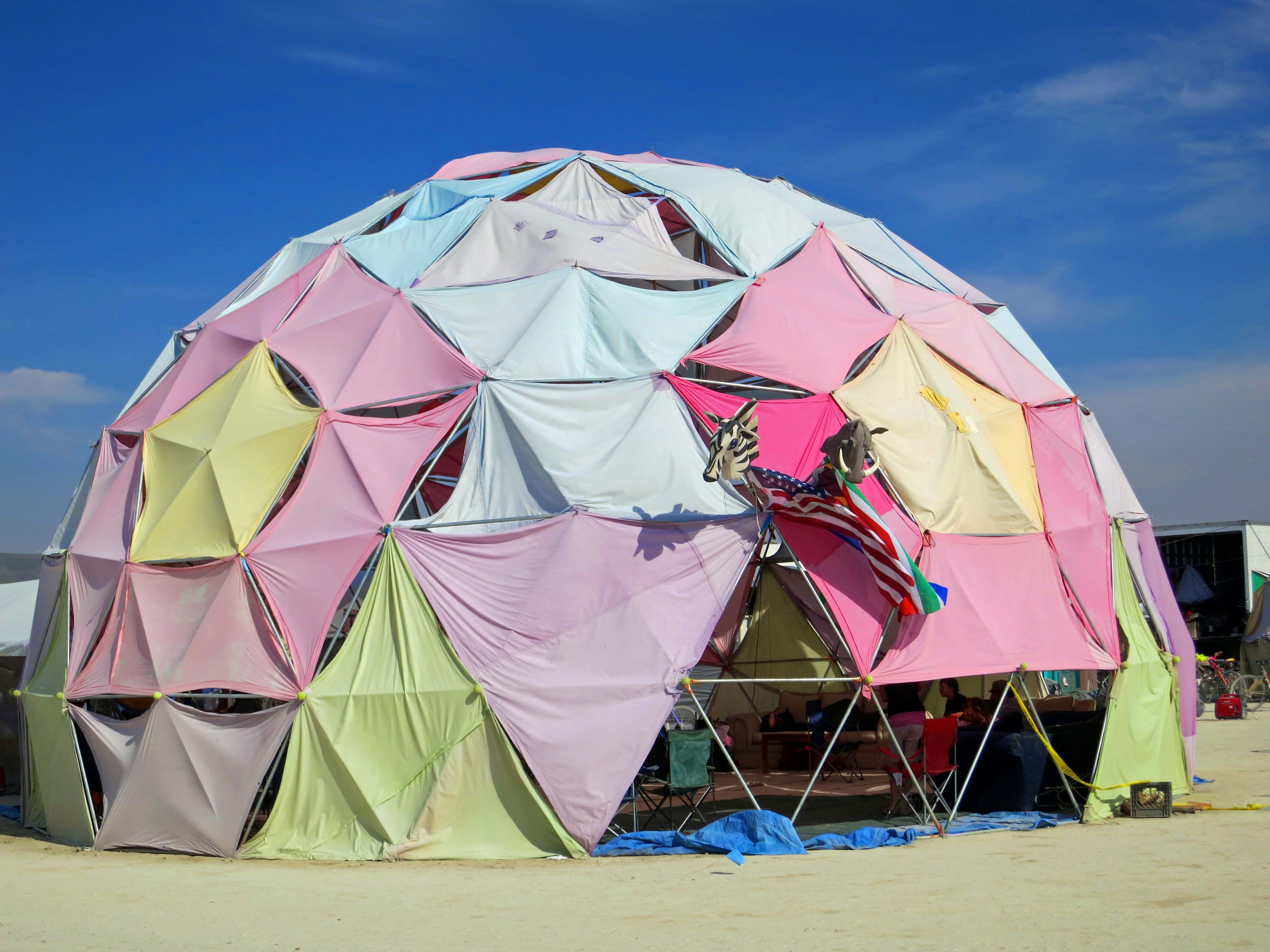
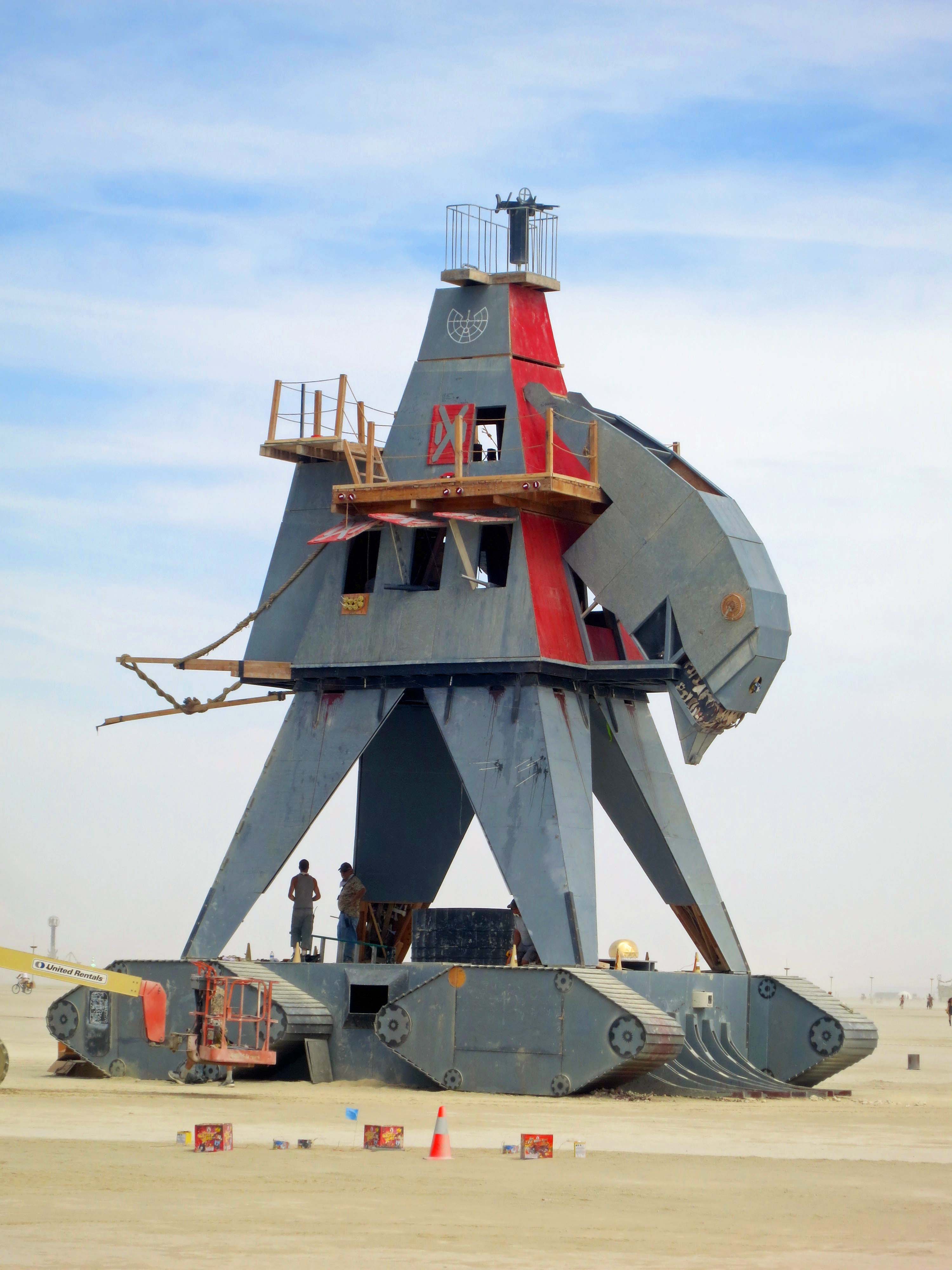
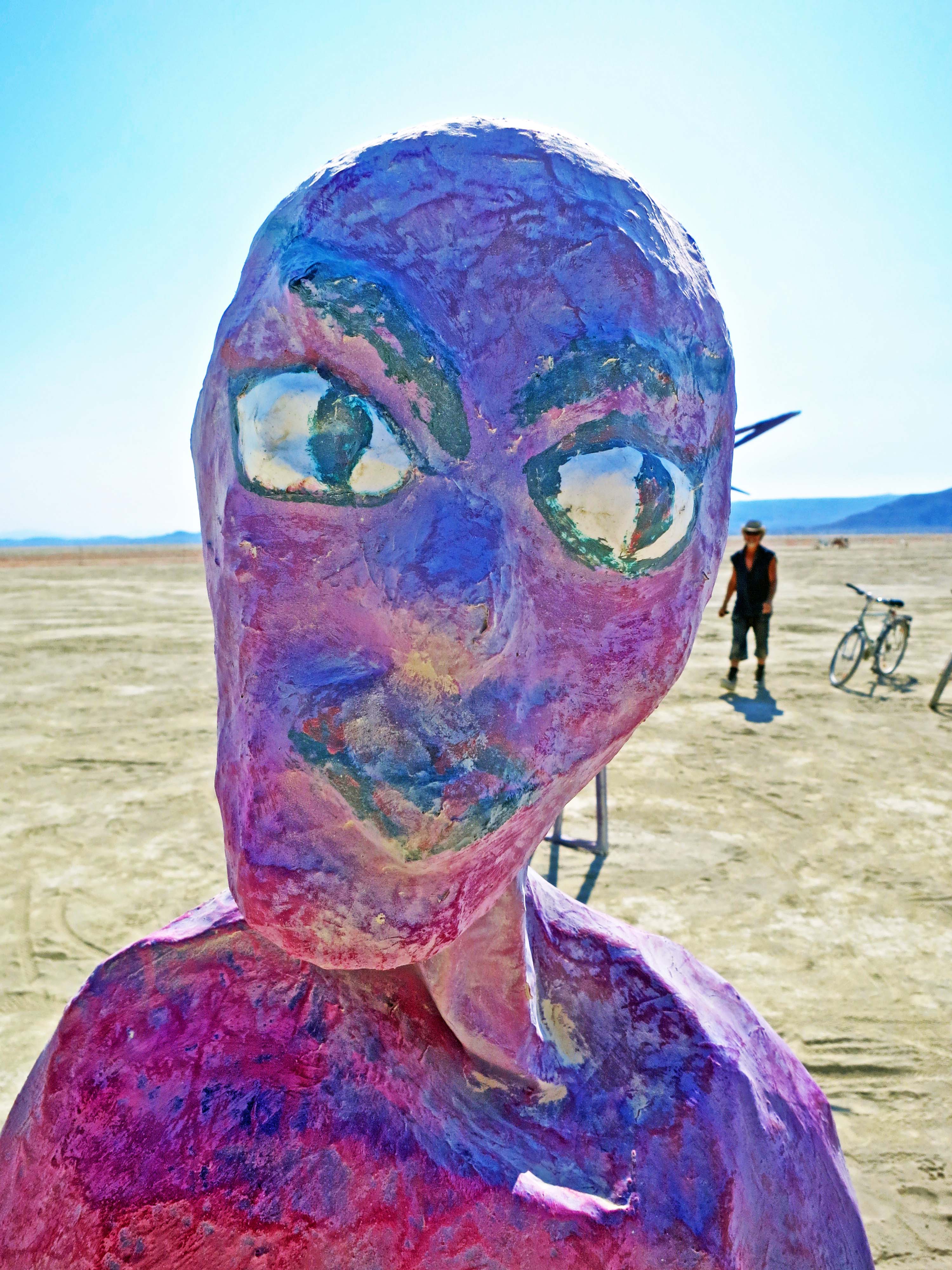
Bone has been wandering the world for close to 50 years. Given his nature, it is only natural that he would end up at Burning Man (14 times).

It was a pleasant hike down to Carson Pass on Highway 88 and relatively dry since we were on a south-facing slope.

Kit Carson came through here in February of 1844 along with John C. Fremont. It wasn’t pleasant then. The snow was deep and food was limited. They ended up dining off of their horses, mules and the camp dog. The dog apparently went quite well with pea soup. Later, the trail they discovered would become a major entry point for the 49ers and run through the foothill town of Diamond Springs where I was raised.

Frog Lake was a short jaunt off of the Tahoe-Yosemite/PCT near Carson Pass.

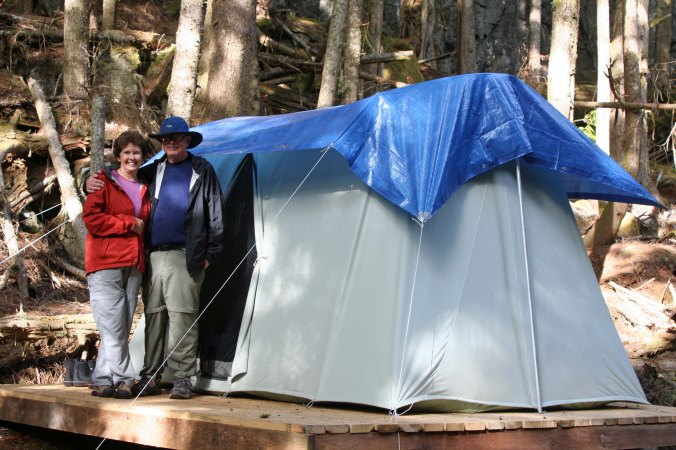
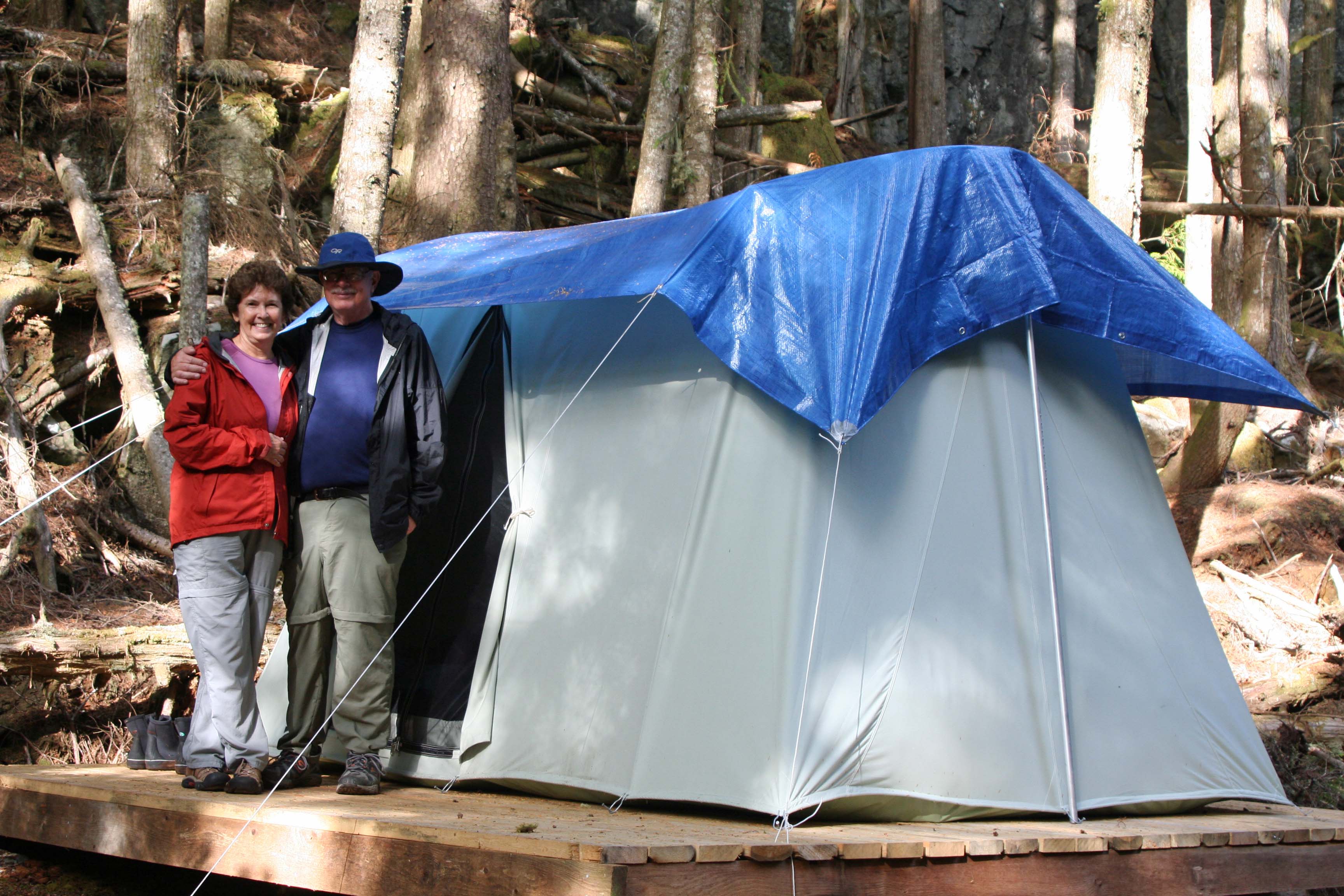
There was nary a bar, restaurant or gas station near the Pass so we hiked on another three miles to Lake Winnemucca. Rain was threatening and I set up my tube tent, a large sheet of plastic shaped into a round tunnel. It wasn’t particularly sturdy, but it was light and dry.

Tom, on the other hand, was carrying a luxurious three-season tent. He stacked the women in head to toe and ended up smelling April’s feet all night. I suspect he rubbed them, as well.

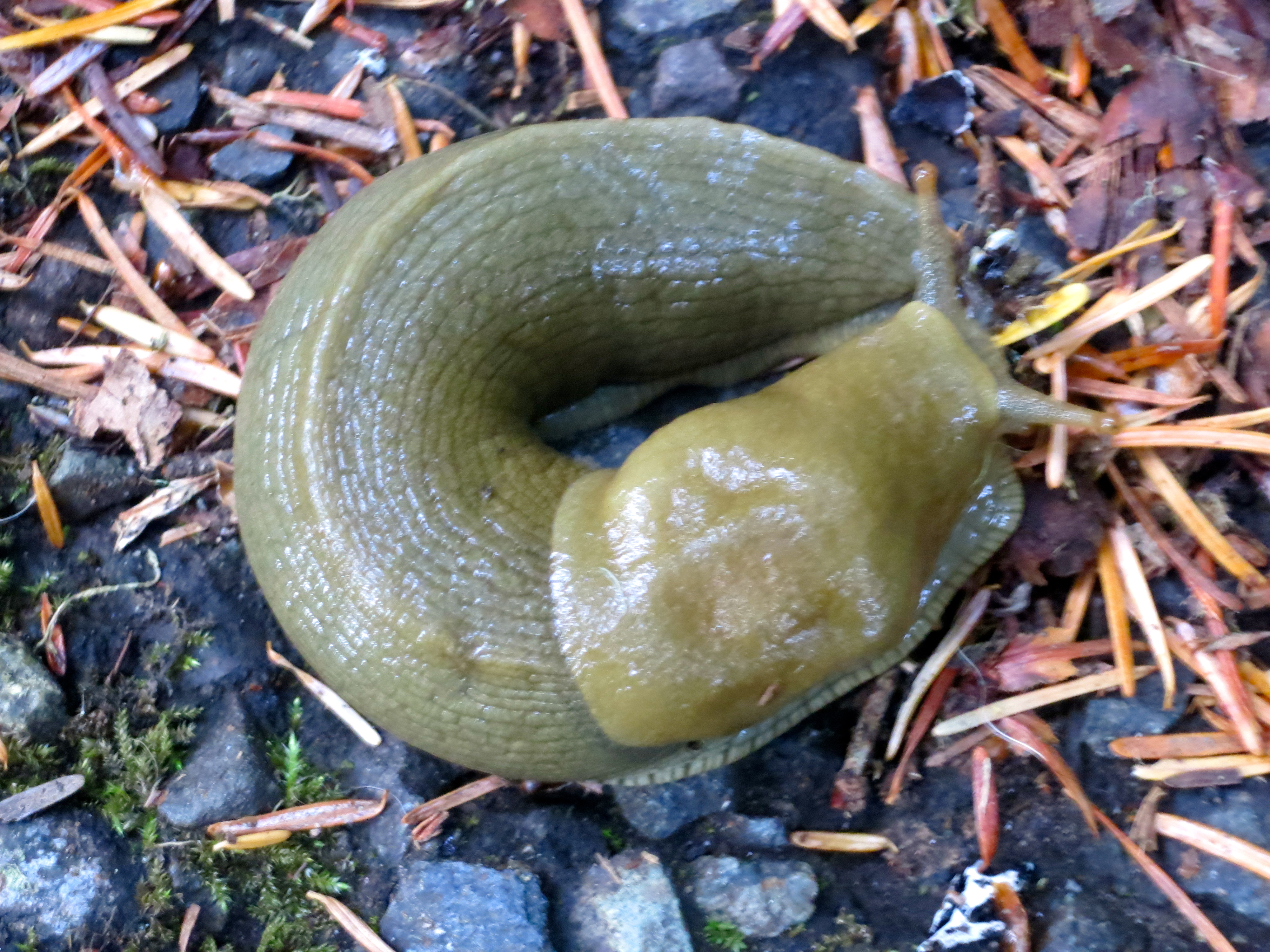
The next day was all downhill: down to Fourth of July Lake, down to Summit City Canyon, and down Summit City Creek to Camp Irene on the Mokelumne River. After dropping 4000 feet in 14 miles, I found myself bone tired again. Camp Irene provided an attractive campsite but turned out to be rattlesnake country. We kept a careful eye out but I missed one when I went out to utilize nature’s restroom.

I had discovered the perfect toilet spot, dug my cat hole and was baring my behind when one buzzed at me. It’s amazing how fast you can pull up your pants. I was lucky the snake didn’t bite me on the butt. It had crawled into the hole. We avoided a fate neither of us would have wanted!

I grabbed a stick and chased him away with a couple of sharp prods for good measure. He was lucky I was something of a nature boy. Otherwise he would have been smashed. The next time I did any serious bathroom duty was when I was parked on a flush toilet at Lake Alpine.

Backpacking out of Camp Irene is a challenge. The 4000 feet we dropped the day before in 14 miles we were now expected to re-climb in five. Low clouds filled the canyon. It wasn’t raining but it was cold and damp. Somewhere in the mist a male grouse made its familiar ‘whump, whump, whump’ sound, working to attract a female companion. I empathized. Dripping wet Buck Bush grabbed at our legs.

To stay warm and dry we broke out our rain gear. Lynn moved from being cold and miserable to shivering and not caring. She was on the edge of hypothermia, a very dangerous state. The body loses its ability to maintain warmth and the rational mind ceases to function. Coordination spirals downward. It is very easy to die.

Tom and I acted quickly. I fired up my Svea and Tom had Lynn stand over it wearing her cagoule, a dress like poncho. We positioned the stove carefully. While this wasn’t a solution to hypothermia one found in survival guides, it worked. (The recommended solution is to break out your sleeping bag and crawl in naked with the victim.) Within minutes, Lynn was ready to tackle the rest of the mountain.

Hypothermia can strike fast but it can also be quickly cured… assuming of course you catch it in time. Tom was next.

“Curt,” he called plaintively from off in the brush where he had gone to pee. I rushed over and begin laughing. He had managed the first half of his chore but couldn’t zip his pants up. His mind was working fine but his coordination had gone south. He was all thumbs. I called Lynn over to help as I returned to the trail chuckling. There are some chores a trek leader doesn’t need to handle.

We hiked the rest of the way into Alpine Lake without undo difficulty. Since our ride wasn’t coming until the next day, we rented a one-room cabin to share. Rain poured down outside as we relived our adventures and made up tall tales way into the night. Our journey was winding down, but it wasn’t over.

I was shaking the dirt out of my pack at home when the bone fell out. Apparently I had been carrying it all the way from Winnemucca Lake. “Darn Lovering,” I thought to myself, “I am going to get even.” I decided to keep the bone. There would be an opportunity on a future trip to slip it back into Tom’s pack. I would have revenge!

And that’s it, the story of Bone’s discovery. It started like so many things in our lives often do, as a non-event. Bone didn’t come up as a subject during our night in the cabin. Naked jumping ladies, lost trails, swollen rivers, gorgeous country, rattle snakes, the physical challenge, hypothermia and even the upside-down map were the stories of legend, not a small, insignificant bone that came from who knows what.

But time has the power to rewrite history. When Tom opened his suitcase in France at the beginning of a two-year exploration of Asia, Africa and Europe, he found a surprise, Bone. I had my revenge. When I moved to Alaska and was unpacking my boxes, who should fall out but Bone. The tales go on and on…

Next: Bone answers 10 questions people frequently ash him.

Bone Is Found, but Not Before the Naked Ladies Jump… How Bone Was Found: Part 3

Peggy and I are off journeying through Greece, Scotland and Ireland over the next several weeks, so there won’t be much time for blogging. Initially, I decided to put the blog on hold, but I’ve decided to republish some of my favorite posts that may eventually make it into UT-OH!.

Today, I am continuing the story of how Bone was found. First came the naked jumping ladies. Bone was just plain bone when I found him in a field of Corn Lilies.

A final view of Lake Aloha. Pyramid Peak where Tom was married is the far peak on the left. I took this photo during my PCT Trek.

I was up early the next morning and eager to hit the trail. My body was starting to adjust and feel good. More importantly, the resort at Echo Lake was calling. A quick breakfast and we were off.

I took the lead with Tom following and Terry trailing. Soon we had climbed out of Lake Aloha, passed Margery Lake and worked our way across Haypress Meadows where cattlemen once harvested grass for winter feed.

As we began our descent into Echo Lake, I left my companions and the Desolation Wilderness behind. The vision of cold beer and a hamburger drove me on. Short shorts may have been a factor as well. Lynn and April were supposed to rejoin us at the Echo Lake Resort.

There was a decision to make when I reached Echo Lake. I could continue to follow the Tahoe-Yosemite Trail around the upper and lower lakes or I could call the Lodge from a phone located at the end of Upper Lake. It would send a boat taxi to pick me up for five bucks. The trail was hot, dusty and filled with day hikers and I was ready to take a break from backpacking; I made the call.

A half hour later, the throbbing of the motorboat’s engine caught my attention as the boat worked its way up the lake. Soon it arrived, coughing slightly. The boat slowed and bumped into the pier. My ‘taxi driver’ was a 16-year old plus teenager who had managed to snag a great summer job.

“Hop on,” he told me. An elderly couple was along for the ride. I nodded at them. I was halfway between the boat and the pier when I heard a commotion.

“Over here, Curt,” a familiar voice shouted. I looked up. A few yards away alders hid another pier. Two very attractive and very naked women were jumping up and down to get my attention.

They succeeded.

It was April and Lynn. They had come over on an earlier boat and were working in a little sunbathing while waiting for us. The young boatman and the old man were all eyes. The elderly woman looked thoroughly irritated and glared at all of us, especially her husband.

“Uh, I think I’ll stay here,” I told my driver.

“Can I stay too?” he asked and grinned at me. The elderly man wisely stayed silent.

I joined the girls as the boat coughed its way back toward the resort. Tom showed up soon afterwards. We were waiting for Terry when the ranger showed up.

“There has been a complaint about naked women jumping up and down over here,” he told us.

“Boy, I wish I would have seen them,” Tom responded. I am not sure the ranger bought our story but he wandered off in search of other criminals.

The same boatman picked us up and told me that the first thing the elderly woman did when she got back was to complain loud and long about the perverted people across the lake. She even cornered a ranger. My new young friend speculated that the ranger came looking for us as an excuse to escape. “Or maybe he wanted to see the naked ladies,” I noted.

The resort at Echo Lake. Cold beer and a hot hamburger, the dream of many a backpacker out on the trail.

We made it to the resort ourselves and celebrated our brief return to civilization with a cold beer (or three). My system complained about the third as we hiked on across Highway 50 and up to Benwood Meadow where we stopped for the night, some 34 miles from Meeks Bay.

Our fourth day started out as a typical backpack day; we climbed. It was gentle at first and then became more serious. Once again snow-covered large segments of the trail. We spread out and searched for tree blazes. I scrambled over a particularly steep section and found myself in a high meadow.

Something half buried in a field of young corn lilies caught my eye. A few days earlier it would have been covered with snow. Curiosity led me to detour through the still soggy ground. Mud sucked at my boots.  My treasure turned out to be a disappointing, short, squat bone. Gnaw marks suggested it had been part of someone’s feast. I was about to toss it when a devious thought popped into my mind.

My wife, Peggy, and I took Bone back to the area where he was found. The snow was gone and the Corn Lillies large. He decided to take a nap. Or maybe he was sunbathing— naked.

“Trash,” I hollered at Tom and held up the bone. We had a game where if one person found a piece of trash, the other person had to carry it. But first you had to catch the other person.

Tom sprinted down the trail with me in pursuit. Unfortunately, we had made it over the mountain and our route ranged from flat to downhill. Tom was very fast. We had traveled two miles and were almost to Showers Lake before he stopped, concerned about leaving our companions behind. Very reluctantly, he took the bone and stuffed it in his pack.

“How can you classify a bone as trash,” he whined. I figured Tom would toss his new travelling companion as soon as I was out of sight.

Next: Dog stew, smelly feet and hypothermia.

Raging Rivers, Kamikaze Mosquitoes and Marriage on a Mountain…

Peggy and I are off journeying through Greece, Scotland and Ireland over the next several weeks, so there won’t be much time for blogging. Initially, I decided to put the blog on hold, but I’ve decided to republish some of my favorite posts that may eventually make it into UT-OH!.

I watched regrettably as April and Lynn headed out. I would miss the inspiration. Soon, however, my mind was more than occupied with route finding. The trail had disappeared under the snow.

Tom pulled out his map and compass to establish our general direction. We searched for ancient tree blazes left behind by early foresters, cattlemen and sheepherders. We also watched for ducks where the snow had melted.

Ancient tree blaze in the Desolation Wilderness.
This is what a duck looks like.

I’m not talking about fowl that quack and taste good in orange sauce. Ducks, in backpacking terminology, are piles of stone set up to show the way. With a little imagination, they can look like their namesake. Caution is advisable. The people creating the ducks may have had a different destination in mind, or perhaps they were lost.

An hour later we found ourselves more or less where we supposed to be, on the edge of the Rubicon River. A student of ancient Roman History undoubtedly named the stream. Like Julius Caesar, we were faced with crossing it. In a month or so it would be a tame creek inviting a refreshing dip but now it was a roaring river filled with icy water from quickly melting snow fields.

I entered with trepidation and was almost washed off my feet. Facing up-stream, I used a walking stick to give myself a third leg. Water crept up to my knees and beyond. I have short legs. The force was incredible. I set each foot carefully and moved crab-like, searching for solid ground between slippery rocks.

I’d undone my pack belt so I could shuck the pack if I was knocked over. Swimming in freezing water with 50 pounds on your back is hazardous to your health. In a few minutes that stretched out forever I was across. Tom and Terry also made it without incident.

We plopped down on a convenient log to catch our breath and munch down on GORP (good old raisins and peanuts). It was a quick meal. A thick swarm of mosquitoes dive-bombed us with kamikaze abandon.  Slap one and five more landed, gleefully licking off our bug repellent before plunging in their beaks.

We were driven to put on our packs and scurry up the trail. Fortunately, Rockbound Valley is relatively flat and we were able to escape. Stopping was not an option as we hoofed it for the next four miles, crossing the Rubicon two more times before we begin our labored ascent up aptly named Mosquito Pass.

Life slowed down immediately as we began climbing. The blood sucking hoards caught up. Near the top, we were confronted with a different challenge, more snow. Eight hours of hot sun had turned it to mush. We spent as much time sliding as we did climbing. It was slow, hard, slogging work. And it was dangerous. Running water, partially exposed boulders and tree trunks melt snow from the ground up and create hidden cavities. More than once we plunged through up to our knees.

Ignoring the danger, Tom and I laughed our way down the other side, glissading in our boots. Control was minimal. Camp was in sight. Terri came along at a much more sedate and careful pace.

There was nothing about Lake Aloha that made me think Hawaii. It was a strange Dali-like creation with a convoluted shoreline and innumerable Rorschach type islands. What’s more, mini-icebergs decorated its surface. Bright white on top, they turned an icy blue under the water. All I could think was cold. Plowing through snow on our way around the lake to camp added freezing to my thoughts.

Lake Aloha in the evening with its numerous islands.

That night, we built a small campfire to fight off the chill. Terry wandered off to bed. Tom was slightly melancholy. He looked off into the distance over my shoulder.

“I was married on that peak,” he announced to the night. I turned around and stared across Lake Aloha at the towering Pyramid Peak, the centerpiece of the Crystal Range. It was bathed in moonlight.

Several years earlier, Tom had met and fallen in love with Hilde, a slight, attractive blonde who shared his love of the wilderness. They decided to get married on the mountain. Mom, wedding party and friends were invited to share their 9983 feet “I do” in the Desolation Wilderness.

The marriage didn’t last long and Tom was reluctant to talk about it. The fire burned down to glowing embers. We shared the silence in memory of lost love.

Next: Bone Is Found… but not before the naked ladies jump.

Tom Flunks Map Reading 101… A Tale on How Bone Was Found: Part 2

This is the second of a series of Blogs on how the Peripatetic Bone was found in the Sierra Nevada Mountains. I will respond to comments when I return from Burning Man.

I awoke with a Mountain Jay screeching at me from the safety of his perch in a Lodgepole Pine. A faint light announced the morning, but the sun still hid behind the mountains on the east side of Lake Tahoe. It was frosty cold and I burrowed into my bag, pretending for a few more moments that I didn’t have to get up. Nature drove me out.

I could ignore the faint light, I could ignore the Jay and I could even ignore the stirrings of my companions but I couldn’t ignore my insistent bladder. Among muttered good mornings I wandered off into the woods and peed on a willow near where I had seen a coyote the evening before. I was marking my territory.

Back in camp Tom had his stove going. Lynn smiled at me. She, too, was a tall, good-looking woman. Terry had yet to emerge from her cocoon and April had replaced me out in the woods.

I heard a kersplash in Stony Ridge Lake and turned to watch as ripples spread out and announced a trout had snatched its buggy breakfast. Briefly I regretted that I had left my fishing pole at home. The sun was now bathing the peaks above us in gentle light; ever so slowly it worked its way down the mountain.

Instant coffee, instant oatmeal and a handful of dried fruit made up breakfast. All too soon it was time to pack my gear and urge my still stiff muscles up the trail.

The troops were in high spirits. The sheer beauty of Desolation Wilderness demanded it. Our backpacking day would take us up to Phipps Pass, down in to the Velma Lakes, across to the Rubicon River, up Rockbound Valley, over Mosquito Pass and end at Lake Aloha, some 13 miles from Stony Ridge Lake. We took a few minutes to make sure our camp was clean.

Almost immediately we began to climb. Flashes of blue lupine, multi-colored columbine and cheerful monkey flowers eased our way along the switch back trail. My pace of travel provided ample opportunity for appreciation. I caught a brief smell of mint at one point and wild onion at another.

We passed by two more small lakes and began our ascent of Phipps Pass. By this point I had moved in to granny gear and could hear my heart pounding in its cage, wanting to escape. Each step was a test of will. I kept moving. I had long since learned that the difficulty of starting outweighed the benefits of stopping. One step at a time I reached the top. A spectacular view rewarded my effort.

Peaks still buried under snow stretched off into the distance. The Sierra is a baby mountain range, the child of plate tectonics. Once, ancient seas covered the area. Volcanic activities left behind vast pools of subterranean granite. Crashing continental and oceanic plates lifted the granite into spectacular fault-block mountains, steep on the east and gentler on the west. The Ice Age brought glaciers that carved peaks, scooped out basins and left behind rocky moraines.

We stopped to catch our breath and enjoy the view.  Soon we would begin our descent toward the Velma Lakes but first we worked our way around Phipps Peak. A series of lakes came into view. Tom and I immediately began to debate which was which.

“And you expect us to depend on your trail finding skills?” Lynn asked. Tom whipped out his topographic map.

“See,” he said decidedly, allowing a note of triumph to enter his voice. While we were the best of friends, this didn’t eliminate an element of alpha male competition between us. He, after all, was the owner of an outdoor-wilderness store, and I, after all, was the leader of wilderness treks. I glanced at his map and an impish grin filled my face.

“Your map is upside down, Tom.” Oops.

We did agree that my decision to detour from the Tahoe-Yosemite Trail and go through Rockbound Valley was a good one. Heavy snow still covered the northern and eastern side of the mountains. It was unlikely to melt by the time of the Trek.

The Trekkers would have enough challenge backpacking 13 miles on their second day out. They didn’t need to slog through five miles of snow while muttering unprintable thoughts about me.

We started our descent into the Velmas carefully. It is hard not to think, “Oh boy, down hill!” after a hard climb. But going down is much tougher on your body than climbing. Stepping down is a form of free fall. Velocity and weight are focused on the joints of your legs and feet. Adding a 40-50 pound pack increases the problem.

It is easy to twist a knee or sprain an ankle, especially at the beginning of the season. And that was what happened. By the time we reached Middle Velma, April was limping.

“I stepped on a loose rock and slipped,” she explained in obvious pain.

While April soaked her foot in the cold lake water and broke out an Ace Bandage, Tom and I mulled over whether to go on or hike out. We arrived at a compromise. Lynn would hike out with April to Emerald Bay and the two of them would stay at a motel. They would rejoin Tom, Terry and me at Echo Lake some 18 miles down the trail.

Next: Raging rivers, kamikaze mosquitoes and marriage on a mountain

The Story of How Bone Was Found… Part 1

While Peggy and I are at Burning Man, I am reposting the story of how Bone was found. This is the first of the series. I will respond to comments when I return from Burning Man.

Backpacking in the Desolation Wilderness… Or, How to Forget You Are Being Divorced

It was the summer of 1977 and my wife JoAnn was divorcing me. Apparently I lacked in stability or at least in the desire to pursue the Great American Dream. She was right of course. I had absolutely zero desire to tie myself to an eight-hour a day job and a large house in the suburbs. None of this made the divorce easy. I was prepared to spend my life as a happily married man.

To keep my mind occupied, I was working on the route for the Fourth Annual Sierra Trek, a challenging nine-day 100-mile backpack trip in the Sierra Nevada Mountains that I had created as a pledge-based fund-raiser for the American Lung Association in Sacramento.

“So what’s your problem?” my friend Tom Lovering asked over a beer at the Fox and Goose Restaurant. He’d been-there-done-that with divorce and dated a number of women since. Tom owned Alpine West, an outdoor/wilderness store in Sacramento, and sponsored the Sierra Trek.

I had persuaded him to go backpacking with me for six days to preview part of the new route. Our plan was to start near Meek’s Bay, Lake Tahoe and work our way southward 70 miles following the Tahoe-Yosemite Trail.

Tom had invited his girlfriend, Lynn, and Lynn was bringing along her friend Terry. Terry was nice, not my type.

“I have a friend named April who wants to go backpacking,” Tom offered. “Why don’t I invite her to go as well? Maybe you two will hit if off.”

The implication was that this would help me get over my wife.  Actually, I had already met the woman who was going to help me recover but I humored Tom.

A friend drove the five of us up to Meeks Bay. April was gorgeous and Tom was right. I followed her long legs and short shorts up the trail. My gloomy focus on the Soon-to-Be-Ex faded like a teenager’s blue jeans.

Hot feet and screaming fat cells were even more potent in forcing me to live, or at least suffer, in the moment. As usual I’d done nothing to physically prepare for the first backpack trip of the year and I was paying the price.

We climbed a thousand feet and traveled six miles to reach our first night’s destination at Stony Ridge Lake. I crashed while Tom broke out some exotic concoction of potent alcohol.

After consuming enough of his ‘medicine’ to persuade my fat cells they had found Nirvana, I fired up my trusty Svea stove and started cooking our freeze-dried dinner. It wasn’t hard. Boil water, throw in noodles, add a packet of mystery ingredients, stir for ten minutes and pray that whatever you have created is edible. That night it didn’t matter.

Afterwards, we headed for our beds. The next day would be long. I slid into my down filled mummy bag and looked up at what seemed like a million stars. There were no city lights or pollution to block my view and the moon had yet to appear.

I traced an imaginary line from the Big Dipper and found the North Star. It seemed far too faint for its illustrious history. A shooting star briefly captured my attention. Thoughts of divorce, short shorts, the next day’s route, a rock digging into my butt, and sore feet jostled around in my mind for attention.

Sleep finally crept into the bag and captured me.

Next: A pounding heart and a sprained ankle.

From Kayaking the Cool Pacific to Bicycling the Hot Desert of Burning Man

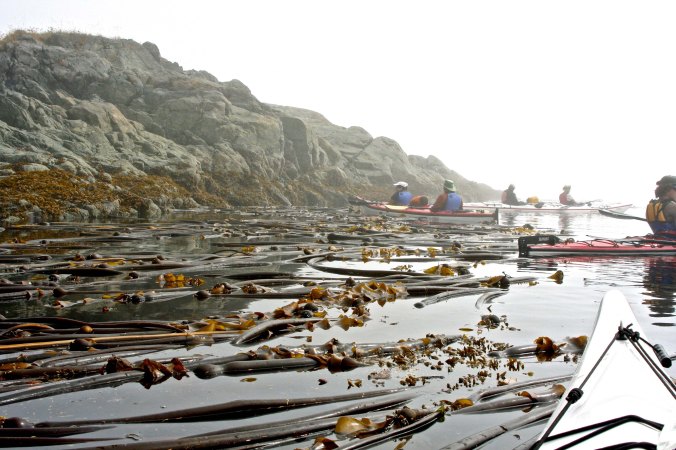
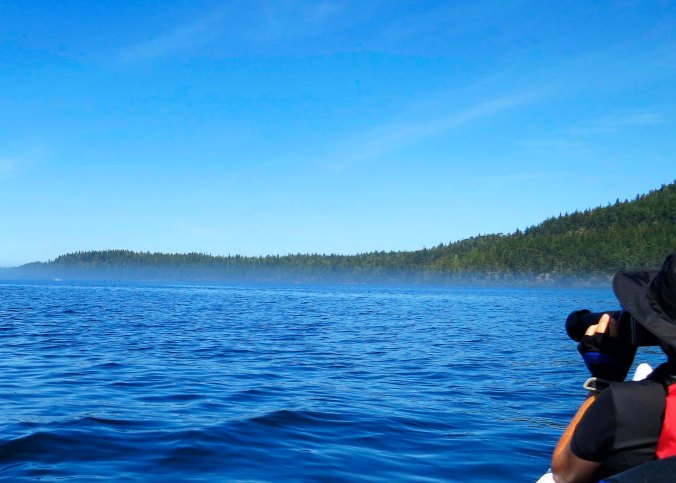
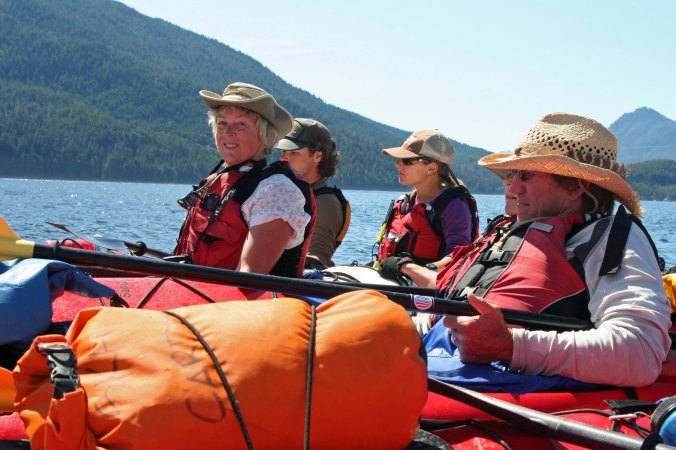
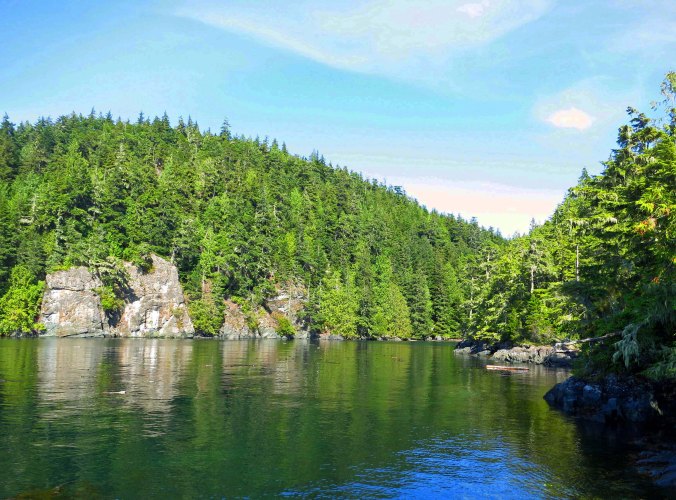
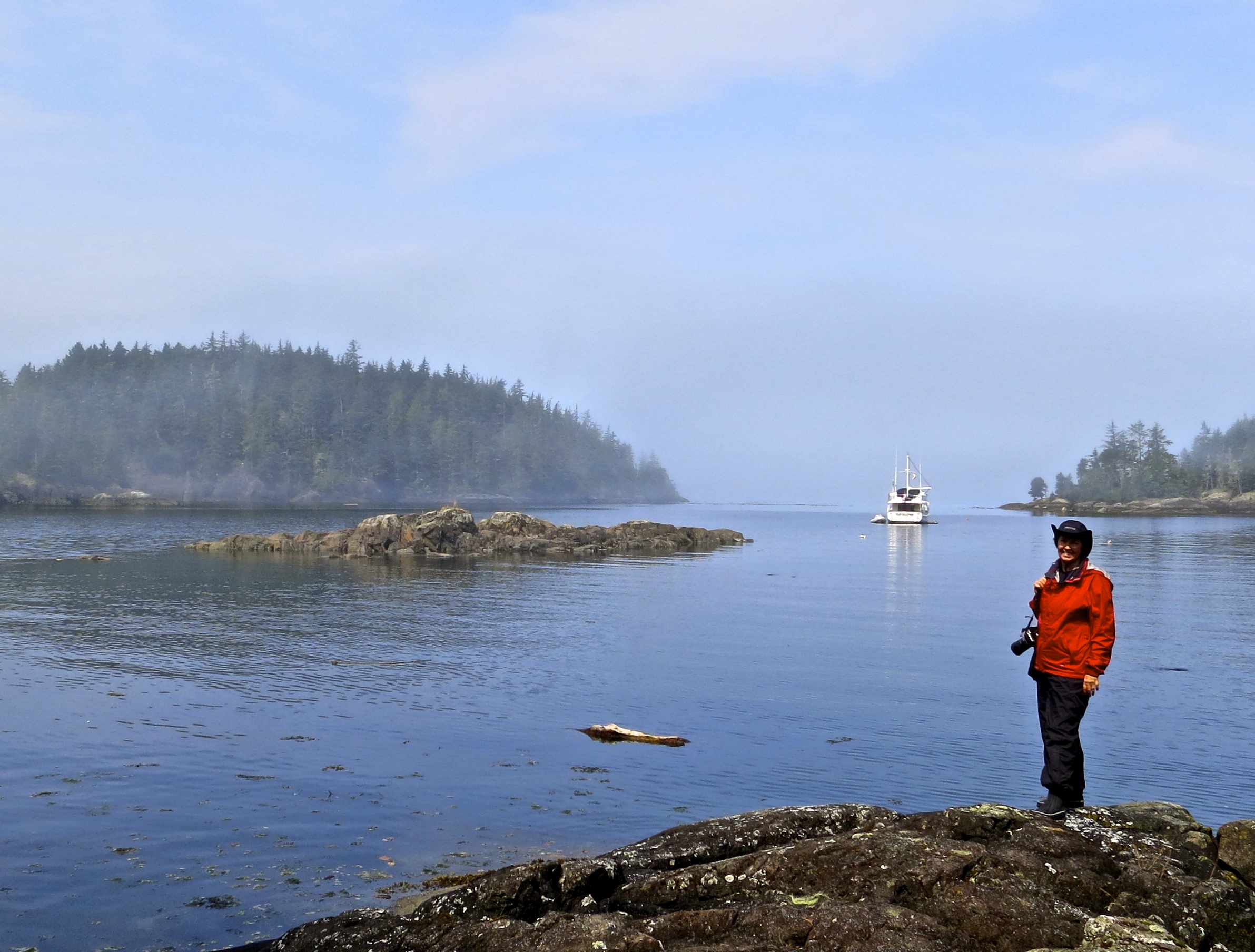
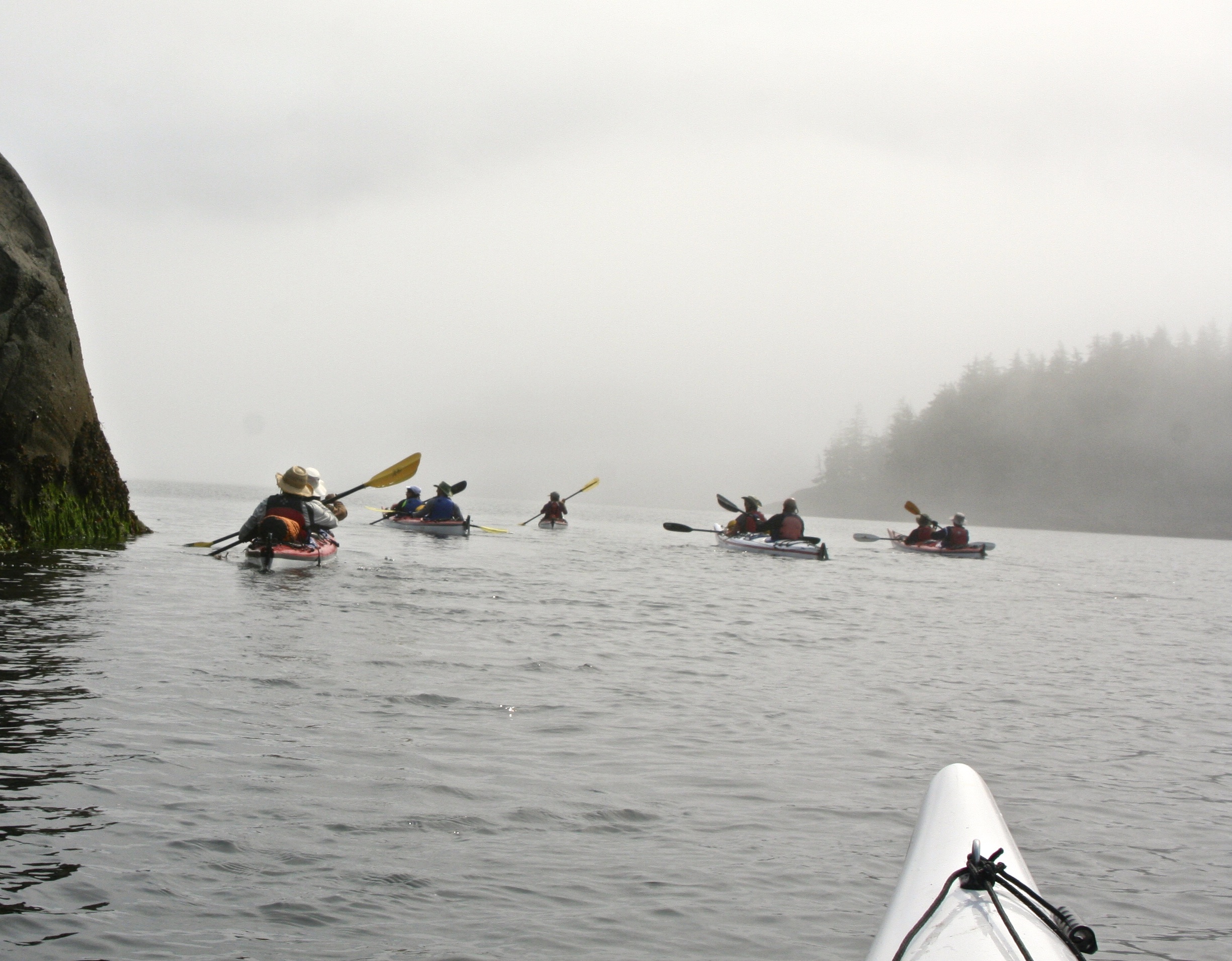
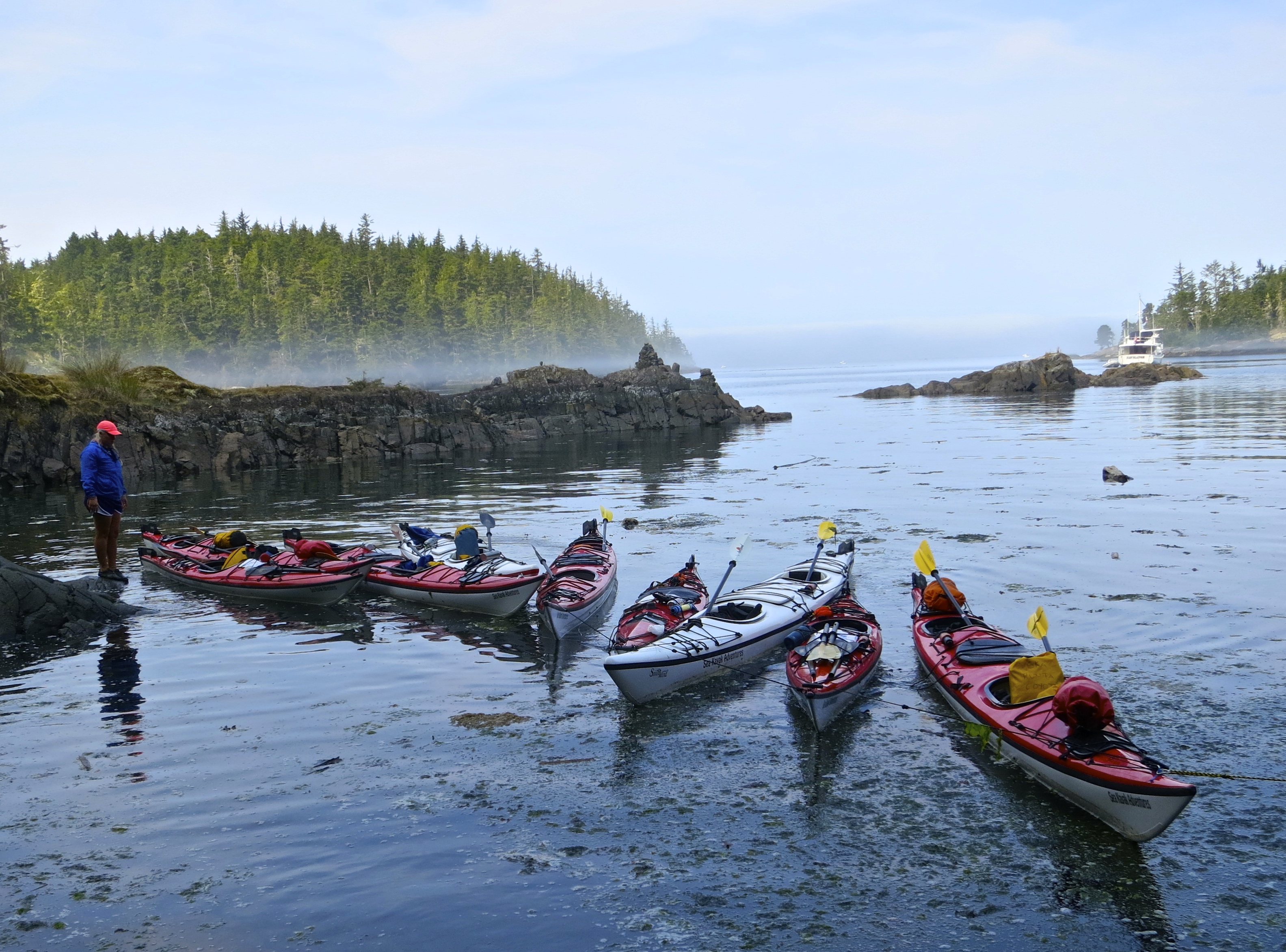
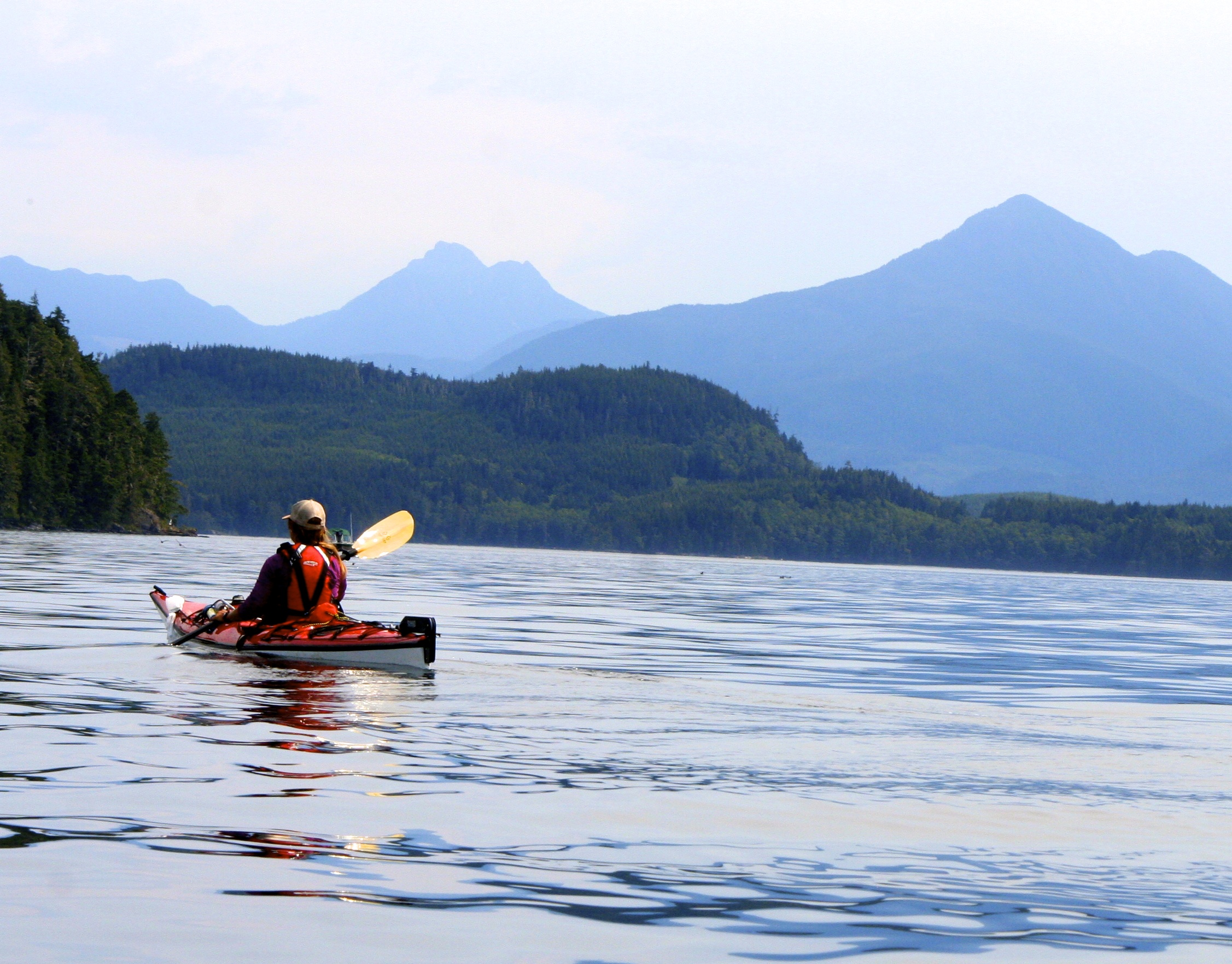
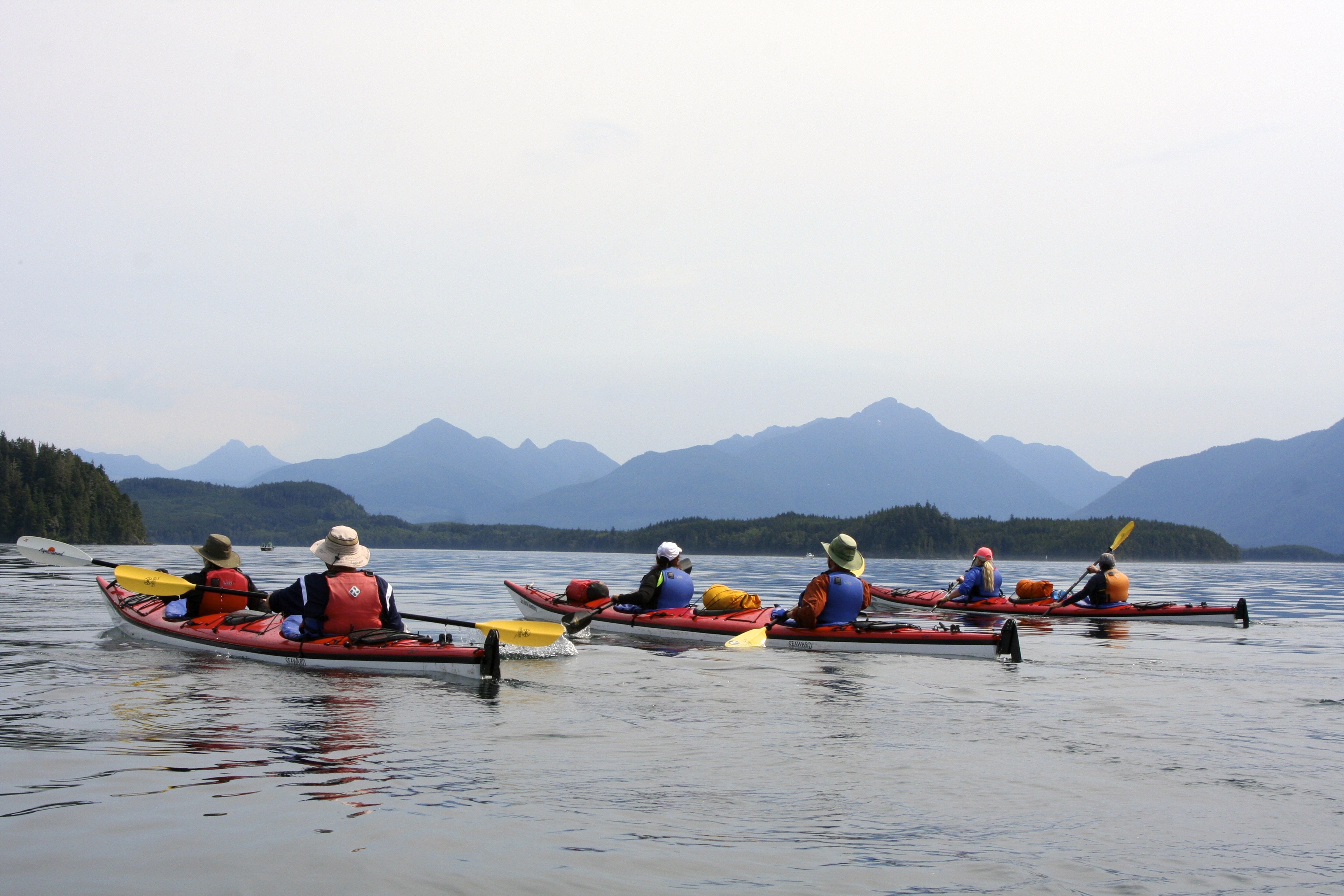
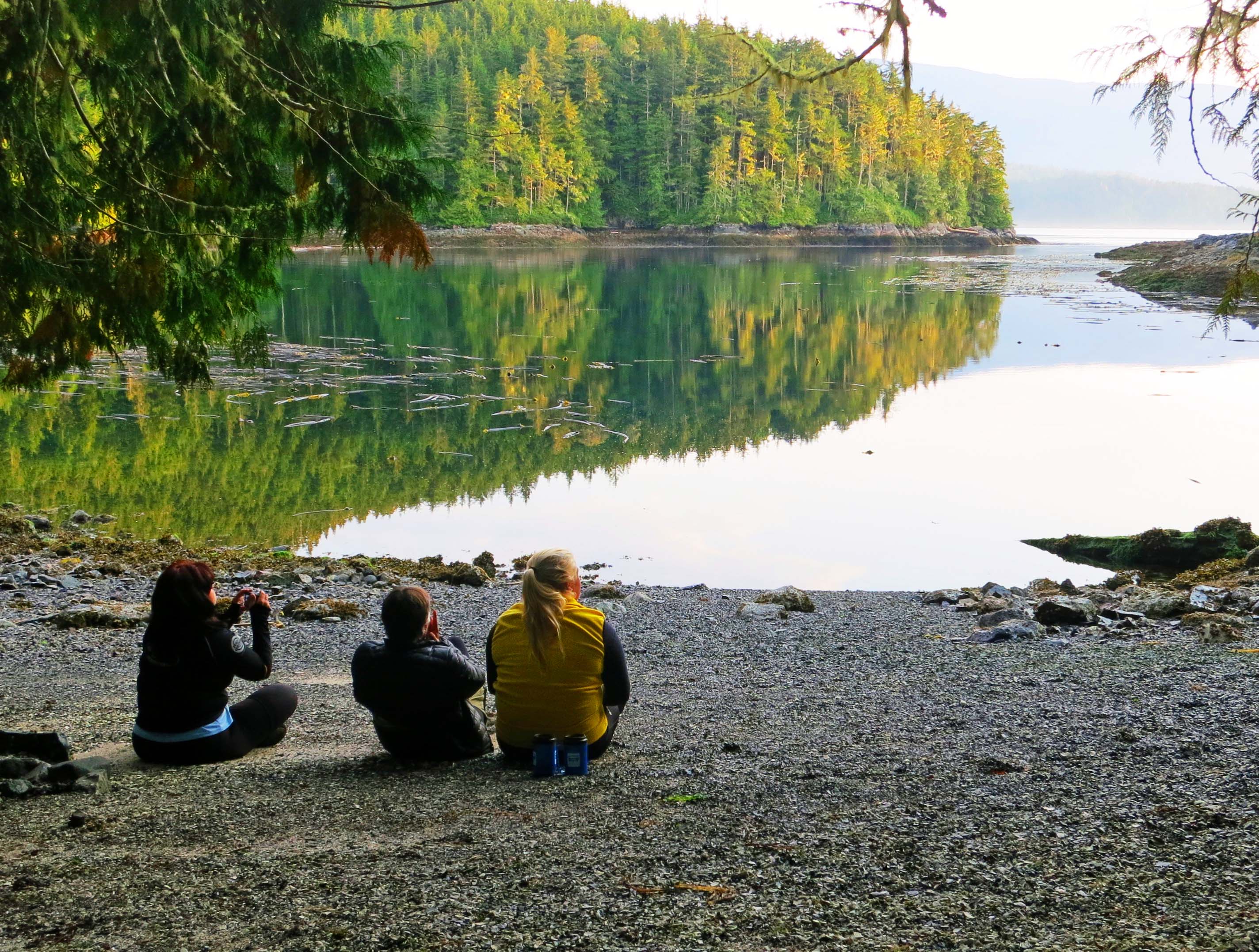
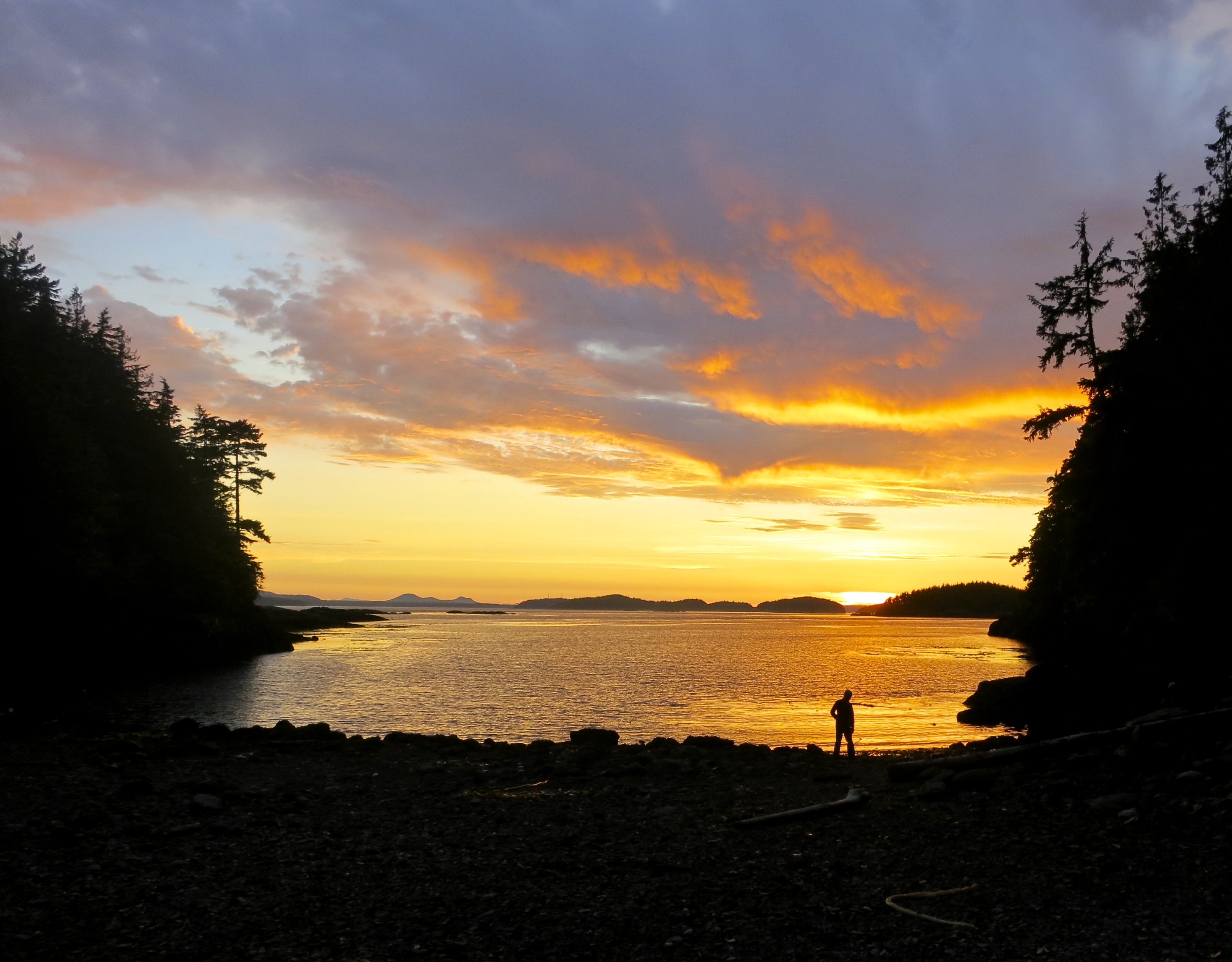
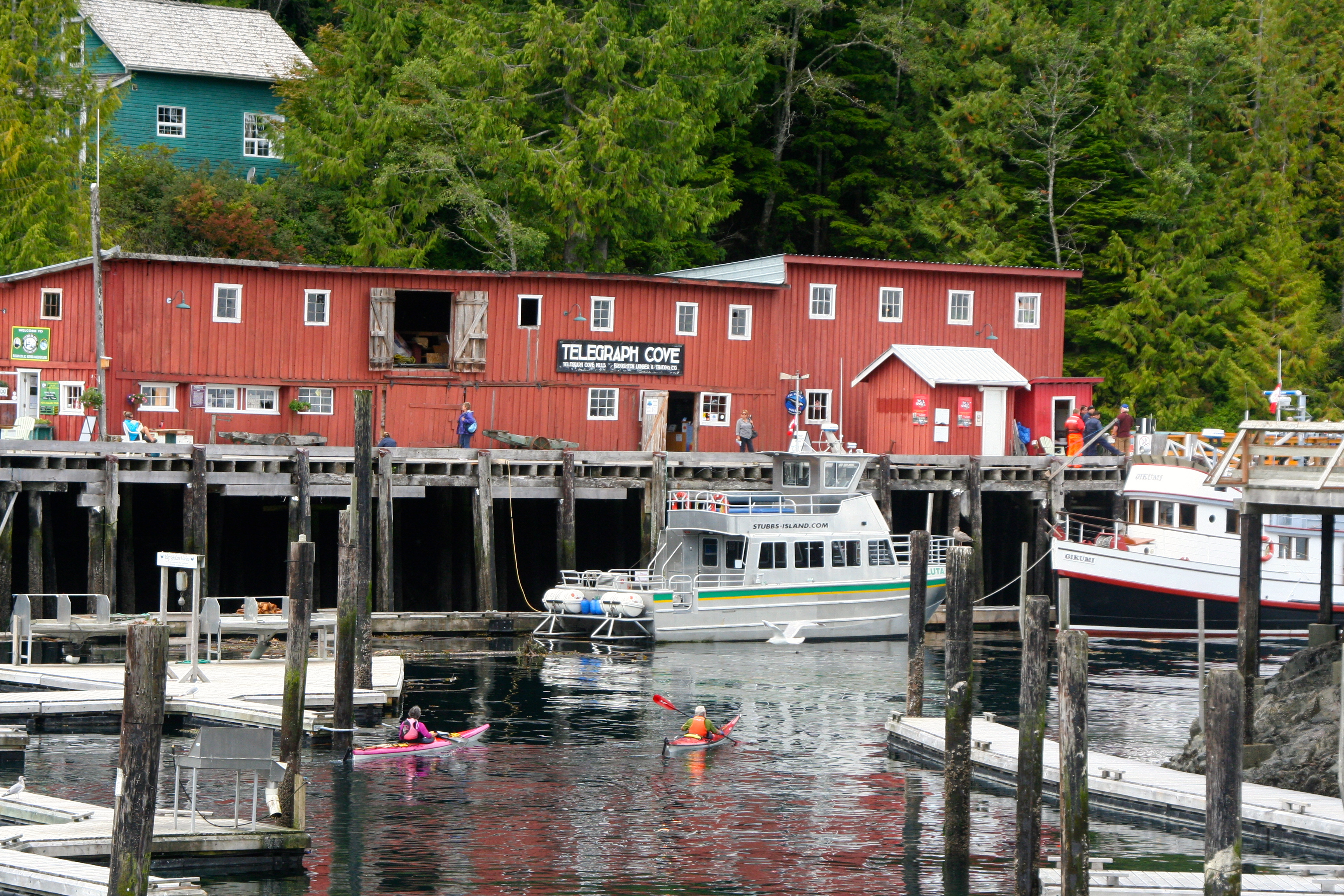
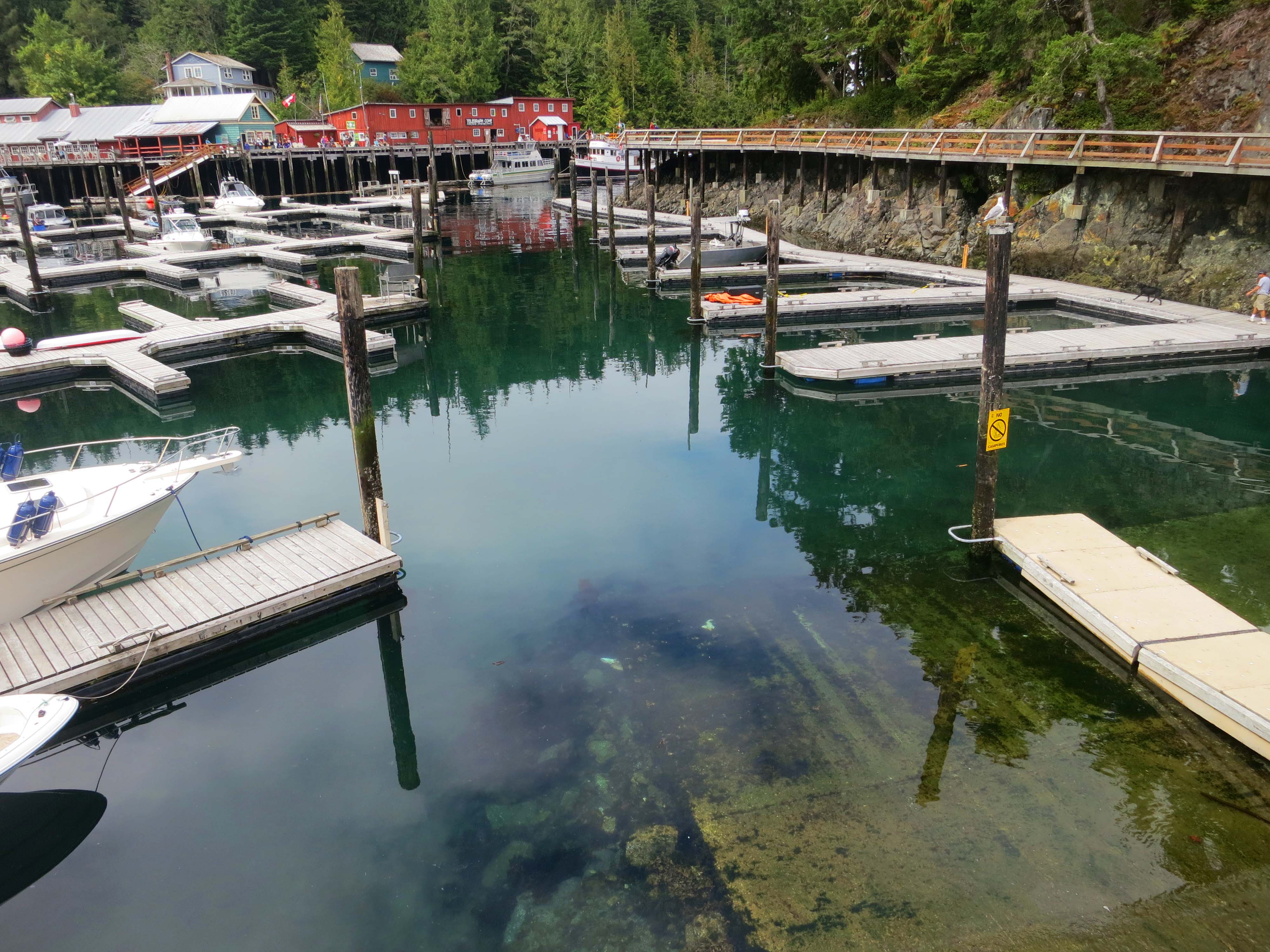
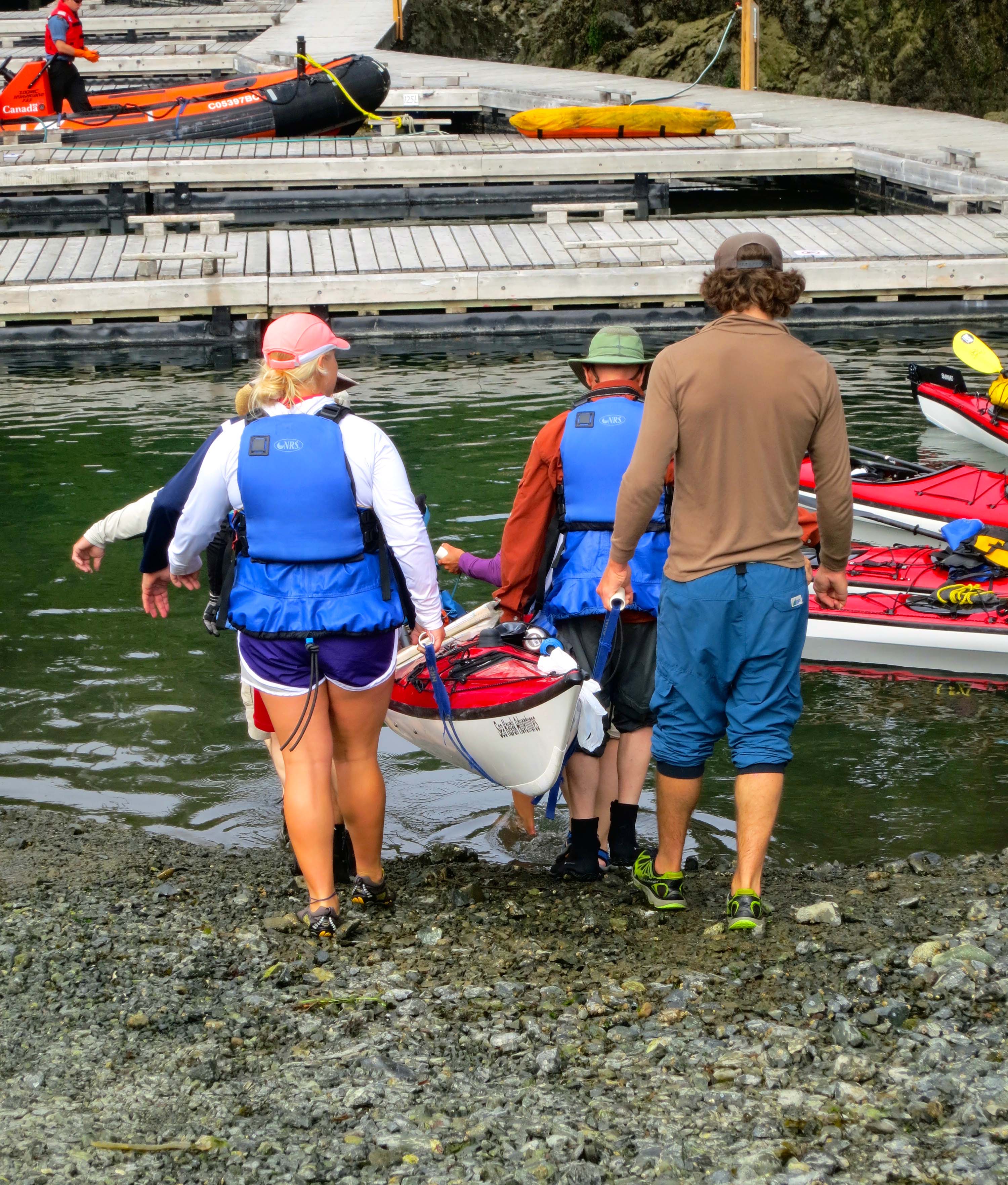
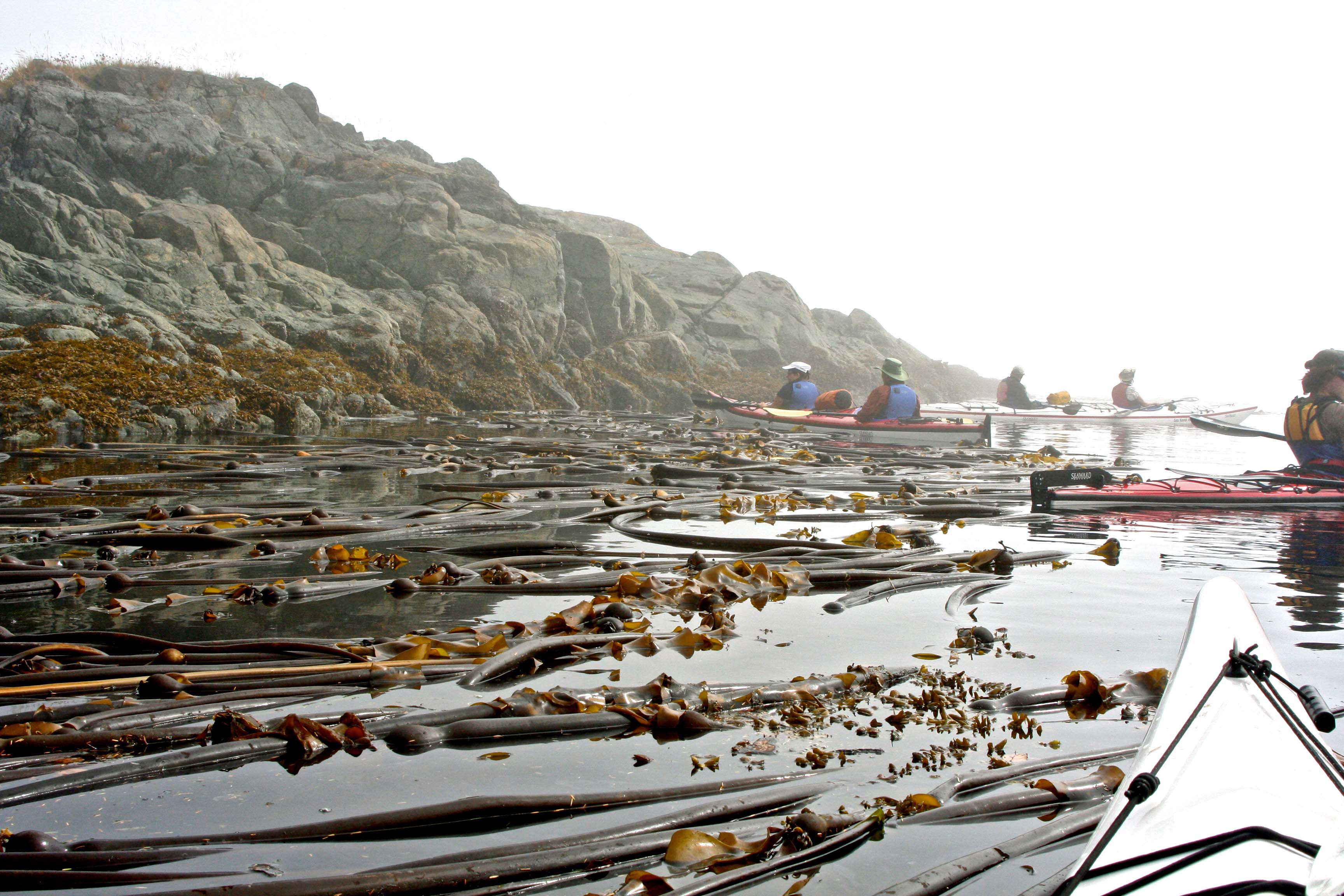
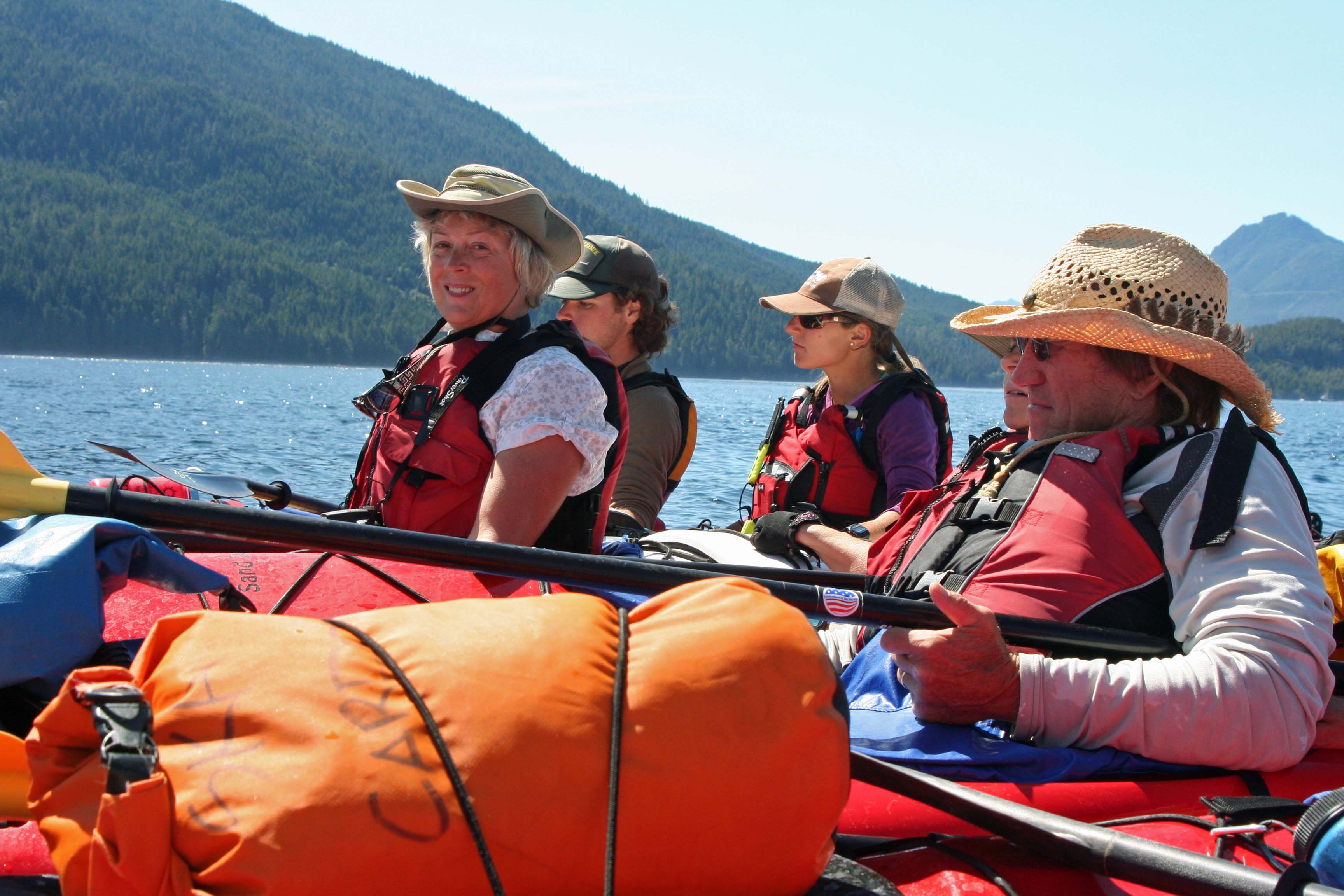
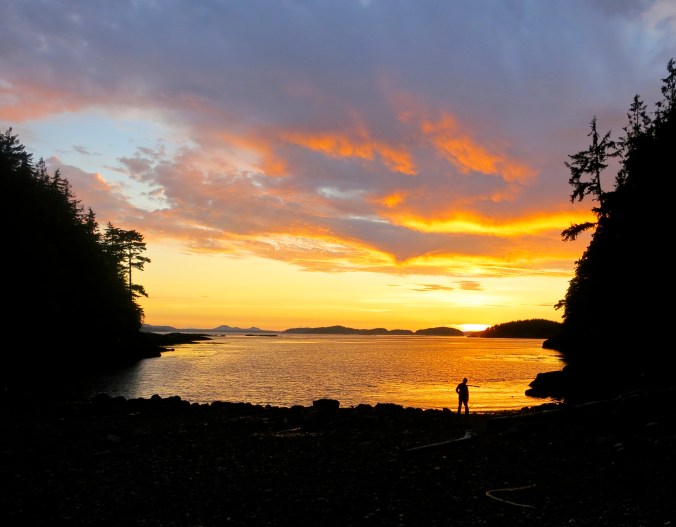
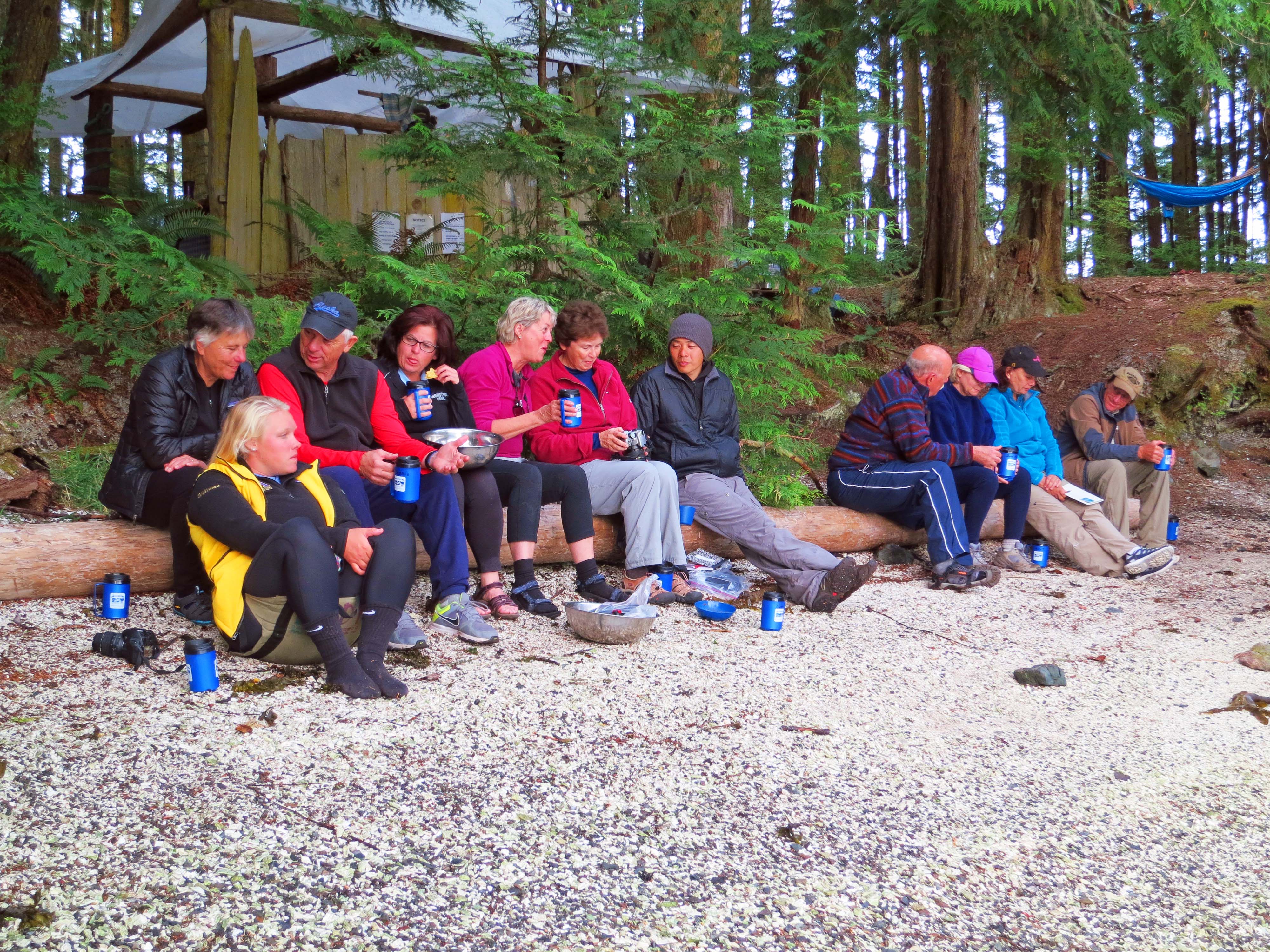
One of our guides leads the way as we make our way between islands off the we make our way off the northwest coast of Vancouver Island, British Columbia.

One of our guides, Julia, leads the way as we make our way between islands off the northwest coast of Vancouver Island, British Columbia. (Photo by Peggy Mekemson.)

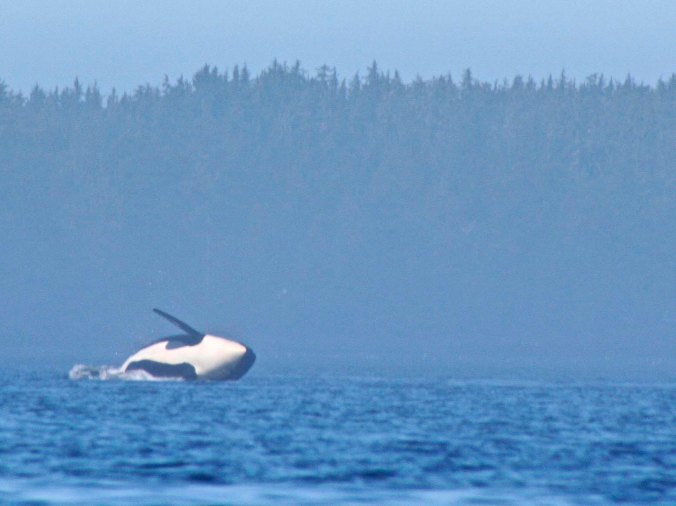
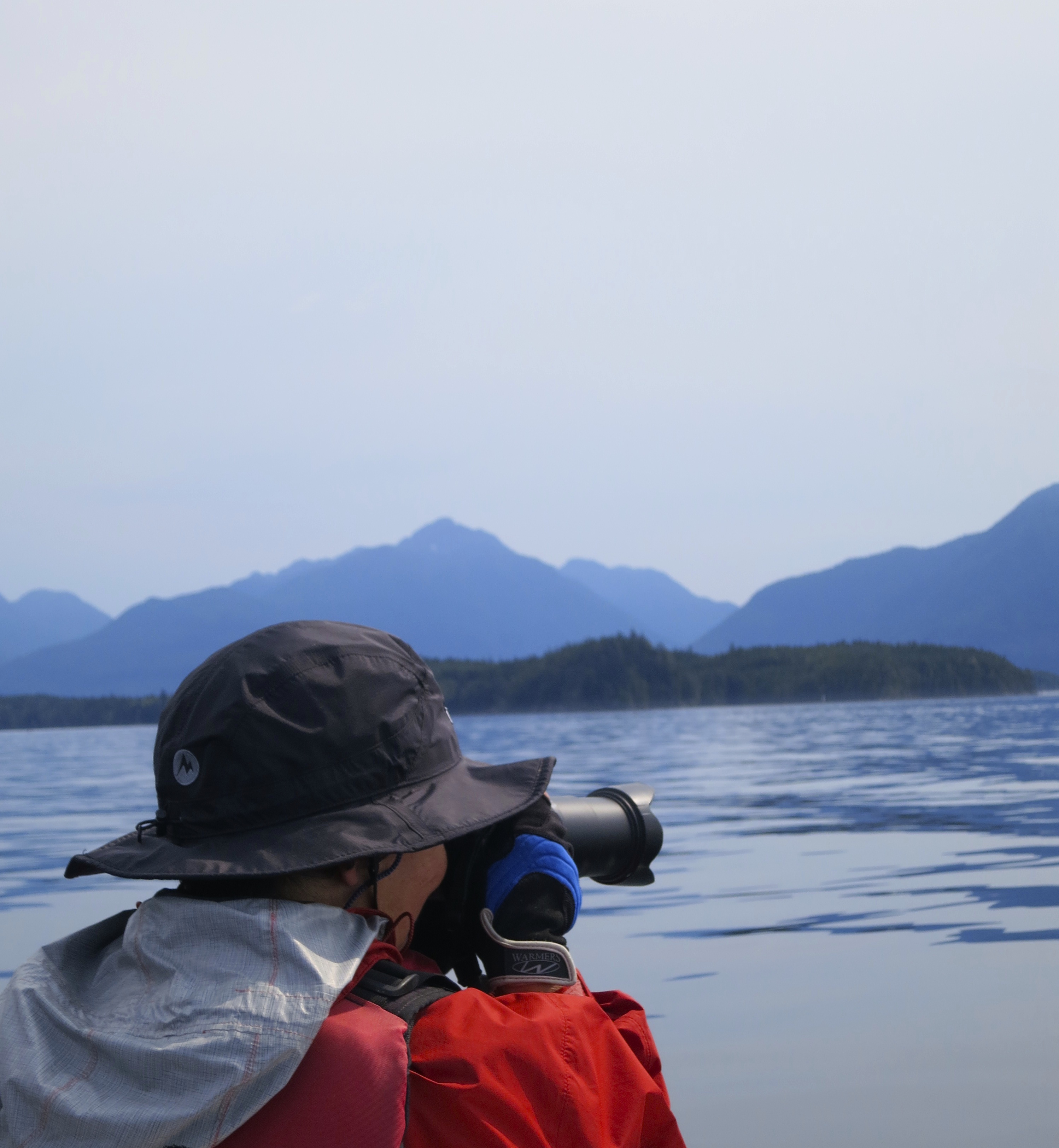
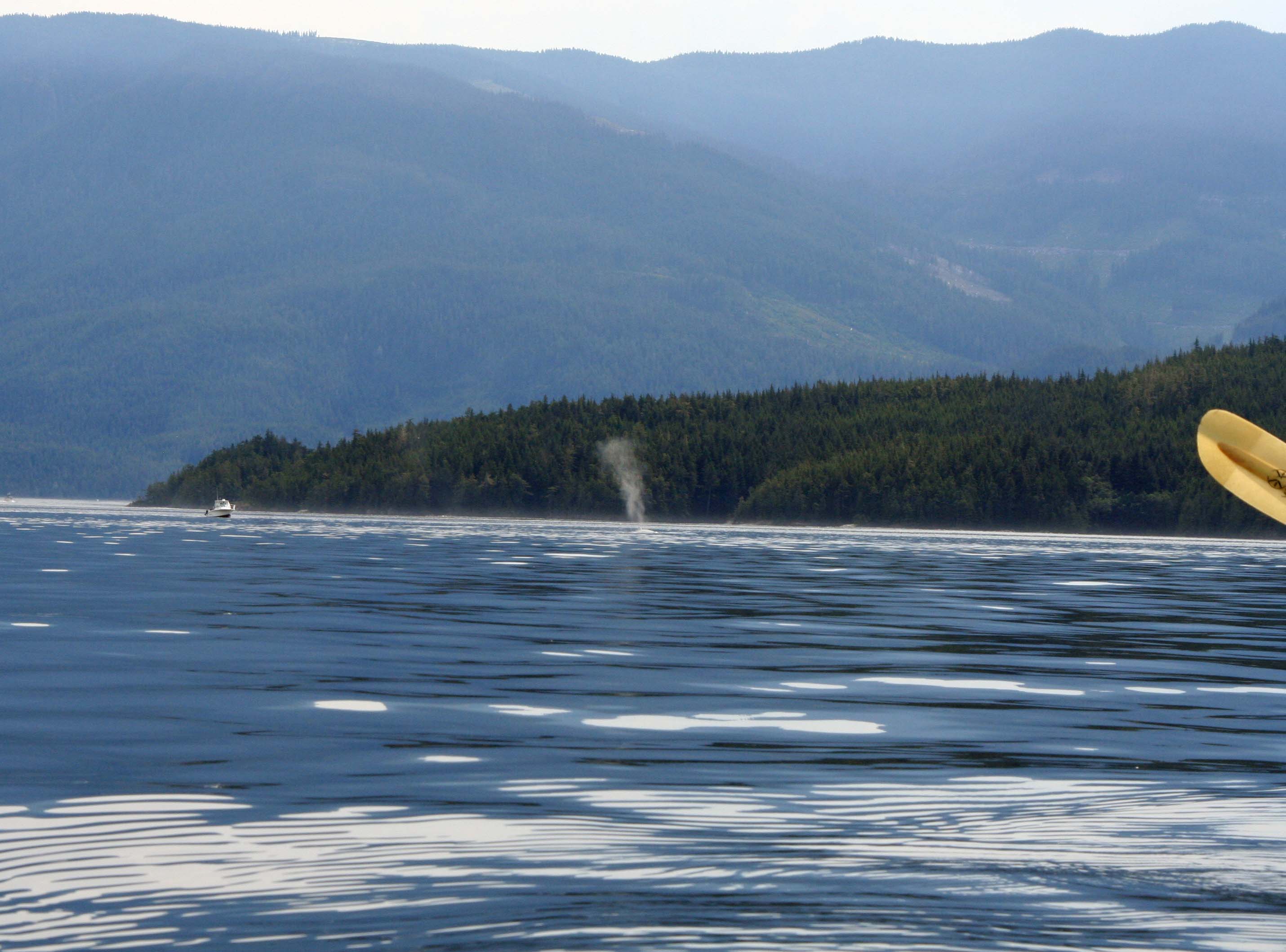
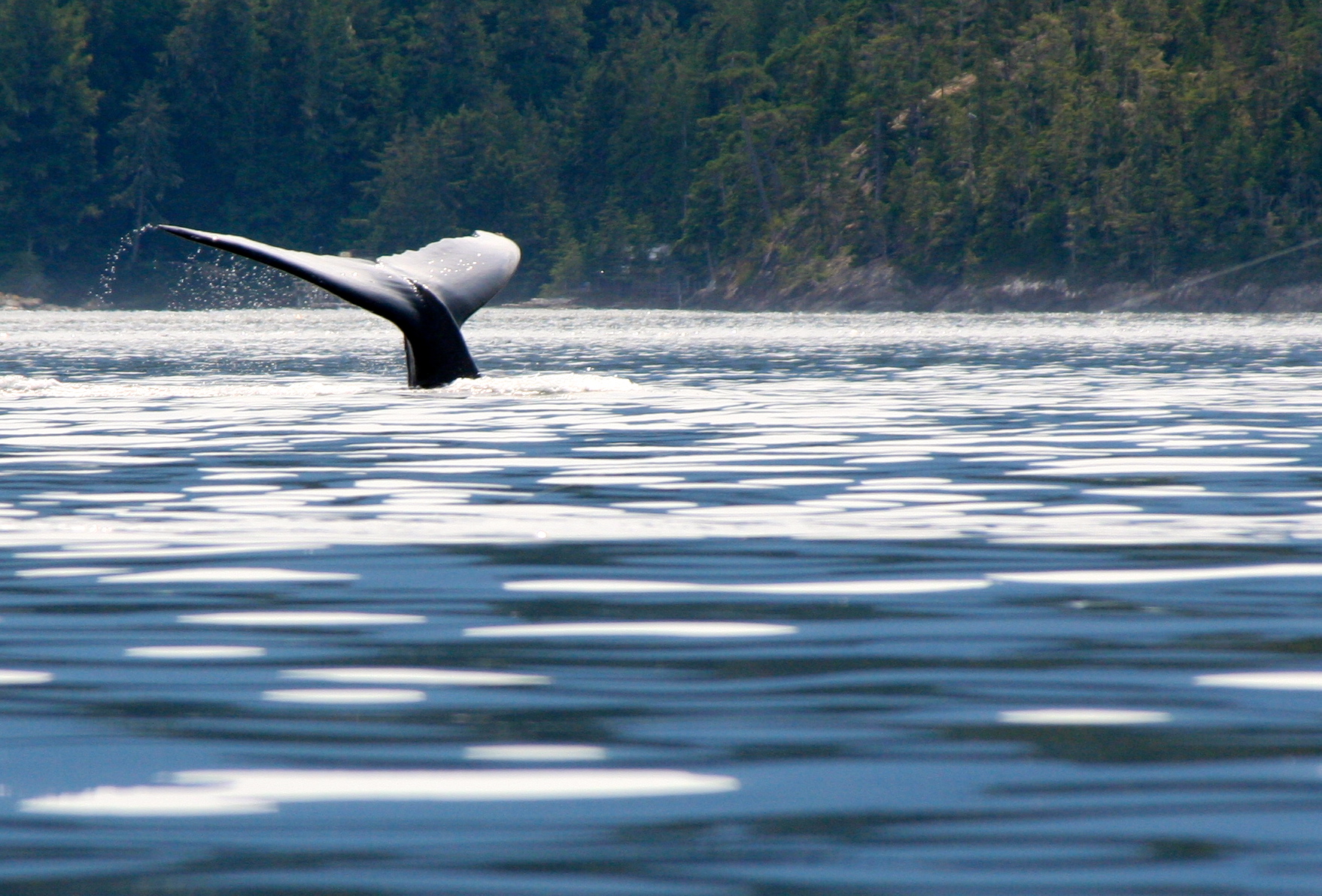
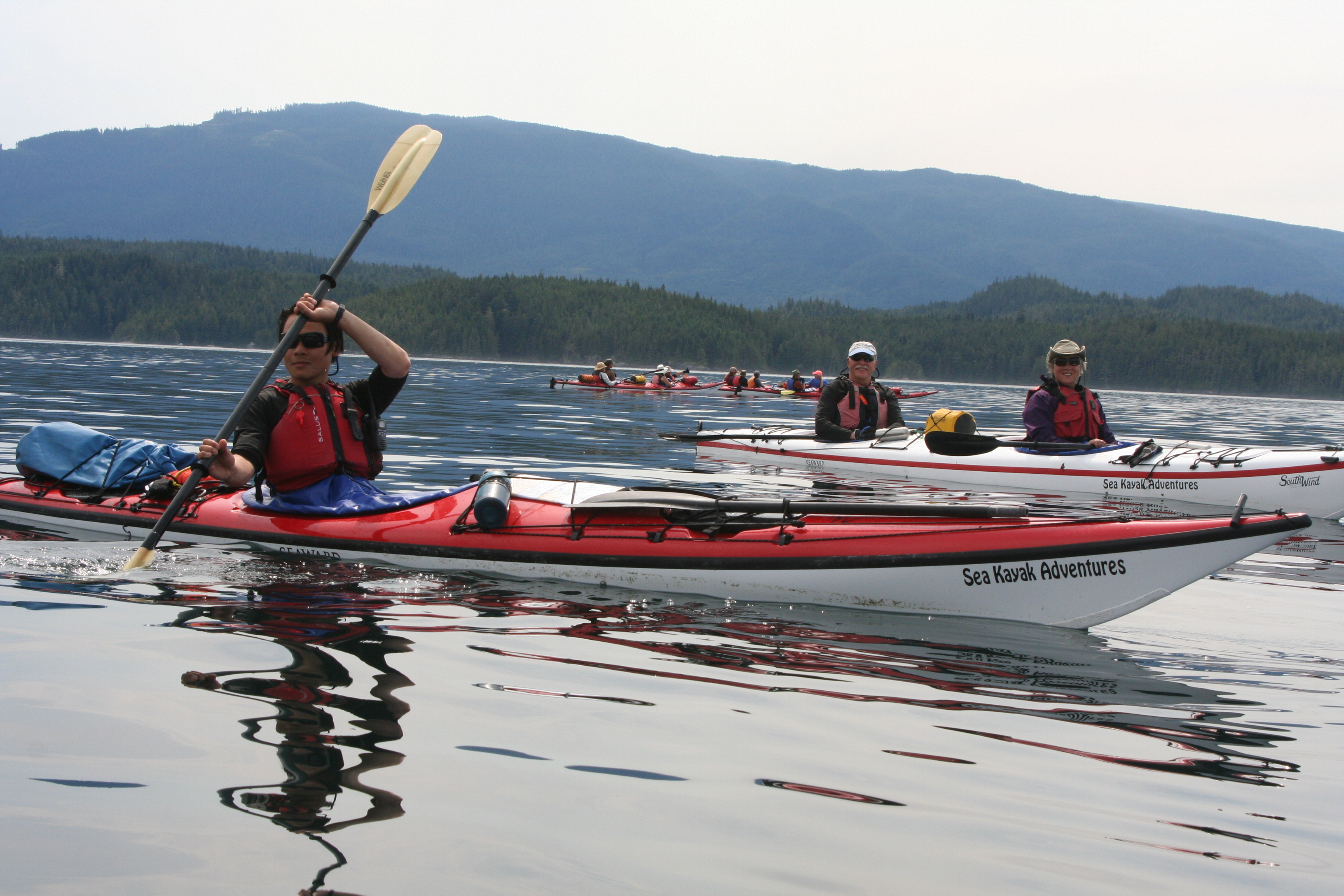
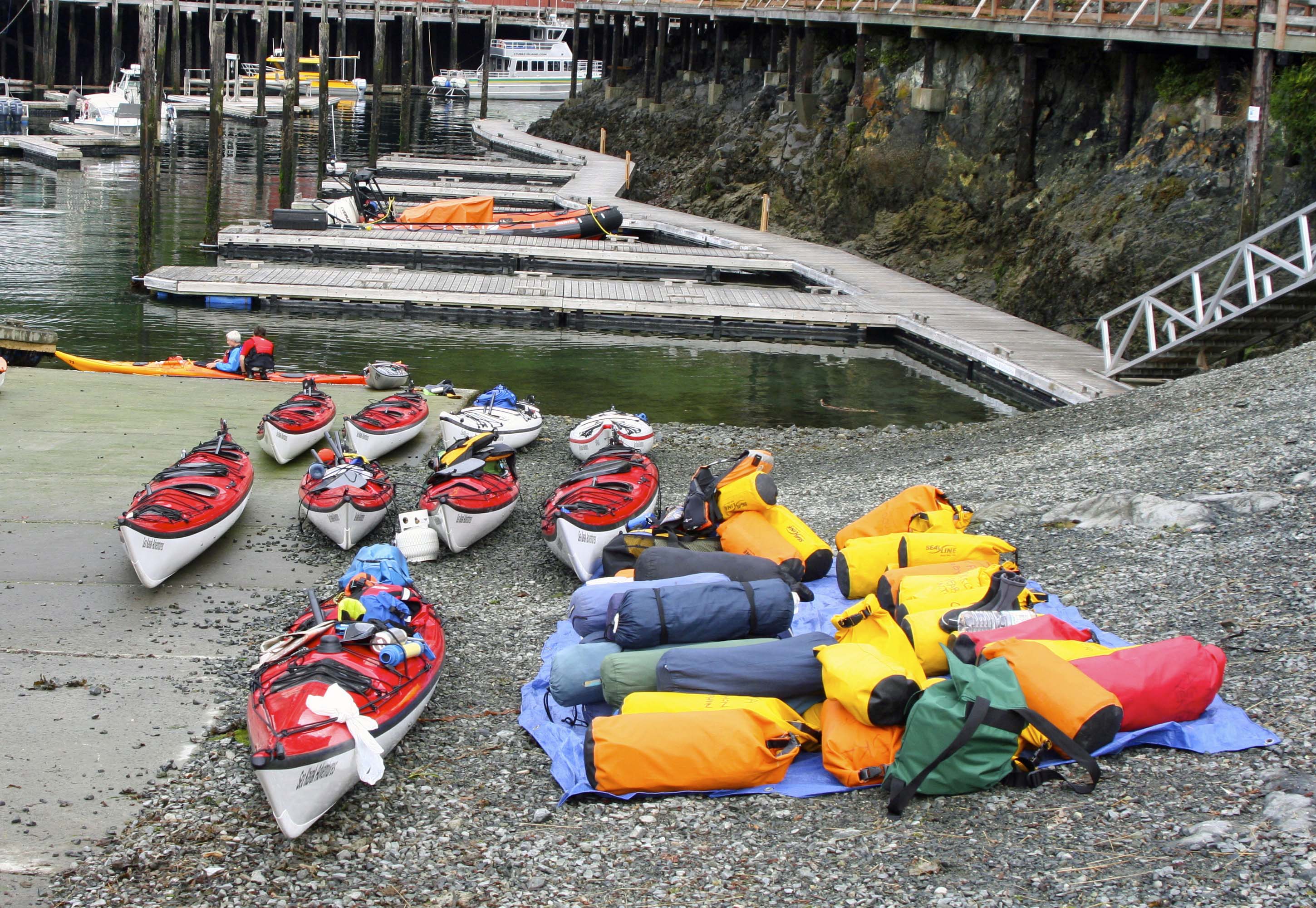
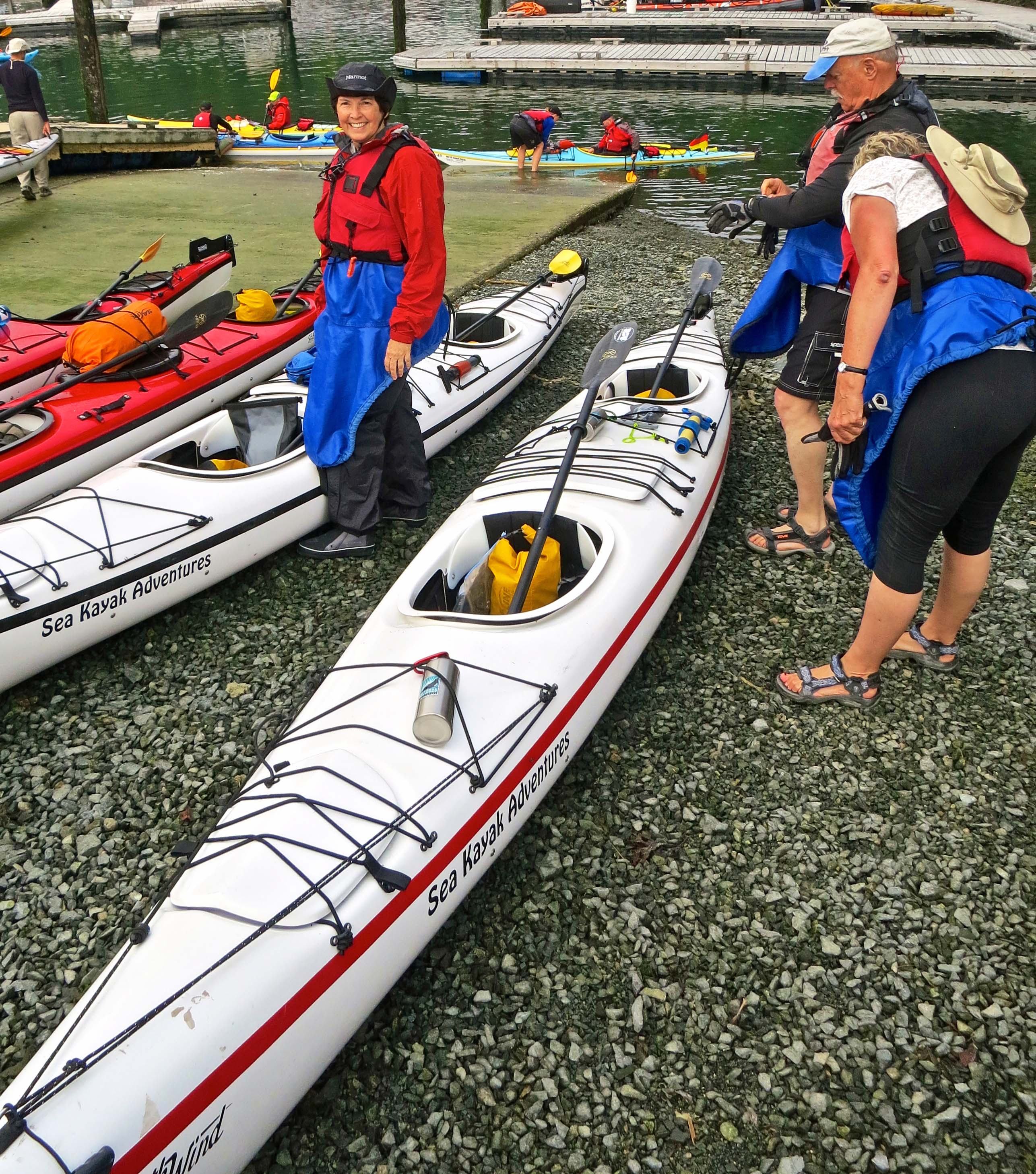
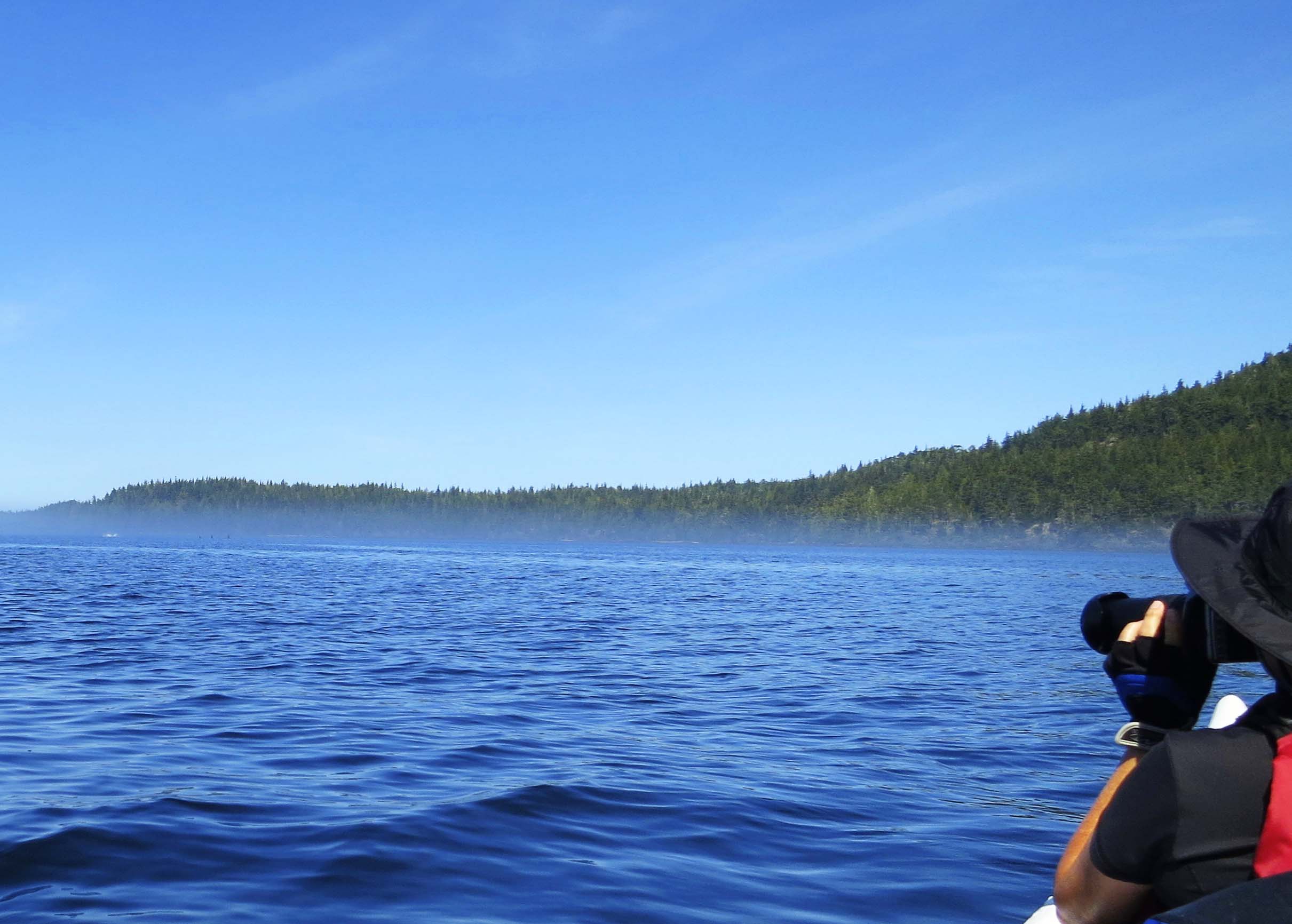
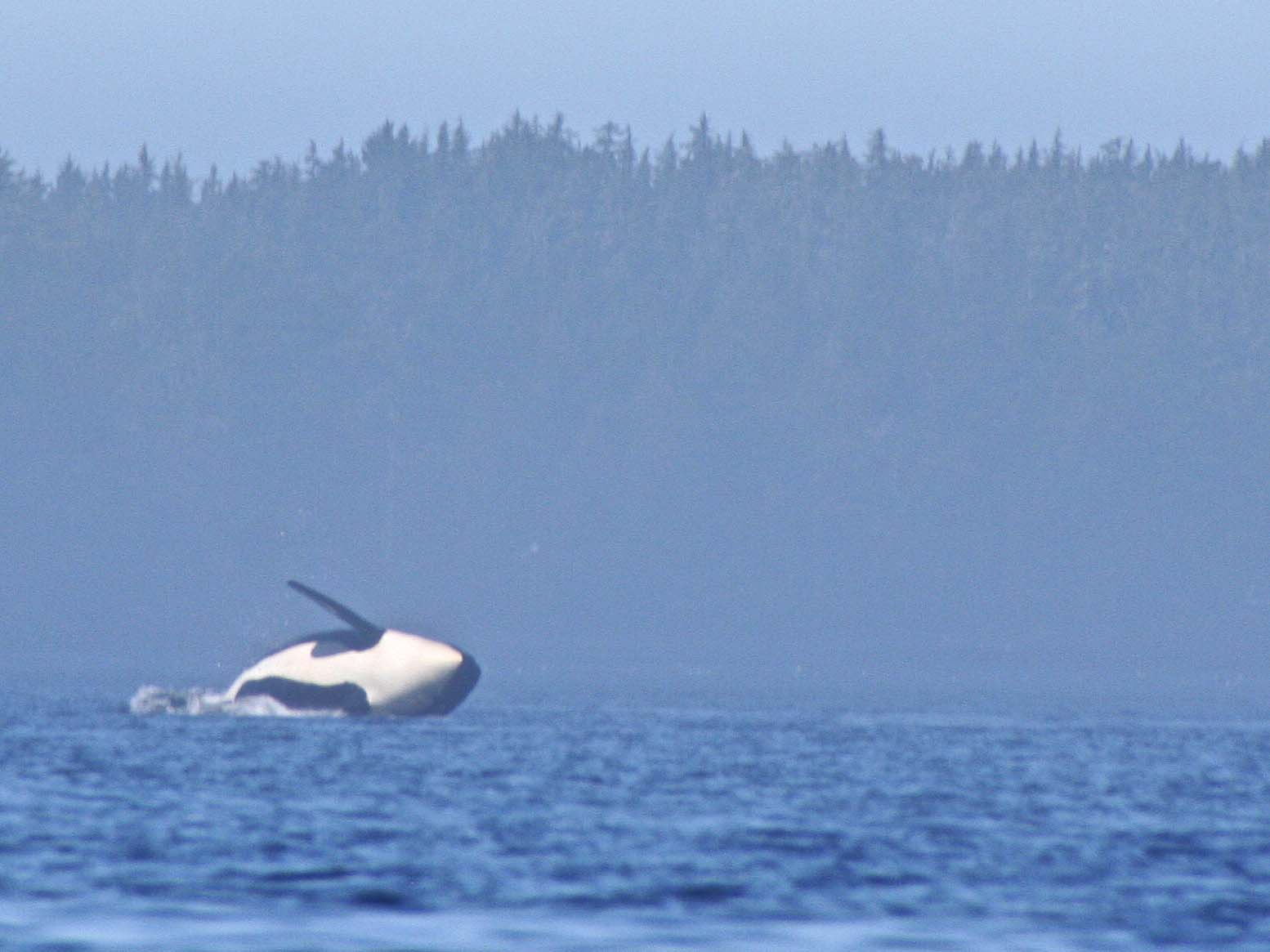
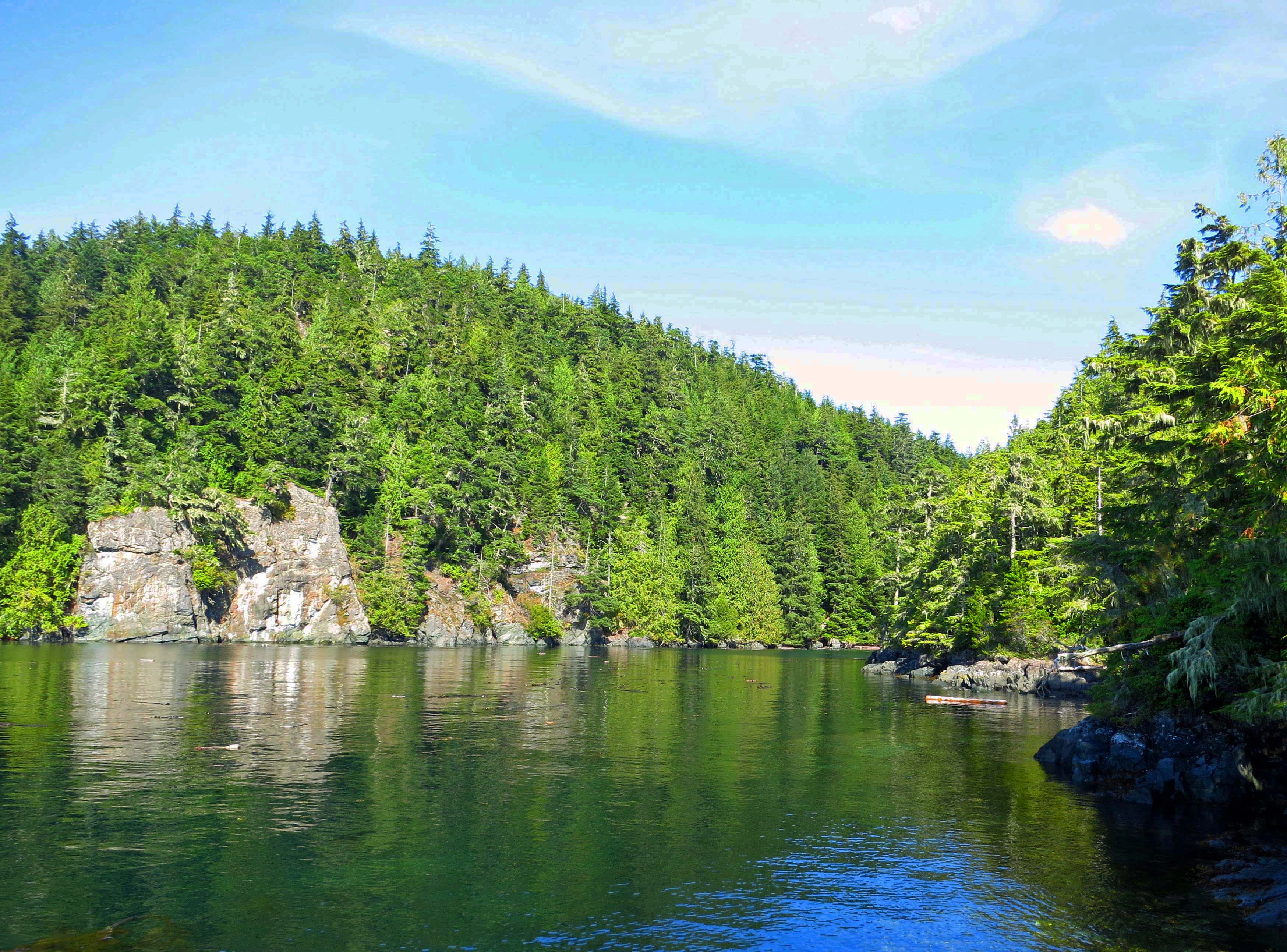
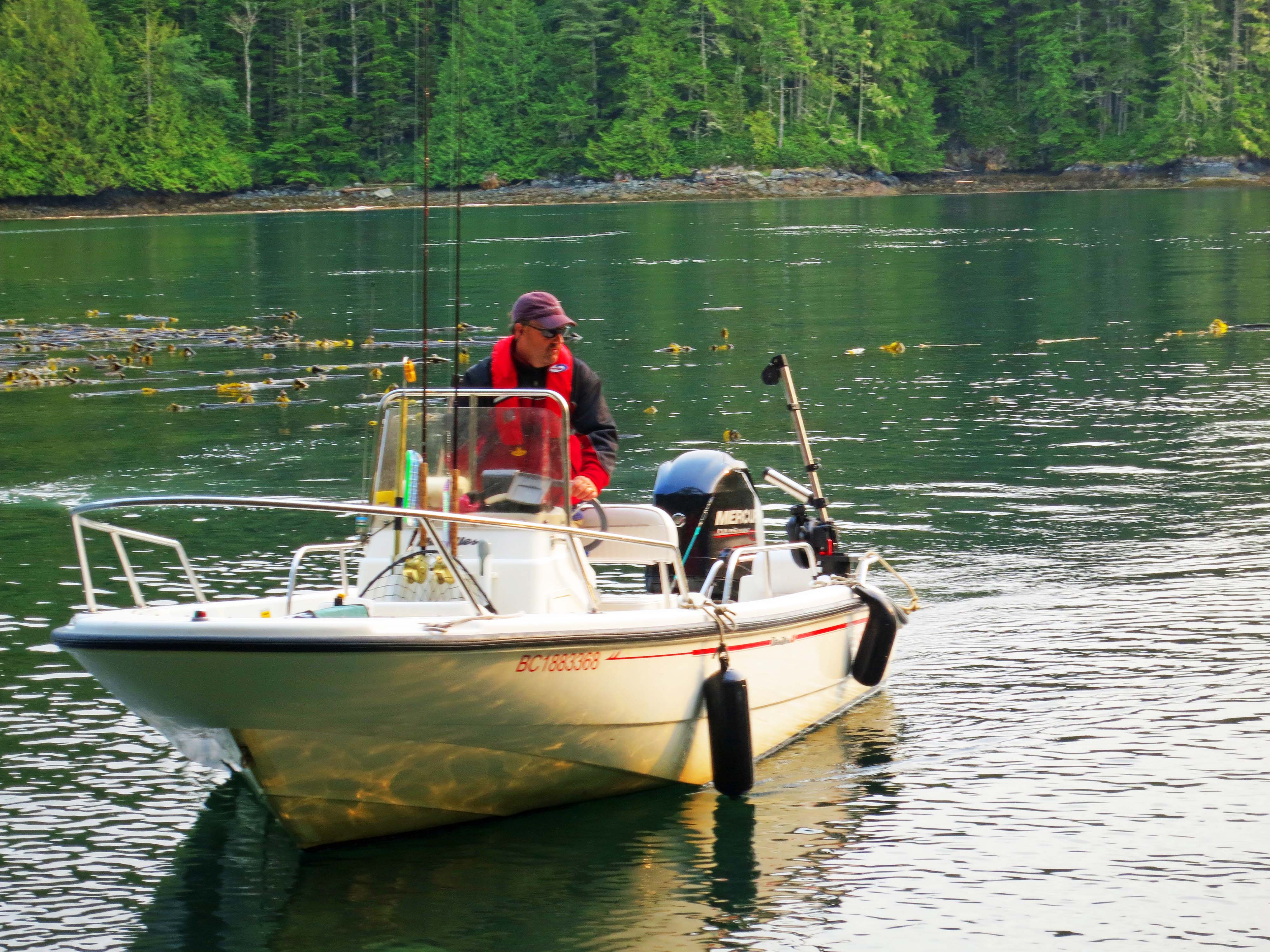
Peggy and I just came off our kayaking adventure out of Fort McNeil on northwestern Vancouver Island. It was a great trip, complete with Orca Whales, good folks, and great food. I am sure there will be several blogs on the experience (grin). But now we are madly preparing for Burning Man. We take off today. Imagine jumping from kayaking in the cool waters of the Pacific Ocean to bicycling in the hot desert of Northern Nevada. Woohoo!
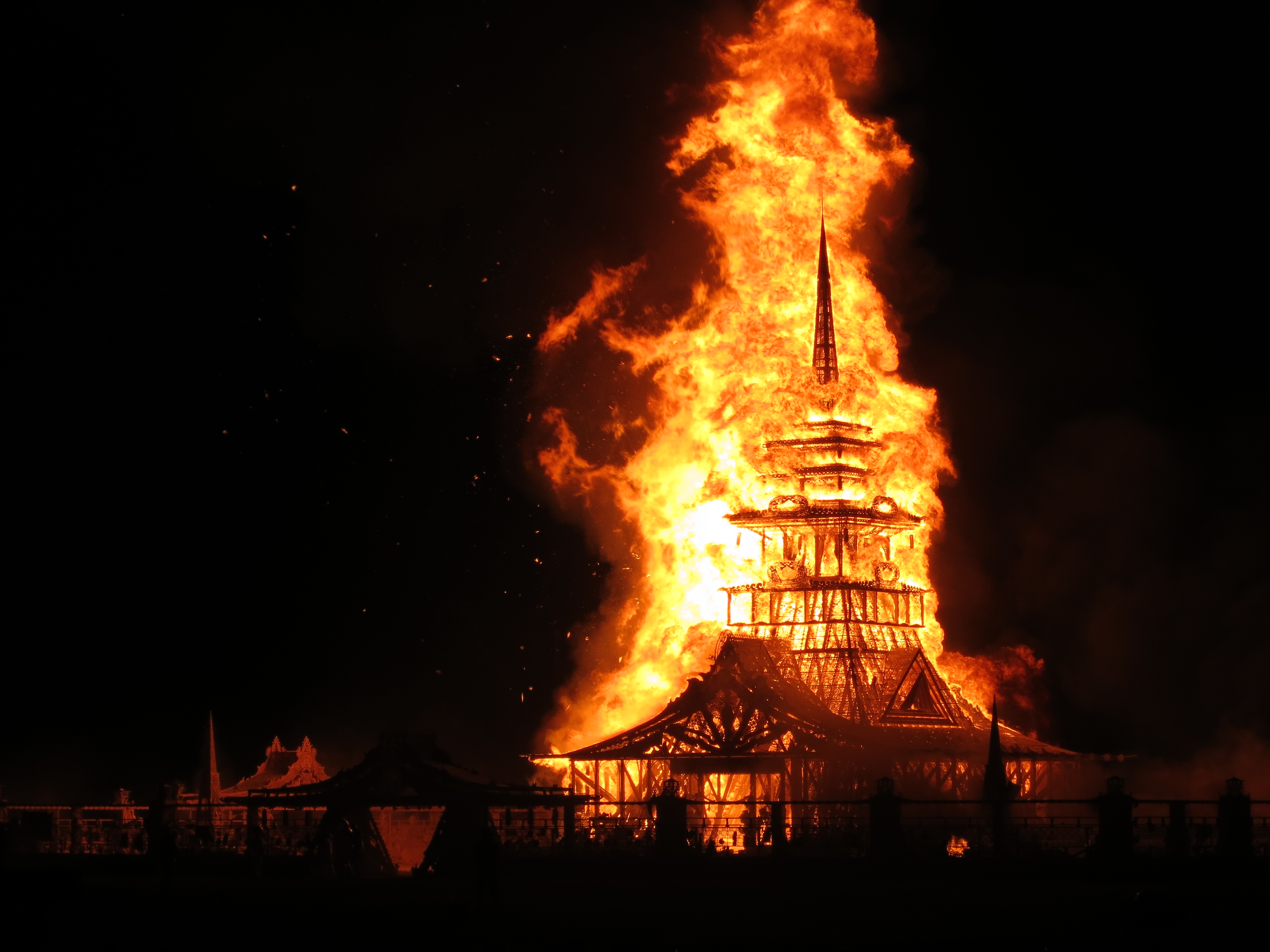
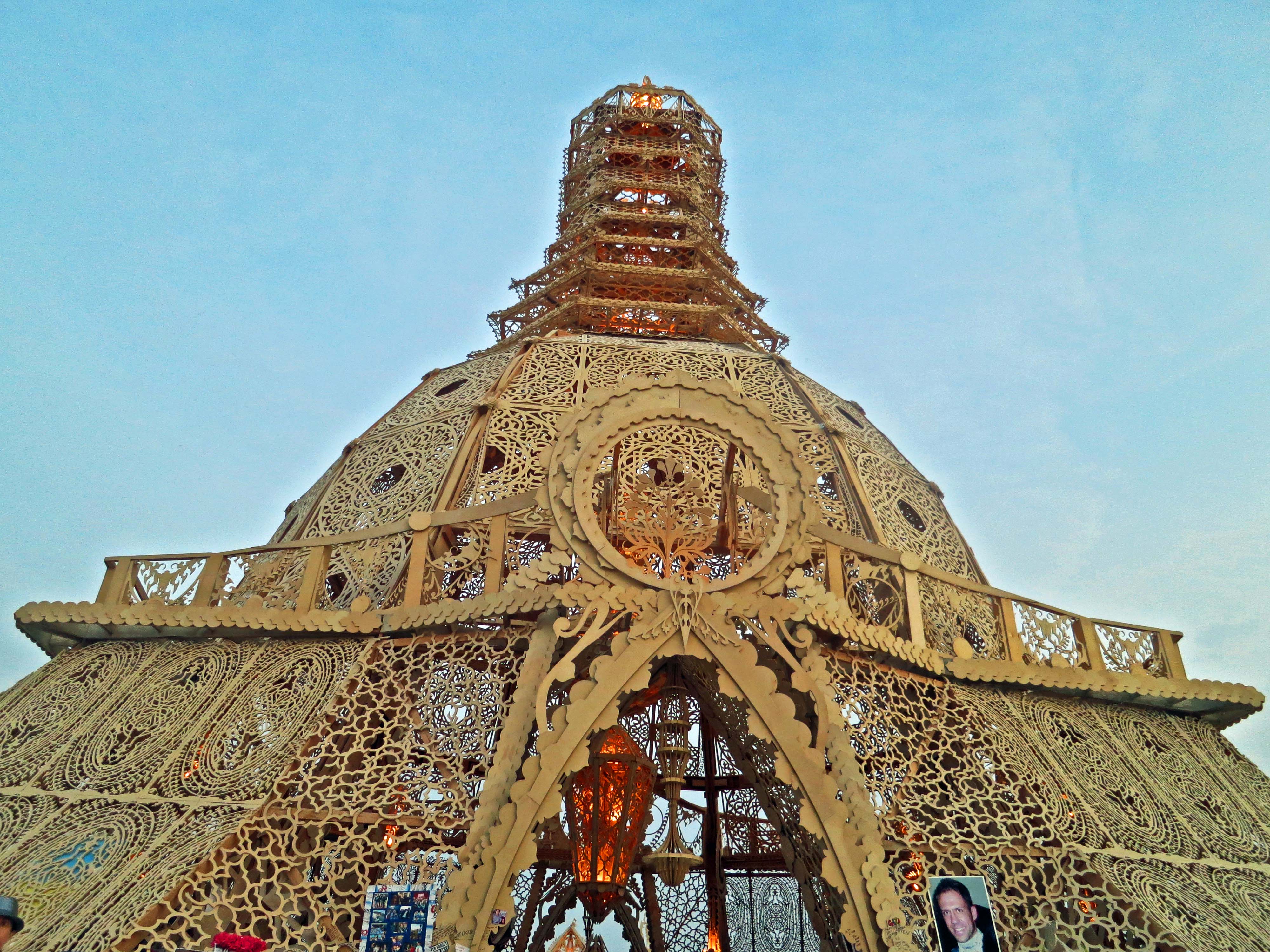
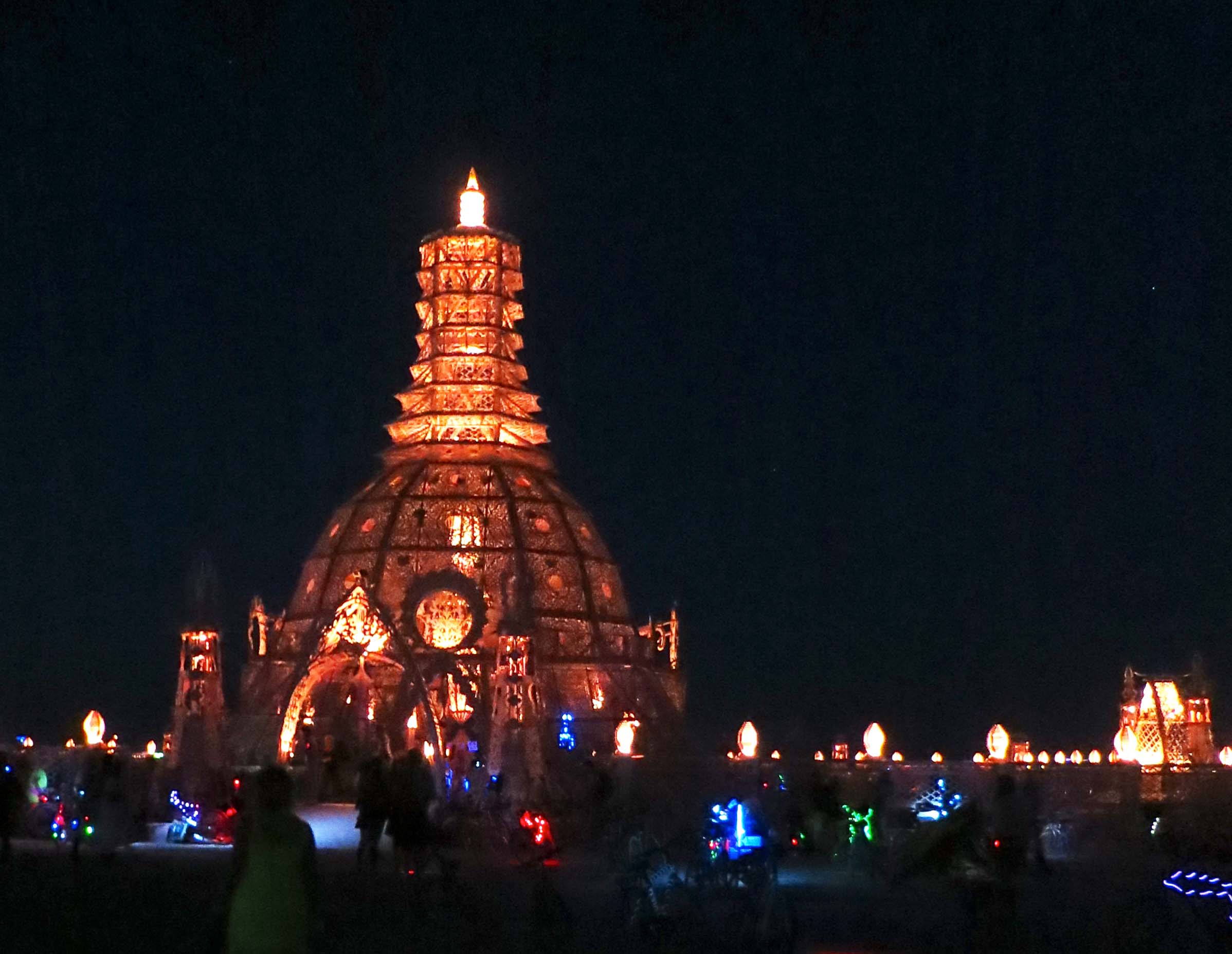
The burning of the Man gives Burning Man its name.

The burning of the Man gives Burning Man its name.

The annual event held in the Black Rock Desert of Northern Nevada ranges from wonderfully whacky to….  (Photo by Tom Lovering)

The art at  Burning Man ranges from wonderfully whacky…. (Photo by Tom Lovering)

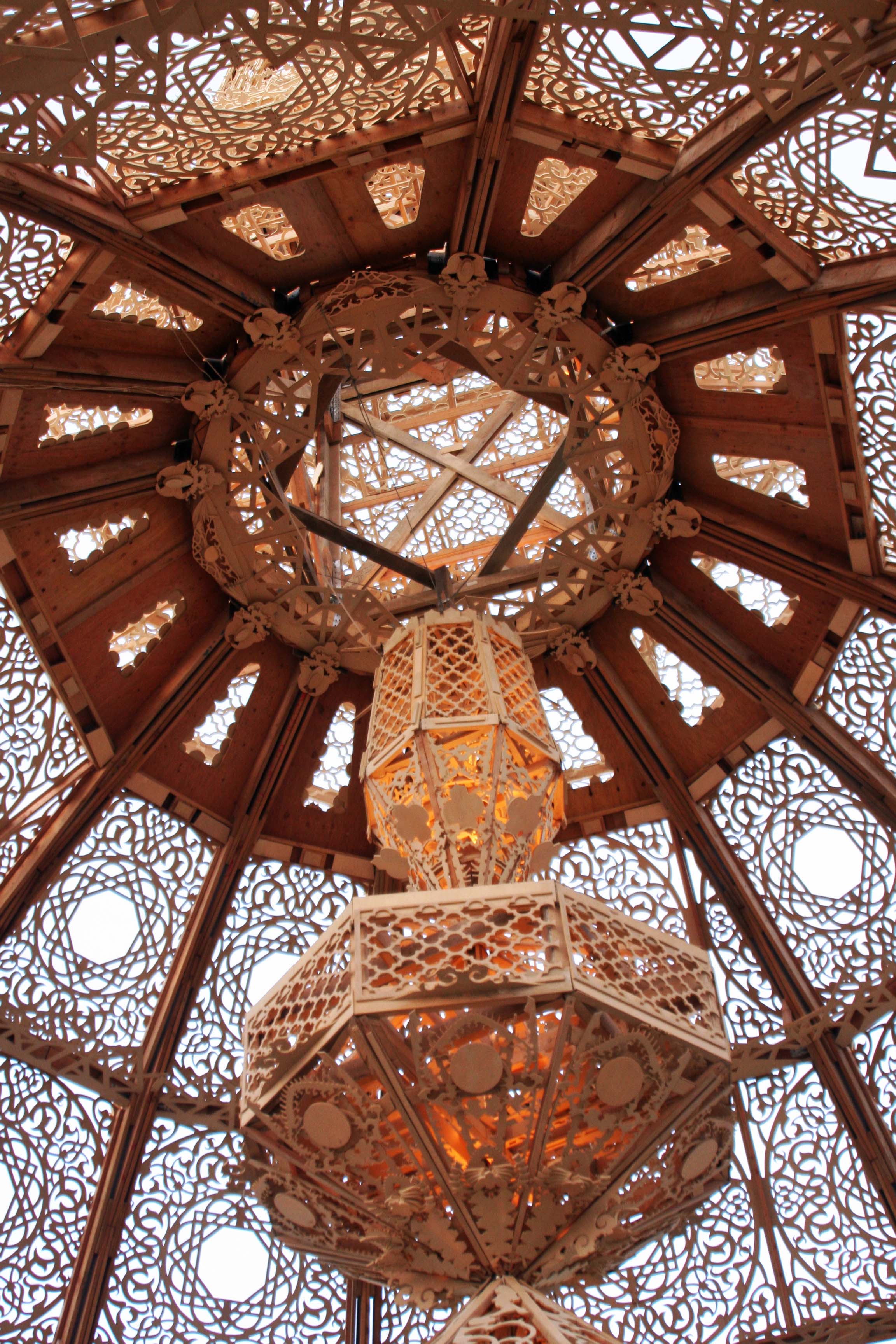
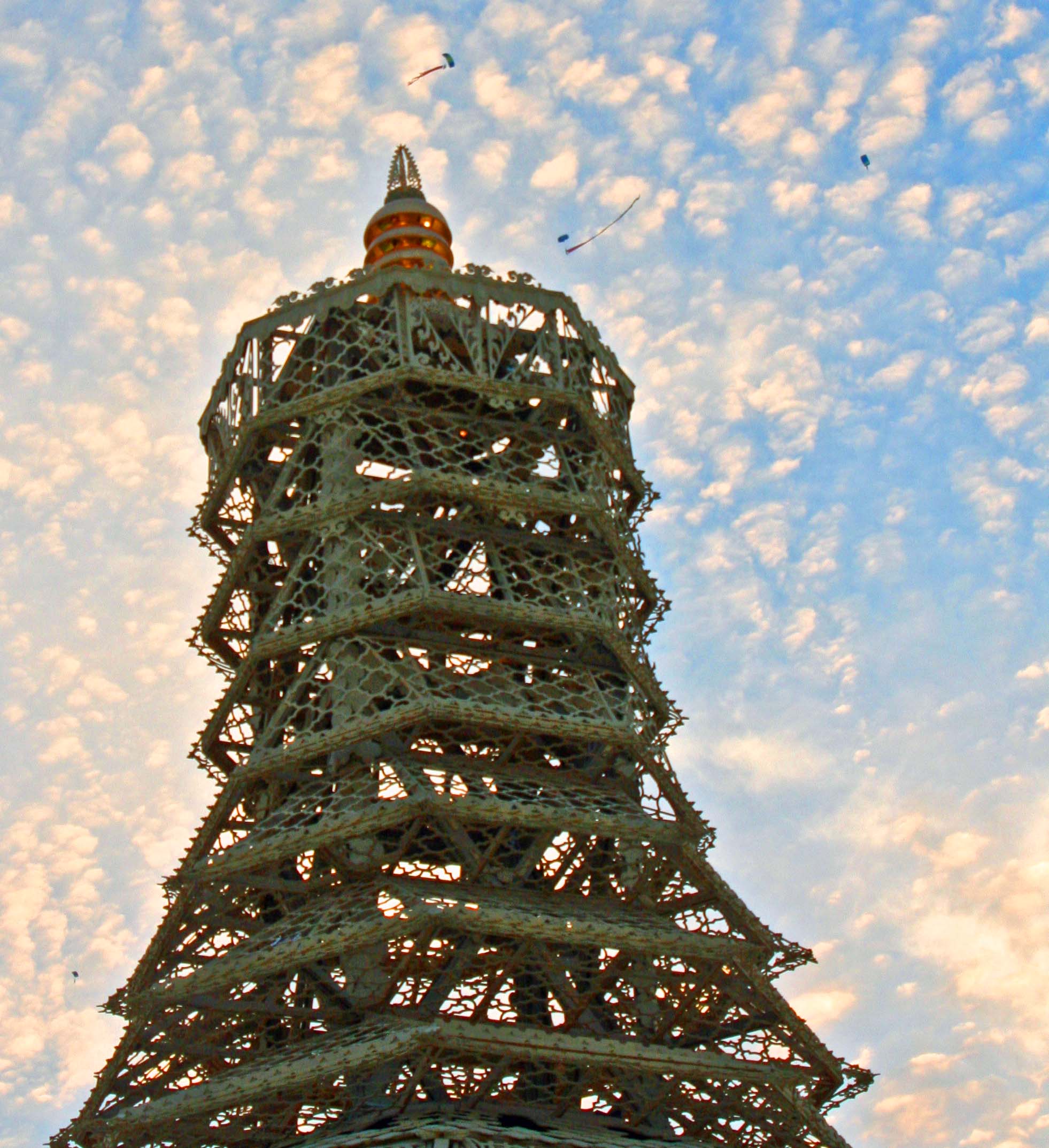
…to magnificent.

…to magnificent.

To fill in on the missed blogs, I thought I would repost some stories on Bone. He is going with us to Burning Man. I suspect many of you have yet to meet him even though he figured prominently in my early posts.

Bone hitches a ride on a willing horse at Burning Man.

Bone hitches a ride on a willing horse at Burning Man.

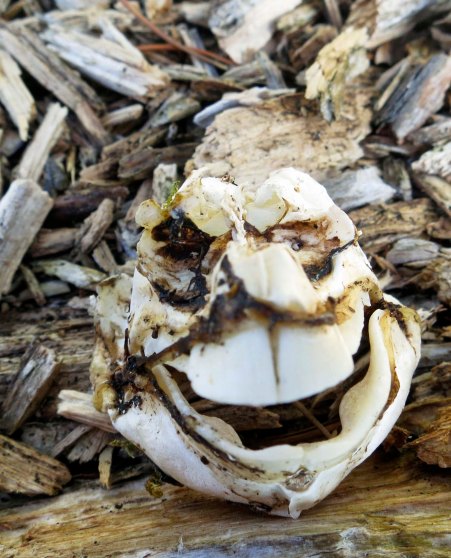
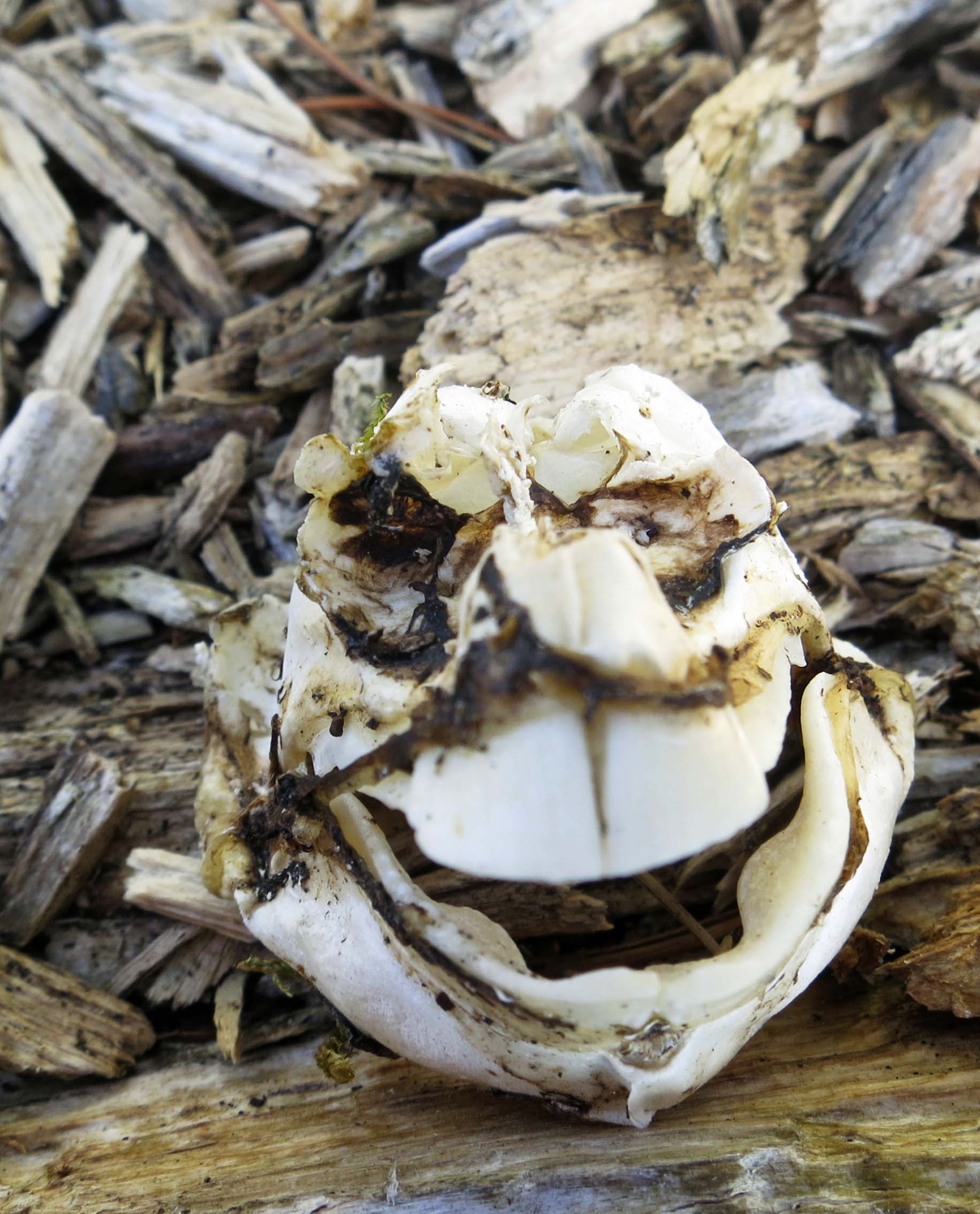
Bone is a diminutive character four inches high and two inches across. Once he was part of a horse, just above the hoof. Now he is free and has an attitude.

Tom Lovering and I found him lounging in a mountain meadow above Lake Tahoe when we were backpacking the Tahoe-Yosemite Trail in 1977. He has been wandering the world ever since. He began his travels with Tom on a two-year exploration of Asia, Africa and Europe in the early 80s and then joined me on my six month 10,000 mile solo bicycle trip around North America.

And that’s just the beginning.

In 1990 the International Society of the Bone was created in Mazatlan, Mexico and Bone began wandering with others. He traveled with a women’s group to the top of Mt. Kilimanjaro in Africa and the base of Mt. Everest in Nepal, went deep-sea diving in the Pacific and Caribbean, attended a Presidential Press Conference with Bill Clinton (Is that a bone in your pocket?) and was blessed by the Pope in St. Peter’s Square. He had a close encounter with Piranhas on the Amazon, was kidnapped in Mexico and was seized by a custom agent in New Zealand. He has been to Burning Man 9 times.
Bone looks out on Mt. Everest in Nepal.

Bone looks out on Mt. Everest in Nepal.

And poses perilously on the railing of a boat traveling up the Amazon River. I caught him just as he was about to fall into the Piranhnah infested waters.

And poses perilously on the railing of a boat traveling up the Amazon River. I caught him just as he was about to fall into the Piranha infested waters.

Traveling to Mexico, Bone takes a break by resting on Chacmool, where hearts were once offered up as sacrifices.

Traveling to Mexico, Bone takes a break by resting on Chacmool, where hearts were once offered up as sacrifices.

Checking out the rapids of the Little Colorado River as part of an 18 day trip down the Colorado through the Grand Canyon, Bone wears his life vest for safety.

Checking out the rapids of the Little Colorado River as part of an 18 day trip down the Colorado through the Grand Canyon, Bone wears his life vest for safety.

Tom Lovering goes native and wears Bone in his hair on the Colorado River trip.

Tom Lovering goes native and wears Bone in his hair on the Colorado River trip.

The Bone stories I will blog about this week are about how Tom and I found him. I wasn’t into photography at the time, so sorry, no photos.

The Murals that Saved Chemainus… The Vancouver Island Adventure

Homeowner and muralist Dan Sawatzky painted this 3D steam engine chugging out of his house/studio in Chemainus on Vancouver Island, British Columbia. The Number 3 engine was used for hauling logs and is symbolic of the town’s historic lumber industry.

This is another reposting of an earlier Vancouver Island blog. Again, Peggy and I still involved in our kayak trip among the Orcas. I know many of my followers enjoy murals and Chemainus has some great ones. I’ll catch up on comments when Peggy and I get back home– before we zip off to Burning Man. –Curt

“You have to visit Chemainus and see its murals,” the woman from Qualicum Beach urged. We were on the Black Ball Ferry between Port Angeles, Washington and Victoria, British Columbia. While I hunkered down and read, Peggy made new friends. Fortunately, one of us is much more social than the other.

Qualicum Beach is next to Parksville, which was our destination. A thirty-minute conversation generated a long list of restaurants to visit and places to see. I was yanked out of my book to take notes.

Chemainus is an excellent recommendation. This thriving community is located in the Chemainus Valley on the east coast of Vancouver Island about an hour north of Victoria. In 1983 it came close to dying. The primary place of employment, a lumber mill, shut down. 700 of the town’s 4000 residents were thrown out of work.

This is the point where most communities give up. Business and political leaders spend their energy assigning blame instead of seeking solutions. Not so with Chemainus.

“Let’s cover the walls of our town with historic murals,” Karl Schultz urged. It would capture the community’s history, develop local pride, and hopefully encourage tourism. As always, there were naysayers, but Karl’s enthusiasm won out. Today Chemainus is world-famous for its murals and tens of thousands of tourists visit the town annually.

Since it was on our way and we had the time, Peggy and I decided to stop. Good decision. First, I love the story of the small community that has adopted the motto of  “The Little Town that Did.” Second, I really like murals. Following are some our favorites out of the 39 (and increasing). For a complete tour visit www.chemainus.com/arts/murals/Chemainusmurals.htm.

A colorful 1948 view of Chemainus looking down Mill Street toward the bay.

Hong Hing arrived in Chemainus in 1915 and opened his waterfront store. Over time his store would serve as a laundry, grocery store, second-hand store, bootlegging establishment and gambling den. Declining business led him to close his store in 1950 and return to China where he married a younger woman and produced an heir. Black Cat, by the way, is an extinct brand of British/Canadian tobacco.

This mural captures the Chemainus Hospital in 1904 along with two nurses and the hospital cook.

What’s not to love about a band concert?

I’ve included this mural because of its history. In 1939 Chemainus celebrated its 50th anniversary. The float entered by the local Japanese-Canadian Community won first prize. By 1942 all of the community’s Japanese had been removed to Internment Camps. It is one of the darker pages of Canadian (and US) history.

Tent houses provided quick, inexpensive housing for the early loggers, fishermen and miners of Chemainus. When I was growing up in Diamond Springs California, one of my mother’s friends lived in a tent house. As a seven-year old, I was jealous.

This big guy’s face captures both the simplicity and the power of the mural art in Chemainus.

Dressed in their Sunday best, these early residents of Chemainus reflect a time when horses competed with ‘horseless’ carriages as the primary mode of transportation.

This Chemainus mural of First Nation people captures both the original inhabitants of Vancouver Island and their renaissance today. Peggy and I were both impressed and moved by the quality and quantity of First Nation Art during our visit to British Columbia. 

First Nation Totem Poles… North to Alaska

The totem pole of Thunderbird and the Wild Woman of the Woods found in Duncan, British Columbia on Vancouver Island.
Third times a charm. Right? Peggy and I are out kayaking among the Orca whales up off the northern tip of Vancouver Island as this blog is posted. Or I should say reposted for the second time. It’s appropriate given our trip, however. We are in First Nation country and we once again drove through Duncan. And, as many of you know, I am a big fan of First Nation and Native American art. –Curt
Dzonoqua comes sneaking through the woods, hands outstretched, red lips pursed and whistling, “ooh, ooh” to attract small children who have wandered into the forests. Some stories say she eats the whiny ones. She is also known as the Wild Woman of the Woods or Mrs. Bigfoot. Her large, dangling breasts capture the spirit of Salmon. Thunderbird perches on her shoulders. His wings crash together and make thunder; his eyes shoot out lightning.

Peggy and I, along with our friends Ken and Leslie Lake, visited Duncan BC on Vancouver Island to check out the numerous totem poles carved by First Nation artists and placed throughout the town.

The close relation of First Nation people to Bear, Eagle, Raven, Whale, Owl, Wolf, Beaver, Salmon, Otter and other animals stretches back to ancient times. Families would adopt particular animals as their totems and then carve these animals into totem poles. The poles would serve to both protect and instruct the families. Some families were even known to shape shift into their totem animal. (Jacob, morphing into a wolf in the Twilight series, is a modern example.)

The arrival of whites in the Northwest had a devastating impact on the people and culture of the First Nation tribes. Disease wiped out whole populations. The practice of native religion and the carving of totem poles were prohibited. It wasn’t until the 1930s that the art of totem pole carving was revived.
It thrives today. Native artists continue to carve traditional themes but they have also extended their interpretations and honed their skills. While the totem poles and masks still serve as important mythic symbols to First Nation people, they have also become a source of pride to all who live in BC and the Northwest. I might add they have also become an important attraction for tourist dollars.

Duncan BC and native artists have done an excellent job of displaying totem poles representative of the north coast. Visiting the town, located on the Trans-Canada highway halfway between Victoria and Nanaimo on Vancouver Island, is well worth the stop.

To enhance your visit, I highly recommend stopping by the Visitor’s Center and picking up the book, “The Totem Walk of Duncan” written by Joan Chisholm and illustrated by Crysta Bouchard and R. Howe. For more information go to: http://www.downtownduncan.ca/duncan_totem_tourNEW.html

Thunderbird in flight. I loved the bright colors of this totem pole in Duncan BC.

This totem pole in Duncan BC shows the spirit of the First Nation artist in the eagle’s chest. Eagle rests on Whale and has Wolf carved on his flukes. Both Whale and Wolf provide powerful protection for the person resting his hands on the flukes.

This photo provides a detail of the totem pole above. Note the fine detail of the carved fingers.

This totem pole was meant as a thank you from one chief to another. Raven perches on top and delivers the pole. Eagle is under Raven and represents the power of the chief, a member of the Eagle Clan. The chief’s son is next. His open hand symbolizes “thank you.” Raven, like Coyote of the Southwest, is a trickster. Both are among my favorite mythological animals.

Most totem poles are highly symbolic. This is a heraldic pole. The frog on top represents wisdom, the bear below power and courage, and the seal a spiritual being that can travel easily between spiritual and physical realms. The red and black mean strength and protection. I see it as one pole accomplishes all.

The bear’s tongue and wide grin caught my attention in this Duncan BC totem pole. I thought at first he might be sampling the guy he is holding in his paws. Apparently it means he is about to shape shift.

I am struck by the sheer power captured in some of Duncan BC totem poles. This eagle is an excellent example.

A different perspective on Bear. I enjoyed looking at and photographing the specific faces seen on the Duncan BC totem poles.

If it weren’t sacrilegious, I’d name this totem pole face smiley.

And finally, a Duncan BC totem pole I simply couldn’t resist. How could anyone say no to a pose and eyes like this?

NEXT BLOG: We cross the border into Canada and are reintroduced to the delicate art of carving with a chainsaw.

The Chicken Whisperer…

Golden Sex Link Chicken. Photo by Curtis Mekemson.

Boss Hen in all of her feathered glory.

Cluck cluck cluck? Cluck cluck cluck cluck. “Who are you? You are not Bryan,” Boss Hen observed suspiciously. Clearly she was upset. She pecked at my shoe. Cluck cluck! “Take that!” Or maybe it translated “Not edible.” I was still learning Chickenese. Edibility, I discovered, was Boss Hen’s primary criteria for judging everything.

I threw out a handful of chicken scratch (coarsely ground corn), which chickens regard as dessert. I was immediately forgiven for ‘not being Bryan.’ Boss Hen and her three cohorts— the Gang of Four, as I came to know them— begin pecking away at the ground and softly clucking about what a great guy I was.

Four golden sex linked chickens.

The Gang of Four, rulers of the roost.

Portrait of a gang member.

Portrait of a gang member.

Our neighbor Brian had requested that I care for his chickens for a week while he and his family went for a vacation on Vancouver Island in western Canada. Of course I said yes, but I had reservations. My knowledge of chickens was limited to brief encounters as a child and as a Peace Corps Volunteer. Would Bryan arrive home and find that his fowl friends had fed the neighborhood fox?

Our family had raised a few chickens for eating. I had a vague memory of the experience, mainly of chopping off heads, sort of what you would expect a seven-year old boy to remember. But I also recall that my sister Nancy refused to eat them. She had given the chickens names and followed them around, turning over rocks so they could catch any lurking bugs. “I will not eat my pets,” she had insisted stubbornly. My perspective had been that chicken and dumplings are chicken and dumplings: mmm, mmm good.

My three Peace Corps chicken memories were more vivid. First, a Peace Corps staff member had shown up during training in California with a crate of live chickens, a hatchet, a large pot, and a box of matches. “Here’s dinner,” he had announced casually. We were left to work out the details. Second, I returned to my home in Gbarnga, Liberia after a trip and discovered a chicken roosting on our stove. It had pooped all over the kitchen. I gladly ate her. Finally, there was the rooster who crowed under our window at 5:00 a.m. each morning and then ran like hell because I kept a bucket of water ready to throw on him. I’ve blogged about these adventures. You can follow the links for the complete stories.

The rooster in Liberia convinced me that chickens are relatively intelligent birds. A February 2014 article in Scientific American confirmed this. The article reported that, “The birds are cunning, devious, and capable of empathy. And they have sophisticated communication skills.” A rooster, for example, will squawk a special warning to hens and chicks if he spots a hawk flying over. The same rooster alone in the chicken yard with a competing rooster doesn’t utter a peep, but takes evasive measures, leaving his unsuspecting competition alone with the plunging hawk. Bye, bye.

My wife Peggy and I went up to Bryan’s for instructions on Chicken Care 101 before he left. He introduced us to his brood. One pen contained the Gang of Four, all egg laying, another six younger hens, and a hormone-driven, teen-age rooster who couldn’t stop crowing about his intentions. The second pen was filled with young roosters destined to being eaten. We were to watch the chickens’ water and food, which wasn’t a problem. Bryan had labeled the food bags. But he also wanted us to let the Gang of Four and their cohorts out each morning to wander about the yard to supplement their diet. Fine, I could handle that, but what about getting them back in the pen at night?

“Not a problem,” he assured us. “The chickens will return to the pen on their own at dusk.”

“And if they don’t?” I insisted. Apparently I was to take his blue plastic bucket, throw in a couple of handfuls of scratch, and then walk into the pen while shaking the bucket. The hens and rooster would follow. I’d be the Pied Piper of Chickendom. Yeah, right. Our instructions in place, Bryan left on vacation. We were left with the chickens, his undying gratitude, and whatever eggs the chickens laid.

I’ve already described my encounter with the Gang of Four on the first morning. The younger hens had made a dash for the cover of a low-limbed Douglas fir where they liked to hang out. The randy teenage rooster took advantage of the moment to pin one of the young hens to the ground— squawk. It was over in five chicken-clucking seconds. The Gang of Four ignored the ruckus. Any time the rooster approached them, they kicked his tail feathers half way across the yard.

The rooster was quite handsome. And he knew it. Here, he was about to go under the Douglas fir where the young hens were hiding out.

The rooster was quite handsome. And he knew it. Here, he was about to go under the Douglas fir where the young hens were hiding out.

A close up of the rooster dude.

A close up of the cool rooster dude.

Letting the chickens out was a no-brainer; getting them back in lived up to my worst fears. When I arrived that evening, the four older hens were happily pecking away in the chicken pen as advertised. Everyone else was still out and about, taking advantage of unsupervised time. I dutifully went to the garage, put scratch in Bryan’s blue bucket, and started shaking it near where the younger chickens were hanging out. Being teenagers, they ignored me. Not so the Gang of Four. They came rushing out of the pen. Great. Now everyone was milling about outside.

I shook the plastic bucket and headed for the pen. The Gang of Four and three of the younger hens actually followed me. I sent a brief prayer wafting skyward to whatever god the chickens worshipped and threw a handful of scratch on the ground for thanks. More importantly, the scratch would occupy the girls inside while I worked on enticing the hens and rooster still outside.

Squawk squawk squawk squawk! Cluck, cluck, cluck!” “Oh no you don’t! No, no, no!” A skirmish was going on under the Douglas fir. Feathers were flying. Damn, I thought, the fox has arrived. I dropped the bucket and ran for the tree. Three hens burst out from under the limbs, dashed for the pen, flew up the ramp, and disappeared into the coop. Boy were they fast. Their nemesis— the rooster— followed in hot pursuit. So much for my fox theory. I laughed out loud. Lust had corralled the remaining chickens. I threw the gate closed.

Only two chores remained. Bryan had asked that I make sure that the chickens were locked up safely in their coop, not just the pen. The fence that surrounded and covered the pen showed a large dent. Apparently some animal was trying to break in during the night.

I made a shooing motion at the chickens and everyone except the Gang of Four made for the coop. Boss Hen looked up at me expectantly and clucked. She couldn’t be shooed but maybe she could be bribed. I walked over to the coop and threw a handful of scratch in the small door. About half missed and fell on the porch.

A close up of Bryan's chicken coop. The box on the side is for egg-laying.

A close up of Bryan’s chicken coop. The box on the side is for egg-laying.

The four large hens rushed over and began pecking away. The rhythm sounded familiar: — — .-. . / … -.-. .-. .- – -.-. …. Could it be Morse code? Could the Gang of Four be pecking out “More scratch.”? Nah, I decided, even though the hens looked hopefully at the blue bucket. Finally, they decided that the bucket was empty and rushed into the coop to clean up anything the rooster and hens had missed. I shut the door and breathed a huge sigh of relief.

My final chore was to check in on the roosters next door who were destined for a date with a chopping block in the near future. I opened the door carefully to make sure none escaped. They were a handsome group of youngsters. They looked up at me curiously. Their food and water was fine, so I decided to share a bit of Hobbesian Philosophy.

The young roosters listened carefully to my sage advice.

The young roosters listened carefully to my sage advice.

I warned this young fellow that sticking his neck out might be hazardous to his health.

I warned this young fellow that sticking his neck out might be hazardous to his health.

“Life is nasty, brutish and short, guys,” I told them. I didn’t have the heart to tell them just how short their life would be. “I would advise you to live in the moment, to take advantage of the time you have.”

“So, send in the chicks,” one clucked to unanimous agreement. The guys spent their day watching the hens in the yard and crowing about true love, or at least a quickie. One of the Gang had actually flown up to check them out. I wasn’t sure whether she was interested in a specific rooster or all of them. I told the youngsters I would think about their request and headed home for a well-earned beer.

Thus ended my first day of being a chicken farmer. There would be several more adventures during the week, but by the end the chickens and I had developed a working relationship. As for the Gang of Four, we had become close. Any time I showed up, they came running and clucking, filling me in on the latest news and gossip. I had become more than a source of scratch; I had become their friend— a Chicken Whisperer.

An inside view of Bryan's chicken coop, which he built, BTW. The exotic looking chickens here are supposed to lay blue eggs.

An inside view of Bryan’s chicken coop, which he built, BTW. The exotic looking chickens here are supposed to lay blue eggs.

I caught this member of the Gang of Four laying an egg. I don't think she was happy about being photographed.

I caught this member of the Gang of Four laying an egg. I don’t think she was happy about being photographed.

Part of our pay for taking care of the chickens. The Gang laid between three and four eggs a day.

Part of our pay for taking care of the chickens. The Gang laid between three and four eggs a day.

It's only appropriate that I conclude this blog with a bird's eye view of Boss Hen.

It’s only appropriate that I conclude this blog with a bird’s-eye view of Boss Hen in her favorite position of pecking up scratch.

NEXT BLOG: Peggy and I are off again. No surprise there, eh. This time we are heading for Port McNeill on the northern coast of Vancouver Island, British Columbia for a week-long kayak trip out among the Orca Whales. We will then dash home and go to Burning Man. That should provide an interesting contrast— moving from the cool and wet ocean to the hot and dry desert! All this means there will be lots to blog about but no time to blog, not to mention no Internet. I do hope to get one blog up on Mt. Rainier National Park, where we were last week, and another up on some of my favorite Burning Man pictures. Maybe. 🙂 Thanks for stopping by, friends. See you in September if not sooner. –Curt

A Journey Underground… Oregon Caves National Monument

Rock formations in Oregon Caves National Monument.

Unusual rock formations created by minerals from dripping water led the Oregon Caves to be set aside as a national treasure in the early 1900s.

Claustrophobia: A fear of confined places

Acrophobia came up in my blog about Mt. Whitney. No surprise there, thousands of feet are between the hiker and a rather unfortunate landing. Splat! It’s a reasonable fear. Claustrophobia is just as real as fears go, but more irrational. The odds of being squished in a tight space— unless you are Indiana Jones or a misplaced wookie caught in a starship’s garbage disposal unit— are between slim and none. Don’t sweat it, right?

Try telling that to someone who is claustrophobic. I suggest you don’t stand between her and the exit. I get it. I am not particularly fond of enclosed spaces myself, whether they are physical or mental. I don’t like driving through tunnels and I hate freeway construction where imposing cement barriers shrink down to your vehicle’s width and provide a view of what hell is like. And that’s even before the gigantic truck comes barreling down on you and breathes fire up your tail pipe because you insist on driving 45 MPH in a 45 MPH zone. At least I can take my revenge when they put up plastic cones instead of cement barriers, as Peggy might tell you. Crunch. Curt strikes another blow for freedom.

Where does this leave me with caving, or spelunking, as the sophisticates call it? How do I feel about getting down on my belly and crawling through a space my skinny fourteen-year-old body would have gotten stuck in several hundred feet under ground? Not a problem; it’s not on my to-do list. But for some unfathomable reason, the standard well-known cave tours don’t bother me. In fact, I find them fascinating. Stalactites and stalagmites tickle my fancy and stir my imagination.

Photo showing how stalactites grow in Oregon Cave National Monument.

These small stalactites show tiny drops of mineral laden water that come down from a tube in the center of the stalactite. They will add about an inch of growth in a thousand years. (Photo by Peggy Mekemson.)

This photo from Oregon Cave National Monument shows the development of stalactites (coming down) and stalagmites (coming up). Eventually they meet, as demonstrating on the left. (Photo by Peggy Mekemson.)

This photo from Oregon Cave National Monument shows the development of stalactites (coming down) and stalagmites (going up). Eventually they meet, as demonstrated on the left. (Photo by Peggy Mekemson.)

So when Peggy suggested we head off to the Oregon Cave National Monument for her birthday a couple of weeks ago, I readily agreed. We’d been talking about it ever since we moved to Oregon. Except for the last few miles of the road that shot up a mountain and redefined the meaning of curves, the hour and a half drive was quite pleasant.

A ranger greeted us and gave us the bad news. We should expect a two-hour wait. He also wanted to know if we had been in any eastern caves in the last five years. If so— no go. White nose syndrome was wiping out eastern bats. So far their western cousins had lucked out. It had been six years since we had visited Mammoth Cave in Kentucky. We were in by a cat’s whisker.

Our wait turned out to be just over an hour. There was barely time for lunch and a look through the visitor’s center before we found ourselves at the cave entrance shivering from a blast of 44˚ F air. “Cave’s breathe,” our guide stated. He also told us about the 500 narrow stairs we would be negotiating and the low ceilings. I would be bent over double with my size 14 shoes balanced precariously on wet slippery rocks. I looked enviously at a small girl who would be standing up straight with her feet resting solidly on the narrow stone steps. She gave me an impish grin.

Stone steps in Oregon Caves National Monument

Dimly lit stone steps make their way up from what is known as Ghost Cave. The narrowest ones were about half the depth of my size 14 shoes. (Photo by Peggy Mekemson.)

The Oregon Caves are somewhat unusual in that they are made out of marble. Once upon a time they were a coral reef far out in the Pacific. Plate tectonics sent the Pacific Plate diving under North America and scraped off portions of the ocean floor some 100 million years ago, adding new land to the continent. The tremendous heat and pressure involved changed the lime into marble. Folding, faulting and water created the caves.

This map shows the location of Oregon Caves National Monument.

This map shows the location of Oregon Caves National Monument. (Center Right)

Lit up stalactites in Oregon Caves National Monument.

Artificial lighting adds to the magic of caves.

Another example of the impact of lighting. The rock on the left had been signed by all of the members of a geology class that had visited in the 1800s. Strict rules are now in place to protect the cave.

Another example of the impact of lighting. The rock on the left had been signed by all of the members of a geology class that had visited in the 1800s. Strict rules are now in place to protect the cave.

Unusual stone structure in Oregon Caves National Monument.

This unusual structure caught my camera’s attention.

Ghostly rock waterfall at Oregon Caves National Monument.

Peggy captured this ghostly rock waterfall. (Photo by Peggy Mekemson.)

Cave exit at Oregon Caves National Monument.

A view of where we came out from our 90 minute tour.

Standing on top of the mountain that contains Oregon Caves National Monument.

Tour over, Peggy and I stand on top of the mountain that contains the caves. This photo gives a perspective on the surrounding countryside.

NEXT BLOG: Peggy and I are headed off for a brief hiking tour at Mt. Rainier National Park for the next several days so I may be out of computer range. When I come back I will report on my recent experience as a chicken farmer: The Chicken Whisperer.