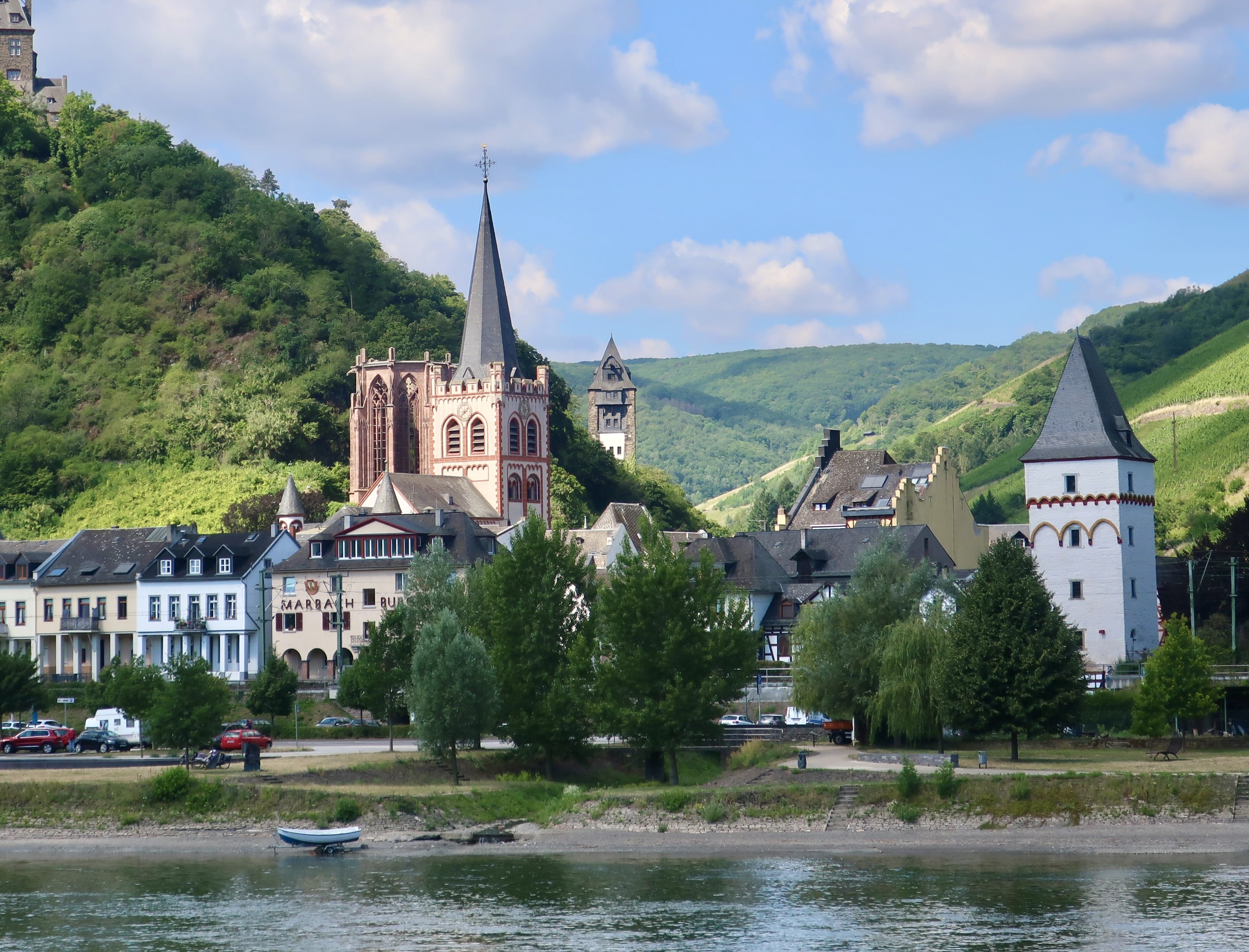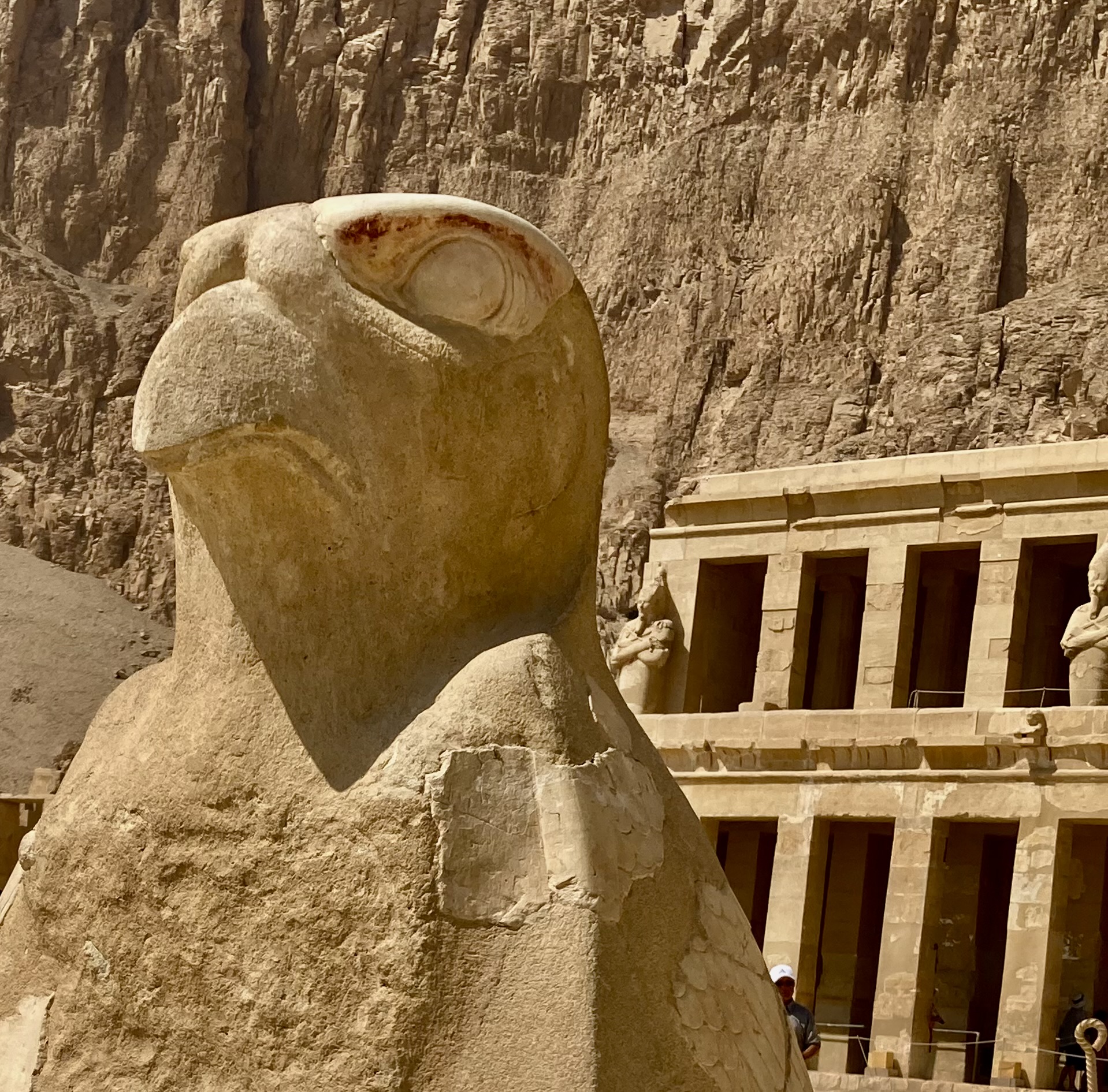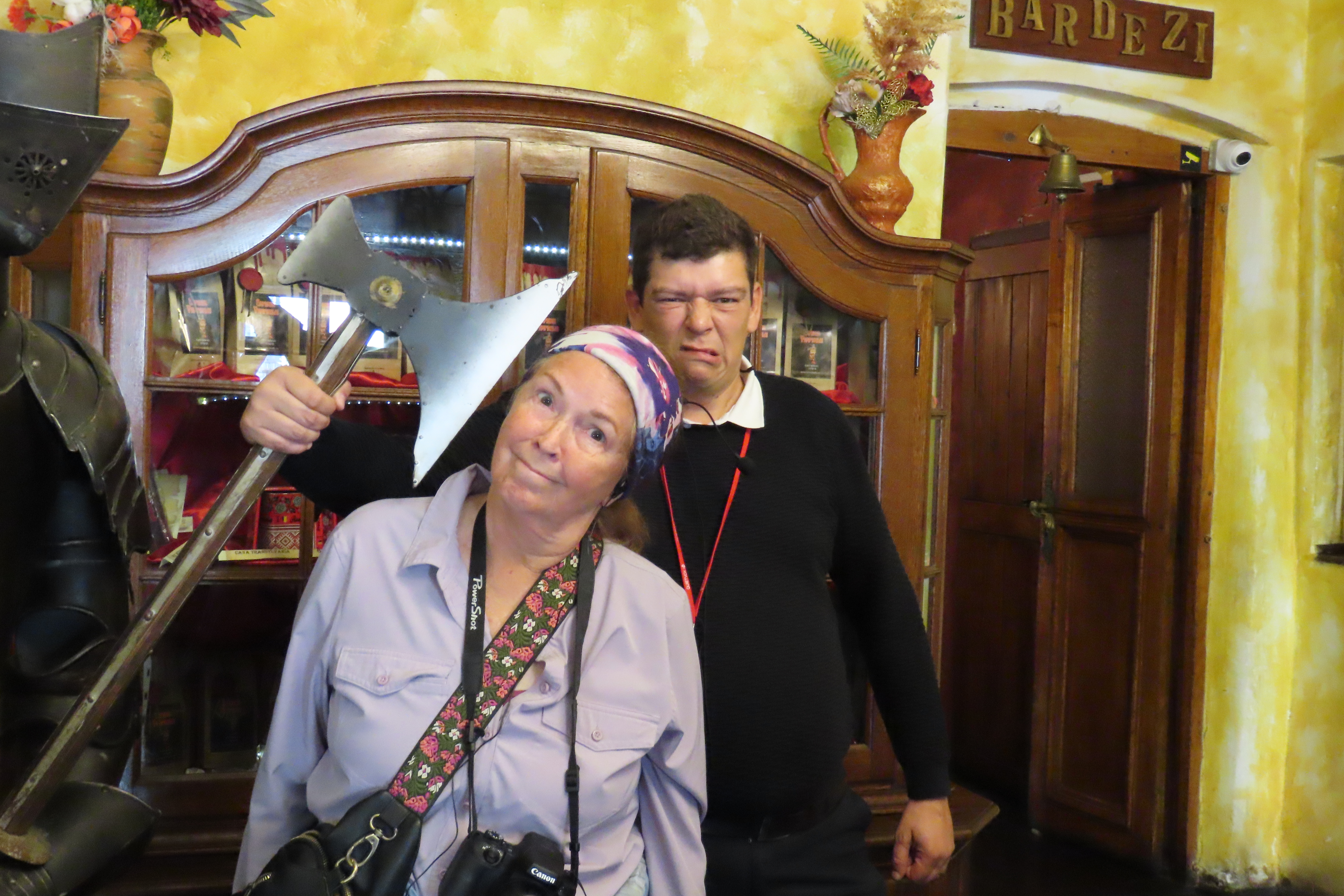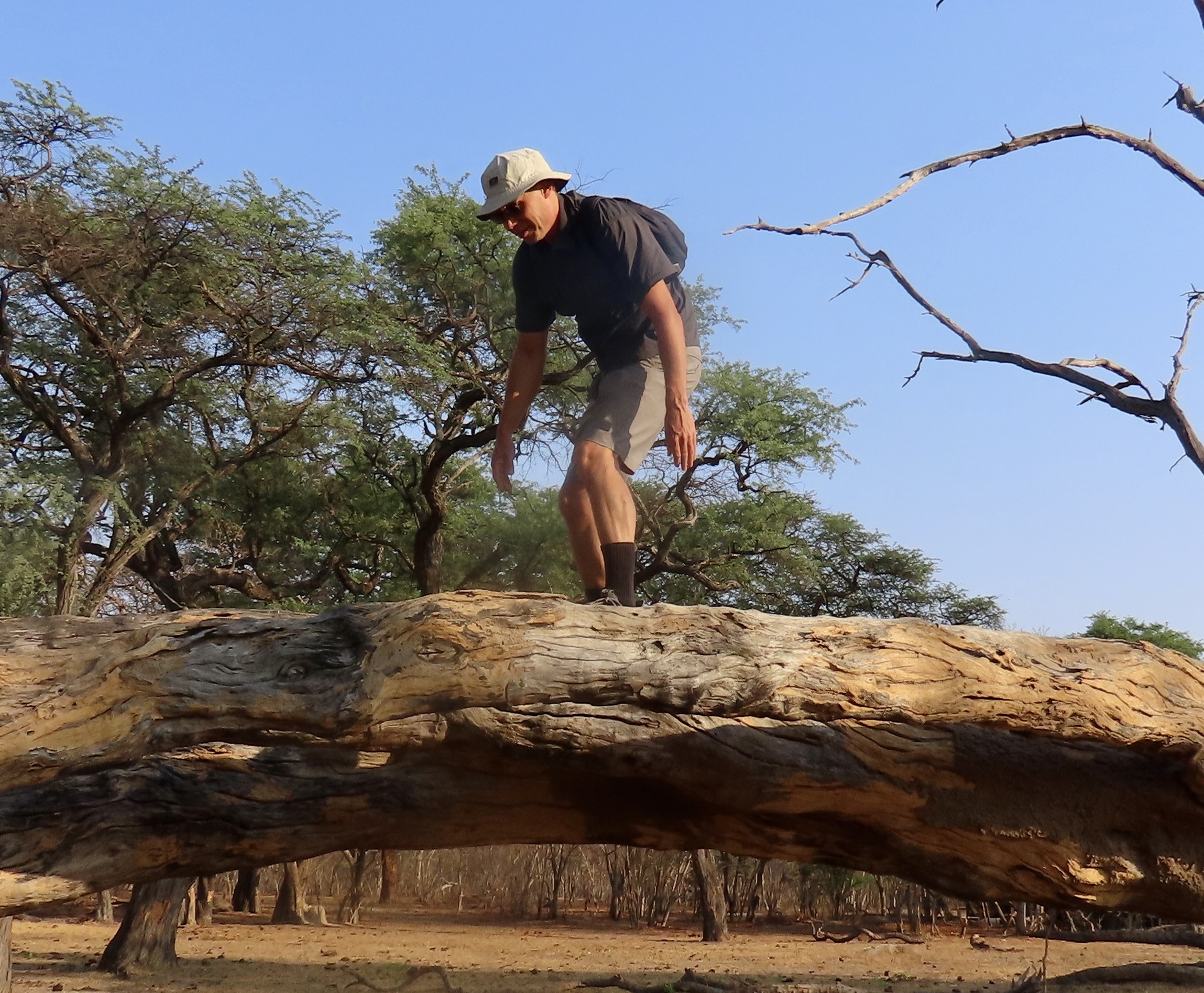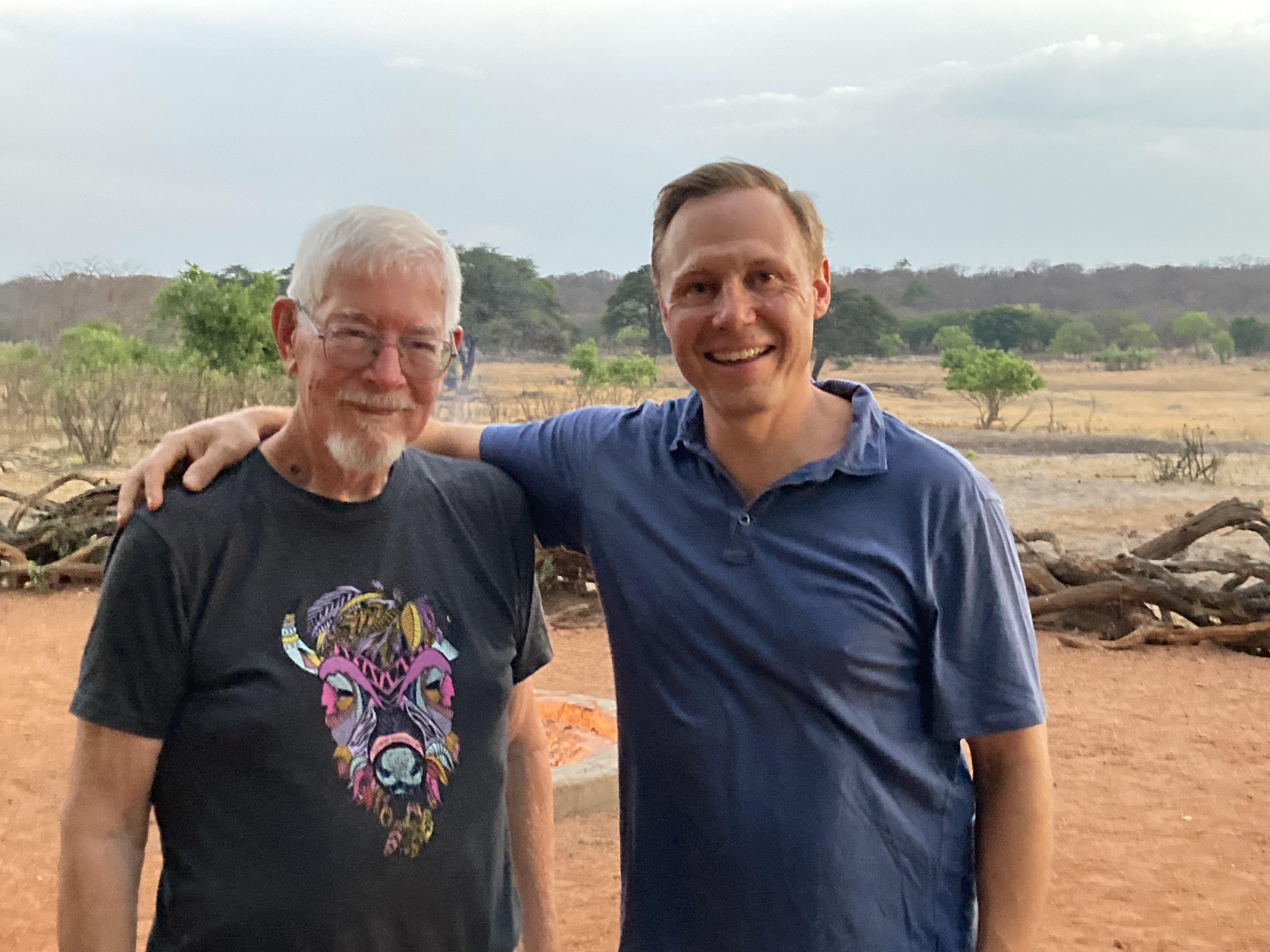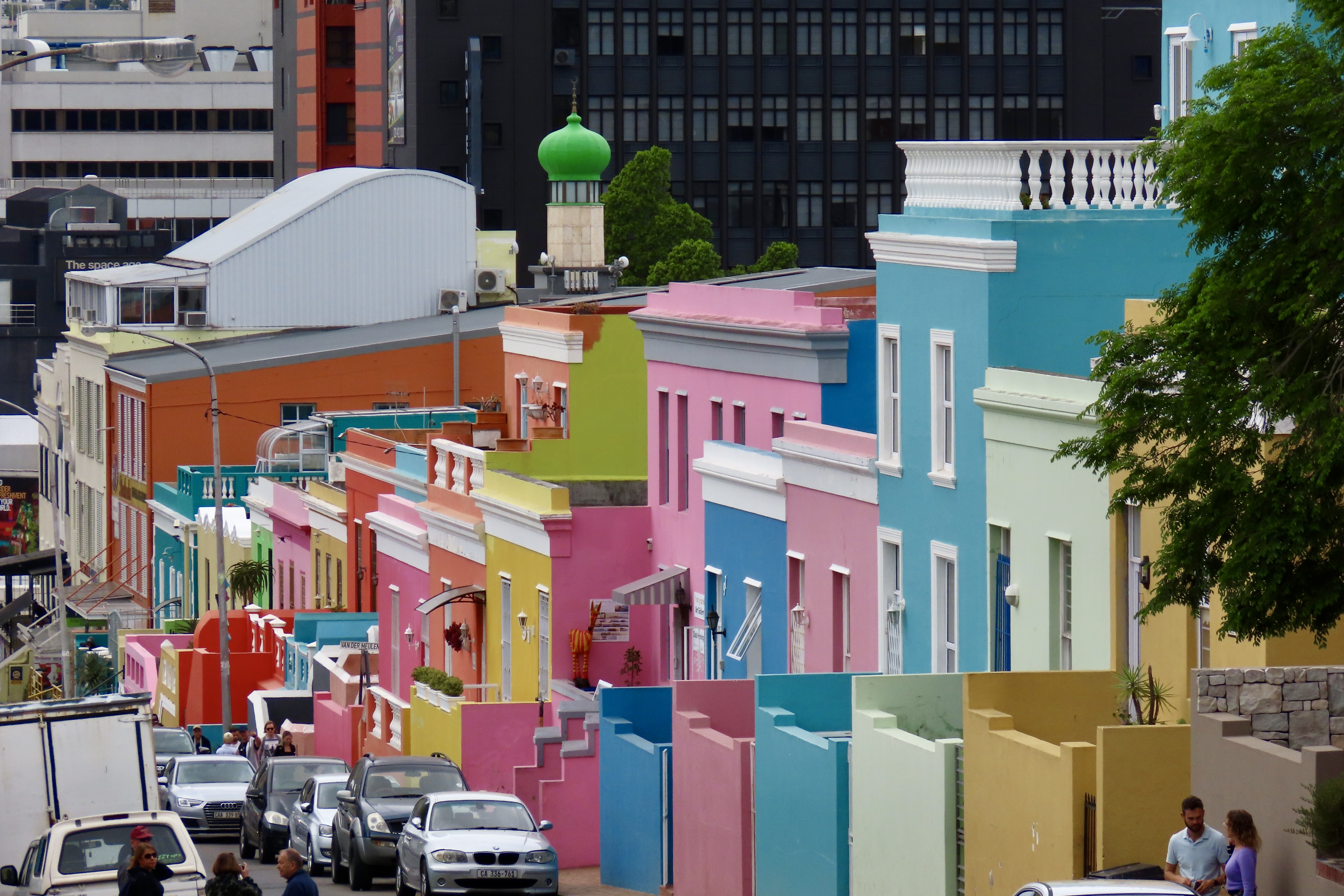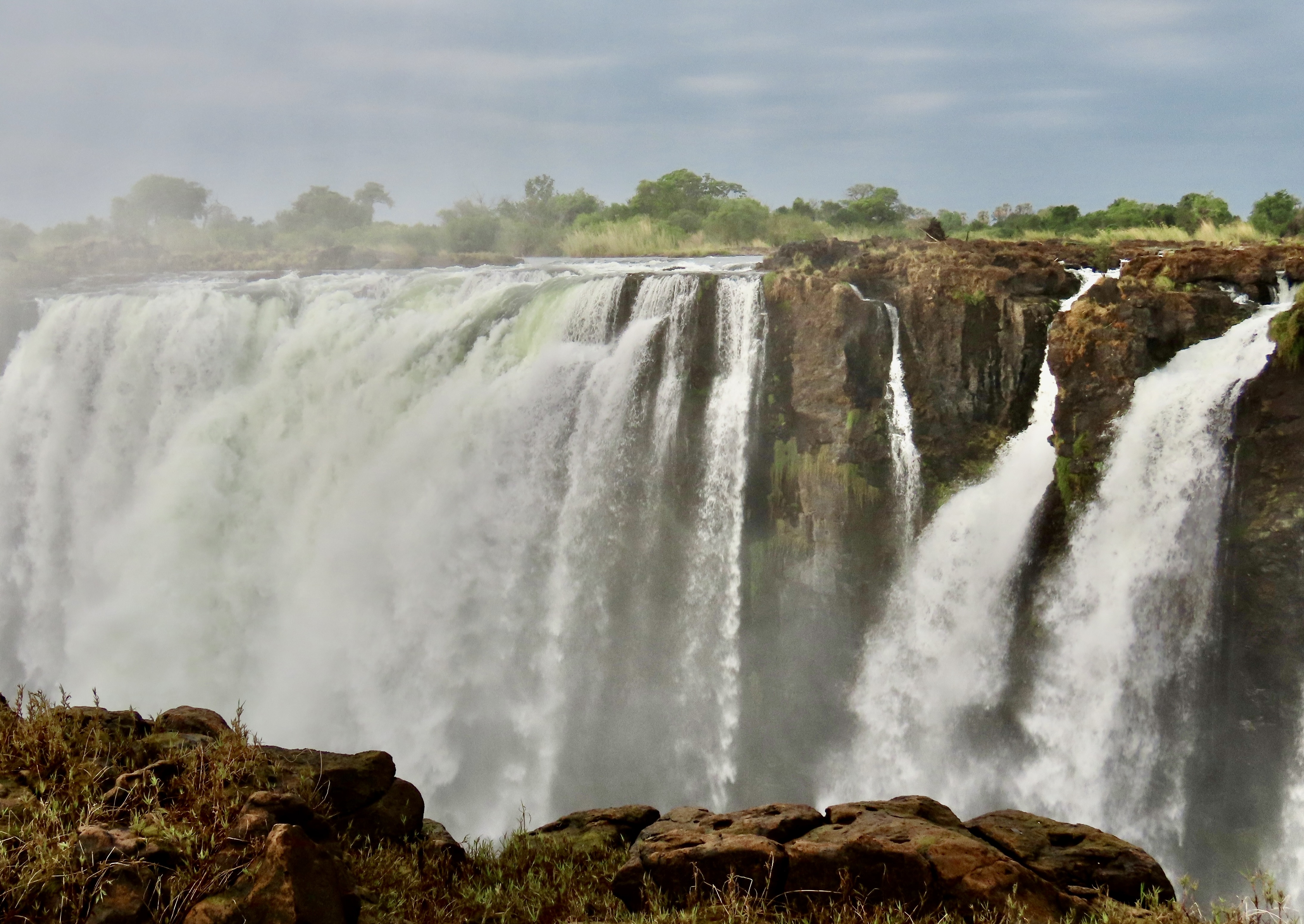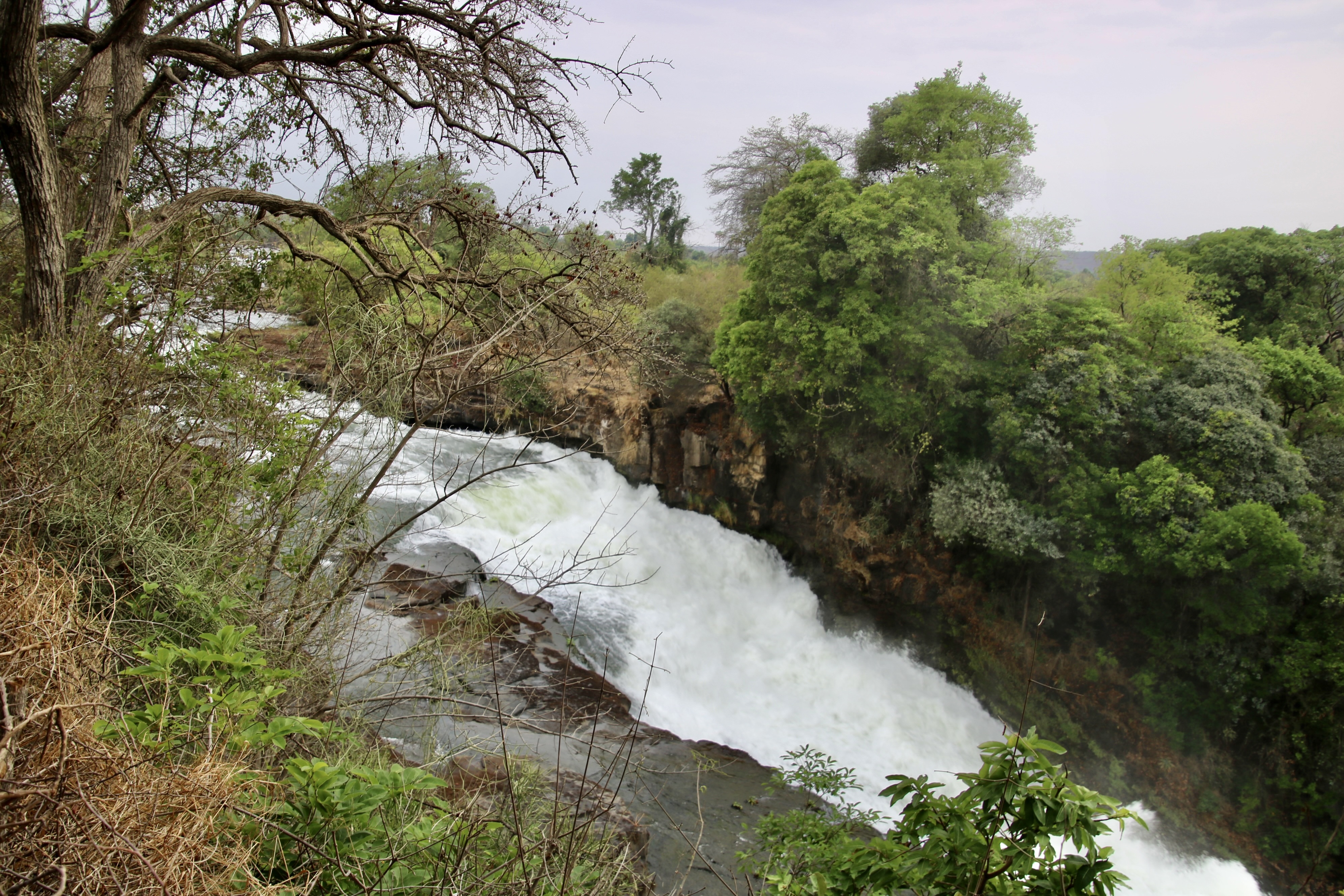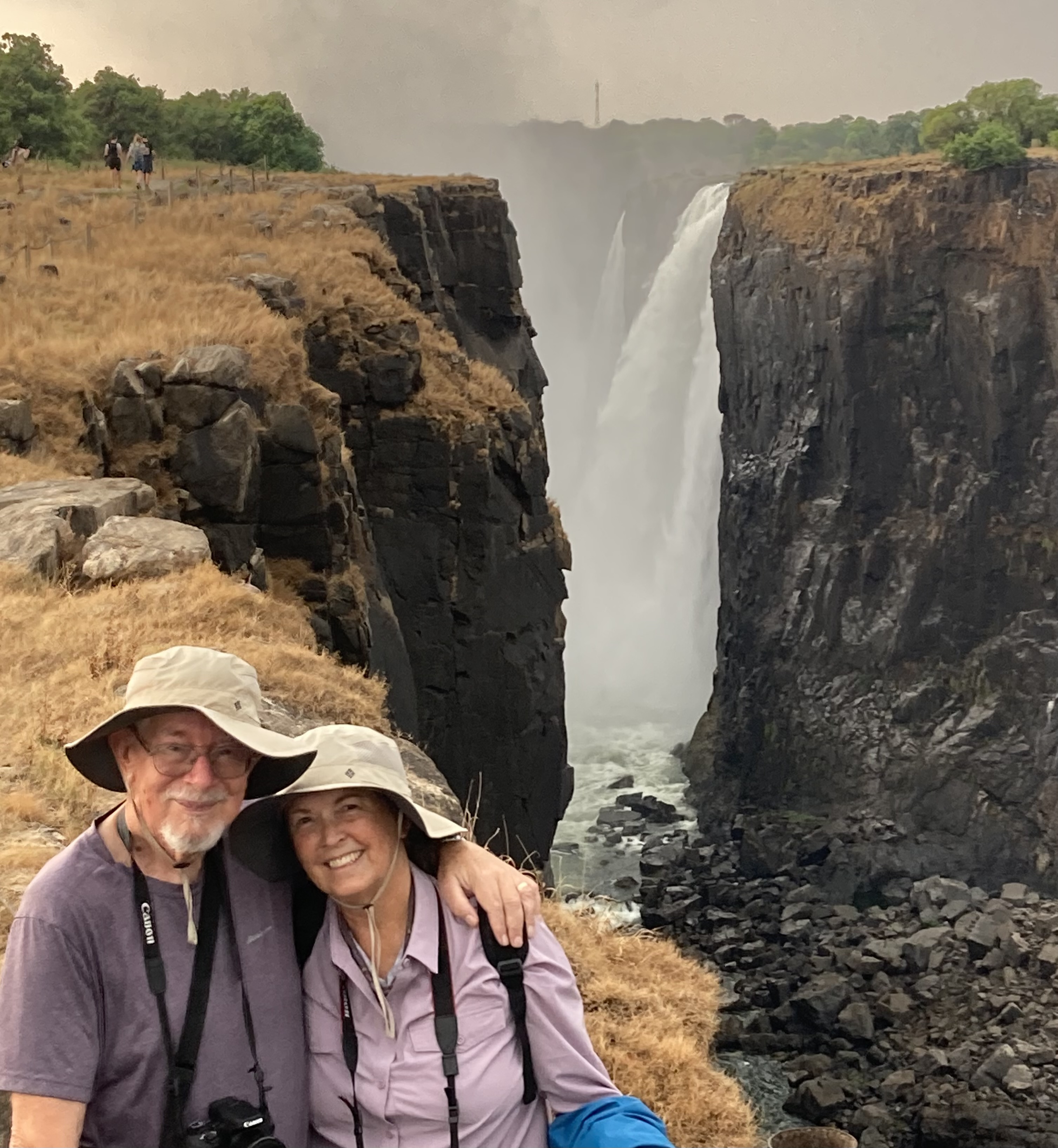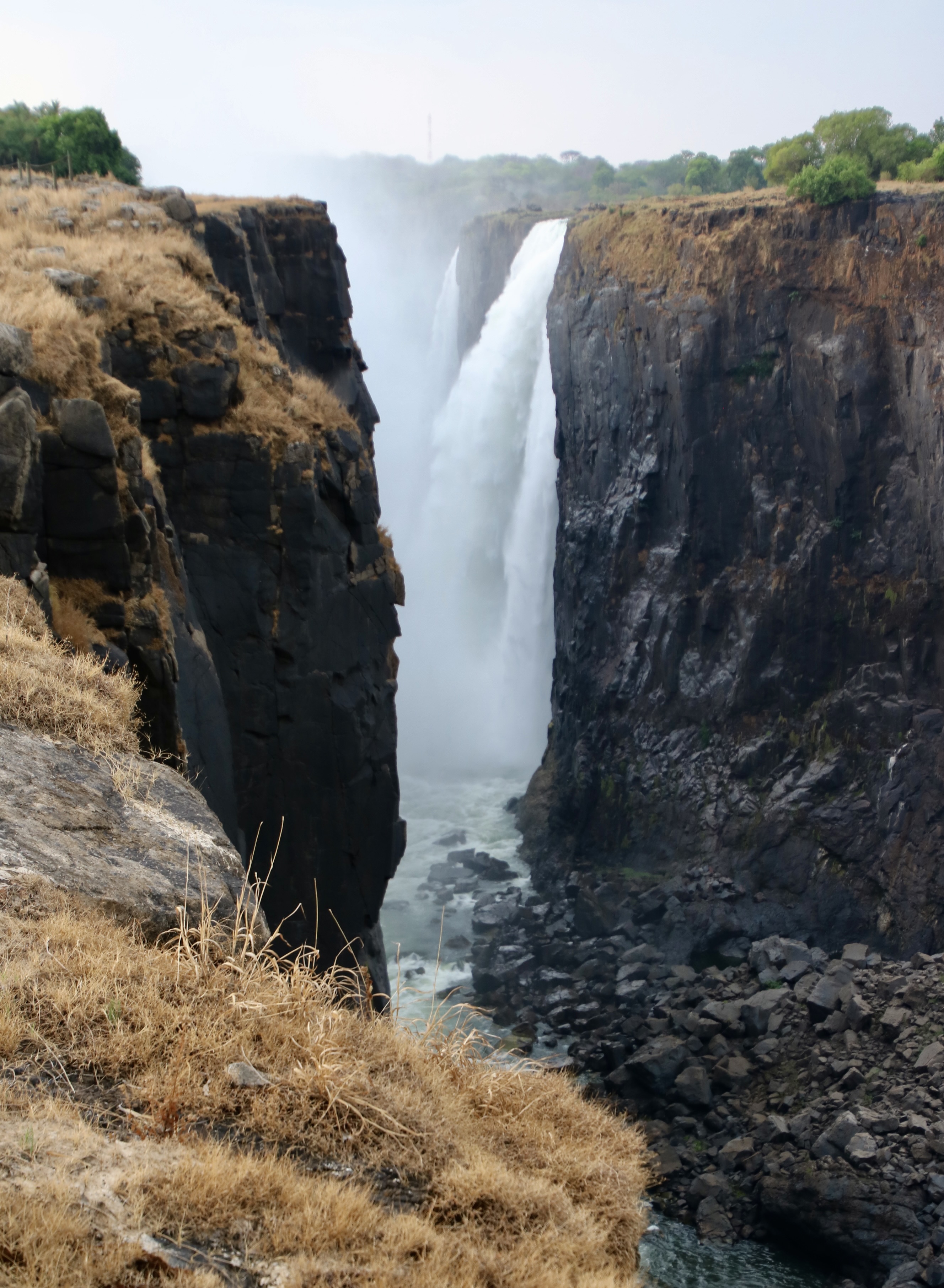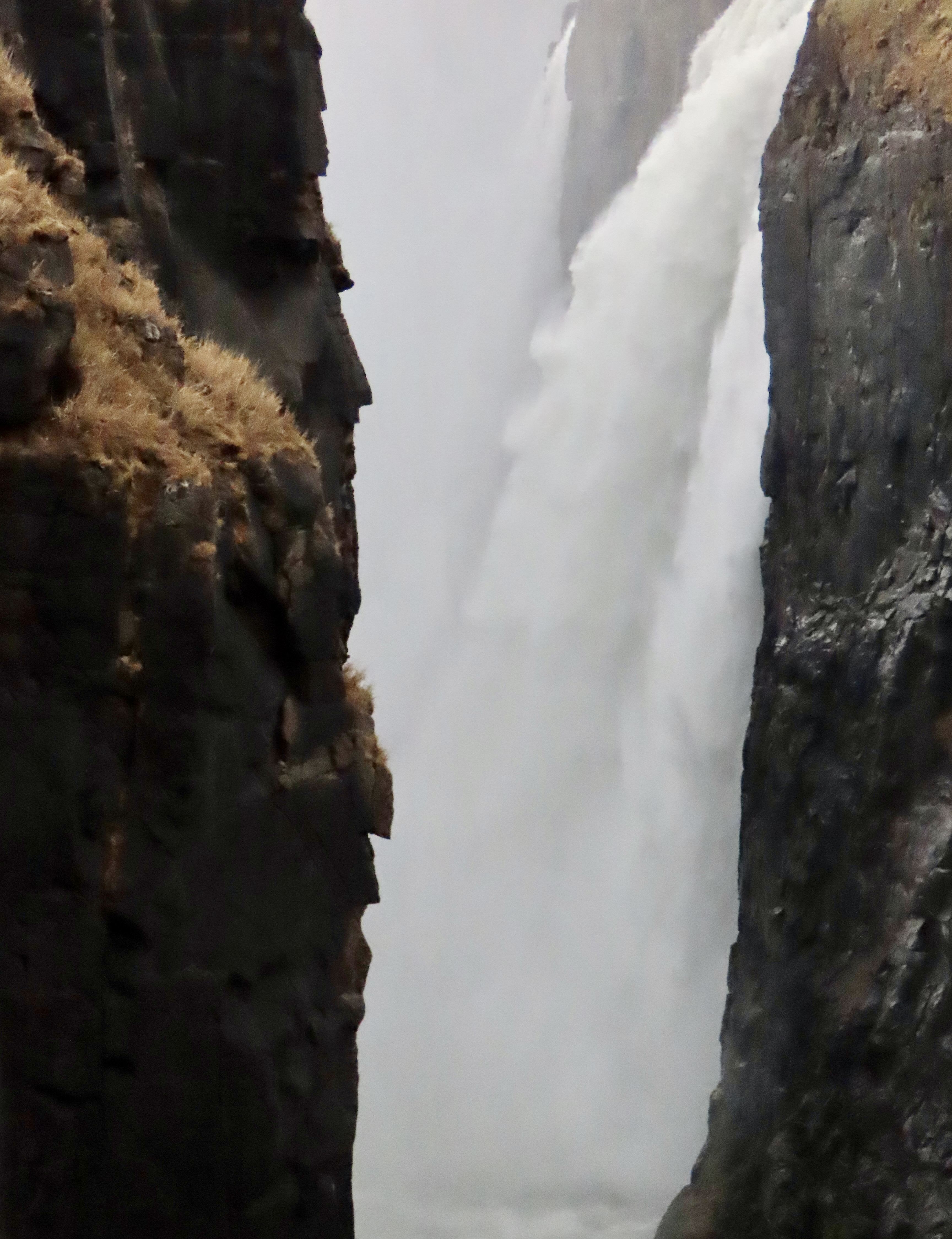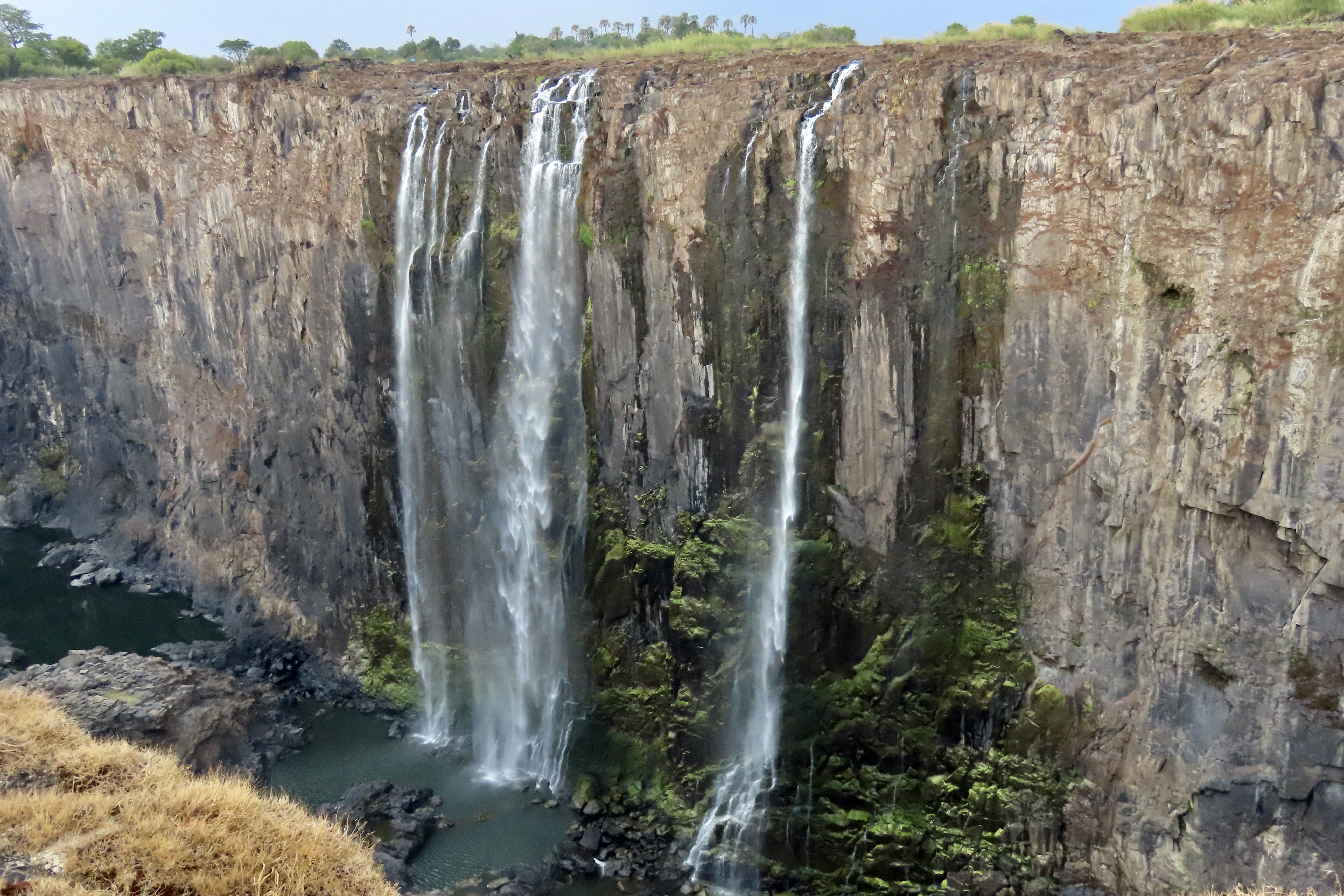
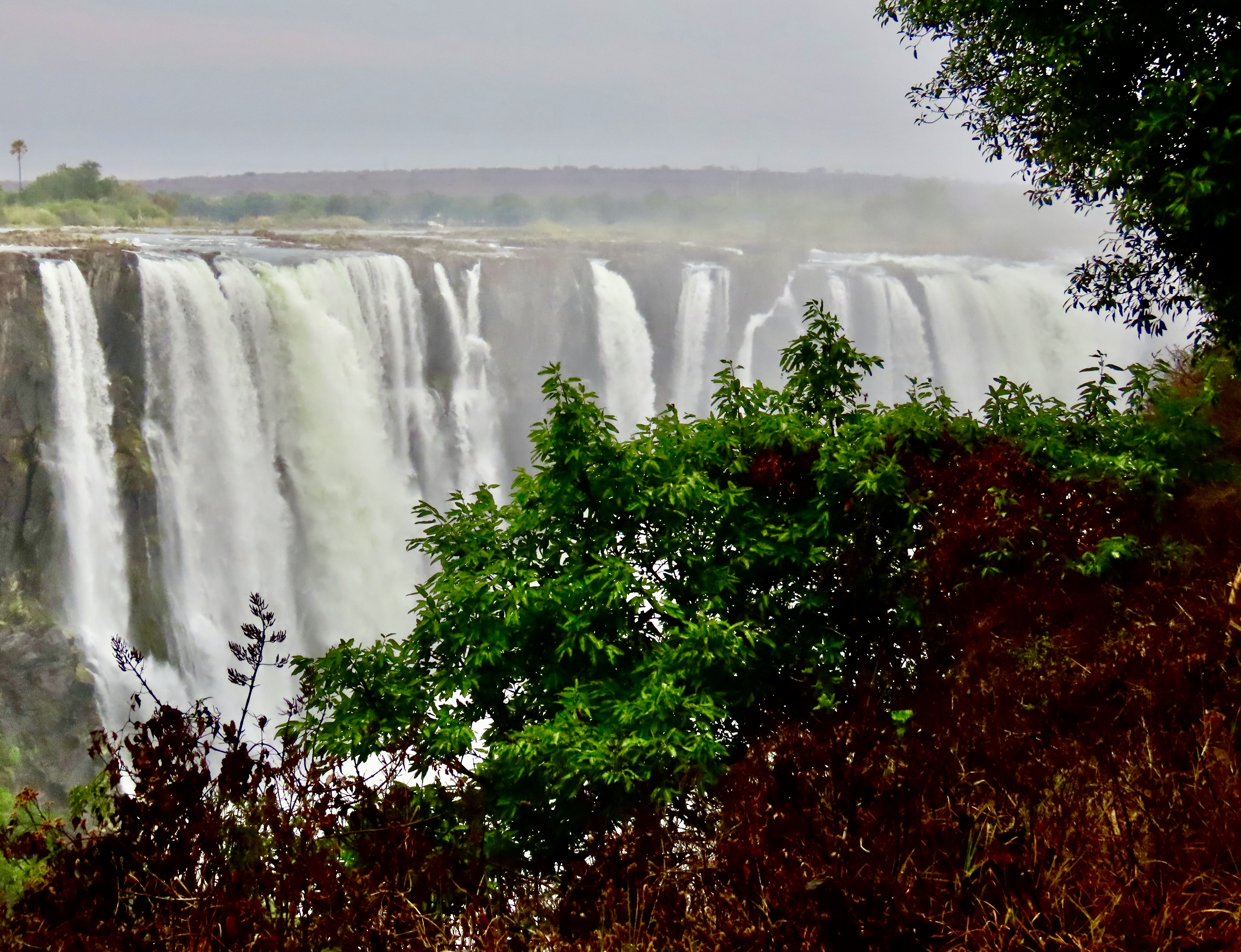
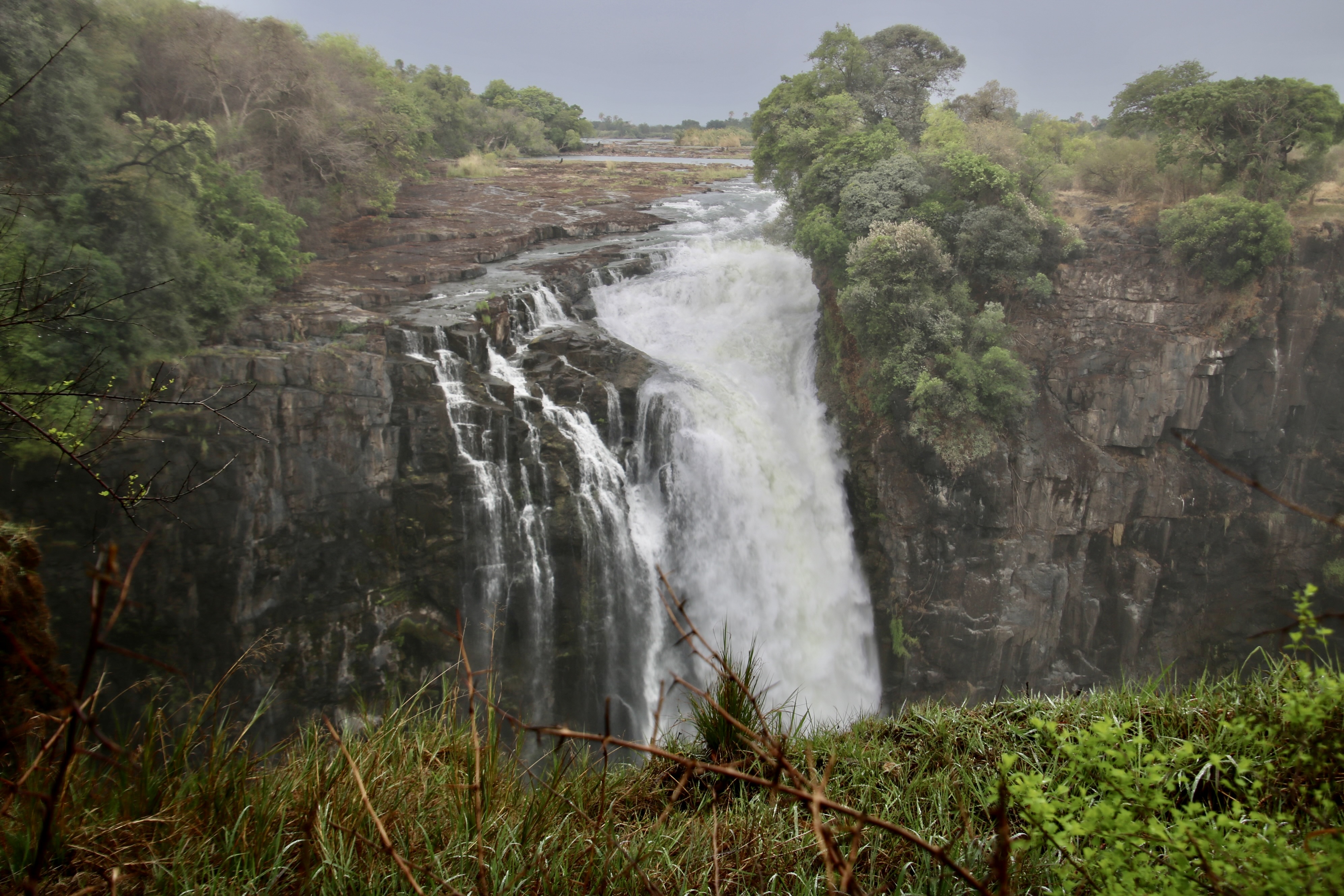
When David Livingston, the seasoned Scottish missionary and explorer, first came upon these roaring falls, one of the largest in the world, he was so impressed he named it after Queen Victoria, England’s long reigning monarch. To the natives of the region, however, the falls were Mosi-oa-Tunya, or “Thundering Smoke.”
I tried, I really did. This was supposed to be my last post on our African Safari. But when I looked through the last thousand photos of scenery, people, and a catch-all-miscellaneous that I considered blog worthy, I just couldn’t do it. Eventually, I got the thousand down to 82. I’ve divided them into three posts. Today I will focus on Victoria Falls and the surrounding area. The second post will wrap-up Chobe National Park, Hwange National Park and Lake Kariba. The last post will feature South Africa.
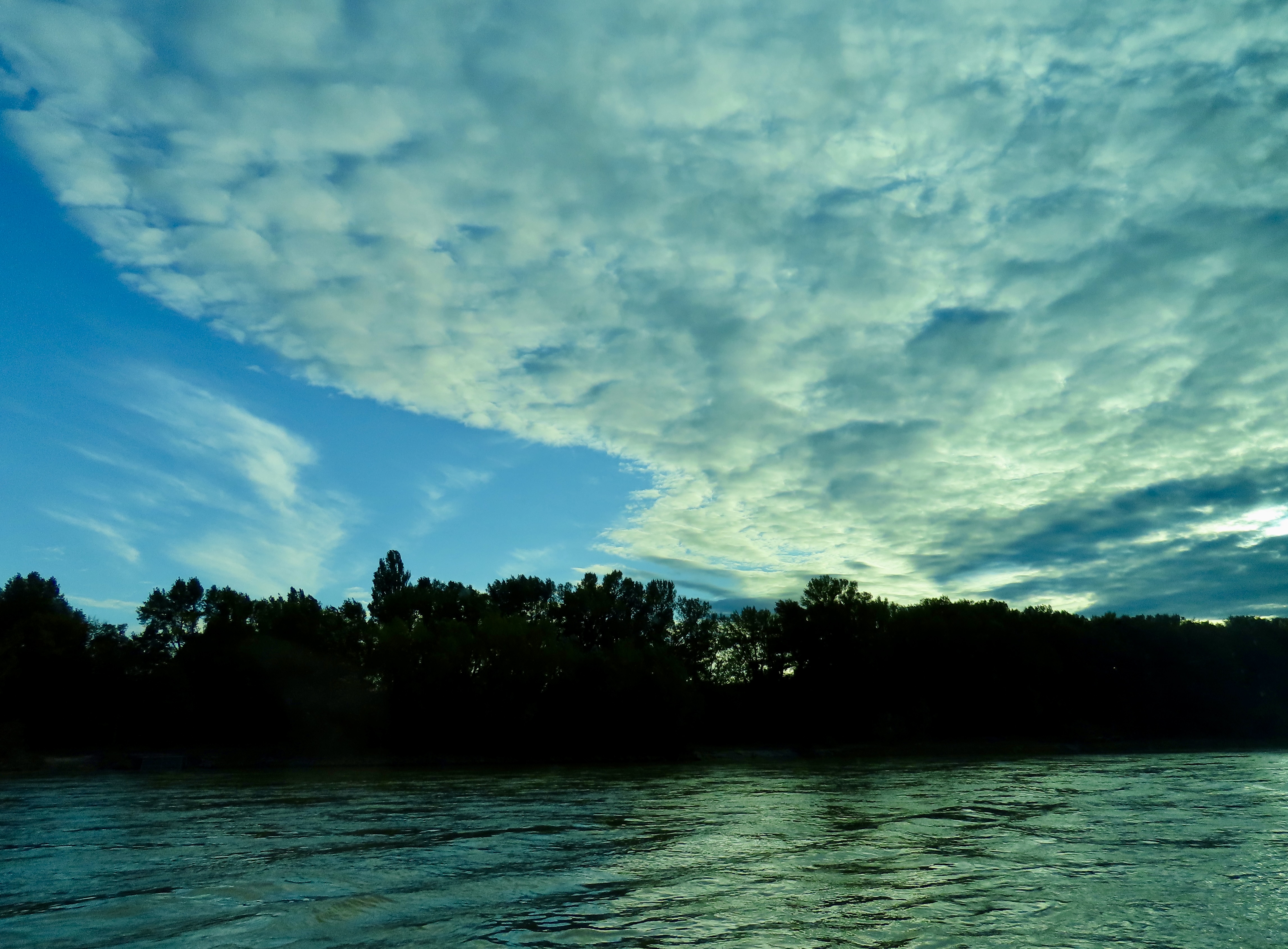
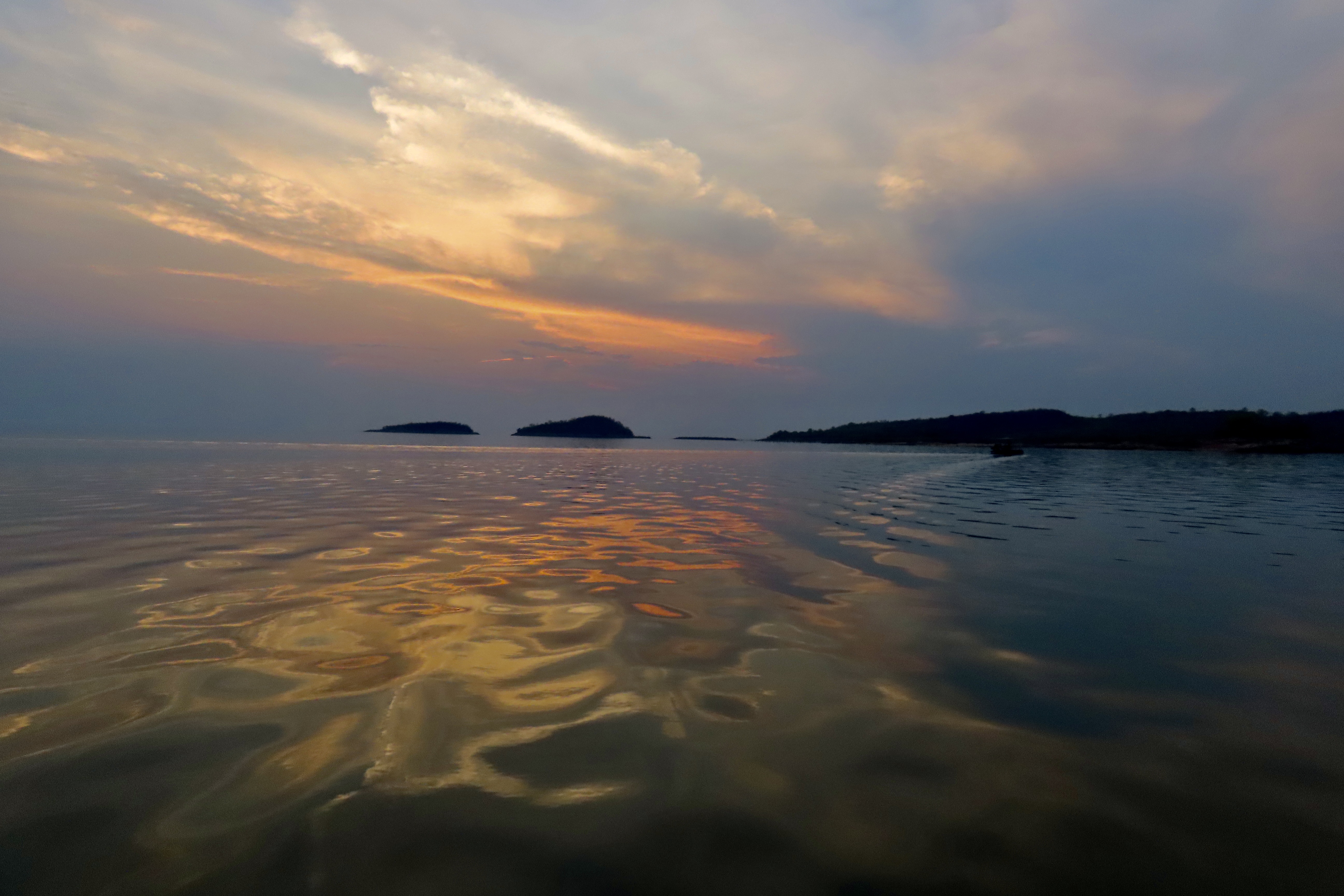
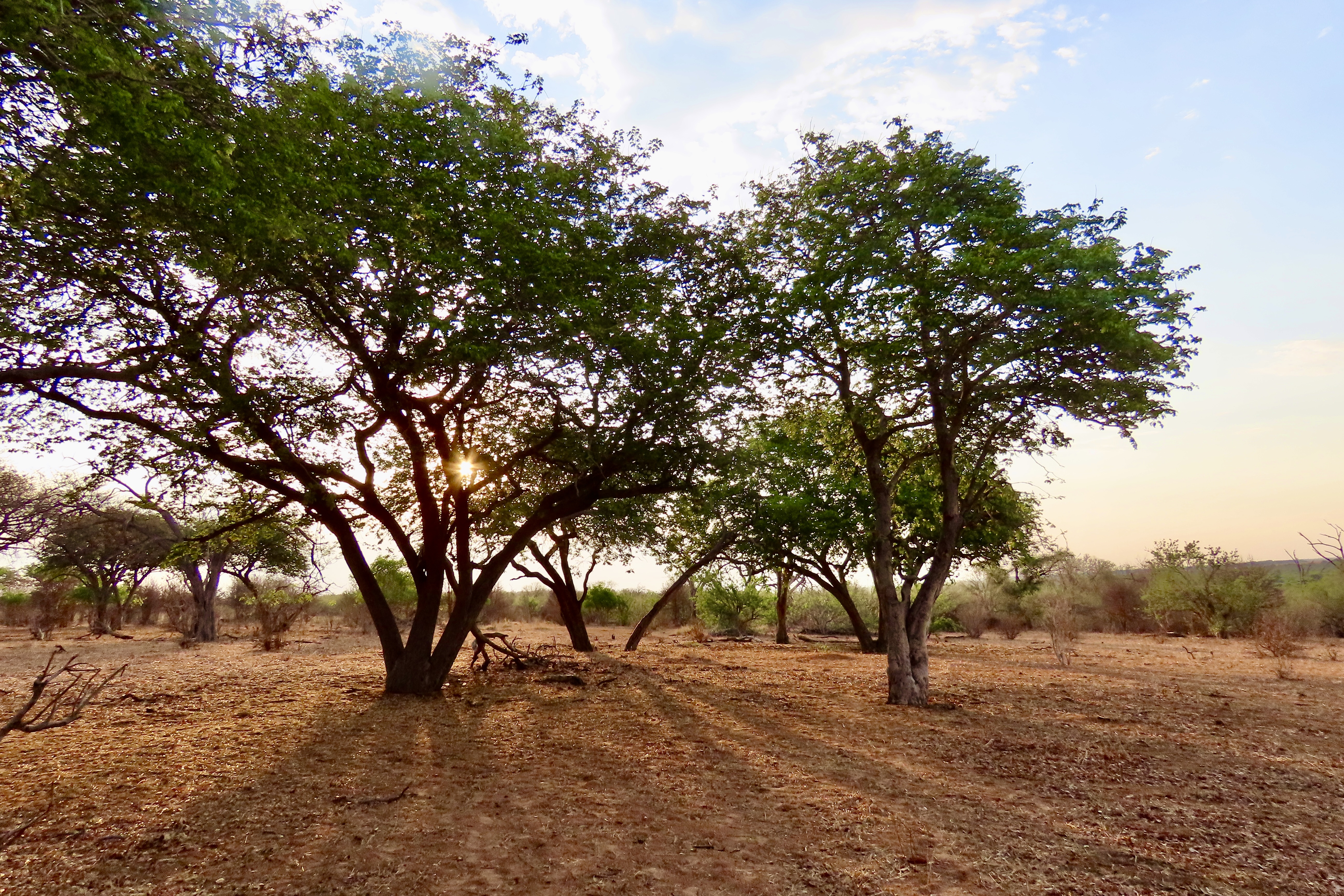
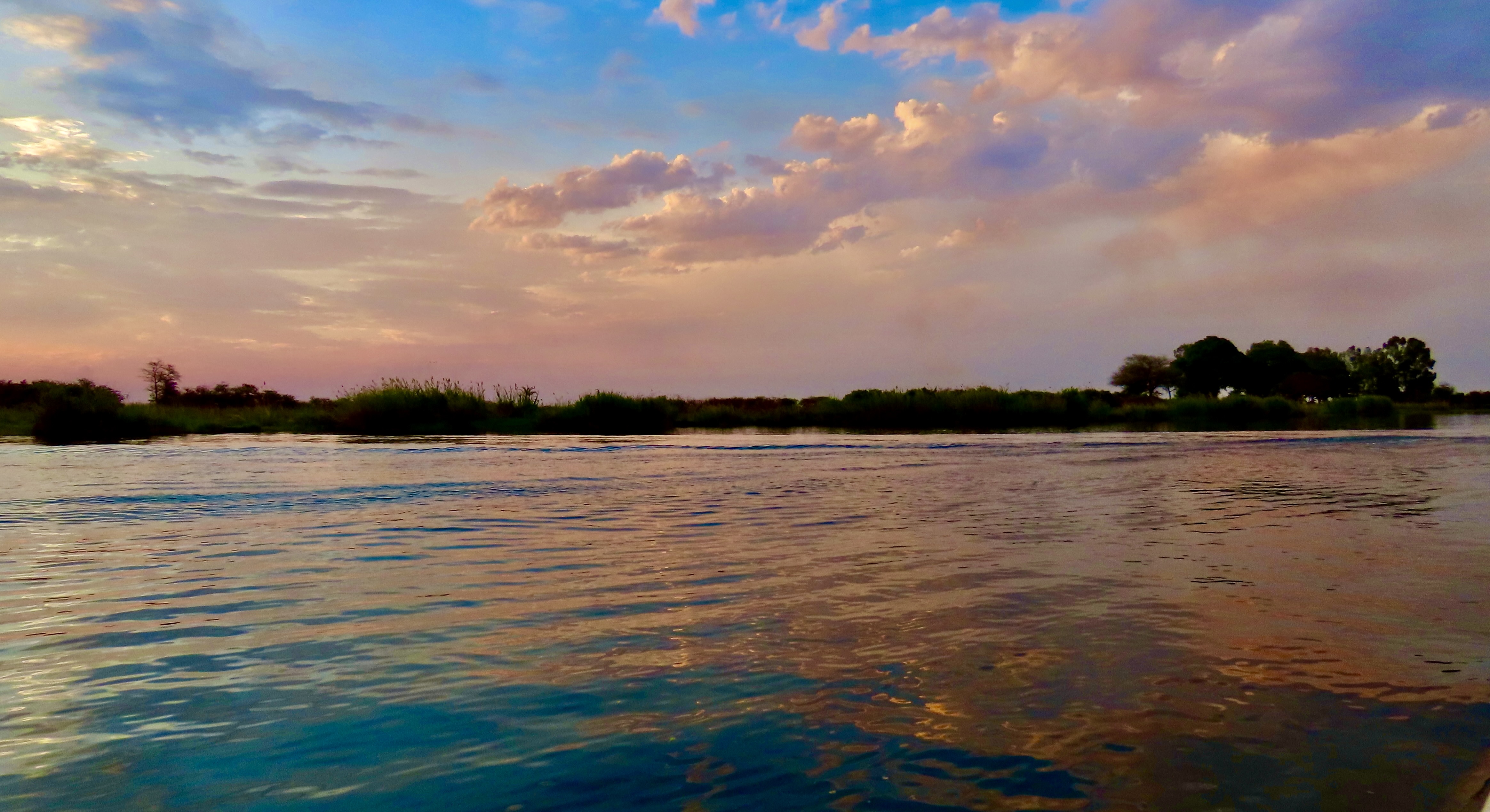
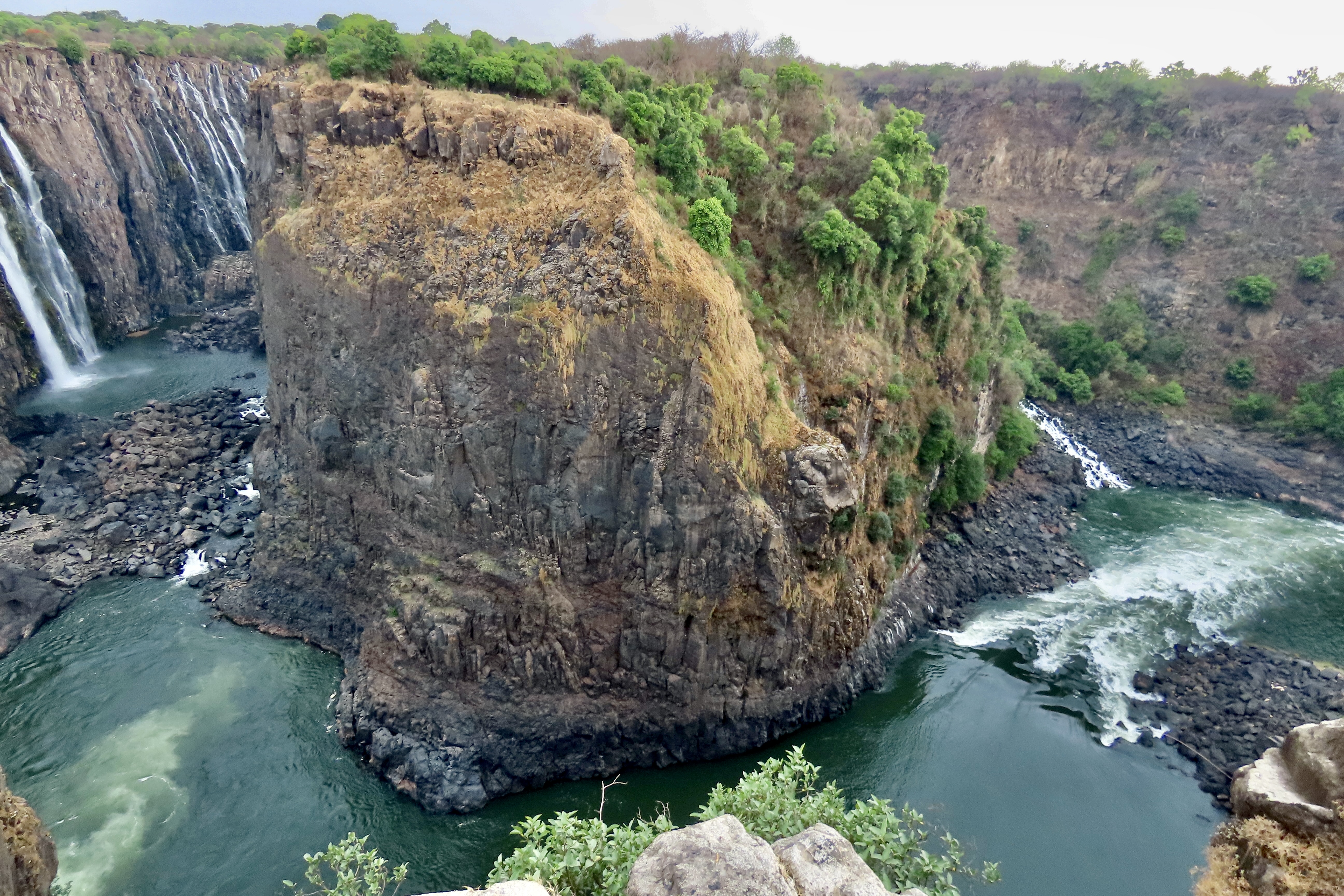
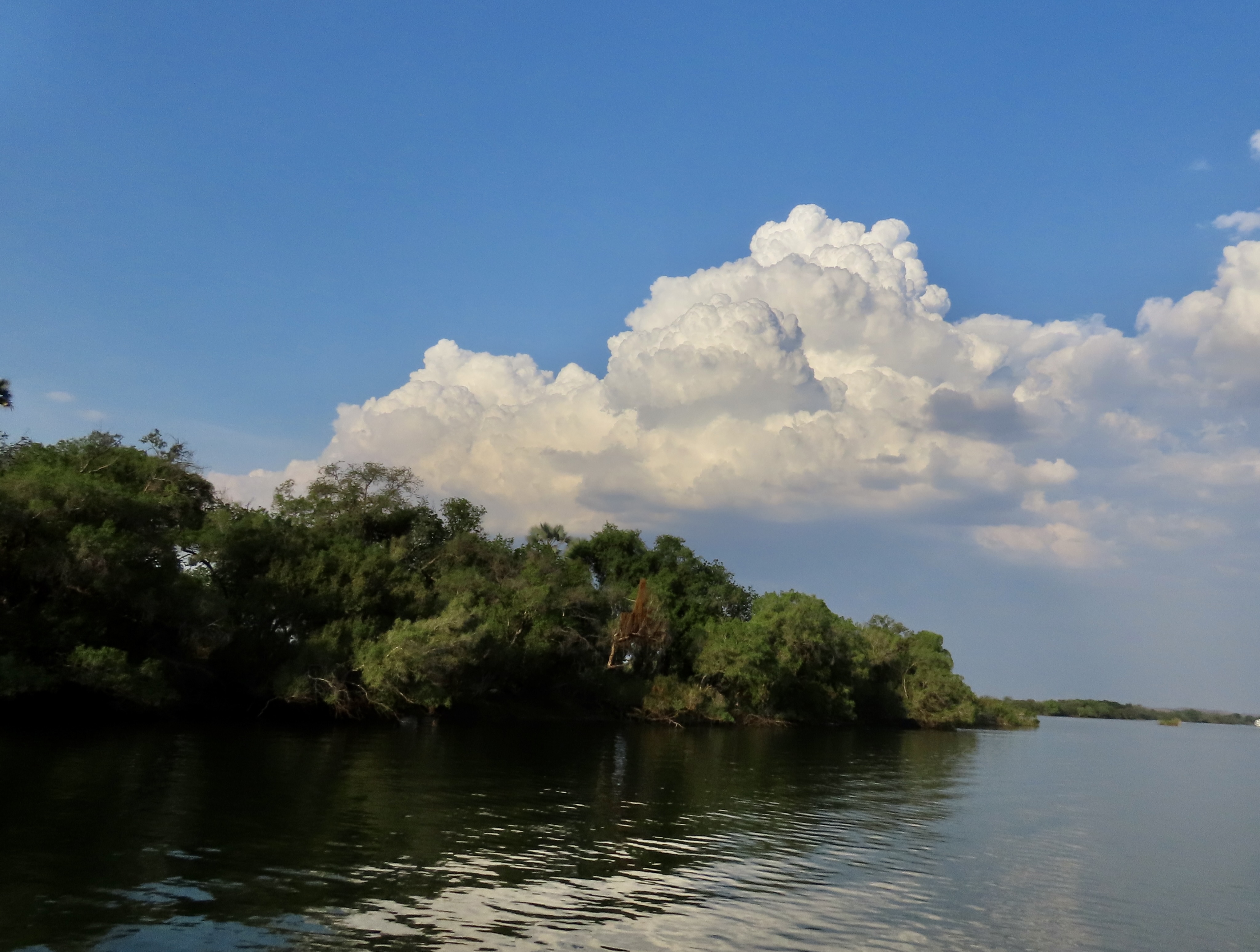
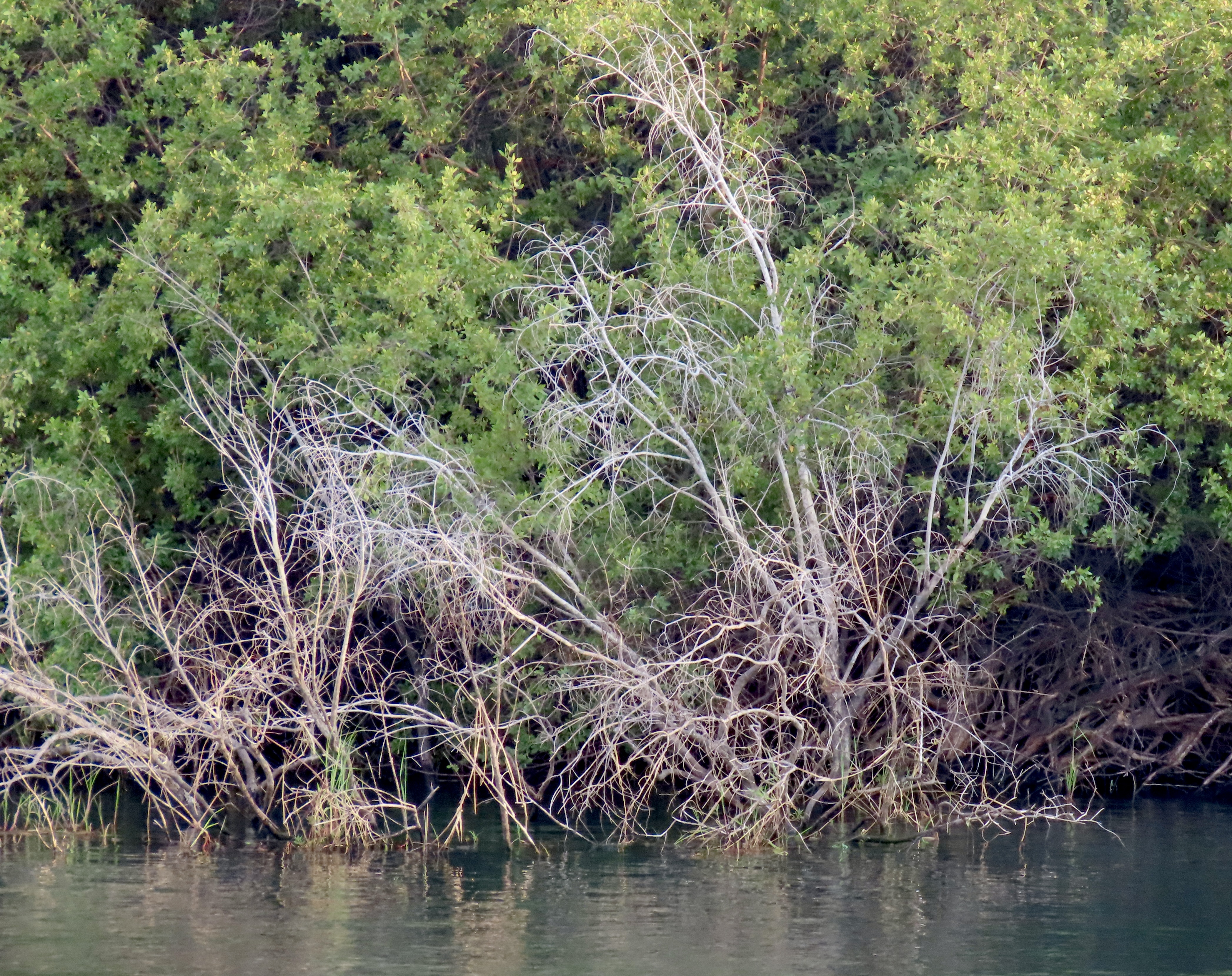
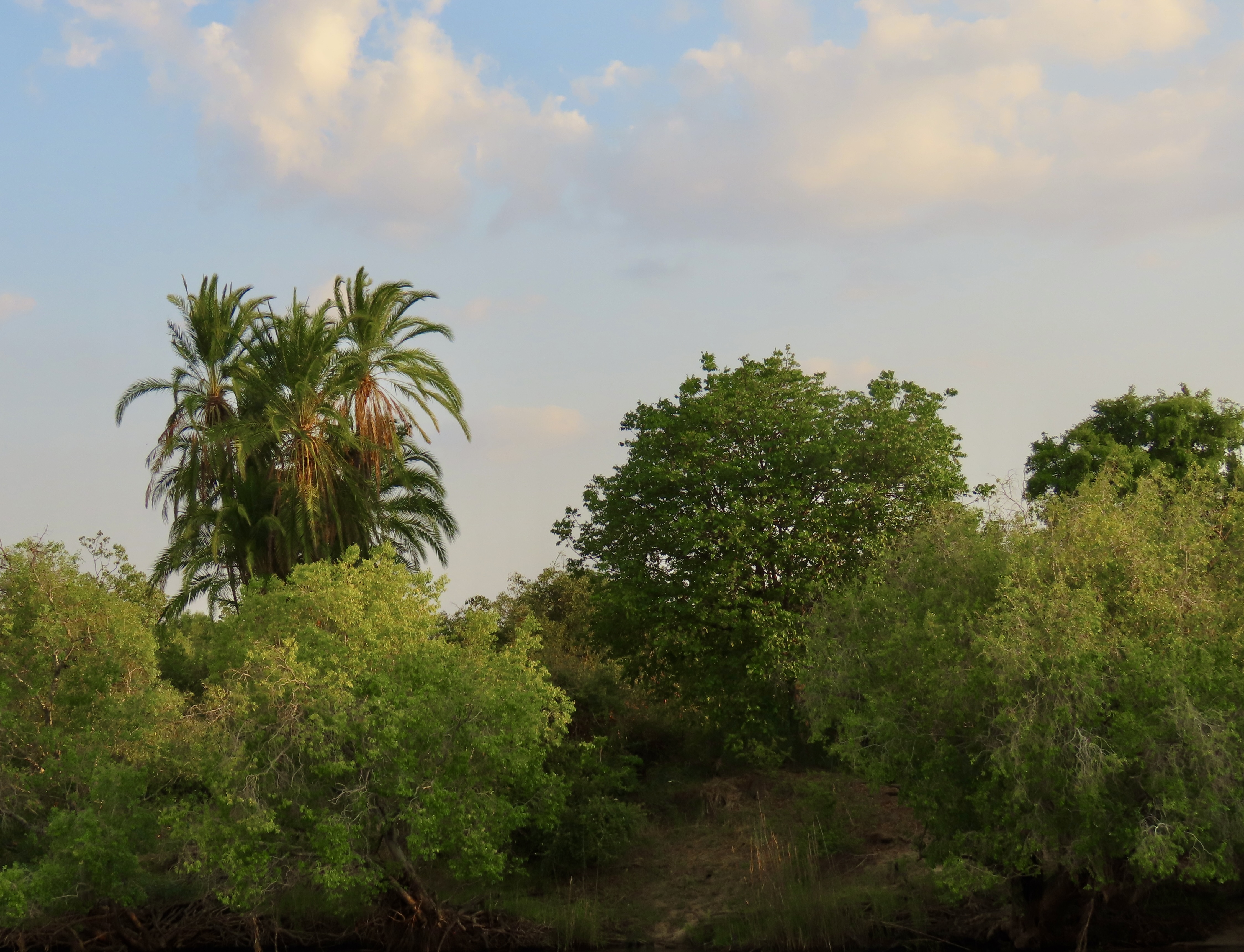
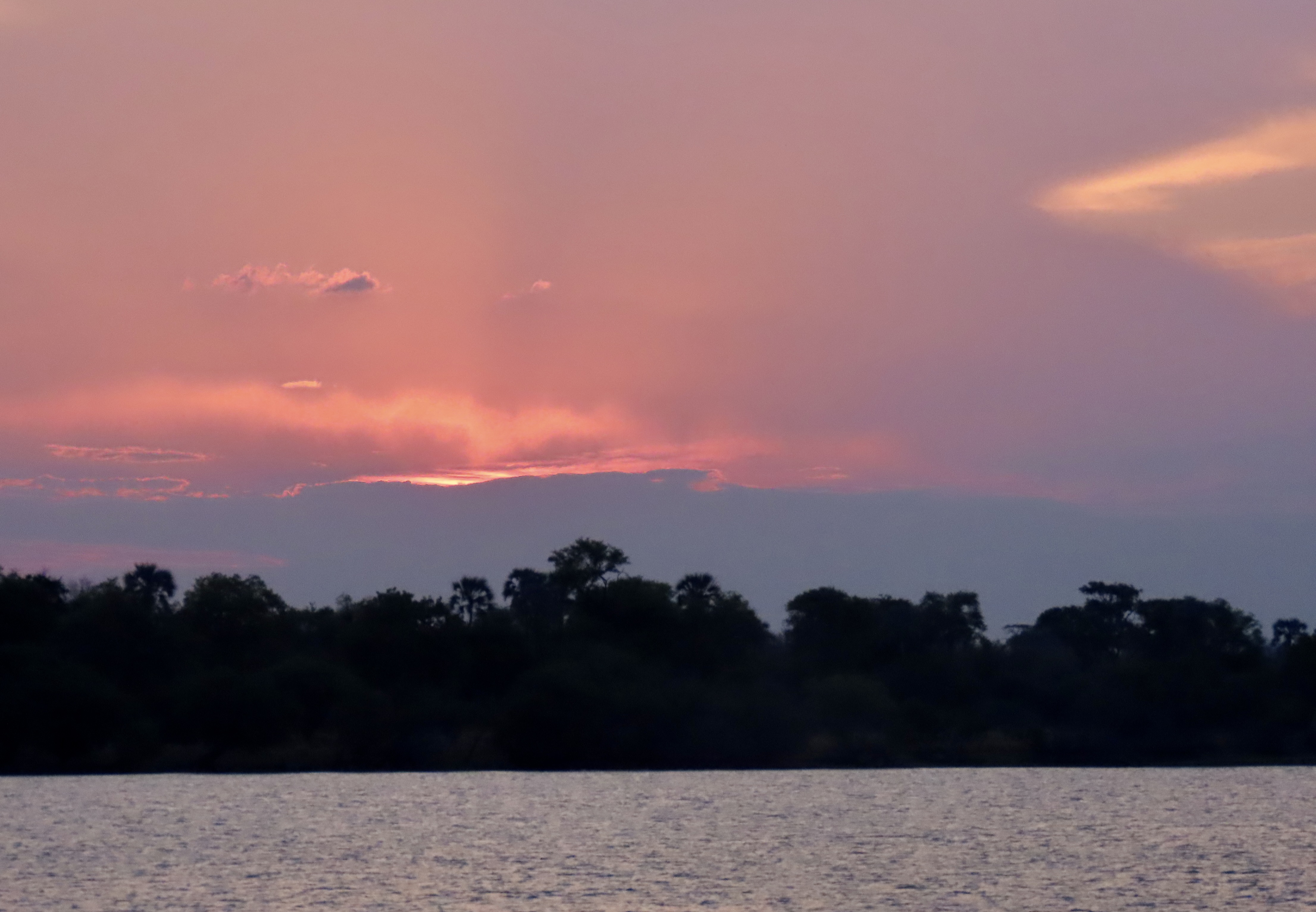
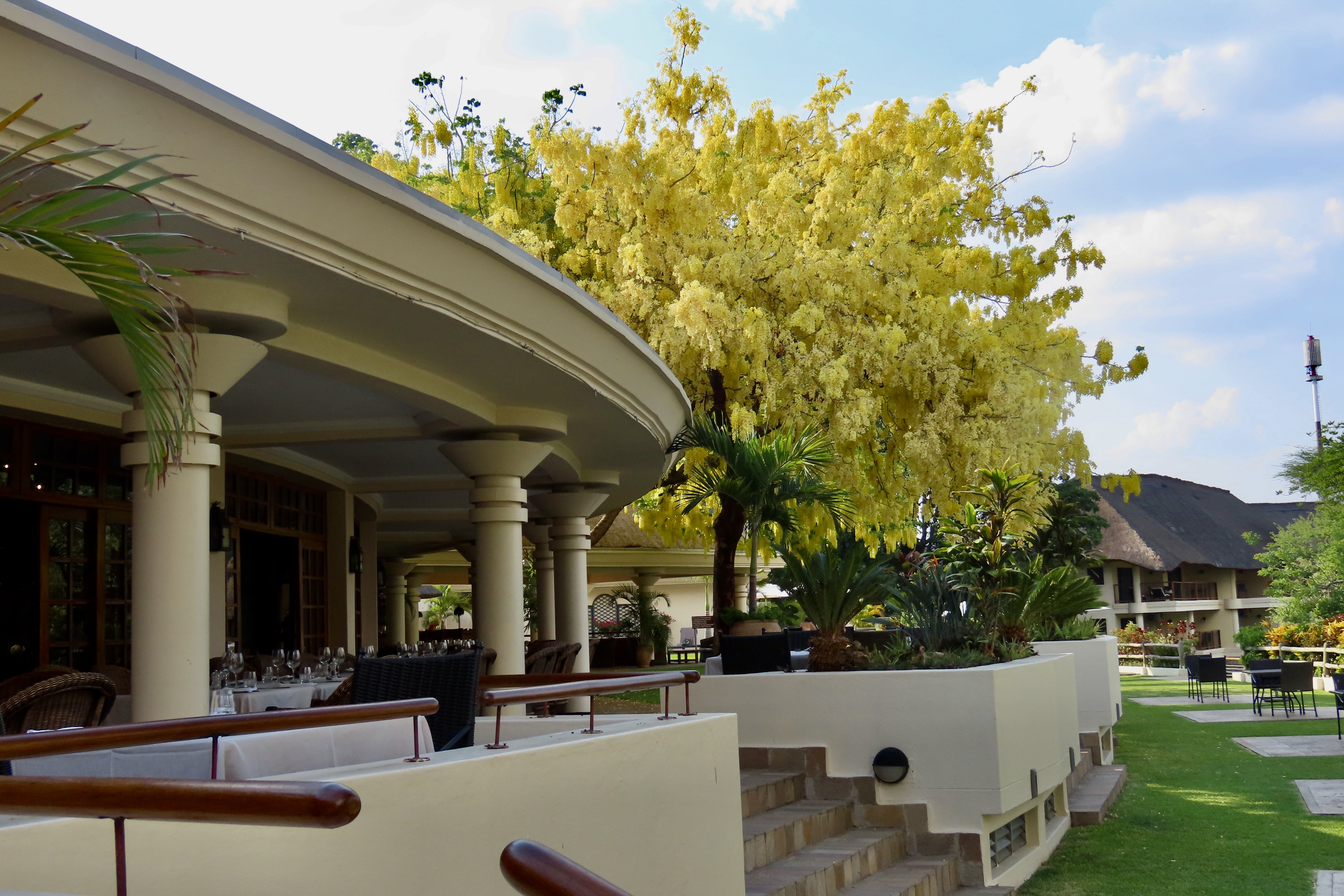
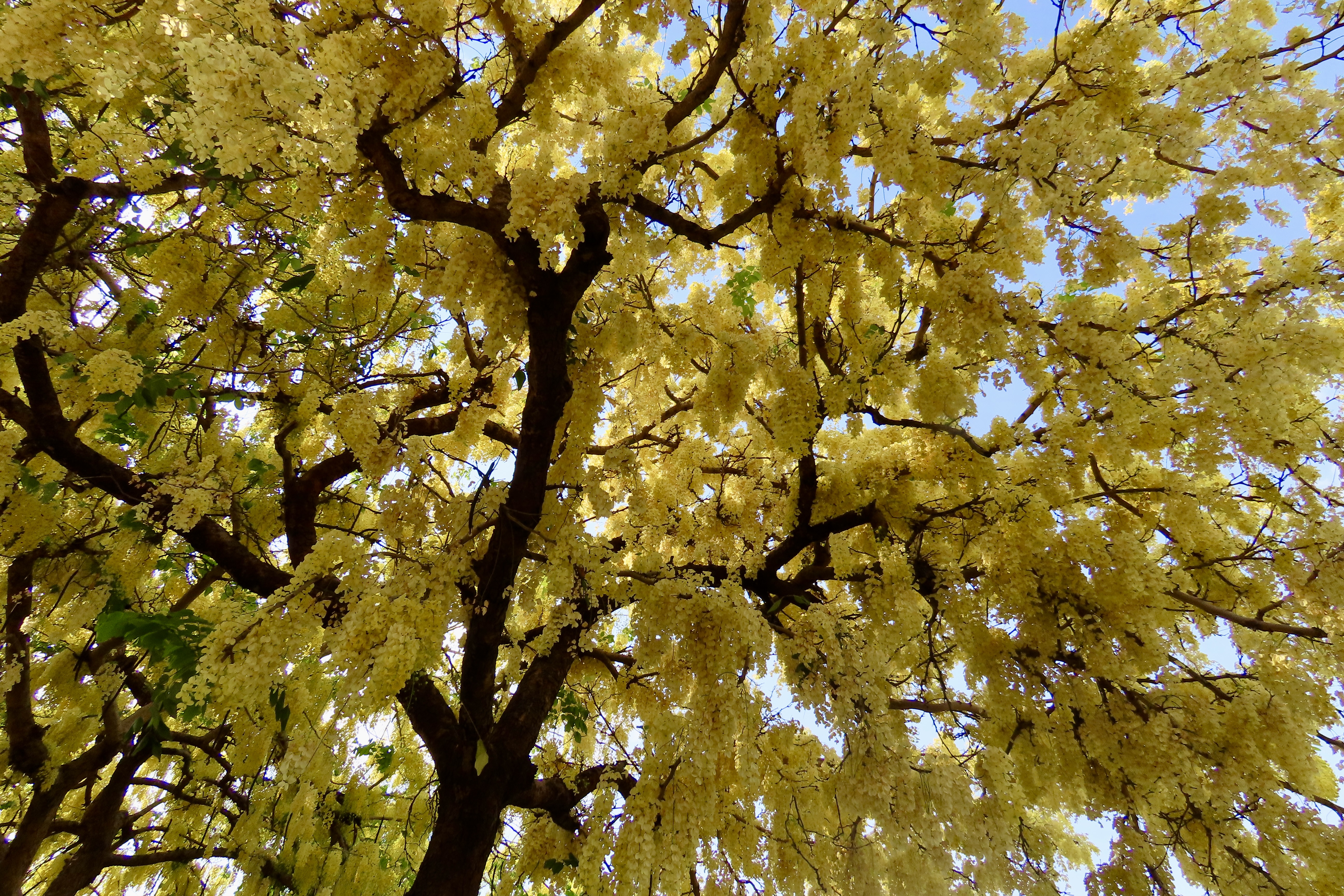
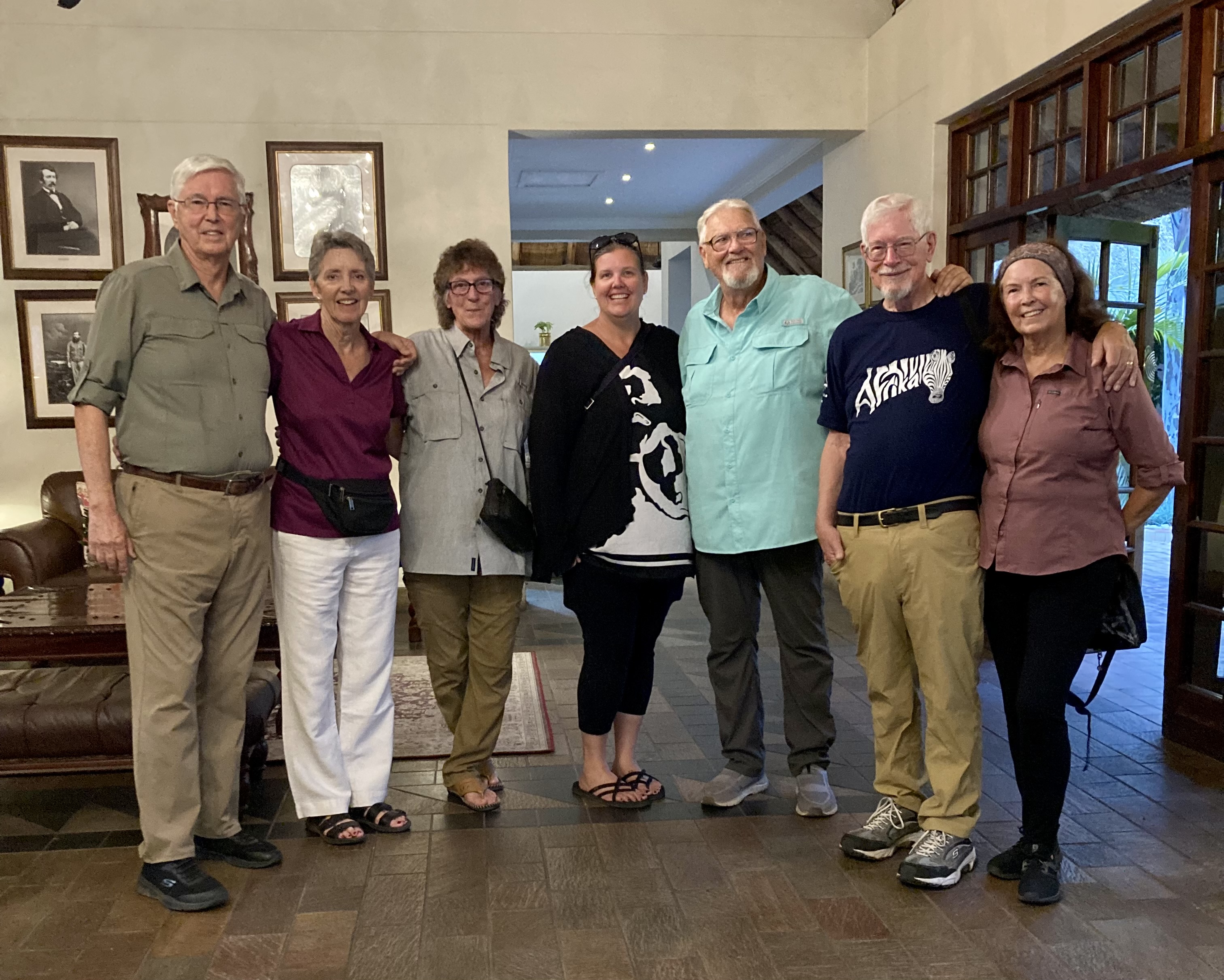
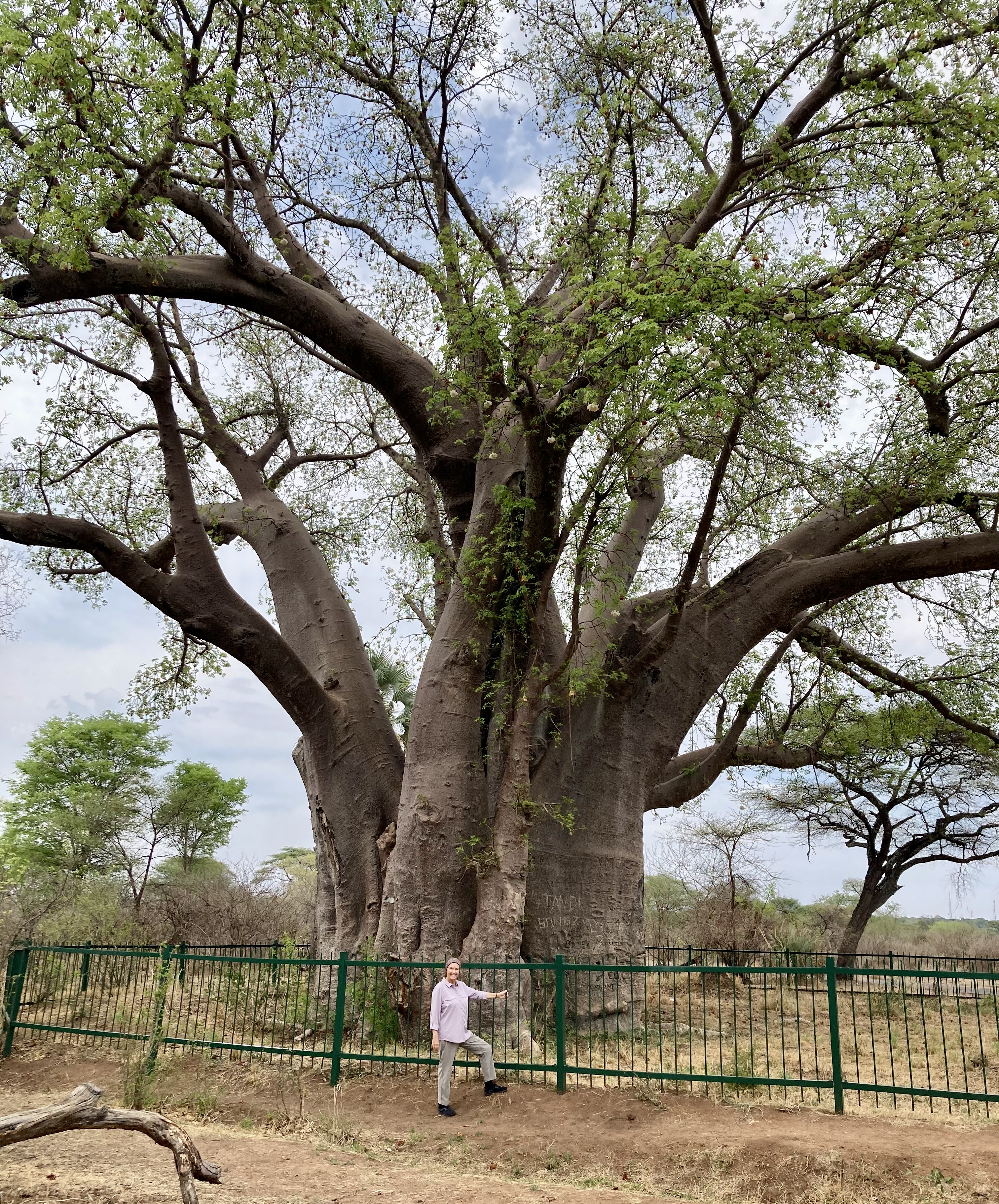
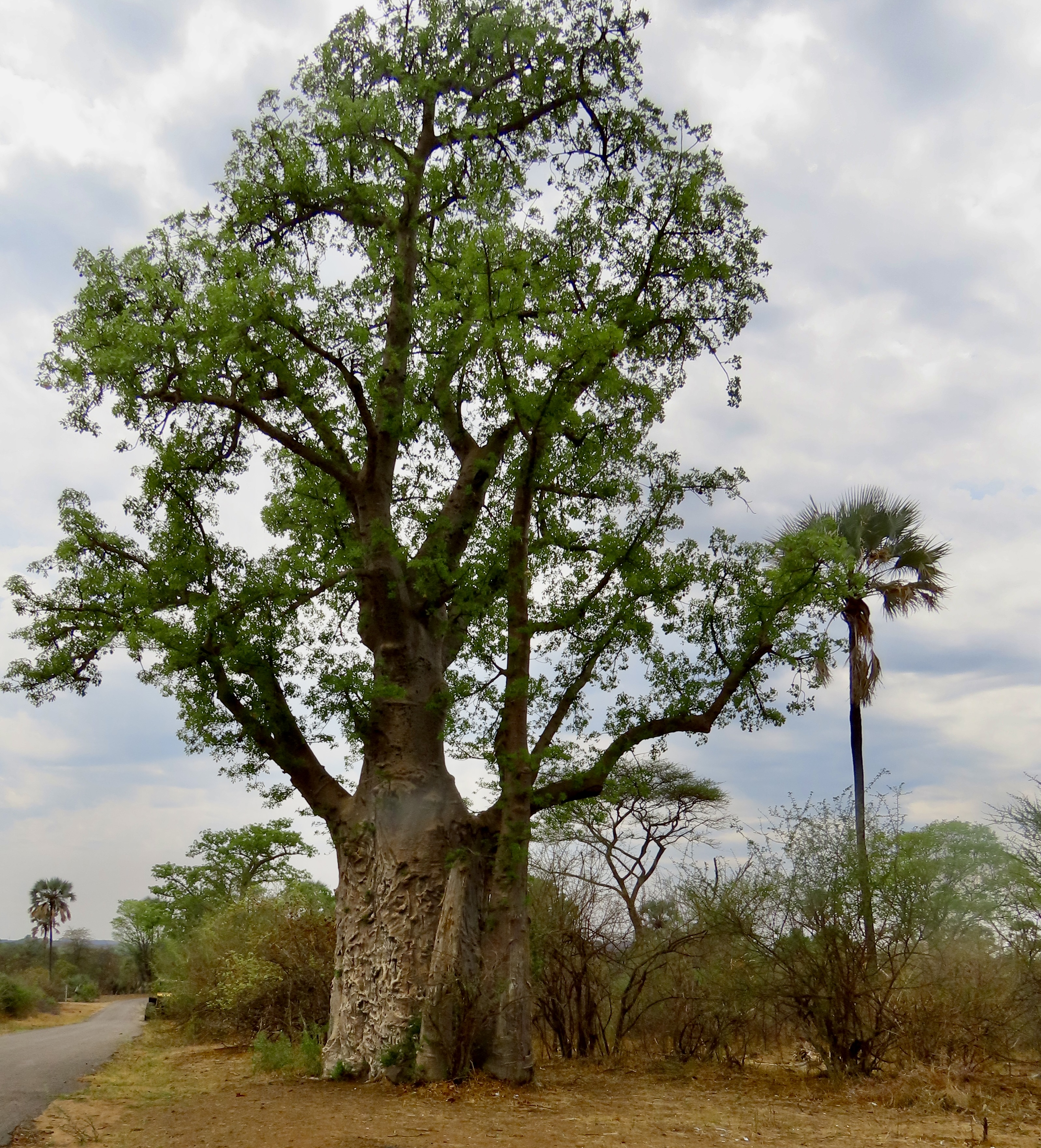
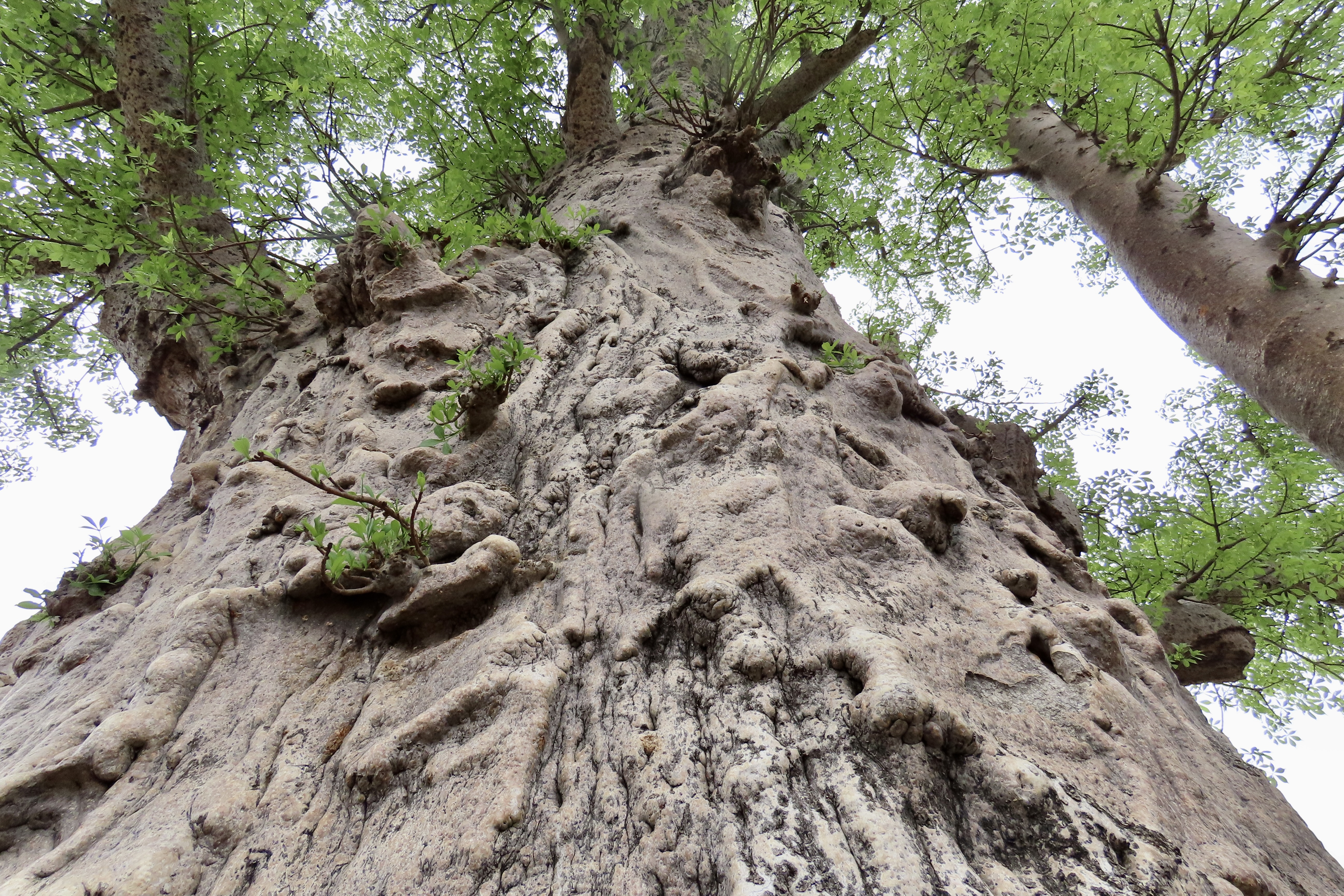
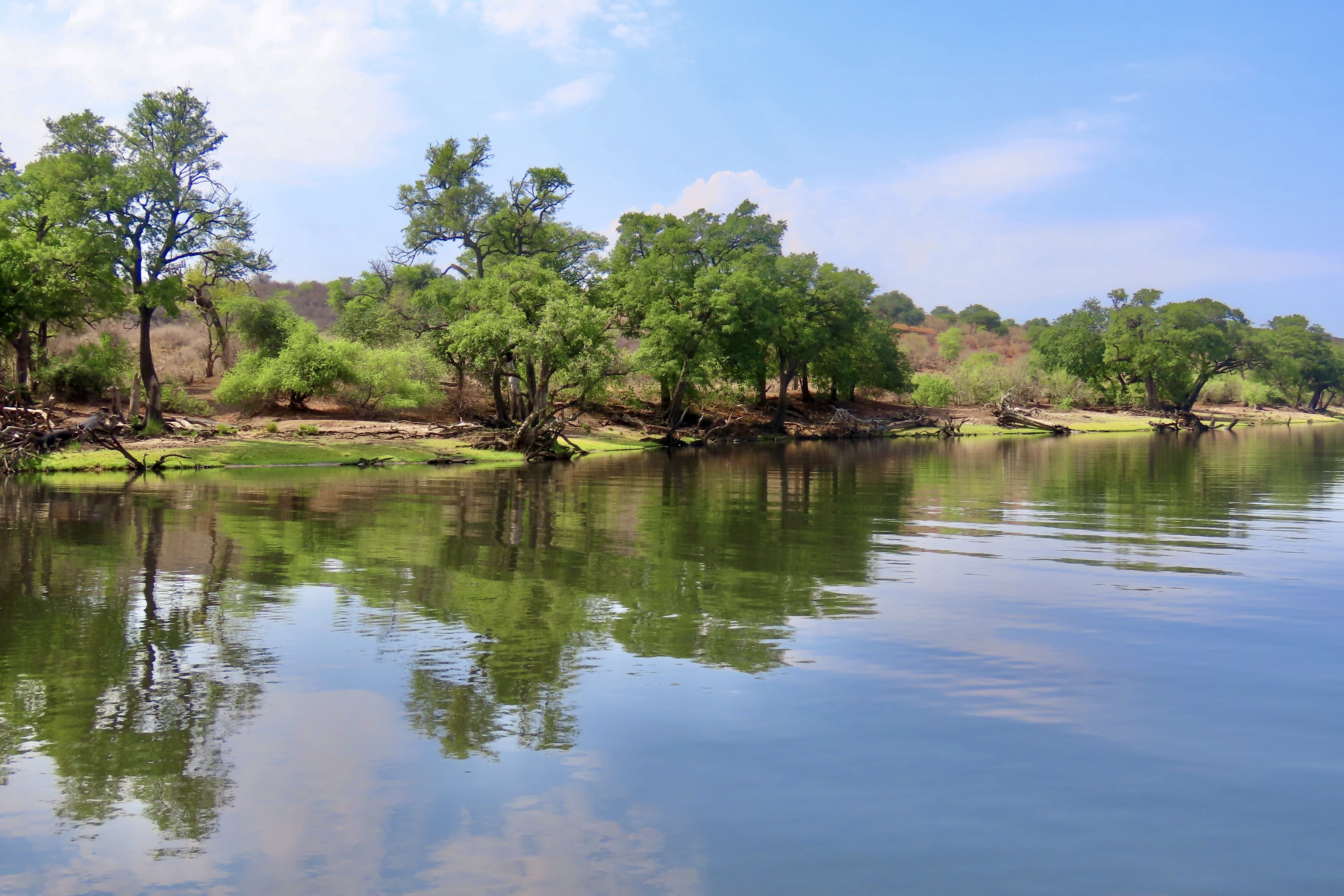
We arrived at Victoria Falls at the end of dry season when the water flow was close to its lowest. Imagine what this looks like at the height of rainy season! Based on its combined width, 5,604 ft (1,708 meters) and height, 354 feet (108 meters), Victoria Falls is considered the largest waterfall in the world. In April, when the river flow is at its peak, the spray sometimes reaches a height of over 2600 feet (800 meters) and can be seen from 30 miles (50k) away.A trail leads along the Zambezi River showing the main falls and several others such as this one that are part of the complex.Same falls, different view.Peggy absolutely loves falls. Whenever we are near one, we detour from our selected route. She was one one happy camper.Another view from where we were sitting. During rainy season, this view would be wiped out by the spray.And a close up. Can you hear the roar?Walking along the trail, we came on these jewels.The Zambezi River continues to cut a canyon. Eventually, this may be an island. For now, the river flows out, around this promontory, and on.We went on a dinner cruise on the Zambezi River above the falls. Clouds were threatening a beginning to the rainy season. You have already seen crocodiles, hippos, and various birds from this cruise on earlier posts.Peggy and I really liked the contrast created by this dead tree and the greenery behind it.Another view of the trees along the Zambezi.Our evening cruise also brought us a spectacular, ethereal sunset. It was one of many we experienced while we were in Africa. We will be featuring more of them in our final two posts.A view of the hotel we stayed at in Victoria Falls. This is the hotel where I was visited by the mongoose.The trees surrounding the hotel were bursting in color.We traveled with a great group of people on our safari through Botswana and Zambia. These are three of the friends we made along with Peggy’s brother John and his wife Frances joining us for a final photo in our Victoria Falls hotel. On our way to the airport to fly to South Africa, our guide, Samatha, took us to see this huge baobab tree on the outskirts of Victoria Falls. Peggy provides perspective on its size. This tree is estimated to be around 1200 years old. Its circumference is 73 feet and height 78 feet. A tree this size can hold over 120,000 liters of water, over 31,000 gallons.Another large baobab tree stood next to the giant.I took a photo from the base of the tree up. The scarification is likely caused by elephants that love to feed on its bark. That’s it for today. Our next post will feature final scenes from Chobe National Park, Hwange National Park and Lake Kariba.View along the Chobe River in Chobe National Park, Botswana.
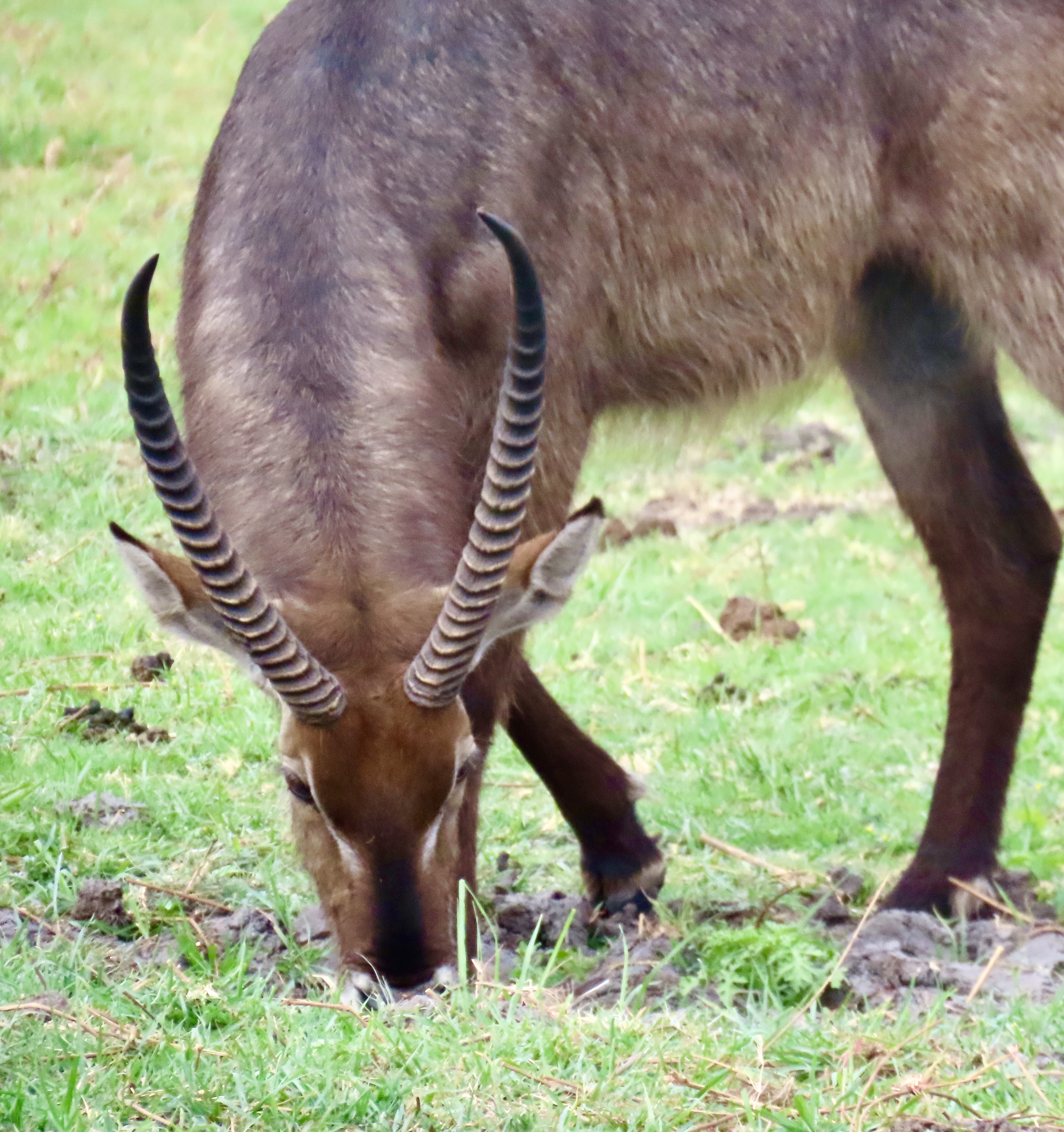
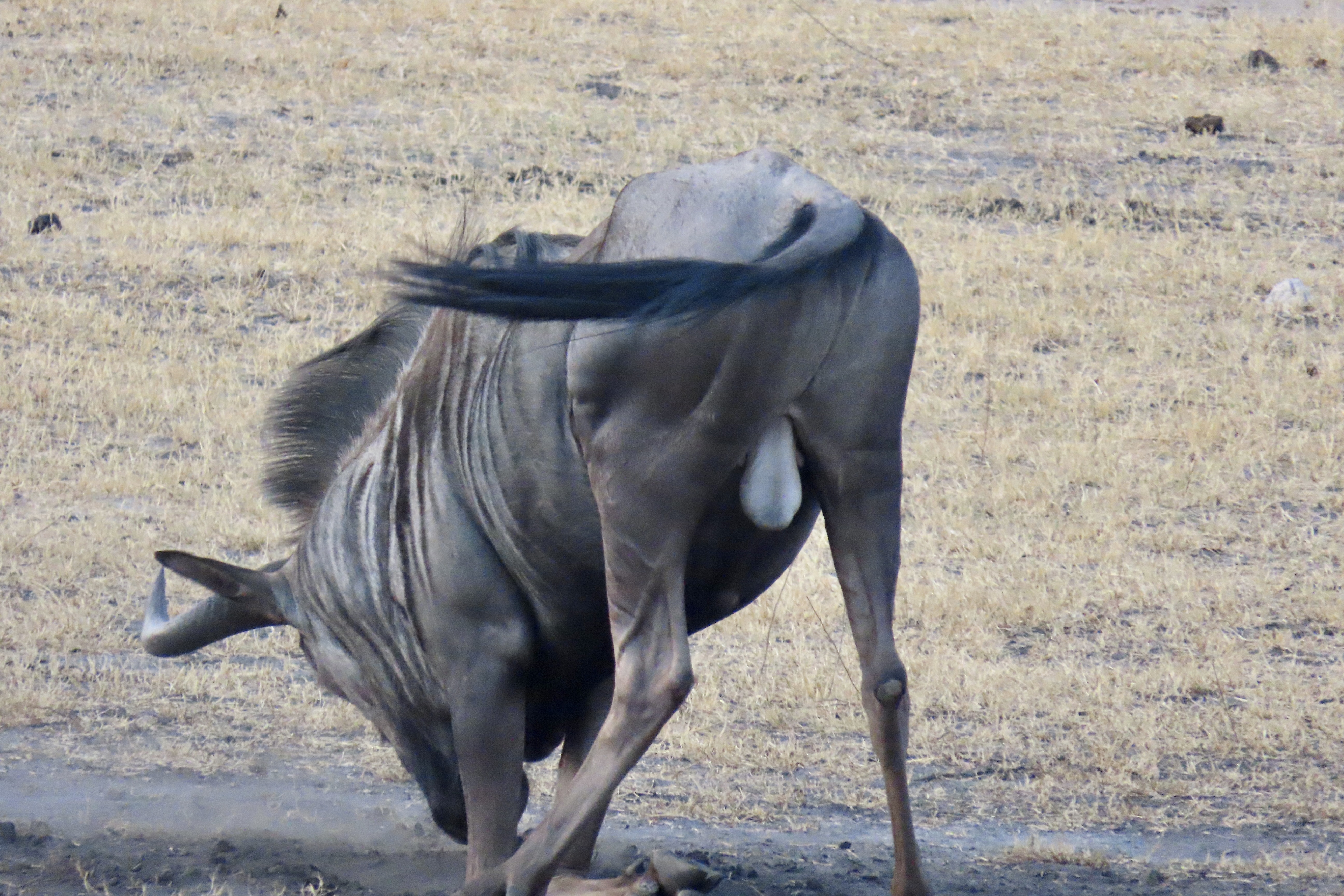
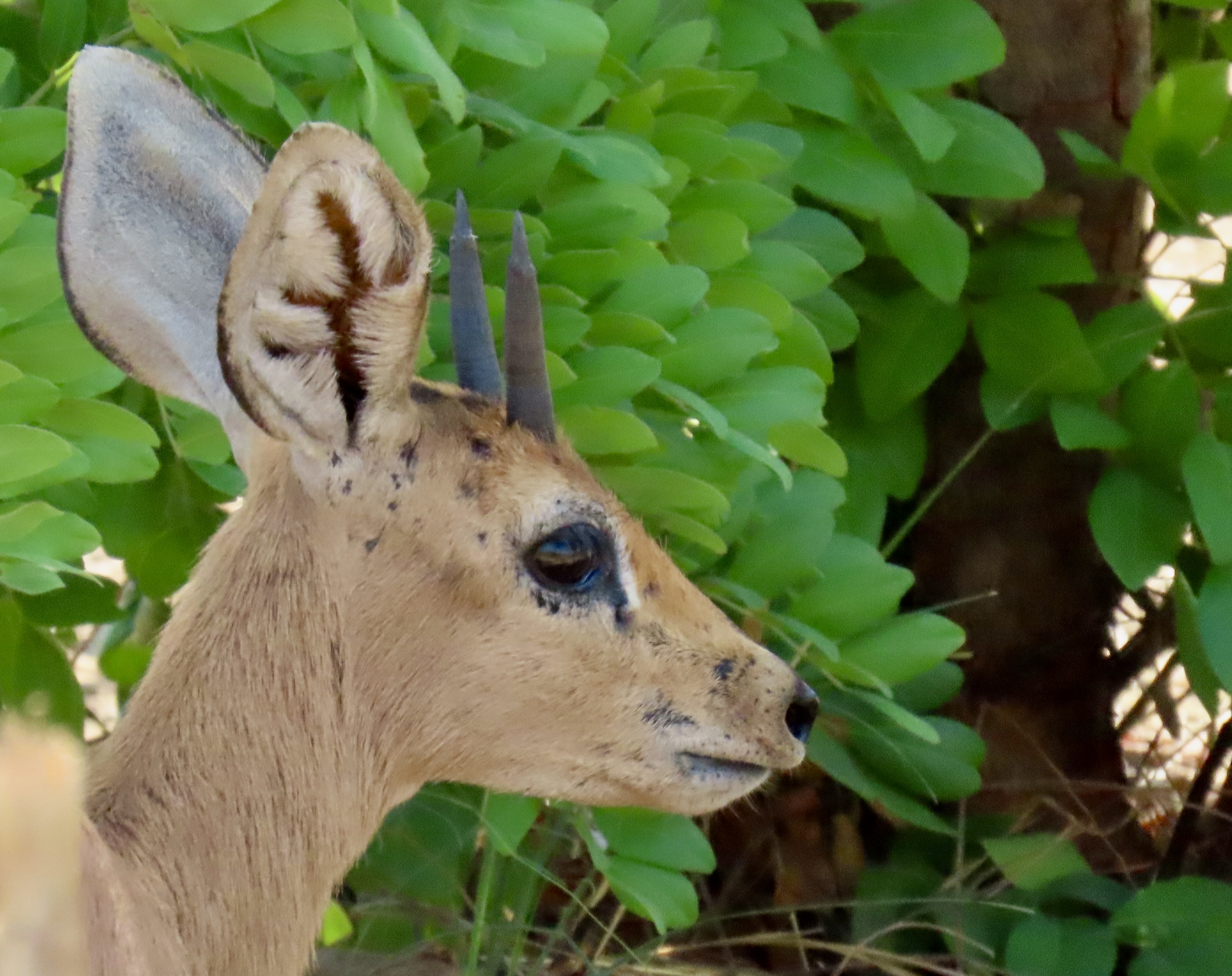
We saw only a handful of the numerous species of antelope found in Africa but the ones we saw were magnificent, such as this handsome male kudu that came in for water at the Iganyana Tent Camp where we were staying next to Hwange National Park in Zimbabwe.And brought his family of five with him including this mom and her baby.He watched over them as they drank.His spiral horns will continue to grow until they have made 2 1/2 twists. Note his large, and I think, beautiful ears. Their large size enables them to hear approaching predators. The horns of mature male kudus are used in traditional cultures as musical instruments.His female companion with her large brown eyes was as beautiful as he was handsome. A final family shot. Here’s a fun wrap-up fact: The sport of Kudu dung-spitting is practiced in southern Africa. (Think of watermelon seed spitting contests.) The winner is the person who is able to spit one of the antelope’s small, hard pellets the furthest. Our guides demonstrated for us. None of us volunteered to join them. I read that the world record is 51 feet. That person must have had one heck of a tailwind.Waterbuck: “Imagine sitting down on a freshly painted toilet seat,” our guide told us. Waterbucks are easily identifiable by the prominent ring around their tail as this female shows.A male waterbuck along the Chobe River displays his ring. This photo shows his impressive horns and rather attractive fur. When excited, the skin of a waterbuck secretes a greasy substance called “greasy kob”. It stinks so much it serves to discourage predators but it also serves as waterproofing when the waterbuck jumps into water as an escape route.Impala: The impala is another African antelope with a beautiful set of horns. We saw more of them than any other antelope.We found these elegant animals in fairly large herds. The buck behind was chewing on something.We came on this herd when we were out for an evening drive in Hwange National Park. Something had obviously alerted them. If they had spotted a predator, they would have been out of there at speeds reaching 50 miles per hour with prodigious leaps of over 30 feet in length and 10 feet in height. We were privileged to watch them leaping and running away from us at Lake Kariba. It was poetry in motion.Wildebeest: Wildebeest travel in large herds. We only saw one. Africans like to say that the wildebeest was the last antelope God created and he had run out of parts. So he took the leftovers from other animals including the stripes of zebras, bodies of hyenas and heads of buffalo and created the blue wildebeest. We found this fellow when we were on a safari hike in Hwange National Park.Later that evening we found him digging in the dirt to create a dust bath. I couldn’t help but wonder about where his spare parts came from here.He became a blur as he took his ‘bath.’ He certainly seemed to be enjoying it!Tsessebe: This was another strange looking dude. The straw in his mouth reminded me of a stereotypical country bumpkin. Tsessebe are nothing bumpkin-like when it comes to running however. They’ve been clocked at 60 mph(100k).Steenbok: And the final antelope we saw. It’s southern Africa’s smallest antelope, standing about 20 inches tall at its shoulder. It is a common but solitary animal. We found this cutie hidden alongside the road in Hwange National Park. Another view. Note the small horns and large ears. We weren’t sure what created the small scars. Our next post will be a wrap-up on our safari featuring the varied scenery, places we stayed, and the people met. Victoria Falls
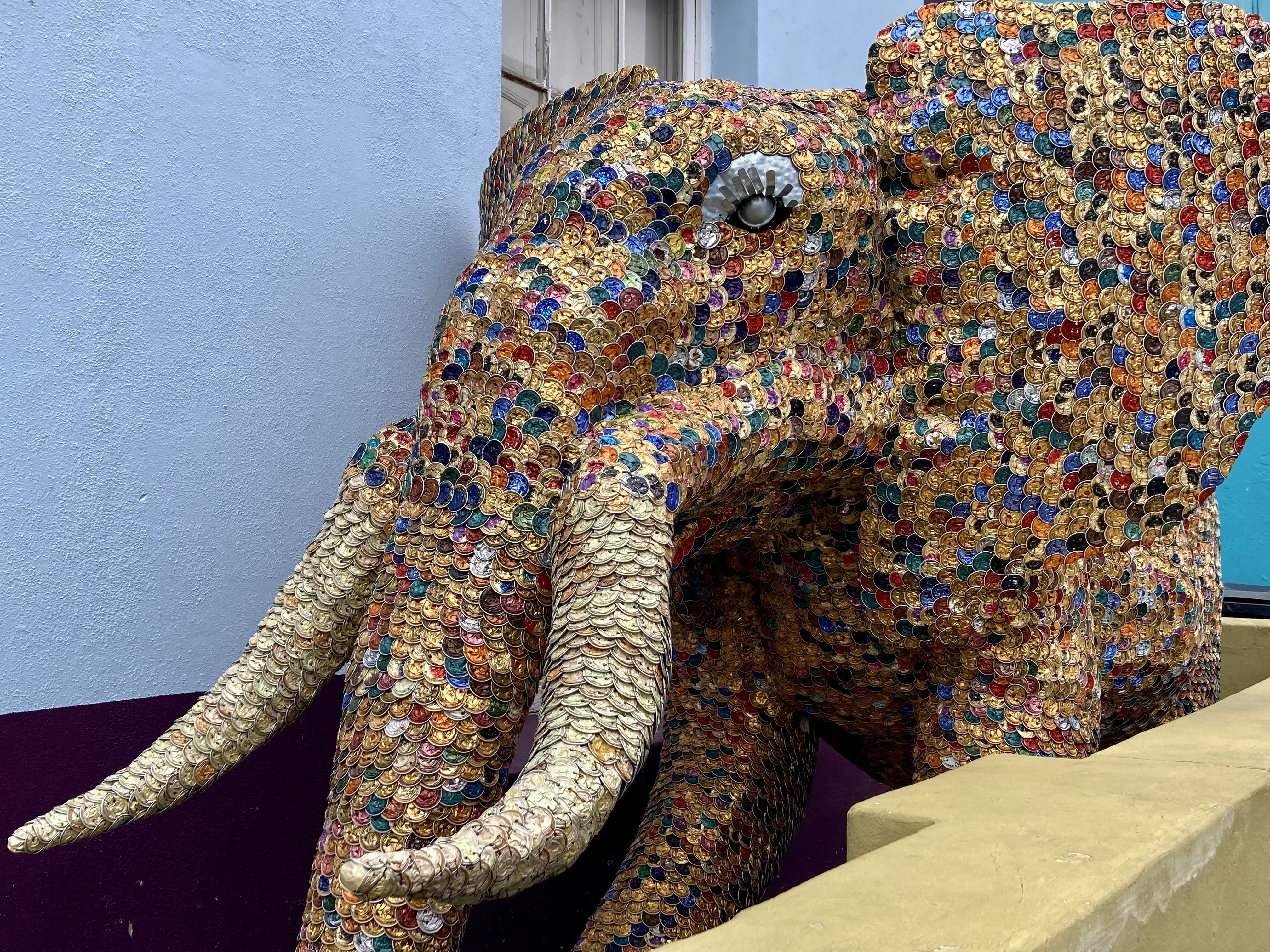
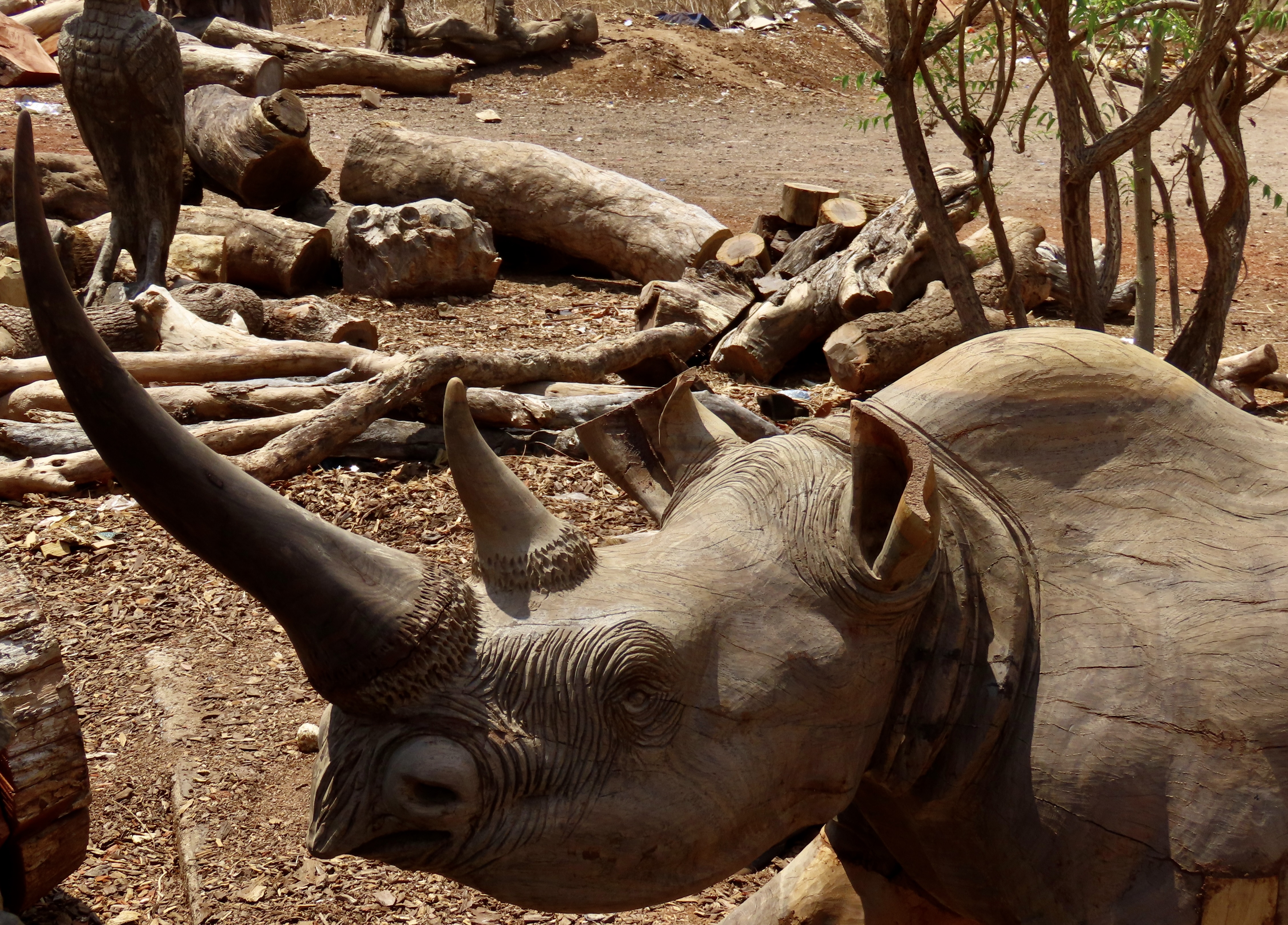
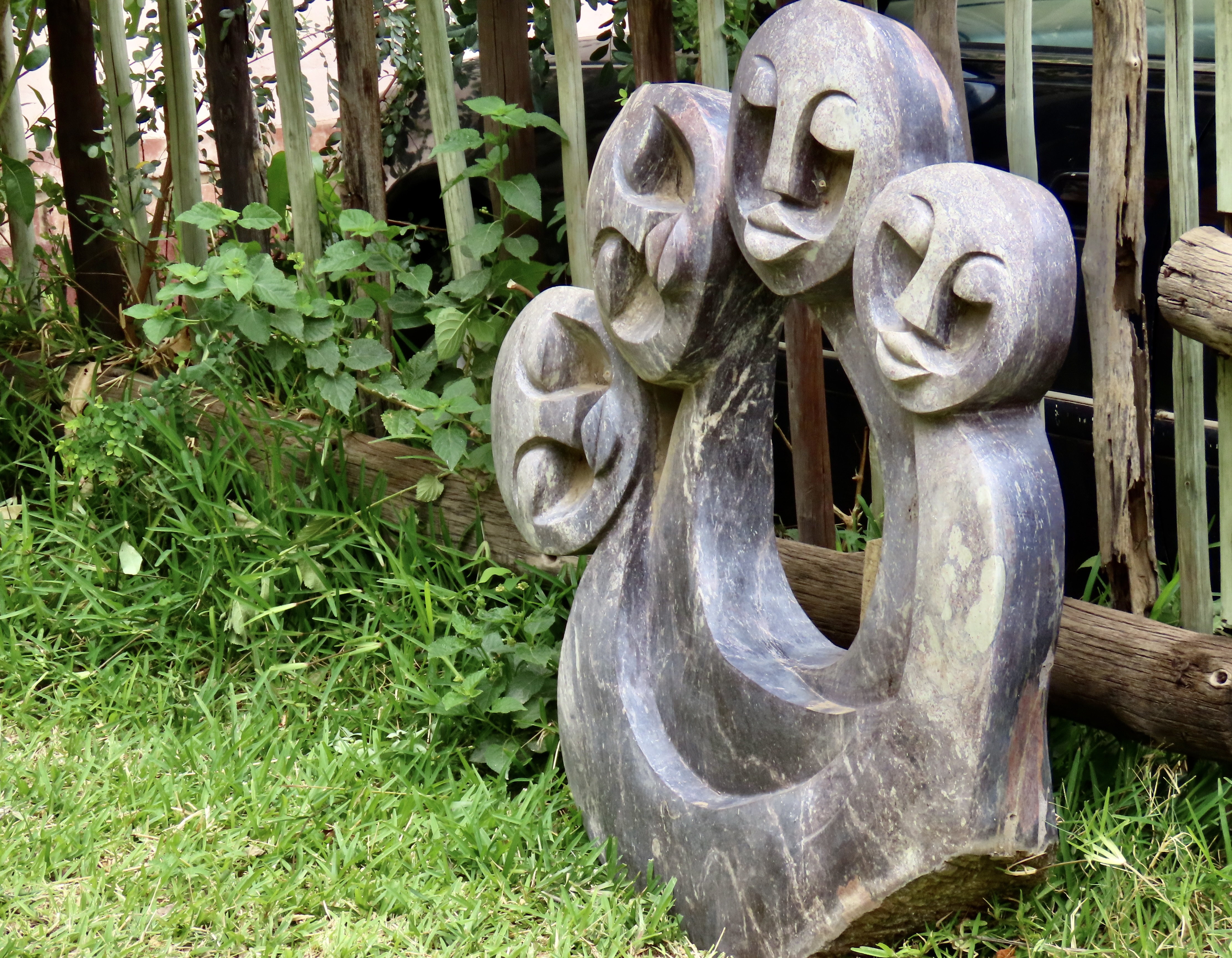
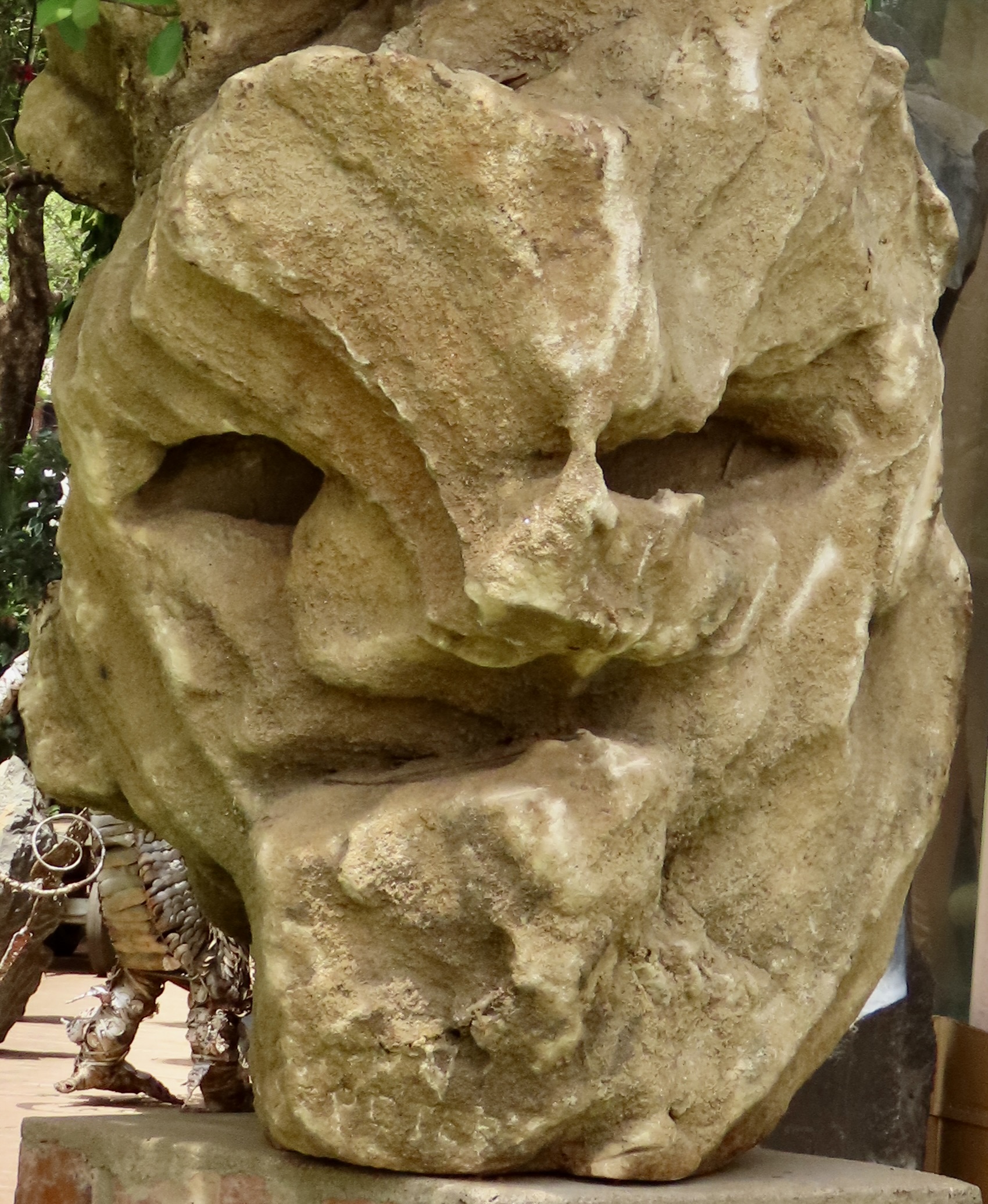
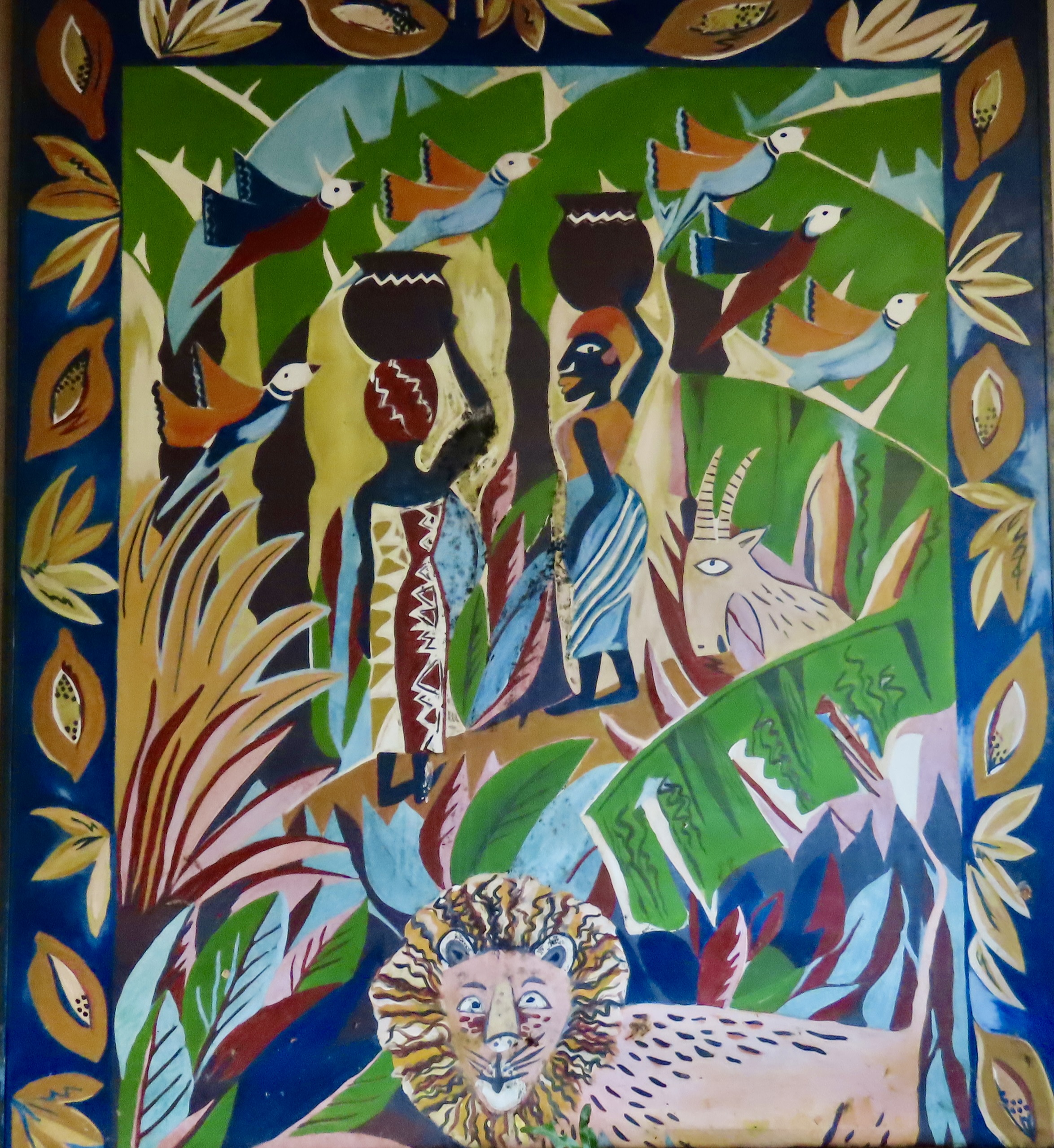
This is something you don’t see every day: An elephant being carved. Our guide Samantha, who had taken us to the fishing village, decided that visiting an African artists’ workshop in Victoria Falls where various African animals were carved out of wood and stone would also be interesting to us. It was located in a junk yard that offered car and truck parts for sale. Multitasking. We arrived close to noon and lunch was being prepared.Was this lion catching a snooze?A rhino, small elephant, and African fish eagle near completion.A close up of the rhino’s head.This regal-looking eland is about to get its tail. Note the fine detail. This is the work of a master carver!A carved water buffalo was for sale in downtown Victoria Falls. Samantha told us it would cost a lot more to ship it home than it would be to buy it.We were amused by a carved crocodile chasing a welded warthog.I used the elephant head a a teaser for today’s post in my last blog. Peggy provides perspective in this photo. Several stone carvings decorated a sculpture garden.I don’t think that they were for sale.I suspect that lots of folks will find this carving ugly but I felt it was powerful and modern.This painting would feel right at home on the walls of our home.I bought a small warthog from this woman. I figured Bone would like it. And Peggy bought a piece of art made from reeds. That’s it for today. My next post will feature African antelope we encountered on our safari.A curious kudu.
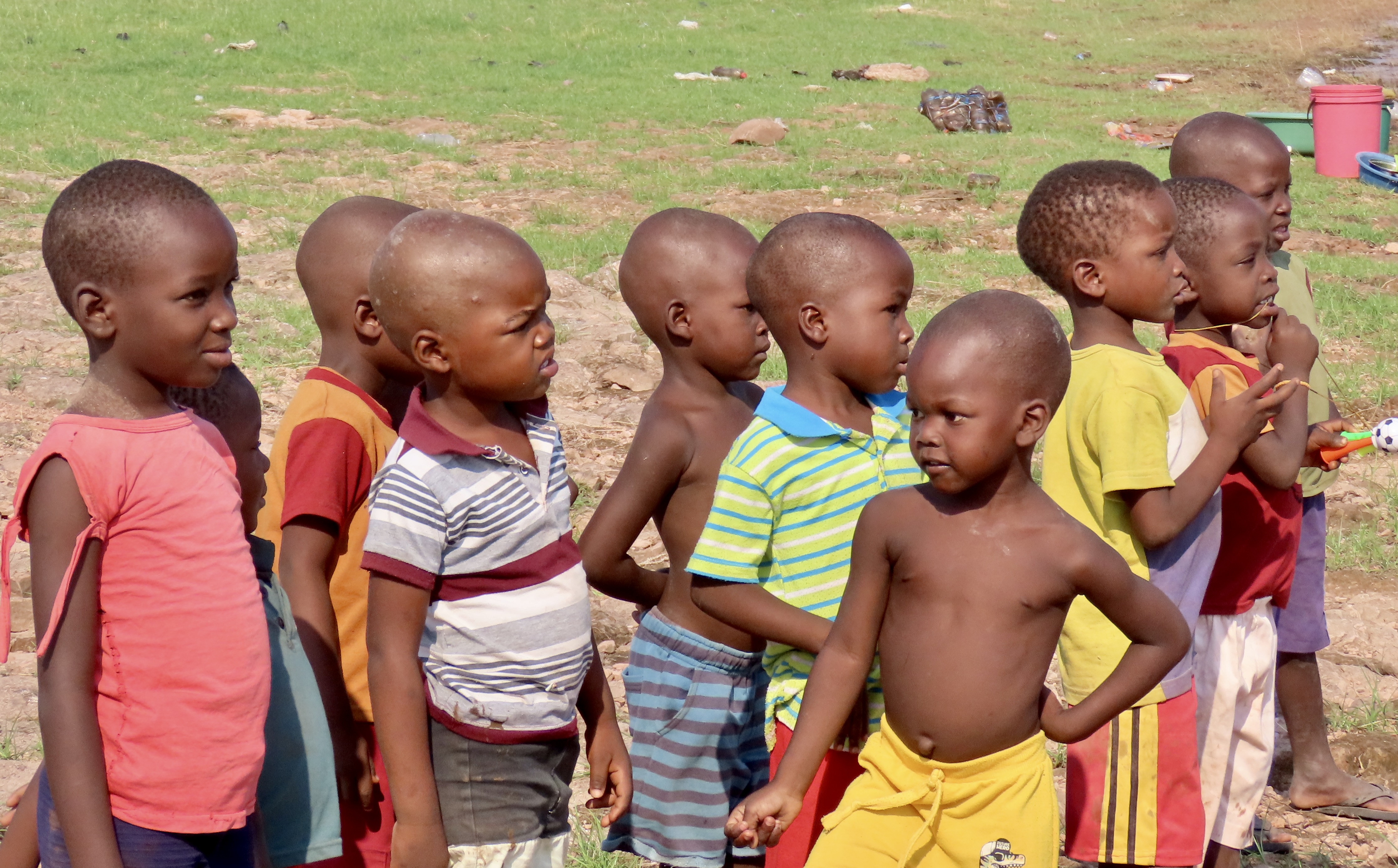
Children anxiously awaited our arrival at the tribe fishing village we visited on Lake Kariba. Which one was trouble? Grin
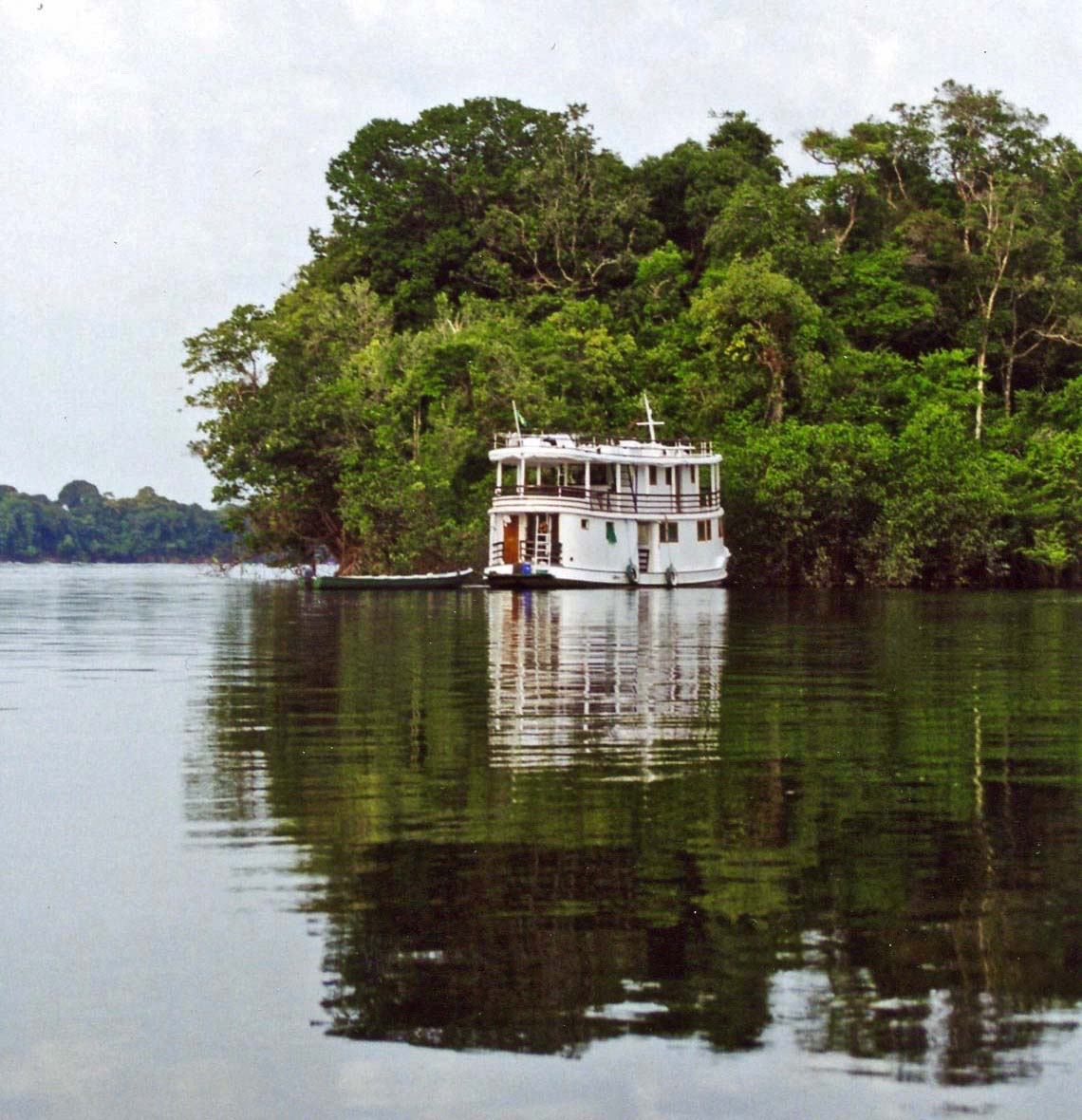
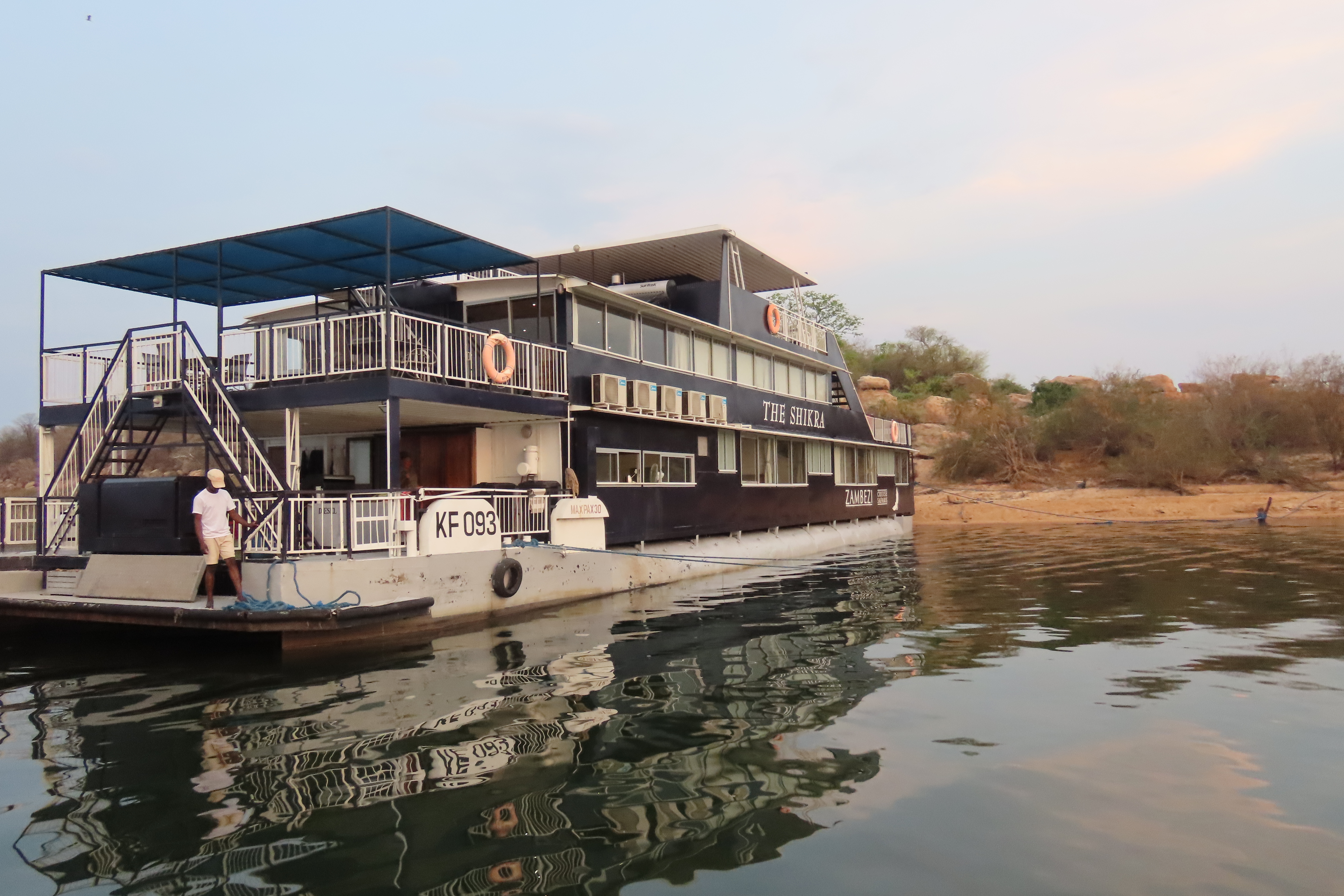
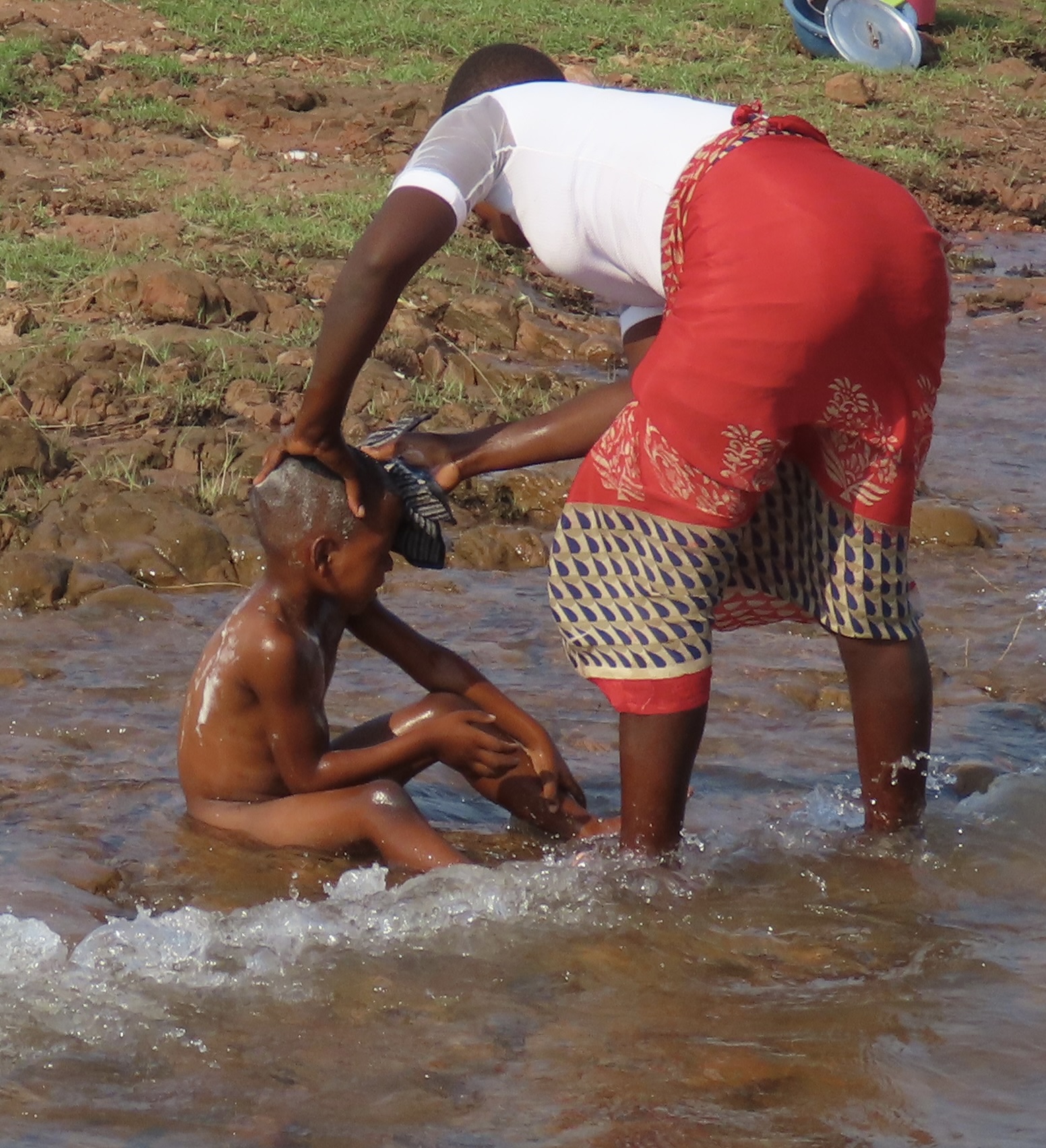
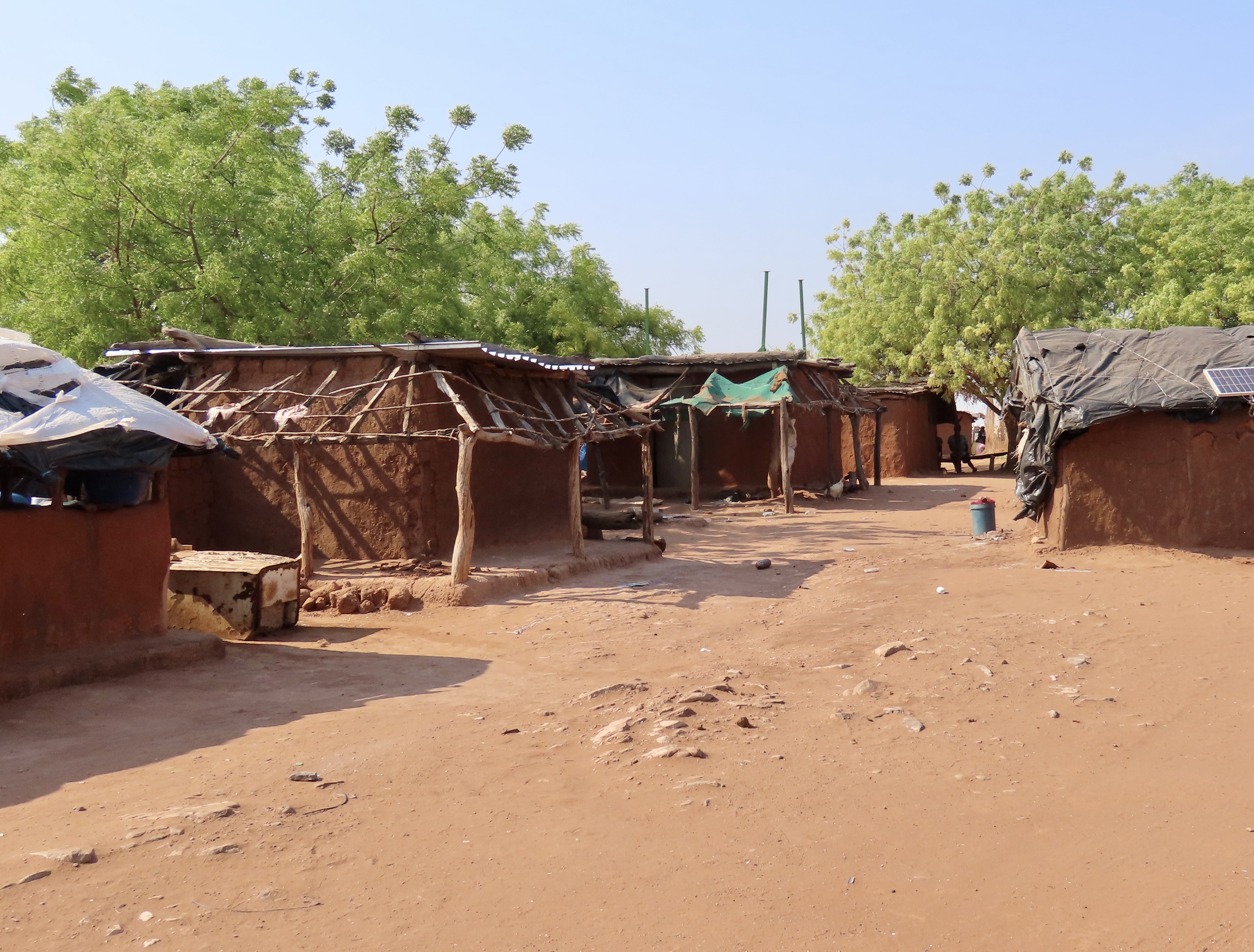
When the Zambezi River was flooded in the 60s to create Lake Kariba, several villages of Tonga people were flooded— without compensation. Some of them were later granted limited fishing concessions on the lake. Our guide was eager for us to meet Africans as well as wildlife and arranged a tour of one village located on an island. I found the people and village life quite similar to what I had experienced as a young Peace Corp Volunteer in West Africa 50 years earlier. Following are some of the photos that Peggy and I took.
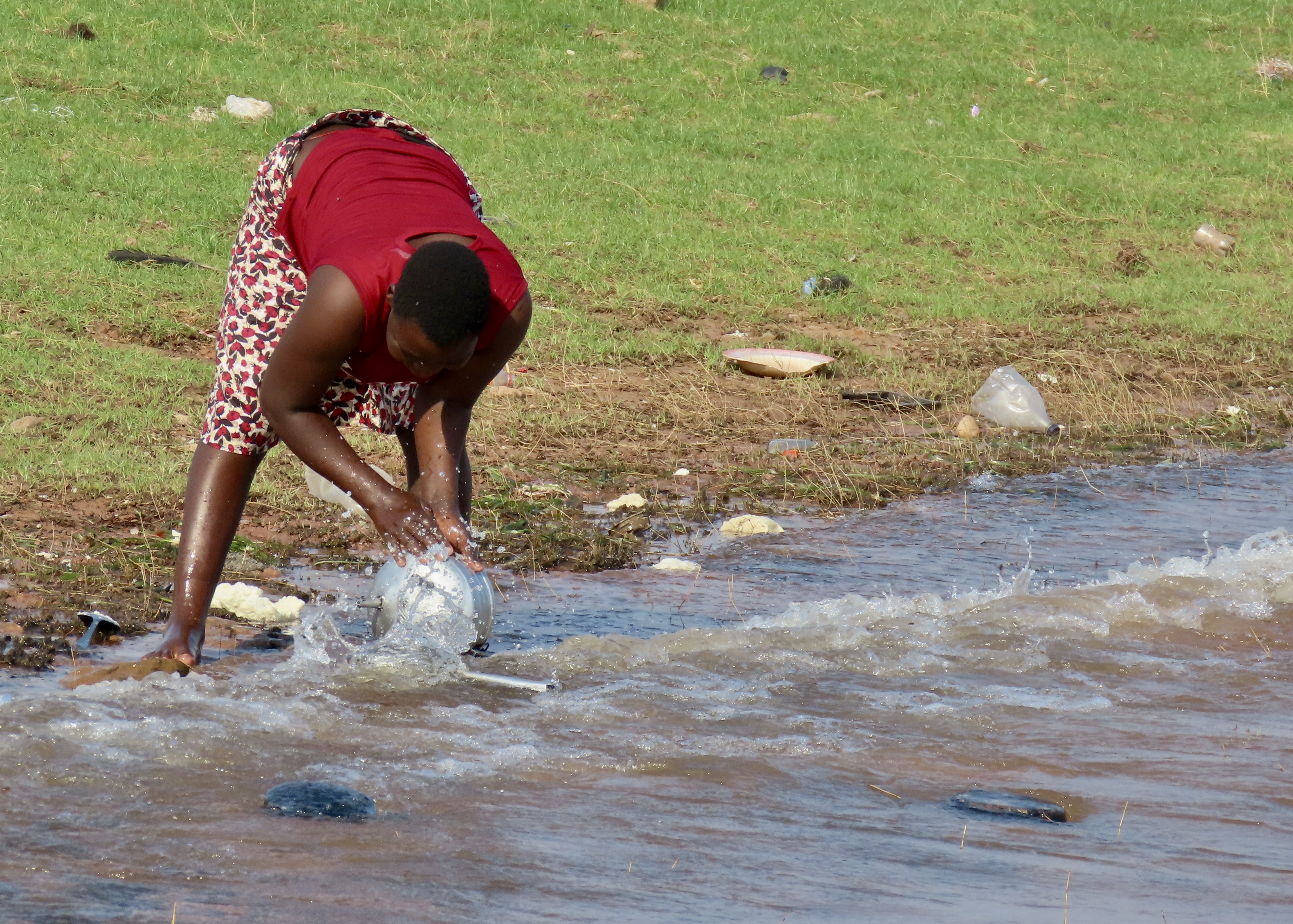
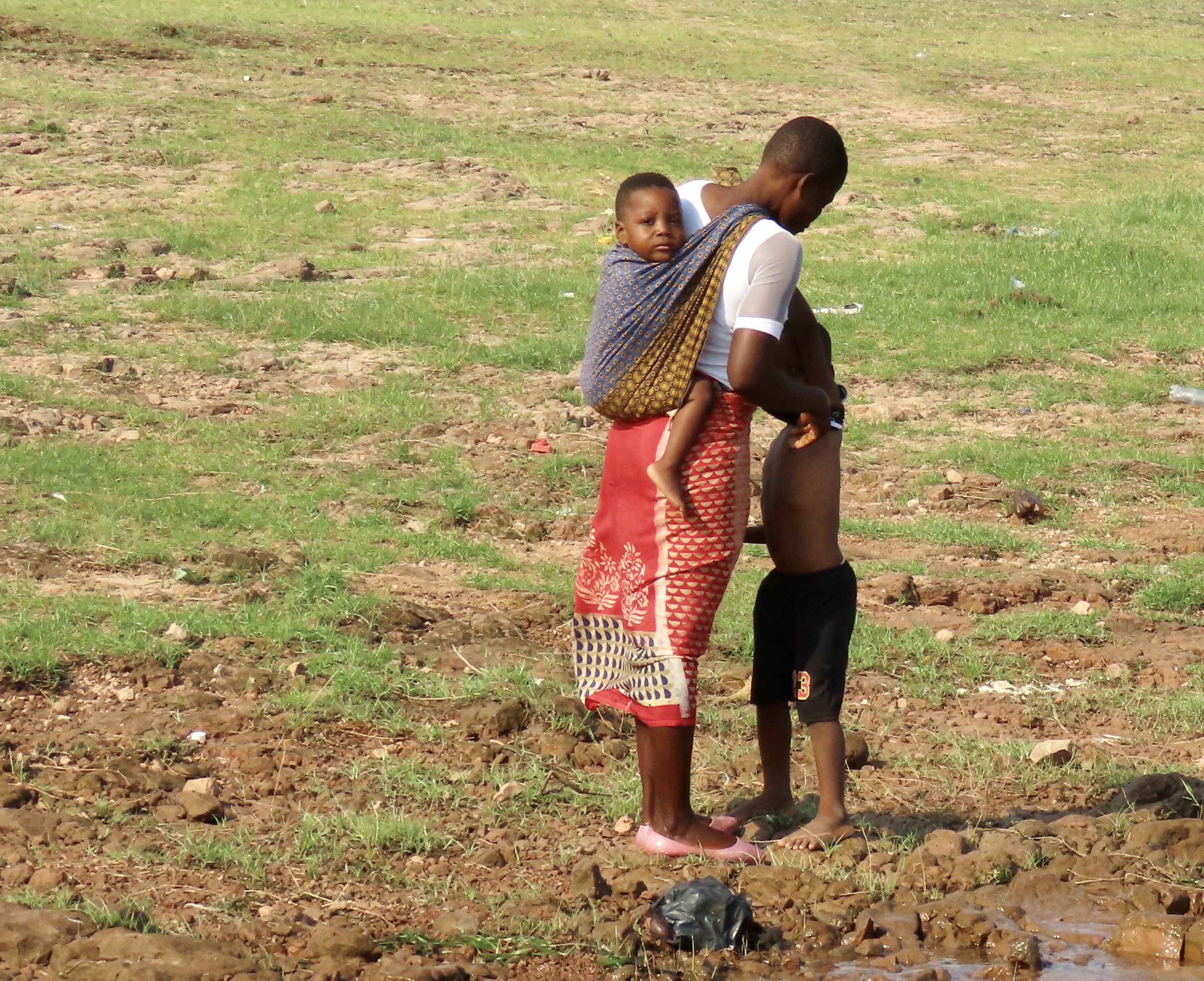
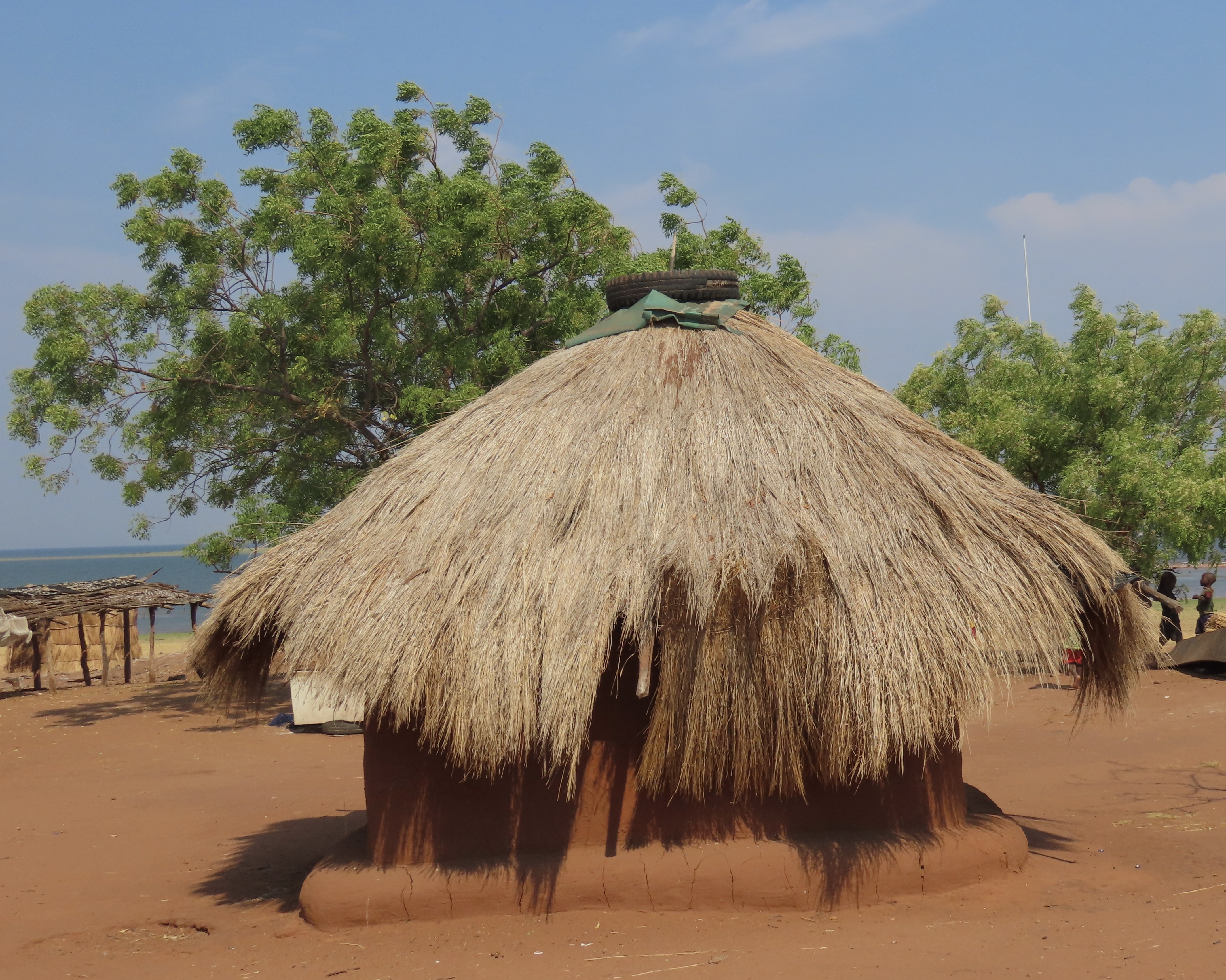
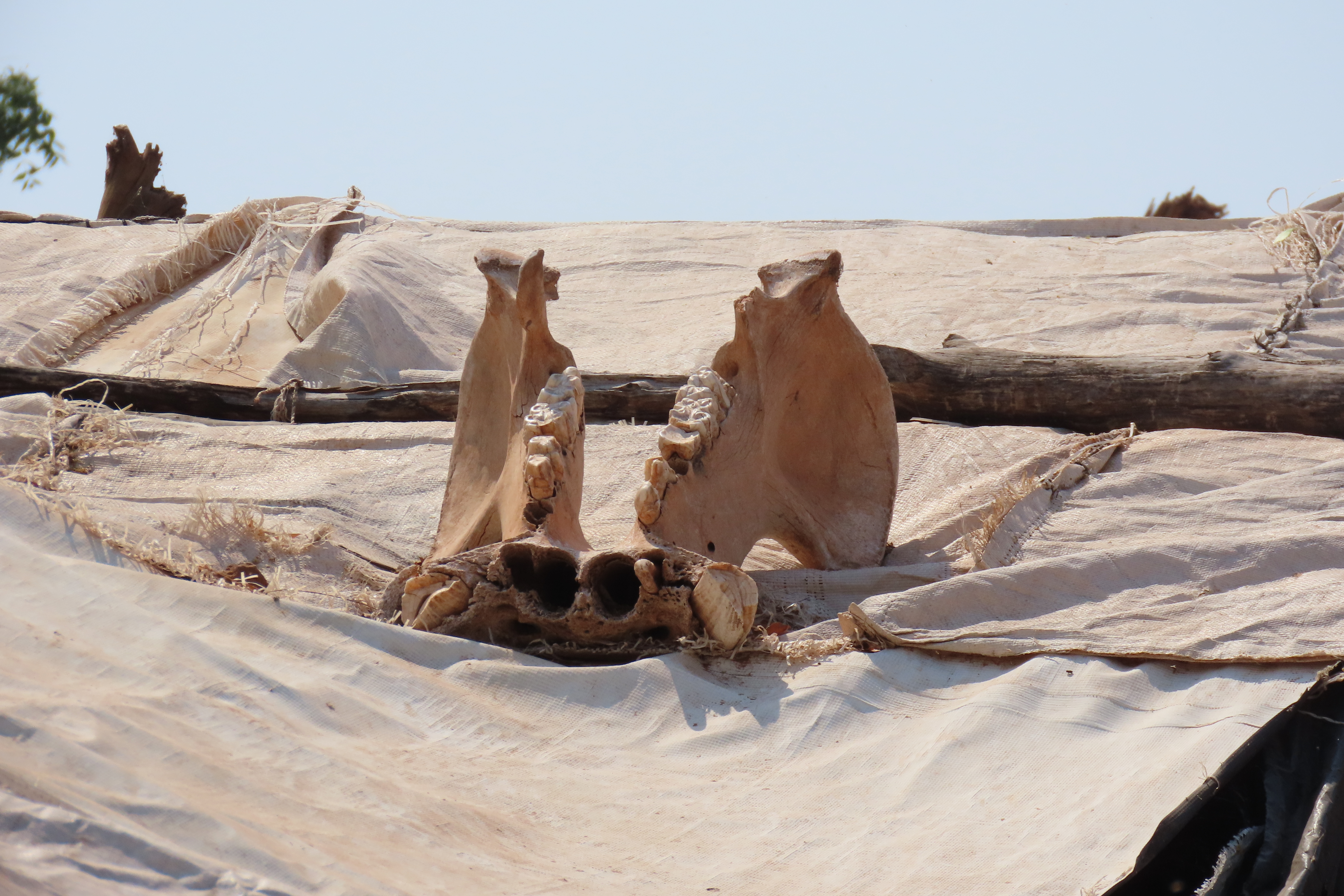
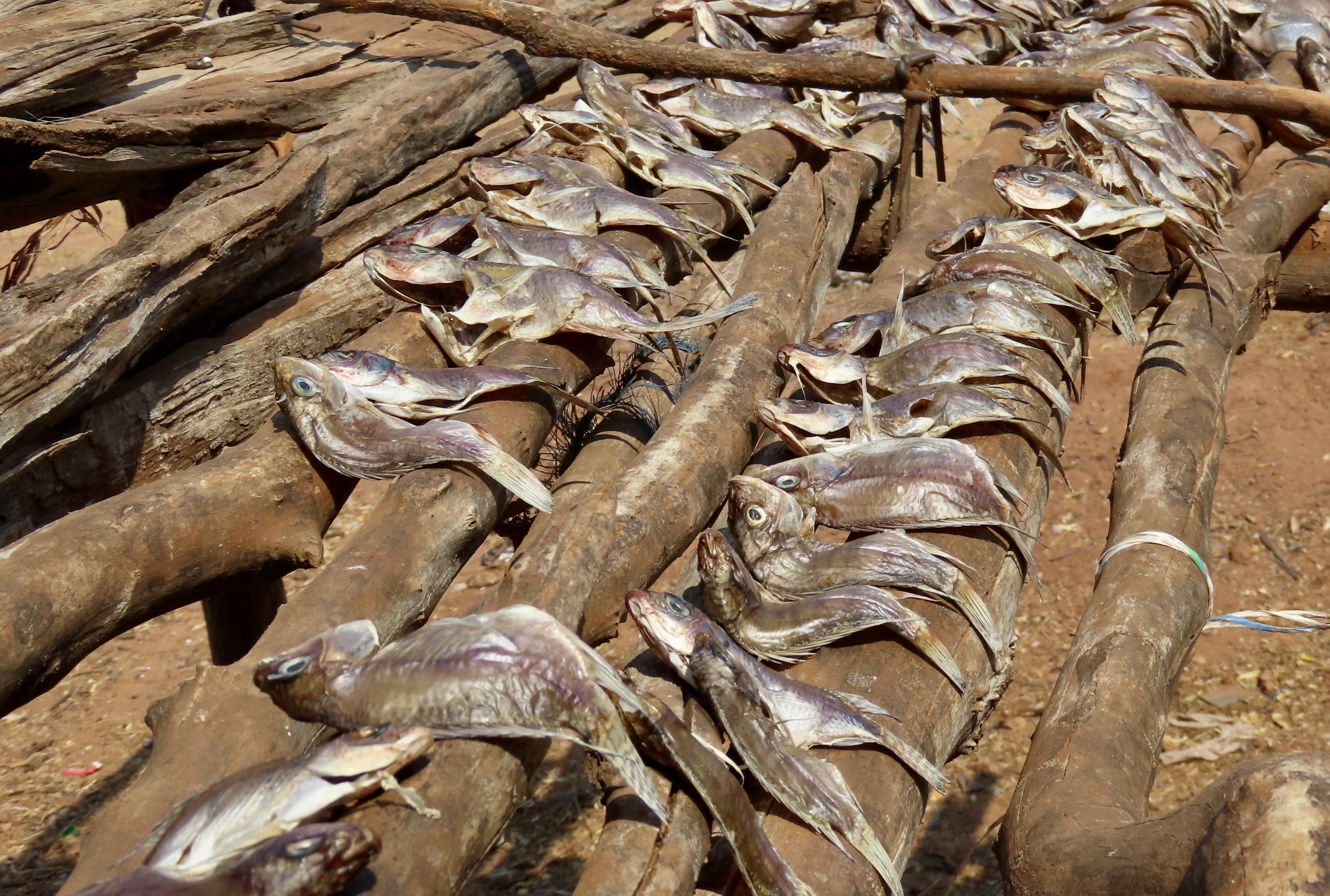
Life continued as usual in the village during our visit. The bathtub.The dish washer.And dish dryer.Child safety seat. How much safer could one be?Transportation system.Mainstreet.Housing construction varied. This one was was made of round mud bricks.The construction process. We watched as bricks were added.A different technique.Both methods would eventually be finished off with this solid clay covering, which I assume withstood rain.Roofing materials varied as well. This was a traditional covering. The reeds were purchased from a nearby town and brought in by boat.Modern tarps of various kinds were more common.This came as a surprise. You may have noticed it on our ‘Main Street’ photo. A solar panel makes lots of sense. Roof decoration? It’s possible that this hippo jaw was present to scare away evil spirits.A more modern store featuring the latest in sugar-free drinks! “Same great taste.” Even in 1965, the then small town of Gbarnga, Liberia where I served as a Peace Corps Volunteer had a Coke billboard. And one for Guinness.The chief of the village (blue shirt and leaning on post) took us on a tour where cooking, house building and fish net mending were demonstrated. The man in the cap talking is the captain of the houseboat we lived on while exploring Lake Kariba. This demonstration was how the Tonga cooked fish.Mmm, mmm, good! Since fishing was the primary source of income for the villagers, fish were also their primary source of food. The village’s fishing boat fleet.Mending fishing nets was an ongoing, daily process.Fish caught for sale were salted and dried.Close up.A different drying rack.Fish filet! Yum.After a steady fish diet, eggs might make a welcome substitute. Or chicken? How about duck?Peggy taught one of the children to make the Peace sign. The kids were an absolute delight.How did she do that?And here Peggy was teaching them the ‘A wuni kuni ki yo oonie’ song and clapping game. Everyone of our grandchildren, nieces and nephews will immediately recognize this. Peggy, a retired and well-loved elementary school principal, had a large group of the children with her wherever she went in the village. I’ll close today with a photo of two of the children who had adopted John. He skipped up to the village with them!
Peggy and I are on the road again. Tomorrow we start our journey west where we will be taking three months to travel up the West Coast from Big Sur to Olympia National Park camping out in our travel trailer as we go. I will blog about the trip as we go! Hopefully, I’ll be able to wrap up Africa and the Everglades on our two week drive across the US. I’ll continue to read blogs and respond to comments as time allows.
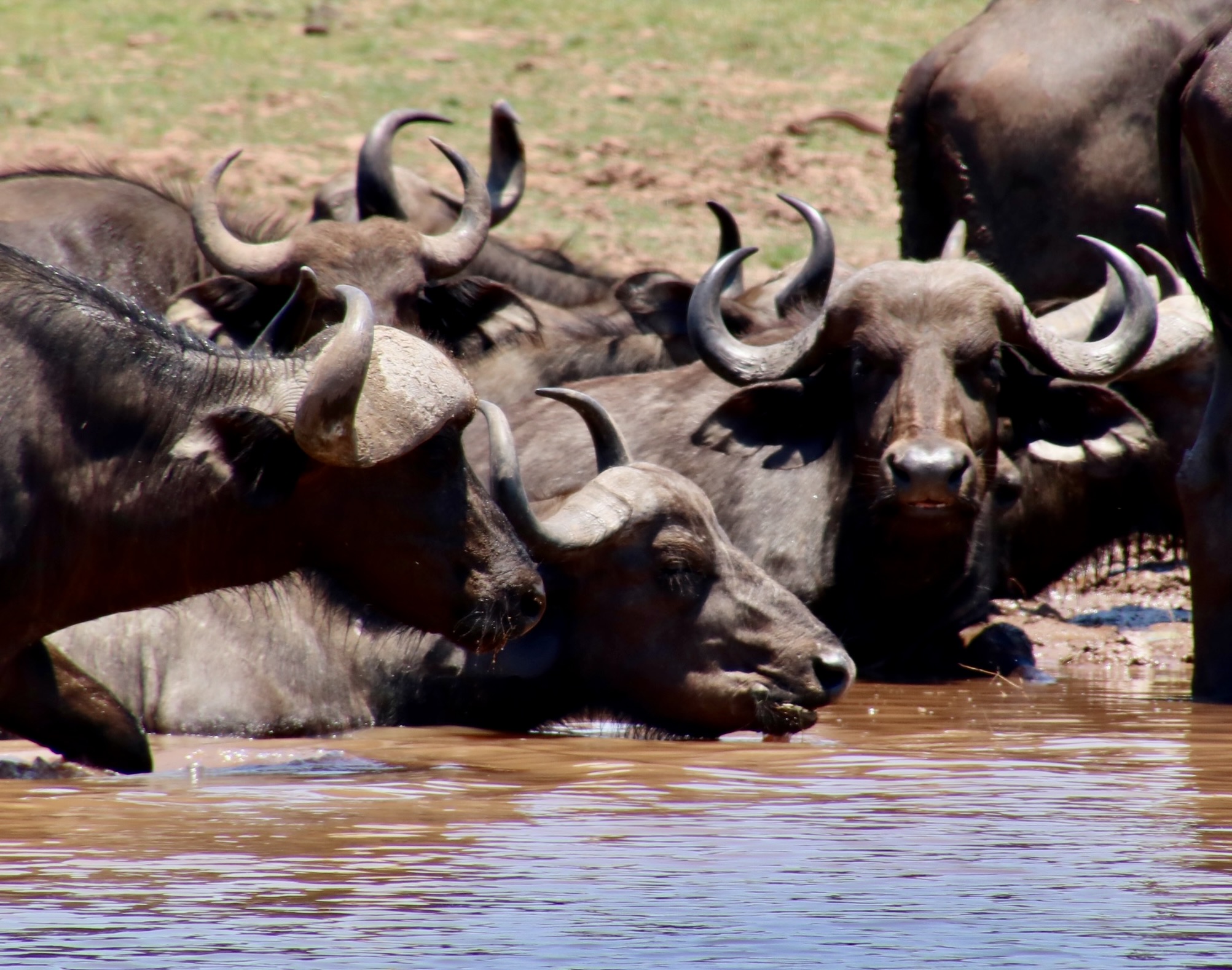
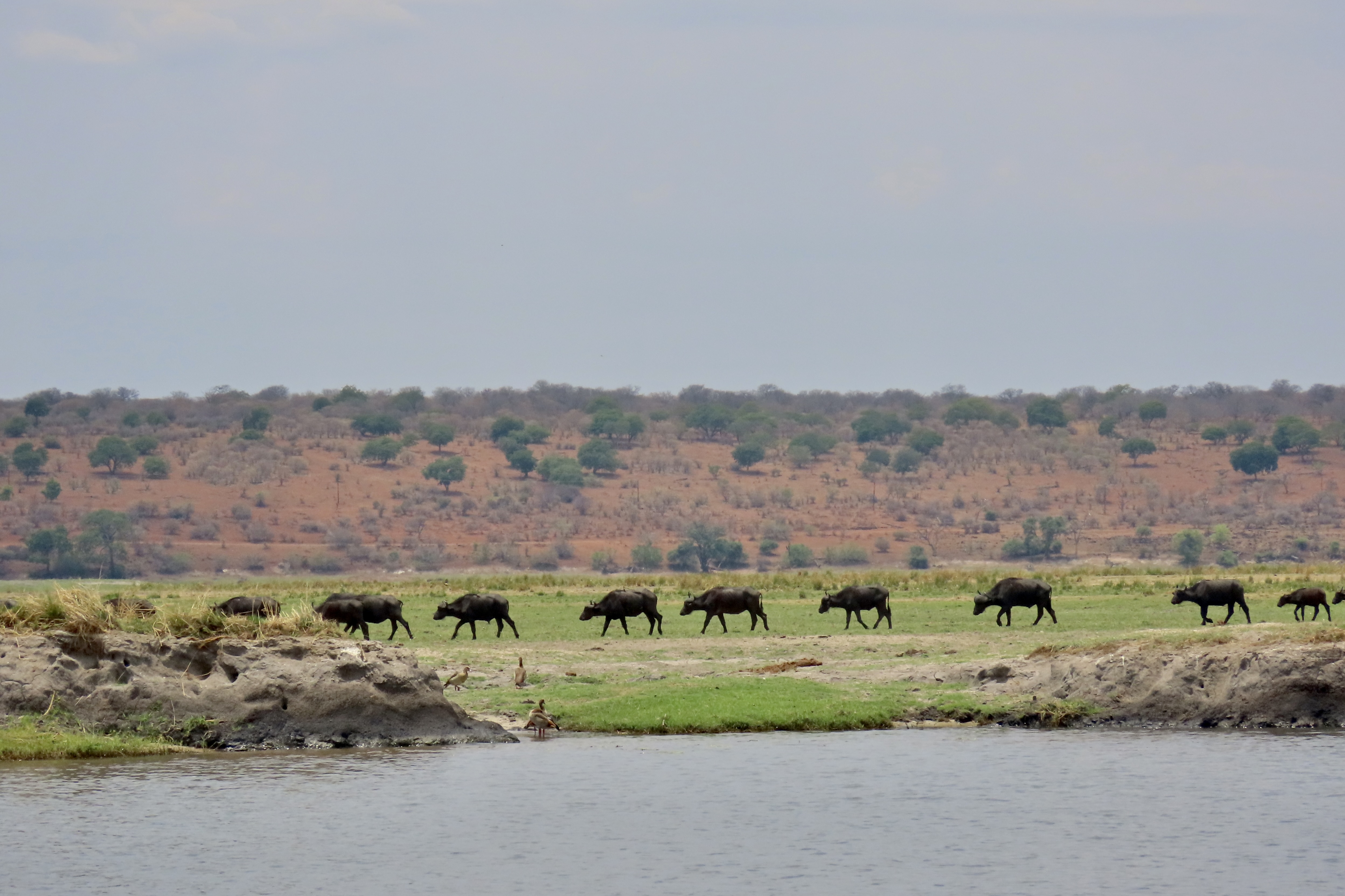
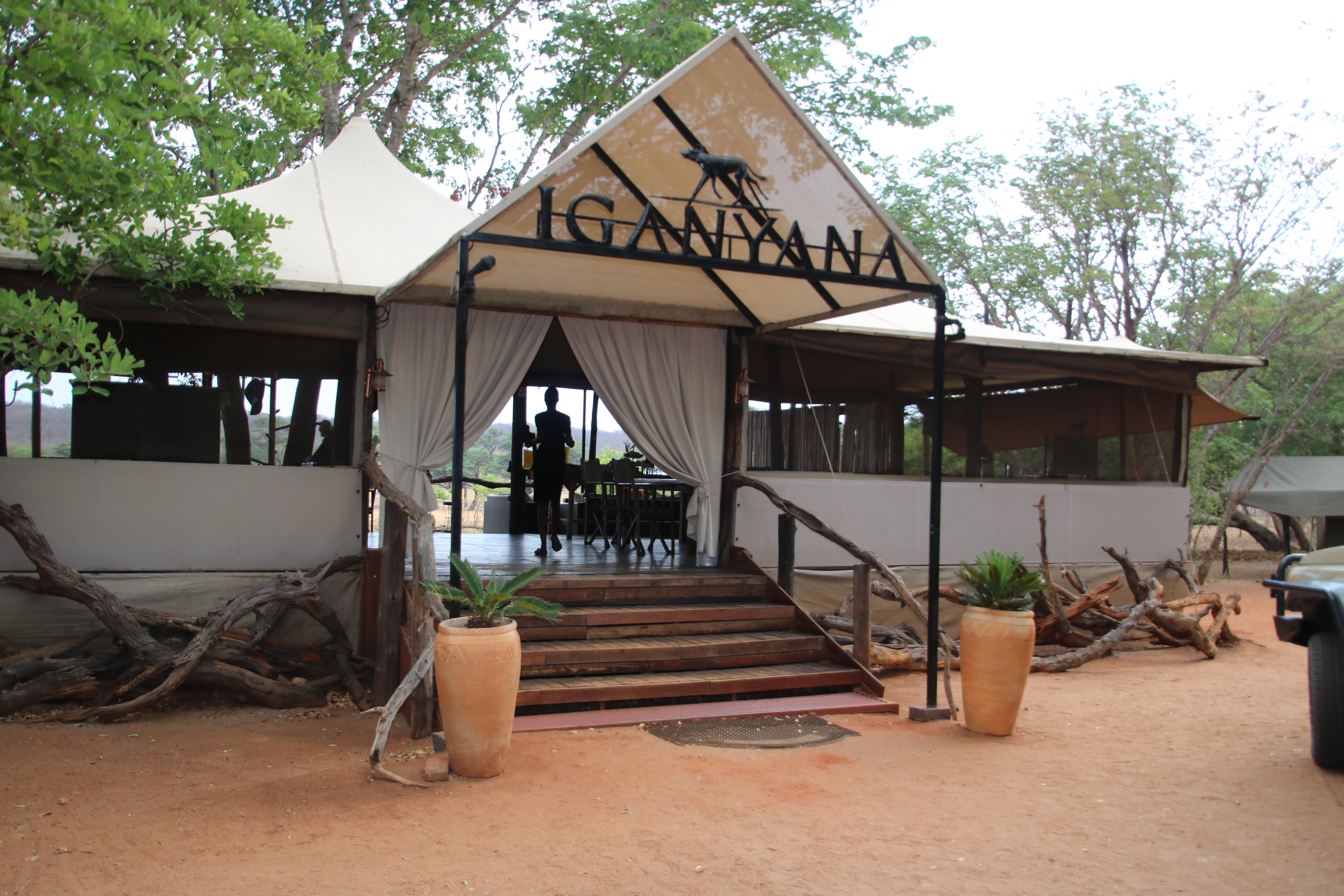
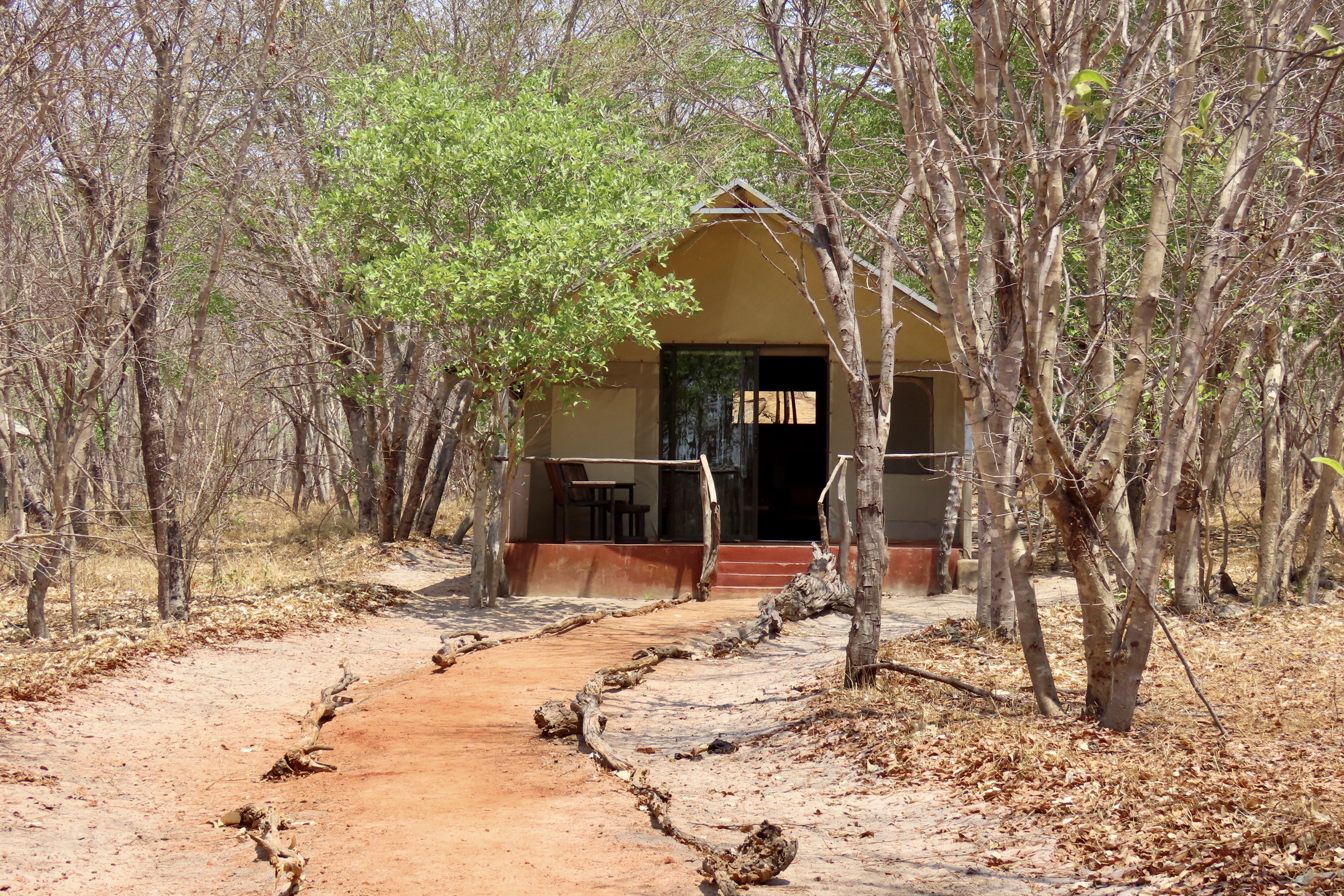
Cape buffalo are dangerous, no doubt about it. But what makes them so? The look alone says “Don’t mess with me.” The eyes, the horns, the ears and even the nose speak of danger! We were safely ensconced in our boat on the Chobe River. Did I mention that the buffalo are great swimmers…Size matters. The big bulls can weigh up to a ton. The really big ones can reach over 6 feet in height and 11 feet in length.Which, in no way, means that you would want to mess with a thousand pound female…And then there are the horns. No one, not even a lion, wants to be hooked by one.They are the boss. That is actually what the horn structure is called. The solid shield created where the horns meet is so tough that it can withstand the pressure of another large male crashing against it!They attack as a group. You won’t be dealing with one. It could be the whole herd. They protect each other, including the young, the old and the sick. The largest males form a circle around the vulnerable with their horns pointing out. When a calf cries in alarm, the bulls come charging.Terry, the co-owner of the Iganyana Tent Camp where we stayed on the edge of Hwange National Park, told us a story about this downed tree. His brother-in-law came to visit and went out for an evening walk. He called Terry and asked for a pick up because he heard lions. Terry jumped in his truck and rushed to the scene. He didn’t have to worry about the lions. They were up as high as they could get on the stump as the herd of buffalo ran in circles under it, threatening instant death if they dared to come down. That’s how scary they are. The week before we arrived, a herd of around a thousand came to visit the camp and stayed until 11 that night, Terry told us. No one could go back to their tent until the buffalo left! One of them left its calling card on the pathway up to the tent we were staying in. Peggy and I had a hard time imagining being in the tent while the herd roamed around outside.We were out for an evening drive with our guide when we came across the herd crossing the road. “Be quiet,” the guide told us. “Be very quiet.” The guide waited until there was a break and dashed through it.What our guided didn’t tell us was that the herd was coming to graze in the same field where a surprise party was being hosted for us! While Peggy made horns, I checked out the tree for a possible escape. Just in case, you know. I’m happy to report that the buffalo happily munched away on their side of the field while we drank on ours. Fortunately, there was a sufficient supply of alcohol with a great motto. Enough that Peggy changed her approach to making horns. That’s it for today. The next post will be about a fishing village we visited on an island in Lake Kariba, and a carving camp we shopped at in Victoria Falls.A few of the children from the fishing village gathered around me and demanded that I take their photo.
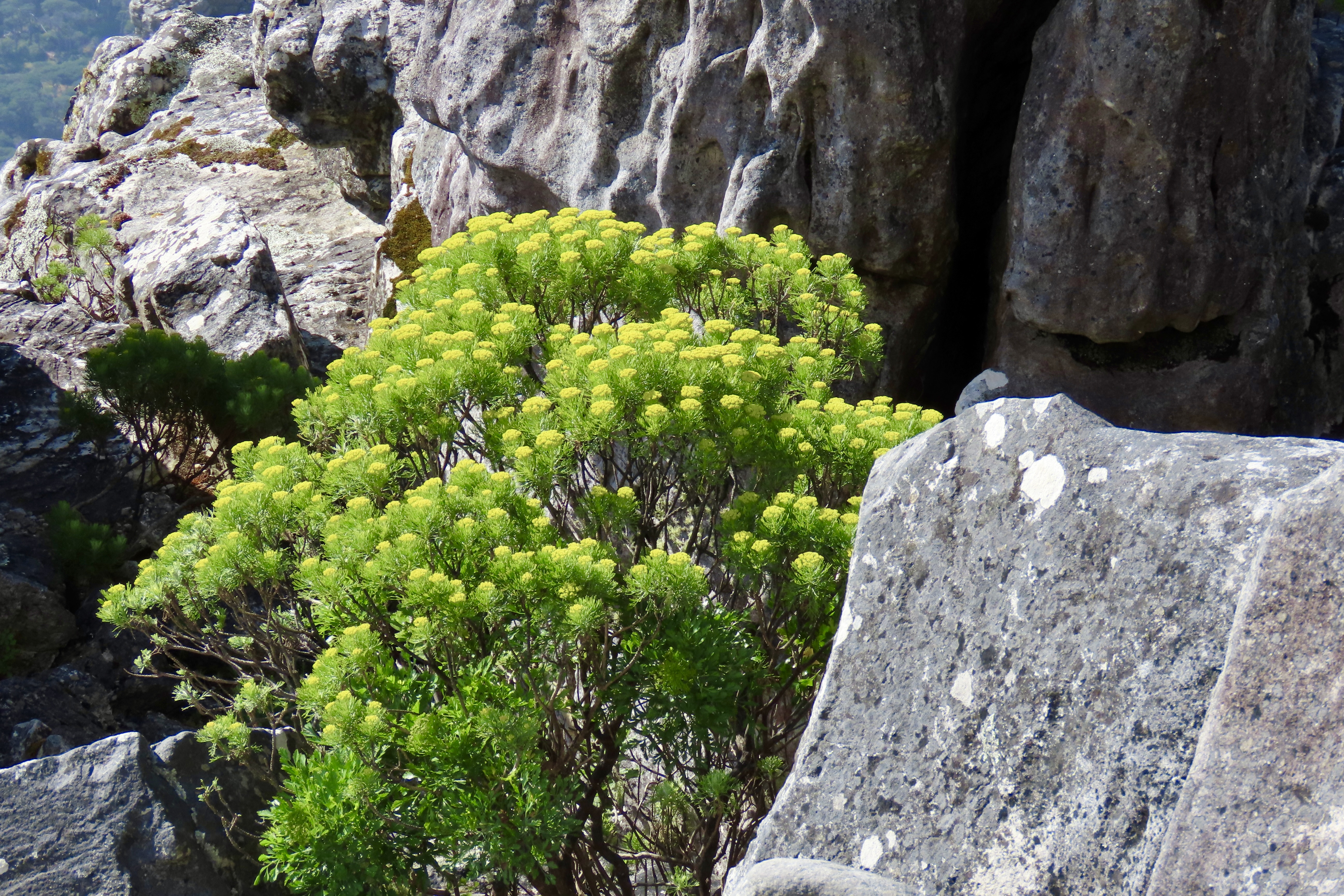
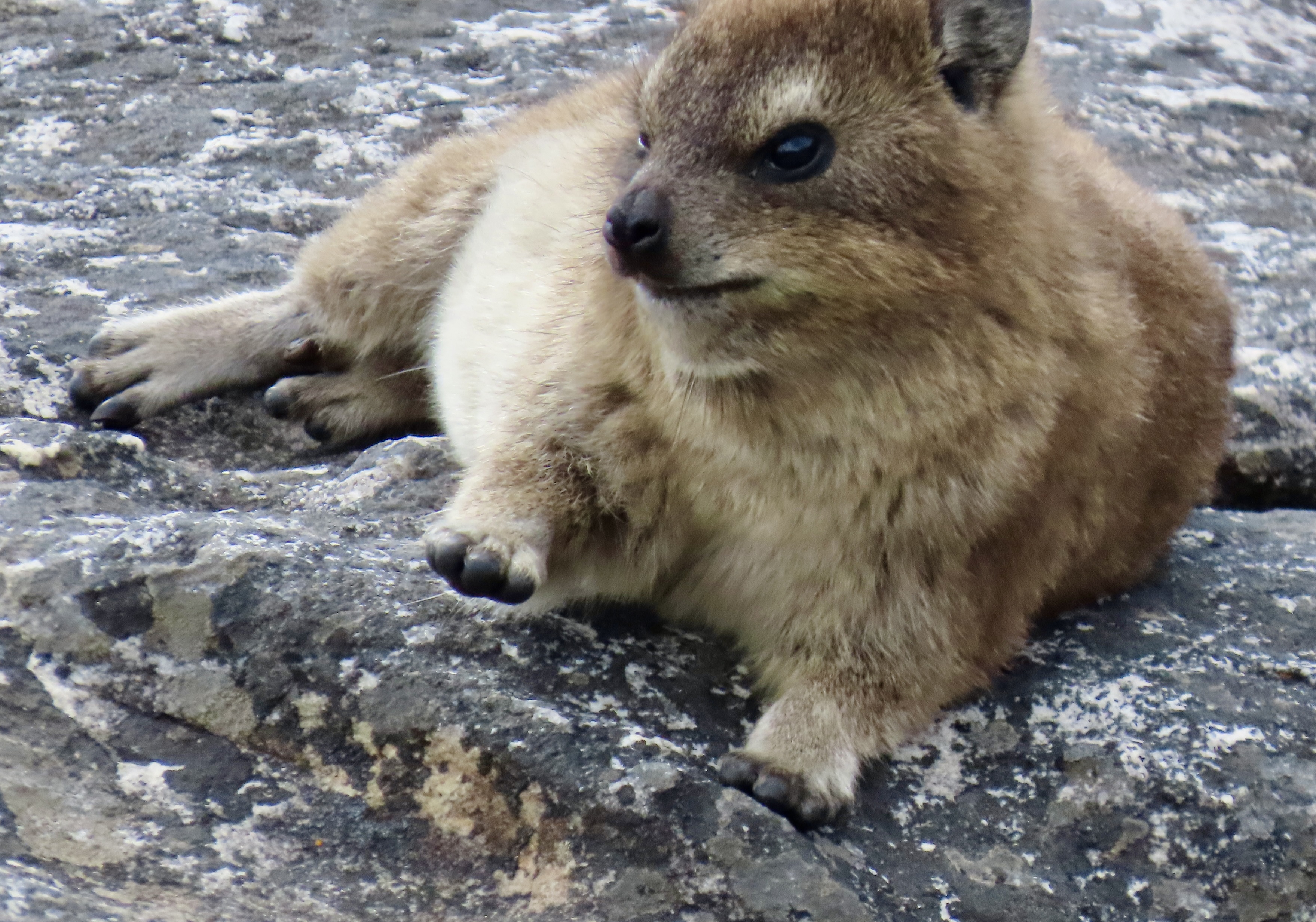
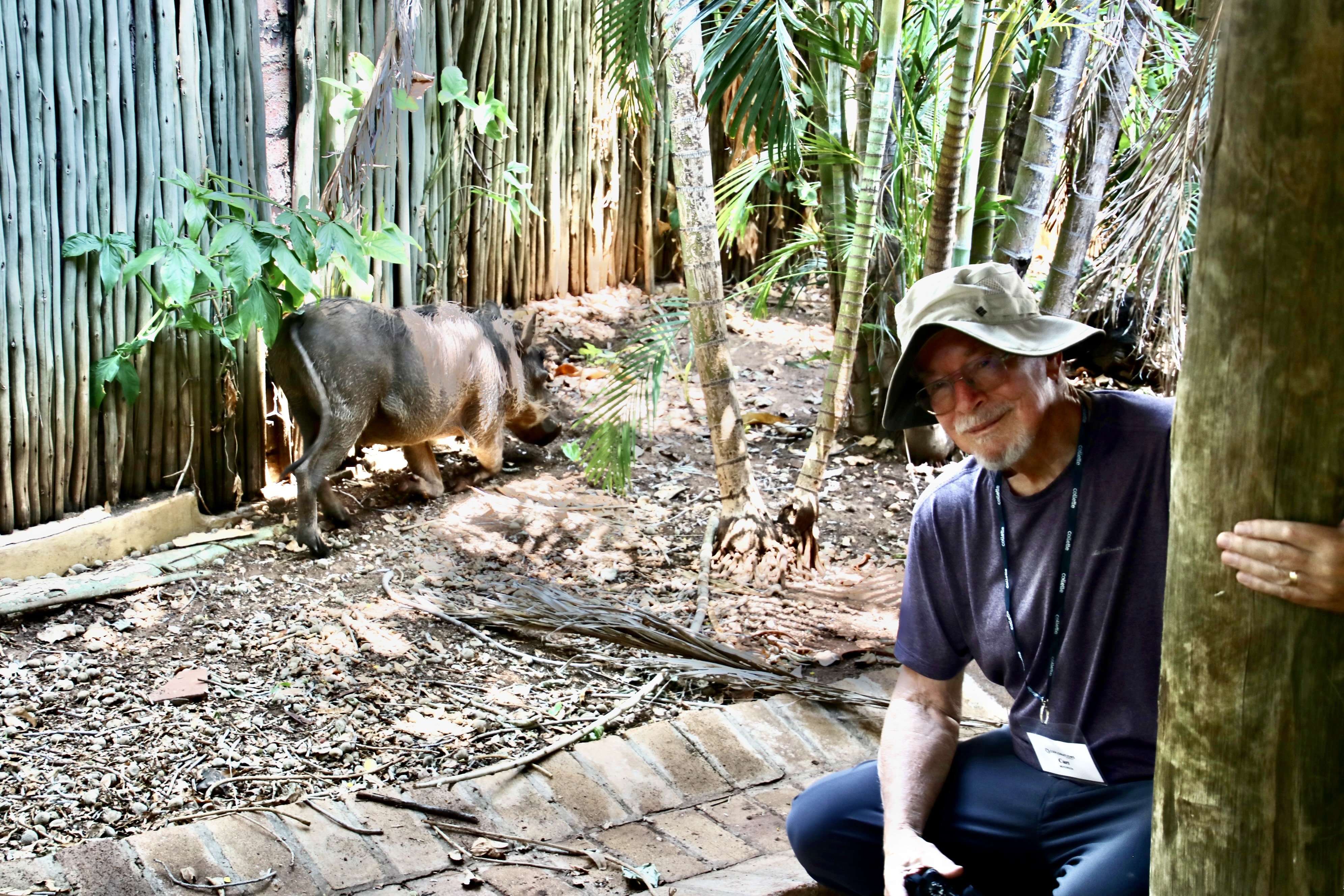
“Snake? What snake? Let me at it!” It’s hard to believe that this cute, friendly looking mongoose lying outside my door at our lodge in Victoria Falls could be a deadly enemy to snakes, or anything, except bugs…A pack had arrived on the lawn while I was “home alone.” Peggy had gone out with our group to a local in-home dinner while I was catching up on some much needed rest. The mongoose were all busily hunting for insects except for the one that was taking advantage of our warm balcony. I think she took offense at my comment…“Who dares to say I can’t take on a snake?” I thought I’d provide her with some options…How about this one? We heard our next door neighbors yelling as they dashed out of their tent cabin on the edge of Hwange National Park. They had a visitor, this long olive green fellow that looked like a black mamba. Black mamba’s are long, skinny, and can be more olive colored than black. They are one of the most feared snakes in Africa. I grabbed my camera and ran over to photograph it before the staff showed up and kicked me out. Getting up close and personal with a mamba might not seem too smart but I’ve been known to lie down in front of rattlesnakes so I can get good headshots. Grin. But hey, I turned 81 yesterday and I’m still here. Turns out it was a grass snake, but boy could it move fast. The staff came armed with brooms.Or how about this large black snake? It looked scary enough when we came upon it near the Cape of Good Hope. It’s nonpoisonous, however, and good at capturing gophers and mice. The next snake we discovered close by was different, a worthy opponent of of my visiting mongoose. It’s scientific name is Bitis ariens, and with a name like Bitis…The puff adder causes more fatalities than any other snake in Africa and is responsible for 60% of the snake bites in South Africa. With long fangs, a venom that kills cells, and the ability to swim and climb trees, it was not a snake to be messed with. Note its forked tongue and puffed out cheeks.It headed off for the grass and we were glad to let it go. We saw several other reptiles that didn’t push our heart rates off the charts, including a six-foot long lizard.We spotted this monitor lizard on the banks of the Chobe River in Botswana. They can reach 6 1/2 feet in length and are known for standing on their hind legs to monitor their surroundings, thus the name. In addition to being the largest lizard in Africa, they are the only lizard with a forked tongue. Some specialists argue that this makes them more snake than lizard. They are also supposed to have a high IQ— for a lizard. Apparently, they can be taught to count up to six. One clever thing they do that I read about is lay their eggs on termite nests. The termites cover them up and the nest provides protection and heat regulation. When they are born, they have a ready supply of termites to eat. It hardly seems a fair way to treat your host.We found this colorful lizard on a rock near the Cape of Good Hope. It’s a southern African rock agama.It disappeared over the edge, but then poked its head up to watch us.We were up on Table Mountain next to Cape Town, South Africa, when we spotted this interesting, “armor-plated” lizard. It’s called a black girdled lizard.I’ve always liked tortoises. I wasn’t expecting to see any in Africa, so this leopard tortoise in Chobe National Park came as a happy surprise.We also found another one. Check out its attractive shell. Males compete for their lady loves by bumping into each other. They also pursue and bump into females until they agree to mate. But mainly, both males and females wander around and graze on grass and other herbaceous plants.And now back to mammals and the competition for cutest animal. We thought that the mongoose featured on top might win, but that was before we met a hyrax up on Table Mountain.As I mentioned in my last post, hyraxes have a number of physiological characteristics that make them more closely related to elephants and manatees than to the rodents one would expect. They are found throughout Sub-Saharan Africa and the Middle East.And just how cute are they? Our sister-in-law, Frances, couldn’t resist buying a cuddly toy hyrax for her new granddaughter.Speaking of cute, this small velvet monkey showed up at a restaurant overlooking the Victoria Falls gorge where we had stopped for lunch. I think he was looking for a paw out. That does it for today. On Wednesday, Peggy and I will take you back to the Everglades. On Friday, it’s all about Cape buffalo. On Wednesday, we’ll return to the fantastic birdlife of the Everglades and the Bald Cypress National Preserve plus throw in some crocodiles, alligators and dolphins.
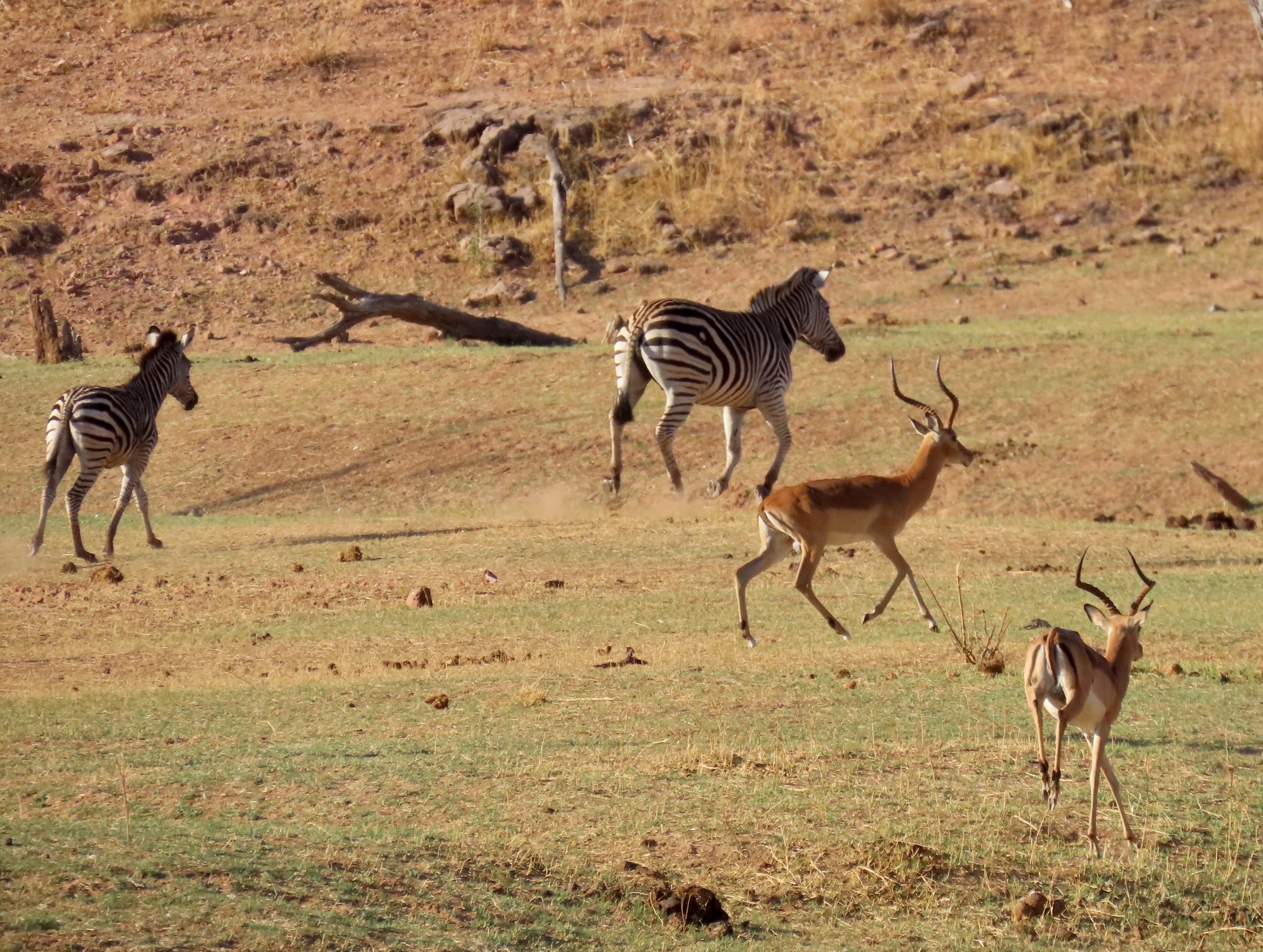
A zebra mare and her foal make their way across the savannah in Hwange National Park.
We were on a mission to find zebras. They were the only major animal on our must-see list that we hadn’t seen in Chobe National Park. Finally, deep in Hwange National Park, Zimbabwe, we found them, a whole herd. As is obvious from their physical appearance, they are closely related to horses and donkeys. In fact, zebras can mate with them. When a zebra and a donkey get together, their offspring is a zonkey. Not surprisingly, the offspring of a horse and a zebra is called a zorse. This is definitely party conversation material! Like mules, zonkeys and zorses are sterile, however. You won’t find them in large numbers.
As for the marvelous black and white stripes, scientists aren’t exactly sure of their purpose. One might be to confuse predators. It’s really hard to pick out vulnerable individuals in a herd, especially when they are running like heck to get away. They may also serve as a form of identification for other zebras, a name tag if you will, since the stripes are different on each zebra. Controlling body heat might be another factor.
Peggy and I really liked this photo. Note the beautiful symmetry on the face and how the stripes extend up from the zebra’s neck into its mane. If you shave off all of the hair, a zebra’s skin is black.A side view.And a full body shot. While the stripes on each zebra may be different, it’s subtle. Other than the differences between size and sex, I certainly couldn’t tell the difference. I’d be right there with the lion in trying to pick one out! BTW, this is a different zebra from the one I featured above.The herd, for the most part, was focused on something off to the right, possibly a predator. One was eating, however, which is the zebra’s primary occupation. As herbivores, their main food is grass, supplemented by leaves, roots and bark. Droppings in the foreground suggest this is a major elephant route. (It was hard to take photos anywhere near water in the dry season without the droppings. More than once, I cropped them out!)The herd moved in among the trees and provided another photo op. Zebras are social animals and live together in herds. When annual environmental conditions force them to migrate, the herds join together into huge herds, sometimes numbering in the thousands, and often travel with other herbivores like antelope. Within herds, zebras hang out in smaller groups consisting of a dominant stallion, several mares and foals.The stallions can be quite aggressive in establishing and maintaining their dominance. Note the look on the zebra in the back. This was not a love-bite!A wrestling match with more bites ensued.The winner! The dominant zebra, having proven its point, walks away while the other remains on the ground. These fighting skills are also used in defending zebras against predators such as lions, leopards, jackals and cheetahs. The zebras form a semi-circle facing the predator and attack if necessary using both their sharp teeth and powerful kicks.A zebra appears to be having a discussion with two kudos, antelope that may migrate with them.I’ll conclude today with this young ‘teenage’ zebra that was following mom in the first photo. On Monday we will be focusing on a number of other interesting creatures we met on our safari including the hyrax below. It’s hard to believe that this cute little fellow’s closest relatives are elephants and manatees. Peggy and I met up with him on Table Mountain near Cape Town, South Africa.
I’ve always admired cattle egrets as they follow cattle around waiting for them to stir up something edible. They do the same thing in Africa, but the animals they associate with tend to be bigger and more scary. This egret had teamed up with an elephant next to Lake Kariba in Zibabwe. Had we visited the same area a month later, we would have probably found the same elephant and egret together. Cattle egrets, I read, tend hang out with the same animals.
I’ve mentioned before in this series (several times probably) that Peggy and I were both surprised and impressed with the bird life we found on our safari through Botswana, Zimbabwe, and South Africa. We ended up focusing on the birds as much as the other wildlife. I’ve already introduced several. Today, I’ll do a wrap up on the others that captured our attention.
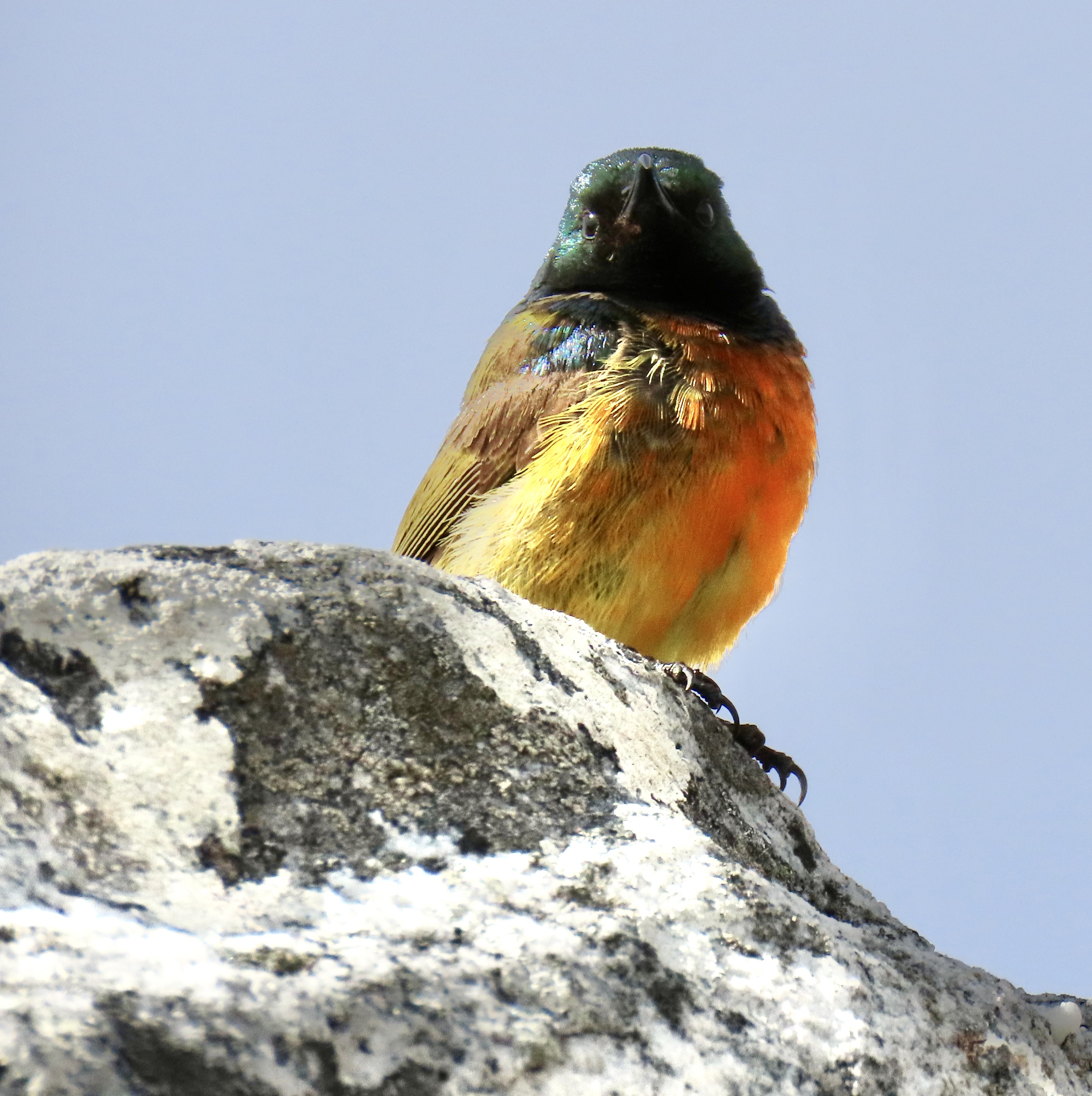
The Cape buffalo is considered the most dangerous animal in Africa, which is saying a lot considering all of the dangerous animals I’ve already featured on this blog. This egret represented the ‘height of nonchalance’ in its choice of a perch. At least it didn’t have to worry about any of the predators that might consider it food!The oxpecker is another African bird known for its close association with a number of animals, including this Cape buffalo we found next to the Chobe River in Botswana. It had already worked its way around the buffalo’s face and moved on to its horns in its endless search for insects.Two birds claimed this old snag that stuck out of the Chobe River. The tail belongs to an African Darter/anhinga. The small fellow is a pied kingfisher.A close up of this handsome representative of the family. It was facing into the wind…And then it turned around.This cutie is a juvenile African skimmer. It’s waiting for its mom to bring home her catch.Mom arrives and the two of them seem to get into a shouting match. In my imagination, it went something like this. Kid: “I’m starving to death, mom. You’re late!” Mom: “You hardly look starved. If you are, get off you lazy butt and go catch your own food.”Mom got in the last word. You probably noticed that the lower beak is longer that the upper beak. The skimmer uses it to skim along the water scooping up small fish. Thus the name.This small fellow with its black eye mask is known as a bee eater.Another one caught a bee!A bee eater of a different species. This one is known as a carmine bee eater.“That’s a go away bird,” our guide announced. “It gets its name because it always calls ‘go away, go away, go away’ when it is frightened and flies away.”This is a Jacana, also known as the Jesus bird. They earn the name by supposedly walking on water. Their large feet enable them to walk on lily pads.A Jesus bird demonstrates on the Zambezi River near Victoria Falls. I think it was cheating, but check out its long feet. I will show a similar bird on Wednesday from Florida Everglades National Park.Judging from this photo, it seemed to me that the Jesus bird could have been named fan dancer.For sheer color, this iridescent blue starling won the prize. We found a flock of open billed storks hanging out in front of a female waterbuck. The Chobe River is in the background.Here, an open billed stork searches for its favorite food, snails.A marabou stork: Not the most handsome bird we saw. Grin. There’s a reason why it is also known as the undertaker. ‘Can I offer you a stick?” Or is it, “Want to build a nest with me, Sweetie?” Marabou storks flap their neck sacks when courting. That must be exciting. We’ll wrap up our African bird photos today, but more birds will be featured on Wednesday. This time from our recent trip to Everglades National Park in Florida. Friday’s post will be on zebras.This nesting osprey in Everglades National Park will be among the birds we will feature on Wednesday.
Mom checks us out. Given the ‘look,’ I don’t think I would mess with the baby. We were at a water hole in Hwange National Park, Zimbabwe when we came on this mother and her baby.
In the animal kingdom, baboons are close relatives of ours, sharing 94% of our DNA. While others are closer (chimpanzees at 99% for example), 94% is close enough to feel a sense of identity, or at least imagine one. This mom’s interactions with her baby were about as ‘human’ as they get.
Assuming we were harmless, junior trotted out for a closer look…And received a lecture from Mom for his boldness. At least that’s the way it looks!Like us, baboons are omnivorous. This one has found a tasty stick to chew on….While carrying on a conversation with another baboon. He may be talking, in a way. Baboons have 10 or more vocalizations they use to communicate.His communication with us seemed clear.The baboons here were harvesting the fruit in this tree. Our guide told us they chewed off the outer rind, which was spicy, and ate the sweeter fruit in the middle. Impalas, apparently liking spicy, waited under the tree to gulp down the rinds.Here’s a closer look.An impala feasting on the rinds is at the base of the tree. Several more baboons can be seen on the ground. Groups of baboons are called troops.I’ve already featured baboons sifting through elephant dung to find ‘tasty’ tidbits. Two of them were hard at work with the chore.We saw lots of baboons going about their business in Chobe National Park. This little fellow seemed to be in a hurry. Maybe mom was calling.A distant photo caught a mother carrying its baby that was hanging on underneath. We saw another baby riding on its mother’s back like a cowboy rides a horse.Mom and a teenage baboon make their way through the grounds of the Safari Lodge where we stayed next to the Chobe River.This handsome dude seemed to be focused on something other than food. (Warning: Now’s the time for the R-rated part of this post.)And found her. Females have patches on their rear that turn bright red when they are ready to mate. If males are a little slow on the uptake, the females ‘flirt’ by backing up to them. No flirting was required here. That’s it for today. And no more R-rated posts until we get to the mongoose. Monday’s post will feature a number of birds we saw on the safari that I haven’t covered yet: They range from sublime to ugly.
They say that ostriches burying their heads is a myth. But given today’s world??? We found this large male a mile or so away from the Cape of Good Hope, not looking particularly hopeful. (Actually, he was grazing, but burying his head makes a better story.)
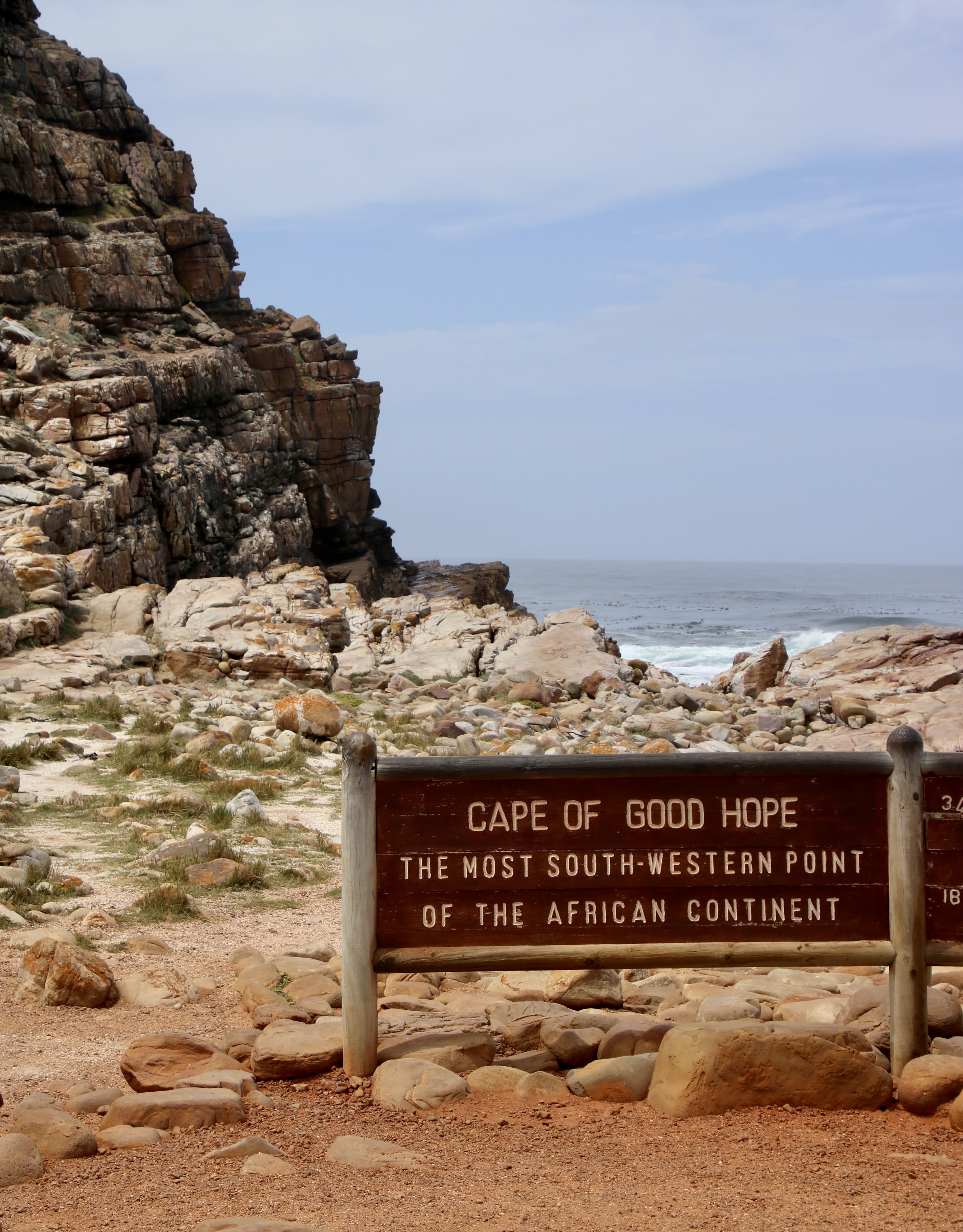
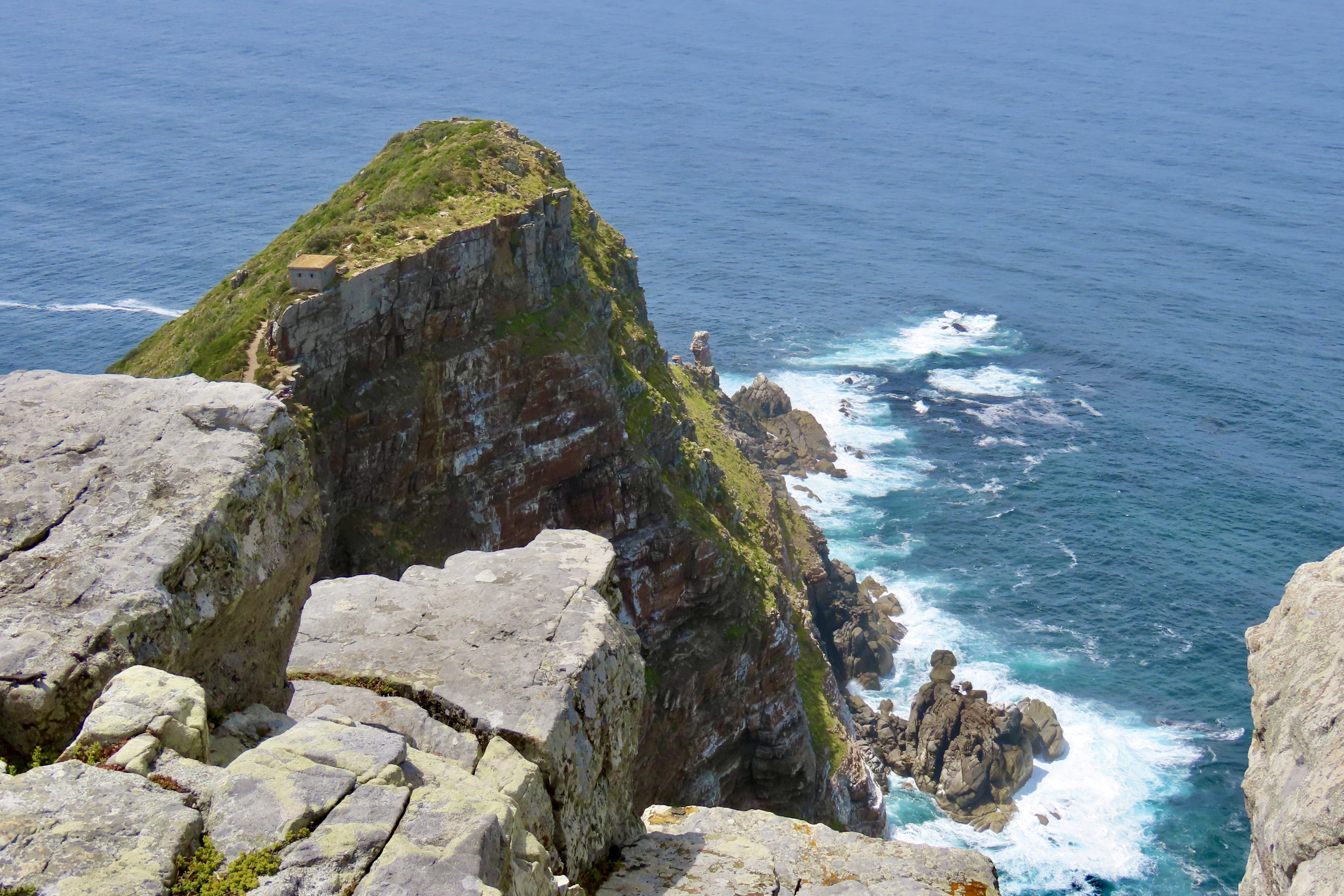
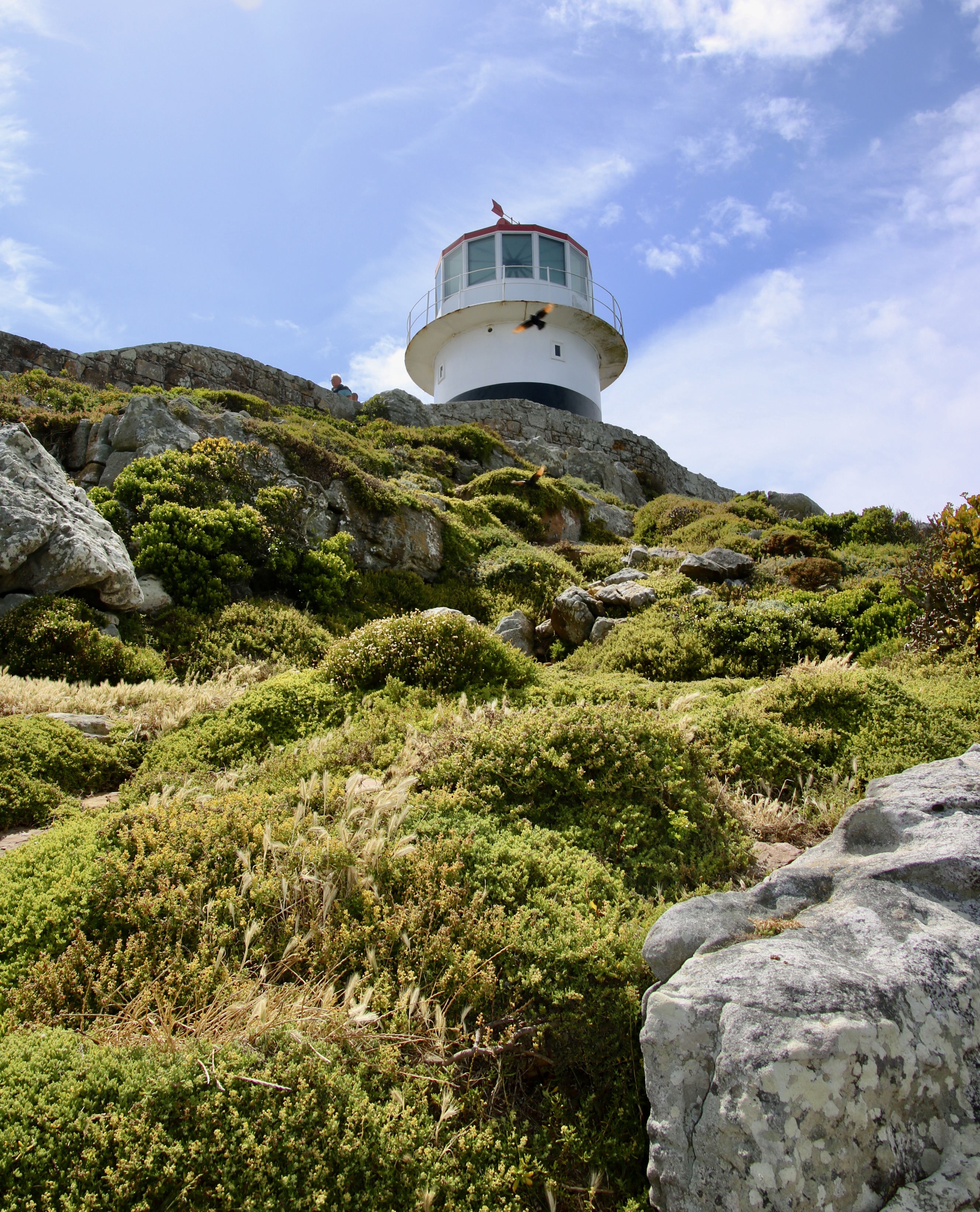
Peggy and I are dropping into South Africa for today’s On Safari post where I will feature the world’s largest bird and one of its smallest penguins. We found both of these ‘superlative’ birds on a road trip to the Cape of Good Hope. As mentioned above, the ostrich was a mile or so away from the Cape. The penguins were 20 minutes away on South Africa’s False Bay.
The problem with ‘burying your head’ is that you never know where it might pop up. On the end of a long neck is a good bet. Check out the toothy grin and the big eyes. The teeth serve the ostrich in biting off its main diet of grass, leaves, and roots. The eyes provide excellent vision for spotting major predators such as lions, leopards and cheetahs. I read in a National Geographic article that the ostrich’s eyes are bigger than its brains! I not sure whether that says more about an ostrich’s eyes or brain.Just about everyone knows that the ostrich is a large, flightless bird. Large means upward to 350 pounds (150 kg) and 8 feet (2.7 m) tall. The beautiful feathers on this male also suggest why ostrich feathers have been so popular for centuries. Their collection during the Victorian Era came close to threatening the species with extinction. Today’s feathers are obtained from ostrich farms where the birds are raised for them plus meat and eggs.On our way back from the Cape, our friend was next to the ocean. The question we had was ‘why did the ostrich cross the road?’The answer may be that with legs like this, he can go where he wants.He was busy chomping down the brown grass and filling his gullet.He then had to raise his head so he could swallow it.Ostriches prefer not to fight. In fact they will lie down in the grass to lower their profile and camouflage themselves. Their long legs provide two other defenses. One, they can run very fast, up to 40 miles per hour (70k) with giant strides that can cover 16 feet (5 meters) in a single stride. They also have a powerful kick, if cornered, using their big feet and 4 inch (10 centimeter) sharp claws.
We left the large ostrich behind in search of one of the world’s smaller penguins near Simon’s Town, the appropriately named African penguin. If you live in the town, it’s not unusual to find them walking down the sidewalks, crossing the streets, or digging large holes in gardens to build nests. They pretty much rule the town. Before heading down to the beach where most of them hang out, we stopped in town for lunch. We were eating when Peggy spotted one of the two-foot-fellows walking up to the door. She jumped up and snapped a photo of the penguin. I think it wanted to know if we were eating fish.
It was looking in the door with high hopes. I left lunch to photograph it from the inside of the door. Note the pink above its eyes. It actually serves a cooling function like the elephant’s ears, running blood through the pink area so it will be cooled down. The hotter it is the darker the pink, as more blood is forced through.I noticed that the feet looked like they belonged to a much bigger bird. It’s these large feet that enable the penguin to swim 12 miles per hour pursuing fish.Down at the beach, we watched a penguin walking. It was getting nowhere fast.Another penguin had said the ‘heck with it’ and was using its swimming mode! In water, BTW, they normally dive to around 100 feet. They have actually been found at over 400 feet.We saw a number of pairs. Penguins stick with their partners for years and seem quite affectionate.“If you scratch my neck, I’ll give you a stick.”True love.“Sorry I’m late, honey,”“Really sorry…”This is the type of nest you might find in your garden if you live in Simon’s Town. The penguins put guano (bird poop) on the bottom as a nesting material. There were several such holes on the beach as the penguins prepared to lay eggs and raise their chicks.A number of penguins were hanging out at the base of a huge granite boulder…While others preferred to sunbathe on the beach.While this fellow decided that scratching an itch was the best use of his time. He was using his non-flyable wings for balance. Note the spots on its chest. They are different on every penguin. A recent study has suggested that one way a penguin recognizes his/her mate when hundreds of are together is by the spots. “Excuse me but you look familiar. Can I check your spots?” That’s it for today.Peggy and I were driving out of the Everglades on Thursday when we saw a lake packed with over 200 white pelicans herding and harvesting fish. It was an amazing sight and will be the subject of our next post.