Jellyfish: The best aquariums have to have them and the Monterey Bay Aquarium is one of the best in the world. A whole room is devoted to their ethereal beauty…We, along with umpteen thousand other people, patiently made our way through the five person deep crowds gathering in front of each display case and dutifully took photos with our cell phones. The jelly fish came in a multitude of shapes, sizes and colors.
It was a rainy and cold last week when we visited the Monterey Bay Aquarium with high hopes that a combination of visiting mid-week during nasty weather might tamp down the crowds. Label that wishful thinking. The weather meant that people would be looking for an inside location. Duh. And, with the Big Sur highway washed out, there were a lot more people in town than usual. We joined a long line that snaked its way up the hill and around the side of the building before winding through a crowd control maze and back down the hill. Thankfully, the weather gods put the rain on hold for the 30 minutes it took to reach the entrance.
What had to be tamped down was my normal claustrophobia brought about by large crowds wanting to see the same thing I did. Fortunately, the jellyfish, sea otters, sharks and countless other forms of sea life were guaranteed to put a smile on my face and cure my grumpiness.
This smiling fellow with a barely hidden toothy grin is a moray eel. As friendly as it looks, you wouldn’t want to pet it. Morays have an extra set of jaws in their throats. When they bite into a tasty morsel with their front jaws, the back jaws spring forward and drag the meal down their throat. These snake like critters can grow up to five feet in length. Peggy was scuba diving in Corona Bay, Palawan in the Philippine Islands once exploring a sunken ship and peeked in a port hole. A giant moray took offense and shoved its head out of the port hole. Fast. But not nearly as fast as Peggy retreated.Colorful fish swim unharmed among predatory sea anemones. Apparently some fish develop a mucous coating that makes them impervious to the anemones’ stinging tentacles.A sea anemone, front and center, waves its tentacles in hopes of attracting its next meal.One of the top attractions at the Aquarium is a huge tank which supports a kelp forest and a wide variety of fish including this shark. Our cell phone didn’t take the best photo here, but you get the idea. Ocean View Blvd. starts just outside of the Aquarium and leads into Pacific Grove and around the Monterey Peninsula. It’s where Peggy found the seal balanced on a rock that we featured earlier.A seagull was hanging out at the same pullout, hoping for a handout.It had knobby knees.There were lots of flowers along the drive. In fact Pacific Grove, Monterey and Carmel are all filled with flowers. The large yellow flower belongs to an ice plant. The purple flowers are hairy dew flowers according to our flower ID app.Ocean carved boulders made their way down to Monterey Bay.Where the ocean continued its multi-million year task of creating new boulders.Ocean View Blvd. morphs into Sunset Drive, but we were a little early to take advantage of the evening show. Sunset Drive, however provides an entrance to the 17 Mile Drive which connects Pacific Grove with Carmel. The 17 mile Drive is equally famous for its views and golf courses. For a mere $47,000 you can buy a membership at Pebble Beach. There is also lots of wildlife along the way. This is Bird Rock. All the little black dots you see are birds, mainly cormorants plus a few brown pelicans. Closer view of the cormorants and one seagull. We have lots of fun photos of cormorants in our next post (soon) about Point Lobos State Park.What caught our attention more that Bird Island was a raft of sea lions, which was something that Peggy and I had never seen before.What we learned was that the sea lions come together to rest instead of climbing up on a rock or the shore. It’s thought that raising their flippers in the air is a way to control their body temperatures. The raft also provides some protection against predators such as orcas. The sea lions were also snoozing on a rock that was next to Bird Rock.I find it fascinating how they drape themselves over the rocks.Mmmm, a nice comfy pillow…Any drive down the 17 Mile Drive has to include the iconic Lone Cypress. I’ll finish up today rendering it in black and white simply to note that people have been taking photos of the Lone Cypress as long as they have had cameras to do so. I first saw it in the 70s when I used to drive my VW camper down to the area and park for free along the ocean south of Carmel. I was almost a hippie…Our next post will feature the beautiful Point Lobos State Reserve just south of Carmel. Mother seals and babies were just one of many sights Peggy and I enjoyed.
An extended trip north up the Pacific Coast Highway from Carmel, California to Olympic National Park, Washington has been on my bucket list forever. It includes some of the most beautiful coastal lands in the world. Peggy and I have been to each of the places we will be visiting and they are all places we love. Starting at the bottom and working our way north for three months is new for us, however, a leisurely one way trip up the coast that promises to be uniquely rewarding. As always, you are invited to join us.
There is an ancient Chinese proverb from the Tao Te Ching that states “A journey of a thousand miles begins with a single step.” Although the distance and mode of travel may vary, it’s how all great adventures begin. I started my 750 mile backpack trek down the Pacific Coast trail to celebrate my 75th birthday with a single step and my 6-month, 10,000 mile solo bike trek around North America at 46 with the crank of a pedal. That was an adventure! An even greater one was waiting for me at the end… I met Peggy when I stepped off my bike in Sacramento. She gave me a dazzling smile and said, “You must be Curtis.” I was smitten and svelte at the same time. I’m still smitten…
I lucked out. Peggy loves adventures as much as I do and we have been on many over the past 30 years. In the past two years alone, we have traveled up the Rhine and Nile Rivers by boat, gone on an African safari, and explored 30,000 miles of North America in our pick-up, Iorek, and small trailer, Serafina. I’ve already blogged about these adventures, although I still have some catching to do.
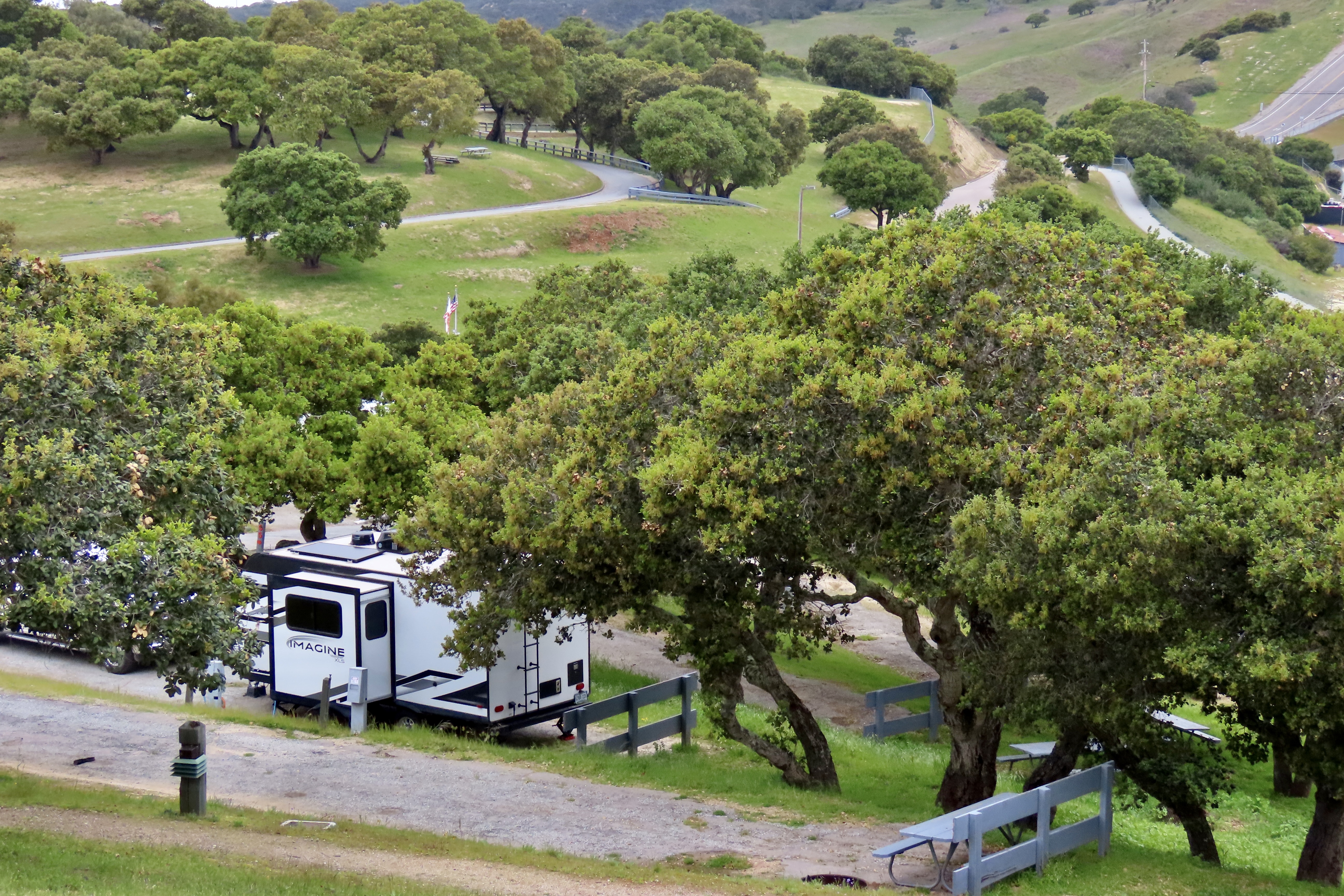
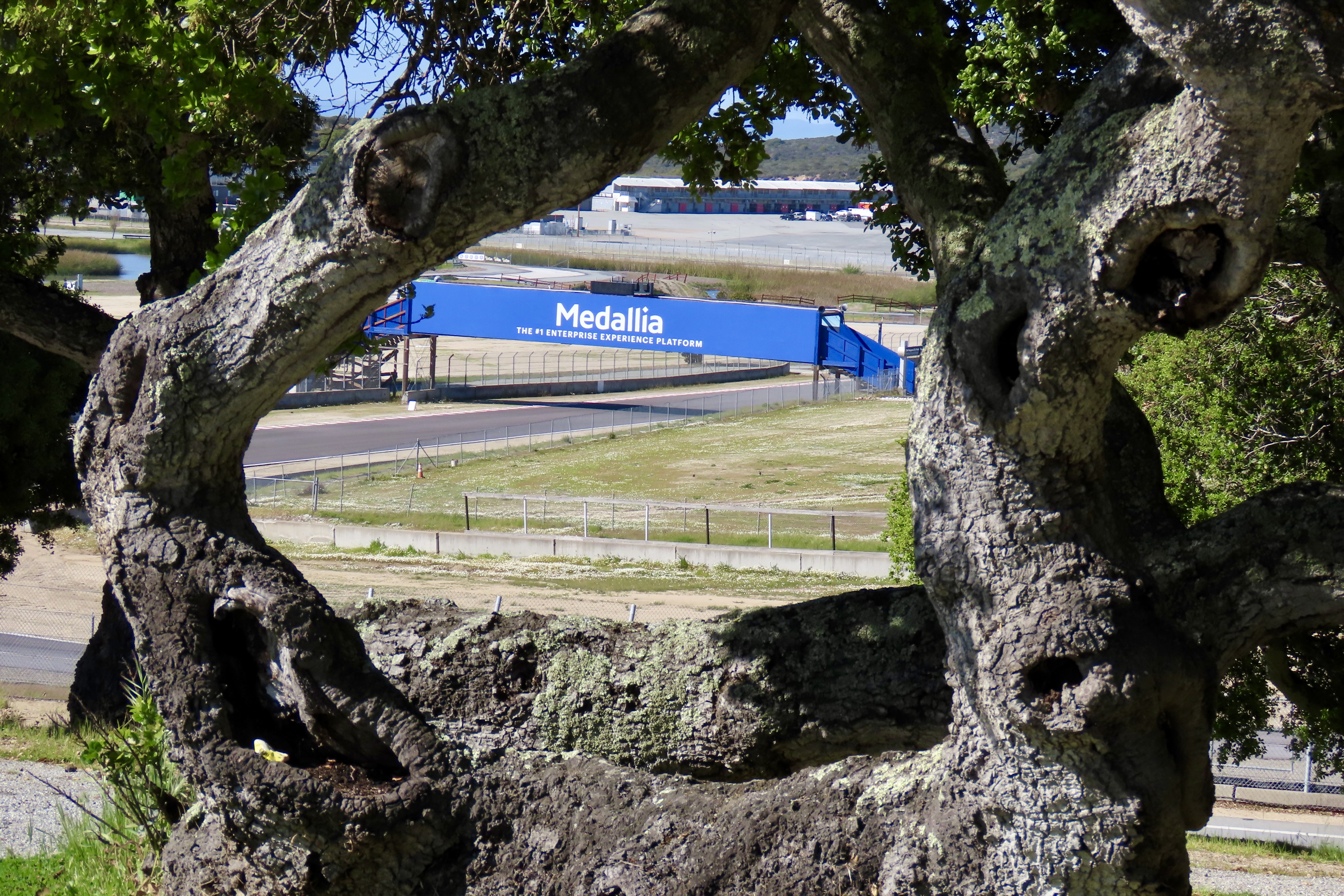
As I write this we are camped in a scenic site perched above the famous Laguna Seca (now Weather Tech) Raceway located between Salinas and Monterrey, California. An organization called Hooked On Driving— made up of a collection of passionate and dedicated high-performance driving enthusiasts and coaches— has rented the raceway for a weekend of fun and training. That’s not the big news here, however. The Sea Otter Classic starts in two weeks. Billed as the premier cycling event in the world, it will involve over 9,000 athletes, 77,000 fans and 1000 vendors! Mountain bike racing and road racing will be included with racers from beginner to pro participating.
Our small Imagine trailer perched on the hill above the raceway.A view of the raceway from our campground. Fans of auto racing, motorcycle racing and bicycle racing would kill for this spot during major events.Here’s a map of the Weather Tech Raceway. We are camping at the small campground just to the right of the number 5 on the track. Fort Ord National Monument is just above us.
I suspect the participants down on the track roaring around its two mile course are having a blast. Assuming you are a fan of driving fast in a high performance automobile, imagine driving on one of the world’s top raceways. As camping spots go, however, it’s a bit noisy. Grin. Make that a lot noisy. I have my headphones on and am listening to Chopin. Peggy has hers on and is listening to songs from America’s Got Talent. Fortunately, the HOD folks will be out of here tomorrow and we will be gone before the cycling event starts. Linda, a volunteer who works at the entrance station, told us, however, that a TV crew is coming in to film a show in the next few days. I’m assuming it will involve noise. Will there be explosions?
When the race track isn’t busy, this campground is quiet as well as beautiful. It’s also inexpensive and ideally located for exploring Monterey, Carmel and Big Sur. If you follow the news, you know that Big Sur is off our itinerary this time. Part of the road a few miles below Carmel decided to go to sea a couple of days before we arrived. We were busy avoiding the storm as it made its way across Nevada. In fact much of our 3000 mile drive to get to this campground was spent avoiding storms, which we did except for one night we spent in Missouri where severe weather warnings were up on a thunder and lightning storm, high winds, hail stones that could be as large as soft balls, and a tornados. That was a fun night to spend in a trailer.
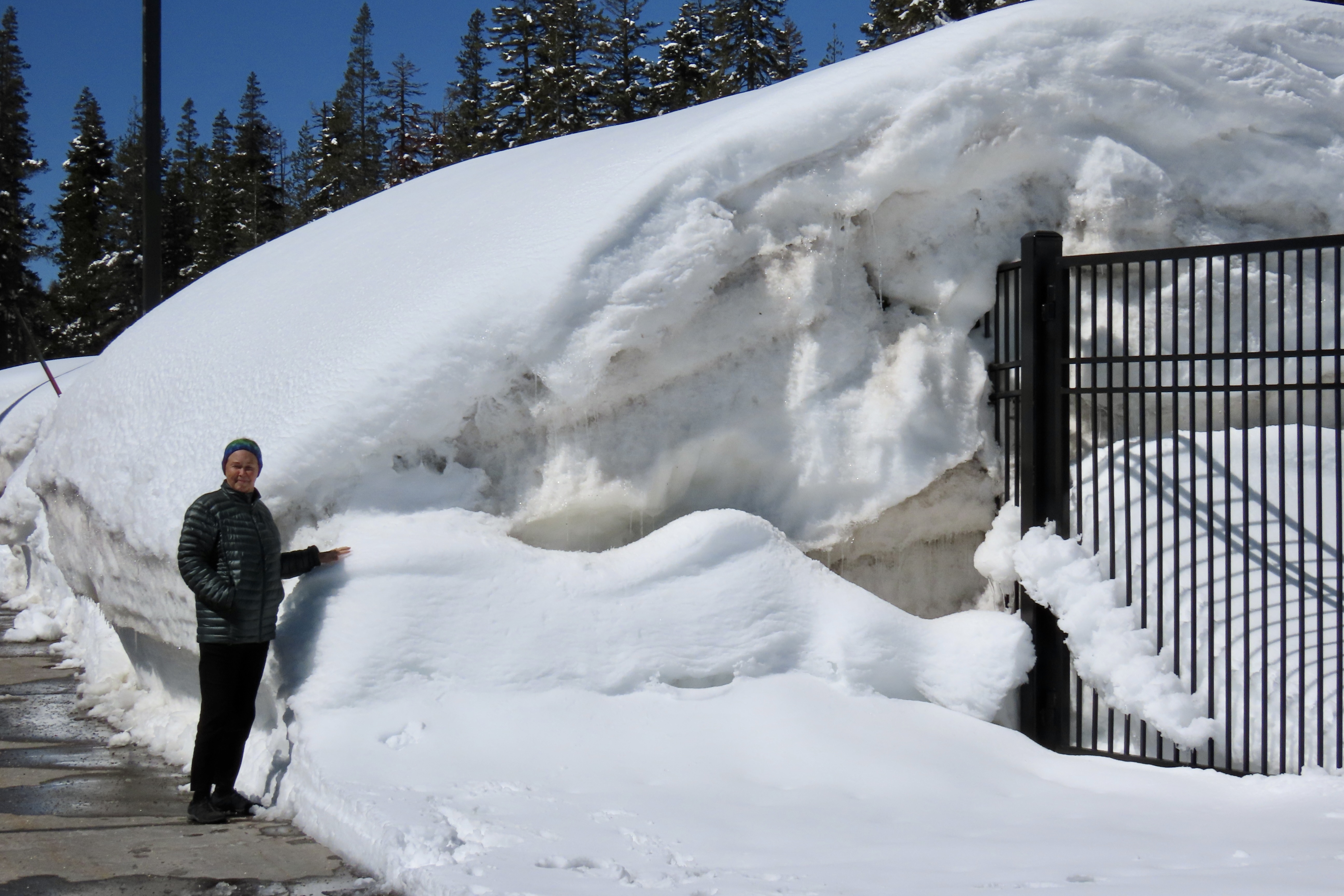
We hung out in Carson City, Nevada as the storm that closed the Big Sur Highway turned into a blizzard over the Sierra Nevada Mountains.
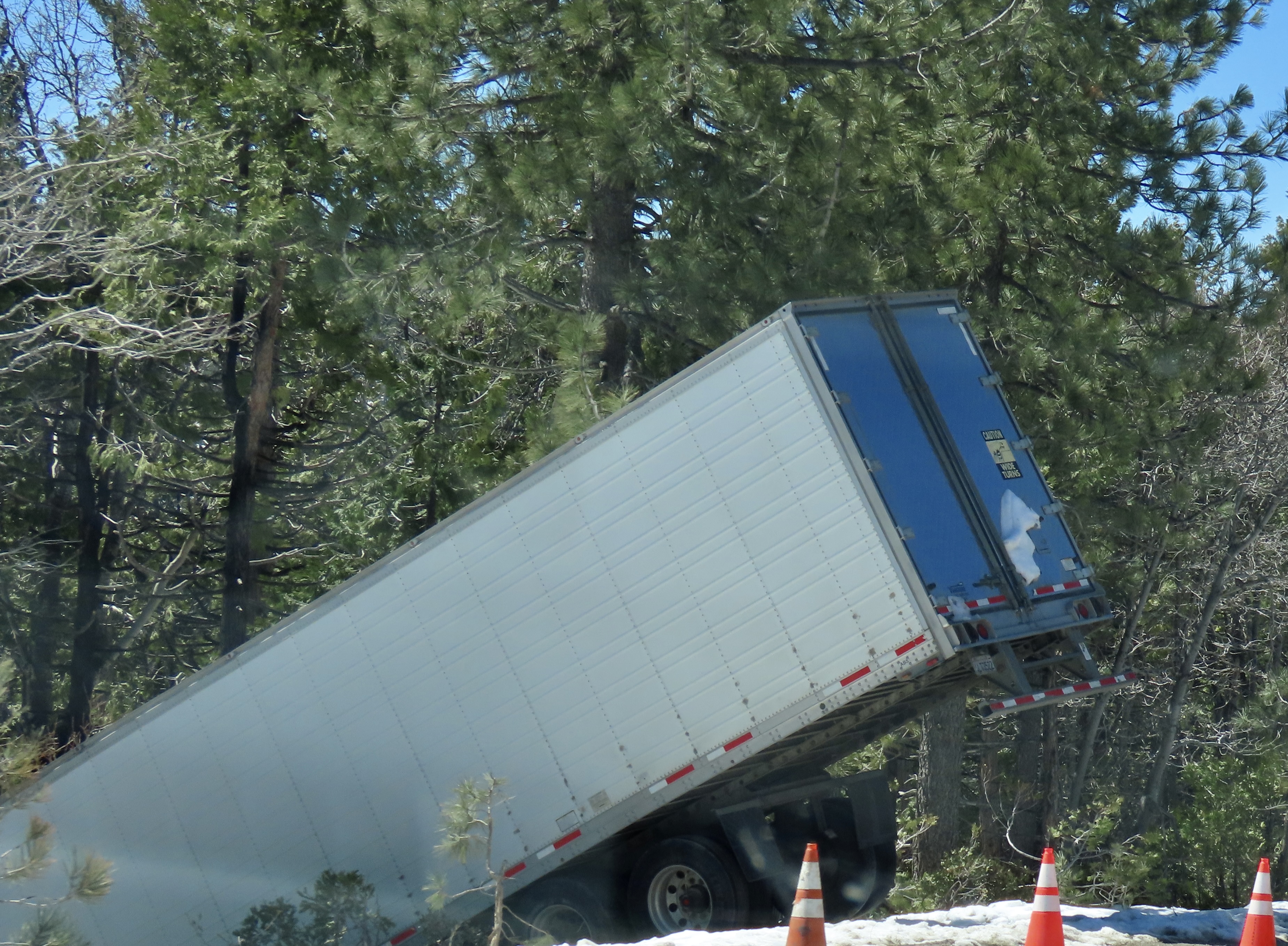
This is what Donner Summit looked like two days later.This big rig was a few miles down the road and Peggy snapped its photo. I imagine he was wishing he had hung out in Carson City with us.
Now, here are a few photos to show you what to expect over the next three months on Wandering Through Time and Place.
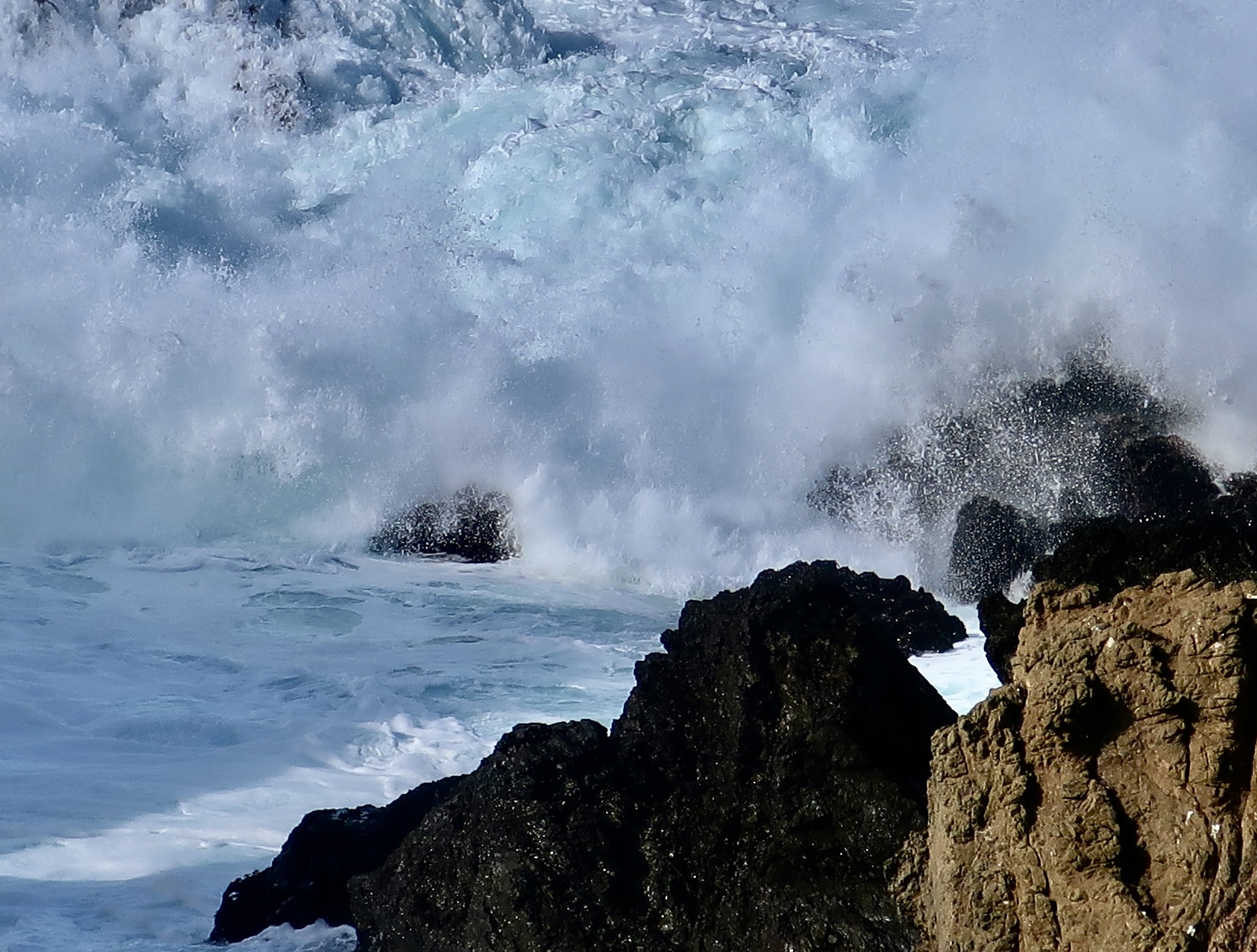
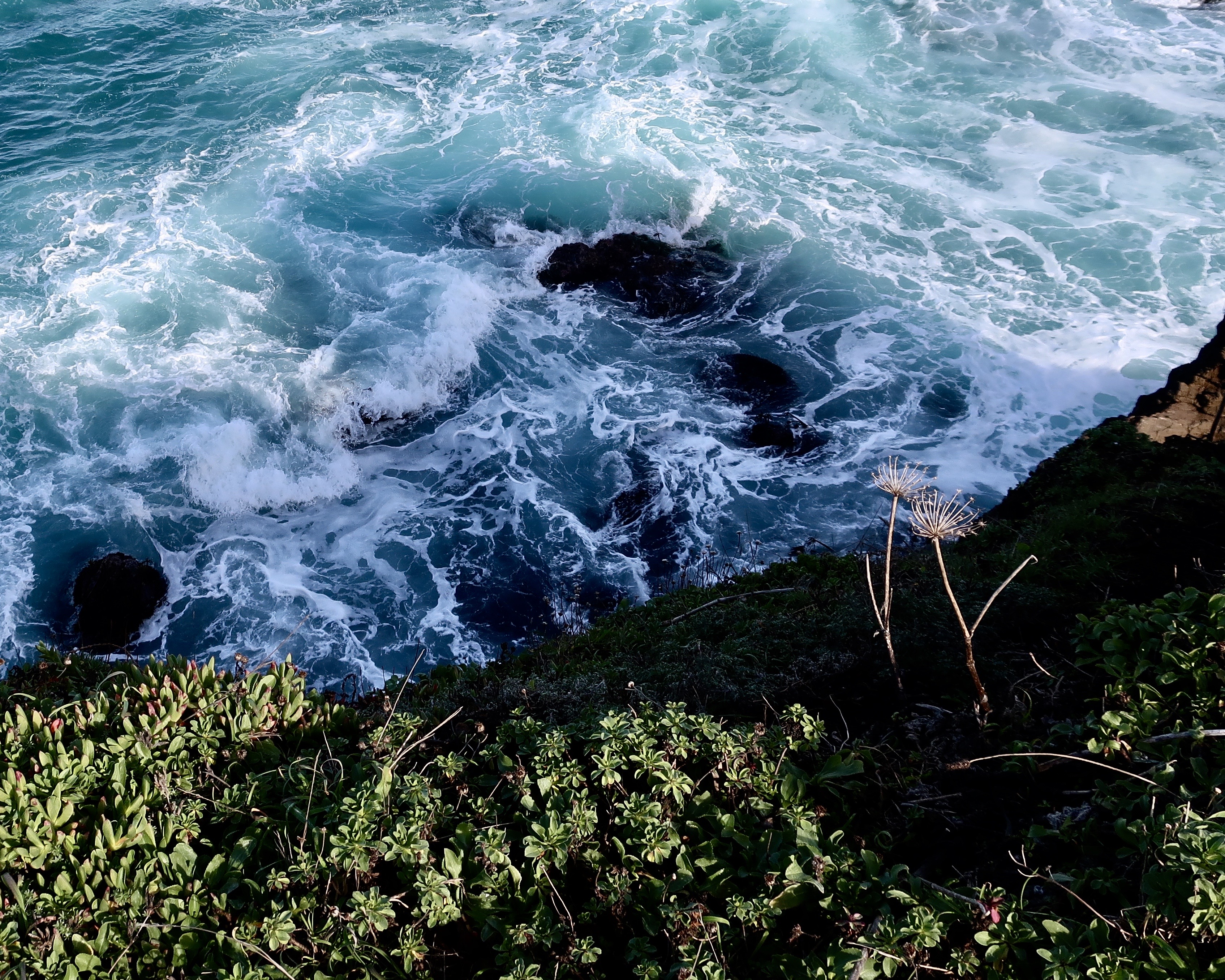
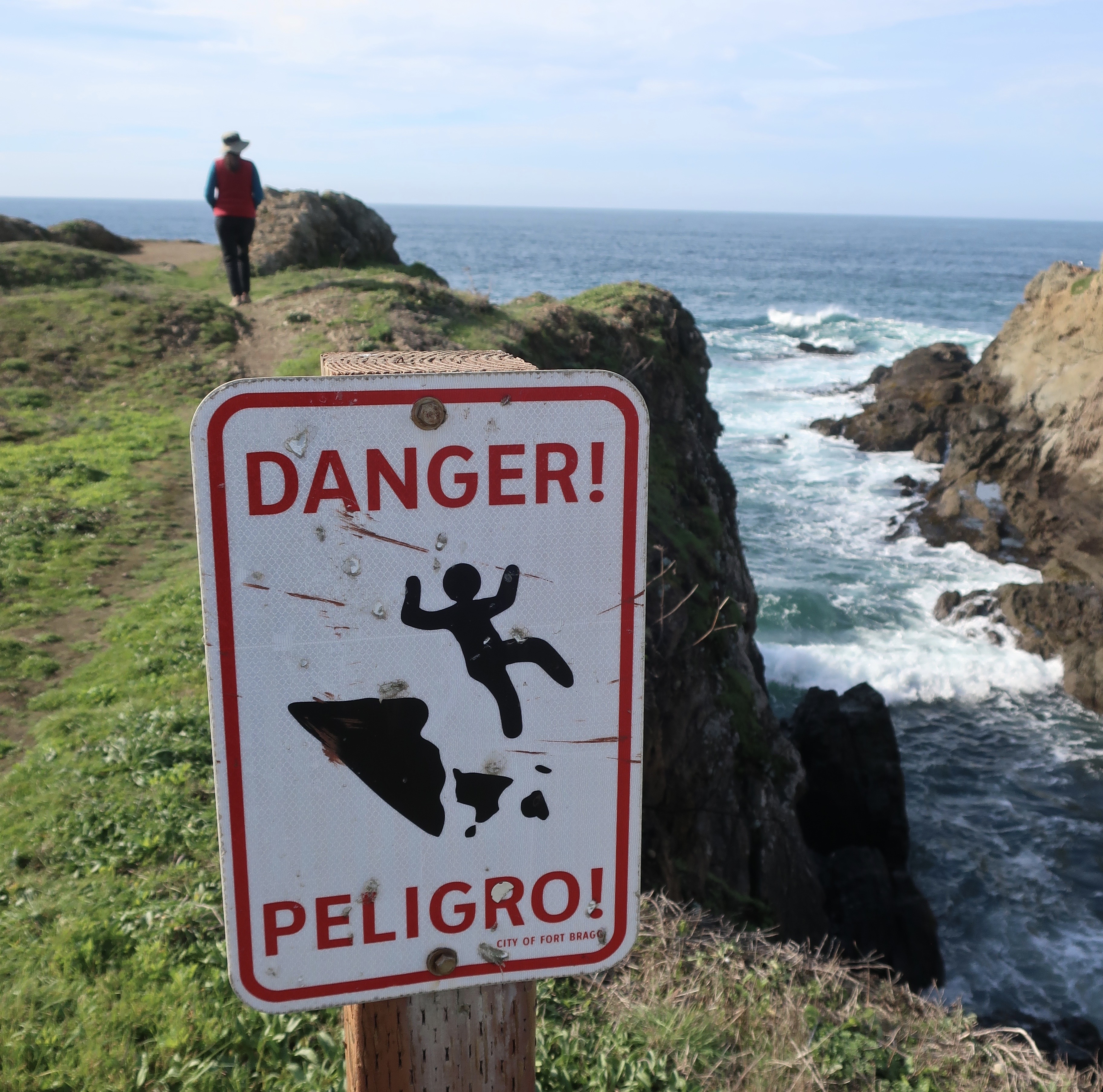
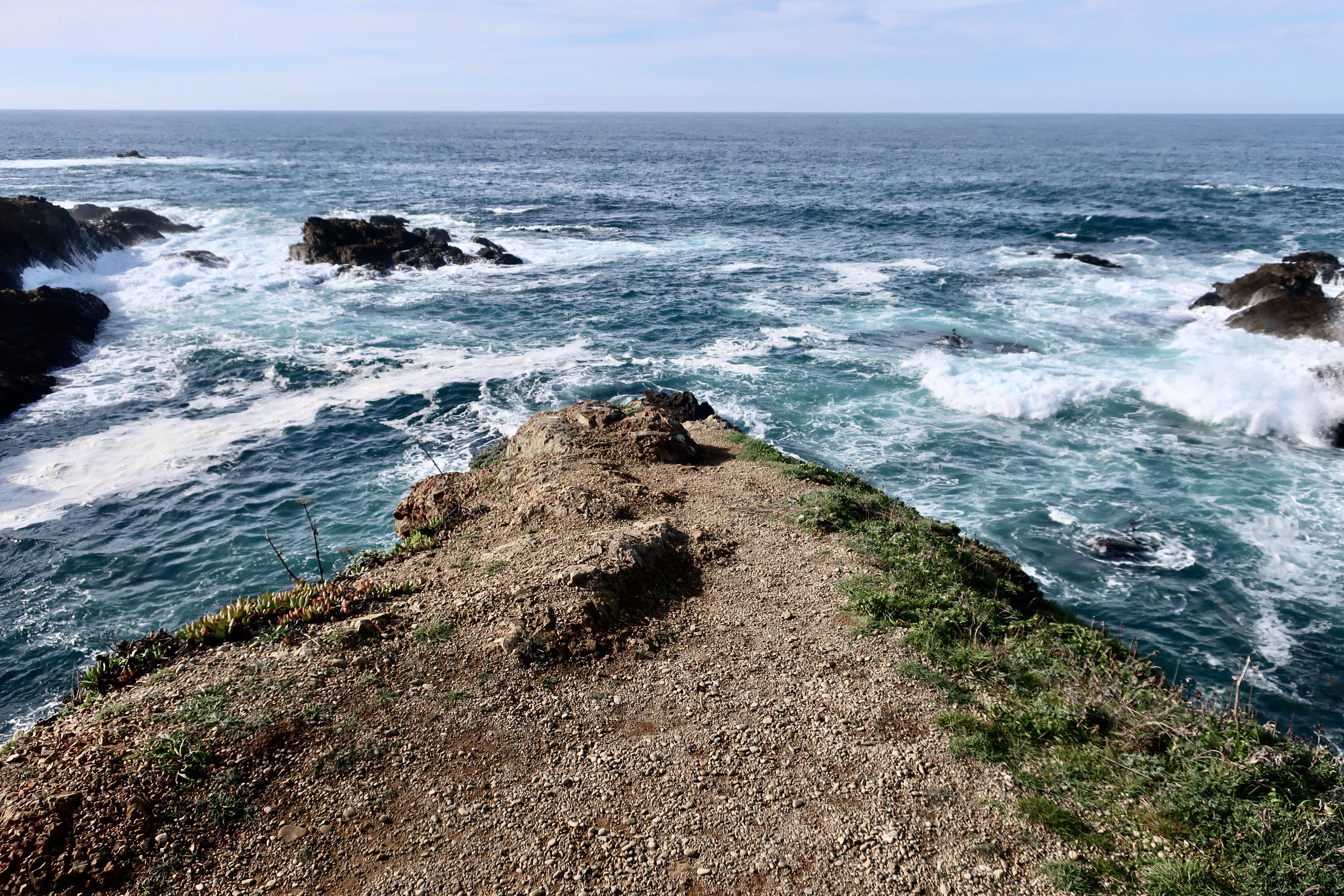
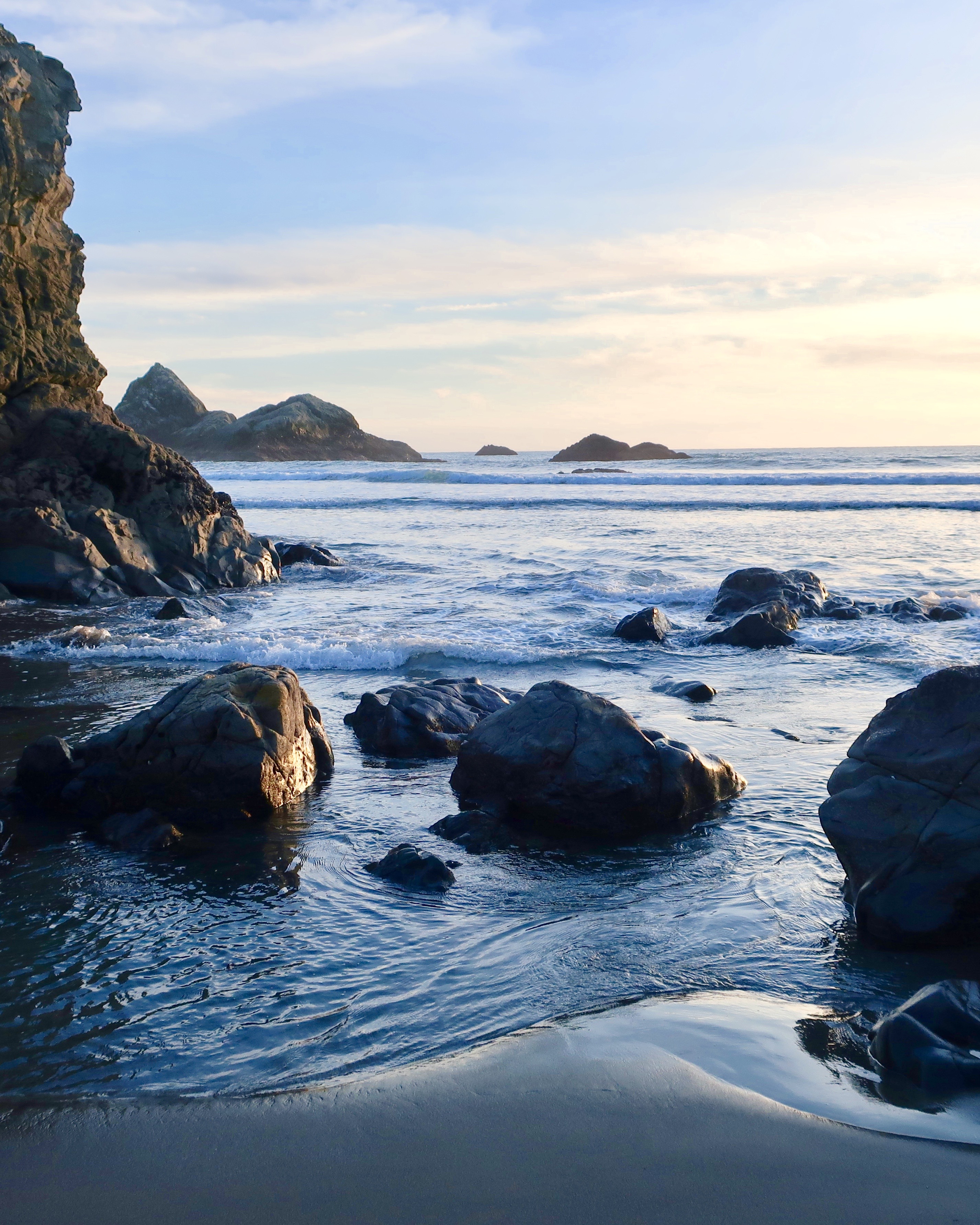
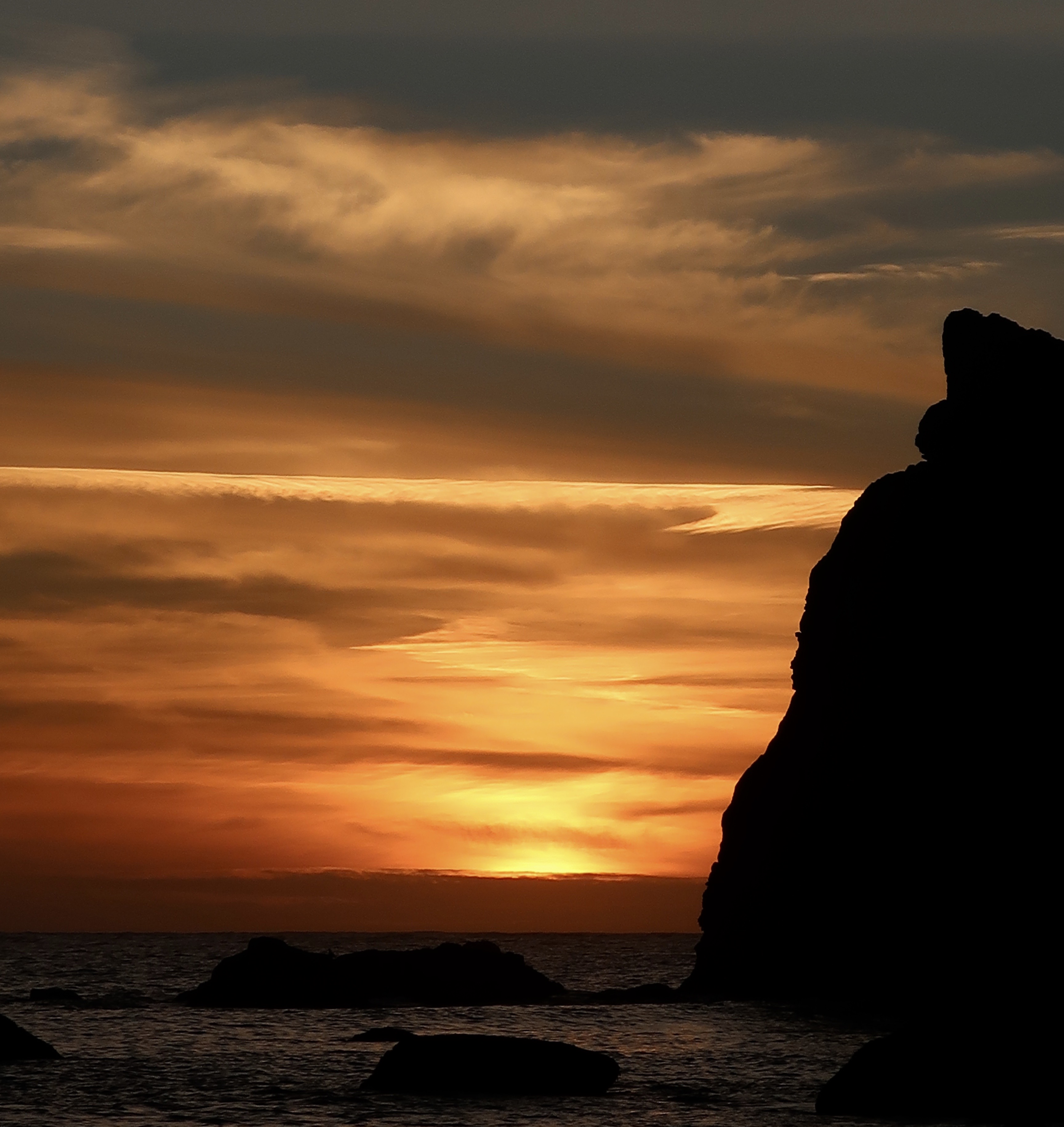
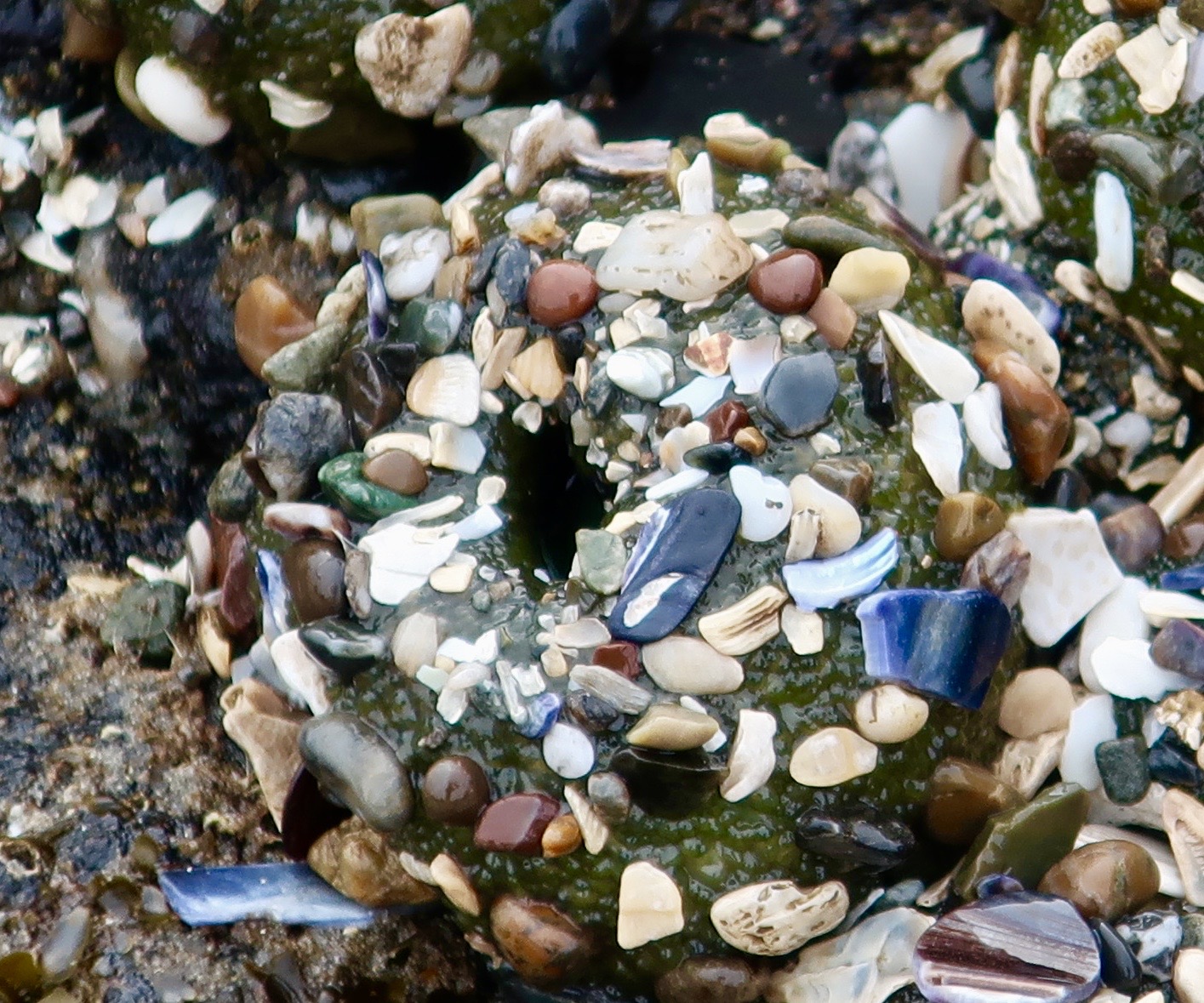
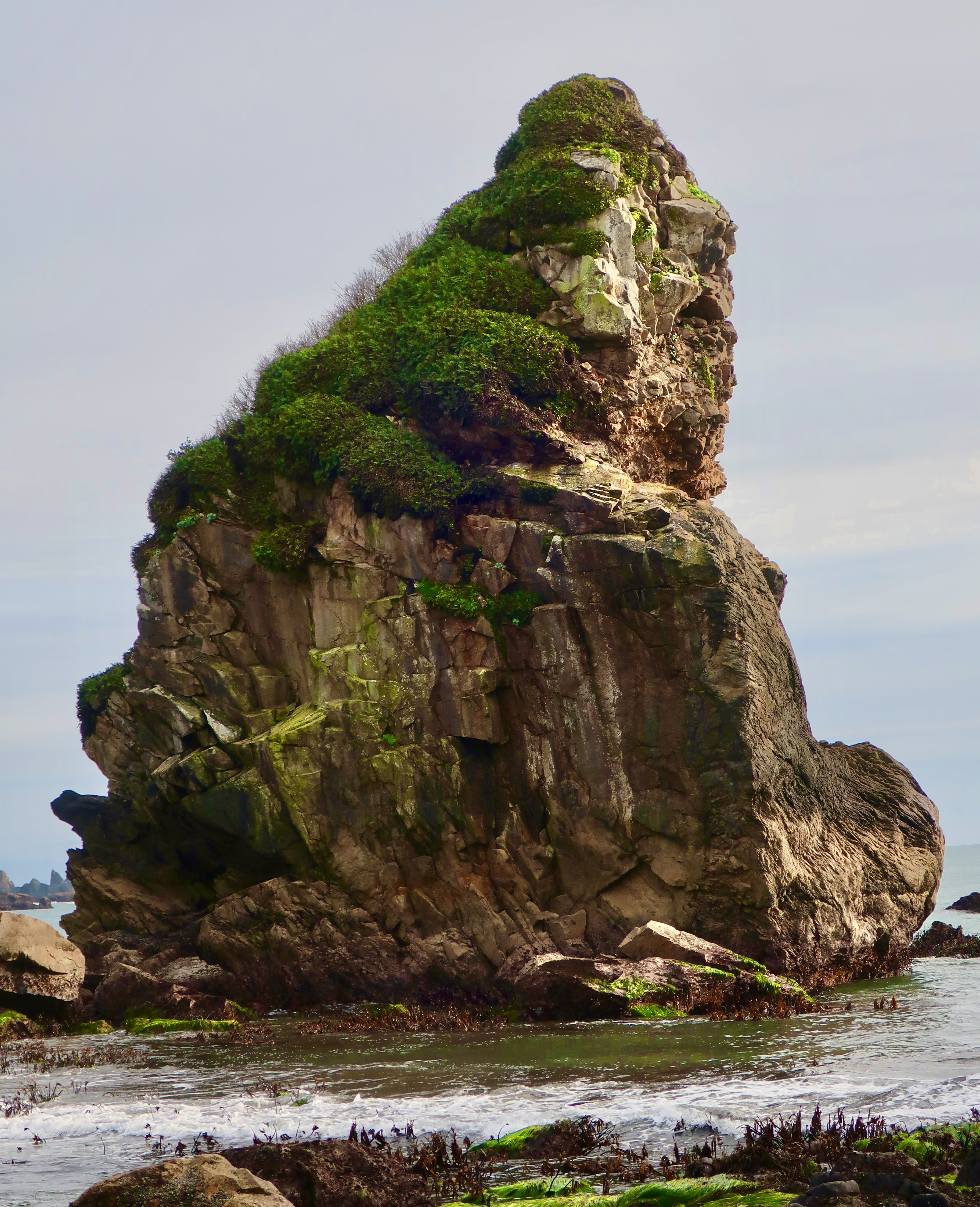
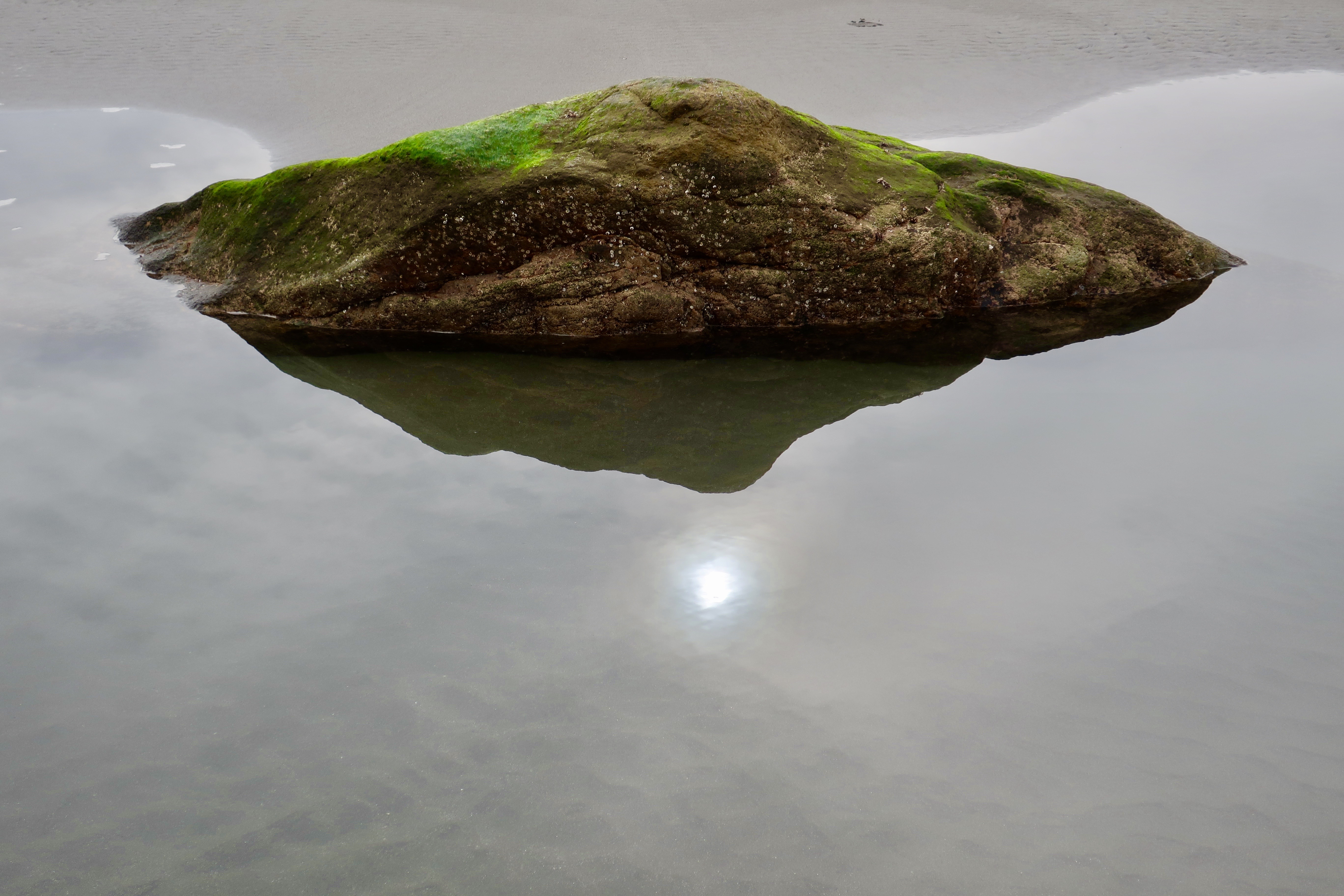
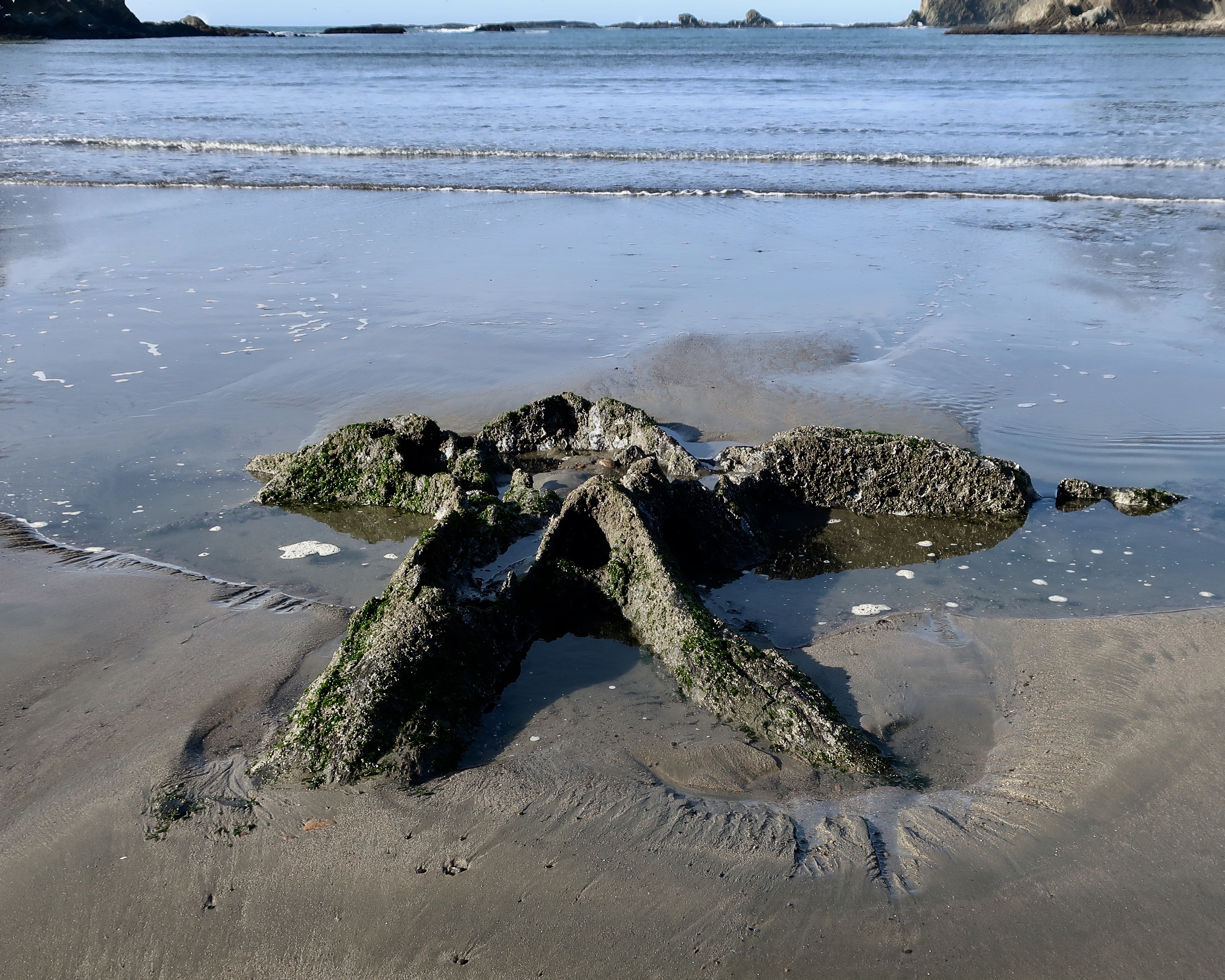
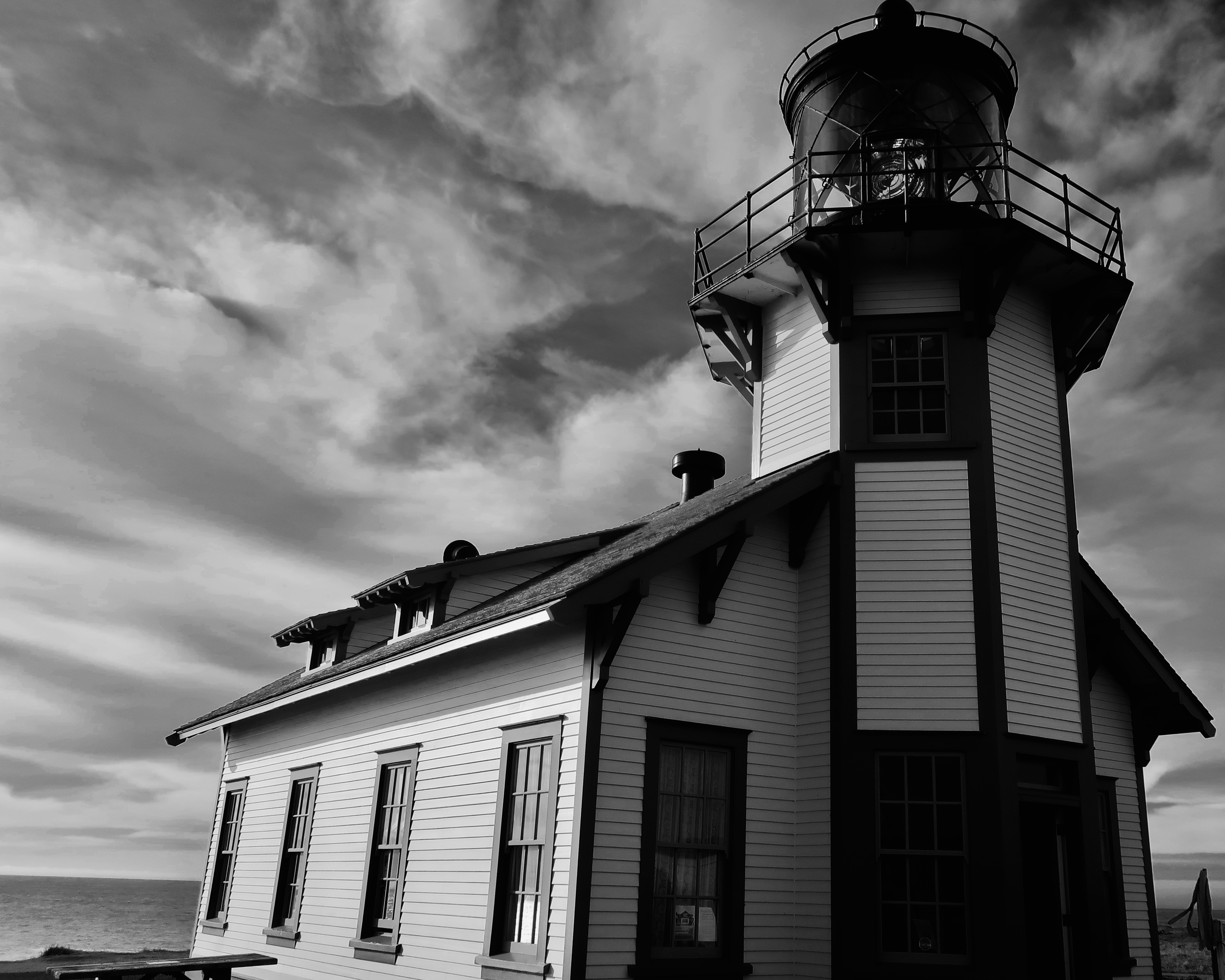
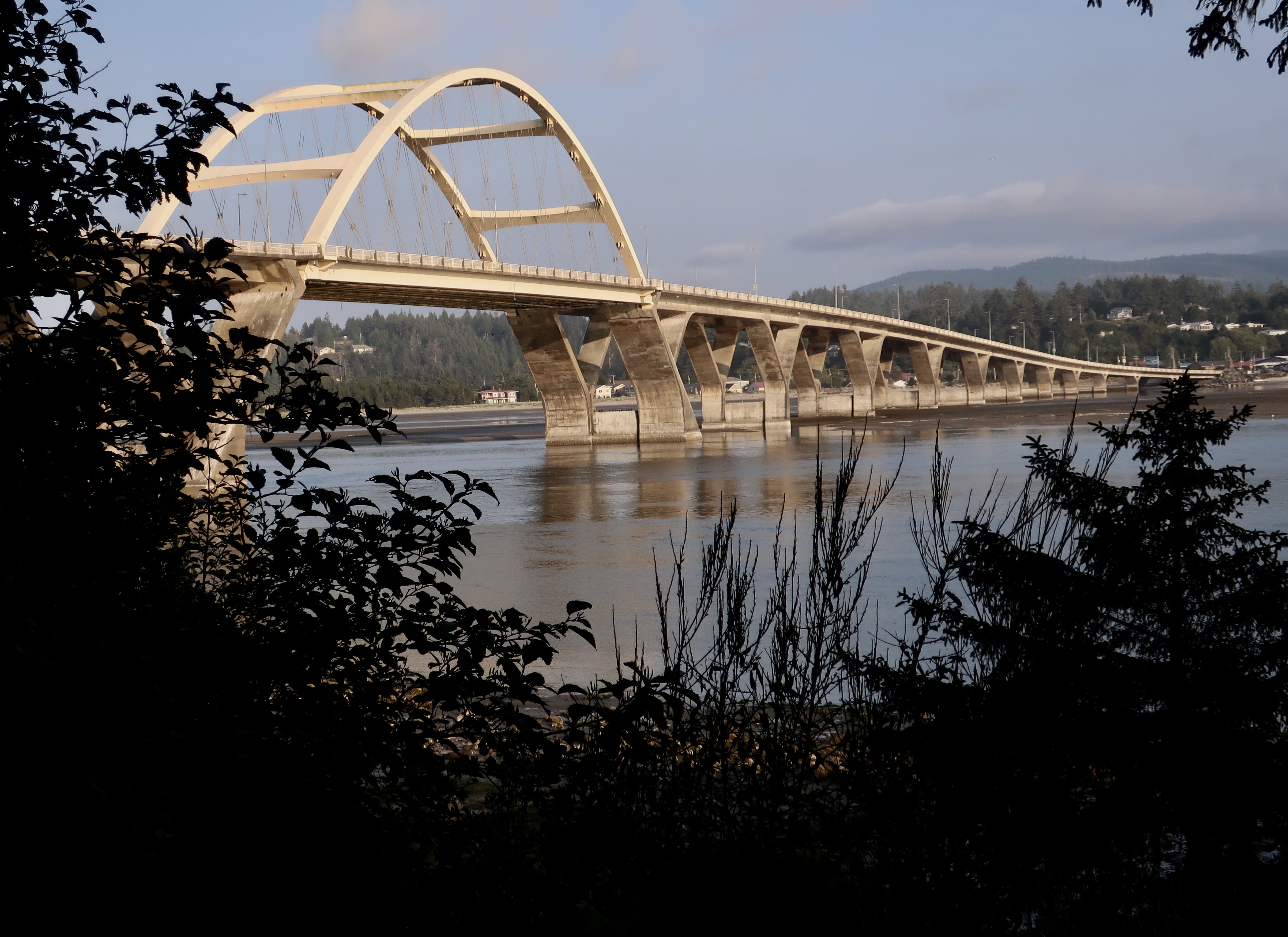
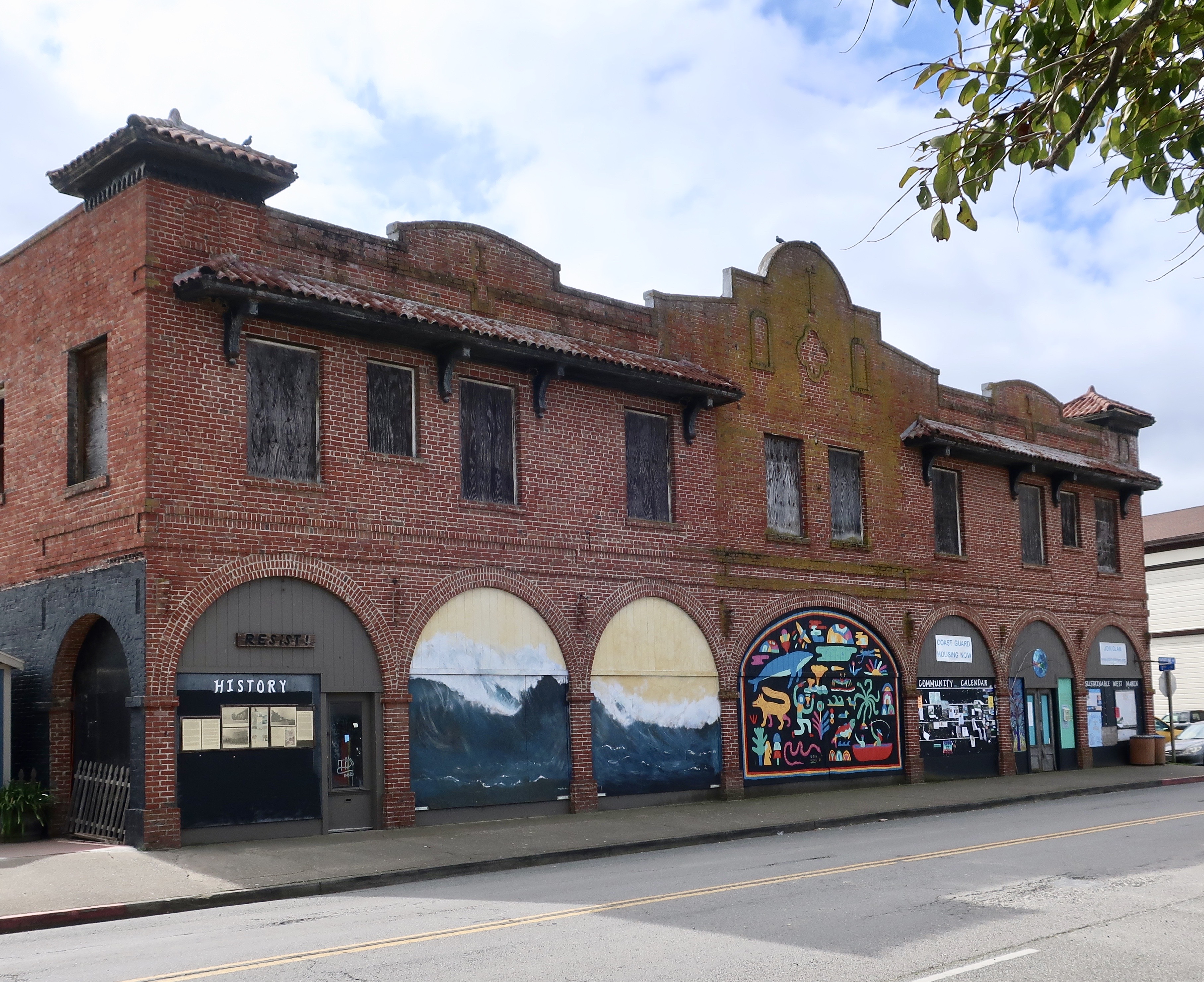
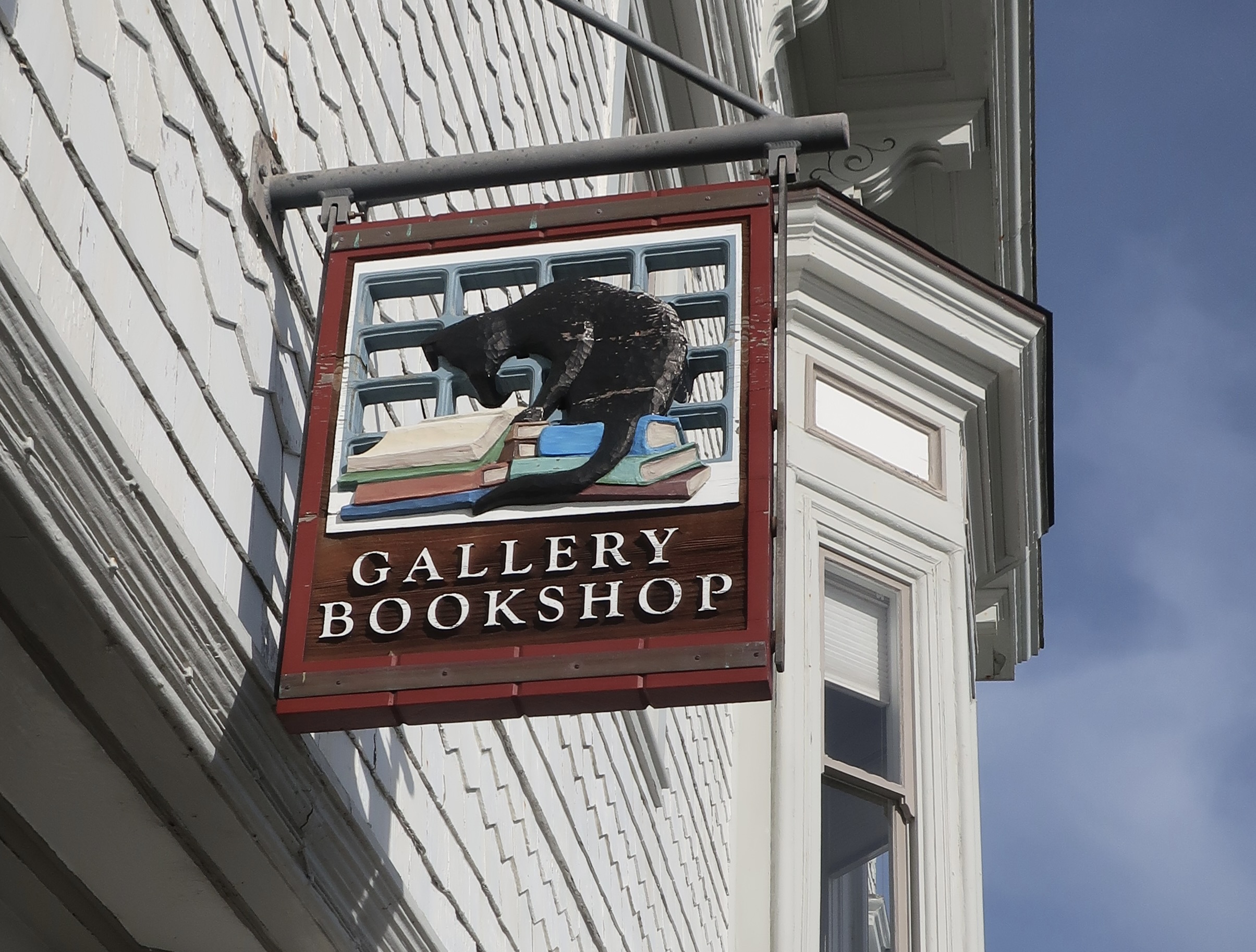
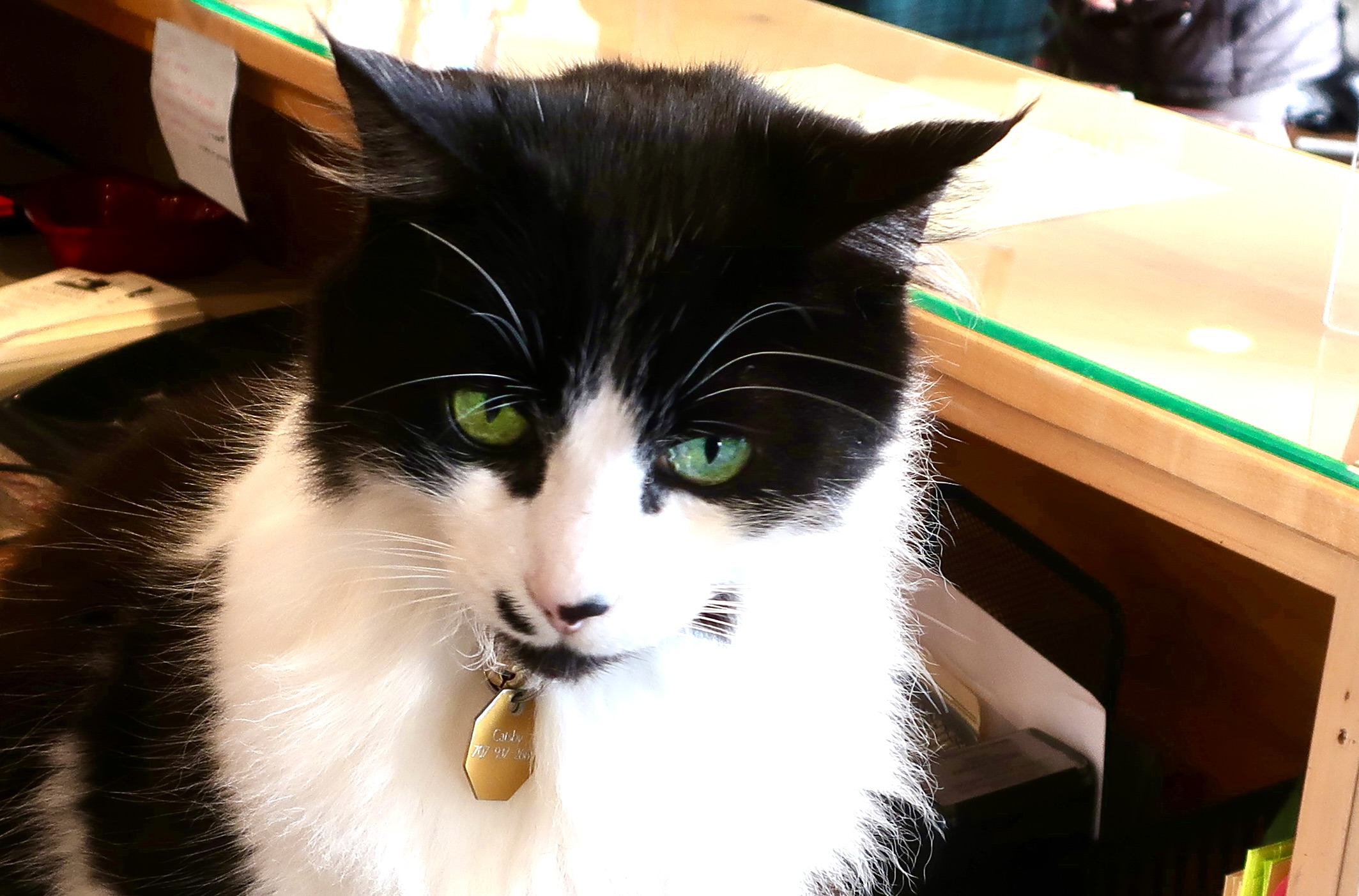
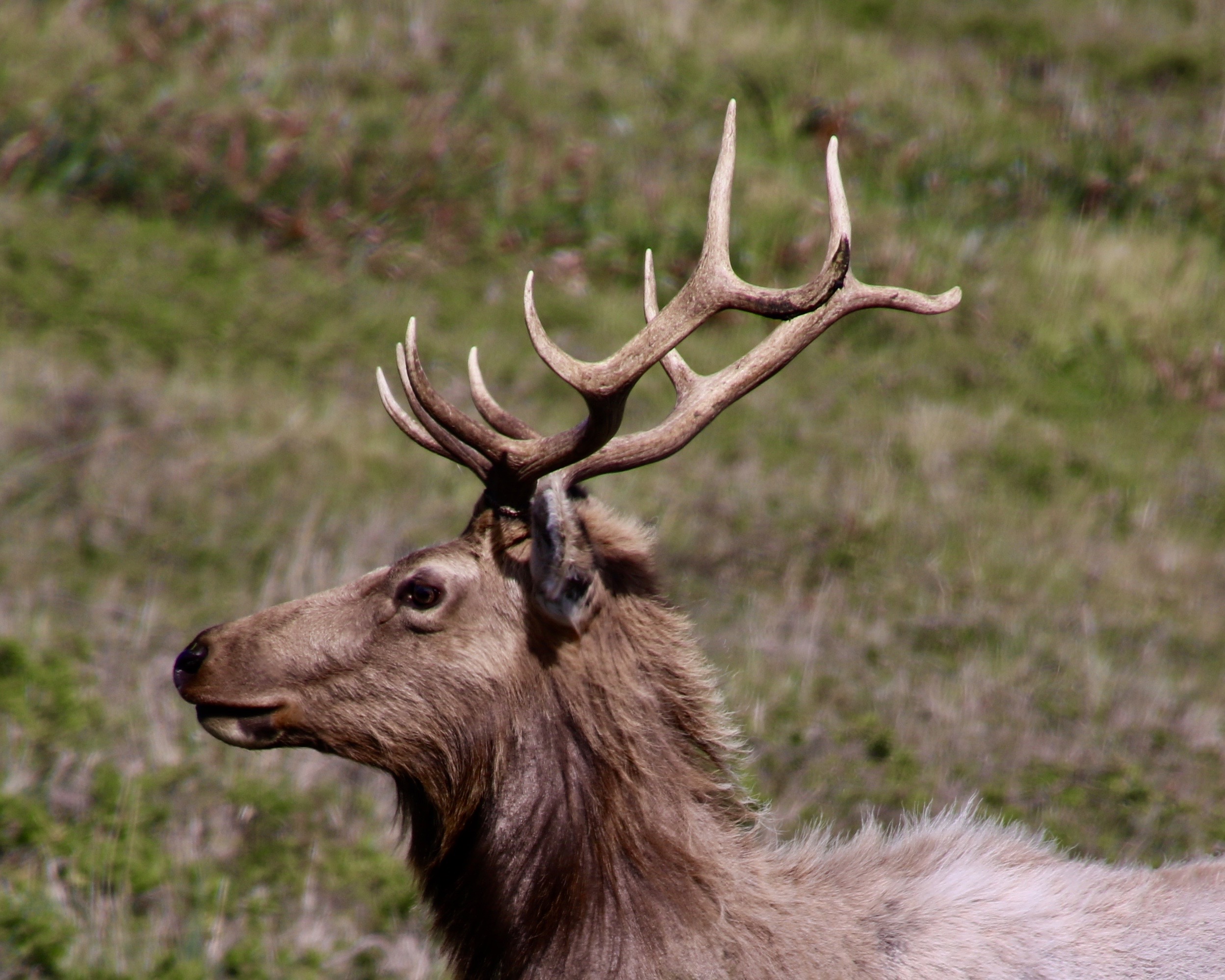
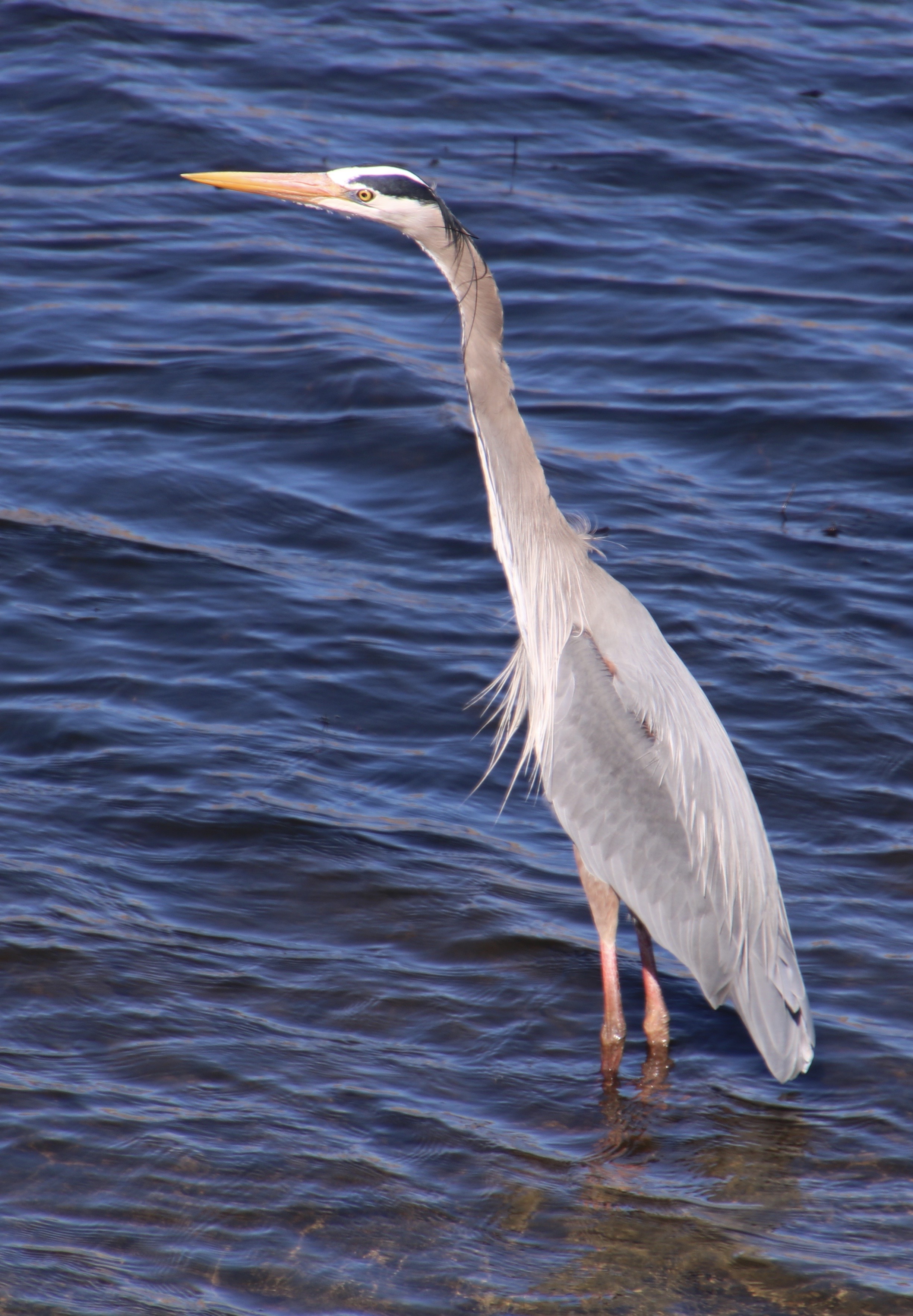
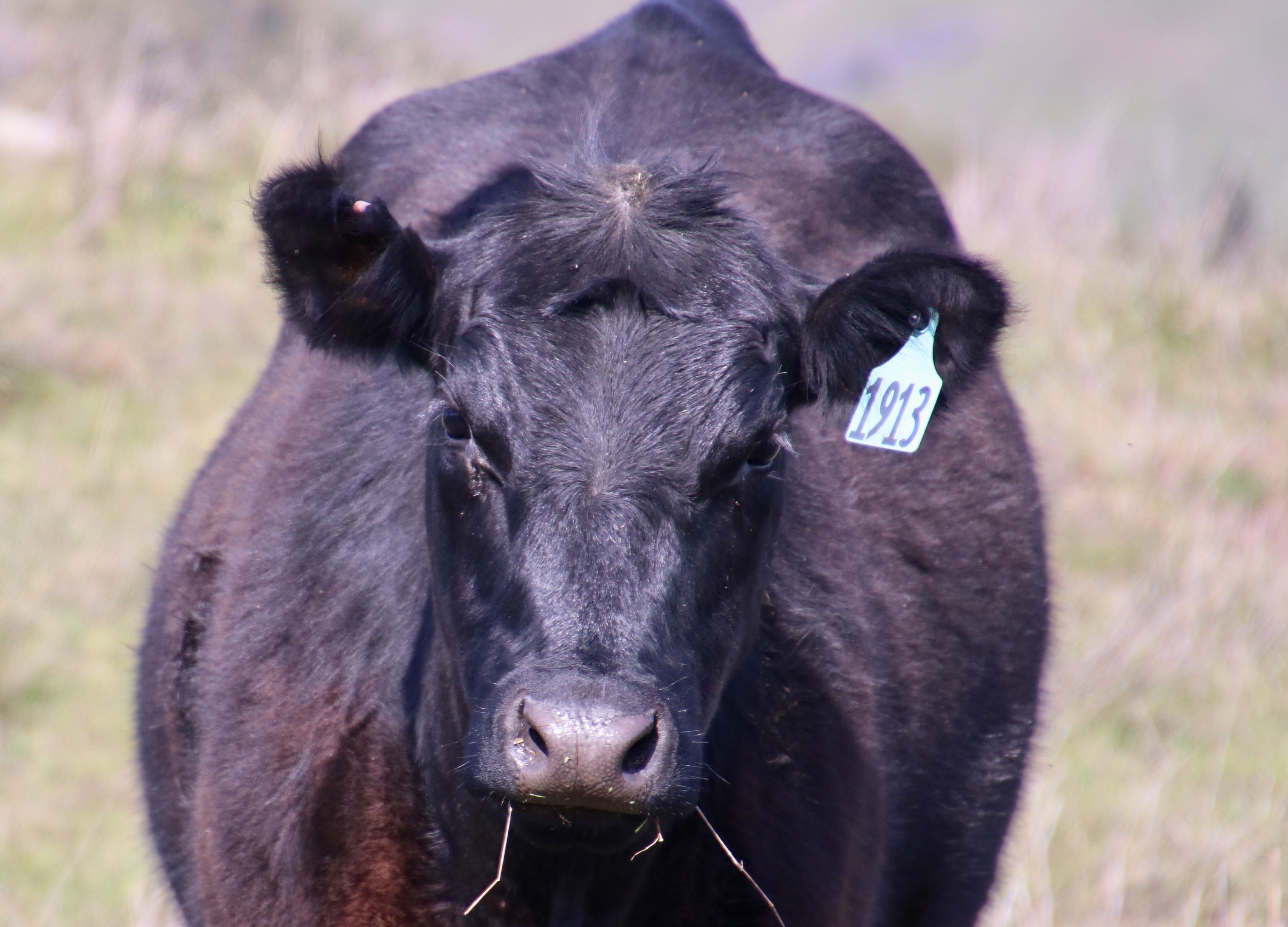
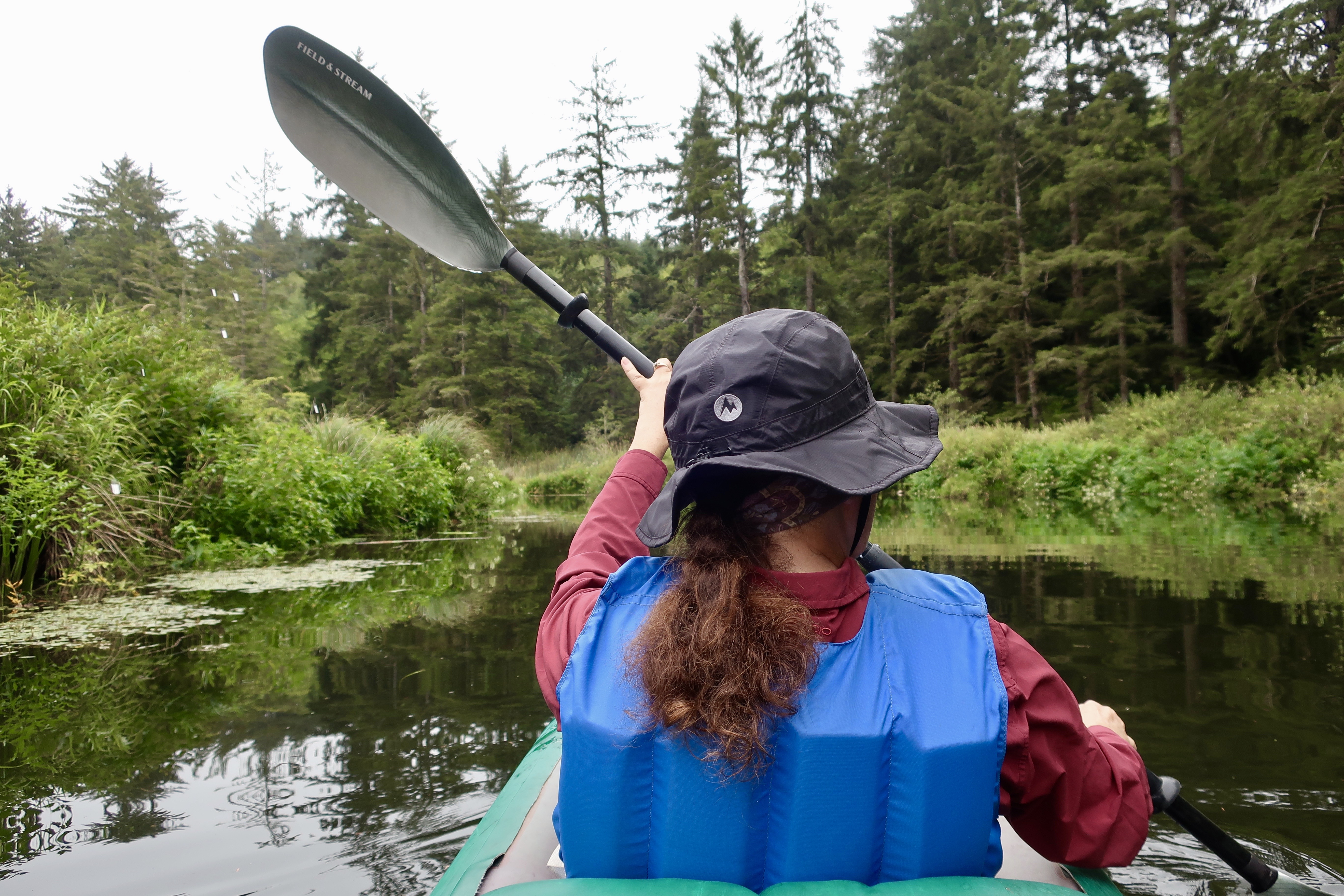
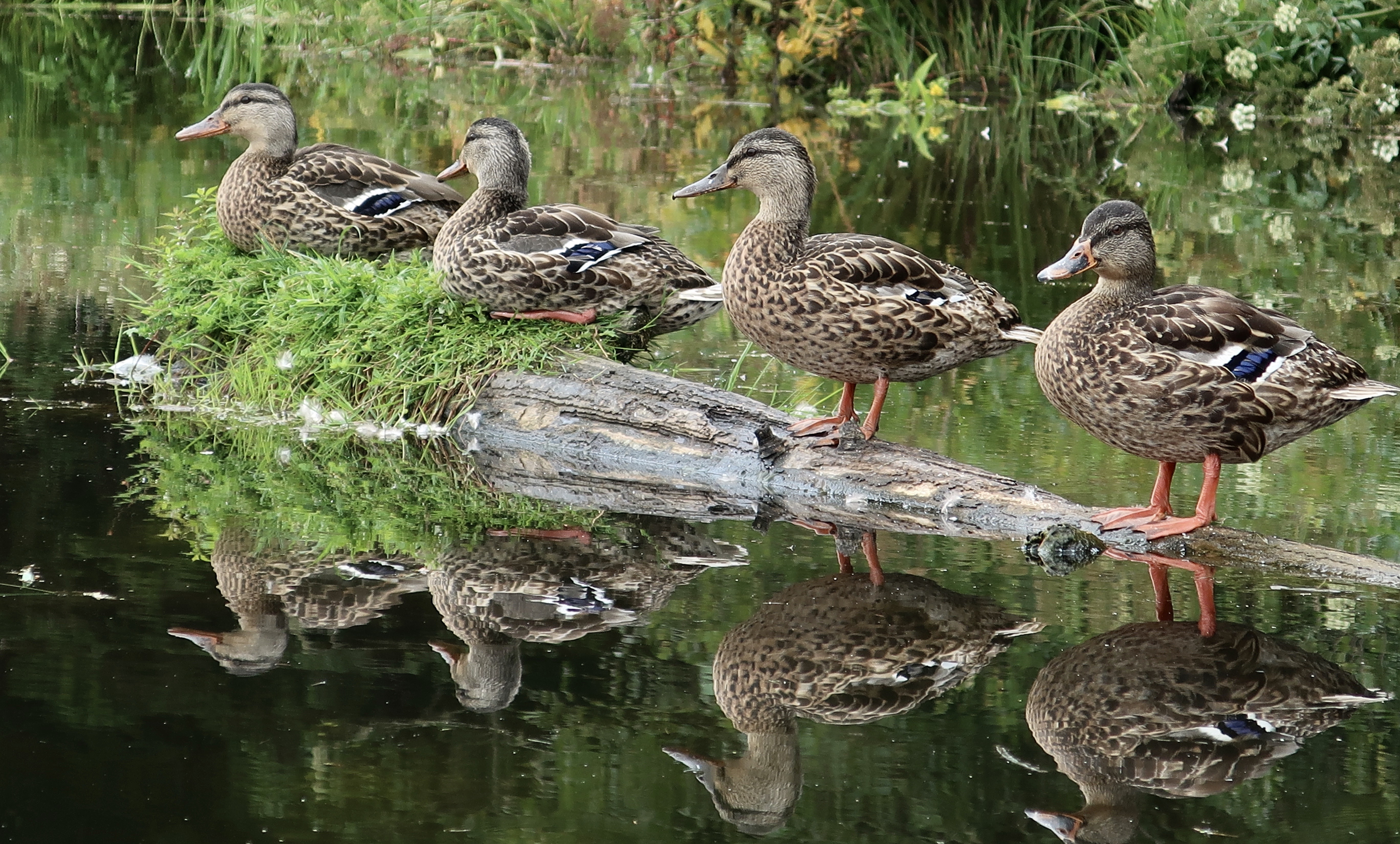
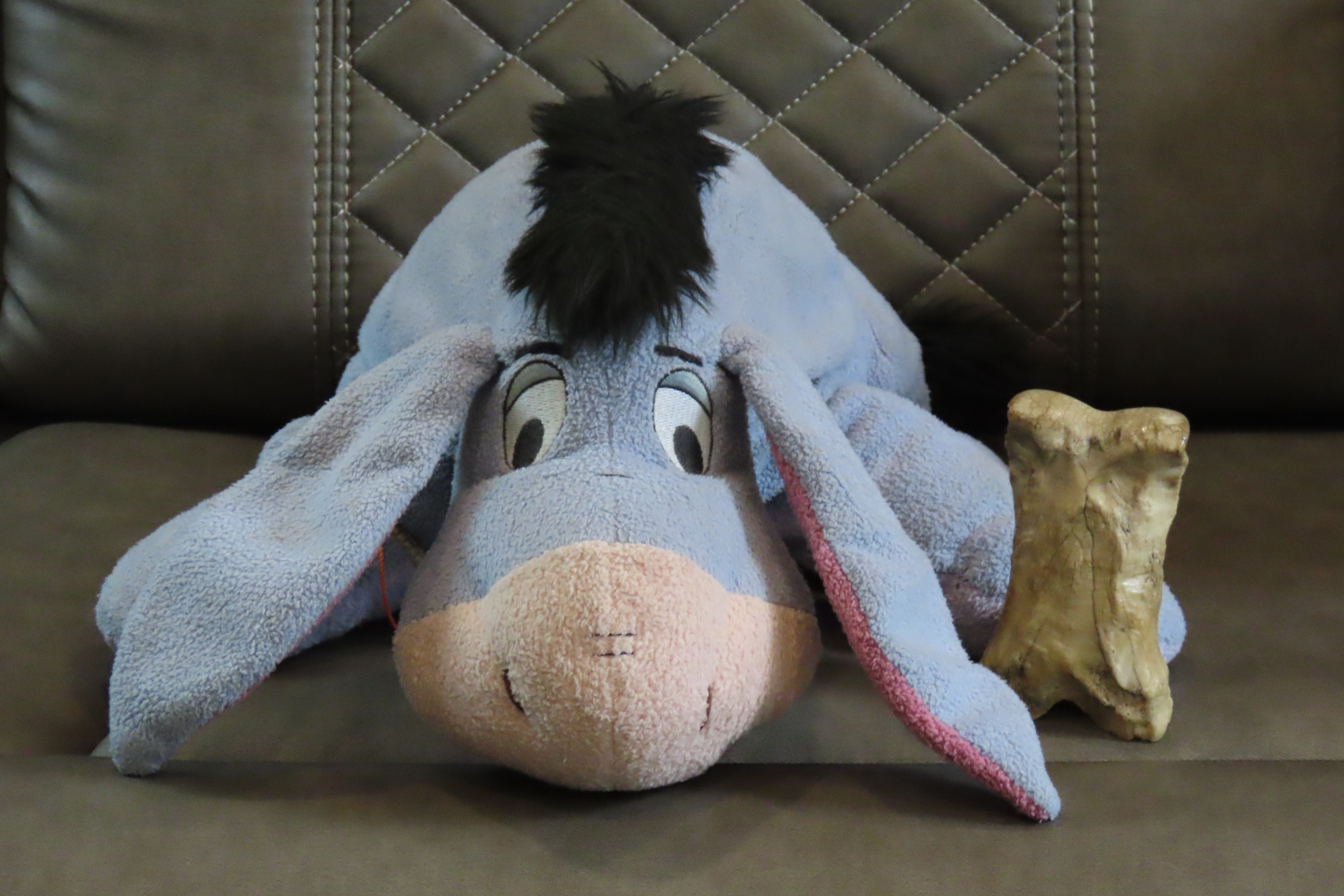
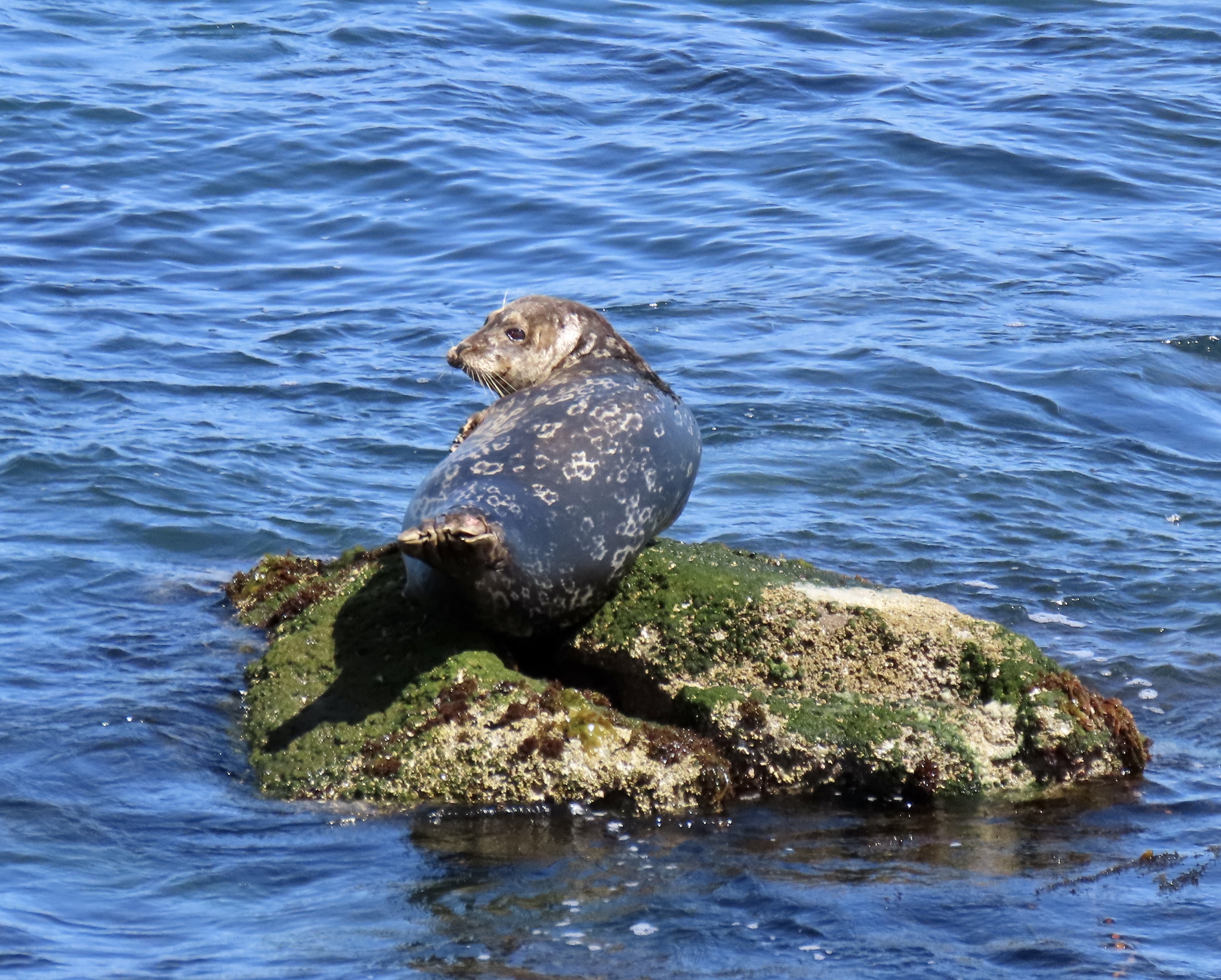
There will be huge waves crashing over rocks…Creating an infinite variety of swirling waters.You will join us as we hike out to the ocean’s edge— carefully. Does Peggy look worried???The edge, where she stood and took photos.The ocean will be calm as often as wild.With lots of gorgeous sunsets.Of course there will be tide pools. Peggy and I explore them with all the excitement of ten-year-olds. If you’ve ever spent time looking into them, you have probably seen a sea anemone…But have you ever seen one covered with shells and stones?Starfish…There will be dozens of magnificent sea stacks…As well as interesting smaller rocks…Any idea what this is? Once it was a tree that stood high above the ocean. A massive earthquake dropped the forest below sea level. This is what remains.Lighthouses are found all along the way.And beautiful bridges.Small coastal towns have special appeal to us. This is an historical building in Pt. Reyes Station above San Francisco.If there is an independent bookstore to be found, we will take you there. This is in Mendocino, California.And here is the bookstore cat. One way I judge a bookstore is whether it has a cat…Expect to meet many amazing creatures. This is a banana slug. Did you know that the banana slug is the school mascot for UC Santa Cruz?There will be magnificent wildlife such as this elk..Seals…And great blue heron.Expect a few cows as well.So here’s a question. Are these two butting heads or seeing eye to eye?We will have many adventures along the way, including kayaking.We may even get our ducks in a row.Eeyore and Bone are along for the trip…And, like us, hope you will join our journey. First up, we will be exploring the highways, byways and coast line of the Monterey/Carmel area, including the world famous 17 mile Drive. Peggy took this photo of a seal along Ocean View Blvd. in Pacific Grove, just before we climbed onto the 17 Mile Drive. I was so impressed with the photos my new camera took when we were on safari in Africa, I immediately bought one for Peggy. Expect lots more…
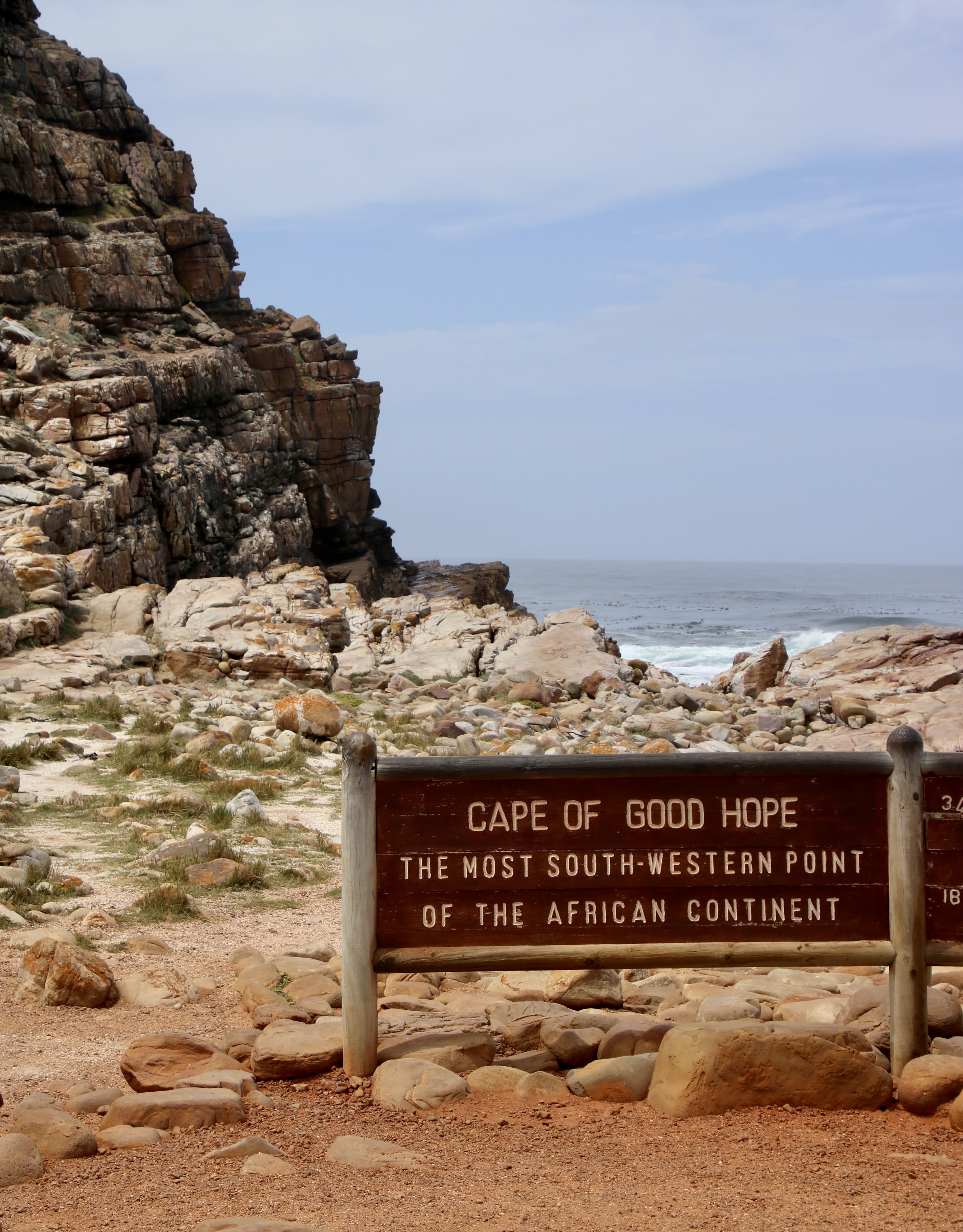
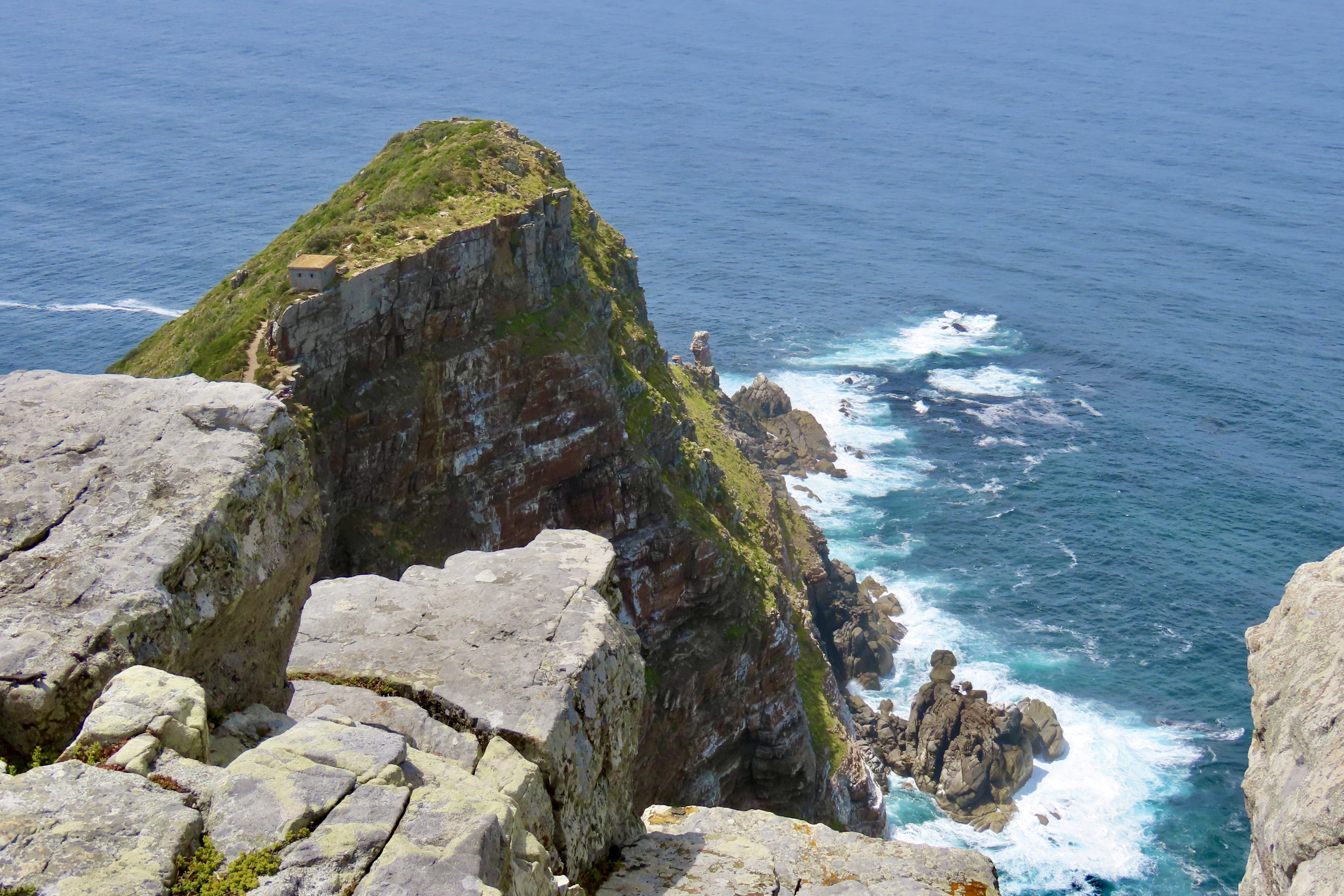
This is a view of the Cape of Good Hope as seen from on top of Cape Point. Portugal’s Bartolomeu Dias was the first to round it in 1488. He named it the “Cape of Storms,” for good reason. Ten years later, Vasco da Gama followed the same route and then sailed up the coast of Africa, prompting King John II of Portugal to rename it the “Cape of Good Hope.” It opened a sea route to fabulous wealth of the spice trade in India and the Far East.
Today marks my 25th and final post on our African Safari. As you read this, Peggy and I are driving between Carson City, Nevada and the Central Coast of California where we will spend the next two weeks exploring Big Sur, Carmel, Monterey, Pinnacles National Park and the surrounding area. The visit will kick off our next series: A three month, thousand mile journey following the Pacific Coast through Northern California, Oregon and Washington— one of the world’s most beautiful coastlines.
But first, a wrap up on South Africa where we will visit the Cape of Good Hope, Cape Town and Table Mountain.
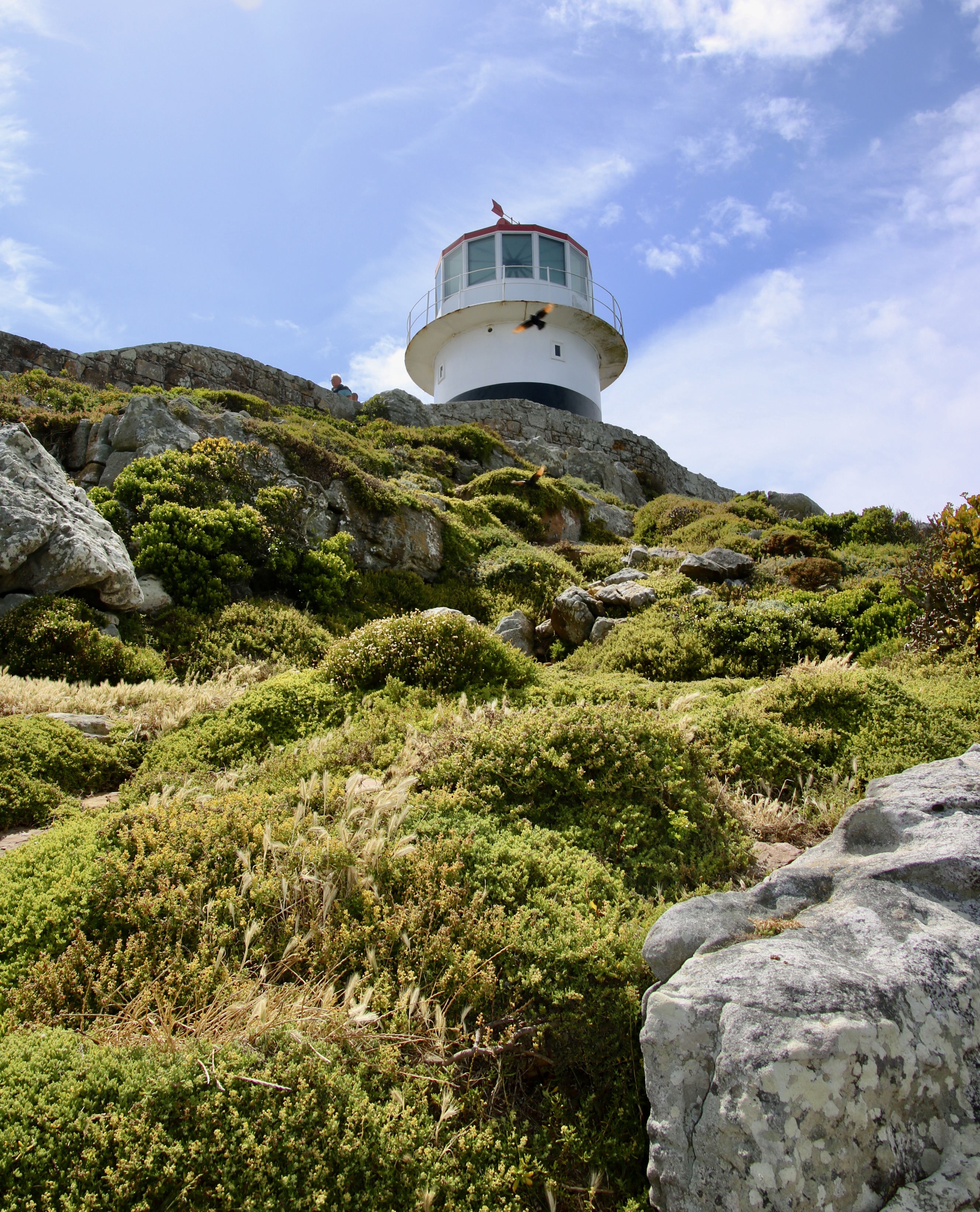
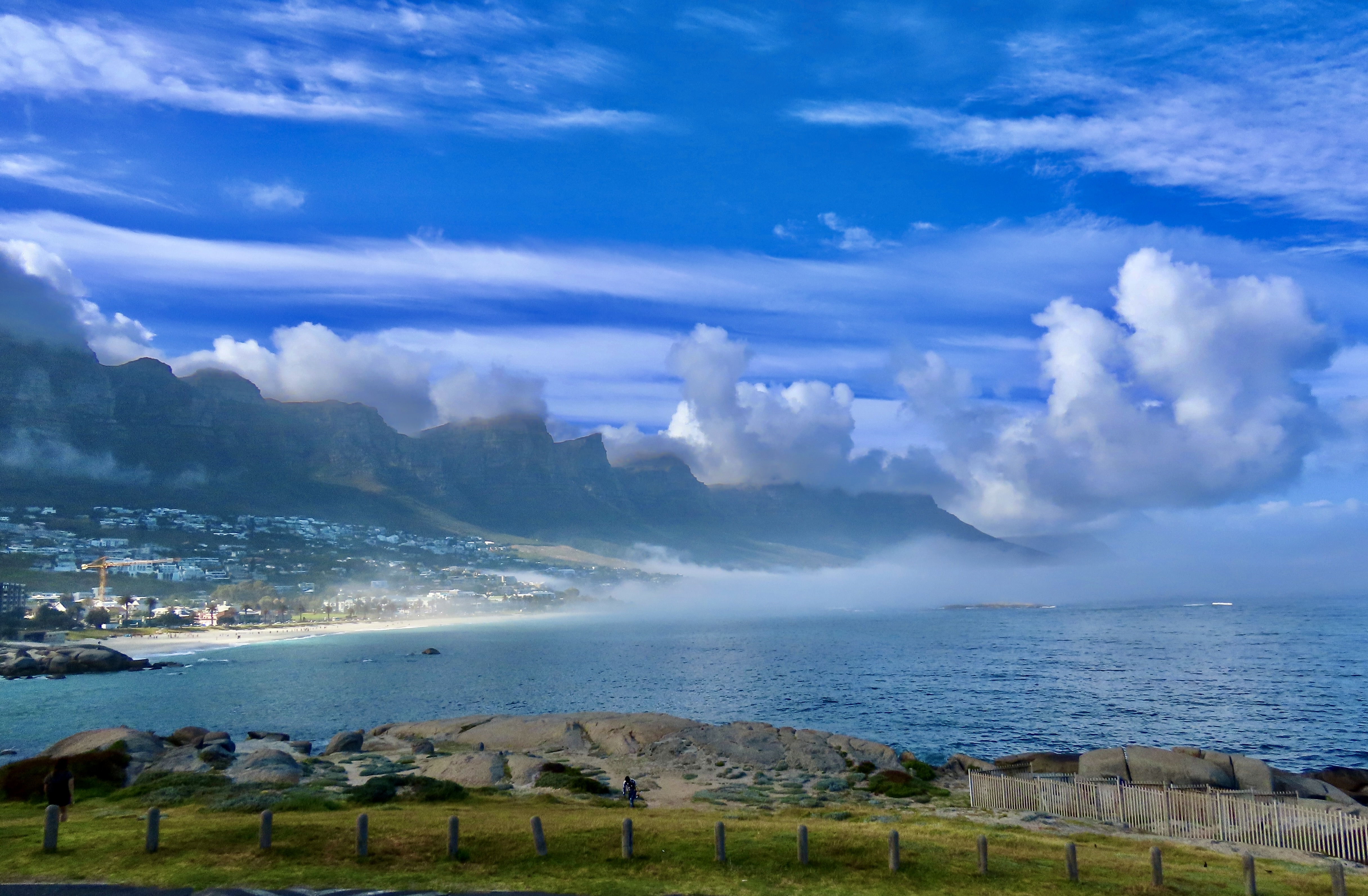
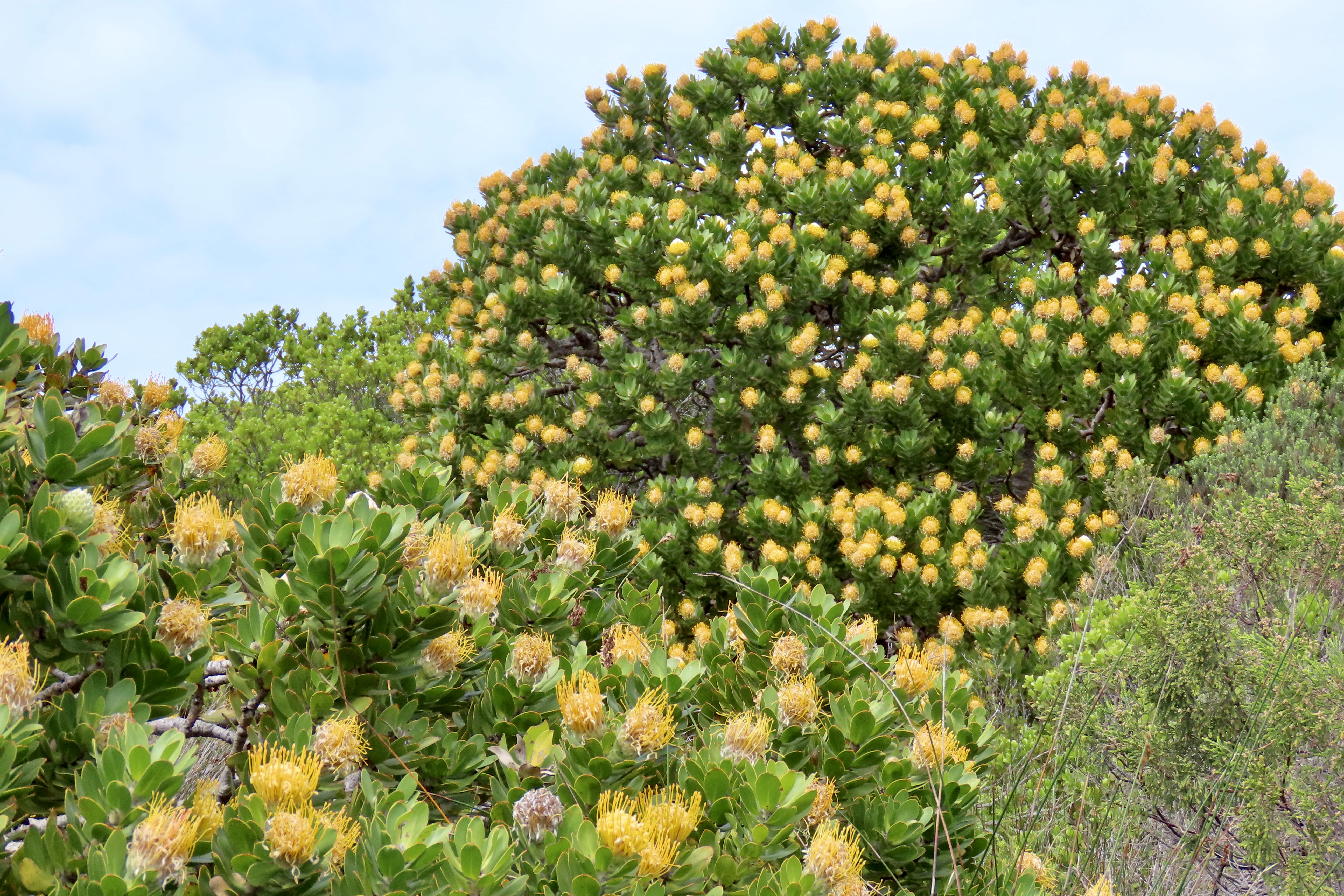
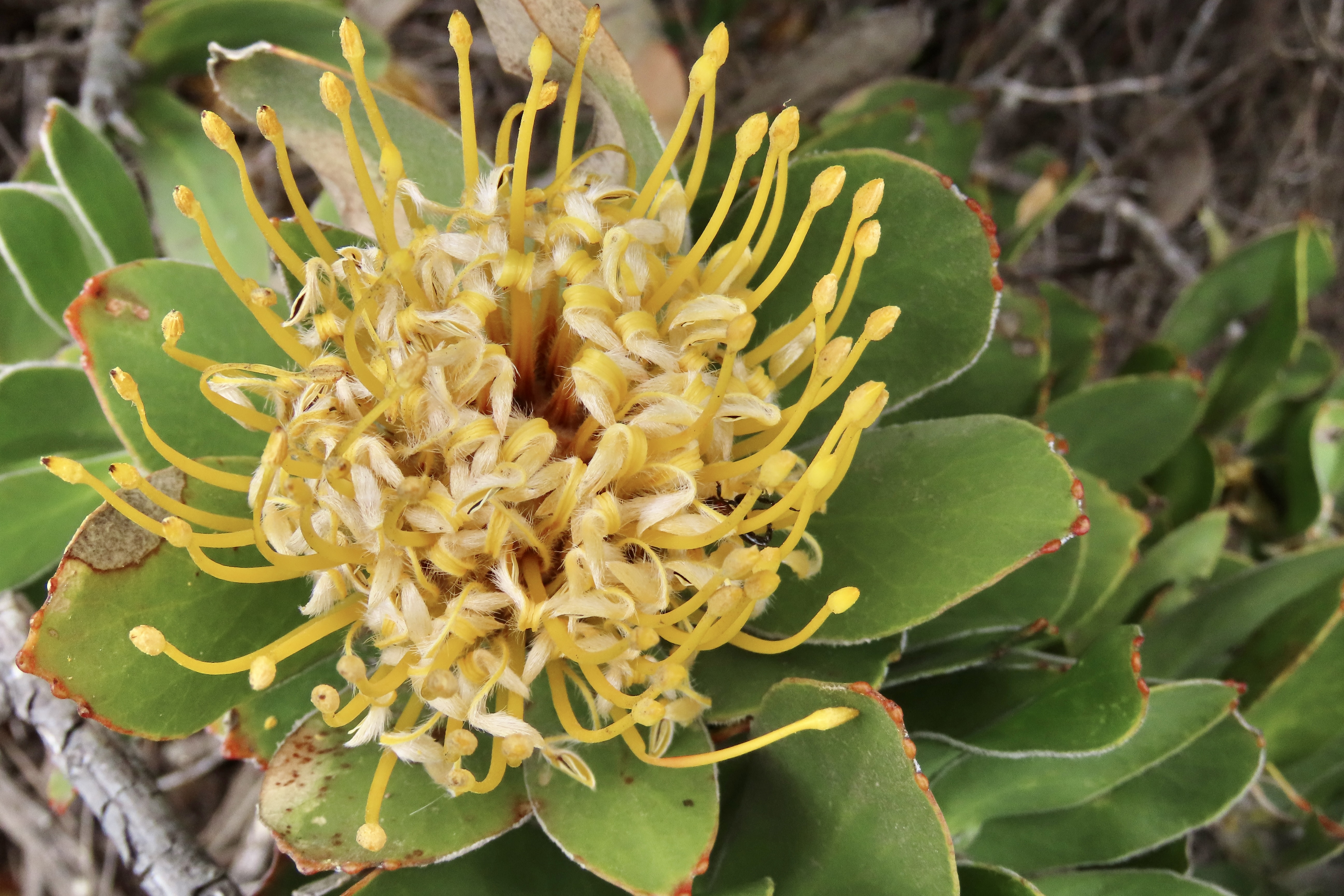
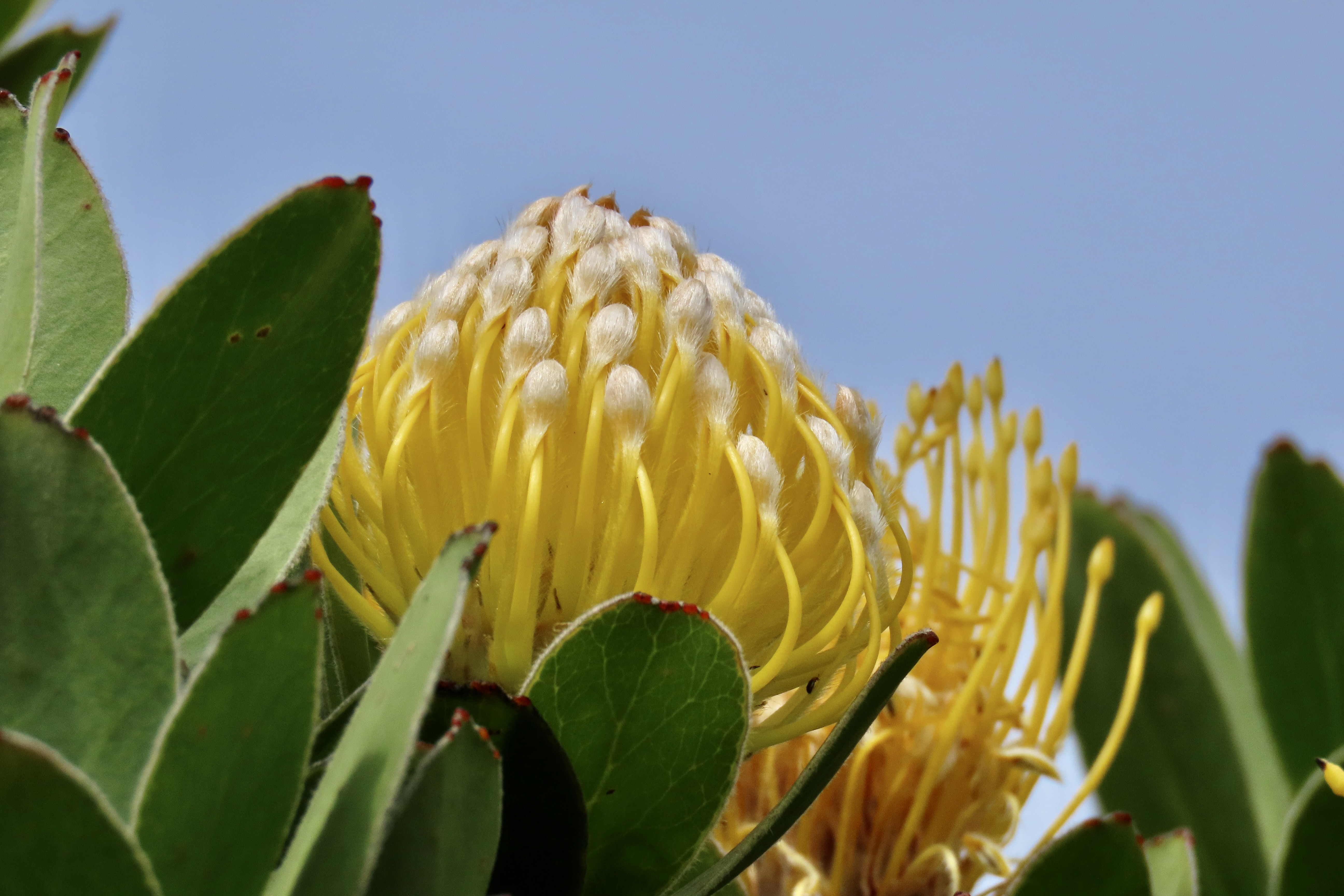
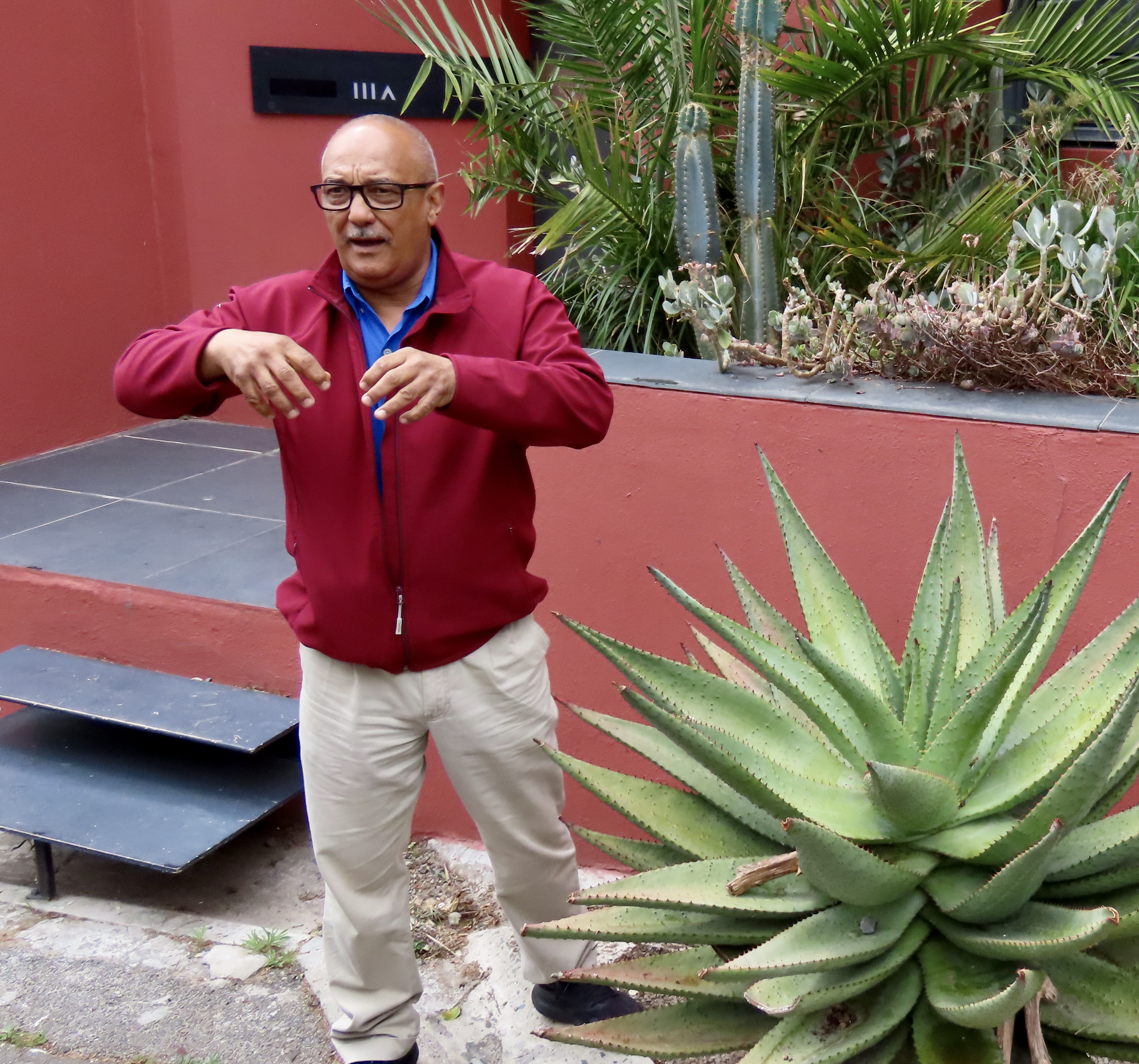
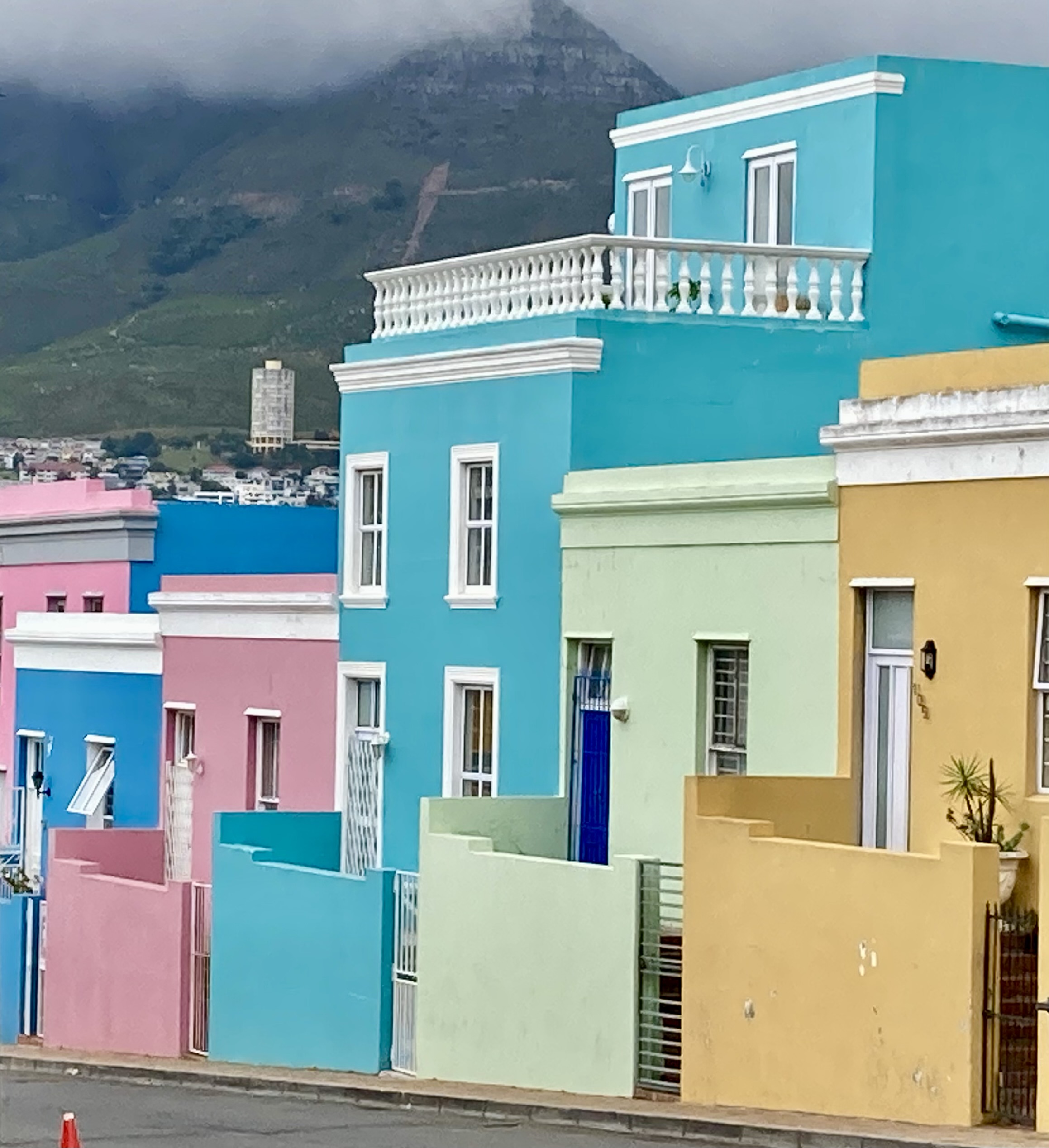
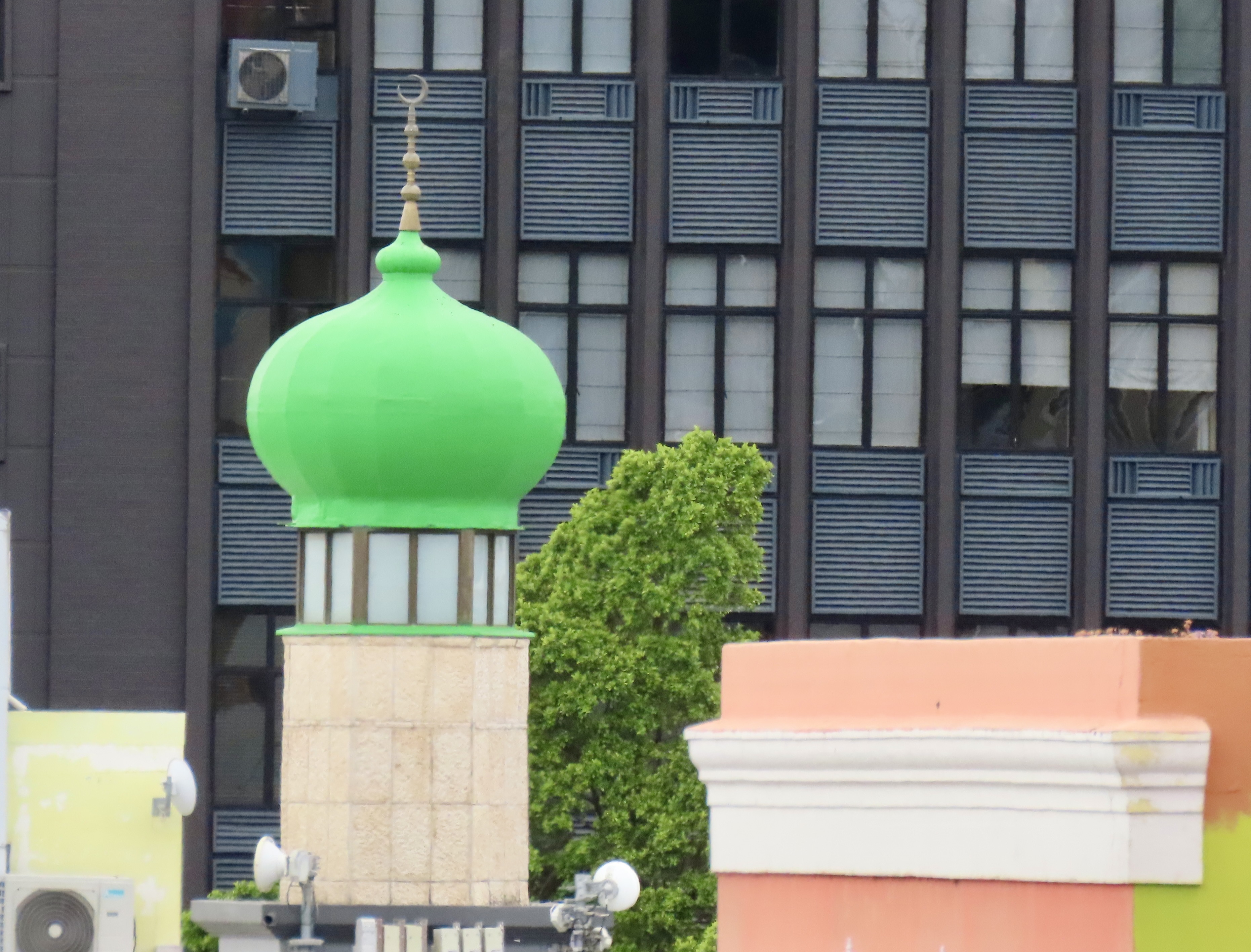
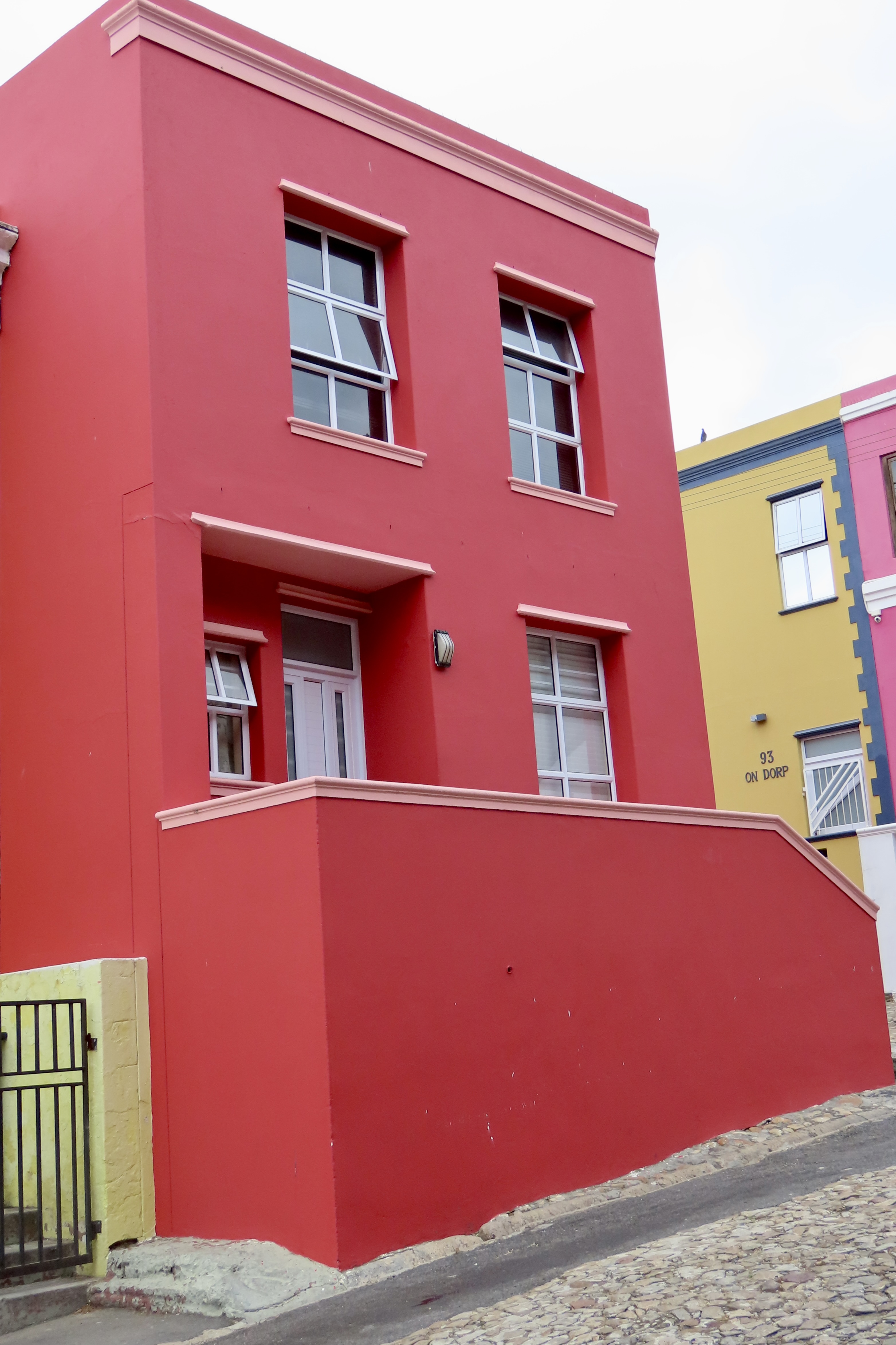
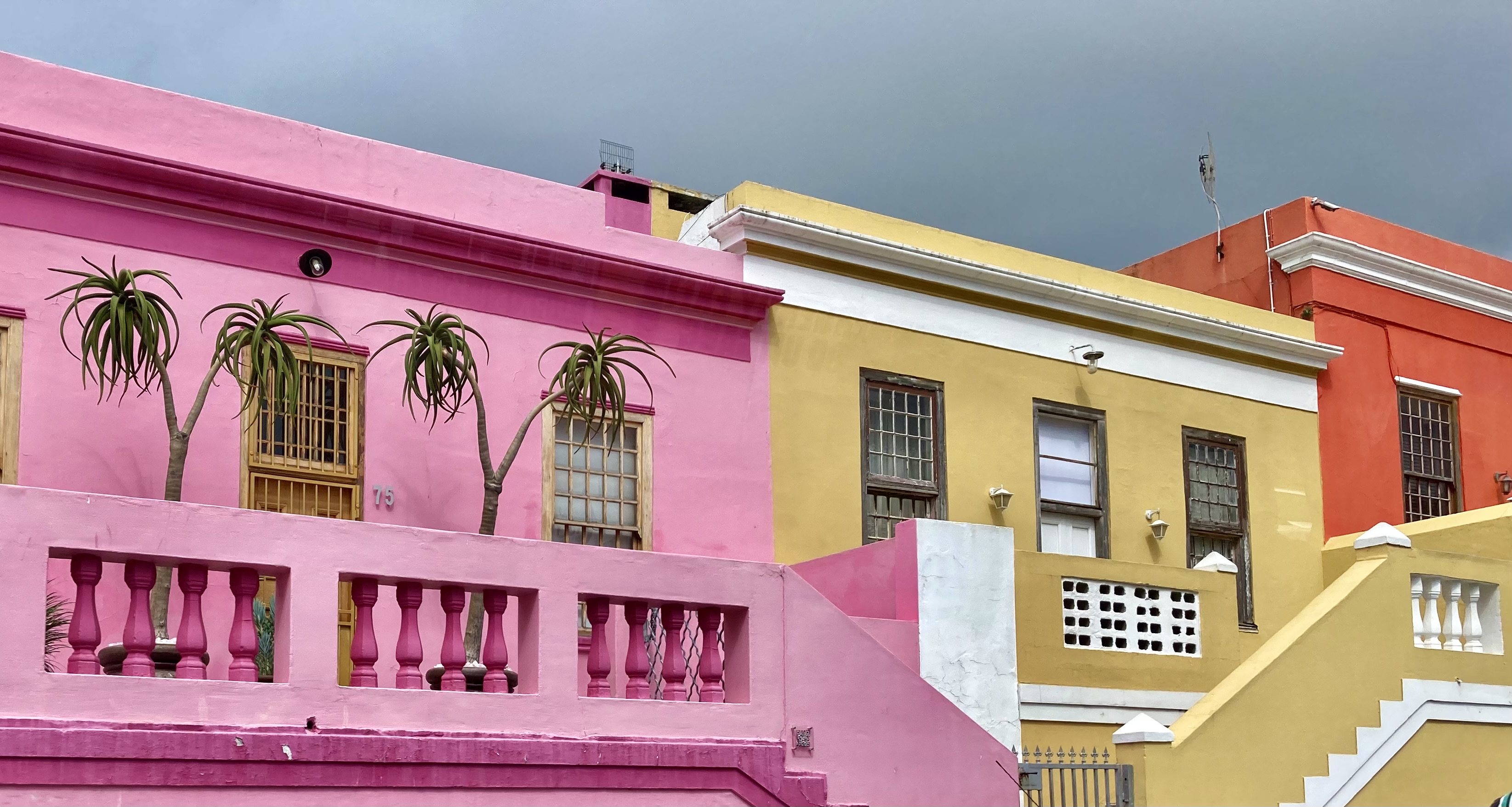
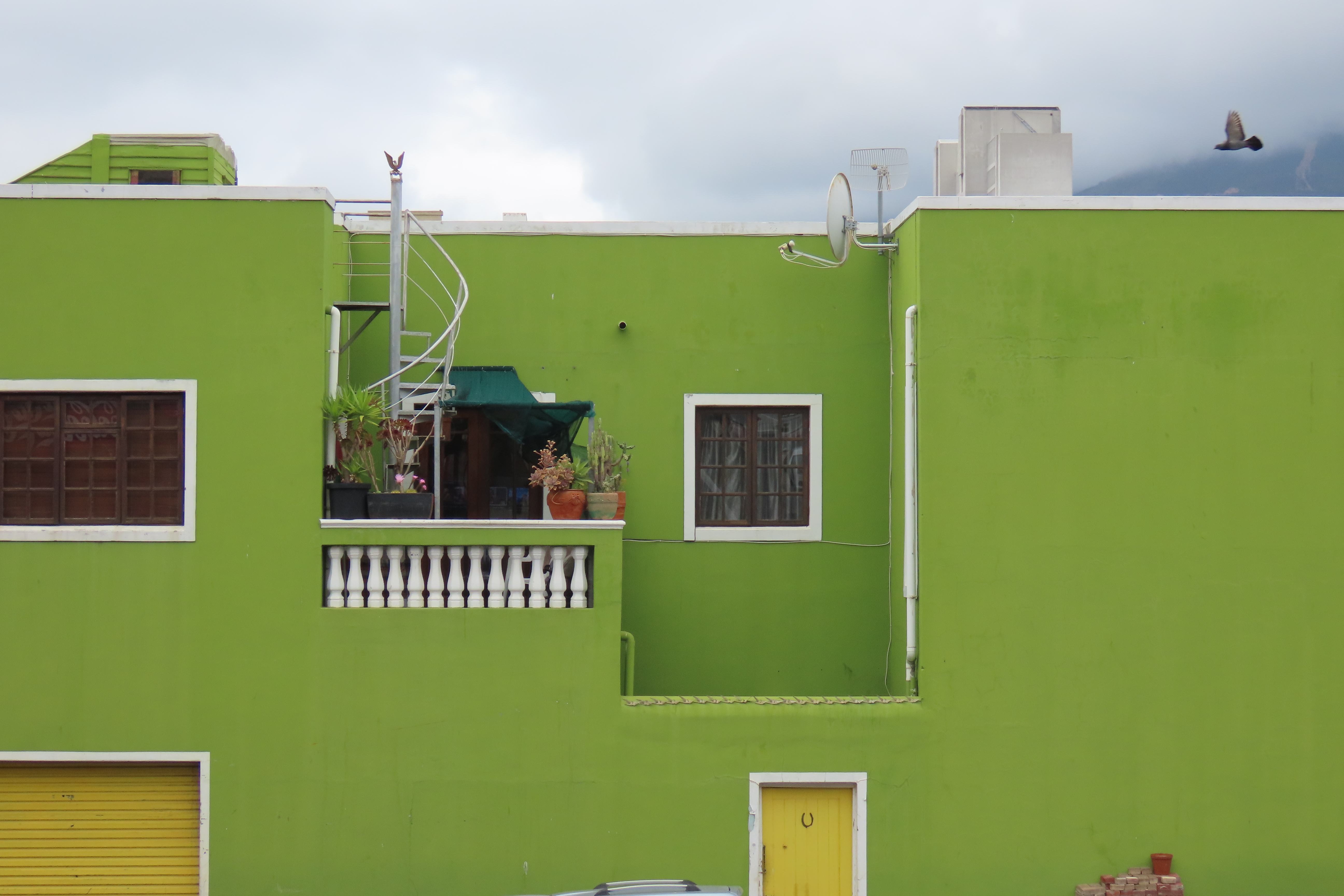
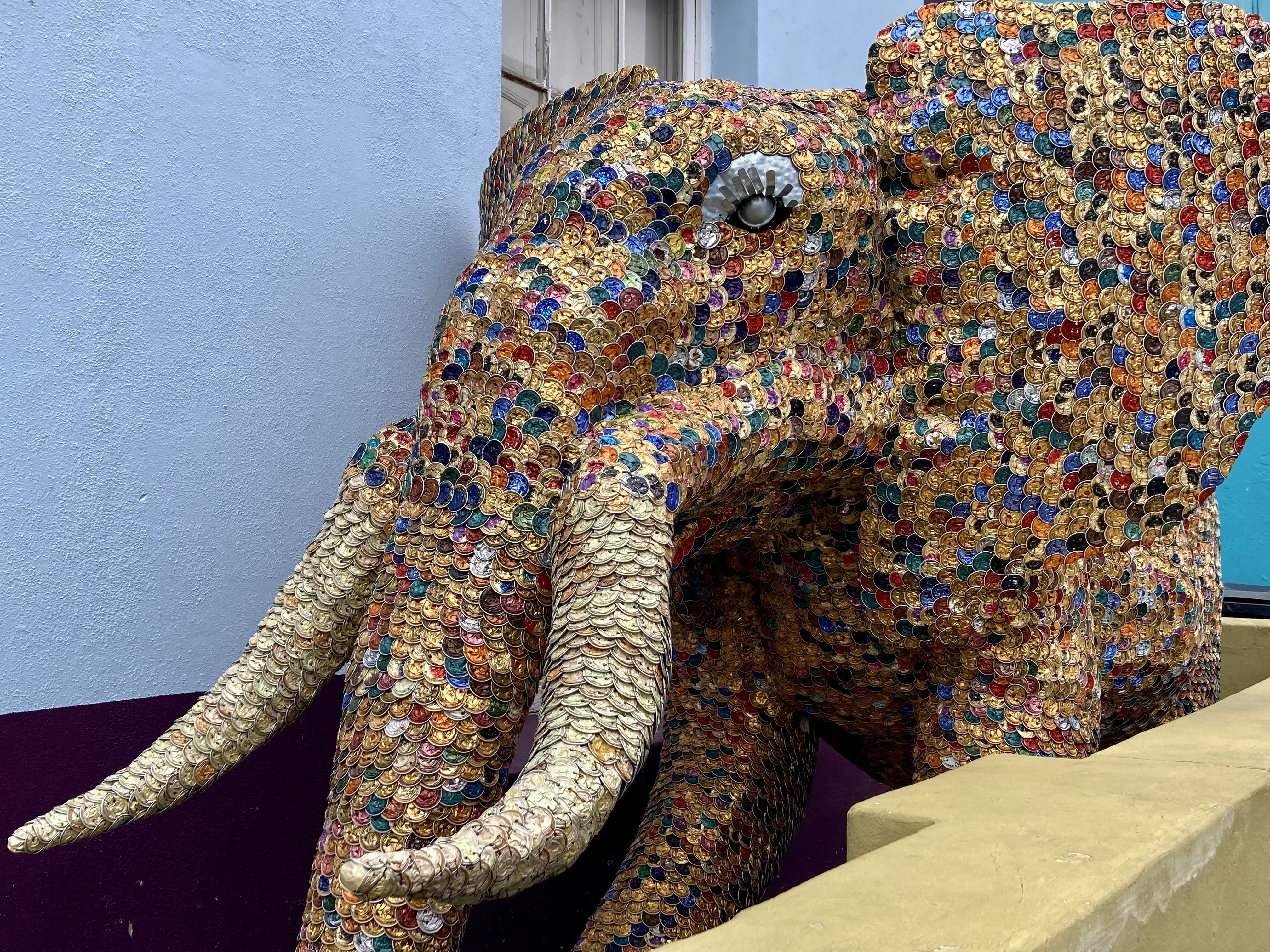
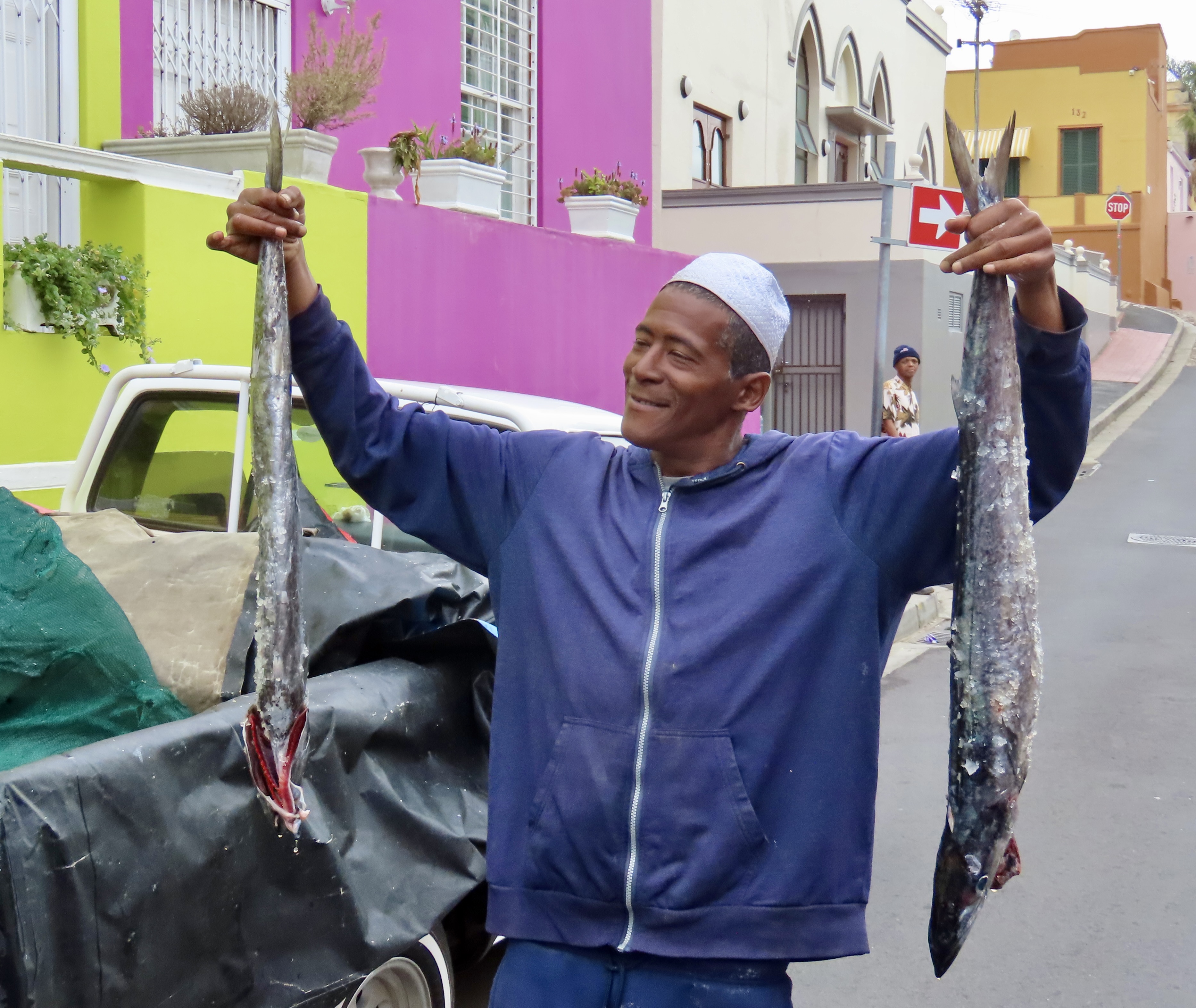
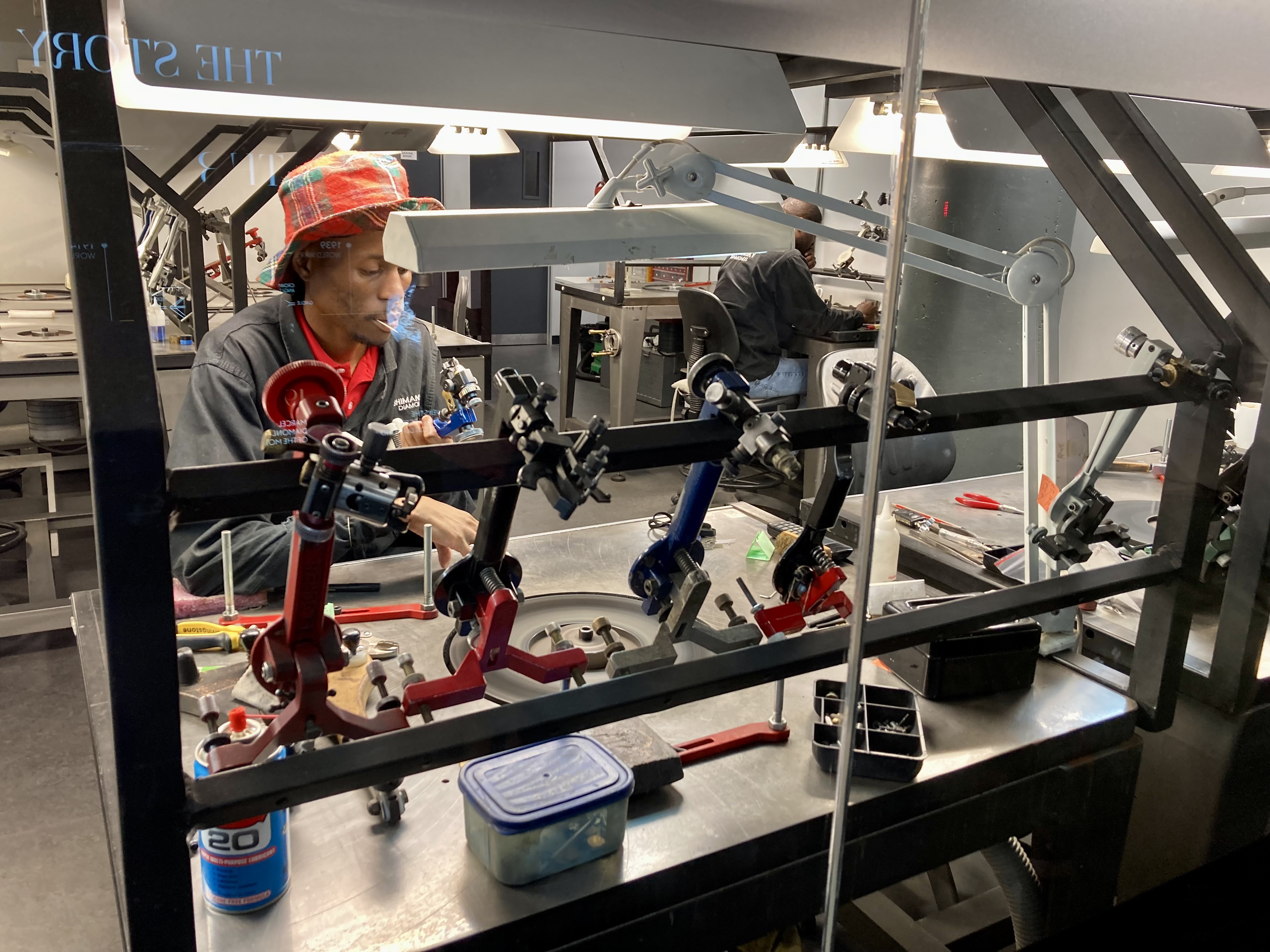
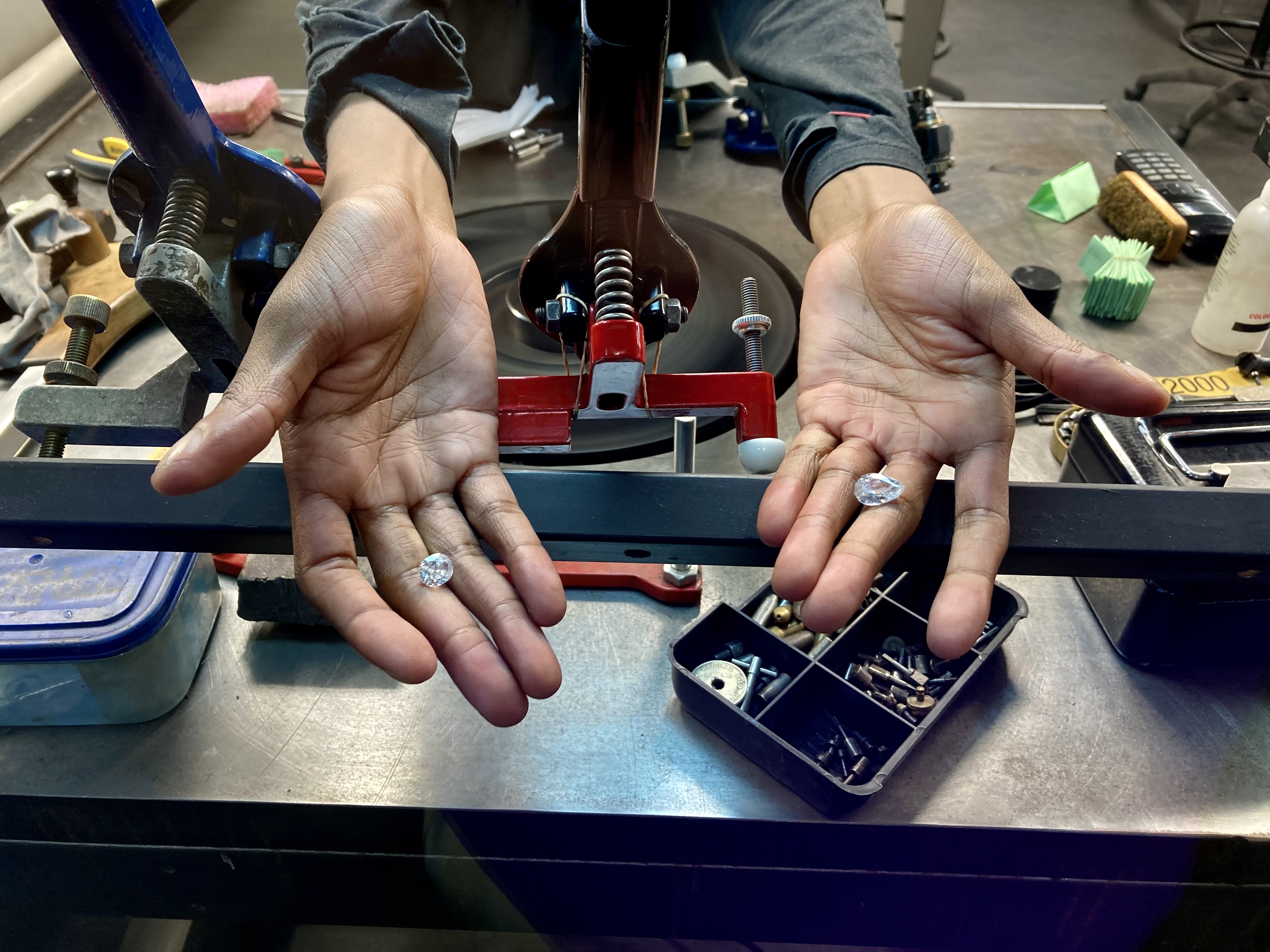
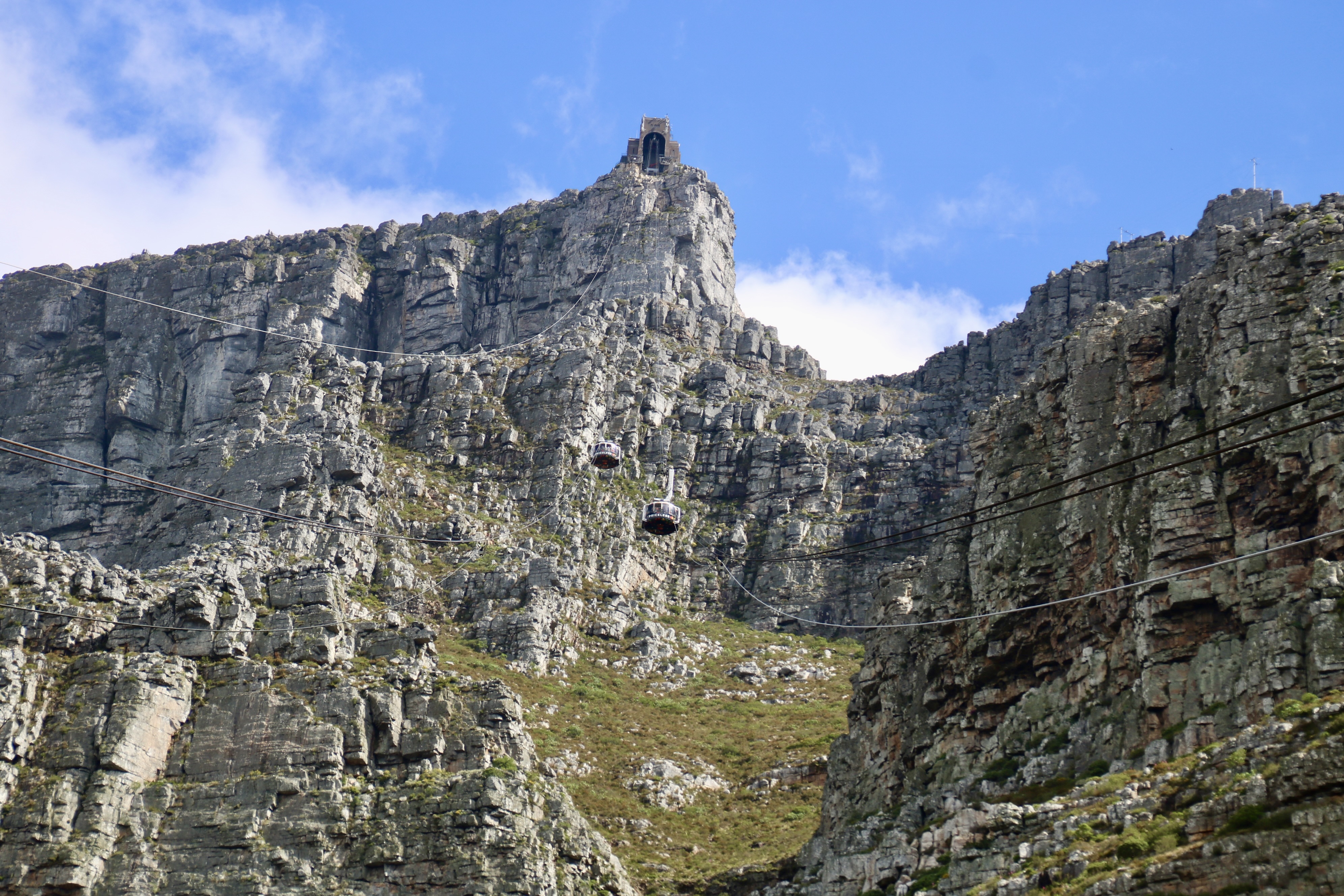
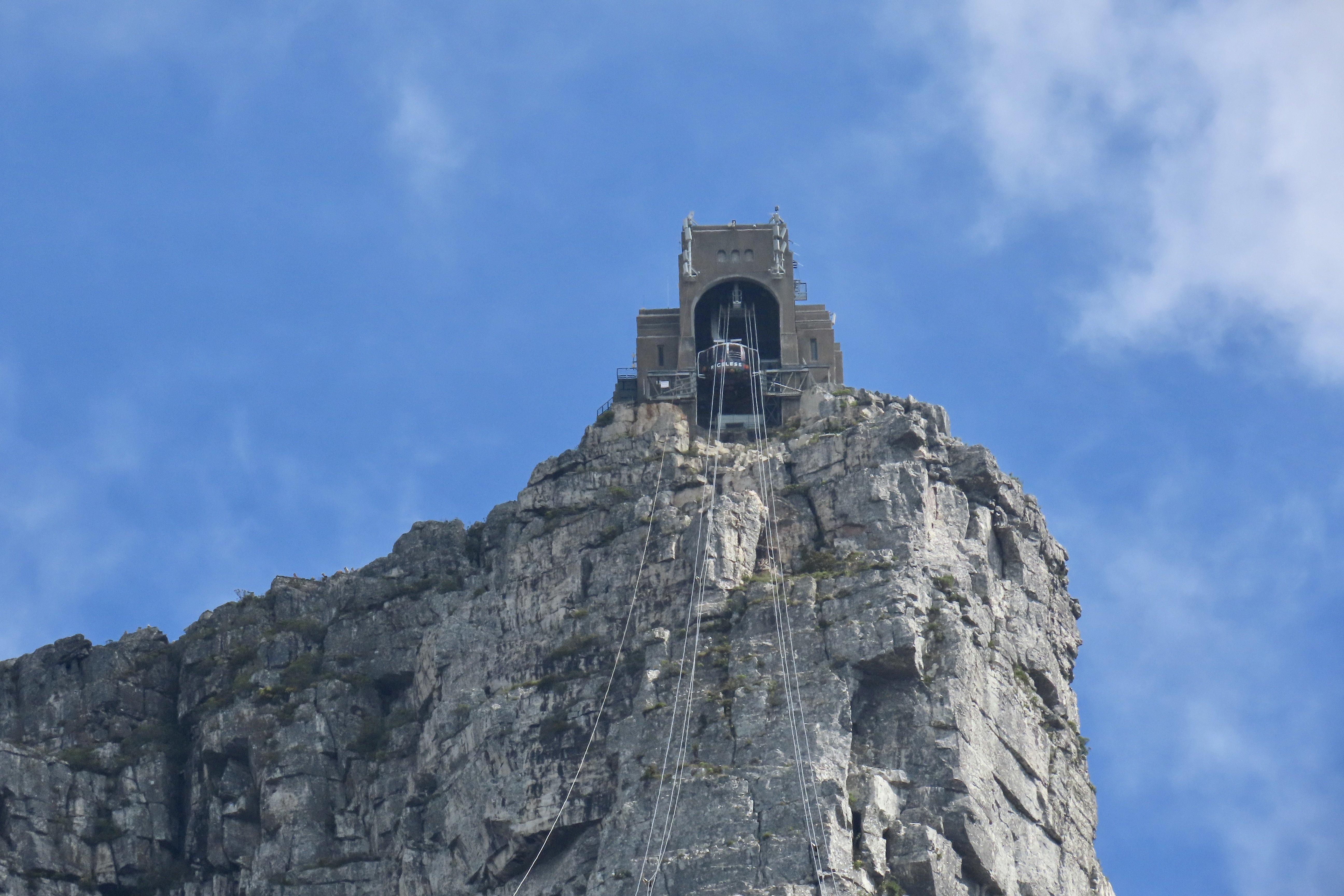
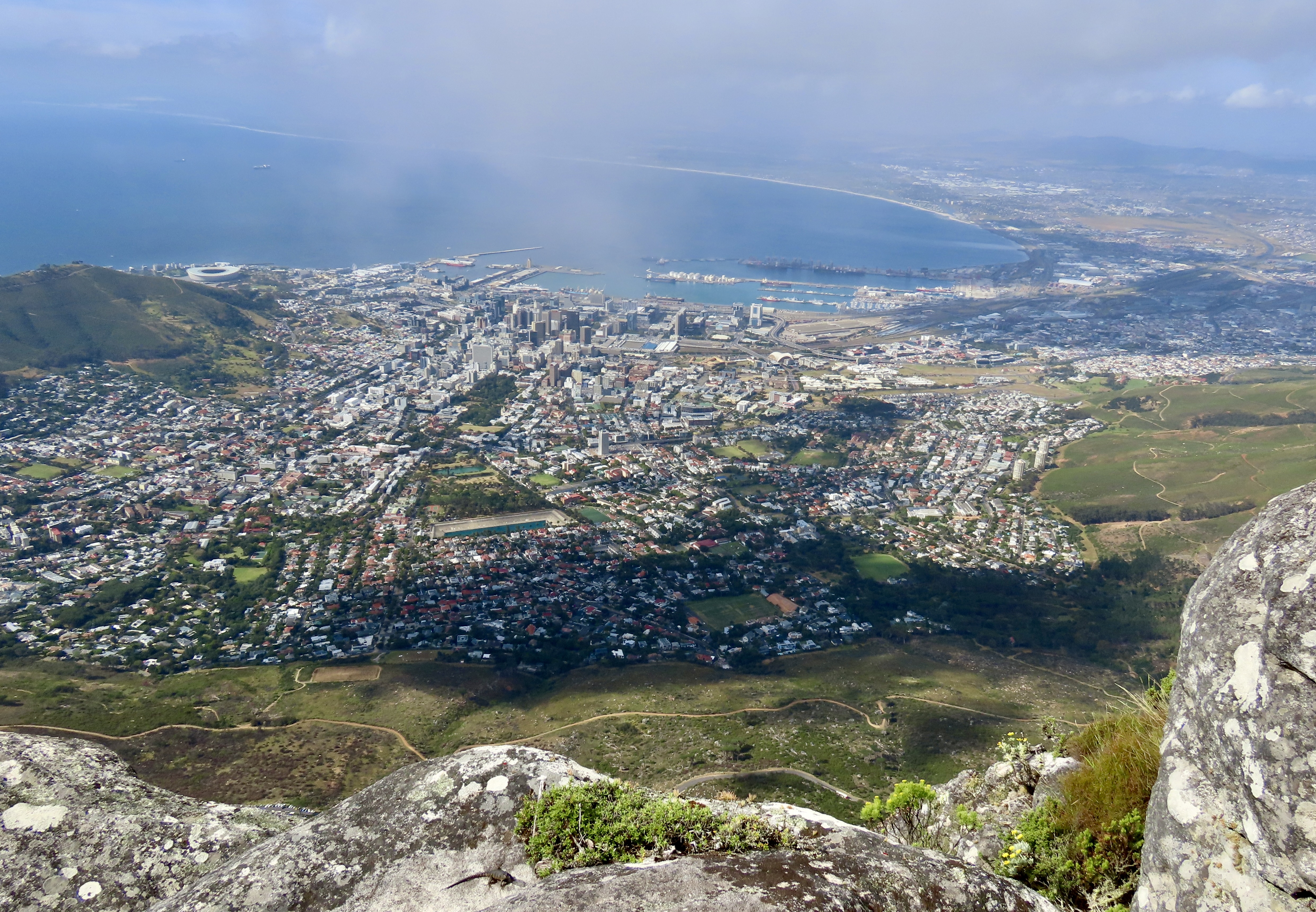
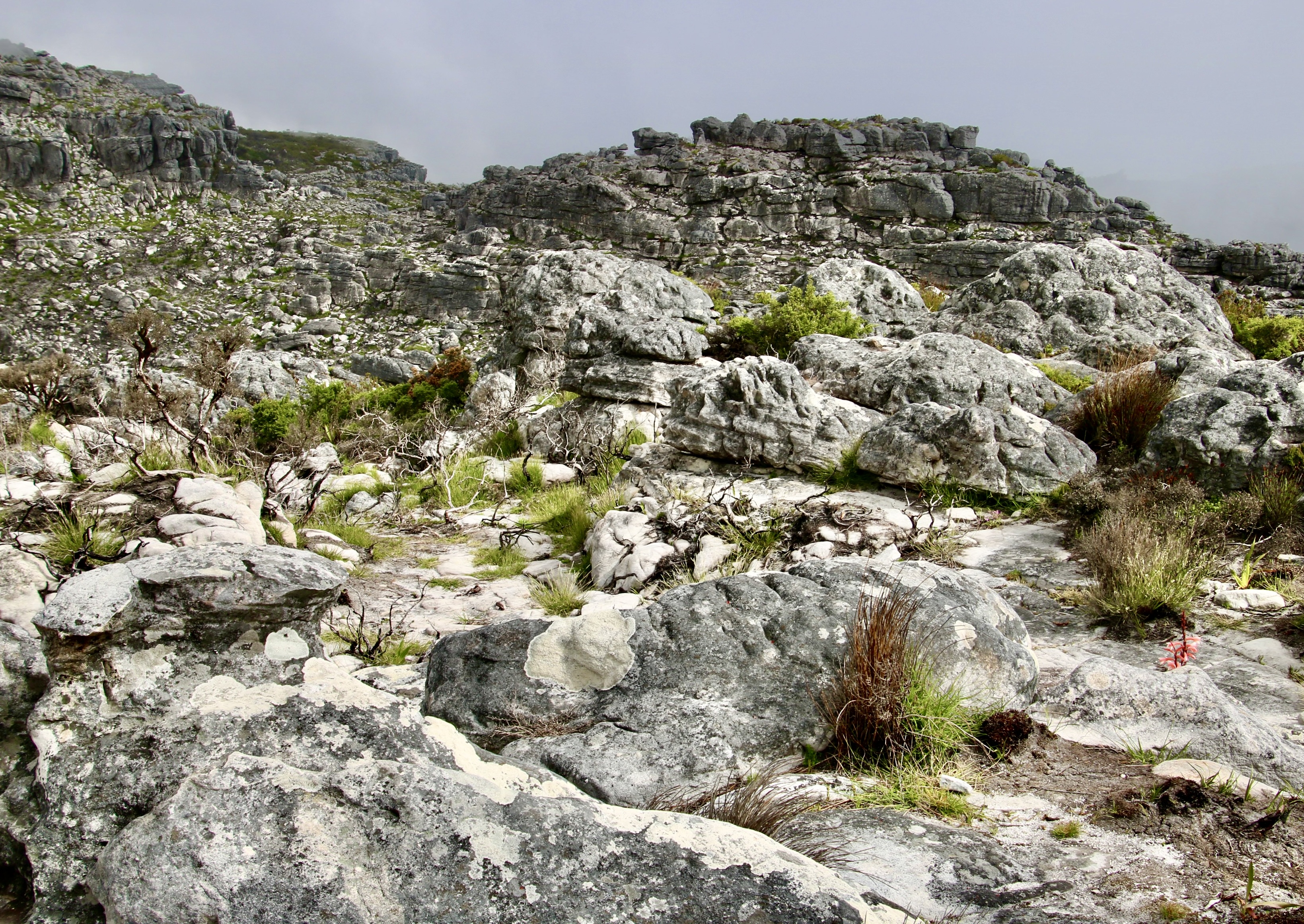
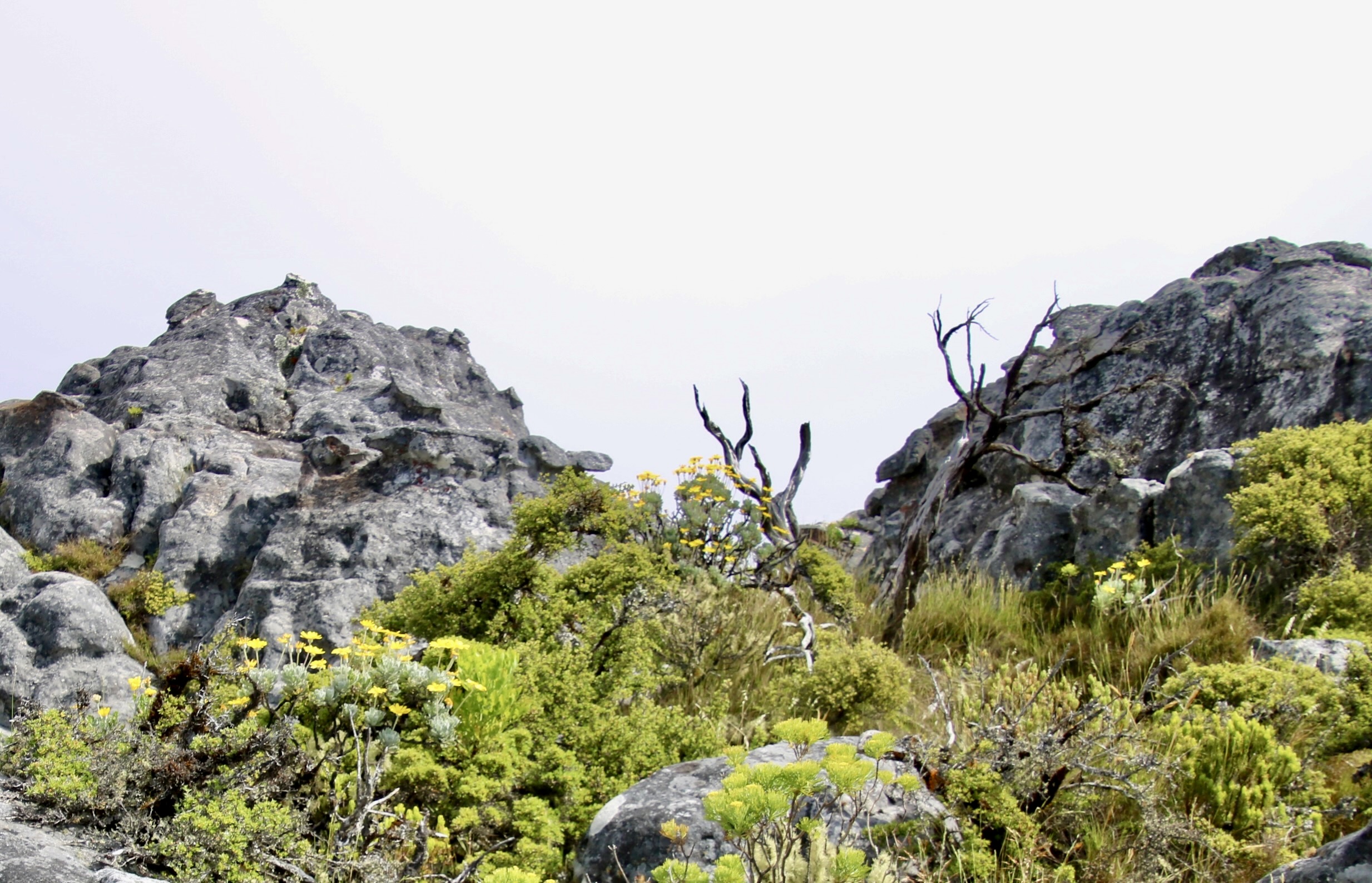
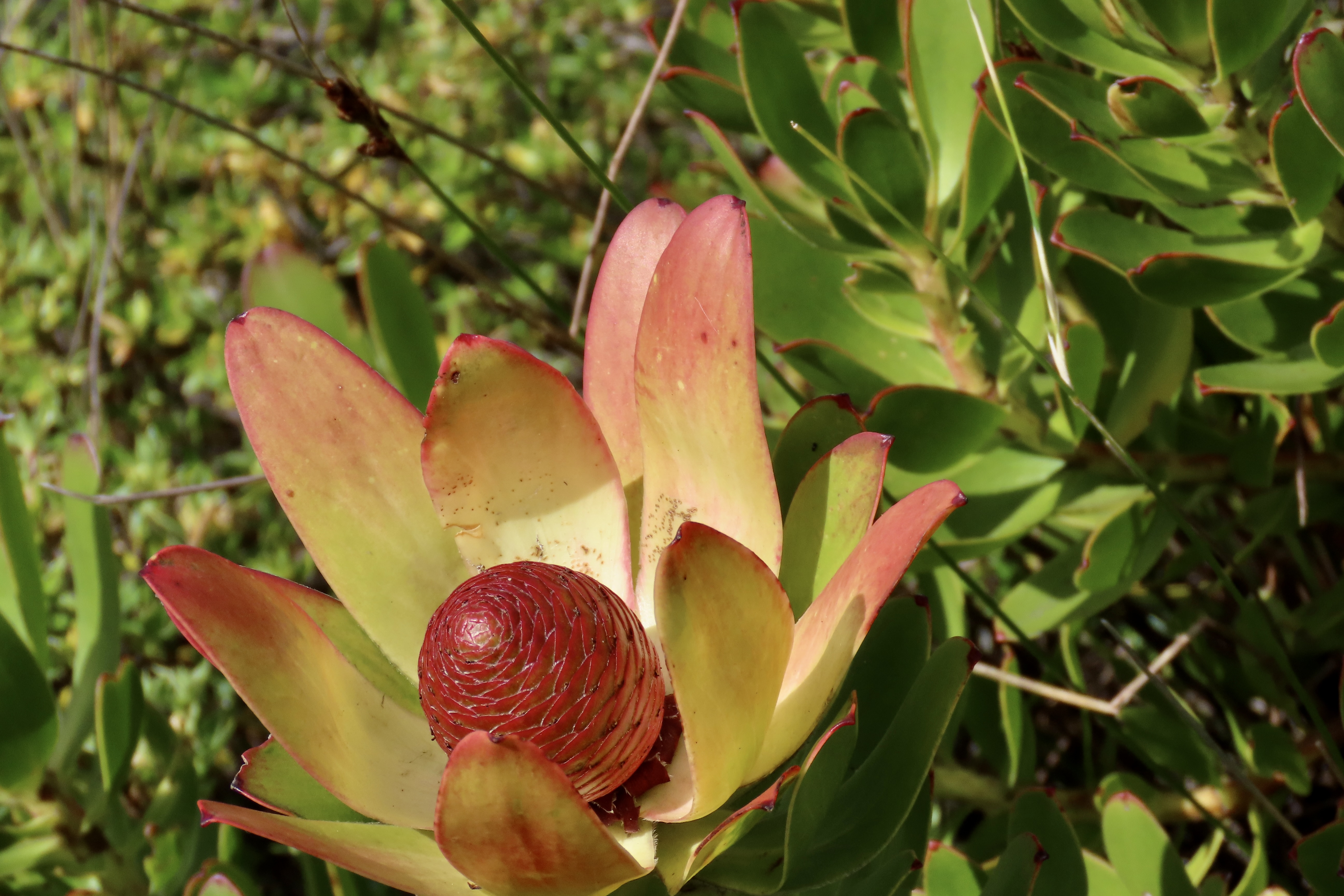
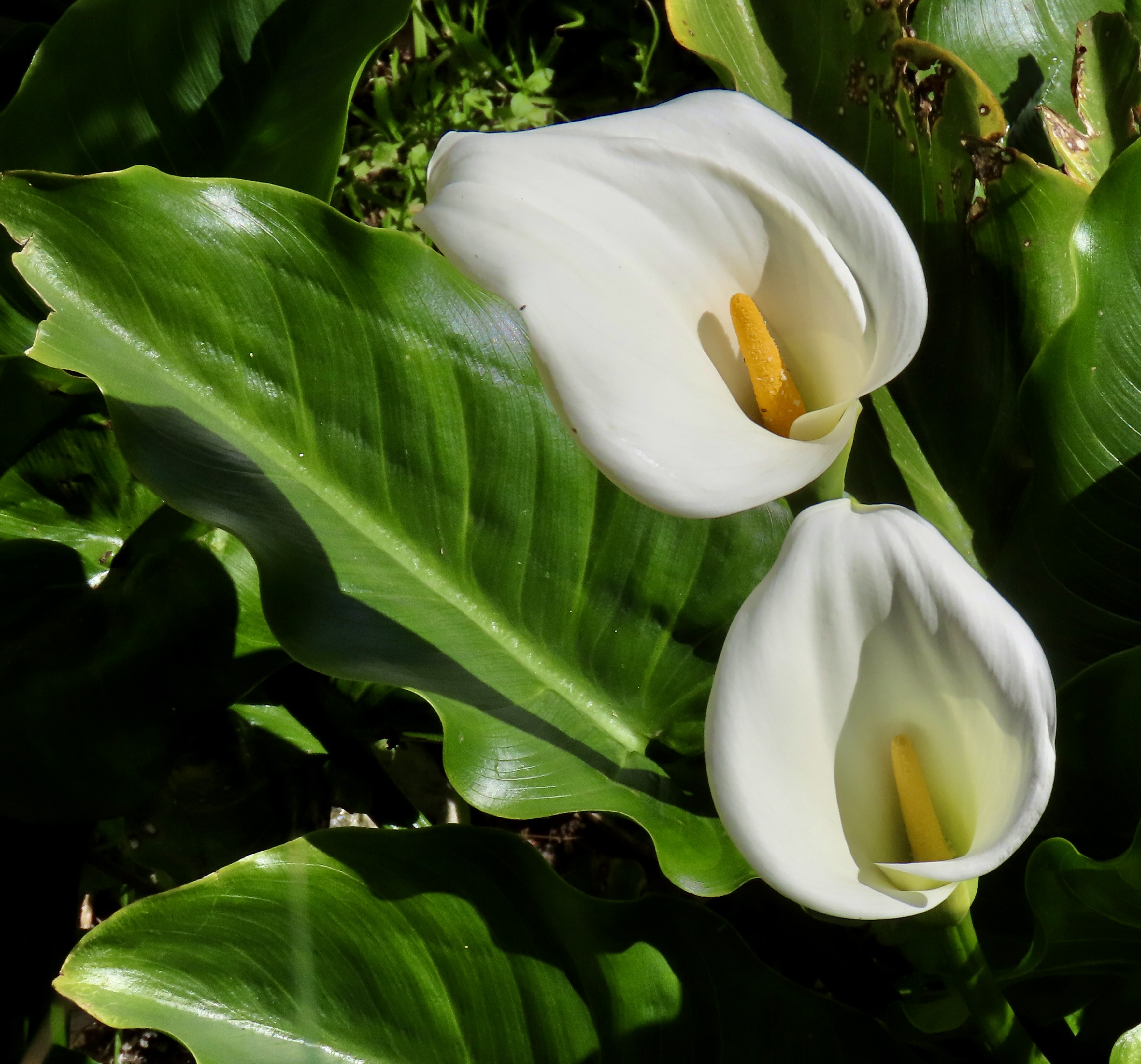
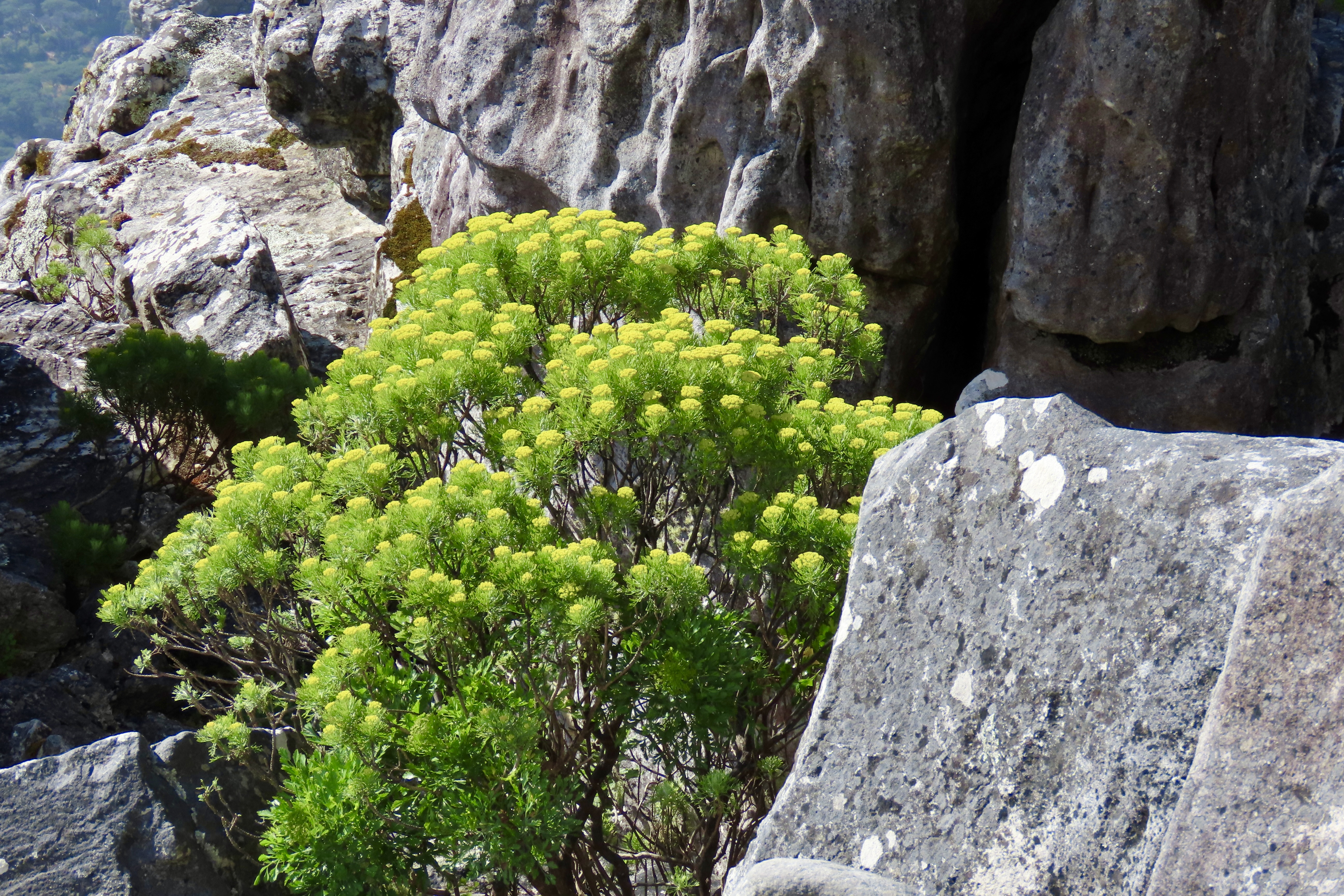
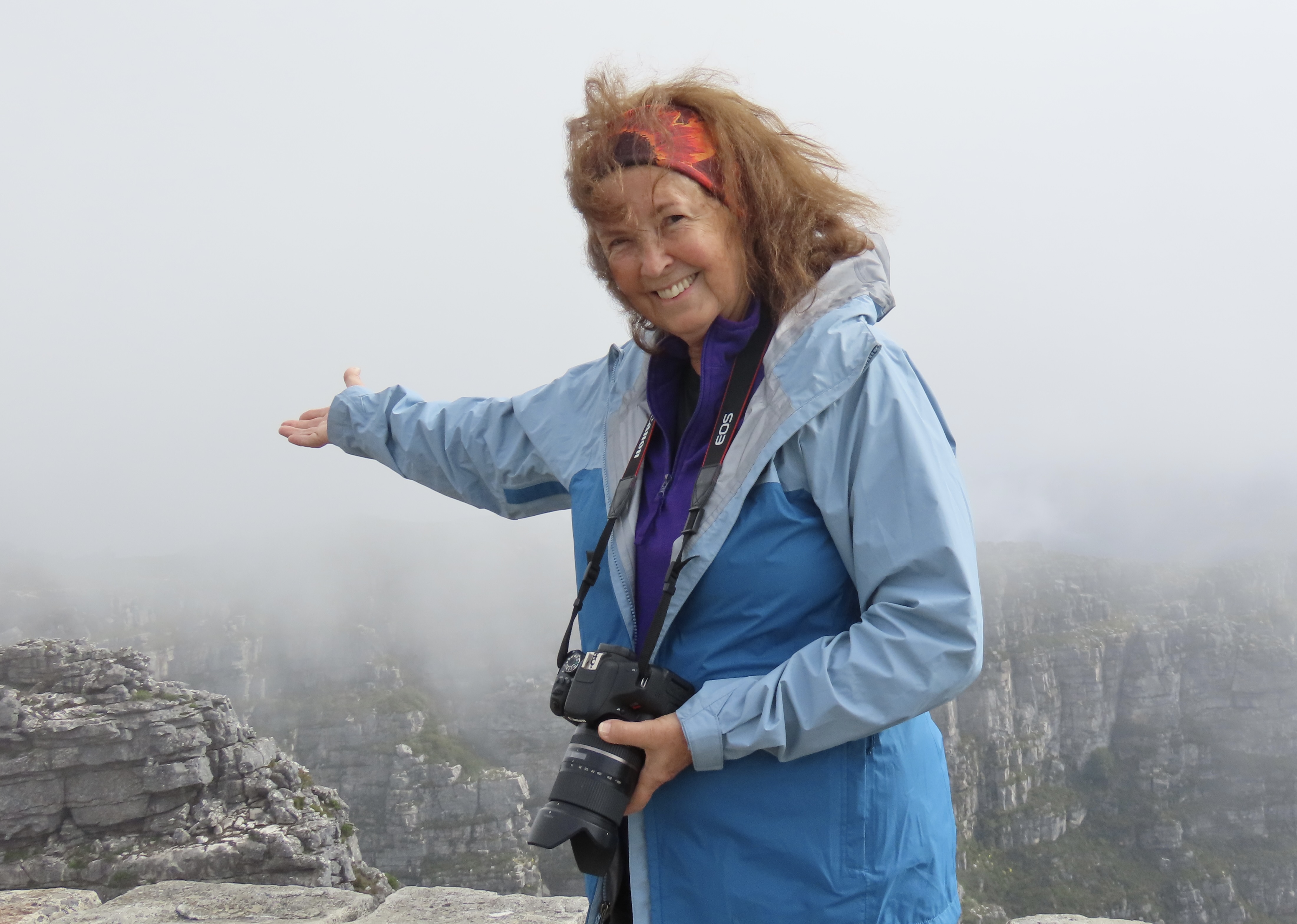
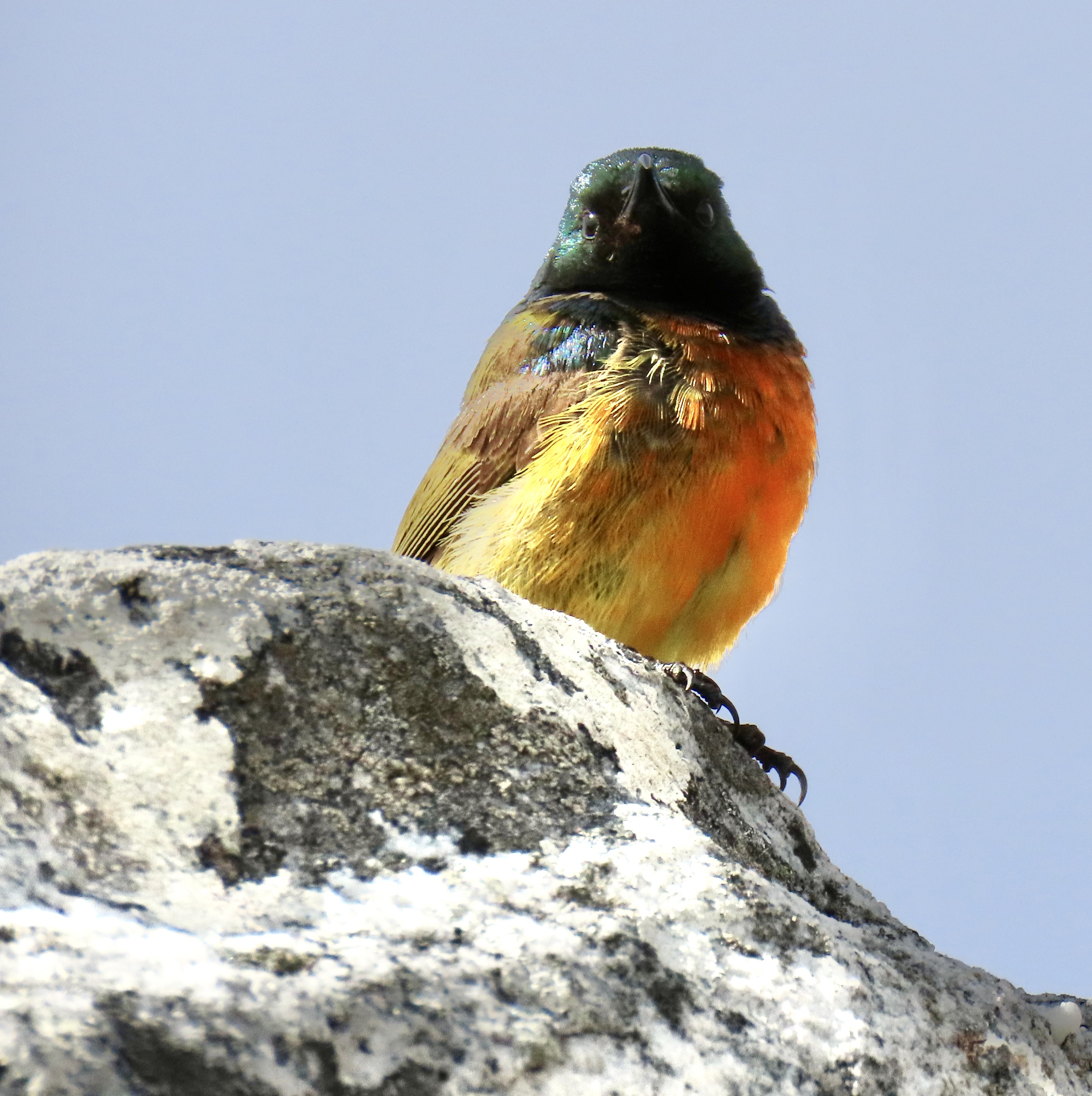
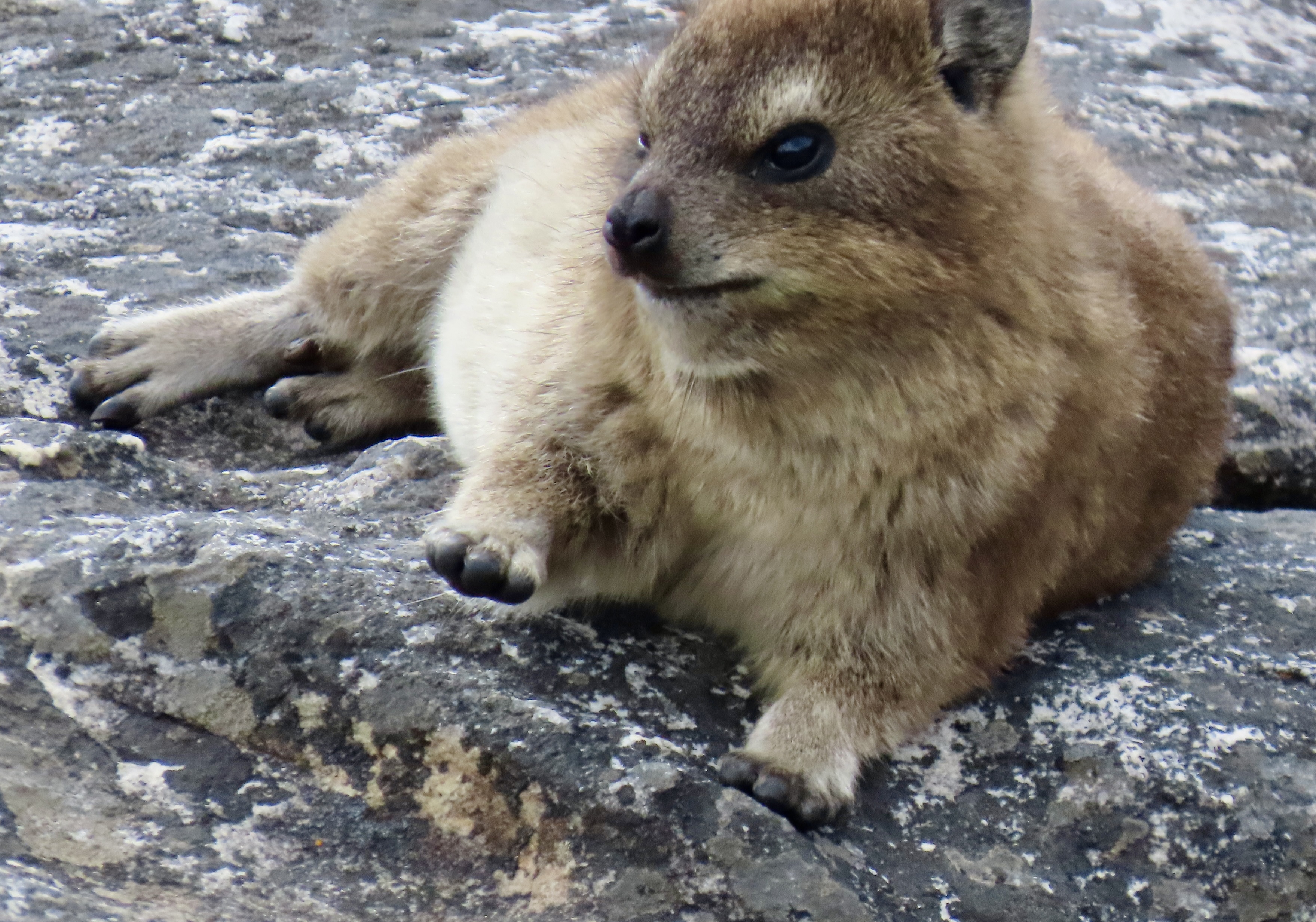
We took a full day excursion from Cape Town down to the Cape of Good Hope. Along the way, we were entertained by the ostrich, snakes, penguins and a lizard that you have already met in previous posts. This is the end of the road— as far as you can drive on the south-western coast of Africa without getting wet.This is Point Cape, just east of the Cape of Good Hope. Looking west, we had the view of the Cape that I showed in the first photo.This lighthouse was built was built in 1859 on Da Gama Peak, the summit of Cape Point, 780 feet (238m) above sea level, to protect sailors from the dangerous rocks off Cape Point and the Cape of Good Hope. It seemed like the ideal location. Unfortunately, it was often hidden by fog. A modern lighthouse is now located down Cape Point at 275 feet (78m). The hawk was a bonus.Our drive down to the Cape of Good Hope provided this view just south of Cape Town. We also saw this young caracal with its impressive long ears near the Cape. Our guide Johnathon was very excited and told us this was the first caracal he had ever seen in the wild. A member of the cat family, it hunts almost exclusively at night and is rarely seen by anyone! We were lucky. I moved quickly to get a shot before it disappeared into the brush.This rather impressive Peninsula Granite Fynbos wasn’t going anywhere, however. Peggy and I could take our time photographing it. It’s endemic to the Cape Town region and nowhere else.I managed to sneak up on one for a close up…And another. Now, back to Cape Town and the Springboks. I’m not talking about the attractive South African antelope known for its pronking, taking several 6 foot high leaps into the air in quick succession. I am talking about the South Africa’s Rugby Team that had just won the World Championship and was booked into our hotel for their Cape Town celebration.A large crowd had gathered around our hotel and was waiting their arrival. The police opened their cordon to let us through. Several people thought we were related somehow and snapped our photos. A number of teenage girls waited nervously. One actually managed to get a selfie with one of the stars. She tried to be cool when taking the photo but immediately screamed afterwards. So much for cool.Our guide, Jonathan, took us on a tour of Cape Town and Table Mountain in addition to taking us down to the Cape of Good Hope. Here, he is talking about the colorful homes in the small community known as Bo-Kaap that I featured at the end of my last post.The original residents of Bo-Kaap were descendants of slaves imported by the Dutch from Malaysia, Indonesia, India, and Sri Lanka during the 16th and 17th centuries.Because of their cultural heritage, Bo-Kaap is primarily a Muslim Community. Even the mosque was brightly painted, matching the brightly painted homes.One of the homes.It seemed that each one was painted a different color.A final exampleWe found this artistic elephant in Bo-Kaap…And this man selling freshly caught fish from the back of his pickup.Johnathon also took us to the Shimansky diamond jewelry shop where we watched diamonds being cut.The diamond cutters showed us two of the diamonds he was working on. Judging from their size, I’d say they were a bit beyond my budget. Quite a bit.Any trip to Cape Town should include a trip up to Table Mountain, the dramatic backdrop for the city. We got there by going up this tram.Almost there…Looking back at Cape Town from Table Top Mountain.Our hotel was mixed in among these tall buildings. View of the top of Table Top…And another view. A number of flowers demanded their photos be taken.Including one I had never seen: a peninsula conebush. The cone is tough and will only open and release its seeds as a result of fire. Cala Lilies were an old friend.These flowers created a pretty bouquet among the rocks.Peggy shows the mist rising up on the ocean side of Table Mountain. Her hair shows that it was accompanied by a breeze.This little beauty, an orange-breasted sunbird, was waiting for us as we neared the end of our time on Table Top Mountain.After all of the great people, incredible wildlife, and striking scenery, I think it is only appropriate that we end our African safari series with the small hyrax on Table Top Mountain, seemingly waving goodbye to us. The next morning we began our long air journey back to Virginia. I hope you enjoyed this series. We were ever so glad you decided to come along. Next up, an introduction to our thousand mile journey following the Pacific Coast.
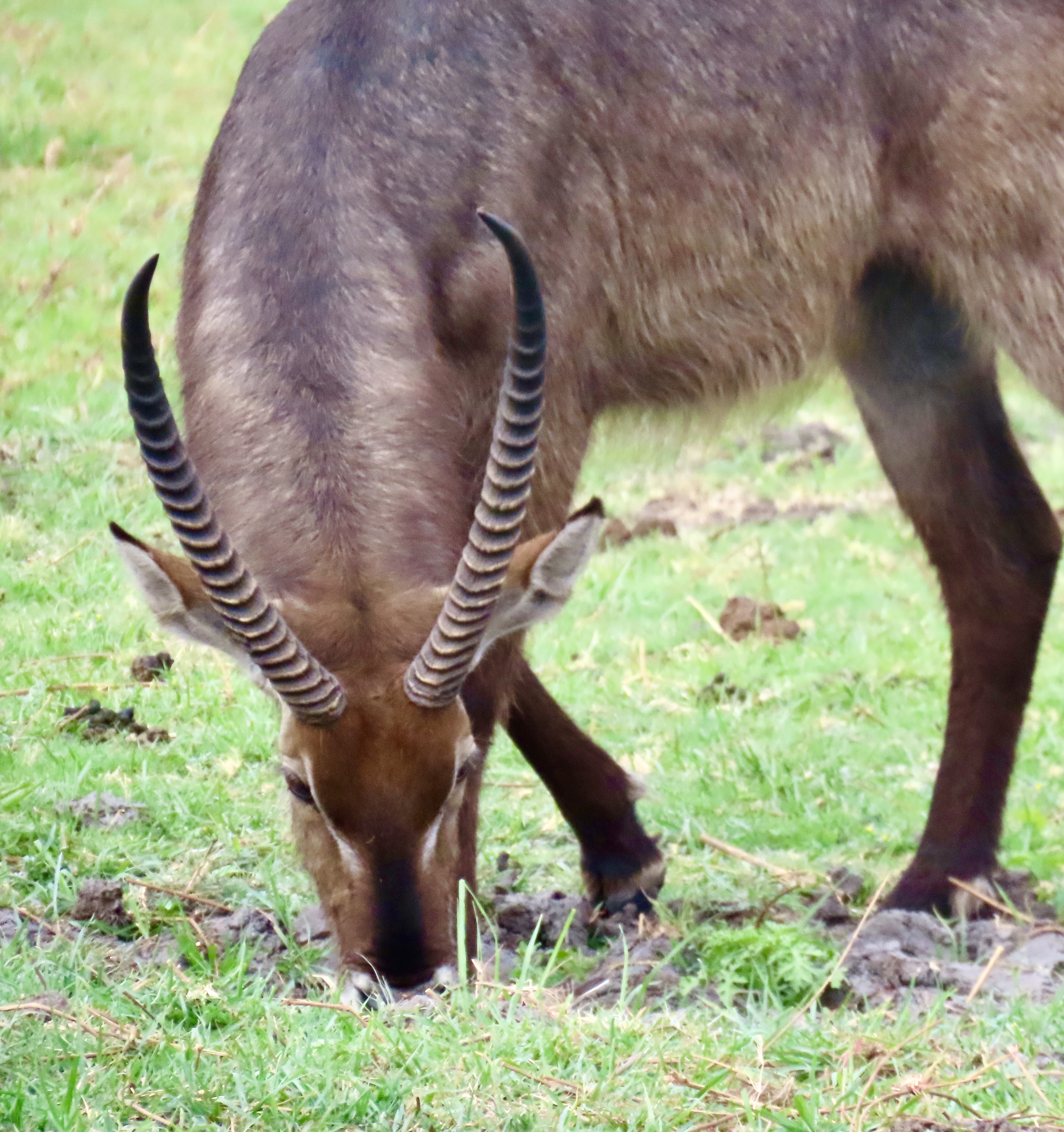
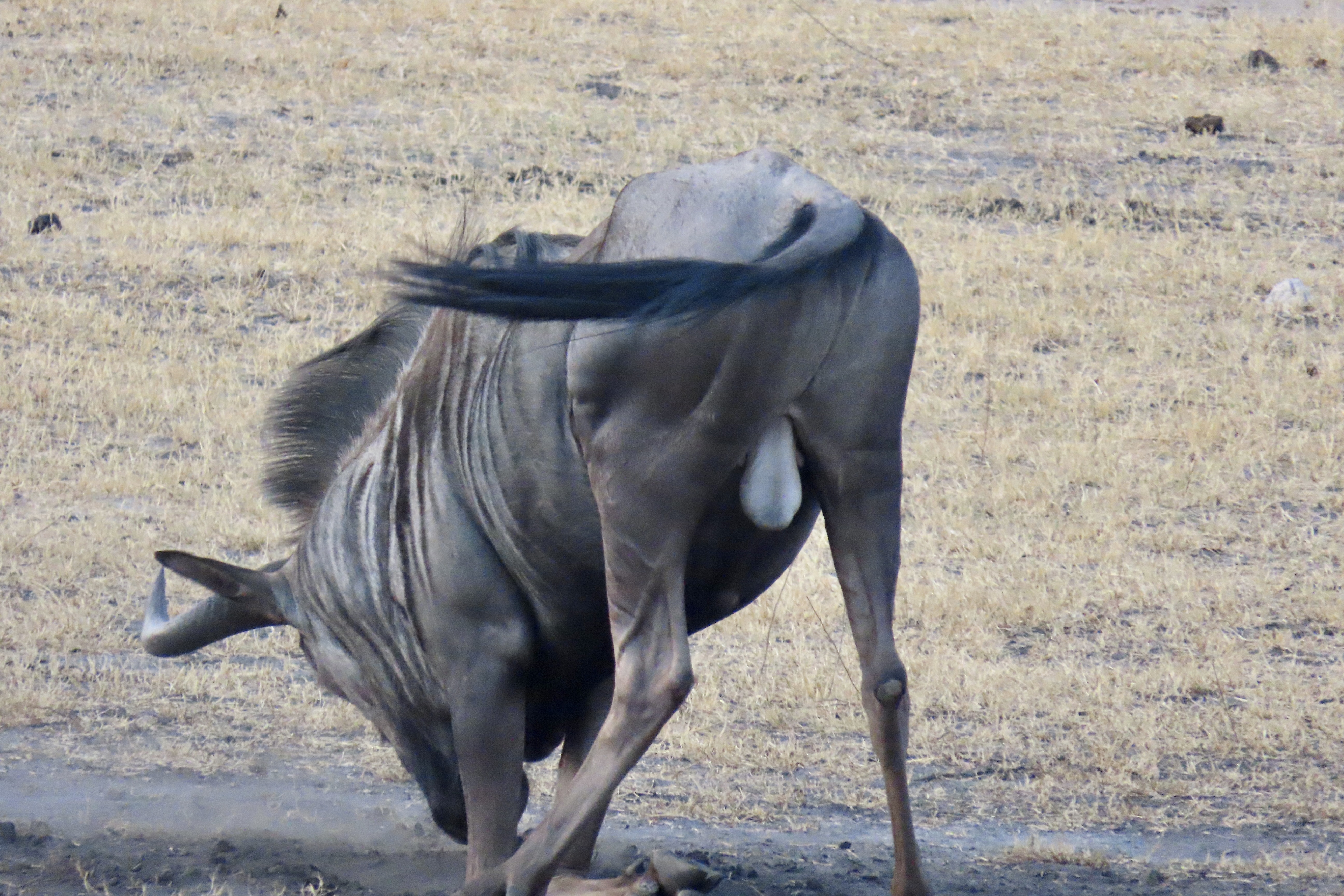
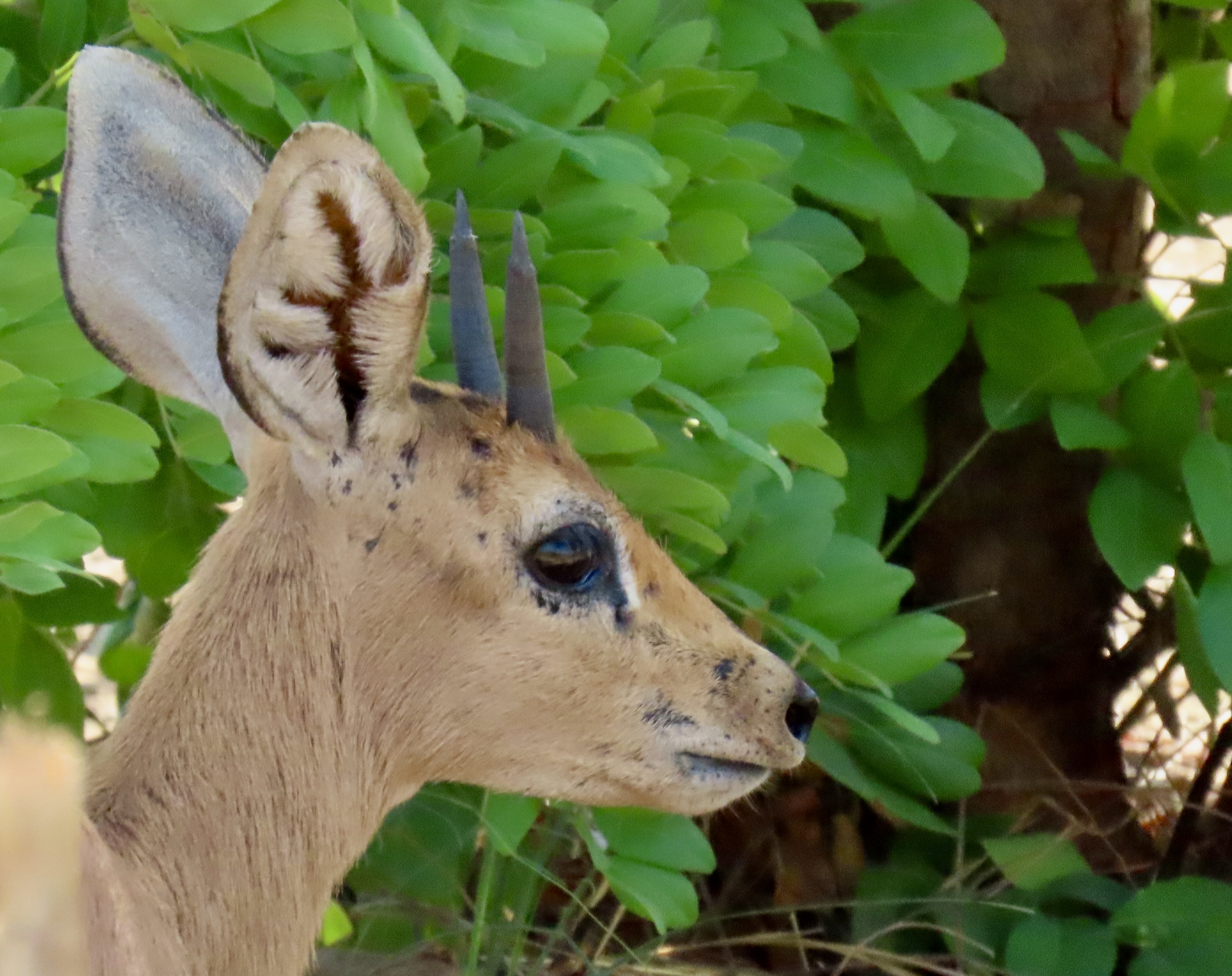
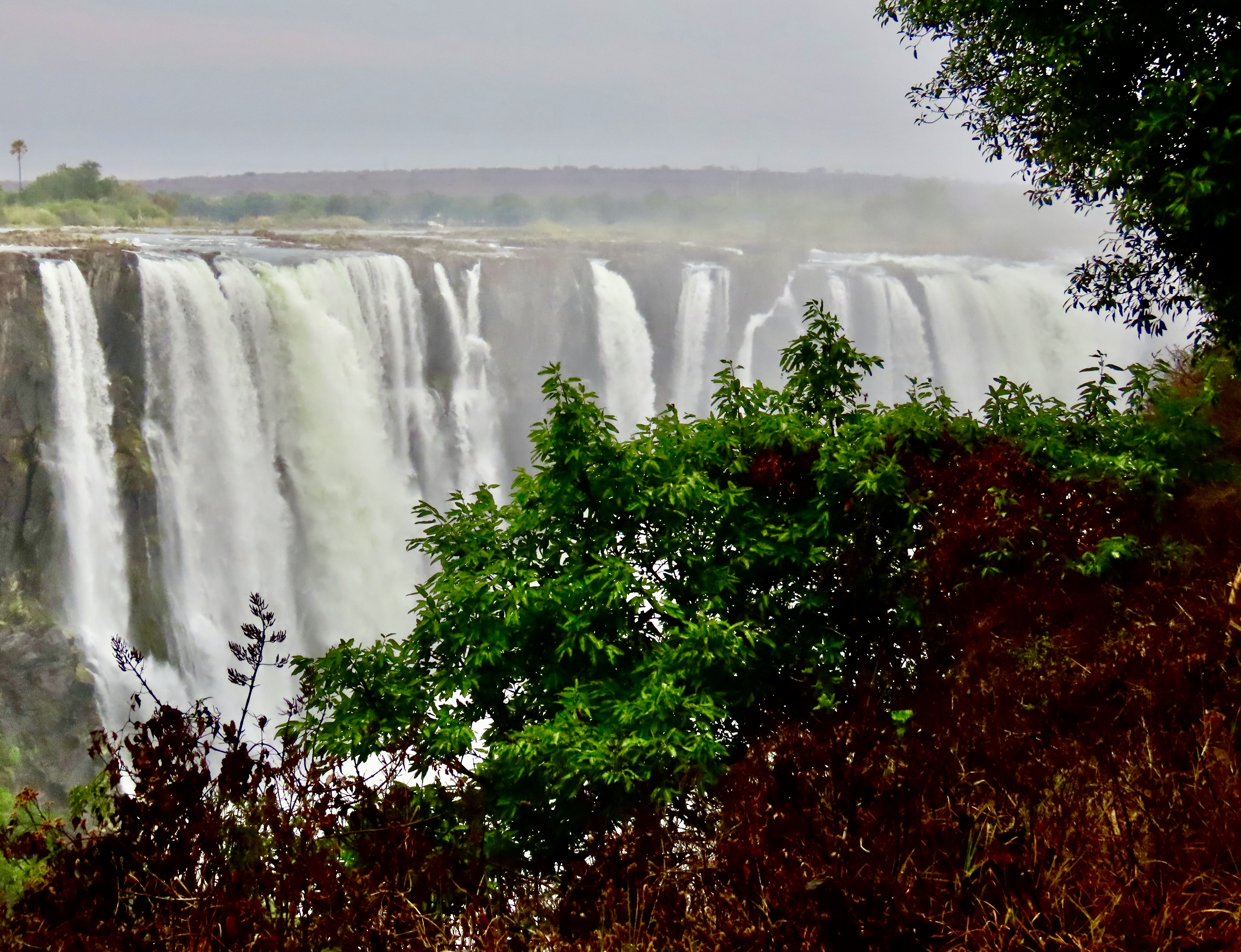
We saw only a handful of the numerous species of antelope found in Africa but the ones we saw were magnificent, such as this handsome male kudu that came in for water at the Iganyana Tent Camp where we were staying next to Hwange National Park in Zimbabwe.And brought his family of five with him including this mom and her baby.He watched over them as they drank.His spiral horns will continue to grow until they have made 2 1/2 twists. Note his large, and I think, beautiful ears. Their large size enables them to hear approaching predators. The horns of mature male kudus are used in traditional cultures as musical instruments.His female companion with her large brown eyes was as beautiful as he was handsome. A final family shot. Here’s a fun wrap-up fact: The sport of Kudu dung-spitting is practiced in southern Africa. (Think of watermelon seed spitting contests.) The winner is the person who is able to spit one of the antelope’s small, hard pellets the furthest. Our guides demonstrated for us. None of us volunteered to join them. I read that the world record is 51 feet. That person must have had one heck of a tailwind.Waterbuck: “Imagine sitting down on a freshly painted toilet seat,” our guide told us. Waterbucks are easily identifiable by the prominent ring around their tail as this female shows.A male waterbuck along the Chobe River displays his ring. This photo shows his impressive horns and rather attractive fur. When excited, the skin of a waterbuck secretes a greasy substance called “greasy kob”. It stinks so much it serves to discourage predators but it also serves as waterproofing when the waterbuck jumps into water as an escape route.Impala: The impala is another African antelope with a beautiful set of horns. We saw more of them than any other antelope.We found these elegant animals in fairly large herds. The buck behind was chewing on something.We came on this herd when we were out for an evening drive in Hwange National Park. Something had obviously alerted them. If they had spotted a predator, they would have been out of there at speeds reaching 50 miles per hour with prodigious leaps of over 30 feet in length and 10 feet in height. We were privileged to watch them leaping and running away from us at Lake Kariba. It was poetry in motion.Wildebeest: Wildebeest travel in large herds. We only saw one. Africans like to say that the wildebeest was the last antelope God created and he had run out of parts. So he took the leftovers from other animals including the stripes of zebras, bodies of hyenas and heads of buffalo and created the blue wildebeest. We found this fellow when we were on a safari hike in Hwange National Park.Later that evening we found him digging in the dirt to create a dust bath. I couldn’t help but wonder about where his spare parts came from here.He became a blur as he took his ‘bath.’ He certainly seemed to be enjoying it!Tsessebe: This was another strange looking dude. The straw in his mouth reminded me of a stereotypical country bumpkin. Tsessebe are nothing bumpkin-like when it comes to running however. They’ve been clocked at 60 mph(100k).Steenbok: And the final antelope we saw. It’s southern Africa’s smallest antelope, standing about 20 inches tall at its shoulder. It is a common but solitary animal. We found this cutie hidden alongside the road in Hwange National Park. Another view. Note the small horns and large ears. We weren’t sure what created the small scars. Our next post will be a wrap-up on our safari featuring the varied scenery, places we stayed, and the people met. Victoria Falls
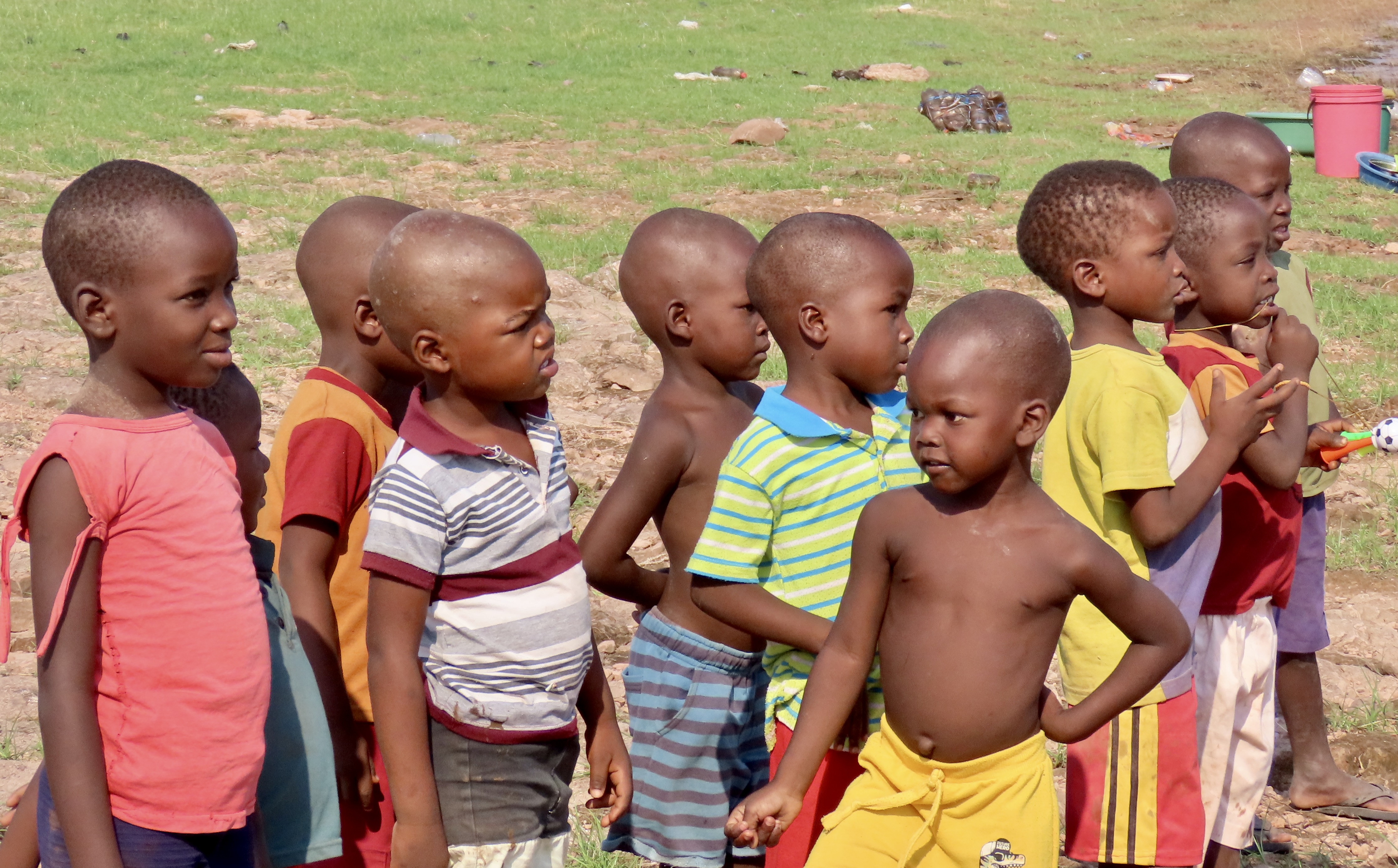
Children anxiously awaited our arrival at the tribe fishing village we visited on Lake Kariba. Which one was trouble? Grin
When the Zambezi River was flooded in the 60s to create Lake Kariba, several villages of Tonga people were flooded— without compensation. Some of them were later granted limited fishing concessions on the lake. Our guide was eager for us to meet Africans as well as wildlife and arranged a tour of one village located on an island. I found the people and village life quite similar to what I had experienced as a young Peace Corp Volunteer in West Africa 50 years earlier. Following are some of the photos that Peggy and I took.
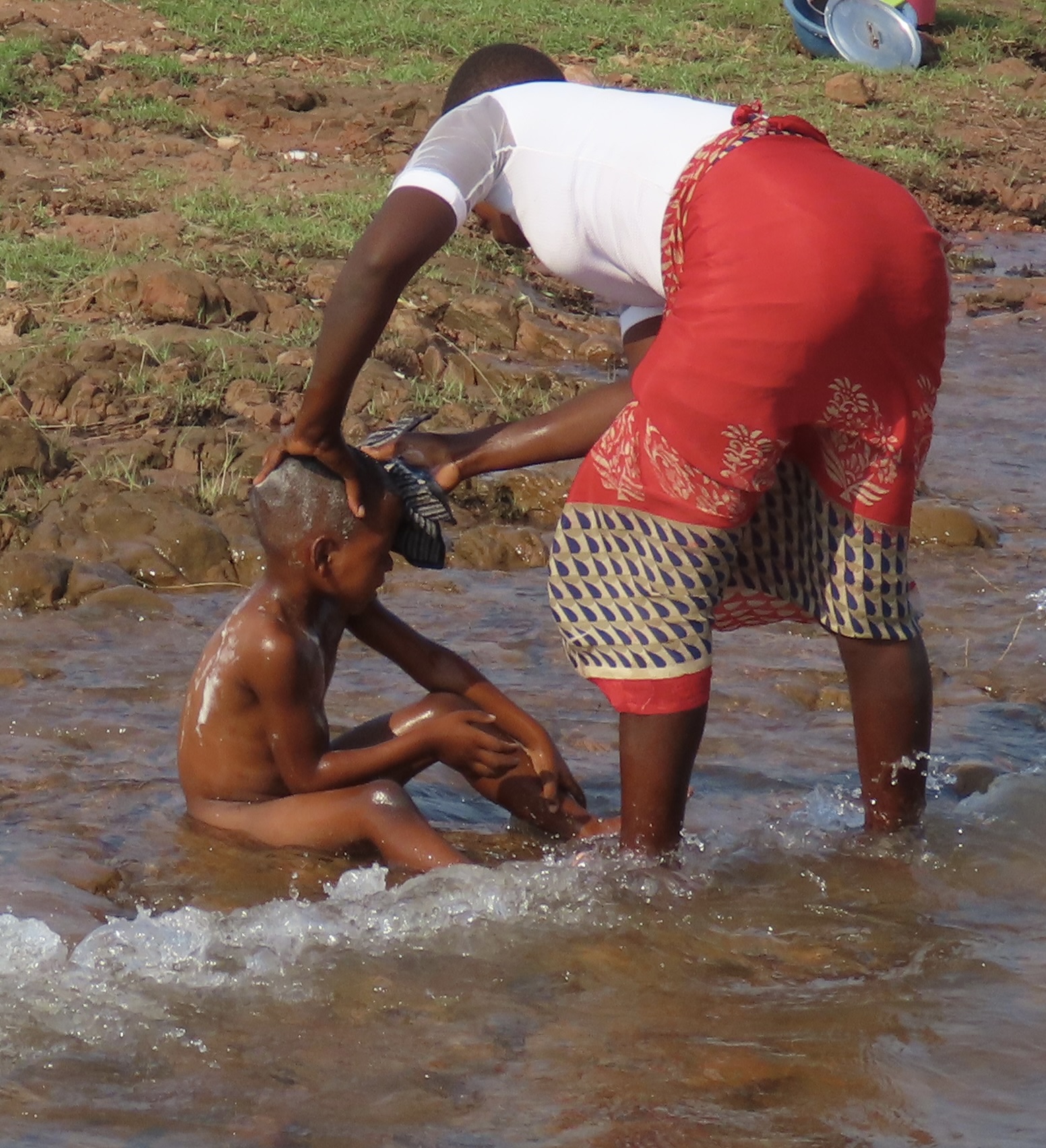
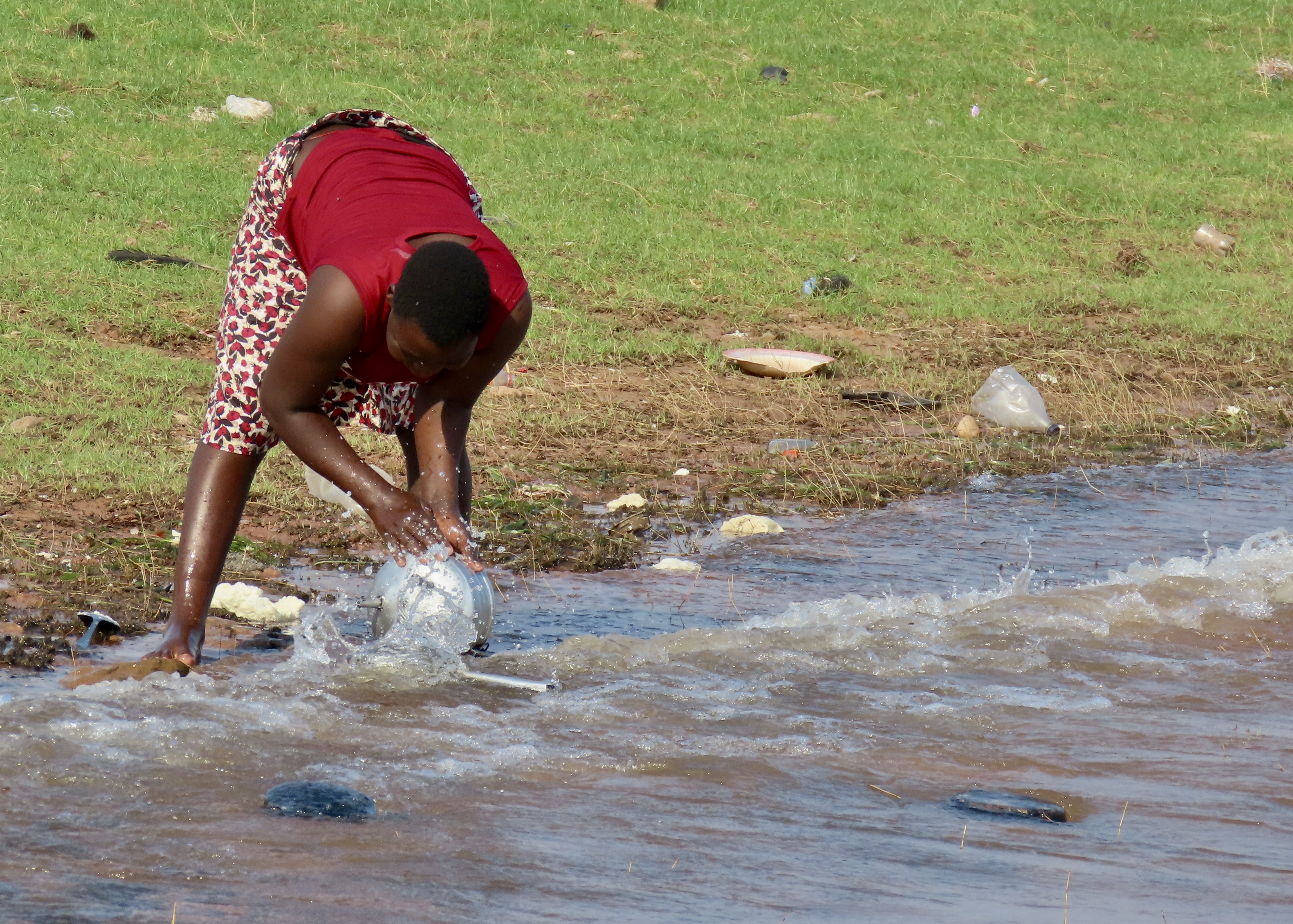
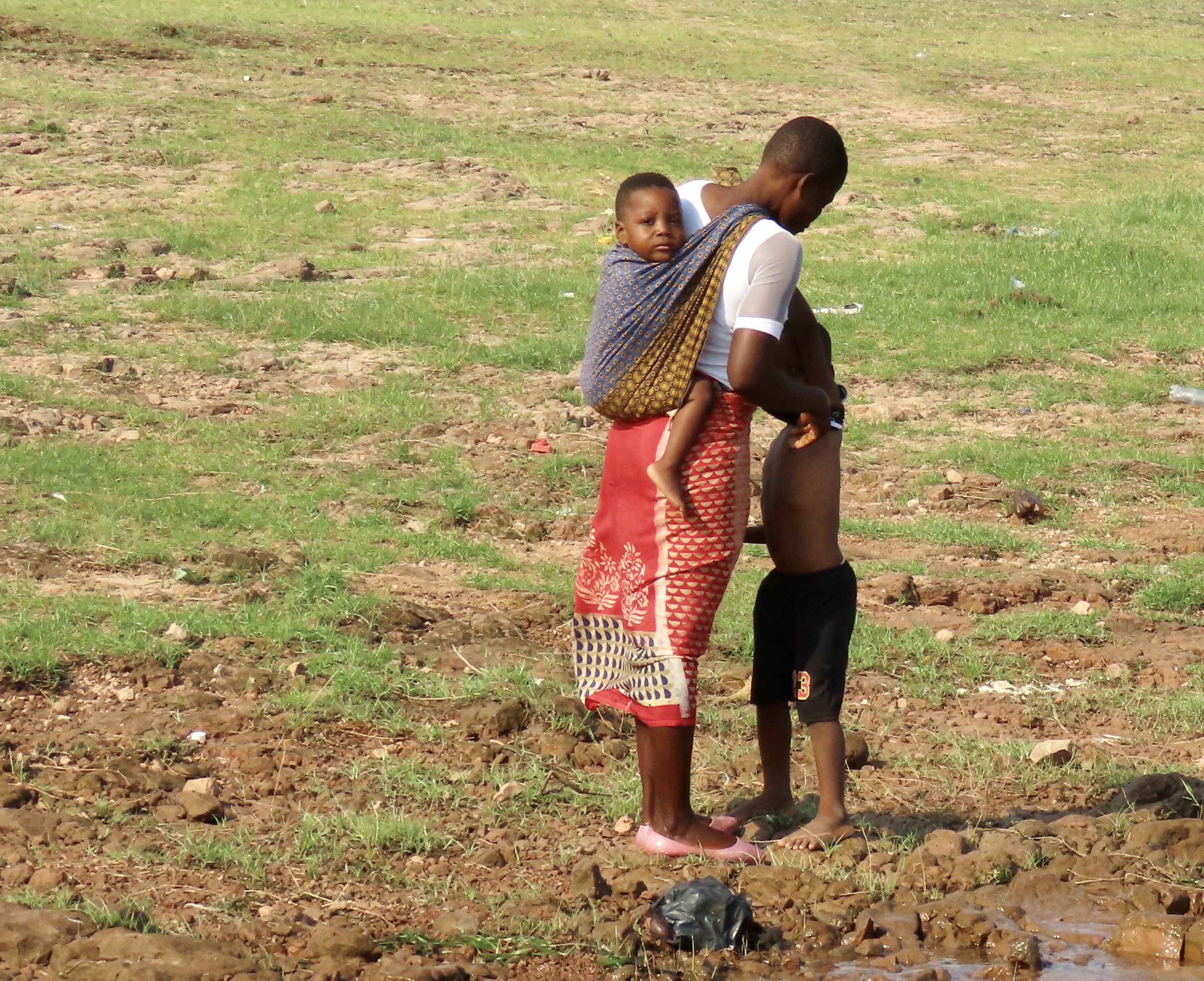
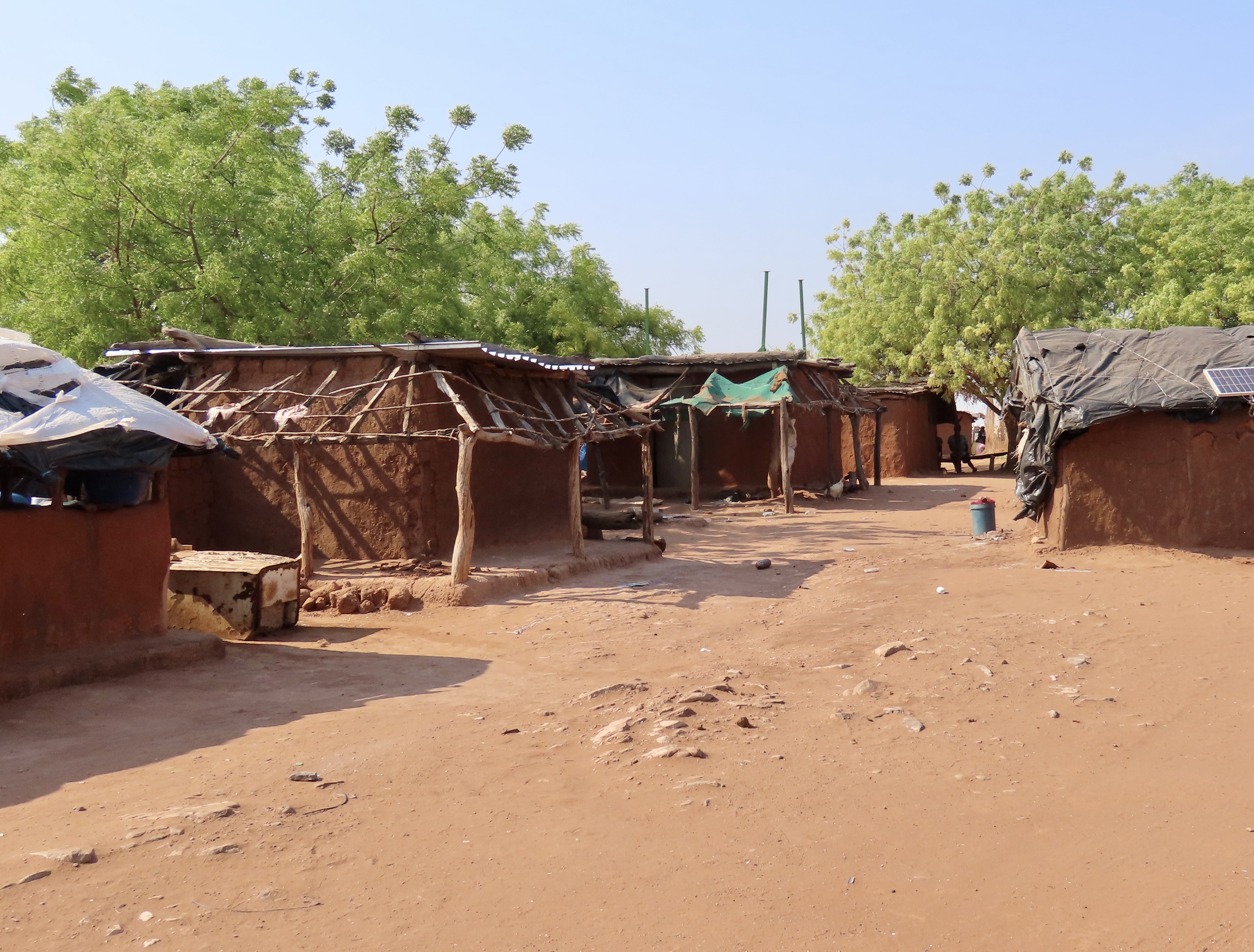
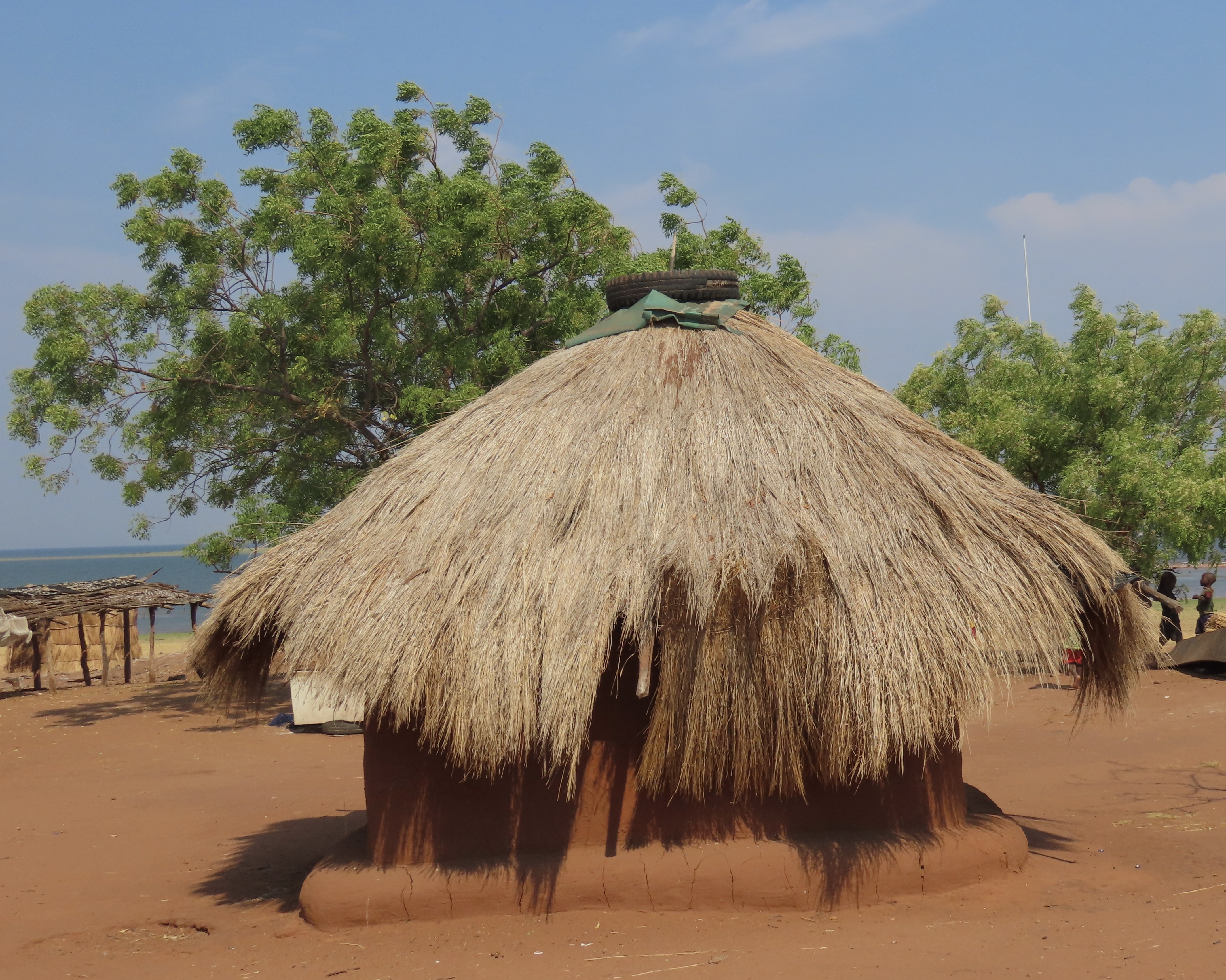
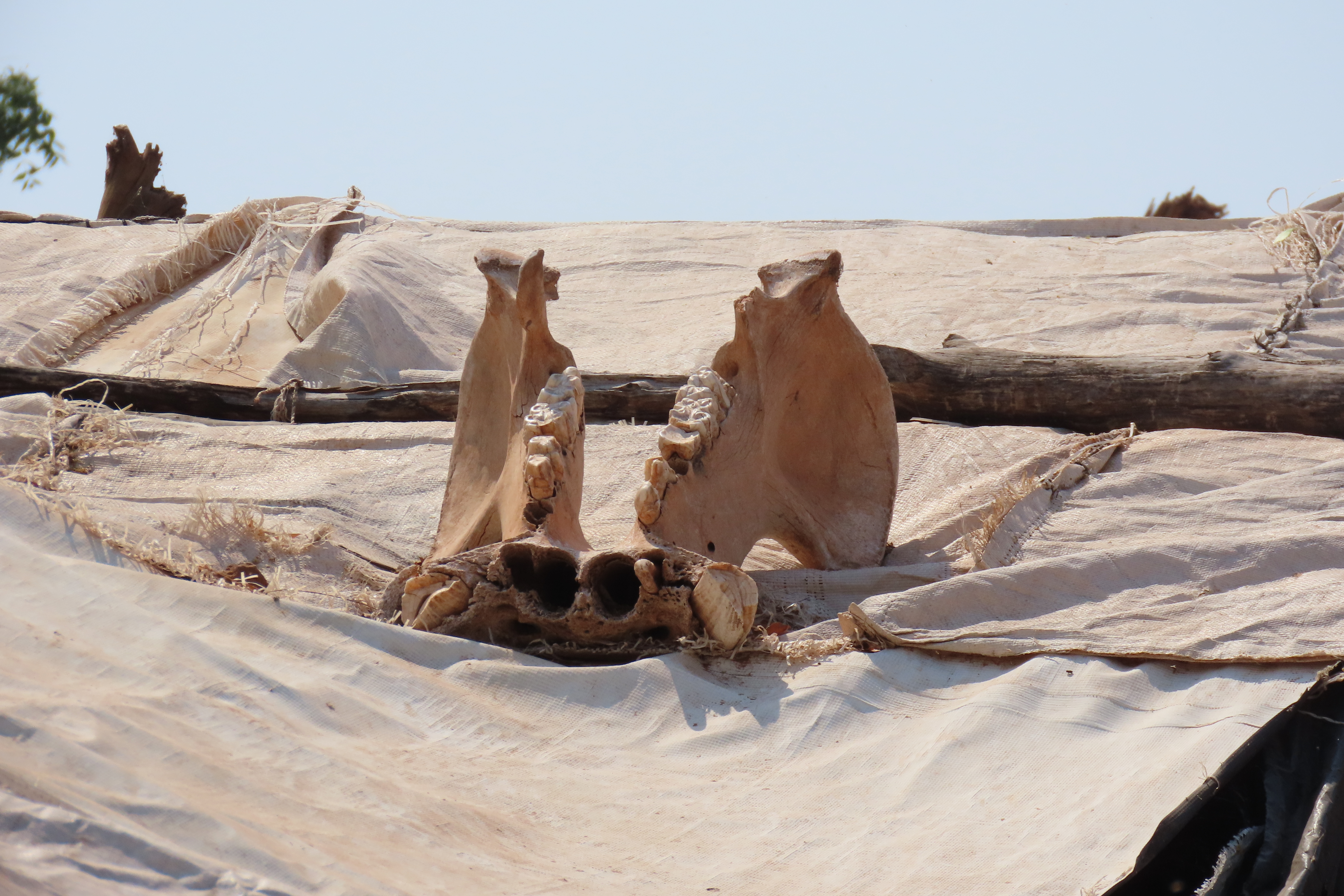
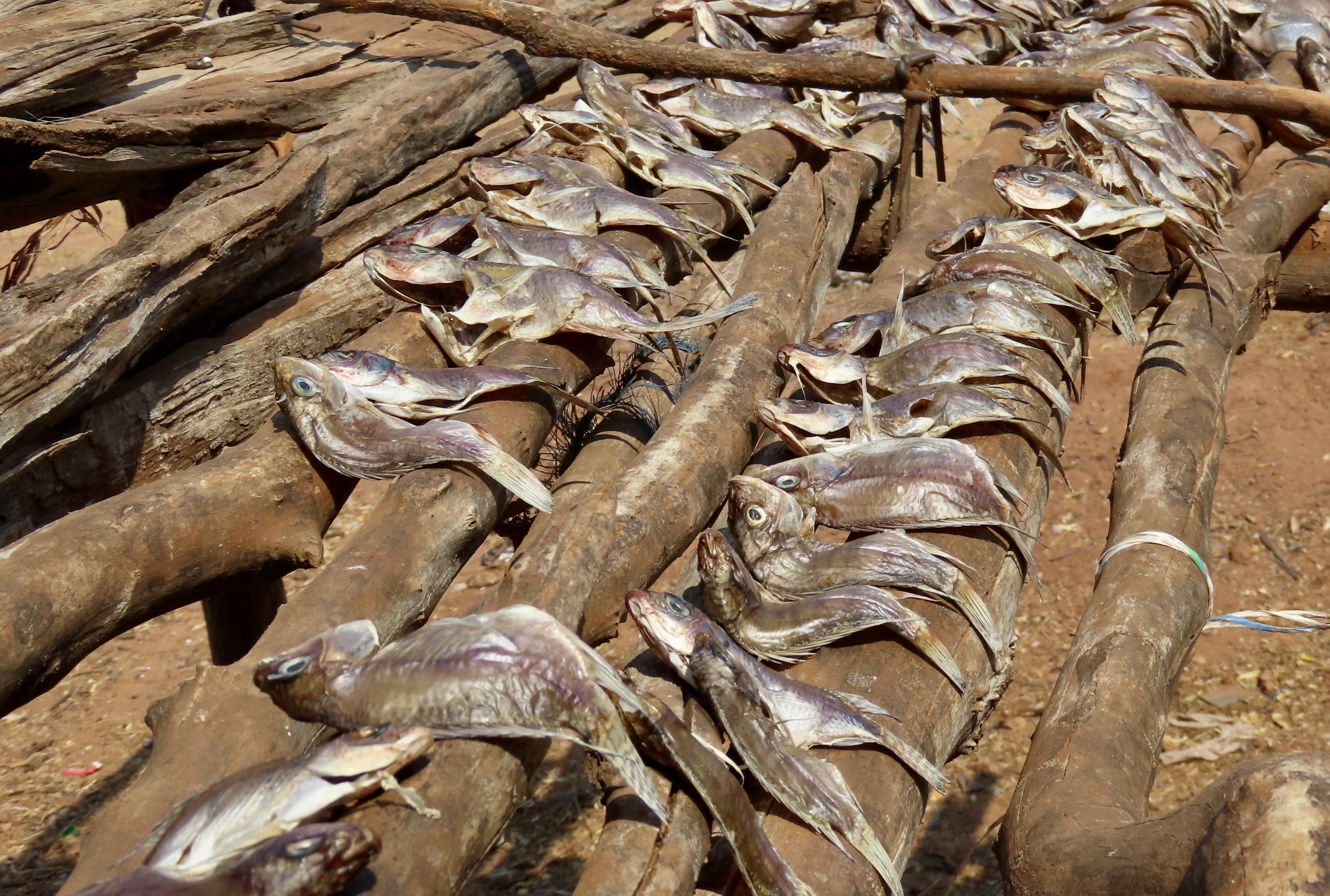
Life continued as usual in the village during our visit. The bathtub.The dish washer.And dish dryer.Child safety seat. How much safer could one be?Transportation system.Mainstreet.Housing construction varied. This one was was made of round mud bricks.The construction process. We watched as bricks were added.A different technique.Both methods would eventually be finished off with this solid clay covering, which I assume withstood rain.Roofing materials varied as well. This was a traditional covering. The reeds were purchased from a nearby town and brought in by boat.Modern tarps of various kinds were more common.This came as a surprise. You may have noticed it on our ‘Main Street’ photo. A solar panel makes lots of sense. Roof decoration? It’s possible that this hippo jaw was present to scare away evil spirits.A more modern store featuring the latest in sugar-free drinks! “Same great taste.” Even in 1965, the then small town of Gbarnga, Liberia where I served as a Peace Corps Volunteer had a Coke billboard. And one for Guinness.The chief of the village (blue shirt and leaning on post) took us on a tour where cooking, house building and fish net mending were demonstrated. The man in the cap talking is the captain of the houseboat we lived on while exploring Lake Kariba. This demonstration was how the Tonga cooked fish.Mmm, mmm, good! Since fishing was the primary source of income for the villagers, fish were also their primary source of food. The village’s fishing boat fleet.Mending fishing nets was an ongoing, daily process.Fish caught for sale were salted and dried.Close up.A different drying rack.Fish filet! Yum.After a steady fish diet, eggs might make a welcome substitute. Or chicken? How about duck?Peggy taught one of the children to make the Peace sign. The kids were an absolute delight.How did she do that?And here Peggy was teaching them the ‘A wuni kuni ki yo oonie’ song and clapping game. Everyone of our grandchildren, nieces and nephews will immediately recognize this. Peggy, a retired and well-loved elementary school principal, had a large group of the children with her wherever she went in the village. I’ll close today with a photo of two of the children who had adopted John. He skipped up to the village with them!
Peggy and I are on the road again. Tomorrow we start our journey west where we will be taking three months to travel up the West Coast from Big Sur to Olympia National Park camping out in our travel trailer as we go. I will blog about the trip as we go! Hopefully, I’ll be able to wrap up Africa and the Everglades on our two week drive across the US. I’ll continue to read blogs and respond to comments as time allows.
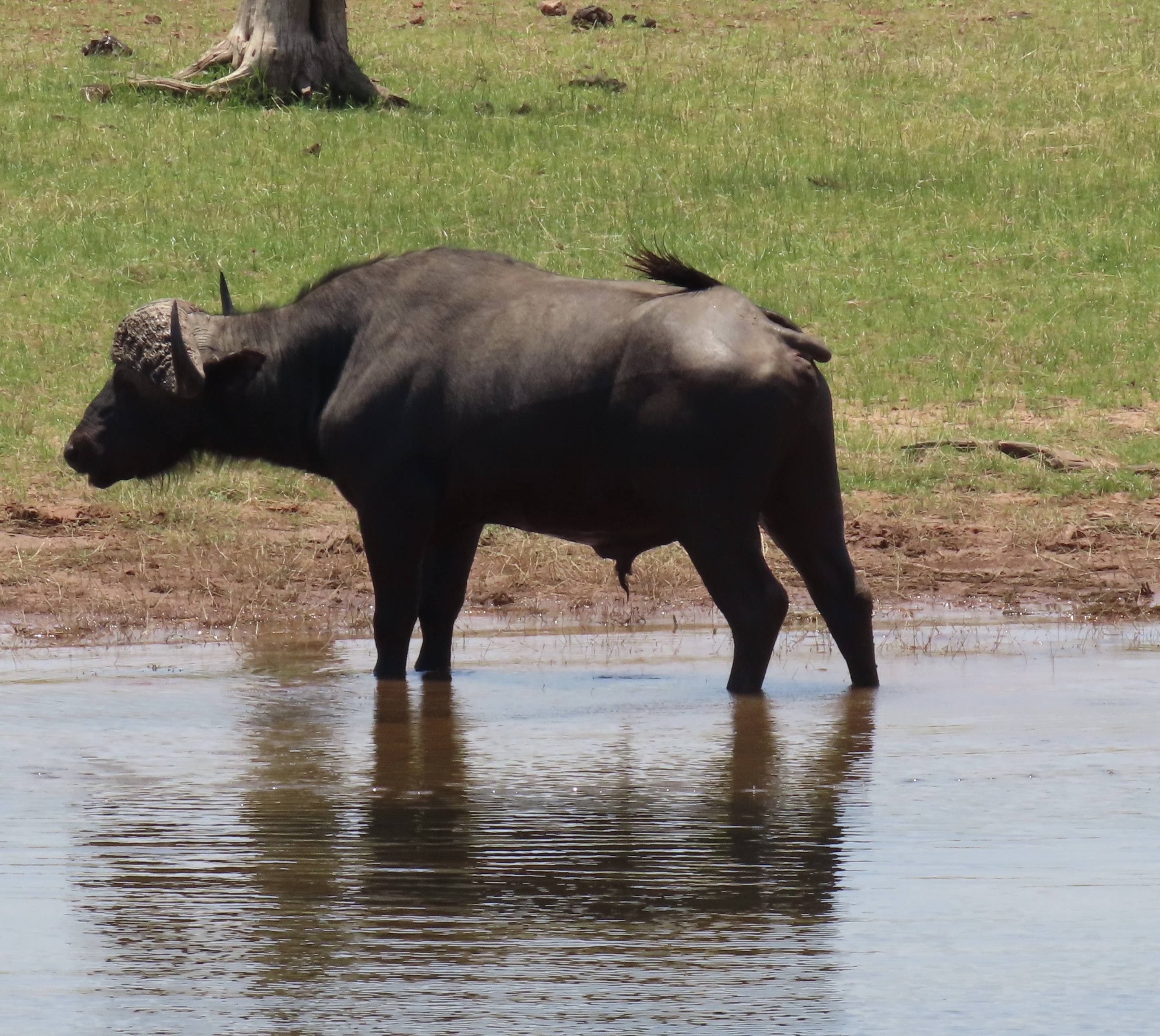
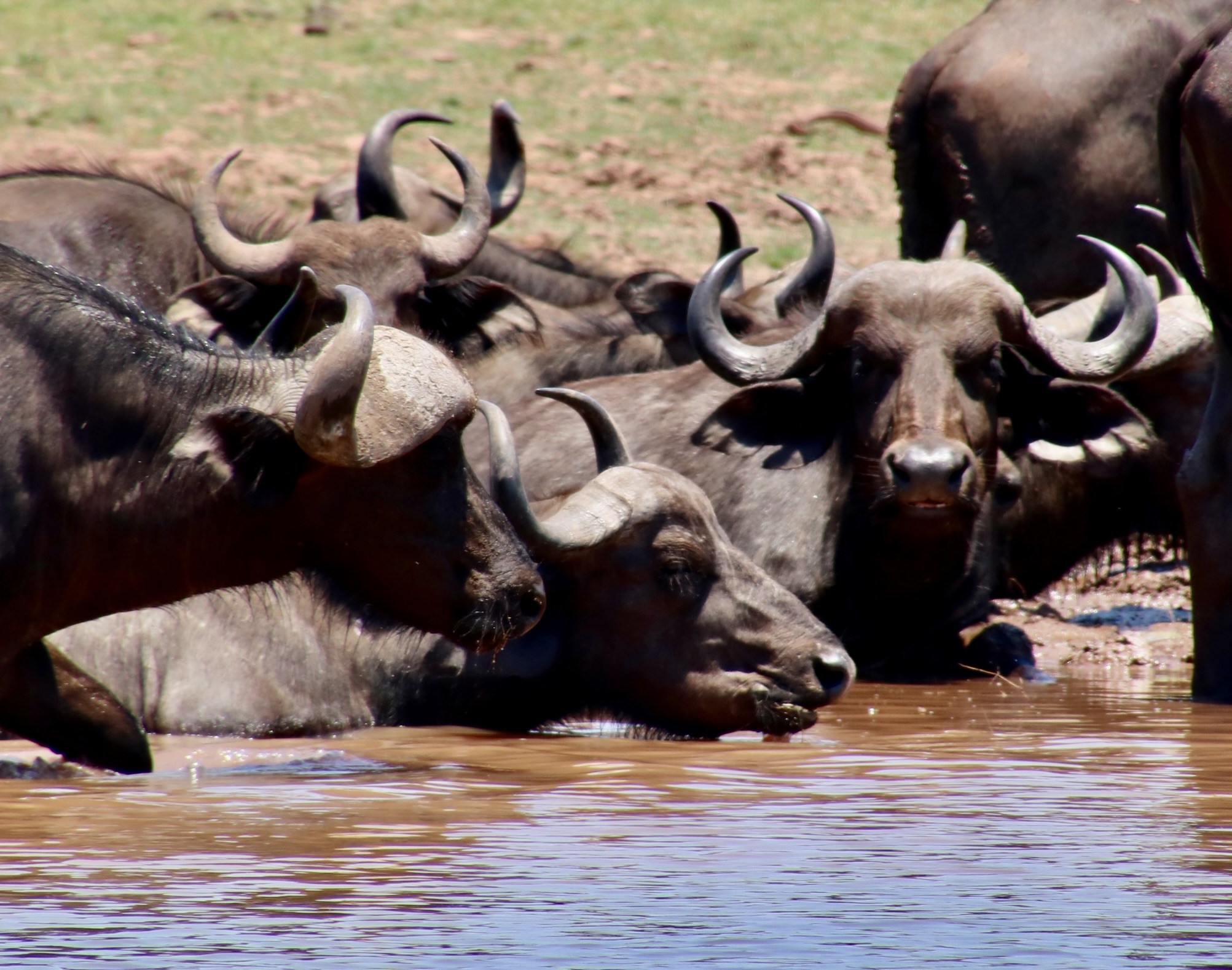
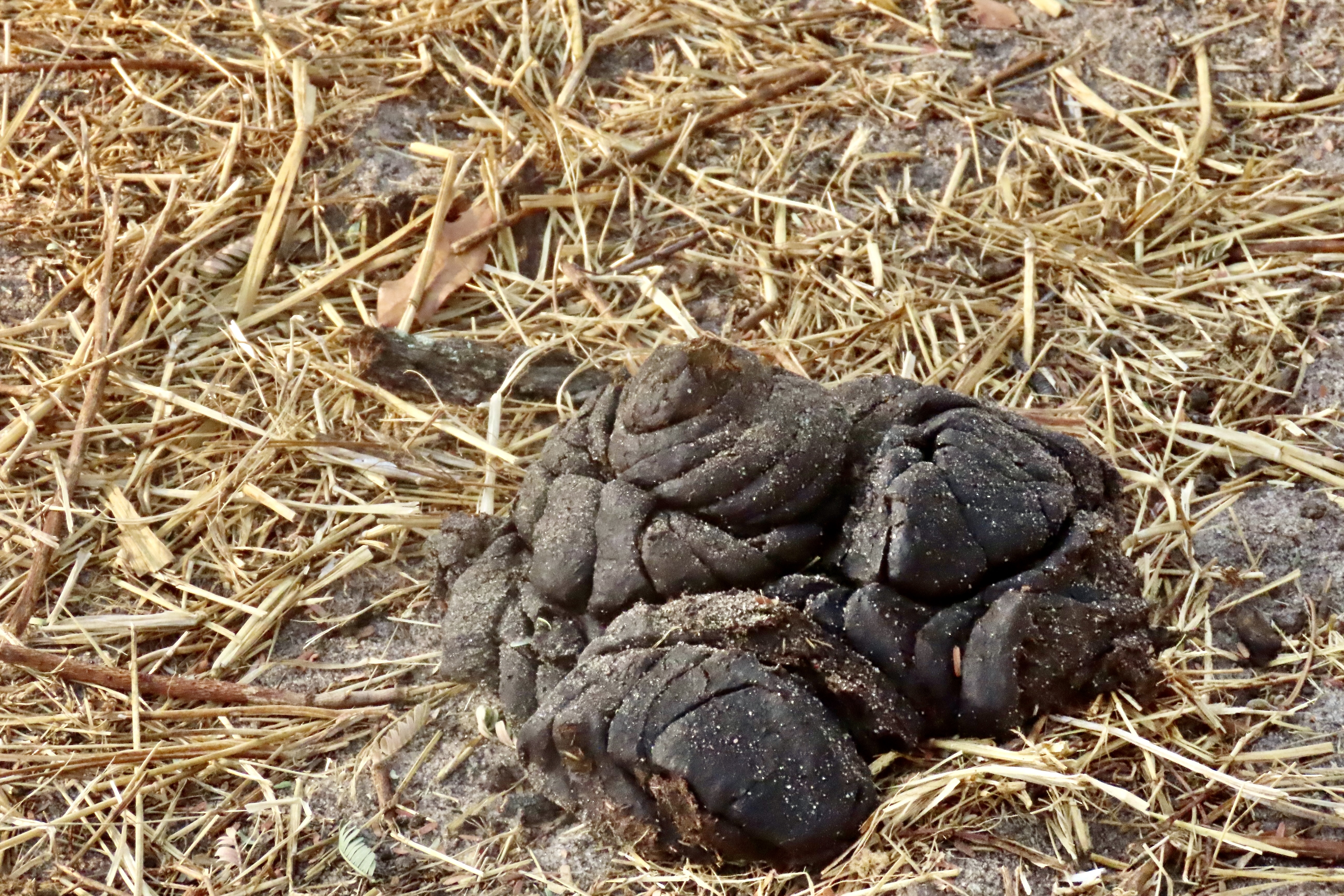
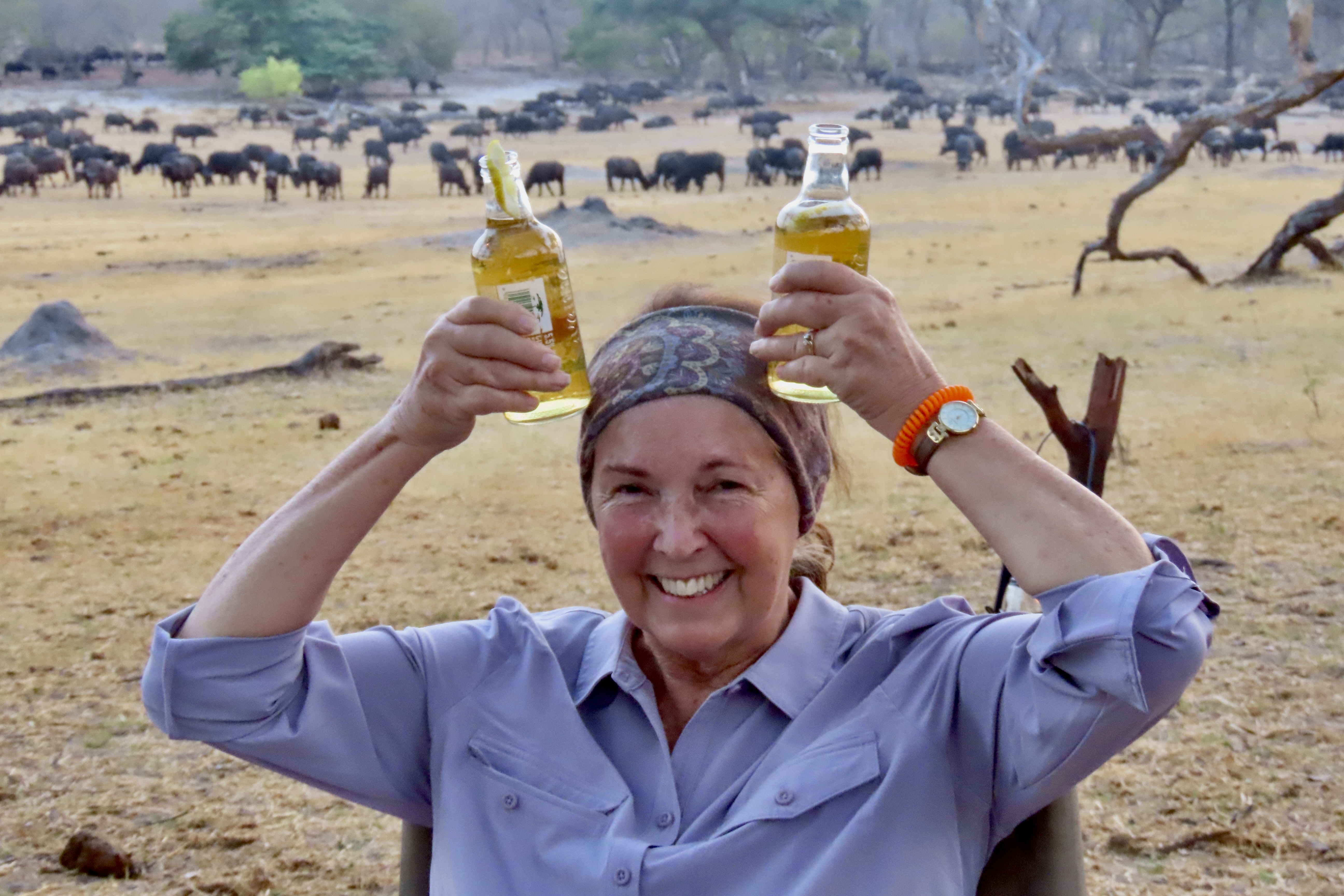
Cape buffalo are dangerous, no doubt about it. But what makes them so? The look alone says “Don’t mess with me.” The eyes, the horns, the ears and even the nose speak of danger! We were safely ensconced in our boat on the Chobe River. Did I mention that the buffalo are great swimmers…Size matters. The big bulls can weigh up to a ton. The really big ones can reach over 6 feet in height and 11 feet in length.Which, in no way, means that you would want to mess with a thousand pound female…And then there are the horns. No one, not even a lion, wants to be hooked by one.They are the boss. That is actually what the horn structure is called. The solid shield created where the horns meet is so tough that it can withstand the pressure of another large male crashing against it!They attack as a group. You won’t be dealing with one. It could be the whole herd. They protect each other, including the young, the old and the sick. The largest males form a circle around the vulnerable with their horns pointing out. When a calf cries in alarm, the bulls come charging.Terry, the co-owner of the Iganyana Tent Camp where we stayed on the edge of Hwange National Park, told us a story about this downed tree. His brother-in-law came to visit and went out for an evening walk. He called Terry and asked for a pick up because he heard lions. Terry jumped in his truck and rushed to the scene. He didn’t have to worry about the lions. They were up as high as they could get on the stump as the herd of buffalo ran in circles under it, threatening instant death if they dared to come down. That’s how scary they are. The week before we arrived, a herd of around a thousand came to visit the camp and stayed until 11 that night, Terry told us. No one could go back to their tent until the buffalo left! One of them left its calling card on the pathway up to the tent we were staying in. Peggy and I had a hard time imagining being in the tent while the herd roamed around outside.We were out for an evening drive with our guide when we came across the herd crossing the road. “Be quiet,” the guide told us. “Be very quiet.” The guide waited until there was a break and dashed through it.What our guided didn’t tell us was that the herd was coming to graze in the same field where a surprise party was being hosted for us! While Peggy made horns, I checked out the tree for a possible escape. Just in case, you know. I’m happy to report that the buffalo happily munched away on their side of the field while we drank on ours. Fortunately, there was a sufficient supply of alcohol with a great motto. Enough that Peggy changed her approach to making horns. That’s it for today. The next post will be about a fishing village we visited on an island in Lake Kariba, and a carving camp we shopped at in Victoria Falls.A few of the children from the fishing village gathered around me and demanded that I take their photo.
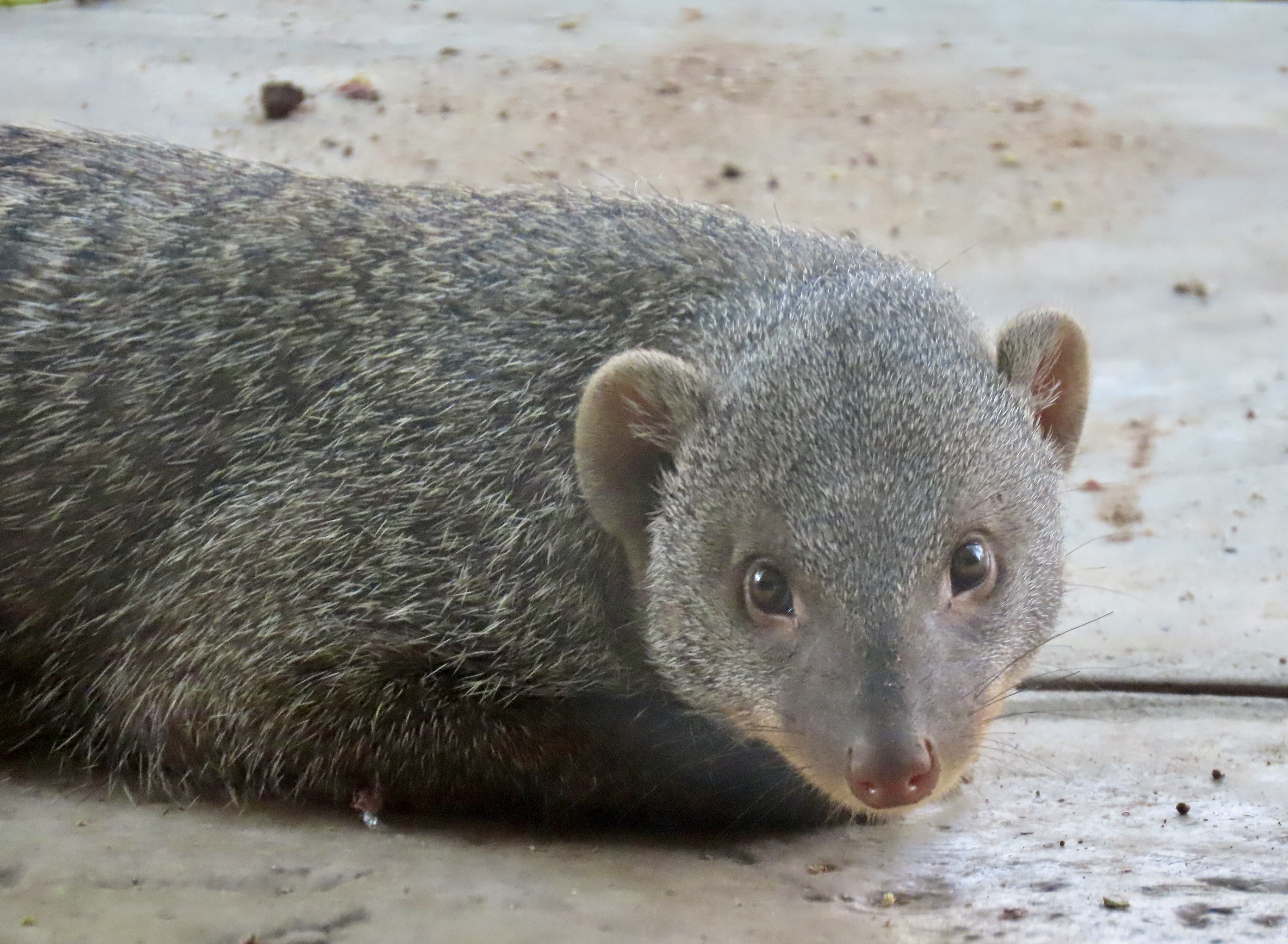
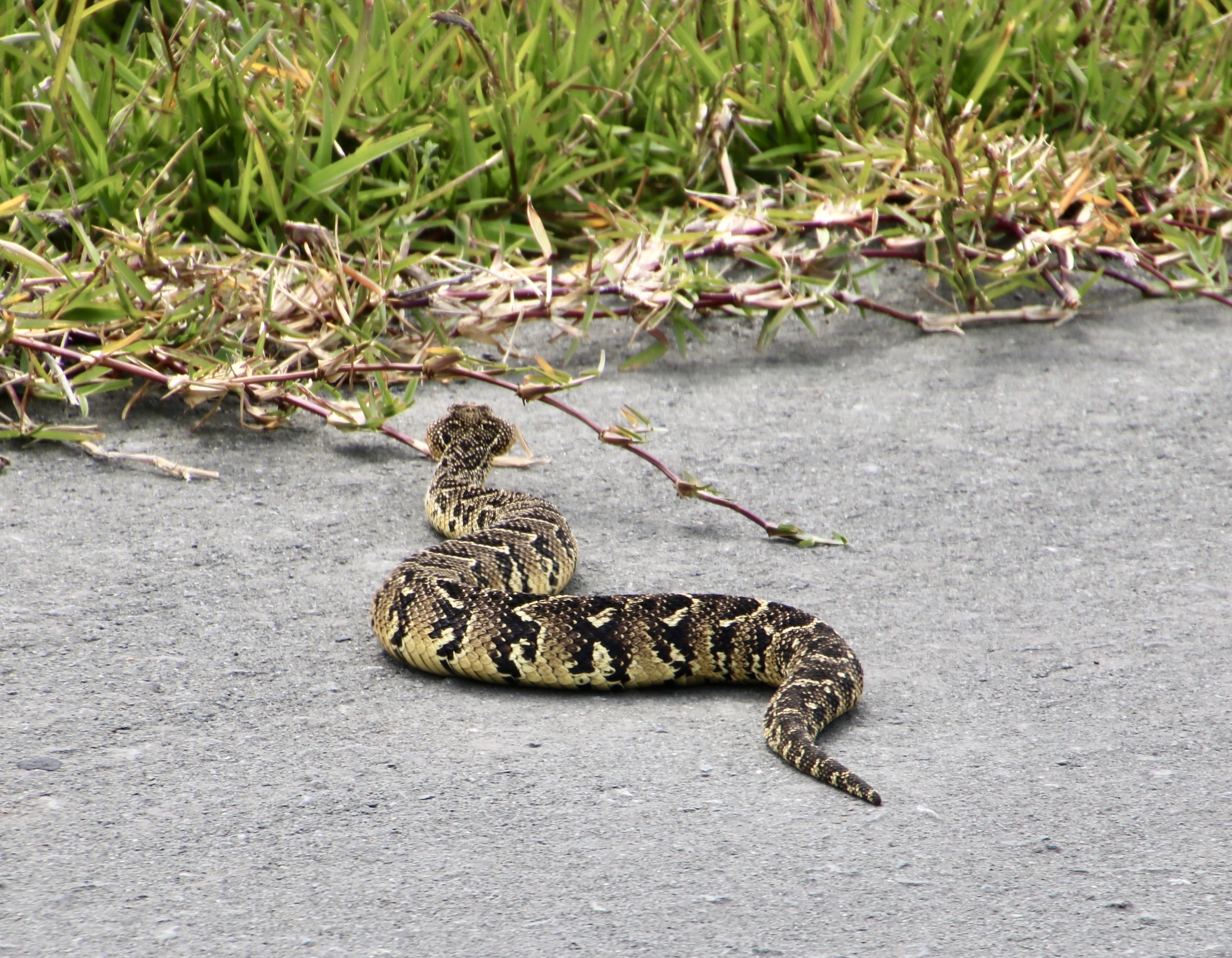
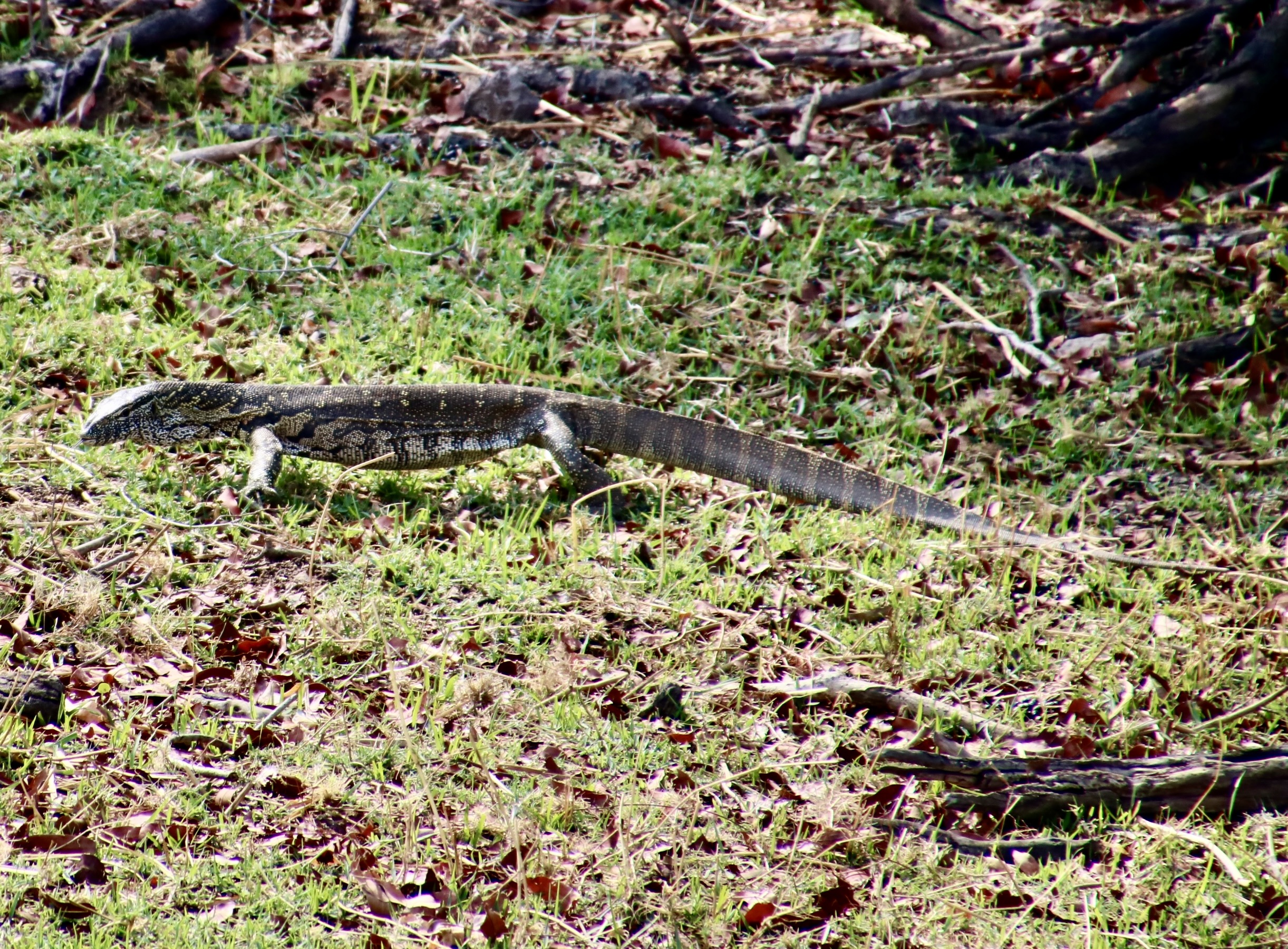
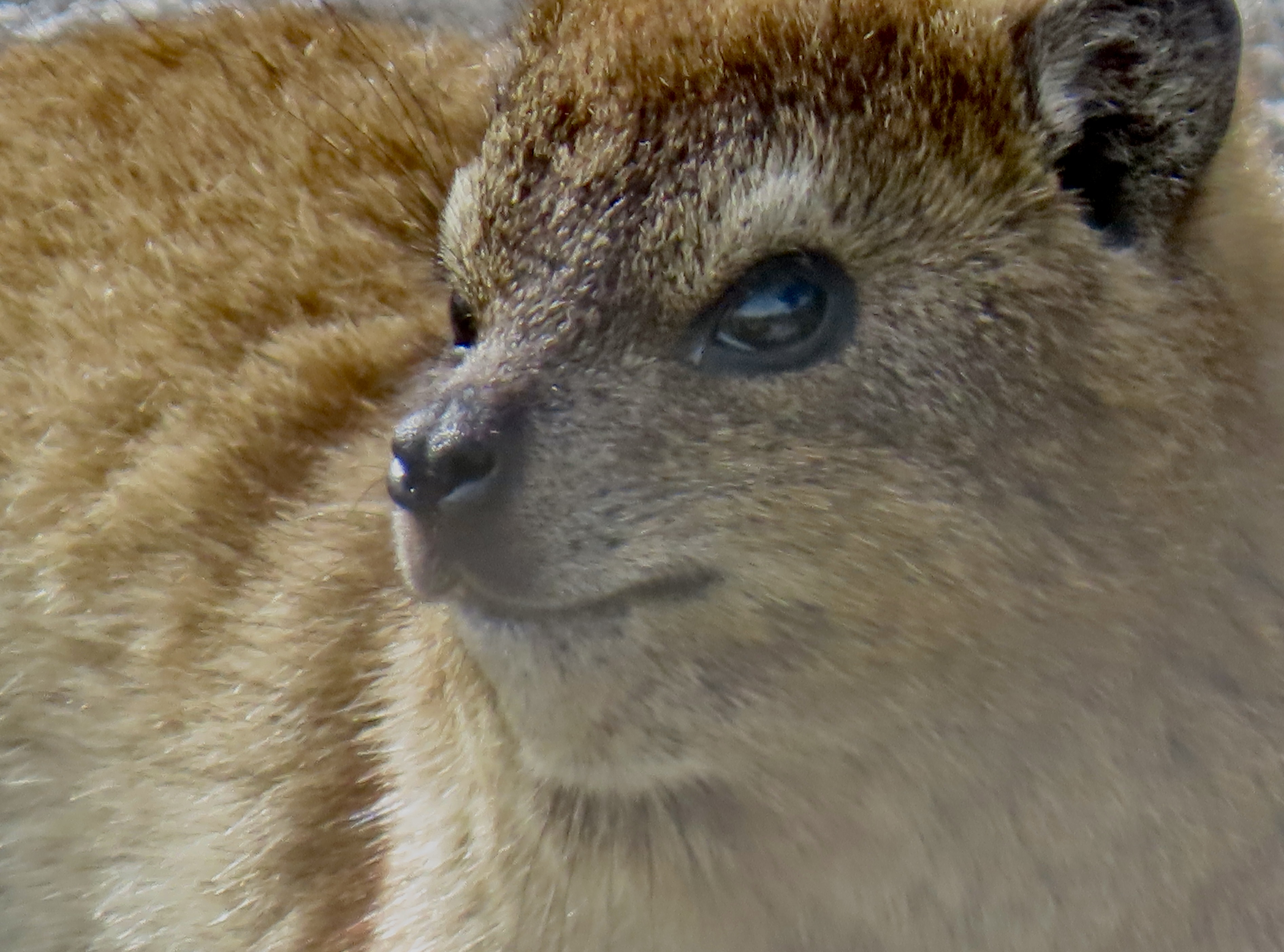
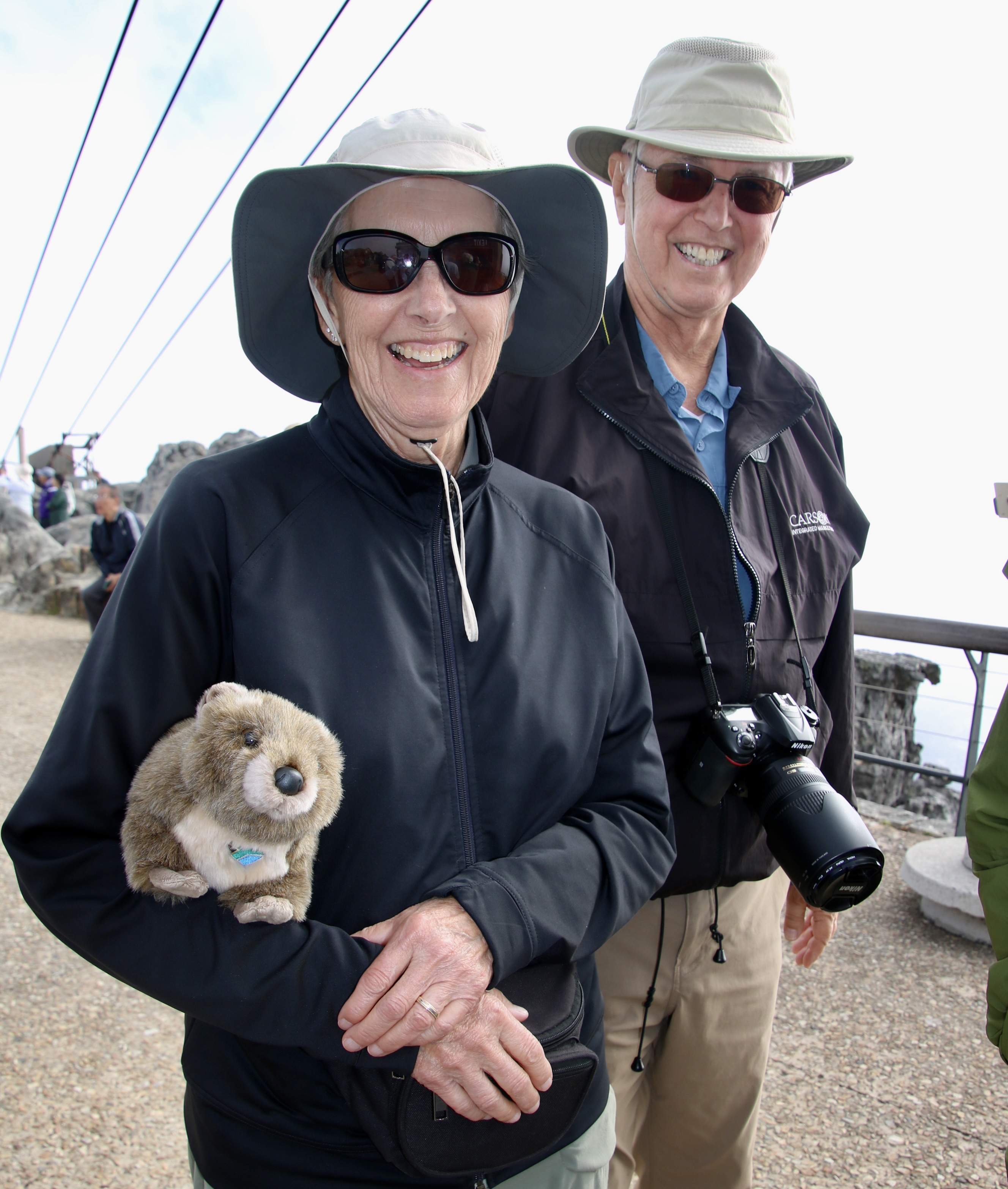
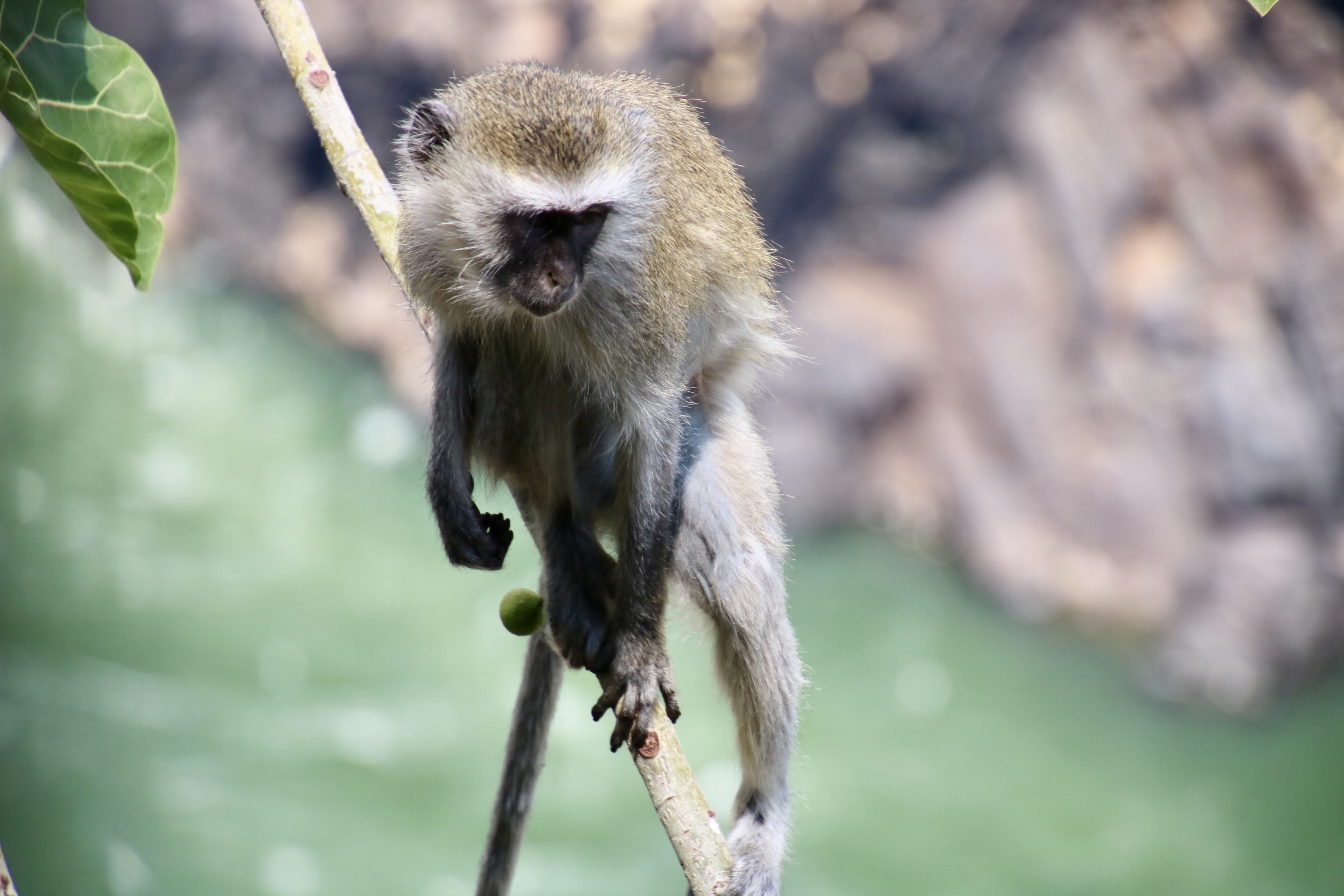
“Snake? What snake? Let me at it!” It’s hard to believe that this cute, friendly looking mongoose lying outside my door at our lodge in Victoria Falls could be a deadly enemy to snakes, or anything, except bugs…A pack had arrived on the lawn while I was “home alone.” Peggy had gone out with our group to a local in-home dinner while I was catching up on some much needed rest. The mongoose were all busily hunting for insects except for the one that was taking advantage of our warm balcony. I think she took offense at my comment…“Who dares to say I can’t take on a snake?” I thought I’d provide her with some options…How about this one? We heard our next door neighbors yelling as they dashed out of their tent cabin on the edge of Hwange National Park. They had a visitor, this long olive green fellow that looked like a black mamba. Black mamba’s are long, skinny, and can be more olive colored than black. They are one of the most feared snakes in Africa. I grabbed my camera and ran over to photograph it before the staff showed up and kicked me out. Getting up close and personal with a mamba might not seem too smart but I’ve been known to lie down in front of rattlesnakes so I can get good headshots. Grin. But hey, I turned 81 yesterday and I’m still here. Turns out it was a grass snake, but boy could it move fast. The staff came armed with brooms.Or how about this large black snake? It looked scary enough when we came upon it near the Cape of Good Hope. It’s nonpoisonous, however, and good at capturing gophers and mice. The next snake we discovered close by was different, a worthy opponent of of my visiting mongoose. It’s scientific name is Bitis ariens, and with a name like Bitis…The puff adder causes more fatalities than any other snake in Africa and is responsible for 60% of the snake bites in South Africa. With long fangs, a venom that kills cells, and the ability to swim and climb trees, it was not a snake to be messed with. Note its forked tongue and puffed out cheeks.It headed off for the grass and we were glad to let it go. We saw several other reptiles that didn’t push our heart rates off the charts, including a six-foot long lizard.We spotted this monitor lizard on the banks of the Chobe River in Botswana. They can reach 6 1/2 feet in length and are known for standing on their hind legs to monitor their surroundings, thus the name. In addition to being the largest lizard in Africa, they are the only lizard with a forked tongue. Some specialists argue that this makes them more snake than lizard. They are also supposed to have a high IQ— for a lizard. Apparently, they can be taught to count up to six. One clever thing they do that I read about is lay their eggs on termite nests. The termites cover them up and the nest provides protection and heat regulation. When they are born, they have a ready supply of termites to eat. It hardly seems a fair way to treat your host.We found this colorful lizard on a rock near the Cape of Good Hope. It’s a southern African rock agama.It disappeared over the edge, but then poked its head up to watch us.We were up on Table Mountain next to Cape Town, South Africa, when we spotted this interesting, “armor-plated” lizard. It’s called a black girdled lizard.I’ve always liked tortoises. I wasn’t expecting to see any in Africa, so this leopard tortoise in Chobe National Park came as a happy surprise.We also found another one. Check out its attractive shell. Males compete for their lady loves by bumping into each other. They also pursue and bump into females until they agree to mate. But mainly, both males and females wander around and graze on grass and other herbaceous plants.And now back to mammals and the competition for cutest animal. We thought that the mongoose featured on top might win, but that was before we met a hyrax up on Table Mountain.As I mentioned in my last post, hyraxes have a number of physiological characteristics that make them more closely related to elephants and manatees than to the rodents one would expect. They are found throughout Sub-Saharan Africa and the Middle East.And just how cute are they? Our sister-in-law, Frances, couldn’t resist buying a cuddly toy hyrax for her new granddaughter.Speaking of cute, this small velvet monkey showed up at a restaurant overlooking the Victoria Falls gorge where we had stopped for lunch. I think he was looking for a paw out. That does it for today. On Wednesday, Peggy and I will take you back to the Everglades. On Friday, it’s all about Cape buffalo. On Wednesday, we’ll return to the fantastic birdlife of the Everglades and the Bald Cypress National Preserve plus throw in some crocodiles, alligators and dolphins.
A zebra mare and her foal make their way across the savannah in Hwange National Park.
We were on a mission to find zebras. They were the only major animal on our must-see list that we hadn’t seen in Chobe National Park. Finally, deep in Hwange National Park, Zimbabwe, we found them, a whole herd. As is obvious from their physical appearance, they are closely related to horses and donkeys. In fact, zebras can mate with them. When a zebra and a donkey get together, their offspring is a zonkey. Not surprisingly, the offspring of a horse and a zebra is called a zorse. This is definitely party conversation material! Like mules, zonkeys and zorses are sterile, however. You won’t find them in large numbers.
As for the marvelous black and white stripes, scientists aren’t exactly sure of their purpose. One might be to confuse predators. It’s really hard to pick out vulnerable individuals in a herd, especially when they are running like heck to get away. They may also serve as a form of identification for other zebras, a name tag if you will, since the stripes are different on each zebra. Controlling body heat might be another factor.
Peggy and I really liked this photo. Note the beautiful symmetry on the face and how the stripes extend up from the zebra’s neck into its mane. If you shave off all of the hair, a zebra’s skin is black.A side view.And a full body shot. While the stripes on each zebra may be different, it’s subtle. Other than the differences between size and sex, I certainly couldn’t tell the difference. I’d be right there with the lion in trying to pick one out! BTW, this is a different zebra from the one I featured above.The herd, for the most part, was focused on something off to the right, possibly a predator. One was eating, however, which is the zebra’s primary occupation. As herbivores, their main food is grass, supplemented by leaves, roots and bark. Droppings in the foreground suggest this is a major elephant route. (It was hard to take photos anywhere near water in the dry season without the droppings. More than once, I cropped them out!)The herd moved in among the trees and provided another photo op. Zebras are social animals and live together in herds. When annual environmental conditions force them to migrate, the herds join together into huge herds, sometimes numbering in the thousands, and often travel with other herbivores like antelope. Within herds, zebras hang out in smaller groups consisting of a dominant stallion, several mares and foals.The stallions can be quite aggressive in establishing and maintaining their dominance. Note the look on the zebra in the back. This was not a love-bite!A wrestling match with more bites ensued.The winner! The dominant zebra, having proven its point, walks away while the other remains on the ground. These fighting skills are also used in defending zebras against predators such as lions, leopards, jackals and cheetahs. The zebras form a semi-circle facing the predator and attack if necessary using both their sharp teeth and powerful kicks.A zebra appears to be having a discussion with two kudos, antelope that may migrate with them.I’ll conclude today with this young ‘teenage’ zebra that was following mom in the first photo. On Monday we will be focusing on a number of other interesting creatures we met on our safari including the hyrax below. It’s hard to believe that this cute little fellow’s closest relatives are elephants and manatees. Peggy and I met up with him on Table Mountain near Cape Town, South Africa.
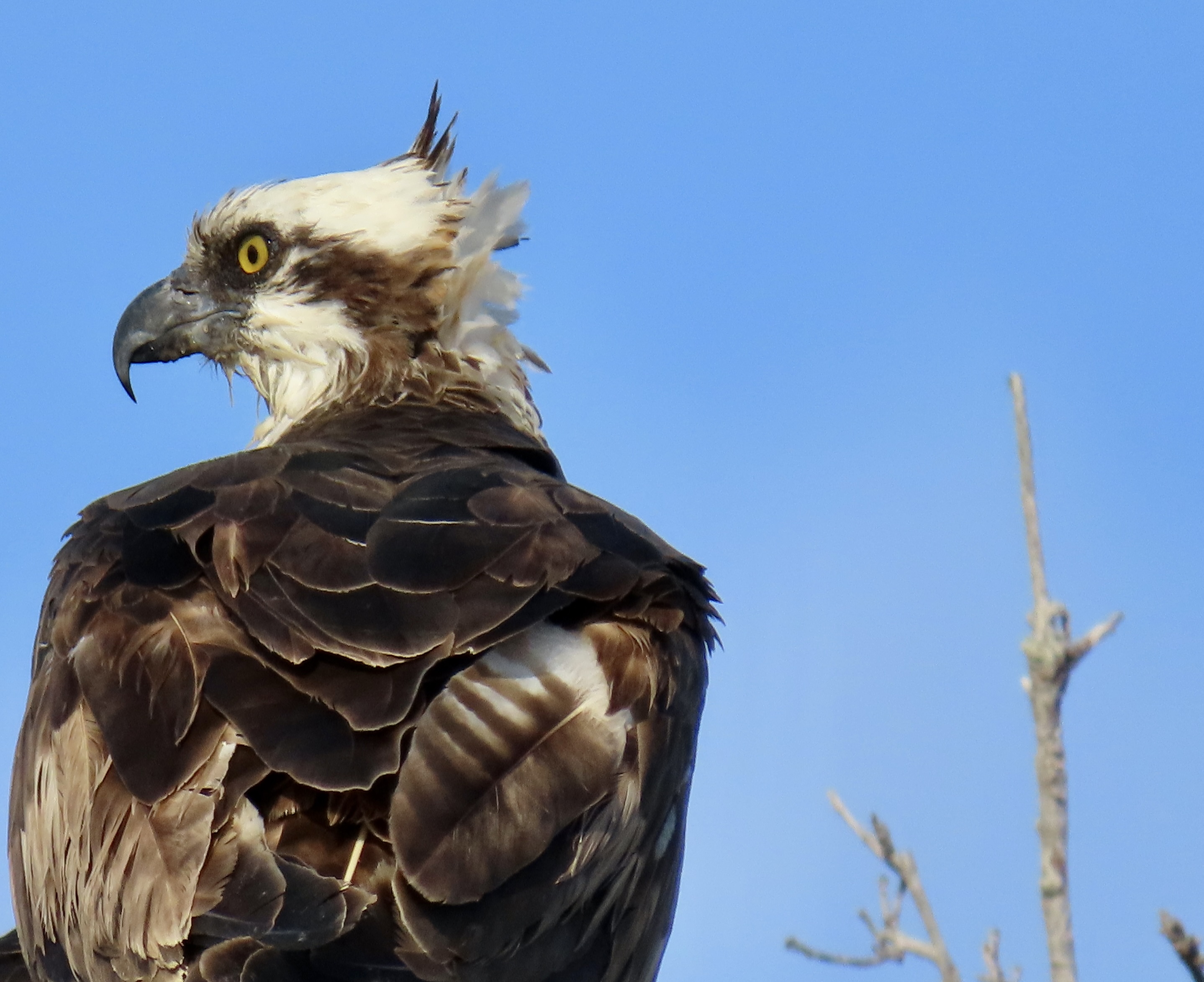
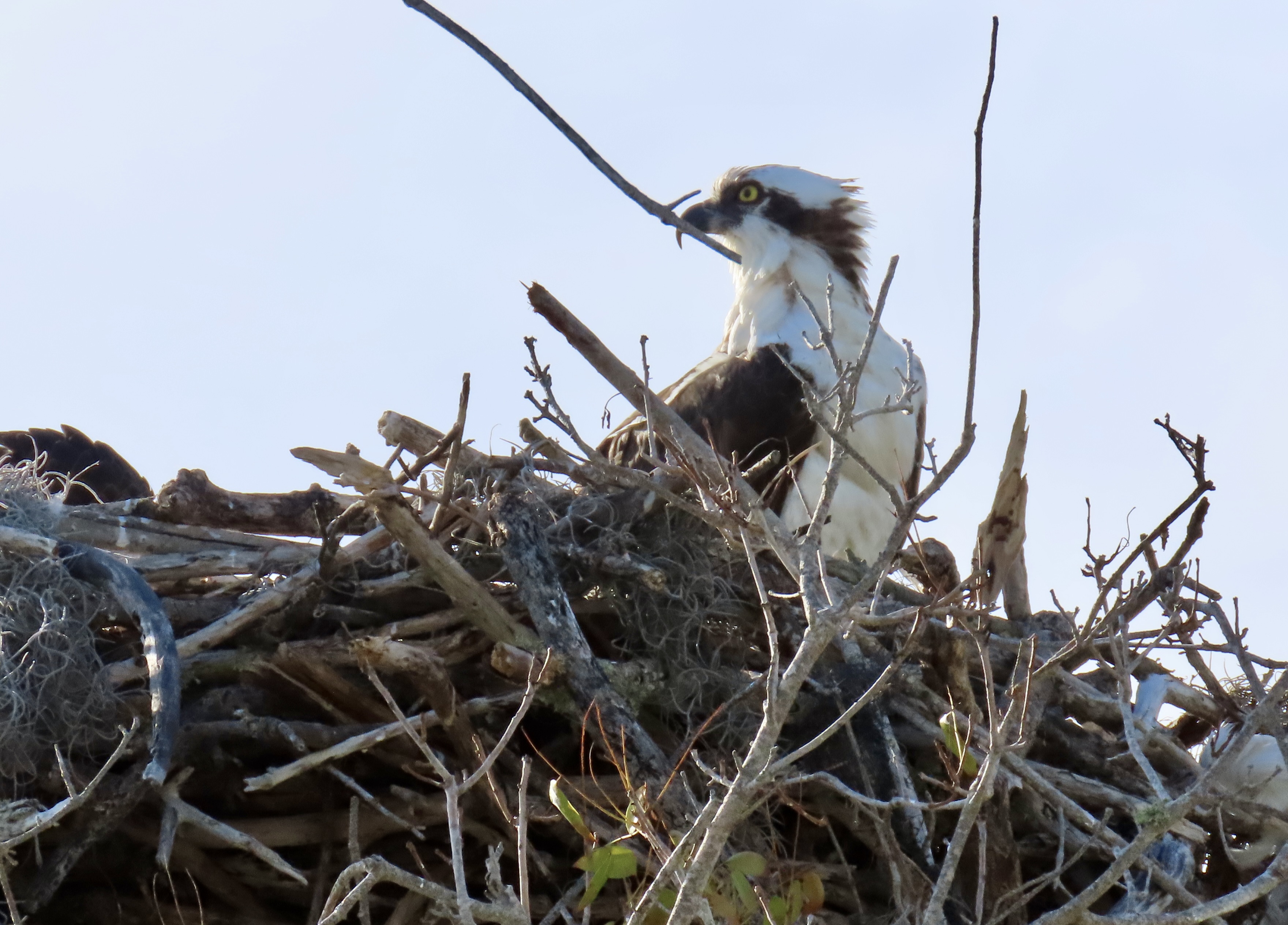
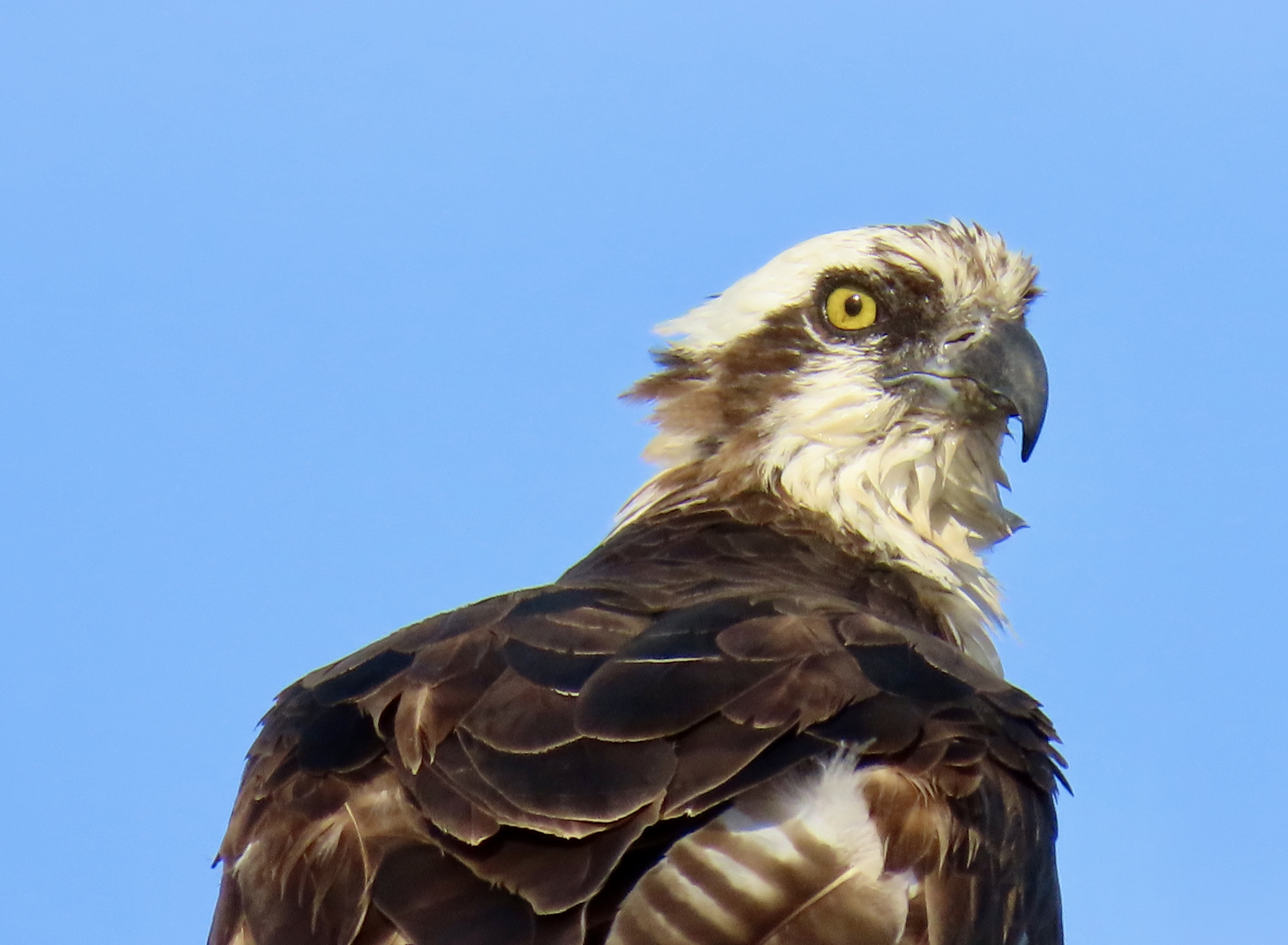
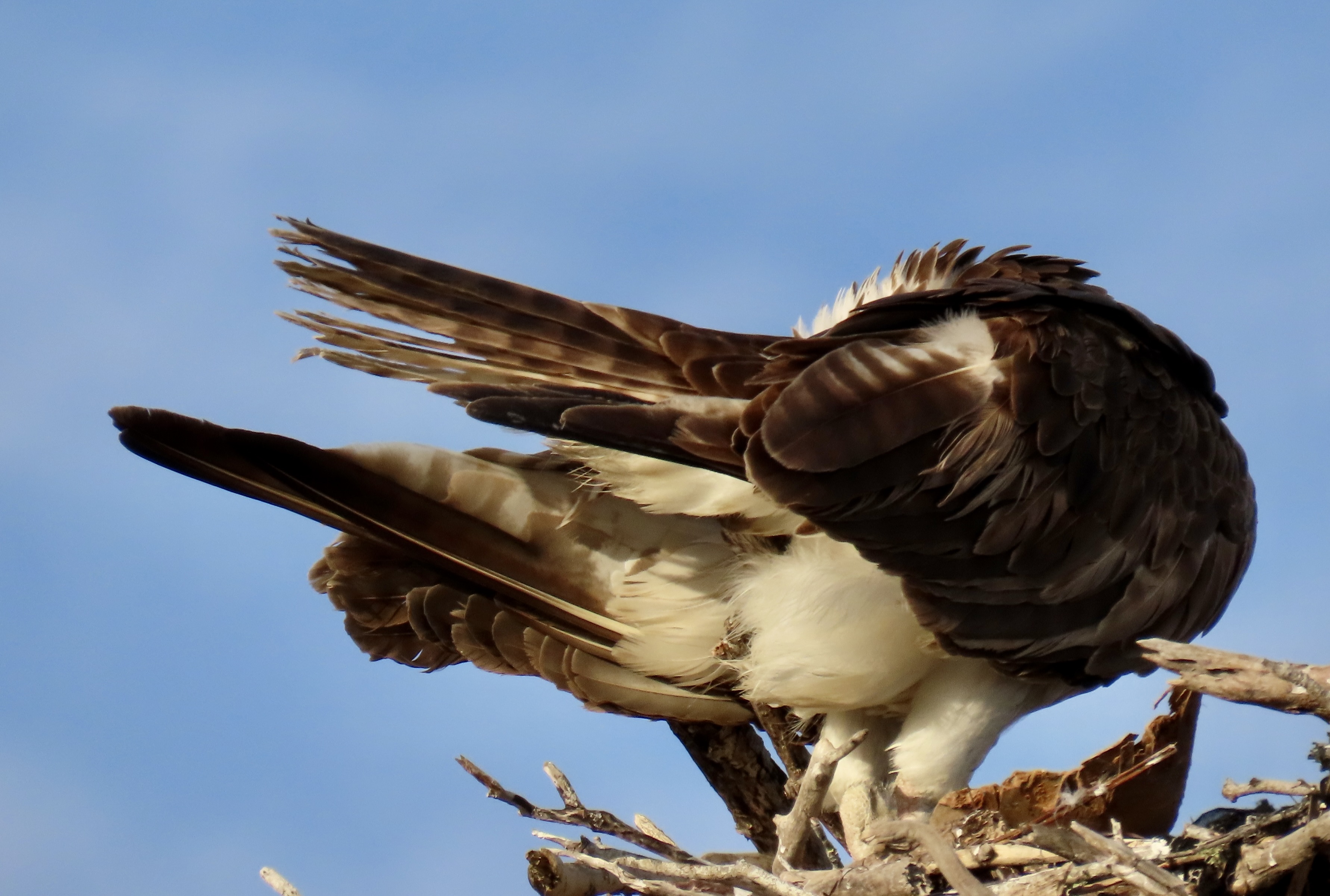
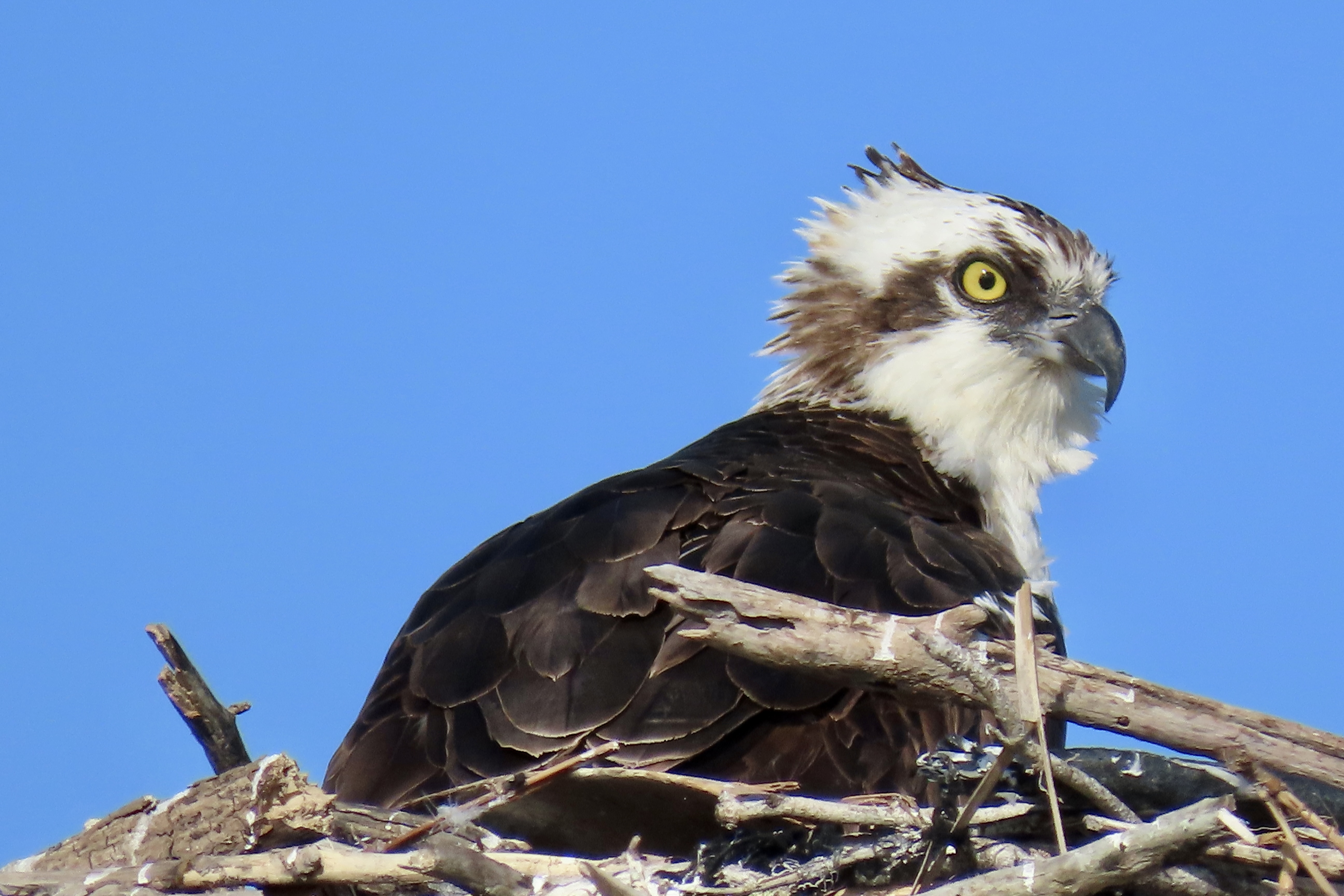
A large nest with two Osprey was located near our camp in Everglades National Park. The wind was playing with this fellow’s feathers.
At the beginning of February, Peggy and I drove down to Florida to visit with our son Tony, his wife Cammie and their three boys: Connor, Chris and Cooper. Afterwards, we drove down to Everglade City in southeast Florida where we explored the 10,000 Island area of the Everglades and Big Cypress National Preserve. There were birds galore, alligators, and even crocodiles! We then crossed the state and drove down to Flamingo in Everglades National Park where we went glamping, i.e. stayed in a tent camp with floors, electricity and comfortable beds.
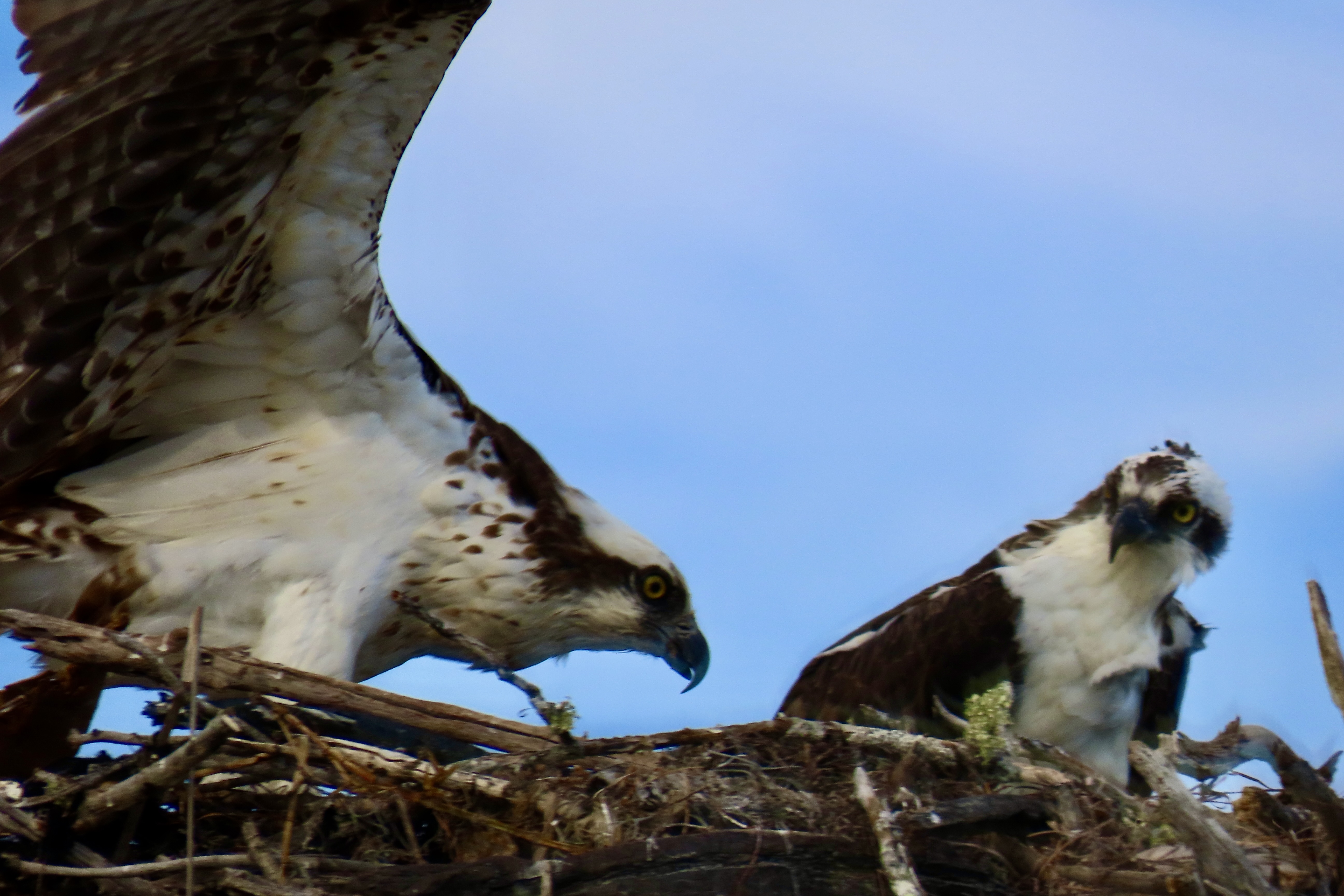
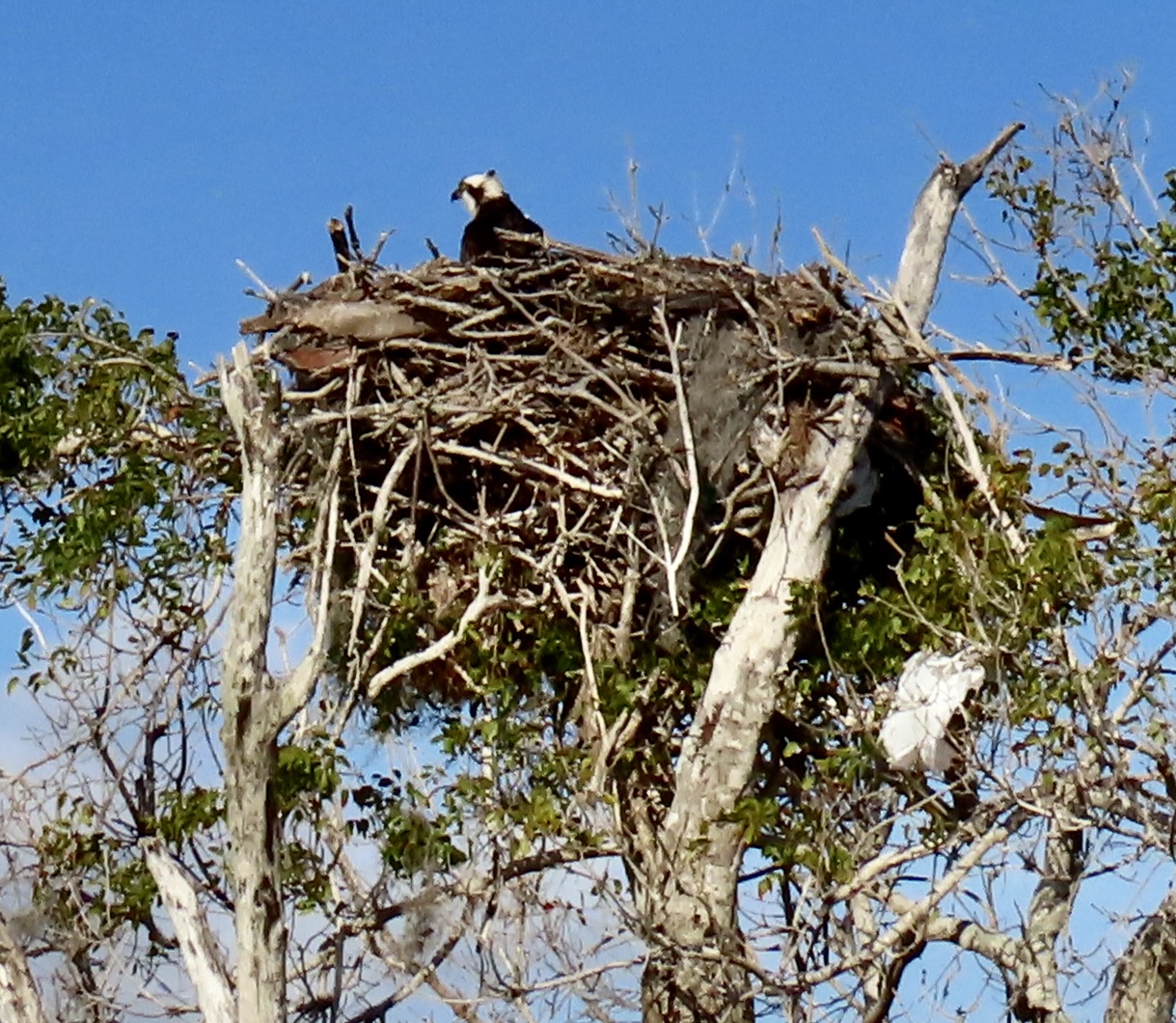
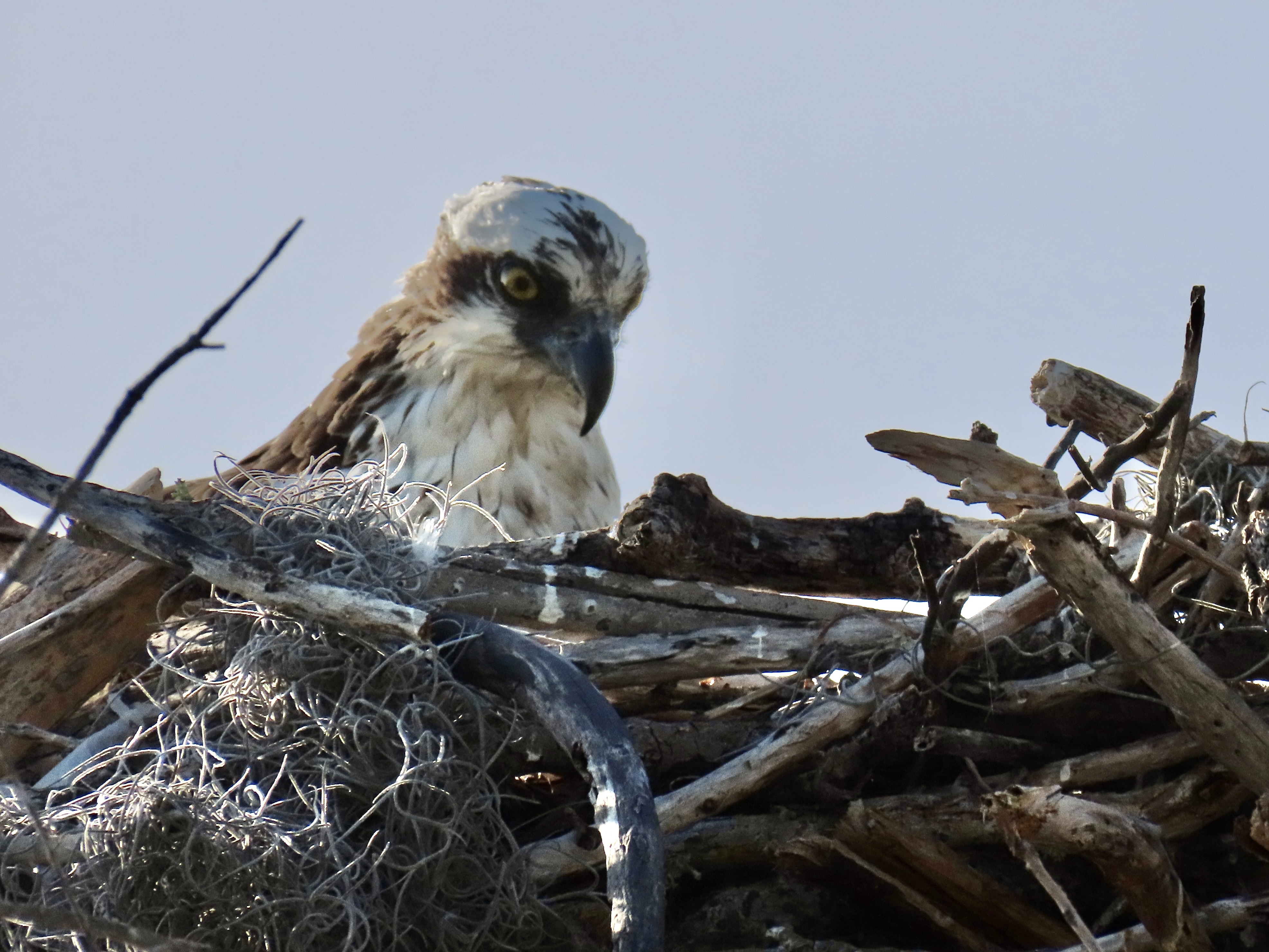
Peggy discovered an osprey nest nearby when she was searching for a restroom. The one in our glamp-camp was closed for cleaning. She came back to our tent quite excited— to say the least. It was imperative that we go check it out, immediately! We decided to have lunch near the nest so we could watch the osprey come and go. Peggy had seen a chick being fed on her first foray. Unfortunately, we didn’t get to see it. “Teach me to head for a restroom without my camera!” Peggy groused. But there was plenty of other action as the ospreys watched us, preened, and remodeled their nest.
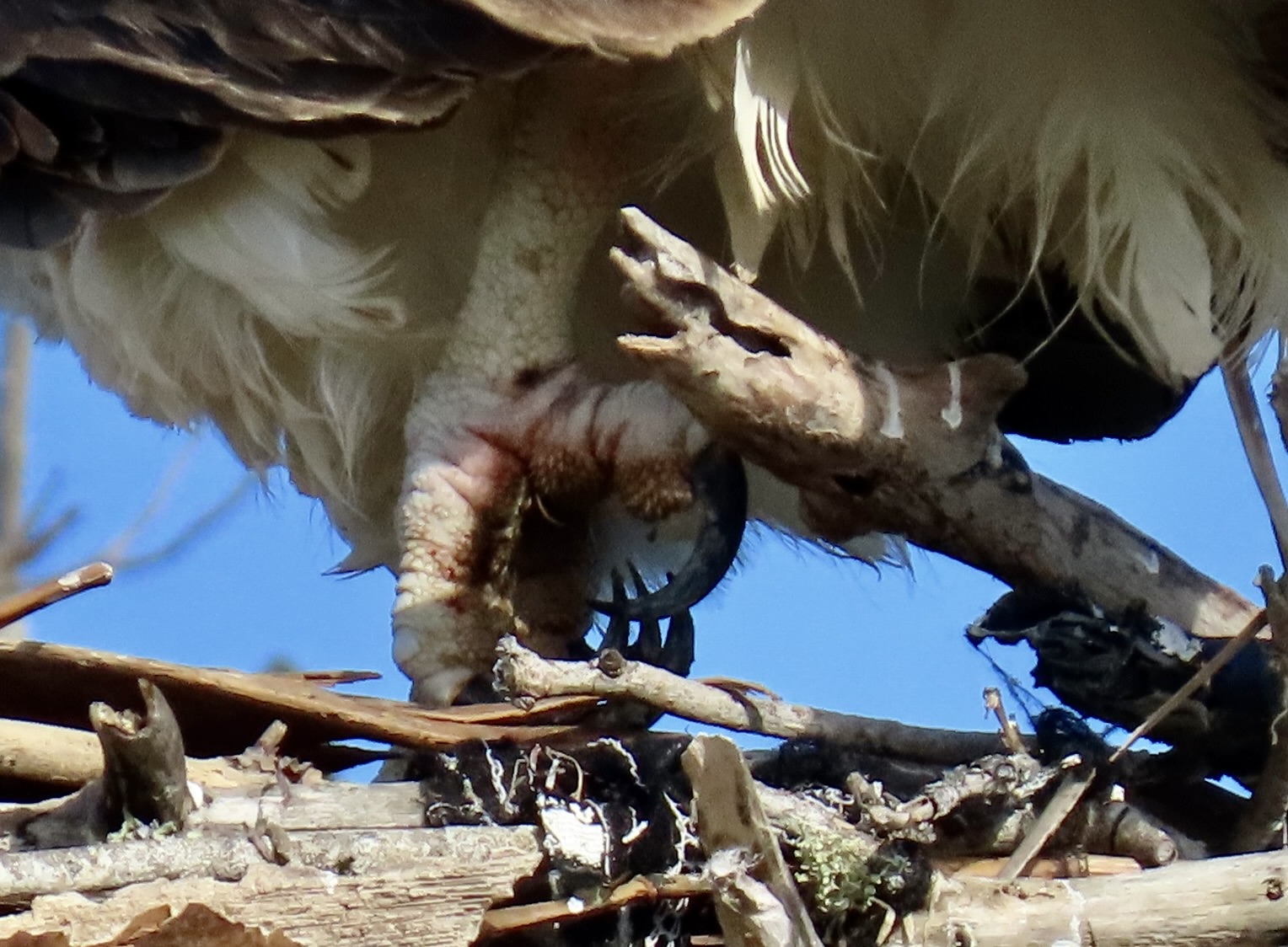
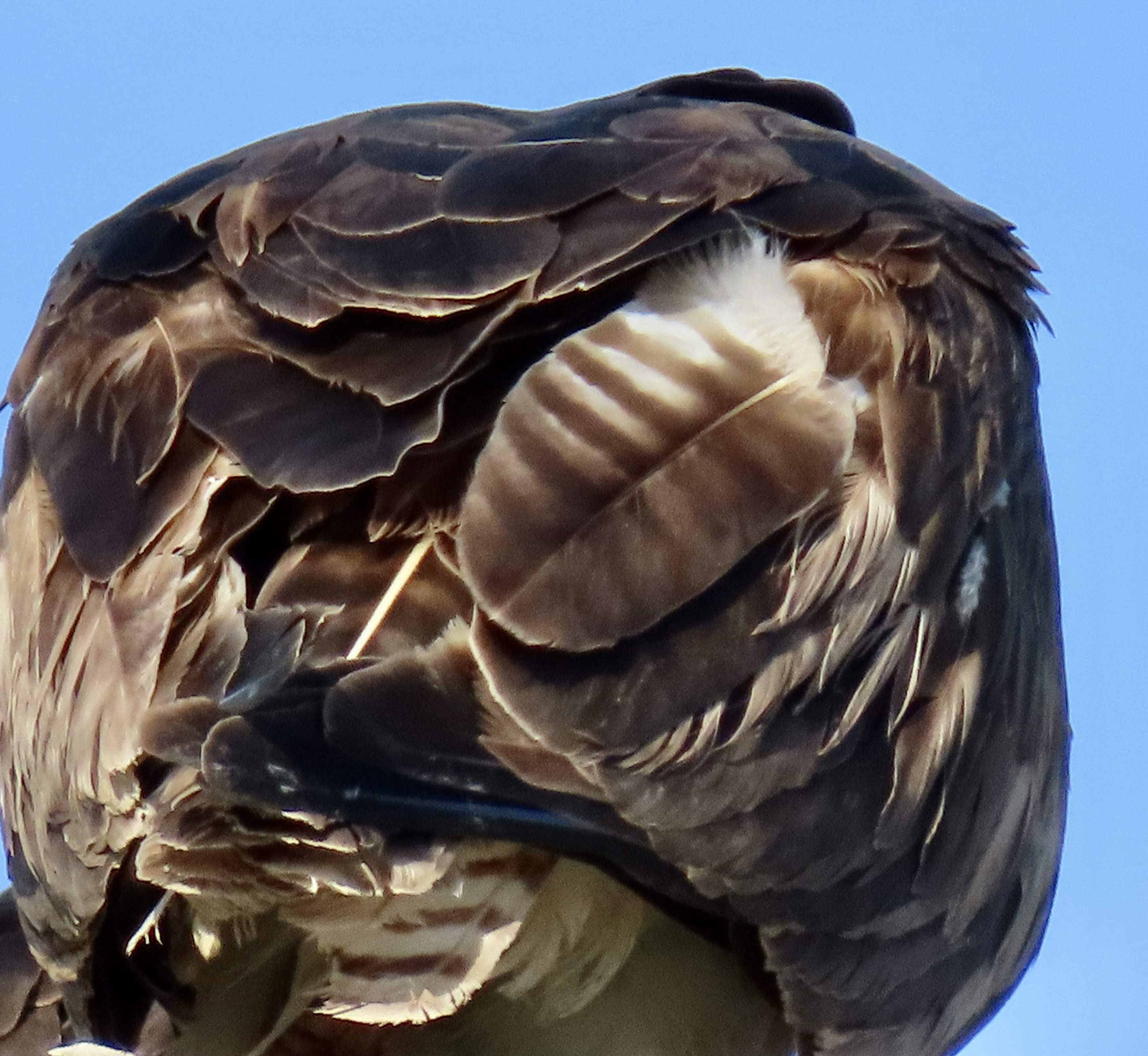
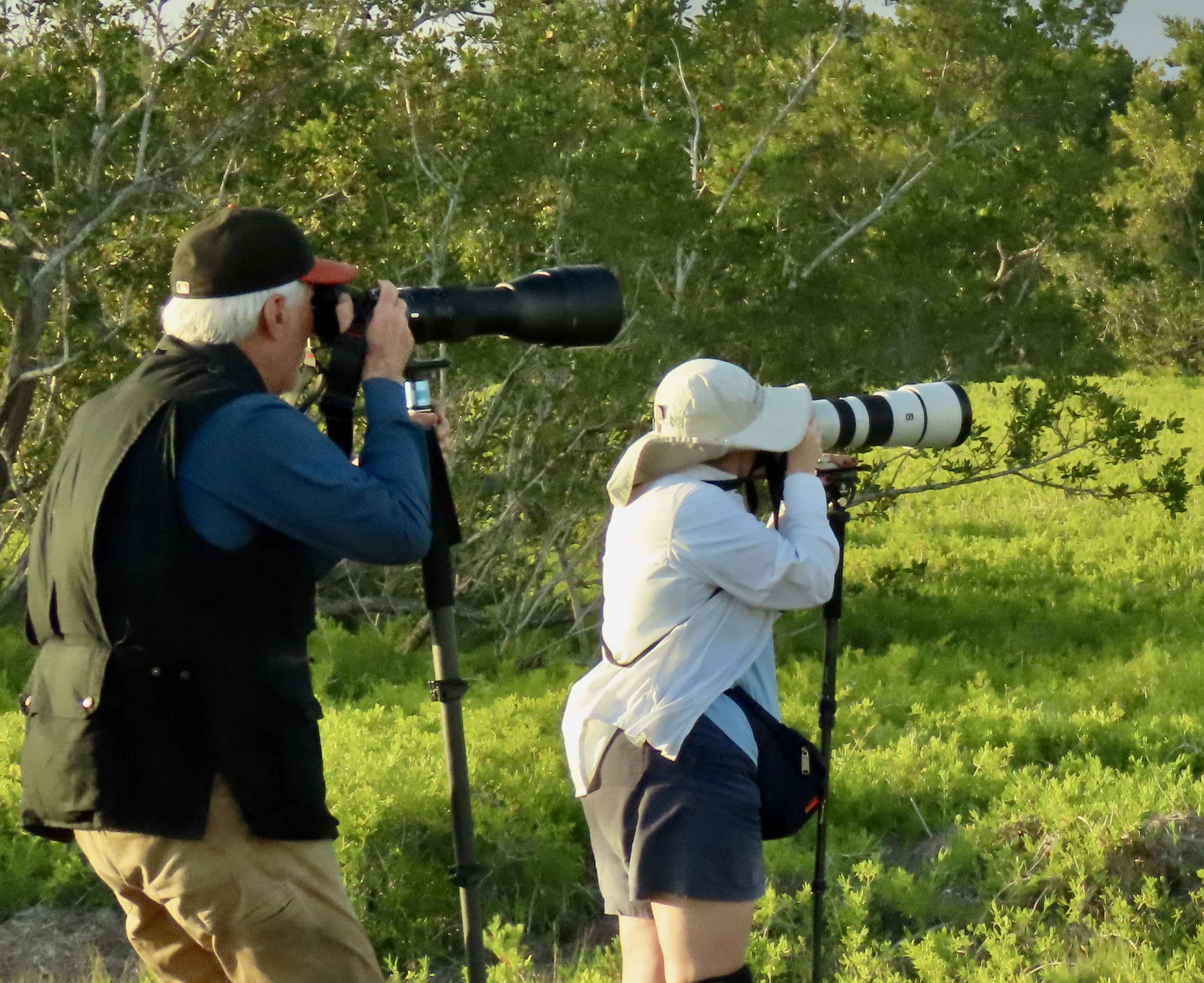
The female Osprey lands on the nest. Her ‘necklace’ gives her away. Had I been faster in refocusing, I could have captured her large wing span. The black streak that extends down from the beak to the wing is an identifying factor for osprey. Its partner watched as she landed. The birds mate for life and can live 15-20 years.The size of the nest suggested that the two Osprey had been using it for several years.I’ve always been excited to see osprey. Besides their beauty, they are superb hunters. Watching one dive feet first from 30 to 100 feet up in the air to capture a fish is a sight one never forgets. These fierce looking talons are specialized for catching fish. That they are sharp, is obvious. Not so obvious is the fact that Osprey are unusual in possessing a reversible outer toe that enables them to hold a fish with two toes in front and two behind. Note the pads. They are barbed to help them grip their slippery catch. We were amused to learn that an Osprey lines up its fish head first to reduce wind resistance.Given their strict fish diet, it isn’t surprising that Osprey always build their nests near water including rivers, lakes and the ocean. Somewhat more surprising is that they are found on every continent except Antartica. If conditions are right, they may live in the same area year round, but if not, they migrate and have been known to fly as far as 4200 miles. Their history as a species dates back over 11 million years.Some remodeling was going on. While the birds weren’t particularly worried, they did keep an eye on us. Sometimes, it seemed like they were posing.One peered over the edge of the nest at us. Or maybe it was checking its chicks.A tail shot…Eventually they ignored us and started to preen…Which is always fun to photograph. And then a van showed up and disgorged a group of photographers with serious cameras. They scared the Osprey. I kept my small, light weight camera with its mega digital lens that I easily hold in one hand to myself. Grin. That’s it for today. Friday’s safari post will be on zebras.
I’ve always admired cattle egrets as they follow cattle around waiting for them to stir up something edible. They do the same thing in Africa, but the animals they associate with tend to be bigger and more scary. This egret had teamed up with an elephant next to Lake Kariba in Zibabwe. Had we visited the same area a month later, we would have probably found the same elephant and egret together. Cattle egrets, I read, tend hang out with the same animals.
I’ve mentioned before in this series (several times probably) that Peggy and I were both surprised and impressed with the bird life we found on our safari through Botswana, Zimbabwe, and South Africa. We ended up focusing on the birds as much as the other wildlife. I’ve already introduced several. Today, I’ll do a wrap up on the others that captured our attention.
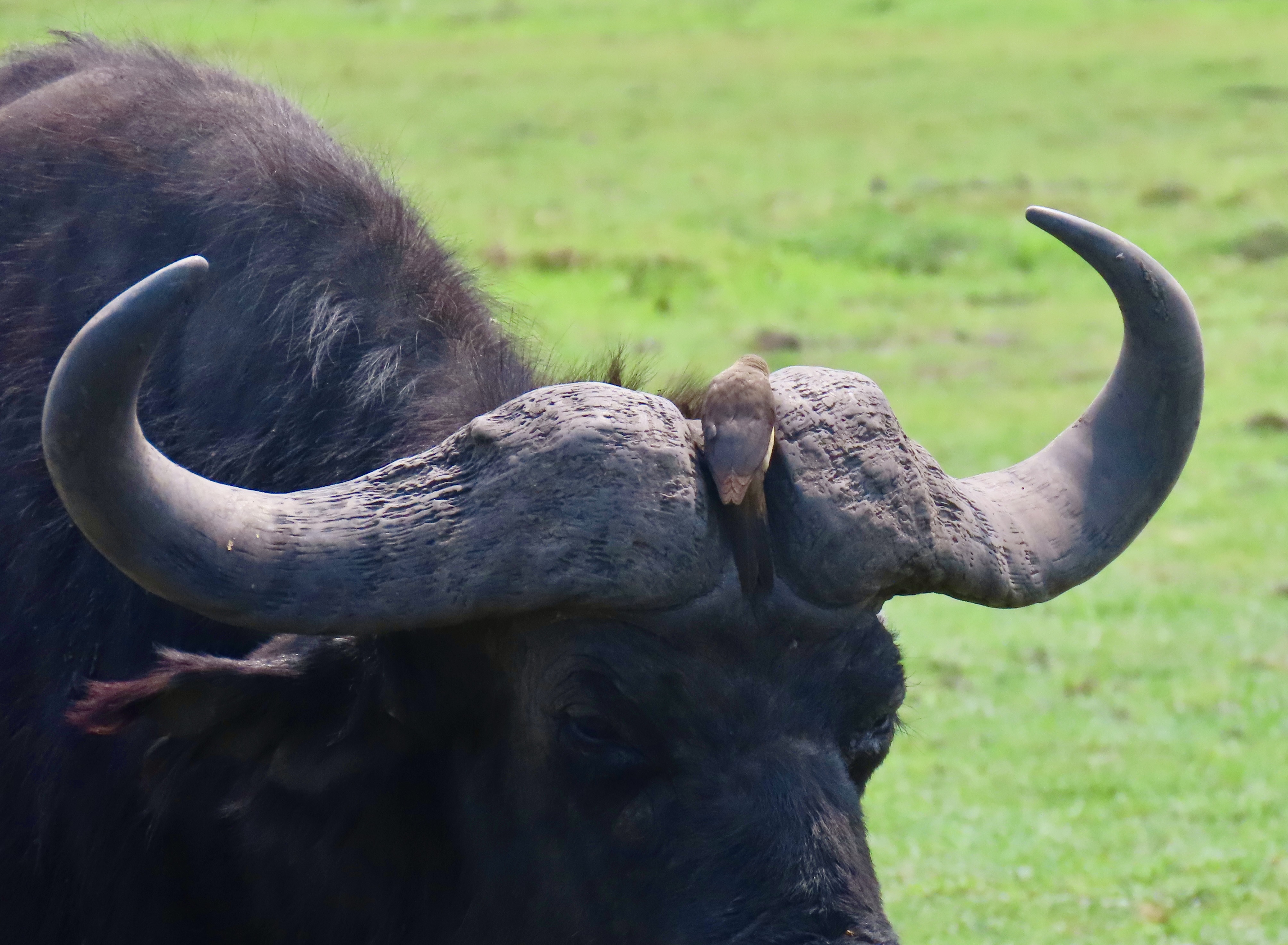
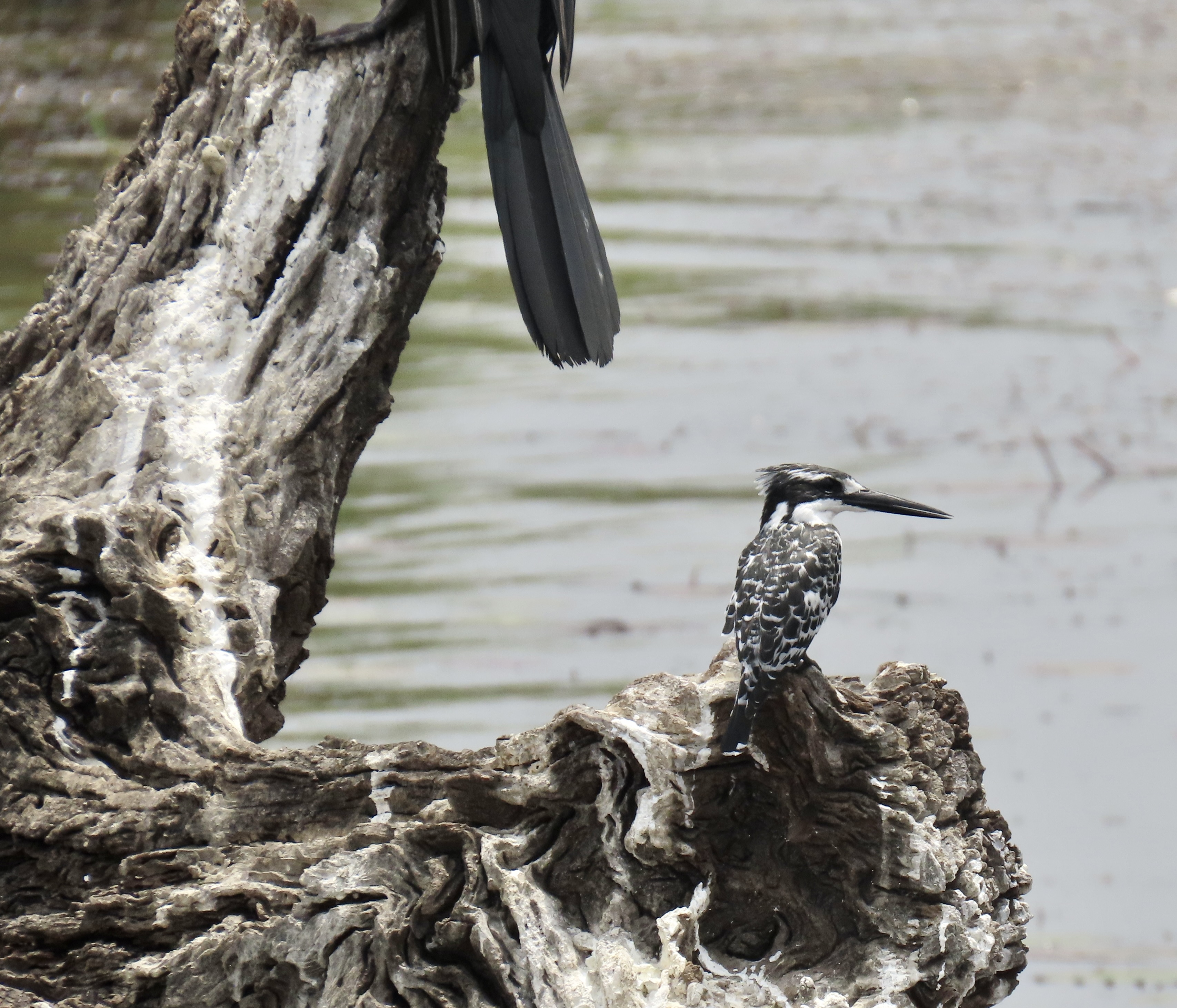
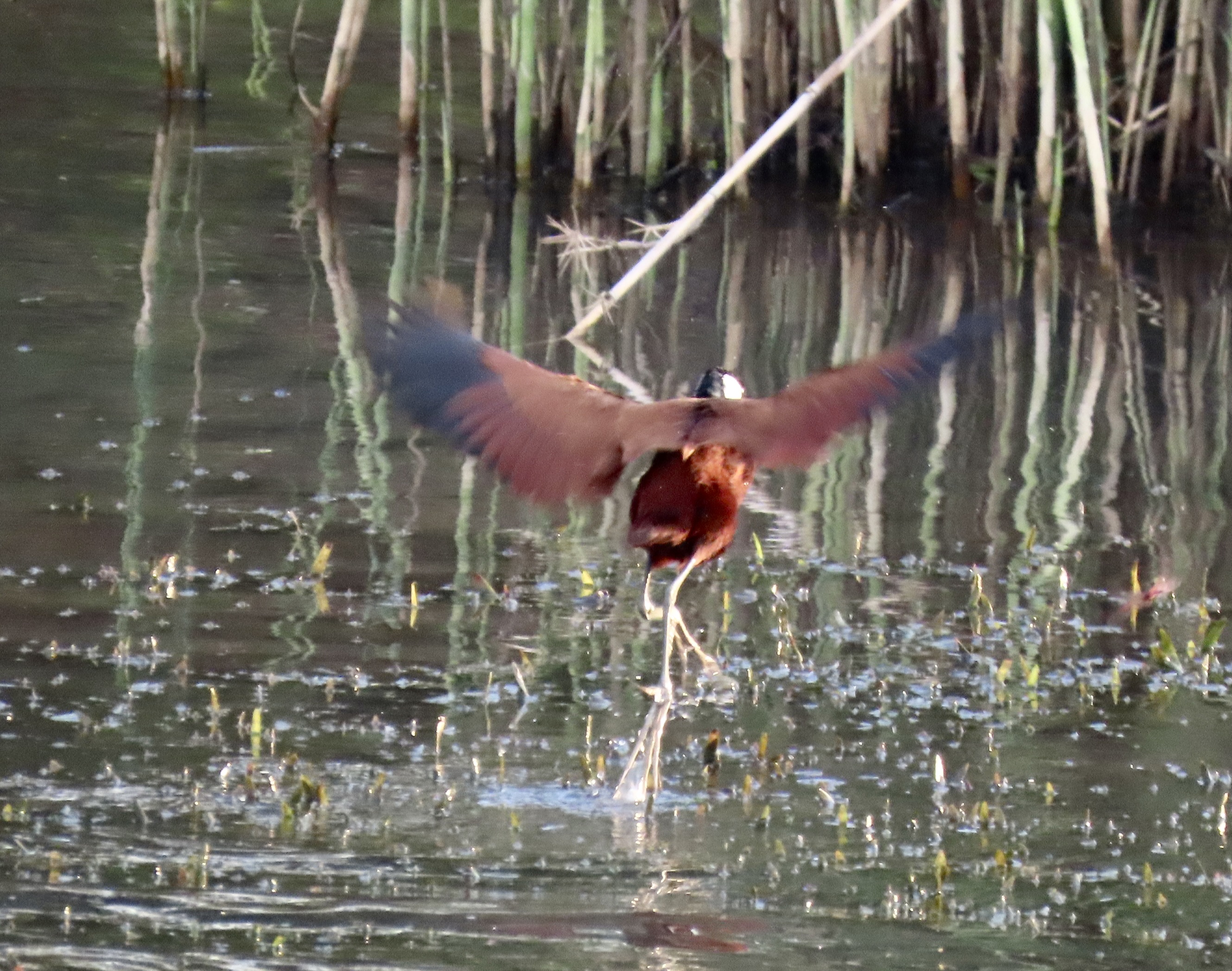
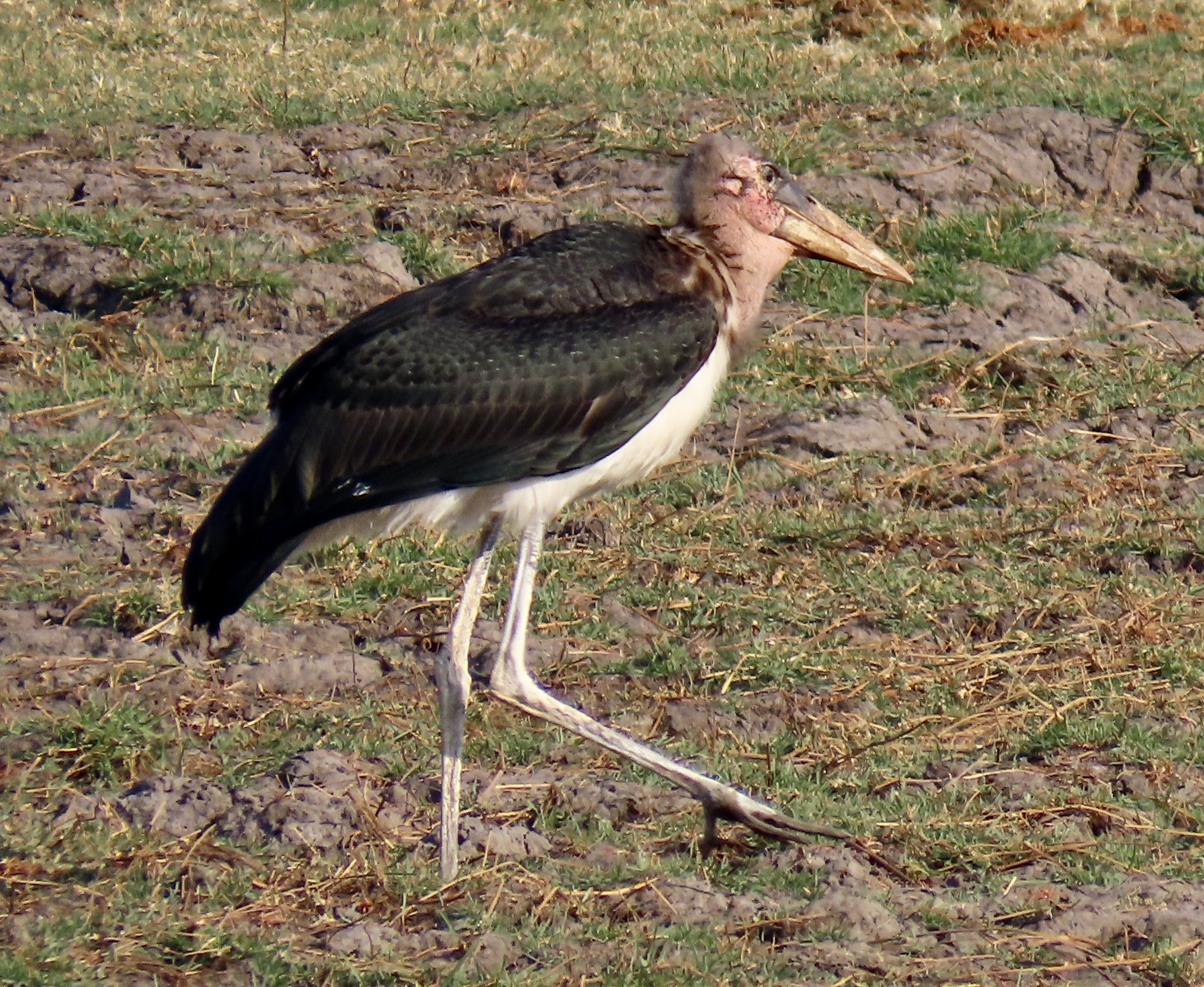
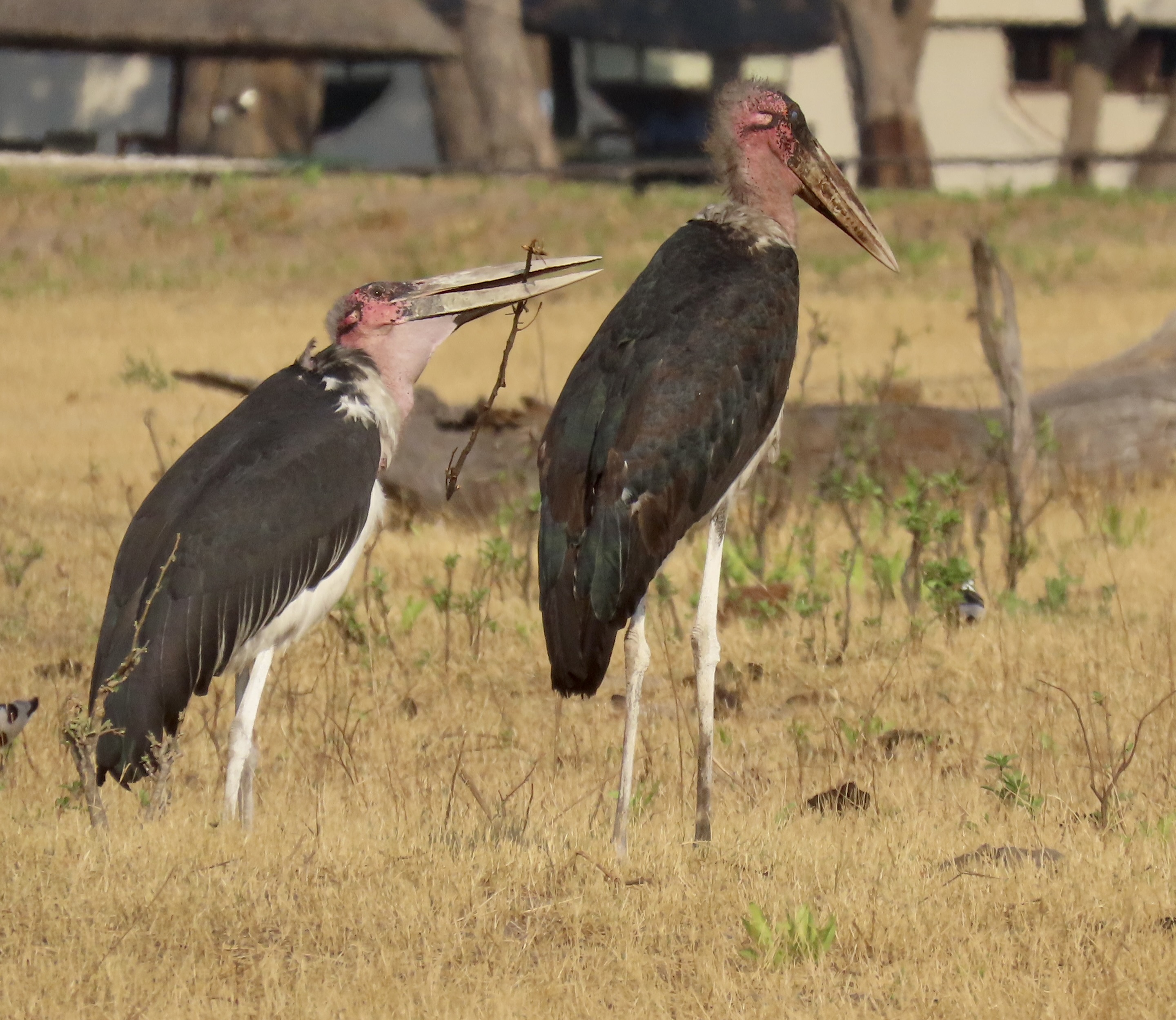
The Cape buffalo is considered the most dangerous animal in Africa, which is saying a lot considering all of the dangerous animals I’ve already featured on this blog. This egret represented the ‘height of nonchalance’ in its choice of a perch. At least it didn’t have to worry about any of the predators that might consider it food!The oxpecker is another African bird known for its close association with a number of animals, including this Cape buffalo we found next to the Chobe River in Botswana. It had already worked its way around the buffalo’s face and moved on to its horns in its endless search for insects.Two birds claimed this old snag that stuck out of the Chobe River. The tail belongs to an African Darter/anhinga. The small fellow is a pied kingfisher.A close up of this handsome representative of the family. It was facing into the wind…And then it turned around.This cutie is a juvenile African skimmer. It’s waiting for its mom to bring home her catch.Mom arrives and the two of them seem to get into a shouting match. In my imagination, it went something like this. Kid: “I’m starving to death, mom. You’re late!” Mom: “You hardly look starved. If you are, get off you lazy butt and go catch your own food.”Mom got in the last word. You probably noticed that the lower beak is longer that the upper beak. The skimmer uses it to skim along the water scooping up small fish. Thus the name.This small fellow with its black eye mask is known as a bee eater.Another one caught a bee!A bee eater of a different species. This one is known as a carmine bee eater.“That’s a go away bird,” our guide announced. “It gets its name because it always calls ‘go away, go away, go away’ when it is frightened and flies away.”This is a Jacana, also known as the Jesus bird. They earn the name by supposedly walking on water. Their large feet enable them to walk on lily pads.A Jesus bird demonstrates on the Zambezi River near Victoria Falls. I think it was cheating, but check out its long feet. I will show a similar bird on Wednesday from Florida Everglades National Park.Judging from this photo, it seemed to me that the Jesus bird could have been named fan dancer.For sheer color, this iridescent blue starling won the prize. We found a flock of open billed storks hanging out in front of a female waterbuck. The Chobe River is in the background.Here, an open billed stork searches for its favorite food, snails.A marabou stork: Not the most handsome bird we saw. Grin. There’s a reason why it is also known as the undertaker. ‘Can I offer you a stick?” Or is it, “Want to build a nest with me, Sweetie?” Marabou storks flap their neck sacks when courting. That must be exciting. We’ll wrap up our African bird photos today, but more birds will be featured on Wednesday. This time from our recent trip to Everglades National Park in Florida. Friday’s post will be on zebras.This nesting osprey in Everglades National Park will be among the birds we will feature on Wednesday.