Lost in a Snow Storm: Part II

“I leave my friend Bob Bray behind to face whatever fate the dark, cold and stormy night has in store for him.”

In my last blog (see below), I described how Bob Bray, Hunt Warner, Phil Dunlop and I were hunting deer in the Sierra Nevada Mountains and got caught in a snowstorm. With sunset less than an hour away, Hunt, Phil and I realized that Bob had disappeared.  We set out to find him. Thirty minutes later I came across his tracks.

I sent Phil back to the jeep to flag down a vehicle to inform the El Dorado County Sheriff’s Department that Bob was lost. Hunt returned to the jeep trail we had been using in case Bob walked out. He would fire his rifle to let me know. It was my job to track Bob down.
Following the tracks was not easy. They would be clear for a few yards and then disappear under the snow. It was continuing to fall and beginning to drift, whipped on by a strong wind.

Each time I lost the tracks I would work forward in a zigzag pattern until I found them again. It didn’t help that Bob was tending to wander or that I was tired from a full day of tramping over mountains. Dusk was rapidly approaching when I came across another set of tracks that crossed the trail I was following. They were fresher… and they were Bob’s! I yelled but the only answer I received was the silence of the snow filled woods.

Bob was beginning to follow the classic lost-person pattern of hiking in circles.

I wanted to go on, needed to go on, but knew that the decision was wrong. Dark had arrived to reduce an already limited visibility to near zero. I was tired, close to exhaustion, and cold. Hypothermia was a real threat. Ever so reluctantly I turned around and begin to make my way back toward Hunt, leaving Bob behind to face whatever fate the dark and snow and cold had in store for him.

The realization of just how tired I was hit me when I came to a low fence and couldn’t persuade my leg to step over. I reached down, grabbed my pants and gave the reluctant leg a boost.

Hunt was waiting where we agreed and I filled him in on my findings as we made way back to the jeep through the ever-deepening snow. Phil had more luck. The vehicle he flagged down had a CB Radio and the driver was able to contact the Sheriff’s office. A team with snowmobiles would be at our jeep at first light, prepared for a full search and rescue operation.

Bob, who was manager of Placerville’s newspaper, The Mountain Democrat, was well known and liked in the community. We knew we would have lots of support in our search.

There wasn’t anything else we could do. We were too tired to set up the tent so we climbed in the jeep, grabbed a bite to eat, downed a beer and prepared for a long night.

Hunt got the front seat, it was his jeep; Phil and I shared the back. It was beyond uncomfortable and even exhaustion couldn’t drive me to sleep. Somewhere around two I finally managed to doze off only to be awakened at 5:30 by Hunt’s cussing about how cold it was. Our doors had frozen shut during the night and had to be kicked open.

We soon had our Coleman lantern blasting out light and our Coleman stove cooking up a mass of bacon, eggs and potatoes. We were expecting a long day and knew we would need whatever energy the food could supply. The storm had passed, leaving an absolutely clear sky filled with a million twinkling stars.

The Sheriff’s team arrived just as the sun was climbing above the Crystal Range, exactly on time. Introductions were made, snowmobiles unloaded and we filled the team in on our efforts of the previous day.

The deputy sheriff in charge asked me to climb onto the back of his snowmobile and take them to the point where I had left Bob’s tracks the night before. It was to be my first ever snowmobile ride; except it didn’t happen.

Just as the search team was firing up their engines, a wraith-like figure wearing a plastic poncho came slowly hiking up the hill toward the jeep. He looked like a bad guy out of an early Clint Eastwood western.

As soon as the sun provided a hint of dawn, Bob had managed to orient himself and start walking back toward the jeep. Yes he was freezing and yes he was starving, but he was alive. We knew just how alive he was when he demanded his share of breakfast. As we cooked up another mass of bacon and eggs, Bob told us his story.

He had become disoriented after coming out of the thicket where I found his tracks and headed off in the direction he thought would take him back to the jeep. It didn’t. He fired his rifle several times to get our attention but the sound of shots is fairly common in the forest during hunting season. We just assumed a deer hunter got lucky.

Bob continued wandering and eventually came across his own tracks. That was when he seriously began to worry. Knowing he was lost and knowing night was coming on, he gathered wood for a fire. The wood was wet and refused to start burning. Bob’s lighter ran out of fuel but he still had a match left. He took his lighter apart, placing the innards under the wet wood and used his last match to light it.

The good news was that the fire started. The bad news was that the wind and snow put it out almost immediately. It was some time during this process that I had fired my rifle and Bob had used his last shot to respond. Out of options, he dug out a packrat’s nest to provide shelter and prepared for the longest night in his life. He survived in lodging that made Hunt’s ancient jeep seem like a five-star hotel.

“I even fell asleep once or twice,” Bob managed to get out around a mouthful of eggs.

Of course the Mountain Democrat ran a major story on Bob and he had to take considerable ribbing in Placerville over the next several months. It was a small price to pay considering the alternatives. That Christmas Bob received several compasses for gifts.

It was years before he had tolerance for any temperature below 70.

This blog completes a series of posts I have written in celebration of the 50th High School Reunion of the Class of 1961 of El Dorado Union High School in Placerville California. Next up I want to address the “Occupy Wall Street” movement in light of the student movement of the 60s sparked by the “Free Speech” confrontation at UC Berkeley where I was a student.

A Cold and Stormy Night… Lost in a Snow Storm: Part I

Having friends for a long time means having lots of stories about each other. Getting together means reliving the best ones.

Some stories fit the R category “If you don’t tell that one about me I won’t tell about the time you…” Black mail is an effective ploy. I’ve used it frequently with my friends Tom Lovering and Ken Lake.

Bob Bray, my friend for over 60 years, is different. Most of our tales are G, PG and PG 13 rated.

I’ve been posting stories over the past three weeks in honor of our 50th Reunion for the 1961 Class of El Dorado Union High School in Placerville, California. I started with a story of Bob and I shooting out the window of an ‘abandoned’ bum shack with our Wham-o slingshots. It reconfirmed his mother’s belief that I was not a child her son should be around.

It’s only appropriate that I finish off this series with another story about Bob. This one was 20 years later and had more serious consequences.

When I returned to Sacramento after my stint as a Peace Corps Volunteer in West Africa and as a PC Recruiter in the South, I reconnected with Bob and other friends from Placerville. One thing we enjoyed doing together was hunting and fishing. Our usual companions included Hunt Warner and Chuck Lewis although putting a rifle in Chuck’s hands was scary.

While I wasn’t particularly good at shooting things either, I was great at wandering in the woods. Hunting was yet another excuse. And, I must add, I enjoyed hanging out with the guys. Lots of male bonding took place.

In this story, Phil Dunlop replaced Chuck as our fourth companion.

We were hunting north of Highway 50 in El Dorado National Forest one Saturday afternoon in late October when snow flakes started drifting lazily out of the sky. It wasn’t much to worry about; we zipped up our coats and went about our business. If anything, the gently falling snow was quite beautiful.

But it kept snowing and the flakes became more serious. After a couple of hours, there were six inches of the white stuff on the ground and my tracks began to disappear. I decided it was time to forget the macho requirements of being male and make a judicious retreat to the T-bone steaks waiting for us back at Hunt’s jeep. I soon ran into Hunt who was walking with Phil.

“Have you seen Bob?” I asked. He and I had parted a half hour earlier at the edge of a large thicket of brush where Bob had been convinced he would jump an evasive buck.

“I haven’t seen him for an hour,” was Hunt’s reply. Phil hadn’t seen him since the snowstorm had started. Normally we wouldn’t have been concerned; Bob’s very competent in the woods. But evening was coming, the temperature dropping, and the snow accumulating.

“Maybe Bob has more sense than we do and has already returned to the jeep,” Phil suggested. That seemed logical so we made the short 15-minute trek back to the jeep. No Bob.

“This is getting worrisome guys,” I said in a definitely worried tone. It wasn’t like Bob to take undo risks. “Let’s go back to where I saw him last and see if we can’t hunt up his tracks.”

The advantage of snow was that it left a trail even a city slicker could follow, assuming that it hadn’t already covered the tracks. Even then there were usually obvious dimples in the snow.

Unfortunately, no tracks were to be found and not even our overly active imaginations could turn the various dimples into a trail. I did spot the tracks of a very large deer, but they disappeared at the edge of the thicket.

“It looks like the buck stops here,” I said to Phil and elicited a weak groan. I suggested we split up and look around.

“We need to meet back here in 30 minutes,” I urged. “Don’t go far and pay attention to where you are going. It is getting close to dark and the last thing we need is a second person missing. If you come across Bob’s tracks, fire your rifle and we will join you.”

My degree of concern was reflected in my bossiness. Normally we were a very democratic, almost anarchic group.

Twenty minutes later I had made my way to the other side of the thicket and found nothing. Neither had I heard any rifle shots announcing either Hunt or Phil had success. Somewhat discouraged, I turned around to rejoin my fellow searchers. It was then I spotted tracks leading out of the thicket. I pointed my Winchester toward the sky and fired off a shot.

“Bang!” the sound of another rifle being fired resounded from the direction Bob’s track had headed. I quickly levered in another bullet and fired again. There was no response. I did hear Phil and Hunt making their way through the brush toward me, though. They sounded like a pair of large bears. We held another council. Once again, we decided to split up.

Phil would return to the road where the jeep was parked and flag down a car. His job was to get a message through to the El Dorado Sheriff’s Department that Bob was missing. Hunt would cut back through the thicket and wait on the jeep trail where the thicket began in case Bob made his way back there. He’d fire his rifle if Bob appeared.

I was going to follow Bob’s tracks until dark to see if I couldn’t catch him. There were only about 30 minutes of daylight left so the odds were slim. My concern was that Bob had broken a bone and was stranded.

Next Blog: Still no Bob but the night is so cold the doors on the jeep freeze solidly shut.

When Bears Come to Visit

A local bear has been cruising our area on the Upper Applegate River in Oregon. A neighbor caught this photo of him three weeks ago. He's a big fellow. This week he came to visit us.

A large black bear has been cruising our neighborhood. Monday night he stopped by for a visit and had a wresting match with our garbage can.

The garbage can lost.

I could tell by the garbage strewn around the yard and the claw marks on the side of the can. The can now lives in our shed. I’m hoping the move will solve the problem. So does the can.

Hiding inside doesn’t always work. Kori Titus, a friend out of Sacramento, noted on my Facebook page that a black bear broke down the door of an acquaintance living at Lake Tahoe and entered his kitchen.

The thought of a bear breaking and entering our house makes me think of a thick bear rug to keep my toes warm on cold winter nights.

“Do you have a weapon?” my neighbor Tom asked worriedly. I should warn the bear. This is rural Oregon. The folks around here have guns, lots of guns, lots of big guns.

Have you ever come across a large pile of fresh bear scat. It's enough to make you wish you were elsewhere. Our friend left this behind. Bone provides perspective.

I’ve had numerous encounters with bears. Leading backpack treks in and out of Yosemite National Park for years guaranteed contact. Once I woke up at 4 AM with a bear standing on top of me. His snout was about six inches away from mine. I screamed and vacated the premises. Fortunately, he did too.

The big fellows in Alaska worry me more. A grizzly stalked me when I was leading a backpack trip across the Kenai Peninsula.  I had checked with a friend in the forest service before going. He warned me that a large grizzly was working the area and had treed one of his rangers two weeks earlier. The fall before a black bear had bitten through the sleeping bag of a woman ranger and wounded her leg.

Our group made lots of noise when hiking through the region. A forest service cabin provided shelter that night. There would be no biting through sleeping bags. I figured we were out of the woods, so to speak. But one of my Trekkers wanted to go for a hike the next morning. I offered to keep her company.

We were on our way back when I heard something big moving though the brush on the side of the trail. “What’s that?” my companion gasped. We looked down and saw the distinctive hump on the back of a grizzly. He was moving parallel through the brush, stalking us.

“What do we do now? Run!?”

She was a marathon runner and fast. I wasn’t. I suggested we turn around, walk over a bridge we had just crossed and find a tall tree. If the bear appeared we would climb the tree. Quickly.

An hour later there was still no sign of the bear. We hiked back to camp holding hands. She had an iron grip. A mouse in the brush would have sent us fleeing.

I also had an encounter with an Alaskan Brown Bear. These are the monsters of the bear world that National Geographic likes to feature. I’d flown into Katmai National Park located at the beginning of the Aleutian Peninsula. The area is known for its remoteness, unusual volcanic features, trophy size trout, and Alaskan Brown Bears. The last two go together.

The bears have competition. Fishermen come from all over the world to try their luck. Human-bear encounters are inevitable. A park ranger greeted us upon arrival and explained proper bear etiquette. If you have a trout on your line and a bear shows up, cut your line. If you meet one on the trail, talk to it and slowly back away. “Talk to it???”

I managed to meet my first bear on my first evening. It wasn’t large by Brown Bear standards… only about one and one half times the size of a grizzly. But the trail was narrow. I still remember our conversation.

“Um, good evening Mr. Bear,” I stuttered respectfully. “I am an American, just like you. If you are hungry, I understand there is some great Japanese food on the menu. Or you might want to try the German.”

The bear stared at me for a long two minutes, barked a growl of annoyance and wandered off in the opposite direction. I didn’t hear any Japanese or German fishermen screaming that night. All’s well that ends well.

So I have a fair amount of experience in dealing with bears. Will this help me with our nighttime visitor? Probably not but I’ll keep you posted.

Mm, mm good. Our neighbors with the night camera have a compost box that the bear finds particularly fascinating. Note the metal around the box. He couldn't get in through the sides so he went in through the top.

A Rabid Wolf Wandered through Camp: The Wind River Mountains of Wyoming

The Wind River Mountains of Wyoming are a premier destination site for backpackers. A number of years ago I took six months off to backpack various locations in the western United States and added the area to my itinerary.

Mountain men were there first.

Place names such as Sublette County, Fremont Lake and the Bridger Wilderness recall these larger than life characters who were kept busy between the 1820s and 60s pursuing beavers, exploring the west, keeping their scalps, serving as guides, working as frontier entrepreneurs, and, in the case of John C. Fremont, running for President.

Many were also great storytellers and participated enthusiastically in the creation of their own legends.

One of the most popular locations for weaving tall tales was the Annual Fur Rendezvous that brought the various trappers together with suppliers out of St. Louis.

Six of the Rendezvous were held near the small town of Daniel, which is located on the Upper Green River 11 miles from Pineville. I stopped by and tried to imagine what the river valley would be like filled with over 1000 trappers, Indians, suppliers, missionaries, and wayward journalists.

The Mountain Men pursued their dangerous and often lonely profession during the winter when the fur pelts were at their best. The two to three-week Rendezvous in the summer was an opportunity to sell their furs, catch up with friends, gossip and resupply for another winter. It was also an excuse to party.

‘Whiskey,’ pure alcohol watered down and then flavored with tobacco, was passed around in a cooking kettle. Horse racing and shooting contests soon deteriorated to drunken debauchery. Old journals report the results.

One new guy was baptized by having a kettle of the alcohol poured over his head and lit on fire. A rabid wolf wandered through the camp and bit people at will. Several trappers were witnessed playing poker on a dead man’s body

A contract between William Ashley, the creator of the Rocky Mountain Rendezvous, and the trading firm of Jedediah Smith, David Jackson and William Sublette listed some 50 different items to be delivered to the Mountain Men.

Many of these items such as gunpowder, lead, beaver traps, and butcher knives related to their work. There were also cooking kettles, flour, sugar, allspice, dried fruit, coffee, grey cloth, and washing soap for every day living. Some items such as beads, ribbons, rings, bracelets and calico were probably trade goods for the Indians

As one might expect, ‘fourth proof rum’ (80 % pure), regular tobacco and the more high quality Smith River Tobacco were included for long, lonely nights. Slaves were producing the Smith River Tobacco in Virginia at the time.

Reviewing what the Mountain Men carried with them into the mountains led me to look at my own backpacking list. It appears life is more complicated today. My list contains over 60 items and I rarely travel for more than seven to ten days without checking back into civilization!

But then again, the Mountain Men apparently didn’t worry about such niceties as toilet paper and toothpaste, not to mention maps and reading material. They also shot much of what they ate.

Wednesday’s Blog: “There’s a Beaver Standing on My Tent.” I have my own mountain man experience.

A Cow Elk Woos Me

Where I was going backpacking in Cliff Dwellings National Monument was something of a mystery to me. I didn’t have a clue.

My pack was loaded with a week’s worth of food and six topographic maps, more than enough to let me wander wherever I wanted and hopefully avoid getting lost. I started off up the West Fork of the Gila River but soon came across a trail jogging out of the canyon to the right.

“Looks good to me,” I thought to myself and started climbing. I was determined that wherever I went for the week would be based on random decisions. So much of my wilderness experience had involved leading groups or scouting out potential routes for organized trips that the sense of abandon felt delicious.

Consequently, years later, it isn’t exactly clear to me where I went. I was more than happy to hike 4 to 5 miles in one direction and then 6 or 7 in another. The only thing I tried to avoid was backtracking. I do remember wandering through Woodland Park and Lilly Park as well as climbing in and out of several canyons.

I had brought along two science fiction books for evening and early morning entertainment. Southern New Mexico is UFO Country. I was also carrying my usual field ID book and one serious read, Aldo Leopold’s “Sand Country Almanac.”

Leopold had been responsible for the creation of the Gila Wilderness in 1924, making it the first specifically designated wilderness area in the United States, and, I might add, the world. People who love wild country and understand its intrinsic value owe a great debt to the man for his vision. I had read the book before but reading it again in the Gila Wilderness added a special significance.

I declared a layover day so I could savor it all at once. I was camped on a small stream located in a minor canyon and hadn’t seen a soul for four days. It was the perfect setting for getting lost in a book.

Some time in the early afternoon, a loud “Woooeee” shattered the silence.

“Big Bird,” I thought to myself. “Big Bird on steroids.” Aldo Leopold would have been up in a flash to discover the source. Of course he would have had his rifle with him. He was quite the hunter.

As usual, my only weapon was a dull three-inch pocketknife. Still, the mountain man in me demanded I get off my lazy tail and go exploring. I grabbed my binoculars and climbed out of the canyon. I was greeted by a broad, flat expanse of Ponderosa Pines but no Big Bird. “Woooeee,” I heard receding into the distance.  I put on my stalking cap and begin to sneak through the forest.

“Woooeee!” Big Bird shouted behind me. I whirled around only to catch a glimpse of something disappearing behind a bush. Big Bird it wasn’t. Nor was it the ghost of Geronimo. It looked suspiciously like a cow elk that had morphed from stalkee to stalker. I wasn’t sure that I liked my new role but decided to play along.

“Woooeee,” I called out and jumped behind a Ponderosa.

“Woooeee,” I heard a delayed three minutes later. I stepped into the open to discover that my female companion had come out from behind her bush and was staring intently at my tree.

“Woooeee,” I shouted at her as she once again disappeared. We had a game. A cow elk was wooing me.

Years earlier I had discovered that much of the higher animal kingdom is quite curious about humans that don’t act like humans. I once had a similar experience to my elk chat with a coyote on the American River Parkway in Sacramento.

First I would hide and then he would hide. Finally, out of frustration, the coyote plopped down in the middle of the trail, raised its head, and began howling. I plopped down in the trail as well, raised my head and joined him. We had quite the discussion.

The elk and I continued our game for about 15 minutes when I changed the rules. I sat down in plain sight with my back against the tree. Instead of hiding she stood watching me for several minutes. I could tell the wheels were grinding away in her mind.

Suddenly she charged. I didn’t move from my seat but my adrenalin cranked up several notches. She was all of 10 feet away when she slammed on her brakes, lowered her head, stared me in the eye, and woooeeed again.

Half fascinated and half frightened, I didn’t budge. Several hundred pounds of frustrated female were looming over me. I had zero doubt that she could kick the stuffing out of me. She held my gaze, snorted in disgust, shook her head and trotted off.

Whatever conversation we had been having was over. I breathed a sigh of relief and returned to camp. My first chore was to get out my guidebook. Female elks, it noted, can become rather aggressive and dangerous in the spring when they have calves. I’d been both ignorant and lucky.

After dinner I went for my evening walk following an animal path that ambled along beside the creek. I heard a snort and looked up. Five elk were standing on the canyon rim staring down at me.

The old girl had recruited some buddies to check out the weird human.  Unfortunately, this time I knew enough to be worried. I was an intruder in their territory, a possible threat to their precious babies.

My worry level turned to panic when all five came charging down the canyon wall. One moose had been scary; now I had a whole damn thundering herd. Running was out of the question. “Think, Curtis,” went dashing through my brain.

The only thing I could dredge up was something I had fantasized I might do if charged by a grizzly bear in the wilds of Alaska. I started jumping up and down, scratching my armpits and screaming ooh, ooh, ooh! It worked for great apes, why not me.

For the second time that day, I heard the screeching of elk brakes. This time there was no standing and staring, however. The herd turned as one and charged back over the canyon rim, disappearing into the night. Somewhat satisfied with myself, I returned to camp and the security of my tent.

I wandered around for another two days, keeping an eye out for UFO’s, steering clear of cow elks and visiting sites where this or that pioneer had been killed by Apaches. The pioneers also did a pretty good job of killing off each other, not to mention the Indians. With my food running low, I finally ceased my wandering ways and hiked back to the National Monument.

I was ready for my next adventure, this time in the Wind River Mountains of Wyoming.

(Next blog: There’s a beaver standing on my tent!)

Billy the Kid and Geronimo

Do kids still play cowboys and Indians?

Not likely… they have other interests like mutant super heroes, androids, and vampires. Plus there is the issue of being politically correct. Native Americans are no longer the enemy. Rightfully so.

But I grew up listening to the Lone Ranger on the radio. As soon as I learned to read I turned to Western writers like Luke Short, Max Brand and Zane Grey. By the time I hit high school, Bonanza was the rage on TV and my Sunday evenings were devoted to watching cowboy justice dispensed from the Ponderosa Ranch.

Years later I had an extra six months of play time so I decided to explore the Wild West of my youthful imagination in greater detail. After wandering through Zane Grey country for a couple of weeks, I found myself in the Gila Wilderness near Silver City, New Mexico. Legend lives in this area.

Henry McCarty, aka Kid Antrim, aka William Henry Bonney, aka Billy the Kid initiated his life of crime here in the 1870s stealing butter from the local ranchers. And then he got serious; he was caught with a bag of stolen Chinese laundry. His buddy Sombrero Jack had given it to him to hide.  The local sheriff decided to lock Billy up for a couple of days as a lesson that crime doesn’t pay but the Kid escaped through the chimney.

Two years later, at 16, he would kill his first man. Five years and some 11-21 murders after that (depending on press reports), he would be shot down by Sheriff Pat Garret. Billy liked to twirl his guns and enjoyed the polka… a real fun guy.

Of even more interest to me, the Chiricahua Apache, Goyathlay (one who yawns), better know as Geronimo, had roamed the region killing pioneers and hiding out from American troops for 25 years.

It was said that he could disappear behind a few blades of grass and walk without leaving footprints. In the 1880s, it took one-quarter of America’s military might, some 5000 men, to track him down. Geronimo was shipped off to a reservation but ended up finding God and riding in Teddy Roosevelt’s inaugural parade. Years later, Prescott Bush, the father of George H. and grandfather of George W., would allegedly steal his skull for Yale’s secret Skull and Bone Society.

I remember as a young kid jumping off a roof and yelling Geronimo. My friends and I patterned our behavior after World War II paratroopers who would leap out of airplanes shouting his name.

My primary purpose for being in Silver City was to use it as base for backpacking. I chose Cliff Dwellings National Monument as my jumping off point. People of the Mogollon Culture had called the area home between 1280 – 1300 CE and their cliff houses still stand some 700 years later, silent testimony to the value of building with stone. As to where the Mogollon went after their brief stay, it’s a mystery.

Like Geronimo and the Mogollon Indians I planned to disappear into the wilderness.

(Next blog: A Cow Elk Woos Me.)

Dangerous Rapids of the Colorado River

Author’s note: This blog brings us back to our trip down the Colorado River, which we undertook in late spring. My computer crash interrupted the story. My goal over the next few weeks will be to intersperse Grand Canyon blogs along with current happenings.

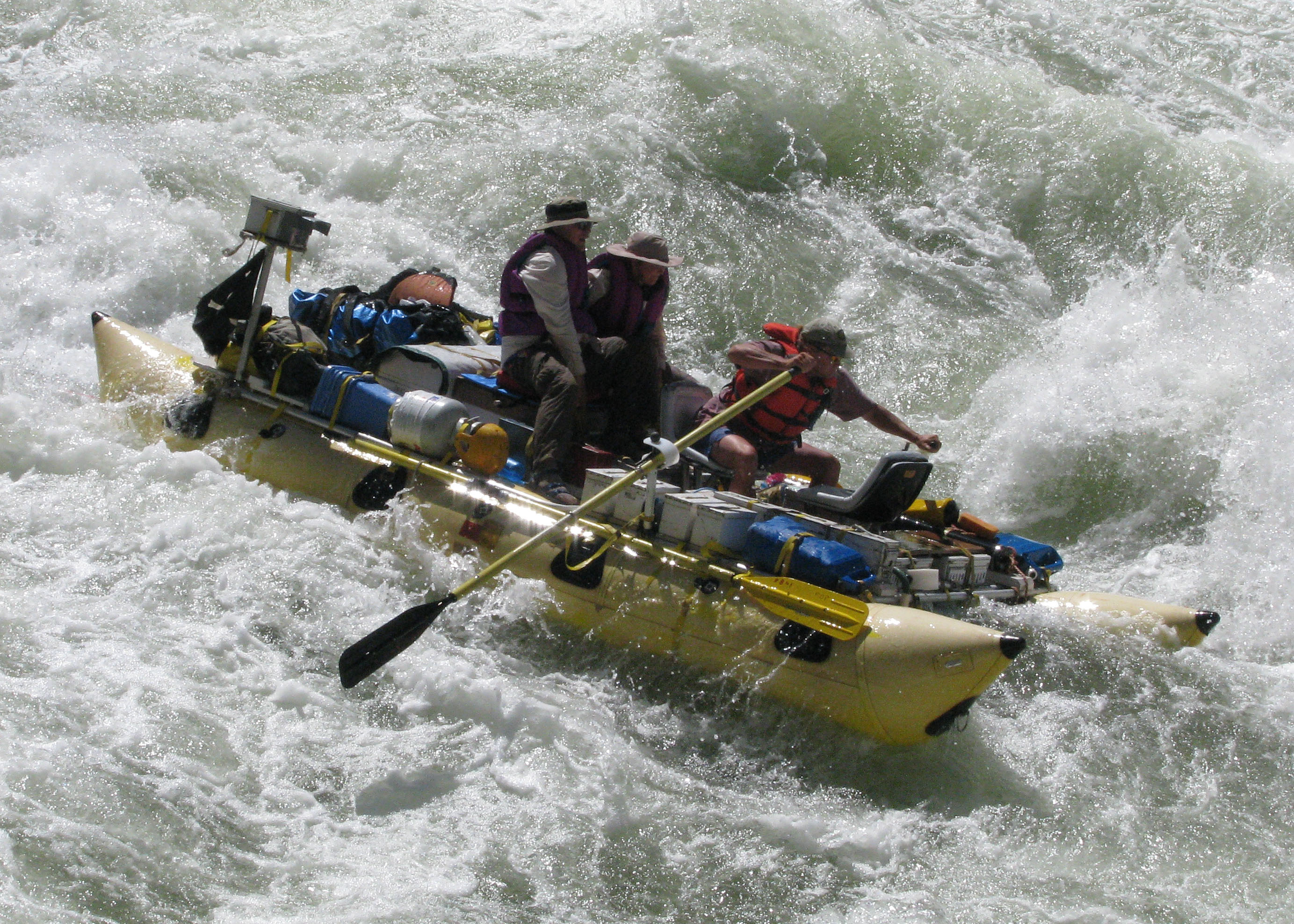
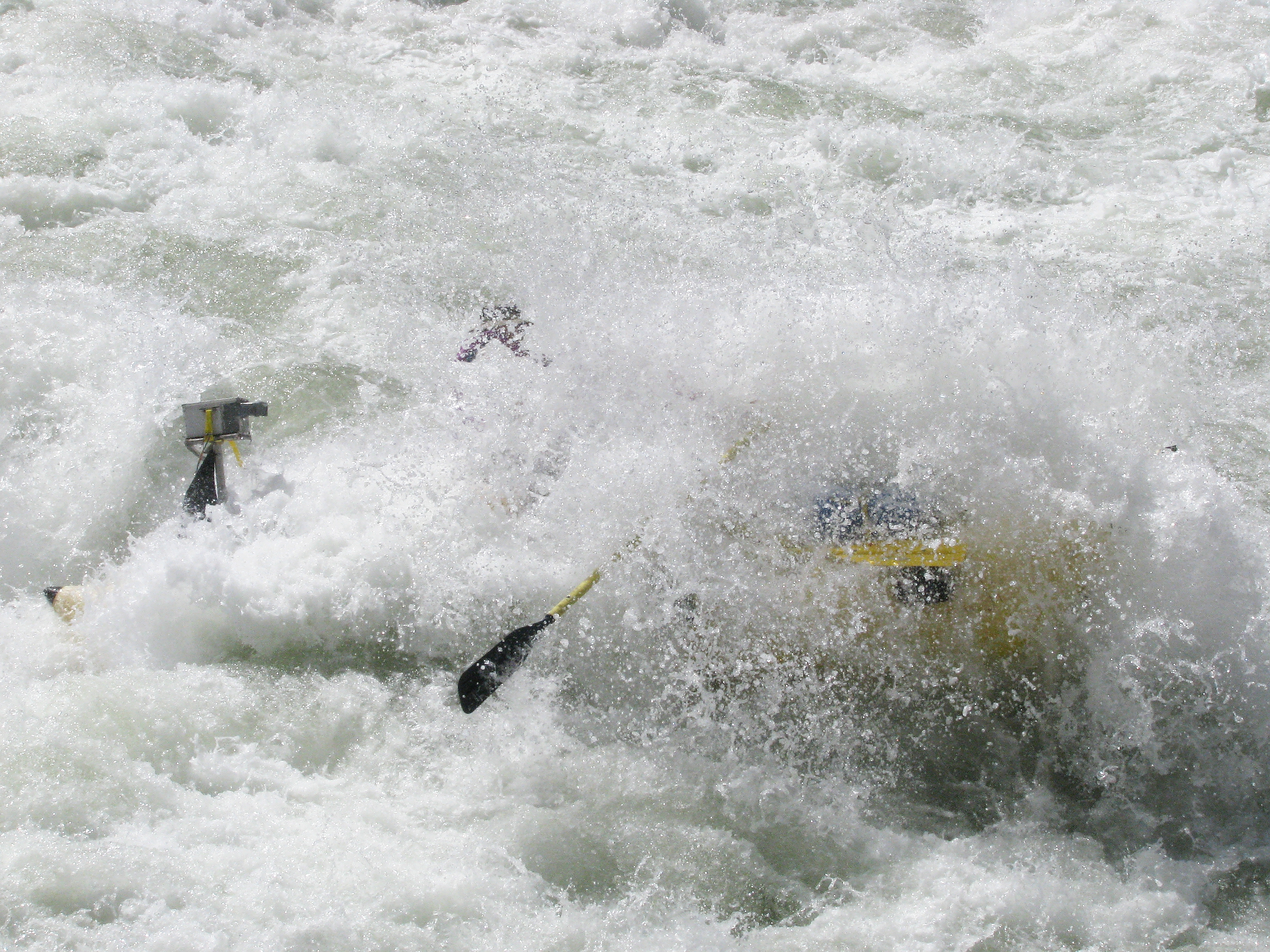
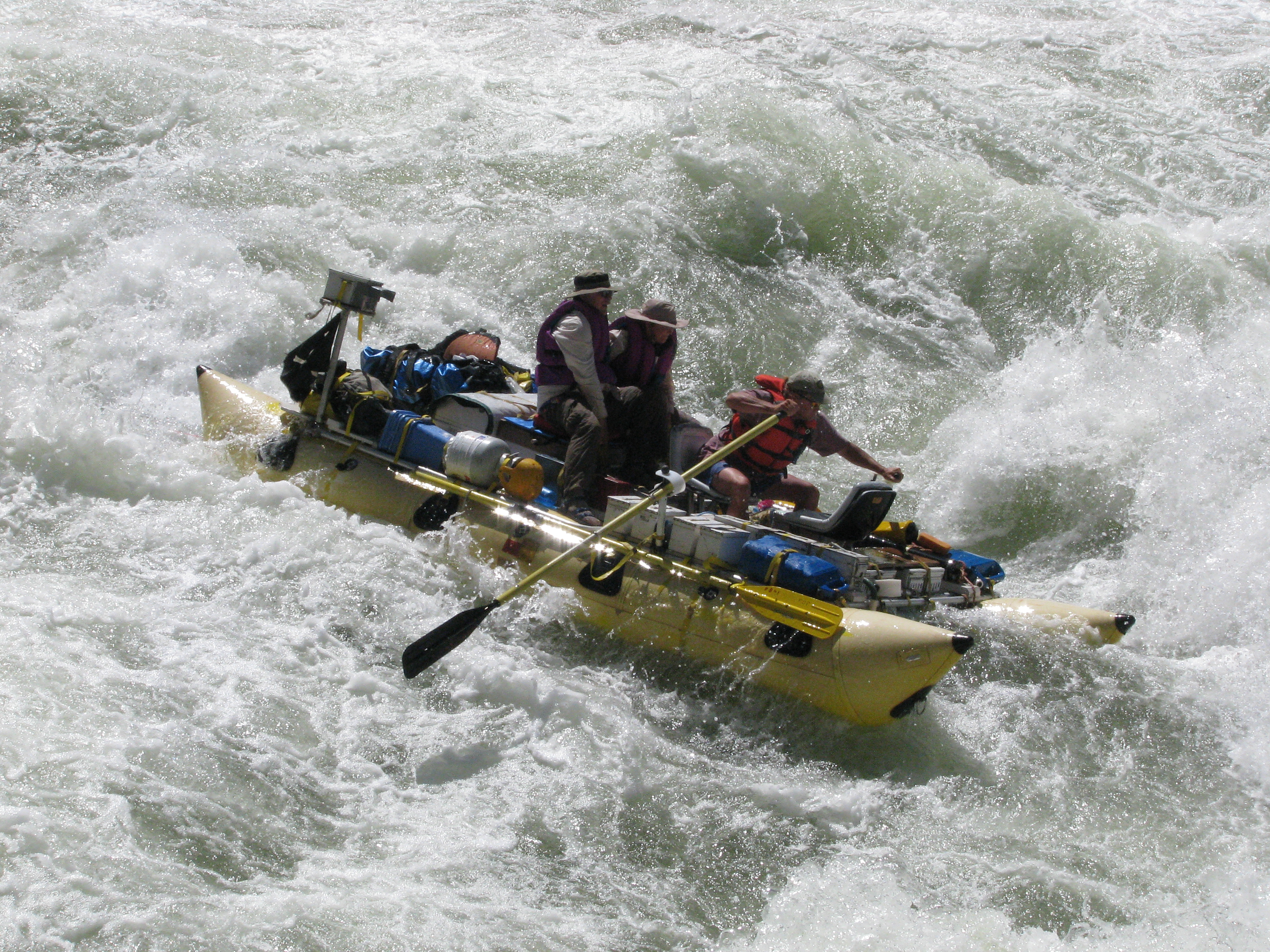
A massive wave in Lava Rapid buries Peggy, I and Steve Vandoor. My hat represents Peggy and I. The oar, Steve. Steve's video camera is recording as we go. Photo courtesy of Don Green.

A serious discussion is taking place among our boatmen. They are nervous about the amount of water flowing through House Rock Rapid. A huge, raft-eating hole gapes at us from river left.

A hole is created by water flowing over a rock or ledge. The resulting waterfall forms the hole and sucks in water from downstream, creating a reverse wave. Once a boat gets caught, it is difficult to get out… and easy to flip.

Boatmen, passengers and gear may go for a swim. The bigger the hole; the greater the danger. The force of the water can suck you down into the murky depths.  It’s possible to surface under the raft.  More likely you’ll be spit out down stream.

There are other worries as well. Sleepers, rocks hidden just beneath the surface, can rip out the bottom of your craft. Cross currents may send you crashing into a wall. Your boat can become wrapped around an obstacle such as a rock or log.

To avoid these hazards, boatmen on private trips normally stop to scout the more dangerous rapids. Less threatening cousins receive a ‘read and run.’ The boatman stands up in the boat, takes a look, and goes for it.  Normally a smooth, tongue like section of the river and standing rapids point the way. Success means a thrilling, bumpy, wet ride that is over in seconds with the messy side up. (The messy side is the one with boatman, passengers and gear. The option is the boat’s smooth bottom!)

The ability to ‘read a river’ is an essential boatman skill. While excellent books describe the rapids and suggest routes, changing water levels create varying situations. High water may demand running one side of the river and low water the other.

Water levels are determined by the amount of water being released from Glen Canyon Dam, which in turn is determined by electrical power needs in the Southwest. Greater power needs require more water being released to run the huge turbines that generate the electricity.

The problem with House Rock Rapid is a lack of water. While this may seem counterintuitive, less water means more rocks are exposed to create hazards. Steve, who is a prudent kind of guy for a pirate, urges Tom to wait until the release from Glen Canyon catches up with us and raises the water level.

We place a small stick in the water to measure the water and wait. Peggy and I find a shady location to update our journals. Several people head for a hike up the side canyon. Others nap. I catch several photos of people sleeping. Eventually Tom and Steve determine it is time to go.

We are on Tom’s boat. He is going first and is understandably nervous. I tighten my grip on the safety lines. The more nervous the boatmen are, the more nervous I become. The boat moves slowly at first, inching forward, the calm before the storm that seems to go on and on. Then the current grabs us. The boat leaps forward, bounces, and then hurtles down. Freezing waves crash over the bow and soak us. The roar is deafening. Peggy and I struggle desperately to hold on while Tom fights for control. He yells. The right oar has slipped out of the oarlock. The boat begins to spin. The huge hole looms beside us, threatening to drag us in. But our momentum carries us forward and Tom’s skill brings us into shore.

The few seconds it takes to come through the rapid are burned into my memory.

Even bigger rapids lie ahead. House Rock is labeled a 4-7 using the Grand Canyon rating system. Crystal and Lava, the Grandmother and Grandfather of Colorado River rapids, are labeled a 7-10 and 8-10 respectively. They are considered two of the most challenging rapids in North America.

Almost all of the rapids in the Canyon are created by flash floods coming down side canyons that deposit huge rocks in the river. Because of the floods, rapids can change over the years. For example, Crystal Rapid did not exist prior to a massive flood in 1966.

Colorado River boatmen speak with awe and a tinge of fear about Crystal and Lava. The sentiment is contagious. We approach both with trepidation. We ride through each with Steve on his catamaran raft. Crystal seems to come and go but Lava is something else, almost mythological in its ferocity.

Steve, Peggy and I in Lava on the cat. Photo courtesy of Don Green.

Vulcan’s Anvil, a large chunk of lava in the middle of the river, is a signpost announcing the presence of Lava. (We have already heard its roar.) Superstitious boatmen kiss the rock to assure a safe journey. Steve, always cautious, obediently performs the ritual.  Scouting is carried out with great care; there is plenty of time to contemplate our fate.

The photos in this blog capture our experience much better than words. Lava is indeed a 10 out of 10. At one point, when I am staring into the massive hole on our left, Peggy is watching Steve almost be washed out of the boat on our right: scary stuff.

On the last night of our adventure, Peggy asks Steve what his most memorable experience was. “Turning around at the end of Lava and seeing that the two of you were still on my boat,” he replies. Ditto.

Boredom Is Not an Option!

Megan Stalheim and Don Green rafted by us demonstrating the push-pull method of rowing. Brad Lee, a dentist out of Sacramento, looks on.

The wind continues to beat against us as we make our way down the Colorado River. Only Dave’s strenuous effort at the oars keeps us from floating up stream. “Go that way,” I suggest and point down the river.

The group pulls in at a tiny beach in hopes our mini-hurricane will die down. It doesn’t.

Dave develops blisters and I develop guilt. A manly-man would offer to take over at the oars.

An option floats by. Dave’s niece, Megan Stalheim, is also one of our boatmen. Don Green, a retired Probate Judge out of Martinez, California, is sitting opposite her and pushing on the oars while she pulls. It inspires me. I join the push-pull brigade.

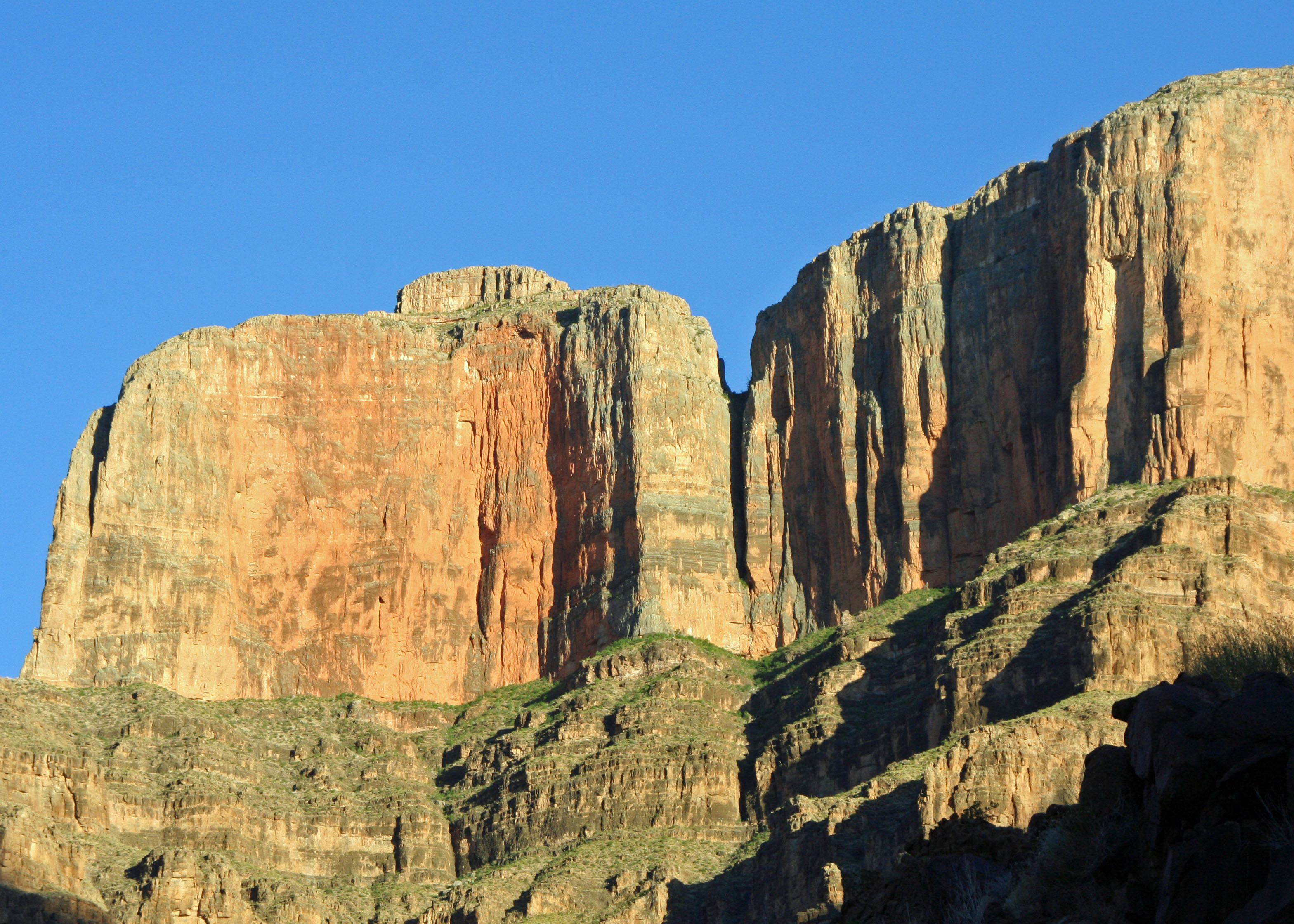
As tough as the day is, the beauty of the River and the Canyon make our efforts worthwhile. Peggy points out a strange, creature-like rock formation and we admire a family of ducks.

Little imagination is required to turn rock formations into strange faces.

Word passes back to us that Tom wants to scout Badger Rapids. In Boatman terminology this means figuring out the best way to get through without flipping. Badger isn’t a particularly big rapid for the Colorado, but it is our first. We are allowed to be nervous.

There is good news included in the message. We will stop for the night at Jackass Camp just below the rapids. We’ve only gone 8 miles, some 3 ½ miles from our original destination, but we are eager to escape the wind.

Dave is a cautious boatman. He takes his time to study Badger Rapids from shore and then stands up in his raft for a second opinion as the river sucks us in. Time runs out. Icy waves splash over the boat and soak us. Our hands grasp the safety lines with a death grip as we are tossed about like leaves in a storm drain. Mere seconds become an eternity. And then it is over.

“Quick, Curt, I need your help,” Dave shouts. We have come out of the rapids on the opposite side of the river from the camp. The powerful current is pushing us down river. If we don’t get across we will be camping by ourselves. Adrenaline pumping, I jump up and push the oars with all my strength while Dave pulls. Ever so slowly the boat makes its way to camp.

“Chirp, chirp, chirp-chirp-chirp.” It’s dark out and some damn bird is cheerfully discussing its wormy breakfast. I roll over and groan, desperately wanting to go back to sleep. We can’t, however. It’s five AM, time to rise and shine, time to pack up, time to scarf down breakfast, time to hit the river.

“It is not five AM,” Tom argues. It is five AM in California. Arizona refuses to go on Daylight Savings time. This irritates Tom. It is really six.

As we have learned, and I might add, learned well, we are not on a ‘float and bloat’ trip. Adventure awaits us. There are cliffs to climb, waterfalls to leap off, raging side streams to ford, rapids to survive, and miles of river to row. Boredom is not an option.

A family of ducks strolls up the river bank. Photo by Don Green

Wild Winds and a Mormon Massacre

The boats are loaded and ready to launch. Tom's wife Beth appears to be much less anxious than he is. The other passenger is Theresa Mulder.

Finally… we are ready to launch. Eighteen days and 279 miles of the Colorado River and Grand Canyon lie ahead. Ranger Peggy has checked our IDs and we are who we claim to be. The boatmen have strapped down the gear… and Tom is anxious.

The same up-canyon winds that whipped sand into our tent last night are threatening to create a Herculean task of rowing. Gusts of up to 60 MPH are predicted.

Peggy and I perform the ritual of asking a boatman if we can ride with him. It seems like a strange practice to me, designed to remind us who’s in charge. But we have entered the world where each boatman/woman is the captain of his or her ship, even if the ship is a 16 foot raft with two or three passengers.

“May I have permission to come aboard, sir?” Although it’s more like “Can we ride with you today?”

The tradition is so old that it fades into history. Democracy is not an option on a raging sea or, for that matter, in the middle of a roaring rapid. When the captain yells jump you jump.

Our boatmen are mellow people, however, good folks. There are no Captain Blighs. If they are slightly more than equal, it goes with the territory. We are committed to riding with each boatman. First up is David Stalheim.

“I’ve been applying for a permit to go on the Colorado River for 15 years,” he tells us. It makes Peggy and my successful one time, ten minute effort of obtaining a permit seem grossly unfair.

Dave Stalheim and I with that pristine, fist day on the river look. Things will go downhill.

Dave quit his job as Director of County Planning in Bellingham, Washington the day he left for this trip. He will start a new job with City Planning when he returns. He is strongly committed to sound planning and community participation. I suspect he is not popular with land developers and speculators.

We push-off from shore, excited and nervous. The wind strikes immediately, like it was waiting in ambush. “Are we moving at all?” Dave asks plaintively.

An old rock road makes its way tortuously down from the canyon rim on river left. (Left and right are determined by direction of travel.) They are important for giving directions as in “There is a raft ripping rock on river right!” Since boatmen often row with their backs facing downriver, they appreciate such information.

The old road is how people once made their way to Lee’s Ferry, which was one of the few ways to cross the Colorado River between1858 and 1929. The Ferry was named after the infamous Mormon, John Doyle Lee, who was executed by firing squad for his role in the Mountain Meadow Massacre.

The old road to Lee's Ferry.

The massacre took place near St. George, Utah in 1857, where a wagon train of immigrants from Missouri and Arkansas, the Fancher-Baker Party, were murdered by Mormons and Paiute Indians. Lee apparently persuaded the immigrants the Mormons would provide safe passage through the Indians if they would disarm. The Mormons then shot the disarmed men while their Indian allies killed the women and children.

For a while Lee hid out while running the Ferry which was given his name.

And for a while, I believed that Lee had killed some of my ancestors. My grandmother was a Fancher and her family came west right about the time of the massacre. Since the babies with the wagon train weren’t killed, my brother’s genealogical research suggested we might be descendants.

Turns out, it wasn’t so. Still, there may have been some distant cousins among those massacred. More research is needed.

After fighting the wind for what seems like hours, we finally come to the Navajo Bridge which replaced Lee’s Ferry in 1929. We are already miles behind our planned itinerary.

Lee's Ferry was replaced by the Navajo Bridge in 1929, the first bridge shown above. It has now become a walking bridge with the one behind carrying vehicle traffic.

The River Rules… in fine print

Our intrepid adventurers just before launch on the Colorado River. Ranger Peggy is on the far right.

 “Shall we gather by the River,” the Baptists used to sing. With us, it’s not an option. Ranger Peggy of the Grand Canyon National Park Service is giving a sermon on the Do’s and Don’ts of boating on the Colorado River. Our participation is mandatory.

I first met her when we were rigging our boats. She stopped by to check our equipment. Life vests had been dutifully piled up; stoves and bar-b-que were unpacked. Even a groover, which I will describe later, stood at attention. You don’t mess with Ranger Peggy.

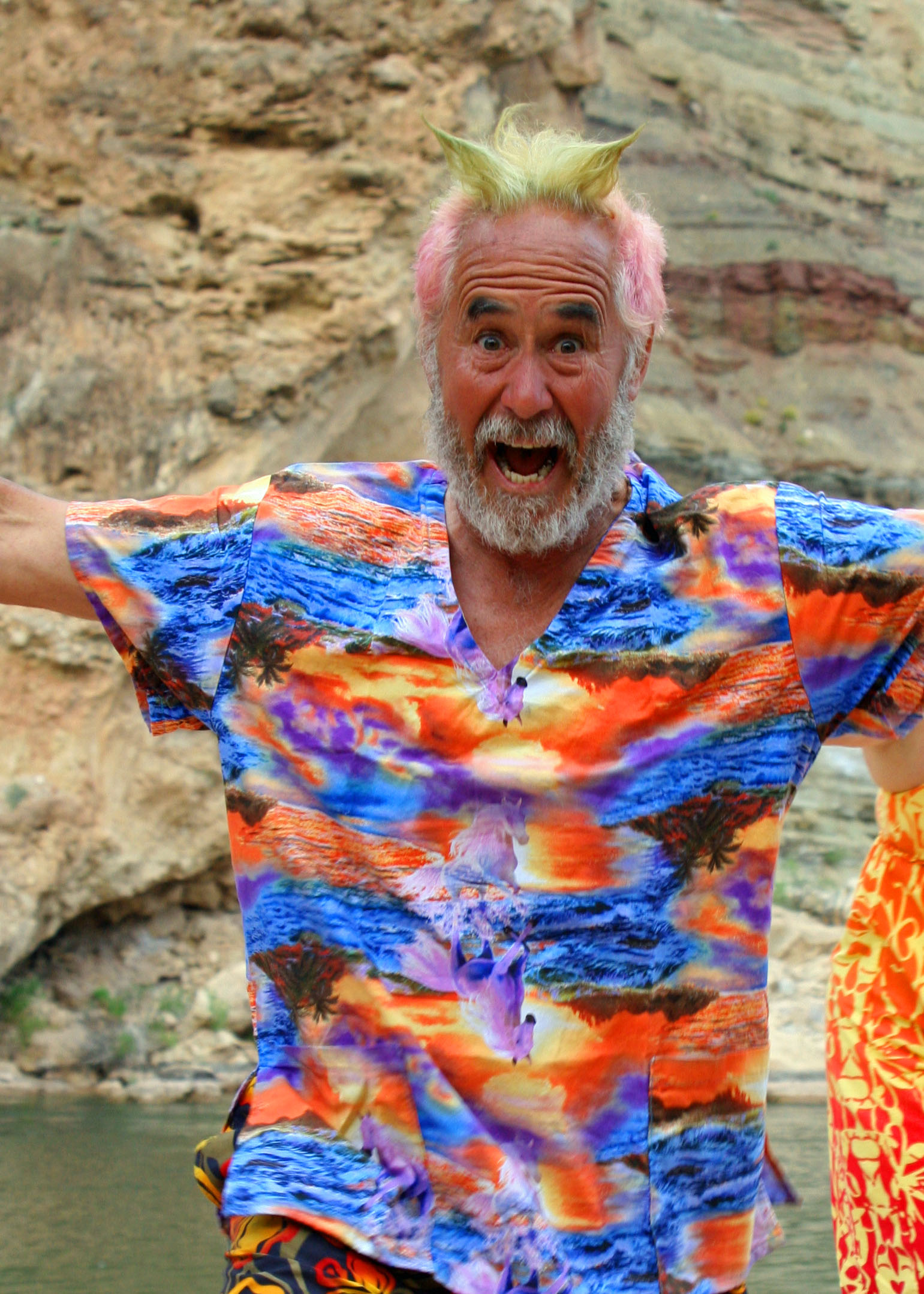
She knew Tom from other river trips and was amused by his hair-do. He introduced me as the permit holder. “Tom’s in charge,” I noted. The smile dropped from her face. “You are responsible,” she said icily. “I’ll try to keep Tom under control,” I replied meekly. Yeah, fat chance that.

Bells, whistles and alarms started going off in my head. Dang, why hadn’t I read the fine print?

Tom lectures us on river safety before Ranger Peggy begins her spiel. What’s the first rule: Hang onto the boat. What’s the second rule? “Hang onto the boat,” we chant in unison. And so it goes. Tom saw his wife, Beth, go flying by him last year as he bounced through a rapid. He caught up with her down river.

If the raft flips, what do you do? Hang onto the boat! “Easier said than done,” I think. Of course we will be wearing our life vests. In fact there is a serious fine if a Park Ranger catches any of us on the river without one. As the permit holder, I pay. More fine print, so to speak.

“Your head is the best tool you have in an emergency,” Ranger Peggy lectures. Right. When the river grabs you, sucks you under the water, and beats you against a rock, stay cool.

For all of the concern about safety on the river, the Park Service seems more concerned about our behavior on shore.

Over 20,000 people float down the river annually. And 20,000 people can do a lot of damage to the sensitive desert environment. Campsites are few and far between and major ones may have to accommodate several thousand people over the year.

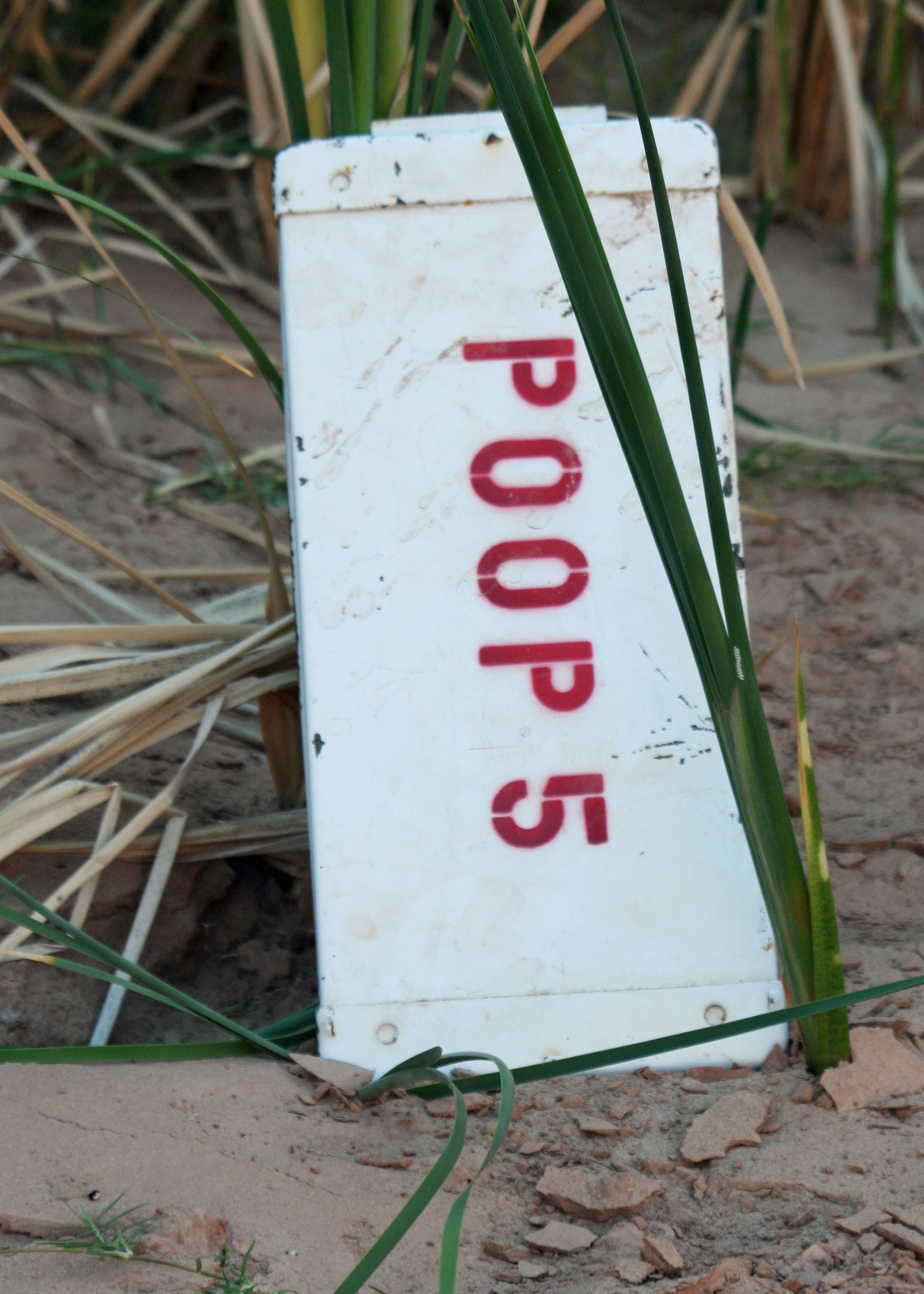
Picture this: 20,000 people pooping and peeing in your back yard without bathroom facilities. It ain’t pretty. So we pack out the poop. And we pee in the river…

Packing out poop makes sense. But peeing in the river, no way! I’ve led wilderness trips for 36 years and for 36 years I’ve preached a thousand times you never, never pee in the water. Bathroom chores are carried out at least 100 yards away from water and preferably farther.

The first time I line up with the guys I can barely dribble out of dismay. (And no, it isn’t just old age.)

The rules go on and on. Mainly they have to do with leaving a pristine campsite and washing our hands. Normally, I am not a rules type of guy but most of what Ranger Peggy is preaching makes sense. Sixteen people with diarrhea is, um, shitty.

And I enjoy the fact our campsites are surprisingly clean. The least we can do is leave them in the same condition we find them, if not better. The rules work.