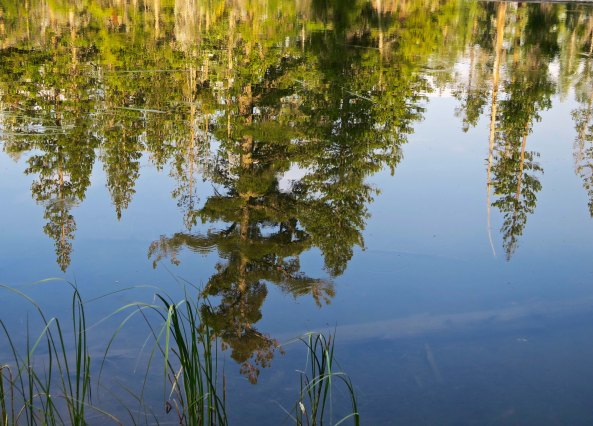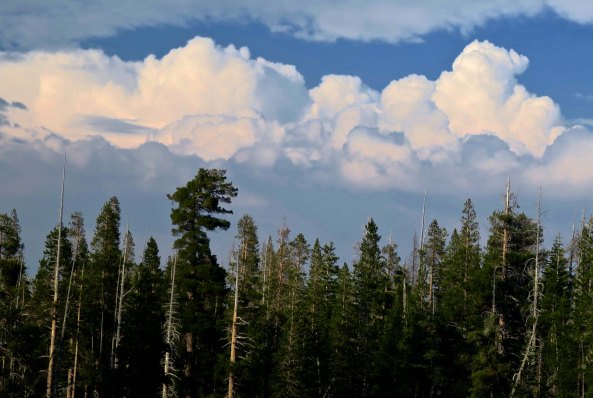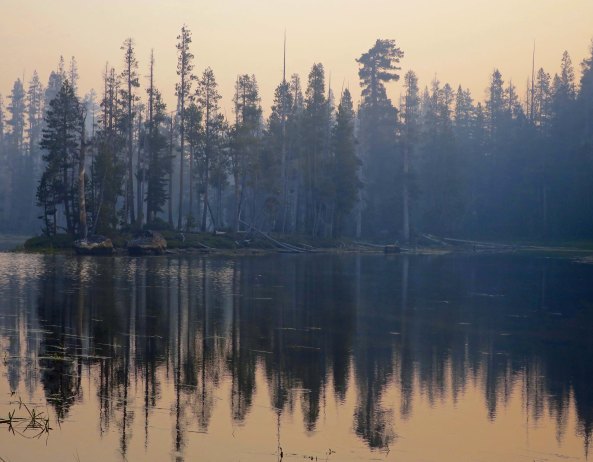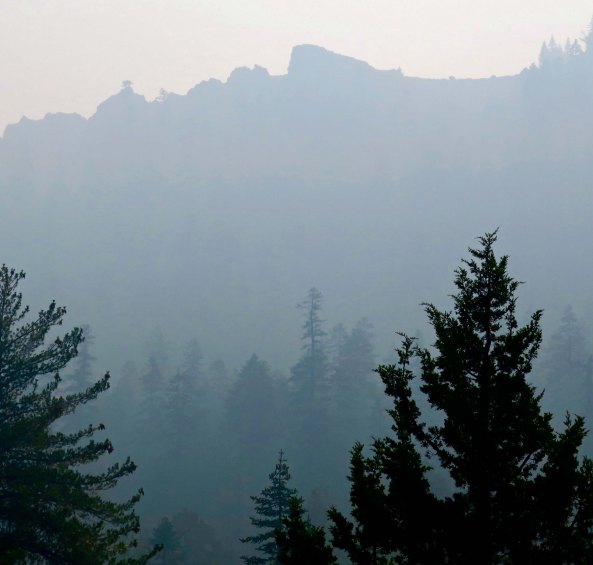
The Natchez Trace: A Bicyclist’s Paradise… The 10,000 Mile North American Bicycle Tour

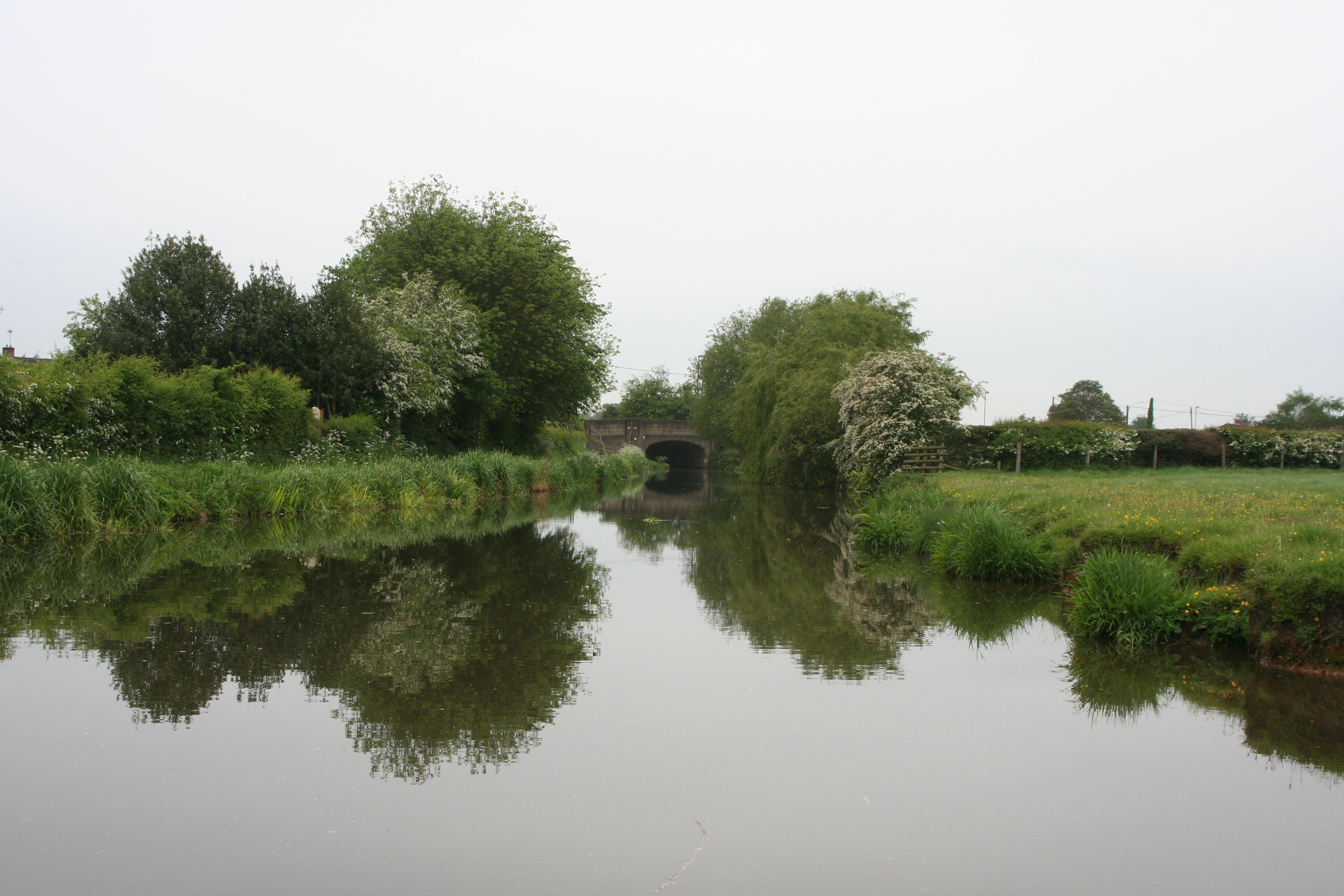
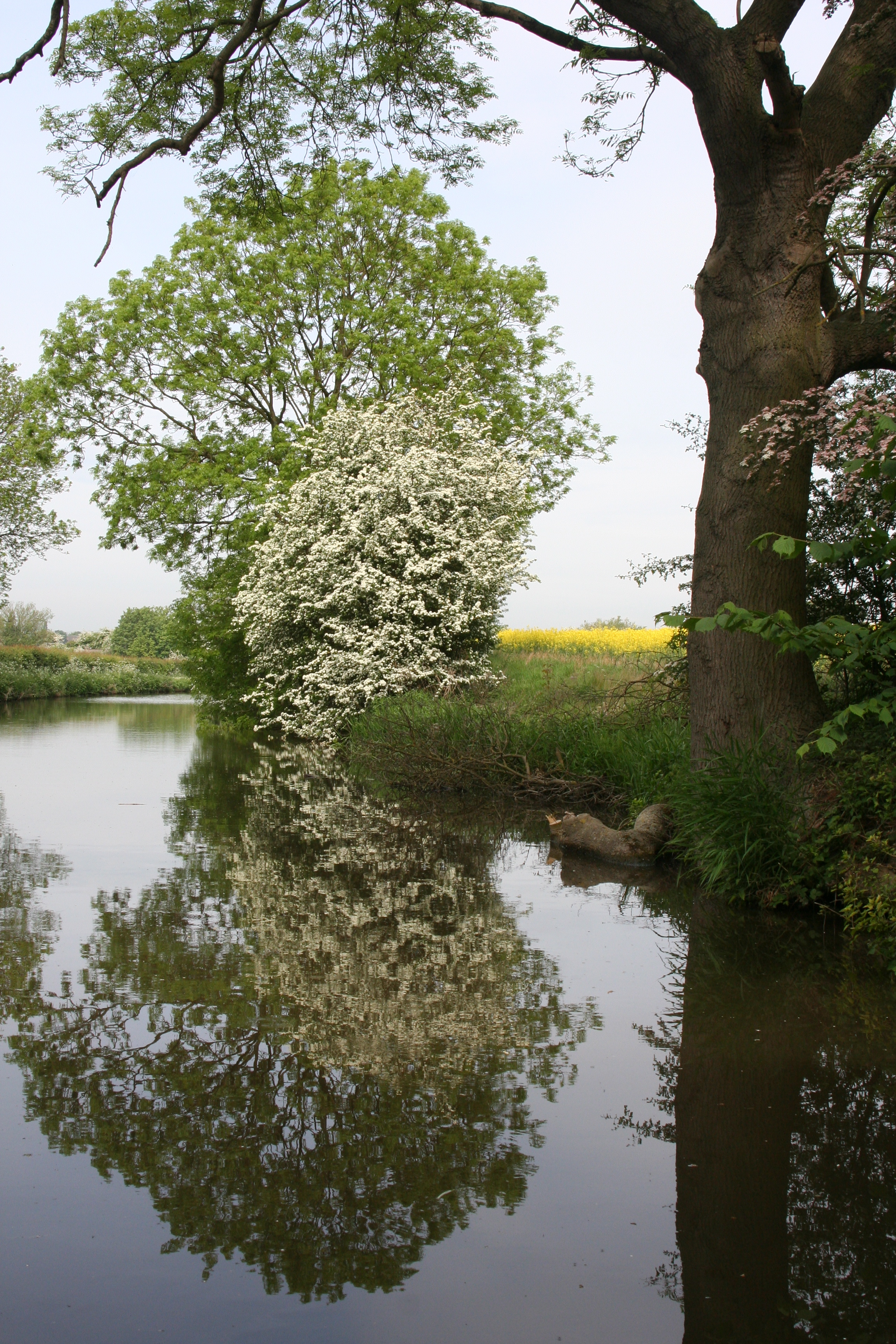
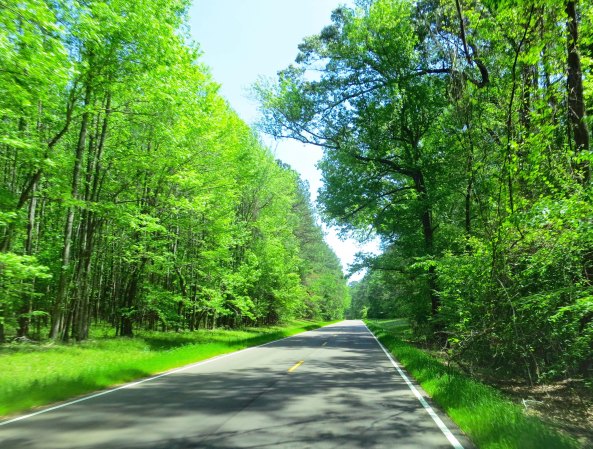
The Natchez Trace between Natchez and Jackson Mississippi.

I don’t think there is a place along the Natchez Trace that isn’t beautiful. I traveled on it for 370 miles of its 450 mile length.

This is my fourth post introducing new followers to the type of tales they can find in my blog. Way back in 1989, I did a solo 10,000 mile bicycle tour of North America. While the journey predated blogging, Peggy and I retraced my route three years ago. Traveling out of California, we crossed the US following a southern route, went up the east coast into Canada, headed back west through Canada to Minnesota, and then finished our tour following a northern route back to California. This is a chance to visit much of North America and hear tales about my bike trek. Want more: Here’s a post from Canada. Scroll forward or backward for the rest of the story:  https://wandering-through-time-and-place.com/2016/09/28/

A large, yellow mutt came wagging his way into my camp. I’d unpacked my gear, set up my tent, and taken off my shoes and socks. My toes were celebrating their freedom.

“Well hello big fellow,” I said to the dog, glad for the company. He sat down beside me and worked his head under my hand, demanding that I scratch behind his ears. Then I was required to pet the rest of him. I had just worked my way down to his tail when he rolled over and insisted on equal treatment for his tummy.

I provided an initial scratch but my coffee water had started boiling. “Priorities,” I told him, “the petting zoo is closed.” Apparently this meant it was play time. He leapt up, grabbed one of my socks, and bounced off about 15 feet.  “Hey! Bring that back,” I urged. Fat chance. He put the sock down, backed off a couple of feet, and started barking.

I finished pouring the hot water into my coffee filter and got up, tiredly, to retrieve my sock. It had been an 80-mile day and I really didn’t want to play ‘chase the dog around the yard.’ I pretended that I didn’t care, that I wasn’t going for the sock, and that I was terribly interested in a large bullfrog that had taken up residence in the swimming pool. The pool hadn’t been cleaned since the previous summer. It made a great pond.

The dog didn’t buy it. He dashed in, grabbed the sock and ran off across the yard. “Okay, you win,” I declared while picking up a stick. “How about a game of chase the stick?” The dog cocked his head and increased his wags per second. I tossed the stick and off he dashed, leaving my sock behind. I quickly bare-footed it across the lawn and grabbed my sock.

“Ha, ha, Mr. Dog,” I called after him while waving the sock about enticingly. To compensate my new friend for his loss, I played tug-of-war with the stick. We growled at each other appropriately, all in good fun.

It was early to bed. I had completed my trip from Alexandria by biking through the city of Natchez and was now camped about a mile from the beginning of the Natchez Trace.  I was eager to get up the next morning and start my 370-mile journey up the fabled Parkway through Mississippi and Alabama into Tennessee. As I zipped up my tent, the big yellow mutt did three dog turns outside the door and plopped down, making me wonder where his home was. I was hardly in a position to adopt a pet. Besides, he was well fed and wearing a dog tag.

My last memory before going to sleep was of the bullfrog singing to his lady-love. “Chug-a-rum, chug-a-rum, chug-a-rum.”
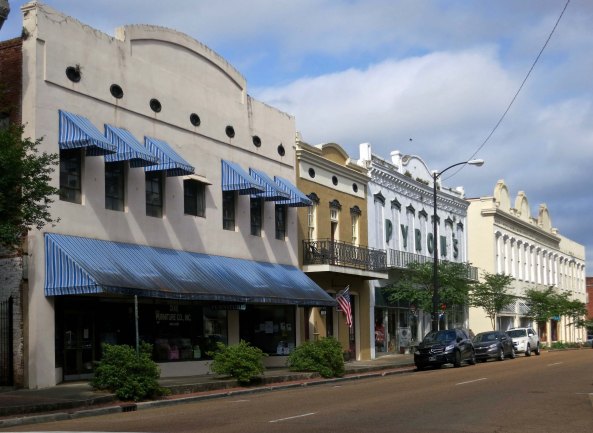
Downtown Natchez, Mississippi.

Peggy and I drove through Natchez on a Sunday morning and pretty much had the historic section of the downtown to ourselves.
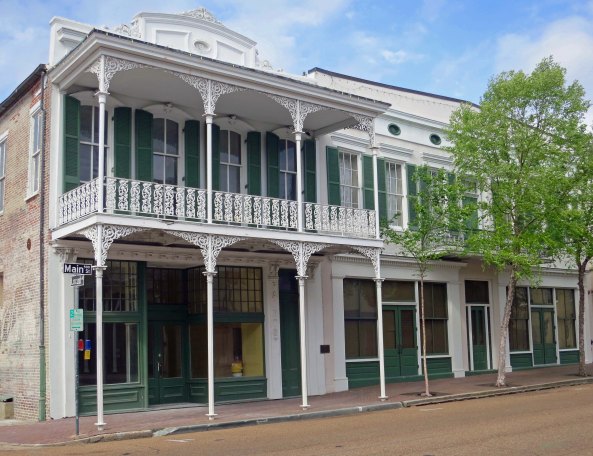
Historic building with balcony in Natchez, Mississippi.

This historic building in Natchez came with an attractive balcony.
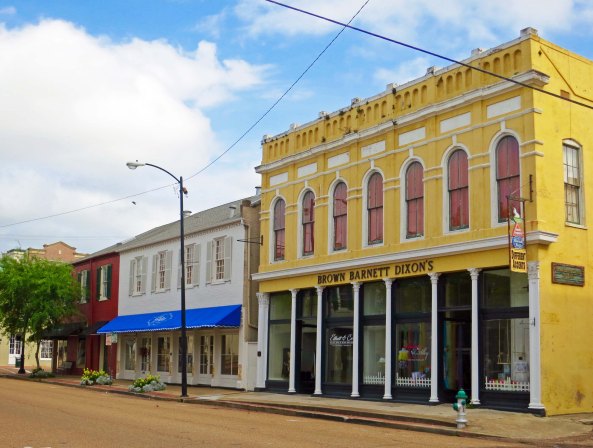
Downtown Natchez, Mississippi on a quiet Sunday.

The colors captured my attention here.
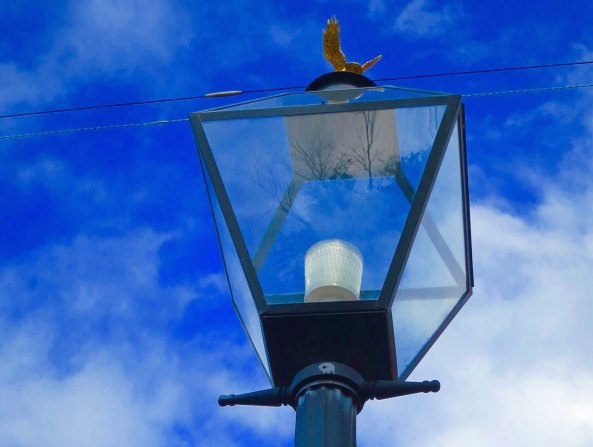
Old lamp posts adorn the historic part of Natchez.
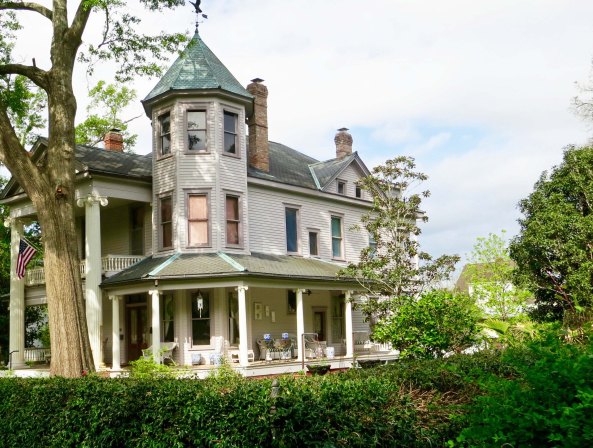
Old lamp posts adorn the historic part of Natchez.

The city is known for its antebellum mansions.
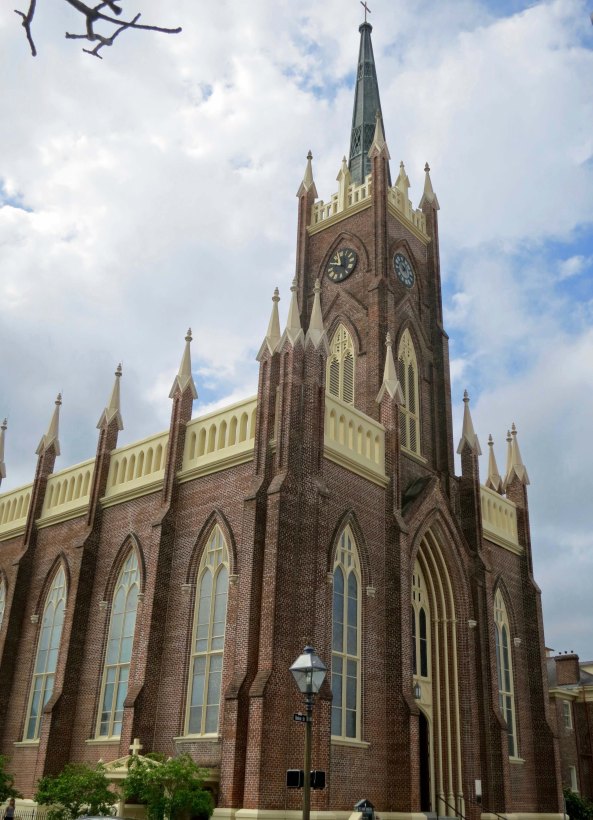
The city is known for its antebellum mansions.

St. Mary's Catholic Church in downtown Natchez, Mississippi.

St. Mary’s Catholic Church was busy with its Sunday service so I didn’t go inside.

St. Mary's Catholic Church is located in downtown Natchez, Mississippi.

It was quite impressive from the outside, however.

Natchez has an interesting history. Once the site of a major Native American village, its initial contact with Europeans goes all the way back to Hernando de Soto in the mid 1500s. He wandered through the area searching for gold to steal, the primary occupation of Spanish Conquistadores. By the 1700s the French had entered the area followed by the British, the Spanish again, and finally, in 1795, the Americans. Native groups in the region included the Natchez, Chickasaw, Yazoo, Cherokee, and Creek, as well as the Choctaw further to the north.

As for the Natchez Trace, its beginning goes back 10,000 years and was probably tied to buffalo travelling along ridges doing buffalo things. Since these broad, heavy animals make good trails (think of them as early day bulldozers), Native Americans were soon using the routes for trade and travel between large communities.

The next stage in the Trace’s evolution was brought about by river trade in the late 1700s and early 1800s. Kaintucks, boatmen from the Ohio and Mississippi River Valleys, loaded flatboats with merchandise and paddled downstream to Natchez or New Orleans where they made handsome profits for their goods. The challenge was that you don’t row a boat up the mighty Mississippi. The boatmen had to hike or ride horses home. They sold their boats as lumber and made their way back to Nashville via the Natchez Trace

It was an adventure. There is a reason why the Trace became known as The Devil’s Backbone. It was crawling with highway men eager to separate the Kaintucks from their newly earned wealth. And that assumes that they could even get their money out of Natchez where cheap whiskey cost a fortune, hot love was based on cold cash, and cut-throats came by the bushel.

The development of steamboats in the 1820s changed things dramatically. These boats with their large, steam-driven paddle wheels could travel upriver. Boatman no longer had to hike or ride horses back to Nashville while fighting off thieves.  Gradually, people stopped using the Trace and it faded from memory.  But not totally.

In 1903, the Mississippi chapter of the Daughters of the American Revolution took on a project of placing markers along the original route. In 1918 the precursor to the Natchez Trace Association was created with the rallying cry of “Pave the Trace!” Work on the Parkway was started in 1937 and in 1938 it became a unit of the National Park system.

When I rode my bike out of Natchez in the spring of 1989, the Trace was mainly complete and had become something of a bicyclists’ paradise. (Today it is considered one of the top ten bike rides in America.)   To start with, there was no commercial traffic. No 18 wheelers would be whizzing by me. Nor were there any commercial properties or billboards, just lots of beautiful woods and small farms. Campgrounds and restrooms were located conveniently along the way.  Frequent rest stops featured local history. I was free to ride along and enjoy the scenery.

But I did have two responsibilities. The first was to persuade the large, yellow mutt that he wasn’t going with me. It started with a discussion in camp that I thought he had understood. Where I was going was dangerous for doggies. It was dangerous enough for me. About a mile from camp I chanced to look back, there he was, about 50 yards back. I stopped and waited for him to catch up, all a waggle. “No!” I said forcefully. “You cannot go. Go Home!” The tail stopped wagging. Two sad brown eyes accused me of horrendous deeds. Ever so slowly, he turned around and started back, tail between his legs. I felt terrible.

The second chore was more pleasant— rescuing baby turtles. Bunches were migrating across the Trace outside of Natchez. Each time I came on a crowd, I would stop, climb off my bike, and give the little tykes a lift across the pavement. I knew that there would be more coming along behind but I must have transported at least a hundred,undoubtedly saving them from being run over.

Following are several photos of the Trace from Natchez to Jackson, Mississippi that I took during the route review Peggy and I did this past spring.  In my next blog we will make a slight detour to the town of Philadelphia, Mississippi where a good friend lives and then head up the Trace to Tupelo and visit with Elvis.
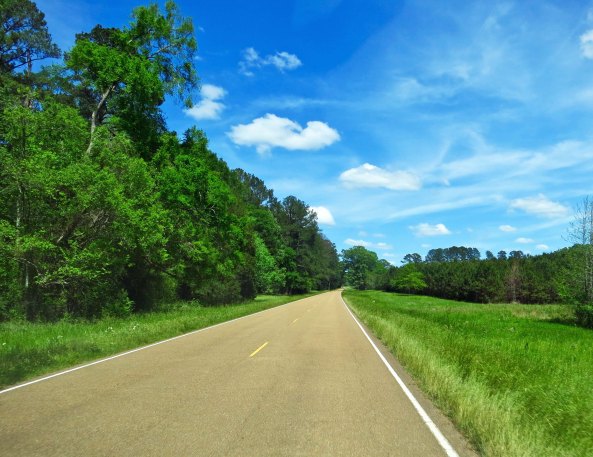
Views along the Trace were constantly changing from being forested to open.
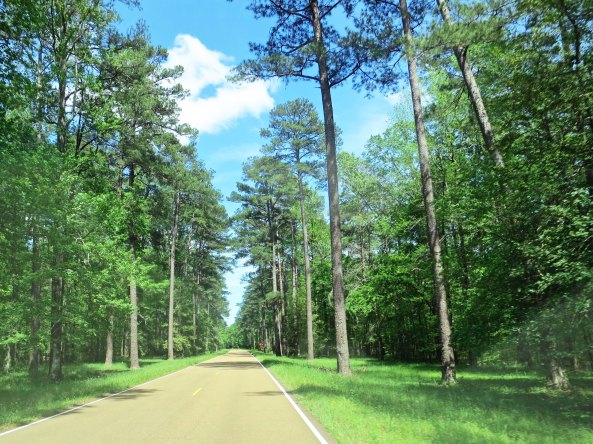
Views along the Trace were constantly changing from being forested to open.

Pine trees became common around Jackson, Mississippi.
Pine trees became common around Jackson, Mississippi.

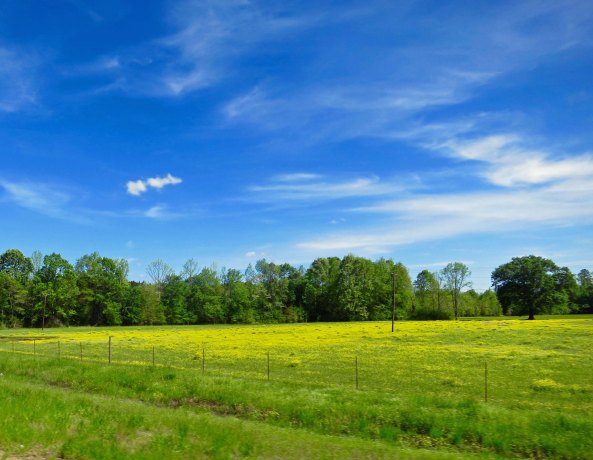
Rich farmlands border some of the Trace.
Rich farmlands border some of the Trace.

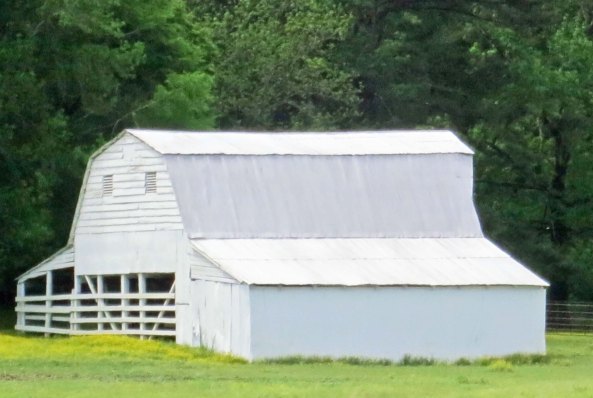
There are a number of barns.
There are a number of barns.

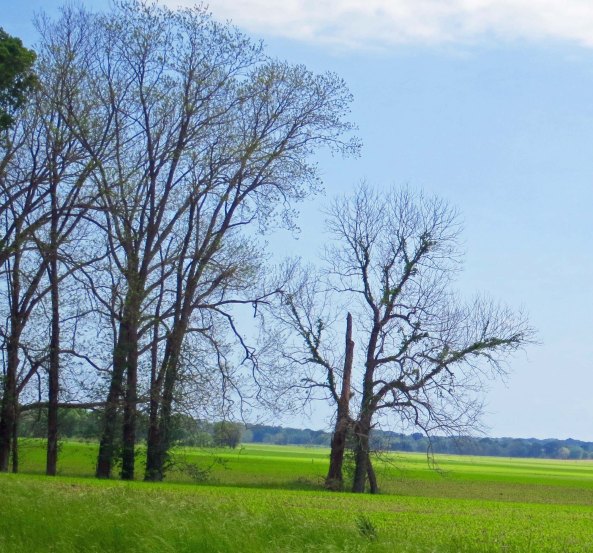
These trees had yet to leaf out.

These trees were just beginning to leaf out. I enjoyed the silhouettes they created.
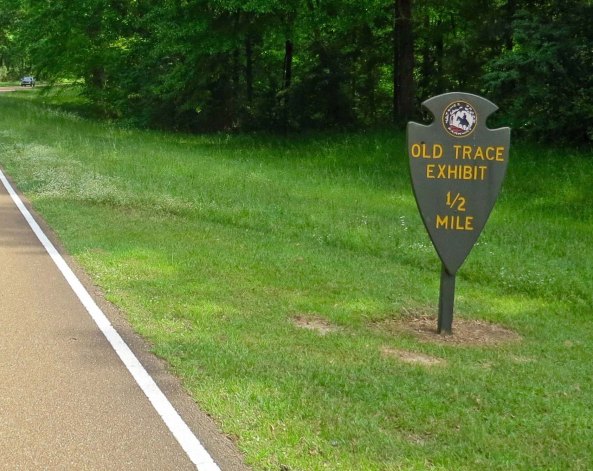
Numerous exhibits featuring the history of the Trace provide interesting breaks along the way.
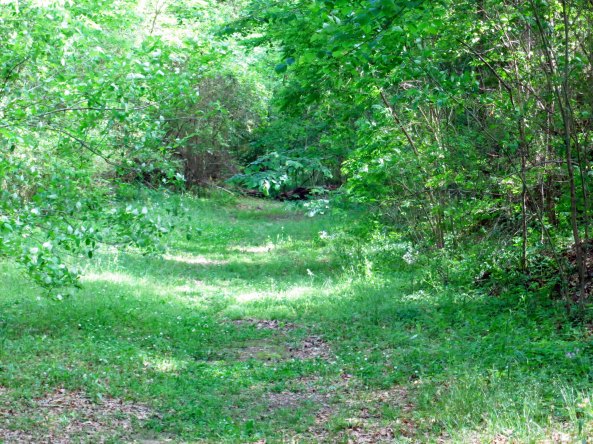
Numerous exhibits featuring the history of the Trace provide interesting breaks along the way.

A number of the stops, like this one, include original sections of the trail.
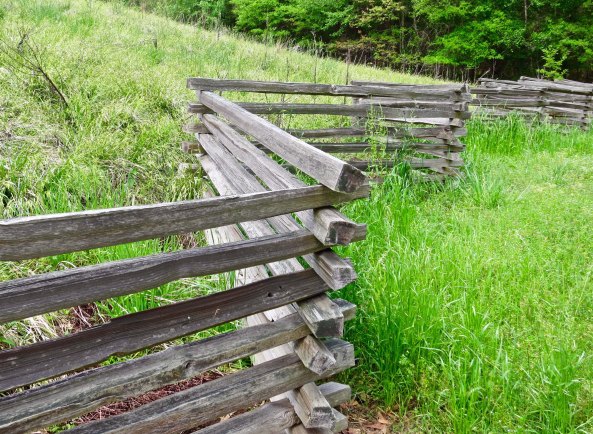
A number of the stops, like this one, include original sections of the trail.

The Park has also rebuilt traditional fences that the pioneers who lived along the Trace would have built.

The Park has also rebuilt traditional fences similar to ones that the pioneers who lived along the Trace would have built.
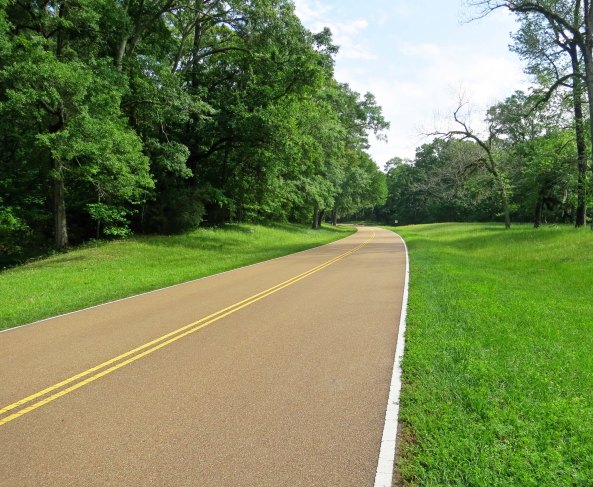
A final view of the Trace for today. Many more will be included in my next three blogs.
A final view of the Trace for today. Many more will be included in my next three blogs.


Kayaking among the Orcas/Killer Whales of British Columbia…

Kayaks belonging to the Sea Kayak Adventure group in the waters of Johnstone Strait, northeastern Vancouver Island.

Our sea kayaks wait patiently for us as we have lunch in a cove off of Johnstone Strait.

This is the first of my series of ‘oldies’ I am reposting from my archives to give new followers a taste of what they can expect to find on my blog. Peggy  and I made a trip to Vancouver Island, British Columbia in 2014 to go kayaking among the orca whales. The next post in the series can be found here:  https://wandering-through-time-and-place.com/2014/10/30/

I was nervous as we drove into the town of Port McNeill on the northeast shore of Vancouver Island in August. Peggy and I had signed up for a six-day sea kayak tour out of Telegraph Cove with Sea Kayak Adventures.We would be searching for orcas, which are also known as killer whales—as our son Tony, the Alaska Coast Guard pilot, reminded us. A little Jaws music, perhaps?

This orca was on display at the Whale Museum in Grove. I named him Smiley and addressed him as sir.

This orca skeleton was on display at the Whale Interpretive Center in Telegraph Grove. I named him Smiley and addressed him as sir.

“Okay, Curt, what have you gotten yourself into this time?” was bouncing around in my skull like a kangaroo on steroids. It’s a question I ask myself often.

I wasn’t nervous about the whales, however. I’ve spent my life communing with nature. Besides, these particular giants are gentle, relatively speaking; they get fat off the salmon in Johnstone Strait. They don’t need to eat people. But sea kayaking would be a first for me. The old dog had to learn new tricks, and that is always a reason to get excitable. Fortunately, Peggy and I had played around a fair amount with inflatable kayaks. We had even ventured out on challenging multi-day lake trips into remote areas such as Prince Albert National Park in Saskatchewan and Voyageurs National Park in Minnesota. So how hard could it be?

Aren't I pretty? There was no way I was going to make this skirt look good. (Photo by Peggy Mekemson.)

Aren’t I pretty? No? Maybe I wasn’t meant to wear a skirt. This skirt is designed to fit snugly over the cockpit of the kayak and keep out the water.  It’s so snug that you really have to stretch it to fit, which isn’t easy— particularly around the back. My skirt and I had several discussions while I was learning how to make it behave. It learned new words. Ask Peggy. (Photo by Peggy Mekemson.)

I confess I was more nervous about the idea of being on a tour. I am not much of a tour group person. This is a strange statement coming from someone who spent over a quarter of a century leading backpacking and bicycle fundraising treks for the American Lung Association. But the truth is— I am an independent cuss. I like to go where I want to go and stop when I want to stop. On an organized tour, I would be expected, even required, to adhere to the group schedule and itinerary. This isn’t a complaint. It has to be that way on group outings. Common sense and liability demand it.
And then there were the people. We’d be living closely with these folks for six days under potentially trying conditions. What would our guides be like? How about our fellow tour group members? Would we get along well? Would they be strange— even stranger than I am?
"Could I interest you in a cracker?" The tour promo promised good food, but it failed to mention the presentation. This is Nick, one of our three group leaders.
“Could I interest you in a cracker?” The tour promo promised good food, but it failed to mention the presentation. This is Nick from New Brunswick, one of our three group leaders. Note the sprig artfully shoved into the cheese.

Quy, another of our guides, is a gentle soul who in his other life works as a computer geek in Vancouver. So what is he doing with this knife?

Quy, another of our guides, is a gentle soul who in his other life works as a computer geek in Vancouver. So what is he doing with this knife?

Julia, our third guide and assigned trip leader, may use Quy's knife on me for this photo of her toes, but I couldn't help myself. And no, I don't have a foot fetish. My fascination was that these bare toes could run over sharp rocks. The last time I had feet that tough I was ten years old.

Julia, our third guide and assigned trip leader, hails from Germany and is quite charming. She may use Quy’s knife on me for this photo of her toes, but I couldn’t help myself. And no, I don’t have a foot fetish. My fascination with her toes was that they could run over anything, including  rocks. The last time I had feet that tough, I was ten years old.

And how about our fellow travelers? David is a psychologist out of LA. How much more strange can you get?

And how about our fellow travelers? David is a psychologist out of LA. How much stranger can you get than creating this mustache? Well maybe someone who kisses fish…

Well, maybe someone who kisses fish??? "But he was so beautiful," Lindy told me. He was dinner, Lindy,. Dinner.

“But he was so beautiful,” Lindy told me. He was dinner, Lindy. Dinner.

Regardless of how nervous I felt, the trip was simply too much of an opportunity to pass up. Like how could I not go on a sea kayaking adventure out among the orcas in beautiful British Columbia? As for Peggy, she is always up for adventure. When our friends Edie and David from Anchorage, Alaska called and asked if we would be interested in going, we gave a resounding yes. It turned out to be great decision. The guides, our fellow tour group members, and the incredible views were delightful. Even the orcas cooperated.

Today marks the beginning of my series on the trip. I’ll start by exploring the quaint town of Port McNeill. In my next post, we will climb in our kayaks and push-off from Telegraph Cove. The orcas are waiting. Let the adventure begin.

Harbor in Port McNeill on northeastern Vancouver Island. Photo by Curtis Mekemson.

While the main source of employment for the people of Port McNeill is the timber industry, the town also has a charming harbor. Note the yacht in the background. It had its own helicopter.

I loved this guys sense of humor.

In case anyone was wondering. I loved this guy’s sense of humor.

Dolphin statue at Port McNeil on Vancouver Island, British Columbia.

Peggy, David and Edie pose in front of a dolphin statue that faces the harbor. Edie went to high school with Peggy in Ohio and runs a tax accounting firm in Anchorage. David is an Alaskan bush pilot who works on the North Slope, and is a published poet.

You are looking at Port McNeill's pride and joy: the worlds largest burl. Can you imagine this thing growing on a tree? (Photo by Peggy Mekemson.)

You are looking at Port McNeill’s pride and joy: the worlds largest burl. Can you imagine this thing growing on a tree? (Photo by Peggy Mekemson.)

Wicked Campers is now providing inexpensive travel vans and raucous humor in a number of countries.

Tourism is also an important industry for Port McNeill. Wicked Campers caught my attention. The company provides inexpensive travel vans and its raucous brand of  advertising in a number of countries.

We were also amused by Port McNeill's unique way of fund raising where bras are decorated and then auctioned off. Which of the following three would you vote for?

We were also amused by Port McNeill’s unique way of fund-raising where bras are decorated and then auctioned off. Which of the following three would you choose?

Given the ears, I am thinking Mickey Mouse was the inspiration.

Given the ears, I am thinking Minnie Mouse was the inspiration.

Bat woman?

Bat woman? Great eyes.

Dream catcher. Ouch.

Dream catcher? Ouch. This one would leave an impression.

Flowers at Port McNeill on Vancouver Island. photo by Curtis Mekemson.

The flower shop that featured the bras was closed so I couldn’t get inside to photo more of the entries. I did capture this petunia on the outside, however.

Mist in trees on Vancouver Island sea kayak trip. Photo by Curtis Mekemson.

Mist in the trees. A final photo to whet your appetite. Let the adventure begin.

Growl! Mmmm. Me Like Carpenter Ants… Bears along the PCT in Mt. Lassen National Park

Peggy was lucky to be on the scene when a large sow tore apart a log searching for carpenter ants in Mt. Lassen National Park. Claws firmly sunk into the rotting log, she used her weight to rip help open the dead tree. (Photo by Peggy Mekemson.)

I began seeing a lot of bear sign as I hiked along the Pacific Crest Trail through Mt. Lassen National Park. There were the usual large piles of poop and trees had the tell-tale claw marks of bears chatting with other bears. The trees also provided bears with a great back rub. The effort helps remove winter coats and I’m pretty sure feels as good as it does to us when we get out back rubbed or scratched. It also provides the opportunity to leave a scent mark behind, a sort of personal wilderness want ad. “Large male seeks one night stand with attractive female. Don’t expect me to stick around and help raise the kids. In fact, I might eat them.” Doesn’t seem like the ideal qualities you would want in a mate, but it seems to work.

I also found a number of rotting logs torn apart along the trail. Black bears have a real taste for carpenter ants. “Sweet meat,” like my students of long ago in West Africa used to say about termites. And maybe carpenter ants are sweet. While they are known for tunneling through wood with all the enthusiasm of a chainsaw, they don’t actually eat the wood. They are dairy farmers. They raise and milk aphids for the sugary honey-dew they secrete by stroking them with their antennae.  “Come on sweetie, give it up.” Naturally they eat other things, like dead insects. They will surround the bug, suck out its juices and then return to their nest with full tummies to share. I read that they sometimes carry the head with them. (I can see them marching in and placing it at the feet of the queen. I wonder if they have a trophy room.) Like other ants, they inevitably find the shortest path back to their nest and mark the path with pheromones which other ants can follow. Big bugs can attract lots of ants, which means more pheromones, which means more ants. It can become quite the mob scene.

Carpenter ants build amazing labyrinths in dead trees. (Or possibly your house.) If I had to build a maze, I think I would hire these guys to plan it out.
They don’t eat the wood, however. They carefully dump it outside as the ant on the right is doing. More ants can be seen in the crevice to the left and right of the ant. (My nephew Jay Dallen took this photo on his iPhone when we were hiking from Etna Summit to Castle Crags.)
I found this log torn apart by a bear as I hiked down the PCT through Mt. Lassen National Park. Off to the right you can see a pile of sawdust that the ants have deposited. Normally a pile of sawdust like this would suggest that somebody has been working with a saw. 
Here’s another log I found along the trail that had been opened up by a bear. These guys go after a log like a six-year-old goes after a Christmas present.

But back to the bears. I dearly wanted to see a bear tearing into a carpenter ant nest.  I didn’t even see a bear. Peggy who was driving around the park and checking out hiking trails while I was making my way along the PCT, had much more luck. She not only saw a mom and her cubs, she saw them ripping into a carpenter ant nest and took photos. When the bear and her cubs finished their meal, and started walking toward her, she made a rapid retreat to our small RV! Smart woman.

When mom had finished tearing open the log, she was joined by her two cubs. (Photo by Peggy Mekemson.)
One of the cubs snacked on a few ants while mom patiently watched. (Photo by Peggy Mekemson.)
They then let mom have her fill. (Photo by Peggy Mekemson.)
It even appeared that they were standing guard. (Photo by Peggy Mekemson.)
They finished their feast and then started walking toward where Peggy was taking photographs. She decided it was time to get back in the van! (Quick photo by Peggy Mekemson.)

When it comes to food, a black bear is an Omnivore’s omnivore,an opportunistic eater that consumes everything from insects to plants to carrion to any fresh meat it catches— although the latter rarely includes humans. As one of my trekking friends used to say, “If bears wanted to eat people, they’d move into towns where there are lots of people to eat.”  Bears, like other members of the animal kingdom, have learned that puny humans are nasty animals with a penchant for killing; they are best to be avoided. They have developed a taste for human food, however. Trash cans are a frequent target. We know. Our property in Southern Oregon backs up to a million acres of national forest. There are lots of bears. Once, one attacked the heavy Weber grill that lives on our back porch and turned it over.  As it came crashing down, my daughter, who was sleeping in the bedroom next to the porch, screamed,“Curtis!” It’s an appeal for help I’d heard before. Bears are also fond of backpacker’s food.

They would occasionally drop by our camp for a bite when I was leading hundred-mile backpack trips up and down the Sierra’s in the 70s, 80s and 90s, especially when I was any where in the vicinity of Yosemite. It wasn’t unusual for a trekker to yell my name on his or her first sighting of a bear up close. I spent a lot of time teaching people how to chase bears out of camp and hang their food in trees so the bears wouldn’t get it. We weren’t always successful.  The food bag is supposed to be at least 12 feet up in the air and 9 feet out from the tree hanging from a limb that is just large enough to hold your food. Otherwise, Mom might send her kids up to crawl out the limb and chew through the rope. One food bag is counterbalanced with another food bag and no ropes are left dangling. Bears are smart and I am convinced that they have a university near Yosemite where they teach their cubs how to outsmart backpackers.

Today, there are bear canisters that are made of heavy duty plastic or carbon that are theoretically bear proof. They are tested by filling them with strong smelling goodies and tossing them into the cage of a hungry bear that has developed a taste for backpacking food. If the canister survives for an hour, it is given the seal of approval. Now days, when you backpack through Yosemite National Park or down the John Muir Trail, you are required to carry one. Just recently, the same policy was adopted for Mt. Lassen National Park. So, I was carrying one.

The good news about canisters is that they work. Bears are broken of the habit of eating backpackers’ food and go back to eating much healthier food, like maggots and ants. Backpackers are given the peace of mind of knowing that they will be able to make breakfast, lunch and dinner the next day. The bad news is that the canisters are heavy and awkward. They add two to four pounds of weight and are hard to fit into a pack along with other essential equipment. While the folks in charge of protecting our wildlands and their inhabitants would like to see backpackers use canisters all the time, it won’t happen until these problems are addressed.

NEXT POST on hiking the Pacific Crest Trail through Mt. Lassen National Park: When the mountain blew its top, there is more to manzanita than scary roots, and a gorgeous lake struts its stuff.

Mt. Lassen National Park— A Spooky Kind of Place along the PCT… Happy Halloween

What’s more scary than a spooky face staring at you from the ground? Imagine your flashlight picking this up at night when you are out in the woods alone? For the more scientifically inclined among you, this is a manzanita root.

I hardly imagined that backpacking through Mt. Lassen National Park on my hike down the Pacific Coast Trail this summer would provide me with inspiration for my annual Halloween post— but I had never had an up-close-and-personal encounter with manzanita roots. Trail crews, rerouting the PCT as it approached the Park from the north, had dug up the roots and left them beside the path. 

I often include photos of faces from nature in my blog. And most of these are a bit on the strange side. (“Like you,” I am sure my wife Peggy would point out.) Maybe. My imagination works overtime when I am out in the woods and I can’t resist pulling out my camera when I spot eyes staring back at me from trees, rocks and clouds. They appeal to the animist in me. Plus they are an excuse to stop on long, tough hiking days.

In addition to the roots, I’ve included a couple of other photos from Lassen with Halloween potential and a few other ‘faces’ from my three month backpack trip. Some of these I have included before. Enjoy!

Imagine, if you will, clawed fingers reaching up from the grave, ready to grab unsuspecting hikers.
Dark, vacant eyes staring at you are stock in trade for horror film flicks.
More eyes. Maybe the skull of that silent killer of the night: The owl.
Scrooge McDuck’s nemesis, the ghost duck of Halloween past.

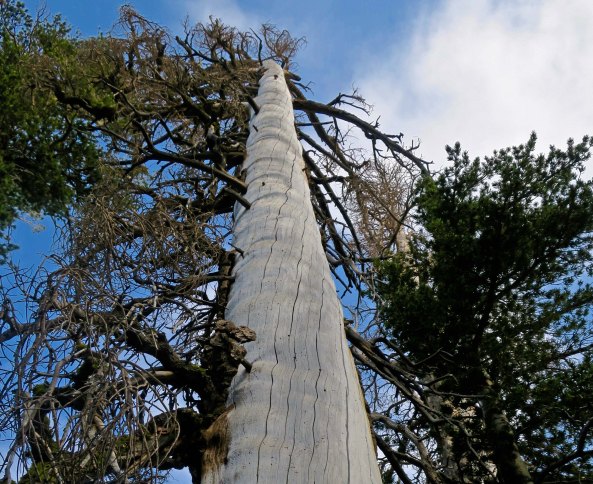
Dead trees are also mood setters for Halloween and horror movies. Here are a couple of many I captured in Lassen.

A lone. dead tree standing on the horizon with grasping fingers is an excellent place to plant a grave.
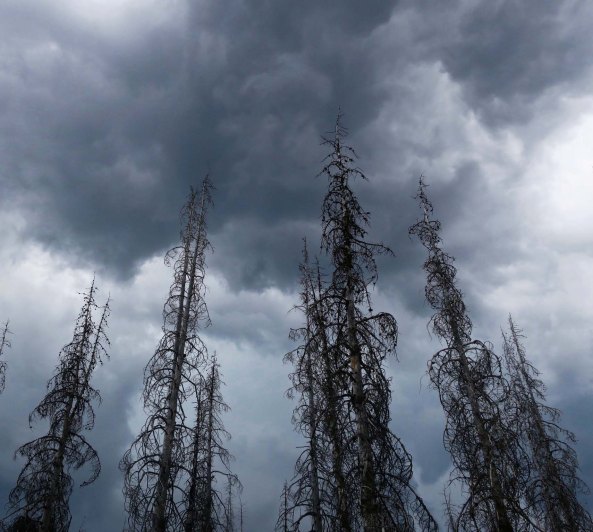
Scary music, dark, threatening skies, and dead trees: a perfect combination for Halloween night. What monster lurks in the shadows, prepared to leap out from behind a tree, and carry you off to a world filled with zombies and blood thirsty vampires.

And to conclude today’s post for Halloween, a few photos from other faces along the trail, some of which I have included before.

A large eye and a silent scream suggests I frightened this woodland creature peering out at me while half hidden. Am I that scary?
Not so scary but somehow threatening.
And finally, this rather grotesque character with his pointed head, dark eyes, skinny nose and large jowls. Vey scary indeed!

HAPPY HALLOWEEN FROM PEGGY AND ME.

Next Post: Back to hiking through Lassen National Park on the PCT. 

Backpacking up Mountains in 100 Degree Plus Weather from Castle Crags to Burney Falls on the PCT

I thought a lot about the cool water of Burney Falls as I backpacked the second half of my trip from Castle Crags to the falls. Temperatures were in the 90s and then surpassed 100! (Photo by Peggy Mekemson.)

The Pacific Crest Trail from Castle Crags to Burney Falls is known for being hot in the summer. I was hoping to avoid such weather. No such luck. At least it waited until my last three days to break 100 F (37.7 C). Then it became a scorcher. Many through-hikers chose to hike early in the morning and late in the evening, hiding out during the hot part of the day. But I trudged on. I needed full days to make it out when I told Peggy I would. Following are a few photos from the trail. 

Having climbed 10-12 miles to get out of the McCloud River Canyon, I was treated to views of Grizzly Peak. Billowing cumulous clouds spoke of the coming heat.
Similar clouds were hanging over Mt. Shasta. This would be one of my last views of the spectacular mountain. I had been enjoying it and photographing it since I had began my trek at Mt. Ashland.
Appropriately, I found some Shasta Daisies beside the trail.
Much of my time over the next three days would be spent hiking ridges with great views into the canyons. This is Devil’s Canyon. My guess is that the person who named it tried to hike out on a 110 degree F day. Don’t let the pretty trees fool you; it’s Dante’s Inferno! (grin)
I was now hiking through the volcanic Cascade Mountain Range that runs from Northern California to the Canadian Border. I would be treated to numerous views of volcanic landscapes, such as this eroded lava.
I was intrigued by these volcanic rocks that were outlined on the ridge.
And these. They looked like a small village.
A fir tree helped set this rock off.
Flowers, such as this Indian Paint Brush, helped take my mind off the heat and long days.
As did  this striking fellow.
I also found some strange manzanita roots to entertain myself with. (There will be a lot more in my next post on Lassen National Park.)
As always, there were interesting through-hikers to stop and chat with. This couple, Smile and Hamster, had found a phone signal and were signing up for fall college courses in Germany.
I’ve already introduced Popcorn! with an exclamation point the end of her trail name. She’s the one who suggested to me that rubbing pine needles all over your clothes made a great deodorant. 
Patch was carrying a message from Peggy, letting me know that she had changed the location where she would meet me. Peggy had bribed him with food. (grin) 12 more through hikers would give me the same message. Peggy was making sure I wouldn’t miss her!
On the third day, I concluded my 15 miles by 2 PM. Peggy was waiting and had as many tales to tell as I did. That evening she shared the photos that she had taken, including this one of Burney Falls. I’ll conclude here. My next post will take us into Lassen National Park.

On Being Exhausted… Hiking along the PCT at 75 between Castle Crags and Burney Falls

We rarely stress about water in our everyday life. If we are thirsty, the nearest faucet is usually a few steps away. It becomes a precious commodity along the PCT, however, where your next source may be 15 miles down the trail and what you have to drink is what you carry. This welcome sight is Squaw Valley Creek, which was my destination on day one out of Castle Crags. I didn’t make it.
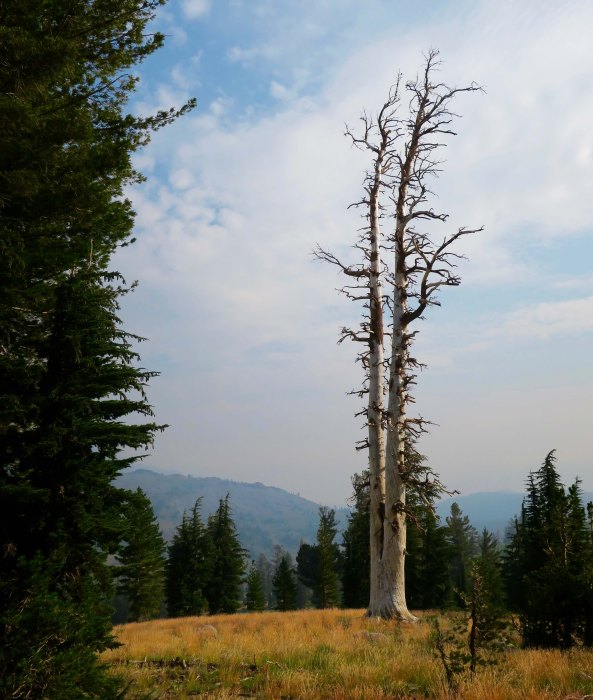
Although I am now off the trail and happily settled into our home in Southern Oregon, I have several more posts to put up on my backpack trip this summer. Today, I am covering the first half of my trip between Castle Crags and Burney Falls.
Peggy waved goodbye to me as I started up the PCT east of Castle Crags. I had spent two days in the Dunsmuir area happily stuffing myself and it was time for me to hit the trail again. She was less nervous than she had been in the beginning when her 75-year old husband disappeared into the woods for a week. “If you don’t come out on time, I am coming in after you,” she had declared ferociously. But each time, I had hiked out more or less when and where I said I would after backpacking 70-100 miles. Still…
I knew I had a significant climb ahead. I’d dropped several thousand feet coming down from the Trinity Alps to Interstate 5 and now I had to regain altitude. I also knew that there was limited water along the way, which is par for the course on the PCT. The trail was shaded and well-graded, however, so I started off at a decent pace. I met a fellow out walking a big shaggy dog that wagged his tale vociferously at me and then a number of through hikers hurrying north toward Canada. Or maybe they were hurrying for the good food, cold beer and hot showers that Dunsmuir promised. I suspected the latter.

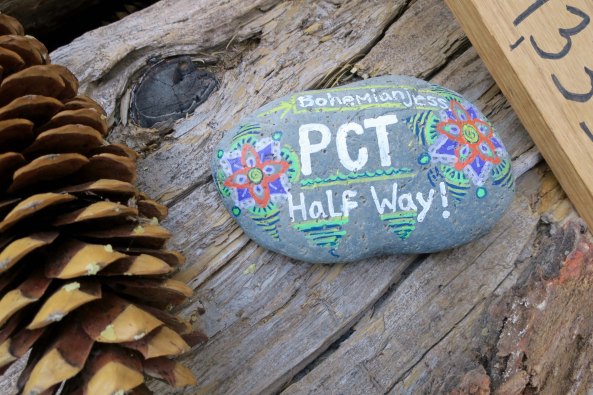
At one point, I found a number of pinecones beside the trail that had been carefully organized to spell out 1500. Curiosity brought out my camera, and then I realized that the 1500 represented the number of miles that the PCTers had hiked from the Mexican Border. I would have been arranging pinecones too! The hikers were a couple of hundred miles past the half way point. It was all downhill, uphill, downhill, uphill, downhill, uphill from here on. You get the point. Which brings me back to my own uphill climb.

I had determined that these pinecones represented how far through hikers had traveled since the Mexican Border.
Not far beyond the pinecones, I came on a tree with another type of marker, this one represented time. Someone, probably the rangers from Castle Crags State Park, had counted the rings in a tree all the way back to 1765. This tree was a baby when the American Revolution was still brewing and when my Mekemson ancestors had only been in the country for 10 years.

After about three hours, I began to run low on energy. This wasn’t surprising considering my age, but it seemed to come sooner and go deeper than usual. It was like I had been hit by the proverbial ton of bricks and I was carrying them all in my backpack. I shifted into granny gear and dug into my mental reserves. “Ok, left leg, move! Good job.” It helped for a while, but Squaw Creek was still several miles away.  I loaded up with five liters of water at Bear Creek. I certainly didn’t need the extra 11 pounds, but a vision of dry-camping on top of the Girard Ridge had insidiously inserted itself into my brain. My map showed that an old, abandoned road provided a flat space.

Eventually I arrived and futzed around for an hour finding the best campsite, setting up my camp, and cooking my dinner. I am not the fastest person in the woods when it comes to camp chores, and being exhausted didn’t help. I’ve already told the story of falling asleep when I was cooking dinner. It was scary. My super-hot, MSR propane stove could have turned the kindling dry forest into a conflagration within minutes had I knocked it over. Three major forest fires that happened afterwards in July and August within 50 miles of where I was camped highlighted the potential danger. They ended up burning over 300,000 acres, and one, the Carr Fire, was one of the worst in California history. I would breathe its smoke for weeks.

I vowed to go to bed as soon as I had done my dishes, reviewed my photos from the day, and completed my journal. But first I had to find a tree, a big one. Nature demanded it. This required getting up, a fact my body was not happy about. It had settled into not-moving. I rolled over onto my knees and pushed up with my arms, glad that no one was around to witness the effort. I wandered through a campsite I had rejected and followed a trail up the hill behind it to find the perfect place for my business. Location, location, location as they say in the real estate business. I like guaranteed privacy and a view. Walking back, I was surprised to discover that a through-hiker had settled into my rejected campsite, unpacked, set up his tent and was boiling water for dinner. “How in the heck did he do this?” I declared to myself. I would have been lucky to unpack in the same amount of time. But, in fairness to myself, I had taken longer than normal up on the hill.

I had found my ‘perfect place’ and dug my cat hole only to discover I was 10 feet away from the trail. Not good. A bird’s eye view of Curt’s naked butt does not meet my definition of privacy. So, whining a bit, I went in search of another location. This time I found a slight hill with a good view. I was unbuckling my belt when a thought crossed my mind. My ‘hill’ was a mound about six feet long and three feet across. It bore a striking resemblance to a grave! Now, I am not overly suspicious, but pooping on a dead person’s home almost guarantees a haunting, a spectral visit in the dark night, if such things exist. And I had met a couple of ghosts in my life. There was no whining this time. Faster than a ghoul can say boo, I had apologized and was 50 yards away digging another hole.

My next day wasn’t much different than the first. My reserves were so low I didn’t bounce back. I still struggled with the uphills and ended up dry camping again. The third day, I added struggling with the flats and downhills as well. I got up early with thoughts of making up for lost time. It wasn’t to be. I arrived at Ash Creek camp on the McCloud River around 10 a.m. and decided that was it for the day. Hiking farther involved a ten-mile climb. It’s a good thing Peggy wasn’t around. I might have bailed for the week. Fortunately, my 22-hour layover provided enough time for my body to recover. I managed the 10-mile uphill climb to Deer Springs in good shape and even stayed awake through dinner! But my dawdling meant that I had 45 miles to hike in the next three days. That’s a story for my next post. Here are photos from my first four days. Enjoy. Tired or not, there was still a lot of beauty along the route.

Hiking along the high ridges of the PCT may mean a lack of water, but it provides terrific views— both of where you are going and where you have been. This is Castle Crags that I had just hiked down with my nephew, Jay.
A closer look at Castle Crags.
I am ever so grateful for the wildflowers like this pine drop that entertained me throughout my journey regardless of how tired I was.
What the wildlife had been up to also entertained me. For example, who had chomped down on this bird and left its feathers behind.
But to a thirsty guy, nothing could quite matches up to the beauty of flowing water. These are small rapids along Squaw Valley creek.
I was fascinated by the large umbrella plants growing along the stream.
Another photo of umbrella plants…
And a final— looking more umbrella-like.
Rock sculptures along the trail are guaranteed to make me pause. This was just above the McCloud River.
The McCloud River and Ash Creek camp provided a welcome respite from hiking for me.
Looking downstream on the McCloud River from a footbridge that was a few yards away from where I was camped.
Hiking up toward Deer Springs after my stay at Ash Creek, I saw a junco fly out of a grassy area. Closer inspection revealed its nest and three babies.
A closer view showed that the baby birds that were filling up the nest and still lacking in feathers.
I liked these heart shaped leaves. Peggy had also taken photos of them in Castle Crag State Park.
This large cedar had been hollowed out by fire. I was surprised that it was still standing.
Especially given its size.
This doe appropriately greeted me when I arrived at Deer Creek Spring. After I rinsed out some clothes and hung them up behind my tent, she repeatedly came over to check them out. It became annoying when she woke me up. I went out around 10 p.m. and retrieved them. They might have been missing in the morning!
I found the butterflies flying around and landing on my pack and gear more interesting than the curious deer. Check out the orange eyes on this one!
I’ll conclude today’s post with these brave souls who were willing to check out my boots. There is no way I would have gotten near those socks. They were banished outside my tent at night.

NEXT POST: I finish my journey to Burney Falls where Peggy has been hanging out taking photos of the falls and bribing through-hikers with food and beer to carry messages to me. 

The Desolation Wilderness: Hiking on the PCT at 75

Lake Aloha is one of the Desolation Wilderness’s best known landmarks. It was lower this year than I have ever seen it, but still dramatic with its backdrop of the Sierra peaks. 

I ran my first Sierra Trek through the Desolation Wilderness in 1975. The year before, I had created a nine-day, hundred-mile backpack trip as a fundraiser for the American Lung Association in Sacramento. With high hopes of not losing anybody, I had chosen a route across the Sierra Nevada Mountains that was used for a popular horse-endurance race from Squaw Valley to the foothill town of Auburn. Known as the Tevis Cup Trail, it was well marked with yellow ribbons and horse poop.

While the route had been easy to follow, we had been faced with struggling up and down steep canyon trails in 100 degree plus weather (37.7 C) in the Sierra Nevada foothills.  I’d vowed to keep future trips higher in the mountains. My 1975 adventure had zigzagged through the Granite Chief and Desolation Wilderness areas, occasionally touching on what would become the finalized PCT.

When my plan to take my 13-year-old grandson into some of the more remote sections the Desolation Wilderness was cut short by his sprained ankle, I revised my plan and backpacked from Donner Pass to Echo Summit. I’ve already done posts on the Donner Summit through the Granite Chief Wilderness. Today’s photo essay will focus on Desolation.

The Desolation Wilderness is one of the most highly used wilderness areas in America. One reason is because of the numerous lakes. Middle Velma Lake, where I camped, is a popular destination.  Like Lake Aloha, it is filled with small islands.
A view of Middle Velma Lake early in the morning from near my campsite as the sun rose in the east.
Not long afterward, the sun was lighting up the trees that overlooked my campsite.
My morning hike took me to the top of Dick’s Pass which provided a view of Dick’s Lake. More distant views from the pass were limited by smoke from the summer’s fires.
My hike down from the pass took me by these flowers…
These berries…
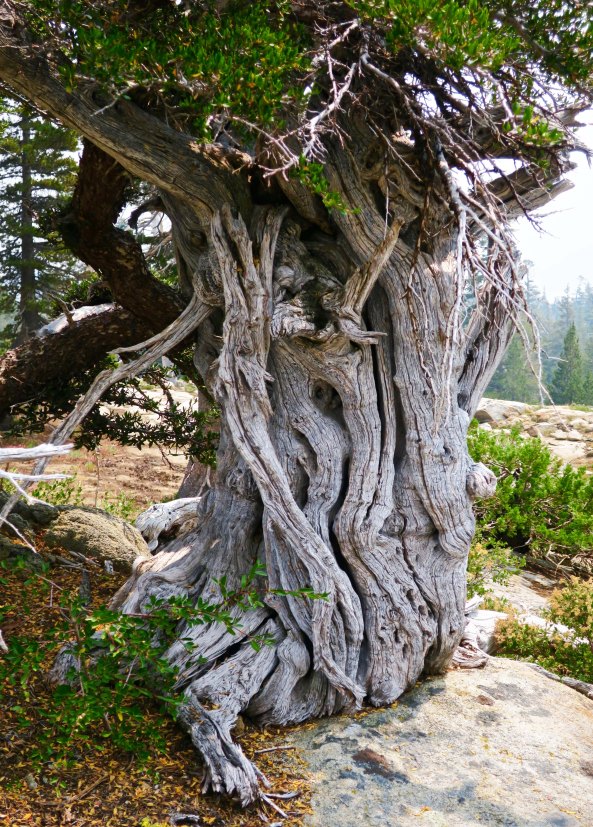
A very knotty cedar…
And this view of distant mountains.
I found an isolated campsite on Susie Lake. Given the popularity of Desolation Wilderness and the lake’s proximity to a trailhead, it wasn’t easy.
The campsite also provided this view.
Hiking up to Lake Aloha the next morning, I passed by Heather Lake.
One of my first views of Lake Aloha. I once organized a 60 mile cross-country ski trek that included skiing across the lake. That night we had played on the mountains across the lake while skiing under a full moon. The mountain on the far left is Pyramid Peak.
This driftwood had washed up on the shore of Pyramid Lake.
A closer view of Pyramid Peak across Lake Aloha.
Coming out at Echo Lake. (Photo by Peggy Mekemson.)
Being greeted by Desolation Wilderness volunteers Maryann Frantz and Charlene Clark.

As most of you are aware, the world famous traveling Bone has been ‘hiking’ with me on this journey. (He rides comfortably in a pouch and urges me to hike faster when I am making my way up steep mountains.) After coming out at Echo Lake, Peggy joined me on a day hike to take Bone back to his origin where my friend Tom Lovering and I found him south of Highway 50 in 1977 beside what is now the PCT. He has been traveling the world ever since.

Tom and I with Bone outside of the Fox and Goose Restaurant in Sacramento. Tom once owned an outdoor/wilderness store that was located in the same building. The goose seems quite interested in Bone.
Over the years, numerous people have carried Bone including Mary Johnson who has taken Bone to the top of Mt. Kilimanjaro to the base of Mt. Everest. She also took Bone on an elephant ride.
Many others have simply befriended Bone like Linda and Bob Bray. Bob actually went to First Grade with me and continued on for another 14 years through community college.
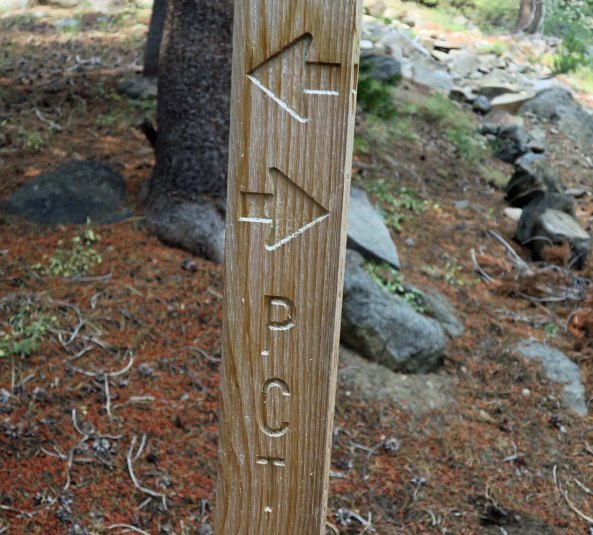
Bone was excited to be returning to his home and posed on a PCT sign. “I am going back to my roots” he proudly proclaimed to anyone who would listen.
Including this group of backpackers from Sacramento and San Francisco.
Indisputable proof that Bone has roots.
Always up for adventure, Bone went toadstool surfing on our way to where Tom and I found him.
Snow still covered sections of the trail in 1977. I was following tree blazes when I spotted something strange in a field of young corn lilies. It turned out to be Bone. 
Forty generations of corn lilies have come and gone since and this year’s crop had already grown up. Bone figured they would be good for sunbathing.
We completed our trip to Bone’s home with him regaling Peggy with tales from his childhood.

NEXT POST: Lyla the Dog… NEXT BACKPACKING POST: The trail between Castle Crags State Park and Burney Falls.

Winding Down the Journey… Hiking on the PCT at 75

Some trail names are really obvious. Take Big Red, for example. Peggy and I met him in the Three Sisters Wilderness of Oregon.


Big Red from San Diego towered over my 5’11” height, putting him somewhere up in the stratosphere. Peggy and I met him along the PCT in the Three Sisters Wilderness area of Oregon. He had been hiking for 2,000 miles. “This is my first and last through hike,” he informed us. “There are times,” he explained, “when I camp on a beautiful lake and would love to stay there. But I can’t. I have to keep moving. I have to get in my 25 miles for the day.” Otherwise, he might not be able to finish the trail before winter storms hit northern Washington.

There is something close to heroic about completing the 2600 miles of the PCT in a year. Sacrifices have to be made— like not enjoying the incredible beauty of the trail as much as you might like. Red had also made another sacrifice.  His walking sticks were encased in balsa wood that he had planned to carve. But it wasn’t to be. “I’m just too tired at night,” he told us.

Big Red posed for a photo with me, making me feel small.

I understood both sentiments all too well. It’s just hard. At 75, I found hiking 15 miles a day exhausting. In fact, the day and a half breaks I had planned between segments of the trail to allow my body time to recover weren’t long enough. I realized this as I made my way up the humongous hill leaving Interstate 5 going south. I was fine for the first three hours. After that, it was all I could do force one foot in front of the other. I had just completed hiking 100 miles from Etna Summit to Castle Crags and my body was threatening to go on strike. I loaded up on water and decided to dry camp when I reached the top instead of hiking on to the next source. I was cooking dinner on my ultralight propane stove when I found myself nodding off, unable to keep my eyes open. Not good! Can you imagine how dangerous that was given the bone-dry condition of the forests? Three massive forest fires this summer within 50 miles of where I was camping have proved the point.

The thought of creating a life-threatening fire that would burn tens of thousands of acres if my small stove was accidentally knocked over woke me up like a bucket of ice water. It also forced me to rethink my schedule. I would reduce the number of miles I was traveling each day and increase the number of layover days I would take between hiking segments of the trail. If I didn’t make my 1,000-mile goal, so be it. There was another factor as well. I really did want to enjoy the beautiful lakes, and mountains, and trees, and flowers and rocks and streams. That had been my reason for returning to the wilderness again and again throughout my life. And it was my reason for being out there at 75.

Fires and smoke continued to be a reality of my hike, as it has been for all PCT hikers this year. I jumped from northern California to Central California and back to Northern California in an unsuccessful search of clear skies. As my journey wound down, I had a decision to make. Would I head toward Yosemite and the John Muir Trail or would I go elsewhere? There really wasn’t time to finish the JMT and I had hiked it several times over the years, so I opted for the Three Sisters Wilderness of Oregon. I’d never been there plus Peggy would be able to backpack with me. We would finish our adventure as we had started it, backpacking together in Oregon. It was a great decision. The area is drop dead beautiful.

Mt. Washington, Mt. Jefferson and Mt. Hood as seen from the Three Sisters Wilderness, which features another three volcanoes of the Cascade chain in Oregon.

I came off the trail last week with close to 700 miles behind me. It has been an incredible experience and I will continue to post blogs on it for the next month. Plus, I’ll start writing the book that will tie this summer’s adventure together with several other backpacking experiences I have had over the years.

Today, I will continue with my trip between Donner Pass and Echo Summit that I started to blog about last week with an exploration of the Granite Chief Wilderness behind Squaw Valley.

My grandson Ethan and I started our journey through the Granite Chief Wilderness with a trip up the Squaw Valley tram. Squaw Valley was the site of the 1960 Winter Olympics. I used this same tram system when I began my first 100 mile backpack trip in 1974.

The ride provides great views of the granite that forms the backbone of the Sierra Nevada Mountain Range. Once again, smoke from Northern California forest fires filled the air, promising to obscure our views and poison our lungs. Fortunately, the smoke was limited and we even experienced some ‘clear’ days.

Peggy took this photo of Ethan and me at the end of the tram ride, ready to tackle our first mountain.

Our goal for the day was a short hike over to Little Needle Peak and Lake, both shown here. The lake is a mile or so off the PCT on a little used trail that we had to search for. I’ve camped on the lake several times over the years.

Another reflection shot. Ethan and I were camped in the trees to the right.

Bear scat and other bear sign was everywhere! I wondered if our food would survive. A black bear had ripped open this dead tree to go after the carpenter ants inside. Ethan and I were intrigued by the labyrinth the ants had carved out of the tree. It was worthy of a fantasy novel, or a Greek myth.

This caterpillar had tethered itself to the same tree and was making a cocoon. The claw marks above and beside the caterpillar were left behind by the bear.

The PCT drops into a canyon going south from Squaw Valley. A month earlier, this field of mule ears would have been yellow with flowers. But now they were drying out, predicting the coming fall.

As the PCT returned to crest and climbed above the Five Lakes Basin behind Alpine Meadows Ski Resort, Ethan and I  continued down the canyon and followed Five Lakes Creek down to Diamond Crossing. Whiskey Creek Camp greeted us a quarter of a mile after we left the trail. Starting in the early 1900s, the camp had served as a resupply point for Basque sheep herders who were running flocks in the area.

Ethan provides perspective on the height of the door in the cabin. I explained to him that the horseshoe above the door was for good luck.

Fresh bread, baked in this oven, was on the resupply list for the Basque Sheepherders.

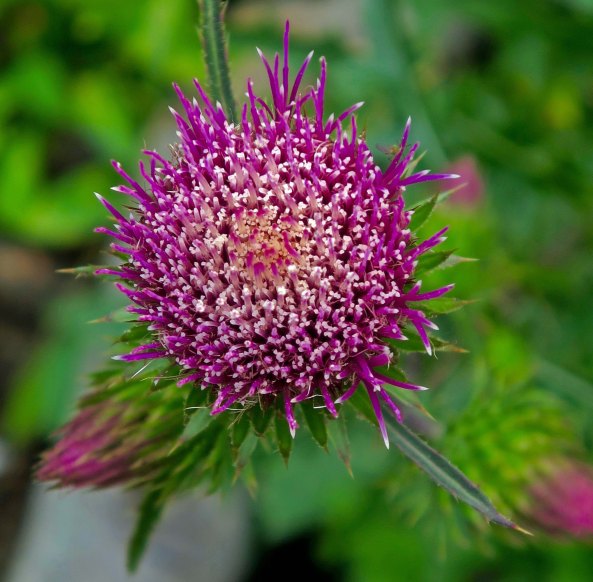
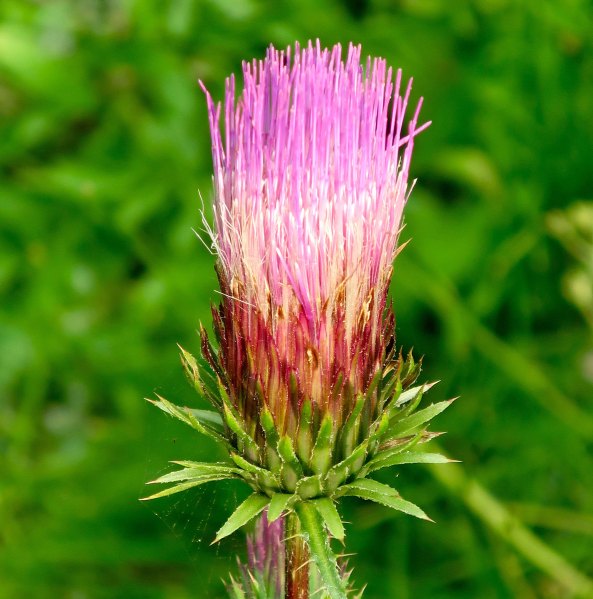
The PCT is like a freeway working its way from Mexico to Canada through California, Oregon and Washington. In comparison, most other trails are like country roads. The route along Five Lakes Creek would qualify as a rarely used dirt road— my kind of trail! This late summer meadow had turned to California gold. The Sierra thistles in the foreground were going to seed.

As was this Sierra thistle.

Backlit by the sun.

The seeds are disbursed. Another year in the life of a Sierra thistle is over.

One challenge of hiking in August in the Sierras is that water sources dry up. This can become a real problem along the PCT, which is noted for its lack of water to begin with.

Fortunately, more water can be found hiking among creeks and lakes at lower elevations. Welcome water greeted us at Bear Pen Creek. (I’ve always wondered about the name.)

A close up.

Less water does make for easier stream crossings. The rocks here provided our bridge across Five Lakes Creek.

An old tree blaze on a downed snag would have been used to mark the trail in earlier times.

Bark had grown over this blaze, which is very rare.

A ‘whirlpool’ of wood caught my eye.

Leaving Diamond Crossing, we followed Powderhorn Creek for four miles as it made its way up a very steep canyon toward Barker Meadows where we would rejoin the PCT. I think we counted two switchbacks on the whole trail. It was definitely not the well-graded PCT!

A basalt cliff entertained us along the way. I was teasing Ethan about having to climb it.

The hexagonal basalt columns are similar to Devil’s Postpile. These columns are formed when thick layers of flowing basalt cool slowly.

Photographing goldenrod also offered a break from the hard climb. It was one of the few flowers we found in bloom.

Ethan celebrated when we reached the top.

While I found other interesting rocks to photograph. I thought the outcrop looked a bit like a Scotty dog.

A couple of days later I found one in the clouds!

Back on the PCT, we found more flowers in a spring area. Ethan urged me to take his photo next to the monkshood. “My mom likes purple,” he explained. (Tasha has lots of purple clothes.)

When we reached Richardson Lake the next day, Ethan’s foot was beginning to hurt. Apparently, he had a minor sprain.

Leaving the lake, it hurt more. A few more miles down the trail, we decided that hiking out seemed to be the best decision. We returned to the lake and followed a jeep trail that would take us down to Lake Tahoe.

We were fortunate to flag down a group of jeepers. It turns out they were from Motor Trend Magazine and were filming a TV special on taking a stock 1970s jeep and a stock pickup truck over the Rubicon Trail, one of the toughest jeep roads in the world, made famous by the annual Jeepers Jamboree. Bruce, who generously provided us with a ride, told us that it had taken a full day just to go three miles!

Ethan displays the ankle that I had bandaged. Not a bad job, I thought.

Reunited with his mom, Tasha, his little brother, Cody, and Peggy, the family hangs out above Lake Tahoe’s Emerald Bay.

NEXT POST: I’ll focus on Desolation Wilderness and Peggy and I will take Bone back to where Tom Lovering and I discovered him in 1974!


Bone Travels the PCT Looking for His Home… Backpacking the PCT at 75— and 40

Bone found this convenient PCT marker on the trail leading south out of the Echo Summit area on Highway 50 going south toward Carson Pass, about five miles from where he was discovered 40 years ago.

It was always assumed that Bone— the diminutive four-inch, five-ounce dynamo that was once part of a horse’s foot— would one day return to his home along the PCT. What’s surprising is that it took 40 years. He’s been riding along with me on my trek this summer and meeting backpackers with that goal of visiting his birthplace in mind.

My friend Tom Lovering, the owner of an outdoor/wilderness store in Sacramento, and I found Bone in 1977 hiding out in a young corn lily patch near the PCT between Echo Summit and Carson Pass.  At the time, I was scouting a new route for the 100 mile treks I led in the Northern Sierras. Tom and three women were hiking with me for company. It was early in the season and the trail kept disappearing under the snow.

Tom and I take a current photo with Bone outside the Fox and Goose Restaurant in Sacramento. The goose seems particularly interested in what we are up to. Alpine West, one of Tom’s outdoor/wilderness stores, was located in the 10th and R Building in 1974 when Tom became a sponsor of my first Sierra Trek.

Here’s the story of how Bone was found from an earlier post:

Our fourth day started out as a typical backpack day. We climbed. It was gentle at first and then became more serious. Once again snow covered large segments of the trail. We spread out and searched for tree blazes. I scrambled over a particularly steep section and found myself in a high meadow.

Something half buried in a field of young corn lilies caught my eye. A few days earlier it would have been covered with snow. Curiosity led me to detour through the still soggy ground. Mud sucked at my boots.  My treasure turned out to be a disappointing, short, squat bone. Gnaw marks suggested it had been part of someone’s dinner. I was about to toss it when a devious thought popped into my mind.

“Trash!” I hollered at Tom and held up the bone. We had a game where if one person found a piece of trash, the other person had to carry it out. But first you had to catch the other person.

Tom sprinted down the trail with me in pursuit. Once we had made it over the mountain, our route ranged from flat to downhill. Tom was very fast. We had traveled two miles and were almost to Showers Lake before he stopped, concerned about leaving our companions too far behind. Very reluctantly, he took the bone and stuffed it in his pack.

“How can you classify a bone as trash,” he whined. I figured Tom would toss his new traveling companion as soon as I was out of sight. Wrong.

Here’s Bone’s perspective on the occasion:

“I didn’t plan on seeing the world and becoming famous. Once I was part of a horse located just above the hoof. I had no freedom; I had no glory. Wherever the horse went I went, a mere slave to his desires. During the summer this meant carrying greenhorn tourists into the backcountry of the mountains above Lake Tahoe. The added pounds gave me bone-jarring headaches. Then the horse died; I like to fantasize that a large bear with big teeth and sharp claws ate him.  Hopefully he ate the tourist as well.

Whatever happened, I was free to be me, Bone. Yes, that’s right, Bone is my name. A kindly coyote picked me up and carried me to a high meadow filled with corn lilies. It was there that I discovered my Zen-like nature as I meditated through the seasons. I was alone except for a mouse that came by and nibbled on me occasionally. That hurt. In fact, it interrupted my meditation and scarred me for life; you can still see teeth marks. I blame all of my subsequent bad behavior on that flea-bitten miscreant.

My annoyance at the mouse, however, was minimal in comparison to my anger at the large, two-legged creature who yanked me from my meadow home and begin yelling I was trash as he ran down the trail in pursuit of another two-legged creature.  Can you imagine the insult? I had no way of knowing that this was the beginning of my world travels or that the two creatures, Curt Mekemson and Tom Lovering, would become my servants.”

When I arrived home and emptied my backpack, there was the bone. Tom had slipped it into my pack. I had been carrying him for several days. Small b bone had become large B Bone and begun his 40-year odyssey! A year or so later when Tom arrived in Japan and unpacked his suitcase at the beginning of a three-year journey through Asia, Africa, and Europe, there was Bone. And thus it has gone. He has never stopped traveling. (For those of you who are new to Bone’s world, I’ll list his travels and an interview with Bone in the last two posts of this series. Long time followers will have read these posts. Go here for the complete series of posts on Bone’s discovery: Part 1, Part 2, Part 3.

The past couple of weeks, I have been exploring the area between Donner Summit and Carson Pass, retracing paths I have been hiking since I started backpacking in 1969. In many ways, I think of this area as my home. My 13-year-old grandson, Ethan, joined me two weeks ago until a sprained ankle cut short our trip. (Ethan carried Bone and now thinks of him as an heirloom. Forget great, great grandmother’s silver.) I went back in to finish this section of the PCT last week, and, of course, go on detours. Why hang out on the busy freeway when there are country roads to explore?

Bone, happy to find a new traveling companion, perches on Ethan’s knee.

When I came out at Echo Summit, my wife Peggy and I went on a day hike toward Carson Pass to take Bone back to where he was discovered. It was a sentimental journey. Bone was very excited.

While I’ve been posting photos to follow the progression of my journey down the PCT, I am skipping forward to honor Bone (and my youth) this week and next with a look at the area between Donner Summit and where Bone was discovered. I’ll then return to my trip between Castle Crags and Burney Falls. I’ll start today with my hike between Donner Summit and the Granite Chief Wilderness.

The PCT follows a ridge line south of Donner Pass. Here it makes its way up toward Tinker’s Knob.

I used to start 100 mile treks near Mary Lake, shown here. The Sugar Bowl ski area is nearby. I cross-country skied for several years along the distant ridges and down through the forests.

Wagon trains into California once made their way up and over Roller Pass. It wasn’t easy, as suggested by information sign located on the PCT. The sign notes that the “drawing is not an exaggeration.”

I’ve included this because I want to recognize the thousands of hours volunteers spend on maintaining the PCT, with some, like Don and Pat Malberg, actually adopting sections of the trail.

The folks who build and maintain the PCT take the ‘crest’ part of its name seriously. The result is great views, lots of ups and downs, and not much water, especially later in the season. I’ve often found myself hiking 10-15 miles between water sources. Anderson Peak is in the distance and Tinker’s Knob on the other side.

A closer view of Anderson Peak.

Another photo of the trail near Tinker’s Knob. The trail cuts to the left of the peak and then drops into a canyon of the American River.

A view back down the trail.

Normally, the PCT is like the ‘freeway of trails,’ broad and well graded. It can get difficult at times, especially when heading across rocky slopes like this. Hiking becomes challenging. Each step needs to be placed to avoid a sprained ankle or a tumble. Care becomes almost instinctual. The granite boulder trail reached the lava cliff and then switchbacked up the mountain.

A snag near Anderson Peak. Peggy thought ‘three witches.’

By now (late August) most flowers are past their blooming stage and have gone to seed. This fellow was still blooming, however, and goes by the rather quaint name of pussy paws because of its resemblance to cats’ feet.

Large volcanic rocks are found along the trail, speaking to the area’s volcanic history.

The trail switched back rapidly down from Tinker’s Knob and I came on my first water of the day. This rubber boa was there to greet me. Known for their gentle nature,  they are sometimes used to help people get over their fear of snakes. I picked it up and repositioned it for a photo-op. 🙂 I filled my water bottles with five liters of water knowing I would be dry camping for the night.

I didn’t have to hike much farther, finding a lovely campsite beneath Tinker’s Knob with great surrounding views.

Looking out from my kitchen as the sun set…

And another photo, a few minutes later.

Slightly later, this was my bathroom view looking in the other direction. Not bad, eh?

Early the next morning, I was treated to a sunrise view of Tinker’s Knob.

It’s for moments like these that I have spent 50 years backpacking.

My hike the next morning took me towards the mountains that form the rim of the Granite Chief Wilderness and back up to Squaw Valley, site of the 1960 Winter Olympics. Needle Peak is seen to the left. I will have hiked across those mountains and several miles farther by night.

My morning walk took me through a meadow filled with drying mule ears that rustled in the wind.

Sierra thistles were looking quite bushy as they prepared to disperse their seeds.

I caught these thistles, along with mule ears, backlit by the sun.

A lone tree decorated a gap in the mountains.

Looking back, I could see Tinker’s Knob and the mountains I had camped beneath.

Looking forward, I was faced with mountains of granite and one of the Northern Sierra’s more wild areas, the Granite Chief Wilderness.

Next two posts:

  • The Granite Chief Wilderness Area
  • The Desolation Wilderness Area and Bone’s home


From Etna Summit to Castle Crags: The Photography of Jay Dallen… Backpacking the PCT

This little fellow decided to visit with Jay and landed on his finger. I might add, he did not want to leave. I had experienced this several time in the Marble Mountain Wilderness. I think the butterflies liked the salt on our skin created by sweating our way up and down mountains! (Photograph by Jay Dallen.)


It’s a wrap, as they say in the movie industry. Today is my last post on Etna Summit to Castle Crags, and then I will be moving on to the trek from Castle Crags to Burney Falls. As promised, I am going to feature my nephew Jay’s perspective on the trip, since he hiked the hundred miles with me. He sent some 1400 photos he had taken on his iPhone! I had to increase my Drop Box space to accommodate them all. (grin)

Jay works as a cameraman in Hollywood and has a good eye for photography. (He also works as a director, which is where he wants to end up.) I’ve selected 30 photos from the 1400. I continue to be amazed at the quality that can be achieved with cellphones.

Note: Many of these photos will seem familiar since Jay and I often photographed the same subjects, like the frog, for example.

Jay spotted this frog at a spring and we both took photos of it. I was convinced that it liked to pose. (Photograph by Jay Dallen.)

This fat caterpillar that was busy devouring leaves also caught our attention. (Photograph by Jay Dallen.)

An ancient snag was brought into the modern world by a jet contrail streaking across the sky. It’s unlikely that jets, or even propeller-driven airplanes, were invented when it was a youngster. (Photograph by Jay Dallen.)

This snag entertained us for at least 20 minutes. (Photograph by Jay Dallen.)

We were both kept busy taking photographs of Mt. Shasta. Jay included me in this one, hat in hand, so to speak. (Photograph by Jay Dallen.)

A Trinity Alps lake (I believe it is one of the Boulder Lakes) points toward the distant Mt. Shasta.(Photograph by Jay Dallen.)

Trees in shadows can make dramatic photos. (Photograph by Jay Dallen.)

As does the contrast between light and dark with this snag sculpture being set off by the sun on the grass in the foreground. (Photograph by Jay Dallen.)

And these shadow trees framing the white snag. (Photograph by Jay Dallen.)

Sun on the PCT in the foreground and white clouds in the background served to set off the dark forest with its tall pine tree between. (Photograph by Jay Dallen.)

Shadowy trees add drama to dark clouds as the sun breaks through. (Photograph by Jay Dallen.)

Sunlight illuminating the green moss helped to light up this photo of a twisted snag. (Photograph by Jay Dallen.)

Did Jay take as many photos of flowers as I did? Hard to say, but he took plenty. A stark, burned forest provides the backdrop for this columbine closeup. (Photograph by Jay Dallen.)

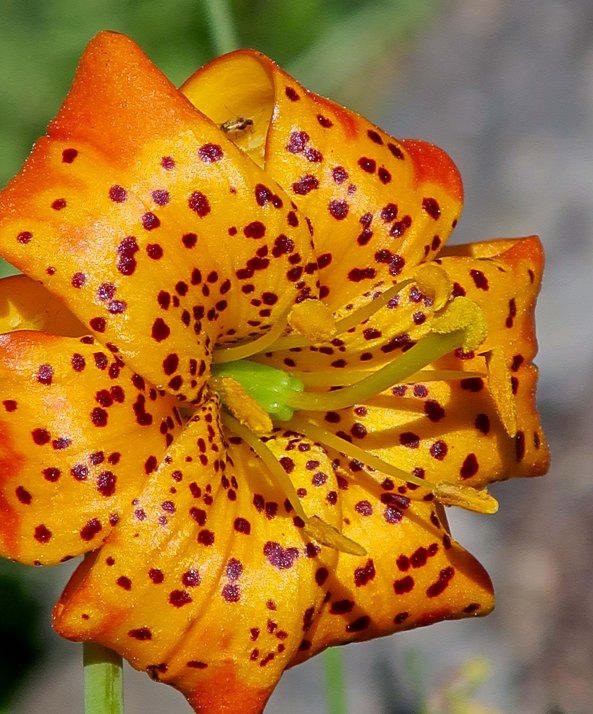
Jay spent a lot pf time on his back shooting up. It worked well for these tiger lilies. (Photograph by Jay Dallen.)

Neither of us could resist the yellow lupine. (Photograph by Jay Dallen.)

Or the marsh mallows. (Photograph by Jay Dallen.)

Corn lilies about to bloom… (Photograph by Jay Dallen.)

And corn lilies blooming. (Photograph by Jay Dallen.)

Azaleas. (Photograph by Jay Dallen.)

And, Bigelow’s sneeze weed. (Photograph by Jay Dallen.)

“Crest” is the defining word in Pacific Crest Trail, and hiking along the crest can be depended on to provide awe-inspiring views, such as this one in the Trinity Alps. (Photograph by Jay Dallen.)

And the Castle Crags… (Photograph by Jay Dallen.)

Including this ‘Sound of Music’ shot of the Crags. (Photograph by Jay Dallen.)

A fun tent photo of Jay’s tent. I, too, was carrying a Big Agness tent. (Photograph by Jay Dallen.)

I’ll conclude with this selfie that Jay took of the two of us with Castle Crags in the background, and… (Photograph by Jay Dallen.)

Of himself. (Photograph by Jay Dallen.)

Want more? Jay’s photography can be found at: https://www.instagram.com/jaydallen/


Here’s an update for those who are following along on my journey. After finishing the Carson to Sonora Pass section of the PCT, I doubled back to pick up the Granite Chief and Desolation Wilderness section west of Lake Tahoe. I had promised my 13-year-old grandson, Ethan, that I would take him through the area where I had led many 100-mile and 100-kilometer backpack trips in the 70s. We had great fun. Ethan is a real trooper. Unfortunately, he sprained his ankle about 34 miles in and we had to bail. (We were ‘rescued’ by a TV crew, but that is for a later post.)

And how far did we travel? Two of our days included hiking from below the distant peak to where Ethan is standing.