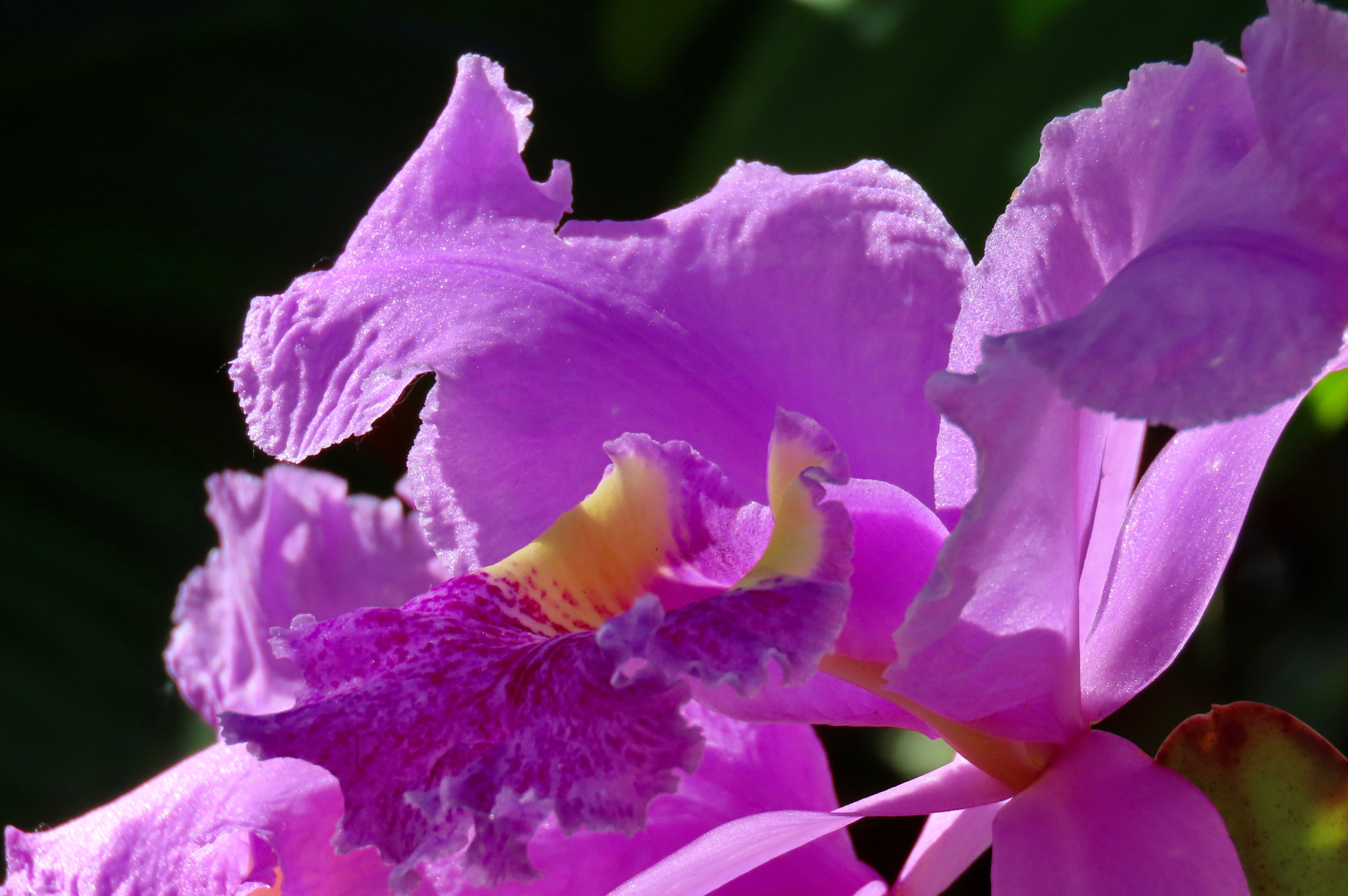
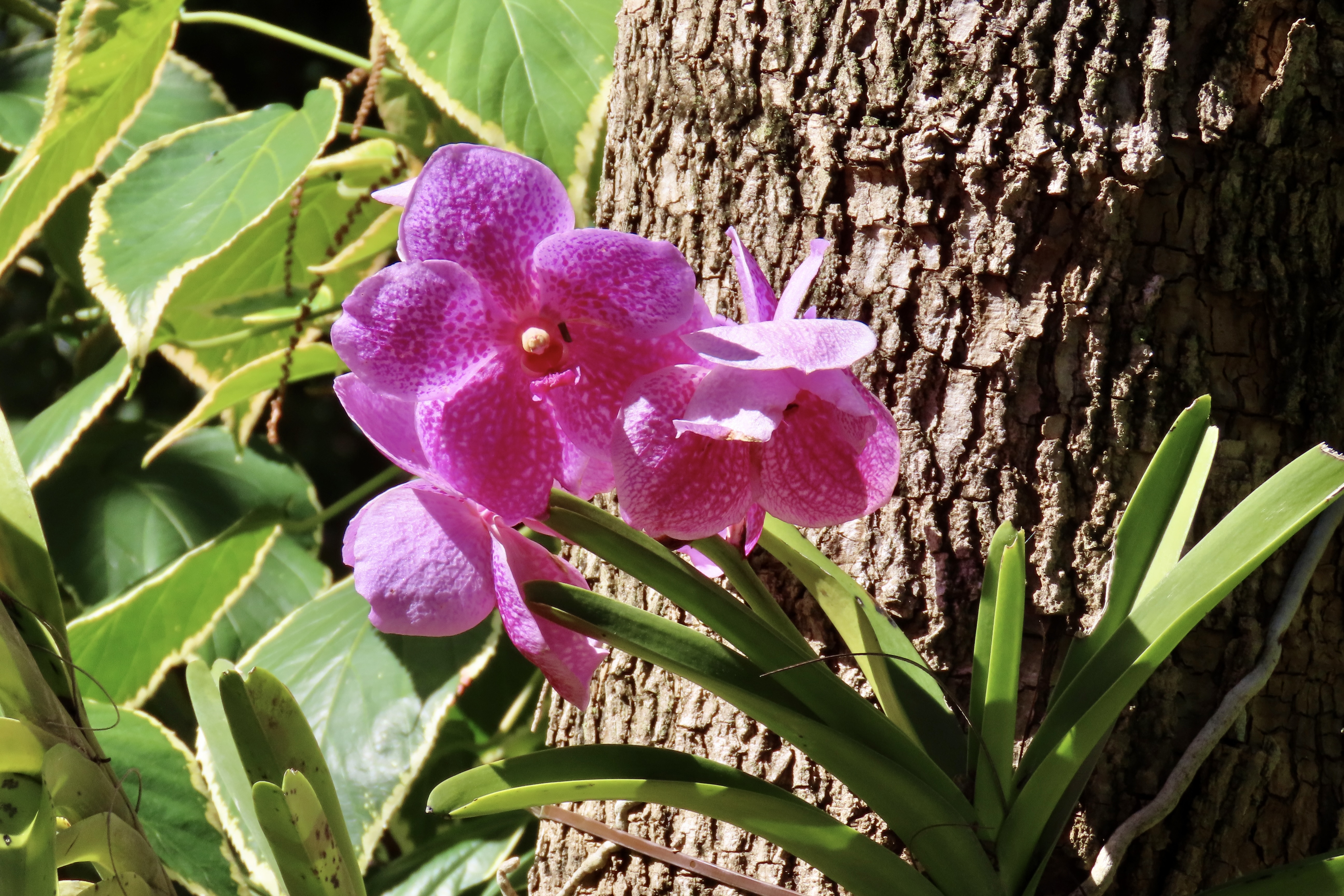
One of several beautiful orchids we saw in the Naples Botanical Garden.
On our way down to the Everglades after visiting with our son and his family in Safety Harbor, Florida, we stopped In Naples on Thursday. Having never been there, we asked the locals what to do. One thing was to check out the Naples’ Pier. Not impressive. The other was to visit the Naples Botanical Gardens, which turned out to be fantastic. It is chock full of tropical plants from around the world. We spent three hours wandering down its numerous paths. Being on the move, we didn’t have much time to research what we were seeing but want to share some of the plants we admired. Enjoy.
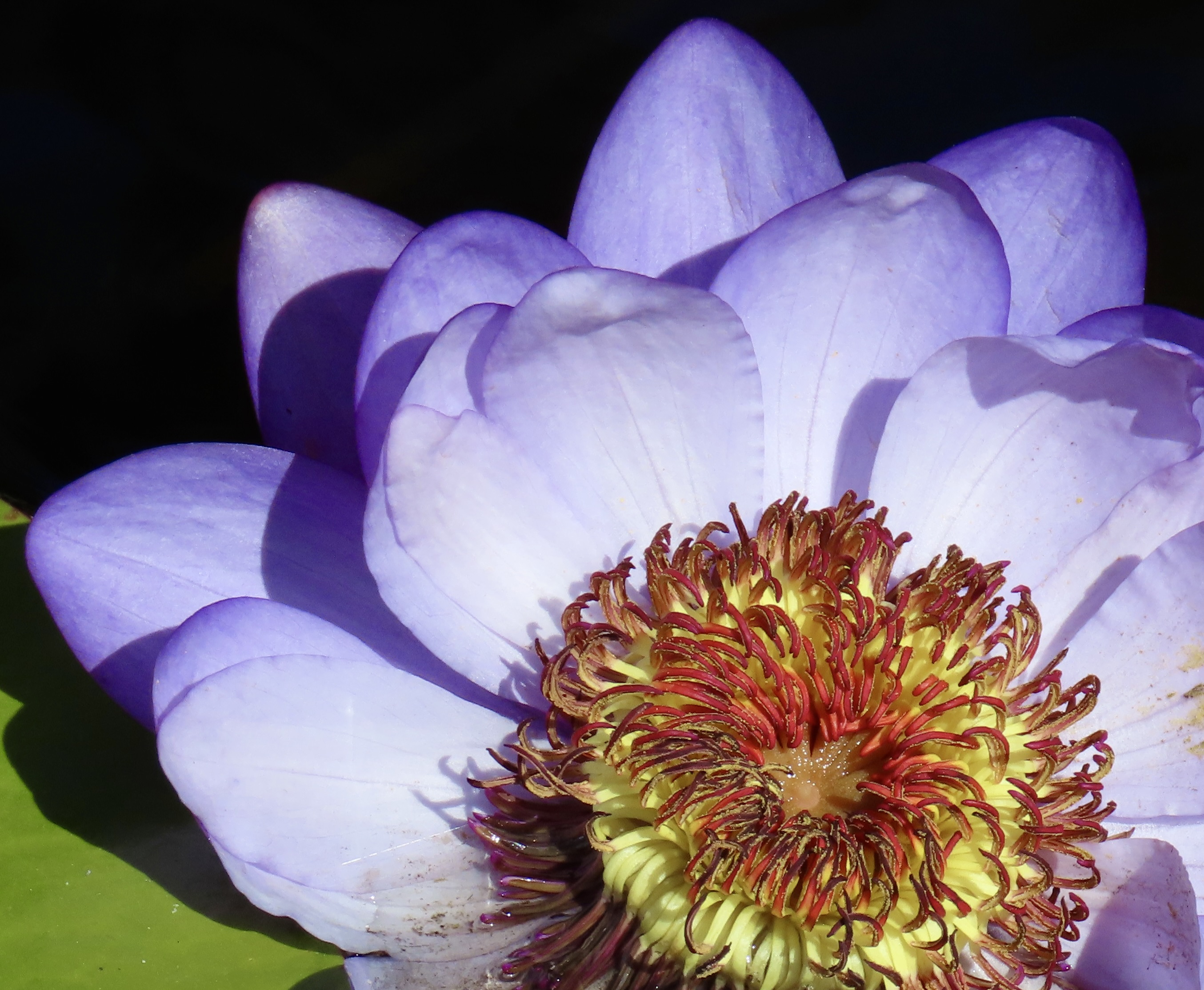
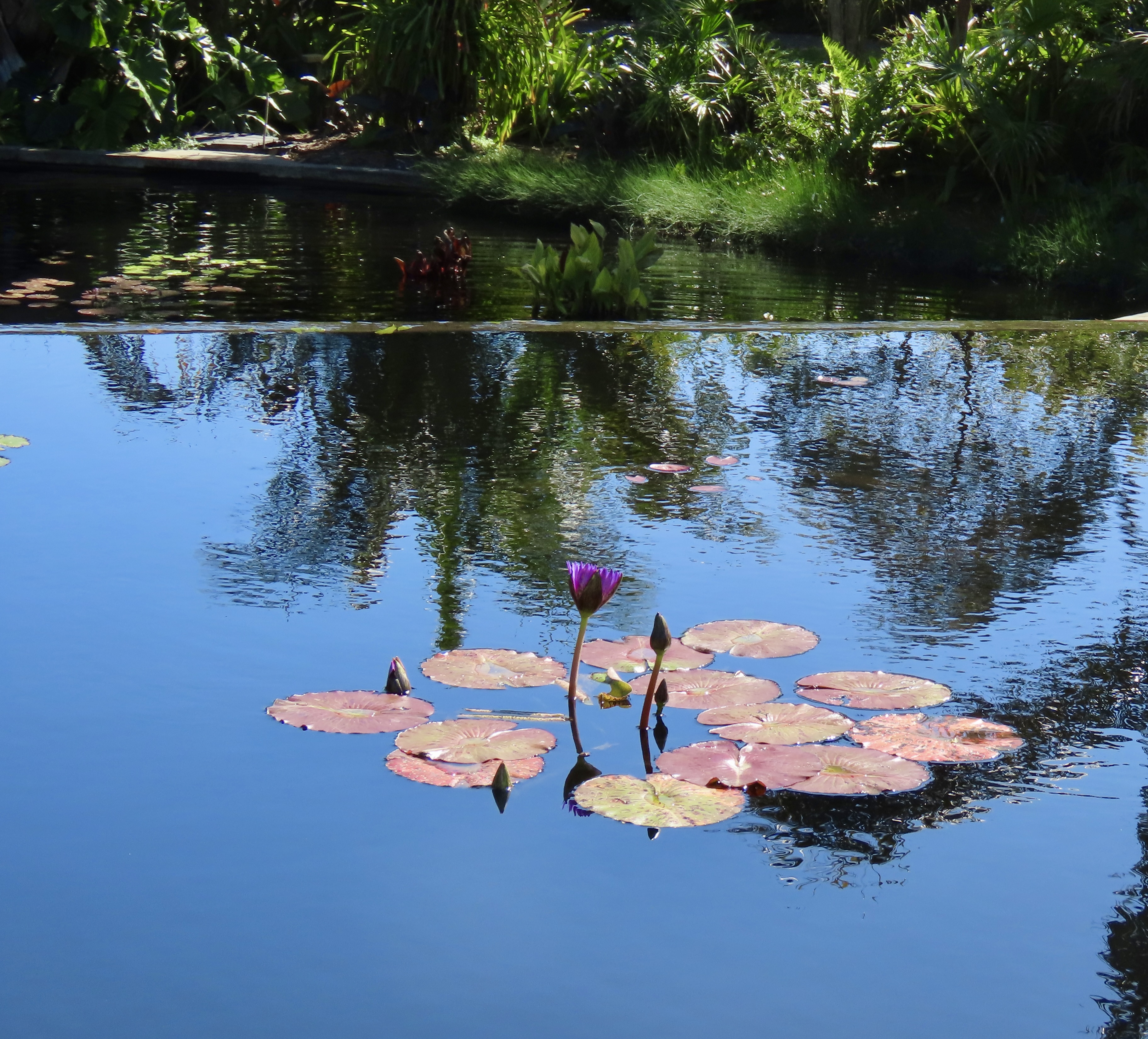
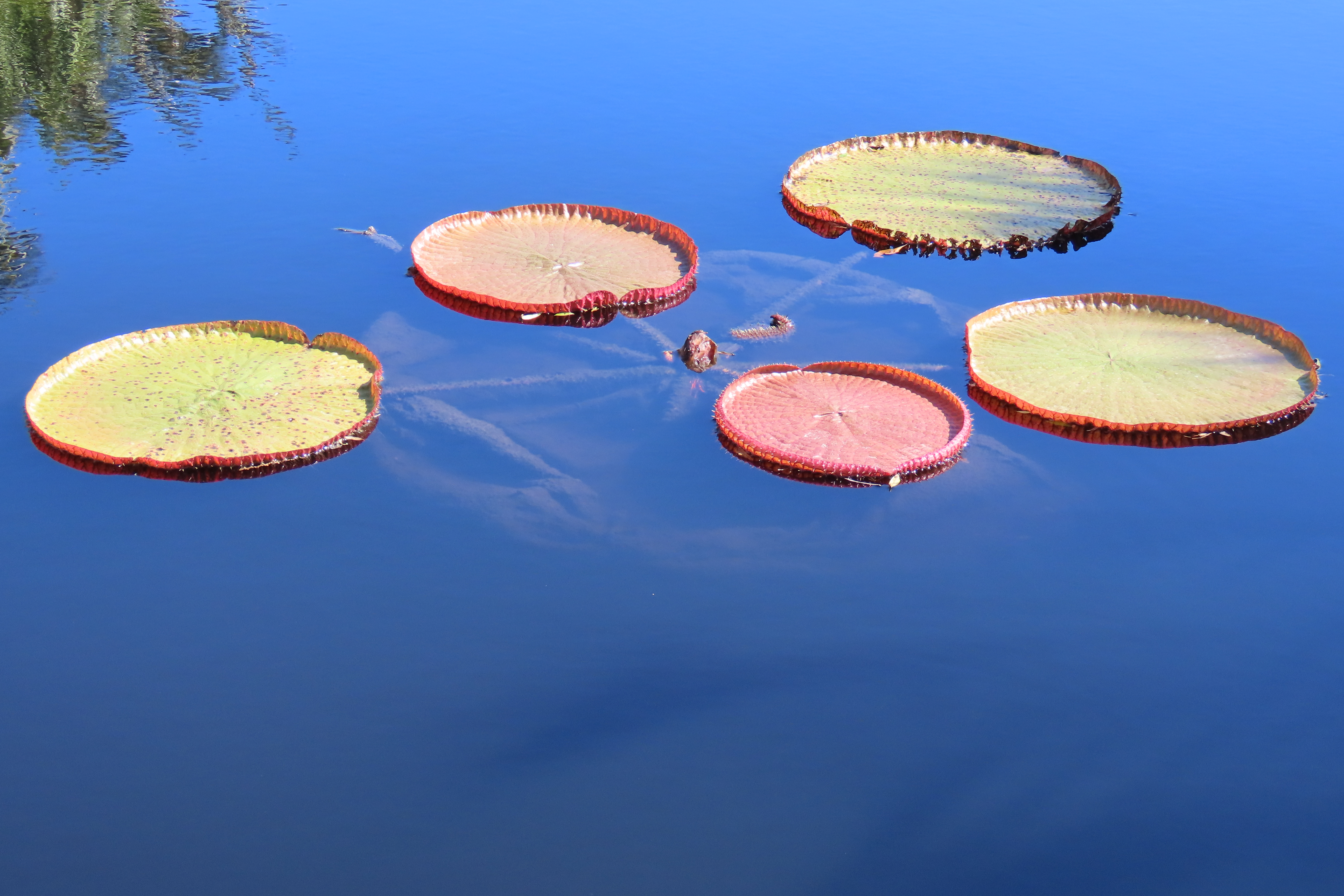
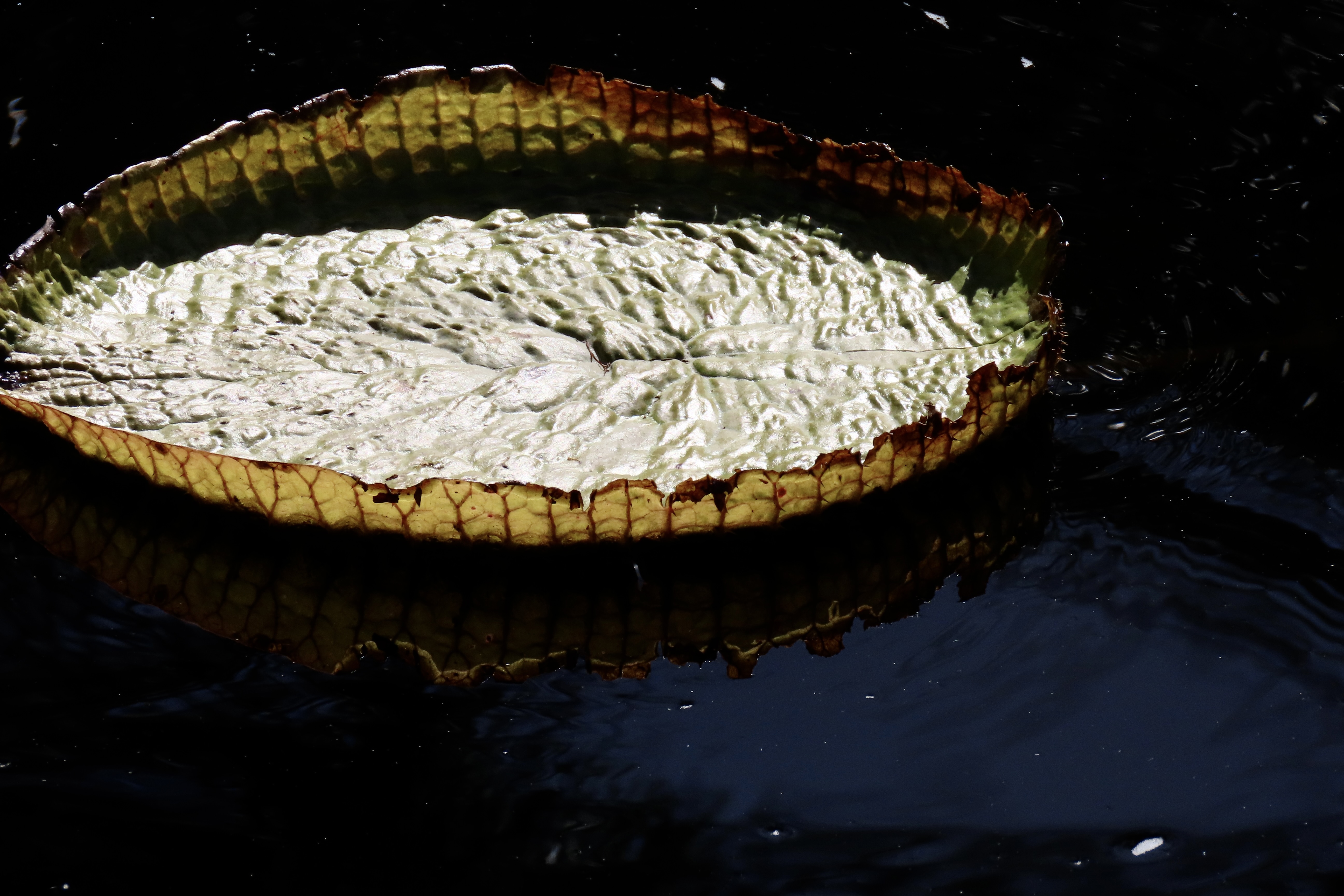
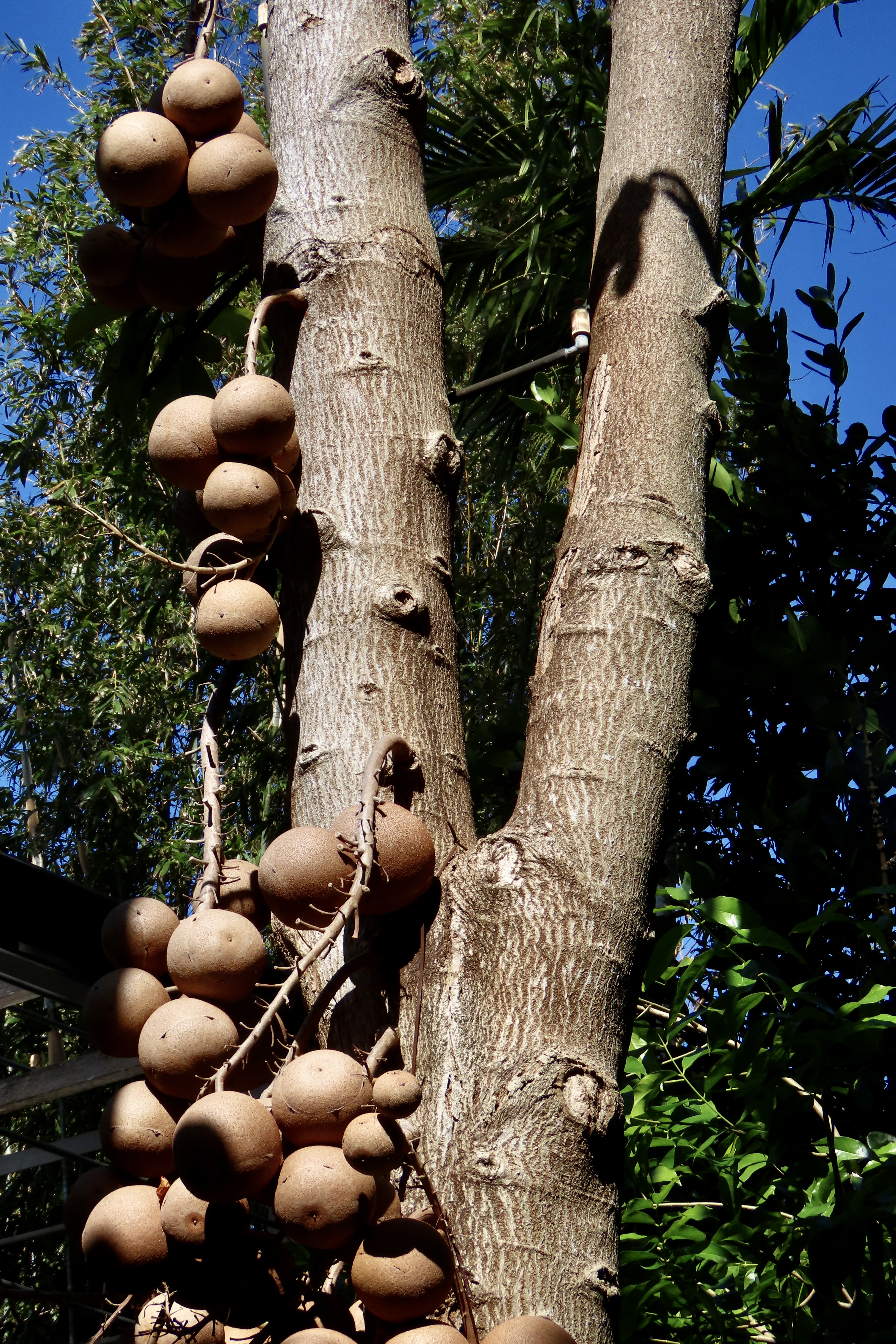
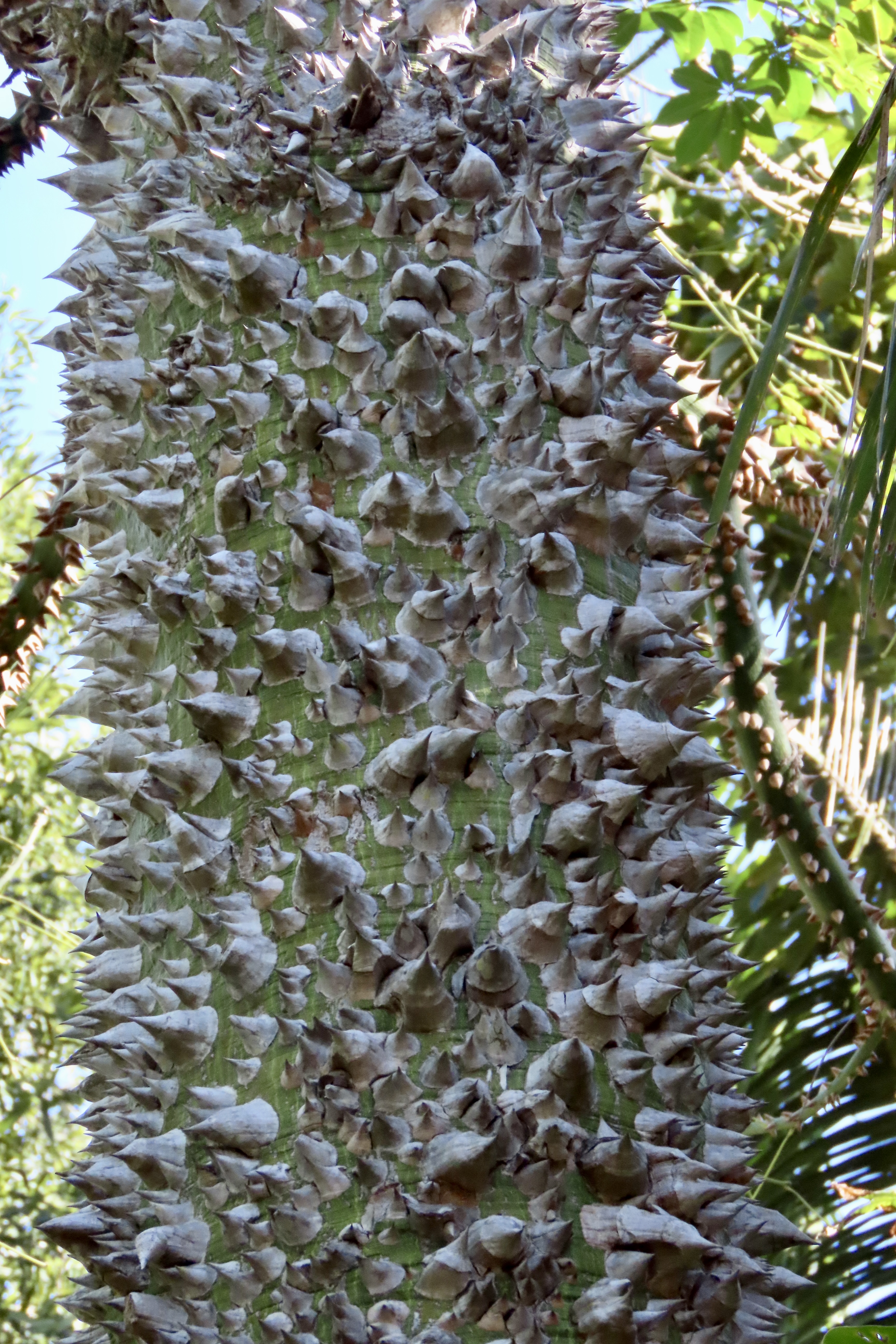
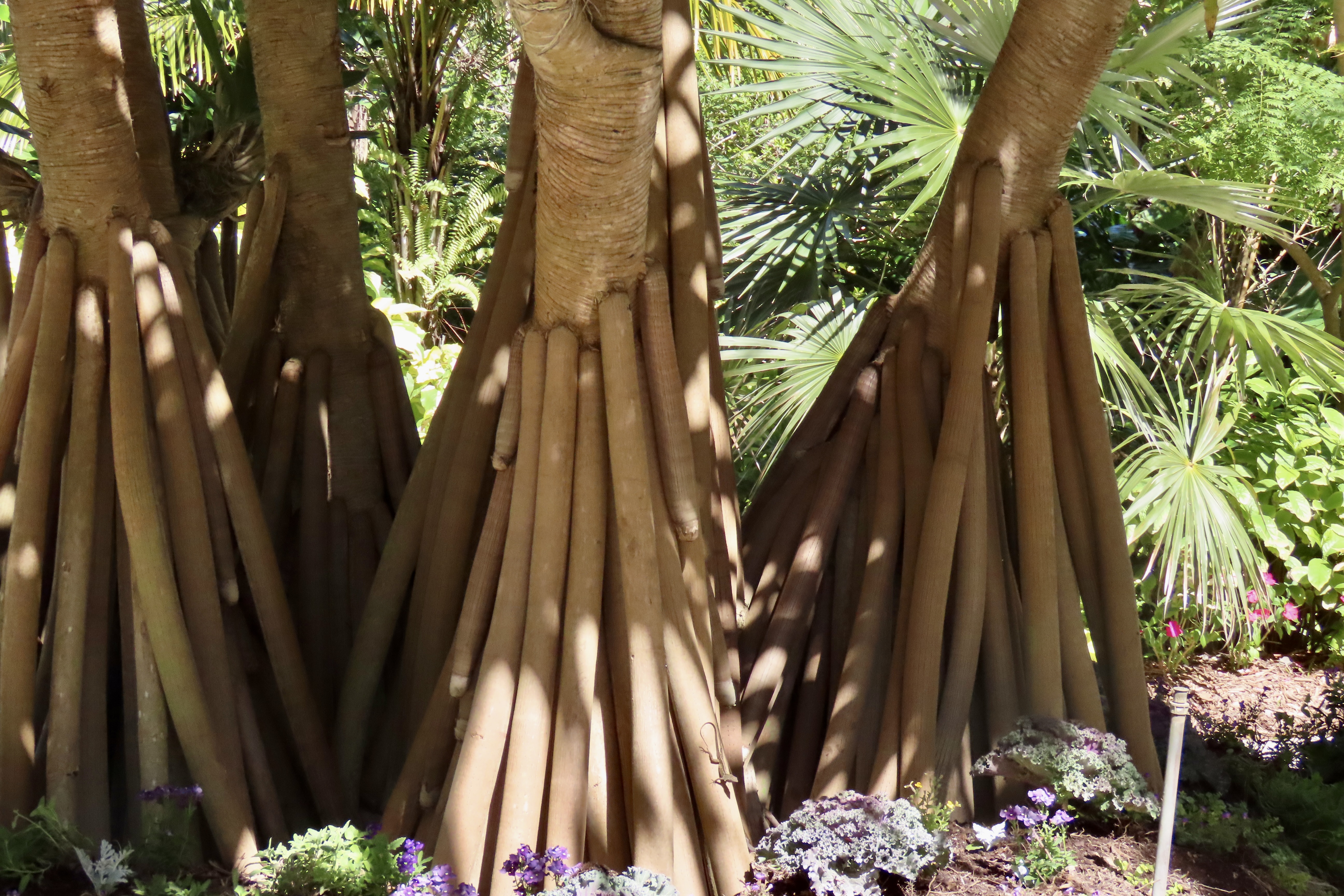
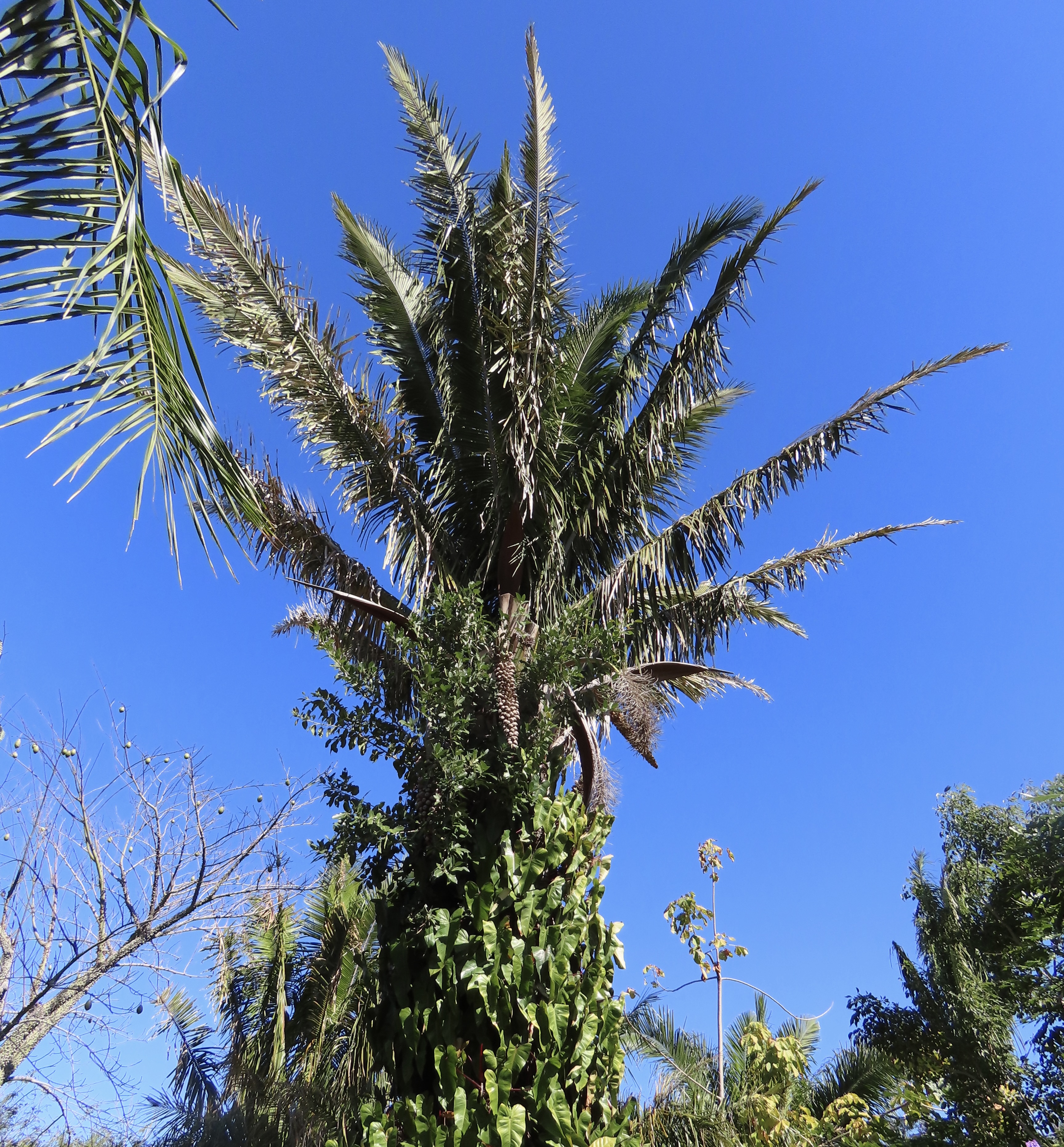
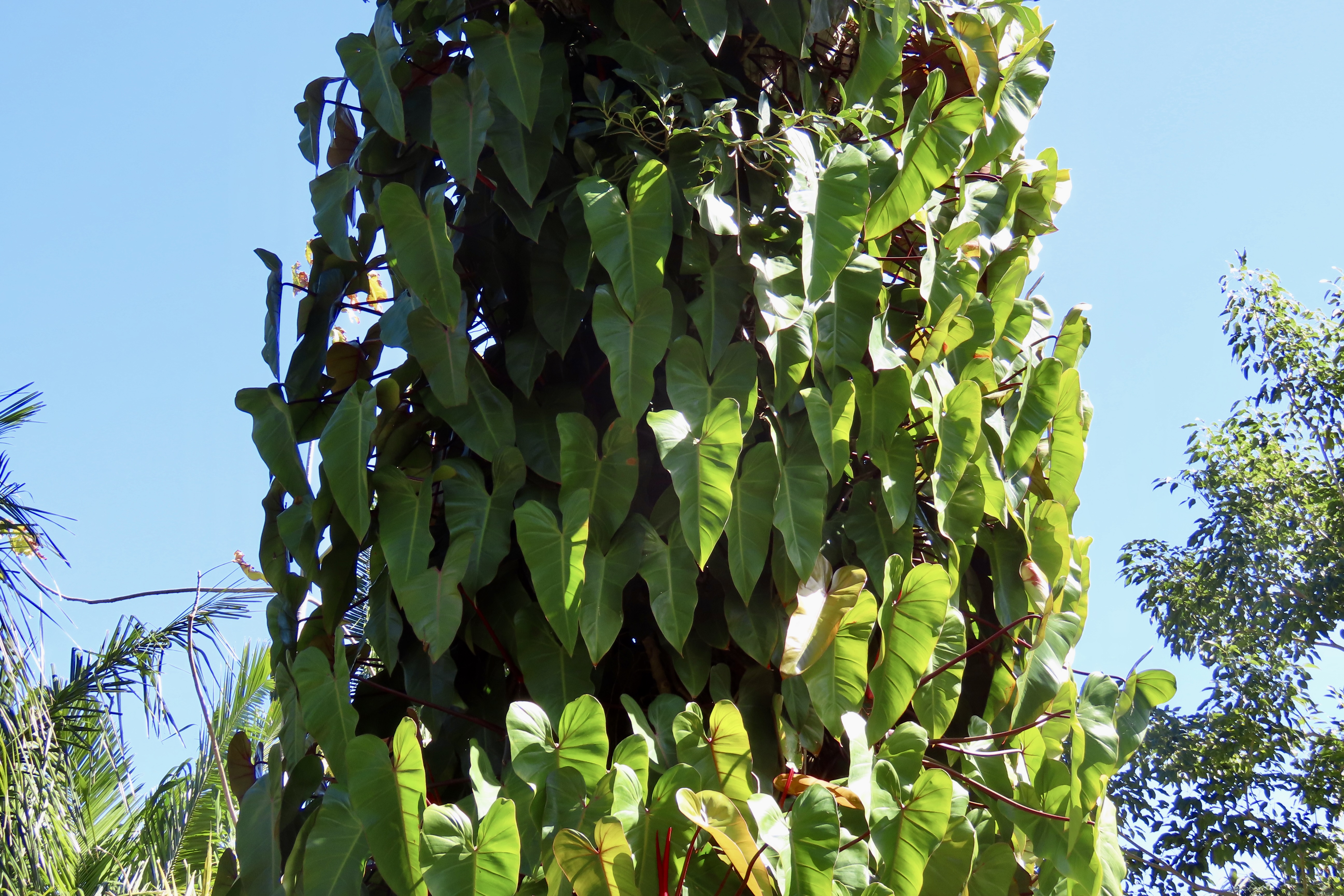
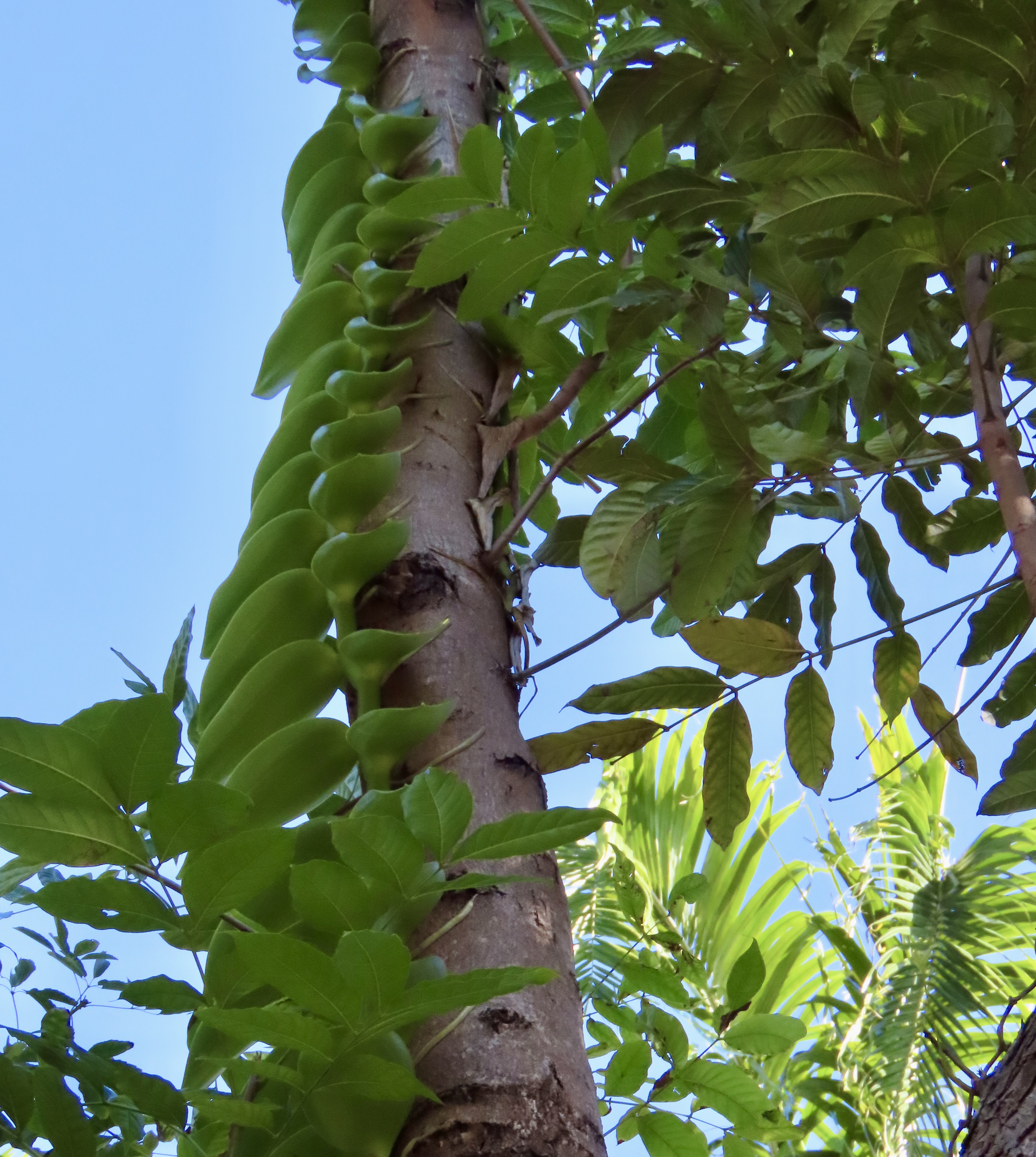
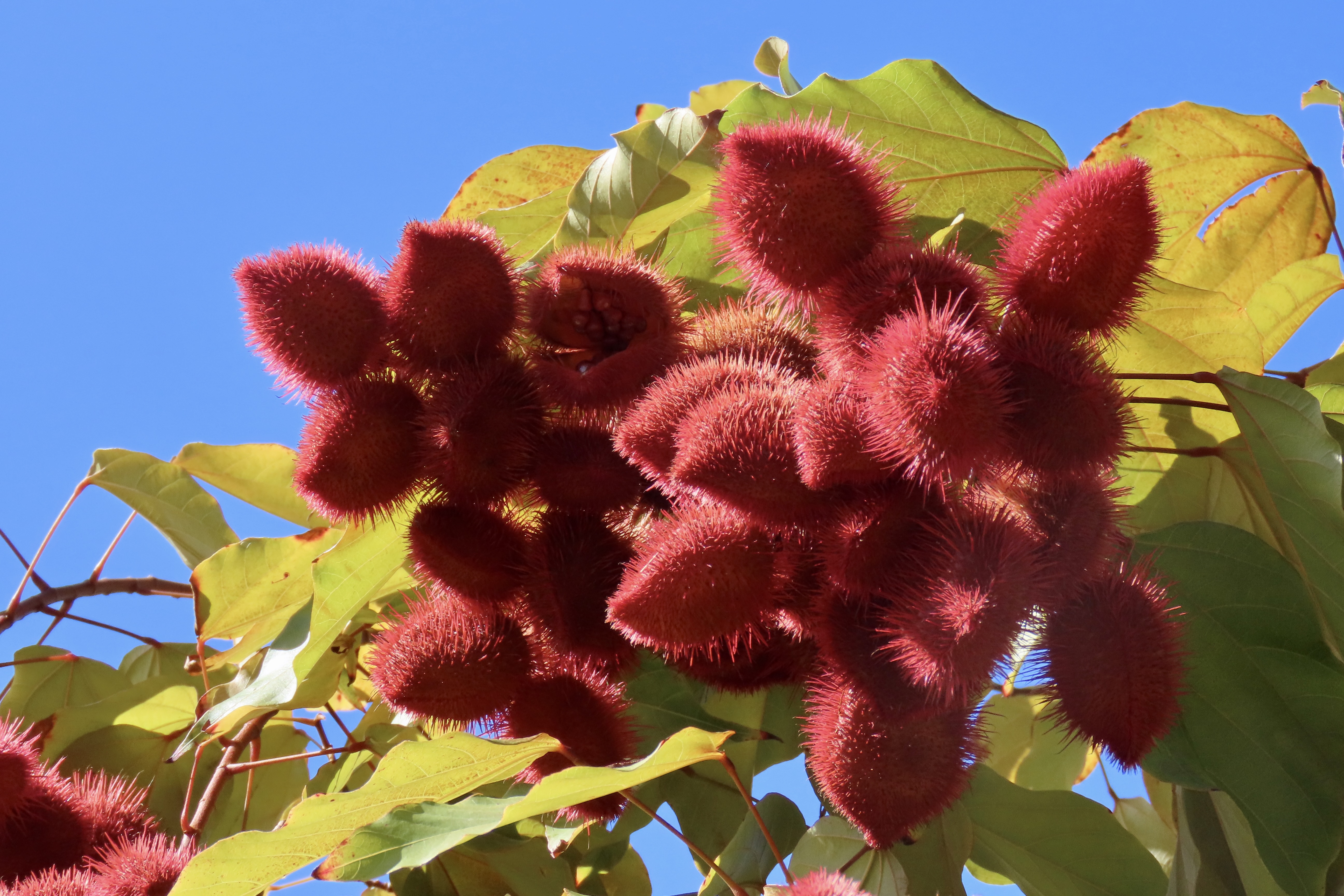
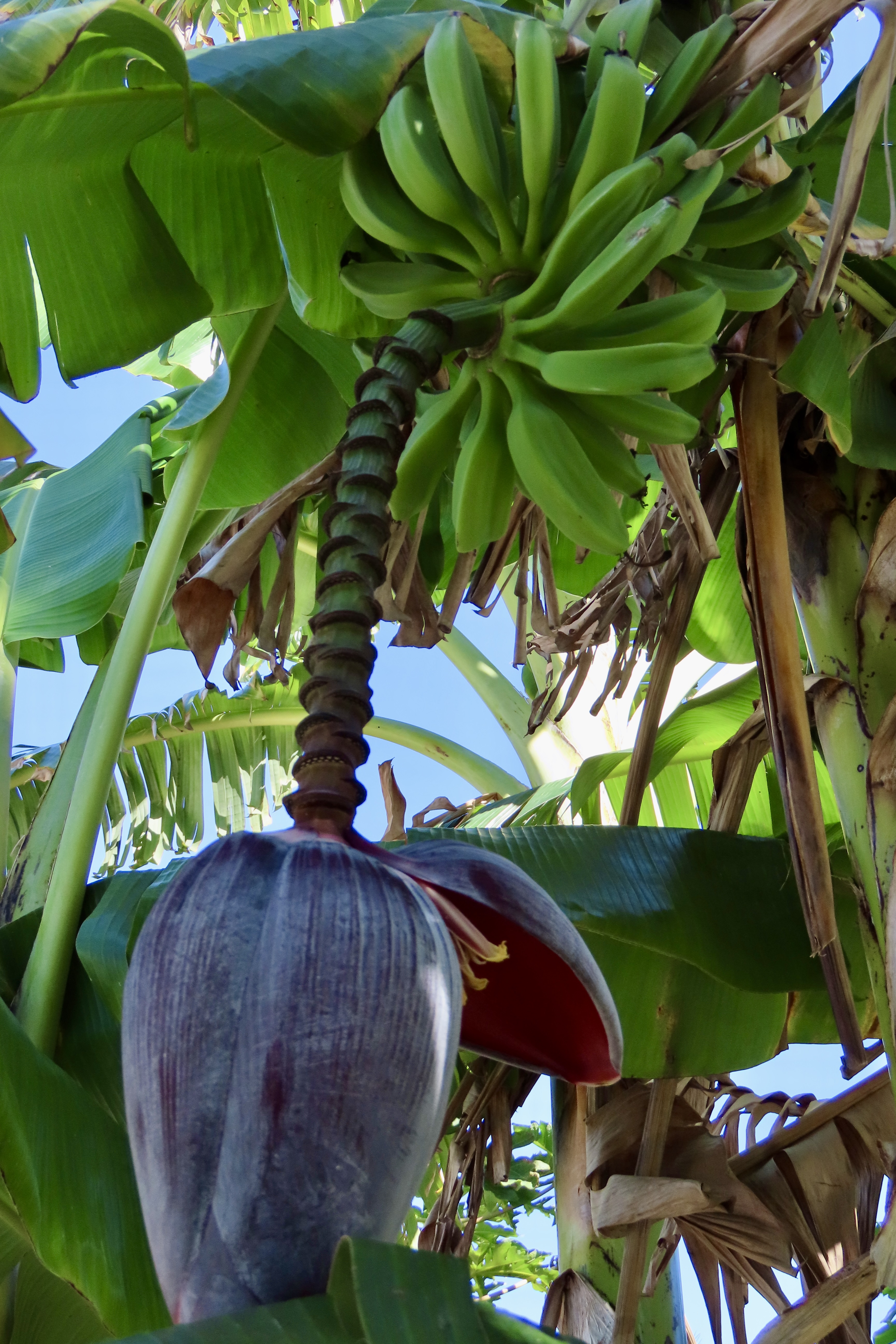
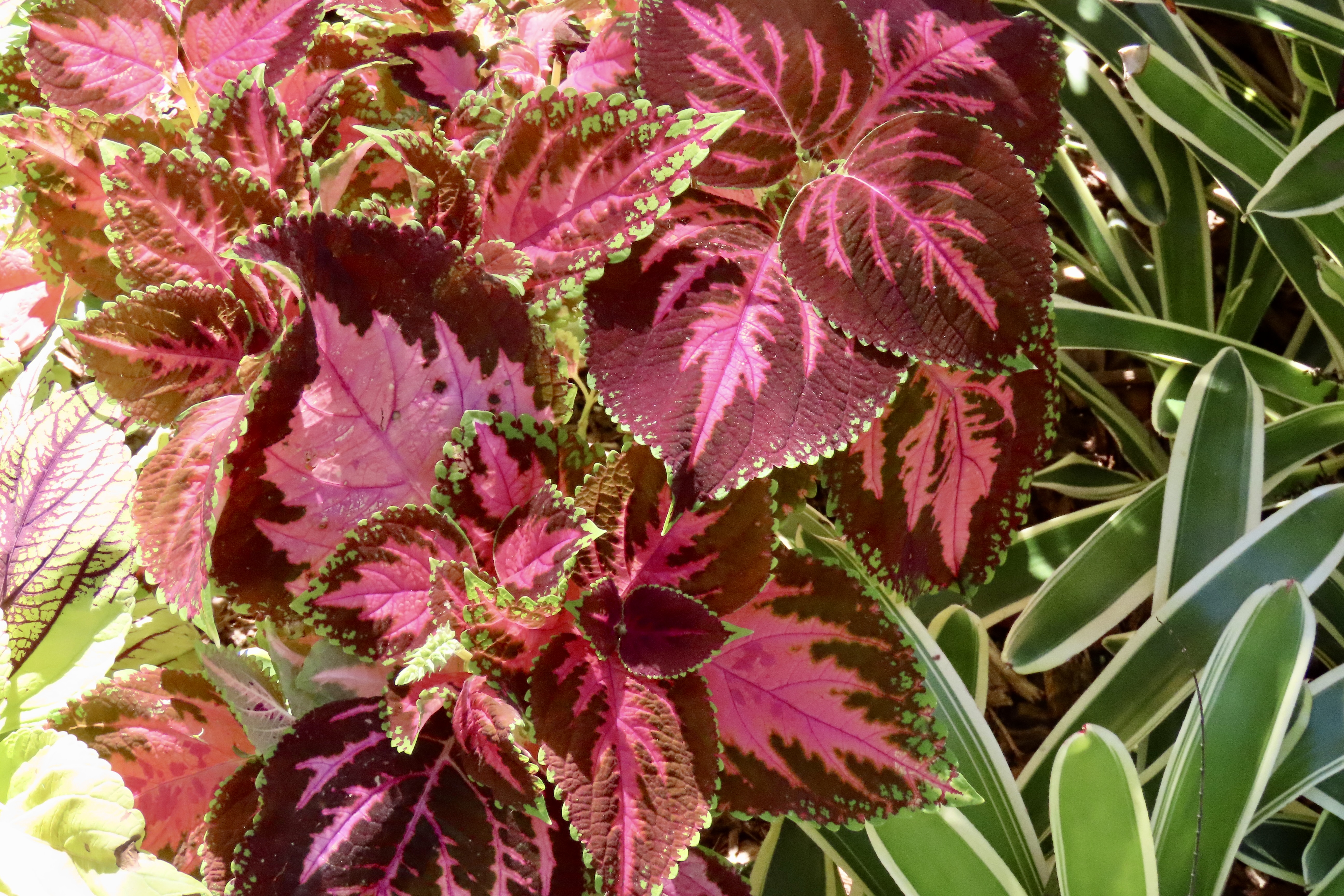
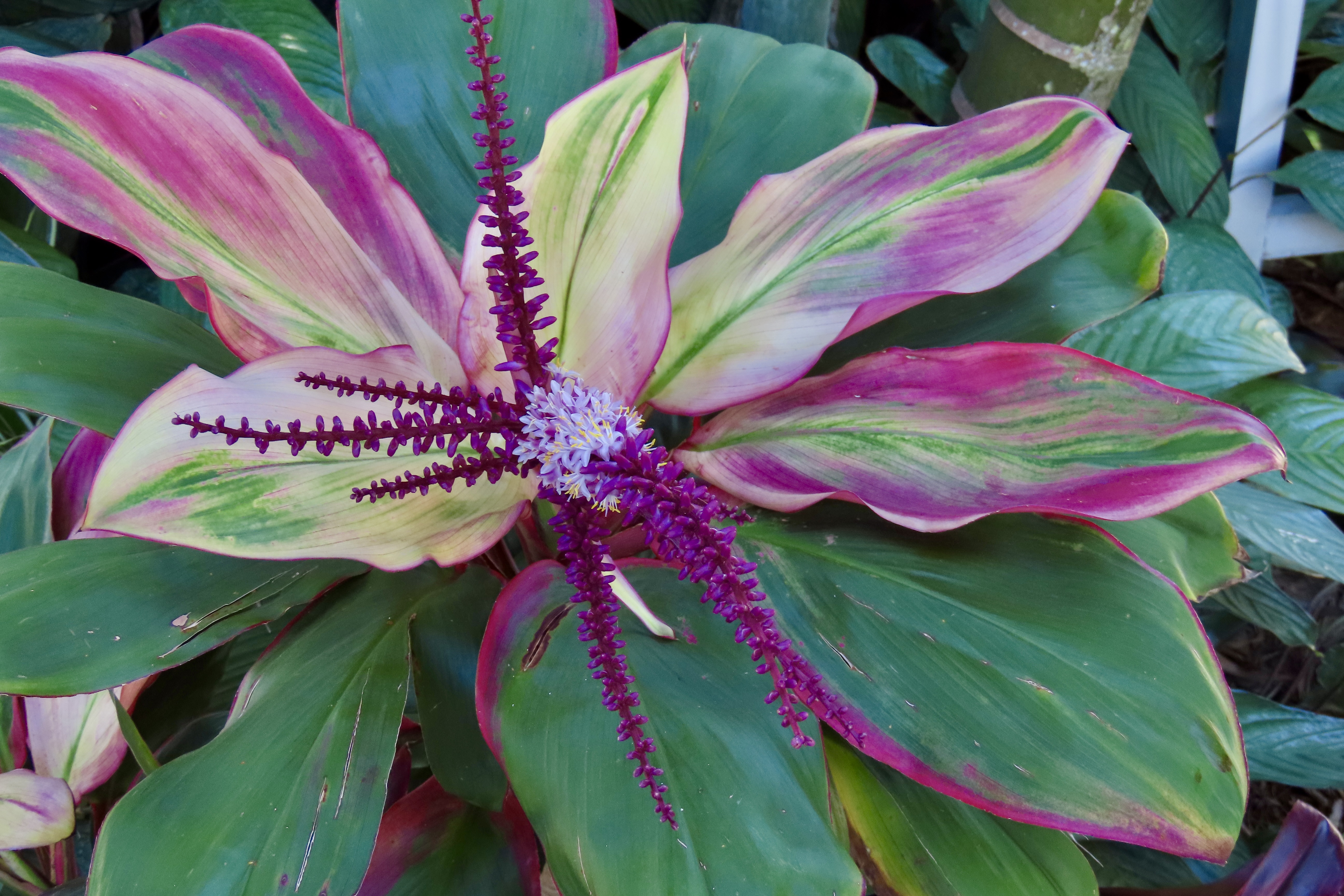
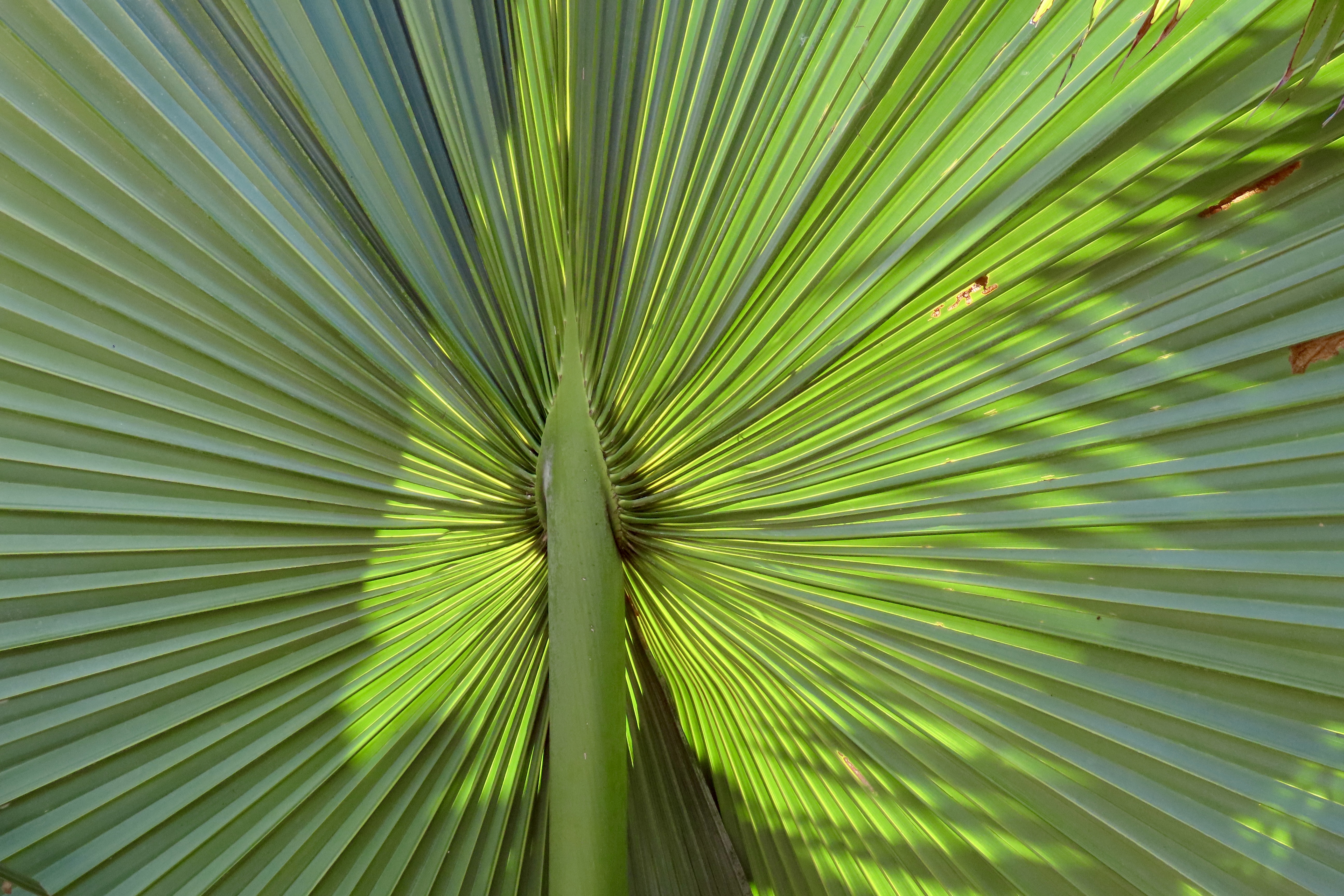
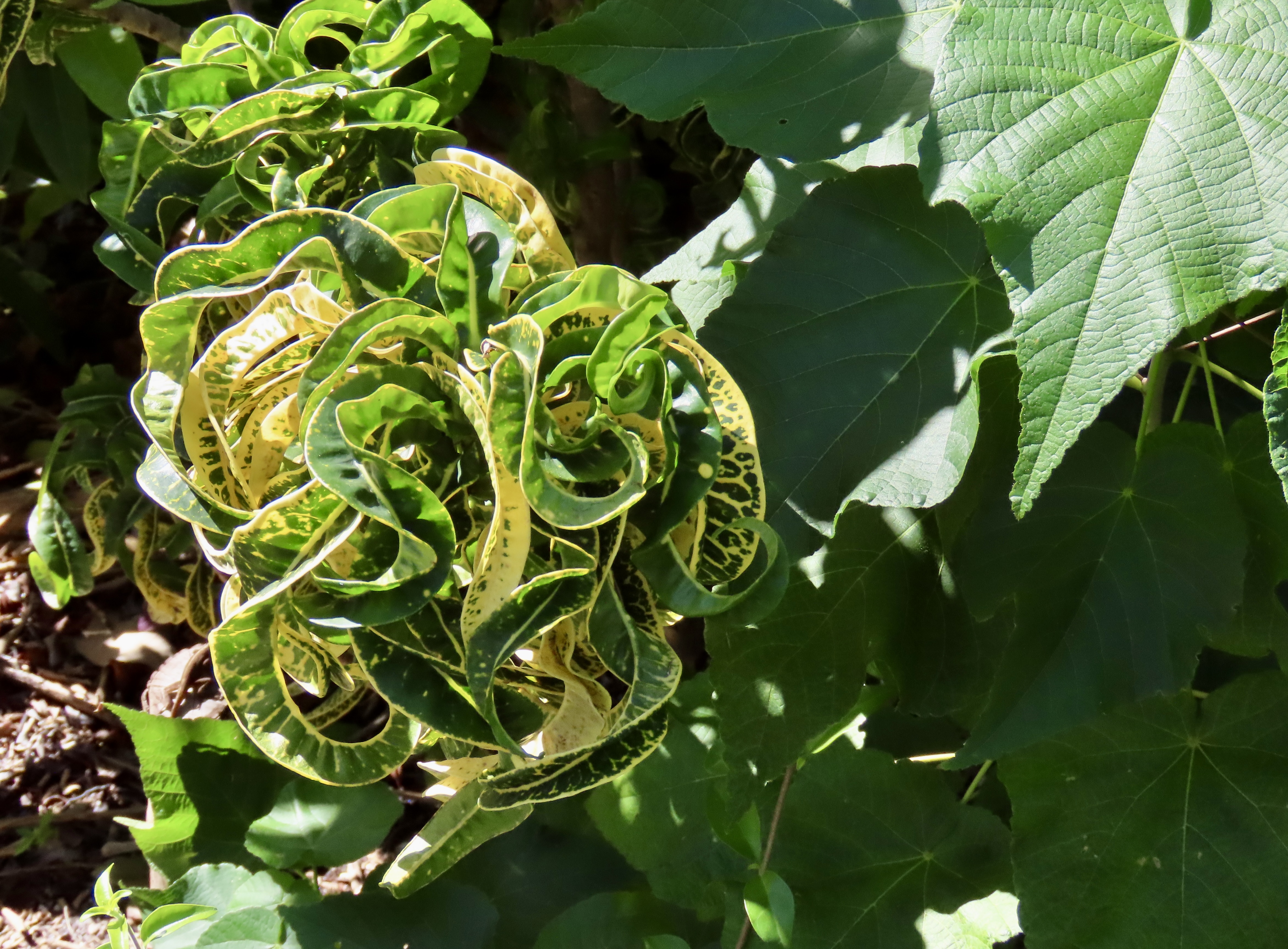
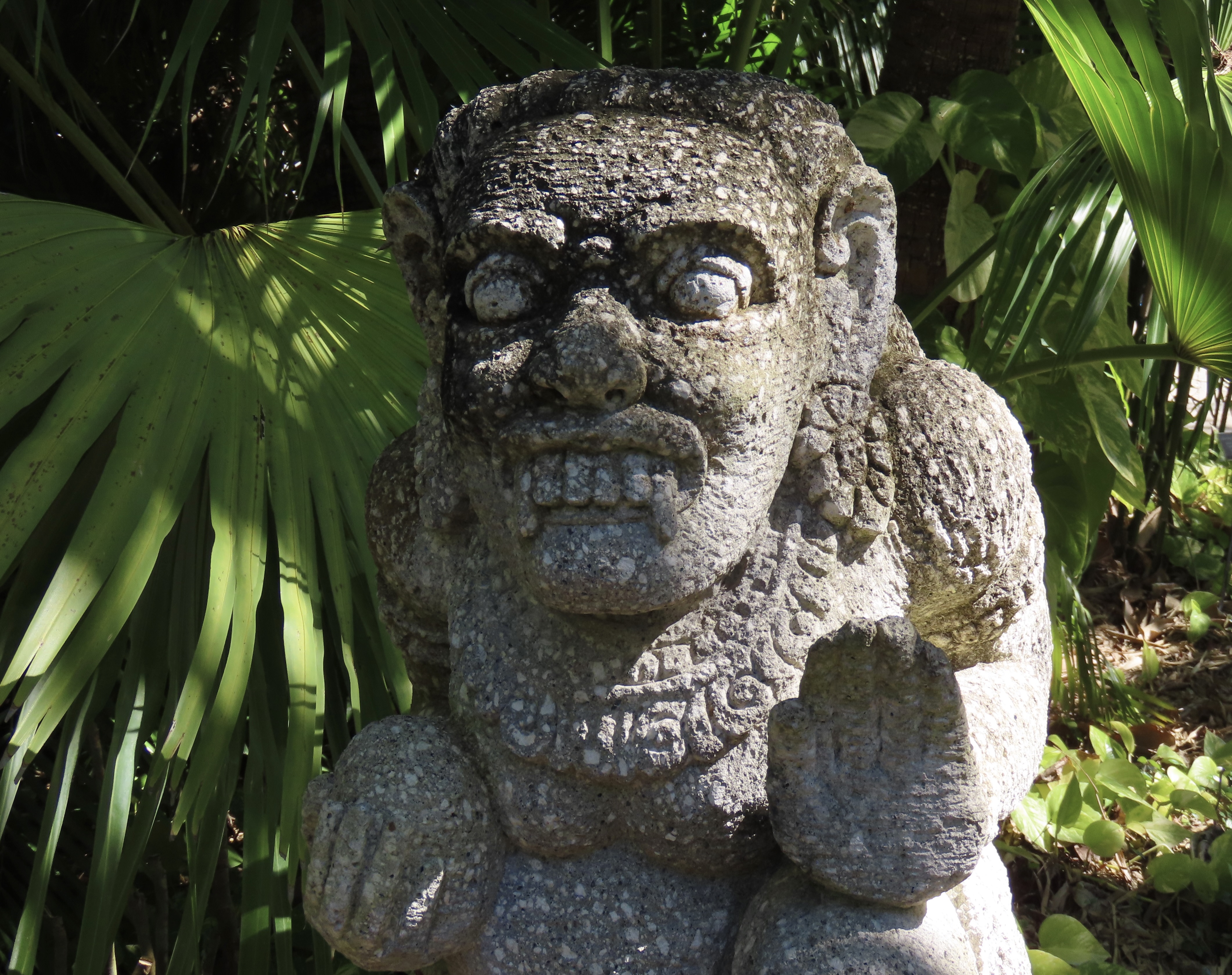
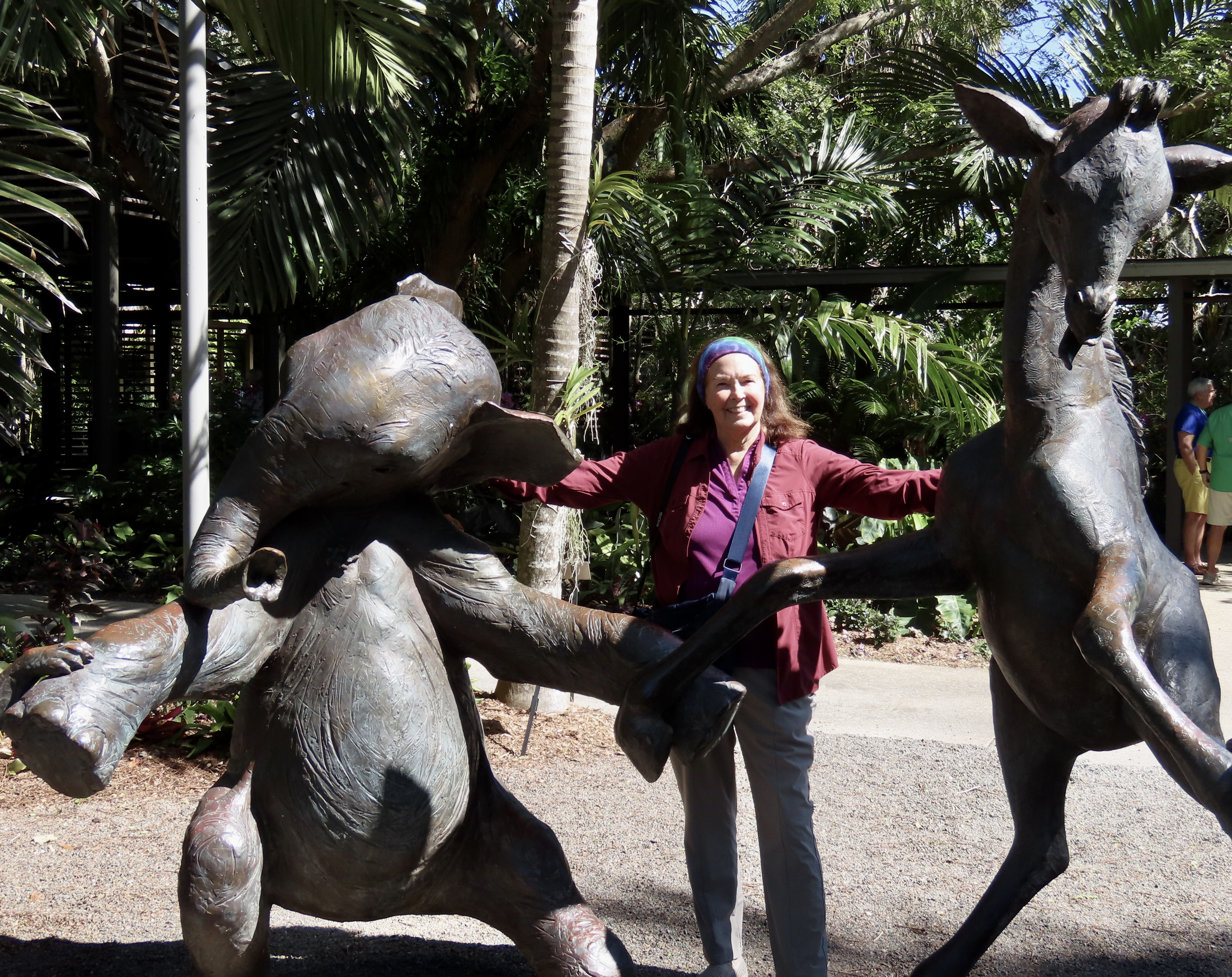
Another orchid. like the one above it was living on a tree.There were enough water lilies scattered throughout the garden that Monet could have spent a year painting them.They came in a multitude of colors.And where you have lilies, you have to have lily pads, right? This photo also gives a sense of the tropical paradise the gardens display.Like the lilies, the pads came in a variety of shapes and colors.In their own way, they were as impressive as the leaves. Oh to be a frog…The trees also had unique, weird personalities. This was a cannonball tree. We considered this tree even stranger. A sign announced it was a Ceiba Erianthos. Now you know. There will be a quiz.Or how about this? It’s called a screw pine and we could only wonder how it got that name. There were a multitude of palm trees in the garden, as one might expect. Many were covered in vines like this one.A close up of the vines. Quite beautiful.This tree had its own unique collection.Time for a little color. This plant was labeled an Annatto.When the pods open they display seeds that, apparently, are quite important to creating natural dyes.Have you ever checked out a banana tree?We heard a guide say that this was a red bellied woodpecker. It must have been hiding it. (Red headed was already taken.) It was one of the few birds we saw in the garden.Colorful leaves were everywhere. My mother used to love plants with colorful leaves. At any given time, a half dozen or so could be found in our house.A beauty.As was this.While on the subject of unusual…And suddenly, this fellow was warning us to leave.He wasn’t alone. More importantly, nature was calling, so we called it a day.On the way out, we came upon animals dancing in a circle. Of course Peggy had to join in the fun, positioning herself between an elephant and a giraffe, which takes us back to Africa. On Friday, I will be featuring crocodiles.
Peggy and I are down in the Everglades without an internet connection. I should be back to responding to comments and reading blogs this weekend.
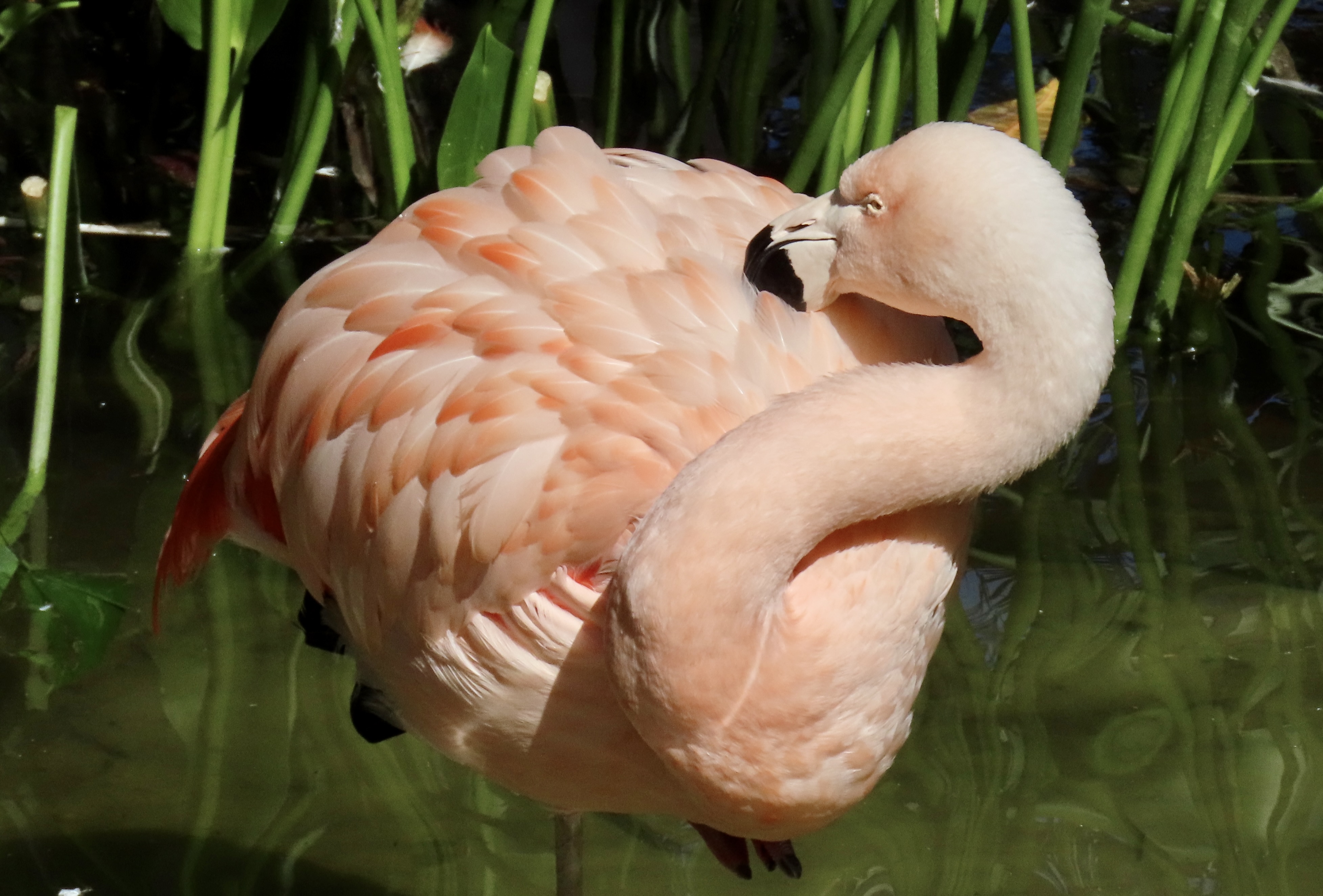
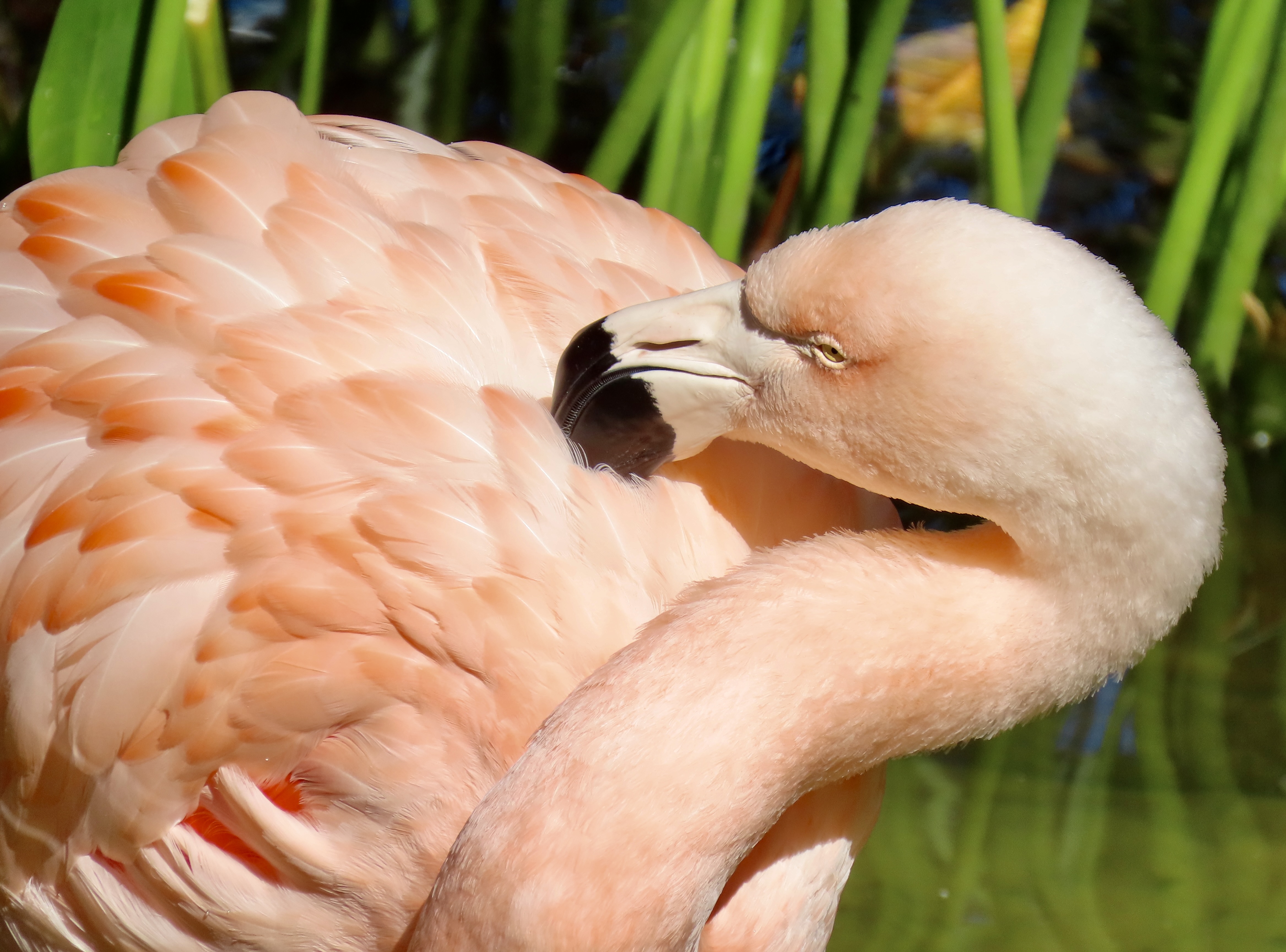
The flock of flamingos at Sunken Gardens were busy preening, using oil from a gland to waterproof their feathers.
Peggy and I are presently in Safety Harbor, Florida visiting with our son Tony, his wife Cammie, and their three boys, Connor, Chris and Cooper. Whenever we visit, Tony and Cammie always plan at least one special outing. This year it was to the Sunken Gardens in St. Petersburg, one of the oldest roadside attractions in the US.
In 1911, George Turner, a plumber with a passion for gardening, bought a sinkhole and immediately started turning it into a garden. Before long his neighbors started showing up to walk through it. The walk became so popular that George figured out he could charge people $.15 to do it. Move the decimal two places to the right and you have today’s price, which is an incredible bargain when compared to most other Florida attractions. We enjoyed the flowers and other plants but I was particularly attracted to the flamingos. Here are some photos. From here we will be heading down to Everglades National Park.
Our blog will continue its focus on our African safari, however. It’s lions on Friday!
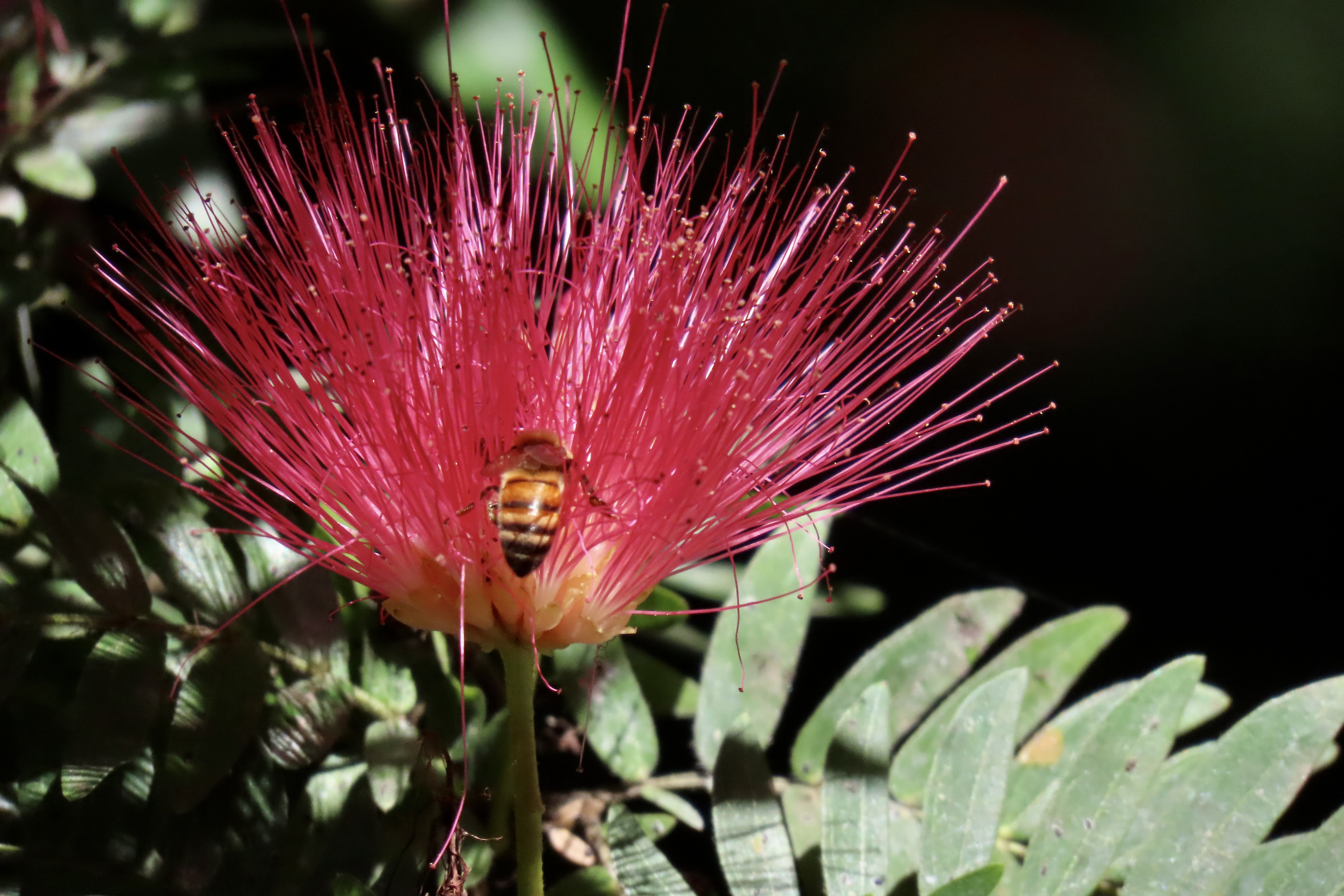
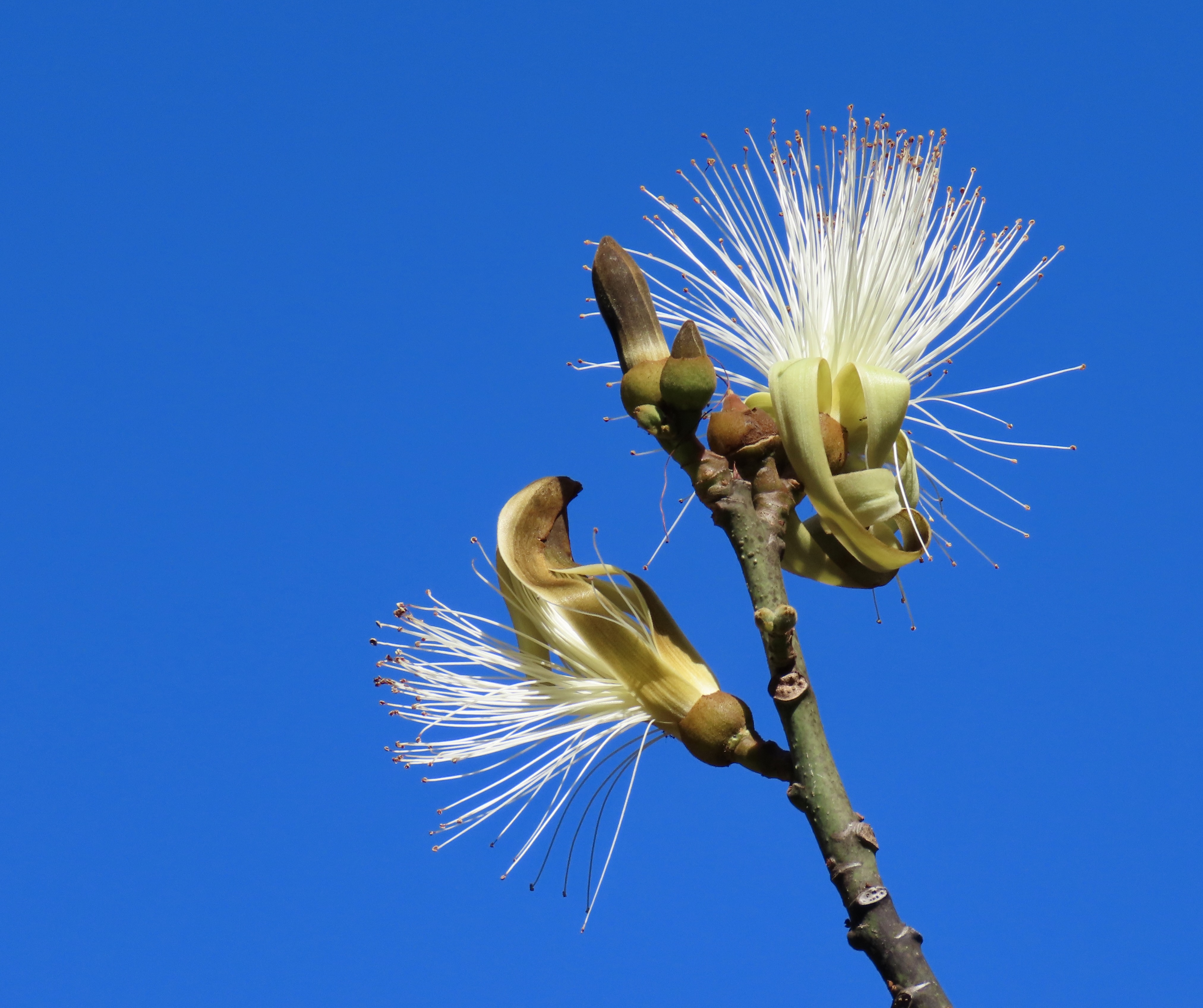
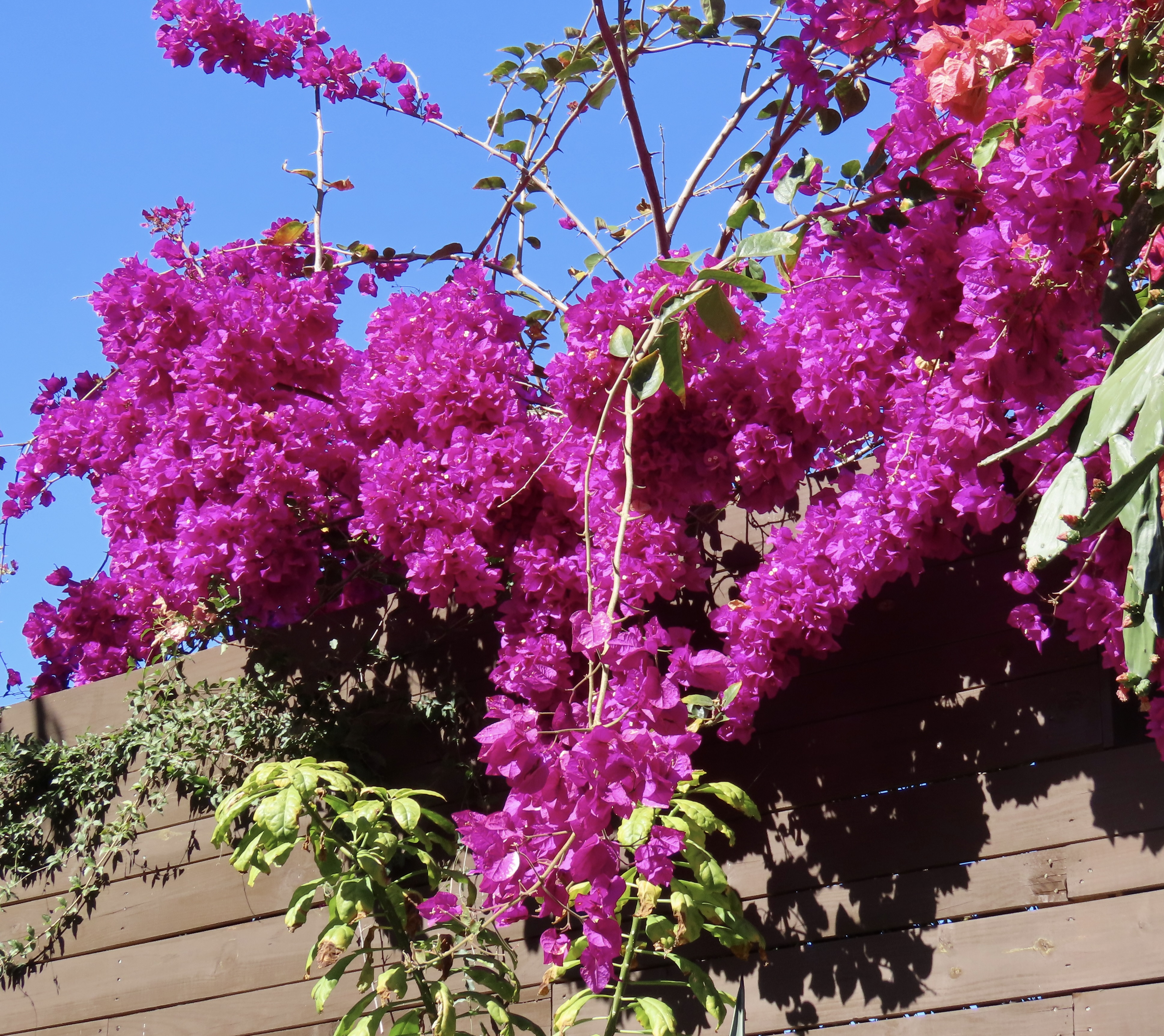
It doesn’t get much more colorful!Now, for the other side.How to smooth down the feathers: Use your head.Reaching way back…Almost…Ah, perfect.There was also a tortoise…A squirrel…And lots of flowers! This is a red veined flowering maple from South America.A Calliandra, or the red powder puff tree, with a honey bee.These flowers came off of a shaving brush tree. “What’s a shaving brush?” my grandson asked me.Trumpet flowerAnd lots of bougainvillea!
There is much more to see at the Sunken Gardens. It’s well worth a visit if you are in the area, an inexpensive family adventure.
Do you feel a little bit nervous about what’s waiting for us in 2024 as we all travel around the world and the US— like maybe we will be up to our tail-bones in crocodiles? Peggy and I photographed this fine fellow on the shore of a small pond in Chobe National Park, Botswana.
2023 was a great travel year for Peggy and me with our trip up the Nile in the spring, 10,000 mile road trip around the US in the summer, and safari visit to southern Africa in the fall. I’ve been blogging about these experiences and will continue. I never get caught up, but, on the other hand, I never run out of material. Grin.
We also have fun travel plans for 2024. The highlight will be a three month road trip up the Pacific Coast from Big Sur to Olympic National Park. It will include some of the world’s greatest ocean scenery and is an area that I have returned to time and again during my life. A trip to the Everglades next month and a trip up into the New England states and possibly Canada’s Atlantic Provinces is scheduled for this fall. We plan on finishing off the year in Costa Rica for a month (or some other warm tropical place). Maybe we will be looking for a place to live…adding to our choices for “base camps.”
I’m a little nervous about 2024. Who knows what global warming will do to our travel adventures. We plan on being flexible. That’s one advantage of doing most of out wandering this year with our pickup and small travel trailer. At the first sign of a flood, forest fire, tornado, hurricane, or snow storm, we’re out of there! We will also memorize the earthquake/tsunami escape routes when we are driving/camping along the West Coast. One never knows when the next big one will strike.
Then there’s the election: No escaping that. We’ll do our bit to support rational, humane, environmental friendly decisions but keep it to a bare minimum on “Wandering through Time and Place.” Peggy’s and my focus will continue to be on the beautiful, the quirky, and the historical. We believe our followers deserve to have somewhere they can go that maintains a sense of perspective and humor. Speaking of humor, here are a few photos from this past year that possibly relate to 2024:
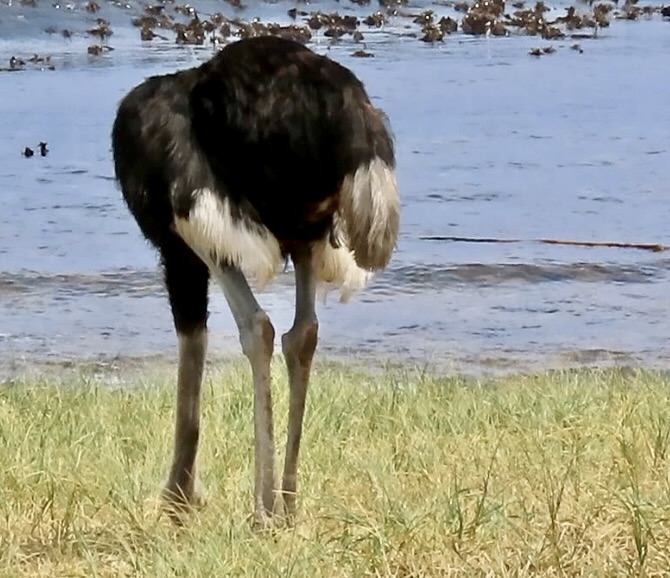
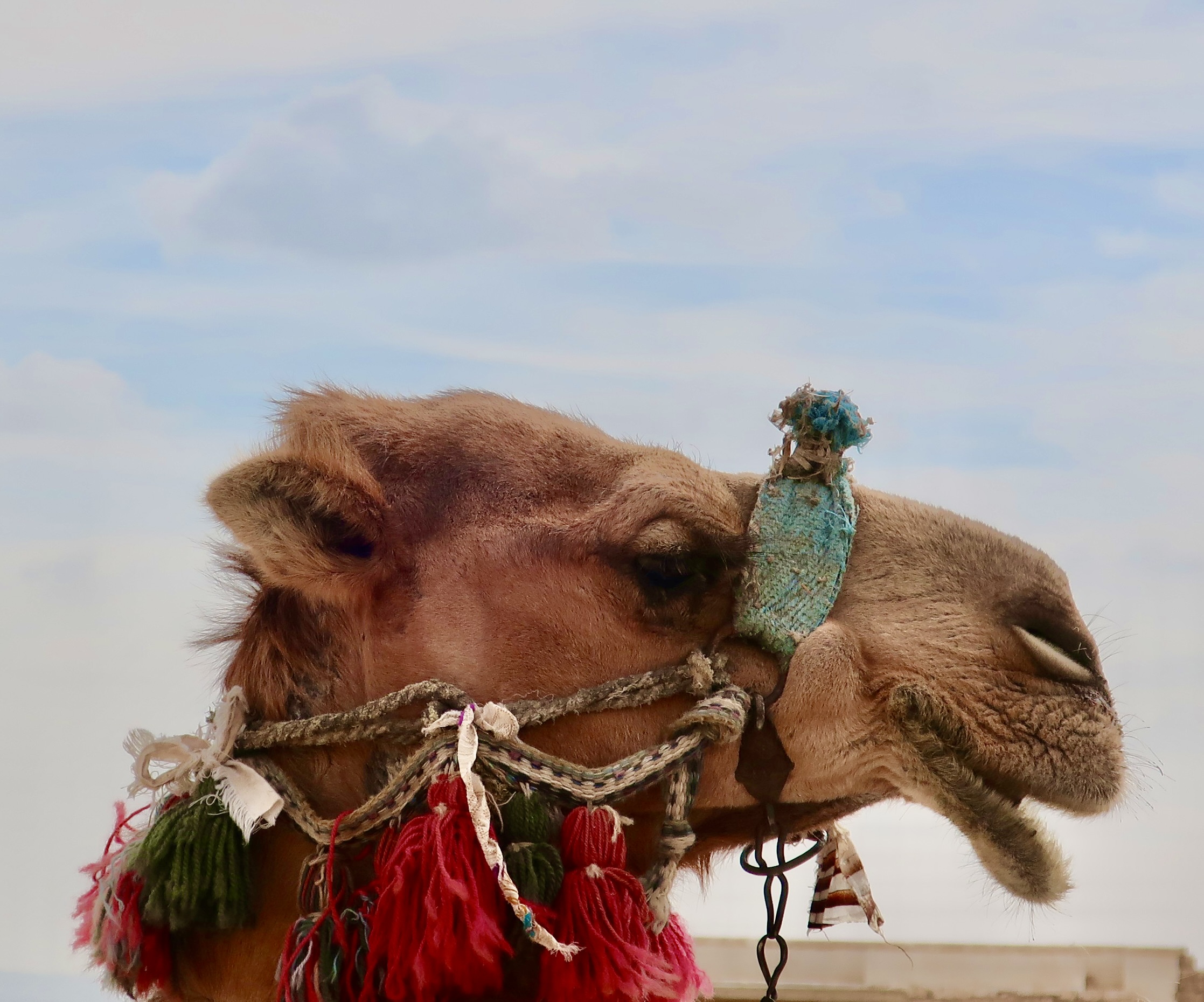
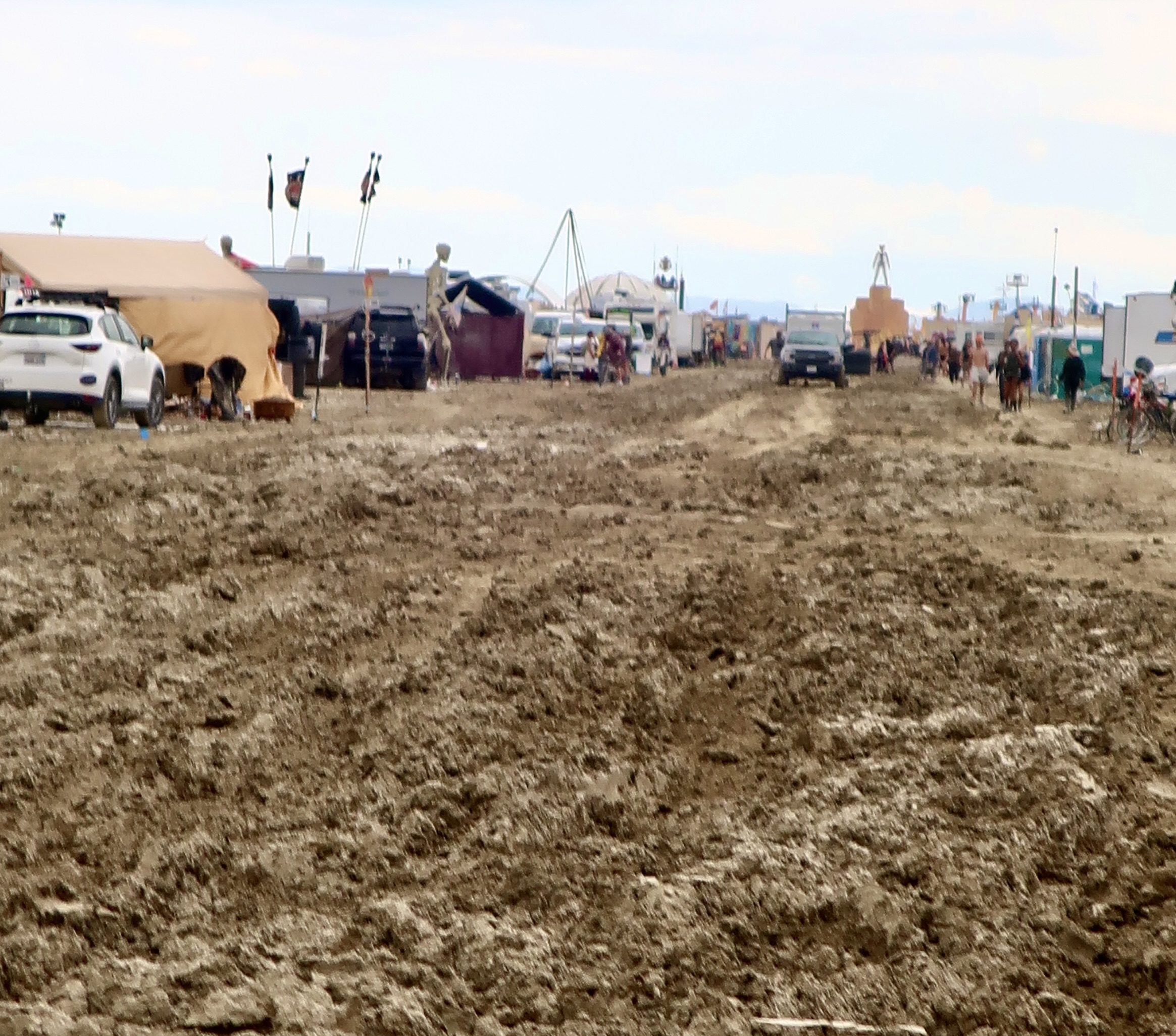
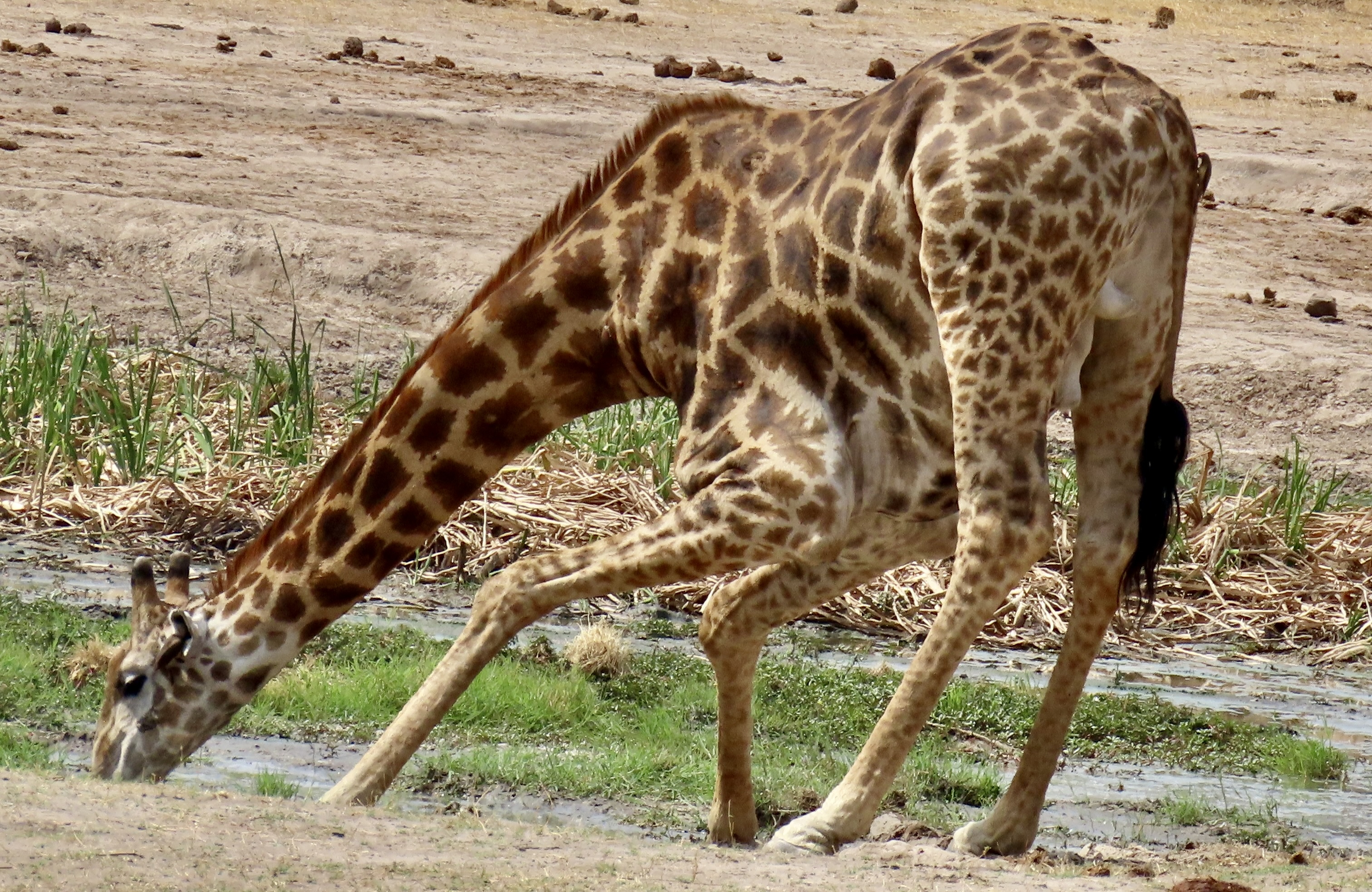
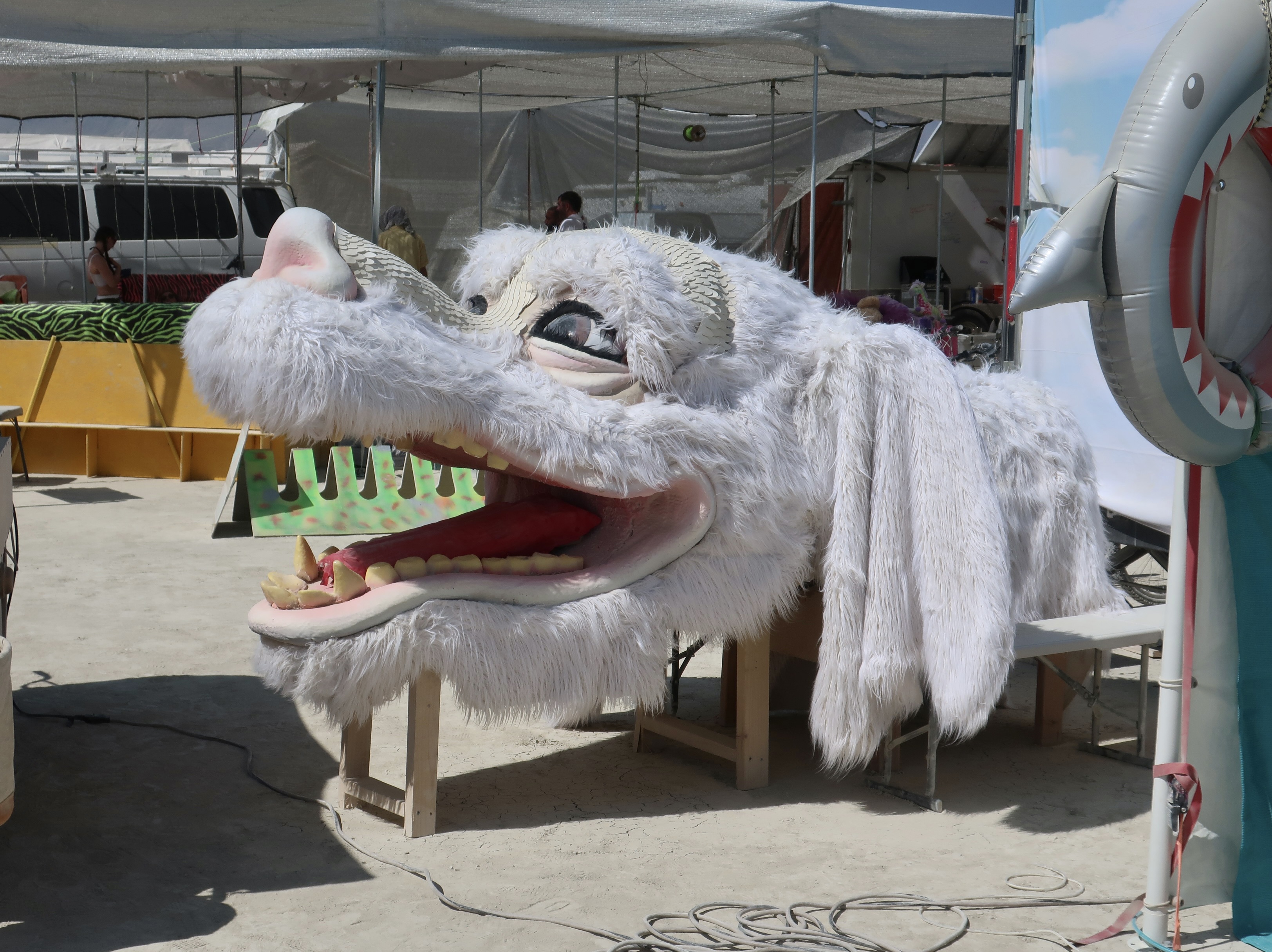
How’s this as an approach for 2024? Peggy and I photographed this ostrich in South Africa, a mile or so from the Cape of Good Hope. Was it burying its head in the sand or being hopeful? Actually, it was being practical, stuffing its mouth full of grass.If times really get bad, a nice mud bath may be the solution. It worked for the elephants and it worked for this warthog in Hwange National Park.Lacking mud, this buffalo we photographed in Theodore Roosevelt National Park in North Dakota last summer, opted for a dust bath! Whatever works. Is that an ecstatic grin on his face?This camel we photographed at the Pyramids seemed to have something to say about the situation…As did this cat hanging out in the Alabaster Mosque in Cairo.It’s more than likely that mud will be flung every which way as the campaigns get under way. This is from our trip to Burning Man last August.It’s likely to get deep!Maintaining balance may be challenging. We caught this giraffe drinking water in Hwange National Park, Zimbabwe.Maybe we will get lucky, however, and Falcor, the Good Luck Dragon from “Never Ending Story” will come to our rescue. He was hanging out at Burning Man.Possibly there will be a rainbow along with all of the rain and mud as there was at Burning Man.And we will end up the year with a smile on our face like this small hyrax we found perched on Table Mountain overlooking Cape Town, South Africa. The hyrax’s closest relatives, BTW, are the elephant and the manatee!
Whatever happens, Peggy and I want to wish you and your family a happy and healthy New Year in 2024. And safe travels! Next post: We will take a look at the closely knit elephant family and the matriarchal society that holds it all together.
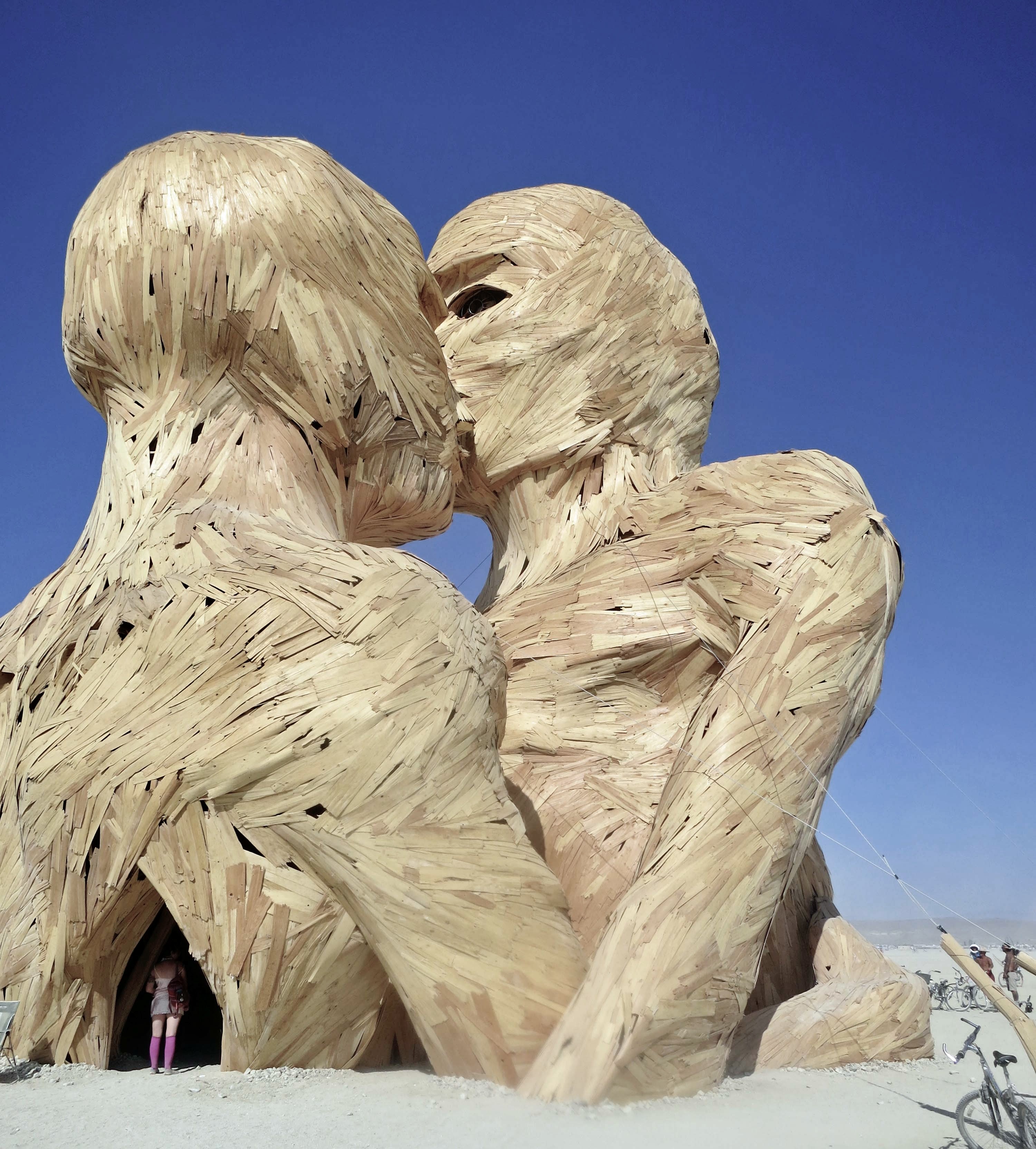
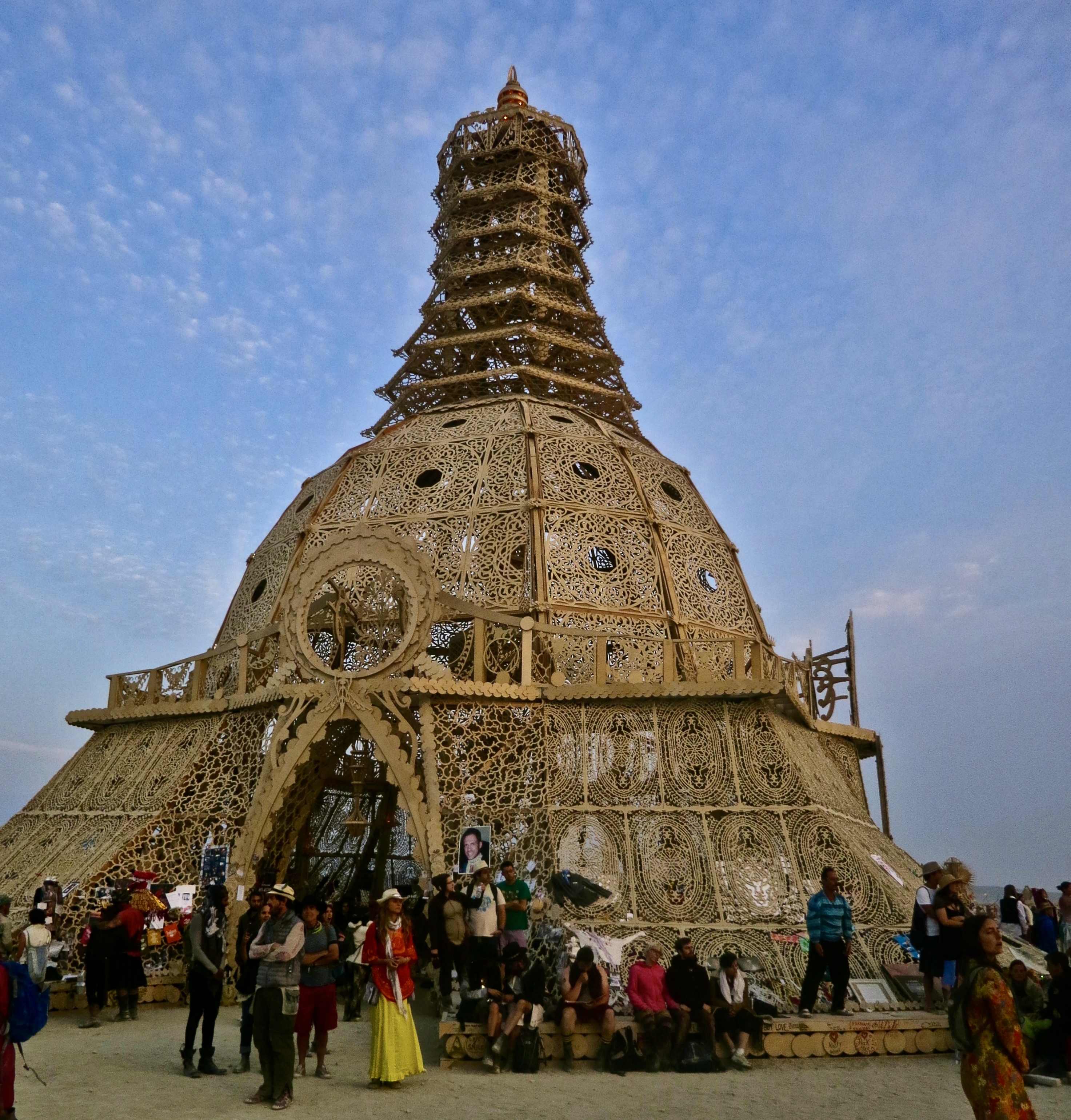
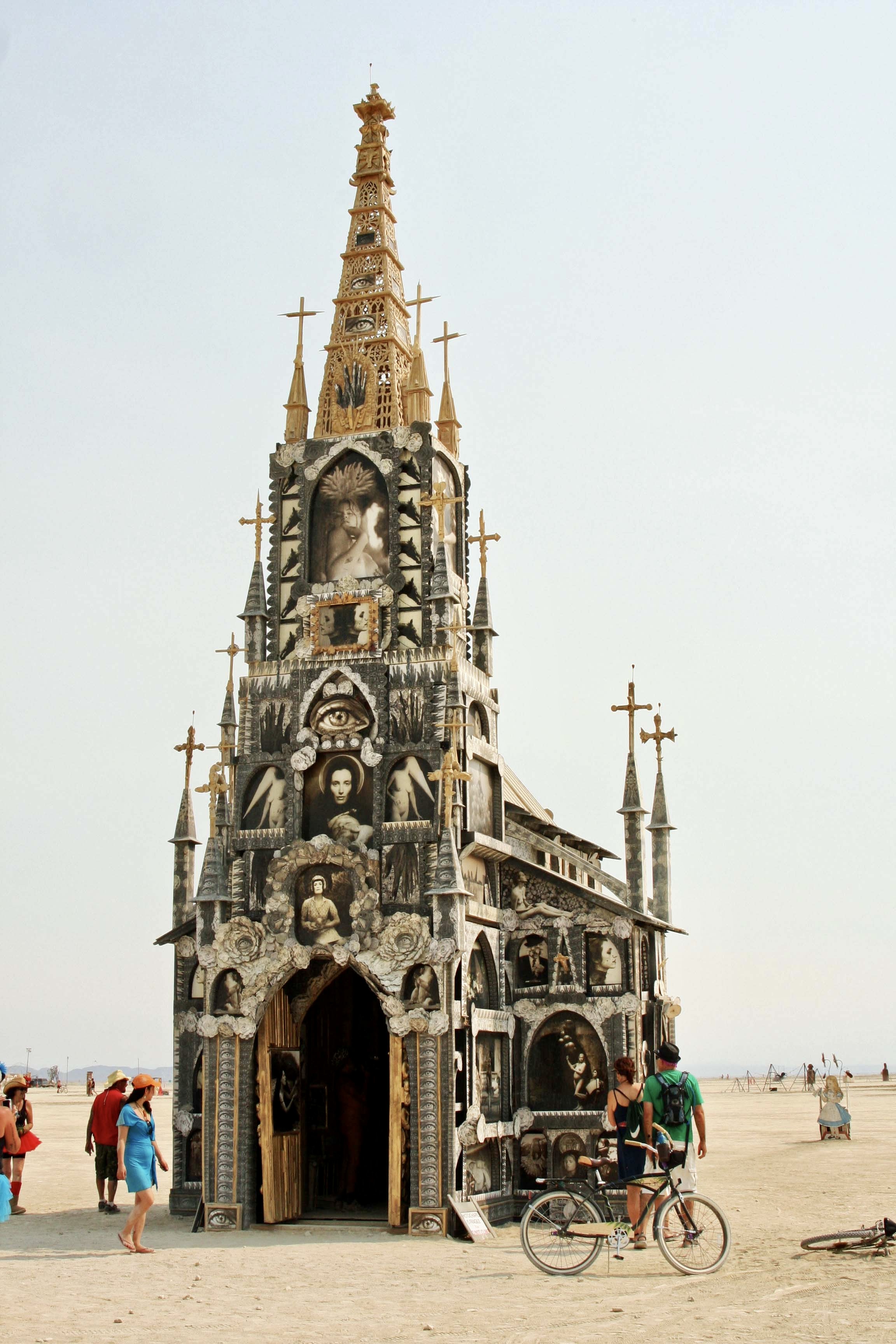
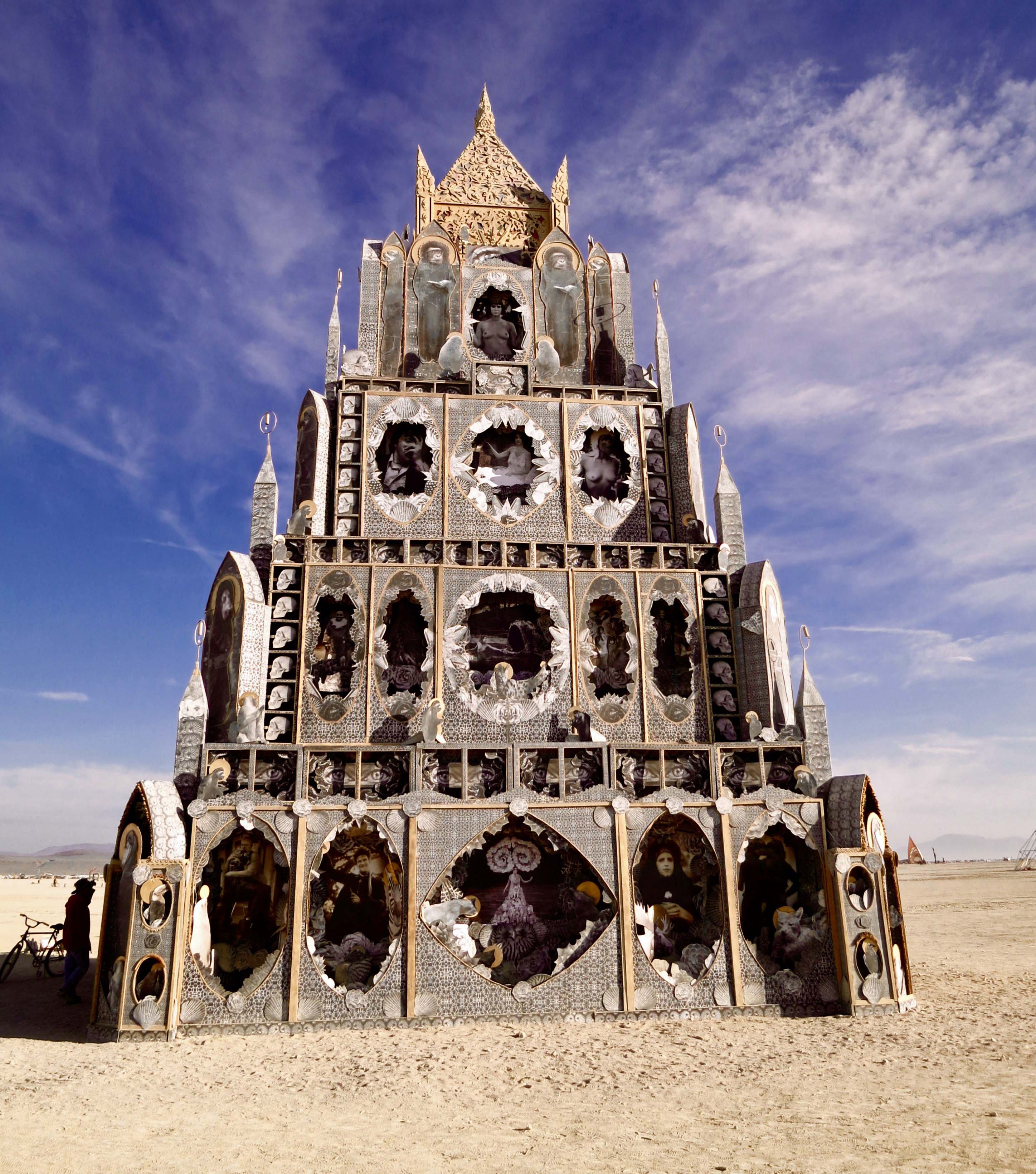
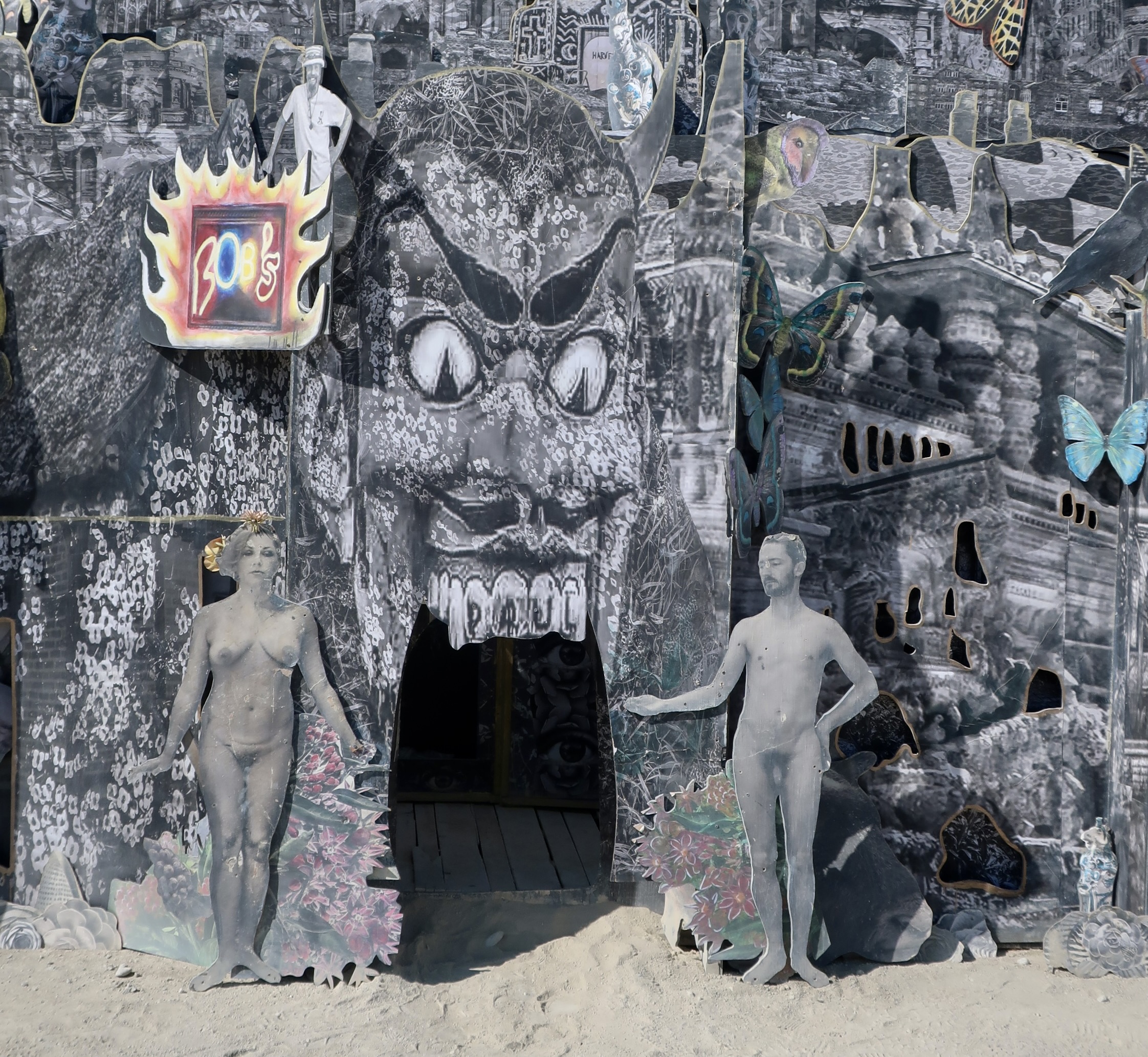
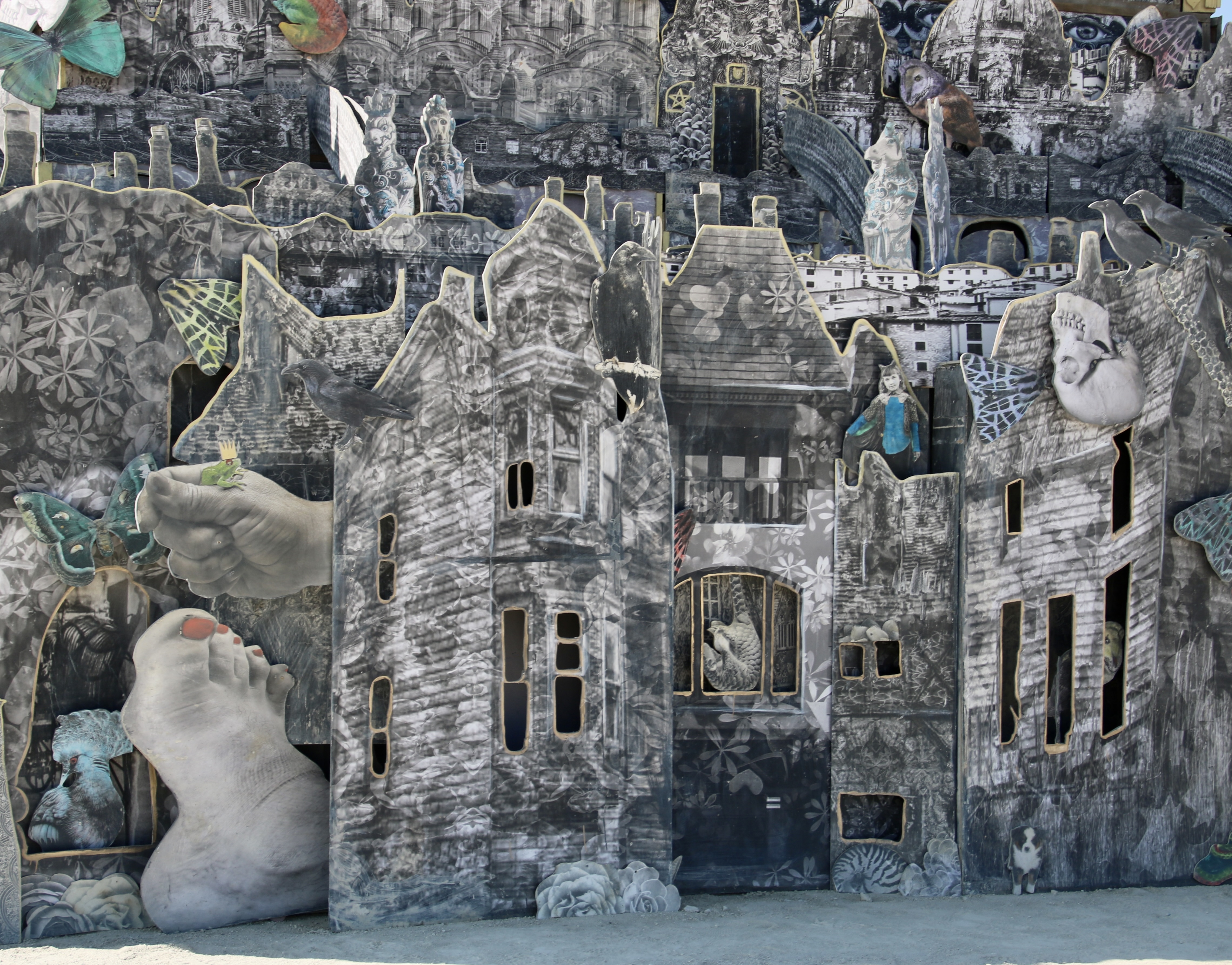
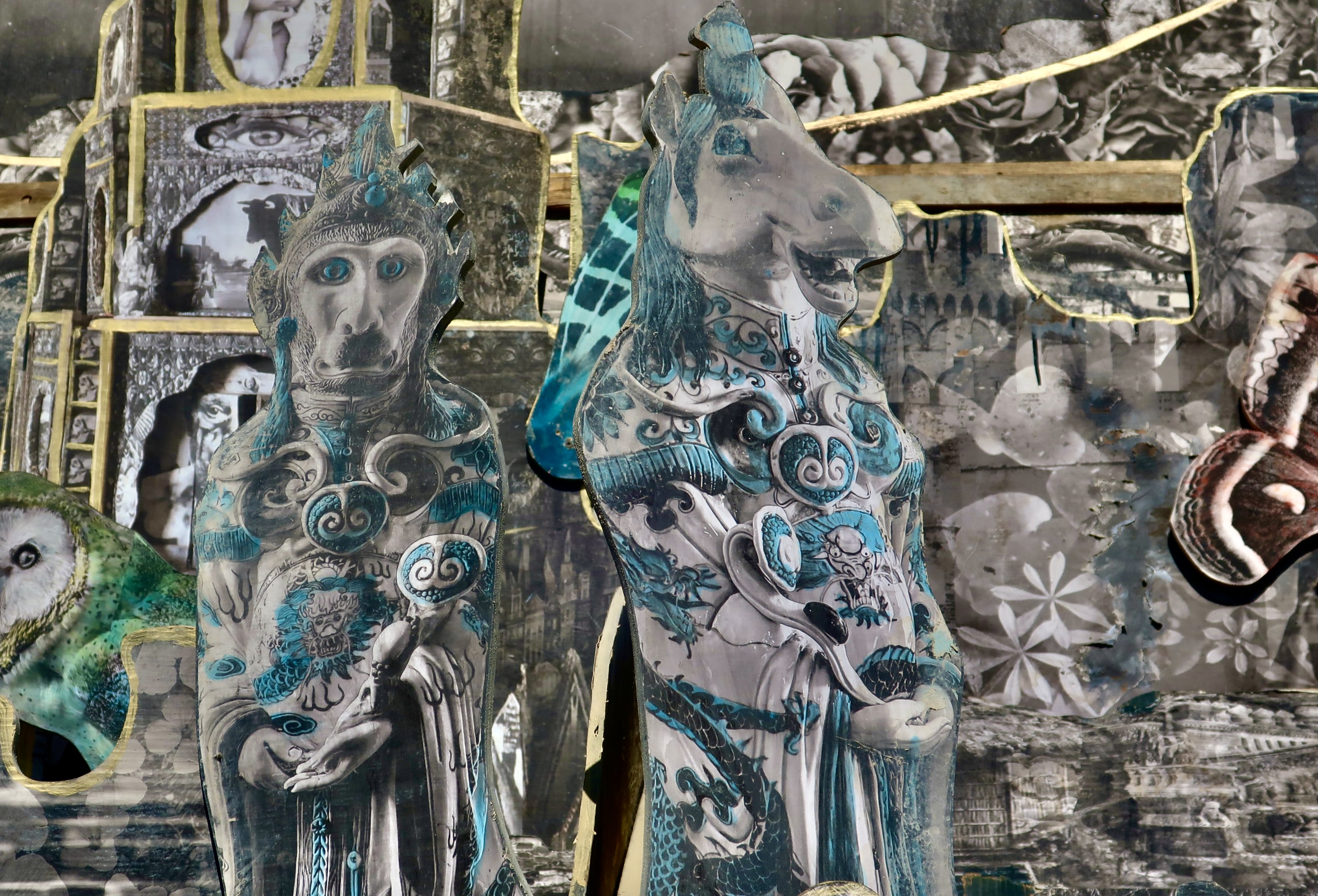
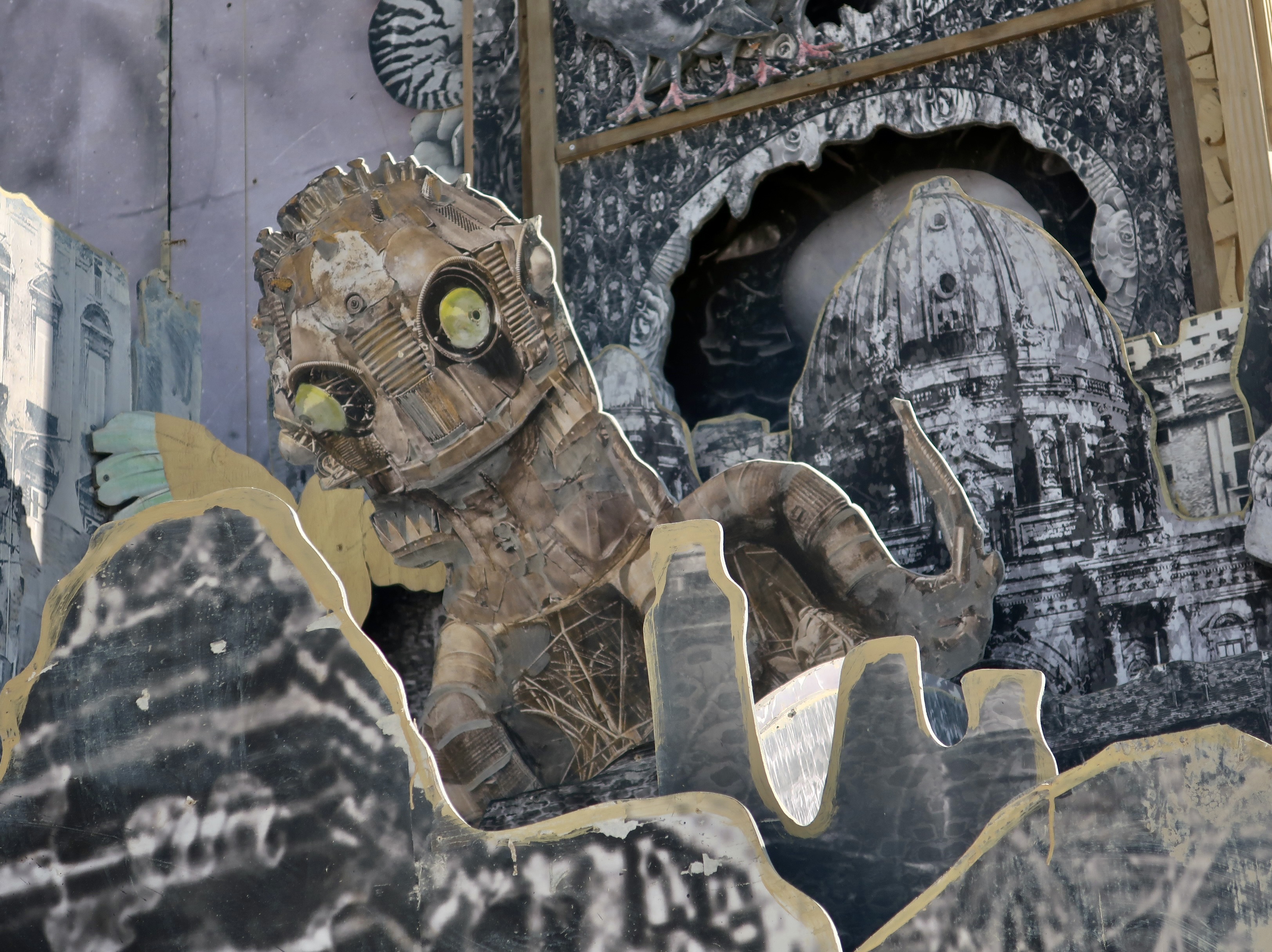
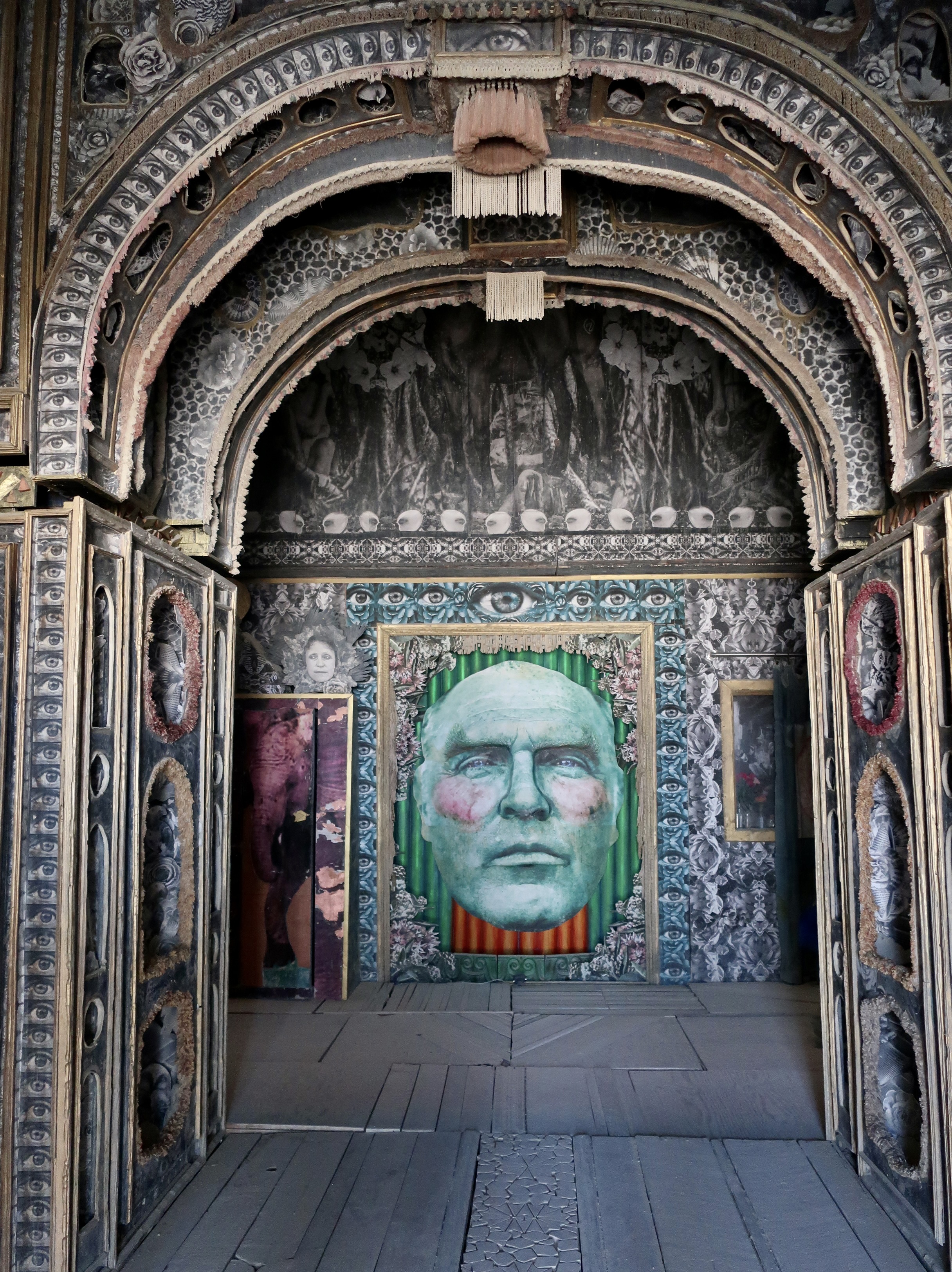
Michael Garlington and Nancy Bertotti from Petaluma California brought another one of their creative, photo-covered structures to Burning Man 2023, the Chapel of Babel.
Today, I am going to feature the creative and humorous Temple of Babel brought to Burning Man 2023 by the artists Michael Garlington and Natalia Bertotti, but first I want to speculate on how Burning Man has been so successful at developing, attracting and supporting top artists, and second, why six of the best come from Petaluma, a small city north of San Francisco.
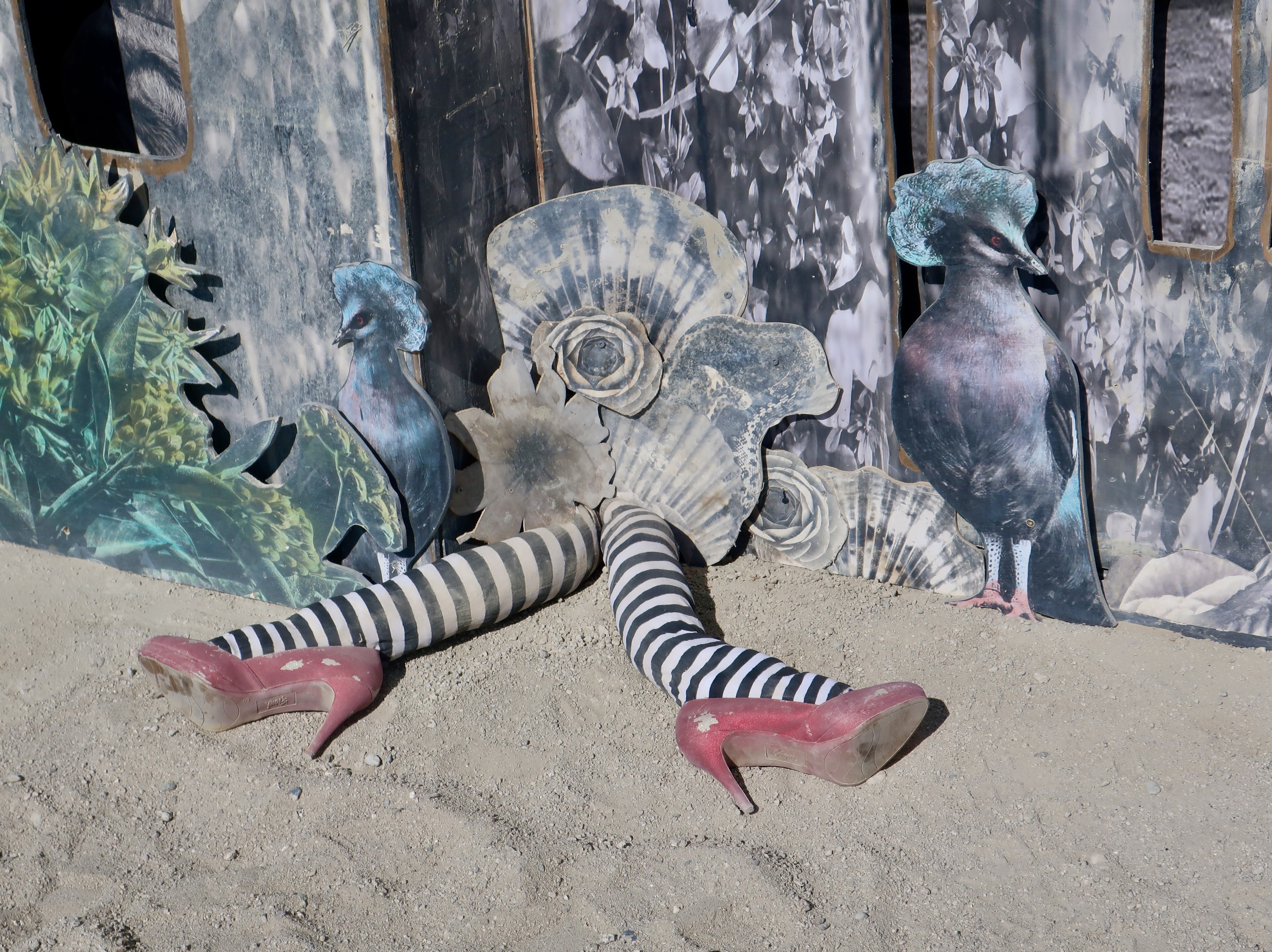
Peggy and I were walking around the Chapel of Babel when we came across this scene and started laughing. Do you remember the Wicked Witch of the East who was crushed by Dorothy’s house in the Wizard of Oz?
The international status of Burning Man art is not surprising. It is often mind blowing, thought provoking, monumental and beautiful. In 2018, the Renwick Gallery of the Smithsonian Art Museum recognized its status by featuring an exhibit of some of the events most creative artists. Titled, No Spectators: The Art of Burning Man, it took up the whole building! From there, the exhibit traveled on to the Cincinnati Art Museum and the Oakland Museum of California.
Here is what the Renwick had to say about the exhibit:
Each year in Nevada’s Black Rock Desert, a city of more than 70,000 rises out of the dust for a single week. During that time, enormous experimental art installations are erected and many are ritually burned to the ground. The thriving temporary metropolis known as Burning Man is a hotbed of artistic ingenuity, driving innovation through its principles of radical self-expression, decommodification, communal participation, and reverence for the handmade. Both a cultural movement and an annual event, Burning Man remains one of the most influential phenomenons in contemporary American art and culture.
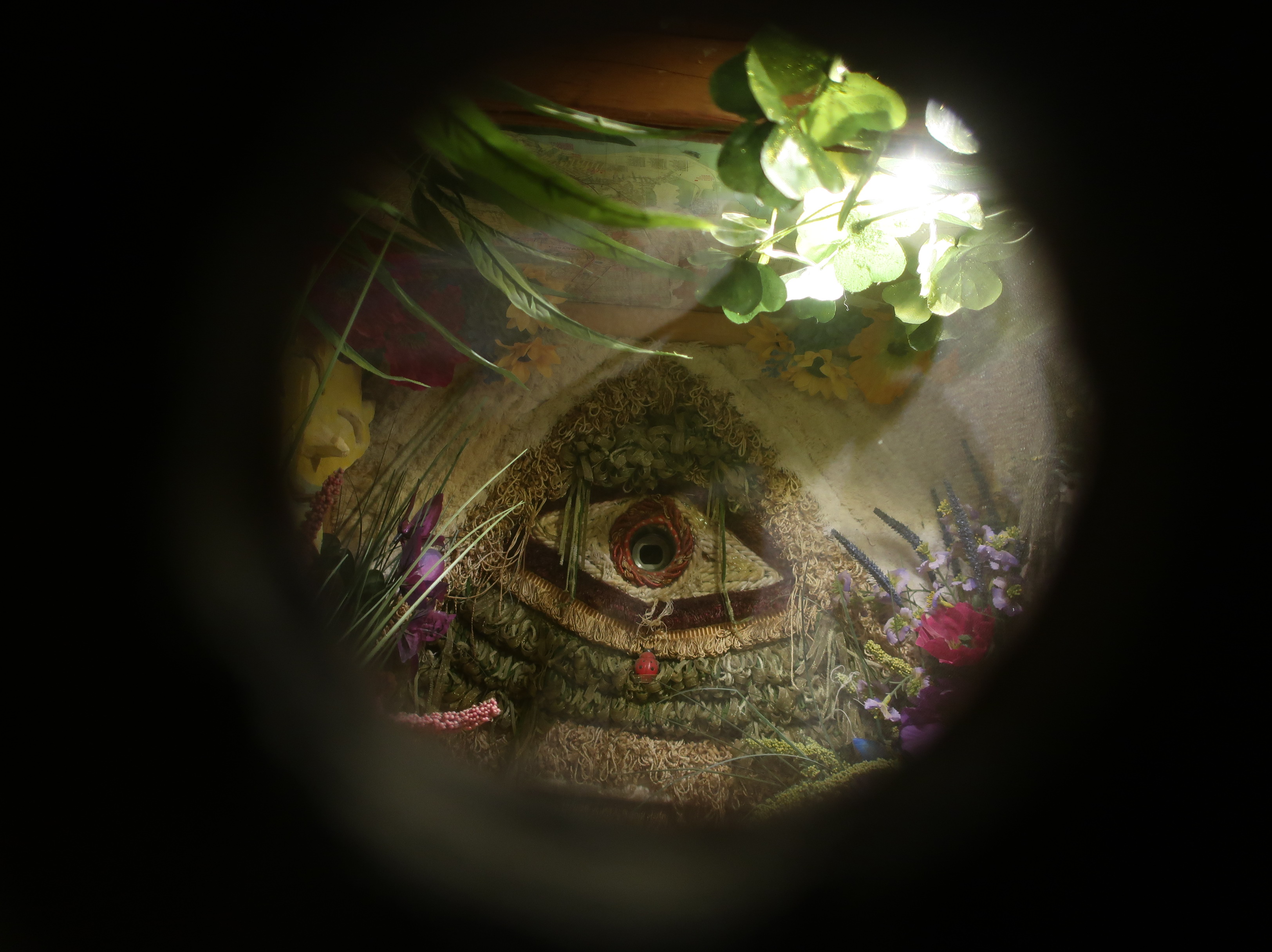
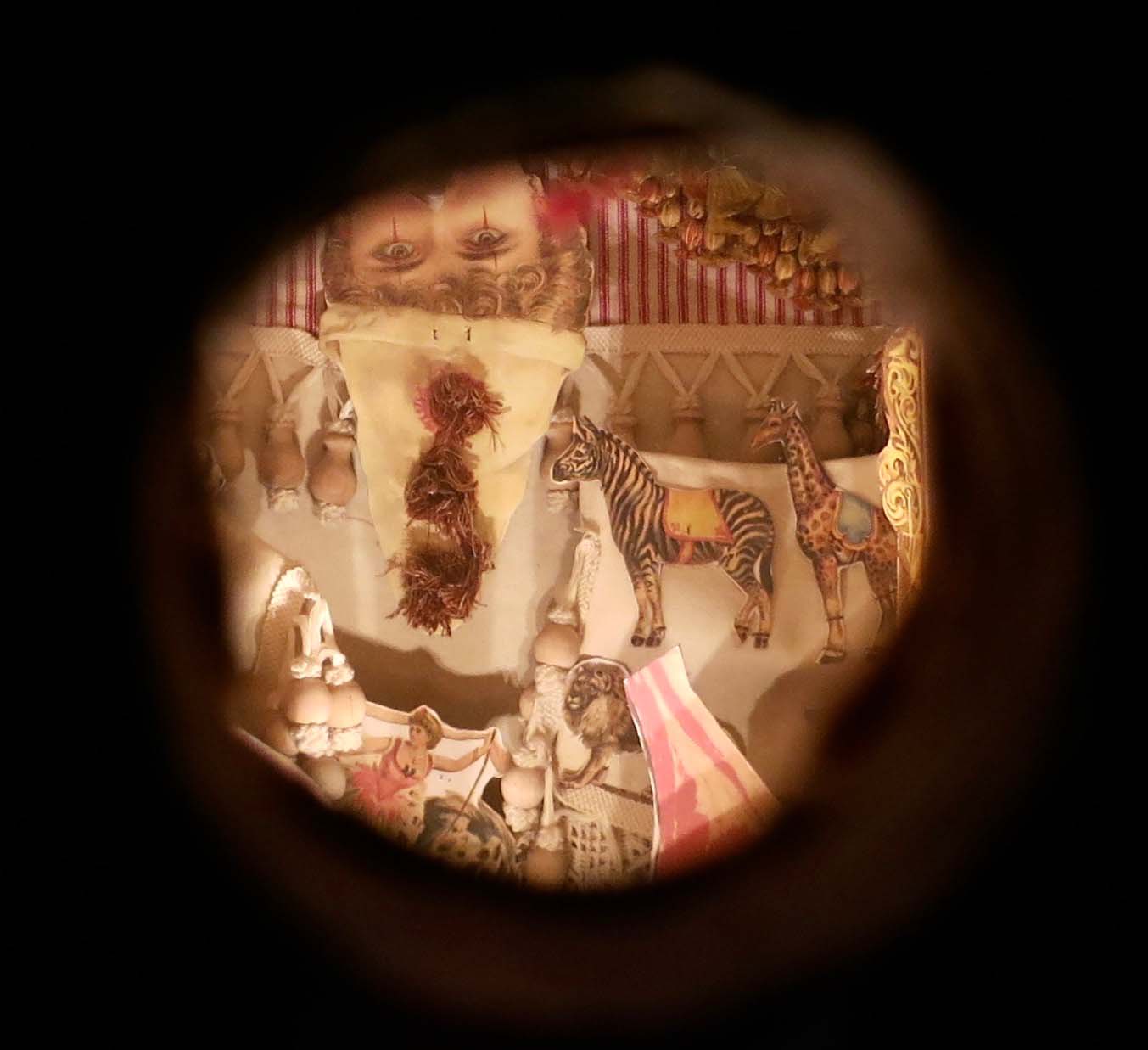
The creativity/ingenuity at Burning Man is unending. Previous Garlington/Bertotti works at Burning Man have taught me to look in peepholes to discover miniature worlds. This one in the Chapel of Babel was just big enough to accommodate the lens on my small Canon Power-Shot. An eye was staring back at me. A lady bug and an aphid were having a stand-off on the eyelid!
The words that stood out for me in the Smithsonian description were , “a hotbed of artistic ingenuity.” The Burning Man organization credits four of its ten principles as being the driving force and I agree they are important, particularly its emphasis on creativity, community support, and appreciation. I would add that the venue provides artists with:
The largest art gallery or ‘canvas’ in the world. A place that is a natural for monumental art to be put on display in a remote and highly scenic area.
A ready made audience of 70,000 people, most of whom appreciate, support, and admire the art.
Instant national and international recognition from both the participants and media. Burning Man enhances this by selecting a large number of artists each year for nominal financial support and recognition through its publications and at the event.
I’m going to add another factor that has been important to some of the best art: The evolution of local centers for the development of art and artists that 1) combine a variety of artists working in different mediums, 2) volunteers who offer to help the artists with their projects, especially the monumental art, and 3) a broader community that supports and takes pride in the artists and their work. The best way that I can describe these communities is to use the Smithsonian’s words, they have become hotbeds of artistic ingenuity.
One such center is The Reno Generator. It’s a huge warehouse space in Reno, Nevada packed with artists and art. While Burning Man was the original inspiration that led to the development of the Generator, it is open to all artists who want to become members— billing itself today as a Maker Space. Peggy and I visited the Generator in 2015 and found it fascinating. I blogged about the visit. The post is worth checking out. Here are two of my favorite works at Burning Man art that came out of the Generator around that time.
The sunken ship La Llorona.Embrace the Dawn.
Petaluma, a city of 50,000 people less than an hour north out of San Francisco on Highway 101, is another major source of Burning Man Artists and art. Four of the main artists/teams featured in the Smithsonian exhibit come from here: The team of Michael Garlington and Natalia Bertotti who work as photographers/sculptures, David Best who is an architect/sculpture best known for his Burning Man Temples, and the team of Marco Cochrane, Julia Whitelaw who are known for their towering female sculptures.
Unlike Reno, the artists from Petaluma I am featuring all have their own studios. The dynamics of community support, artist interaction, and volunteers are all similar, however. As noted above, I am featuring Garlington and Bertotti today. Here is art from the others that I have blogged about in the past.
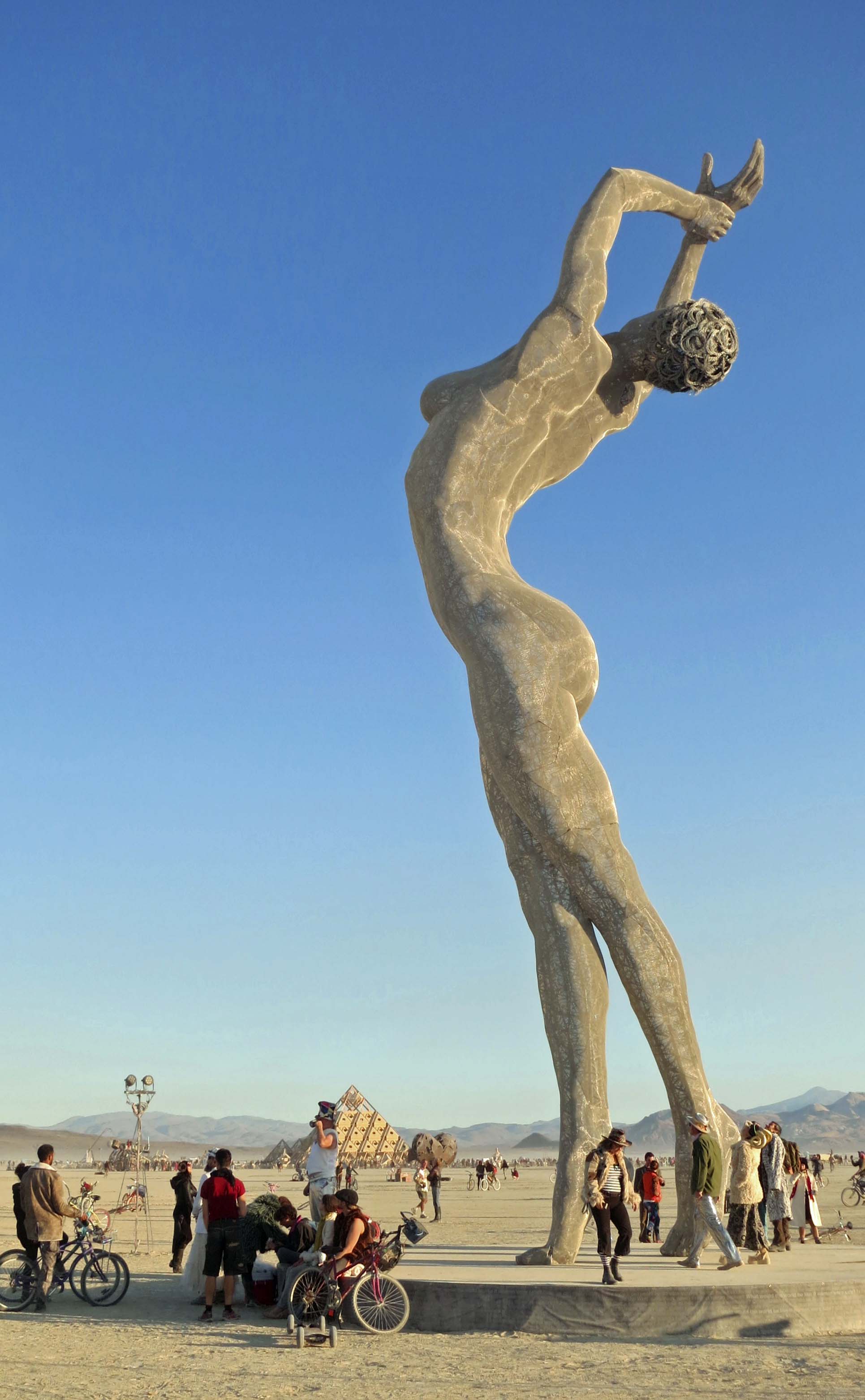
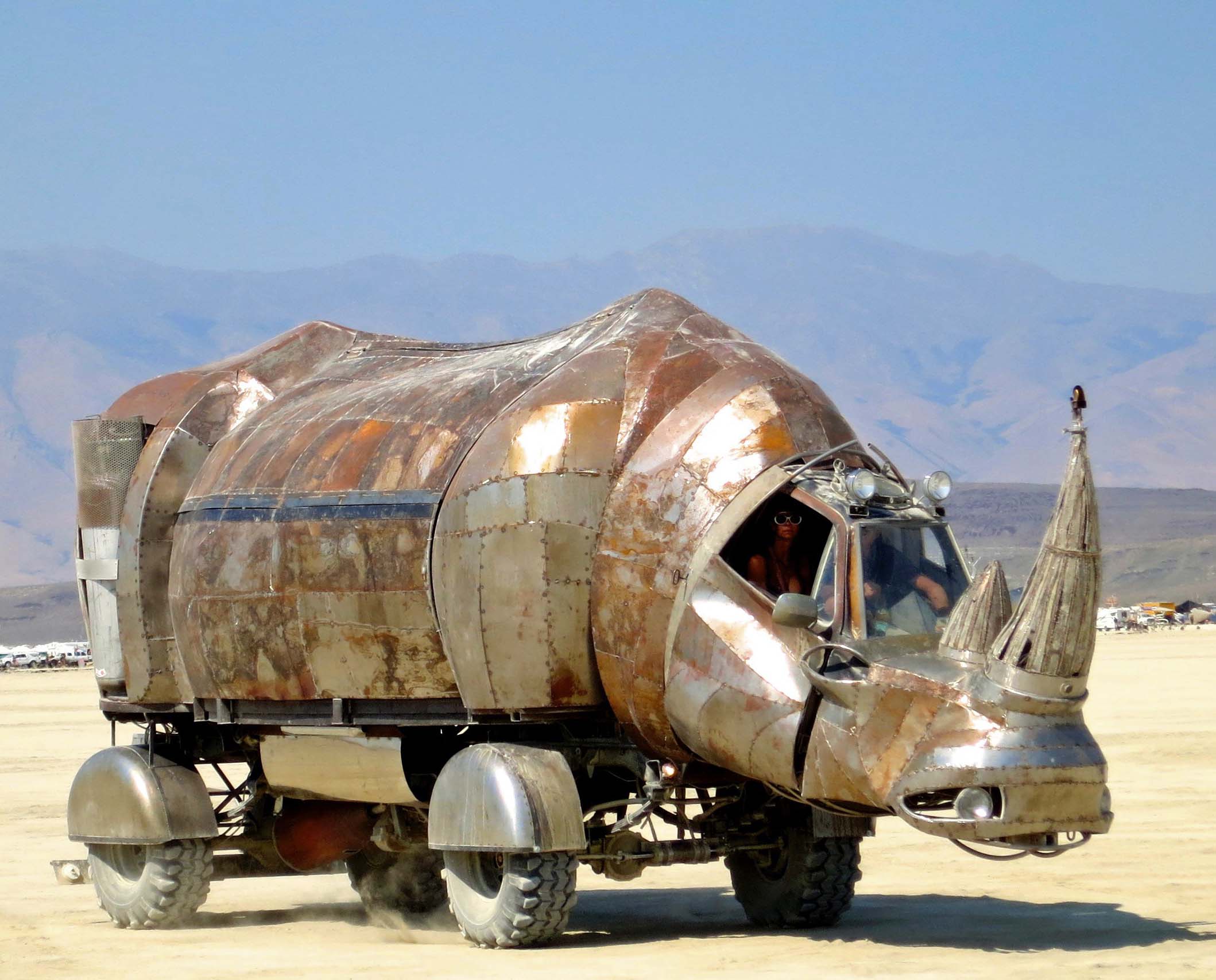
A David Best Temple and Burning Man.Truth Is Beauty by Marco Cochrane and Julia Whitelaw on the Playa at Burning Man. A smaller version was included in the Smithsonian exhibit.I’d be at fault here if I didn’t also recognize this magnificent beast, The Rhino Redemption, a mutant vehicle by Kevin Clark and TM Potter who also hail from Petaluma. Mutant vehicles make up some of Burning Man’s most creative art projects. The Rhino is also appropriate for our pending trip to Africa that starts this week.
I first visited Petaluma in 1959, well before it was noted for its art. Instead, its claim to fame was being the World’s Egg Basket. Thousands of egg-laying chickens lived in long, low barns and called it home. I went there for a conference of Episcopal Church youth leaders. It was my first trip without family and the first time I ever stayed in a motel. A quick sniff confirmed we had arrived. I’ve been through Petaluma numerous times since, starting in the late 60s and early 70s. The chickens are long gone. Wealthy escapees from the Bay Area have replaced chicken farmers.
This 1920s era photo showed Petaluma’s pride in its egg laying mamas.
Michael Garlington made his first trip to Burning man in 2007 as a volunteer in helping to build one of David Best’s temples. When not busy learning how to use the tools, he was busy photographing fellow Department of Public Works volunteers. By profession and passion, he is a photographer.
A photo of David Best’s 2007 Burning Man Temple taken by my friend Ken Lake.
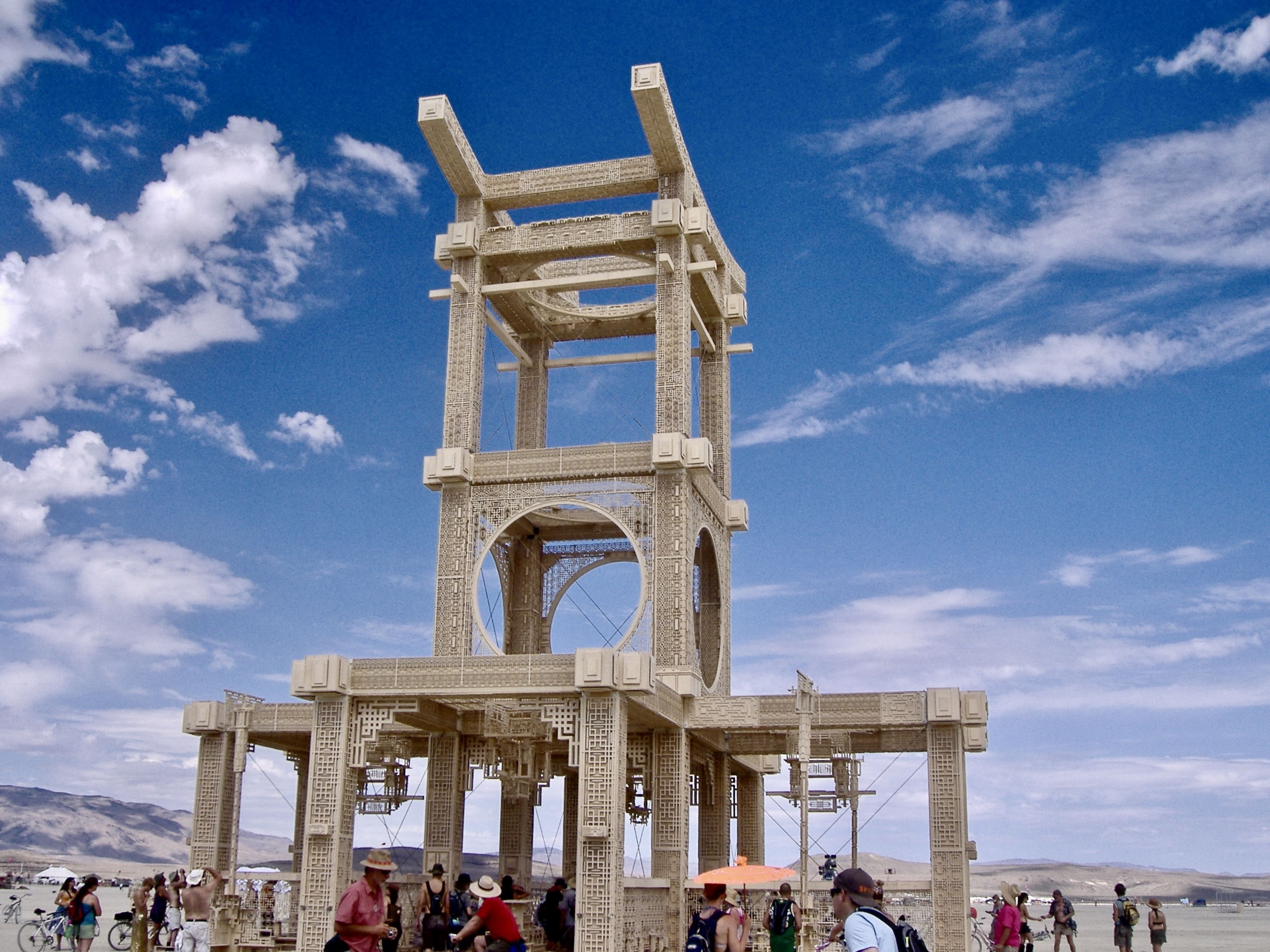
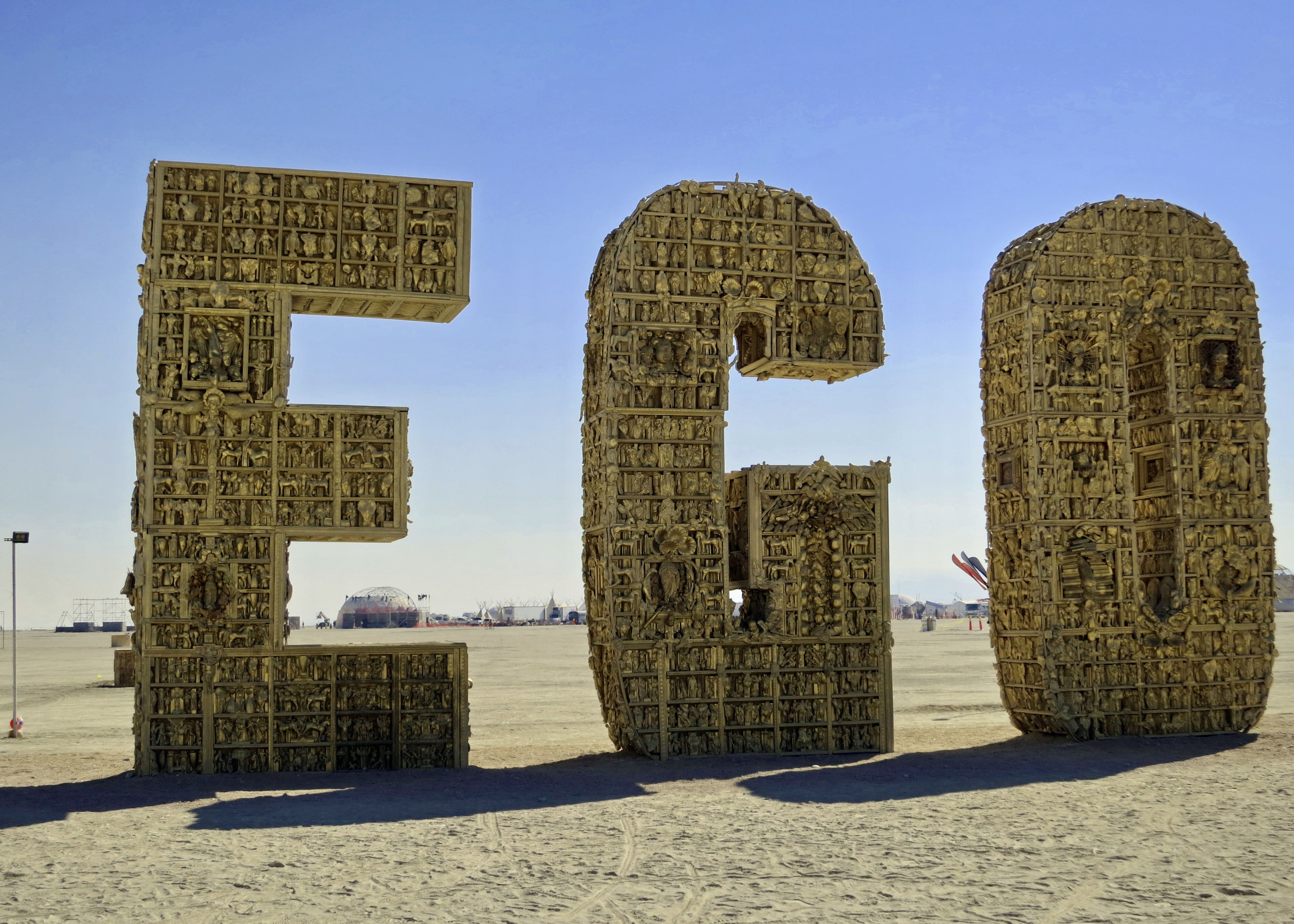
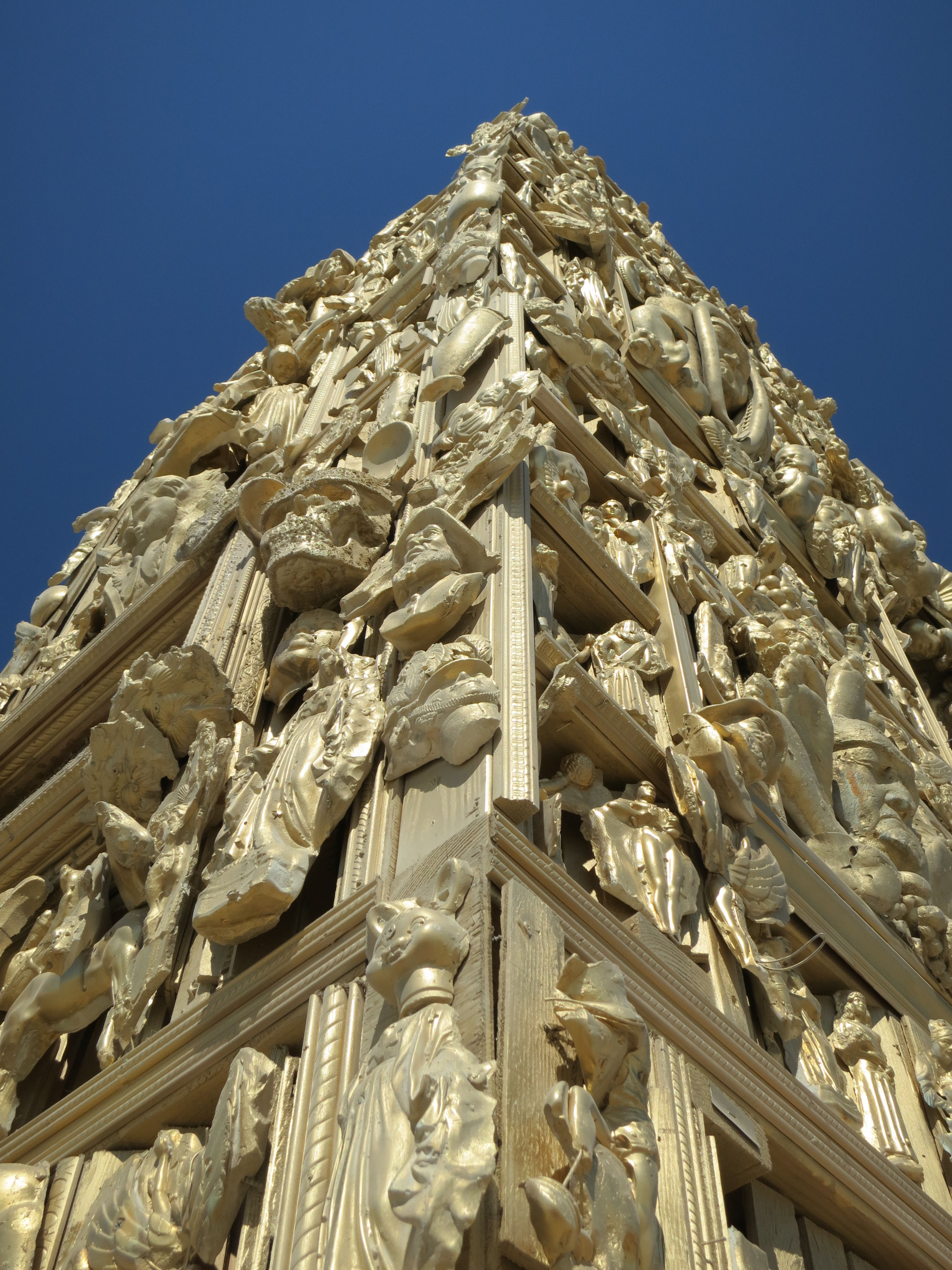
By 2013, Garlington had decided try his hand at Burning Man art by joining Laura Kempton in her creation of the sculpture EGO. The following year he struck out on his own and created the aptly named Photo Chapel that featured many of his whimsical, bizarre and humorous photos, which, as he notes, travel a path between reality and imagination. In 2015 he had joined with Nancy Bertotti and they entered the category of Burning Man legends with their Totem of Confessions. It featured a photo of LSD guru Timothy Leary. But there was more. Leary’s already burned ashes were about to be burned again. It was a true Burning Man type of event.
Here’s what I blogged in 2015 about the night they burned the Totem:
“Susan Sarandon (who had inherited a portion of Leary’s ashes) put on a low-cut, white, wedding dress. Her camp members walked beside her, stirring up the Playa dust. Timothy Leary came along behind, his ashes riding in a casket. A New Orleans style jazz band led the joyful procession of live and dead people making their way out to the Man and then on to the towering Totem of Confession. A 26 foot tall Octopus (El Pulpo Mechanico) rolled along behind. Leary would have loved it. Maybe he did.” Rumor has it that they toasted Leary before the procession with champagne mixed with a tad of LSD and Leary’s ashes.
The 2012 Ego SculptureA close up of the Ego Sculpture. Check out the characters.The Photo Chapel at Burning Man 2014.The Totem of Confession in 2015. The photo of Leary, a confessional, and a tower of skulls were inside. A peephole in the Totem of Confession.Leary’s ashes burn again for a second time as the Temple of Confession burns. They also shoot up into the sky for a second time. In 1997, a portion of Leary’s ashes were shot into space on a rocket along with those of Gene Roddenberry, the creator of Star Trek, and 22 other people. It might be said, that Leary was higher than he ever had been from LSD.
And now, for some final photos that Peggy and I took of Garlington and Bertotti’s 2023 Chapel of Babel.
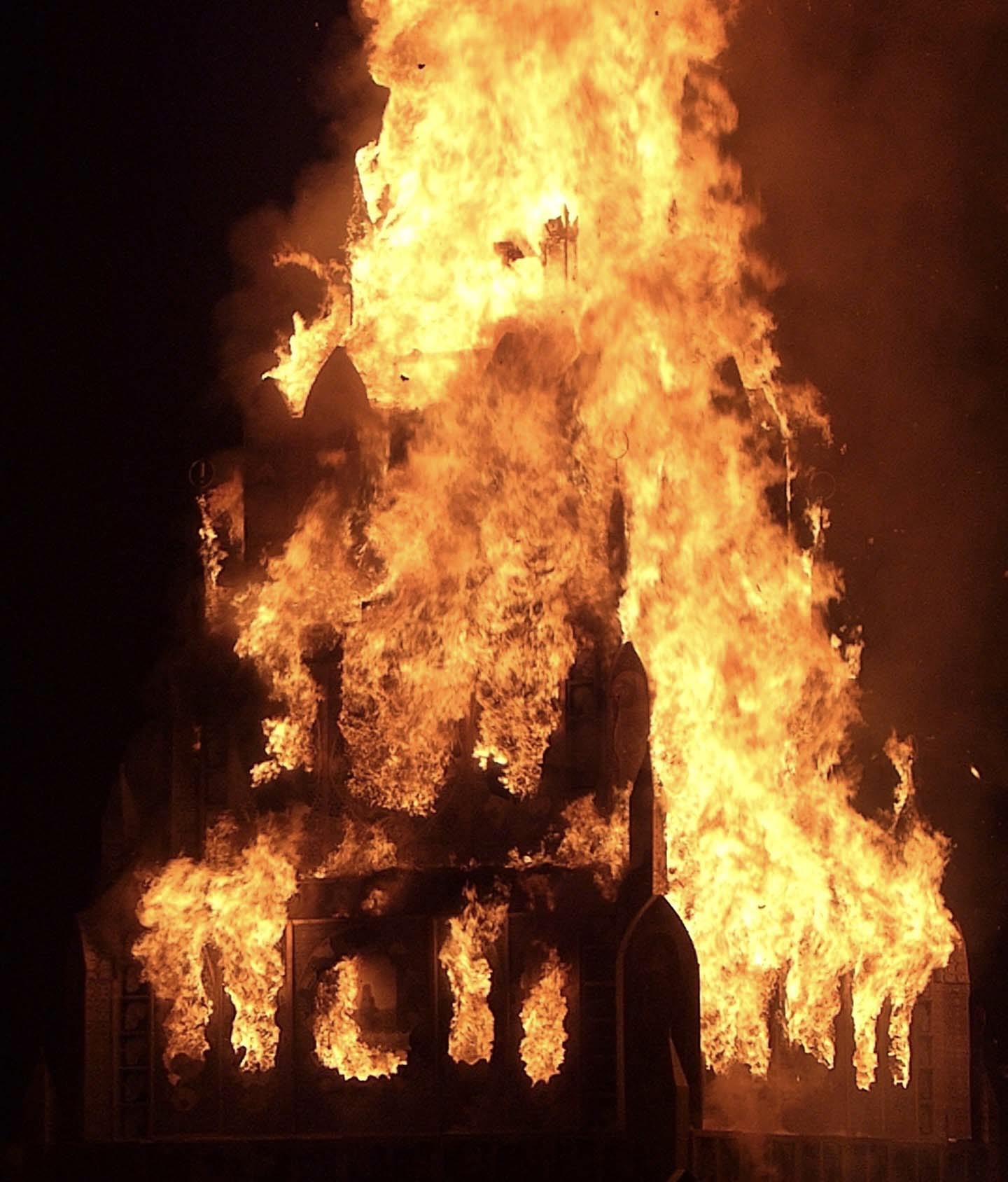
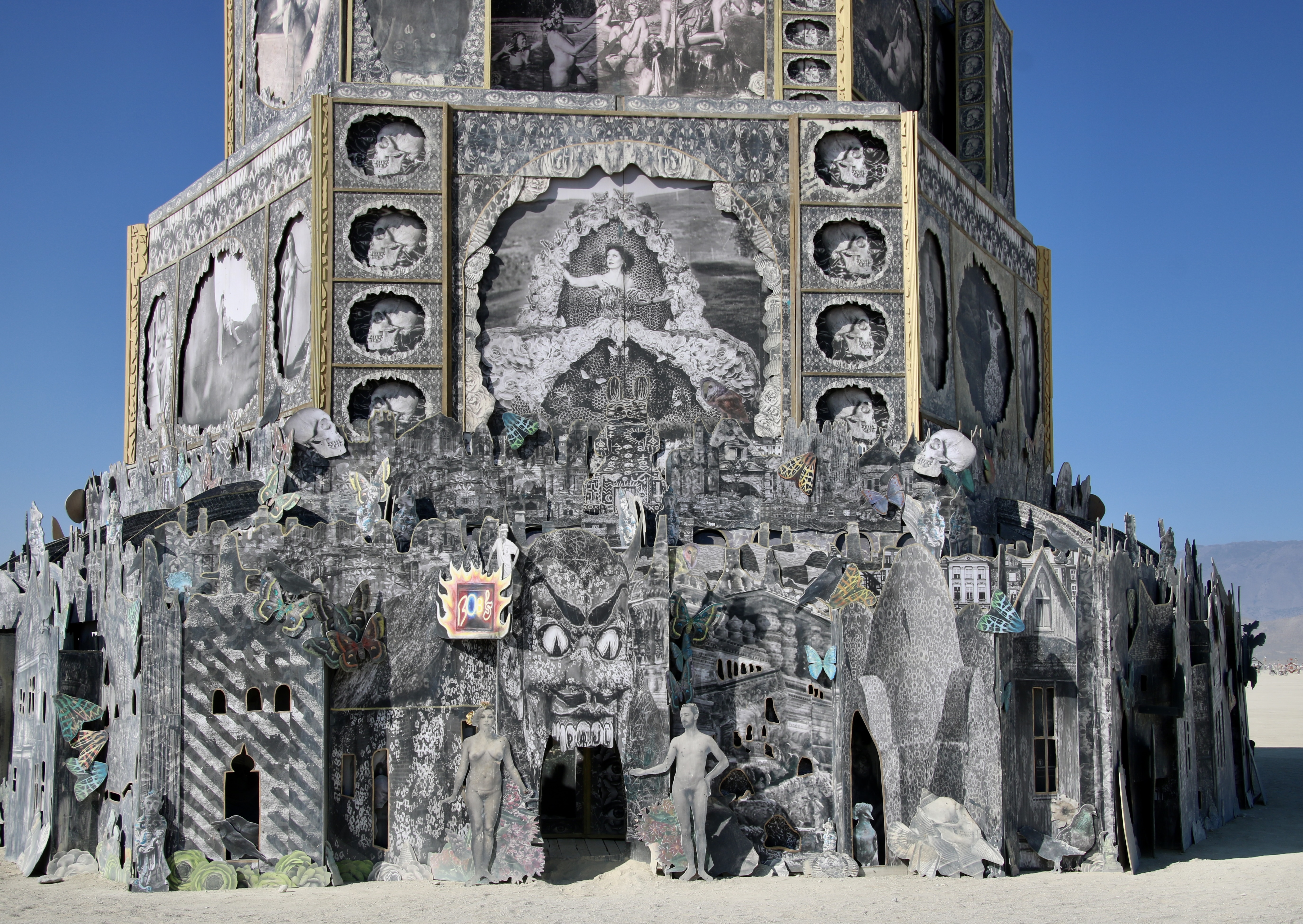
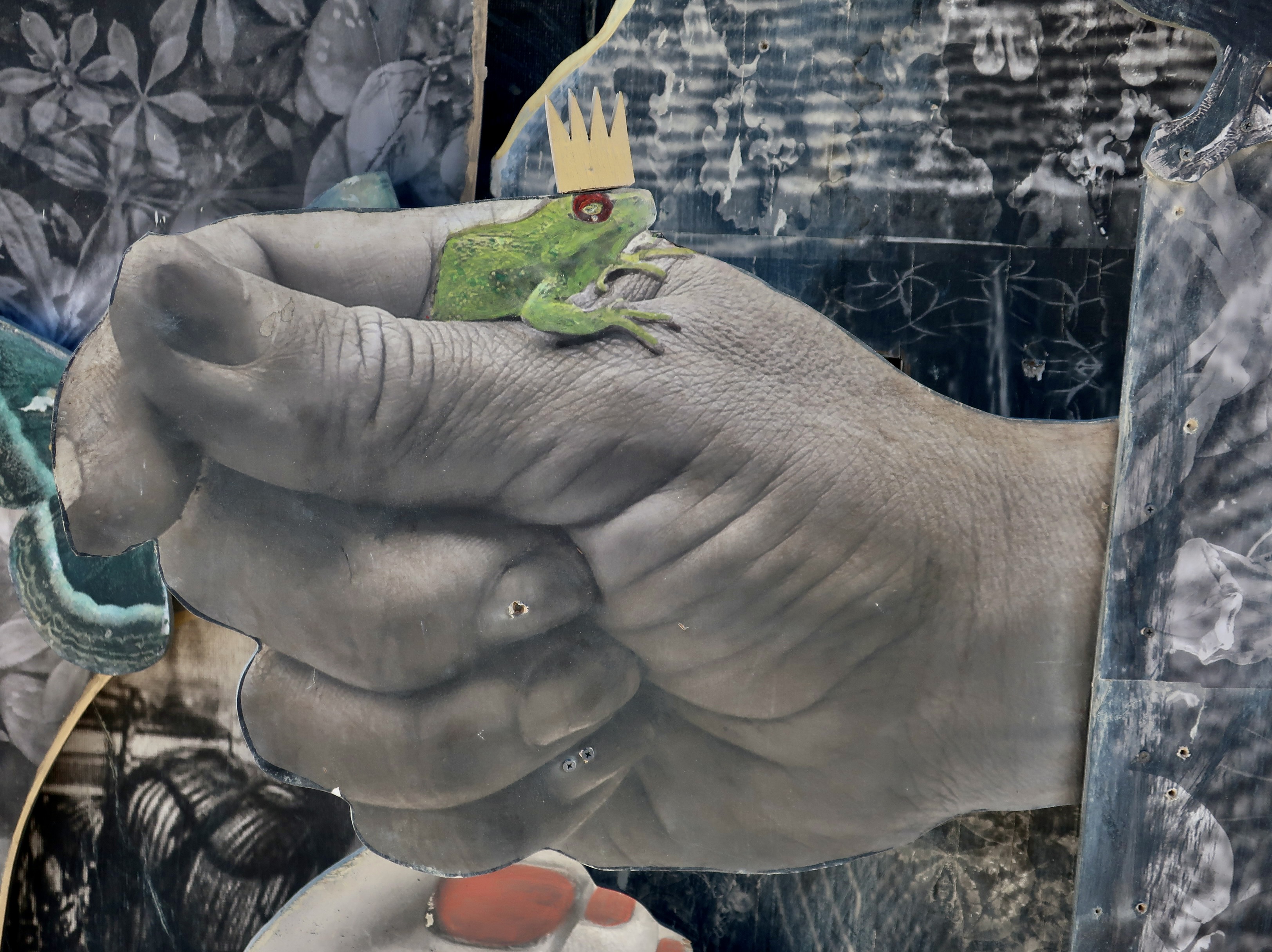
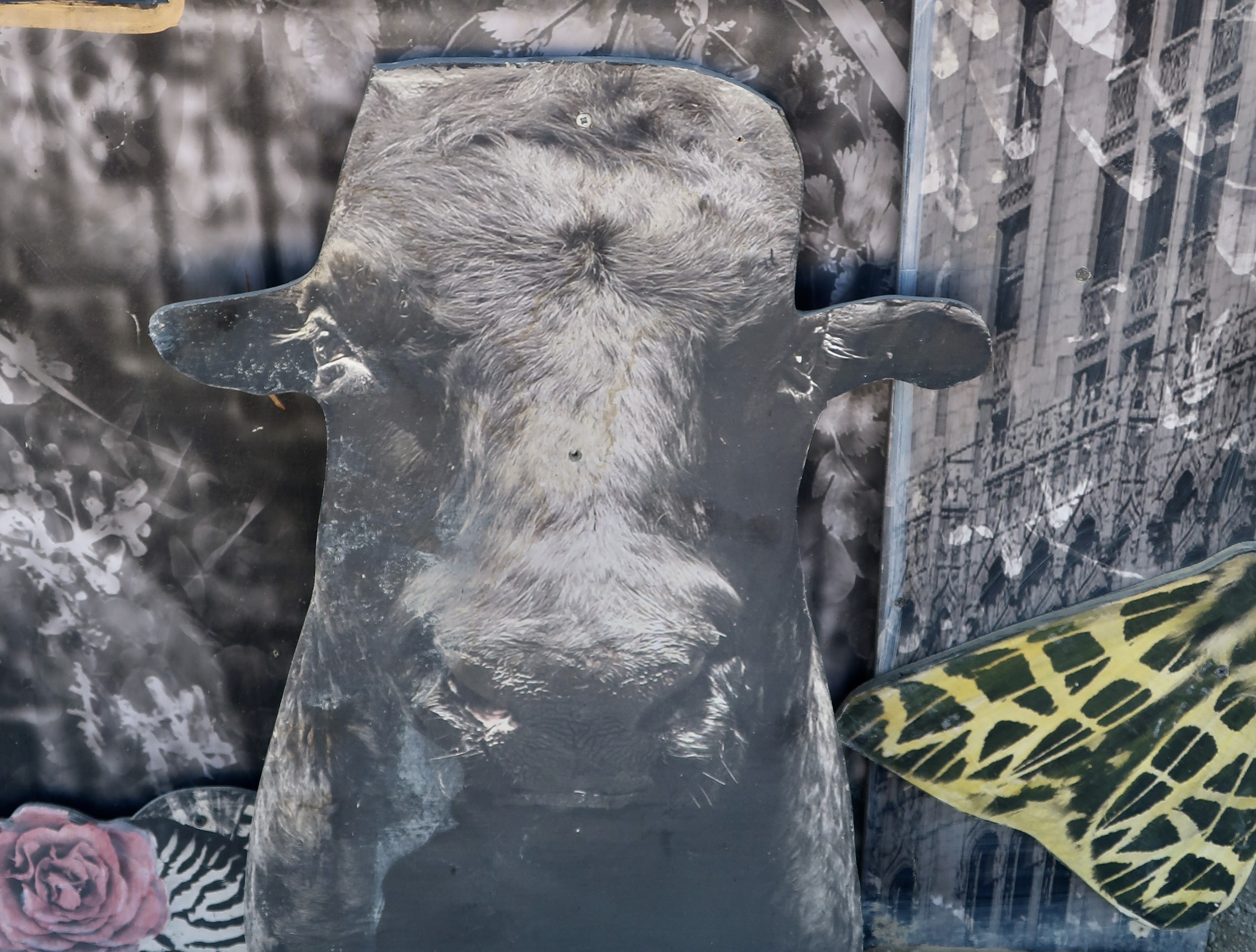
One could easily spend an hour checking out all of the photographs and images that were located on the Temple of Babel. And contemplate what they meant. It seemed to me that the two nudes and the cat were inviting you to crawl into the cave. Would you? Grin.Or was the cat the devil? And who is Paul? I’m guessing one of the volunteers who helped with the massive job of putting the structure together. All sorts of things here but the foot and the hand stand out.A small tree frog with a crown was emerging from the hand. Kiss it and you’d get a prince. Maybe.A cow. While the chickens may be long gone, there are still cattle ranches in the Petaluma area.A chimp and a horse monkeying around.Even El Pulpo Mechanico made it to the party.Inside, Garlington featured a photo of his father that he called the Wizard of Pa. (Mom is up on the left.)There was ever so much more to the Temple of Babel, but I think this is a good photo to wrap up this post. Garlington and Bertotti have stated that this is their last temple. Having escaped Burning Man because of the rains, Peggy and I weren’t around to see it burn but I read that Garlington urged Burners to help themselves to the art before it burned in a grand give-away gesture, worthy of him and Burning Man. We wish we could have been there.
But briefly, back to the Temple of Confession— and mine. Peggy and I are running away from Word Press for a few more weeks as we head to Africa, which isn’t news to my fellow bloggers since we have been running away a lot. 😳But we will be back in mid-November with lions and giraffes and hippos, oh my. Not to mention more Burning Man, and Nile, and national parks, and… The good news is we will never run out of things to blog about; the bad news is that we will never catch up.
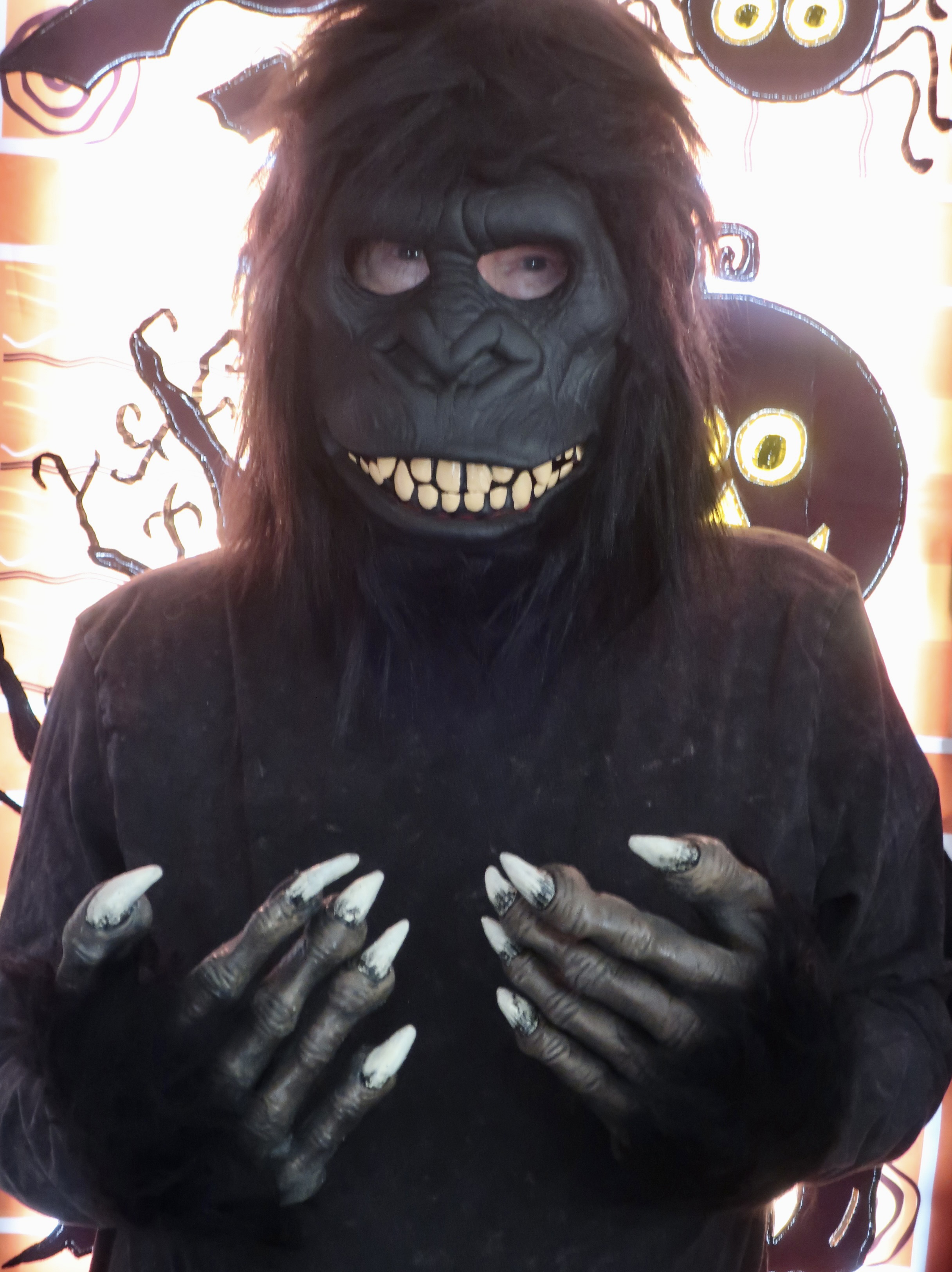
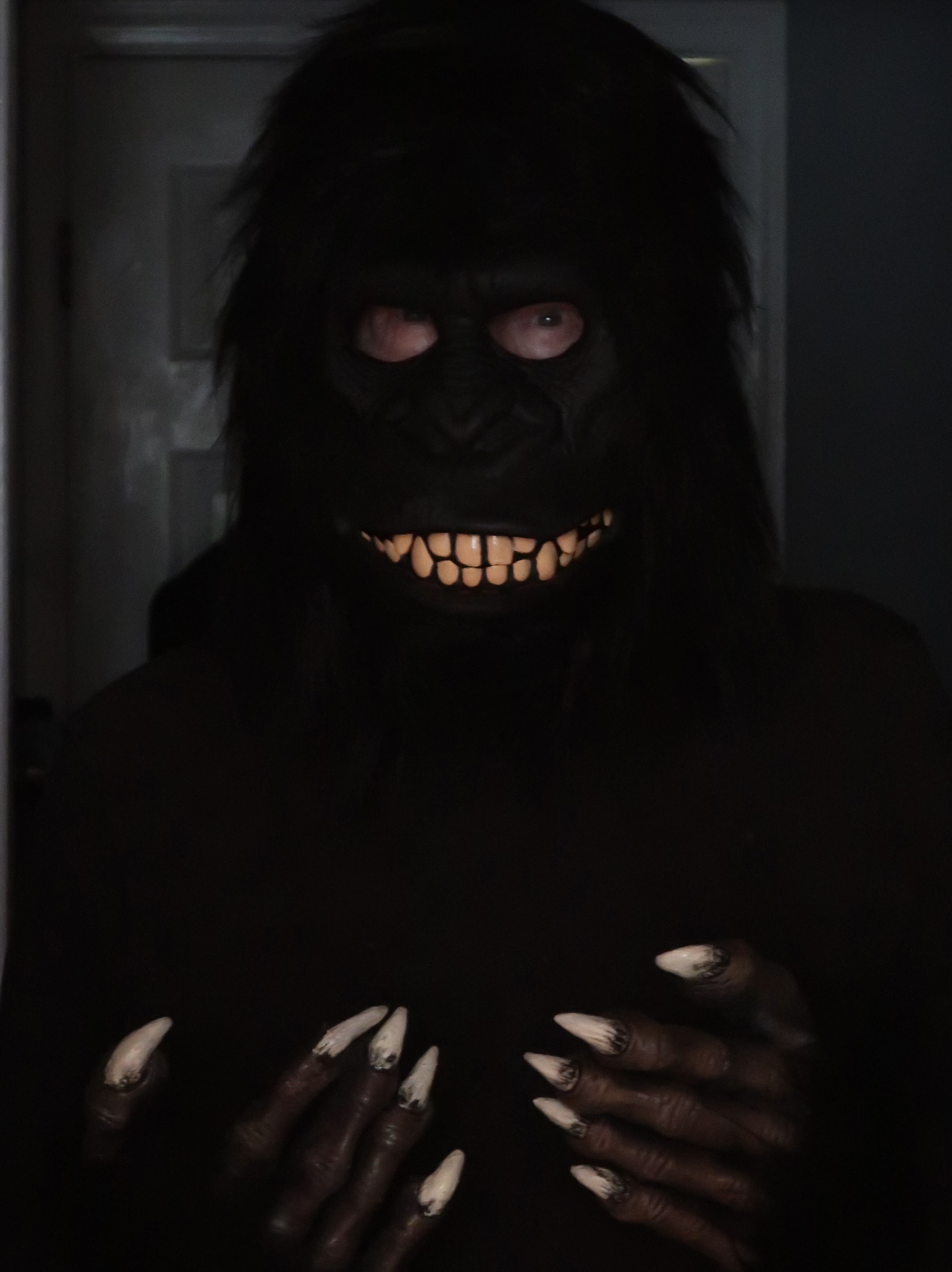
And finally, on behalf of Bigfoot (or is it a great ape) and in honor of our trips to Burning Man and Africa, Peggy and I wish you a Happy Halloween. If this isn’t scary enough…
It’s been four years since I have been to Burning Man and longer for Peggy. We certainly saw differences this year that I will discuss later, but one thing I wanted to mention today is that Burning Man seemed more international to us than ever before. It was apparent in the different languages we heard as we explored the Playa and Black Rock City, but even more so in the art. You may have noticed in my past three posts on Burning Man art how many of the pieces were created by artists from other countries. Today, I feature works from Armenia, Ukraine, China and the United Kingdom as well as the US.
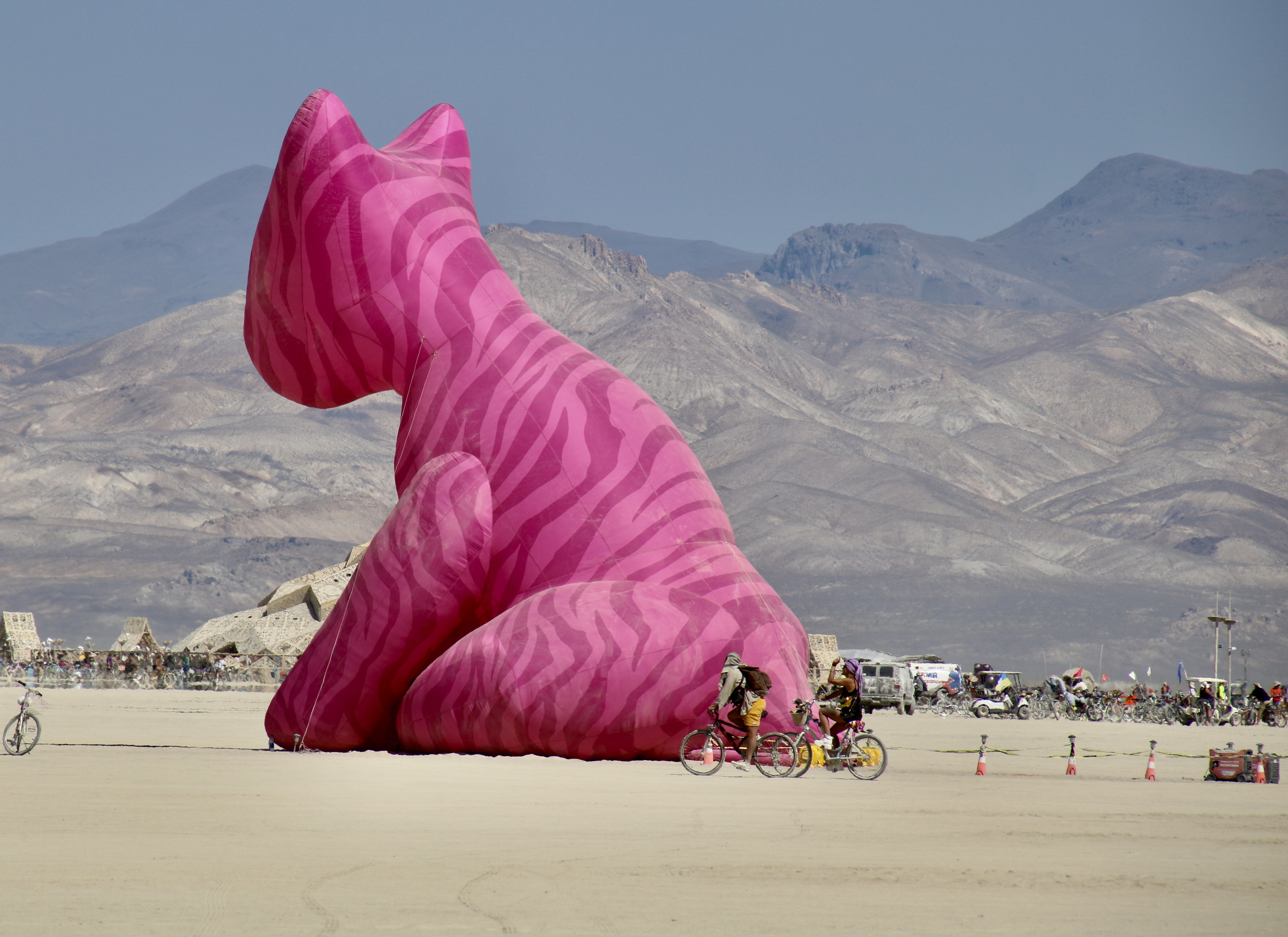
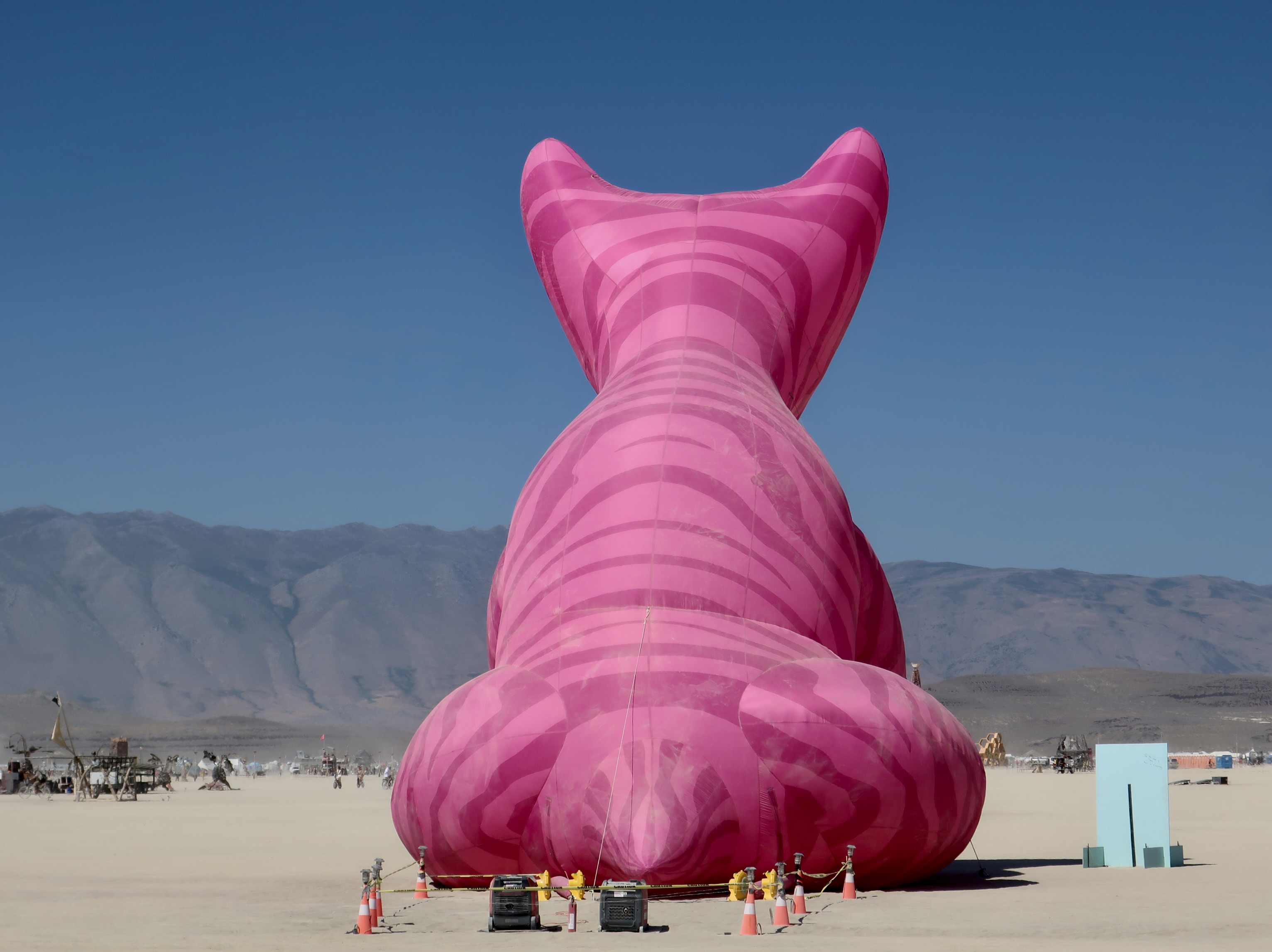
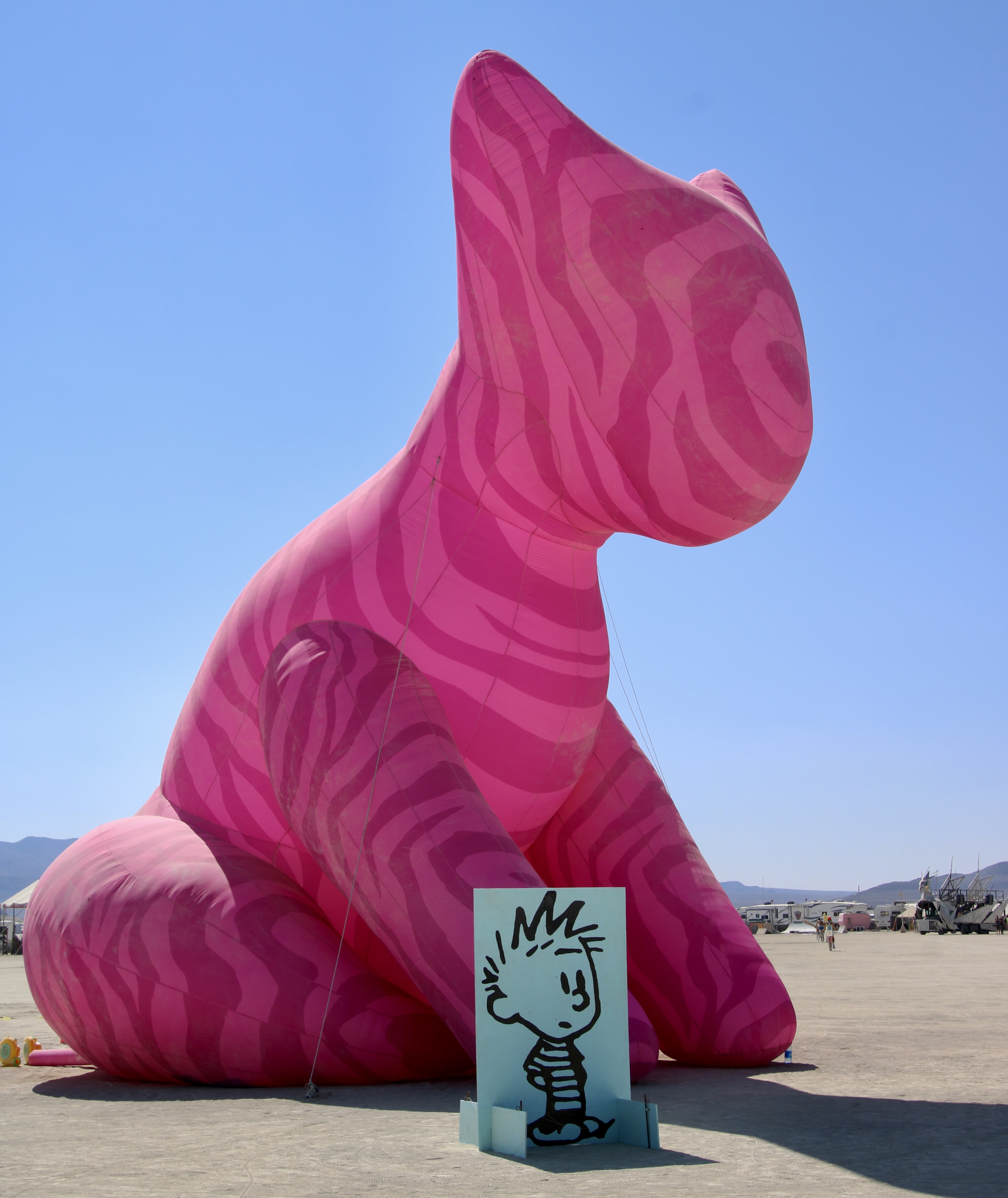
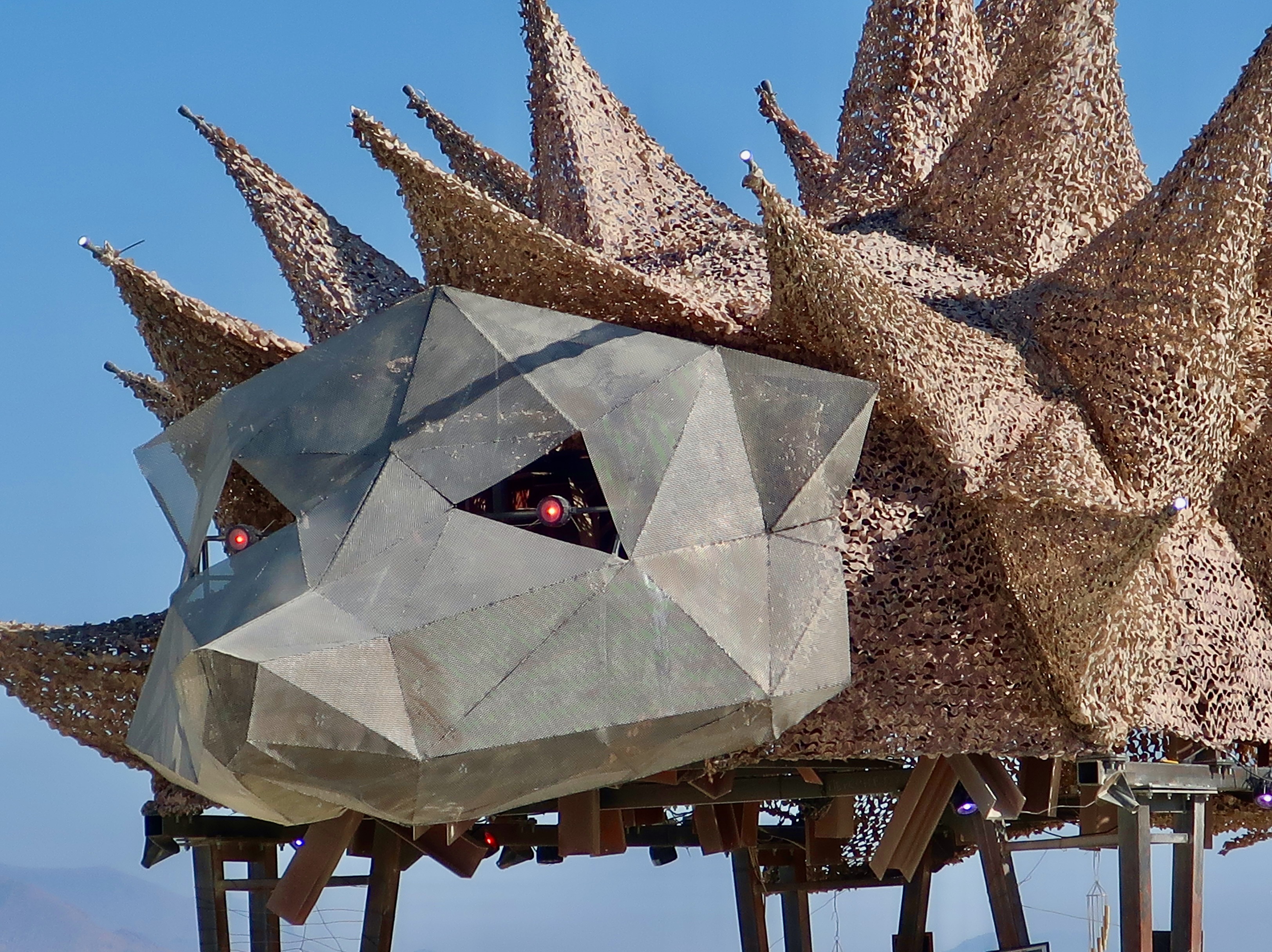
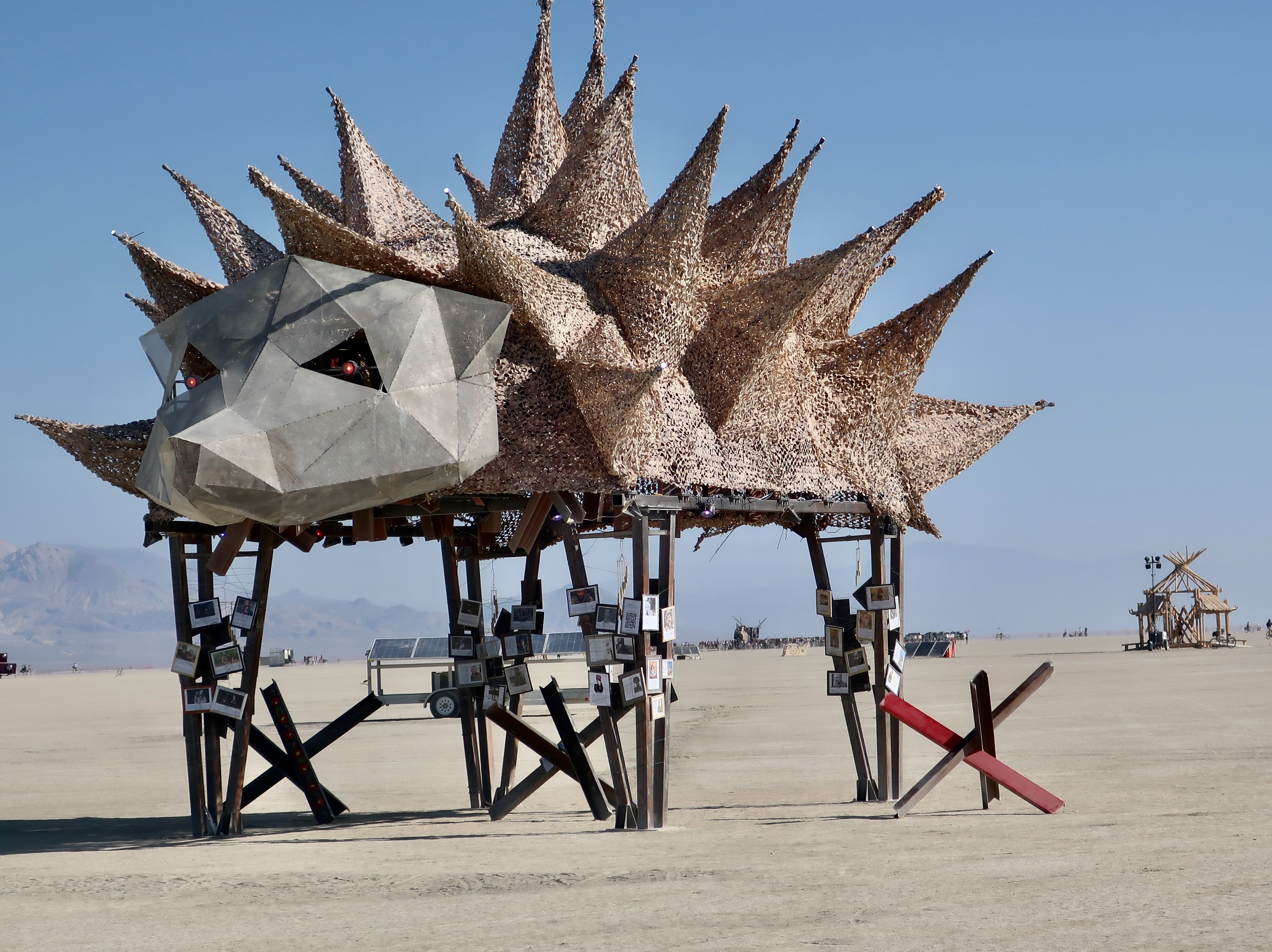
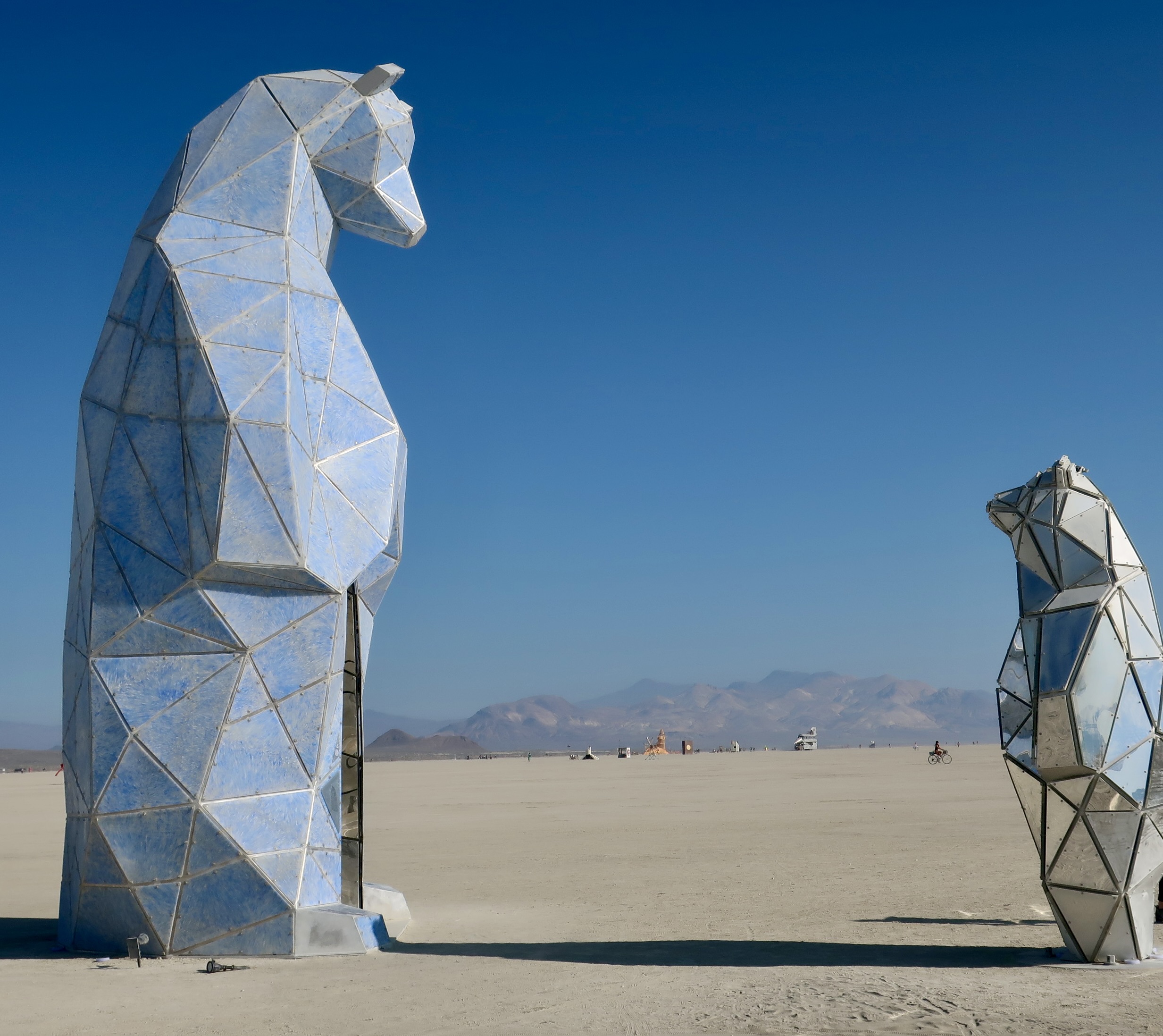
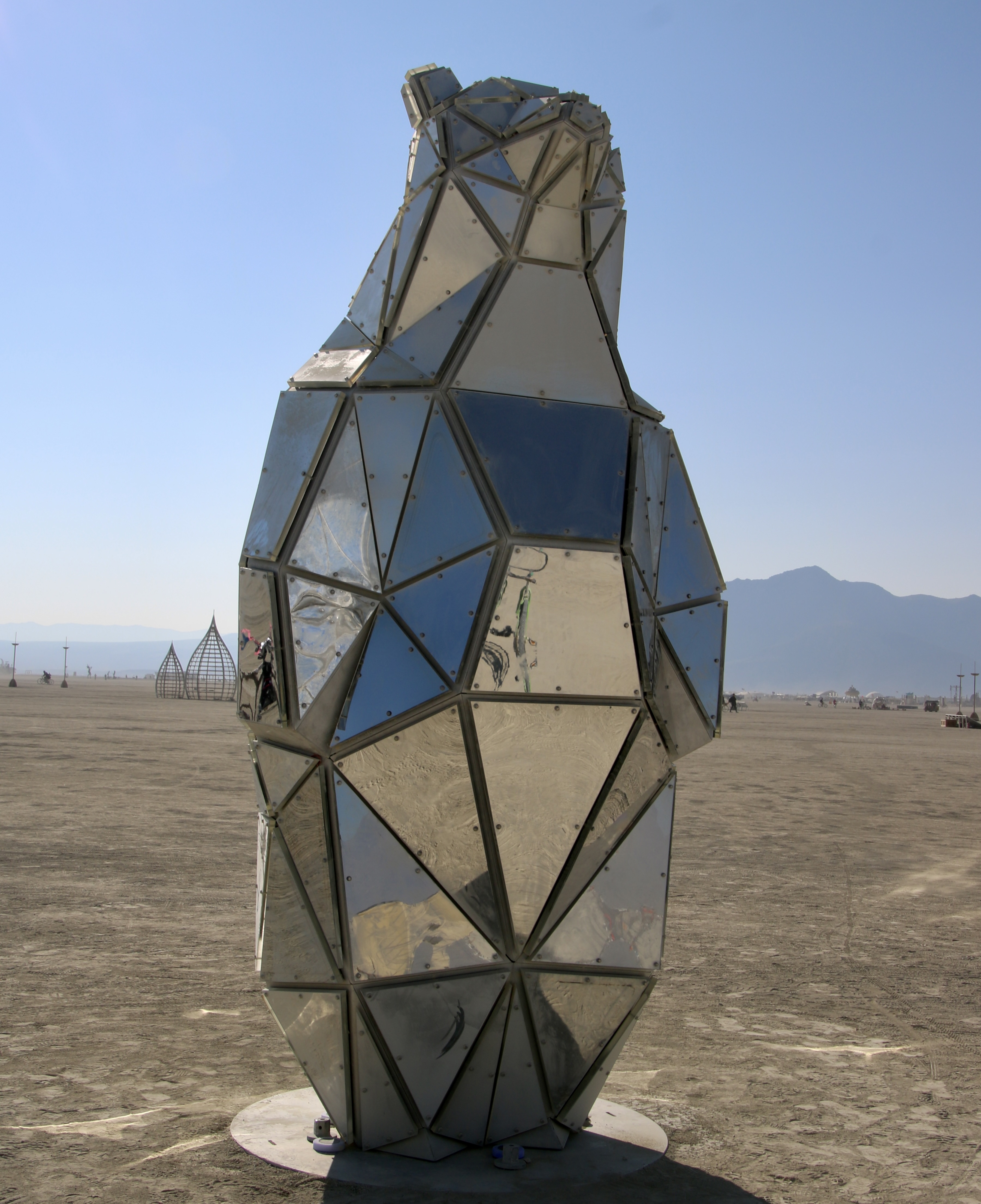
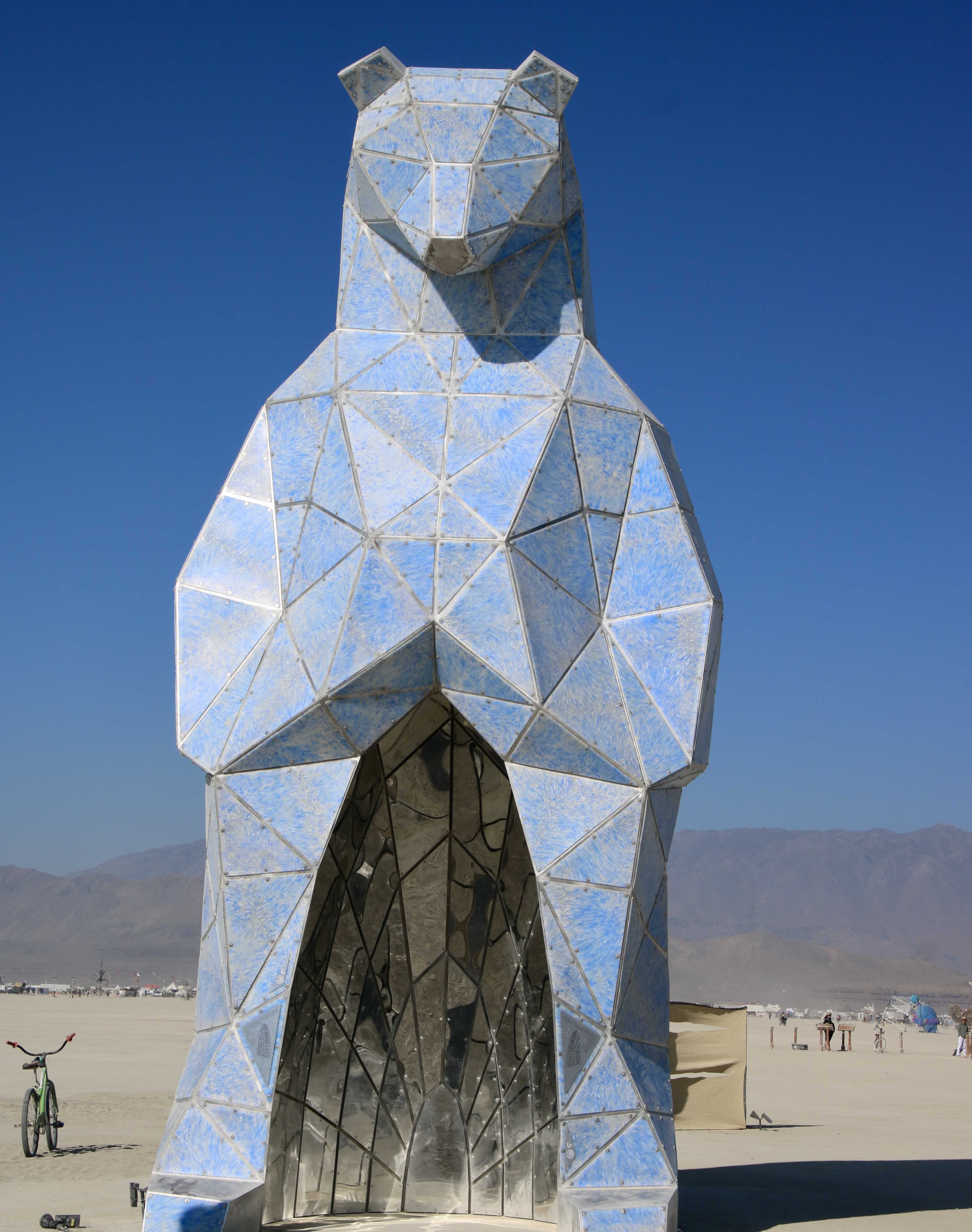
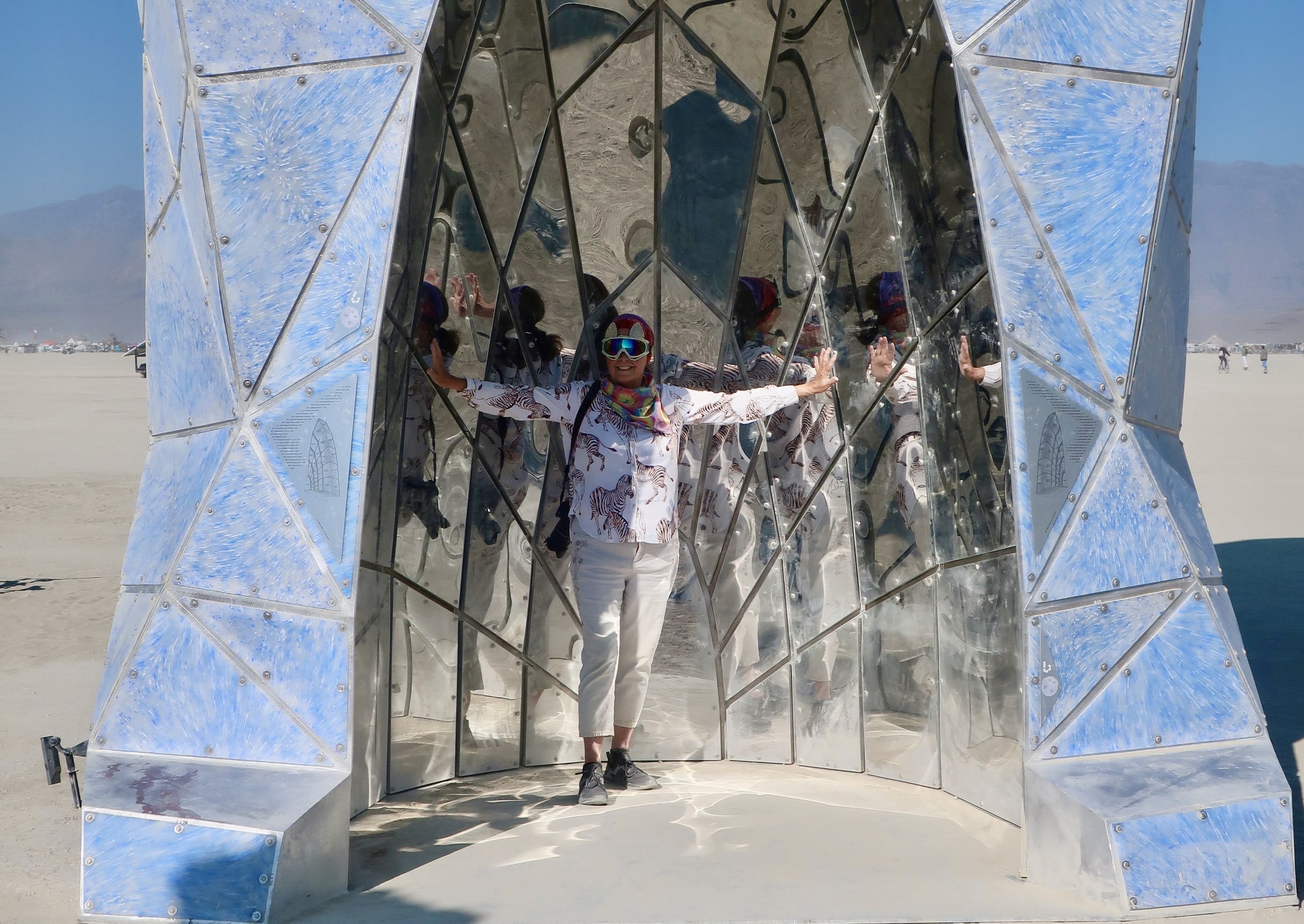
A huge, inflatable tiger was one of the prominent works of art on the Playa at Burning Man 2023 . Its size and pink color guaranteed it stood out. Bicyclists provide perspective on its size. A tails-eye take on the towering tiger! The artist, Misha Libertee from Armenia, named her sculpture Vagr, which is Armenian for tiger. She stated that the “Bright pink color of the installation serves as a reminder of the struggles that these animals face due to habitat loss, poaching, and climate change.” We wondered if the sign on the right would provide more information.I’m pretty sure that another Burning Man artist decided to add Calvin to the equation. While it may not have been what Libertee had in mind, it certainly resonated with me. Calvin and Hobbes was one of my all-time favorite cartoons. Created by Bill Watterson in 1985, it was discontinued ten years later. The cartoon has been missed by millions ever since, including me! Maybe there is a message here about endangered tigers… Another interesting animal that caught our attention immediately was a large hedgehog. It came with a story…Created by Ukrainian artists Yaroslav Korets and Kurenivka from Kyiv, the sculpture memorializes artists who died defending Ukraine against the Russian invasion. At the base of the sculpture are tank traps that Ukrainians created to slow the progress of Russian tanks through their cities. The tank traps are known as hedgehogs. Hundreds were made by the Ukrainian Railway utilizing new rails. Two Polar Bears stood out as stars on the Playa, literally. They were named Ursa Major and Ursa Minor after the constellations. The little fellow had been to Burning Man before. Little is relative. She stands 13 feet tall. Her big sister, Ursa Major, is over three stories. The artist, Jen Lewin from Brooklyn, said that Ursa Minor’s infinity mirrors were a reminder to “Look up.”The 30 foot tall Ursa Major had an opening that also featured mirrors. Lewin noted that “Ursa Major’s hollow body is filled
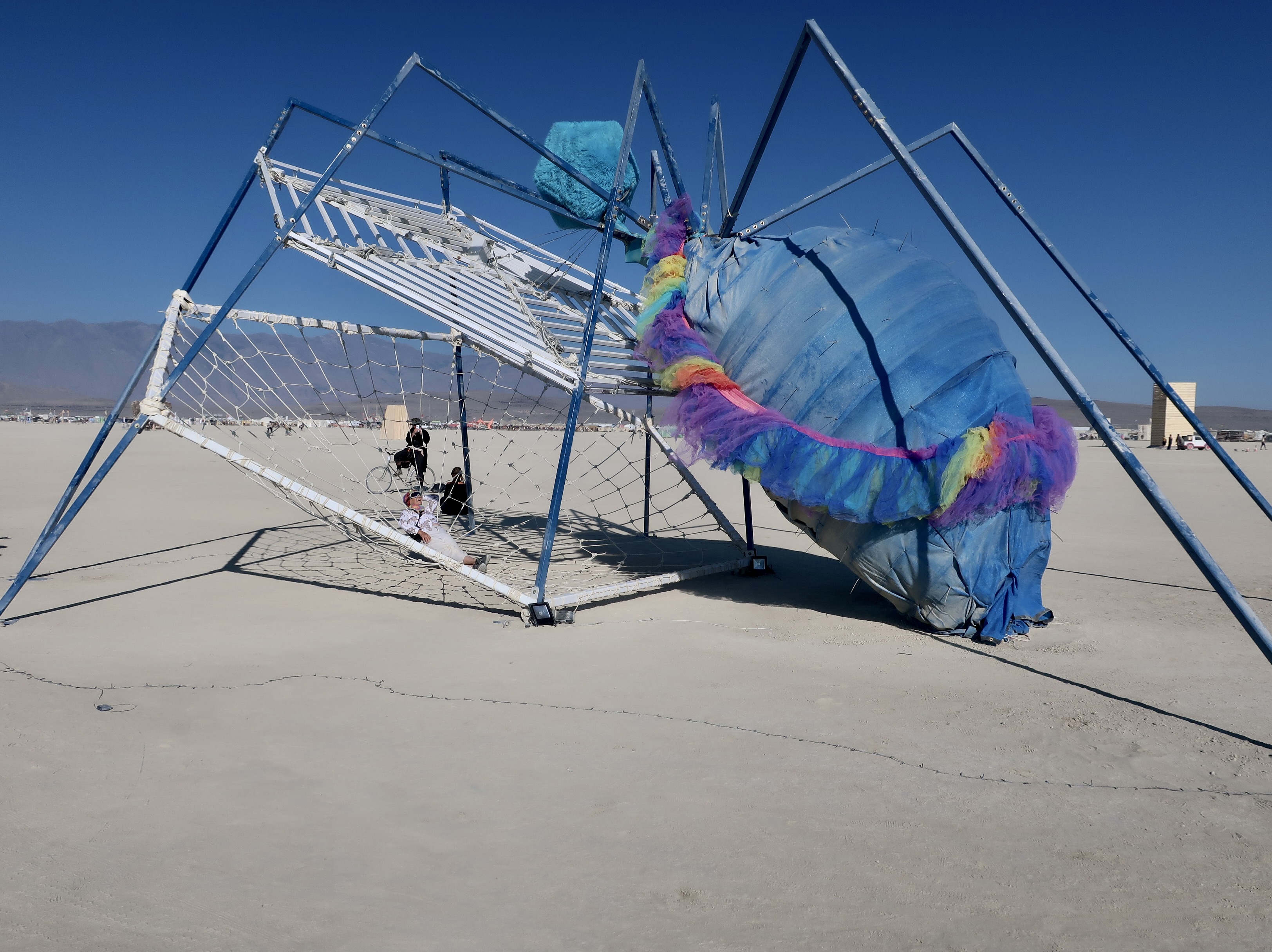
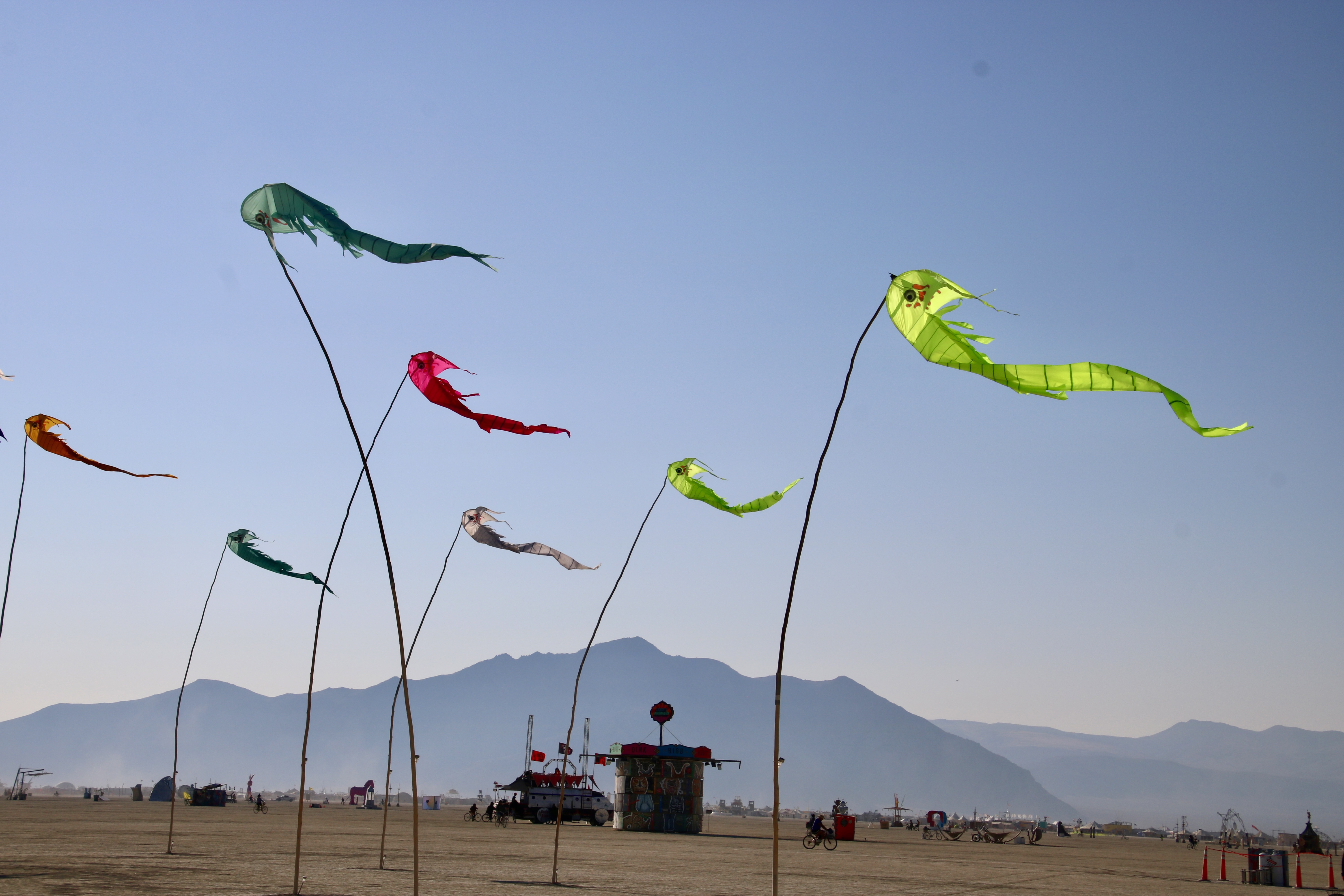
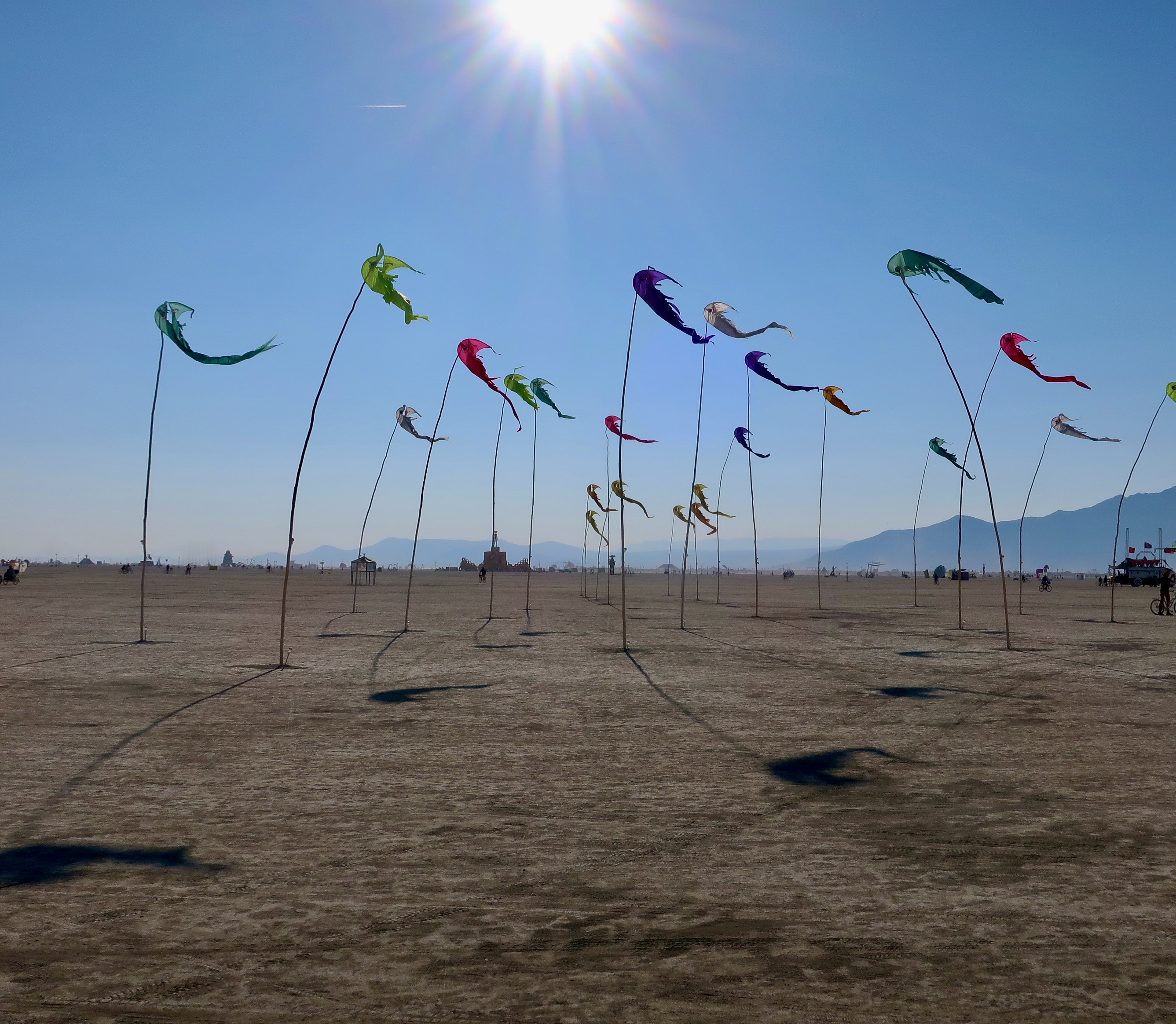
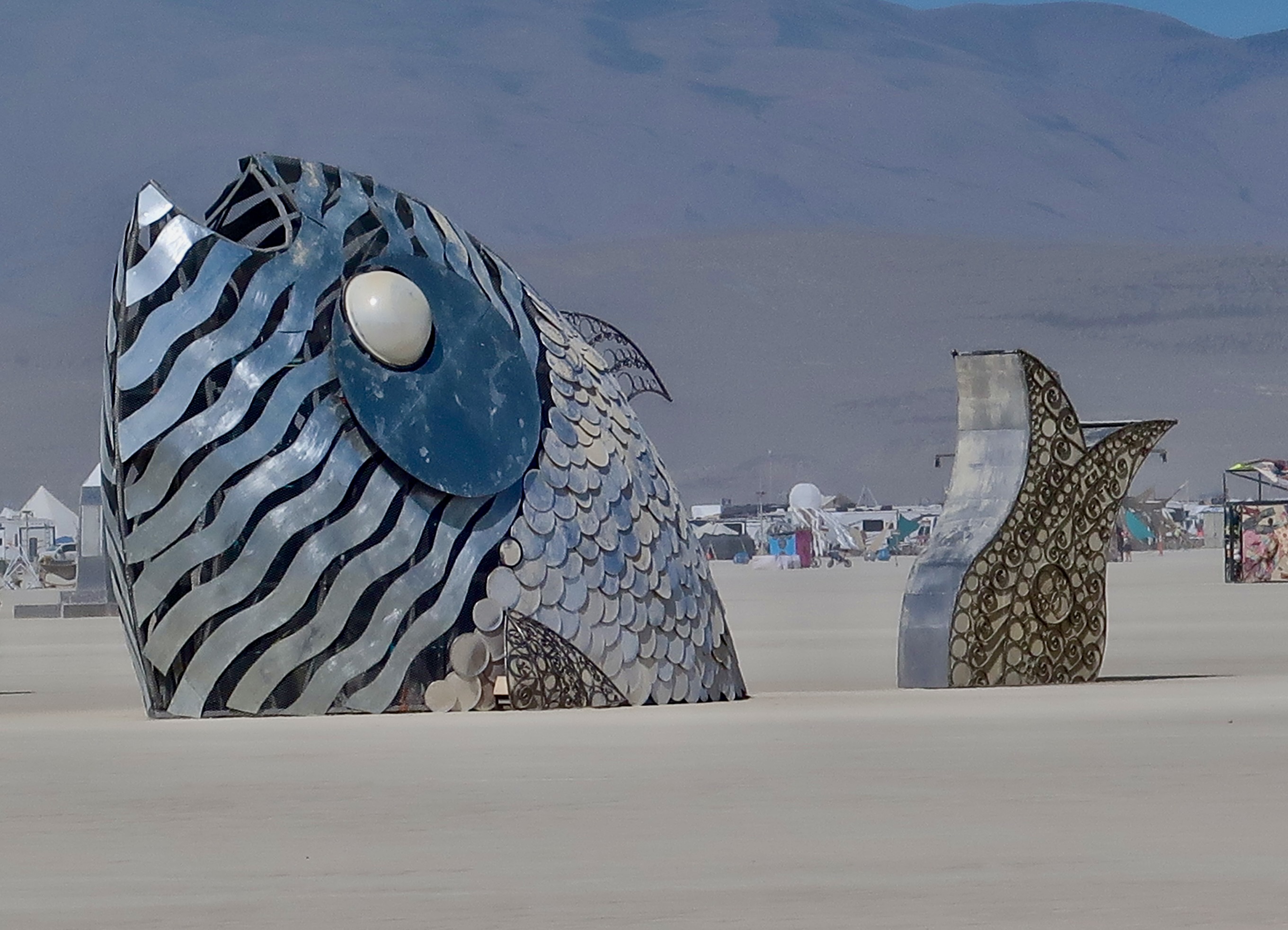
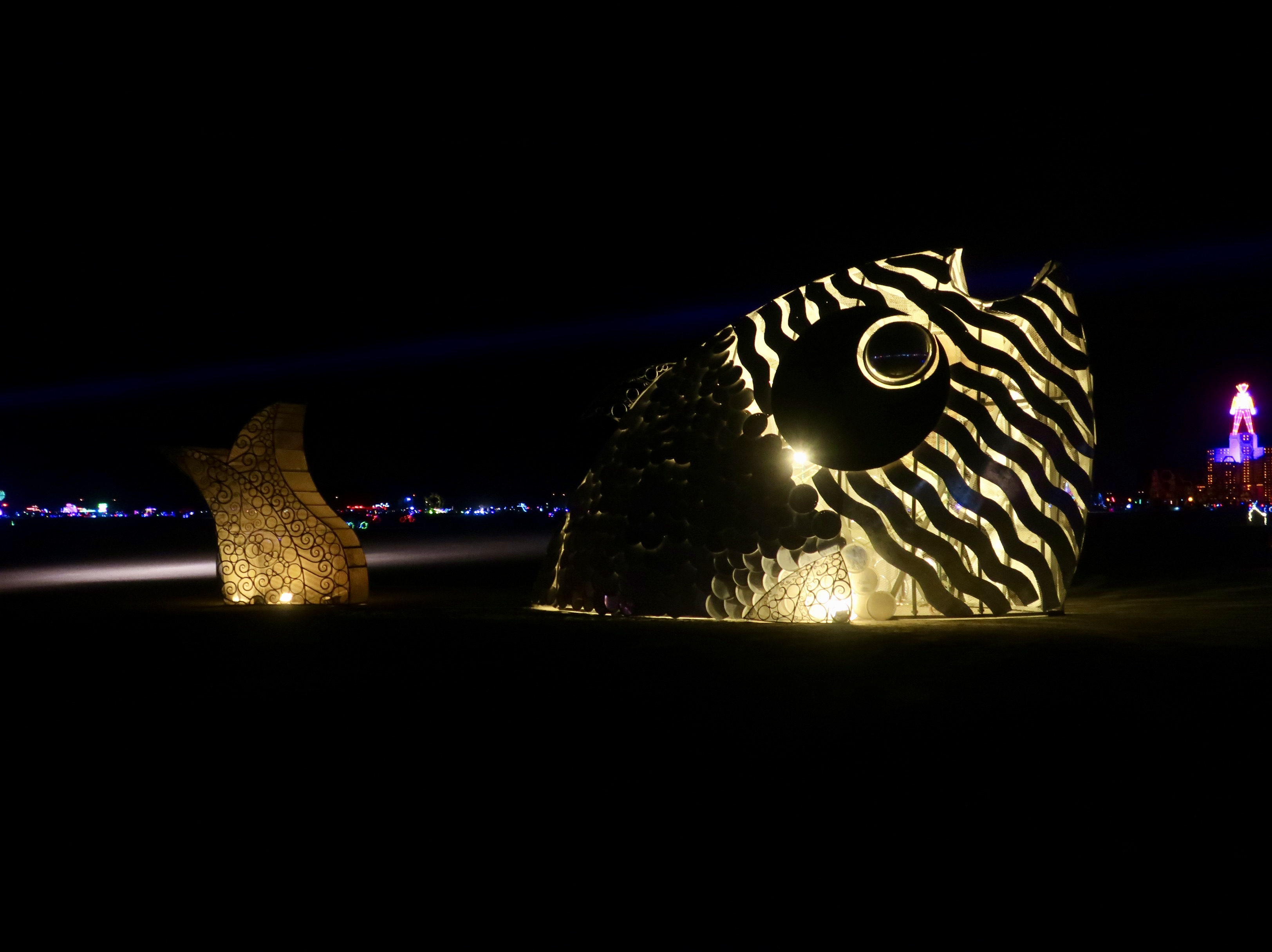
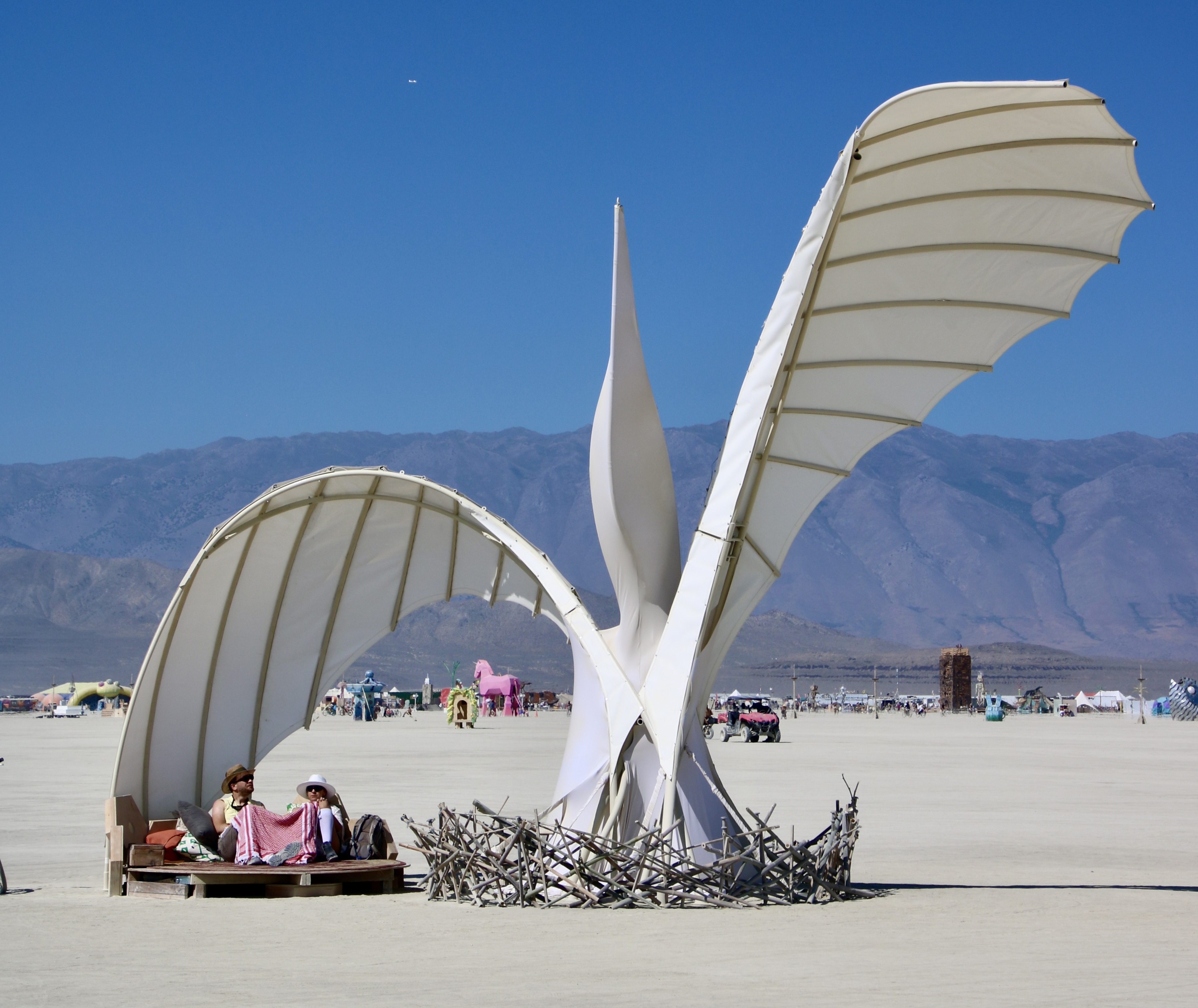
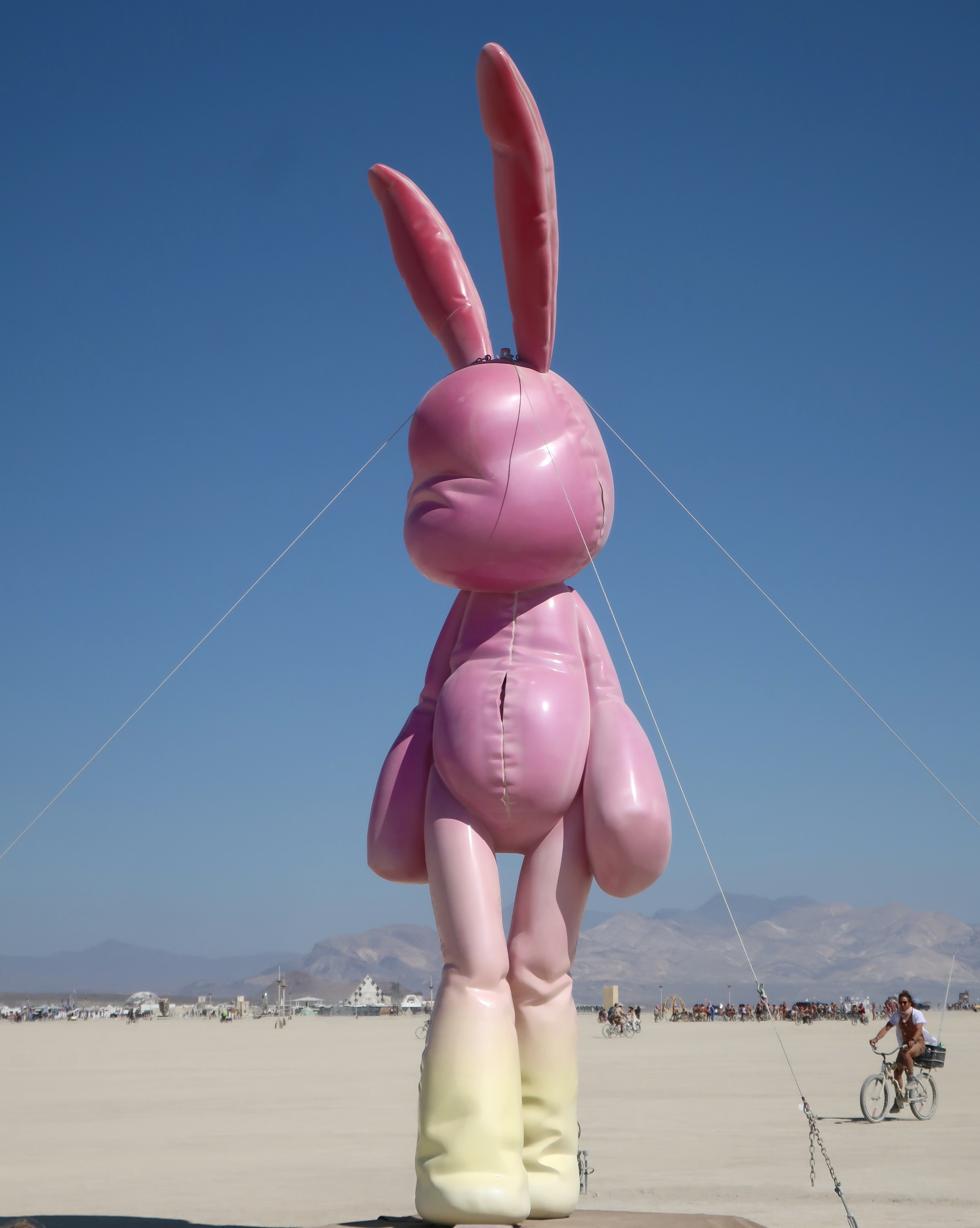
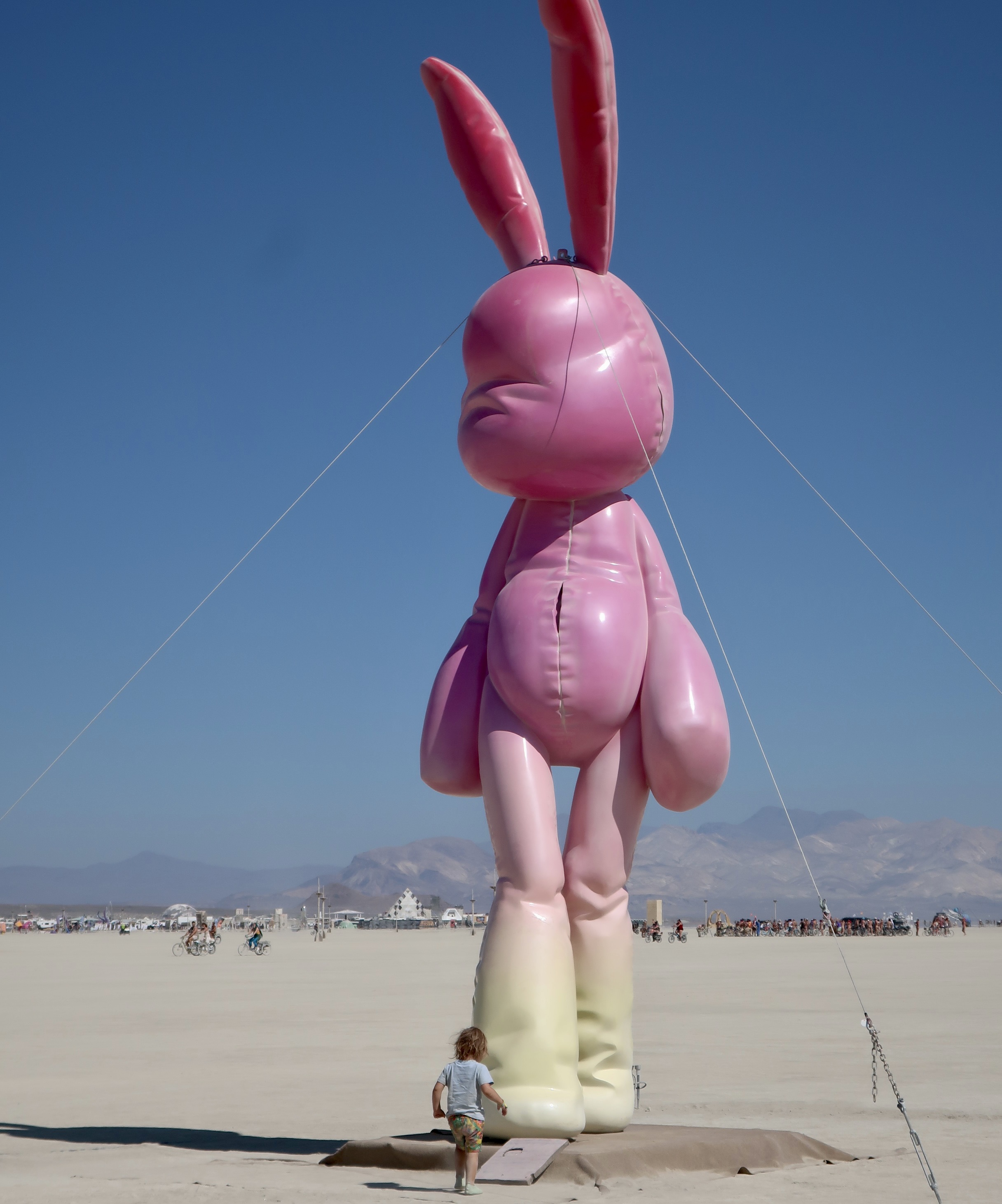
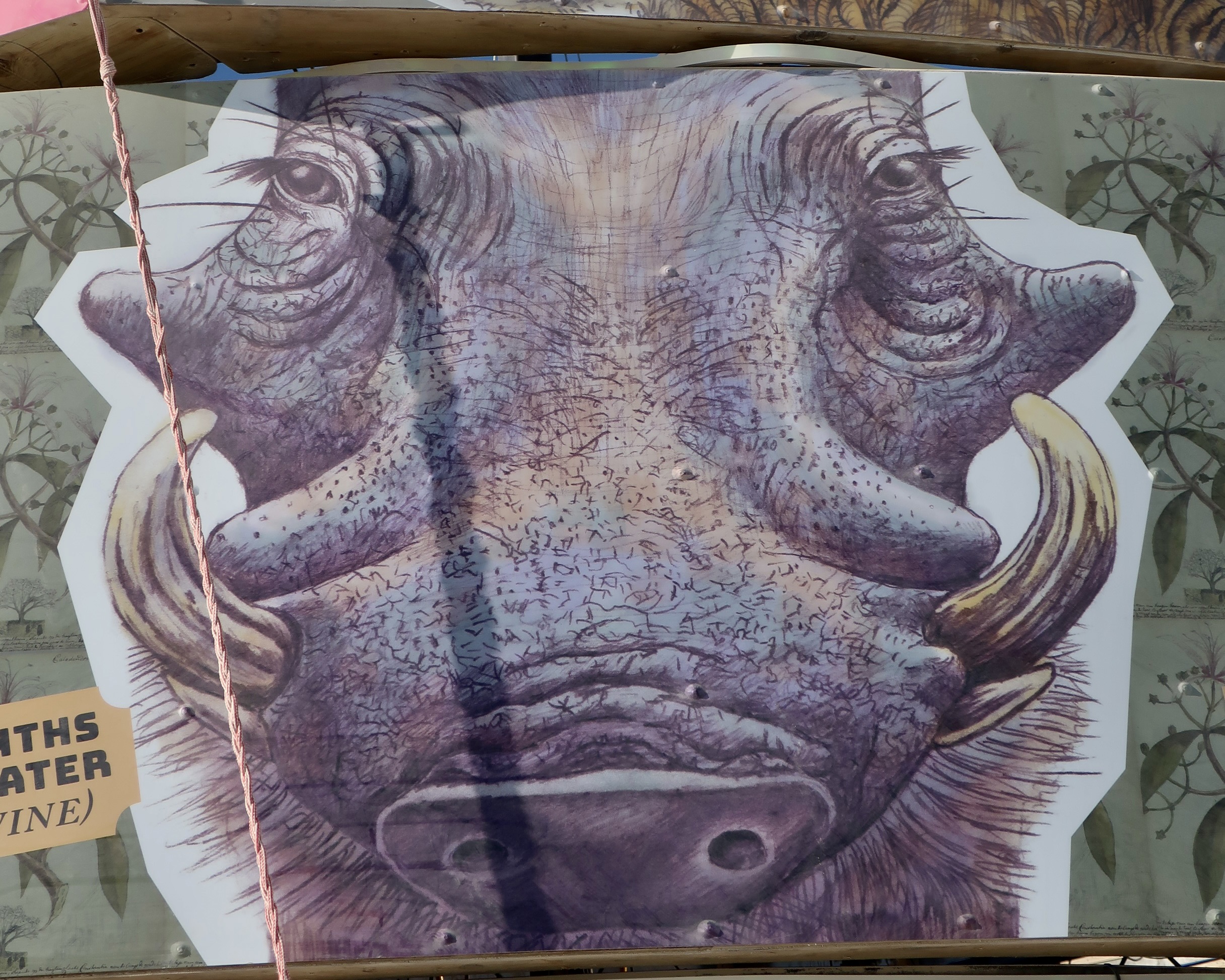
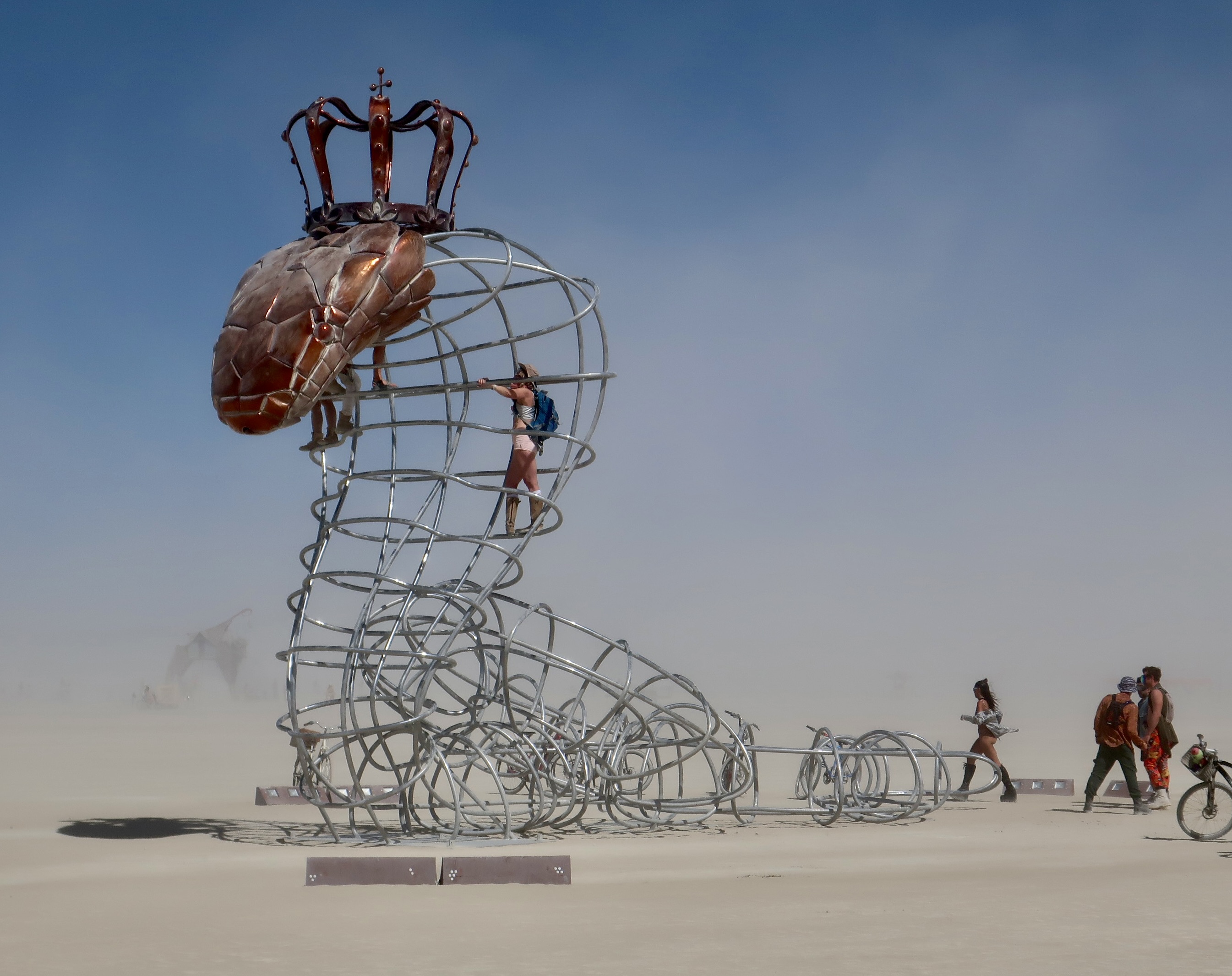
with glowing infinity mirrors, each reflecting mosaic drawings of extinct animals from the past 12 months.” From the outside, I couldn’t see the animals. Possibly, they would be clearer at night when lit up.Peggy, on the other hand, who isn’t endangered, was reflected numerous times. The guy wearing the hat above her on the right is me. I think. At 80, I’m a little more endangered than Peggy. But not here. Peggy got caught by a giant spider that undoubtedly thought of her as a tasty morsel. Always the optimist, she is laying back and enjoying the view. Spider Trap was created by Josh Zubkoff & Looking Up Arts from San Francisco, CA. Josh noted that “Spider Trap was not menacing.” Hmmm.These etherial, almost whimsical creatures floated above the Playa. They represent fairy shrimp. In real life they are found under the surface of the Playa. Rain brings them to life for a brief period of time when they mate and reproduce. Burning Man 2023 with its heavy rains was a banner year for them.Created by P. Michael Quinn from Gossburg, TN, this is at least the second time the shrimp have made an appearance on the Playa. I featured them in post several years ago. I like the effect of the sun.While we are featuring aquatic life, this fish hails from the Caribbean. Her creator, NiNo from Trujillo Alto, Puerto Rico, named his work ATABEY’s Treasure. Atabey, according to NiNo is “The goddess of fresh water to the indigenous Taíno people in the Caribbean.”ATABEY’s Treasure lit up at night with the Man in the background.Titled “Migrations,” this graceful white bird seems to be rising from its nest on the Playa on its way to wherever. Created by Olivia Guethling & Mar Ricketts – Superwhelm from Portland, OR, the migrating bird was even more beautiful at night than it was during the day.“These boots were made for walking,” Nancy Sinatra’s song popped into my mind when I saw this 8 meter/26 foot tall inflatable bunny named “Mona” sporting tall yellow boots.According to the artist, Miao He from Shehong, China, Mona “serves as a symbol of love, warmth, and childhood memories.” I confess that my reaction as a child would have been to scream and run as fast as my little legs would have carried me in the opposite direction if an 8 meter bunny came striding toward me. This child, however, ran up to the bunny and threw its arm around the forward boot, seemingly proving Miao’s point. “Exquisite Animalus,” an art piece by Stefan Spins & KJ Bohéme, included six animals that could be moved by ropes and handles to become the animals they were meant to be. Obvious a little work was required. I took on the challenge, pulling first on the ropes and then on the handles. The animals hardly budged. Maybe they liked being who they had become. Or maybe the playa dust had gotten in their gears… I particularly liked this critter, a common warthog. I once met a family of them when I was driving a VW bug through the Serengeti National Park in East Africa.Queen Cobra, by Andrea Greenlees, Andy Tibbetts, and Josh Haywood from London, United Kingdom & Reno, NV. Like many works of art at Burning Man, The Queen was designed so people could climb on it. She reminds me of Wadjet, an important goddess of lower Egypt. (And yes, I will get back to my posts on the Nile. Eventually.) This wraps up my blog today. Next up, I will be featuring three huge planets that made their way onto the Playa.
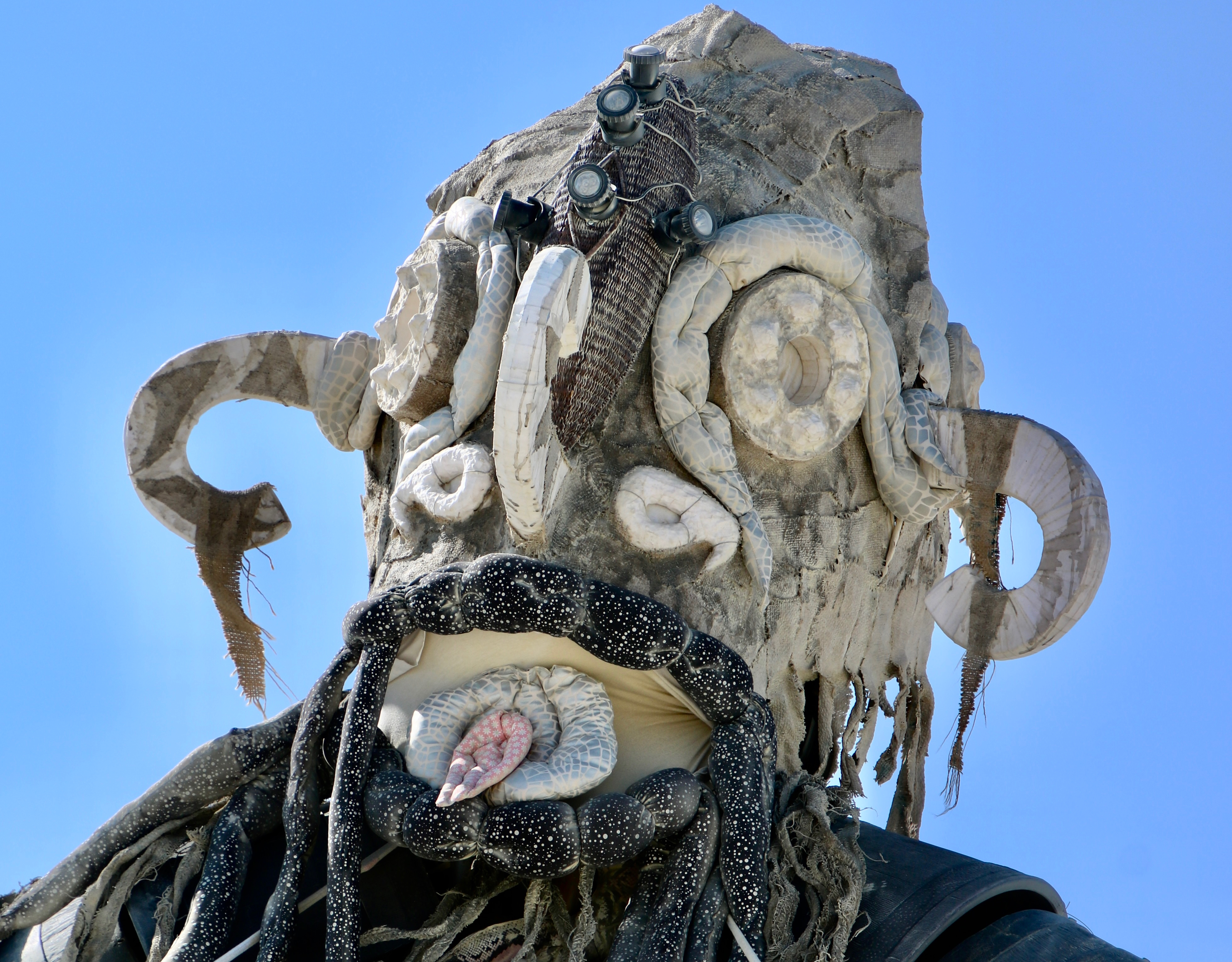
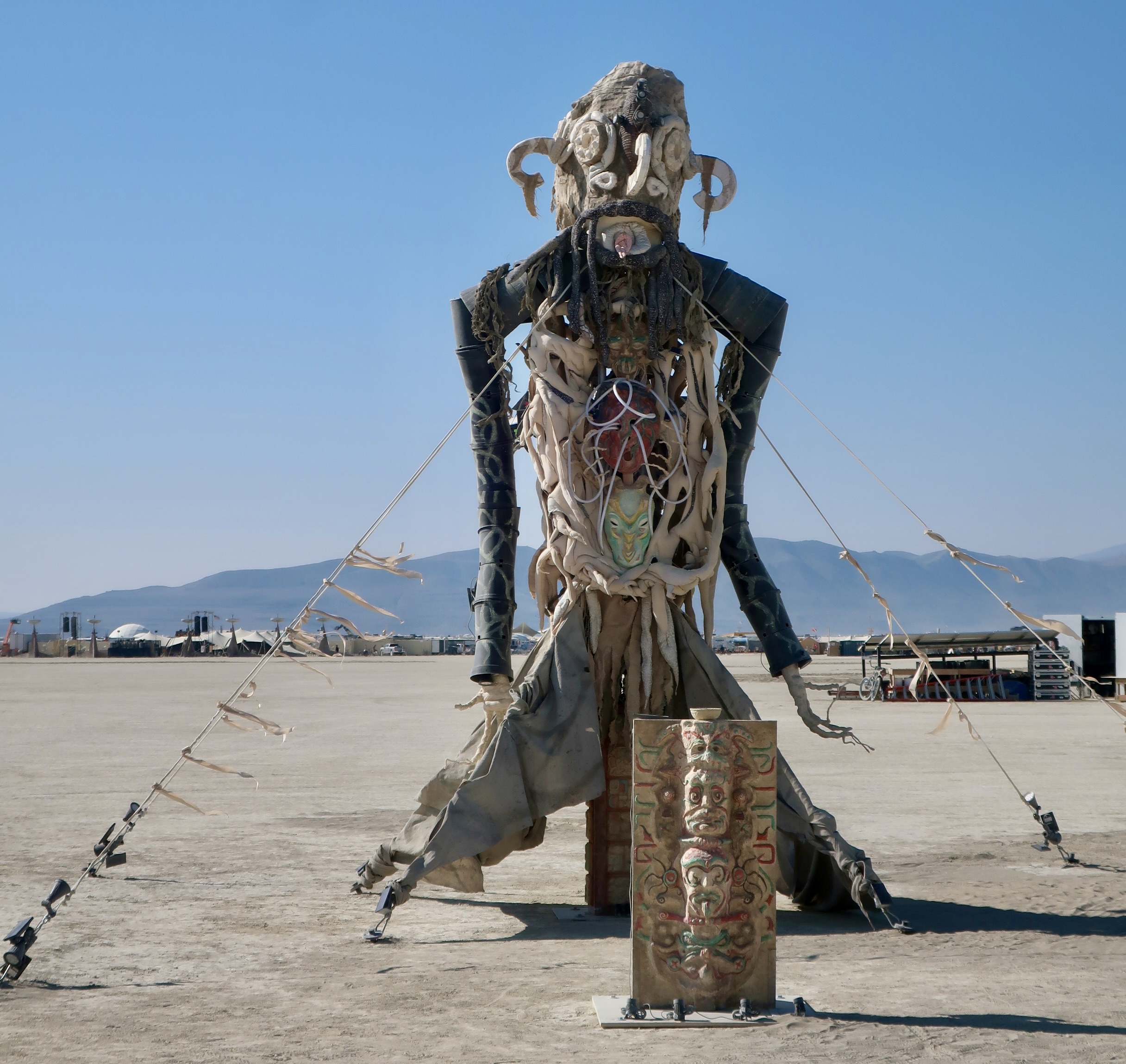
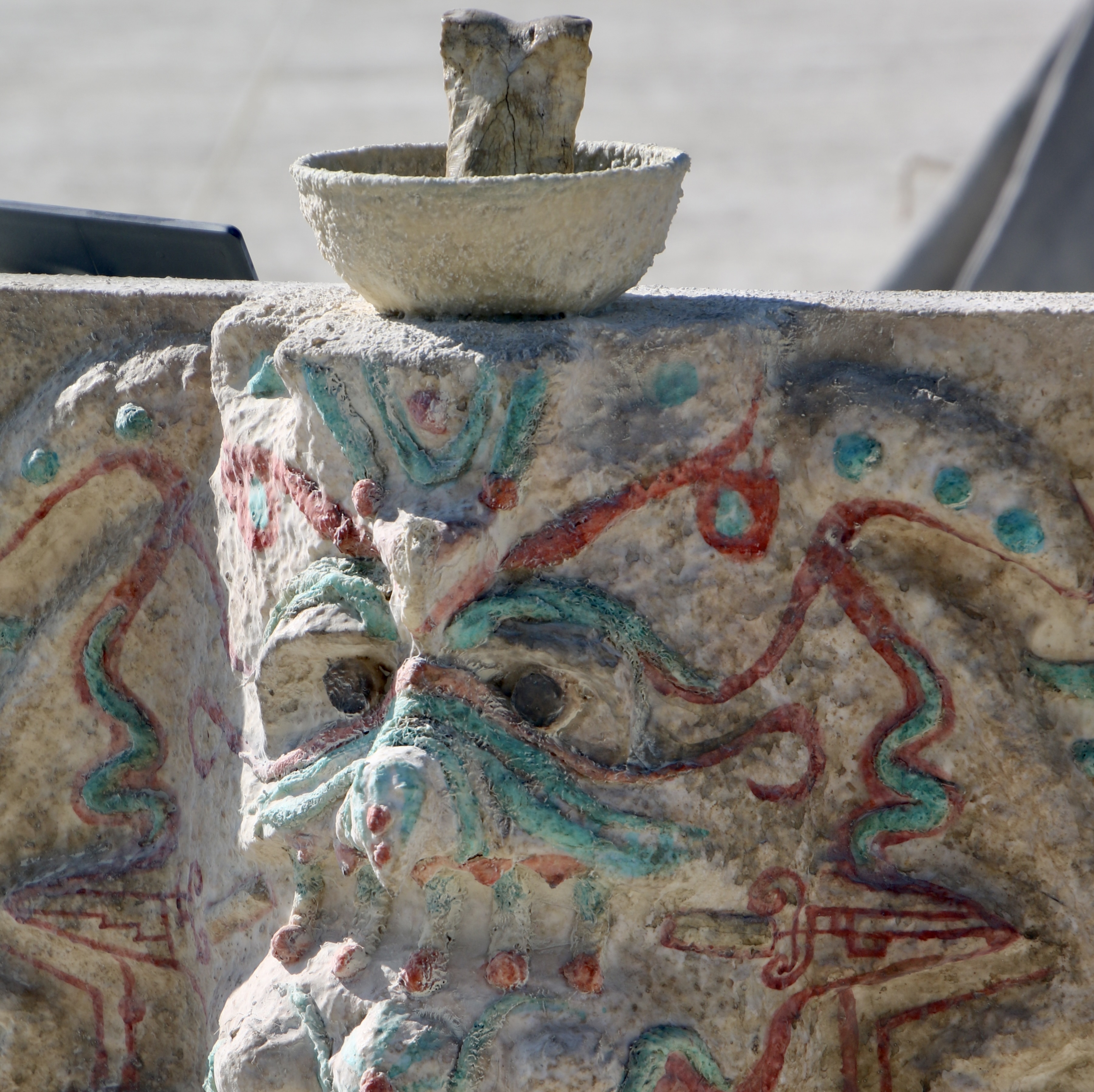
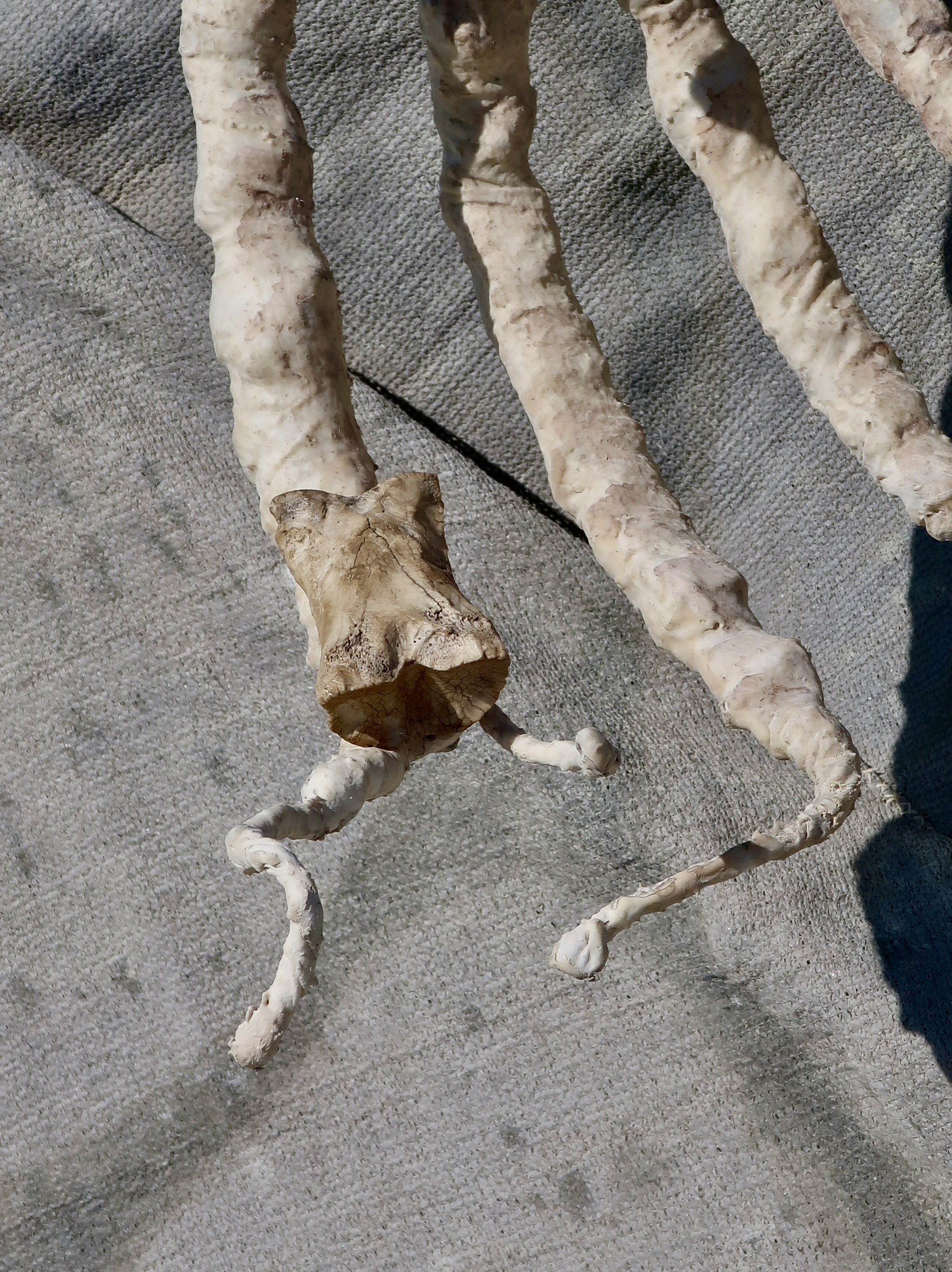
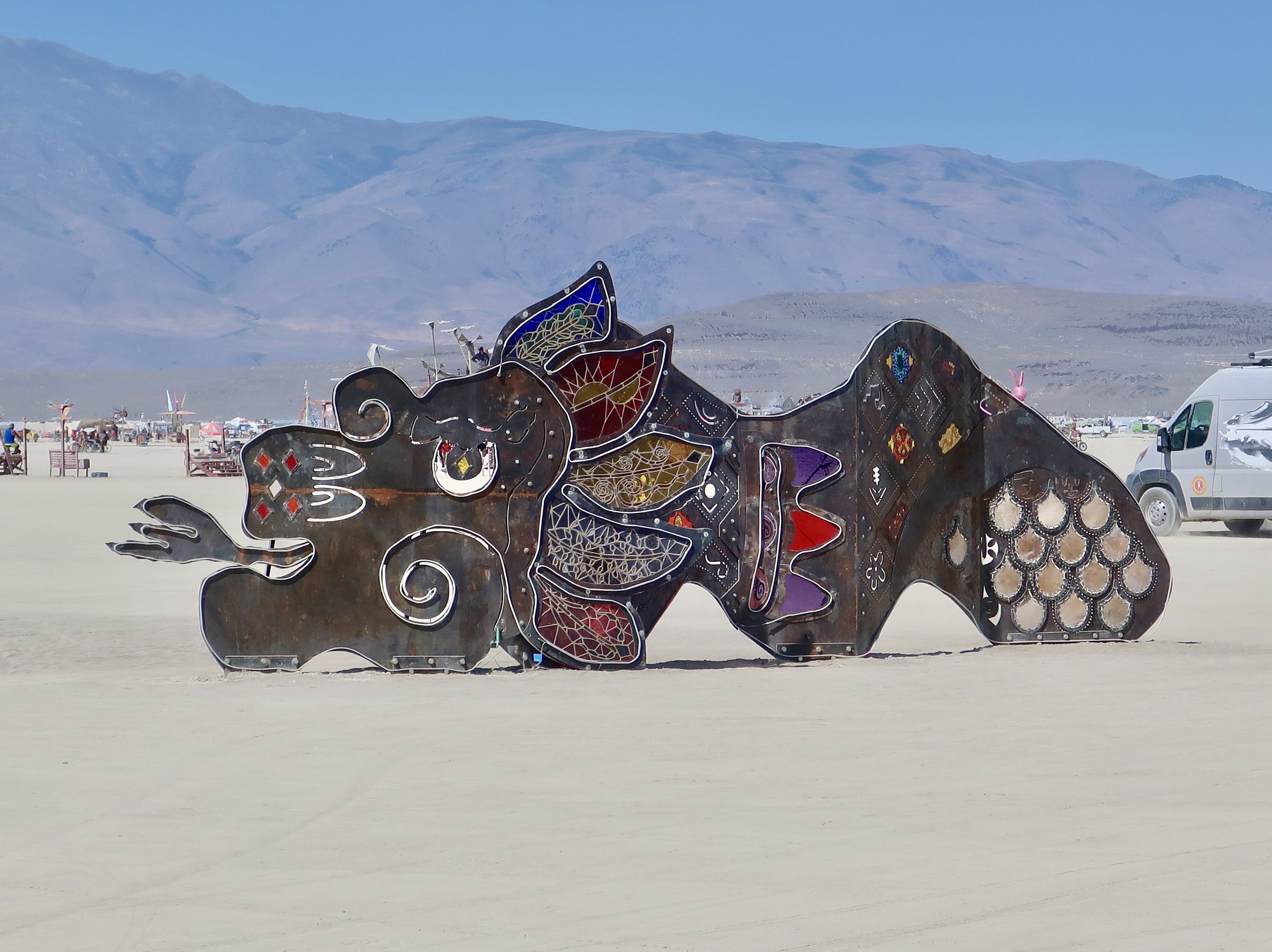
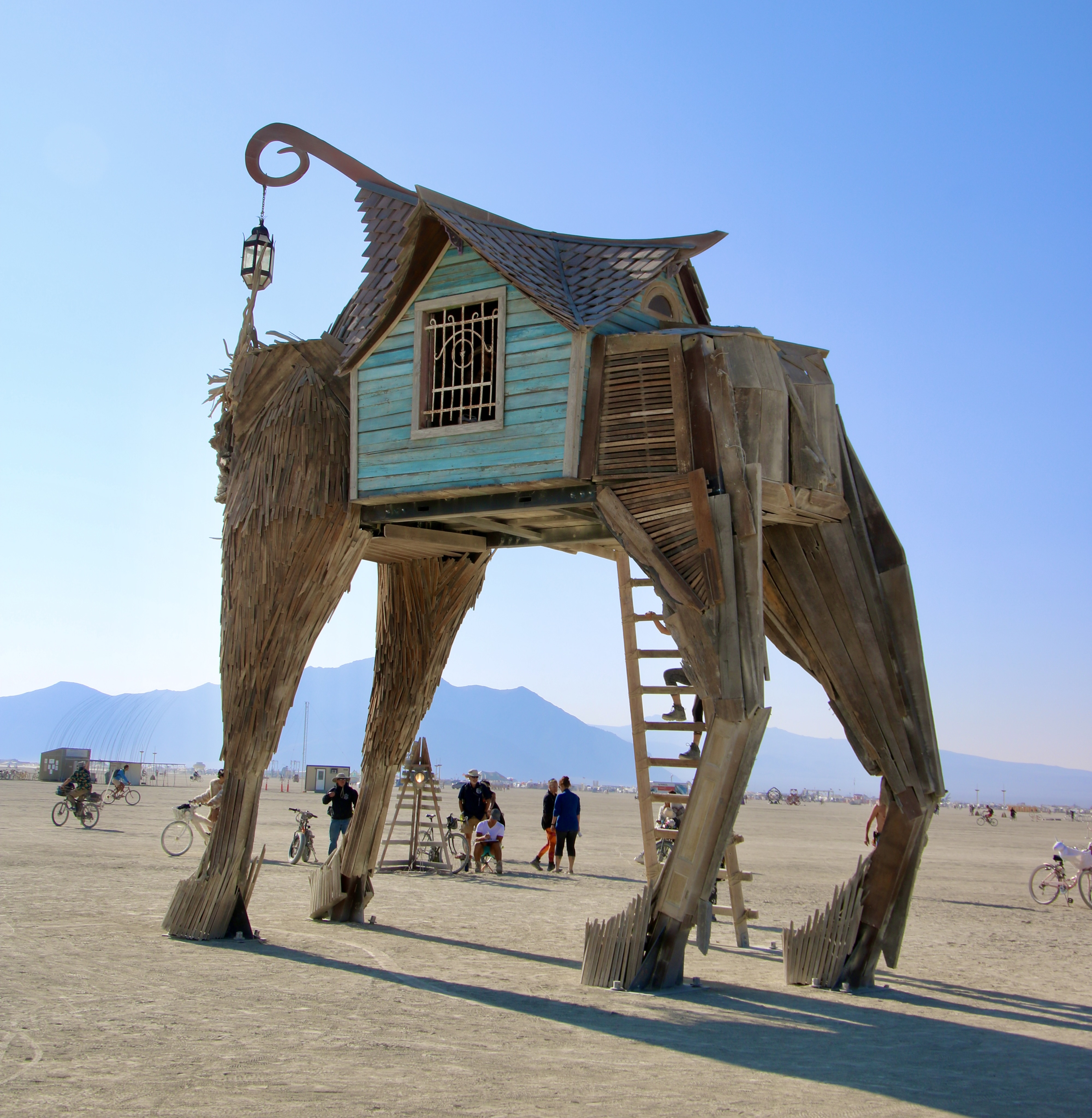
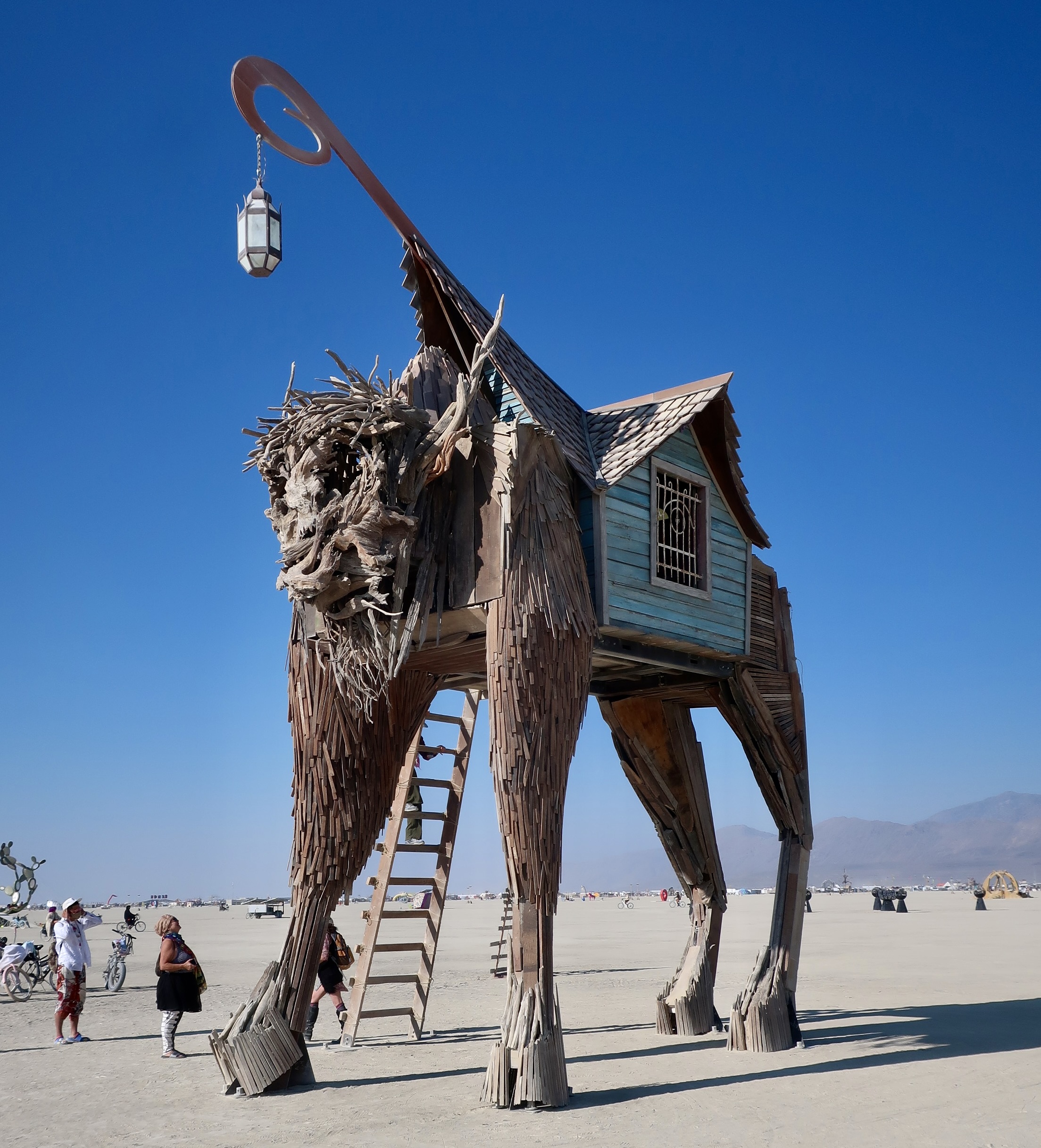
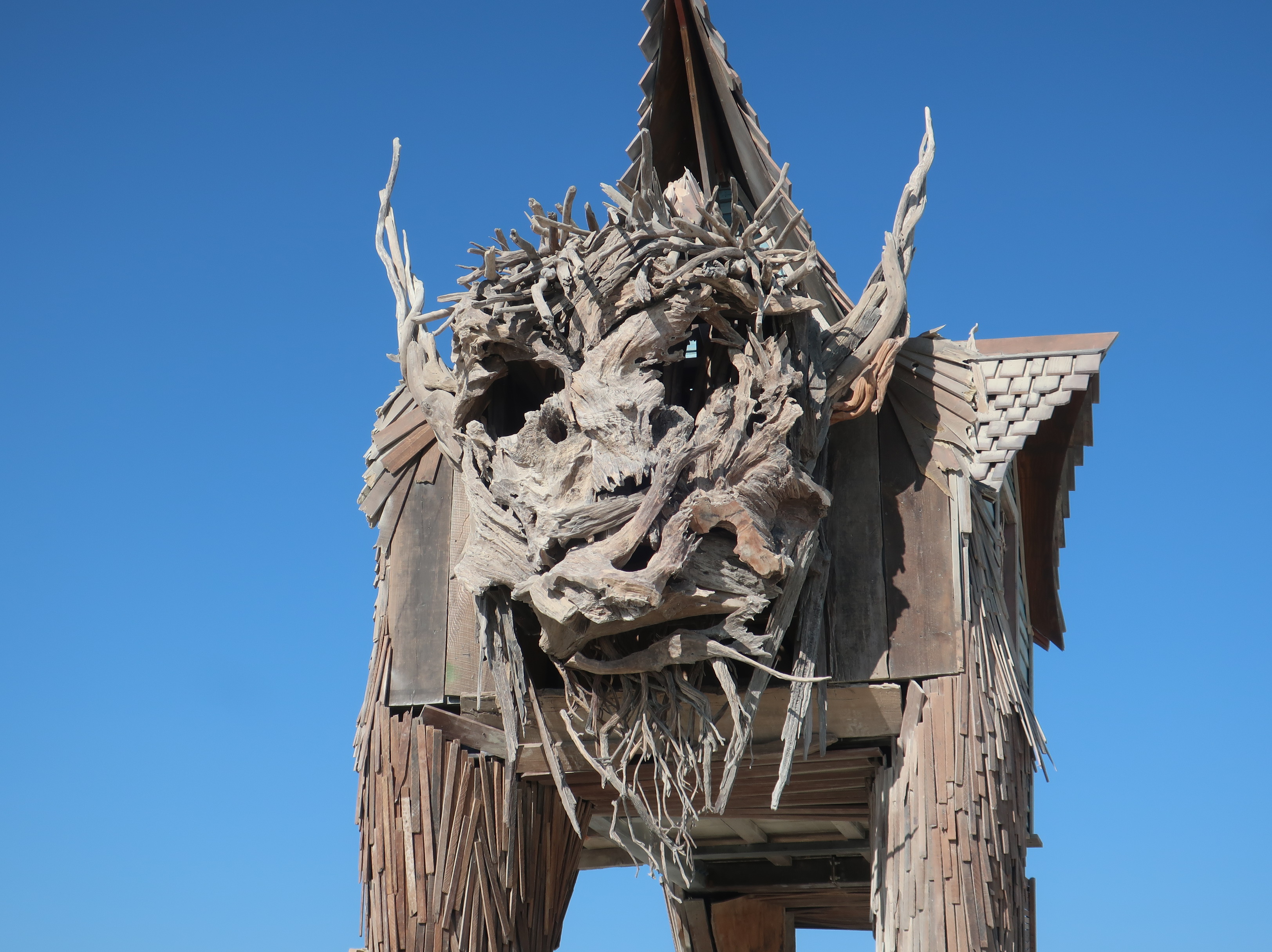
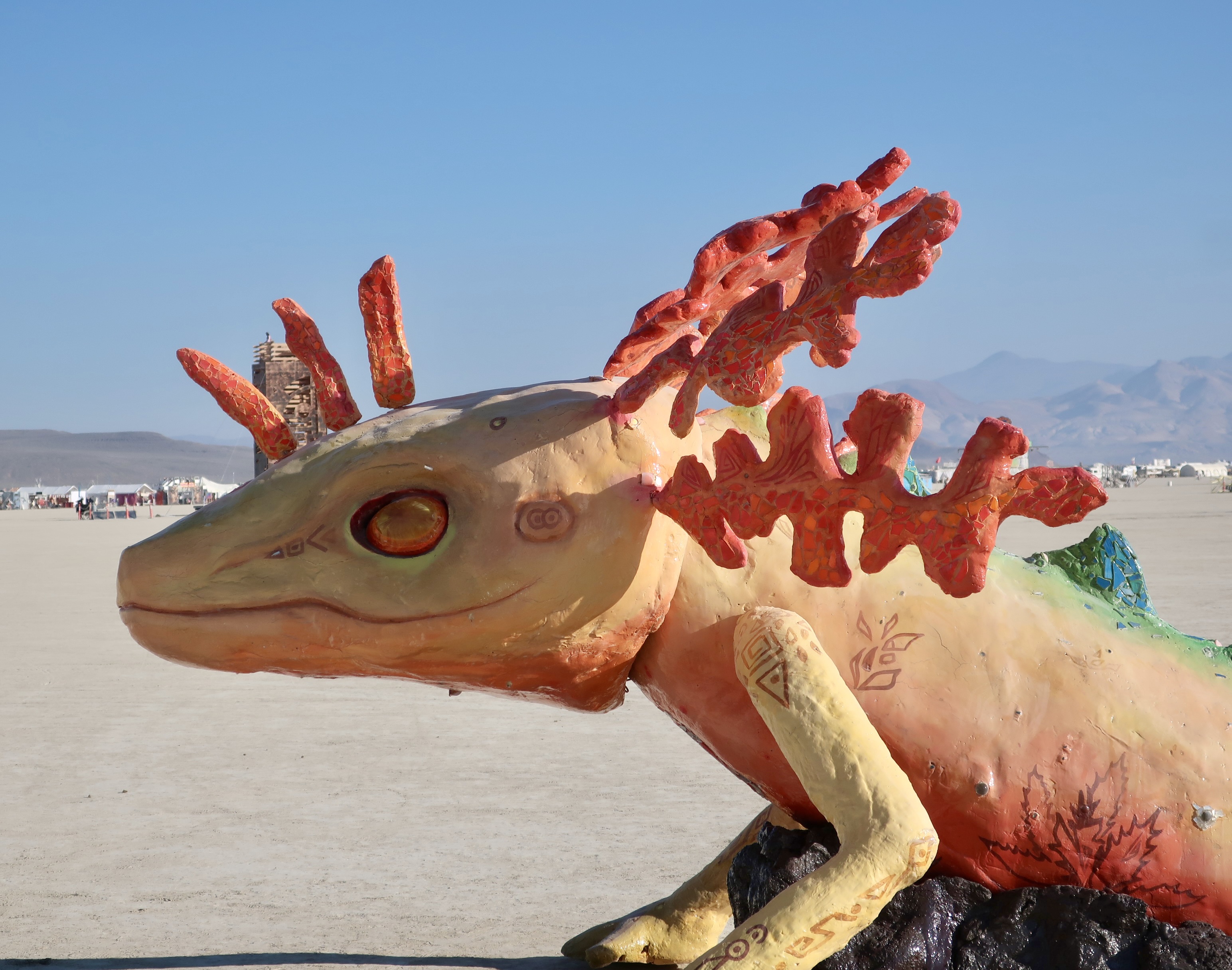
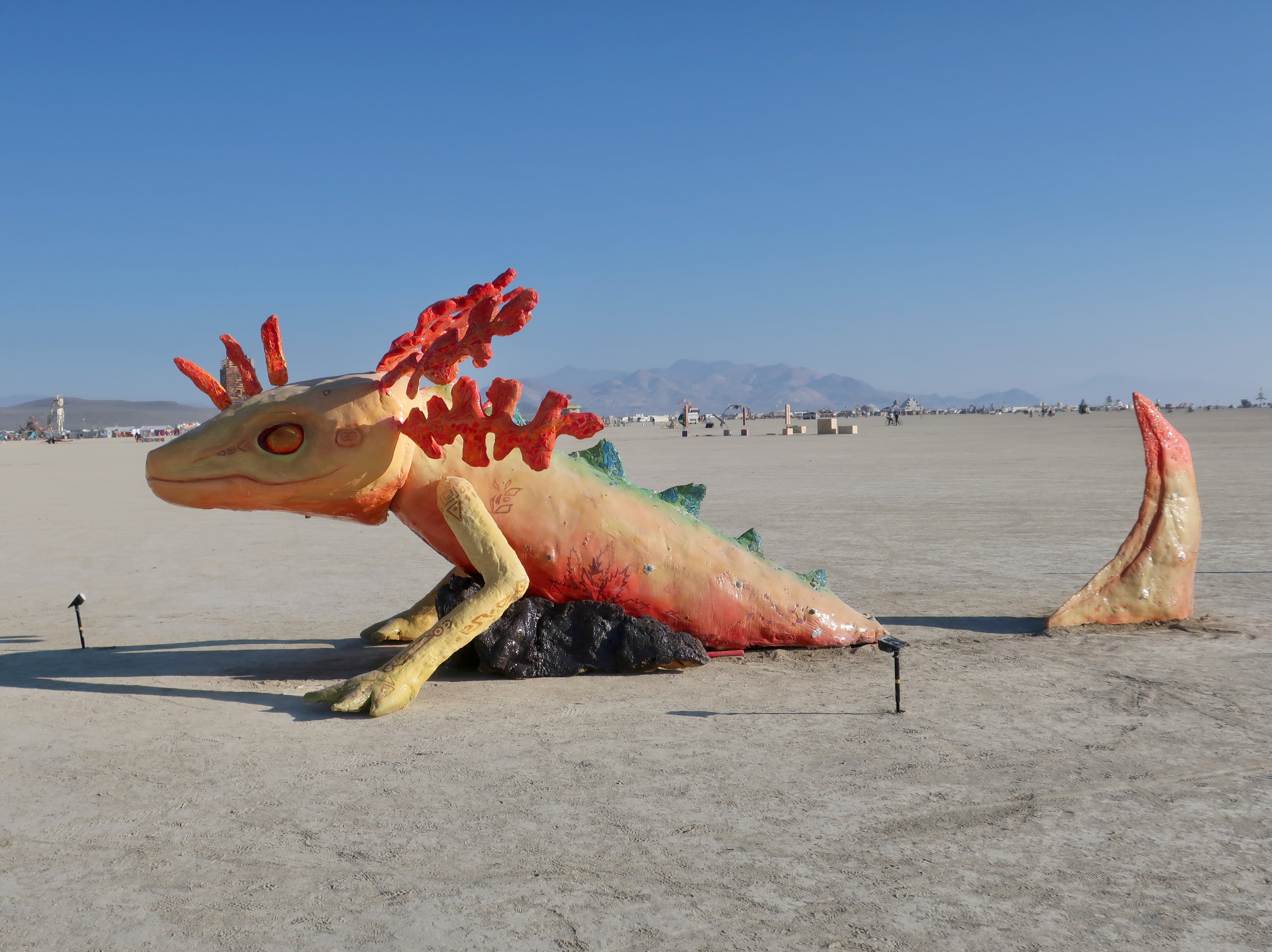
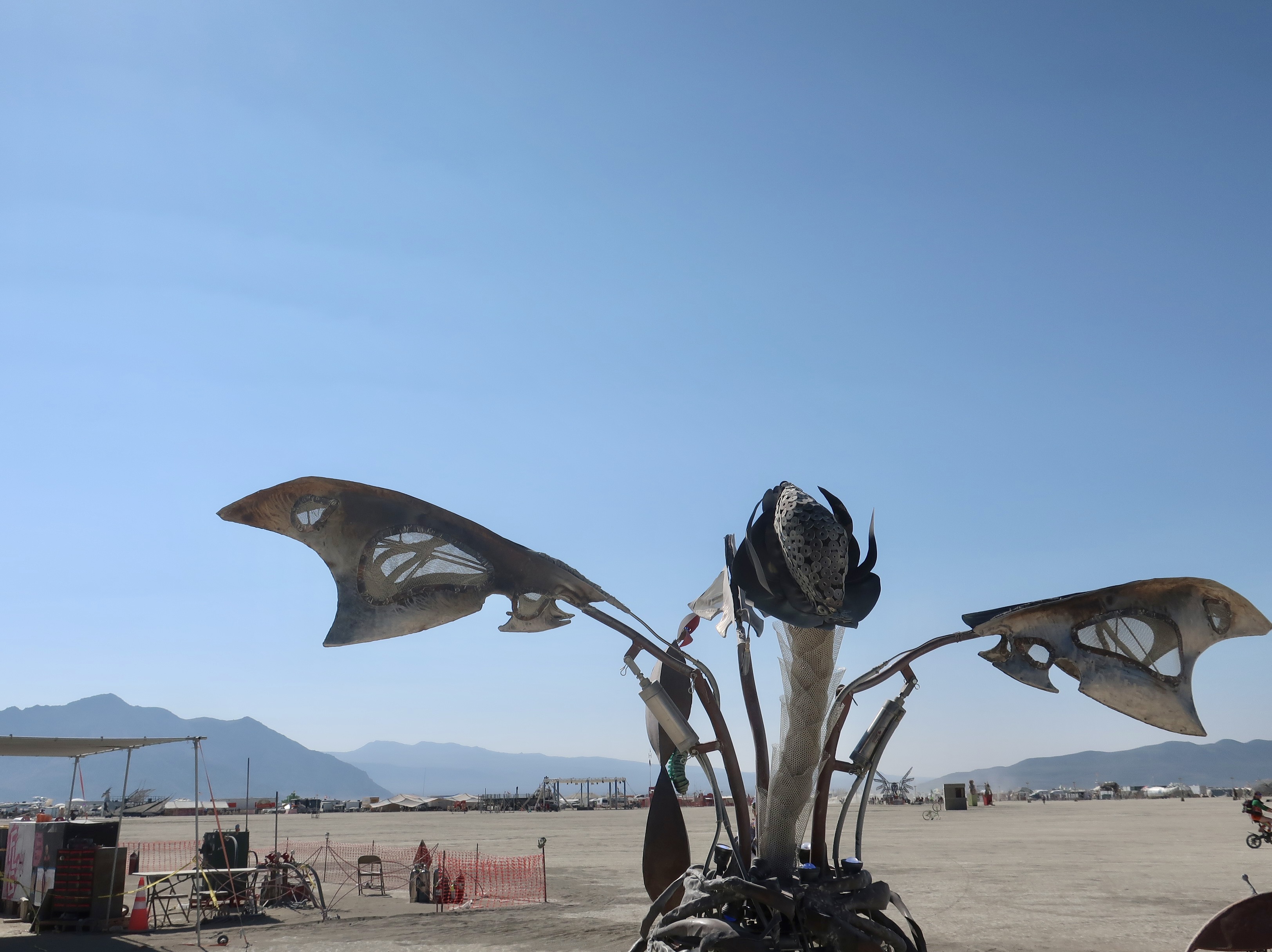
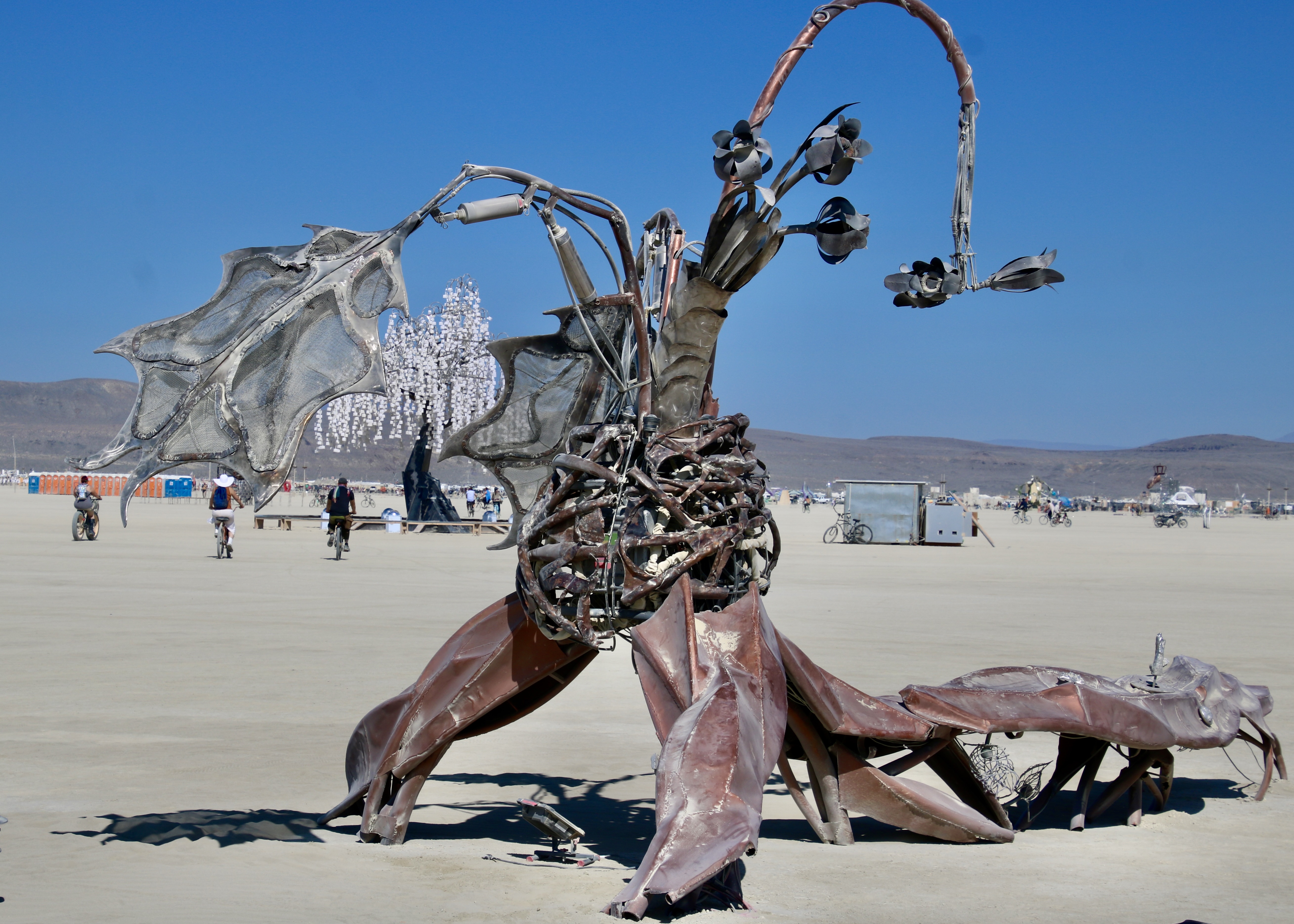
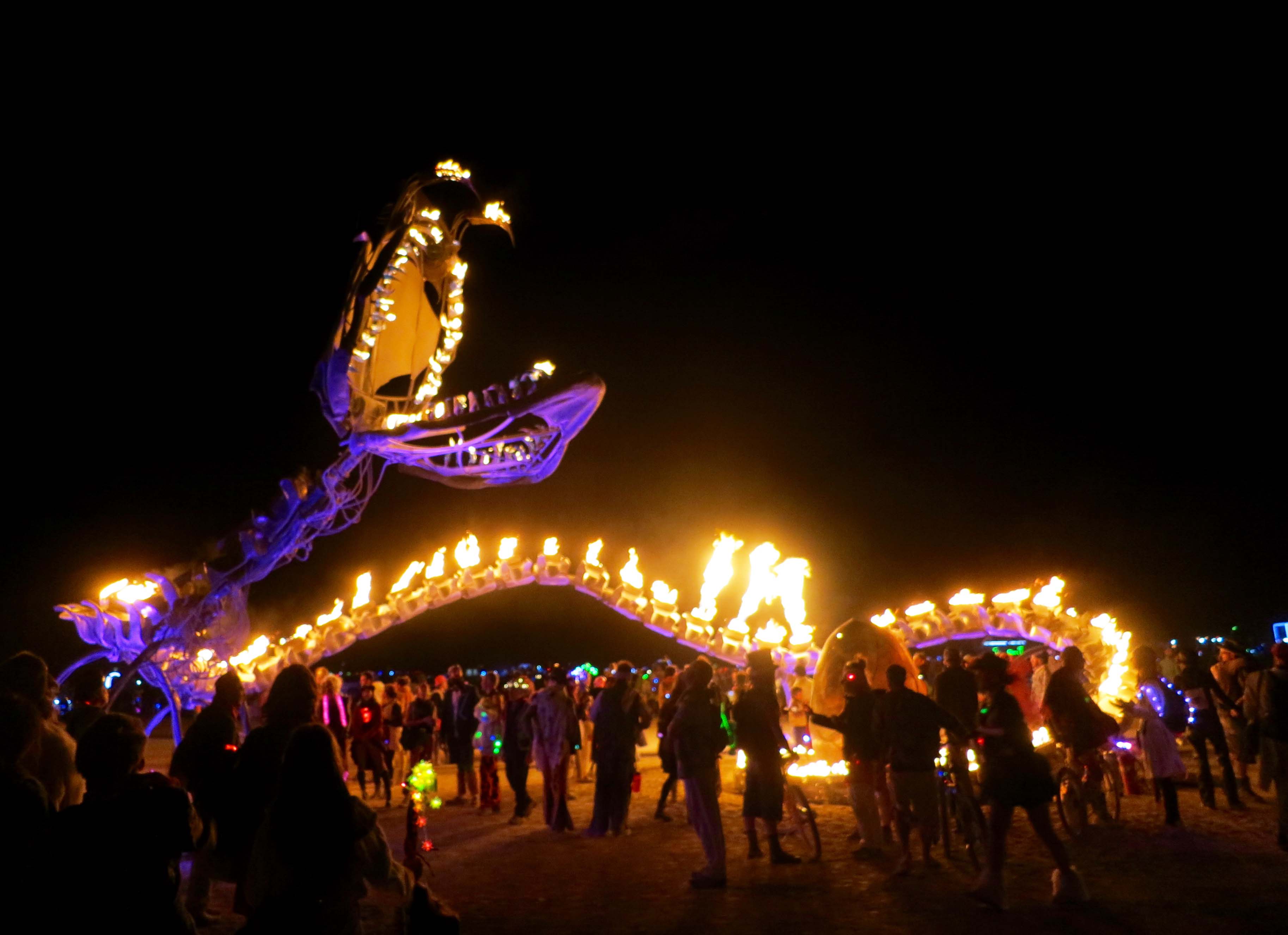
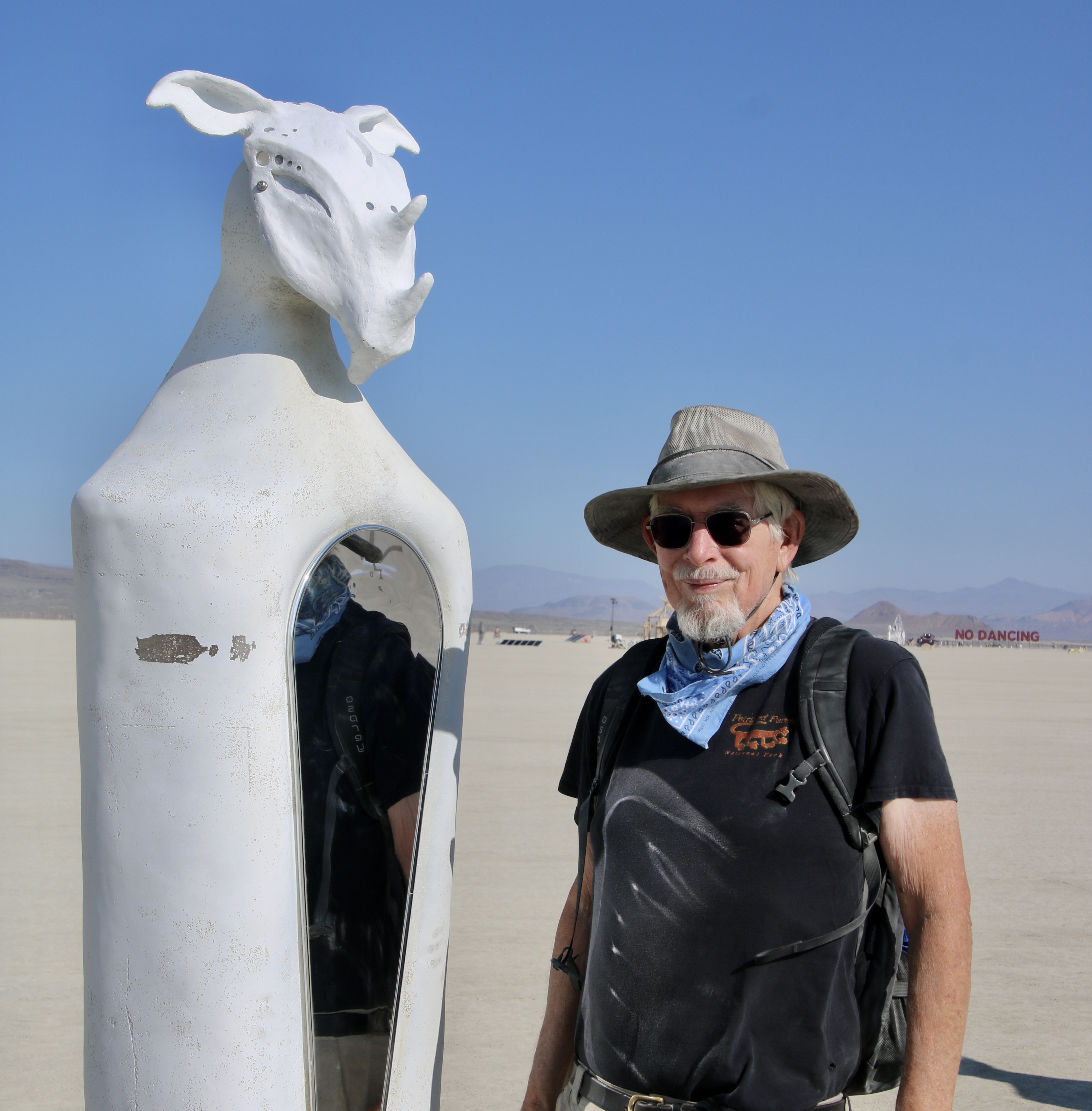
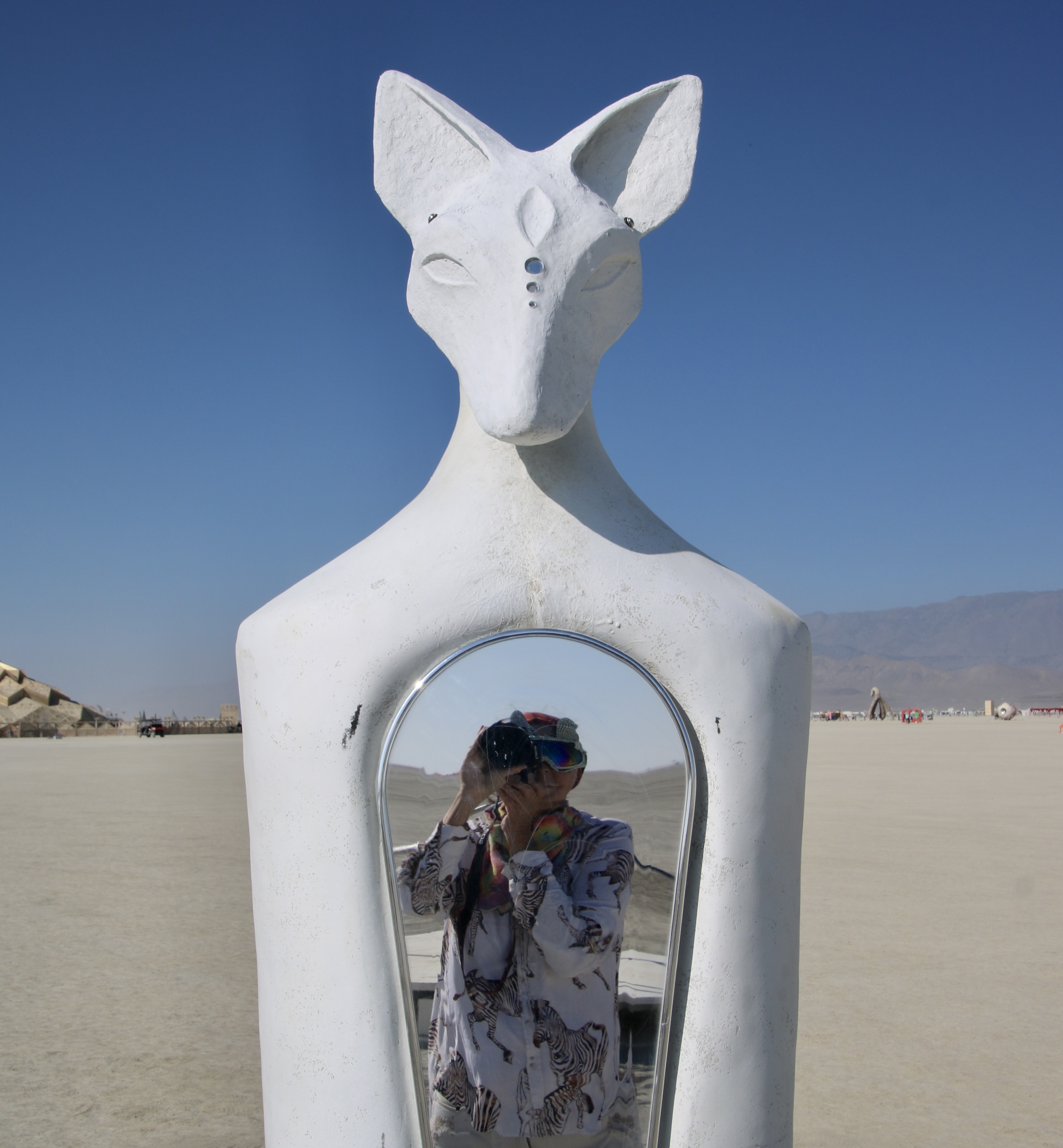
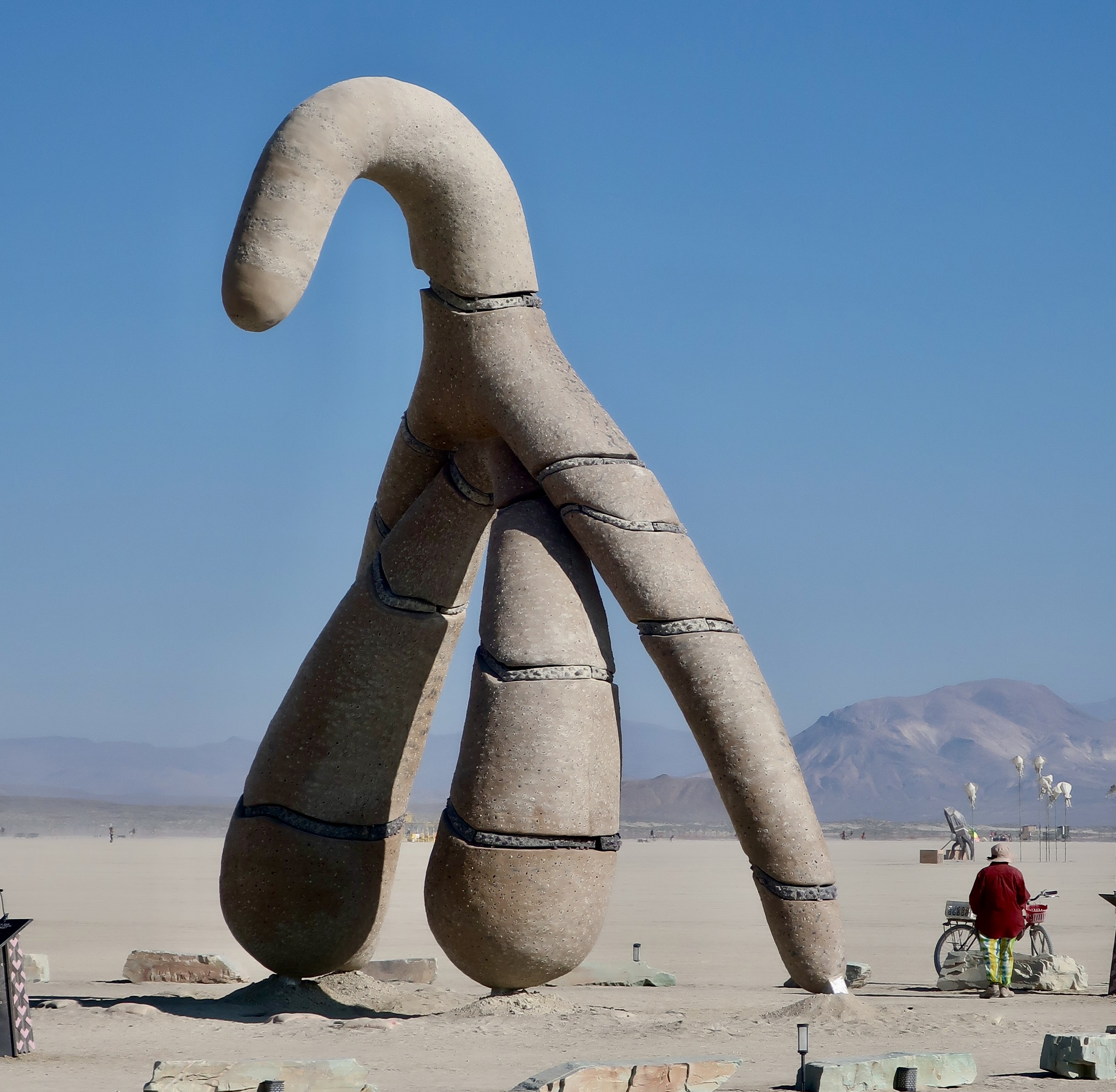
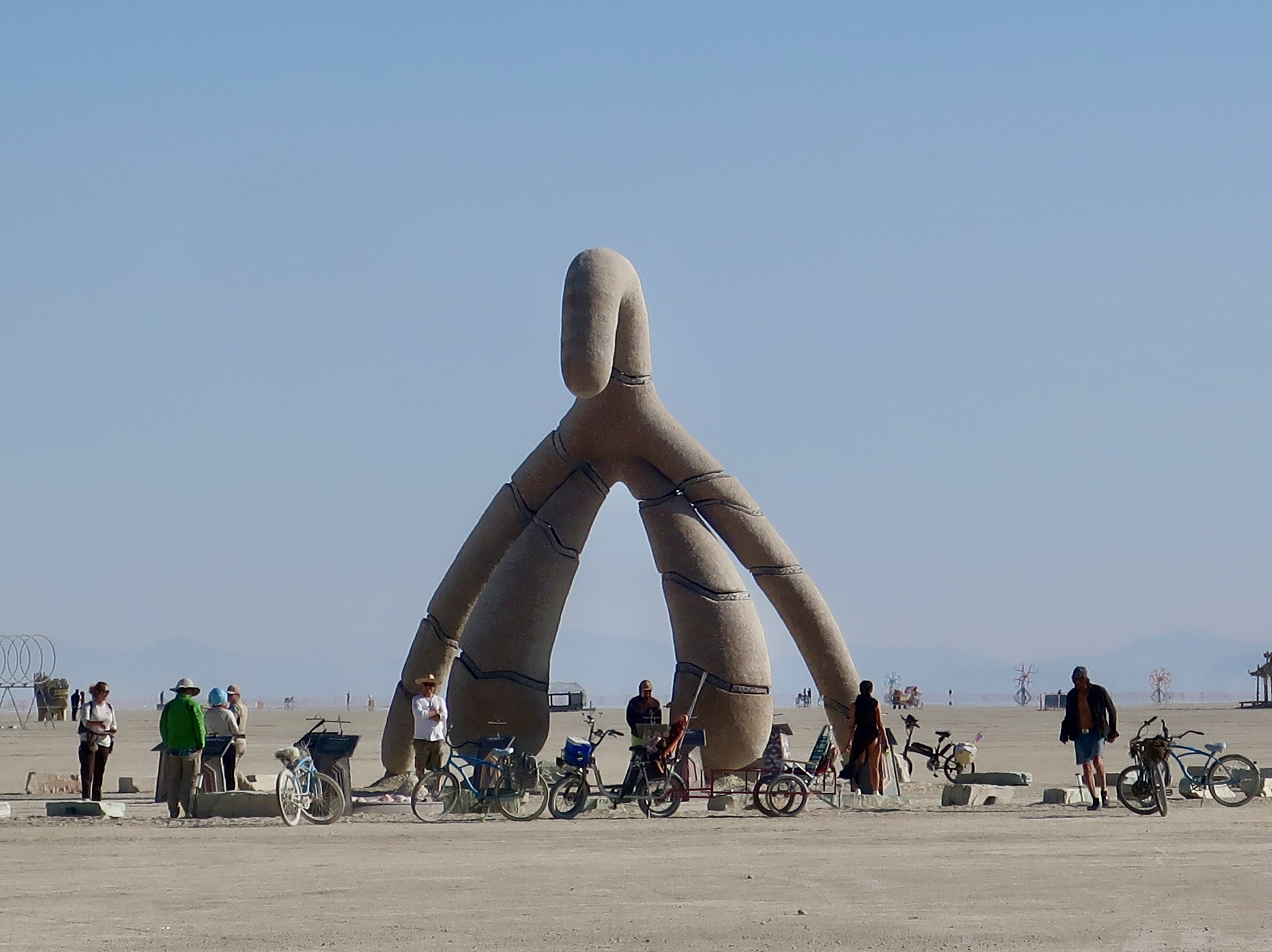
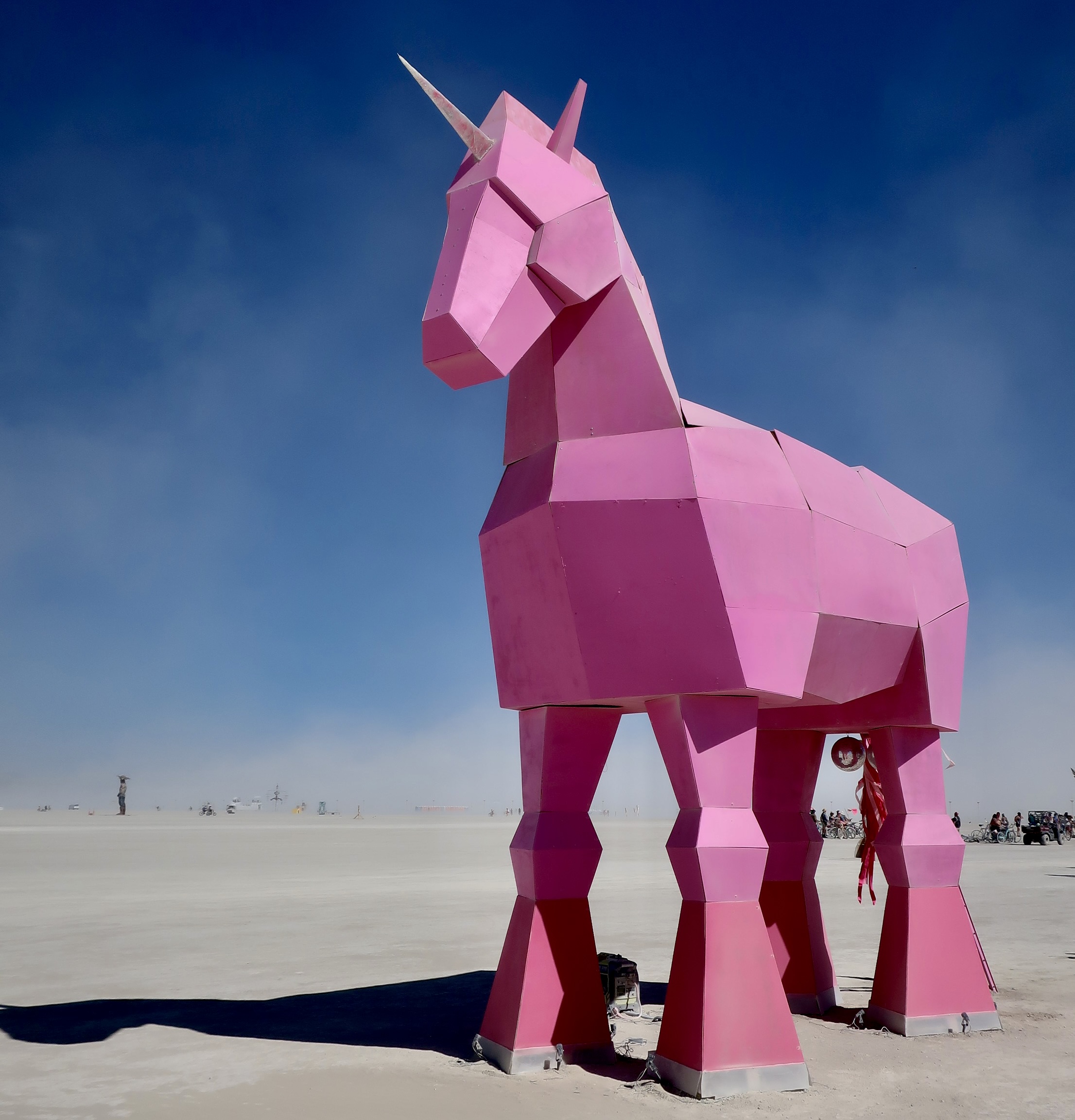
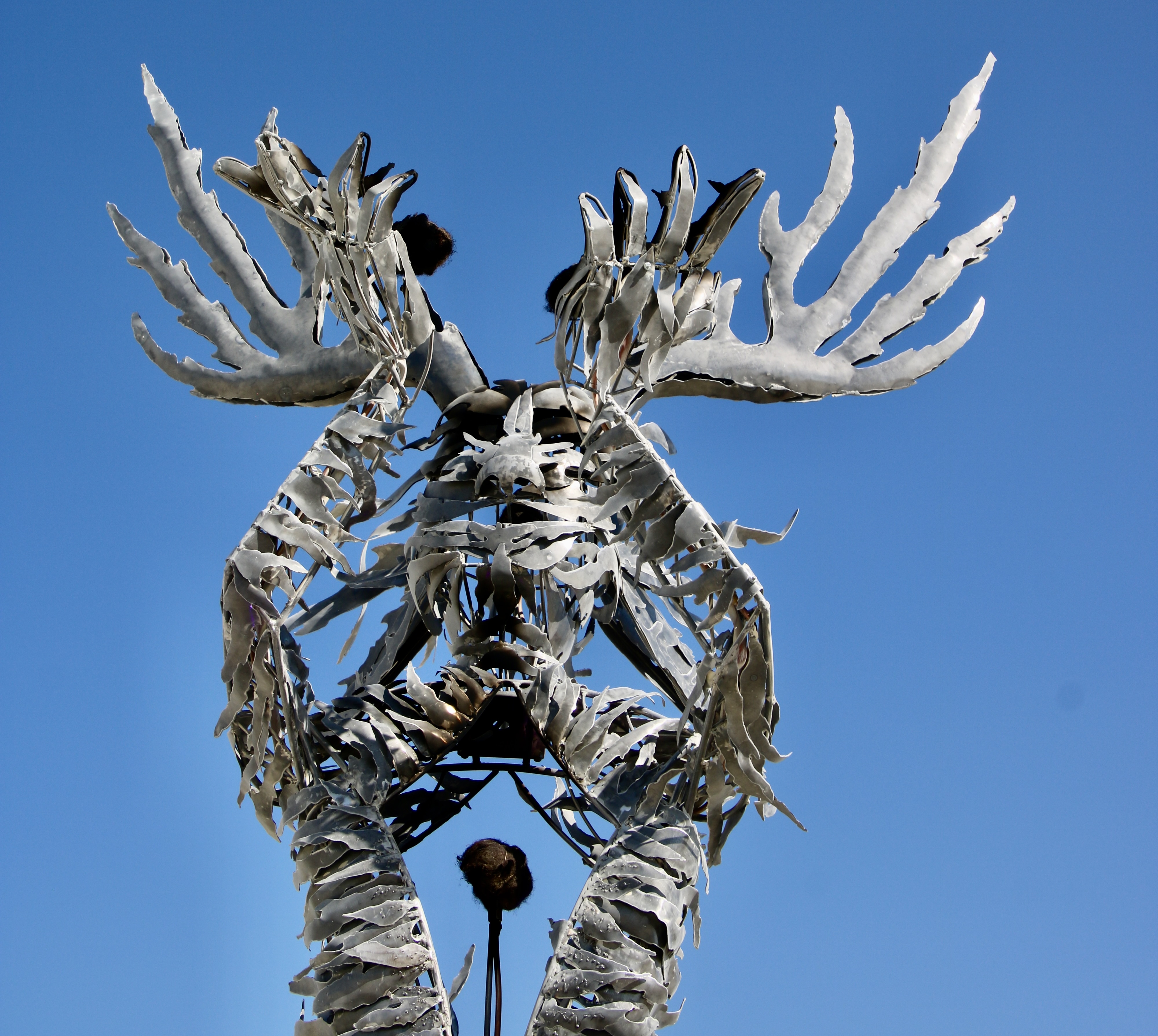
This handsome fellow is Chacc, the Mayan Rain God. Nice tongue. Peggy and I met him before when we were on our honeymoon in Mexico back in the early 90s. We spent the night in a motel next to the ancient Mayan ruins of Chichén Itzá and went out to visit him and other gods after all the tourists had left. They were carved in stone. According to legend, Chacc lived in a cenote next to the ruins. (Cenotes are natural wells created by the collapse of overlying limestone.) In times of drought, human sacrifices would be tossed into the well to appease whatever was irritating him and bring rain. Here’s Chacc standing tall at Burning Man 2023. Miguel Guzman from Mexico City and lyvone Khoo from Singapore created the sculpture. Since there weren’t any cenotes around in the Black Rock Desert to throw human sacrifices into, we figured that the bowl on the stand in front was a substitute.The ever curious (and mischievous) Bone decided to see if Chacc would accept him as a sacrifice. Apparently, the answer was yes. Chacc grabbed Bone up quickly in his long, bony fingers. You know the rest of the story. It rained in the desert for three days and stuck 70,000 Burners in the mud— becoming world-wide news. The moral of this story is watch what you ask for. Bone has been very quiet about his role. Somewhere, maybe down in his cenote, Chacc is laughing. (Note: For those of you who aren’t familiar with Bone, I’m posting an updated interview done with him in the past in conjunction with today’s post.)While we are on focusing on the gods of Ancient Mexico, I should also include this version of the Aztec god, Quetzalcóatl, the Feathered Serpent, by the Crescent Art Collective/Lisa Regan & Ley Brashka from Coahuila, Mexico & Tulsa, OK. Among his several roles, he was patron god of the Aztec Priesthood.Here’s another great beast. An RV with legs perhaps? I’m thinking it would make a great off-road vehicle. Getting in and out might be a little challenging.The artist, Walker Babington from New Orleans, had more than a house on legs with his creation, however. From the front, his sculpture became a buffalo with the house serving as his torso. Both the house and the buffalo were made of materials repurposed from structures and trees that had been destroyed by hurricanes in New Orleans. Babington titled his work “Burden of the Beast” and says his work “symbolizes the task of relocating one’s intrinsic understanding of ‘home.'” The forces of nature magnified by global warming will require more and more of us to pick up the pieces of our homes and lives and move on to higher and safer ground. Migration may become a way of life.Meet Axototl Frequency, a 2023 Burning Man artwork created by Gio Mantis & Elana Novali from Mexico City.Axolotl is modeled after an endangered salamander that can be only be found in one place, Lake Xochimilco near Mexico City. We think it’s cute. According to Mantis and Novali, “These art pieces aim to express the importance of protecting this endangered animal…” One thing that helps assure their continued existence is they are quite popular as pets. I want one.One of my all time favorite group of artists at Burning Man is the Flaming Lotus Girls out of San Francisco who are known for their imaginative creatures that light up the night skies of Burning Man in strange and wonderful ways. This was one of several sculptures we found together on the Playa. We wondered if they were plants, animals or machines. The Flaming Lotus Girls claimed that they were a bit of all three, evolving. Unfortunately, due to the rain, we never got to see them flaming at night.Leaves or wings? A flower head or an animal head?Not a creature I would like to meet at night shooting out flames. (Actually, I would have.)A photo I took of a dragon created by the Flaming Lotus Girls at Burning Man 2015.Zea Narvaez from Portland, Oregon urged viewers to face and love their beasts in a series of sculptures arranged in a circle with each one different and with a mirror. Peggy caught this photo of me next to my favorite. “Damn,” I told Peggy when we were reviewing our photos after Burning Man, “the beast marked me.” I swear, it was the first and only time I noticed the claw marks on my chest! Reflected Playa dust on the mirror? Maybe.Mainly we took selfies, as Peggy is here. If that isn’t a form of “Loving Thy Beast,” what is? Speaking of possible beasts, do you see that sculpture in the distance on the right in the far distance? We hopped on our bikes to check it out.“Well, I have an idea what it might be,” I told Peggy.“You are looking at it wrong,” Peggy told me. Oh. “Tip of the Iceberg” is what Melissa “Syn” Barron from Oakland & Big Sur, CA calls her sculpture. The comment was “Monumentalizing this misunderstood & mysterious piece of anatomy, we hope our sculpture will educate, empower, & honor its rightful place in biology.” Right. You are looking at an ‘invisible Trojan Unicorn’ according to artists, Invisible Pink Unicorns from Los Angeles. It’s certainly pink and a unicorn. Here’s what the artists had to say, “Given the challenge of getting the tickets, we invited the easiest and cheapest way to get to Burning Man – inside the Trojan unicorn. Please come and check if it is open and if we successfully get out to the Playa and are not trapped inside (and help us get out if we are still in)!” My money would have been on Burning Man Org blocking free entry into the event. They are a lot tougher than the Trojans were! Grin. They even checked the bathroom in our trailer to make sure we weren’t trying to slip someone in! Little did they know about the trap door on our black water tank. Heh, heh. Just kidding. I’ll conclude with this fun winged beast I couldn’t find any information on. Next up, I’ll feature a Hedge Hog from Ukraine made from tank traps and other fun animals including a giant bear and a bunny.
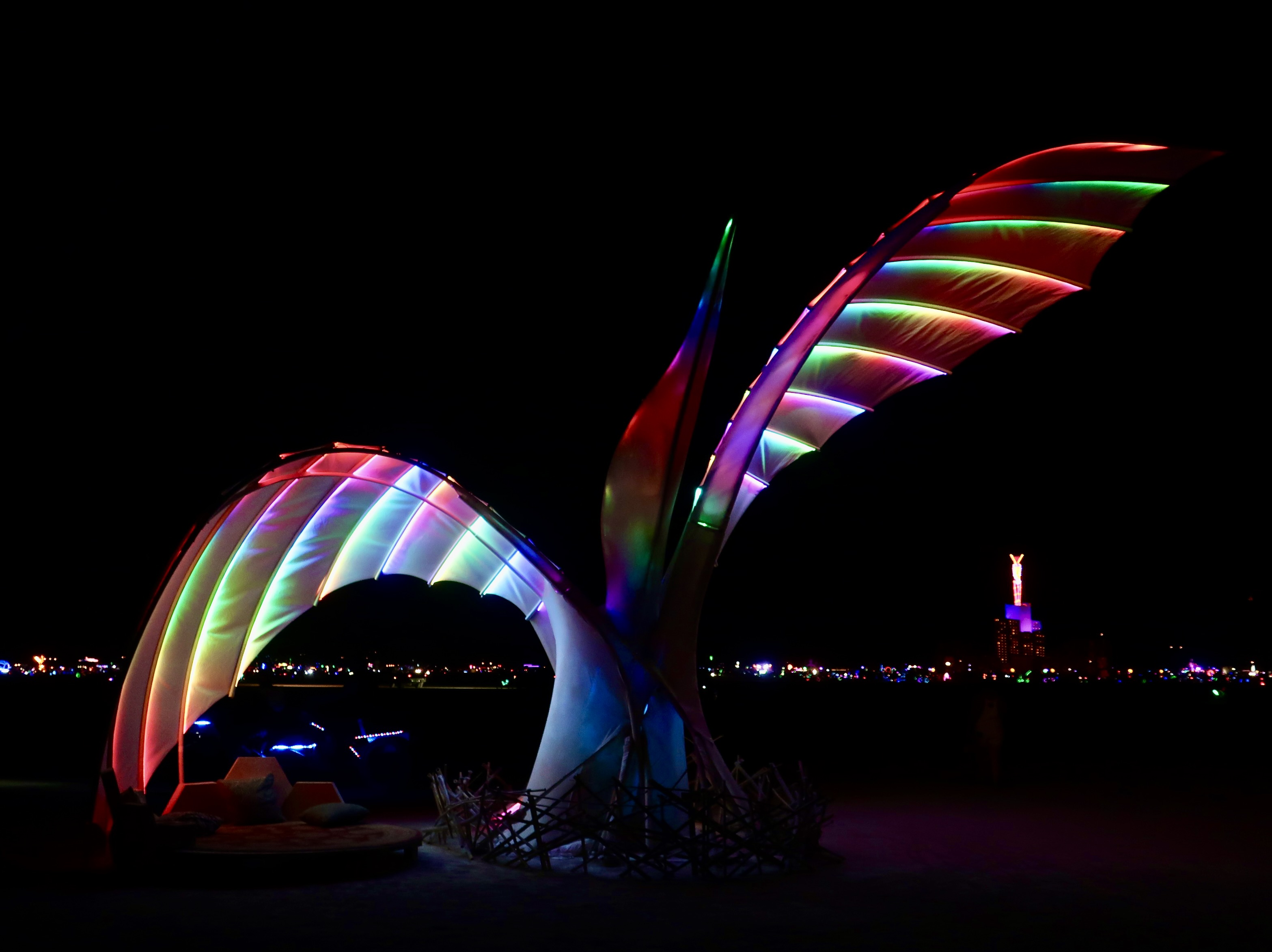
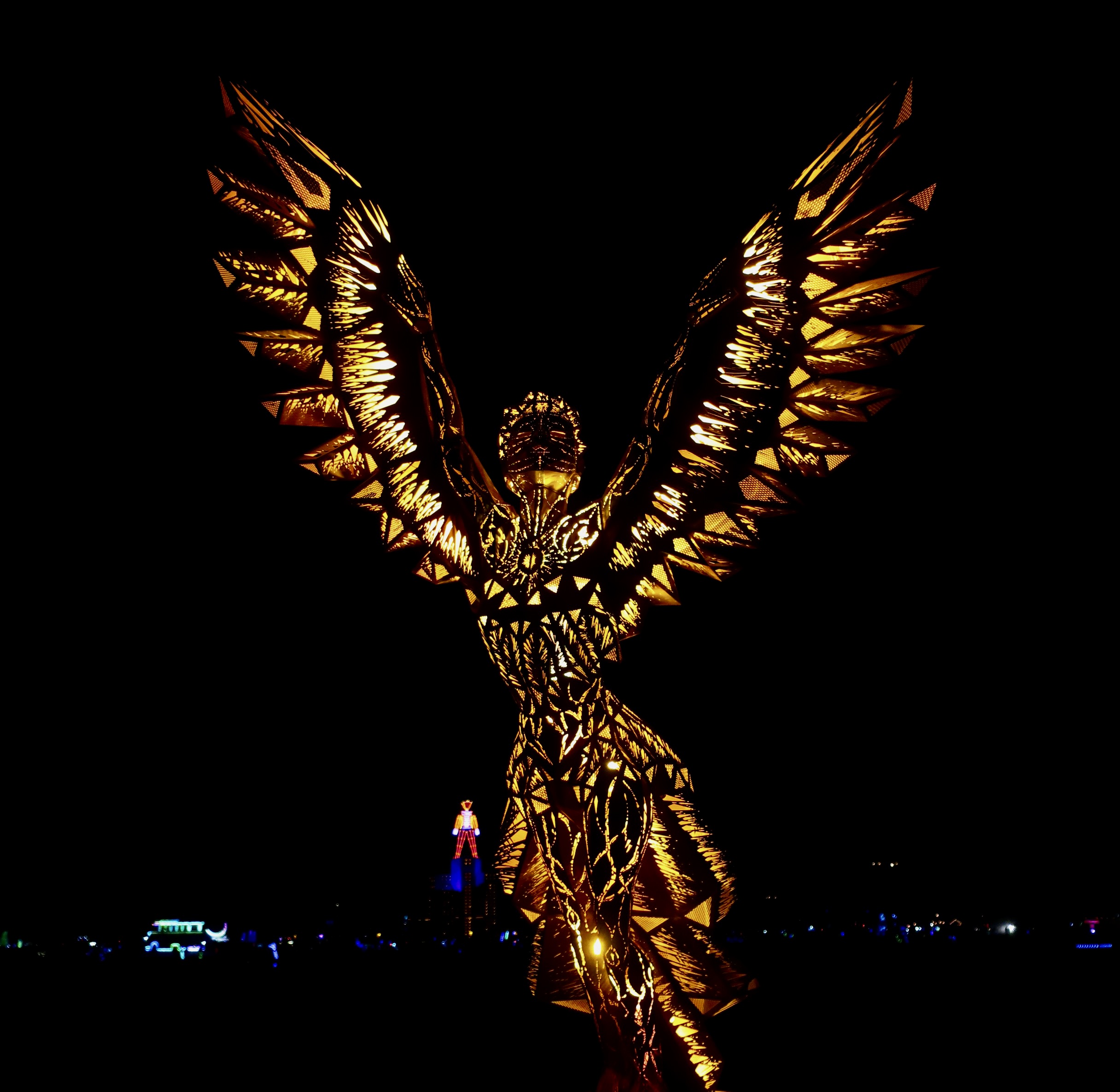
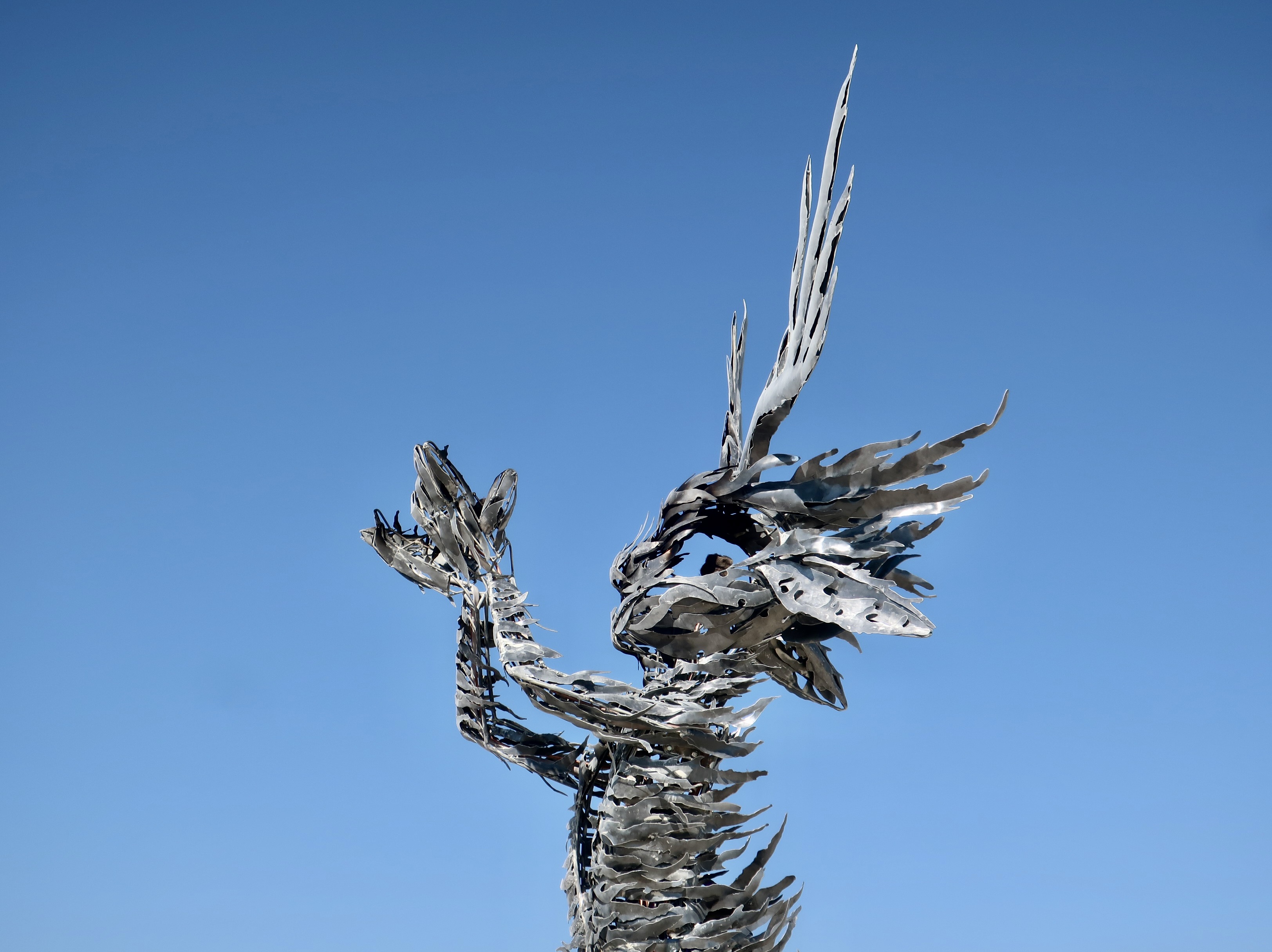
Reaching toward the sky, this beautiful winged creature rises above the Playa of Burning Man 2023. The Man, with his red pants, can be seen in the background.
“Burning Man is unique in the world. Hard to describe how incredible it is for those who have never been. Best art on Earth.” –Elon Musk
Elon Musk came to Burning Man this year along with a number of other luminaries. I don’t agree with him on a number of things, but I do admire his creativity and willingness to think big. We were more than happy to use Starlink on our remote property in Oregon. And I think that his description of Burning Man is relatively accurate. I’ve been arguing for years that it features some of the world’s best art being produced now. My first venture out to the event in Nevada’s Black Desert was in 2004. I’ve been back 12 times since and Peggy has been with me 9 of those times. Art is the primary reason we return.
Our time to explore the Playa and Black Rock City was limited this year. We came in on Monday afternoon, a day after Burning Man opened, and saw everything shut down on Friday because of the rain. We were left with just over 3 days to hike and bike our way through the art. Peggy and I photographed over 50 pieces that I will share with you over our next 5-6 posts. Sadly, that left a lot of art we didn’t see. My apology to the artists.
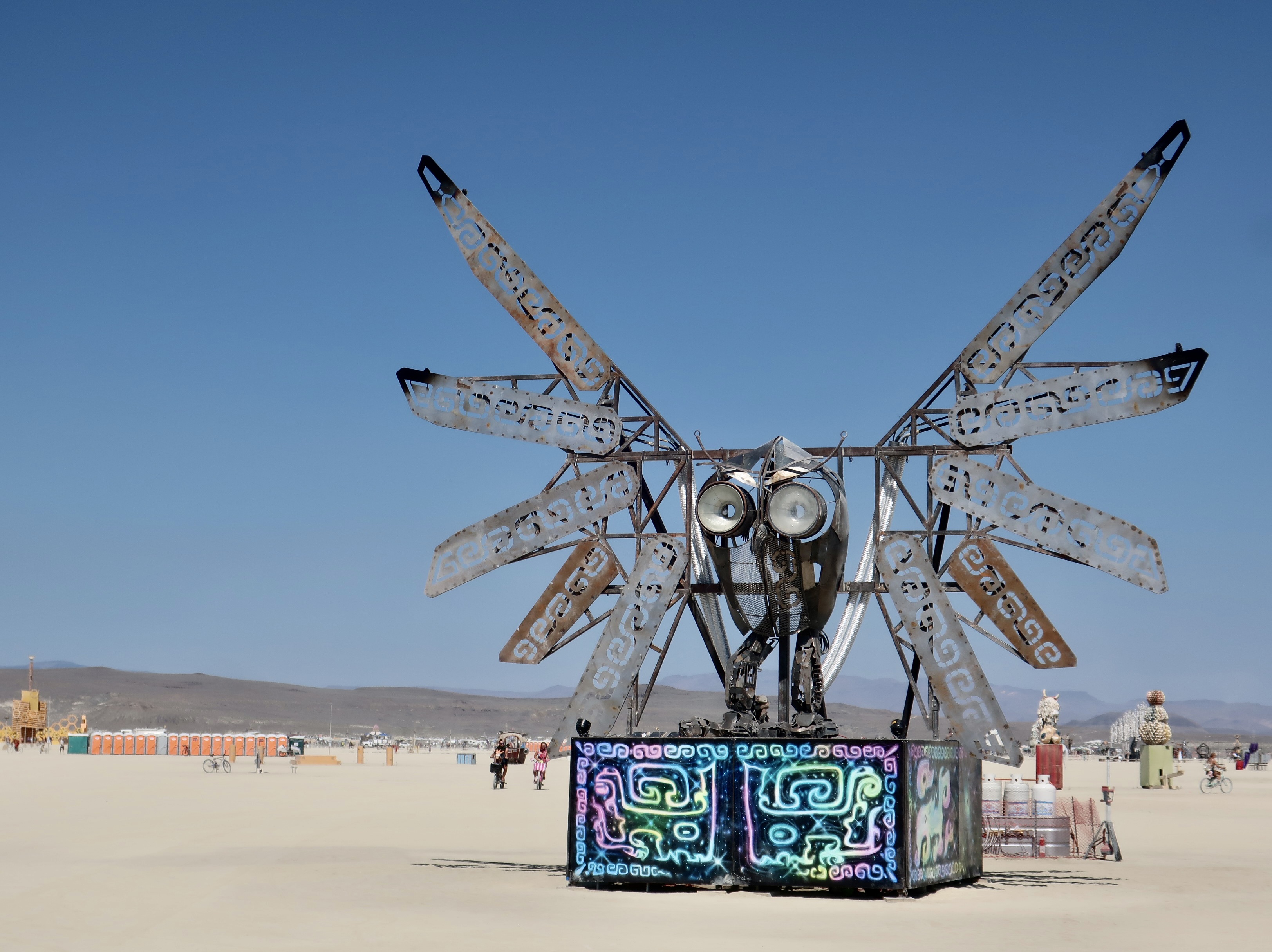
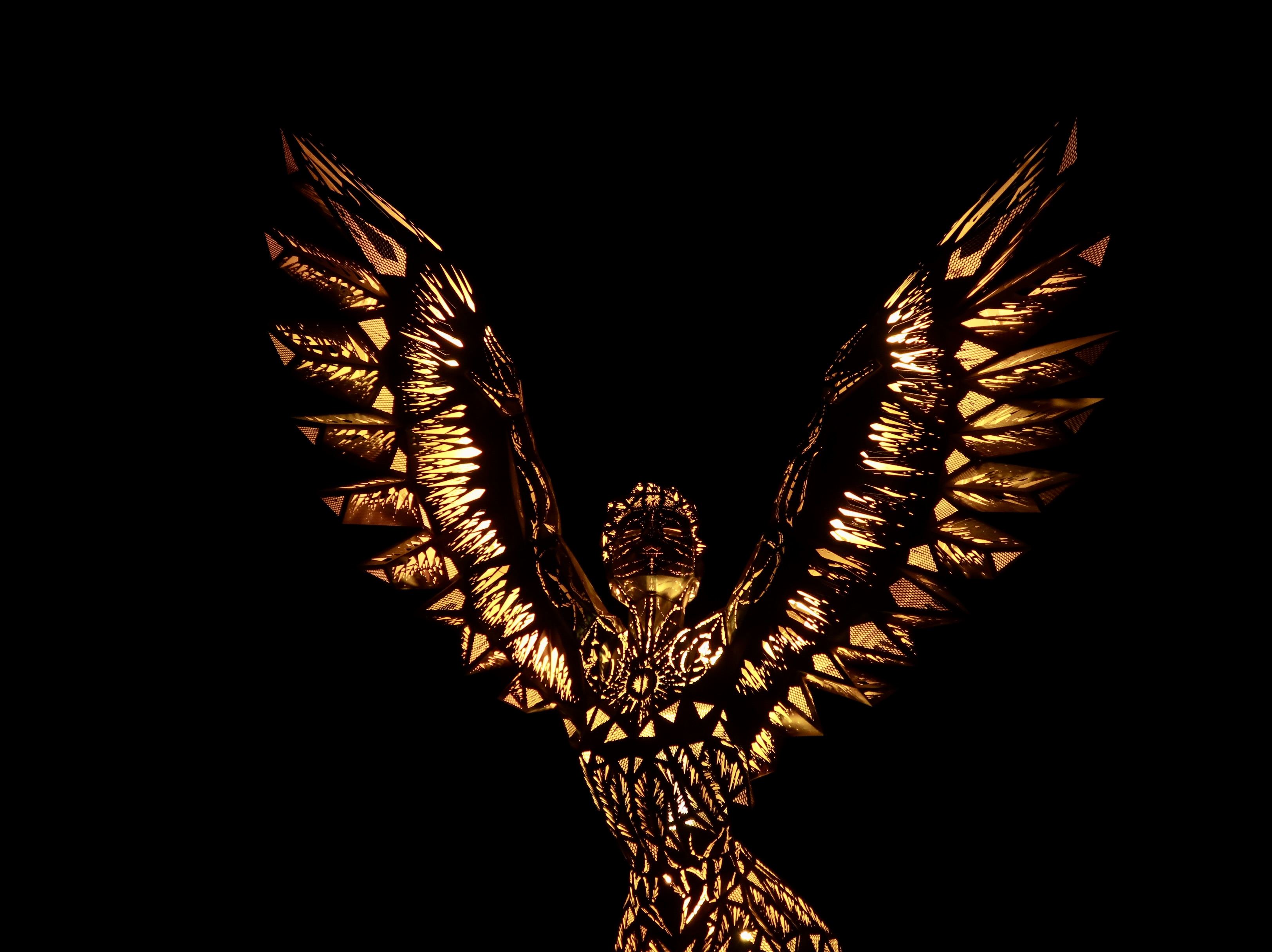
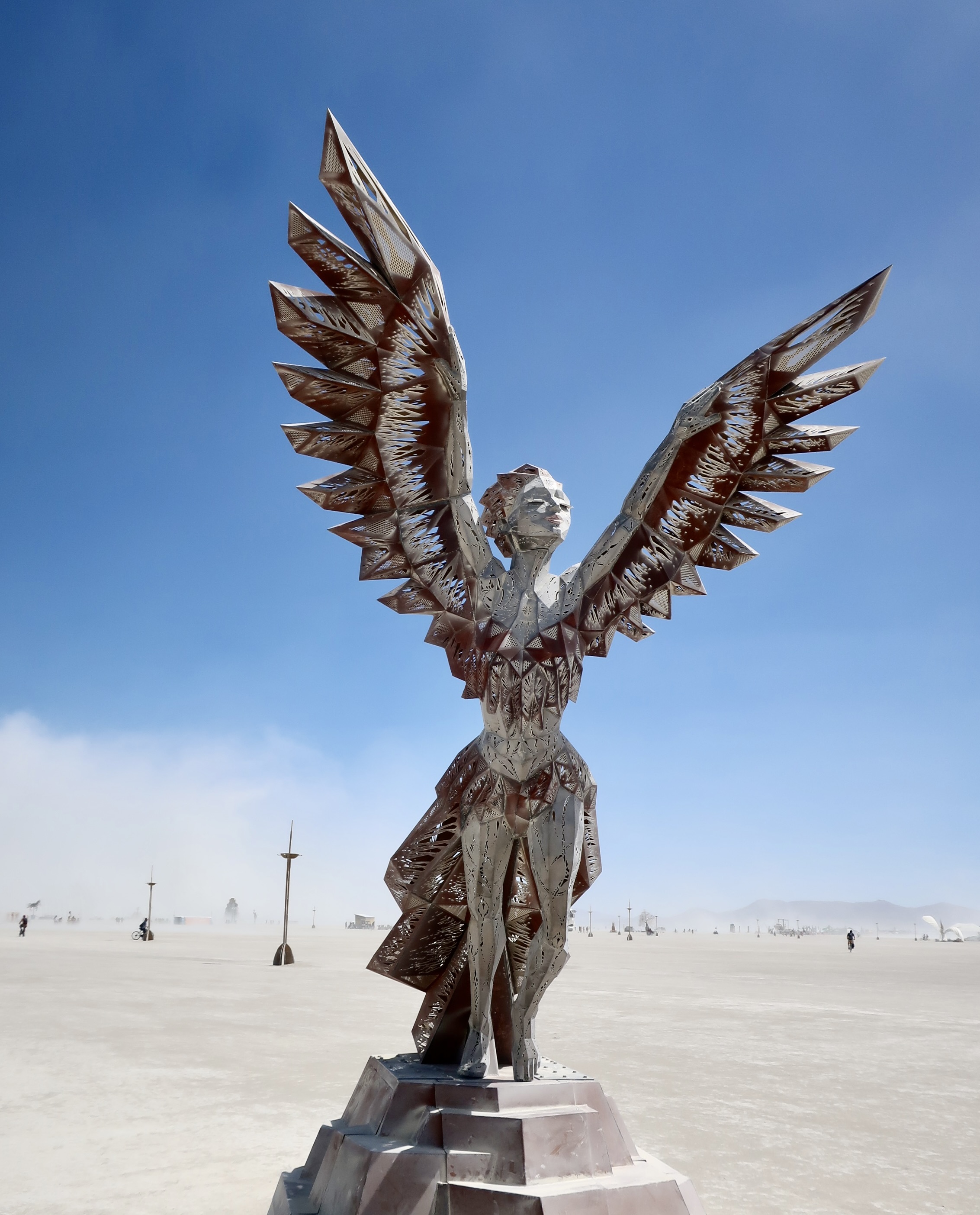
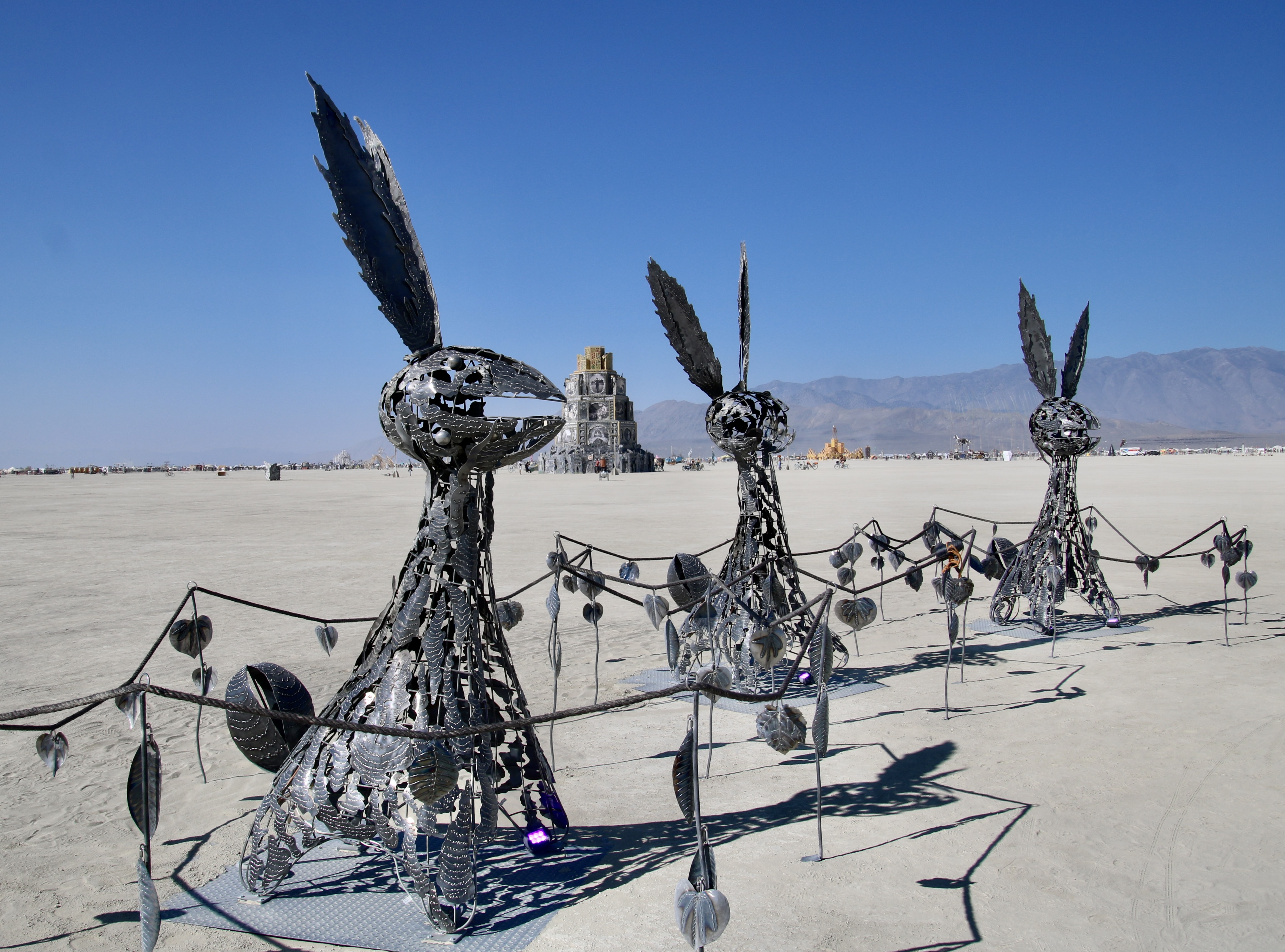
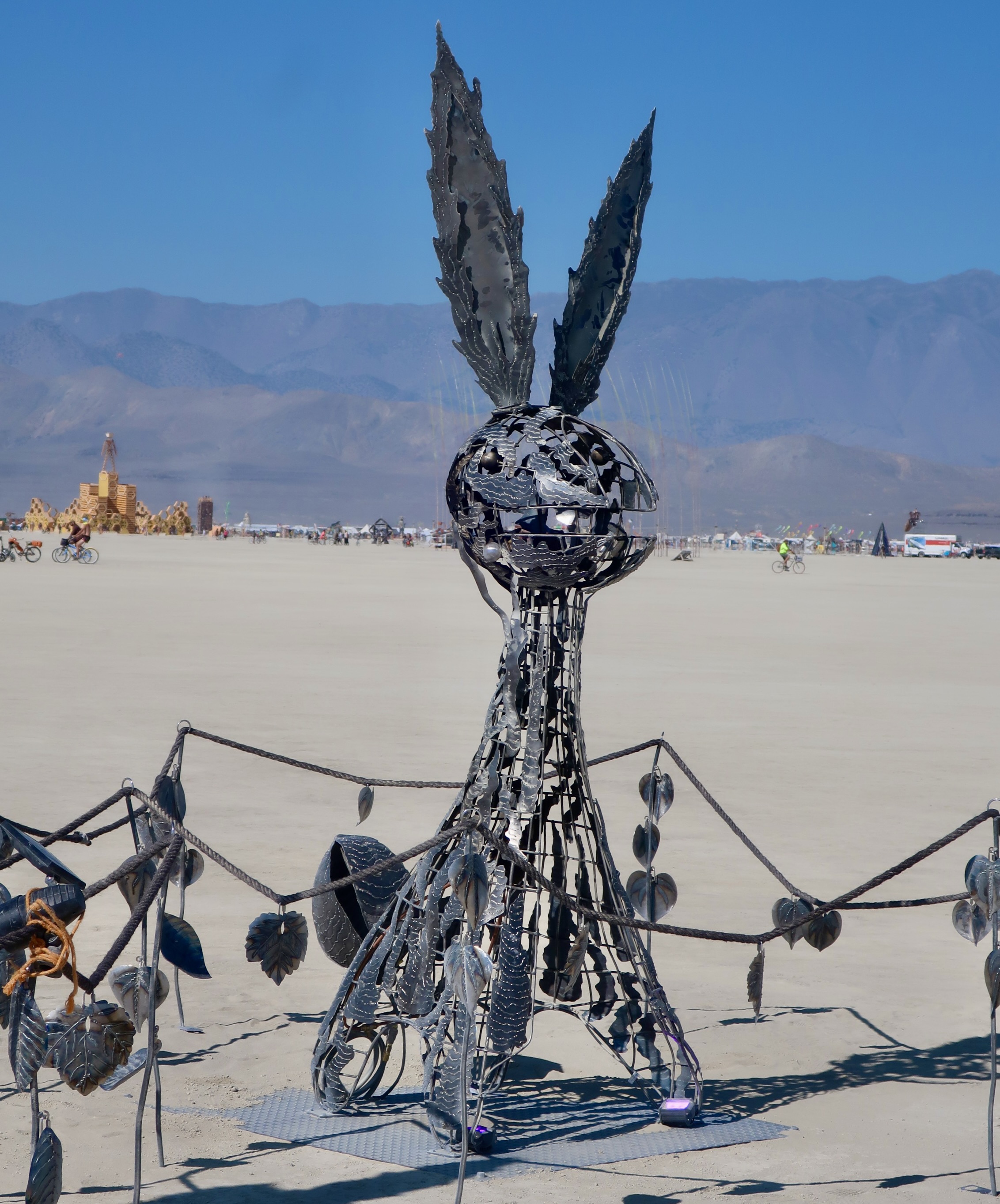
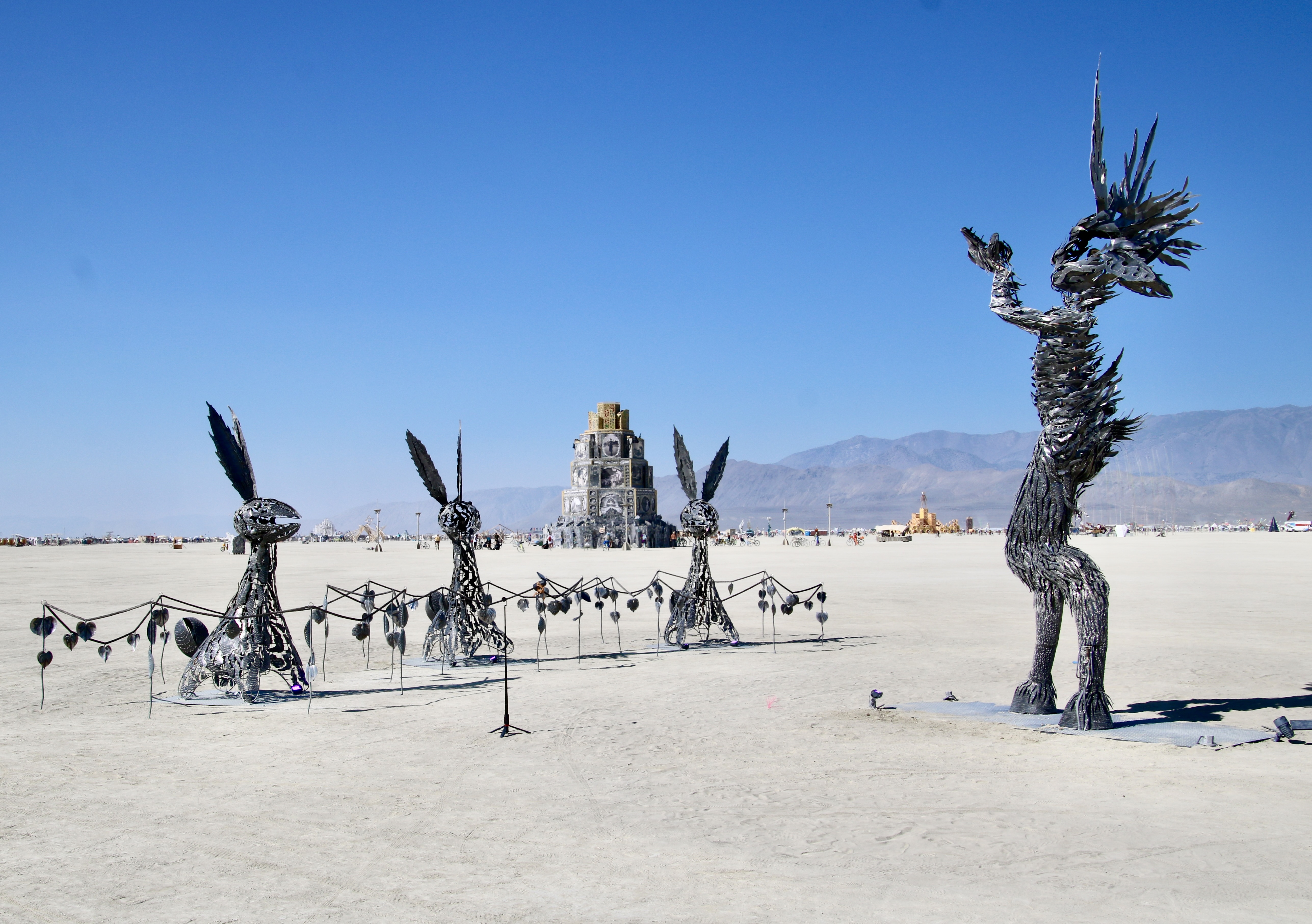
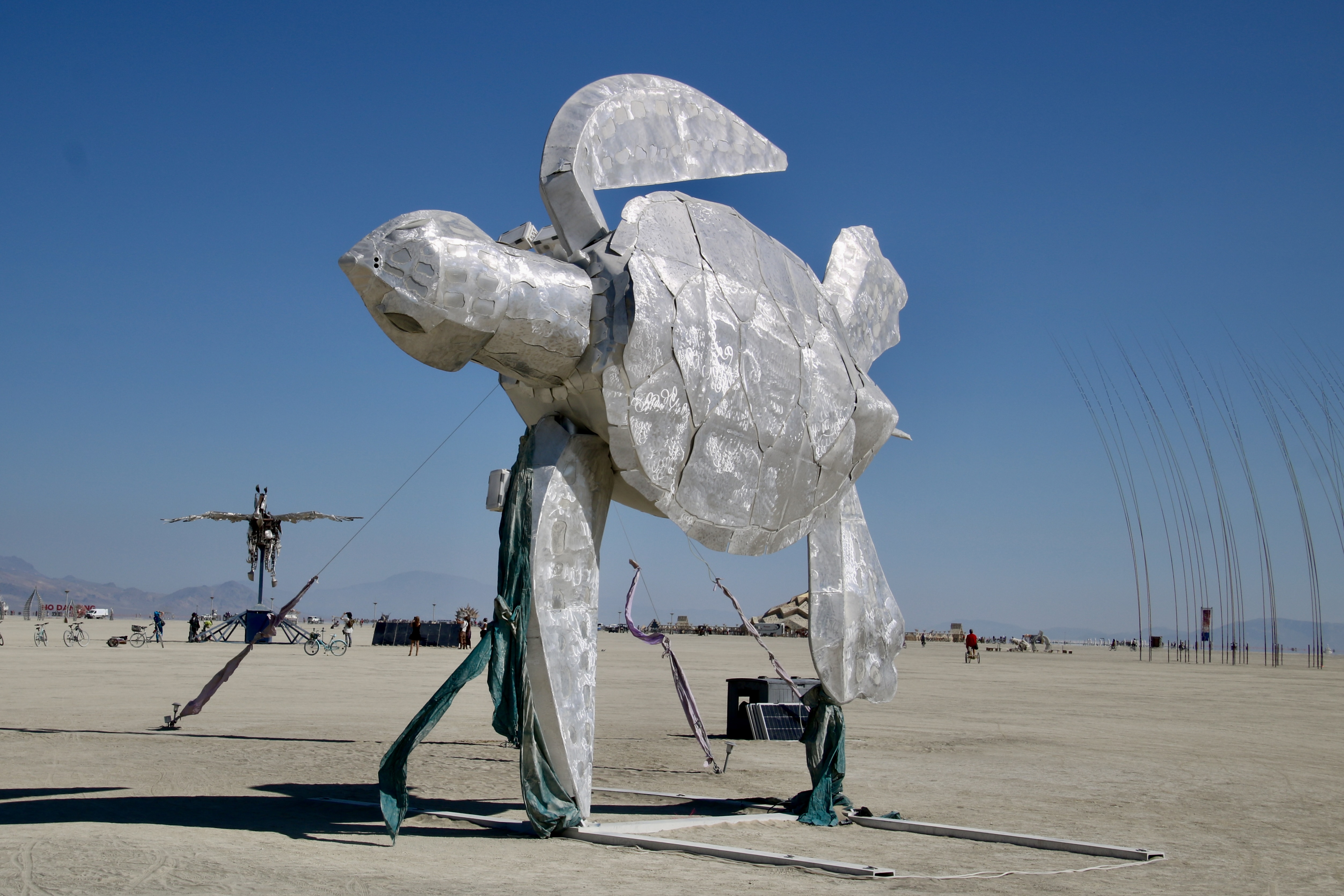
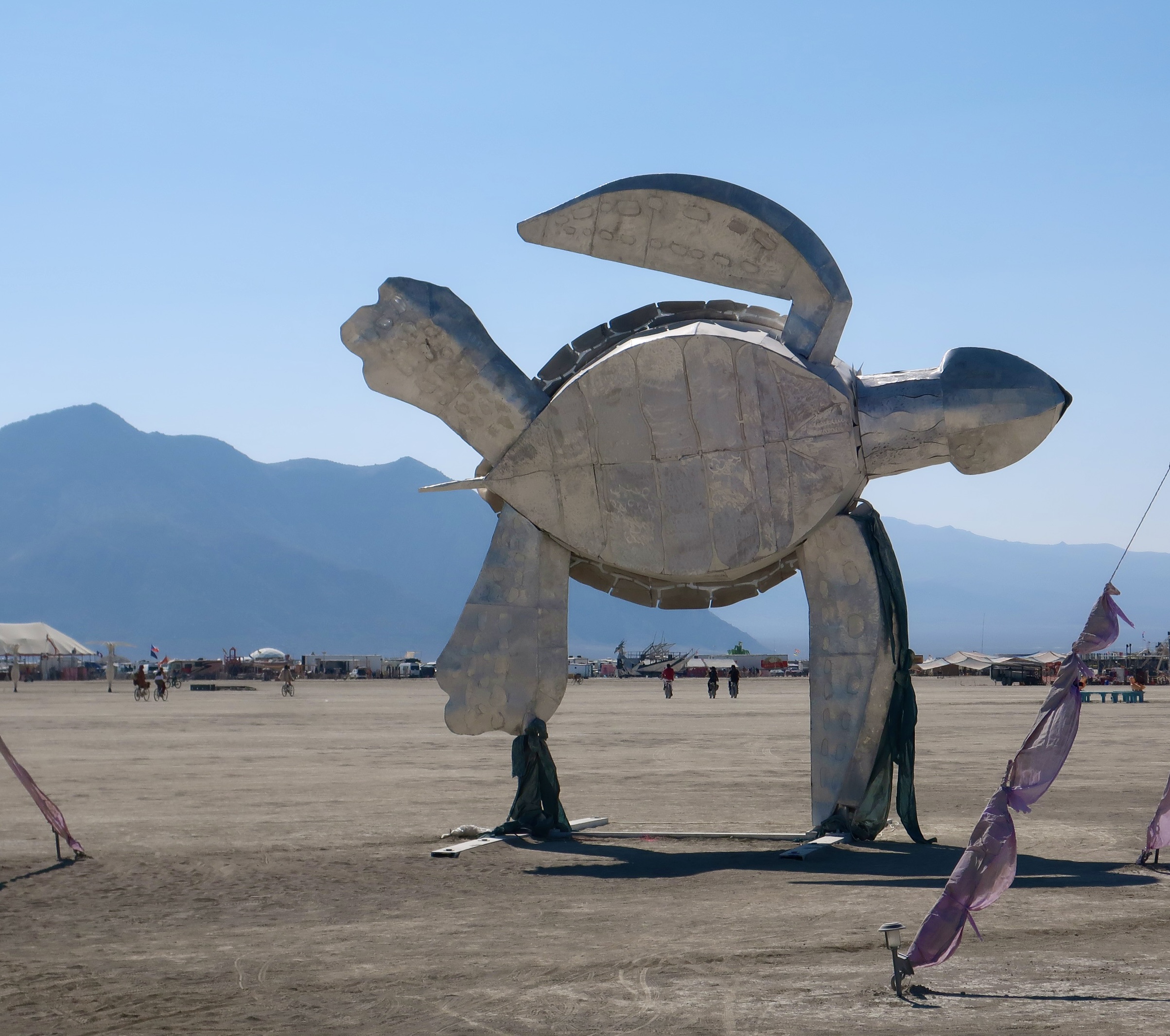
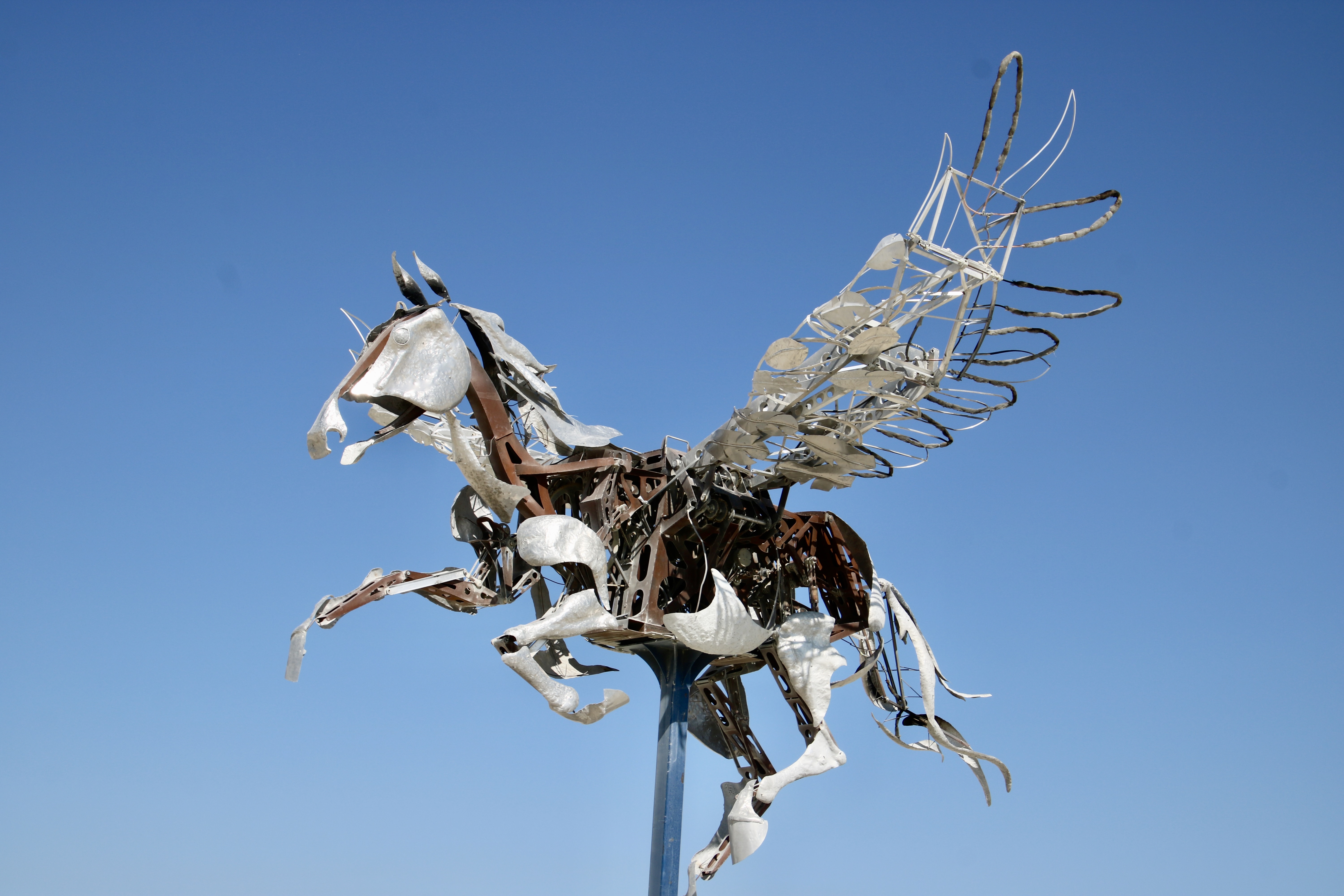
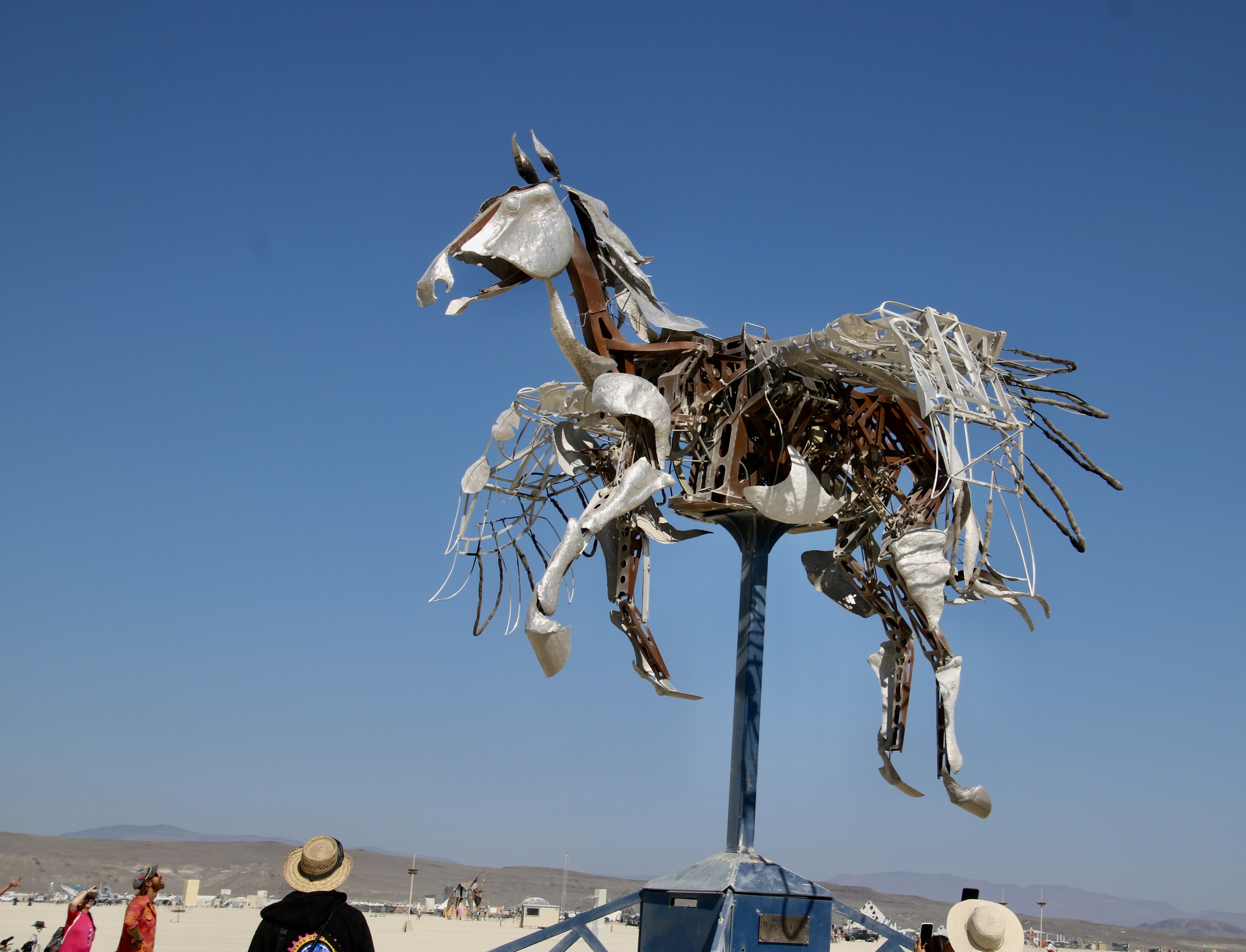
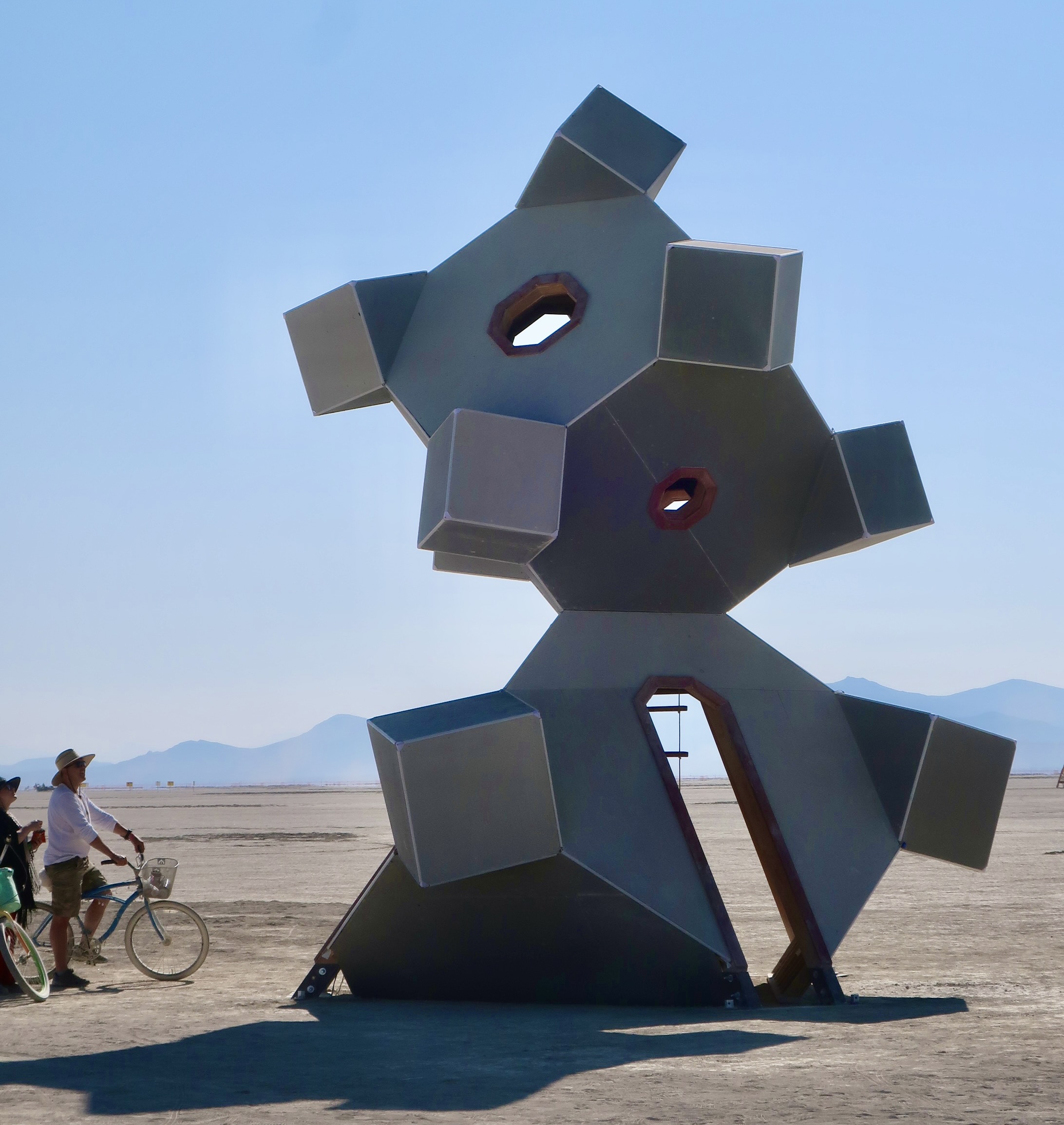
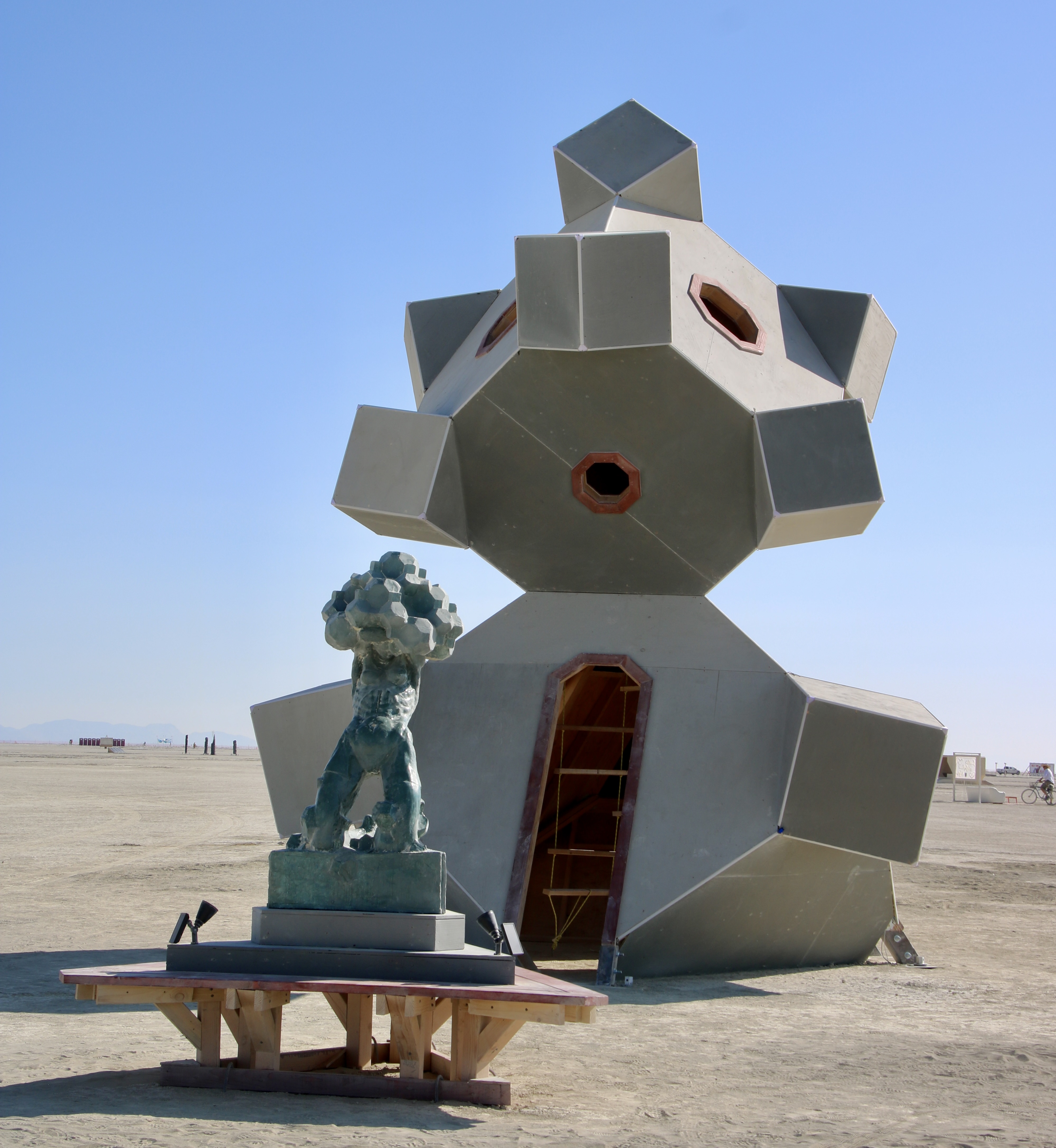
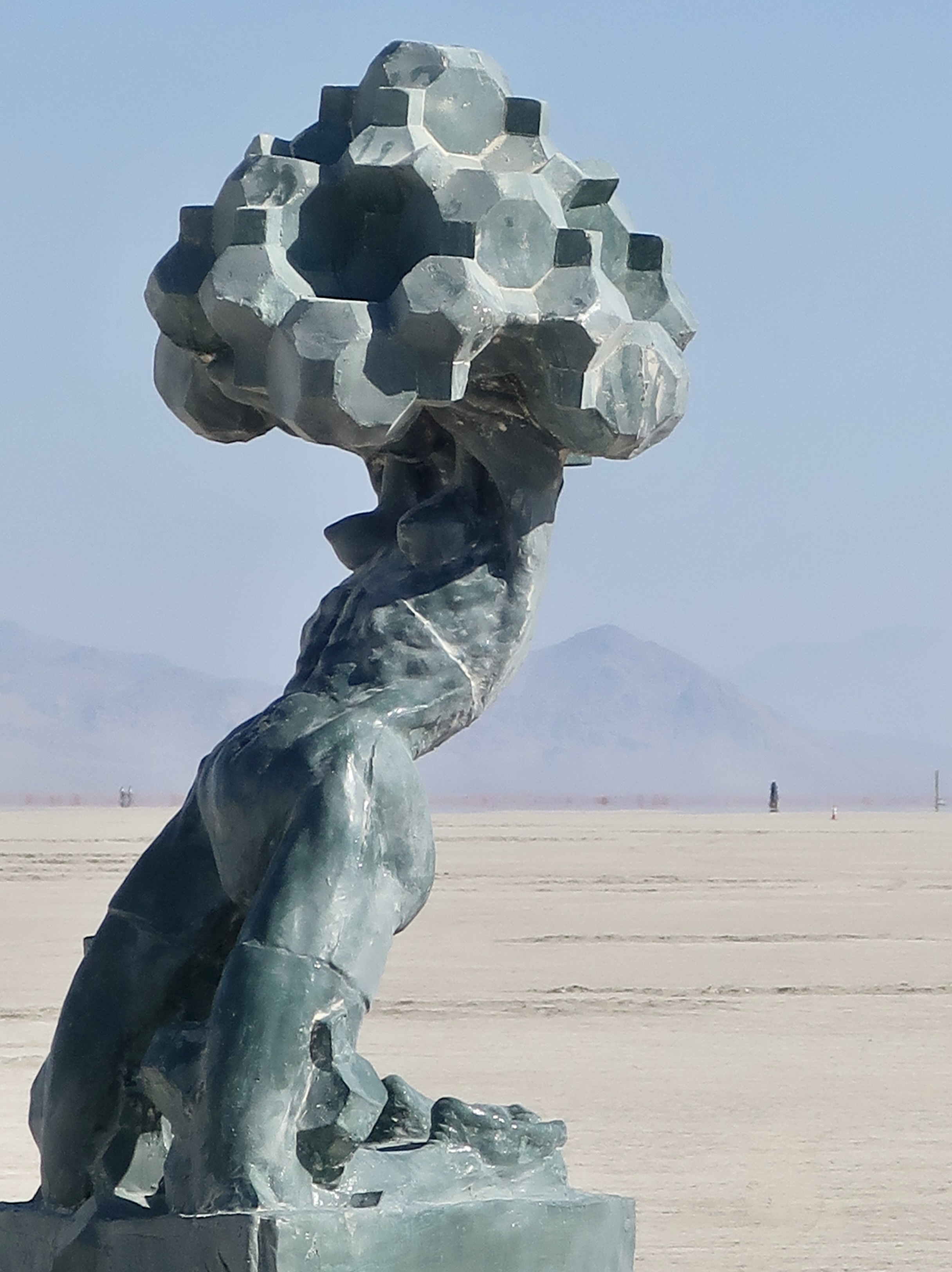
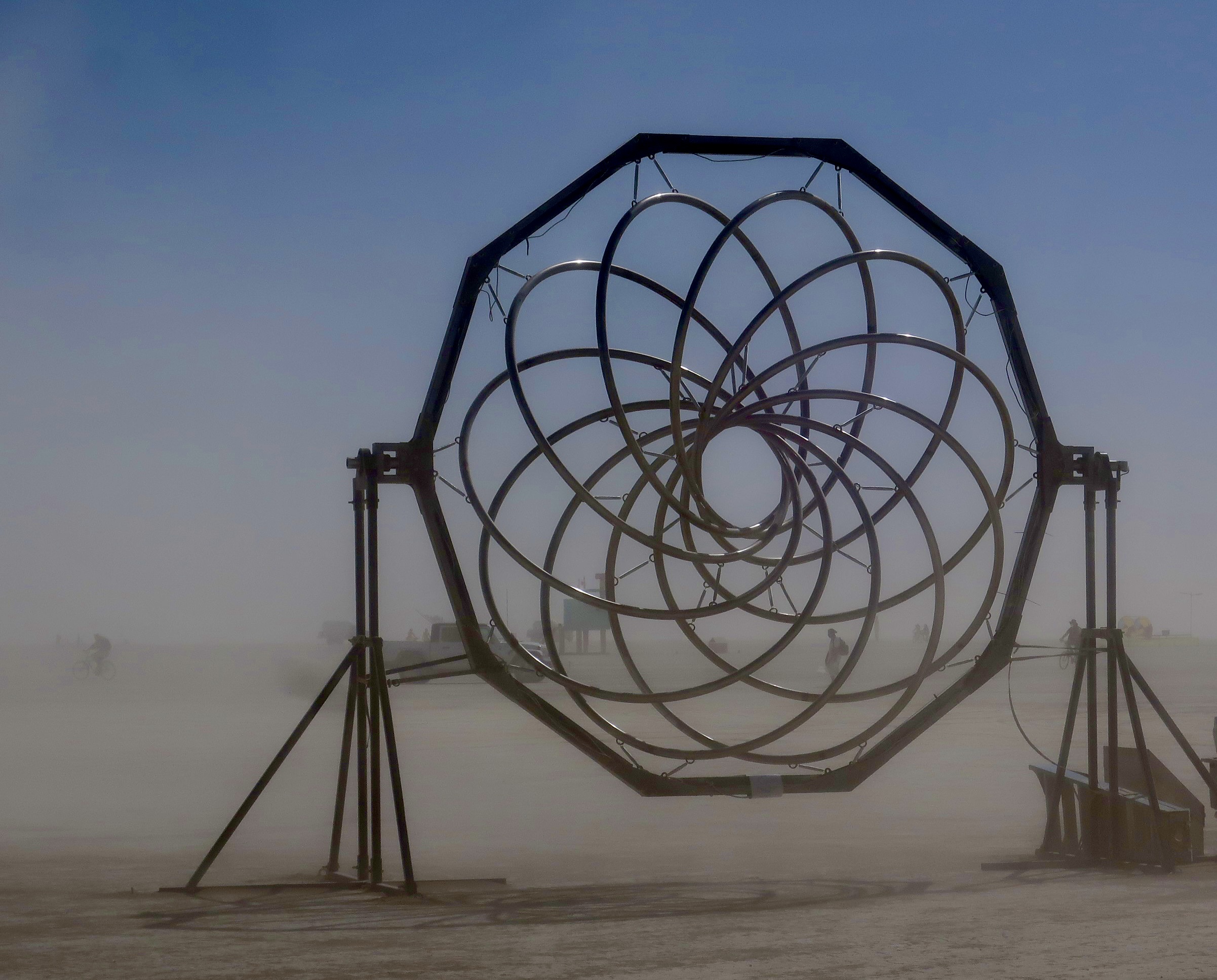
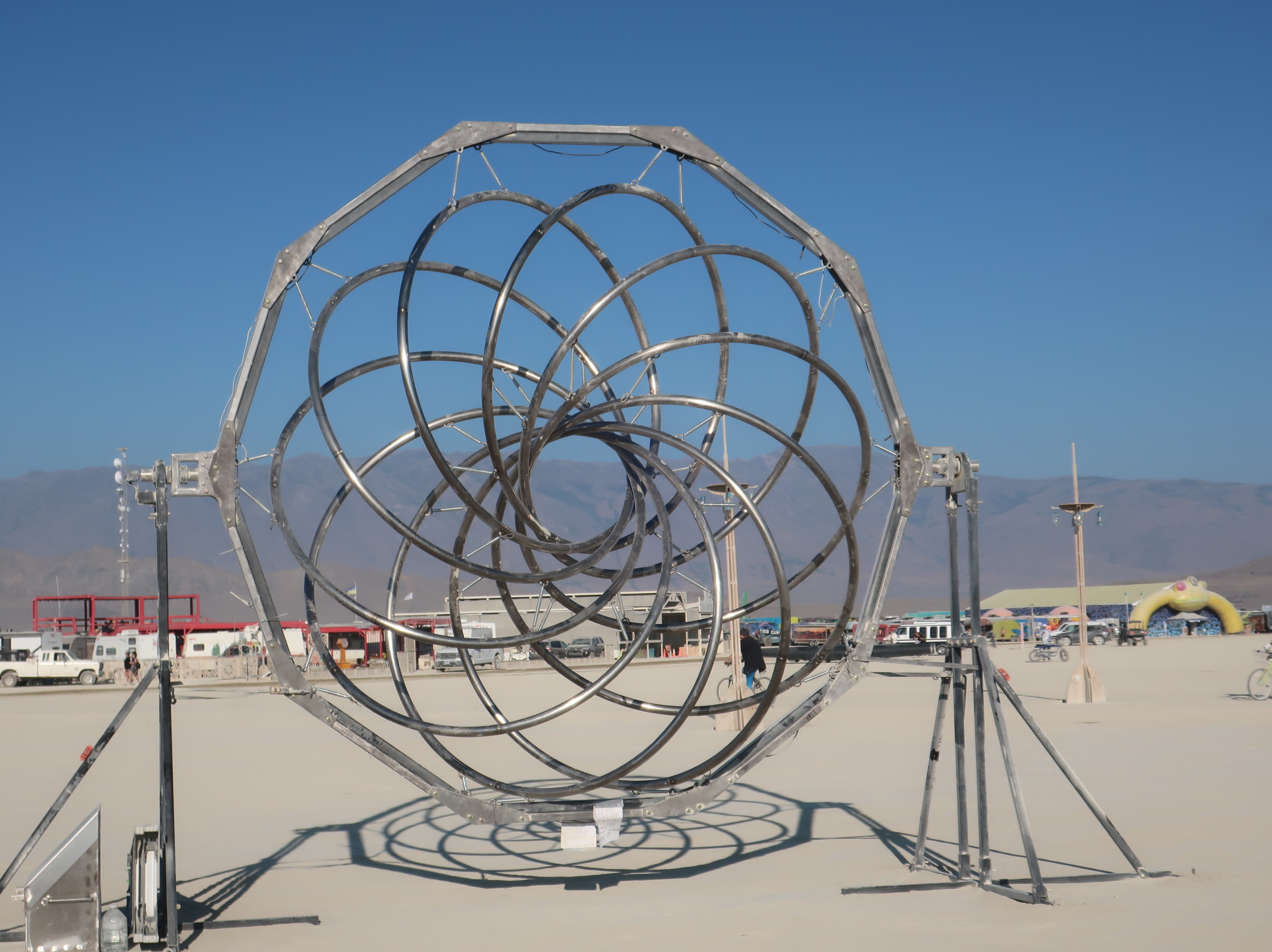
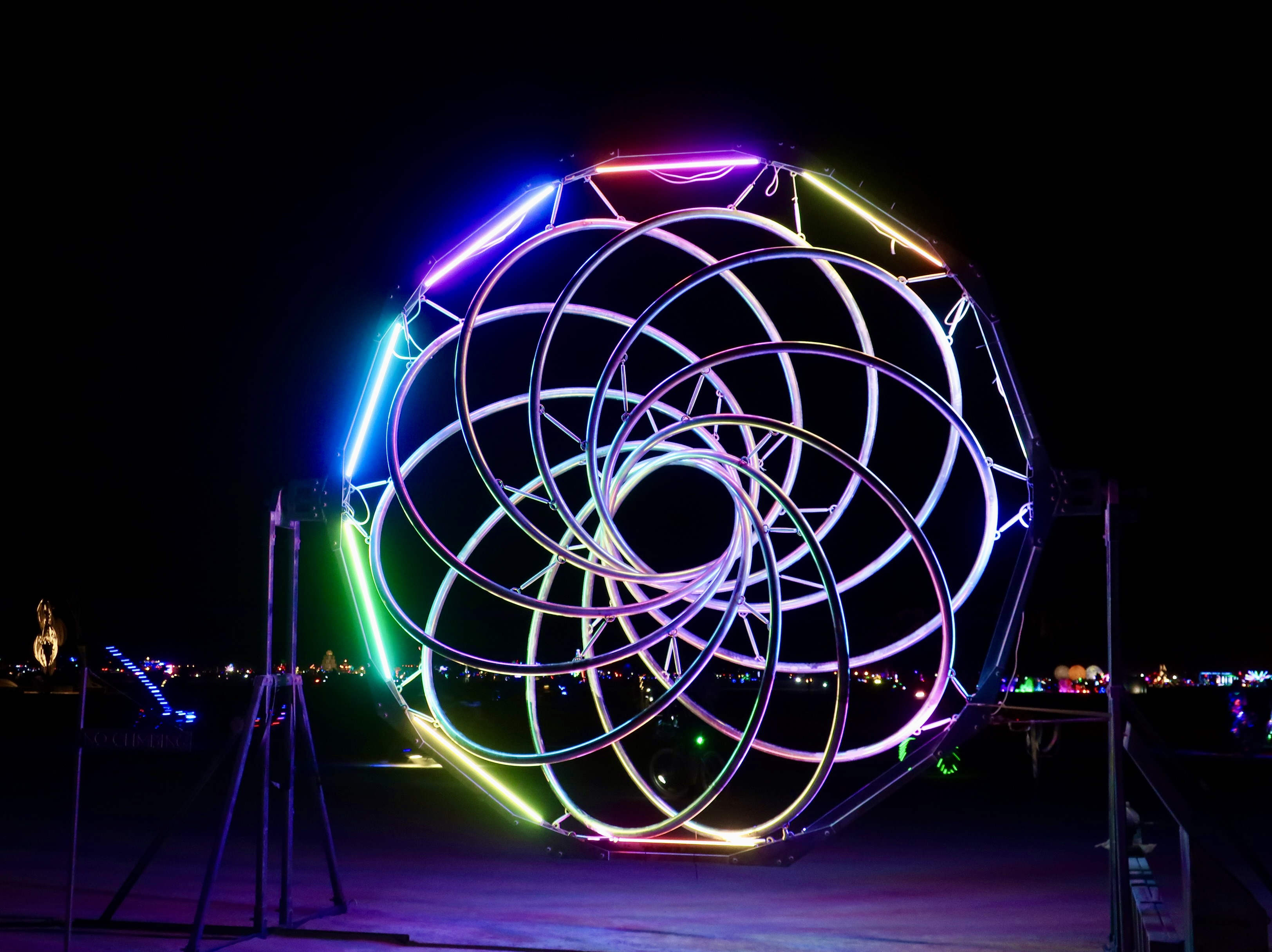
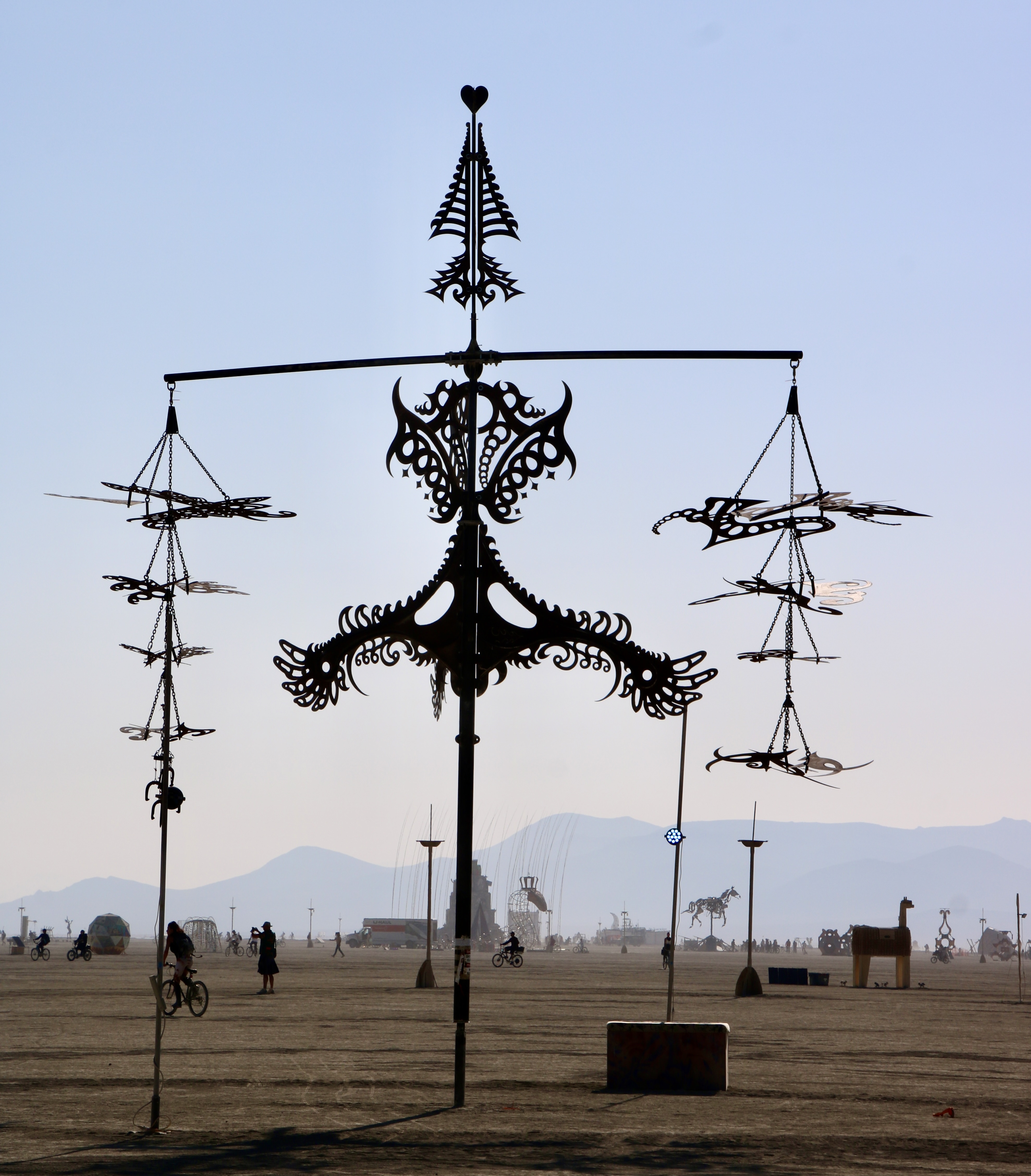
“Touch the Sky” was created by Martin Taylor and Chromaforms out of Oakland, CA. He describes it as “a sculpture of a mythical winged creature with the head of a human preparing to take flight.” He also notes, it “serves as a visual metaphor for taking leaps of faith to achieve our dreams and fly.” This photo provides a comparison between “Touch the Sky” in the day with the sculpture at night.A close up of “Touch the Sky.” Taylor noted that the sculpture “is outlined by geometric tattoo-like perforations that accentuate the shape of the body and emit light at night.”I’m featuring metallic art from Burning Man 2023 in this post. Meet Anya of “Anya and the Void Bunnies.” The artist is Steffin Griswold from Minneapolis, MN. Griswold’s description is “Visiting dignitaries from beyond space and time receive a gift from the heart of fire.” Anya is a fire goddess. While we didn’t get a photo of her at night, flames emerge from her hands.Here are the void bunnies from outer space, waiting patiently for their gift of fire. Sorry guys, you will have to wait until dark.A close up of a void bunny with his bunny ears and bunny tail.A frontal shot of Anya. The dark spots on her hands and heart are what emit the flames. You can see the tubes leading from her heart that connect to a propane tank.And finally, Anya and the void bunnies together. She’s got a pretty good tail and ears of her own! The Temple of Babel, which I will feature later, can be seen in the background.This handsome turtle sculpture by Mark Dill from Fleming Island, FL is titled “Journey of the Aquatic.”Here’s the underside. Mark says the sculpture is “5 times life size of a loggerhead turtle. It is meant to express the joy and wonder of seeing turtles in the ocean. As well as the fragility of the turtles’ lives and the dangers to their existence. I was snorkeling once on the island of Hawaii and came on a sea turtle that I started to follow. My ‘joy and wonder’ were so strong that I ran head on into a fishing boat!”You may have noticed the flying horse, or Pegasus, behind the first turtle picture. Titled “Wings of Glory,” this is his second trip to Burning Man. He is a magnificent creature that runs and flies slowly on his pedestal above the Playa. The artist, Adrian Landon, hails from Reno, Nevada, so Pegasus had a short flight to get back to the Black Rock Desert. Peggy and I watched him strut his stuff, a truly magical creature, a myth come to life.Wings down, Pegasus continues to fly.My first thought was of strange but attractive looking nuts piled on top of each other when I first saw this sculpture by the L’Attitude Collective from Petaluma, CA. Imagine my surprise when I learned it was a Complexahedron. A ‘what’ you say. Here’s how the artists described it: A shrine to commemorate the moment when unicellular eukaryotes began to aggregate and become one. Now you know, right. Grin. Petaluma, BTW, is home to a number of Burning Man’s top artists creating impressive works year after year.Bicycling around it, I discovered it had a face. And the sculpture in front holding what I assume is a smaller Complexahedron. I took a closeup.A muscular woman is holding the Complexahedron up in the air, like Atlas, or possibly giving birth to it out of her head/brain, creating early life.Wizard, and I’ll assume that is his Burning Man name (I’m Outlaw), hails from Oakland, California. He describes it as looking like “a 12 foot silver donut.” This was our day for dust storms on the Playa.Stainless steel, curved tubes wrap around each other and form the body of the donut.Here is OHM at night. While I couldn’t find the name of the artist who created this piece, I’ve always liked mobile art ever since I was introduced to the work of Alexander Calder. I’ll wrap up this post here. Next art post: The Fantastic Beasts of Burning Man 2023.
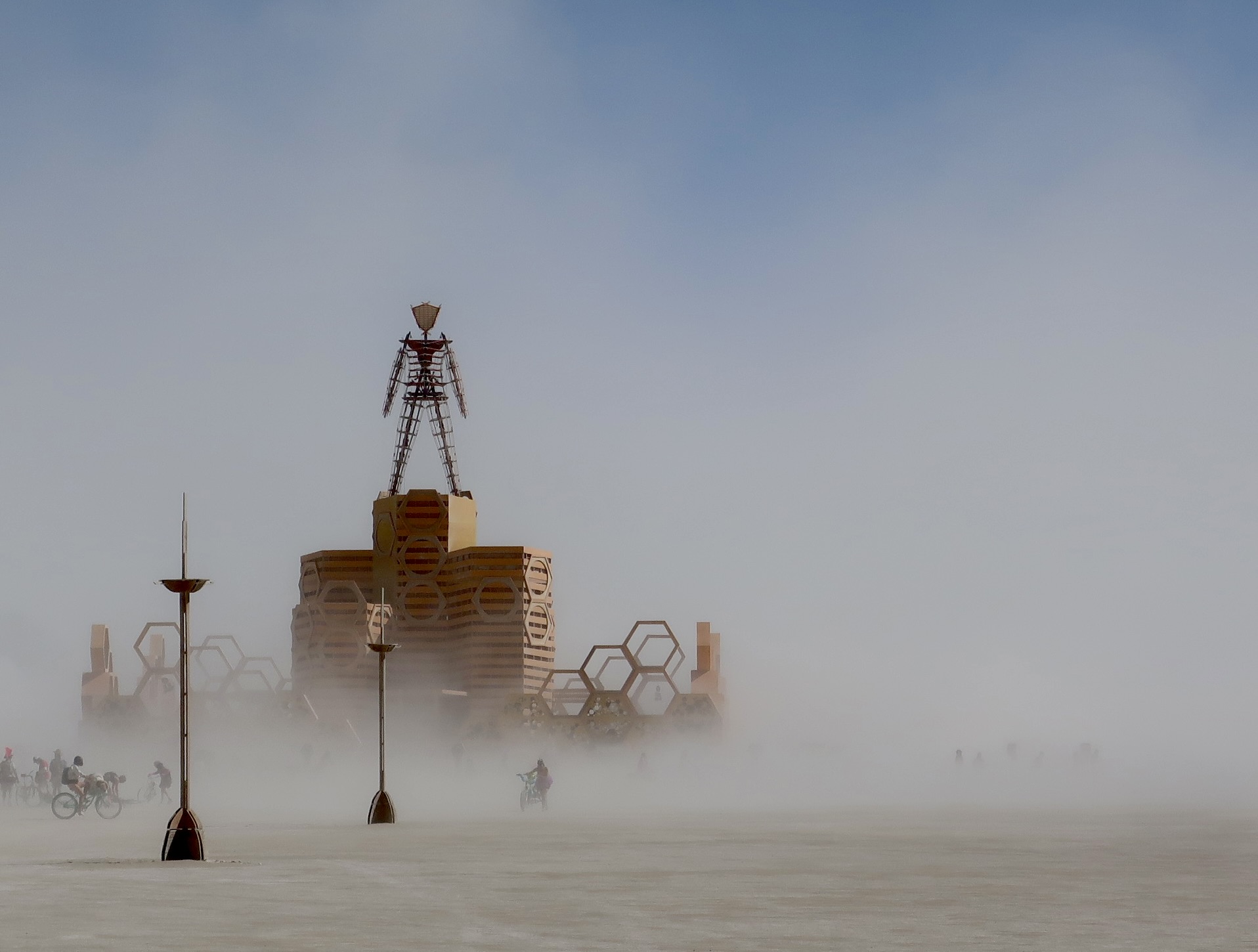
The Man has served as the symbol for Burning Man since its very beginning in 1986 when Larry Harvey and Jerry James built a stick man to celebrate the summer solstice at Baker Beach in San Francisco. His fate was preordained. He would burn. And, like the Phoenix, he rose again the next year and has been doing so ever since. Here, the 2023 version of the Man is emerging from a dust storm, which is much more common than the rain that captured the world’s attention this past week.
Burning Man always opens at 12 AM on Sunday morning in late August to begin its weeklong celebration of art, music, and lots of other things and ends on Labor Day Weekend. Peggy and I have never joined the midnight madness but we usually do make it in at a more reasonable hour on Sunday. This year we were busy in Sacramento catching up with family and friends so we went in on Monday. The result was that we ended up out in the boondocks of Black Rock City at 5:30 and J street, or Jackalope as J was named this year. Only one street was beyond us, Kraken.
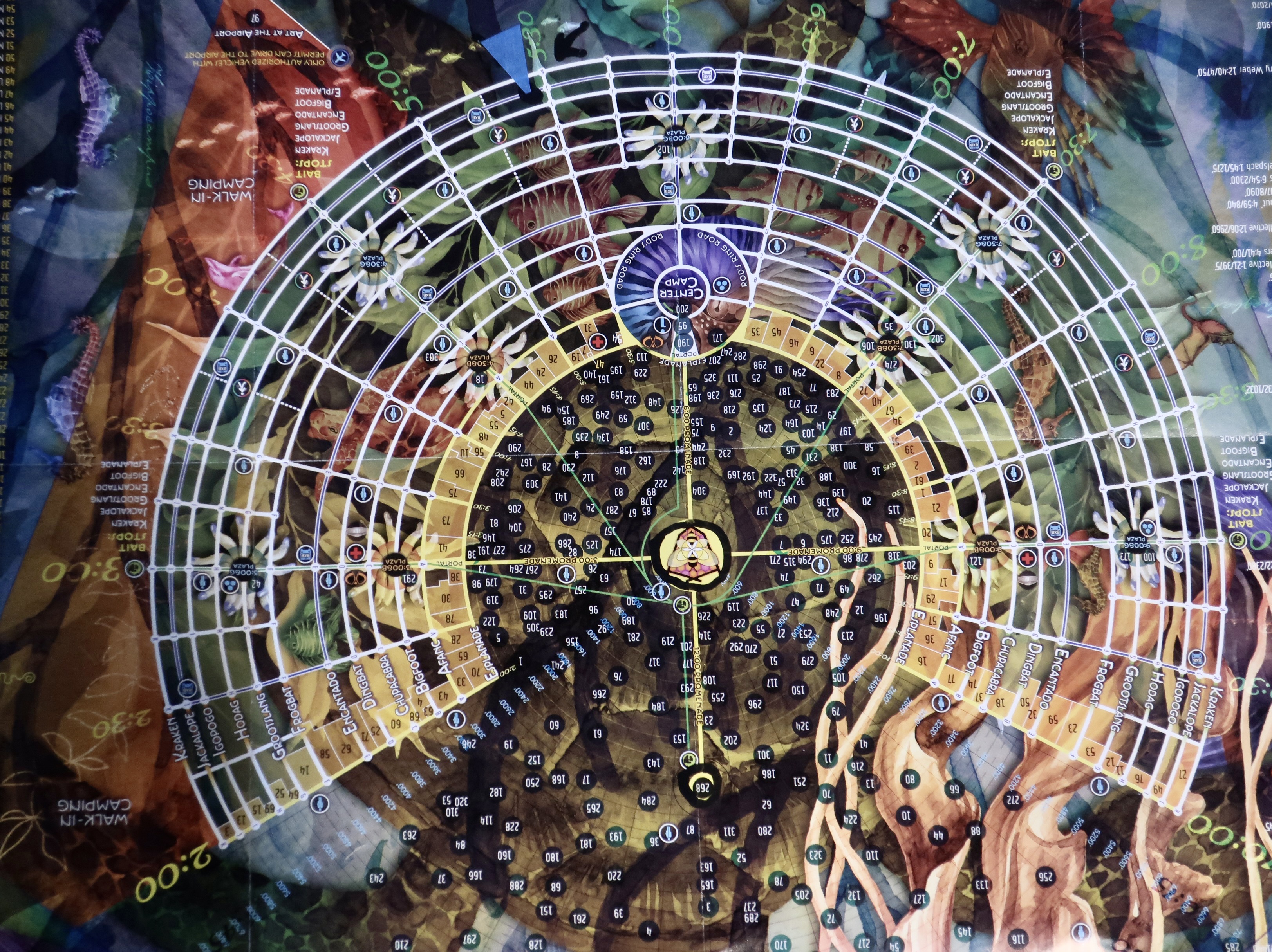
Each year, the powers that be at Burning Man pick a theme for the year that serves as the base for the street names and much of the art. This year it was Animalia, representing the “animal world and our place in it.” The photo below shows the street names.
I took this photo from the map of Burning Man we were given when we entered. The small blue numbers off to the right are the distance from the Man. We were at 5800 feet, over a mile away! The white numbers in black represent art installations. I knew what Jackalope, Kraken and Bigfoot were. My memory of Dingbat was what Archie called his wife in the TV series All in the Family. I had to look the rest up. How about you? The Esplanade is Black Rock City’s Main Street and retains its name every year. It separates Black Rock City from the open Playa.This is the official map of Burning Man 2023, which was home to over 70,000 people. On the top left side, you will see a blue triangle that I added. That was where we lived on Jackalope. The Man is at the center of the map. The small circle south of it is the Temple. Note all of the art installations! The city is organized on a grid pattern with the streets heading toward the Man numbered clockwise and the intersecting streets organized by alphabet and name. Not shown here, is the extent of the Playa that extends much farther to the south.
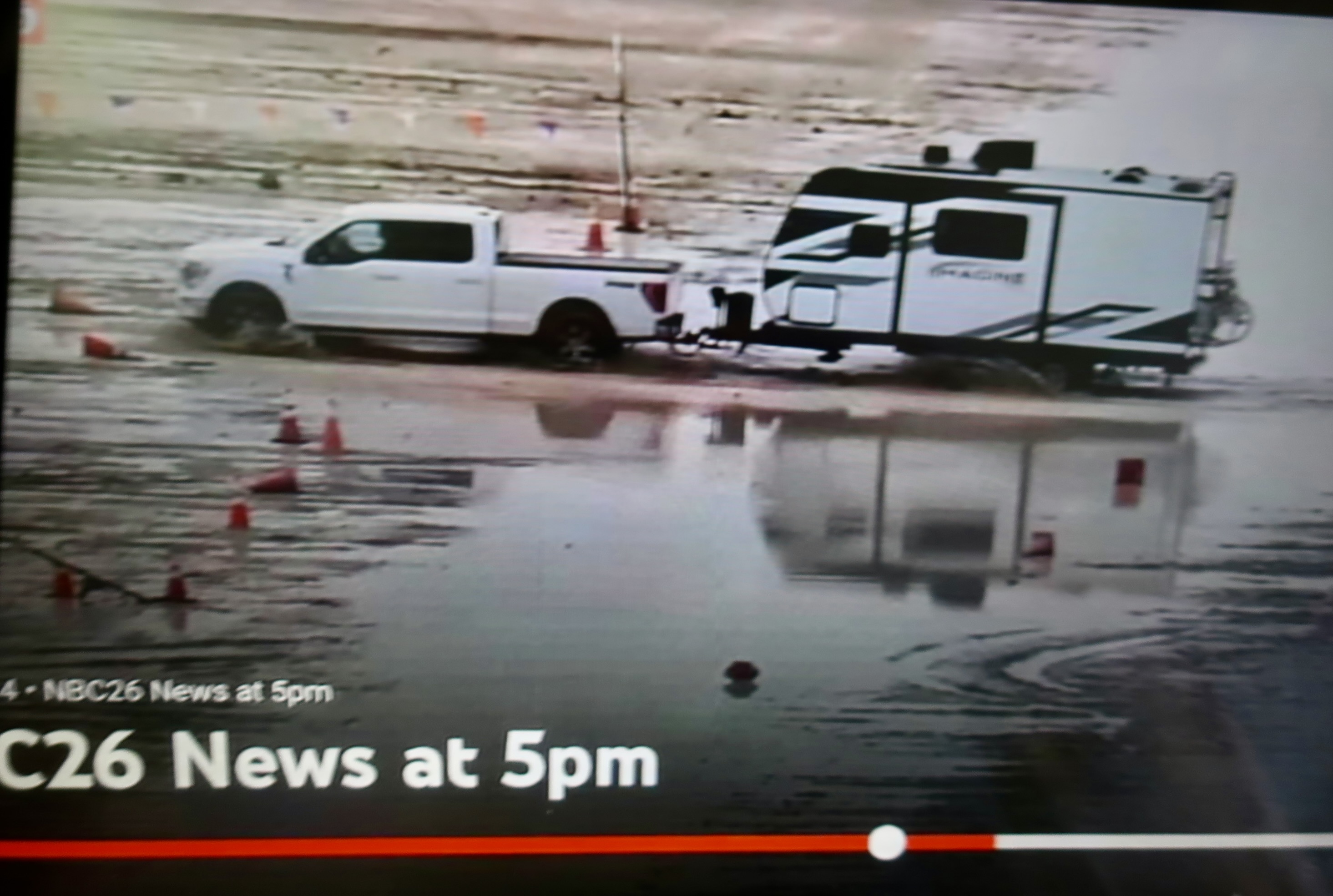
Our focus today is on the Man and the Temple, which are two locations that almost all Burners visit. But first I want to post one more photo of our ‘escape’ from Black Rock City on Sunday which we found after our last post. Unknown to us, a photo/video was taken of us exiting Burning Man that ended up being shown on NBC 26 news out of Green Bay, Wisconsin (and I suspect other media outlets.) This was the last stream we crossed just before reaching the paved road. It gives a new meaning to ‘streaming media.’ I’m glad I couldn’t see us doing this in real time— and even more glad that Peggy couldn’t. LOL.
Peggy found this photo of us escaping from Burning Man 2023 posted on the ImagineMKE17 Trailer Facebook page.
One of the first things we do when we arrive at Burning Man is head out to see the Man and Temple. Usually it’s by bike. But the crank on my rented bike was being cranky, so we walked. The following photos represent our journey. They were all taken by either Peggy or me.
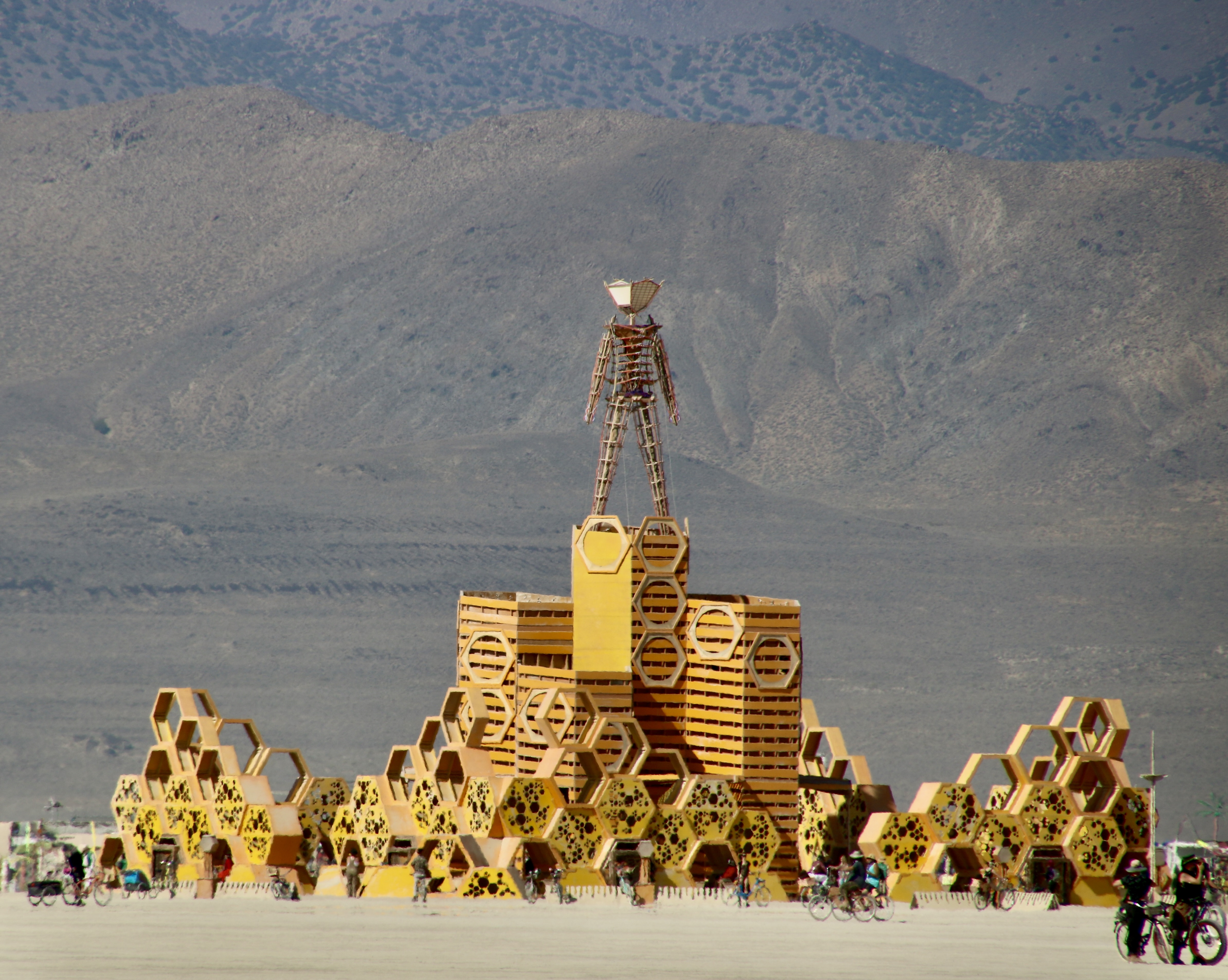
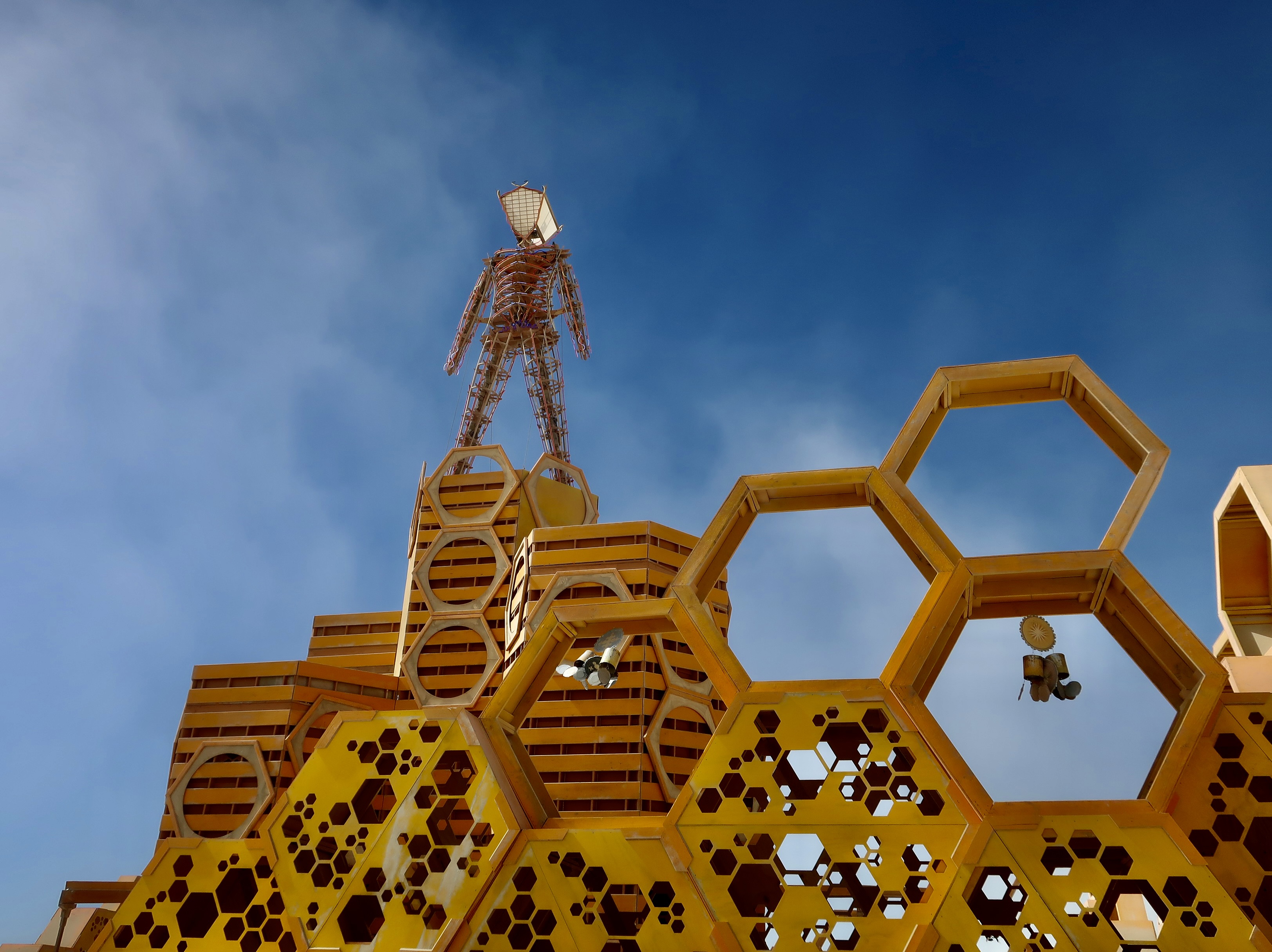
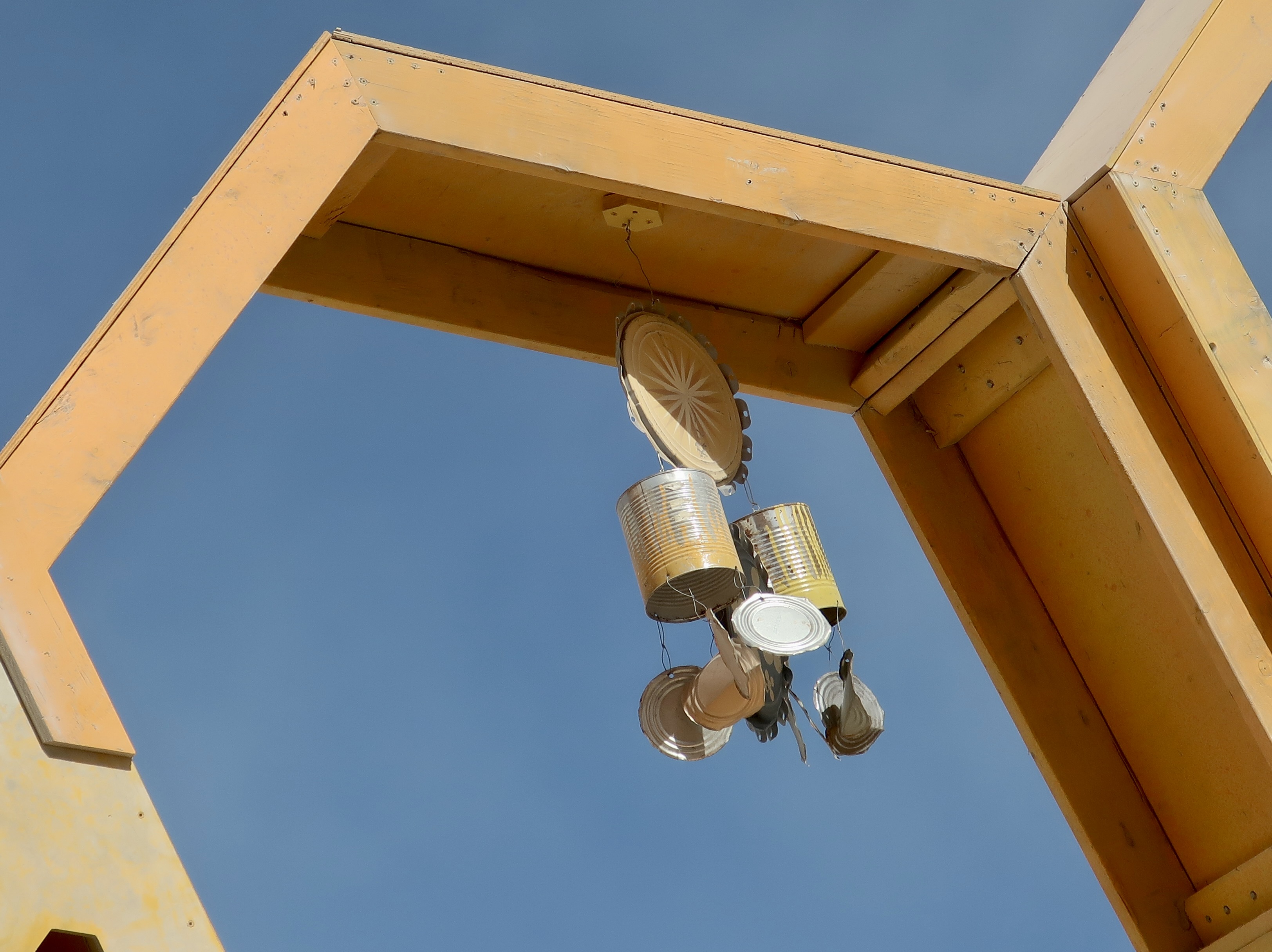
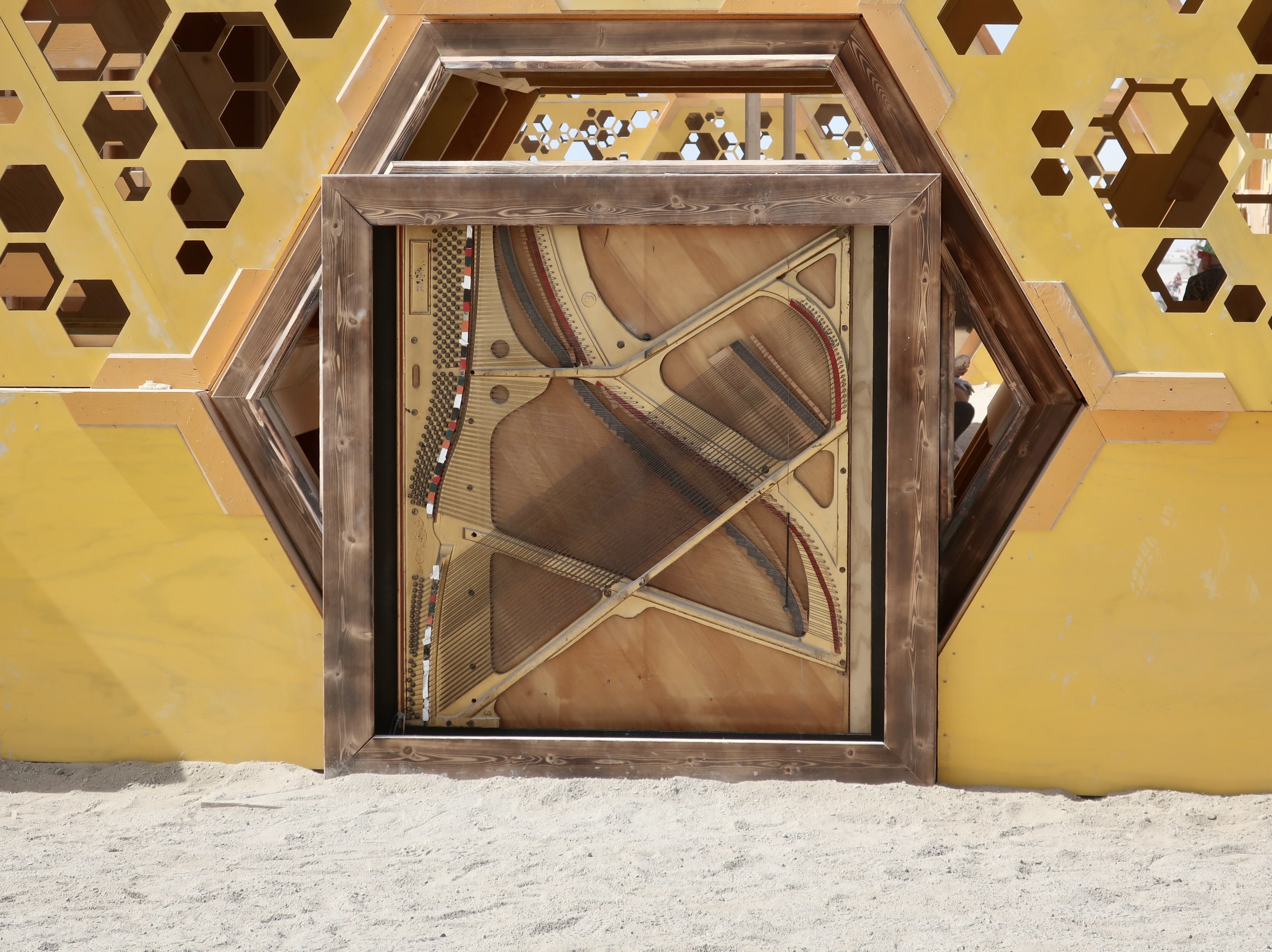
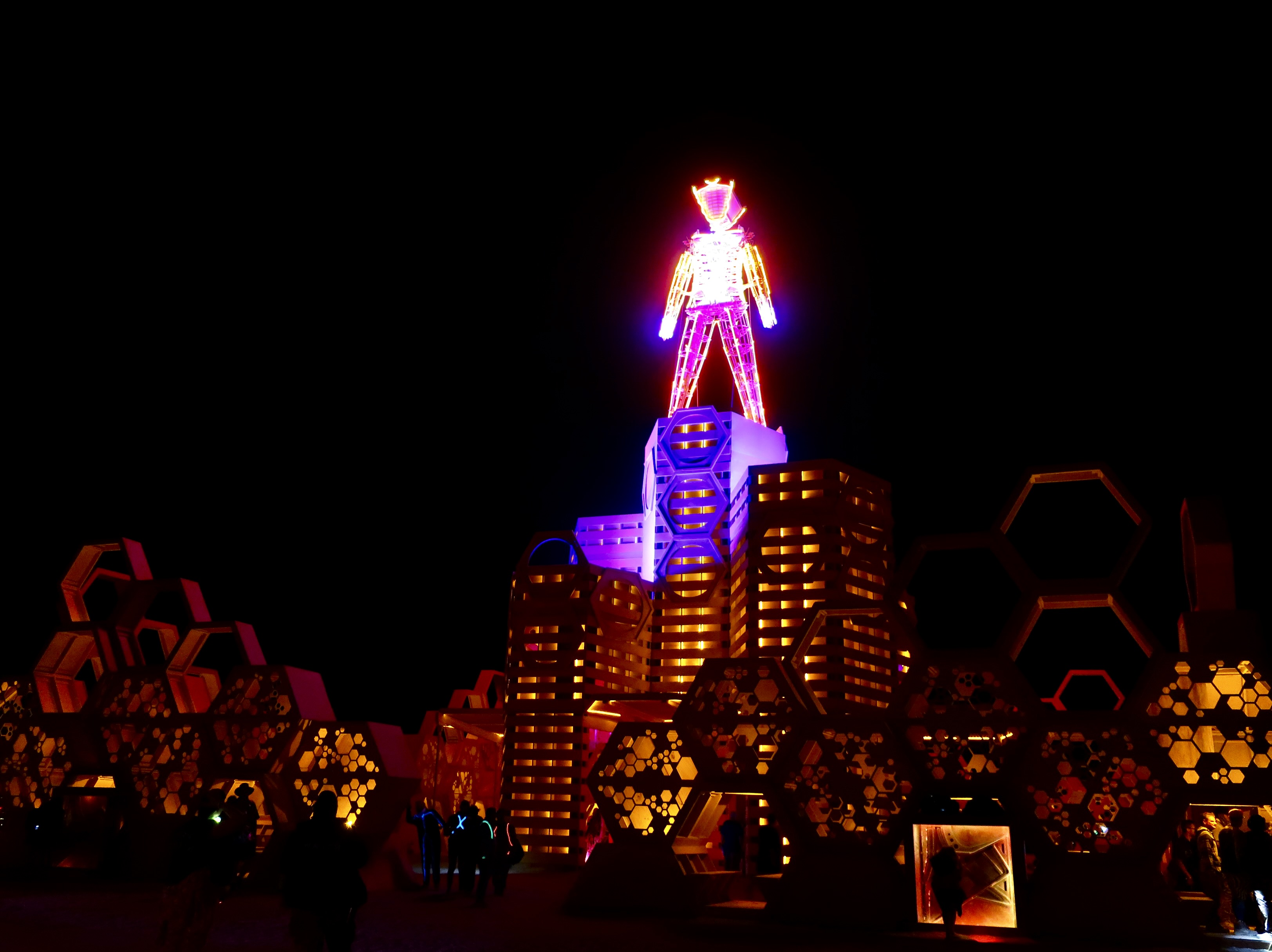
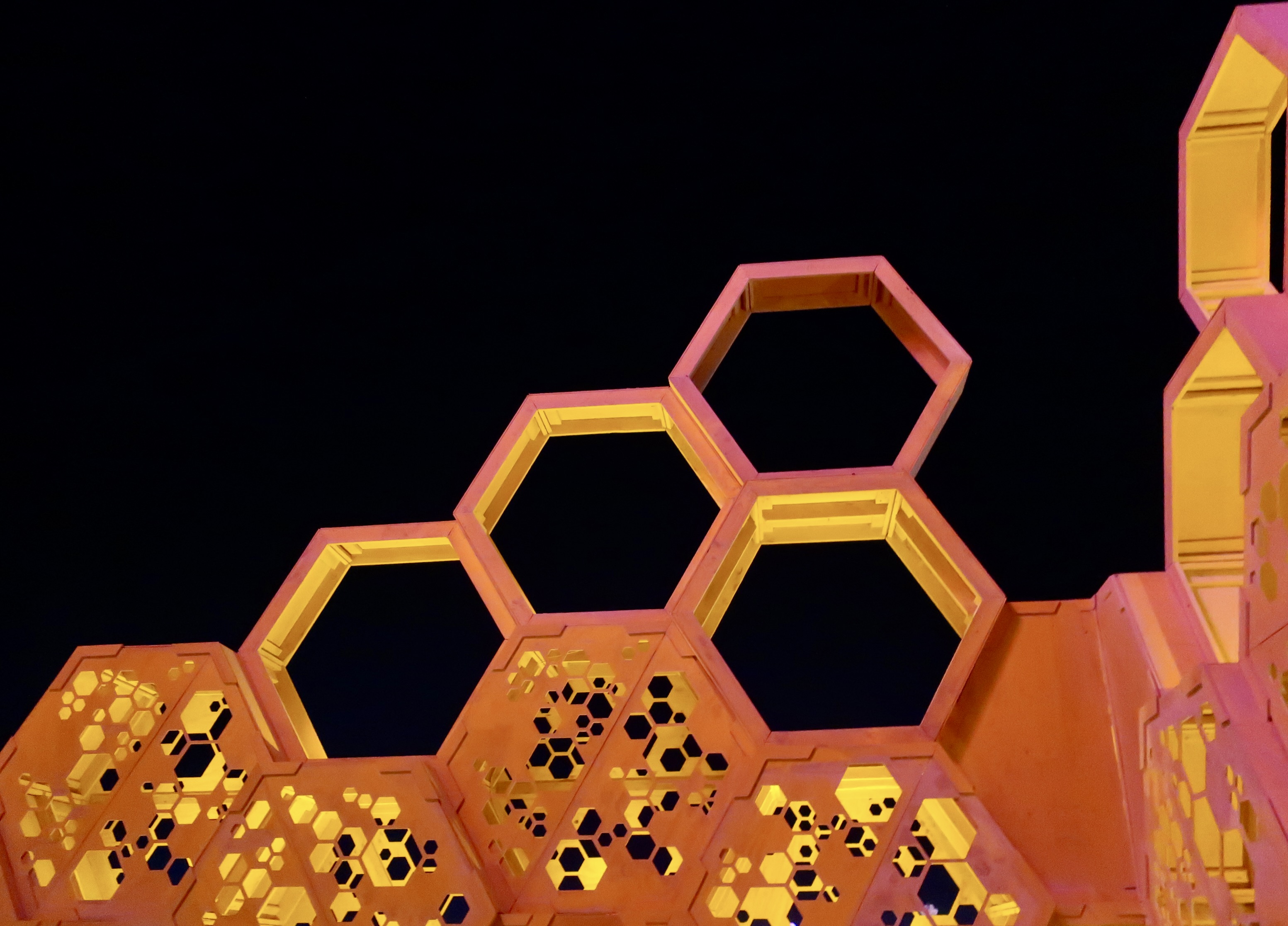
The Man was surrounded by a beehive-like structure that was in line with the Animalia theme. This photo also places the Man in his dramatic backdrop of the Black Rock Desert.A close up of the beehive with the Man in the background. Note the object dangling from the beehive.It served as Burning Man’s concept of a wind chime. Grin.The ground level of the beehive included xylophones that people could play!
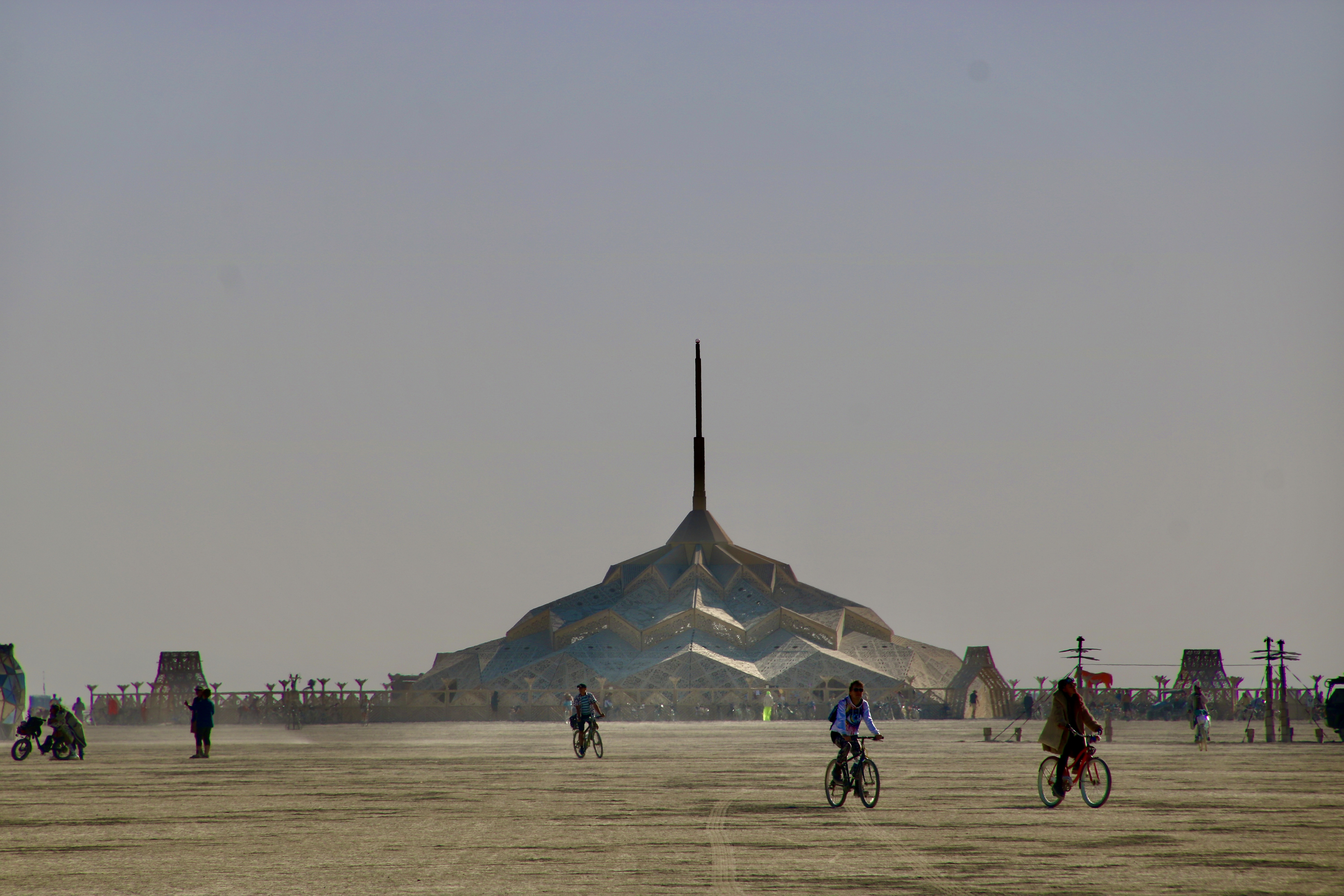
Leaving the Man we hiked out another half mile to the Temple. We’d revisit the Man at night. Our hike out to the temple was delayed:
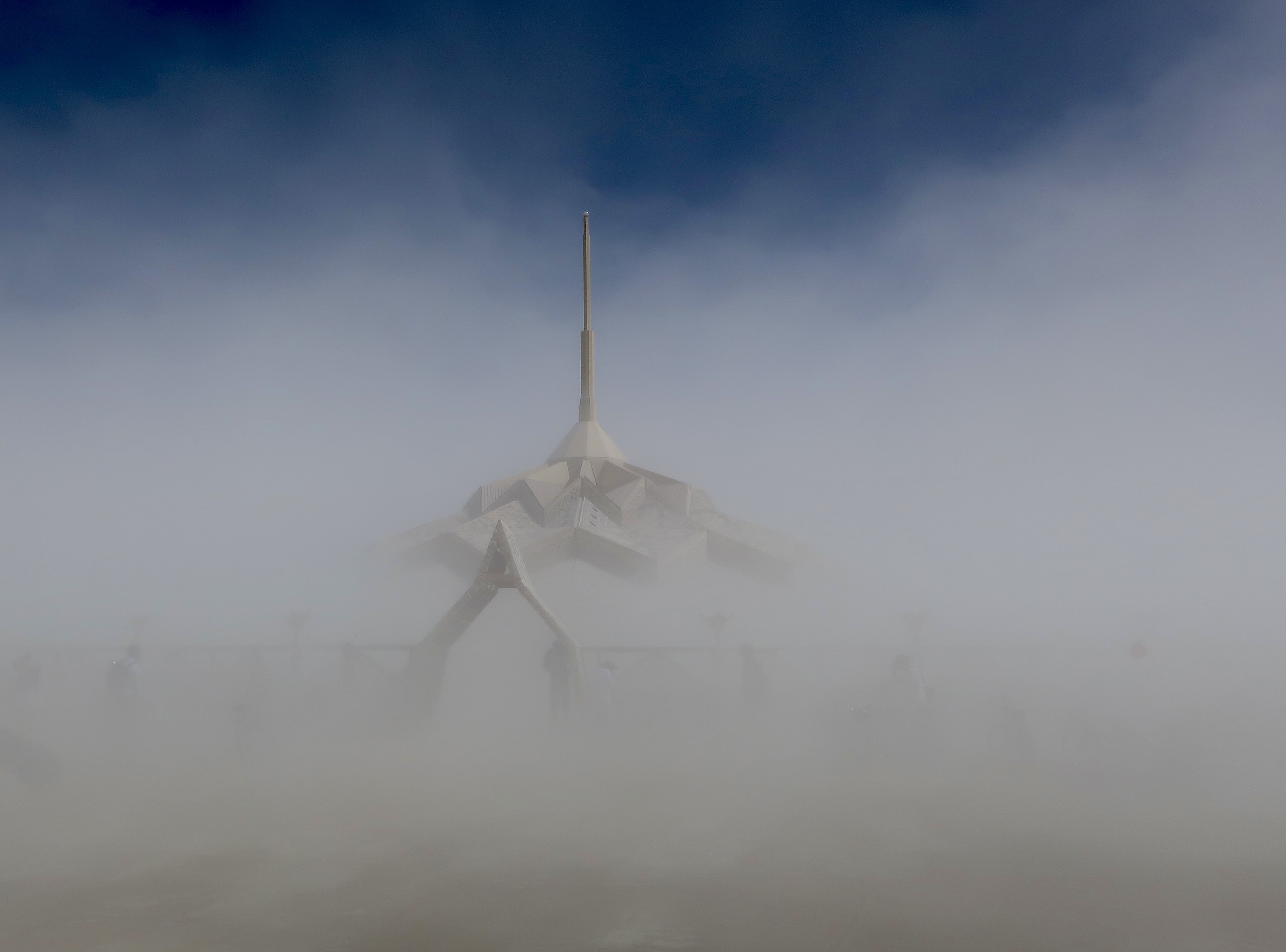
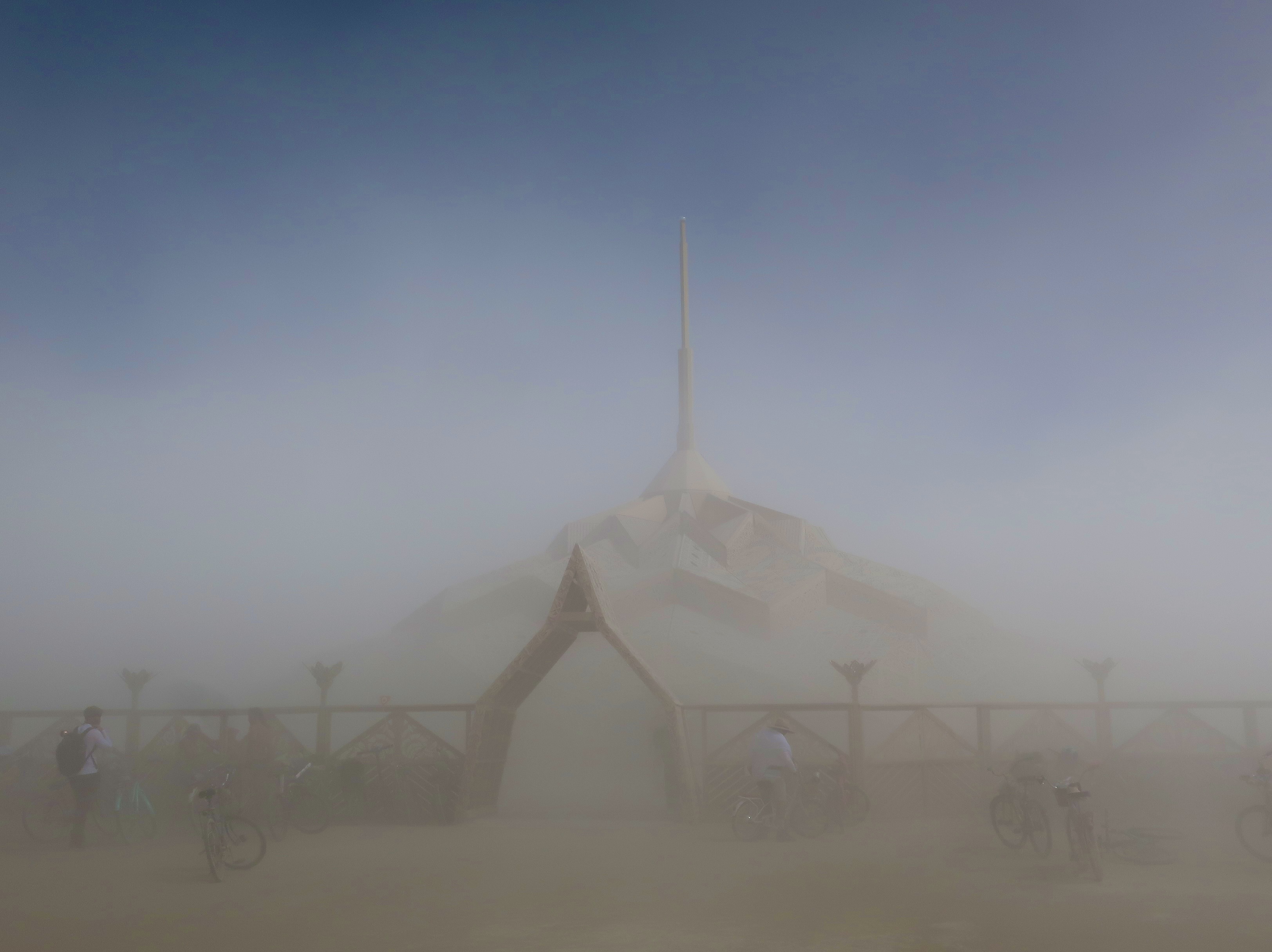
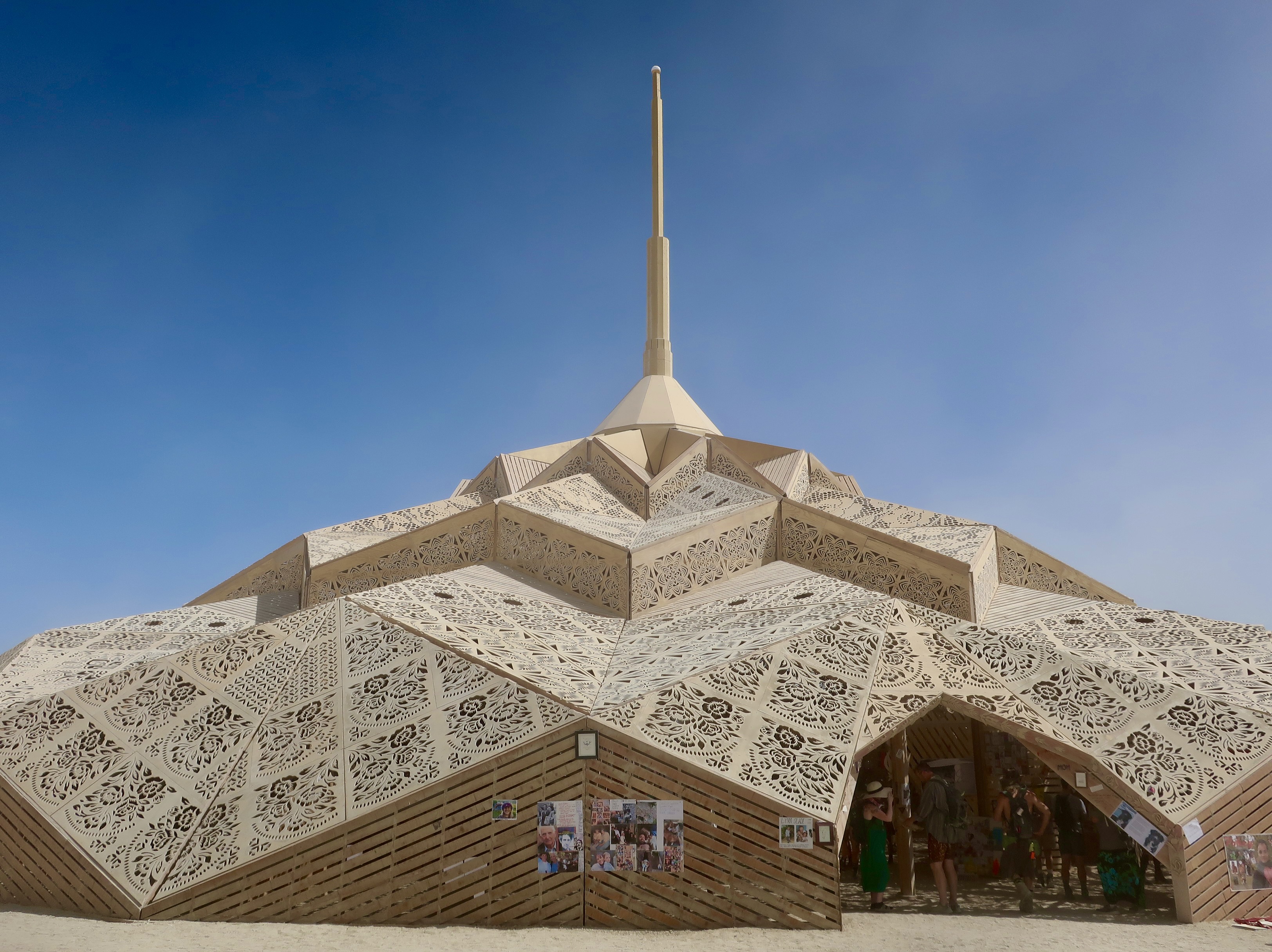
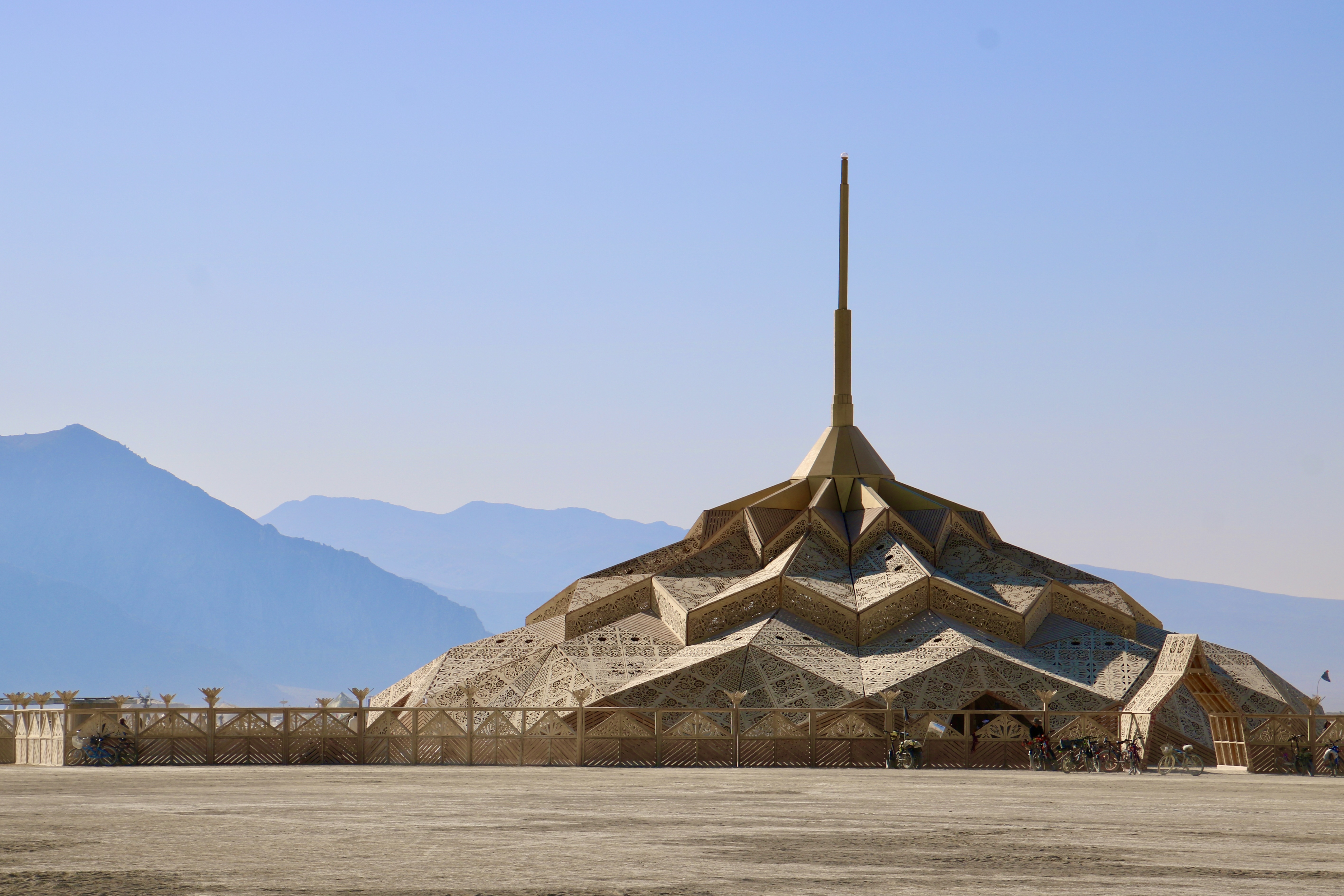
By this dust storm. No kidding, this is what a Burning Man dust storm looks like. The wisest thing to do is just hunker down and wait for it to blow over. Not doing so will get you lost. Peggy and I once spent over two hours along with at least a thousand other Burners trying to find our way home when we had been to an event way out by the fence on the outer edge of the Playa. When we could finally see the the Man, we discovered that we had walked in a huge circle. Thankfully, Burning Man keeps a fence around the area. Otherwise, we might still be wandering. Or worse.The Temple finally began to emerge from the dust storm.The Temple is a special, sacred site for Burning Man participants. Thousands leave messages to loved ones, friends, and even pets who have passed on. Several are shown on the front here. When the Temple burns at the end of the event, the messages are released to the sky, giving a degree of closure to those who left the messages. Year after year the Burning Man organization and volunteers design and build beautiful temples, each one unique.
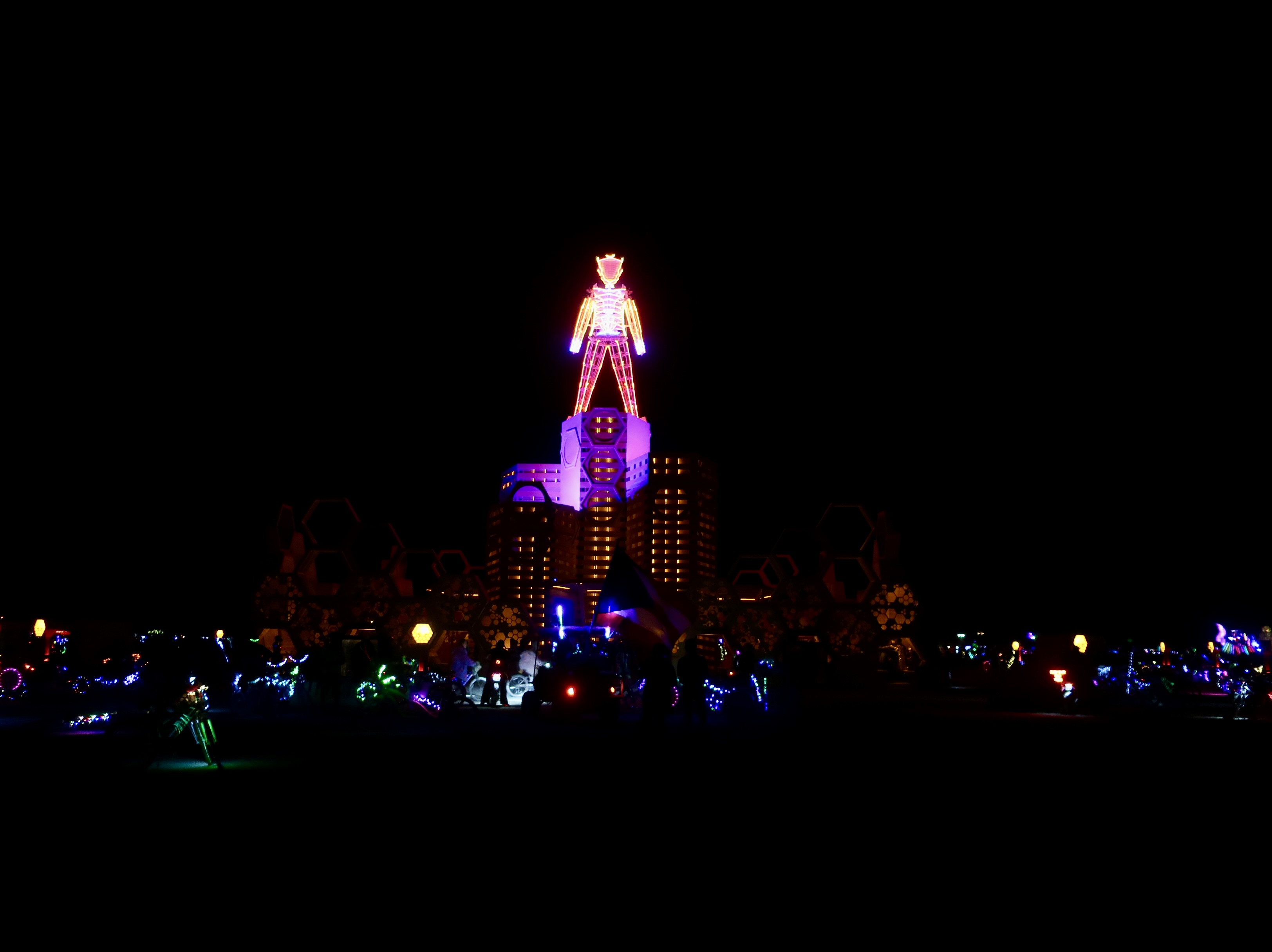
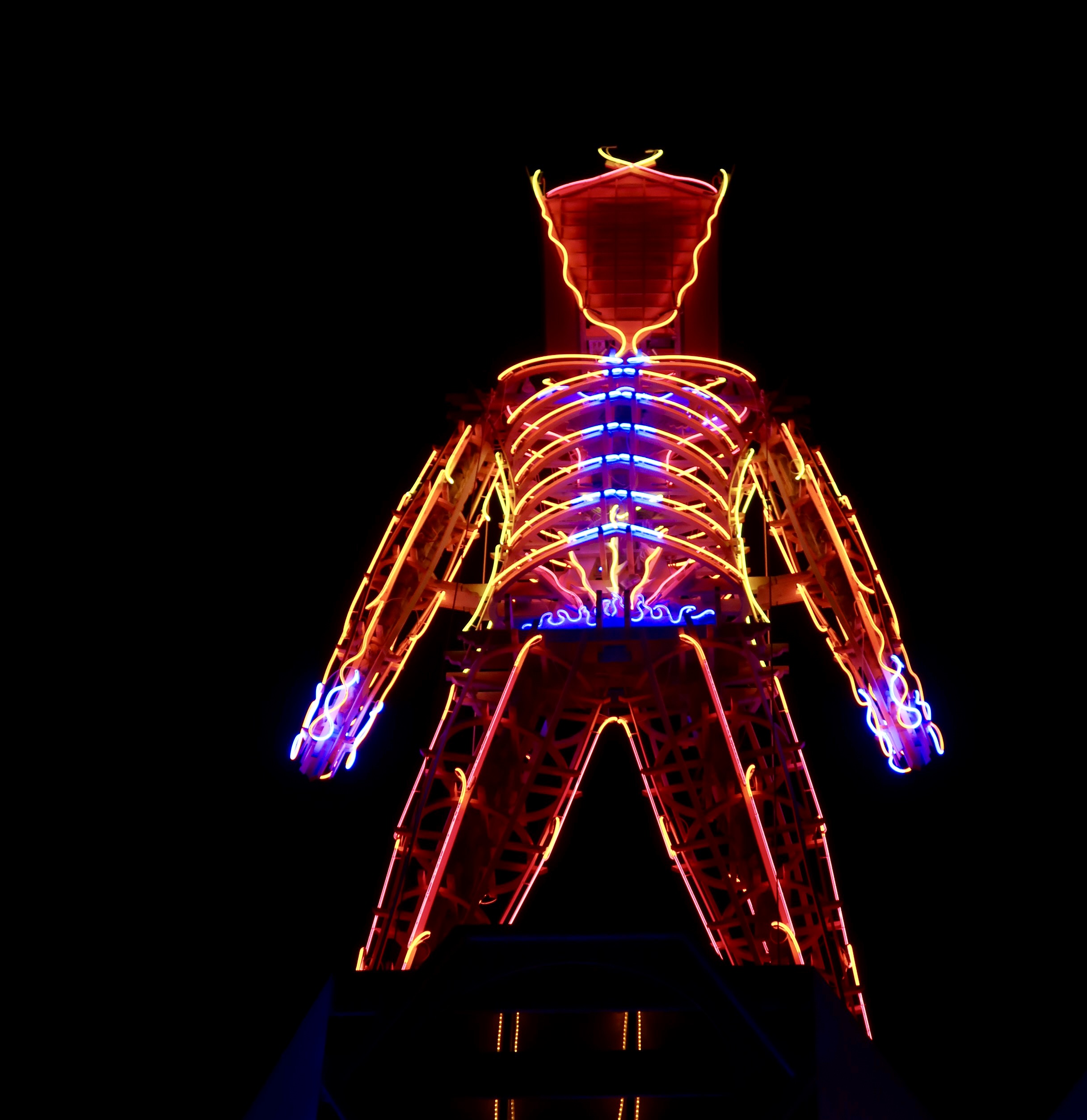
As I mentioned above, Peggy and I revisited the Man at night. In addition to being a symbol of the event, the Man serves as a beacon for Burners. As shown on the map above, three major routes that are lined with lamp posts lead out to the Man from Black Rock City . During dust storms Peggy and I tend to stay on the routes since the posts provide valuable landmarks.
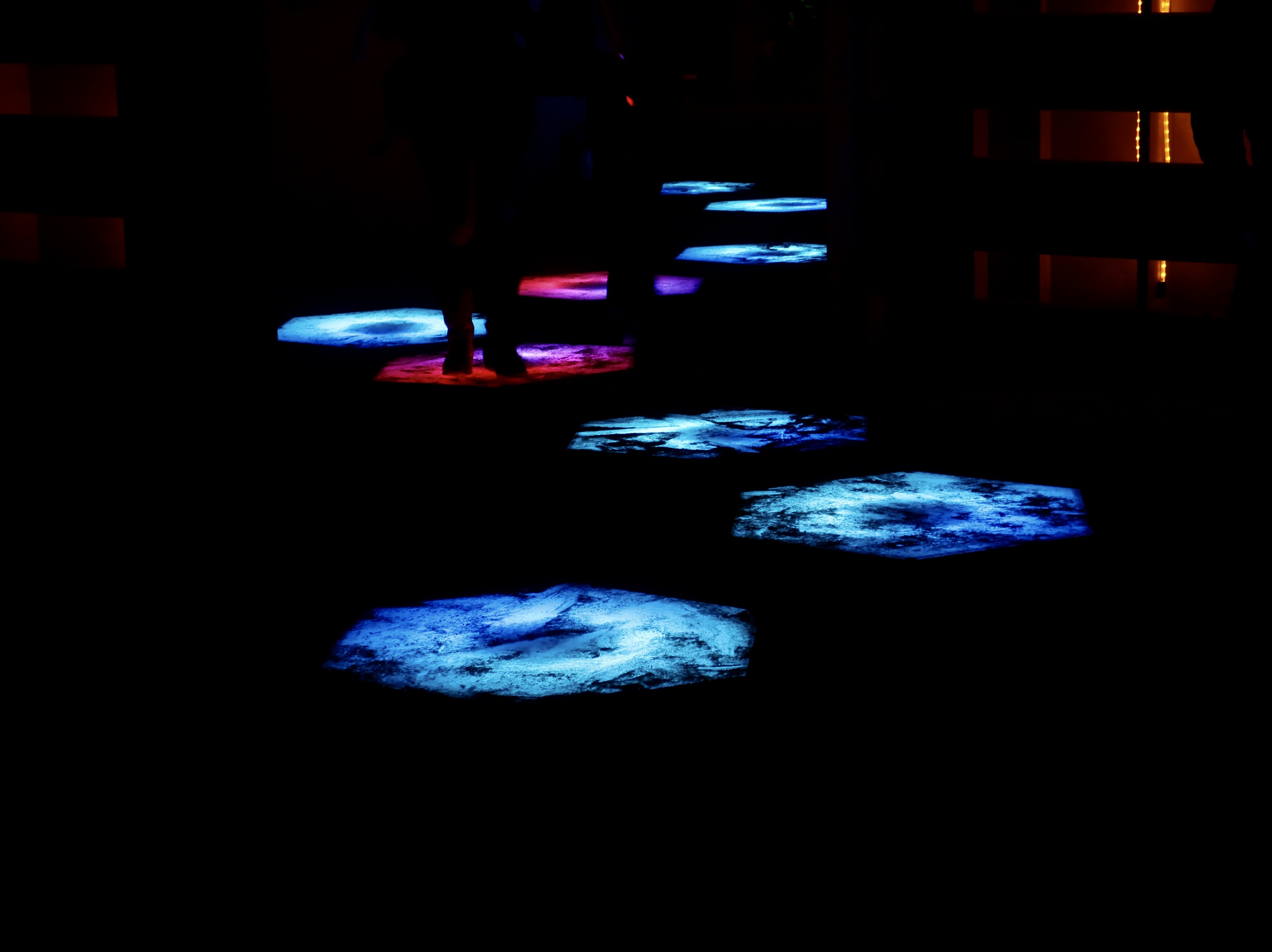
The Man can be seen from anywhere on the Playa or Black Rock City. It is lit up at night and even more special than it is during the day.The beehive begins to come into focus as we neared the Man. The bright square is the Xylophone.A close up of the beehive that I thought was pretty cool.These lit steps provided a pathway into the structure under the Man. They turned red when someone stepped on them.A final view of the 2023 Man for this post. Our next blog will begin featuring the great art from this year. You won’t want to miss it.
St. Cloud, Minnesota: Right now, Peggy and I are on one of our wandering adventures, rambling across North America, rarely knowing where we will be the next day. Long experience with a nomadic lifestyle has taught me that one gathers a lot of blog material when out on the open road. It has also taught me that there isn’t a lot of time to blog. (There are reasons why nomadic societies rarely create great civilizations.) So rather than try to pound the proverbial round peg into a square hole (which is what I usually do), I’ve decided to take a break from blogging for a couple of months. Peggy and I will be back in September with tales of our trip to Burning Man 2023. The tickets are in the mail!
“Hello Curtis Mekemson!
We are excited to let you know that your Burning Man 2023 Animalia tickets were shipped…”
Oh boy, we get to go be animals— we are excited as well! It’s been a while since we have been to the mind bending experience that takes place in a remote Nevada Desert the last week in August. Expect some fun posts. In the meantime, we will sign off WP today with a walk through the Aswan, Egypt market.
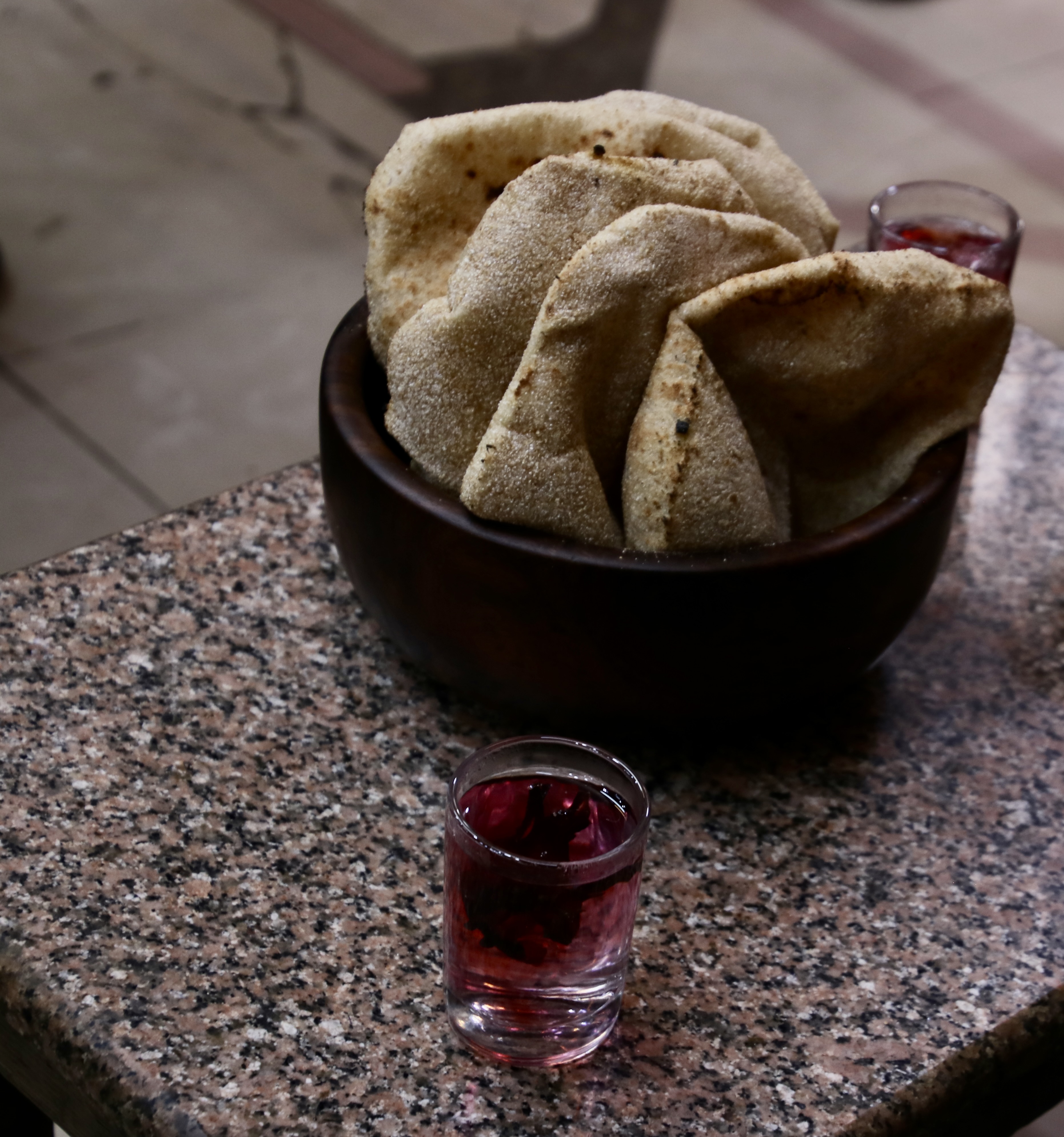
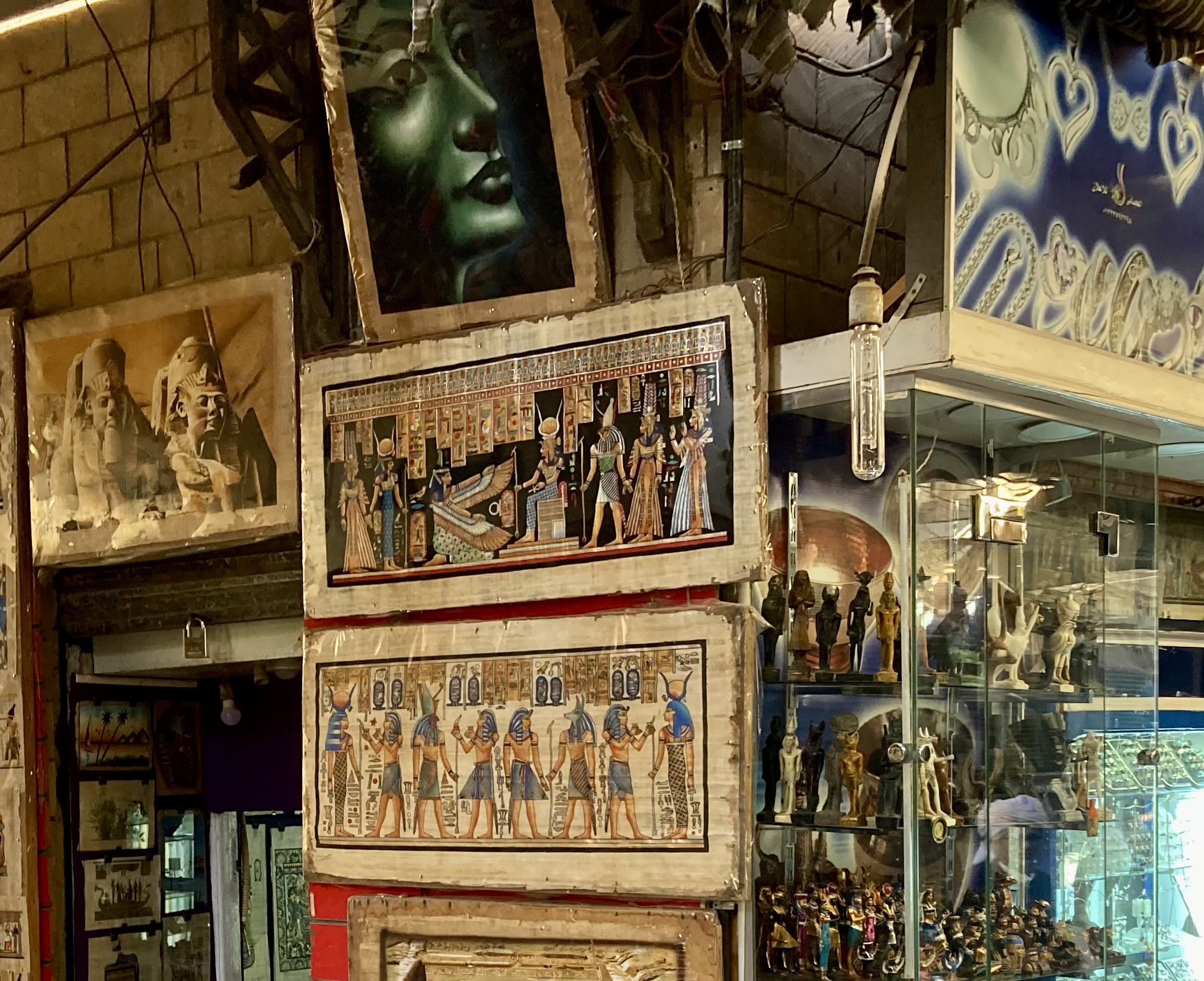
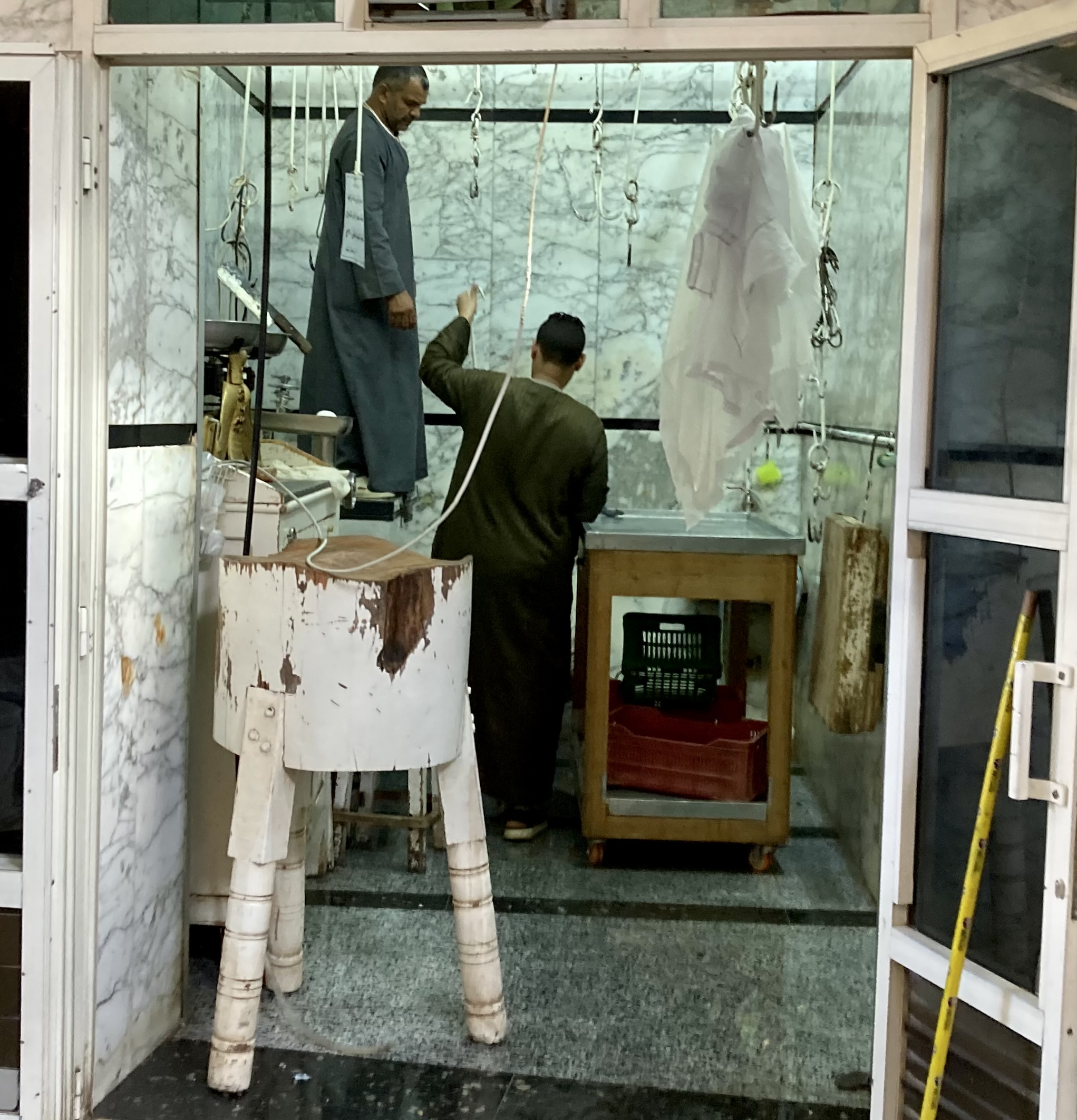
We started our visit to the market with a stop at an exotic spice market…Where they served us Jasmine tea and bread…Along with a selection of their spices to sample. Out in the market place, spices were being sold in a less formal (and less expensive) form. The dark spices on top are Jasmine buds. Want spicy hot? The small red peppers up front will provide it!Not so hot, but good. I’m a big fan of yams. Yum. Peggy isn’t.Since the market is only a couple of blocks away from where riverboats are docked, tourist items featuring Ancient Egyptian themes could be expected.But there were also more African based themes such as these masks. Aswan marks the beginning of Nubia, much of which was drowned out by the Aswan Dam and Lake Nasser. African sculptures were available as well. They remind me of what peddlers would bring by my house when I was a Peace Corp Volunteer in Liberia, West Africa. The Bush Devil that I brought home with me from West Africa and featured on the front cover of my book is an example. If you are missing me over the next two months (grin), you can download my book and read it. The book will take you from the craziness of UC Berkeley and the student revolution of the 60s to the jungles of West Africa. Just Google “The Bush Devil Ate Sam” and various sources will be listed.Most of the items were to meet the needs of the local population, however. Like these chicken cages, for example. Looks like a serious sewing machine to me. Does your sole need to be saved?Or do you need a new robe? Had this man not been standing while being fitted for a robe, I would have thought we were looking at a butcher market complete with a butcher block. Maybe it had been repurposed… Women in Aswan are likely to be dressed in the traditional Muslem garb featured for sale here. Third from the left represents the most conservative.But we also found a pair of teenage girls strolling through the market on the Nile who were a reminder of the ubiquitous nature of modern culture, right down to cell phones.
That does it for today. As always, Peggy and I appreciate your following Wandering through Time and Place and truly enjoy the friendships we have made along the way and the great blogs you share. We will see you in September!
Since we’ve been posting on Egypt, here’s a sign for The Elvis Wedding Chapel at Burning Man 2014. We will return to our Egypt and National Park posts in September as well as blogging about Burning Man where I have gone 13 times and Peggy 10.
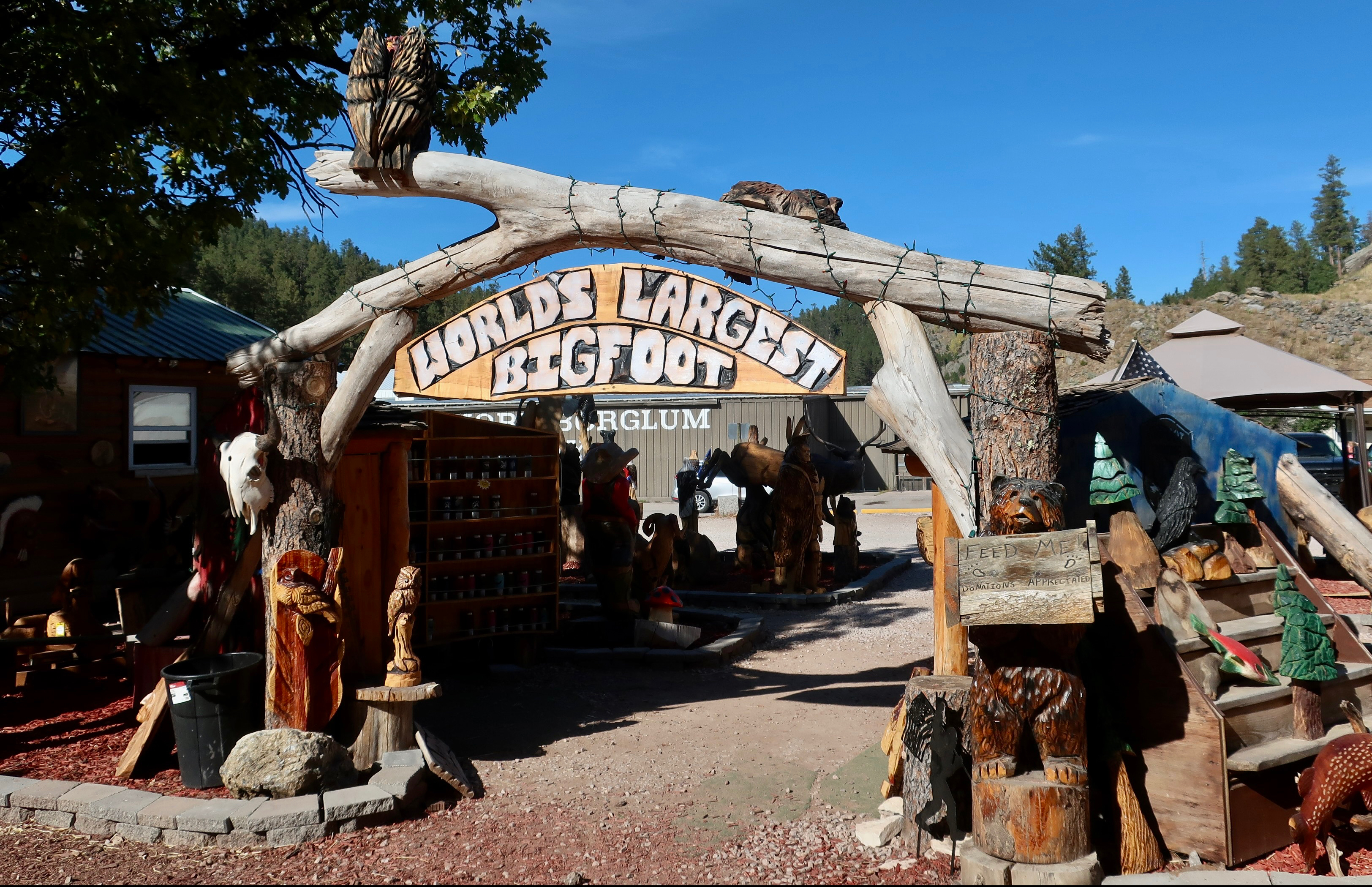
There is lots to see and do in western South Dakota. I have written about it in ten posts over the past few months. We visited there last fall starting with Badlands National Park. I’m doing a wrap-up today with a few of the things we saw that didn’t fit in my other posts. Let’s start with Big Foot. All photos in this post were taken by either Peggy or me.
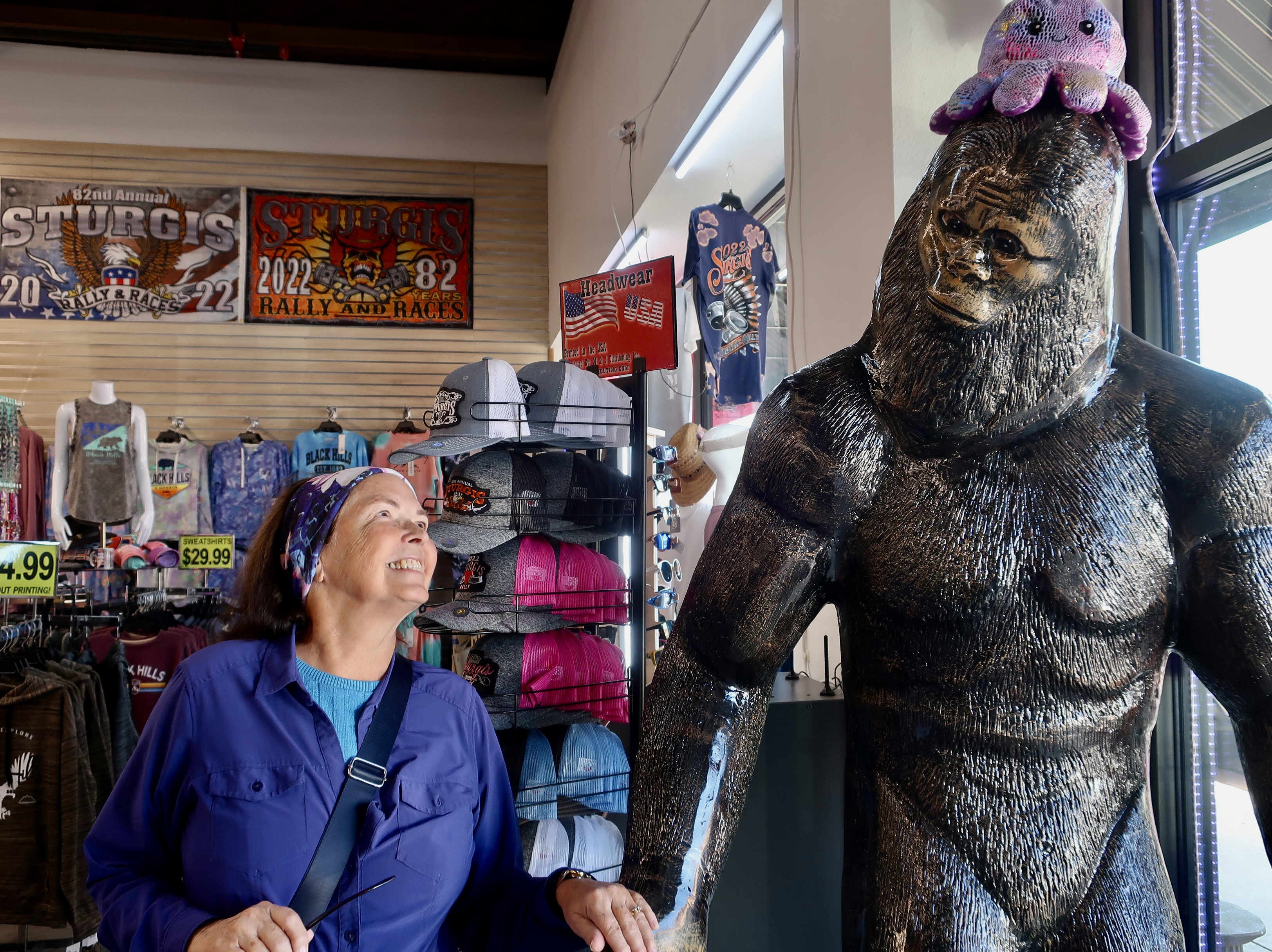
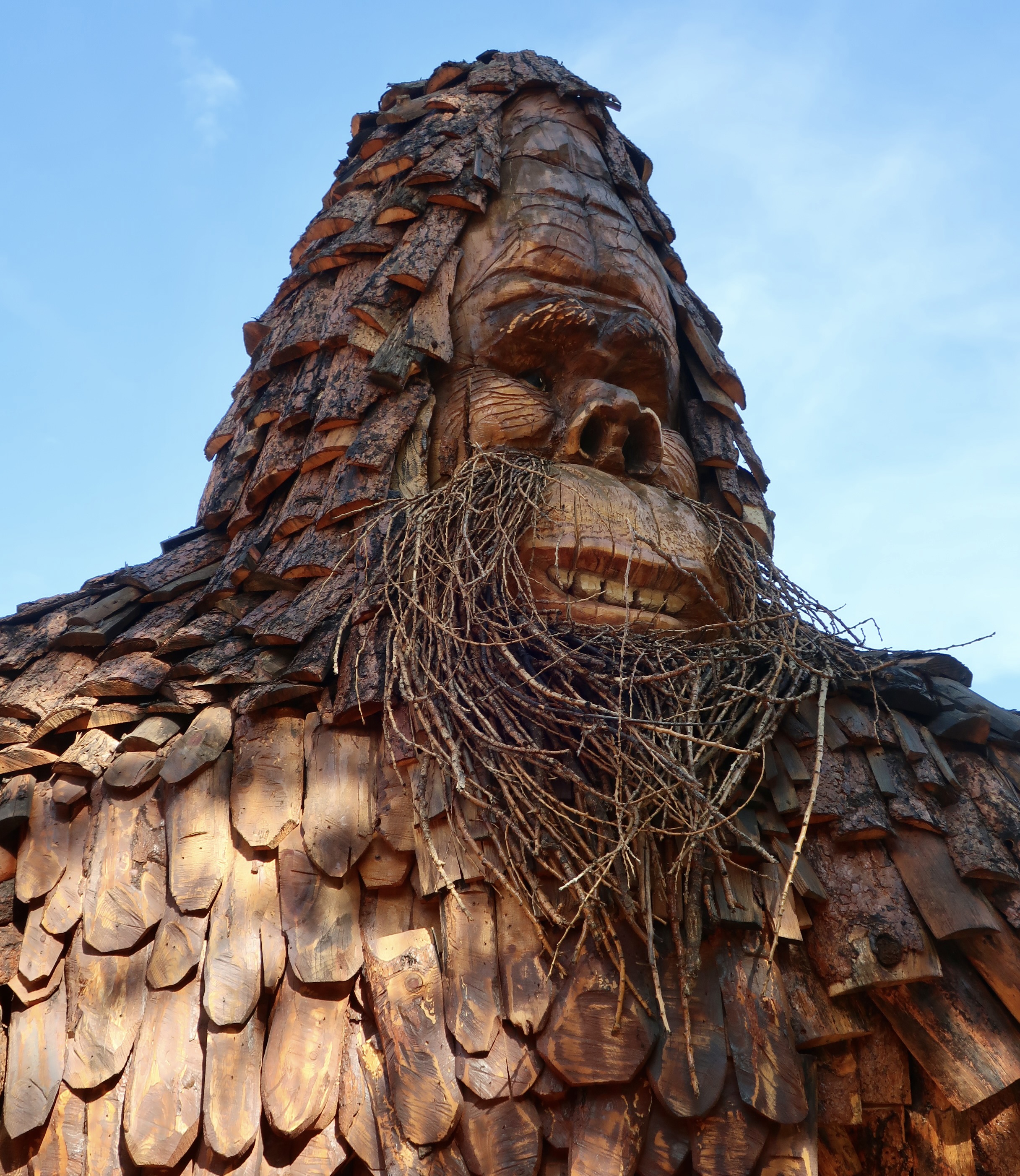
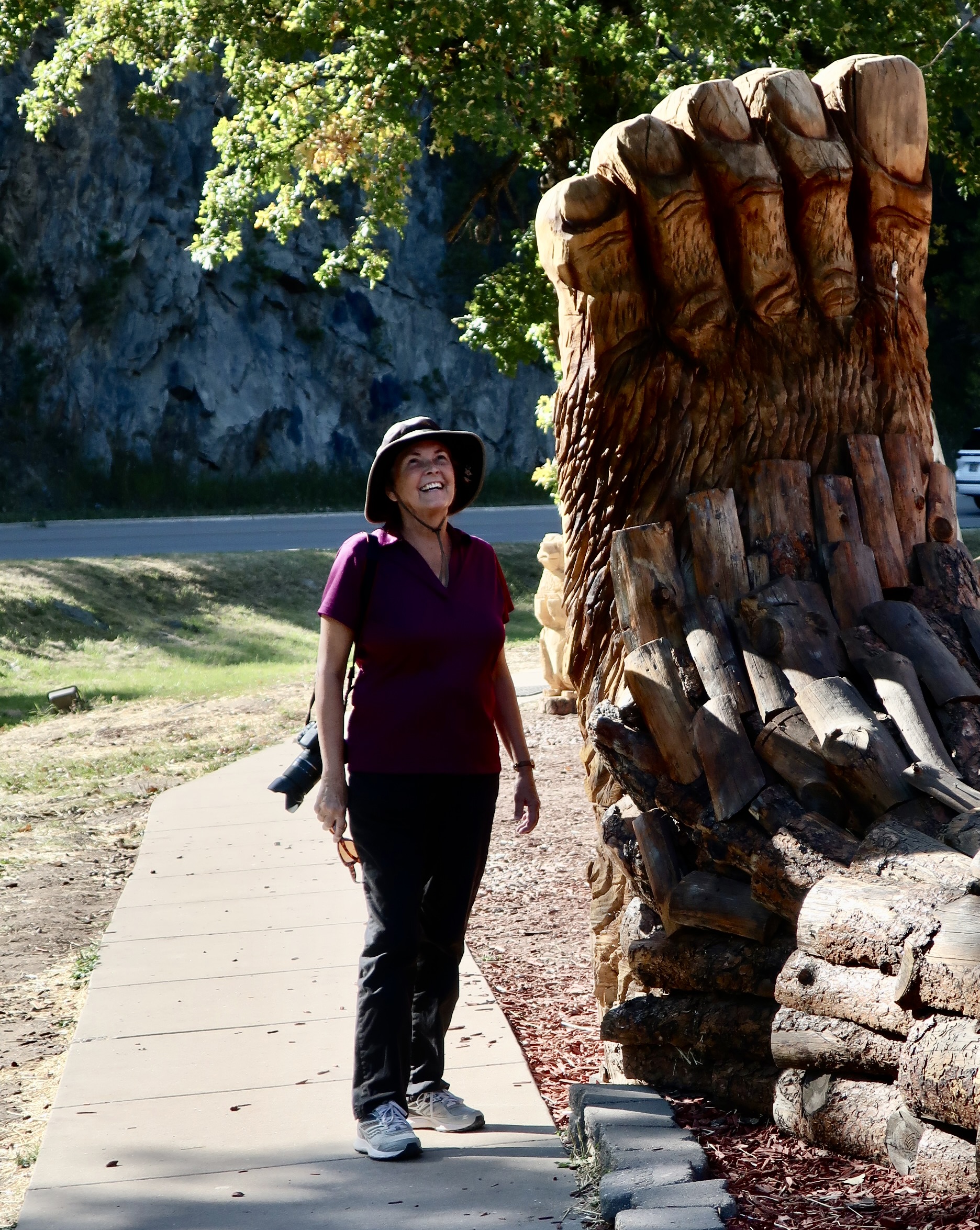
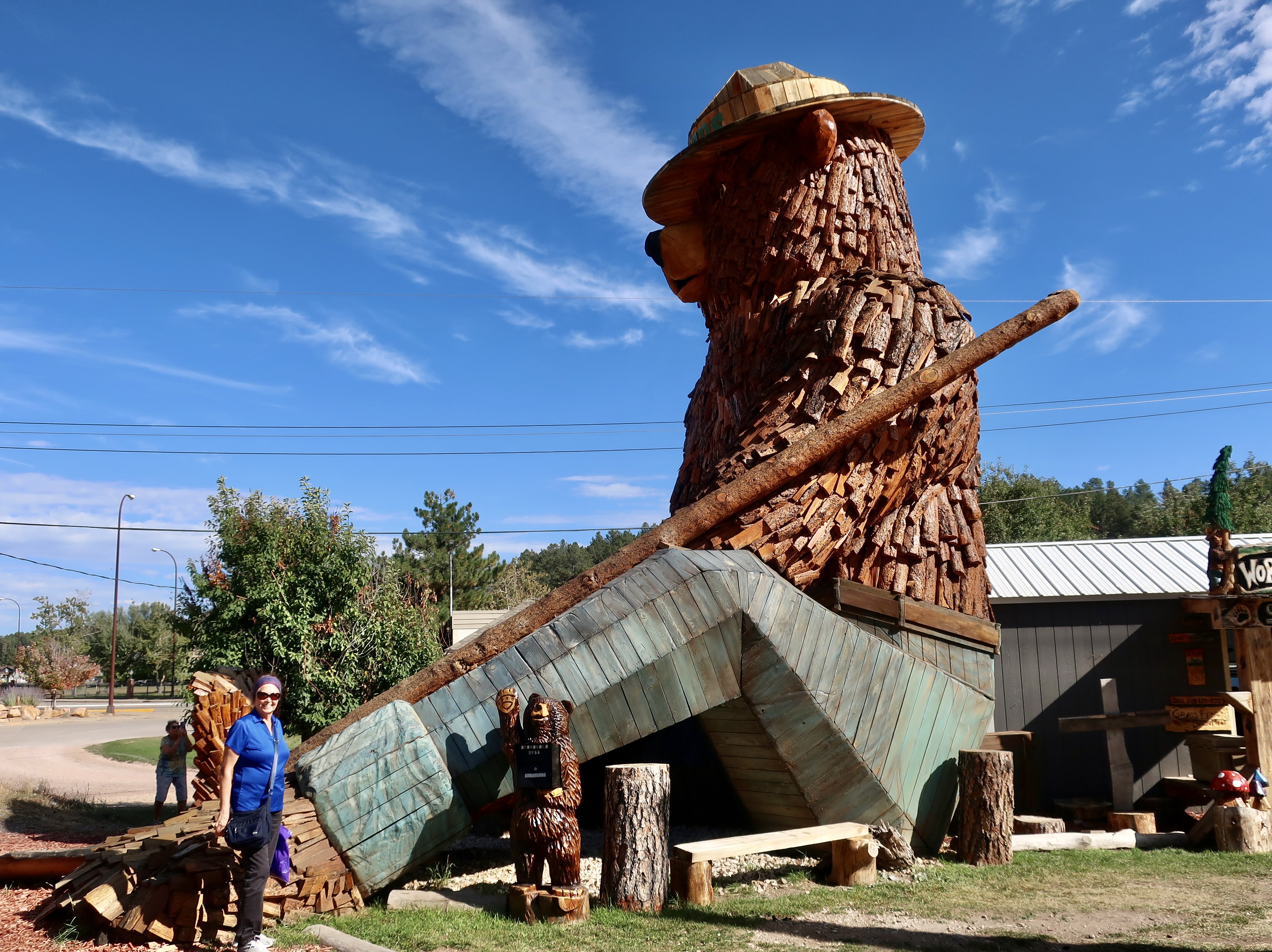
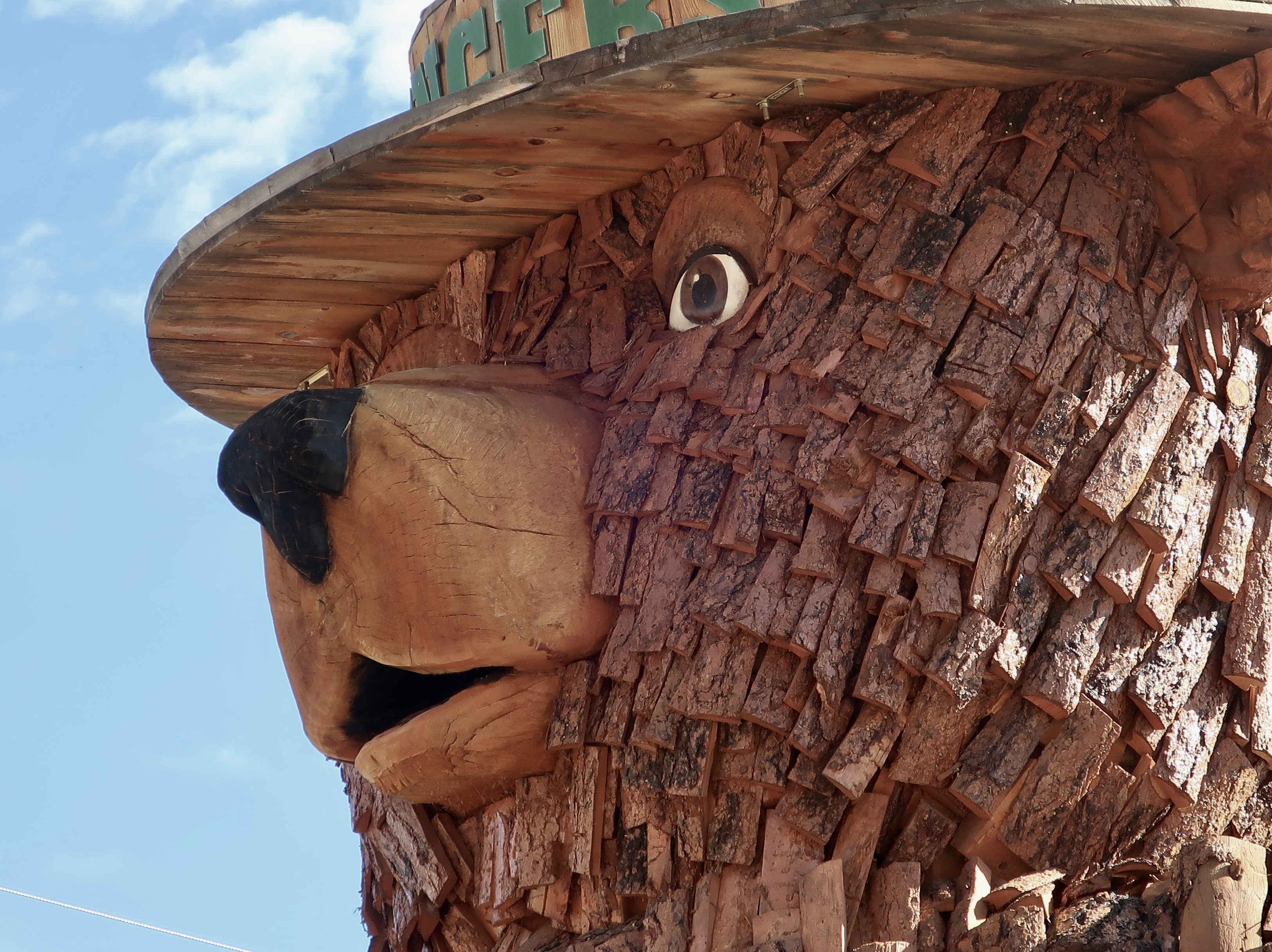
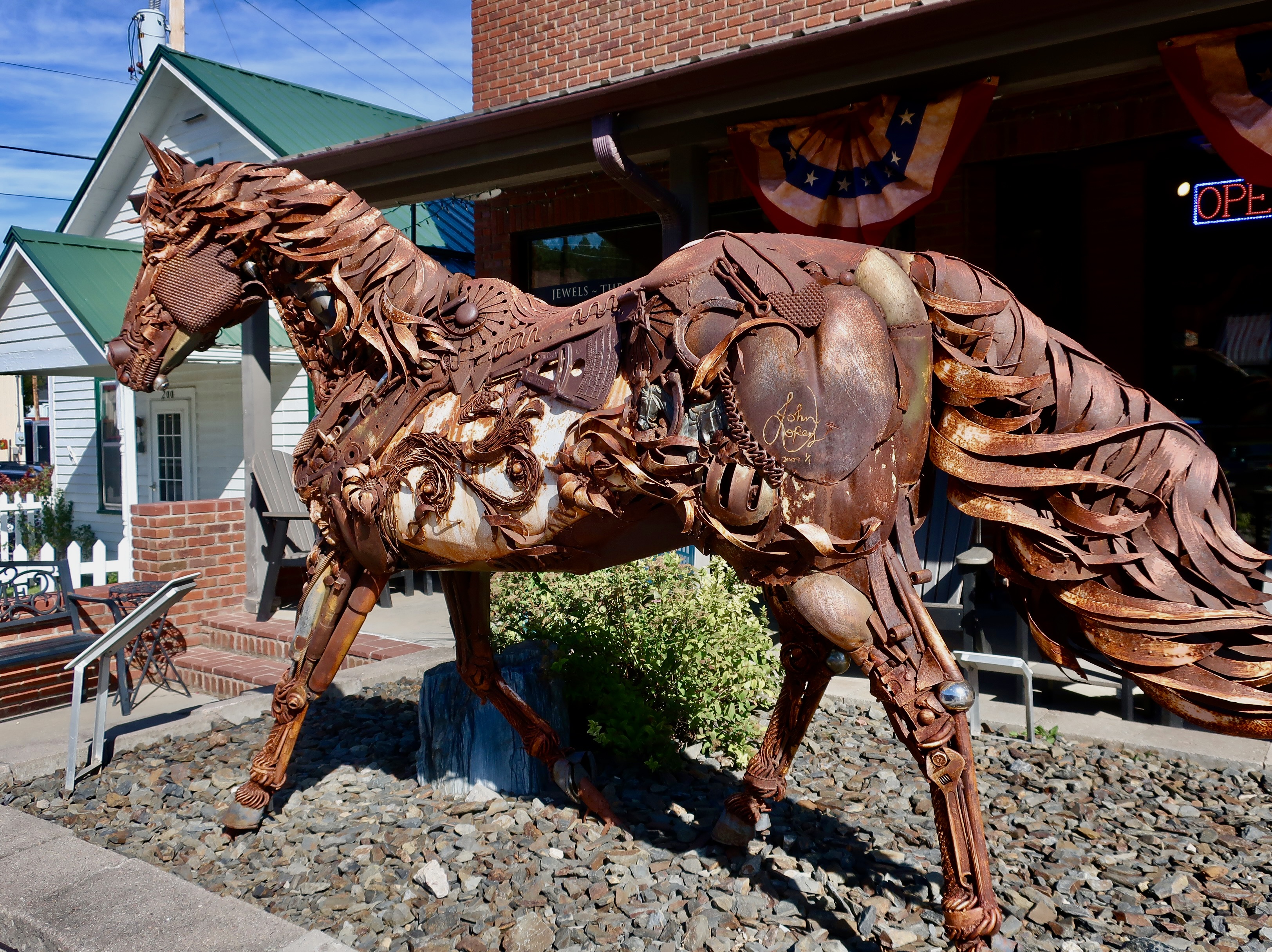
First up, is the World’s Largest Bigfoot, which is located in the small town of Keystone, South Dakota, located 4 miles away from Mt. Rushmore. It’s one of a number of interesting carvings at Dahl’s Chainsaw Art.As you probably know, Peggy and I have a thing for Bigfoot. The world’s only Bigfoot trap was located about 3 miles from where we lived in Oregon. We found this fellow in Custer, South Dakota. Judging from the look, it appears that Bigfoot has a thing for Peggy as well. Should I be jealous? But what about the creature on top of his head? Your guess is as good as mine, but I think I don’t have to be worried about a guy who walks around with an octopus as his hat. Here’s the big fellow in Dahl’s Chainsaw Art yard.He looks friendly. Big smile, crinkly eyes. And the beard would make a fabulous nest for a very large bird. But the question here is how big is Bigfoot’s foot? I came across a fresh print once about 18 inches long and three inches deep that had me thinking, “Bigfoot running.” It was blurry, however. Most things Bigfoot are. Nothing blurry about this…Bigfoot children were also found at Dahl’s playing on a carousel. There is a good chance that Bigfoot kids are born with beards, including girls.Not Bigfoot. But hey, it’s the 4th of July weekend and what’s more patriotic than a motorcycle carved as an eagle? Just ask a biker. A bald eagle and a flag are shown in the background just in case there’s any question. Happy Fourth! This bike is symbolic of an even more important event to Bikers: The Sturgis Rally, South Dakota’s top tourist event and one of the largest motorcycle rallies in the world. Sturgis is just 50 miles away from Keystone. I’ve never been to a rally, but it is just quirky enough, I would be tempted if I were around in August. While we are on “BIG,” this is reported to be the World’s largest Smokey the Bear. Also made by the Dahl brothers, it is located in Hill City, South Dakota. My favorite model demonstrates the size. Close up of Smokey Bear’s face.Hill City also housed the Museum of the Black hills Institute that Peggy and I did a post on. Not surprisingly, it had a pterodactyl on top.We also found this beautiful horse sculpture in Hill City. It reminded Peggy and me of similar sculptures at Burning Man, where we will be in two months.
And finally, to conclude:
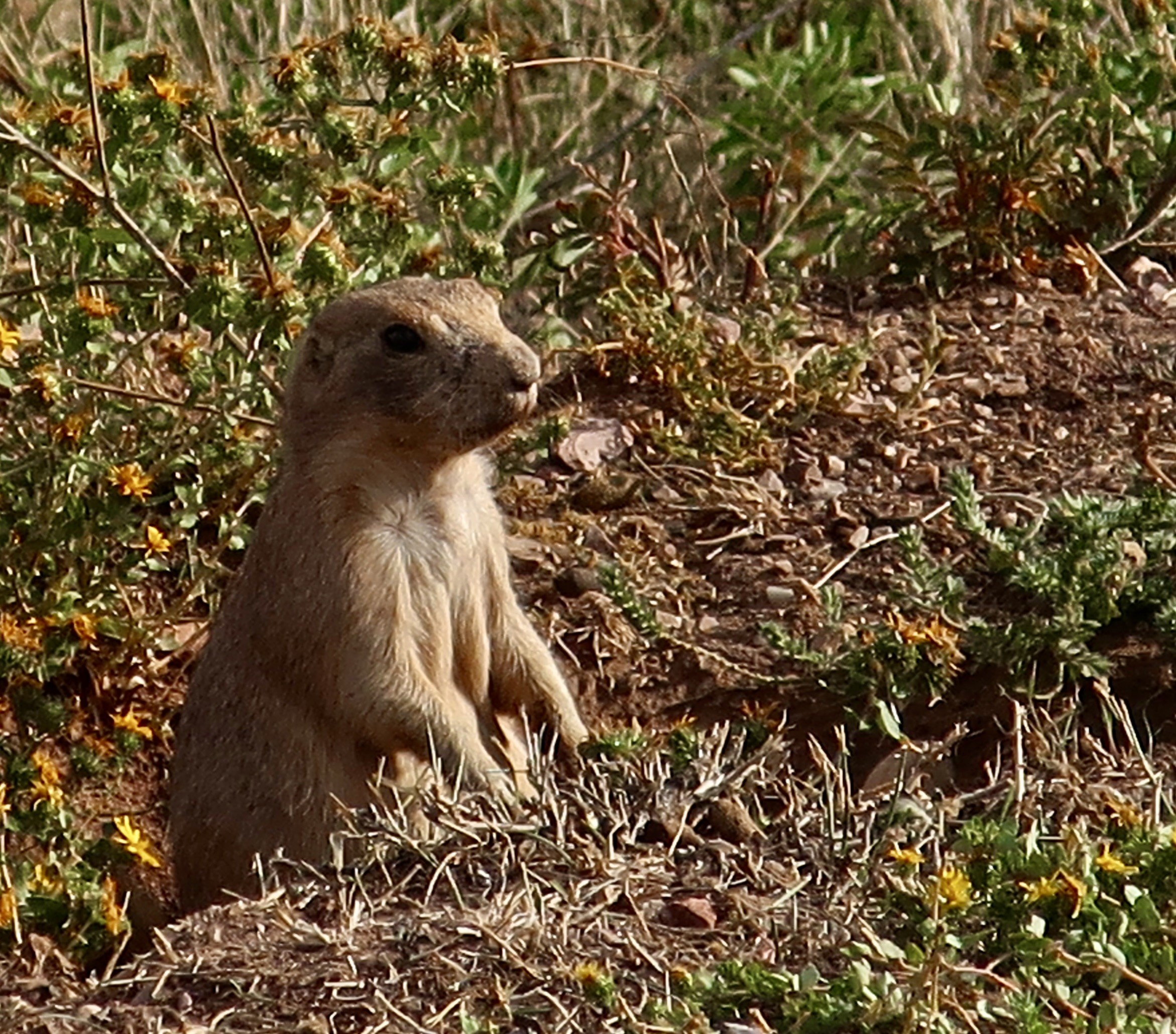
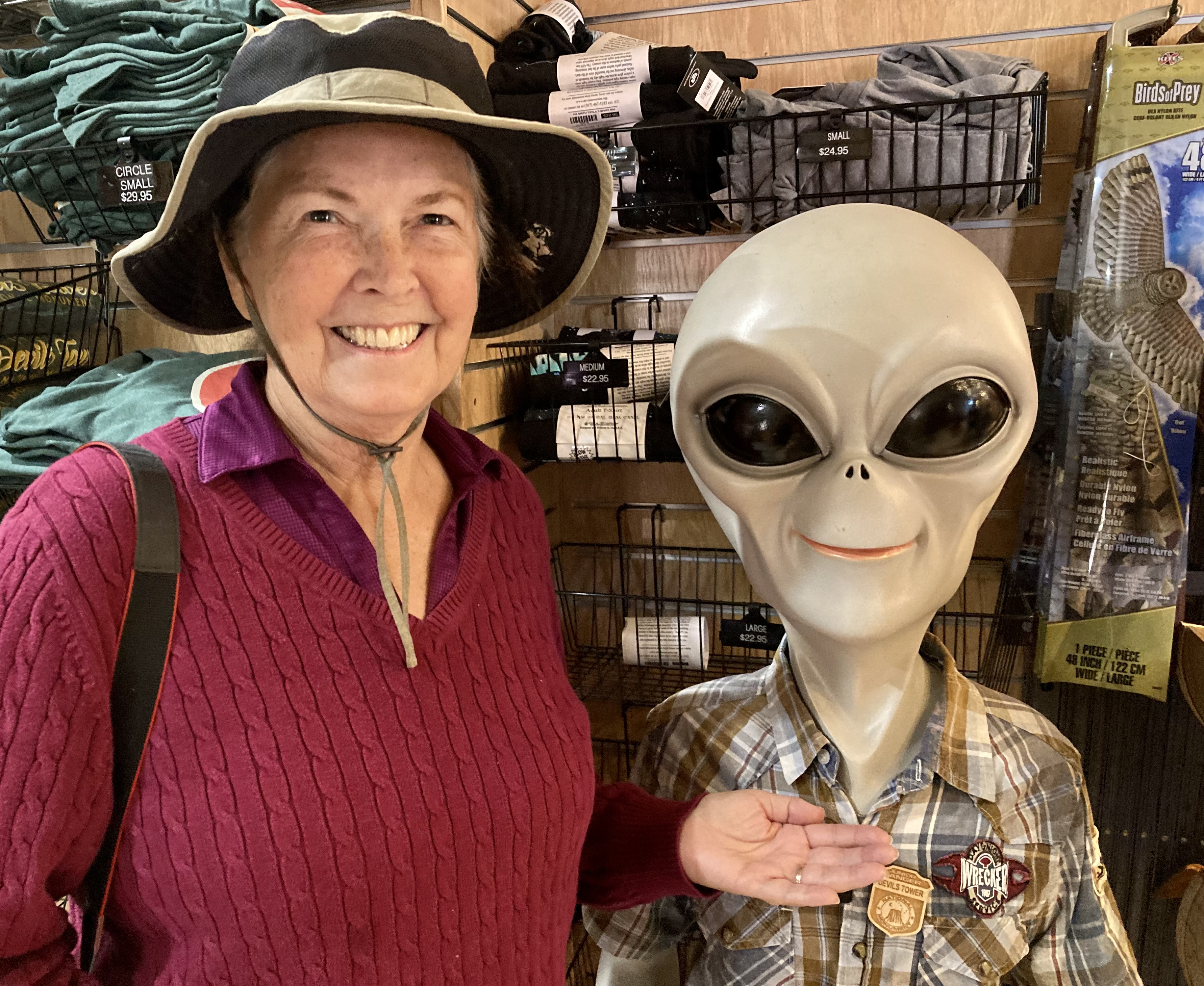
A girly girl squirrel/prairie dog…A buff, boy buffalo…And Peggy with her new alien friend that we found at Devil’s tower.
Next Monday’s post will take us back to Egypt and our journey up the Nile where we find ourselves in Luxor at the Temple of Karnak.