Today, our focus series features ungulates. In case you don’t know what an ungulate is, like I didn’t, the short answer is that they are animals with hooves who walk or run on their toes. Did that help? They are divided into two categories: Odd toed ungulates (Perissodactyl) such as horses with one toe, and even toed ungulates (Artiodactyla) such as cows with two toes. The credit for having hooves goes to evolution. Horses, for example, started out with multiple toes just like us. They had 4 on the front and 3 on the back. Eventually, over millions of years, their claws/toenails expanded, grew together, and covered their toes. The evolutionary advantage being they could run a lot faster across grasslands and escape animals that wanted to eat them. A hoof is composed of keratin, the same fibrous protein that forms our toe and finger nails. It acts as a hard, protective casing that covers the toes and allows for weight-bearing, shock absorption, and traction— just like a good pair of running shoe works for our feet. But enough on the details. Let’s get to the fun part!
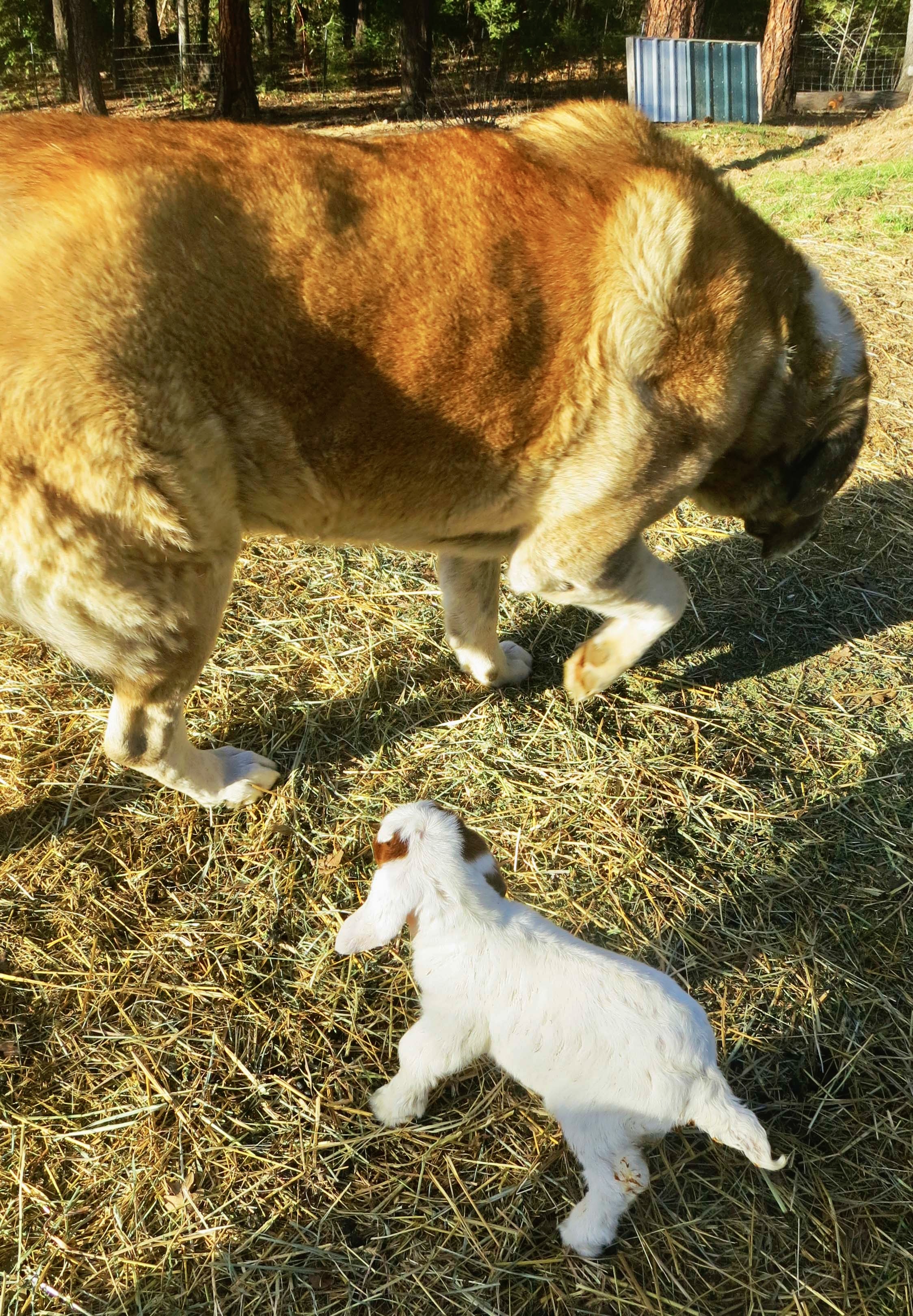
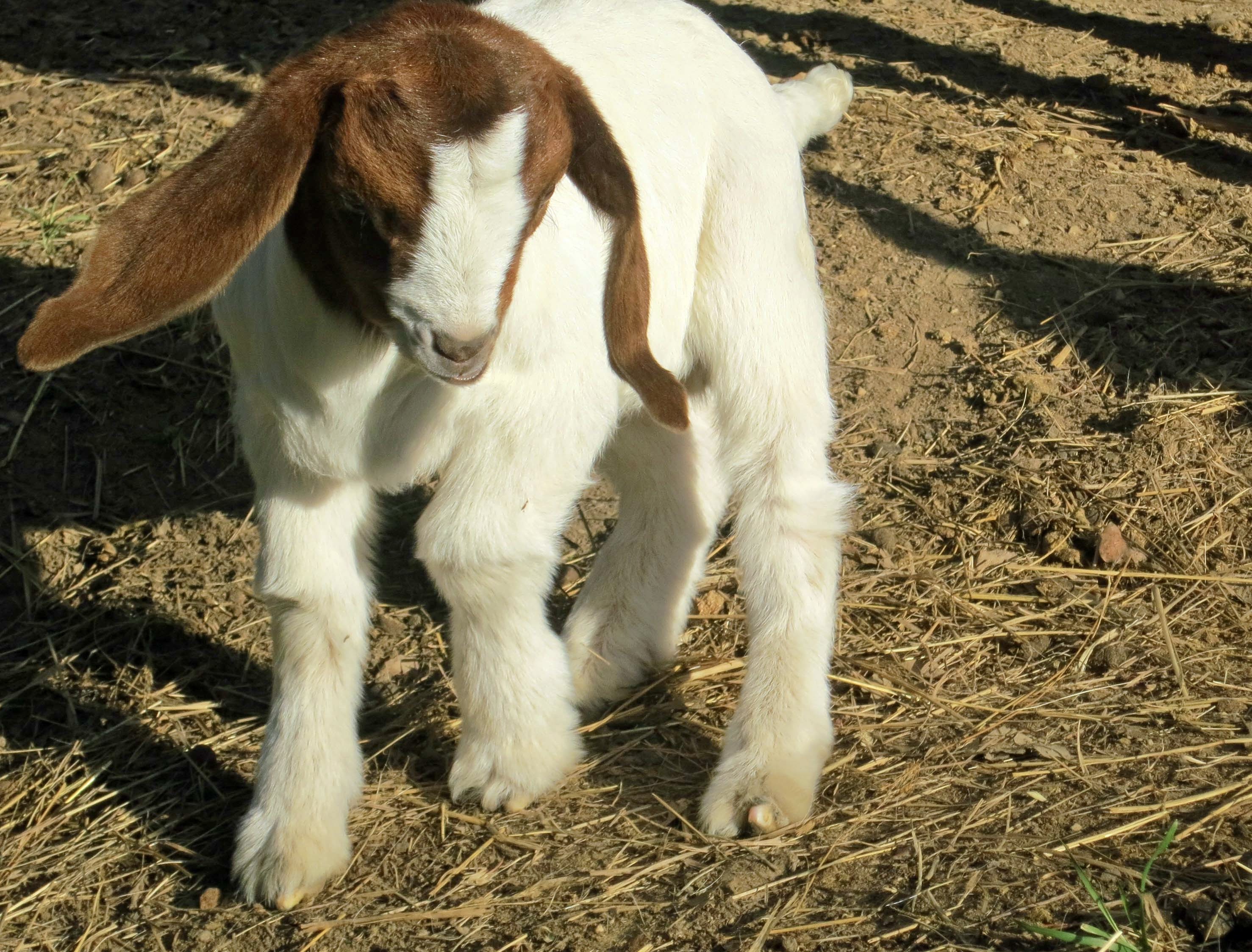
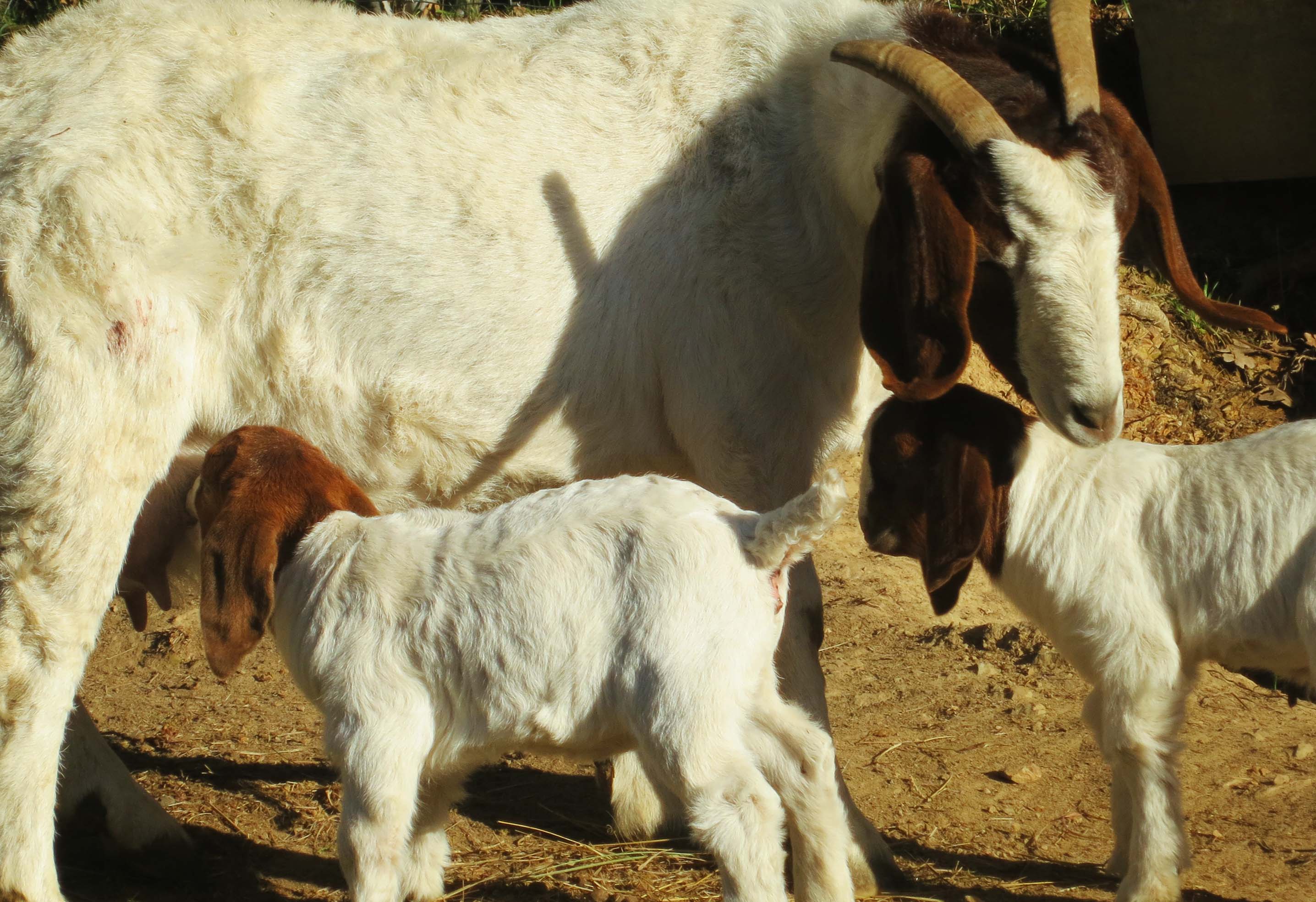
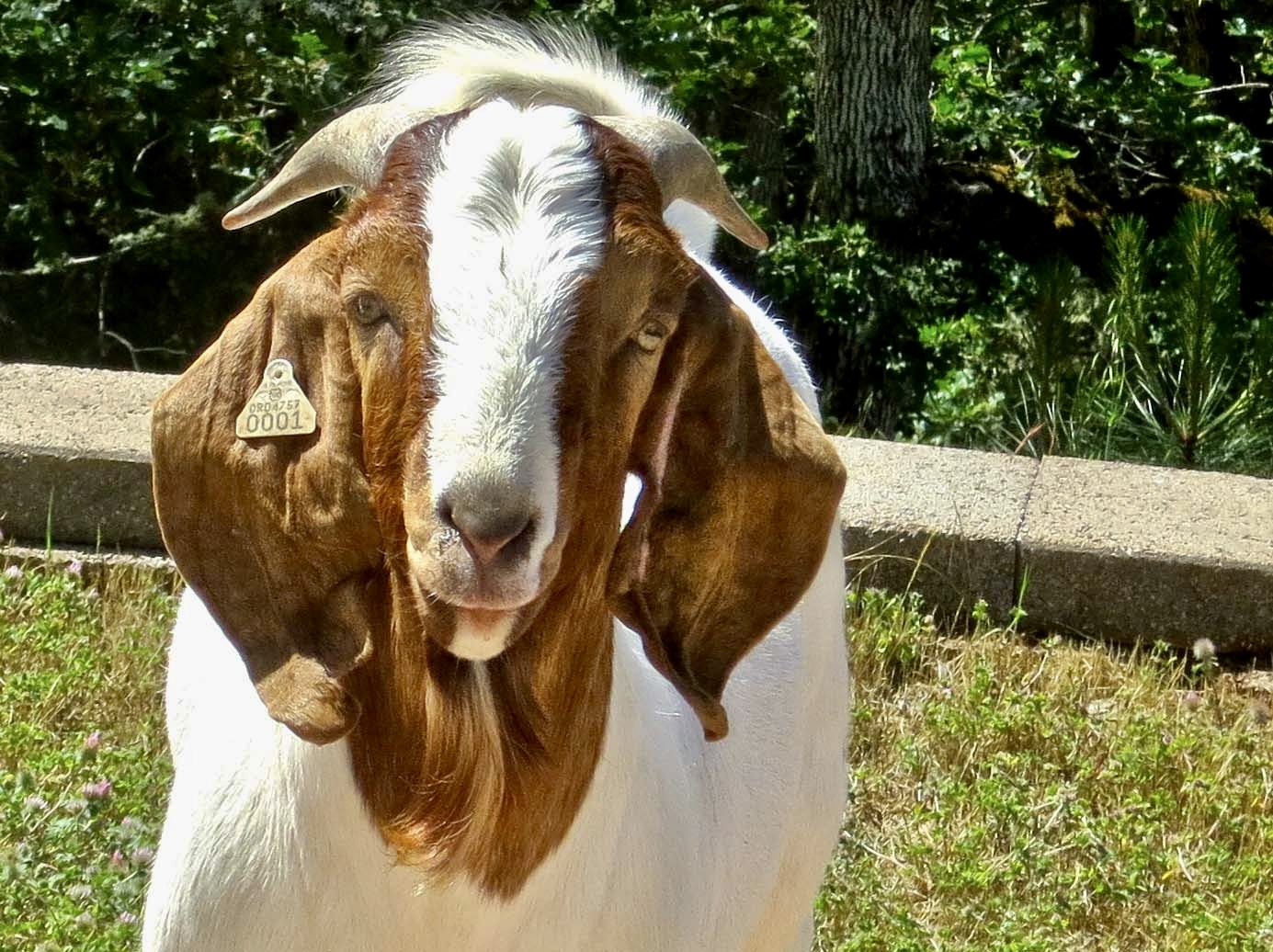
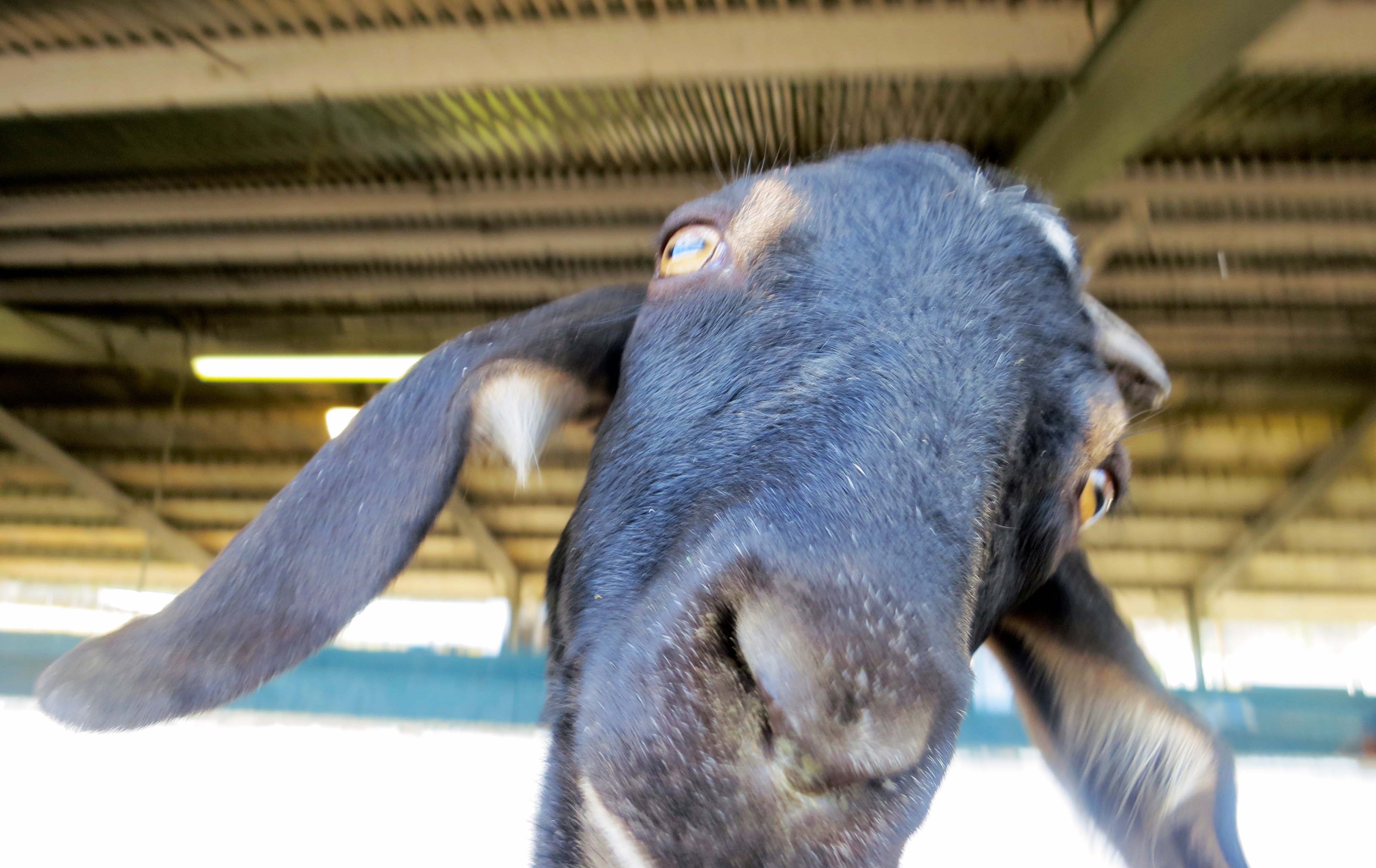
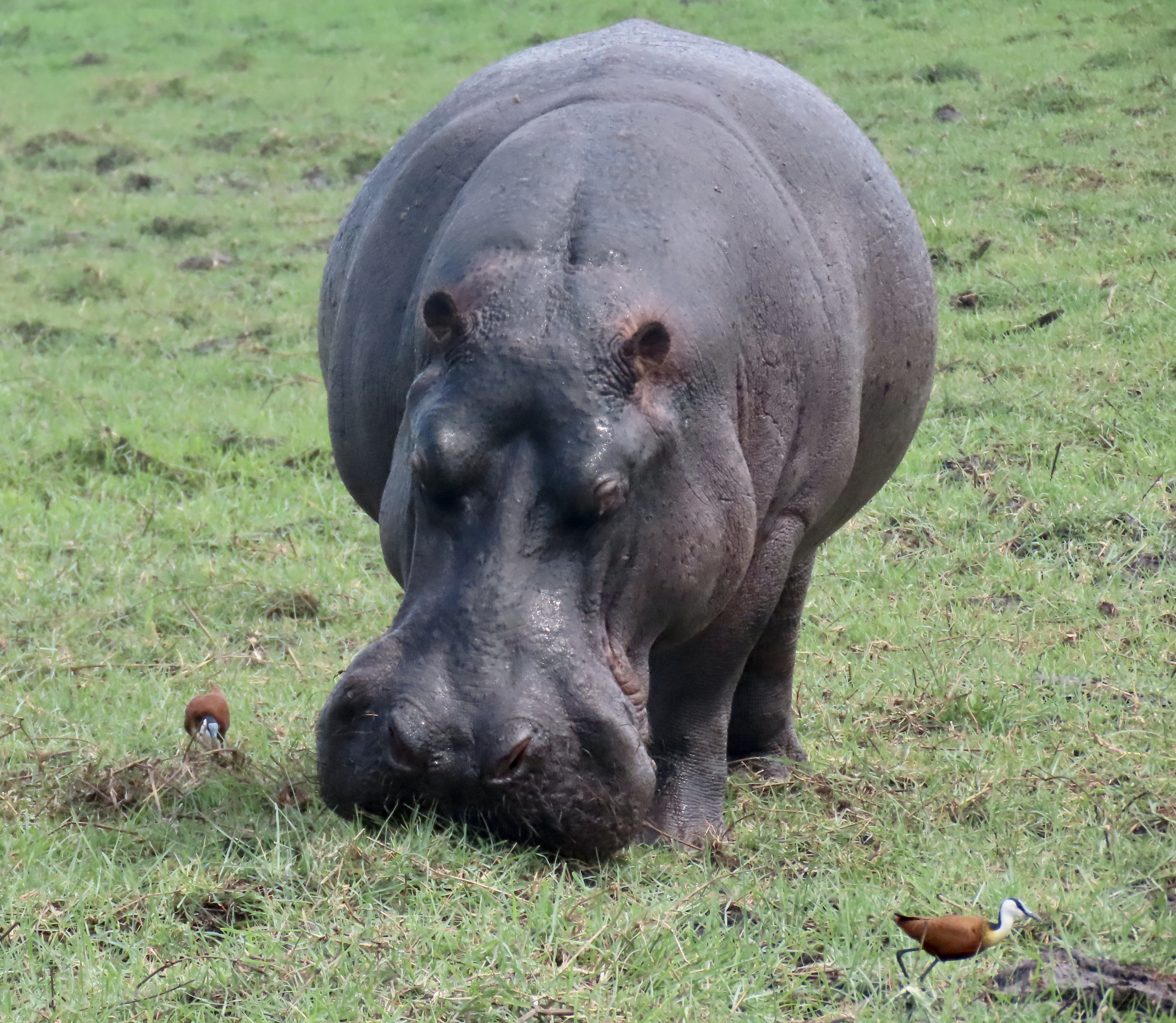
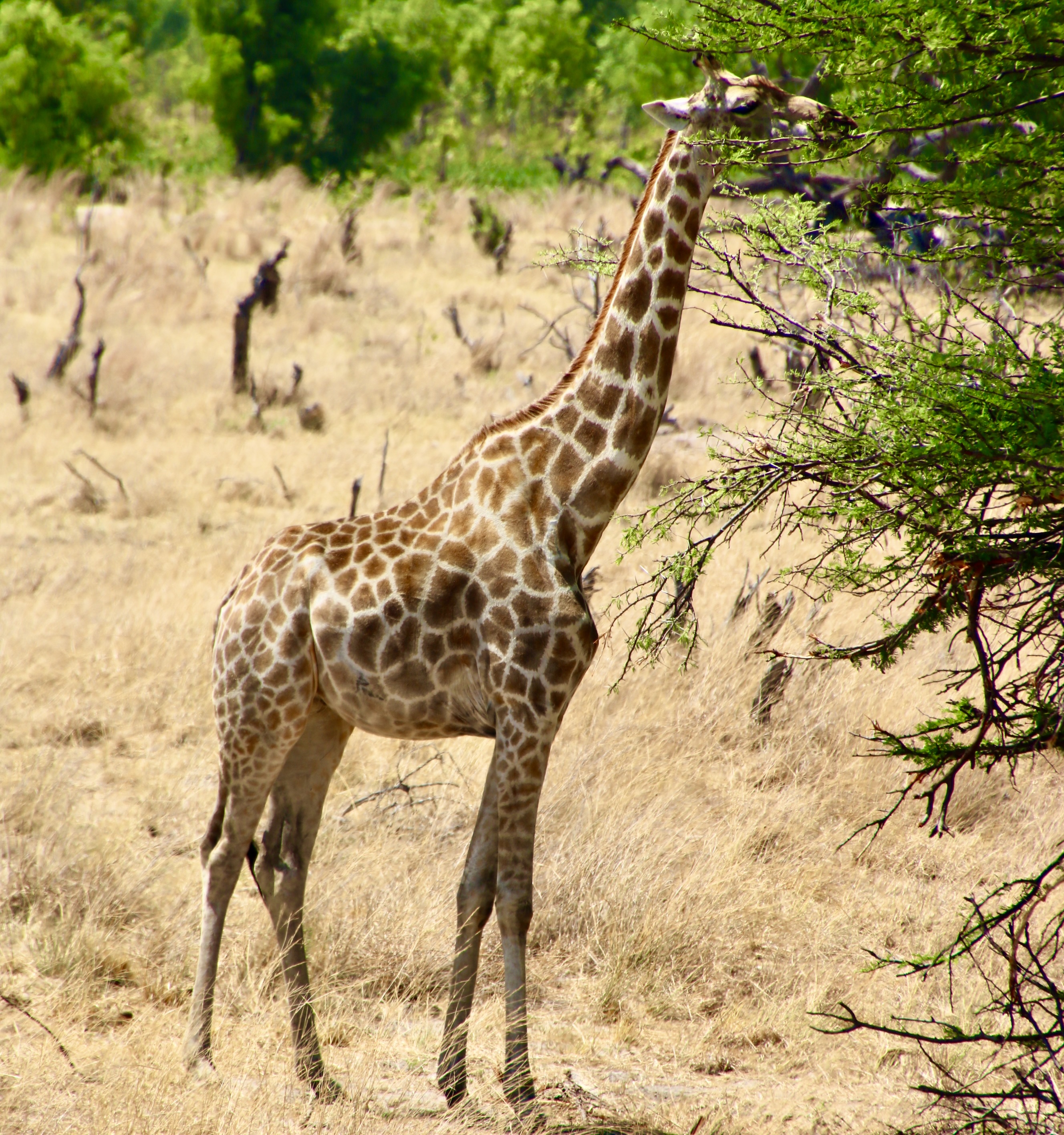
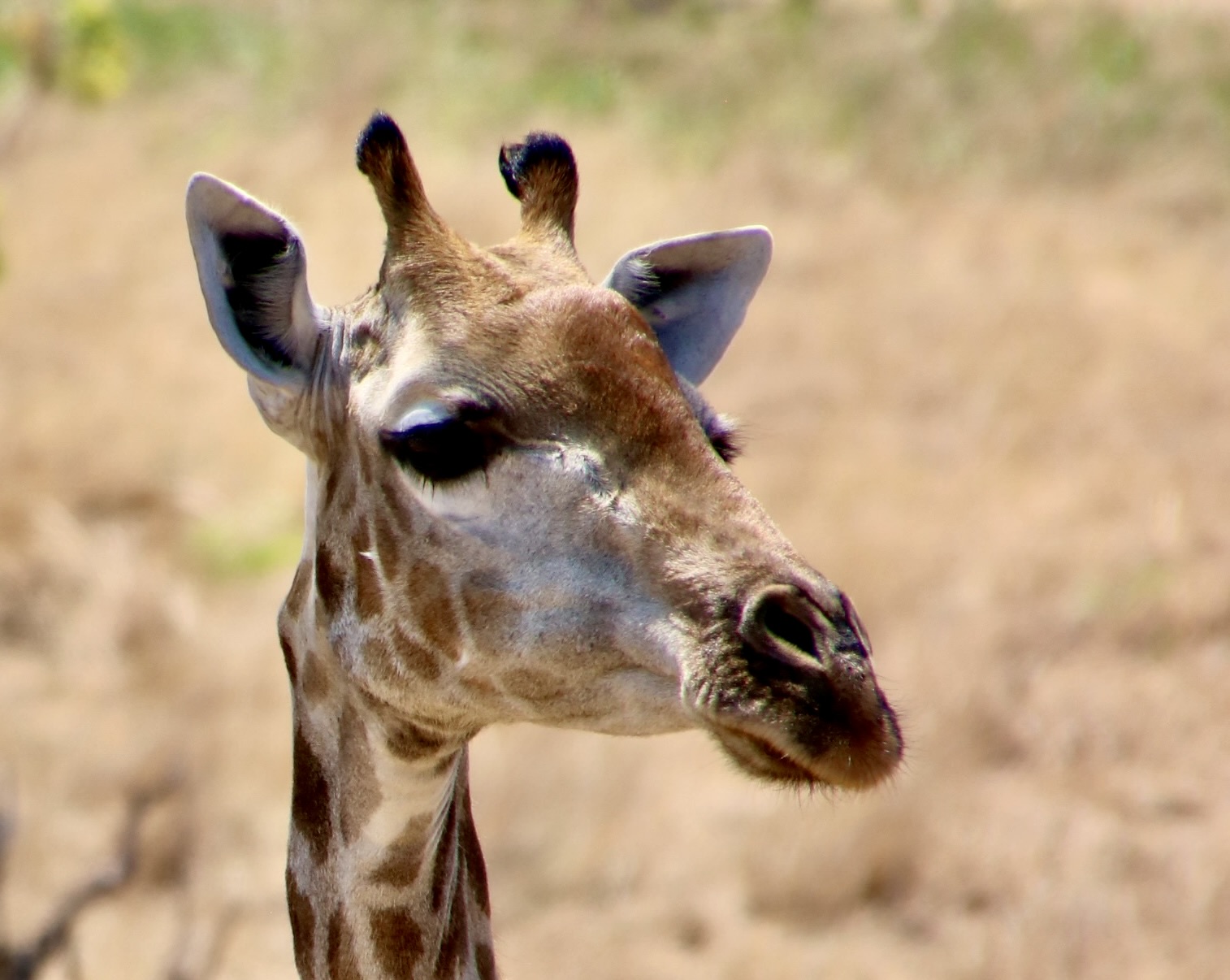
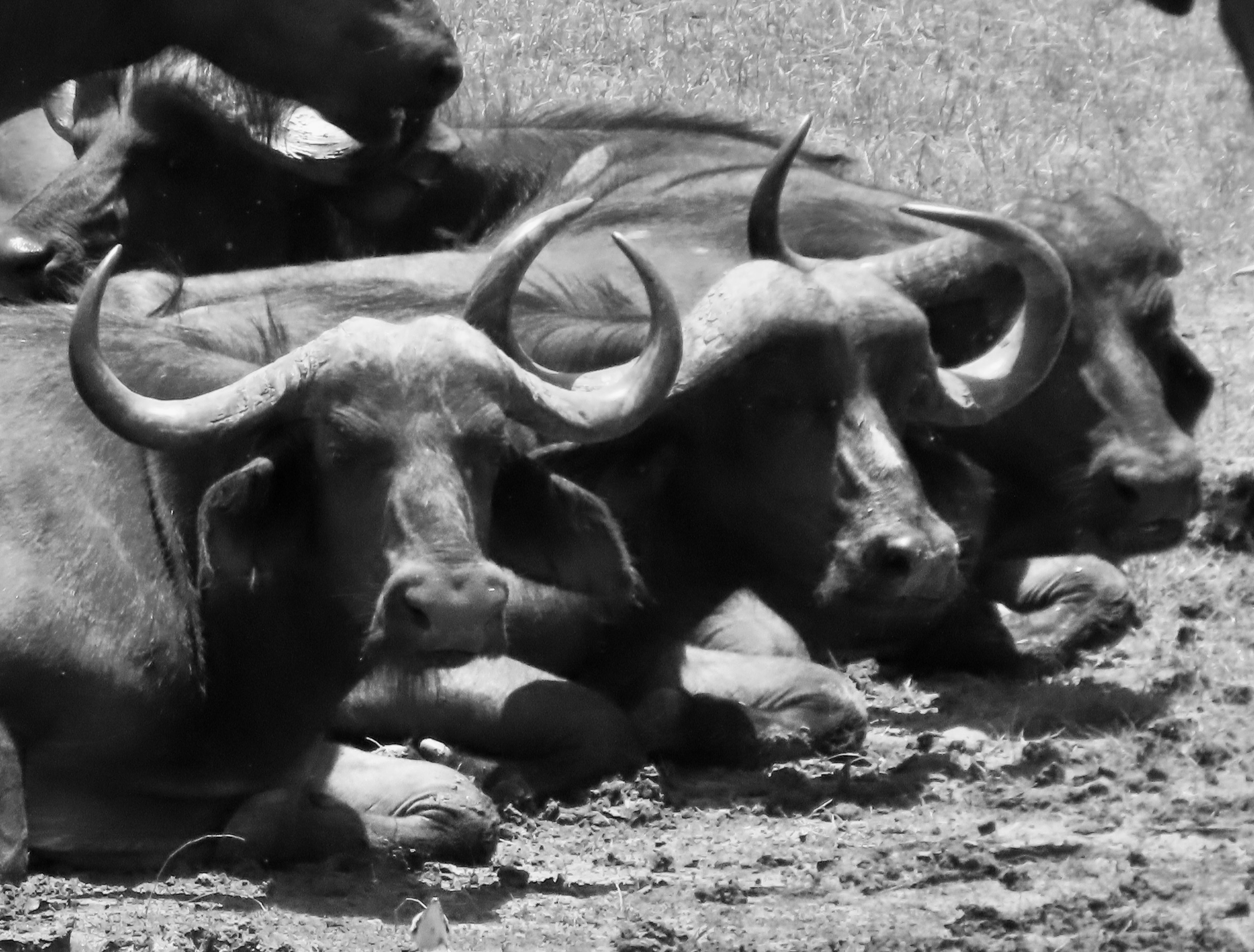
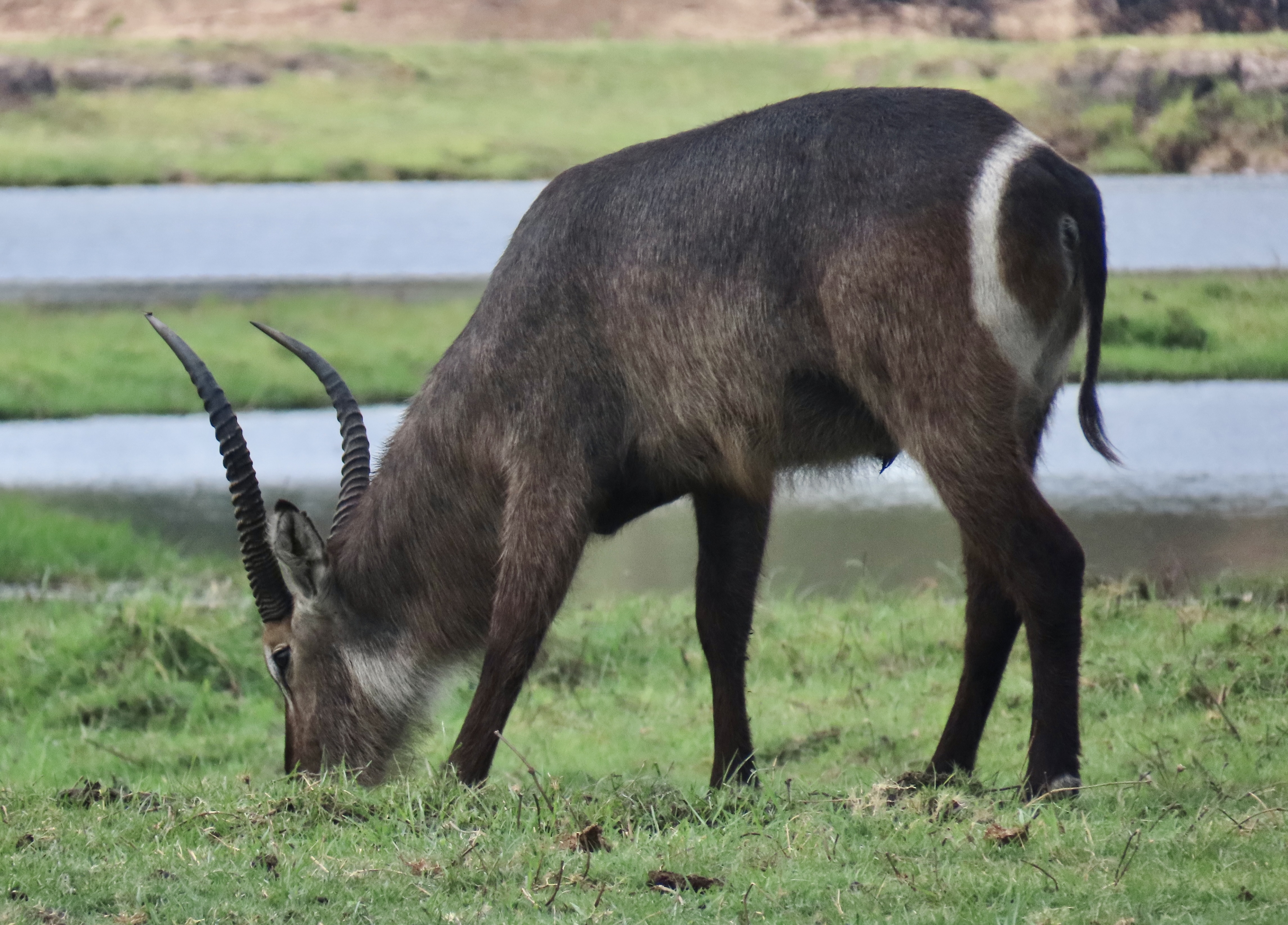
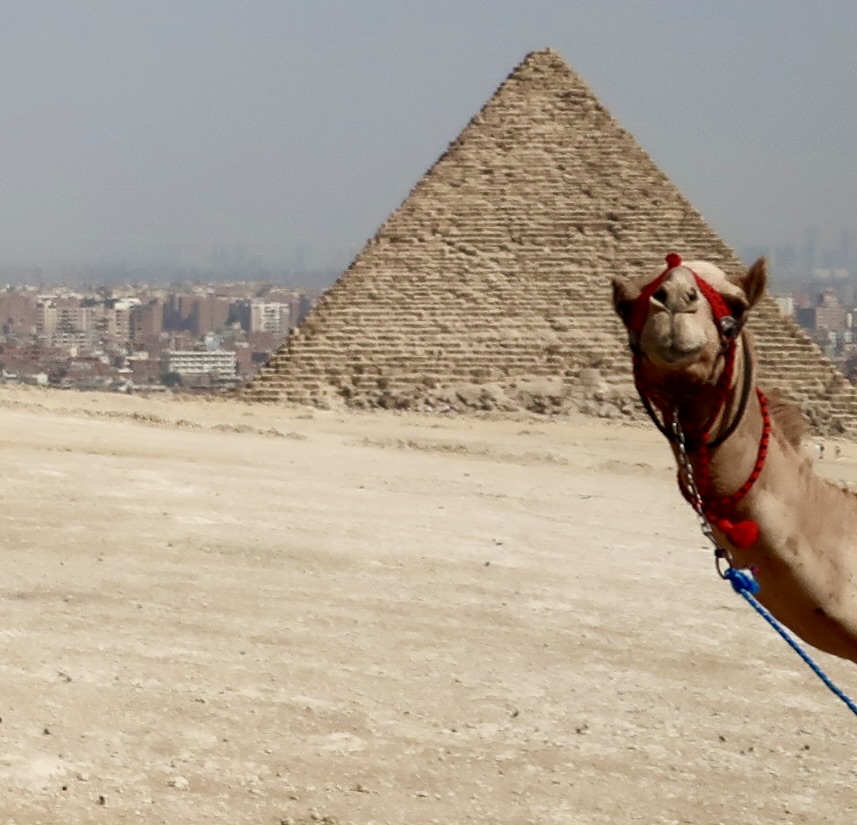
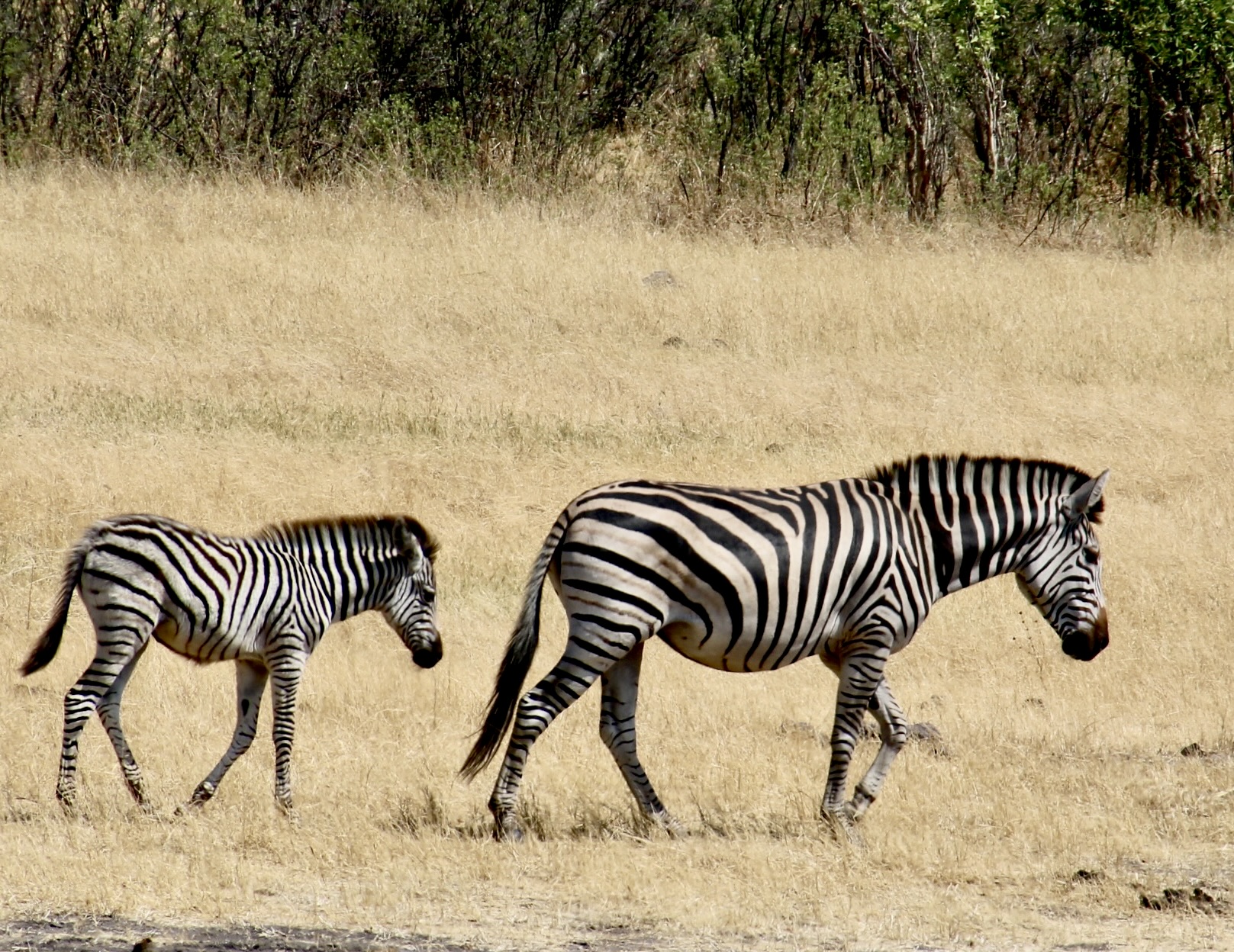
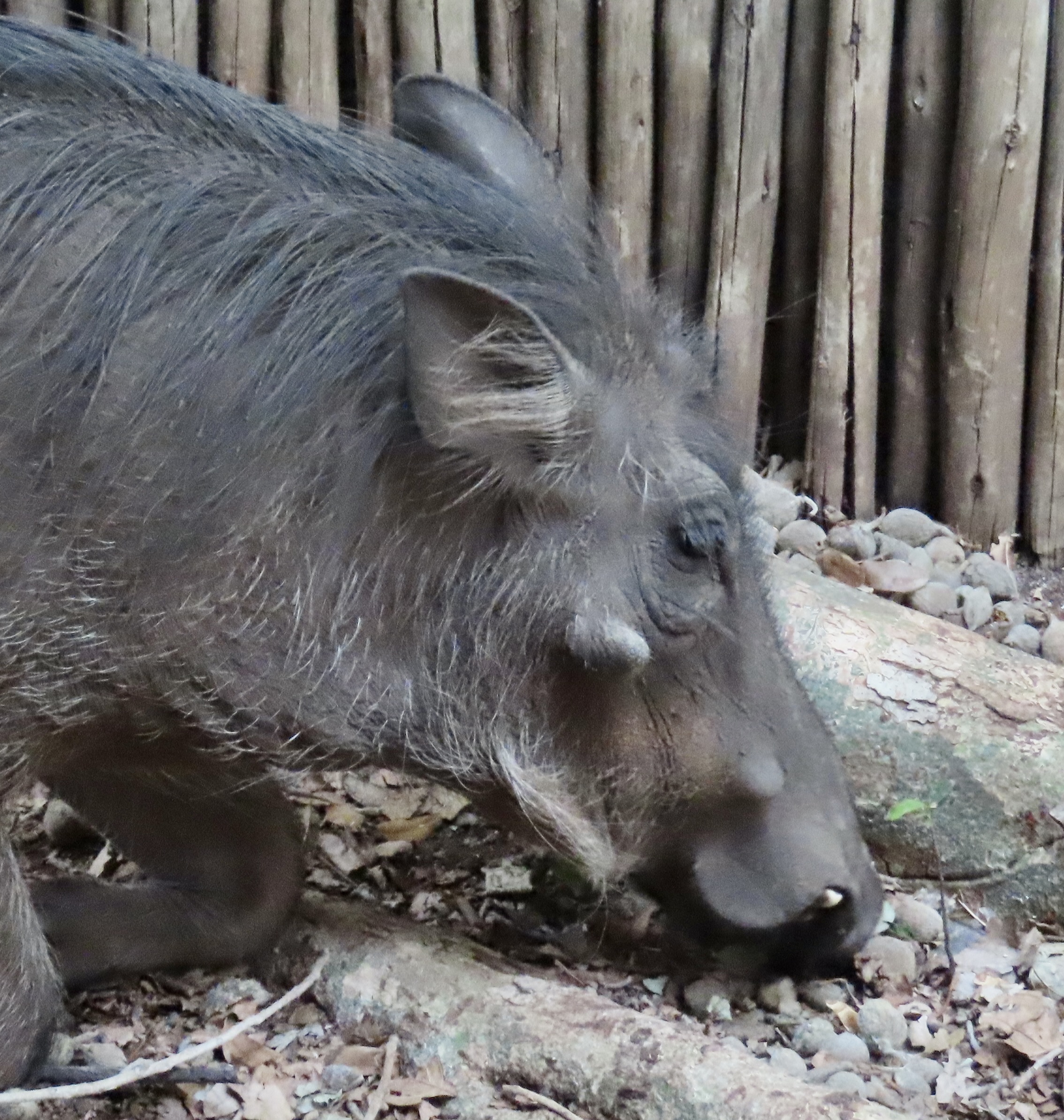
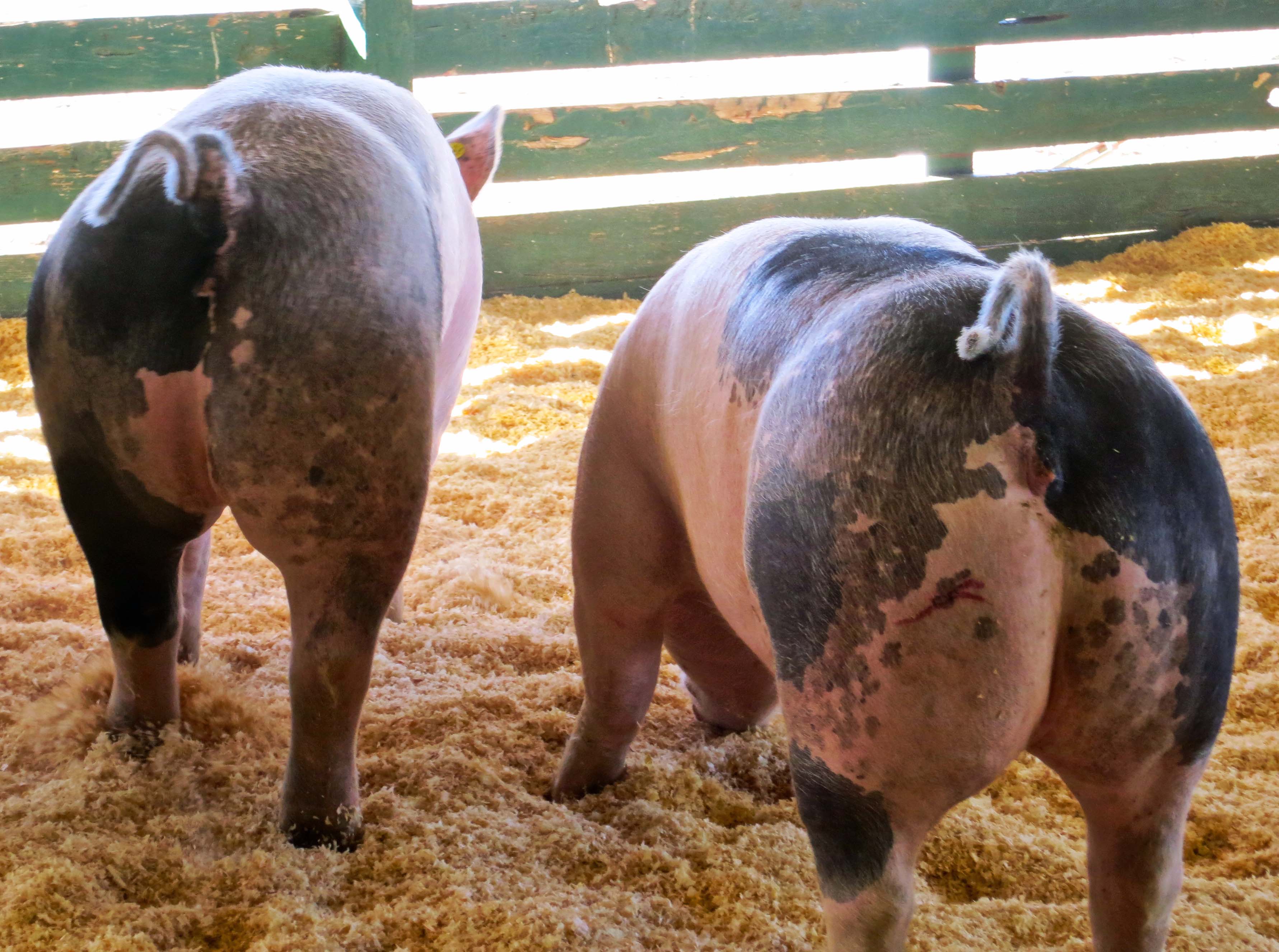
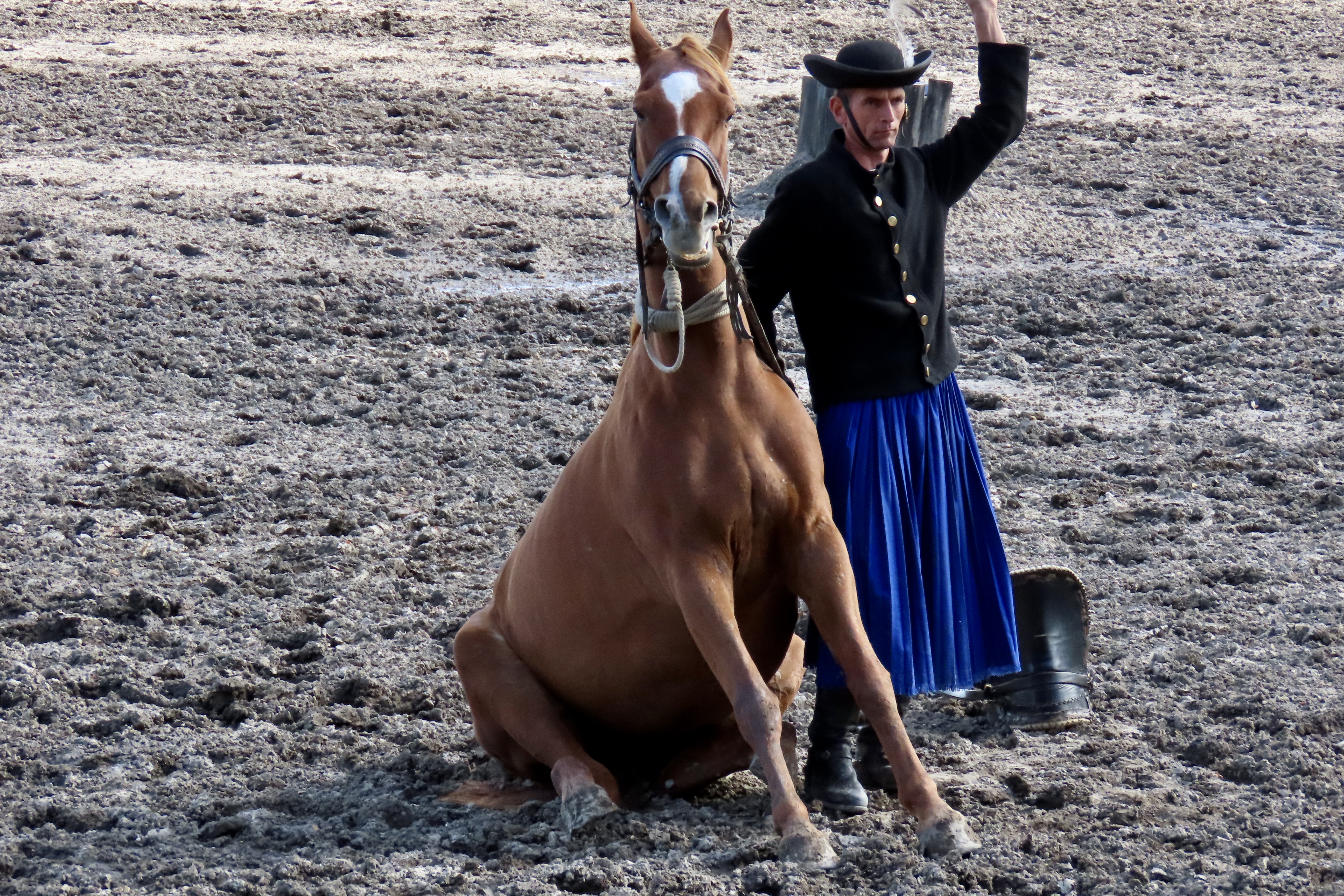
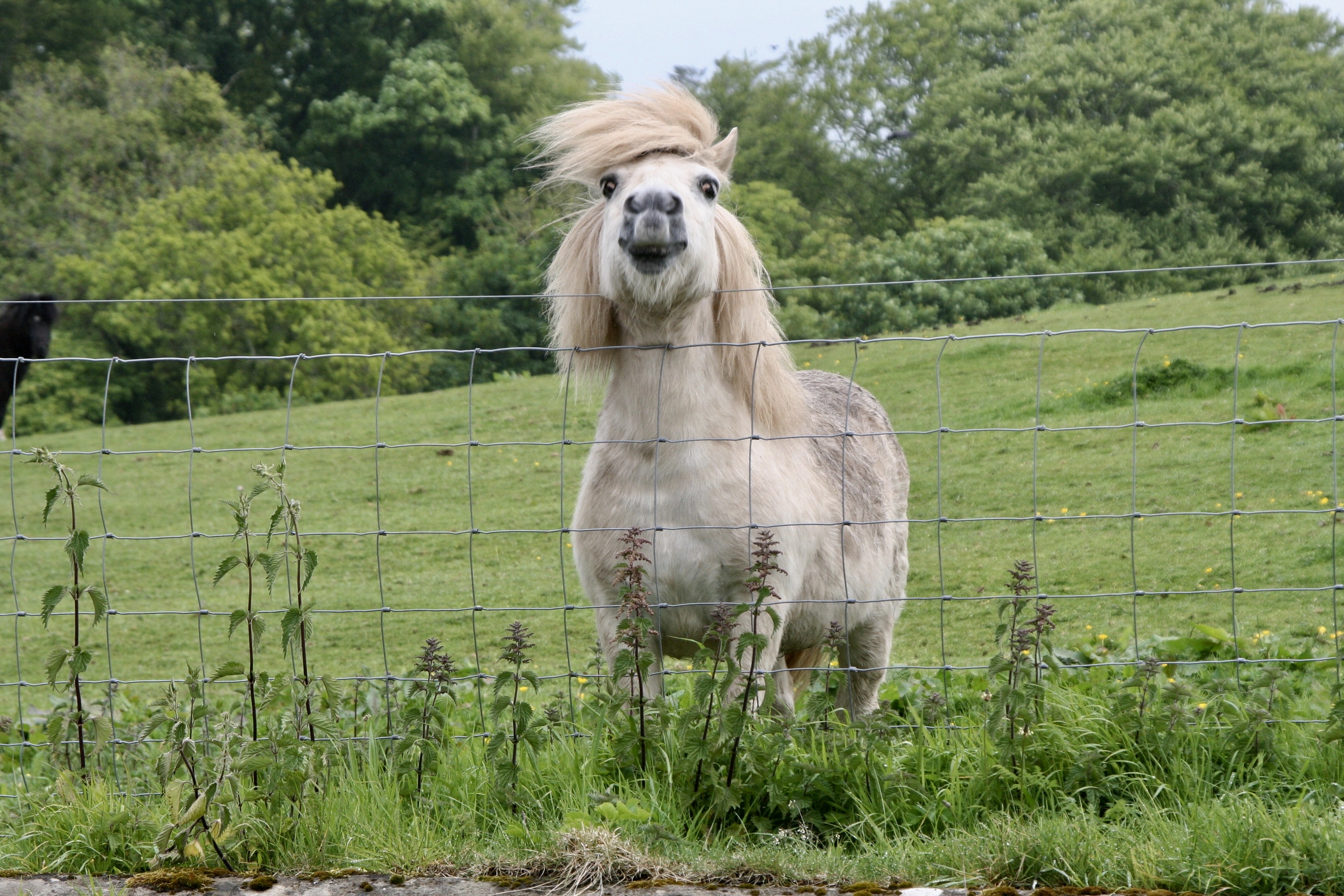
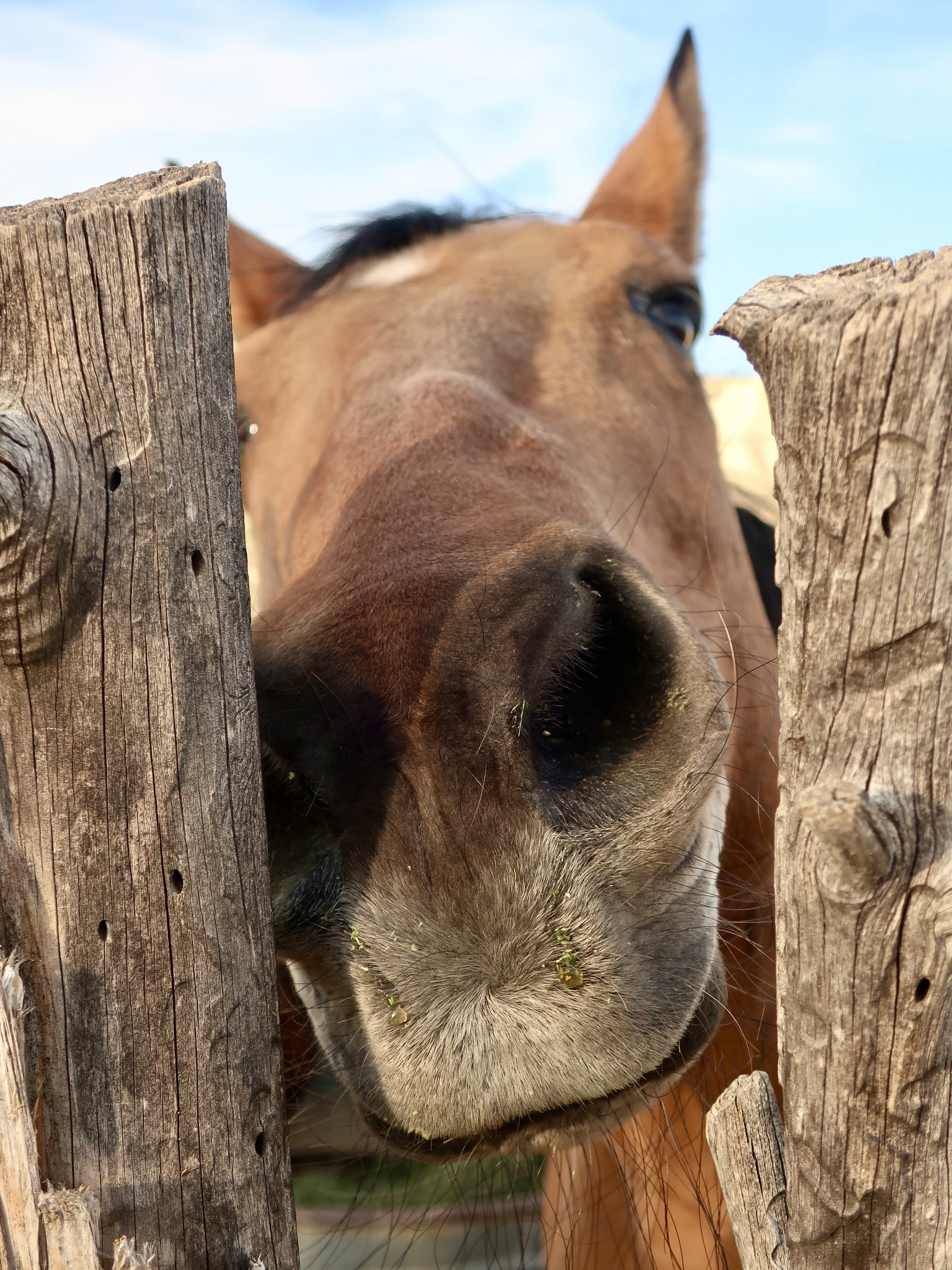
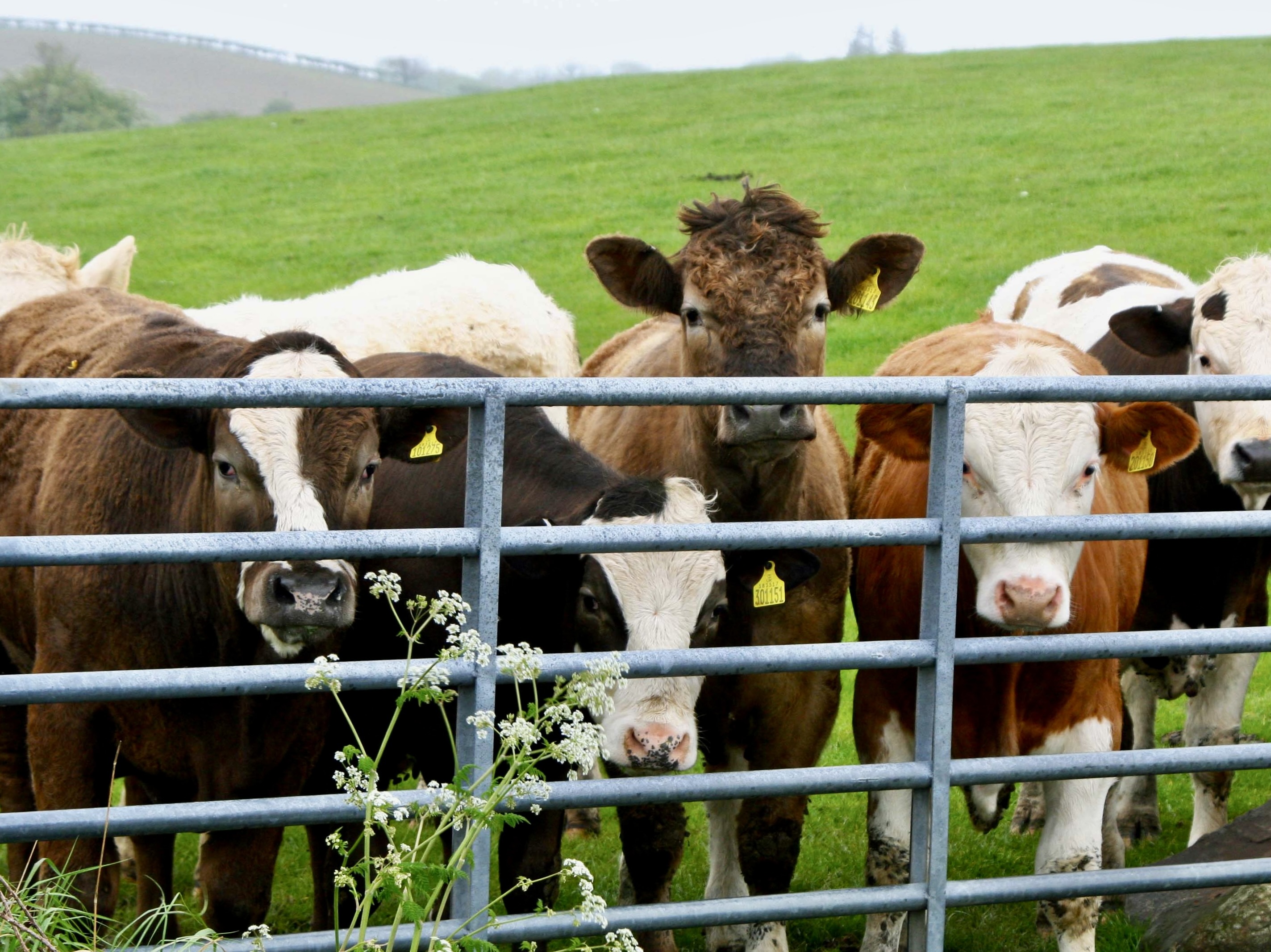
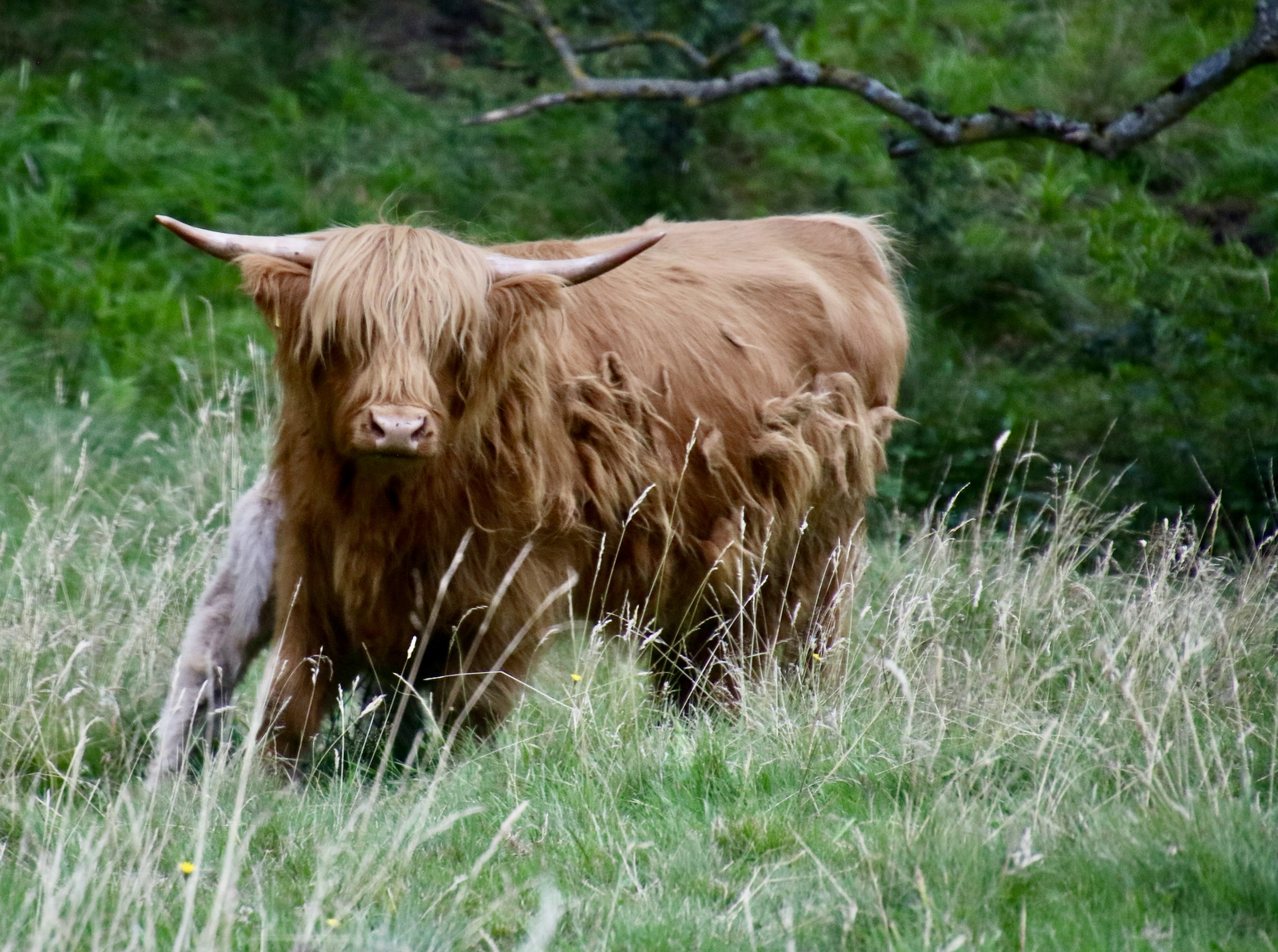
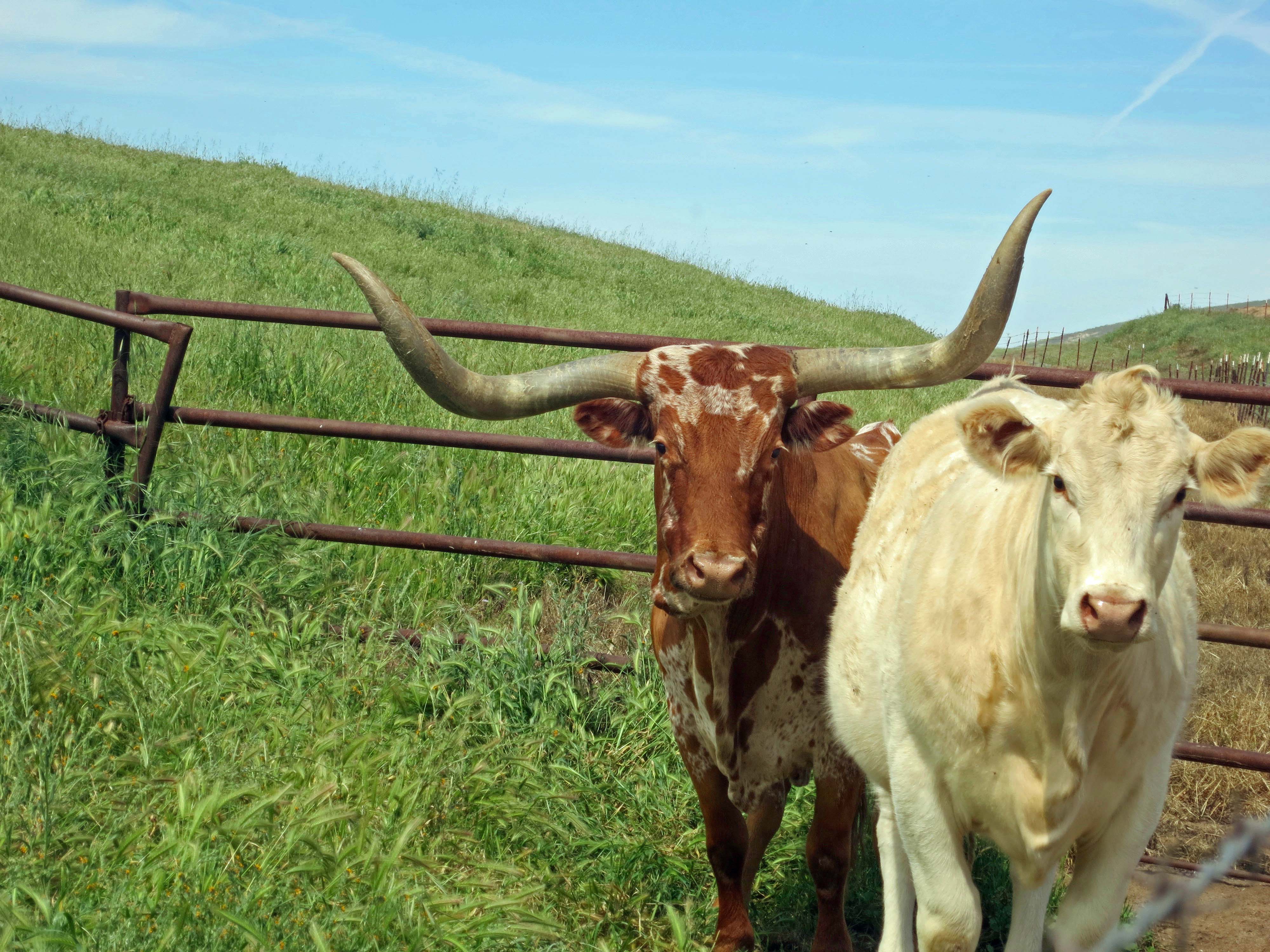
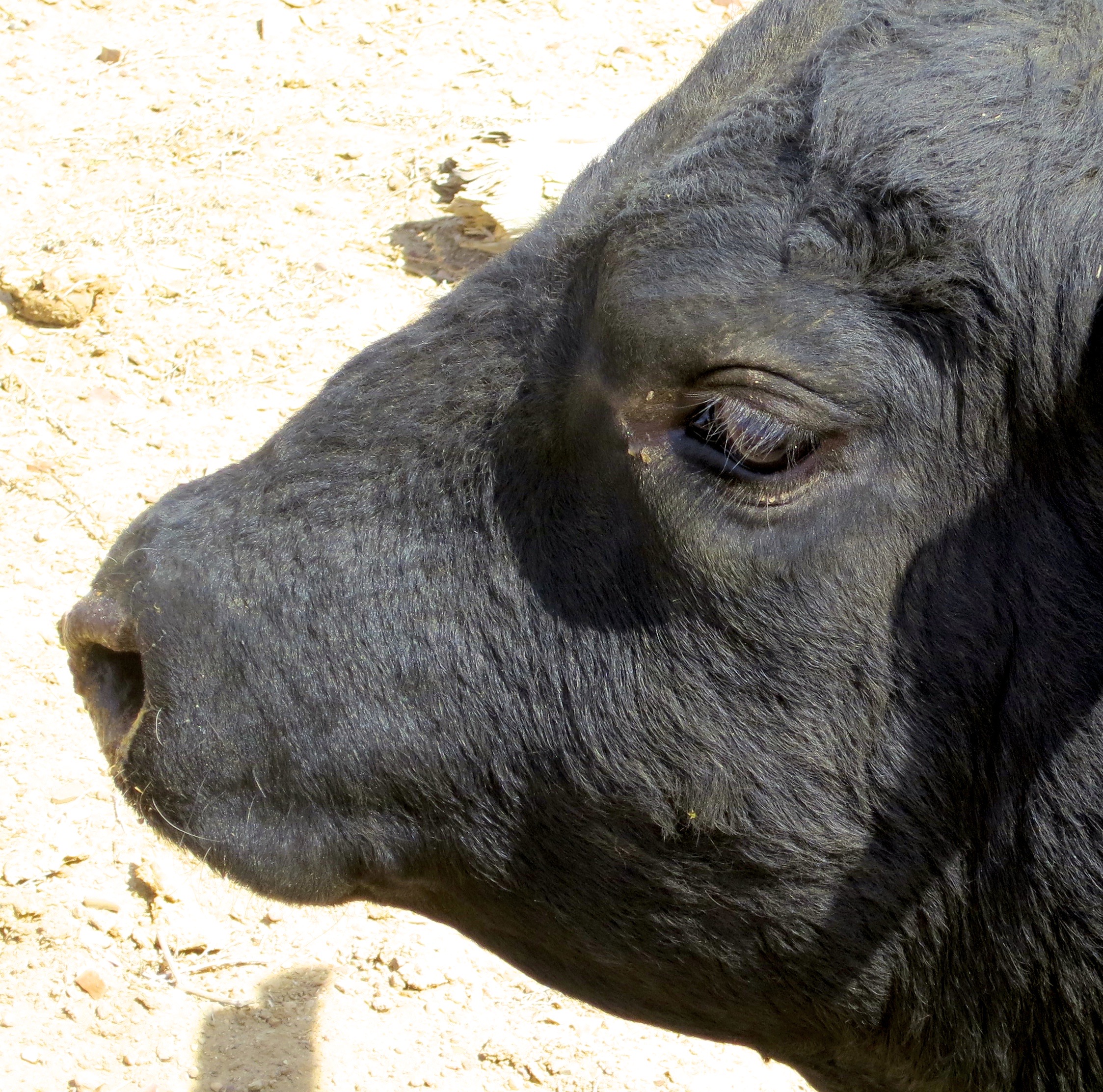
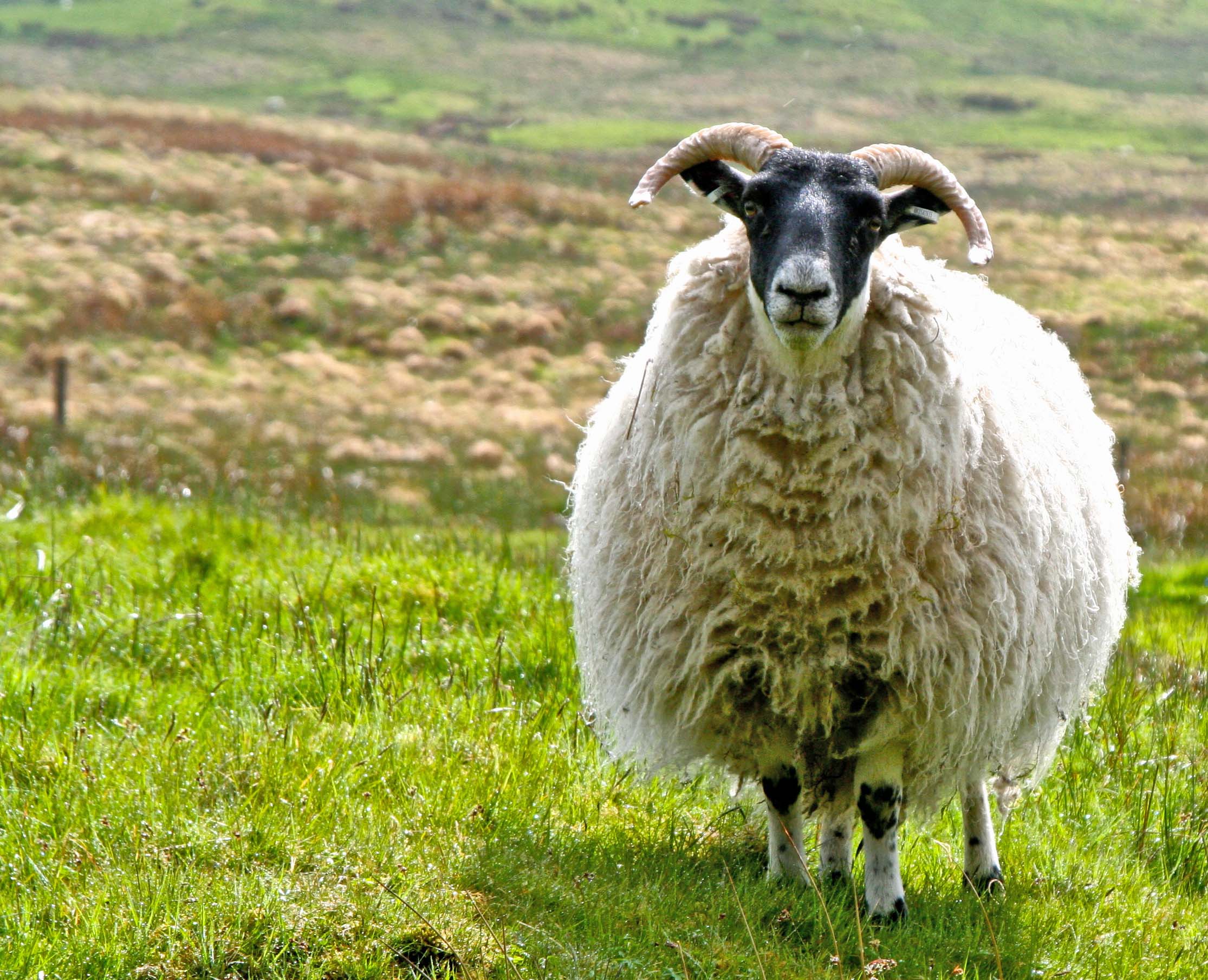
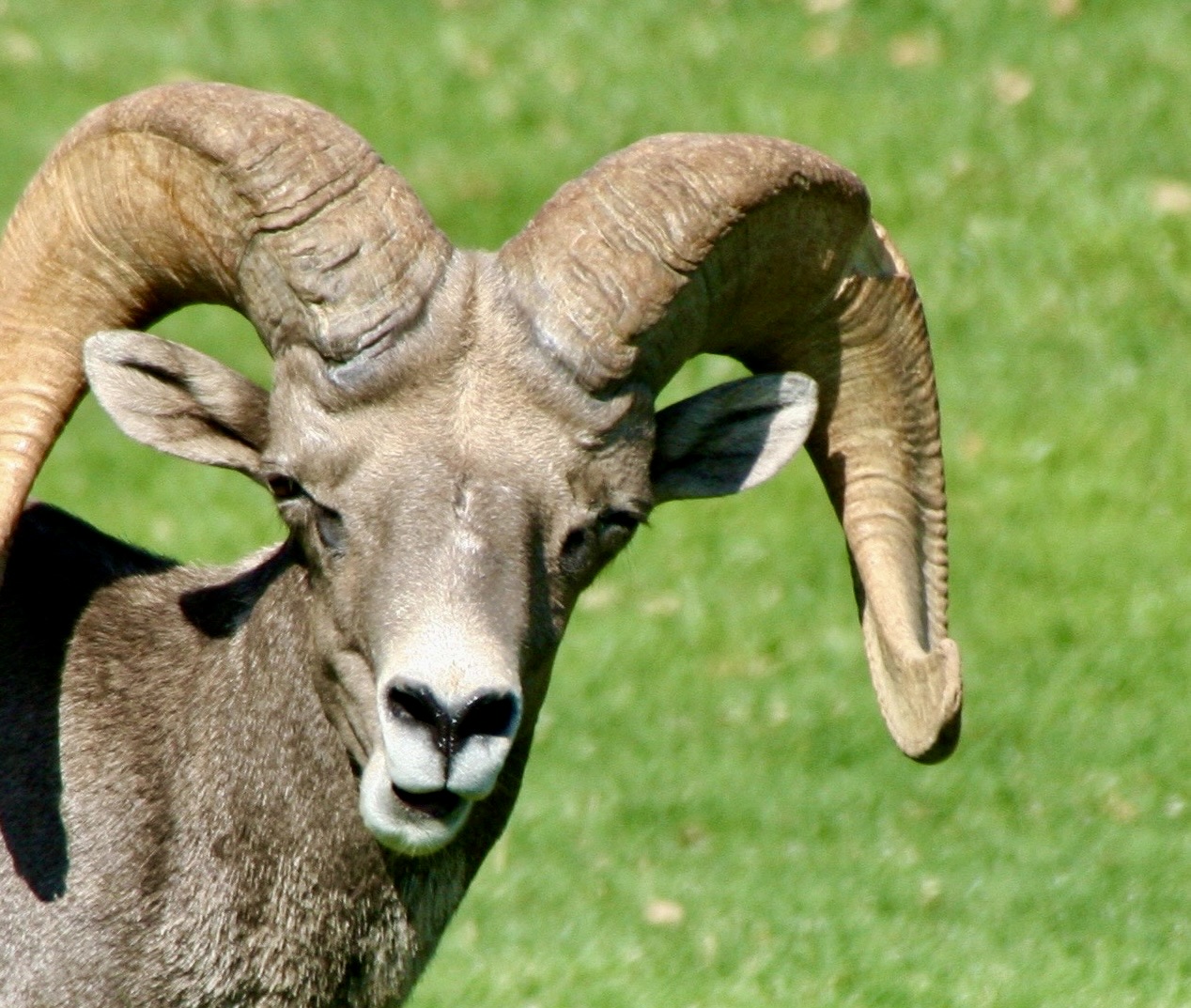
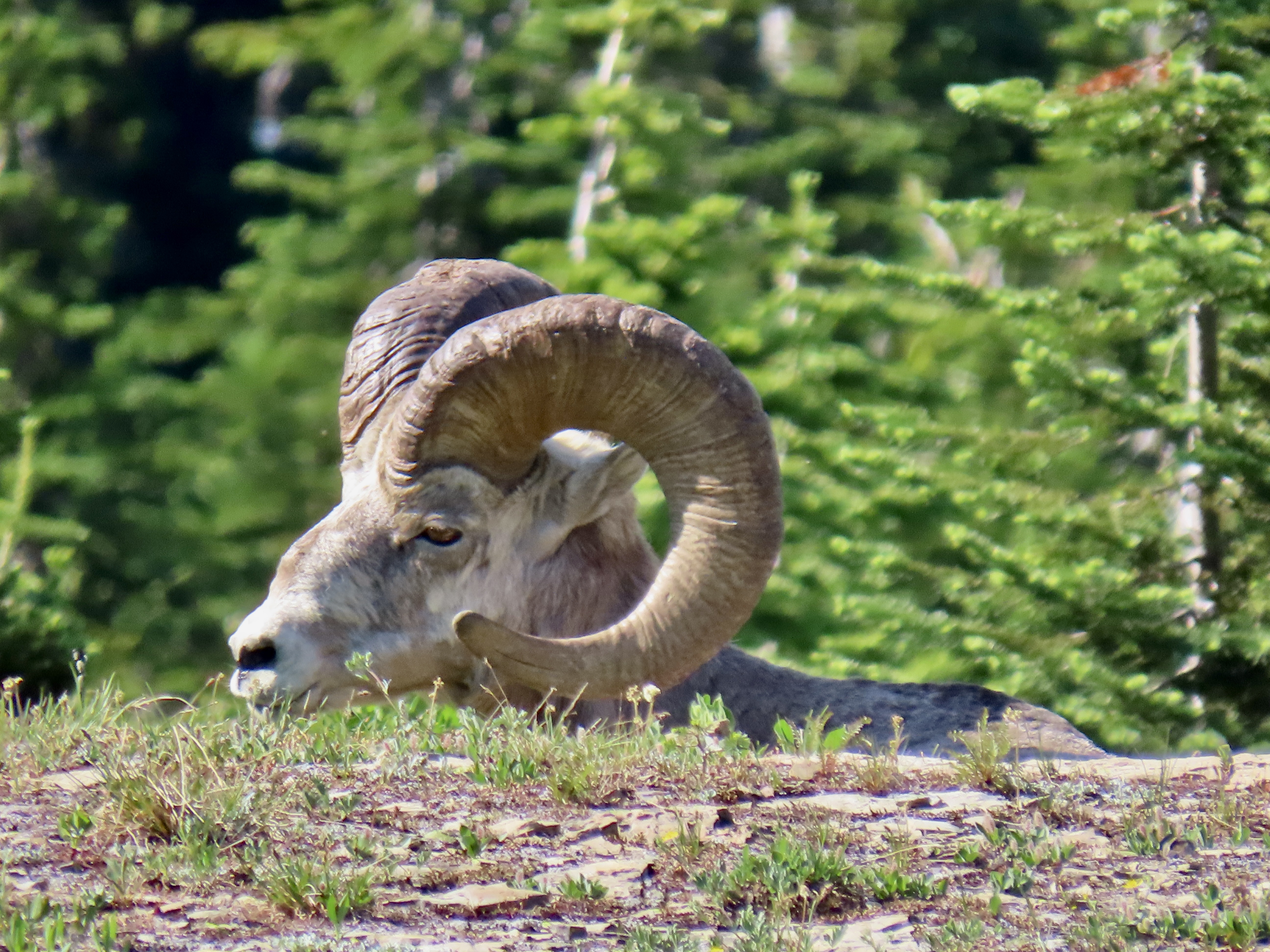
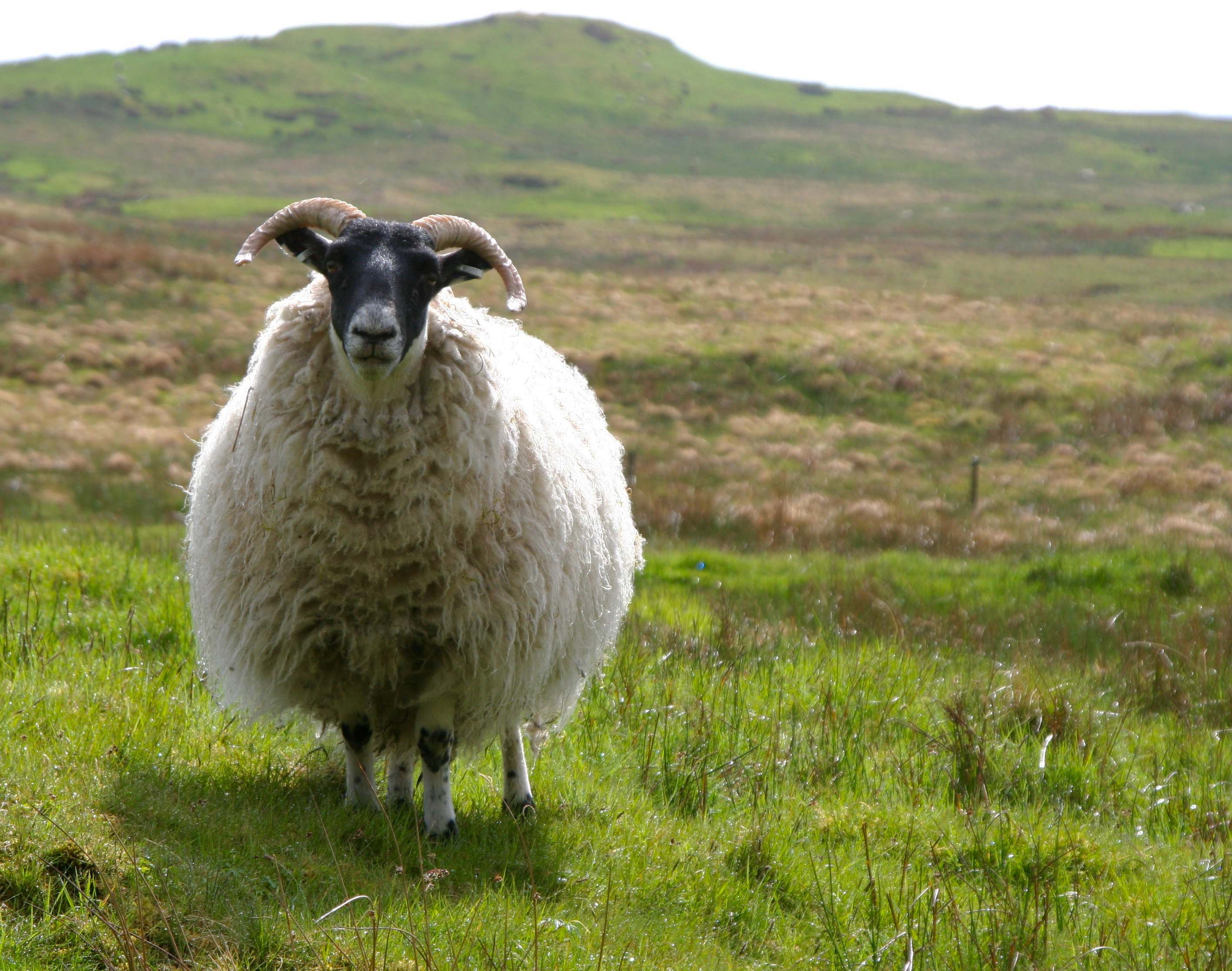
Bad dog! This was one of those occasions I was ever so glad to have a camera along. We had known that we would need one. Our neighbor Jim in Oregon had called and urged Peggy and me to come over and see his recently-born baby goats. Of course we went. Immediately. Who can resist baby goats? Plus, it was a photo op waiting to happen. I just didn’t expect this scenario where one, very small baby goat appeared to be dominating one very large dog. Have you ever seen such dejection? The dog, btw, wasn’t just a large dog; it was one of the largest, most ferocious dogs in the world, a Kangal Dog from Turkey. They are massive animals weighing up to 200 pounds that were originally bred to protect livestock from bears, wolves and other predators. Jim kept his to discourage unwanted intruders, whether four legged like our local bears and cougars, or two legged. I’m not sure what triggered the response above. The big dog had walked over and sniffed his latest charge and then started slinking away. Maybe baby or mom had objected.This is what we expected in terms of cute baby goat photos. Lining up for food cafeteria-style. Daddy. A handsome fellow. He had escaped from Jim’s and come over to visit us. Jim called him Rambo and was very careful not to turn his back on him. He had been butt butted far too many times. Goats are two toed ungulates, which make up the majority of the ungulates.Whenever I go to a county or state fair, my first stop is to visit the goats. I love the way they come over to visit and possibly nibble at your shirt. I found this guy at the Modoc County Fair in California, the same place I found the hogs shown below. In Africa, we met another two toed ungulate. It’s hard to find one more different from the goats. The birds are hanging out nearby because the big fellow stirs up lots of bugs as it shuffles along.While we are on the safari, we might as well check out other African ungulates. The giraffe is by far the tallest.A tree top perspective.The most dangerous of Africa’s two toed ungulates: The water buffalo. This is their “What are you looking at?” pose. I liked how each of them had its knee bent exactly the same. Horns and hooves, like finger nails keep growing for life. Apparently, there is a lack of farriers willing to trim water buffalo hooves.Africa’s numerous antelopes are also two toed. This antelope with a distinctive ring around its hind quarters is a waterbuck. Supposedly, the distinctive marking helps waterbucks follow each other when they are running through the woods. My guess is they would help a lion as well. “Target is in sight.” Horns, like hooves and your fingernails, are made of keratin.“I’d like to interrupt this presentation to announce that I, too, am a two toed ungulate even though Curt and Peggy didn’t find me on the safari. It was on the Nile River trip.Apologies for the interruption. Like the horses, donkeys and mules they resemble, zebras are single toed ungulates.I close my coverage of two toed ungulates in Africa with the warthog. It’s always in competition for one of the ugliest mammals to be found. Or maybe, it’s just cute. Guess who this one is related to?Yep. I found this handsome pair of porkers at the Modoc County Fair in northeastern California when I was on the way to Burning Man. Speaking of Burning Man, this is the time of the year that people sign up to attend the late August event that is held in the remote Black Rock desert of Northern Nevada. I often do a few posts around now to give newbies and curious folks an overview of what to expect. I’ve been going off and on since 2004. My friend Tom is trying to persuade me to join him this year in giving away hundreds of margaritas on the Playa. I’ll probably be rewarded for my work with all of them I can drink. Woohoo!Horses are one toed ungulates. Rarely do you find them sitting on their butt in the mud, however. Why would they? But Hungarian Cowboys, the Csikós, do things differently. We took this photo at the Bakodpuszta Horse Farm in Hungary, on our trip down the Danube River. Something else you wouldn’t find an American cowboy doing.This cutie came dashing up to a fence to see us when we were searching for ancestors of mine in Lowland Scotland near Stranrae. Given its excitement, I wondered if it wasn’t an ancient relative of mine reincarnated as a Shetland pony.I featured this horse in a promo for today’s post. He was hanging out on a ranch near Bryce Canyon National Park in Utah. I think it probably had high hopes for an apple..Cattle are two toed ungulates. We went looking for the unique Scottish Hielan coo (Highland cow) while we were in Lowland Scotland but only found what we normally find wandering around North America. Like the Shetland, they ran over to check us out.We found this Hielan coo in the Black Forest of Germany. Go Figure. This summer we are going to be exploring the Highlands of Scotland instead of the Lowlands. We are expecting to find the coos where they belong. This two toed ungulate with the large horns is immediately recognizable. It’s a Texas longhorn. We found it in the foothills of California.Not so clear in terms of heritage was this strange looking steer. But we found it about a mile from the gate to Area 51 in south eastern Nevada. Could it have been a cleverly disguised visitor from outer space? Hmmm.Sheep are also two toed ungulates. This stout fellow had been blocking a small rural road when we were lost in Scotland. It was being baaad. Had its body been black, I would have cited the old nursery tale to it: Baa, baa, black sheep have you any wool? Yes sir, yes sir, three bags full. BTW, sheep are closely related to goats and on rare occasions even crossbreed. Their offspring is called a geep. And no, I’m not making that up.Among sheep, nothing—from my perspective— is more regal than the wild big horned sheep of the deserts and mountains of Western North America. This magnificent example chewing his cud had bought his herd down to graze at a small county park between Las Vegas and Lake Mead Nevada.
There’s a fun story here. The big ram above had been bringing his flock down to the park from the mountains for years when a new subdivision was built beside the trail. This didn’t seem to bother the big horns and you can imagine what a treat it was for the people. But then, one of the home owners put a shiny aluminum door on his garage next to the trail. The leader looked over and saw his reflection. Except it wasn’t his reflection in his mind. It was another lage male challenging him for the leadership. He reared back and charged at the same time the other big horn did, again and again. Nobody was going to get his nannies. The story the locals told us was that the owner of the garage door had a really hard time convincing his insurance agent how the damage had been caused!
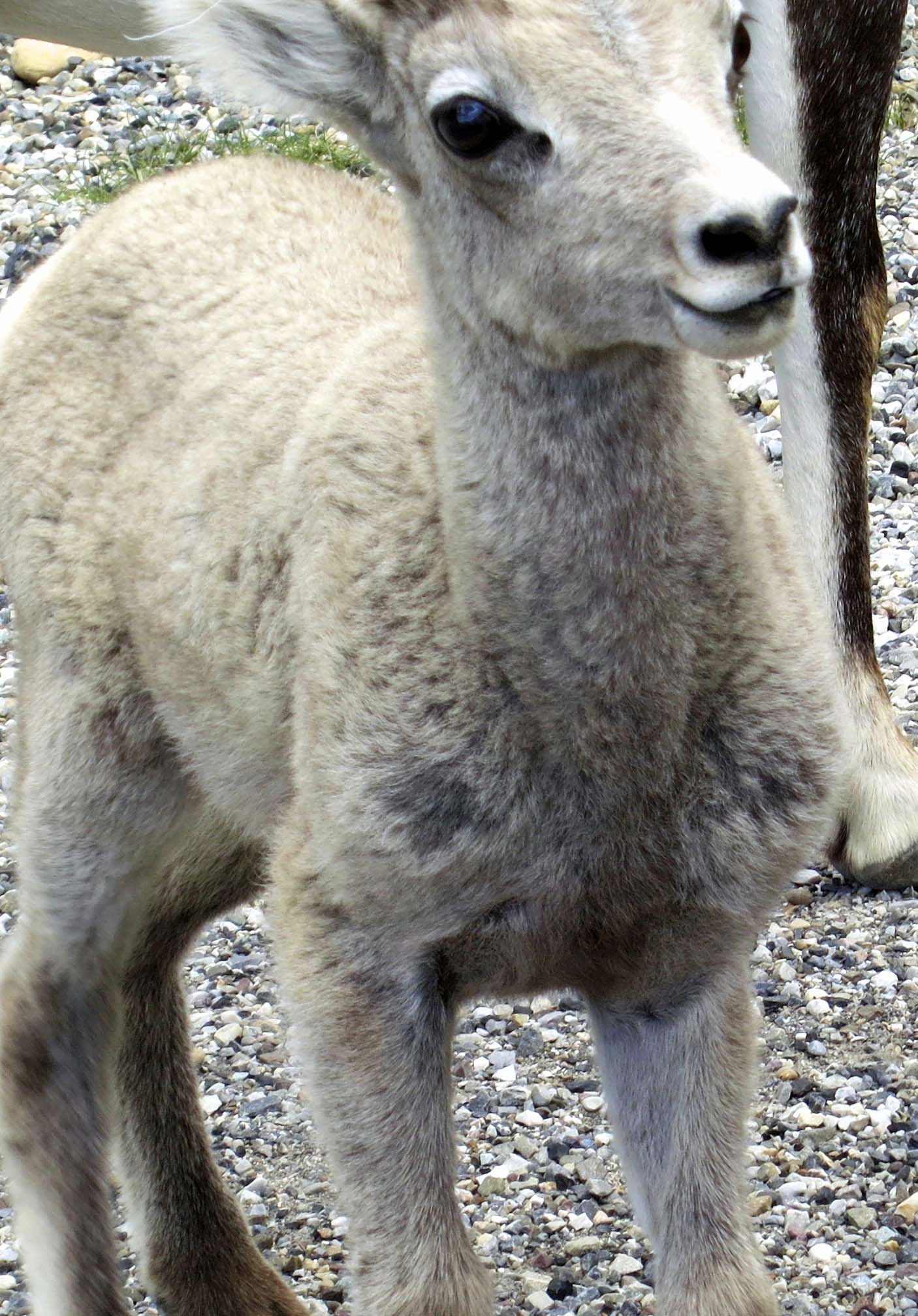
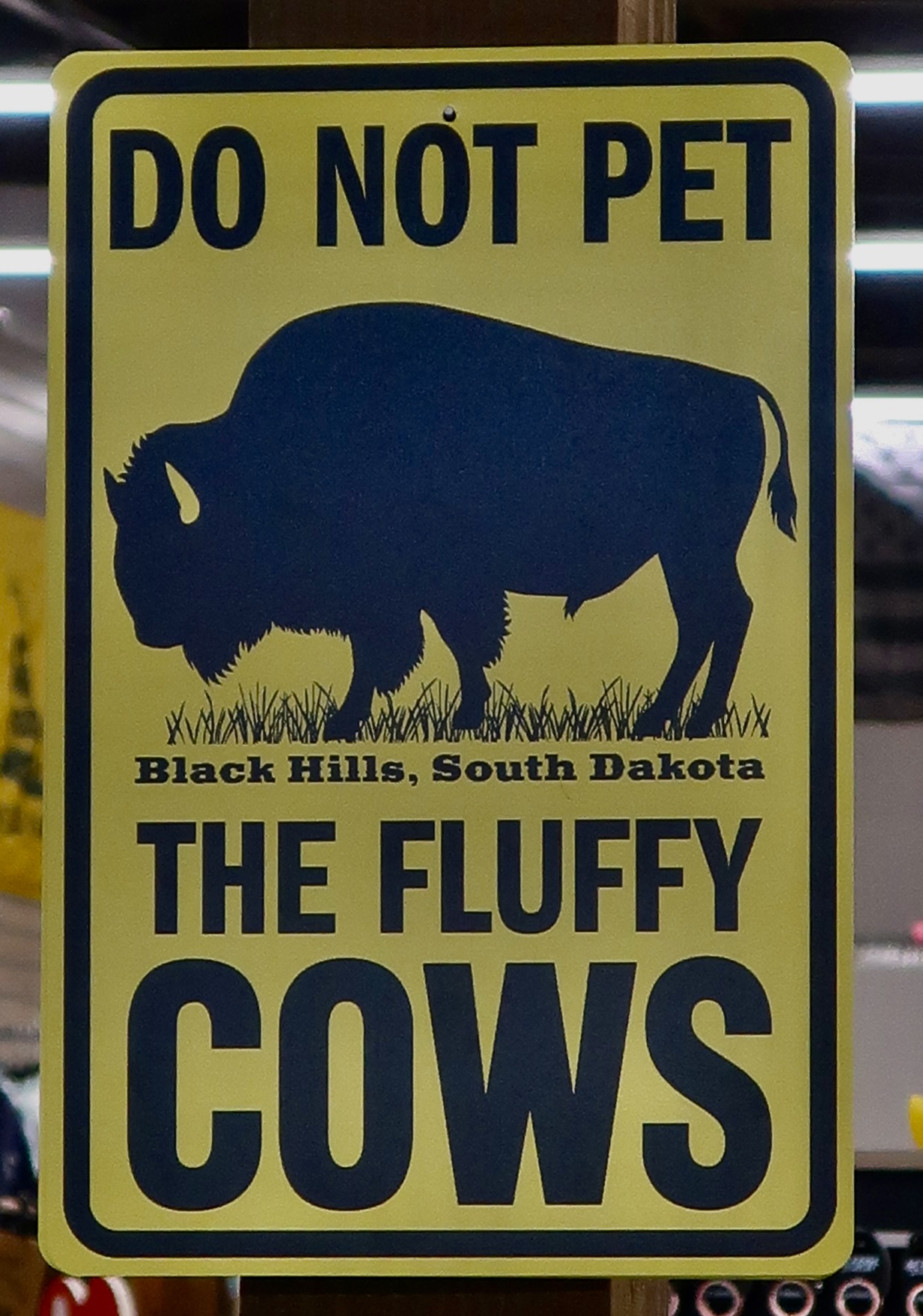
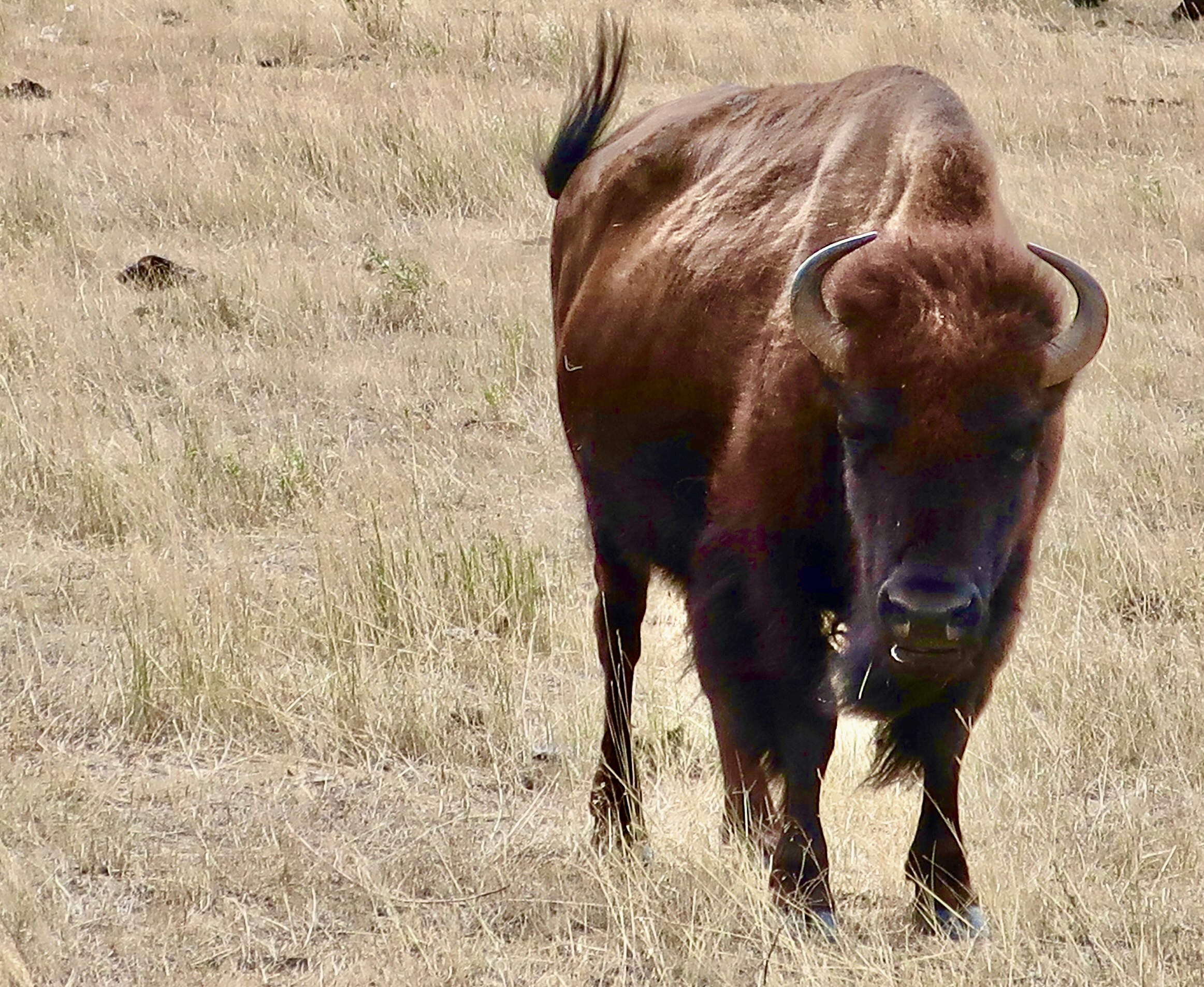
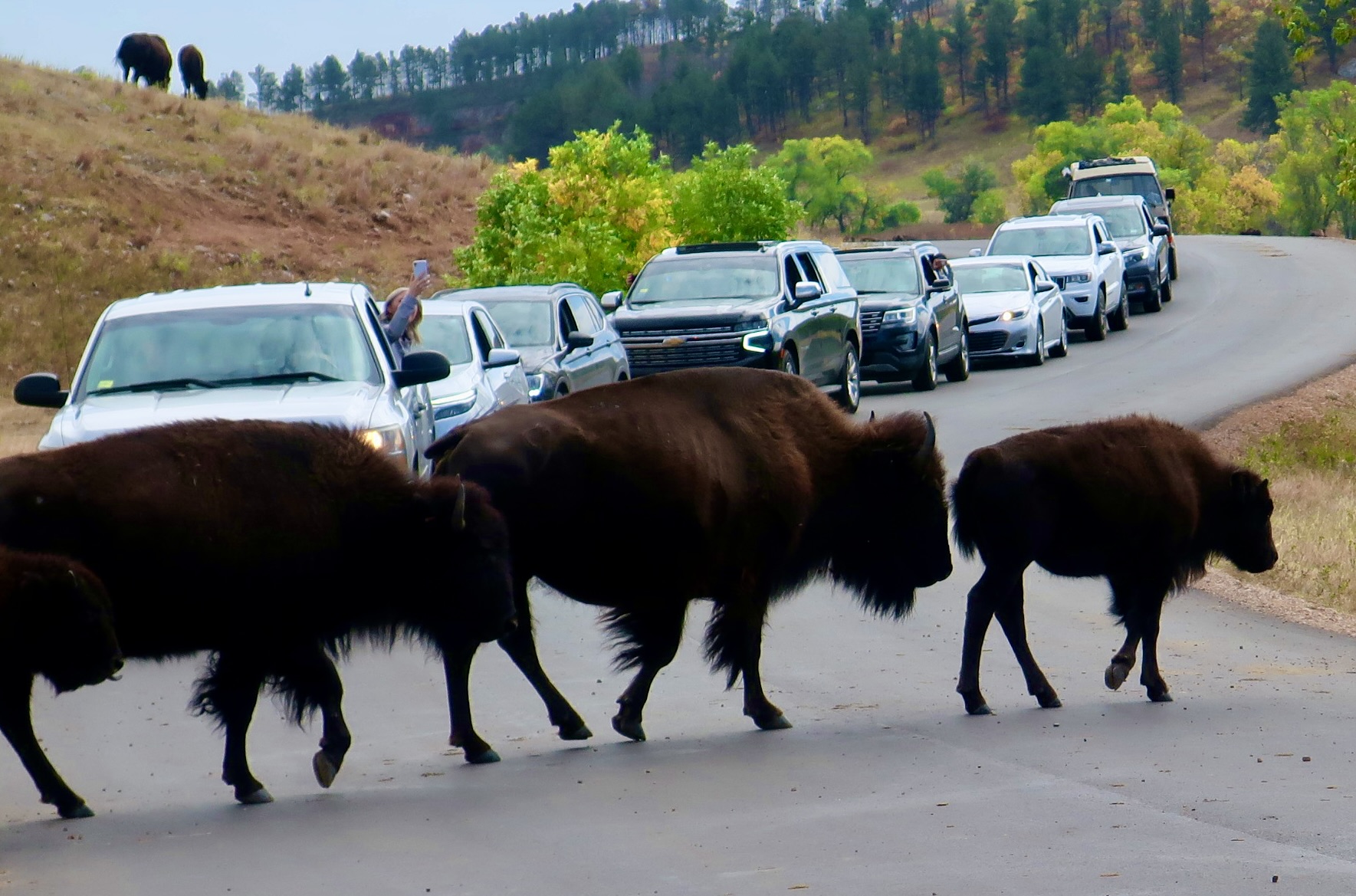
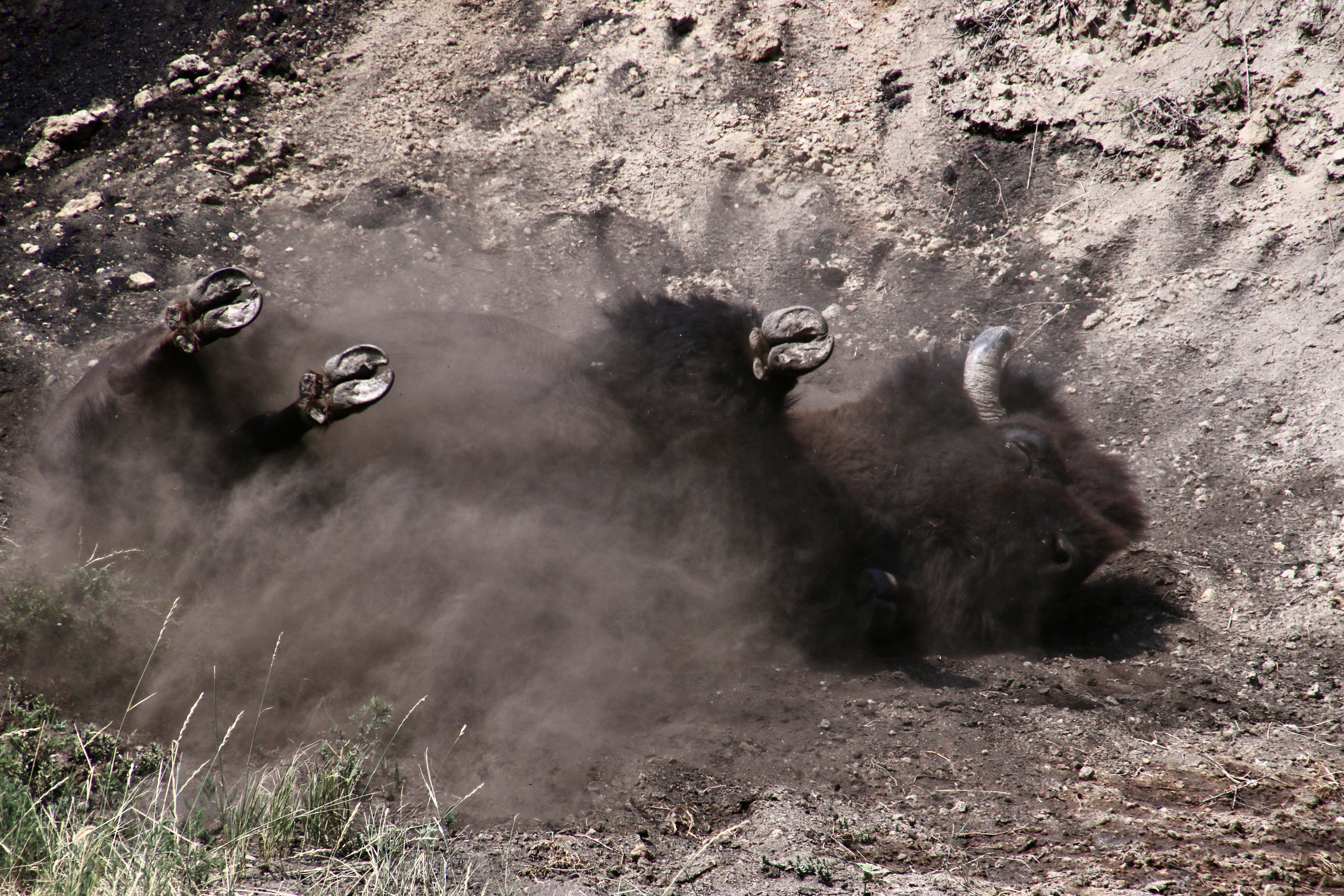
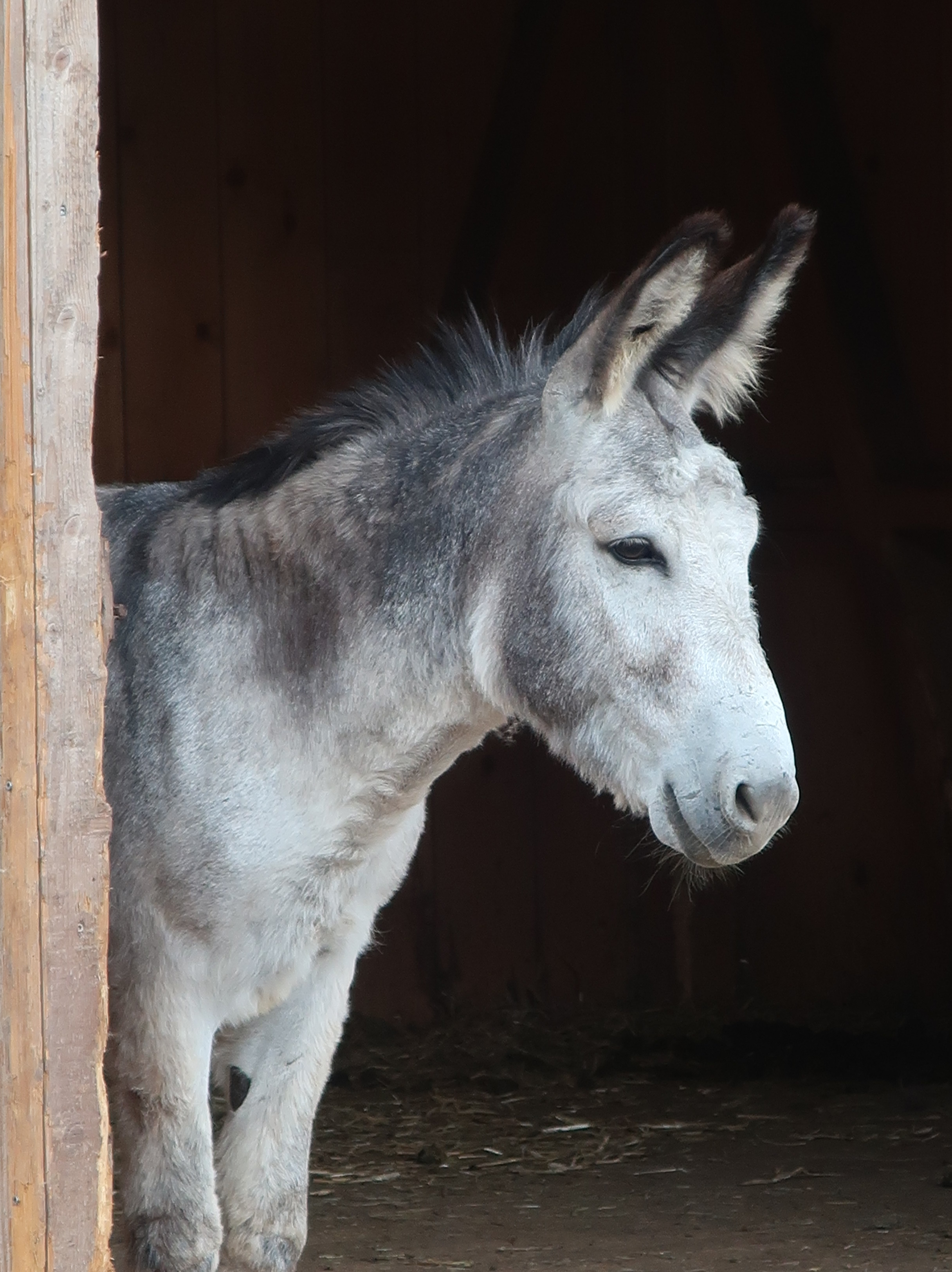
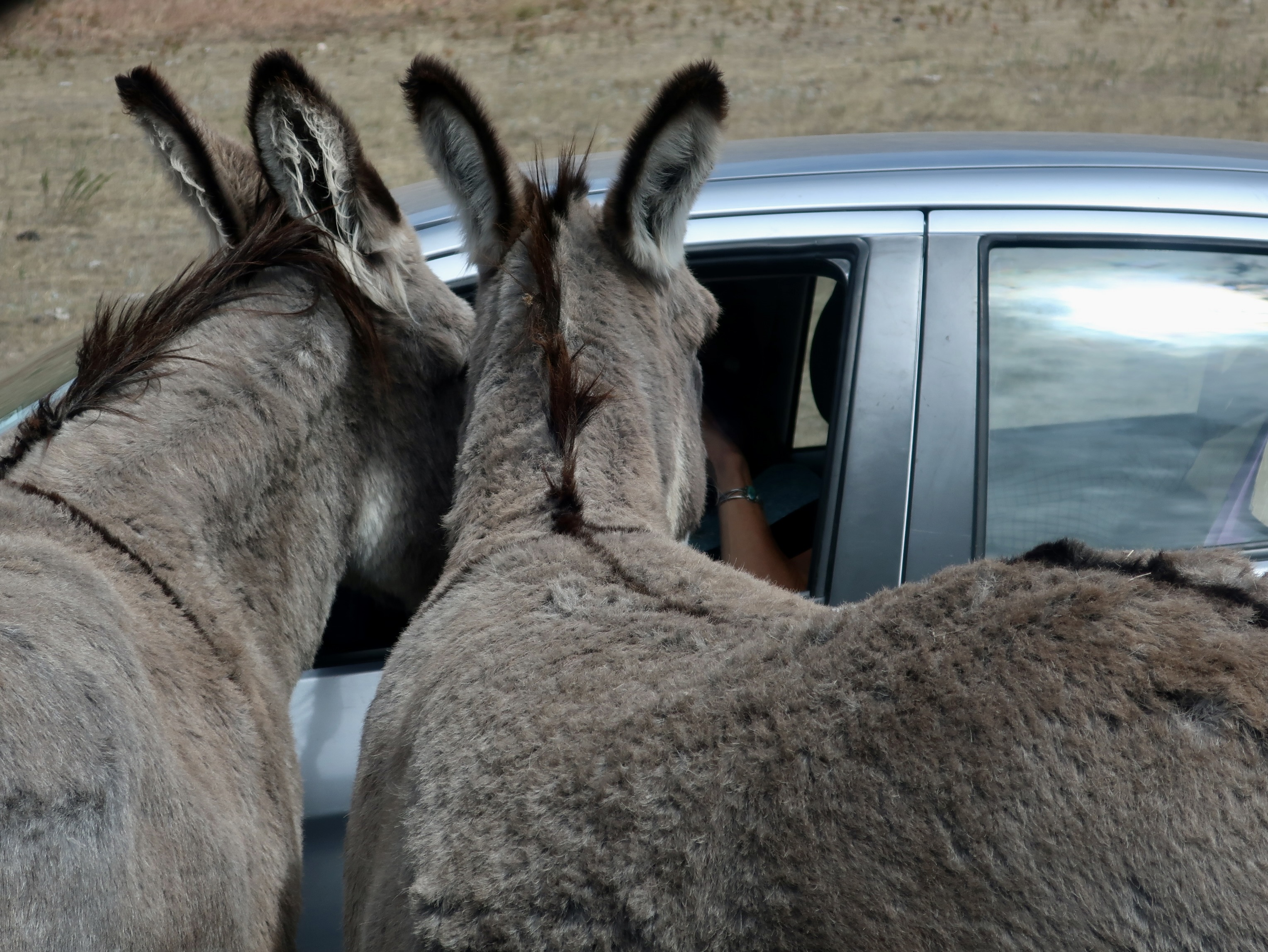
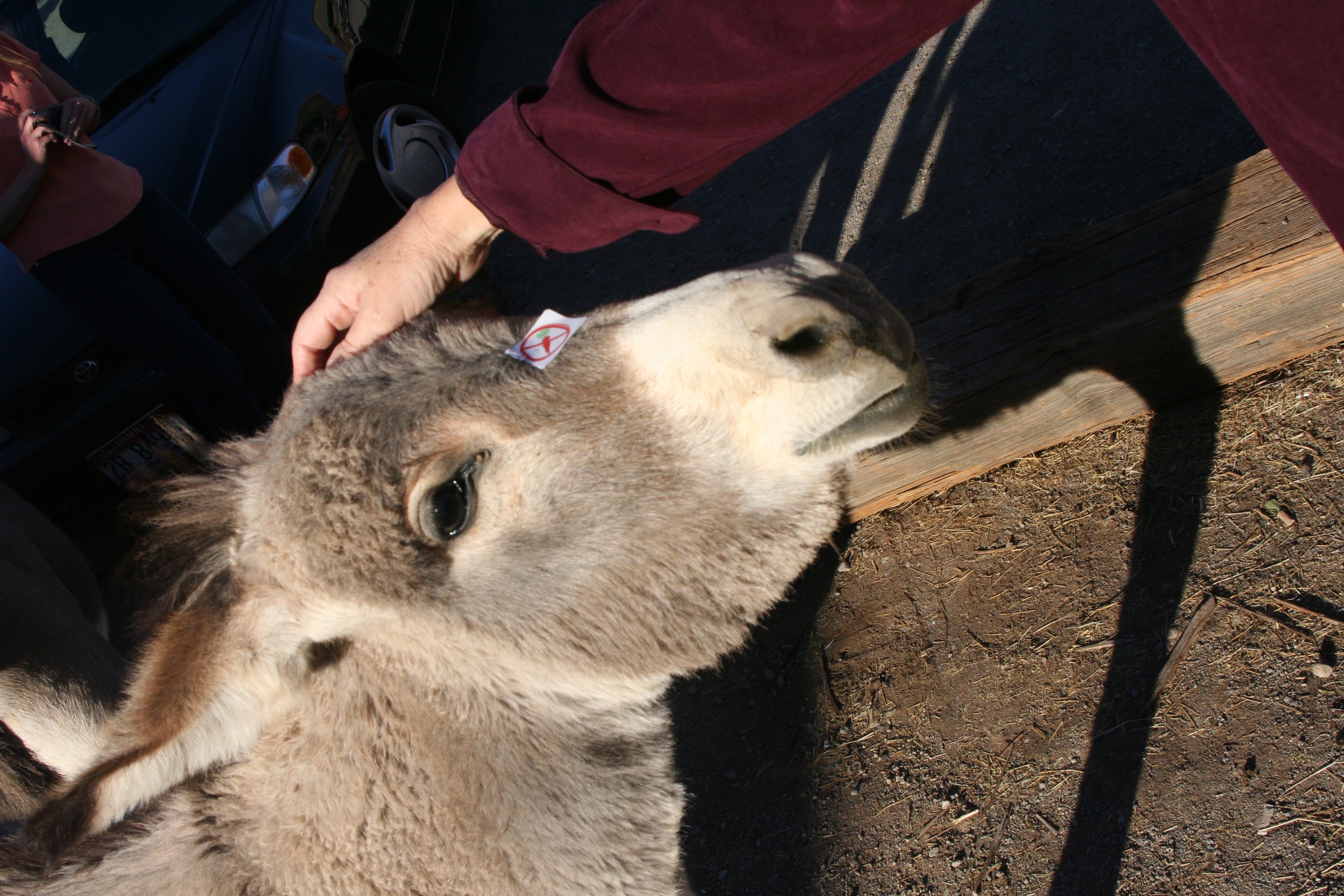
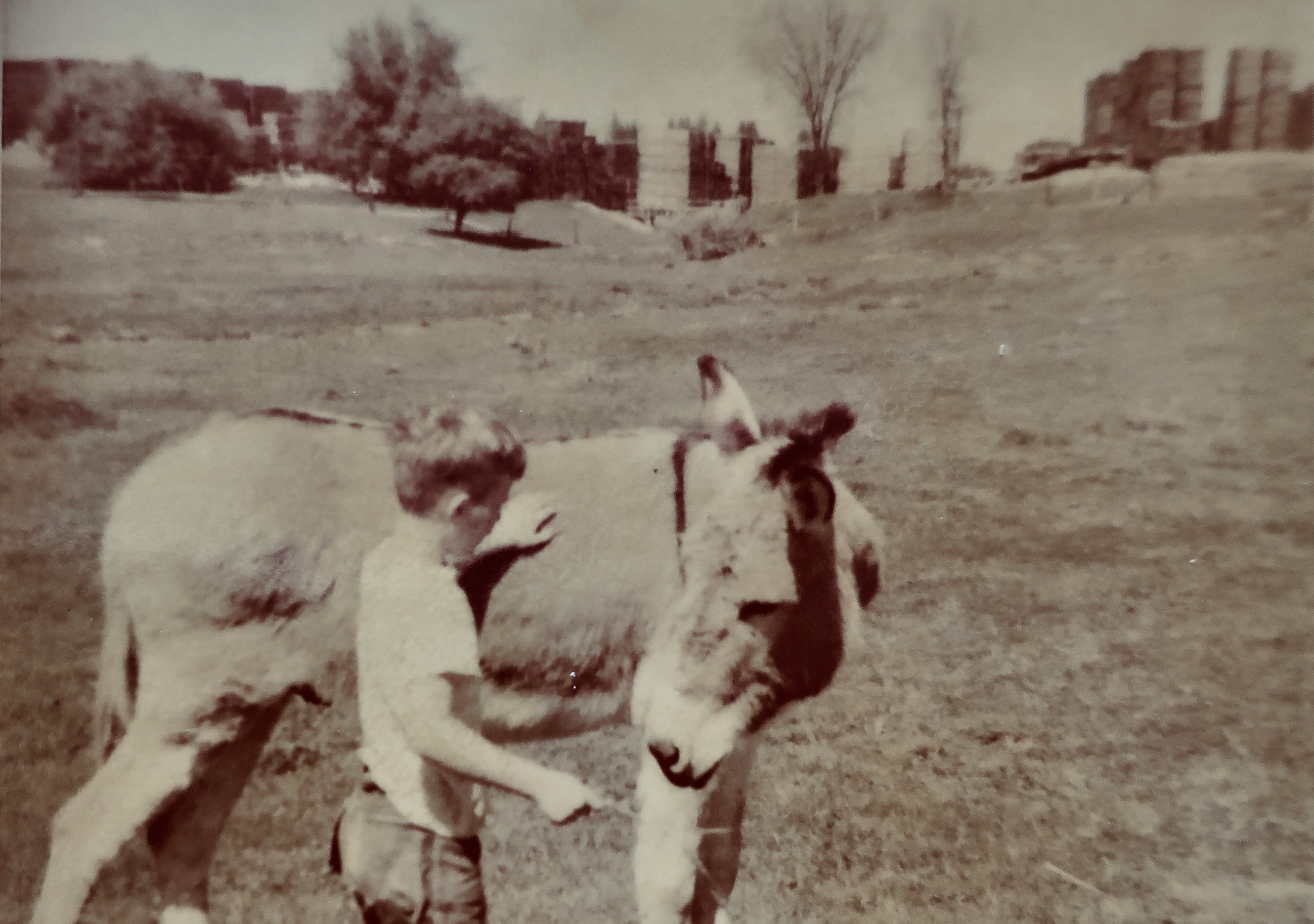
A big horned sheep at Glacier National Park.This young big horn sheep was standing beside the Alaska Highway in Canada’s Yukon Territory.Buffalo are another two toed ungulate. This sign was located in a store in Custer, South Dakota. We were on our way to Custer State Park. It’s good advice.If a buffalo stares at you, raises its tail, paws the ground and grunts, you are too close! It’s best to stay at least 75 yards away. Farther if there are calves around. This youngster was feeling its oats even though I was using my telephoto lens from a safe distance. The family of buffalo was crossing the road in Custer State Park. We waited patiently and took photos from the safety of our truck.Have you ever wondered how buffalo create their buffalo wallows? We caught this one wallowing away and taking a dust bath in Theodore Roosevelt National Park in North Dakota. It provides a good look at a two toed ungulate.I’ll close this post with what are our favorite one toed ungulates: Donkeys. This beauty was standing in a shed in Germany’s Black Forest.There were more than buffalo stopping cars at Custer State Park, South Dakota These two answered the age old question of how many donkeys can stuff their heads in a car’s window at one time.This donkey foal was obviously enjoying having its head scratched in Oatman, Arizona— but not nearly as much as Peggy was enjoying doing the scratching! The sticker on its head was put there to discourage people from feeding the youngsters carrots. They can choke on them.And finally, this is me petting a donkey in a field near my house in the early 50s. The lumber stacks in the background are at Caldor Lumber Company in Diamond Springs, California where my dad worked as an electrician. I may have been holding something to feed the donkey.
Next up on UT-OH, my blog-a-book-memoir, I learn valuable lessons that every first grader should know: It’s not smart to put your head down on a track to judge a train’s distance when it’s a hundred yards away (it makes the engineer nervous), deciding to go on a mile and a half hike by yourself at 5:30 a.m. may be frowned upon, habanero peppers are hot, and why it’s valuable to wear underwear. Getting caught in your zipper and having to have the first grade teacher free you is no joke.
2025 was a good year for us from a travel perspective. We stayed home, so to speak, and limited our wandering to Hawaii, the Southwest, and New England. Now we have the itch to go abroad again. We’ve chosen three areas known for their beauty, culture, wild areas— and relative safety: Costa Rica, Scotland, and Bali.
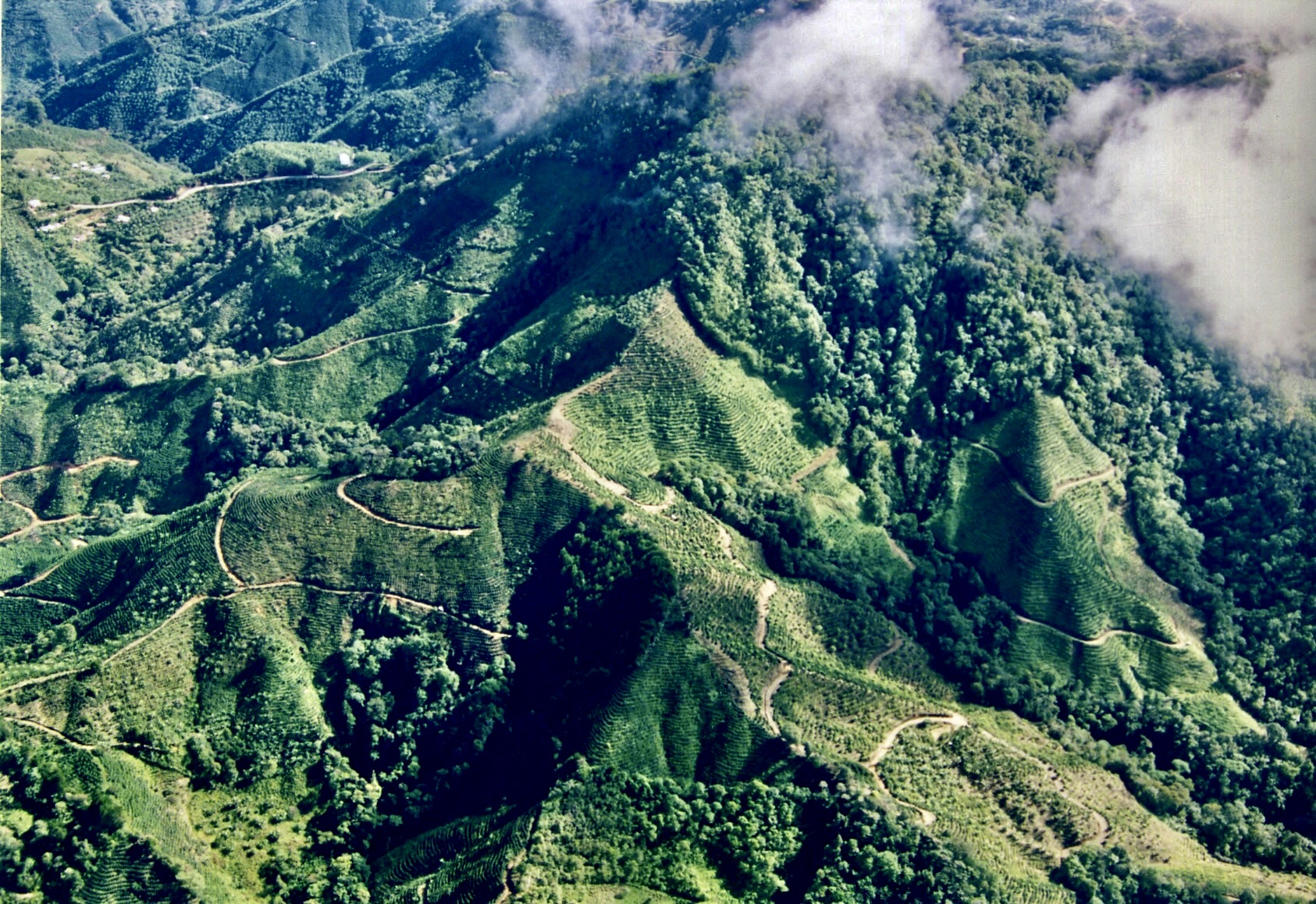
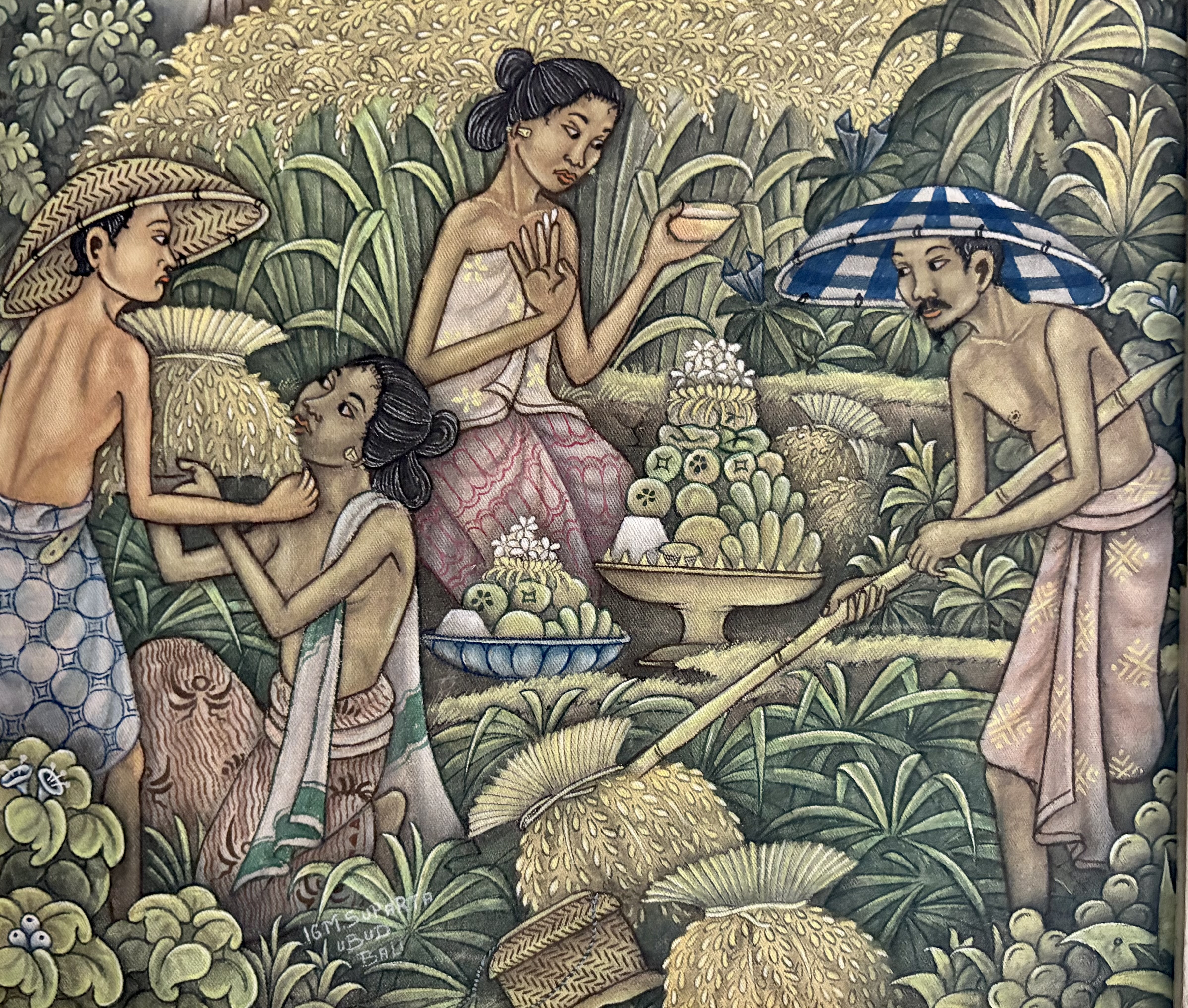
First up: Costa Rica. We took the above photo when we were in a small plane flying back and forth across the country on a tour in the 90s. This year we will be renting an SUV with high clearance and driving ourselves. The country roads can be challenging— even in the dry season! Peggy and I will be going there for the month of March. Our son Tony and his family will join us for a week in Monteverde.Next up, we will be visiting Bali. I visited in 1976 as part of a six month tour of the South Pacific. I’d lost my camera in Fiji, so I don’t have any Bali photos. I brought a painting home instead. The region is known for its colorful art. This one depicts a rice harvest. The woman on top is making an offering. It’s important to keep the gods happy. We will be there in May. Our grandson Ethan will join us for a week.We met this fellow in Scotland when we were doing family genealogical research in 2014. He had positioned himself in the middle of the narrow road we were driving on for about 10 minutes before finally moving over to the grass. Peggy and my families were Lowland Scotch so we were in the southern part of the country. This year we are visiting the highlands, coastal regions and islands of the north in late June and July. We will be checking out castles and looking for Nessie, the Loch Ness Monster. Our grandson Cody will be joining us for two weeks. We are planning to hop over to Northern Ireland after Scotland.
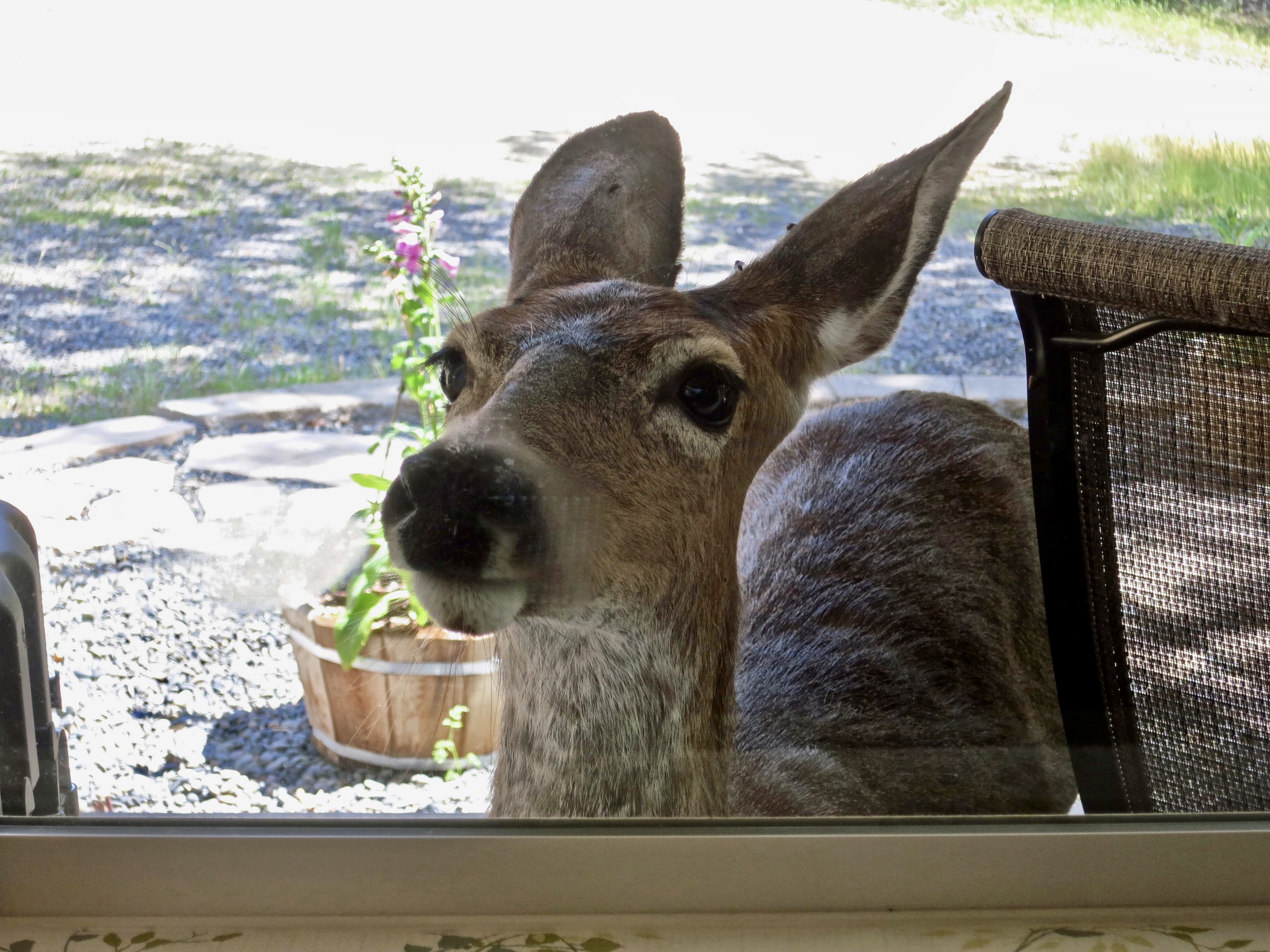
Naturally, we will be blogging about our journeys. But there is more, as they always say on late night TV ads. Or at least they used to. Peggy and I don’t stay up that late and most of our TV time is streaming without ads. I am continuing our focus series over the next two months and beyond. “Oh Deer” is my next one. I’ll be featuring the herd that lived in our backyard in Oregon and liked to stare at us through the windows.
A not unusual sight!
And finally, I’ll be offering a new series I’m calling “Ut-Oh” where I will be pulling together posts that I have included on my blog over the past 15 years plus new material featuring my more serious/humorous misadventures in my life. I’ll do an introduction to it next week.
The question here is why should such an innocent looking child be kicked out of the first grade for a year. My first post will answer the question plus relate how a caterpillar I was using to cut a road fell off a cliff— with me on it.
Our 2025 wrap-up is based on three trips we made during the year and blogged about. The first was Hawaii, which I posted two weeks ago. The second was our Southwest journey that I posted last week. Today we are covering our third, and final trip of the year: The leaf-peeping drive through New England in October and November.
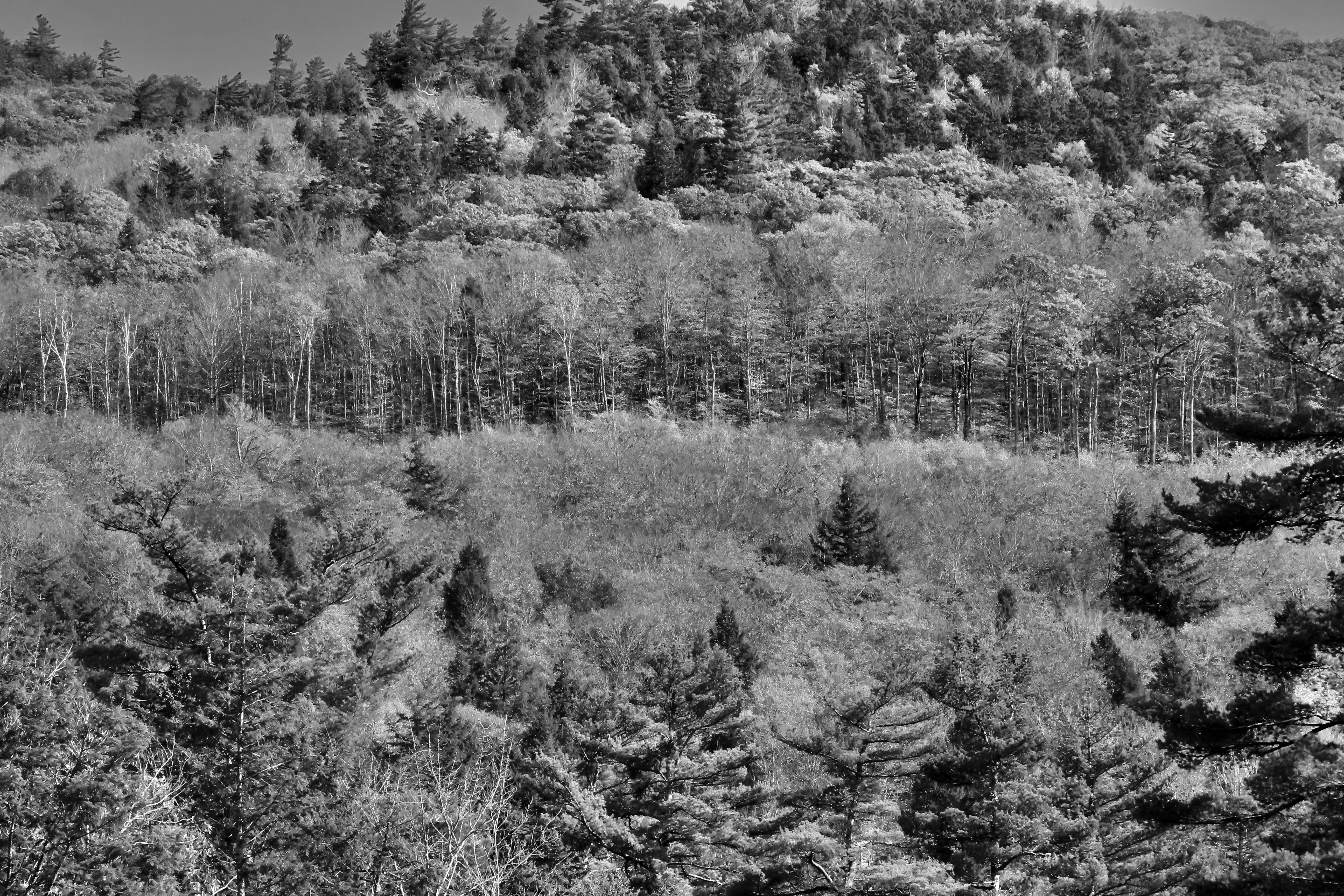
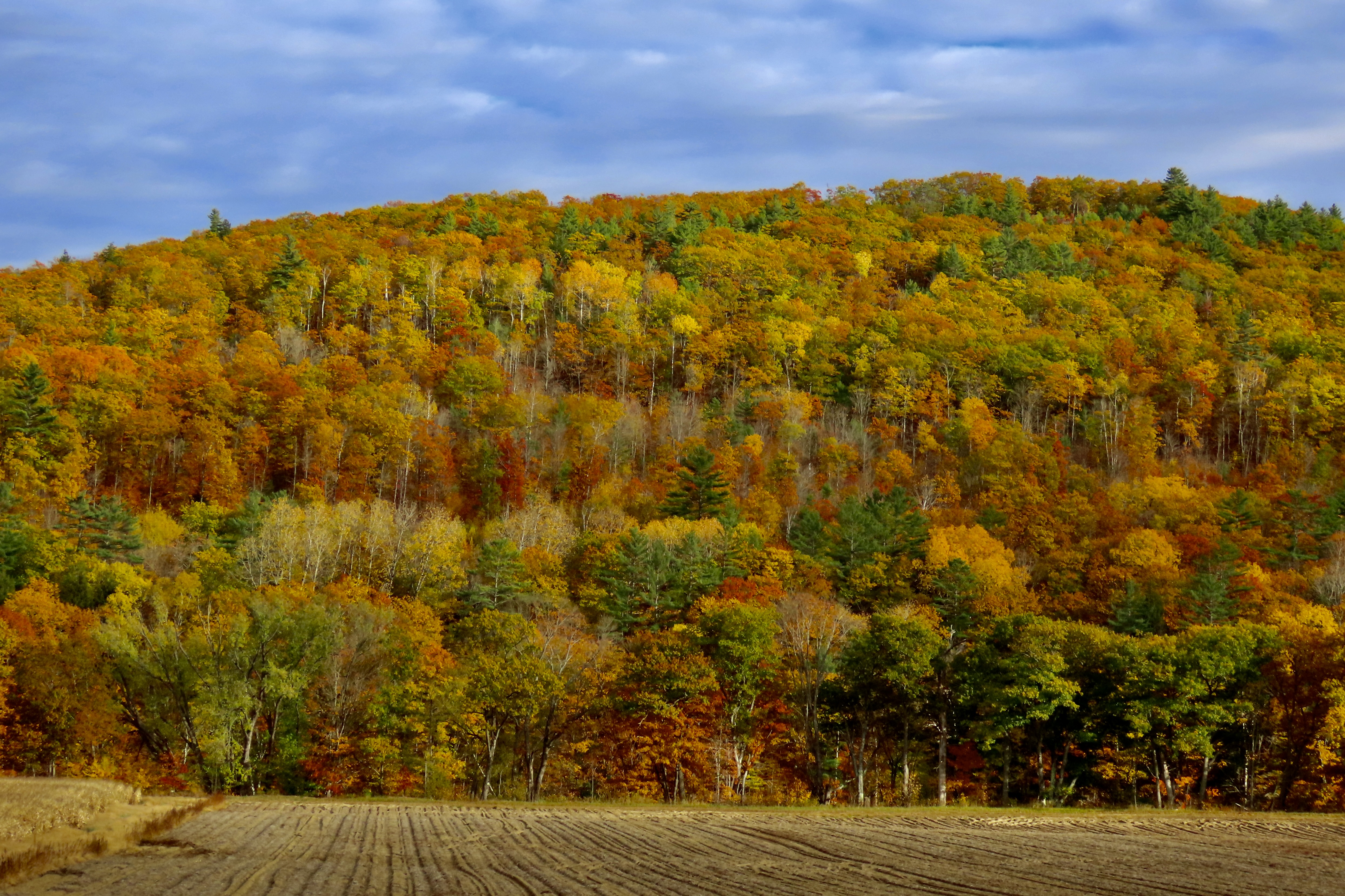
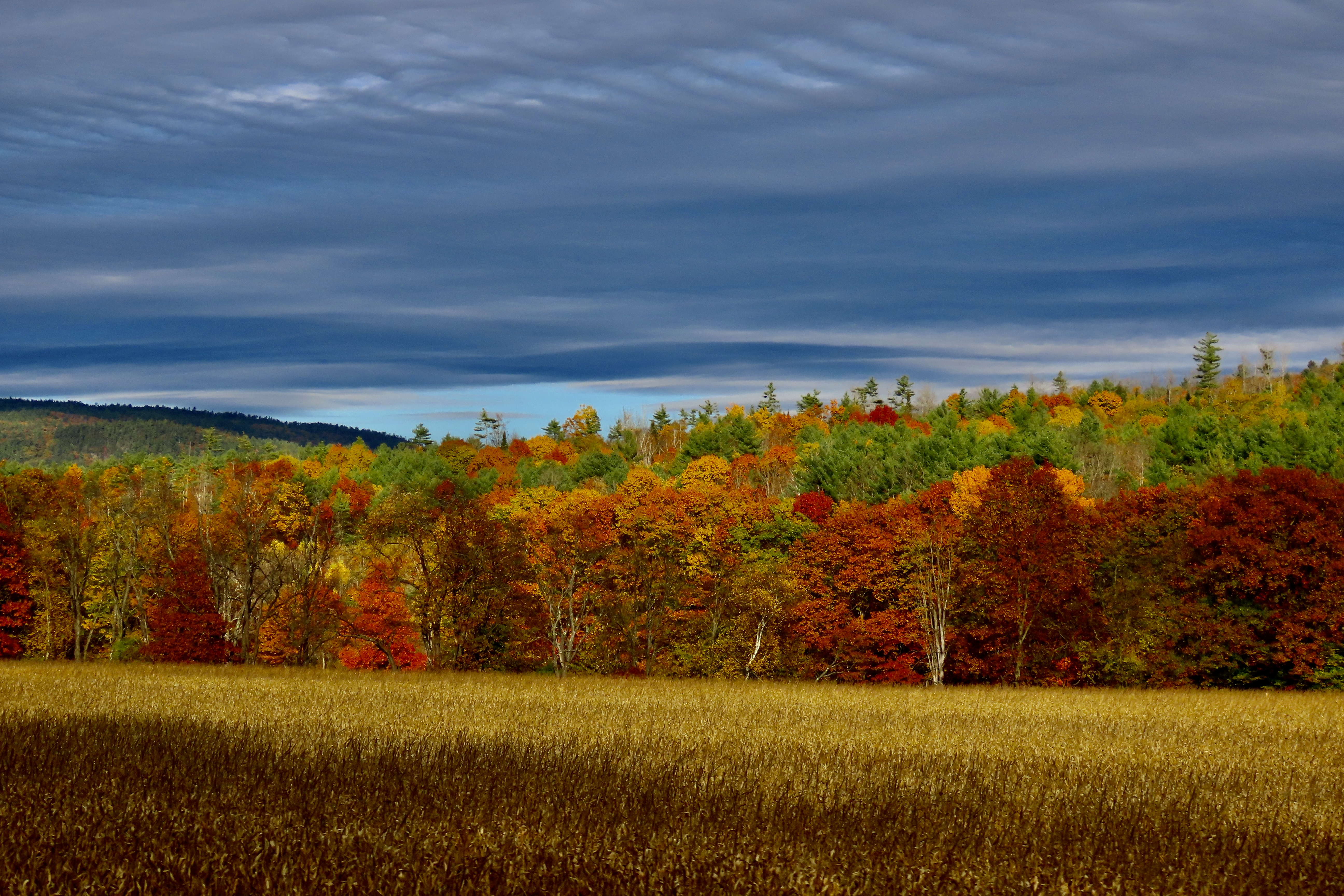
While the photos we selected for the Hawaii and Southwest were ones we chose to use in our annual family calendars, this one is different. Because our New England trip was recent, I’ve selected photos not used in the calendars. Most were also not used in our blogs—sort of a third level, so to speak. But, in New England, even ‘also-ran’ is colorful!
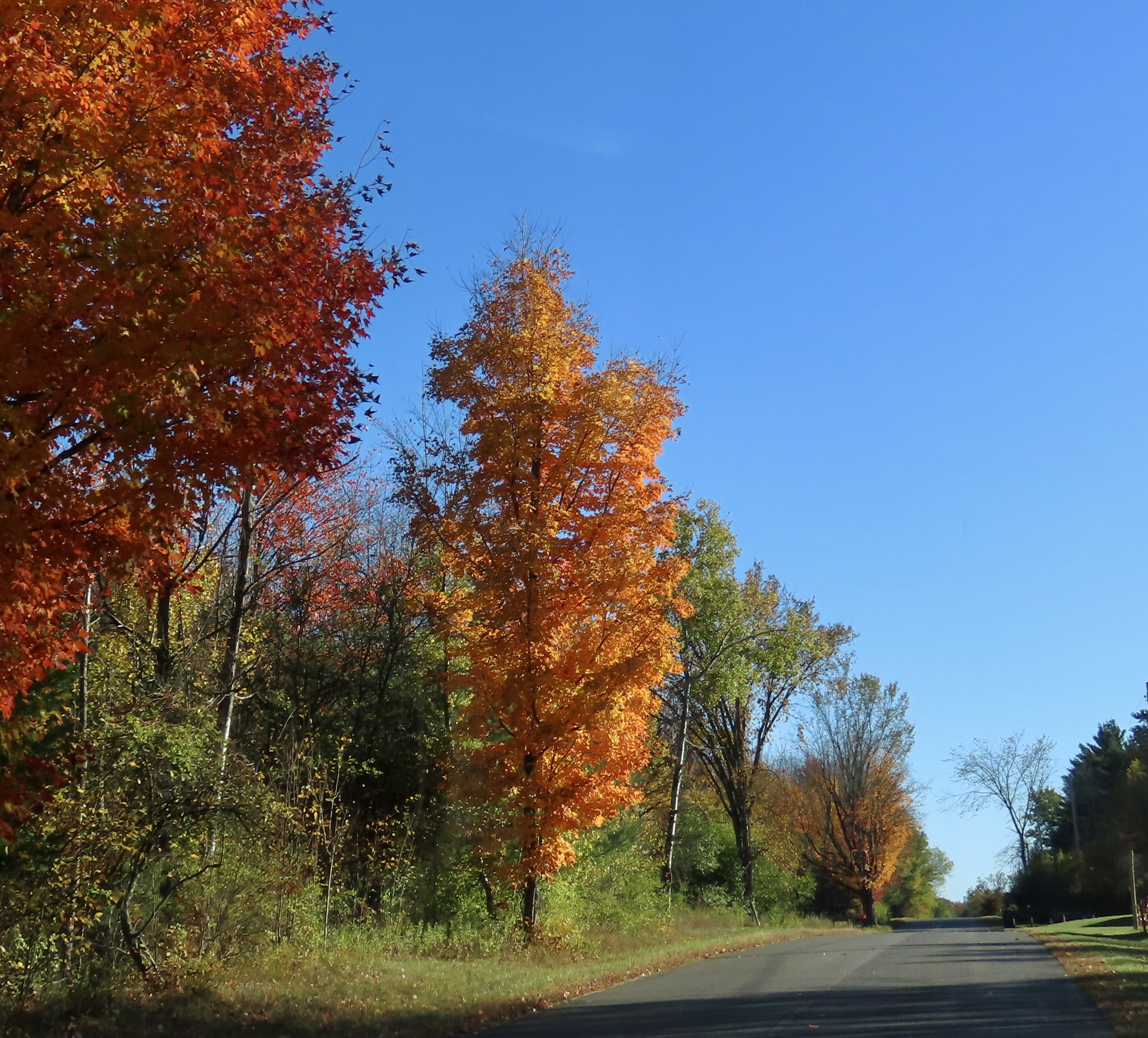
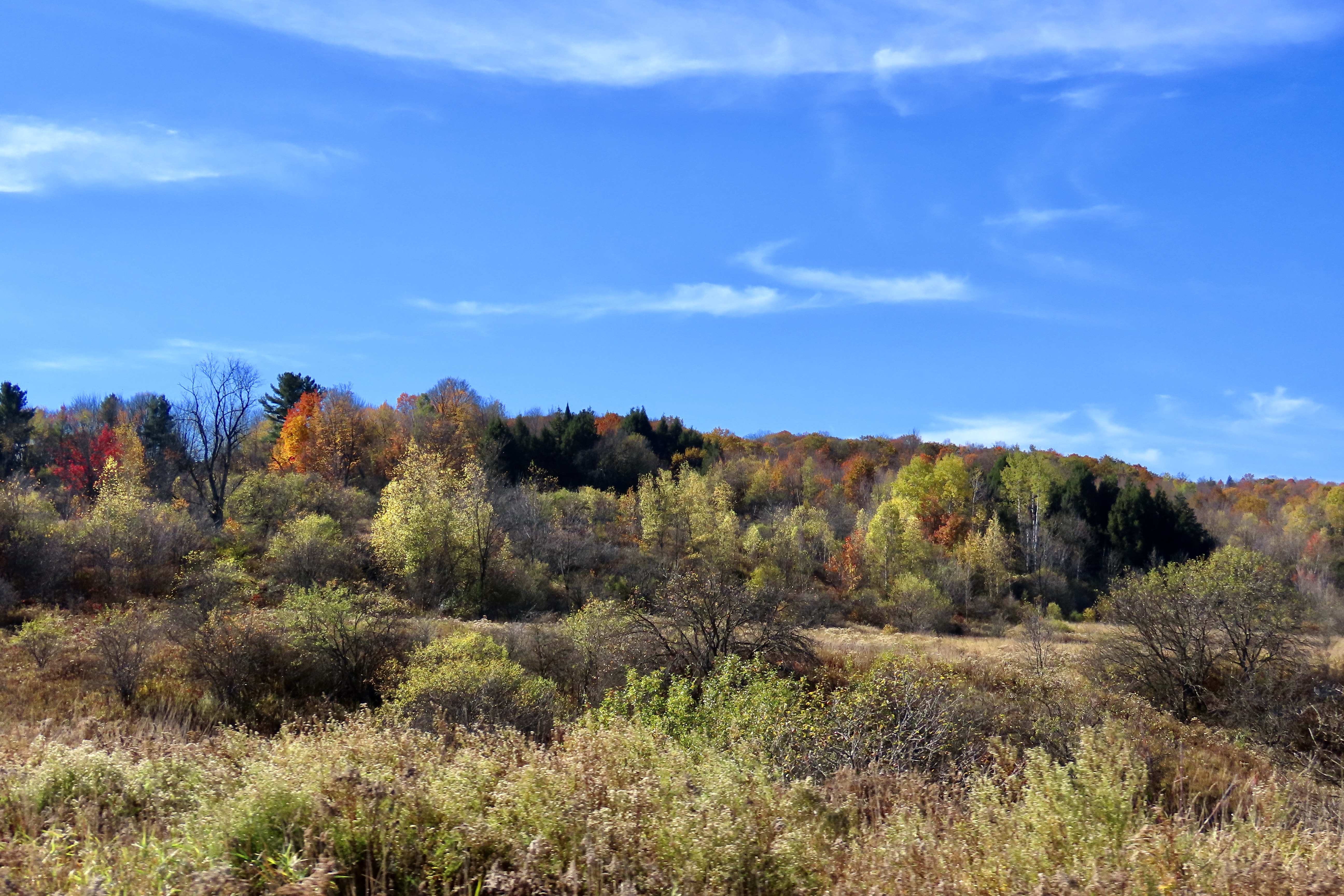
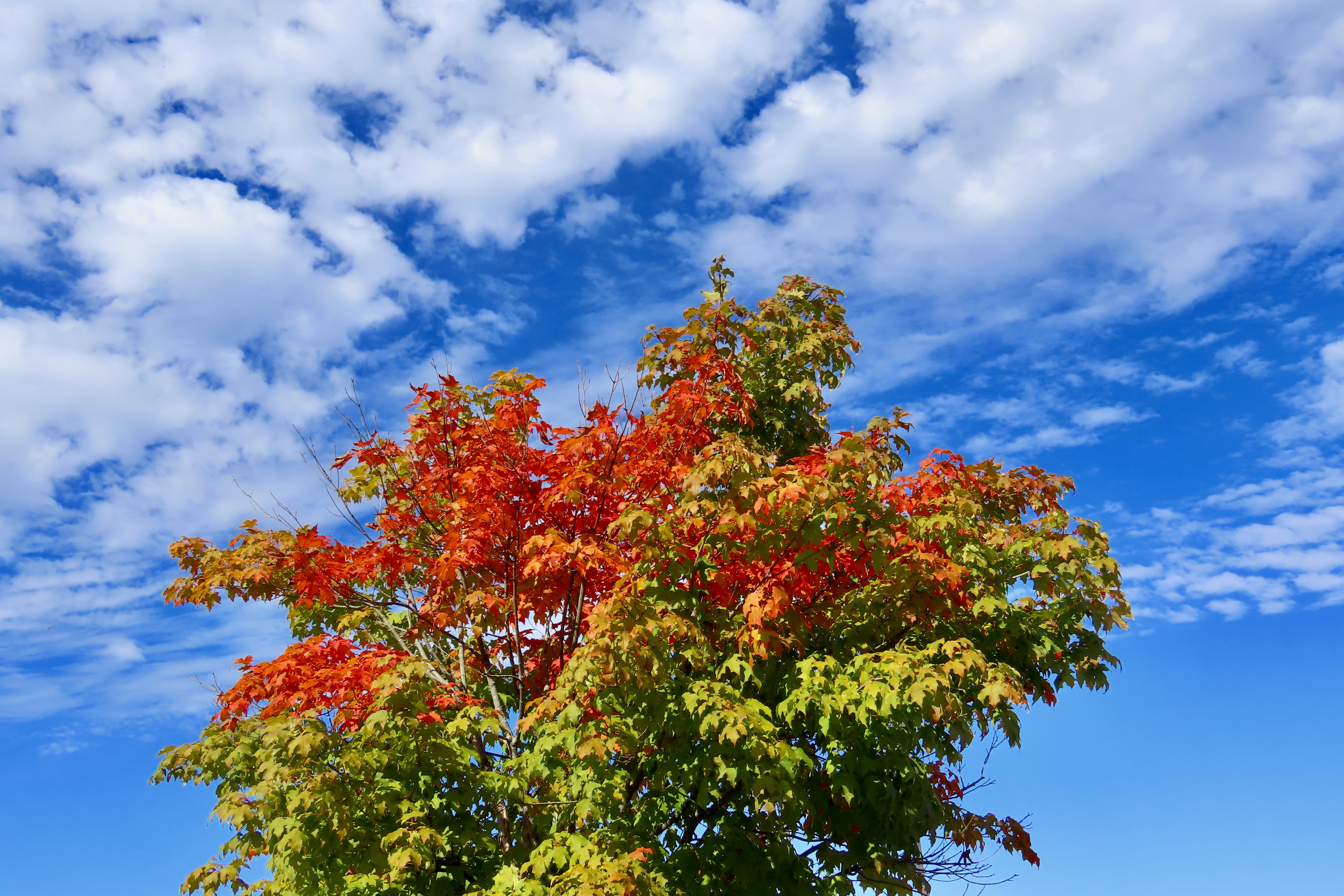
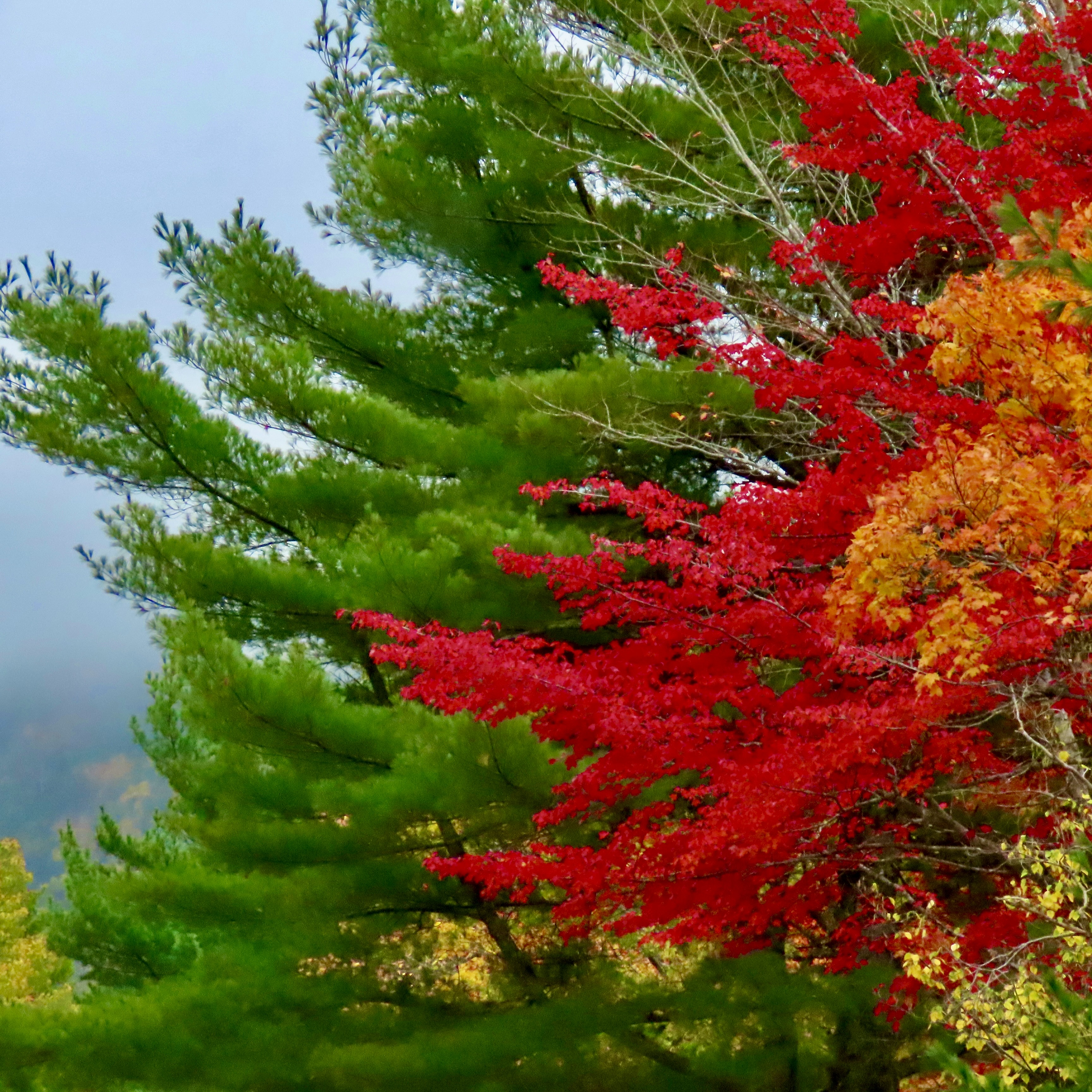
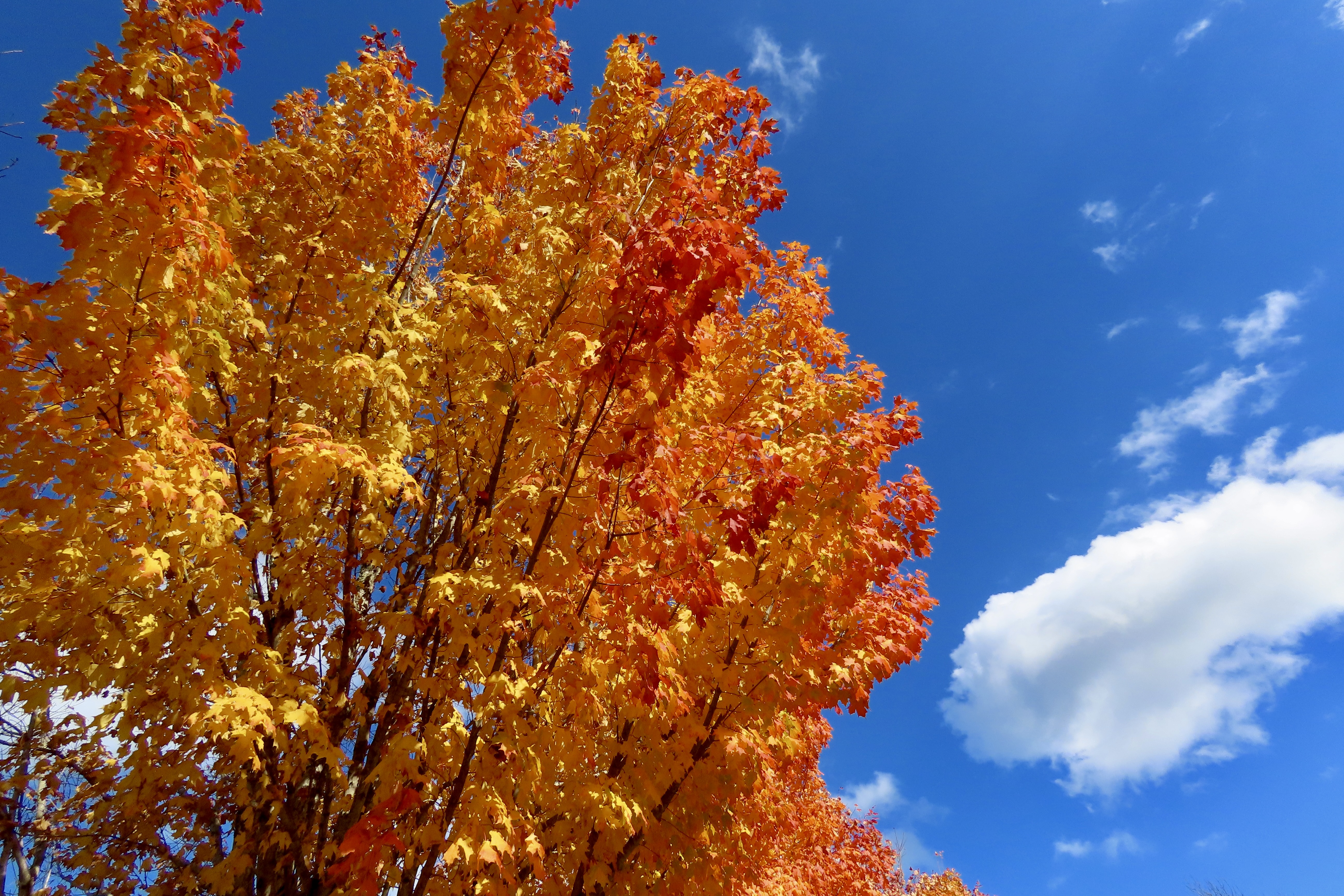
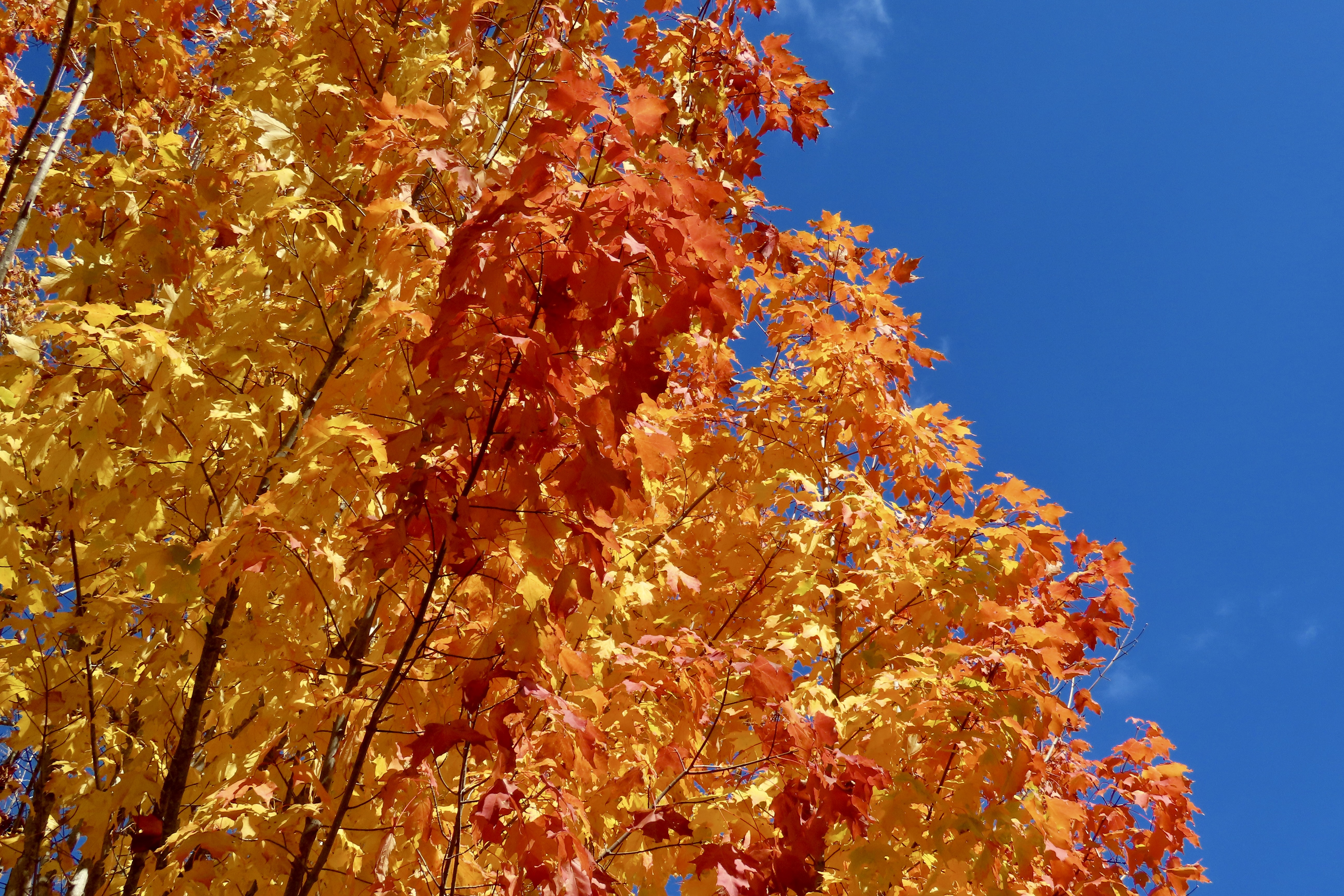
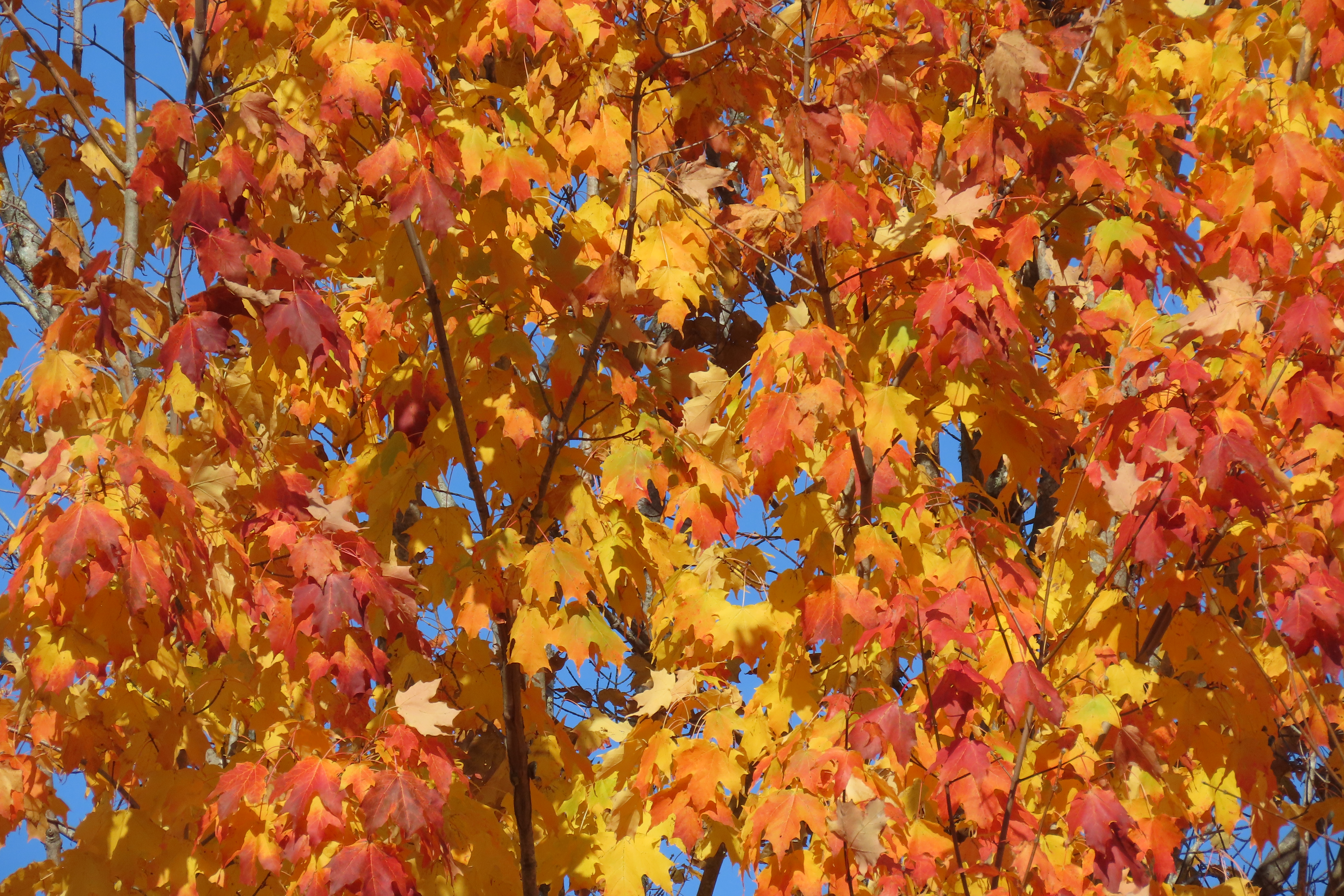
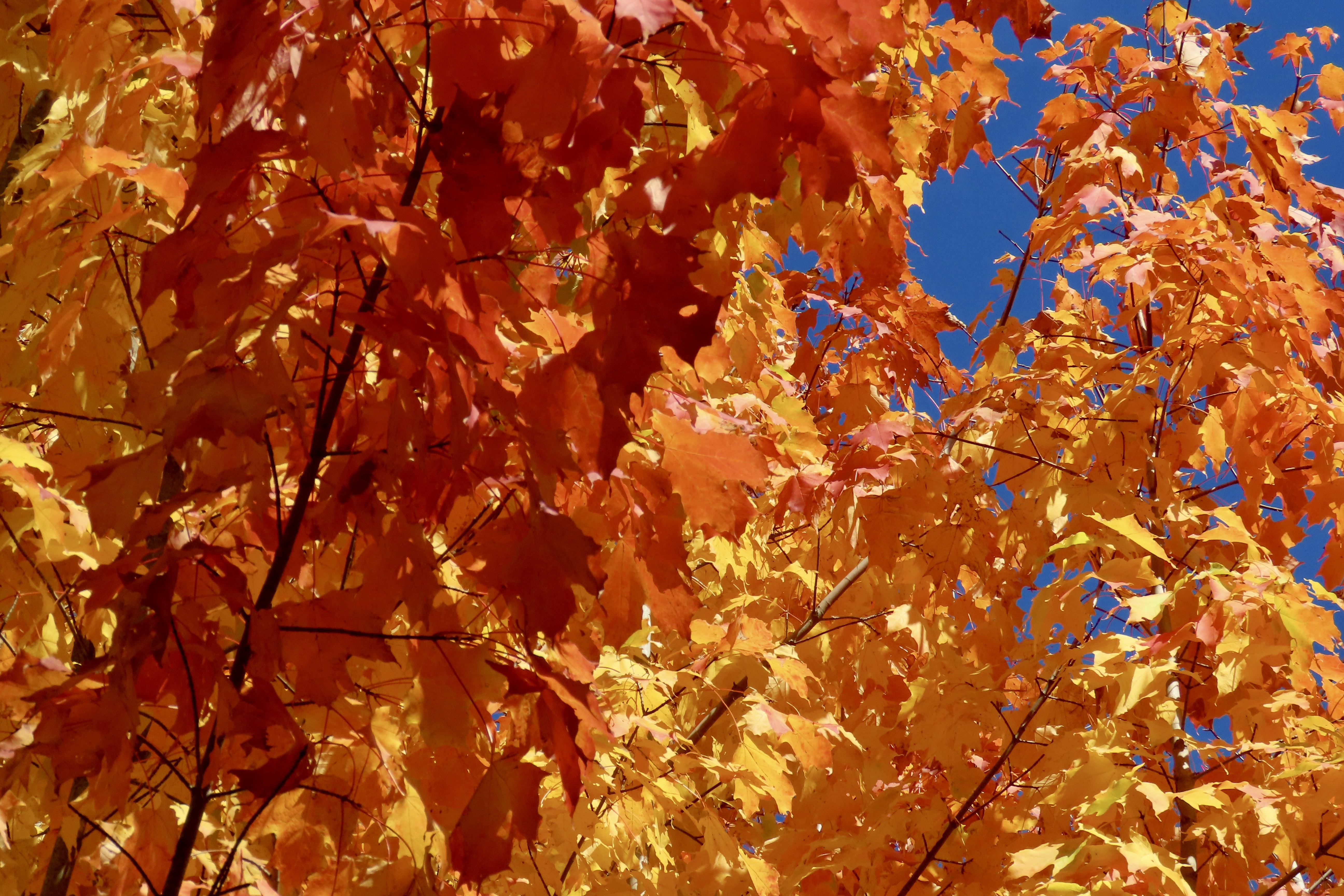
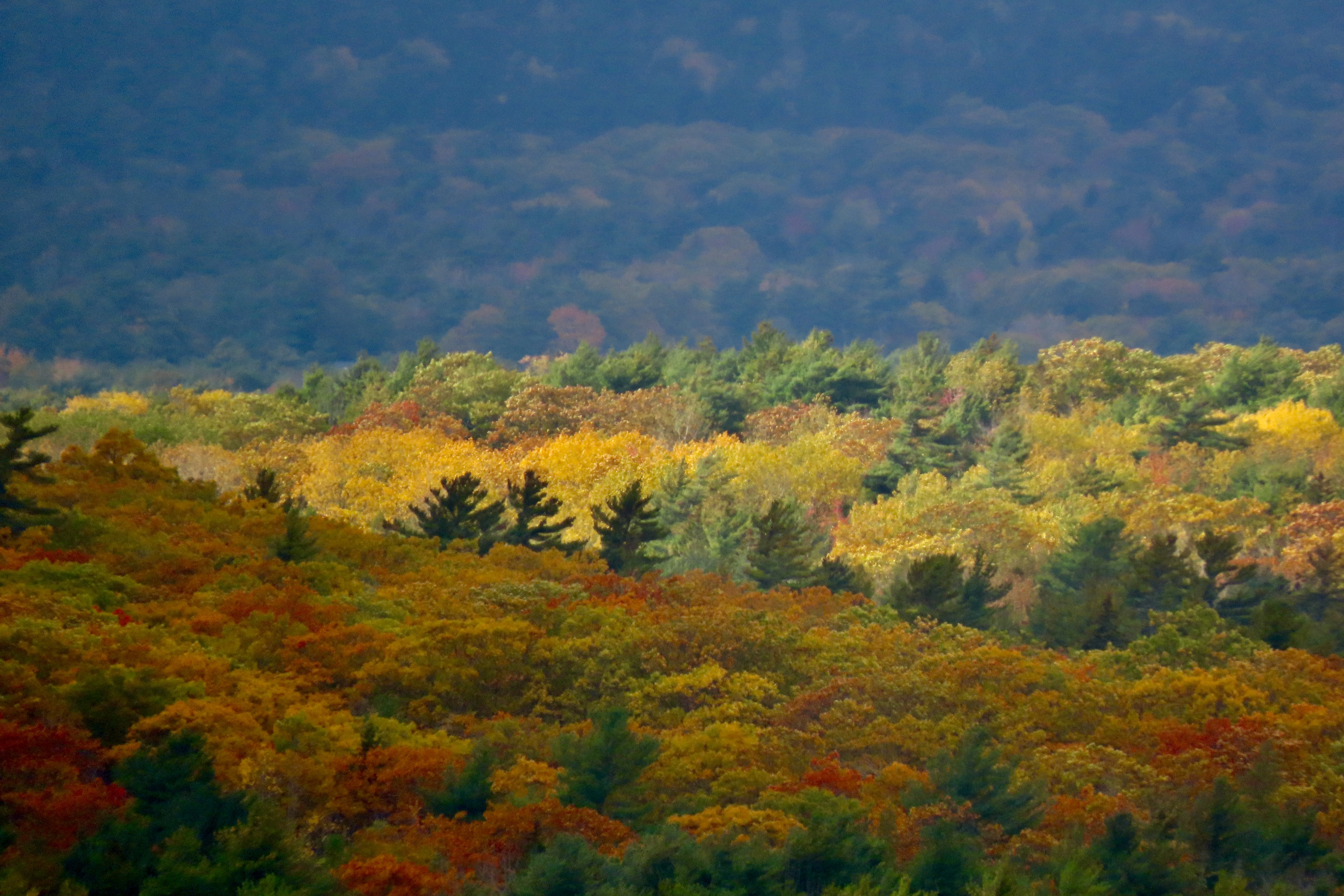
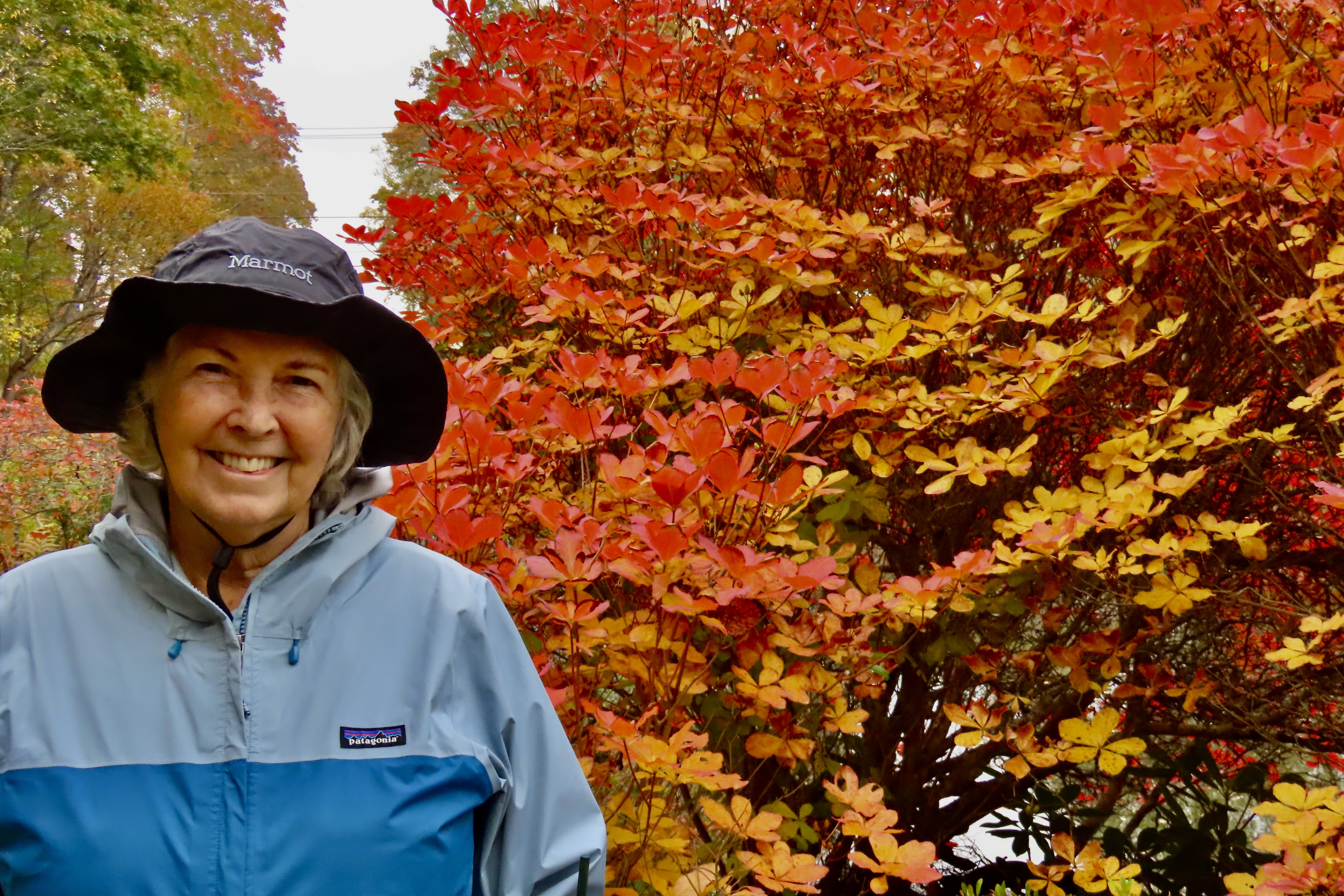
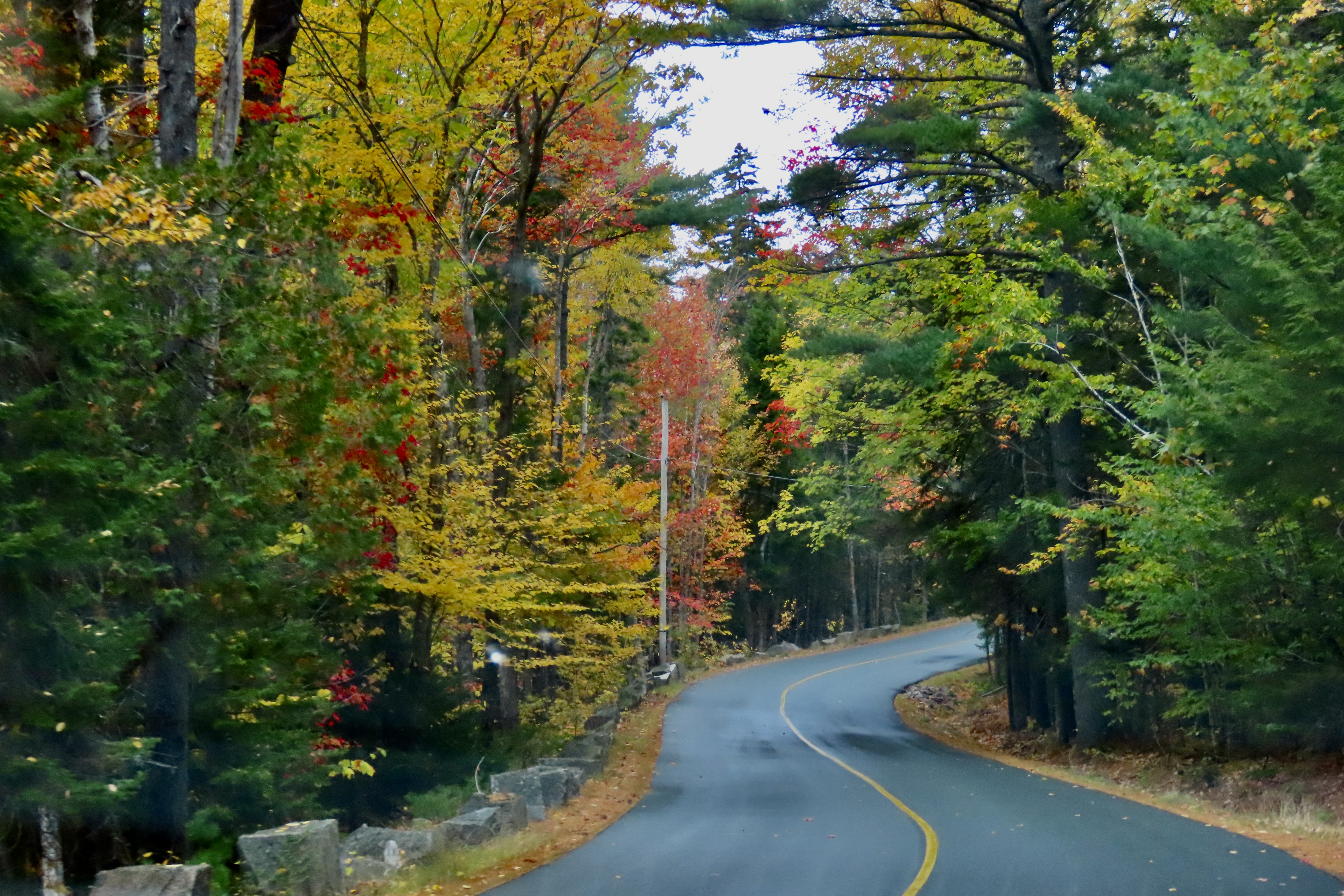
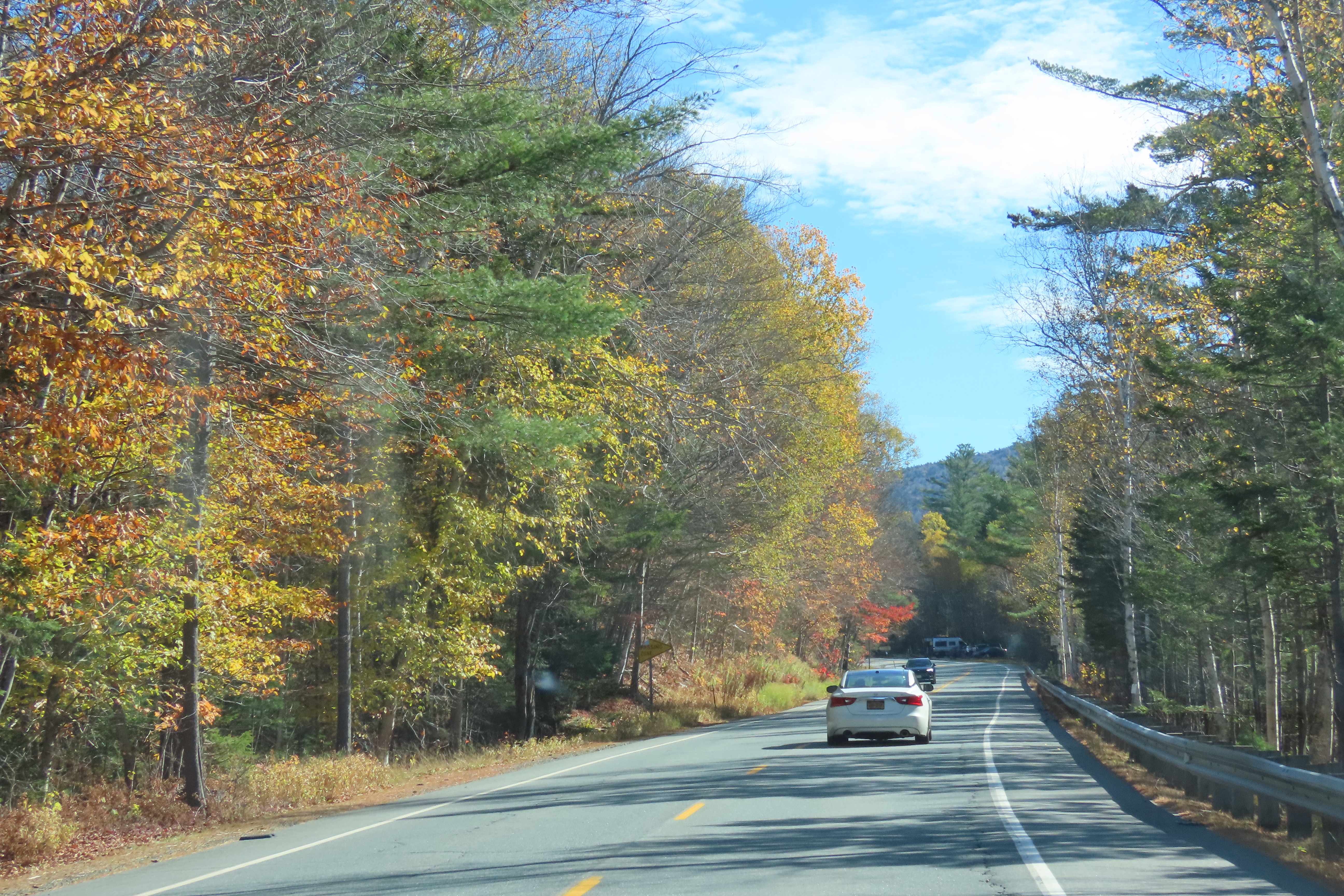
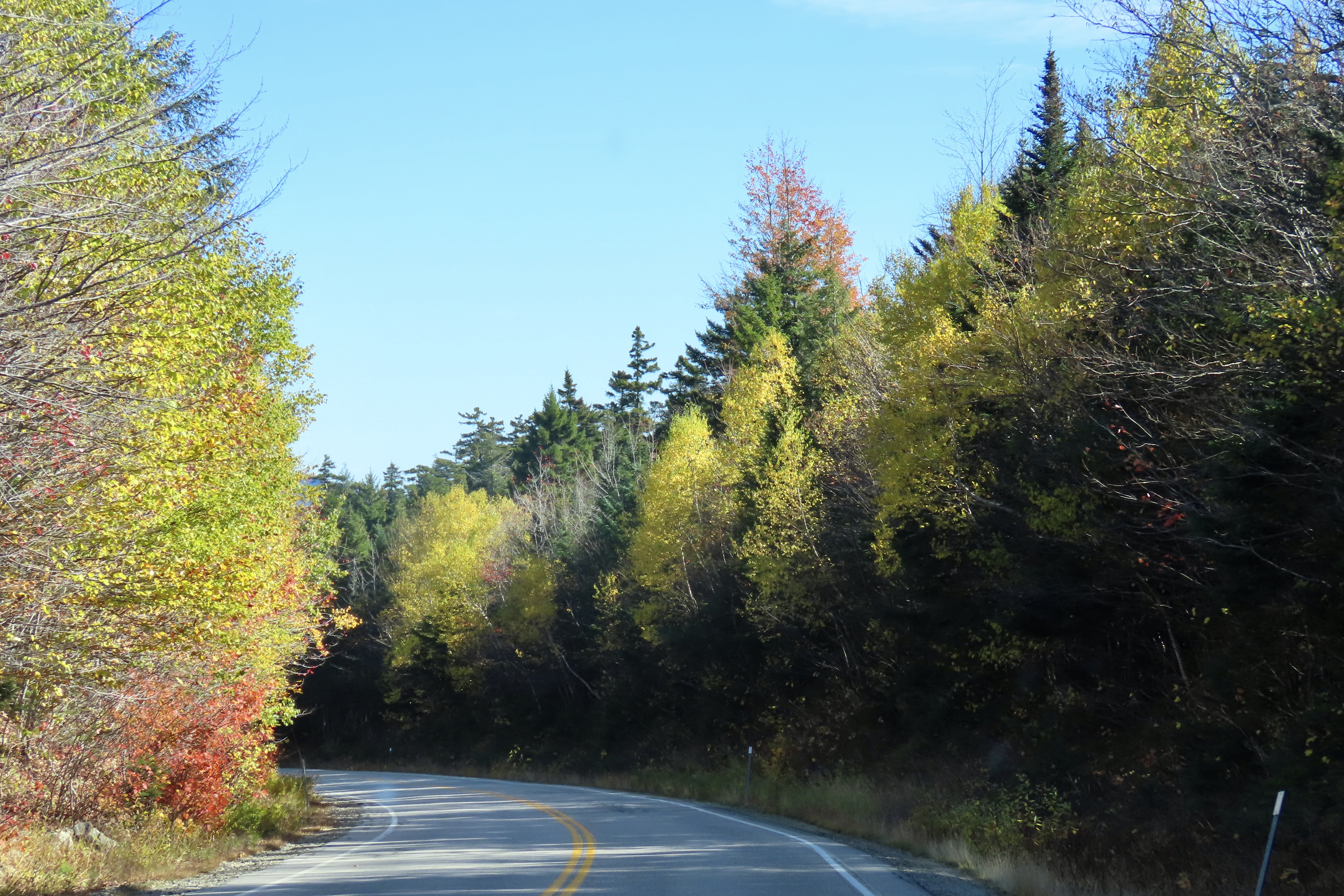
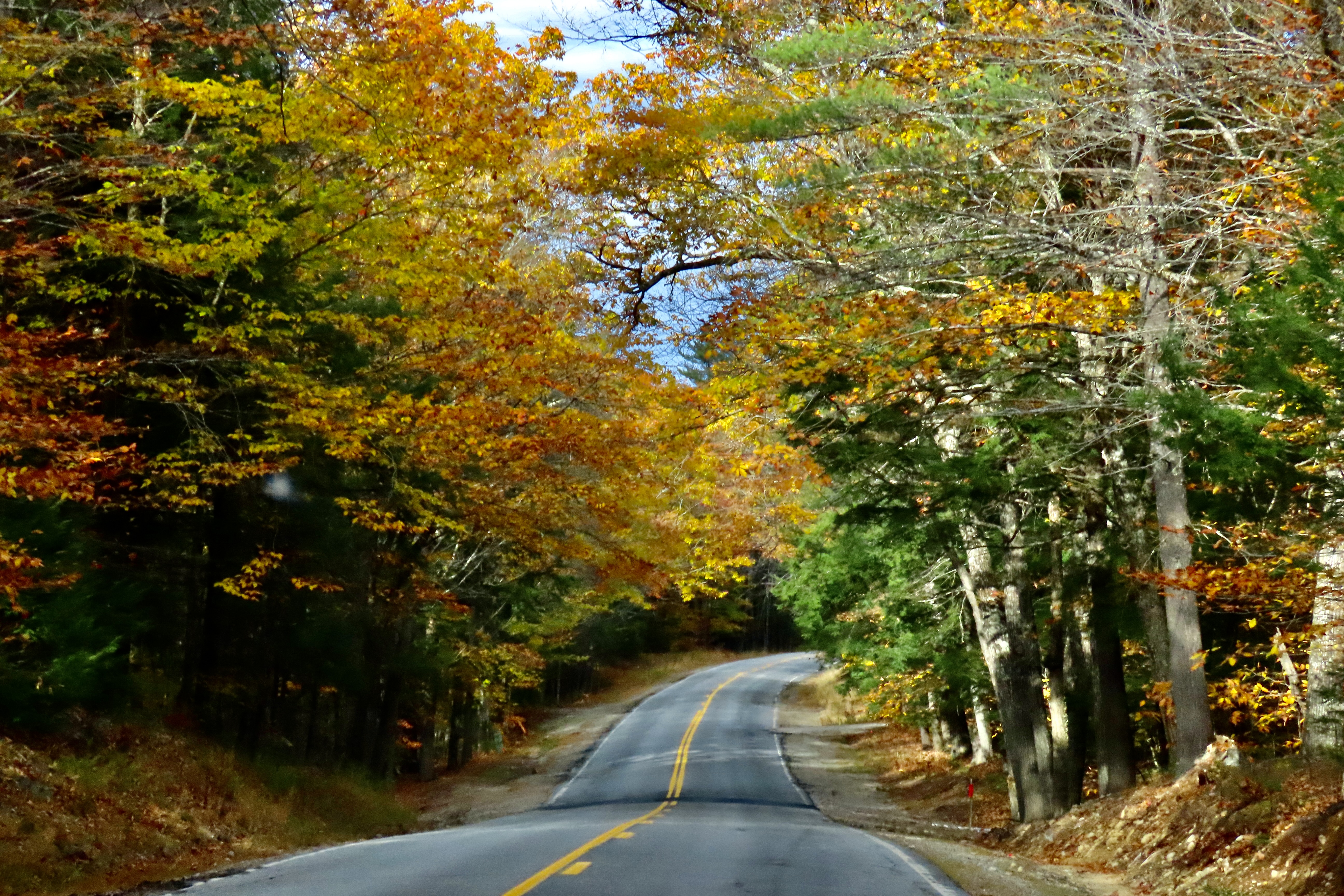
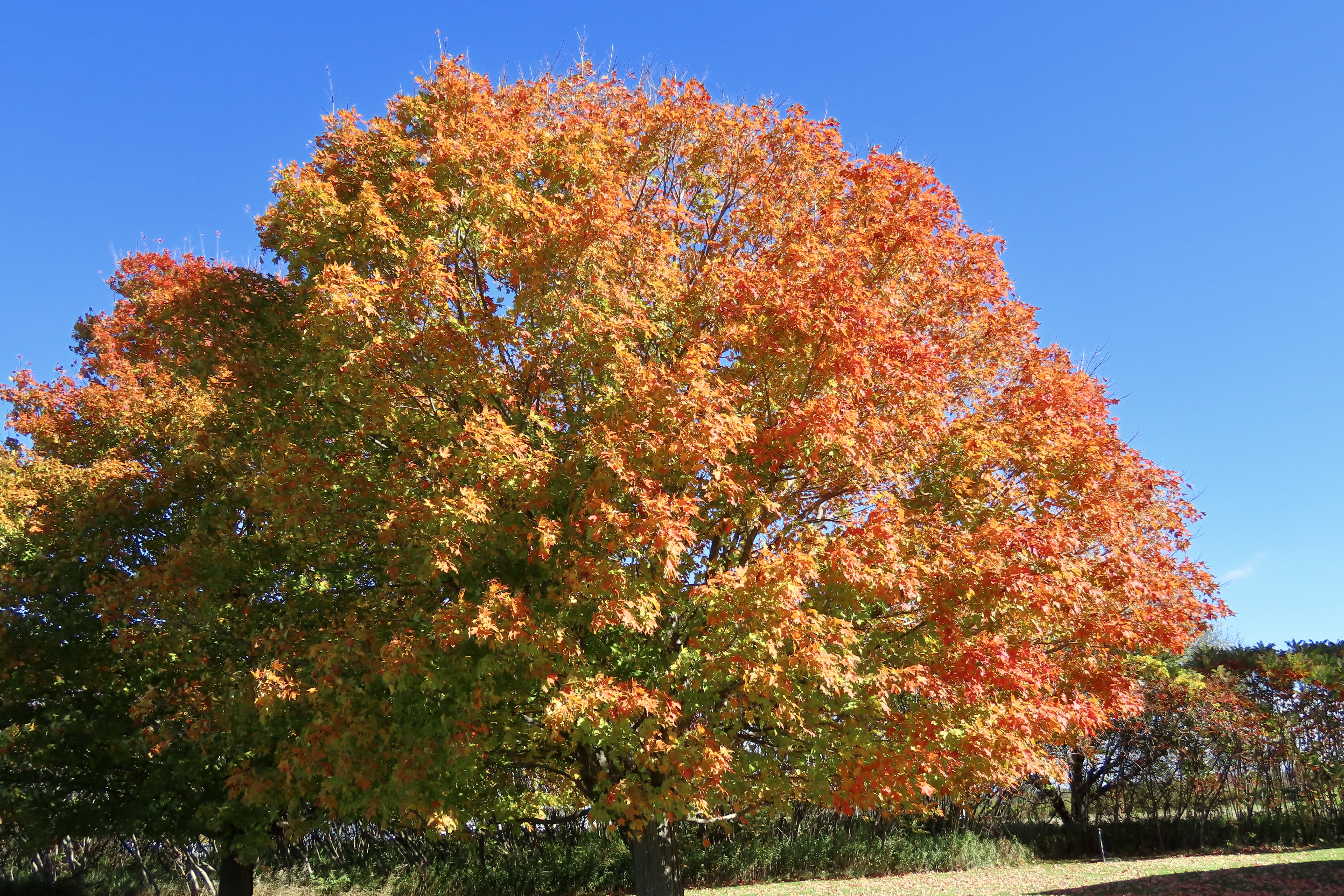
Drive down any country road in New England at the right time in the fall and you will see what leaf peeping is all about. In the photo above, the road wasn’t filled with as much color as many we drove down, but the reddish-orange tree lit up by the sun was enough for us to snap a picture out the window.
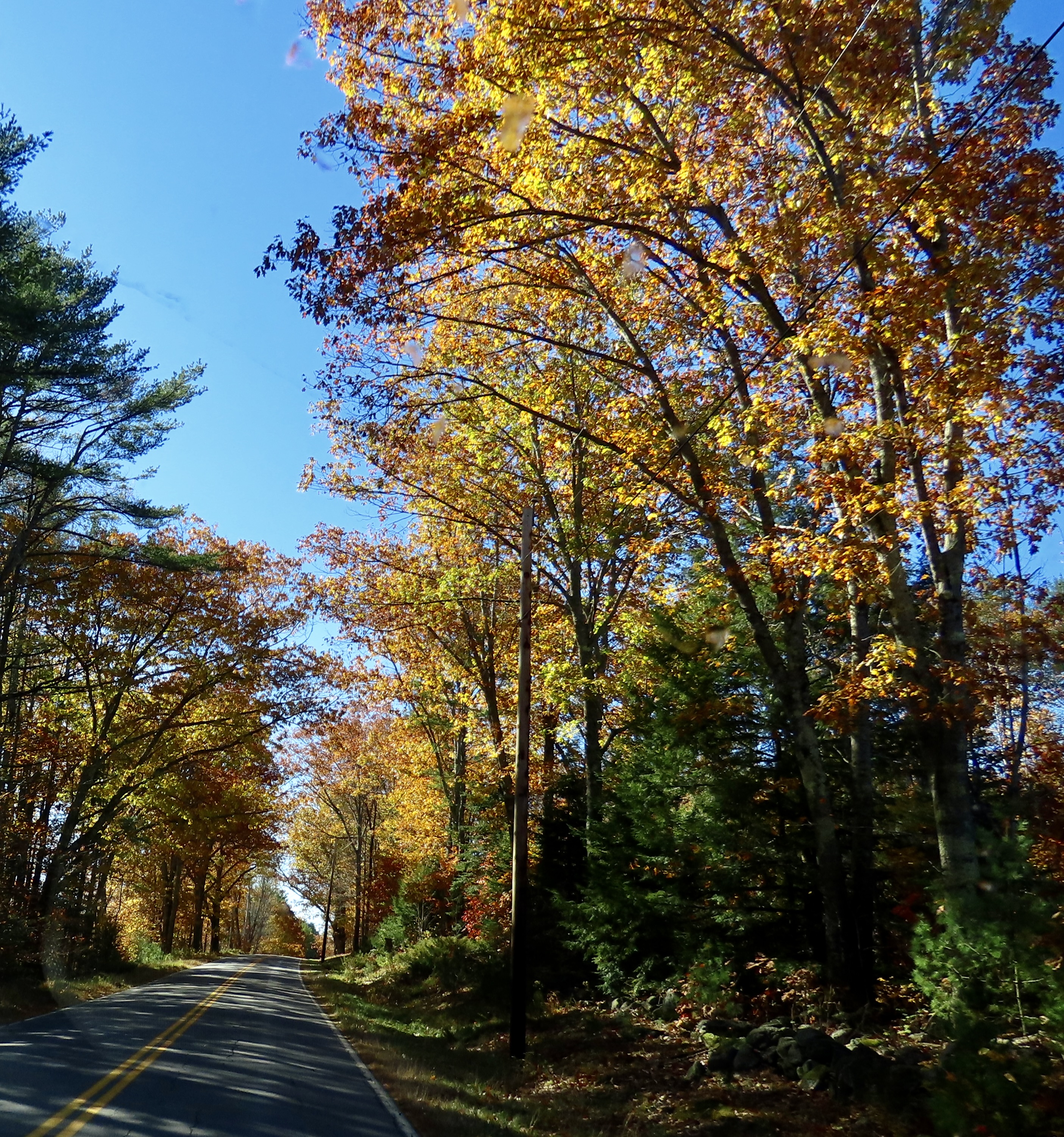
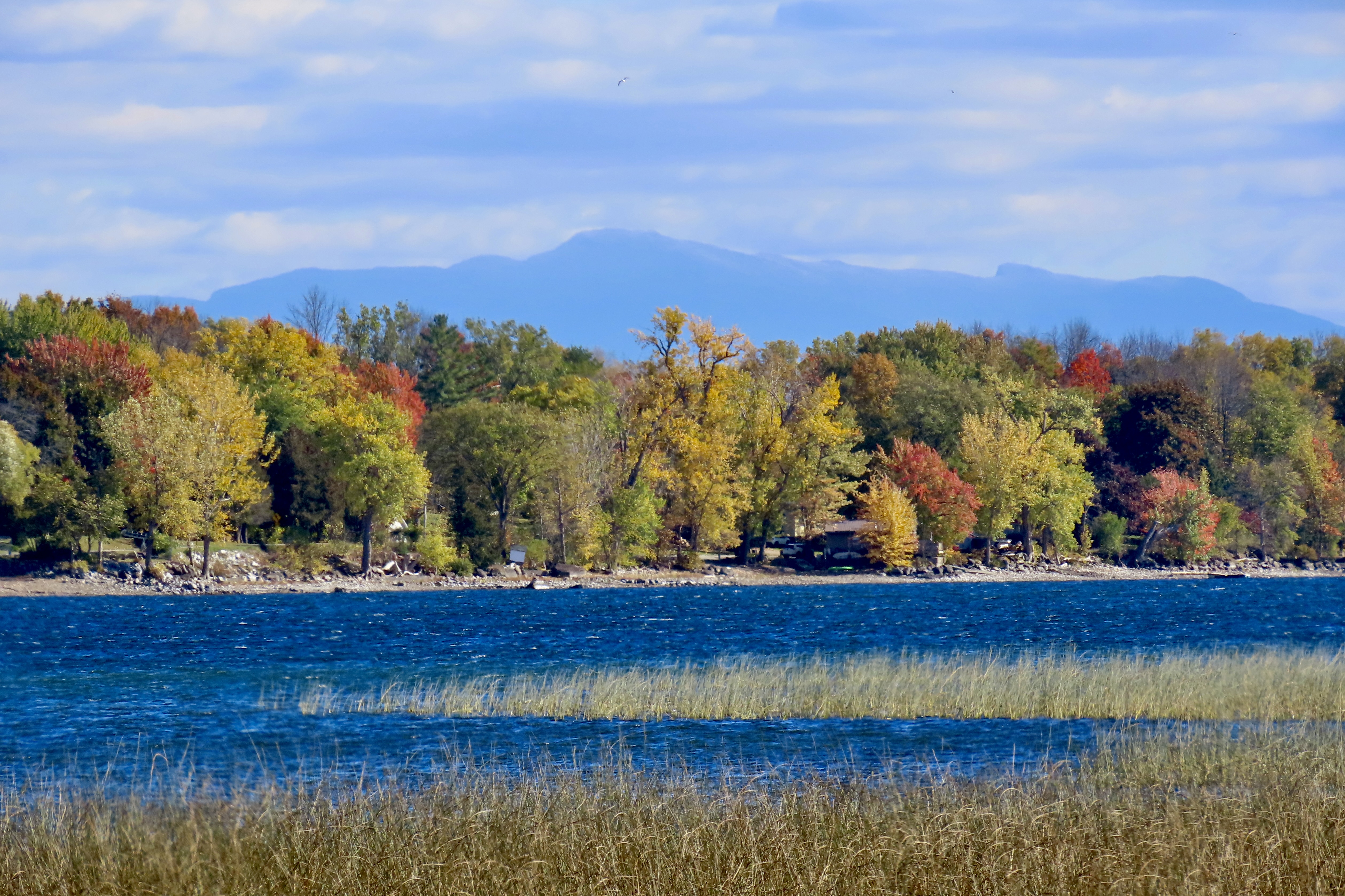
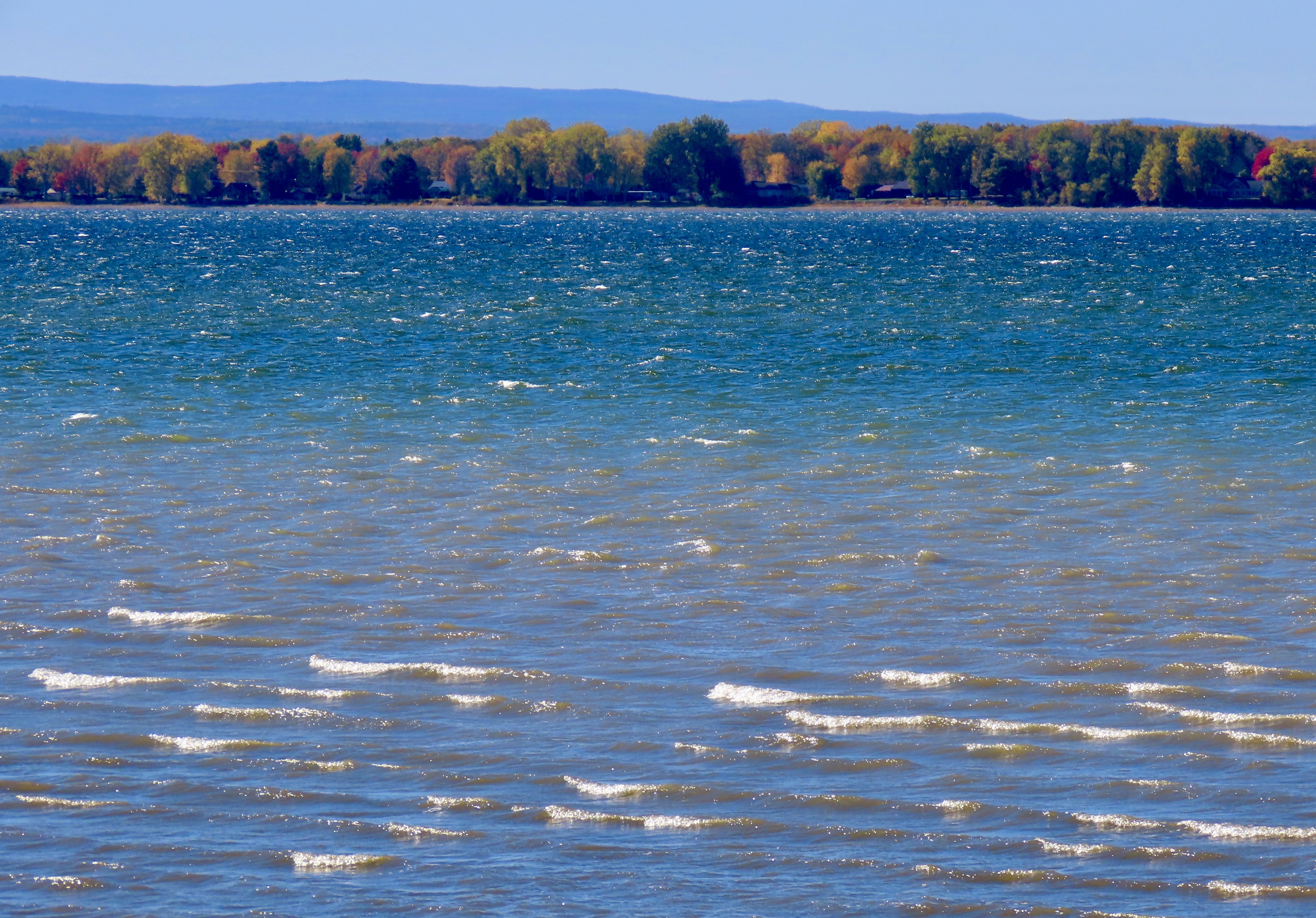
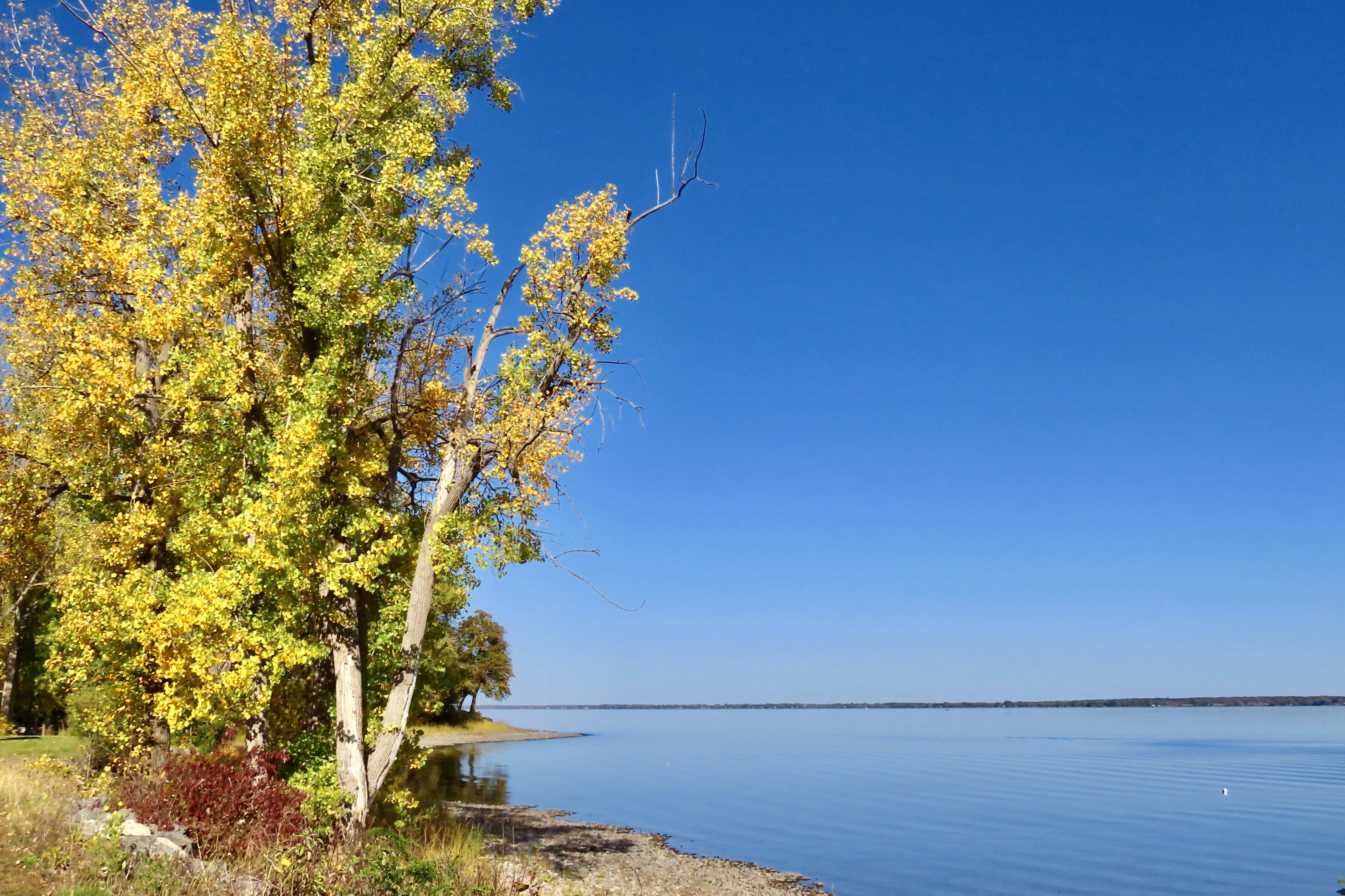
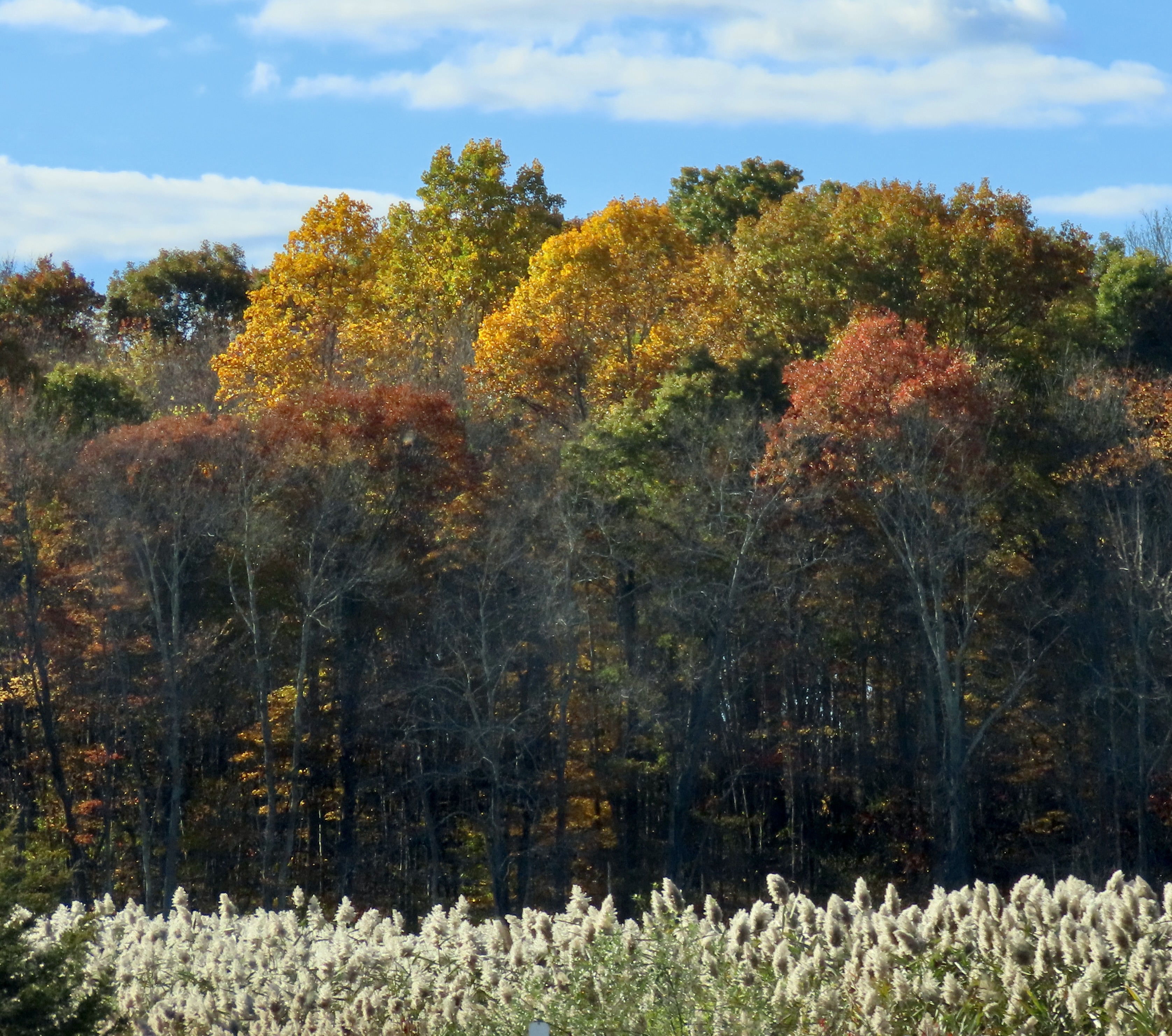
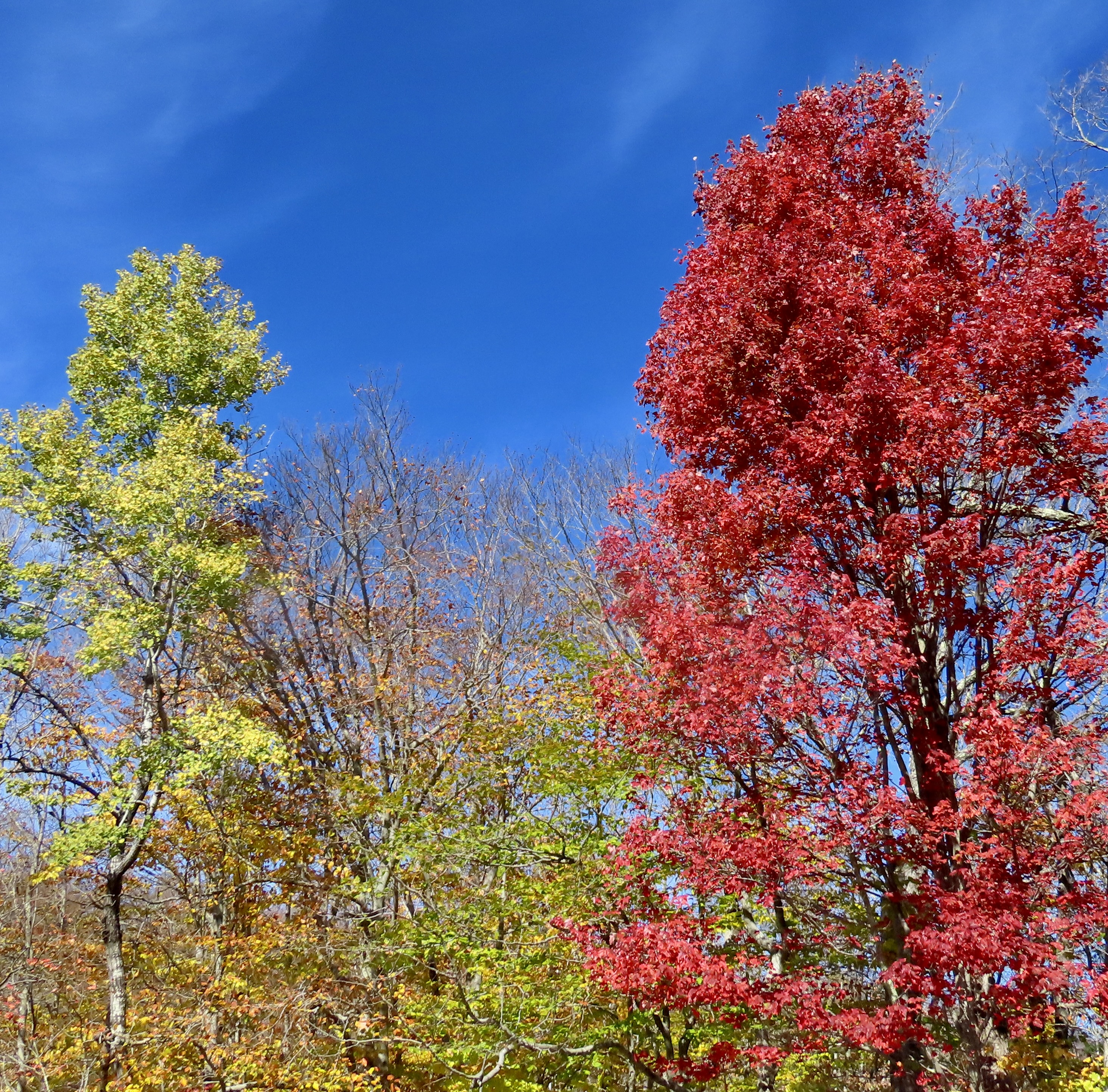
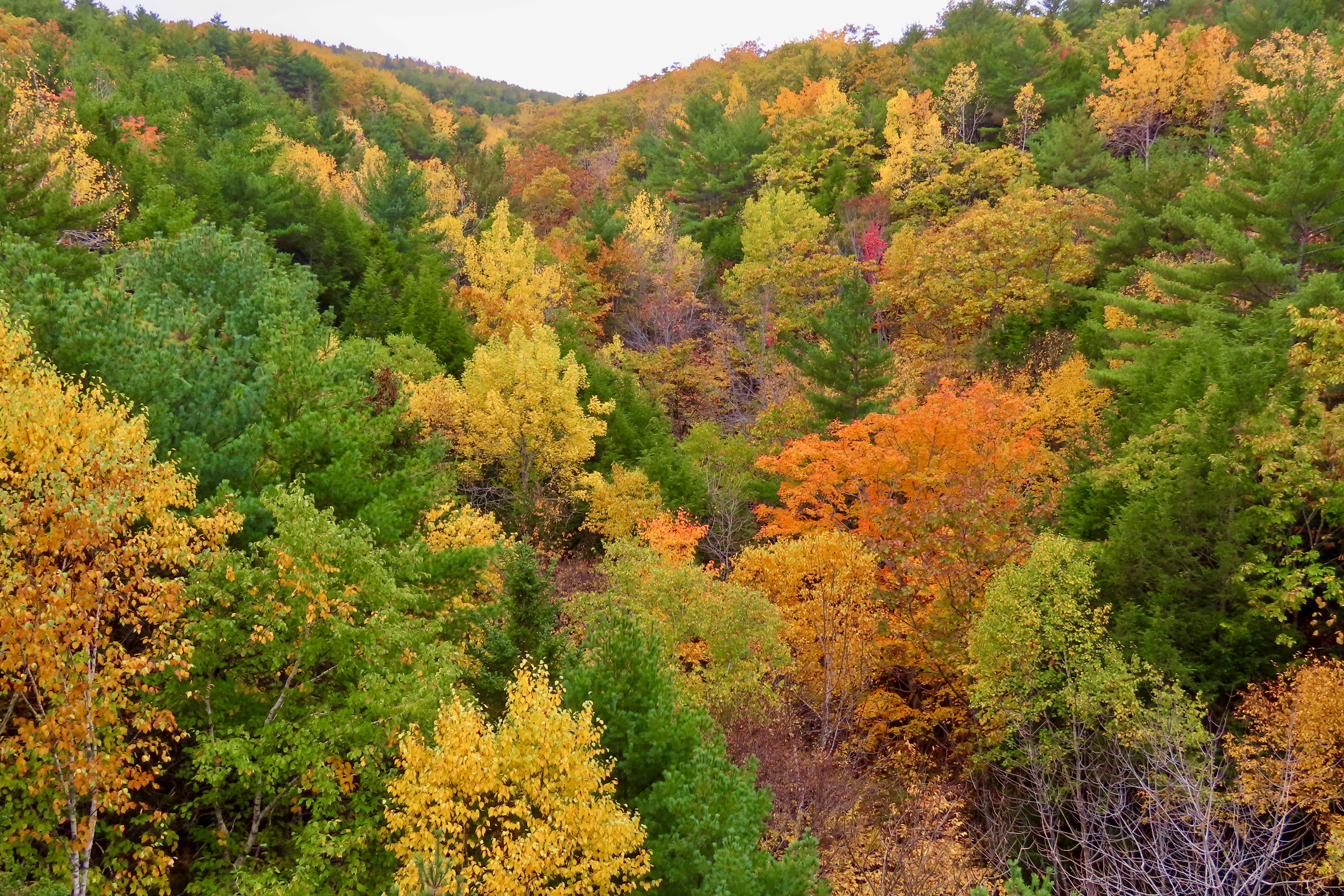
Another example. The way the trees reached across the road here made us feel like we were driving through a kaleidoscope.Lake Champlain provided us to with numerous opportunities to admire the fall colors. The mountains in the background are the Green Mountains of Vermont. We were following a road down on the northern end of the lake that connects a series of islands.A view across Lake Champlain from one of its islands.This photo was taken from the northwestern bank of Lake Champlain. The view is all the way across the lake.We felt that the foreground often added interest to our photos.Color wasn’t limited to the trees. Both grass and brush joined the palette.Another example with the grass adding a golden color. The trees in the foreground had lost their leaves, but they provided a contrast to the trees behind them.Again, one of the close to impressionistic photos of New England I included in my blogs and calendar.It seemed curious to us that the leaves on some trees could still be green while the other leaves on the tree had completely changed. The red and green made me think about Christmas.When the leaf peeping isn’t great, a few leaves can substitute.I thought this tree would be a fitting end to our 2025 travels. The limbs provided a contrast to the colorful leaves, but, in a way, they also reminded us of the many roads we had traveled over in 2025.
Next up: What we have planned for our blog in 2026!
As we noted in last week’s post, our 2025 wrap-up is based on three trips we made during the year and blogged about. The first was Hawaii, which I posted last Monday. Today’s post features our Southwest journey where we wandered through the Southwestern US for five months visiting national parks, state parks, and national monuments. Next week’s post will cover our three week leaf-peeping trip through New England in the fall.
The photos used in the three posts are all from ones we selected to include in three calendars we developed for our extended family, each focused on one of out trips. (Not all of the photos here made it into the calendars, but it was a flip-of-the-coin type decision.)
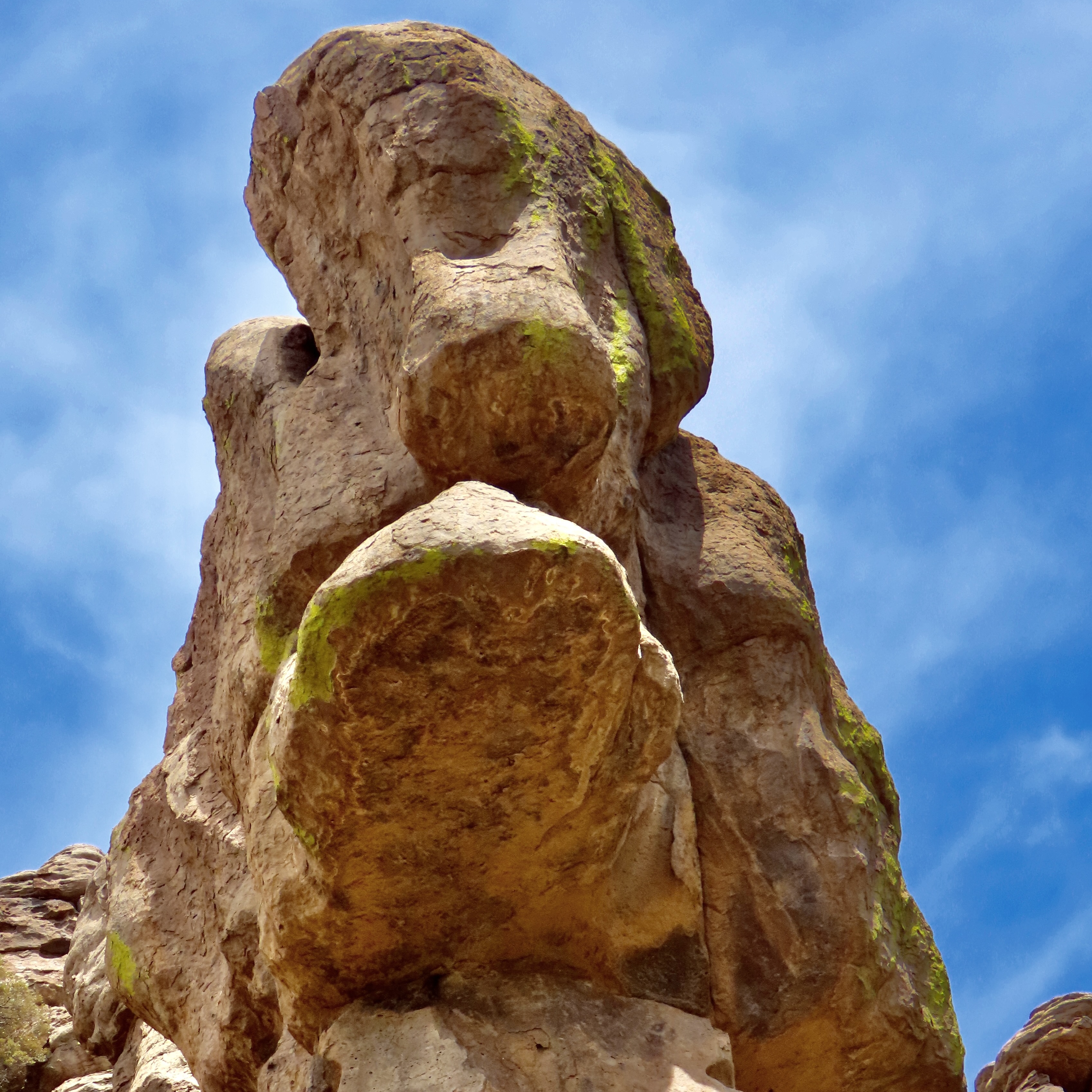
We discovered the towering rock above in Chiricahua National Monument, which is located in southeastern Arizona. The monument is named after the Chiricahua Apaches who roamed the area prior to it being occupied by pioneers from the eastern US. A couple of notes. One, the park is filled with a fascinating variety of rock structures. Two, we have discovered over the years that national monuments often include scenery, geology, history, plants and animals that easily match those found in national parks. They are definitely worth visiting and are usually far less crowded.
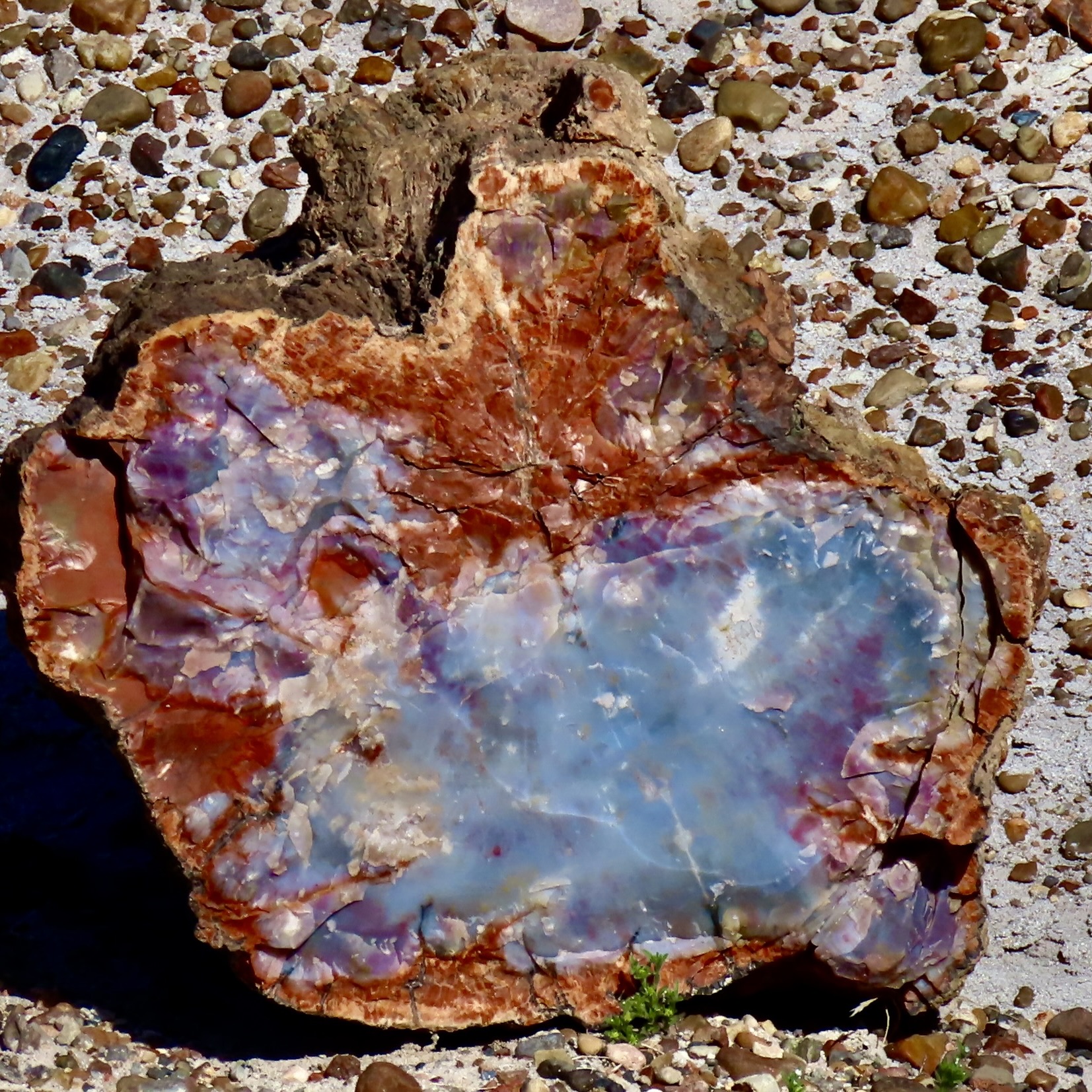
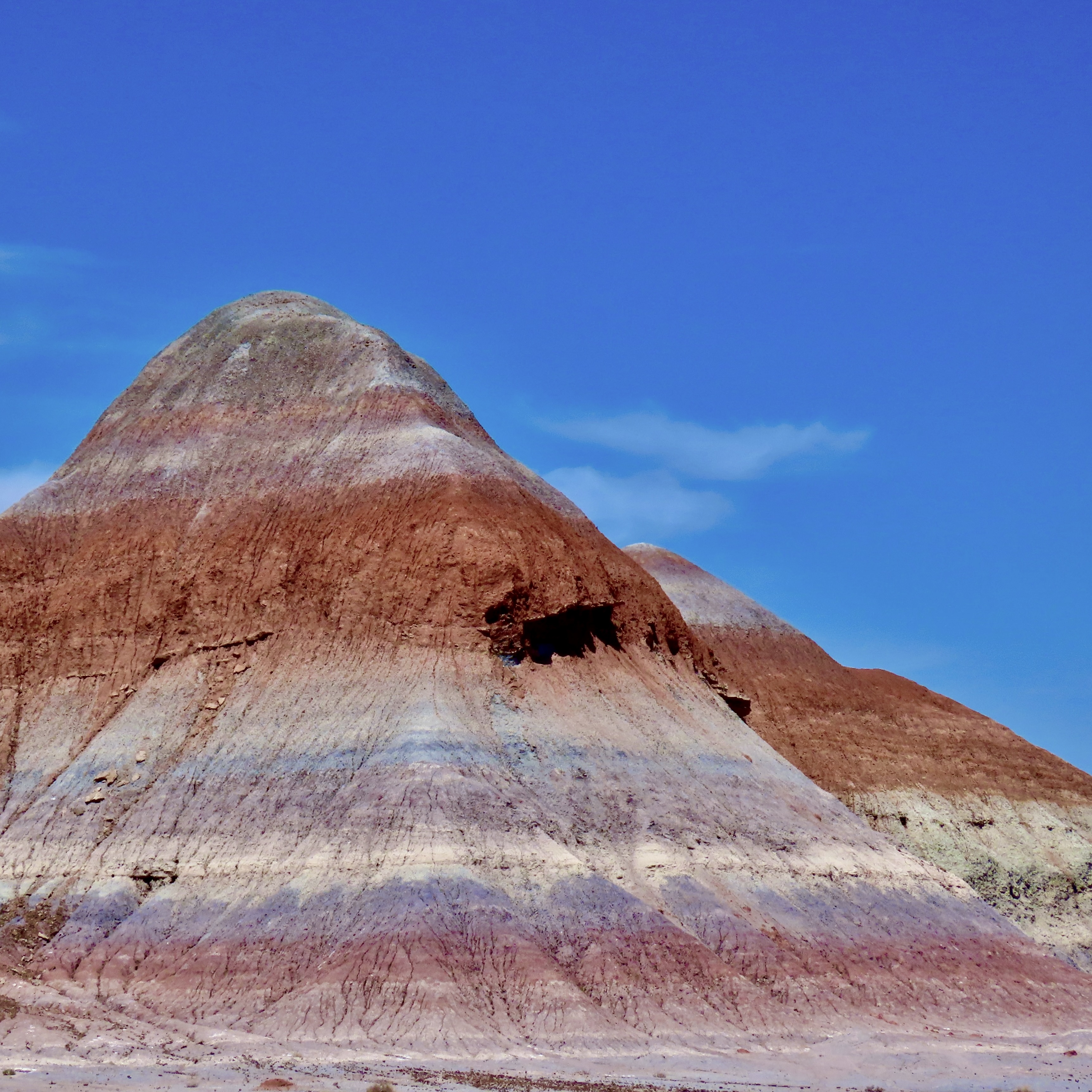
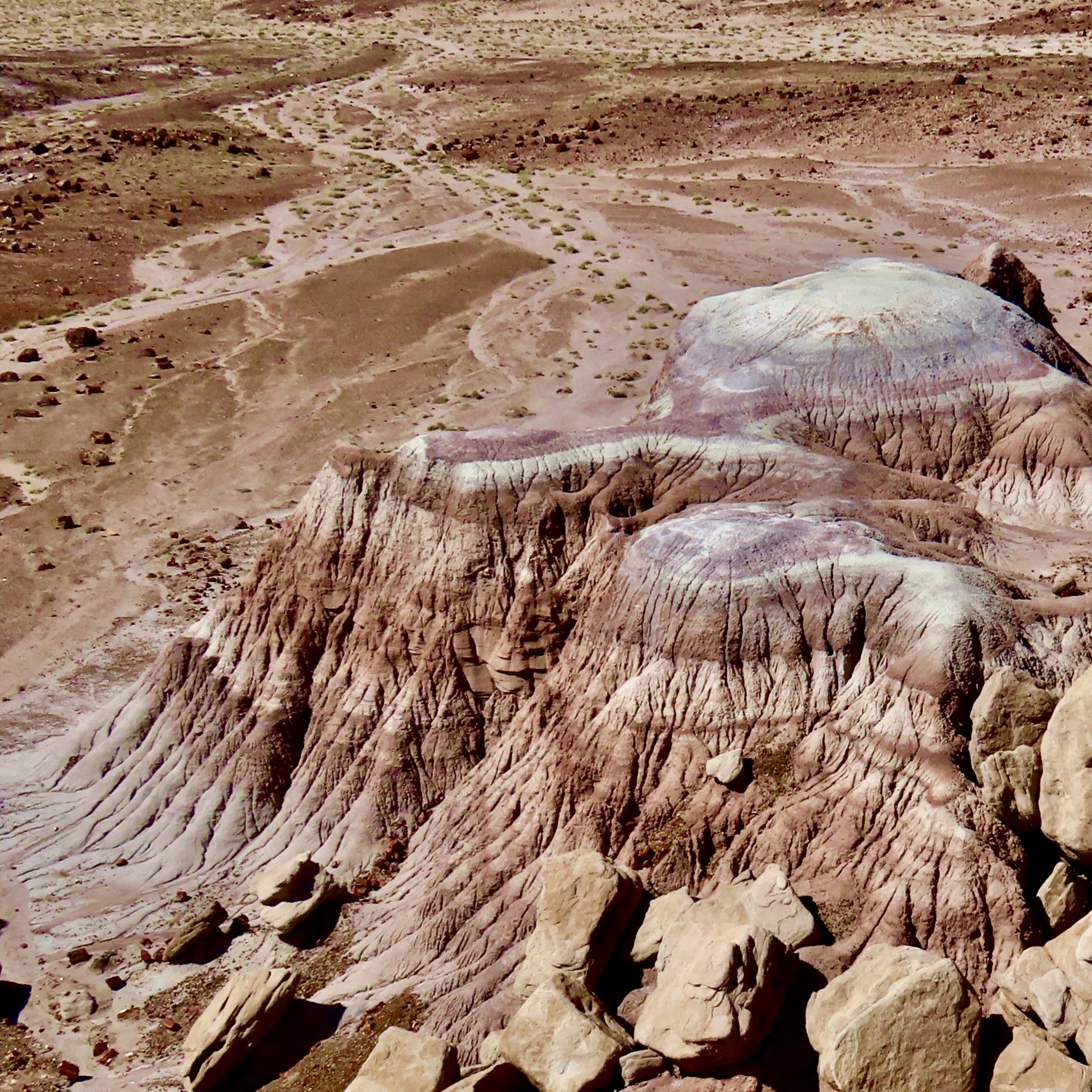
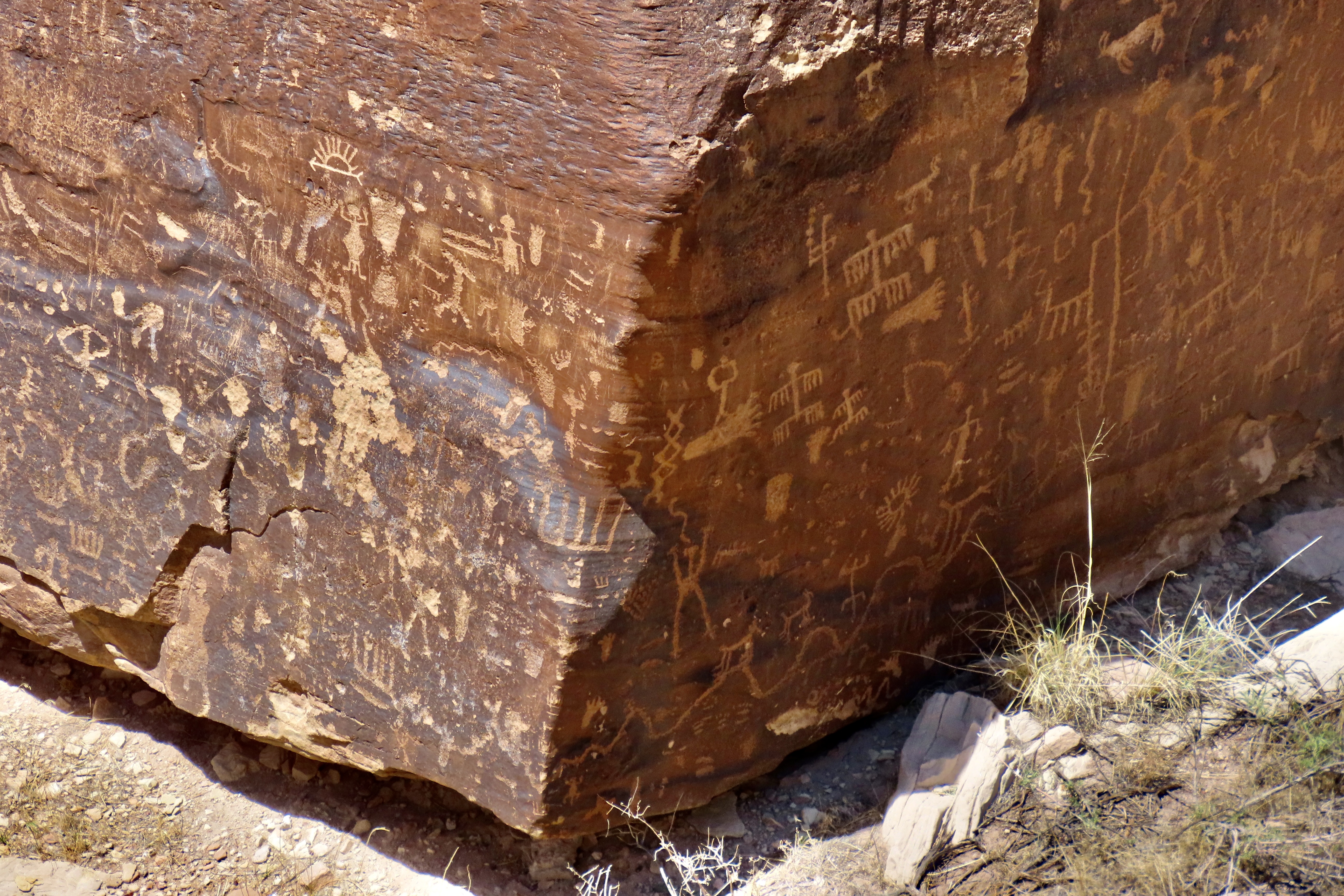
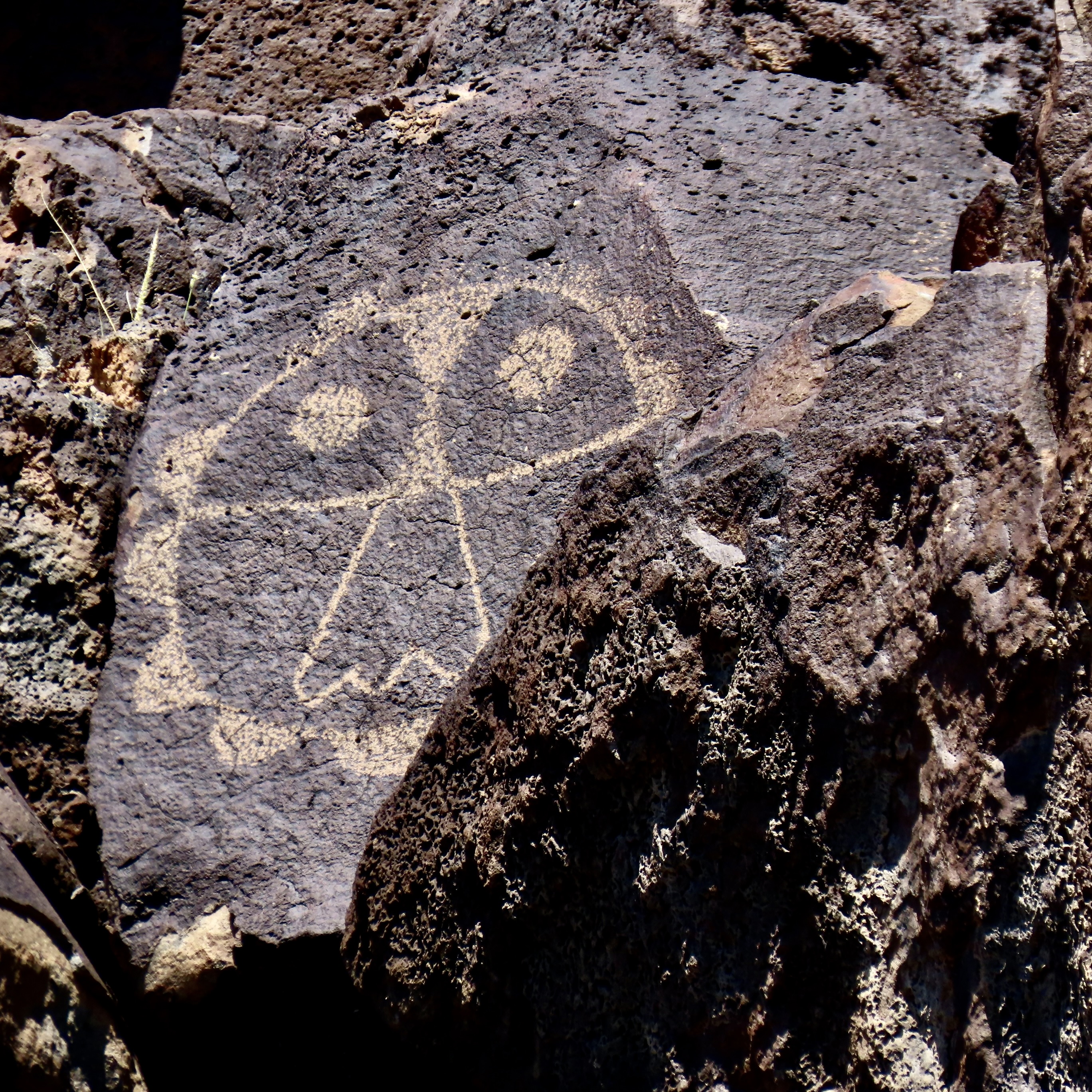
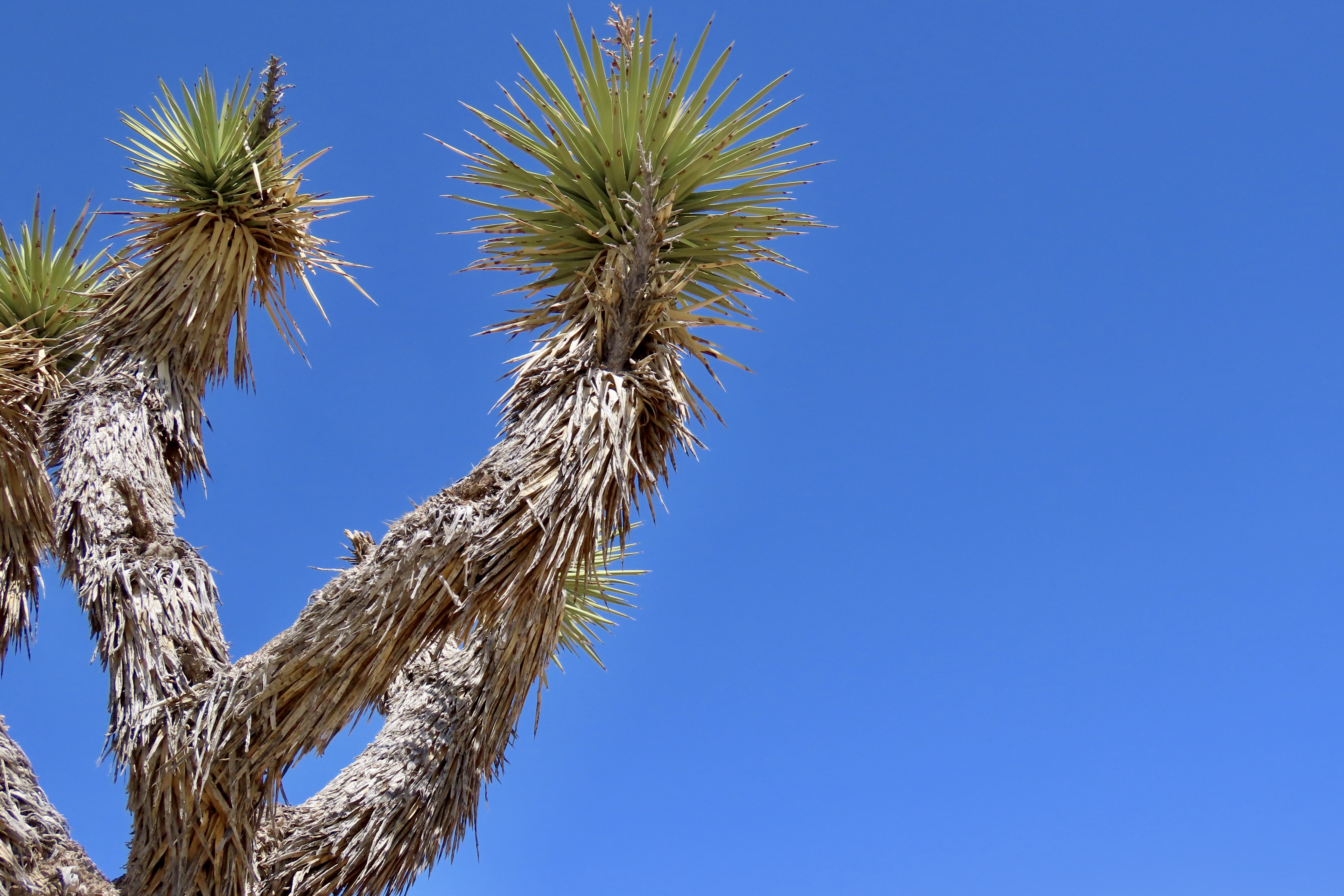
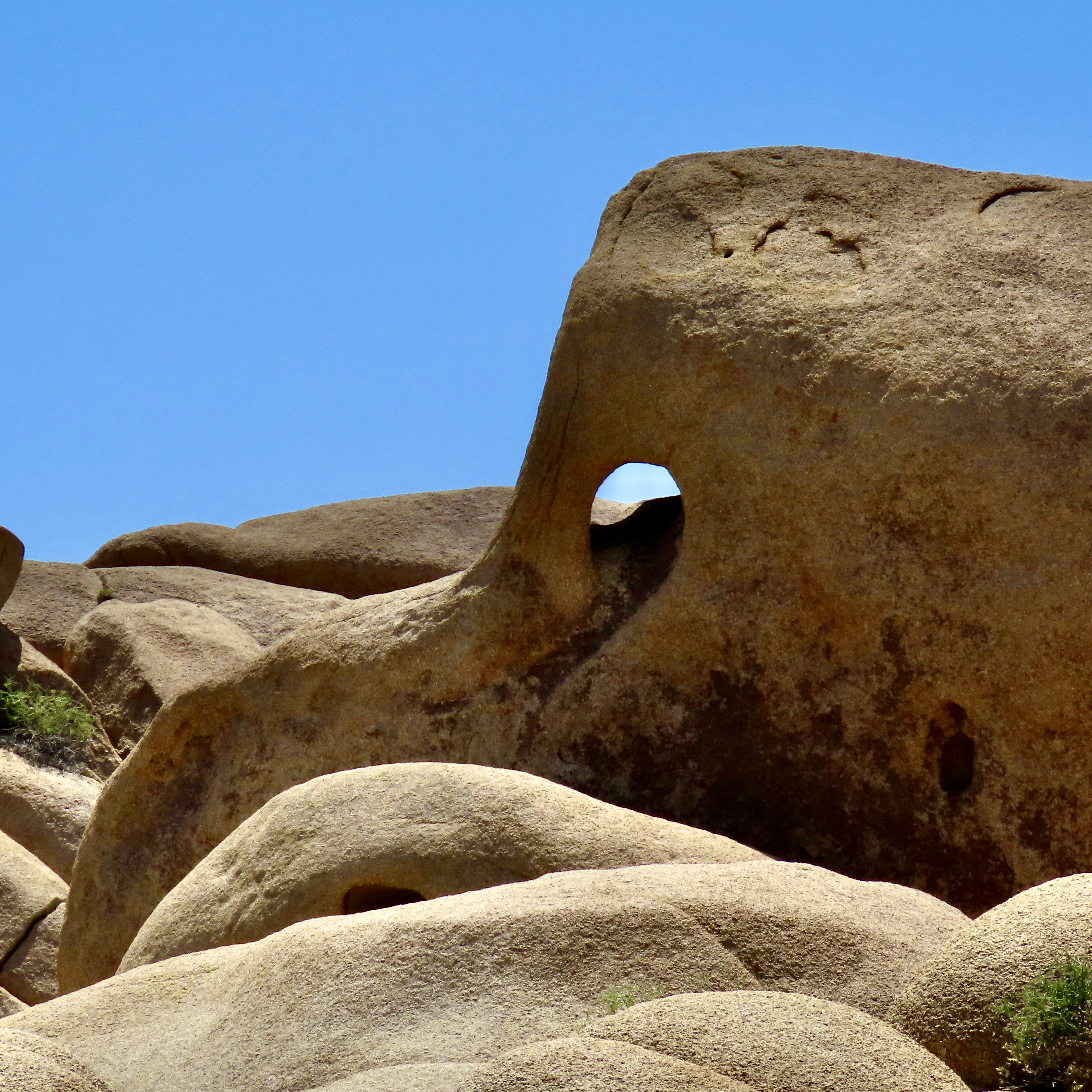
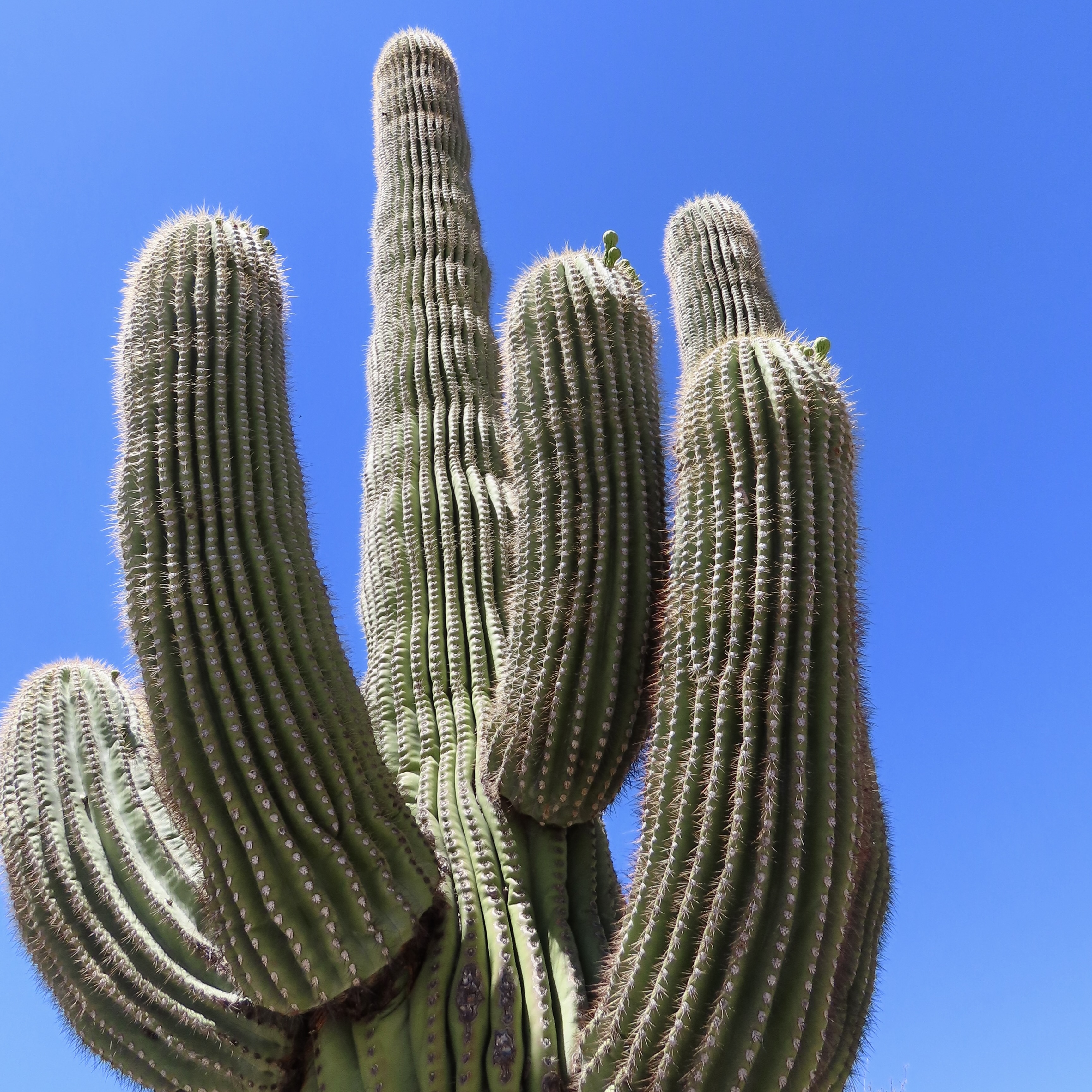
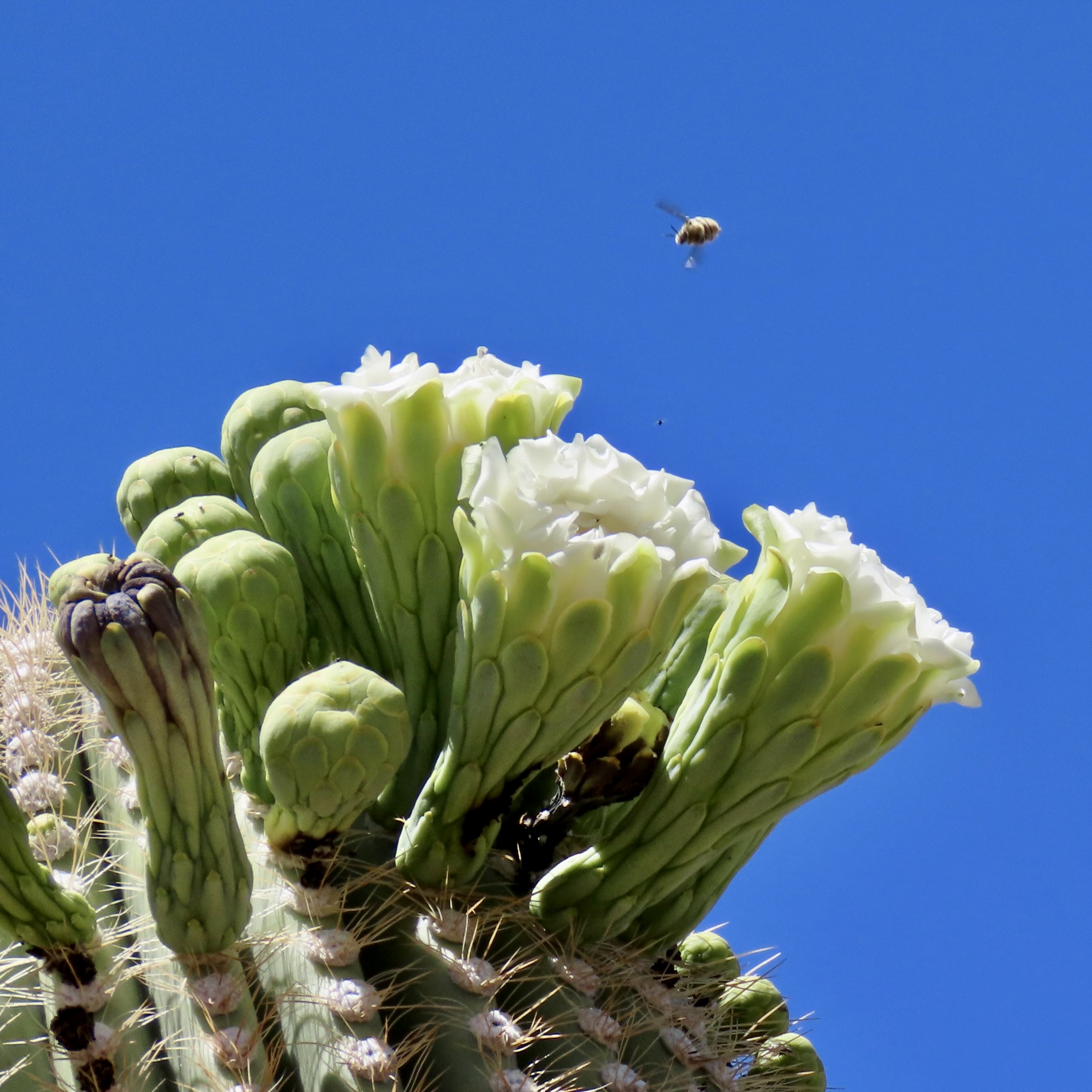
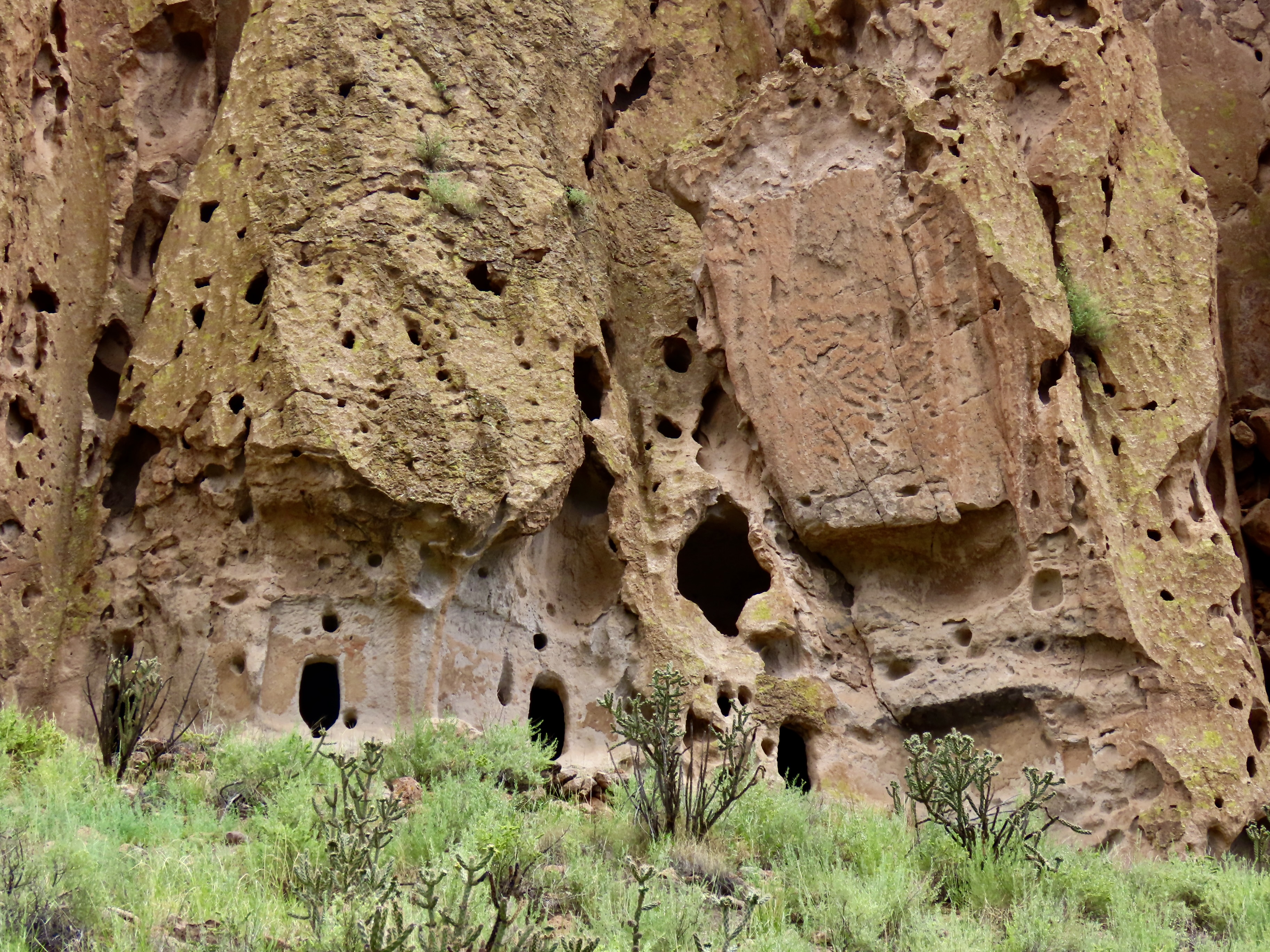
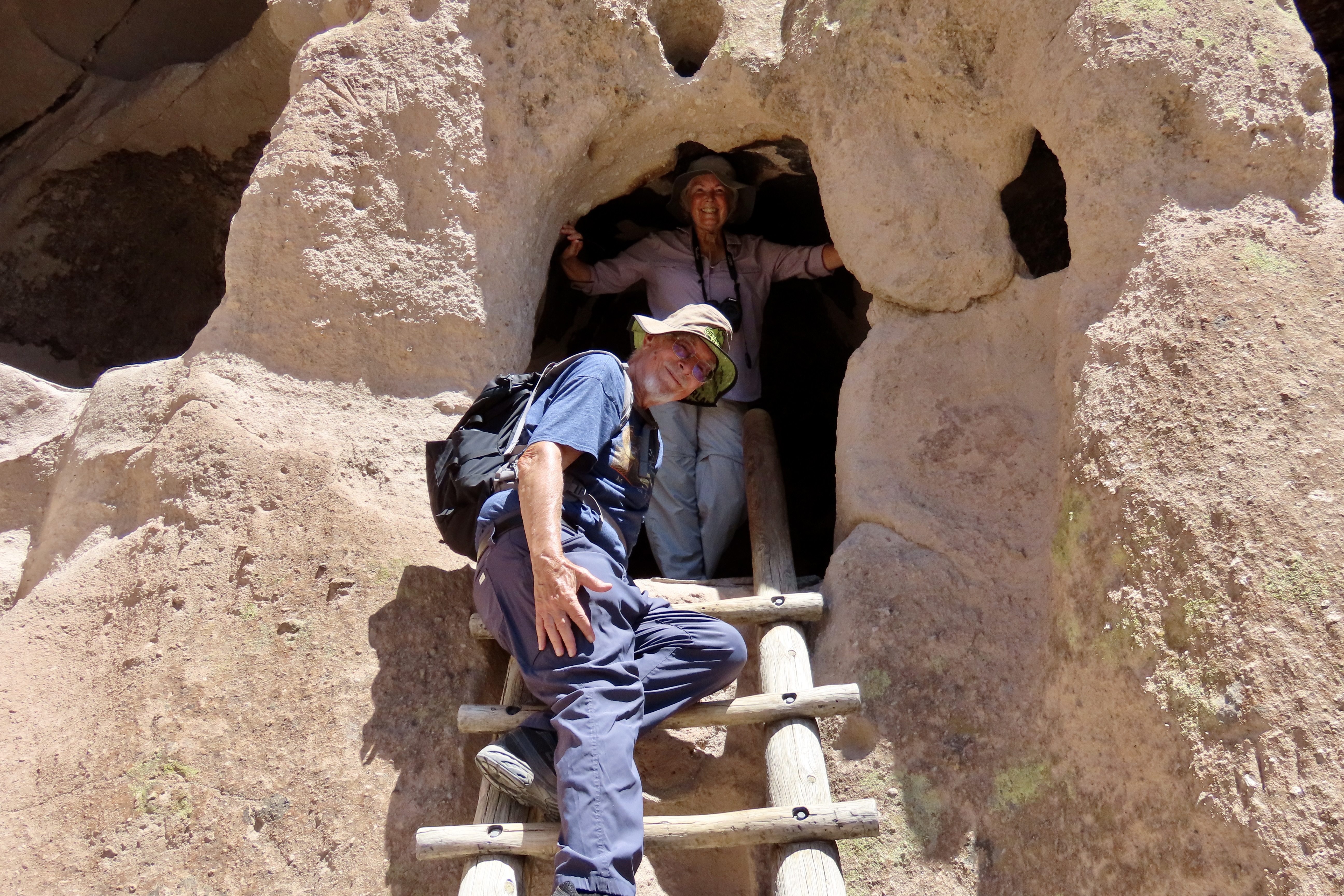
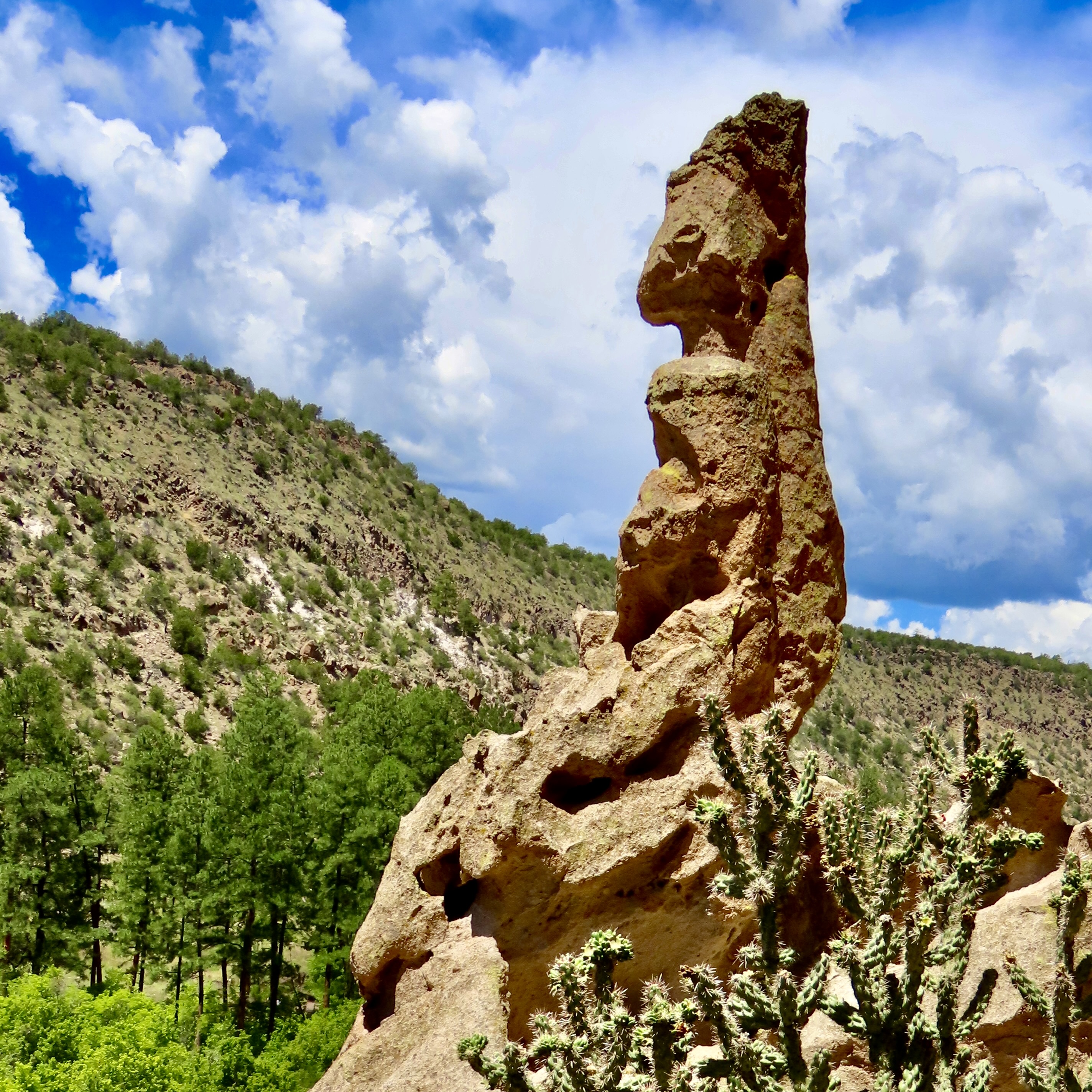
Petrified Forest National Park is found just off of I-40 in eastern Arizona. There are thousands of logs like the one above found in the park. You can still see the bark on this petrified wood that was once a tree that fell 200 million years ago.While most people come to the park to admire the petrified wood, there is also much beauty such as the colorful ‘Teepees’ found on the main road. Each color has a different story to tell representing millions of years in geological history.The Blue Mesa side road includes many other interesting and colorful land forms such as this. If you visit the park, be sure to take the short detour. A walk out in the desert on well maintained trails is definitely in order.Ancestral Puebloans and other indigenous tribes left a view of their ancient world in Petrified Forest NP in petroglyphs on Newspaper Rock. While our understanding of what they were communicating is limited, there is magic in contemplating the possibilities.While we are on the subject of petroglyphs, we found this unique one staring out at us in Petroglyph National Monument in Albuquerque, NM. Over 20,000 petroglyphs have been discovered in the monument. Peggy has plans to include this one in the revision of her word search book: Artistic Word Searches, Unique and Magical: Discovering Petroglyphs from the Southwest.Canyon De Chelly (pronounced shay) is located in northeastern Arizona. Jointly operated by the Navajo Nation that owns the property and the National Park Service, Canyon De Chelly features striking canyon views plus Ancestral Pueblo ruins and petroglyphs left behind by both the Pueblo peoples and Navajos.Our trip this past spring and summer took us into Califonia where we visited family and friends in San Diego, LA, and Sacramento. We also took time to visit Joshua Tree National Park in Southern California, known for its strange trees, after which it is named.We found the rock structures to be of equal, if not greater, interest. Some of which could be said to possess personalities.In addition to being known for its outstanding rock forms (think of the Grand Canyon, Zion, Bryce and Arches— plus what we visited this year), the Southwest is noted for its deserts and cacti, none of which is better known than the Giant Saguaro. We’ve often stopped to admire these huge plants in Saguaro National Park but have never been in Arizona when they are blooming. Things were about to change. Note the buds popping out on top of the arms.This time we were lucky. The blooms are almost other-worldly, in addition to being a source of food for numerous insects such as the bee coming in for a landing.A number of other cactus flowers also lit up the desert.Like plants, animals adjust to the deserts of the Southwest. Several birds choose to nest among the needles of various cacti including the curved bill thrasher Peggy found raising her family in a cholla cactus. The thrasher was not happy when she sneaked up to it and her hatchlings to catch a photo with her iPhone. It’s probably a good thing Peggy couldn’t understand what momma was saying.Bandelier National Monument, located mere miles away from where the first atom bomb was created at Los Alamos, New Mexico, features the ruins of homes built by Ancestral Puebloans that included natural and carved caves (cavates) with pueblo structures once built up against them.Peggy and I climbed up to one of the cavates. It was quite cozy inside. “Honey, I’m home.”Just beneath the cavate, this outcropping of rocks overlooked the large Tyuonyi Pueblo at Bandelier. A corner of the ruins can be seen here. It was built in a circle and contained contained 400 rooms.This tall rock was among the rocks in the outcropping. My first thought was wow! Nowhere in our travels though out the Southwest have we seen a statue like it carved by Ancestral Puebloans or any other indigenous tribes. We had a guide to the trail we were walking on, but there was no information on the statue. Nor was there anything in the information center. The emphasis was all on the scenery, cavates, petroglyphs and pueblos. Human or nature carved, I would think that the park’s literature would at least comment on it. That’s it for today. Next up:We wrapped up our year of travel with out trip to New England so it’s proper that we finish off 2025 with the trip.
Happy New Year to everyone and thanks for joining us on our adventures in 2025. It’s much appreciated. Costa Rica, Bali, and Scotland are coming up in 2026! Curt and Peggy
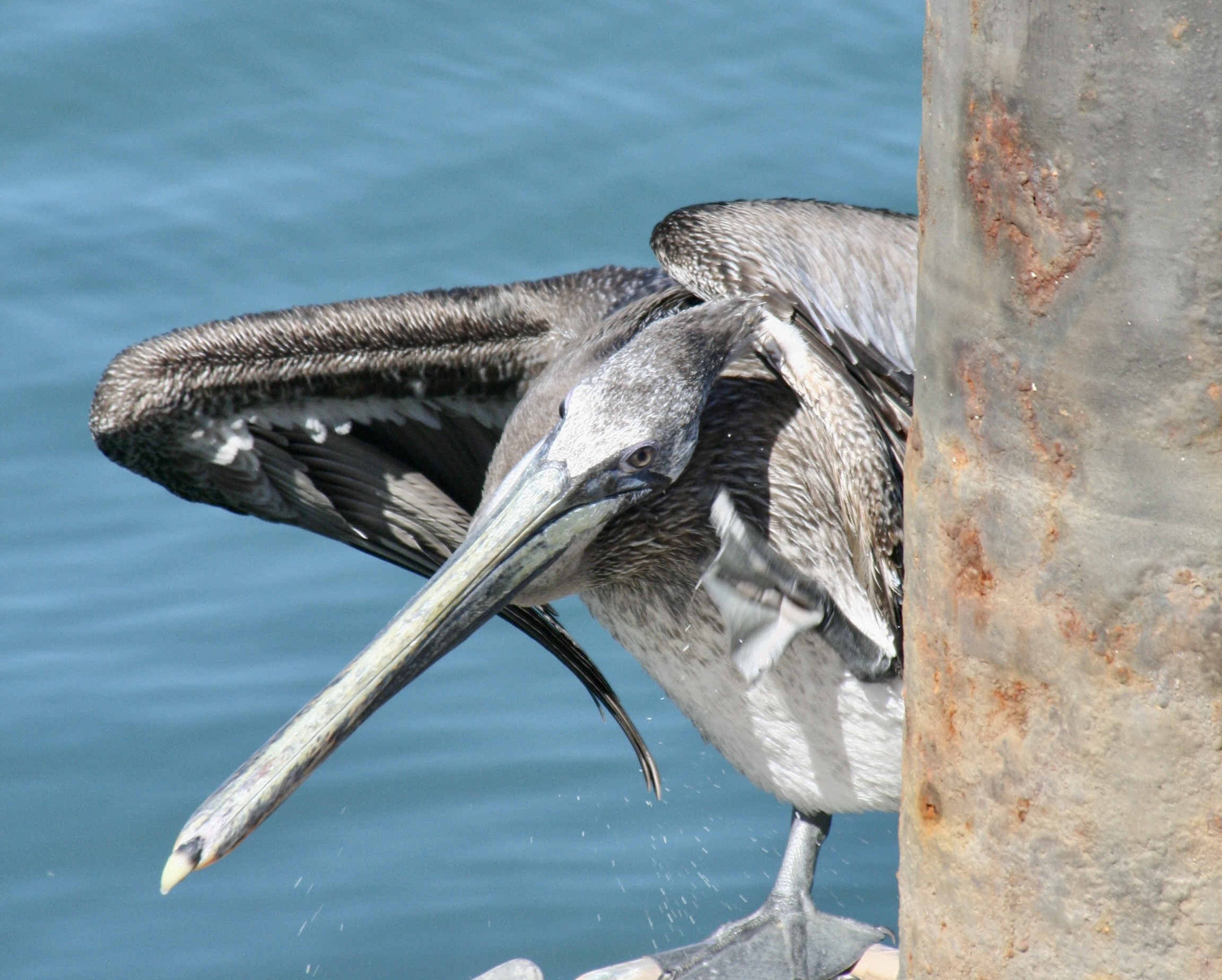
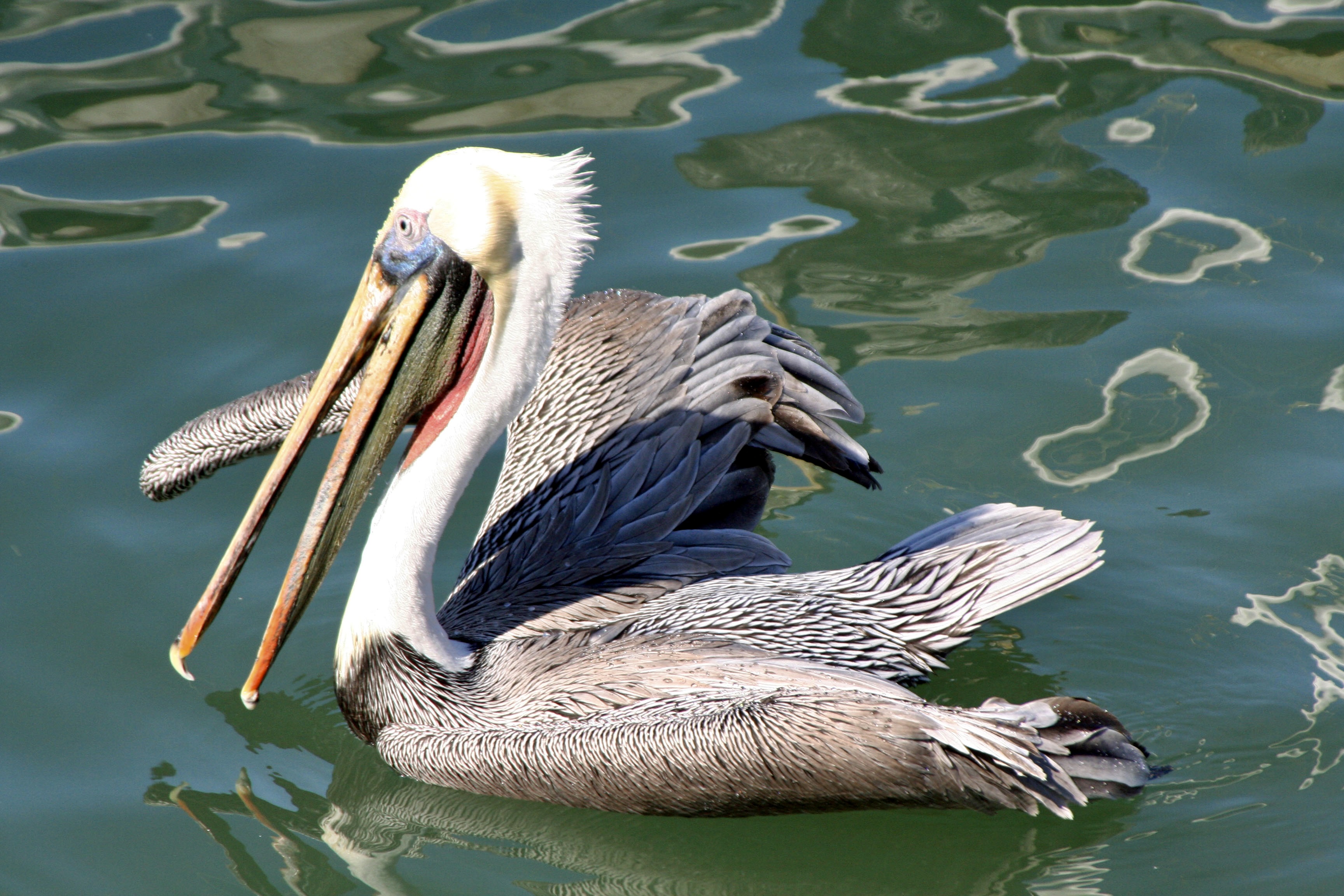
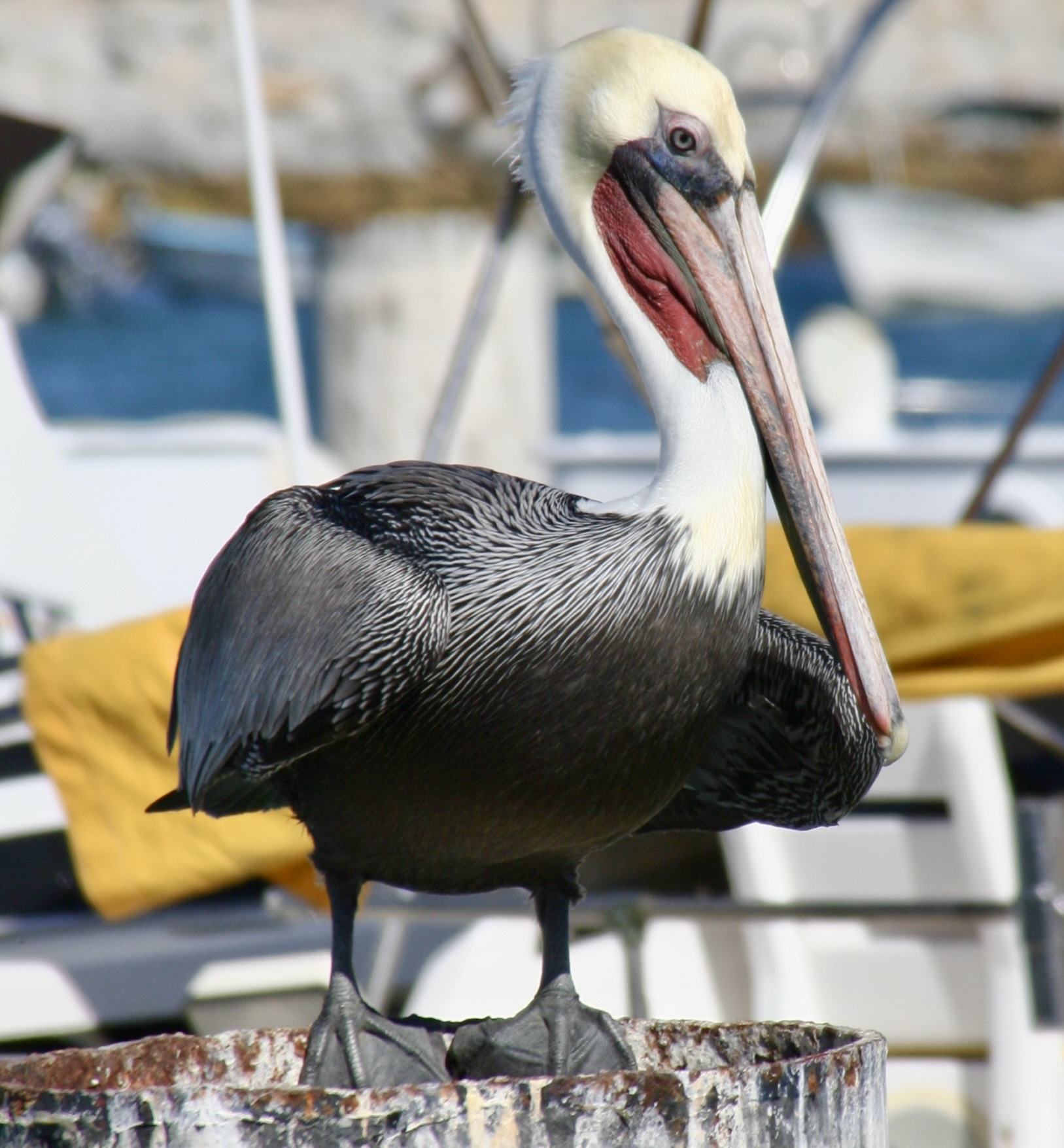
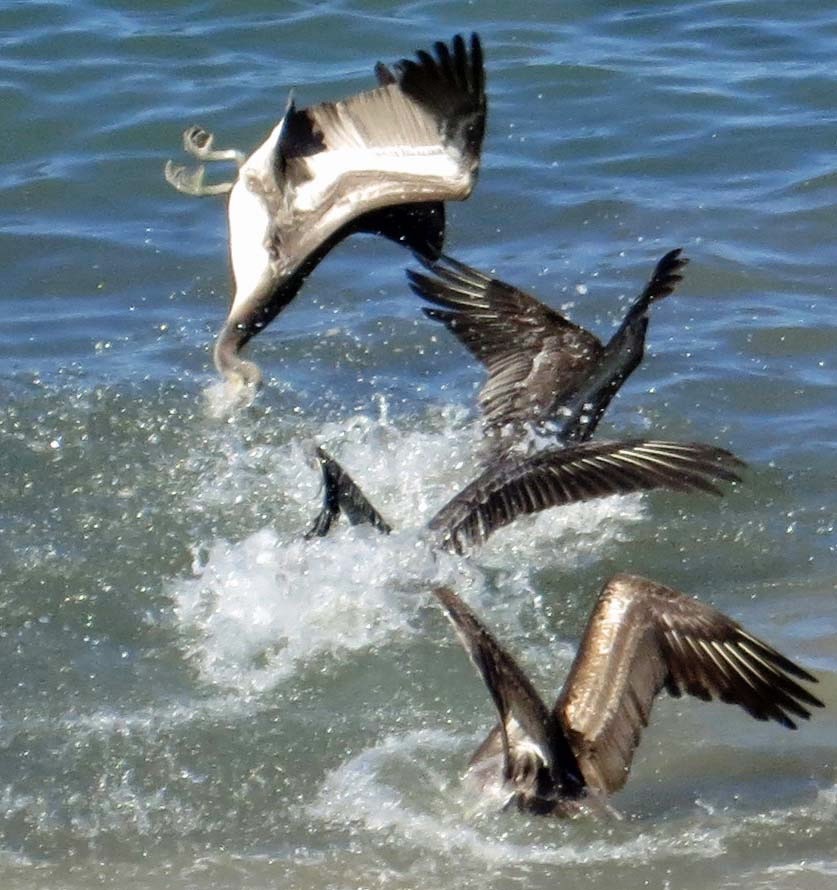
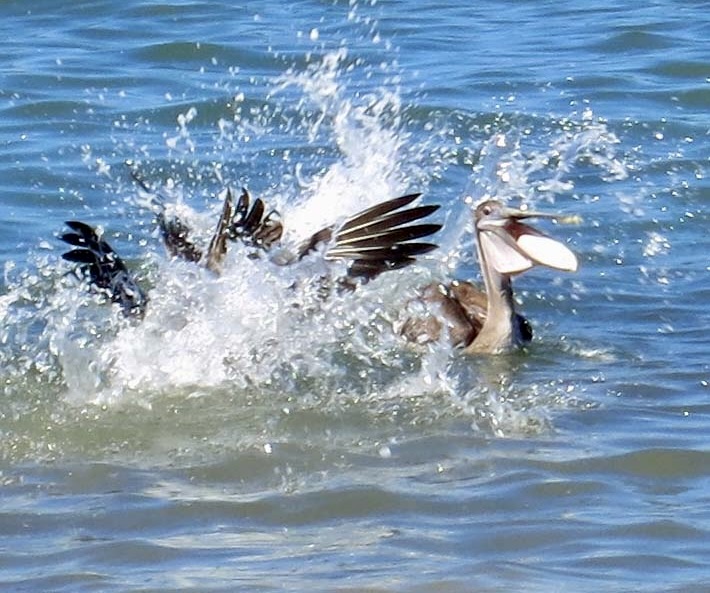
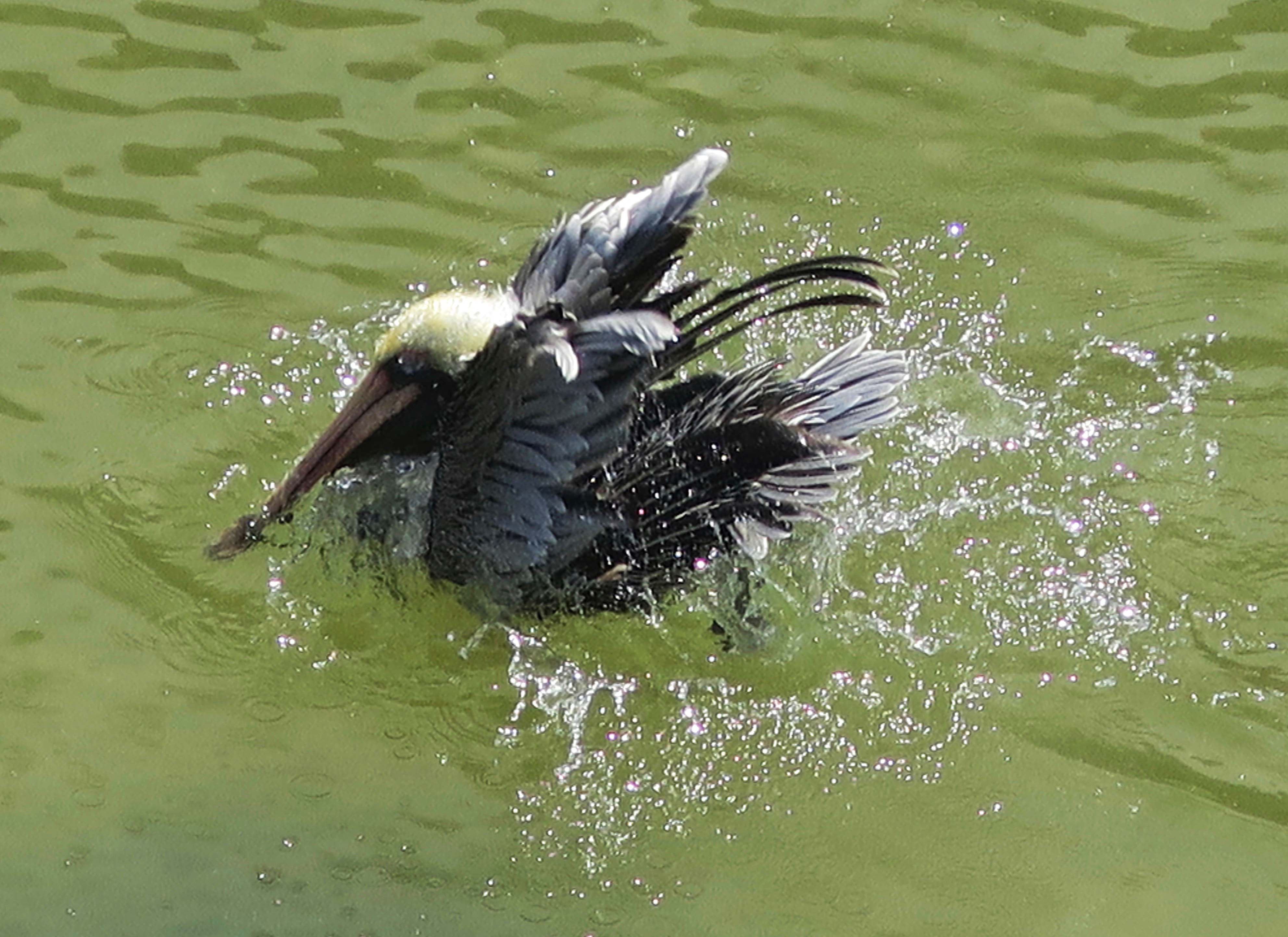
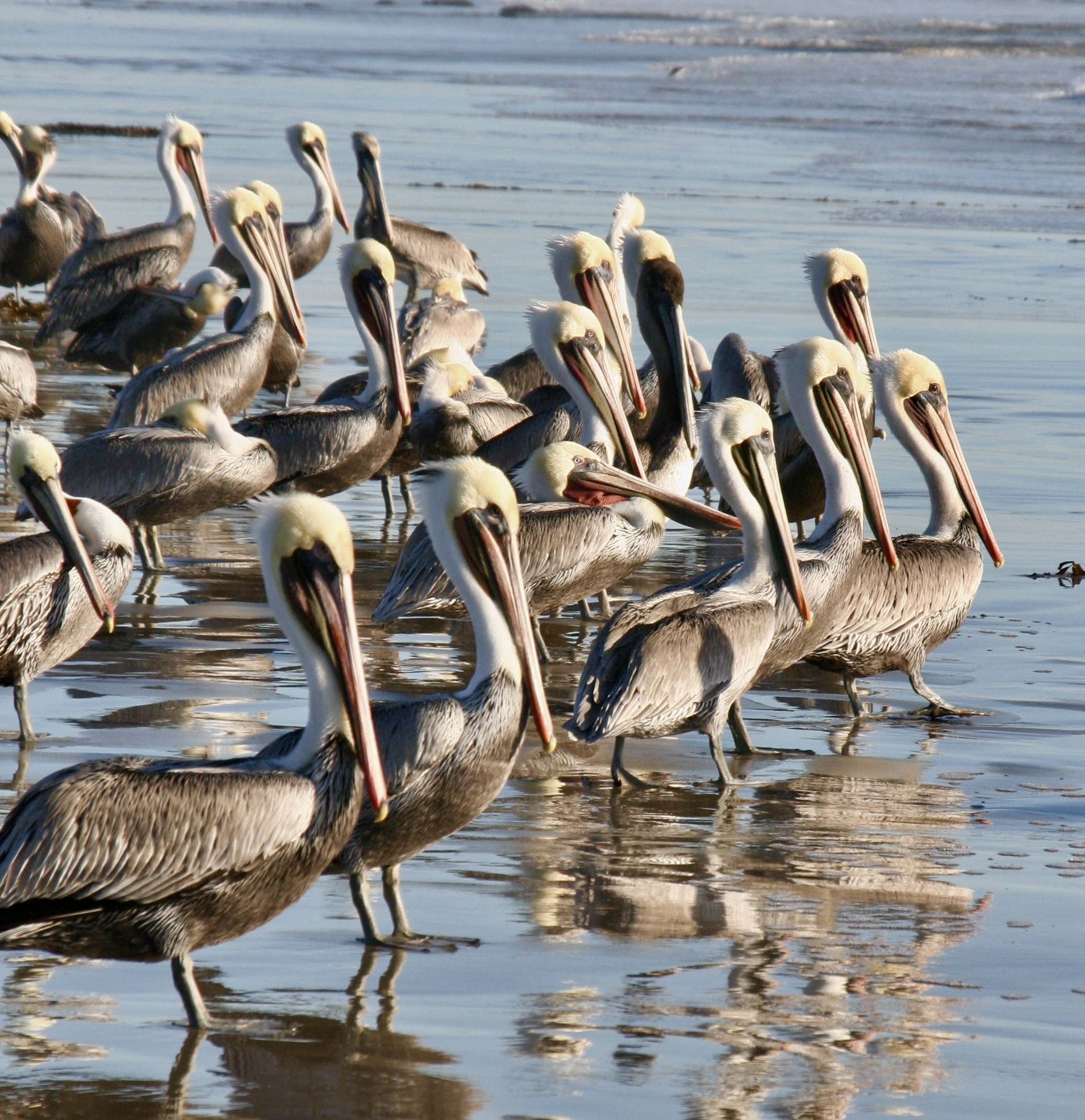
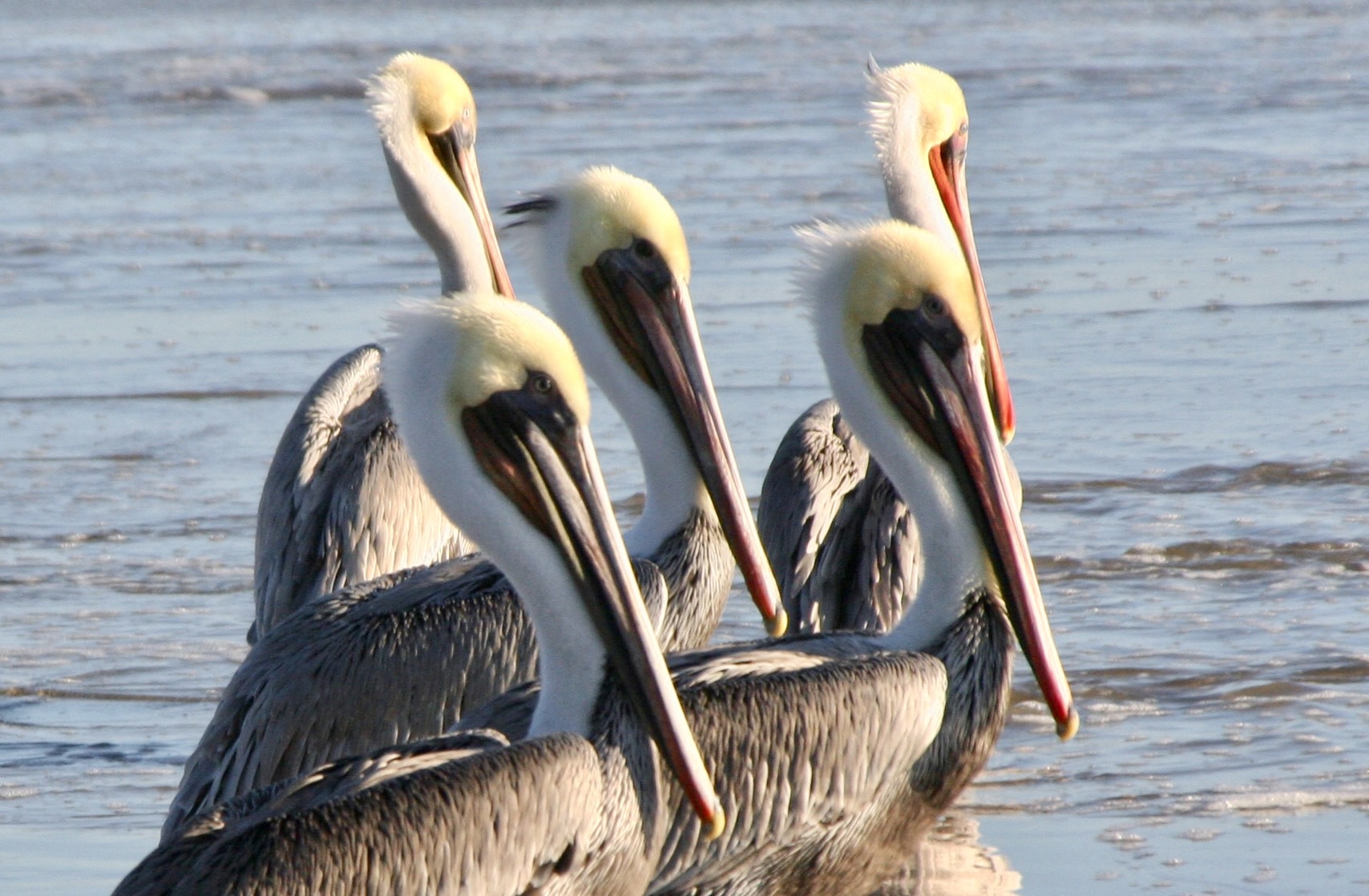
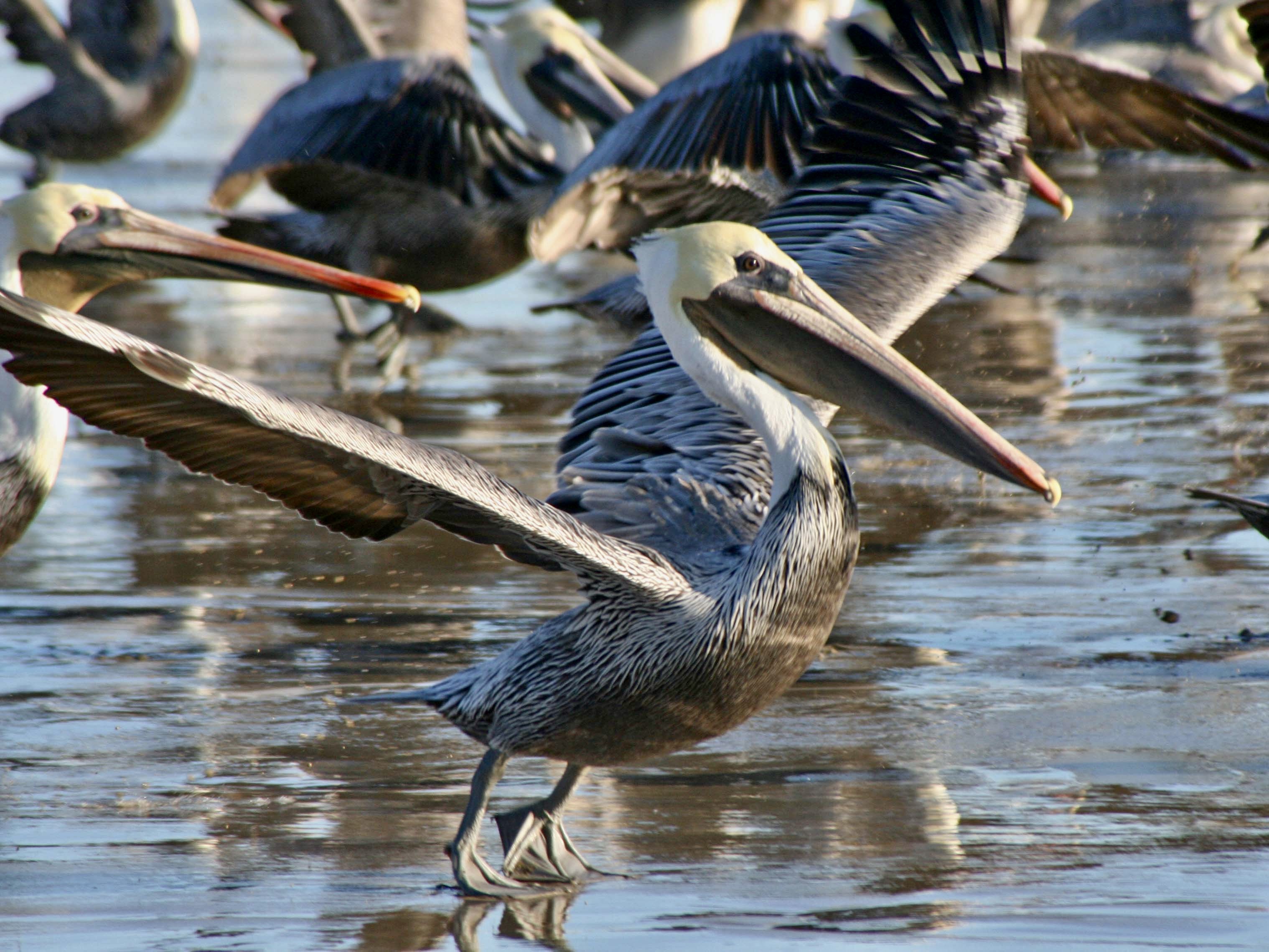
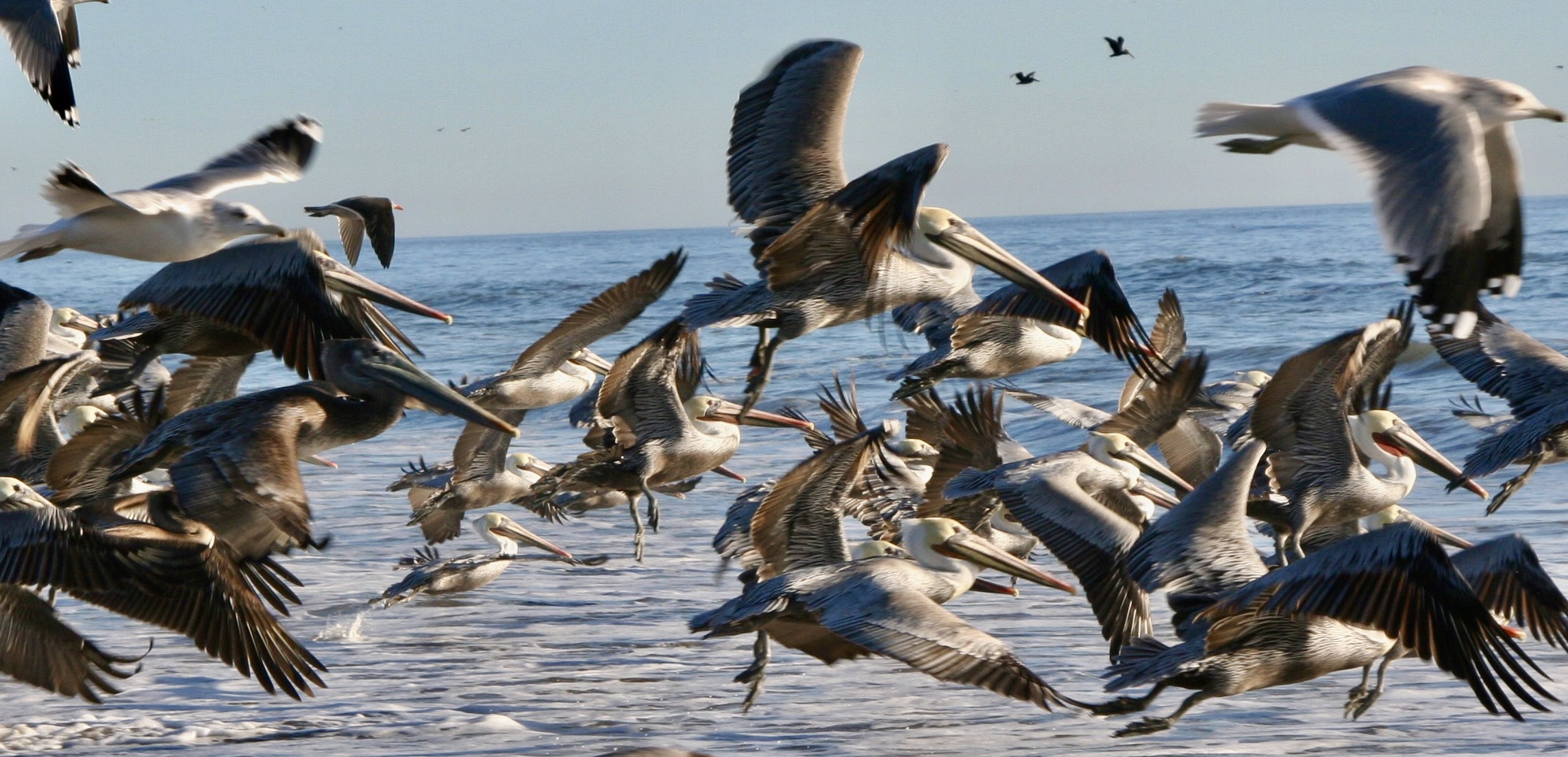
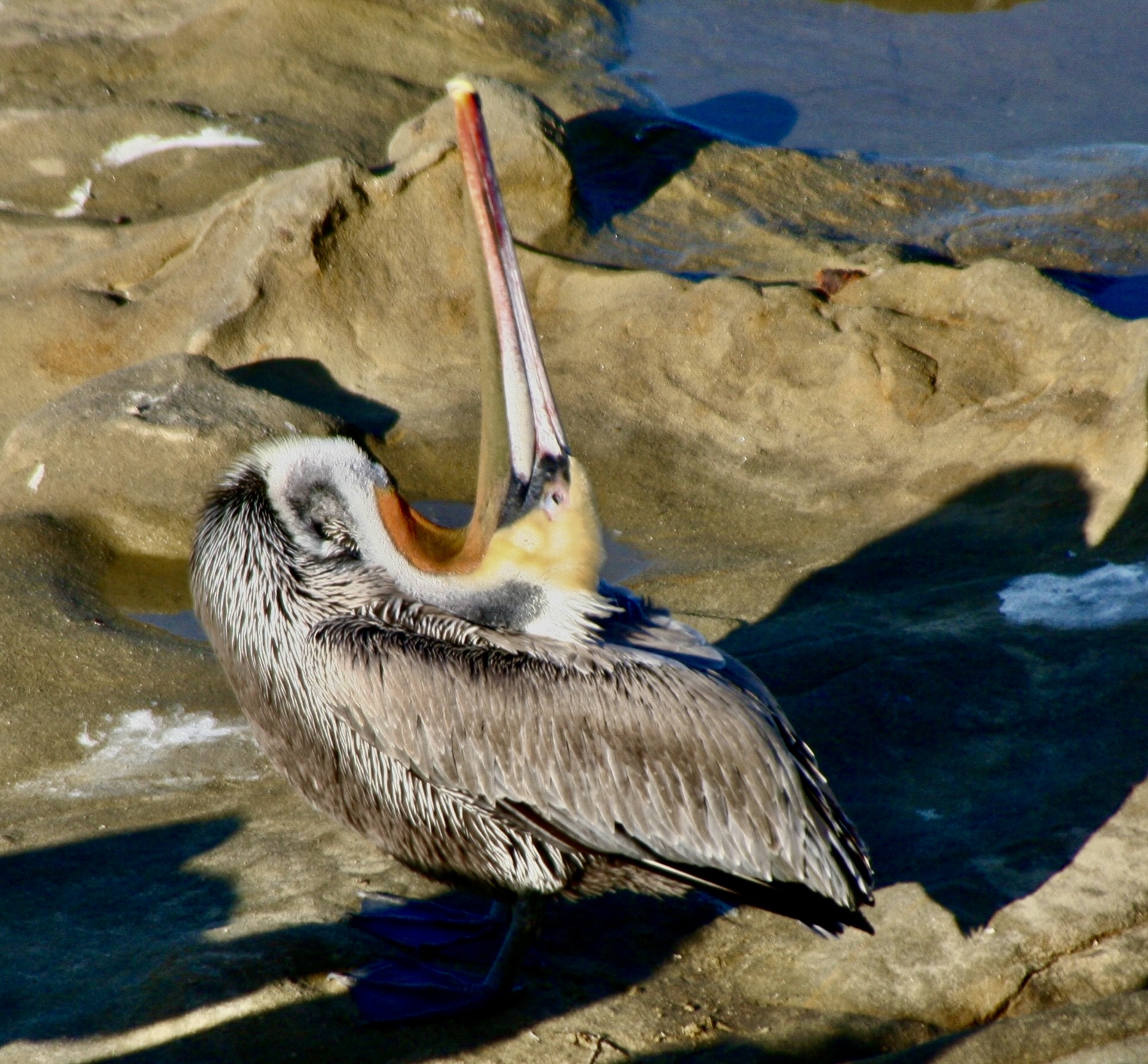
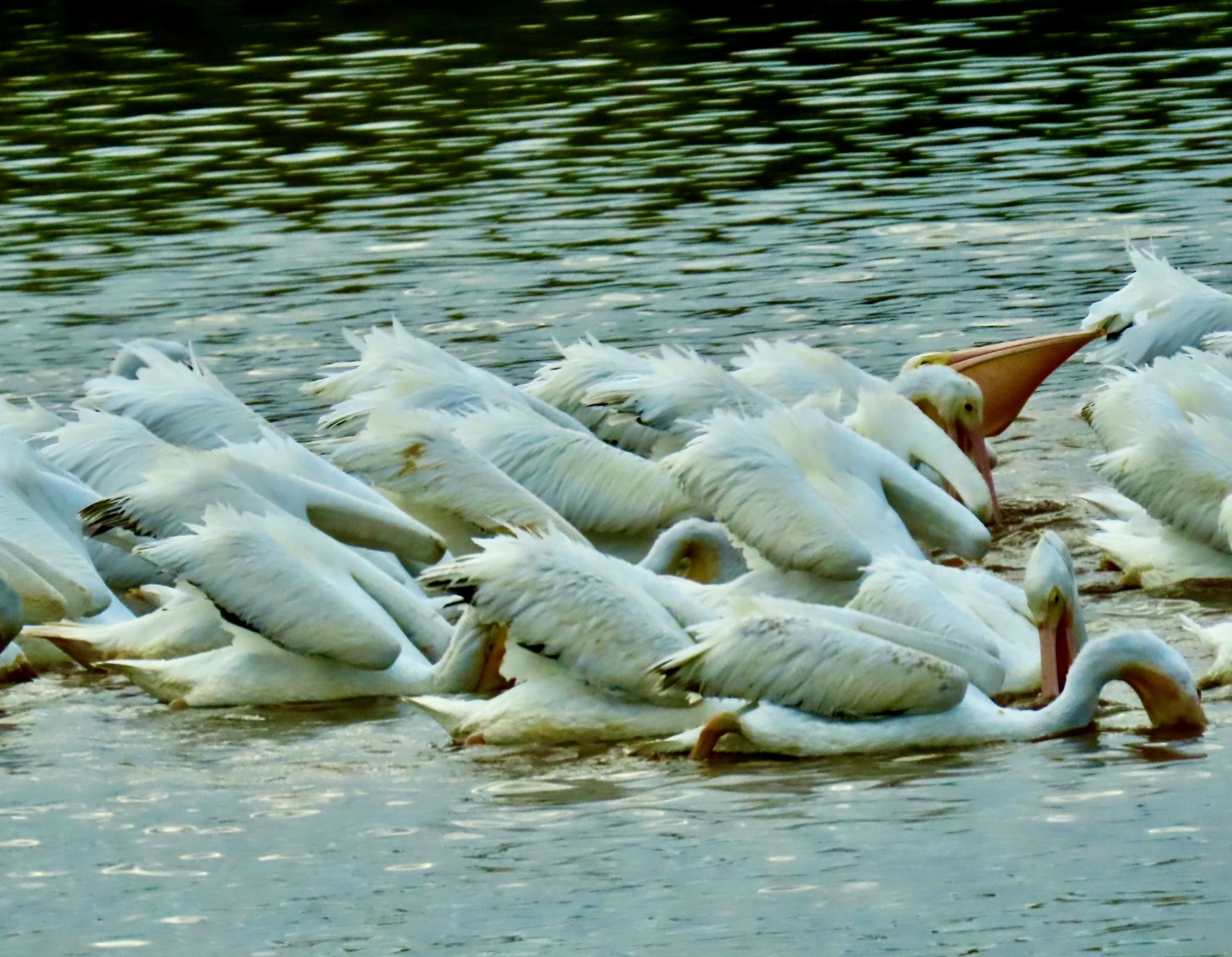
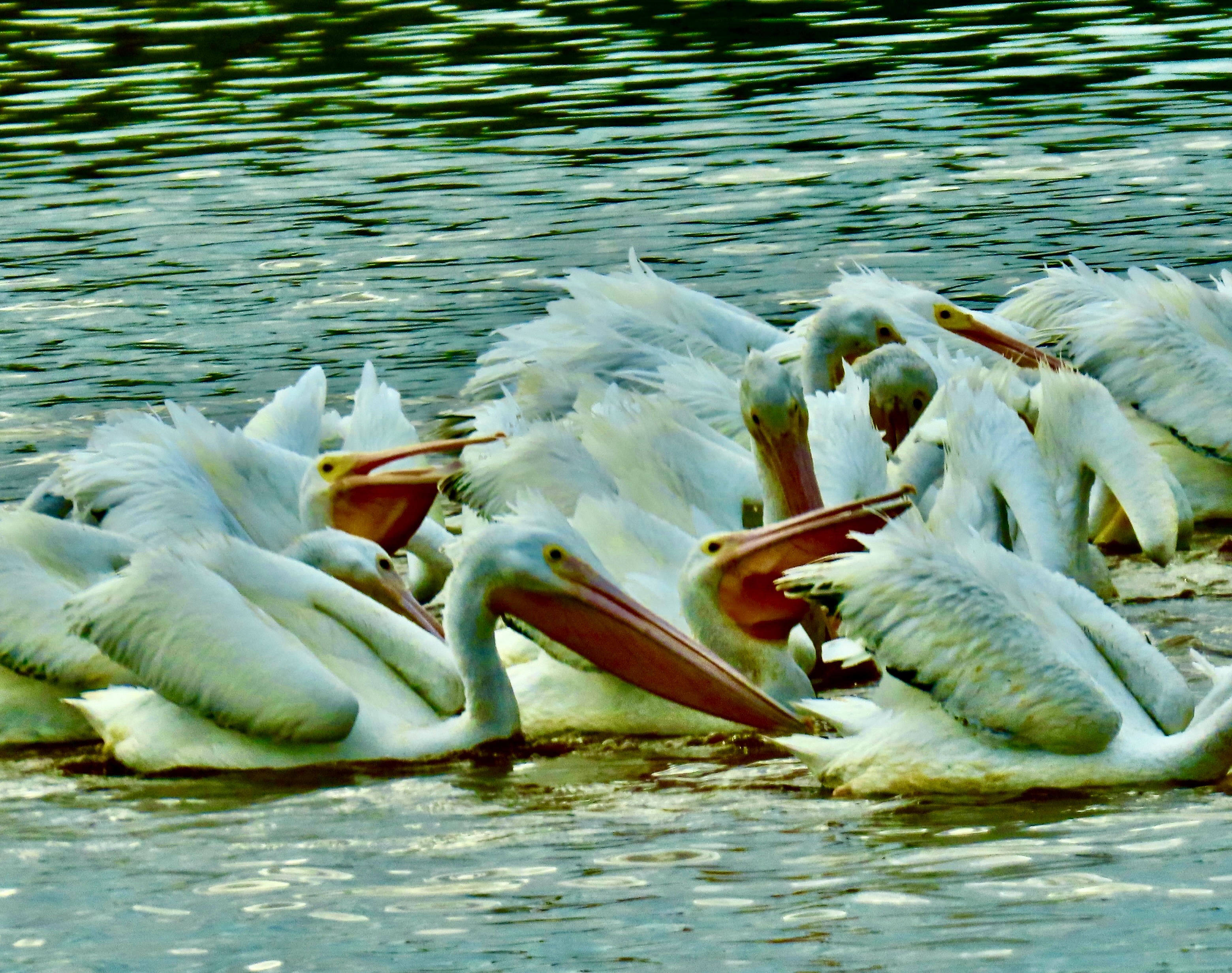
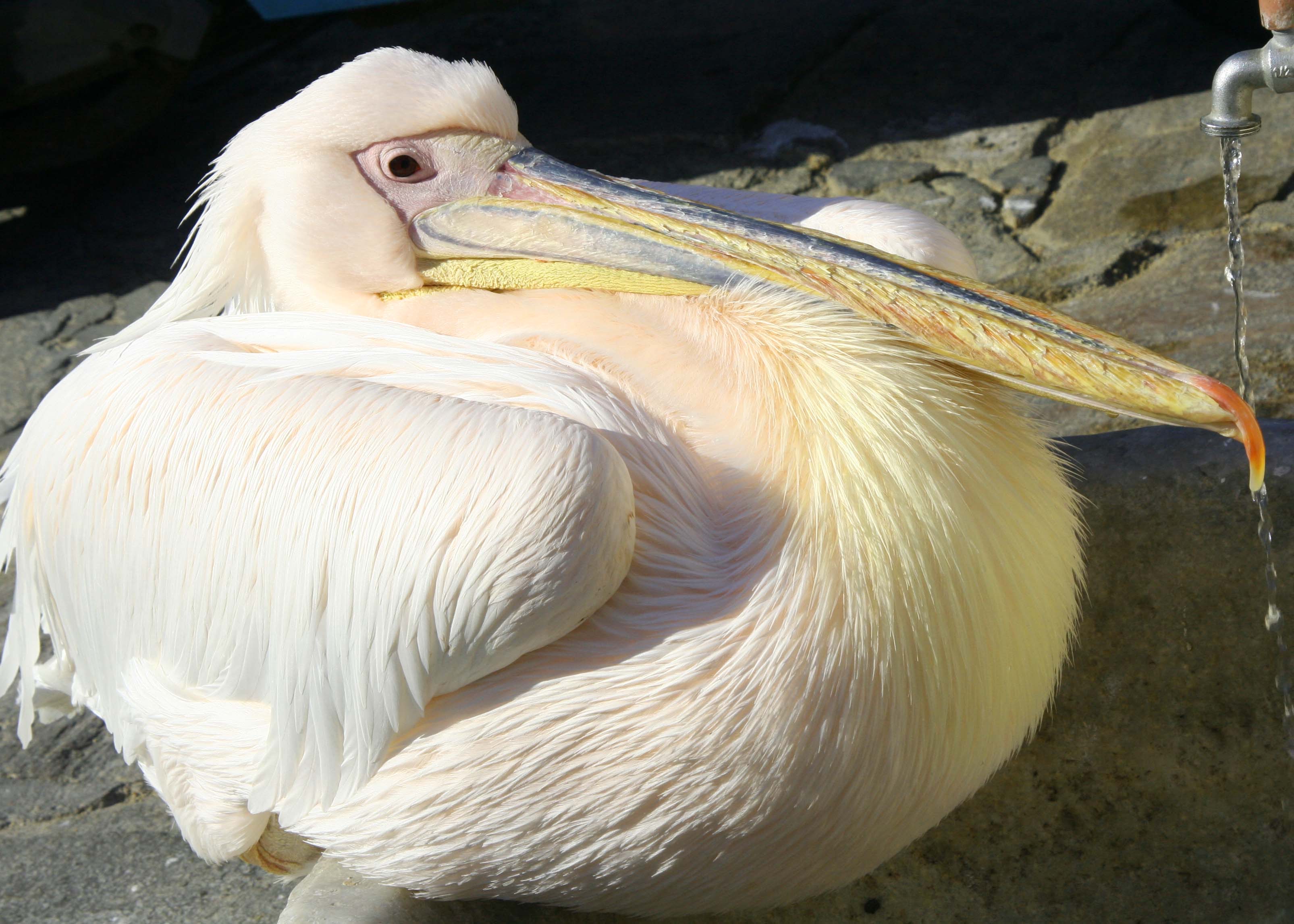
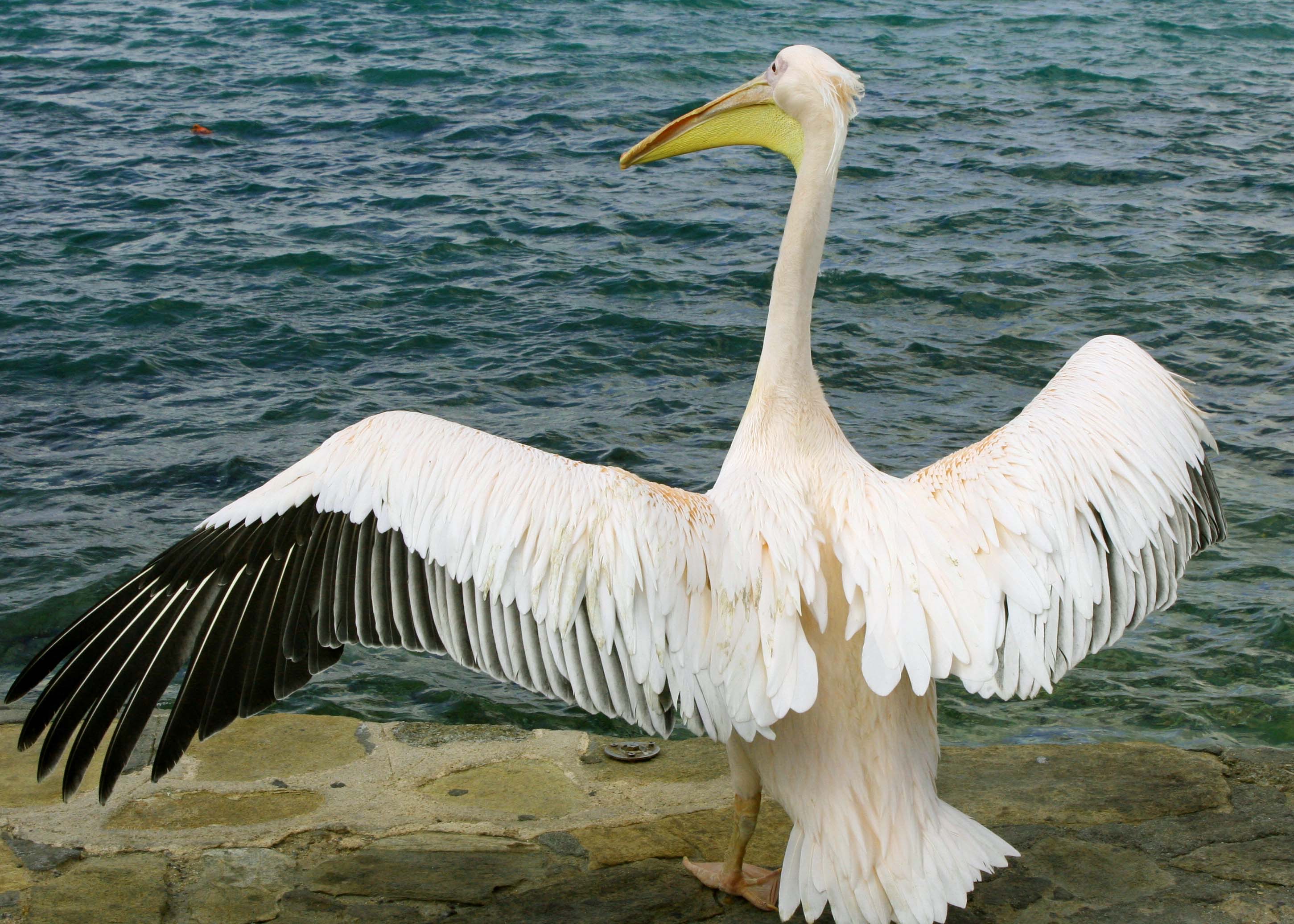
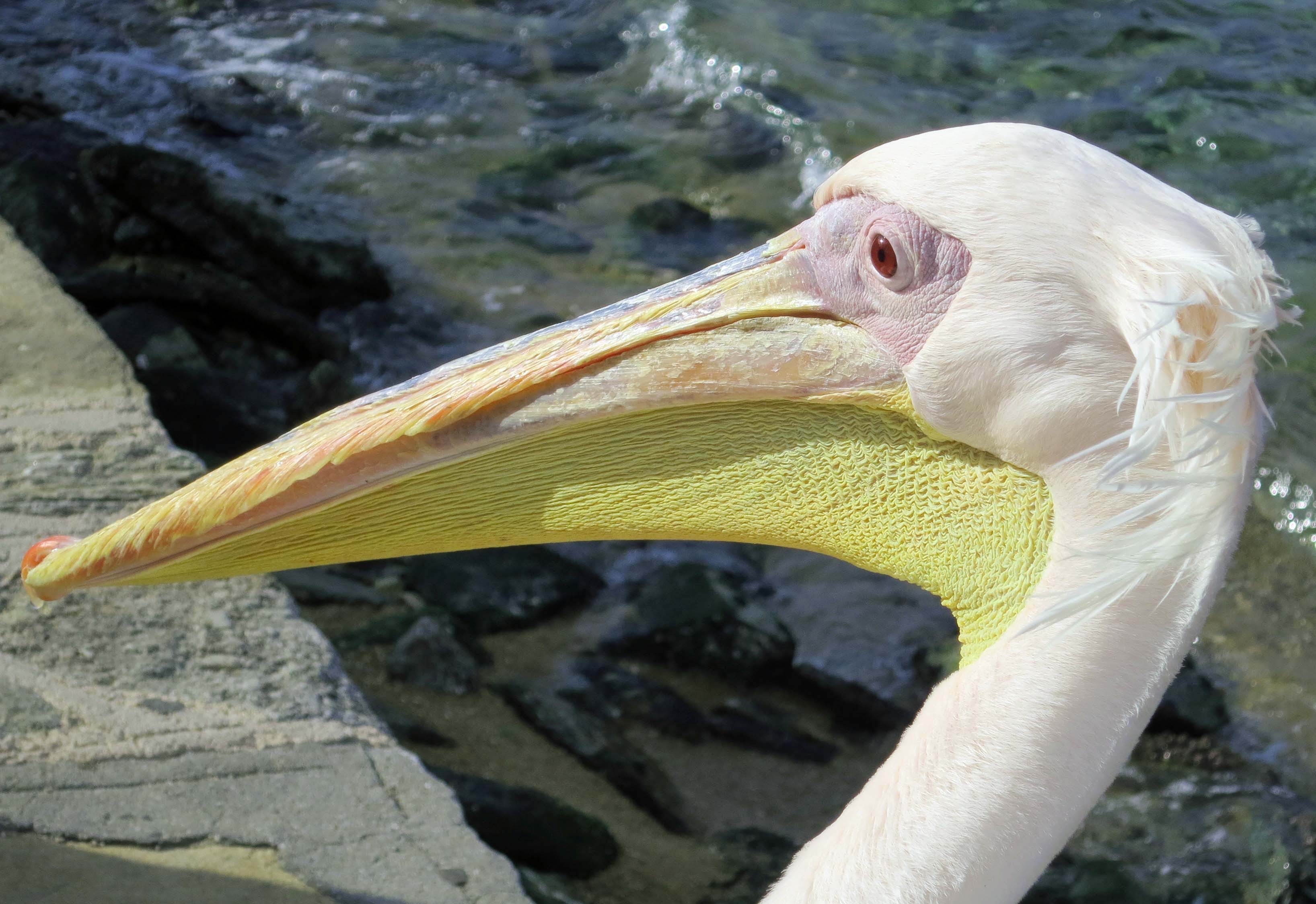
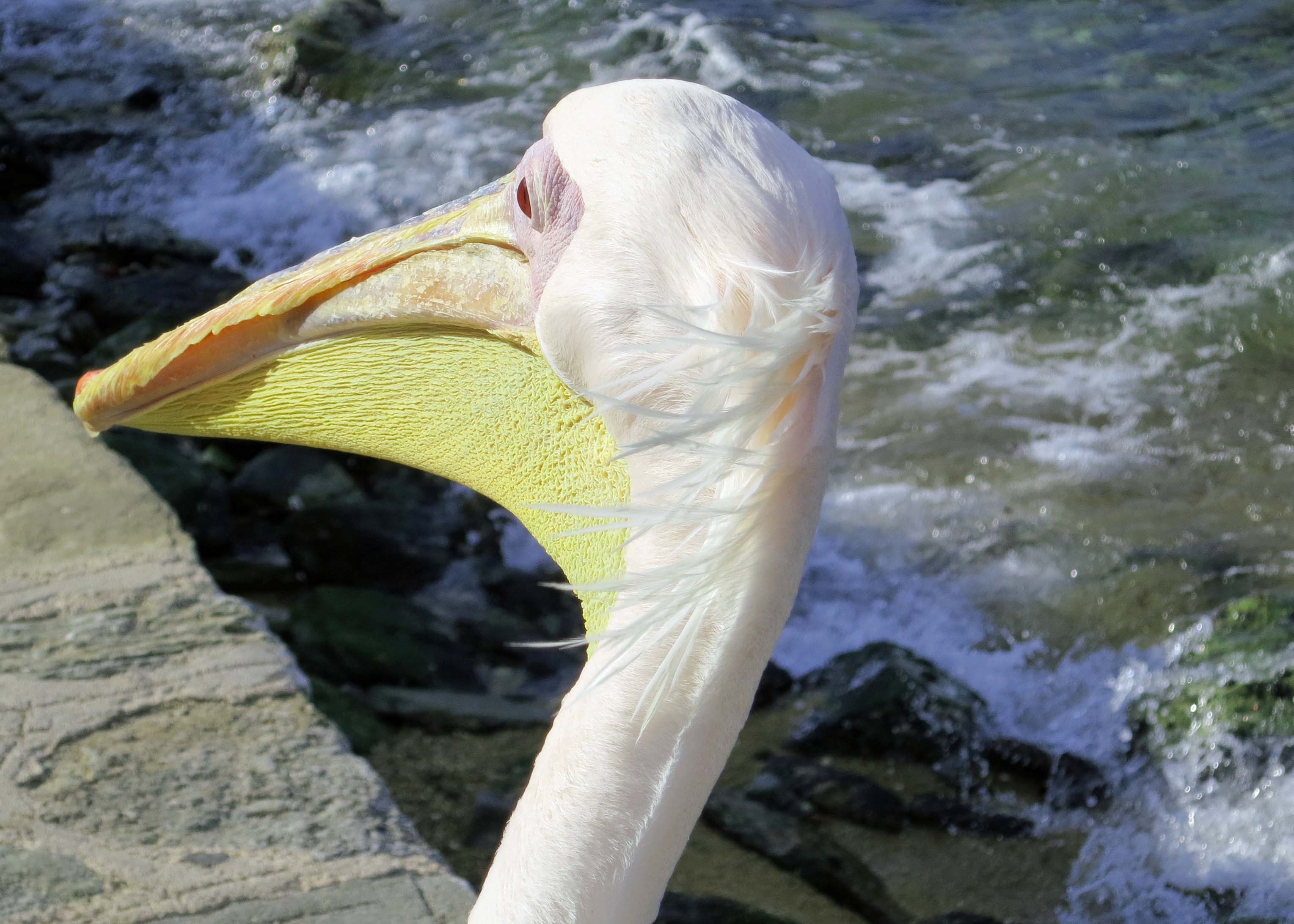
If you have been following this blog for a while, you know that Peggy and I love pelicans. They can appear and act a bit strange. It’s what makes them so attractive to us. We like weird. It wasn’t clear what this one was up to. Scratching an itch? Waving to us? Practicing a crash landing? Whatever, we were lucky to catch it in mid-acton. At the time we were visiting Cabo San Lucas on the the tip of the Baja Peninsula.This one was swimming around in the water nearby. The sharp tip on the end of its bill is called a nail, as in nailed it, to help in catching fish and assuring that they don’t escape from the pouch.A handsome fellow— in pelican terms— was watching the action. Note the big feet. Brown Pelicans use them to incubate their eggs, placing them on top of the egg instead of using their warm feathers and body heat like every other bird we can think of. Mom and Pop actually make good parents. The male brings in nesting material; the female builds the nest. Both participate in incubating the eggs, and both help in feeding the nestlings, i.e. they spew regurgitated fish into the nest. It’s a potluck.Graceful, huh. Brown pelicans dive into the water to catch dinner. Style is not required. They start their dive from as high as 60 feet up in the air and plummet straight down, turning their neck just before hitting the water to avoid injury. Peggy and I were watching a feeding frenzy of around 50 pelicans on the Bahía de Banderas, the bay off of Puerto Vallarta, Mexico when we took this photo and the next one.It was insane. The large pouch of a pelican can hold up to two gallons of water. As soon as the water drains, it swallows whatever it has caught. A two part stomach system then processes the fish to make them palatable. We couldn’t help but think that this pelican was celebrating— not only because it had caught a fish, but also because it was out of the melee. Woohoo!We watched a youngster on the Rio Cuale in Puerto Vallarta. Its body had a ways to go to catch up with the size of its bill. I think it was trying to scare up a meal. Or take a bath.The west coast of California, Oregon and Washington also provides numerous opportunities for watching brown pelicans. At one time these magnificent birds were almost extinct because of the poison DDT used widely by farmers to protect their crops from insects. With the banning of the poison, the birds are now off of the endangered species list and number over 600,000 worldwide. This, and the next three photos were taken on the Carpinteria Beach south of Santa Barbara, California.Looking dignified. A committee perhaps? Or maybe a board of directors. Note how three in front have placed their bills to the right. Takeoff on runway 1.You have probably seen brown pelicans in a neat line as they gracefully fly over waves. That wasn’t the case here. We were thinking, ‘Where’s the air traffic controller?’This is another one of those, “What the…” photos. Napping perhaps while resting its heavy head on its back? Catching a few rays on his pouch? We took this photo on a San Diego beach 17 years ago.Peggy and I were driving by a small pond in the Florida Everglades National Park last year when we spotted close to two hundred white pelicans stretched out in a long line, several pelicans deep. While brown pelicans dive for their fish dinners, white pelicans work together in a coordinated effort to herd fish into groups that makes them easier to catch. Most of these are peering into the water, watching and waiting. When a fish swims within reach, they strike using their broad pouches as a trap. It’s kind of like catching a butterfly with a butterfly net. The pelican on the top right has succeeded. Its pouch is still full of water.Success. Several pelicans are in various phases of swallowing their catch here. The roundup was apparently a success. The white pelican is one of the largest birds in North America with a wing span of up to 9 feet. While brown pelicans primarily catch their fish out of coastal waters, white pelicans can be found on lakes far inland. Shallow water where they can herd fish more easily is preferred.Our favorite pelican of all times was Petros, the well-loved white pelican of the Greek Island of Mykonos. We were wandering around the Mediterranean Sea several years ago with Peggy’s brother John, his wife Frances and friends when we met him. The original Petros passed on in 1986 but he has been replaced by at least a couple since. One was donated by Jackie Kennedy-Onassis.Petros and his successors have been living on Mykonos for 70 years, capturing the hearts of locals and visitors alike.I’ll conclude today’s post with my favorite photo of Petros. With the end of 2025 rapidly approaching, we will use our next three posts to focus on our three major trips of 2025: Hawaii, the Southwest, and New England.
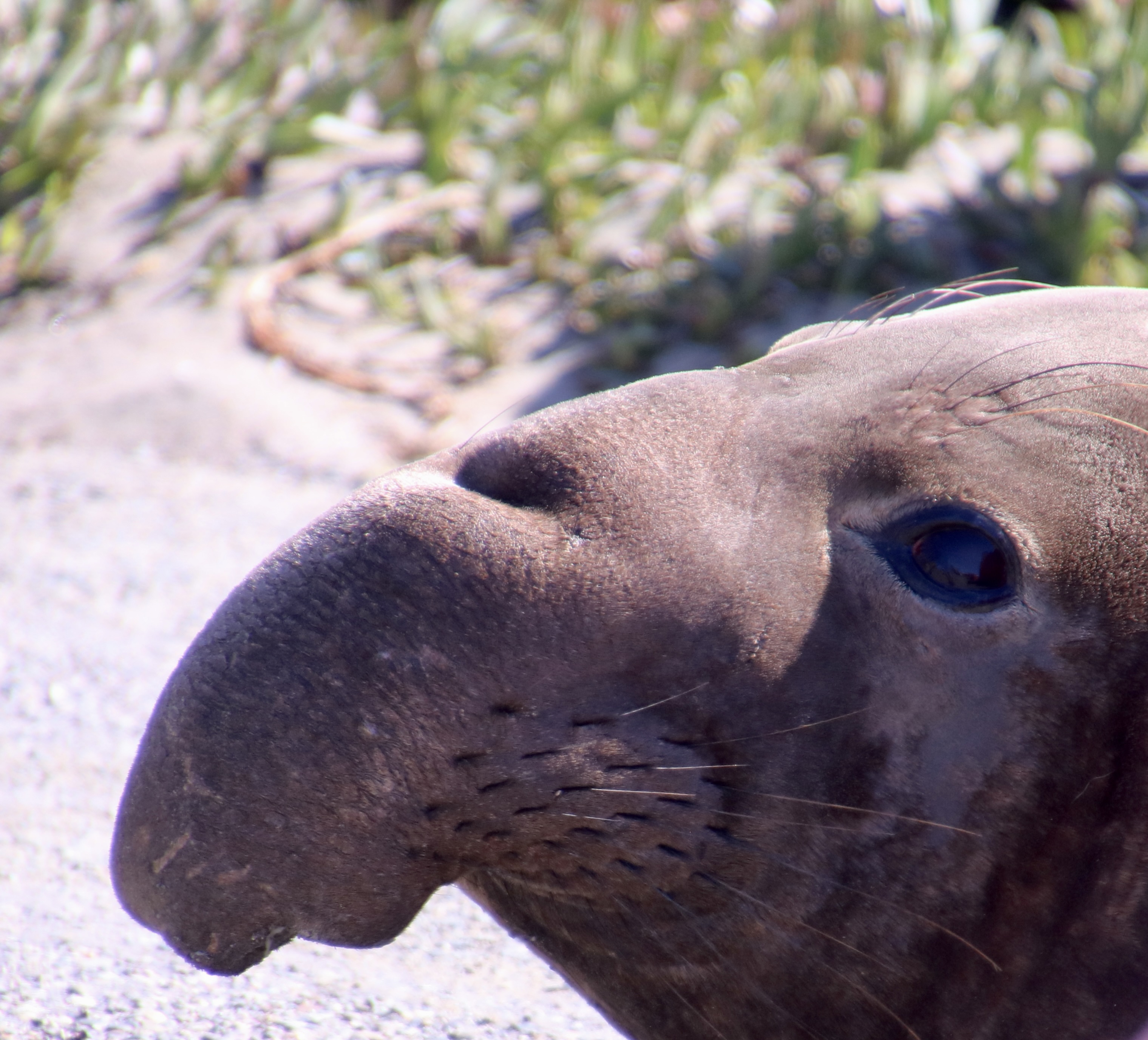
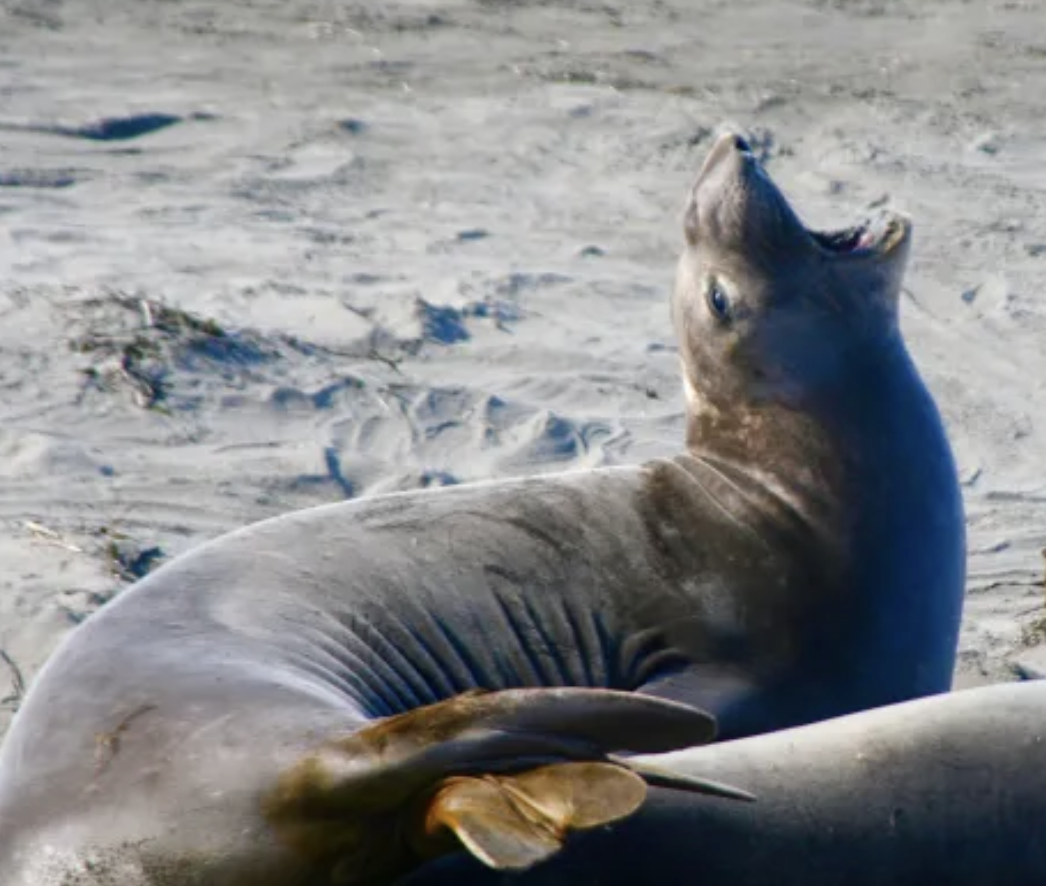
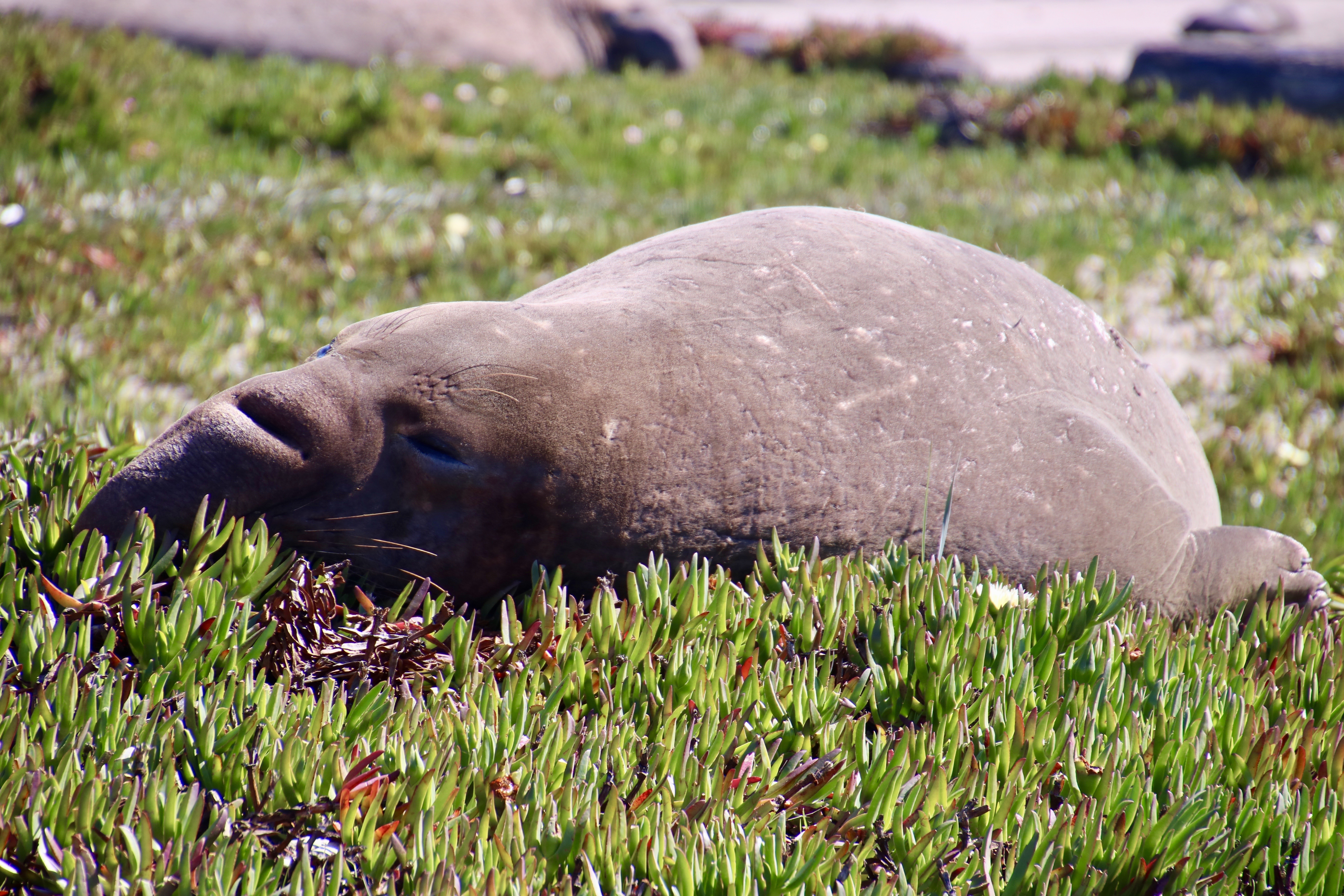
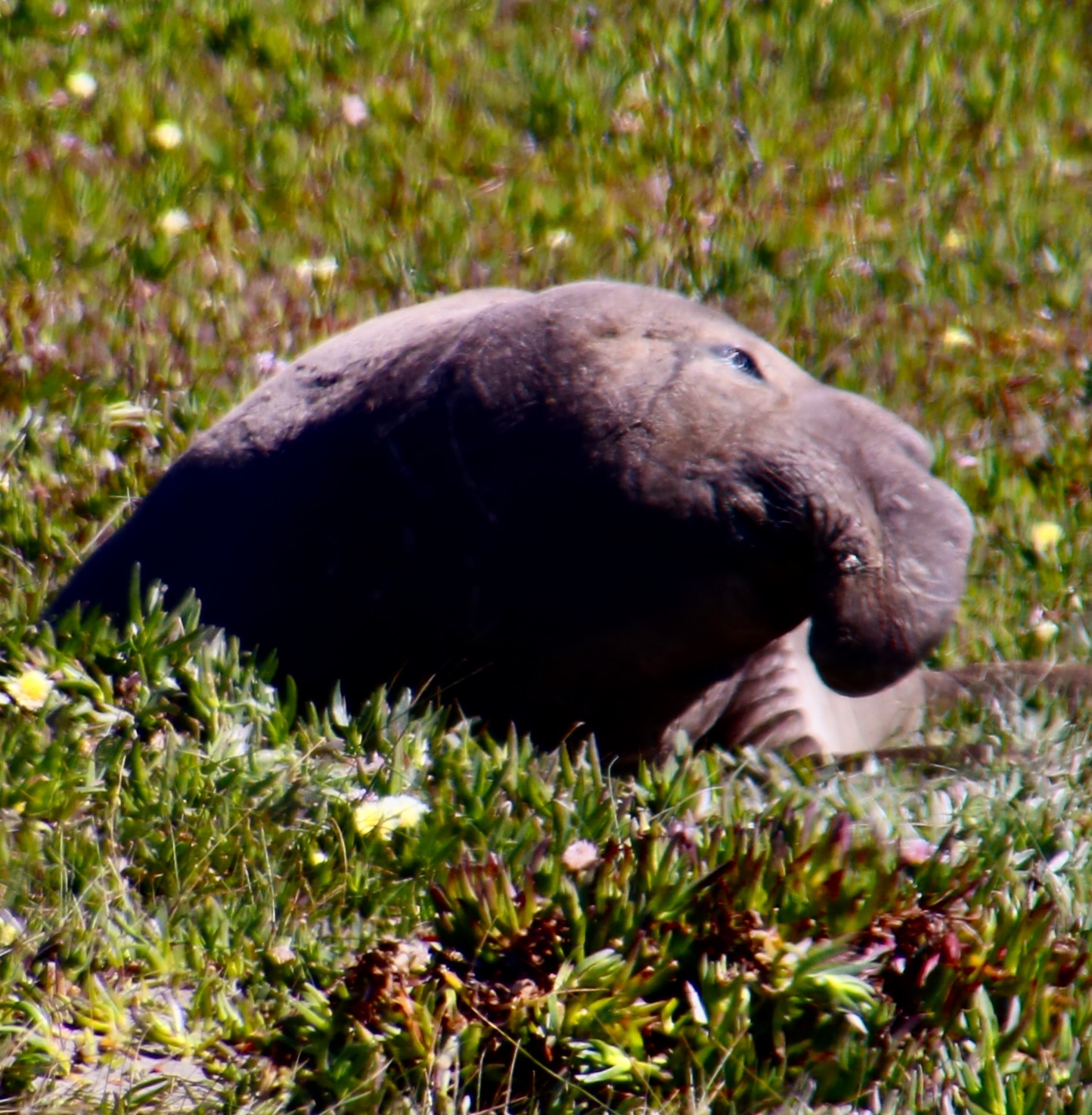
Elephant seals obtained their names because people thought their proboscises/noses resembled elephant trunks. Some imagination was required.An elephant’s trunk. Peggy took this picture while we were on a photo safari in southern Africa last year.The male elephant seal can actually inflate its nose and turn it into a resonating chamber so it acts like a megaphone for blasting out challenges in a unique vocalization that other elephant seals easily recognize. (This photo was taken at the Piedras Blancas Rookery in Southern California that Peggy and I visited 15 years ago. The top photo was taken at Point Reyes National Seashore in Northern California much more recently.)
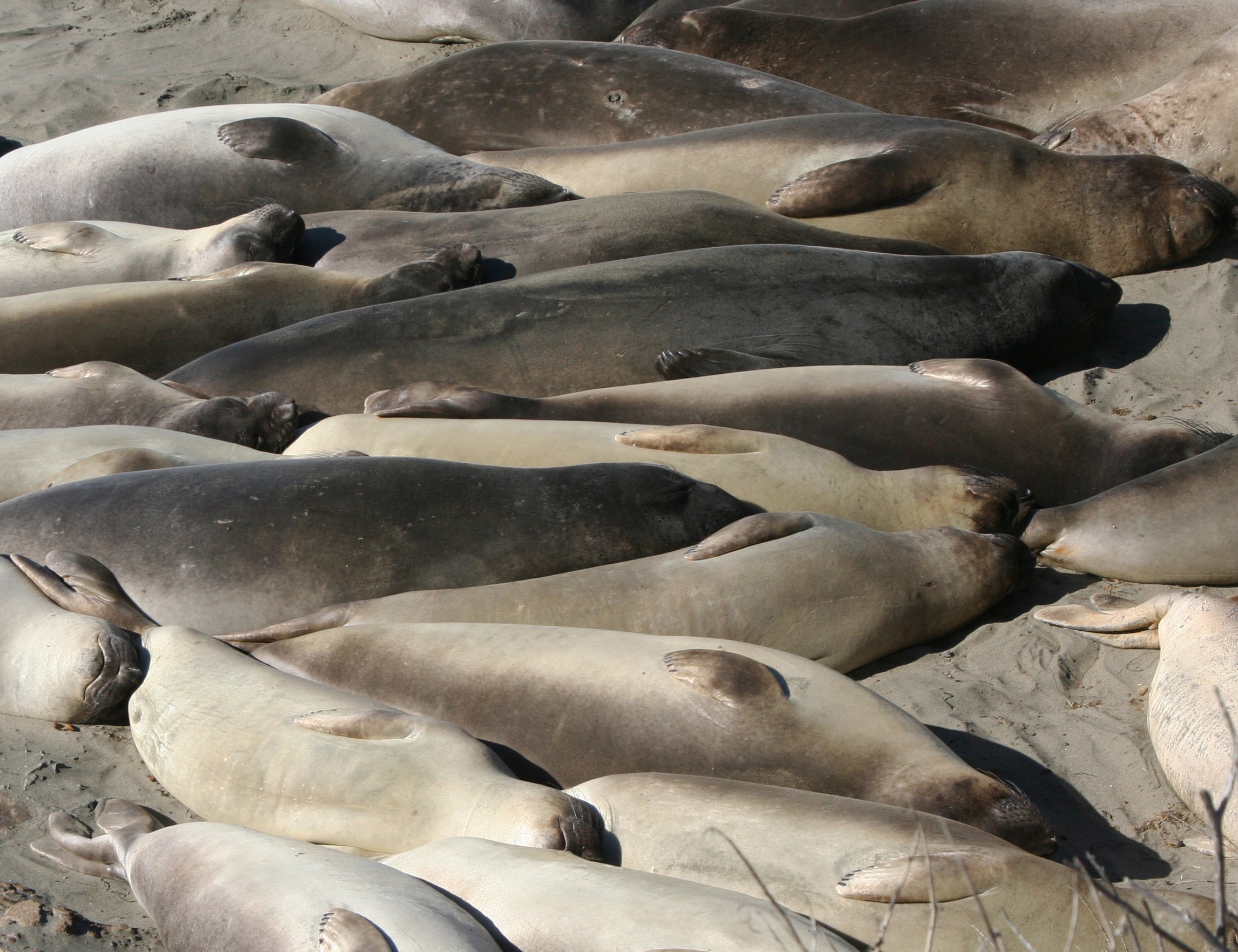
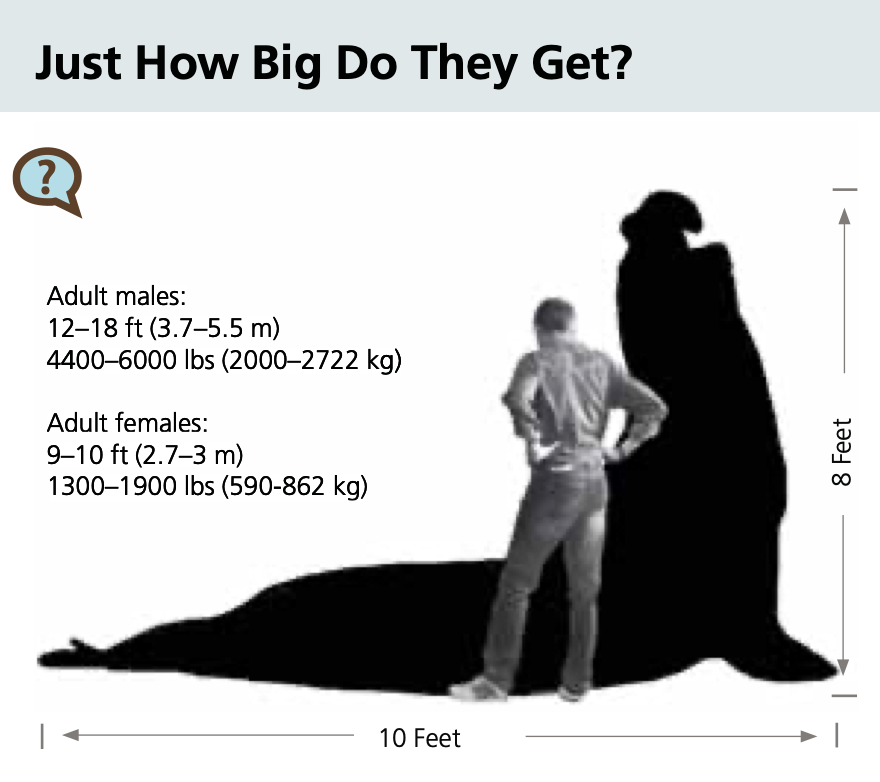
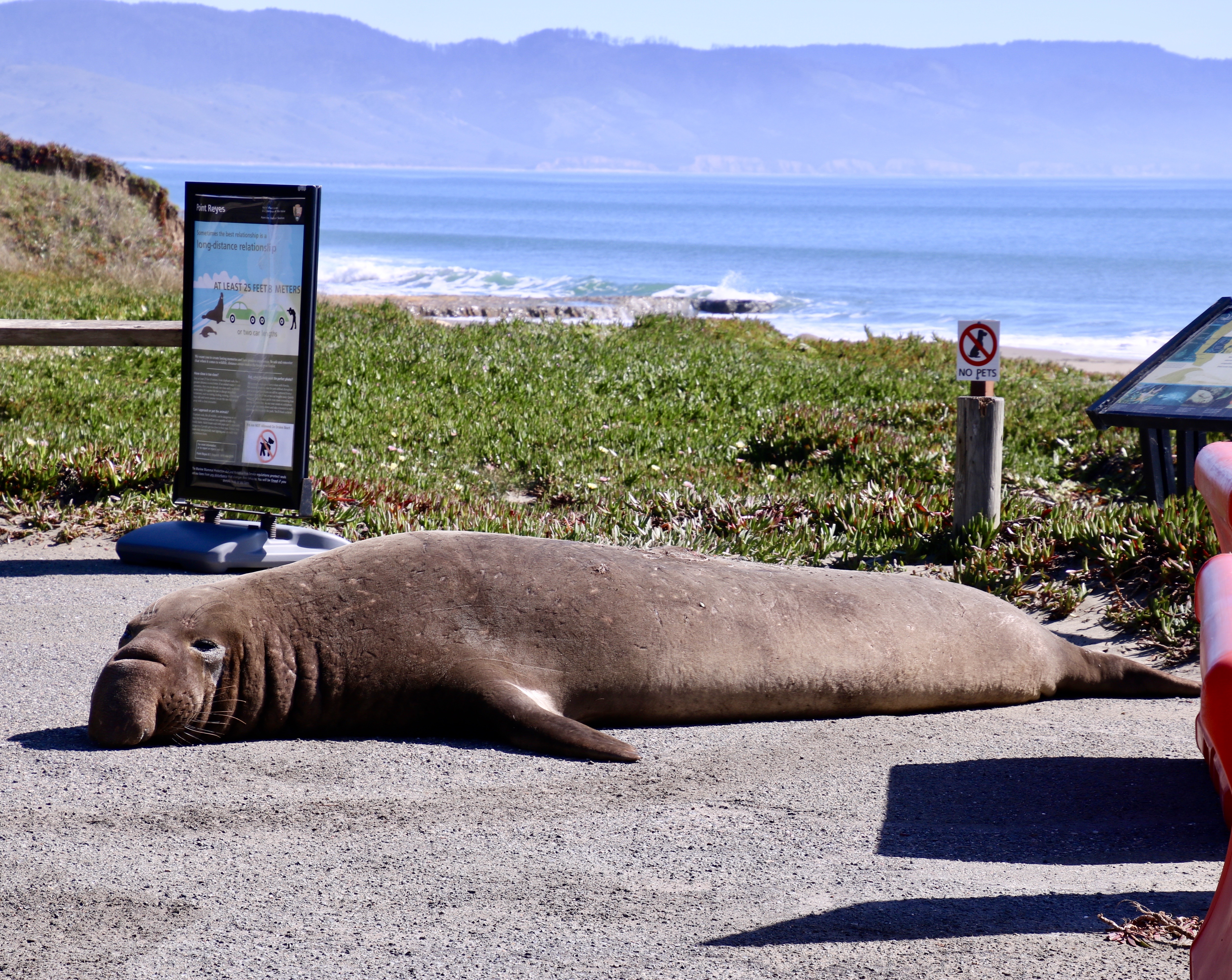
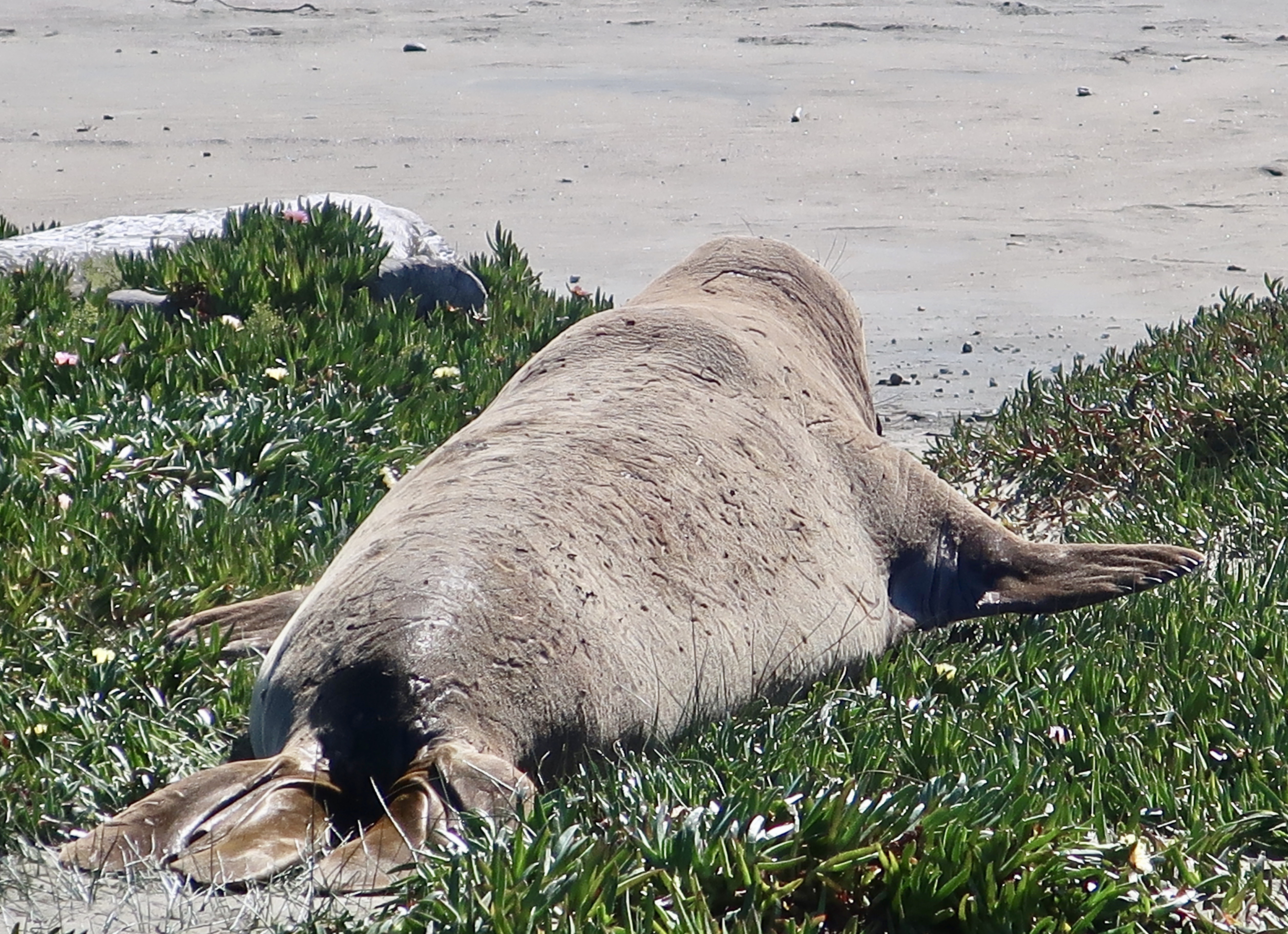
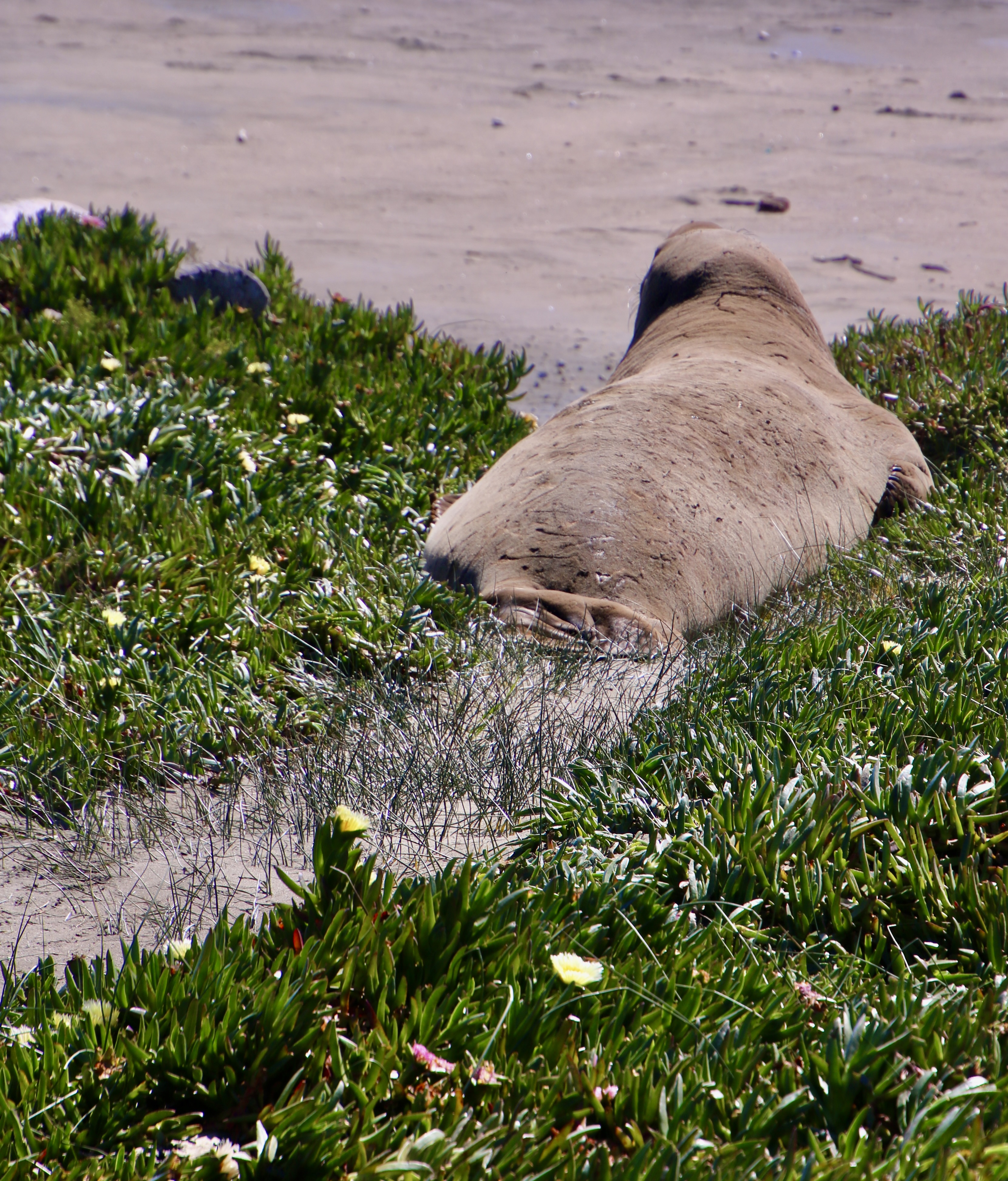
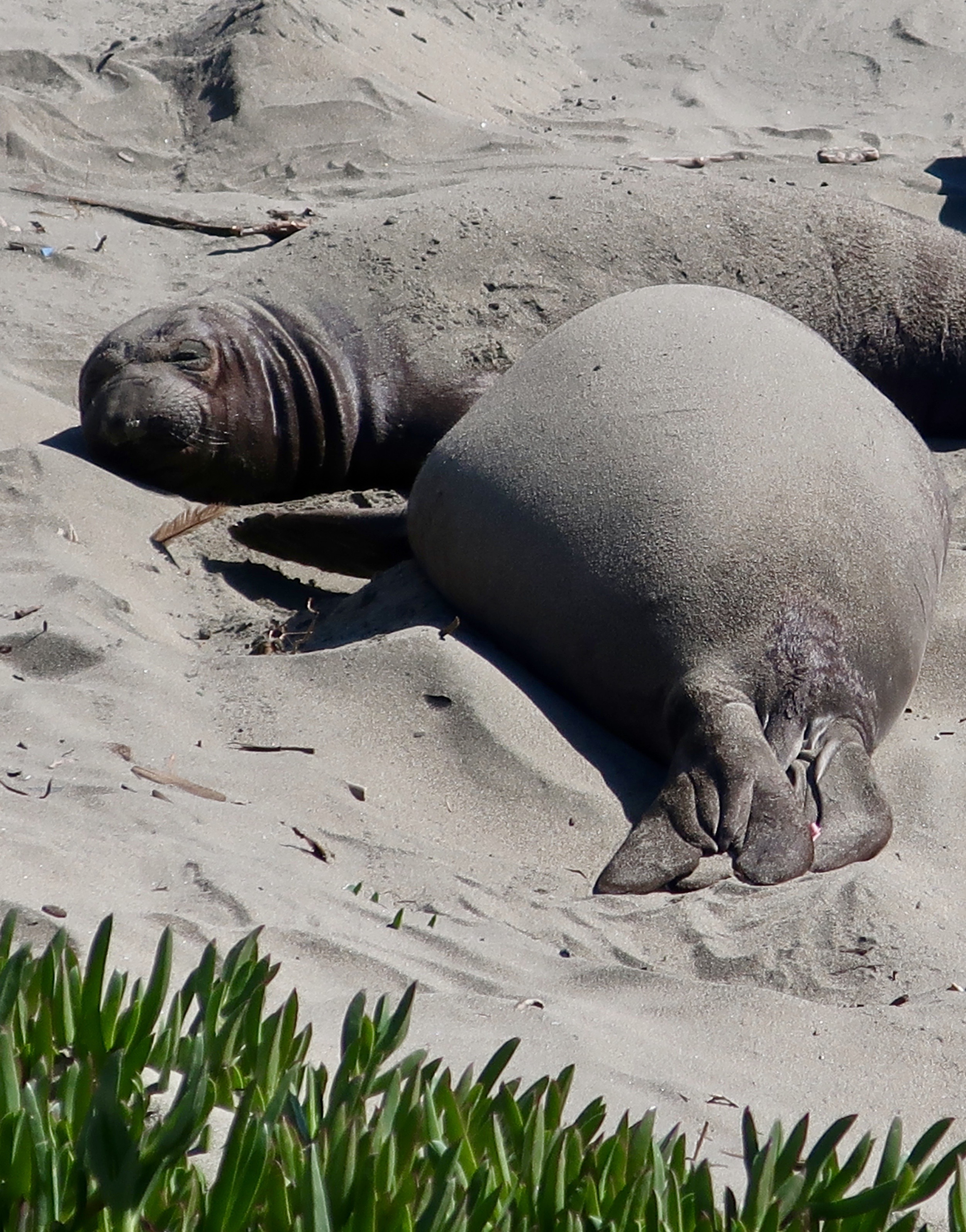
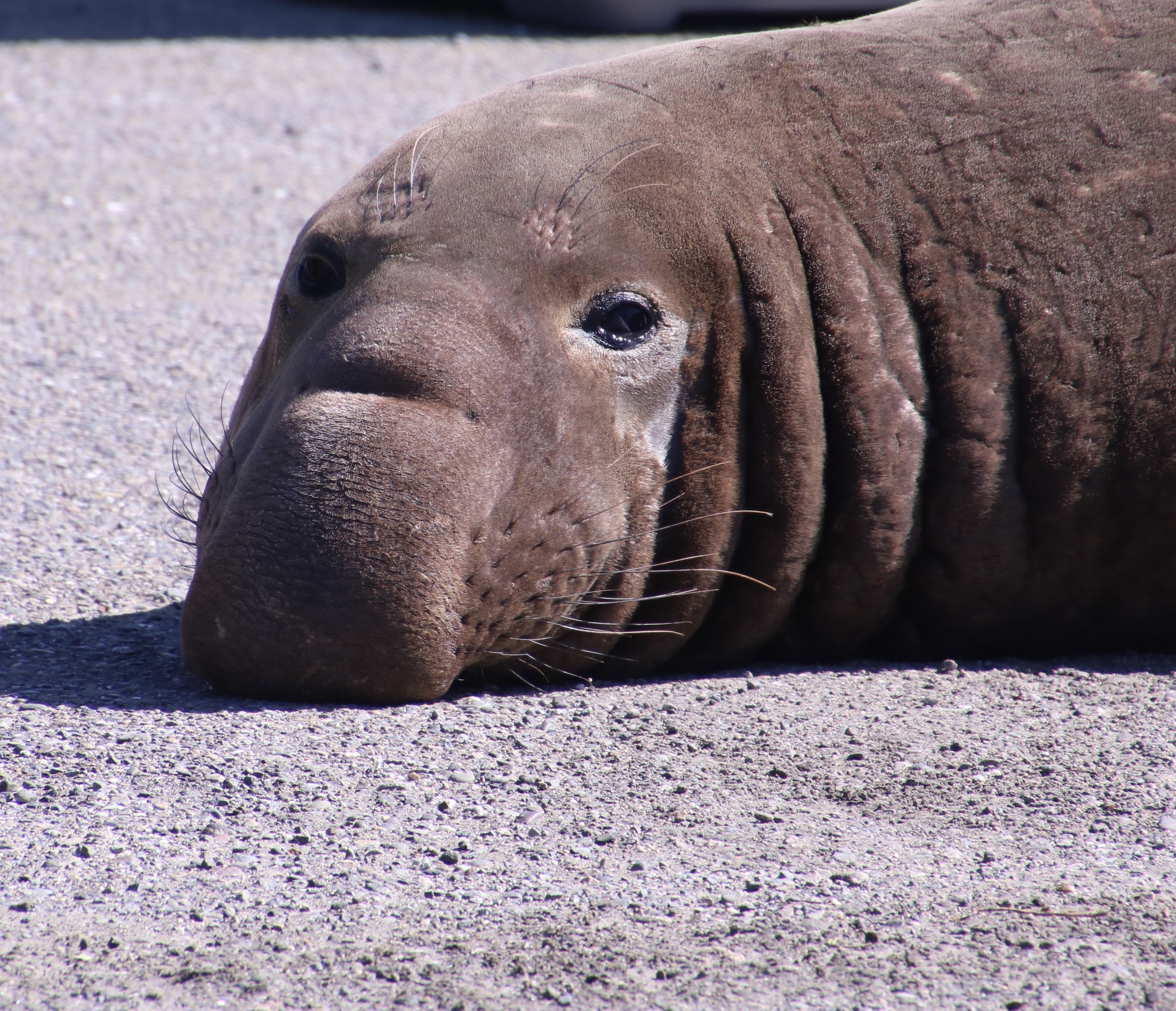
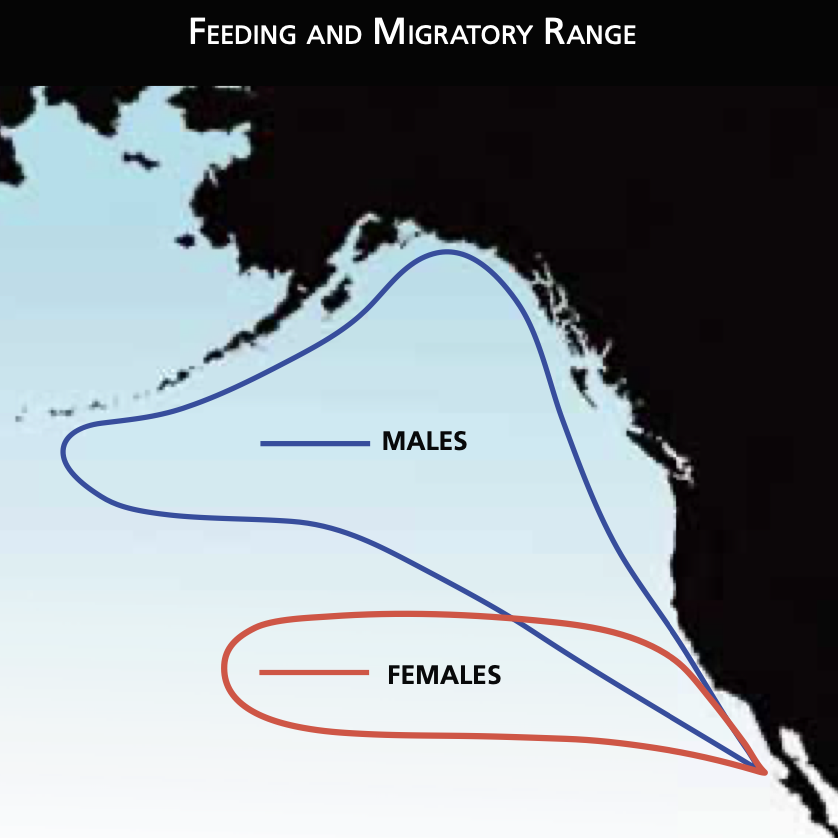
Each male’s dream is to establish a harem of females for breeding purposes. For an alpha male, this means between 20-50 females, although numbers can be as few as 10 or as many as 100. (Although how one bull could manage one hundred is hard for me to imagine. I did read that they sometimes have lieutenants…) Their size, fighting ability, and volume of vocalizations are all important in establishing the harem. The vocalizations mainly serve as a challenge, i.e. “Let’s fight and see who the biggest, baddest bull is,” or, to serve as a reminder: “You don’t want to fight with me. I kicked your butt last time.” The latter is usually enough to send past challengers scurrying. Harem status provides protection for the females, freedom from being harassed constantly by other males (a biggie), and a safe place to birth their pups.Elephant seals were once close to extinction, killed for their oil. A large male could yield over 25 gallons, which was used for lamps, lubrication, and making soap and paint. By 1900, only a few hundred remained on the coast and islands of Northern Mexico. Laws protecting their status, first by Mexico and then the US, allowed for a rapid increase in numbers. Today, Piedras Blancas alone hosts as many as 17,000 annually. As you might imagine, the beach gets a little crowded.Bull elephant seals are big. The illustration below from the National Park Service shows just how big…This is one of several reasons why the National Park Service suggests that people stay at least 100 feet away! You don’t want one deciding you are a threat to be eliminated or at least chased off.One came crawling up onto the parking lot at Drakes Beach, Point Reyes. We moved back but we were still closer than we had been. These large creatures are not built for land. Moving is more like shuffling forward like an inchworm. They can use their front flippers to help in movement and balance but not their hind flippers. Watching videos of smaller males getting away from alpha males suggests that they can move fast when sufficiently motivated! The guys at Point Reyes were relaxed: They would ‘galumph’ about 10 feet and stop to rest. Mating season was past. There was no reason for getting excited.This shot provides a view of the hind flippers dragging along behind while the front flippers are used to push and balance. While worthless on land, the hind flippers turn into powerful ‘propellers’ in water.The elephant seal moving through the ice plants was like a bulldozer creating a road.You want fat? Here it is. I think it is a youngster known as a super-weaner. Baby elephant seals normally weigh between 250-350 pounds when weaned. Super-weaners can weigh up to 600 pounds! How do they get that way? There are two approaches: One, they steal milk from nursing females and are known as ‘milk thieves,’ or two, they are adopted by an additional mother seal and are known fondly as ‘double mother-sucklers.’ It’s hard to imagine this guy even moving. Note the sand on both of the elephant seals’ backs. They use their front flippers to toss it up. It’s used like you or I use sunblock.Our parking lot friend moved its head to check us out and make sure that Peggy and I were showing proper respect. Note the eyes and whiskers. Both are helpful in locating food during the deep dives that elephant seals make. The large eyes help them see in the inky depths of one to two thousand feet where they normally search for food like squid and fish. (They can go as deep as 5000 feet.)The whiskers may be used in helping to find food along the bottom.This illustration from the National Park Service shows the feeding ranges of the male and female northern elephant seals. They spend 80% of their lives on the open sea and a surprising 90% of that time under water, much of which is spent making their deep dives.
They are uniquely qualified for the dives. For example, while you or I take a deep breath before we dive, elephant seals expel theirs to avoid having their lungs crushed by the tremendous pressure that exists at 1000 plus feet under the sea. Instead, they store extra oxygen in their blood. They have three times as much blood as we do on a per pound basis, i.e. lots, and and their blood is much richer in hemoglobin. They also reduce their heart rate when they dive and focus the majority of their blood on servicing their vital internal organs. Using these evolutionary modifications they are able to dive for 30 plus minutes per time, resurfacing for a short 3 minutes. Elephant seals continue to forage constantly during the migrations between their primary feeding ranges and where they travel to breed, have pups, and molt. It’s a good thing. When they arrive, they fast for the time they are on shore, (2-3 months), living off of the fat they have stored.
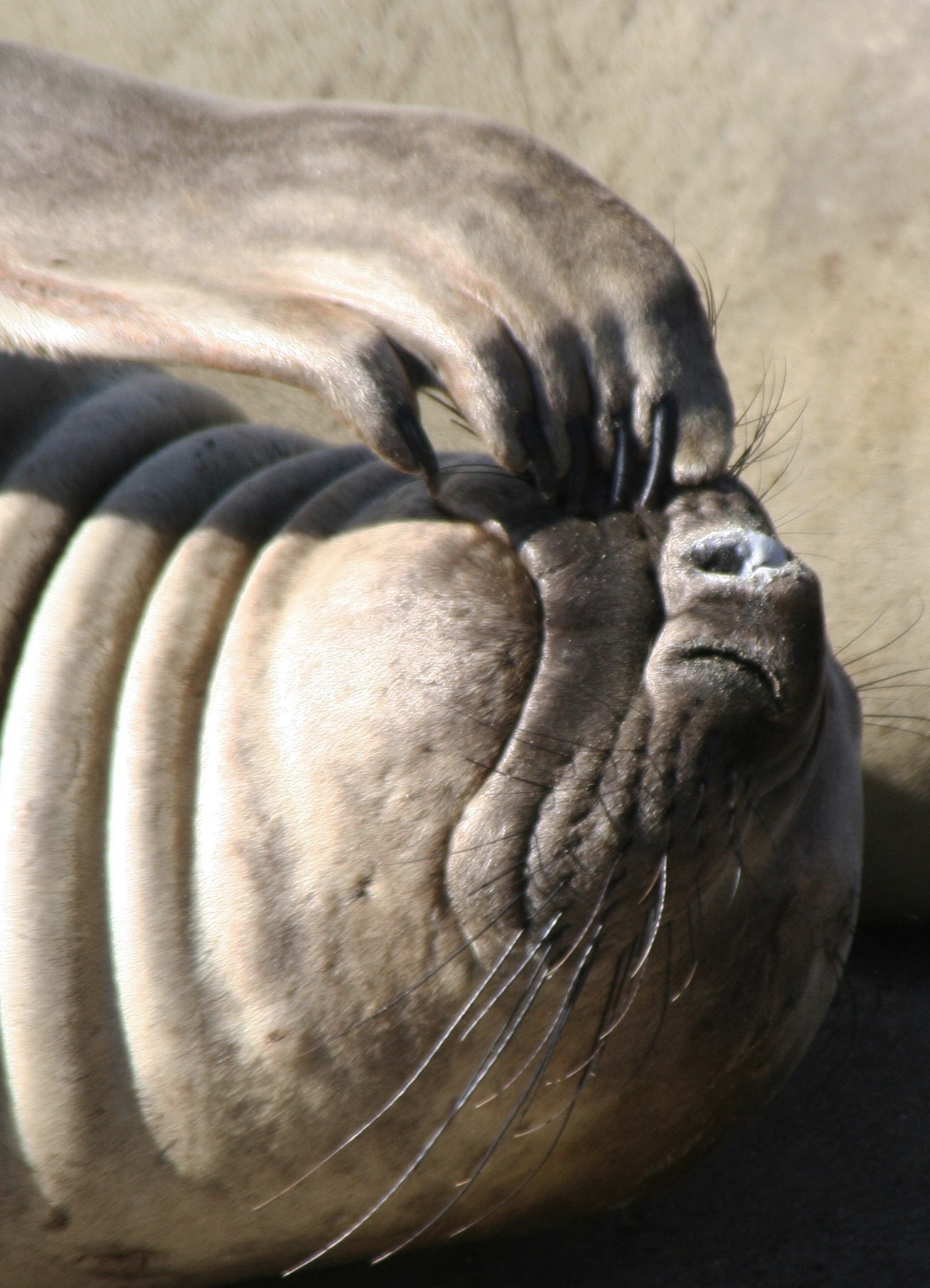
Wow, those are lots of details. It’s enough information to make you scratch your head. And— is this elephant seal winking its nose at us? (Piedras Blancas Rookery in southern California.)A final photo from Pt. Reyes that amused us. Next up pelicans. Can they match iguanas and elephant seals in character?Petros.
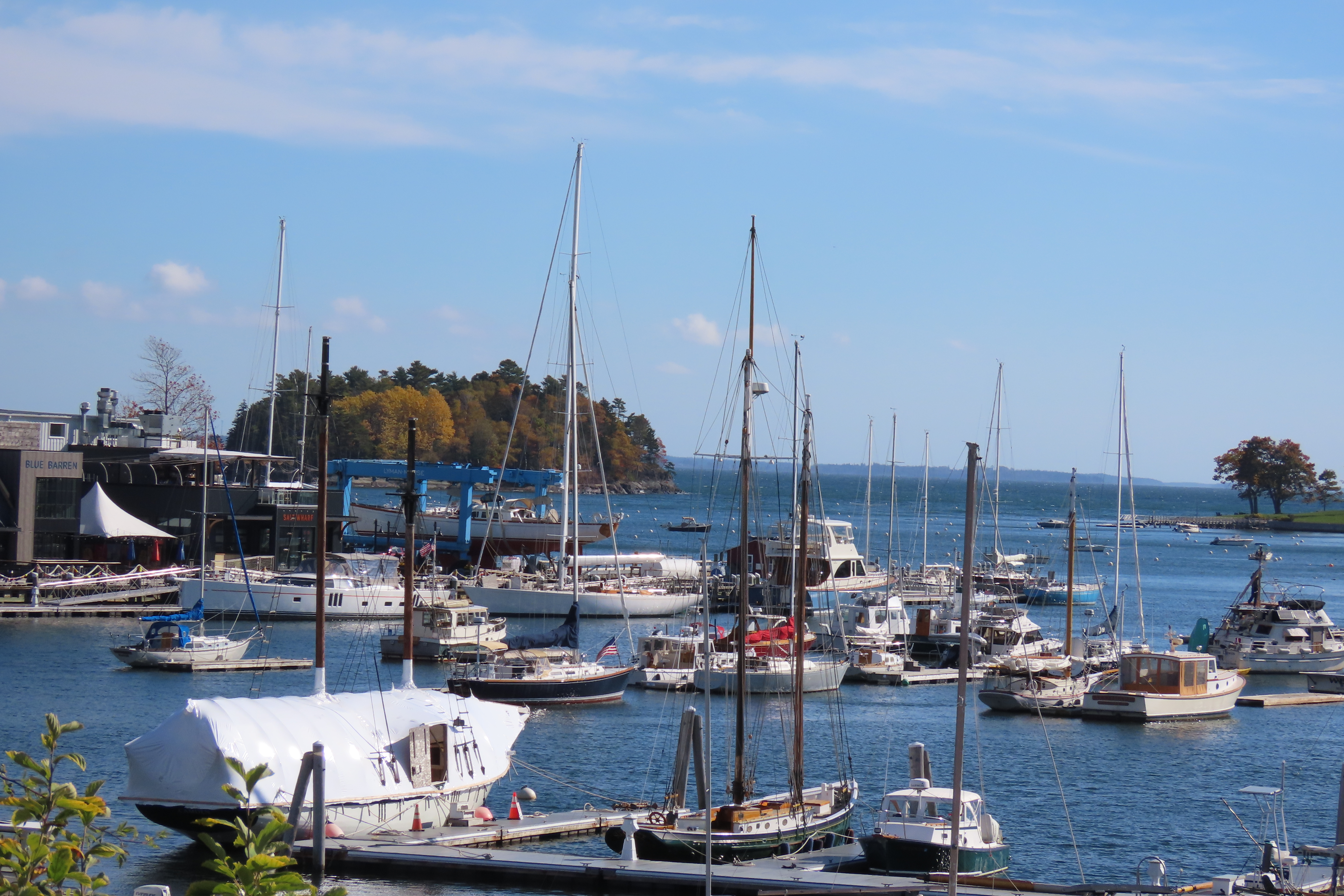
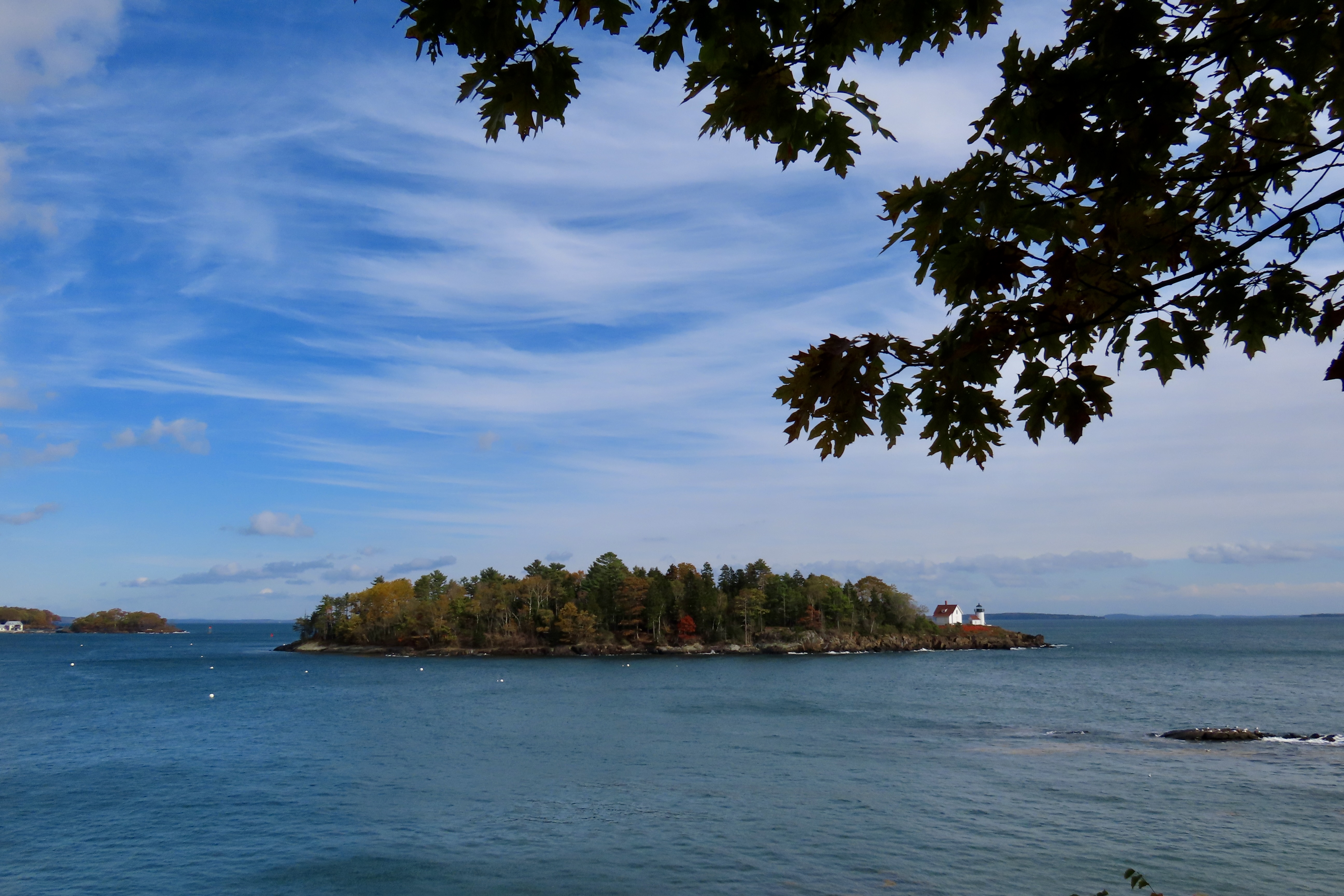
In our last post, we introduced Curtis Island. Here it is seen across the Belfast, Maine harbor. Belfast is where we ate the delicious lobster rolls I featured earlier.
We are wrapping up our leaf-peeping tour of New England tour today. I’ll close out the series with photos of the Island and three spectacular trees at Camden Hills State Park. And then add a few more as we travel back to Virginia.
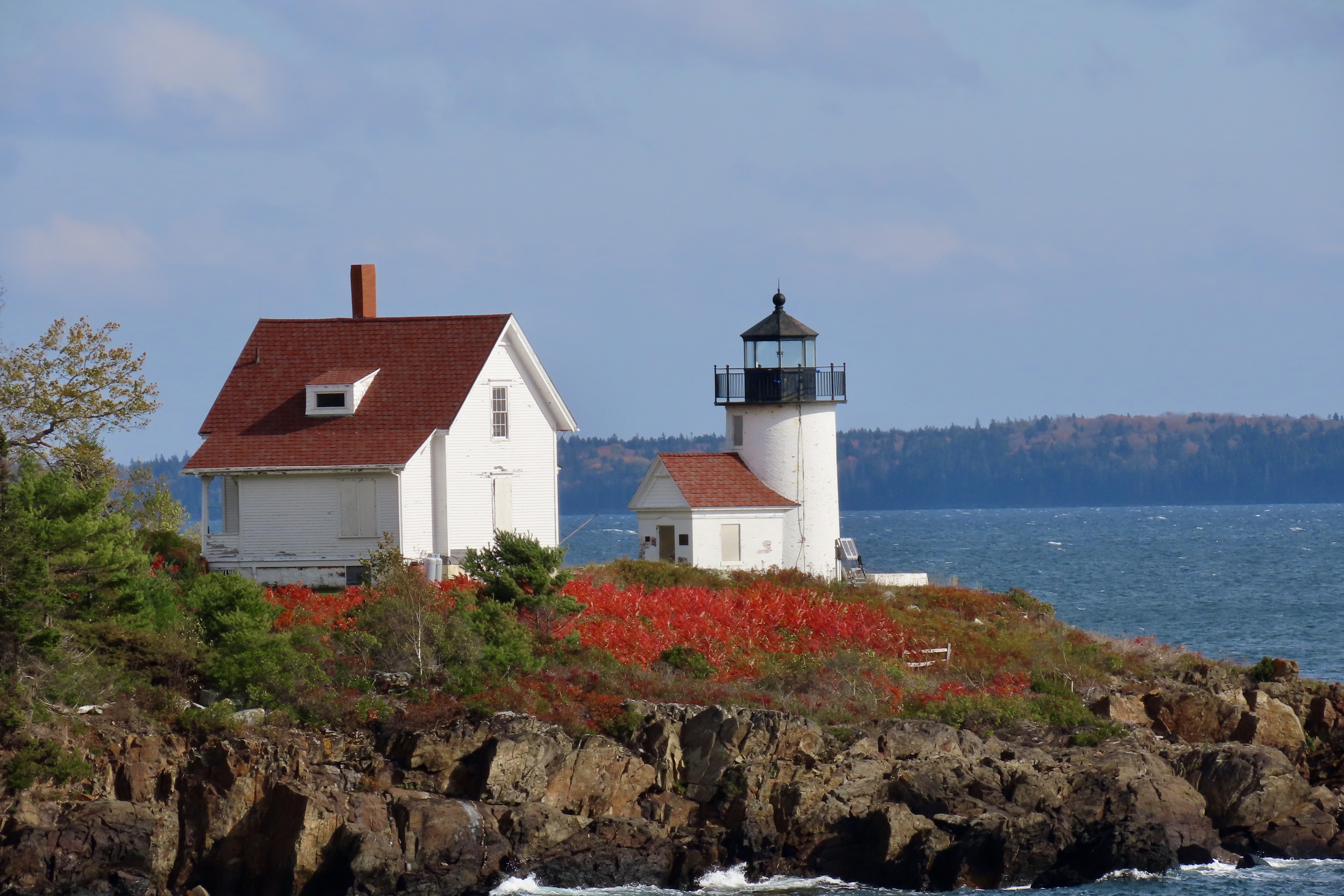
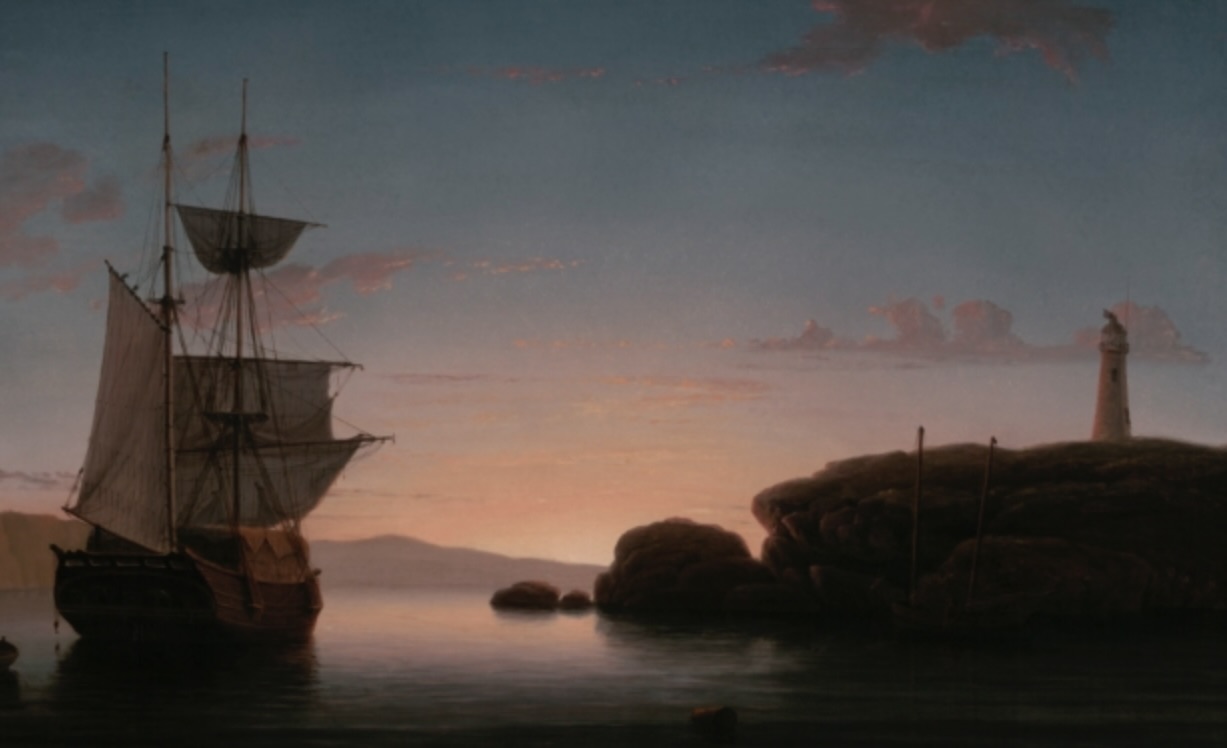
This photo of Curtis Island includes its lighthouse on the far right hand corner.Close up. I’m not sure what the red plant is. Whatever, its brilliant red matches the roofs. The lighthouse is one of 65 found along the Maine coast. There are so many Maine has become known as the Lighthouse State. In comparison there are approximately 80 along the whole Pacific coast including the states of Washington, Oregon and California.1851 painting of Curtis Island by marine painter Fitz Henry Lane.I mentioned in my last blog that Curtis Island was named after the publisher Cyrus Curtis. Did I mention he was wealthy? This is a photo of his boat, er, yacht. Curtis’s summer home was in Camden just south of Belfast where he was Commodore of the Yacht Club from 1909 to 1933. Of course when you build the club, donate it to the town, and dock your 230 foot yacht out front, you should be Commodore.
Curtis was the creator of the Ladies Home Journal and the Saturday Evening Post. Both have interesting stories. Legend has it that when Curtis first published the Ladies Home Journal he gave a copy to his wife, Louisa Knapp, for review. She more or less told him it was crap. His response was “Do you think you can do any better?” Hers, “Yes,” His, “Fine, you do it.” During its day, the Journal became the most widely circulated women’s magazine in the U.S.
The Saturday Evening Post had its beginnings some 80 years before Curtis purchased it in 1897. It traces its beginning back to 1821 when it was printed out of the same shop and using the same print type that Benjamin Franklin had used for the Pennsylvania Gazette. It achieved its highest circulation with 90,000 nationwide subscribers in the 1860s. Curtis pushed this up to the highest circulation of any magazine in the world by the 1920s. His wealth was calculated at $43 billion in today’s dollars. No wonder he could afford the yacht. He actually had three built, all with the name Lyndonia. Two of them would actually do military service. One in WW I and the other in WW II.
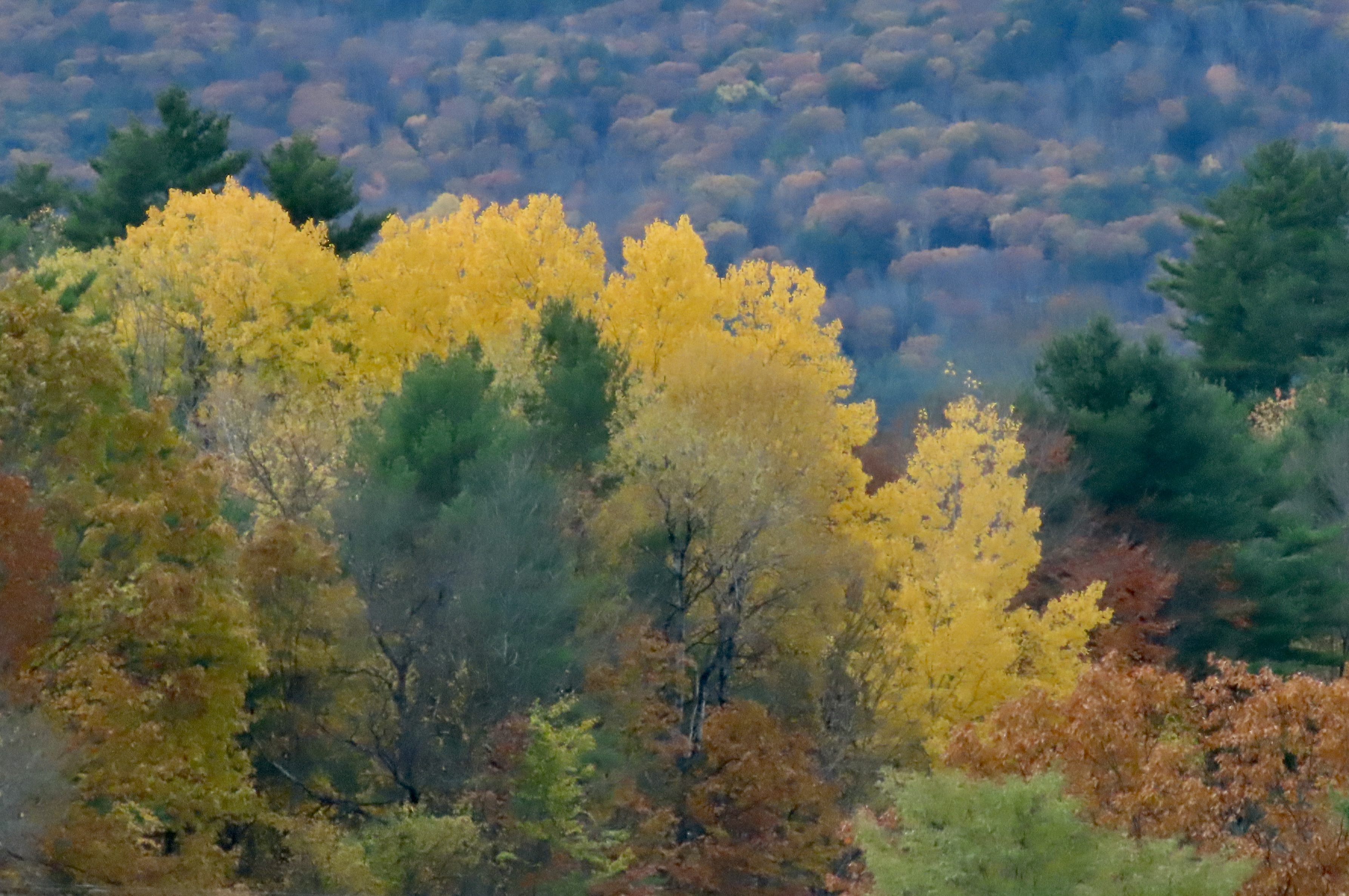
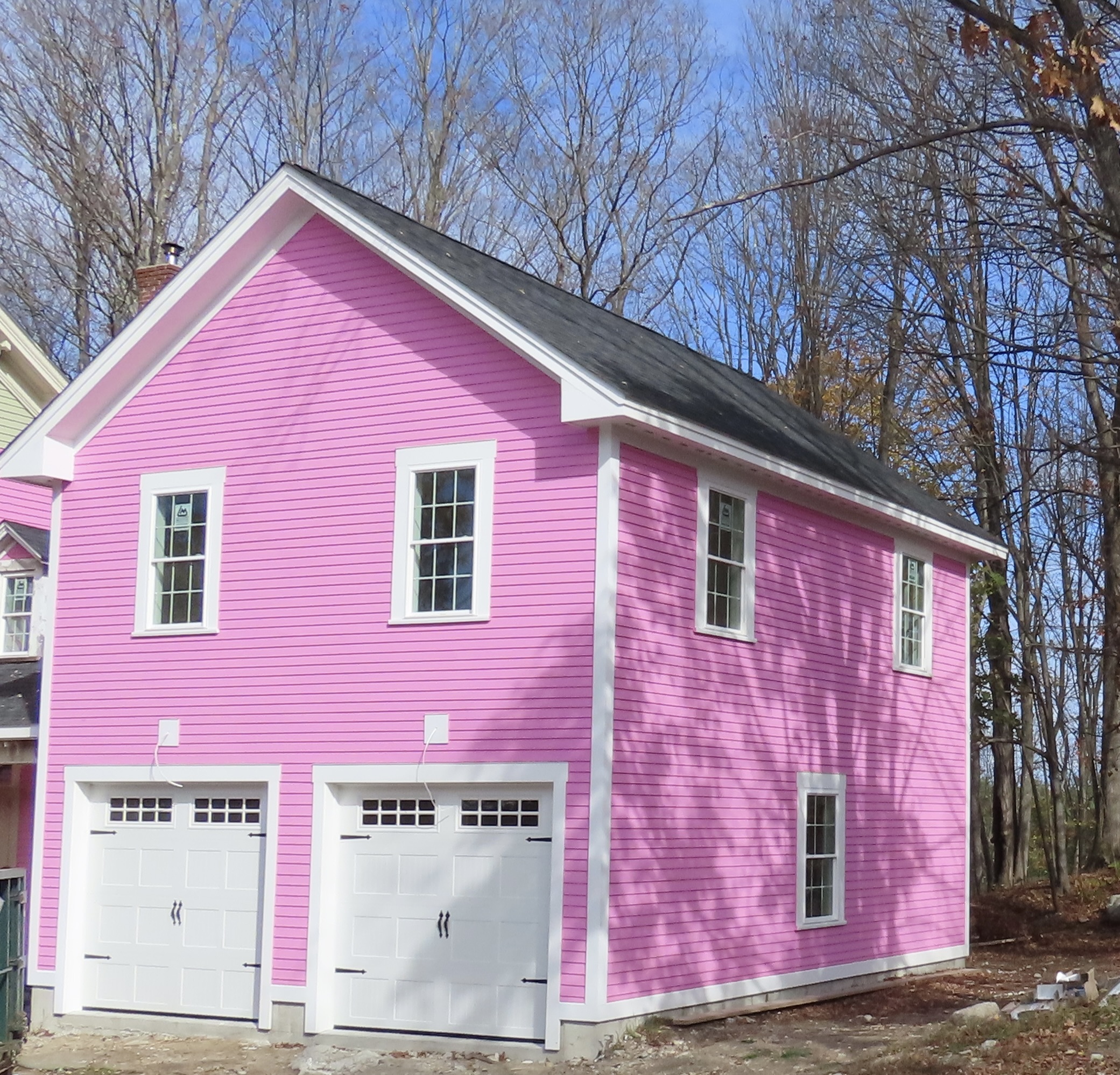
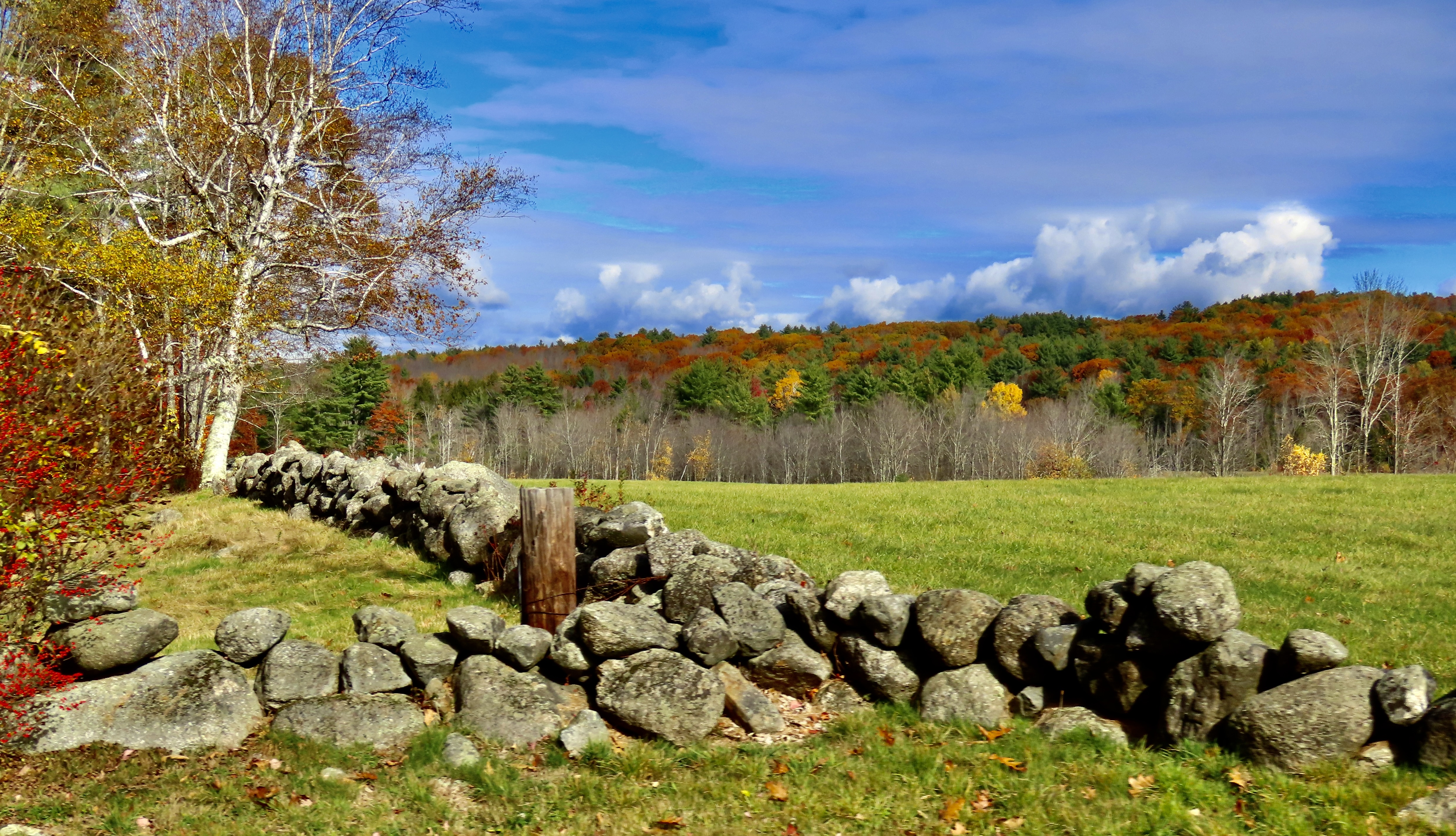
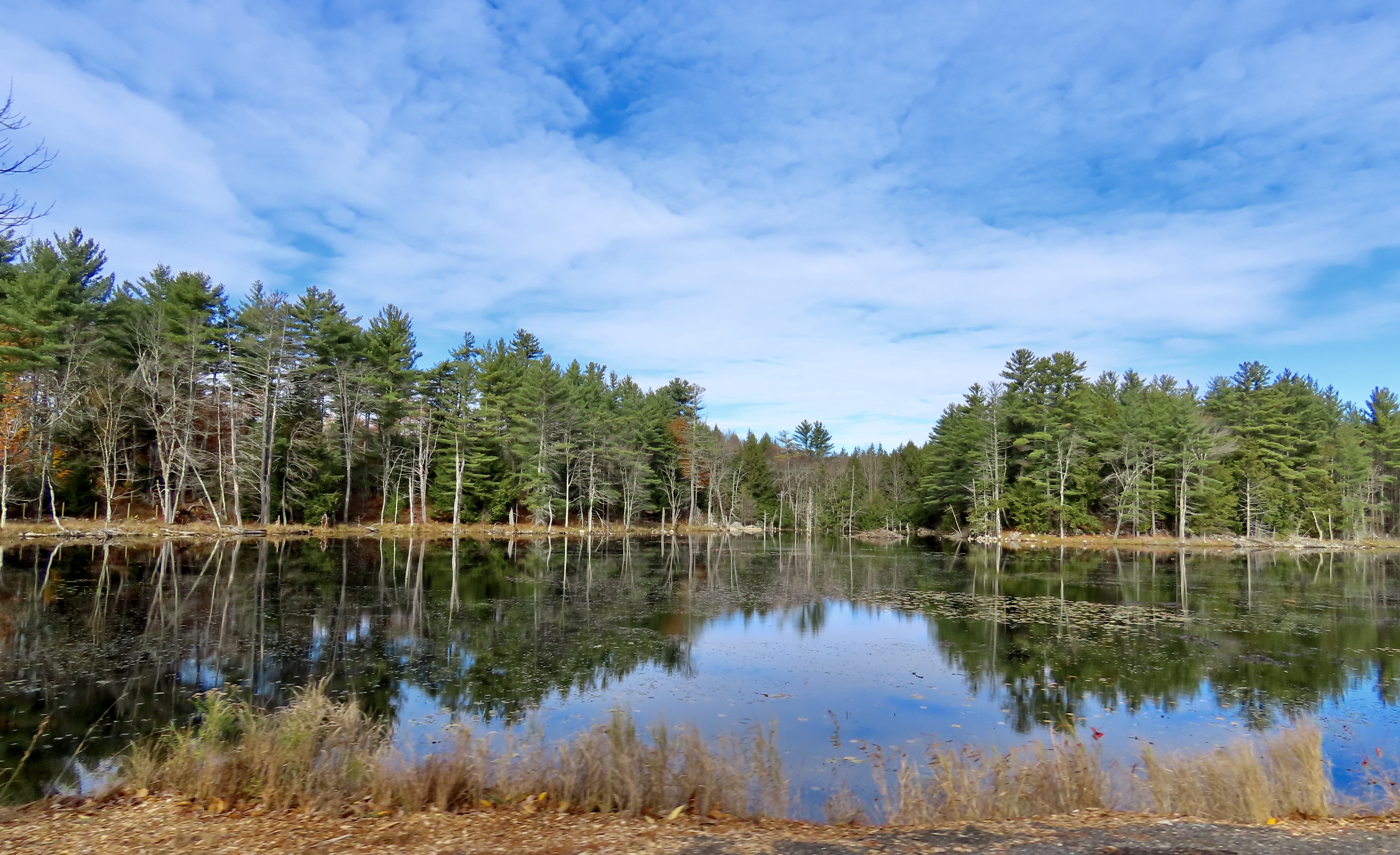
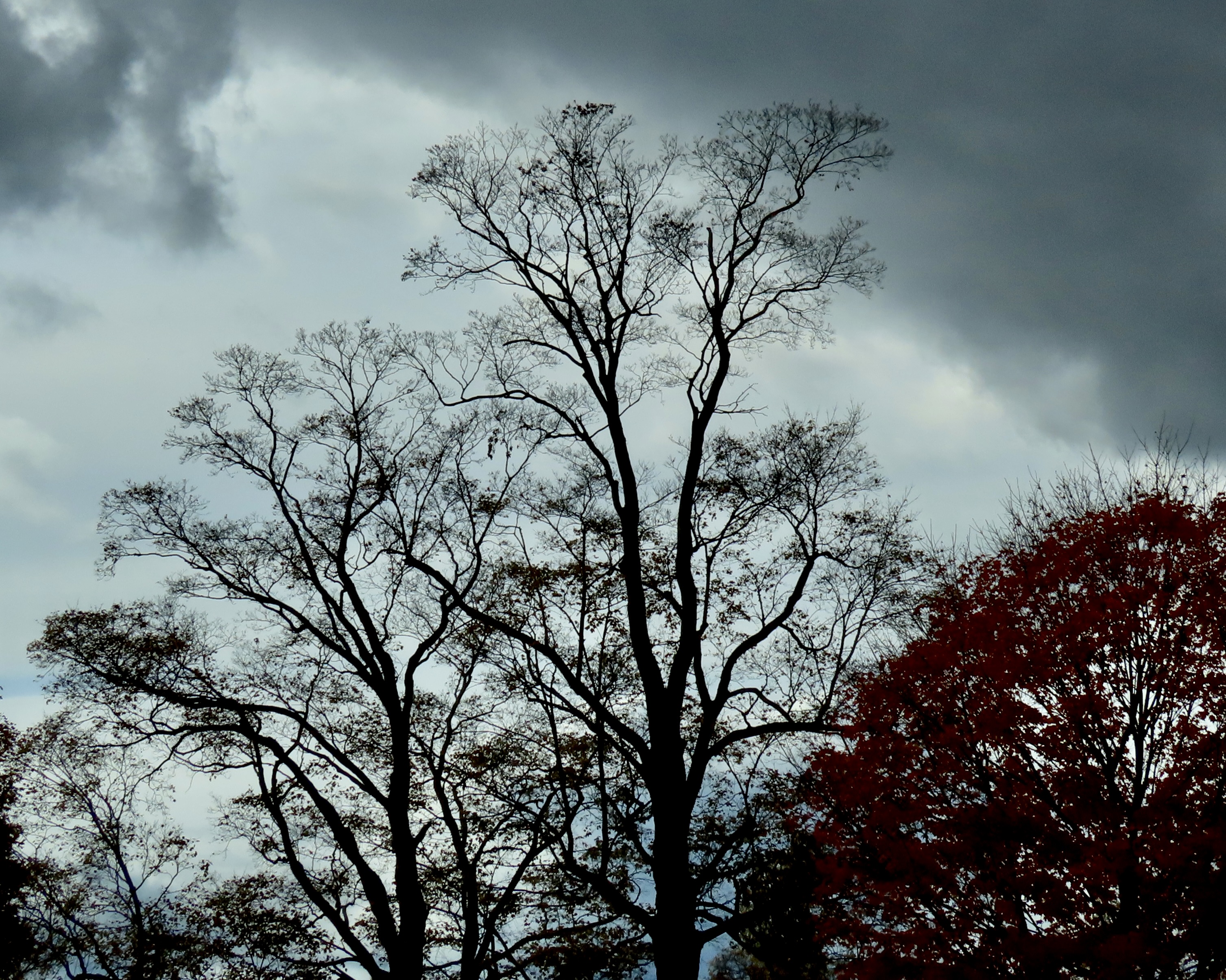
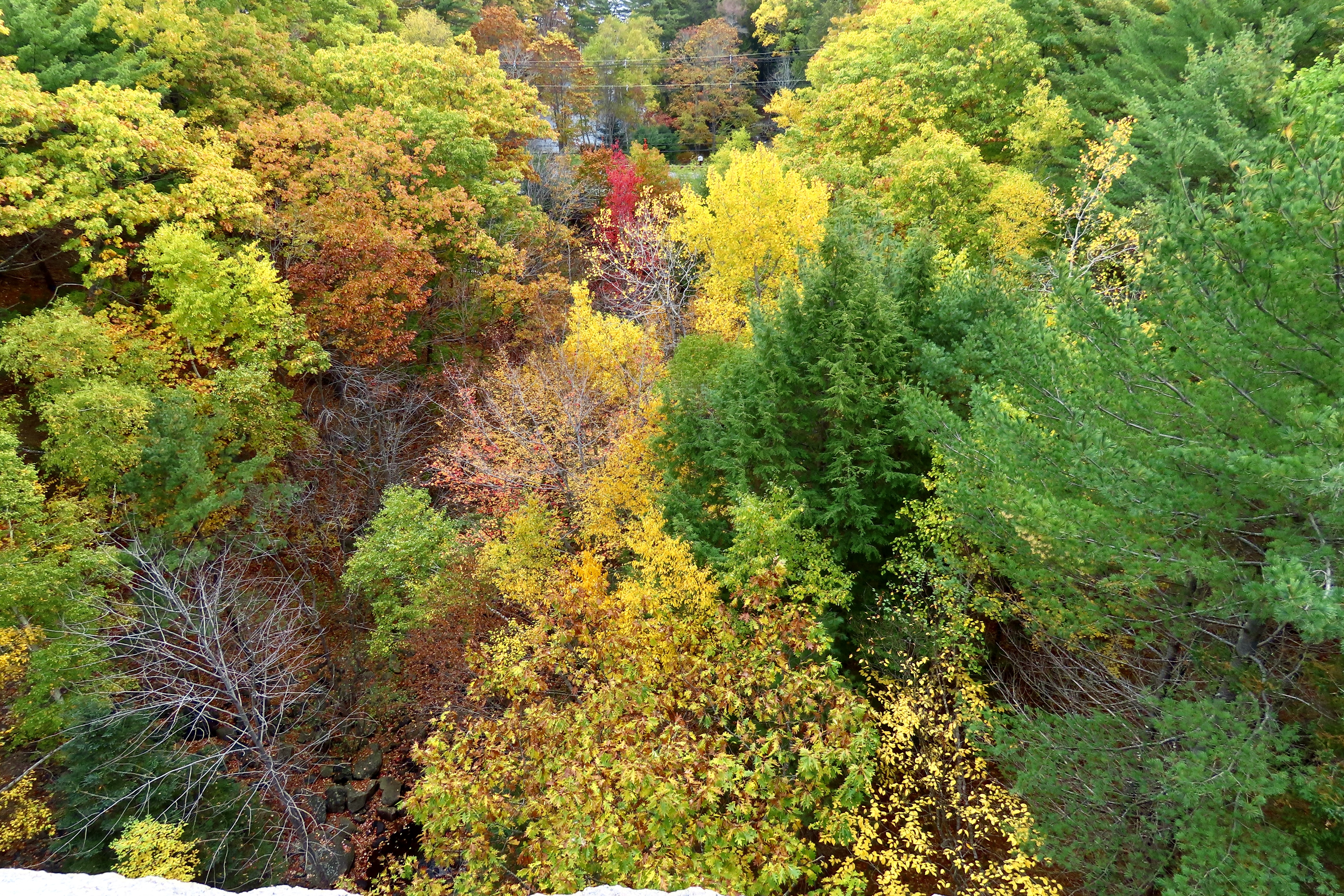
We pulled off at Camden Hills State Park to take advantage of its restrooms and were treated to our last view of fall color on the Maine Coast— and what a view it was!The trees were just reaching their peak.Reds, oranges, and yellows were all present.Providing opportunities for close ups of the orange, yellow and…Red maple leaves.Then it was time to begin our zip across New England and New York back to Virginia. We continued to be treated to fall colors.And a hot pink garage that was attached to a hot pink house.Stone fences reminded me of Robert Frost’s poem, Mending Walls.Small lakes provided opportunities for reflection shots.While cloudy skies served to promote silhouettes.Driving down to see our friend Betsy in New York gave us views of the Pocono Mountain Range.I’ll conclude today’s post and this series on New England leaf peeping with a photo of Peggy and me taken by Betsy at her home in Red Hook, New York. We hope you have enjoyed the tour. Thanks for coming along!Turkey Dressing for Thanksgiving Dinner.
Happy Thanksgiving from Peggy and me! (This is one of 50 cards I have created for family and friends over the years.)
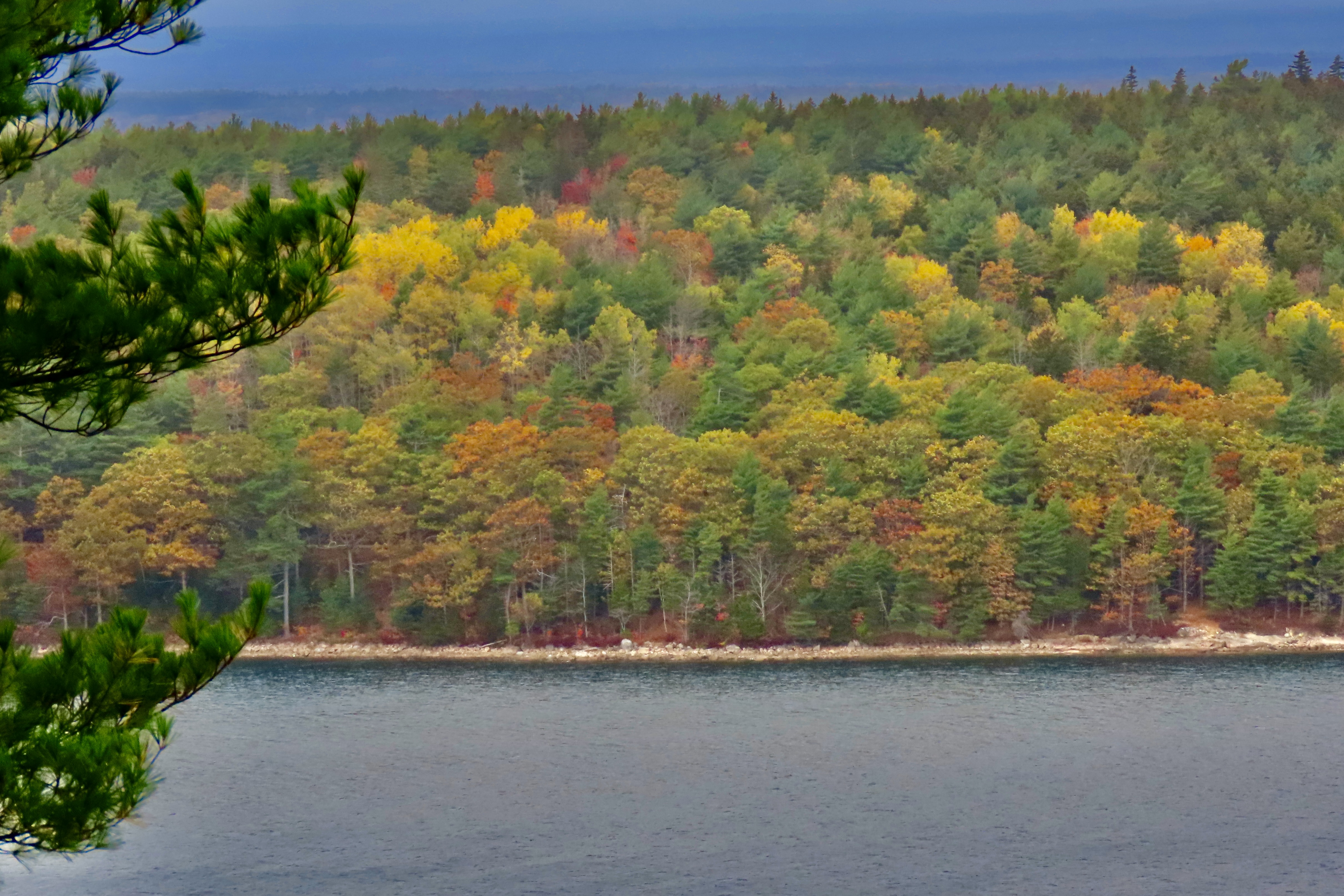
Whatever the sun was up to here, other than being the sun of course, its selective lighting created a colorful photo op that Peggy and I could not ignore— even though it involved fitting our long F-150 into a space it was clearly not designed for. “Good job!” I told Peggy. I was impressed. Had there been some park rangers around, they might have had another opinion. But given the government shutdown, none were to be found. Acadia National Park was packed with leaf-peepers and visitors were on their own. Our infraction was mild in comparison to some we saw.
This was our second time visiting Acadia during leaf peeping season. The first took place in 1999 when Peggy and I both took sabbaticals from our jobs to explore North America with a focus on National Parks. (We visited 50.) Before reaching Maine, we had already been enjoying fall colors for three months! Our adventure had started in June with a drive up the Alaska Highway to Alaska. By the time we finished exploring the state, backpacking, and kayaking, it was mid-August. The leaves were already changing. We followed the advent of fall down through western Canada and across the northern tier of midwestern states to Maine. It was color the whole way. And It continued for another 2000 miles as we traveled down the Appalachian chain of mountains into Georgia.
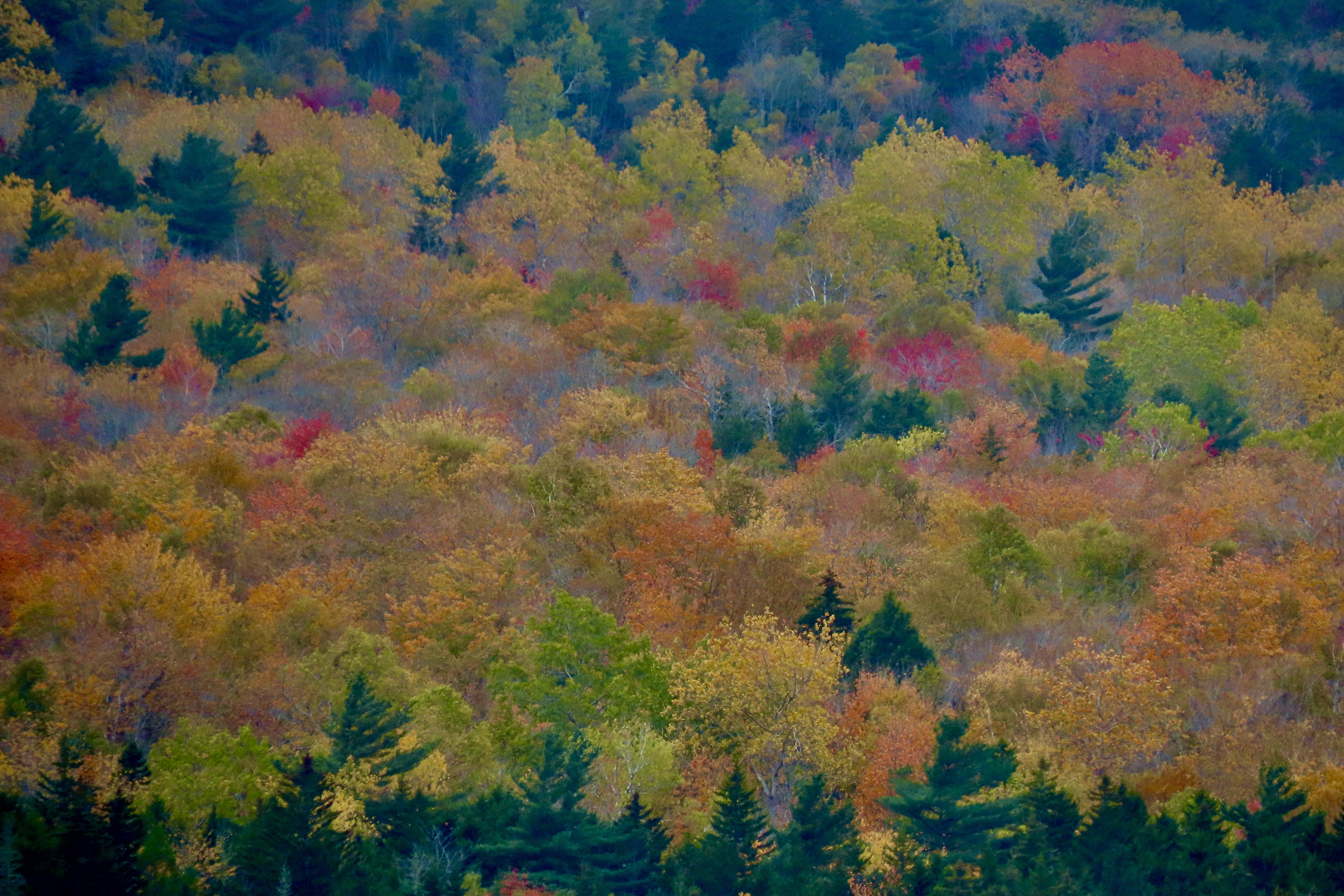
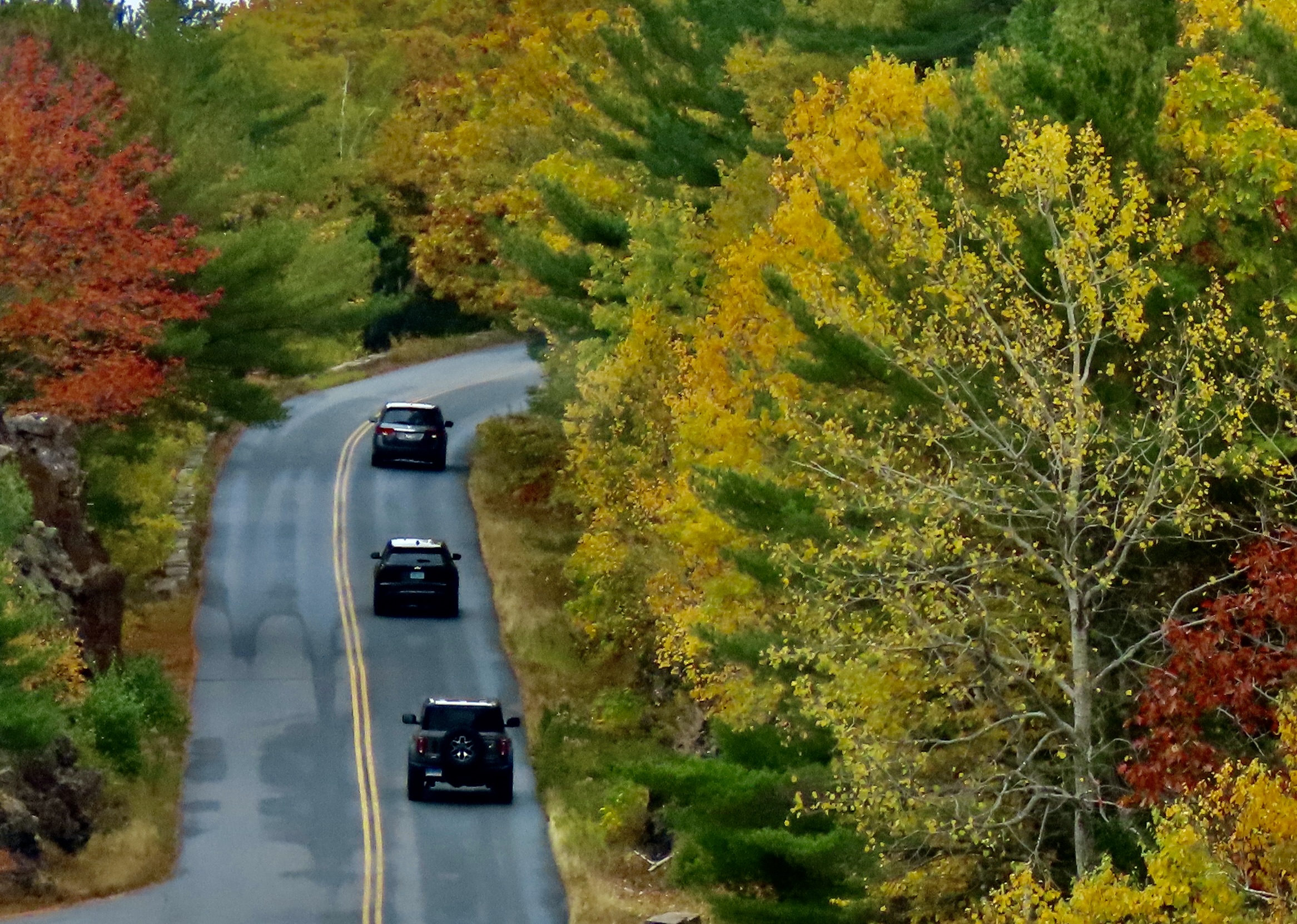
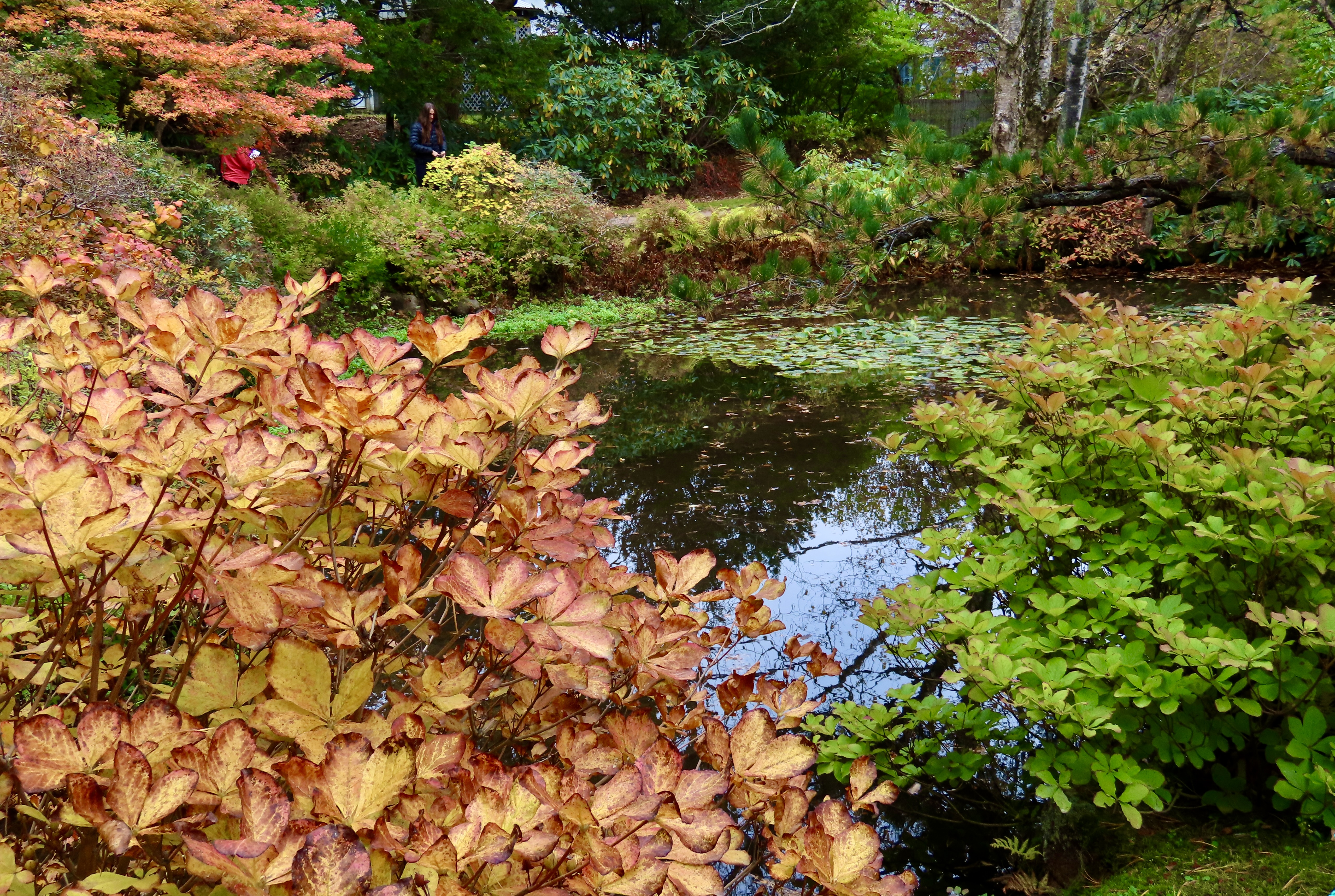
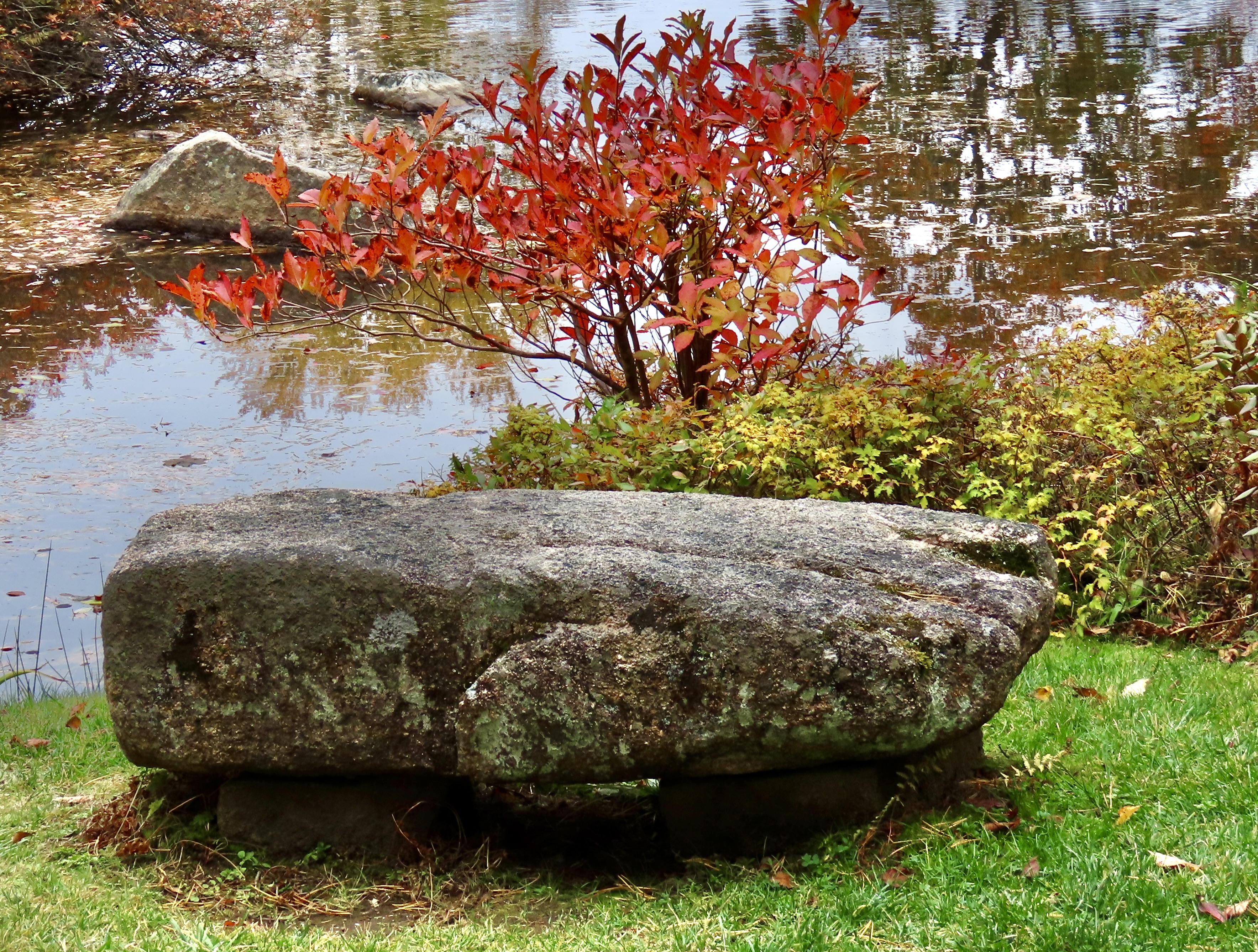
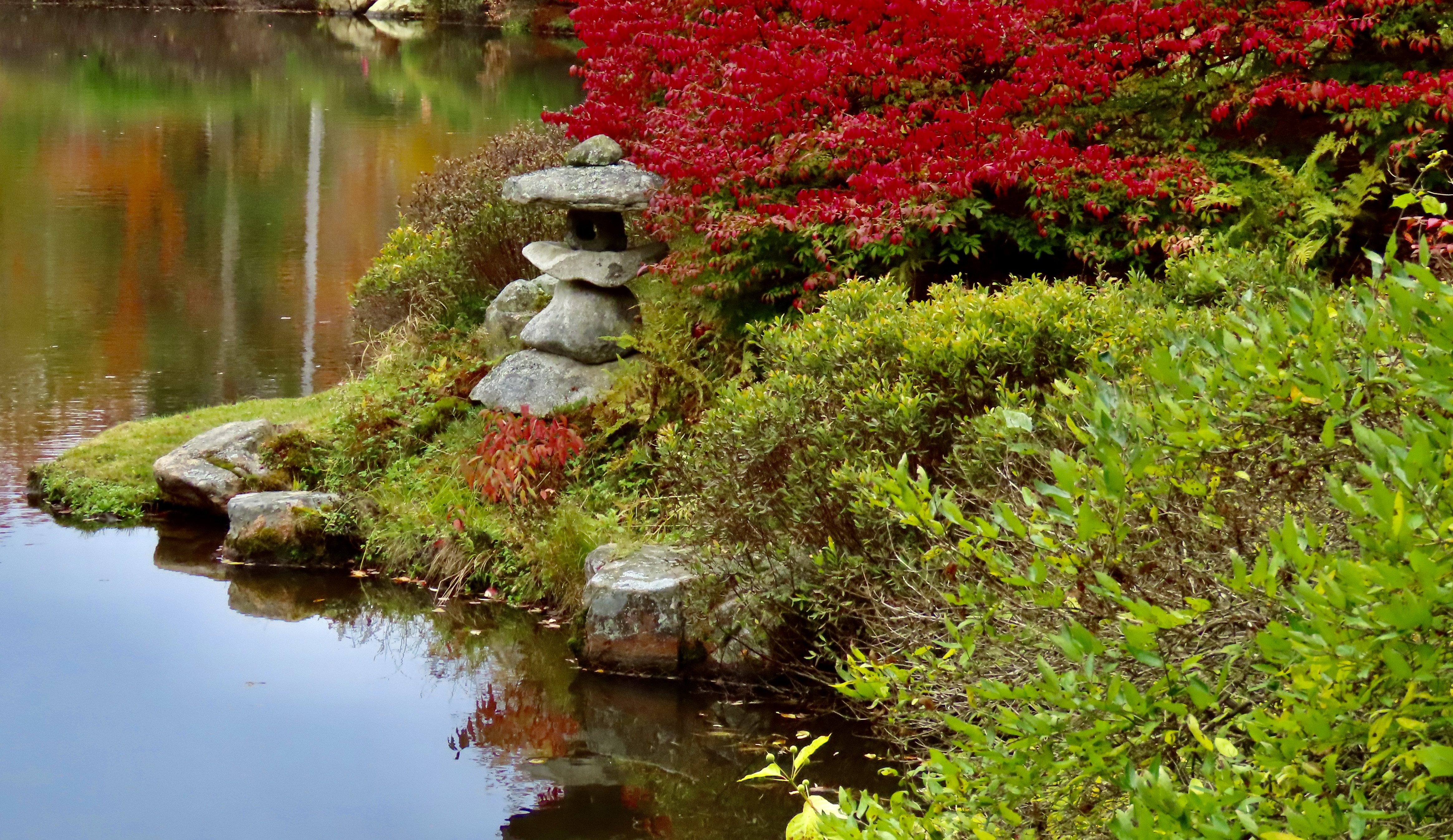
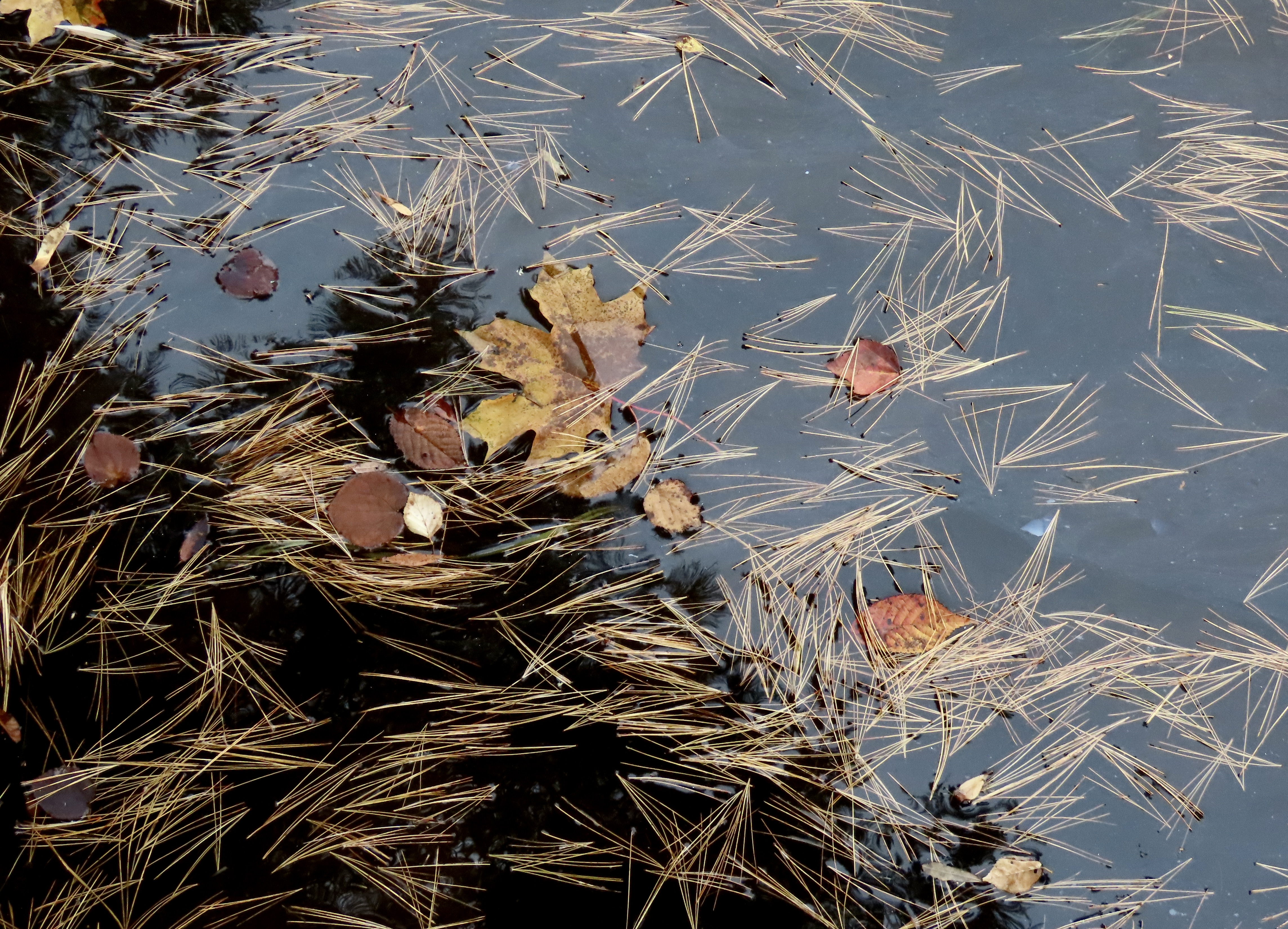
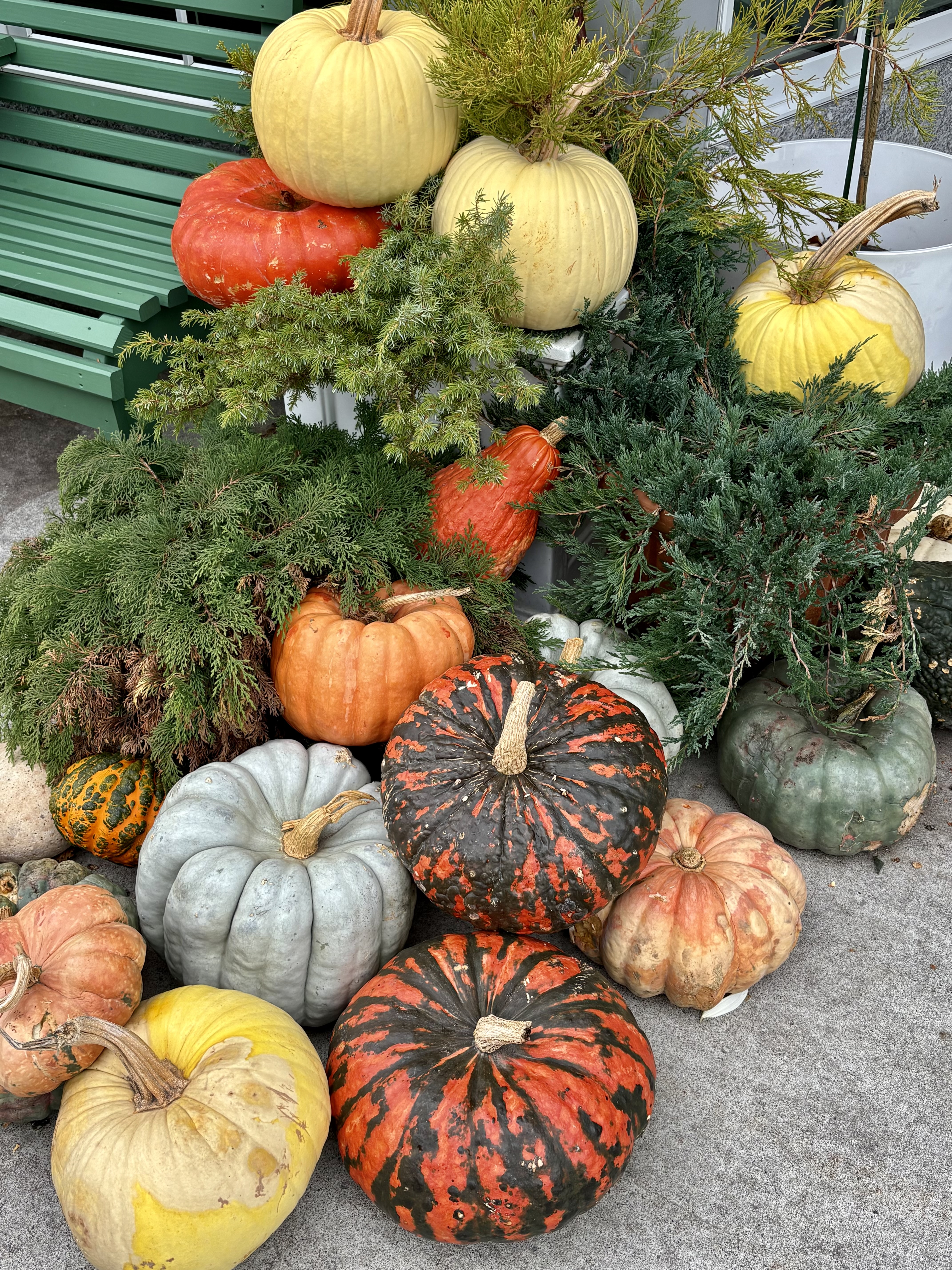
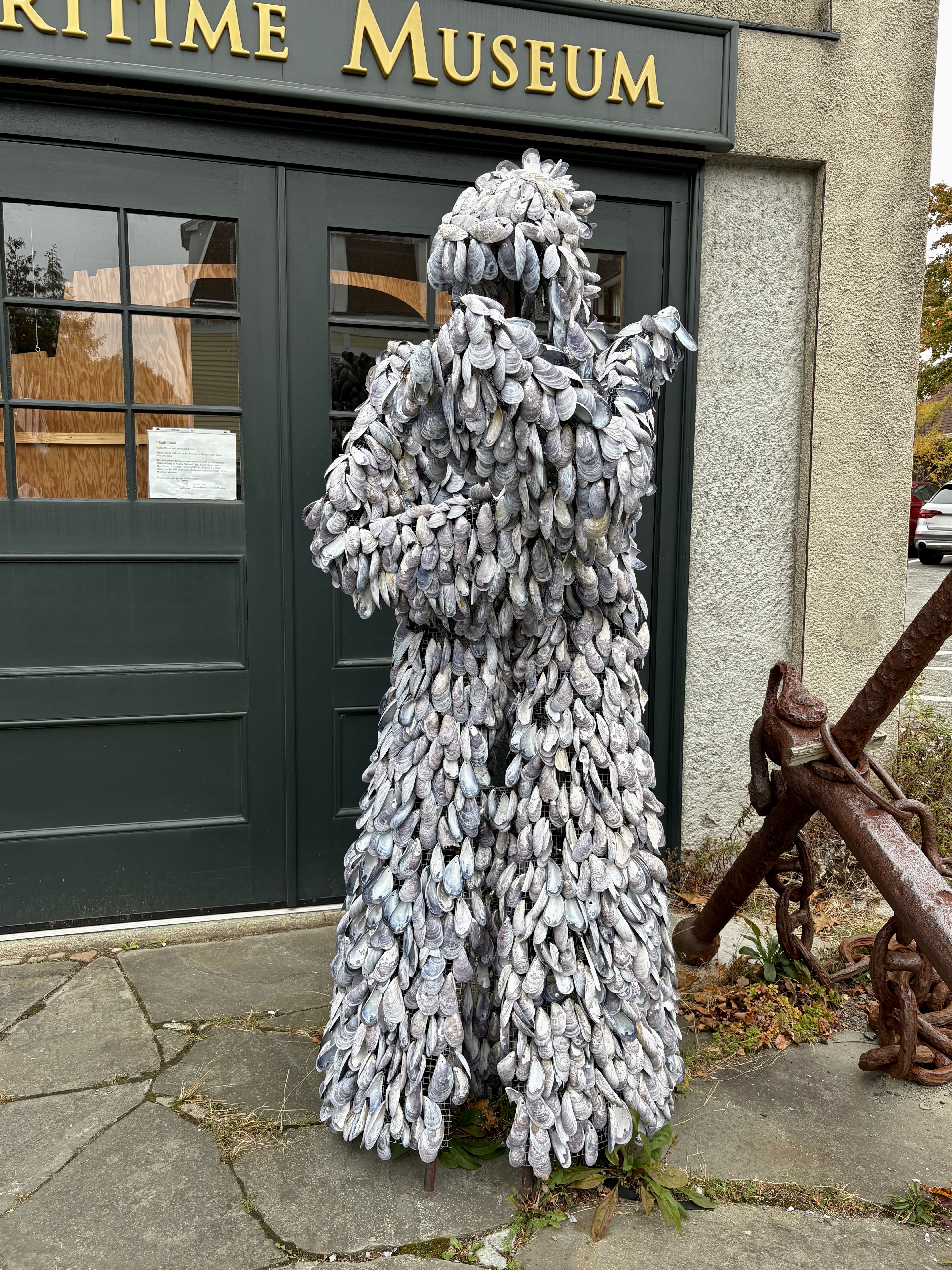
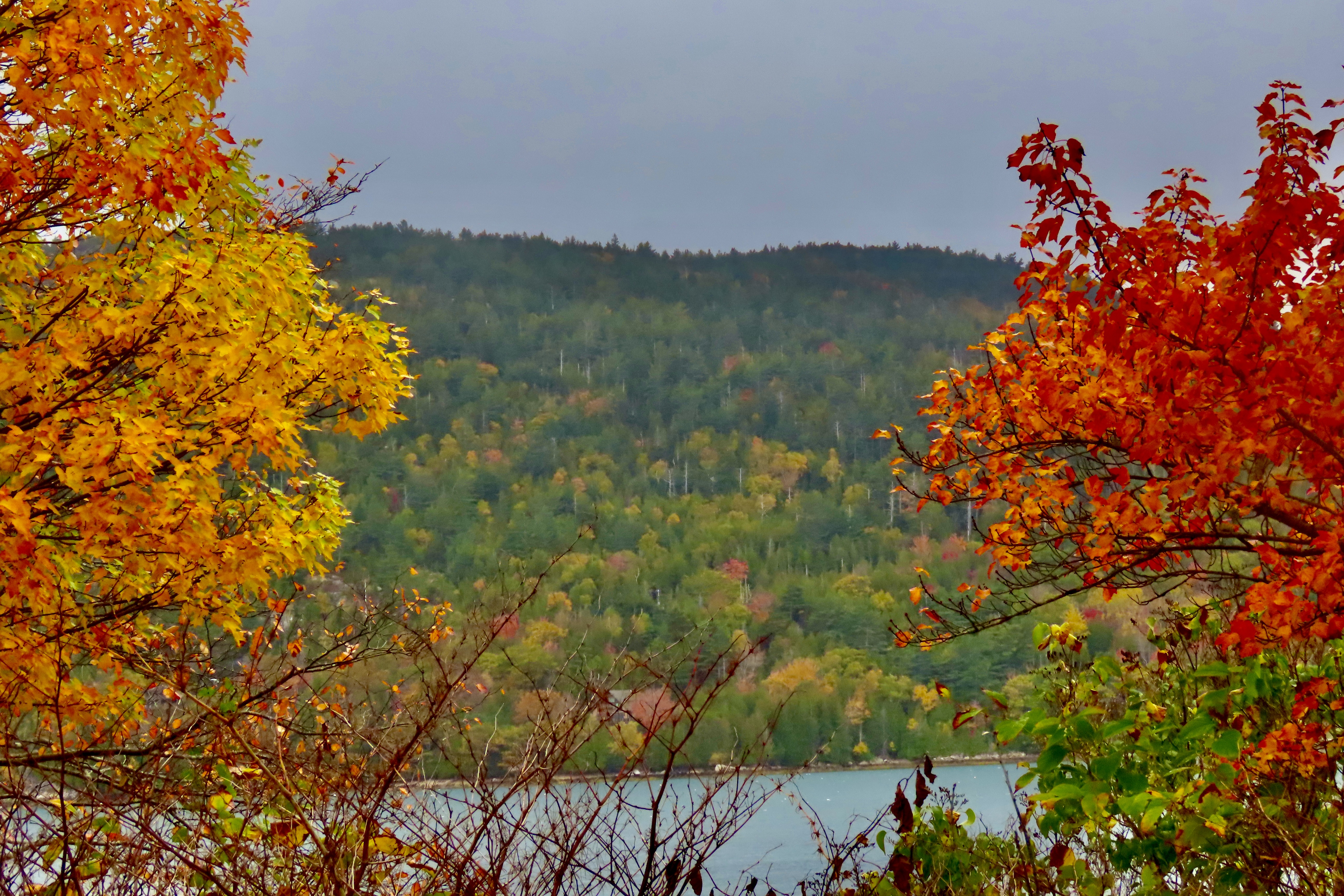
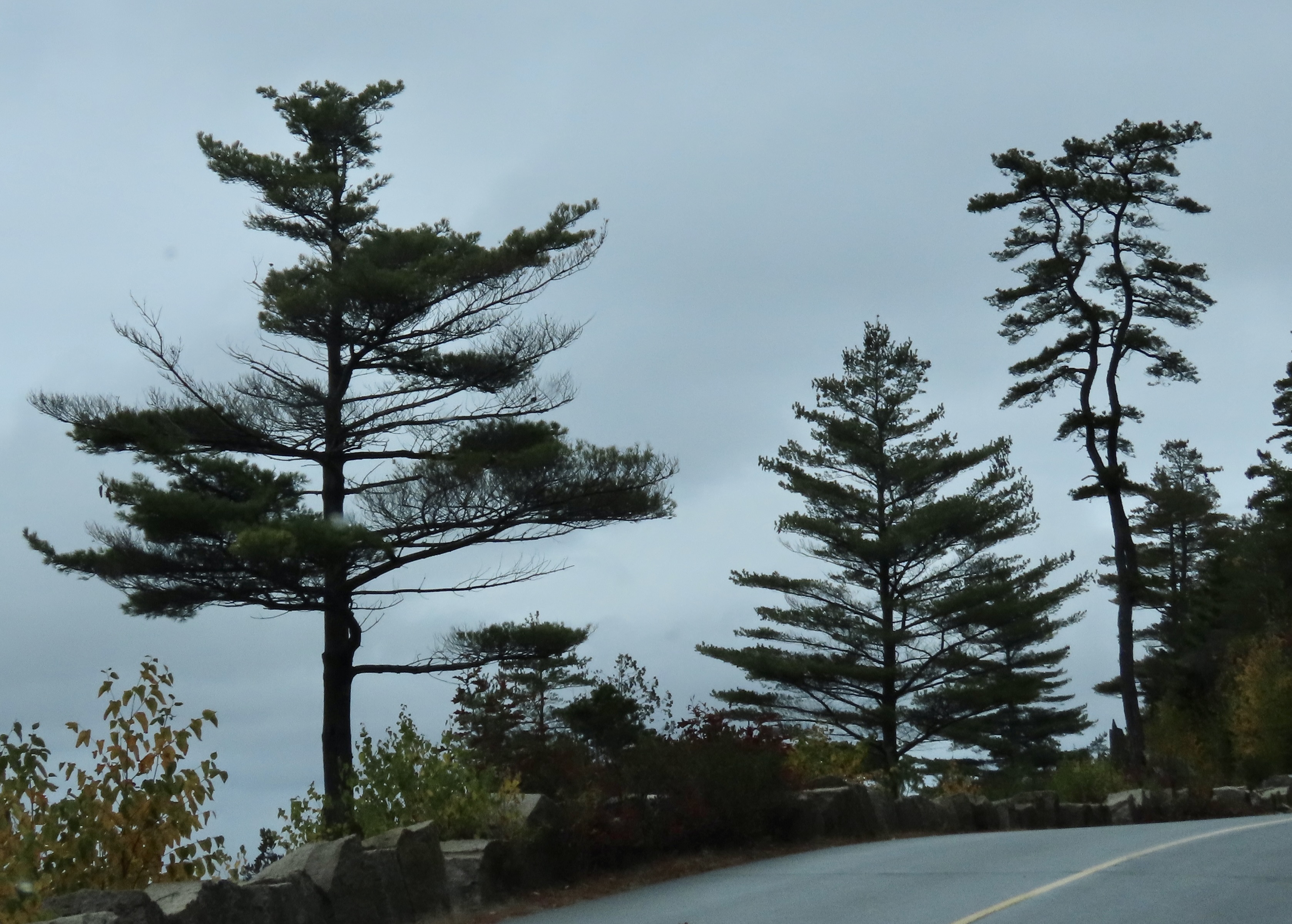
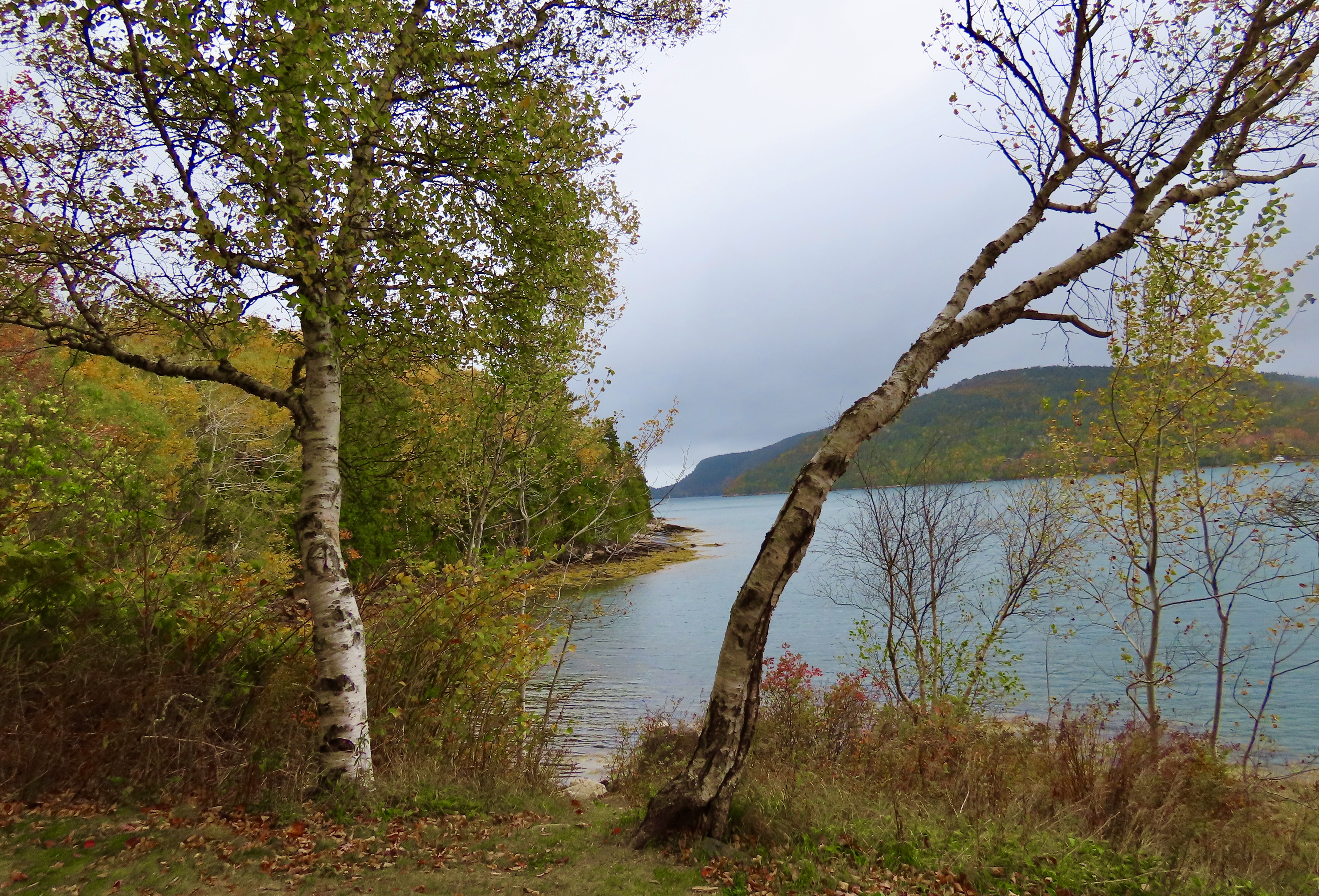
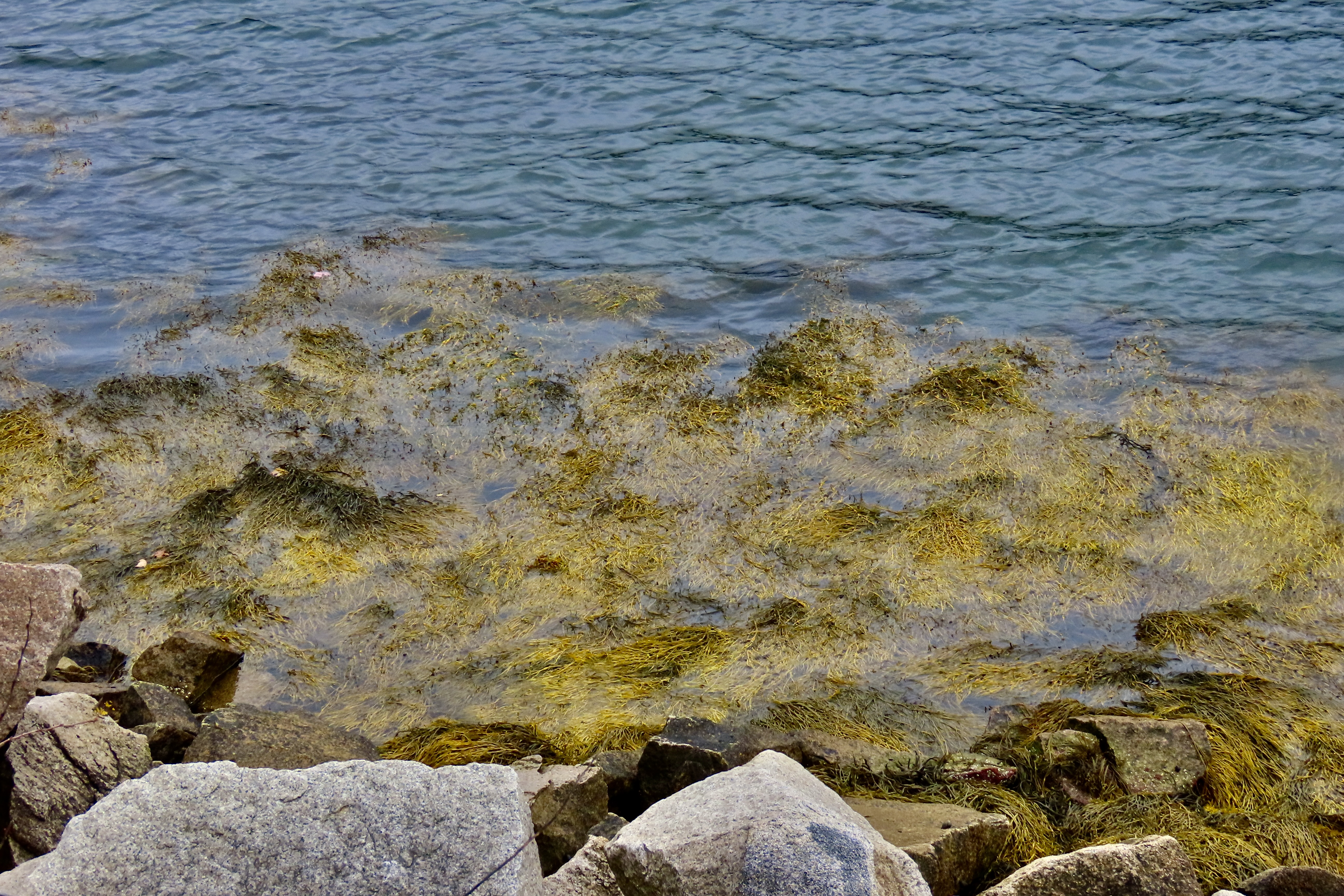
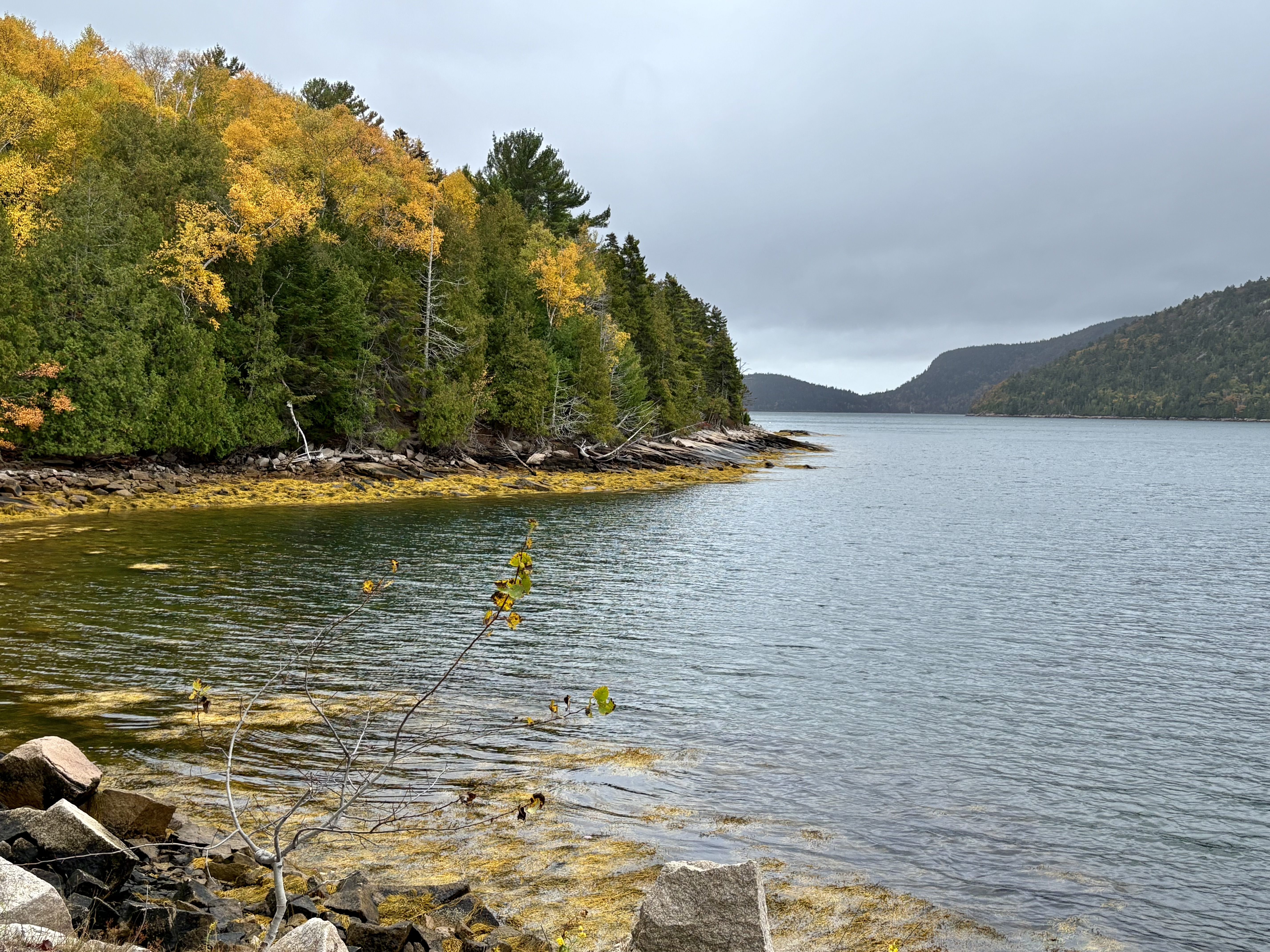
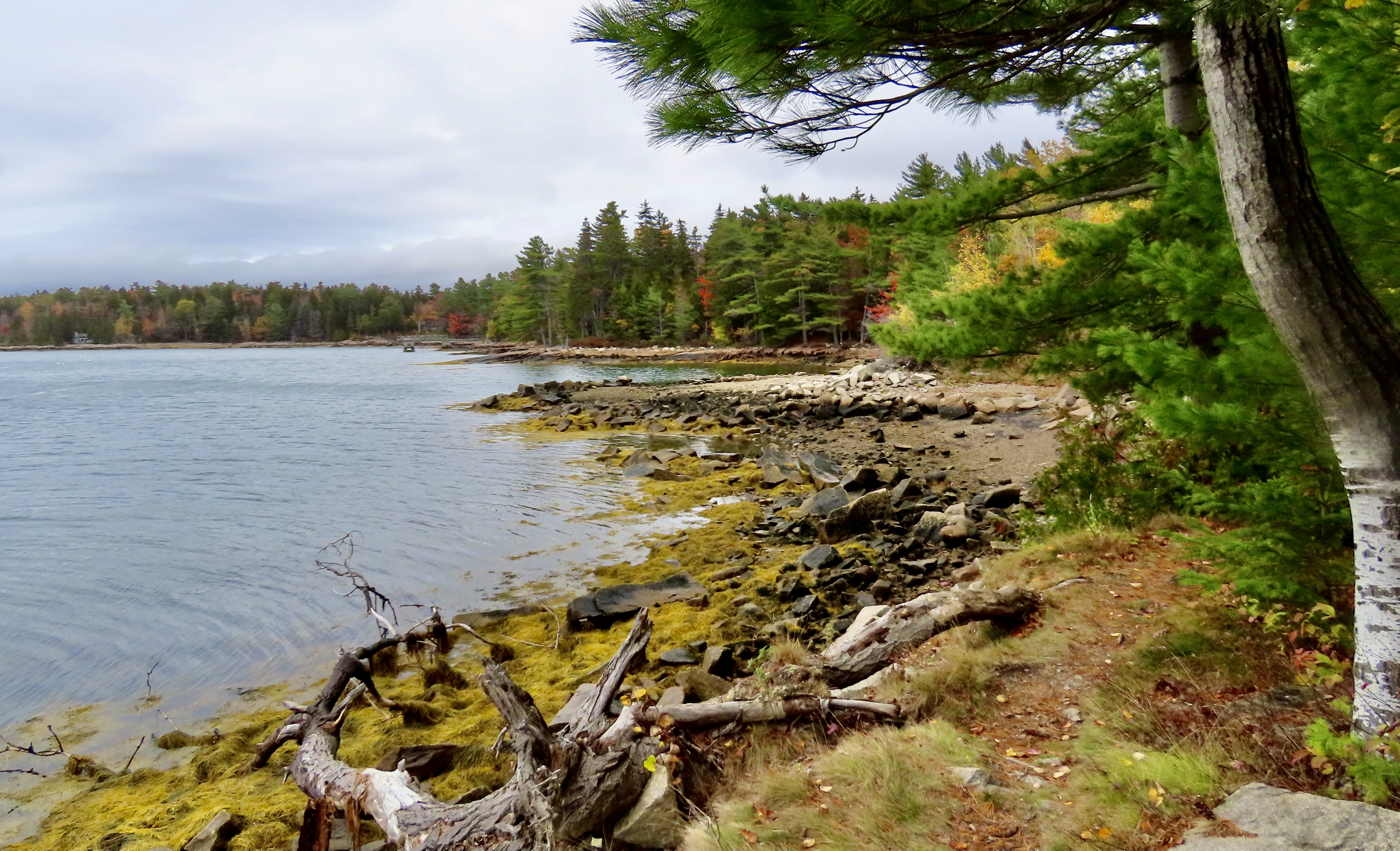
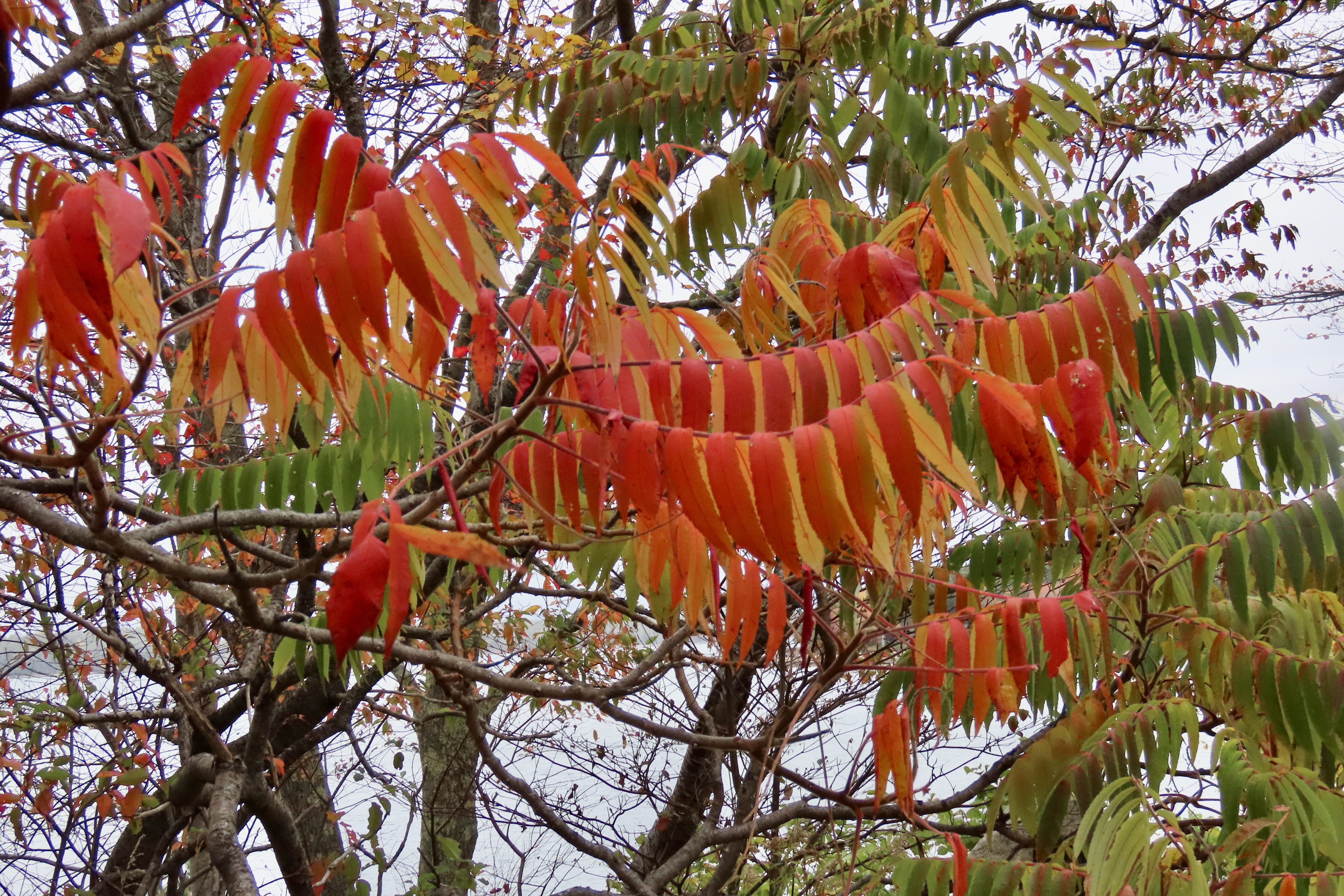
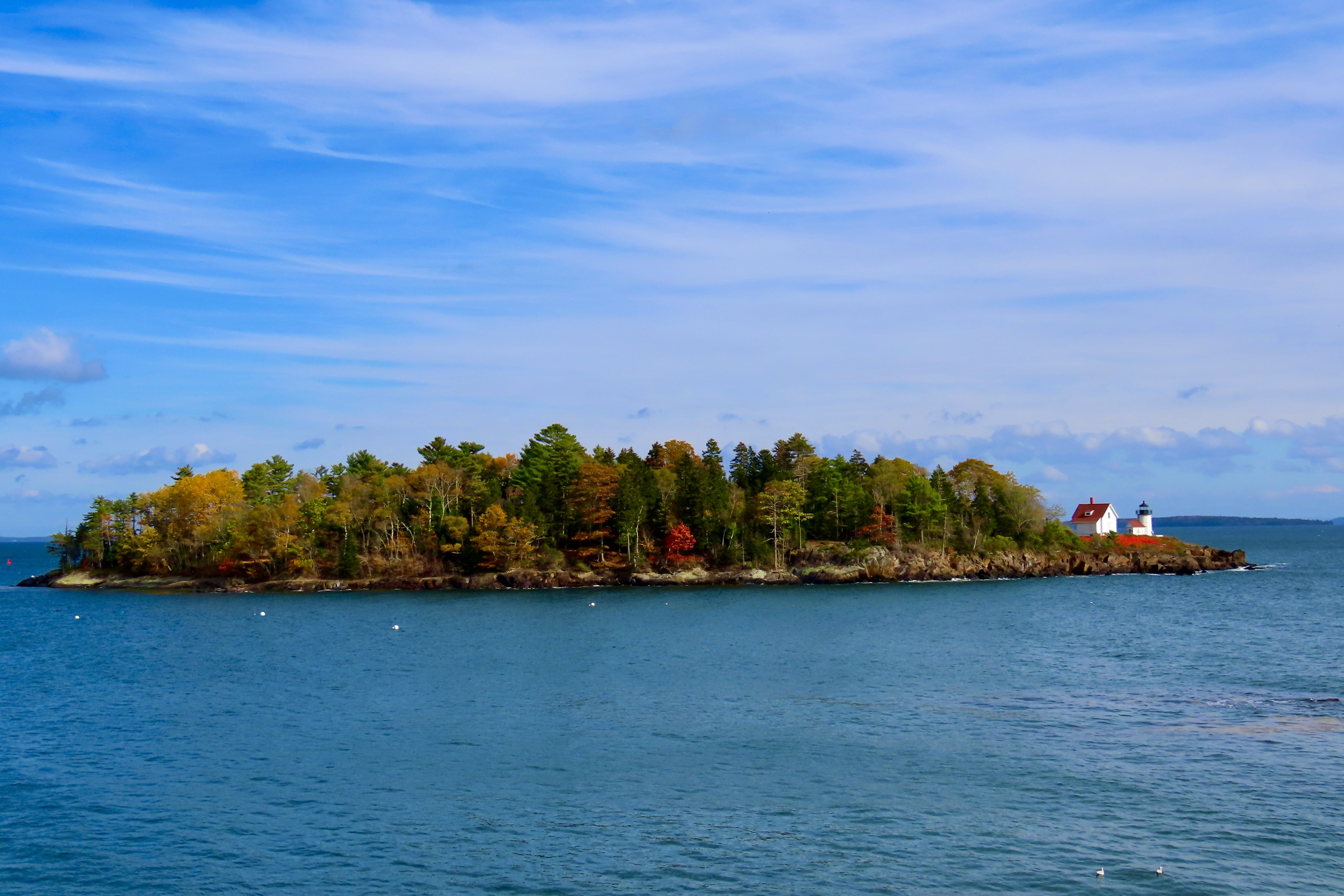
I concluded my last post with a photo of what we considered the most colorful section of the park. This was from the same area. The combination of being close to the trees and bright sunlight made the colors pop out.With distance and lack of sun, the colors faded in this view across Jordan Pond…And blended, like an impressionistic painting. Still beautiful.Roads continued to provide the opportunity to get up close and personal with the fall foliage, however— and traffic.The roads were full. Wherever there was a pulloff meant to feature the beauty of the park, it was packed. Even large parking areas were filled to the brim with people fighting to get into spaces whenever they opened up. While Peggy and I normally avoid national parks during peak season, we knew there was no option when peak-season is defined by peep-season. Still, it was a bit much for us. We headed for roads just outside of the park where the views were similar but traffic was minimal.We came on a small local park near Northeast Harbor named the Asticou Azalea Garden that demanded our attention. It was too late for the azaleas, but the fall colors made up for it…Cascading down…Providing a backdrop for a large granite boulder…And hosting an Oriental sculpture with brilliant red.The pond provided an interesting perspective on fallen leaves and pine needles floating on water while being divided between light and darkPeggy got into the act by providing an opportunity for a final photo of the garden’s colors.Having worked up an appetite, we headed into the nearby town of Northeast Harbor for lunch. It was busy shutting down for winter. Our waitress told us it was the restaurant’s last day for the year. After lunch, Peggy captured this colorful collection of pumpkins and squash on the sidewalk outside with her iPhone. Few things say ‘fall’ better.She was also attracted by a unique sculpture made out of shells in front of the Maritime Museum. It made us think of Davy Jones Locker in Pirates of the Caribbean.We found a small road (Sergeant Drive) leading out of Northeast Harbor along Somes Sound that fit our needs perfectly. It had all of the beauty of Acadia National Park with minimal traffic. Make that zero. We didn’t see any.It provided a number of views across the sound.Dark grey skies provided interesting silhouettes of the trees. I was particularly fascinated by the one on the right with its matching curves.Suminsby Park, created in memory of a beloved scoutmaster and selectman whose efforts helped preserve the area, provided us with closer views of Somes Sound and a peaceful stop.A golden, brown rockweed in the sound added to the fall colors.Looking down the sound from the park. Note the rockweed’s contribution.Looking up the sound.A wrap-up for today: Christmasy red and green leaves hovered above the memorial to Bob Suminsby. I couldn’t help but believe that the old scoutmaster and local leader would be well-pleased with the park that had been given his name. That’s it for today. Next up Peggy and I travel down the Maine coast to the town of Belfast, where we discover Curtis Island. I insisted we check it out.Curtis Island, Maine with its lighthouse. The island, btw, isn’t named after me, sigh, it’s named for Cyrus Hermann Kotzschmar Curtis, founder of the Saturday Evening Post.
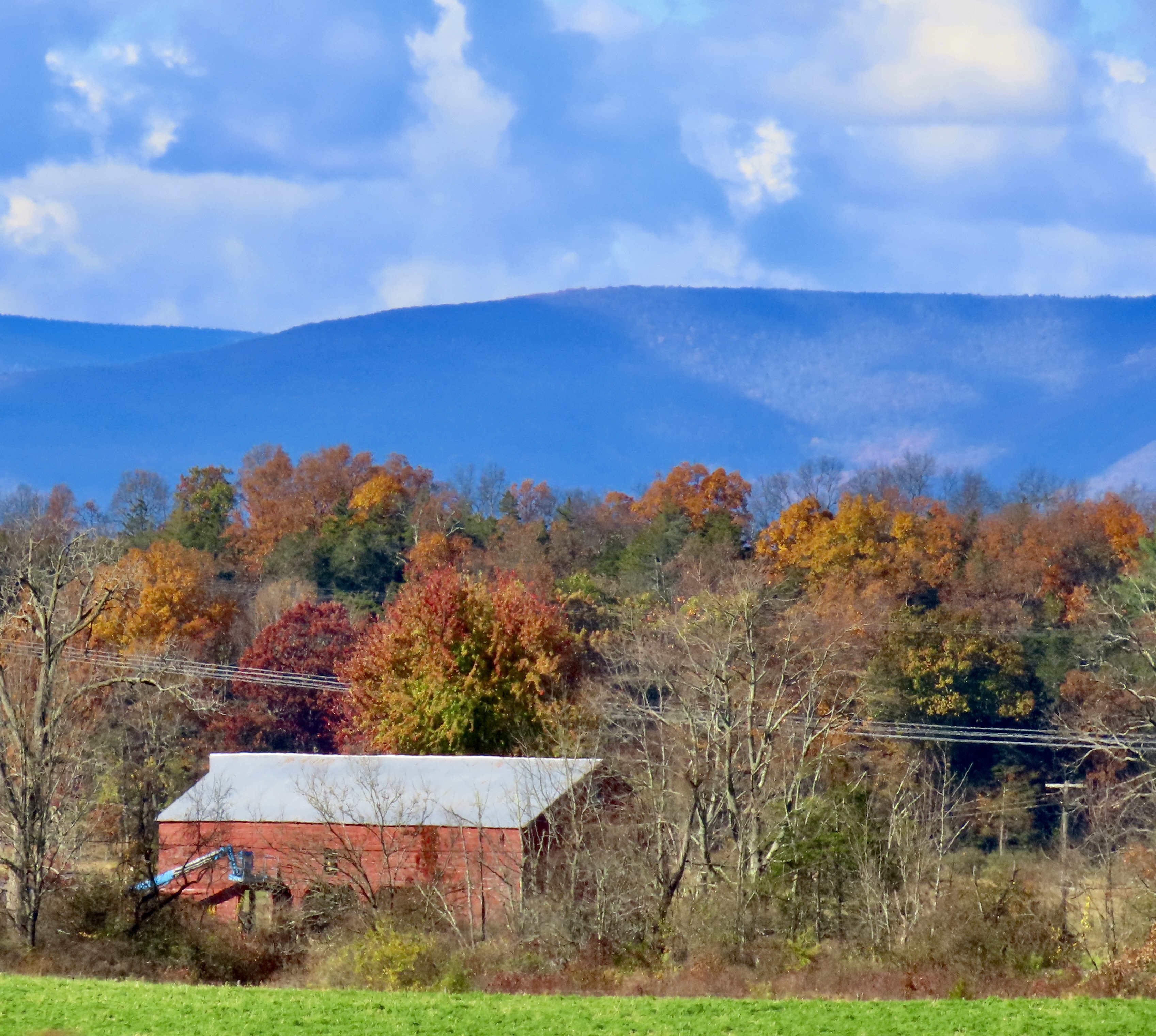
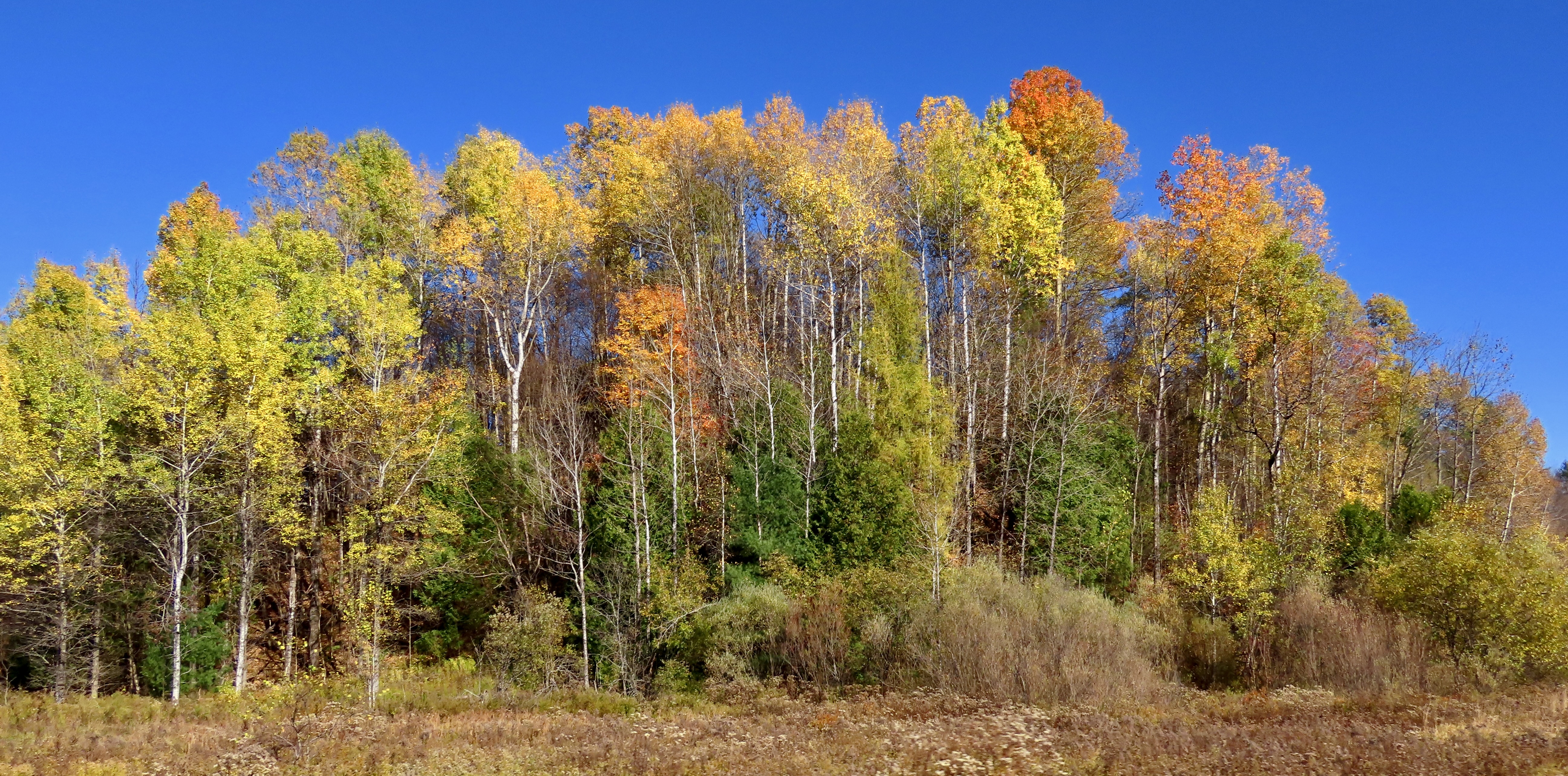
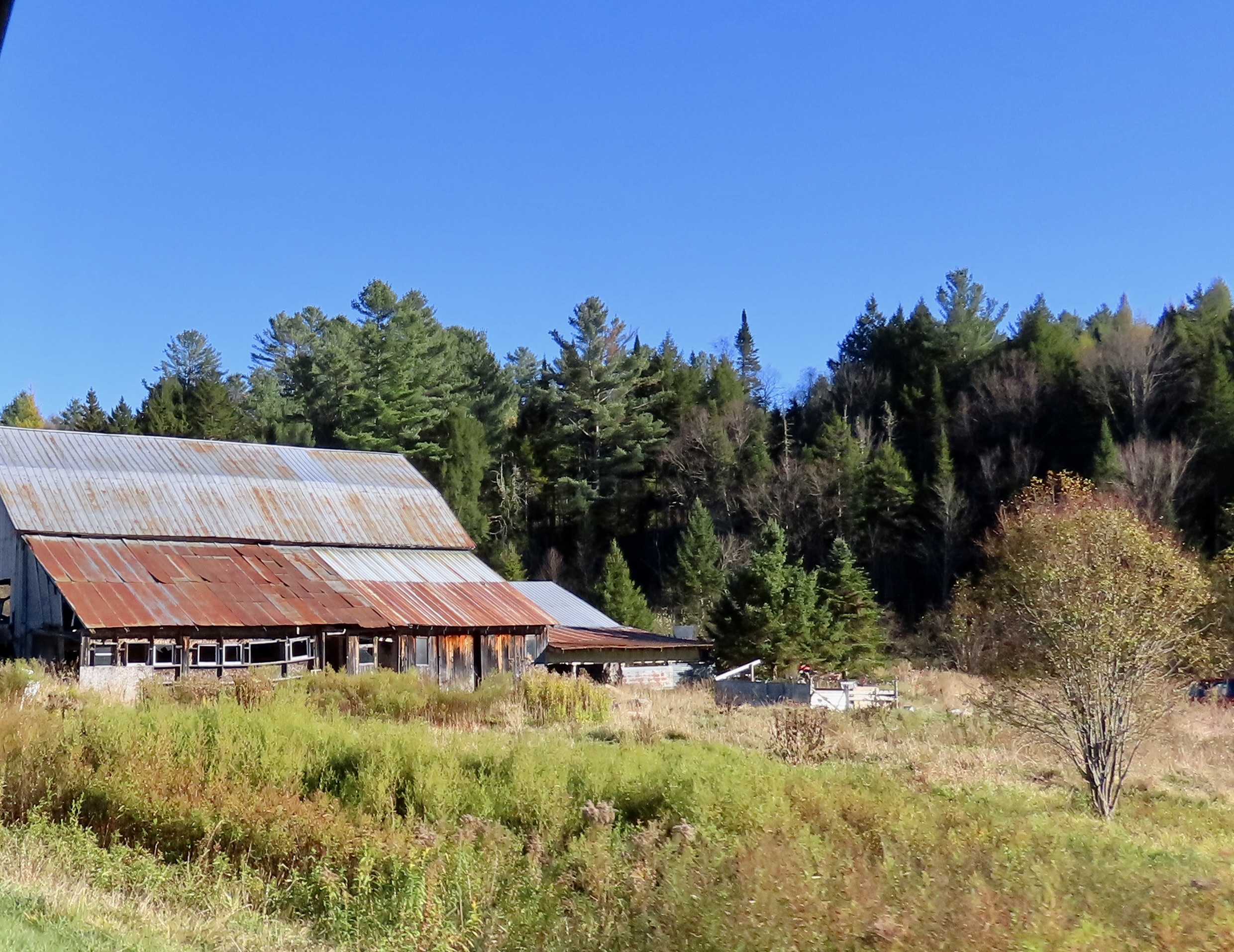
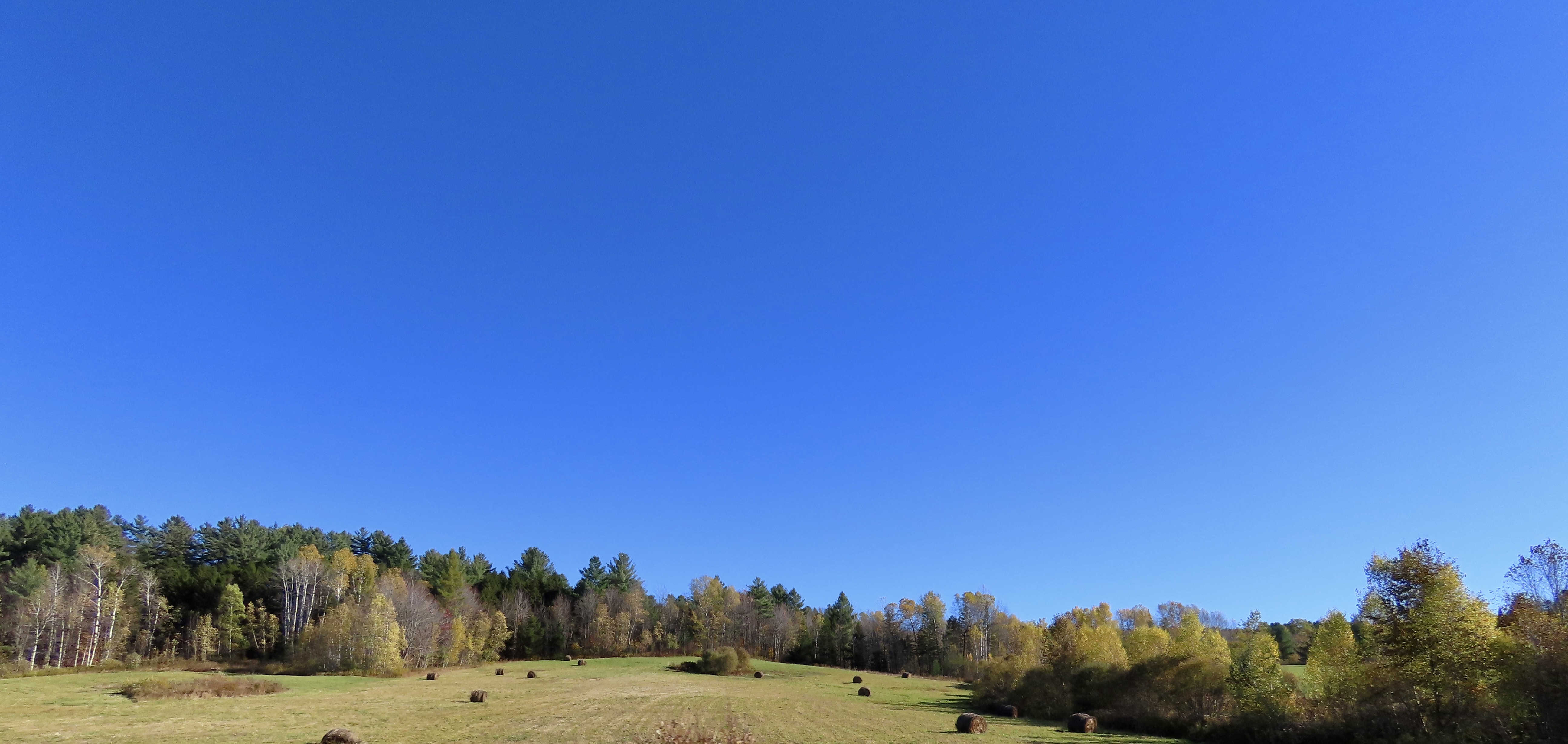
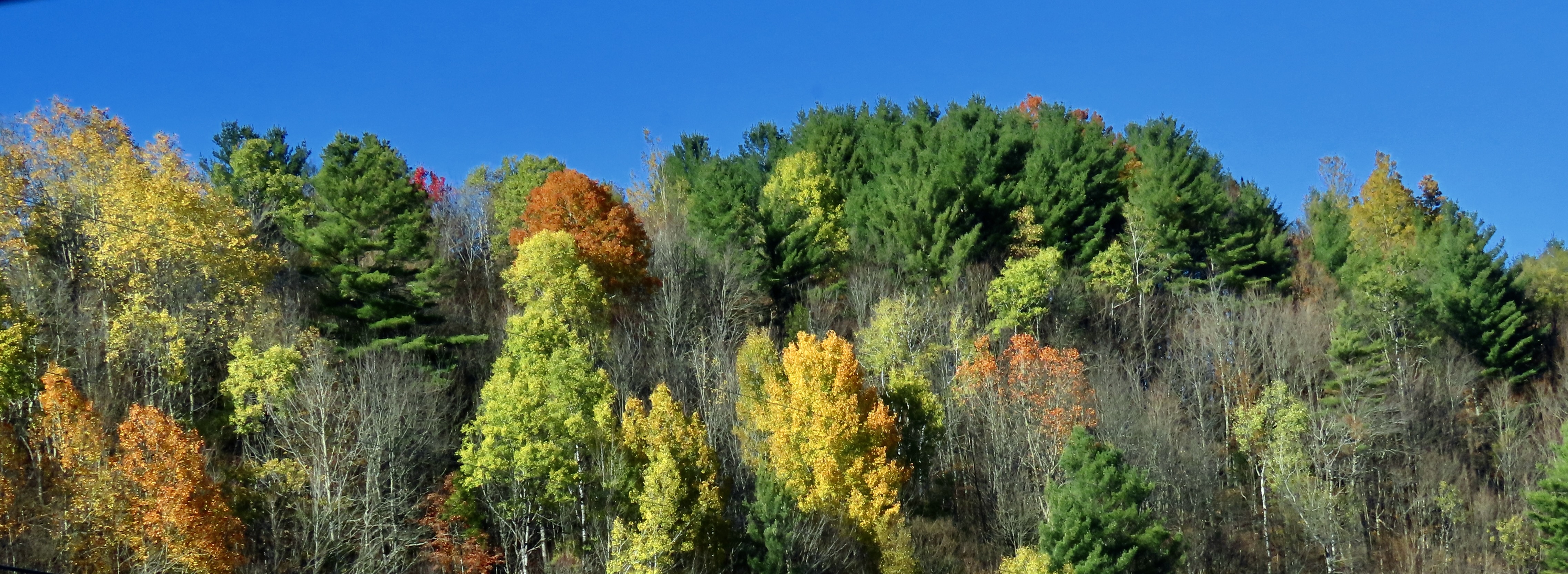
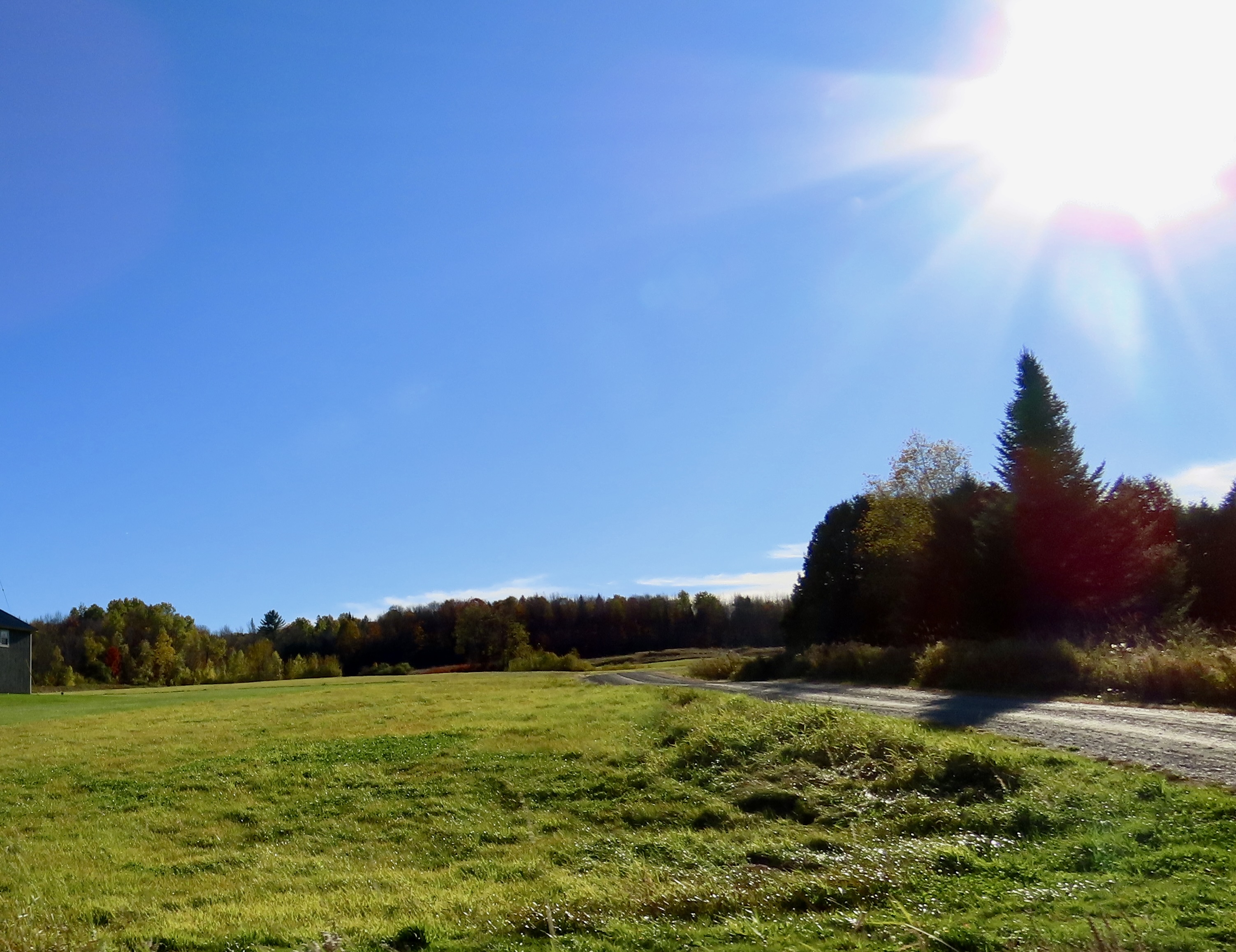
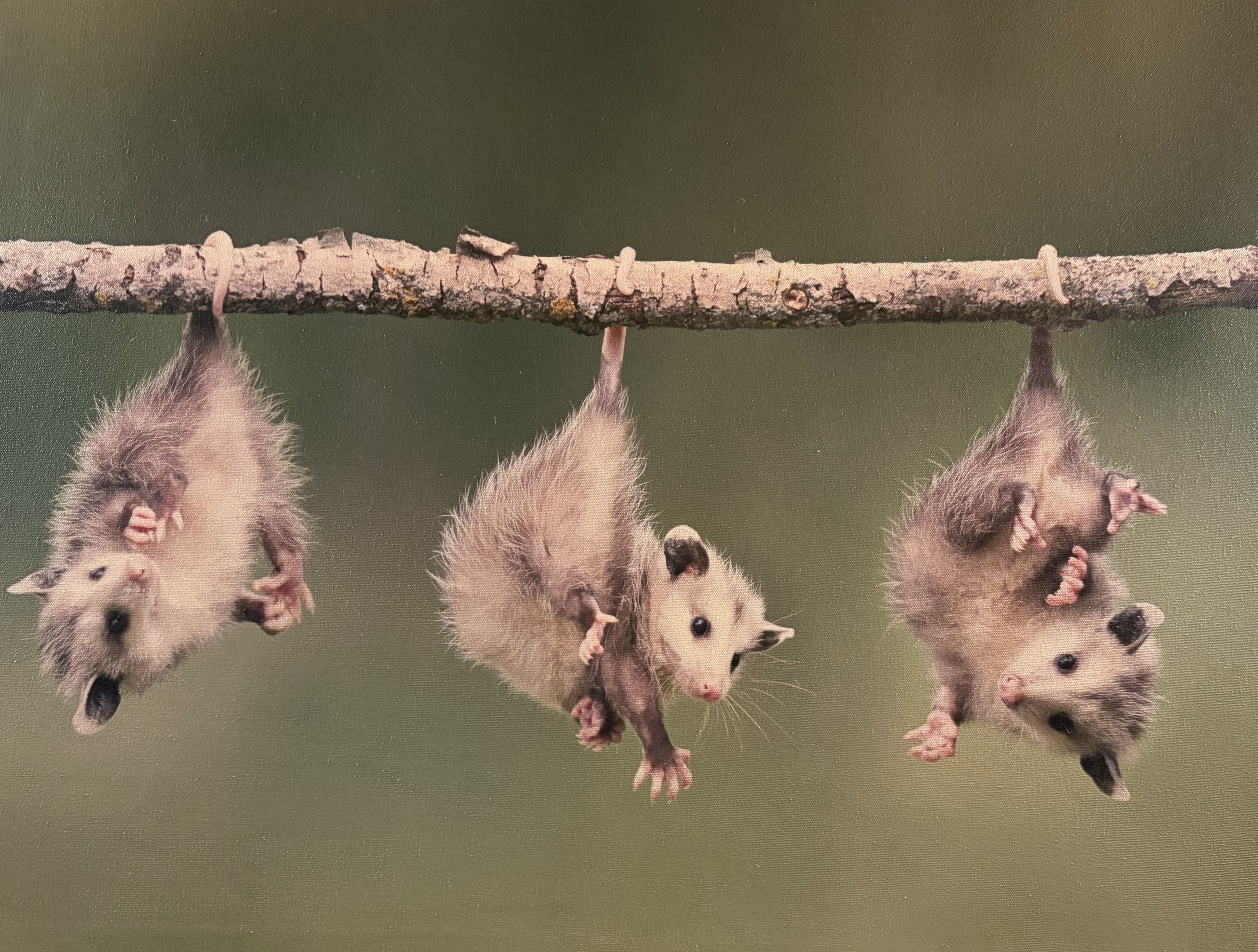
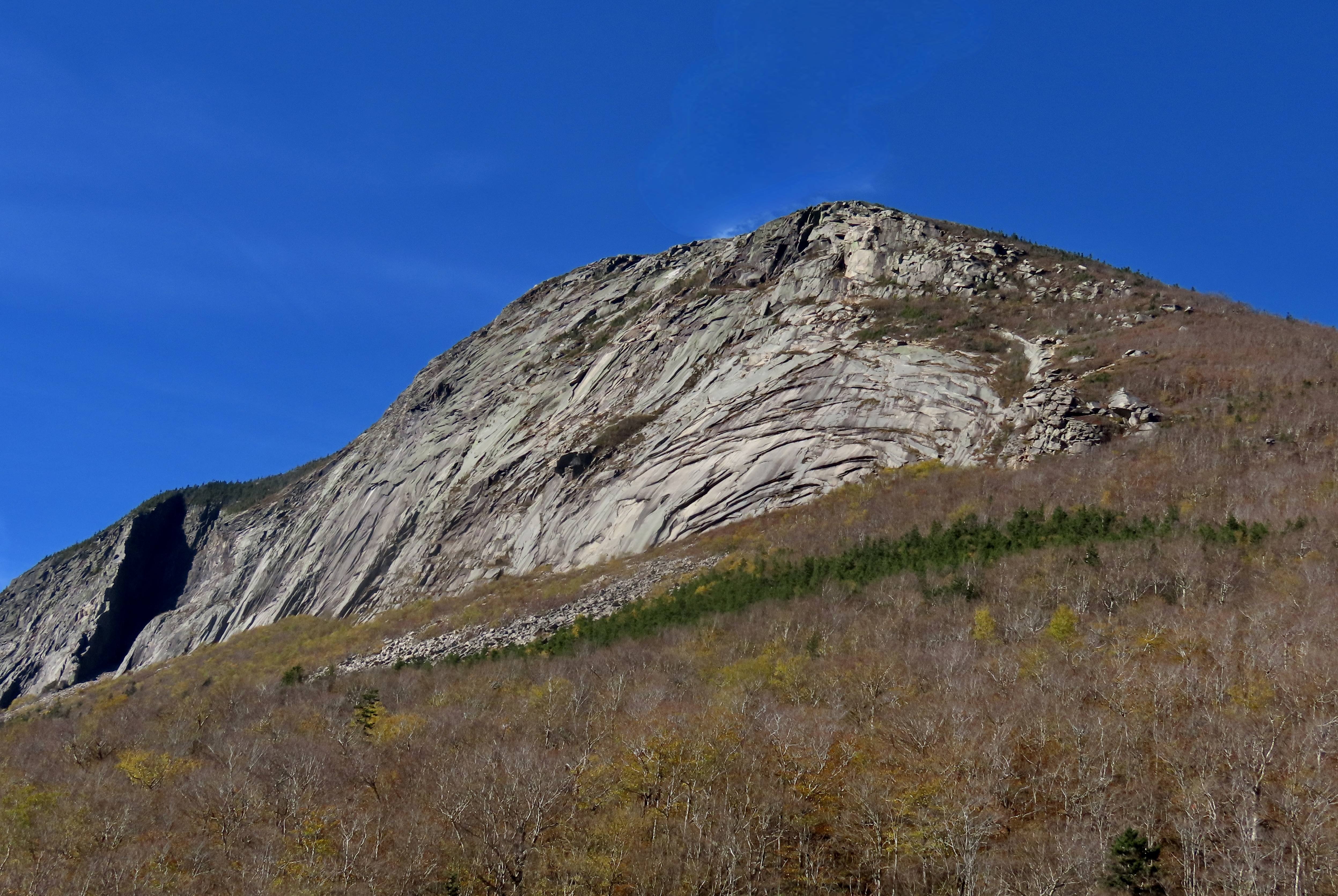
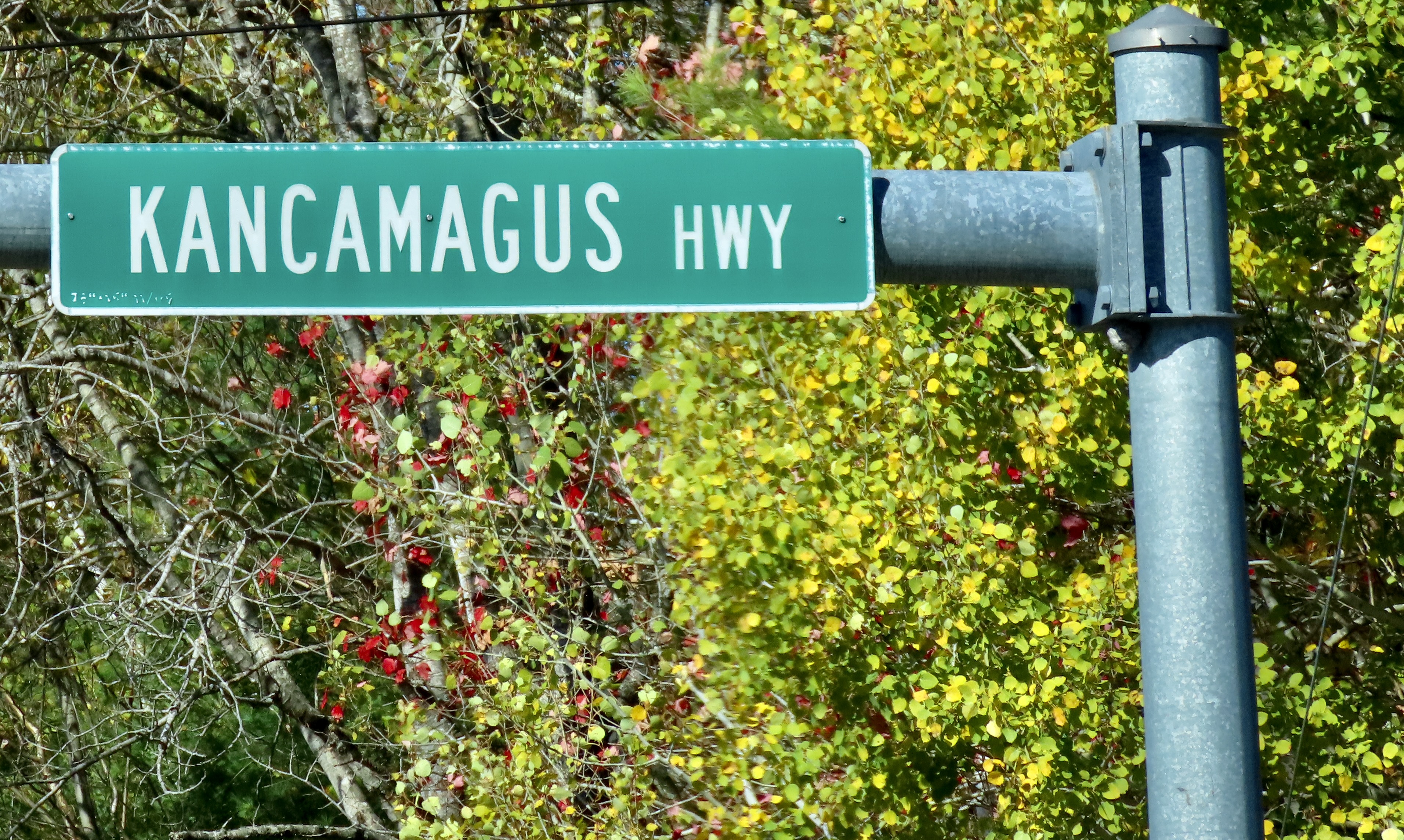
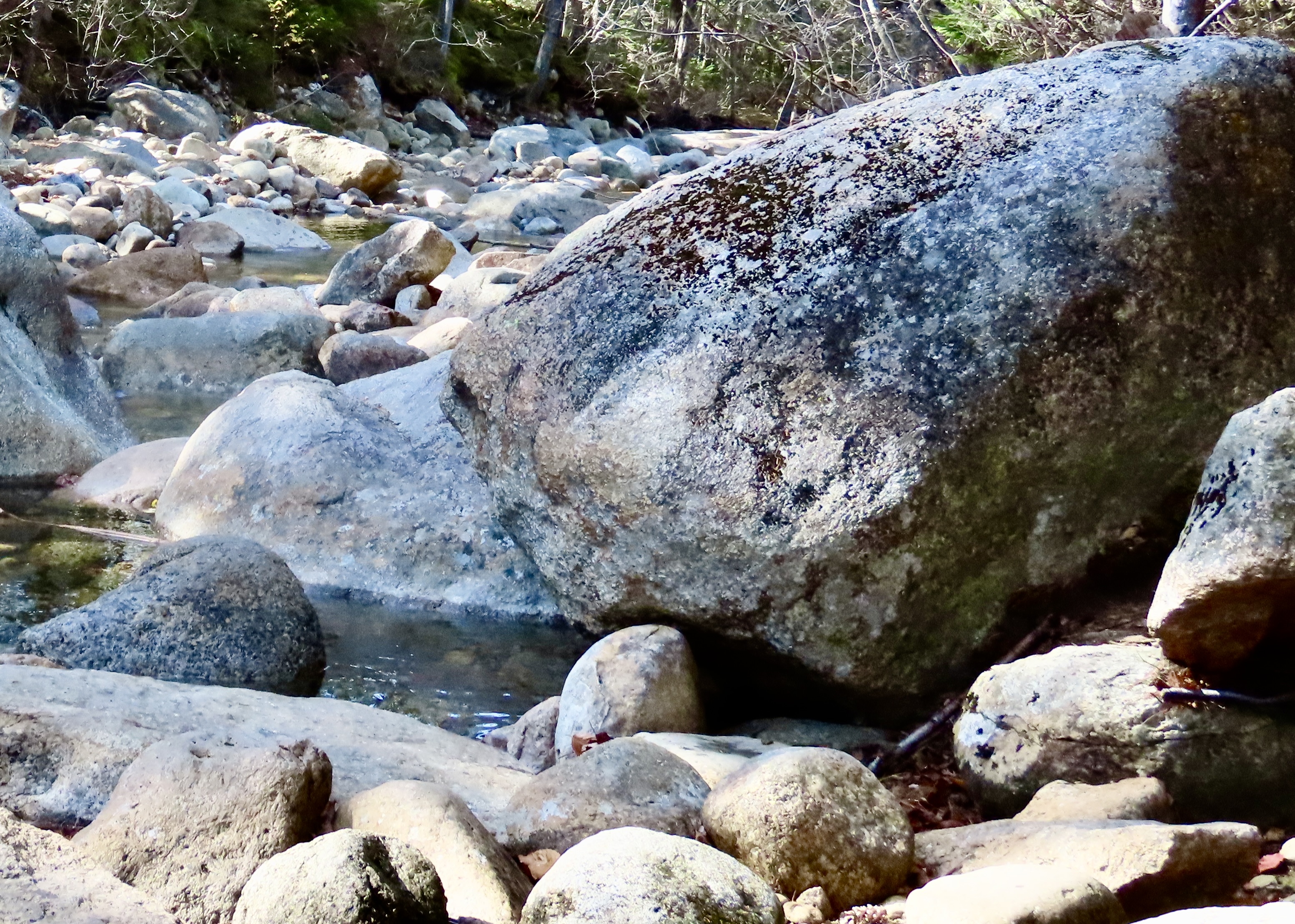
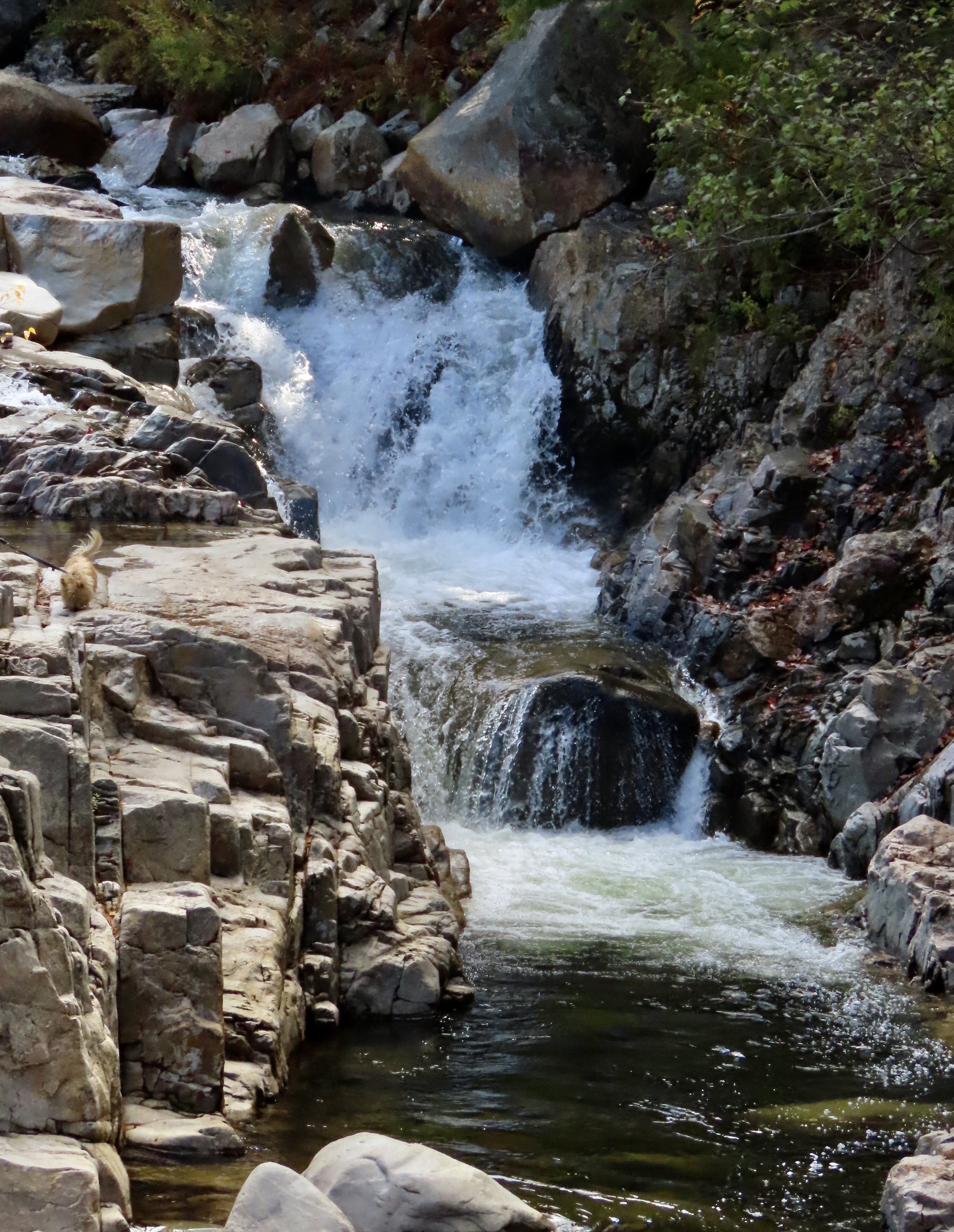
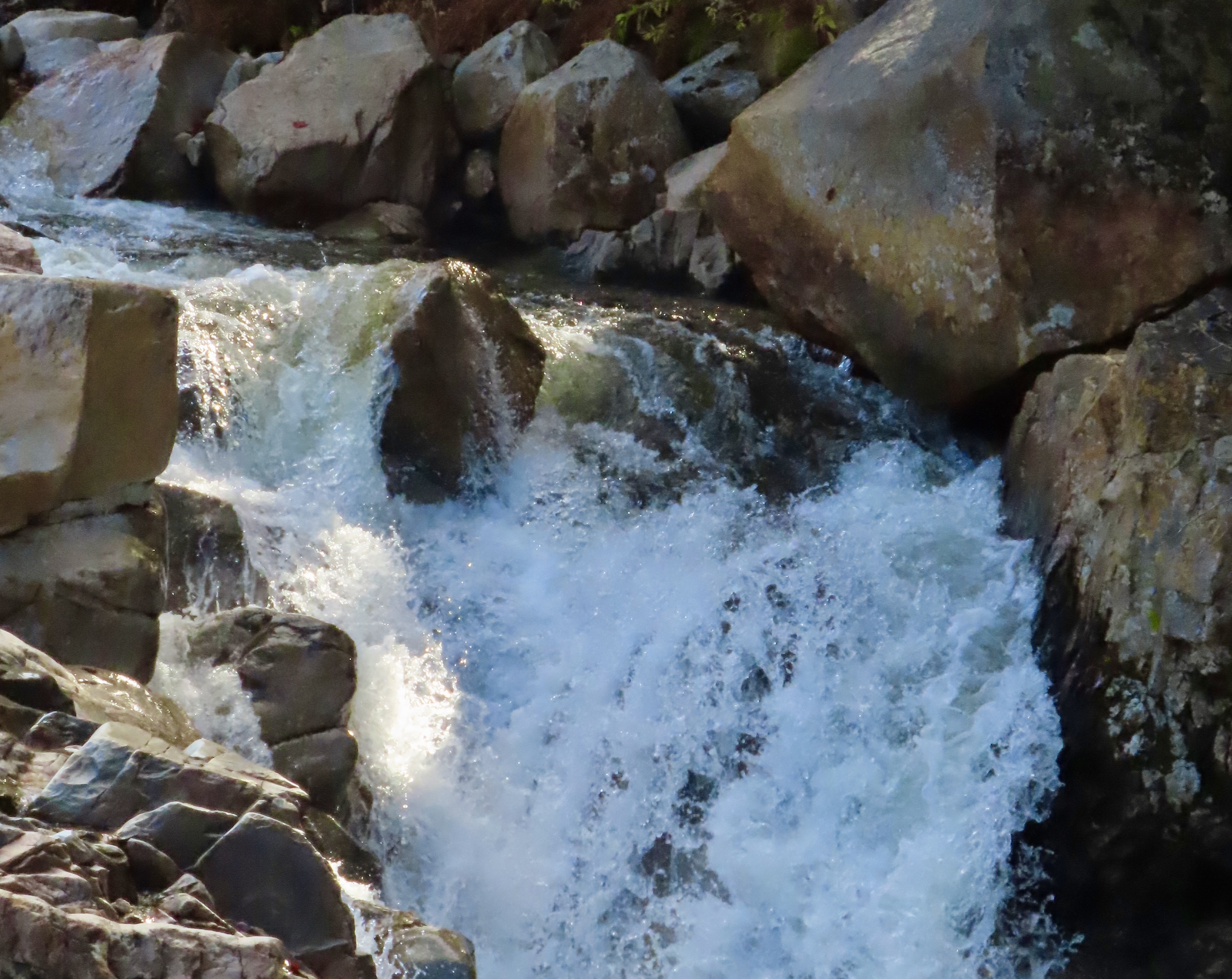
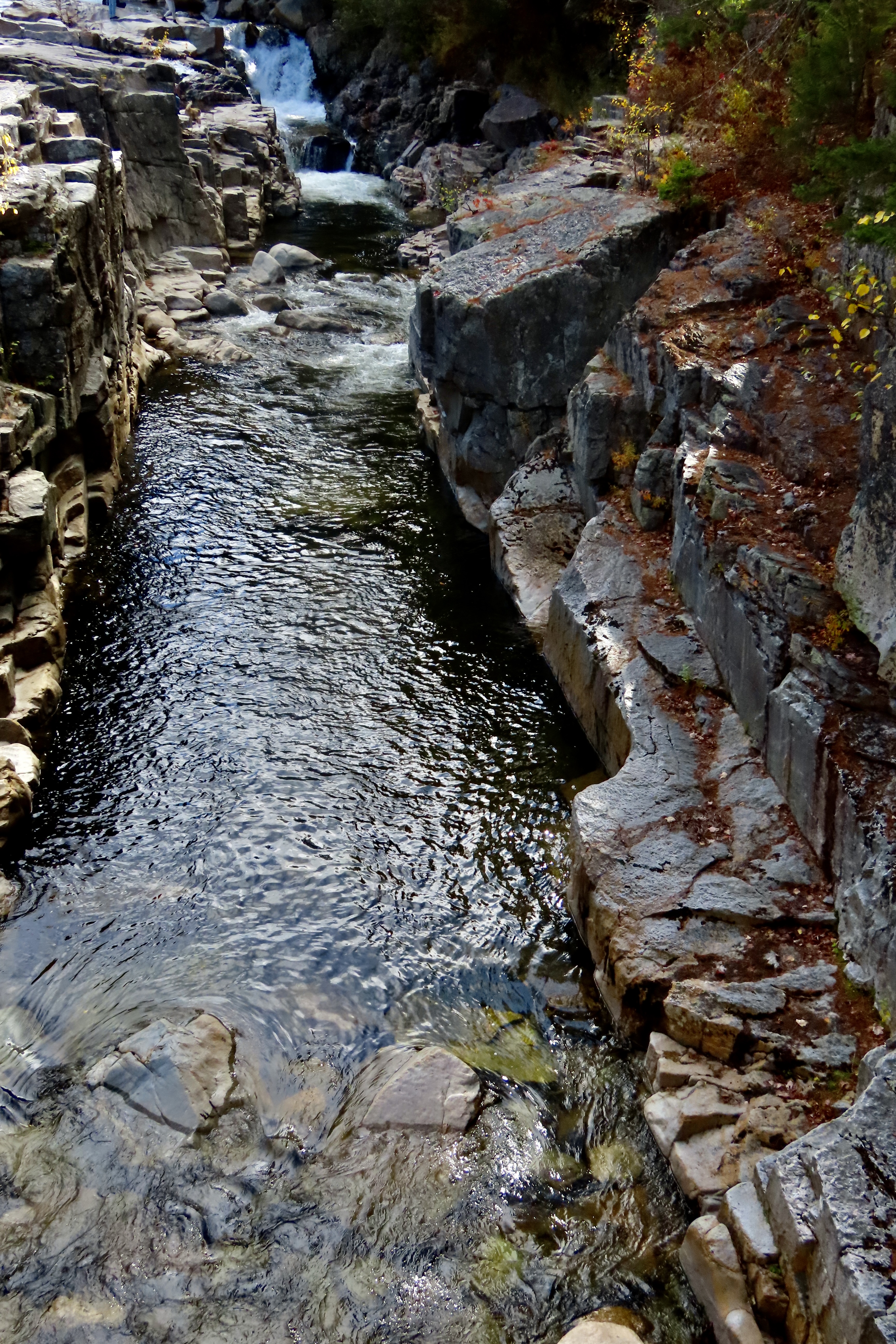
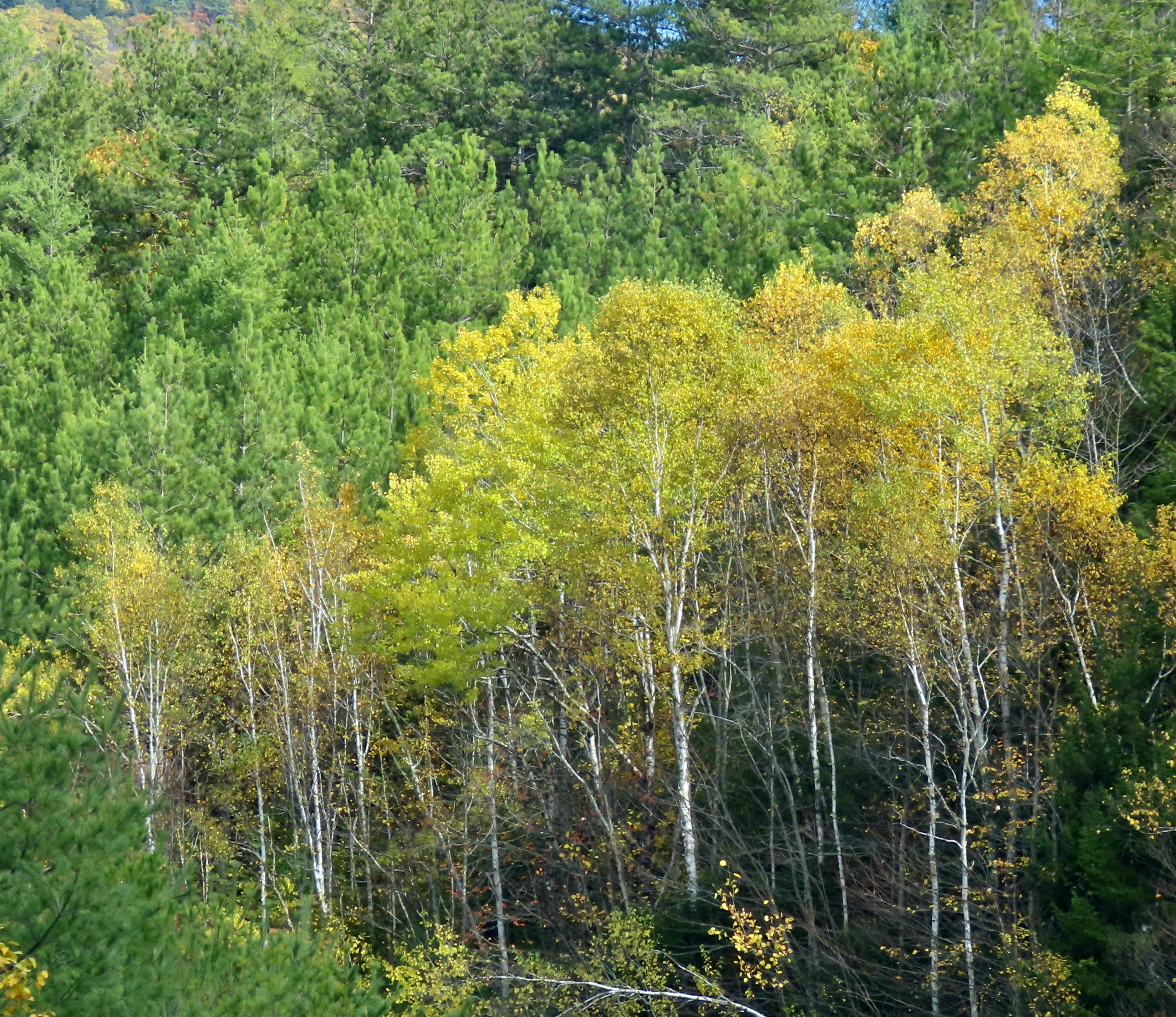
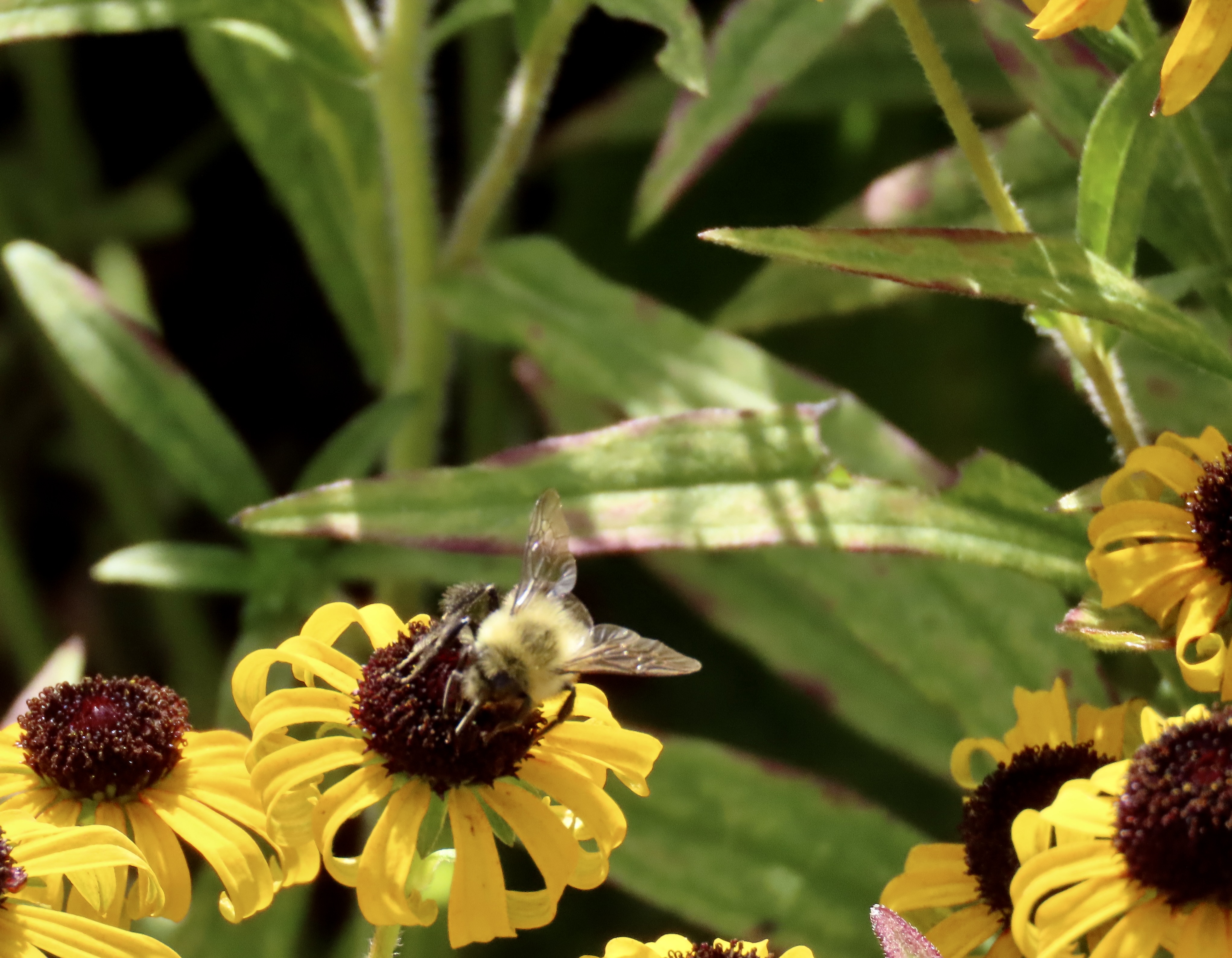
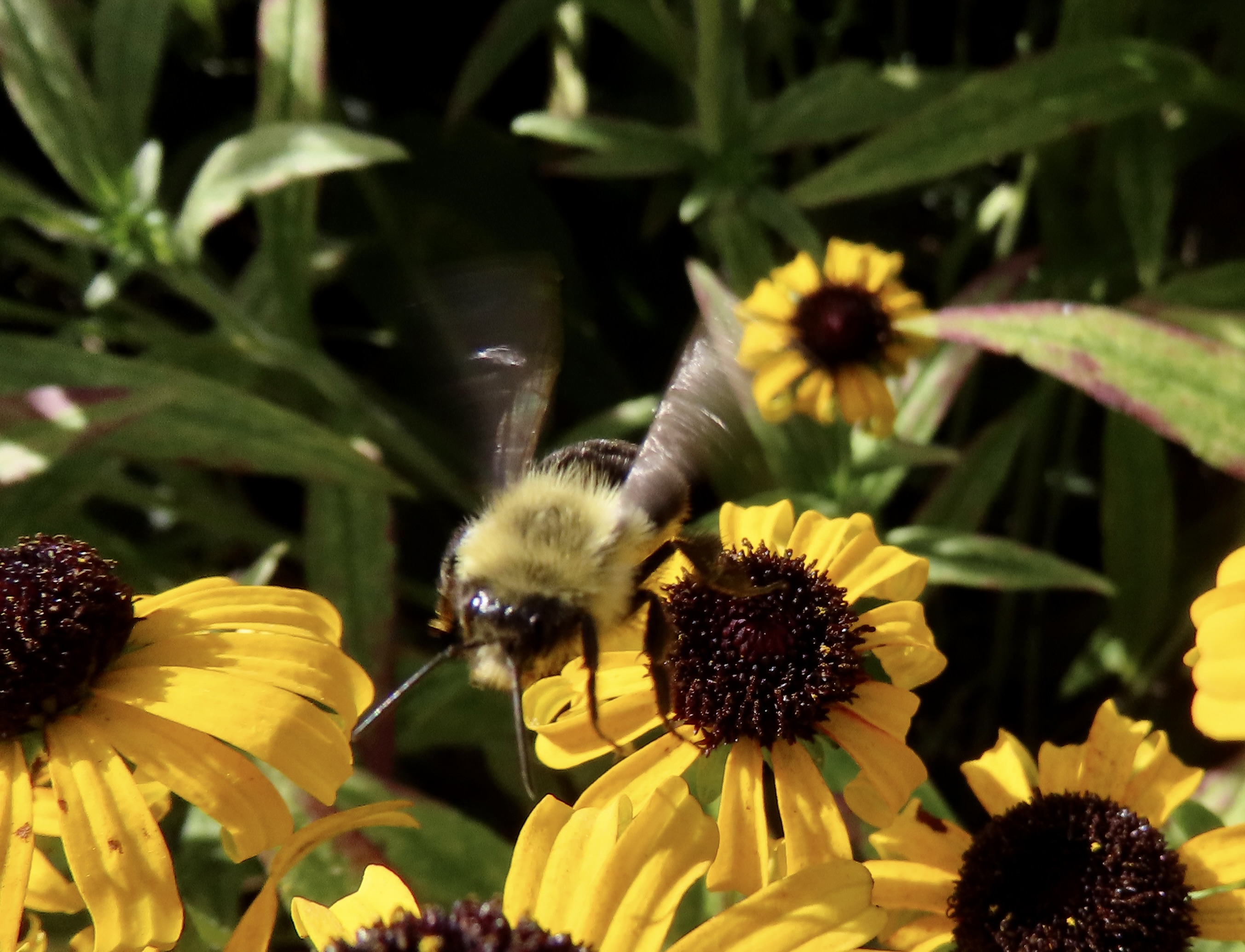
We left the crowded sidewalks and packed streets behind when we left Stowe, traveling the backroads of Vermont. You may have heard our sigh of relief as we once again had time to admire the scenery. Like this. This old barn with its overgrown fields was part of it.Rolled up hay bales were one more sign that Vermont had left summer behind and was preparing for winter.There was still plenty of color to catch our eyes.And a bright sun to illuminate the fields and trees.A photo of cute baby possums adorned the wall of the Pine Grove Motel where we stayed in Barton, Vermont that night. As it should. We were in the Possum Room. The motel was ancient and small but remodeled and clean with amenities including a refrigerator, microwave and even a toaster. Two single beds served our sleeping needs. At least they did until midnight when we heard a strange noise. At first I thought in might be an animal in the attic and happily pictured a possum. Peggy and I quickly realized, however, that someone was using a key and trying to get into our room. My assumption was that he/she had mixed up room numbers. I’ve done that. I went over and politely said through the door that the person had the wrong room. (No way was I opening the door!) The person continued to work his key and wouldn’t quit. Maybe he was drunk. I was getting worried. “You have the wrong room,” I said loudly. “Go away!” He smashed the door with his fist. But left. It took a while for us to go back to sleep.The next morning we climbed on I-91 and zipped down the freeway to I-93 where we left the Green Mountains of Vermont behind for the granite White Mountains of New Hampshire. There is a reason why New Hampsire is known as the Granite State!Our goal was New Hampshire’s Kancamagus Highway noted for its fall colors. At 34 miles long, it is considered New Hampshire’s most scenic drive. The US Forest Service even charges people $5 to drive the road if they use any of the pullouts. (Our handy-dandy National Park Senior Citizen Pass that we have been using for a quarter of a century worked.)Unfortunately, the famous fall colors were past their prime.So we went looking for other things that might catch our eyes, like this boulder filled stream along the highway. More granite.Farther along, we found a waterfall to admire.Sunlight lit up a corner, creating translucence.We thought that this ‘long shot’ provided an interesting, different perspective. The waterfall was at the very top. Dark, inky water ran along the channel and then gained a tad of color as it flowed over rocks at the end.Of course we found some colors along the highway. After all, it was still early in October and we were in New Hampshire.Birch trees were still showing off their yellow leaves and white bark.And maples still provided a dash of red.My favorite photo, however, was this picture that we took and I rendered in black and white. Soon after we left the Kancamagus Highway, we entered Maine and once again found ourselves on backroads with close to zero traffic. GPS and I had an argument over which way to go. We were in Robert Frost country, however. He had spent the majority of his life in New England. My decision was easy: “Two roads diverged in a yellow wood, and I took the road less traveled by,” as I often do. It’s my motto. I had even memorized Frost’s poem, The Road Not Taken, in high school. GPS was disgusted and kept telling us to turn around for miles.We spent our night in Farmington, Maine where we had a large room with a kingsize bed, no one tried to get into our room, and there was an excellent Chinese restaurant about 50 yards from our doorstep. While most of the photos we took the next day on our way to Bar Harbor resembled the ones you have been seeing throughout this series, we were particularly impressed with the brownish tint of this scene…And the reddish brown in this one.Having time on our hands before we could check into our motel in Bar Harbor, we stopped at an information center in Bangor, Maine. These Black Eyed Susans greeted us.A bee was busy harvesting the nectar.When I got too close, it flew toward my lens. I liked the wing action. That’s it for today. Next up: Acadia National Park!The colors of Acadia National Park.
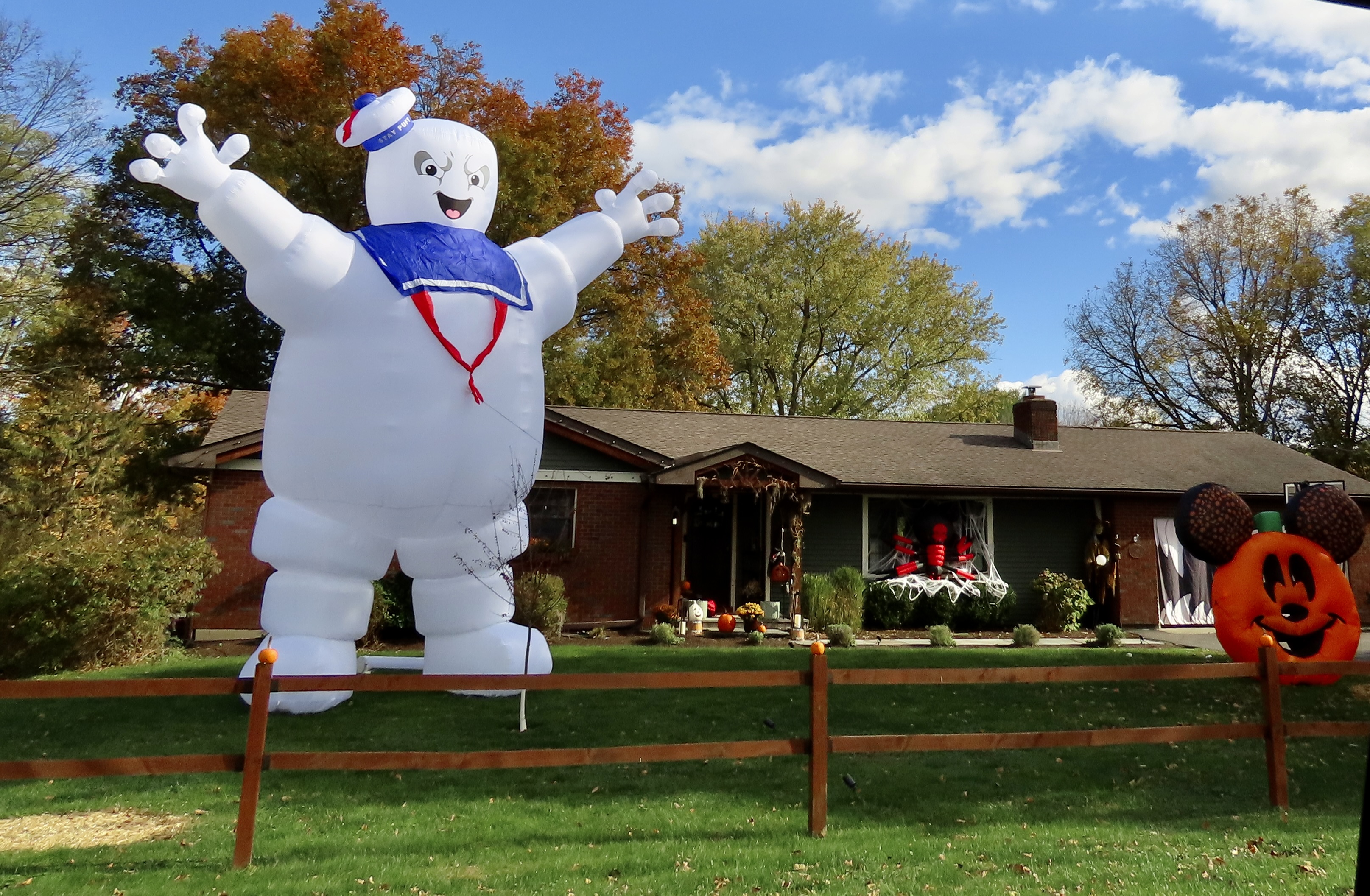
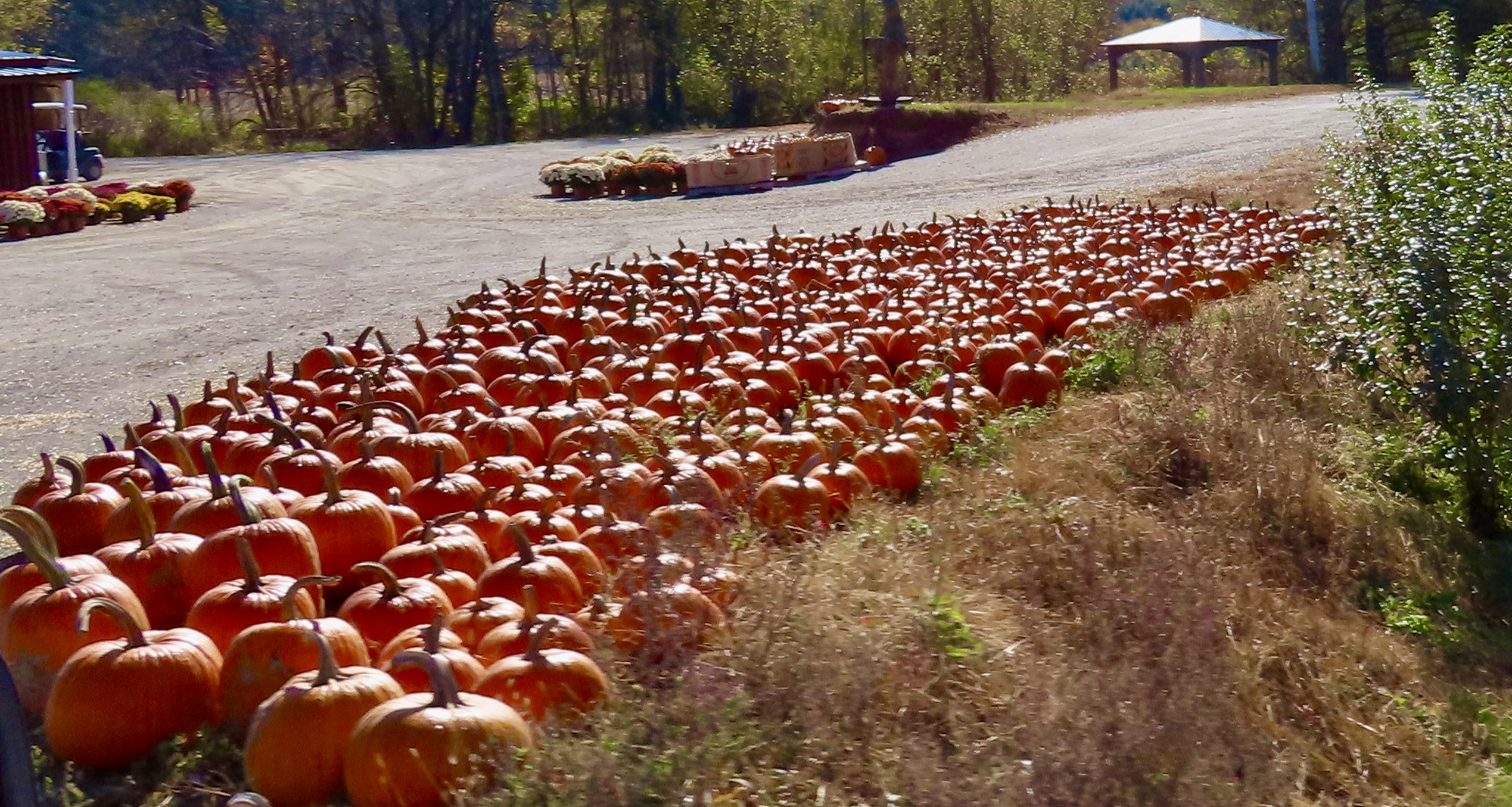
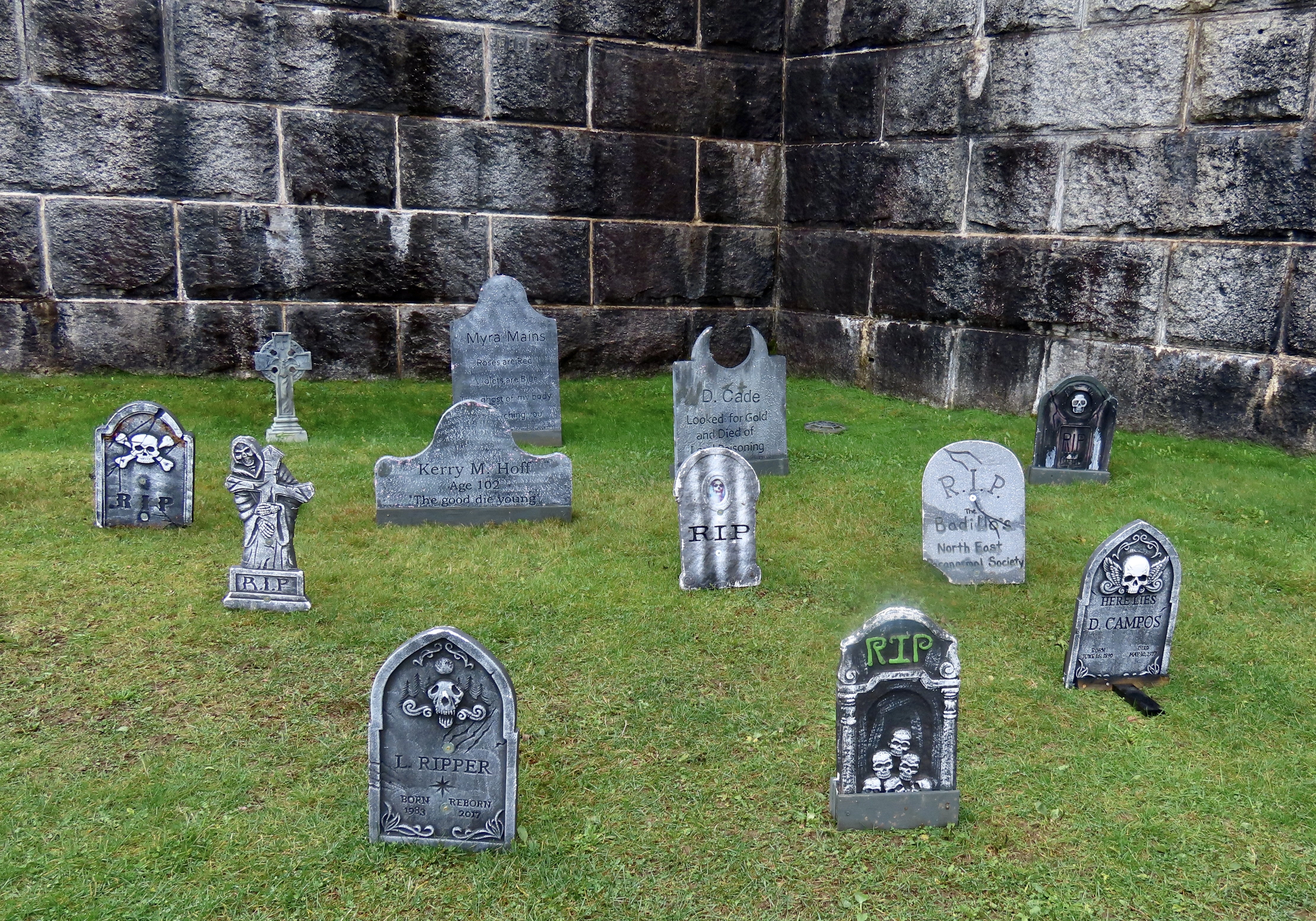
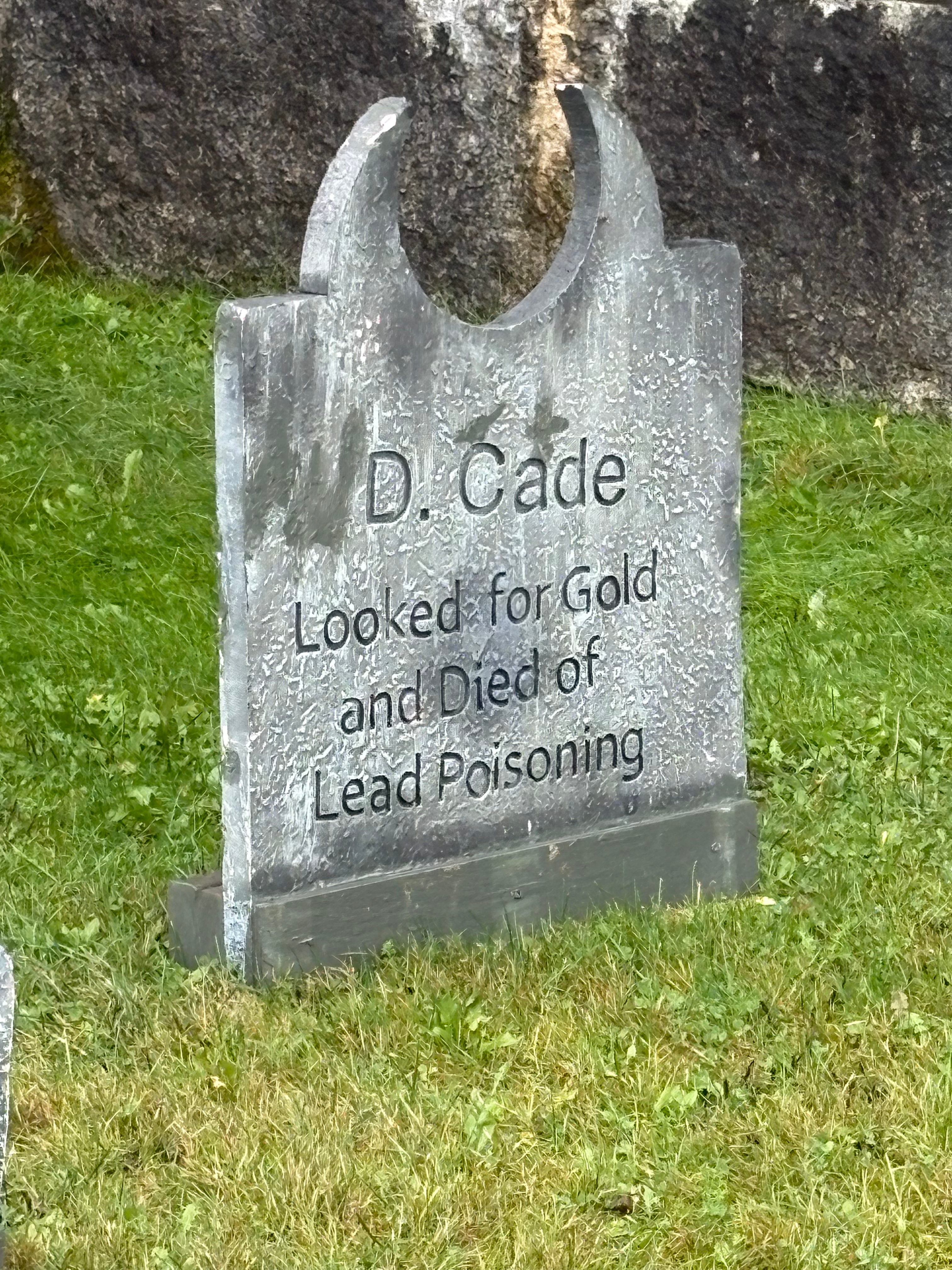
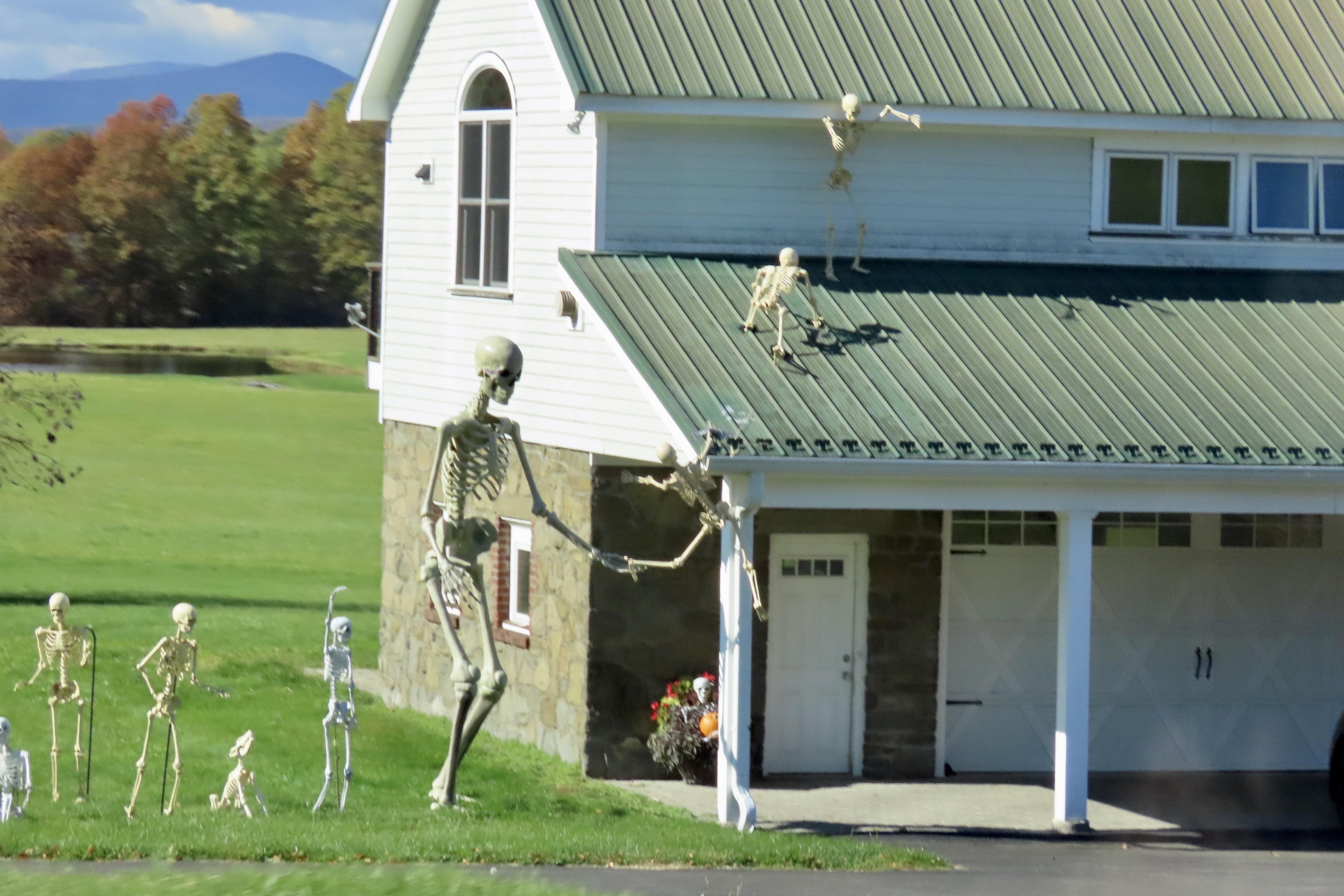
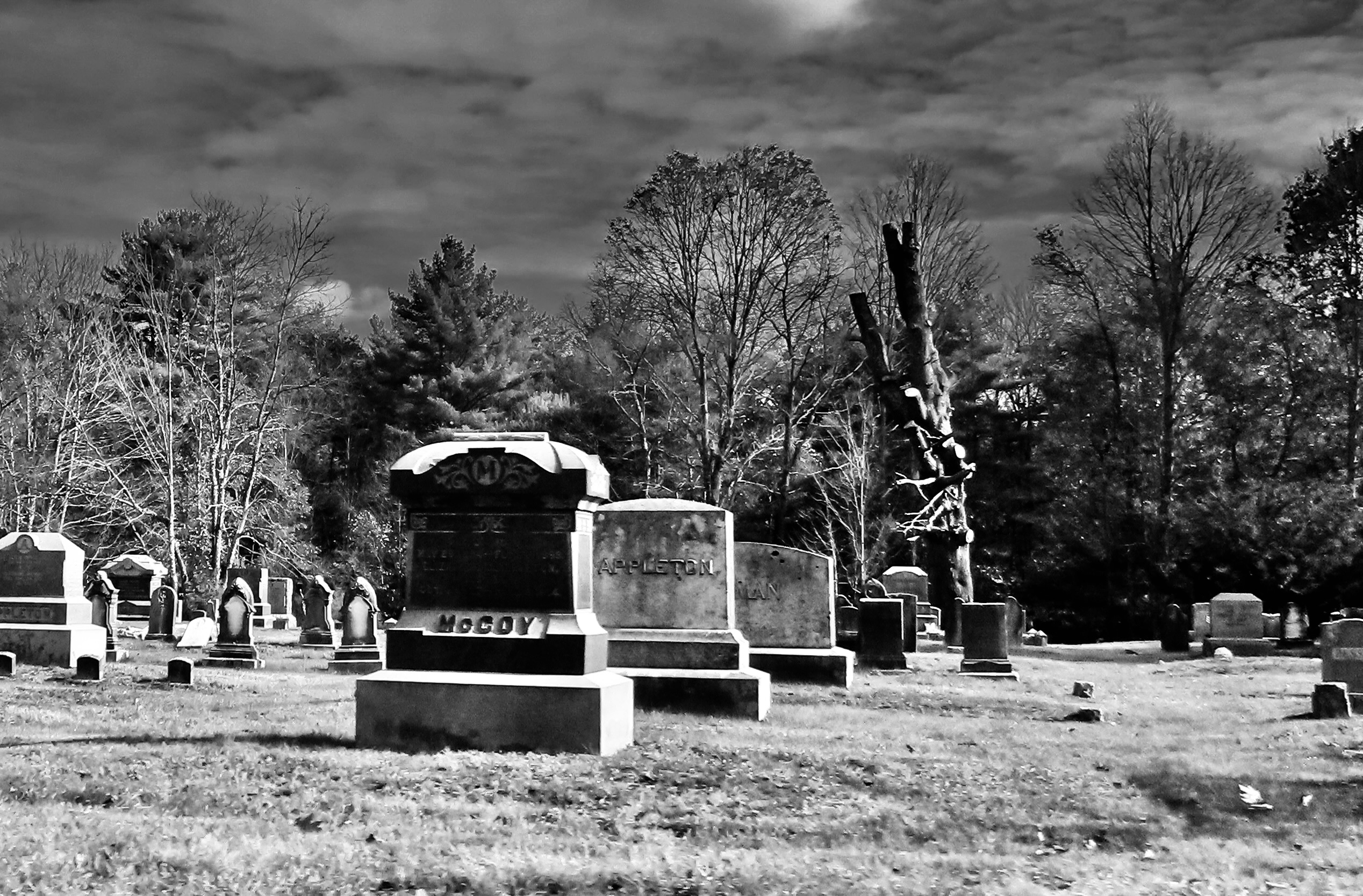
Remember when a well decorated Halloween house consisted of candle lit carved pumpkins welcoming trick or treaters? Things have changed. Halloween is catching up with Christmas in terms of decor. Who would have ever imagined being greeted on All Hallows Eve by Stay Puff the giant Marshmallow Man from Ghost Busters. Or Mickey Mouse’s country-bumpkin-pumpkin cousin, Dickey. We were in Red Hook, New York visiting with Betsy Bauer, a good friend of ours, when we came upon this giant marshmallow. “I just have to add this to my Halloween post,” I told Betsy.This isn’t to say that pumpkins have gone out of style on Halloween. It seemed like every few miles of our leaf peeping trip we came on another ‘patch’ like this. The only things that seemed to outnumber them in New England were graveyards and Dunkin’ Donuts outlets. We flew past the graveyards; not so the Dunkin’ Donuts. Oink.While on the subject of graveyards, they have become a go-to decoration for Halloween. These were part of an elaborate display at Fort Knox on Maine’s Penobscot River. Note the demon/devil horned tombstone in the back.Its epitaph reminded me of Boot Hill in Tombstone, Arizona. The name suggested that D. Cade had been buried for a while. He was no longer fresh. Or is that flesh?Skeletons competed with pumpkins in New York and New England for being the most common decorations. A kid’s party seemed underway here. There was even a dog skeleton that was excited about a game of catch. On our leaf peeping journey through New York and New England, we also saw cat skeletons, a horse skeleton, and several rooster skeletons!Of course nothing can match a real graveyard for scary, especially at night— or with a little help from a photo ap.
I know something about scary graveyards. I was raised next to one and have blogged about the experience several times. To say it was overgrown is a serious understatement. During the day, it became a jungle playground populated with ferocious tigers, bone crushing boas, and half-starved cannibals. My brother Marshall and I played there often. Since it was within easy calling distance of the house, our parents didn’t worry. Either that or they were glad for the peace and quiet brought on by our absence.
Night was different. The Graveyard became a place of mystery and danger. Dead people abandoned their underground chambers and slithered up through the ground. A local test of boyhood bravery was to go into the Graveyard after dark and walk over myrtle-hidden graves, taunting the inhabitants. Slight depressions announced where they lived. Marshall, who at nine was two years older than I, persuaded me to accompany him there on a moonless night. I entered with foreboding: fearing the dark, fearing the tombstones, and fearing the ghosts. Halfway through I heard a muzzled sound. Someone, or thing, was stalking us.
“Hey, Marsh, what was that?” I whispered urgently.
“Your imagination, Curt,” was the disdainful reply.
Scratch, scratch! Something was digging behind a tombstone and it was not my imagination. Marshall heard it too. We went crashing out of the Graveyard with the hideous creature of the night in swift pursuit. Wagging her tail.
“I knew it was the dog all of the time,” Marsh claimed. Yeah, sure you did.
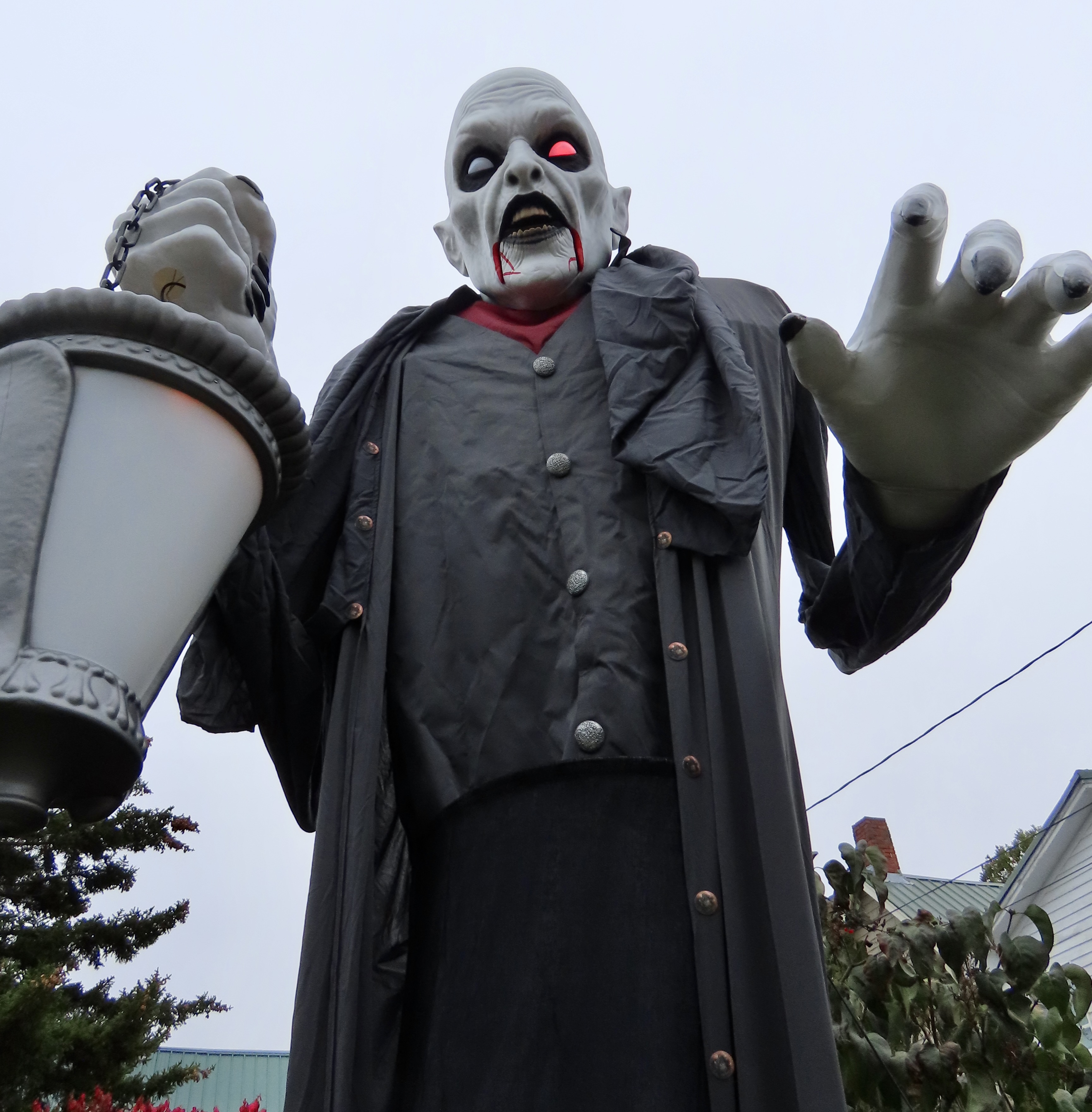
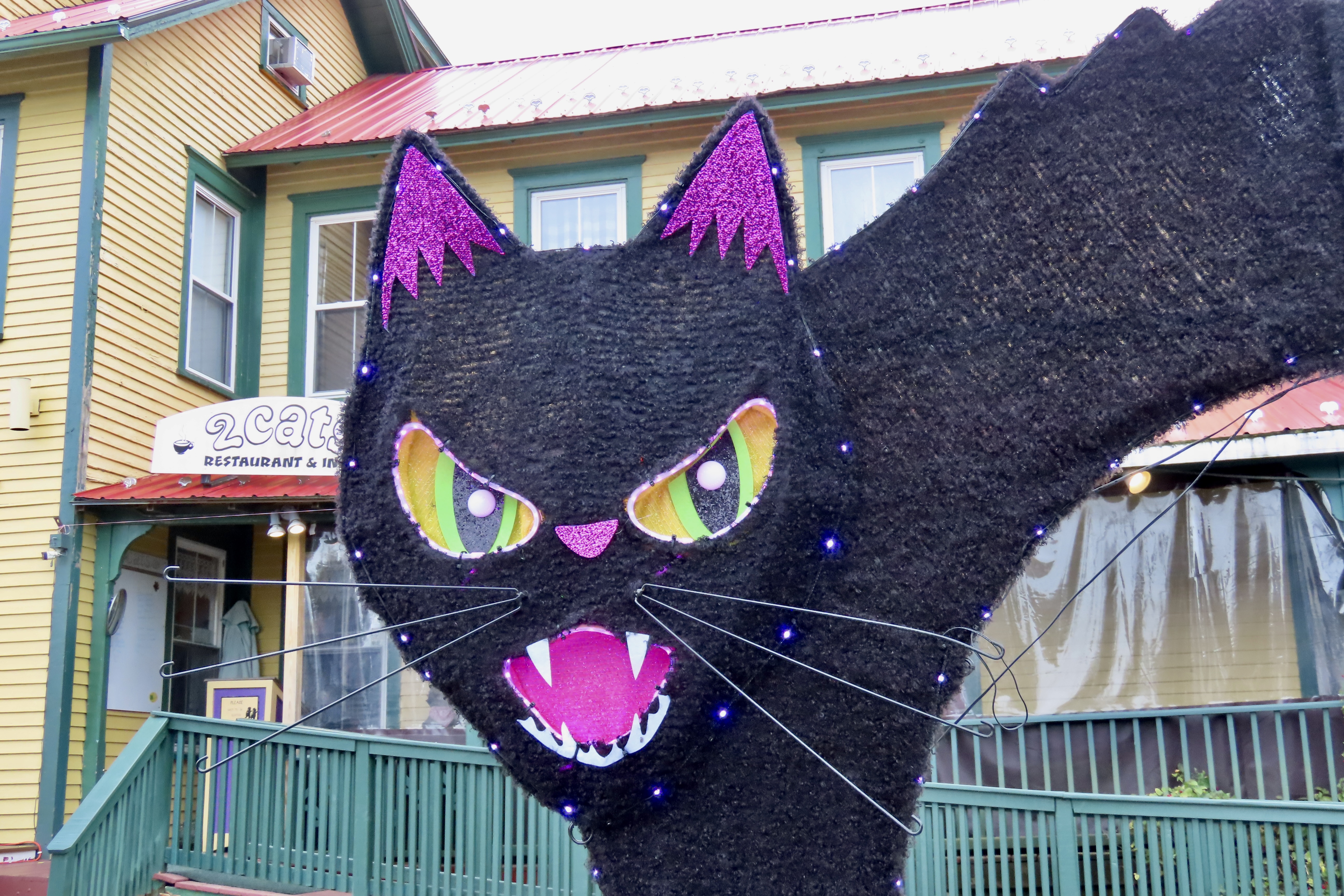
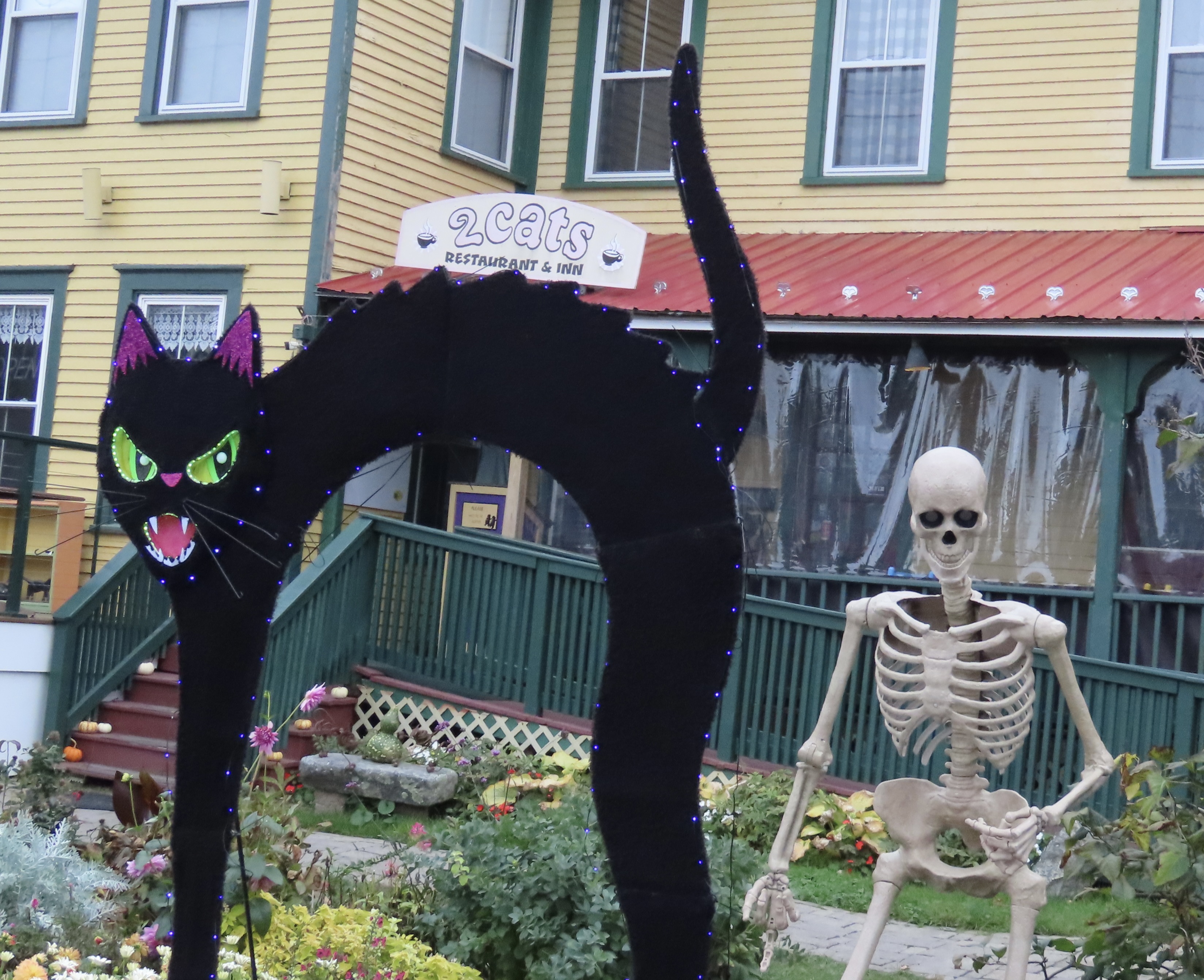
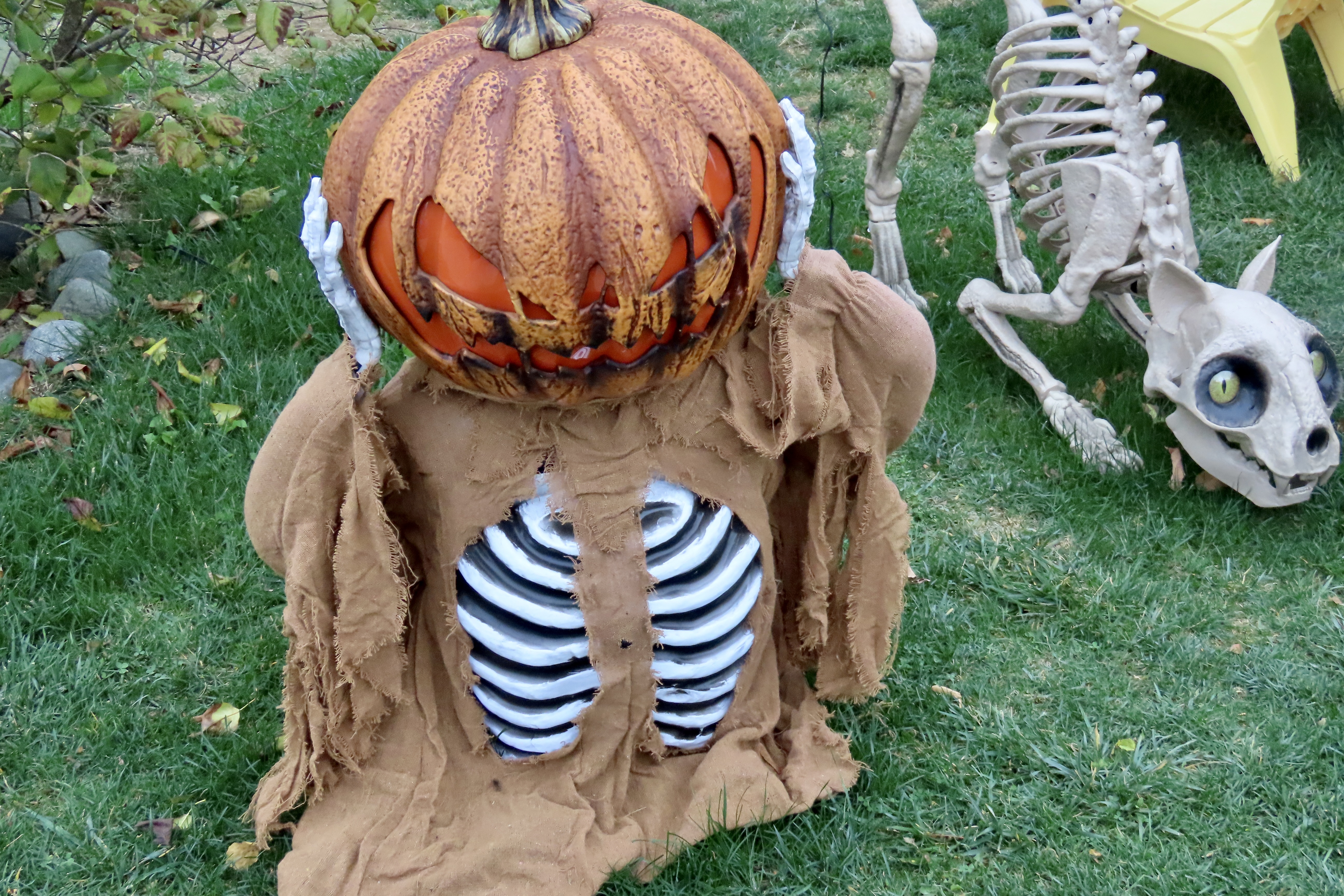
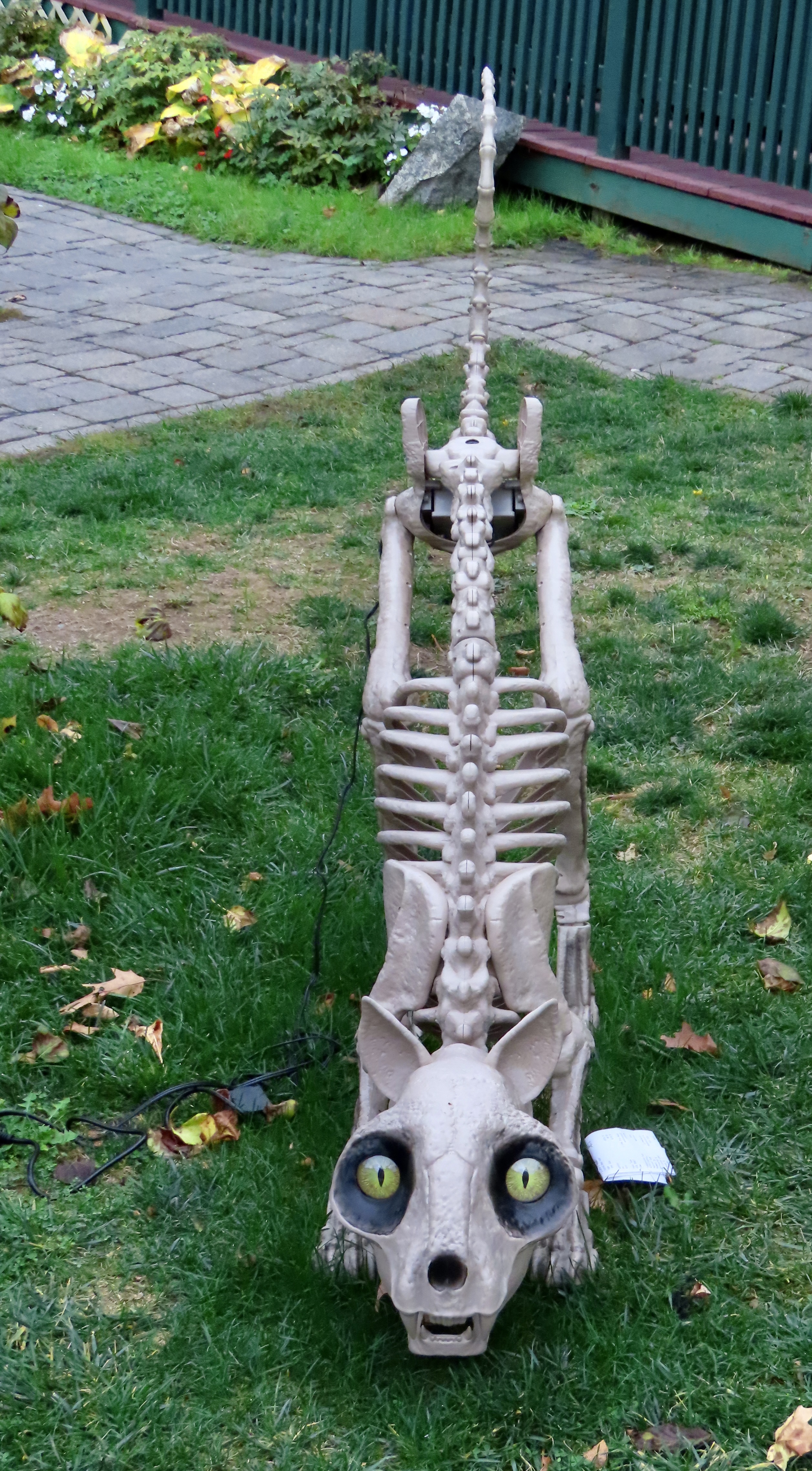
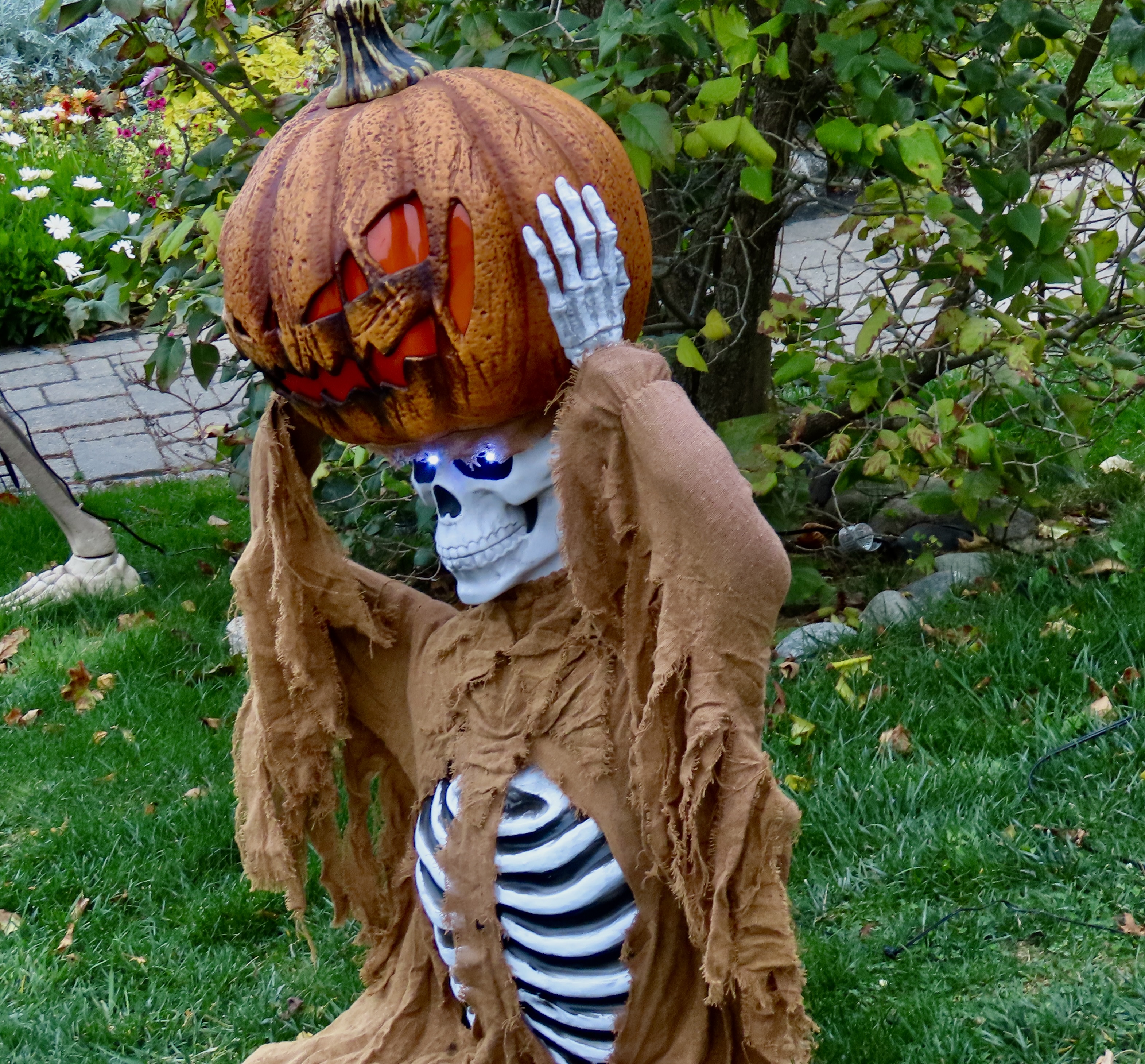
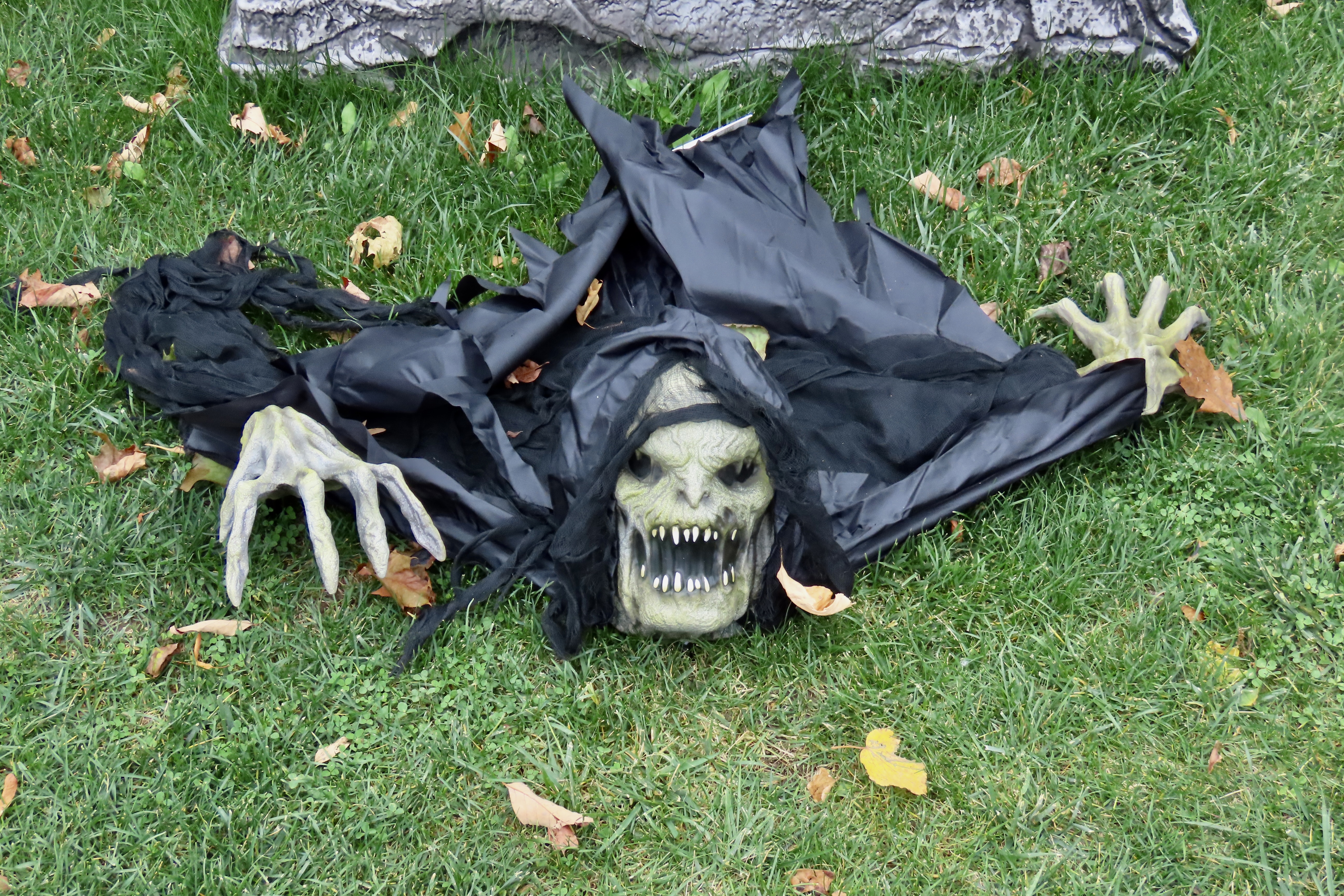
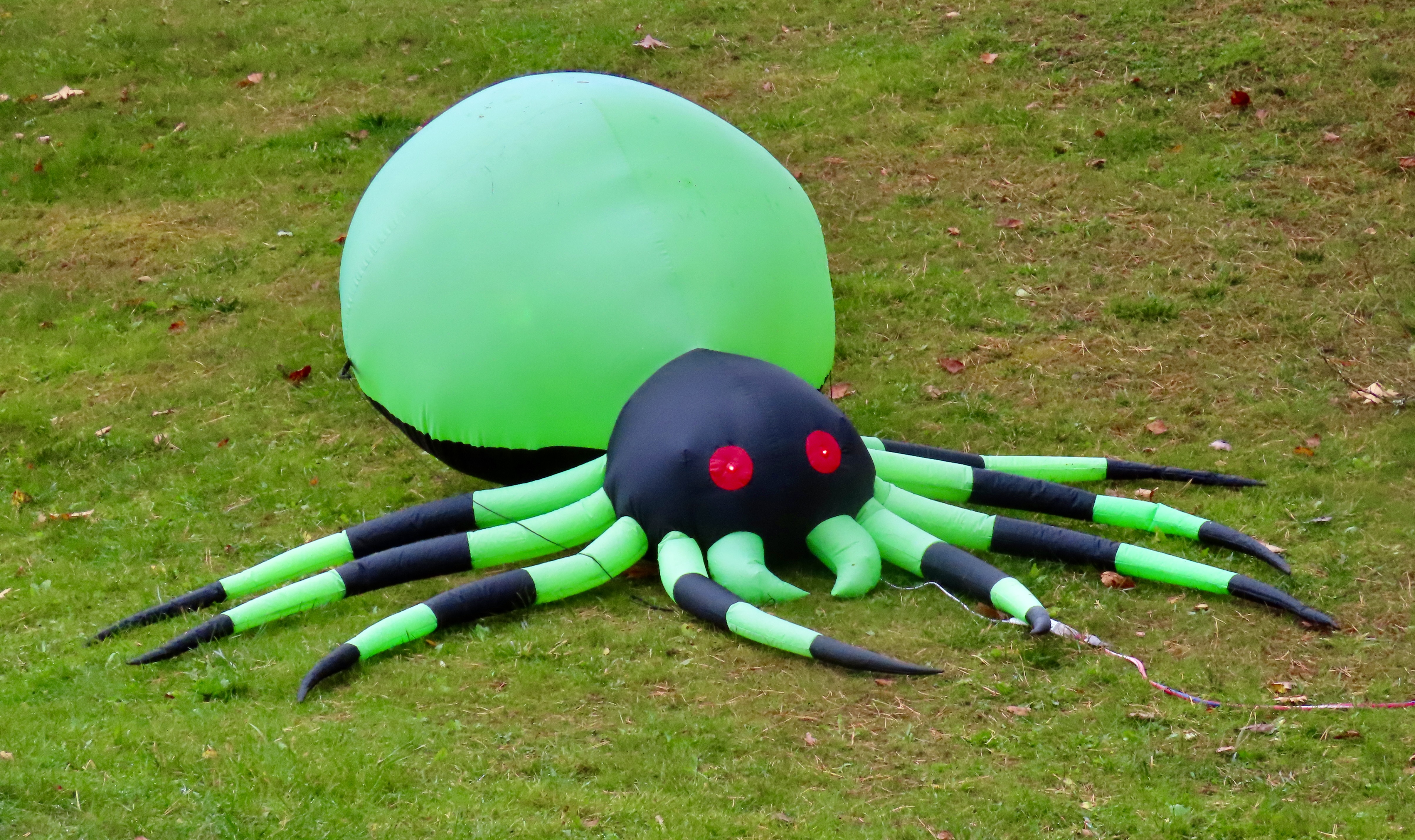
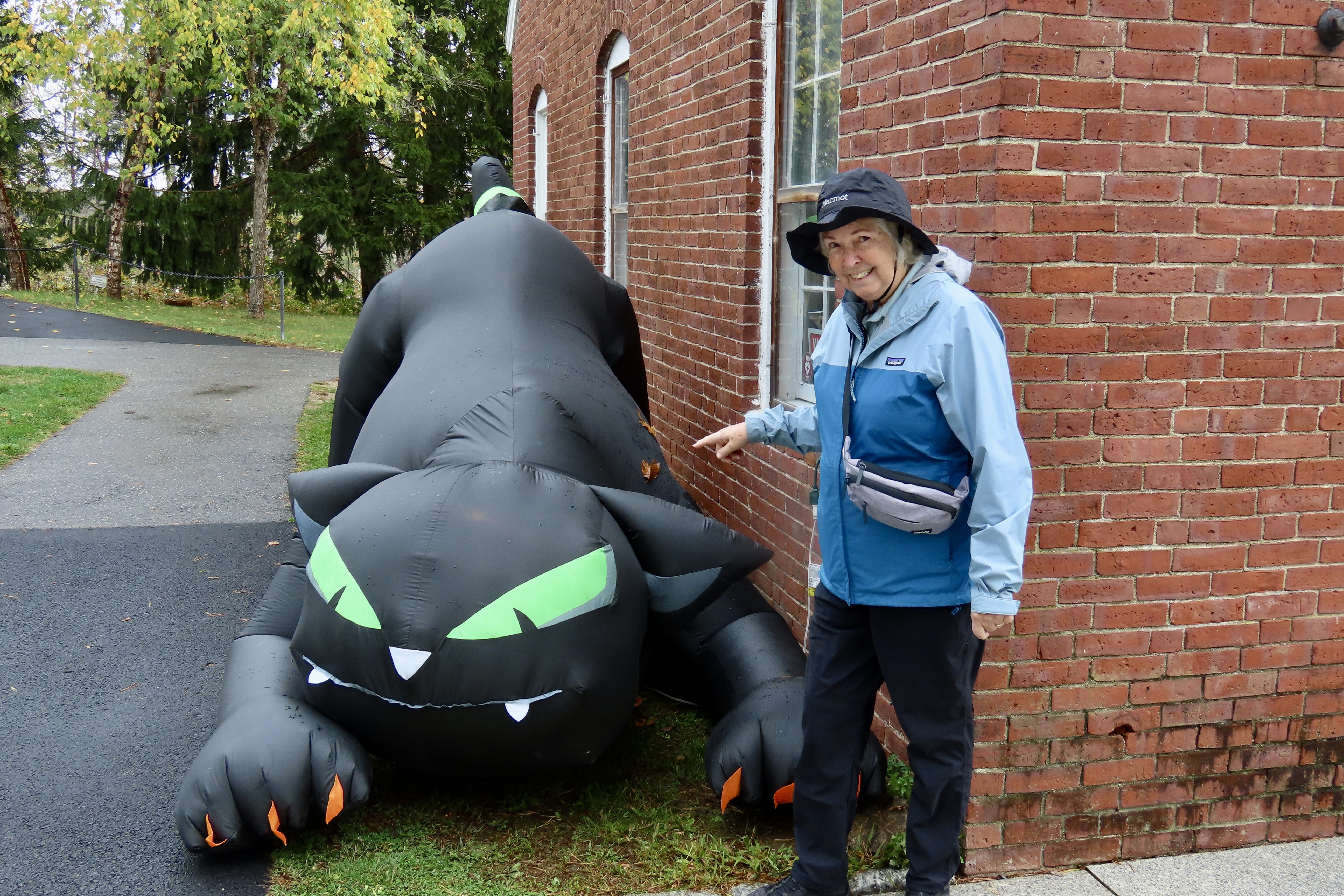
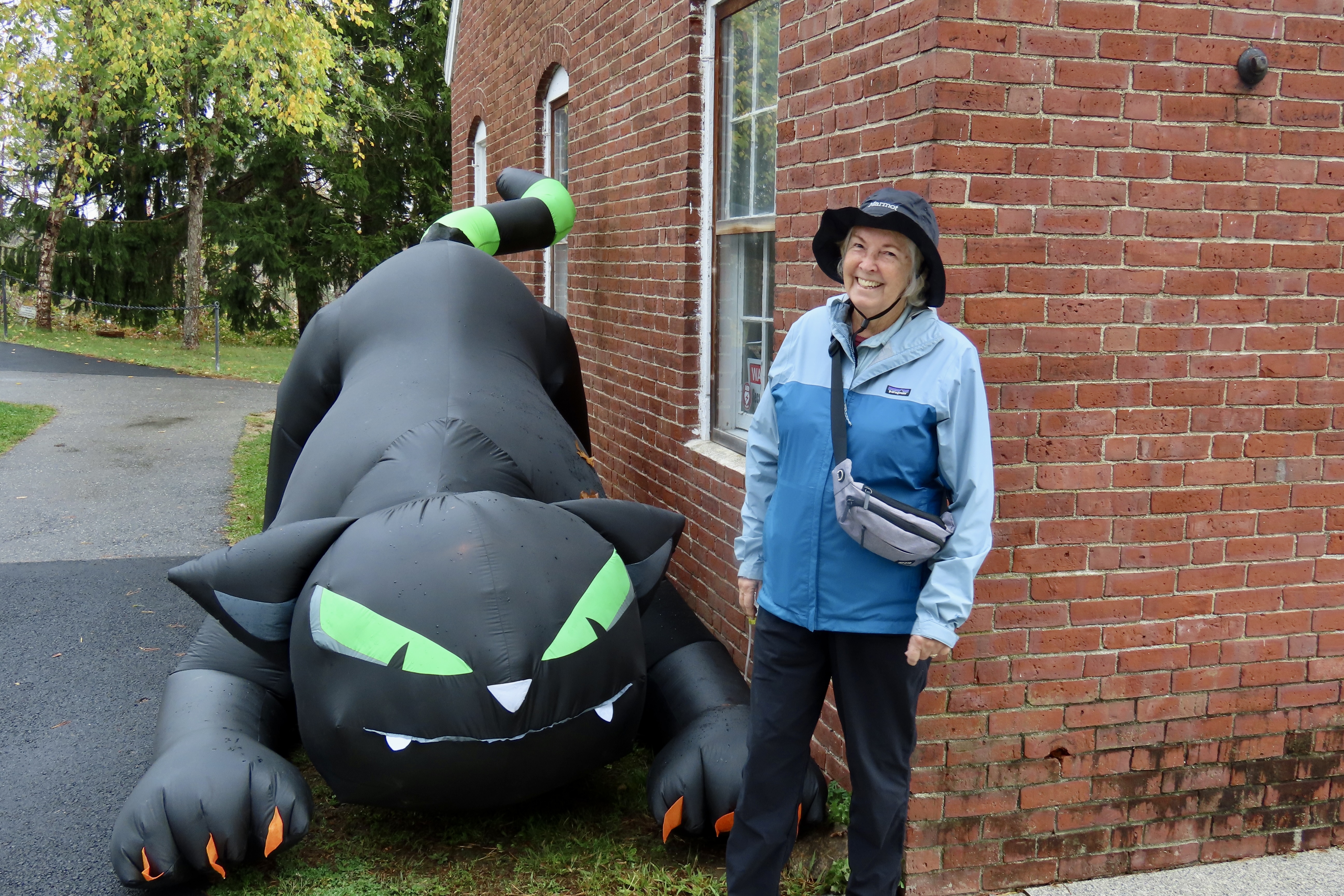
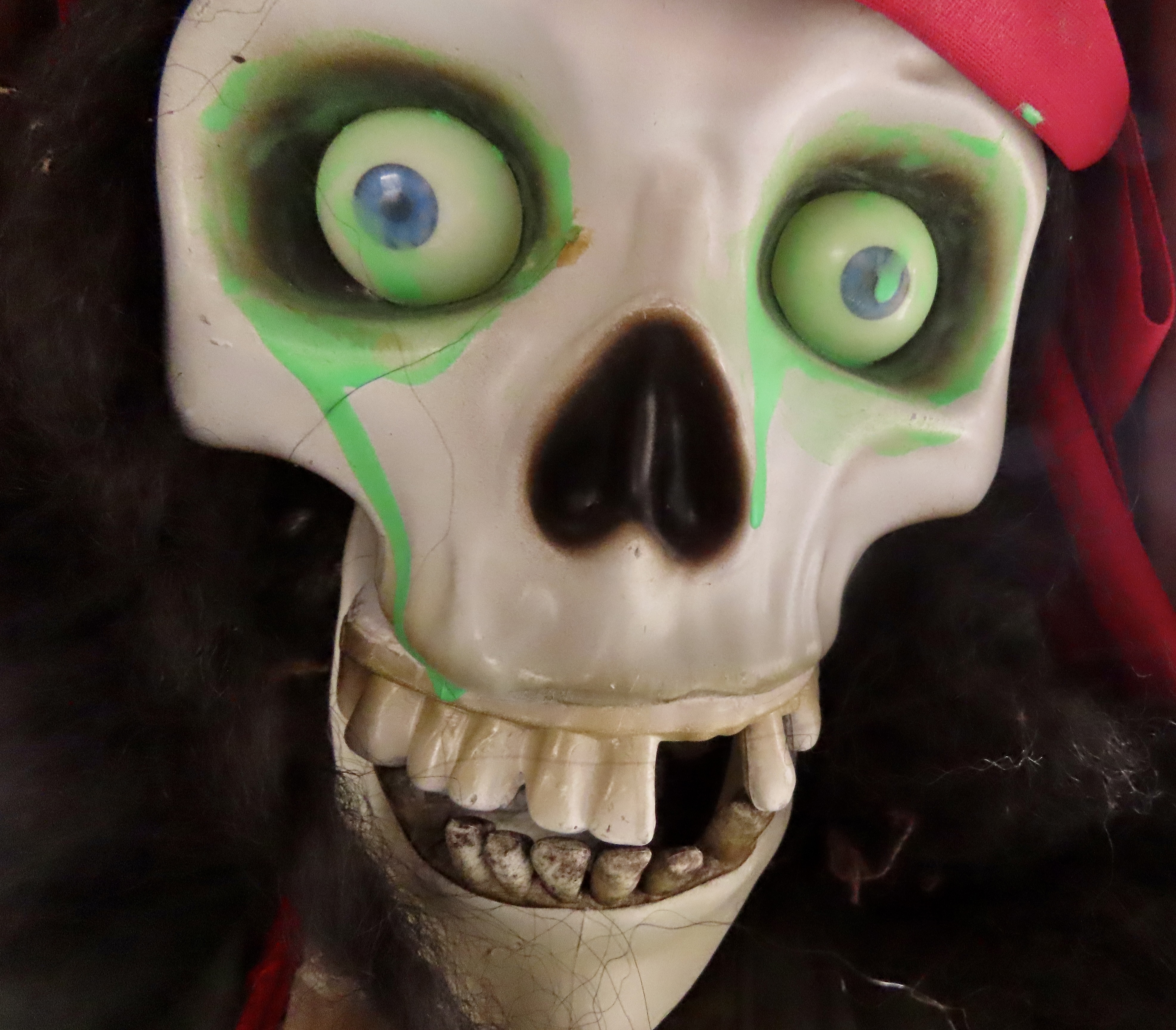
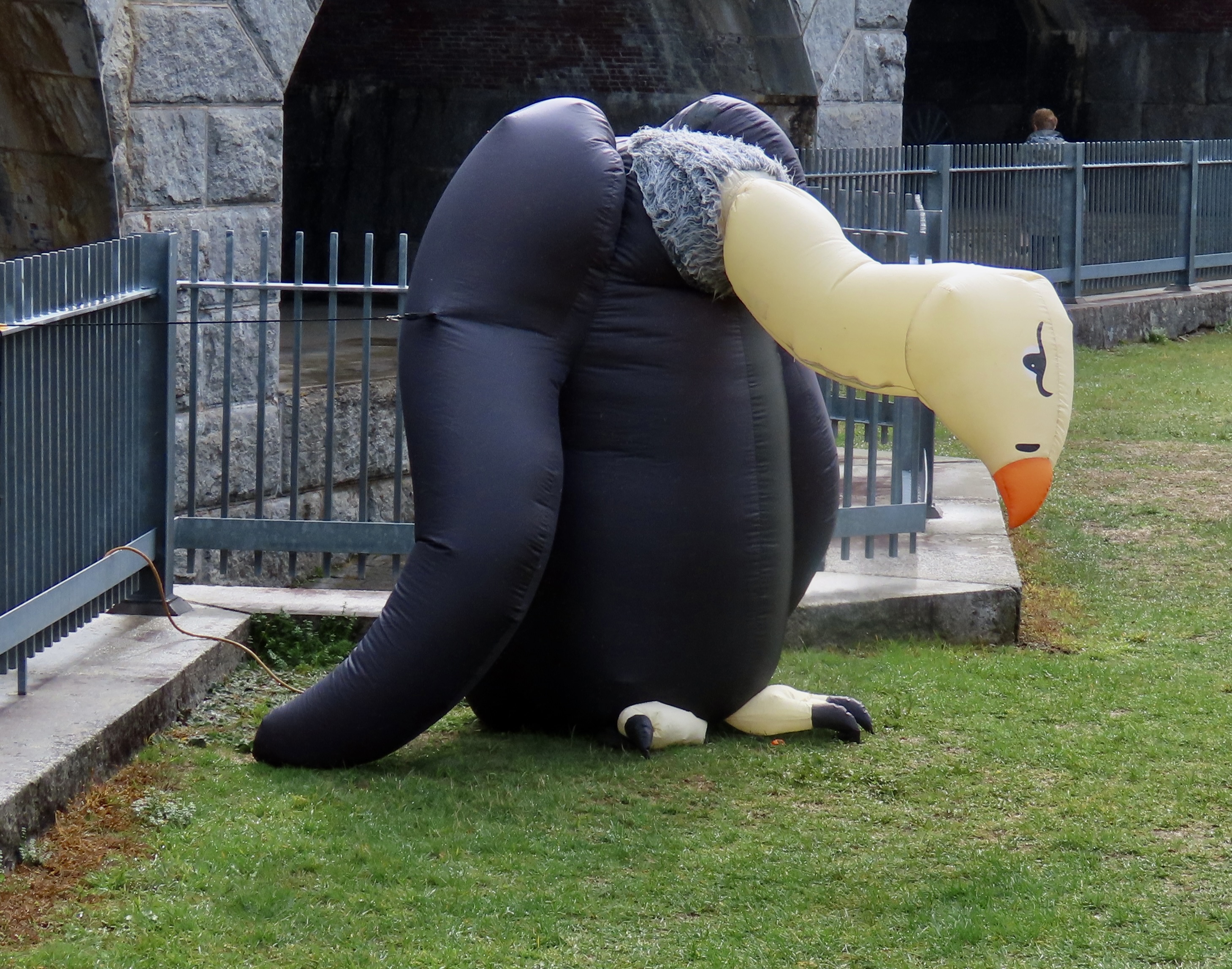
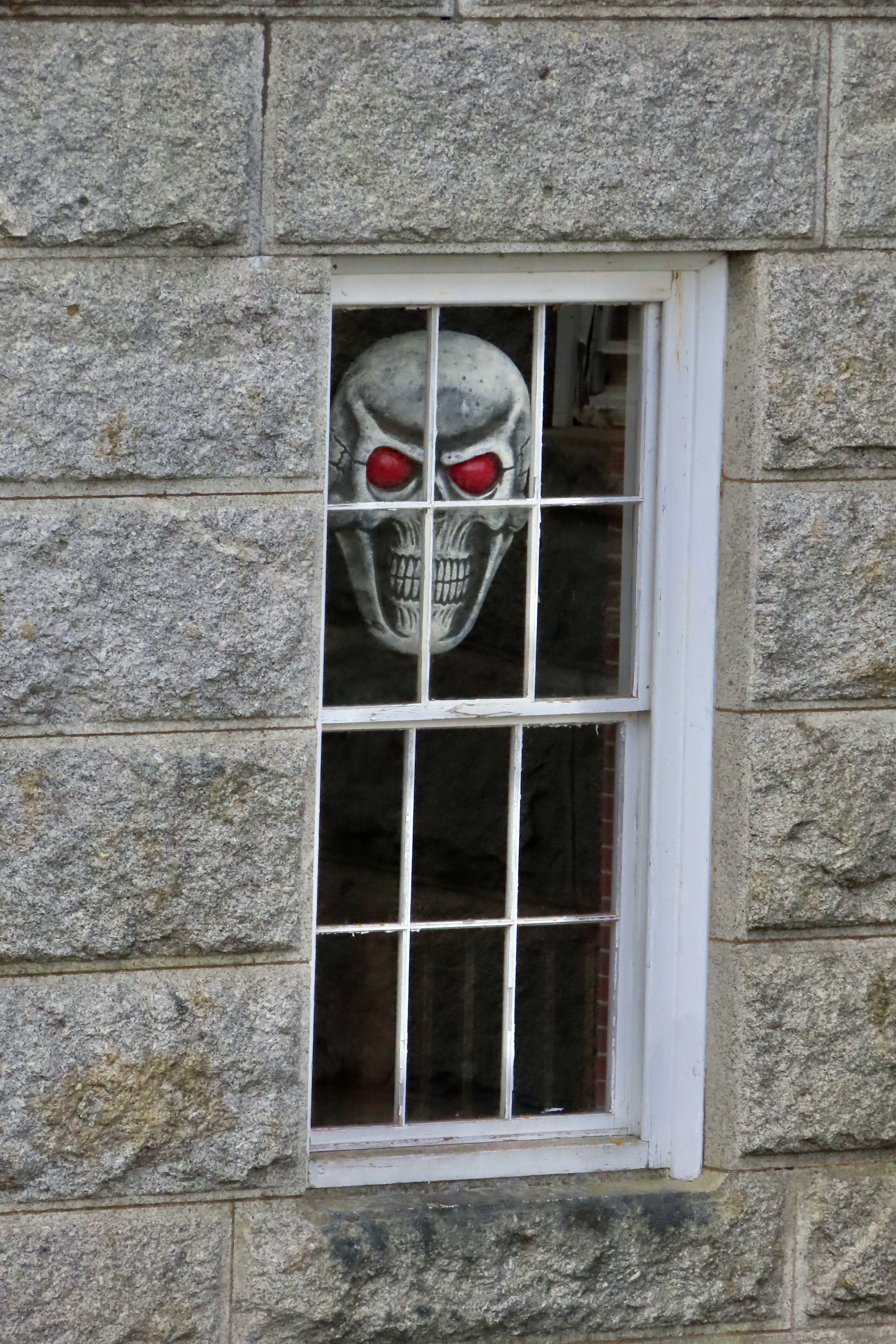
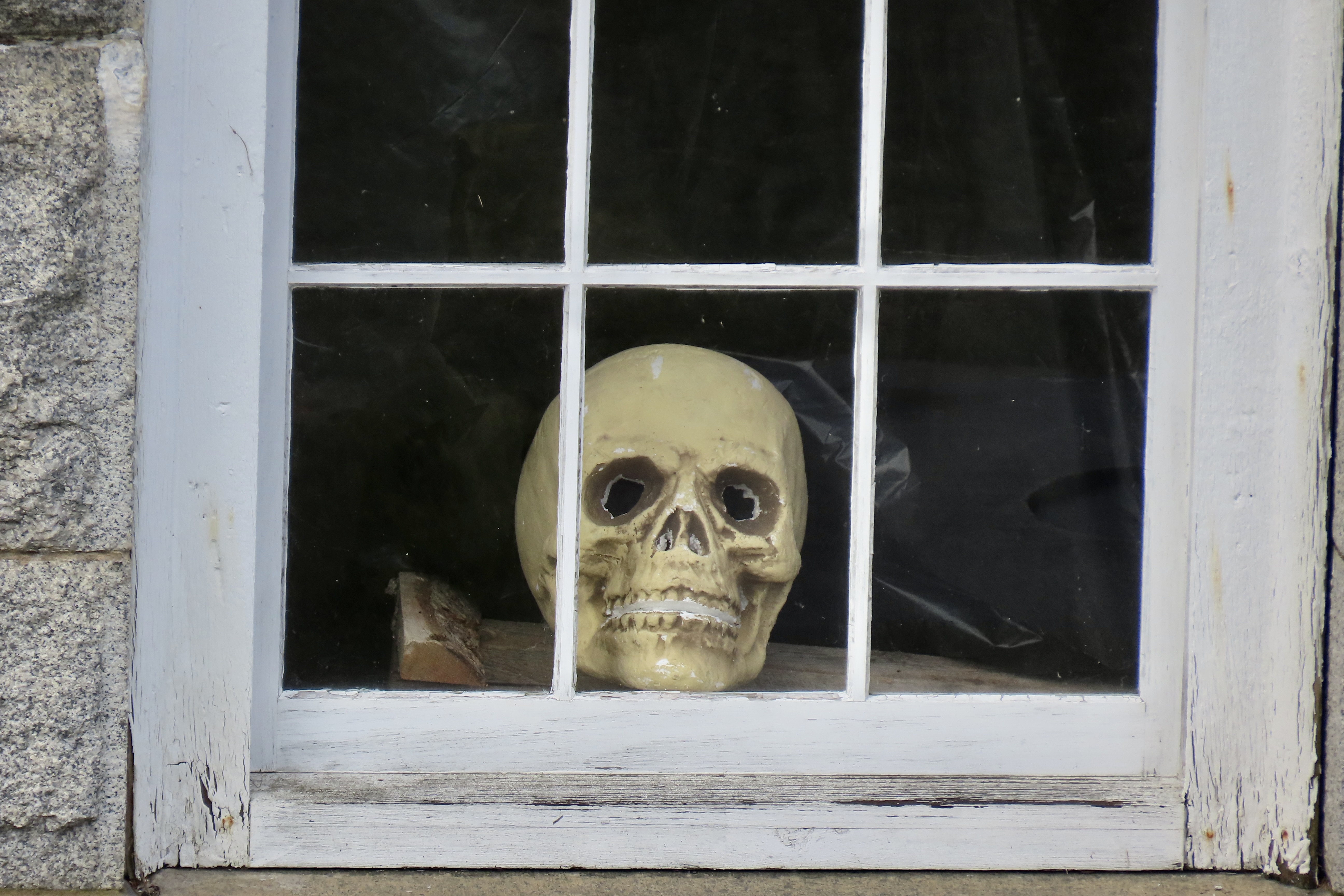
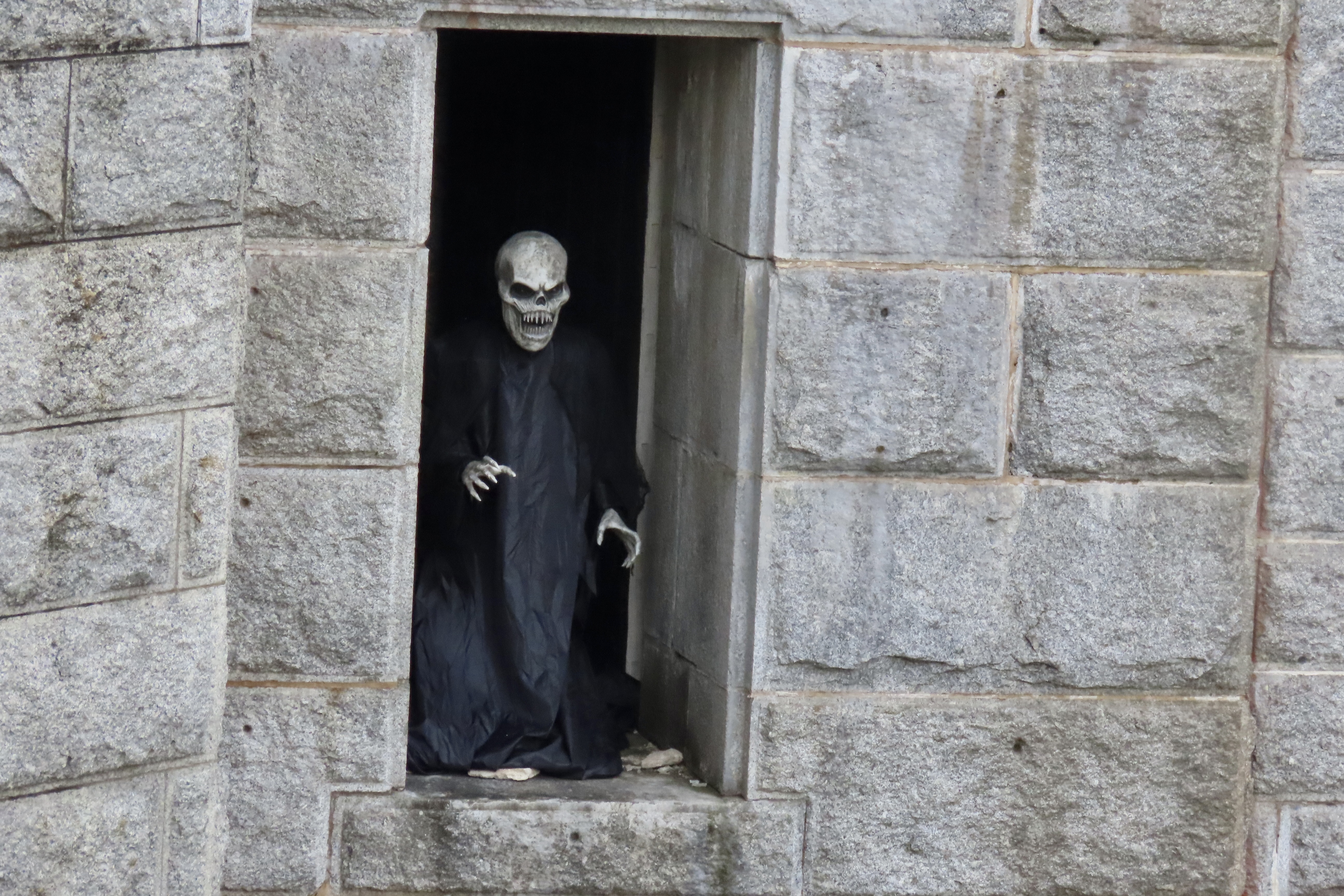
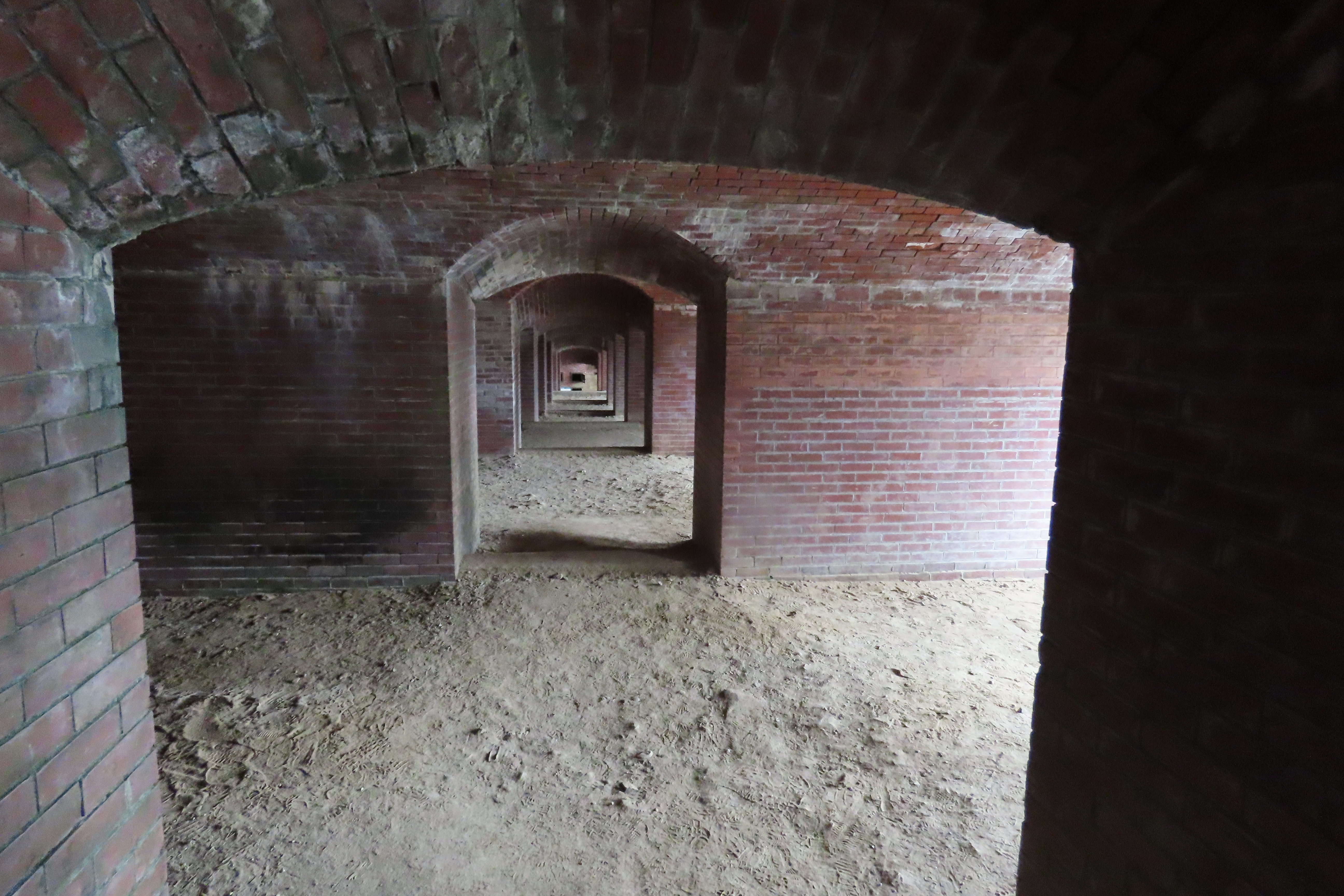
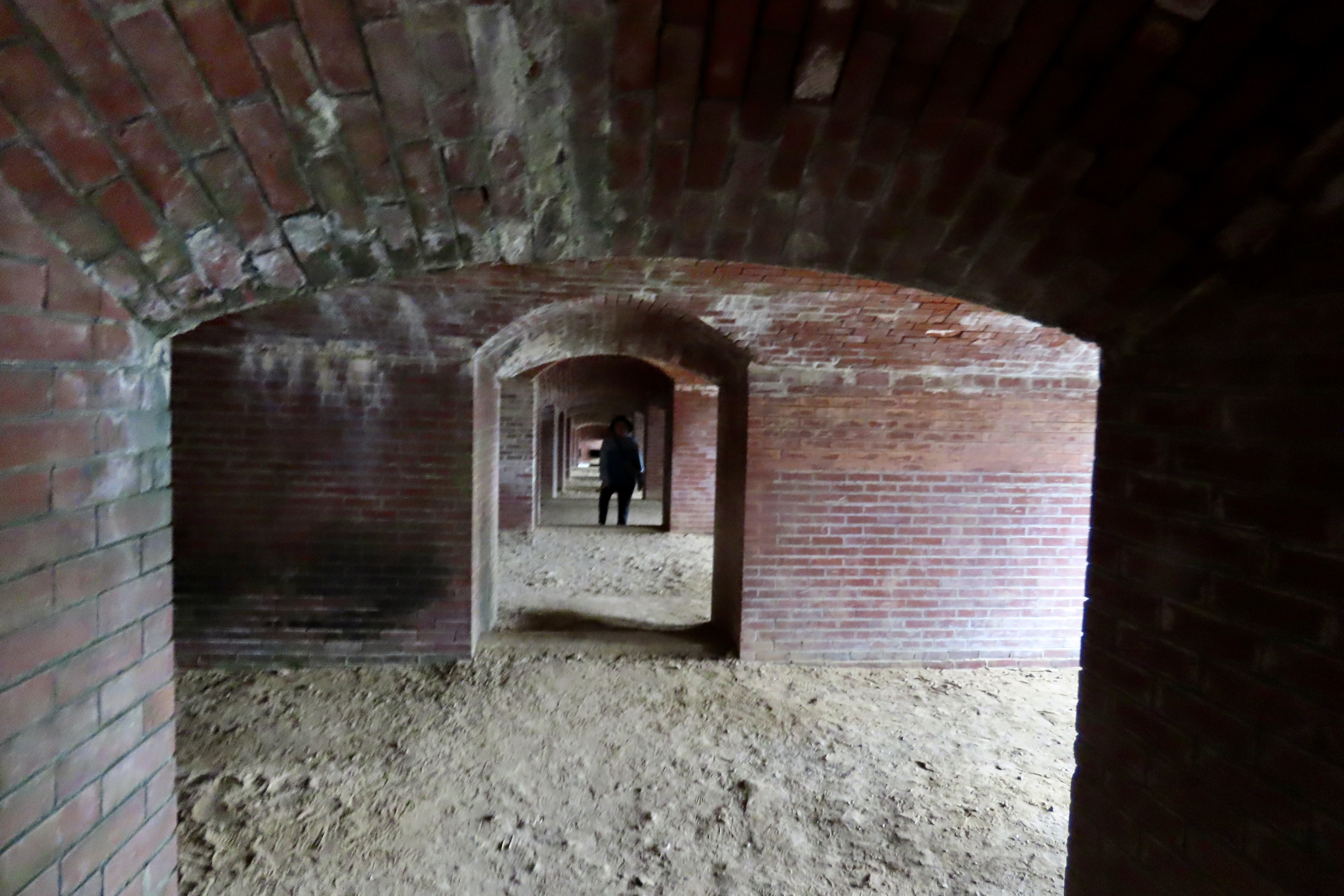
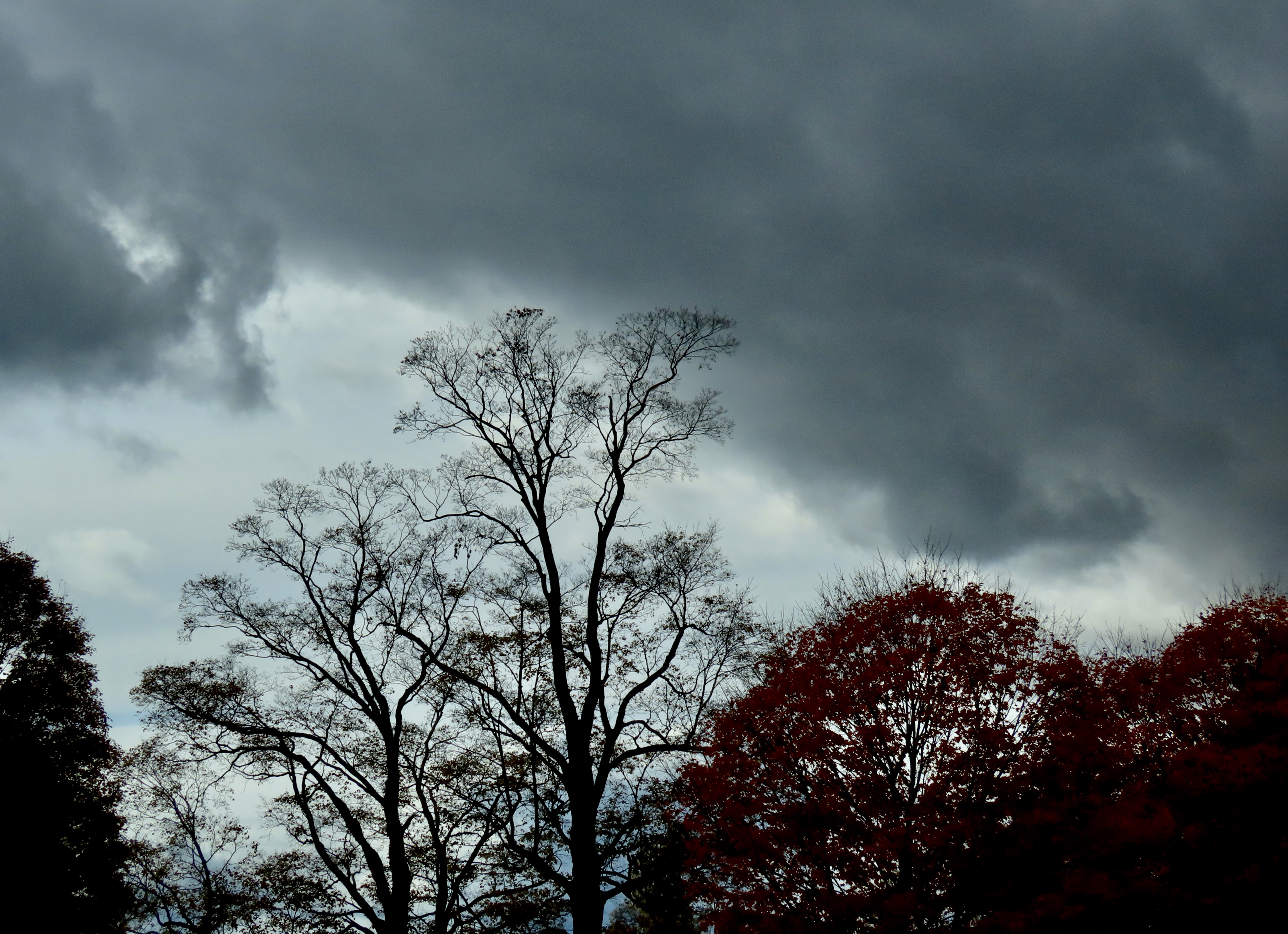
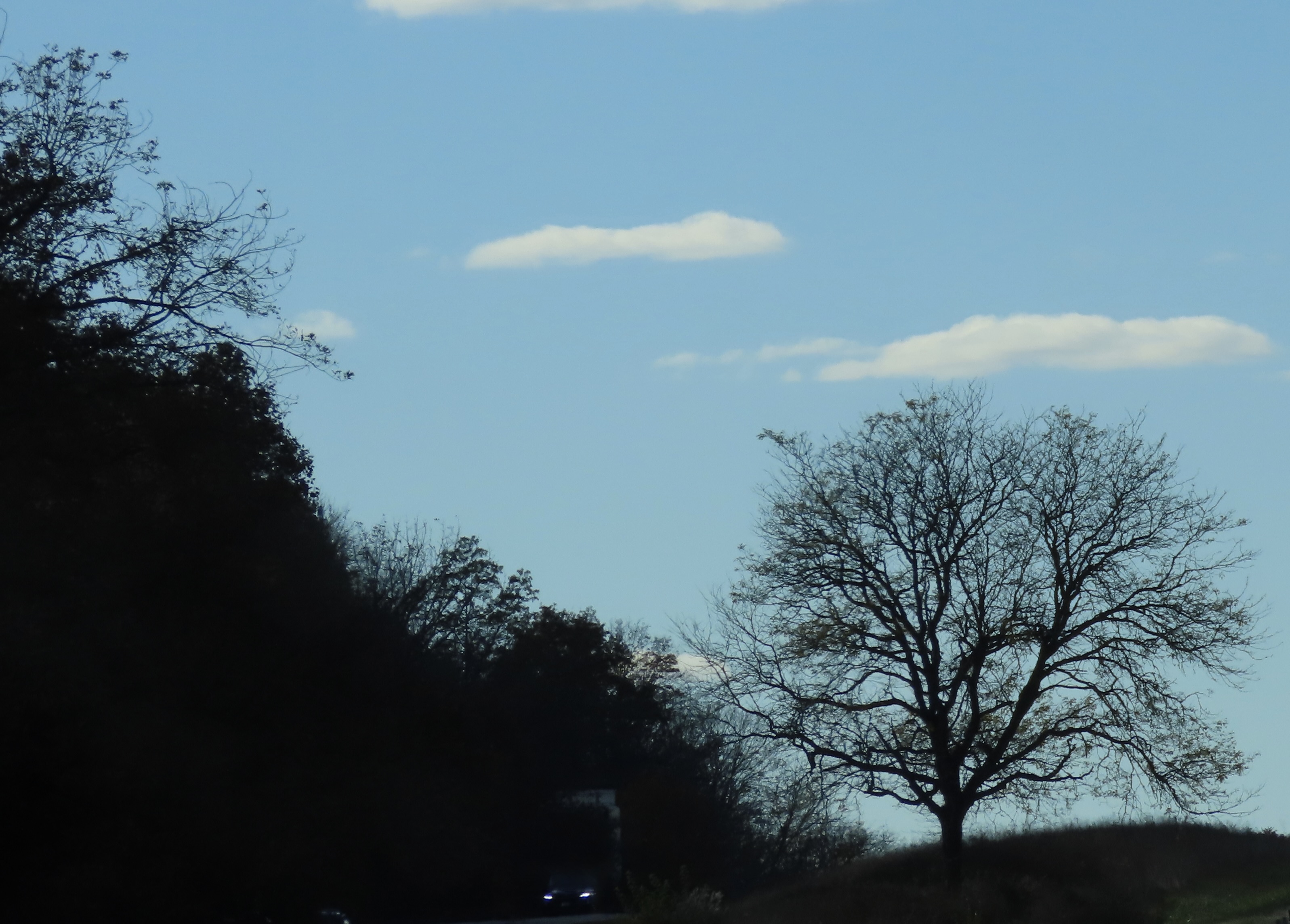
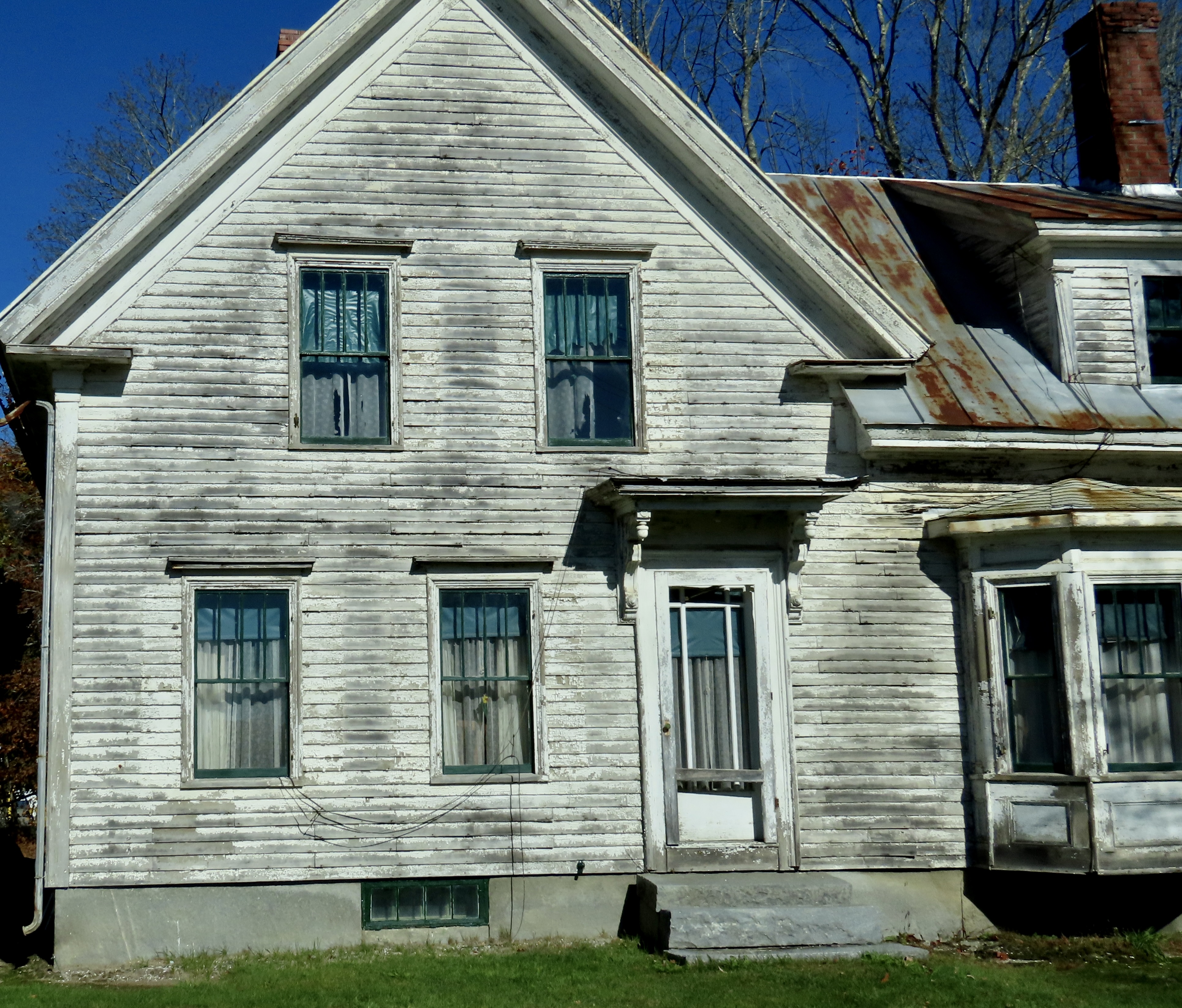
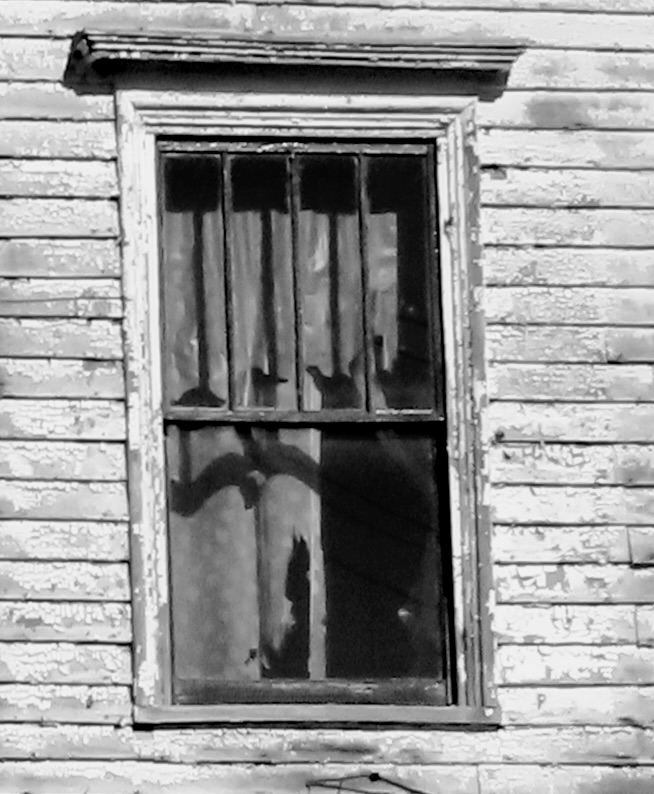
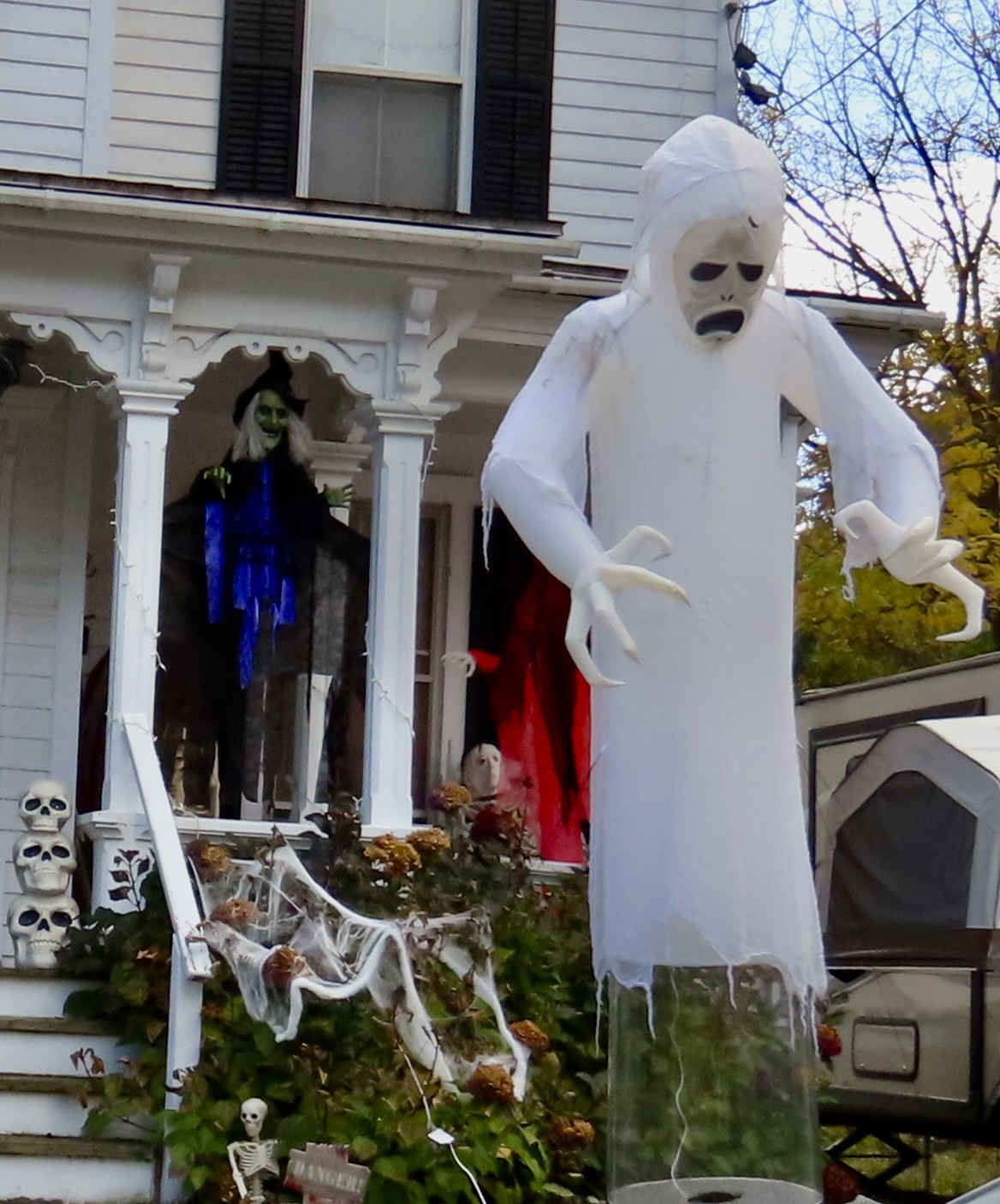
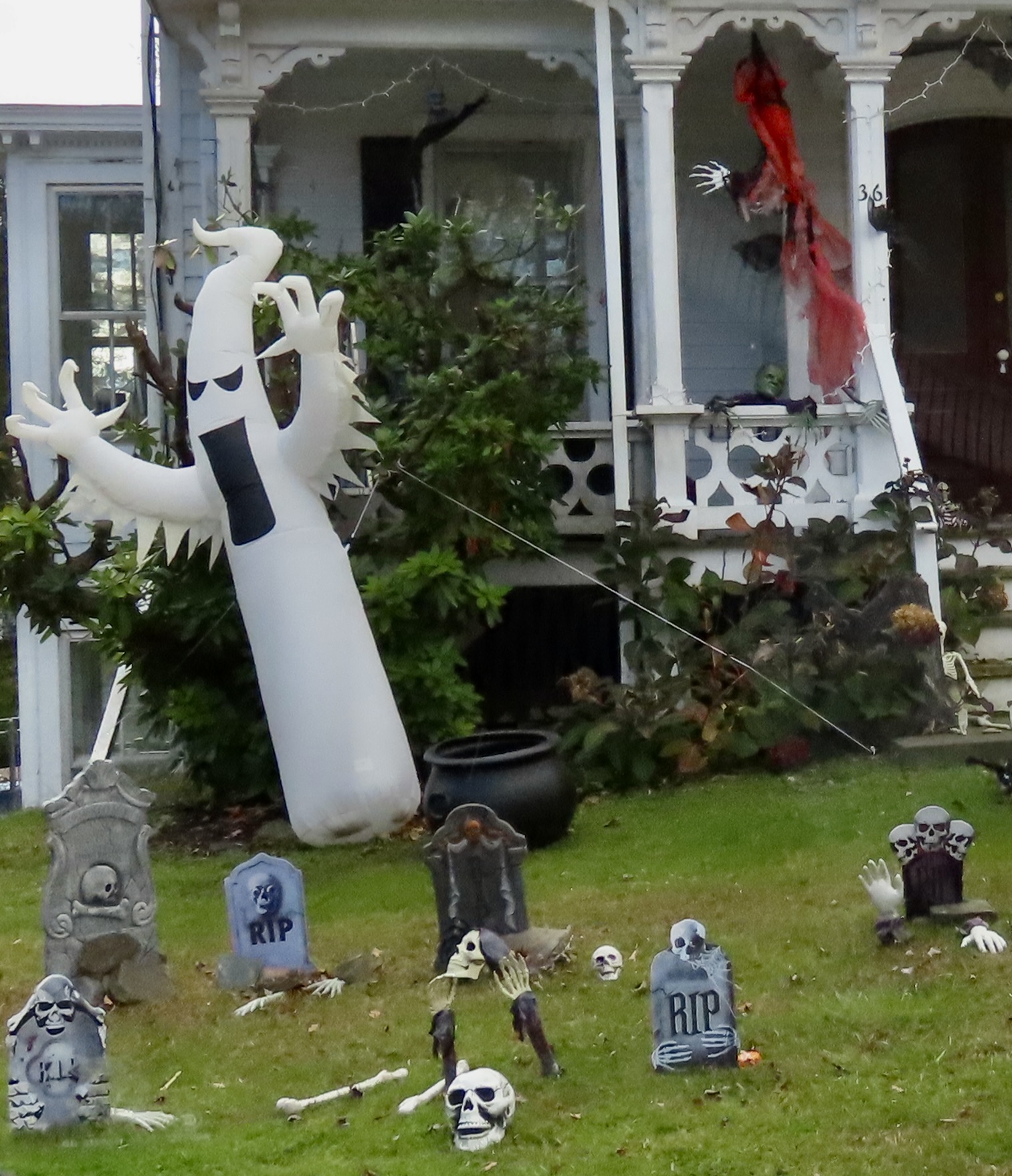
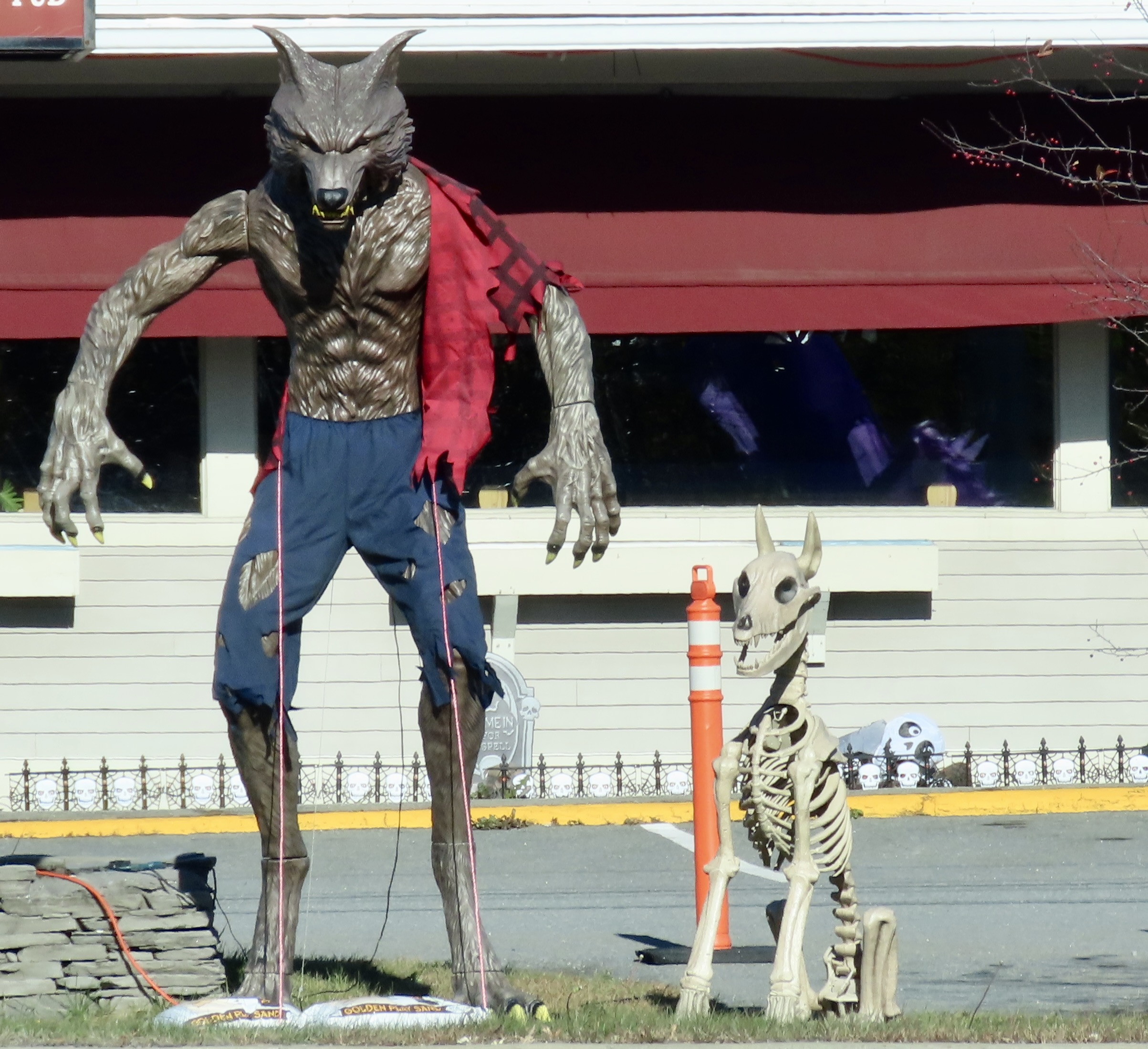
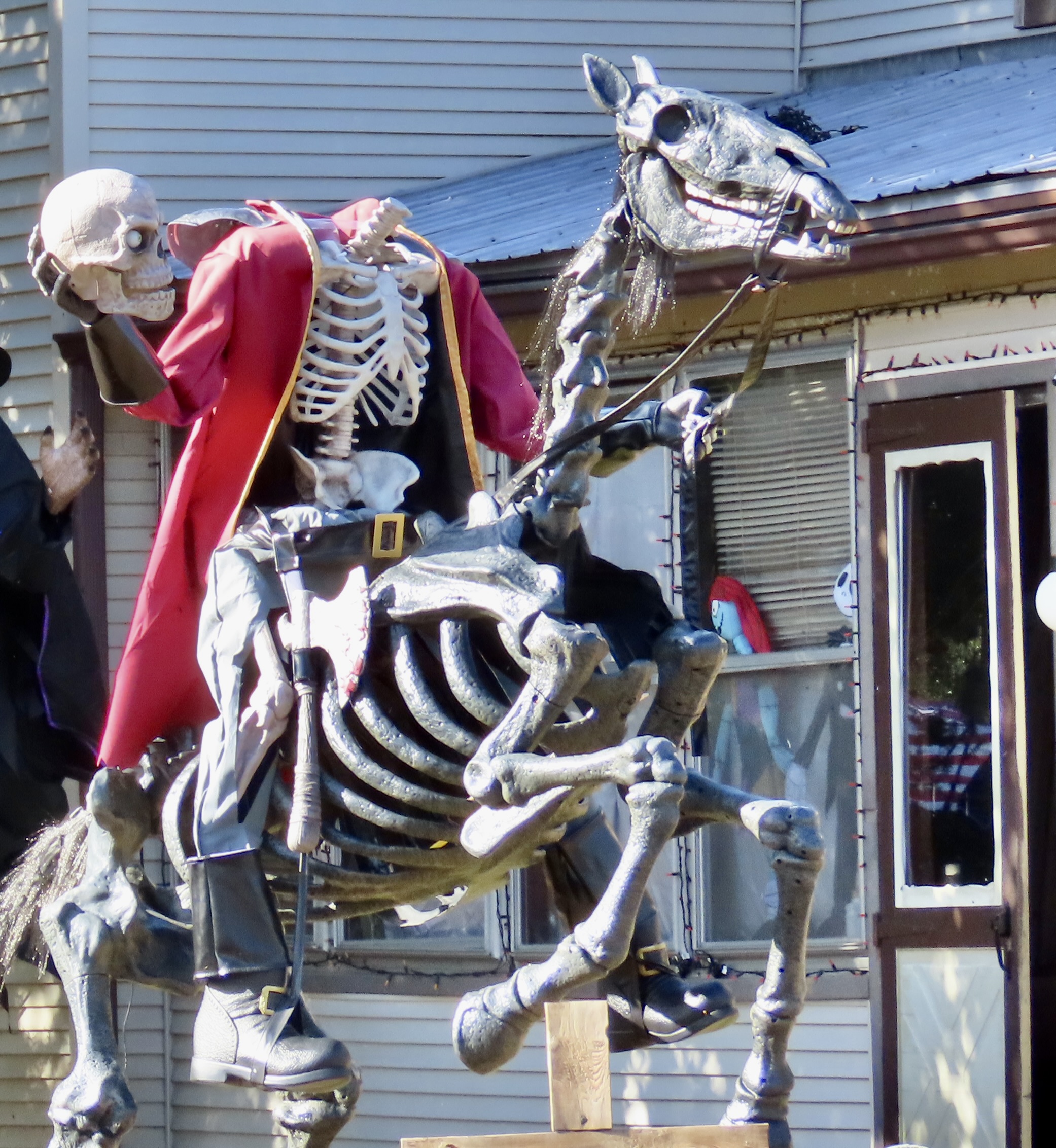
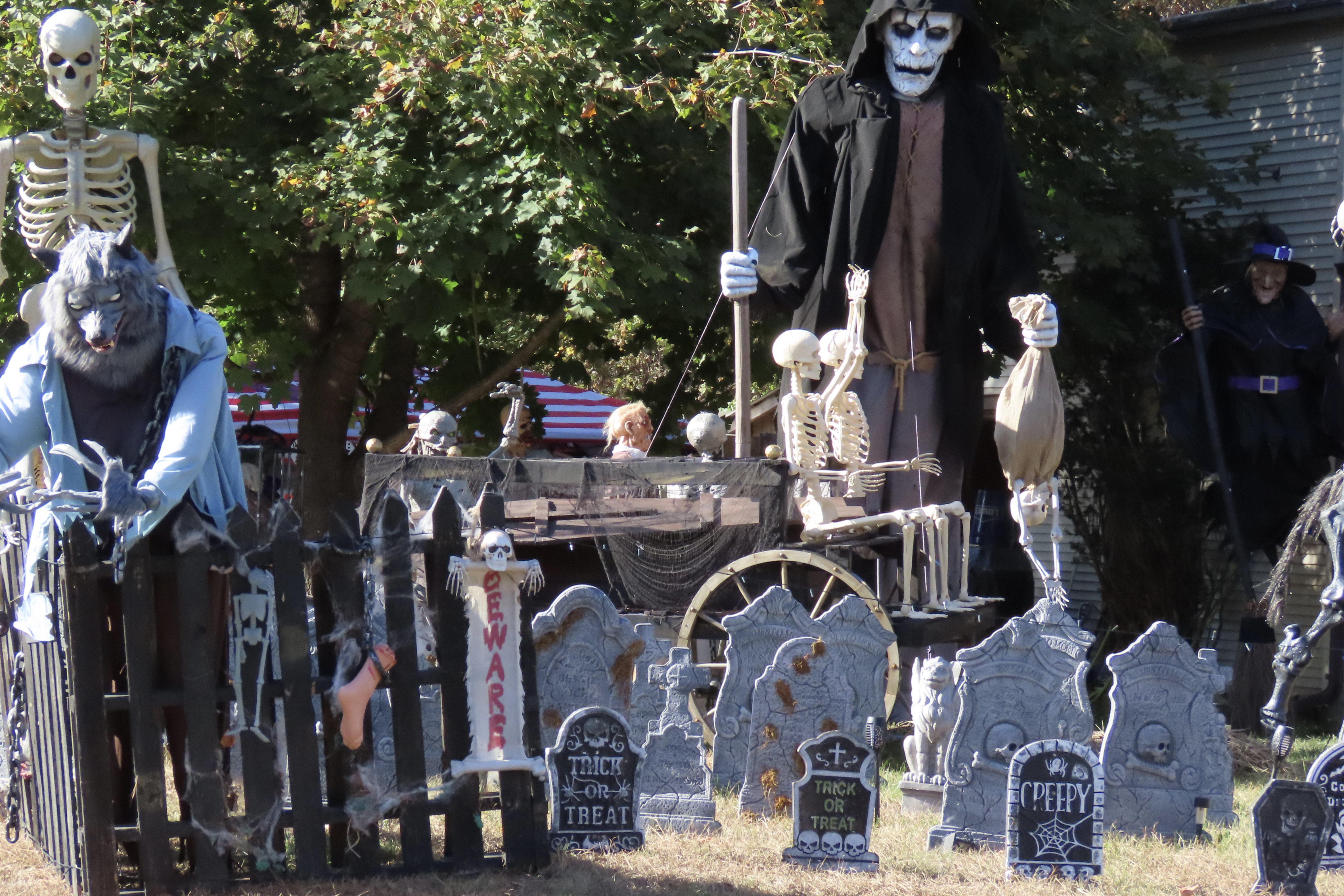
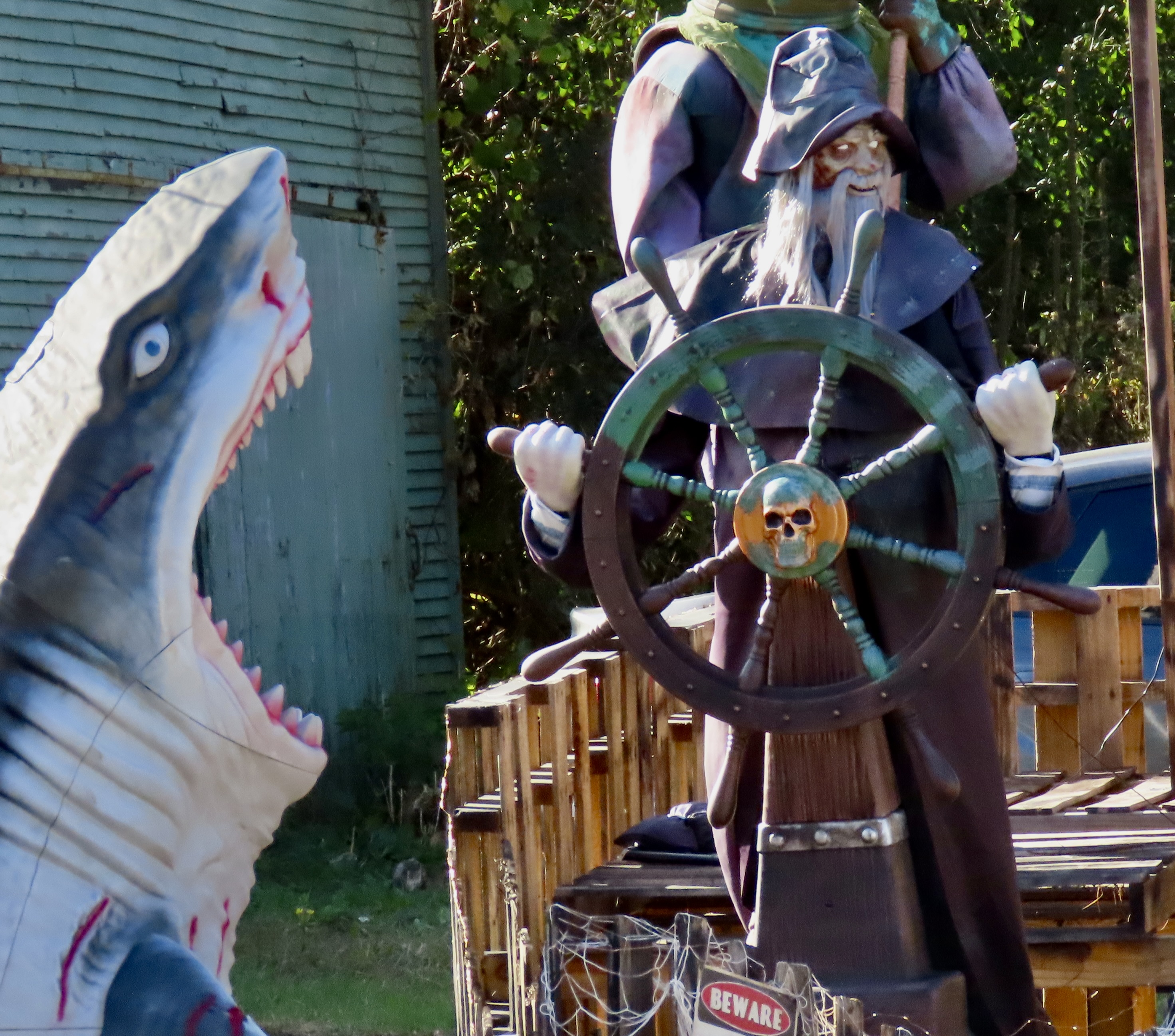
It could have been a ghoul. We found this 8-foot tall fellow at the Two Cats Restaurant in Bar Harbor, Maine. He moved and talked.The restaurant appropriately included a cat, as well.Its arched back provided an obvious photo op. When I arrived, three 20-something young women were taking a selfie under it and giggling. A ubiquitous skeleton with glowing eyes was in the background.Mr. Pumpkin head was also part of the show. He seemed to be making adjustments for a better fit. Off to his right was a skeleton dog wanting to play…While I admired Mr. Pumpkin’s head, the dog lay down, without, I might add, the mandatory three dog turns. It merely stretched its legs out behind with a motor’s aid. Backward was lying down. Forward, ready to play. Clever.I was standing hypnotized by Rover’s eyes when a loud bang made me jump. Mr. Pumpkin had ripped his head off his skull. I heard laughter up the road. The young women had stopped to watch my reaction. “You were waiting for that, weren’t you,” I accused them, and was greeted by more laughter. Some fun.I’d be remiss in leaving the Two Cats Restaurant display without including this bony apparition crawling out of the ground. I think it lived on toes. Mine had retreated as far back into my shoes as they could go.Peggy and I took a break from our leaf peeping and ghost seeking to admire Fort Knox on Maine’s Penobscot River. The massive structure was built during the mid 1800s but never actually saw any action. We quickly discovered that the state park that housed the fort, was also into Halloween! My basset hound, Socrates, once lived a few miles away in 1976. He hung out with my friend Morris Carpenter, the housing administrator for the Penobscot Indians, while I was off exploring the South Pacific for several months.We were greeted by a large green spider. It made us wonder if a UFO had crashed nearby. Its color suggested it had been sucking the blood of little green men from outer space.Peggy stopped to admonish a bad kitty that was growling at her at her and swishing its tail back and forth.The cat responded by moving its head so it could determine whether Peggy was edible or not. Note the raised tail as well! Peggy vacated the premises. This fellow greeted me when I entered the fort.Peggy, claiming a family resemblance, insisted that I pose with him.A number of other Halloween characters occupied the fort, including this angry vulture. “You promised me some roadkill. Where is it?”Skulls glared out at us through windows.Including a rather realistic looking one. Wouldn’t want to meet up with this guy on a dark night. Or at high noon.A downward trending series of rooms also contained spooky potential…Especially when a dark, cloaked figure appeared and then disappeared…Leaving the fort, dark cloudy skies and leafless trees added to the Halloween feel.‘Eyes’ staring at us out of the night added a nice Halloween touch to one scene.As for haunted houses, there were no lack of candidates in New England. The upper right window on this one made us look twice. The curtain appeared to be moving.Turns out, the curtain was in tatters, which always serves as a sign of haunted for me. Or maybe what we were thinking of as a tattered, was the shadow of the creature that moved the curtain. A little horror movie music, please…Blow-ups have become a common way of representing ghosts. At night, this one would appear to be floating on air. The blue-clothed witch in the background was prepared to grab anyone who escaped the sharp talons of the ghost. Beware trick or treaters. Whatever tricks you have in mind, will pale in comparison to what these two have to offer.Another floating blow-up ghost. This time with a red-clothed witch as back-up.An unholy trinity for sure. We thought of it as a diorama.We were zipping down the road in Vermont when we flew by a comic-book-like wolf man and his faithful companion.To conclude today’s Halloween journey through New England and New York, we are returning to a display we featured last week as a promo for this week. It was in the small town of Sciota, NY, near where we were staying in West Chazy. Remember the headless horseman? I couldn’t help but think, “Alas poor Yorick, I knew him well.” Isn’t the horse a magnificent beast! And check out the bone ax.The yard featured what we considered one of the most unique and unusual Halloween scenes we would encounter. Another, more furry, wolf man can be seen on the left. There are also skeletons, tombstones, and the lurking figure of Death. His bagged prey was trying to escape. The horse’s tail (and horse) is off to the right.Just across a small alley on the left, a sea captain with ghostly eyes steered his boat toward a waiting shark. That’s it for today. Peggy and I hope you’ve enjoyed our scary treat. Happy Halloween! Next week, we return to leaf-peeping.












 Wandering through Time and Place