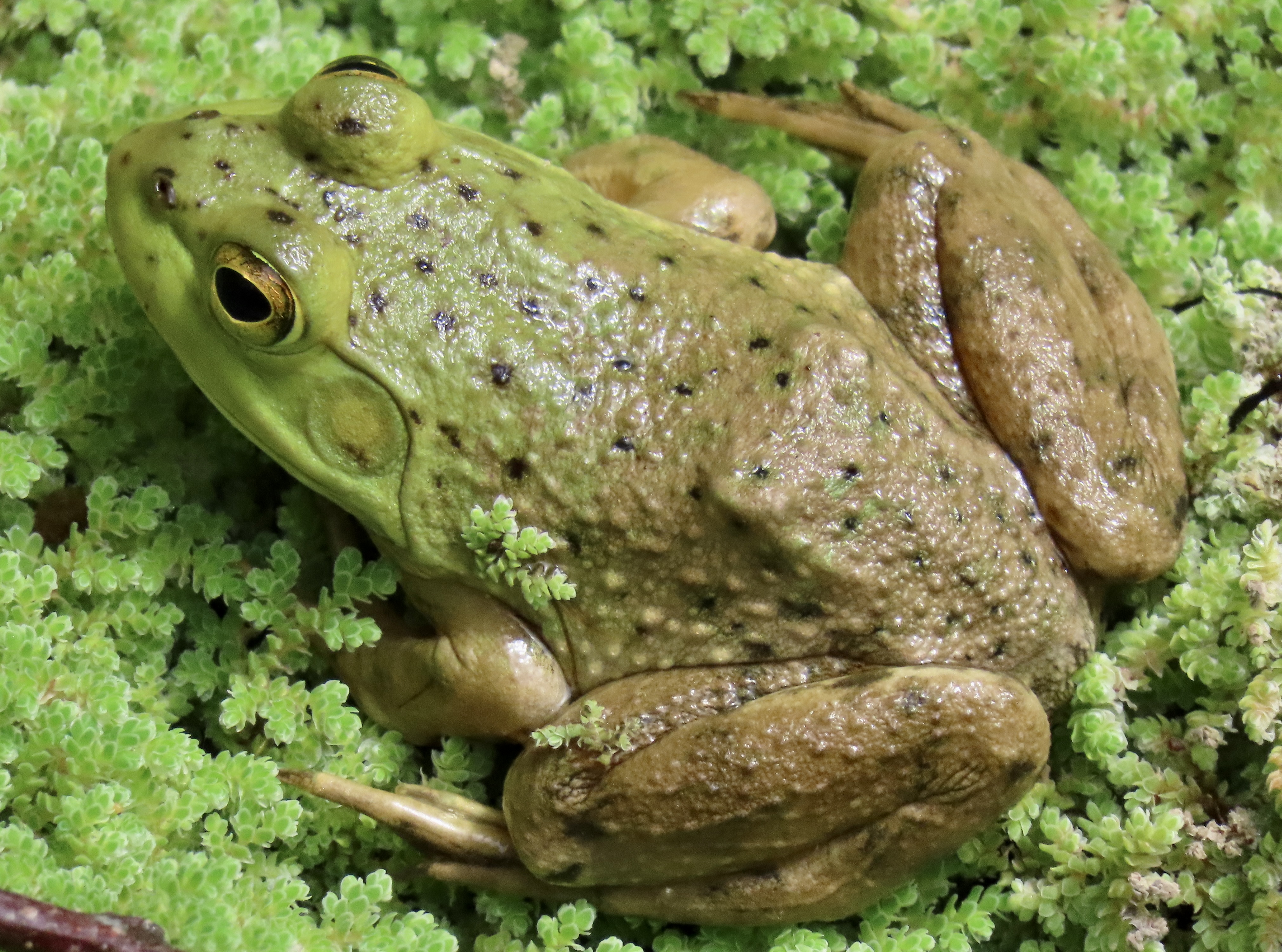
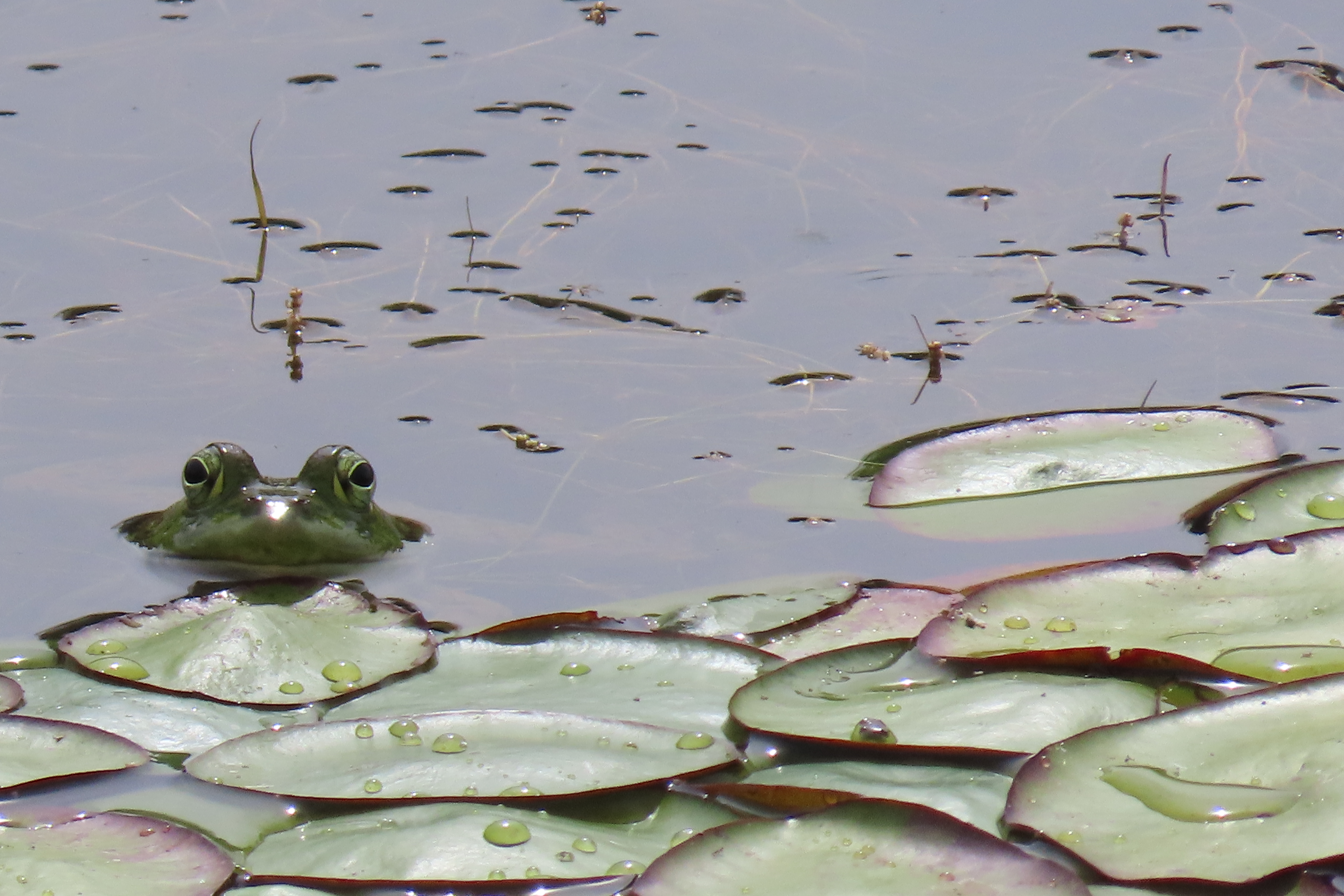
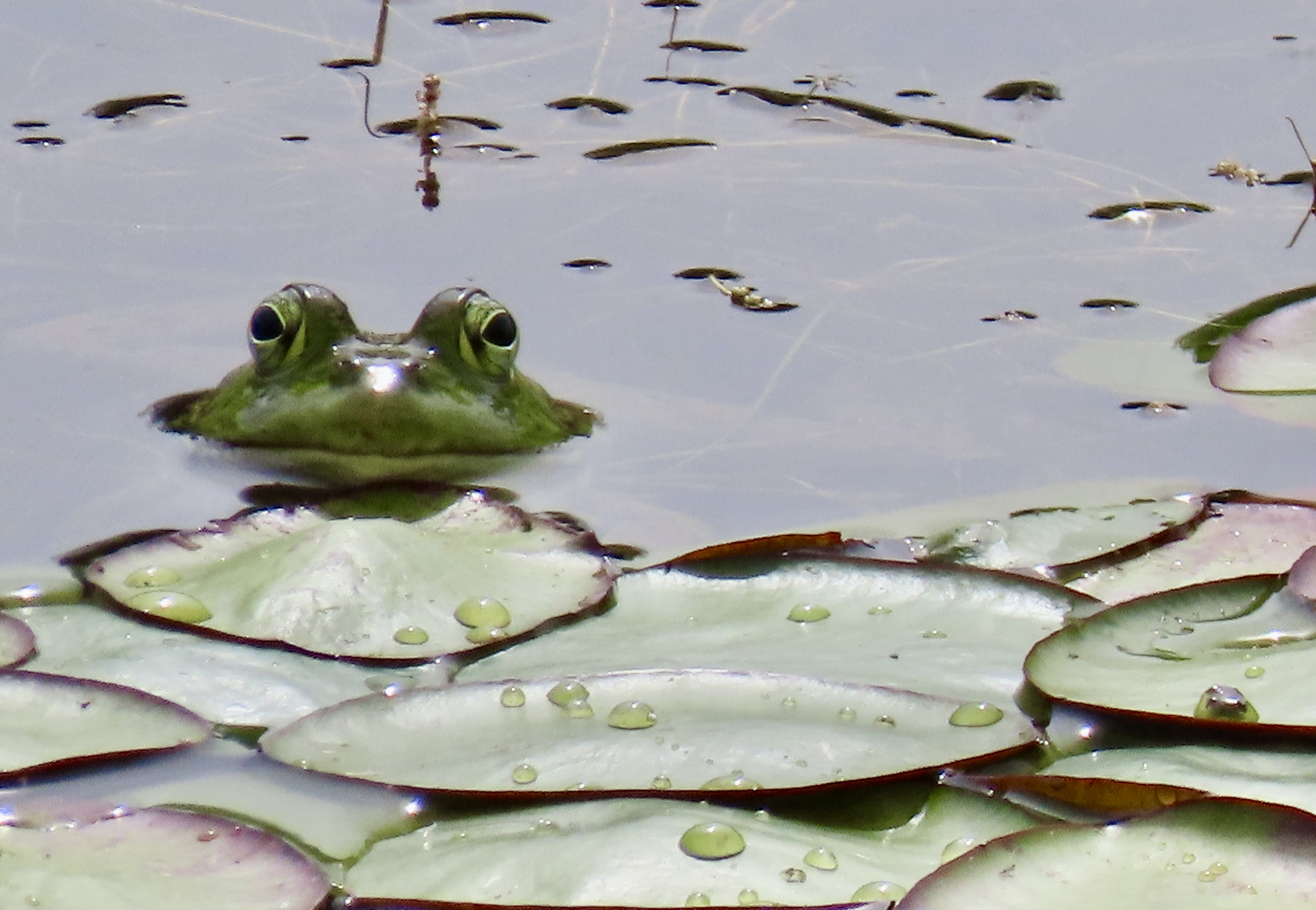
As we walked on a raised boardwalk through the wetlands of Billy Frank Jr. Nisqually National Wildlife Refuge in Olympia, Washington, I kept hearing bullfrogs and wanted to see one. A large one lived in the ditch in front of our house when I was growing up in the foothills of California’s Sierra Nevada Mountains. I had slept outside in the summer and gone to sleep listening to the his deep ‘chug-a-rum, chug-a-rum, chug-a-rum.’ At around three inches, the guy above was far too small. “It’s a red legged frog,” a volunteer told us.
We saw several red legged frogs and possibly an Oregon spotted frog, which is rare in the area and is listed as endangered. Bull frogs, it turns out, are an invasive species at the refuge and a threat to the locals. “Oh, they’re bullies!” the ever clever Peggy proclaimed as I groaned.
When I was reading up on the frogs, I saw a job description for a person who would work ‘nights in a canoe or kayak capturing non-native bullfrogs in areas where federally listed Oregon spotted frogs are found.’ Need work? I couldn’t help but wonder if the captured frogs donated their legs to the local cuisine. My brother Marshall and I hunted bull frogs as kids for the family larder. Marshall also sold the legs to local restaurants. He got 25 cents for a pair. A fortune. We left the big guy out front alone, however. I thought of him as something of a pet. (Plus our parents told us that the ditch water was of ‘questionable character.’ We weren’t supposed to drink it, play in it, or catch frogs in it!)
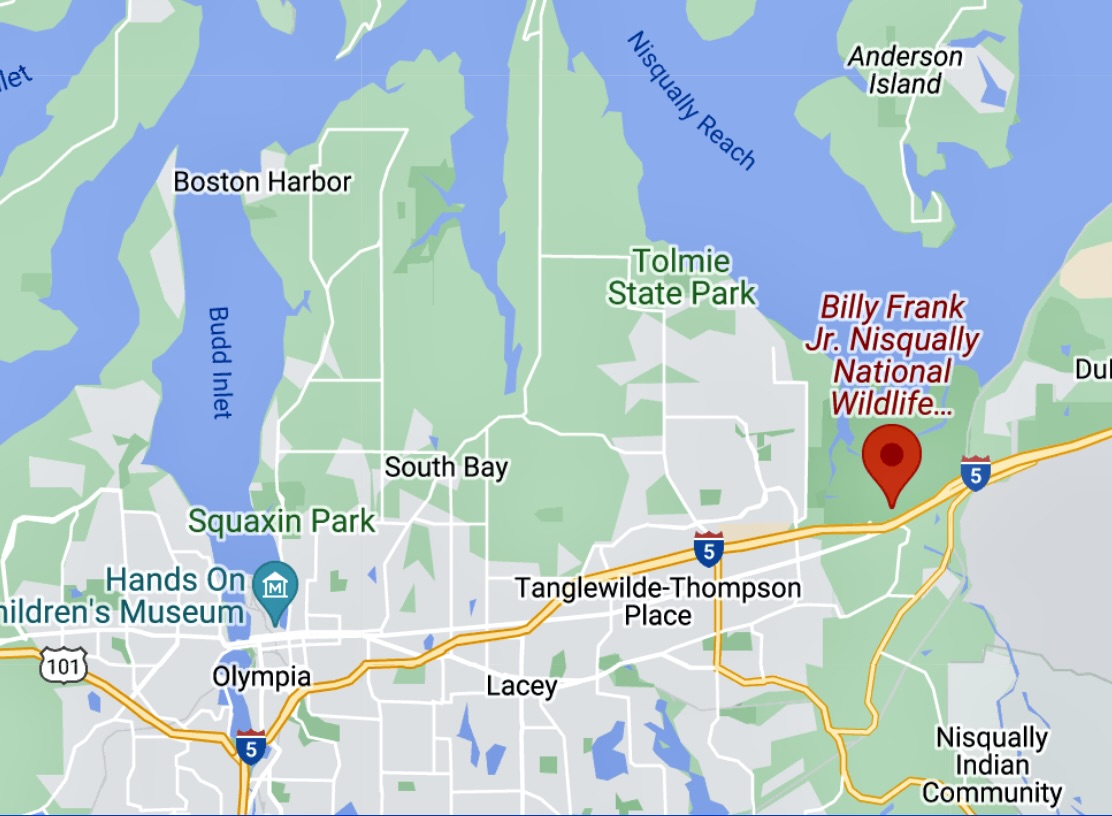
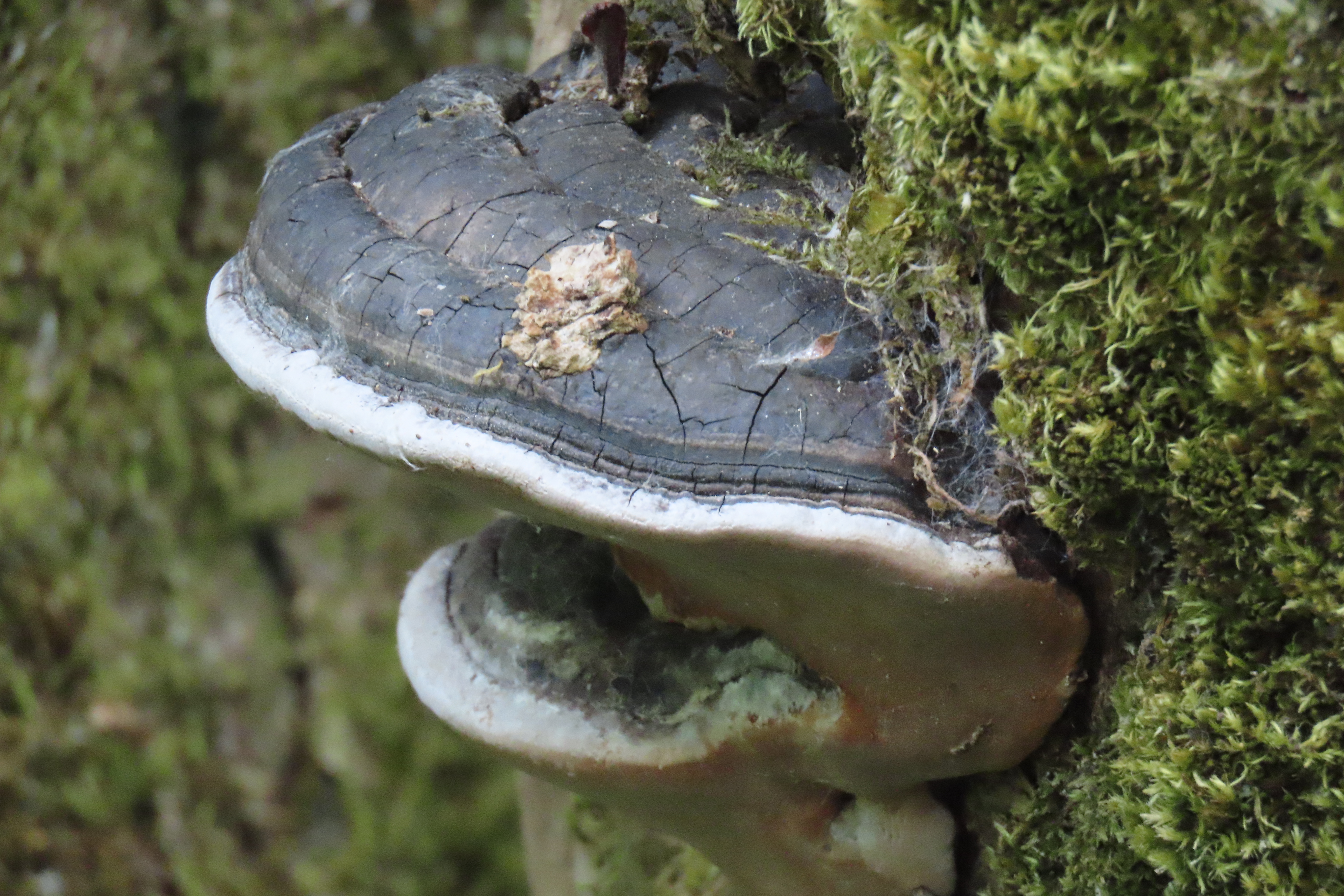
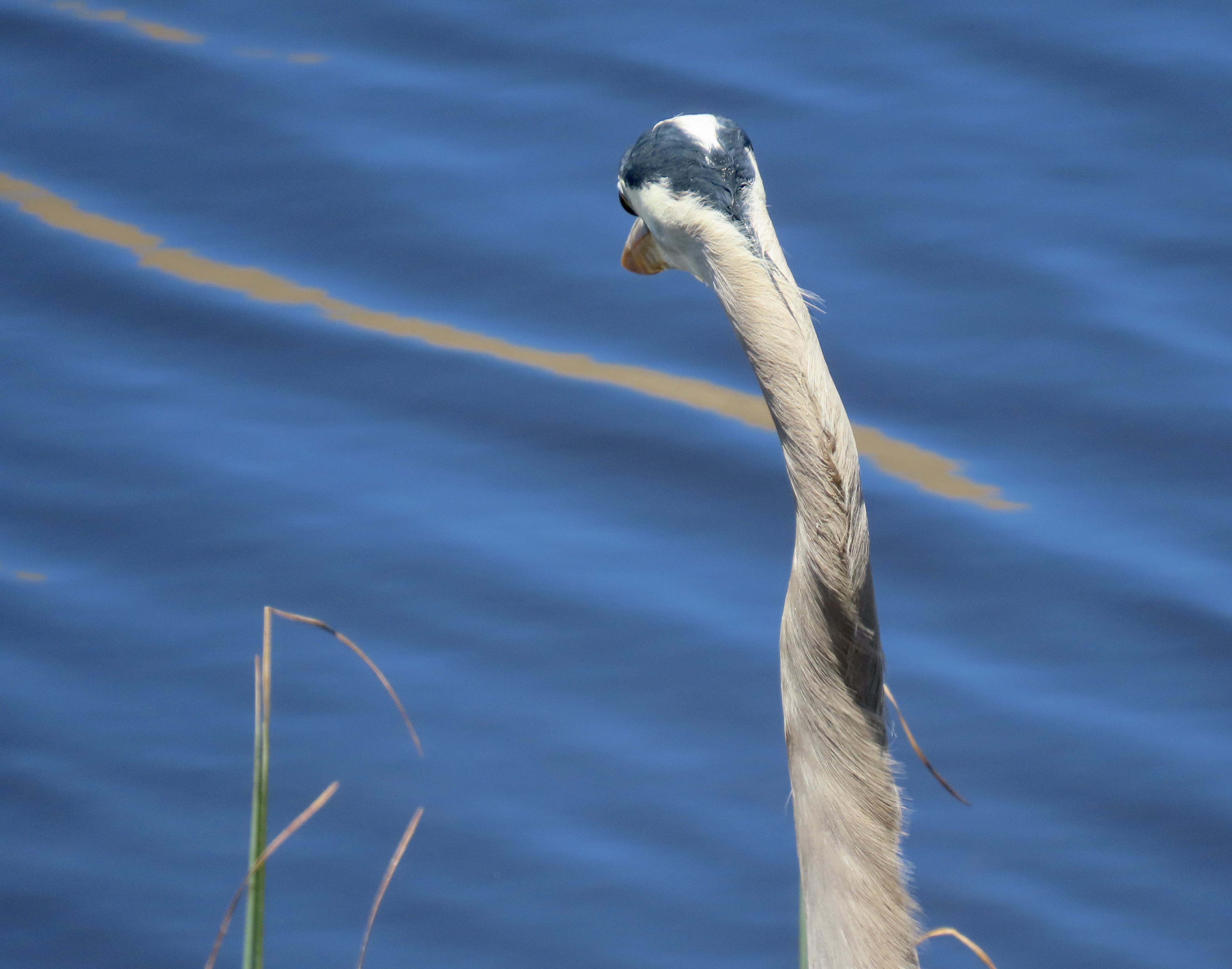
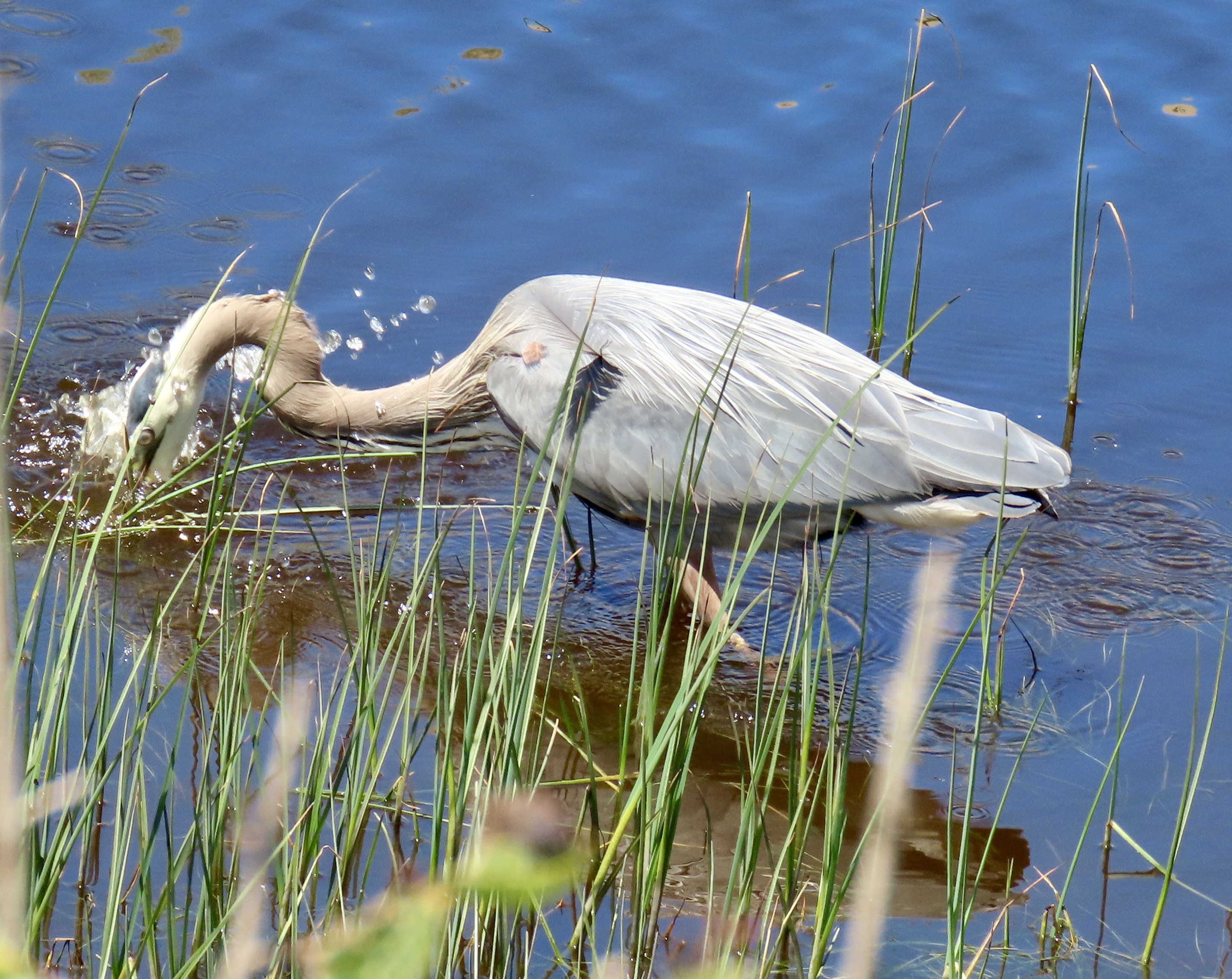
This was the frog the volunteer described as a red-legged frog. The legs didn’t seem red to me, but hey, I’m color-blinded to red. For real. Do they look red to you?I watched this guy/gal make its way through the mud. Maybe it was heading to one of the communal gatherings of Oregon spotted frogs where dozens/hundreds get together and make tadpoles by the light of the moon.The wildlife refuge is located where the freshwater of the Nisqually River flows into Washington’s Puget Sound. The fresh water bog includes a number of habitats that support an incredible diversity of wildlife. Including this great blue heron that also has a taste for frog legs. And the whole frog! “Where’s the frog?” it squawked at us. “Show me froggy!”Was this shelf mushroom saying “Leave the little frogs alone.” We also spotted a turtle in the same area with the frogs. I was reminded of the saying when I was working as a young grassroots organizer in the 70s: “Behold the turtle who only makes progress when it sticks its neck out.” I stuck my neck out a lot.
I was curious about how the wildlife refuge got its name. Who was Billy Frank Jr? It turns out he was a Native American leader of the Nisqually tribe who fought for treaty rights and was an environmental advocate. During the 60s and 70s he had organized a number of fish-ins to assure that the tribe had fishing rights along the Nisqually River, the Nisqually’s home base. He was arrested numerous times during the Fish Wars. He then became a leader in efforts to protect and manage the region’s natural resources. In November of 2015, he was posthumously awarded the Presidential Medal of Freedom by President Barack Obama.
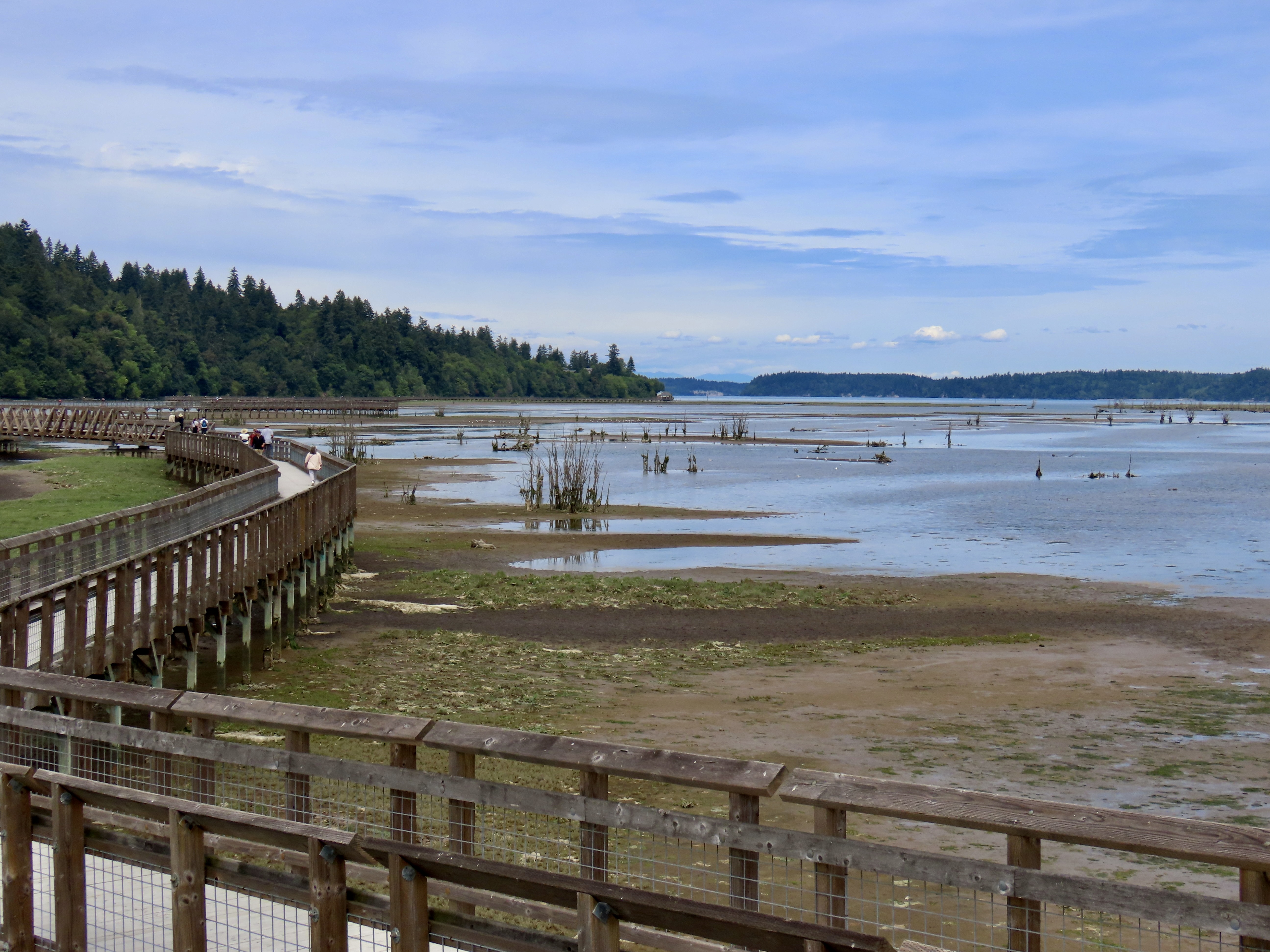
In addition to the fun walk through the wetlands, the wildlife refuge features the Nisqually Estuary Boardwalk Trail that provides an excellent introduction to life on an estuary.I took a photo of Peggy and our niece, Christina, out on the Boardwalk and rendered it in black and white.I’ll conclude today’s post with a final photo of the red legged (or Oregon spotted) frog. This also concludes our trip up the Pacific Coast which was filled with beauty and great adventures. Our journey isn’t over, however. We still have two National Parks to visit: The North Cascades and Glacier. My next post will be a quick review of the five we have already visited during 2024. I’m throwing in Everglades as a bonus since we were there in February before we started west.
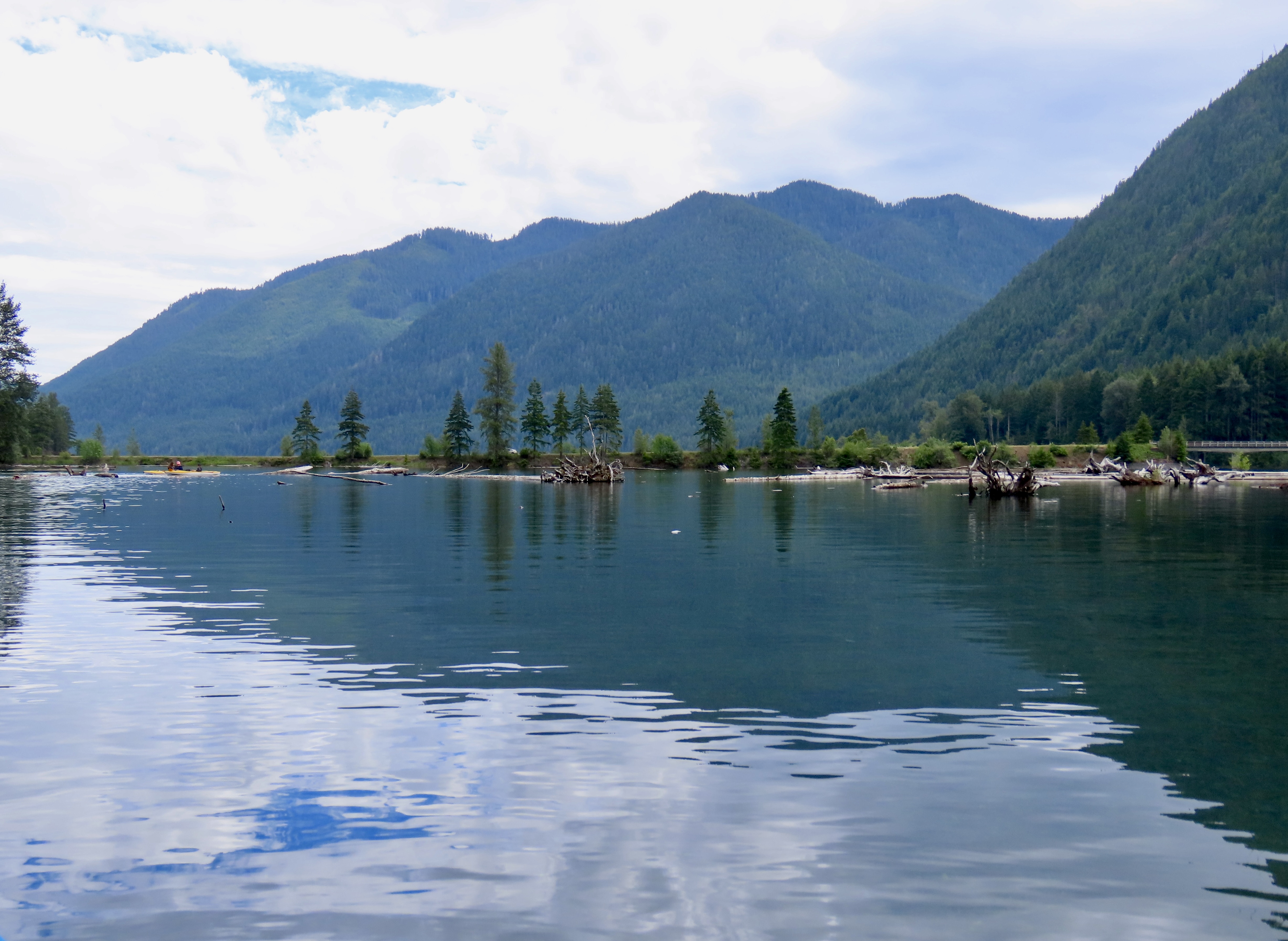
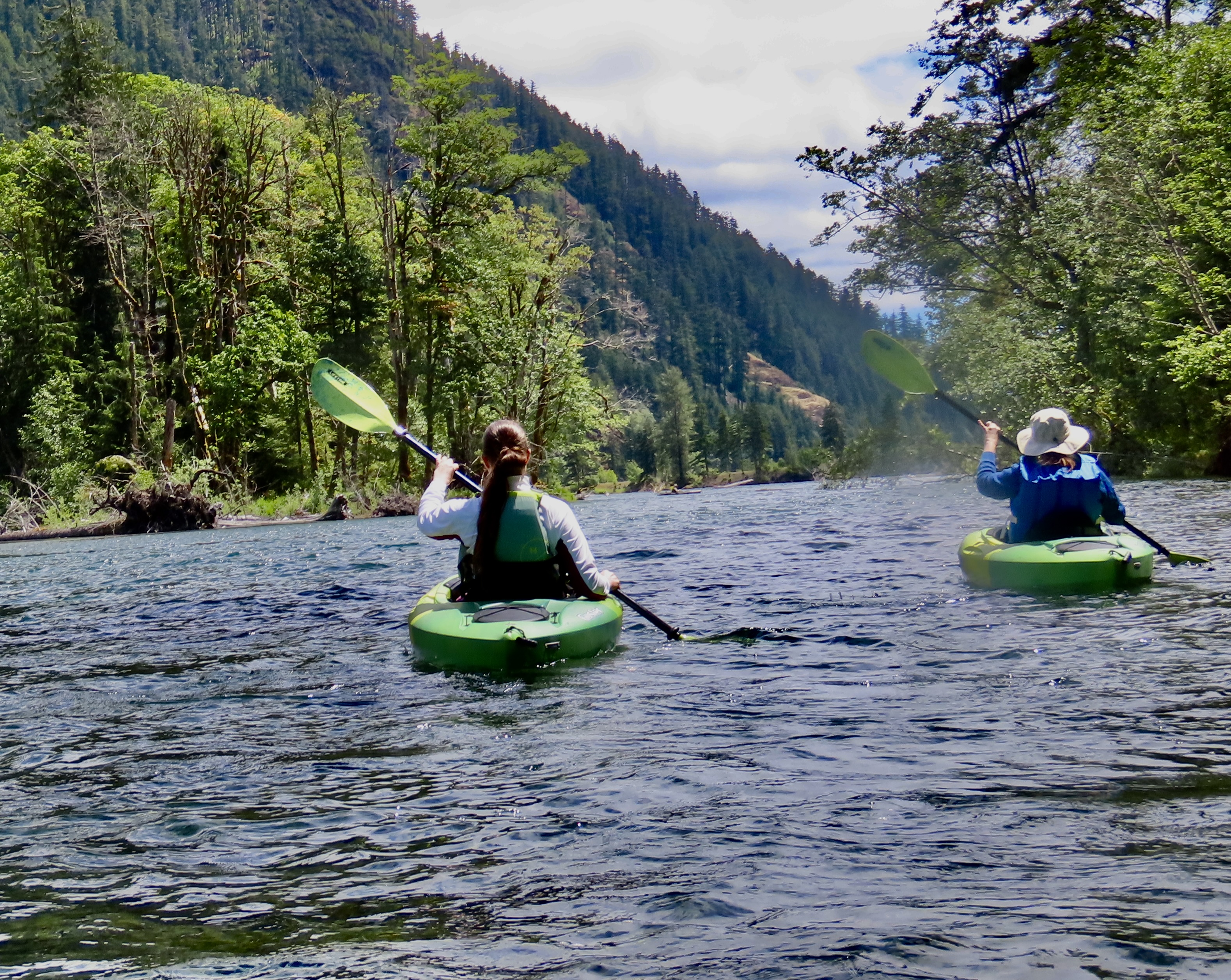
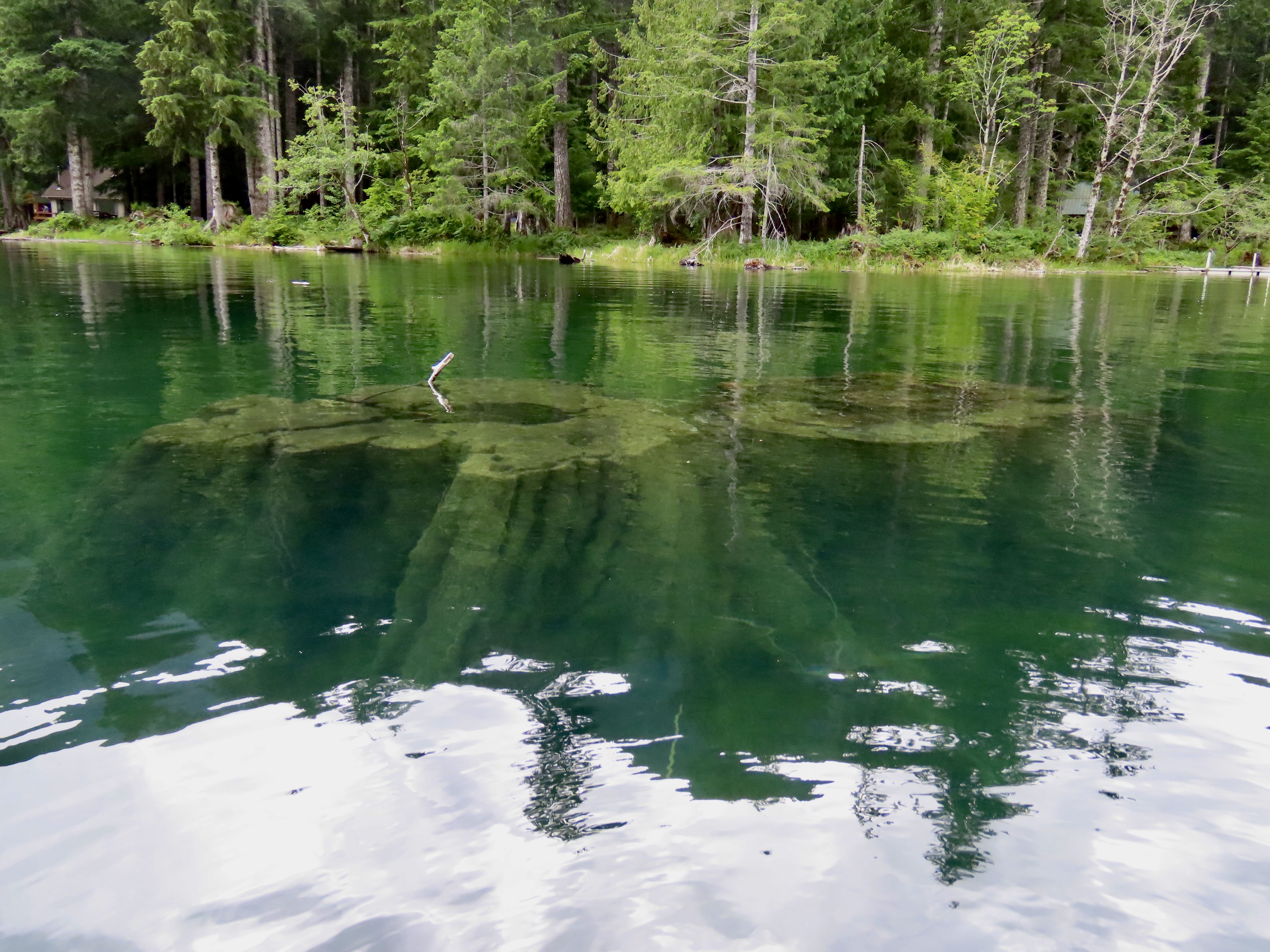
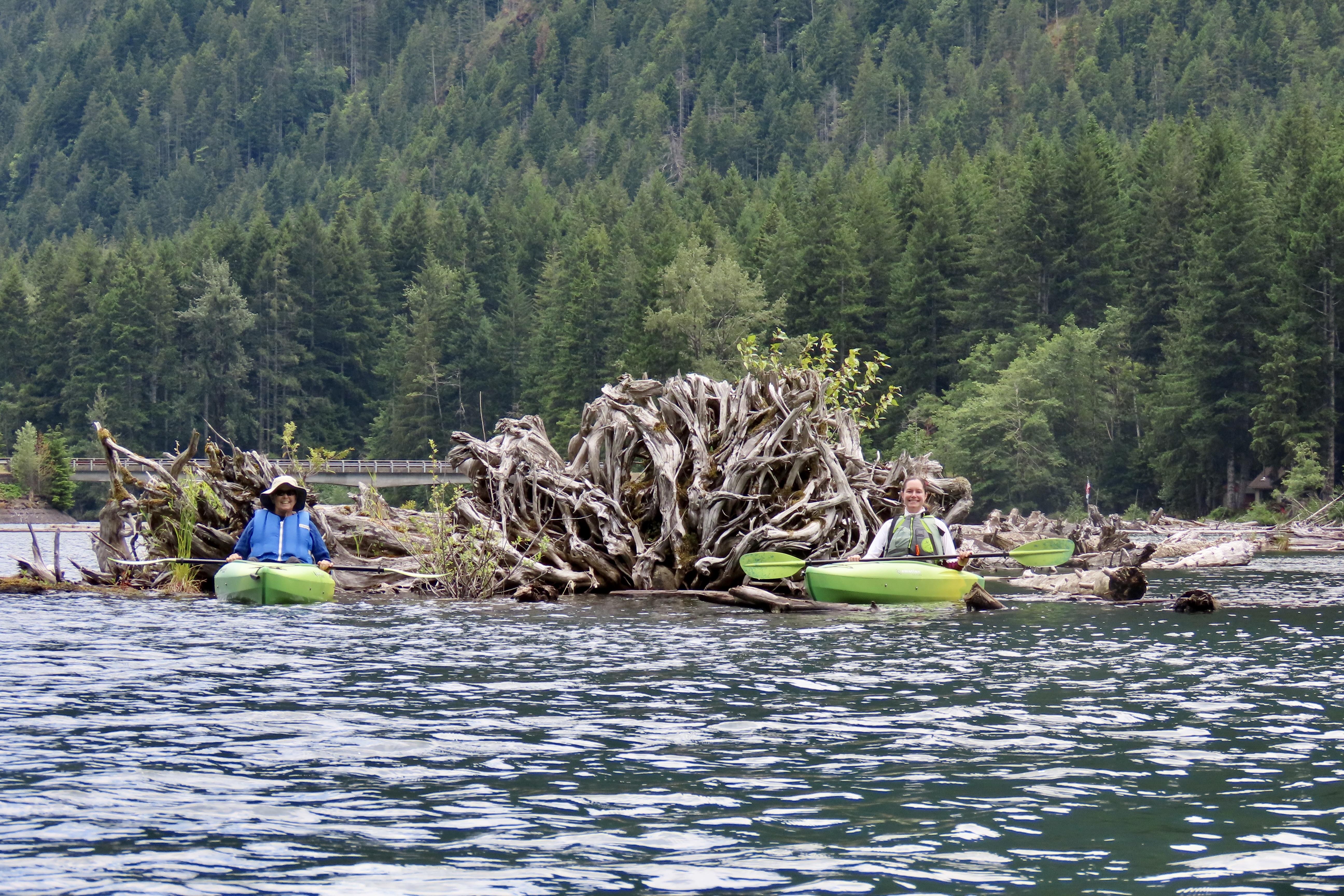
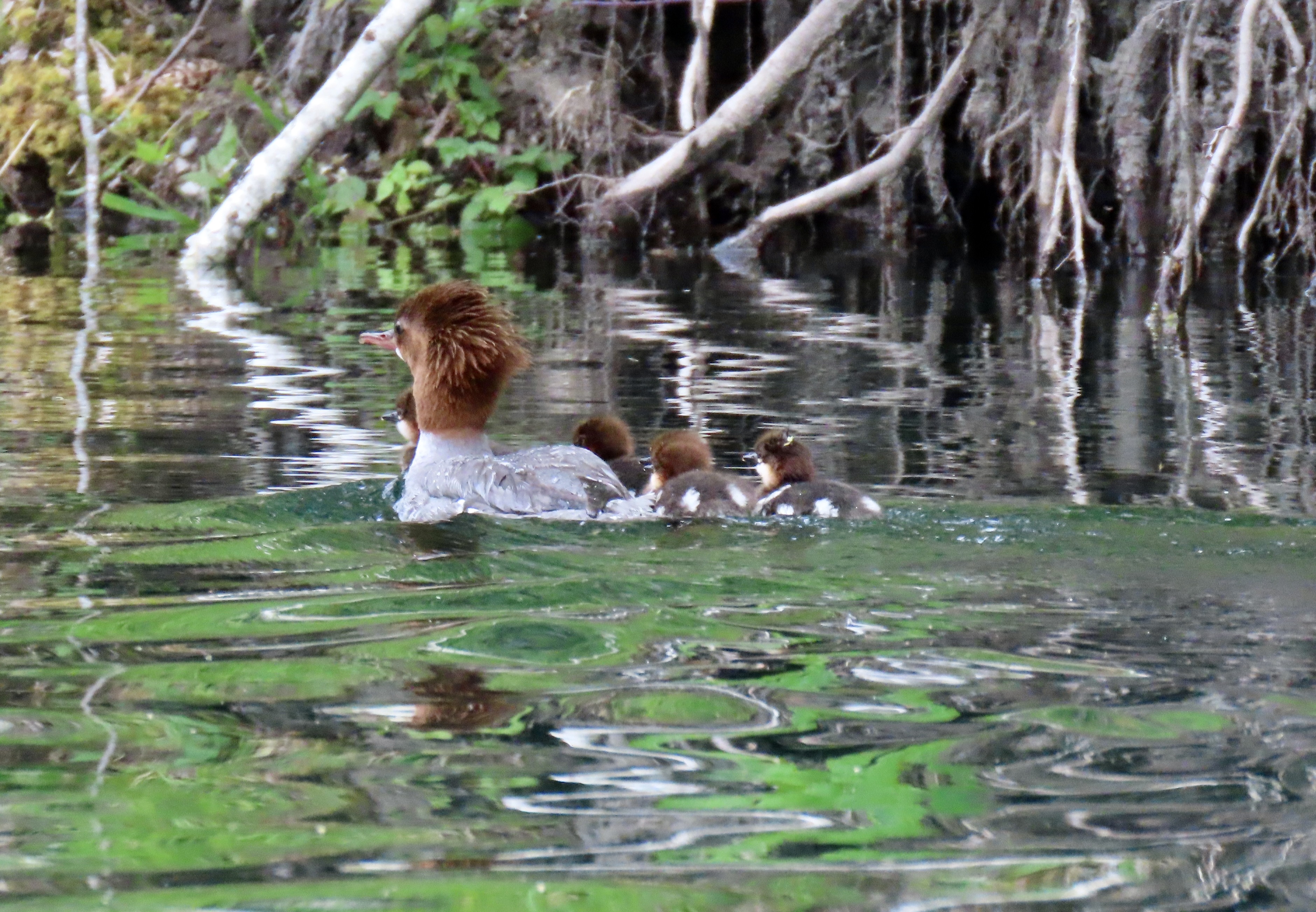
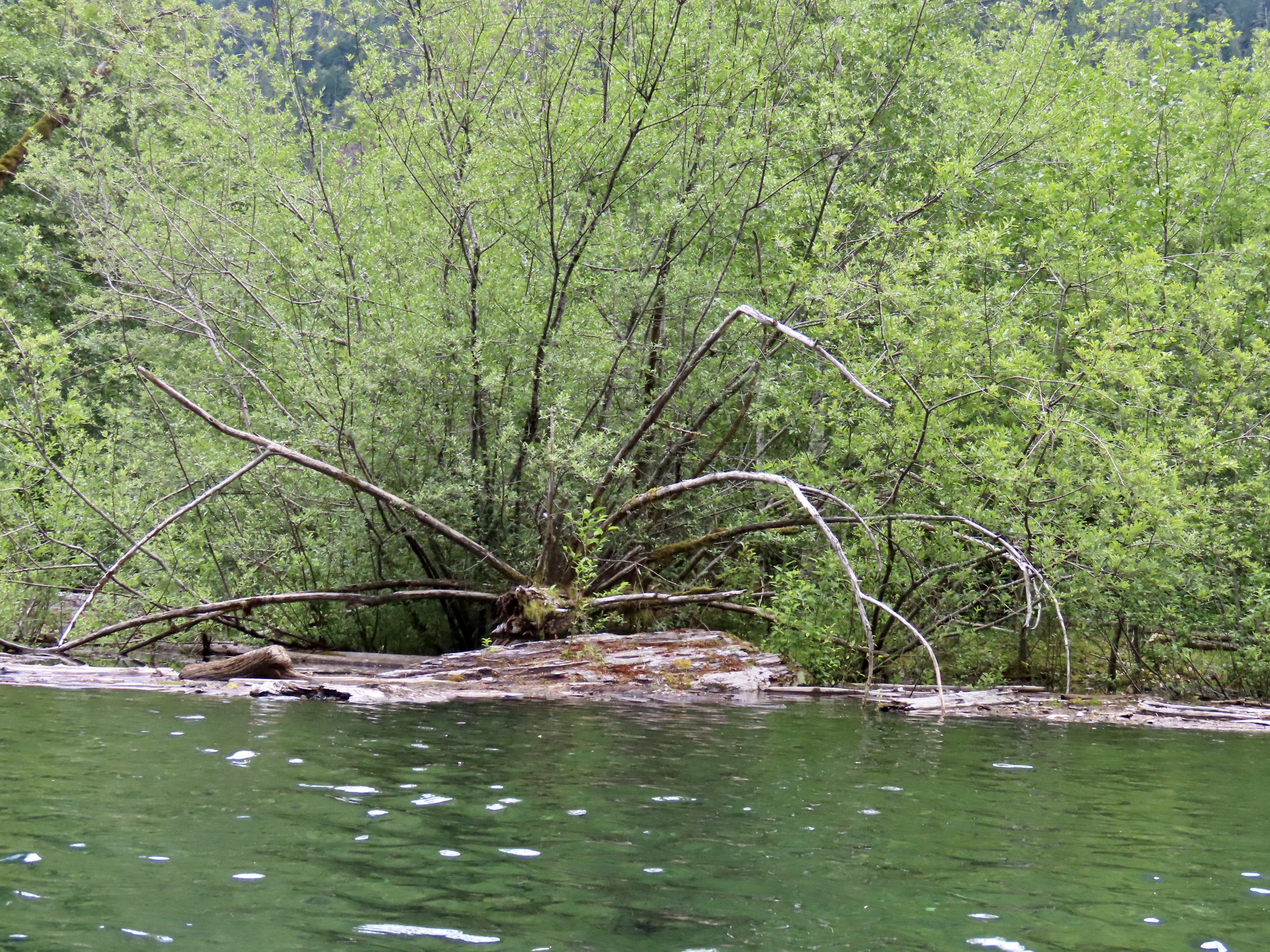
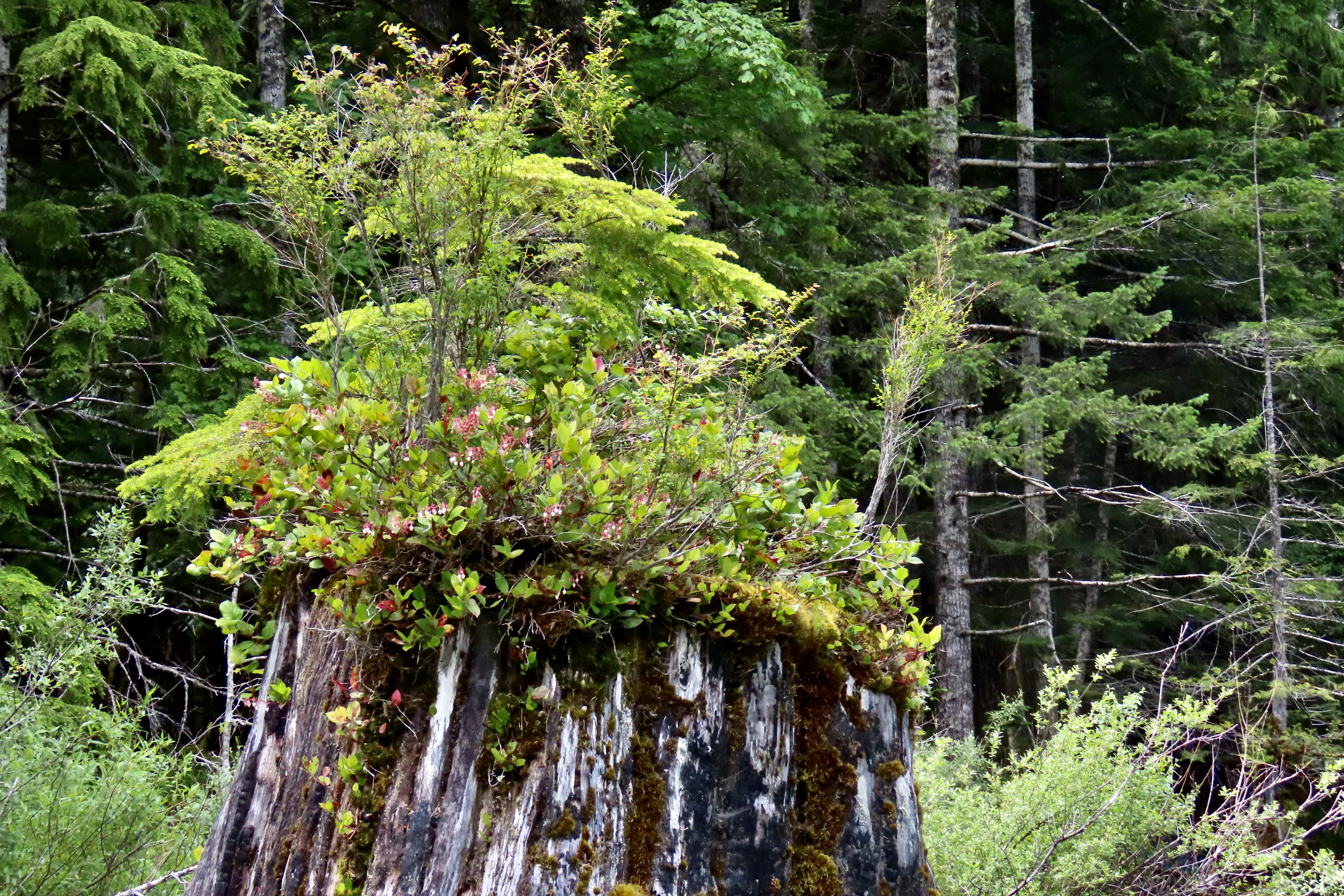
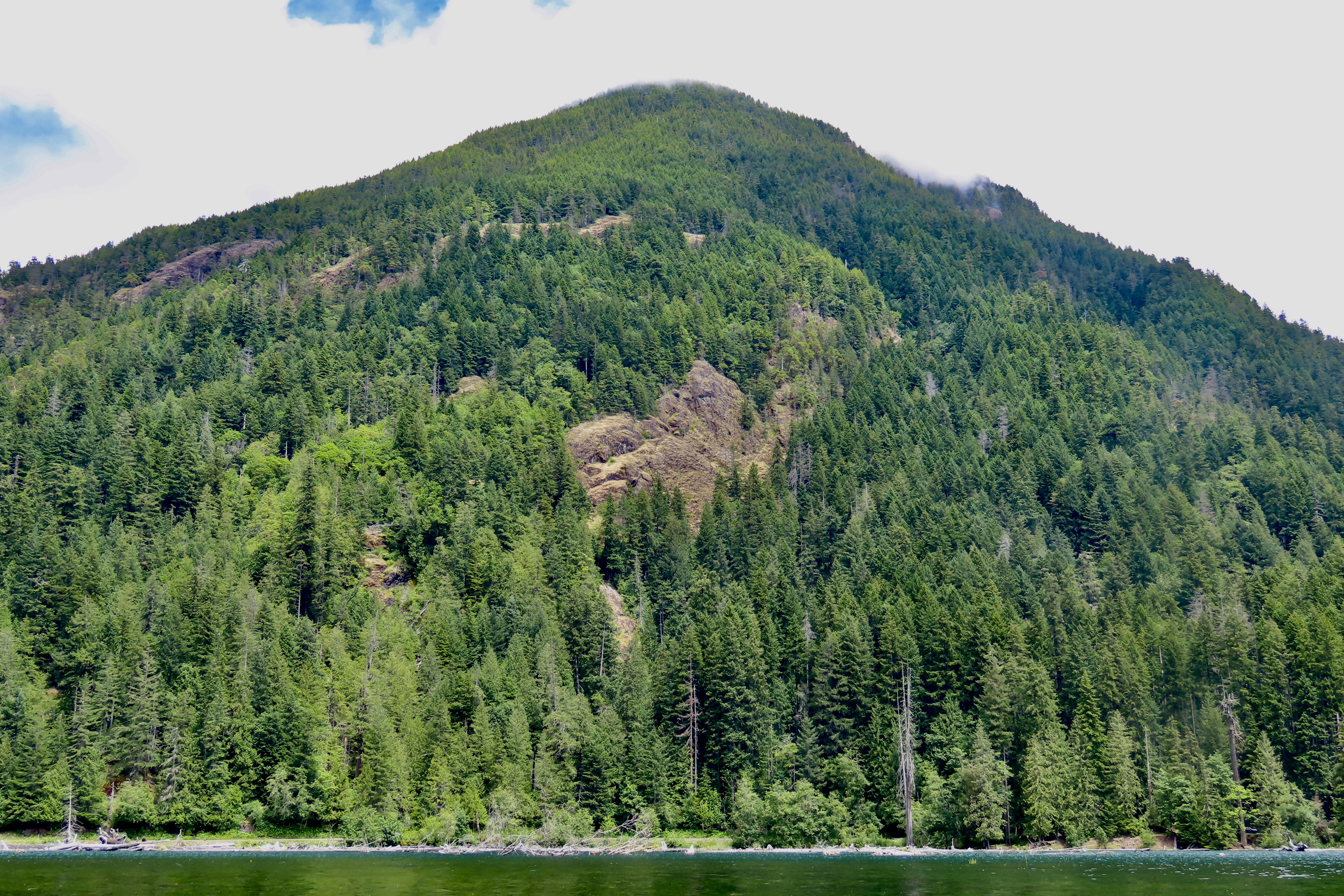
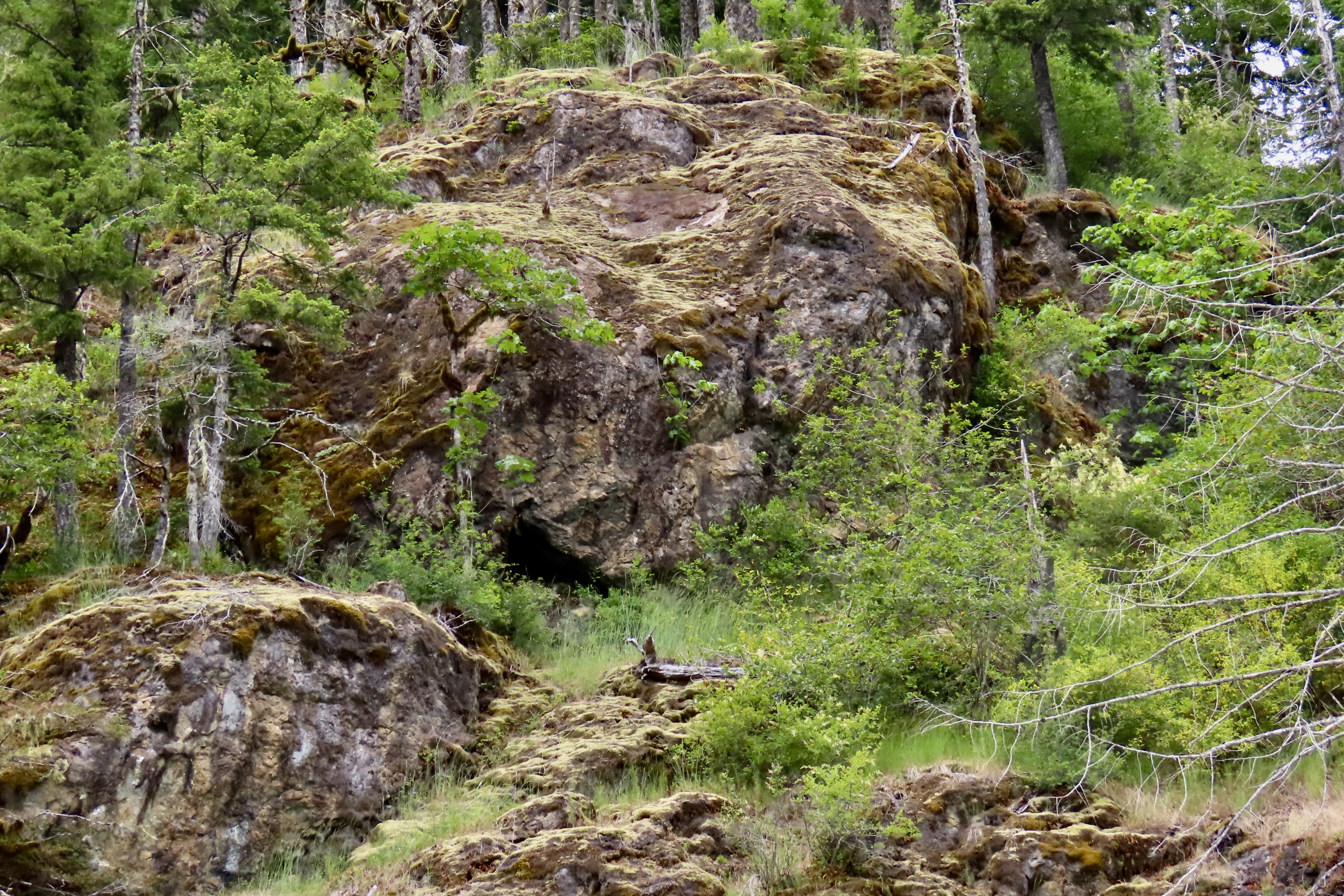
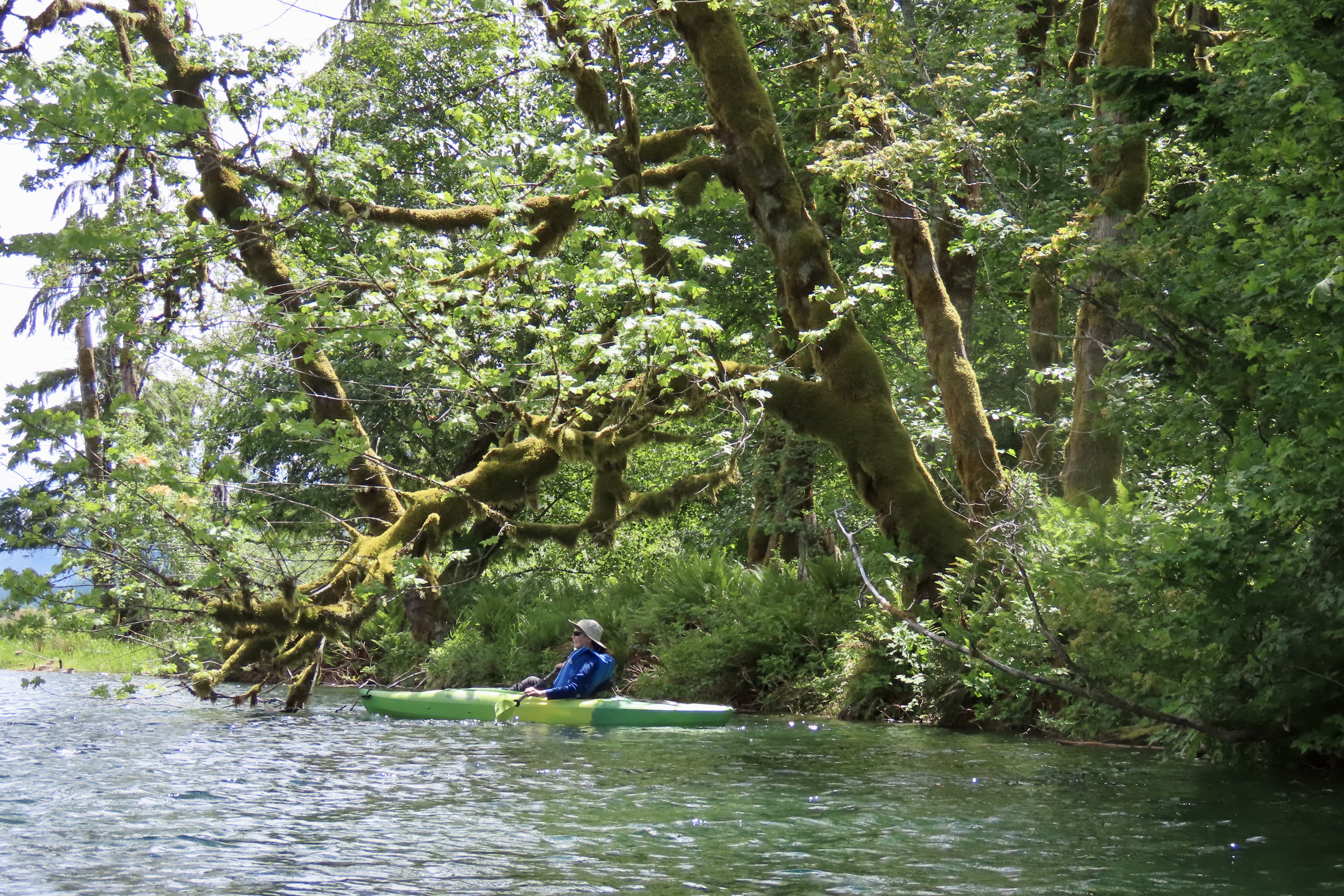
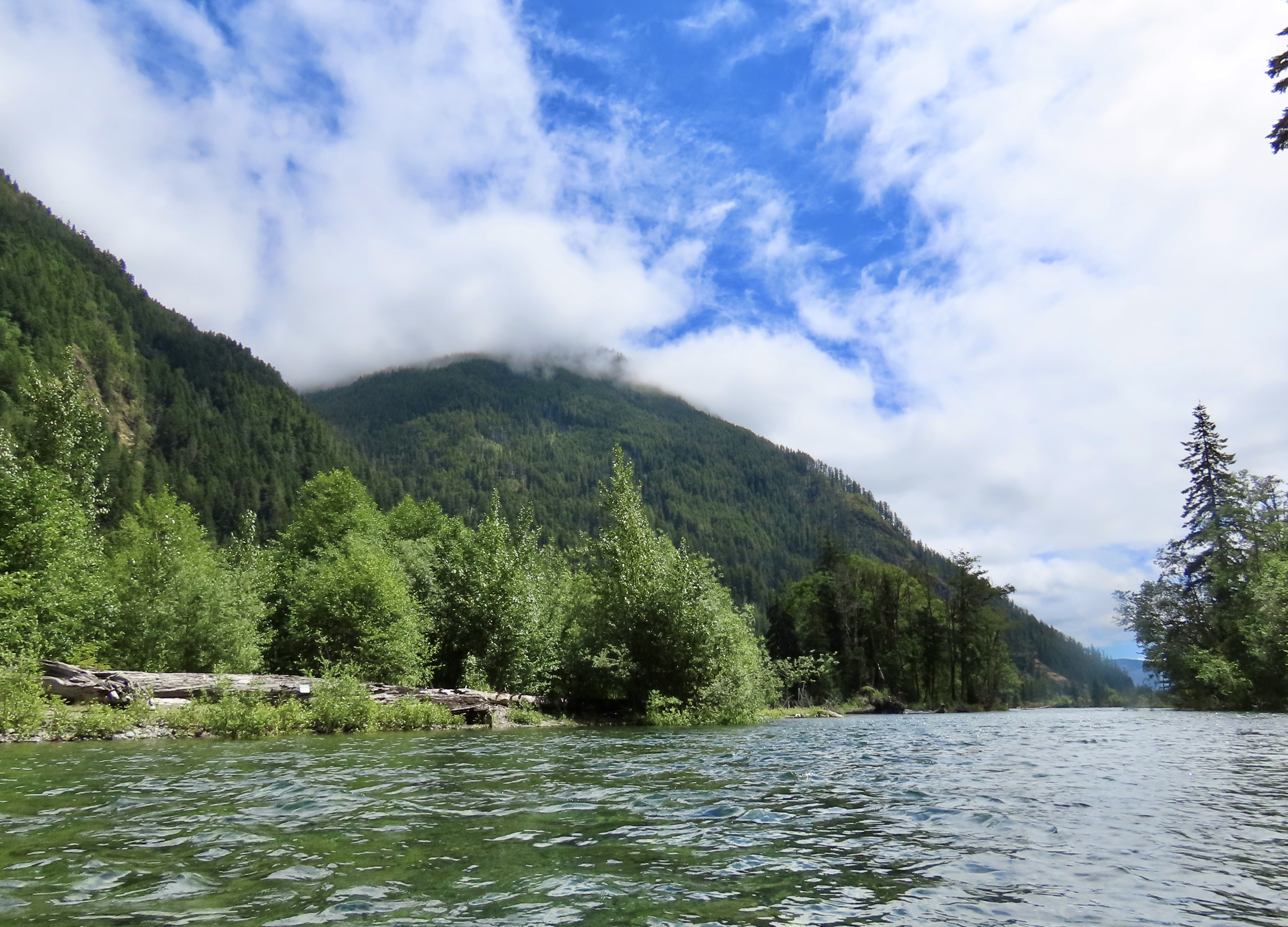
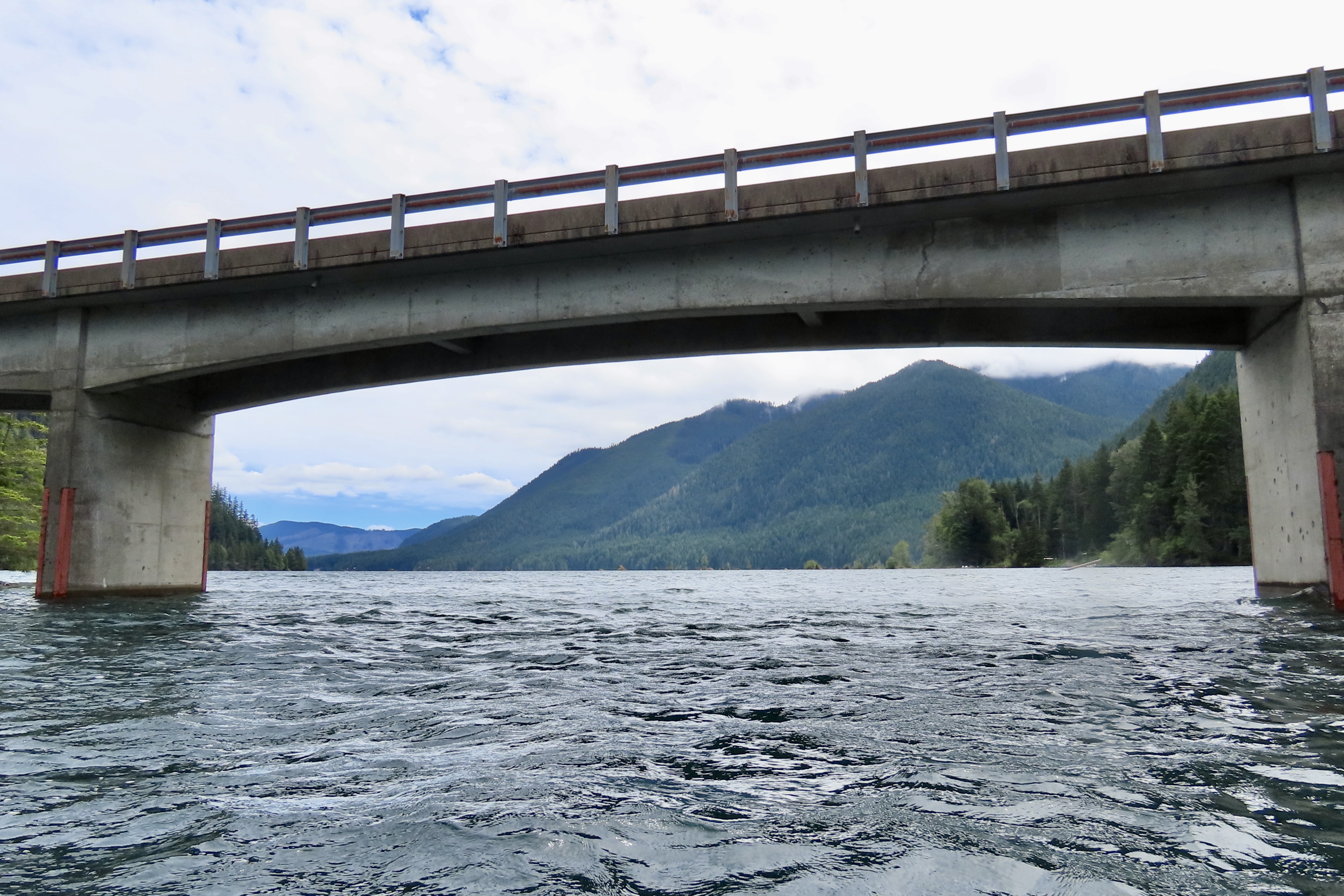
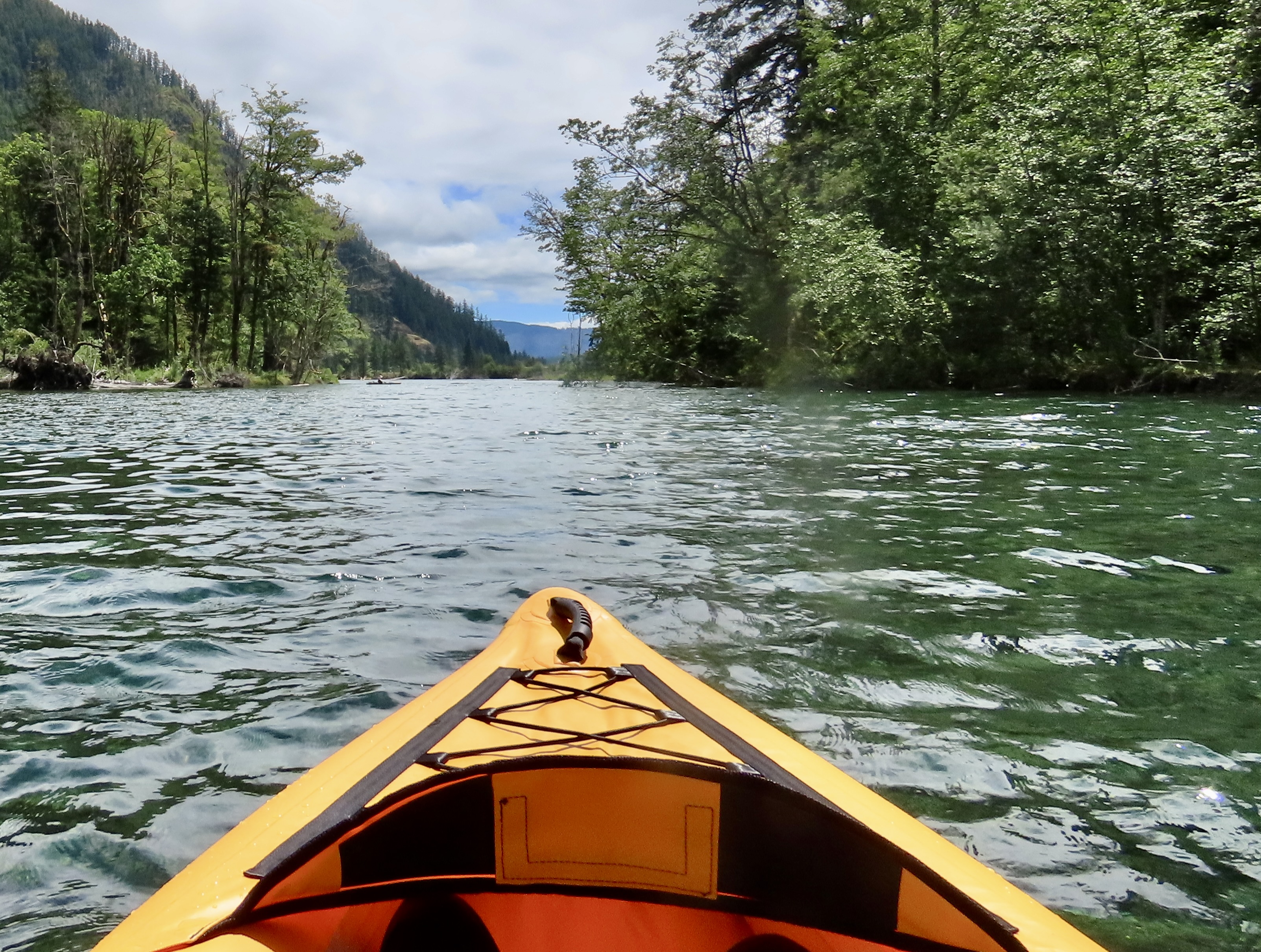
Cushman Lake is a fairly large lake around 10 miles in length and a 100 feet in depth. While it isn’t in Olympic National Park, the northern end where we kayaked serves at the gateway to the Staircase entry to the park. The road into the park can be seen on the right. The Skokomish River, which I featured in my last post, flows into the lake at the upper right end of this photo.The upper end of the lake is connected to the lower end via the bridge on the left. We kayaked from the Bear Gulch Picnic Site and explored this upper section including the lower end of the Skokomish River.The red pin shows the location of Lake Cushman in Washington. Note: Forks, the site of the Twilight books and movies, is on the upper left. We were camped near Shelton.Our niece, Christina and Peggy are kayaking into the Skokomish River here. The slight blur around Peggy was due to a drop of water on my lens. Grin. Peggy caught this interesting photo. An old growth forest of huge trees once occupied this canyon before they were logged out. These large stumps, now flooded by the lake, provide perspective. Compare them to the trees on the lake’s edge. And doesn’t the photo seem surreal?Peggy and Christina wanted their photo taken by these roots from another large tree that would have once stood in the canyon before Lake Cushman was dammed. The bridge on the map can be seen in the background.This surface shot of upper Lake Cushman shows how shallow the hundred foot deep lake had become.I thought the roots had personality.Peggy found this merganser with its chicks.And she imagined this bush as a huge spider lurking on the bank of the Skokomish waiting to capture unwary kayakers.This stump on the lake’s edge was busy growing its own forestA close up.Tall trees lined a portion of the upper lake.Large rocks were located in the forests above the lakes.We wondered what wildlife the cave might host? A snoozing bear in the winter, perhaps…Peggy found a convenient tree to rest under on the Skokomish River.It was a beautiful day for kayaking. A slight breeze came up and the water grew more choppy in the early afternoon.We rowed over to the bridge for a glance at the lower section of Cushman Lake and things got much more windy and choppy! We decided that it was time to call it a day. That’s it for now. Next, we will feature a walk at Nisqually National Wildlife Refuge north of Olympia that Christina took us on.There were frogs…
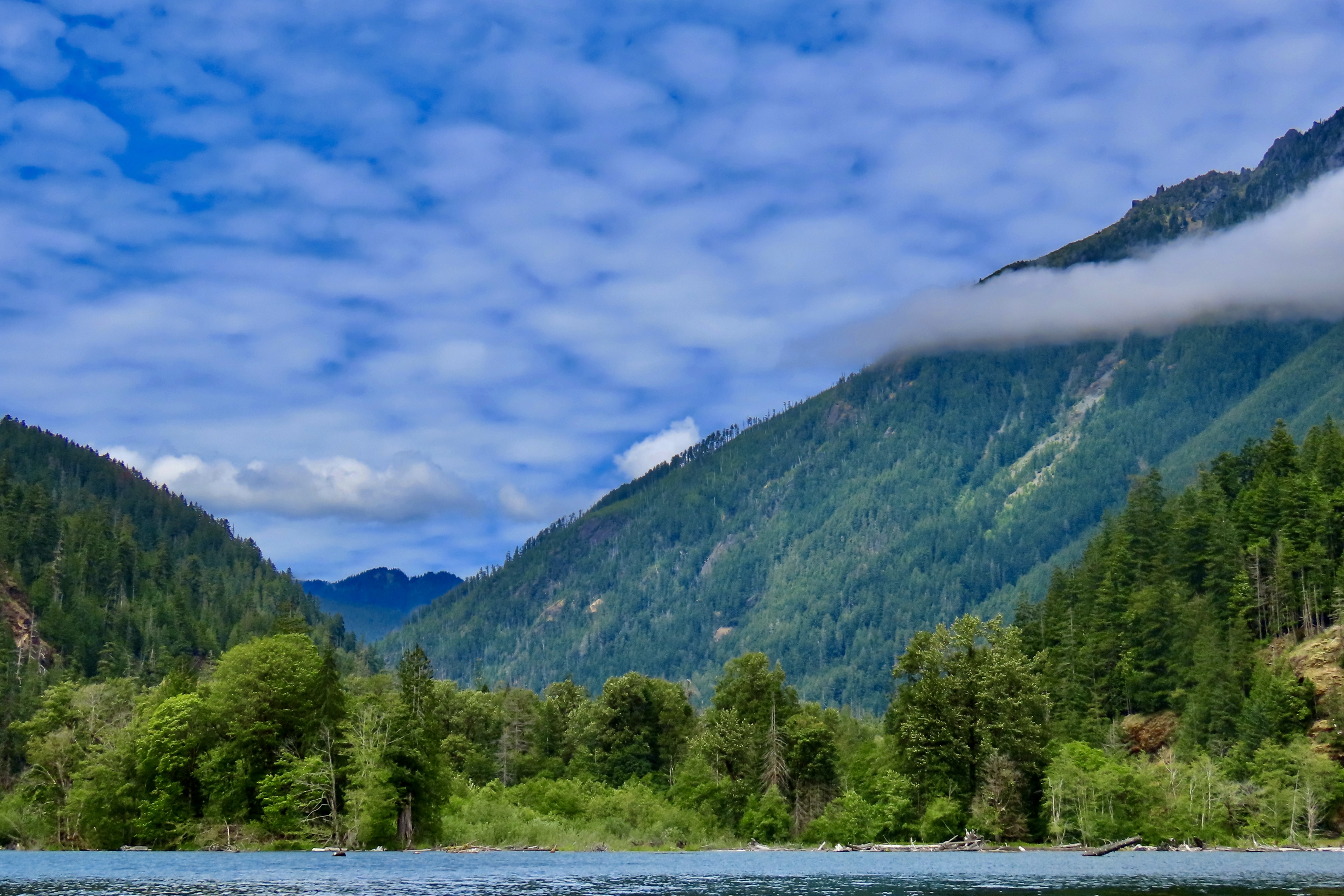
Olympic National Park has both beauty and diversity ranging from its well known rain forest to high mountains, coastline, lakes, rivers and wildlife. We’ve been there several times over the years and were looking forward to exploring even more of what it has to offer. This photo was take from our kayaks on Cushman Lake which is at the southern entrance to Olympic.
But the best laid plans of “Mice and Men”… You know how that goes. I developed a health issue and decided to go directly to Olympia rather than the gorgeous campsite on a bay near Port Angeles we had reserved for a week. It turns out the issue wasn’t urgent. My doctor in Virginia told us to continue on our trip and see her when we got back.
Fortunately, we were already planning to visit our niece, Christina, who works in Olympia. She is a good friend, as are her brother Jay and her sister Amy. Jay and I have backpacked together. Both Jay and Christina have been to Burning Man with us, and Peggy is Amy’s godmother. Before starting on our West Coast adventure, we had just completed our safari trip to South Africa with their dad John (Peggy’s brother) and his wife Frances!
Christina had taken time off from work as an attorney for the Washington State Attorney General’s office and had a ton of outdoor stuff planned for us. Fortunately, one of these activities included a hike up the Staircase Rapids Trail on the Skokomish River at the southern end of the park.
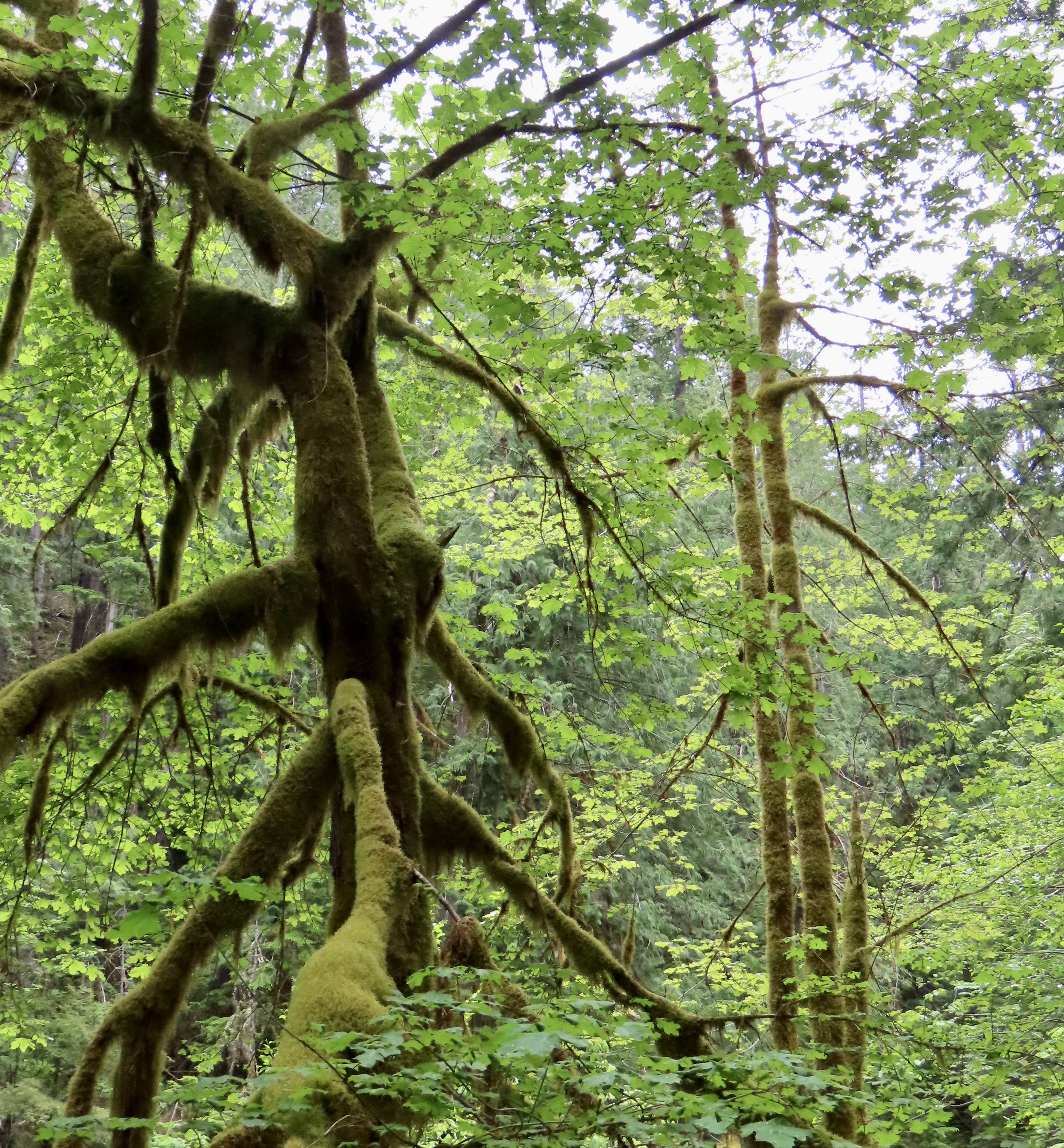
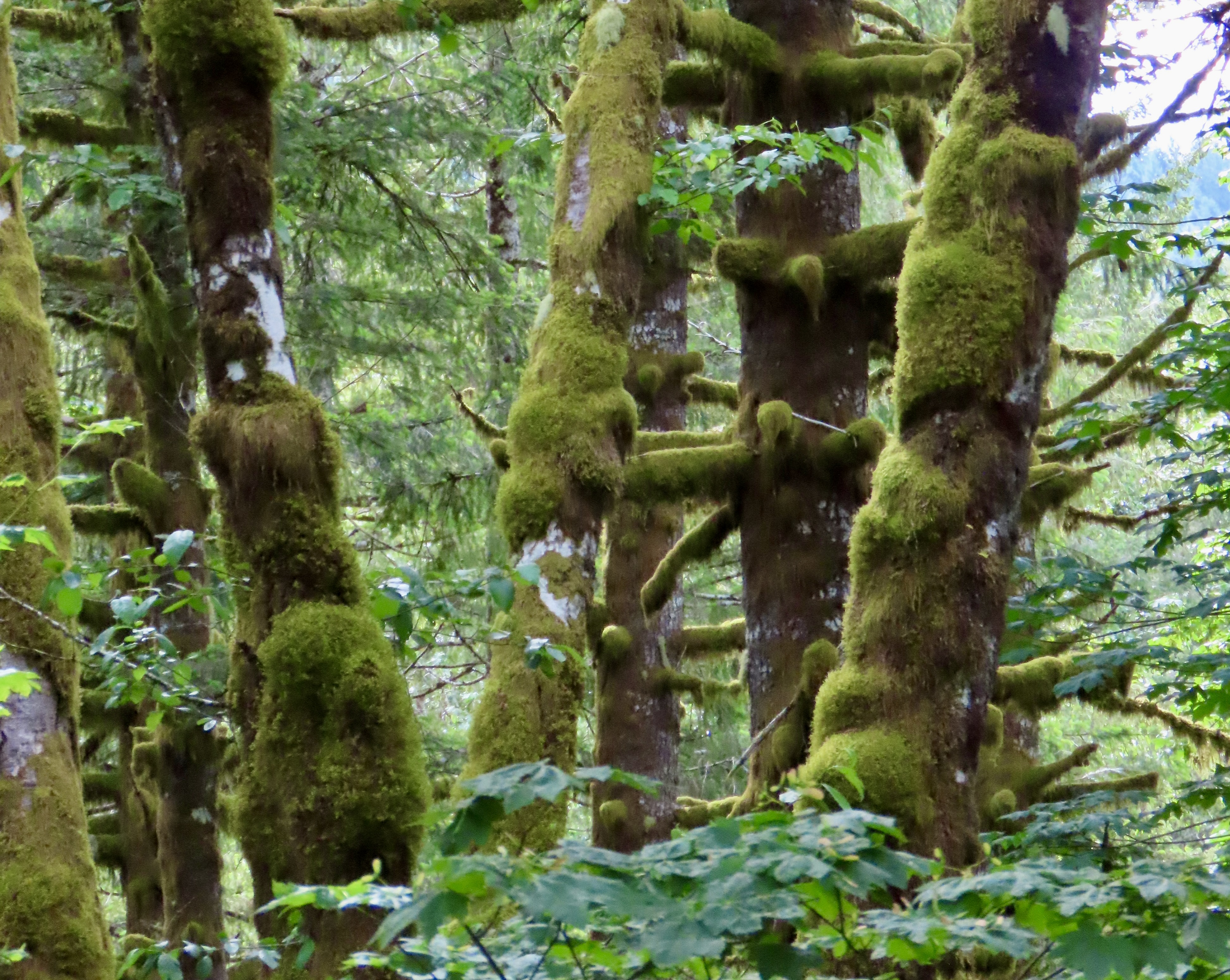
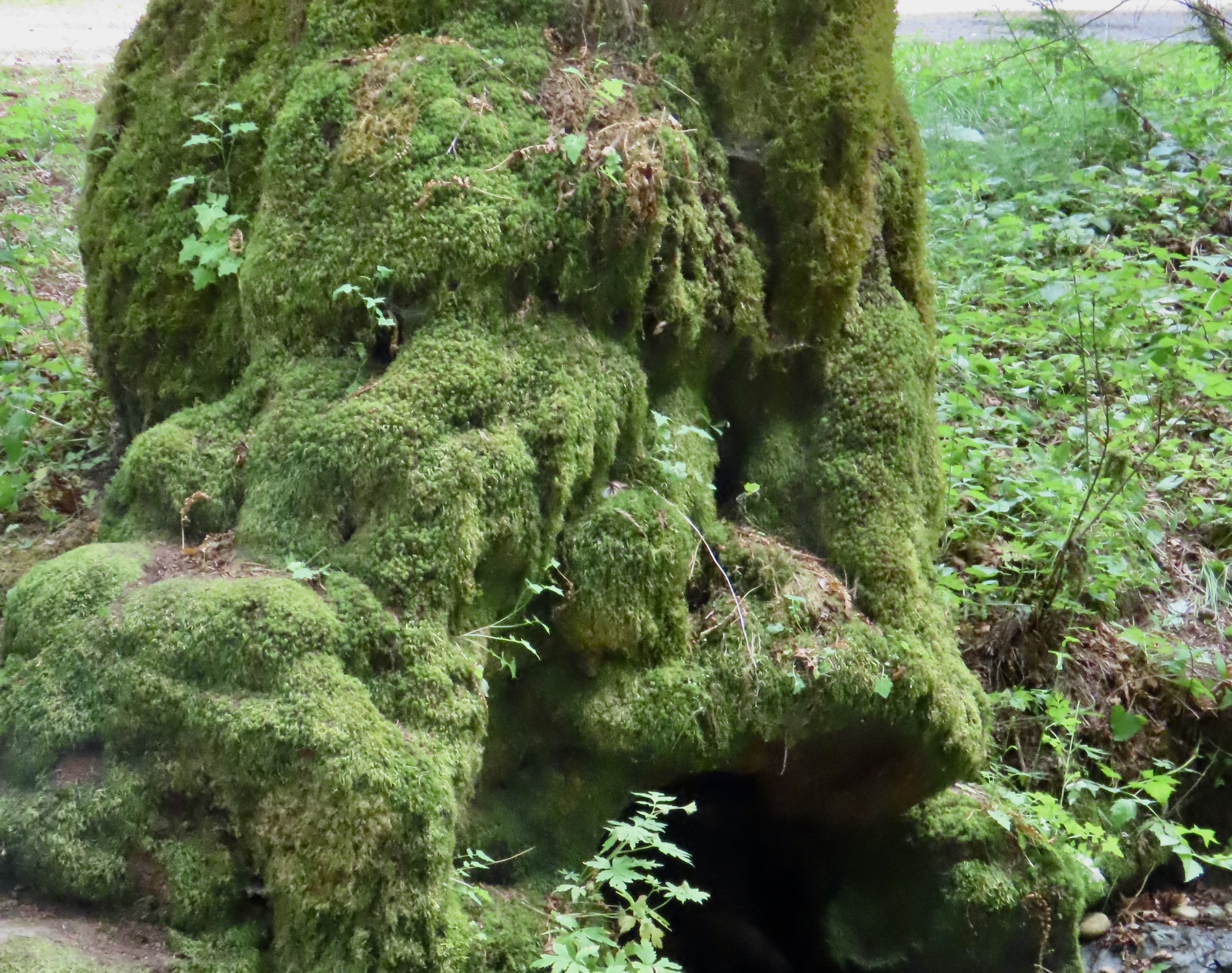
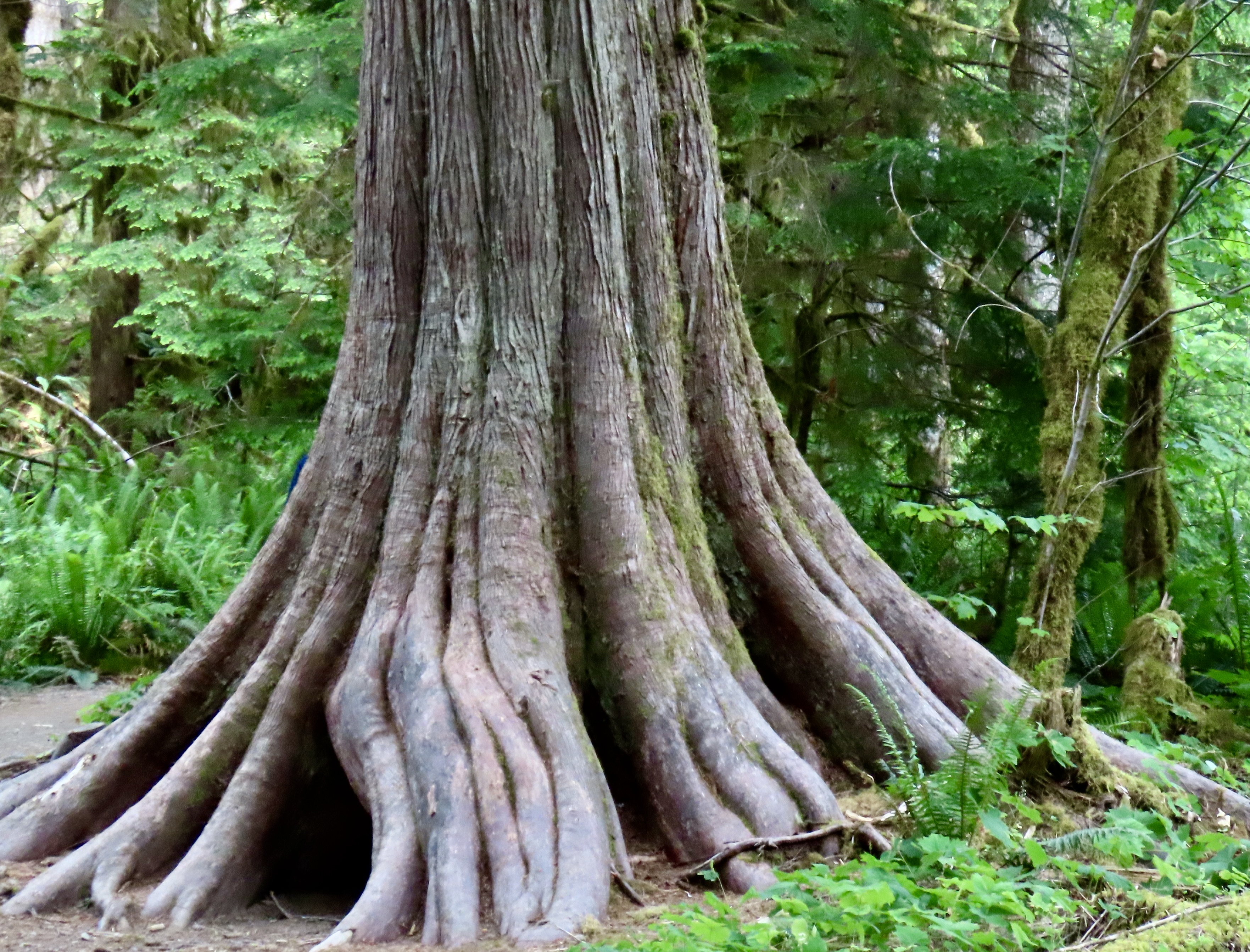
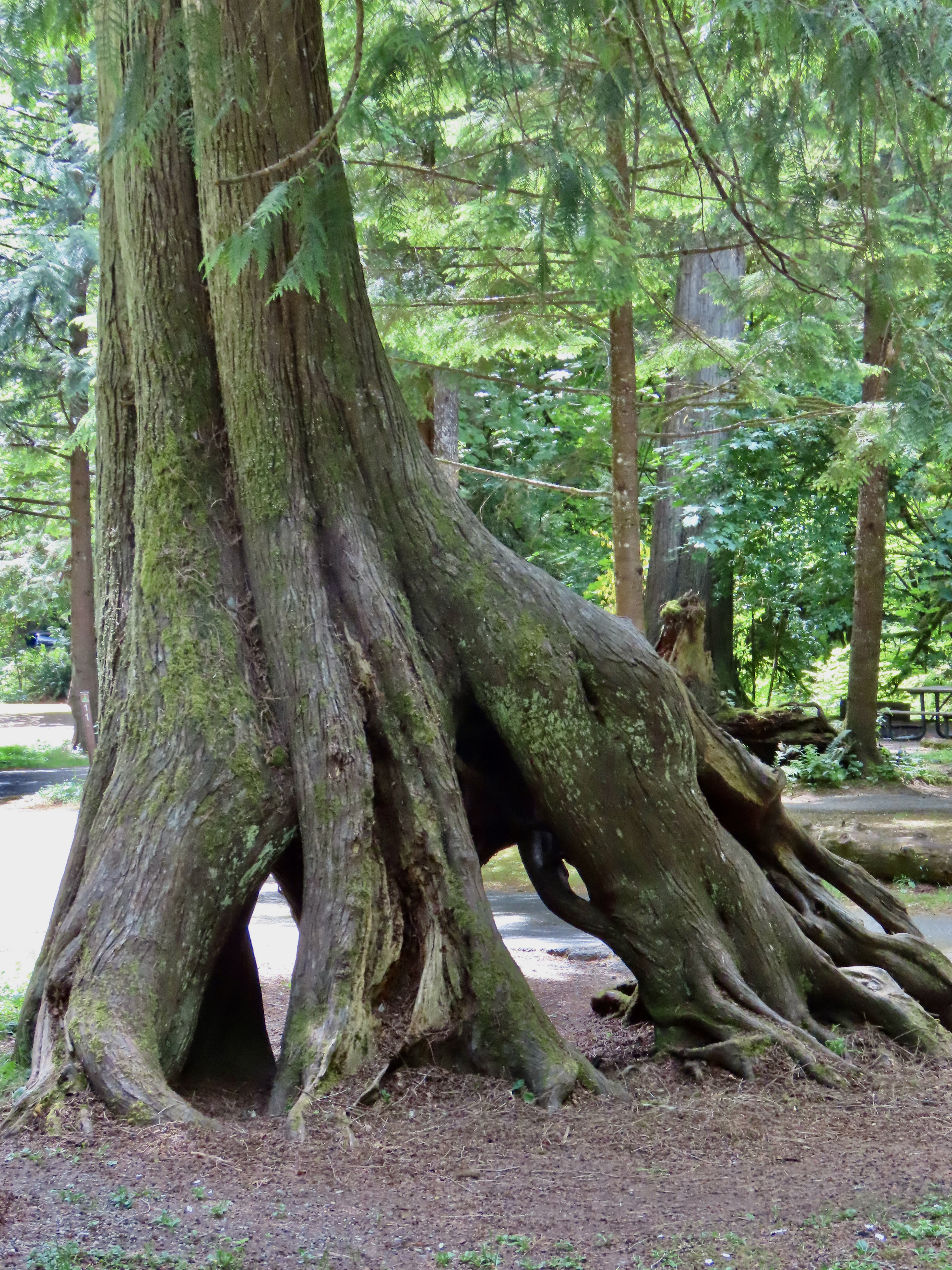
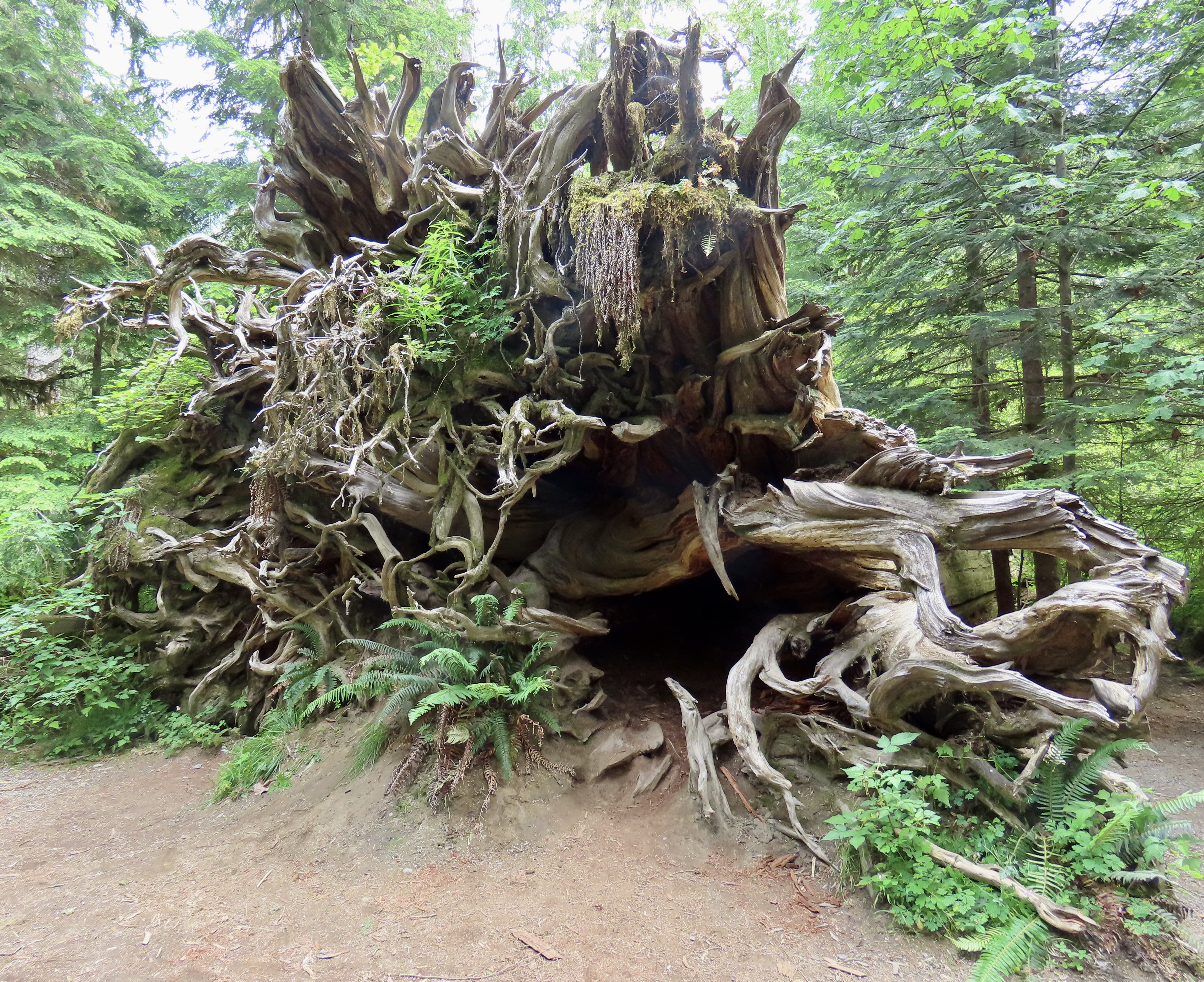
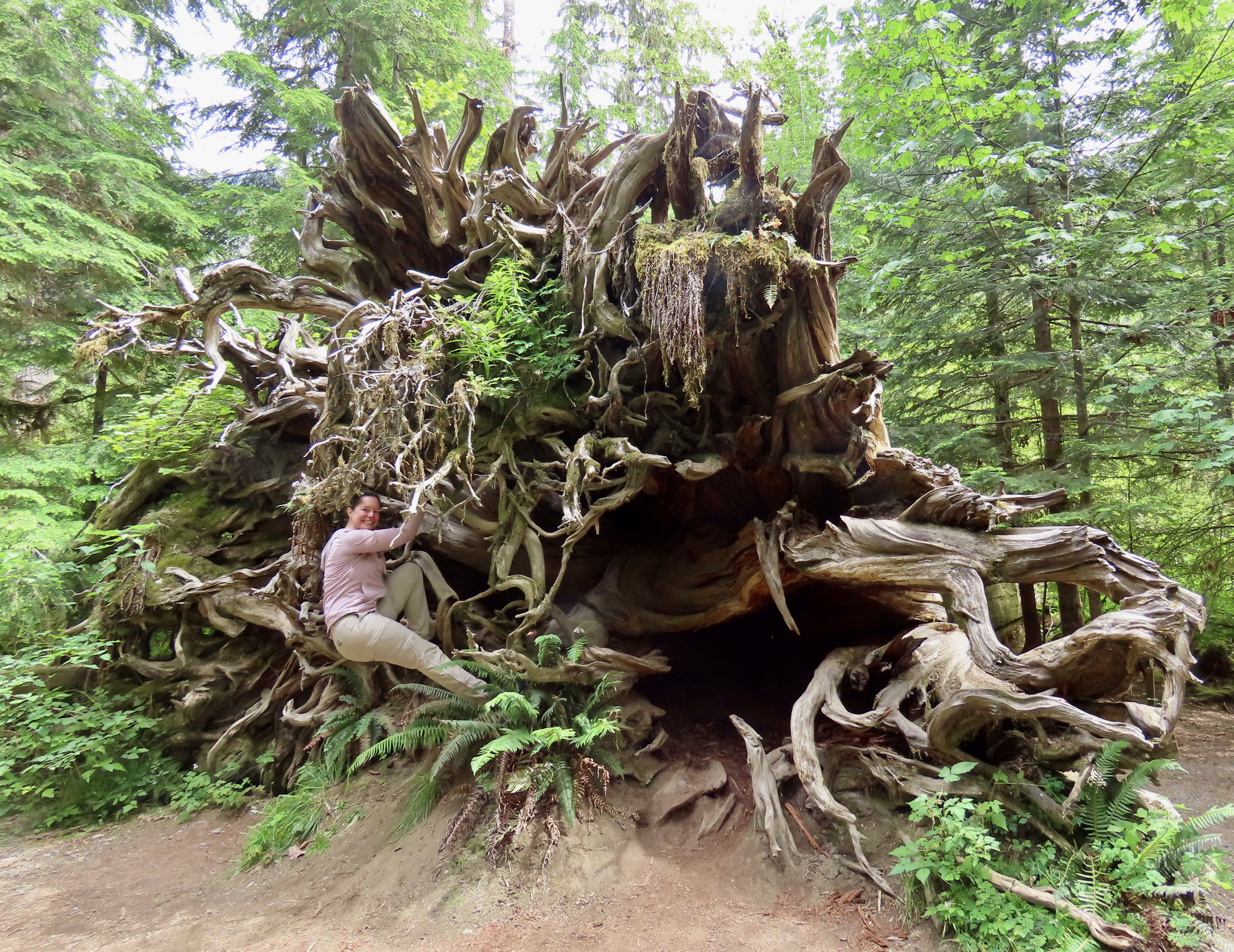
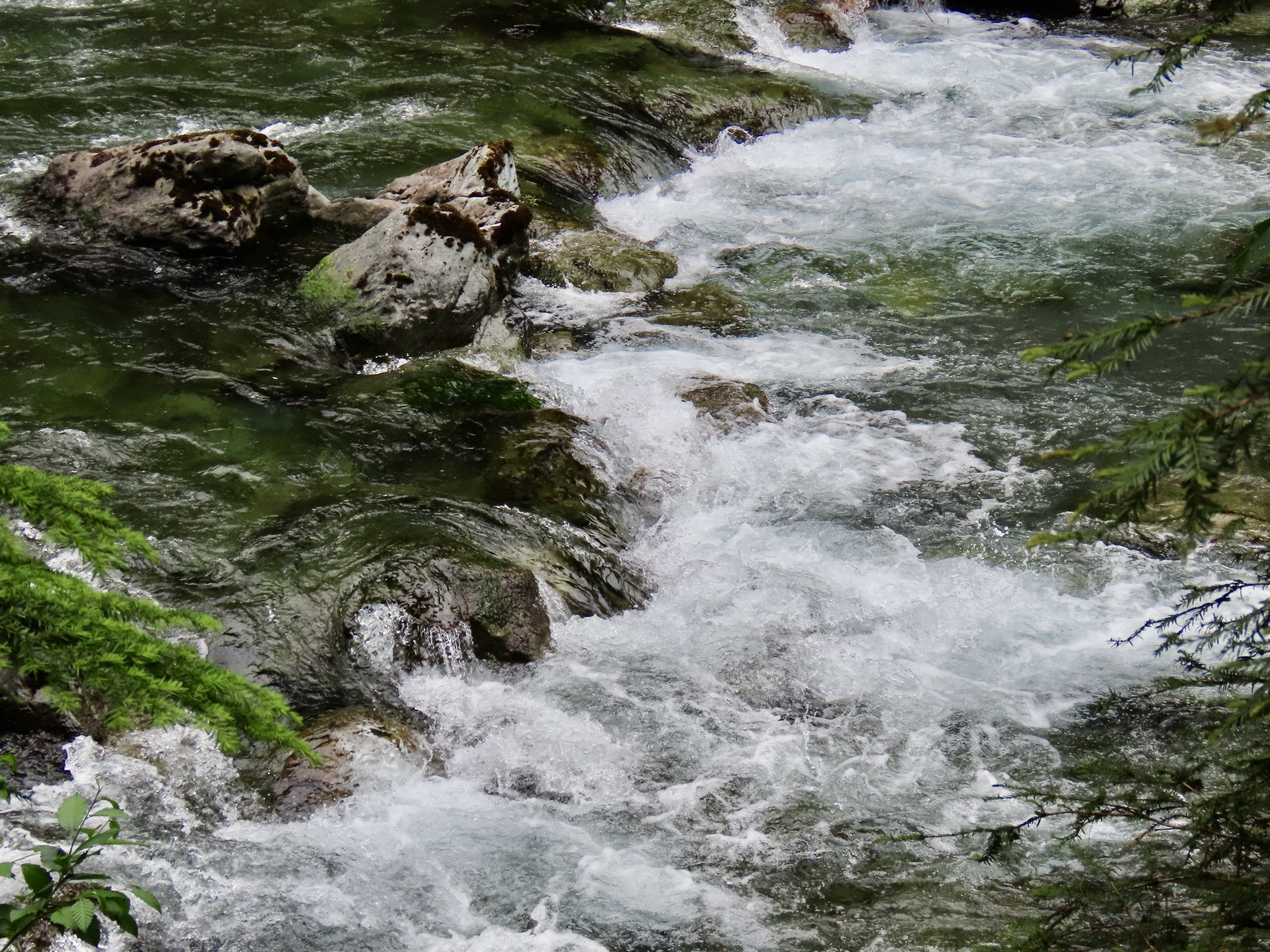
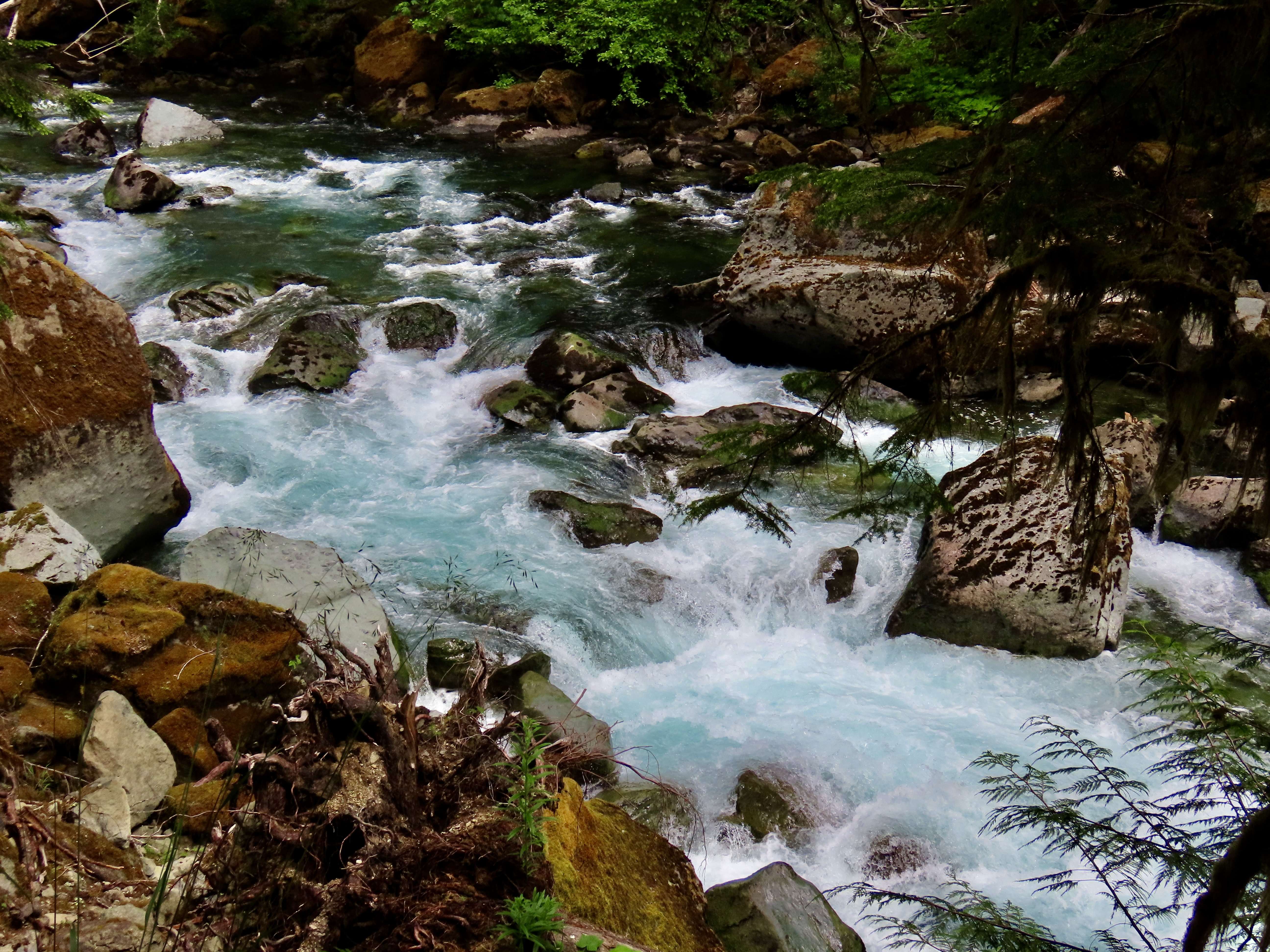
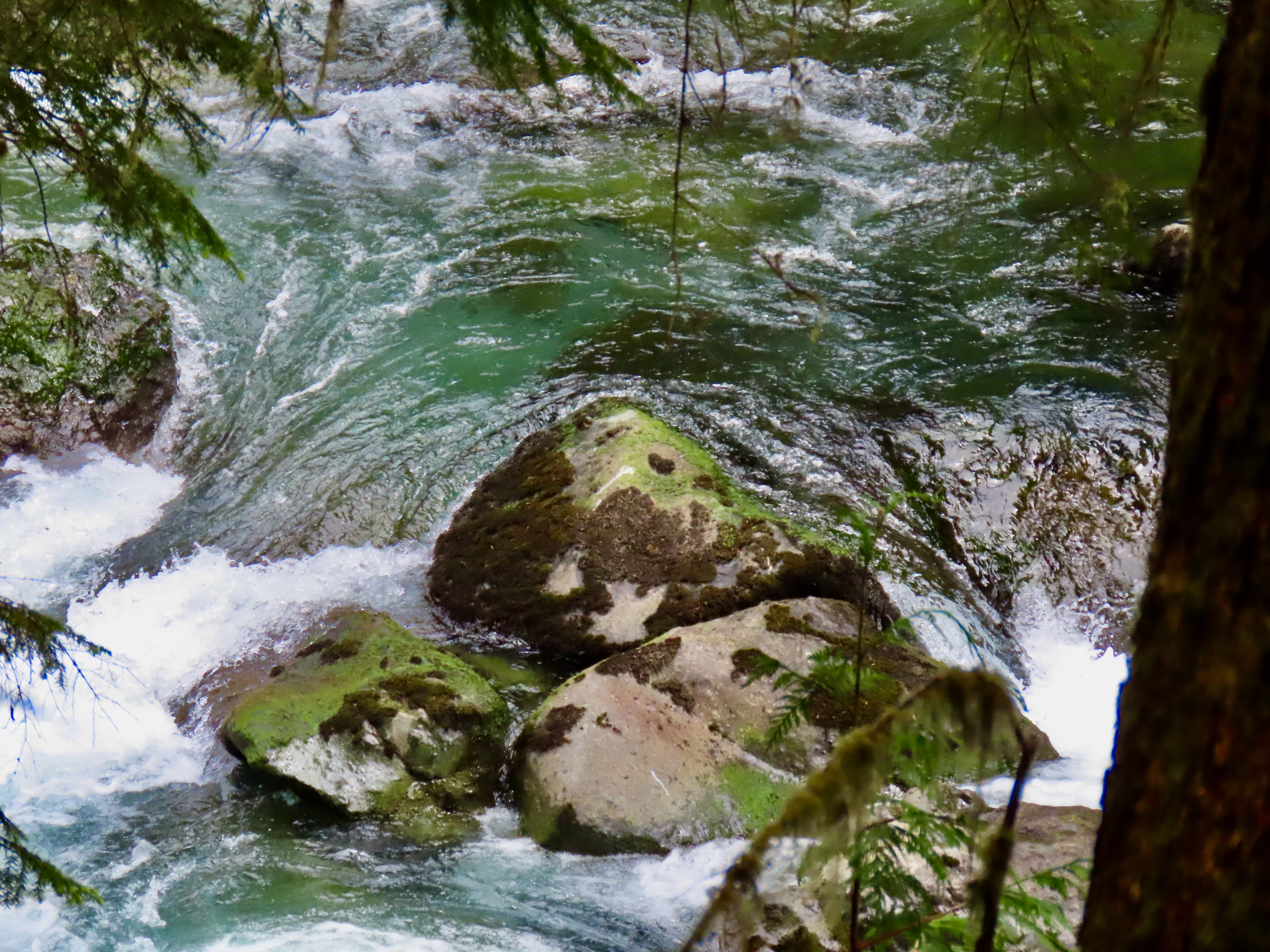
Moss covered trees are an iconic symbol of Olympic National Park. No surprise, it’s a rain forest! The park receives 100-140 inches a year— more on the coast, less as you journey inland. It is estimated that it takes 70-100 inches a year to create a rainforest. We were hiking on the park’s Staircase Rapids Trail when we took this photo. The trail and Lake Cushman receive around 100 inches a year. The moss creates a magical world where you half expect to find elves around the next corner. Or Bigfoot.This was a moss covered root.Speaking of roots, I wondered if this tree was about to rise up and go wandering. Had we arrived at Fanghorn Forest from Lord of the Rings?Hmm. Were we about to meet Treebeard?If so, he was lying down and taking a nap for a year or two.This was the granddaddy of roots along the trail, however. I half expected to find a dryad/wood nymph playing among the roots.And did! At no prompting from us, Christian immediately headed over to the tree and started climbing among the roots of the forest giant— like she belonged there.Given the name of the trail, Staircase Rapids, we expected to find rapids along the trail. And we did. But they were gentle. We had missed the massive runoff from snowmelt in the spring.Most of the snow had already melted off.Small rapids have a charm of their own, however.A bridge across the Skokomish River provided this view.One brave soul wanted a different perspective. At 81, I decided to pass… Grin.And depended on my telephoto to bring me up close and personal. That’s it for today. Monday’s post will find us kayaking on Cushman Lake and the Skokomish River just below the Staircase Rapids.Kayaking on the Skokomish River at the edge of Olympic National Park
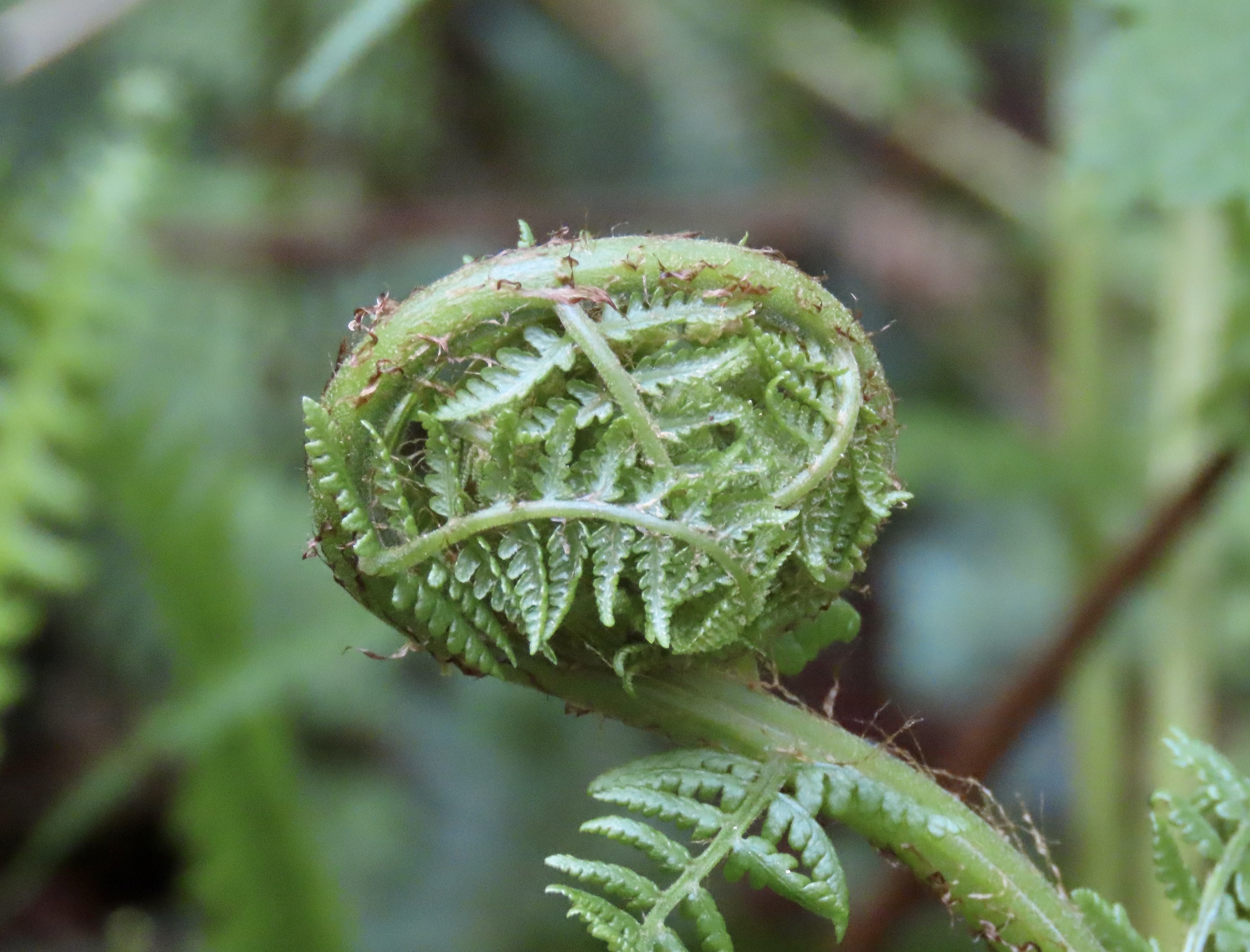
When I see something like this rolled up fern head, I have no problem imagining Jurassic Park, Star Wars, or even ET. Parts of all of these movies were filmed in the National and State Redwood Parks of the far northwest coast of California. ET phoned home, the Ewoks celebrated into the night on Endor, and T-Rex stomped through the rainforest of Fern Canyon in search of two-legged morsels. To top it off, even Bigfoot has been sighted in the Redwoods. Several times.A carving of Bigfoot Jr. sat outside the Redwood Carving Gift Shop in the small town of Orick.As the fern head featured above unrolls , it seems even more ancient. In reality, the fern is ancient. It was one of the first plants on earth, dating back to as far as 430 million years ago.The last phase of unrolling. It looks even more primitive.
The six mile road into Fern Canyon from Highway 101, where Jurassic Park, The Lost World, was filmed, was about a mile from where Peggy and I were camped. We had to go! The first four miles or so of the road had not recovered from winter storms. In addition to being one lane, it was full of Jurassic-size potholes. Had we fallen in one, it would have devoured our pickup faster than T-rex.
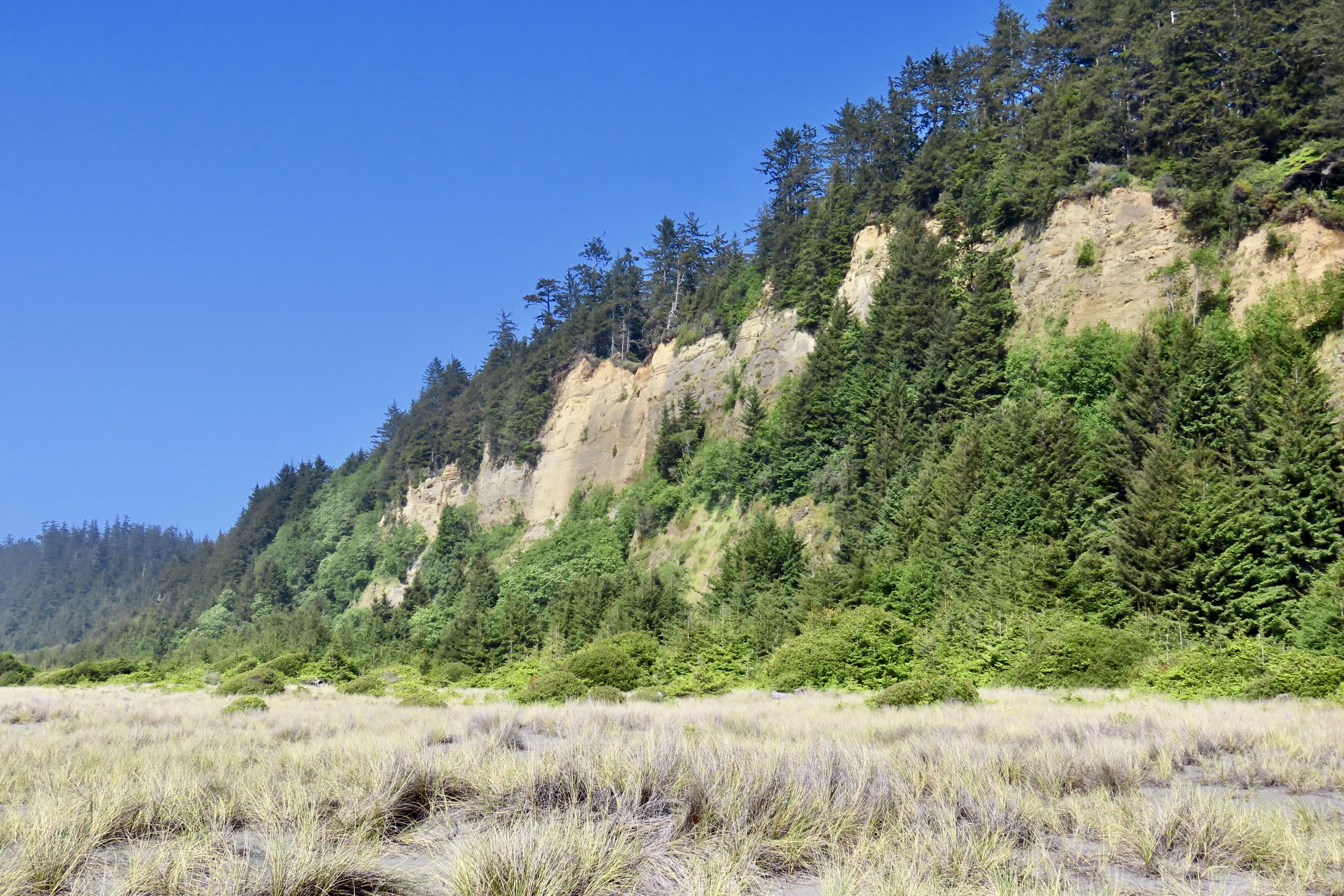
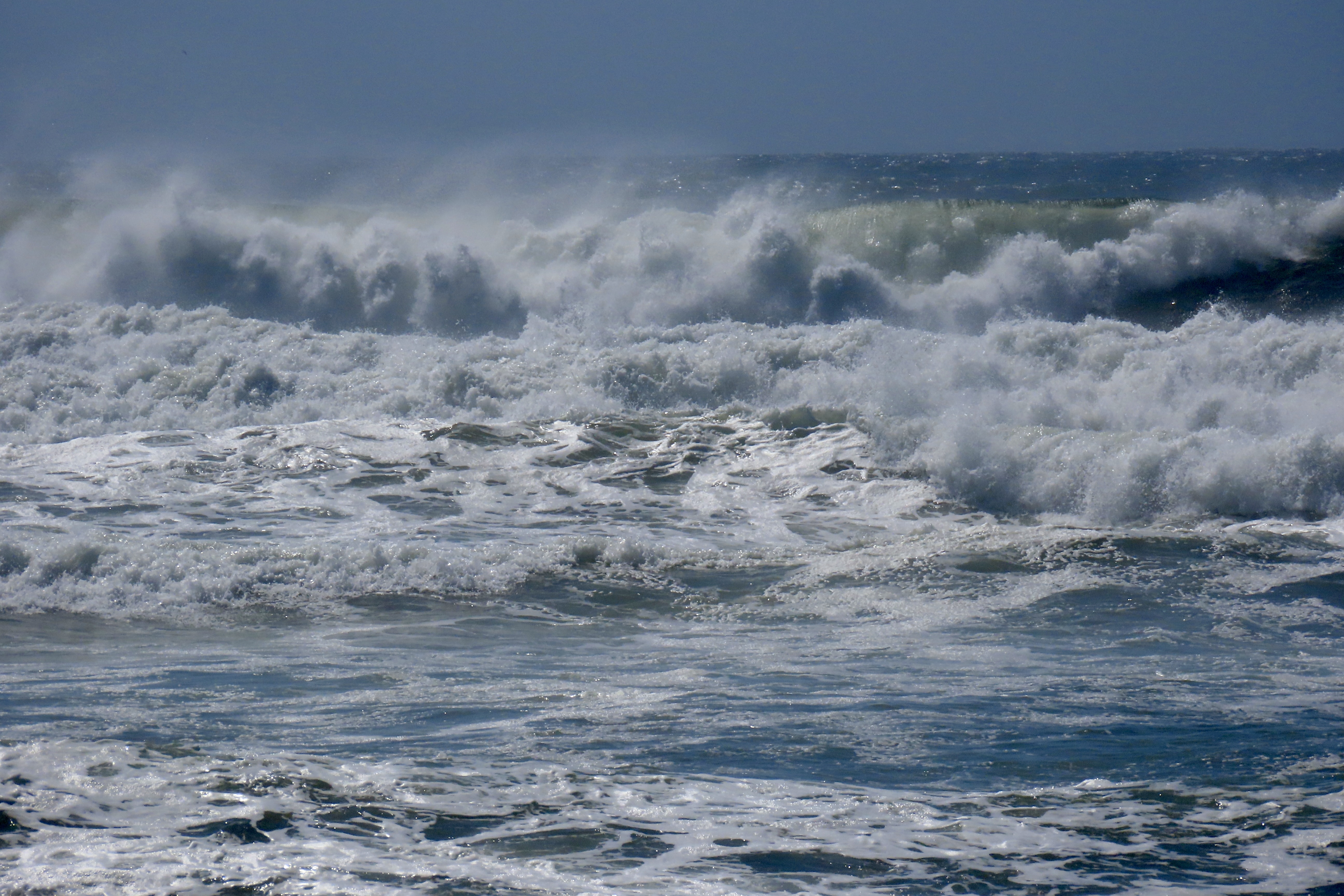
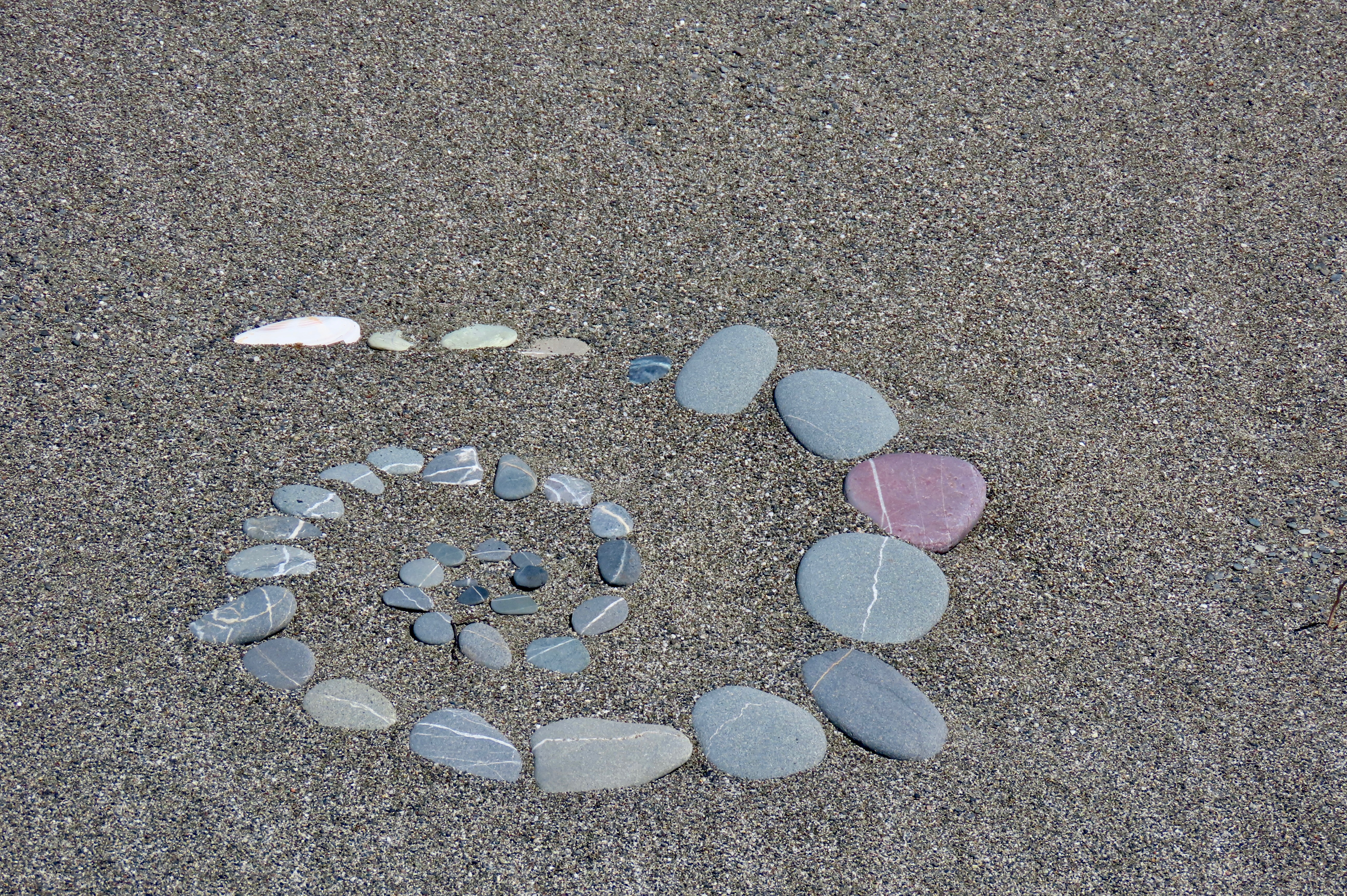
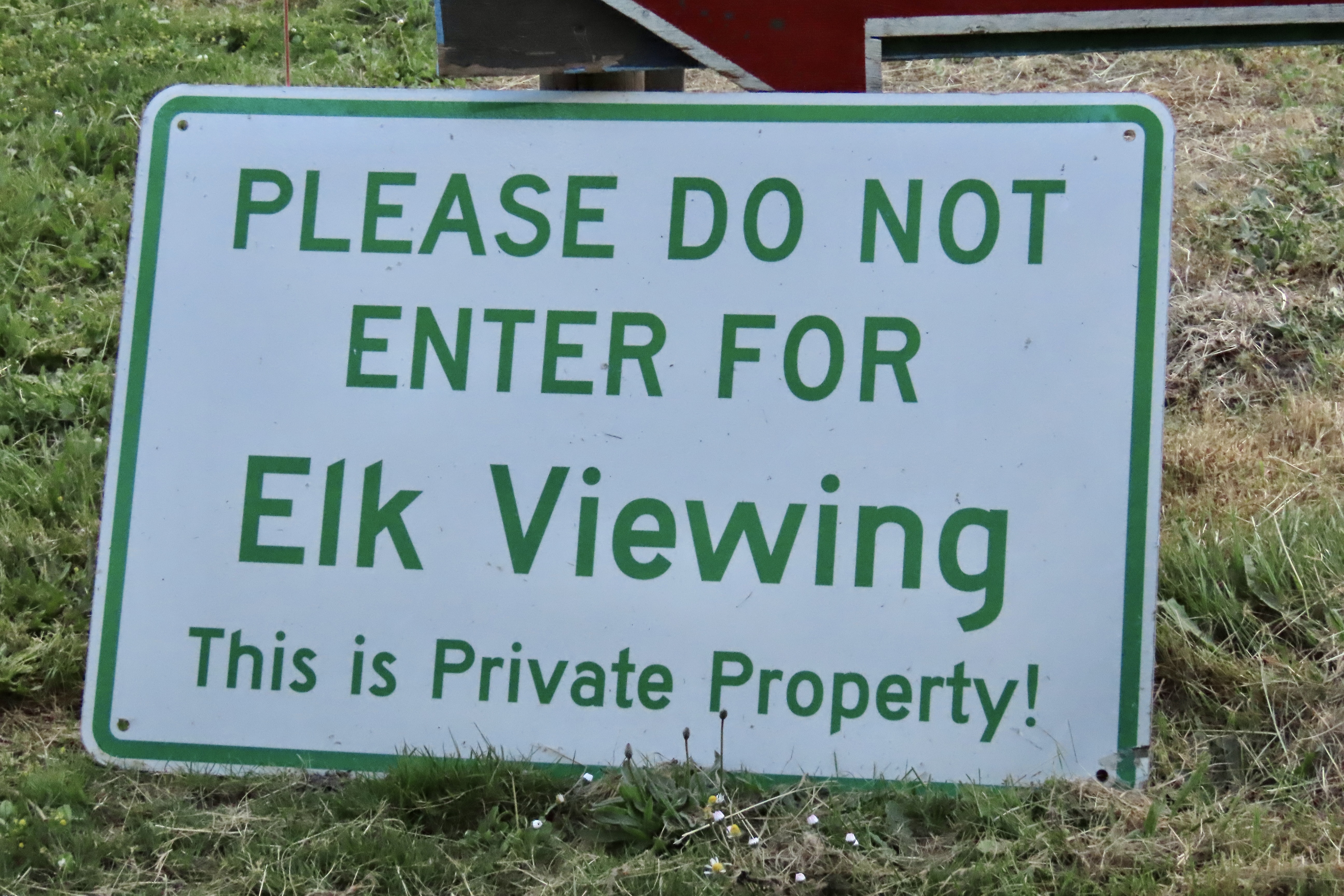
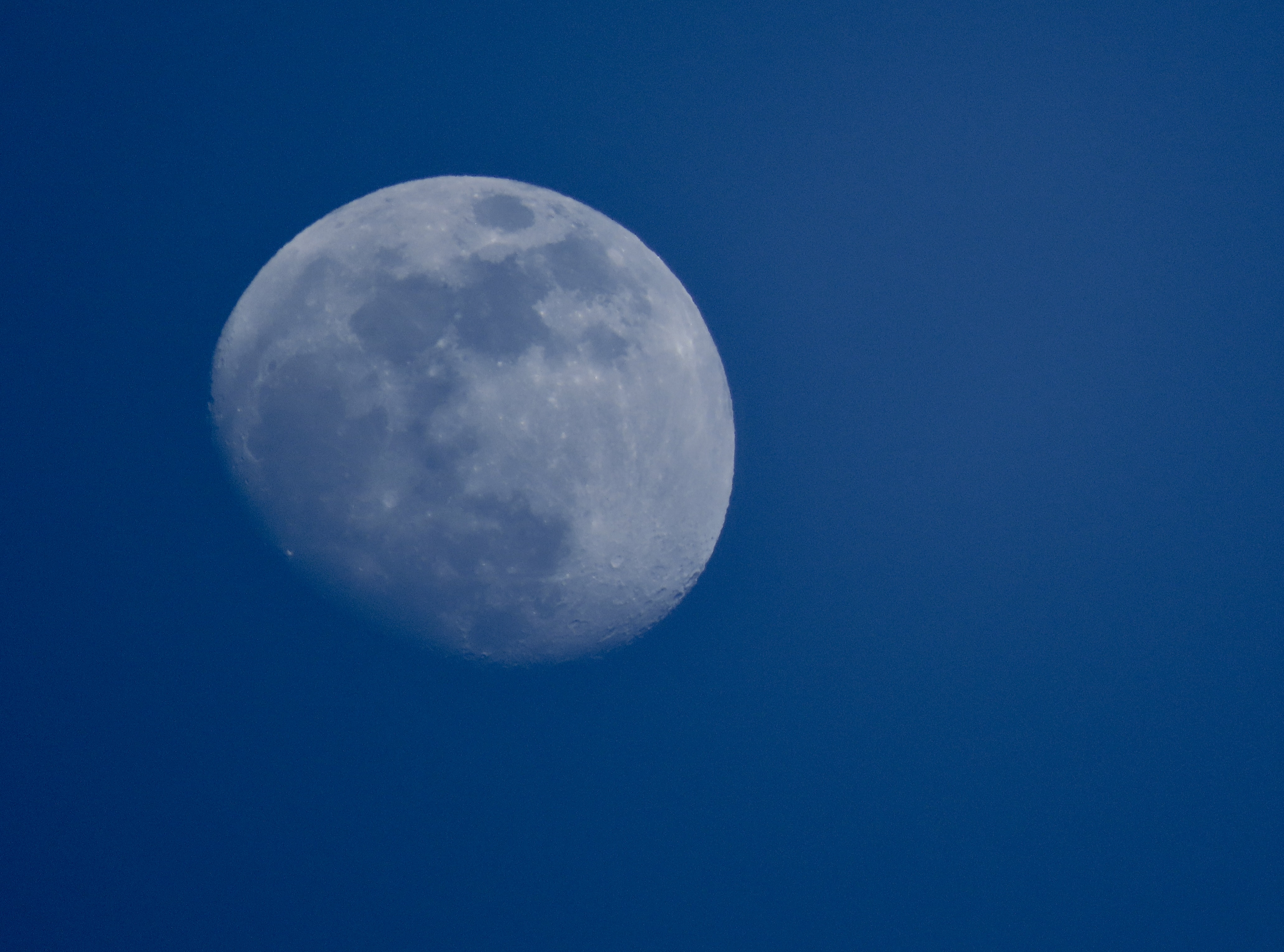
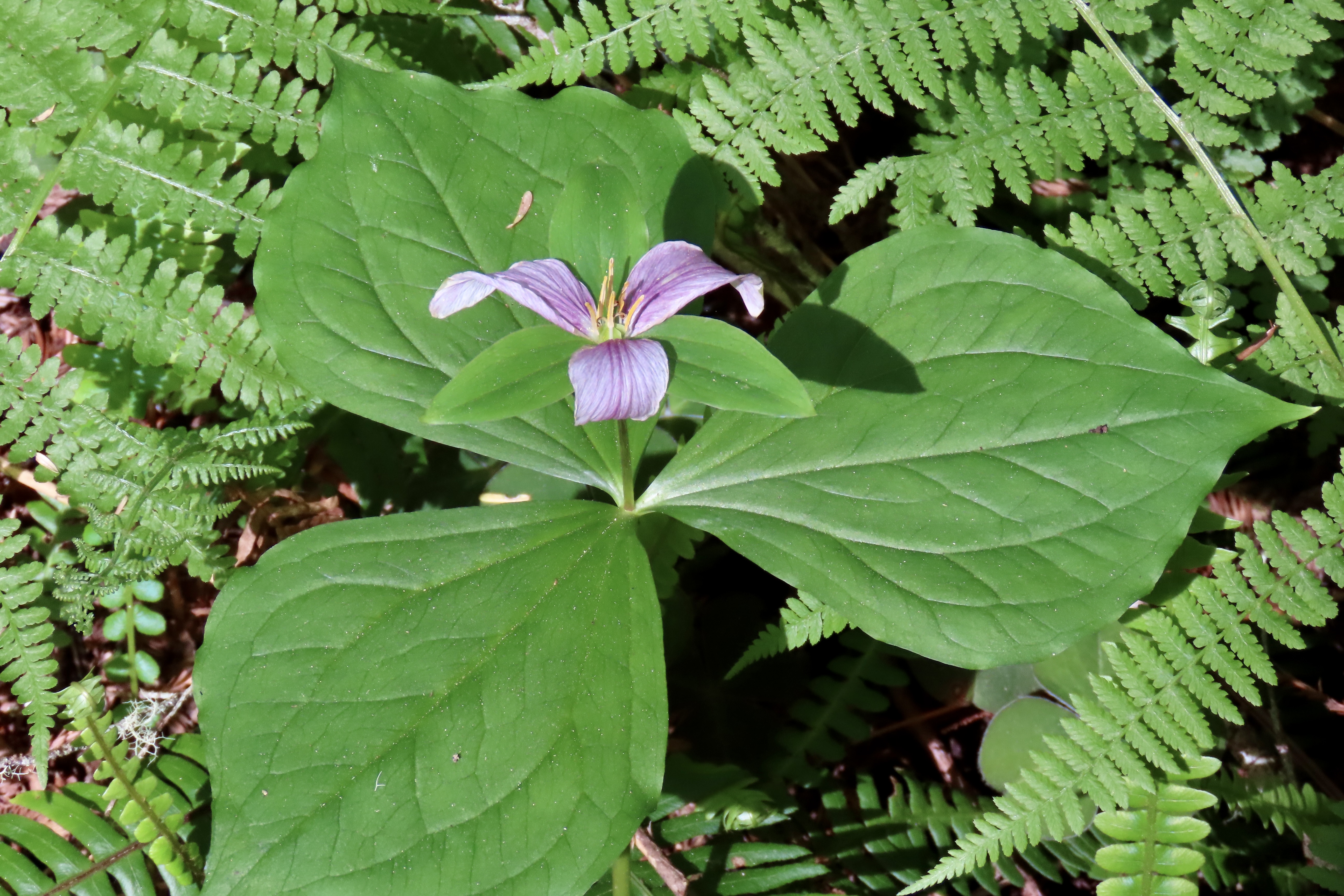
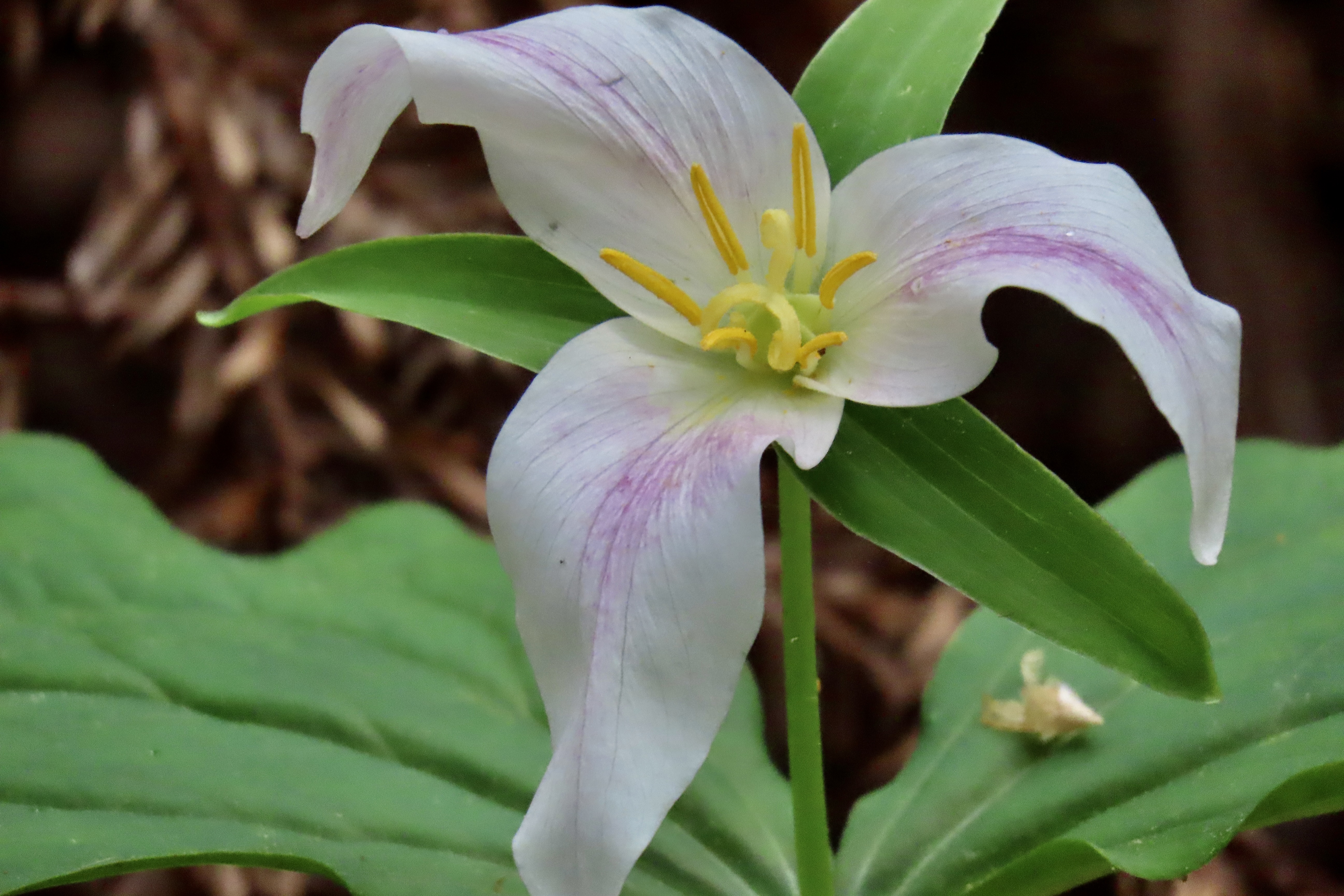
Fortunately, the road became wider and flattened out when we reached the ocean. Heavy equipment was eliminating pot holes. Gold Bluffs was on our right…And the ocean, on our left, was pounding ashore.Some one had left this neat artwork on the beach. I doubt it was Big Foot.The road came to an end and we started our hike into Fern Canyon. A small herd of elk was resting in the tall grass just off the trail. Had we realized how difficult it would be for us to see elk up close in the park, we would have spent more time with the herd.This sign greeted us as we drove into the small Heart of the Redwoods RV Campground where we stayed. Can you blame us for assuming we would be seeing elk— like out our door!This person’s front yard, about two miles away from our camp, was what we imagined.We reached the beginning of Fern Canyon and thought, “Is this it?” Actually it wasn’t. We would have had to wade a mile up the canyon and we weren’t wearing the right shoes.We lost ‘our once in a blue moon’ opportunity to see dinosaurs. (We took this from our campground. I played a bit with the processing.)We did see lots of ferns, however. And giant clover.On the way back to Highway 101, a trail sign invited us to see Trillium Falls. We like trilliums and we like waterfalls, so off we went. The falls were small, but still, technically, falls. We felt it was an appropriately Jurassic-like scene.Complete with ferns! But no trilliums.We found this one elsewhere in the Park. Trilliums earn their name by having three petals, three sepals, and three leaves.They are whiter when young and become more pink as they age.
AND A WRAP-UP
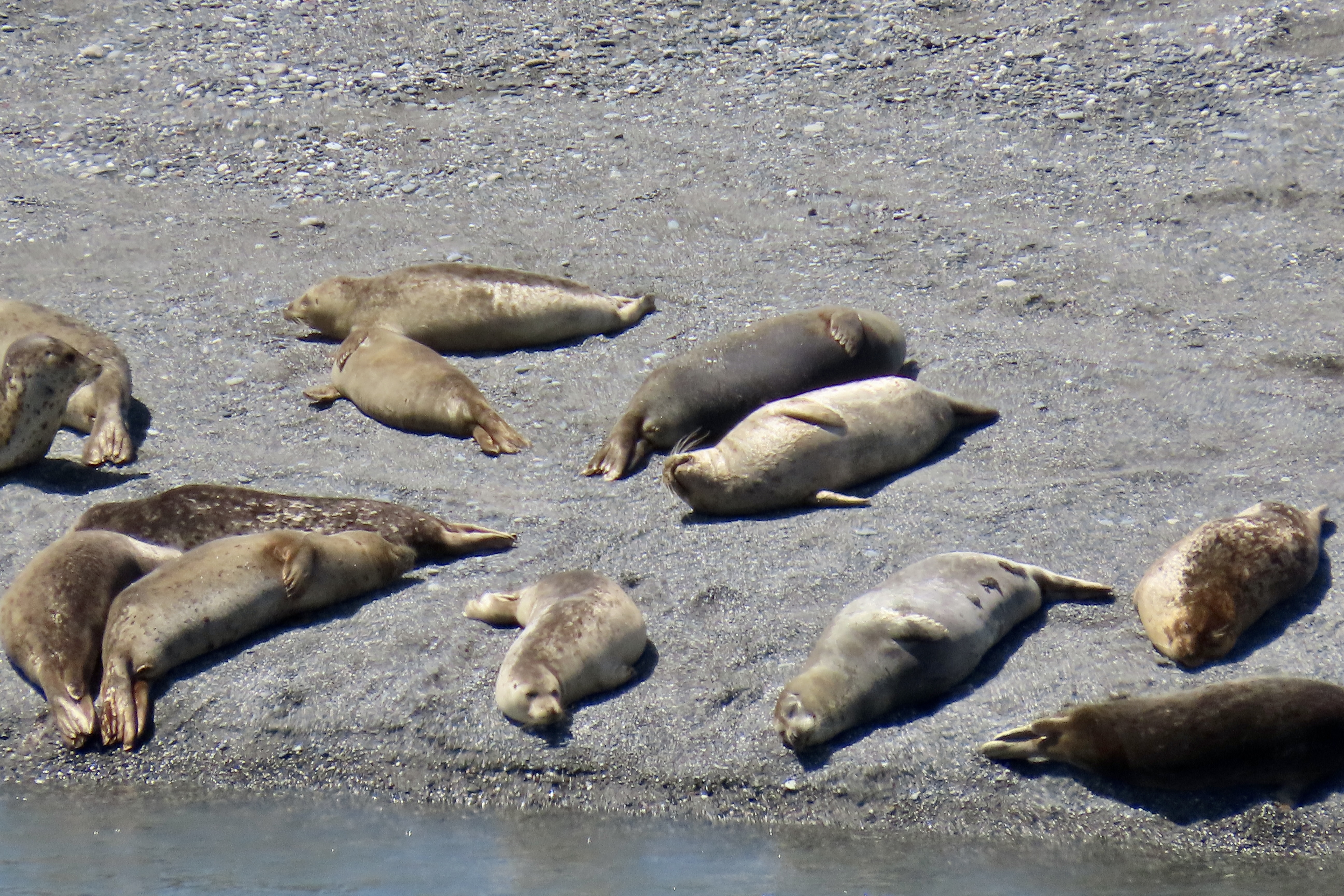
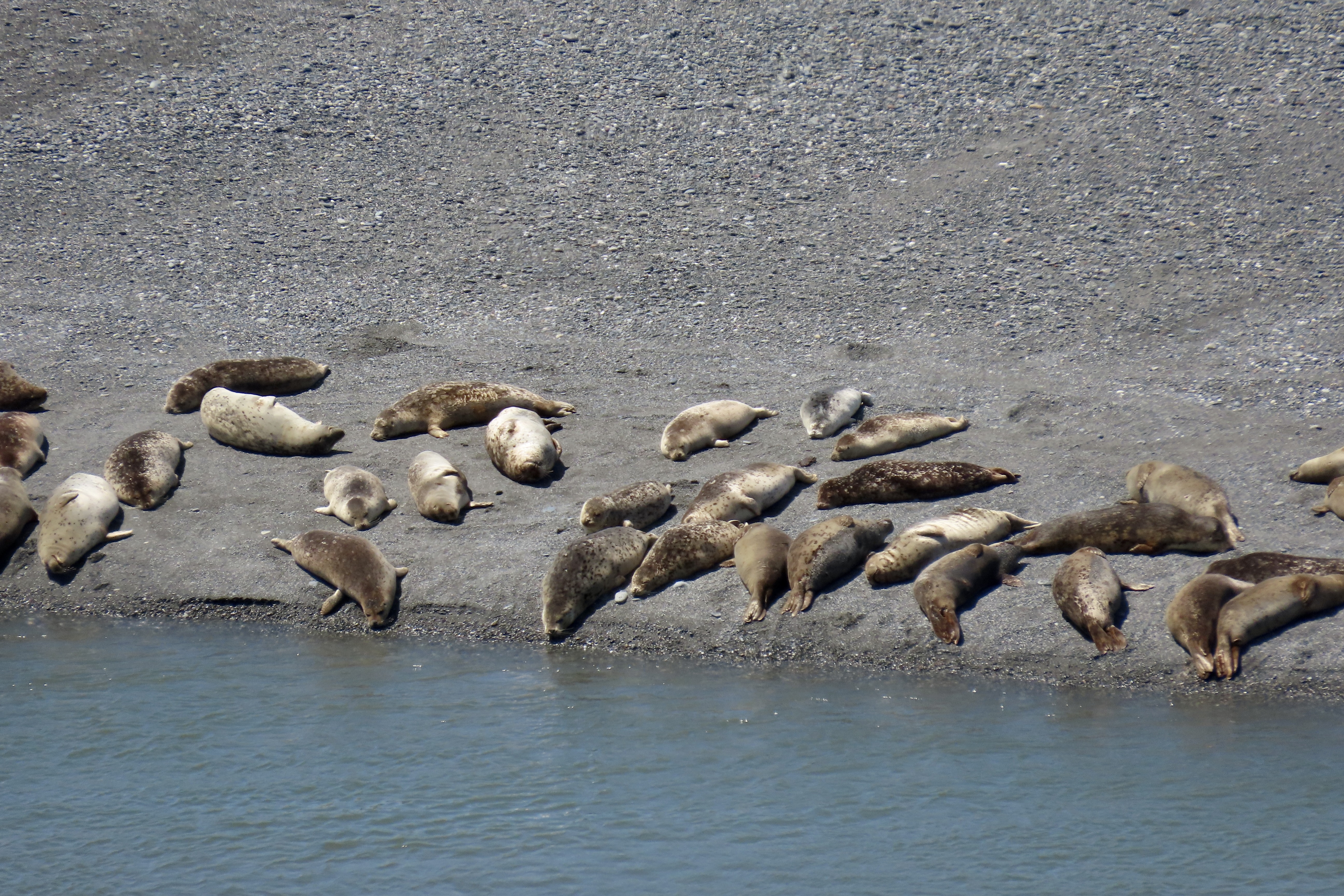
Peggy and I finished off our visit with a trip up to the Klamath Beach Road on the northern end of the Park. We had visited the beach on a previous trip to the Redwoods and found it covered with colorful small pieces of redwood that had been carved by the ocean. While the road was theoretical paved, it was equally rough to the road into Fern Canyon. Unfortunately, the access road was closed. The beach had been taken over by seals! We drove up to an overlook.
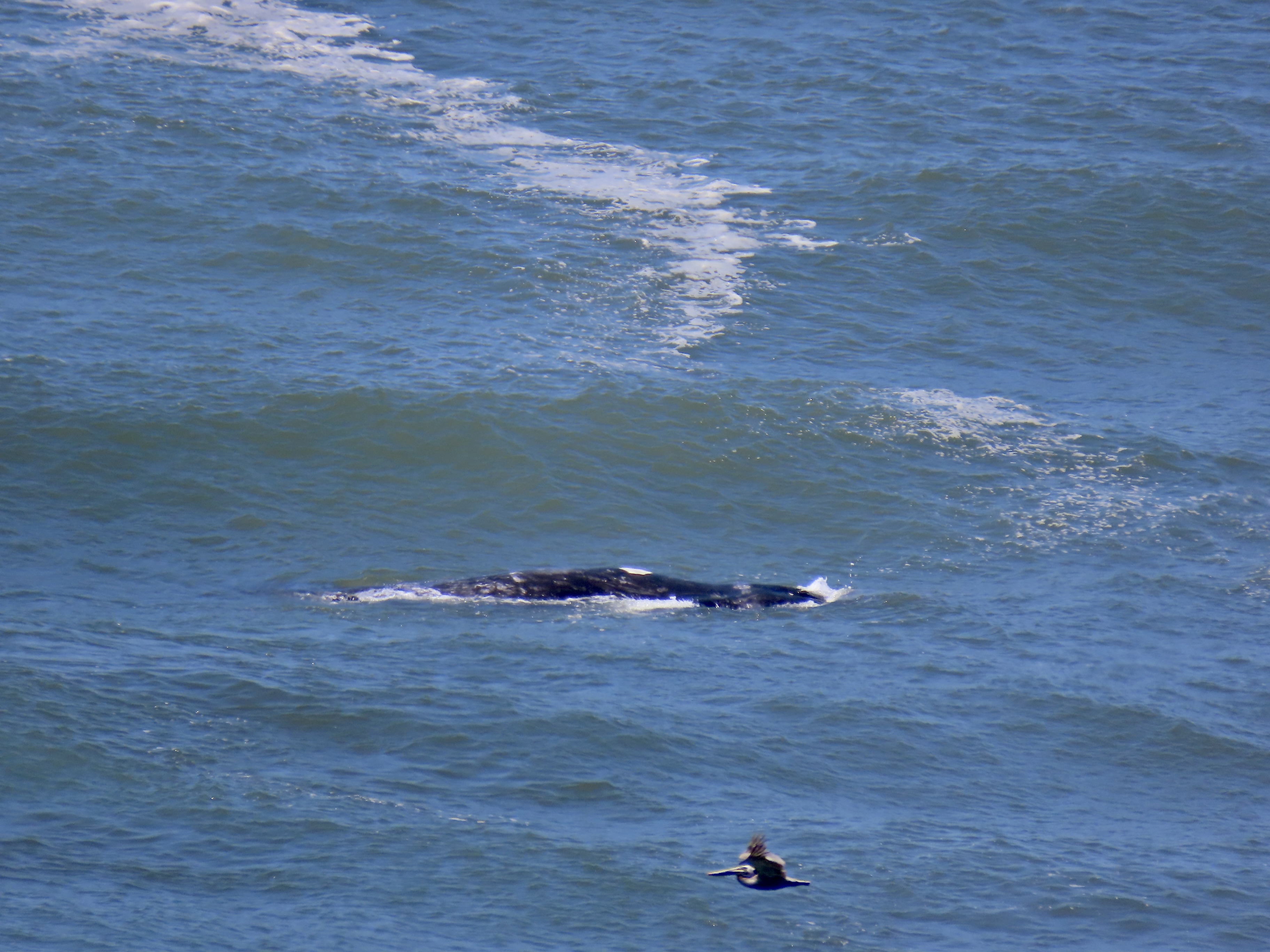
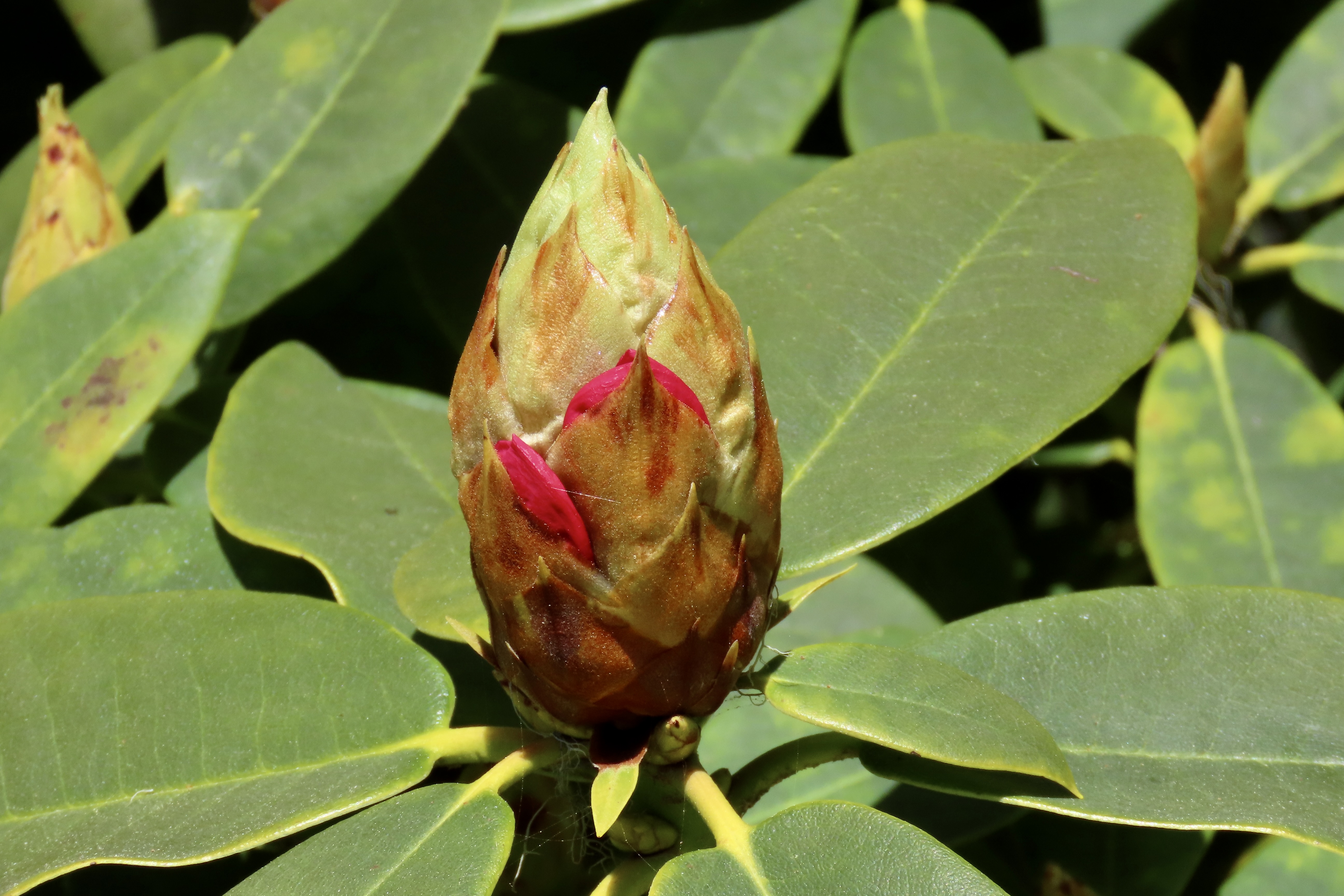
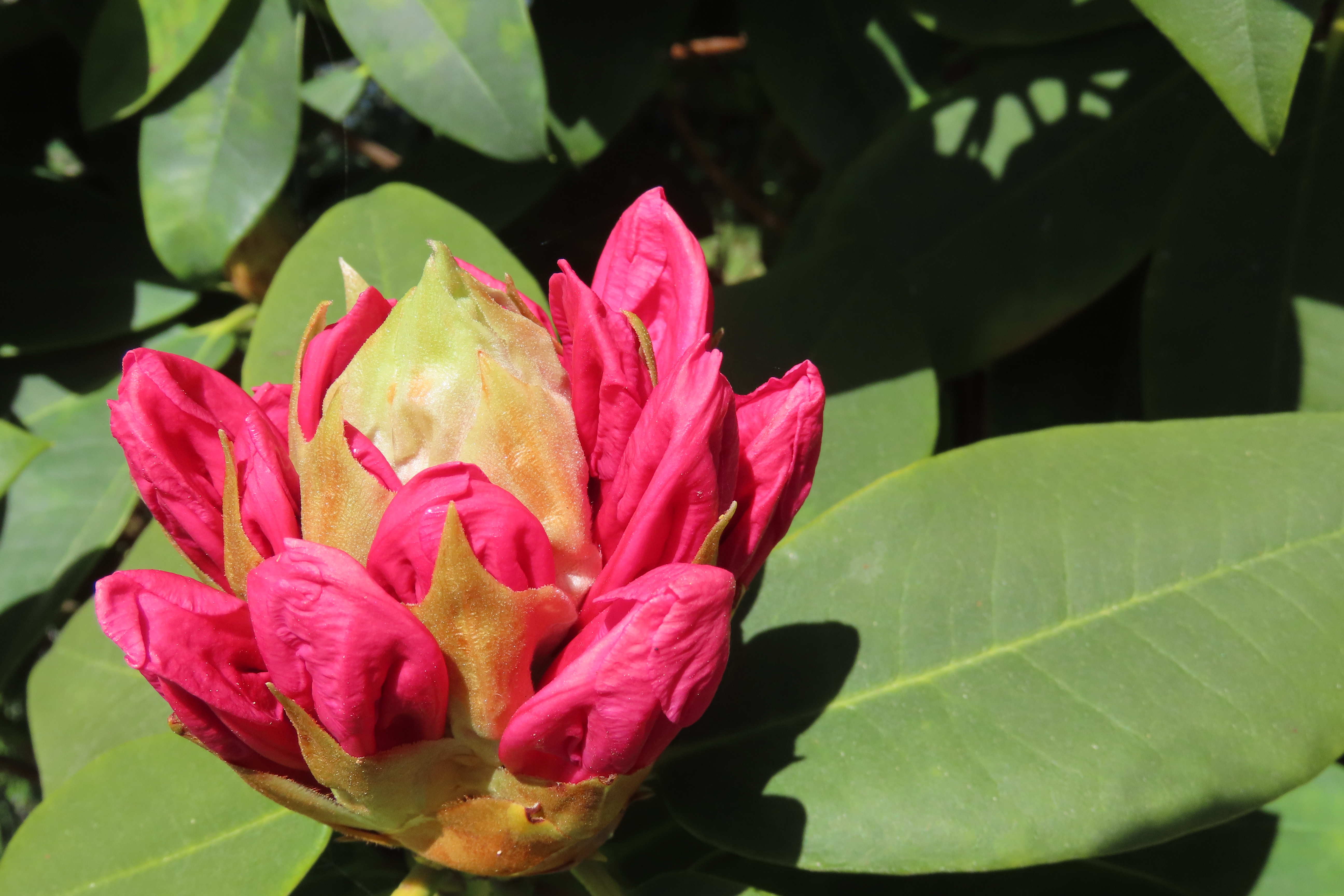
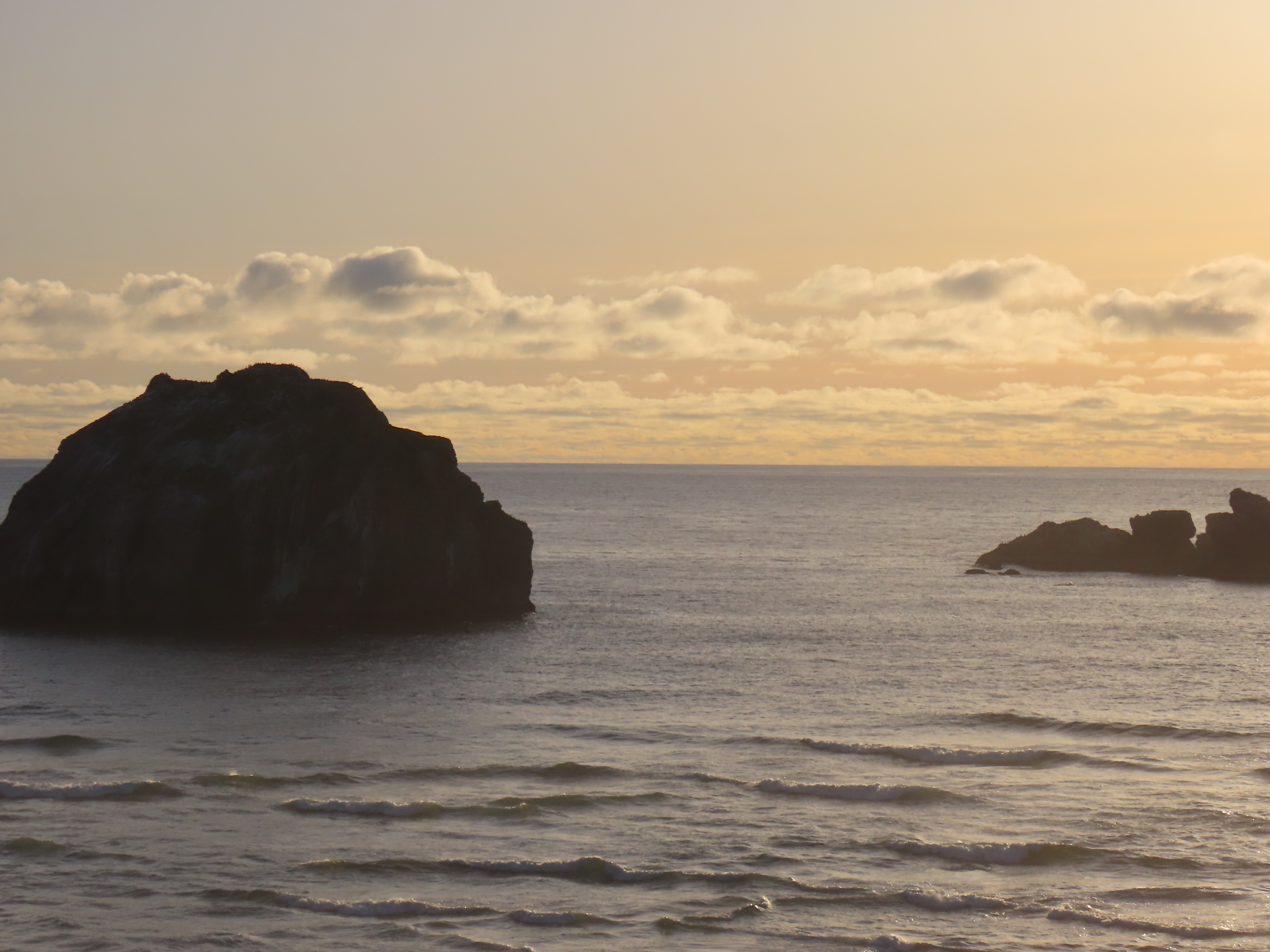
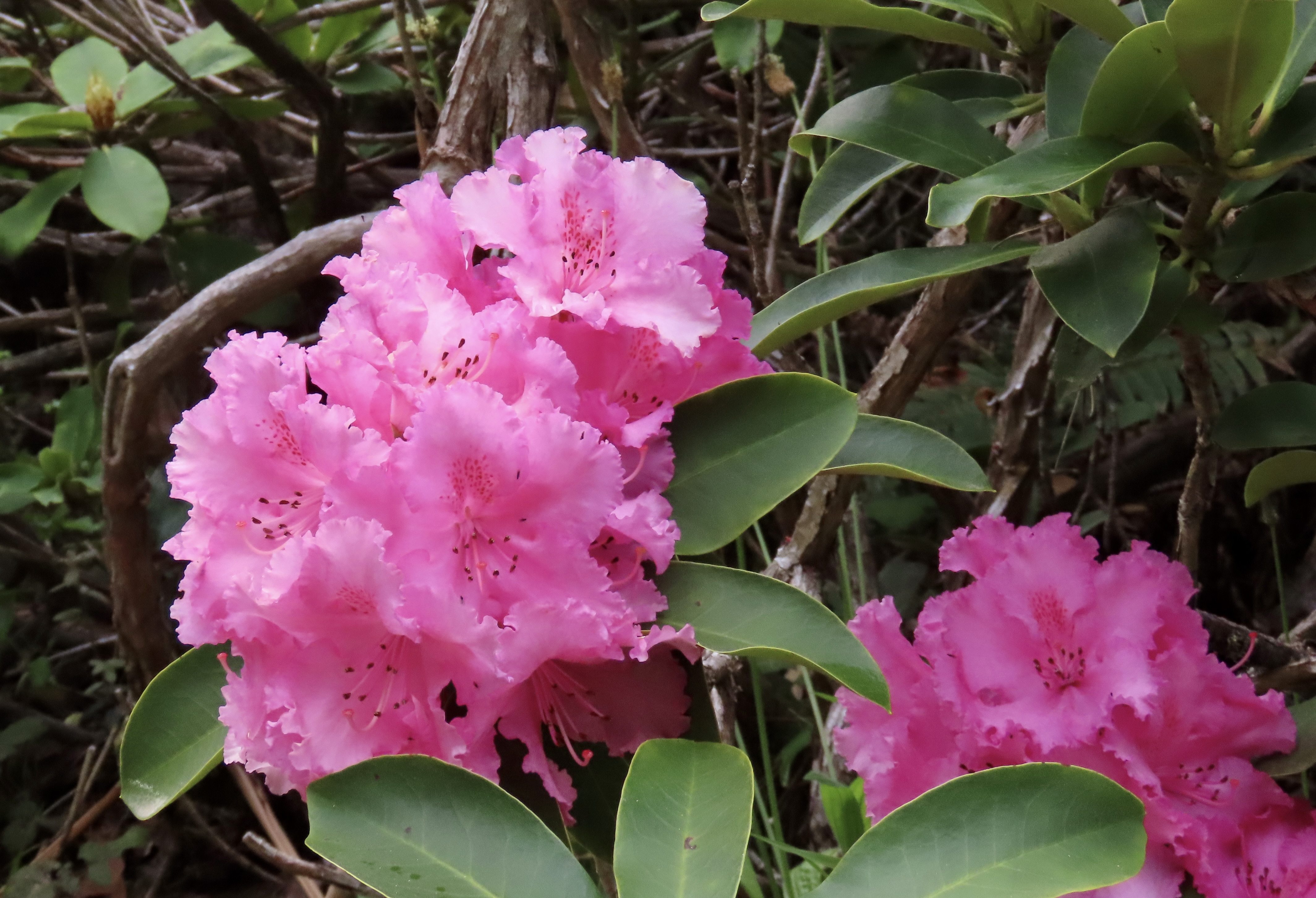
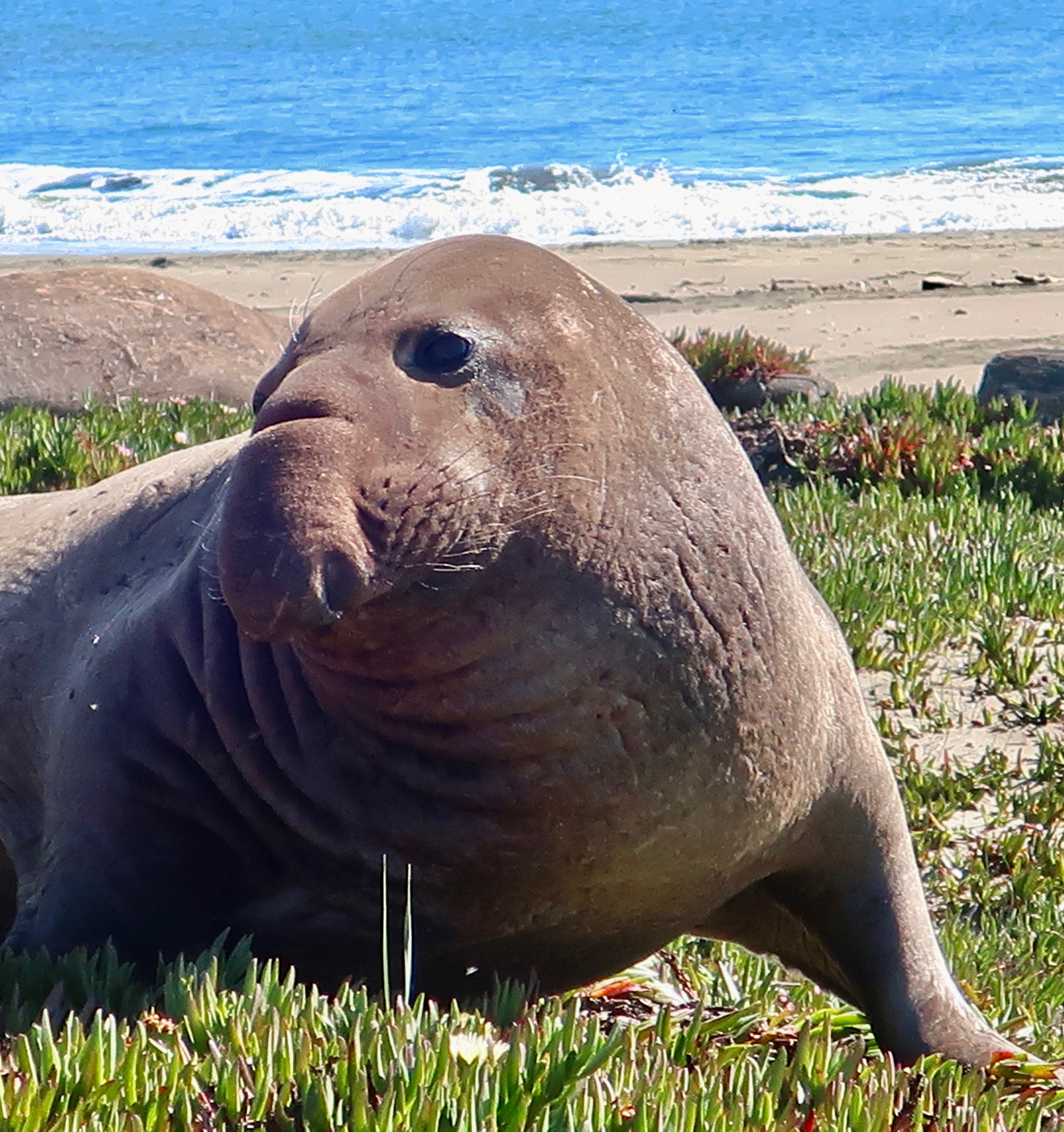
You’ve seen a number of seals so far from our journey up the coast. I’m sure you will see more. These, like the rest, seemed well fed and not particularly interested in physical exercise! That’s reserved for when they are in the water.What was different about these seals was their sheer numbers.California brown pelicans and seagulls backed up the seals.And Peggy spotted a whale out in the ocean, making its way north to Alaska.An old cemetery was next to where we were parked. Rhododendrons were budding in it.And had a unique beauty. With that, I’ll close our posts on the Redwoods. The fabulous sea stacks of Bandon, Oregon, are waiting.Brandon’s famous Face Rock outlined by the setting sun.
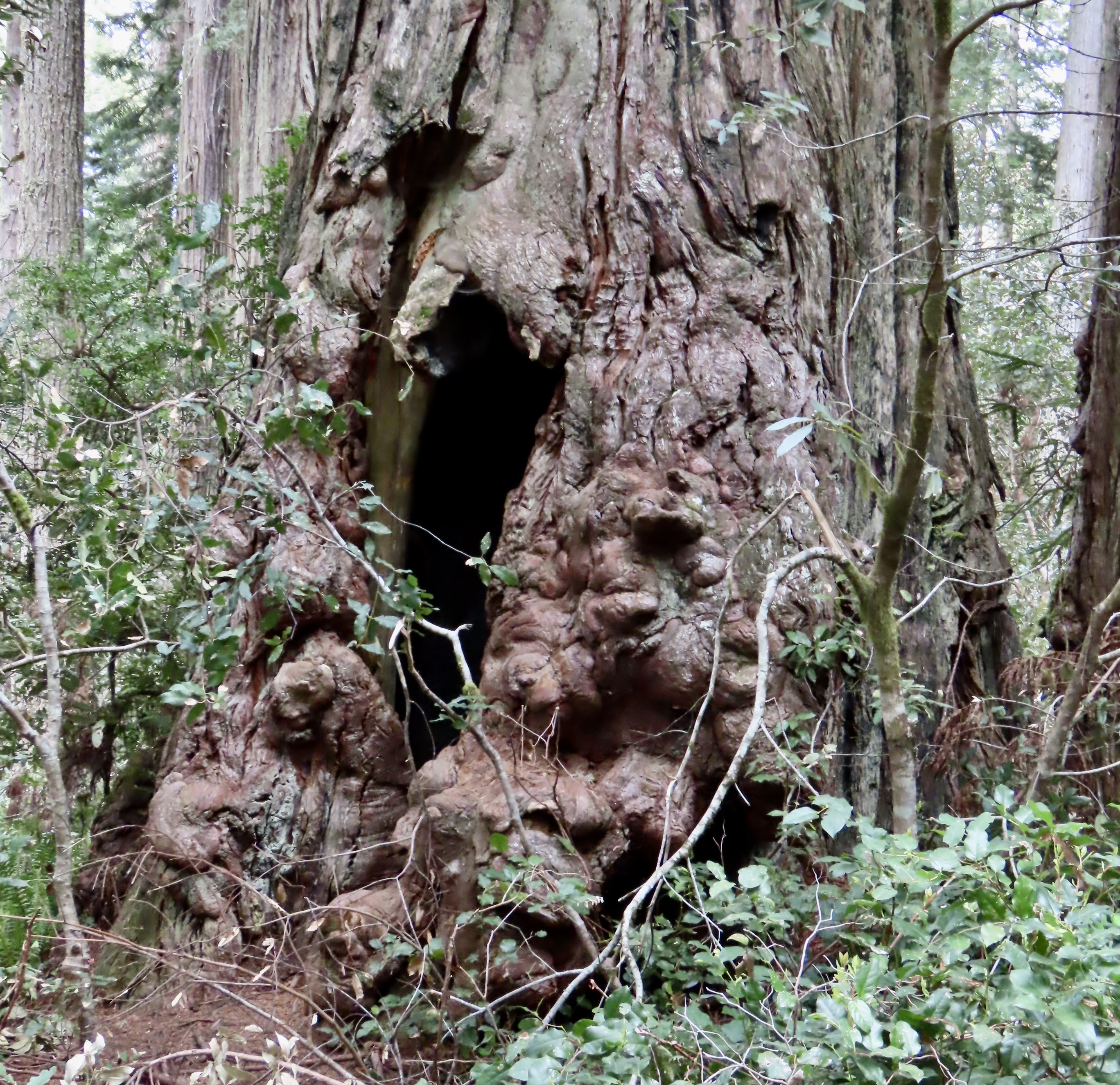
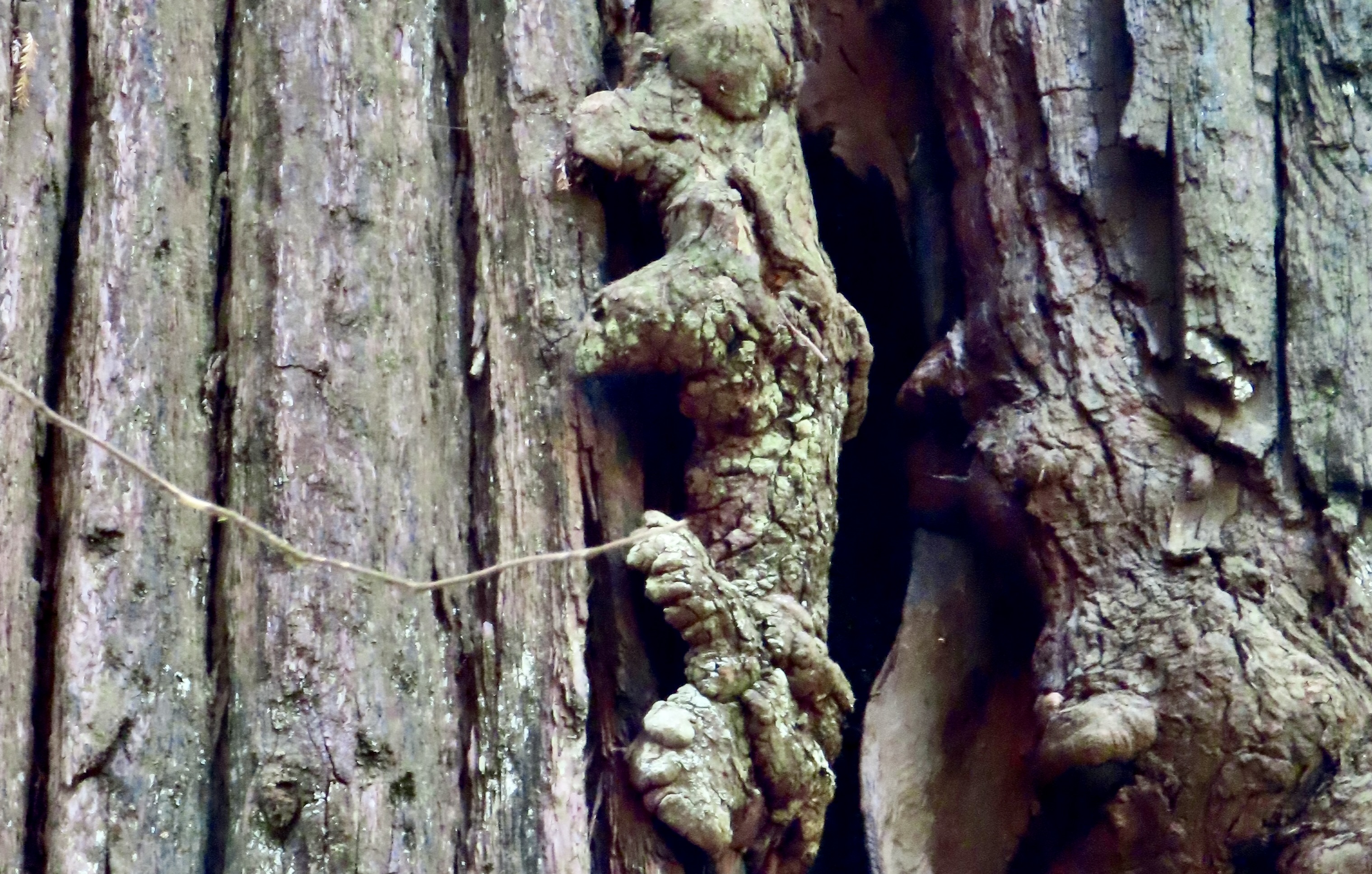
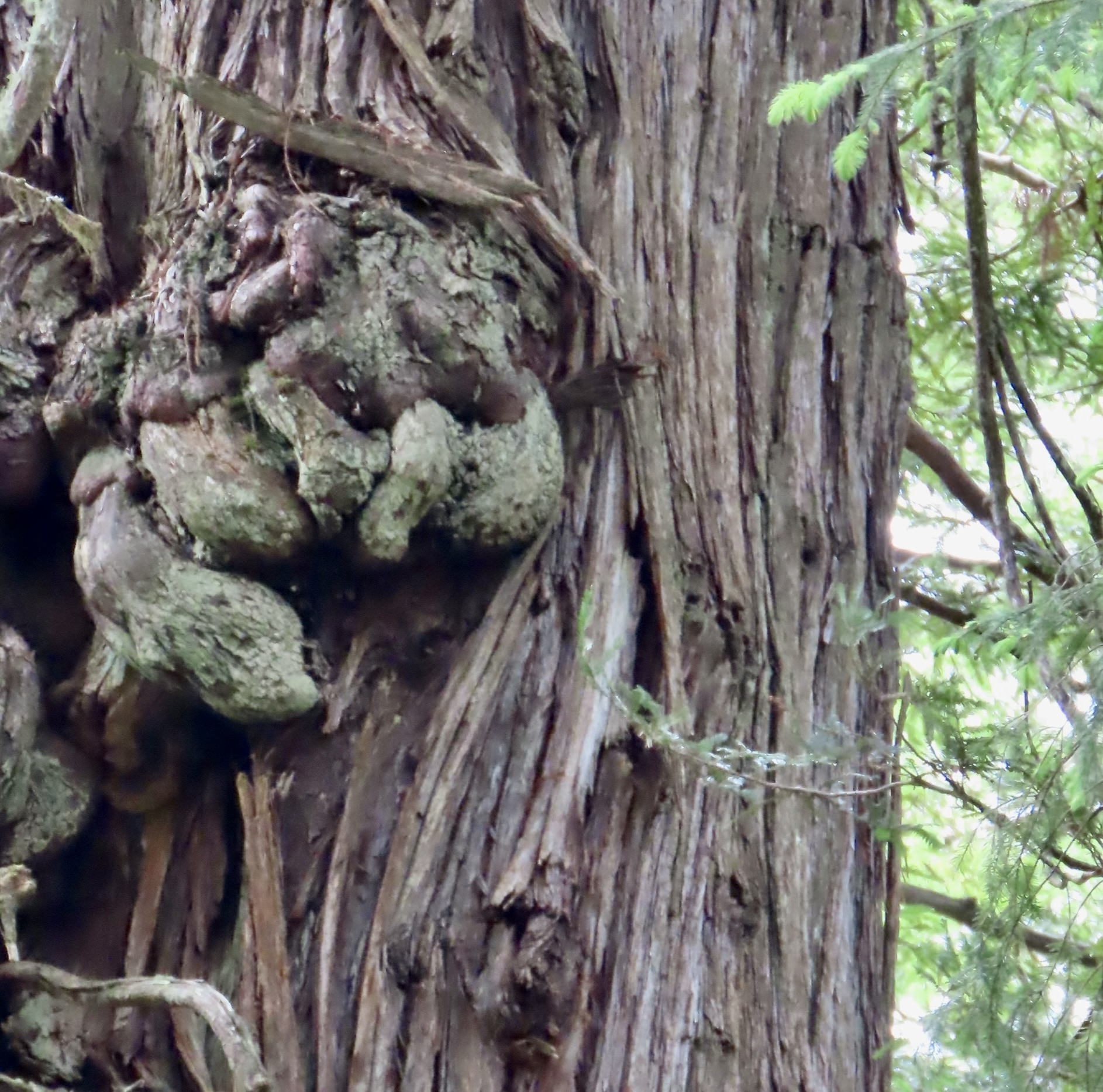
Strange creatures lurk among the redwoods, which is no surprise for forests with giant trees that date back 2500 years. Maybe even more so for trees whose ancestors were around in the age of dinosaurs. The dark eyes, nose with a nose, and gaping mouth suggest this might be a creature of your nightmares. Do you ever gaze at the clouds and see animals or dragons or weird people? How about rocks or driftwood. Peggy and I let our imaginations run wild and see all sorts of fantastical creatures. Looking at this tree, it’s easy to imagine beings lurking among the burls. How many can you see? I’m sure that ancient peoples who wandered among these groves had no problems spotting otherworldly animals and incorporating them into their world. While it may look like this tree is sick, burls are actually a woody material full of bud tissue that serves as storage compartments for the genetic code of the parent tree. Young trees can actually sprout from the burls.Peggy and I found a number of creatures on various redwoods, such as this diving dragon. Following are a few of our other favorites.Scary fellow with wart on his nose.Devilish? Note the baby redwoods growing out of its head and making up its hair.Have trunk, will travel.Tree climber. Only 350 feet more to go.Reach out and grab someone. Not a hugger!Daliesque dragon with horns and a melting nose.We think it’s friendly. Maybe…..Smiling turtle?You name it. Next up, given all of these creatures, we will visit Fern Canyon where parts of Jurassic Park 2 were filmed in the redwoods.We didn’t find T-Rex, but we did find Number 42 with a tracking collar.
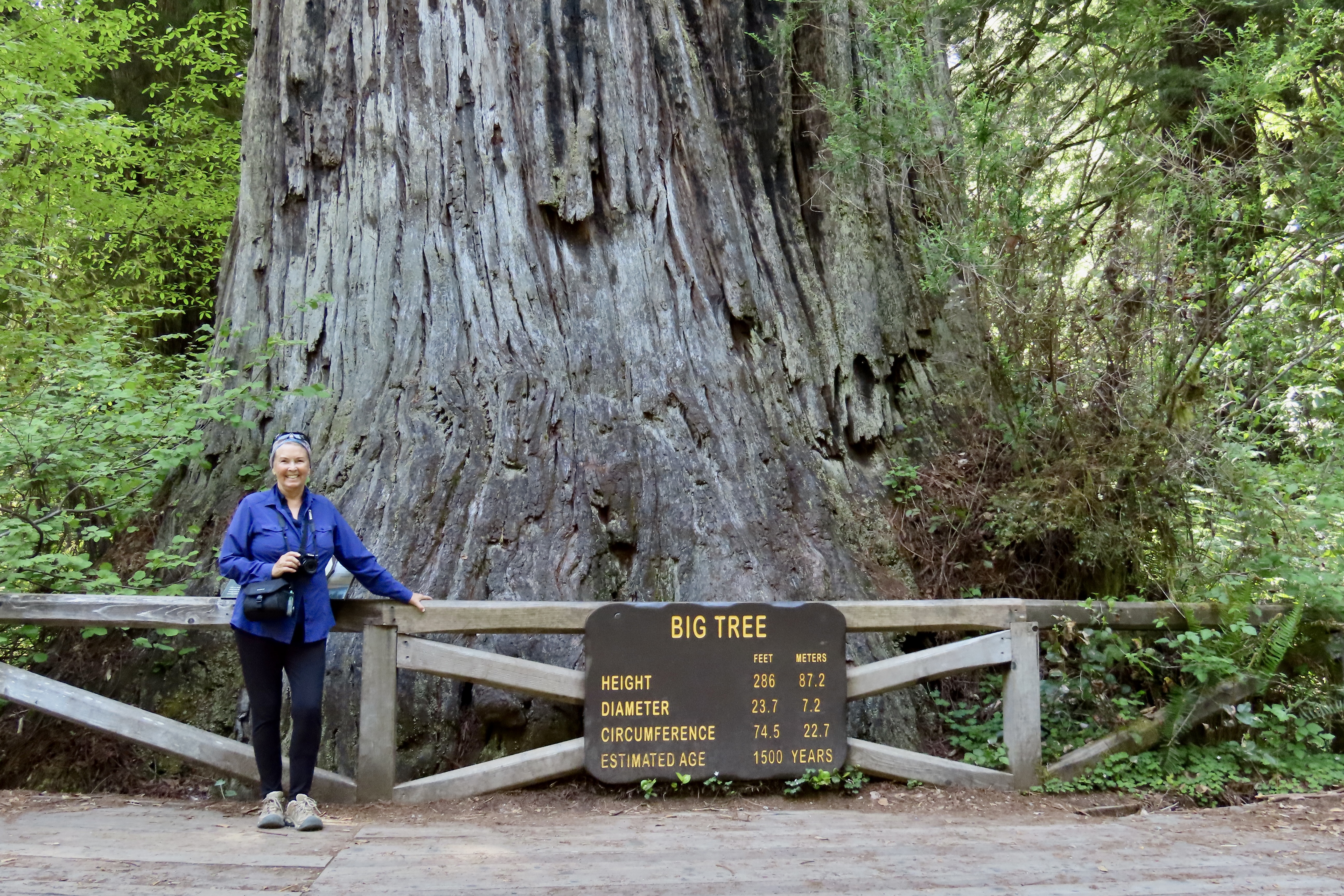
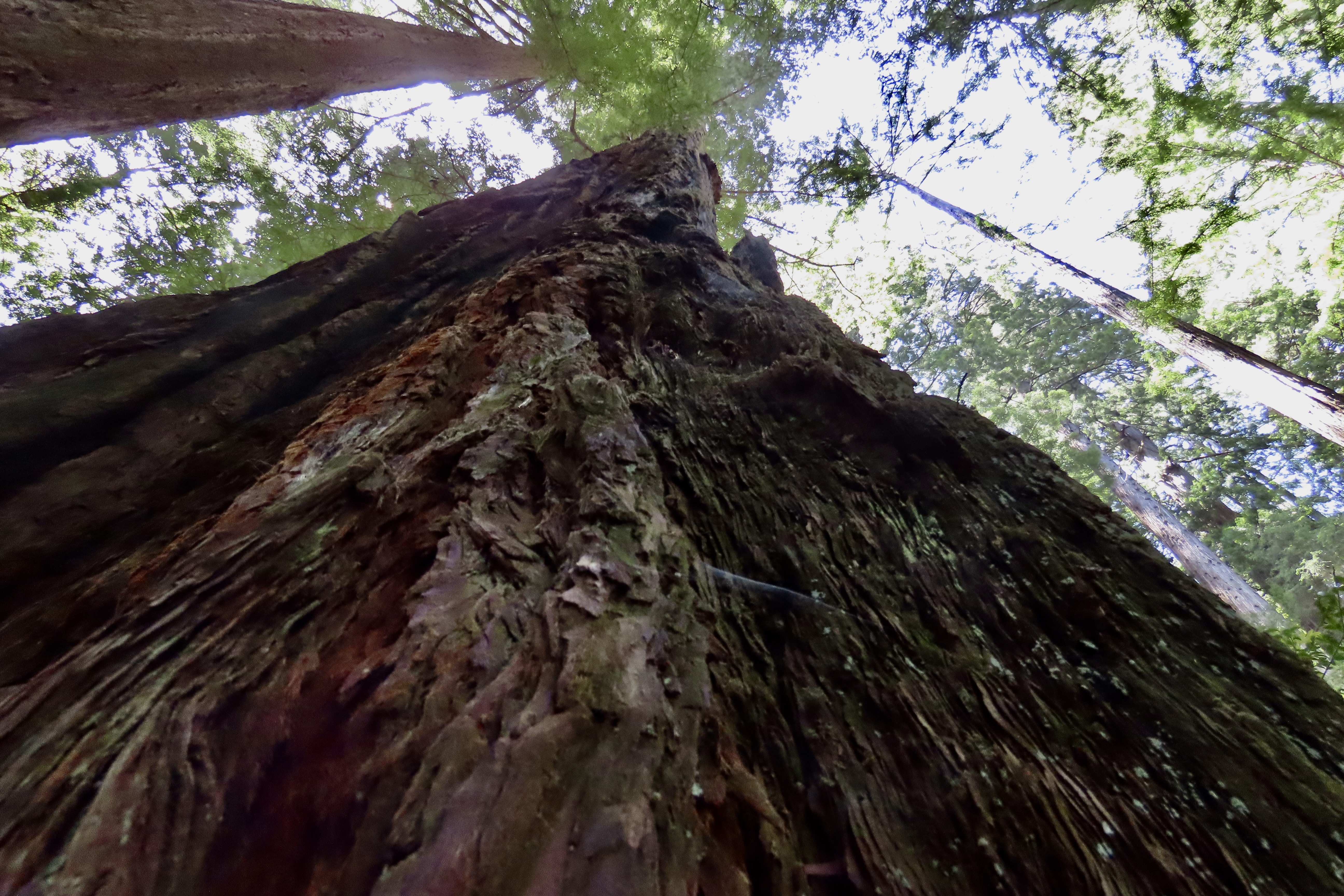
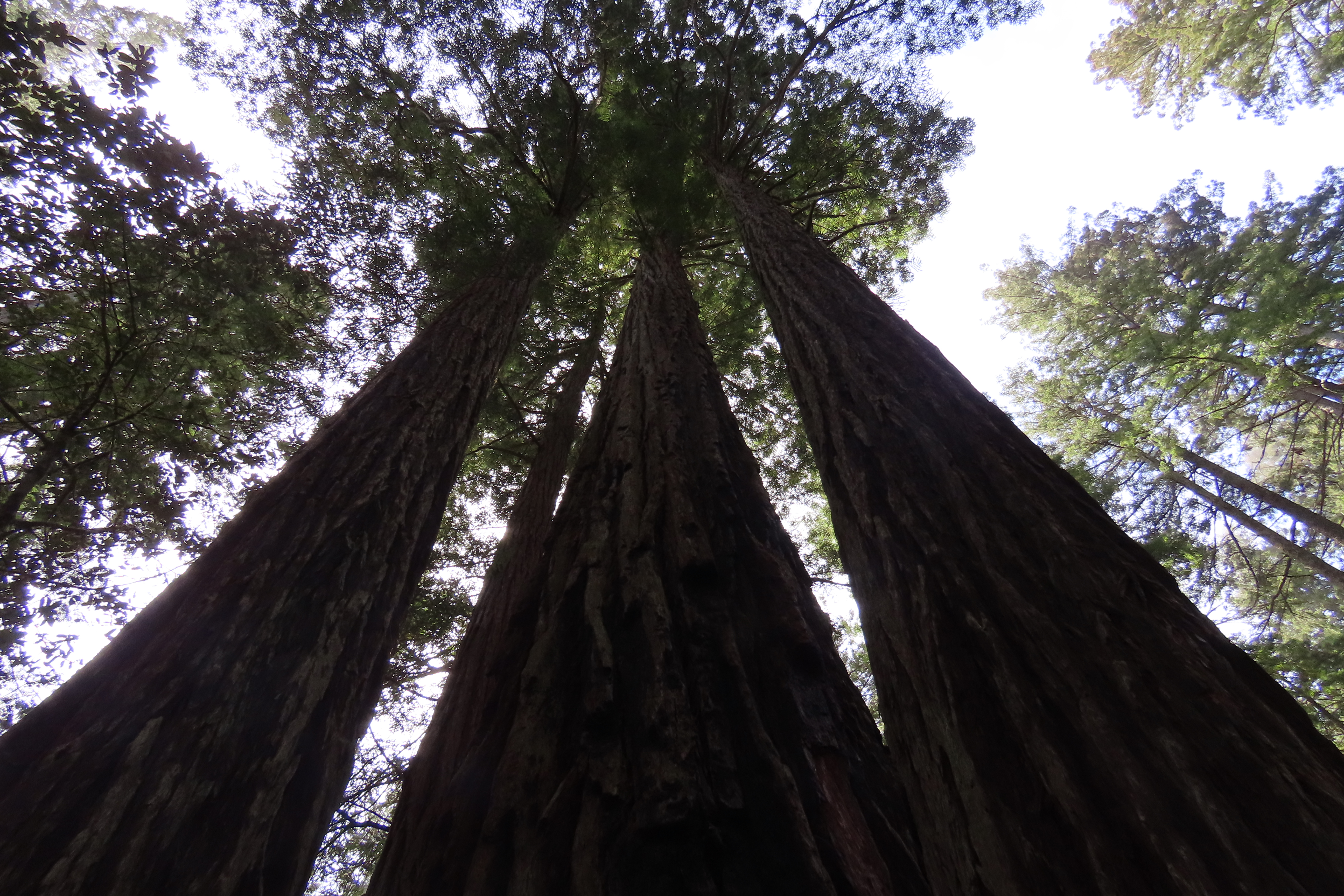
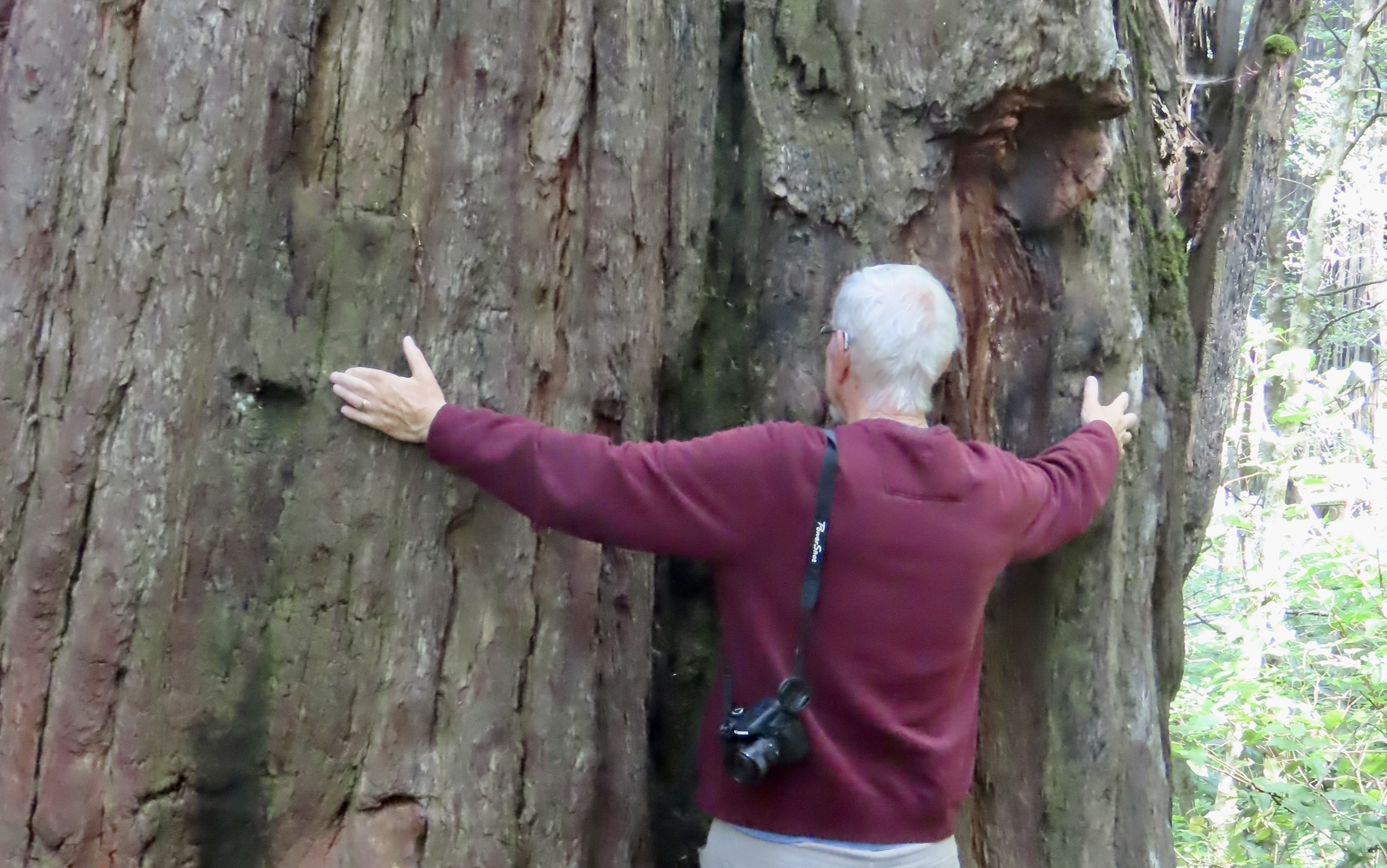
That redwood trees are tall and old is not news. One of the best known of the giants in Redwood National Park (appropriately if unimaginatively named Big Tree) stands at 286 feet tall and is 1500 years old. It is neither the tallest nor the oldest among the redwoods that stretch along the Pacific Coast from Central California to Southern Oregon, however. The tallest reaches a hundred feet higher into the sky, the oldest a thousand years further back in time. Circumference is another way of measuring these behemoths. Big Tree stretches out to over 74 feet. It would take 15 Peggys to reach around it.A view looking up Big Tree.
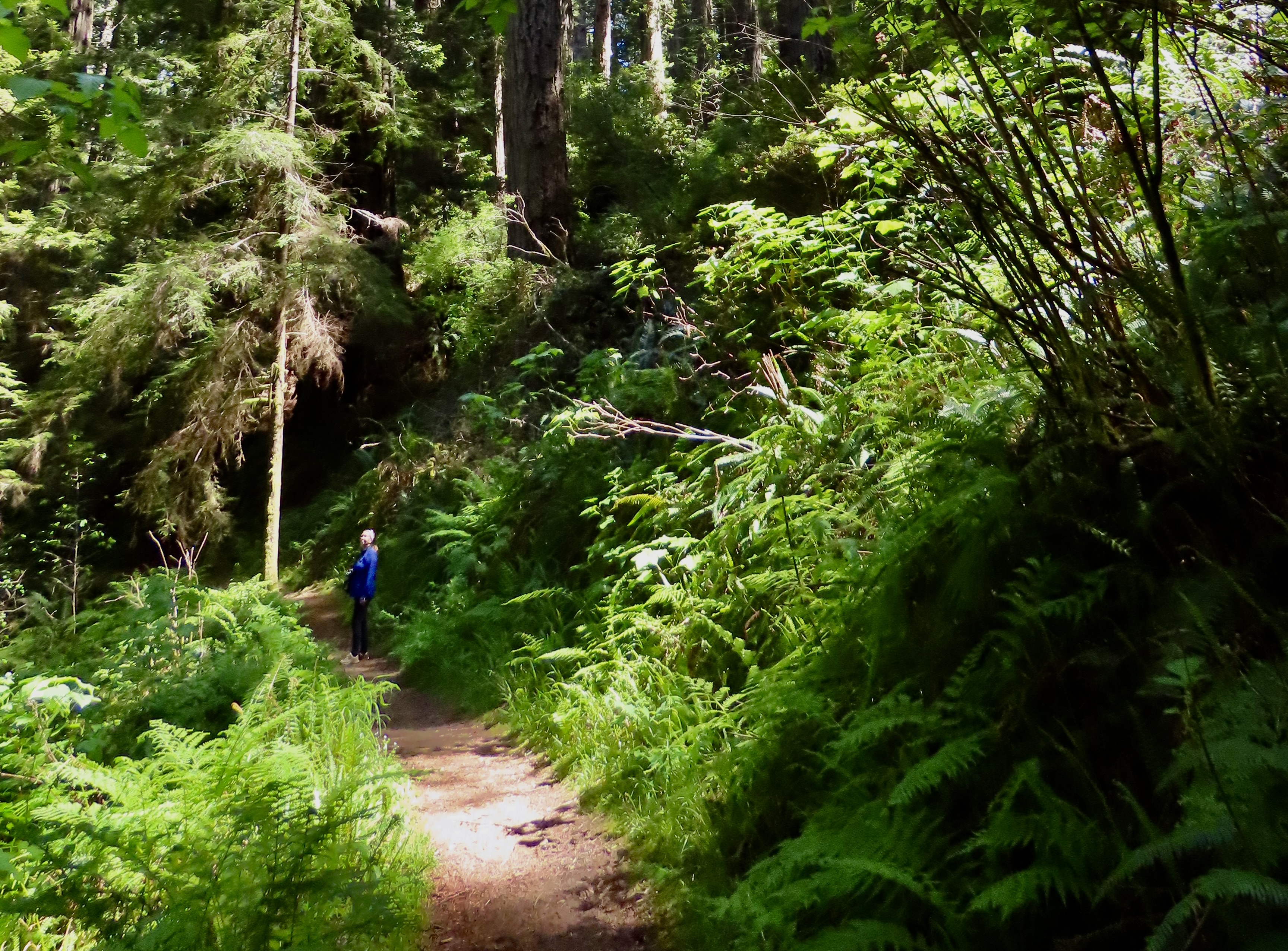
To truly get a feeling for the size of the redwoods, one needs to go for a walk among the magnificent trees. Words and photos simply can’t capture the awe one feels. Living in Northern California and Southern Oregon, which we did before moving to Virginia, Peggy and I have been privileged to visit the Redwood National Park several times. When we were planning out our 3-month trip up the Pacific Coast, there was no question that we would visit again.
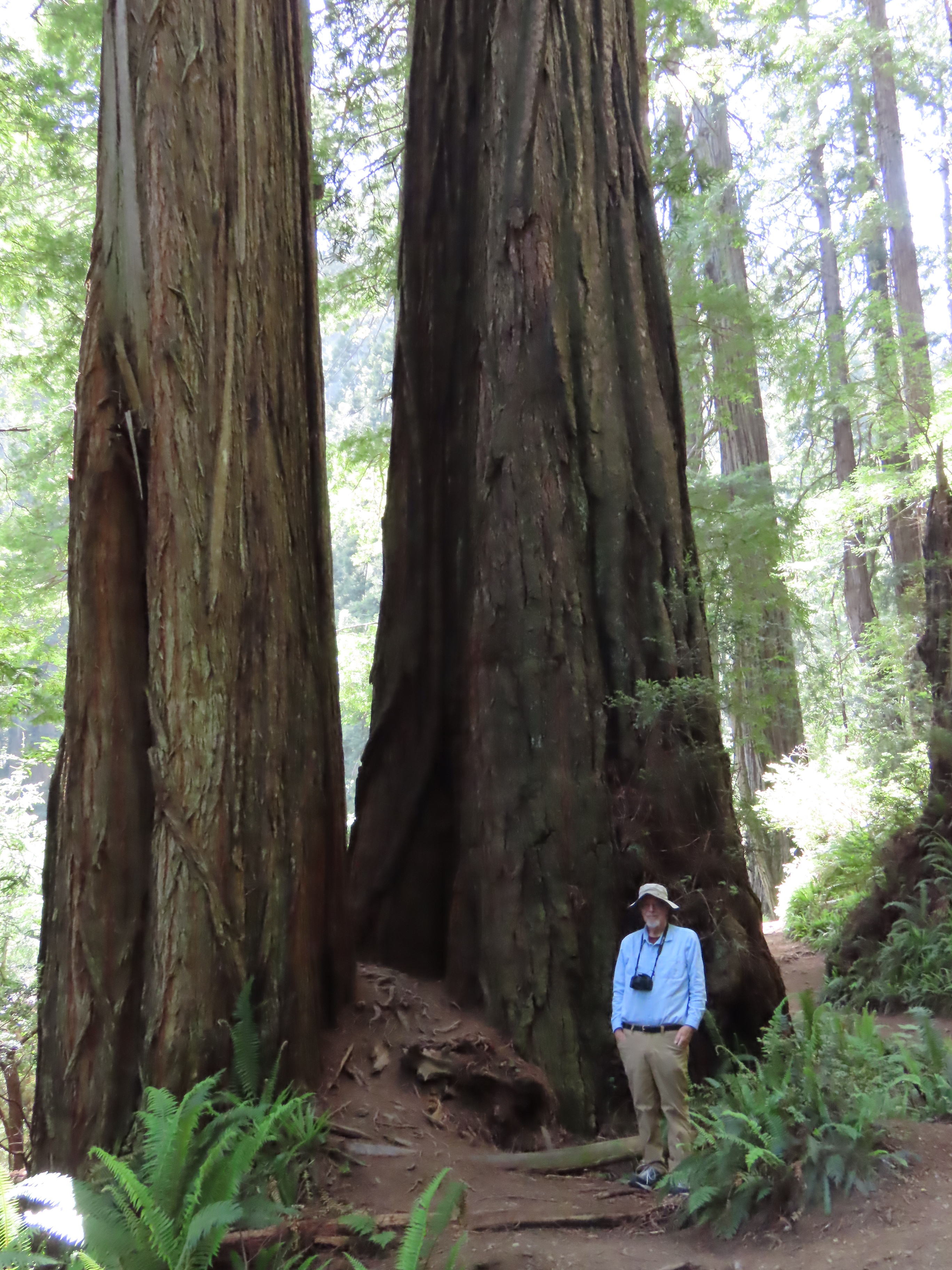
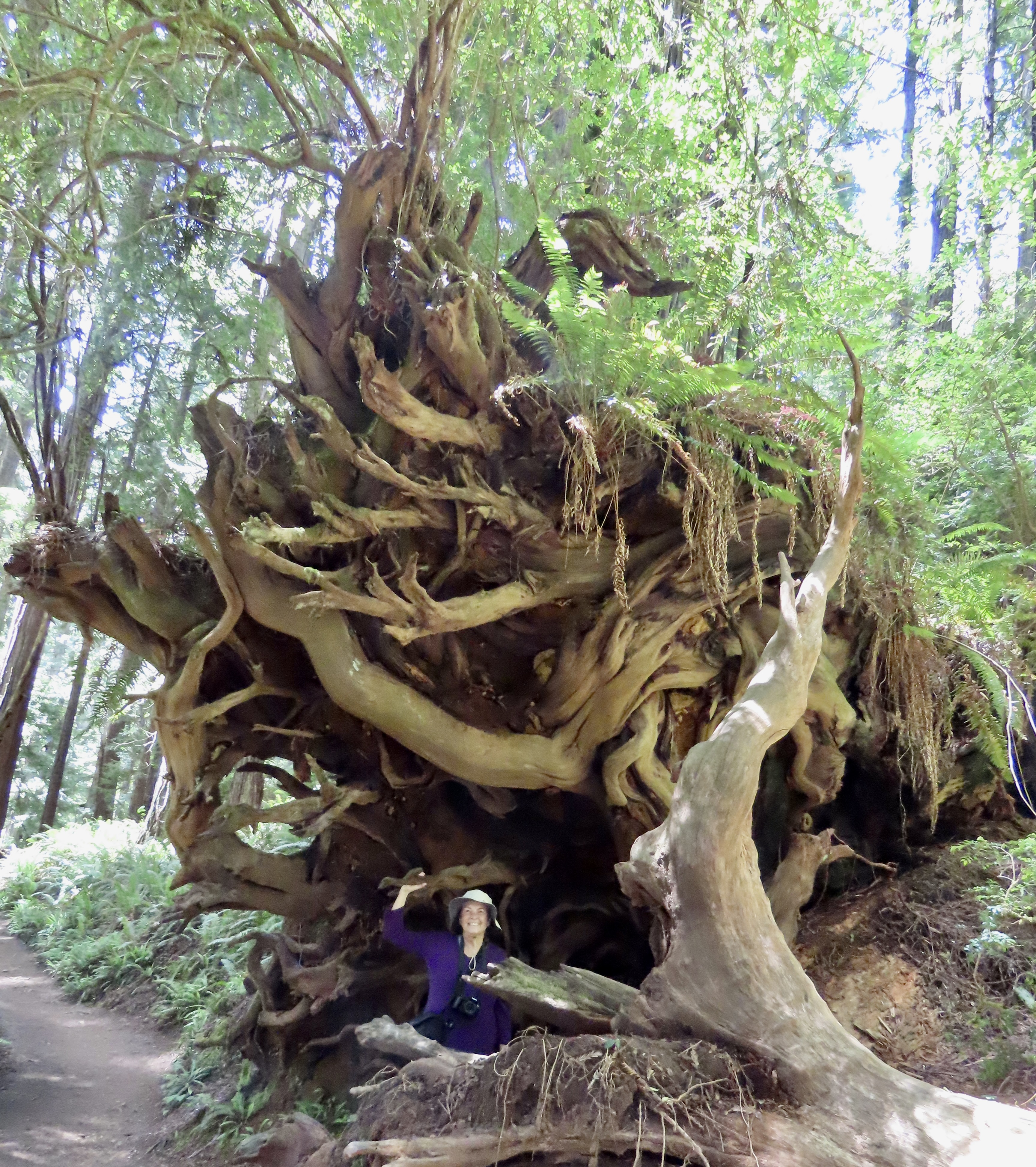
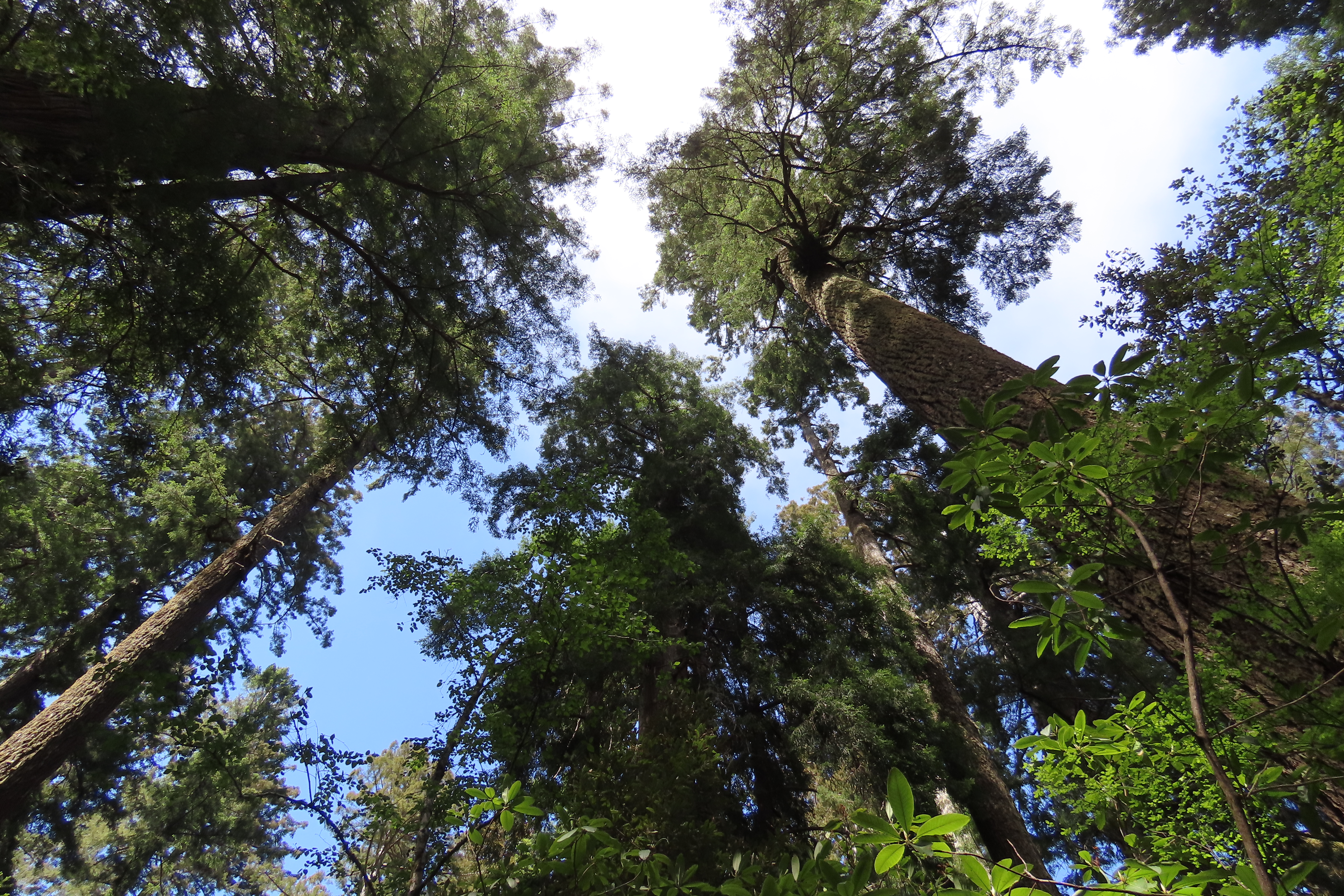
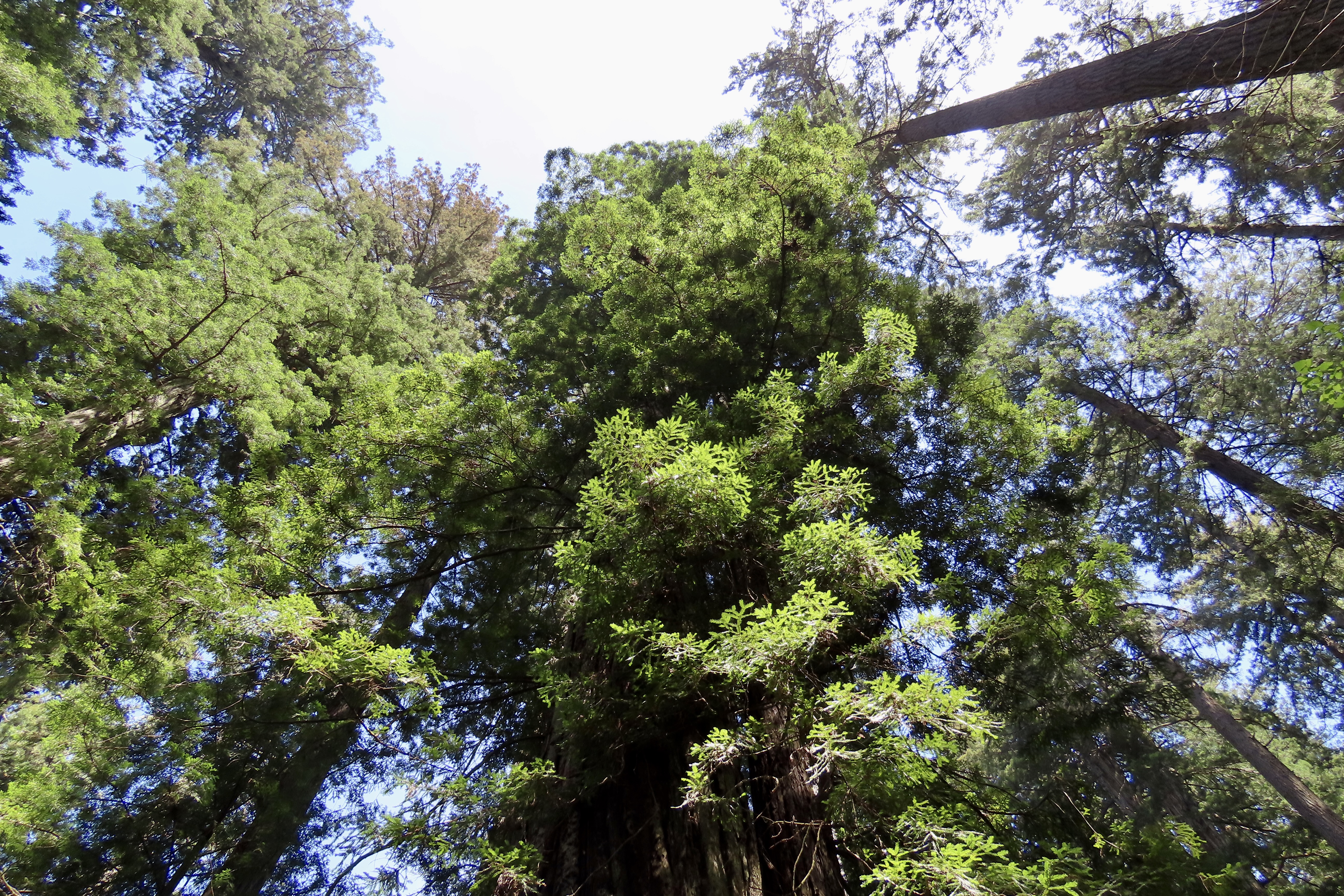
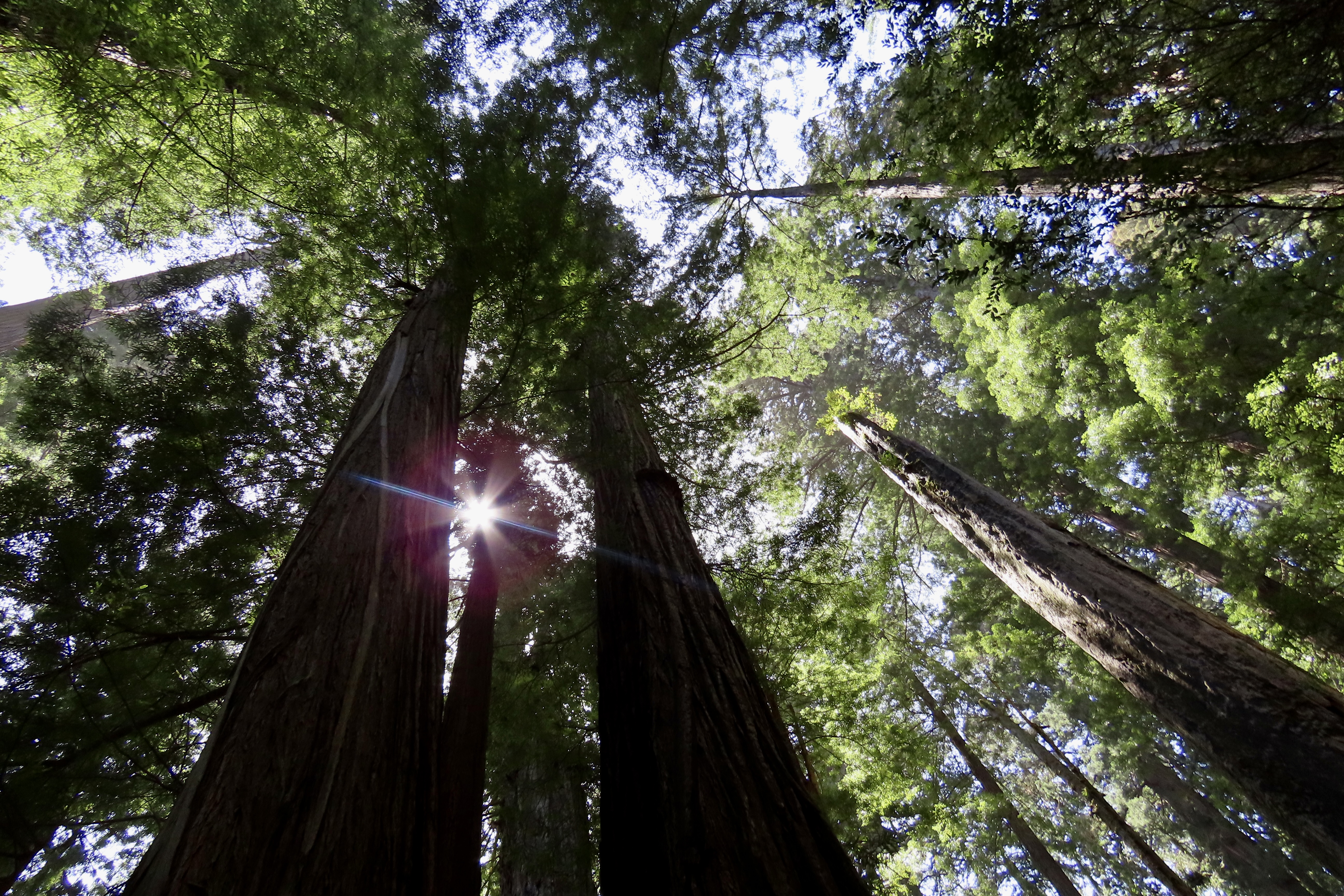
One of the easiest ways to provide perspective on size is to put a person in the photo. I volunteered.A well worn trail worked its way up between these two. I was not the first to stand there and pose.Given the size of the redwoods, one would expect to have roots digging deep into the ground to hold them up. It isn’t the case. But what they lack in depth, they make up in width, as Peggy demonstrates here. It isn’t unusual to find the base of Redwood trees burned out while the tree continues to stand and live. The spaces created have an unusual name: Goose pens. They were so large that early pioneers could fence them in and use them for animals such as geese.Peggy and I often joke about getting crooks in our necks because we spend so much time looking up when we walk through the various groves.I always like the perspective gained from shooting up from the base of a large tree.Or three.One of the most impressive walks one can take in Redwood National Park is the Lady Bird Johnson Grove Trail. Among America’s First Ladies, Lady Bird stood out for her environmental concern and was a strong advocate for saving the redwoods.This plaque was located in the heart of the grove. Saving the redwoods was a long, difficult process that involved the dedication of numerous people starting in the early 1900s with the formation of the Save the Redwoods League. Before 1850, there were approximately 2 million acres of coastal redwoods. California’s gold rush brought hundreds of thousands of people to California and a huge demand for lumber to build homes and commercial structures. It is a demand that has continued down through the decades. Today, only 5 percent of the old-growth coastal redwood forest remains. I confess, I am something of a tree hugger myself. This early photo from the Erickson Collection at Humboldt State College shows old growth redwoods being hauled out of the forest to the Excelsior Lumber Company in Eureka, California where they were to be sawed into lumber.In addition to saving the redwoods for present and future generations, considerable work is also being done throughout the National Park to repair damage done by the logging activities of the past. Peggy and I hiked down the Ah-Pah Trail off the Newton Drury Scenic Highway which talks about and demonstrates some of the efforts being made. This woodsy trail was once a logging road. That’s it for today. In our next post we will feature some of the strange ‘creatures’ that hang out on the trees and are worthy of a fantasy novel. There’s no preview photo this time. It will be a surprise.
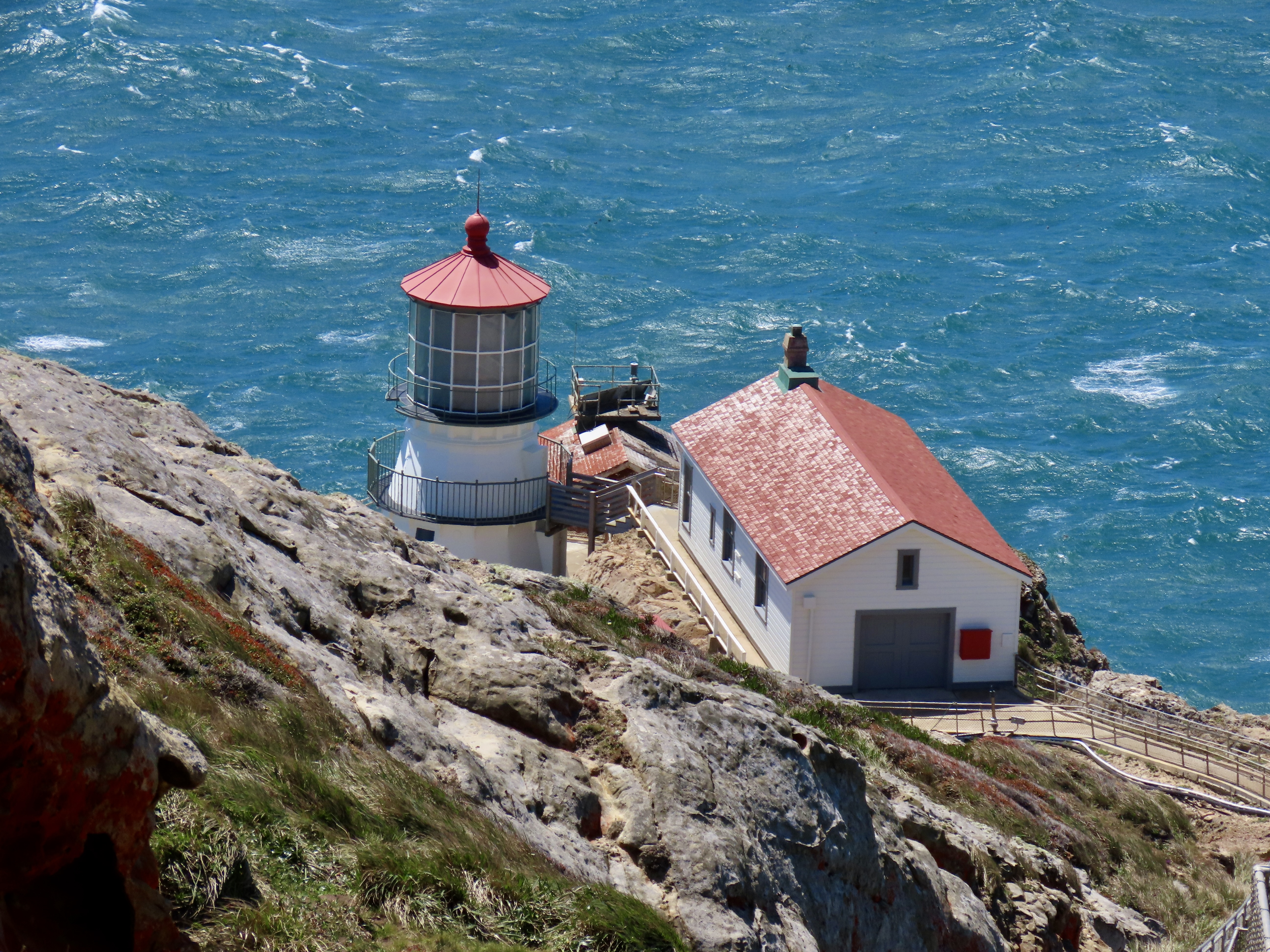
The Point Reyes Lighthouse protected mariners sailing past dangerous rocks off the coast for 105 years from 1870 until 1985 when the Coast Guard replaced it with an automated light just beneath the lighthouse.
Peggy and I have visited the Point Reyes Lighthouse with its dramatic location perched above the Pacific Ocean several times. The wind was blowing so hard this time, it was hard to open the doors on our truck and almost impossible to put on our windbreakers outside in the wind. None-the-less, we vowed to make the half mile trek out to the observation tower overlooking the lighthouse. It’s just too impressive not to.
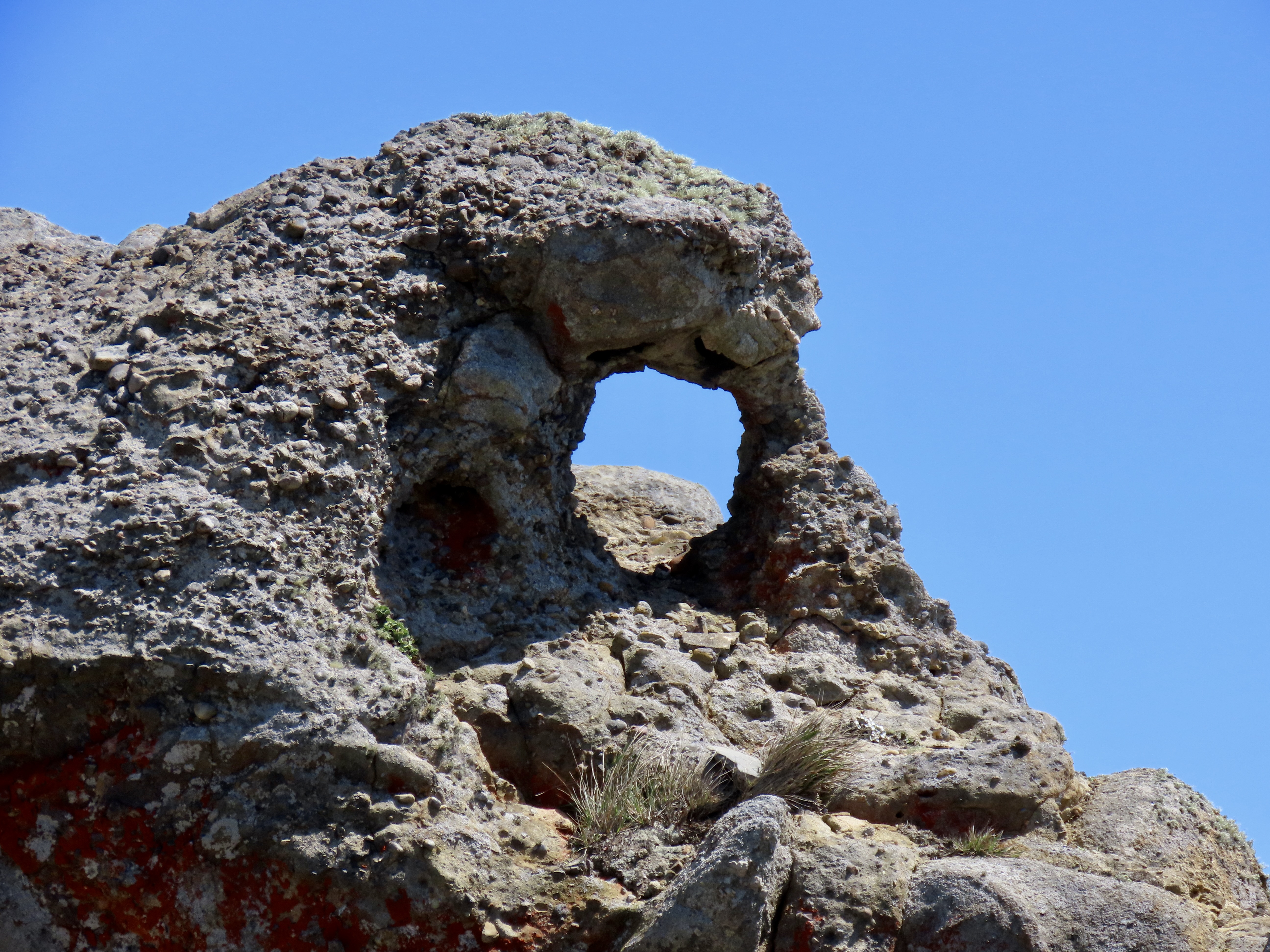
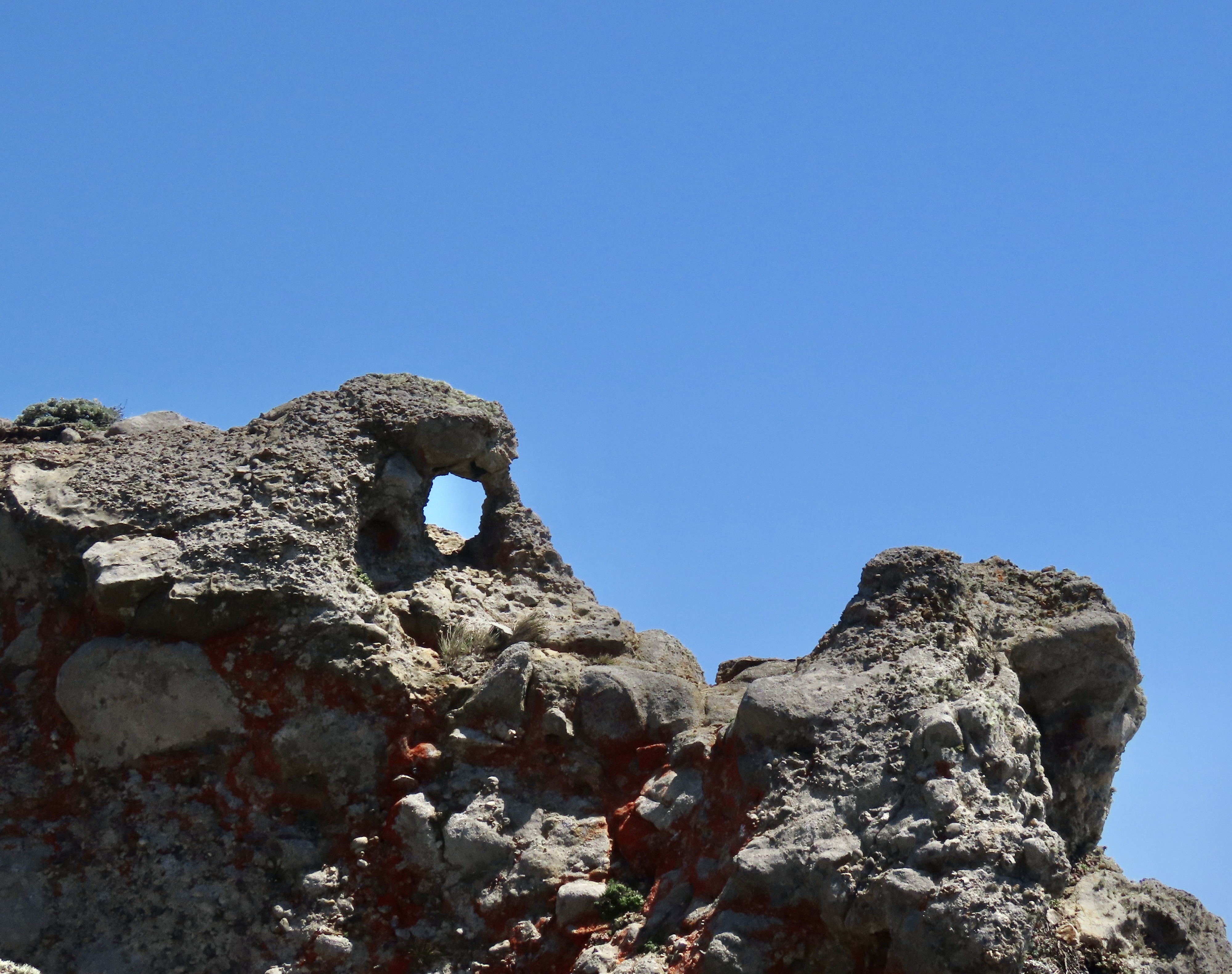
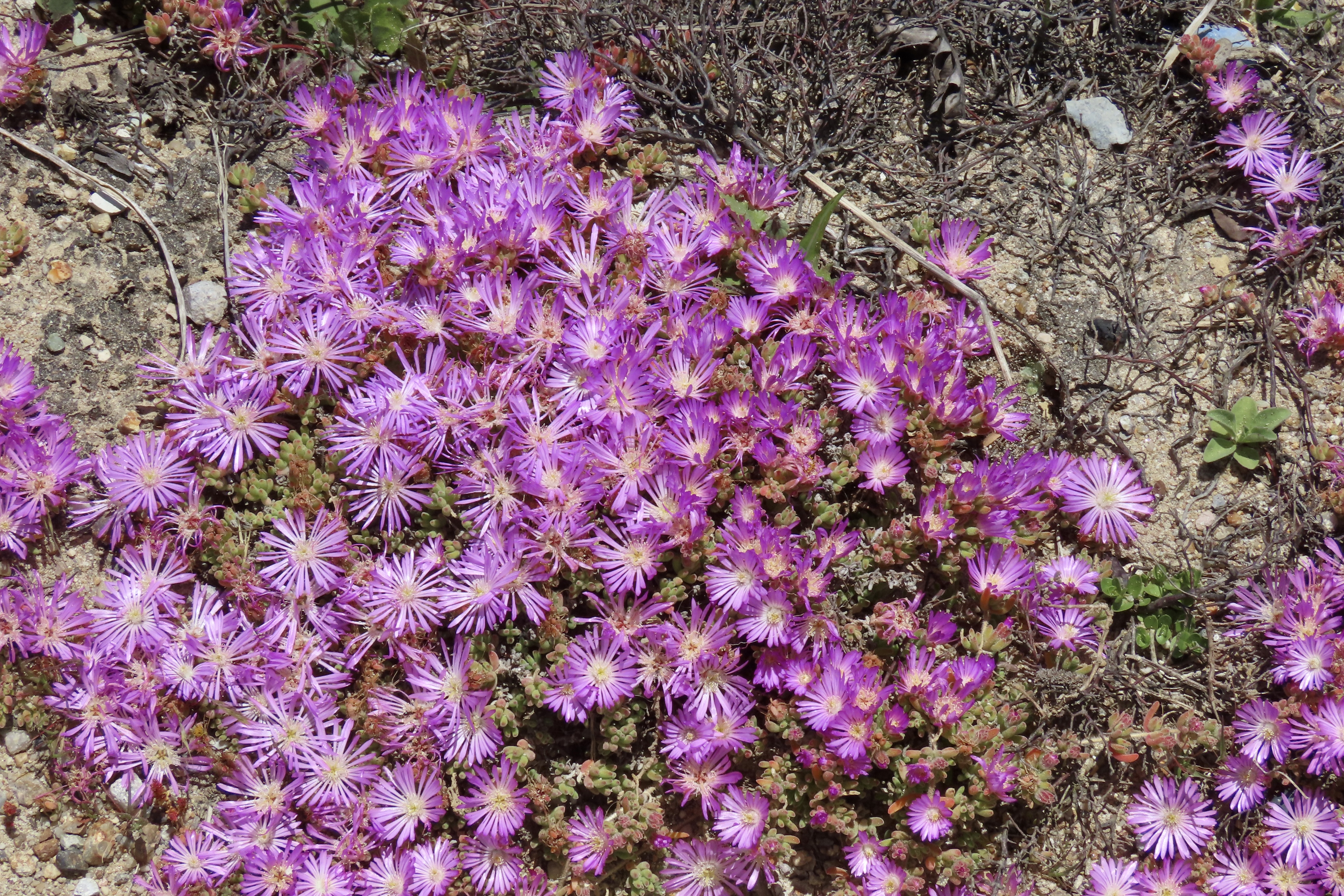
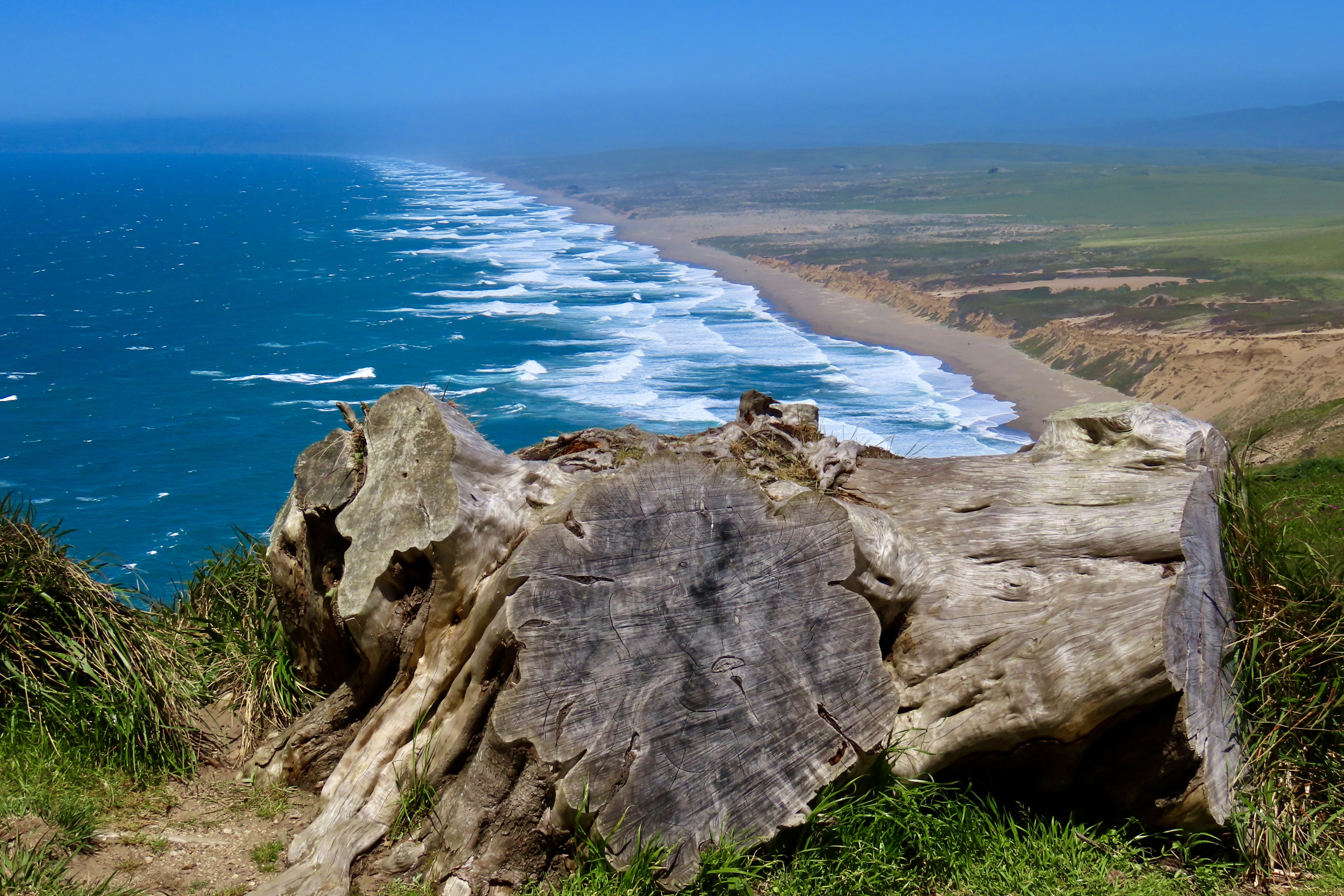
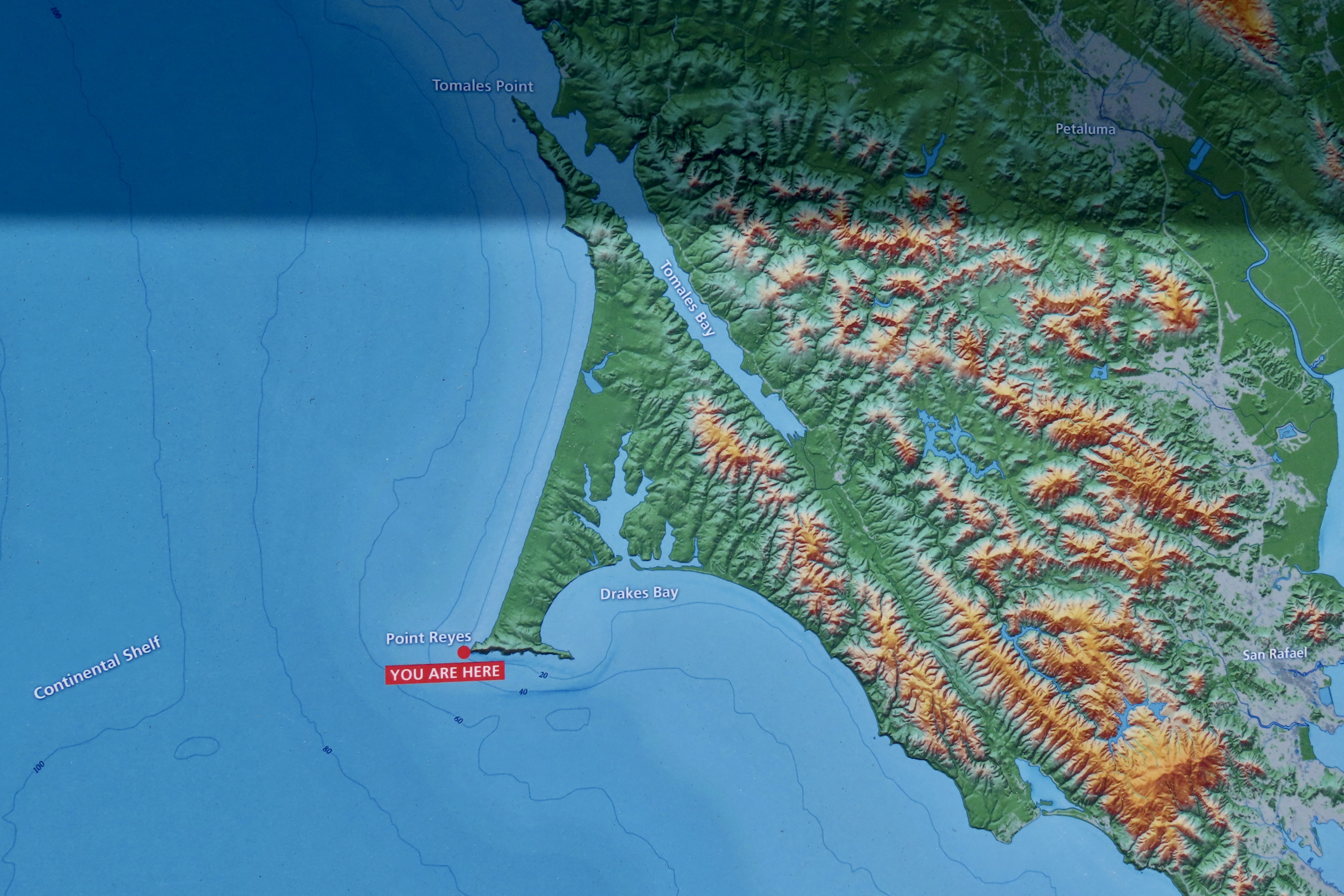
The steps down to the lighthouse were closed. Given the wind, we weren’t disappointed. It was more like, “Thank you National Park Service!” Holding our cameras steady was enough of a challenge! The Park actually has a policy: When wind speeds exceed 40 mph, the stairs leading down to the lighthouse are closed for visitors’ safety. My guess is that the winds were closer to 60 mph.There was no lack of great views or opportunities for photos.Our cameras even brought the lighthouse close.There are a number of other things to see on a walk out to the lighthouse, such as watching waves crash into rocks. The nesting seabirds that had painted the rocks white were probably cormorants. There is even the skeletal head of a female blue whale. I posed for perspective. The rock next to my shoulder, BTW, is known as Point Reyes conglomerate and may be over 50 million years old.Peggy spotted what she thought looked like a head carved out of the conglomerate and couldn’t resist photographing it. This was just above the whale head.She was also taken with this hole in a rock on the ridge opposite the whale head. An eye with an iris?I photographed the ridge.And discovered some striking flowers hanging out on the rocky cliffs: rosea ice plant.They expanded out to this cluster…And worked their way down the steep cliff.On our way back to the car we were treated to this view of Point Reyes South Beach. I used to hike on the beach with my basset hound Socrates in the early 70s.Another view of South Beach.This map near the overlook provides a view of the National Seashore and a dramatic illustration of plate tectonics. “You are here,”marks the location of the lighthouse. Drakes Bay is to the right with Drakes Beach to the left of Drakes Estero, which cuts inland from the bay. Limantour Beach is to the right of the Estero. Traveling north up the coast from the lighthouse, the small lake you can see is Abbots Lagoon. The Pierce Ranch and the elk reserve are to the north of that. That covers my Point Reyes posts so far.
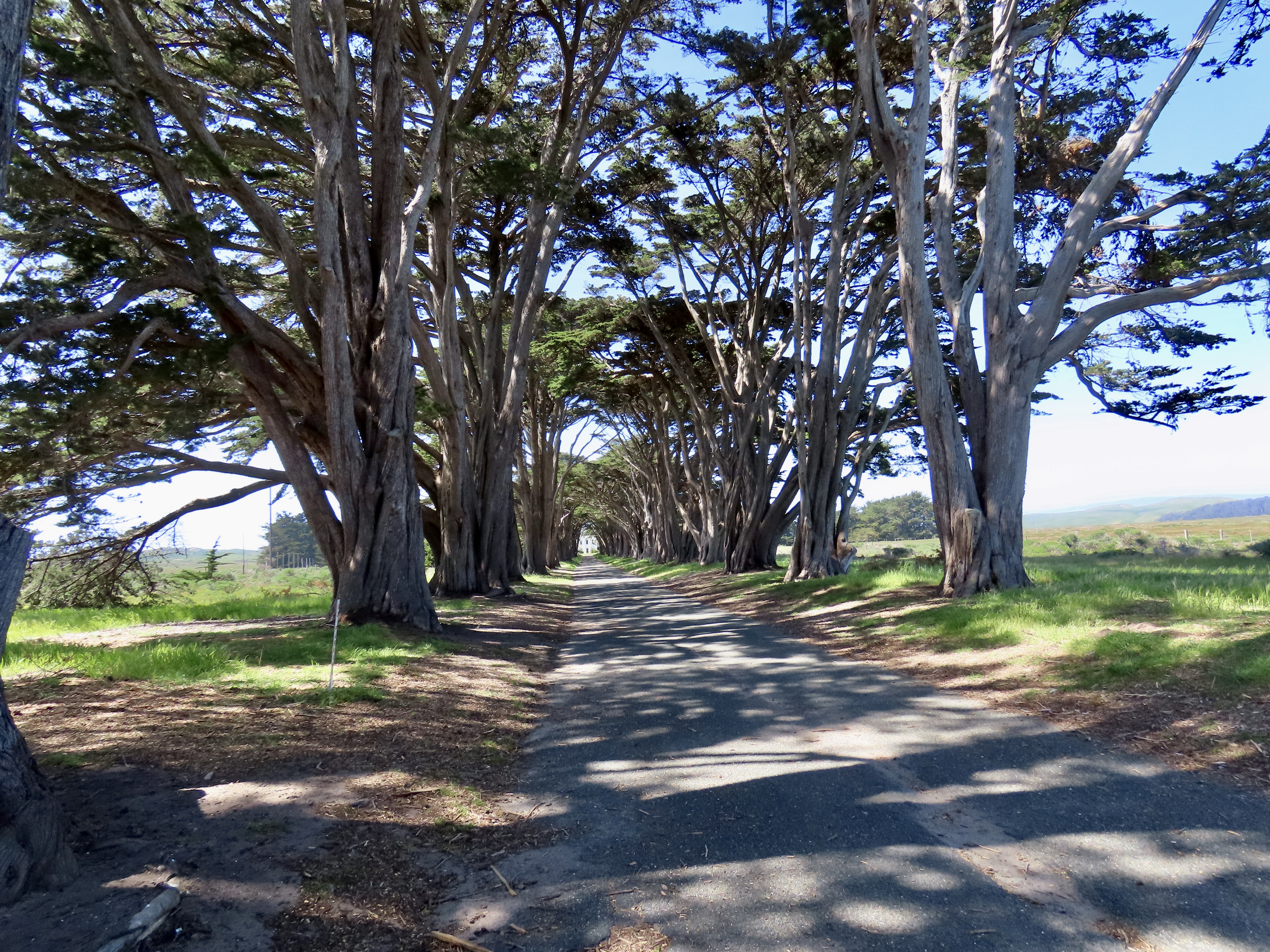
The long inlet to the right is Tomales Bay. If you follow along the bay and keep going south along the valley, you will reach Bolinas Lagoon. This route marks the direct path of the San Andreas Fault. To the east is the North American Continental Plate; to the west is the Pacific Plate. The Pacific Plate is working its way north, scraping along the Continental Plate, slowly— moving at about the rate your fingernail grows. It began its journey as part of the Tehachapi Mountains 310 miles to the south. It doesn’t move at a steady rate, however. It remains still for long periods of time and them leaps forward causing earthquakes, including massive ones like like 1906 earthquake that destroyed San Francisco. It also had a major impact on the Point Reyes area.Earthquake Trail is next to the Point Reyes NS Visitor’s Center in Bear Valley about a quarter of a mile from where we were camped at Olema. It provides a dramatic illustration of just how powerful the 1906 earthquake was. While the fence shown here is relatively new, it is a replica of the one that was here when the earthquake struck. Peggy and I would have been standing together before the earthquake. Afterwards we would have been close to 20 feet apart (although I doubt we would have been standing). That’s how far Point Reyes moved north. (Photo by Lita Campbell.)On our drive back to camp from the lighthouse, we drove by the iconic Cypress Tunnel and stopped for a quick look. The road leads to the historic Historic KPH Maritime Radio Receiving Station that was built in 1929 by Marconi to allow communication with ships throughout the Pacific. That’s a wrap for our Point Reyes series. Next, our journey takes us to the beautiful Mendocino Coast of California where we stayed in Fort Bragg on the banks of the Noyo River. It was Mother’s Day yesterday and I gave Peggy a bouquet to celebrate, a 40 acre bouquet. We took a trip to the nearby Mendocino Coast Botanical Garden and spent two hours strolling down paths filled with azaleas and numerous other gorgeous flowers. Our walk will be the subject of my next post on Thursday. Prepare for beauty!
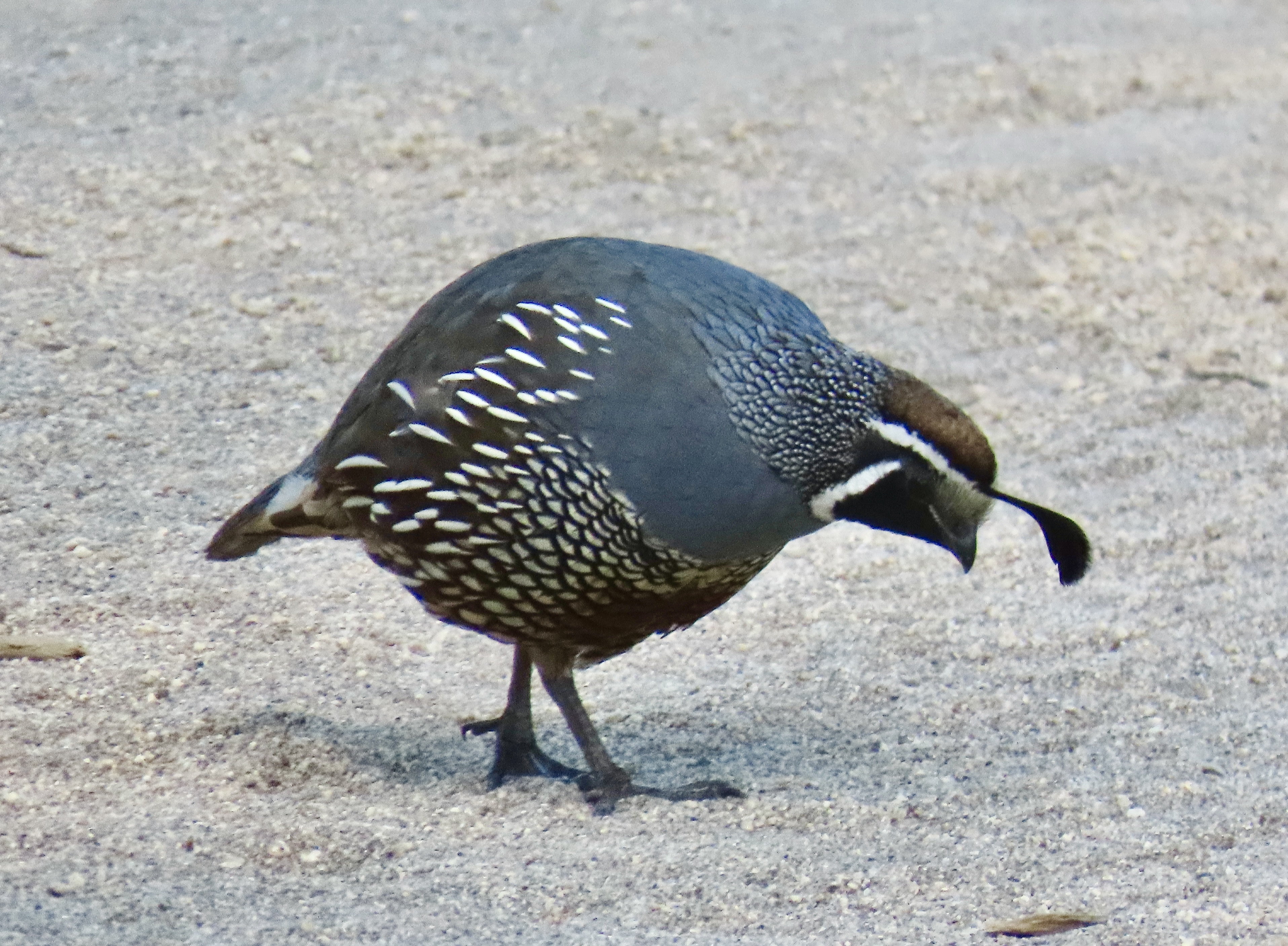
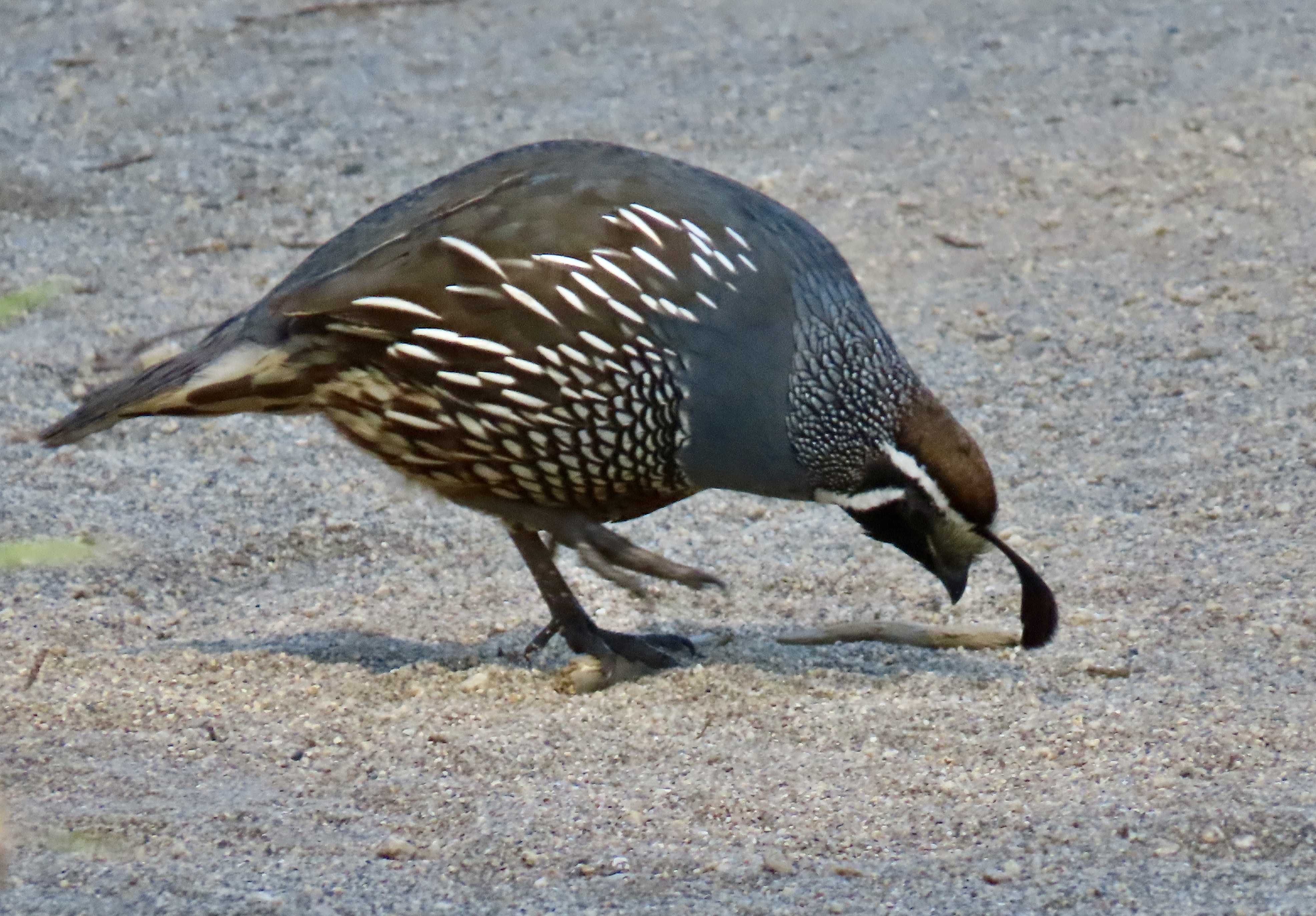
Peggy and I visited the historic Pierce Ranch during our recent two week stay at Point Reyes National Seashore. We didn’t go to see the quail, but there they were, everywhere. This one, wearing his ‘red cap with white trim, white beard, bushy eye brows, and big belly,’ reminded me of someone. A certain Mr. Claus perhaps? But what about the jaunty feather in his cap? Actually, it is six overlapping feathers.
Anyone visiting Pt. Reyes National Seashore should visit the historic Pierce Ranch. It provides an excellent introduction to the dairy industry that started in the mid-1800s and still exists within the National Seashore boundaries today. Local ranchers worked together with the Sierra Club in the 1960s and 70s to preserve their ranches and avoid the onslaught of real estate speculators and developers who envisioned turning the beautiful area into massive profits for themselves and great homes for the few that could afford them— instead of one of the world’s premier national parks for everyone.
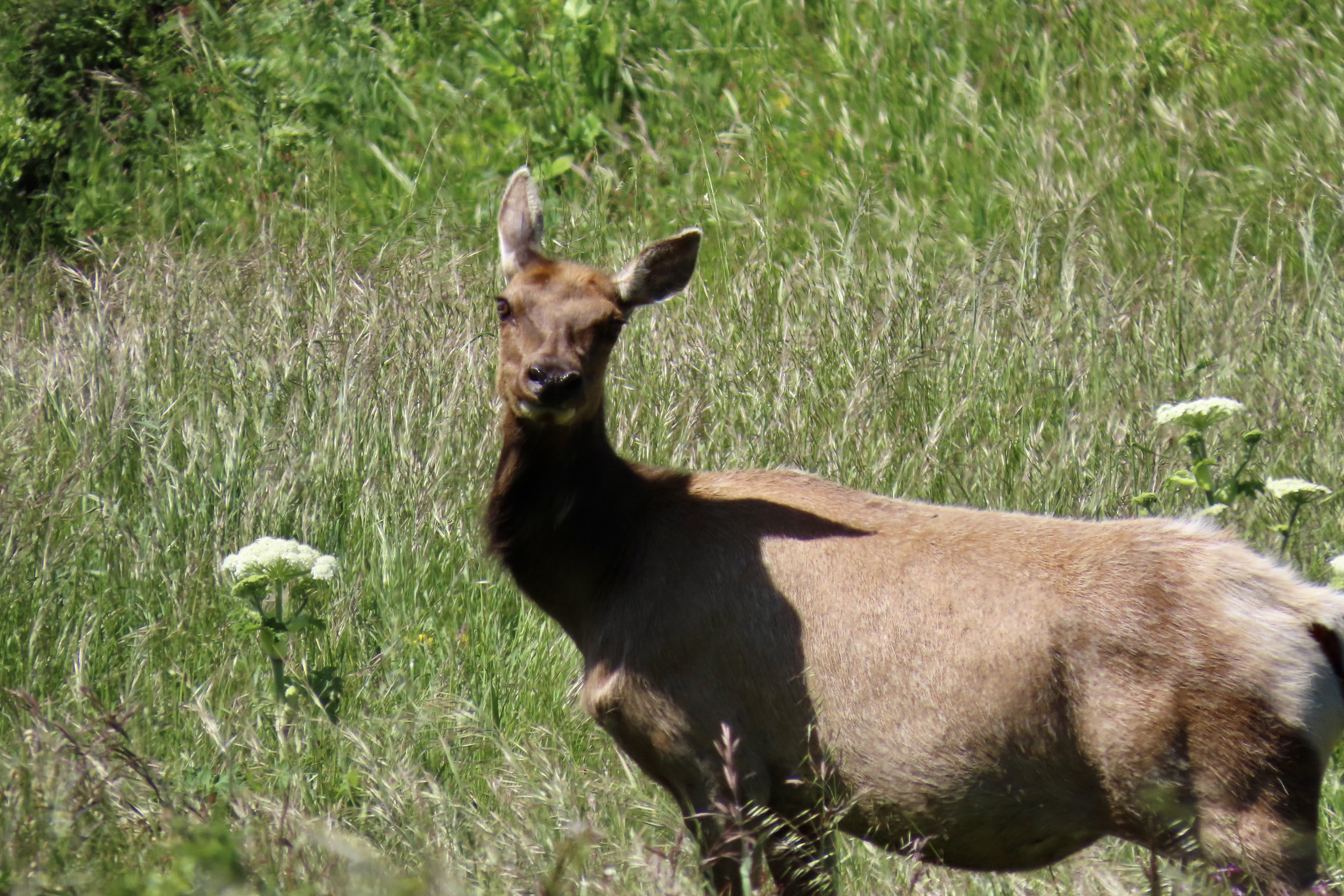
There is more to the ranch than history, however. For one, there is a tule elk reserve in the area. Having been eliminated from the region during the 1800s, they were reintroduced in 1978 and now constitute a sizable herd. A trip out to the ranch doesn’t guarantee you will see these magnificent creatures but the odds are you will. A short— or longer— hike out the Tomales Point Trail will increase your chances even more. Gorgeous scenery, wild flowers galore, birds and other wildlife are three more excellent reasons for a visit.
We actually went out twice on our visit: The first time was with our friends Tom Lovering and Lita Campbell, the second by ourselves. We didn’t need any excuse to go a second time, but the fact we had forgotten to bring our cameras except for an iPhone the first time was certainly a factor. We’ve become spoiled. Our photos are from both trips, however. Even Tom jumped in with his iPhone.
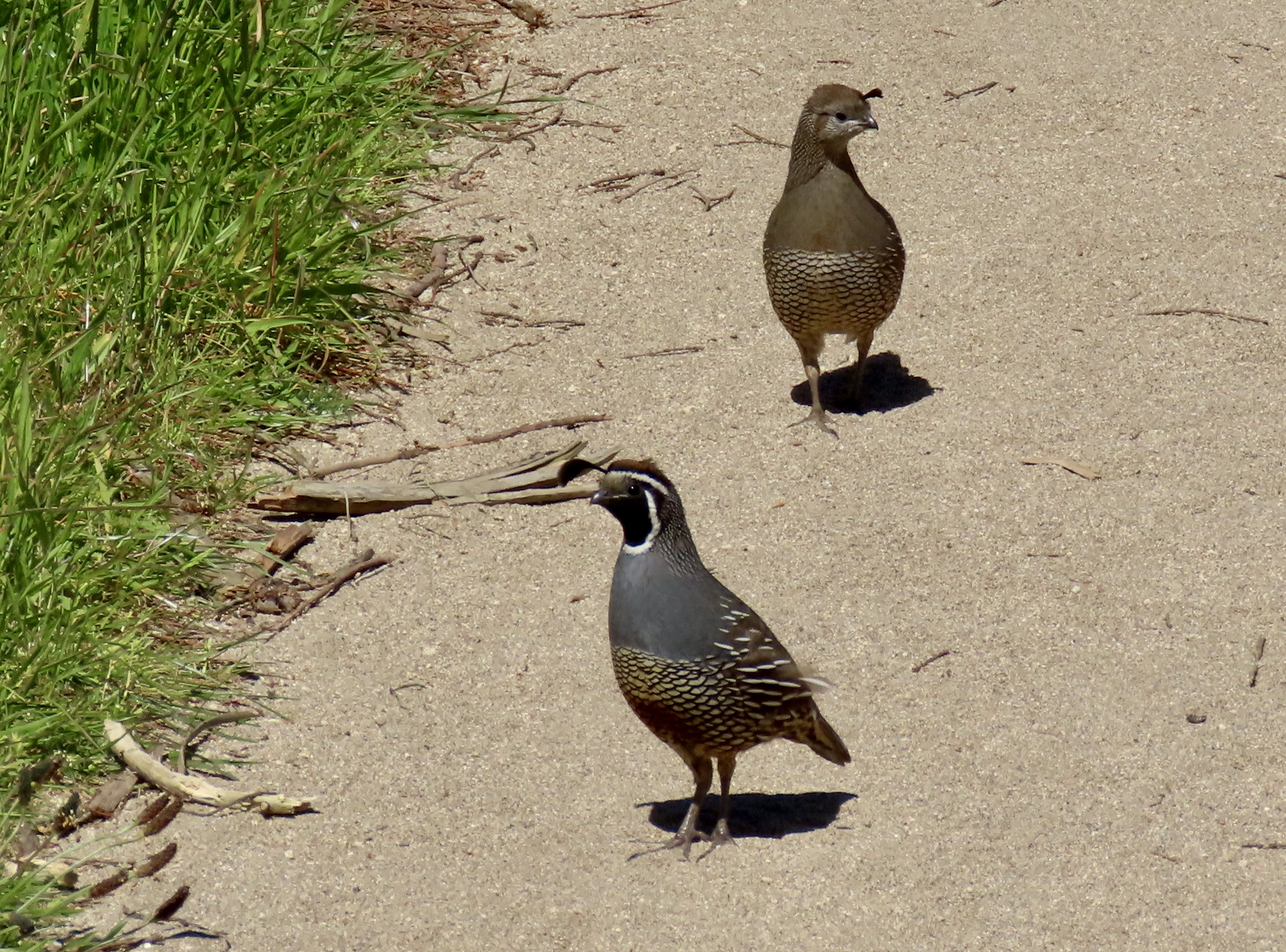
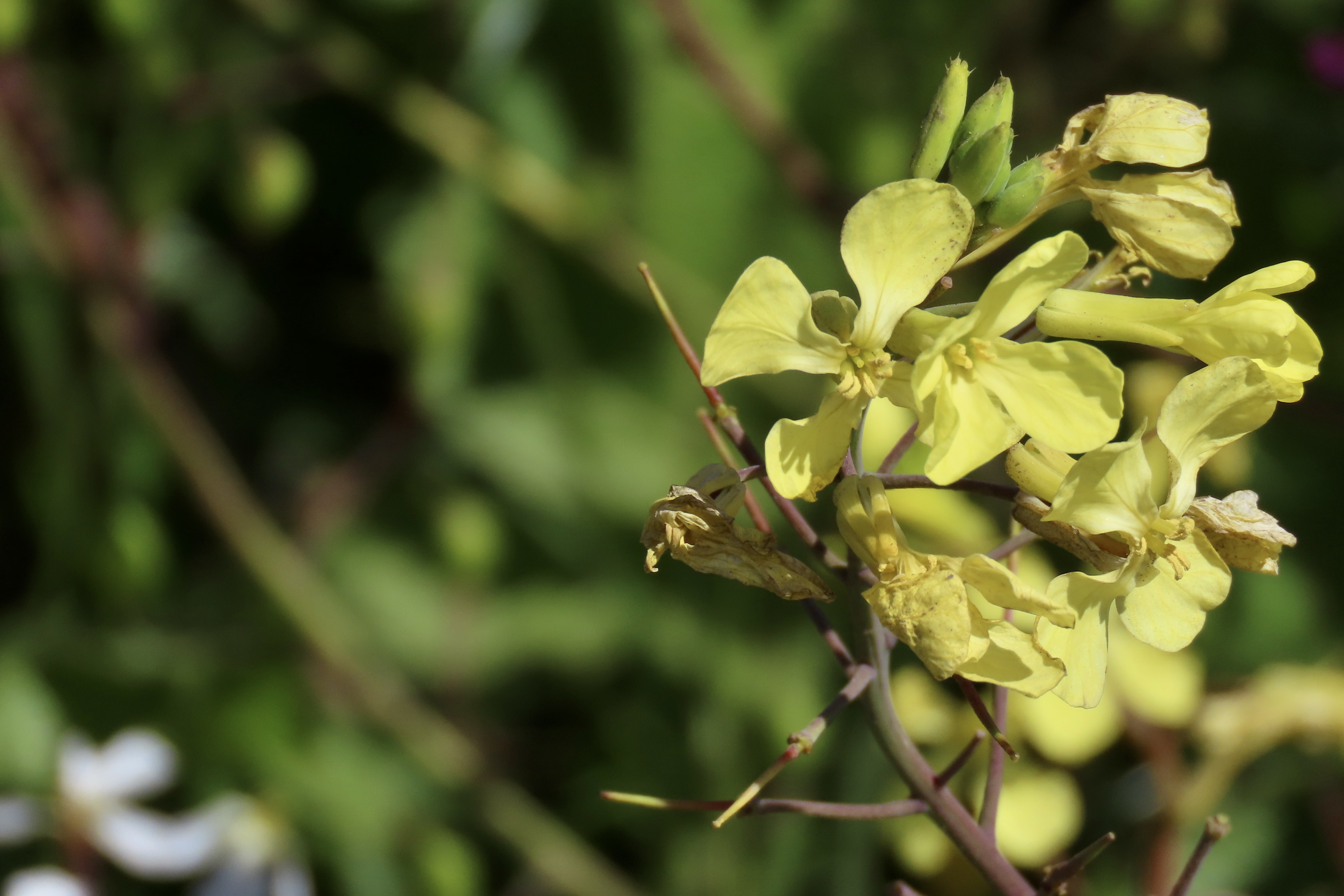
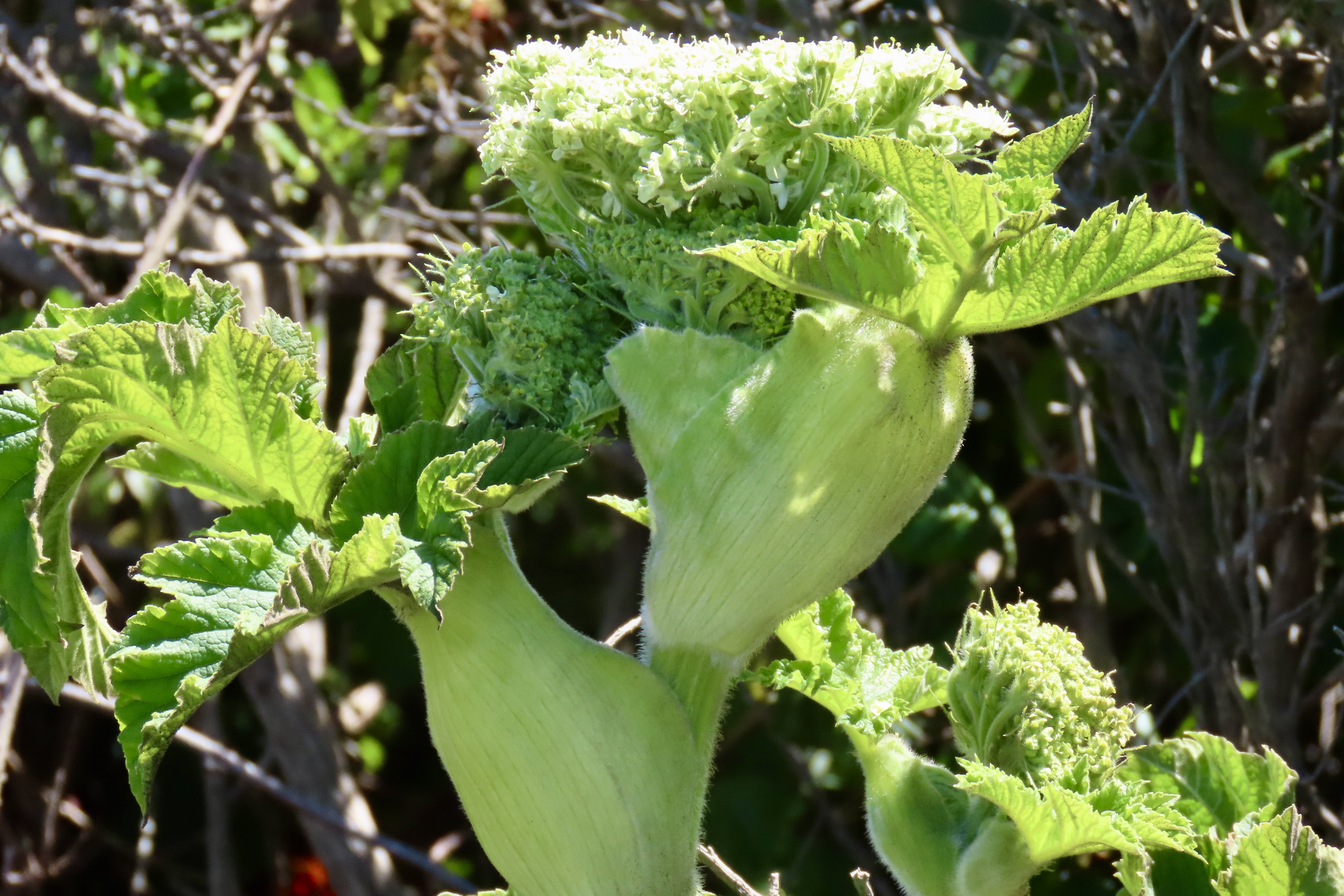
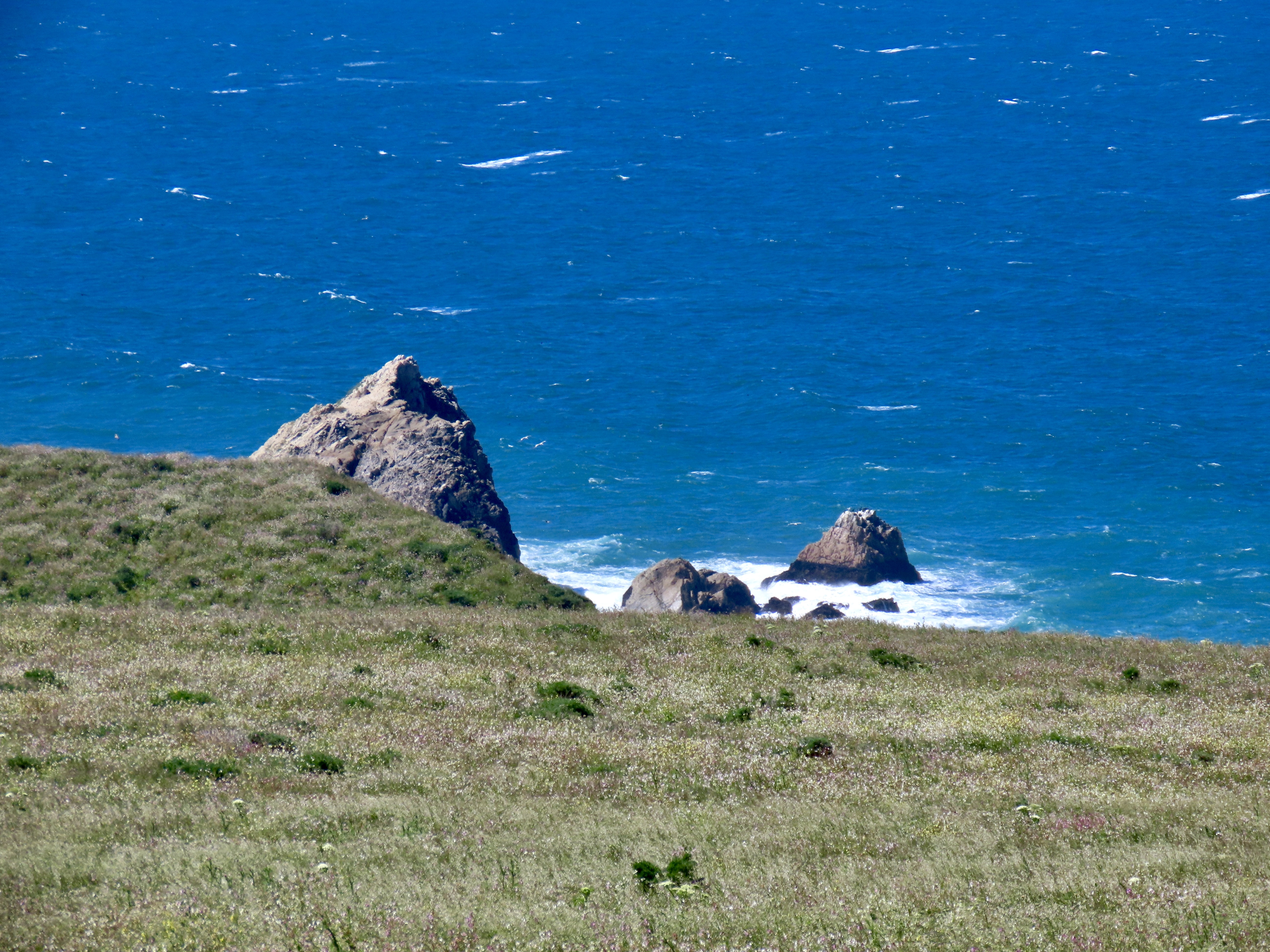
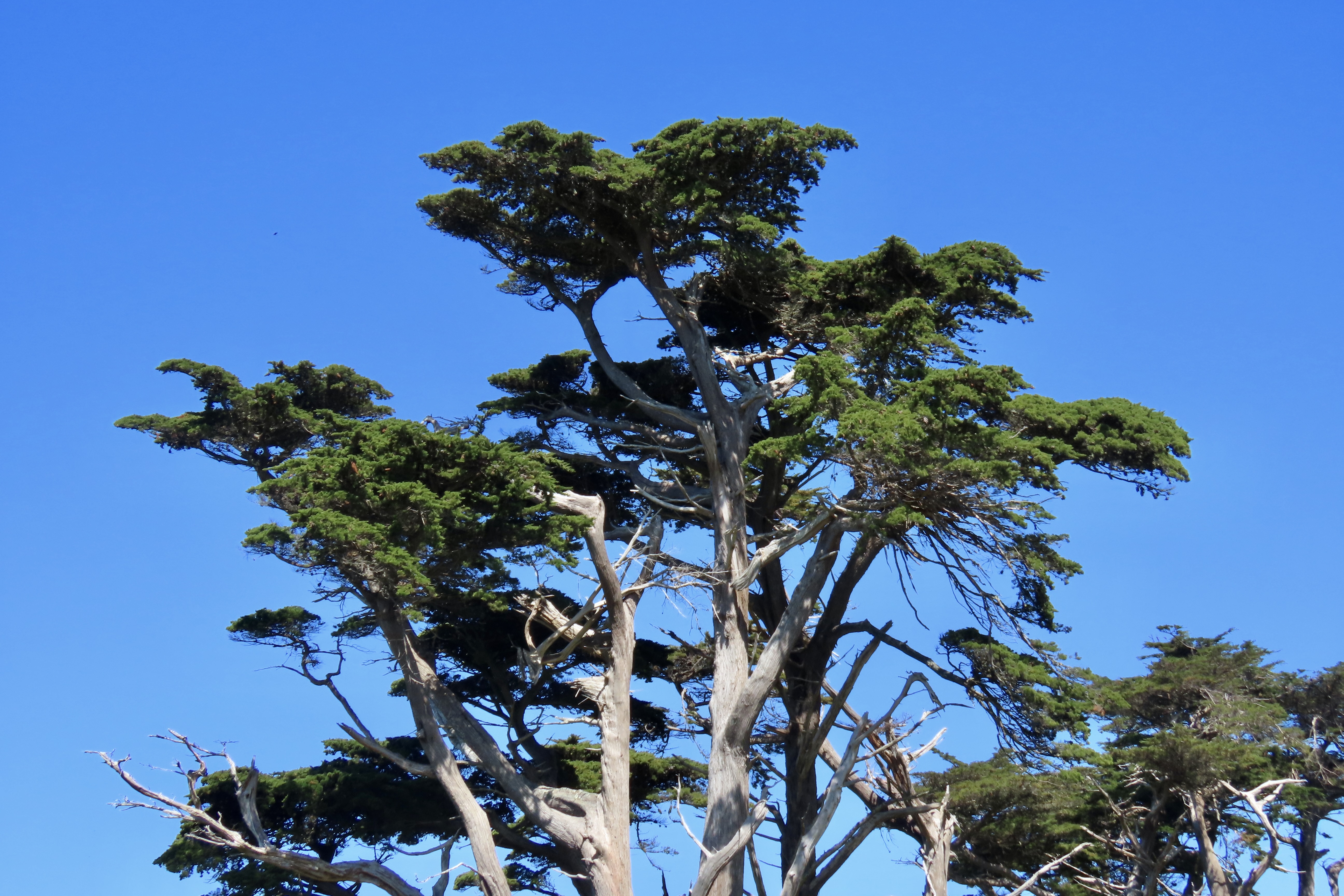
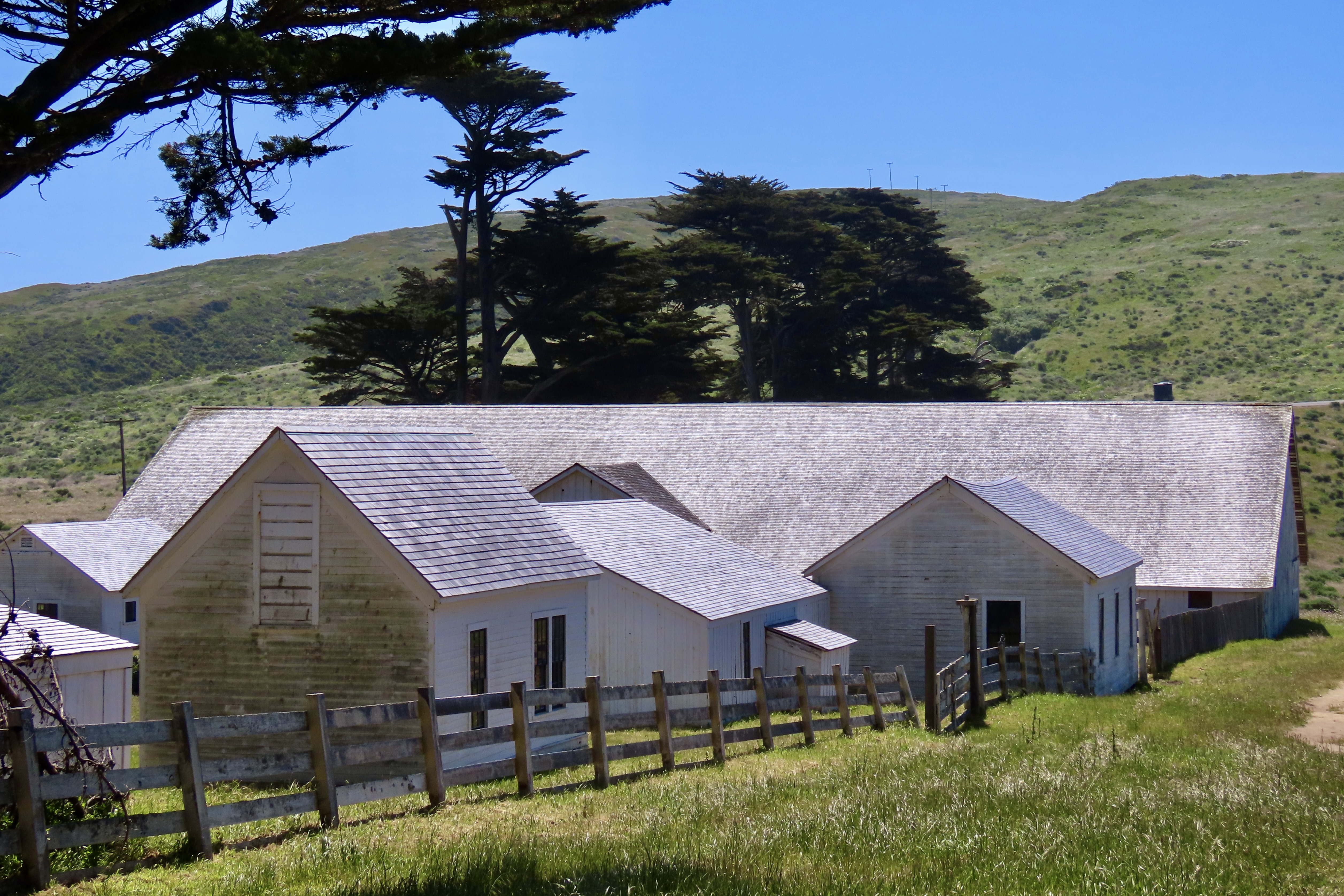
Quail eat a variety of plants and insects but seeds are always high on their list. This California quail is searching for them along the Tomales Point Trail.He stopped to check out a small stick.The wind added an interesting look to the quail as it came down the trail toward us.A feather dancer, perhaps. This is the time of the year when quail pair up. The hen, who had been searching for food in the grass, joined her mate. This shot provides a good view of the contrast between the male and female. Both are attractive. Soon they will have a clutch of eggs that can number up to the high 20s. It will be well hidden in the grass. When the babies hatch, it becomes the male’s job to serve as a guard. I’ve often watched one perched in a location that provides a view of the surrounding area. A quick call sends mom and babies into hiding when a threat appears. The chicks get “Freeze!” I once came on a group in the Marble Mountains of Northern California that had ‘froze’ on the trail in a tight little circle. While I was grabbing my camera, Mom realized her mistake and called “Run!” Boy, did they. In every direction.Meanwhile, back at the ranch (so to speak), a covey of quail had gathered. Except during mating season, this is the preferred lifestyle for quail. When frightened their first reaction is to run. They are fast! The next step is to zoom out. The sound that their wings makes is very distinctive, as is their calls. Once you have heard either, it is easy to remember.We discovered, when we hiked out the Tomales Point Trail, that we had hit the height of flower season. Three of the most common are shown here: Yellow and pink mustard, hairy gum plant (Grindelia hirsutula), and cow parsnip.It’s hard to travel anywhere in the US without encountering mustard. It comes in a variety of colors from white to yellow to blue to purple. While I don’t find the individual flowers particularly attractive compared to many others, a field of mustard can brighten up one’s day. Not so a dairy farmer’s, however. The plant is mildly poisonous to cattle. It can also give a bad taste to milk, cream, butter and, I assume, cheese. On the other hand, its tiny seeds produce mustard.Hairy gum plant hardly seemed the appropriate name for these cheerful yellow daisies.The real surprise to me, however, were the cow parsnips. The cow parsnip is a fairly common plant, a giant member of the carrot family. I’ve always admired them for their size, but I’ve never thought of them as particularly beautiful, until this trip.Nor have I ever noticed how they come wrapped up as young plants.Part of this cow parsnip is in bloom, while other parts are in the budding stage.Budding and blooming are combined here. In full bloom. While quite pretty and presumably edible (if you know what you are doing), I would neither pick this flower for a bouquet nor eat it. Sap from the stems is known to be phototoxic. If you get some on your skin, sunshine can turn it into a severe rash. While I was focusing on flowers, Peggy was capturing some of the impressive scenery. This is looking out toward Tomales Point. The Pacific Ocean is on this side of the peninsula. Tomales Bay is on the other. The Bodega Bay Headlands can be seen in the distance. Sea stacks that tower above McClure Beach. I really like the contrast here between the ocean and the grass with the massive rocks providing separation between the two. Here, Peggy caught the iconic cypress trees at the start of the Tomales Point Trail at Pierce Ranch.Tree tops.I took this photo because I was enamored with the rooftops. The large building once served as the dairy barn. The other buildings served a variety of purposes ranging from bunkhouses to where the butter was made. More cypress provide a backdrop for the barn.Tom and Lita were with us on our first trip out to the Pierce Ranch. The skies were threatening rain. Tom was rather taken with this single cypress tree that was peaking over the dairy barn and set off by stormy skies. I thought his capture of the barn was quite good as well. I amused myself inside by taking a photo out of one of the windows. Modern art?This might seem like a strange thing to throw into the middle of a blog on Point Reyes but Tom wouldn’t stop talking about it. I’ve know Tom in a great number of capacities during the 50 years we have been hanging out together, but somehow, I never imagined him as someone who would create a powerful, battery operated blender that you can take anywhere. Thus the name: All Terrain Blender. He designed it with outdoor activities and tailgaters in mind, but it turns out it will make an excellent addition to our RV or any area with confined space from apartments to small houses. (The top and the bottom can be flipped and fitted together for storage!) The product is now in its final stages of development. Market studies suggest that it will be very successful. It’s hard to say how successful, but one thing I know about Tom is that he will use a substantial part of any profits he makes to support good causes. That’s what he has been doing all of his life.Way off in the distance, you can see a tiny figure. That’s me, searching for elk. When we visited the ranch with Tom and Lita, the elk were hanging out beside the road and our only camera was our iPhone. When we came back with our good cameras, they were off in the far distance. Go figure. Peggy decided to stay in the truck while I went on my search.I actually found one. Its response was, “What in the heck are you doing here?” And then immediately ran off.This horse wasn’t likely to run off anywhere. We found him at a ranch on our way back to camp after visiting Pierce Point Ranch. Tom snapped its photo. Have you ever see such a swayback? That’s it for today. Our next post will wrap up our Point Reyes visit with a trip out to the lighthouse, a walk on the Earthquake Trail, and a hike to Tomales Bay.
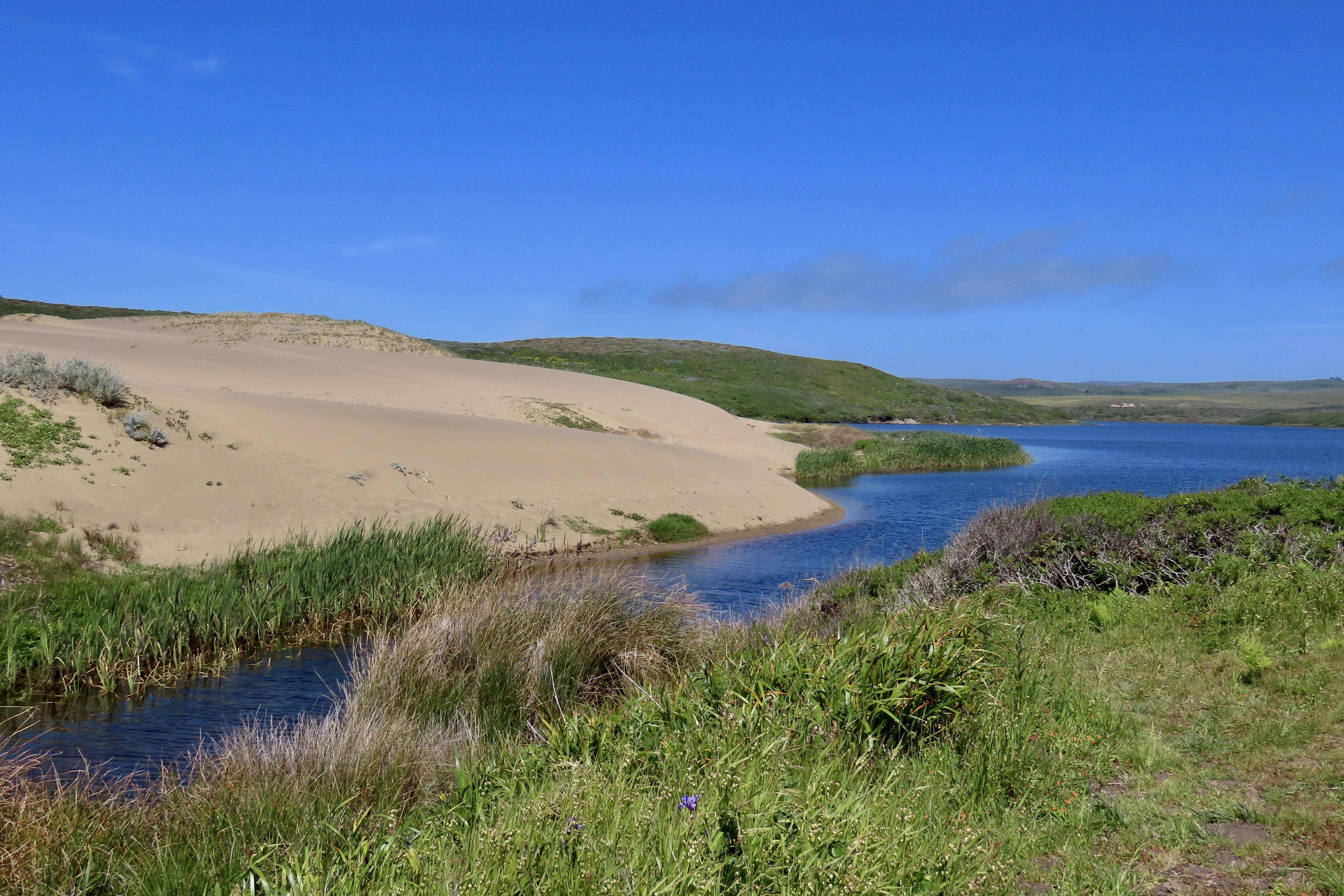
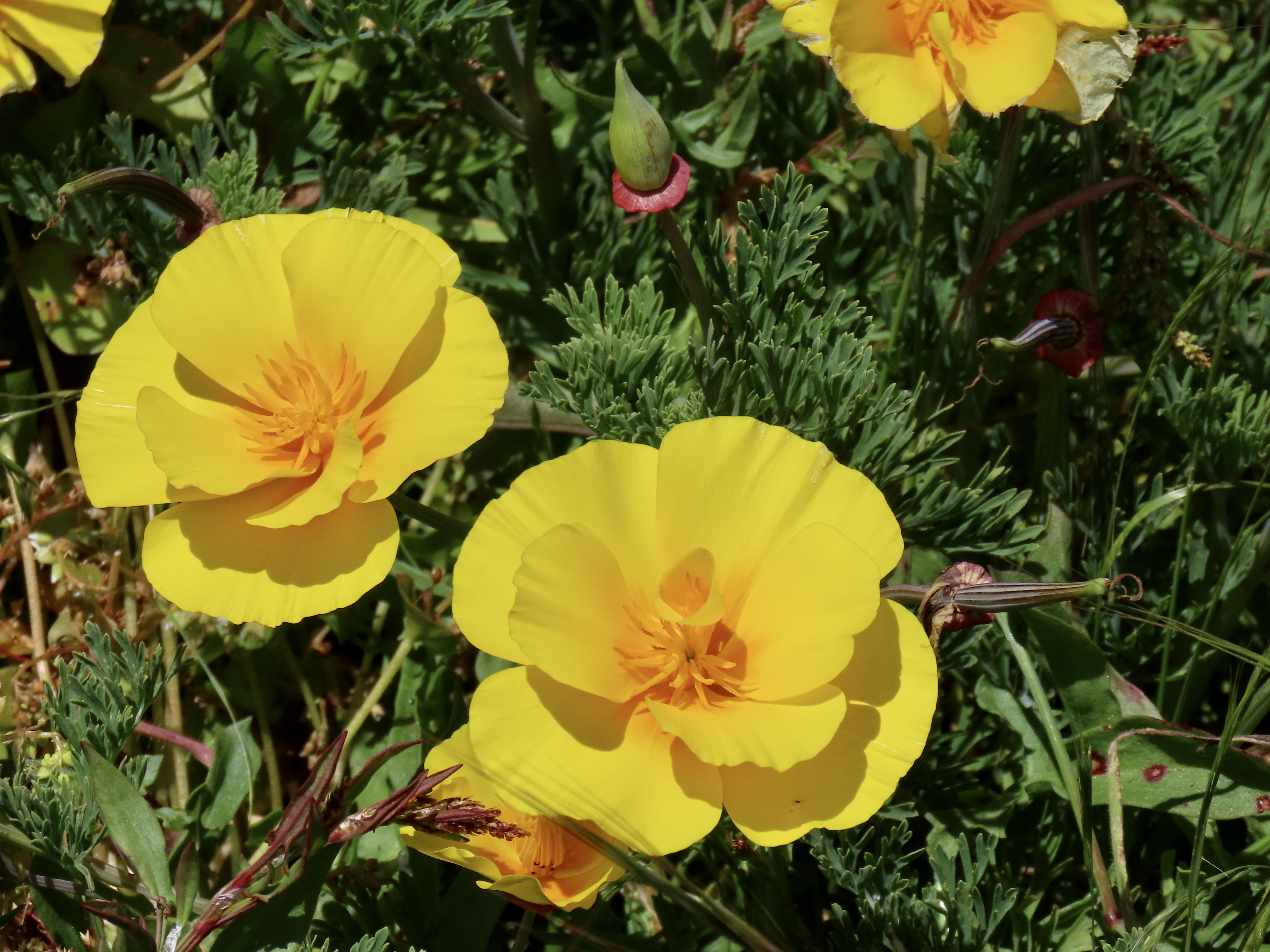
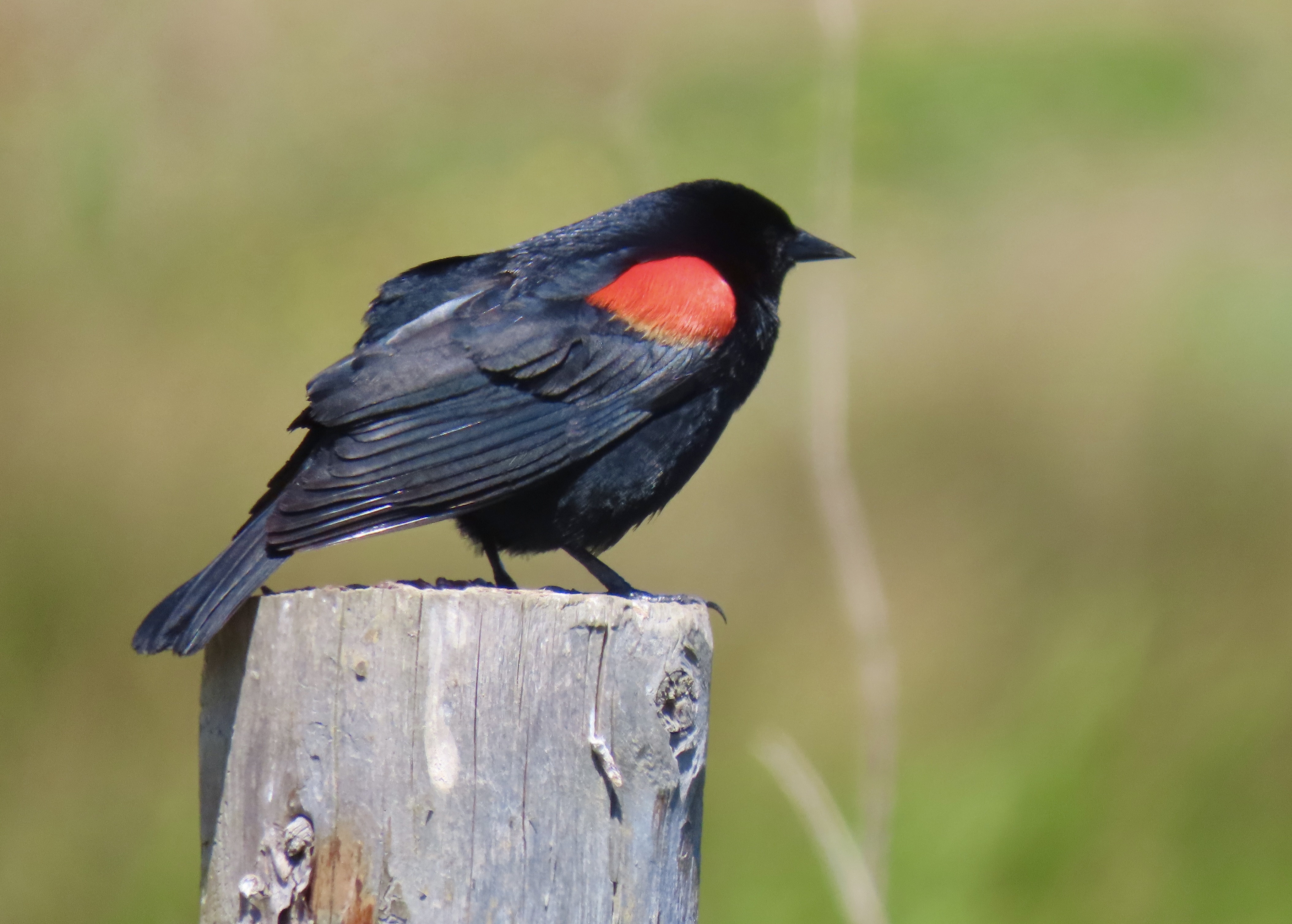
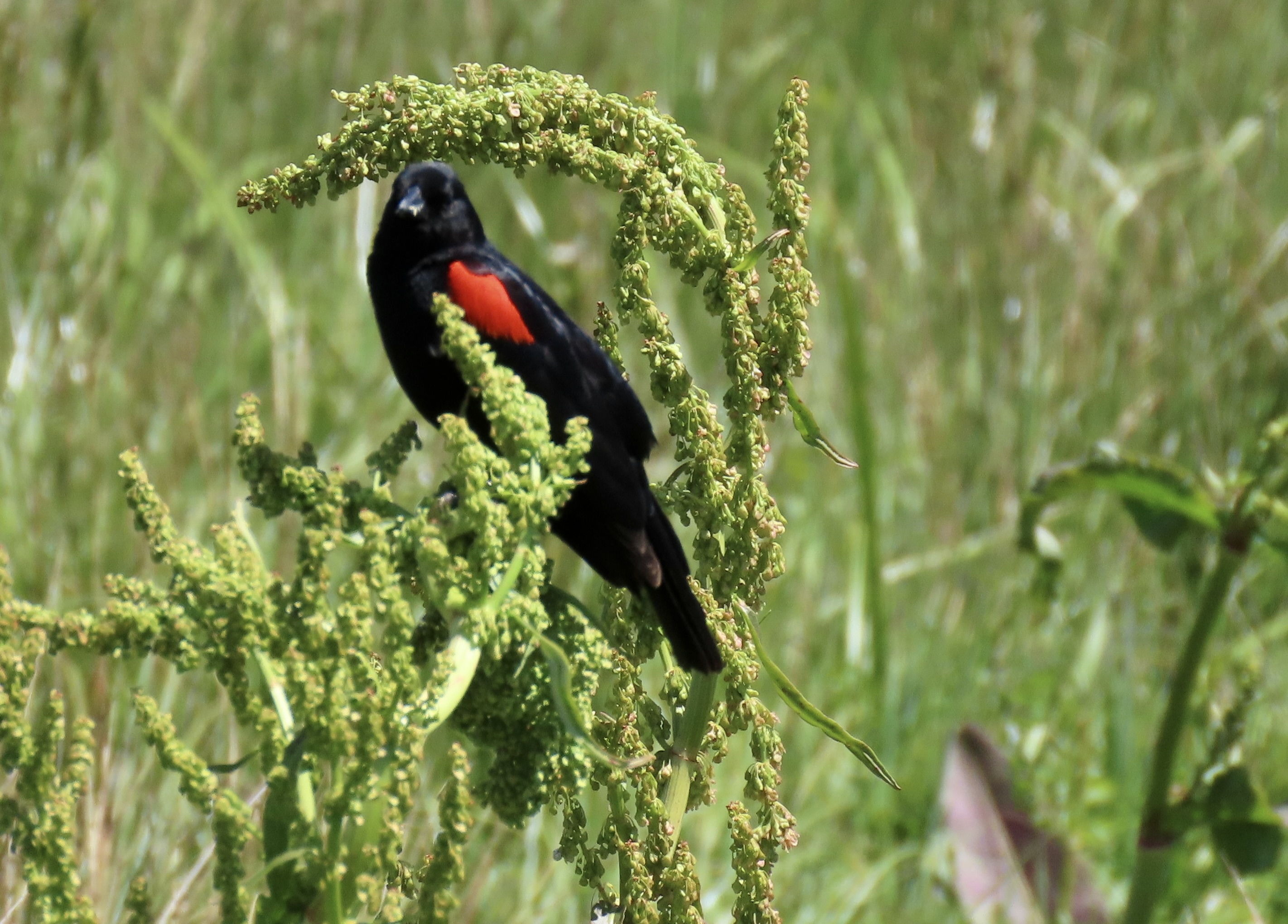
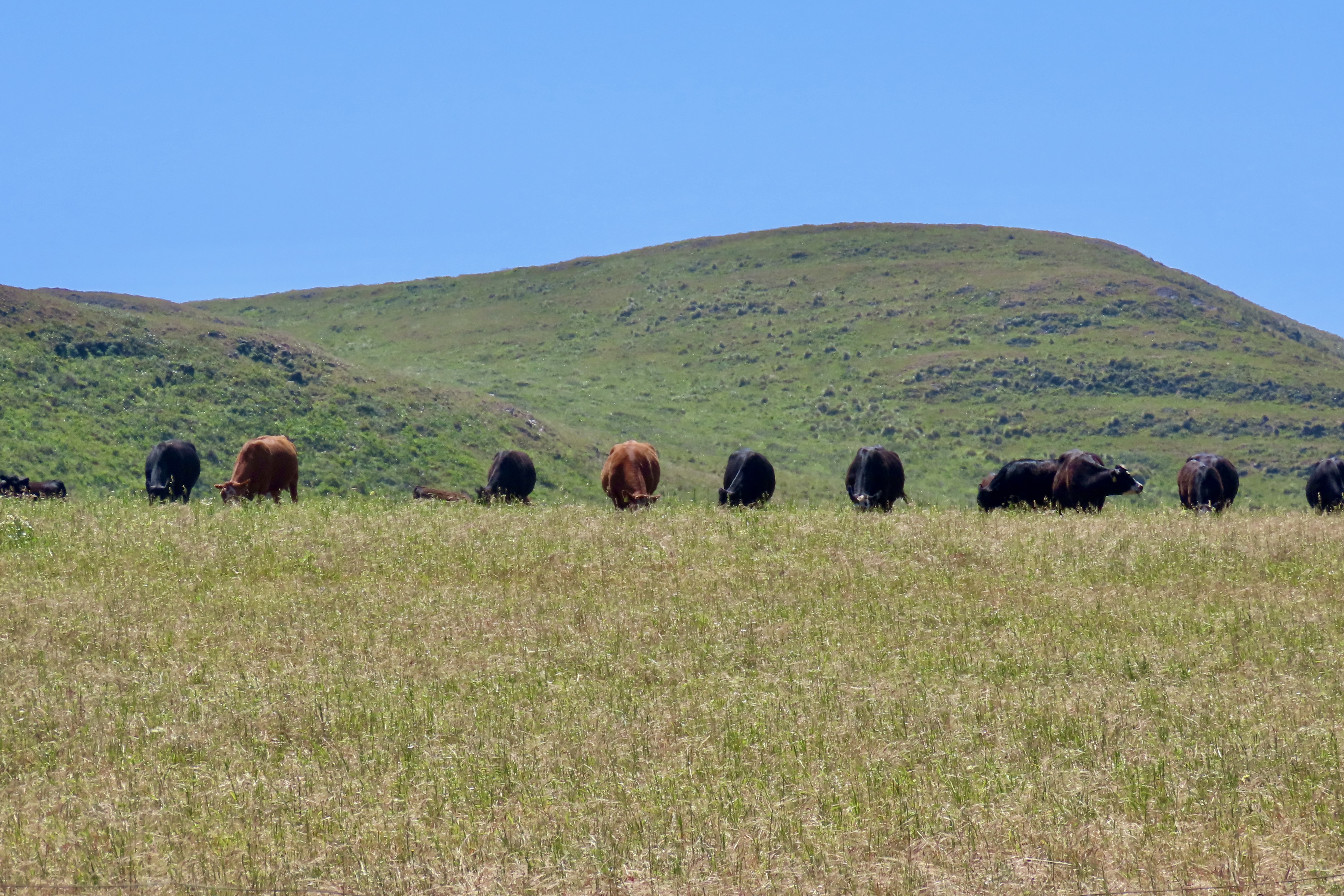
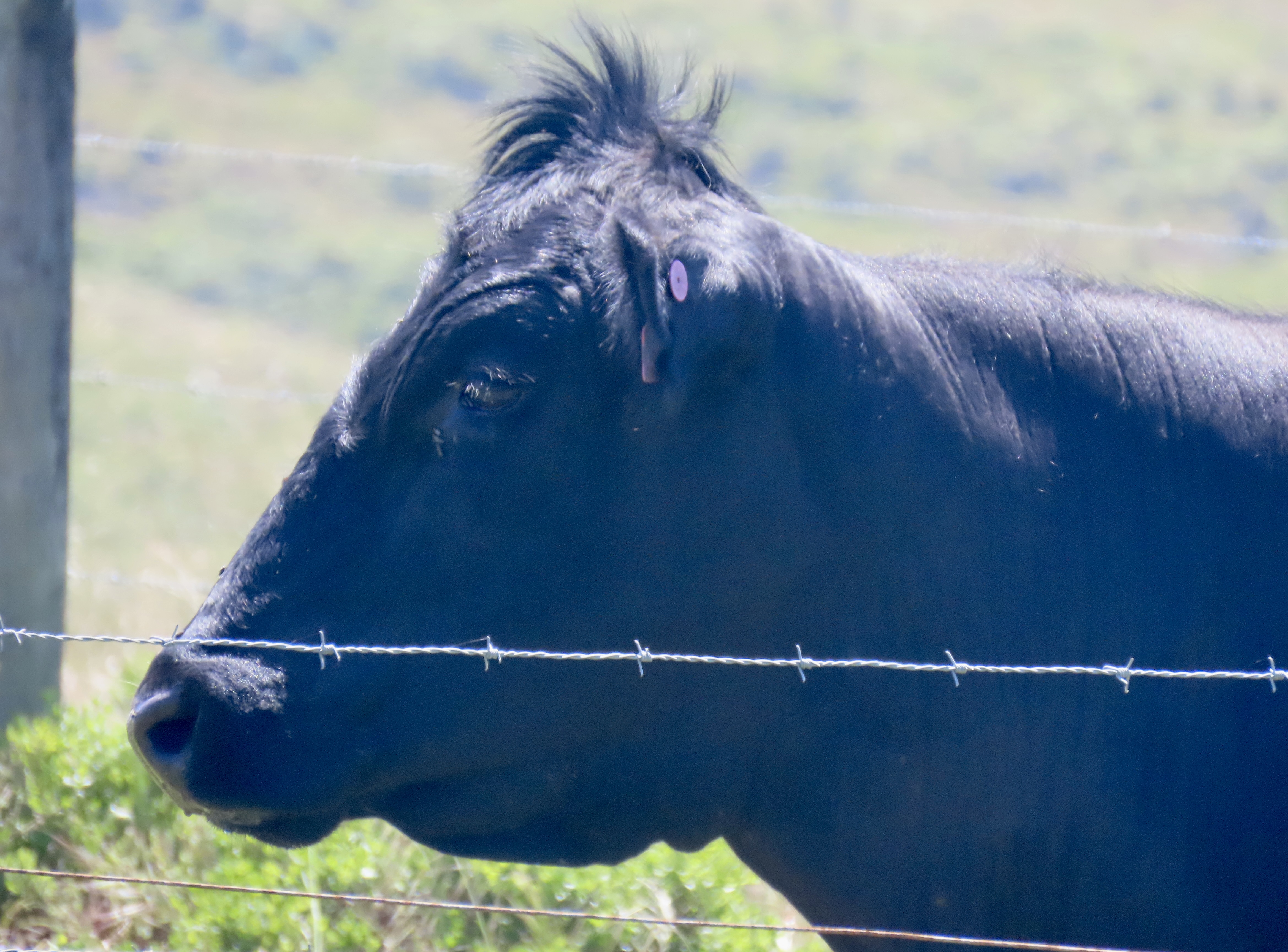
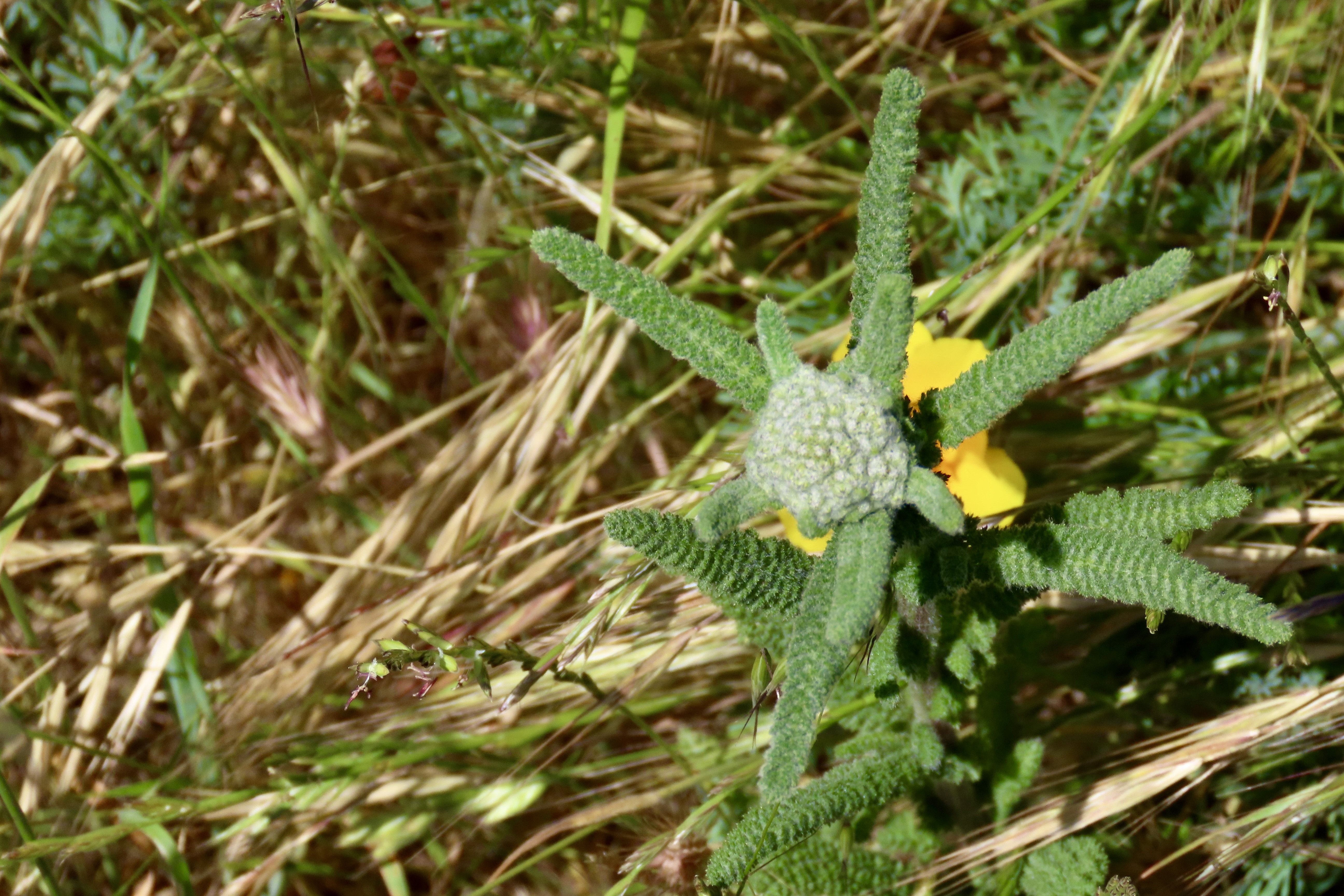
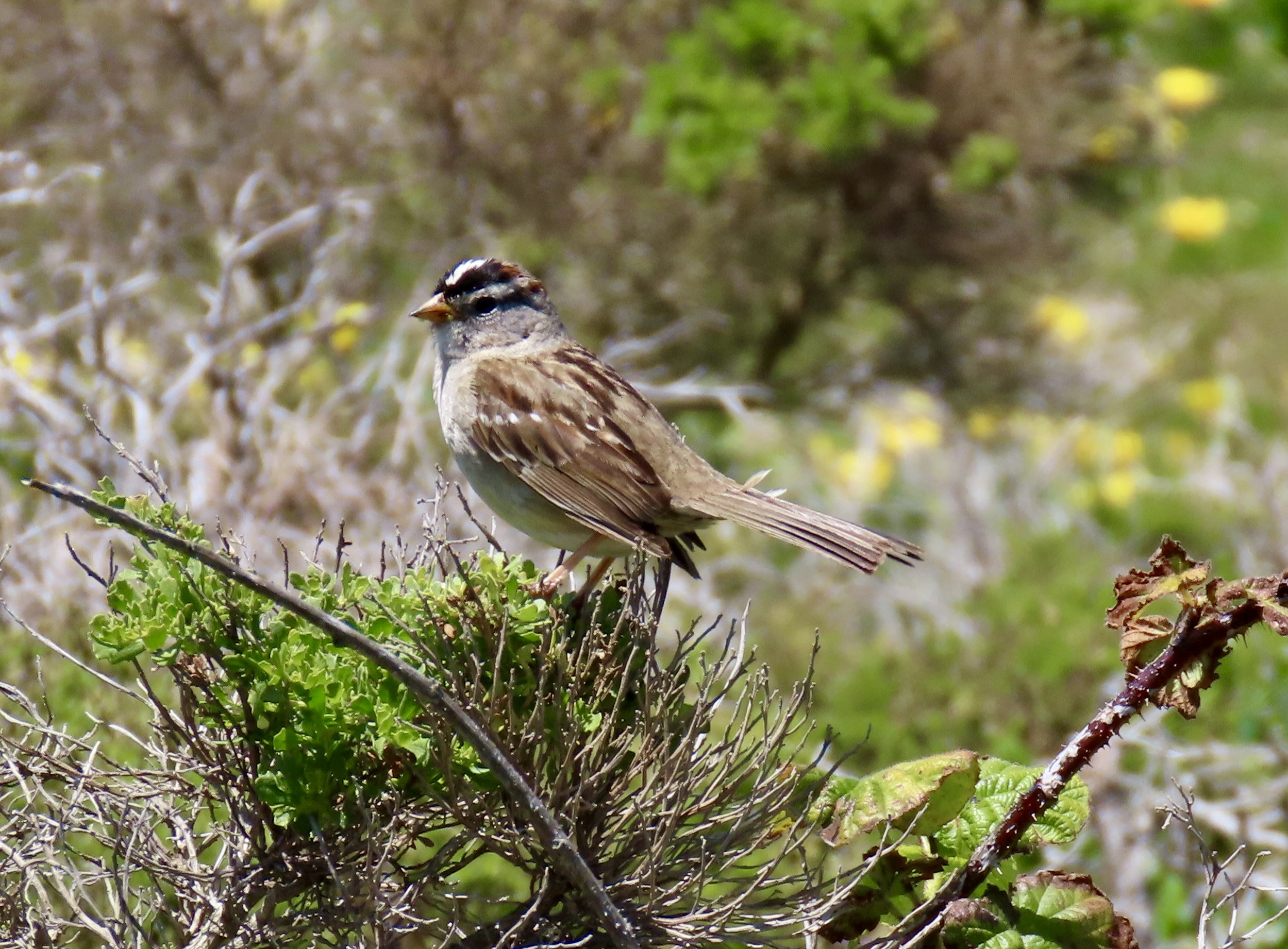
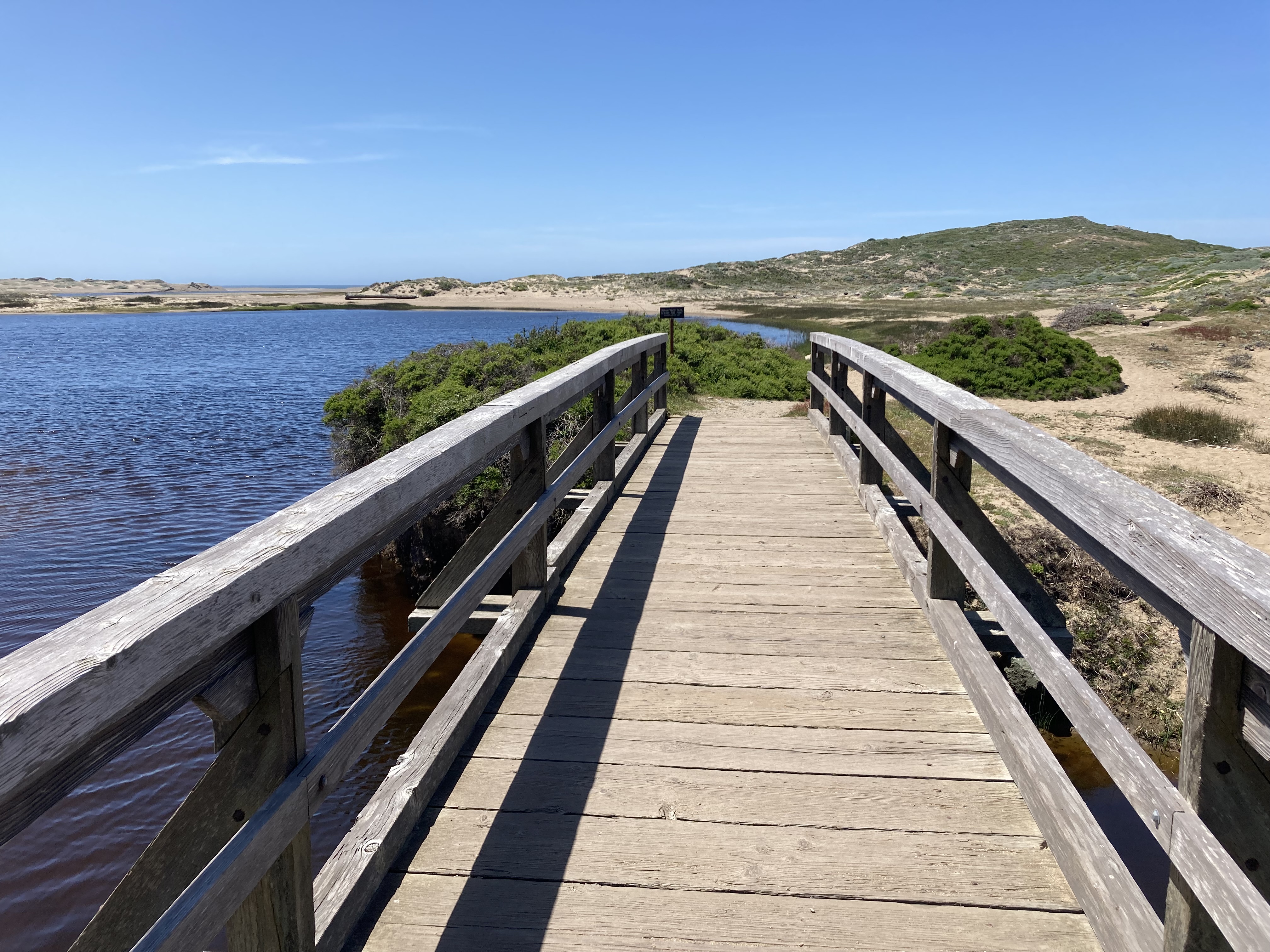
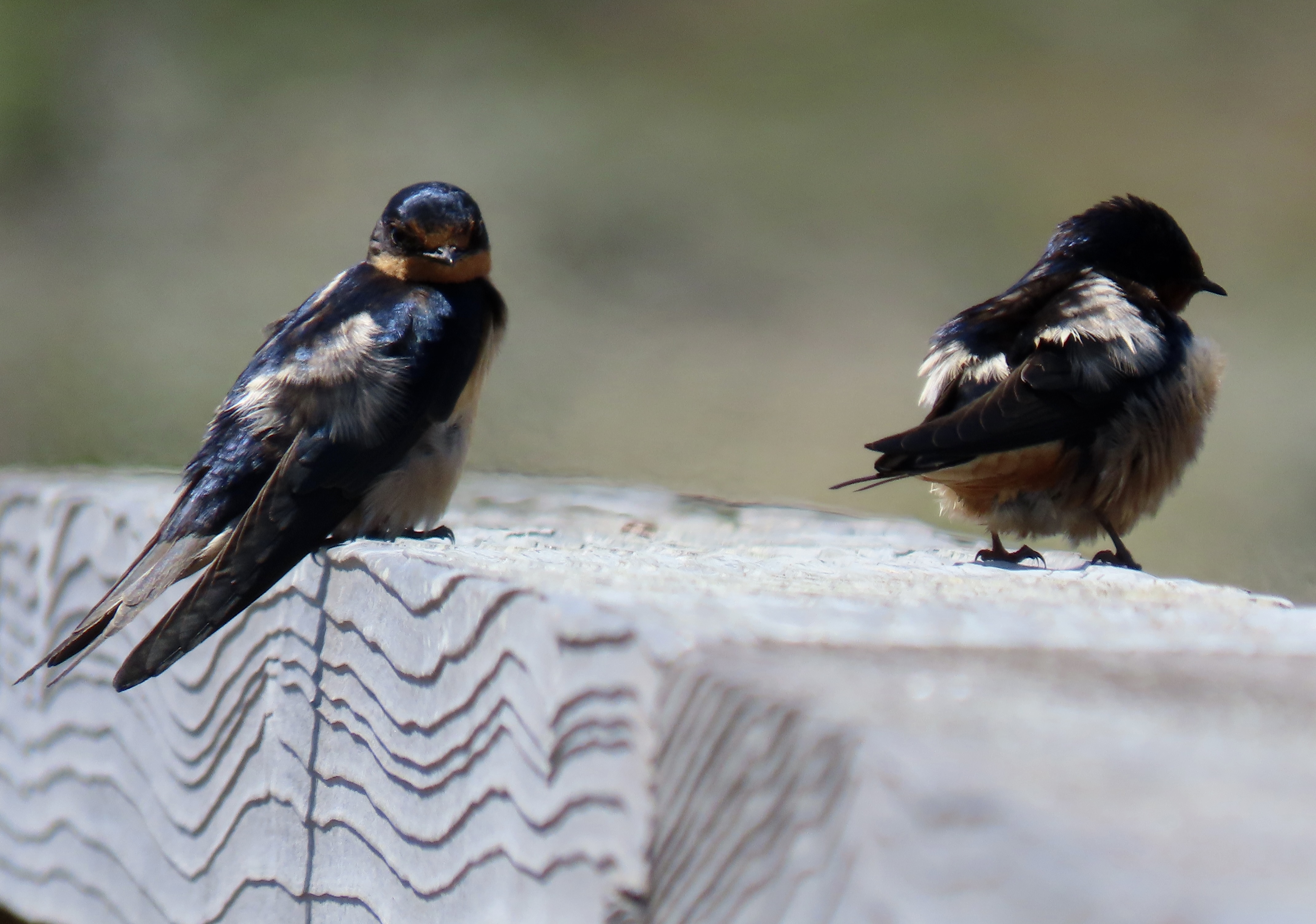
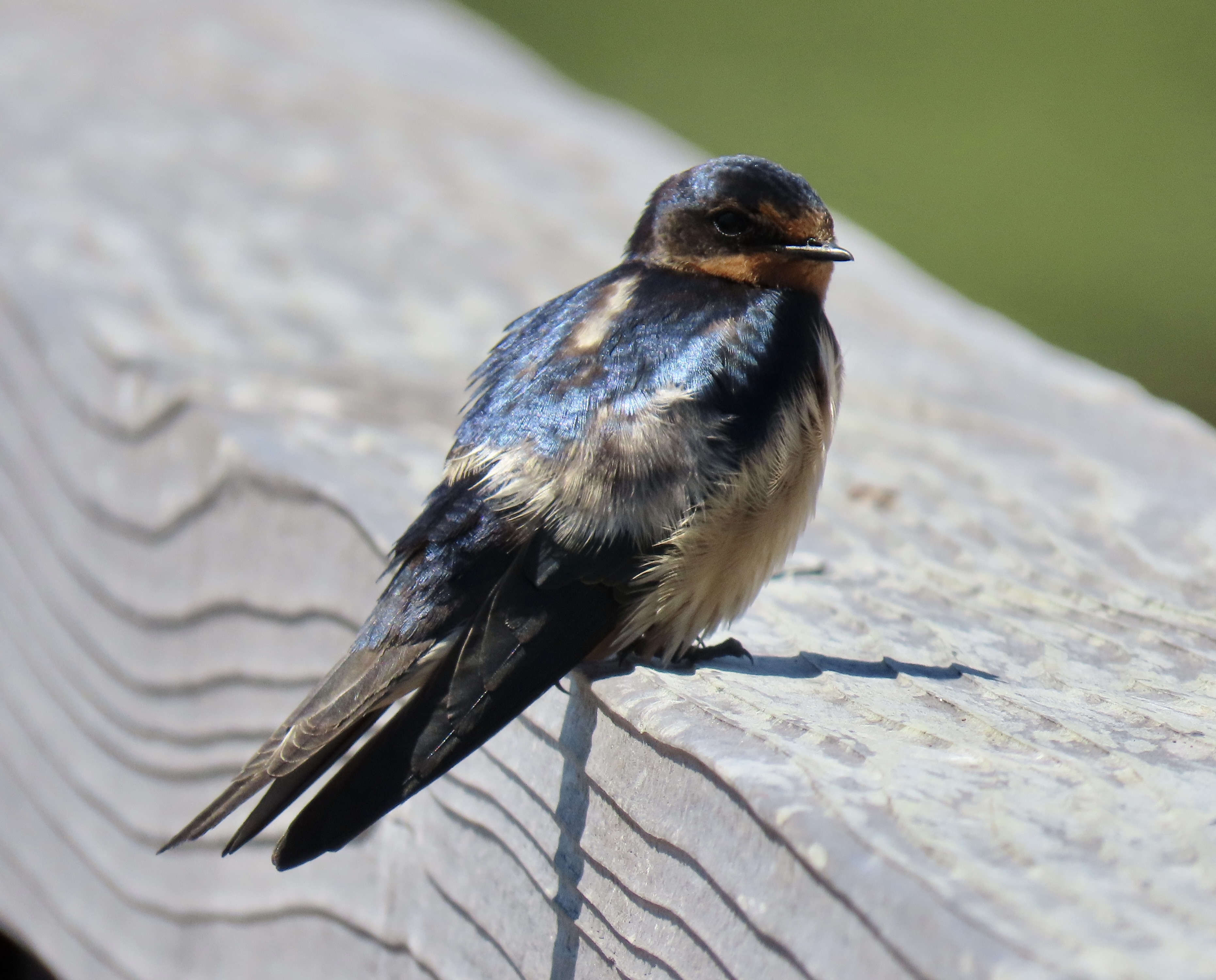
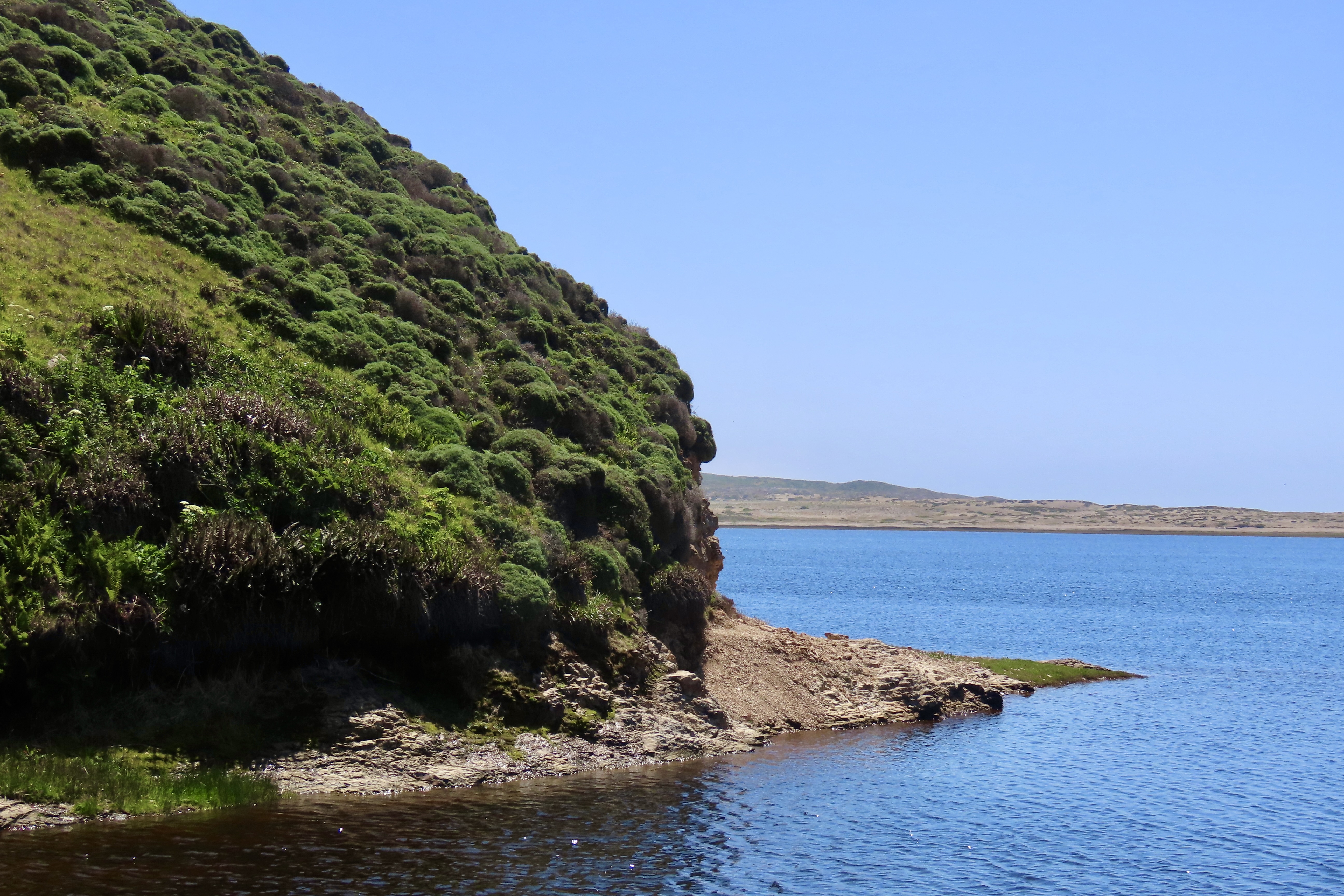
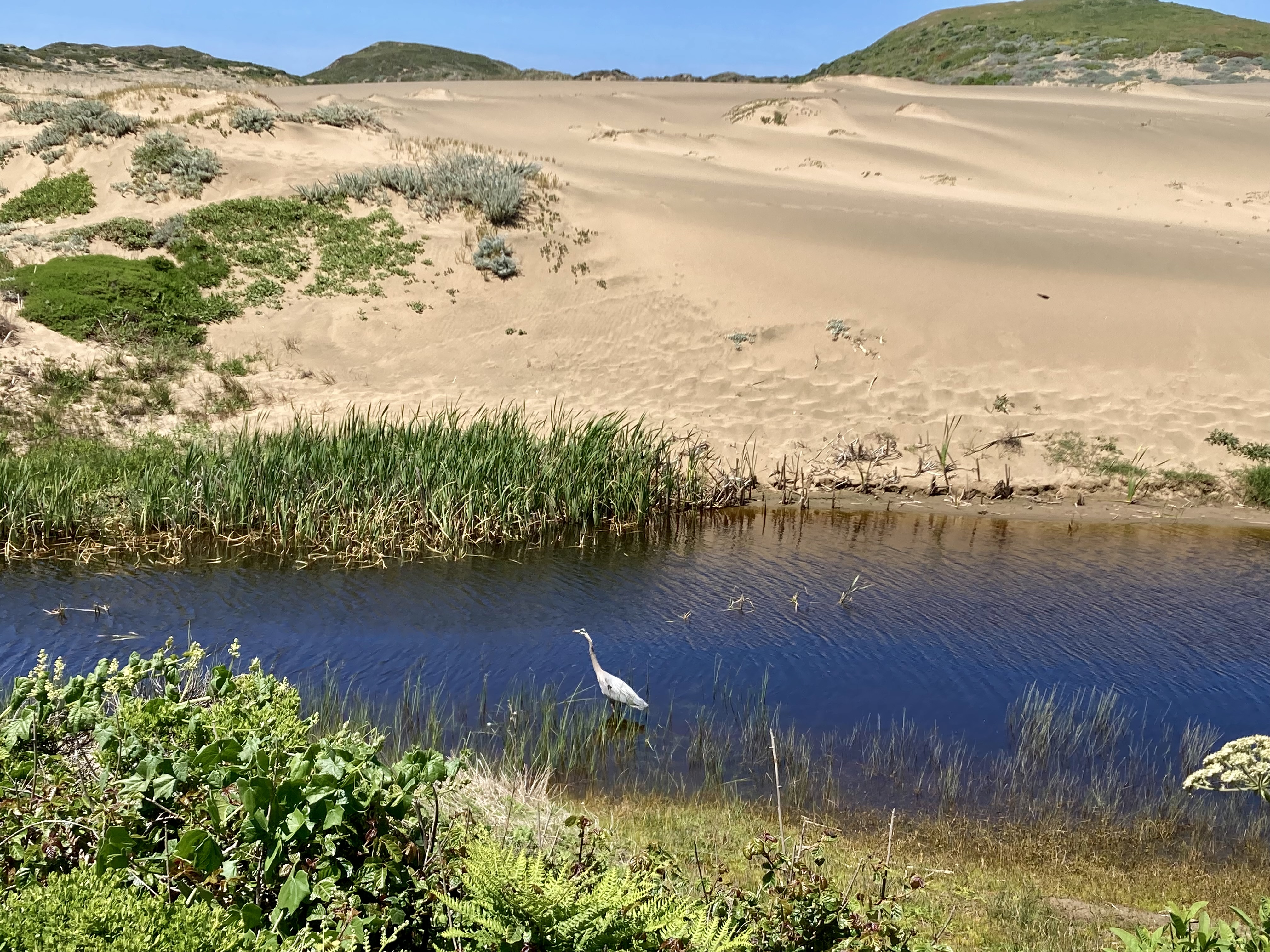
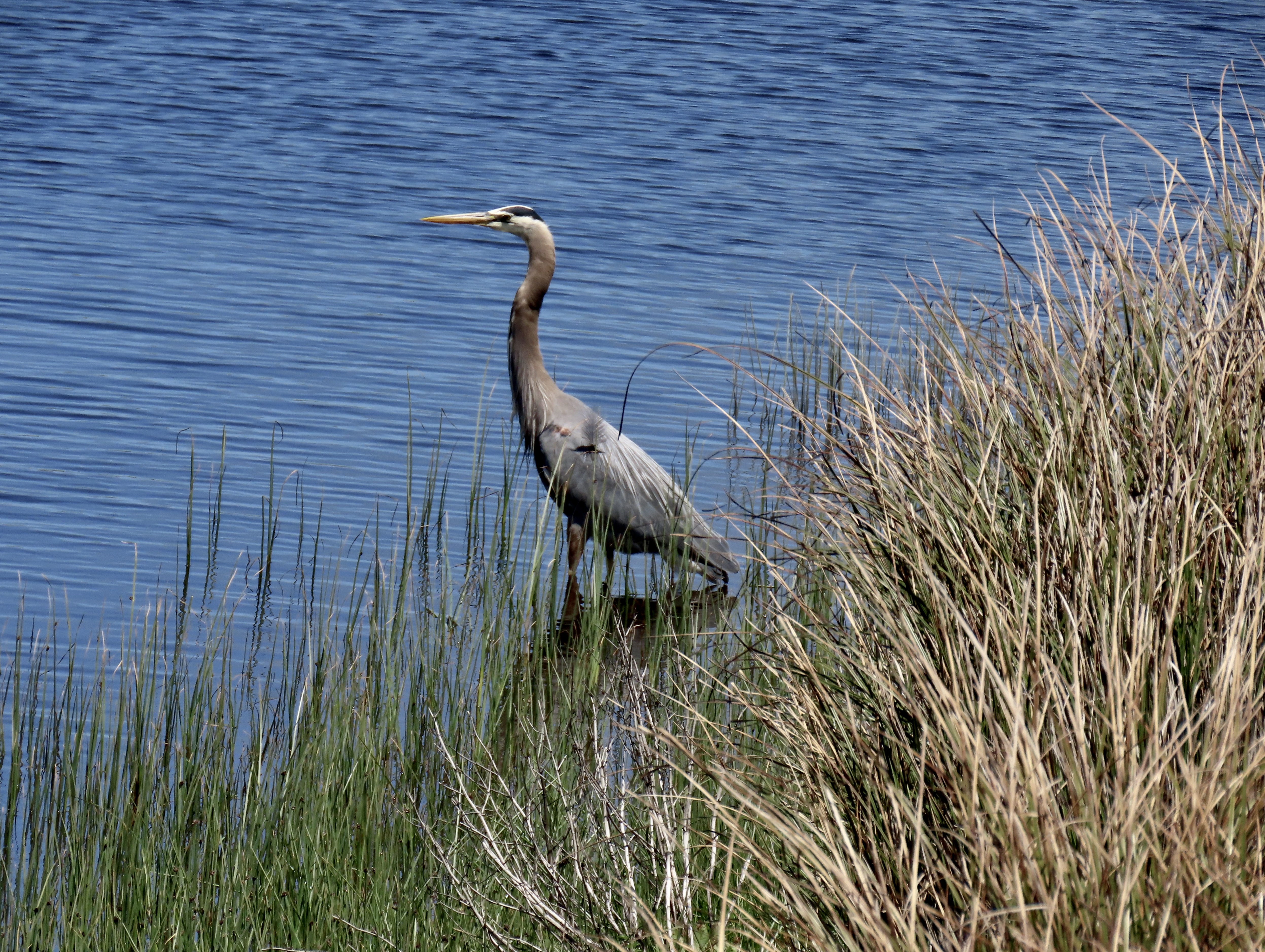
The great egret stopped to smell a flower. Just kidding. It was searching for a fish in the grass, which might seem even stranger— except it had dropped the fish there.Peggy and I found the great egret, and a great blue heron, fishing in Abbotts Lagoon at Pt. Reyes National Seashore.It was an easy and pleasant walk out to the lagoon from the trailhead. Flowers, birds and cows kept us amused along the way. Peggy fell in love with the poppies.She took lots of photos.A two-for-one shot.And two with layered petals.Large bunches of poppies added splashes of yellow to the scenery.A pond proved to be a perfect location for nesting redwing blackbirds.This one chose a post to sing his cheerful song from.And this one, a convenient plant.Several cows grazed over a hill above the pond like a 40-plus leg mowing machine. A number of dairy ranches are still functioning within the park.This cow, backlit by the sun, had a bad case of cowlick. At first, we thought it might be a bull. Nope. I checked.I spotted this plant and went searching in my memory for its name. The leaves gave it away.It was yarrow. One of the names for this flower is Devil’s Plaything. An ancient superstition said the Devil would walk the streets at night and shake the flower at houses he wanted to curse. One can only wonder how the superstition got its start.Neither Peggy nor I had any problems identifying this iris. Its name? Iris douglasiana ‘Pt Reyes’.A colorful thistle caught my attention. You can look, but you best not touch! BTW, nettles were common along the trail as well. They are definitely ‘do not touch.’Lupine has well over 200 species worldwide. Estimates range as high as 500! The beginning of the trail at Abbotts Lagoon is loaded with yellow lupine bushes (Lupinus aborius). It was a week or two early for most of them to bloom but one plant favored me with these.Peggy found a striking red dragonfly along the trail that flew ahead of us and conveniently landed in front of her.This white crowned sparrow wasn’t nearly as cooperative. The bushes alongside the trail were alive with them. One would think they would be easy to photograph. And they would be, if they were ever still longer than a second or two. Finally, we got lucky.We were even luckier when crossing the bridge that separates the upper and lower lagoons. A white crowned sparrow was below the bridge getting a drink. it’s easy to see how the bird got its name.The bridge and the lower lagoon. The ocean can be seen in the distance.A pair of swallows landed on the bridge railing.A close up of the colorful male.Another view of the lower lagoon.The main action was taking place on the upper lagoon just above the bridge where the great egret and the great blue heron were at work. The egret had spotted a fish and was heading out to get it.It plunged its head into the water…And caught a whopper! It’s the fish he dropped in the grass and had to retrieve.The great blue heron was 50 feet below the egret.A closer view.Searching for fish, it looked to the right…Straight ahead…And glanced quickly to the left…Before burying its head lightning fast in the water.All the way up its neck. We’ll leave the heron trying to catch its fish. (We never saw the fish, but we did see the heron swallow it.) Next post: On to the historic Pierce Point Ranch.
Have you ever found a message in a bottle or a tin washed up on a seashore? Or dreamed of finding one? We did last week on Drakes Beach at Pt. Reyes National Seashore.
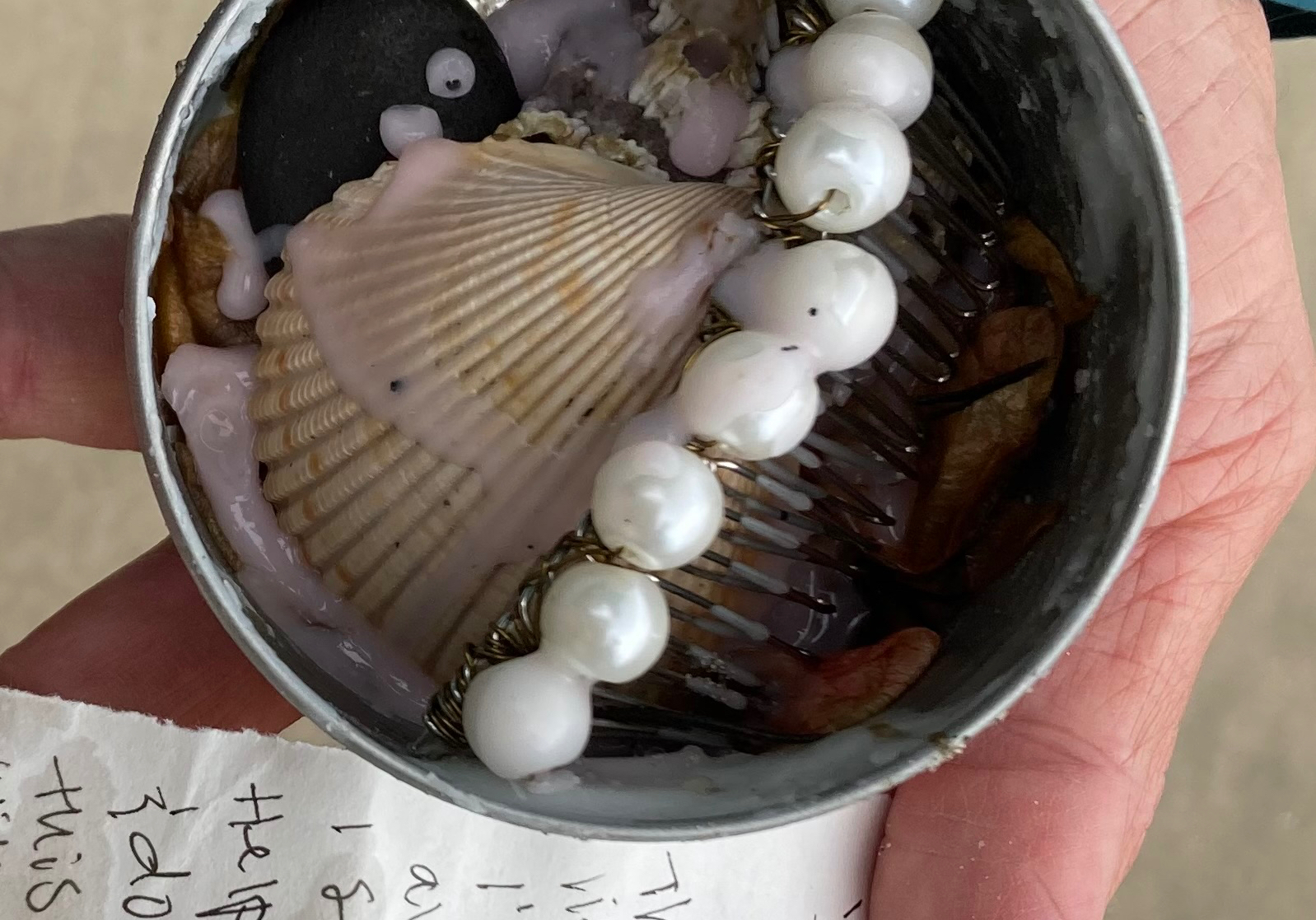
I was walking along Drakes Beach with my friend Tom Lovering when he spotted a tin with a top on it in the sand. Peggy and Tom’s partner Lita were walking behind us. “Open it up, Tom,” we urged. He was already worrying the lid. There was a treasure inside. Someone’s comb with artificial pearl beads and seashells all held in by candle wax. And a letter! It had been brought in on the day’s high tide. Had it come from afar after weeks/months/years of travel. Or had a person thrown it into the ocean that morning with hopes that it would wash out to sea? There wasn’t a clue.
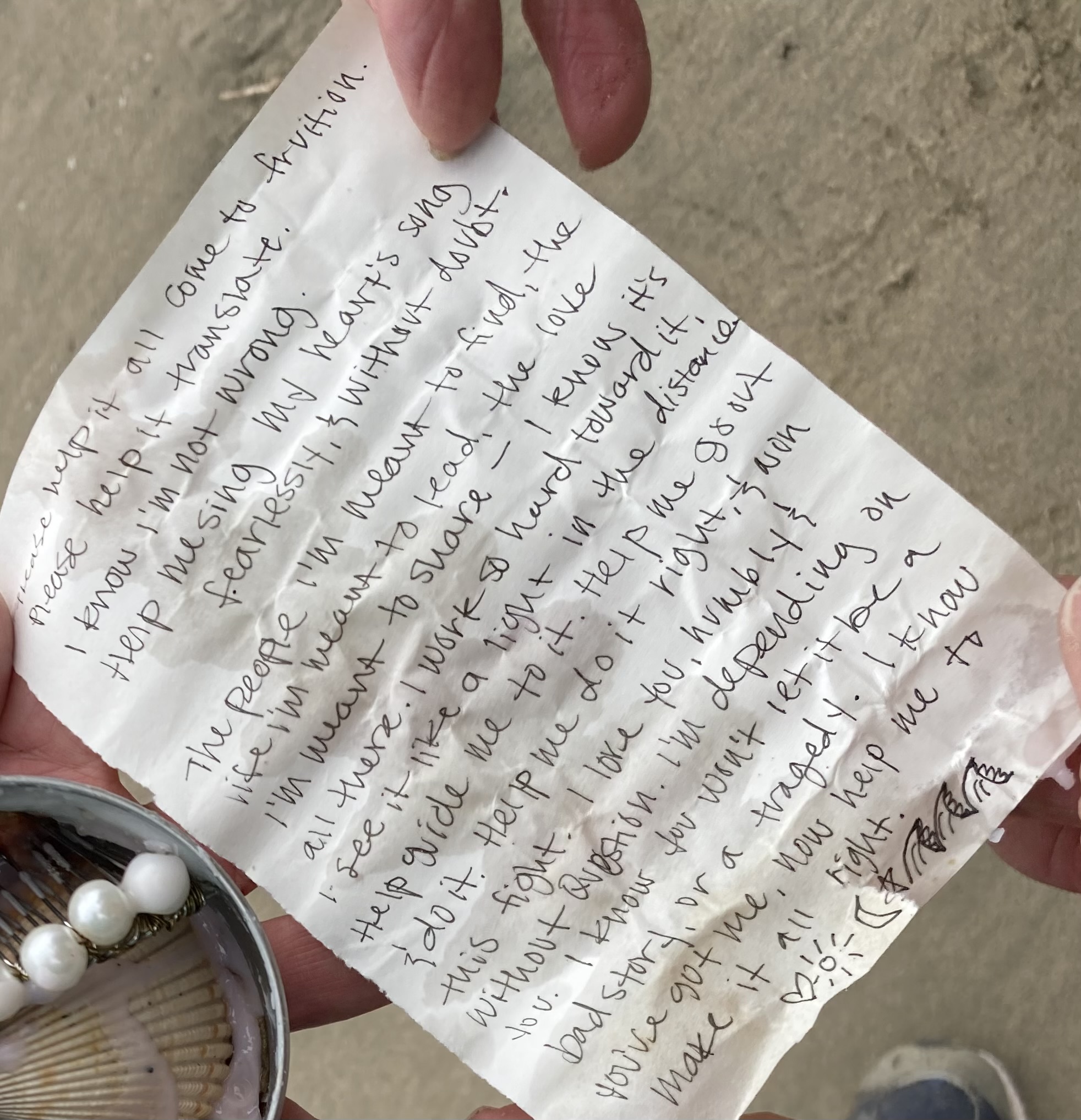
The letter. It was slightly damp and wrinkled but still easy to read. I’ve repeated the words below.
“Please help it all come to fruition. Please help it to translate. I know I am not wrong. Help me sing my heart’s song fearlessly and without doubt. The people I am meant to find, the life I am meant to live, the love I am meant to share— I know it’s all there. I work so hard toward it. I see it like a light in the distance. Help guide me to it. Help me go out and do it. Help me do it right and win this fight. I love you, humbly and without question. I’m depending on you. I know you won’t let it be a sad story, or a tragedy. Now help me to make it all right.”
One can only speculate on the sender, but I imagine a young woman (given the comb) asking for help. She is bright, and possibly troubled, but has faith and hope that her future will turn out right. Thoughts? Tom put the message back in the tin with the lid on it and left it on the beach for some other person to discover. We listened to Jim Croce’s Time in a Bottle when we got back to camp.
These towering cliffs are the same ones that Sir Francis Drake would have seen on his 1579 voyage around the world. They reminded him of England’s Cliffs of Dover. With his ship in serious need of repair, he had pulled into the bay. The belief that this is where he landed for repairs led to the bay being named Drakes Bay and the beach, Drakes Beach.This is Tom. We go way back. “Fifty years” he reminded me. We met in 1974.He had a bit more hair when this was taken in the late 70s.
He had even more in 1974 when I had walked into Alpine West, a popular outdoor gear store in Sacramento at the time. I was seeking a sponsor for the Sierra Trek, a hundred mile backpack trek across the Sierra Nevada Mountains that I had dreamed up to raise funds for the Sacramento Lung Association and future Breathe California. A hippie-looking 20-something was standing behind the counter. I walked over and asked him if I could speak to the owner or manager. “I am the owner,” Tom had told me rather stiffly. Oops! I introduced myself as the Executive Director of the Lung Association and explained what I wanted to do. “You’re crazy,” he had told me. “People may survive it but they will hate you and the Lung Association afterwards.” It wasn’t exactly what I was hoping to hear from one of Sacramento’s leading outdoor experts. But then he offered to sponsor the event… I left a little confused. If they hated the Lung Association, wouldn’t they hate Alpine West as well? We’ve been having adventures together ever since 1974. He’s been though several successful careers over the years. I’ll introduce his latest in my next post: creating a powerful, battery-operated blender. He couldn’t stop talking about it. But for now, back to Drakes Beach and another popular beach on Drakes Bay: Limantour.
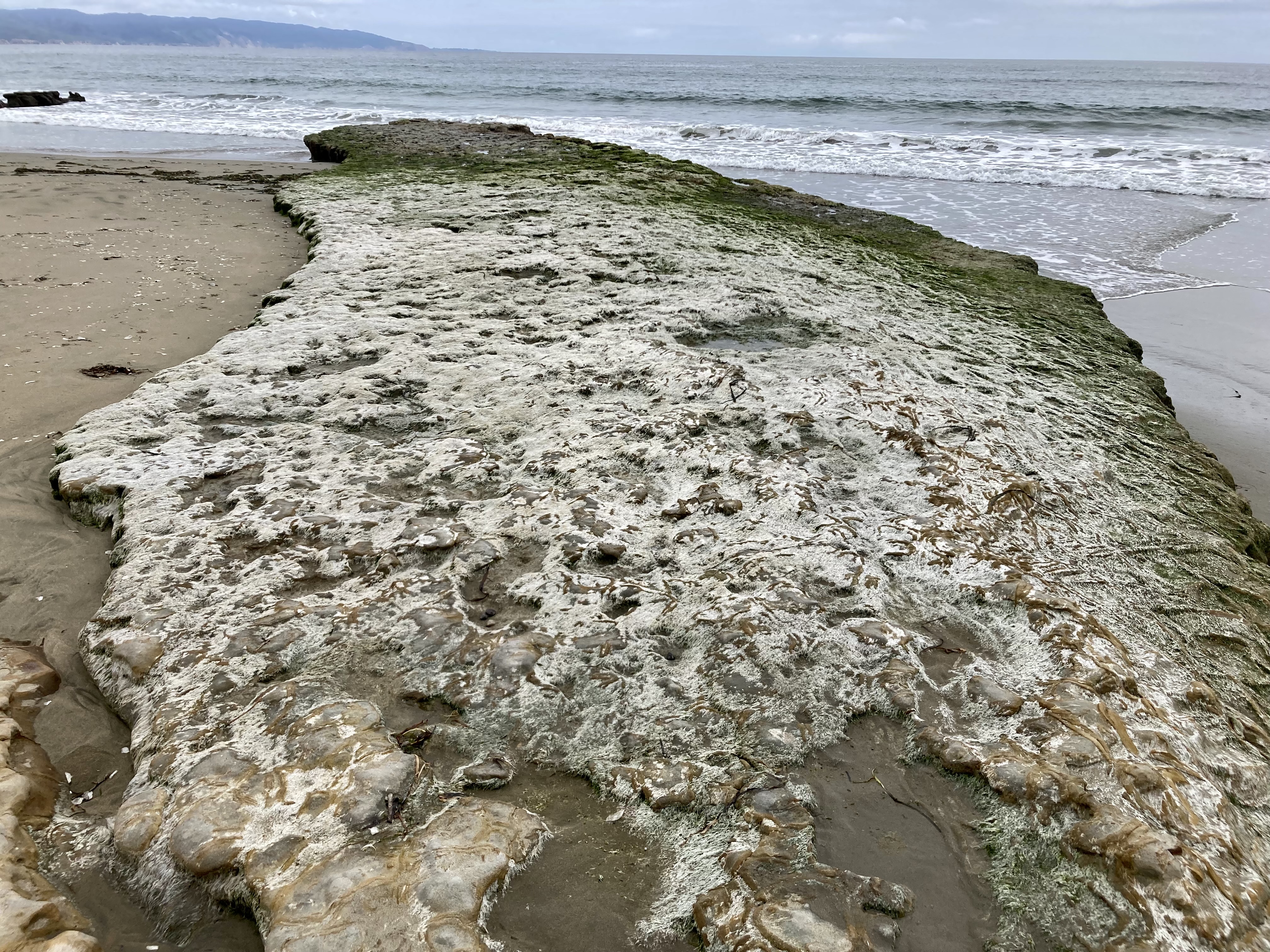
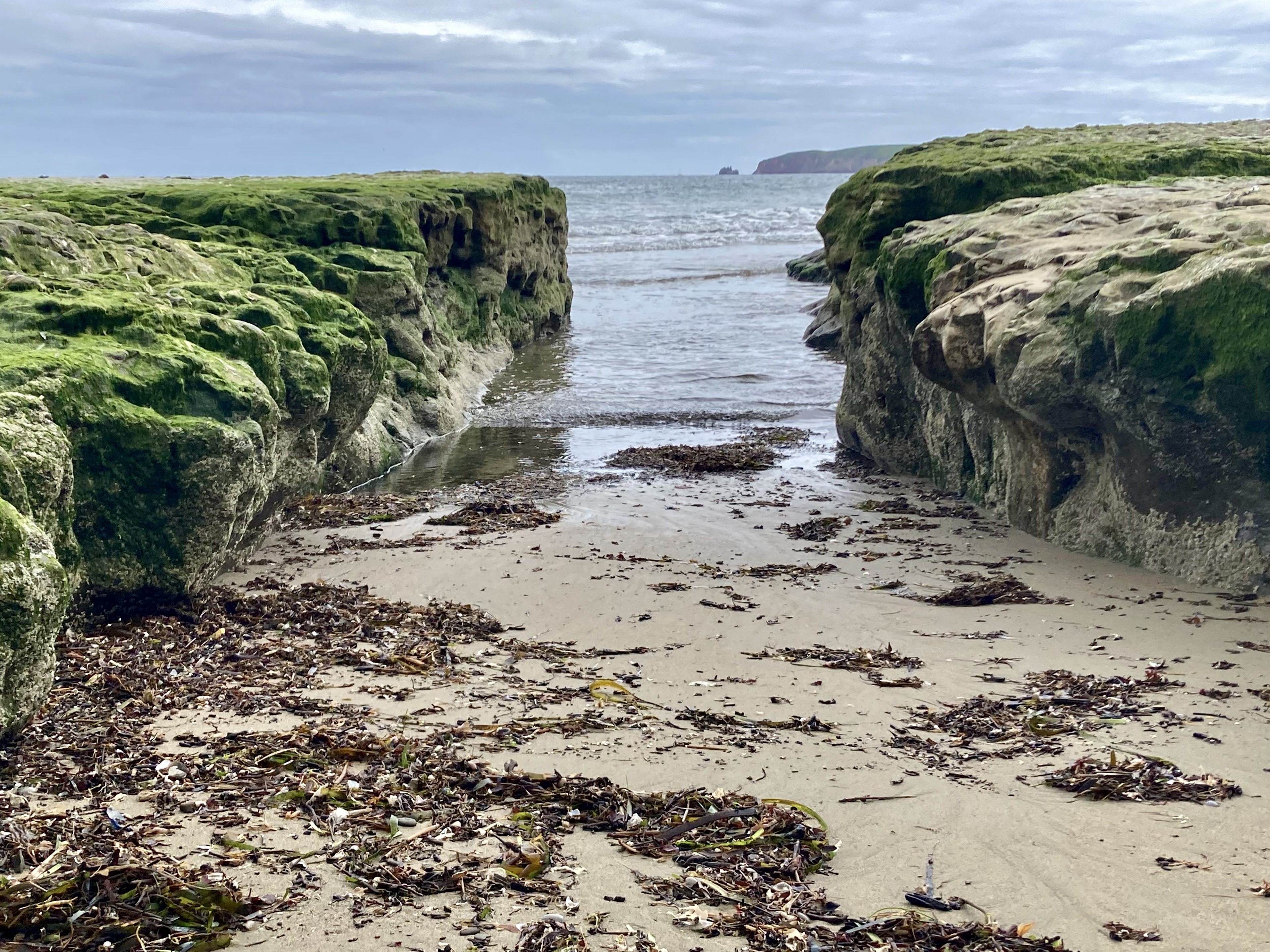
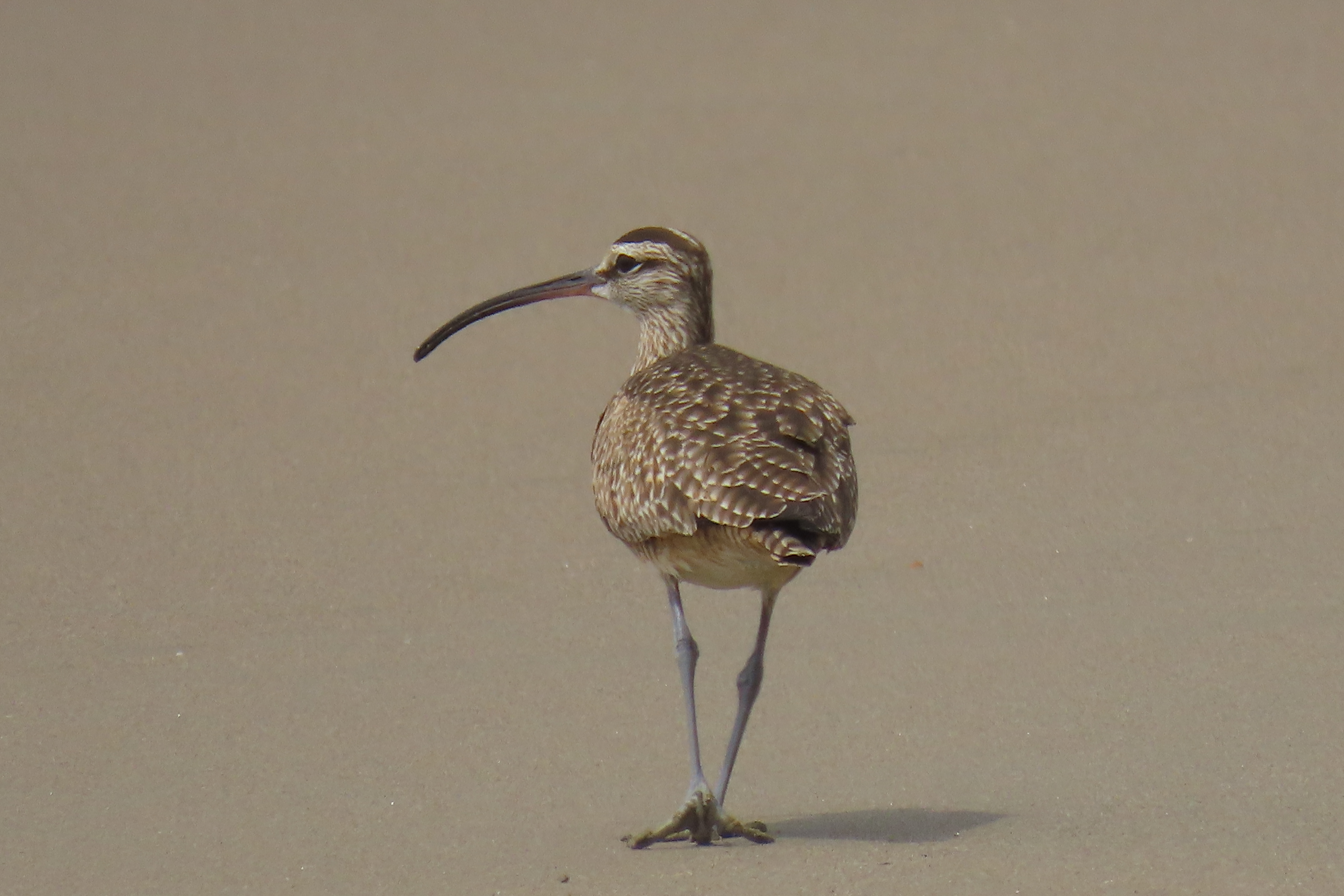
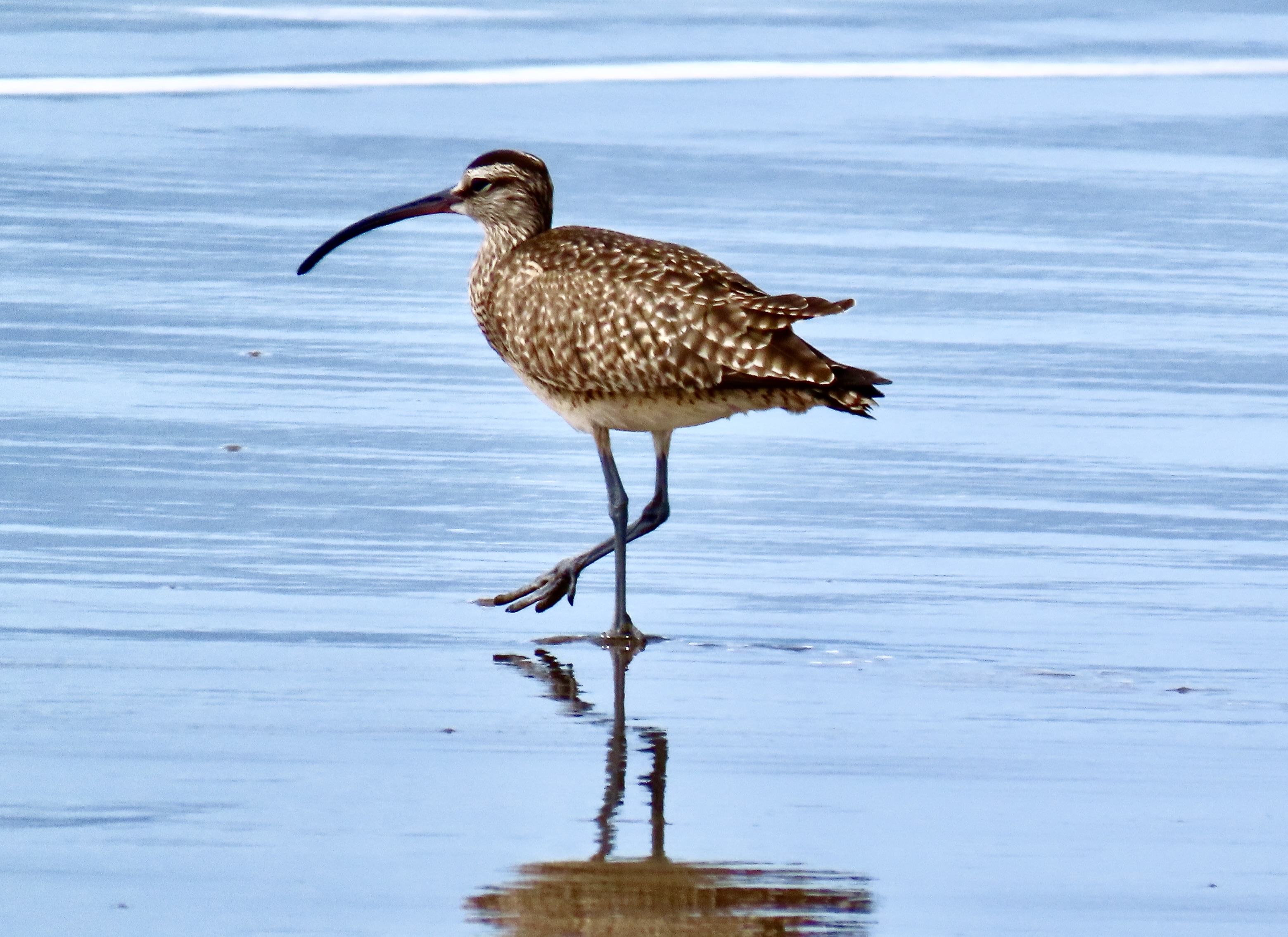
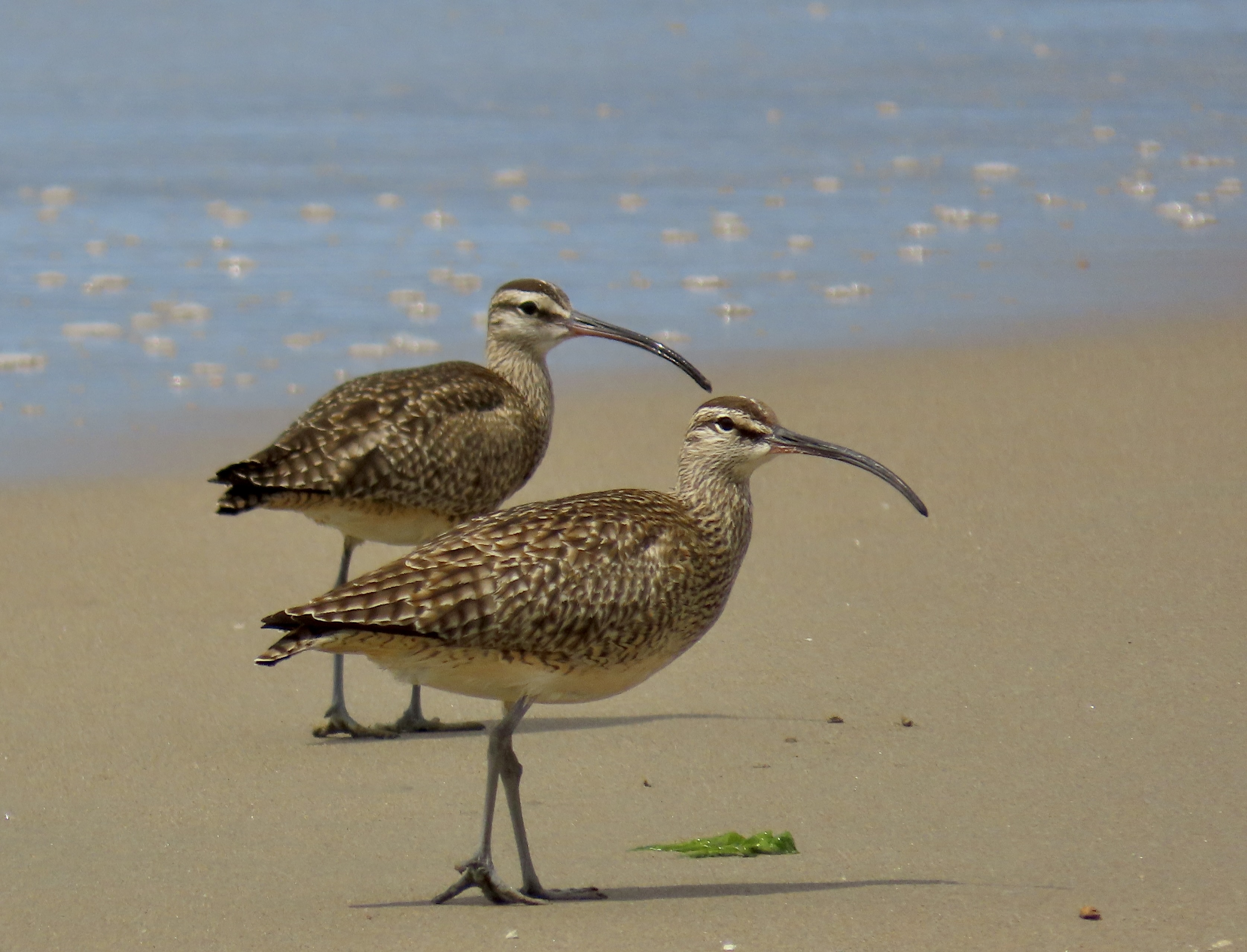
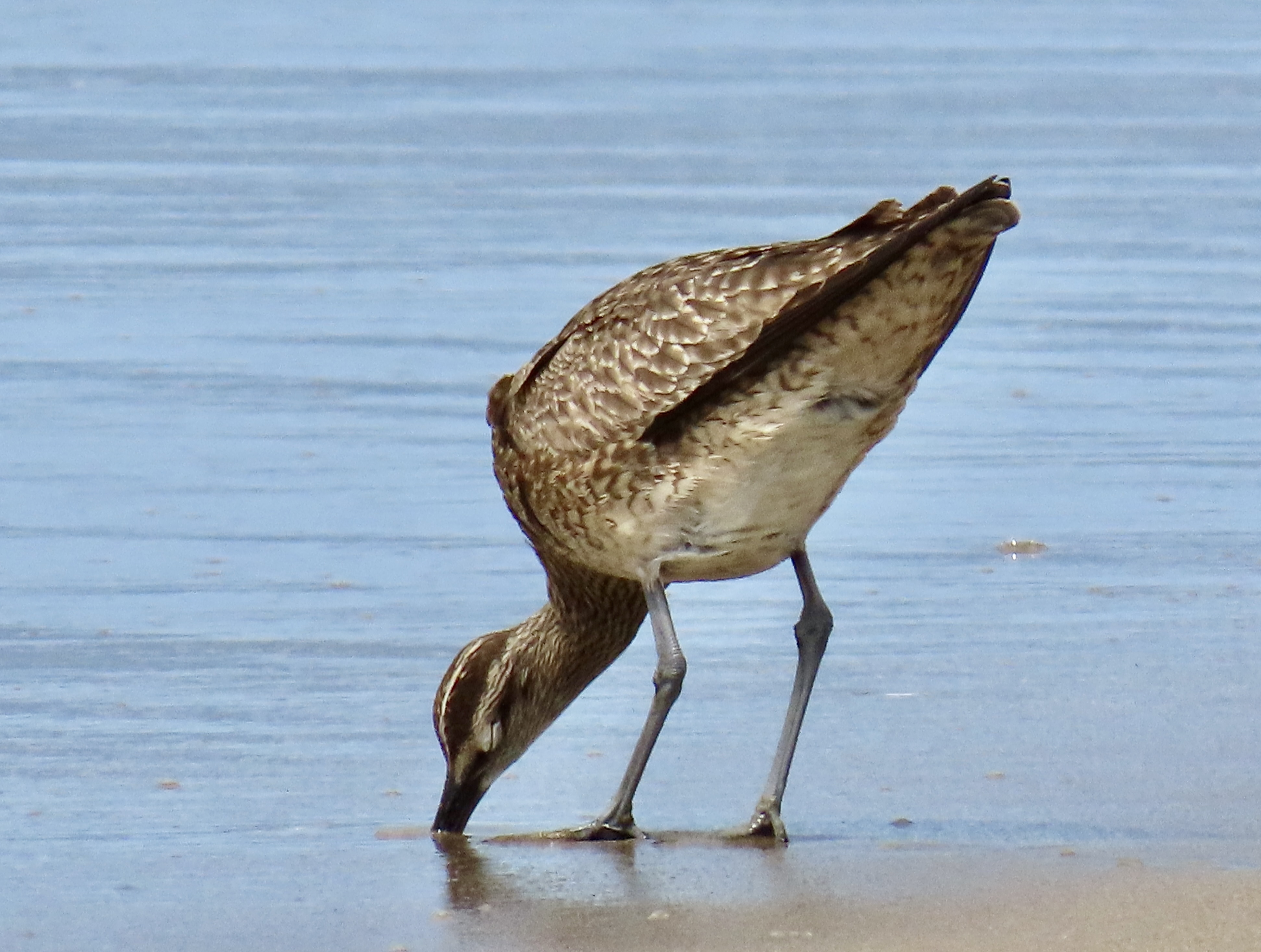
We have been to Drake’s Beach many times over the years. The last time the beach was filled with elephant seals. Not so this time. But that meant we could actually go for a walk on the beach.Several harder rocks had been more resistant to the ocean’s relentless waves. This one was heading out to sea.It had a unique look…And small depressions that caught seawater at low tide making mini-tide pools. Two of the rocks provided a window to the ocean. Chimney Rock can be seen in the distance.Peggy gathered seashells while I explored. Tom snapped our photo. We stopped to admire a Velella (By the Sea Sailor), a type of jellyfish, that had just sailed in on high tide and was in much better shape than the ones we had seen at Point Lobos.Limantour Beach and Spit is just south of Drakes Beach and also on Drakes Bay. Peggy and I explored it after Tom and Lita returned to Sacramento. Whimbrels, dunlins and brown pelicans amused us. This is a whimbrel.We found them quite attractive.Several of them were working the beach together.On a stroll.A small bubble suggests that dinner might be lurking down in the sand.Whimbrels use their curved beaks to probe for small crabs and other sea life buried in the sand.A little ocean water did not get in the way of finding a tasty tidbit.A flock of dunlins and a sanderling join the whimbrels in their search for food.Apparently, their search was successful.Meanwhile, brown pelicans were skimming the waves further out at sea in search of fish. Amazing birds! Check the wing span.A shot across Drakes Bay showed the cliffs above Drakes Beach.Peggy took this shot across Drakes Bay to the Chimney Rock and the Pt. Reyes Headlands at the northern end of the Bay. The Point Reyes Lighthouse is on the opposite side of the Headlands. We will feature it in a later post.Peggy posed for me as I took a photo south to catch the rest of the Bay. This is one long beach!She continued her search for perfect sand dollars.And goofed around! That’s it for the day!Our next post will feature the historic Pierce Point Ranch and Abbots Lagoon. Tom, Peggy and Lita stand in front of three of the outbuildings.











































































 Wandering through Time and Place