Rhyolite, Death Valley: A Ghostly Town… The National Park Series

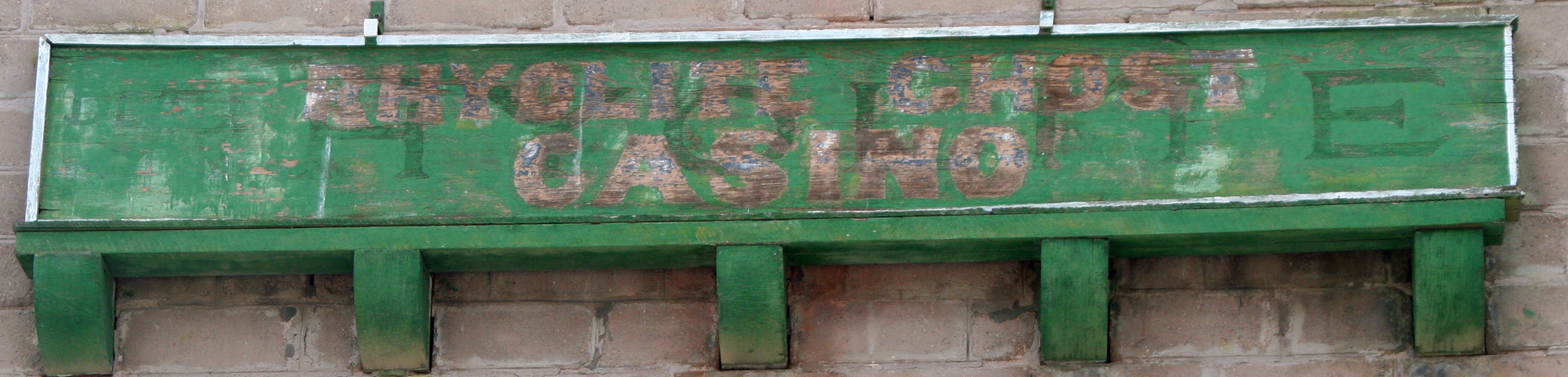
A ghost sign for Rhyolite, Nevada. Look closely and you will see ghostly letters of the town's name imposed over the name of a long forgotten casino.

The wind was cold with the whispers of forgotten ghosts. We put on our Jackets to fight the chill; Bone found a horseshoe for good luck. We had made a detour to visit the old Ghost Town of Rhyolite on the way into Death Valley National Park from the small town of Beatty in Nevada.

The Peripatetic Bone, who was originally part of a horse just above the hoof, tries on a horseshoe for good luck.

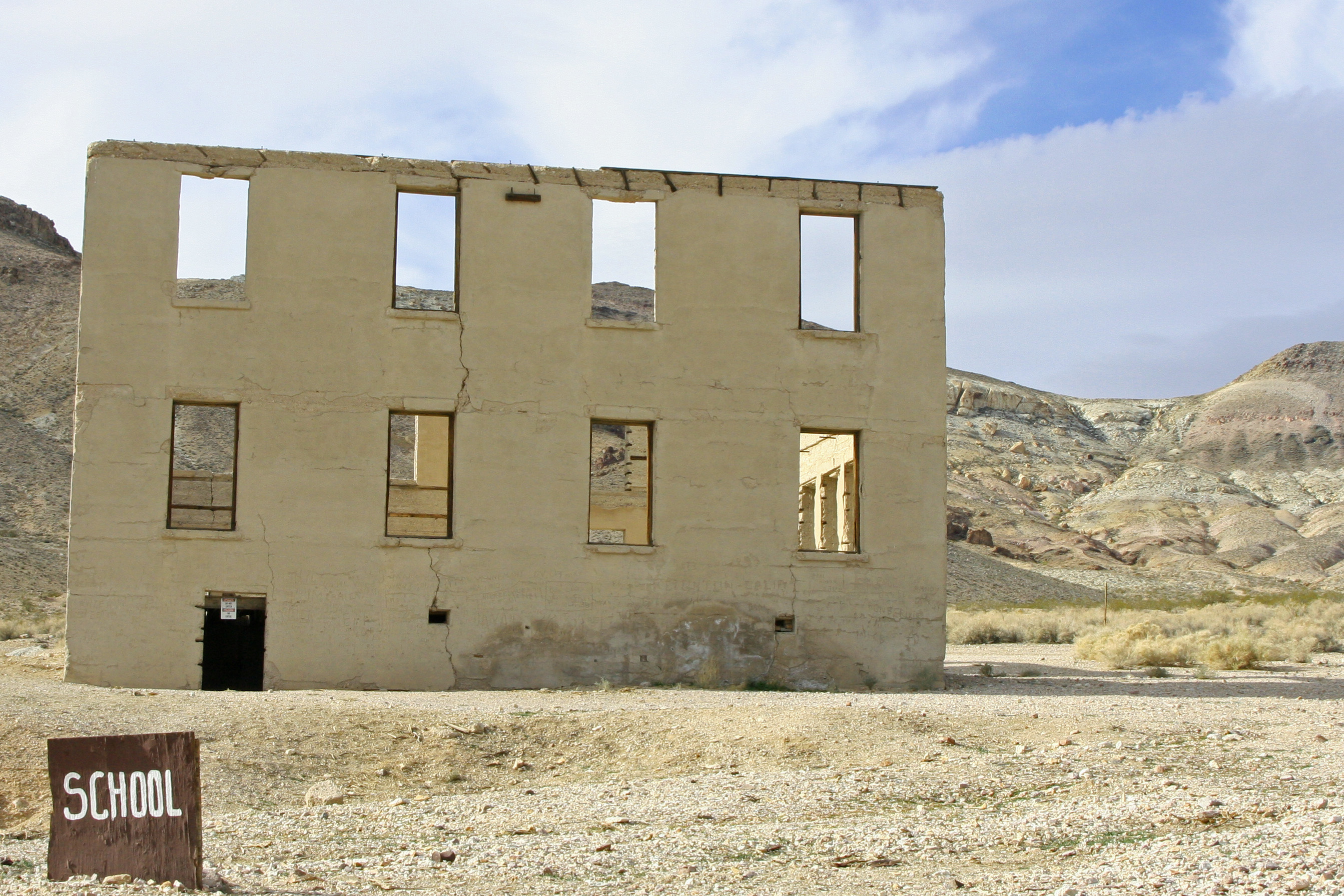
Gold was discovered in the area in 1904. A boomtown sprang out of the desolate desert. Soon there was a school, a bank and even an opera house. The sound of “batter up” could be heard on weekend days and arias on weekend nights. Women flowed in from San Francisco to accommodate the town’s red light district.

Can you hear the children playing?

The town bank.

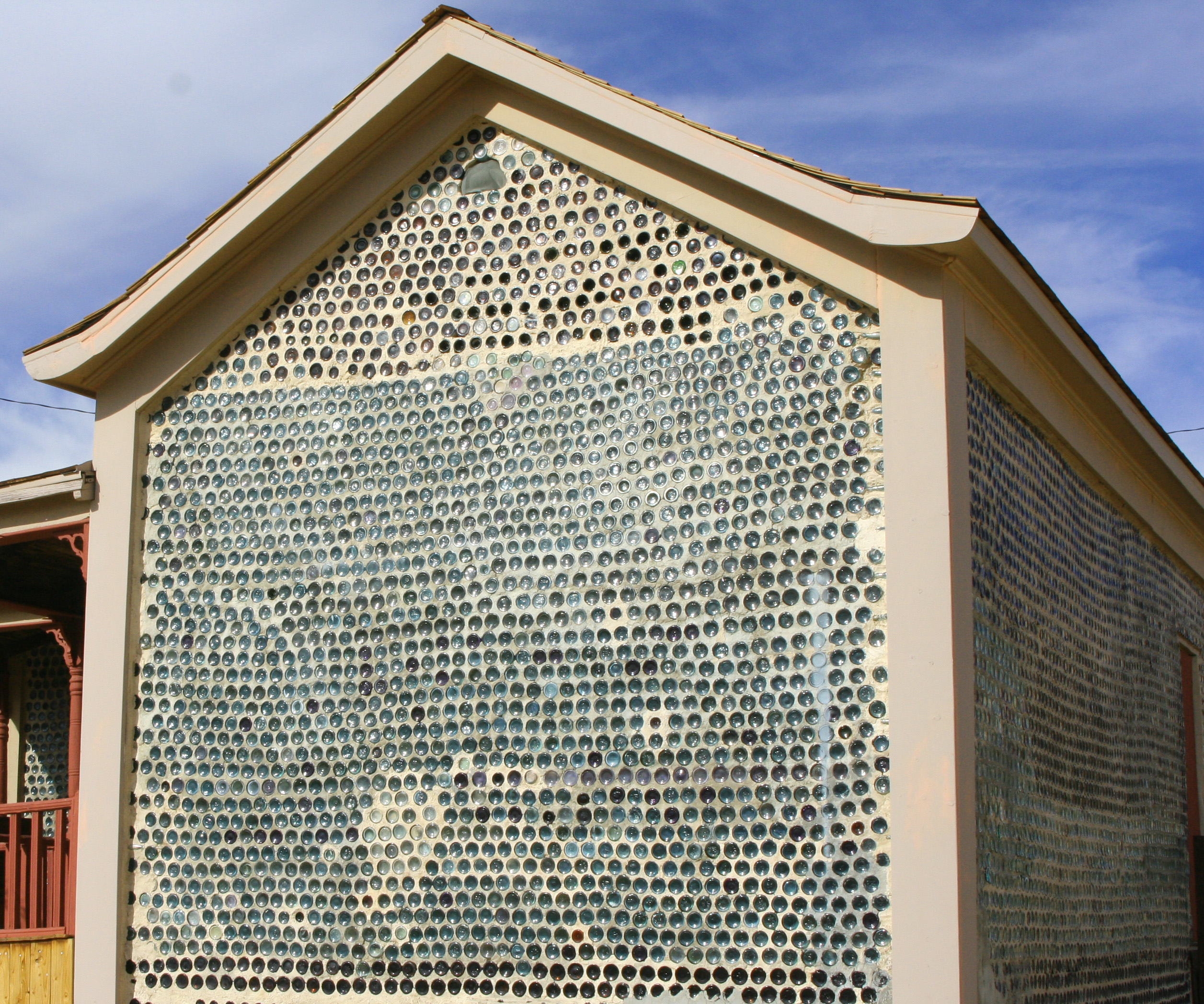
There was even an ice cream parlor and a house made from 50,000 beer and liquor bottles, which says something about the quantity of liquor consumed in town.

A house built with 50,000 bottles of beer and booze: light, insulation and a doozy of a hangover.

In 1907, electricity came to Rhyolite. It was the same year a financial crisis announced the beginning of the end for the town. Mines started to close, banks failed, and the newspaper went out of business. The lights were shut off in 1916. The boom was over.

A few skeletons of buildings and the bottle house are all that remain today. If you are in the neighborhood be sure to stop by. The ghosts will appreciate your visit. There is also a fascinating sculpture garden located next to Rhyolite that I will blog about next in my National Park/Death Valley series.

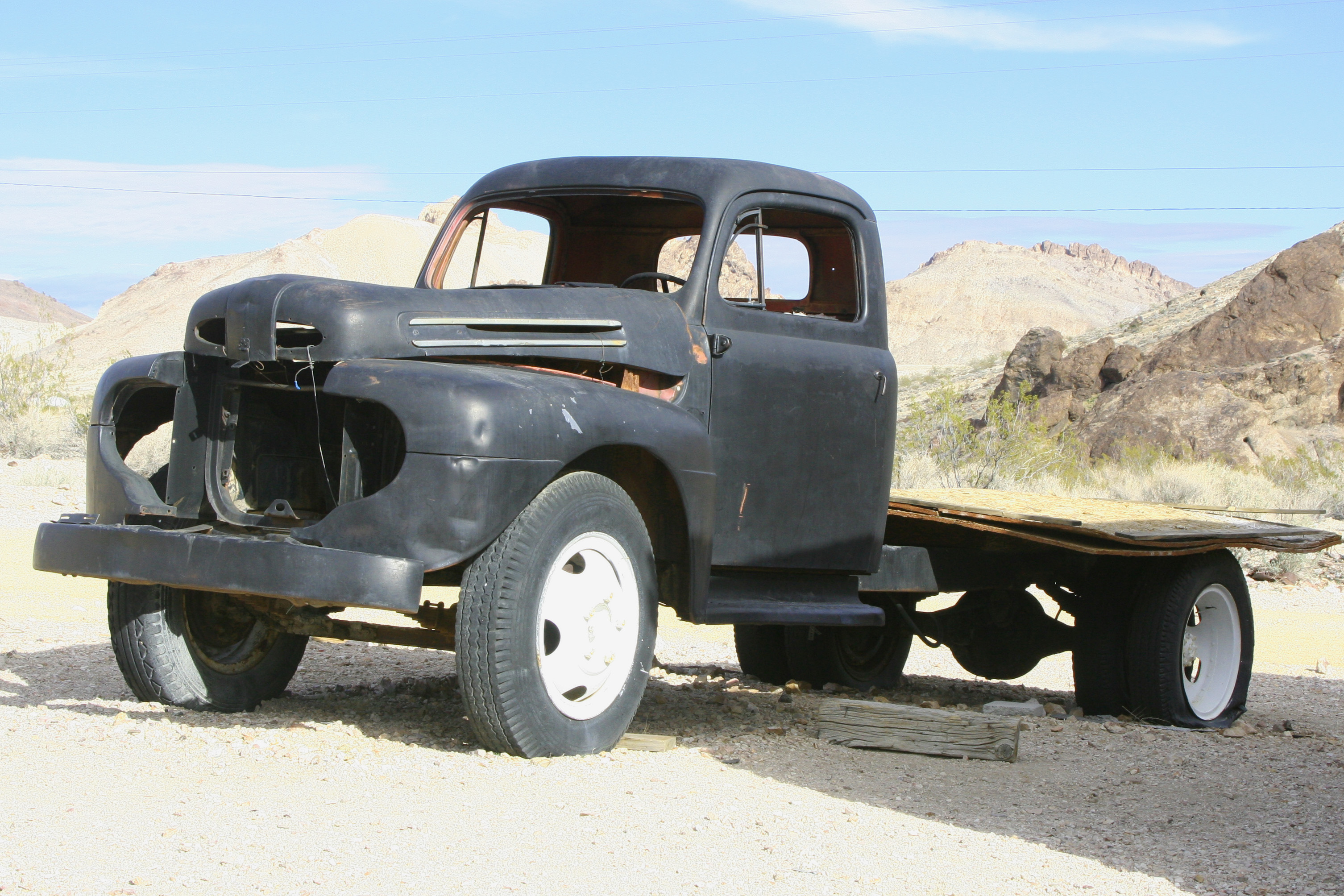
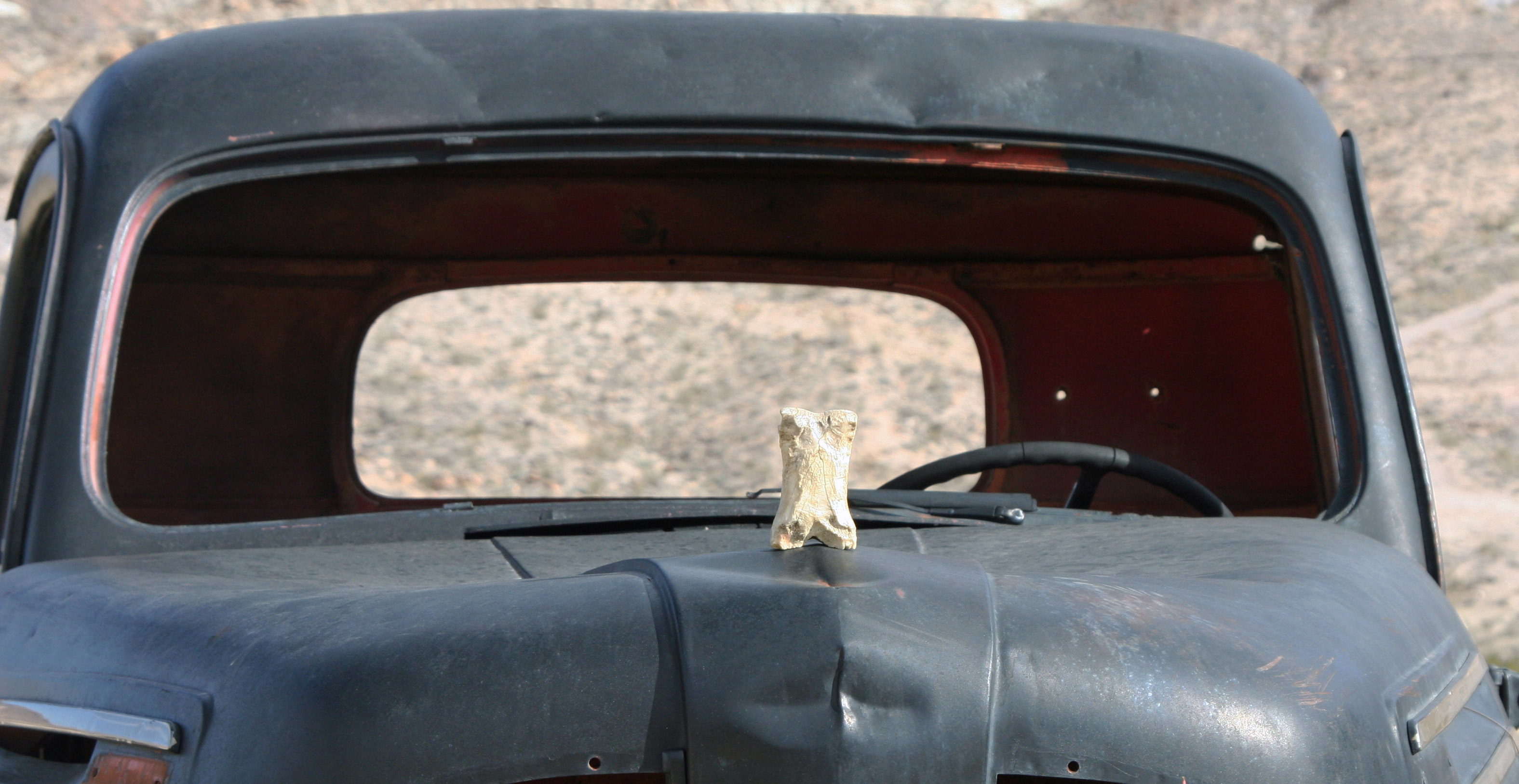
Long abandoned vehicles provide great photo opportunities but this one was missing something critical. And no, I don't mean engine...

A hood ornament.

Death Valley Scotty and Scotty’s Castle… The National Park Series

Looking down on Scotty's Castle in Death Valley National Park. This view is looking eastward up Grapevine Canyon. A spring in the Canyon provides water for the Castle and creates the oasis. Our small RV Quivera is peeking out on the far right.

Walter E. Scott was a scoundrel and a showman, a master at bilking rich people out of their money. He was born in Cynthiana, Kentucky in 1872. I may be related.

My Great, Great, Great, Great, Great Grandfather, Andrew Mekemson/Makemson is buried five miles from town. For a time, in the late 1700s and early 1800s, our whole Scotch-Irish clan lived in the area. At one point, Makemsons and Scotts in Harrison County intermarried. Possibly it was with Scott’s family.

Walter didn’t hang out in Cynthiana for long, however. In 1883, at the age of eleven, he split. Some say he ran away. He ended up working as a cowboy with his brother in Nevada.

He must have looked great on a horse. A talent scout for Buffalo Bill’s Wild West Show recruited him as a cowboy and trick rider when he was 18. For the next 12 years he toured the US and Europe along with such luminaries as Annie Oakley.

In 1902 he discovered his true calling. Walter started selling shares to an incredibly rich gold mine in Death Valley, a gold mine he never quite got around to finding. He became the star of his own Wild West act.  Reinvesting his investors’ money, he travelled from LA to New York City, stayed at the best hotels, spent lavishly, and constantly promoted his non-existent gold mine.

Reporters were attracted to him like buzzards to road kill. And why not… they were guaranteed a great story, free meal and all the booze they could consume. The legend of Death Valley Scotty was born. Rich men lined up to contribute.

In 1905 he pulled off one of his most successful self-promotions. Scotty hired a three-car Santa Fe railroad train to make a record run from Los Angeles to Chicago. The ‘Coyote Special’ made the trip in 44 hours and 54 minutes.

“We got there so fast,” Scotty reputedly said, “ we didn’t have time to sober up.”

His pot of gold was waiting. Albert Johnson lived in Chicago and was Scotty’s opposite. While Scotty was a flamboyant con man and adventurer, Albert was a quiet, highly educated and deeply religious man… not to mention very wealthy. He became excited about the gold mine. Scotty had found his meal ticket for life.

Eventually Albert visited Death Valley to see the mine. Or possibly he came out to see why there were no returns on his investment. Scotty saddled up and took him on a strenuous wild goose chase through the desert. It was risky. Albert was not a healthy man and the trip could have killed him. The opposite happened. His health improved and he came to love Death Valley.

What was even more surprising, he developed a close friendship with Scotty and that friendship was more important than the gold.  Time and again Albert returned to Death Valley. He started bringing his wife Bessie along and she also developed a love for Death Valley and Scotty. But she didn’t like sleeping on the ground.

So Albert offered to build her a castle, which he did. It was an incredible feat given the vacation home’s remote location on the northern edge of Death Valley in Grapevine Canyon. Starting in the Roaring 20s and ending in the Great Depression, it cost two million dollars and took five years to complete.

Any respectable castle requires a turret.

Scotty promptly moved in: not as a guest, not as a renter and not even as a caretaker, but as the owner. He claimed it was his castle built with money from his gold mine. Albert and Bessie went along with their friend’s deception and Besse’s home became know as Scotty’s Castle.

Albert died in the 1940s and left the property to the Gospel Foundation, a charitable organization. But he left it to the charity with a proviso: they had to take care of Scotty, which they did up until his death in 1954.

In 1970 the National Park Service bought Scotty’s Castle from the Gospel Foundation and today’s visitors to Death Valley are welcome to include this beautiful and unique property as part of their adventure. A short walk up the hill behind the castle takes visitors to Scotty’s grave and a great view of the castle.

This blog marks the start of my National Park Series. Beginning in 2000, my wife Peggy and I have visited all of the US’s National Parks. From time to time I will feature our favorites. Over the next two weeks I will be blogging on Death Valley and the surrounding region.

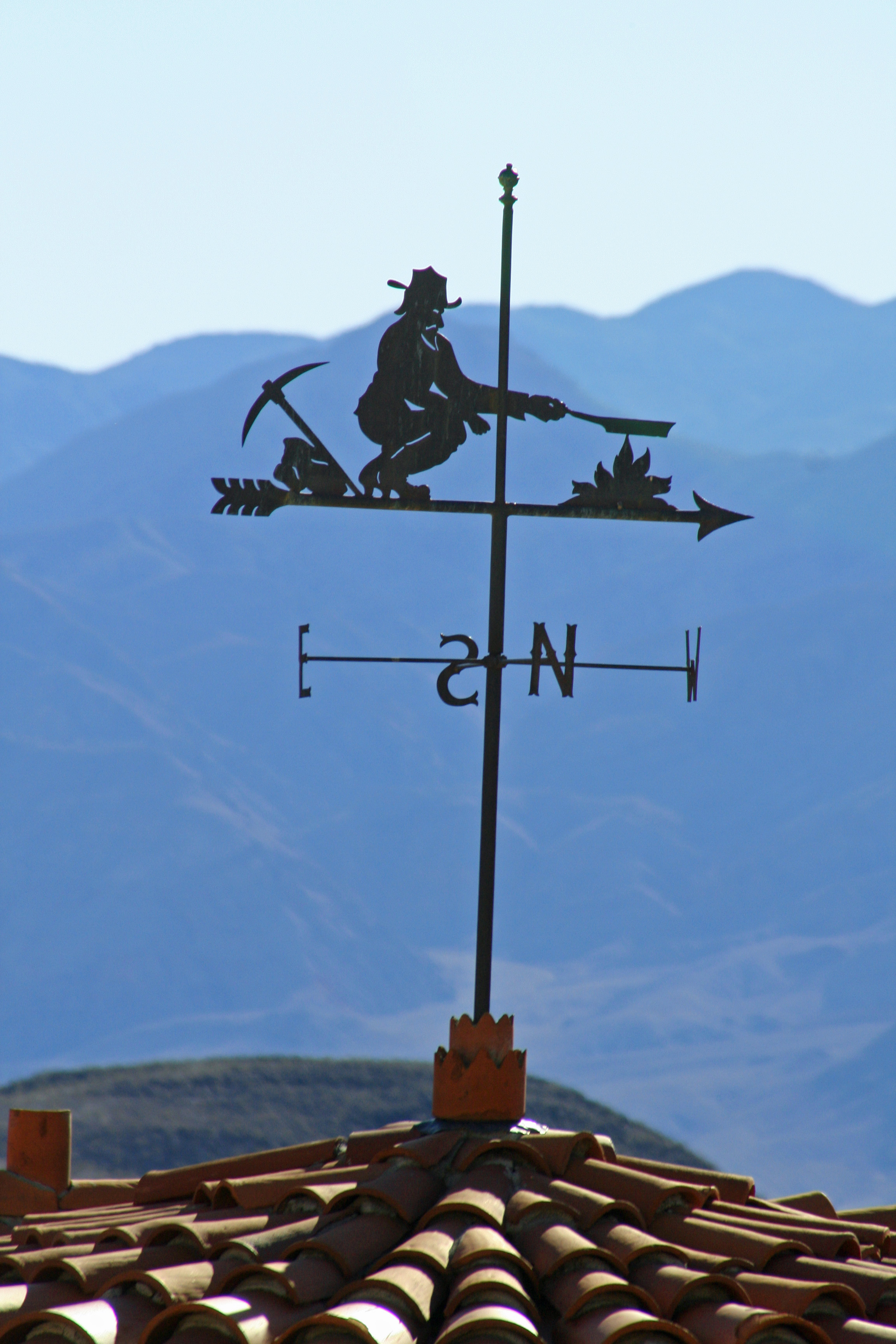
Another view of Scotty's Castle in Death Valley. Note the weather vane on top.

A close-up of the weather vane and my favorite photo of Scotty's Castle. To me, it symbolizes the lonely prospector of the West. All that's missing is a donkey or horse.

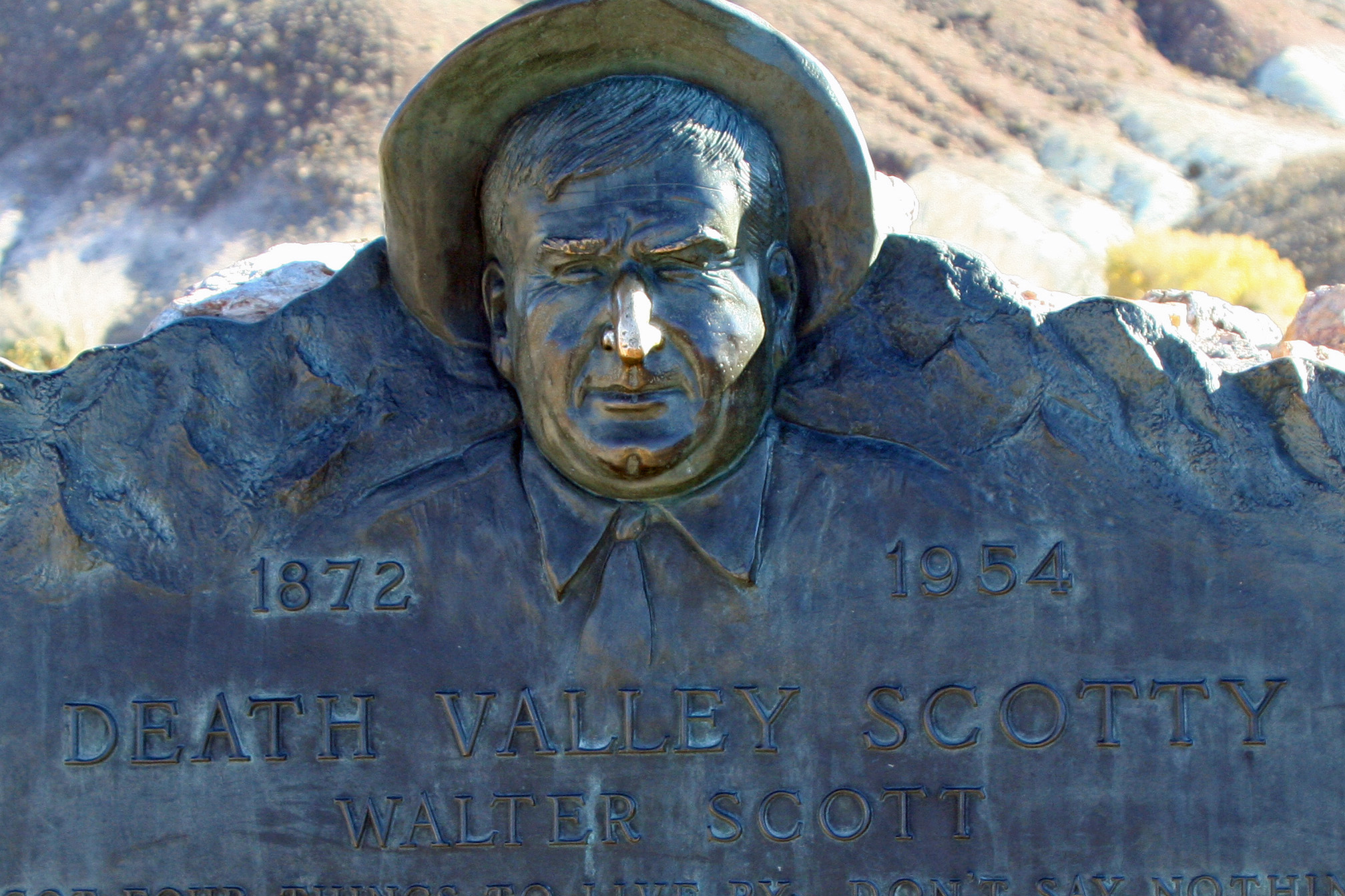
A short walk up behind Scotty's Castle will bring you to Death Valley Scotty's grave and memorial. The site also provides a great view of the Castle and surrounding desert.

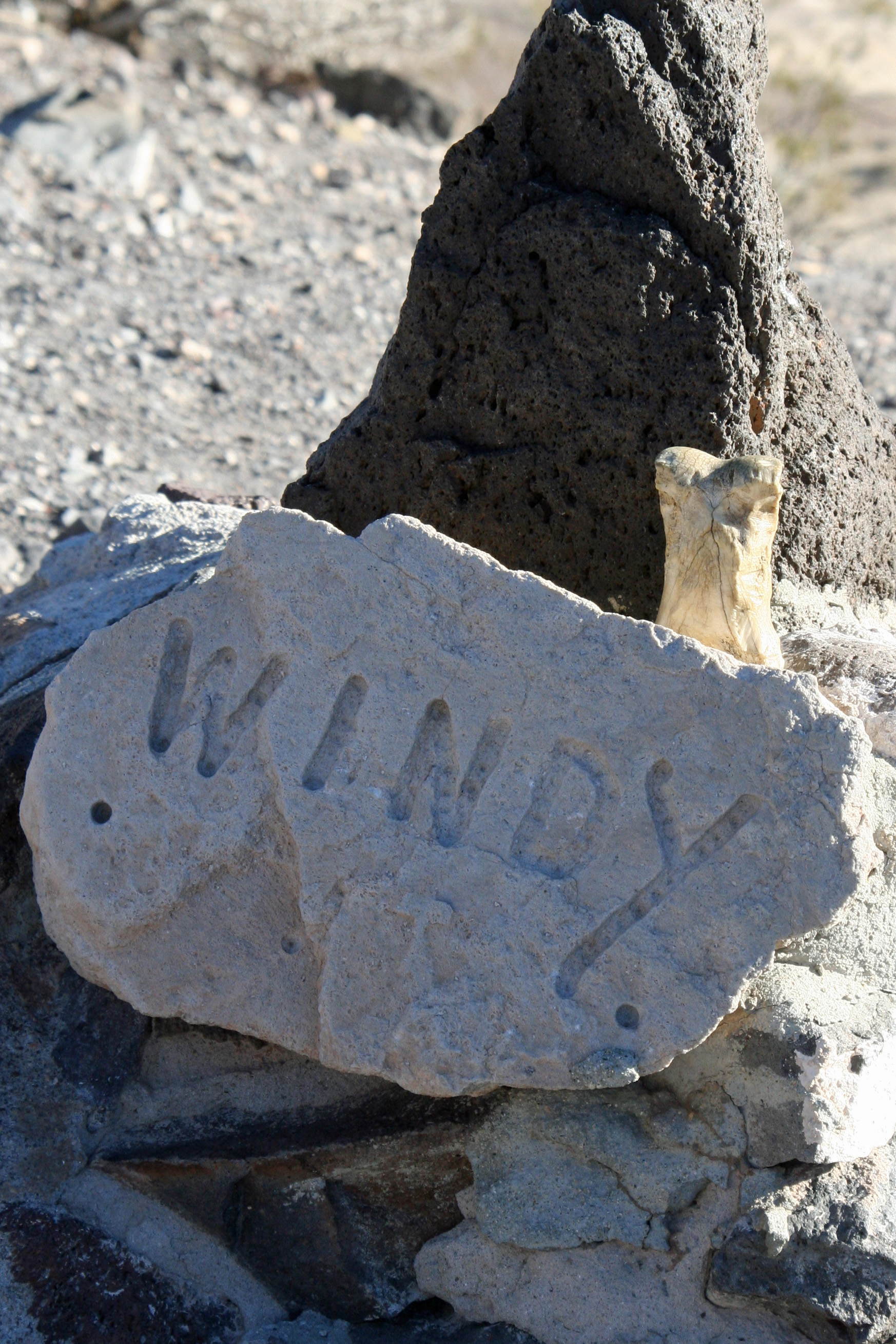
Scotty's faithful companion, Windy the Dog, is buried beside him. Bone, as in the Peripatetic Bone, stops by for a visit. Bone has been traveling the world for 36 years and has a special place in his heart for graves. No surprise there. He is more careful around live dogs.

A view of the Clock Tower at Scotty's Castle looking out toward Death Valley National Park.

Dangerous Rapids of the Colorado River

Author’s note: This blog brings us back to our trip down the Colorado River, which we undertook in late spring. My computer crash interrupted the story. My goal over the next few weeks will be to intersperse Grand Canyon blogs along with current happenings.

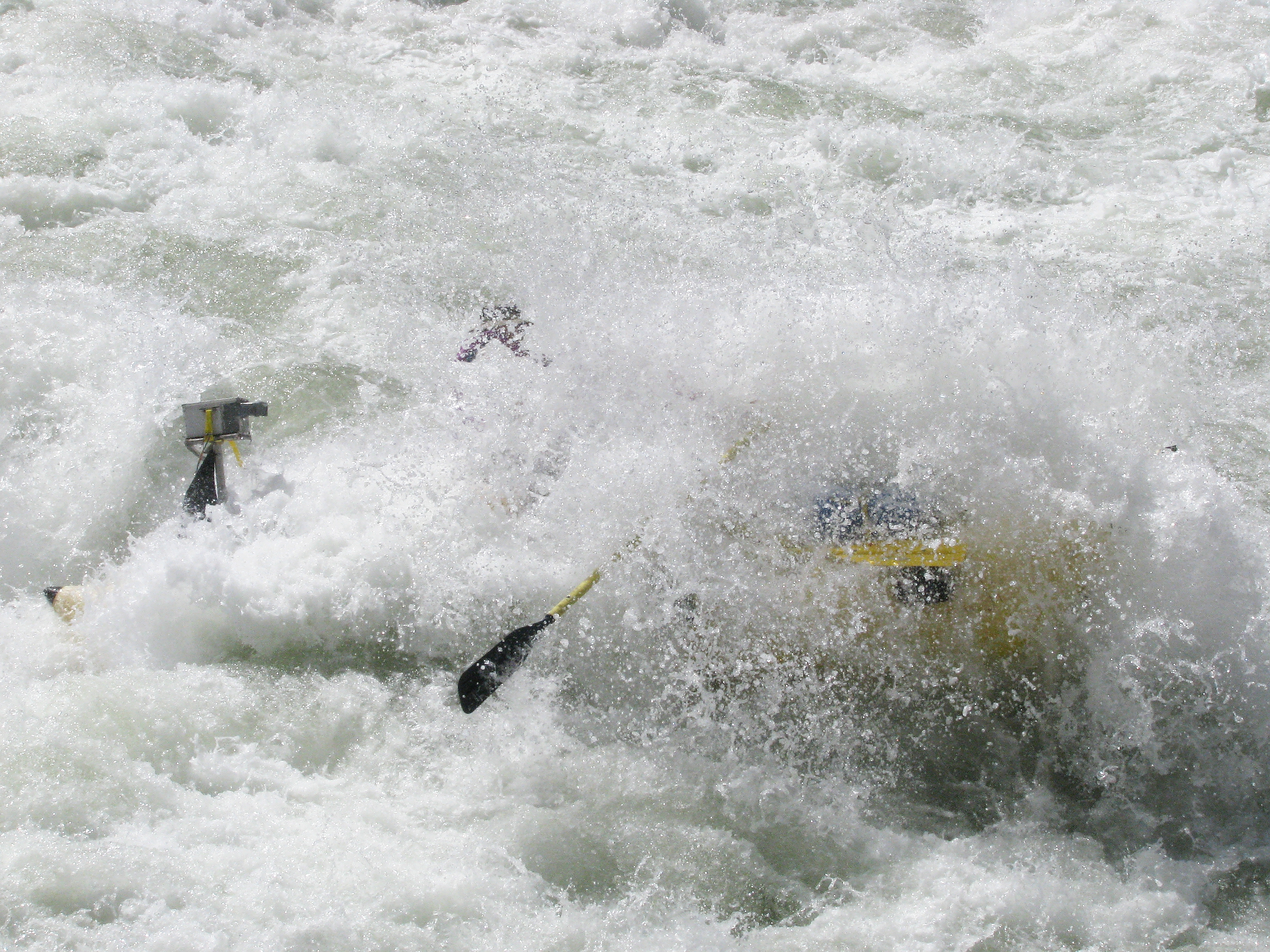
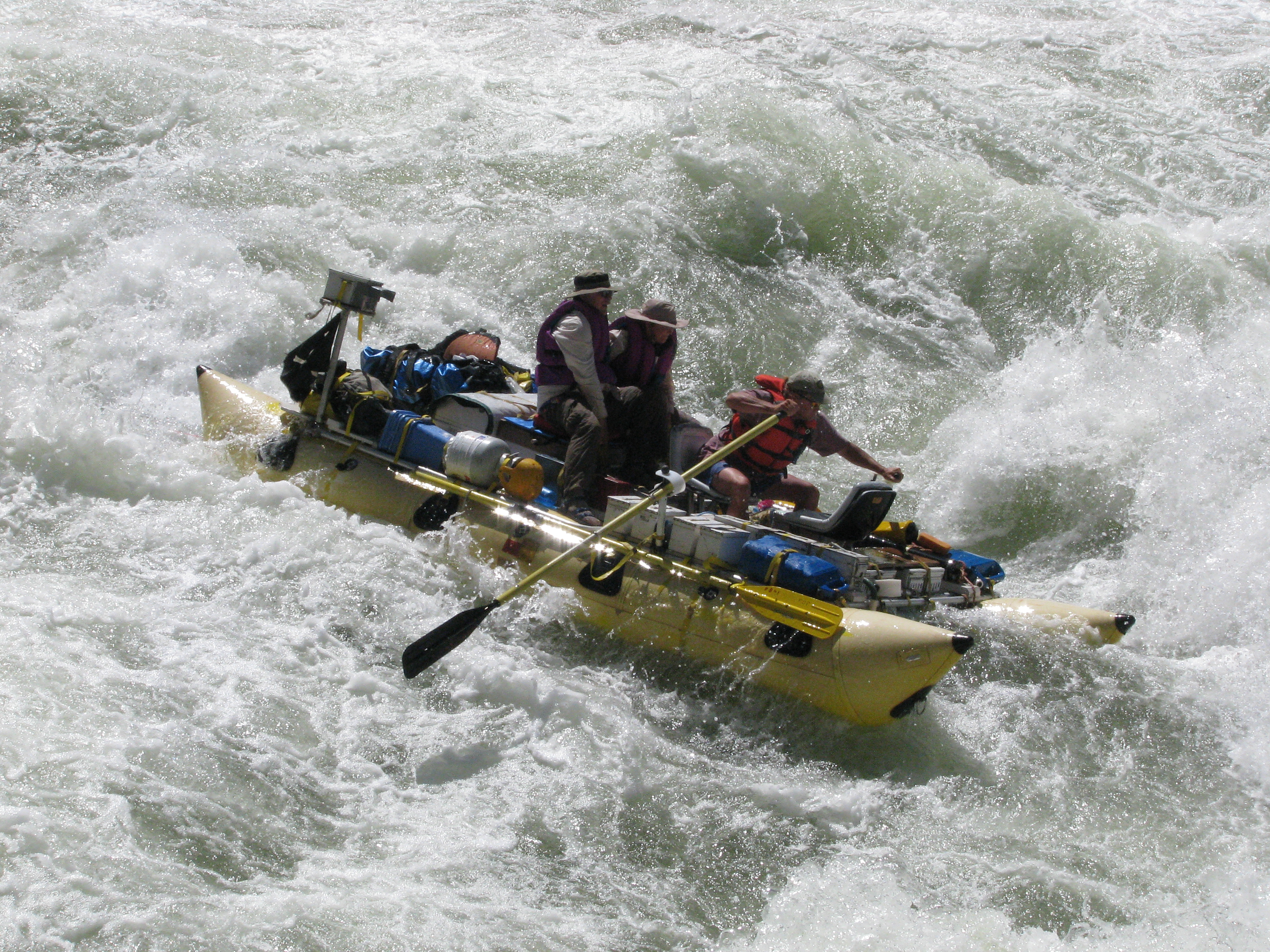
A massive wave in Lava Rapid buries Peggy, I and Steve Vandoor. My hat represents Peggy and I. The oar, Steve. Steve's video camera is recording as we go. Photo courtesy of Don Green.

A serious discussion is taking place among our boatmen. They are nervous about the amount of water flowing through House Rock Rapid. A huge, raft-eating hole gapes at us from river left.

A hole is created by water flowing over a rock or ledge. The resulting waterfall forms the hole and sucks in water from downstream, creating a reverse wave. Once a boat gets caught, it is difficult to get out… and easy to flip.

Boatmen, passengers and gear may go for a swim. The bigger the hole; the greater the danger. The force of the water can suck you down into the murky depths.  It’s possible to surface under the raft.  More likely you’ll be spit out down stream.

There are other worries as well. Sleepers, rocks hidden just beneath the surface, can rip out the bottom of your craft. Cross currents may send you crashing into a wall. Your boat can become wrapped around an obstacle such as a rock or log.

To avoid these hazards, boatmen on private trips normally stop to scout the more dangerous rapids. Less threatening cousins receive a ‘read and run.’ The boatman stands up in the boat, takes a look, and goes for it.  Normally a smooth, tongue like section of the river and standing rapids point the way. Success means a thrilling, bumpy, wet ride that is over in seconds with the messy side up. (The messy side is the one with boatman, passengers and gear. The option is the boat’s smooth bottom!)

The ability to ‘read a river’ is an essential boatman skill. While excellent books describe the rapids and suggest routes, changing water levels create varying situations. High water may demand running one side of the river and low water the other.

Water levels are determined by the amount of water being released from Glen Canyon Dam, which in turn is determined by electrical power needs in the Southwest. Greater power needs require more water being released to run the huge turbines that generate the electricity.

The problem with House Rock Rapid is a lack of water. While this may seem counterintuitive, less water means more rocks are exposed to create hazards. Steve, who is a prudent kind of guy for a pirate, urges Tom to wait until the release from Glen Canyon catches up with us and raises the water level.

We place a small stick in the water to measure the water and wait. Peggy and I find a shady location to update our journals. Several people head for a hike up the side canyon. Others nap. I catch several photos of people sleeping. Eventually Tom and Steve determine it is time to go.

We are on Tom’s boat. He is going first and is understandably nervous. I tighten my grip on the safety lines. The more nervous the boatmen are, the more nervous I become. The boat moves slowly at first, inching forward, the calm before the storm that seems to go on and on. Then the current grabs us. The boat leaps forward, bounces, and then hurtles down. Freezing waves crash over the bow and soak us. The roar is deafening. Peggy and I struggle desperately to hold on while Tom fights for control. He yells. The right oar has slipped out of the oarlock. The boat begins to spin. The huge hole looms beside us, threatening to drag us in. But our momentum carries us forward and Tom’s skill brings us into shore.

The few seconds it takes to come through the rapid are burned into my memory.

Even bigger rapids lie ahead. House Rock is labeled a 4-7 using the Grand Canyon rating system. Crystal and Lava, the Grandmother and Grandfather of Colorado River rapids, are labeled a 7-10 and 8-10 respectively. They are considered two of the most challenging rapids in North America.

Almost all of the rapids in the Canyon are created by flash floods coming down side canyons that deposit huge rocks in the river. Because of the floods, rapids can change over the years. For example, Crystal Rapid did not exist prior to a massive flood in 1966.

Colorado River boatmen speak with awe and a tinge of fear about Crystal and Lava. The sentiment is contagious. We approach both with trepidation. We ride through each with Steve on his catamaran raft. Crystal seems to come and go but Lava is something else, almost mythological in its ferocity.

Steve, Peggy and I in Lava on the cat. Photo courtesy of Don Green.

Vulcan’s Anvil, a large chunk of lava in the middle of the river, is a signpost announcing the presence of Lava. (We have already heard its roar.) Superstitious boatmen kiss the rock to assure a safe journey. Steve, always cautious, obediently performs the ritual.  Scouting is carried out with great care; there is plenty of time to contemplate our fate.

The photos in this blog capture our experience much better than words. Lava is indeed a 10 out of 10. At one point, when I am staring into the massive hole on our left, Peggy is watching Steve almost be washed out of the boat on our right: scary stuff.

On the last night of our adventure, Peggy asks Steve what his most memorable experience was. “Turning around at the end of Lava and seeing that the two of you were still on my boat,” he replies. Ditto.
Boredom Is Not an Option!

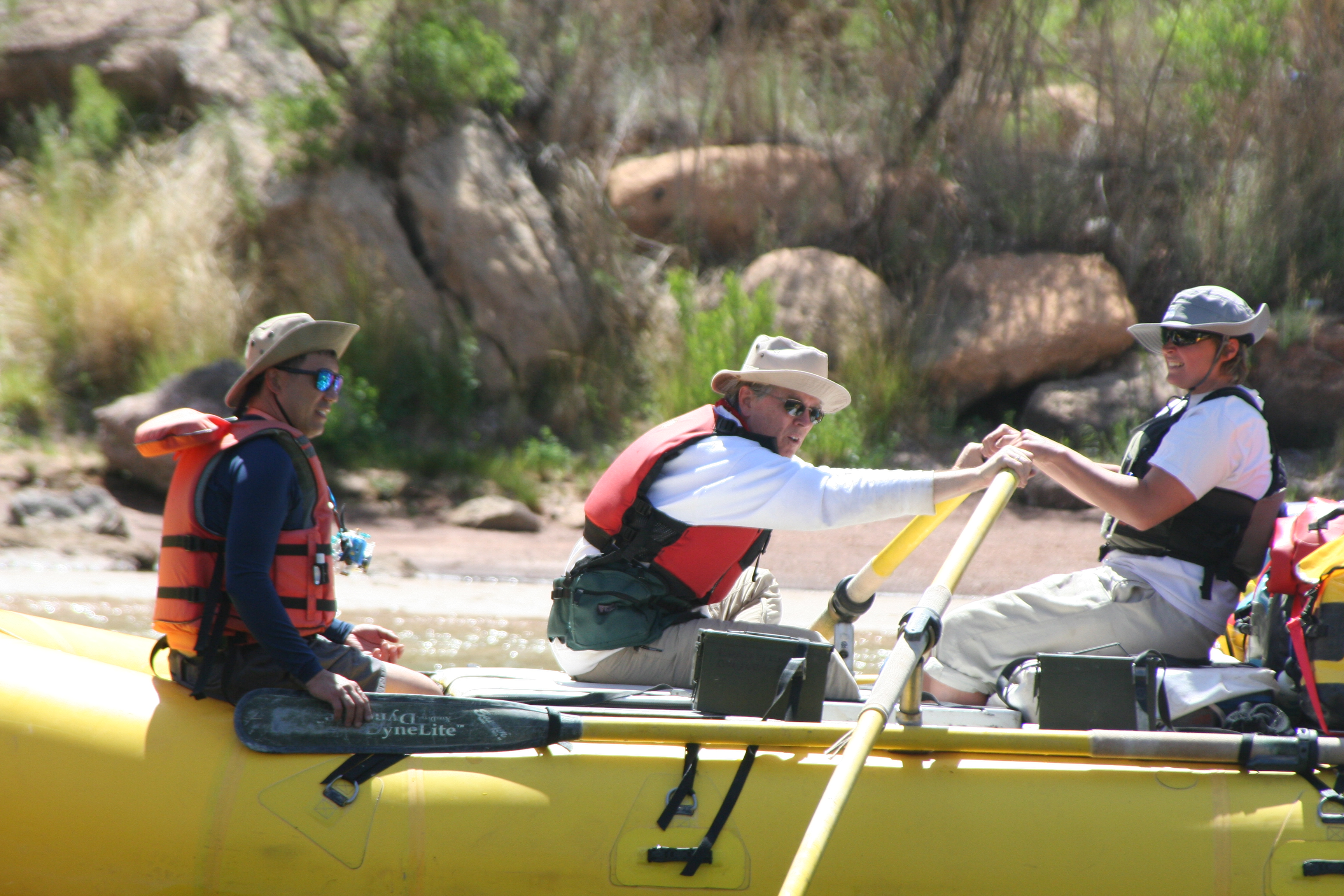
Megan Stalheim and Don Green rafted by us demonstrating the push-pull method of rowing. Brad Lee, a dentist out of Sacramento, looks on.

The wind continues to beat against us as we make our way down the Colorado River. Only Dave’s strenuous effort at the oars keeps us from floating up stream. “Go that way,” I suggest and point down the river.

The group pulls in at a tiny beach in hopes our mini-hurricane will die down. It doesn’t.

Dave develops blisters and I develop guilt. A manly-man would offer to take over at the oars.

An option floats by. Dave’s niece, Megan Stalheim, is also one of our boatmen. Don Green, a retired Probate Judge out of Martinez, California, is sitting opposite her and pushing on the oars while she pulls. It inspires me. I join the push-pull brigade.

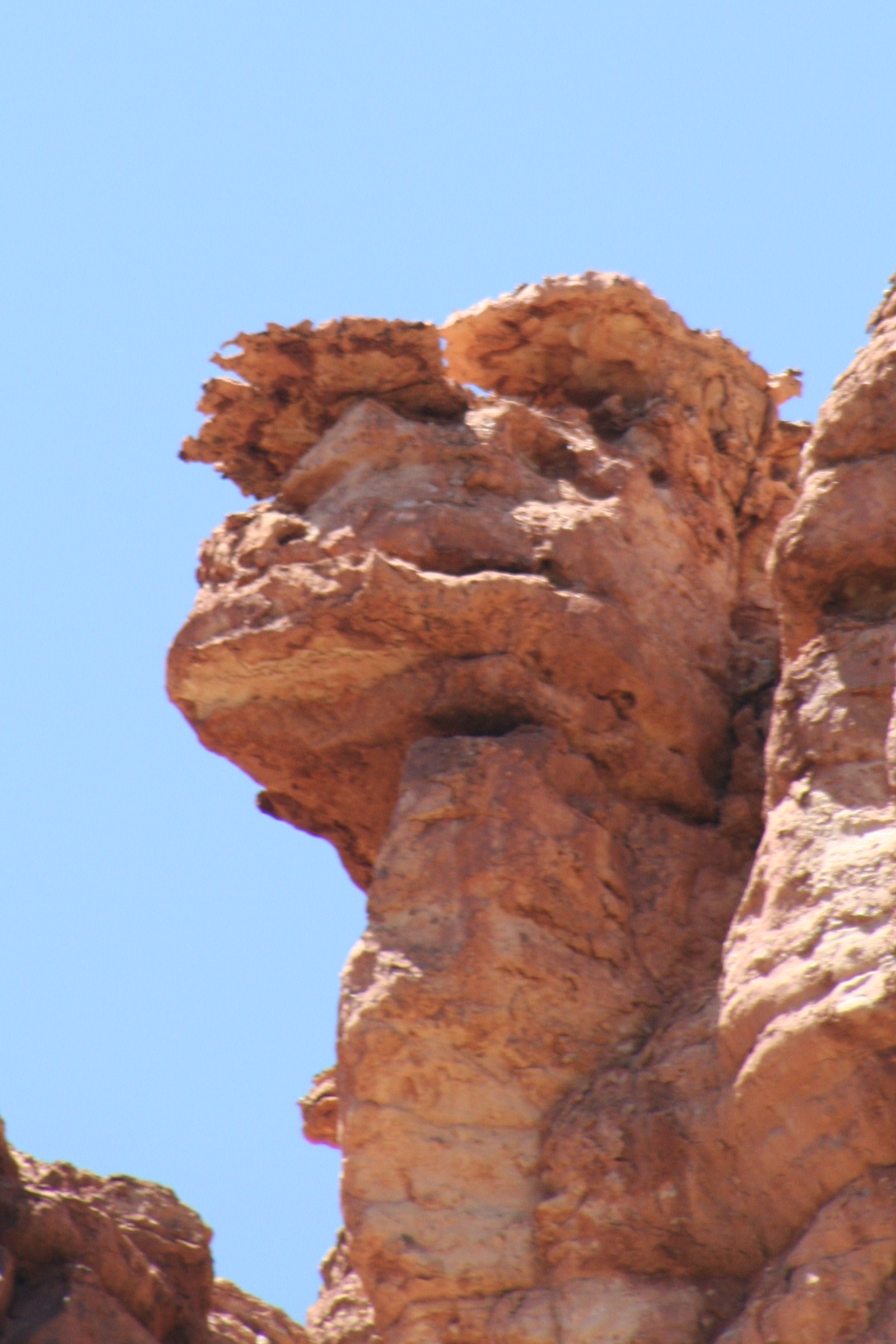
As tough as the day is, the beauty of the River and the Canyon make our efforts worthwhile. Peggy points out a strange, creature-like rock formation and we admire a family of ducks.

Little imagination is required to turn rock formations into strange faces.

Word passes back to us that Tom wants to scout Badger Rapids. In Boatman terminology this means figuring out the best way to get through without flipping. Badger isn’t a particularly big rapid for the Colorado, but it is our first. We are allowed to be nervous.

There is good news included in the message. We will stop for the night at Jackass Camp just below the rapids. We’ve only gone 8 miles, some 3 ½ miles from our original destination, but we are eager to escape the wind.

Dave is a cautious boatman. He takes his time to study Badger Rapids from shore and then stands up in his raft for a second opinion as the river sucks us in. Time runs out. Icy waves splash over the boat and soak us. Our hands grasp the safety lines with a death grip as we are tossed about like leaves in a storm drain. Mere seconds become an eternity. And then it is over.

“Quick, Curt, I need your help,” Dave shouts. We have come out of the rapids on the opposite side of the river from the camp. The powerful current is pushing us down river. If we don’t get across we will be camping by ourselves. Adrenaline pumping, I jump up and push the oars with all my strength while Dave pulls. Ever so slowly the boat makes its way to camp.

“Chirp, chirp, chirp-chirp-chirp.” It’s dark out and some damn bird is cheerfully discussing its wormy breakfast. I roll over and groan, desperately wanting to go back to sleep. We can’t, however. It’s five AM, time to rise and shine, time to pack up, time to scarf down breakfast, time to hit the river.

“It is not five AM,” Tom argues. It is five AM in California. Arizona refuses to go on Daylight Savings time. This irritates Tom. It is really six.

As we have learned, and I might add, learned well, we are not on a ‘float and bloat’ trip. Adventure awaits us. There are cliffs to climb, waterfalls to leap off, raging side streams to ford, rapids to survive, and miles of river to row. Boredom is not an option.

A family of ducks strolls up the river bank. Photo by Don Green

Wild Winds and a Mormon Massacre

The boats are loaded and ready to launch. Tom's wife Beth appears to be much less anxious than he is. The other passenger is Theresa Mulder.

Finally… we are ready to launch. Eighteen days and 279 miles of the Colorado River and Grand Canyon lie ahead. Ranger Peggy has checked our IDs and we are who we claim to be. The boatmen have strapped down the gear… and Tom is anxious.

The same up-canyon winds that whipped sand into our tent last night are threatening to create a Herculean task of rowing. Gusts of up to 60 MPH are predicted.

Peggy and I perform the ritual of asking a boatman if we can ride with him. It seems like a strange practice to me, designed to remind us who’s in charge. But we have entered the world where each boatman/woman is the captain of his or her ship, even if the ship is a 16 foot raft with two or three passengers.

“May I have permission to come aboard, sir?” Although it’s more like “Can we ride with you today?”

The tradition is so old that it fades into history. Democracy is not an option on a raging sea or, for that matter, in the middle of a roaring rapid. When the captain yells jump you jump.

Our boatmen are mellow people, however, good folks. There are no Captain Blighs. If they are slightly more than equal, it goes with the territory. We are committed to riding with each boatman. First up is David Stalheim.

“I’ve been applying for a permit to go on the Colorado River for 15 years,” he tells us. It makes Peggy and my successful one time, ten minute effort of obtaining a permit seem grossly unfair.

Dave Stalheim and I with that pristine, fist day on the river look. Things will go downhill.

Dave quit his job as Director of County Planning in Bellingham, Washington the day he left for this trip. He will start a new job with City Planning when he returns. He is strongly committed to sound planning and community participation. I suspect he is not popular with land developers and speculators.

We push-off from shore, excited and nervous. The wind strikes immediately, like it was waiting in ambush. “Are we moving at all?” Dave asks plaintively.

An old rock road makes its way tortuously down from the canyon rim on river left. (Left and right are determined by direction of travel.) They are important for giving directions as in “There is a raft ripping rock on river right!” Since boatmen often row with their backs facing downriver, they appreciate such information.

The old road is how people once made their way to Lee’s Ferry, which was one of the few ways to cross the Colorado River between1858 and 1929. The Ferry was named after the infamous Mormon, John Doyle Lee, who was executed by firing squad for his role in the Mountain Meadow Massacre.

The old road to Lee's Ferry.

The massacre took place near St. George, Utah in 1857, where a wagon train of immigrants from Missouri and Arkansas, the Fancher-Baker Party, were murdered by Mormons and Paiute Indians. Lee apparently persuaded the immigrants the Mormons would provide safe passage through the Indians if they would disarm. The Mormons then shot the disarmed men while their Indian allies killed the women and children.

For a while Lee hid out while running the Ferry which was given his name.

And for a while, I believed that Lee had killed some of my ancestors. My grandmother was a Fancher and her family came west right about the time of the massacre. Since the babies with the wagon train weren’t killed, my brother’s genealogical research suggested we might be descendants.

Turns out, it wasn’t so. Still, there may have been some distant cousins among those massacred. More research is needed.

After fighting the wind for what seems like hours, we finally come to the Navajo Bridge which replaced Lee’s Ferry in 1929. We are already miles behind our planned itinerary.

Lee's Ferry was replaced by the Navajo Bridge in 1929, the first bridge shown above. It has now become a walking bridge with the one behind carrying vehicle traffic.

The River Rules… in fine print

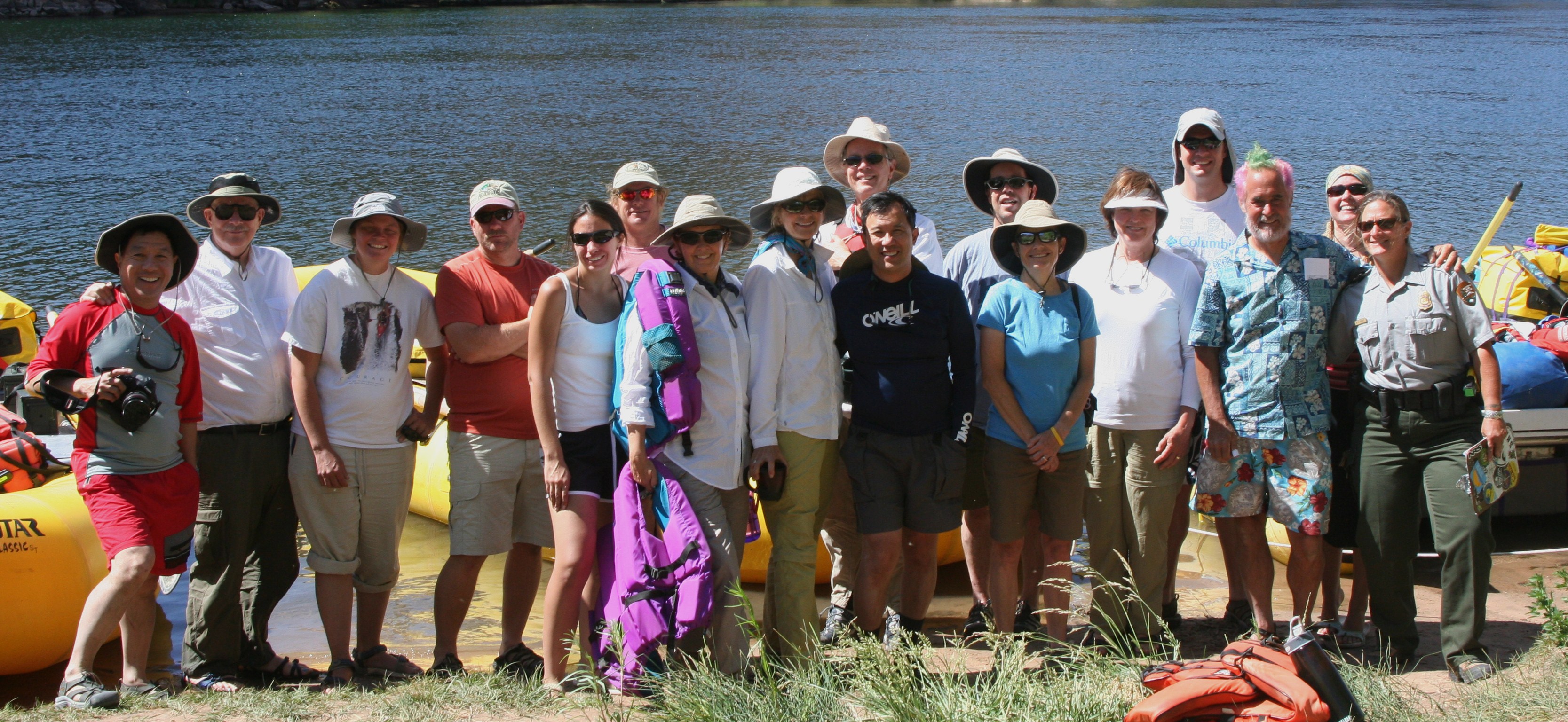
Our intrepid adventurers just before launch on the Colorado River. Ranger Peggy is on the far right.

 “Shall we gather by the River,” the Baptists used to sing. With us, it’s not an option. Ranger Peggy of the Grand Canyon National Park Service is giving a sermon on the Do’s and Don’ts of boating on the Colorado River. Our participation is mandatory.

I first met her when we were rigging our boats. She stopped by to check our equipment. Life vests had been dutifully piled up; stoves and bar-b-que were unpacked. Even a groover, which I will describe later, stood at attention. You don’t mess with Ranger Peggy.

She knew Tom from other river trips and was amused by his hair-do. He introduced me as the permit holder. “Tom’s in charge,” I noted. The smile dropped from her face. “You are responsible,” she said icily. “I’ll try to keep Tom under control,” I replied meekly. Yeah, fat chance that.

Bells, whistles and alarms started going off in my head. Dang, why hadn’t I read the fine print?

Tom lectures us on river safety before Ranger Peggy begins her spiel. What’s the first rule: Hang onto the boat. What’s the second rule? “Hang onto the boat,” we chant in unison. And so it goes. Tom saw his wife, Beth, go flying by him last year as he bounced through a rapid. He caught up with her down river.

If the raft flips, what do you do? Hang onto the boat! “Easier said than done,” I think. Of course we will be wearing our life vests. In fact there is a serious fine if a Park Ranger catches any of us on the river without one. As the permit holder, I pay. More fine print, so to speak.

“Your head is the best tool you have in an emergency,” Ranger Peggy lectures. Right. When the river grabs you, sucks you under the water, and beats you against a rock, stay cool.

For all of the concern about safety on the river, the Park Service seems more concerned about our behavior on shore.

Over 20,000 people float down the river annually. And 20,000 people can do a lot of damage to the sensitive desert environment. Campsites are few and far between and major ones may have to accommodate several thousand people over the year.

Picture this: 20,000 people pooping and peeing in your back yard without bathroom facilities. It ain’t pretty. So we pack out the poop. And we pee in the river…

Packing out poop makes sense. But peeing in the river, no way! I’ve led wilderness trips for 36 years and for 36 years I’ve preached a thousand times you never, never pee in the water. Bathroom chores are carried out at least 100 yards away from water and preferably farther.

The first time I line up with the guys I can barely dribble out of dismay. (And no, it isn’t just old age.)

The rules go on and on. Mainly they have to do with leaving a pristine campsite and washing our hands. Normally, I am not a rules type of guy but most of what Ranger Peggy is preaching makes sense. Sixteen people with diarrhea is, um, shitty.

And I enjoy the fact our campsites are surprisingly clean. The least we can do is leave them in the same condition we find them, if not better. The rules work.

Eating Dust

Two acres of paved boat ramp greet us when we arrive at Lee’s Fairy. The transport van disgorges us as the gear truck makes a quick turn and backs down the ramp. Another private party is busy rigging boats.

The dreaded pirate Steve threatens Bone with a knife and demands to know where he has buried his treasure.

From off to the right a long-haired 50-something man emerges. I think 60’s hippie or possibly the model for a Harlequin Romance cover. The pirate flag on his boat suggests otherwise. A ‘roll your own’ cigarette dangles from his lips. It’s Steve Van Dore, the last member of our group and a boatman out of Colorado.  No one in our group has met him but he comes highly recommended.

“Please let this be the truck driver,” Steve later admits is his first thought when he meets our green and purple haired trip leader, Tom Lovering.

He also confides that Tom hadn’t told him we were a smoke-free group. “On the other hand,” Steve confesses, “I didn’t tell him I am on probation.” Somehow this balances out in Steve’s mind. There is no time to become acquainted; we have work to do.

The truck we just loaded demands unloading. Everybody does everything. There are no assignments. Peggy and I become stevedores, dock workers. Piles of beer and soda and wine and food and personal gear and ammo cans and hefty ice chests quickly accumulate around the truck.

There is no shade and the desert sun beats down ferociously. It is sucked up by the black asphalt and thrown back at us. We slather on sun block and gulp down water.

The rafts are unloaded last. Pro gives a quick lesson on rigging and then escapes. We have bought their minimum support package to keep costs down and Tom has done a good job. Our outlay for the 18 day adventure is approximately $1,000 per person. The cost for a similar commercial outing can edge up to $7,000 and beyond!

Rigging our five rafts is technical but relatively easy, assuming of course one is mechanically oriented. I make no such claims. Steve’s Cat (catamaran) is already set up and in the water, its pirate flag flapping in the breeze. Our other four boats are self-bailing Sotar Rafts with aluminum frames. Tom owns his own, a blue 14 footer named Peanut. The three we have rented from Pro are yellow, 16 feet long and nameless.

If the technical aspects about rafts and raft rigging make you drool, check the excellent PRO and Sotar websites: http://www.proriver.com    http://www.sotar.com .

Tom is the last to rig his boat and it is approaching dusk. I hike down the river to find a campsite for our group while the rest boat down. Peggy and I are totally exhausted. We struggle to set up our new tent in 30 MPH winds. A van is coming to pick us up for dinner and we are late, again. The walls of the restaurant are covered with photos of rafts and rafters being trashed by rapids.

The wind storm has changed to a dust storm as we crawl into out tents. It covers everything and gets into my eyes, ears, nose and mouth. I pull out a handkerchief to cover my face. I am far too tired to make notes for Bone’s blog. I finally fall asleep with the wind ripping at our tent.

There Is No Turning Back… Running the Colorado River

And why would a guy allow his toenails to be painted? Read on…

I didn’t sleep well. I never do the night before a big event, even when I know what to expect. This time I am clueless.

I also have an early morning assignment: fill a humongous chest with ice. It’s a precious commodity, worth its weight in cold on an 18 day river trip through the desert. Since the ice store is located on the other side of Flagstaff, the chore will add an hour to our morning.  It’s time we don’t have; we’re already behind. (I never catch up.)

Peggy and I down a hurried bran muffin and gulp a cup of watery motel coffee. I am tempted to go out to the van and make the real stuff but we have chores to complete. It is time to make the leap from life on the road to life on the river. Lap tops, cell phones, good clothes and the other accoutrements of modern civilization are stuffed into bags and dumped into the van.

Plus I have to paint my toenails. It’s a virgin experience. Grand Canyon boatmen are a superstitious bunch. Many believe their boats will flip if a person is on board with naked toes. And it’s true; boats have flipped under such circumstances. It makes no difference if the opposite also happens.

Tom lectures me, “I will not let you on my boat unless your toenails are painted.” He’s serious. Peggy dutifully applies blue polish on four of my toes. Does this mean we will only half flip?

PRO, the company that is outfitting us with three of our five rafts and miscellaneous equipment, is supposed to arrive at 11 to load our gear and transport us to Lee’s Ferry. “They are coming an hour early,” Tom reports. It’s panic time. Their big truck arrives promptly at 10:55. Maybe the staff gave us the earlier time to assure we would be ready.

Whatever. We are ready to load and loading is what we do. It’s a group effort; everyone pitches in.

There is an unwritten Commandment on private river trips: Thou Shall Do Your Share. No one is paid to pamper us. Not helping will lead to bad things, like banishment from the tribe. Sweat is pouring off of me by the time the truck is loaded. It promises to be a long, hot day.

The transport van arrives and we pile on. The adventure has begun; there is no turning back.

We head out Highway 89 retracing our route down from visiting Utah’s incredible National Parks a week earlier. A quick stop at Safeway provides deli sandwiches for lunch. Mine is ham and cheddar. We will graze on the go. Our KOA, Fat Man’s trail, and the San Francisco Peaks pass by on the left. Soon we are in Navajo country. The road to the Grand Canyon, Cameron and the Little Colorado River join the list of things passed. At Bitter Springs we jog left on Alt 89 and start our descent to Lees Ferry, the beginning point of all Grand Canyon river trips.

Mad Bombers, Homeland Security and a Poopy Cat

Great adventures start with the mundane. For example, did you cancel the paper? Common sense (and probably your mother) admonish that devious burglars have nothing better to do than to cruise the streets looking for rolled newspapers in front of your home.

Effie the Cat wears reindeer horns and a red bow. She is not happy. Check out the claws digging into our Berber rug.

Of even more importance, what about the cat? Back when Peggy and I led a normal life we had a cat named Effie. Vacations meant I would carefully measure out twice as much food and water as she could possibly eat or drink and four times the kitty litter she might use. The likelihood of her pooping all over the house was much greater that the likelihood of her starving. As a reward for my thoughtfulness, she would shed enough fur in our absence to fill a dump truck.

Now we are travelling full time, these issues have faded away. Instead we have food to worry about. Lots of it. Tom Lovering, the trip leader, his wife Beth and their friend Jamie Wilson arrived in Flagstaff three days in advance of our Colorado River trip. Their car was packed to the brim with empty ammo cans and other water tight boxes waiting to be filled with food and the miscellaneous paraphernalia of river trips.

The Department of Homeland Security delayed their journey at Hoover Dam. The Agency is paranoid about mad bombers. Its normally low sense of humor dropped to zero when the agents saw all the ammo cans. The whole car had to be unpacked.

Tom is even more paranoid about food than DHS is about terrorists. He’s an old restaurateur who had spent months planning the menu.  Each dish has been tested several times and quantities have been measured down to the teaspoon. Recipes are spelled out in minute detail. We will eat gourmet on the trip… or die. The options are clear.

Beth, Peggy and I are dispatched to Sam’s Club with marching orders. We fill seven large shopping carts with food. Think of it this way. There are 16 people going on an 18 day trip and eating three meals a day. This equals 864 individual meals.

When we arrive back at the motel, Tom and Jamie have set up a staging area. Food needs to be organized by meal and day and then stuffed in the appropriate containers. We have yet to shop for perishables and more food is coming from Sacramento. Our room, we discover, is to be the recipient of all food. There is barely room to sleep. I begin to think fondly of Effie the Cat.

The next day is more relaxed. Other trip members begin to arrive and Peggy and I assume air port shuttle duty. Tom takes time for a makeover into something resembling an English Punk Rocker from the 70s with green and purple hair. Homeland Security was right to be suspicious.

Tom prepares for makeover into English Punk Rocker by bleaching his hair. Any resemblance to an elderly lady on a cruise ship is purely coincidental.

The results. DHS was right to be suspicious about this man.

Exploring the Grand Canyon by Car, Mule, Foot, Helicopter and Boat

The Grand Canyon provides a vast panorama of ever changing color and seemingly endless space.

“Golly, what a gully,” President William Howard Taft was heard to mutter when he first saw the Grand Canyon.

Teddy Roosevelt was more profound: “Leave it as it is. You cannot improve on it. The ages have been at work on it, and man can only mar it.”

Each point along the Grand Canyon rim provides a unique and rewarding view.

Both of these thoughts are rumbling through my brain as I think about the 18 days Peggy and I are about to spend rafting 280 miles down the Colorado River.

Few people come away from the Grand Canyon untouched and we are no exception.Its vastness, beauty, and geology have pulled us back time and again, as have its natural and cultural history.

There are many ways to explore the Canyon. For the vast majority of people, some 5 million a year, this involves a drive up to the South Rim and a quick tour of the most popular overlooks.

Sitting on the edge for an hour or two enhances the experience several times over. Hanging out on the rim for a few days while roughing it at a campground or luxuriating in one of the lodges, is even better.

For those wanting for a bird’s eye view, a helicopter trip is a tempting option. (National Park rules limit the obtrusiveness that helicopters and airplanes flying in the Canyon would otherwise create. Specific routes and altitudes are mandated.)

Beyond these more sedentary approaches to the Canyon lies adventure. Even a half hour hike down one of the more popular trails provides a trip through millions of years of history, incredible views and the heart-pounding thought that only a few feet separate you from a thousand foot tumble.

Longer hikes and especially backpacking trips provide a perspective that only a small percentage of Canyon visitors ever have.

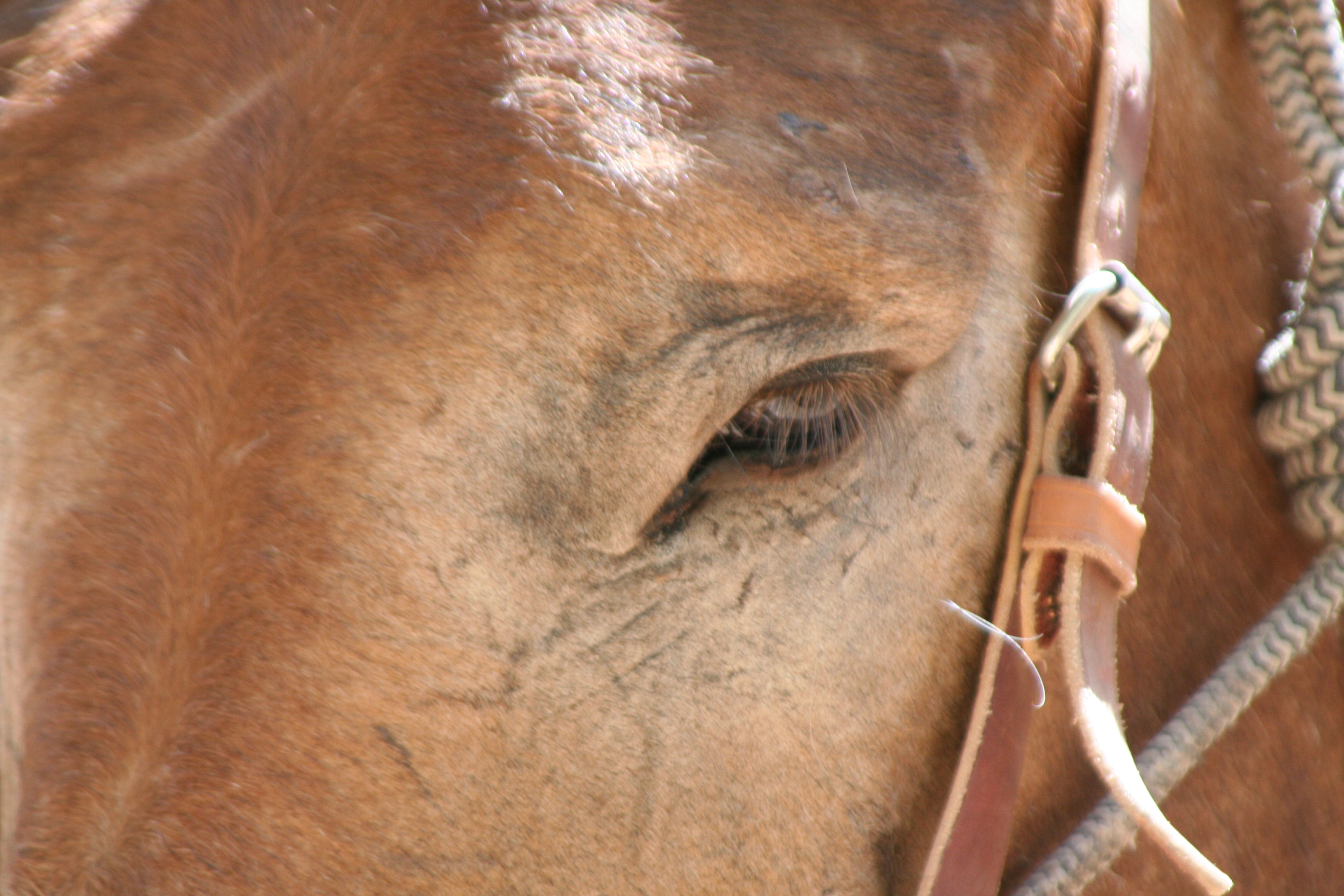
"Don't even think about climbing on my back," this Grand Canyon mule seems to say.

If you want to visit the inner canyon but fear you’re lifetime warranty will expire hiking out, check out the sure-footed mules that carry tourists in and out of the Canyon. It’s an outing your rear will remember for years.

At some point or the other in my life, starting with a Rim drive in 1968, I have experienced all of these approaches to visiting the Grand Canyon including trips by mule and helicopter. (Our son Tony provided the latter while he was working for Papillon.)

My most challenging journeys have been six backpack trips into the Canyon, including a week alone. Read about the latter misadventure in “The Tale of a Tail” under Stories on the sidebar.

I view our 18 day raft trip down the river as an exclamation point to my explorations of the inner canyon.  Even here there are options. For example, commercial companies offer trips on large, motorized pontoon boats. These tours are quicker and definitely less work… but my sense is they lack the same level of intimacy and adventure as a private trip.