UT-OH! Chapter 11: Raw Sex, the Nuclear Holocaust, and Being Bonked by a Baseball

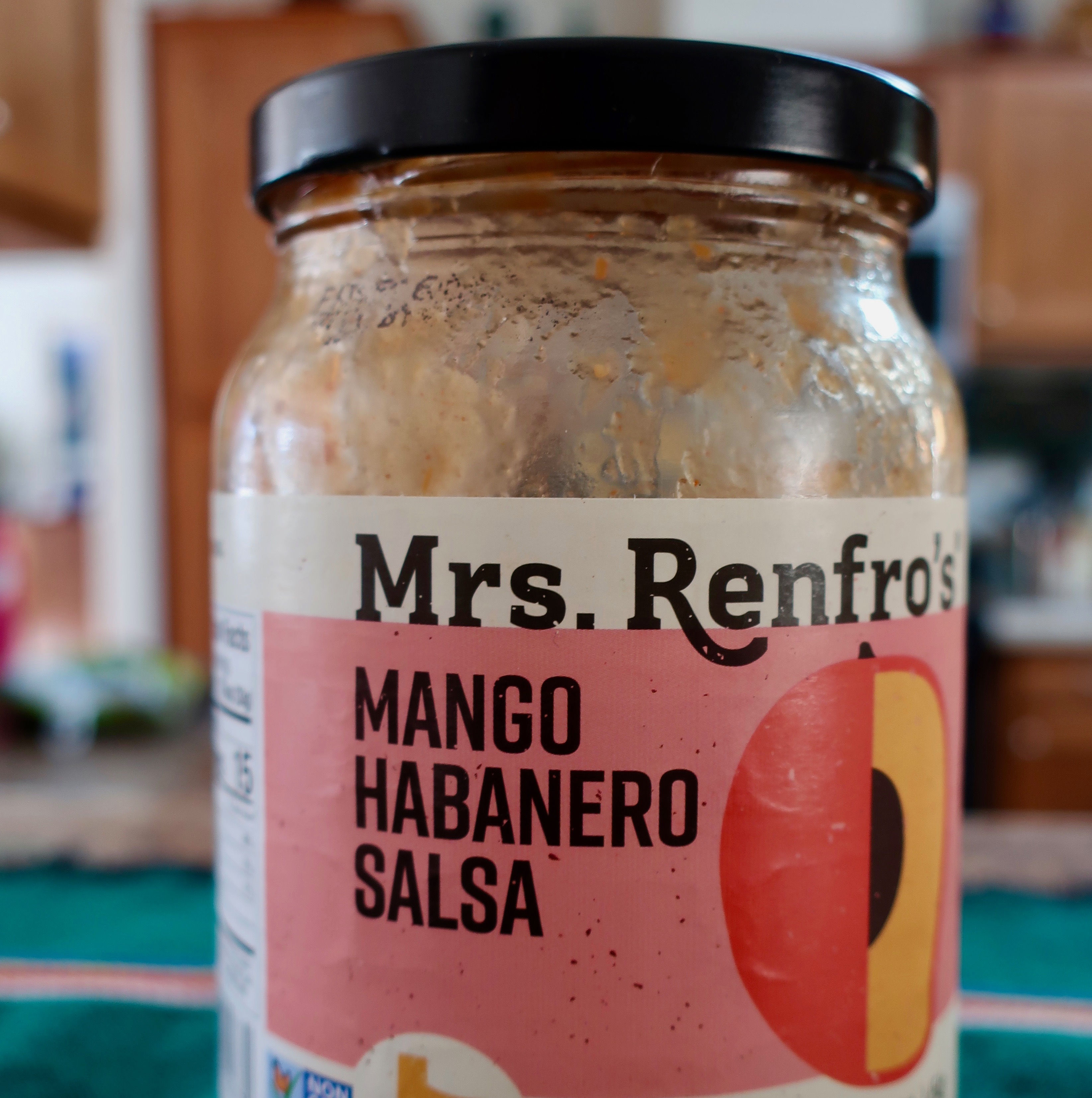
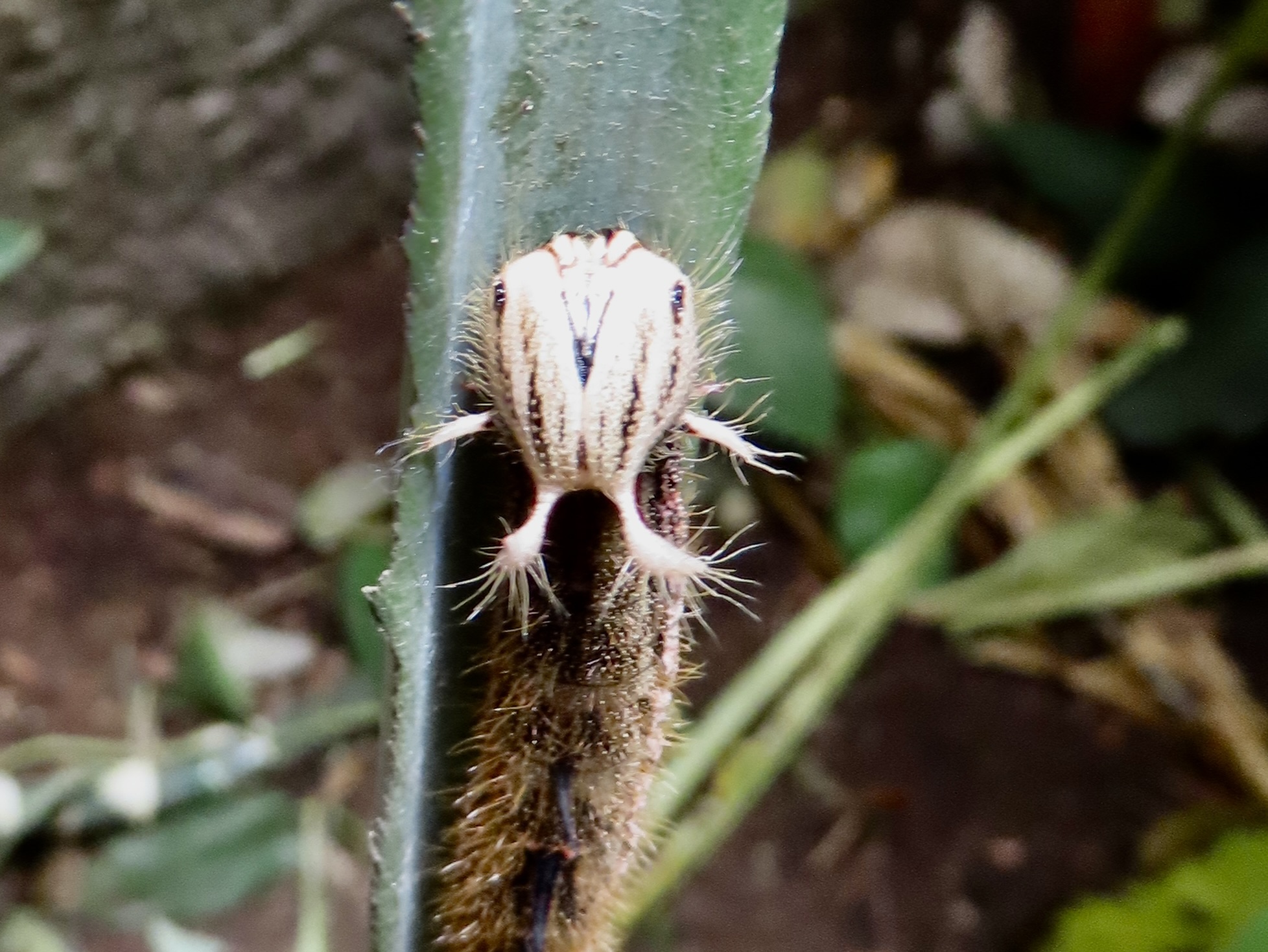
This is how I felt after being bonked on the head by a baseball! Just kidding. It’s actually here because I didn’t have a photo for Chapter 11. This one is an introduction to Friday’s post on Costa Rica Butterflies.

There came a time when I grew out of my mischief making phase. Other things took precedence: school, wandering in the woods, church, girls, and even sports. Few of these earned an Ut-Oh. There were a couple of incidents that earned inclusion in this book, however. The first had to do with a girl.

Starting as far back as the third grade, I had a girlfriend, or at least believed I did. The girls didn’t have to agree. My first heart throb was Carol. She was a younger woman: cute and smart. While I appreciated those qualities, what fascinated me about Carol was that she could run like the wind. I was in love with her legs. We both lived within a couple of blocks of school and would walk home for lunch. 

The advantage of going home was we would arrive back at school before the other kids were let out for noon recess. This meant we could grab the best positions for whatever game was being played. My problem was that Carol could outrun me and this meant I was usually second in line. It seemed like a small price to pay for seeing those legs kicking up the dirt in front of me.

Next, I fell for an older woman, the fifth grade sister of one of my classmates in the fourth grade. She had quite a mouth on her and called her little brother pet names like shit-head and fuck-face. I was fascinated to hear a girl talk like that. One weekend, I found myself walking 2 ½ miles following the Southern Pacific railroad tracks to ‘visit her brother’ with my primary objective hearing her speak those ‘guy’ words. She didn’t disappoint…

The Ut-Oh, however, took place when I was in the fifth grade. Judy was a fourth grader with flaming red hair who had several boys in the fourth and fifth grade passionately pursuing her. The competition was fierce. Judy loved it. To encourage us, she cut off small locks of her hair and gave one to each of her admirers. I was surprised she had any hair left but I cherished my locket.

My main competitor for Judy was Eric. He was an up and coming fourth grader, small, but extremely athletic and an all-around nice kid. Judy let it be known that we were the chosen two. 

We had our showdown at a school movie that provided instructions on what to do when the Russians bombed us. We spent a lot of time in the 50s worrying about that. People began building bomb shelters in their backyards. The teachers would make us crawl under our desks to prepare for the explosion. We were taught to cover our faces with our arms so glass shattering in from the windows wouldn’t blind us. It is not surprising that the traumatized children of the 50’s grew up to be the anti-war advocates of the 60s and 70s. I stayed up one night to watch atomic bomb testing in the Nevada desert over 200 miles away. It lit up the whole Eastern sky and added a touch of reality to our hide-under-the-desk practice.

In the lineup for the movie, Eric aced me out and managed to get next to Judy. A half dozen other fourth graders played honor guard and I couldn’t even get close, but my luck didn’t abandon me altogether. I grabbed the seat immediately in back of her where I could at least monitor Eric’s behavior. The lights went down and the movie started. I strained to keep an eye on Eric. He reached over and grabbed Judy’s hand and she let him hold it. Damn! I could have killed him.

But then, unbelievably, Judy slipped her other hand between the chairs and grabbed my knee. My knee! It was raw sex. The ut-oh bulge in my pants proved it. 

Sports presented a totally different type of challenge. I am not a natural jock. It isn’t so much physical as mental. You have to care to be good at sports and I find other things more interesting. Part of this evolved from a lack of enthusiasm on the home front. There was little vicarious parental drive to see us excel on the playing field. 

Being as blind as a bat didn’t help much either. Like most young people in the 50s, I was not excited about wearing glasses. When Mrs. Wells, the school nurse, came to class with her eye charts, I would memorize the lines while she was setting up and then breeze through the test. As for class work, I would sit close to the black board and squint a lot. While I got away with this more or less in the classroom, it became a serious hazard on the Little League field.

I remember going out for the team. All of my friends played and social pressure suggested it was the thing to do. Nervously, I showed up on opening day and faced the usual chaos of parents signing up their stars, balls flying everywhere, coaches yelling, and kids running in a dozen different directions at once.

“Okay, Curtis,” the Coach instructed, “let’s see how you handle this fly.”

Crack! I heard him hit the ball. Fine, except where was it? The ball had disappeared. Conk. It magically reappeared out of nowhere, bounced off my glove and hit me on the head.

“What’s the matter? Can’t you see?” the Coach yelled helpfully. “Let’s try it again.” My Little League Career was short lived. I went back to carrying out my inventory of the number of skunks that lived in the Woods. This didn’t mean I was hopeless at sports. In the seventh grade I finally obtained glasses and discovered the miracle of vision: Trees had leaves, billboards were pushing drugs, and the kid waving at me from across the street was flipping me off. I could even see baseballs. It was time to become a sports hero.

It says something about your future in sports when your career peaks in the eighth grade. 

Thanks to Mrs. Young, I was slightly older than my classmate and, thanks to genetics plus an early growth spurt, slightly bigger. More importantly, I had mastered the art of leadership: Make noise, appear confident and charge the enemy. As a result I became quarterback and captain of the football team, center and captain of the basketball team and pitcher and captain of the softball team. I even went out for track and ran the 440, but they didn’t select me as captain. That honor went to a seventh grader. I was bummed.
UT-OH Chapter 9: The Pond and the Woods… On Becoming Nature Boy Part 2— Plus More Photos from Costa Rica

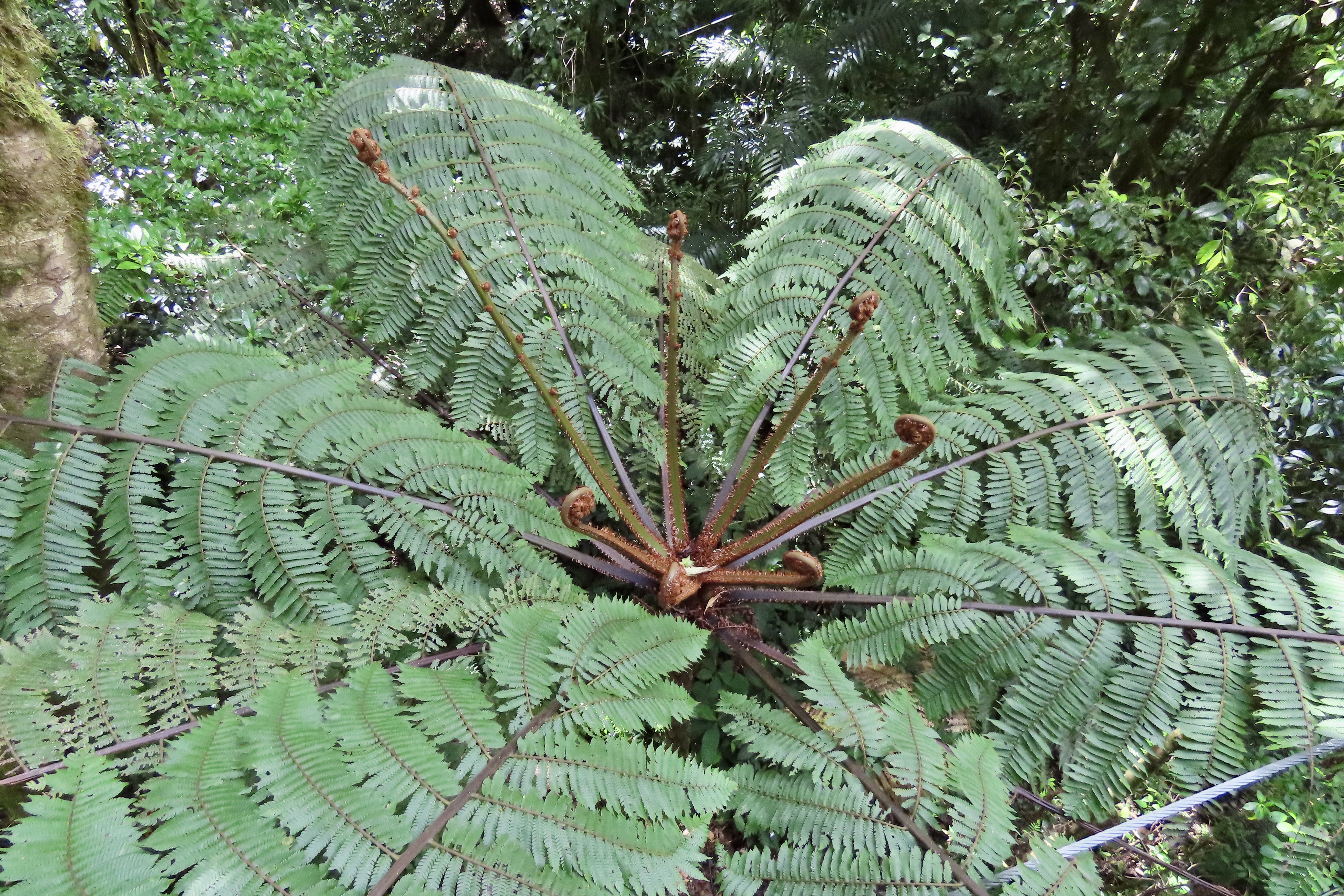
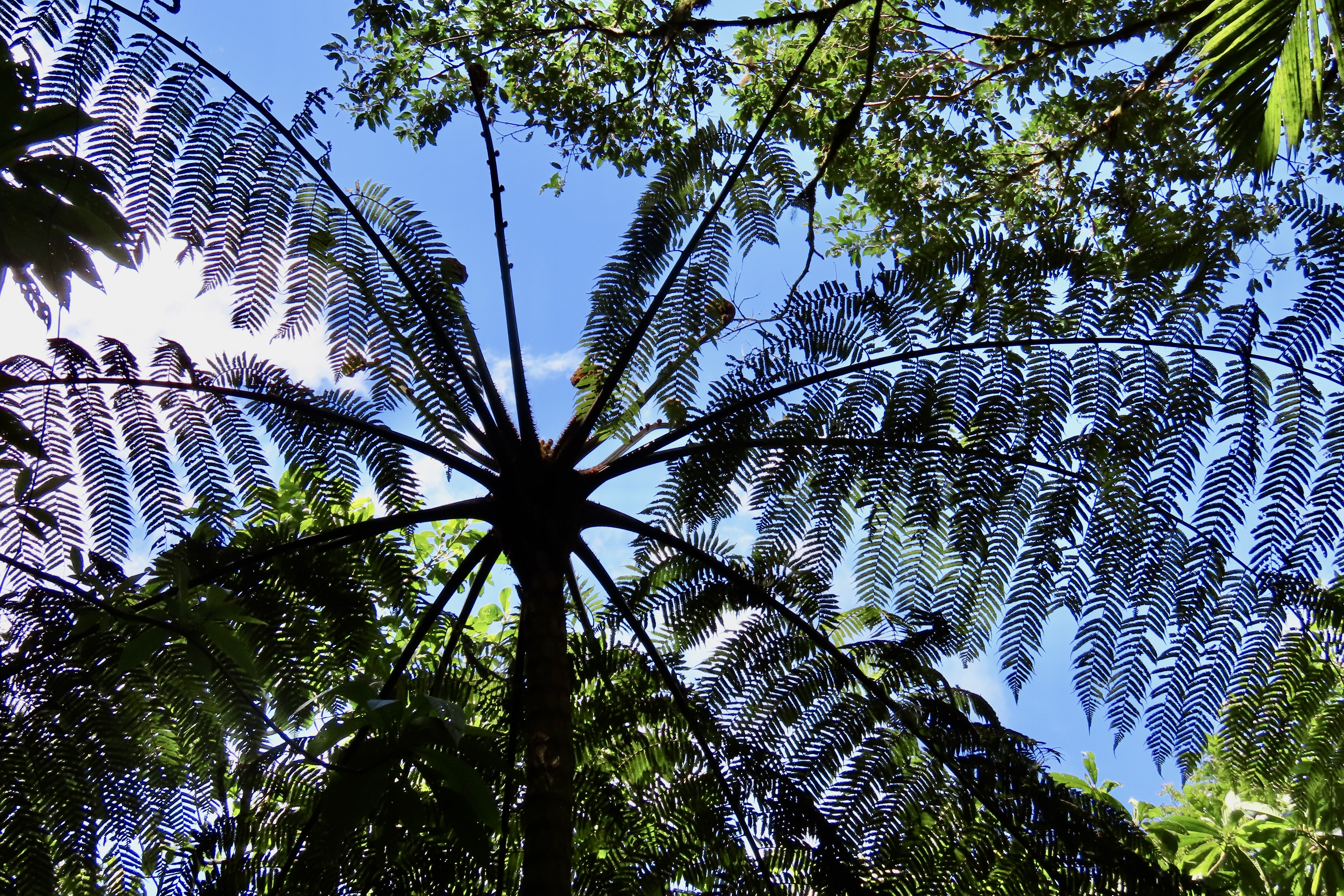
I mentioned in my last post that there were no photos of the Pond or the Woods. They were victims of the endless march of ‘civilization.’ Fortunately, and I should add, so far, there are still wild places on earth. Costa Rica has many. Some, such as Monteverde, are attracting hordes of tourists. There’s good and bad news here. Among the good is that the tourists provide Costa Rica with a welcome source of income and the opportunity for the tourists to enjoy the beauty and wildlife of Costa Rica. The bad news is the incredible commercialization that goes along with it and the impact. It’s similar to when the large cruise ships drop thousands of people onto the small Greek Island of Santorini, or our most popular National Parks in America turn into traffic jams in the summer. But enough on that. The tree above was a new one to me, a fern tree. There are more photos below after my UT-OH chapter on the Woods.

Part 2: The Woods

The Woods, like the Pond, earned a capital letter. To get there I walked out the back door, down the alley past the Graveyard, and through a pasture Jimmy Pagonni rented for his cattle. Tackling the pasture involved crawling through a rusty barbed wire fence, avoiding fresh cow pies, climbing a hill, and jumping an irrigation ditch. The journey was fraught with danger. Hungry barbed wire consumed several of my shirts and occasionally went for my back. 

Torn clothing and bleeding scratches were a minor irritation in comparison to stepping in fresh cow poop, though. A thousand-pound, grass-eating machine produces acres of the stuff. Deep piles sneak up your foot and slosh over into your shoes. Toes hate this. Even more treacherous are the little piles that hide out in the grass. A well-placed patty can send you sliding faster than black ice. The real danger here is ending up with your butt in the pile. I did that, once. Happily, no one was around to witness my misfortune, or hear my language, except Tickle the Dog. I swore him to secrecy. He knew many of my secrets. It’s a damned good thing he couldn’t talk.

For all of its hazards, the total hike to the Woods took about 15 minutes. Digger pines with drunken windmill limbs guarded the borders while gnarly manzanita and spiked chaparral dared the casual visitor to venture off the trail. Poison oak proved more subtle but effective in discouraging exploration.

I could count on raucous California jays to announce my presence, especially if I was stalking a band of notorious outlaws. Ground squirrels were also quick to whistle their displeasure. Less talkative jackrabbits merely ambled off upon spotting me, put on a little speed for a hyper Cocker, and became bounding blurs in the presence of a hungry greyhound. Flickers, California quail and acorn woodpeckers held discussions in distinctive voices I soon learned to recognize.

From the beginning, I felt at home in the Woods, like I belonged. I quickly learned that its hidden recesses contained a multitude of secrets. I was eager to learn what they had to teach me, but the process seemed glacial. It required patience and I hardly knew how to spell the word. I did know how to sit quietly, however. This was a skill I had picked up from the hours I spent with my nose buried in books. The woodland creatures prefer their people noisy. A Curt stomping down the trail, snapping dead twigs, and talking to himself was easy to avoid, while a Curt being quiet might surprise them. 

One gray squirrel was particularly loud in his objections. He lived in the top branches of a digger pine beside the trail and maintained an observation post on an overhanging limb. When he heard me coming, he would adopt his ‘you can’t see me gray squirrel playing statue pose.’ But I knew where to look. I would find a comfortable seat and stare at him. It drove him crazy. Soon he would start to thump the limb madly with his foot and chirr loudly. He had pine nuts to gather, a stick home to remodel, and a bright-eyed, bushy-tailed lady to woo. I was blocking progress. Eventually, if I didn’t move, his irritation would bring him scrambling down the trunk for an up-close and personal scolding.

After about 10 minutes of continuous haranguing, he’d decide I was a harmless, if obnoxious aberration and go about his business. That’s when I begin to learn valuable secrets, like where he hid his pine nuts. It was also a sign for the rest of the wildlife to come out of hiding. A western fence lizard might work its way to the top of the dead log next to me and start doing push-ups. Why, I couldn’t imagine. Or perhaps a thrush would begin to scratch up the leaves under the manzanita in search of creepy tidbits. The first time I heard one, it sounded like a very large animal interested in little boy flesh. 

Occasionally there were special treats: A band of teenage gray squirrels playing tag and demonstrating their incredible acrobatics; a doe leading its shy, speckled fawn out to drink in the small stream that graced the Wood’s meadow; a coyote sneaking up on a ground squirrel hole with an intensity I could almost feel.

I also began to play at stalking animals. At some point in time between childhood and becoming a teenager, I read James Fennimore Cooper and began to think I was a reincarnation of Natty Bumppo. Looking back, I can’t say I was particularly skilled, but no one could have told me so at the time. At least I learned to avoid dry twigs, walk slowly, and stop frequently. 

Occasionally, I even managed to sneak up on some unsuspecting woodland creature. 

If the birds and the animals weren’t present, they left signs for me. There was always the helter-skelter pack rat nest to explore. Tickle liked to tear them apart, quickly sending twigs flying in all directions. There were also numerous tracks to figure out. Was it a dog or coyote that had stopped for a drink out of the stream the night before? Tickle knew instantly, but I had to piece it together. A sinuous trail left by a slithery serpent was guaranteed to catch my attention. This was rattlesnake country. Who’d been eating whom or what was another question? The dismantled pinecone was easy to figure out, but who considered the bark on a young white fir a delicacy? And what about the quail feathers scattered haphazardly beside the trail?

Scat, I learned, was the tracker’s word for shit. It offered a multitude of clues for what animals had been ambling down the trail and what they had been eating. There were deer droppings and rabbit droppings and mouse droppings descending in size. Coyotes left their distinctive dog-like scat but the presence of fur suggested that something other than dog food had been on the menu. Some scat was particularly fascinating, at least to me. Burped up owl pellets provided a treasure chest of bones— little feet, little legs and little skulls that grinned back with the vacant stare of slow mice.

While Tarzan hung out in the Graveyard and pirates infested the Pond, mountain men, cowboys, Indians, Robin Hood and various bad guys roamed the Woods. Each bush hid a potential enemy that I would indubitably vanquish. I had the fastest two fingers in the West and I could split a pine nut with an imaginary arrow at 50 yards.  I never lost. How could I? It was my fantasy. 

Daydreams were only a part of the picture. I fell in love with wandering in the Woods and playing on the Pond. There was an encyclopedia of knowledge available and a multitude of lessons about life. Learning wasn’t a conscious effort, however; it was more like absorption. The world shifted for me when I entered the Woods and time slowed down. A spider with an egg sack was worth five minutes, a gopher pushing dirt out of its hole, 20, and a deer with a fawn, a lifetime.

It isn’t surprising that I became known as Nature Boy by my classmates, given all the time I spent in the woods. I considered it a compliment. 

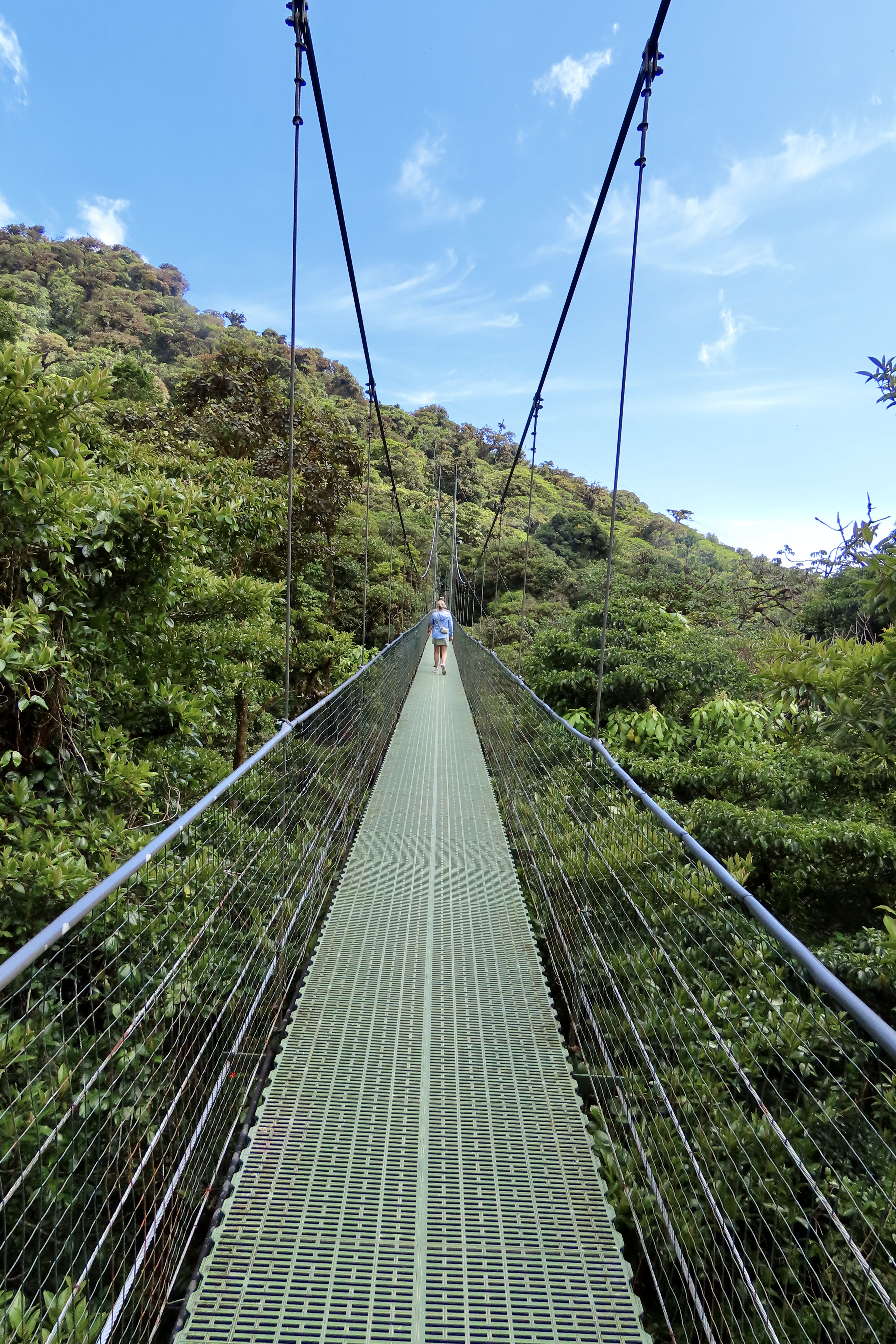
The hanging bridges of Monteverde gave us a unique opportunity to study both the canopy and the forest beneath. There were six bridges at Treetopia Park. At 774 feet, this was the longest. It was also more open. The canopy towered over most of the bridges.
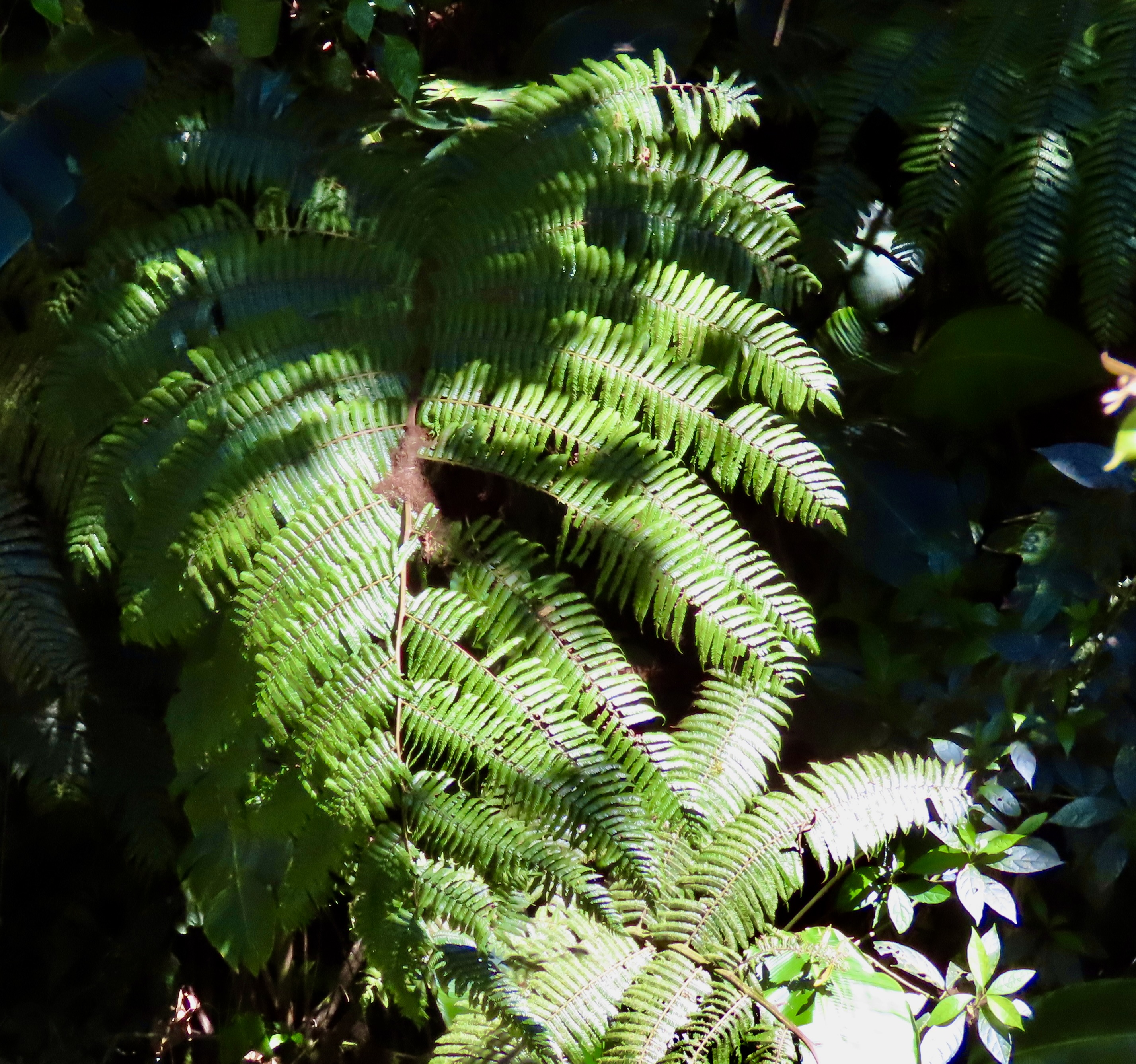
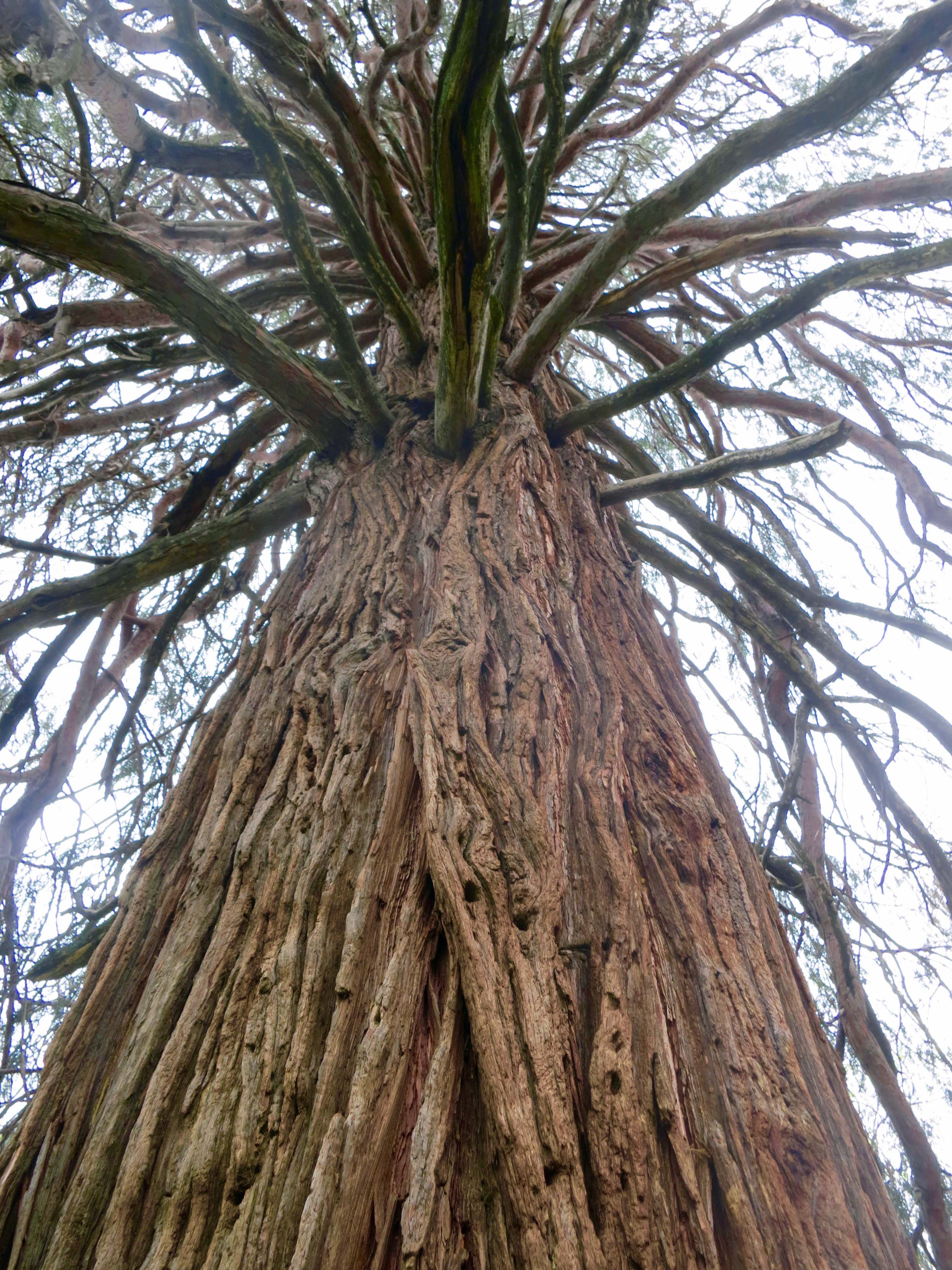
One bridge provided us with an opportunity look down on a fern tree. The leaves were a definite clue that we were looking at a fern.
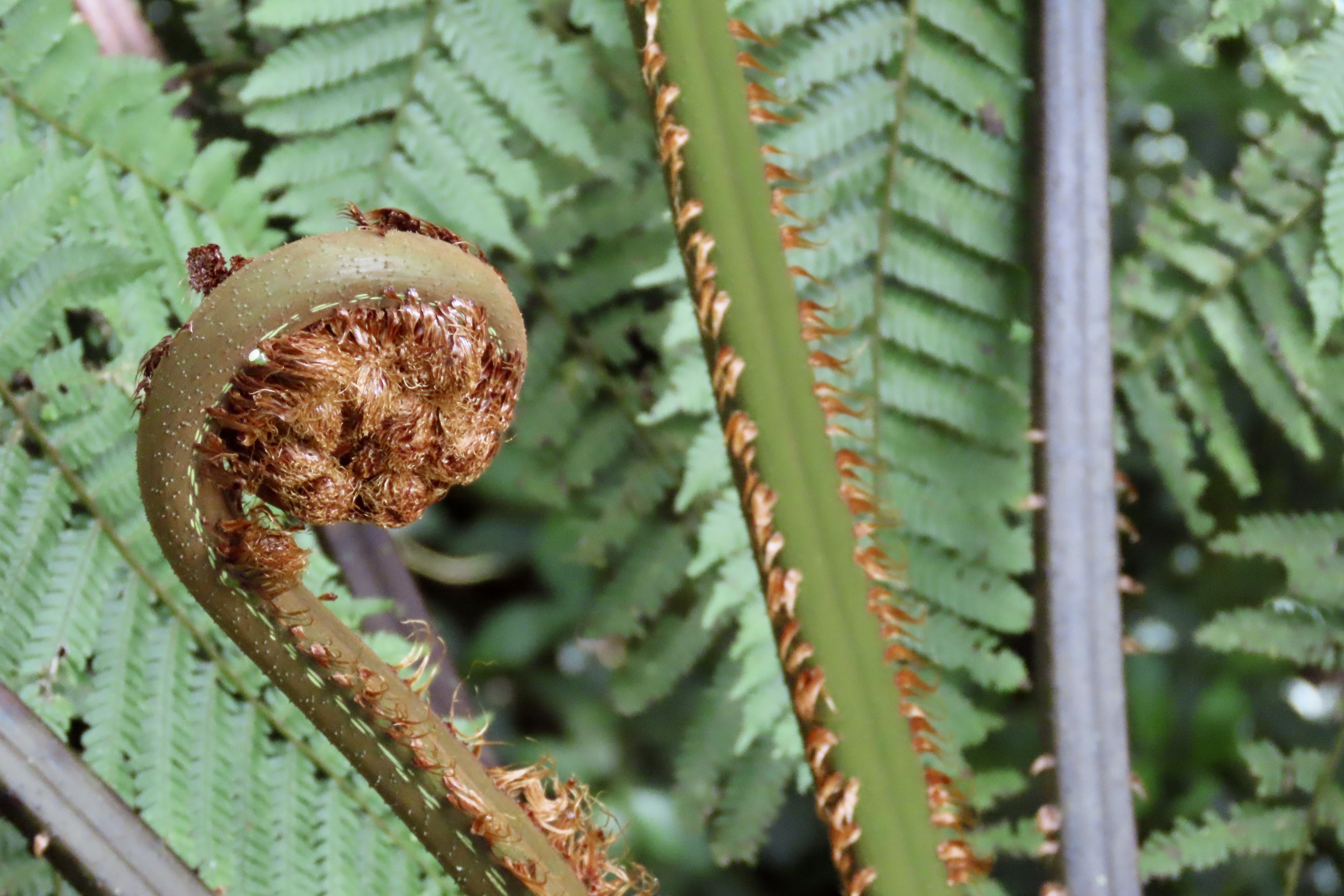
As did how the leaves unfold or unfurl known as Circinate vernation. This has always fascinated me about ferns. I have many photos of different species. But given that there are 10-12000 or more know species, I have a few to go…
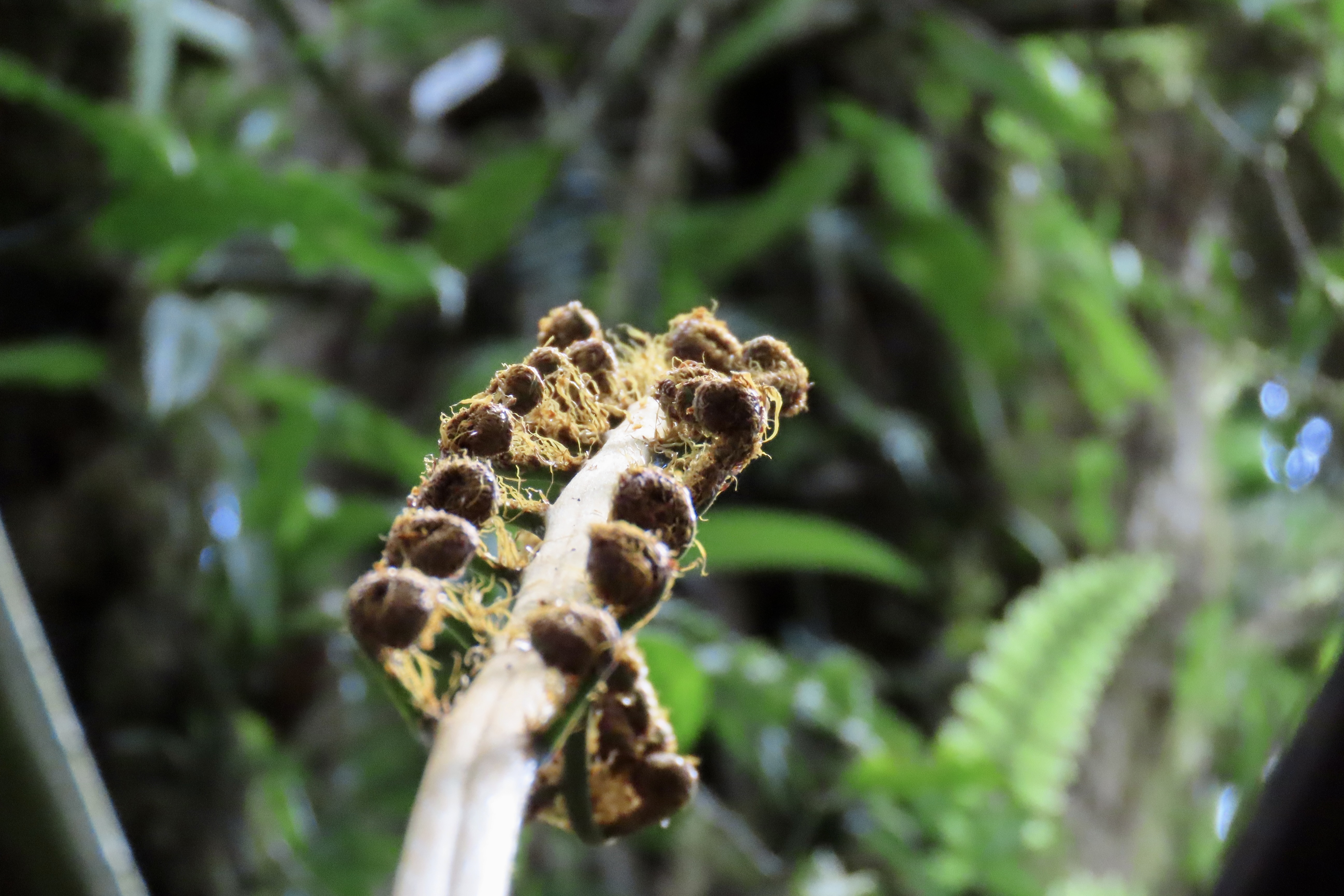
Here’s a different species at Treetopia.
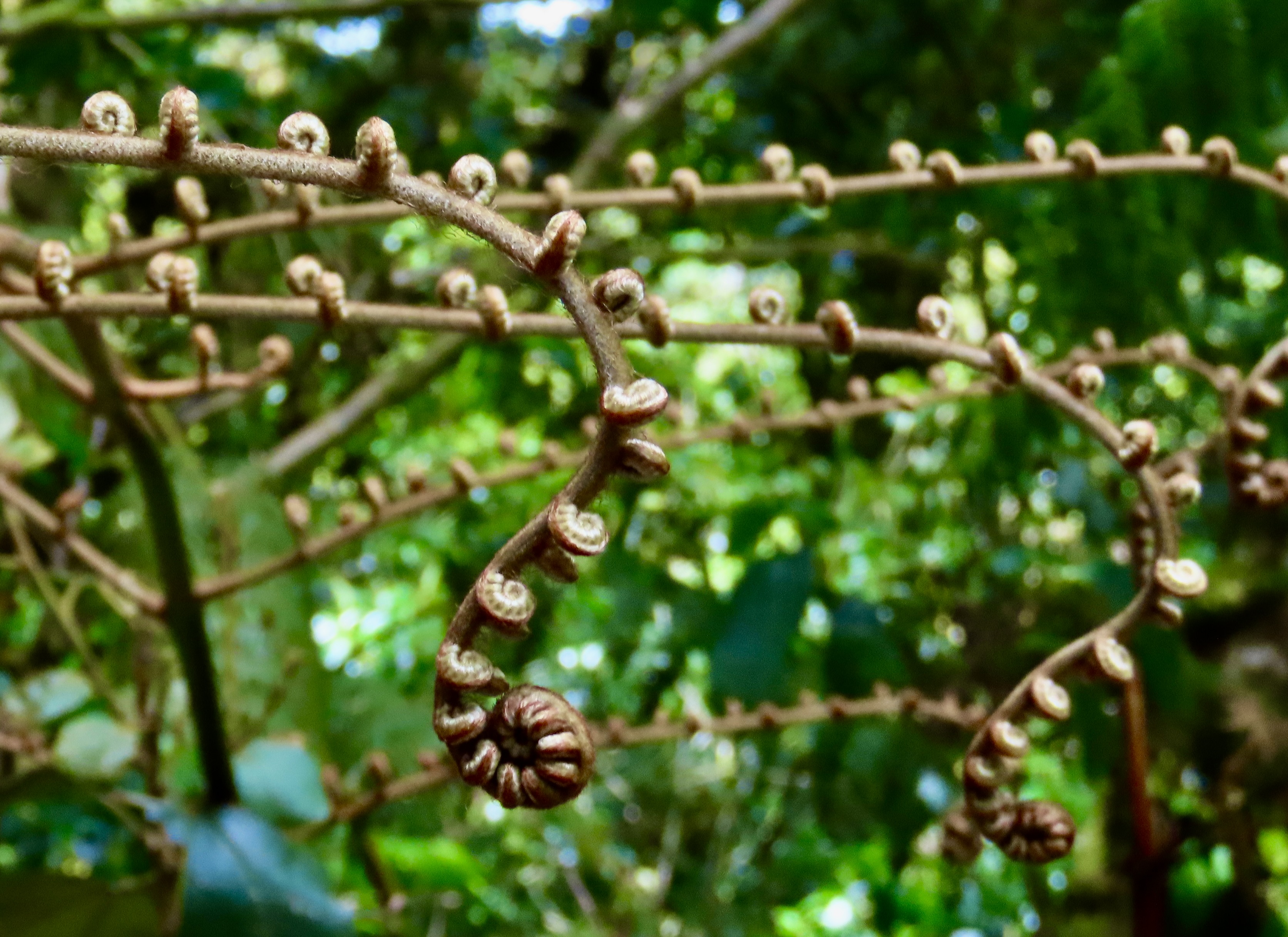
And another. Both tropical and temperate rainforests provide ideal conditions for ferns to grow.
Some can be giants. We spotted these down on the ground from the hanging bridge. I wish I had a person down on the ground to provide perspective. They would have made my 5 feet 11 inches appear small.

On Friday: Our total focus will be on Costa Rica.

UT-OH Chapter 8: The Pond and the Woods Part 1… On Becoming Nature Boy— Plus Hanging Out in Monteverde, Costa Rica

I’d love to show you a photo of the Pond, or the Woods. Unfortunately I didn’t take any photos of either when I was young. I went back a few years ago to photograph the sites that were so important to my childhood— and life. The Pond had become a large gas station and the Woods had become a trailer park. It’s called progress. There was money to be made.

Instead you have a gorgeous sunset photo over Monteverde, Costa Rica taken by our grandson, Cooper, who is in the eighth grade. Our son, Tony, his wife, Cammie and their three boys, Connor, Chris, and Cooper have joined us this week. We are situated up on a high hill surrounded by rainforest. It even has vines that are safe to swing on and a view that looks all the way to the Pacific Ocean. We sent the boys out with our cameras to explore the surrounding woods and take photos of what they found most interesting. There are more pictures after today’s UT-OH tale.

Part 1: The Pond

There came a time when the Graveyard no longer met my wandering needs. I started traveling farther and farther afield, 15 minutes at a time. That’s how far the Pond and the Woods were away. They were where I played and, more importantly, where I developed a life-long love of the natural world. As such, they earned a capital P and capital W. First up: The Pond.

There were a number of ponds in the area. Oscar ‘Ot’ Jones had one on his ranch for cattle; Caldor had one where logs waited for their appointment with the buzz saw; Forni had one over the hill from his slaughterhouse, and Tony Pavy had one that was supposedly off-limits. But there was only one capital P Pond, the one next to the Community Hall. If I told Marshall, my parents or my friends I was going to the Pond, they knew immediately where I would be.

It was a magical place filled with catfish, mud turtles, bullfrogs and pirates. Although the Pond was small, it had a peninsula, island, deep channel, cattails and shallows. In the spring, redwing blackbirds nested in the cattails and filled the air with melodic sounds. Mallards took advantage of the island’s safety to set up housekeeping. Catfish used holes in the bank of the peninsula to deposit hundreds of eggs that eventually turned into large schools of small black torpedoes dashing about in frenetic unison. Momma bullfrogs laid eggs in strings that grew into chubby pollywogs. When they reached walnut size, tiny legs sprouted in one of nature’s miracles of transformation. Water snakes slithered through the water with the sole purpose of thinning out the burgeoning frog population. I quickly learned to recognize the piteous cry of a frog being consumed whole. Turtles liked to hang out in the shallows where any log or board provided a convenient sunning spot. They always slid off at our appearance but a few quiet minutes would find them surfacing to reclaim lost territory.

By mid-summer the Pond would start to evaporate. The shallow areas surrendered first, sopped up by the burning sun. Life became concentrated in a few square yards of thick, tepid water, only inches deep and supported by a foot of squishy mud. All too soon the Pond was bone-dry with mud cracked and curled. Turtles, snakes and frogs crawled, slithered and hopped away to other nearby water. Catfish dug their way into the mud and entered a deep sleep, waiting for the princely kiss of winter rains. Ducks flew away quacking loudly, leaving only silence behind. 

Fall and winter rains found the Pond refilling and then brimming. Cloudy, gray, wind-swept days rippled the water and created a sense of melancholy that even an eight-year-old could feel. 

But melancholy was a rare emotion for the Pond.  To us, it was a playground with more options than an amusement park. A few railroad ties borrowed from Caldor and nailed together with varying sized boards made great rafts for exploring the furthest, most secret corners of the Pond. Imagination turned the rafts into ferocious pirate ships that ravaged and pillaged the far shores, or primitive bumper cars guaranteed to dunk someone, usually me. 

In late spring, the Pond became a swimming hole, inviting us to test still cold waters. One spring, thin ice required a double and then triple-dare before we plunged in. It was a short swim. Swimsuits were always optional and rarely worn. I took my first swimming lessons there and mastered dog paddling with my cocker spaniel, Tickle, providing instructions. More sophisticated strokes would wait for more sophisticated lakes.

Frogs and catfish were for catching and adding to the family larder. During the day, a long pole with fishing line attached to a three-pronged hook and decorated with red cloth became irresistible bait for bullfrogs. At night, a flashlight and a spear-like gig provided an even more primitive means of earning dinner. The deep chug-a-rums so prominent from a distance became silent as we approached. Stealth was required. A splash signified failure as our quarry decided that sitting on the bottom of the Pond was preferable to joining us for dinner. 

Victory meant a gourmet treat, frog legs. Preparation involved amputating the frog’s hind legs at the hips and then pealing the skin off like tights. It was a lesson I learned early: If you catch it, you clean it. We were required to chop off the big feet as well. Mother didn’t like being reminded that a happy frog had been attached hours earlier. She also insisted on delayed gratification. Cooking the frog legs on the same day they were caught encouraged them to jump around in the frying pan. “Too creepy!” she declared.

Catching catfish required nerves of steel. We caught them by hand as they lurked with heads protruding from their holes in the banks. Nerves were required because the catfish had serious weapons, needle sharp fins tipped with stingers that packed a wallop. They had to be caught exactly right and held firmly, which was not easy when dealing with a slimy fish trying to avoid the frying pan. But their taste was out of this world and had the slightly exotic quality of something that ate anything that couldn’t eat them.

Next up on Wednesday: The Woods. On Friday, we will focus on some of our Costa Rica adventures.

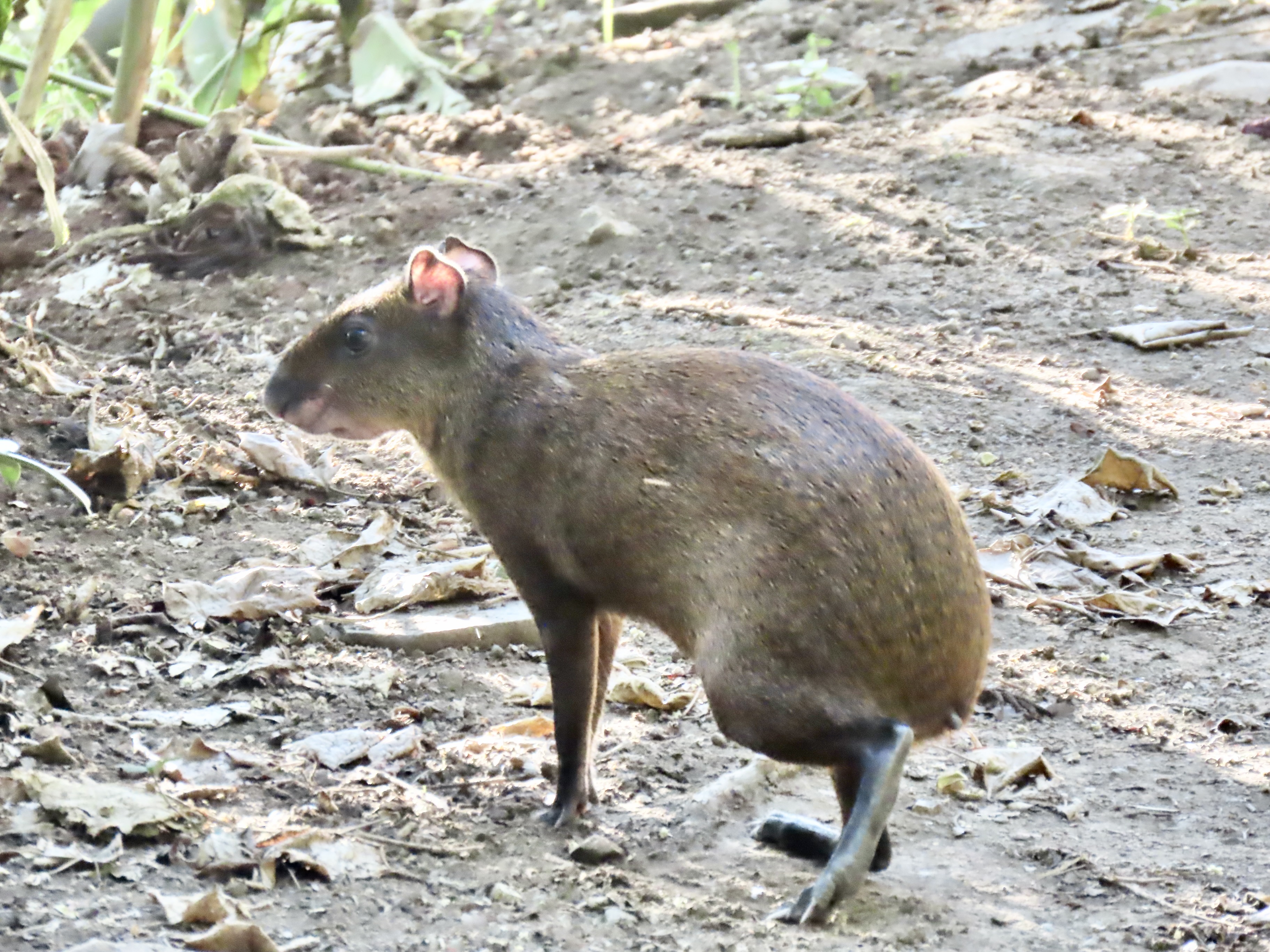
Chris, who is a sophomore in high school, had watched a capybara as it disappeared into the woods. Later when he was visiting a waterfall, one did him the courtesy of hanging out long enough for a photo.
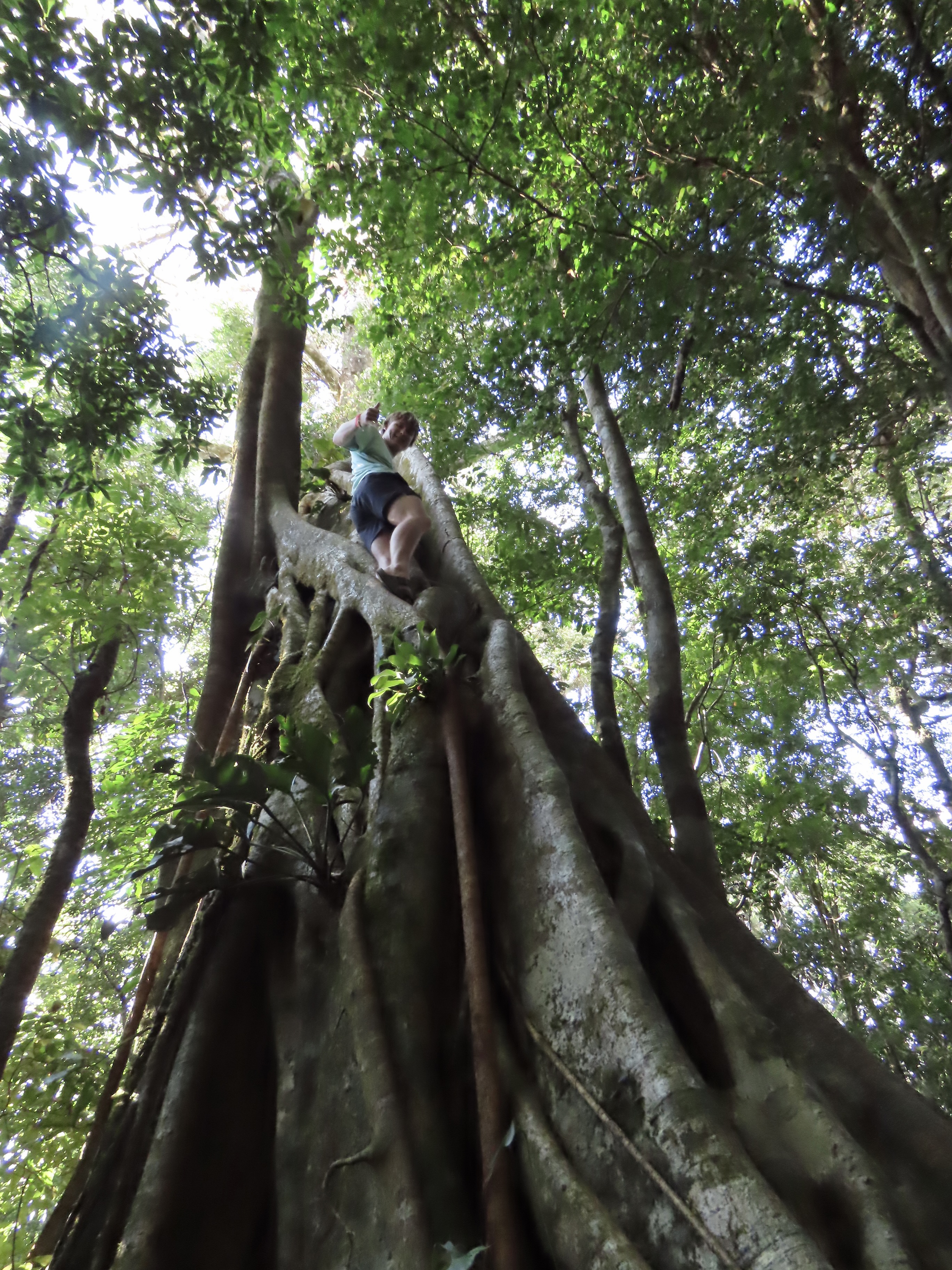
Connor, who is a junior, actually preferred to have a photo of himself taken up a banyan tree without a ladder. His passion for high places reminds us of his dad when he was his age.
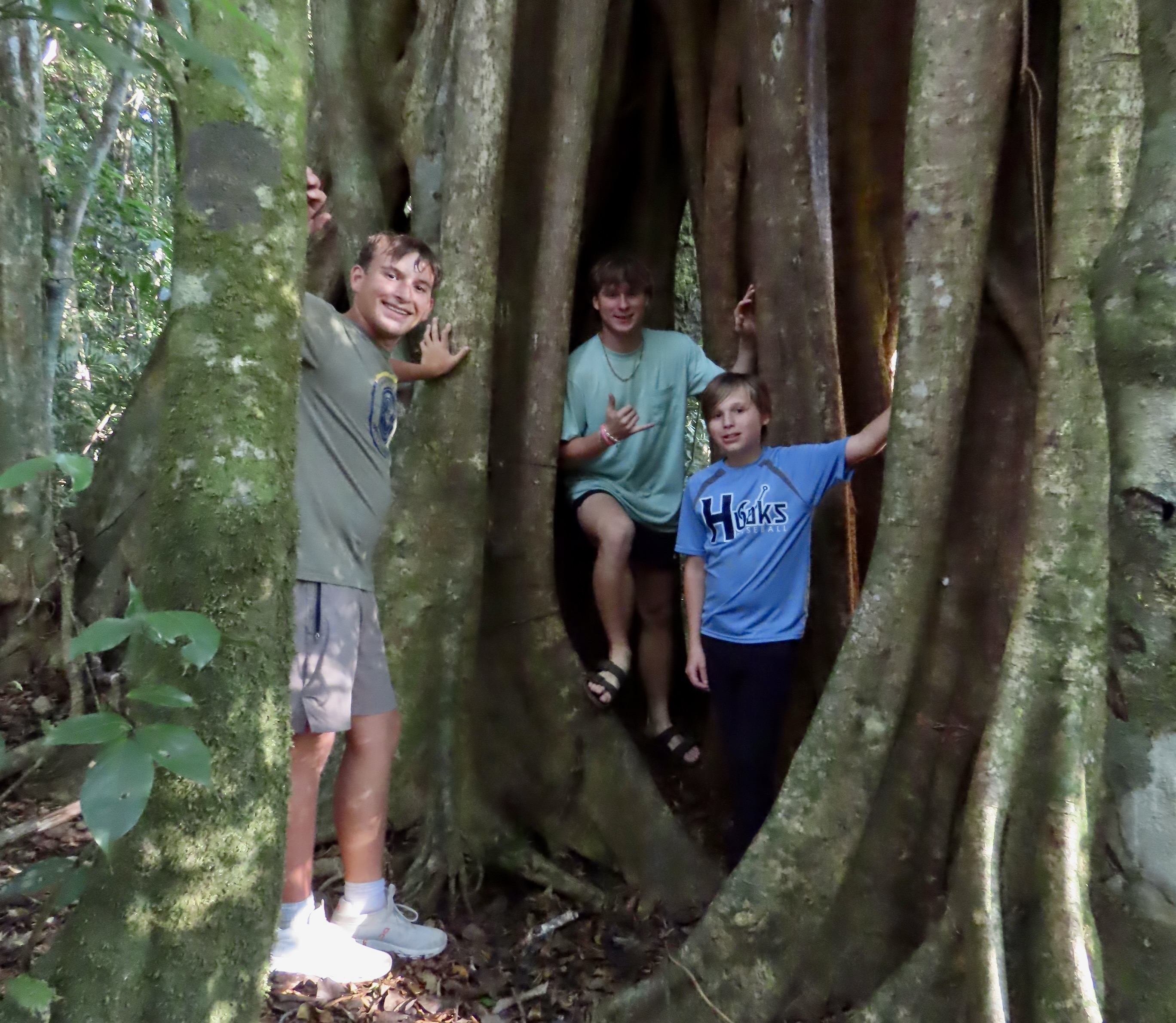
Here are the boys together at the base of the banyan tree: Chris on the left, Connor in the back, and Cooper on the right.
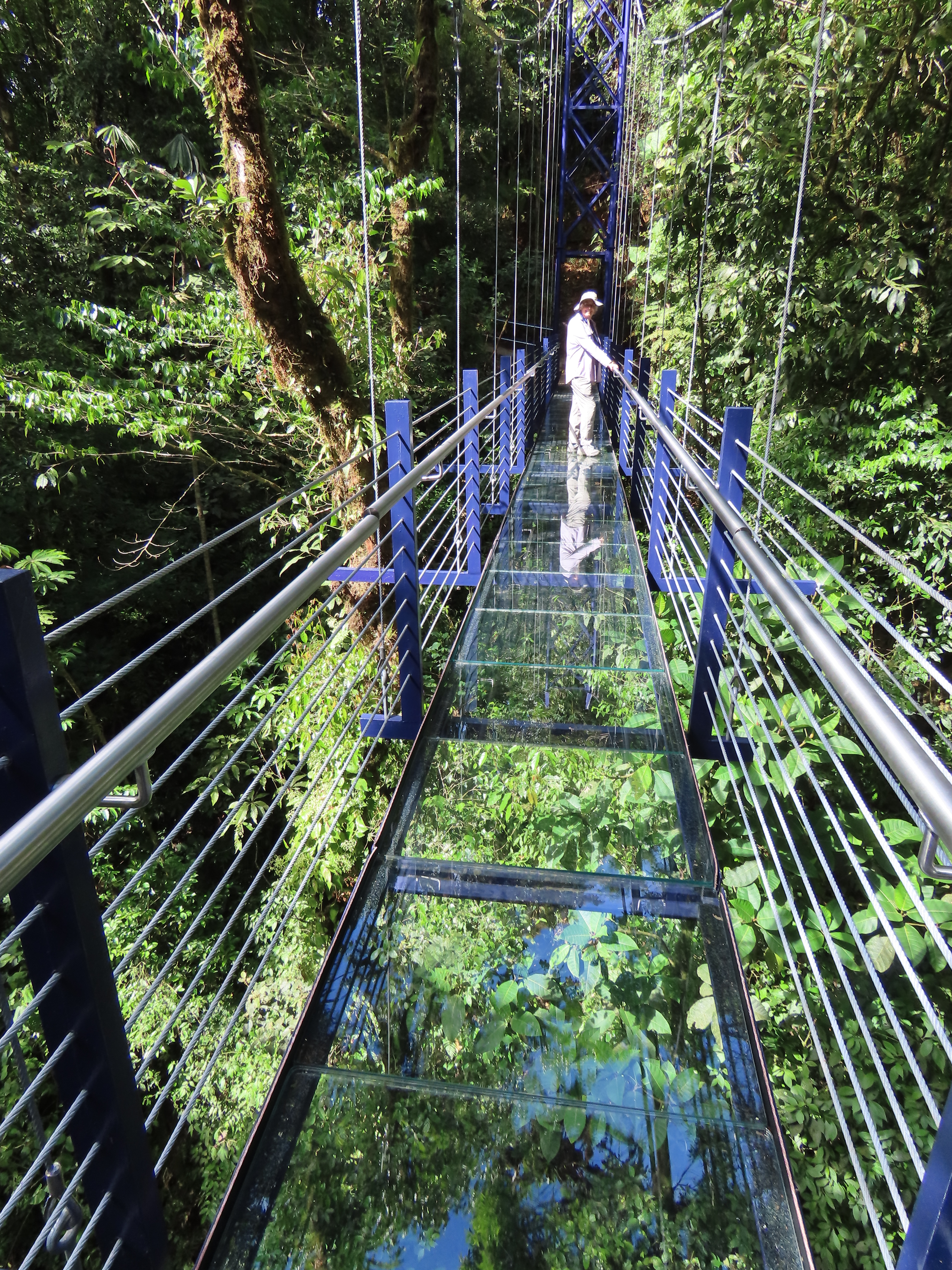
Our other activity of the day was to explore the forest canopy on hanging bridges. There were 6 different bridges. This one had a glass bottom you could see the jungle below. That’s grandma, Peggy, down on the end. Next up on Wednesday, the Woods.

UT-OH Chapter 7: The Death Defying (Suicidal?) Great Tree Race… And the White-faced Coatis of Costa Rica

Have you ever climbed a tree? As kids growing up in Diamond Springs, California, there were dozens that called to us, each with a unique challenge. Maybe the fact that we share 98.8 of our genes with chimps played a role. Nothing spoke ‘challenge’ like the 80 foot tall tree in the Graveyard, however. Peggy thinks at 83, I should stick to smaller trees.
A view of the tree today taken from near the house where we lived. Now, imagine 8-10 year olds racing up and down this tree as fast as they could go.

Two of these large incense cedar trees dominated the Graveyard. From an under five-foot perspective, they were gigantic, stretching some 75-80 feet skyward. The limbs of the largest started 20 feet up, providing scant hope for climbing. As usual, Marshall found a risky way around the problem. 

Looking appropriately graveyard-spooky in its old age, the largest Incense Cedar still dominates the Graveyard. It was probably planted in the 1850s. The large lower limbs (center left) were where Pop built our tree house. It stretched half way around the tree.

Several of the huge limbs came tantalizingly close to the ground at their tips, and one could be reached by standing on the tombstone I used to spy on Demon the Cat when she hid her kittens. But only Marshall could reach it; I was frustratingly short by several inches. Marsh would make a leap, grab the limb, and shimmy up it hanging butt down until the limb became large enough for him to work his way around to the top. Then he would crawl up to the tree trunk, five Curt-lengths off the ground. After that, he would climb to wonderfully mysterious heights I could only dream about.

Eventually I grew tall enough to make my first triumphant journey up the limb. Then, very carefully, I climbed to the heart-stopping top, limb by limb. All of Diamond spread out before me. I could see our school, the mill where my father worked, the woods, and the hill with a Cross where I had shivered my way through at a cold Easter Sunrise Service. I could see the whole world. Except for a slight wind that made the tree top sway and stirred my imagination about the far away ground, I figured I was as close to Heaven as I would ever get. 

I could see forever. A few years after my first ascent up the tree, I borrowed my father’s camera and climbed up the tree and took photographs of the surrounding country. This is looking across Diamond. The distant hill on the left was where the cross stood for years.

By the time I finally made it to the top, Marshall had more grandiose plans for the tree. We would build a tree house on the upper branches. Off we went to Caldor, the lumber mill where Pop worked, to liberate some two by fours. Then we raided Pop’s tool shed for a hammer, nails, and rope. My job was to be the ground man while Marshall climbed up close to the top. He would then lower the rope and I would tie on a board that he would hoist up and nail in. It was a good plan, or so we thought.

Along about the third board, Pop showed up. It wasn’t so much that we wanted to build a tree fort in the Graveyard that bothered him, or even that we had borrowed his tools and nails without asking. He even ignored the liberated lumber. His concern was that we were building our fort 60-feet up in the air on thin limbs that would easily break with nails that barely reached through the boards. After he graphically described the potential results, even Marshall had second thoughts. 

Pop had a solution though. He would build us a proper tree house on the massive limbs that were only 20 feet off the ground. He would also add a ladder so we could avoid our tombstone-shimmy-up-the-limb route. And he did. It was a magnificent open tree house of Swiss Family Robinson proportions that easily accommodated our buddies and us with room to spare. 

It was more like a pirate hideout than a Robinson family home, however. Hidden in the tree and hidden in the middle of the Graveyard, it became our special retreat where we could escape everything except the call to dinner. It also became my center for daydreaming and Marshall’s center for planning mischief. He, along with our friends Allen and Lee, would scope out our forays into Diamond and the surrounding countryside. 

And finally, the treehouse became the starting point for the Great Tree Race. We would scramble to the top and back down in one-on-one competition as quickly as we could. Death-defying is an appropriate description. Or maybe, suicidal. Slips were a common hazard. Unfortunately, the other boys always beat me; they were one to three years older, and I was the one most susceptible to losing my grip. My steady diet of Tarzan comic books sustained me, though, and I refused to give up.  Eventually, several years later, I would triumph.

Marshall was taking a teenage time-out with Mother’s parents who had moved to Watsonville, down on the Central Coast of California. Each day I went to the Graveyard and took several practice-runs up the tree. I became half monkey. Each limb was memorized and an optimum route chosen. Tree climbing muscles bulged; my grip became iron and my nerves steel. 

Finally, the big day arrived and Marshall came home. He was every bit the big brother who had been away at high school while little brother stayed at home and finished the eighth grade. He talked of cars and girls and wild parties and of his friend Dwight who could knock people out with one punch. I casually mentioned the possibility of a race to the top of the tree. What a set up. As a two pack-a-day, sixteen-year-old, cigarette smoker he wasn’t into tree climbing, but how could he resist a challenge from his little brother.

Off we went. Marsh didn’t stand a chance. It was payback time for years of big brother hassles. I flew up and down the tree. I hardly touched the limbs. Slip? So what, I would catch the next one. Marsh was about half way up the tree when I passed him on my way down. I showed no mercy and greeted him with a grin when he arrived, huffing and puffing, at the tree house. 

His sense of humor was minimal. Back on the ground, his bruised ego demanded that he challenge me to a wrestling match. I quickly pinned him to the ground. It was the end of the Great Tree Race, the end of big brother dominance, and a fitting end to my years of associating with dead people in the Graveyard.

And Now for the Coatis of Costa Rica

Yesterday, Peggy and I drove from Nuevo Arenal to the tourist oriented town of La Fortuna. It was pretty much what one would expect of a town that makes its living off of separating money from the visitors. There were a ton of things you could do for a price. I don’t have a problem with that. People would get their money’s worth and locals could put food on their tables. But I much preferred Nuevo Arenal.

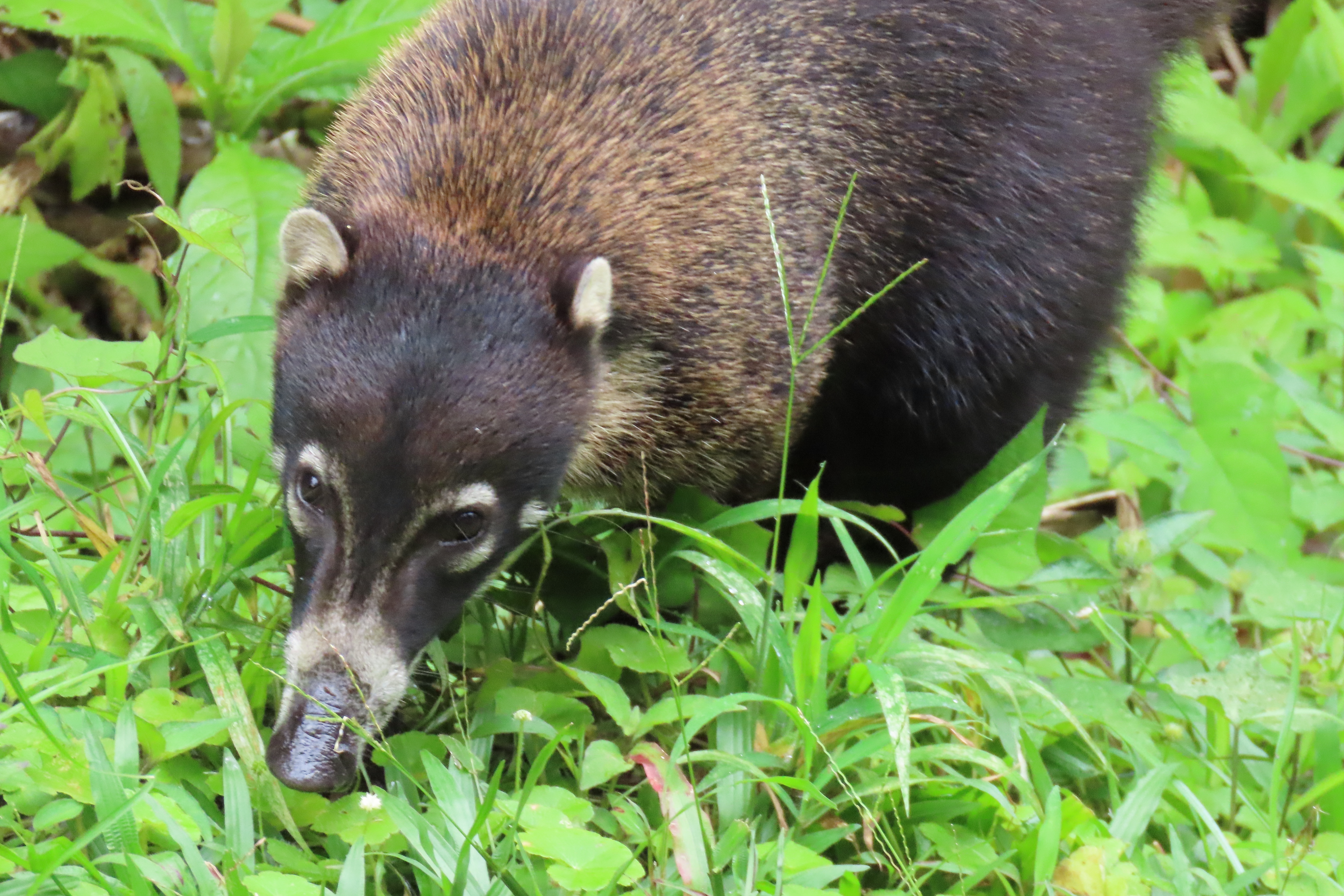
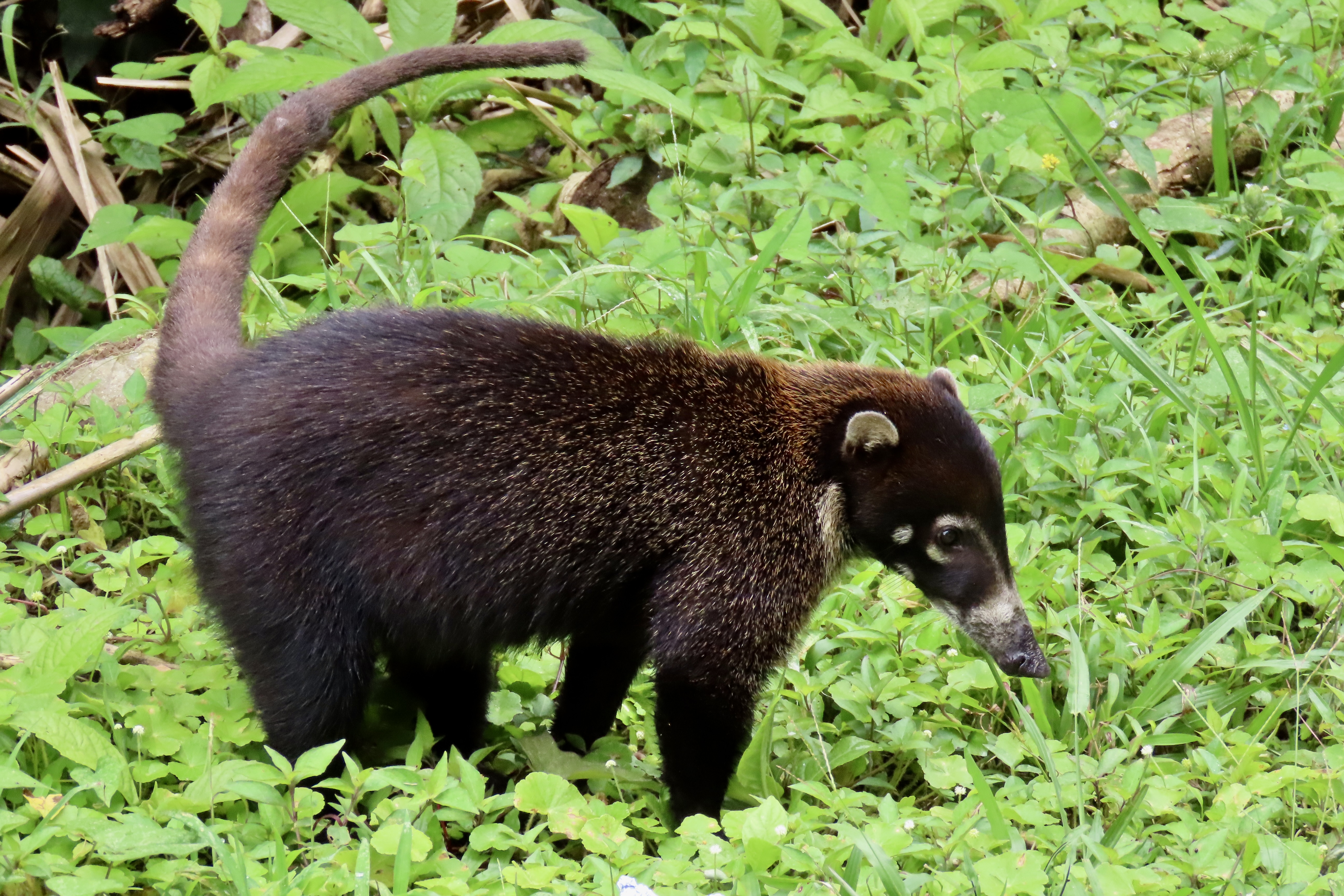
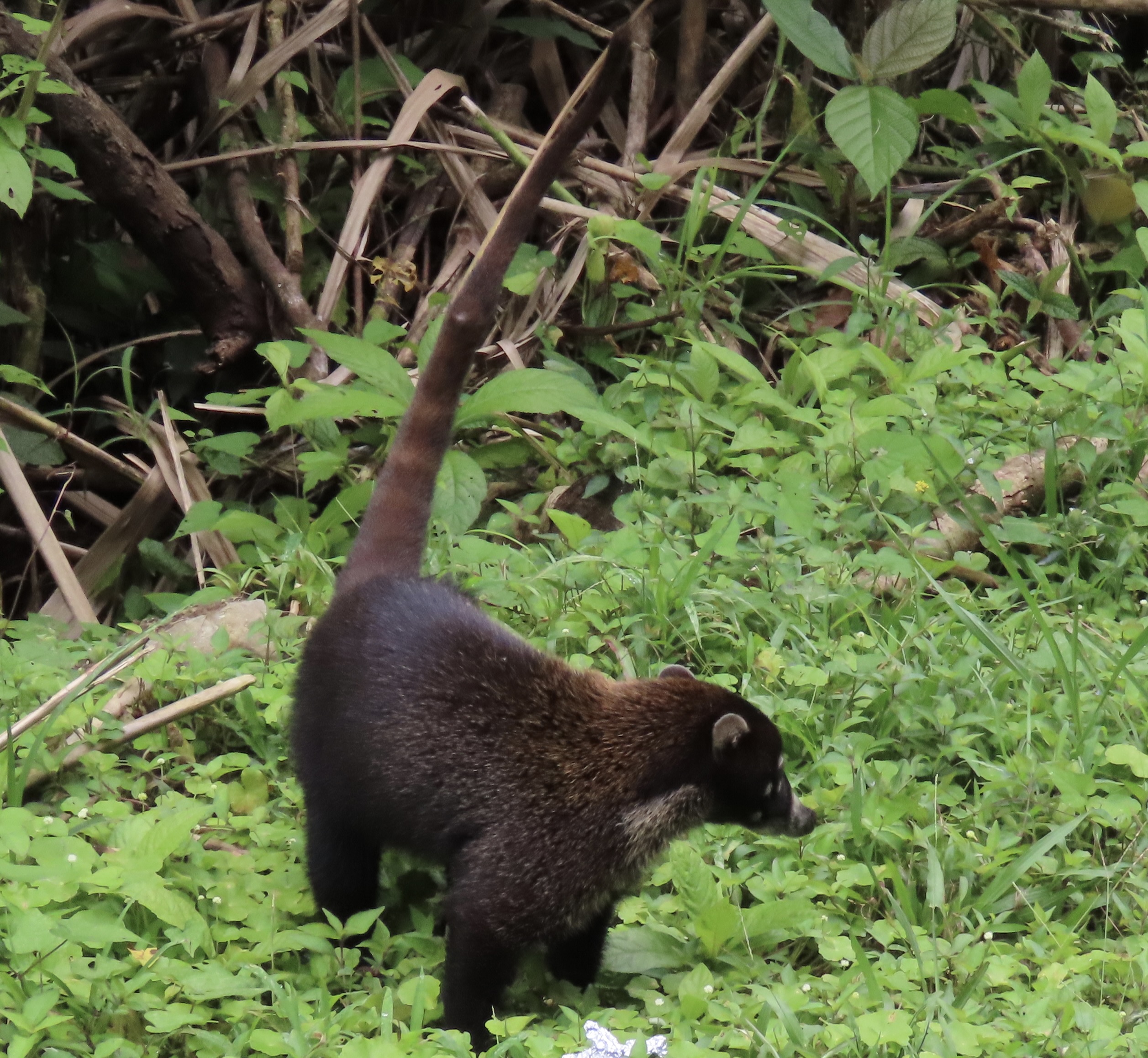
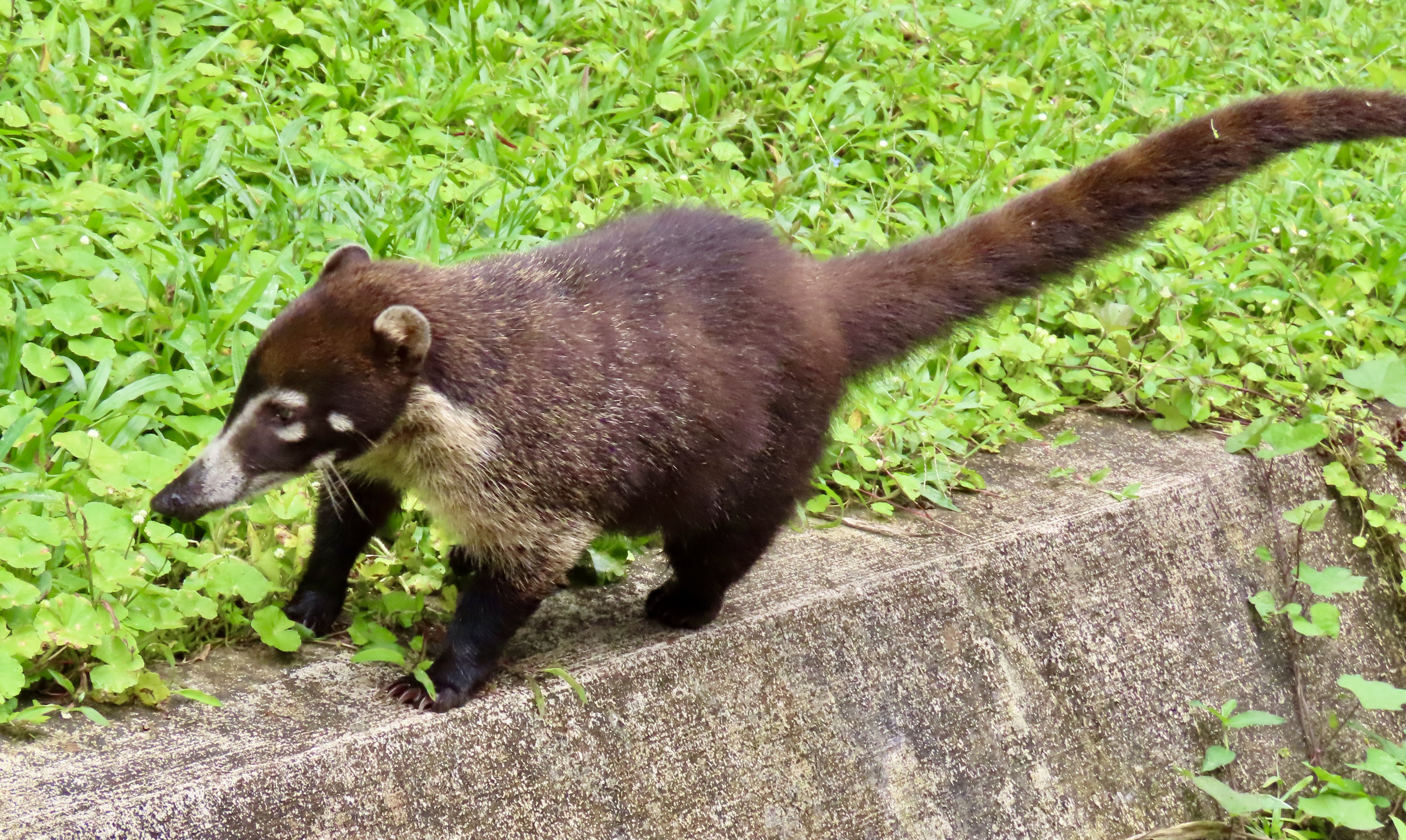
The highlight of the trip was the band of Coatis we came across on our drive over. There must have been a dozen or so. These diurnal, omnivorous animals are actually related to raccoons. They were spread out alongside the road doing their coati thing. They were easily outnumbered by the people who had stopped to admire them.

Who wouldn’t love a face like this?
I found their tails quite interesting…
Especially when they stuck them straight up in the air!
Having had enough of people, they used the curb as a runway to escape.

And I’ll make my own escape here. Once again, I am going to make a slight change in my blog. I’ve decided to speed up UT-OH, my blog-a-book memoir, so I can indeed turn it into a book. I’ll be pulling out tales from my 15-years of blogging and putting them up in chapters on Mondays and Wednesdays. I’ll reserve Fridays for our travel blog covering our present journeys: Costa Rica now, Greece and the Greek Islands in May, and then Northern Scotland and Ireland in June and July.

In my posts on Monday and Wednesday next week, I am going to relate the two experiences that led to my lifelong love of the wilderness: The Pond and the Woods.

UT-OH Chapter 6: Nancy Jo and the Graveyard Ghost—A Twisted Tale of Fright (Or Maybe a Tale with a Twist?)

PLUS A Bonus: Costa Rica Is for the Birds… That’s a Good Thing

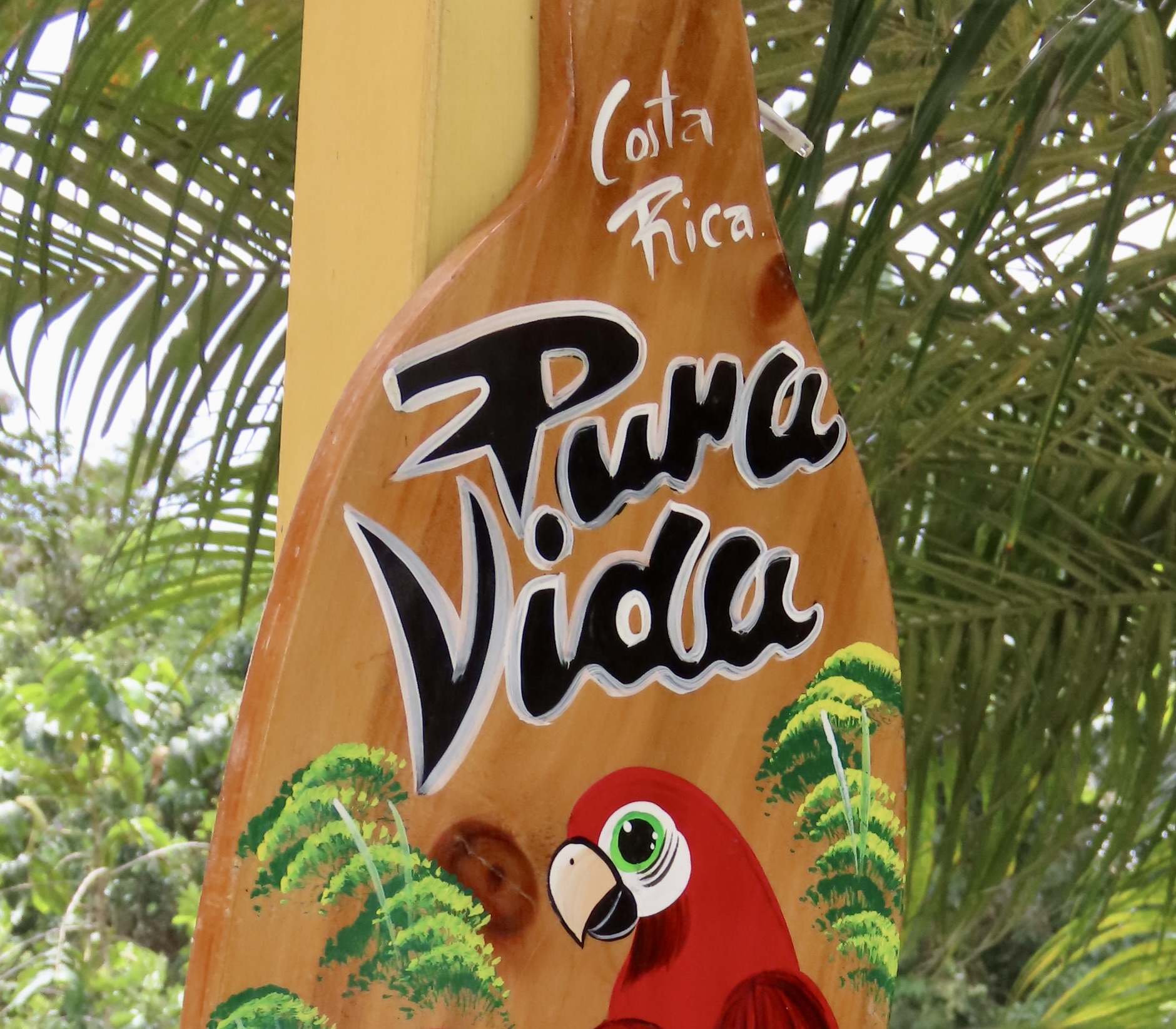
A change of plans today. I was going to do a post on unique Burning Man structures, but Peggy and I are down in Costa Rica happily settled into a villa above Lake Arenal. A warm tropical breeze is making me feel sleepy. My ‘get up and go has got up and went,’ as the song proclaimed, galloped off to the north. Pura Vida, the Costa Ricans would say. We are living the good life. Posting a tale I have already written plus throwing up some fun photos of birds that Peggy and I have taken is a lot easier than putting together a Burning Man post. Plus, over half the time I went to research a subject for the post, I found that Google had placed one of my blogs on the subject at the top or near the top of its research list and/or just opposite its AI answer. That’s great for SEO, but it also suggests how much I have already written on the subject.

So, my apologies to those who have tuned in to learn more about Burning Man, but hey, a ghost story makes a great substitute, right? So here it is as a chapter in my ongoing blog-a-book series: UT-OH. I’ll eventually get back to Burning Man. I always do.

Nancy Jo and the Graveyard Ghost

My sister was seven years older than I and lived on a different planet, the mysterious world of teenage girls. Her concern about ghosts makes this story a powerful testimony to teenage hormones. If Marshall and I had a healthy respect for the Graveyard at night, Nancy’s fear was monumental.

This story begins with Nancy falling in ‘love’ with the ‘boy’ next door, Johnny. His parents were good folks from a kids’ perspective. Marshall and I raided their apple trees with impunity, and Mama, a big Italian lady, made great spaghetti that included wild manzanita mushrooms. I was fascinated with the way she yelled “Bullll Sheeeet” in a stentorian voice when she was whipping Papa into line. He was a skinny, ‘Old Country type of guy’ who thought he should be in charge. Papa was the one who suggested the gunny sack method of castration for MC.

I use the terms love and boy somewhat loosely since Nancy at 16 was more in infatuation than love, and Johnny, a 22-year-old Korean War Veteran, was a little old for the boy designation, not to mention Nancy. Our parents were not happy, a fact that only seemed to encourage my sister.

Her teenage hormones aided by a healthy dose of rebellion overcame her good sense and she pursued the budding relationship. Johnny didn’t make it easy. His idea of a special date was to drive down the alley and honk. Otherwise, he avoided our place. If Nancy wanted to see him, she had to visit his home. It should have been easy; his house was right behind ours.

But there was a major obstacle, the dreaded Graveyard. To avoid it, Nancy had to climb over the fence that separated our houses. Her other option was walk up the alley that almost touched the tombstones. Given her feelings about dead people, the solution seemed easy— climb the fence. Marsh and I had been over it many times in search of apples. Something about teenage girl dignity I didn’t understand eliminated fence climbing, however. Nancy was left up the alley without an escort.

While she wasn’t above sneaking out her window, Nancy asked permission to see Johnny the night of the Graveyard Ghost attack. She approached Mother around seven. It was one of those warm summer evenings where the sun is reluctant to go down and boys are granted special permission to stay up. Marshall and I listened intently.

“Mother, I think I’ll go visit Johnny,” Nancy stated and asked in the same sentence. Careful maneuvering was required. An outright statement would have triggered a parental prerogative no and an outright question may have solicited a parental concern no.

Silence. This communicated disapproval, a possible no, and a tad of punishment for raising the issue.

“Mother?” We were on the edge of an impending teenage tantrum. Nancy could throw a good one.

“Okay” with weary resignation followed by, “but you have to be home by ten.”

What we heard was TEN. Translate after dark. Nancy would be coming down the alley past the Graveyard in the dark and she would be scared. Knowing Johnny’s desire to avoid my parents, we figured she would also be alone. A fiendish plot was hatched.

At 9:45, Marsh and I slipped outside and made our way up the alley to a point half way between our house and Johnny’s. Next, we took a few steps into Graveyard where weed-like Heavenly trees and deep Myrtle provided perfect cover. Hiding there at night was scary, but Marshall and I were operating under inspiration.

Marsh stripped the limbs off of one of the young trees, bent it over like a catapult, and draped his white T-shirt on the trunk. We then scrunched down and waited.

At exactly 10:00, Nancy opened the back door and stepped outside with Johnny. Our hearts skipped a beat. Would he walk her home? No. After a perfunctory goodnight, Johnny dutifully went back inside and one very alone sister began her hesitant but fateful walk down the alley.

She approached slowly, desperately looking the other direction to avoid seeing tombstones and keeping as far from the Graveyard as the alley and fence allowed. 

At exactly the right moment, we struck. Marshall let go of the T-shirt and the supple Heavenly Tree whipped it into the air. It arched up over the alley and floated down in front of our already frightened sister. We started woooooing wildly like the eight and ten-year-old ghosts we were supposed to be.

Did Nancy streak down the alley to the safety of the House? No. Did she figure out her two little brothers were playing a trick and commit murder? No. Absolute hysteria ensued. She stood still and screamed. She was feet stuck to the ground petrified except for her lungs and mouth. They worked fine.
As her voice hit opera pitch, we realized that our prank was not going as planned. Nancy was not having fun. We leapt out to remedy the problem.
Bad idea.

Two bodies hurtling at you out of a graveyard in the dark of night is not a recommended solution for frayed nerves and an intense fear of dead people. The three of us, Nancy bawling and Marshall and I worrying about consequences, proceeded to the house. After a thorough scolding, we were sent to bed. I suspect our parents laughed afterwards. Many years later, even Nancy could see the humor in our prank— and laugh as well.
A fun note on The Bush Devil Ate Sam

I often get comments from people who have read my book including a number of my followers and fellow authors. They are always appreciated. I also hear from people outside our WordPress community. Here’s what I found on Gmail yesterday.

Loved The Bush Devil Ate Sam

Hi Curtis,

I just finished reading The Bush Devil Ate Sam, and I have to say, it was such a vivid, immersive experience! The way you bring Liberia to life, the chaos of students strolling in with termites for breakfast, the encounters with the army ants, and the tension of navigating the local authorities, had me laughing, gasping, and completely captivated. It’s clear how much heart and firsthand experience went into every story.

Reading it also got me thinking about my own writing journey. Each book I’ve worked on has taught me something new about patience, perspective, and letting a story evolve naturally, even when it takes unexpected turns. It’s always fascinating to reflect on the ways our experiences shape the stories we tell.

I’d love to hear about your own process with this book. Did you find it easy to translate your Peace Corps experiences into these stories, or was it more of a challenge to capture the humor, the tension, and the history all at once? Thank you for sharing such a memorable and honest perspective on life as a Peace Corps volunteer. Half the fun was getting to see Liberia through your eyes.

Warmly,
Taylor Jenkins Reid

The thoughtfulness of this comment caught my attention. And how well it was written. Of course, I responded to Taylor. But there is more. Taylor is a best-selling author of the New York Times and has won a number of national awards for her writing. Among her books is The Seven Husbands of Evelyn Hugo, a book that the book club that Peggy and I belonged to for 36 years had picked to read. An Amazon Prime television series based on one of her books is now playing.

Taylor immediately responded to my comments and asked if I would share my body of work. Now I have to tell her she has it, the rest is tied up in 1500 WordPress blogs. Grin. I must say, I am now inspired to finish UT-OH! asap. You may be seeing a couple of chapters a week. I’d prefer that my body of work include two books.

Costa Rica Is for the Birds. It’s a good thing.

Our villa looks out on a large bird feeder that the staff and guests (including us) of Lake Gardens daily fill with a variety of fruits that the local population of birds love. I hate to confess this as a would-be birder, but I can sit on our couch and take photos of all the action. And action it is, constant drama of who gets to eat when, a veritable pecking order of turkey-size birds down to sparrow-size. A lot more photos will be coming of birds and hopefully other jungle life. This is a teaser.

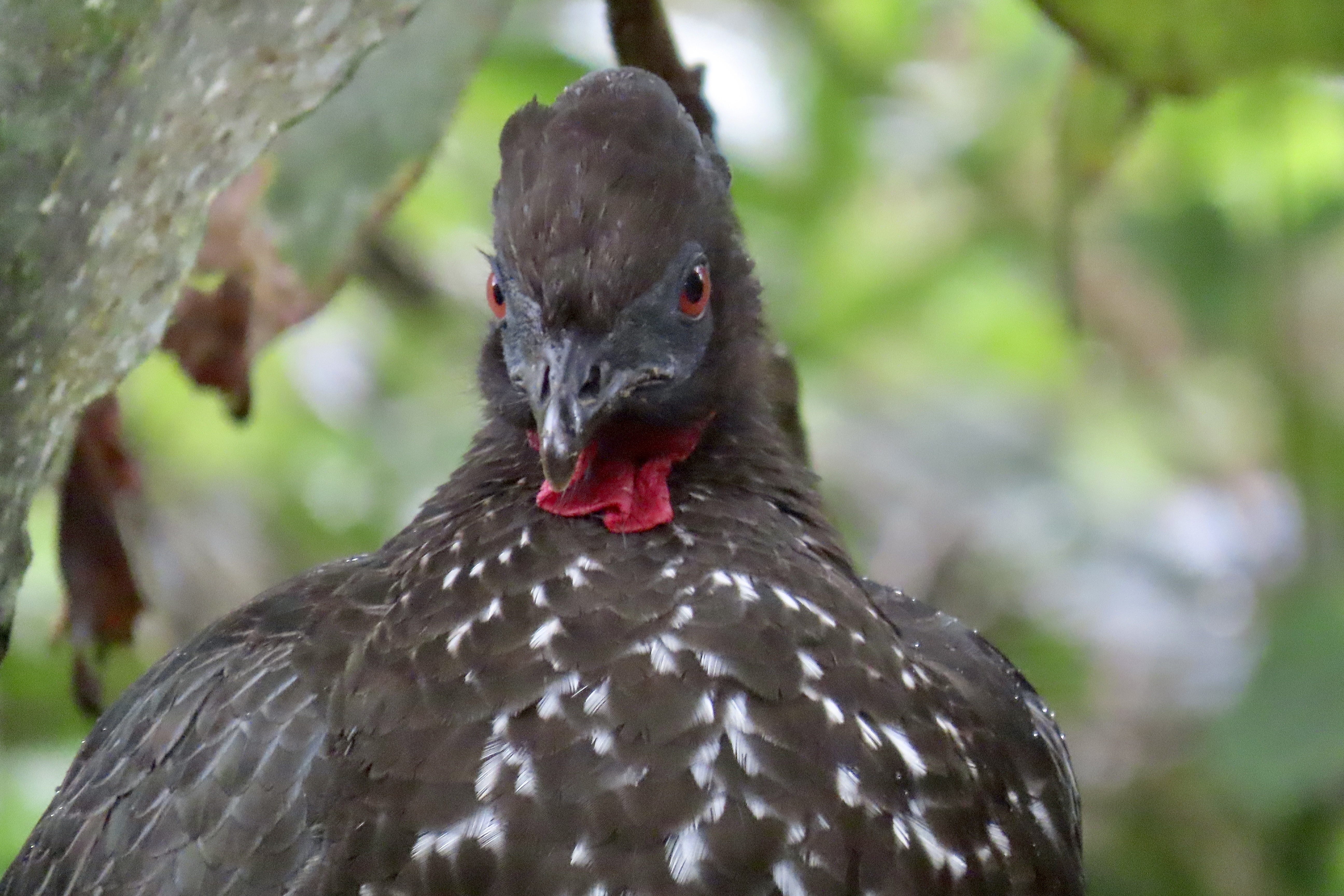
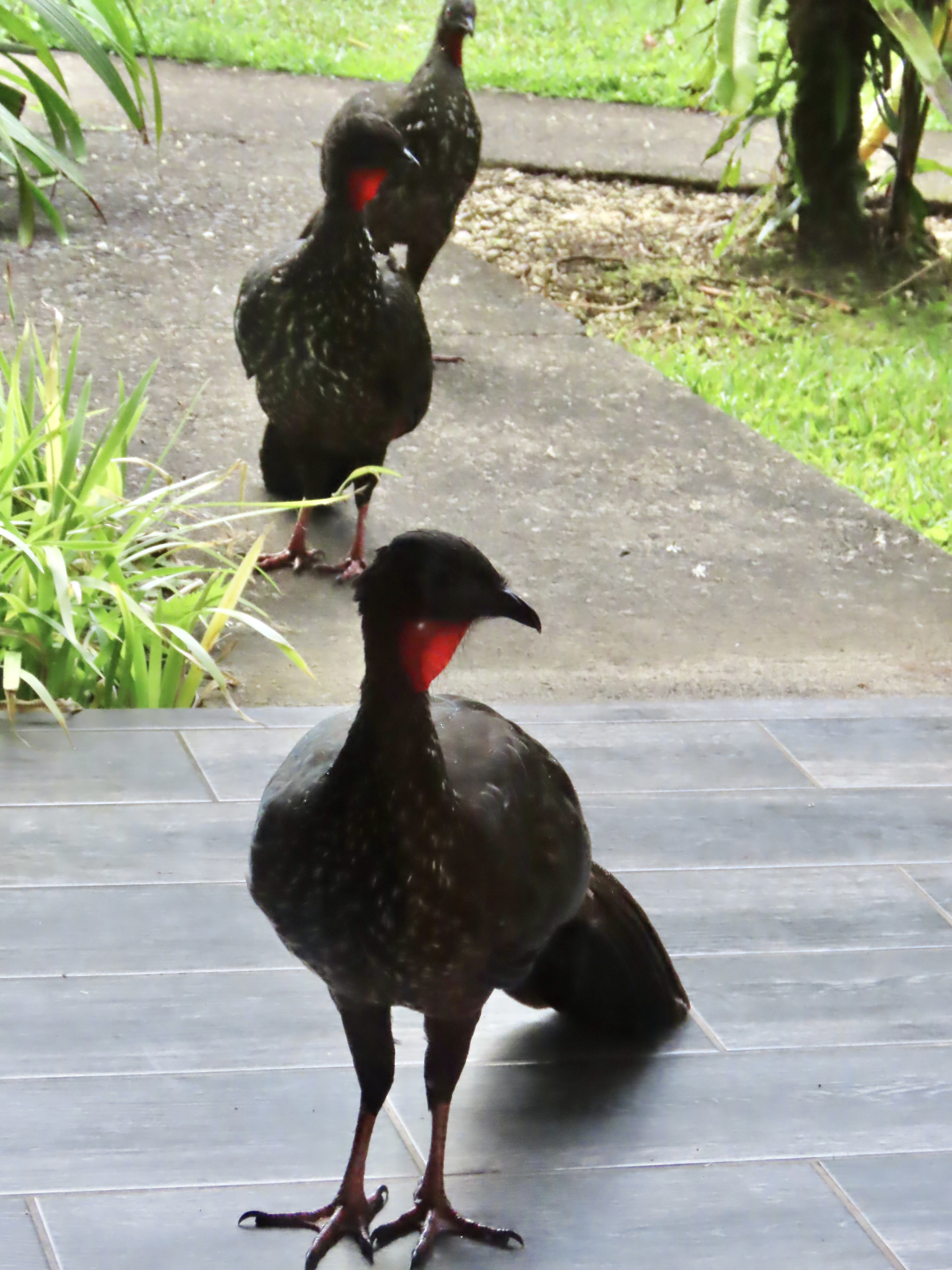
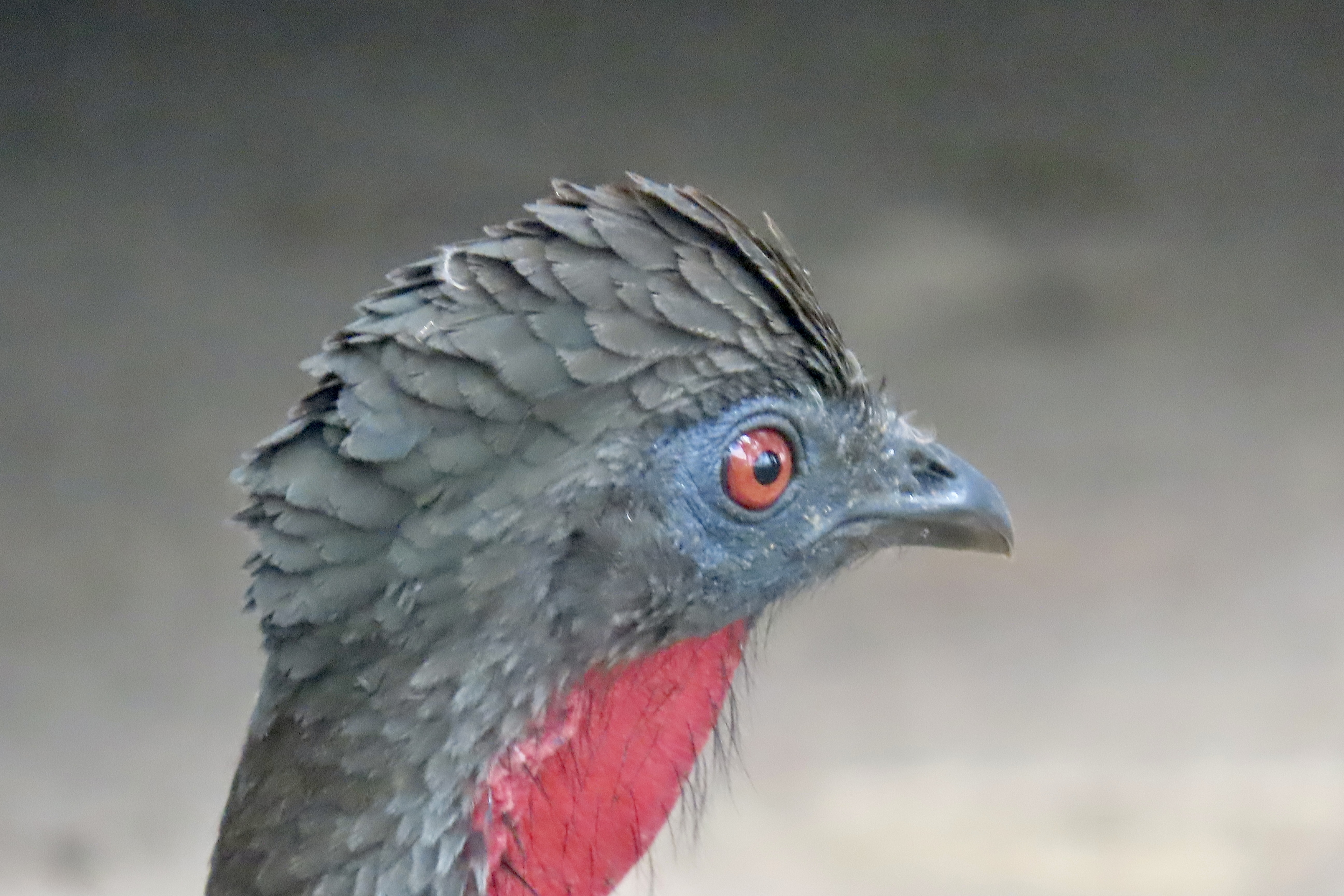
This is the king or queen of the feeder. A Crested Guan. All other birds are required to leave the platform when they are on it.
When Peggy opened our curtains on our first morning, Peggy found this crew back-lit by the sun lined up for breakfast and snapped their photo.
Up close and personal.
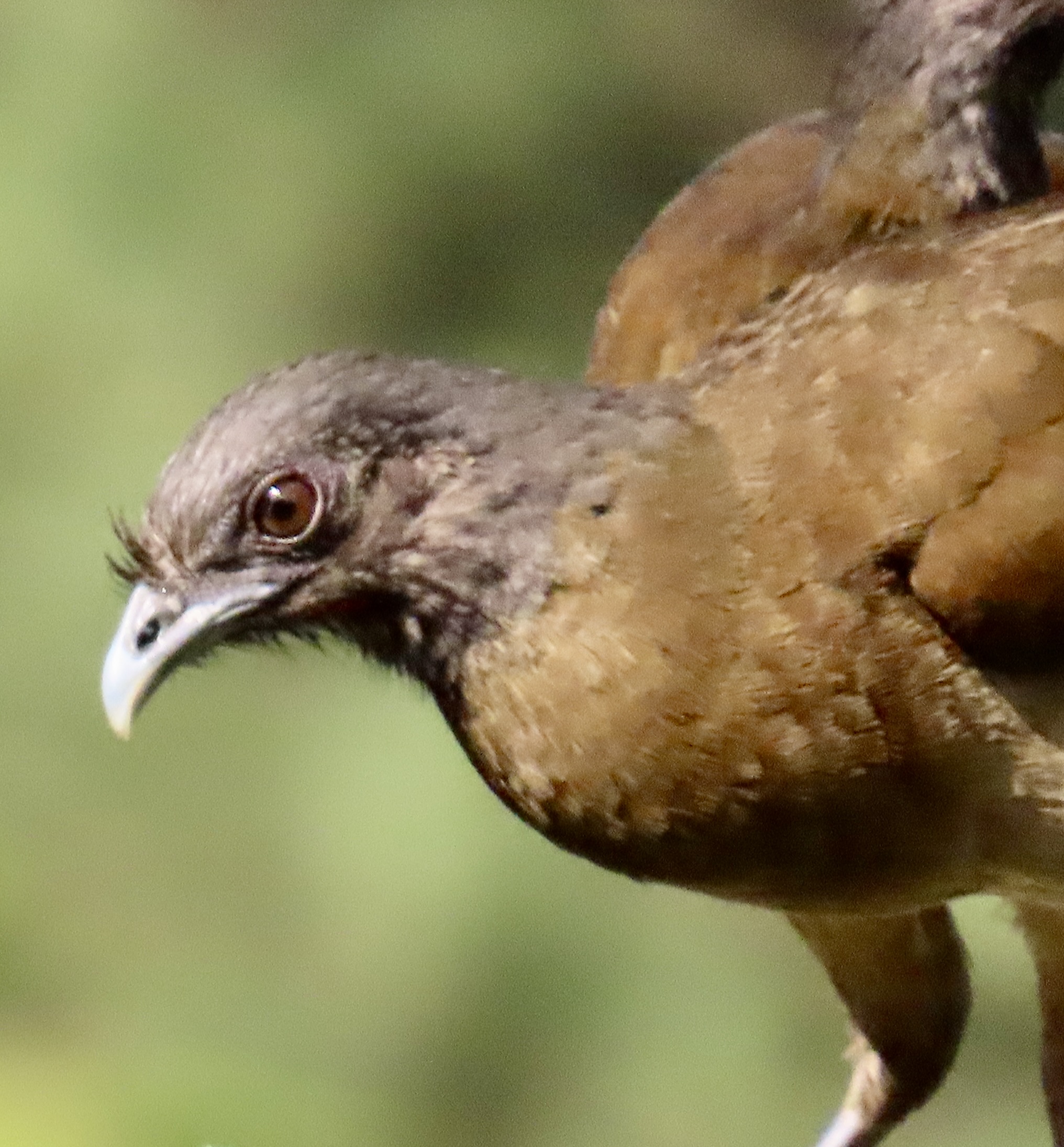
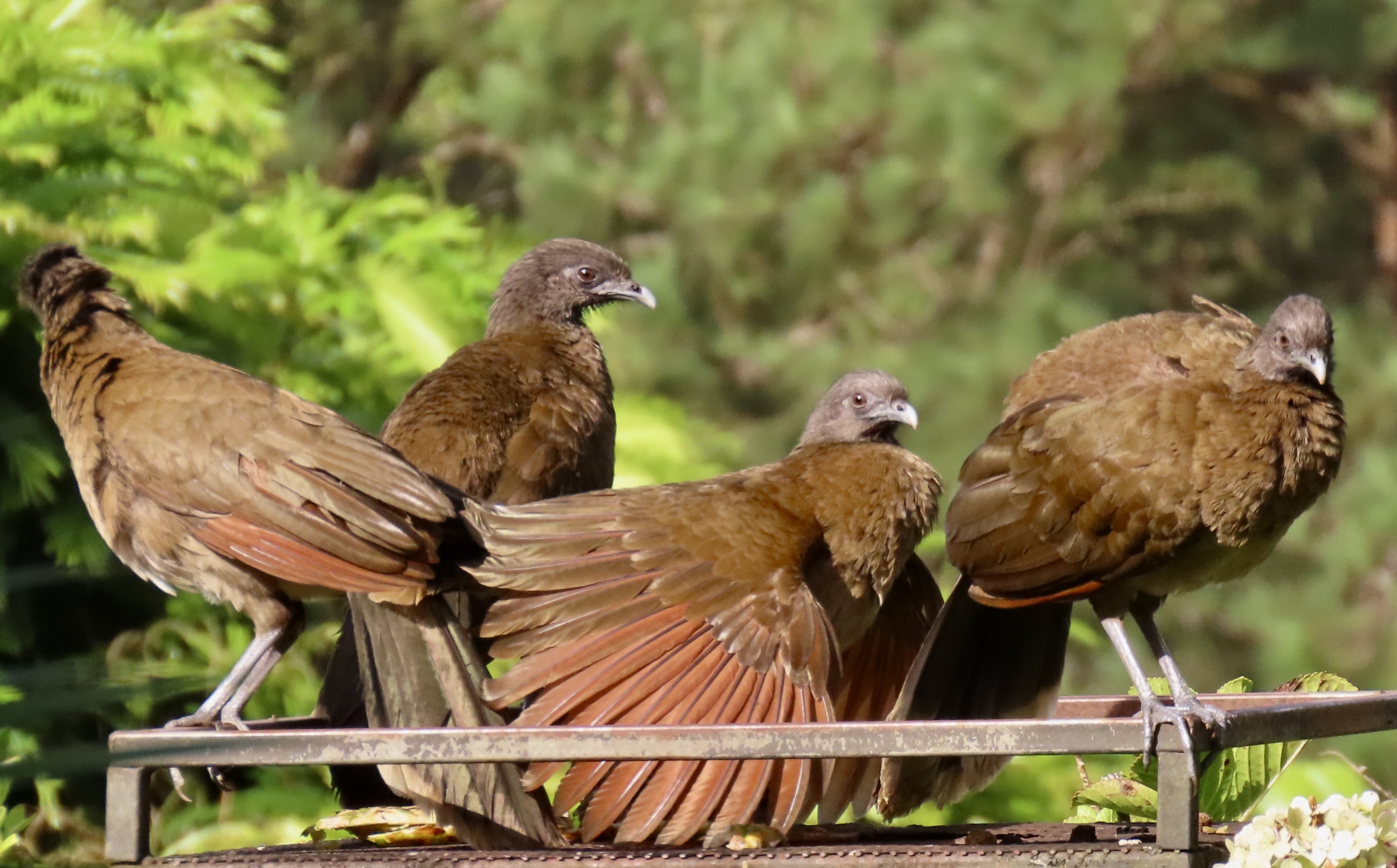
Number 2 on the pecking order was this fellow. We aren’t sure what it was, but our assumption is a fledgling Guam. If so, their parents were not about to share food with them. A bush was just below the feeder that the adults would chase the kids around, and around. It was like the Keystone Cops.
Here are the kids up on the bird feeder.
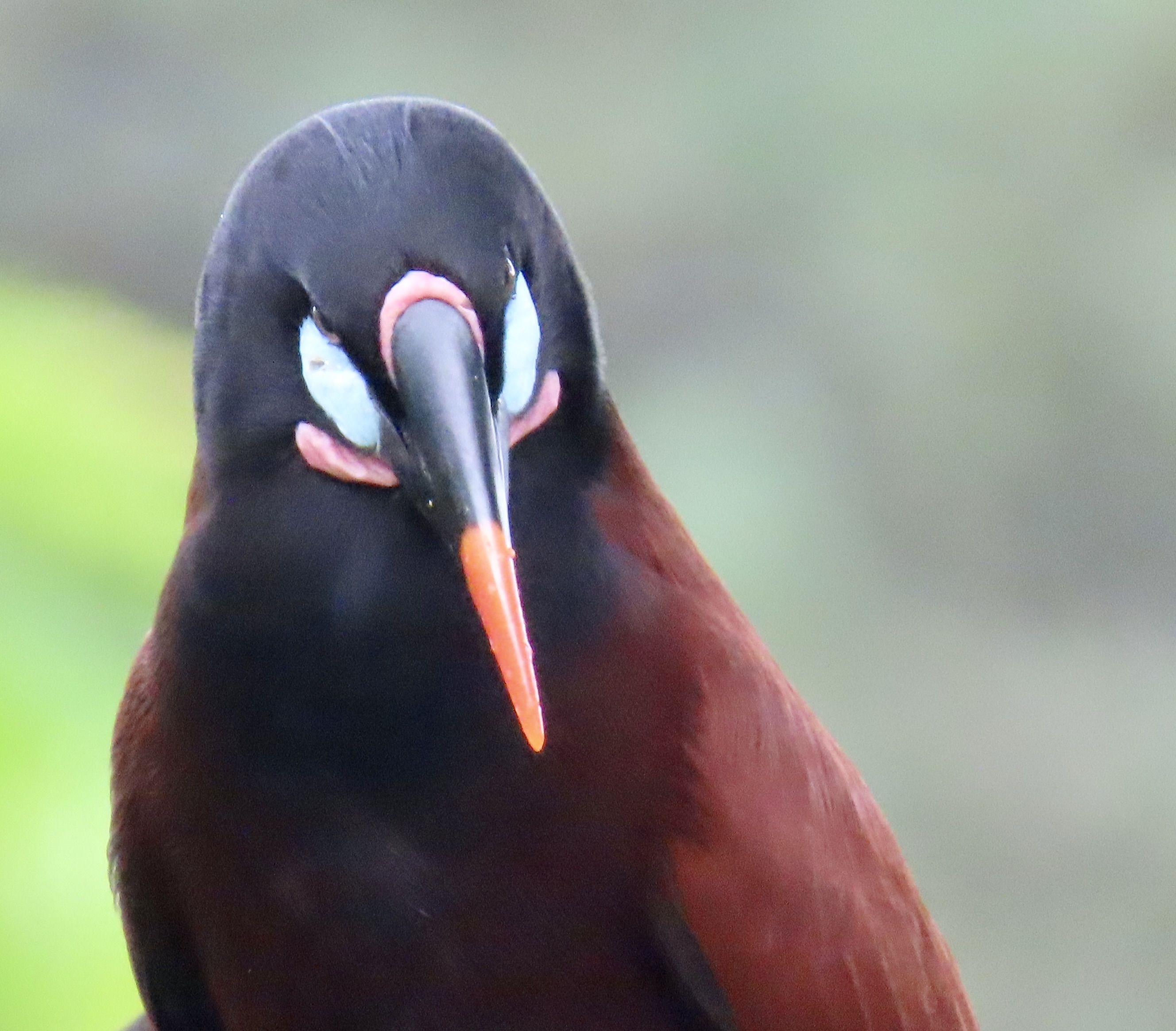
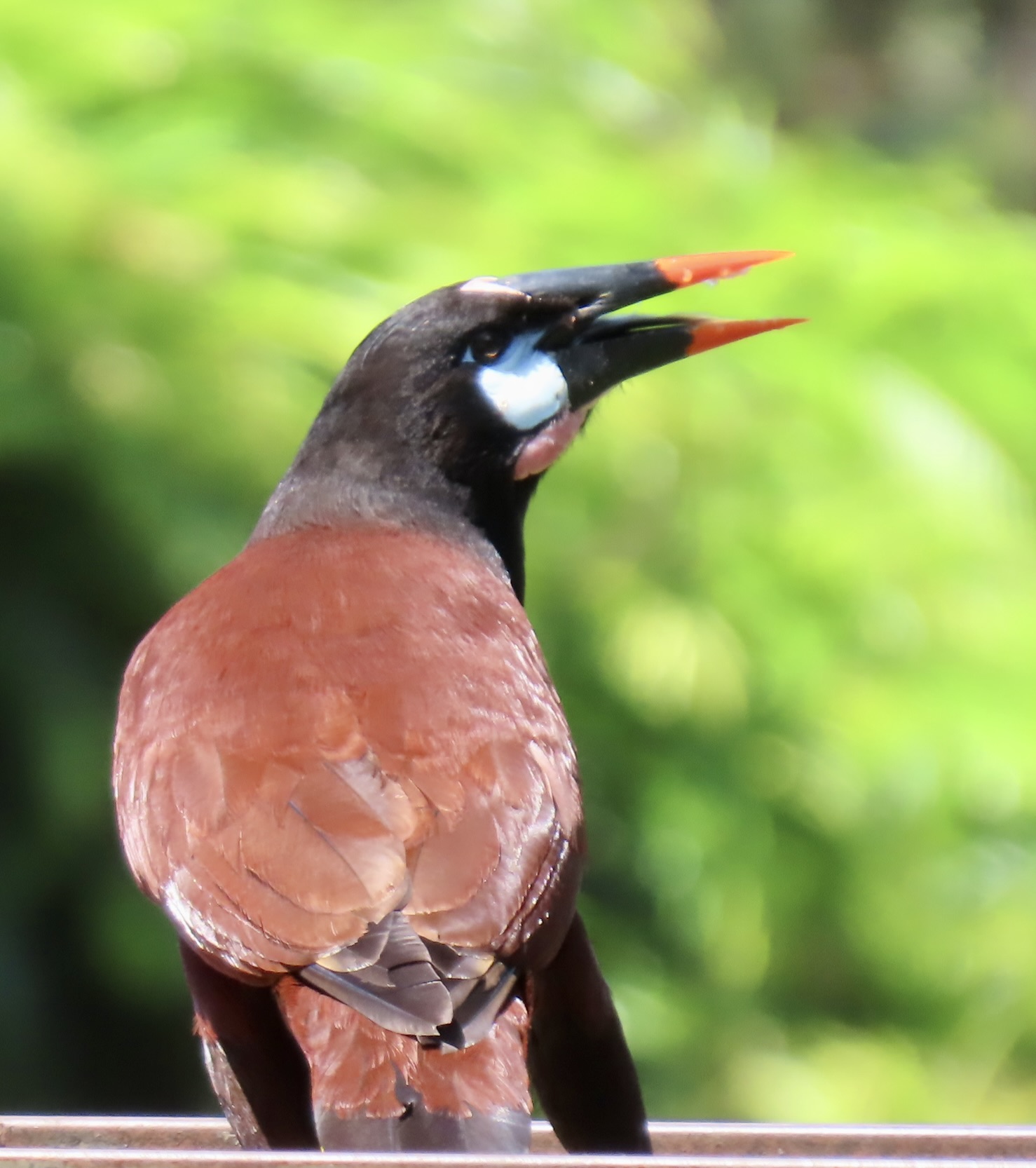
Number three was a Montezuma oropendola.
Peggy caught a photo of it looking the other direction.
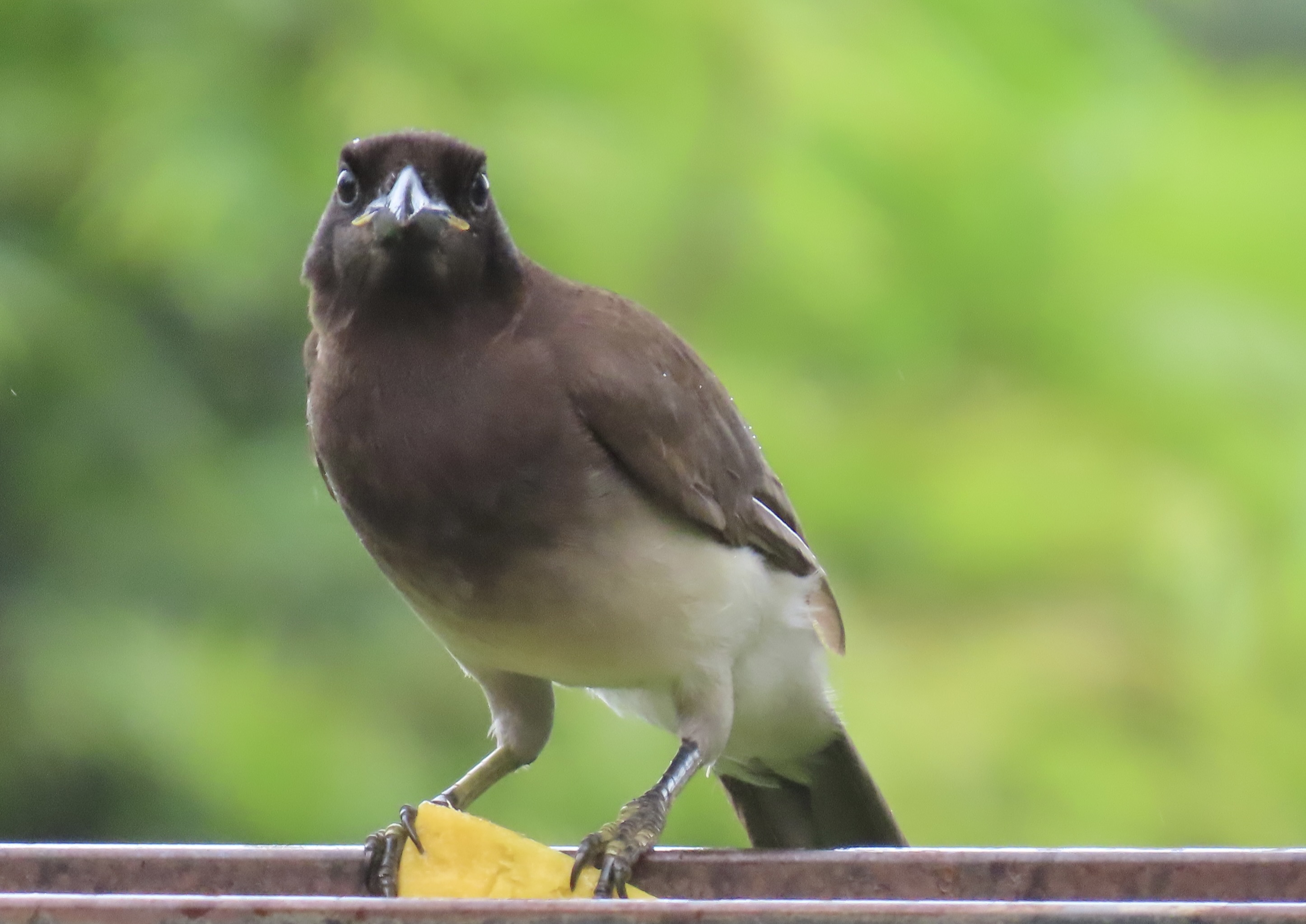
Number 4: A Brown Jay. We recognized this fellow immediately by its call. We’ve spent our lives with various members of the jay family, but never a brown one.
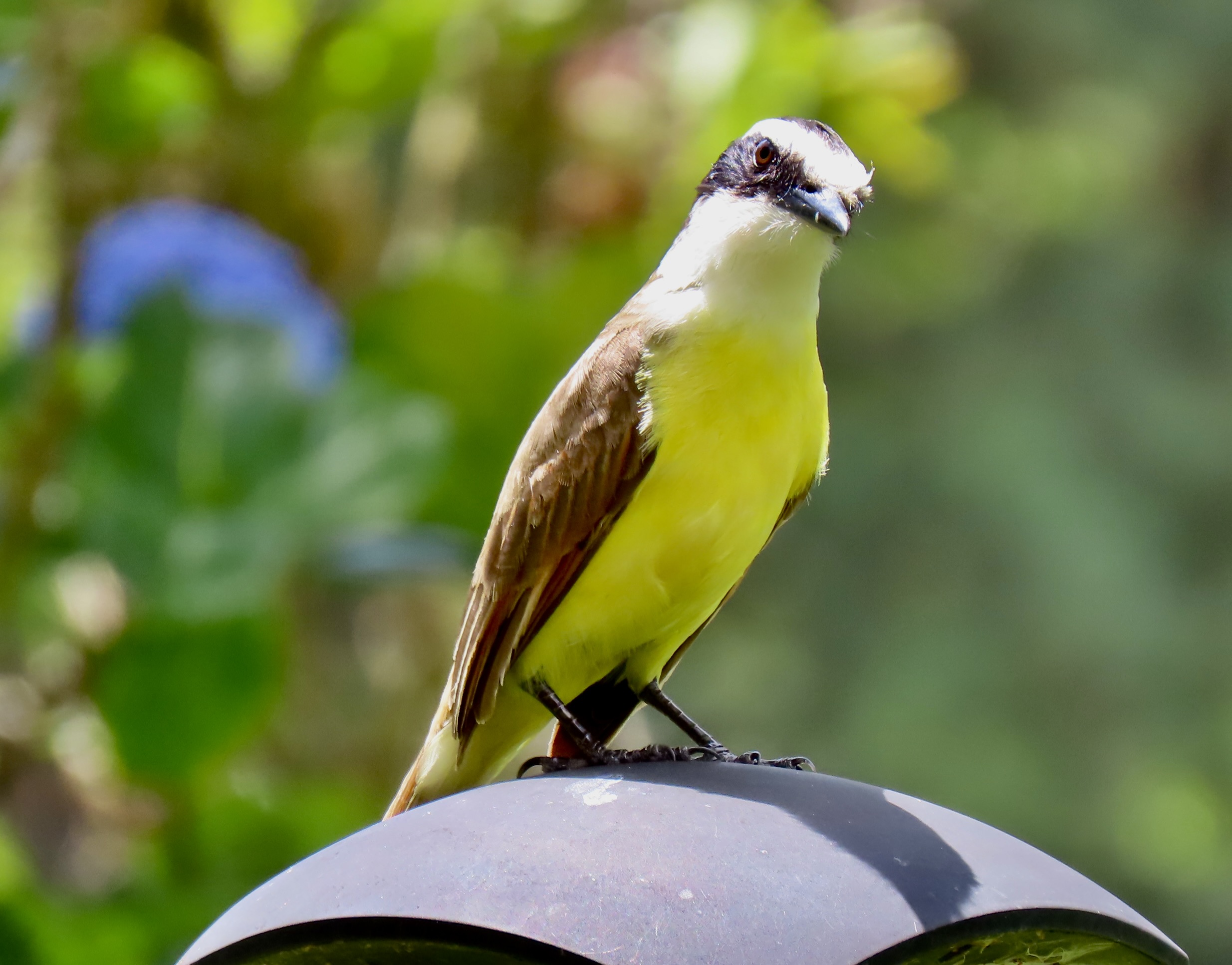
I swear the pretty bird was posing for Peggy. He kept coming back to this lamp outsiide our villa and looking in the window. He didn’t eat fruit, however, He ate bugs. It’s a Social Flycatcher.

That’s it for today. On Thursday, I’ll write about a death defying tree race in UT-OH, one of our many adventures that makes me wonder how we ever lived through childhood. And, there will be more bird photos from Costa Rica.

UT-OH! Chapter 5: How MC the Cat Almost Lost His Danglies

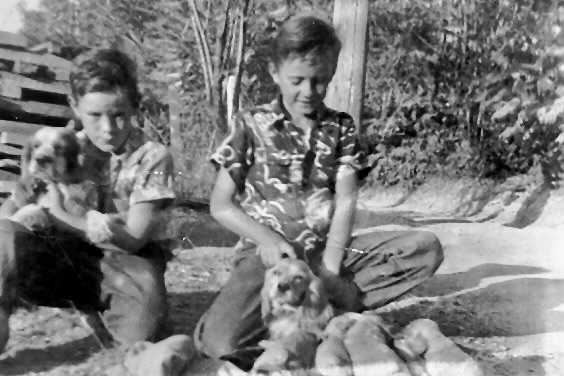
Finding a photo of MC the Cat is impossible, given that he never was around long enough to have his photo taken. Looking solemn, I’m on the left holding my dog Tickle— who did have a role to play in this tale. My brother, Marshall, is on the right holding Happy and her puppies. The size of the pups suggests that there was a question about who the daddy was. Maybe that’s why Tickle is looking disgusted. The Graveyard where MC disappeared, looms in the background.

No story of our family pets and the Graveyard is complete without MC the Cat. He was the exact opposite of Demon. She was as dark as the Graveyard on a moonless night; he was as white as the ghosts that lived there. She was loving and tame while he was as wild as a domestic cat can be— a throwback to his ancient ancestors. He was not a climb-up-on-your-lap type of cat. His one passion in life was spreading his seeds as far and wide as he could travel and still make it home for dinner. He was a tomcat’s Tomcat, a legend in his own mind. 

His one challenge was his small size, which meant that he often came out on the losing end in his battles with larger toms. He would arrive home beat up and battered. One time a chunk of his ear was missing. Another time it was the tip of his tail. How he managed that, we didn’t have a clue.

I encouraged my cocker spaniel, Tickle, to break up the fights to minimize the damage. He loved his job. He would dash to the door at the first yowl and fly off our porch in full bark when I turned him loose. Other than giving Tickle a purpose in life, his efforts had little impact, however.

Pop decided that drastic measures were called for. MC would have to lose his offending appendages. Unfortunately, there wasn’t a lot of money in our household for veterinary bills. But there was a solution. We were a do-it-yourself kind of family. For example, cocker puppies are supposed to have their tails cut off fairly soon after birth. My dad would take the litter, tie thread tightly around their tails, and then break out the tool he used for cutting tin. Snip, YIP! And it was over.  

Obviously, neutering a full-grown tom cat was a bit more difficult. Our Italian neighbor, Papa Passerini, offered an Old Country solution: “All you need is a pair of tin snips, a burlap bag, gloves, a pocket knife, and a rope.” 

Alarm bells should have gone off— massive alarm bells heard all the way to Italy. But they didn’t. Pop moved ahead with the suggested medical procedure.

While MC had never been a paragon of feline domesticity, he’d at least let me pat him on the head if food was involved, as long as I was quick and limited myself to one pat. He even managed a brief purr when I picked him up the morning of his ‘operation’ and carried him up to Passerini’s. Any previous pretensions of tolerating people ceased instantly, though, when his legs were tied up and he was dumped into the dark gunny sack.

When Pop cut a slit in the burlap with his pocket knife and reached a gloved hand through, he was met by claws of fury. MC had shed his ropes faster than Houdini. No one, but no one, was going to grab him by the testicles, pull him up to the slit, and cut them off with a pair of tin snips. He clawed his way out of the bag and became a white blur as he disappeared into the Graveyard. And there he would stay. After that, I would only see him at dinner time, and then, only after I put his food down and walked several feet away. 

The good news, from MC’s perspective, was that he was able to continue his tomcatting ways with all parts of his anatomy intact right up until he reached old age and quietly wandered off to tomcat heaven. Where, according to rumor, he was twice as big, had eternal youth, and a long line of lovely female cats stretched off to infinity eagerly awaiting his services. It was probably fake news.

UT-OH Chapter 2: Scary Ghosts and Half-Starved Cannibals… The Graveyard

A bit older than five, the Graveyard no longer holds the terror it once did for me. Plus they have cut down all of the heavenly trees and ripped out the myrtle. It is no longer a jungle. Our house still stands across the alley, about 50 yards from this tombstone.

The Graveyard was out the backdoor and across the alley. 

We lived with its ghostly white reminders of our mortality day and night. Ancient tombstones with fading epitaphs whispered of those who had come to seek their fortune in California’s 1849 Gold Rush and stayed for eternity. Time had given their resting place a sense of permanence and even peace. But not all of the graves were old. Occasionally a fresh body was planted on the opposite side of the cemetery. I stayed far away; the newly dead are restless.

At some point, Heavenly trees, brought over from China by Chinese miners during the Gold Rush, had been planted to shade the aging bones. They behaved like devil driven weeds. Chop them down and they sprang back up, twice as thick. Since clearing the trees provided Diamond Springs Boy Scout Troop 95 with a community project every few years, the trees retaliated by forming a visually impenetrable mass of green in summer and an army of sticks in winter. Trailing Myrtle, a cover plant with Jurassic aspirations, hid the ground in deep, leafy foliage. 

A standard picture of me with pets in our back yard. Just across the alley, the Graveyard looms as an impenetrable mass of green covered by young heavenly trees. Trailing myrtle is escaping out of the edges.

The Graveyard provided my first ‘wilderness’ experience. During the day, it took little imagination to change this lush growth into a jungle playground populated with ferocious tigers, bone crushing boas, and half-starved cannibals. Marshall and I considered the Graveyard an extension of our backyard. Since it was within easy calling distance of the house, our parents had a similar perspective. Either that or they were glad for the quiet time. 

The skinny Heavenly trees made great spears for fending off the beasts, or throwing at each other. At least they did until we stuck one in Lee’s hand. Neither he nor his parents were happy. (And why does William Golding’s Lord of the Flies come to mind?) Spear throwing was crossed off our play schedule. We turned to hurling green, black walnuts at each other instead. They grew in abundance on the trees in our front yard. Plus, we could hide behind the trees and toss them at passing cars on Highway 49. Screeching brakes and one really pissed-off driver brought that activity to a halt.

Night was different in the Graveyard— it became a place of mystery and danger. Dead people abandoned their underground chambers and slithered up through the ground. A local test of boyhood bravery was to go into the Graveyard after dark and walk over myrtle-hidden graves, taunting the inhabitants. Slight depressions announced where they lived. Marshall persuaded me to accompany him there on a moonless night. I entered with foreboding: fearing the dark, fearing the tombstones and fearing the ghosts. Halfway through I heard a muzzled sound. Someone, or thing, was stalking us.

“Hey Marsh, what was that?” I whispered urgently.

“Your imagination, Curt,” was the disdainful reply.

Scratch, scratch!  Something was digging behind a tombstone and it was not my imagination. Marshall heard it too. We went crashing out of the Graveyard with the scary creature of the night in swift pursuit, wagging her tail.

“I knew it was the dog all of the time,” Marsh claimed. Yeah, sure you did.

I also began to explore the Graveyard on my own. One of my 6-year-old memories was spying on Mr. Fitzgerald, a neighbor who lived across the alley. He’s dead now— and has been for decades— but at the time he was a bent old man who liked to putter around outside. At one time he had been the Superintendent of El Dorado County Schools. A black locust tree, perched on the edge of the Graveyard, provided an excellent lookout to watch him while he worked. 

One particular incident stands out in my mind. I had climbed into the tree and was staring down into his yard. It was a fall day. Dark clouds heavy with rain were marching in from the Pacific while distant thunder announced their approach. A stiff, cool breeze sent yellow leaves dancing across the ground. 

Mr. Fitzgerald wore a heavy coat to fight off the chill. I watched him shuffle around in his backyard as he sharpened his axe on a foot operated grinding wheel and then chopped kindling on an oak stump.  When he had painfully bent down to pick up the pieces and carry them into his woodshed, I scrambled down from the tree so I could continue to spy on him through a knothole. I must have made some noise, or maybe I blocked the sunlight from streaming into the shed. He stopped stacking wood and stared intently at where I was, as though he could see through the weathered boards. It frightened me.

I took off like a spooked jack rabbit and disappeared into the safety of our house. Mr. Fitzgerald was intriguing, but his age and frailty spoke of death, and the dead people who lived in the Graveyard. 

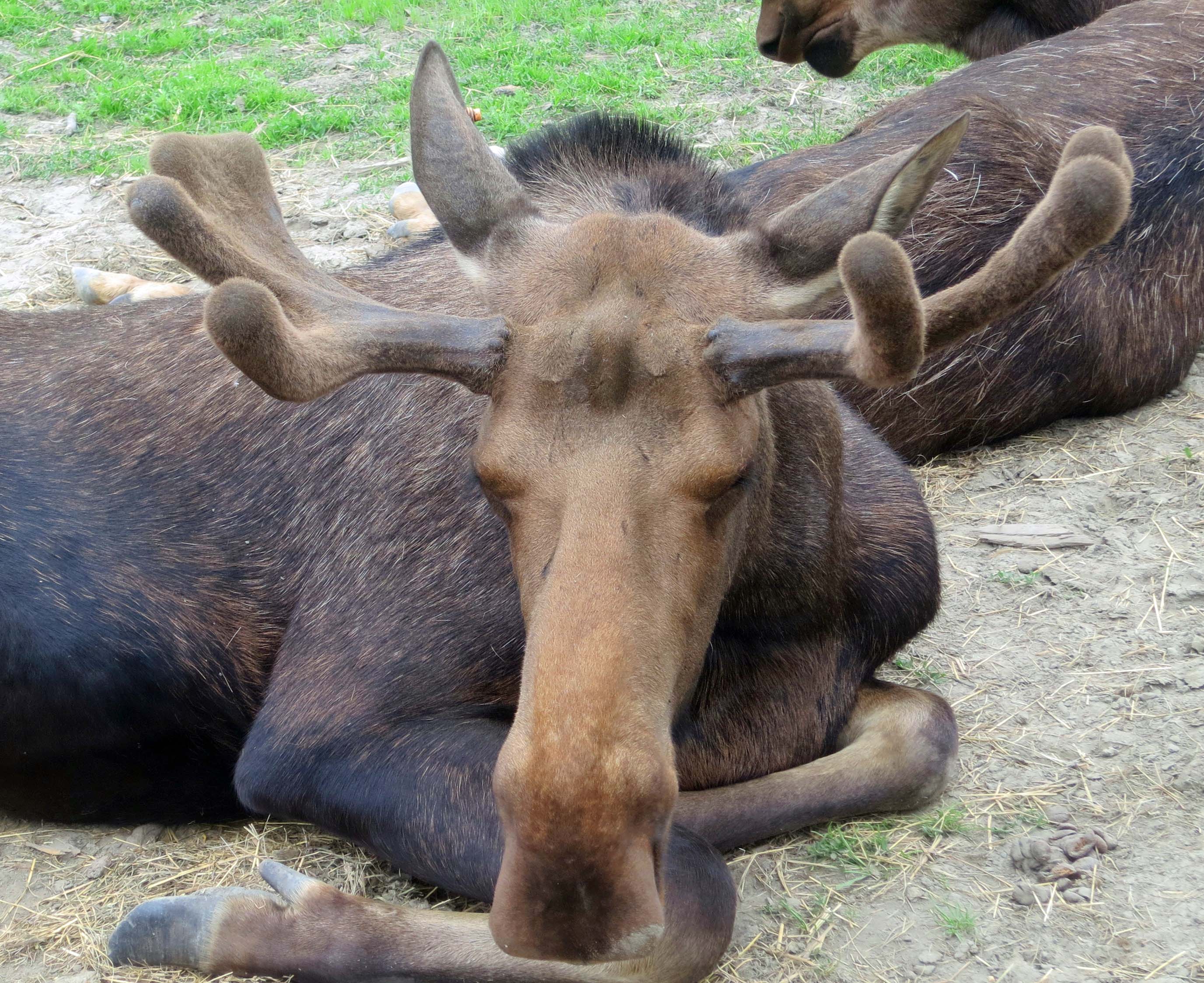
Alaskan moose lying down.
Our focus post on Monday will be on Ungulates. As a clue, here’s one of many different types…

The Charming Elephant Seals of Pt. Reyes National Seashore

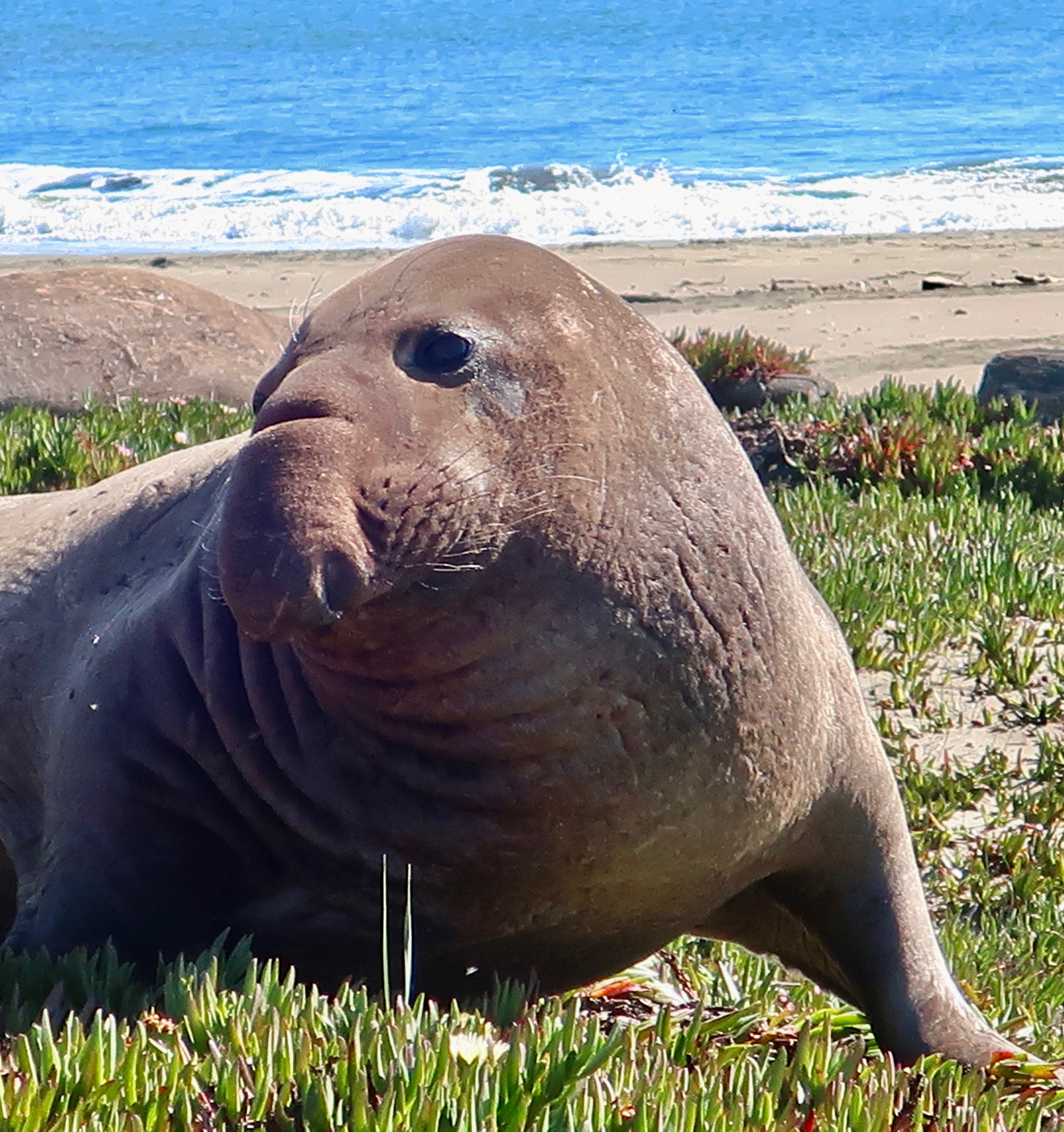
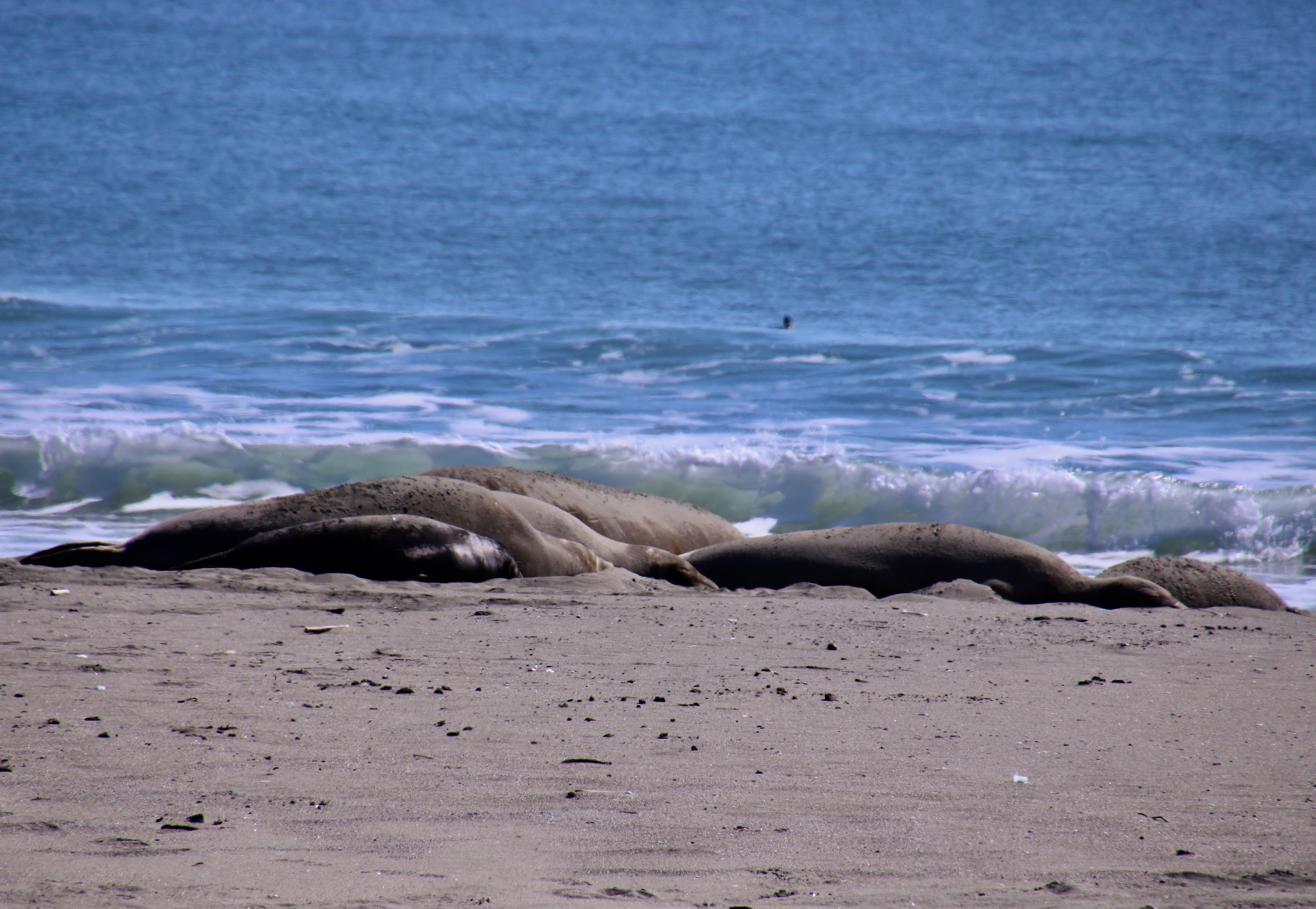
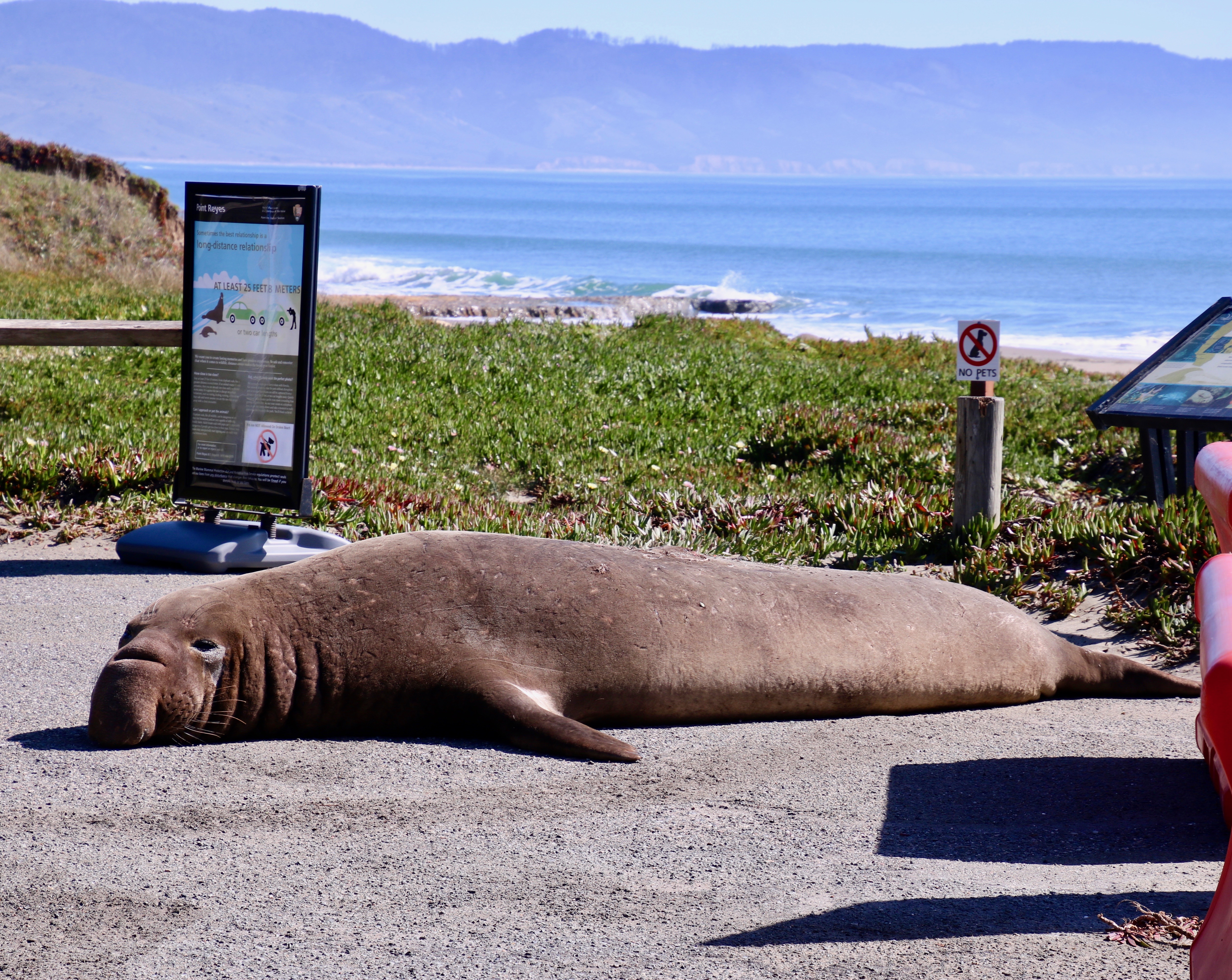
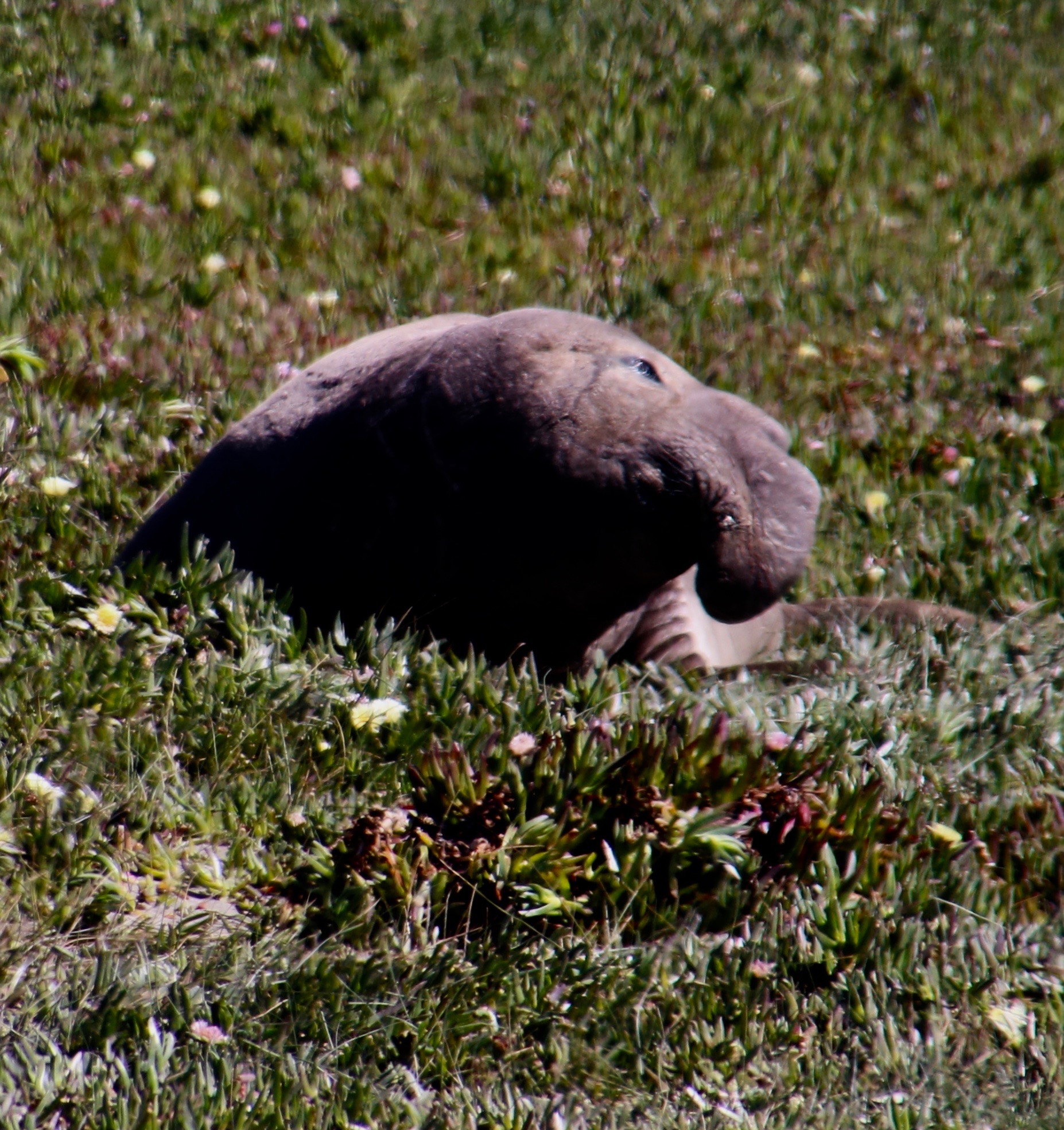
Elephant seals have the look of an animal put together by a committee. It gives them a certain charm. We found this large fellow with his pronounced proboscis at Drake’s Beach. He’d come ashore at Pt. Reyes National Seashore looking for love.

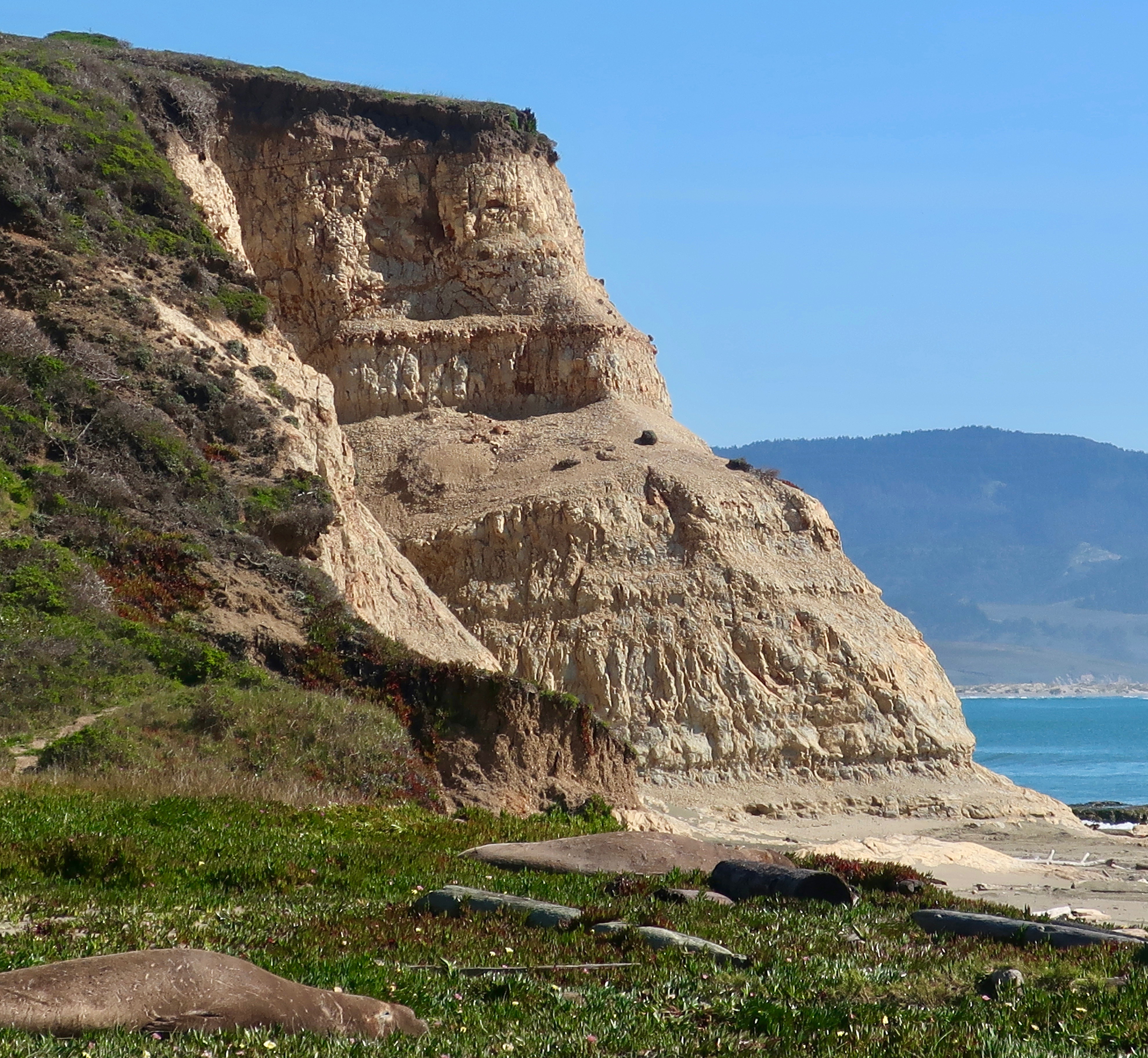
Pt. Reyes National Seashore is located some 30 miles north of San Francisco. Peggy and I went there last week to celebrate my birthday. It’s been a go-to place for me since the 60s. In addition to spectacular scenery, great hikes, yummy food, and one of the best small bookstores I’ve ever been in, we were entertained by the wildlife: tule elk, a pair of sushi eating coyotes, and elephant seals (plus some cows).  Today, I want to do a teaser on our trip by featuring the elephant seals. I’ll get back to the rest after I finish my Harris Beach series. 

Elephant seals are amazing creatures that spend up to 80% of their lives at sea— 90 % of it underwater!  If that doesn’t seem remarkable enough, consider this: their normal dives for food range between 1000 and 2000 feet deep (305 to 610 meters). They can dive for up to an hour and a half before returning to the surface for three to five minutes of breathing. Semi-annual feeding binges take the males on a 13,000-mile roundtrip journey to the Aleutian Islands and females on a 11,000-mile roundtrip into the North Pacific.

They were absent from Pt. Reyes for 150 years. In fact, they were close to absent forever. Like whales, they came close to being hunted to extinction for their oil. Processing the blubber from one bull can produce up to 25 gallons. They were saved because the Mexico and the US banned hunting them in the 1920s. Gradually, they have returned to their old breeding grounds. When I first started visiting Pt. Reyes in the 60s, they were unheard of in the area. Today there are over 3000 that return annually to breed.

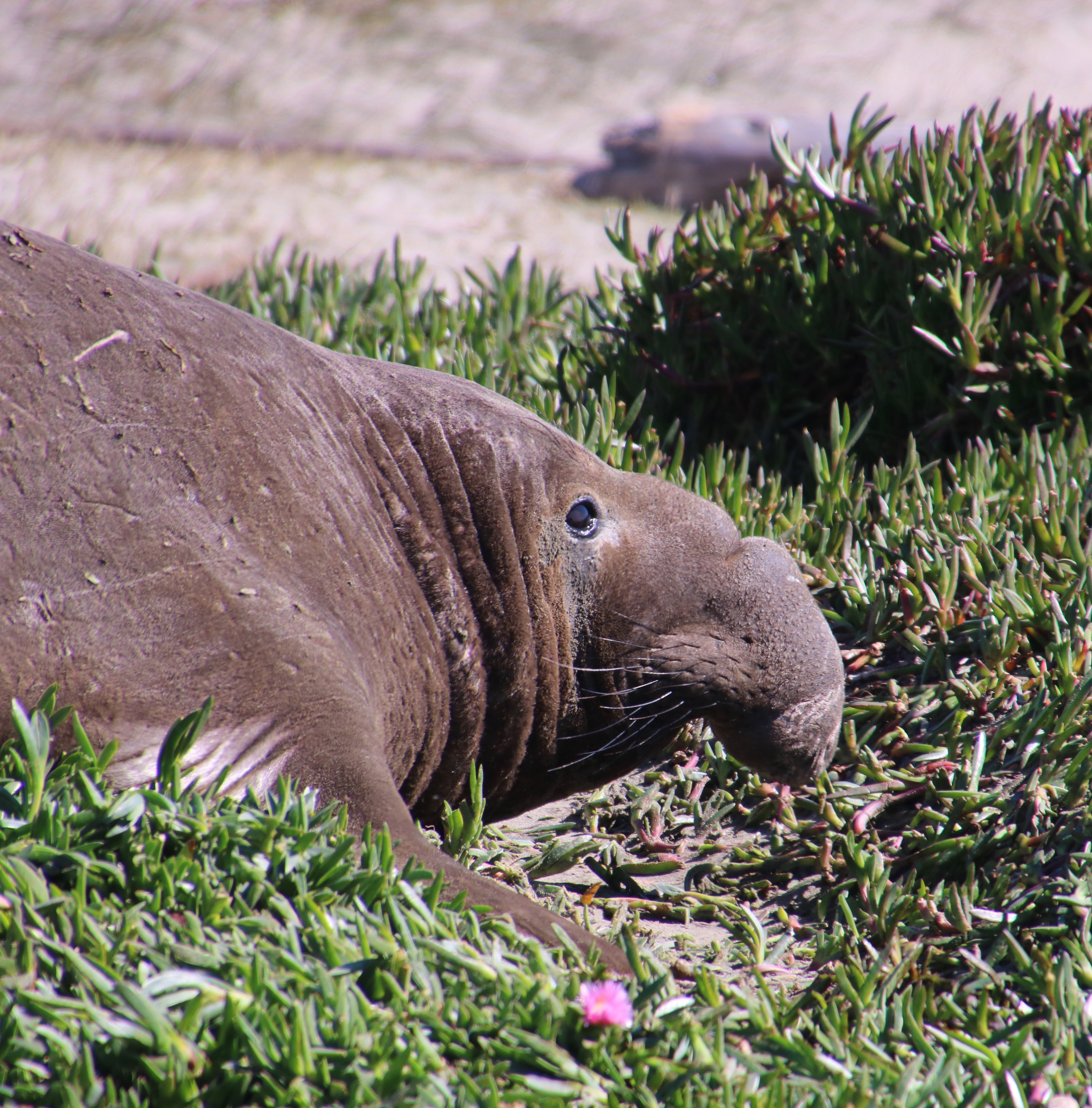
The Park Service had set up a barrier to separate the seals from the people who had come to admire them at Drake’s Beach. Those closest to the barrier were bulls. You can tell by their size and uniquely shaped noses. One had crossed the barrier and was worrying the rangers. “He’s escaping from the other bulls,” a ranger explained. Maybe.

This large bull had crossed through the barriers at Drakes Beach and was pointed toward the snack bar. (Photo by Peggy Mekemson.)

A little girl next to me exclaimed, “I think he is heading to the snack bar to get fish sticks!”

“I’d bet on ice cream,” I responded. “Look at how big he is.” The girl looked at me dubiously. “Fish sticks” she insisted.

Peggy and I spent an hour watching these wonderful creations of nature who are so competent at sea and ungainly on land. They move like an inchworm, using their dorsal flippers to pull their front half forward and then using their rear flippers to push the rest of their body along like a rolling wave. Imagine moving several tons of fat. The ones we watched would make two or three of these moves and then collapse to rest.

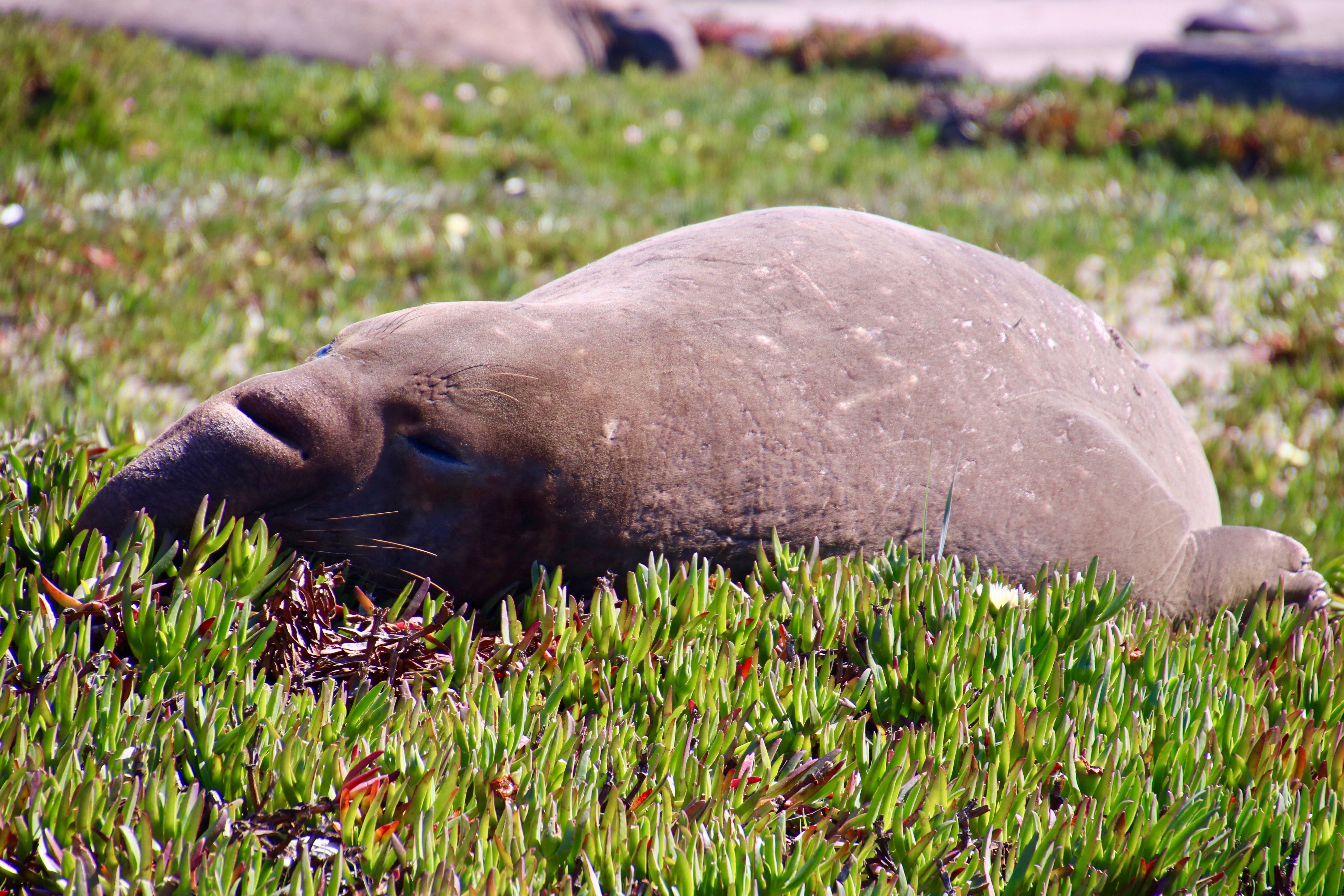
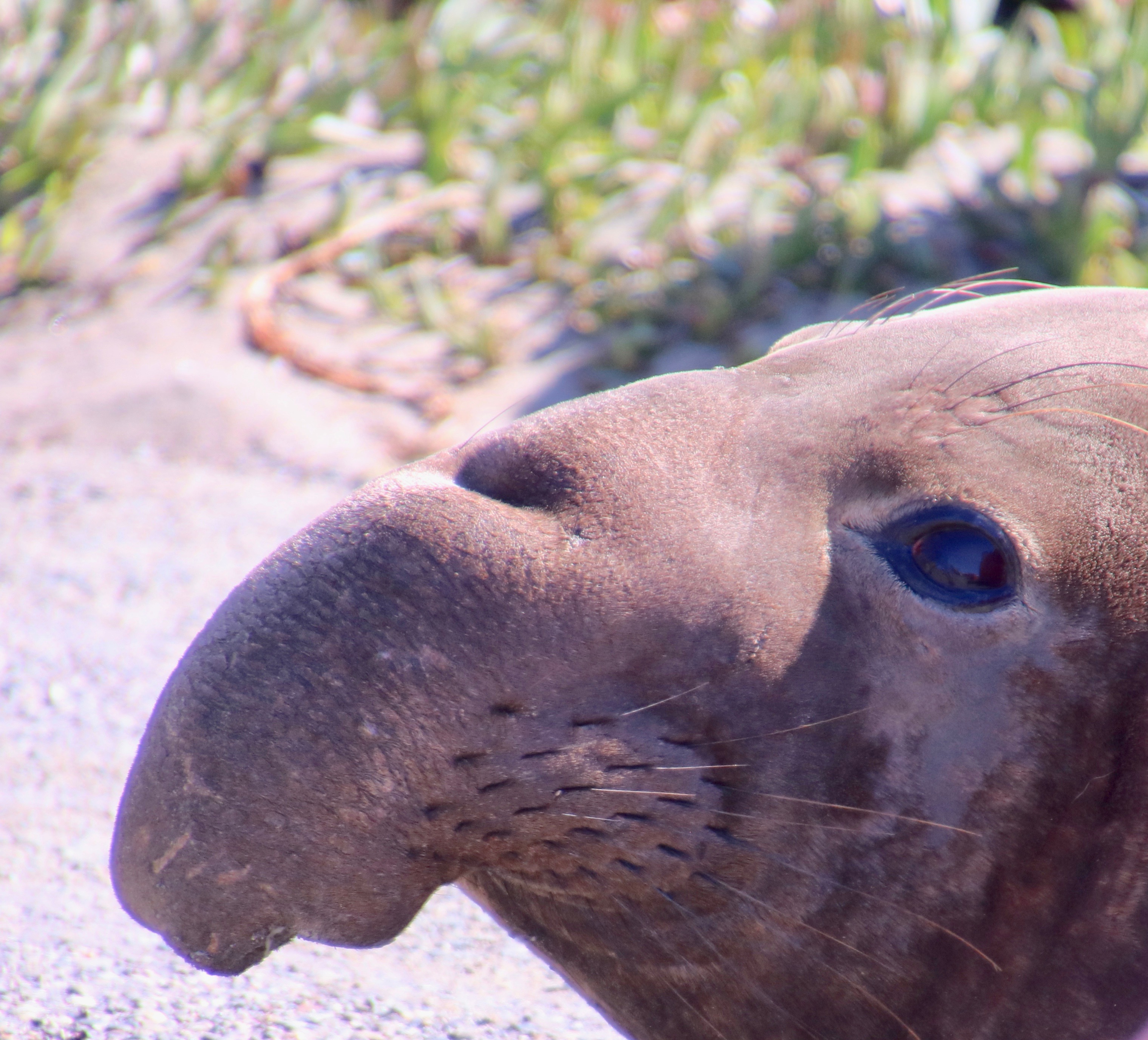
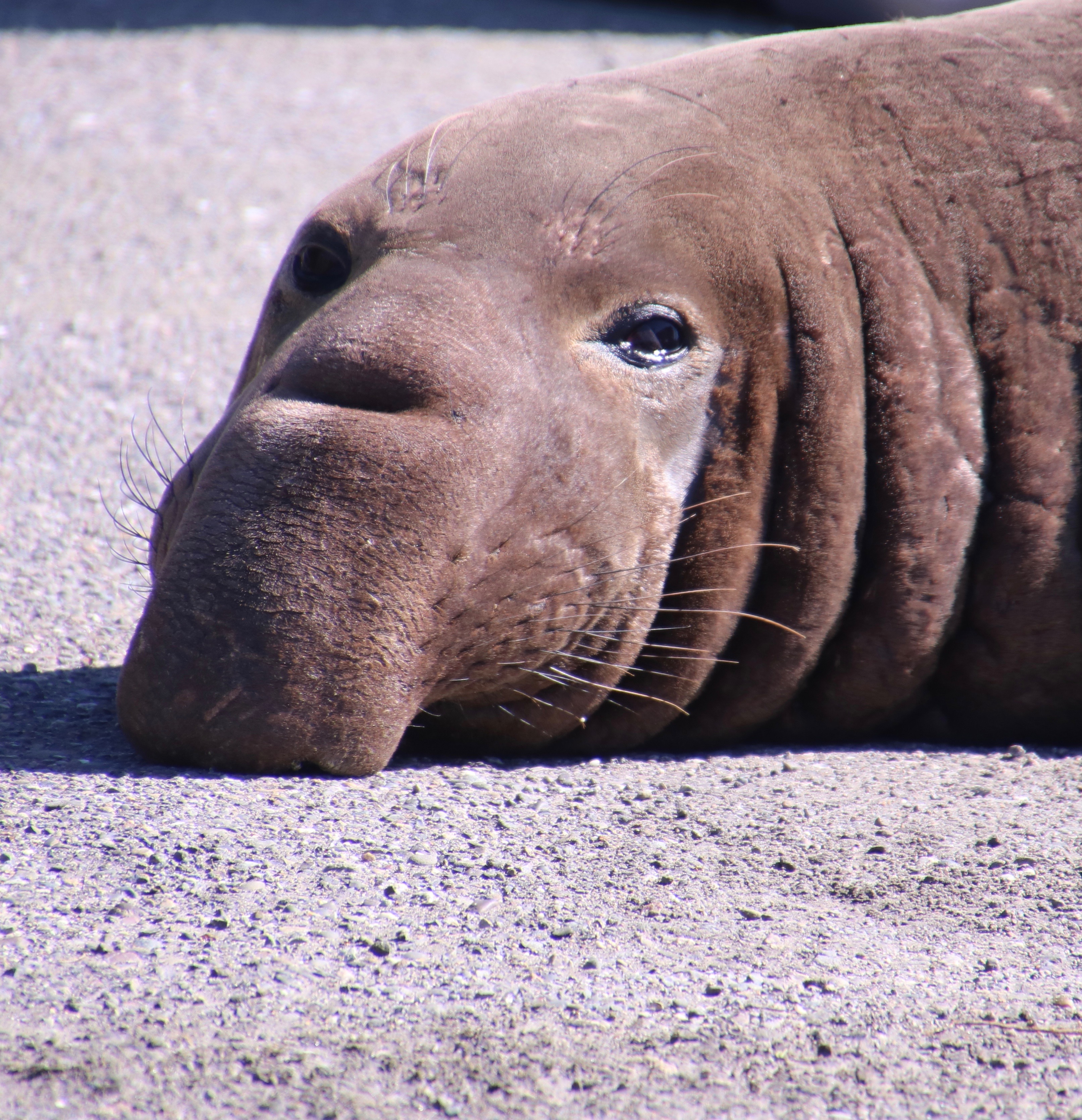
Given their trunk-like noses and appealing eyes, Peggy and I were particularly attracted to the looks on their faces.

Is this fellow being coy?
Check out the big brown eyes! The size of the eyes helps the elephant seal see in the dark depths of the ocean. The whiskers apparently help as well in the search for food. He had lifted his head to check us out. (Photo by Peggy Mekemson.)
And then returned to his resting position. (Photo by Peggy Mekemson.)
A side glance. (Photo by Peggy Mekemson.)
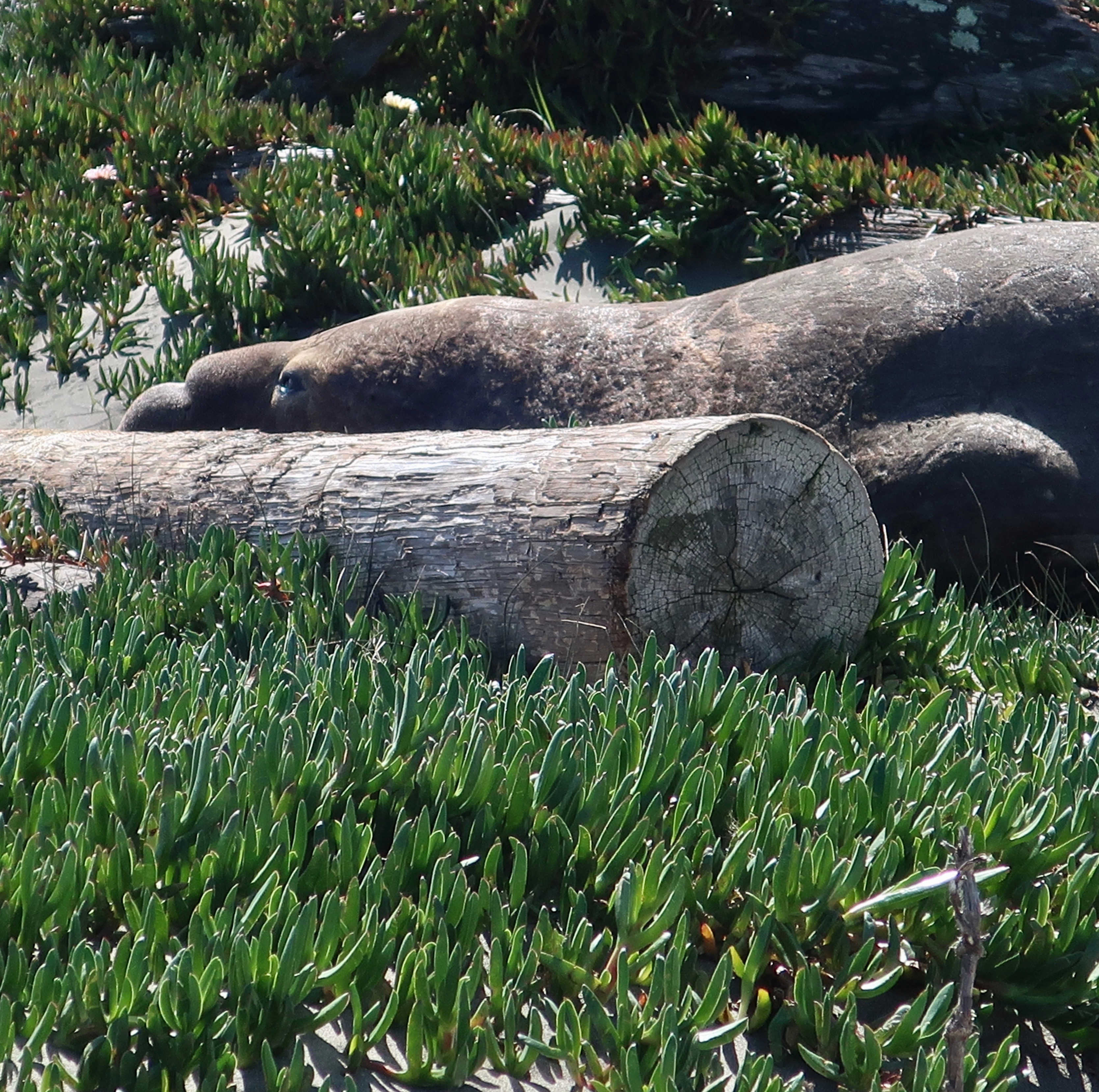
A bit shy, perhaps. Maybe he thought that the log was hiding him.
Size matters. (Photo by Peggy Mekemson.)
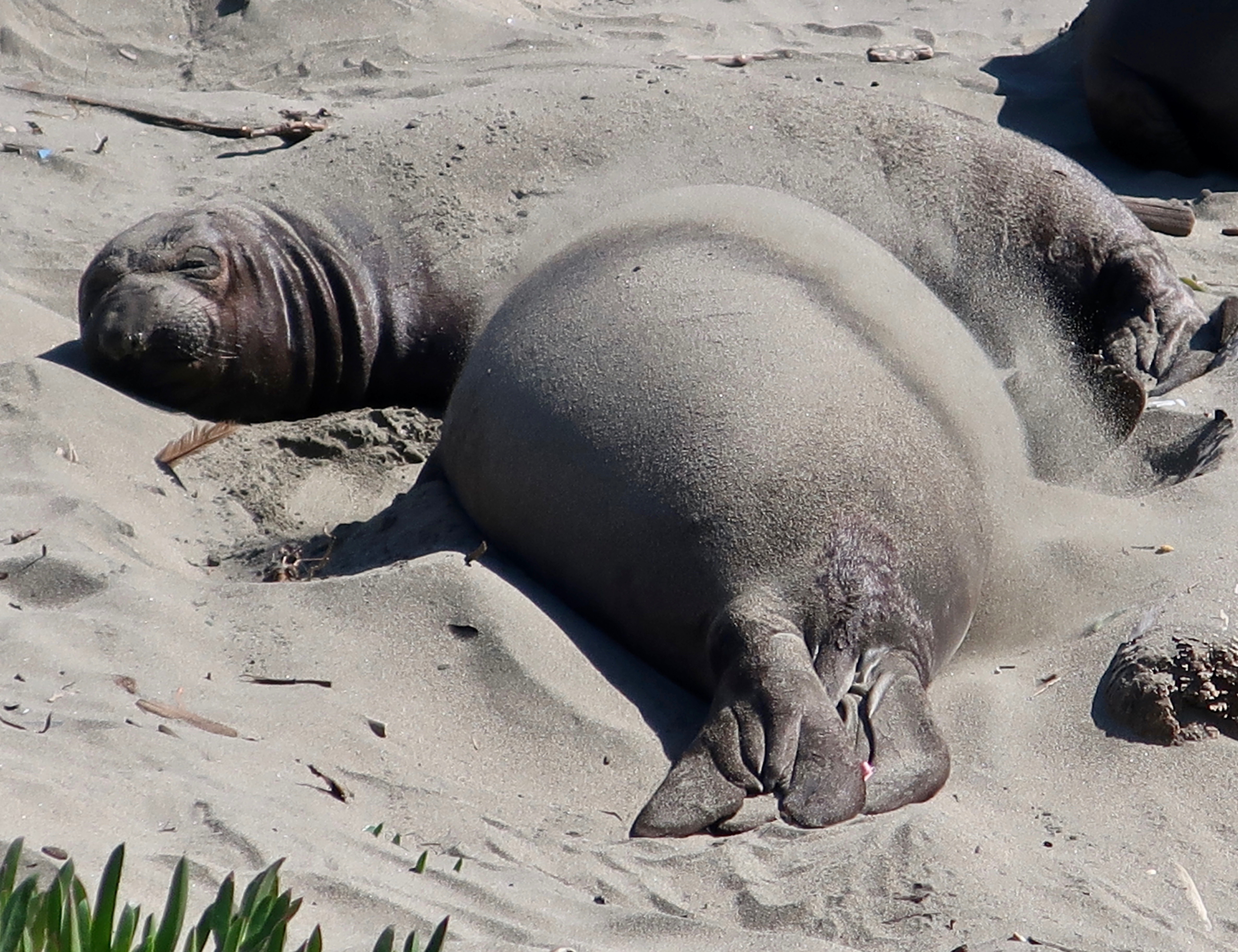
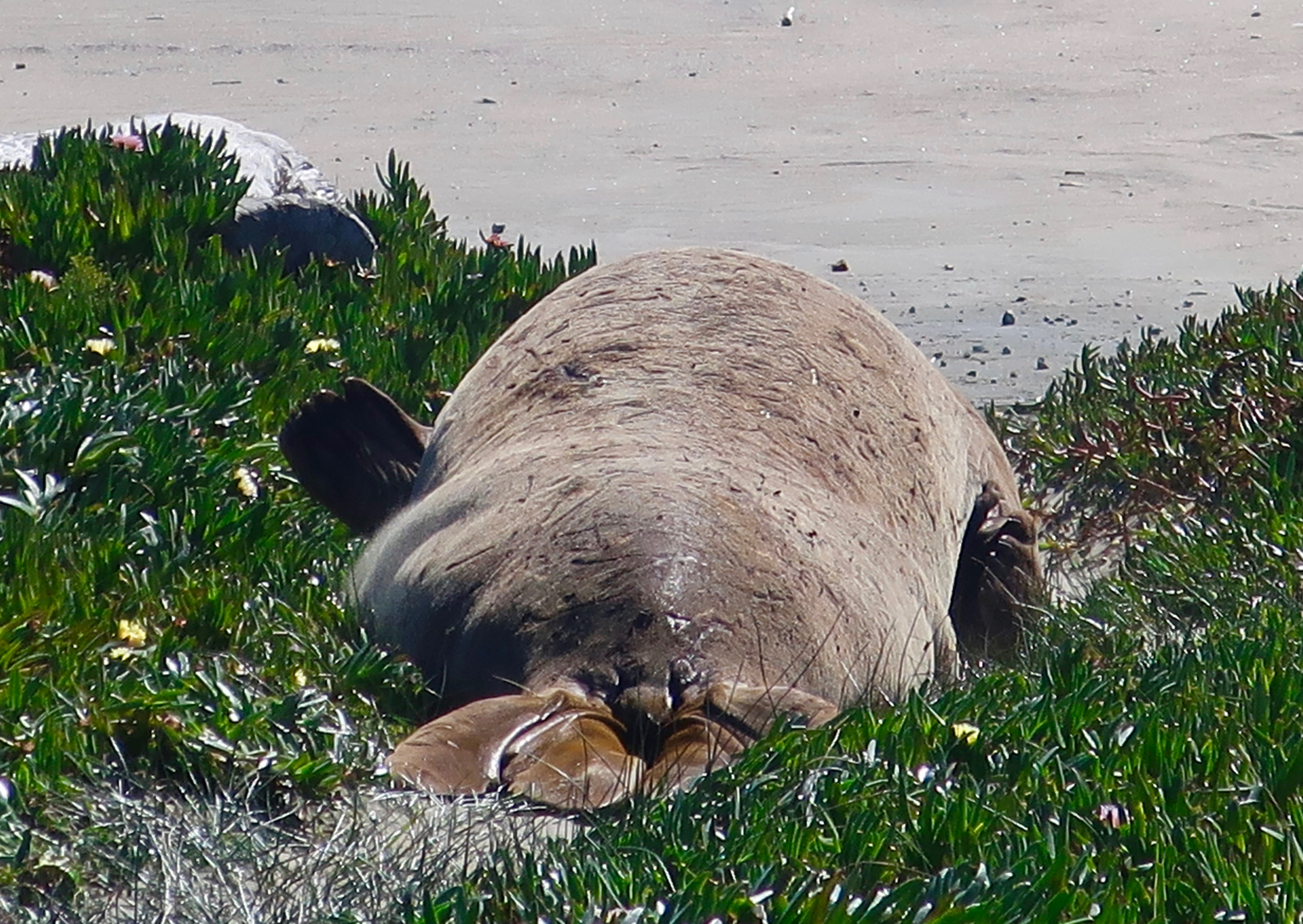
This was interesting. The skin of the elephant seals is sensitive to the sun. They cope by throwing sand over their bodies with their flippers, as seen in this photo.
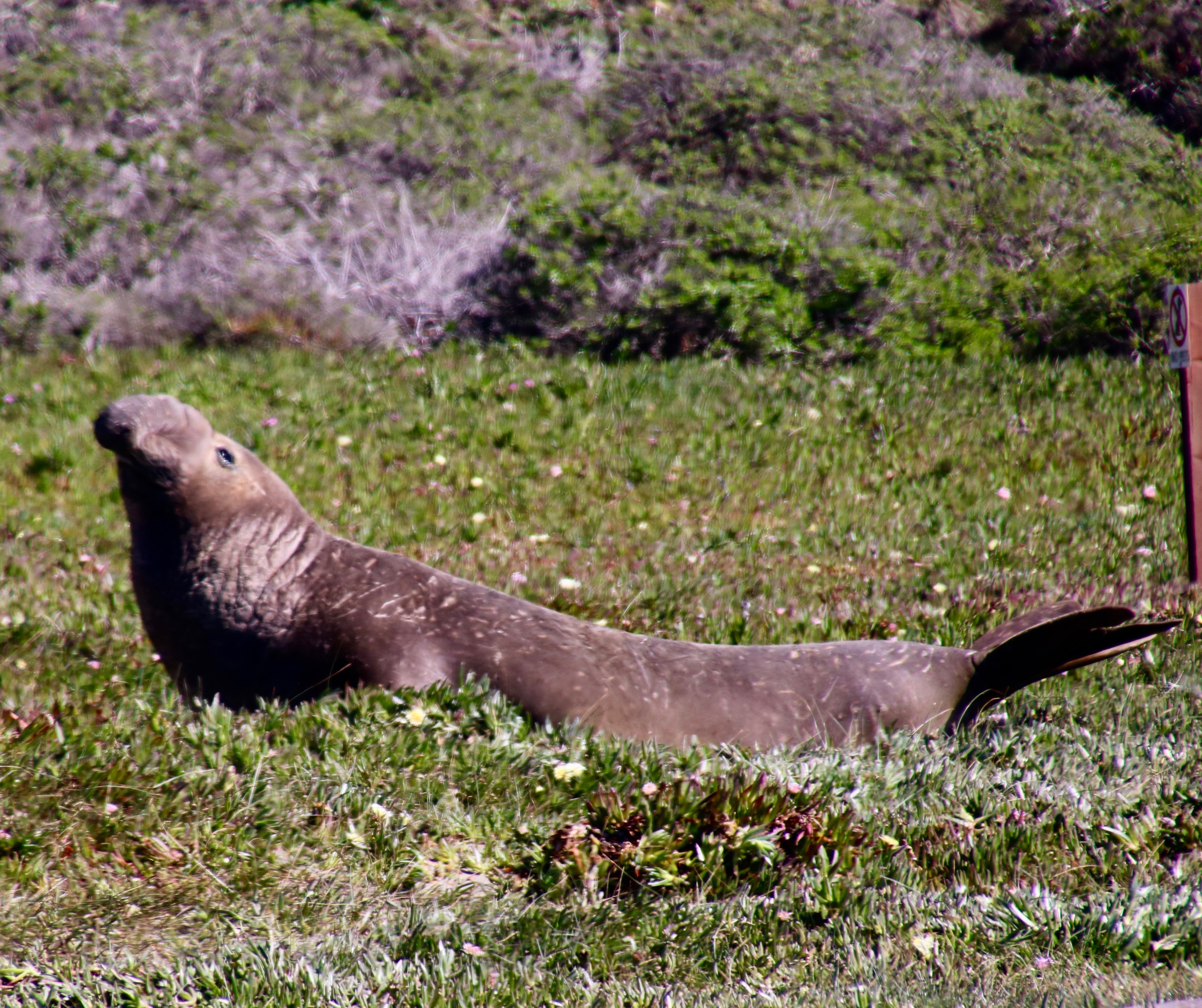
Sometimes a little stretch really feels good! (Photo by Peggy Mekemson.)
Peggy caught some of the girls sunbathing out near the ocean…
Drake’s Bay was named for Sir Francis Drake who reputedly visited the area in 1759. There’s another bull on the left— looking sluggish.
I’ll conclude today with this elephant seal that was making its way back toward the ocean. I decided he was waving goodbye with his flipper. I’ll return to the tide pools of Harris Beach in Oregon next week. Are you aware that groups of sea anemones go to war with each other?

NEXT POSTS:

Monday’s Blog-a-Book… “It’s 4 AM and a Bear Is Standing on Top of Me”: I move outside in the summer to enjoy nature but hire the family’s dogs and cats to protect me from the ghosts.

Wednesday’s Blog-a-Book… “The Bush Devil Ate Sam”: Held at gunpoint, I consider the odds of running over the gunman versus getting shot.

Held at Gunpoint: Training for Berkeley, and the Peace Corps… Part 1

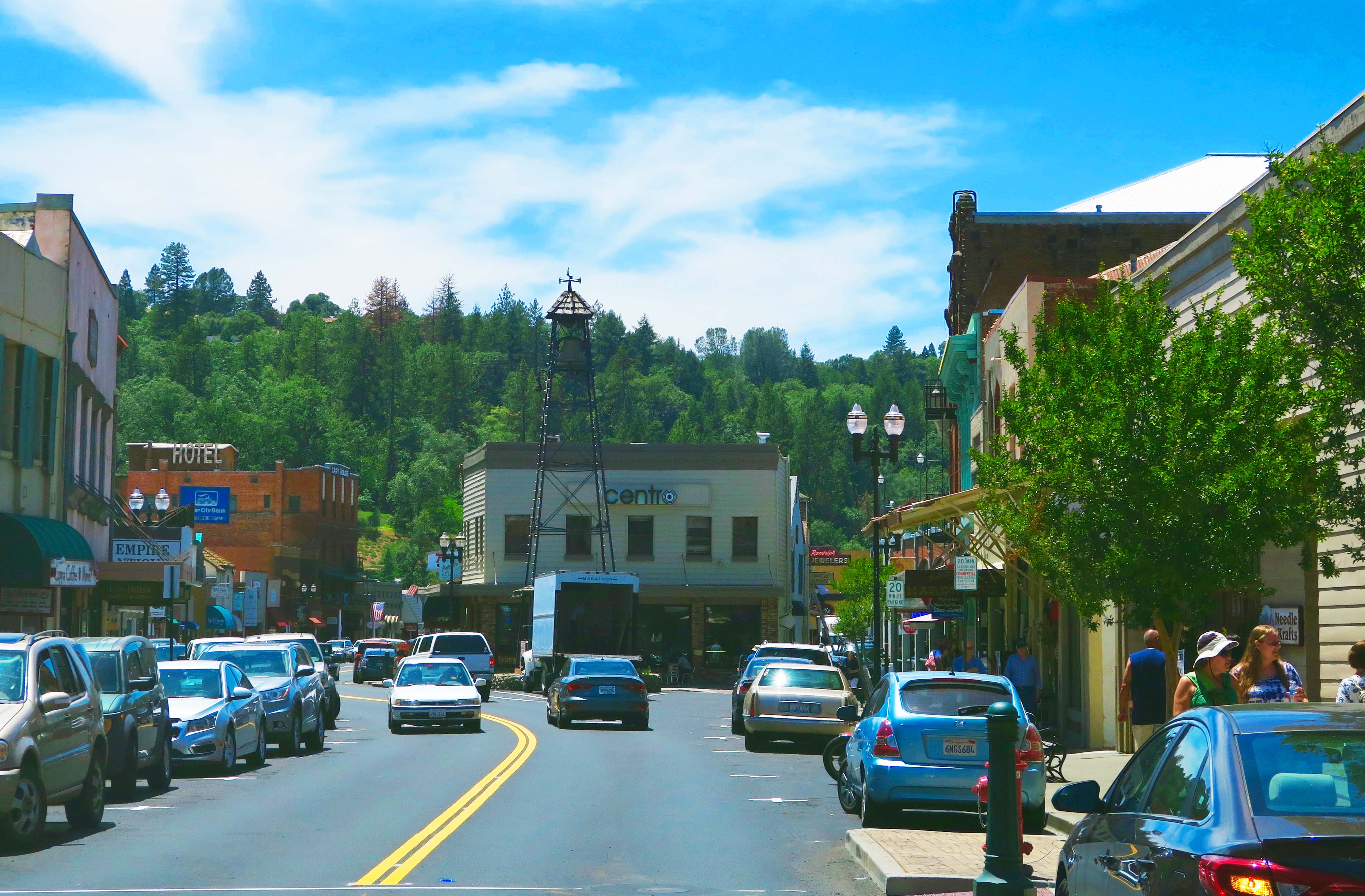
In 1963, I landed a summer job driving a laundry truck between Placerville, California and South Lake Tahoe, a 60 mile drive. I’d pick up dry cleaning and motel linens in Placerville and make deliveries along the way. My day started at 1 p.m. and ended around 10 p.m. six days a week. This is a more recent photo of Placerville, but it doesn’t look all that different. The Bell Tower has been a symbol of the town seemingly forever. As has the hanging man…
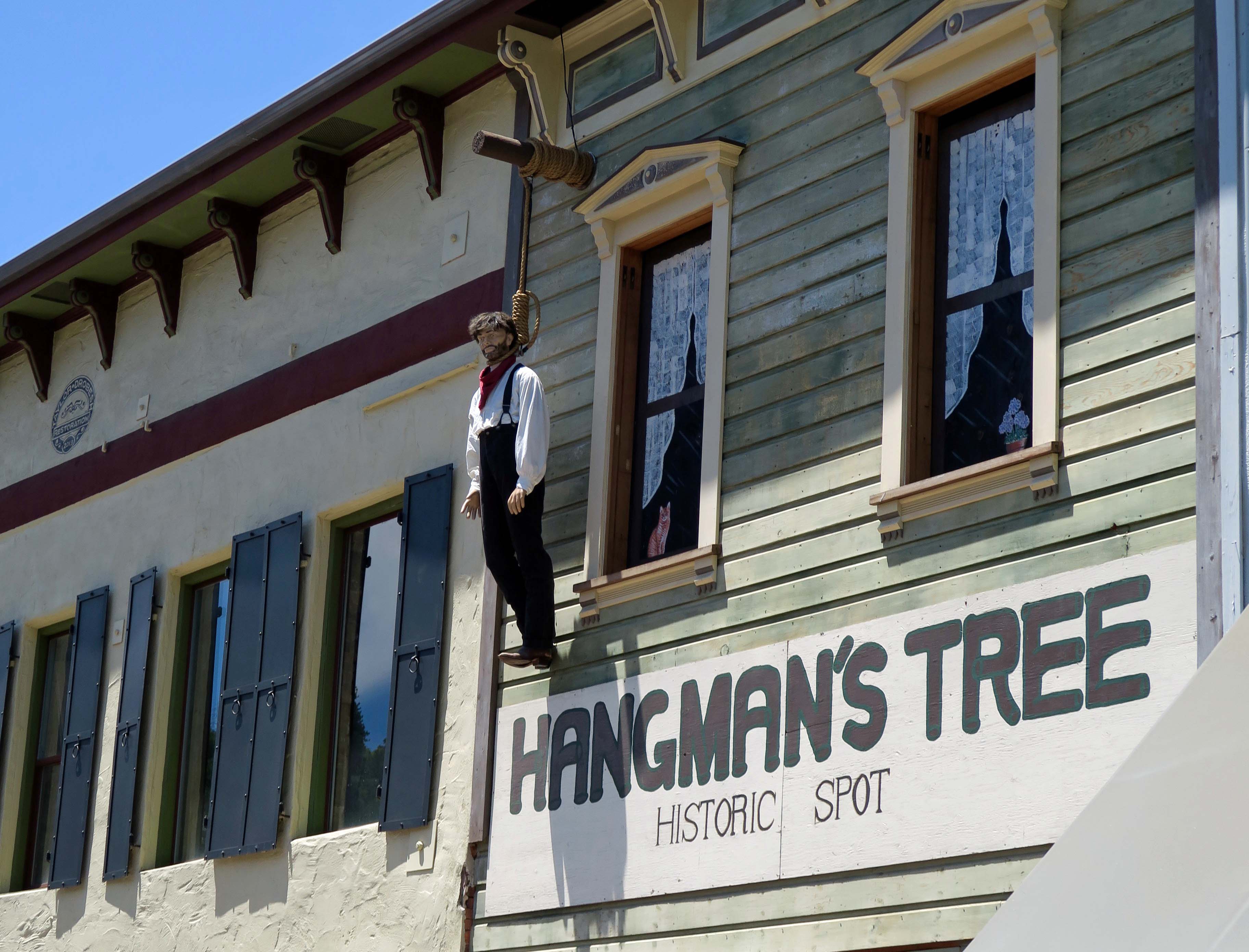
Founded during the 1849 Gold Rush, Placerville was known as Hangtown for how it treated outlaws. It’s a heritage the town has strangely— but proudly— maintained ever since. This guy was hanging out on Main Street in the 50s and 60s when I lived three miles away and still hangs out there today. If Guinness had a record on the longest hanging man in the world, he would be it! He must have one heck of a strong neck.

The man leaned on the front of my 56 Chevy and rested his rifle on the hood. The message was clear. I wasn’t going anywhere.  Ten minutes earlier I had been happily sleeping in my trailer next to the Lake Tahoe laundry where I was working for the summer. I woke up and jumped out of bed at the sound of trucks warming up. Oversleeping was no excuse for being late. I looked accusingly at my alarm clock. It said 6 a.m., an hour before I was supposed to go to work. Glancing out the window, I spotted an armed man standing in front of my door. Several others were wandering around the property. The laundry truck drivers were people I didn’t recognize. Lacking a phone to call my boss, I decided it was time to vacate the premises…

The summer between my freshman and sophomore year at Sierra College I graduated from working on pear ranches to being a laundryman. Every afternoon at one o’clock I would zip over to Placerville, pick up clean laundry and dry cleaning and head over the Sierra Nevada Mountain Range to Lake Tahoe via Echo Summit on Highway 50. It was a great job for a college kid. I was provided with a new VW van and was totally on my own except for loading up in Placerville and making my stops on 50 and at the Lake. In between was a beautiful drive through the Sierra Nevada Mountains. There was even a touch of glamour to the work. 

Sugarloaf Mountain located next to Kyburz Resort on Highway 50 in El Dorado County, CA.
This wonderful chunk of granite is known as Sugarloaf and is a favorite view along Highway 50. It’s quite popular among rock climbers, which, like jumping off of high cliffs into water, is another sport I see no reason to pursue.

One of my regular stops at the Lake was Bill Harrah’s home. He was incredibly rich from his gambling empire, and his home seemed palatial to me. Never having mastered the servant concept, I always made my deliveries to the front door and was occasionally greeted by his headline performers who stayed there. This came to a screeching halt one day when a young Liza Minnelli opened the door in her baby doll pajamas. She didn’t seem to mind my admiration, but the major domo directed me to make all future deliveries to the service entry in the back. I had little appreciation for my new backdoor status.

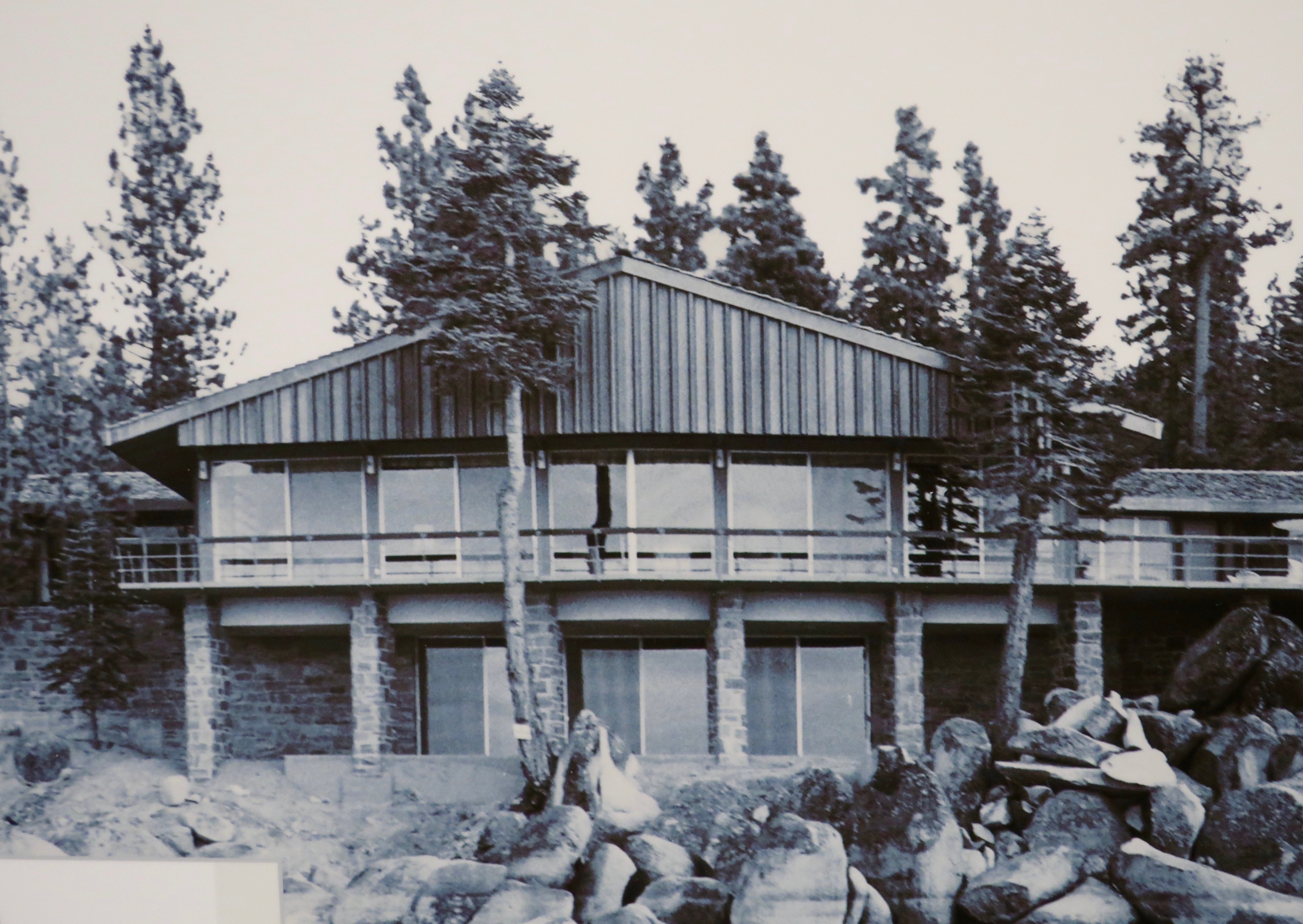
Roger Douvres, my boss, had a contract to handle the dry cleaning for the stars that performed at Bill Harrah’s lakeside casino. They often stayed at his home, where I would make weekly deliveries. The picture windows provide a beautiful view of Lake Tahoe.

The best aspect of the laundry business was that the pay was four times what I had earned working in fruit orchards. Since I lived at home, I was able to stash most of my income away for college needs. Eventually, this would pay my expenses at Berkeley. Those were the enlightened years in California when tuition was free.

In the summer of 1963, Roger asked if I would move up to Lake Tahoe and work for his son-in-law, John Cefalu. John had taken over a laundry that Douvers had owned, sold, and then reclaimed because of back payments. There was an old trailer sitting next to the laundry ‘in need of a little work’ that I would be welcome to use. I jumped at the chance. What twenty-year-old male given a chance to work in one of the world’s top resort areas wouldn’t? The only disadvantage, from my perspective, was the distance from my girlfriend. At least, I consoled myself, there was a beach three blocks away that was normally filled with scantily clad young women. I’d get by.

Things, of course, are rarely as rosy as they seem. To start with, the trailer was a mess. It was probably twenty years old and, as far as I could tell, hadn’t been cleaned it in nineteen. My first weekend was devoted to twenty hours of scrubbing. There were no scantily clad women for Curt. Monday brought work, and it was work. I no longer had my leisurely trip back and forth across the mountains. It was stuff the truck with a mountain of clean linen, dash out to the motels and make deliveries, cram the truck up with dirty linen, and rush back to the laundry— over and over and over.

Fatigue, by the end of the day, usually meant I would crawl in bed and go to sleep. It was not the romantic lifestyle I had imagined. The second weekend, I did manage an obligatory trip to the beach for Female Body Appreciation 101.  But I had no desire for any other relationship and most of what my excursion did was to remind me of what I was missing. I did say mostly, didn’t I? The age of the ‘itsy bitsy, teeny weenie, yellow polka dot bikini’ was dawning, and it was a sight to inspire bad poetry. Not even true love can totally deaden 20-year-old hormones.

My daily routine was about to end, however. I was soon to learn what it was like to be held by gunpoint. I’ll tell the story in my post next Wednesday from The Bush Devil Ate Sam.

NEXT POSTS:

Friday’s Travel Blog: I’m going to leave Oregon’s Harris State Beach for a week and jaunt 360 miles south to Pt. Reyes National Seashore in California to visit the Elephant Seals that hang out at Drake’s Beach.

Monday’s Blog-A-Book… “It’s 4 AM and a Bear Is Standing on Top of Me” : My love of the outdoors (plus a desire to escape from sharing a bedroom with Marshall) led me to move into my backyard the summer between second and third grade. It was perfect except for the tombstones…

Riding Pine Trees, Habanero, a Crowded Bed, and a 1st Grader’s Solo Hike— at 5 AM

In my last blog-a-book post from “It’s 4 AM and a Bear Is Standing on Top of Me,” I returned to the first grade, got spanked, and went on a play date/sleep over with my young Hispanic friends Rudy and Robert. A train locomotive engineer tossed us candy from his cab. The adventure continues today and includes tree riding and my first ever solo hike…

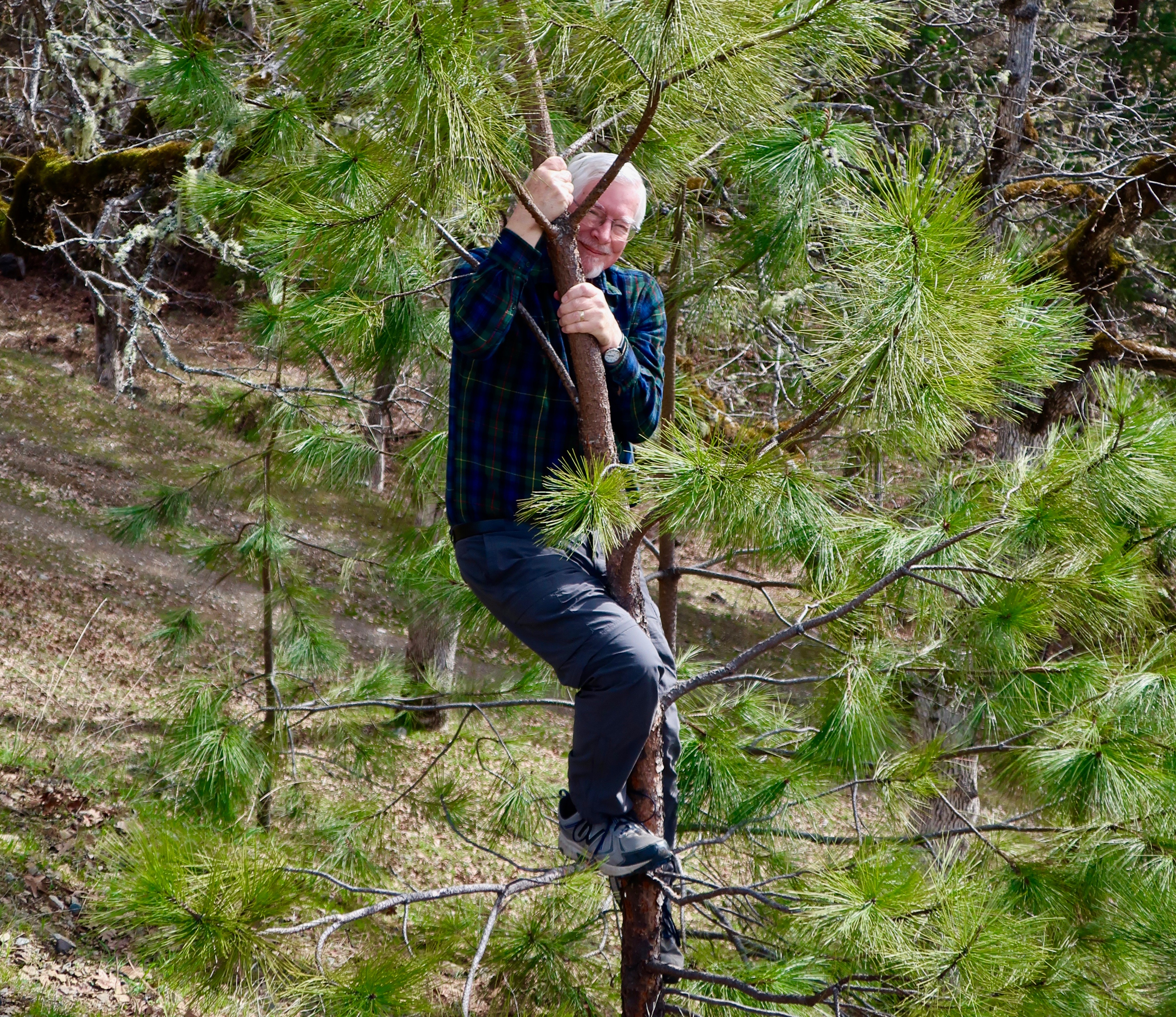
The perfect size pine tree for a first-grader to climb and ride. Peggy suggested I might be a little big— and, at 78, possibly a tad old… Nah.

If one is fortunate enough to live next to the woods as a child, it’s easy to find ways to amuse yourself. After we had collected our candy from the train, dinner was a long hour off. I suggested to Robert and Rudy that we head out to the woods behind their house and ride trees. Who needs horses? My brother and I had learned that we could climb up to the top of young, skinny pines and make them sway back and forth by leaning out. The farther we leaned, the more they swayed. It offered a free carnival-like experience 10-15 feet up in the air. Even more could be accomplished by throwing our feet out in the direction the tree was swaying and hanging on for dear life. If the tree was skinny enough, we could make it bend all of the way down to the ground, where we would drop off and allow it to snap back up. It took a while for me to persuade Rudy and Robert that the sport wasn’t going to kill them.

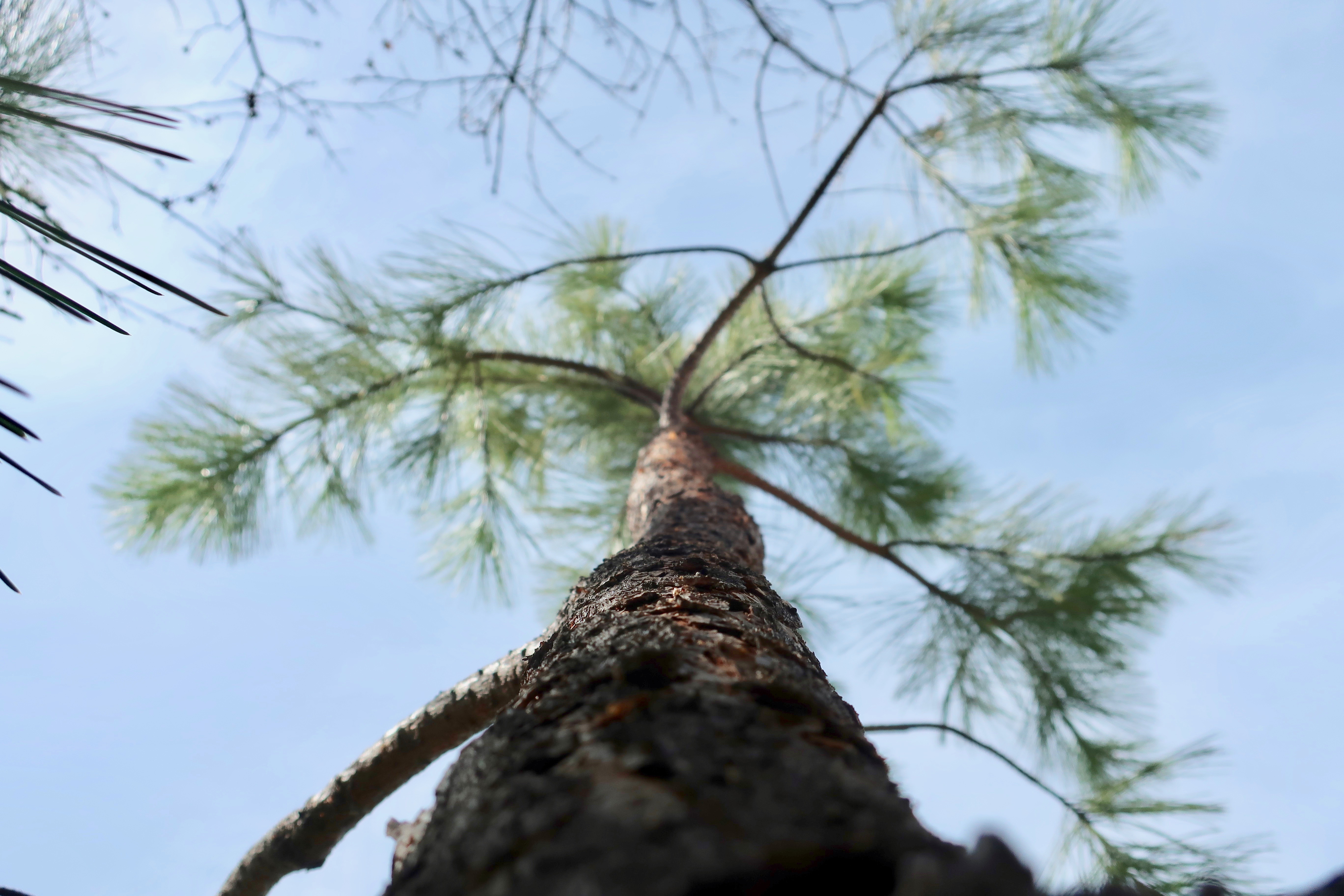
The same tree seen above as a first grader might see it.

I suspect the trees didn’t enjoy the experience nearly as much as we did. When I later read Robert Frost’s poem about children bending birches, I fondly recalled our pine tree horses— or bucking broncs if you prefer.

“It’s dinner time!” came the call so we rushed back to the house and made use of an outside water faucet to wash the pine pitch off our hands. Sort of. Pitch has a way of sticking like super glue. It’s the pine tree’s revenge. Mother had a box of Boraxo at home for the the task. Hand inspections were held afterward.

“You have to try this,” Rudy enthused, dashing into the house and coming out with a red pepper. I should have been suspicious when the rest of the family followed him outside. But what does a first grader know? I gamely bit into the pepper and was introduced to habanero-hot. The whole family roared as I made a mad sprint for the faucet and drank a gallon of water, becoming a major part of the evening’s entertainment. It would had served them right later had I peed in their bed. I forgave them when I had my first Mexican dinner, however. I still love Mexican food. And I’ve come to enjoy habanero-hot on foods ranging from burritos to spaghetti.

One of many choices I have on hand for habanero-hot food.

As the night progressed, it soon became time for bed. I was about to flunk sleep-over etiquette.

The boys slept on the same bed. Admittedly it was bigger than my small single at home, but I had never slept in a bed with another person, much less 2 or 3, or maybe it was 10. That’s what it felt like. They put me in the middle. I was mortified, but I tried. I really did. Ten o’clock came and there I was, eyes wide open, staring at the ceiling, body frozen in place— and midnight, and two, and four. At five, I gently nudged Robert.

“I can’t sleep. I haven’t slept all night,” I confessed. “I have to go home.”

“Ummm,” the half-awake Robert had moaned.

I got up, dressed, and slipped out of the house, careful not to wake anyone else. It was close to dark, with only a dim light announcing the morning. Home wasn’t that far away, maybe a mile. But I still remember the journey from a first-grader’s perspective: long and spooky. It was my first great adventure. I followed the dirt road over the railroad tracks out to the Pleasant Valley highway. Not one car zipped by. Fortunately. They probably would have stopped and driven me home. Everyone knew everybody else in Diamond. “Sorry to wake you up Marge, but I found Curt out wandering in East Diamond.” By noon, everyone in town would have heard the story.

I walked past the hill with the cross on it and picked up Highway 49. Halfway home, I came to Tom Murphy’s grocery store. Sodas were stacked in wood boxes in front, waiting to be moved inside. I looked around furtively; I was totally alone. So, I helped myself to a coke; I deserved it. I continued on my journey, walking by the post office, Dub Walker’s store, the barber shop, hardware store, the historic Pony Express stop, firehouse and Gust Brother’s Garage, eventually reaching the dreaded Graveyard. I clutched my coke and crossed the road, preferring Pagoni’s mean dogs to the ghosts. Arriving home, I carefully hid the soda outside. It wouldn’t do to have overly inquisitive parents discover the purloined drink and ask questions. I happily enjoyed it later in the day, feeling much less guilty about stealing than I did about abandoning my friends. I suspect there was a bit of consternation when Rudy and Robert’s parents woke to find me missing. Imagine what would happen today.

Next Monday, it’s back to the Graveyard as I move outside for the summer to commune with nature. And, escape from my brother. It was the best decision of my young life except for one thing: The ghosts. I had to hire protection.

NEXT POSTS:

Wednesday’s Blog-a-Book… “The Bush Devil Ate Sam”: Driving a laundry truck pays for my college education, but it was being held at gunpoint that prepared me for Berkeley and the Peace Corps.

Friday’s Travel Blog: Once again, it’s back to the ocean. Before moving on with my series on Oregon’s Harris Beach, however, I am going to take a brief detour to Pt. Reyes National Seashore, from which Peggy and I just returned. There are some elephant seals we want to introduce you to…