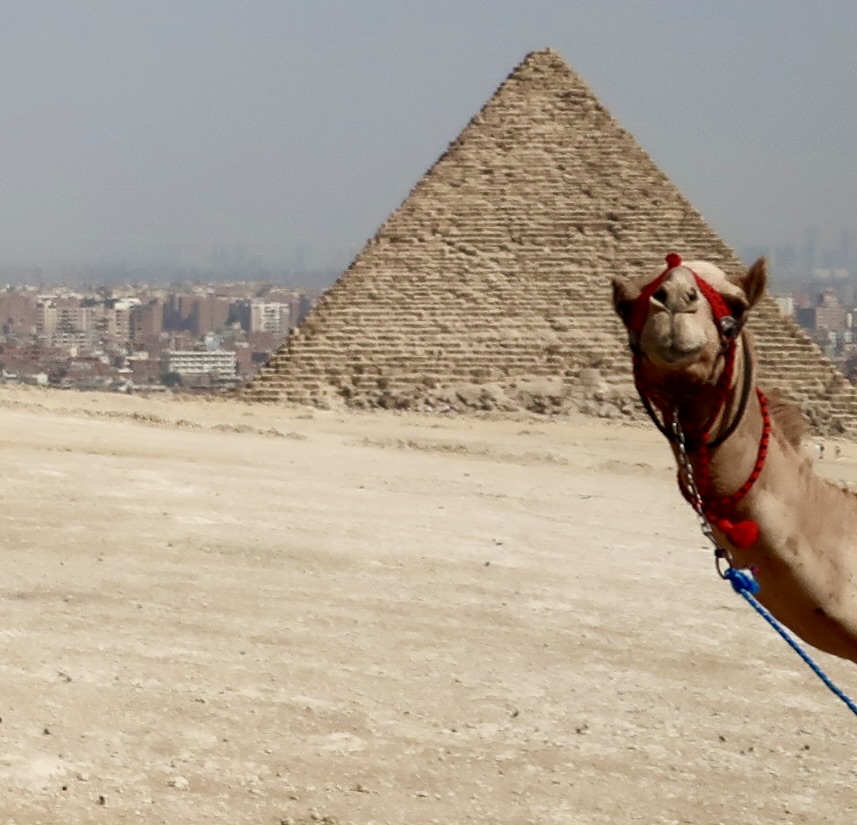
Hoofing It with Ungulates (Horses, Hippos, Hogs and Many More)… The Focus Series

Today, our focus series features ungulates. In case you don’t know what an ungulate is, like I didn’t, the short answer is that they are animals with hooves who walk or run on their toes. Did that help? They are divided into two categories: Odd toed ungulates (Perissodactyl) such as horses with one toe, and even toed ungulates (Artiodactyla) such as cows with two toes. The credit for having hooves goes to evolution. Horses, for example, started out with multiple toes just like us. They had 4 on the front and 3 on the back. Eventually, over millions of years, their claws/toenails expanded, grew together, and covered their toes. The evolutionary advantage being they could run a lot faster across grasslands and escape animals that wanted to eat them. A hoof is composed of keratin, the same fibrous protein that forms our toe and finger nails. It acts as a hard, protective casing that covers the toes and allows for weight-bearing, shock absorption, and traction— just like a good pair of running shoe works for our feet. But enough on the details. Let’s get to the fun part!

Bad dog! This was one of those occasions I was ever so glad to have a camera along. We had known that we would need one. Our neighbor Jim in Oregon had called and urged Peggy and me to come over and see his recently-born baby goats. Of course we went. Immediately. Who can resist baby goats? Plus, it was a photo op waiting to happen. I just didn’t expect this scenario where one, very small baby goat appeared to be dominating one very large dog. Have you ever seen such dejection? The dog, btw, wasn’t just a large dog; it was one of the largest, most ferocious dogs in the world, a Kangal Dog from Turkey. They are massive animals weighing up to 200 pounds that were originally bred to protect livestock from bears, wolves and other predators. Jim kept his to discourage unwanted intruders, whether four legged like our local bears and cougars, or two legged. I’m not sure what triggered the response above. The big dog had walked over and sniffed his latest charge and then started slinking away. Maybe baby or mom had objected.
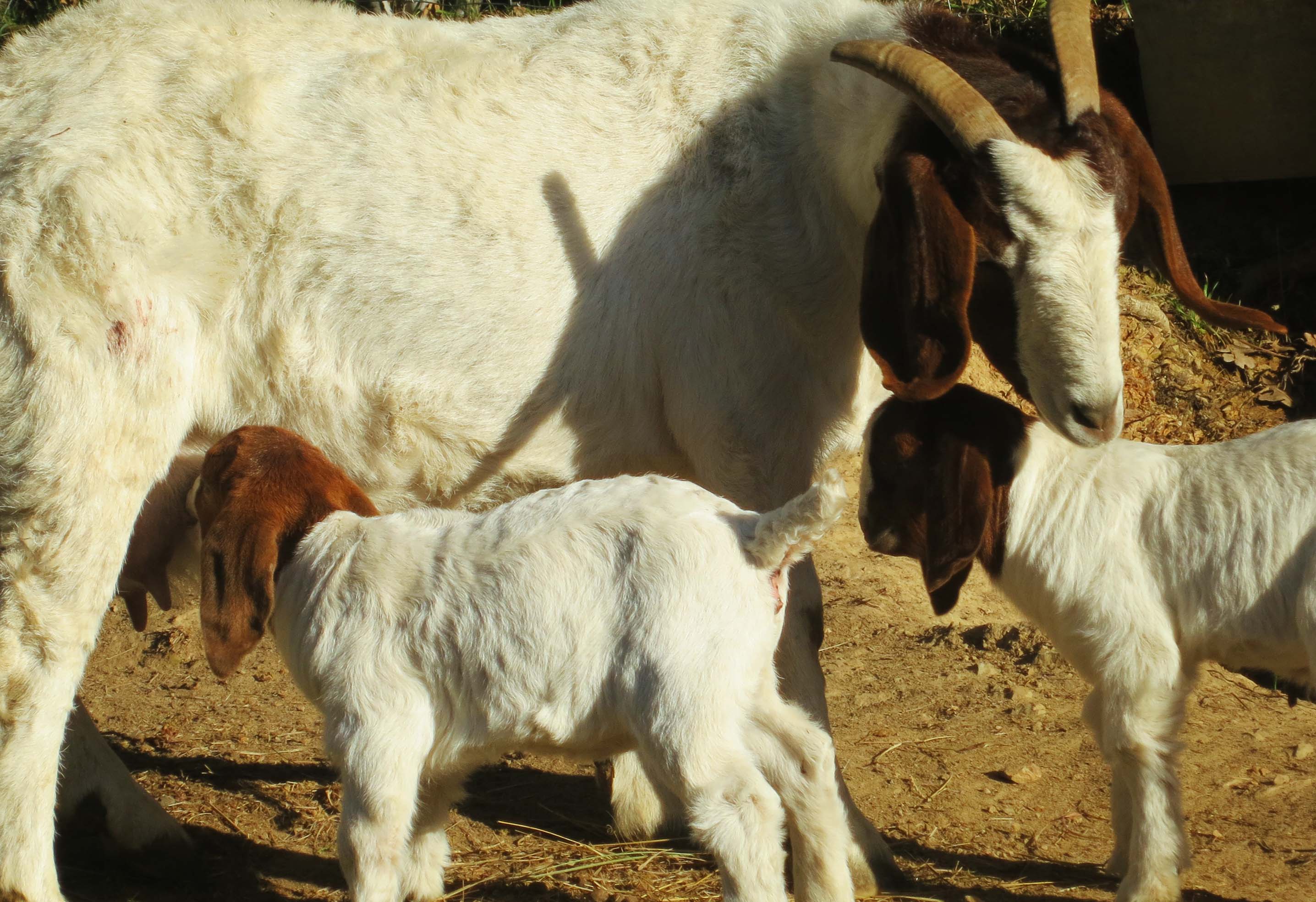
This is what we expected in terms of cute baby goat photos.
Lining up for food cafeteria-style.
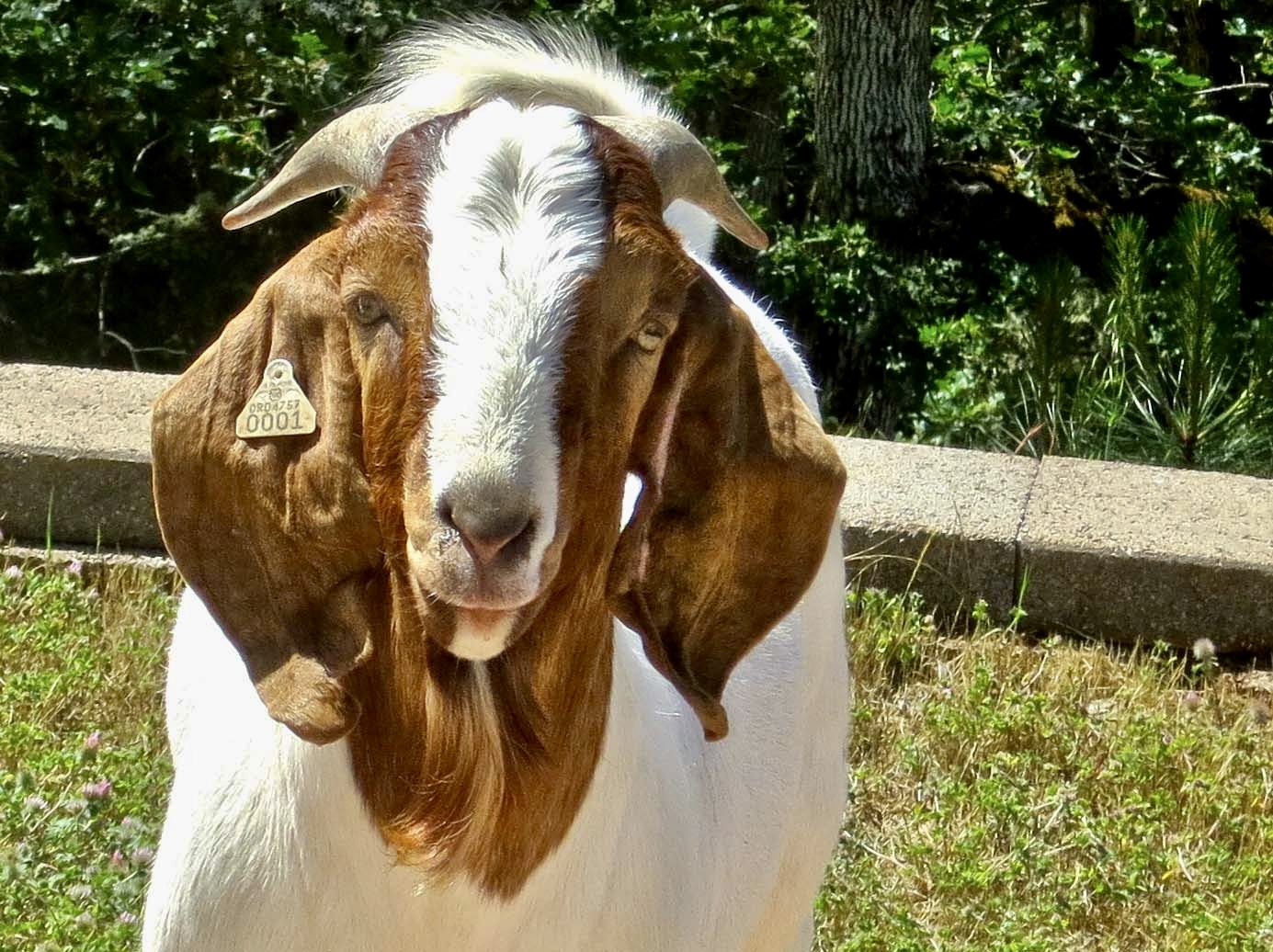
Daddy. A handsome fellow. He had escaped from Jim’s and come over to visit us. Jim called him Rambo and was very careful not to turn his back on him. He had been butt butted far too many times. Goats are two toed ungulates, which make up the majority of the ungulates.
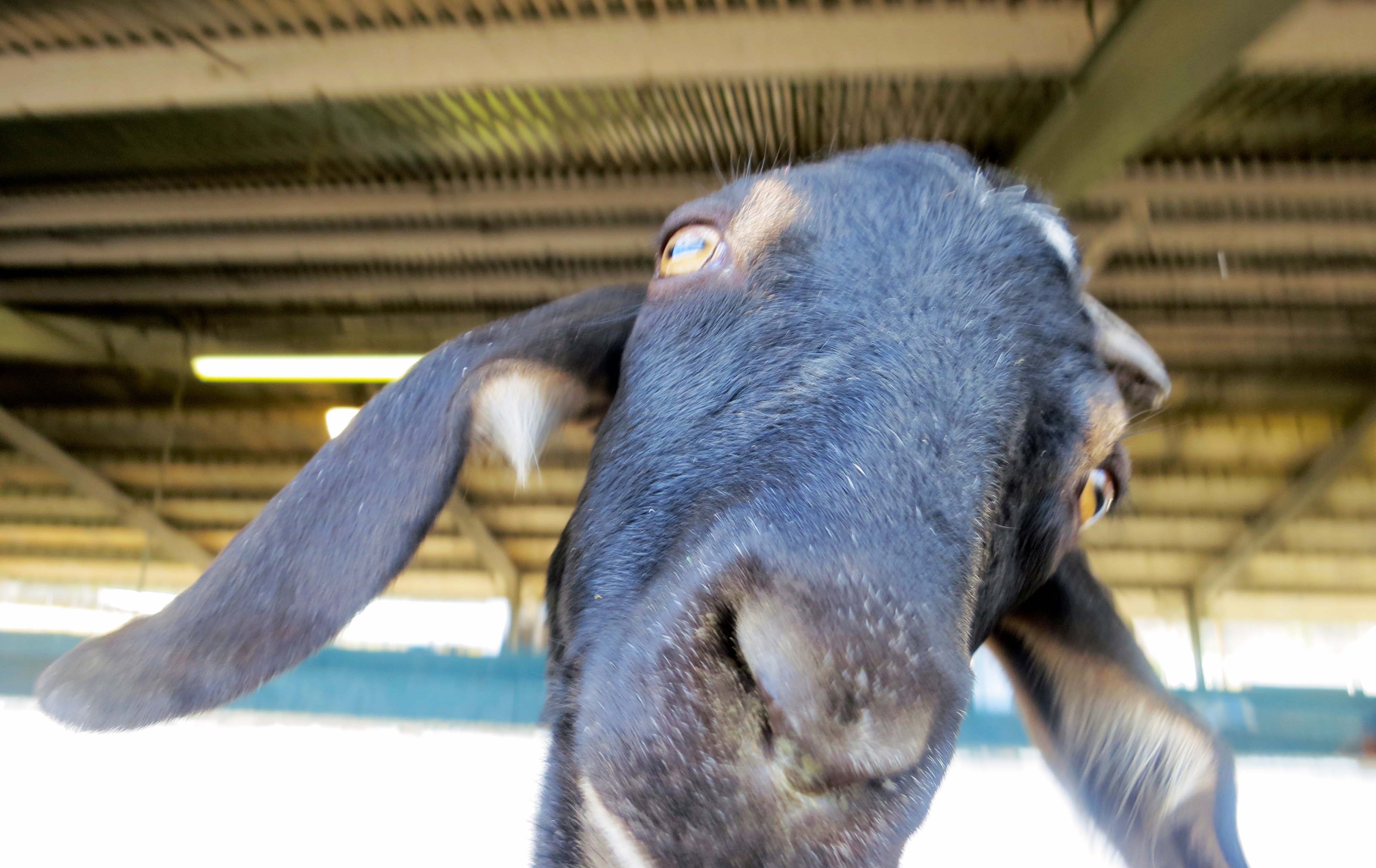
Whenever I go to a county or state fair, my first stop is to visit the goats. I love the way they come over to visit and possibly nibble at your shirt. I found this guy at the Modoc County Fair in California, the same place I found the hogs shown below.
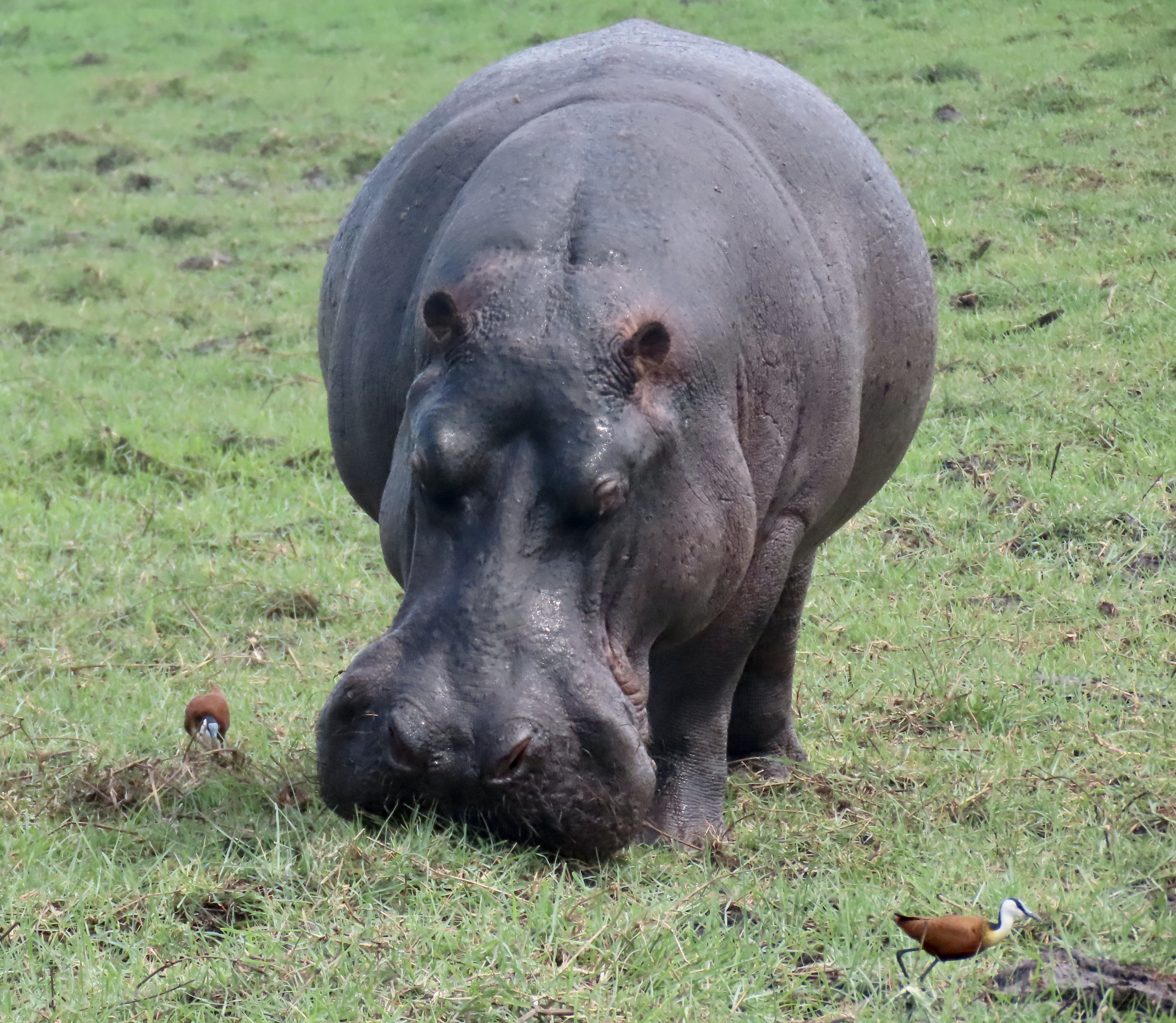
In Africa, we met another two toed ungulate. It’s hard to find one more different from the goats. The birds are hanging out nearby because the big fellow stirs up lots of bugs as it shuffles along.
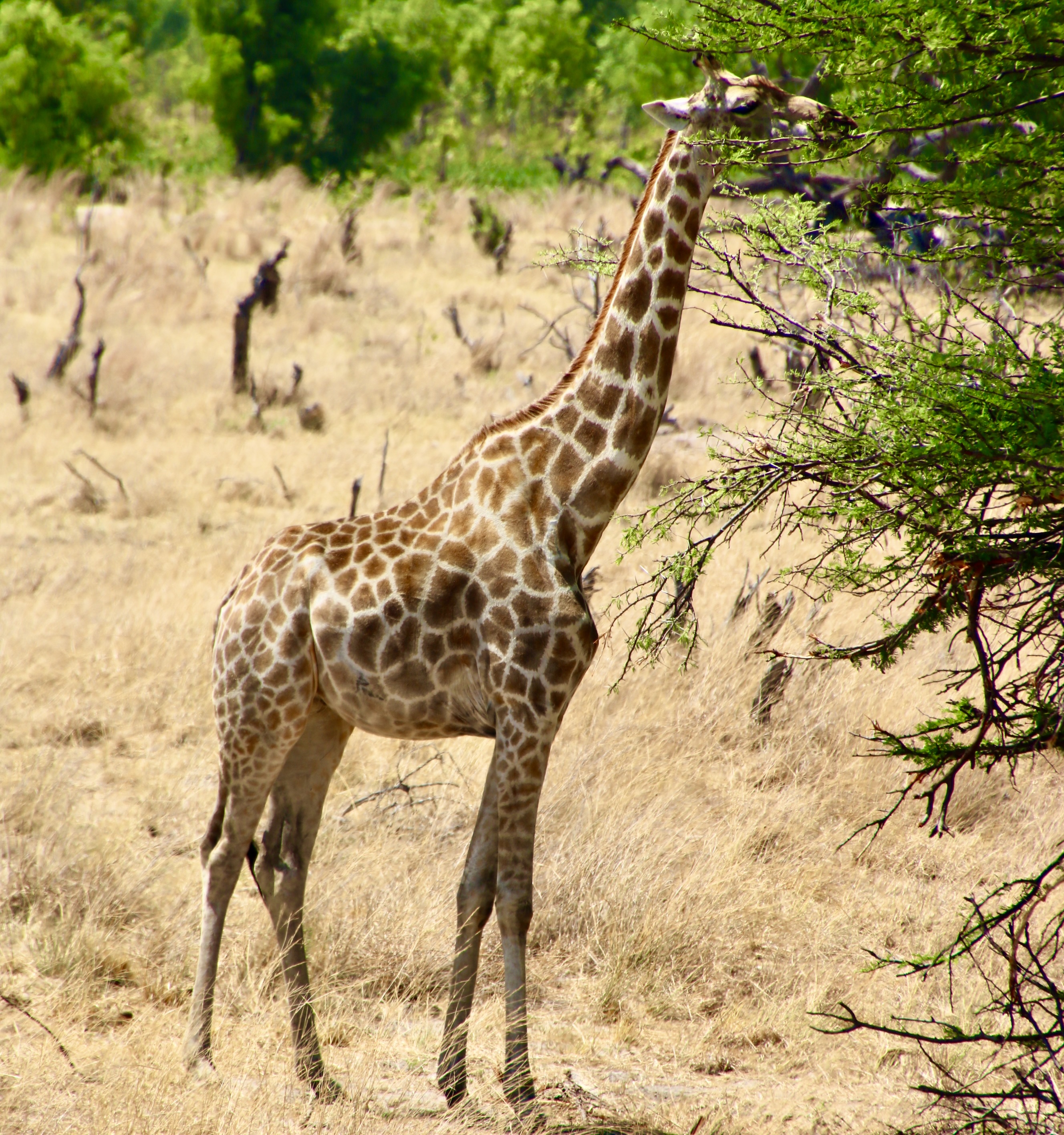
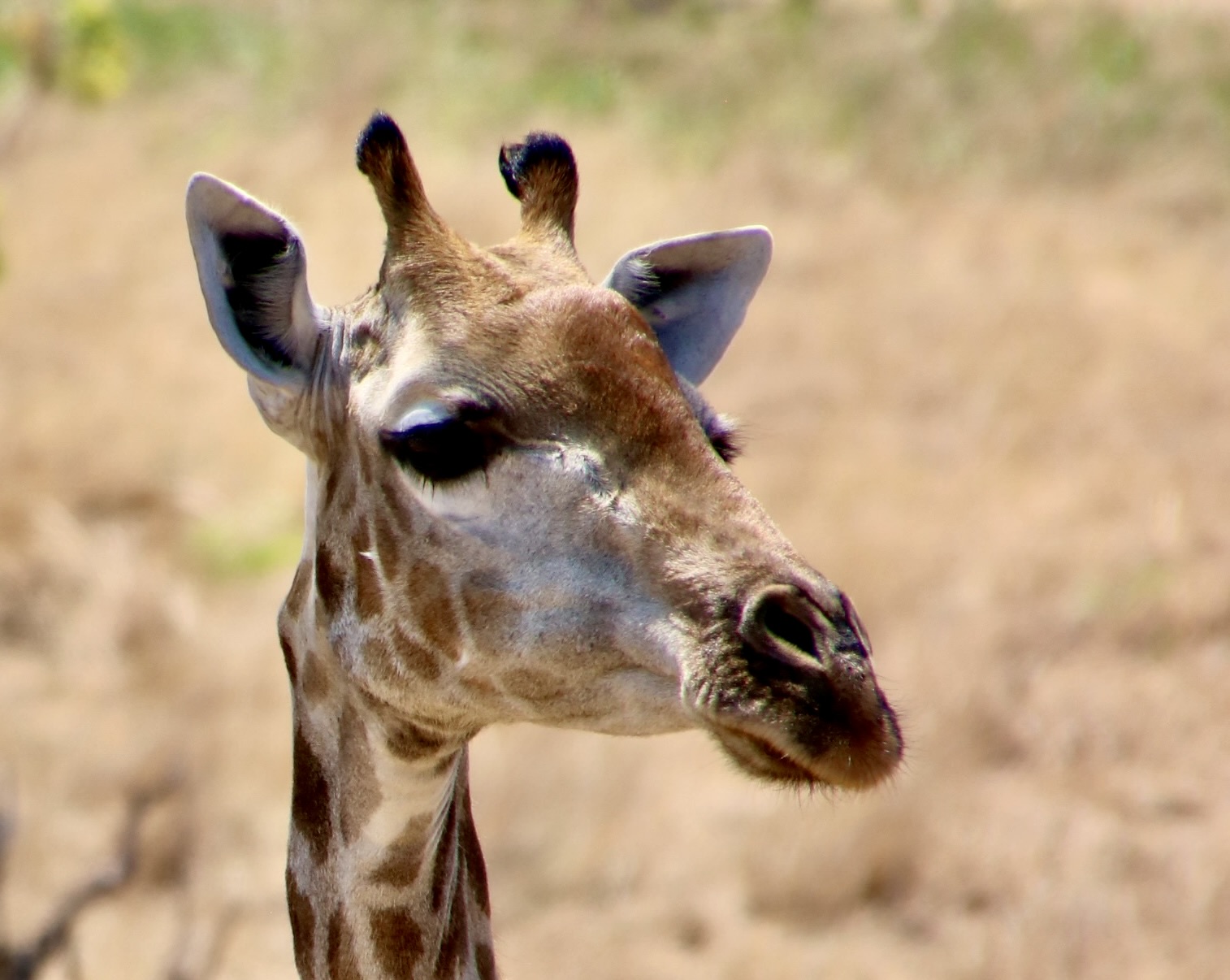
While we are on the safari, we might as well check out other African ungulates. The giraffe is by far the tallest.
A tree top perspective.
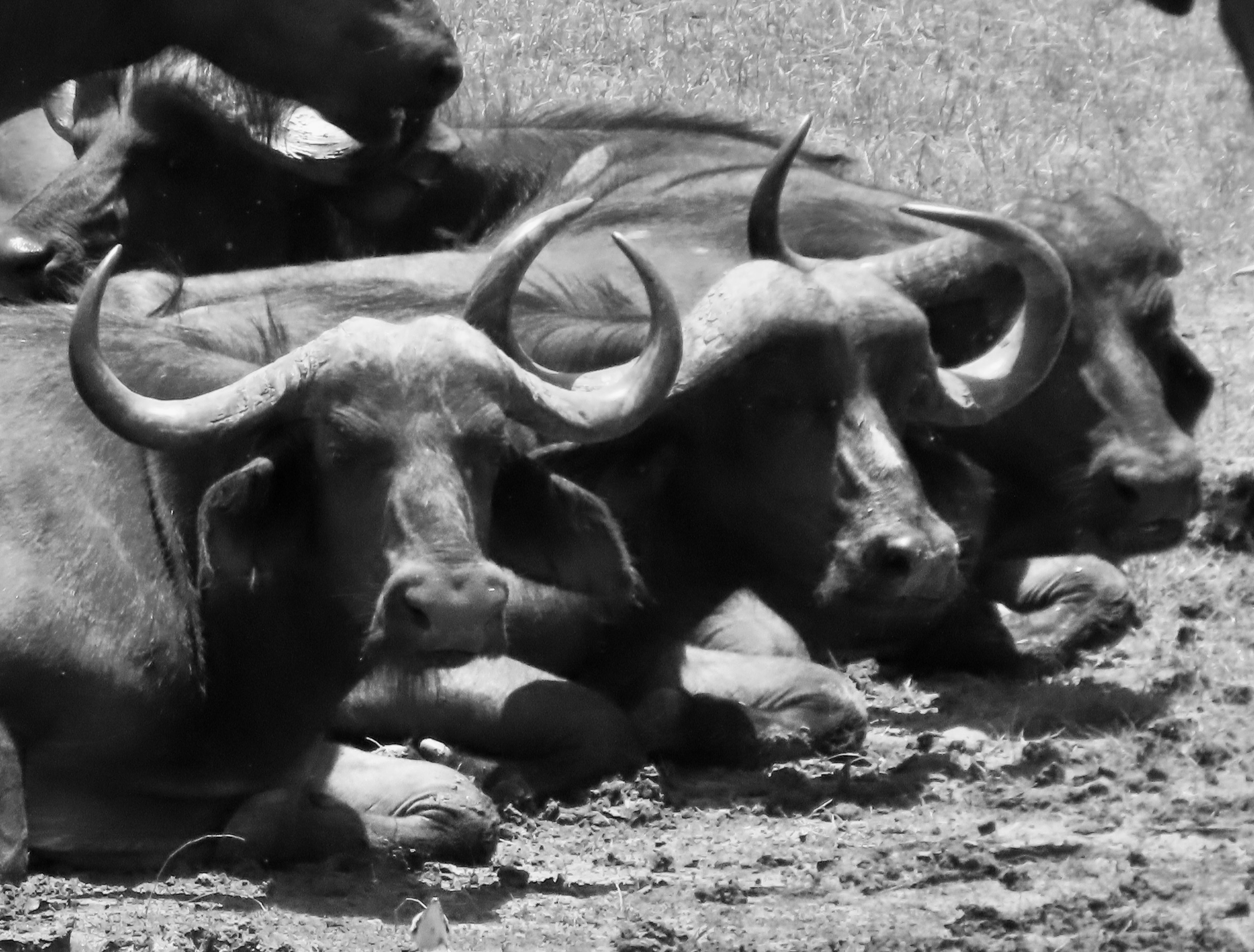
The most dangerous of Africa’s two toed ungulates: The water buffalo. This is their “What are you looking at?” pose. I liked how each of them had its knee bent exactly the same. Horns and hooves, like finger nails keep growing for life. Apparently, there is a lack of farriers willing to trim water buffalo hooves.
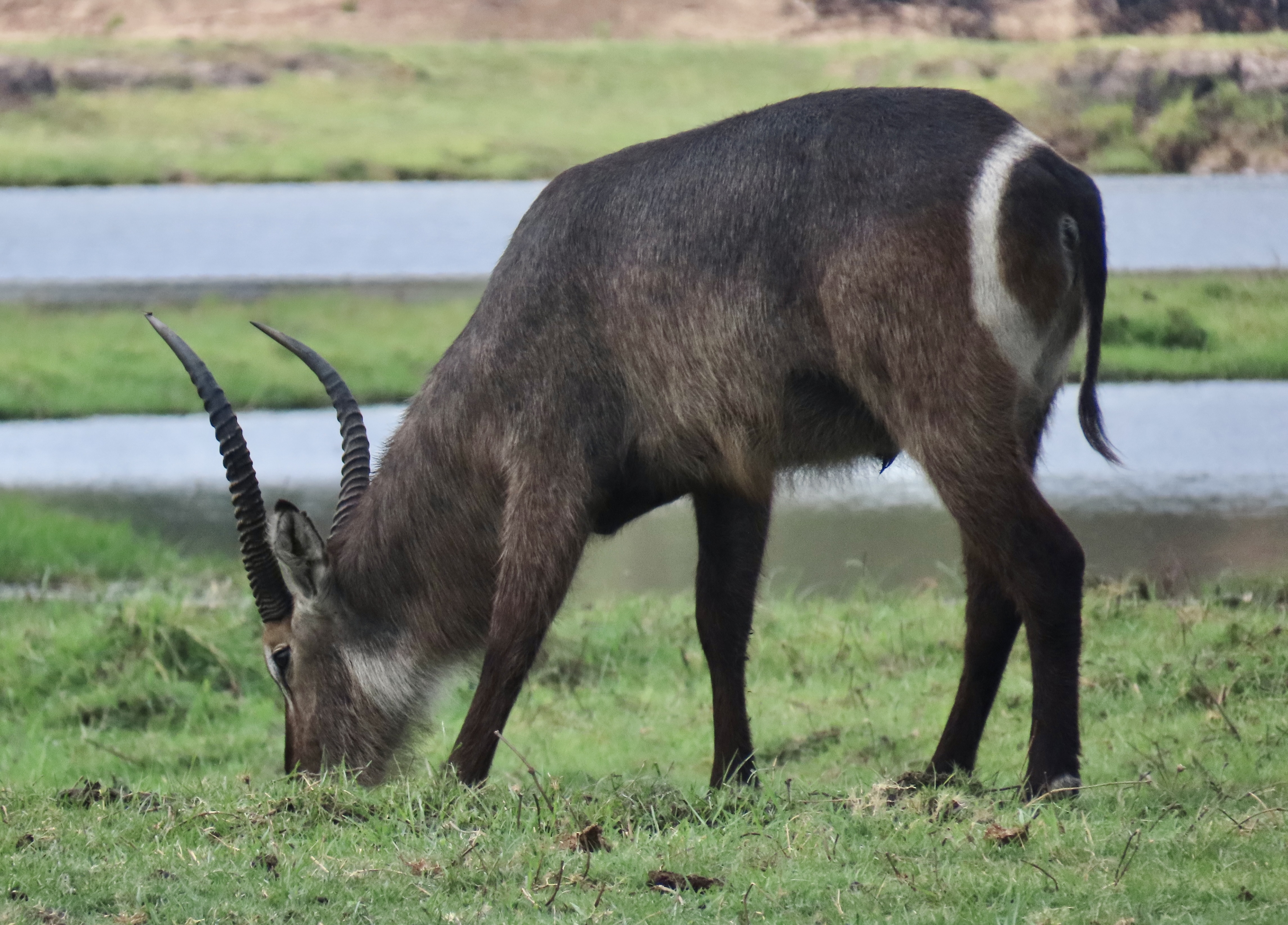
Africa’s numerous antelopes are also two toed. This antelope with a distinctive ring around its hind quarters is a waterbuck. Supposedly, the distinctive marking helps waterbucks follow each other when they are running through the woods. My guess is they would help a lion as well. “Target is in sight.” Horns, like hooves and your fingernails, are made of keratin.
“I’d like to interrupt this presentation to announce that I, too, am a two toed ungulate even though Curt and Peggy didn’t find me on the safari. It was on the Nile River trip.
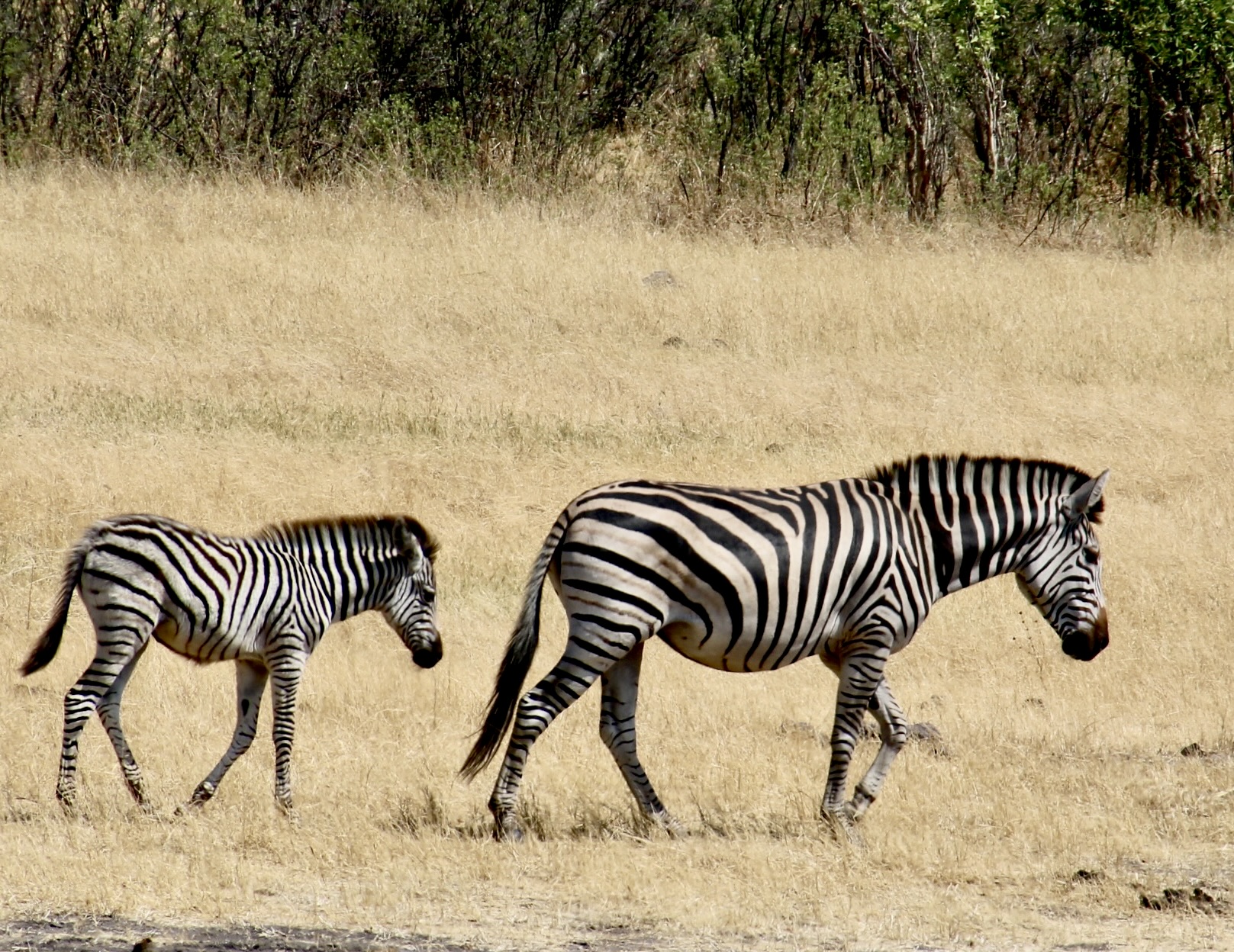
Apologies for the interruption. Like the horses, donkeys and mules they resemble, zebras are single toed ungulates.
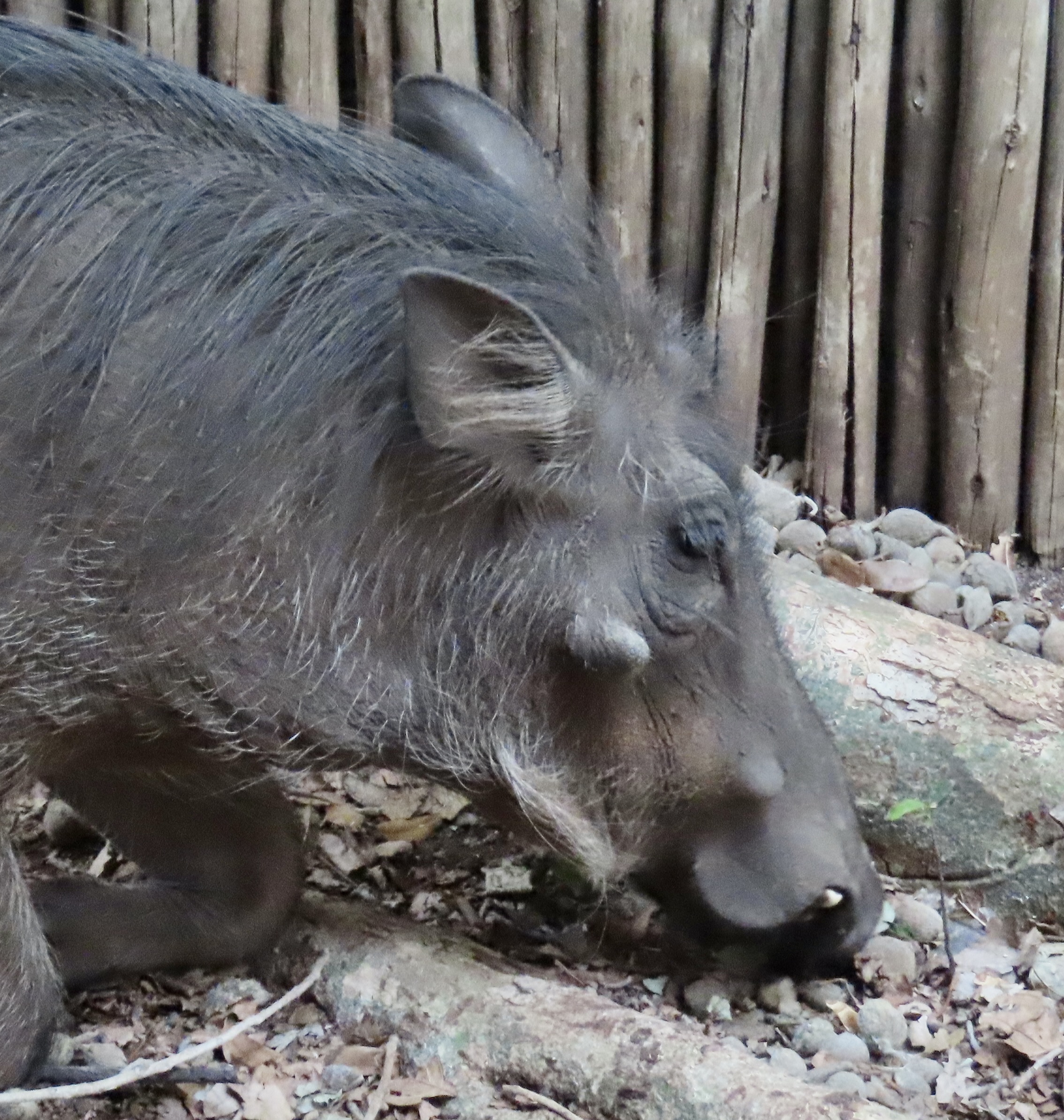
I close my coverage of two toed ungulates in Africa with the warthog. It’s always in competition for one of the ugliest mammals to be found. Or maybe, it’s just cute. Guess who this one is related to?
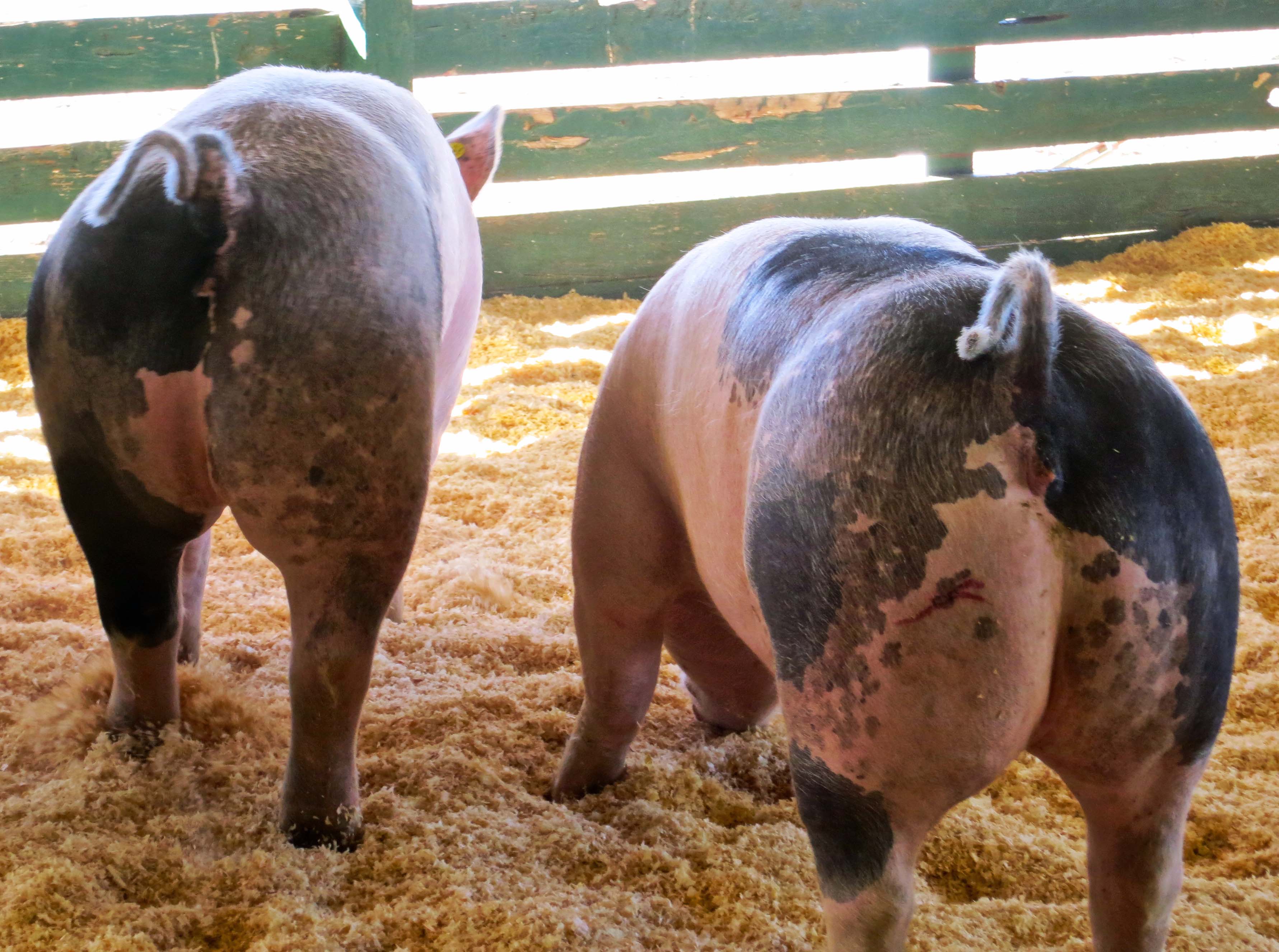
Yep. I found this handsome pair of porkers at the Modoc County Fair in northeastern California when I was on the way to Burning Man. Speaking of Burning Man, this is the time of the year that people sign up to attend the late August event that is held in the remote Black Rock desert of Northern Nevada. I often do a few posts around now to give newbies and curious folks an overview of what to expect. I’ve been going off and on since 2004. My friend Tom is trying to persuade me to join him this year in giving away hundreds of margaritas on the Playa. I’ll probably be rewarded for my work with all of them I can drink. Woohoo!
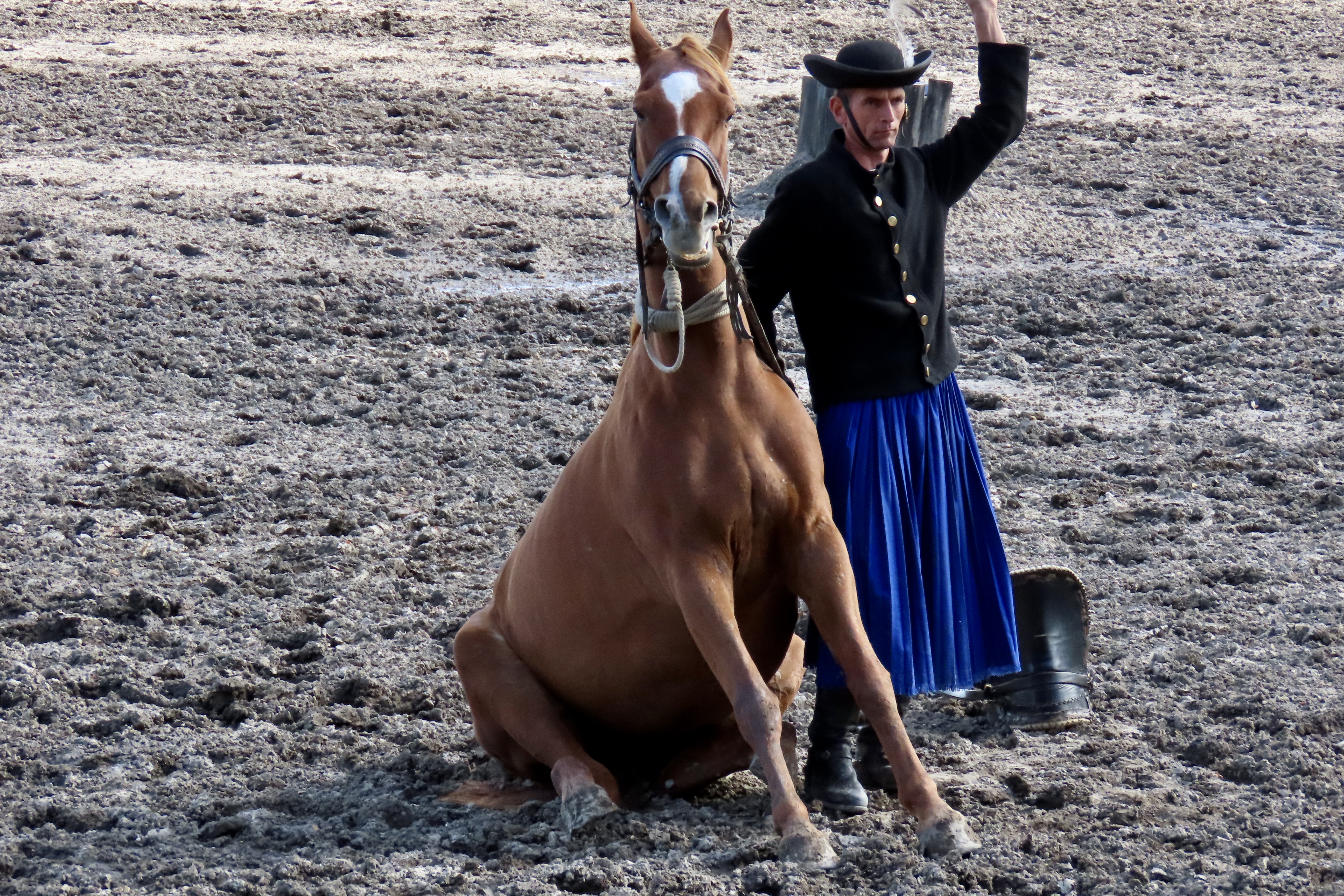
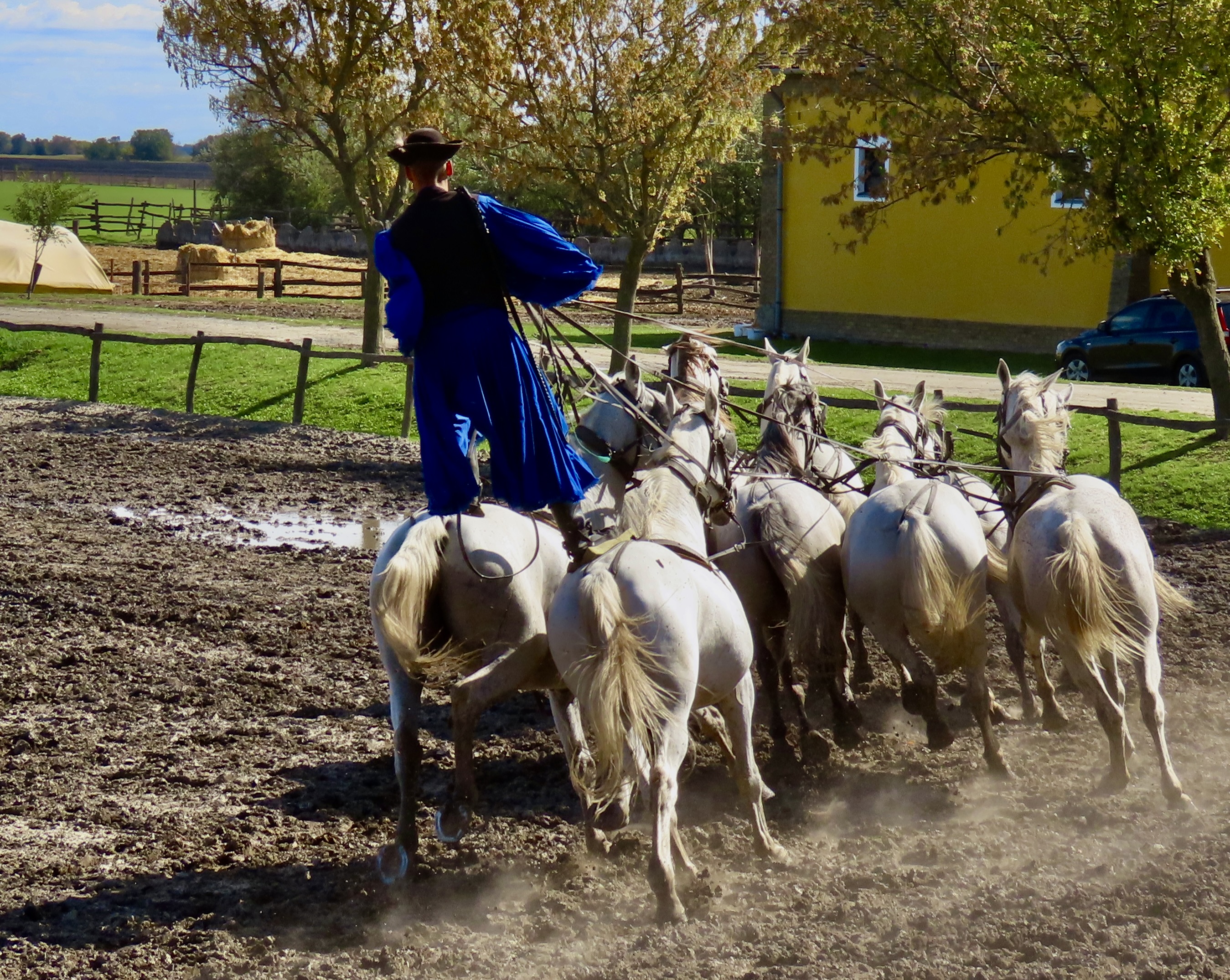
Horses are one toed ungulates. Rarely do you find them sitting on their butt in the mud, however. Why would they? But Hungarian Cowboys, the Csikós, do things differently. We took this photo at the Bakodpuszta Horse Farm in Hungary, on our trip down the Danube River.
Something else you wouldn’t find an American cowboy doing.
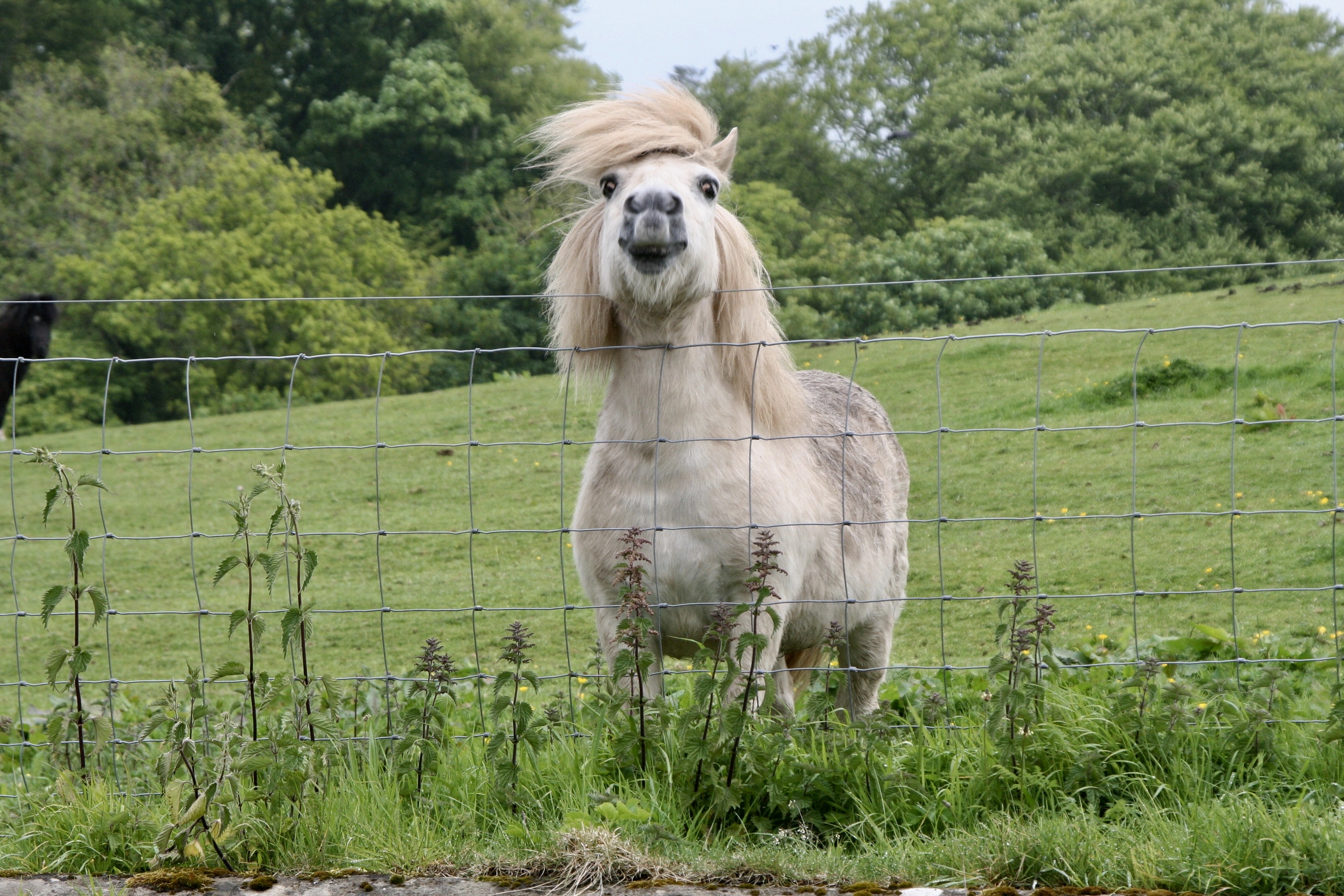
This cutie came dashing up to a fence to see us when we were searching for ancestors of mine in Lowland Scotland near Stranrae. Given its excitement, I wondered if it wasn’t an ancient relative of mine reincarnated as a Shetland pony.
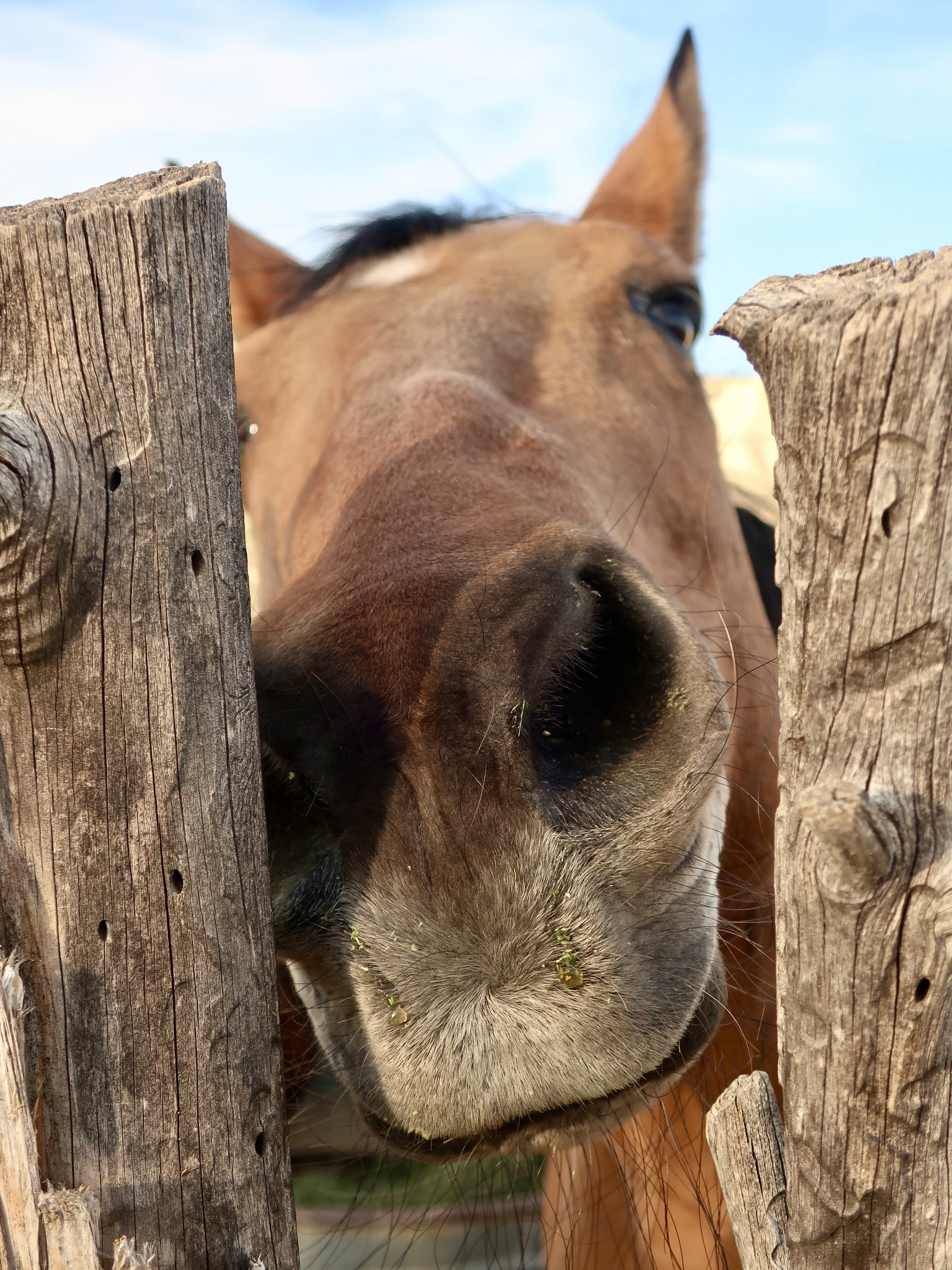
I featured this horse in a promo for today’s post. He was hanging out on a ranch near Bryce Canyon National Park in Utah. I think it probably had high hopes for an apple..
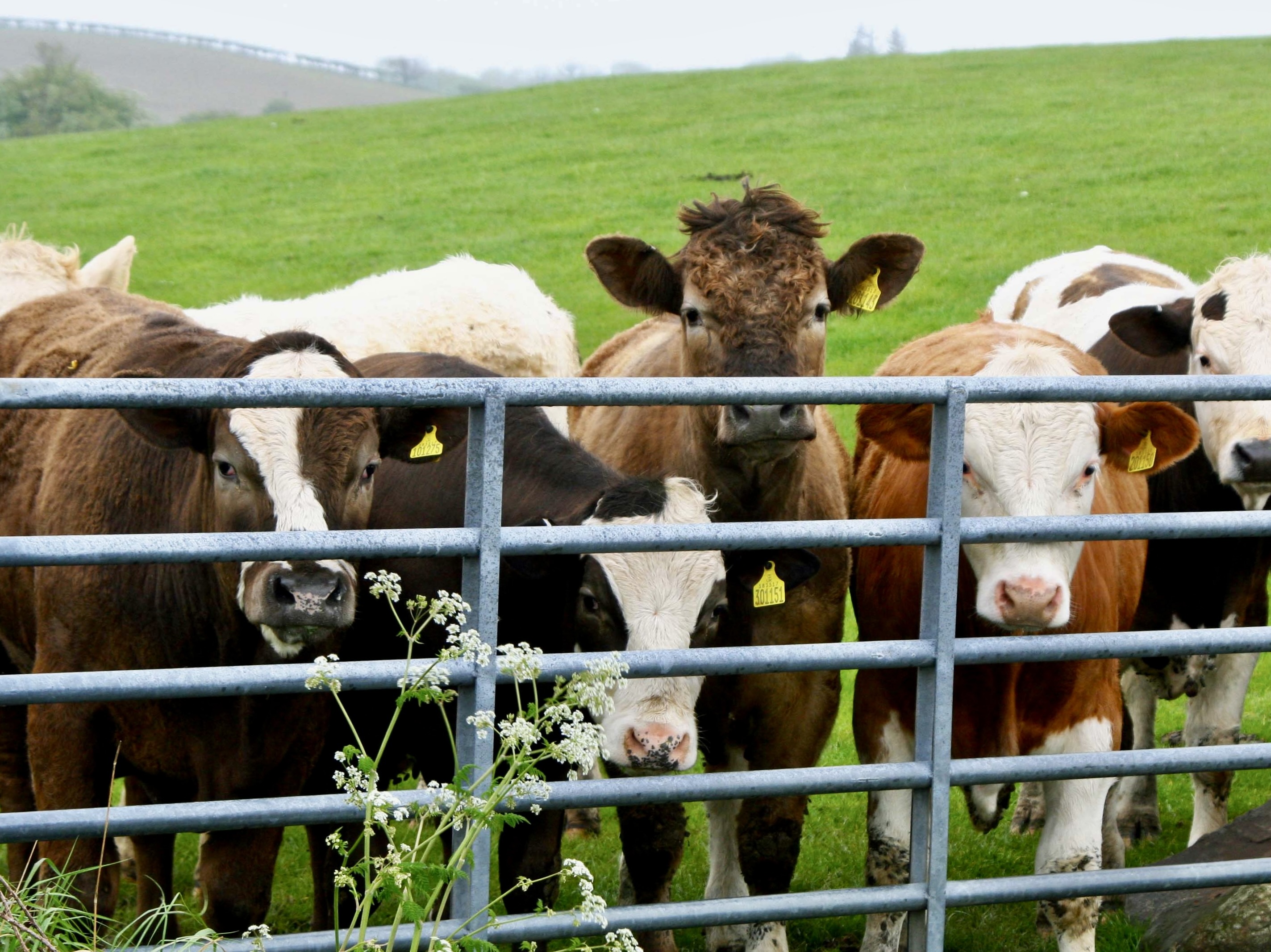
Cattle are two toed ungulates. We went looking for the unique Scottish Hielan coo (Highland cow) while we were in Lowland Scotland but only found what we normally find wandering around North America. Like the Shetland, they ran over to check us out.
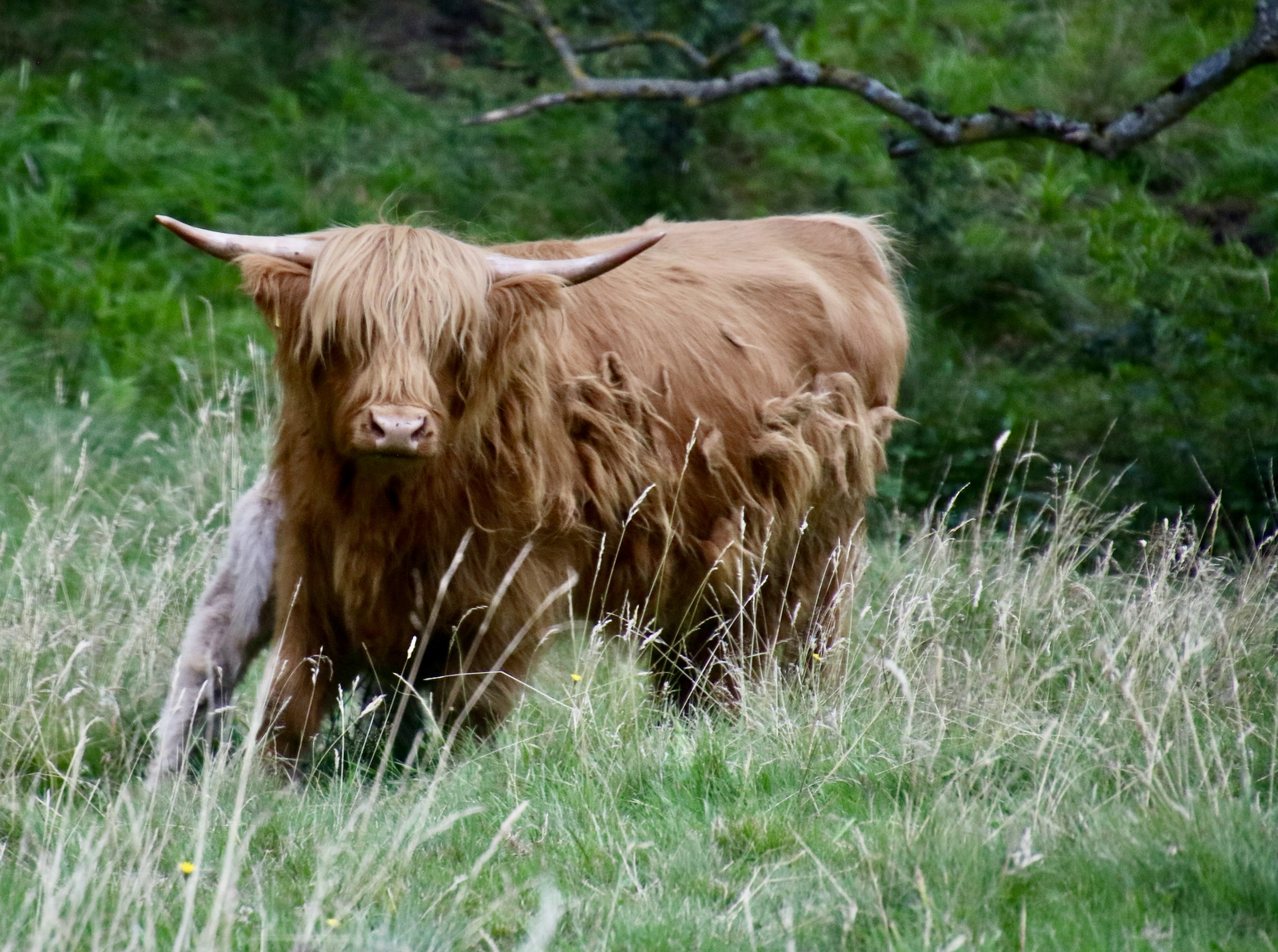
We found this Hielan coo in the Black Forest of Germany. Go Figure. This summer we are going to be exploring the Highlands of Scotland instead of the Lowlands. We are expecting to find the coos where they belong.
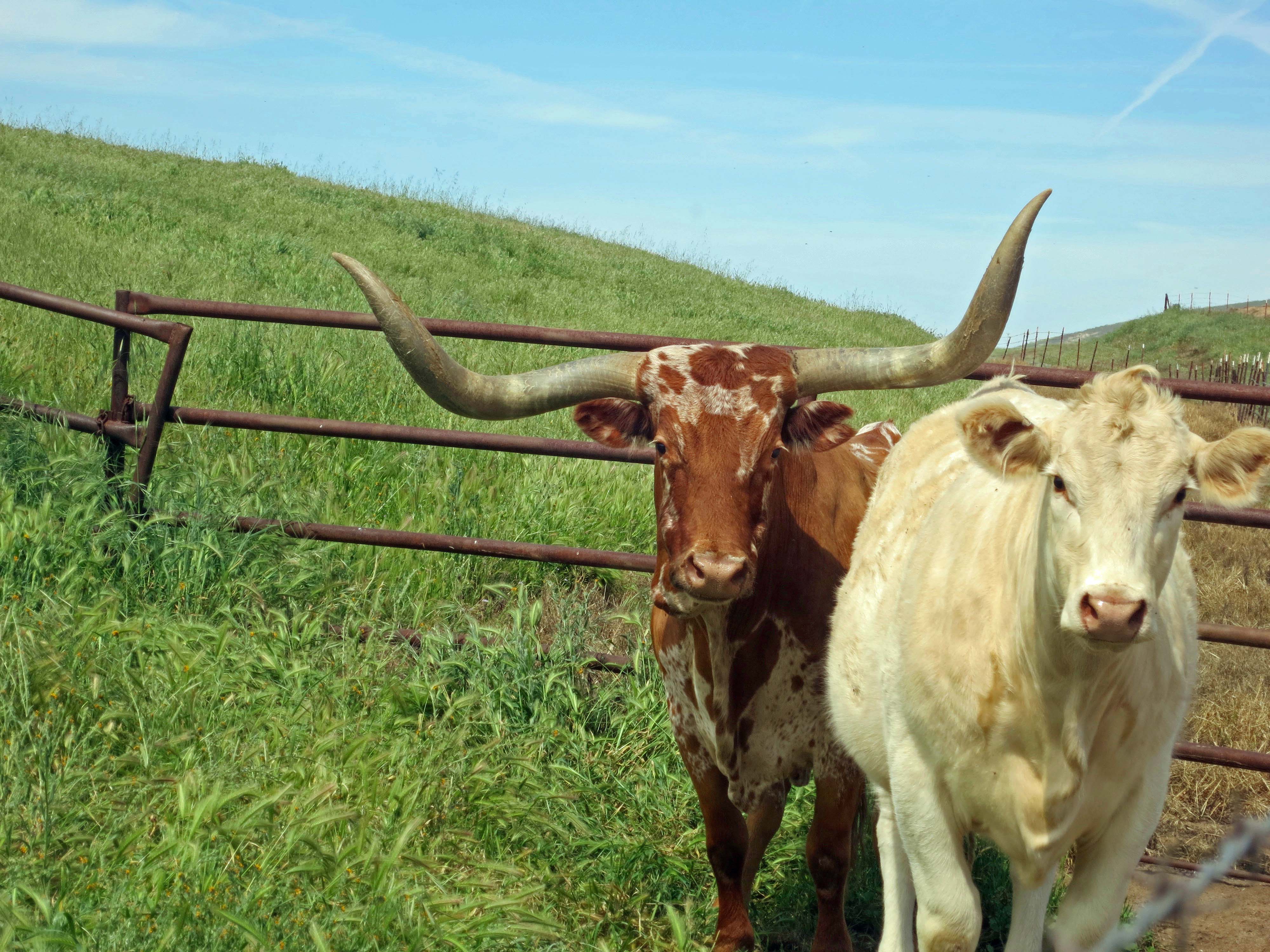
This two toed ungulate with the large horns is immediately recognizable. It’s a Texas longhorn. We found it in the foothills of California.
Not so clear in terms of heritage was this strange looking steer. But we found it about a mile from the gate to Area 51 in south eastern Nevada. Could it have been a cleverly disguised visitor from outer space? Hmmm.
Scottish sheep photo by Curtis Mekemson.
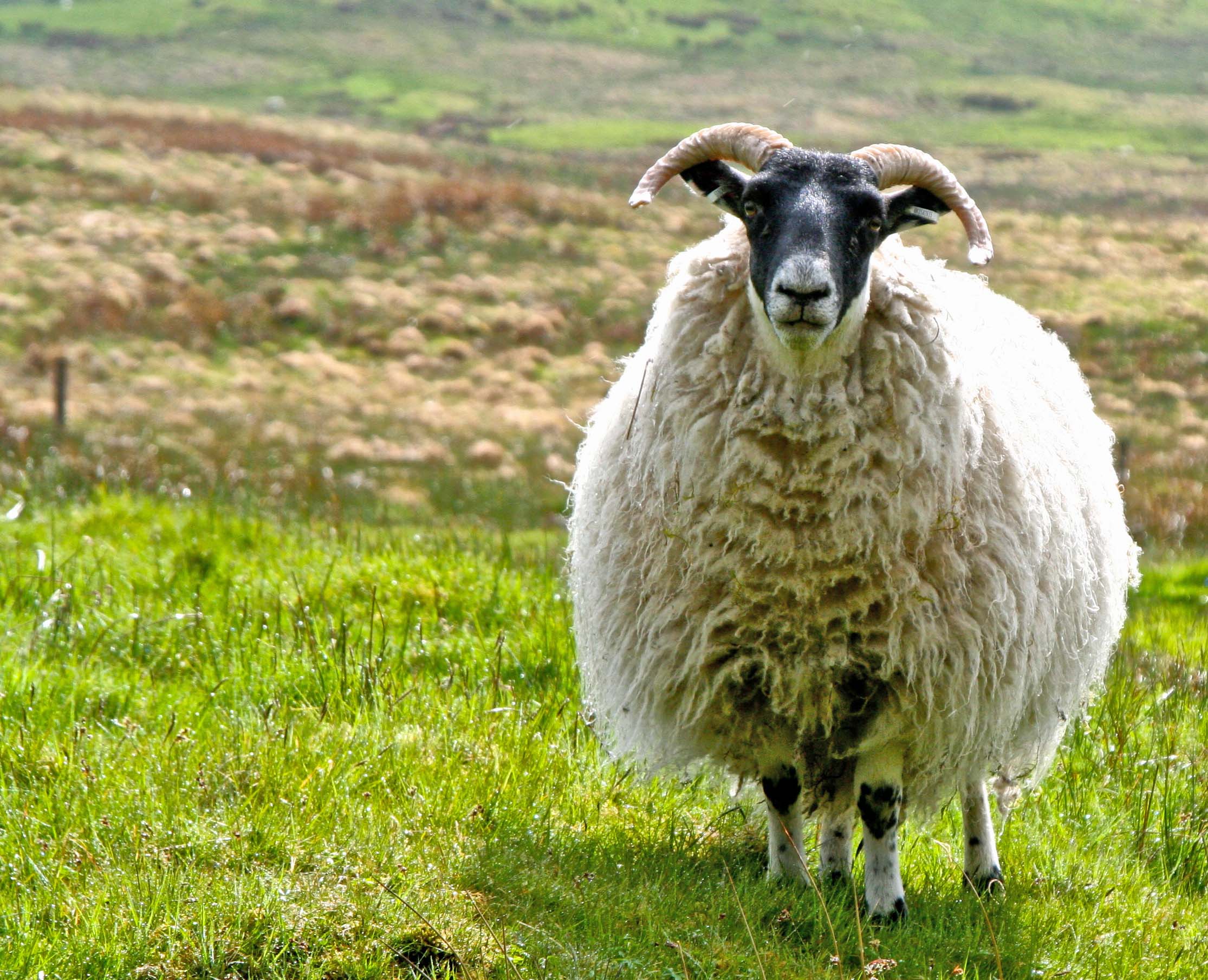
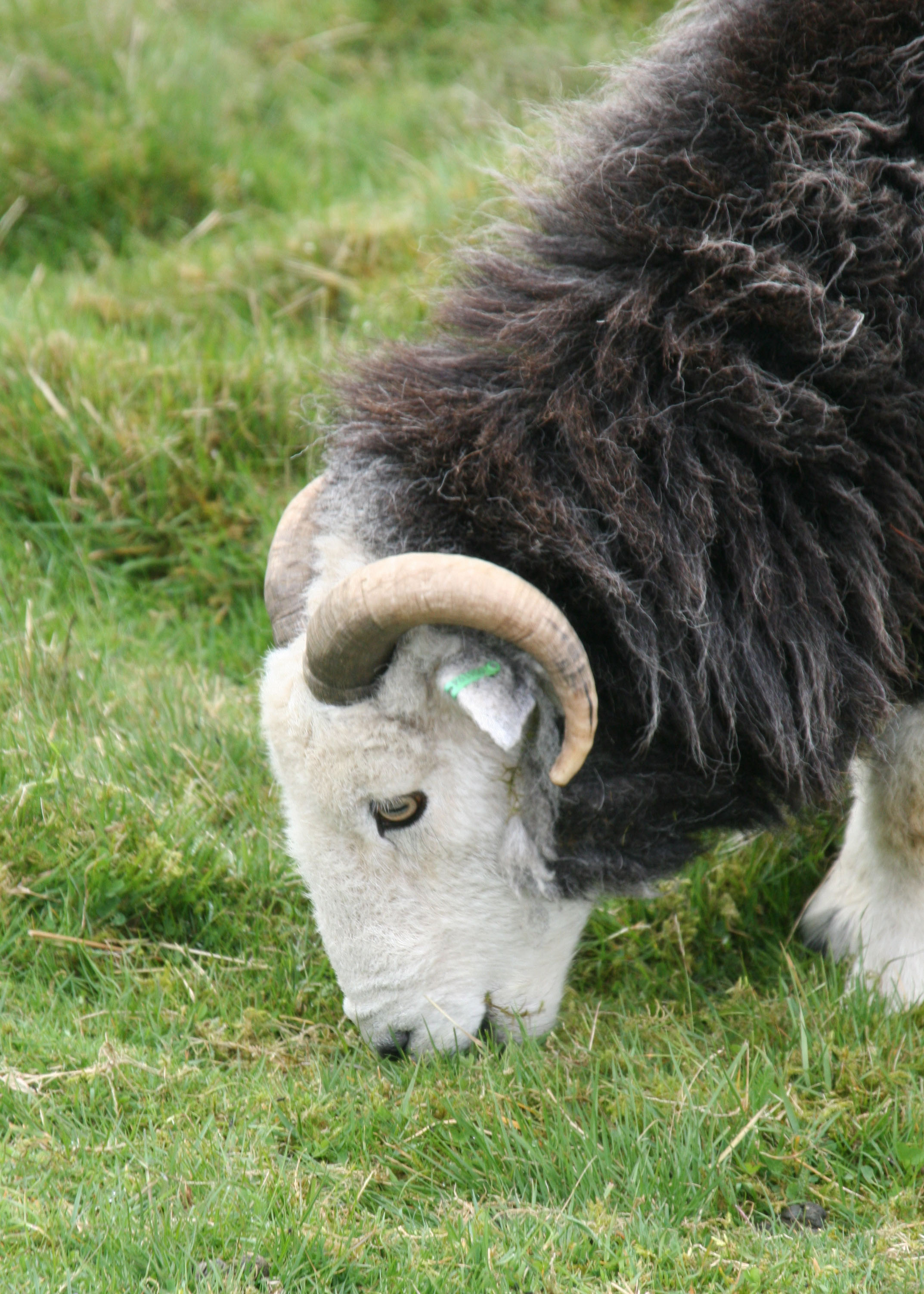
Sheep are also two toed ungulates. This stout fellow had been blocking a small rural road when we were lost in Scotland. It was being baaad. Had its body been black, I would have cited the old nursery tale to it: Baa, baa, black sheep have you any wool? Yes sir, yes sir, three bags full. BTW, sheep are closely related to goats and on rare occasions even crossbreed. Their offspring is called a geep. And no, I’m not making that up.
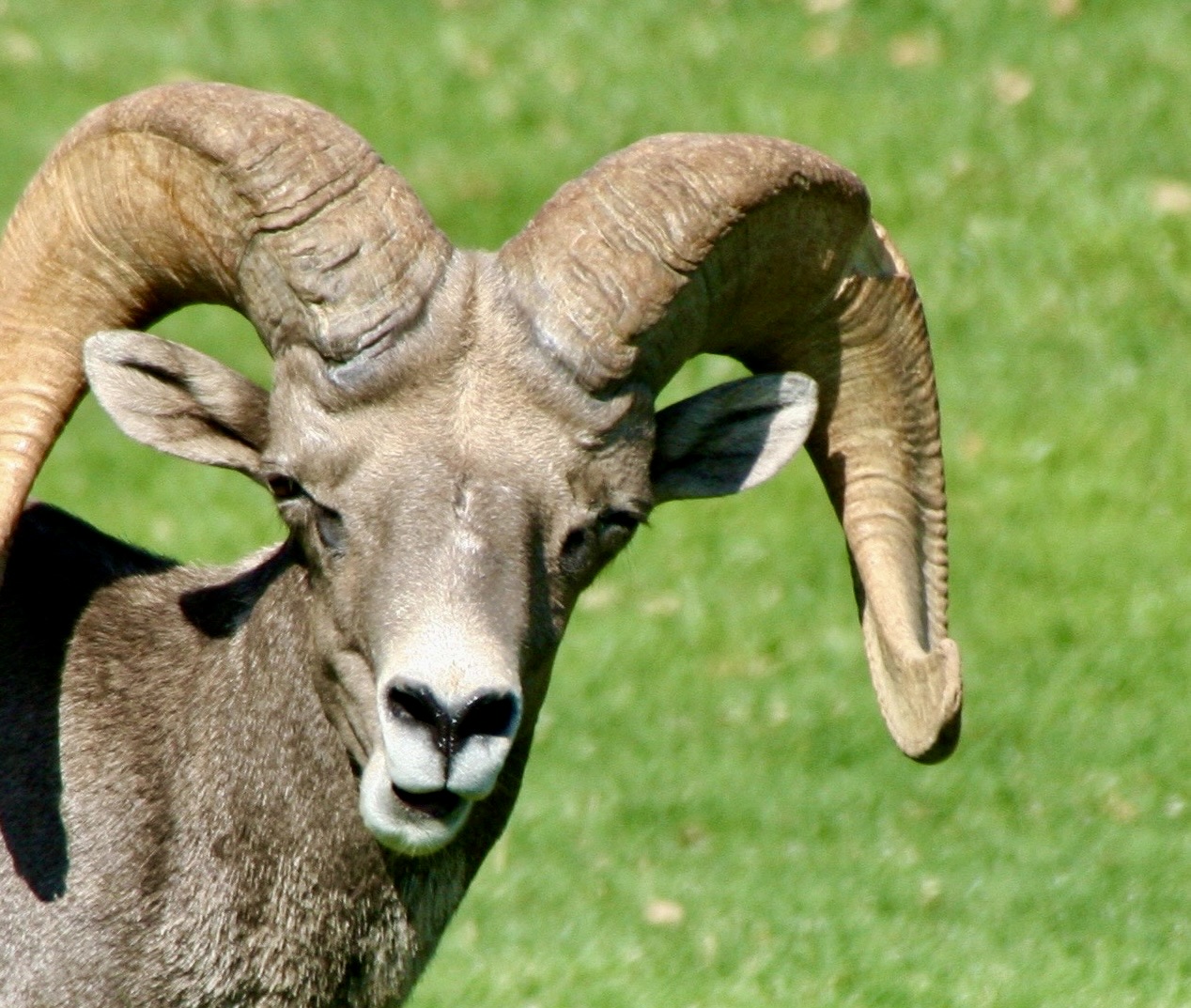
Among sheep, nothing—from my perspective— is more regal than the wild big horned sheep of the deserts and mountains of Western North America. This magnificent example chewing his cud had bought his herd down to graze at a small county park between Las Vegas and Lake Mead Nevada.

There’s a fun story here. The big ram above had been bringing his flock down to the park from the mountains for years when a new subdivision was built beside the trail. This didn’t seem to bother the big horns and you can imagine what a treat it was for the people. But then, one of the home owners put a shiny aluminum door on his garage next to the trail. The leader looked over and saw his reflection. Except it wasn’t his reflection in his mind. It was another lage male challenging him for the leadership. He reared back and charged at the same time the other big horn did, again and again. Nobody was going to get his nannies. The story the locals told us was that the owner of the garage door had a really hard time convincing his insurance agent how the damage had been caused!

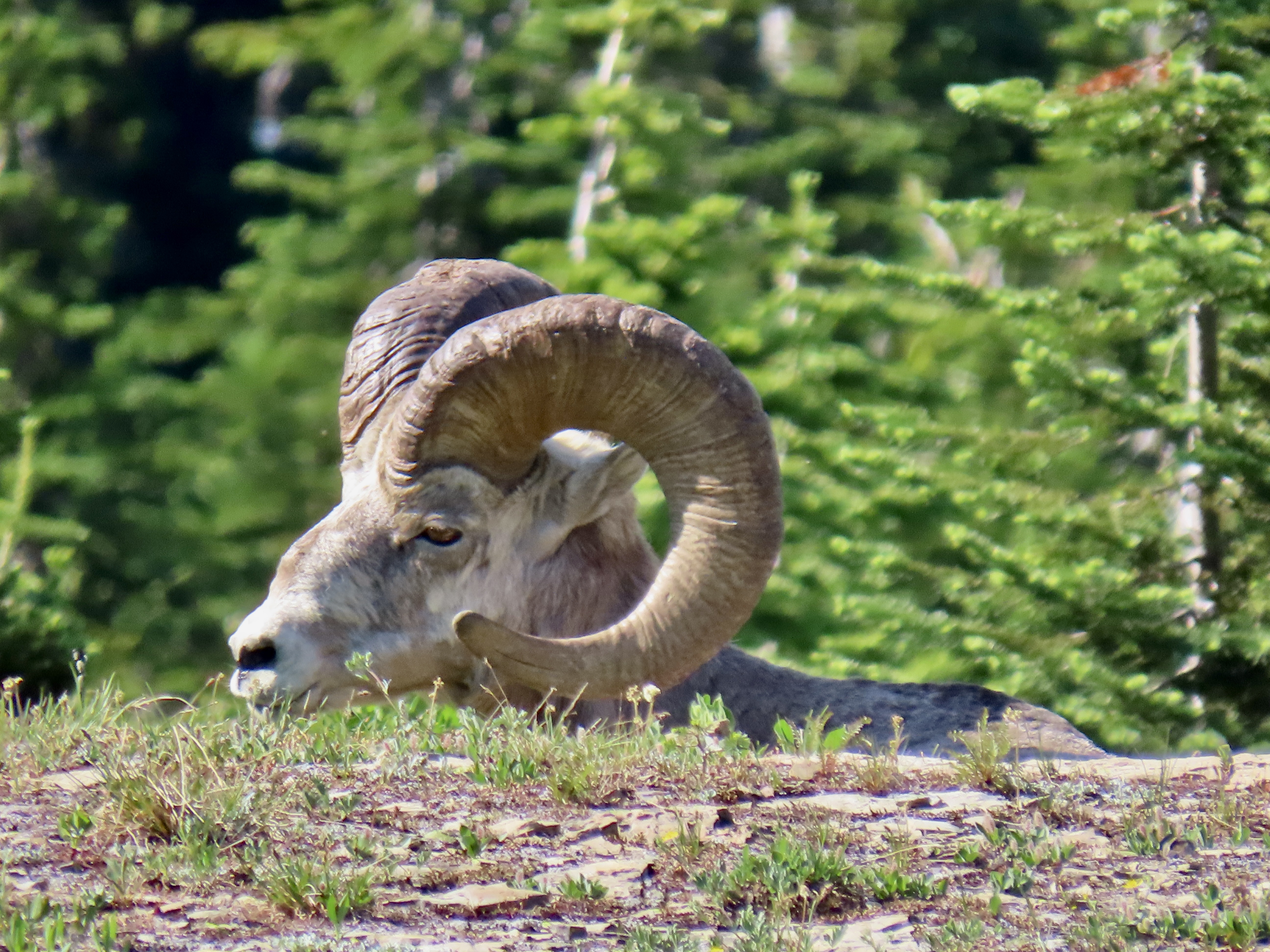
A big horned sheep at Glacier National Park.
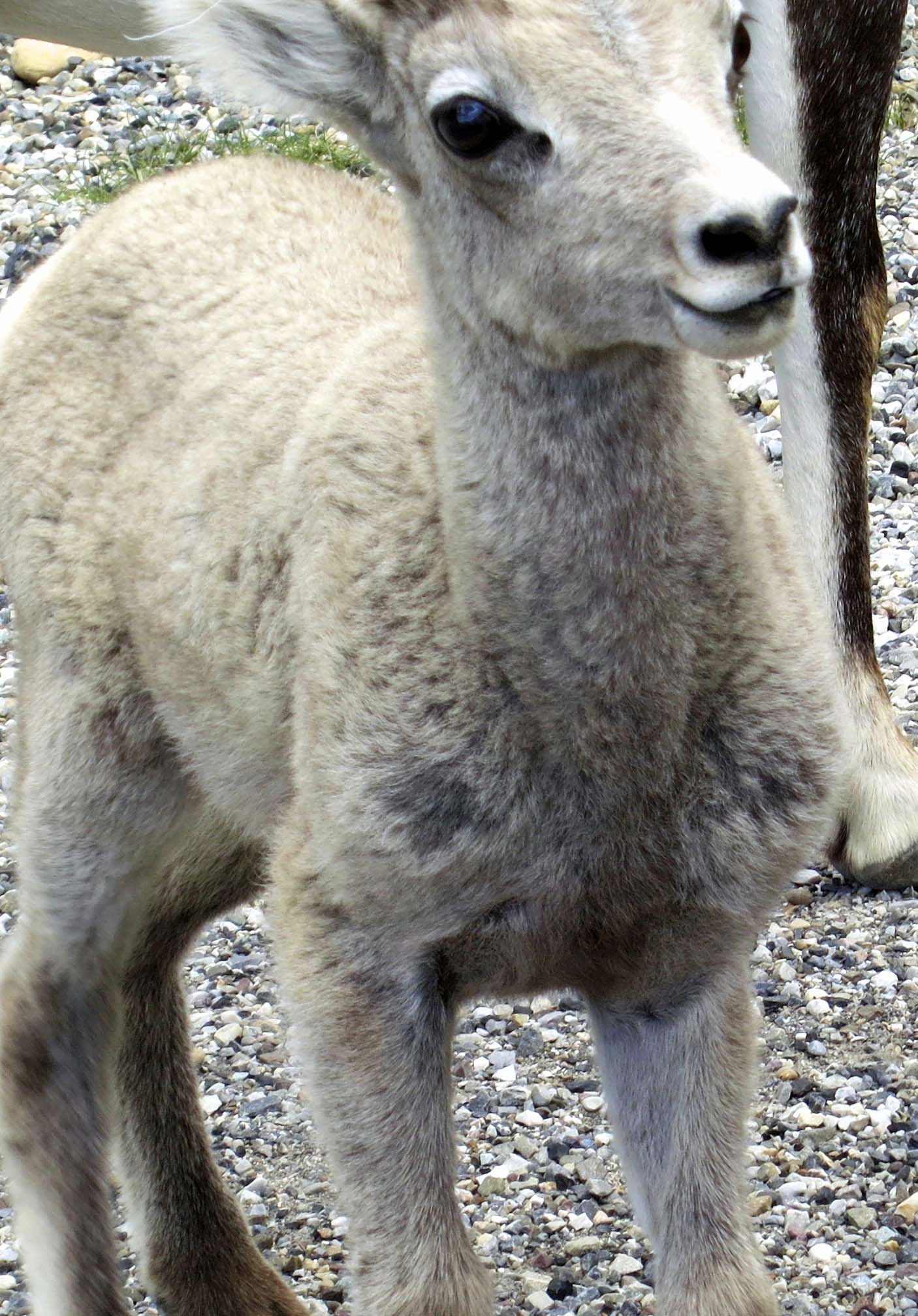
This young big horn sheep was standing beside the Alaska Highway in Canada’s Yukon Territory.
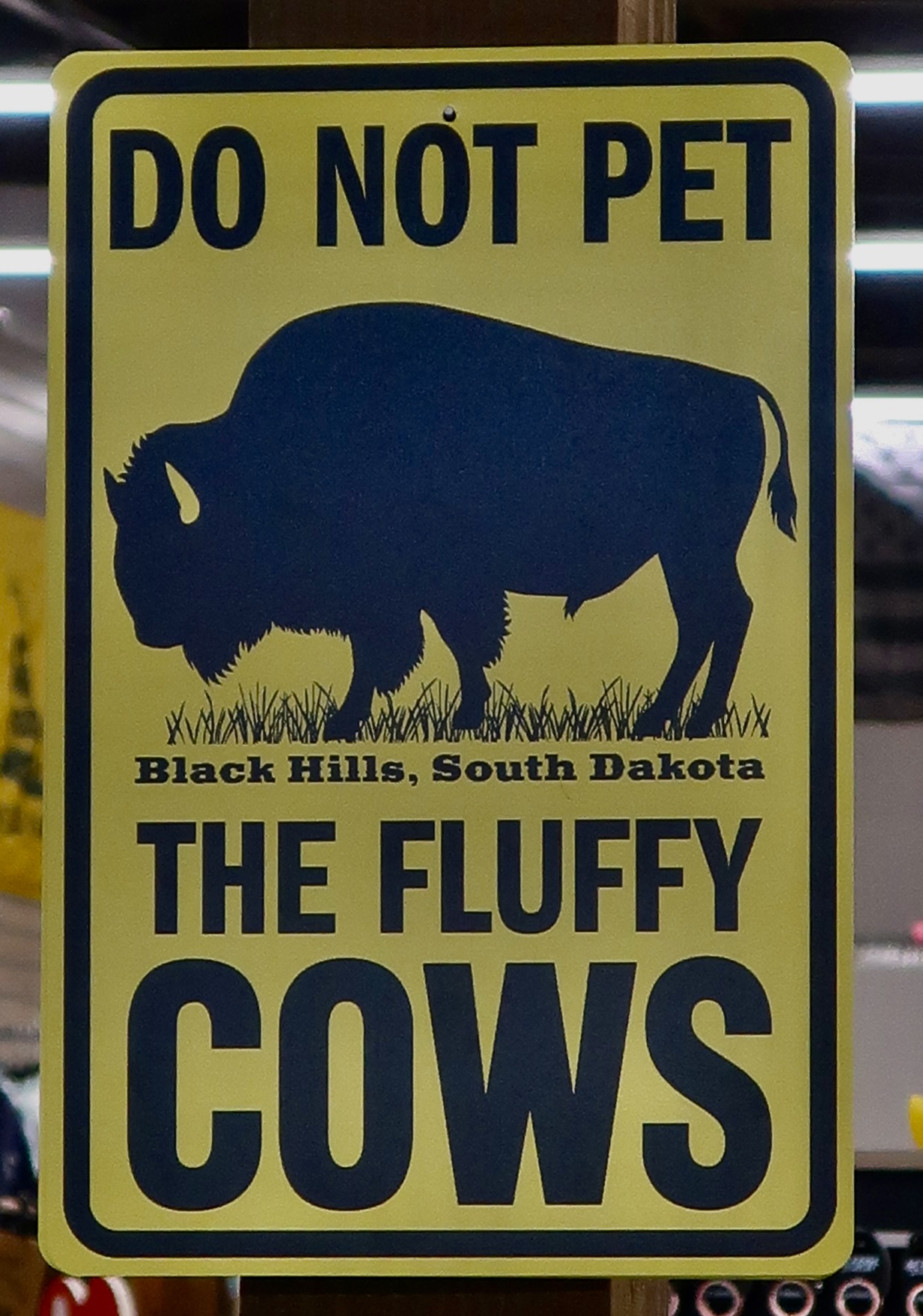
Buffalo are another two toed ungulate. This sign was located in a store in Custer, South Dakota. We were on our way to Custer State Park. It’s good advice.
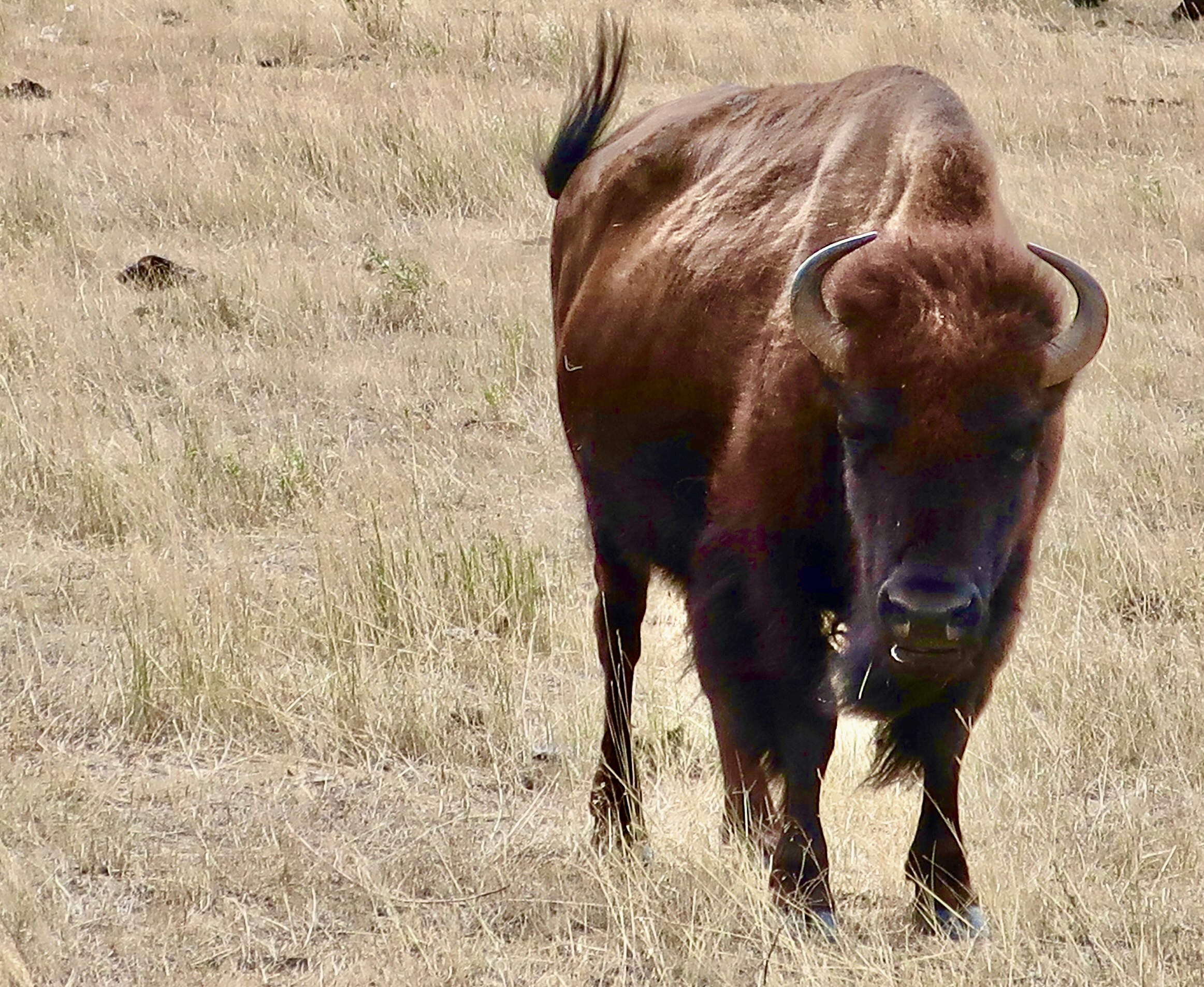
If a buffalo stares at you, raises its tail, paws the ground and grunts, you are too close! It’s best to stay at least 75 yards away. Farther if there are calves around. This youngster was feeling its oats even though I was using my telephoto lens from a safe distance.
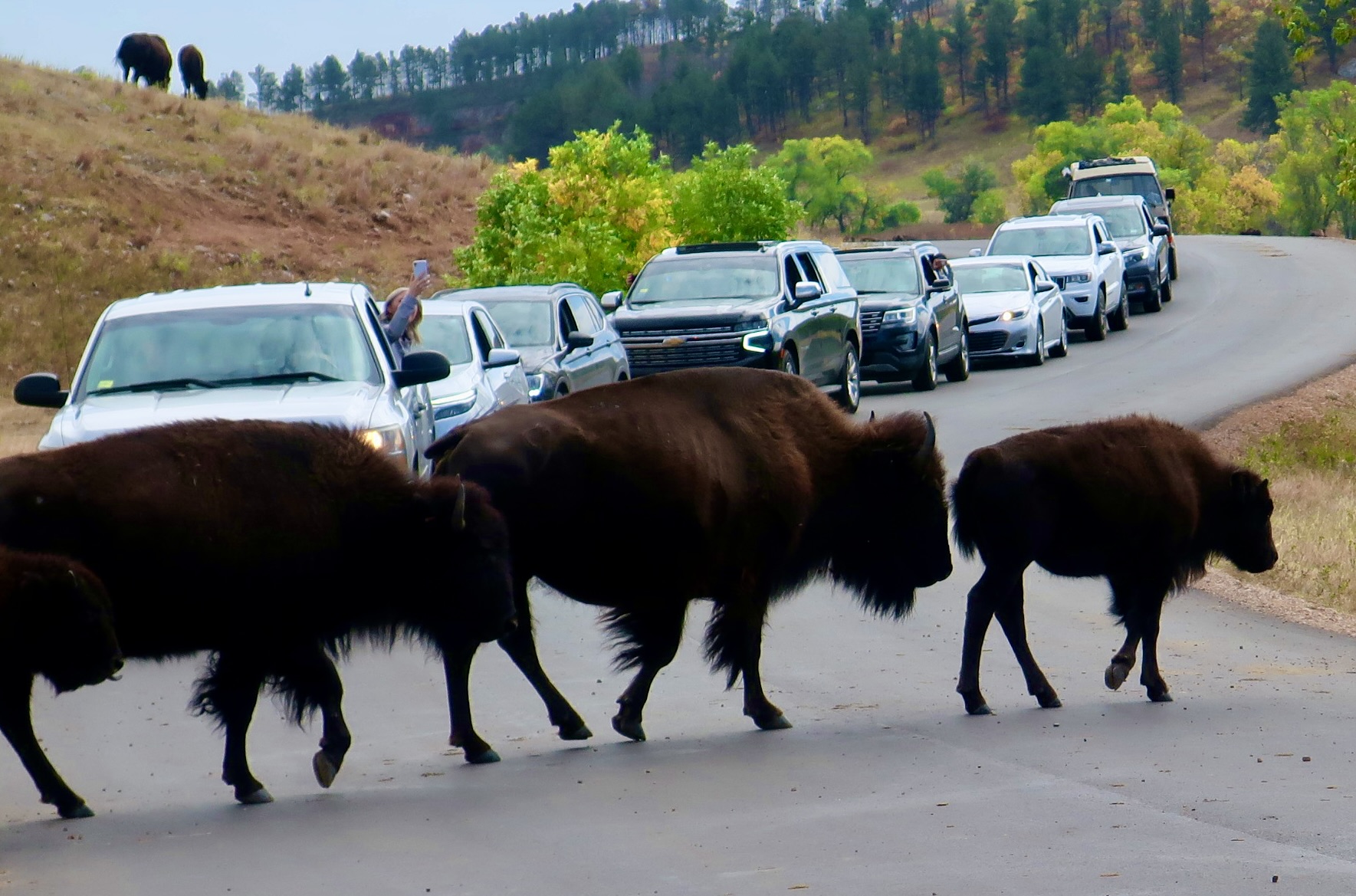
The family of buffalo was crossing the road in Custer State Park. We waited patiently and took photos from the safety of our truck.
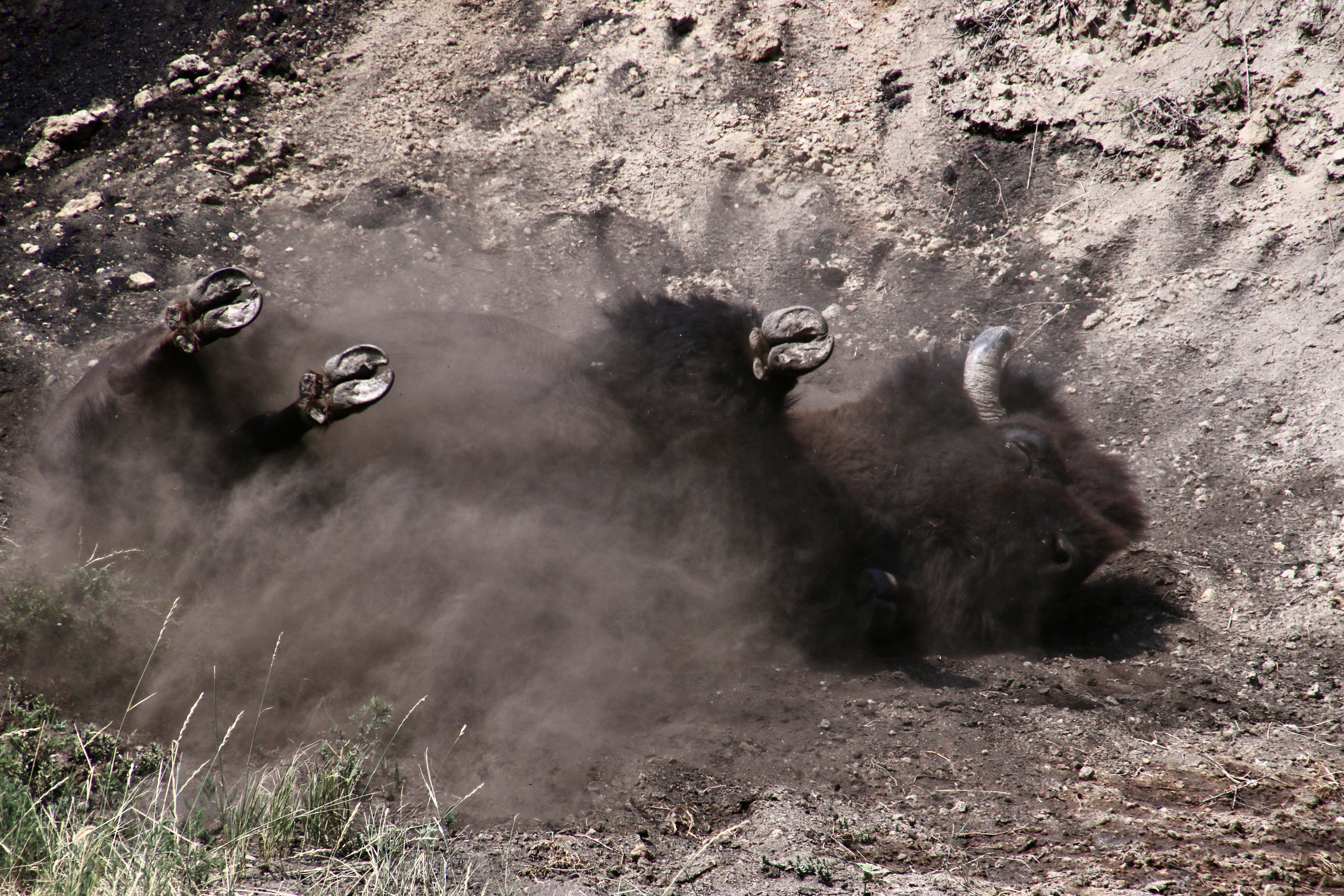
Have you ever wondered how buffalo create their buffalo wallows? We caught this one wallowing away and taking a dust bath in Theodore Roosevelt National Park in North Dakota. It provides a good look at a two toed ungulate.
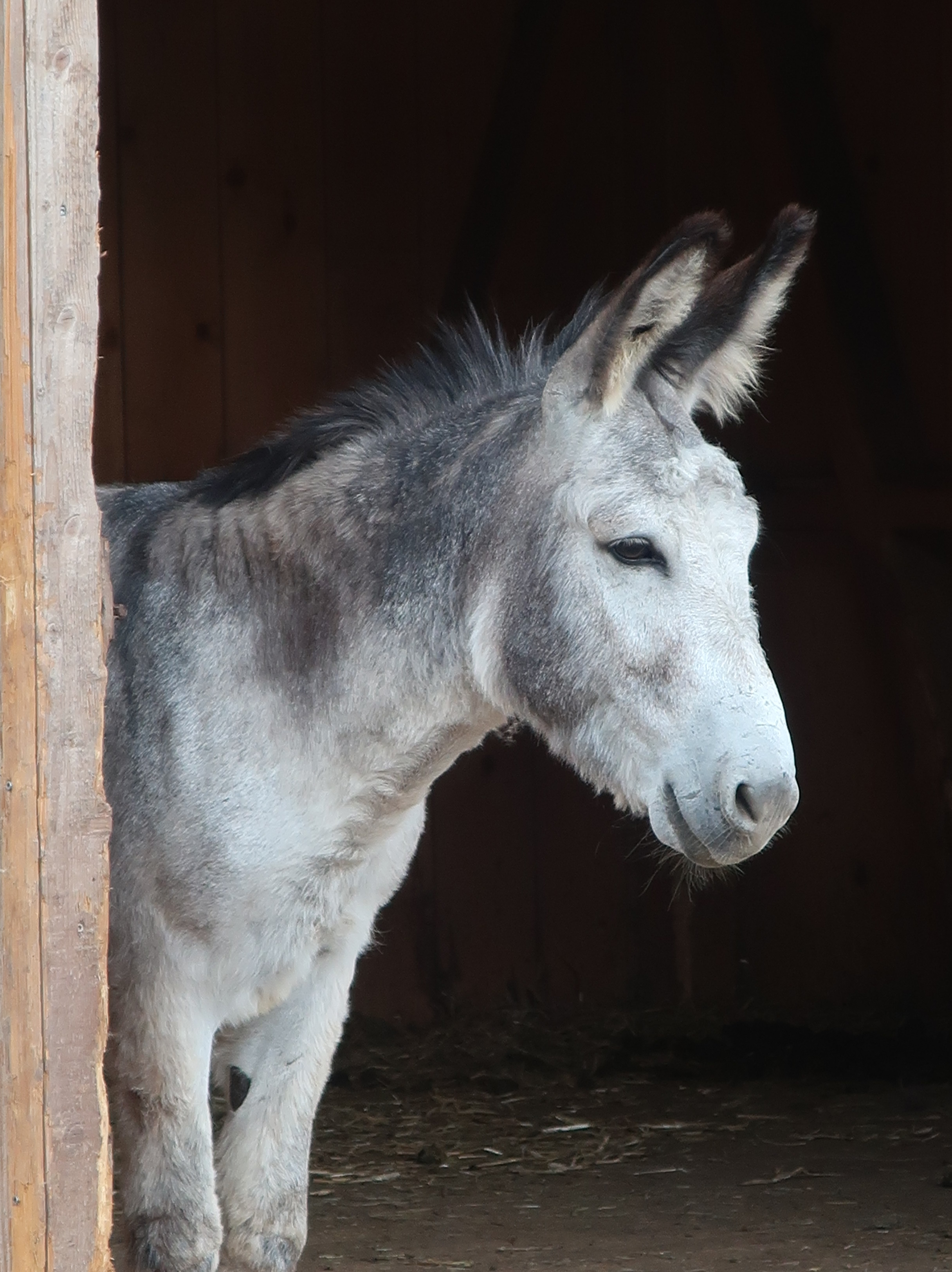
I’ll close this post with what are our favorite one toed ungulates: Donkeys. This beauty was standing in a shed in Germany’s Black Forest.
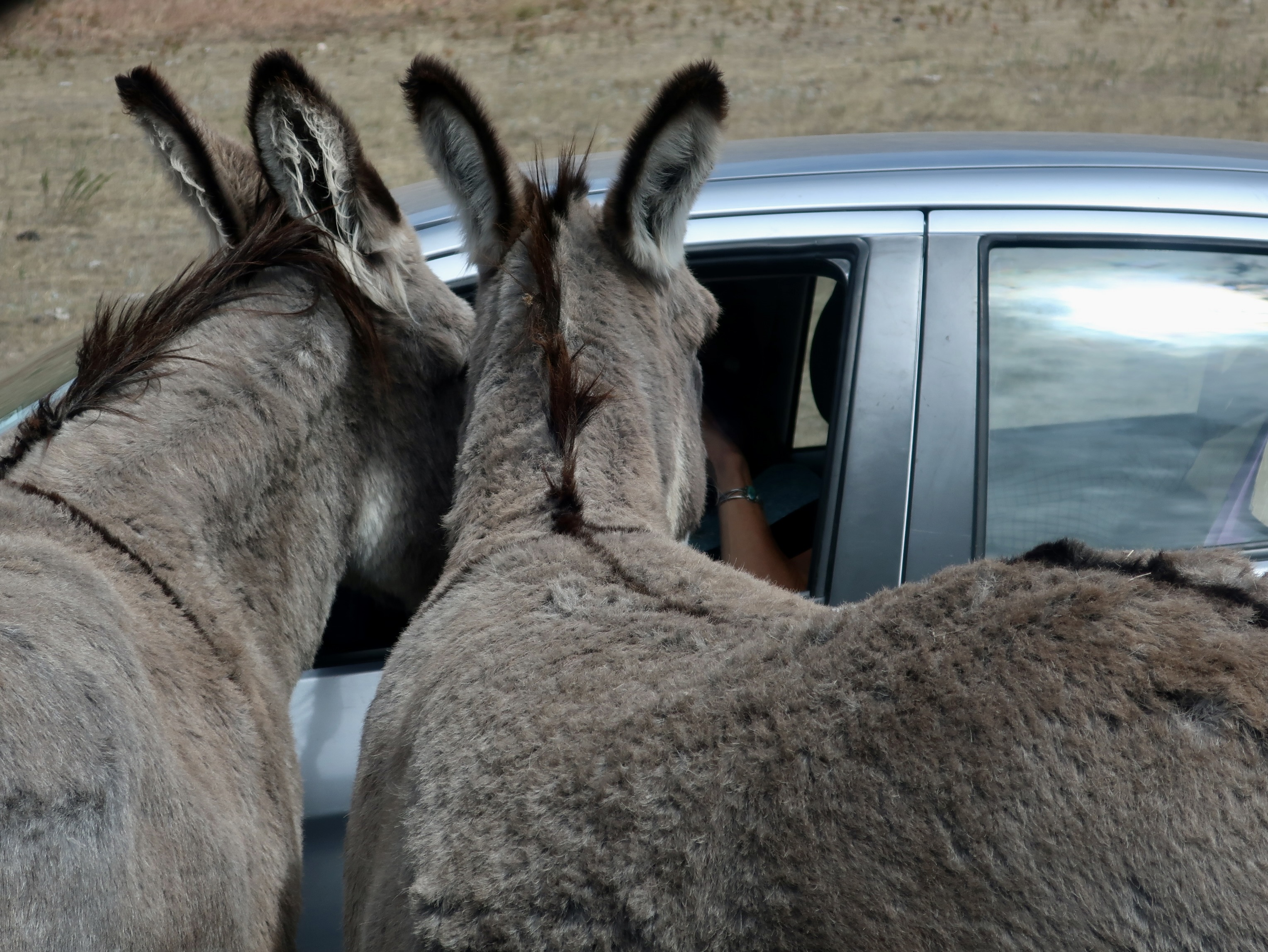
There were more than buffalo stopping cars at Custer State Park, South Dakota These two answered the age old question of how many donkeys can stuff their heads in a car’s window at one time.
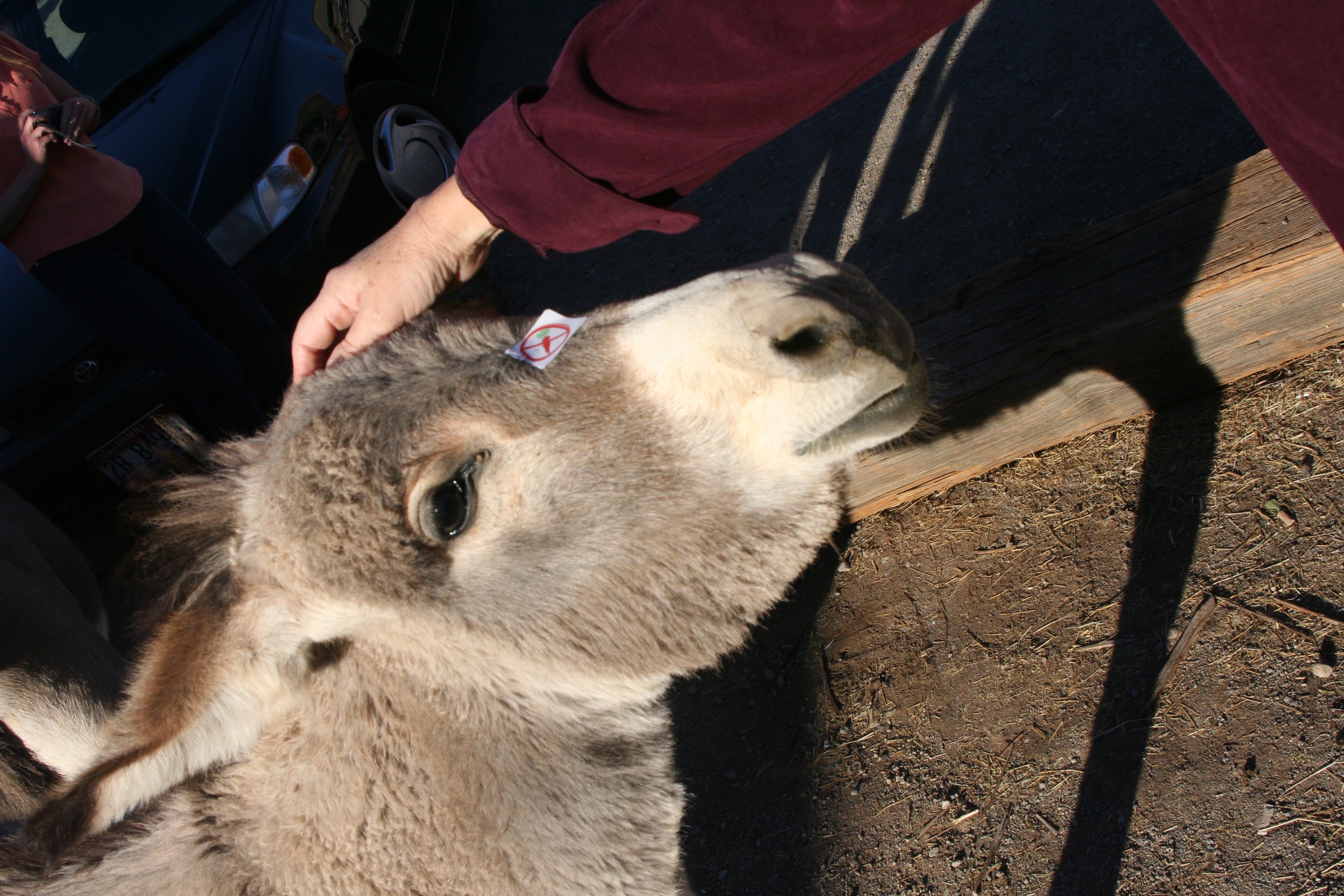
This donkey foal was obviously enjoying having its head scratched in Oatman, Arizona— but not nearly as much as Peggy was enjoying doing the scratching! The sticker on its head was put there to discourage people from feeding the youngsters carrots. They can choke on them.
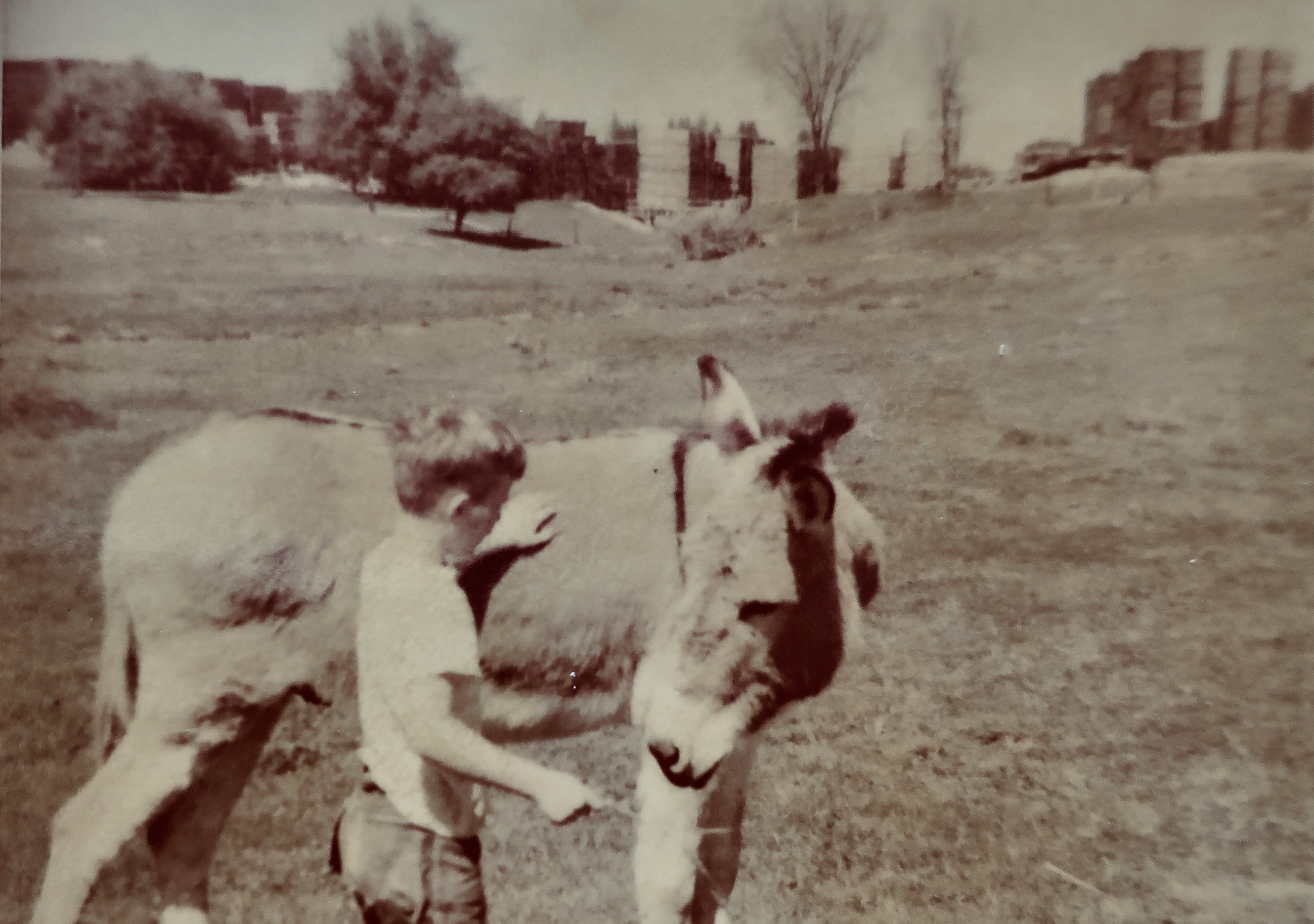
And finally, this is me petting a donkey in a field near my house in the early 50s. The lumber stacks in the background are at Caldor Lumber Company in Diamond Springs, California where my dad worked as an electrician. I may have been holding something to feed the donkey.

Next up on UT-OH, my blog-a-book-memoir, I learn valuable lessons that every first grader should know: It’s not smart to put your head down on a track to judge a train’s distance when it’s a hundred yards away (it makes the engineer nervous), deciding to go on a mile and a half hike by yourself at 5:30 a.m. may be frowned upon, habanero peppers are hot, and why it’s valuable to wear underwear. Getting caught in your zipper and having to have the first grade teacher free you is no joke.

A Tiger and Headhunters: Flying Across the Hump… Part 3 of 3

The plane John Dallen was flying across the Hump in World War II crashed in Manipur and John walked out.

This photo was taken of John immediately after he walked out of the jungle when his plane crashed while he was flying the Hump in World War II. He is holding the boots he wore. His parachute pack is in front.


This is my final post on Peggy’s dad, John Dallen, when he was forced to bail out into Burma jungle when returning from a flight into China across the Himalayan Mountains. 


“The conditions were at their worst—raining, pitch black and over territory regarded as plenty rugged. I landed in a jungle so dense that I couldn’t even move. The only sensible thing to do was to pull part of the parachute over me and try to catch some sleep.”

John Dallen in a letter to his wife Helen on February 18, 1945— eight days after he had parachuted out of his damaged C-109 over an Indian jungle when flying the Hump in World War II.

Saturday, February 10, 1945

I left John in my last post as he jumped into the pitch-black night and watched his plane erupt in flames as it went down. Below him was a jungle he couldn’t see. “I had no idea of what I was jumping into,” he reported to his niece Jennifer Hagedorn Mikacich in an oral history. “I hit one layer of the jungle, and then a second, and then a third— crashing through each one and hit the ground hard.” John was battered and bruised but not seriously injured. It was close to midnight.

Catching his breath, and I suspect calming what had to be raw nerves, he pulled out his 45 caliber pistol and fired it into air. John was hoping for a response from his crew members; there was nothing. They had either landed too far away or couldn’t respond. They might be hanging in a tree 100-feet off the ground.

Caught in undergrowth so thick he could barely move, he gathered his parachute around him to stay as dry as possible and tried “to catch some sleep.” At some point in the night he heard a tiger cough.

“Weren’t you afraid, Grandpa?” Jennifer asked.

“I was uneasy,” he confessed some 40 years afterwards. This was Bengal Tiger country and the big males could weigh over 500 pounds and be up 10 feet long. A few, usually older ones who had difficulty catching prey, turned into man-eaters. John had actually seen a record size Bengal Tiger that had been killed because it had been preying on livestock. I’m sure he pictured it in his mind when the tiger coughed.

But John had other concerns as well. The plane had crashed near Nagaland and the Naga were renowned as headhunters. Hump pilots dreaded landing in their territory. The army manual for jungle survival in World War II stated that there were only two areas in Asia where soldiers had to worry about natives: “in New Guinea and certain parts of Burma.” He was quite close to those “certain parts of Burma.” In fact the Naga had a significant presence in the state of Manipur, where his plane had gone down.

Ursula Bower, a pioneering anthropologist in the Naga Hills who became a guerrilla fighter against the Japanese in World War II, noted, “most villages had a skull house and each man in the village was expected to contribute to the collection… There is nothing more glorious for a Naga than victory in battle and bringing home the severed head of an enemy.” Men who failed, she noted, were known as cows. Head hunting by the Naga would continue up until the 1970s and possibly even 80s. John was wise to worry about keeping his head.

A third concern of John’s was that local villagers might turn him over to the Japanese. The US offered rewards to natives who helped downed crews get back to American bases, but the Japanese had a similar program. John might believe he was being led to safety when actually he was being led into a trap.

Sunday, February 11, 1945

All of these thoughts were going through John’s mind the next morning when he awoke at first light and made a pack out of his parachute to carry his Army-issued jungle survival kit. It contained, among other things, water purification tablets, anti-malaria pills, and sulfonamide, the first of the ‘miracle’ drugs discovered that fought bacterial infection. John would use all three. Other standard items in the kit included matches, a compass, a signaling mirror, bouillon/tea, and even fishing gear.

John knew he had to travel west to find US bases and safety. The Japanese were to the east, the Naga to the north, and more jungle to the south. Travelling west was a challenge, however. There are no landmarks in a jungle, only trees and more trees. It is easy to end up traveling in circles. Fortunately, John had a compass and the sun to serve as guides. He also had Boy Scout training, which he would credit later with helping him find his way.

“Part the jungle, don’t push it,” the Army’s World War II jungle survival manual urged. “Keep your head up and your chin in. Try to follow a stream downstream, and try as far as possible to stick to natural trails, or native trails. Don’t try to break your way through.” The best trails, apparently, were elephant trails, jungle freeways three to four feet wide.

John followed the advice— sort of. “I hacked my way through the mess for several hours.” It would have been excruciatingly slow going; especially since the only thing he had to hack with were his hands. The jungle was close to impenetrable. Numerous scratches on his face and hands joined his bruises from the night before. Eventually, he found an animal path that led him to a trail that showed human footprints. And the trail led to a small village.

The natives looked quite “primitive,” and dangerous. Armed with machetes, they were dressed only in loincloths. Animal tusks and silver jewelry adorned their ears and body. It seemed, however, that they were friendly. John could keep his head. While none of them spoke English, “A native boy kept pointing in a general direction, which I assumed was the direction for me to follow. He led the way and I gradually picked up quite a following of natives.”

After passing through several small villages, John and his parade came to a village of about 75 inhabitants, where a surprise was waiting: one very excited and worried, co-pilot, Ronald Anderson. “Ron was a big guy, an ex-football player,” John reported. But he hadn’t had John’s luck. His parachute had become entangled in a tree and Ron had to cut himself free, leaving the parachute with its survival kit hanging high above his head. He was genuinely shaken up. Like John, he was battered, bruised and scratched, but he had no serious injuries.

The villagers took John and Ronald to the village headman. Fortunately, a villager was found who could speak some English. Food was generously offered, but John had no idea of what he might be eating; he stuck to bananas and rice. It seems that Ron was equally conservative. That night they slept on sleeping mats next to the headman. Somewhat humorously, John reported in his letter to Helen, “This type of sleeping is ideal for the figure, and even I was sore all over the next morning.”

Monday, February 12, 1945

The headman offered to guide John and Ron on to another village and John woke up early, eager to get started. But he didn’t dare get up.

“I had to pretend sleep because the women of the household were preparing their food in the same room where we were. There are castes in India where the women cannot associate with the men—-especially outsiders— and had I shown signs of awakening, they would have left the room. Eventually they finished and we got up at which time we were offered more rice and the native tea. It is made from a spiced leaf and the liquid content is mostly goat’s milk. I did not touch the rice that morning but did finish the banana from the previous day.” He didn’t report on whether he drank the tea, but he must have been ravenous. At six-foot-two and 150 pounds, John was a skinny guy without an ounce of fat.

When they finally hit the trail, it immediately disappeared into the jungle. They were forced to hike cross-country. Adding to the difficulty of the route, it started to rain again. “We waded down streams for miles and crawled up and down practically impossible hills. Several times we heard planes overhead, but could make no attempt to signal to them because of the thick jungle vegetation overhead.”

(By 1945, sophisticated search and rescue efforts were under way, but the majority of crews that survived crashes still walked out on their own. Many airmen shared John’s experience. During the first three months of 1945 alone, 92 planes crashed while flying the Hump.)

A small village provided a lunch of two hard-boiled eggs. Afterwards, their guides were reluctant to start again. So was John’s co-pilot. The difficult route had begun to wear on him. “Here’s where that Infantry training paid everlasting dividends,” John observed. He was pushing hard, and he was a fast hiker.

“Several times I thought of pulling out my pistol and shooting him.” Ron claimed after they had returned to base.

They arrived at their next destination just at dusk and made a meal of “tea, oranges, bananas, eggs and even cigarettes, such as they were.” The natives were eager to help and would not accept any payment. They were “curious about our complexion, clothes and equipment.” John was amused when a few of the natives tried to break strands from the parachute with their hands. “The look of surprise on their faces was something to see.”

John had even more powerful magic. He was taken to a man whom a tiger had mauled. He treated the wound with sulfonamide. Gangrene had set in, however. John doubted the medicine would do much good, but the villagers were grateful for his effort.

Tuesday, February 13, 1945

“The day’s trip was a repetition of the previous day, possibly a little harder since our muscles were already sore,” John wrote to Helen. At noon they arrived at a village where they met the first and only native “who did not cooperate with us wholeheartedly.” The man had an “extremely mercenary attitude” and wanted to be paid for help. Obviously John and Ron were getting close to civilization.

That night they arrived at a village that was an outpost of the Indian police but the two police officials were away. A young Moslem merchant invited them to his home and fed them nuts and dates while they had “quite the gabfest on India and the British.” They slept that night in the jail under mosquito netting the merchant had loaned them.

Wednesday, February 14, 1945 (I wonder if John realized it was Valentine’s Day?)

The young Moslem provided John and his co-pilot with breakfast the next morning and John provided their host with Atabrine tablets for an attack of malaria he was suffering from. Their host also had another request. Since “most of the natives had never seen a pistol or seen it operate, he asked us to fire a few rounds. When both of us opened up at rapid fire, half of the villagers ran away in alarm— It even frightened our friend.”

With an option of continuing the trip by boat or walking, John chose walking since it would get them out faster. Travelling over relatively flat ground, they hiked 16 miles in 5 hours and arrived at a village where a sub-inspector of police was stationed. A telegraph line ran out of the village and John was able to send a telegram to his CO that he and his co-pilot were alive and well.

Their host that night provided them with their first bath since their ordeal started: “out of a pail of course, but at least the water was hot.” He also offered “some food other than the fruit prepared in a manner we could eat… He had cauliflower tips French fried crisp in butter that was exceptionally good.” John urged Helen to cook some up for herself.

That evening they ended up with a long discussion about India and her problems. “Our British allies ears would burn had they heard some of the opinions expressed about them.” John noted.   After eating again, they ‘hit the sack’. “Our host proved that snoring is a universal custom.”

Thursday, February 15, 1945

The trip the next morning had a twist. They rode on an elephant. “I believe it was the hardest part of the trip,” John whined to Helen. “The animal is rather broad-beamed as you can imagine and even my legs couldn’t quite make the spread.” He jokingly reported in his oral interview with Jennifer that he was “worried for his manhood.”

An English tea plantation was waiting for him at the end of the journey, however. John found it “remarkable to find a veritable mansion stuck in this wilderness.” A drink was immediately placed in his hand and a meal ordered. “The house was spotless with beautiful furniture and silverware all around. There were acres of lawn, flowerbeds and even a stable of polo ponies. The servants were perfectly trained and dressed as if from a scene in Arabian Nights.”

Even more welcoming, after they had washed up and eaten, the plantation manager gave them a ride in his truck to the nearby airbase of Shamshernagar. The ordeal had ended.

John’s first acts were to borrow some clean clothes and have a hot shower. After “a meal of real American food and not a few drinks under my belt, I dropped you a line which I certainly hope reached you in the fastest possible time.”
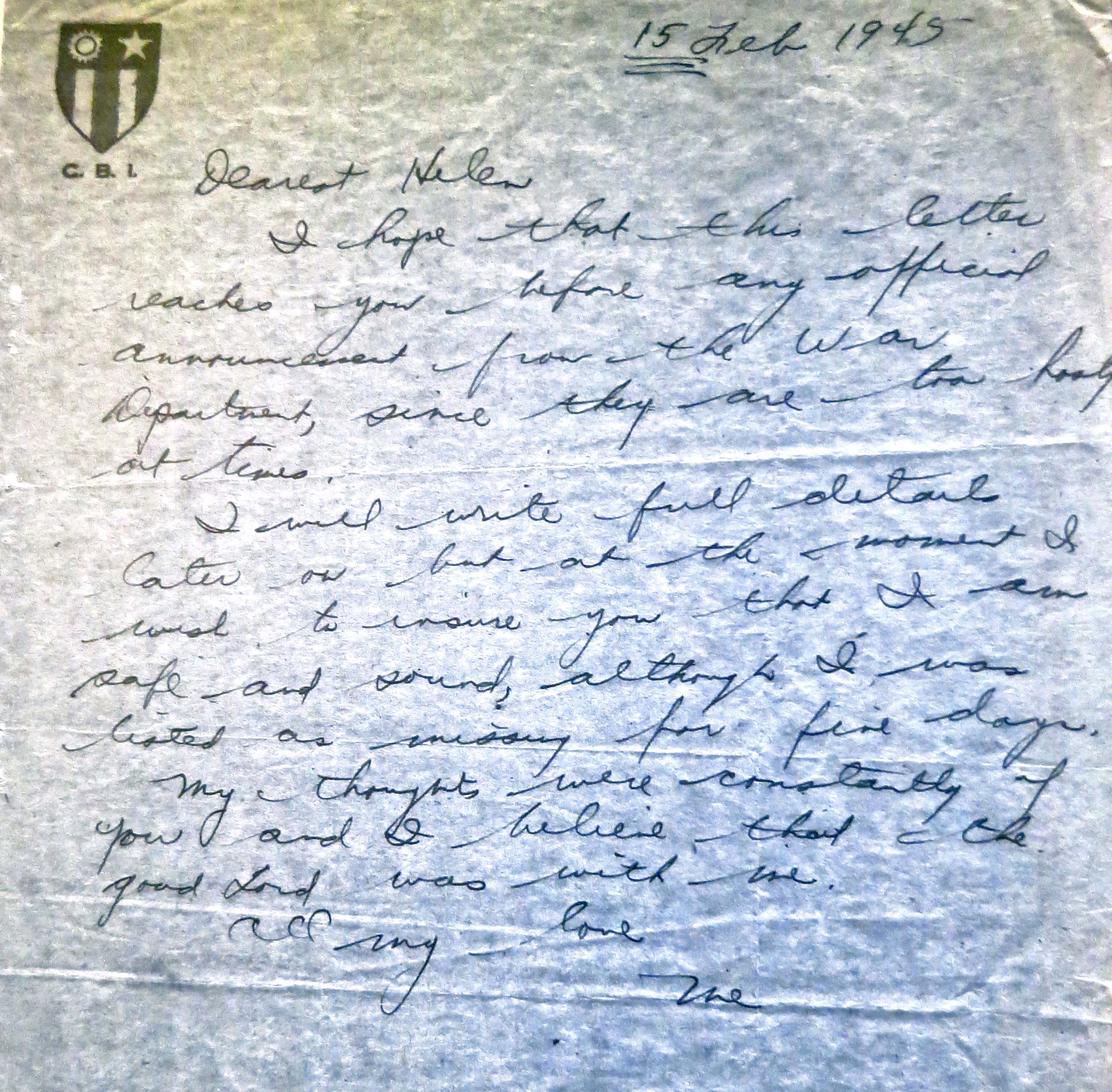
The letter tag John wrote to Helen immediately after walking out from the airplane crash.

The letter that John wrote to Helen immediately after walking out from the airplane crash. He had hoped that the letter would reach her before the telegram announcing that he was missing in action. It didn’t.

On returning to his base at Kurmitola, John learned that “the rest of my crew turned up a few days later after having a much easier time of it. They landed on a mountainside and had practically a road all the way to a base. As a matter of fact the last few days were a lark to them, having spent them at a most hospitable tea planter’s estate. Personal servants, meals in bed, etc. I could kick myself for having worried about them so much.”

John was given a week’s R&R in Ceylon and then returned to his flying duties. He would fly 55 more missions across the Hump. On July 26 he transferred to Tezgaon (now in Bangladesh). Every flight from that point on was in a C-54. His last flights were on September 26, 1945 from Shanghai to Liuchow to Tezgaon, piloting a C-54 for seven hours of daylight flying, four of nighttime flying, with two hours on instruments. He had logged 2788 hours since his first student flight.

I would like to conclude with a special thank you to John’s son, John Dallen Jr., our son, Tony Lumpkin, and my friend Mike Sweeney for helping in the research for my three blogs on the Hump pilots.
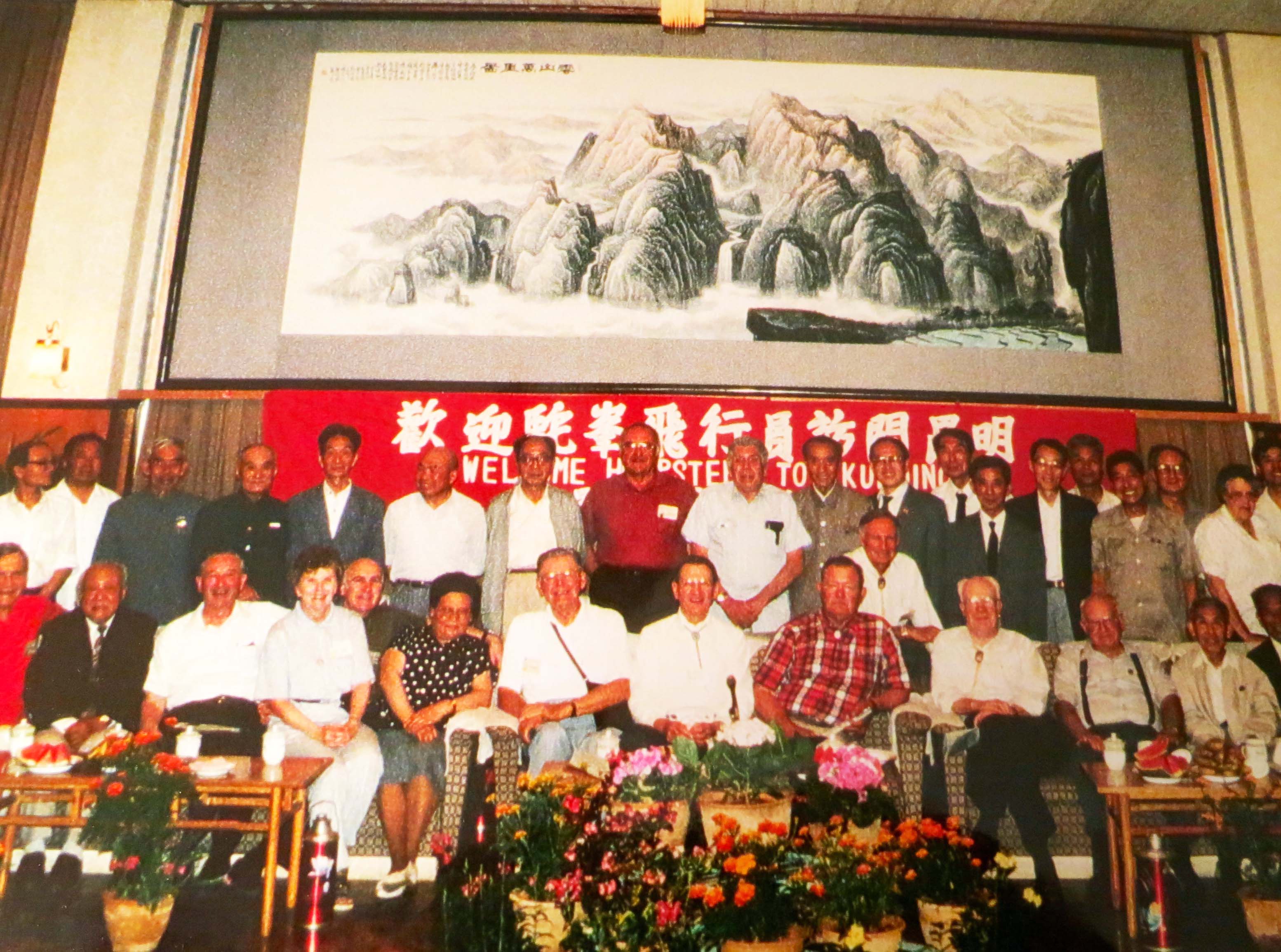
Hump pilots from World War II being honored in China in 1996.

In 1996 China invited Hump pilots and crews back to China to honor their World War II efforts and establish a memorial in Kunming. John is in the middle of the lower row next to the woman with the dark blouse.

John and Peggy on the American River in 2006. Every Wednesday, I was privileged to pick John up and take him for a walk on the river. Even in his late 80's, he still loved to hike.

John and Peggy on the American River in Sacramento in 2006. Every Wednesday, I was privileged to pick John up and take him for a walk on the river. Even in his late 80’s, he still loved to hike.


Bailing out in a Stormy, Dark Night into an Unknown Jungle: Flying the Hump in World War II… Part 2 of 3

An Army Air Transport plane flies across the Hump in World War II.

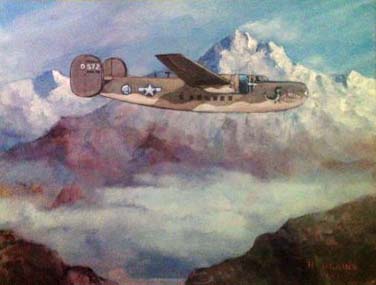
For years, this painting of a C-109 flying the Hump was hung in my father-in-law’s home. It reminded him of his experience in World War II of flying supplies from India to China across the Himalaya Mountains. The painting now hangs in our son Tony’s home.
This is part II of my story about when Peggy’s dad, John Dallen, was forced to bail out of his plane on a pitch black, stormy night into a Burma jungle while returning from a flight across the Himalayan Mountains during World War II.

On February 10, 1945, my wife Peggy’s dad, John Dallen, began an adventure that would become an important part of our family history. At the time, he was  serving as a World War II pilot for the Army Air Corps, flying fuel, ordinance, and troops from India into China to support Chinese and American efforts in the war against Japan. His 15th mission across the Hump began as routine. It would end with him parachuting into a raging storm, a pitch-black night, and an unknown jungle as his plane crashed in a ball of flame.

The Mission:

The briefing that morning would have been straightforward: Fly 900 miles from his home base of Kurmitola, India (near what is now Dhaka, Bangladesh) to Chengdu, China, deliver several tons of airplane fuel, and fly back to Kurmitola. (The fuel was used to support B-29 bombers that were based in Chengdu.)

The Fine Print:

John would be flying a C-109 tanker, an airplane that had been converted from a B-24 bomber by removing all of its armaments and adding extra fuel tanks. John was an experienced B-24 pilot from his training and instructor time in the US. While the B-24 was never known for its ease of flying, the converted C-109 was even more difficult to fly, especially when loaded. Landing at high altitudes with a load of fuel, as he would be in Chengdu, was particularly dangerous.

He had never flown this particular C-109 or with any of his crew, which was normal when flying the Hump. His crew members on this flight included a co-pilot (Ronald D. Anderson), an engineer (James E. Hatley), and a radio operator (John D. Beach).

His route was known as one of the most difficult anywhere. He would be flying over trackless jungles in Burma and the rugged, uncharted Himalaya Mountains, the highest mountain range in the world.

The only thing predictable about the weather was that it was unpredictable. He could have a relatively uneventful flight, or it could be filled with storms, turbulence and winds well over 100 miles per hour. Regardless of what the weather would be, he was expected to fly through it. This was standard procedure for Hump pilots in 1944/45. He did know that he would be aided by a tailwind going over and would be fighting a headwind coming back.

The Flight:

Both the flight and landing at Hsinching airfield in Chengdu were uneventful, or at least uneventful from the perspective of a Hump pilot. They made it with minimal bad weather. The flight had taken 5 hours and used 1100 gallons of fuel. At 2:30 p.m. they were ready for their return flight to Kurmitola. Using a stick measurement, the engineer estimated that some 1700 gallons of fuel remained. John and operational staff at Hsinching determined that this would be adequate for the return flight.

It was one of those times when the fuel tanks should have been topped off. The headwinds were stronger than the predicted 60-70 mph. The trip back would take longer than expected. John climbed to 17,000 feet and flew the plane to conserve fuel. Eight hours later at 10:30 p.m., the plane was still 300 miles out from Kurmitola. The engineer reported that there would not be enough fuel to make it. John decided to make for the much nearer air base of Shamshernagar near Talagaon, India.

Dropping down to 13,000 feet, he immediately encountered a snowstorm with moderate to severe turbulence and light icing. While he had to fly by instrument, it wasn’t the snowstorm that created close to impossible flying conditions; it was the thunderstorm waiting on the other side. “It was the severest I ever encountered,” John stated in his official post accident report.

He was more descriptive in the oral history he would give to his granddaughter Jennifer 50 years later. “The plane was tossed from side to side and up and down. There was no way to control it.” Breaking out on the other side, the plane was hit by an “extremely violent jolt,” (probably a lightning strike) which apparently damaged the plane. “It started turning to the left in spite of full right rudder application.” There was more bad news.

His co-pilot reported that engine number one had shut down, apparently out of fuel. John immediately ordered cross fueling from the fullest tank. The engine sputtered back to life. The engineer reported that there was 80 gallons of fuel left, but all gauges were now showing empty. Other engines began to sputter in and out.

Surrounded by thunder and lightning, his plane circling to the left, and his gauges showing empty, John was out of options. He ordered his radio operator to send out a Mayday. They were going to bail out of the plane before it was too late. The engineer and radio operator jumped first, the co-pilot next, and John last.

They jumped into a pitch-black night, lit only by lighting. It was impossible to see what they were jumping into. Would it be a river filled with floodwaters from the raging storm? Would they crash into the jungle trees that were known to grow upwards to 150 feet? Would their parachutes get caught in the trees leaving them dangling a hundred feet above the ground in the dark night? Would the crew members land close to each other or be scattered miles apart across the jungle? Would they survive?

As John’s parachute snapped open and he began his descent into the darkness, the horizon was suddenly lit by a ball of fire as the plane crashed into the jungle. It had been close, too close.

NEXT BLOG: Landing in the jungle and walking out.

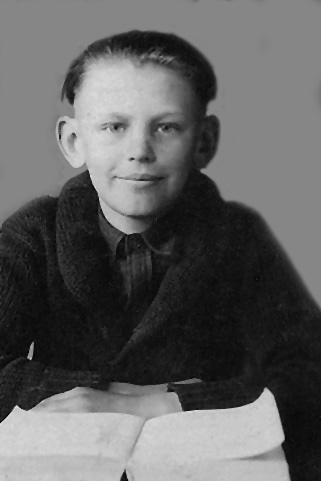
John Dallen circa 1930

A photo of young John looking quite studious, which he was.

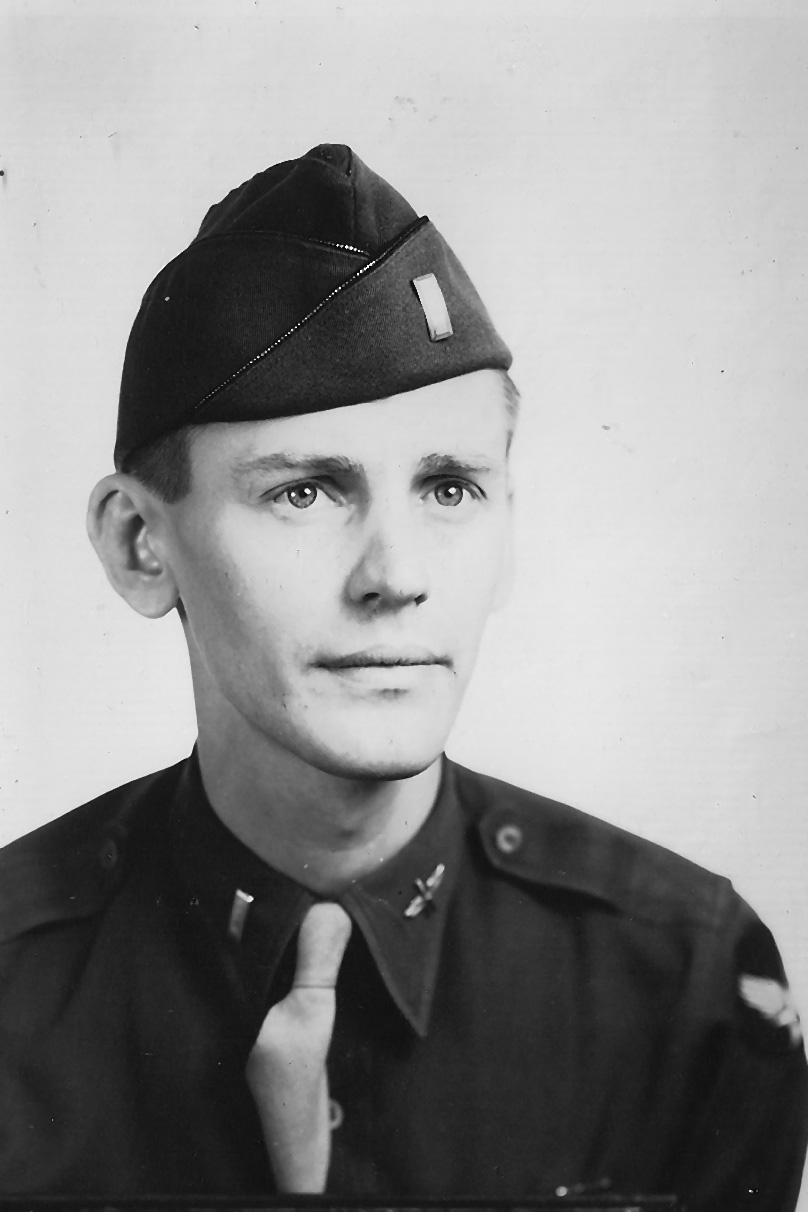
Photo of John Dallen as a First Lieutenant in World War II.

John’s official First Lieutenant photo.

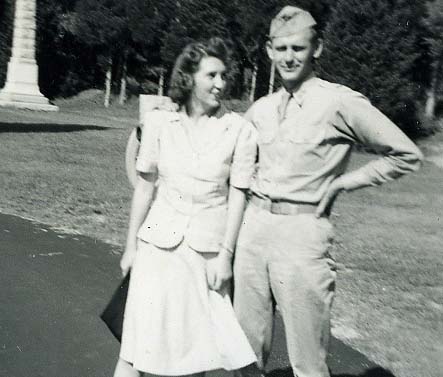
A photo of John and Helen Dallen during World War II.

John and his wife, Helen (Peggy’s mom) stateside before he was sent overseas to India. They were to be married for over 66 years.

“Your husband Lieutenant John A. Dallen has been reported missing.” Flying the Hump in World War II: Part I

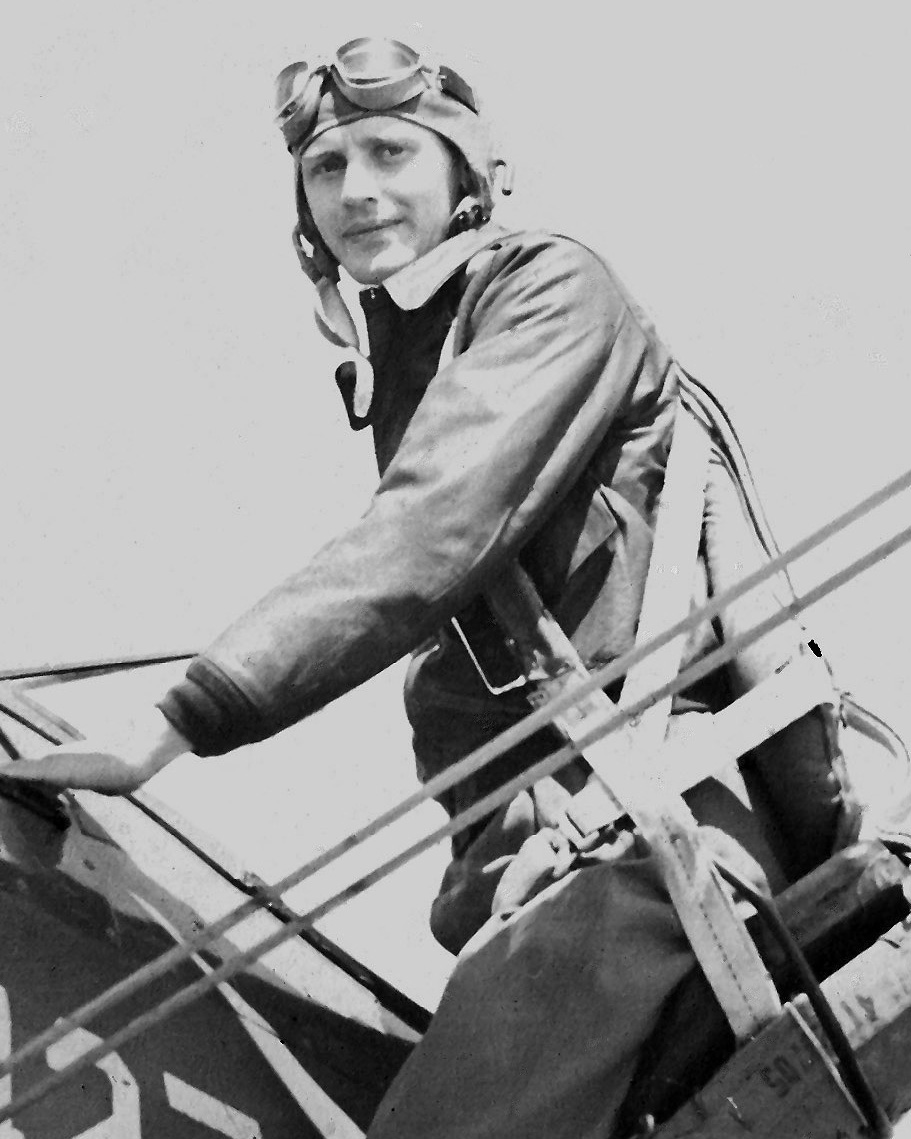
John Dallen on first solo flight as a member of the Army Air Corps in early World War II.

Dressed up in his pilot’s gear and ready for his first solo flight, Peggy’s dad, John Dallen, climbs into the open cockpit of a Boeing Stearman PT-17 biplane. With World War II raging and the need for pilots desperate, John would become an instructor pilot within months of his fist solo flight.


My friend GP Cox has finally reached the point in her massive blog history on the Pacific Theater during World War II where she is discussing the heroic efforts of American pilots who flew across the Himalayan Mountains (The Hump) in an effort to keep China’s fight against Japan alive. Peggy’s dad, John Dallen, was one of the pilots. In honor of G’s efforts at capturing WW II history, I’ve decided to republish a series of three blogs I posted on John in 2014. I was privileged to spend a fair amount of time with John in his last years, picking him up at his senior residence in Sacramento every Wednesday and taking him for a walk on the American River. We became good friends and he shared many of his stories. I think you will enjoy this story of how he survived a crash in the jungle.


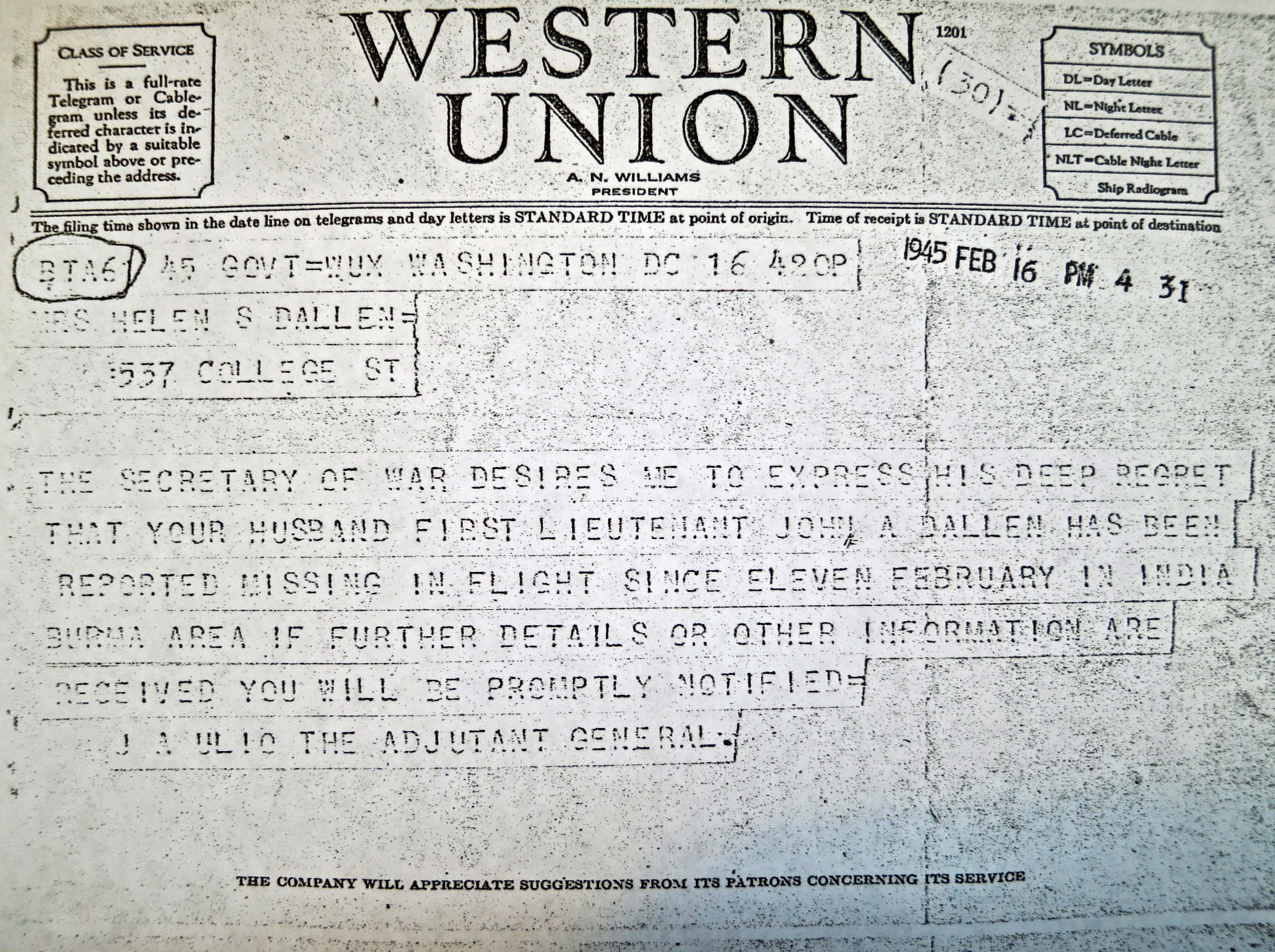
In the age before instant communication, the quickest way to reach someone was by telegram. One of the most frightening messages that people received at home during World War II was that a loved one was missing in action:

World War II telegram to Helen Dallen informing her that her husband, John Dallen, is missing in action while flying over the Hump (Himalaya Mountains).

“The Secretary of War desires me to express his deep regret that your husband Lieutenant John A. Dallen has been reported missing…”

John was Peggy’s dad, my father-in-law. He lived to reach the very respectable age of 92 and became a good friend. But when Peg’s mom, Helen, received this telegram on February 16, 1945, his future was very much in doubt. John was a Hump pilot, and this meant that he flew perilous supply missions from India across the mountains into China. It was likely that the C-109 he was flying had crashed— either on the icy, snow-covered slopes of Himalayan Mountains, or in the steamy jungles of Burma or India. Both areas were remote, basically uncharted, and filled with danger.

This is a post about how John hiked out after parachuting from his damaged plane, but it is also the story of what flying the Hump (over the Himalayan Mountains) was like, and what resupplying Chinese troops meant to the World War II effort.

Peggy and I are fortunate to have copies of several letters that John wrote to Helen immediately after he had walked out. We also have an oral history that John’s granddaughter and our niece, Jennifer Hagedorn Mikacich, recorded that described the crash.

And finally, there are the stories he shared with us. He was particularly forthcoming with his son, John Dallen Jr., and our son, Tony Lumpkin, both of whom also had wartime military experience. John Jr. graduated from West Point and fought in the Vietnam War. Tony graduated from Annapolis and flew helicopters for the Marines in Iraq. Tony now flies helicopters on rescue missions for the Coast Guard off of Kodiak Island, Alaska.

Both John Jr. and Tony have been enthusiastic contributors to this post. Tony has contributed his flight expertise. John Jr. has dug into the flight logs and followed up with Internet research. We now realize that John Sr. flew into many more sites in China than we were aware of. We also have a record of the various planes he flew. The sheer number amazes me. Prior to his deployment to the China-Burma-India (CBI) Theater he had flown the PT-17, the BT-13, the AT-17, the AT-9, the AT-7, AT-18A, the C-60 A-5, the AT-11, the B-24 (D, E, G, J, and H versions), the C-56D, the UC-45F, the BT-13B, the UC-78, and the Link trainer— some 18 different planes considering makes and models. It’s small wonder that he was an Army Air Corps instructor before leaving stateside.

I have had this post in mind for over a year. My recent trip to the Air Museum in Tillamook, Oregon inspired me to write it now. I was walking through the vast hangar, originally built to house blimps in World War II, when I came upon a flight simulator for the C-46, one of the main airplanes used to fly across the Hump.

A sign on the simulator reported that the trainer had opaque windows to force pilots to rely on the instruments for landing in all kinds of weather conditions. In flying the Hump, weather was considered more dangerous than the Japanese. Monsoonal storms created dangerous turbulence with winds up to 150 miles per hour. Severe up and down drafts in the mountains could send planes tumbling for thousands of feet.

“Planes would come into base beat up and barely able to fly,” John reported. “I’d watch pilots stumble out of the planes, throw down their helmets and walk away, swearing that they would never fly again.”

Weather also meant that pilots were often faced with close to zero visibility for take offs and landings. Weather forecasting was primitive. “If you can see the end of the runway,” they were told, “it’s okay to fly.” Except it was more like, “you have to fly.” Numerous crashes took place at the beginning and ending of flights. Use of instruments was critical. But it was not a given. Flying by instrument was relatively new going into World War II. Many of the pilots recruited from civilian flying jobs at the beginning of the war had depended on landmarks to tell them where to go. They had to be trained to use instruments— and to trust them.

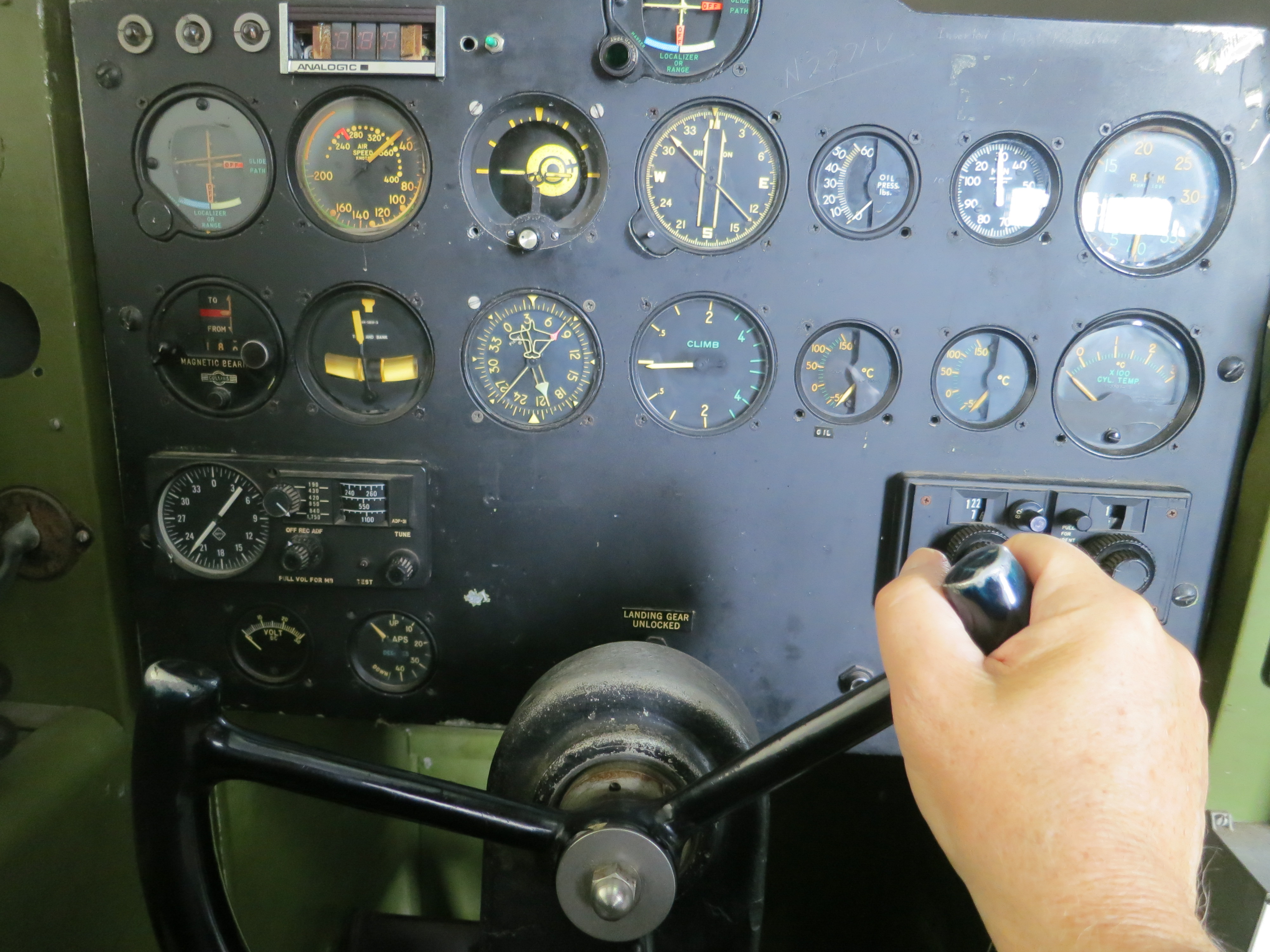
I couldn’t resist. I climbed into the C-46 simulator to get a sense of the cockpit and its instruments.

Flight simulator for a C-46 at the Tillamook Air Museum in Oregon.

With my hand on the tiller, I checked out the instruments on a C-46 simulator. The C-46 was originally designed as a passenger plane by Curtiss Wright. When it was converted and brought in to fly over the Hump because of its high altitude and large cargo capabilities, it was still close to being an experimental plane. Its many bugs were worked out in action, sometimes with disastrous results. Hump pilots referred to it as the flying coffin.

Flying over the Hump saw its beginning in the Japanese invasion of Burma in 1942. Five years earlier Chiang Kai-shek, long time leader of the Republic of China, had utilized some 200,000 peasants to build a road to the border of the British colony of Burma. The purpose of the road was to supply Chinese forces with the arms, munitions and other supplies necessary to wage war against Japan. By 1941, the Burma Road was the last remaining supply route into China.   The Japanese invasion in 42 eliminated it.

The only choice left was to fly supplies in over the Himalayan Mountains. China was an important ally in the fight against Japan. But even more important from a strategic point of view was the fact that Japan’s war with China tied up some one million Japanese troops. If the Japanese defeated China, these troops would be available for Japan’s war against Allied forces in the Pacific. The decision was made to move ahead with the massive supply effort. Until the Berlin Airlift, it would be the most extensive, sustained airlift in history.

When the Japanese took Burma, their conquest included the airfield of Myitkyina in the northern part of the country. This forced the Allies to move their supply routes further west if they were to avoid Japanese fighter planes. While the effort was successful in eliminating most attacks, it meant that pilots had to fly at much higher altitudes to climb over the Himalayas. They found themselves flying between mountains over high passes at elevations up to 16,000 feet. “It was like flying between giant ice cream cones.” John reported. In addition to the turbulent weather and navigational challenges, severe icing and a lack of oxygen were added to the list of dangers faced by Hump pilots.

As one pilot put it, “Imagine flying 25 tons of metal, gasoline and high explosives under these conditions at 250 miles per hour through an unknown sky.”

Next Blog: Further information on flying the Hump with a focus on the crash of John’s airplane in the jungle and his eight-day hike out. Note: Because of Christmas, this blog will be delayed for a week. There will be a Christmas Eve blog, however. Think snow.

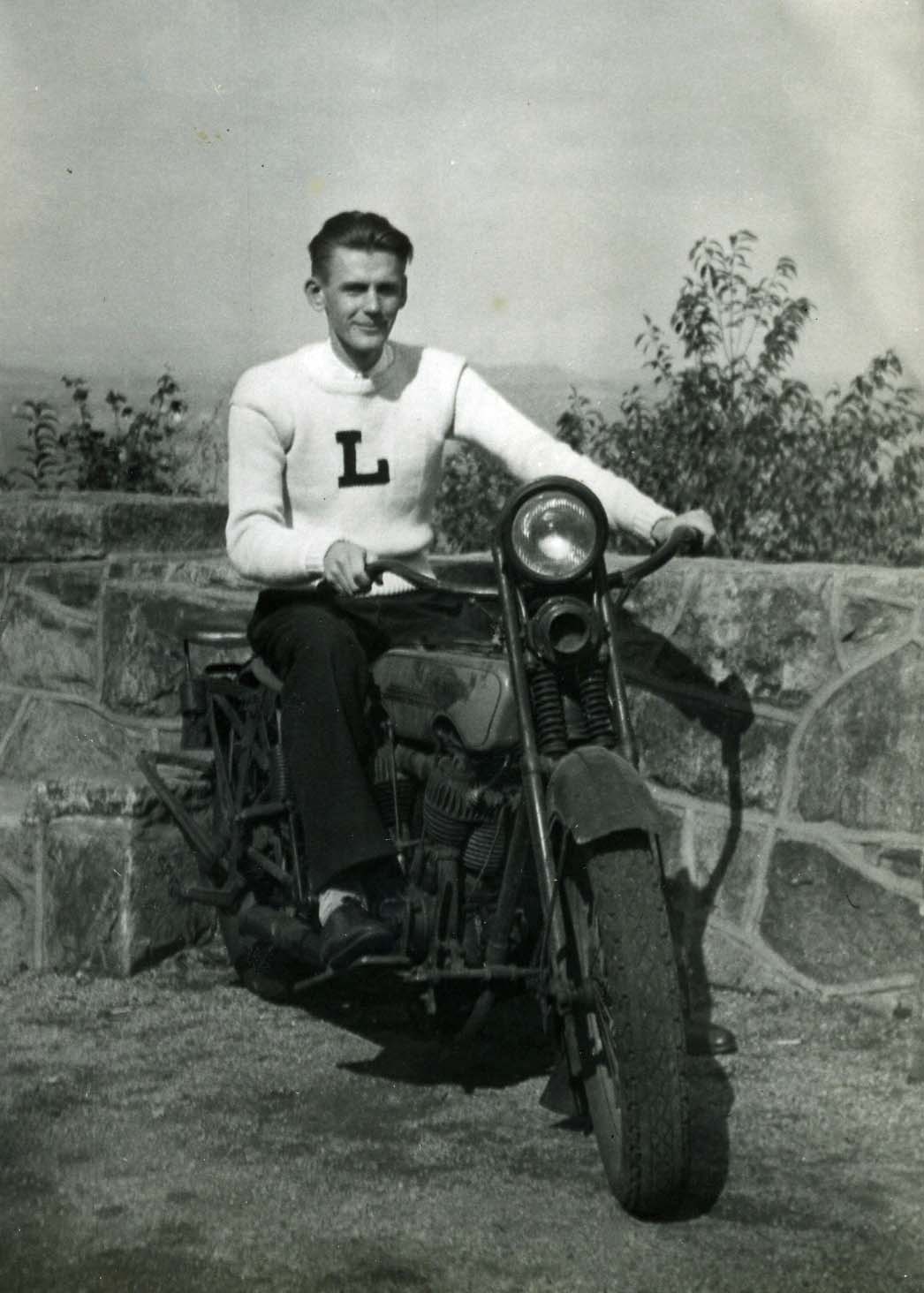
John Dallen on an Indian Motorcycle wearing his Lehigh sweater just prior to World War II.

One of my favorite photos of John, proudly perched on an Indian Motorcycle prior to World War II. The L on his sweater stands for Lehigh University, where he received a degree in engineering.


Fort Mifflin: A Tale of Death, Heroism and a Flag…

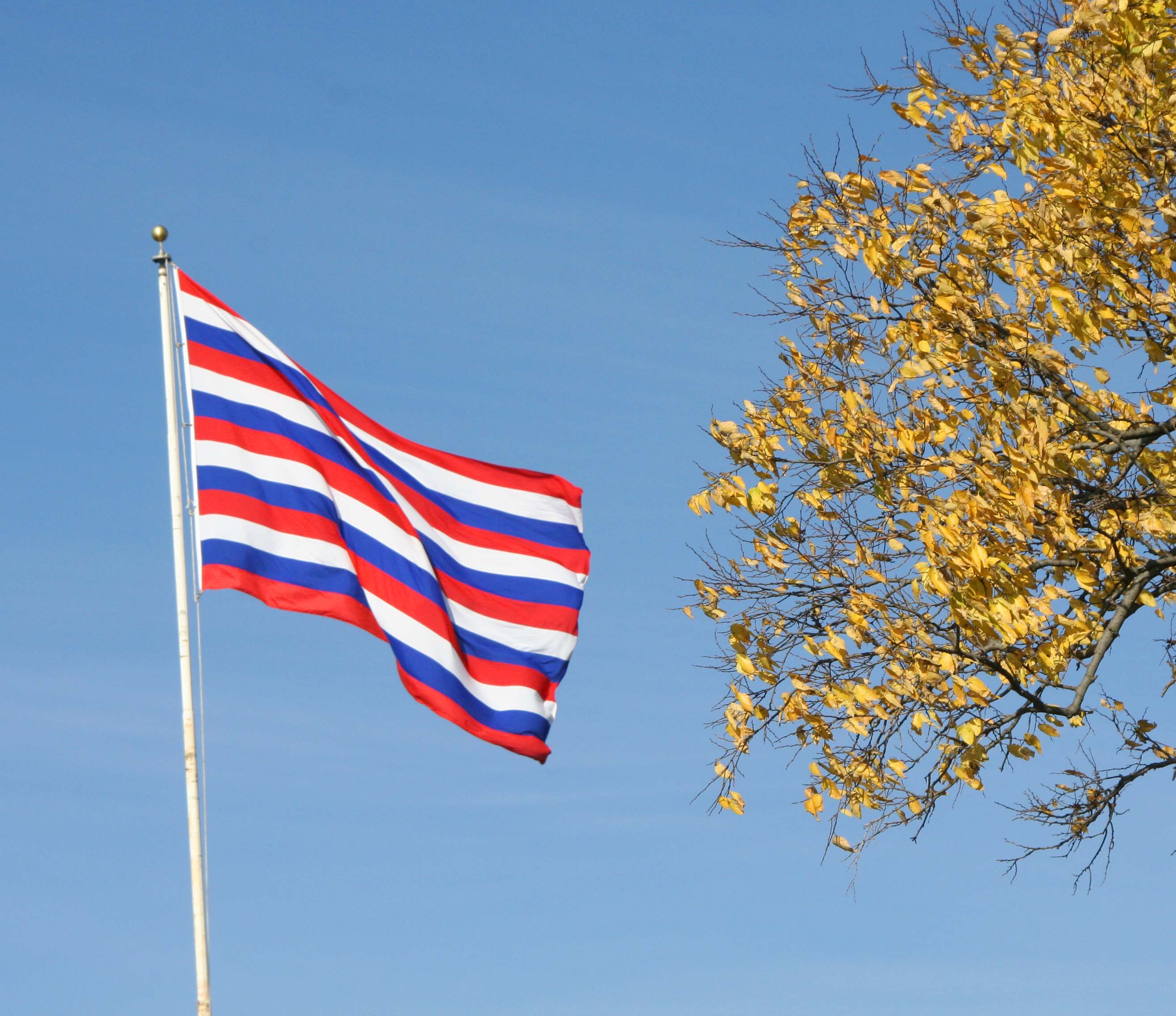
Fort Mifflin Flag.

The flag that flew over Ft. Mifflin during the Revolutionary War. The Stars and Stripes had yet to be designed.

Every so often I like to repost this blog I did on America’s Revolutionary War. Since I have been writing about Revolutionary Boston and my laptop is off at the doctors, I thought I would return to Revolutionary Philadelphia today. 

In the fall of 1777, 240 years ago, all that stood between the British and the likely defeat of the American Revolution was a small fort on the Delaware River. It is a chapter in American History that is little known and rarely told.

General Howe had overcome Washington’s troops at Brandywine and then occupied Philadelphia, sending America’s young government fleeing. An effort by Washington to counter-attack the British in early October and drive them out of the city failed. If the British Navy could resupply General Howe before winter set in, there was a very good chance he would catch the ever-illusive Washington and end the Revolution. There would be no United States of America.

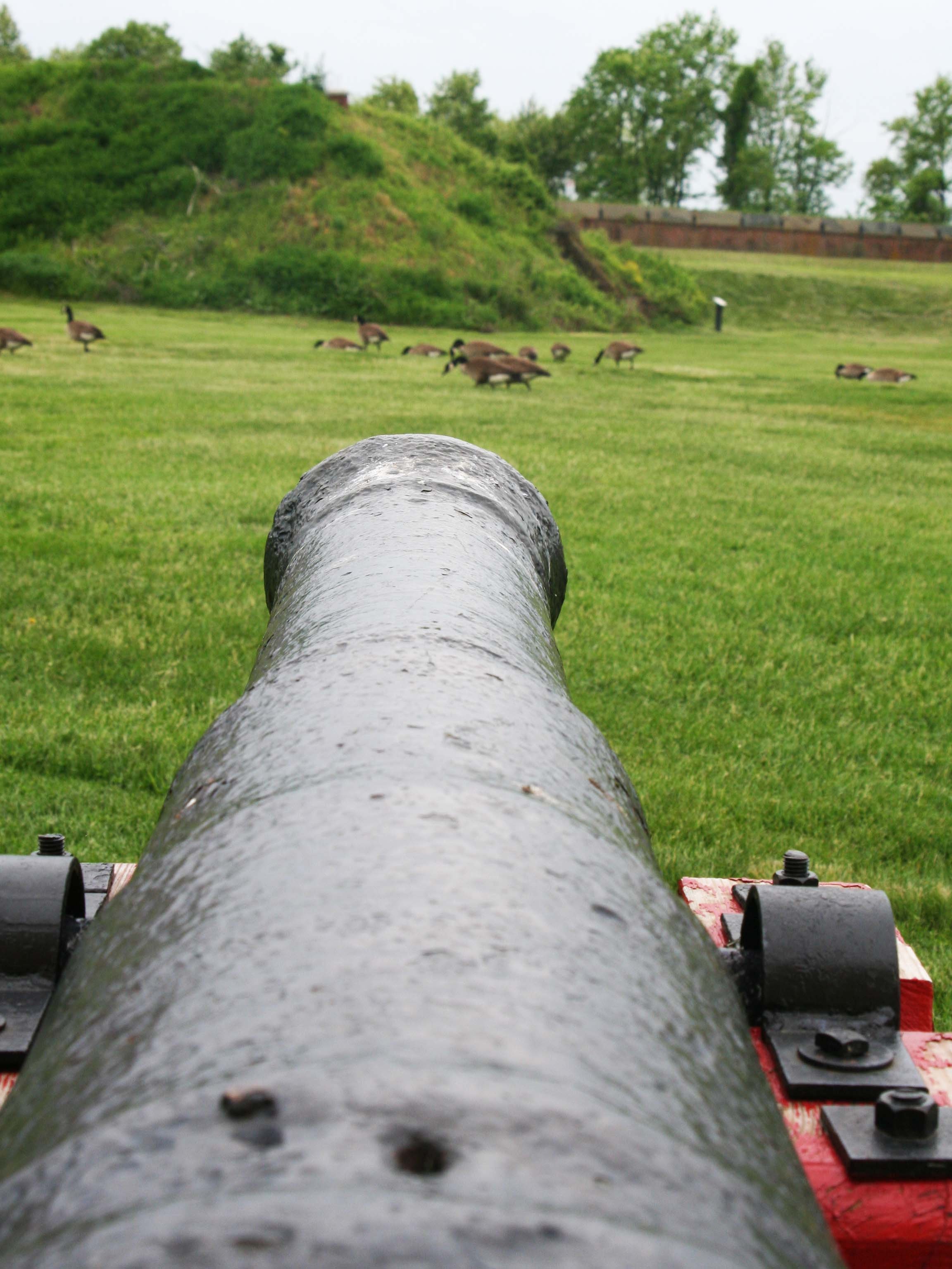
Ft. Mifflin Pa.

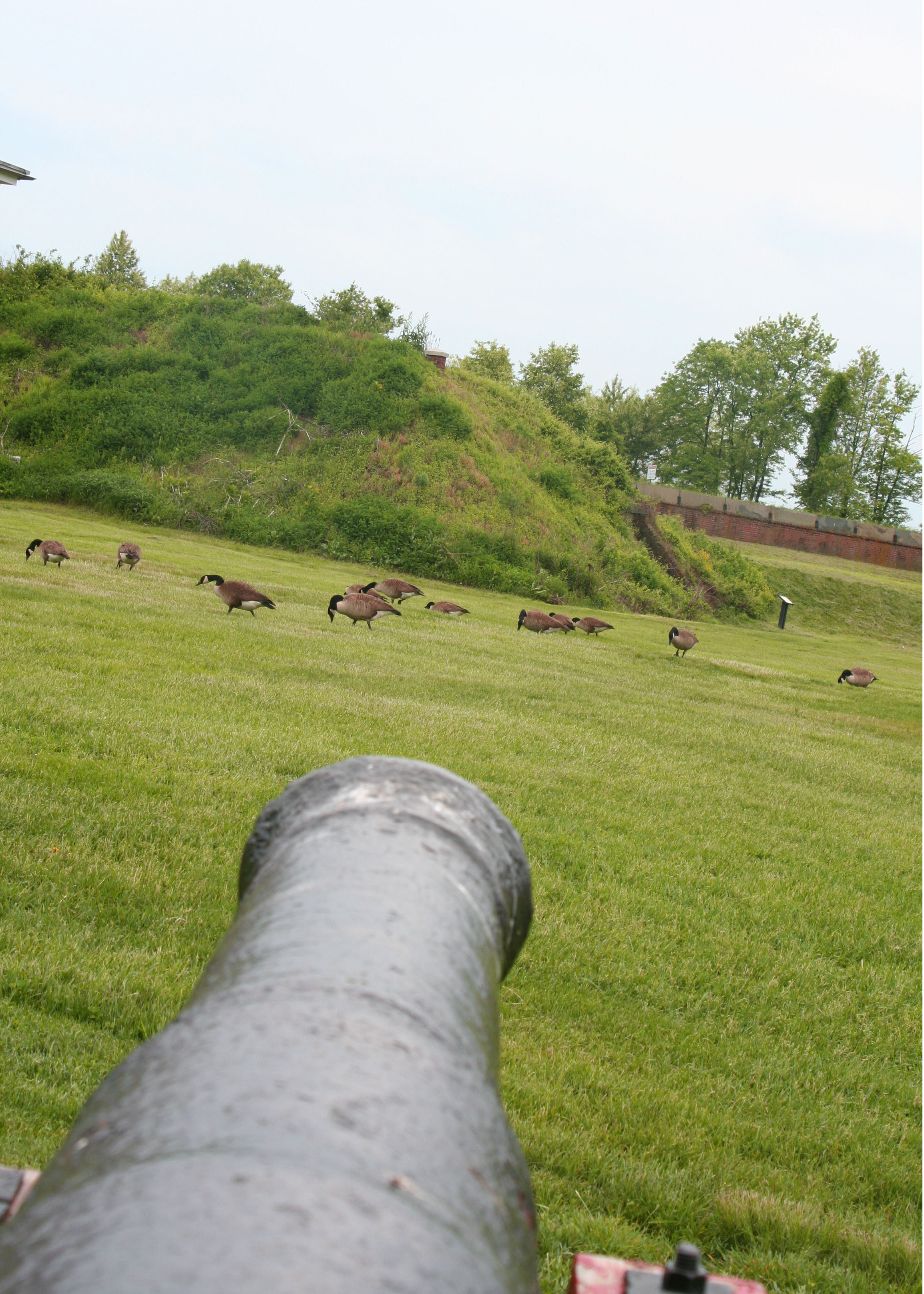
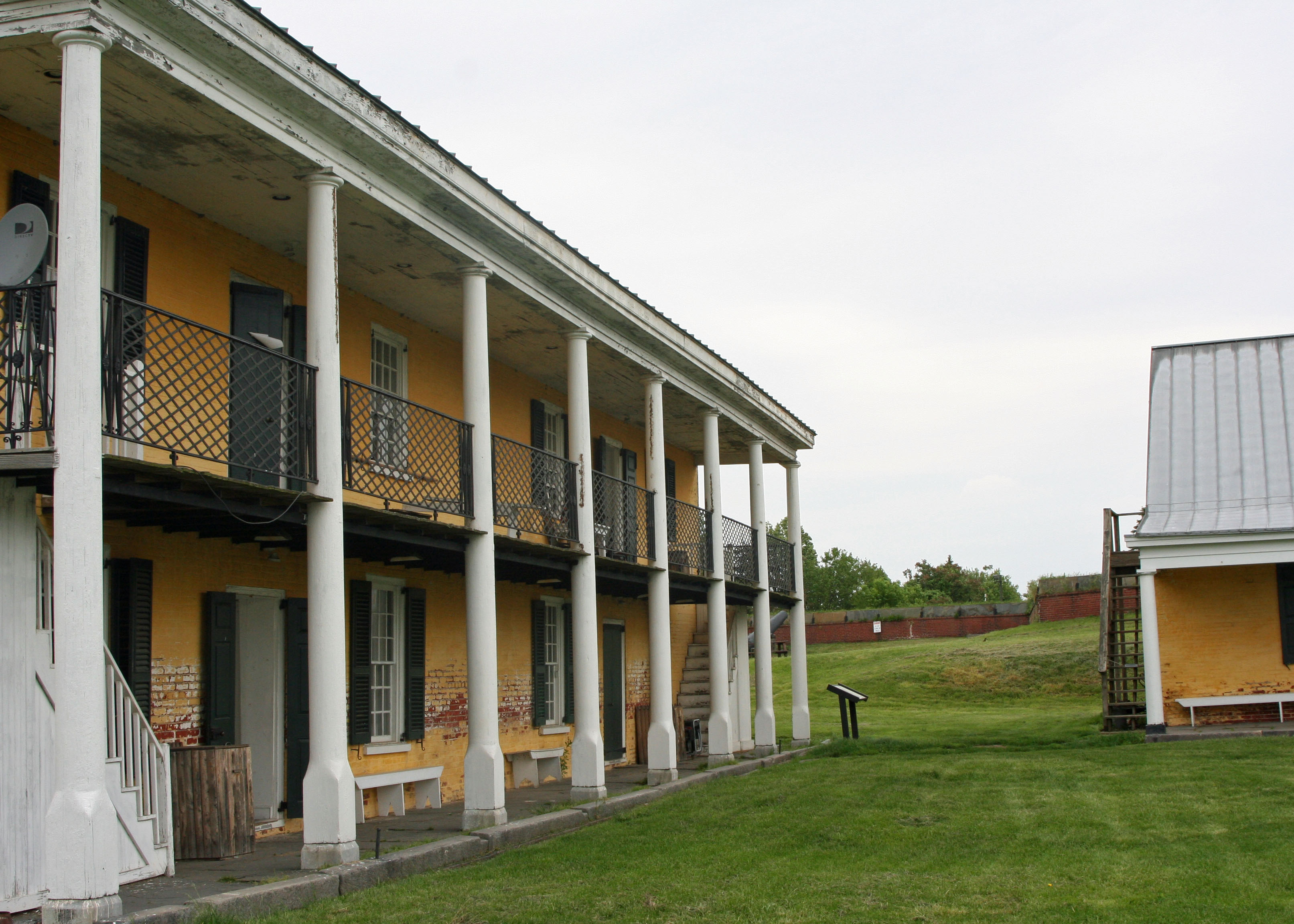
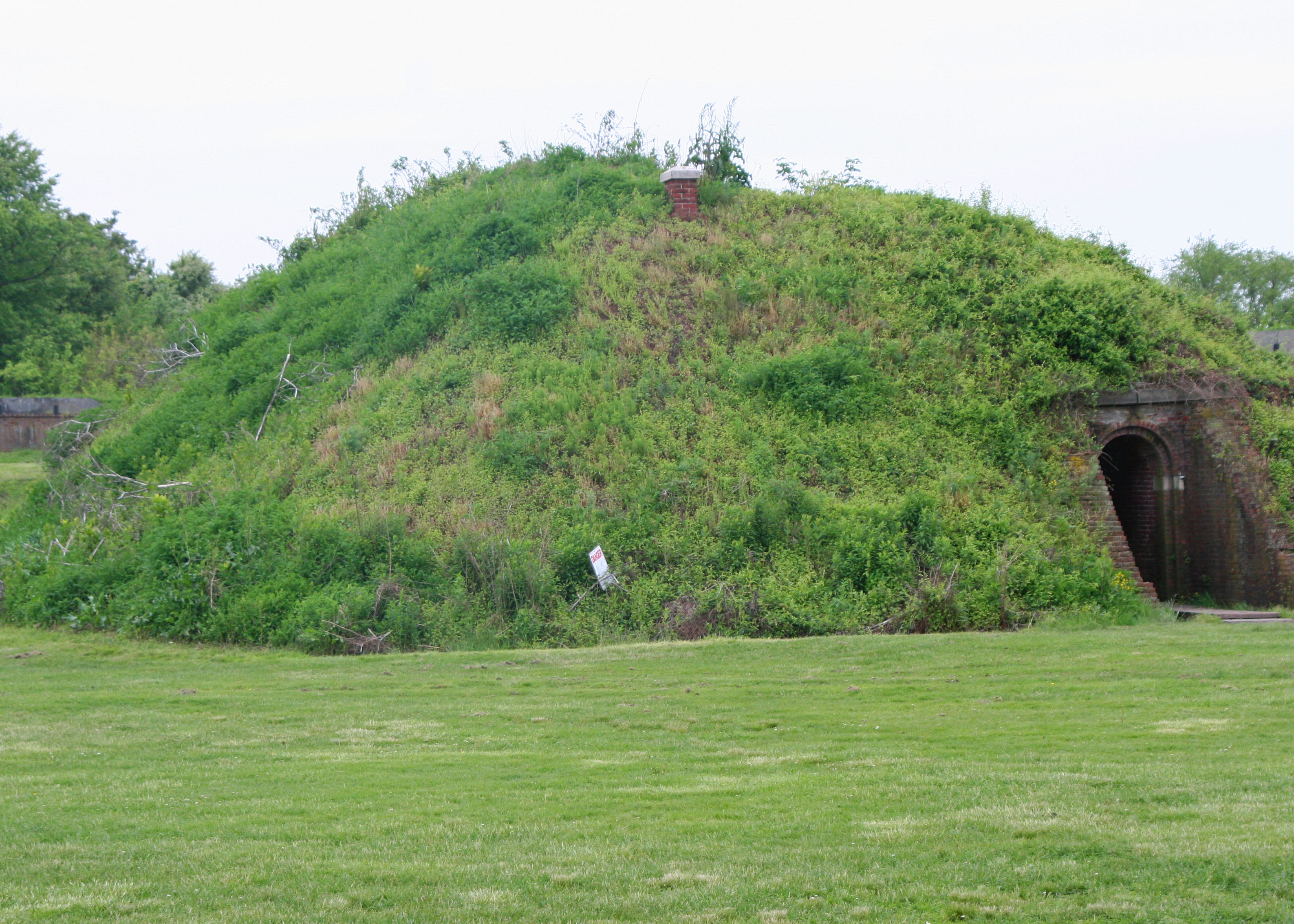
A canon’s view across the tiny Ft. Mifflin focusing in on Canadian Geese. The mound was a bunker for storing munitions.

But Howe had a problem. The tiny Fort Mifflin with a circumference of 3600 feet and a contingent of 250 men was blocking the Navy’s 250 ships and 2000 troops from entering Philadelphia. It had been for six weeks. A concerted strike by British land batteries was initiated on November 10 and a massive bombardment by land and sea was planned for November 15.

The Fort, being blasted apart by the land batteries, did what little it could to prepare.  Under Washington’s orders, 286 fresh troops from Connecticut and 20 artillerymen from the Second Continental Artillery under Captain James Lees were slipped into the Fort on the 13th.  The night of the 14th was spent desperately making repairs to the shattered walls.

On the morning of fifteenth, five British Warships including the sixty-four-gun Flagship Somerset appeared out of the mist below the fort. Of equal, if not more concern, the British had taken advantage of a high flood tide and pulled the converted and armed East Indian merchant ship Vigilant and the gun-sloop Fury within pistol range of Mifflin’s northwest corner.

As the sun rose, the ships and land batteries opened fire in a bombardment that sent over 1000 cannonballs per hour crashing into the fort. It was the heaviest naval bombardment of the Revolutionary War.

Joseph Plumb Martin, a young private from Massachusetts, was there during the battle and captured the sheer terror of the experience some years later in his book Ordinary Courage. “They mowed us down like corn stalks,” he reported.

“I saw five artillerists belonging to one gun cut down by a single shot, and I saw men who were stooping to be protected by the works, but not stooping low enough, split like fish to be broiled.”

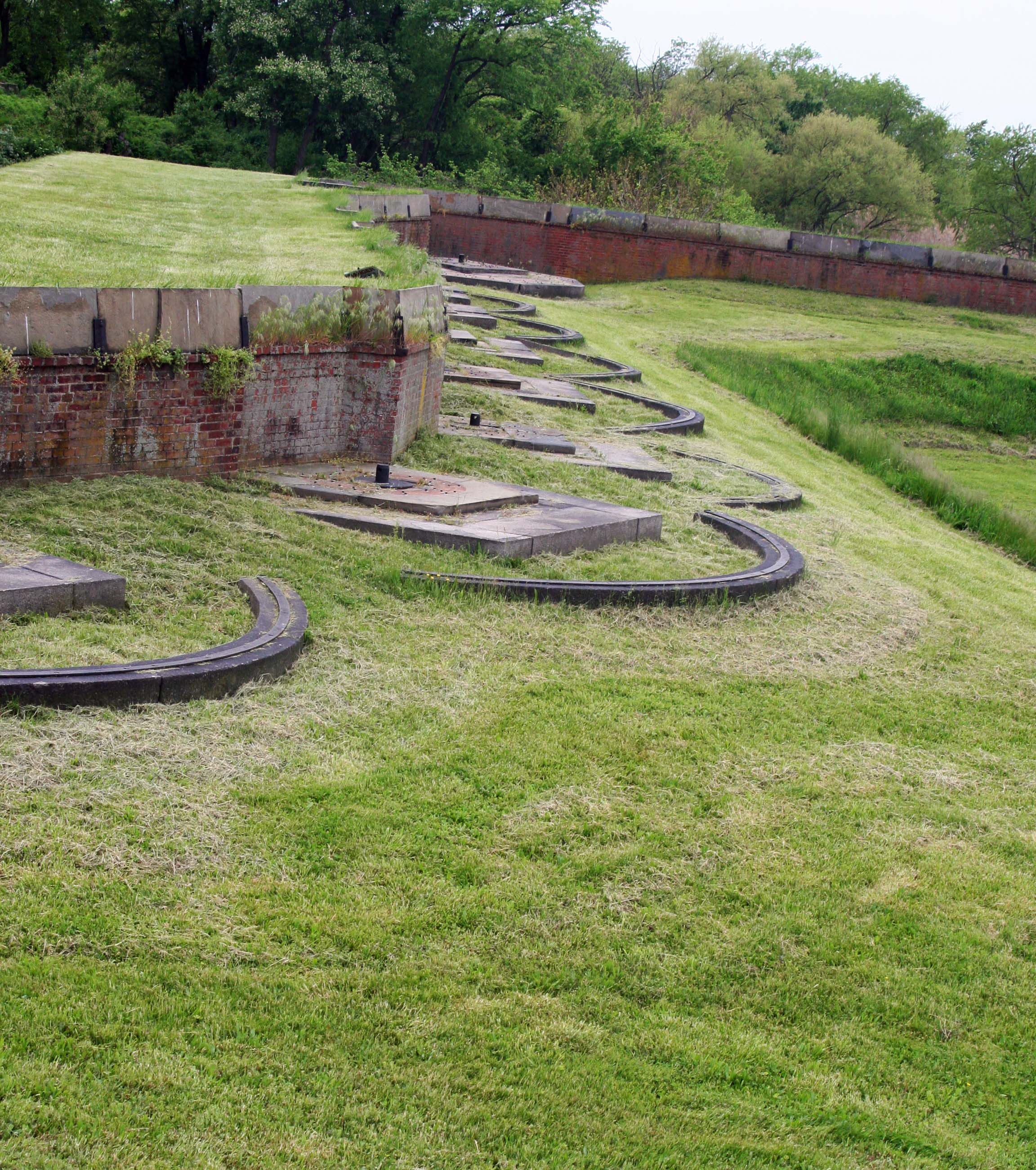
Gun emplacements at Ft. Mifflin.

Gun emplacements along the walls at Ft. Mifflin.

While protection from the onslaught was nonexistent, one section of the fort was more exposed than any other according to Jeffery Dowart in his book, Fort Mifflin of Philadelphia, an Illustrated History. The northwest corner was directly under the guns of the Vigilant and Fury. Time and again these ships sent broadsides smashing into the ramparts manned by Captain Lees’ Company while British Marines posted in the masts of the ships fired down on the exposed artillerists.

“Every man who tried to serve the cannon on the battery’s angle was either killed or wounded,” Dowart reported.

At the height of the bombardment a decision was made to hoist a signal and request help from the galleys and floating batteries above the fort. A volunteer was requested to climb up the flagpole with the signal flag as the cannonballs hurtled in from all directions.

Joseph Plumb Martin had a vivid memory of the event. “…a sergeant of the artillery offered himself; he accordingly ascended to the round top and pulled down the (fort’s) flag to affix the signal flag to the halyard. The enemy, thinking we had struck (surrendered), ceased firing in every direction and cheered.”

“Up with the Flag!” was the cry from our officers in every part of the fort. The flag was accordingly hoisted and the firing was immediately renewed. The sergeant then came down and had not gone a half-rod from the foot of the staff when he was cut in two by a cannon-shot.”

Several galleys, floating batteries, and a frigate did come down river to aid the beleaguered fort but heavy fire from the British Warships drove them back.

At some point in early afternoon the fort ran out of ammunition and was totally at the mercy of the British guns. The end was only hours away. Under cover of darkness, the fort was evacuated. As the final group left around midnight, the flag was still flying.

Howe received his much-needed supplies in Philadelphia but time was running out. After two failed efforts at penning Washington down, he returned to Philadelphia while Washington moved on to Valley Forge for his winter encampment. Other battles would determine the future of the Revolution.

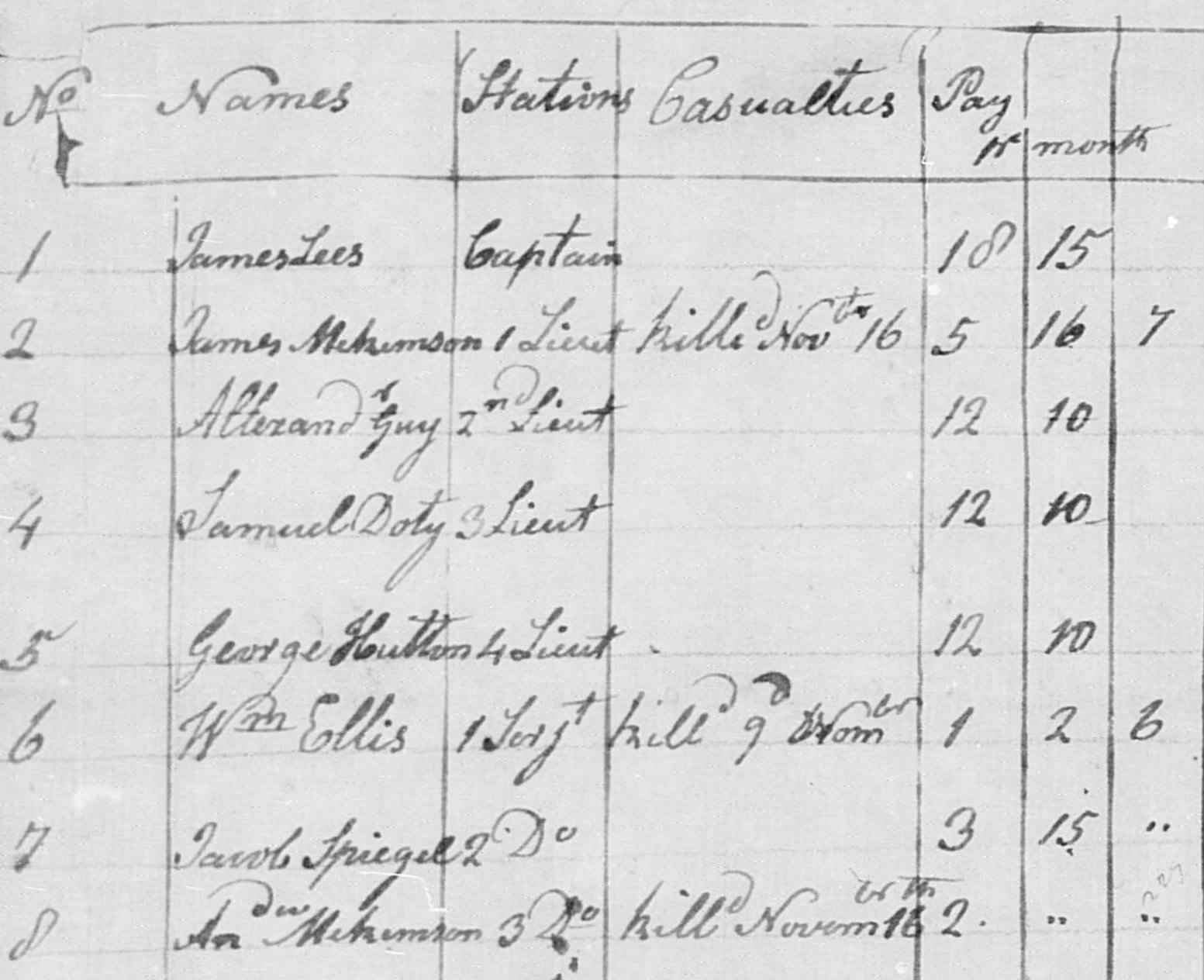
The November 1777 payroll for Captain Lees’ Company. Note #2 and 8.

When I became involved in genealogy nine years ago, I discovered that my Great, Great, Great, Great, Great Grandfather, Andrew Mekemson had arrived in America from Ireland in the 1750s with six sons and one daughter. All six sons ended up fighting in the Revolutionary War. Four were involved in the battle over Fort Mifflin. My sixth cousin, Bill Makemson, shared a flyer researched and distributed by Fort Mifflin that presented a different perspective on the flag incident described by Joseph Plumb Martin. Following is a direct quote:

“During the siege and battle of Fort Mifflin, November 10-15, 1777, the flag was kept flying despite the British bombardment, one of the most stupendous in US History. Although at one point the British cannonballs were falling into the fort at the rate of 1,000 per hour, the American garrison heroically rose to the challenge and kept the flag flying. Two brothers from Pennsylvania, Sergeant Andrew Mackemson and Lieutenant James Mackemson, were both killed in re-raising the shot torn flag. The fort was finally evacuated by the remnants of the defenders, but was never surrendered to the British. The Fort Mifflin Flag was still flying at the end.”

Andrew and James were brothers of my Great, Great, Great, Great Grandfather Joseph Mekemson. They were both part of Captain Lees’ Second Continental Artillery Company that entered the fort on November 13. James was second in command. Andrew was the Sergeant of Joseph Martin’s memory. Both brothers would have also been involved in the devastating battle with the Vigilant and the Fury.

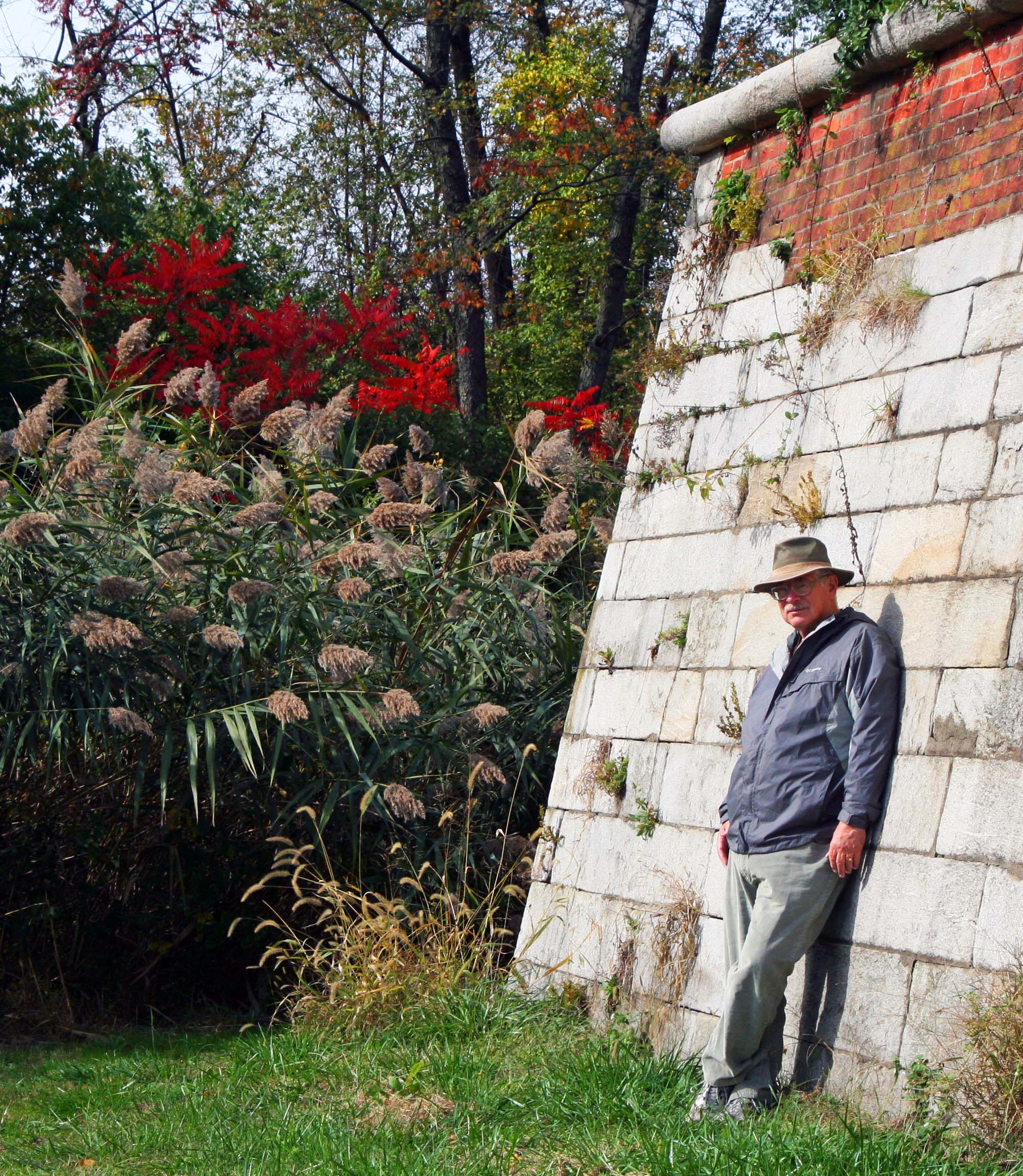
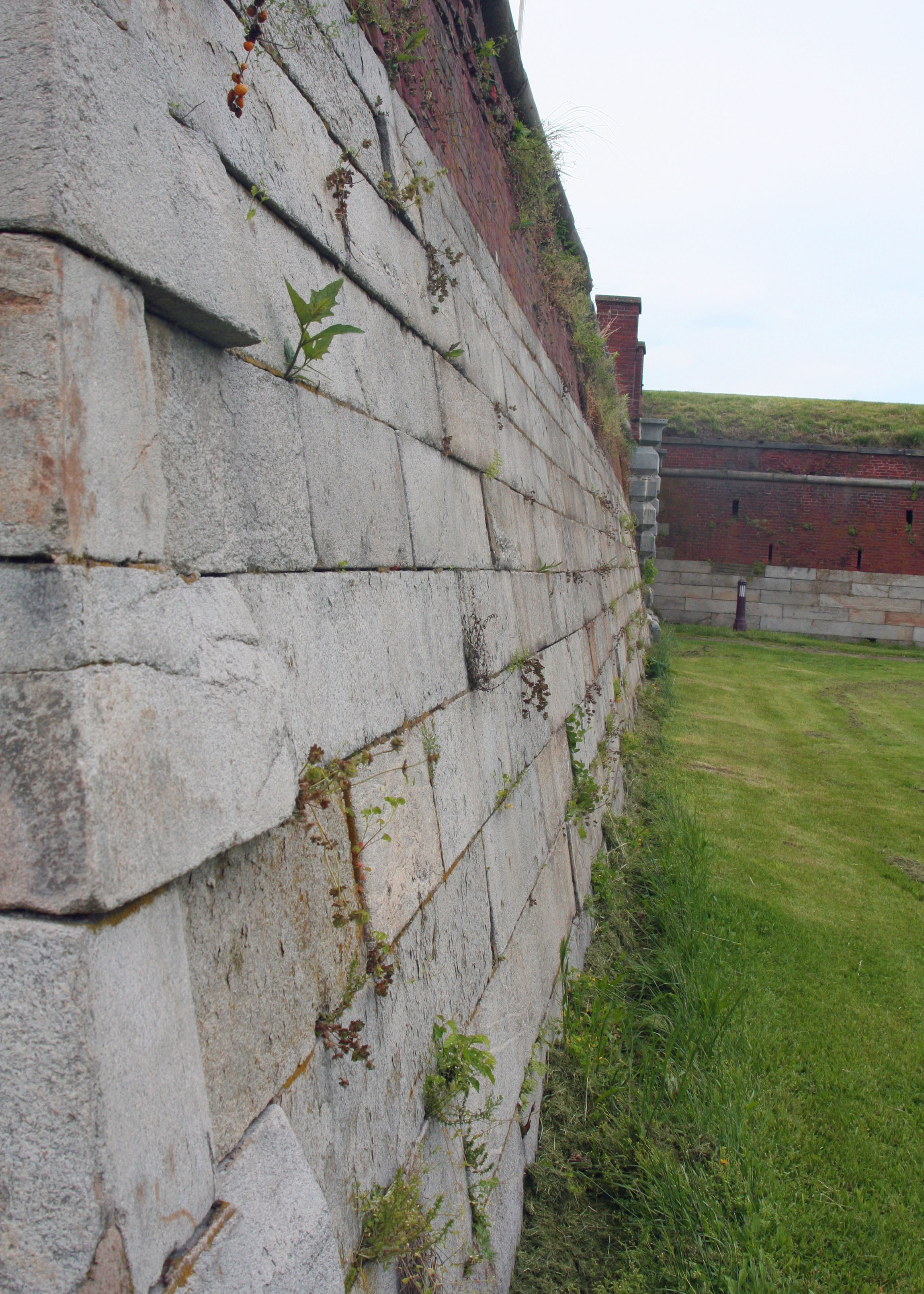
I am standing below the walls of Ft. Mifflin feet away from where the British ships

I am standing below the walls of Ft. Mifflin feet away from where the British ships Vigilant and Fury poured cannon fire onto the position defended by Andrew and James Mekemson.

Two other brothers, Thomas and William, joined the fight as well. Each served on the Floating Battery Putnam under Captain William Brown. The Putnam was one of the floating batteries to respond to Fort Mifflin’s signal for help.

Captain Brown had been appointed as the first Marine Captain in the Pennsylvania Navy and sent out to recruit more marines. He was in charge of the marines on the PA Navy’s Flagship Montgomery and then helped organize Washington’s crossing of the Delaware on Christmas Day 1776. He and his marines then went on to participate in the battles of Trenton and Princeton. It was the first joint marine/army operation in the nation’s history.

Documents from the Pennsylvania archives show that all four Mekemson or Makemson brothers (James, Andrew, Thomas and William) had joined Captain Brown by the time of Washington’s battle at Trenton and night march to Princeton. They may have been with him even earlier at the Delaware crossing. By September the brothers had split with James and Andrew moving on to their destiny with Captain Lees and Fort Mifflin.

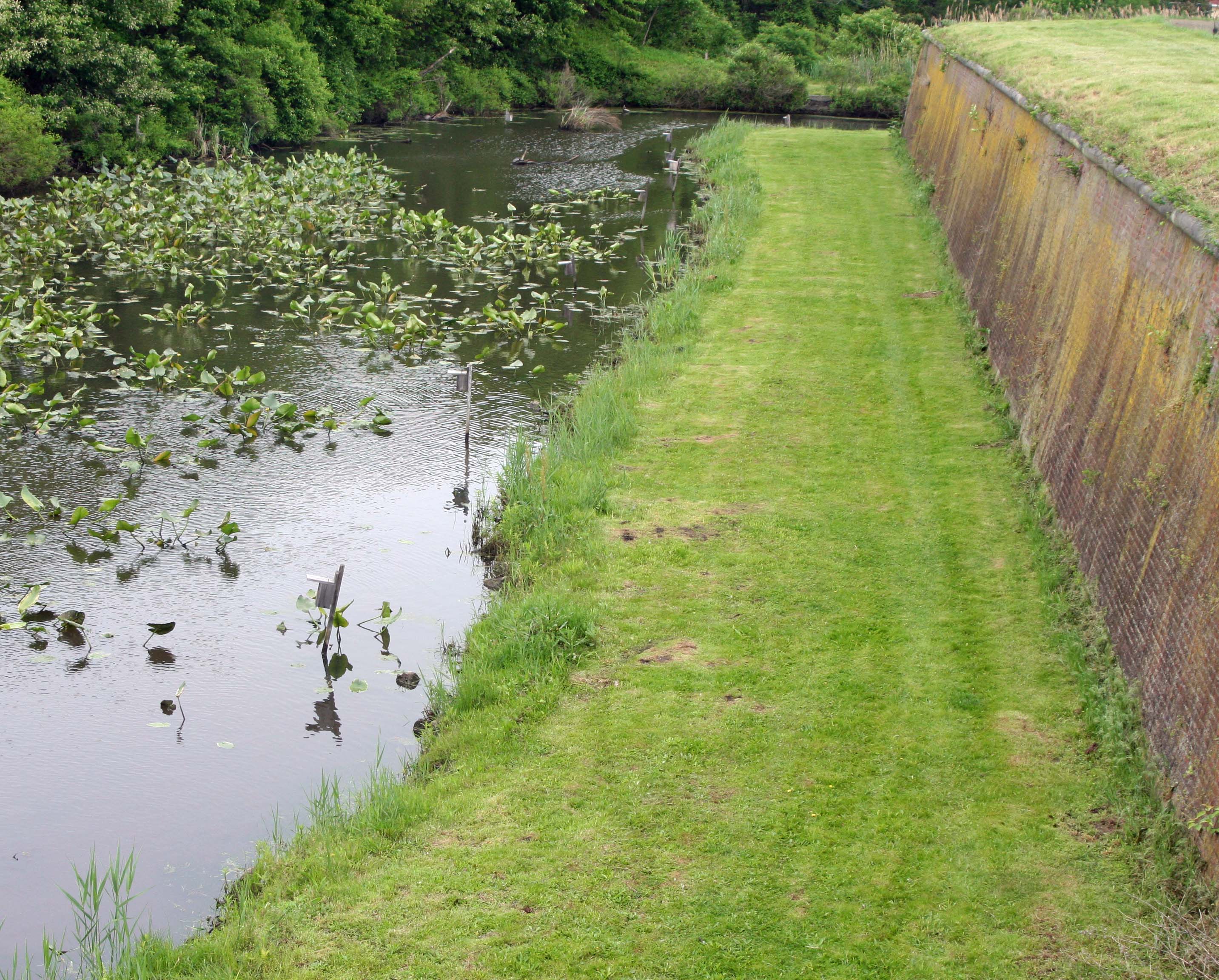
Today, a beautiful moat filled with plants and wildlife surrounds Ft. Mifflin. I like to think of it as a fitting memorial to James, Andrew and the other men who fought against overwhelming odds and gave their lives so the young republic could live.

Today, a beautiful moat filled with plants and wildlife surrounds Ft. Mifflin. I like to think of it as a fitting memorial to James, Andrew and the other men who fought so bravely against overwhelming odds and gave their lives so the young republic could live.

A Scottish Ghost… Halloween Tales II

The ghostly grave of John Brown the Martyr on a lonely Scottish moor.

Since I am telling family ghost stories this week, I am going to relate a ghostly encounter that Peggy and I had in Scotland last year.

It has to do with my search for the grave of John Brown, the Martyr of Priesthill.

I first heard of Brown in the late 60s when my dad arrived home from a Mekemson family reunion. He proudly produced a family tree that traced a branch of the Mekemsons back to the martyr. Given the staunch Presbyterian leanings of our ancestors, it was an important connection.

My Great, Great, Great Grand Father, James Mekemson, married Mary Brown Laughhead Findlay. (Mary had already seen two husbands die.) John Brown was five generations up the line.

The story of John Brown’s murder verges on legend. He was, as the saying goes, a Covenanter’s Covenanter, a very devout man. The Scottish Covenanters received their name from signing a Covenant that only Christ could be King, which eliminated the King of England from being God’s representative on earth. The King was not happy.

Reverend Alexander Peden, one of the top leaders of the Covenanter Movement, described Brown as “a clear shining light, the greatest Christian I ever conversed with.” High praise indeed; the type you reserve for a man who is killed for your cause.

They say that Brown would have been a great preacher, except he stuttered. Leading Covenanters visited his home and secret church services were held there. Important meetings took place.

Alexander Peden stayed at his house the night before Brown earned his martyrdom and warned of dark times. Peden was something of a prophet when it came to predicting dire events. This time he was right.

Brown was out gathering peat with his nephew the next morning when soldiers led by John Graham of Claverhouse appeared out of the mist and captured him. The date was May 2, 1685.

Peggy stands near where John Brown was shot on the likely remains of his house. Mist covers the distance as it would have on the day he was captured.

Claverhouse, or Bloody Clavers as the early Presbyterians identified him, was the King’s go-to man when it came to eliminating Covenanters. He was not noted for his compassion.

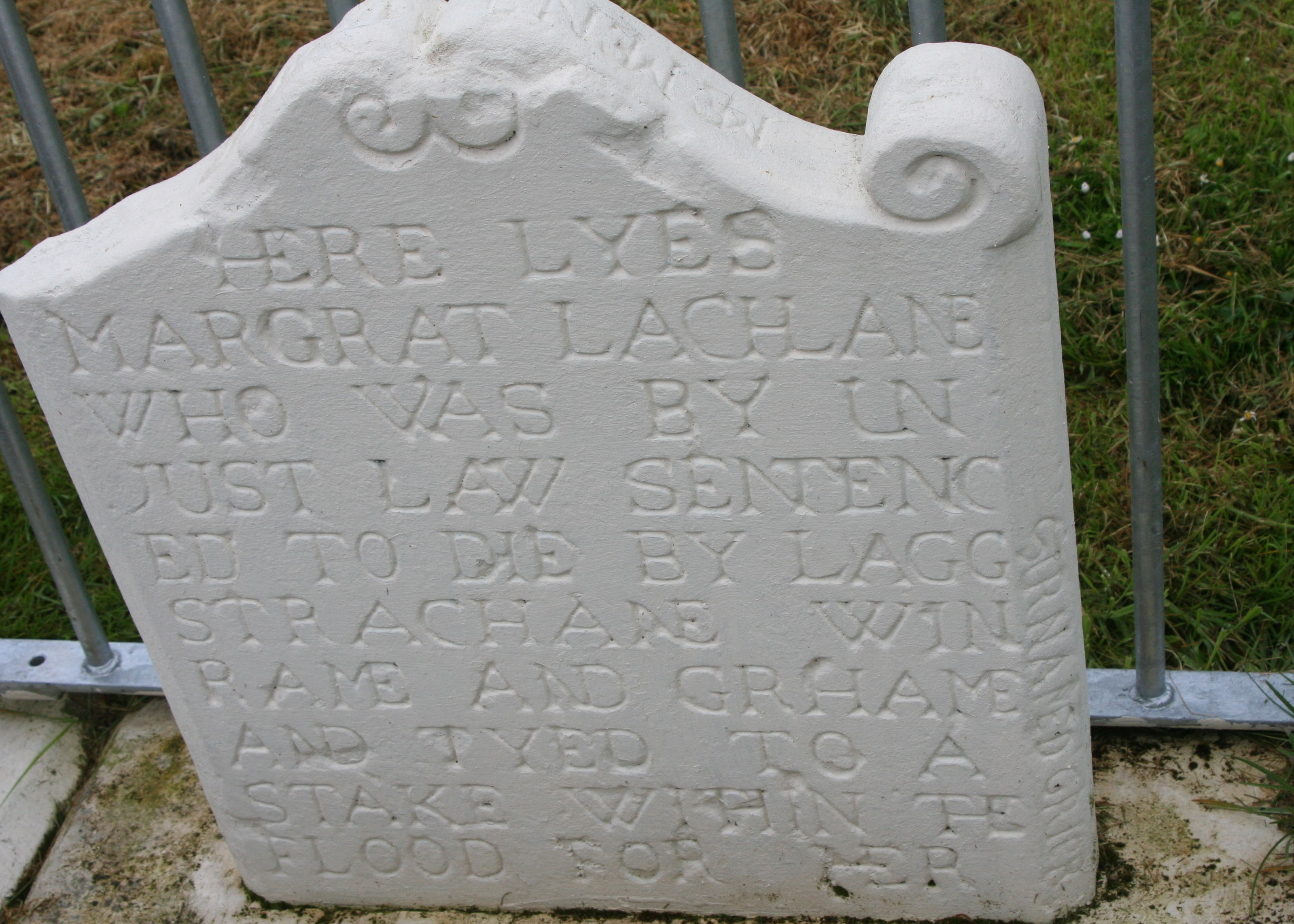
Covenanter’s martyr graves are found throughout the Scottish Lowlands. This woman was staked out in the ocean to be drowned. If violent deaths create ghosts, the Scottish Lowlands are filled with them.

He took Brown back to his home and demanded that he swear an oath to the King in front of his wife and children. Brown started praying instead. The legend states that Claverhouse ordered his soldiers to kill Brown but they refused. So he took out his own pistol and shot him in the head in front of his family.

The story then goes on to describe how Brown’s wife, Isabel Weir, went about the yard collecting pieces of her husband’s brain. (I don’t mean to treat this lightly, but somehow I can’t help thinking about a TV episode of Bones.)

The family eventually escaped to Ireland and then moved on to North America where it settled in Paxtang, Pennsylvania.

John Brown’s appearance on our family chart in 1969 immediately caught my attention. Not many families can claim a certified martyr. When I became serious about genealogy three years ago, I determined I would go to Scotland and find his grave.

It was listed as being near the small town of Muirkirk on Priesthill farm. Priesthill is an old Scottish sheep ranch, dating back to at least the 1600s. This was the time when Scottish Covenanters had gone ‘off the grid’ with their Presbyterian Church and held services out in the open fields hidden away from the prying eyes of the English King and his henchmen. Armed men were posted around the perimeter in case the soldiers came.

Getting caught wasn’t much fun. You could lose your sheep, your cattle, your land and your life. You might find your body quartered and hung up in various communities to provide an example of why you should be a good Anglican.

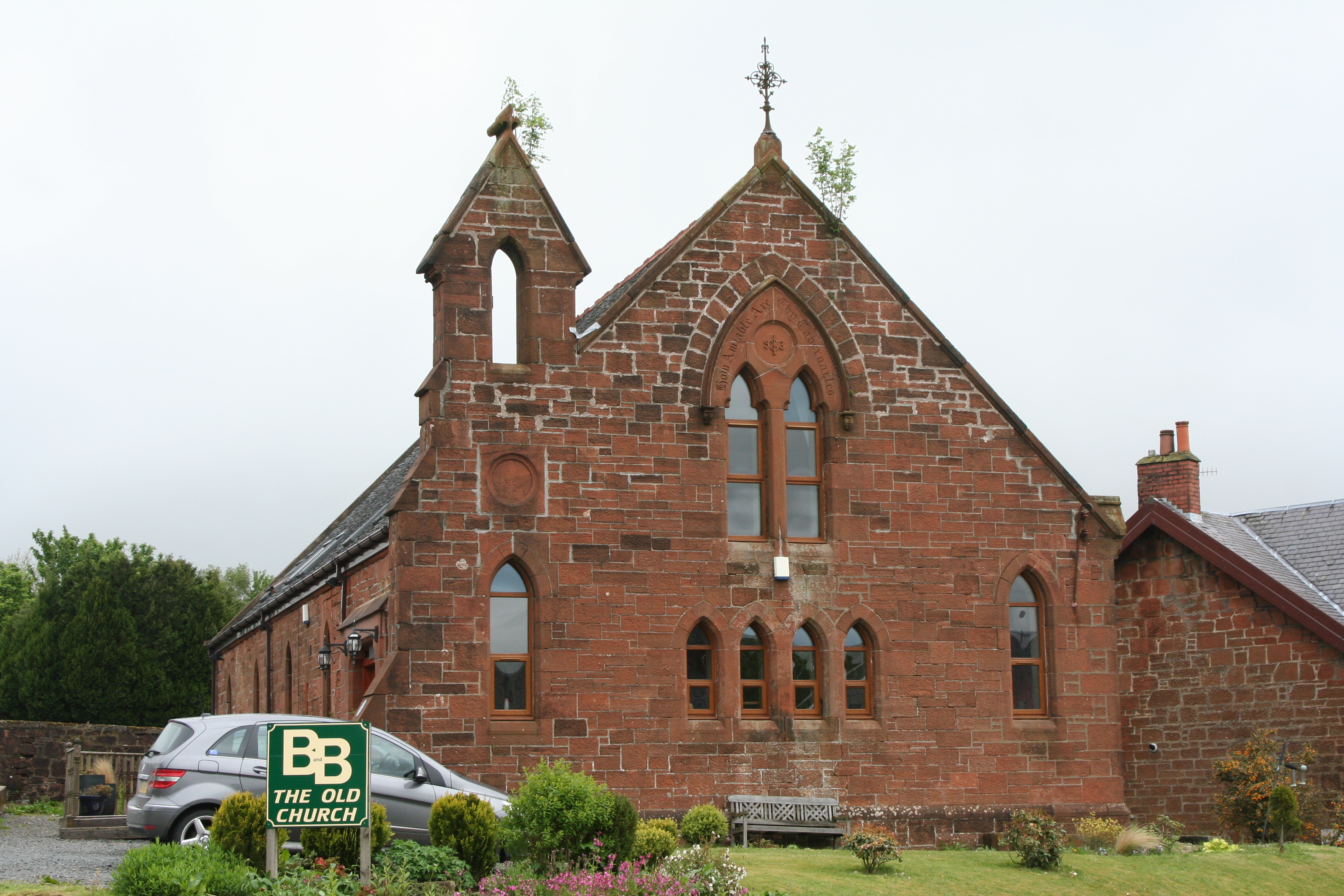
The Old Church B&B in Muirkirk Scotland where we stayed when searching for John Brown’s grave.

Priesthill was one of the remote sites where the hidden services were held. To get there we drove north on the road in front of our B&B (the Old Church B&B in Muirkirk… highly recommended) for a couple of miles and picked up a dirt road snaking off to the right through a sheep farm.

The road seemed to go on and on; recent rains had turned it into a muddy mess. Our brand new Mercedes rental car bounced along dodging sheep and accumulating glue-like mud mixed with sheep dung. It was still on the car when we returned it to Edinburgh.

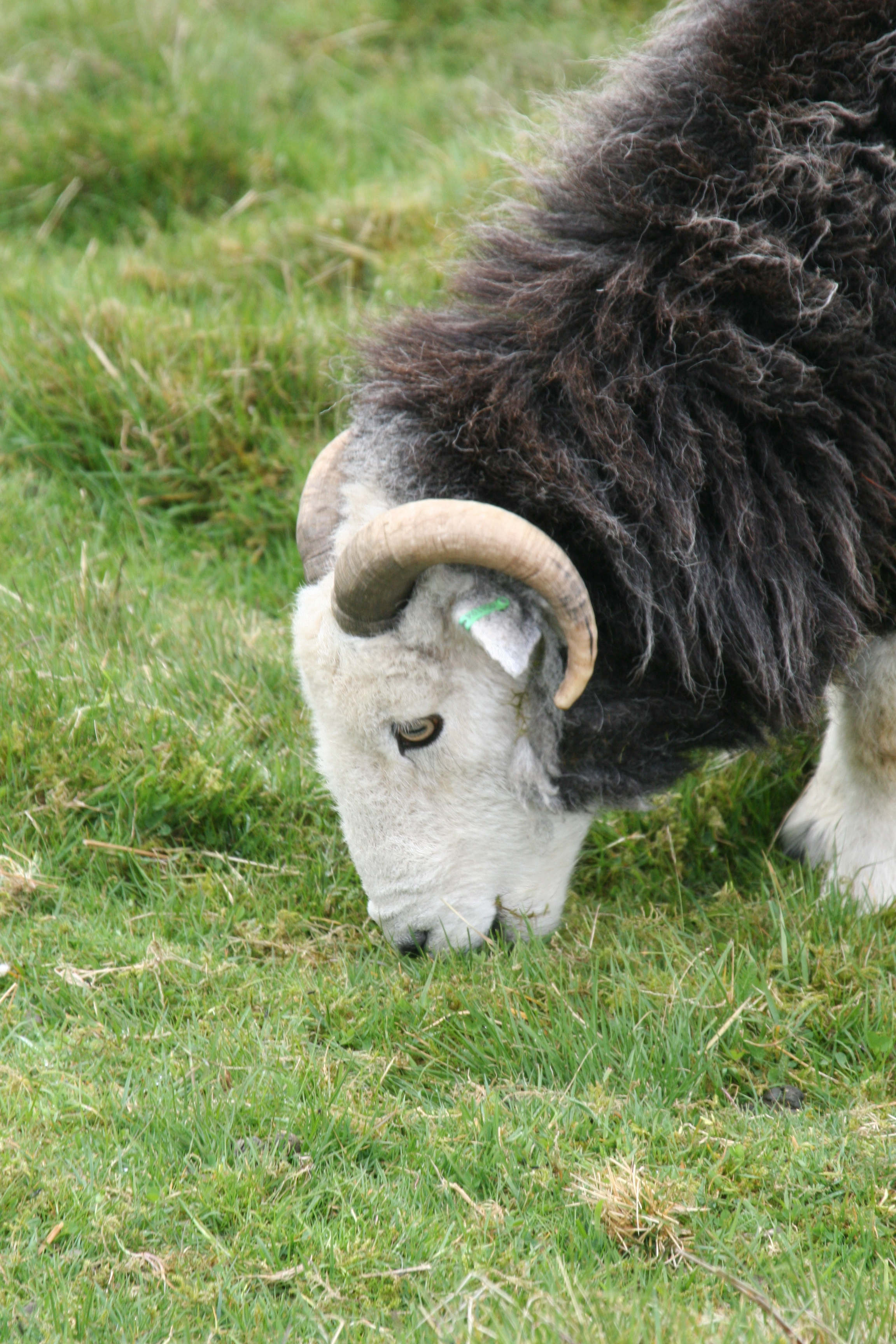
One of the sheep we had to dodge.

Finally the old farmhouse came into sight. A woman was standing on a porch enclosed by a three-foot high rock wall. She was wearing clothes that my great-grandmother times five might have found fashionable. Since we would be walking through her property in search of John Brown’s grave, I got out to talk with her. (Unfortunately, I left my camera behind.)

But she did something strange. She disappeared. Now this was strange in two ways. Obviously she didn’t want to talk with us. She turned her back and walked rapidly toward the door.  OK, I could live with that even though we had found most Scots to be friendly and helpful. Possibly she was shy.

What bothered me more was she sank.

It was like she was traveling down an escalator or open elevator. Her head disappeared beneath the stonewall, before she reached the door. I did not see her go inside.

“Maybe there are steps down to an underground cellar,” I thought. Or maybe she merely bent over to work on a flower garden. Curiosity got the better of me. I walked over. There was no woman; there were no flowers; there were no stairs. As far as I could see the floor of the porch was solid stone.

I asked Peggy, “Did you see that woman disappear?”

“She went inside,” my logical wife explained.

“Ah,” I said and put the matter out of my mind as we wandered out the indistinct trail across the vacant moors to John Brown’s lonely grave. But the thought wouldn’t conveniently disappear like the woman; it kept nibbling away at me. Later I asked Peggy if she had seen the woman sink into the porch.

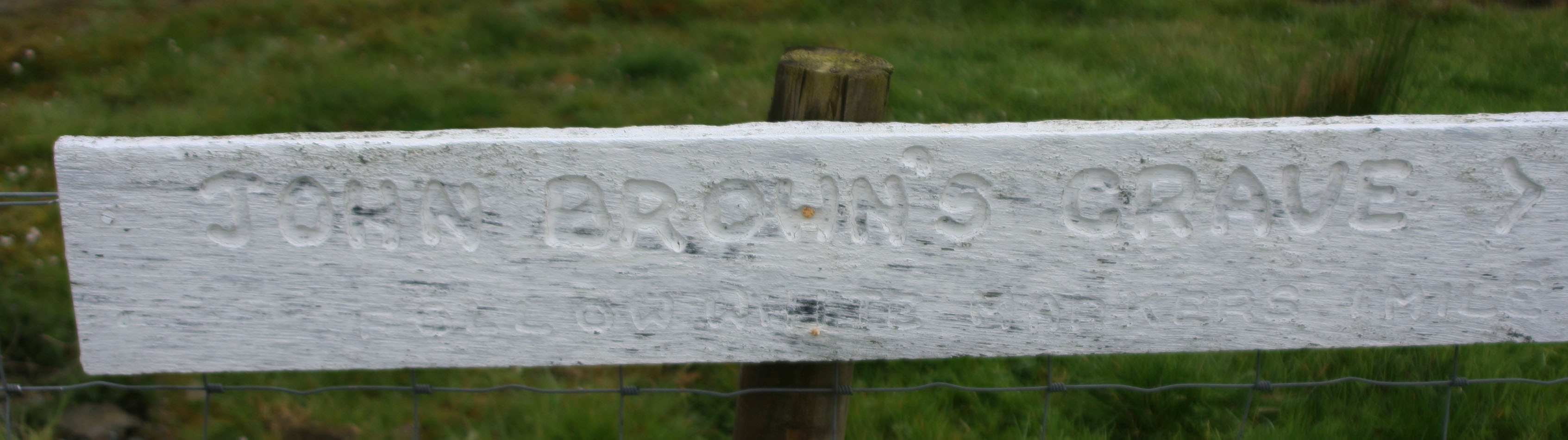
The sign in the farmyard pointing us toward John Brown’s grave.

“Yes,” she replied.

“Did you actually see her go in the house?”

“No.”

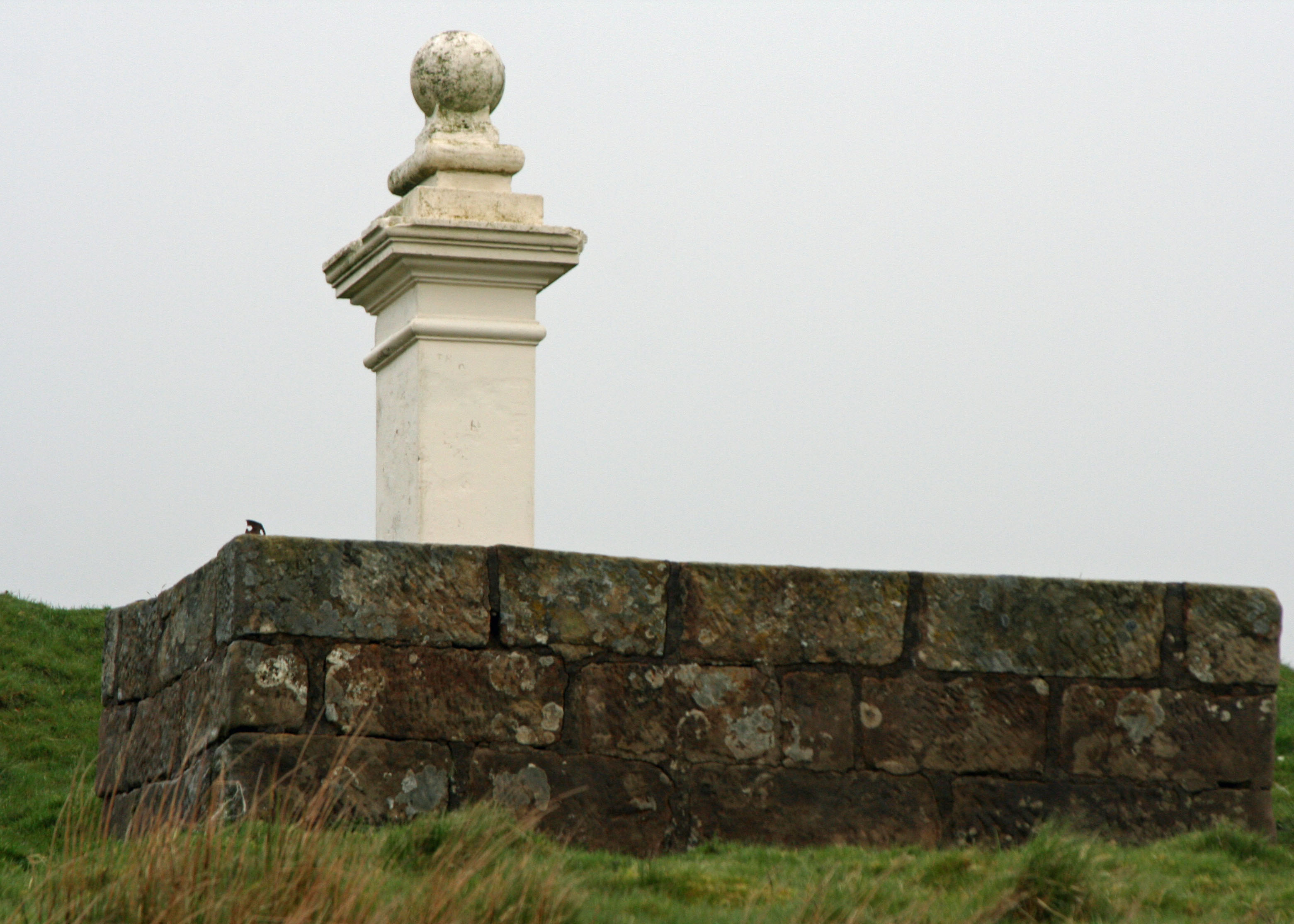
So I rest my case for a possible ghost. We did, by the way, find John Brown’s grave. His ghost was said to have appeared gloatingly in Clavers’ tent the night before Clavers was killed in battle.

A close up of John Brown’s grave.

A True Family Ghost Story… Halloween Tales I

On November 15, 1777, the British lobbed 1000 cannonballs per hour into the tiny Fort Mifflin in an all out effort to resupply British troops in Philadelphia. Four of my ancestors fought in the battle and two died heroically. Did they become ghosts?

Do you believe in ghosts?

With Halloween two days away I decided it is time to get into the spirit of the season and post two family ghost stories that involved me: the first took place at Fort Mifflin near Philadelphia; the second in Scotland. They are both true. I will return to my journey down the Colorado River on Friday.

Fort Mifflin

It was the week before Halloween and I was on a ghost hunt. The eerie creatures are known to hang out at Fort Mifflin, which is located next to Philadelphia International Airport on the Delaware River. It’s one of the hottest ghost watching spots in America and has been featured on the popular TV series, “Ghost Hunters.”

A little background is necessary.

In the fall of 1777, 234 years ago, all that stood between the British and the likely defeat of the American Revolution was the small Fort Mifflin on the Delaware River. It is a chapter in American History that is little known and rarely told.

For over a month, the fort had kept the mighty British Navy from resupplying General Howe at Philadelphia. It was a valiant effort that kept Howe from pursuing George Washington and likely defeating him, thus ending the war.

On the morning of November 15th, five British Warships including the sixty-four-gun Flagship Somerset appeared out of the mist below the fort. Of equal, if not more concern, the British had taken advantage of a high flood tide and pulled the converted and armed East Indian merchant ship Vigilant and the gun-sloop Fury within pistol range of Mifflin’s northwest corner. A number of land batteries also had cannons pointed at the fort. (Fort Mifflin had a total of 10 cannons.)

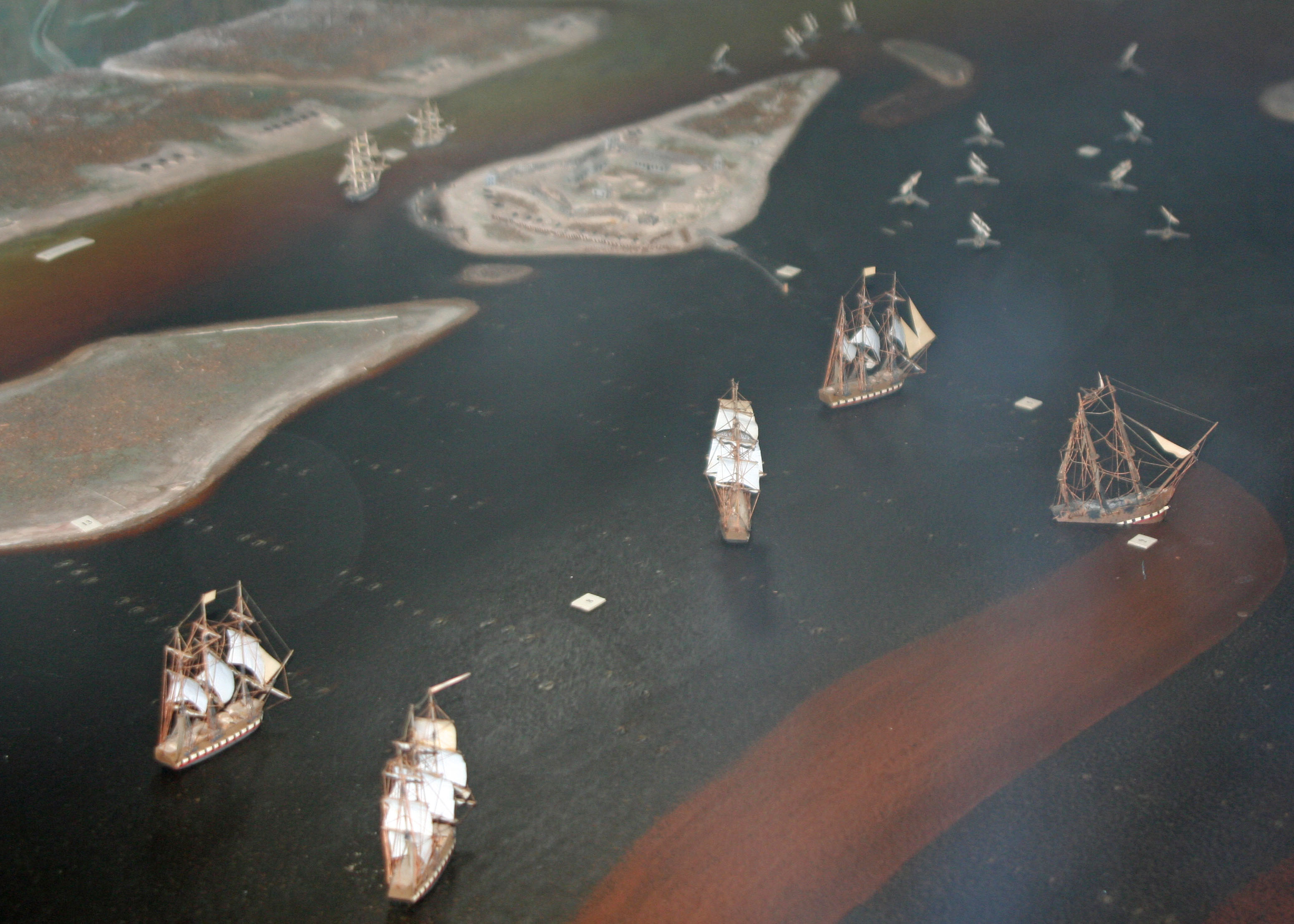
This model provides an overview of where the British Men-of-War were located in relation to Fort Mifflin. Andrew and James Mekemson were part of the artillery company protecting the wall under the guns of the two ships on the upper left hand corner.

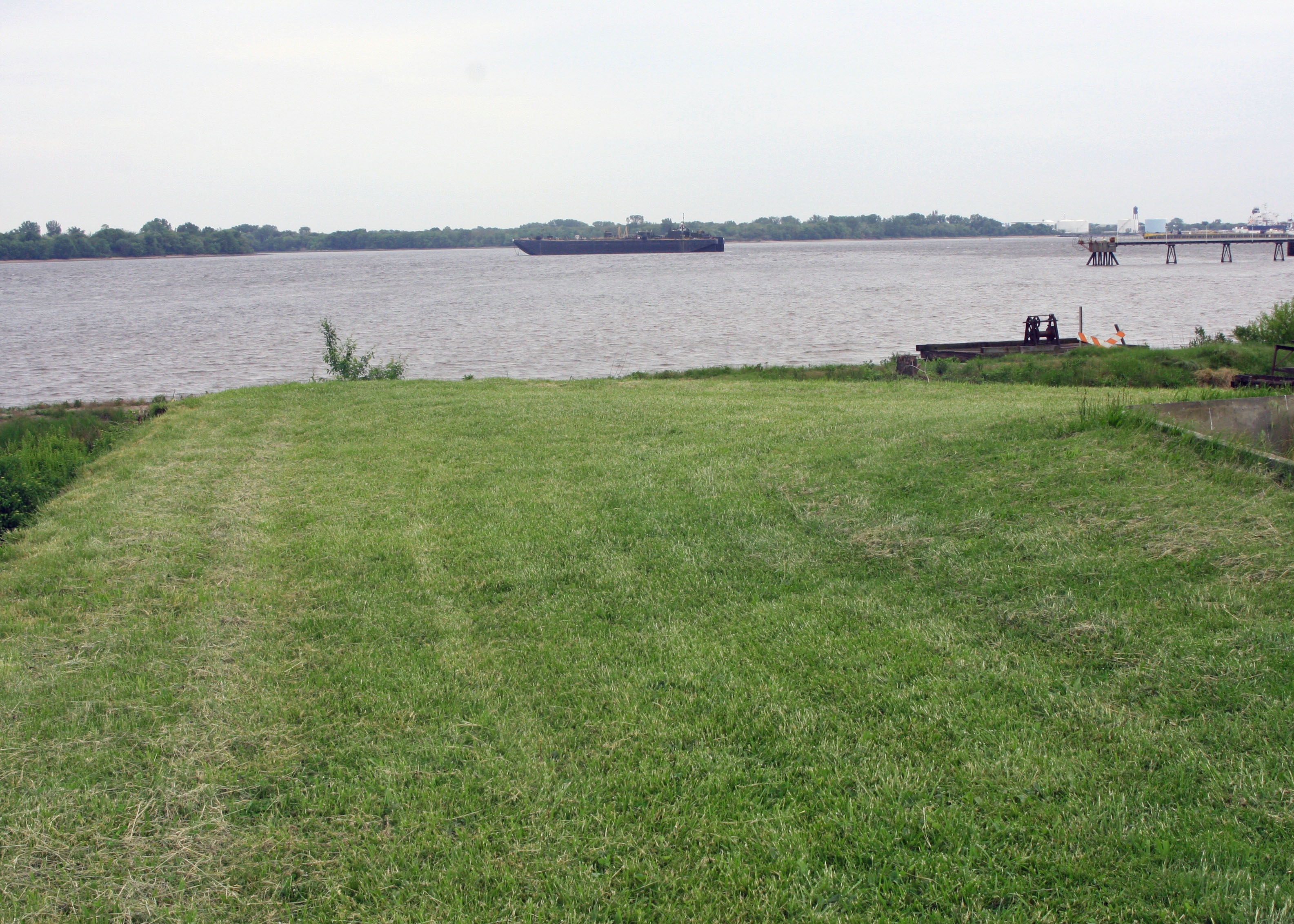
Looking out from the lawn in front of Fort Mifflin, the barge is in the approximate location of the British Flagship Somerset.

The Vigilant was so closed to the wall that British Marines positioned in the masts could fire pistols down at my ancestors who were manning the American cannons.

As the sun rose, the ships and land batteries opened fire in a bombardment that sent over 1000 cannonballs per hour crashing into the fort. It was the heaviest naval bombardment of the Revolutionary War.

Joseph Plumb Martin, a young private from Massachusetts, was there during the battle and captured the sheer terror of the experience some years later in his book Ordinary Courage. “They mowed us down like corn stalks,” he reported.

At the height of the bombardment a decision was made to hoist a signal and request help from the galleys and floating batteries above the fort. A volunteer was requested to climb up the flagpole with the signal flag as the cannonballs hurtled in from all directions.

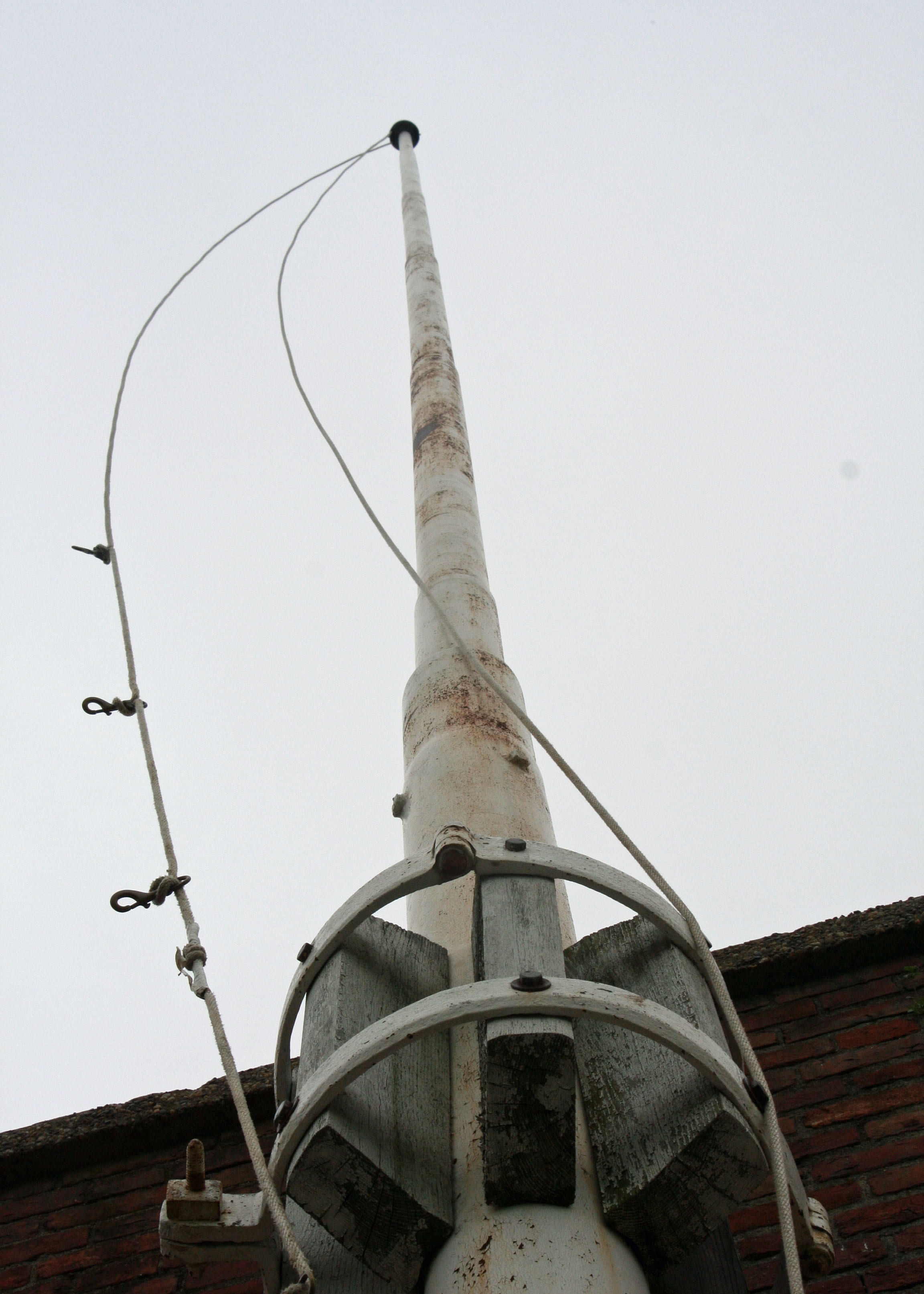
Fort Mifflin’s modern flagpole.

Joseph Plumb Martin had a vivid memory of the event. “…a sergeant of the artillery offered himself; he accordingly ascended to the round top and pulled down the (fort’s) flag to affix the signal flag to the halyard. The enemy, thinking we had struck (surrendered), ceased firing in every direction and cheered.”

“Up with the Flag!” was the cry from our officers in every part of the fort. The flag was accordingly hoisted and the firing was immediately renewed. The sergeant then came down and had not gone a half-rod from the foot of the staff when he was cut in two by a cannon shot.”

The sergeant who climbed up the flagpole was my ancestor, Andrew Mekemson. His brother James was also killed during the engagement. Two other brothers, stationed on the Floating Battery Putnam, also fought in the battle. I figured if there were ghosts at the fort, they might very well be relatives.

Since Fort Mifflin offers ghost tours, Peggy and I signed up for a nighttime tour by lantern.

We decided to do a reconnaissance during daylight hours but a police vehicle blocked the road. A dozen or so media crews were pointing their cameras into the airport at a large UPS cargo plane. It had just flown in from Yemen and was being searched for ink cartridge bombs. We were caught in the midst of a “credible terrorist threat” as President Obama described it.

Ghosts can’t be nearly as scary… can they?

By 6:30 the police car had moved but the TV crews were still on watch. We wound our way through the circus. Dusk had arrived at the Fort.  The tour was scheduled to start as soon as it is fully dark. Make that pitch black; there was no moon.

Our guide gathered us. His lantern immediately blew out. “It’s only the wind,” he explained. “I don’t believe in ghosts. I don’t hunt them and they don’t hunt me.”

His disclaimer comes with a ‘but.’ He works at the Fort, and occasionally ‘things’ happen. There are unexplained footsteps on stairs. Doors close and latch on their own. Voices are heard in the next room. A woman screams like she is being murdered. The police are called but can’t find anyone, or thing. A man walking on the rampart disappears into thin air.

Our guide relates story after story as we make our way through the candle lit buildings of the fort. Other staff, volunteers and visitors have also experienced strange phenomena. More than one visitor has left on the run and even the guide has packed up and gone home on occasion.

Our guide was spending the night in the room at the top of the stairs when he heard footsteps coming up the stairs. He opened the door and no one was there. Next he heard voices coming from the room next to him. He checked. No one was there. He packed up and went home.

We arrived at the Fort’s ammunition magazine, a bush covered hill that resembled an ancient burial mound. A bright hurricane torch outlined the dim opening. We entered and walked down a narrow, dimly lit corridor that opened out to a large, arched bunker. A single candle created dancing shadows on the far wall.

The grave-like ammunition magazine where visitors encountered the well-informed guide dressed as a Revolutionary soldier and where Peggy and I had our ghostly experience.

“I’ve never felt anything in here,” the tour leader related. “It’s dead space,” he quips and repeats himself in case we missed his humor. For others, the story has been different. A group tourists reported on encountering a wonderful guide in the bunker dressed as a Revolutionary soldier. He vividly described the horrendous battle that took place on November 15, 1777. The Fort had no such guide…

I stared hard into the corner where he supposedly stood, trying to create something out of nothing. But there were only the dancing shadows. Peggy tried to take a photo but the camera froze and refused to work. As she struggled with it, the last of our tour group disappeared down the narrow corridor, leaving us alone with the flickering candle.

We hurried after the group. There was no one outside the magazine, only the glowing torch and the dark night. “I saw them heading down a side corridor,” Peggy said. With more than a little reluctance, we dutifully trooped back inside. Peggy’s corridor is a bricked in wall. I was starting to feel spooked.

“Maybe we should go back to the bunker,” she suggested.

“No,” I replied and headed for the entrance. Just as we arrived, the hurricane torch made a poof sound and went out, leaving us with nothing but dark. The hairs on the back of my head stood at attention. Was Andrew trying to communicate with us? Peggy and I decided it was time to vacate the premises.

Fortunately we found our group several buildings away and stuck close to them the rest of the tour. We couldn’t have asked for a better Halloween experience.

Next Blog on Halloween: A Lonely Grave… Peggy and I are looking for the grave of an ancestor, shot down as a Scottish Martyr, when we see what almost has to be a ghost.

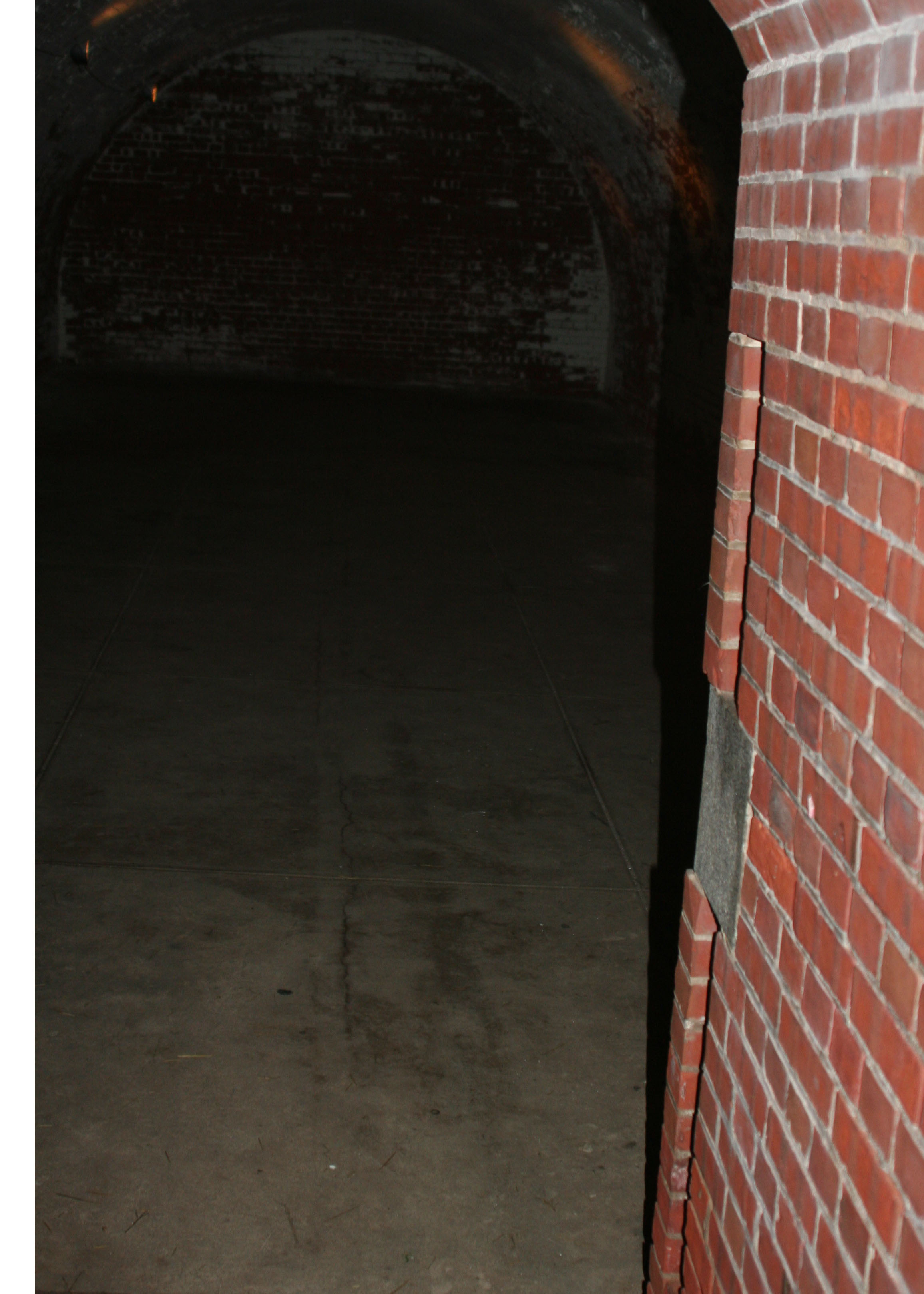
Once you’ve become thoroughly “spooked,” every dark corridor, such as this one at Fort Mifflin, becomes a potential hiding place for a ghost.

The Old Church B&B, a Ghost, and a Lonely Grave: Part III

An early sketch of John Brown the Martyr of Priesthill Scotland being shot down by Bloody Clavers.

An early sketch of John Brown the Martyr of Priesthill Scotland being shot down by Bloody Clavers.

THE LONELY GRAVE

I first heard of John Brown the Martyr of Priesthill in the late 60s.

My dad arrived home from a reunion with a family tree that traced a branch of our family back to the martyr. Given the staunch Presbyterian leanings of the ancestral Mekemsons, it was an important connection.

My Great, Great, Great Grand Father, James Mekemson, married Mary Brown Laughhead Findlay. (Mary had already seen two husbands die.) John Brown was five generations up the line.

The story of John Brown’s murder verges on legend. He was, as the saying goes, a Covenanter’s Covenanter, a very devout man. Reverend Alexander Peden, one of the top leaders of the Covenanter Movement, described him as “a clear shining light, the greatest Christian I ever conversed with.” High praise indeed; the type you reserve for a man who is killed for your cause.

They say that Brown would have been a great preacher, except he stuttered. Leading Covenanters visited his home and secret church services were held there. Important meetings took place.

Alexander Peden stayed at his house the night before Brown earned his martyrdom and warned of dark times. Peden was something of a prophet when it came to predicting dire events. This time he was right.

Brown was out gathering peat with his nephew the next morning when soldiers led by John Graham of Claverhouse appeared out of the mist and captured him. The date was May 2, 1685.

Claverhouse, or Bloody Clavers as the early Presbyterians identified him, was the King’s go-to man when it came to eliminating Covenanters. He was not noted for his compassion.

He took Brown back to his home and demanded that he swear an oath to the King in front of his wife and children. Brown started praying instead. The legend states that Claverhouse ordered his soldiers to kill Brown but they refused. So he took out his own pistol and shot him in the head in front of his family.

The story then goes on to describe how Brown’s wife, Isabel Weir, went about the yard collecting pieces of her husband’s brain. (I don’t mean to treat this lightly, but somehow I can’t help thinking about a TV episode of Bones.)

The family eventually escaped to Ireland and then moved on to North America where it settled in Paxtang, Pennsylvania.

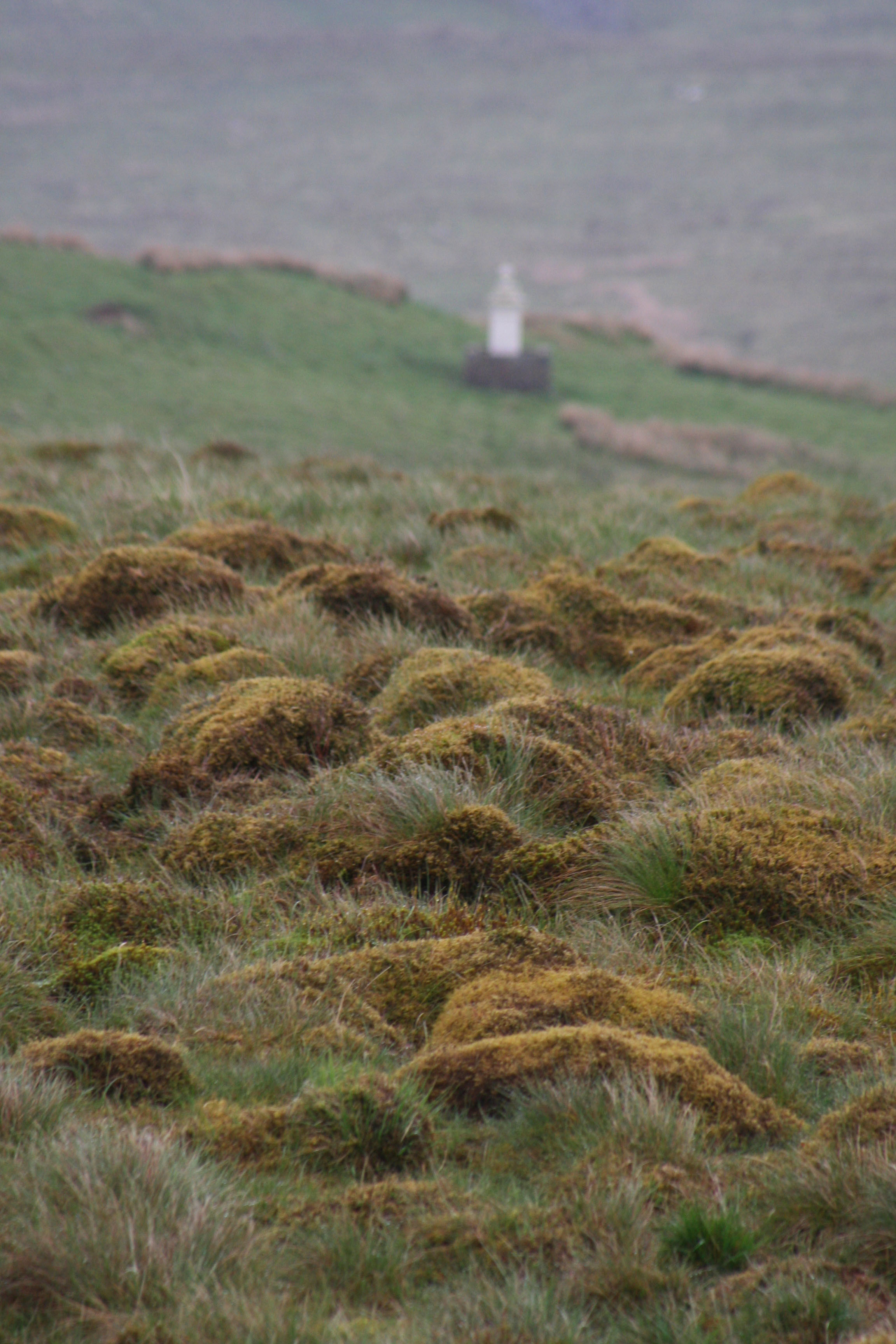
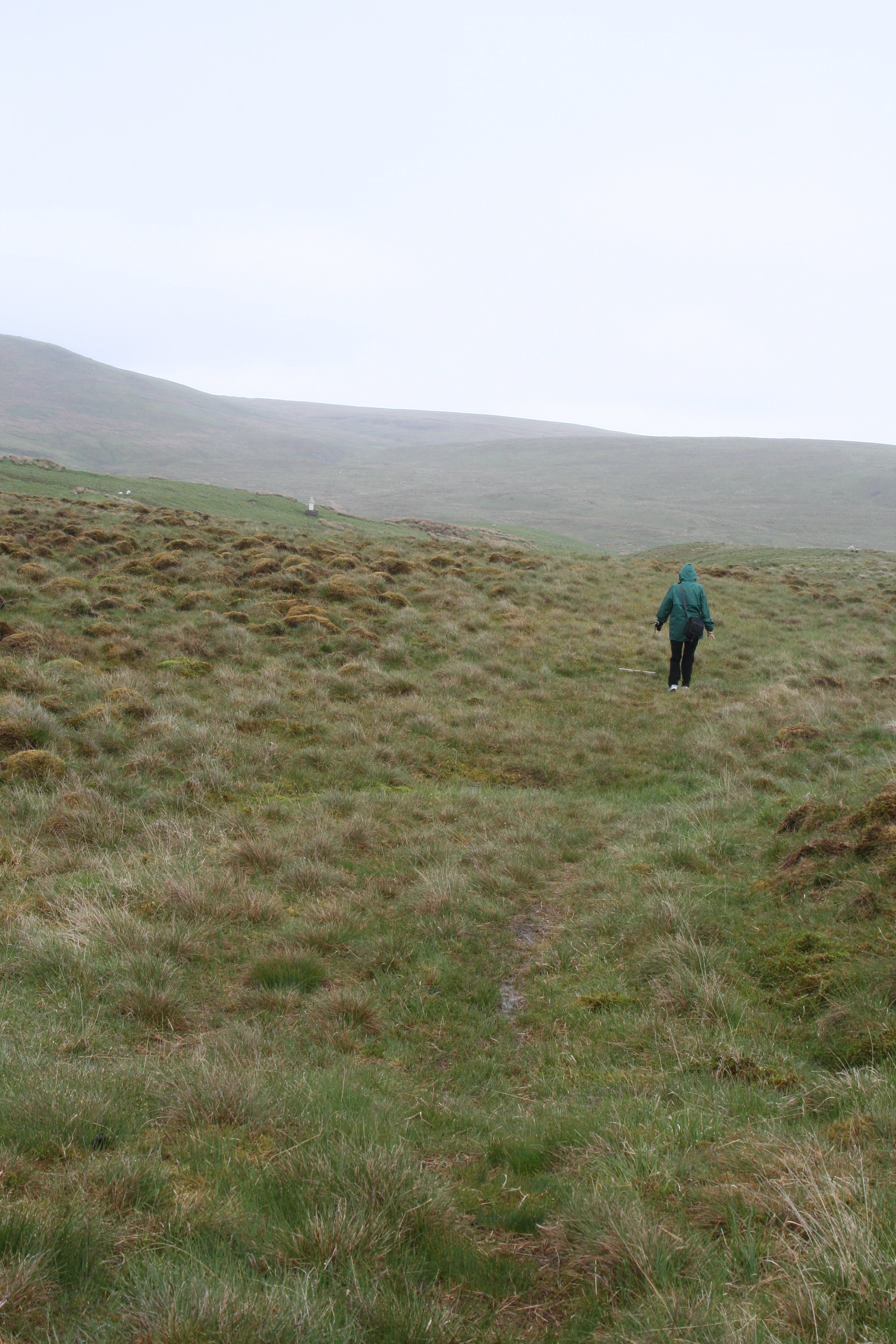
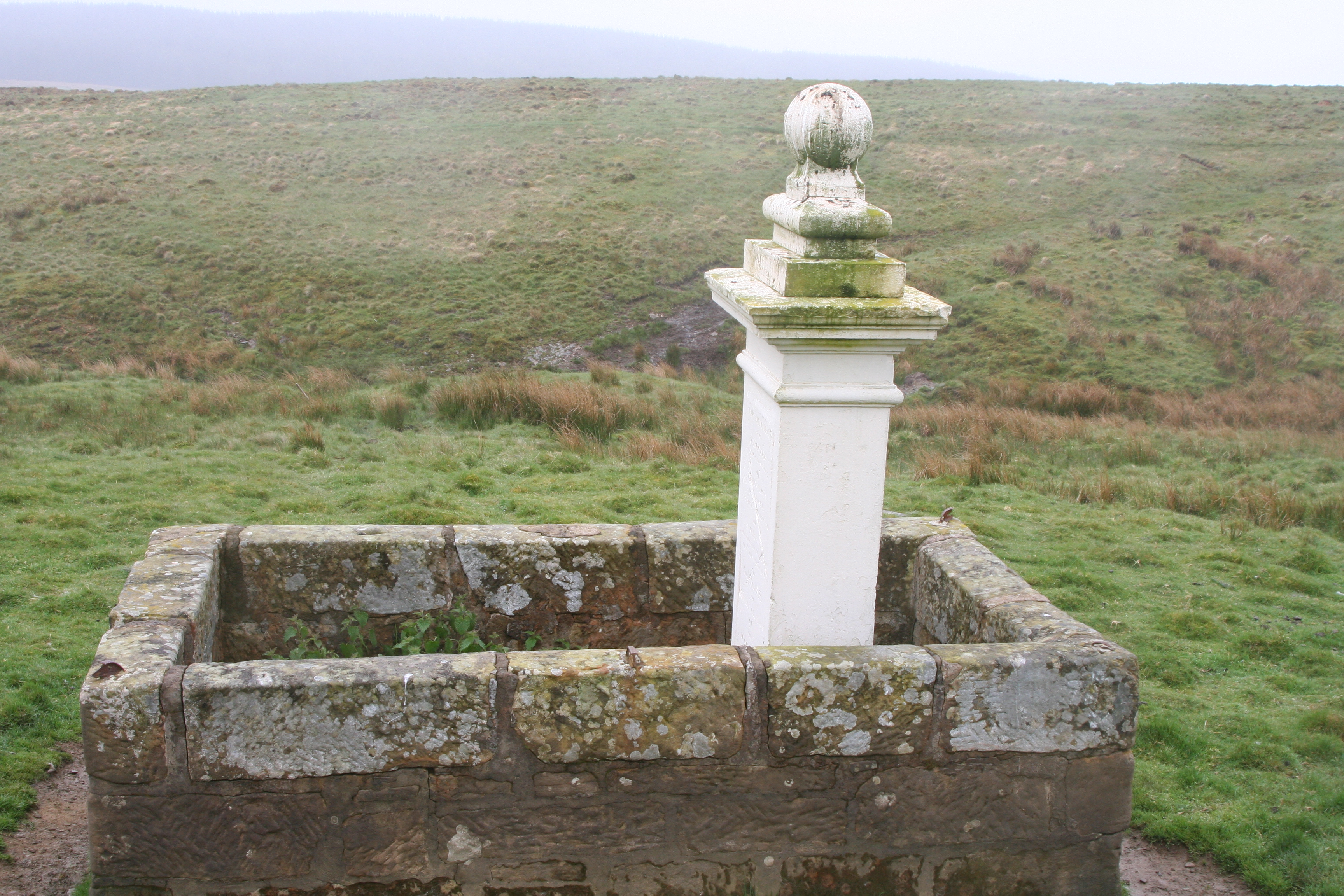
This shot of Peggy captures the isolation of John Brown's Grave, the white speck on the upper left of the photo.

John Brown’s appearance on our family chart in 1969 immediately caught my attention. Not too many families can claim a certified martyr. When I became serious about genealogy three years ago, I determined I would go to Scotland and find his grave.

Our arrival at the Priesthill Farm with its disappearing woman meant that we were near. A faded sign pointed off to the right. The fine print suggested we would find the grave in a mile. We went wandering out across the grass-covered hills, following a muddy path that was minimally marked.

We were beginning to despair about out chosen route when we crested a hill and spotted the lonely grave in the distance with only sheep for company. We hiked down the slope, jumped a small creek, and arrived. After paying proper homage to the martyr we climbed above the grave to where he had lived. Only a few stones marked the site. Peggy photographed me standing in his house, near where he had been shot down on that misty morning in 1685.

Looking down on John Brown's Grave.

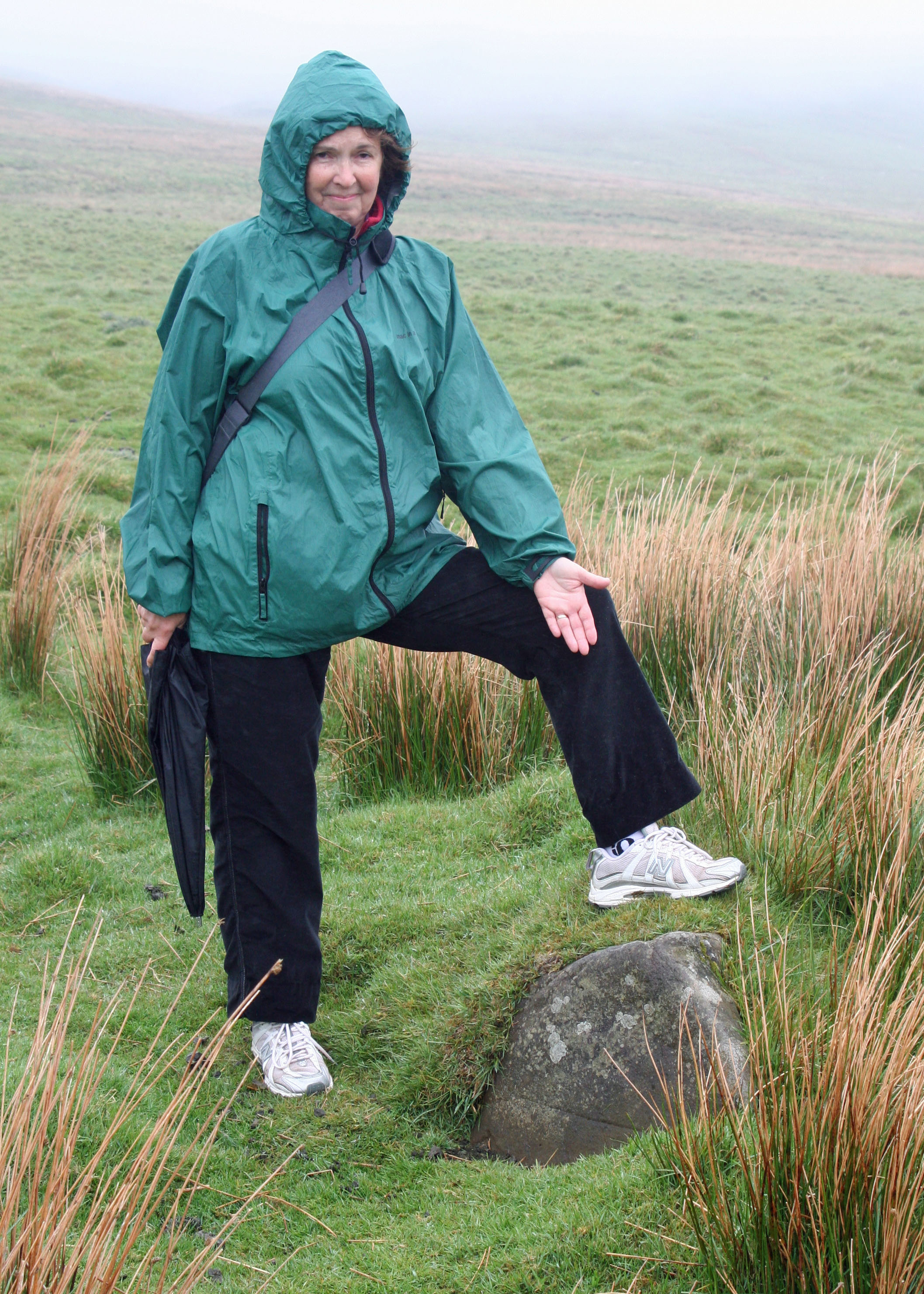
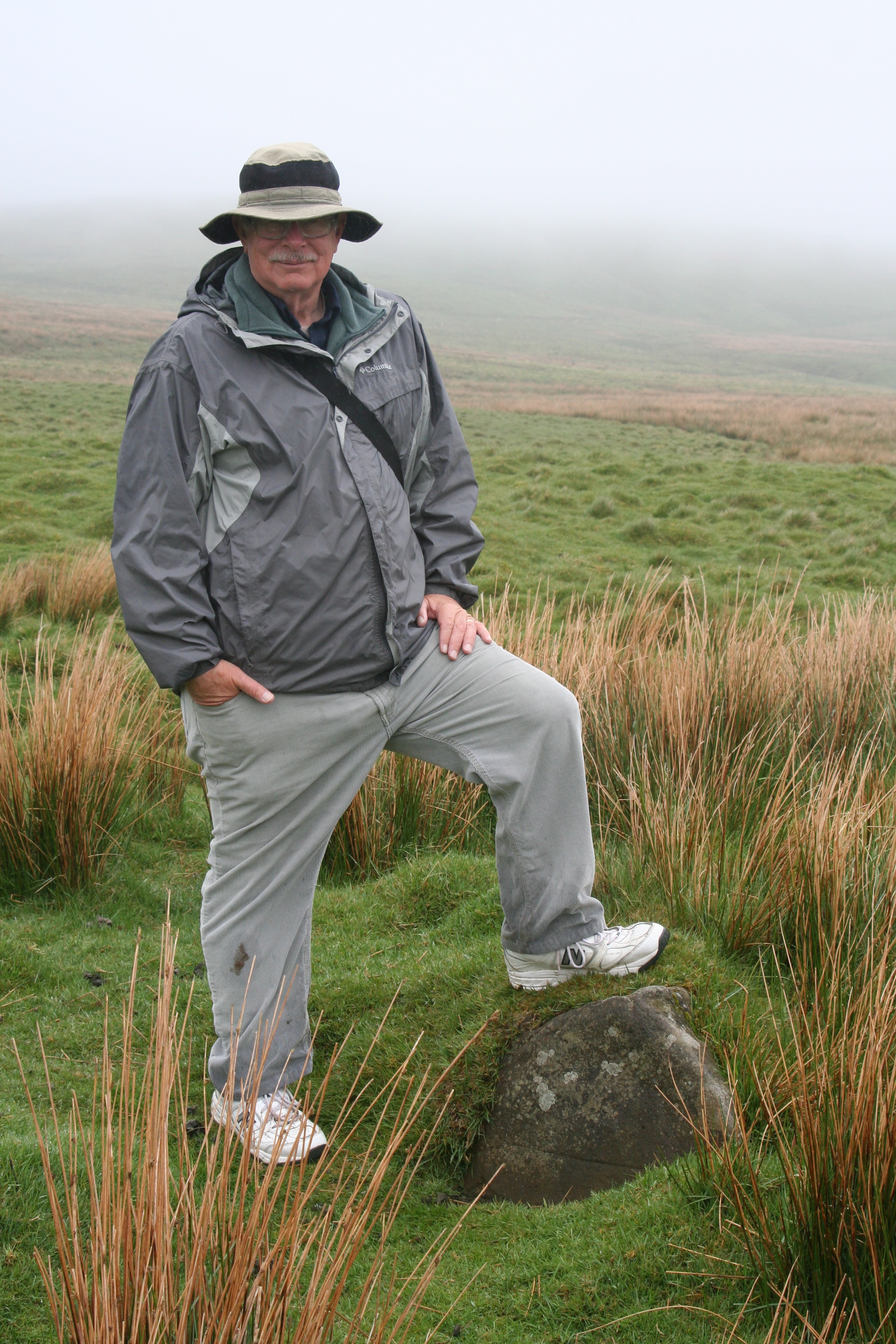
I am standing on a rock that may have been part of John Brown's home, only feet away from where he would have been shot.

Our ‘pilgrimage’ completed, we left Muirkirk and drove east to Dumfries where I visited the local genealogical center. The next day we returned our car to Edinburgh and took the train to London. Our visit to England and Scotland was over. Between our visit to Chatsworth, adventure on the narrow boat canal, exploration of Edinburgh, tour of southwestern Scotland and search for ancestors, we had a full three weeks. We we had enjoyed the Midlands of England, we fell in love with Scotland. We’ll be back.

Next Blog: Back to the wild west… There’s a beaver standing on my tent.

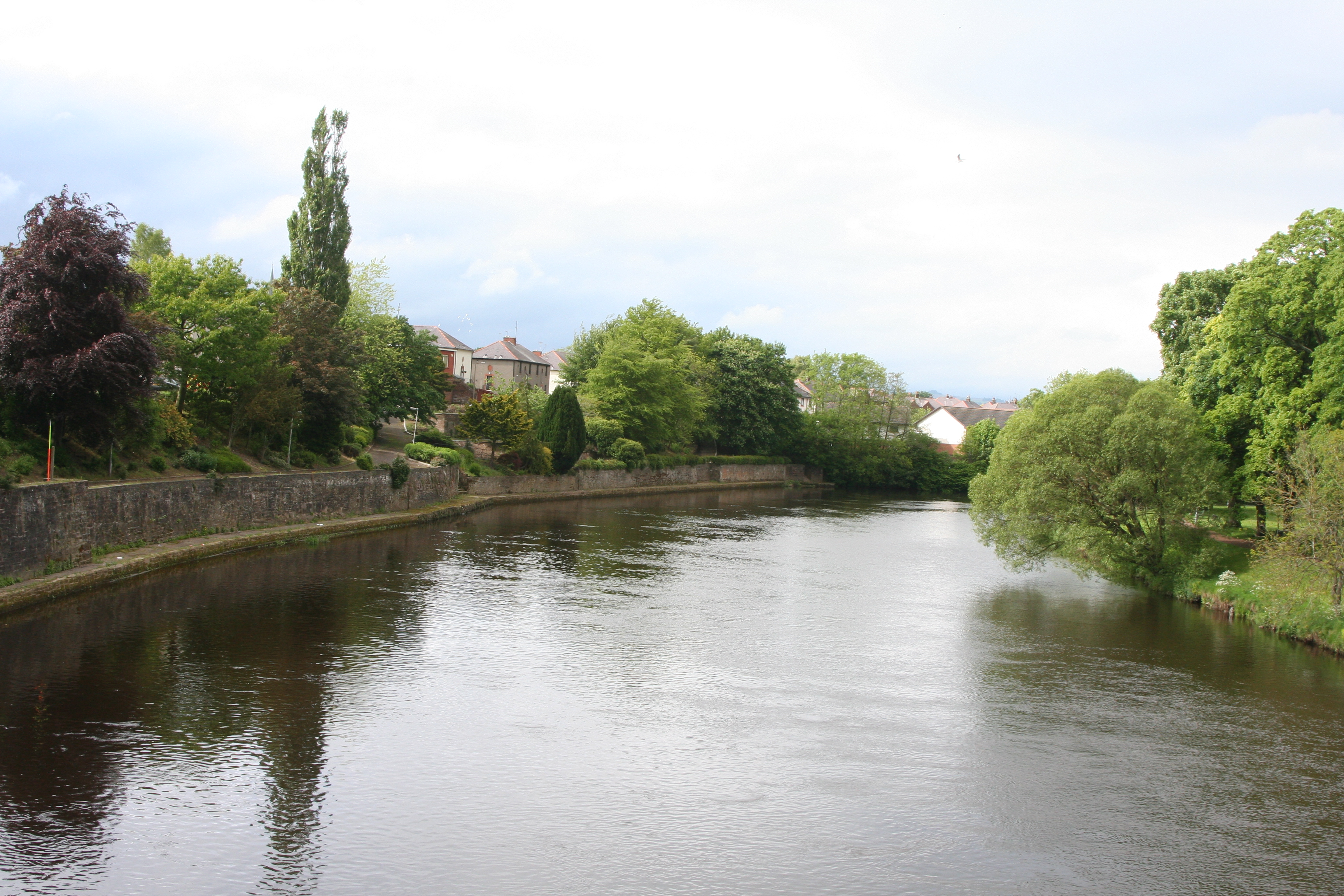
The River Nith flowing through the heart of Dumfries.

A final view of southwestern Scotland.

The Old Church B&B, a Ghost, and a Lonely Grave: Part II

A ram we passed on our way into Priesthill. Nothing ghostly about him.

THE GHOST

Here’s today’s question: Do you believe in ghosts?

My childhood experience of growing up with a graveyard next to our house introduced me to ghosts. They were worrisome but mainly a product of my young imagination. My sister Nancy, on the other hand, believed in them one hundred percent. (See my blog “Mr. Fitzgerald Is Dead” under Misadventures.)

The visit Peggy and I made to Fort Mifflin, Pennsylvania last fall looking for information on the two Mekemson boys who died there during the Revolutionary War provided another experience. Scary! Did something really blow out the hurricane lantern leaving us alone in the dark? (Check out “The Mekemson Ghosts of Fort Mifflin” in Looking for Dead People.)

My first actual sighting of a ghost would wait for Priesthill, however. Maybe. Ghosts tend to be, um, Ghostly.

Priesthill is an old Scottish sheep ranch, dating back to at least the 1600s. This was the time when Scottish Covenanters had gone ‘off the grid’ with their Presbyterian Church and held services out in the open fields hidden away from the prying eyes of the English King and his henchmen. Armed men were posted around the perimeter in case the soldiers came.

Getting caught wasn’t much fun. You could lose your sheep, your cattle, your land and your life. You might find your body quartered and hung up in various communities to provide an example of why you should be a good Anglican.

Priesthill was one of the remote sites where the hidden services were held. To get there we drove north on the road in front of our B&B (the Old Church B&B in Muirkirk, Scotland) for a couple of miles and picked up a dirt road snaking off to the right through a sheep farm.

The road seemed to go on and on; recent rains had turned it into a muddy mess. Our brand new Mercedes rental car bounced along dodging sheep and accumulating glue-like mud mixed with sheep dung. It was still on the car when we returned it to Edinburgh.

Finally the old farmhouse came into sight. A woman was standing on a porch enclosed by a three-foot high rock wall. Since we would be walking through her property in search of John Brown’s grave, I got out to talk with her.

But she did something strange. She disappeared. Now this was strange in two ways. Obviously she didn’t want to talk with us. She turned her back and walked rapidly toward the door.  OK, I could live with that even though we had found most Scots to be friendly and helpful. Possibly she was shy.

What bothered me more was she sank.

It was like she was traveling down an escalator or open elevator. Her head disappeared beneath the stonewall before she reached the door. I did not see her go inside.

“Maybe there are steps down to an underground cellar,” I thought. Or maybe she merely bent over to work on a flower garden. Curiosity got the better of me. I walked over. There was no woman; there were no flowers; there were no stairs. As far as I could see the floor of the porch was solid stone.

I asked Peggy, “Did you see that woman disappear?”

“She went inside,” my logical wife explained.

“Ah,” I said and put the matter out of my mind. Or tried to, it kept nibbling away at me. A couple of days later I asked Peggy if she had seen the woman appear to sink into the porch.

“Yes,” she replied.

“Did you actually see her go in the house?”

“No,” was the answer.

So I rest my case for a possible ghost… or optical illusion. The owners of Old Church B&B know the owners of the the property. Maybe they can find an answer.

Saturday: Part III, A Lonely Grave

The Old Church B&B, a Ghost, and a Lonely Grave: Part I

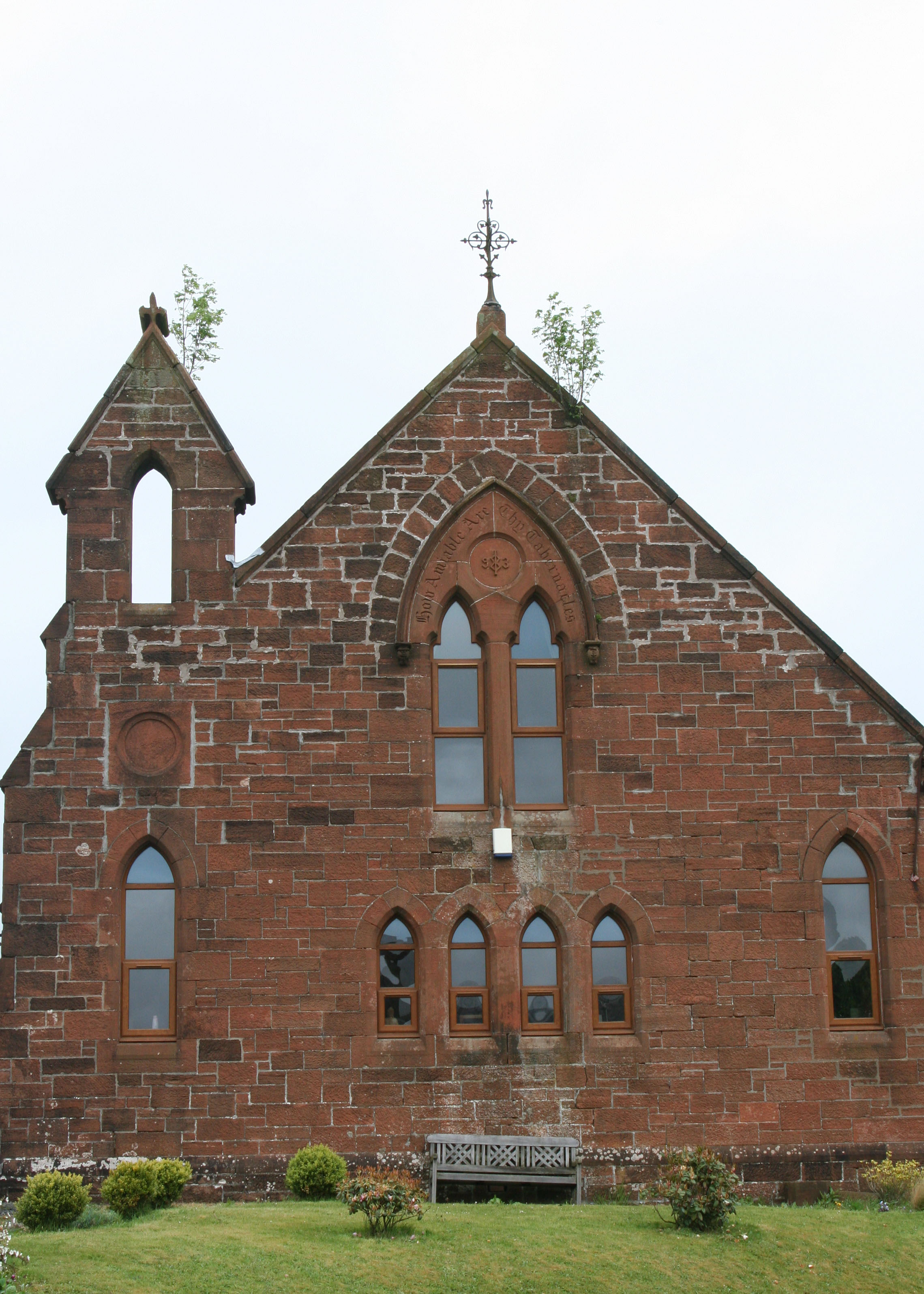
The Old Church B&B in Muirkirk, Scotland. The two upper windows provided our suite with a pleasant view of the town, countryside and rain. Note the plants growing on top.

Part One: THE CHURCH

Have you ever slept in a church? I mean seriously. Nodding off during a two-hour sermon doesn’t count.

Peggy and I had the experience in Muirkirk, a small community in southwest Scotland east of Ayr.  We were in town searching for the grave of my earliest known ancestor on my father’s side, John Brown the Martyr of Priesthill.

I picked the Old Church B&B off the Internet because it was located three miles from where Brown was shot down by ‘Bloody’ Clavers, the bane of Covenanters. But more on that later…

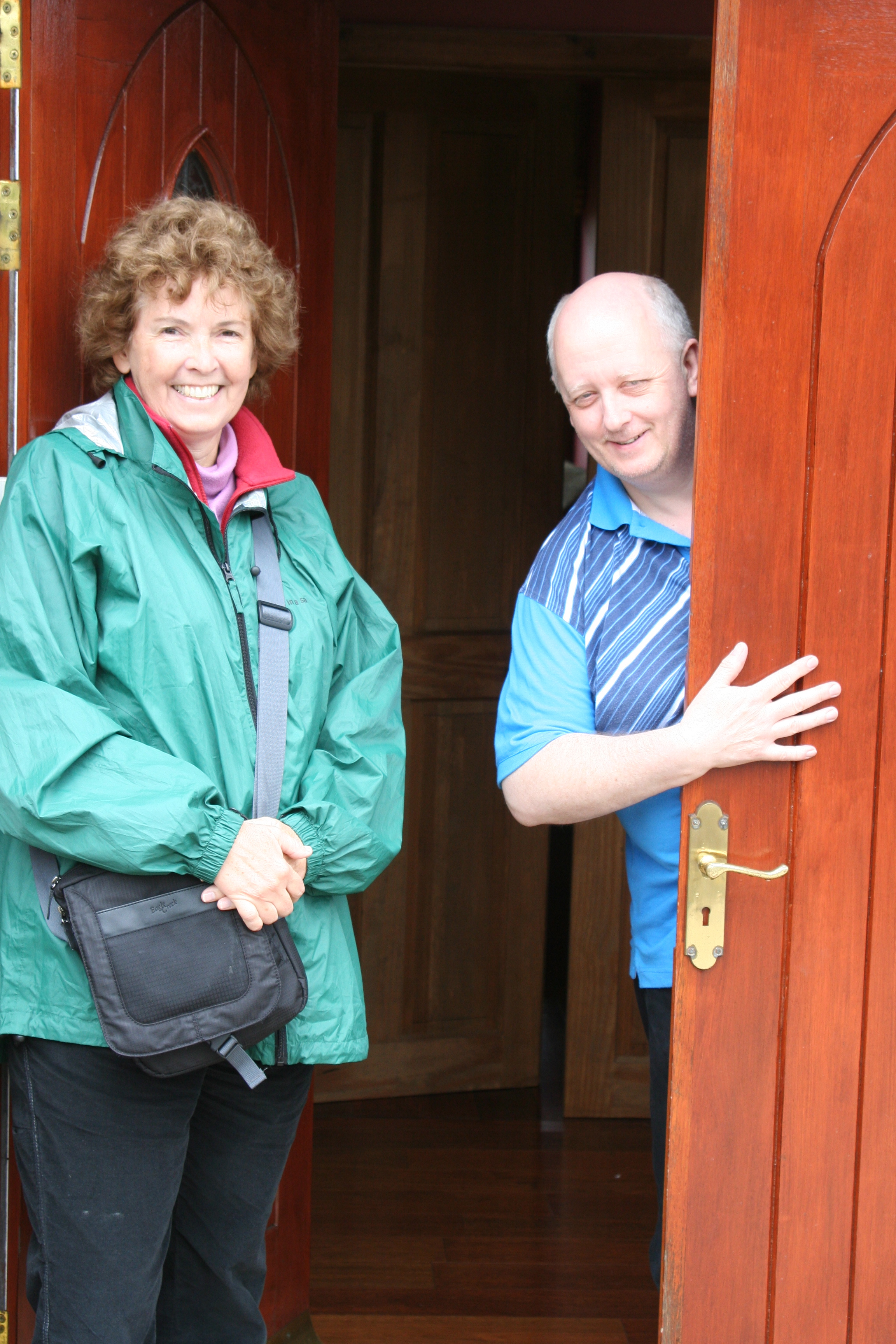
David greeted us at the door. I can't quite put my finger on it, but I felt he had a slight elvish quality, or is that impish?

What we weren’t expecting was how delightful our stay at the B&B would be. Total credit goes to the owners, David and Lesley Martin. (And, I might add, their children.) The Bread and Breakfast began its life as a church in 1873 and maintained that occupation up until its retirement in 1965.

David and Lesley bought the church in 2004 and set out to remodel it into the present B&B. (David still feels guilty about eliminating the pigeons that called the vacant building home.)

The Martins did a superb job on their remodeling effort; it’s called paying attention to detail. Each room is carefully thought out. Artwork, much of it painted by Lesley, adorns the walls. Furniture begs to be occupied. A wood stove provides crackling heat in the sitting room, a fact we truly appreciated during the cold rainy day we spent in Muirkirk. And the kitchen/dining room is right out of Sunset Magazine.

The inviting bed in our suite.

A serious cook's stove, with which Lesley whips up full Scottish Breakfasts and bakes mouth-watering bread.

But what really made the stay a joy was the warm friendliness of David and Lesley. David is a font of information on all things Scottish. I asked him about the Scottish independence movement, an event that has been evolving for over a thousand years. An hour later he had completed his dissertation. I’m not sure he stopped for breath. He’s for it.

Lesley runs an international bread baking school out of the B&B. That’s a twist. And a benefit for guests! We got freshly baked cookies when we arrived. Twice Lesley sent hot bread straight out of the oven to our room, along with several ounces of butter. Be still my pounding heart. Then there was the full Scottish breakfast she cooked up and David served.

Our one night stay turned into a two-night stay. The bottom line: if you find yourself anywhere in southwest Scotland, put the Old Church B&B on your itinerary.

A final note : Lesley commented on my last blog that I have been misspelling Edinburgh. My apologies to the fine people of Scotland. I shall reform.

Thursday’s Blog: The Ghost

Knick knacks, canned fruit, and a genuine feel of home.