Today’s post on deer is part of our focus series where I make use of our extensive photo library to feature a single subject. From 2011 to 2021 we lived in Southern Oregon up in the mountains about 30 miles west of Ashland on five acres that backed up to a million acres of national forest. There were many things that we loved about the property. The deer herd that insisted on calling it home was a big one!
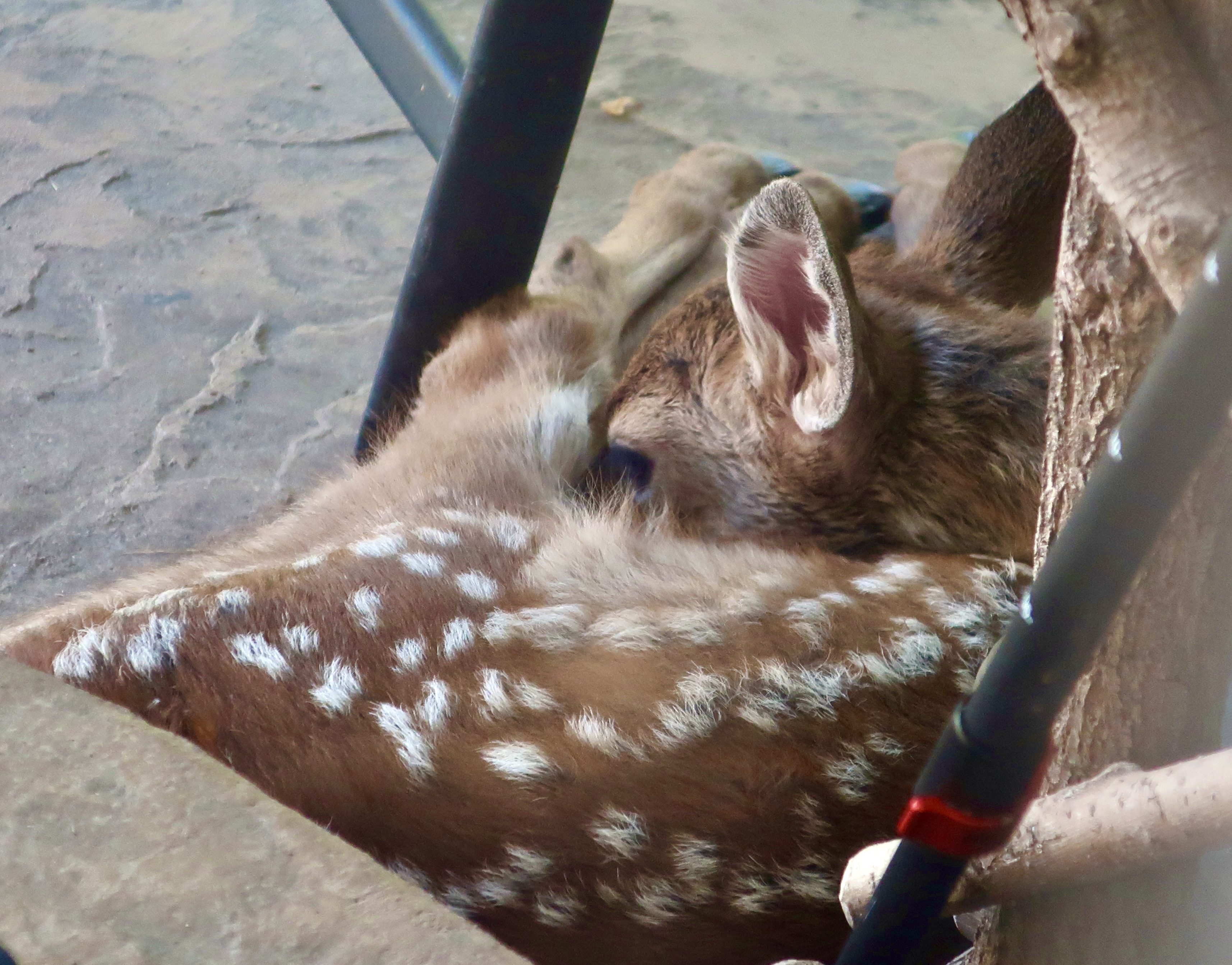
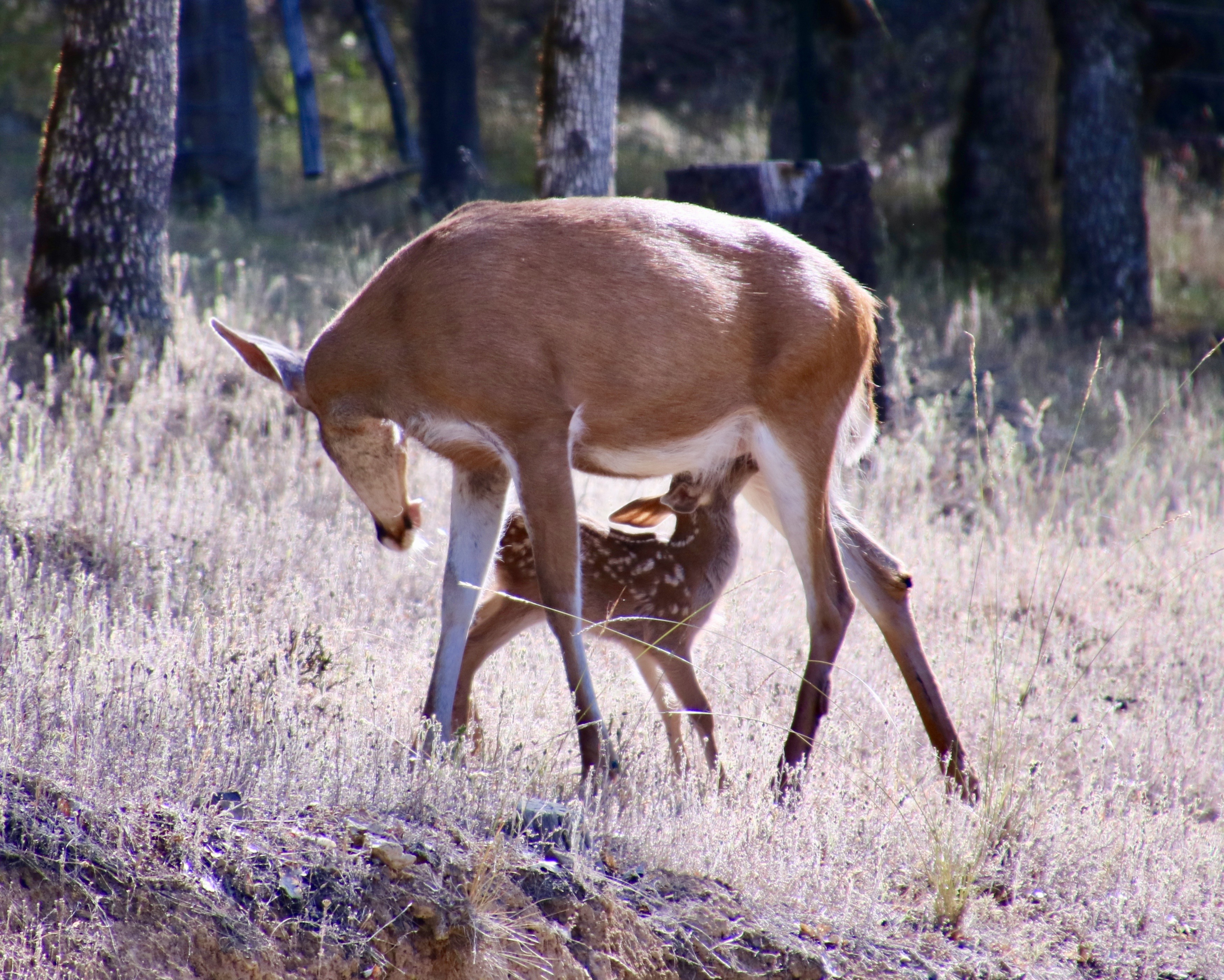
I walked out my door one June day and found this fawn napping next to our doorstep. It was wedged in between the step, a chair, my walking stick, and a natural wood shelf we used for our shoes. One eye was checking me out but it obviously wasn’t worried about my presence. In its short life, it had determined that I was harmless and might indeed be helpful. Mom wasn’t worrying either. She was out browsing (eating) while her baby was sleeping. Our house and yard served as a safety zone for the herd and the cement porch was apparently the safest place in the yard, considering how often it was used as a day bed. Hunters weren’t allowed on our property and natural predators of the deer such as bears and cougars tended to avoid it— for the most part.This was the first time we saw this youngster. Mom was performing some hygiene with her tongue while the baby ate. Grooming is common among deer and is one way they maintain close ties. We’ve watched adult deer simultaneously groom each other.
Fawns on our property were normally born in April or May, hidden away by the doe, and sternly instructed to stay put and not move when she was away eating for the first 2-3 weeks. The spots they are born with serve as natural camouflage making the fawns extremely difficult to see. They are also scentless when born, making them impossible to smell.
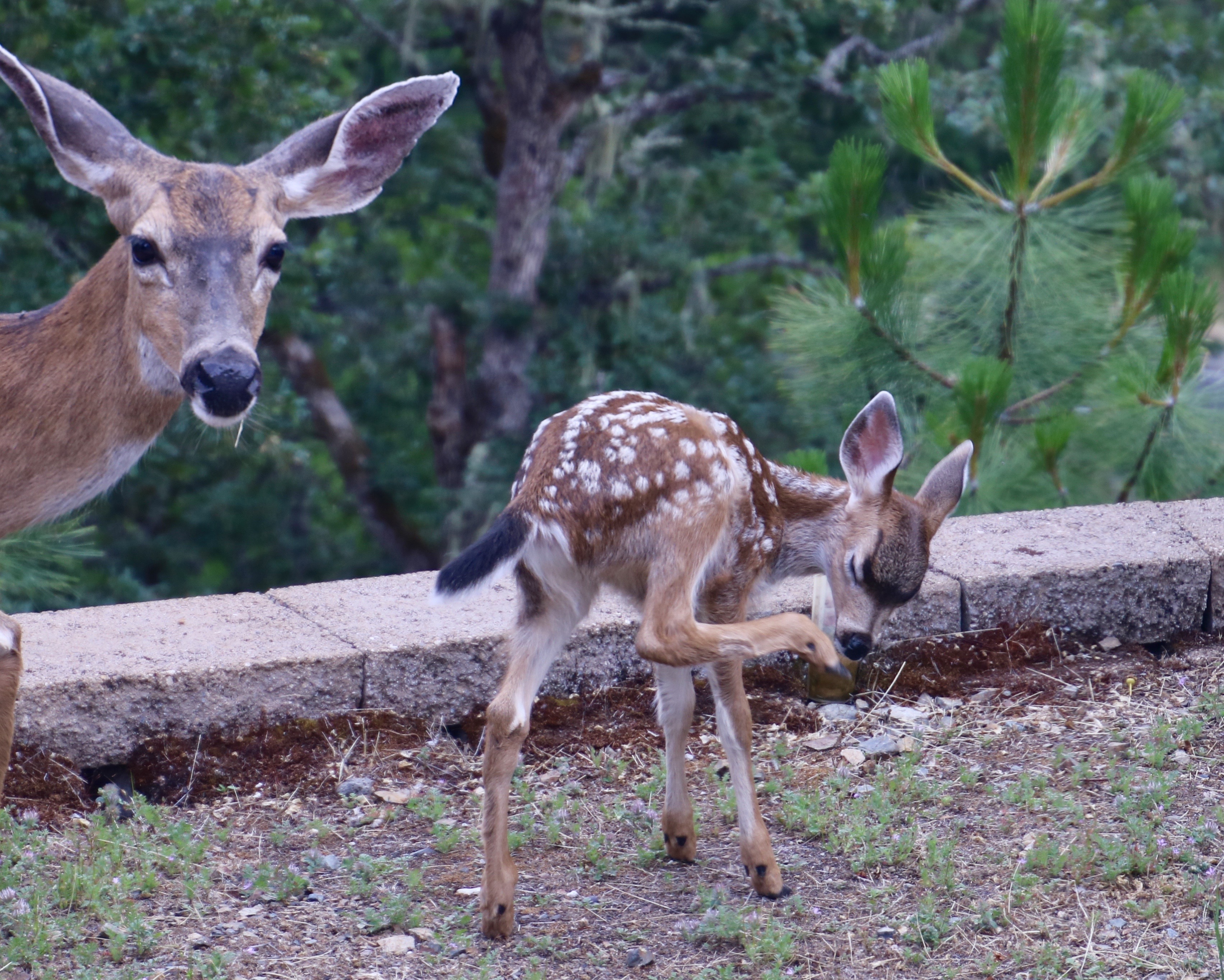
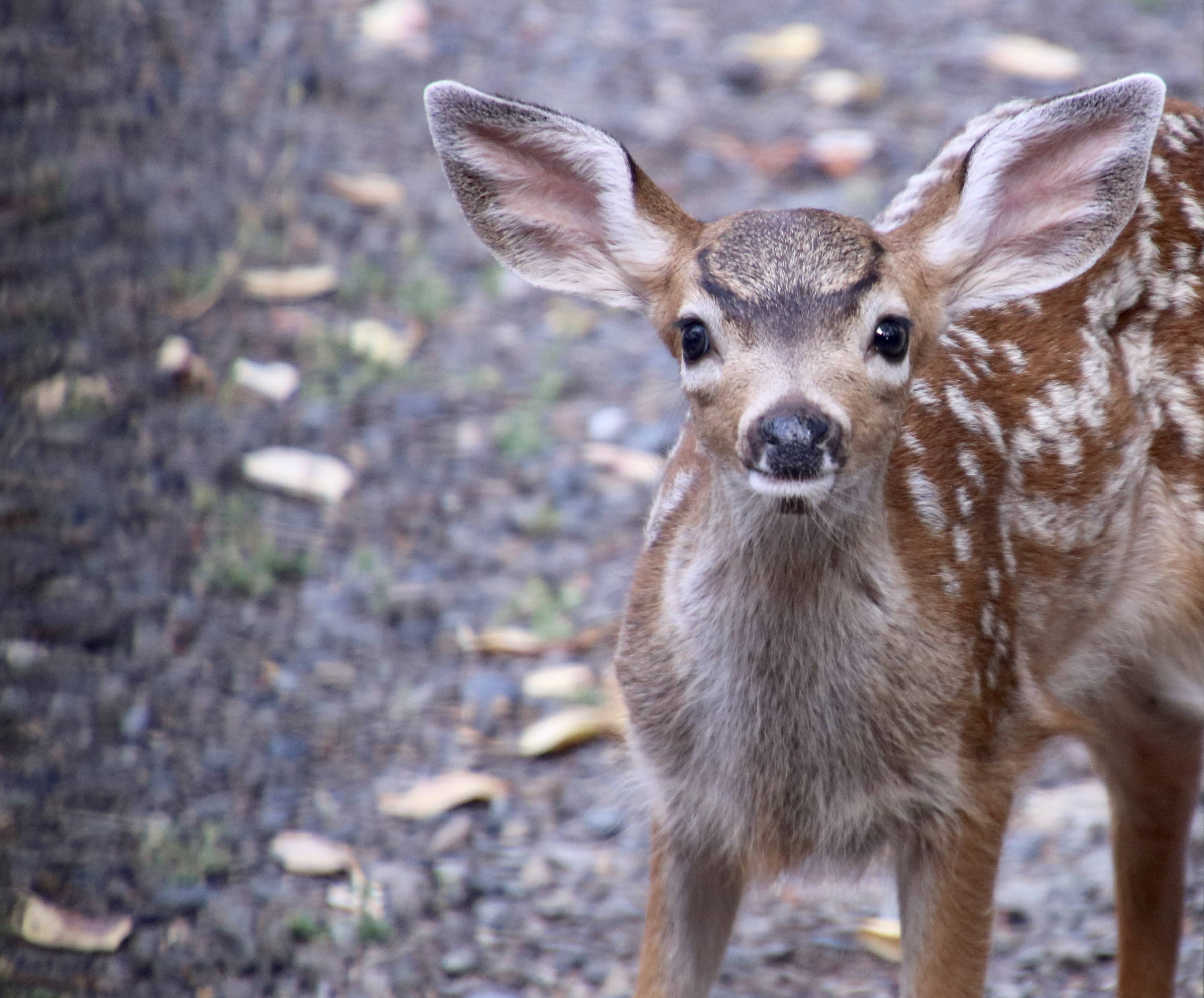
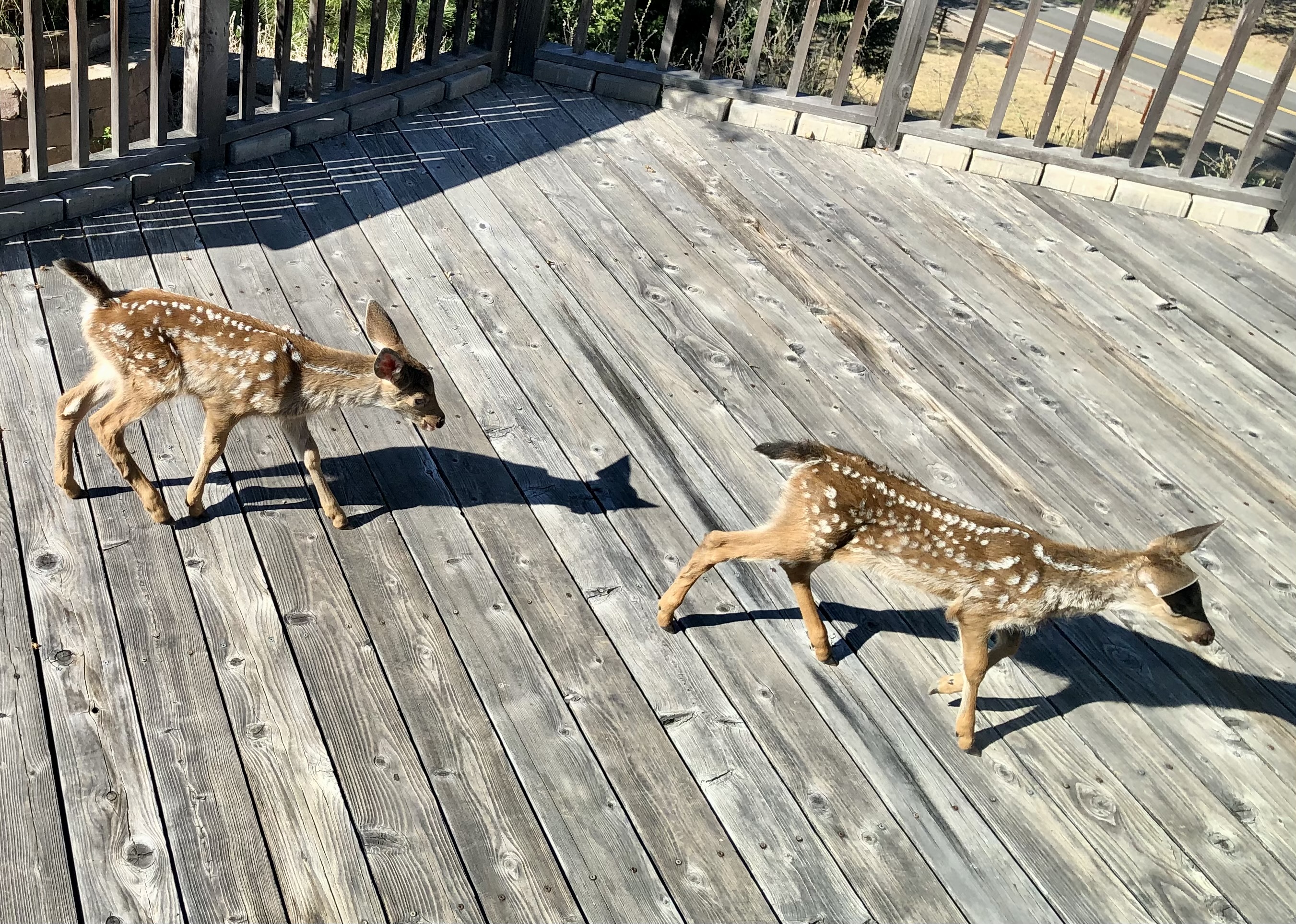
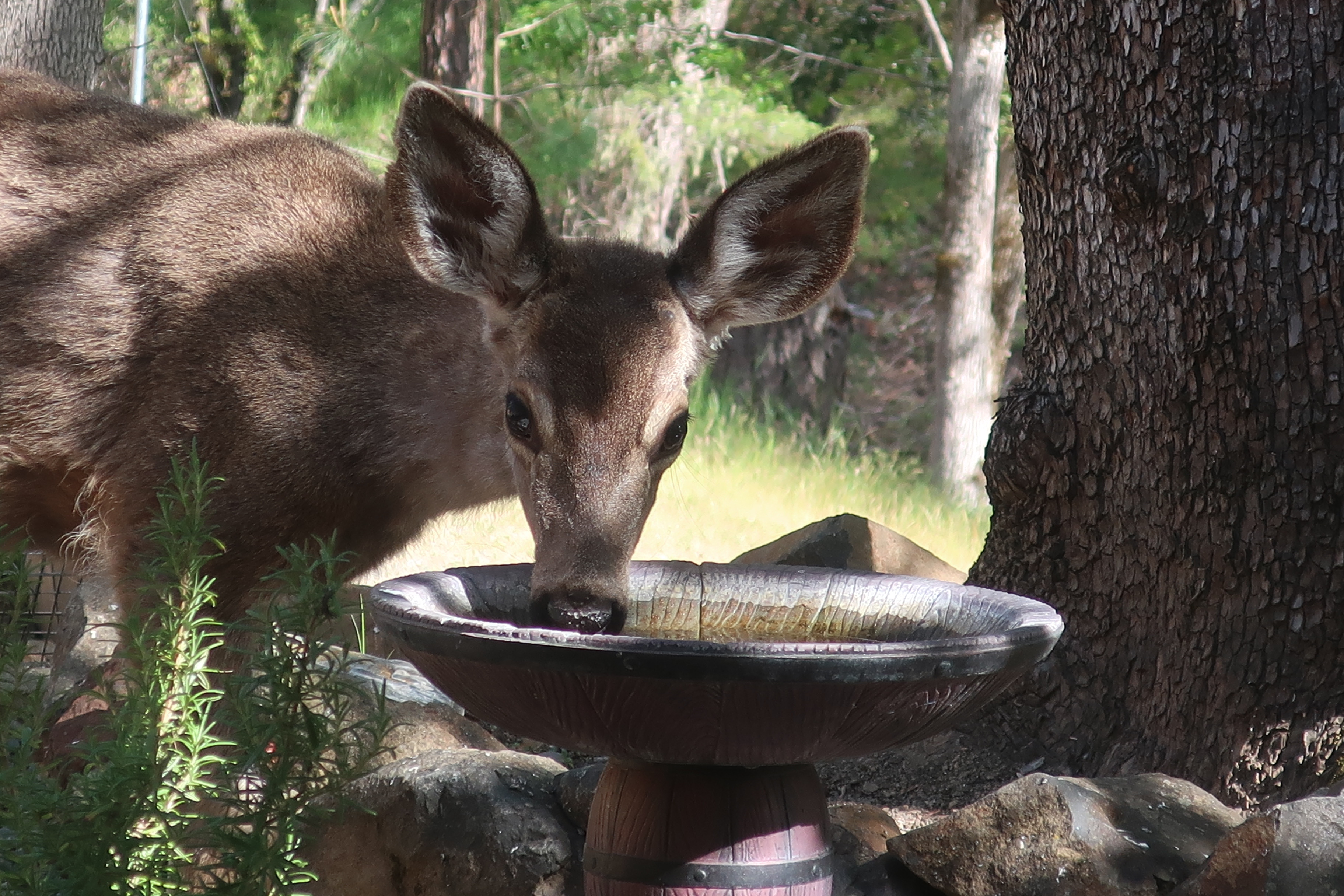
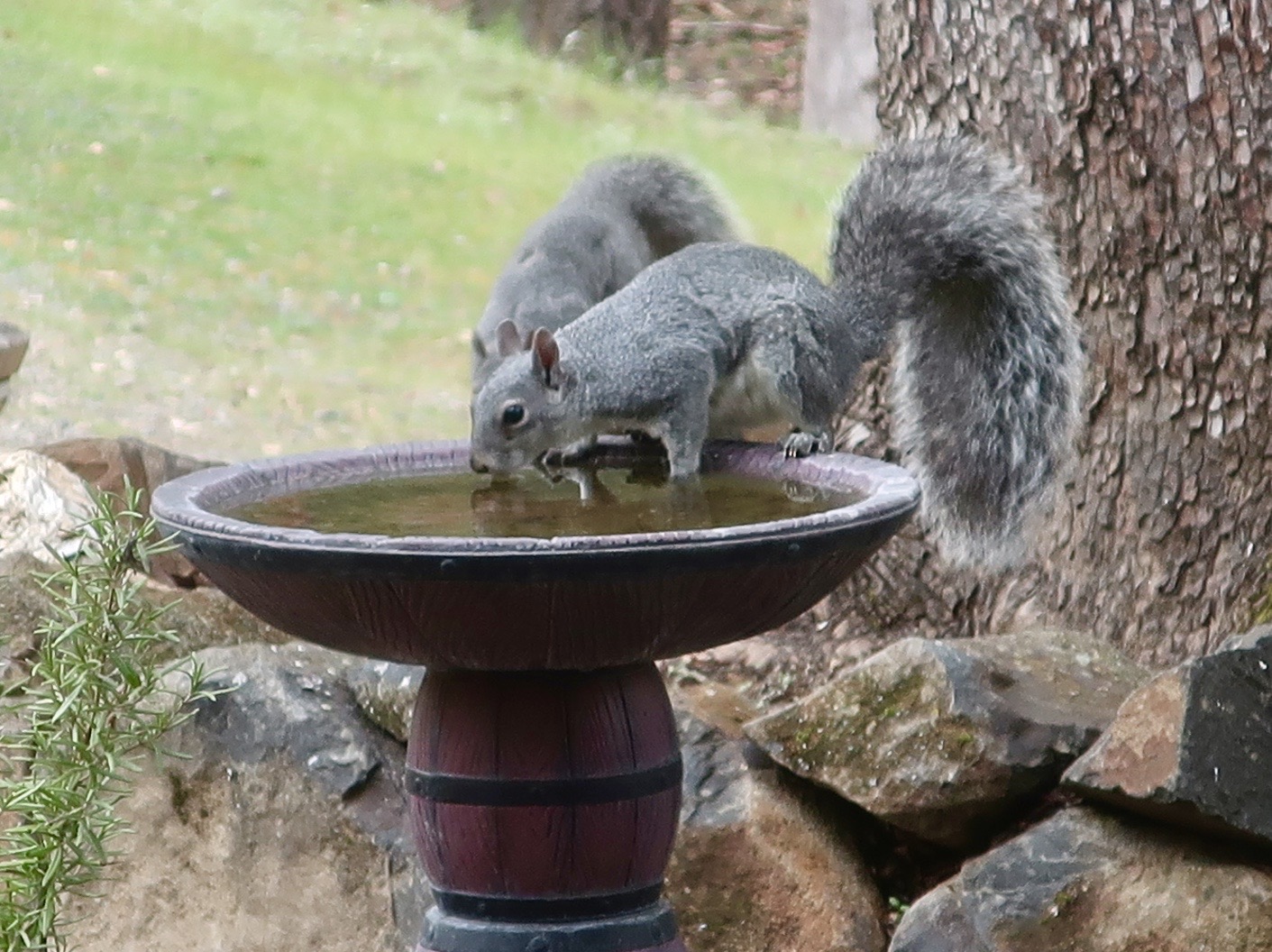
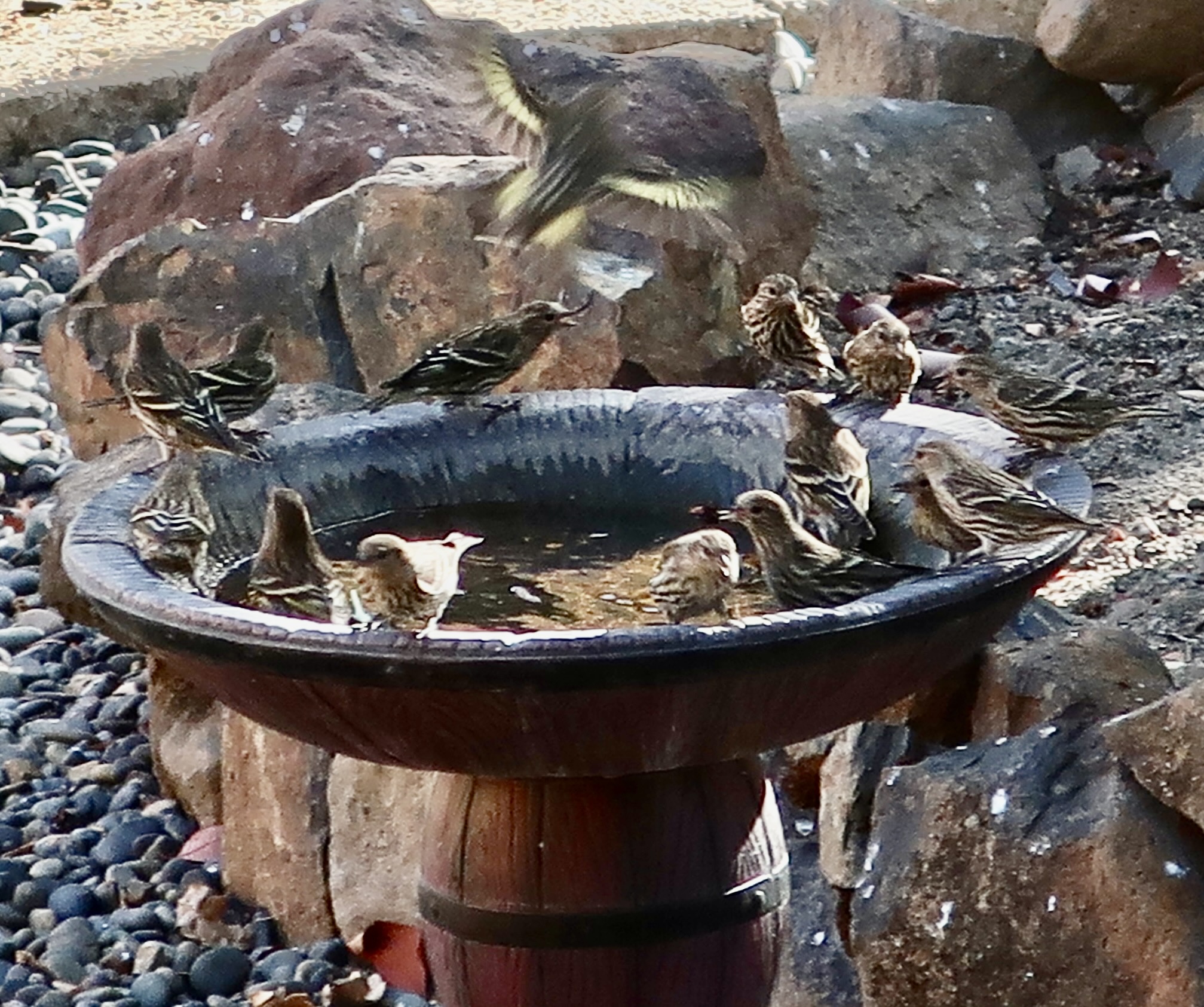
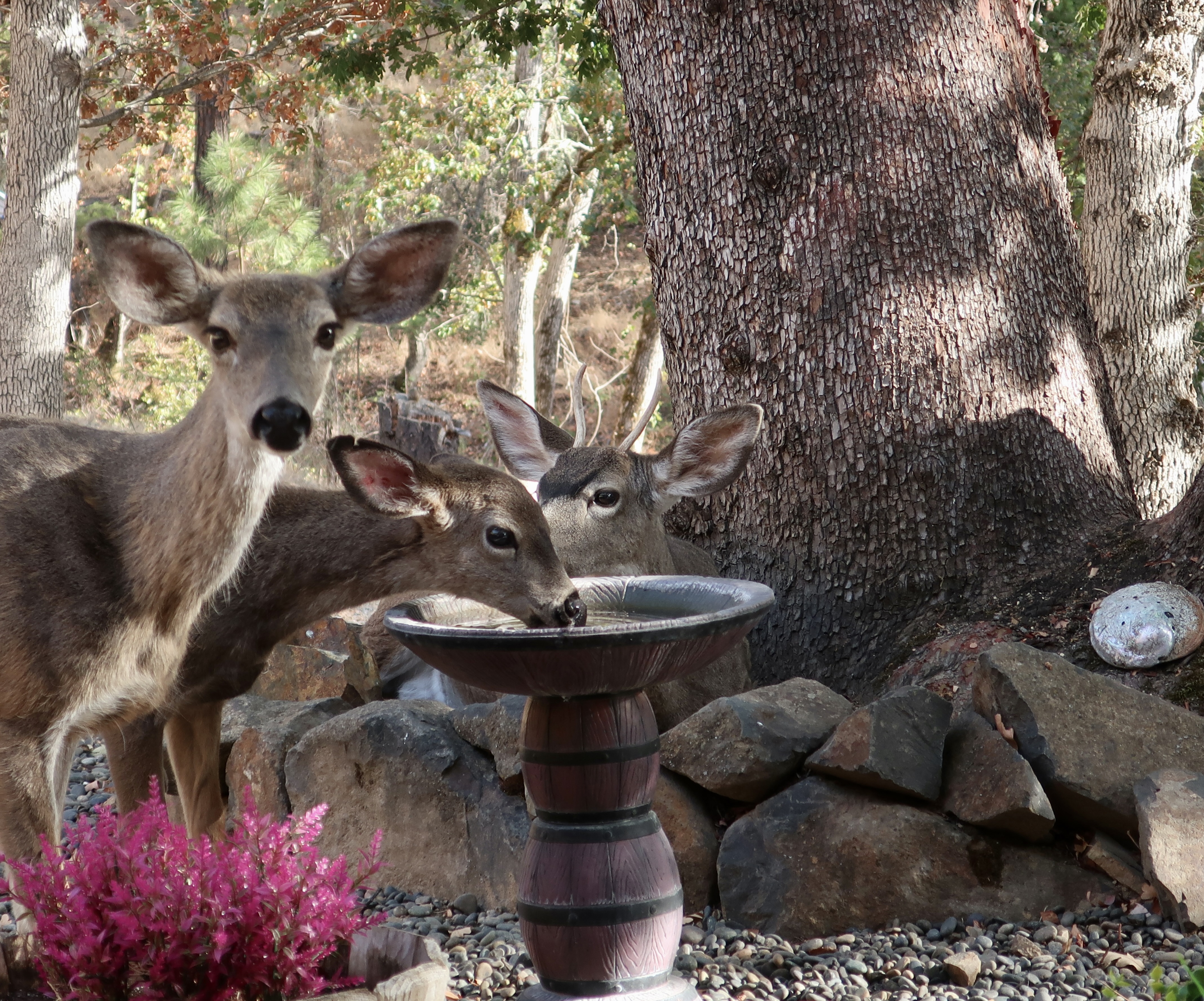
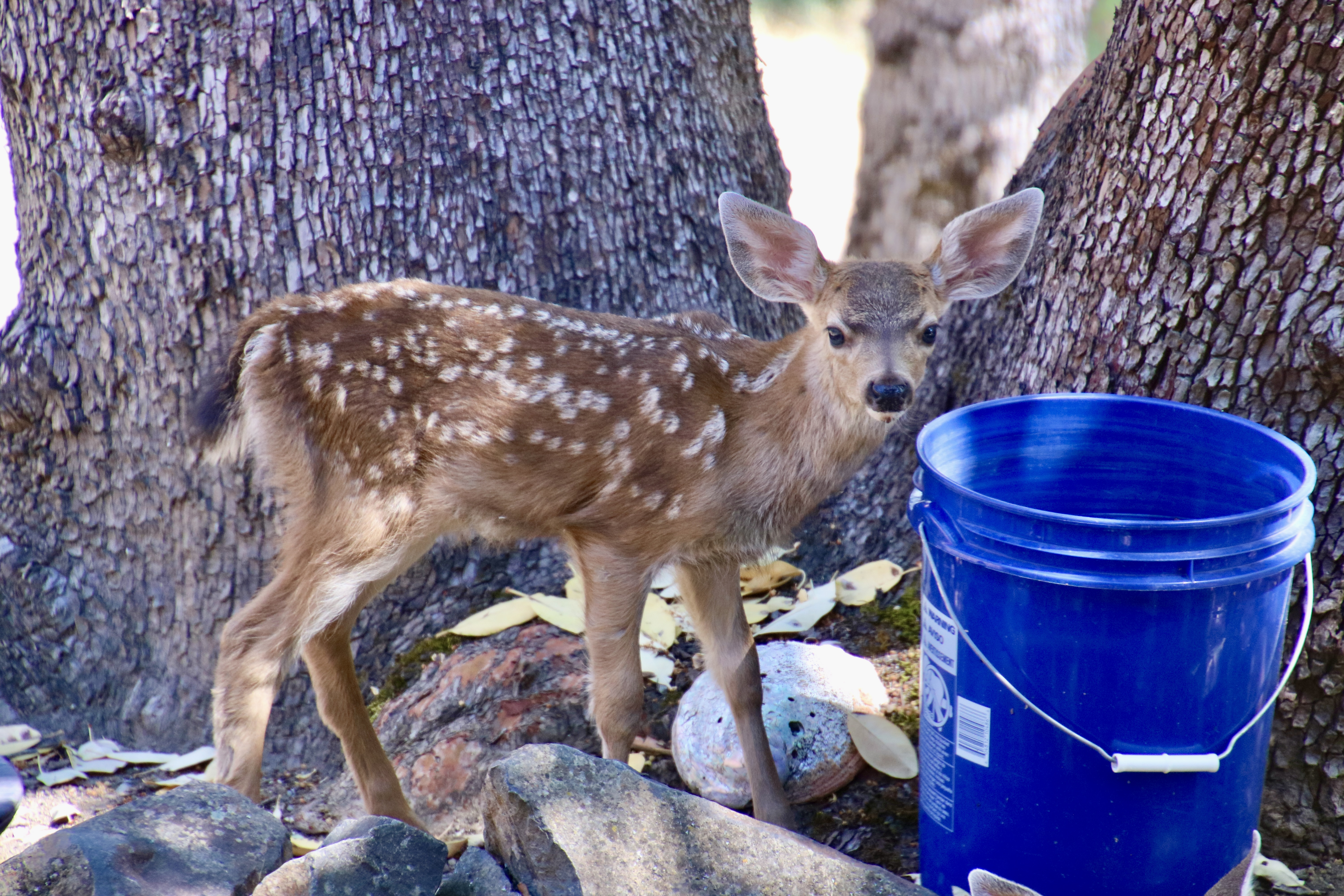
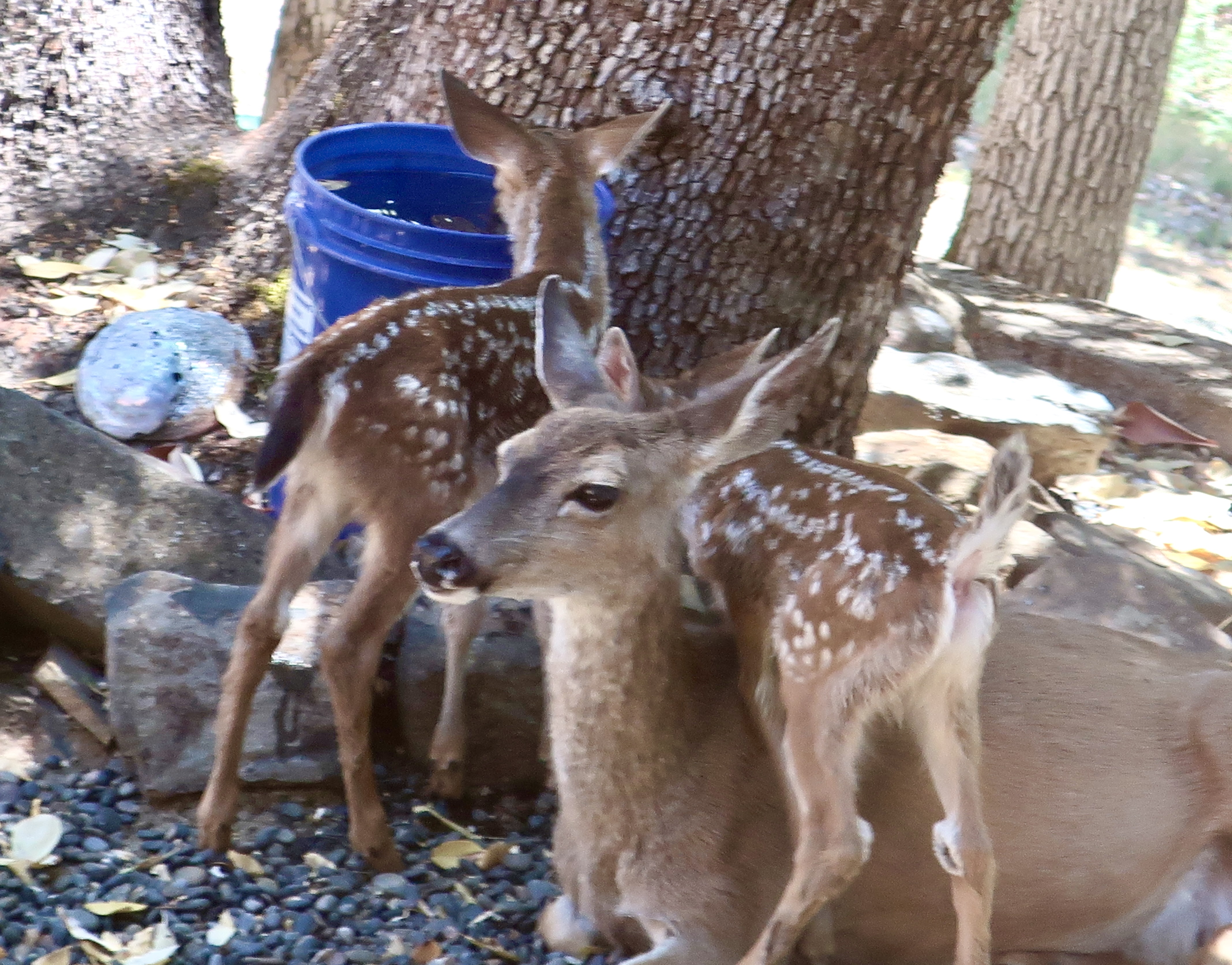
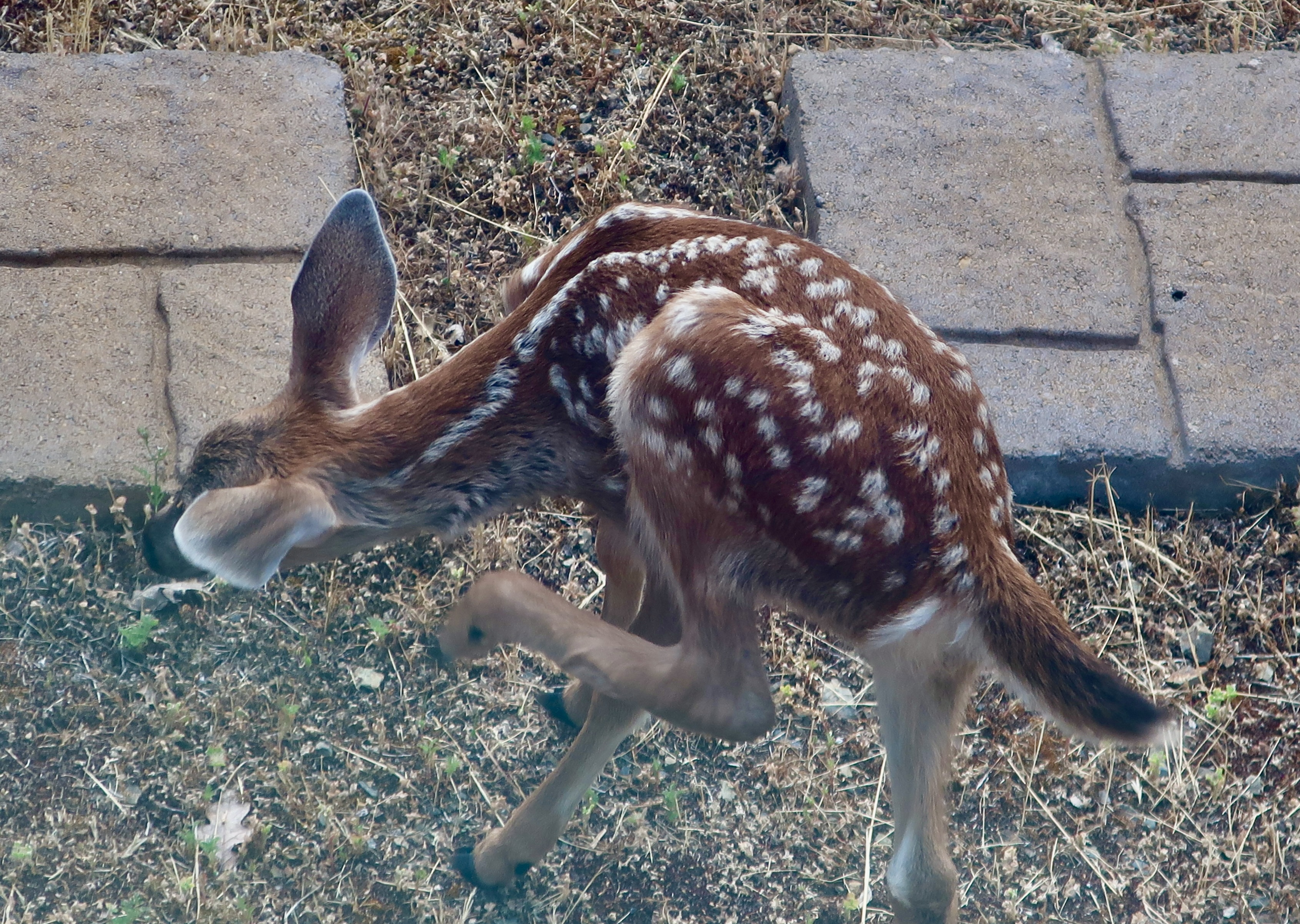
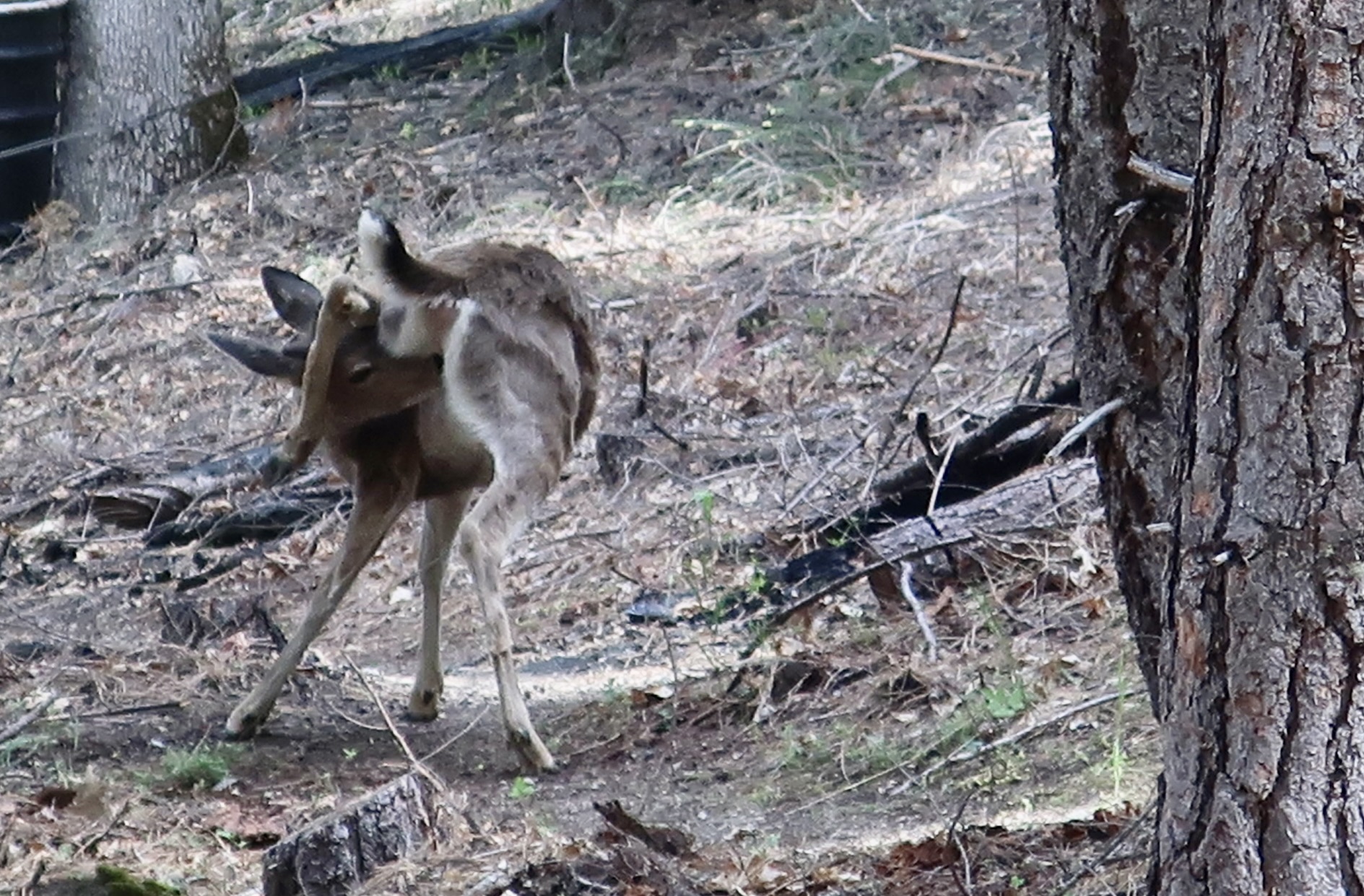
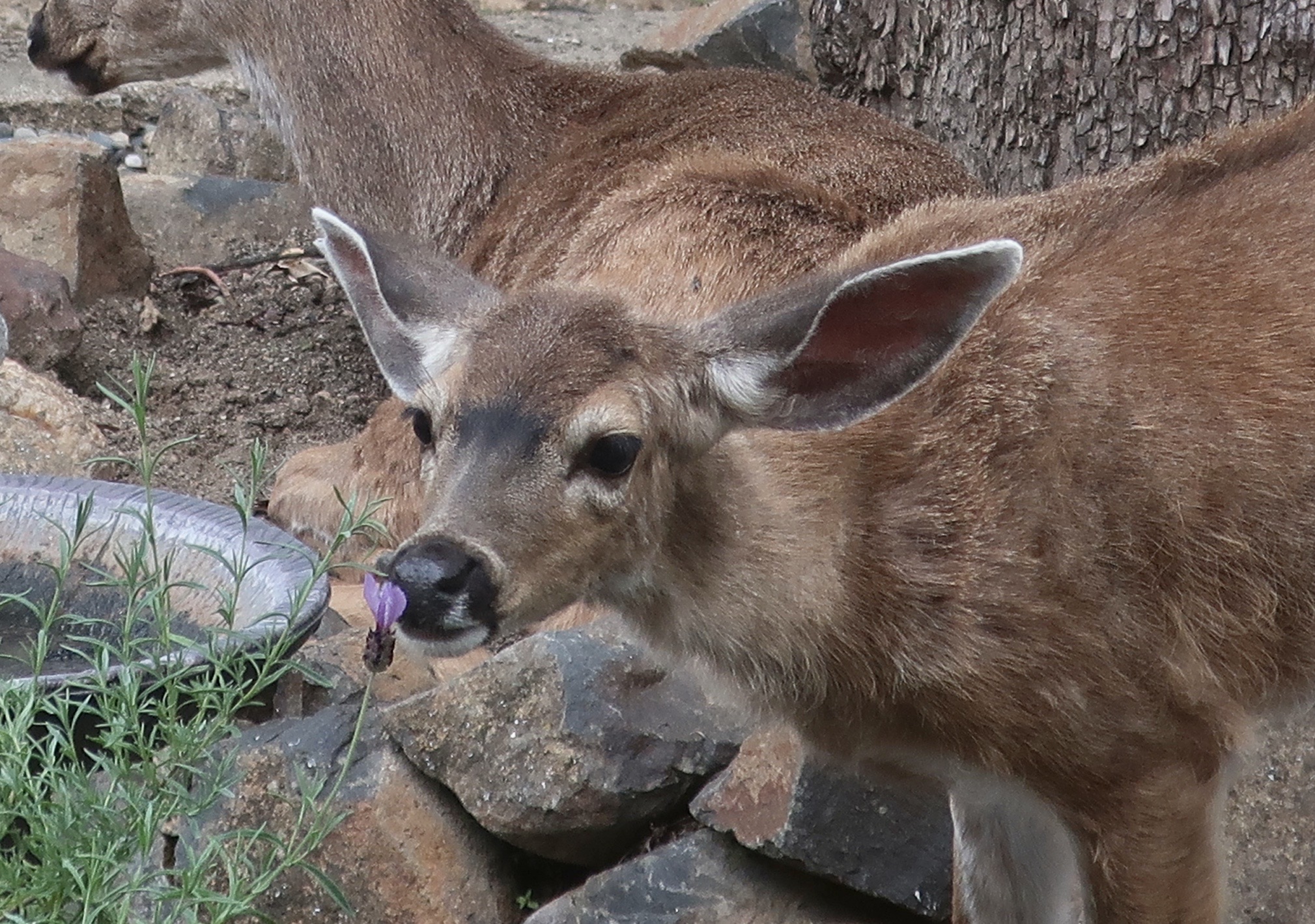
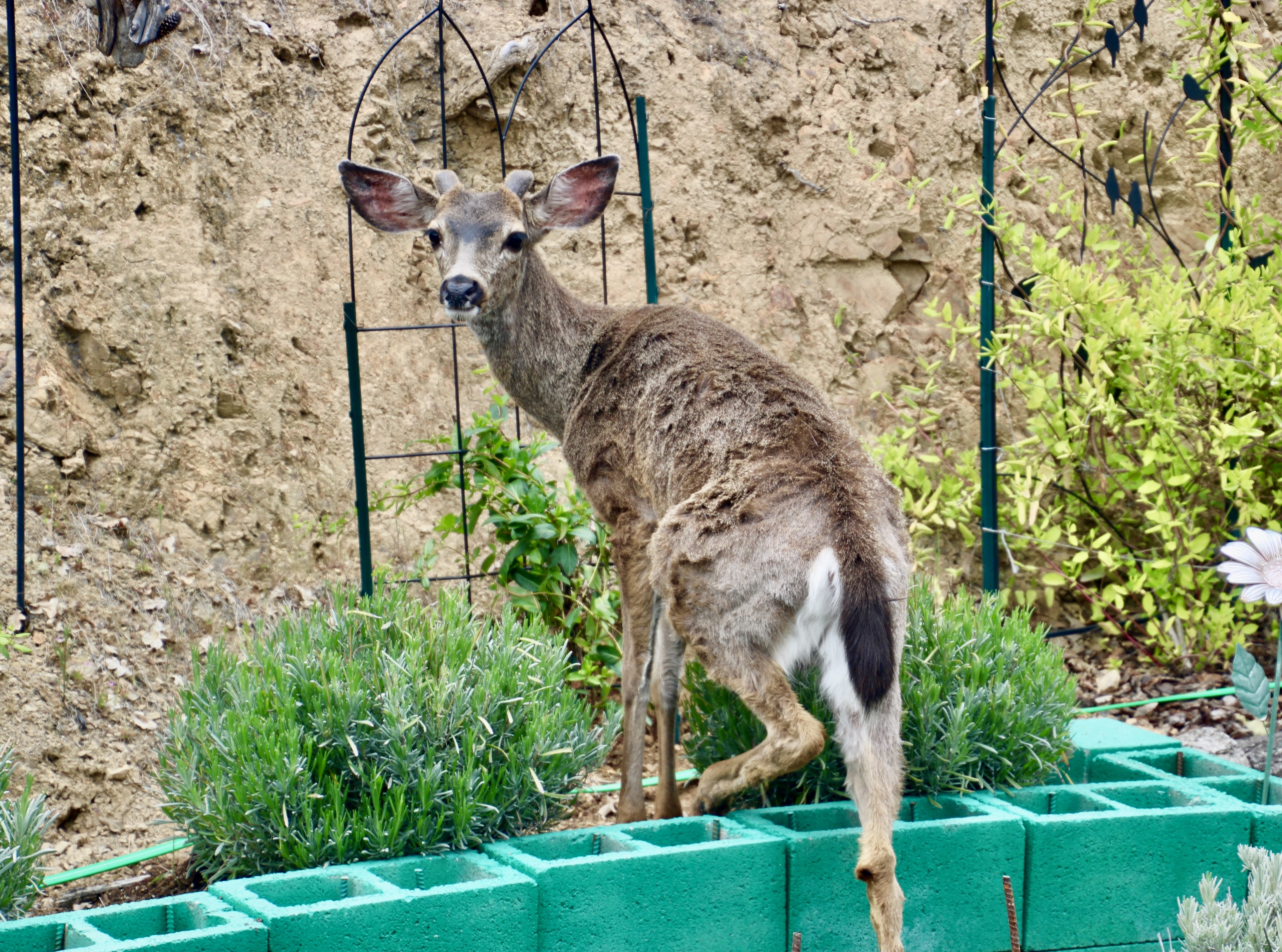
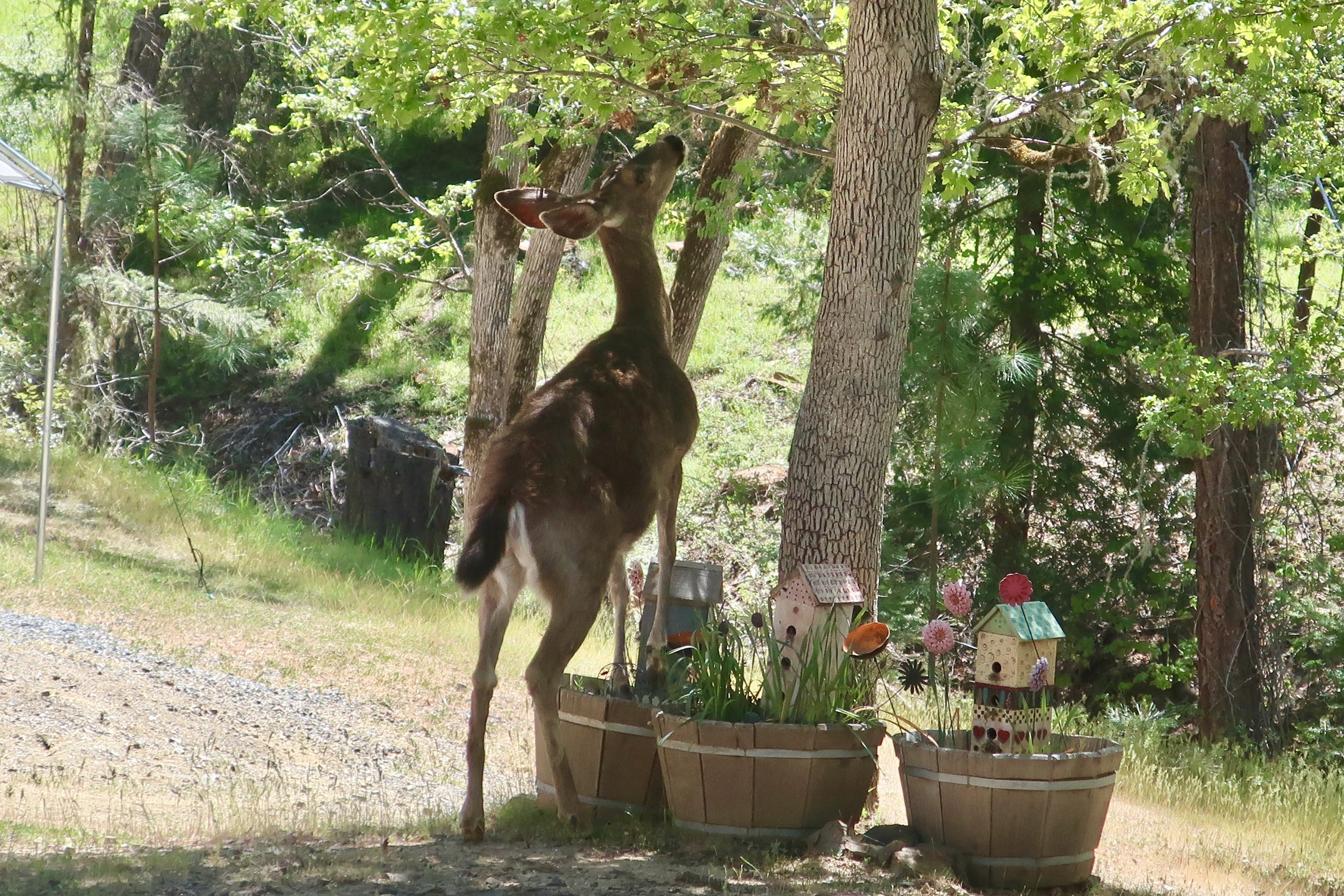
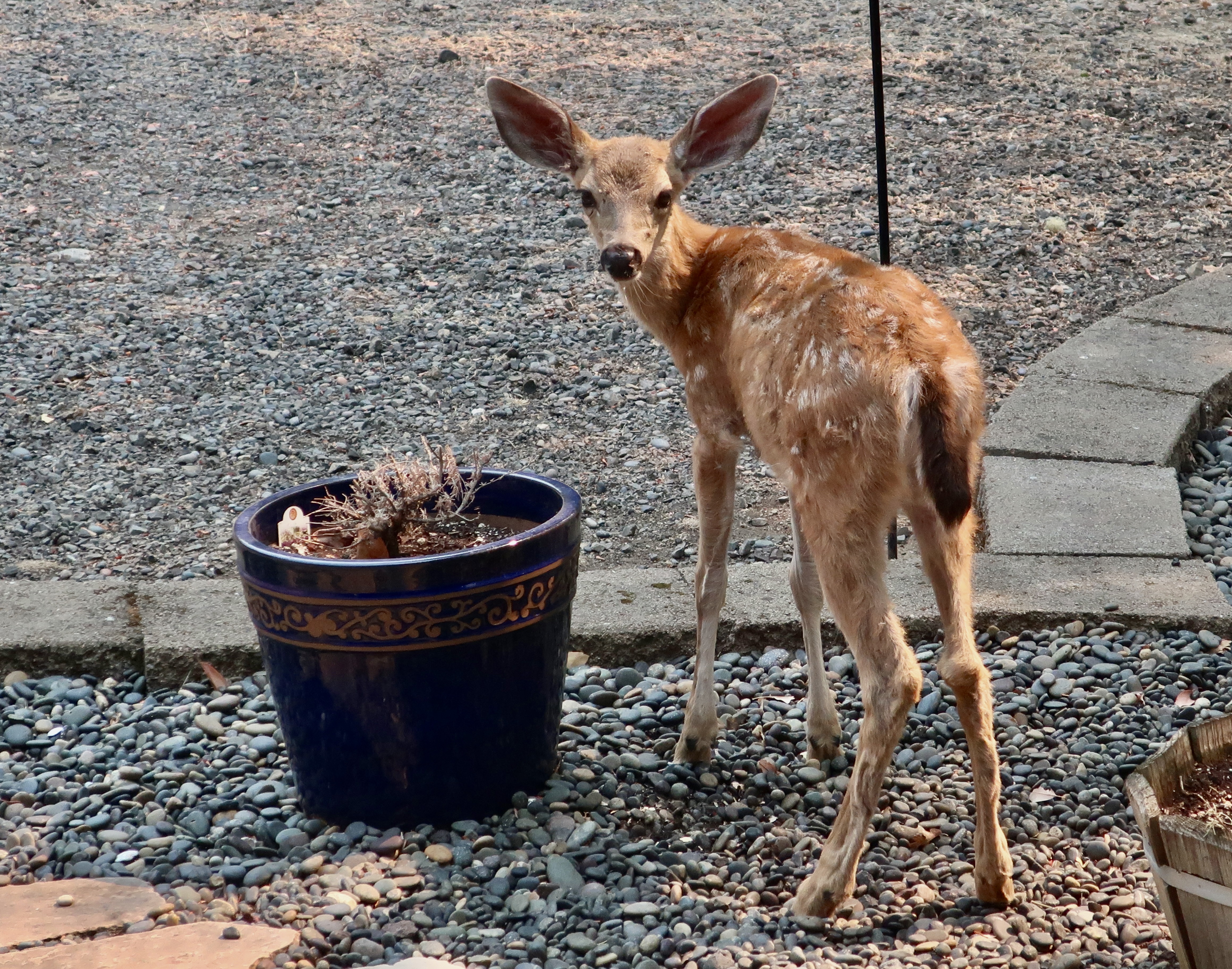
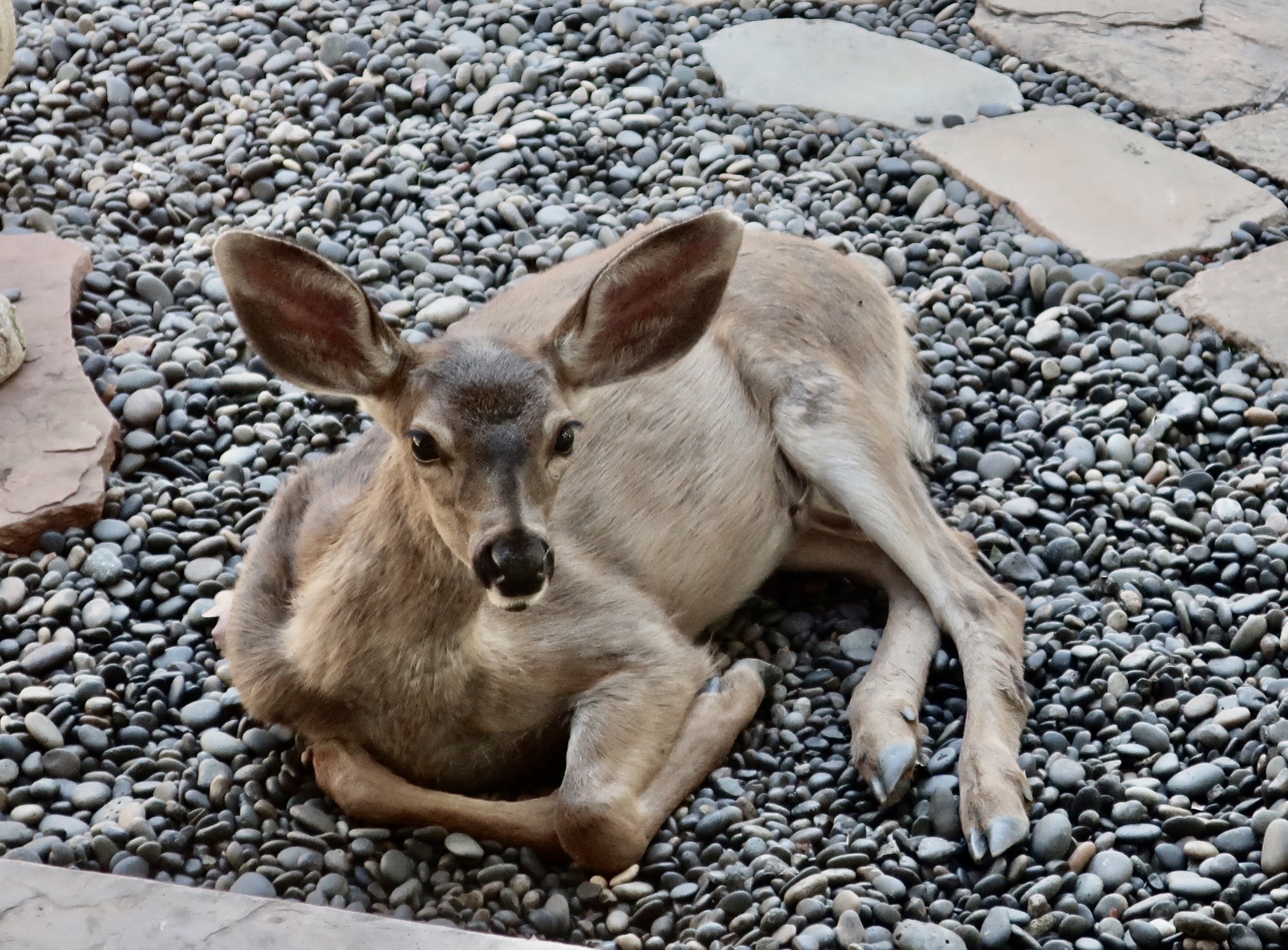
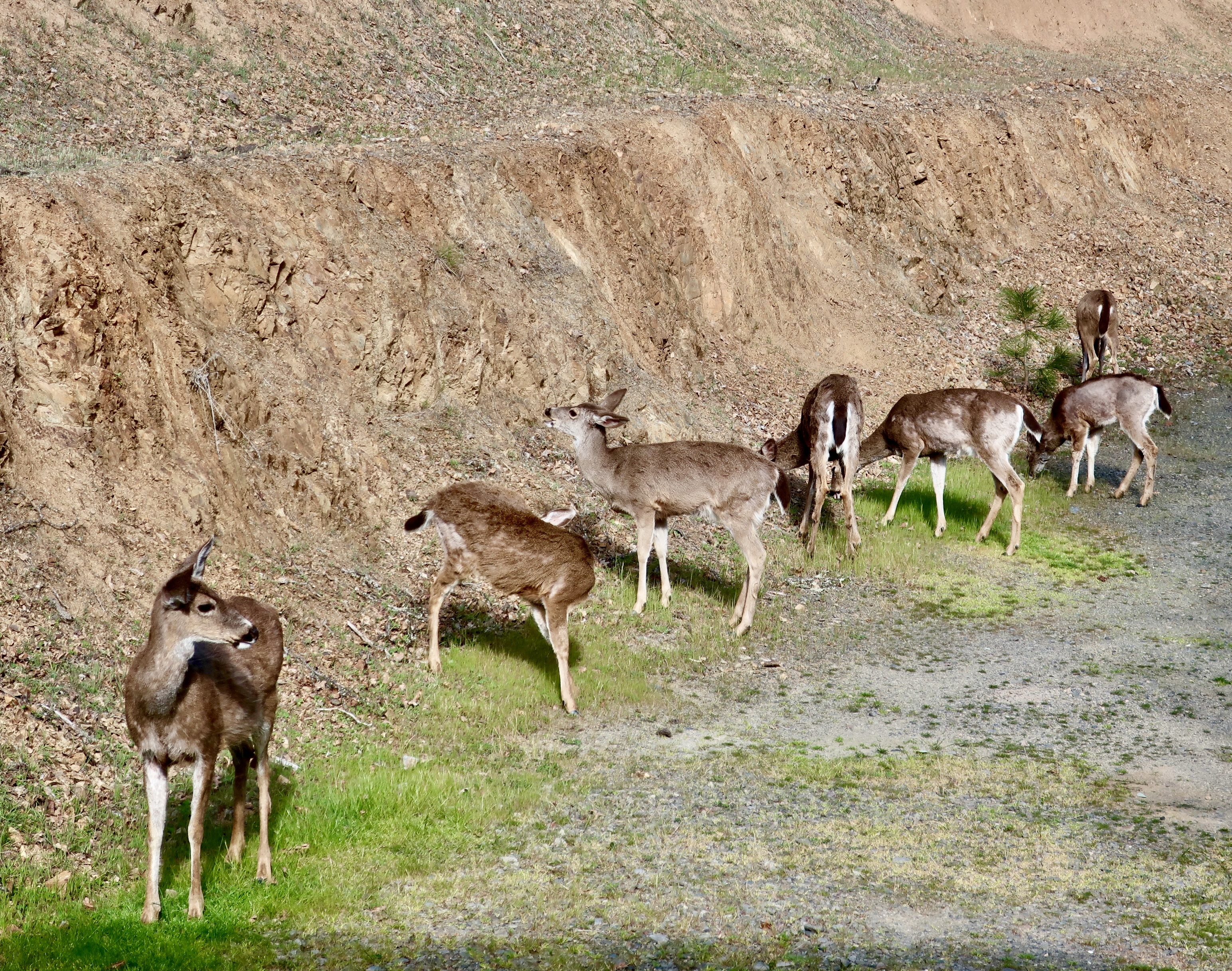
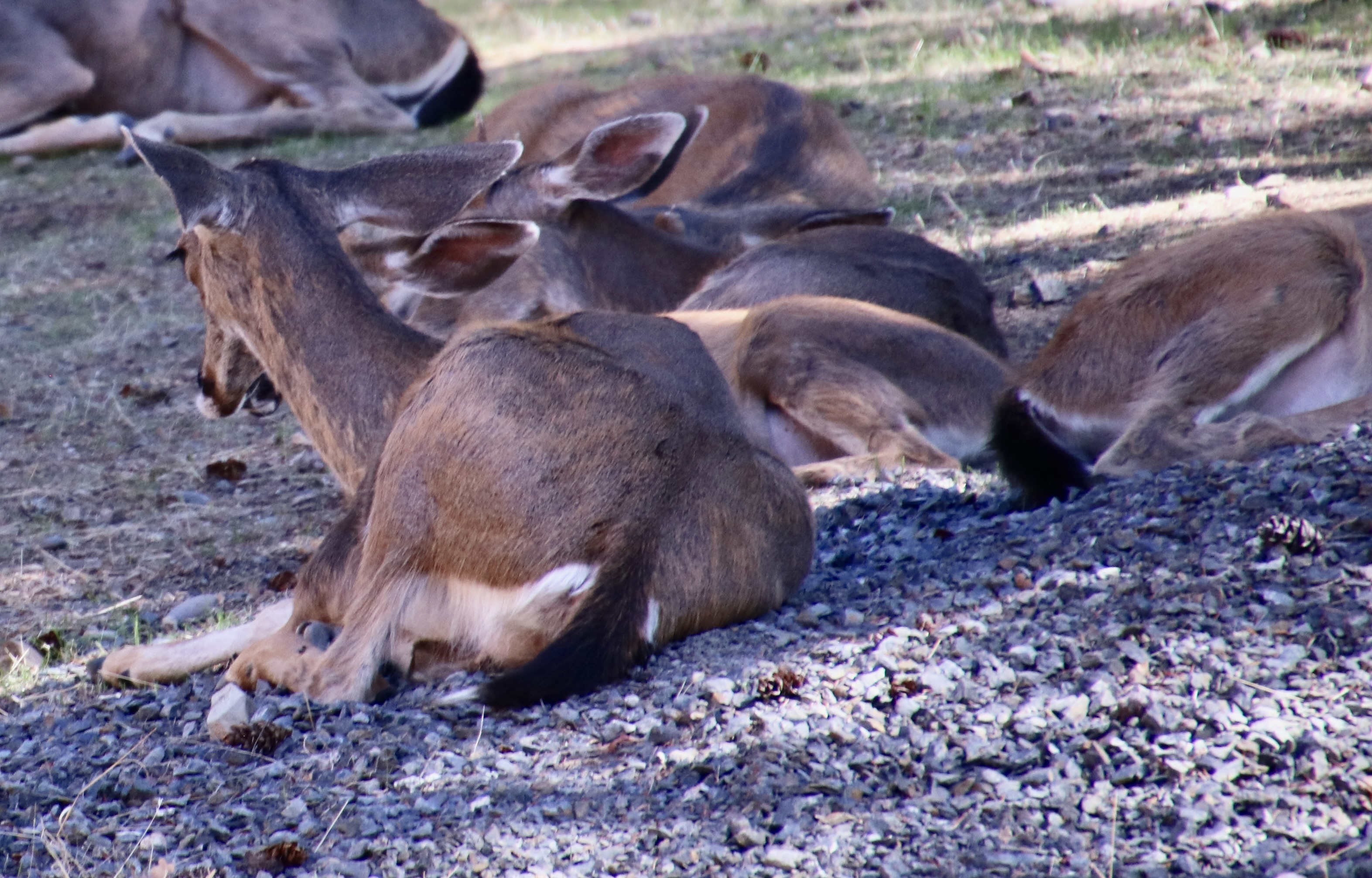
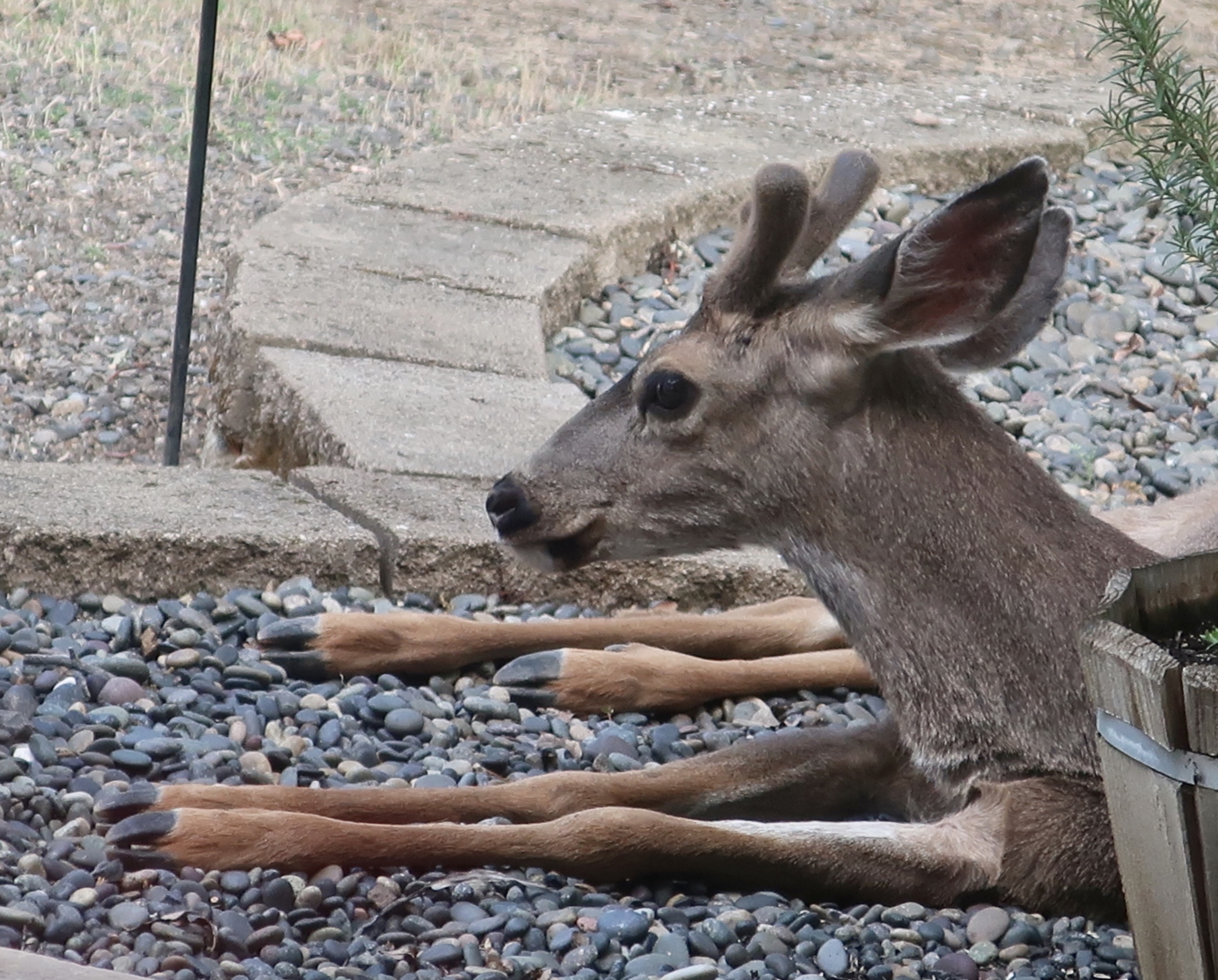
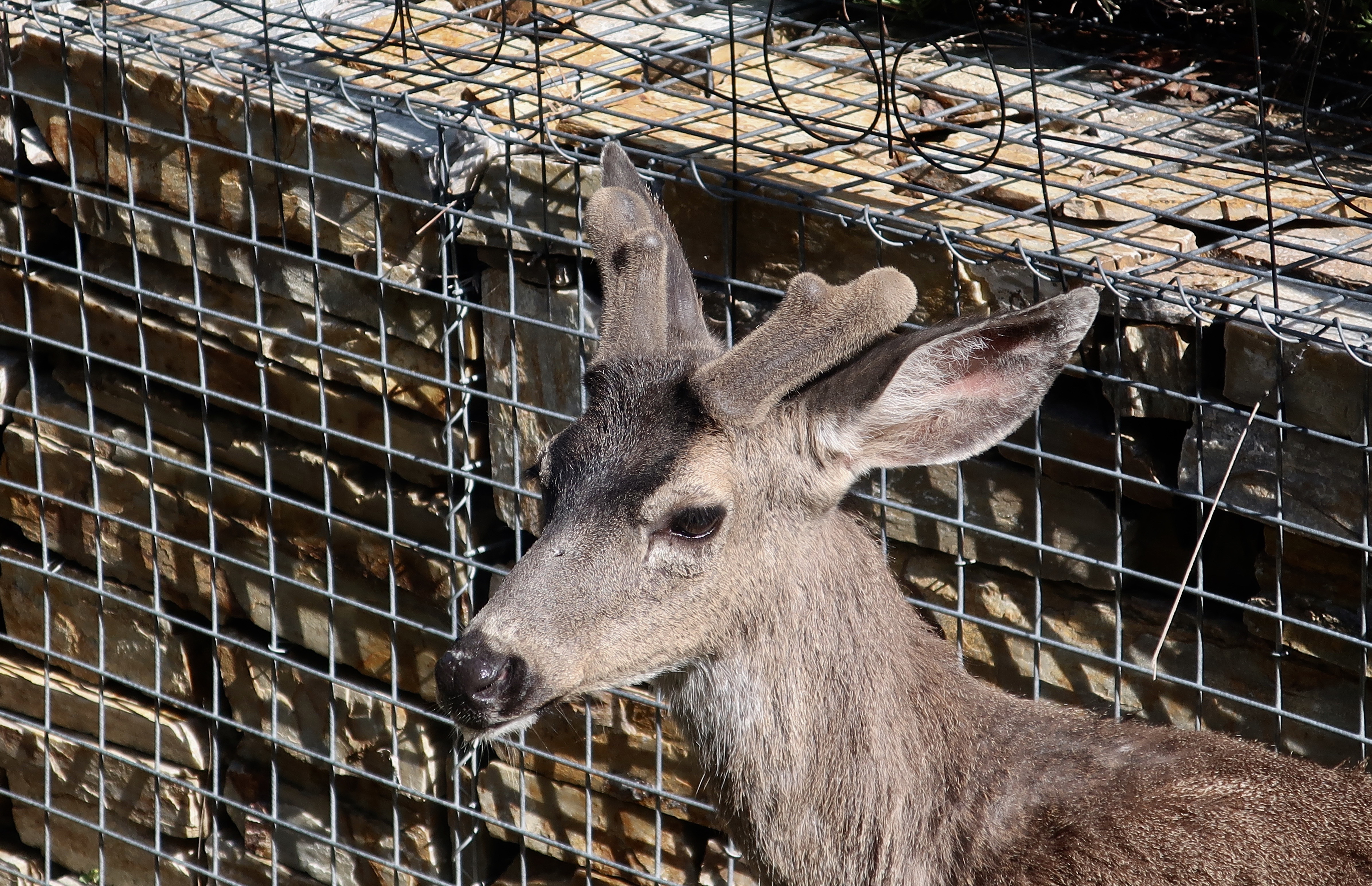
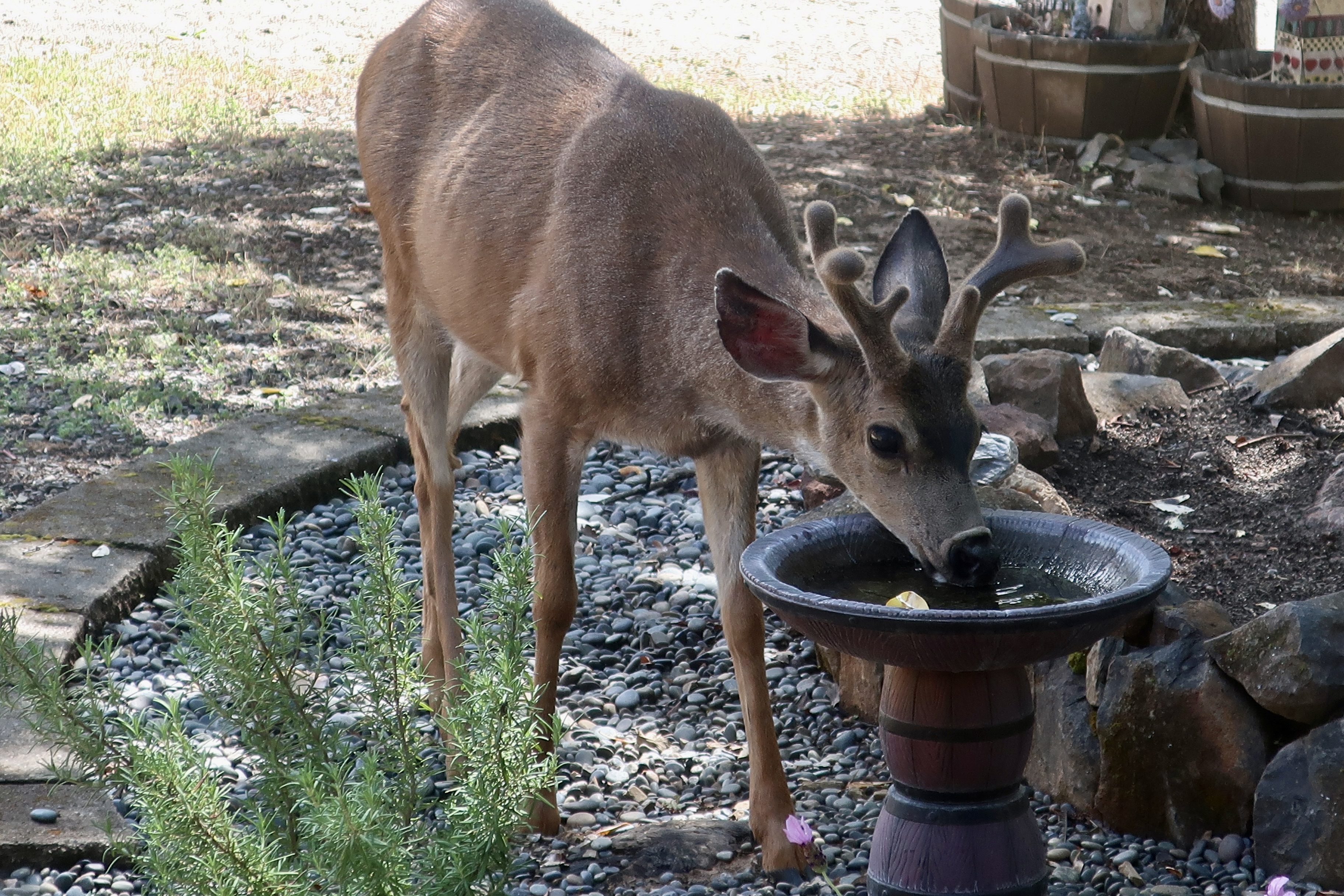
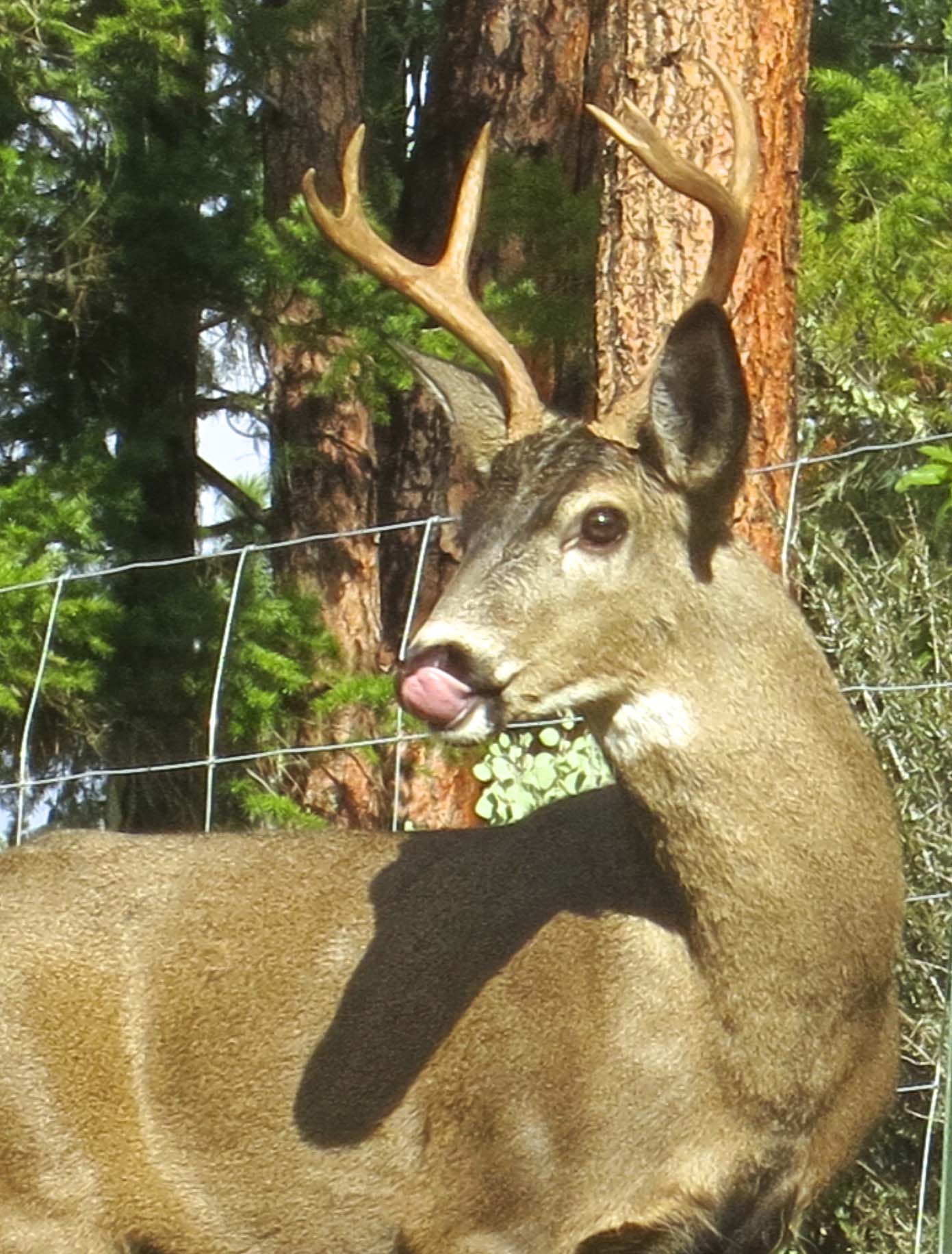
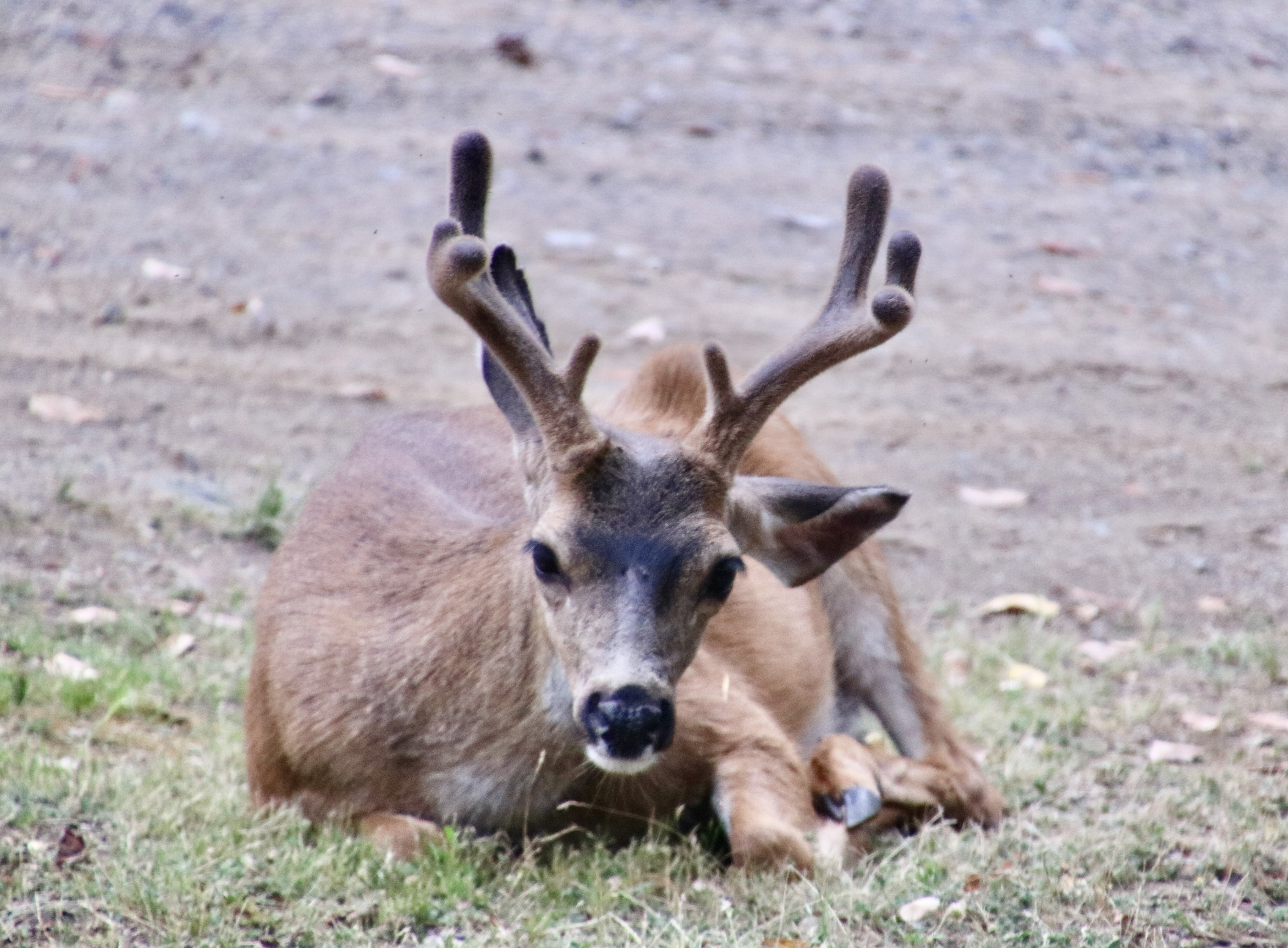
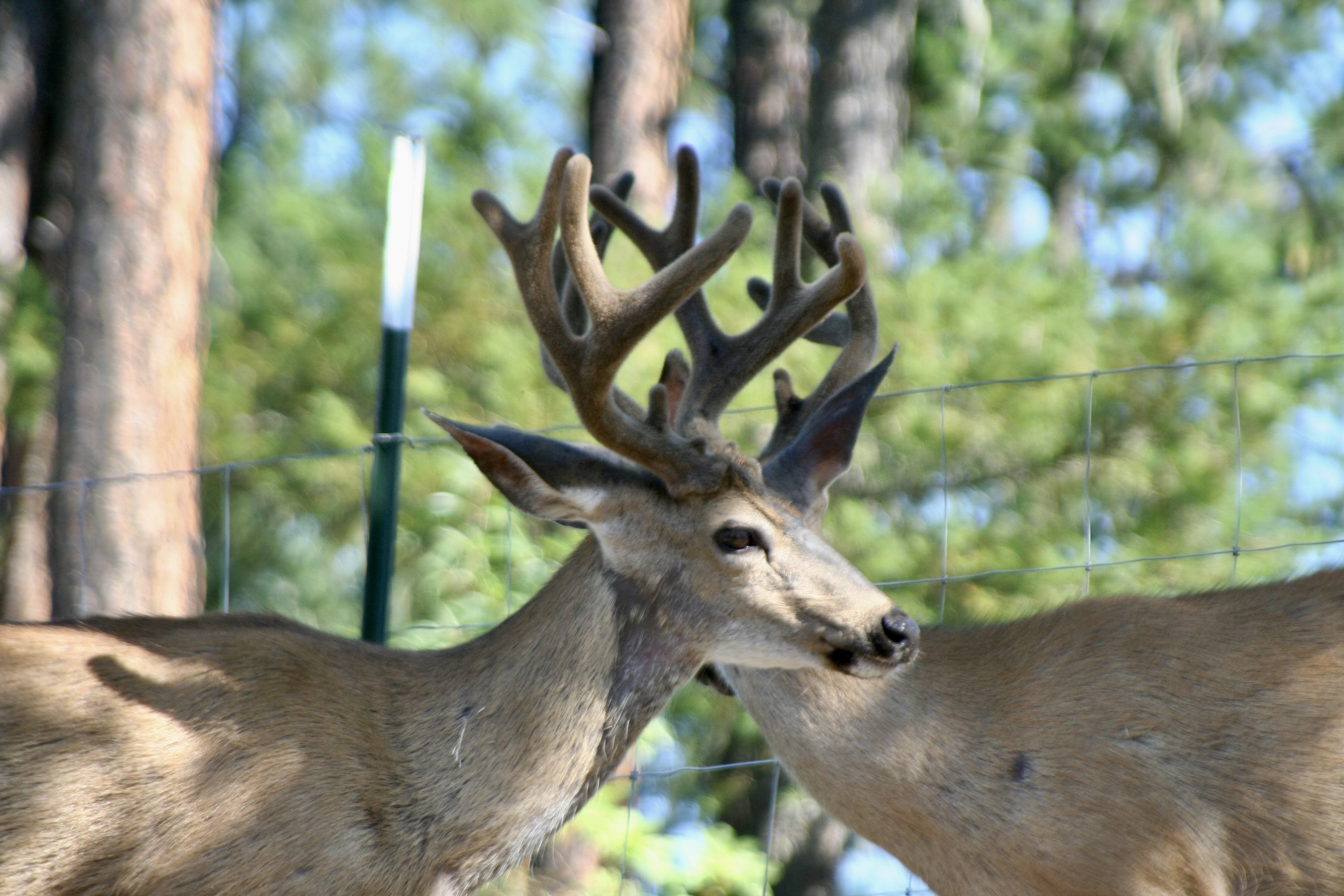
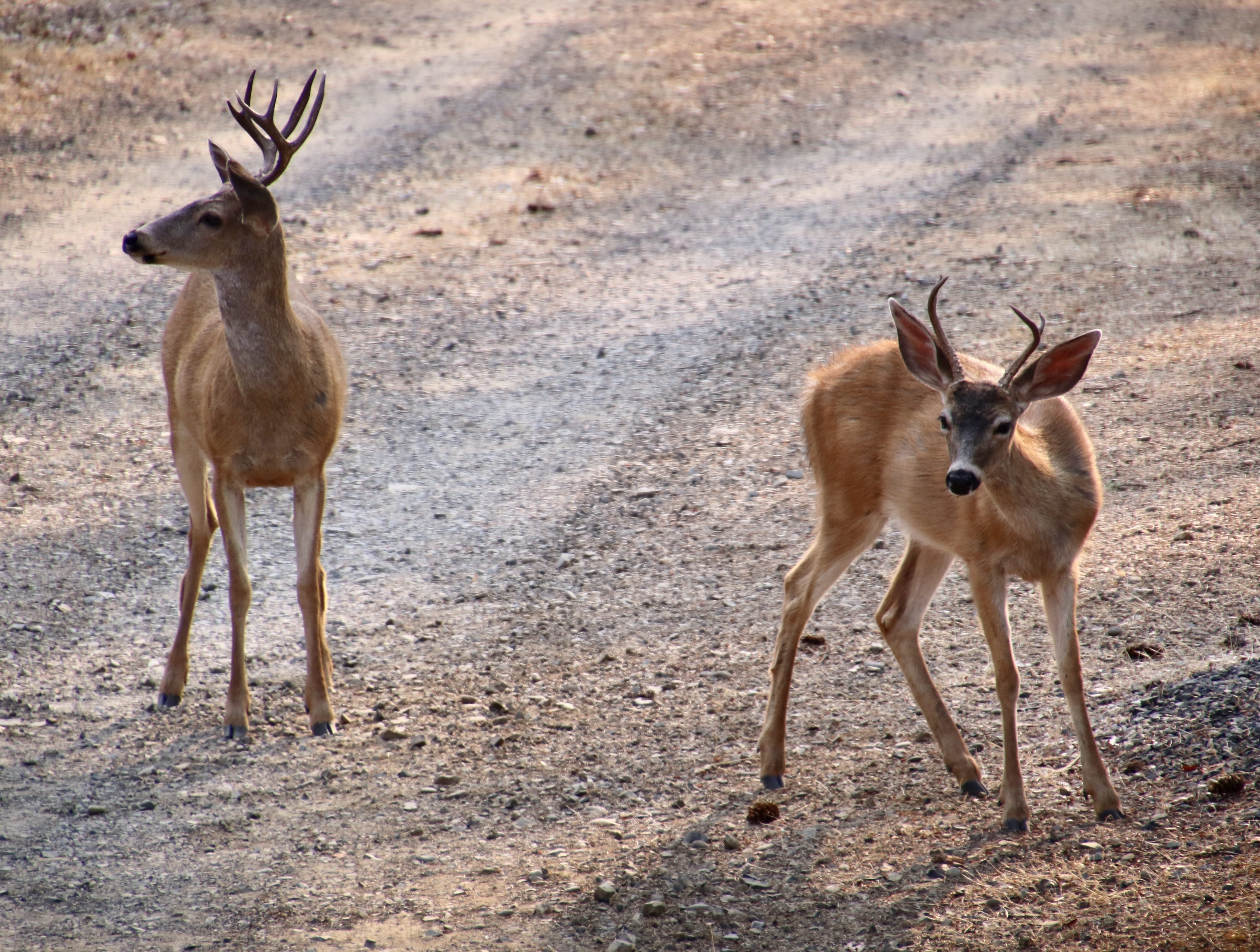
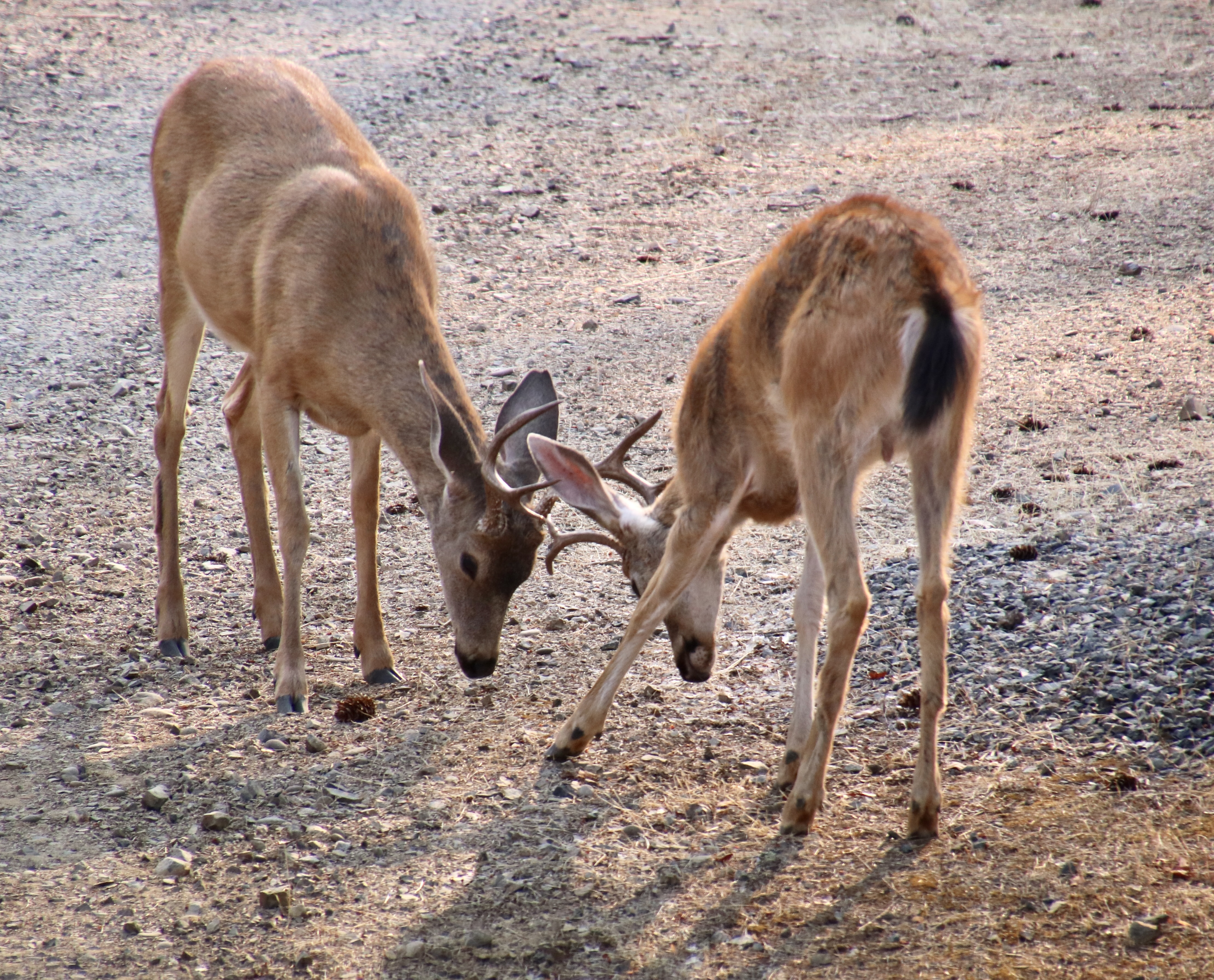
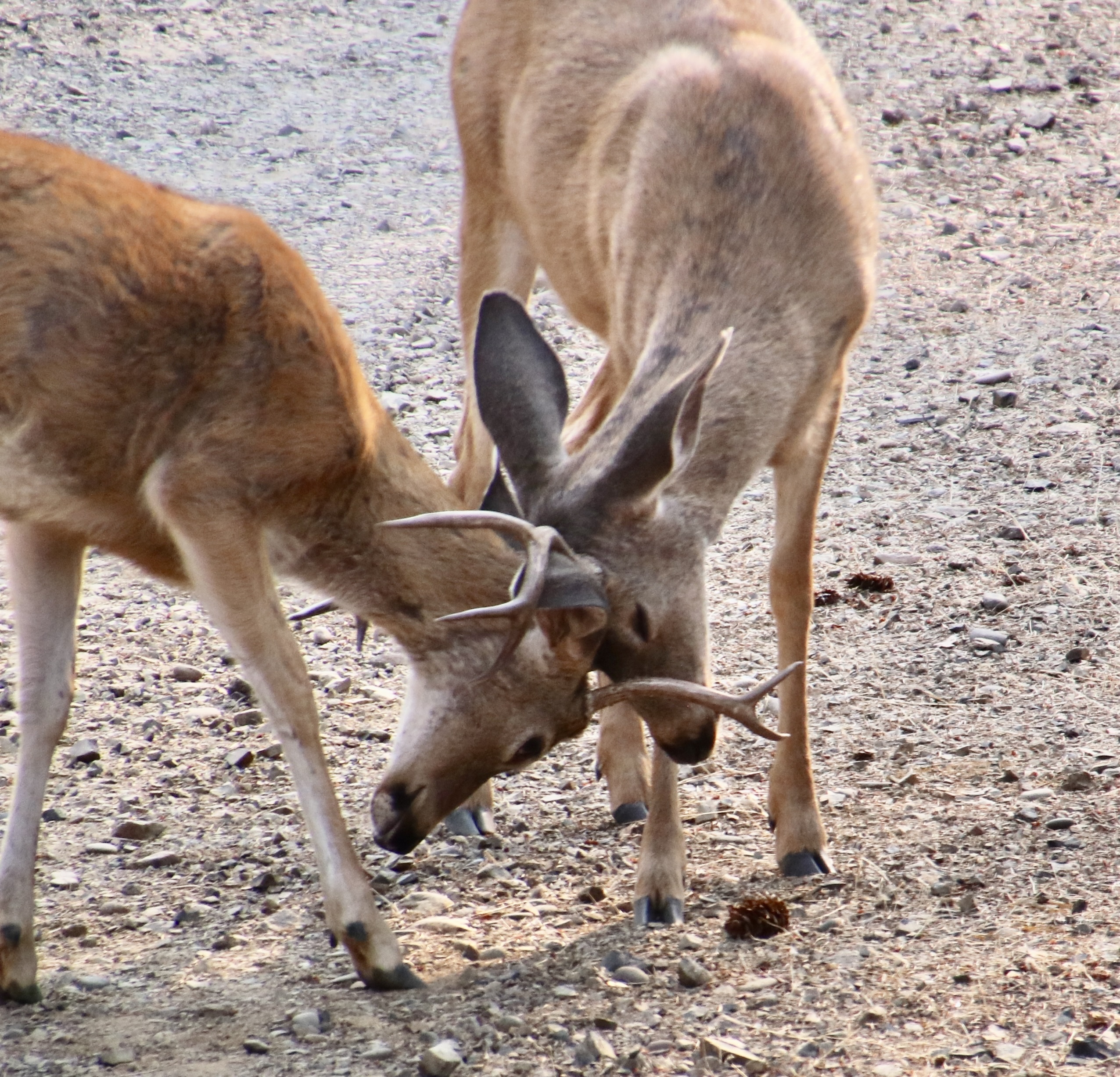
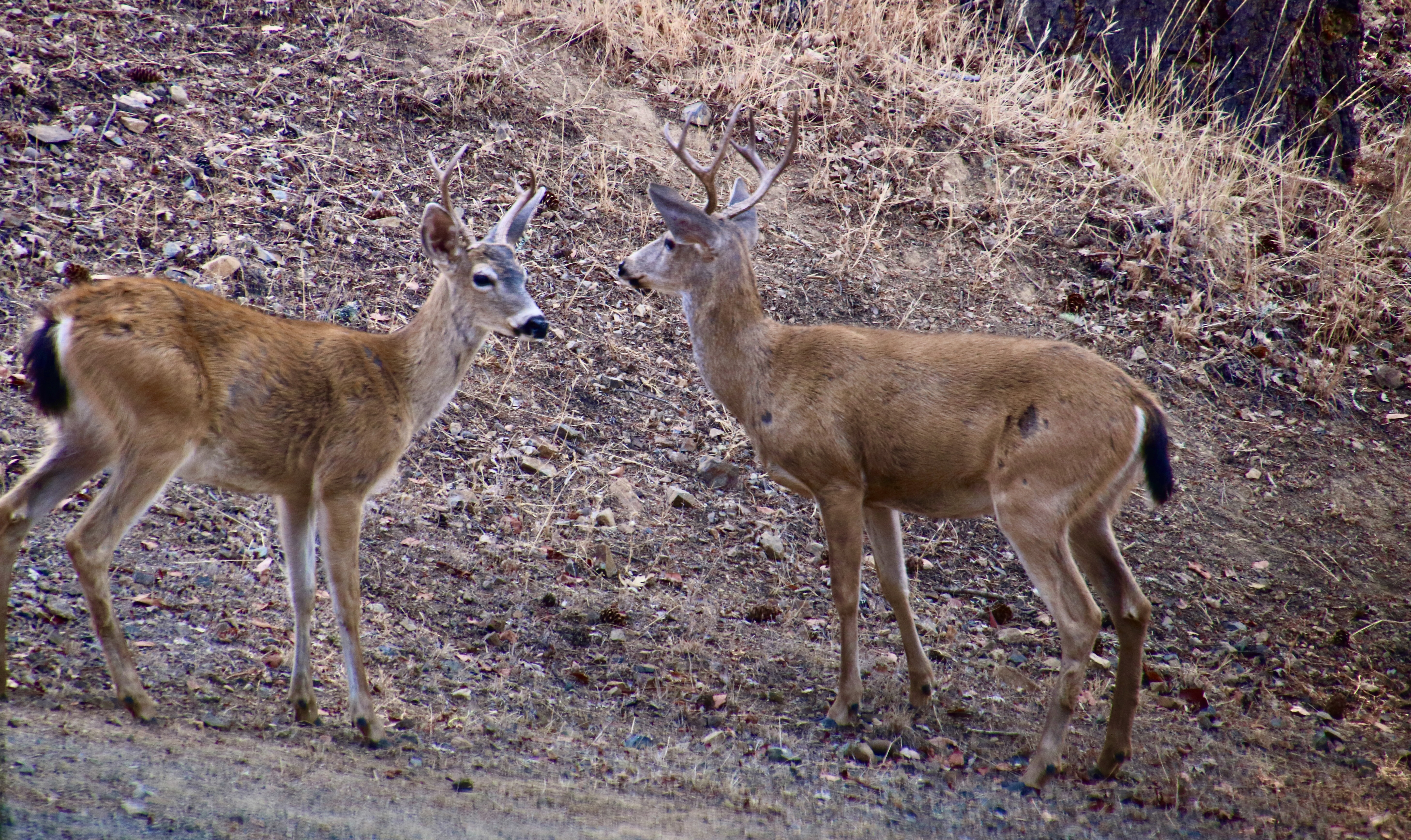
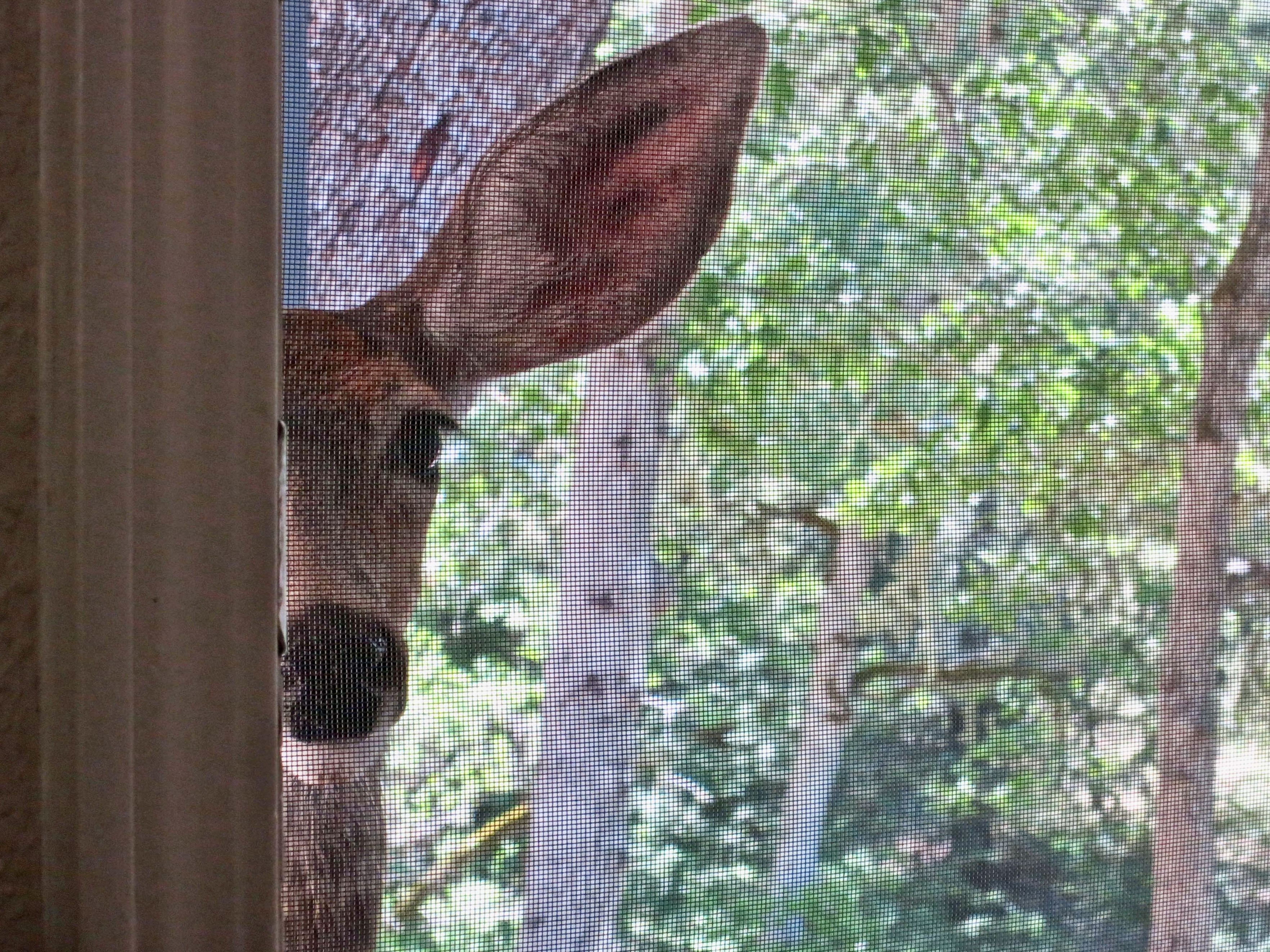
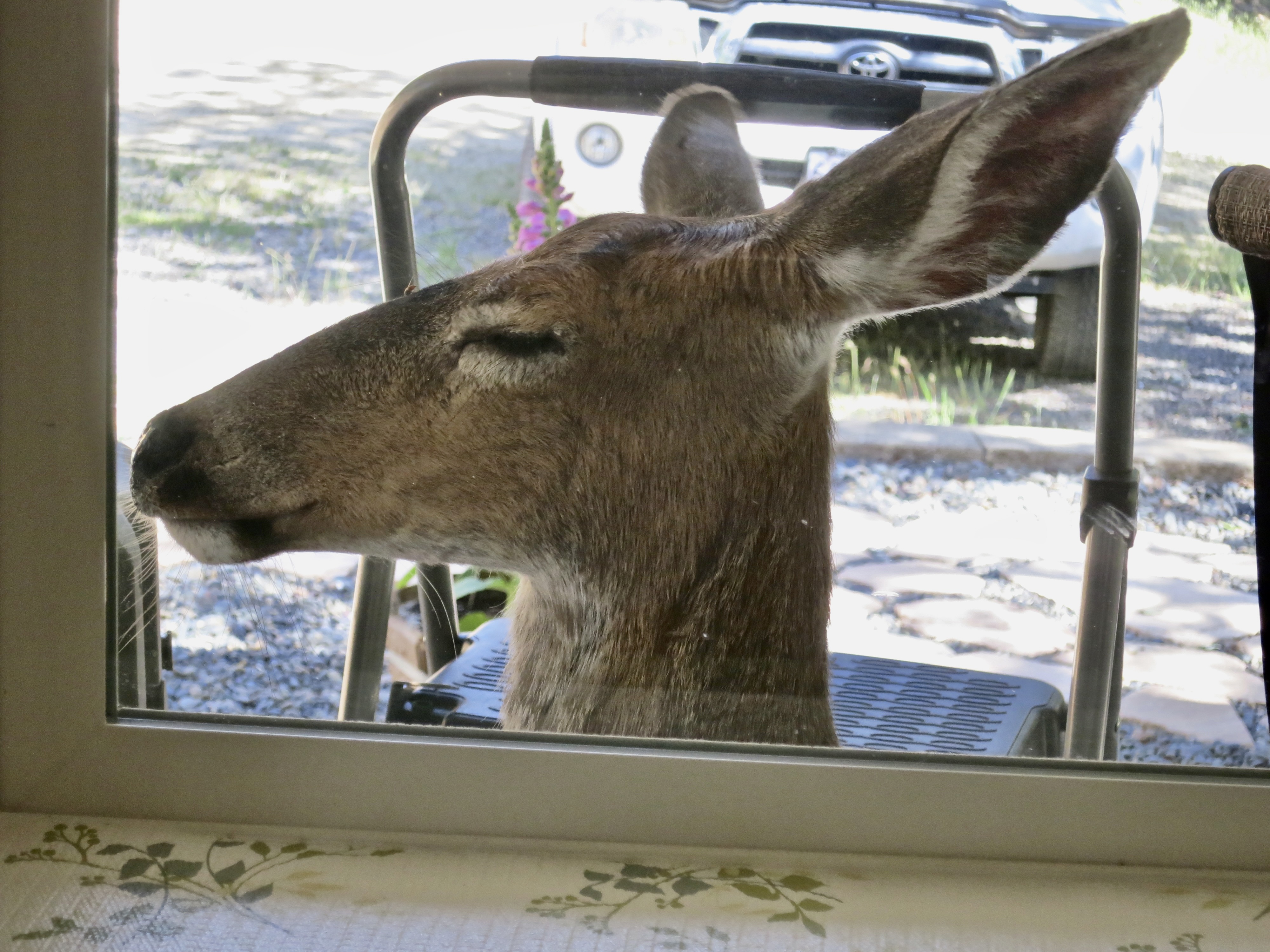
We did come upon a newborn fawn once. The mother had blown it and given birth right in the middle of our driveway. We were returning from town and sat for 30 minutes as the doe urged the baby to get up. Its twin was already off to the side. Finally the youngster stood on wobbling legs and managed to totter off to the side. I kicked myself very hard for not having my camera.If this buck appears nervous, it’s for good cause. A few minutes earlier we had watched junior walk under him, see danglies, and assume they were udders. Reaching up, it had chomped down. Deer are noted for their prodigious ability to leap, jumping over fences as high as 5-6 feet. I swear this guy cleared 10! Apparently, the baby was coming back for more. The buck ran away. The small size of the fawn signifies how young it is. They grow fast. The buck’s antlers are still growing and are in velvet. More on that shortly.Does brought their fawns by to meet us shortly after they had grown out of the ‘hide the baby’ stage. Or at least it seemed that way. Anyway, they trailed along with mom. At 3-4 weeks, they could easily keep up with her and even run fast enough to get away from many predators. They would dash madly around in our yard playing. Not sure whether baby is smelling its feet or scratching an itch. The ears on the doe are almost as big as its head! Deer have extremely sharp hearing and constantly move their ears to detect sounds that might suggest danger. I actually watched one with its ears pointed in two different directions.Hello. The deer in the west are black tail deer as opposed to the white tail deer found in the east and the south. One sign of a black tail deer is its dark forehead.The fawn from above and its twin walking across our deck. Speaking of the deck, it was right next to our bedroom and we could hear deer (and bears) when they crossed it at night. Once we heard a loud thump followed by two quieter thumps immediately afterward. I went out and checked the tracks in our yard the next morning. It was a deer that had made the loud bump as it landed on and cleared the deck in one leap. It was a cougar right behind in hot pursuit.One of the reasons the deer were frequent visitors was that they considered our bird bath their watering hole, especially in the summer. The section of Southern Oregon we lived in has a Mediterranean Climate and is very dry in the summer. The nearest water was down the hill, across the road, and down to the Applegate River. I’m sure that the deer thought ‘why bother.’ The challenge was that two thirsty adult deer would come close to emptying the bird bath. Other deer, birds, squirrels, foxes, etc that used the watering hole were out of luck until I refilled it.Hey, save us some water. We don’t drink much.What is it that you guys don’t get about bird bath!Who? Us? Note the antlers on the buck in the background. There’s a reason why yearlings are know as spikes.My solution to the water hole problem was to add a five gallon paint bucket filled with water. It was a welcome addition. How welcome?Well, baby climbing over Mom to get to it is an example. The laid back ears suggest that Mom wasn’t particularly happy with being used as an obstacle course.No smelling this time. The fawn is scratching an itch. Flies, fleas and ticks all hassle the deer. Again, I enjoyed the three leg acrobatics. Now note the next photo…Don’t ask.One of the fawn’s responsibilities is to learn what is and isn’t edible. It watches what Mom eats and also smells her breath. Lavender isn’t on the deer menu. We grew lots. It took us a few years to figure out what plants the deer wouldn’t eat and plant accordingly. In the meantime, Peggy would rush out and lecture the deer. It was quite humorous, for me and the deer.This young buck, who had leapt over our Gabion cage wall, climbed over the cement blocks, and worked its way past the lavender, stopped to listen to Peggy’s lecture before leaping up the cliff to gobble down the plants and flowers it loved to eat.The real treat was acorns. Squirrels, turkeys, woodpeckers, Stellar jays, and bears seemed to agree.Remember how I said the fawns grow up quickly. Check out the legs. Also note that the fawn’s spots are disappearing.By fall the spots have totally disappeared. The young deer will hang out with their mom through the winter until she gives birth to her new fawn in the spring. Mom then chases them away. They aren’t happy about it and often continue to stay nearby for a while longer—at a safe distance. The young doe will become part of the herd that Mom, Grandma, and possibly Great Grandma oversee. The herd of does browsing in our back yard…And taking an afternoon snooze.The young buck, Spike, here growing his first set of antlers, will slip off to join the boys.And now to the bucks. They lose their antlers in January and February and begin to grow new ones in March and April. A soft, hairy skin known as velvet covers the new antlers providing them with the blood and nerves necessary for bone growth. Aren’t the legs impressive?The antlers will continue to grow until they have reached the size of the previous year and then grow larger, dividing into more points.Bucks are judged by the size of their racks and the number of points on one side. A deer with two points is a forked horn, with three, a three pointer, and so on. The first year the deer grows spikes. Second year is normally a forked horn. Third year 3 and 4 pointers. Five pointers plus grow in the fourth year and beyond.A three point buck without velvet. “Did somebody say apple?”This big boy in velvet is a five-pointer. The back antlers are split but can’t be seen in this picture.Two bucks displaying a forest of antlers! We thought this was a fun photo. Come August-September the antlers have completed their growth and the bucks scrape off their velvet on anything available, normally a tree or bush. It’s time to get in fighting form. One year we arrived home and found a buck using our hammock to scrape off his velvet. I chased him off but it was too late. The hammock was torn to sheds. By November and December it’s time to decide who gets the girls.This is a contest that the bigger buck normally wins. Size is often enough to decide the outcome without a contest.These two three pointers have been checking each other out. The one on the left is larger and has a bigger rack, but…They go at it, head to head and antler to antler. The biggest buck shoved the smaller buck around. I worried about their eyes.And then they separated without either being harmed. The big fellow seems to be saying, “You want more of me?” The smaller guy had had enough, however. He vacated the scene. For a day or so, the three pointer chased does around our yard, happily making the rounds and rutting away— until a bigger buck came off the mountain. After the rutting season is completed is when the bucks lose their antlers and a new year begins.A very pregnant doe.As you have probably figured out, this doe and her twins were the stars of our blog. She was usually somewhere nearby and was the first to bring her fawns by. Always curious about what we were doing, she often stared in our window. Here she is looking though our screen door.Our house was surrounded by windows providing excellent views of everything happening outside. I had the best seat, however. I turned my writing chair around in our library and could watch all of the action in our backyard. We considered it a great privilege that the deer herd allowed us to share in its daily and yearly life. Here, Mom taking a snooze on our back porch, was about four feet away. That’s it for the day. Next up:
On Friday I will do the intro to the my memoir: UT-OH. I am blogging one chapter at a time. I am quite excited about the book and have already written 22 chapters. Please join me.
Curt, I really enjoyed this great post. Your photos are amazing and I learned a lot about the deer from your writing. You are so lucky that they weren’t afraid to get near you. Are the black tail deer and the white tail deer about the same size? I spent many hours watching deer in a field in middle Georgia. Sadly, they were kind of skittish and didn’t get very close to where I was. I loved it in the summer when the does would bring their fawns with them.
Thanks, Beth. And the answer to your question is yes: the white tail and black tail deer are about the same size. The mule deer of the West are much larger.
Even at a distance, I’ve always enjoyed watching them. They are wise to be a little skittish. Especially durning hunting season.
I didn’t know about the black forehead of the black-tailed deer. When I first saw the photo of the twins, I thought they might have donned masks for a bit of banditry!
So sweet and innocent! I love these pictures! Going out to my daughter’s home on Johnson Point, you have to be very vigilant because these beauties are everywhere and people travel at about 50-60 mph not even thinking about these critters. My nature observations are limited but I do see squirrels that run the wires and I also see a couple of ravens that have been coming to a certain tree for years. We need to look away from the news and enjoy our earth. Thank you for these pictures! Love you two!
When I lived in a condo in Sacramento, the only nature we witnessed in addiction to the birds, was a squirrel that lived in the tree right next to my office window. It would climb up and scold me when it didn’t have other mischief to get into. I watched once as it enticed a cat into climbing to the very top of the tree before it went bounding off. I’m pretty sure it was laughing the whole way.
Yesterday a bald eagle landed in our trees and then I watched as it feasted on a deer that had faced the same fate of you deer.
I love ravens. They often show up in my blogs.
Take care my friend.
Knowing almost all posts are the “A side” of the 45 record [something you are old enough to remember], your property bounded by public lands always seemed idyllic to me. And if you are like me, you are grateful to have had such an experience and still have a little longing for it.
Ever so grateful, Ray. It’s easy to miss. But life goes on and nature is found outside our door here as well. Yesterday a bald eagle graced us with his presence. Then I watched as it feasted on a deer that was roadkill. Nature at its rawest.
Let’s see, 45s, that was before steaming, right, and dvds and cds and VCRs and tapes. I still remember the Webcore Tape recorder I bought and the incredible music it produced, and listening to Elvis on a 45. Damn, are we that old. Grin. Thanks for putting me on the A side, BTW.
Indeed, it was a great privilege to be able to observe the life of the herd so closely. I hope the new owner allows them to hang around and feel safe near the house.
Hi Christie. Not sure about how the herd is faring. I didn’t get the feeling that the new owners had the same love and appreciation of nature that Peggy and I do. Hopefully, I’m wrong.
Back to you on 2026. The best.
Curt, this was such a lovely pause in the feed. I went in expecting a deer post and came out with a whole sense of how quietly rich their lives really are. Thanks for that.
Thanks, Ritish. Appreciated. I’ve spent a lot of time wandering in the woods during my life and discovered that nature has a great deal to teach us, if we just slow down and listen. I just visited your blog and found it quite interesting, so I signed up to follow you.
Wandering in the woods, best time spent in anyone’s life. And thanks for the follow, Curt. I really appreciate it.
Looking forward to your thoughts and perspective on the world, Ritish.
All those deer on your old Oregon property were such a delight. I loved the photos, Curt. And thanks for the tip about leaving water for them. We’re not as dry here, but if we leave water out (besides the little bird baths), they won’t need to cross the road – which is occasionally fatal. And, I think you were part of the herd. 😀
The water served the same purpose for us, D, in keeping the deer off the road. In addition, of course, to providing us with entertainment not to mention insight into how deer live their lives. It certainly felt like we were part of the herd at times!
I love the whole idea and process and wonder that comes from living peacefully with wildlife.
We have much we can learn, D. No question there.
I’ll bet this post made you miss some of the things about living over here. You know, of course, now that you are living on the East coast, that they count ALL the points on the horns, not just half. I had to learn the embarrassing way, heh heh. And the part where they rub off the velvet can frequently take the form of destroying the few plants they don’t eat, by rubbing them till all the branches break off. (crying emoji)
These are absolutely wonderful photos, Curt. Thank you for taking us to that sanctuary in southern Oregon for a short time. 🙂
Yes, I miss the beauty and wilderness of our home in Oregon, Crystal. It would be impossible not to. There are deer here, but we are not part of the herd, sigh. I photographed a bald eagle in our trees a couple of days ago. That was exciting.
Curt, your old property was a haven for deer and wow, the photos are precious. The fawns are so cute and I laughed out loud at the poor buck doing the high jump! The firsts photo shows just how comfortable and safe they all felt with you. I look forward to learning more about your memoir.
The deer were great, Annika, and the fawns precious. One of the benefits of living next to a million aces of national forests!
By the time you get this, you will already have had the intro to UT-OH. The first chapter is up on Thursday.



 Wandering through Time and Place
In Time
Curt, I really enjoyed this great post. Your photos are amazing and I learned a lot about the deer from your writing. You are so lucky that they weren’t afraid to get near you. Are the black tail deer and the white tail deer about the same size? I spent many hours watching deer in a field in middle Georgia. Sadly, they were kind of skittish and didn’t get very close to where I was. I loved it in the summer when the does would bring their fawns with them.
Thanks, Beth. And the answer to your question is yes: the white tail and black tail deer are about the same size. The mule deer of the West are much larger.
Even at a distance, I’ve always enjoyed watching them. They are wise to be a little skittish. Especially durning hunting season.
I didn’t know about the black forehead of the black-tailed deer. When I first saw the photo of the twins, I thought they might have donned masks for a bit of banditry!
They might have been up for a little banditry, but one look at daddy assured that they came by the look naturally.
So sweet and innocent! I love these pictures! Going out to my daughter’s home on Johnson Point, you have to be very vigilant because these beauties are everywhere and people travel at about 50-60 mph not even thinking about these critters. My nature observations are limited but I do see squirrels that run the wires and I also see a couple of ravens that have been coming to a certain tree for years. We need to look away from the news and enjoy our earth. Thank you for these pictures! Love you two!
When I lived in a condo in Sacramento, the only nature we witnessed in addiction to the birds, was a squirrel that lived in the tree right next to my office window. It would climb up and scold me when it didn’t have other mischief to get into. I watched once as it enticed a cat into climbing to the very top of the tree before it went bounding off. I’m pretty sure it was laughing the whole way.
Yesterday a bald eagle landed in our trees and then I watched as it feasted on a deer that had faced the same fate of you deer.
I love ravens. They often show up in my blogs.
Take care my friend.
Knowing almost all posts are the “A side” of the 45 record [something you are old enough to remember], your property bounded by public lands always seemed idyllic to me. And if you are like me, you are grateful to have had such an experience and still have a little longing for it.
Ever so grateful, Ray. It’s easy to miss. But life goes on and nature is found outside our door here as well. Yesterday a bald eagle graced us with his presence. Then I watched as it feasted on a deer that was roadkill. Nature at its rawest.
Let’s see, 45s, that was before steaming, right, and dvds and cds and VCRs and tapes. I still remember the Webcore Tape recorder I bought and the incredible music it produced, and listening to Elvis on a 45. Damn, are we that old. Grin. Thanks for putting me on the A side, BTW.
You certainly had box seats for watching the wildlife on your property.
That’s how I regarded it. The type of box seat that demands audience participation, Peggy.
Indeed, it was a great privilege to be able to observe the life of the herd so closely. I hope the new owner allows them to hang around and feel safe near the house.
Hope 2026 is kind to you and Peggy! Cheers!
Christie
Hi Christie. Not sure about how the herd is faring. I didn’t get the feeling that the new owners had the same love and appreciation of nature that Peggy and I do. Hopefully, I’m wrong.
Back to you on 2026. The best.
Curt and Peggy
Curt, this was such a lovely pause in the feed. I went in expecting a deer post and came out with a whole sense of how quietly rich their lives really are. Thanks for that.
Thanks, Ritish. Appreciated. I’ve spent a lot of time wandering in the woods during my life and discovered that nature has a great deal to teach us, if we just slow down and listen. I just visited your blog and found it quite interesting, so I signed up to follow you.
Wandering in the woods, best time spent in anyone’s life. And thanks for the follow, Curt. I really appreciate it.
Looking forward to your thoughts and perspective on the world, Ritish.
All those deer on your old Oregon property were such a delight. I loved the photos, Curt. And thanks for the tip about leaving water for them. We’re not as dry here, but if we leave water out (besides the little bird baths), they won’t need to cross the road – which is occasionally fatal. And, I think you were part of the herd. 😀
I’m sure you are right about Curt and Peggy being in the herd. 🙂
LOL. I think so, Crystal. 😀 They’re a delight.
😳😁
😁
The water served the same purpose for us, D, in keeping the deer off the road. In addition, of course, to providing us with entertainment not to mention insight into how deer live their lives. It certainly felt like we were part of the herd at times!
I love the whole idea and process and wonder that comes from living peacefully with wildlife.
We have much we can learn, D. No question there.
I’ll bet this post made you miss some of the things about living over here. You know, of course, now that you are living on the East coast, that they count ALL the points on the horns, not just half. I had to learn the embarrassing way, heh heh. And the part where they rub off the velvet can frequently take the form of destroying the few plants they don’t eat, by rubbing them till all the branches break off. (crying emoji)
These are absolutely wonderful photos, Curt. Thank you for taking us to that sanctuary in southern Oregon for a short time. 🙂
Yes, I miss the beauty and wilderness of our home in Oregon, Crystal. It would be impossible not to. There are deer here, but we are not part of the herd, sigh. I photographed a bald eagle in our trees a couple of days ago. That was exciting.
Curt, your old property was a haven for deer and wow, the photos are precious. The fawns are so cute and I laughed out loud at the poor buck doing the high jump! The firsts photo shows just how comfortable and safe they all felt with you. I look forward to learning more about your memoir.
The deer were great, Annika, and the fawns precious. One of the benefits of living next to a million aces of national forests!
By the time you get this, you will already have had the intro to UT-OH. The first chapter is up on Thursday.
Ah memories. You’ve got quite the collection.
And the post barely touched on it, Dave…