As we made our second trip up Hawaii’s Highway 11 to continue our exploration of Volcanoes National Park on our recent visit, smoke from the continuing eruption of Kilauea provided a dramatic backdrop. That was in February. The volcano is still erupting!
Our blog today is doing triple duty. One: It features our recent month long trip to Hawaii where we rented a VRBO for a month about 30 miles from Hilo. Two: I am using it to introduce Peggy’s newly published book on artistic word searches featuring petroglyphs of the Southwest.
Three: I’m kicking off my series on the value of protecting America’s national parks, national monuments and wilderness areas in light of the recent and ongoing Trump Administration threats to our national treasures. For the latest issues, I urge you to visit the National Parks Conservation Association that has been working to protect our parks since 1919.
This will primarily be done by selecting photographs from the thousands that Peggy and I have taken of parks showing their beauty, geologic uniqueness and historical significance while emphasizing the value of maintaining them for our present use and that of our children, grandchildren and future generations. Each blog will feature a different park, monument or wilderness.
Today’s is Hawaii’s Volcanoes National Park.
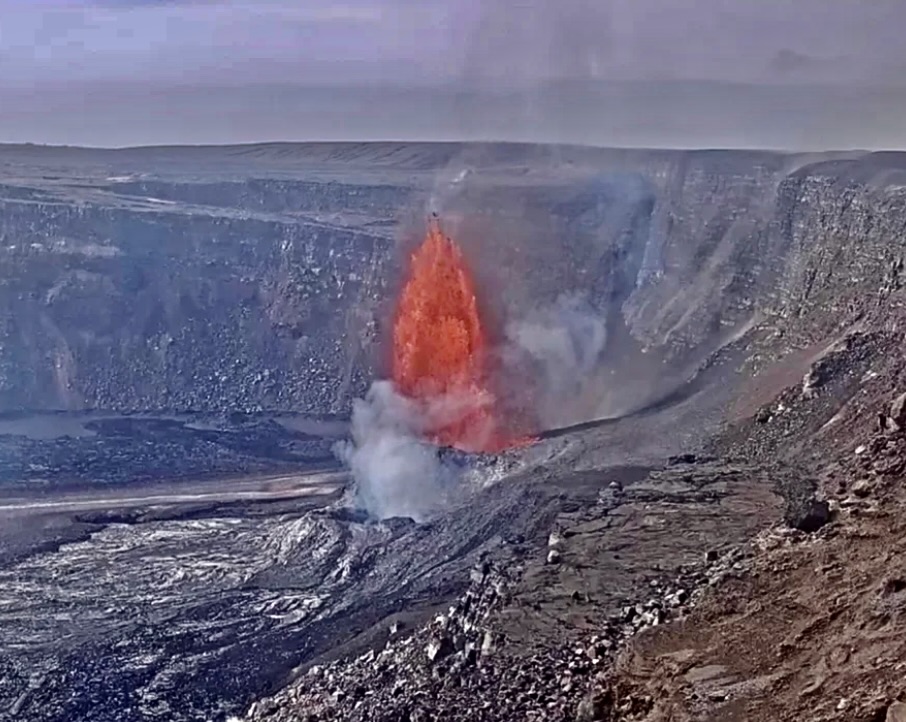
This map shows Volcanoes National Park’s Kilauea Caldera. Halemaumau Crater, which is part of the Caldera is shown on the left. The present active vents are located in Halemaumau, which seems appropriate given that ancient Hawaiians considered it to be the home of Pele, the Hawaiian goddess of fire, volcanoes, and volcanism.This photo captures the volcano sending up the smoke that fills the sky. Called vog (like smog) the smoke can damage people’s lungs, especially if they already have some type of lung disease or are elderly. (Hmm, I wonder if 82 meets the second criteria. Cough cough.)Up close and personal, as seen through our telephoto lens. At around 300-350 feet the lava was shooting higher into the air than it did on our first visit, but nothing like it has on its latest eruption.This is what the eruption last week looked like with lava shooting up 700 feet, nearly twice as high as we saw it! (USGS Photo) BTW, this is the south vent. The north vent is only smoking.
National Parks are selected for beauty, geological features, flora and fauna, and cultural history. The fact that Kilauea is considered the most active volcano in the world would definitely qualify it for National Park status. But there’s much more to see at the park regarding volcanoes plus unique cultural history shown through petroglyphs left by native Hawaiians. And there are Nene!
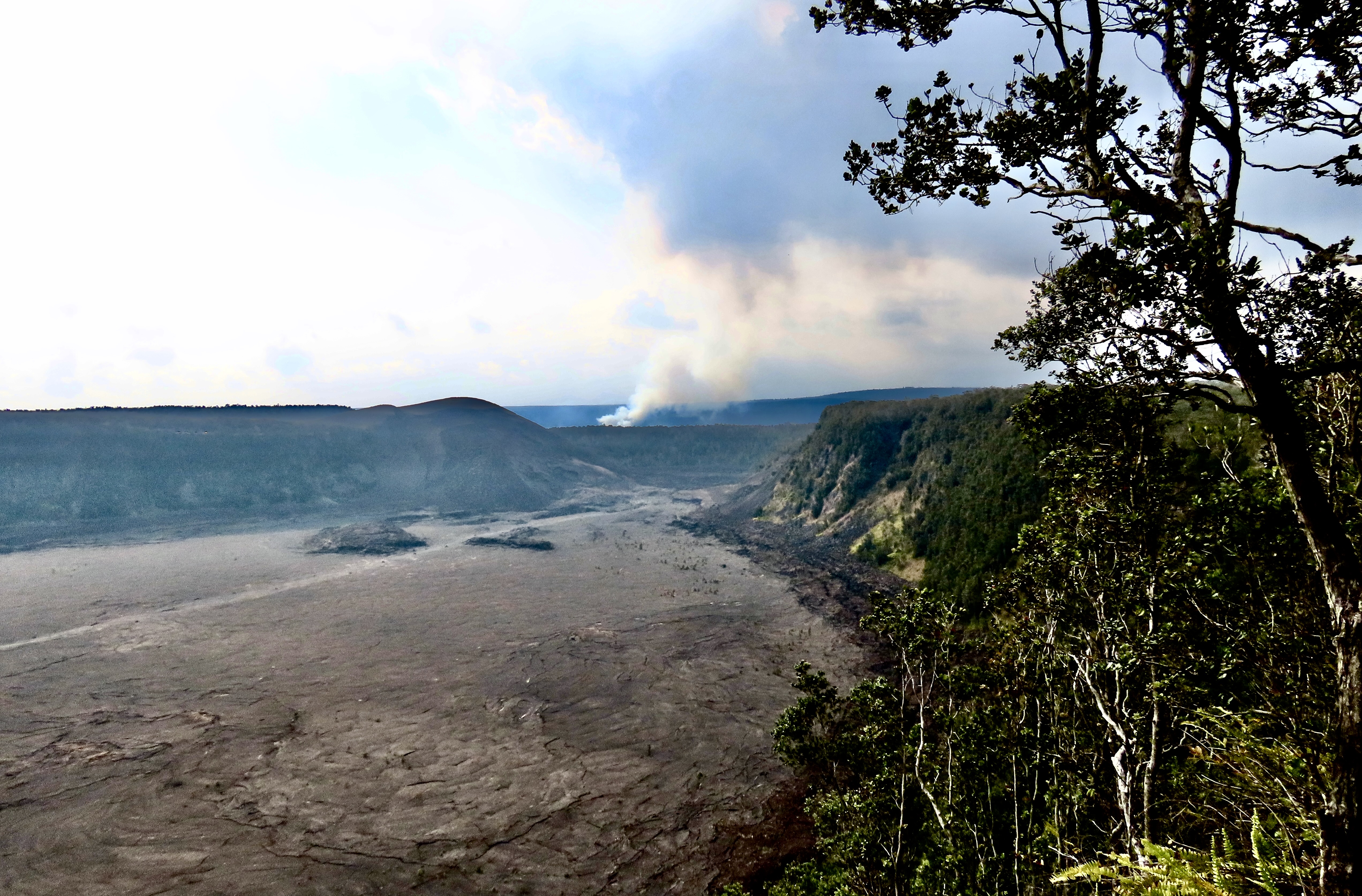
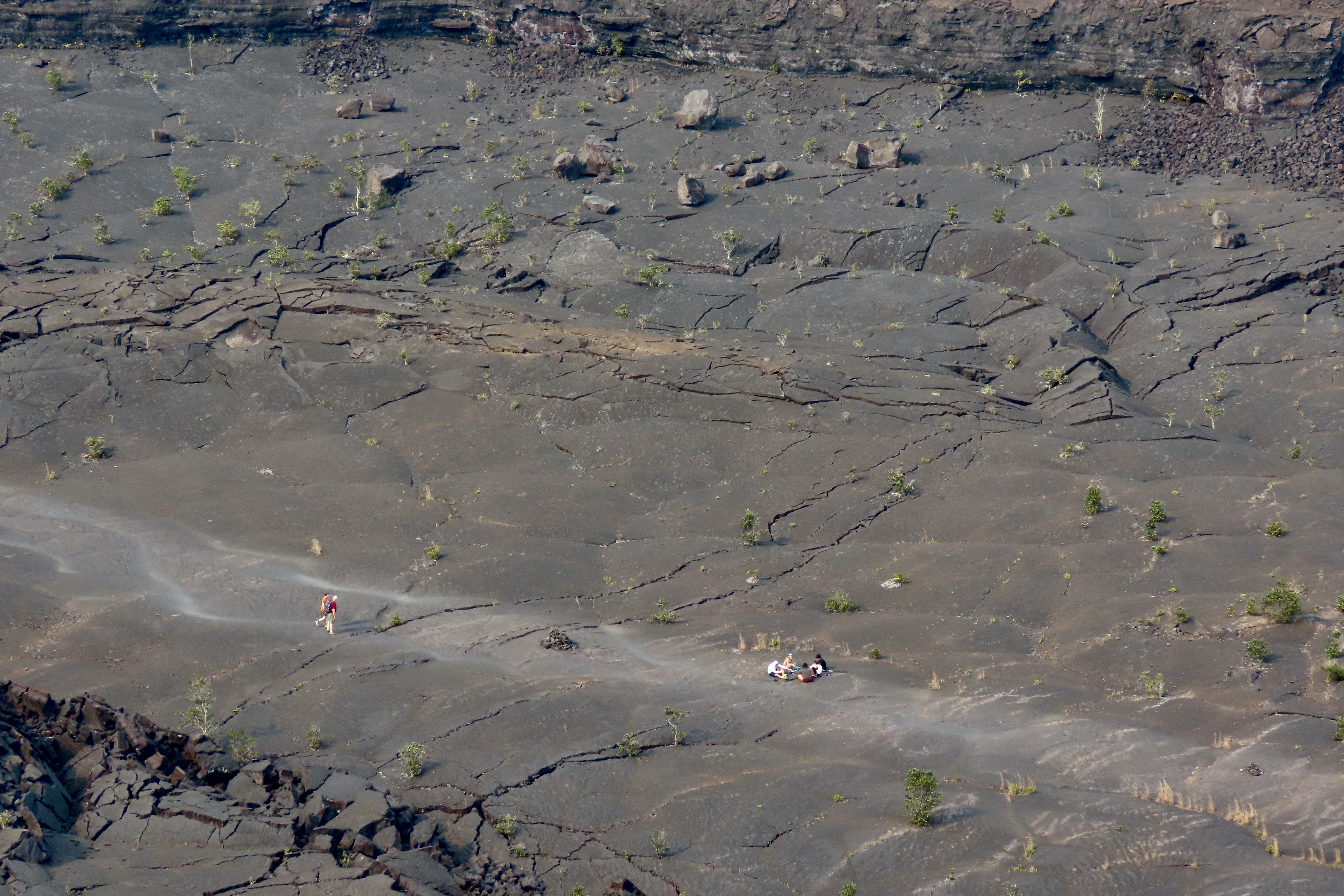
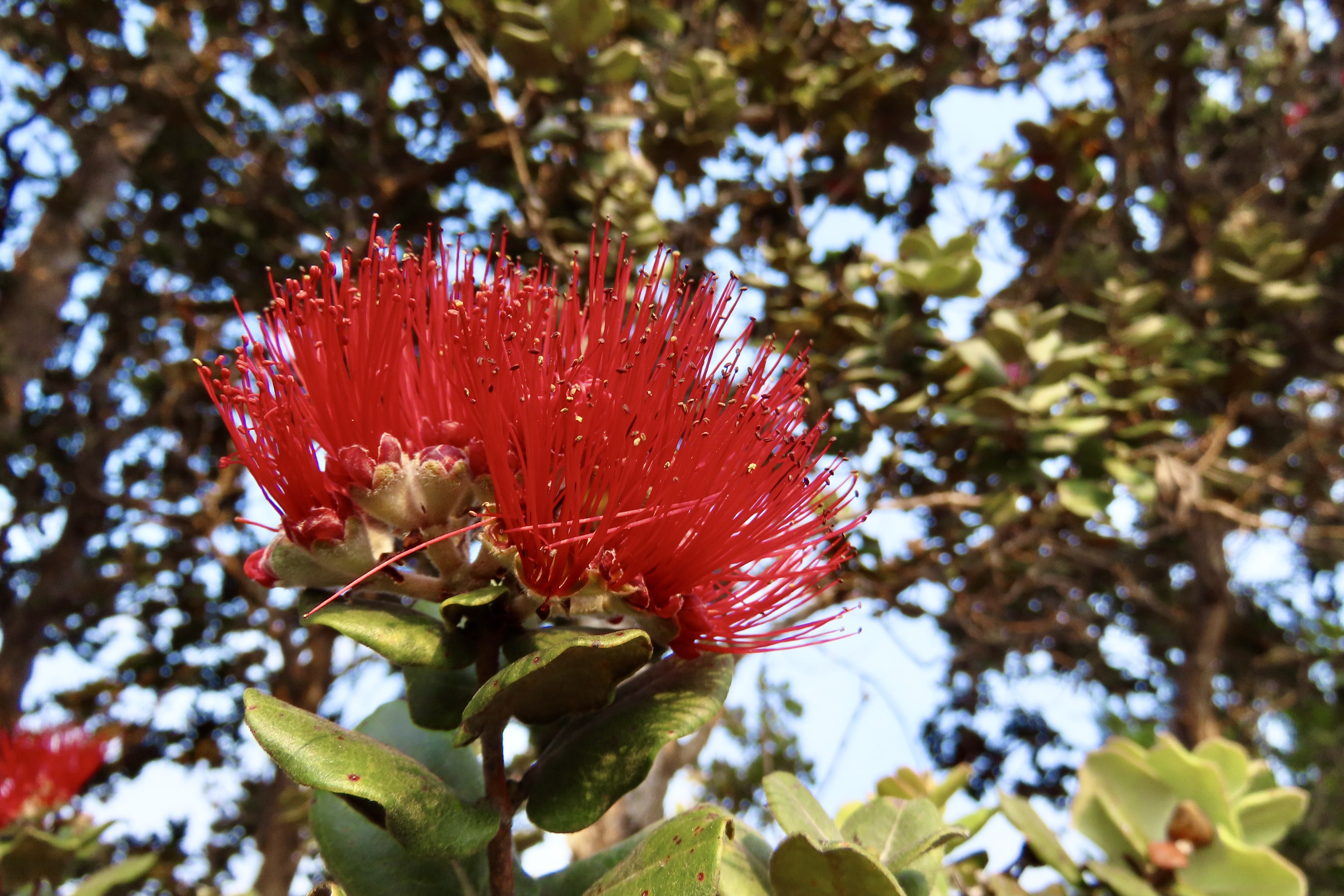
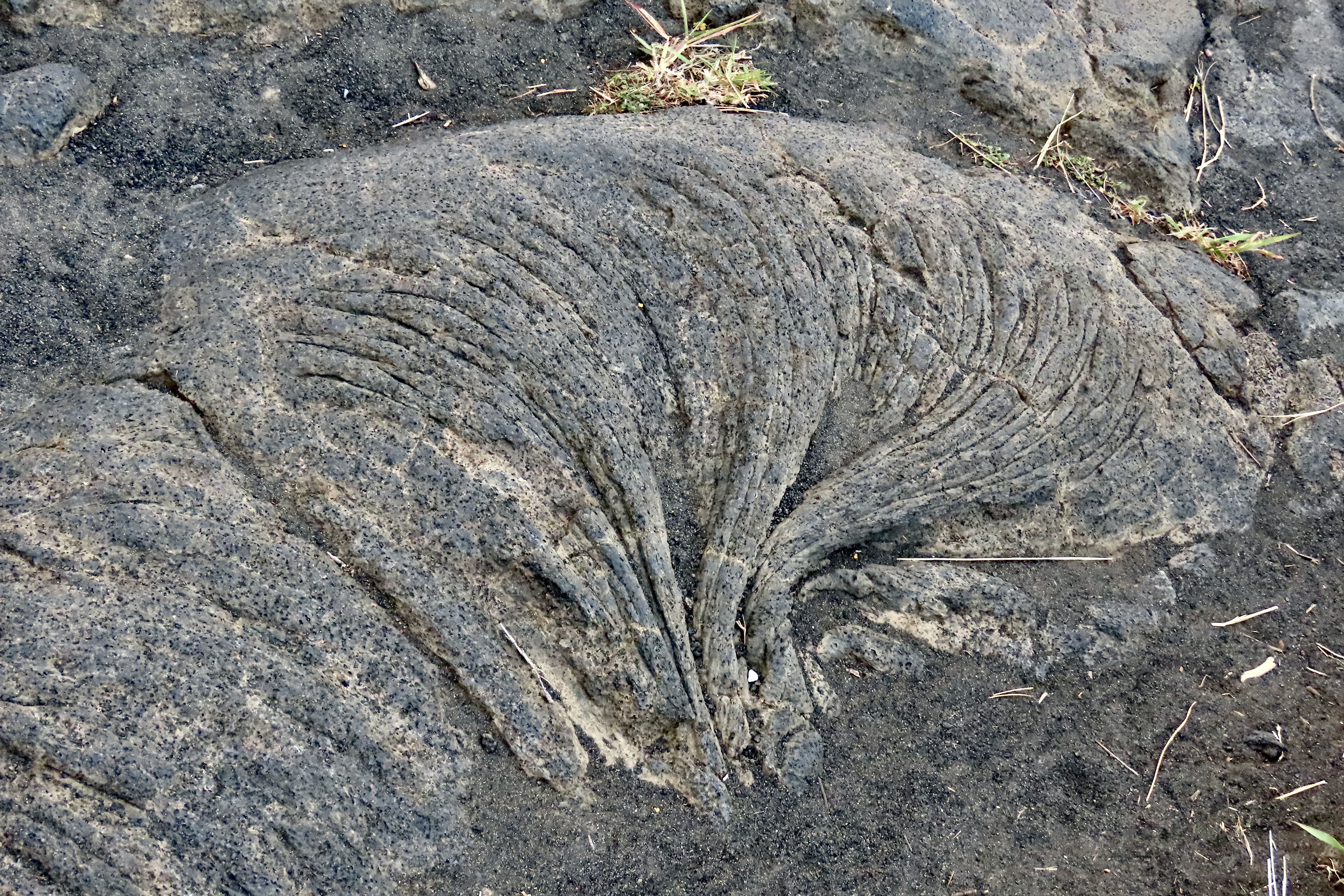
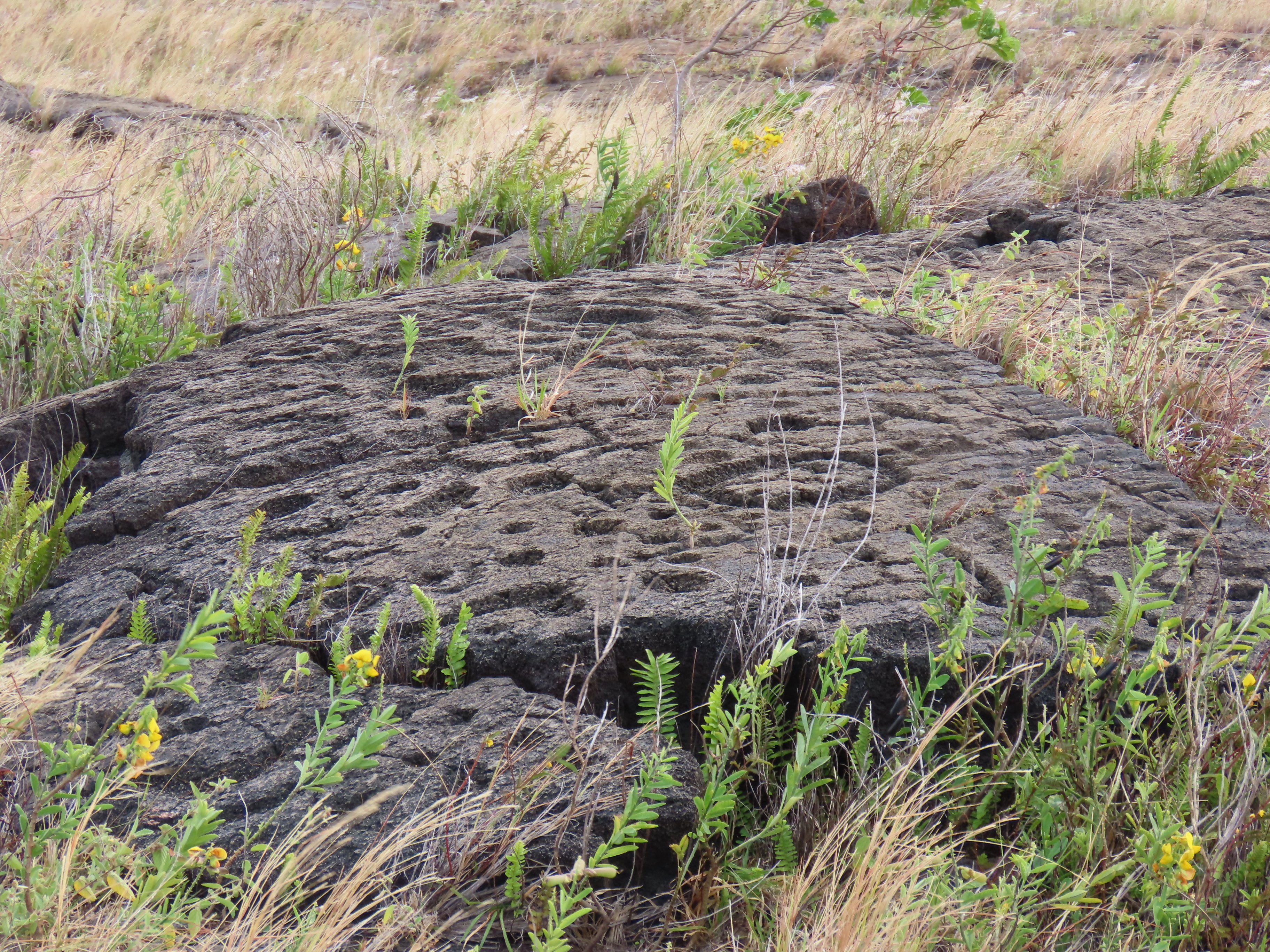
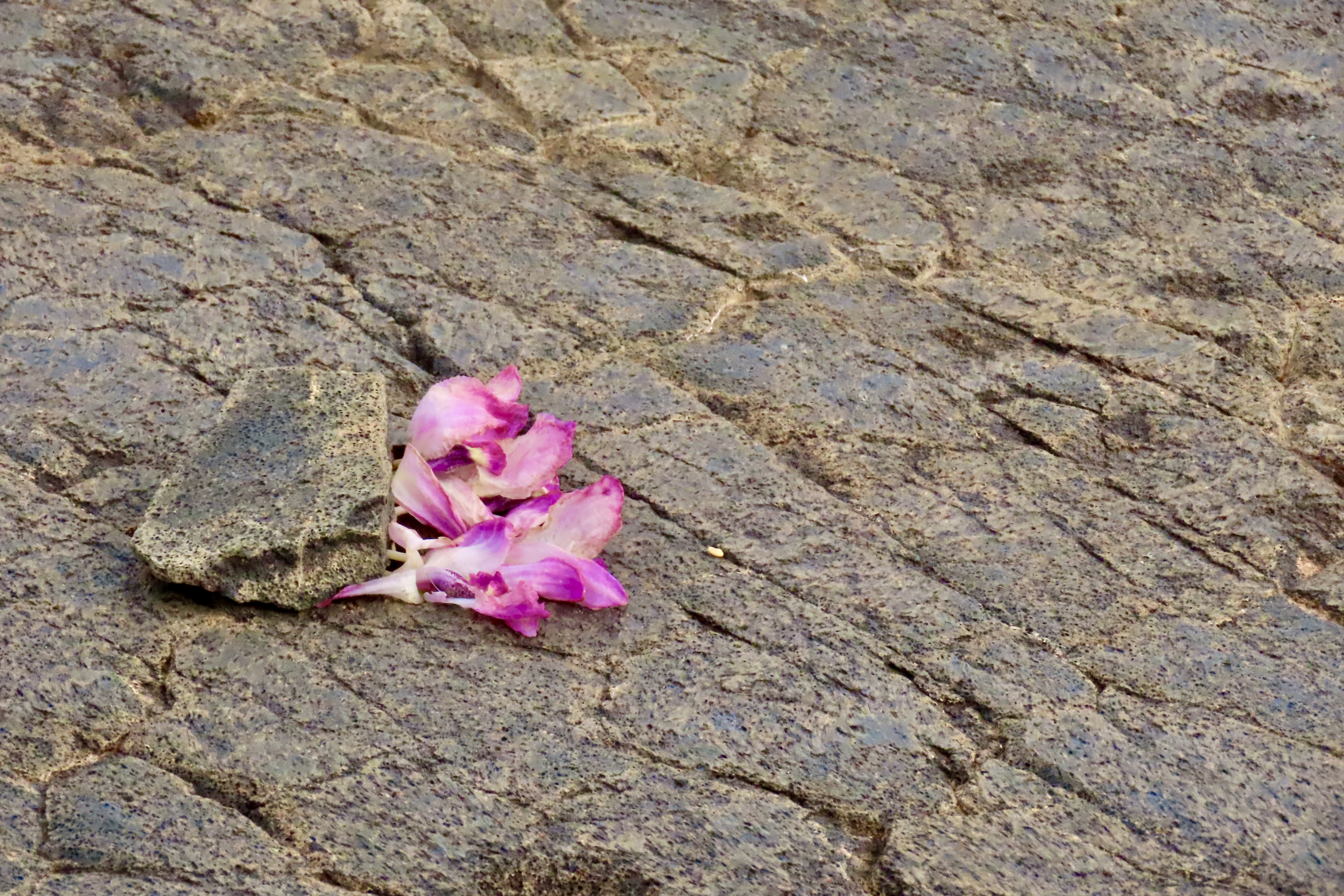
If you are a crossword buff, you will definitely recognize this bird. Its name is a favorite of crossword puzzle creators. Signs on roads throughout the Park warn drivers to watch out for them. This fellow has a “Are you looking at me?!” expression. The Nene or Hawaiian Goose is endemic to the Hawaiian Islands and is the official state bird of Hawaii. The Kilauea Iki Crater, southeast of the Kilauea Caldera, is on the Crater Rim Drive East. It was our first stop as we headed for the Chain of Craters Road. As you can see, a hiking path makes its way across the crater floor.A view of the Kilauea Iki Crater with its hiking trail. The Halemaumau Crater eruption in the Kilauea Caldera can be seen in the distance.A lone hiker makes his way along the trail through the Kilauea Iki Crater while a family rests and eats snacks.The Kilauea Iki Overlook also features a number of attractive plants like this fern…And fiery red Ohia Lehua flowers.On our first trip up to the Park, we hung out at the Volcano House (next to the Visitor’s Center) and drove along the Crater Rim Drive West because of the great views of the eruption. Our second trip up took us down the Chain of Craters Road, known for its presently inactive volcanoes craters and past lava flows. The road goes all the way to the ocean, first across a lava created plateau before dropping over Holei Pali Escarpment down to a broad coast plain. The grayer areas show lava flows dating back to the 1970s. I was there!The Chain of Craters Road was bumpy, which isn’t unusual for our road system. What’s unusual is the bumps were caused by earthquakes and the earthquakes were caused by the volcano. These bumps appeared to be recent. Increased earthquakes in volcano country often mean that lava is on the move. Seismographs measured over 60,000 connected to the 2018 eruption (most were below the level that people could feel, thankfully. I would have been out of there after 100, or 5.)As we drove down the bumpy road, a sign pointed us toward a pull off for Pauahi Crater shown above. (Site 5 on the map.) This crater has erupted three times in recent history: May 1973, November 1973, and November 1979. A description of the November 1973 eruption said “lava pooled into a dramatic, fiery, swirling whirlpool on the crater floor.” Given the description, I believe this is the crater I visited in the early 70s. A wooden walkway worked its way out from the road to the edge of the crater. I walked out in the dark to get the full effect of the ‘swirling’ lava. I remember large bubbles coming to the surface, bursting, and sending lava shooting 20-30 feet into the air. The experience was Incredible— and unforgettable.Broad flows of both pahoehoe lava and aa lava cover both the upper plateau and the coastal plain along the Chain of Craters Road. This photo is from the coastal plain. Pahoehoe is characterized by its smooth, ropy, or billowy surface.it can create fun, almost artistic patterns.The darker, rough lava is aa, another favorite of crossword puzzles. This photo shows aa lava flowing over the edge of the Holei Pali Escarpment and down toward the coastal plain, possibly flowing as far as the Pacific Ocean, which is seen in the distance.A close up of aa. Nothing smooth here. We took this photo from the 2018 flow.Looking back at the escarpment from the coastal plain, the more recent lava flows can clearly be seen.Number 6 on the Chain of Craters Road marks the location of the Puʻuloa Petroglyph site where some 23,000 petroglyphs were pecked out on a 500-550 year old lava field by native Hawaiians. In geological terms, the center of Puʻuloa site consists of a volcanic pressure dome slightly higher than the surrounding lava fields.While a variety of petroglyphs are found at the site, over 80% are holes like these. Puʻuloa means the’ hill of long life.’ Original Hawaiians believed that placing the umbilical cords of their babies in the holes would help insure a long life for the children. The holes also show family relationships.A boardwalk around the major Puʻuloa site provides views like this. It’s easy to see how there could be thousands of holes for the umbilical cords.Orchids left behind by a native Hawaiian at the Puʻuloa site are a reminder that this site is considered holy ground. Without the protection of a national park, monument or historic site (or equivalent state protection) such sites are often lost or vandalized, destroying an important part of human history, and possibly, one that is considered sacred. (Think of bulldozing down Notre Dame because it had oil under it.) That’s it for Volcanoes National Park. But…While we are on the subject of petroglyphs, this is an excellent time to introduce Peggy’s new book on artistic word searches that will take puzzle solvers on a journey exploring the unique and magical petroglyphs of the Southwest. Here, Peggy studies a life-sized petroglyph of a cougar or mountain lion at the Three Rivers Petroglyph site in New Mexico.
As you are probably aware, Peggy and I are fascinated by petroglyphs because of their historical, cultural, and artistic significance (not to mention finding them can be like going on a treasure hunt). We have wandered extensively thoughout the Southwest exploring and photographing both major and minor sites.
Peggy also loves word games, one of which is word searches. “I find them fun and challenging,” she notes. “They are a form of meditation for me and they help to keep my mind sharp. I particularly like the ones that teach me something new, whether it is about a subject, an area or vocabulary.
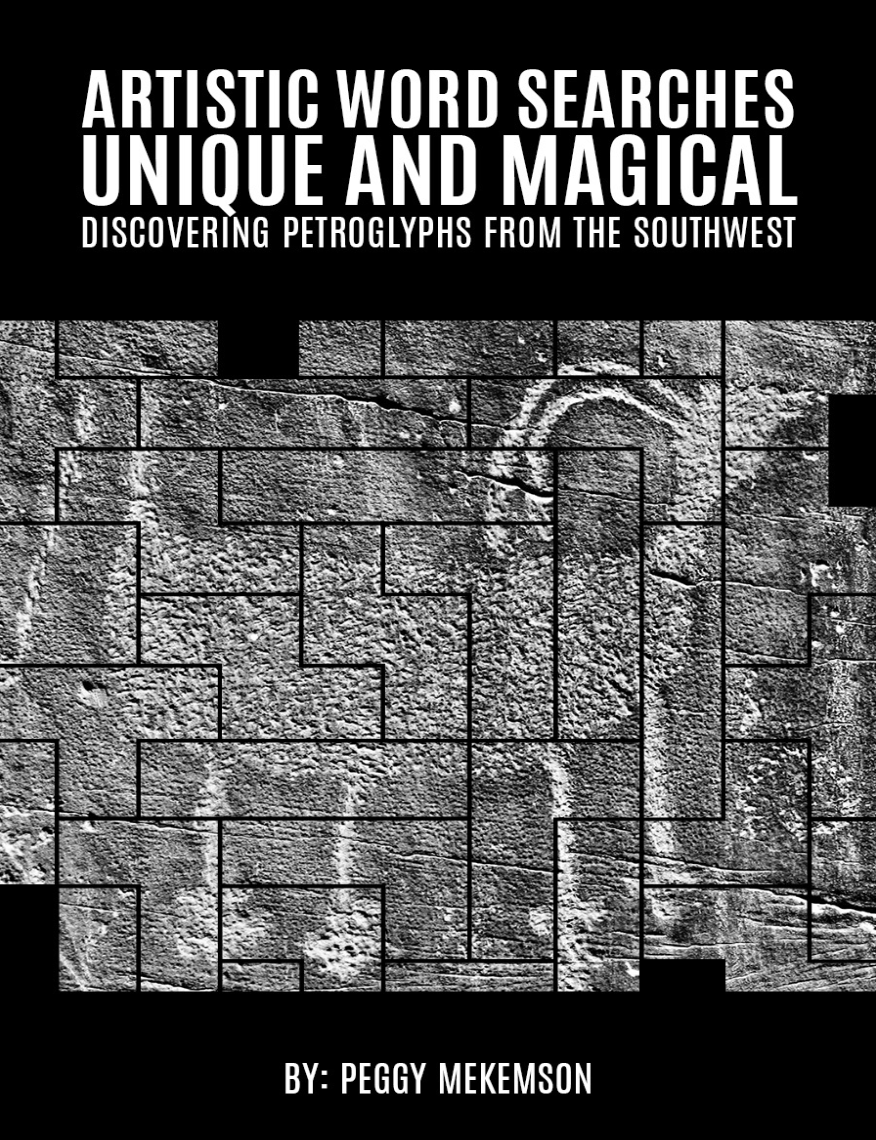
Three years ago, she decided that it would be fun to combine her passion for petroglyphs and word searches in a book. This is the result:
Peggy’s book contains word searches on 25 different petroglyphs from the Southwest. Here’s an example of how the book works.
First, Peggy selects a petroglyph she wants to use. In this particular instance, it is Kokopelli, a humpbacked flute player responsible for promoting fertility and prosperity. Representations of him can be found throughout the Southwest. The one on the left lying down is found in Canyon de Chelly National Monument. While this isn’t the representation that Peggy chose, you get the idea. (That’s a snake on the left. On the right, I’m not sure, but may be a woman under Kokopelli’s influence….. Or a frog.)Next Peggy came up with a list of words related to the specific petroglyph and petroglyphs in general. This photo shows two pages featuring the words she selected for the Kokopelli petroglyph and the puzzle where the words are to be found. In most word searches, merely finding the words solves the puzzle. What is unique about the Peggy’s book is as one finds the words an image of the petroglyph appears. See the solution for the Kokopelli puzzle below.And here’s Kokopelli!
If you like word searches or Native American Culture, or would like to learn more about the fascinating world of petroglyphs— or know someone who does— Peggy’s book will make an excellent choice. You can buy oneby going to Amazon.com and entering ASIN:1966468555 on the search line. (Peggy and I know that there is a link but we spent an hour following all of the directions that Amazon provides and kept getting ‘no such page exists.’ I’m sure one of you who sells your books on Amazon will say it’s simple Curt, just do it… My thanks. Grin.)
19 thoughts on “There She Blows! Hawaii’s Volcanoes National Park… Plus Peggy’s New Book on Southwest Petroglyphs”
You’ve crammed a lot into a single post — so much that it’s hard to know where to start commenting. So, I’ll start with the obvious: congrats to Peggy on the publication of her book! I was going to say I couldn’t imagine the amount of work that went into it, but in truth, I can imagine it; that’s a true labor of love, with equal emphasis on both!
One little detail here did make me laugh. Your Hawaiian goose — the Nene — reminded me that my Kpelle name in Liberia was Nenekweli. I was told that it means ‘bright woman’ — bright in terms of skin color, not intelligence — but now I’m wondering. Could it be that I was being called a goose of a woman?
“a true labor of love, with equal emphasis on both!” You’ve hit that nail square on the head, Linda.
Bright in intelligence I would say as well! Hmm, I never made it to the Kpelle name status (at least one that my students were willing to share with me.) Bright Goose? Articulate Quacker? All sorts of possibilities. Grin.
Truly a place worth cherishing and protecting. And Peggy’s book sounds very interesting, I will look it up. Oh, and this volcano that burst big thrice, is it expected to burst next in 2039?
Peggy had a lot of fun (and hard work) creating her book.
Volcanoes National Park is definitely wish protecting, as are our national parks and wild areas world wide. Appreciated!
What a wonderful combo today! And, Peggy, your book looks very fun and also a great way to learn about petroglyphs! And, of course, the s’mores sites aplenty! Wow! Always happy to see where you are, where you’ve been and where you are going! Myself…perhaps a trip to Safeway…
Hi Wendy. First Peggy says thanks!
Update on where we are going. We are in Mississippi right now, making our way toward the Southwest with our trailer.
Thanks much, GP. Our love of petroglyphs and protecting them as well as our love of national parks, monuments and wilderness areas comes together in this effort.
Wow,. Peggy’s book is amazing. Congratulations. Thanks for trying to protect the parks. How is it that I have never seen ‘nene’ in one of my crossword puzzles? Maybe because they are British or Australian.
Peggy says “Thank you Peggy!”
I’ll continue to focus on the “Save the Parks” effort. Next, I’ll feature Big Bend since Trump is planning to send US troops there.
What can I say about Nene? Grin. How about AA?
Nice lava fountains. Last time that I was there at the same time Kilauea was doing anything interesting, the eruption was at Pu’u o’o, hard to get to. We actually stood on the rim of Halema’uma’u, something I think would be discouraged right now? We hiked through Kilauea Iki, and trekked across the lava field at the end of Chain of Craters to watch lava pour into the ocean after sunset. It’s a magical place!
First, thanks from Peggy!
No standing on the rim of Halema’uma’u, now. That’s for sure. The other day when I checked conditions the western Crater Rim Drive from the Visitor Center was even closed. Pu’u o’o was also centrally involved in the 2018 East Rift Zone eruptions. I’ve missed the lava flowing into the ocean but would like to see it.
And yes, it is a magical place!
What a great tribute to this park. I’ve yet to visit, but I really want to. I can only hope it remains in its current state well into the future. I’m enjoying this series!
Fun to see Volcanoes NP a number of years after we, too, visited during an eruption. And Peggy’s book …! Wow – so creative and fun. I’m more of a crossword and acrostic puzzle-doer, but this takes word searches to a whole new level. Congrats to her!
You two never fail to amaze! I love how you continue living your best lives and expanding into the next project or place to visit! Your photos are always amazing and of course the history of Hawaiin and now Peggy’s book. I love petroglyphs and when I’m old I will do puzzles and play golf. Now, I have some good gifts for friends that love both. Congrats to her! 💕👏
Gotta keep moving, Cindy. And there is a whole world out there to amuse us and keep us occupied! Peggy loved doing the book. She is already working on her next one.












 Wandering through Time and Place
You’ve crammed a lot into a single post — so much that it’s hard to know where to start commenting. So, I’ll start with the obvious: congrats to Peggy on the publication of her book! I was going to say I couldn’t imagine the amount of work that went into it, but in truth, I can imagine it; that’s a true labor of love, with equal emphasis on both!
One little detail here did make me laugh. Your Hawaiian goose — the Nene — reminded me that my Kpelle name in Liberia was Nenekweli. I was told that it means ‘bright woman’ — bright in terms of skin color, not intelligence — but now I’m wondering. Could it be that I was being called a goose of a woman?
“a true labor of love, with equal emphasis on both!” You’ve hit that nail square on the head, Linda.
Bright in intelligence I would say as well! Hmm, I never made it to the Kpelle name status (at least one that my students were willing to share with me.) Bright Goose? Articulate Quacker? All sorts of possibilities. Grin.
Truly a place worth cherishing and protecting. And Peggy’s book sounds very interesting, I will look it up. Oh, and this volcano that burst big thrice, is it expected to burst next in 2039?
Peggy had a lot of fun (and hard work) creating her book.
Volcanoes National Park is definitely wish protecting, as are our national parks and wild areas world wide. Appreciated!
What a wonderful combo today! And, Peggy, your book looks very fun and also a great way to learn about petroglyphs! And, of course, the s’mores sites aplenty! Wow! Always happy to see where you are, where you’ve been and where you are going! Myself…perhaps a trip to Safeway…
Hi Wendy. First Peggy says thanks!
Update on where we are going. We are in Mississippi right now, making our way toward the Southwest with our trailer.
I wish you both the very best in your latest endeavors!! You two are the experts if ever there was any!
Thanks much, GP. Our love of petroglyphs and protecting them as well as our love of national parks, monuments and wilderness areas comes together in this effort.
Wow,. Peggy’s book is amazing. Congratulations. Thanks for trying to protect the parks. How is it that I have never seen ‘nene’ in one of my crossword puzzles? Maybe because they are British or Australian.
Peggy says “Thank you Peggy!”
I’ll continue to focus on the “Save the Parks” effort. Next, I’ll feature Big Bend since Trump is planning to send US troops there.
What can I say about Nene? Grin. How about AA?
Congrats to Peggy! Very creative!
Nice lava fountains. Last time that I was there at the same time Kilauea was doing anything interesting, the eruption was at Pu’u o’o, hard to get to. We actually stood on the rim of Halema’uma’u, something I think would be discouraged right now? We hiked through Kilauea Iki, and trekked across the lava field at the end of Chain of Craters to watch lava pour into the ocean after sunset. It’s a magical place!
First, thanks from Peggy!
No standing on the rim of Halema’uma’u, now. That’s for sure. The other day when I checked conditions the western Crater Rim Drive from the Visitor Center was even closed. Pu’u o’o was also centrally involved in the 2018 East Rift Zone eruptions. I’ve missed the lava flowing into the ocean but would like to see it.
And yes, it is a magical place!
What a great tribute to this park. I’ve yet to visit, but I really want to. I can only hope it remains in its current state well into the future. I’m enjoying this series!
Thanks, Diana. Long, long into the future! Grin. –Curt
Fun to see Volcanoes NP a number of years after we, too, visited during an eruption. And Peggy’s book …! Wow – so creative and fun. I’m more of a crossword and acrostic puzzle-doer, but this takes word searches to a whole new level. Congrats to her!
Peggy says thanks! As for the volcano… nice of it to cooperate— as long as it behaves itself. Grin.
You two never fail to amaze! I love how you continue living your best lives and expanding into the next project or place to visit! Your photos are always amazing and of course the history of Hawaiin and now Peggy’s book. I love petroglyphs and when I’m old I will do puzzles and play golf. Now, I have some good gifts for friends that love both. Congrats to her! 💕👏
Gotta keep moving, Cindy. And there is a whole world out there to amuse us and keep us occupied! Peggy loved doing the book. She is already working on her next one.
You got that right, Curt! You are king and queen of moving. No grass grows under your feet! Wow…. very cool! 😎