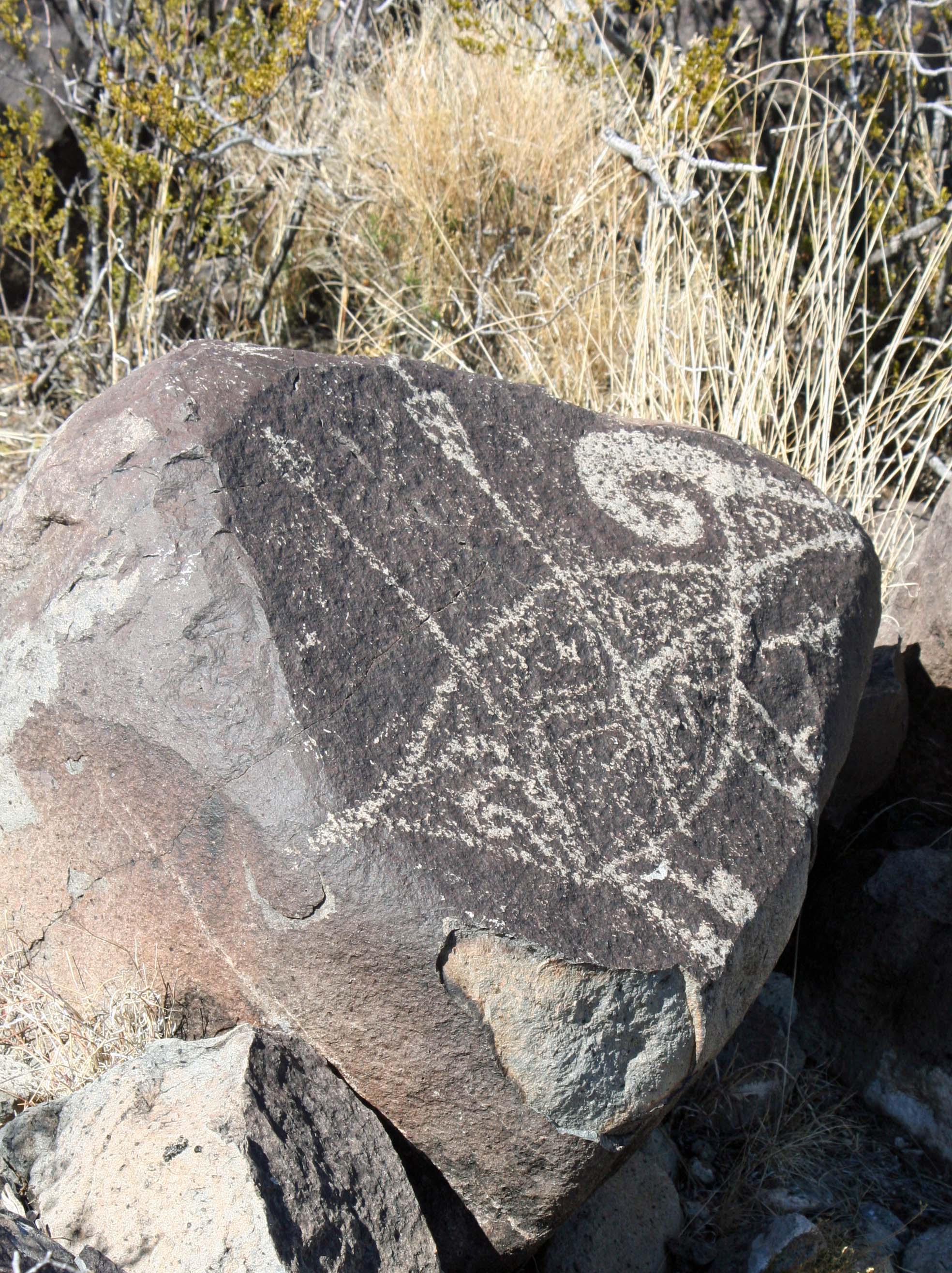
Bighorn sheep were a major source of food for the Jornada Mogollon people of New Mexico and for Native Americans throughout the South West. Animals are often found with arrows sticking out.
Hunting wild animals for meat provided an essential source of food for the majority of mankind’s existence. While the Jornada Mogollon people at the Three Rivers’ Petroglyph site cultivated corn, hunting remained a vital activity.
Success meant learning as much as they could about the animals that inhabited their desert world: where they lived, what they ate, where they drank, and what trails they used were all important. The Jornada were excellent trackers, able to read in a few scuffed tracks the story of who had wandered down a trail and what they were doing.

A number of petroglyph tracks are found at the Three Rivers site. This big fellow is a bear.

A human footprint for comparison. Human hand and foot print petroglyphs are relatively common.

I am not sure what these wicked claws belonged to but possibly it was a cougar with its claws extended.
There was a close, almost sacred, relationship between the hunter and the hunted. Clans assumed animal names and young people went on vision quests to discover which animal might serve as personal guides. Shaman put on animal cloaks and assumed animal personalities. The gods and the spirits of animals were both honored. (It helped assure they would be around at dinner time.)
Some animals were more important than others. Bighorn sheep were a primary food source throughout the South West. Cougars and bears were large predators demanding respect. The arrival of Spaniards in the 1500s meant the arrival of horses.
Not surprisingly, the petroglyphs found at Three Rivers reflect the importance of the various animals in the life of the Jornada. We discovered numerous bighorn sheep and an unexpected number of cougars. There were also horses, rabbits and coyotes. Horses provided a radical new form of transportation; coyotes were known for their trickery; and rabbits provided an easy food supply.

I took this photo of a bighorn sheep near Lake Mead in southern Nevada. He had come down from the mountains to take advantage of the green grass of a small park. His arch rival was his reflection in an aluminum garage door. The owner had a hard time convincing the insurance agent that his door had been smashed in by the enraged animal.

Similar horns are displayed on this Three Rivers Petroglyph. Note: It is not unusual to find geometric designs incorporated into animal petroglyphs.

I thought this bighorn sheep petroglyph at Three Rivers was a sophisticated work of art. Did the Jornada have their Rembrandts?

Peggy and I took our grandkids to a wildlife sanctuary last week and found this curious mountain lion that sniffed our five-year old. Nice kitty.
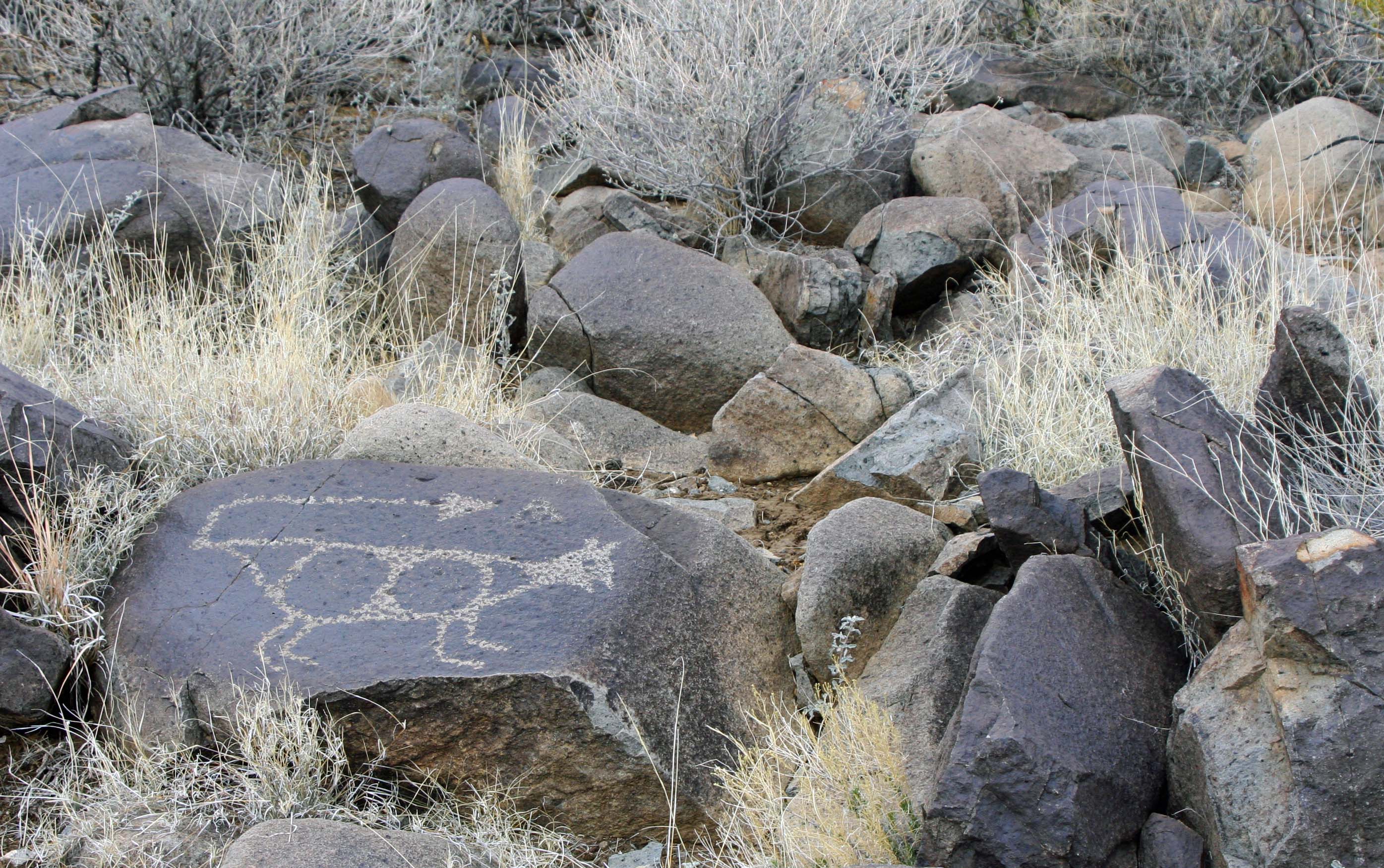
Peggy and I found a number of mountain lion petroglyphs at Three Rivers, which suggested that the cougar played an important role in the lives of the Jornada people.

Another mountain lion petroglyph. As to why the big cats have their tails extended over their backs, I don’t have a clue. Any ideas?

I used this petroglyph in my last blog. This photo provides an interesting view of the whole rock.

Coyote played an important role in Native American mythology as a Trickster. I took this photo in Death Valley.
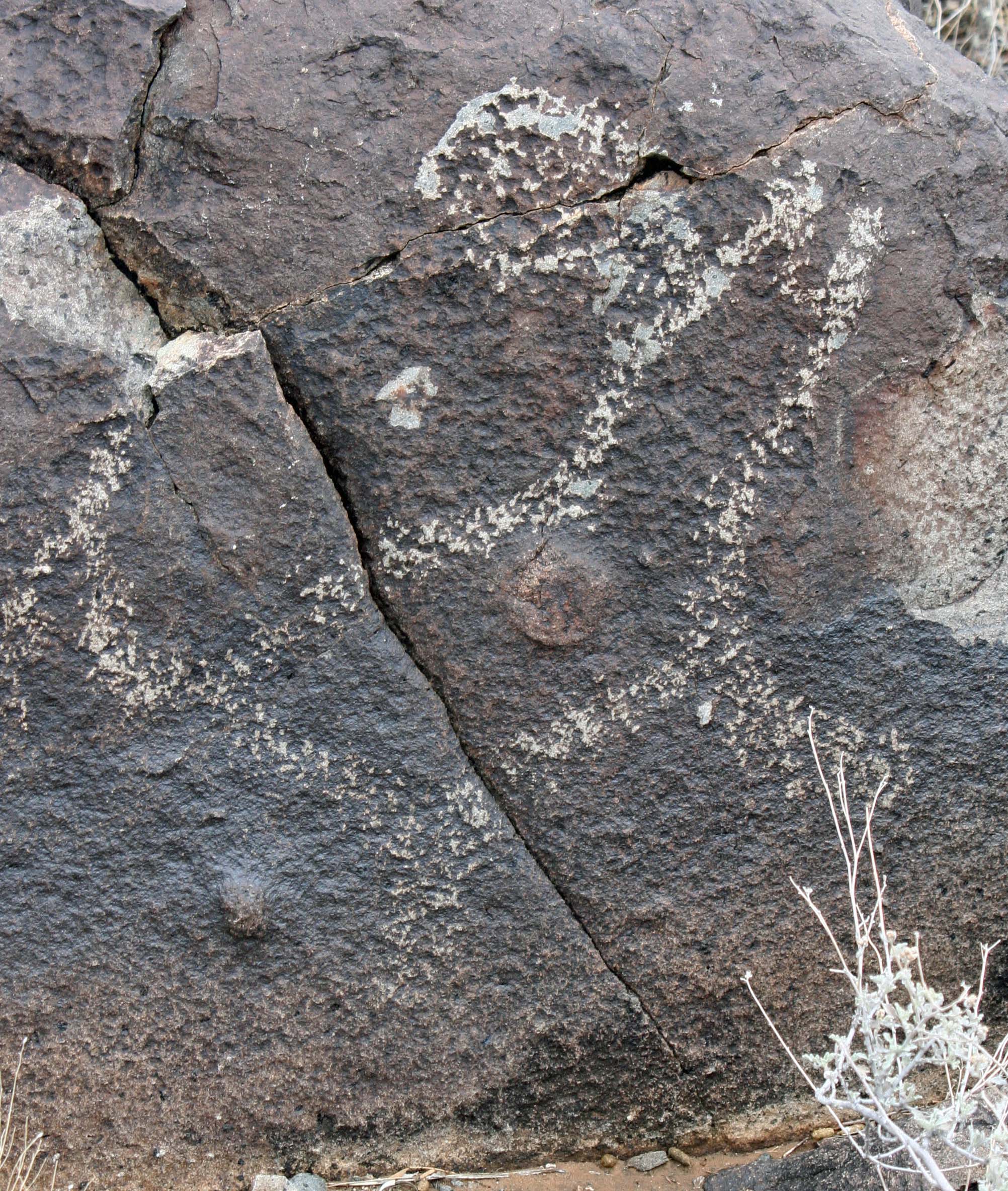
While this petroglyph wasn’t as clear as many we found at Three Rivers, I am including it because the coyote is howling at the moon. Every gift shop in the South West will sell at least one item with a coyote howling at the moon.

The Spanish introduced the modern horse into North America six centuries ago, an act which had a major impact on the culture of Native Americans. I’ve been waiting for six months to reintroduce this Scotland pony into my blog. I snapped its picture two years ago when it ran up to greet me in the Scottish lowlands.

We found three horse petroglyphs that seemed to have a blanket with geometric designs draped over their bodies.

I’ll conclude with what I felt was a good representation of a jack rabbit… until I noticed the possible tail arching over its back. (grin)
The next blog is for the birds.

A small, nondescript bird roosts on a rock at Three Rivers Petroglyph site.
 Wandering through Time and Place
NIce post Curt. I love the combination of petroglyphs and real photos. I haven’t seen that many petroglyphs, but the ones I have seen took a fair amount of effort to get to. Consequently, I guess that I appreciate them more. Years ago, we saw the cave paintings near Santander in Northern Spain, and they made a life-long impression. Have you seen any of the cave paintings in Europe? ~James
Haven’t seen the cave paintings, James, but I would love to. Also I would like to see the aboriginal rock art in Australia. Last year Peggy and I checked out the petroglyphs on the Big Island of Hawaii. Very interesting. _Curt
I’ve always wanted to go spelunking and see come cave drawings and yet I never knew they were out side of caves.. another great set of shots and love your documentary!
Thanks Lynne. Peggy and I have found several sites where petroglyphs number in the hundreds, if not thousands. The dry climate of the South West has preserved them. –Curt