
The Stradun, Dubrovnik’s main thoroughfare, wet after a rain storm.
Luck was with us… the rain held off while we were on the walls of Dubrovnik and waited for us to descend to the Stradun, the city’s main thoroughfare. Lunch and pizza occupied most of the downpour. Afterwards we were treated to shiny, wet streets.
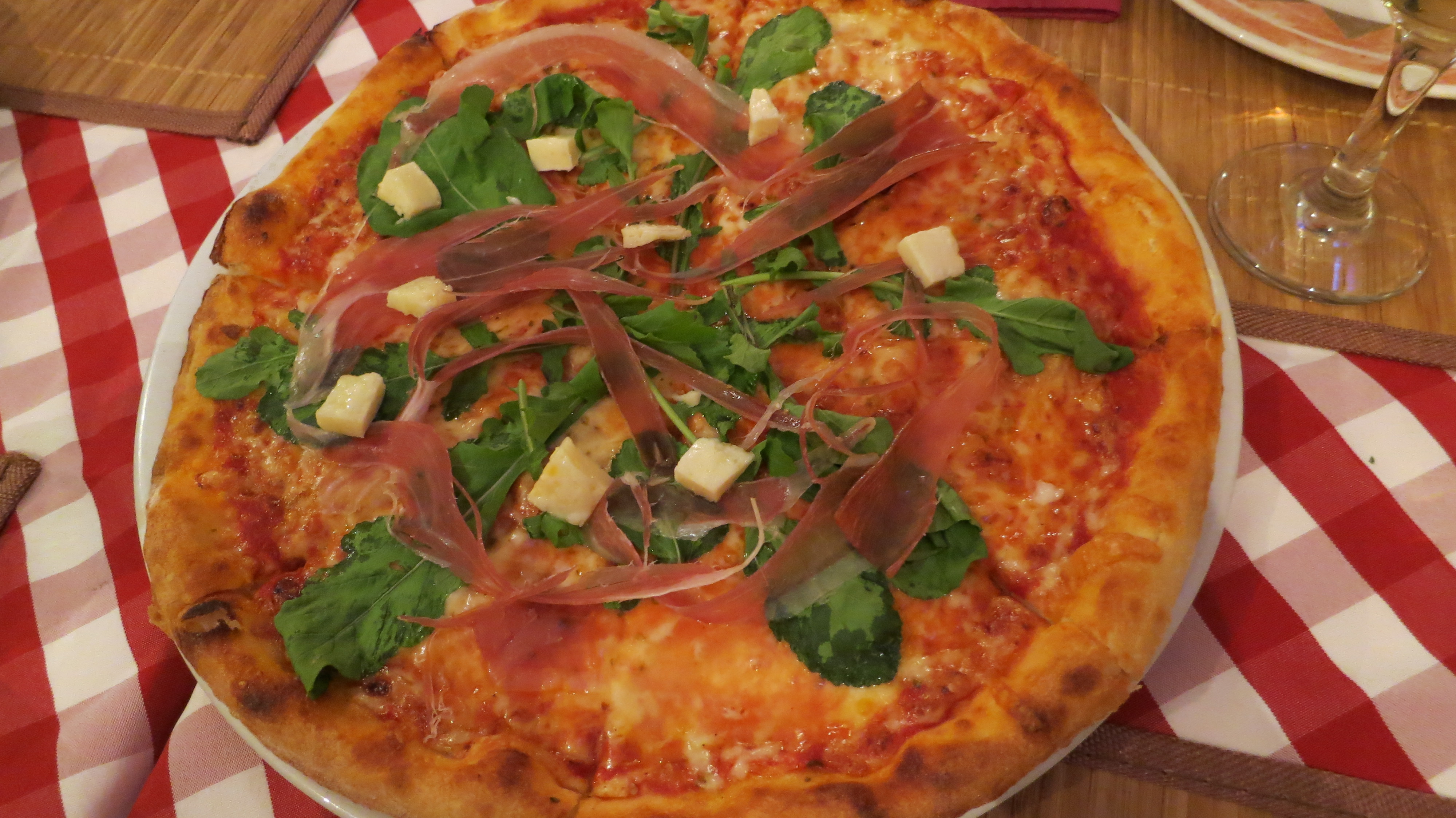
Our pizza, Croatian style.
In its first life the Stradun had been a winding canal separating Dubrovnik’s Roman and Slav populations. The canal was filled in during the Eleventh Century and brought the two populations together. A devastating earthquake took out most of the town in 1667 and Dubrovnik rebuilt the road to its present straight alignment.
Narrow pedestrian ways shoot off in both directions from the Stradun and invite exploration. Plazas anchor both ends of the street. Since we arrived in December, Dubrovnik was preparing for the holidays. Two Christmas trees competed for our attention in Luza Square. I found one outlined by a window in the old Customs House to be particularly dramatic.
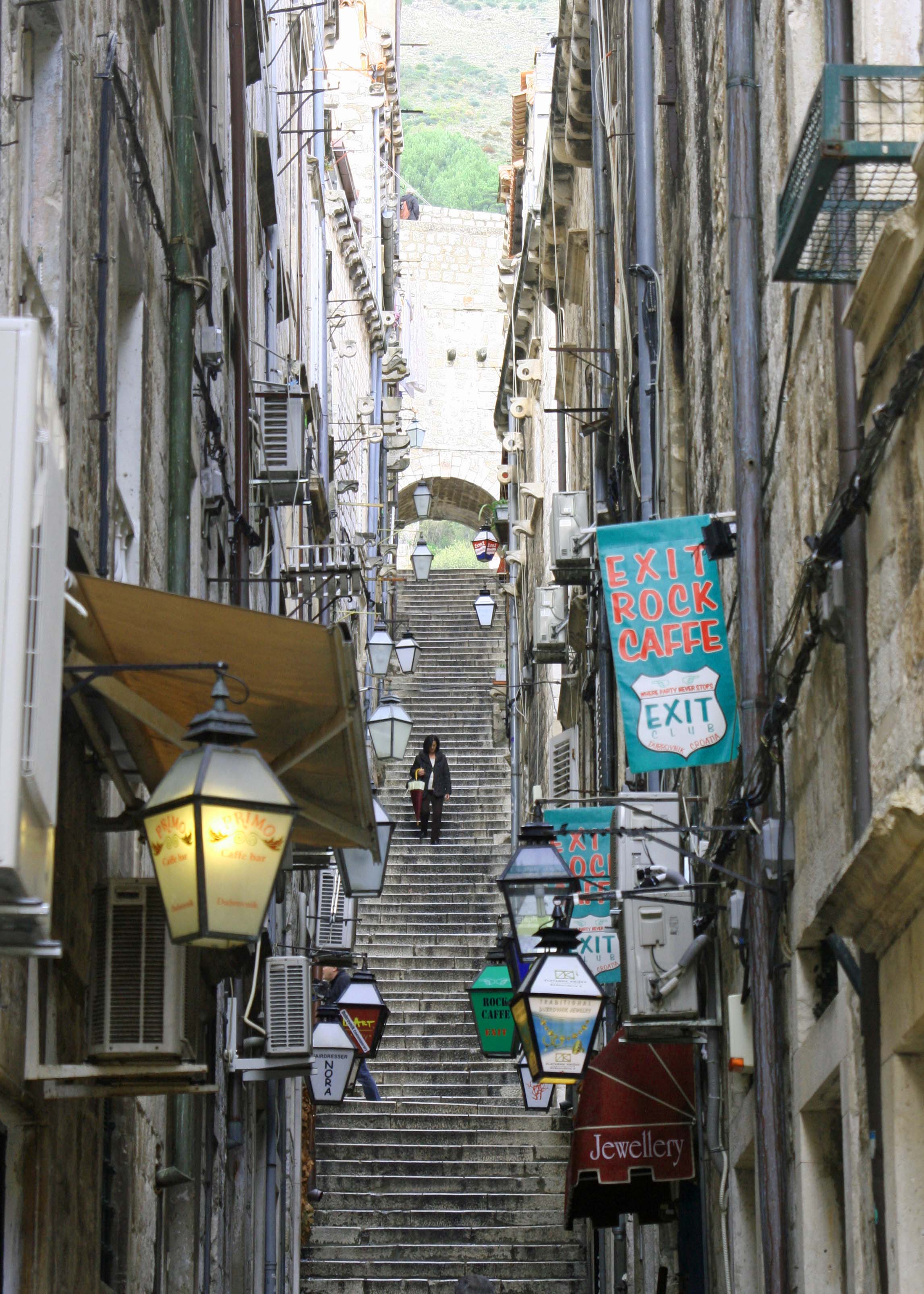
Walkways such as this and the one below branch off from the Stradun in Dubrovnik, Croatia and invite exploration.
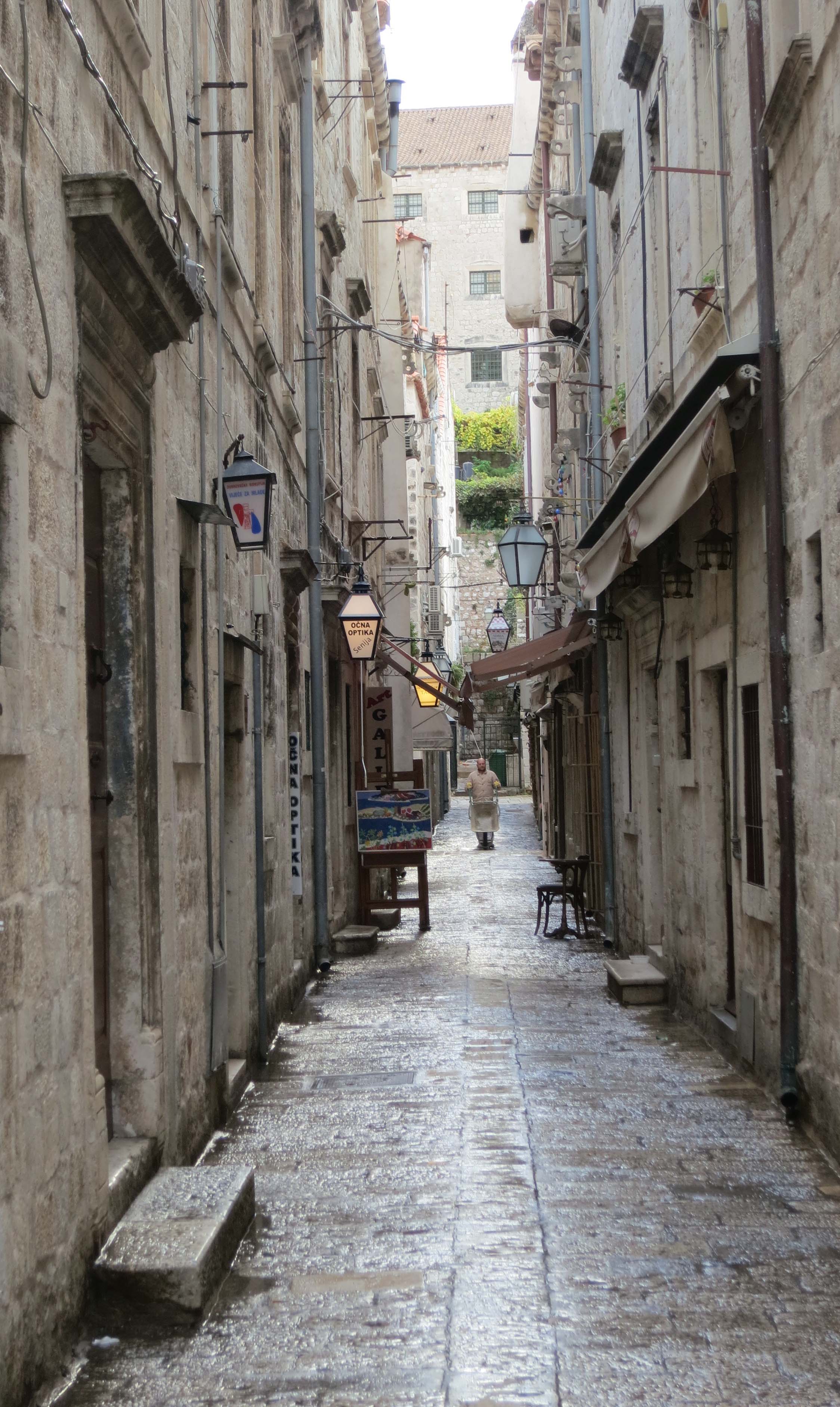
Dubrovnik walkway.

We visited Dubrovnik in December and found the city preparing for the holidays. In this picture,a Christmas tree is gracefully outlined by a window in Sponza Palace, the old custom-house.

Another photo of Sponza Palace, the Christmas Tree and Dubrovnik’s clock tower.
The town’s bell tower and clock, St. Blaise’s Church and Orlando’s Column and are also prominent features of Luza Square. Both St. Blaise and Orlando symbolize Dubrovnik’s fierce sense of independence.
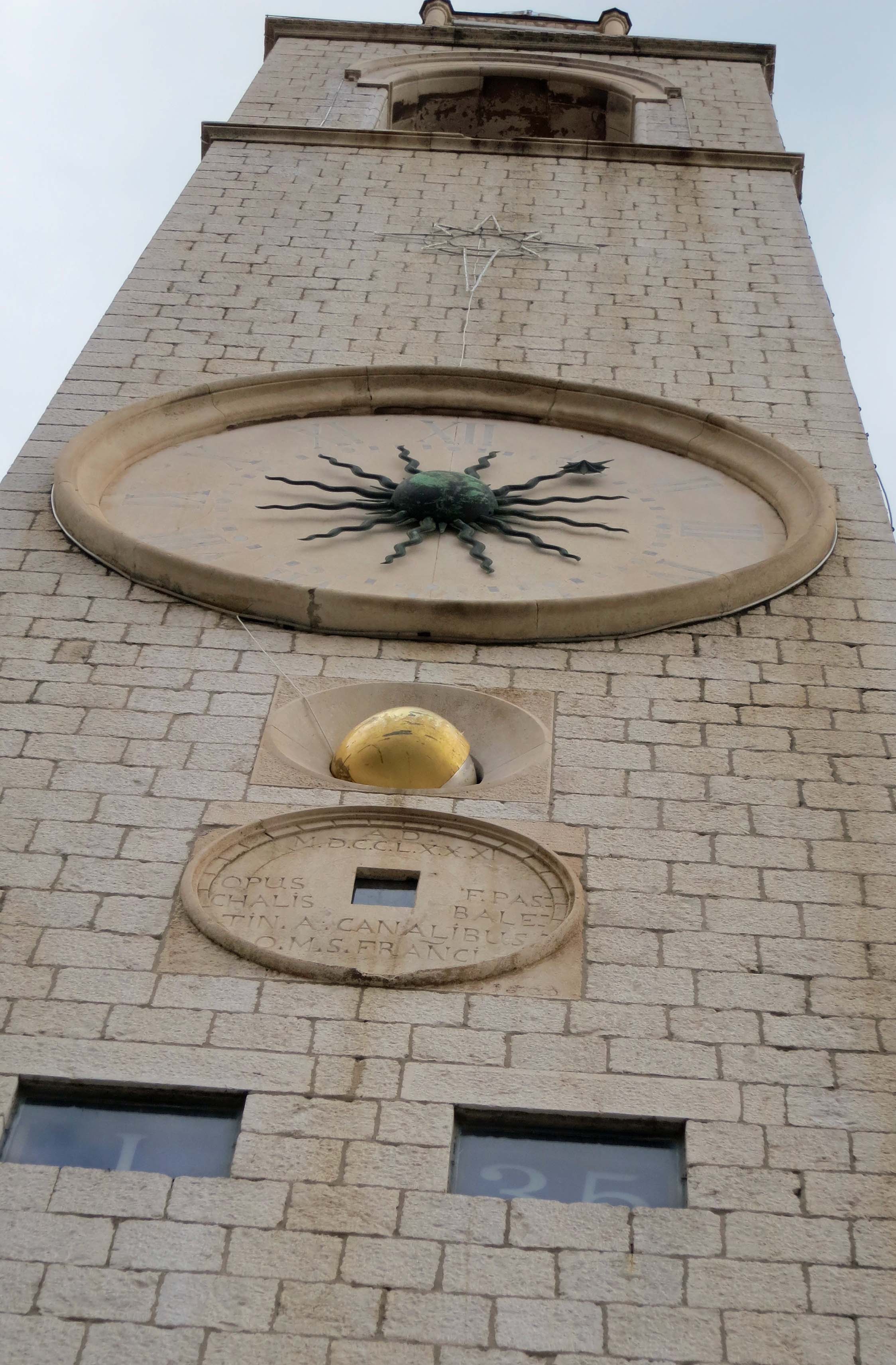
A close up of the Dubrovnik clock tower. A digital clock at the bottom adds a touch of modernization.
St. Blaise was an early third century Christian Martyr from Armenia who was so holy that wild animals were said to drop by his cave for a blessing. The Romans used steel combs to flay off his skin and then beheaded him. Since the combs resembled those used for carding wool, Blaise became the Patron Saint of the wool trade. Go figure.
He earned the everlasting gratitude of Dubrovnik by appearing in a vision to a local priest to warn of an imminent invasion by the Venetians in 971. Ever since, the locals have loved St. Blaise and disliked Venice. They celebrate his birthday by parading various parts of his body through the city on February 3.
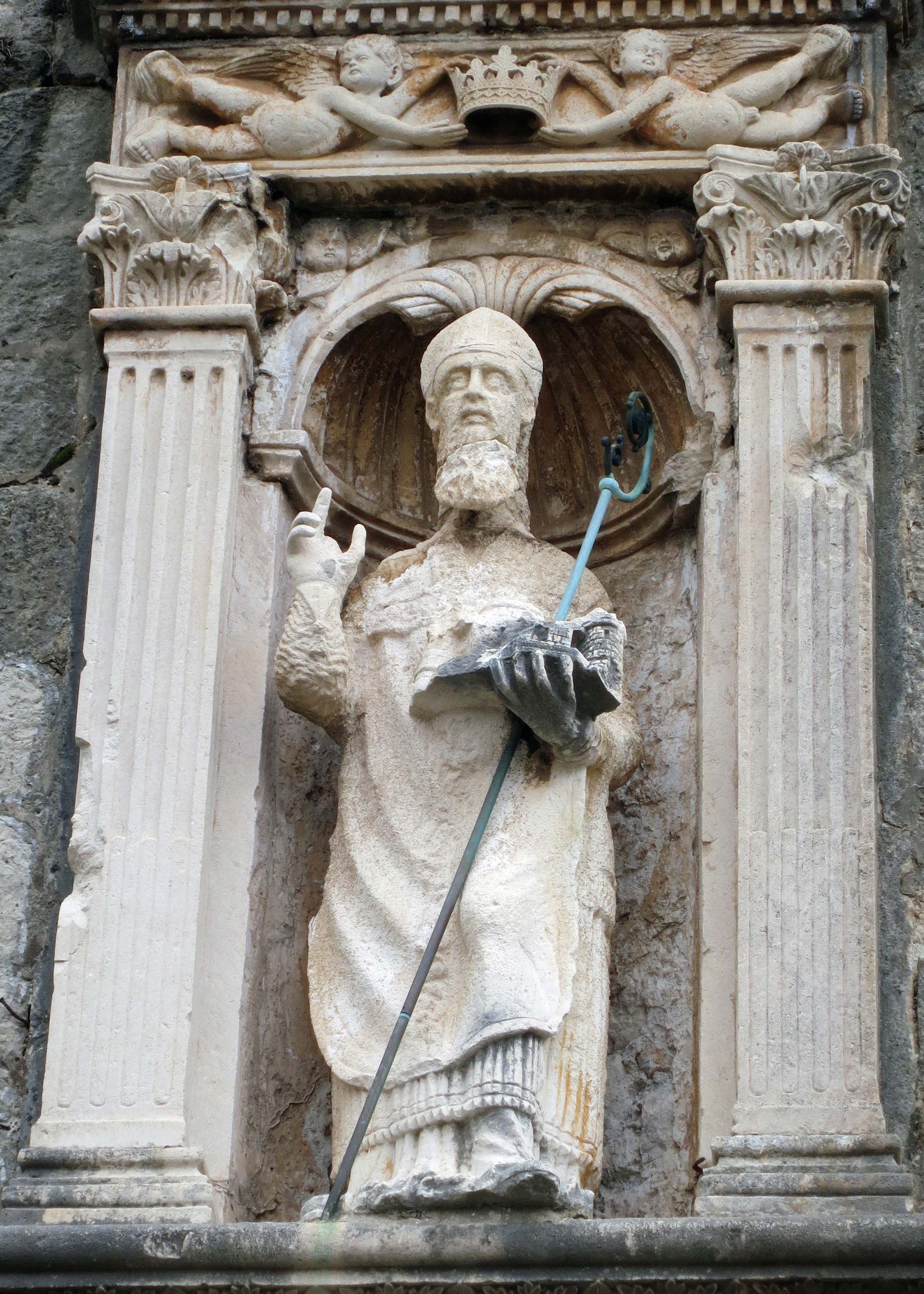
St. Blaise, the Patron Saint of Dubrovnik, holds a model of the city in his hand. This particular statue is found in the Pile Gate at one of the city’s main entrances. (Photo by Peggy Mekemson)
Orlando is known as the legendary knight Roland in Northern Europe. The story is that he rescued Dubrovnik from a siege by the Saracens in the Eighth Century. The fact that the dates of Roland’s life don’t match those of Orlando doesn’t seem to matter. He wasn’t from Venice. Also of note… his arm was used as the standard measure of cloth in Dubrovnik.

The Orlando column in Luza Square. (Photo by Peggy Mekemson.)
The Pile Gate, Franciscan Monastery, and Onofrio’s Fountain are located at the other end of the Stradun. The fountain is a subject of my next blog. The Monastery houses a peaceful cloister and a small but interesting museum that features a pharmacy that opened in 1317 and St. Luke’s finger.

The Franciscan Monastery in Dubrovnik caught in the sunlight.

In 1317 the Franciscans opened one of the first pharmacies in Europe as part of their commitment to provide medical care.
NEXT BLOG: I look at Gargoyles, St. Luke’s finger and other oddities of Dubrovnik.
 Wandering through Time and Place
So beautiful and fascinating…. I would click “like,” but it’s disappeared from your page!
Thanks FeyGirl… I’ll take care of the like. I am out in the middle of the Nevada Desert this morning at Tonopah. Always amazes me where I can get Internet service.
I really like the narrow streets and that big stairwell.. It gives the town a wonderful, close-knit feel..
That pizza looked yummy.. another great post with awesome photo!!
The pizza was good… Each country seemed to have a different style of Pizzas. It was fun to sample them. And you are right about the city. Within the walls everything felt connected.
What can i say….it is melting me to see this 🙂
Grin.