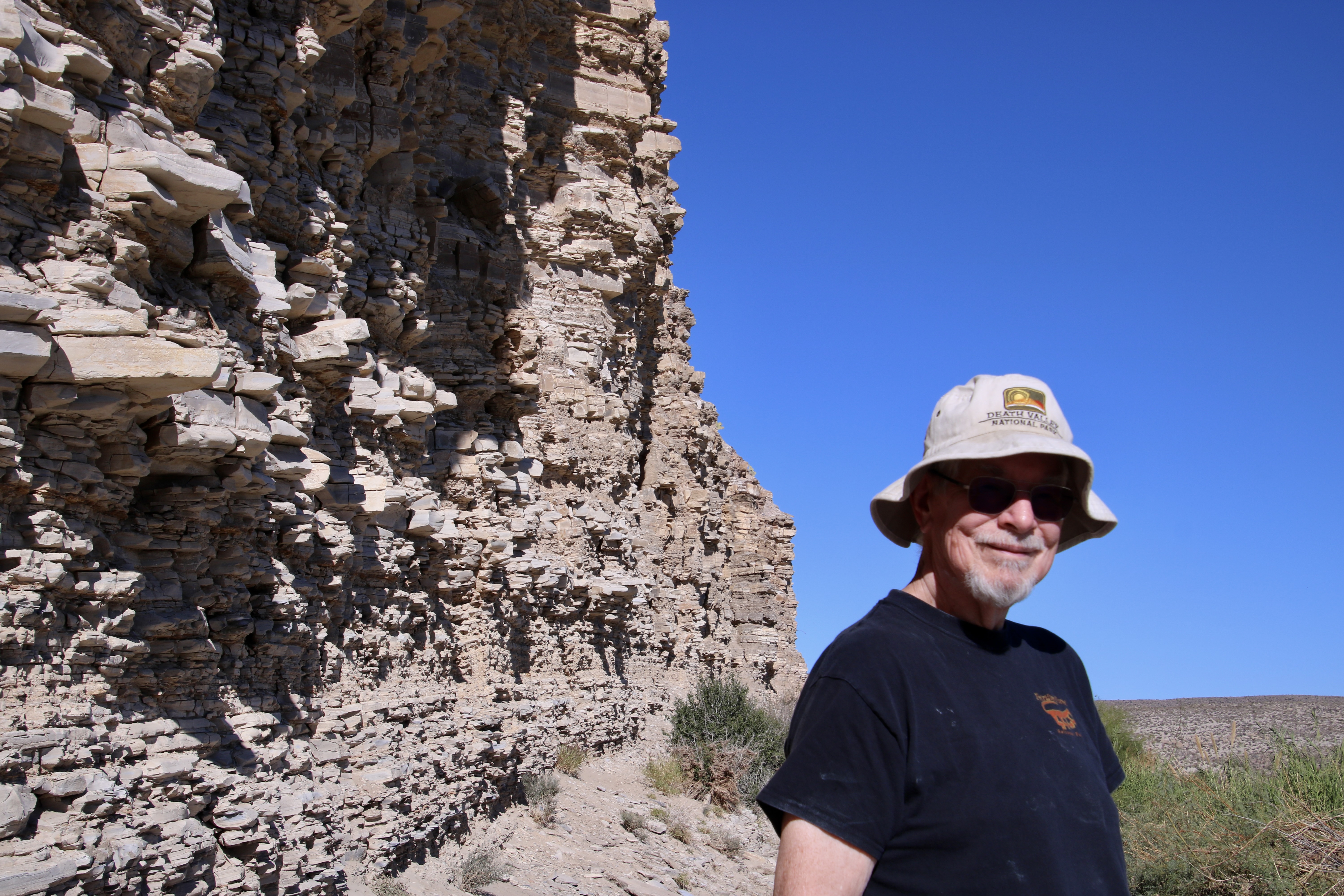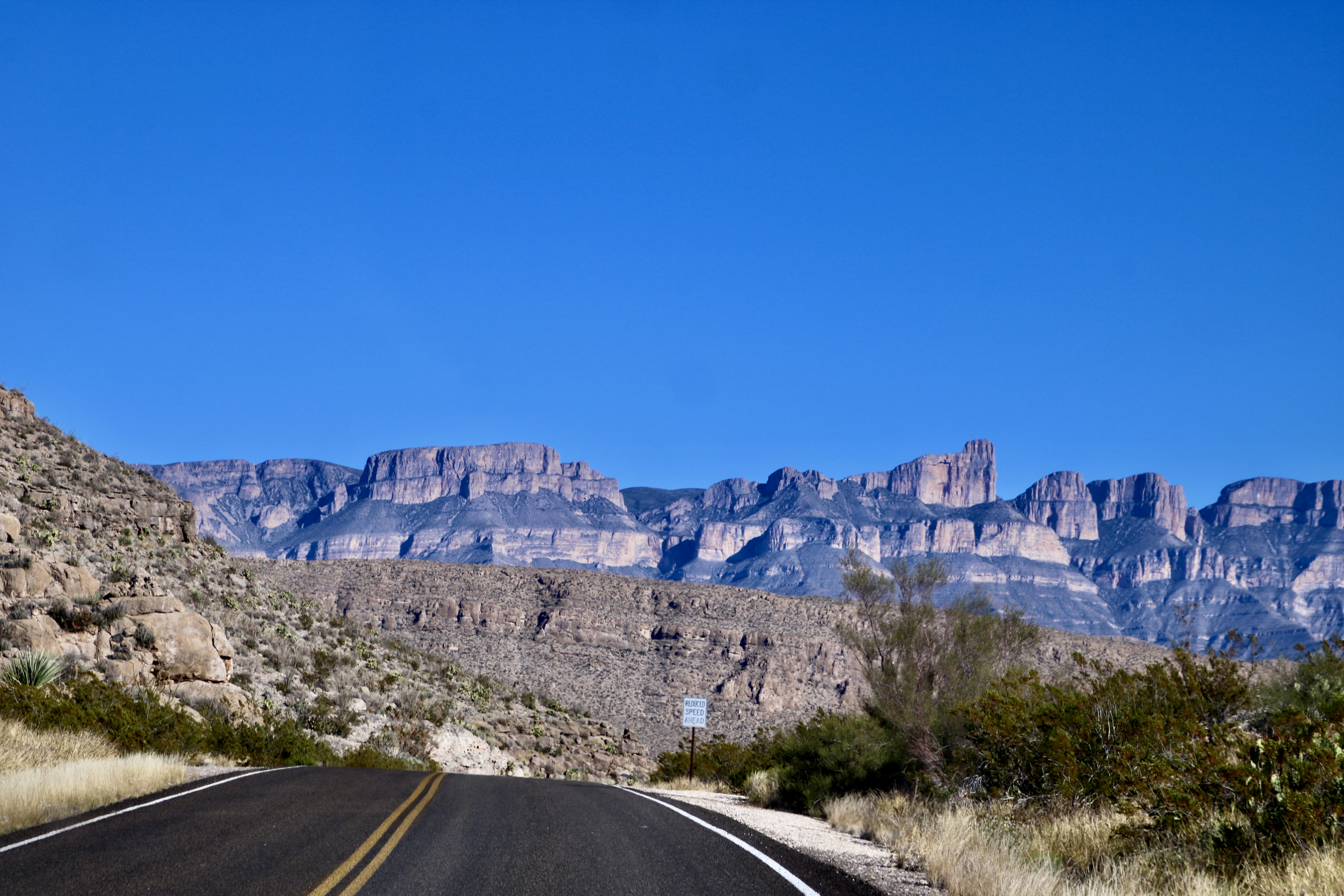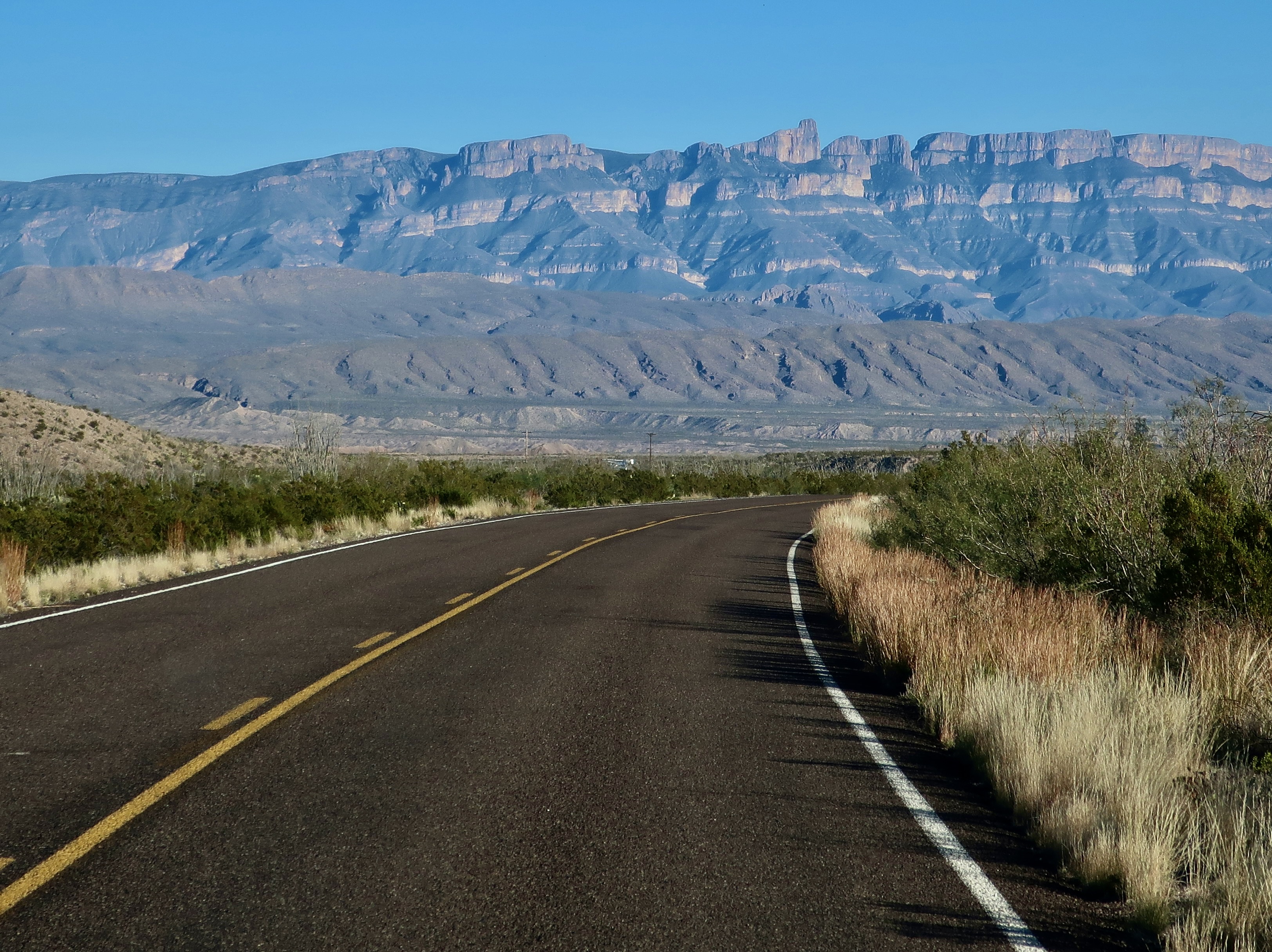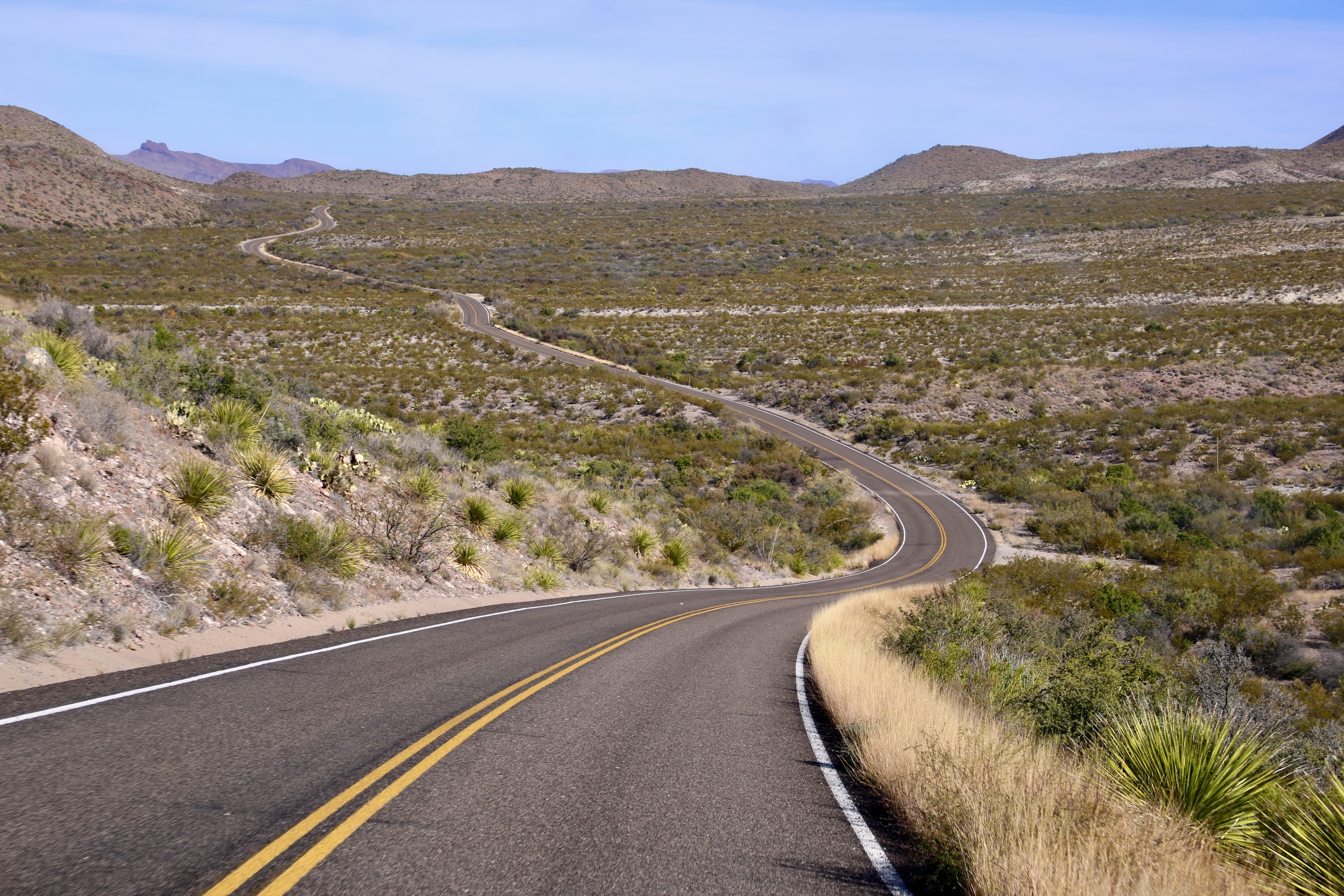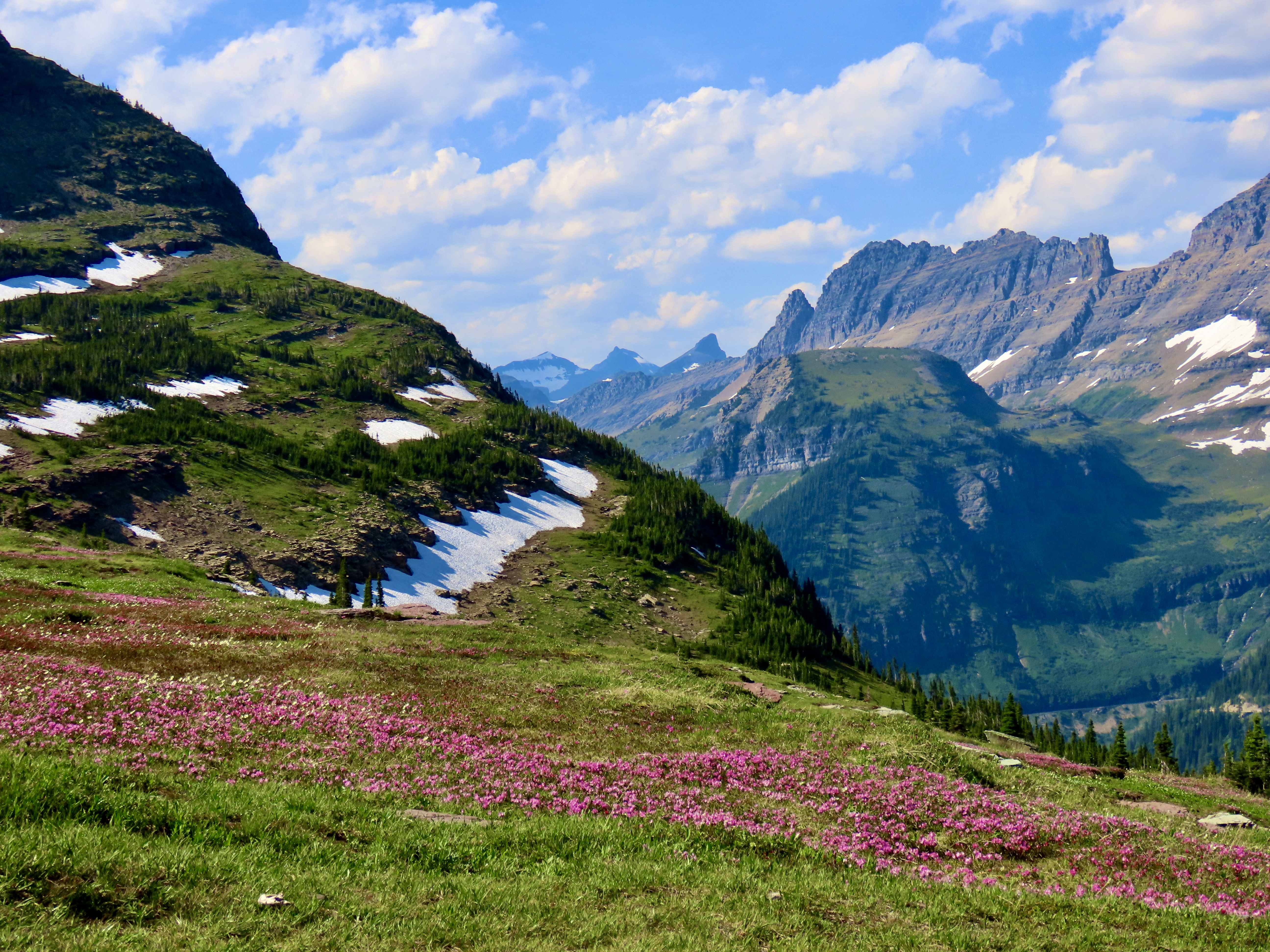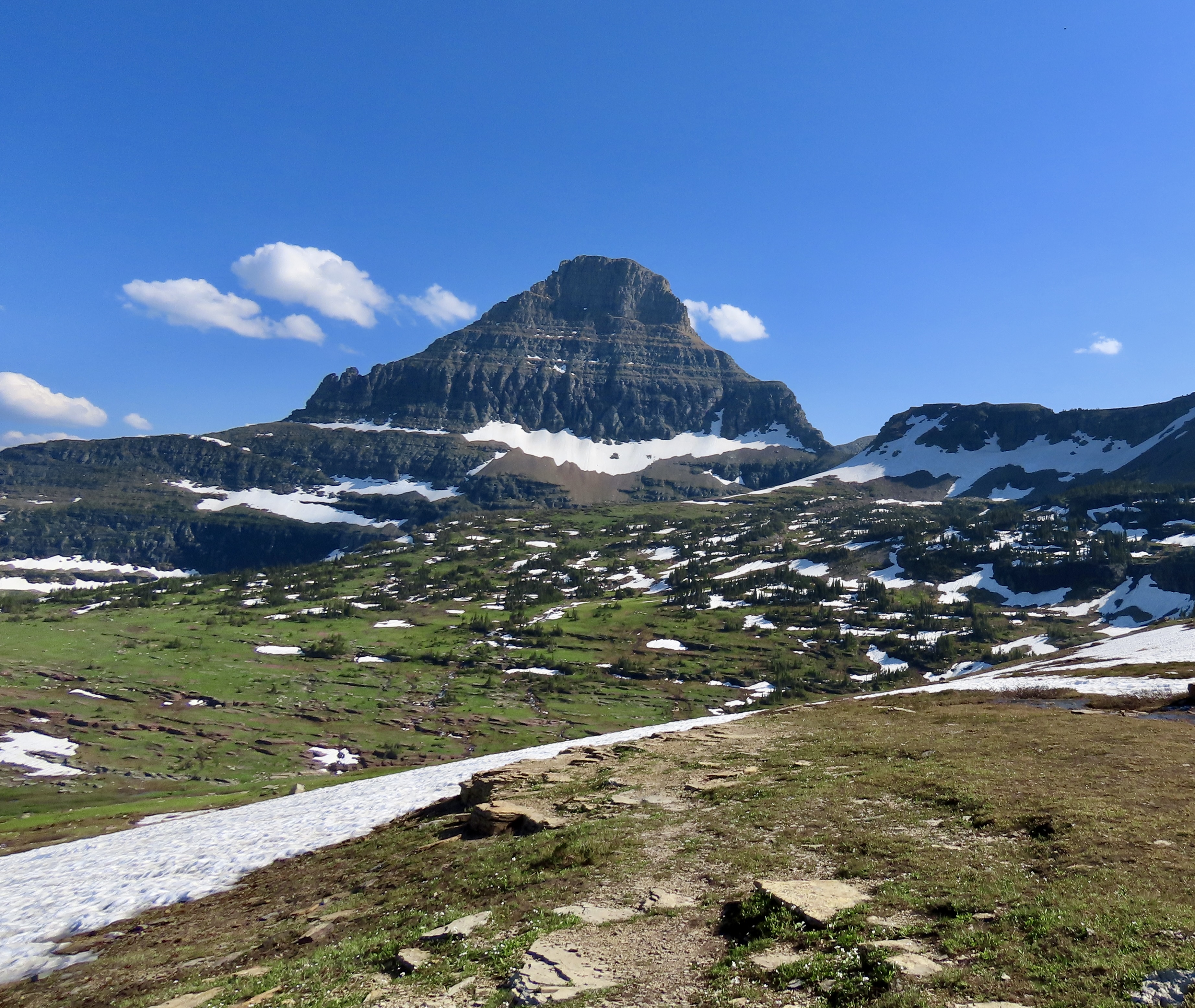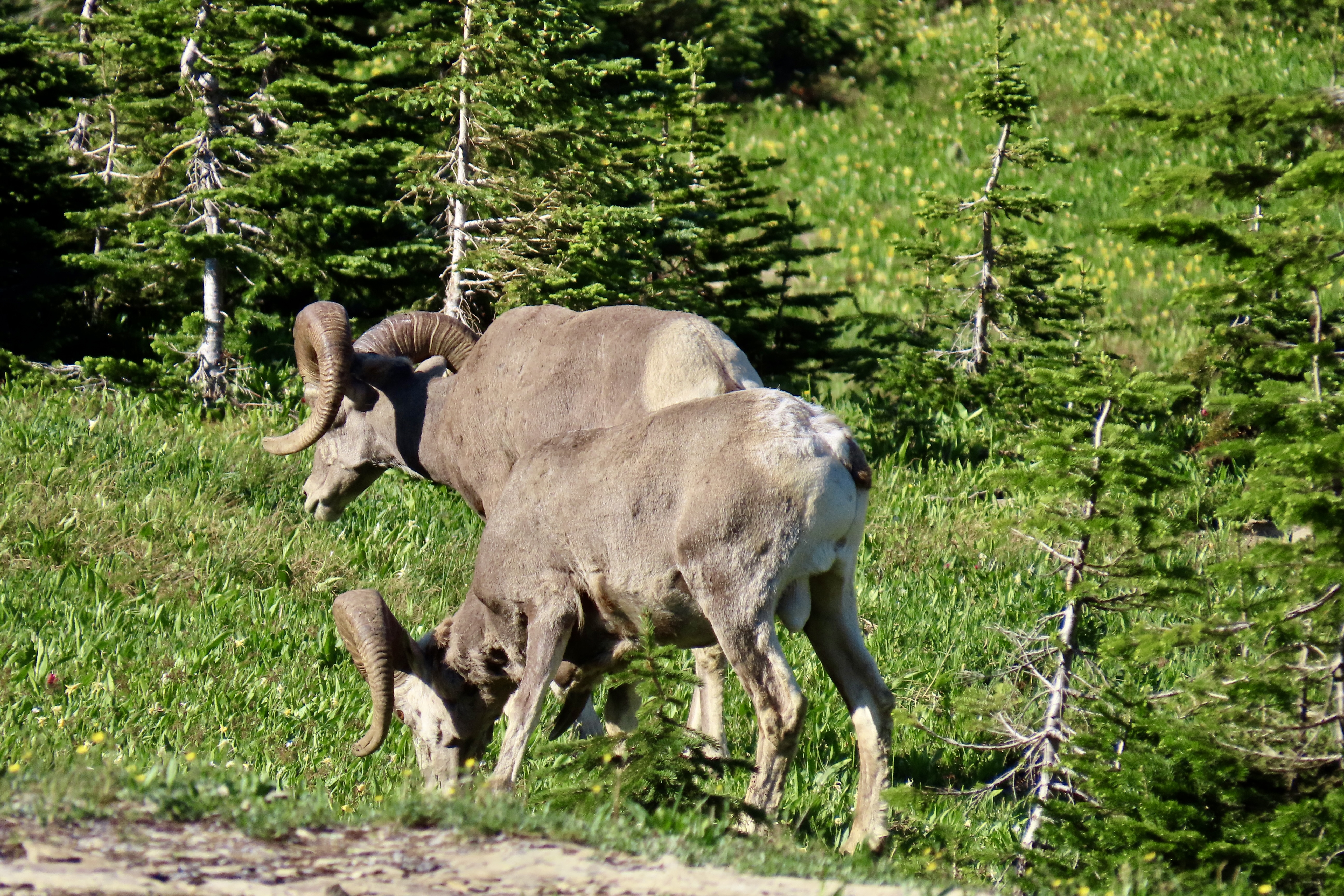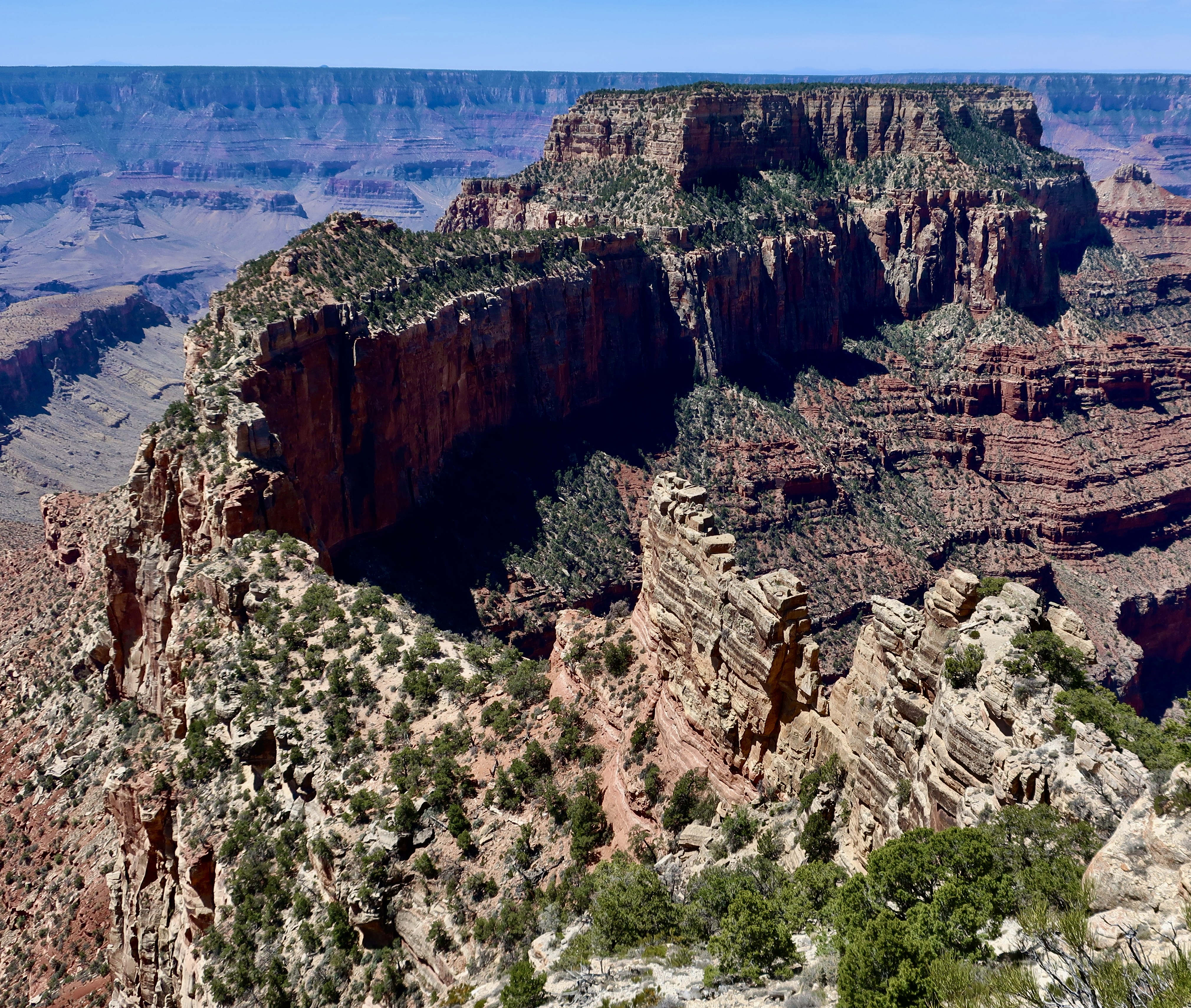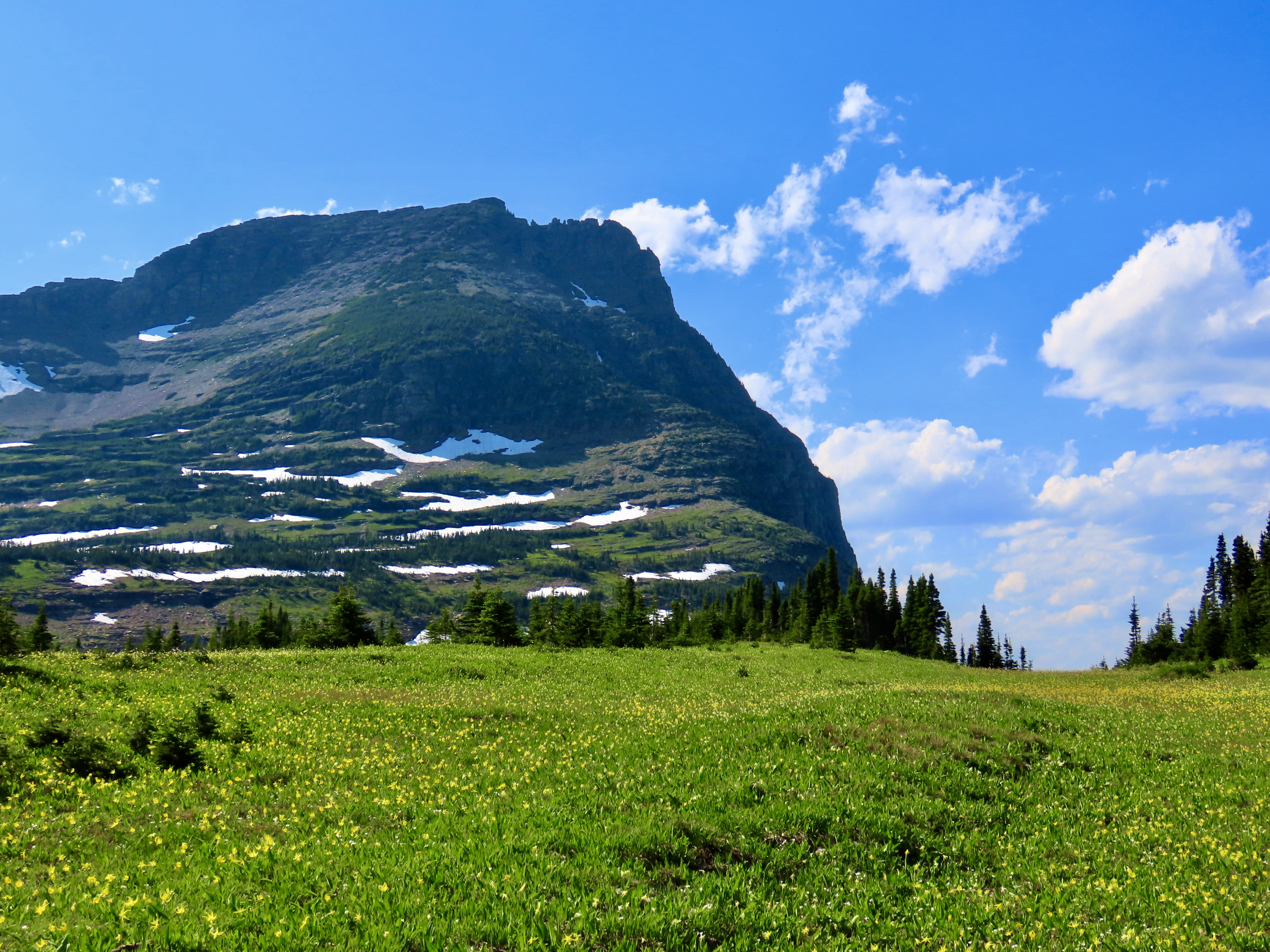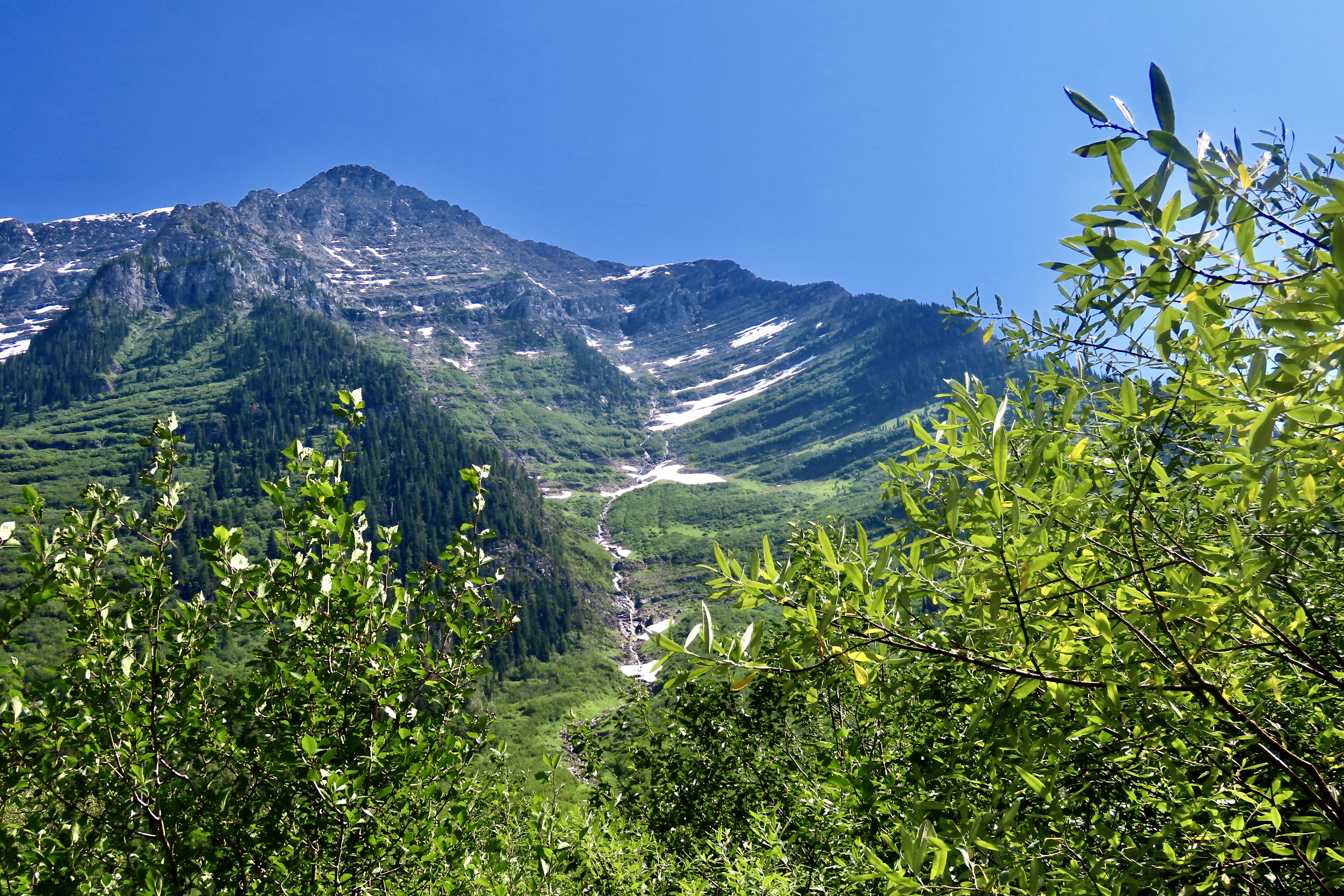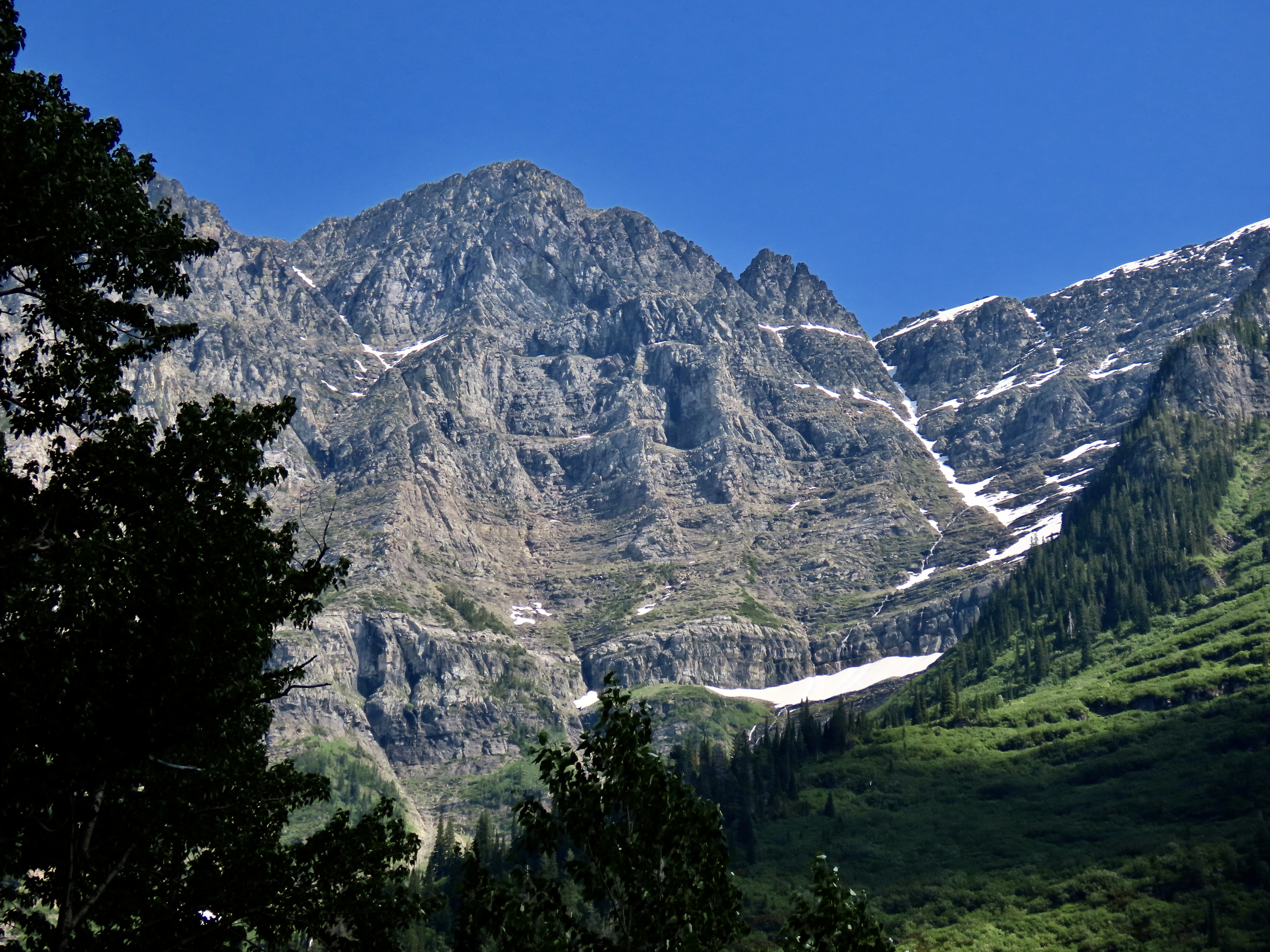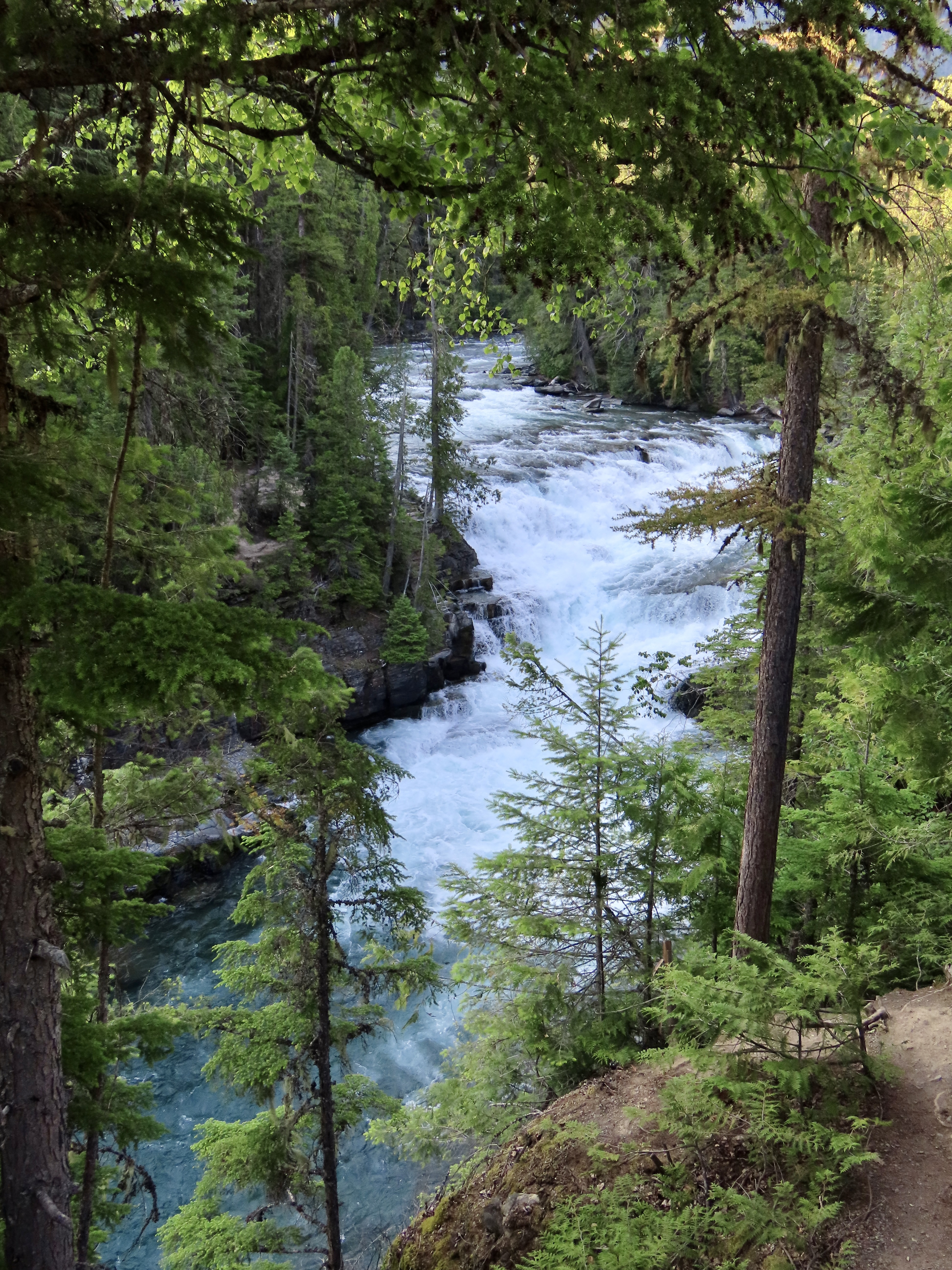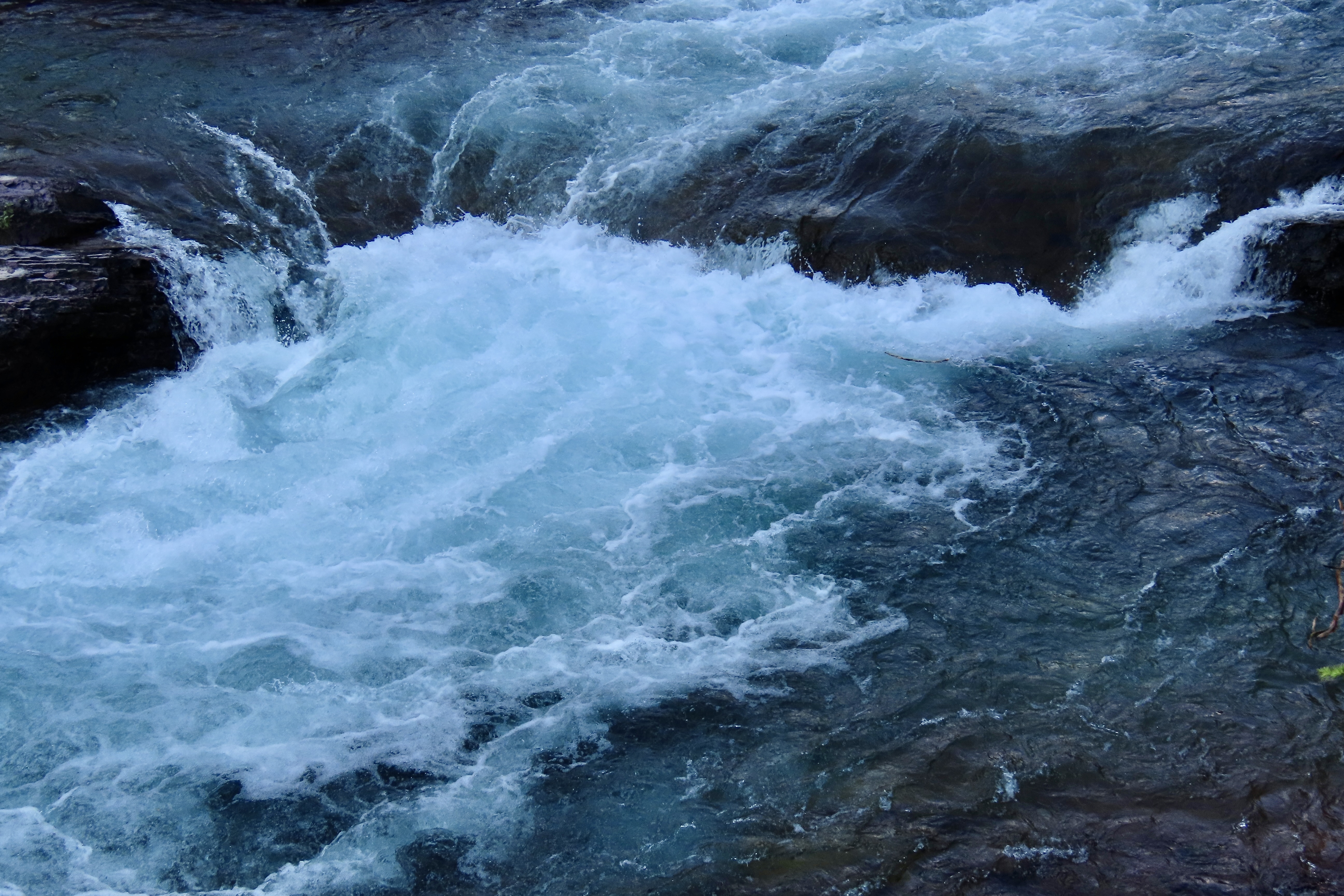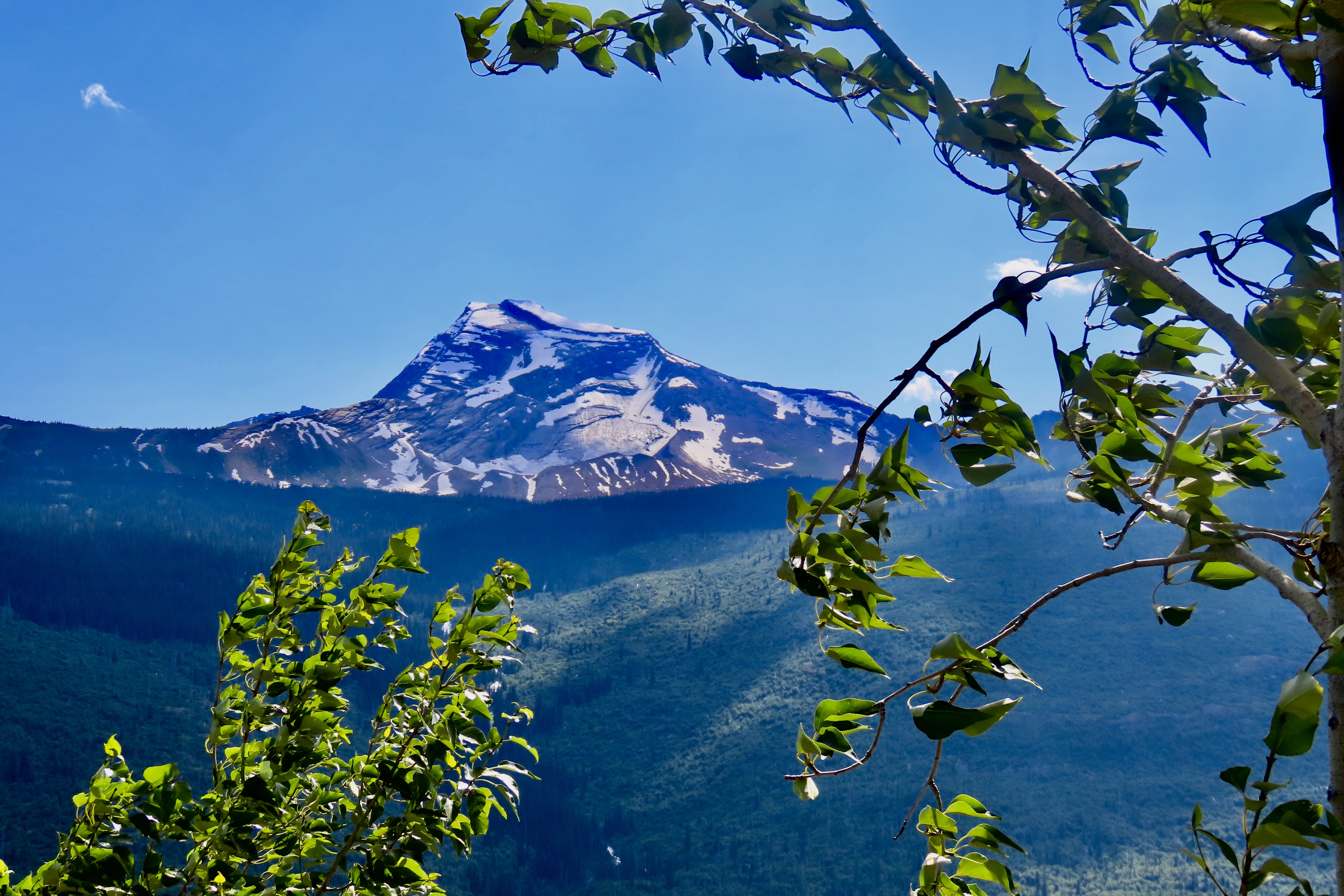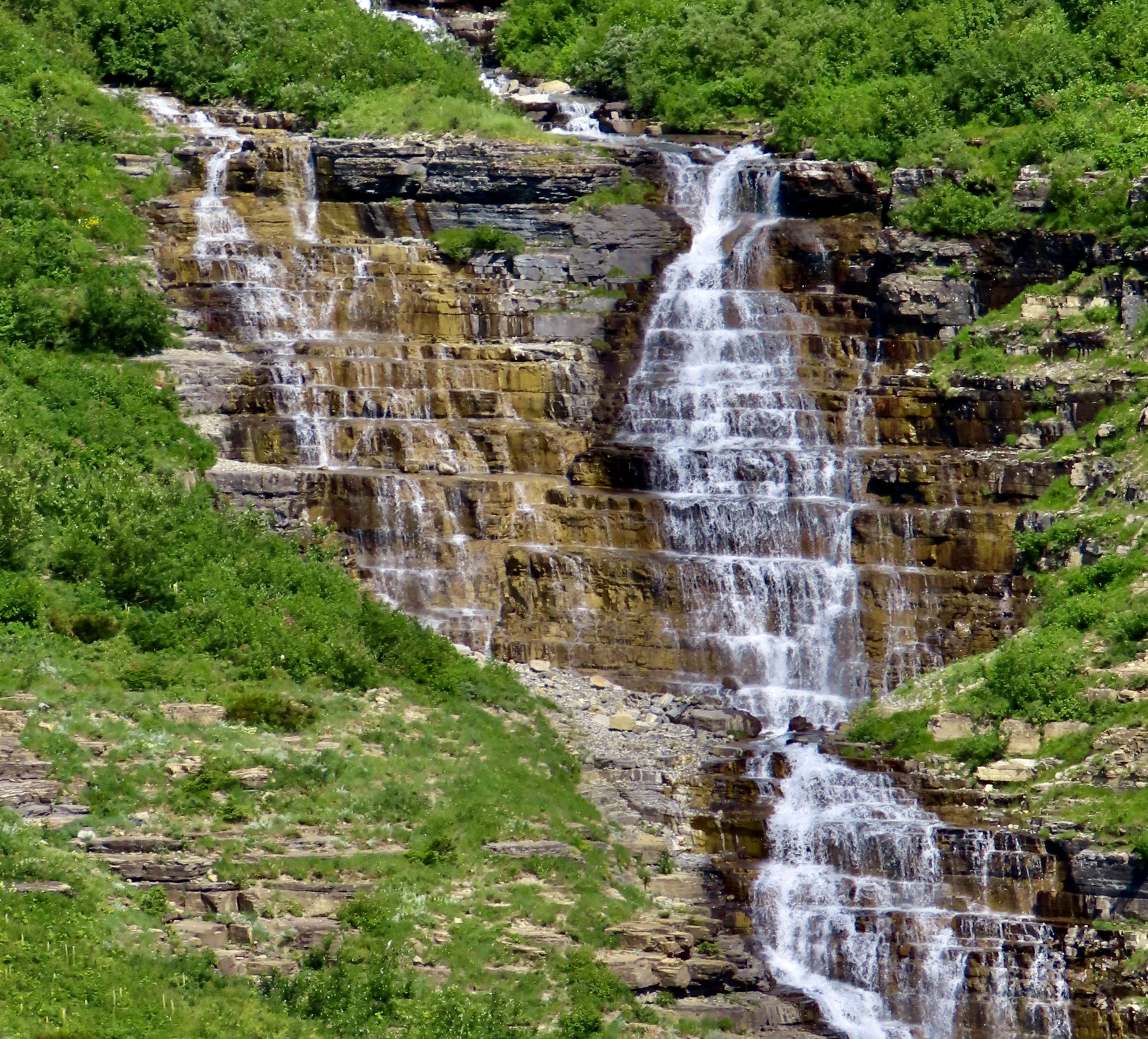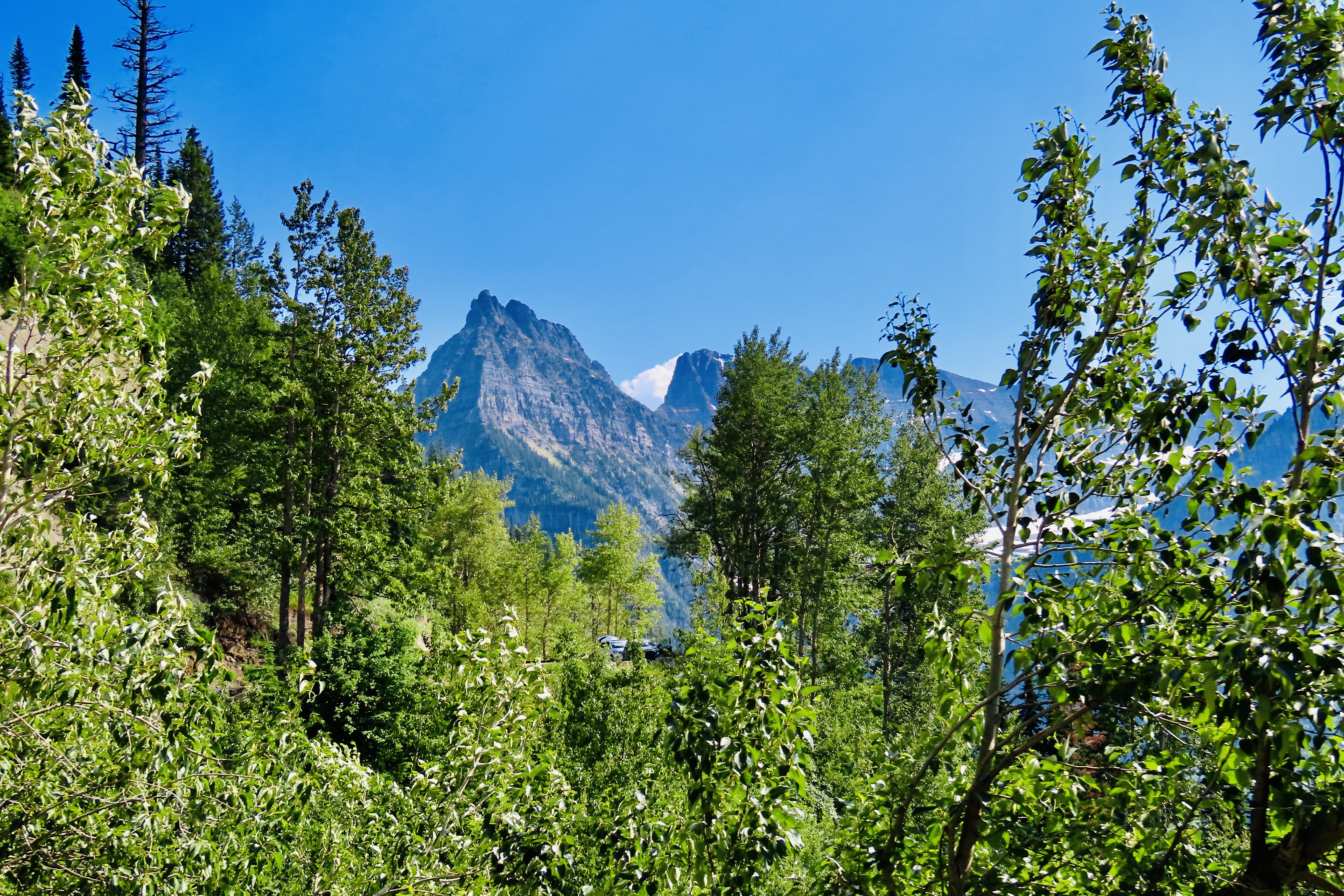
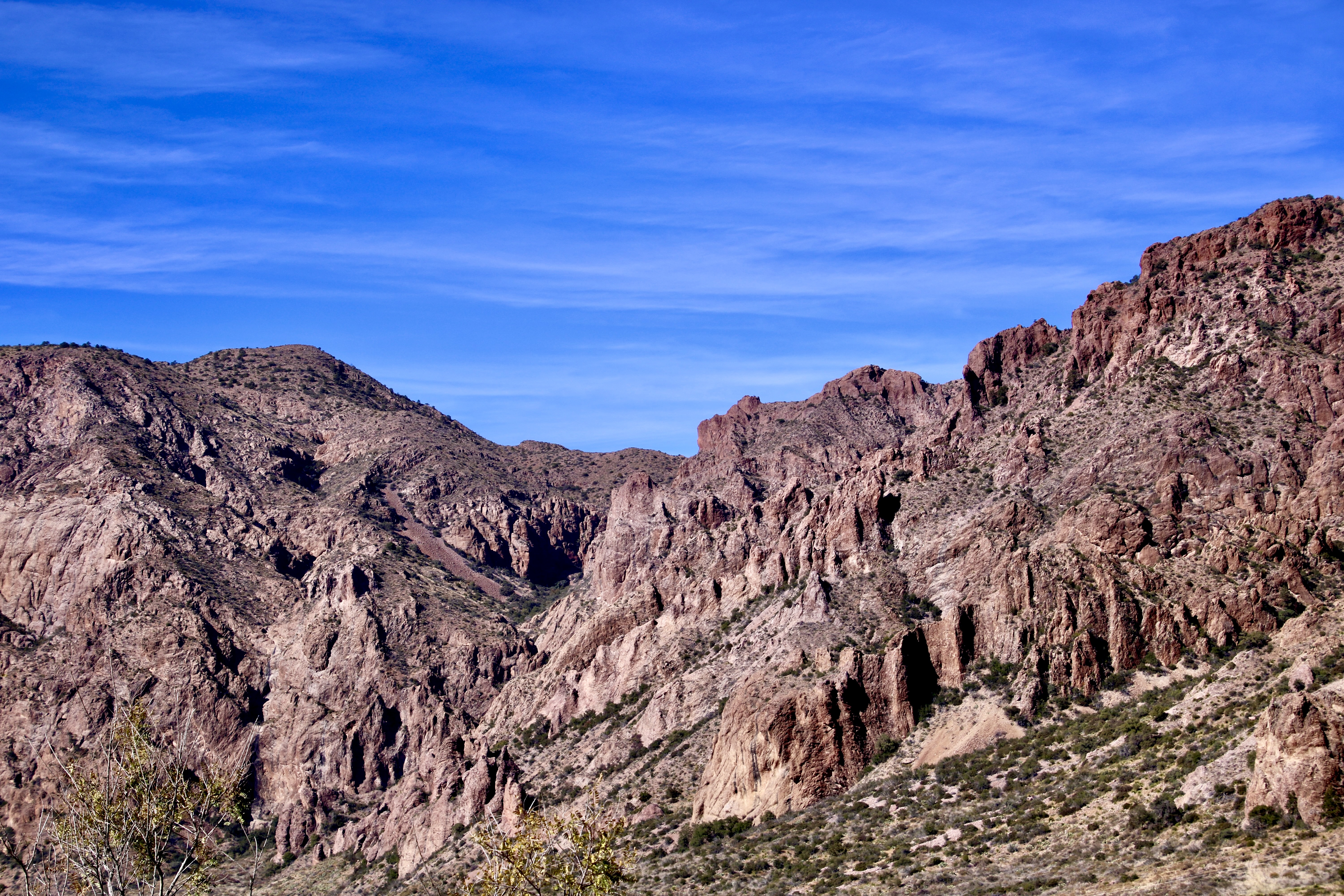
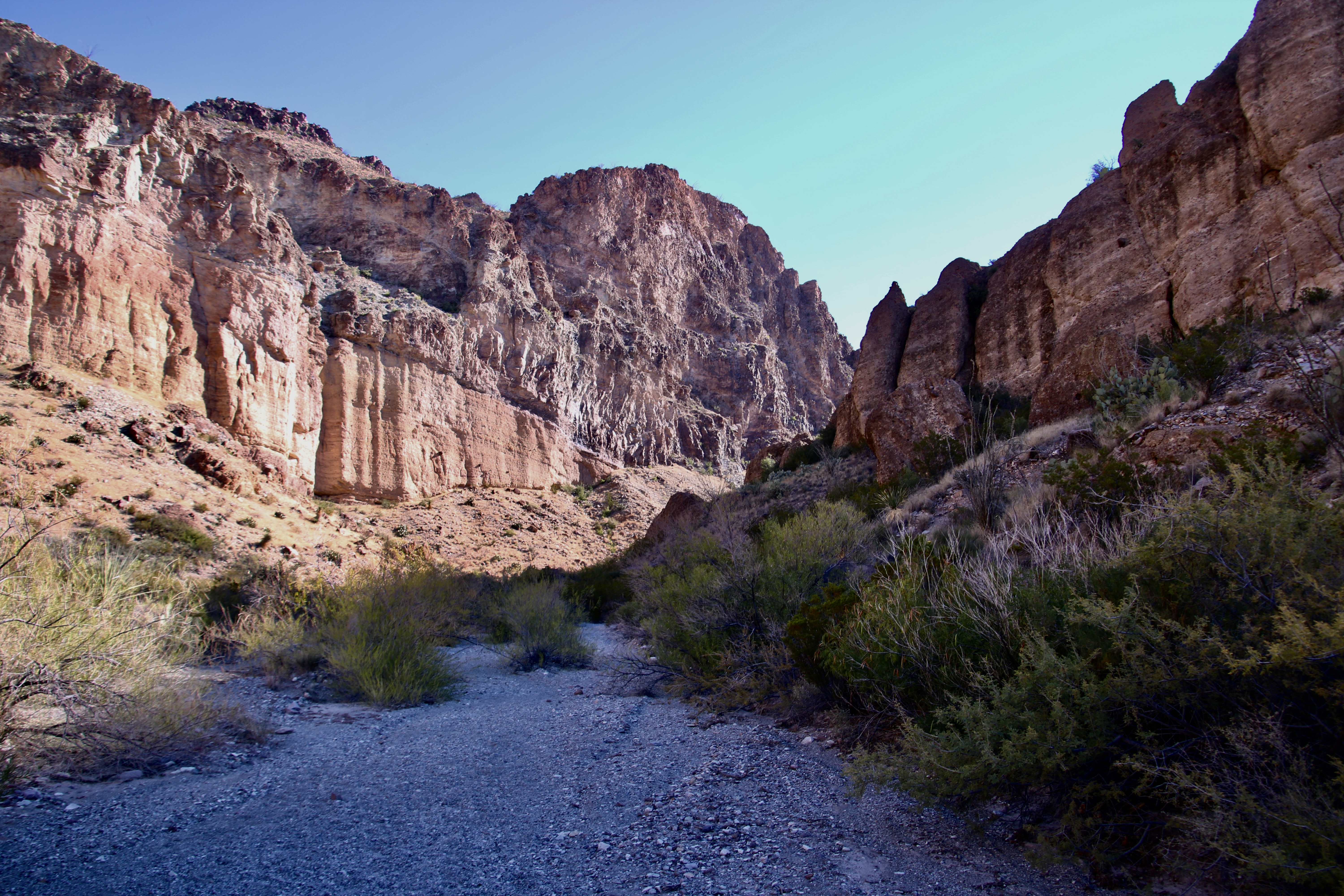
Glacier National Park’s Going to the Sun Road is packed with views like this. Each corner brings a new sight. Whether it is rugged mountains, water cascading down rocks, or high mountain meadows, the road is guaranteed to create a sense of awe.
Peggy and I know a bit about scenic roads. Over past 25 years we have traveled over a quarter of a million miles exploring many of the most beautiful highways America and Canada have to offer. Some, several times. One thing that we have learned is that determining most scenic is incredibly hard. How does one compare driving through the desolate beauty of Death Valley with the rugged wilderness of the Yukon? We both agree, however, that the Going to the Sun Highway in Glacier National Park would be near the top of any list we might compose.
Note: All of the photos in this post were taken by either Peggy or me unless otherwise stated.
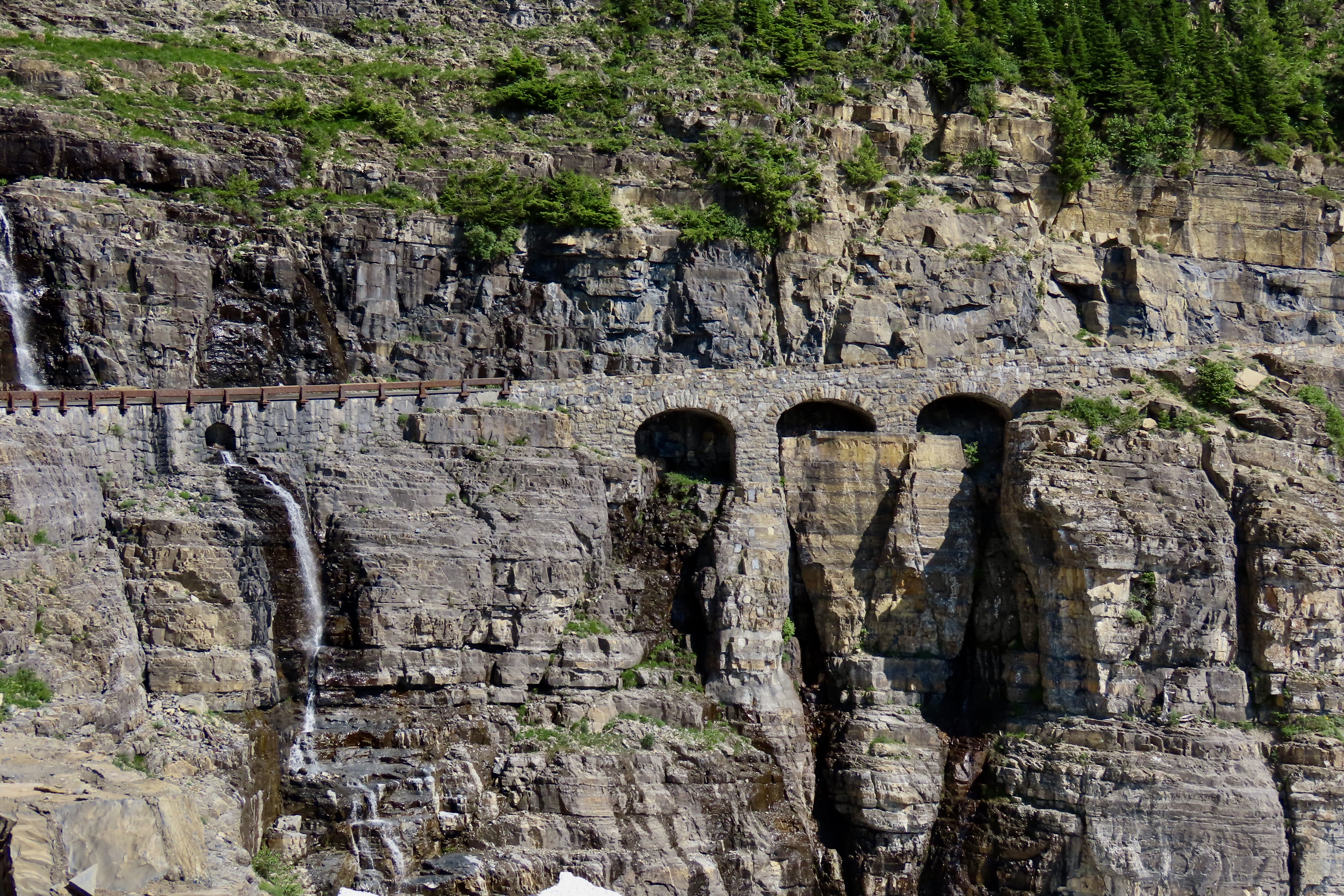
What’s not to love about water cascading over rocks…Or high mountain meadows.The narrow Going to the Sun Highway is a marvel in and of itself, working its way around steep curves and along cliffs with sheer drops, as shown in the photo above. Three Arches is on the right and Haystack Falls is on the left. Driving over it is not for the faint hearted! Neither is it for RVs.
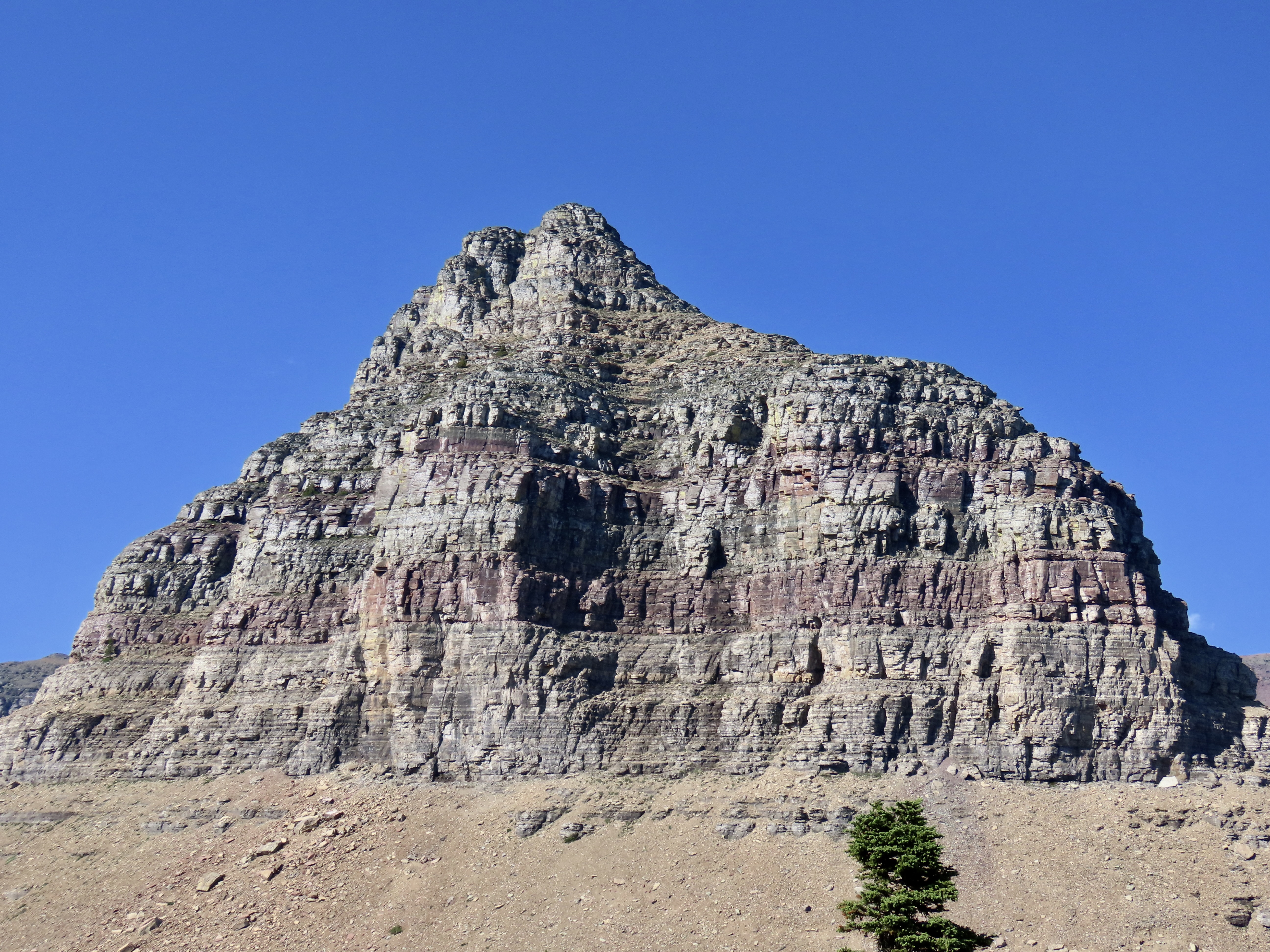
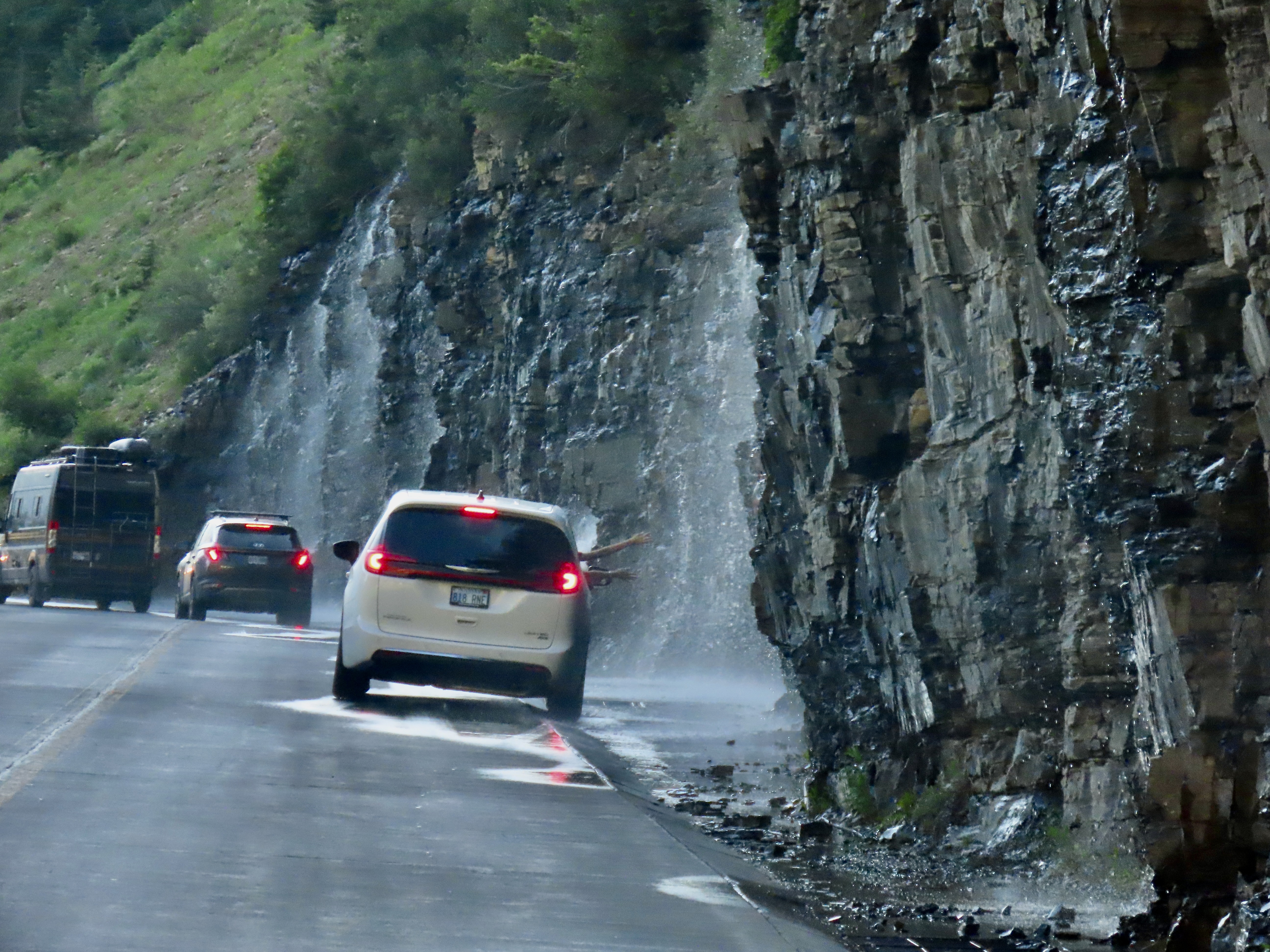
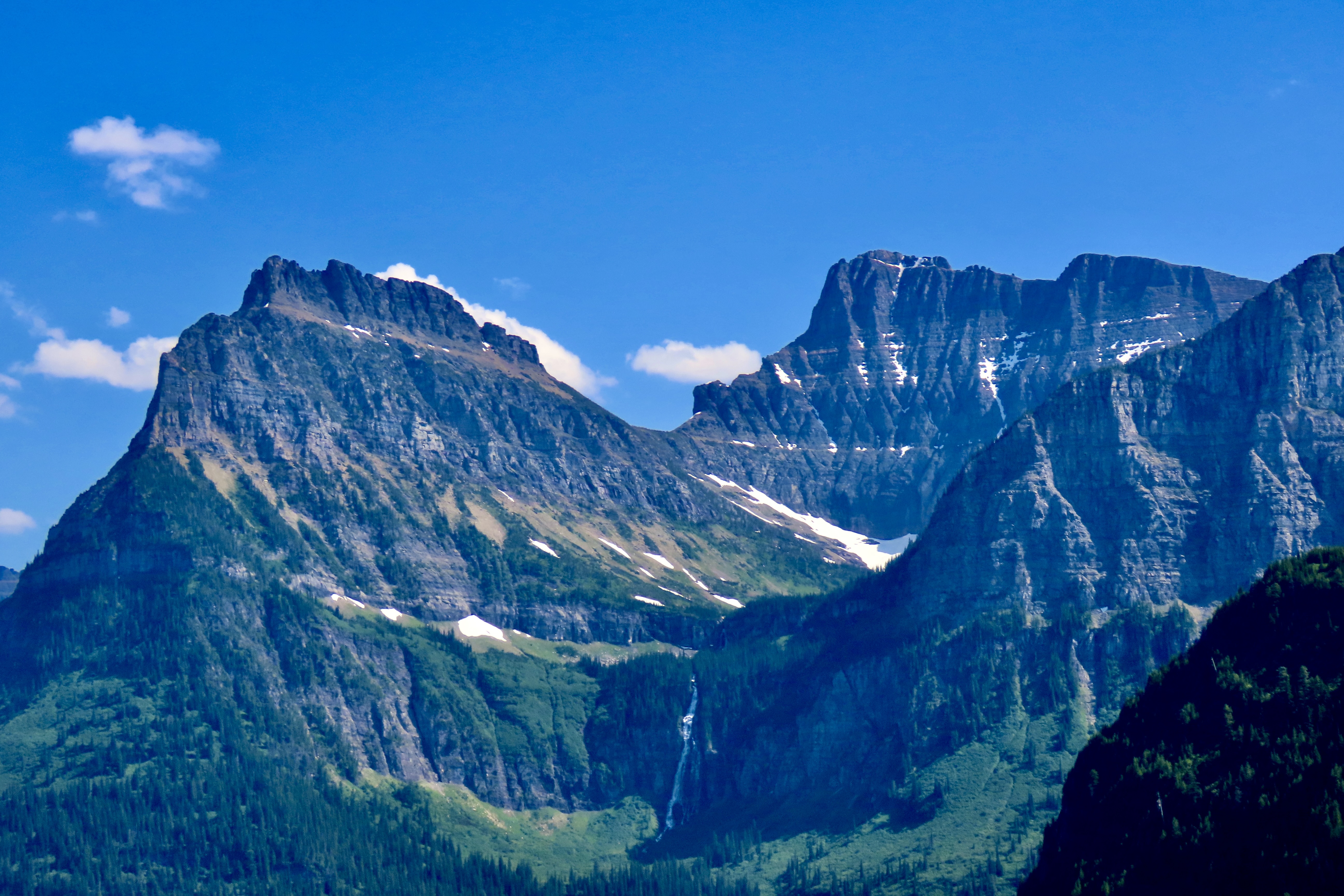
By designing the road to have minimum impact on the surrounding environment, using local materials, and building it to feature some of the park’s most scenic views, the highway became a model for building roads in future national parks.First funded in 1921 by Congress, highway construction took place throughout the 20s. Franklin Roosevelt’s New Deal Program took over in the 30s finishing the road. Here, Civil Conservation Corps members carry a telephone cable over Logan Pass in 1938. Both Peggy’s father and mine worked for the CCC during the 30s, giving them employment options they may not have had otherwise in the Great Depression. (This photo is from the National Archives.)We began our journey up the Going to the Sun Road on the western side of Glacier NP. We were camped about five miles away. The total length of the road is 48 miles. We drove up to Logan Pass, 30 miles from the entrance, and back. Entering from the west requires a permit between 6:00 AM and 3:00 PM in the summer to control numbers. It’s best to get your permits before heading to the park. They are offered 120 days in advance. Day of permits can be purchased the day before starting at 7 PM, but they go fast, often within minutes. Not having a permit, we opted for the after 3 PM entrance.The Going to the Sun Road makes a leisurely trip along the edge of Lake McDonald and McDonald Creek before beginning its climb up toward Logan Pass.We took this and the following photos along the lake and river.In our eagerness to get up the mountain we missed taking photos of McDonald Lake and Creek on our way up, but we did capture some rapids and McDonald Creek Falls on our way back to camp. It was close to sunset.Our first stop going up the road was to admire this mountain.As one might expect, glaciers are a key feature of a National Park named Glacier. Unfortunately, they are melting. Global warming has reduced their numbers from around 86 in 1850 to 26 today. The Loop, a major hairpin turn, and the narrow West Tunnel added more excitement to the already exciting drive up the western portion of Going to the Sun Highway.The Weeping Wall is one the Going to the Sun Road’s most well know features.People drive next to the Weeping Wall on their way down and stick out their hands. Peggy and I thought of driving next to it to give Iorek the pickup a well-needed bath. (But didn’t.)Pull offs above and below the Weeping Wall provided a number of scenic views including Haystack Falls.Haystack Falls above the road.And below the road.A smaller but colorful falls was a short walk away.The 490 feet tall Bird Woman Falls could be seen far across the canyon nestled in among the mountains.The mountains seen from the upper end of the Going to the Sun Road are magnificent.And finally the road (seen on the left) makes its way up to just before Logan Pass, which will be the subject of our next post.And, a final photo. We have been in St. Marys, Ohio the past few days wrapping up our trip by celebrating the 100th Birthday of Peggy’s namesake, Aunt Peggy. She is an incredible lady in the true sense of the word with a smile and a personality that light up a room. She’s shown here with water-color flowers she has painted. We attended the ceremony with Peggy’s brother John, his wife Frances plus 14 other relatives and at least 40 residents of Aunt Peggy’s Senior Living Center. The beautiful event was organized by Aunt Peggy’s daughter, Alice.
Diablo Lake is known for its beautiful teal-green waters and surrounding scenery. The water’s color is the result of tiny rock particles suspended in the water refracting light. The particles are created by the surrounding mountain glaciers grinding rock into what is called glacier flour. The ‘flour’ is then washed down to the lake by glacial streams. Having lived in Alaska for three years, I was quite familiar with the process. Here, Peggy is kayaking up the Thunder Arm of the lake toward Thunder Creek.
Peggy and my first trip through the Northern Cascades National Park was in 1999 as we marathoned north to join our friends Ken and Leslie Lake for backpacking and kayaking in Alaska. They were flying into Anchorage and we had promised we would be there to pick them up. A long trip up the Alaska Highway was ahead, so there was no time to tarry. We spent a night camping in the park where we were entertained by a banana slug and the beautiful surroundings.
A bright yellow banana slug makes its way along the forest floor. Some interesting facts about this unique creature are that they can grow up to 10 inches in length, which makes them the second largest slug in the world. They can zip along the ground at the amazing speed of 6 1/2 inches per minute. They are covered in slime which is an anesthetic. You can discover this yourself if you lick one. They breathe through their skin and their eyes are located on the ends of retractable antenna. The guy/girl above is looking around. Yes, guy/girl. They come equipped with both male and female parts and can mate with themselves. They prefer to mate with others, however, and that’s when their procreation activities get really weird. Enough said.
What we remembered most about the park— other than the banana slug— was Diablo Lake. Located in the heart of the park, its dramatic setting combined with the milky-teal color of the water is guaranteed to make a life-long impression. We vowed to return someday and kayak on the lake. A quarter of a century later, this summer, we finally accomplished our goal.
Diablo Lake is one of three reservoirs built by the power company, Seattle City Lights, to create the Skagit River Hydroelectric Project in the 1920s and 30s to provide electricity to Seattle. The lakes are Ross, Diablo and Gorge, shown on the map below. When it was completed in 1930, Diablo Dam at 389 feet (119 meters) was the highest dam in the world. (The highest dam today is the Jinping-I Dam in China at 1001 feet (305 meters)). Today, Seattle receives approximately 90% of its electricity from hydroelectric power. 20 % of it is provided by the Skagit River Hydroelectric Project.
This map from an information board shows the three lakes included in the Skagit River Hydroelectric Project. Diablo is in the middle. The tannish line shows the route past the lakes with its multitude of great views. Map showing Diablo Lake. The camera is where we shot the photos looking down at the lake. We kayaked south from the bridge down the lake’s Thunder Arm to Thunder Creek.This view of the lake and the next one led us to our vow that we would be back. In the distance you can see Diablo Lake Dam. Note the small island in the middle. There were kayakers exploring it.This view provides a look at some of the surrounding mountains hanging above the Thunder Arm of the lake. We were kayaking off to the left. A slight reflection of the mountains and surrounding hills can be seen in the lake.This is the island with kayakers I mentioned above. We didn’t have time to explore Thunder Arm plus paddle out to the island. Maybe on our next visit. If I wait another 25 years I’ll be 106.We found the upper end of the Thunder Arm particularly attractive with its contrasting colors of green and looming mountains. If I appear a little laid back, that’s because I am.Another perspective. More distant mountains can be seen up the valley. Slightly hazy skies dimmed our views of the mountains.Canada geese greeted us at the head of the lake.And grazed along the shore. A teenage goose is behind this one.A goldeneye appeared to give us a the ‘look.’And another one scurried away with her chicks. I caught up with them, however.And mom had a fit, flapping her wings, screaming at her chicks to hide, and squawking at me with a very clear message. It’s probably a good thing I couldn’t understand what she was saying. I left mom and her ducklings to go about their business. Kayaking back, we had more views of the surrounding mountains.Our final photo. Next post: We will travel on to Glacier National Park in Montana.
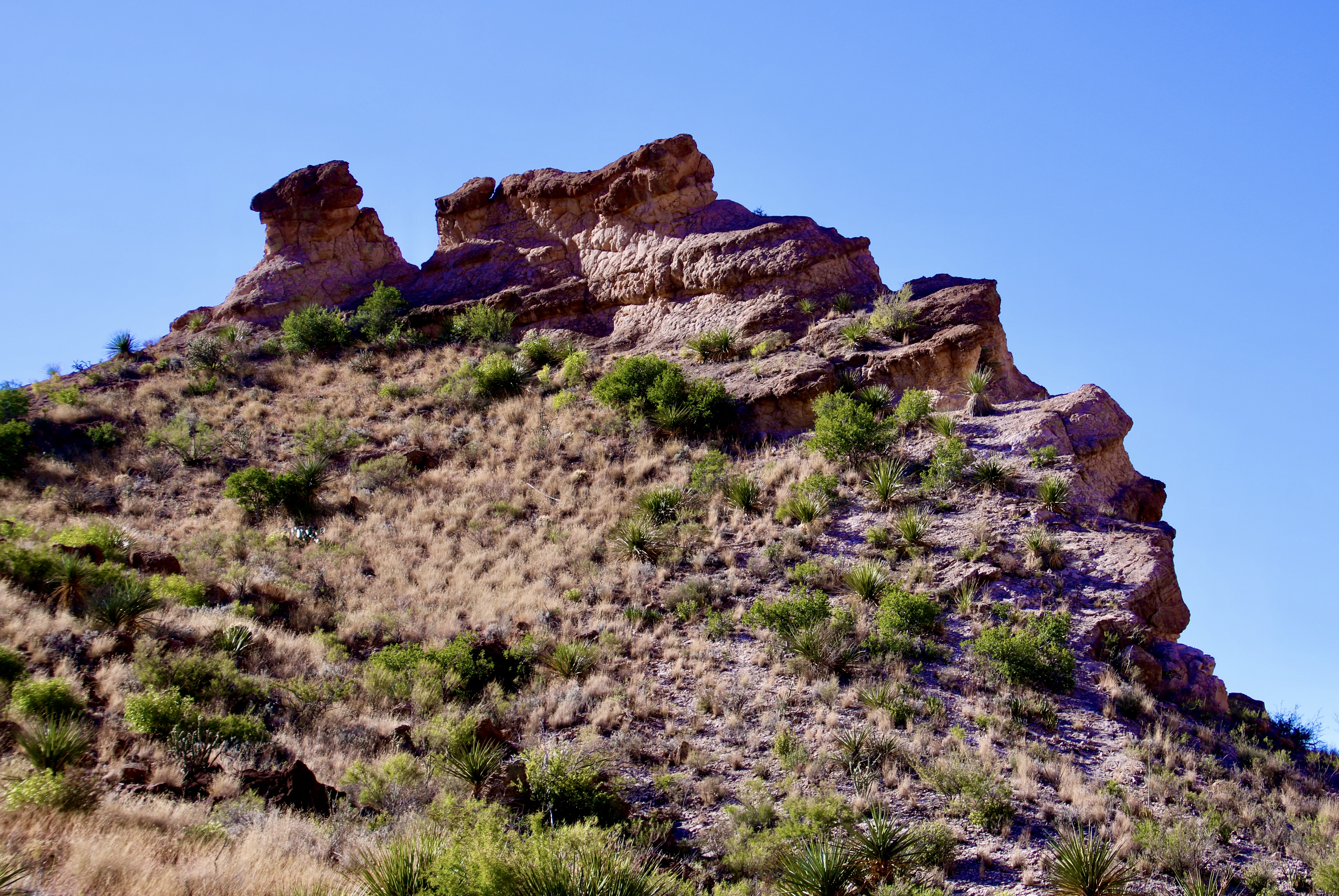
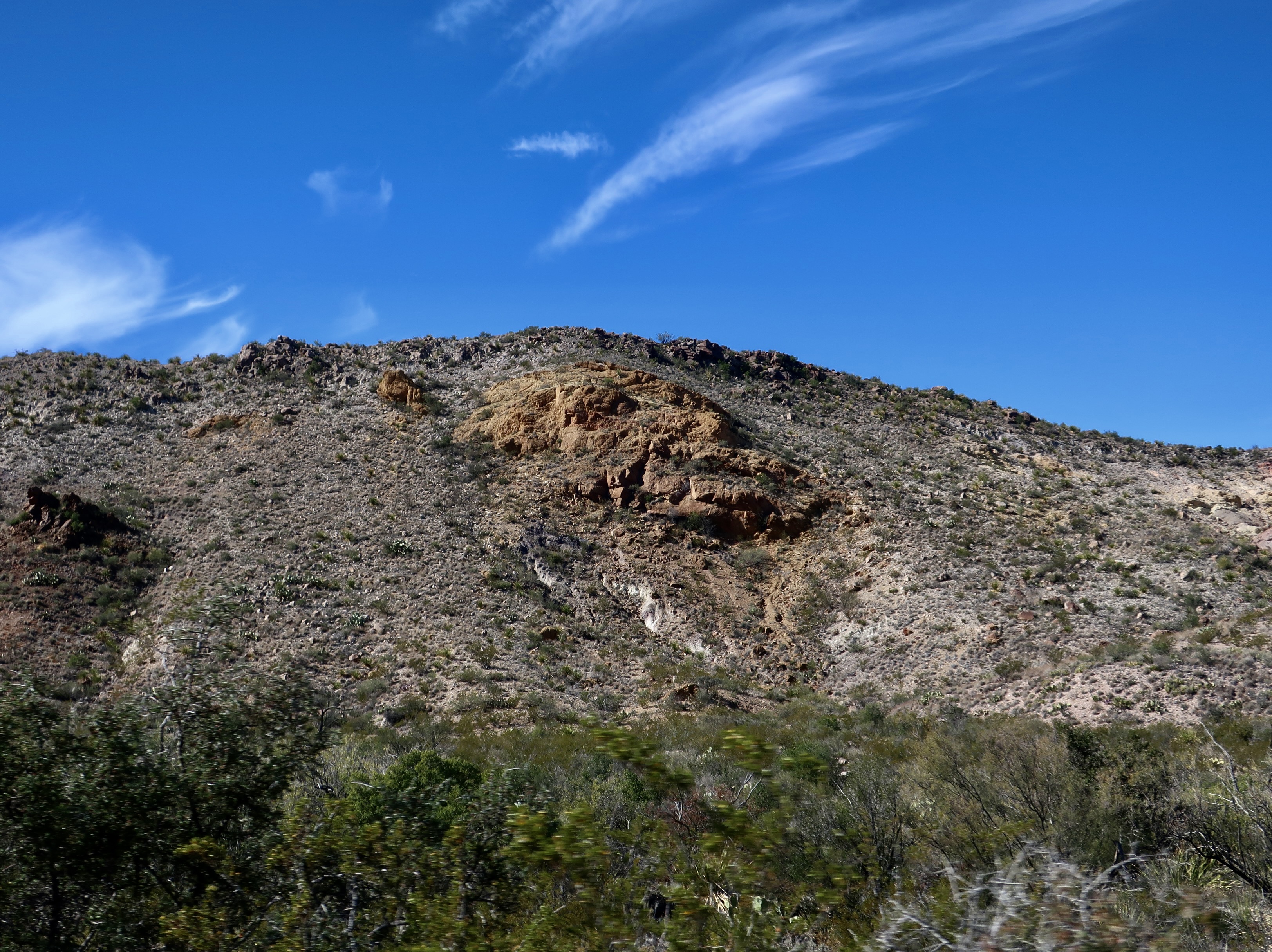
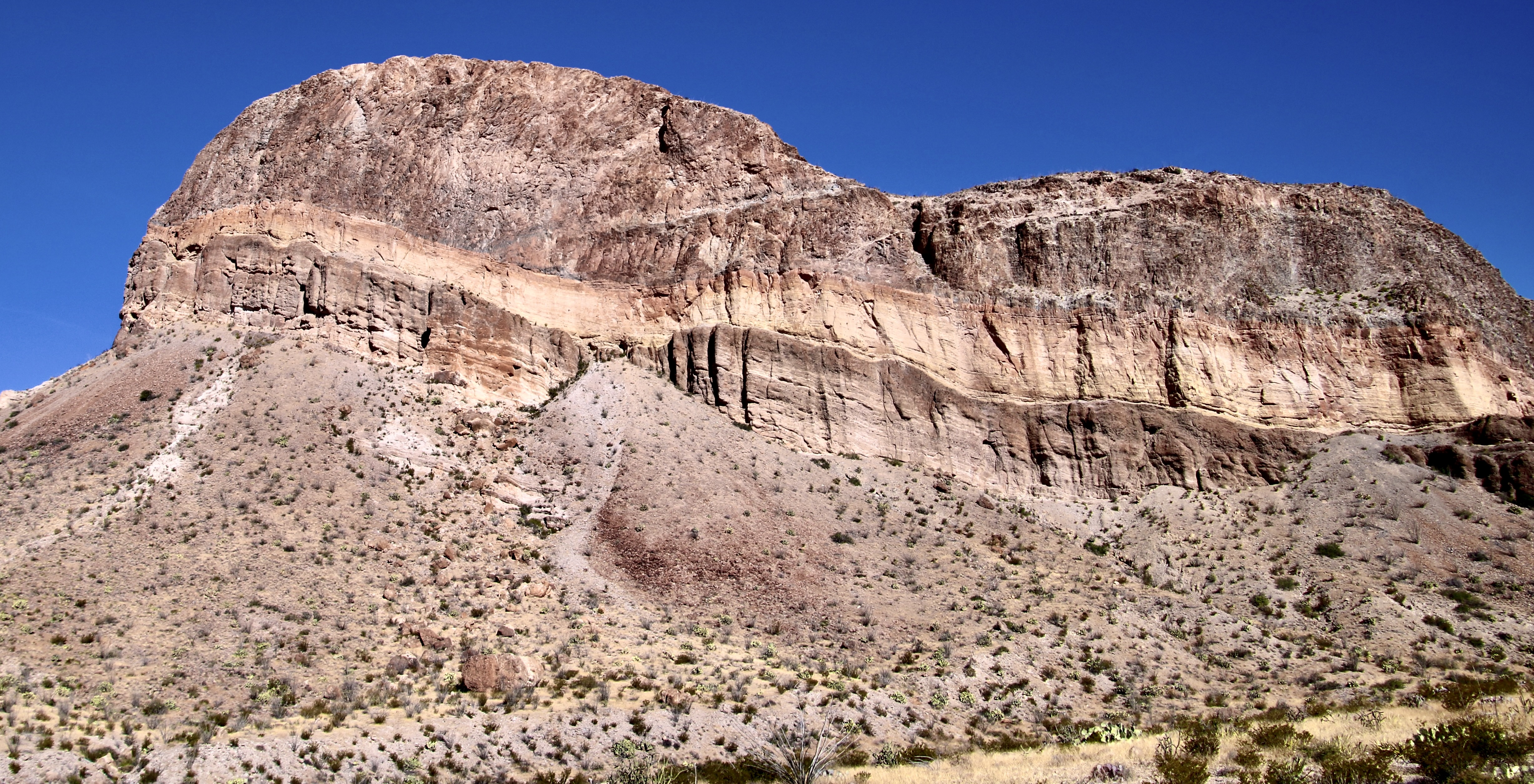
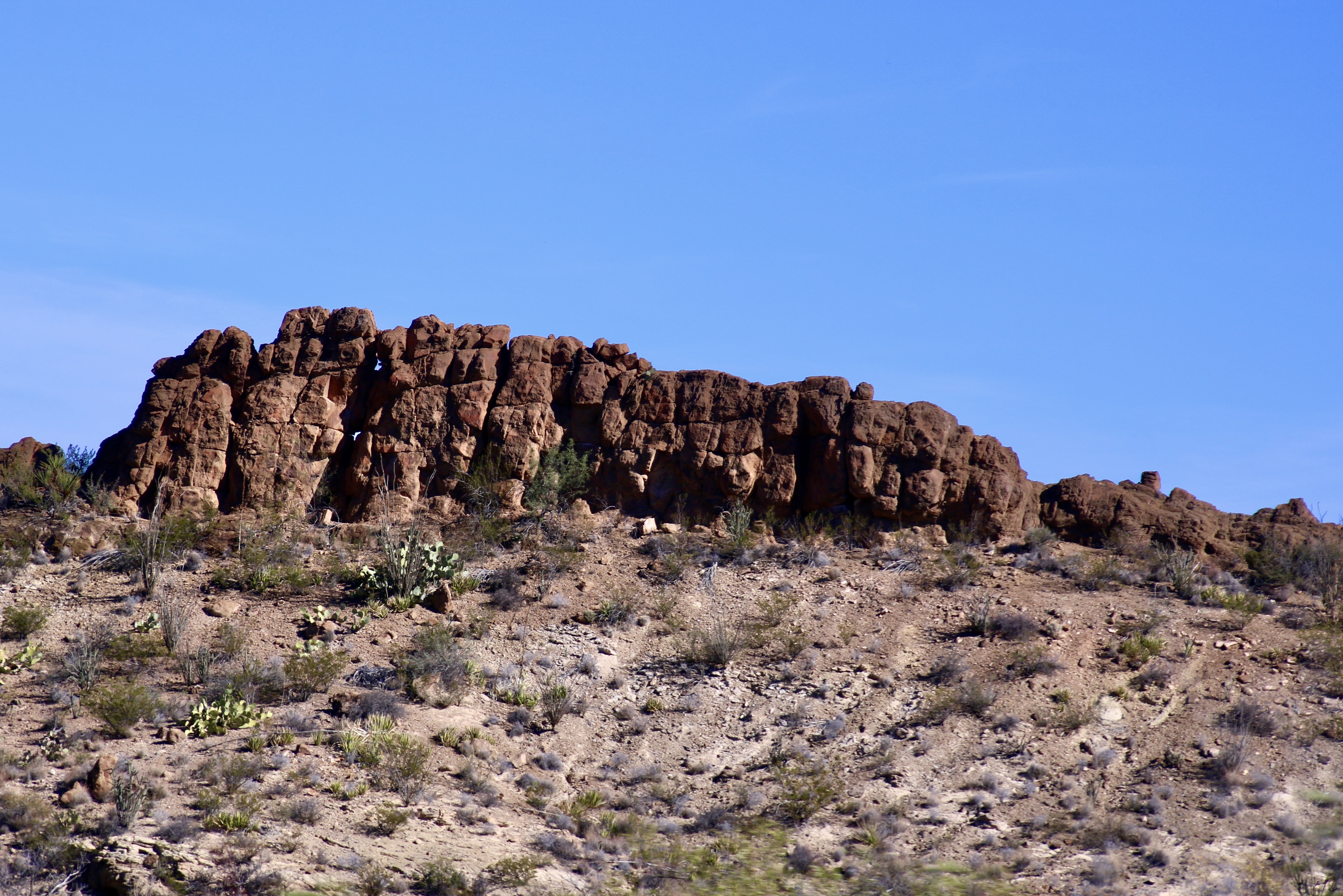
It’s no surprise that the North Cascades National Park is often referred to as America’s Alps. The Park is noted for its mountains, glaciers, turquoise lakes and rugged beauty. Located in northwestern Washington on Canada’s border, it comes with 93 named mountains and over 300 glaciers. It has the most extensive glacial system in the US outside of Alaska.One would think that the park’s beauty and relatively close proximity to Seattle, would make it one of America’s most popular parks. Not so. It had just over 40,000 visitors last year. In comparison, Olympic National Park, which we visited just prior to North Cascades had 2.94 million, and Glacier National Park, where we just were, had 2.93 million. It’s not the least visited, however. That honor goes to the Gates of the Arctic NP in a remote section of Alaska that had 11,000 visitors in 2023. That park has neither roads or trails. I once took a group backpacking there. It was the ultimate wilderness adventure. BTW, the most popular national park in the US is Great Smokey Mountains NP with 13.3 million annual visitors.We drove into the park from our campground in the small town of Twisp on the east side. The views were spectacular. The RV on the highway provides an interesting perspective.The mountains seem to spring into the air. Mountain climbing is a favorite sport in North Cascades, as you might imagine from this photo. I admire people who can scale peaks like these, but no thanks. It has never been a bucket list item of mine, nor Peggy’s.The park’s altitude ranges from 605 feet to 9,206 feet.Another spectacular view from Highway 20 traveling from east to west. Both grey wolves and grizzlies wander through the park along with cougars and black bears.There are numerous waterfalls in the park. We found this small but colorful one along the highway. It was cascading waterfalls that led Meriwether Lewis and William Clark to name the mountain range the Cascades on their journey to the Northwest 1806. The range runs from Mt. Lassen in California to the North Cascades. While the mountain range has a complicated geological history, it is best known for its imposing volcanoes.The goal for our trip into North Cascades National Park was to go kayaking on Diablo Lake, shown here. Which we did. But that’s the subject for our next blog. We will finish today’s post with photos we took returning to our campground in Twisp on the eastern side of the park.The most significant difference between the west side and east side of Cascades National Park is the amount of rainfall. The west is drenched by storms rolling in from the Pacific and receives an average of 110 inches per year. By the time the clouds reach the east, they have been drained of much of their moisture. The east only receives an average of 35 inches. This is known as a rain shadow effect. Both the mountains and the forest above reflect this.A close up.The trees next to the mountain here are impacted by drought. We saw a lot of this in Oregon when we lived there. Peggy and I had 50 dead trees removed from our property for fire protection.Peggy spotted an ogre in the outcrop above. It took me a while. Grin.It was the huge cave here that caught her attention.We took a close up. That’s it for today. Next, we meet some devilish birds while kayaking on Diablo Lake in the heart of the park.
Each national park has its own beauty and uniqueness. We visited the Florida Everglades in February just before we started our trip west.
Peggy and I are great fans of national parks. Each has its own beauty and uniqueness. After all, that’s how they become national parks! In 1999 Peggy and I took a year’s sabbatical from our jobs for an extended trip around North America. One of our goals was to see as many national parks as we could. We ended up visiting 50, which was close to all that America had at the time. We also visited Canadian national parks as we drove the Alaska Highway up and back from Alaska.
We’ve continued to visit parks ever since. Several, we have returned to many times. Our journey up the Pacific Coast that we just concluded included four. I’m going to do a quick review of them today and throw in the Everglades since we were there before we headed west. Then I will move on to the two parks we just visited: North Cascades and Glacier. But there is more—as they always used to say on late night tv ads.
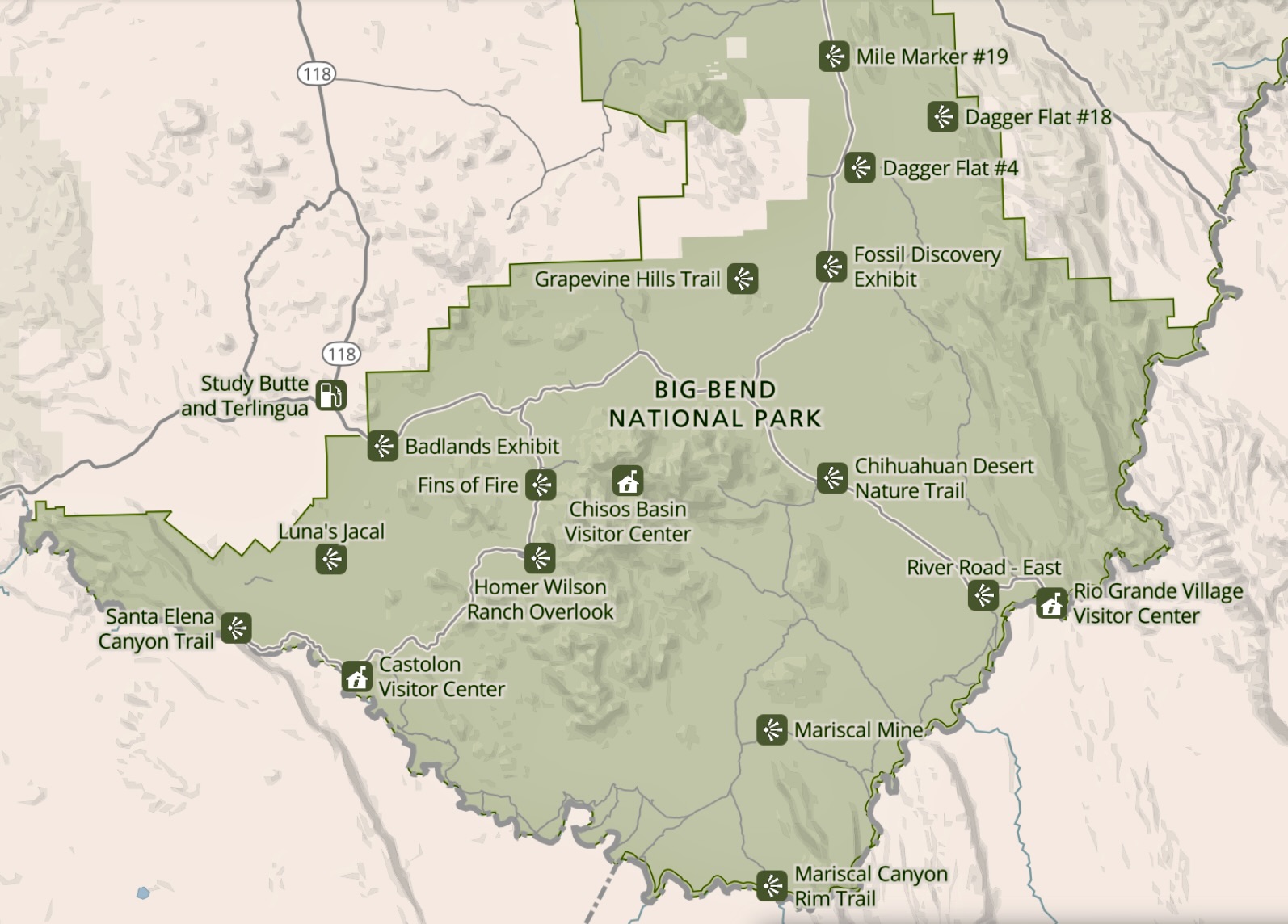
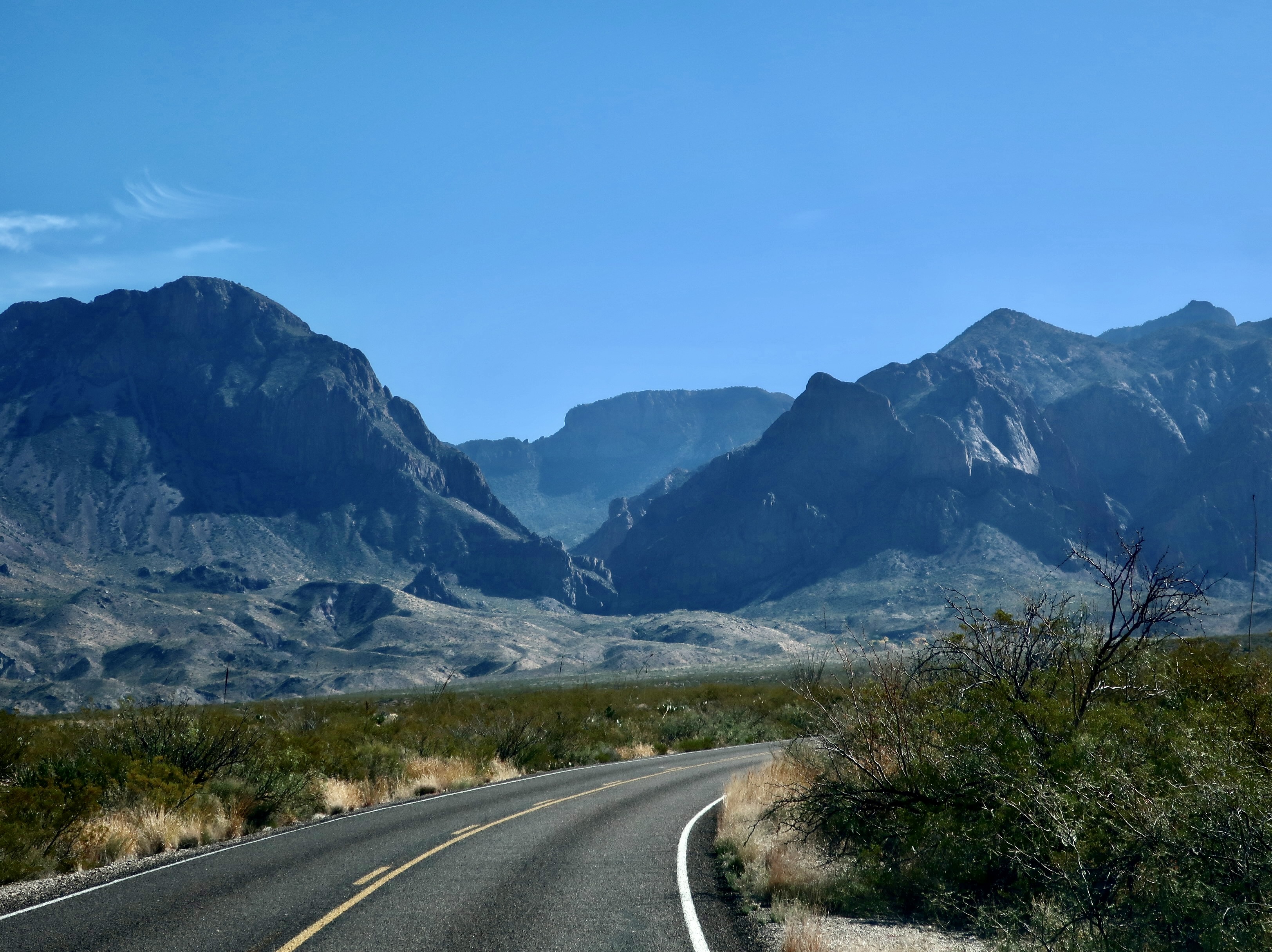
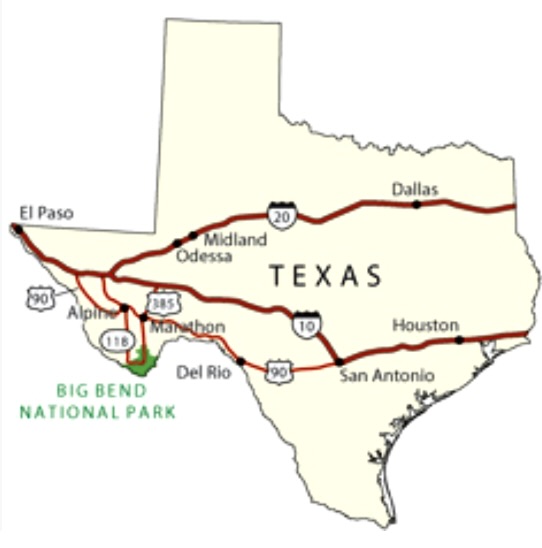
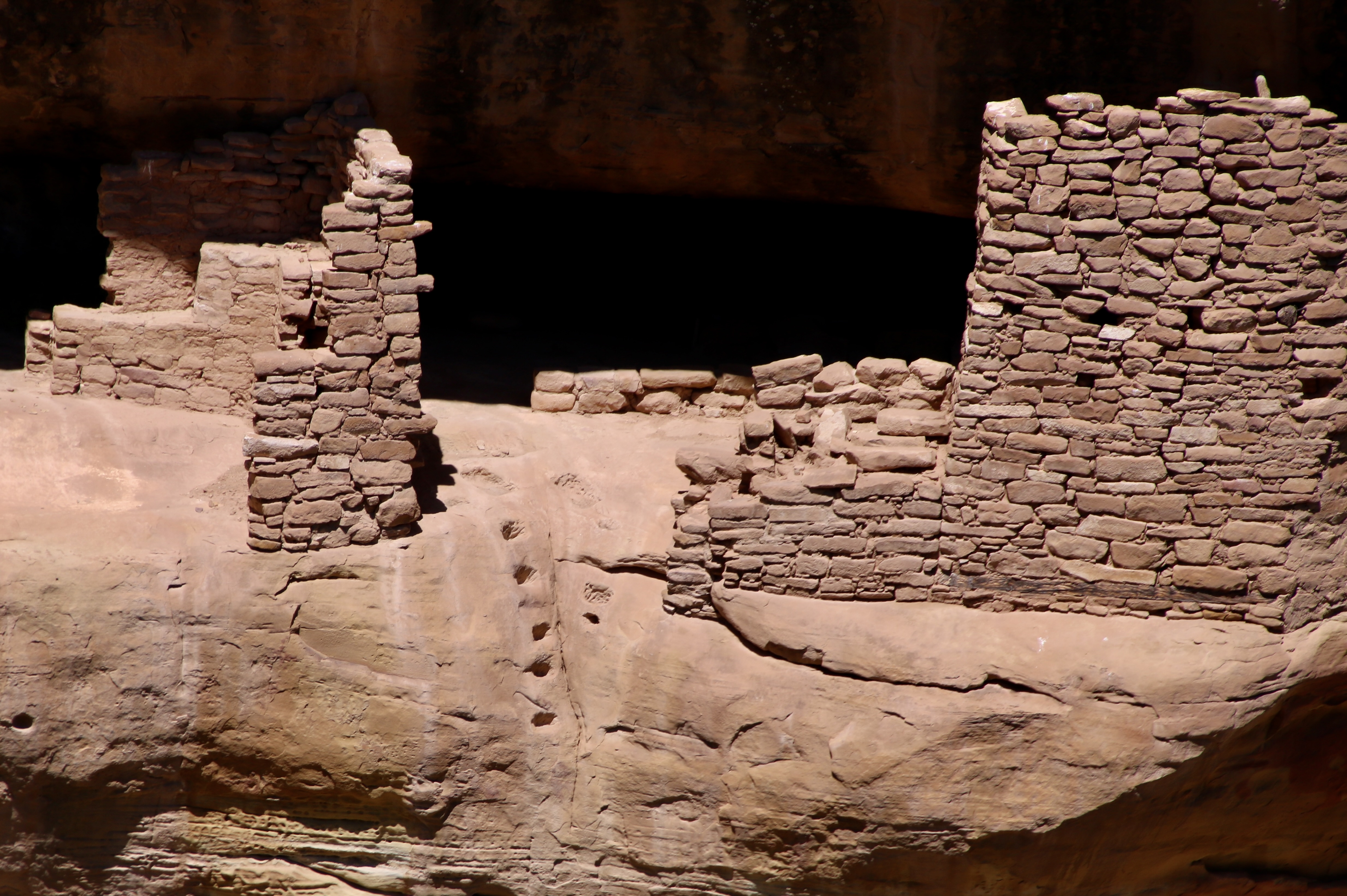
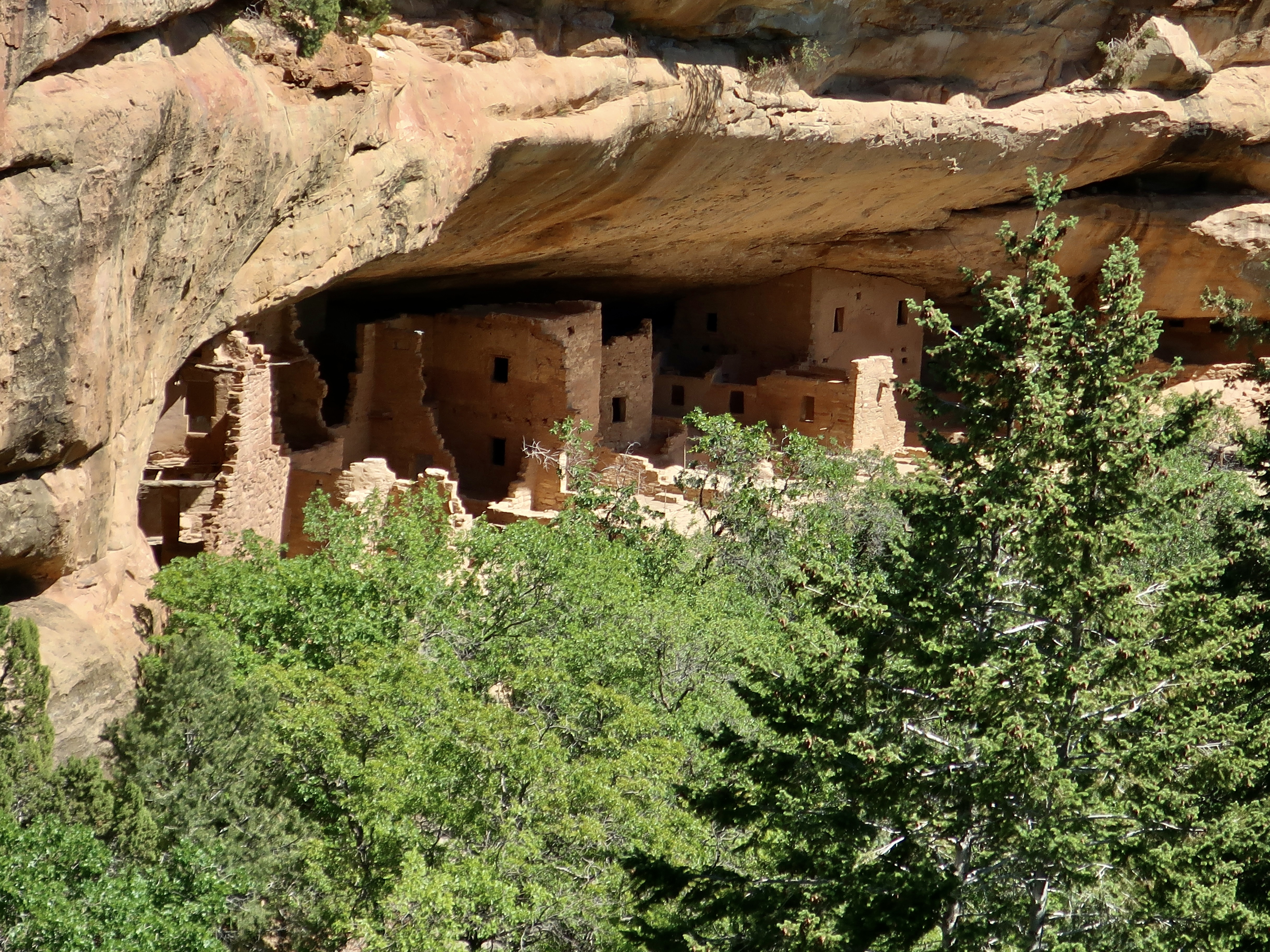
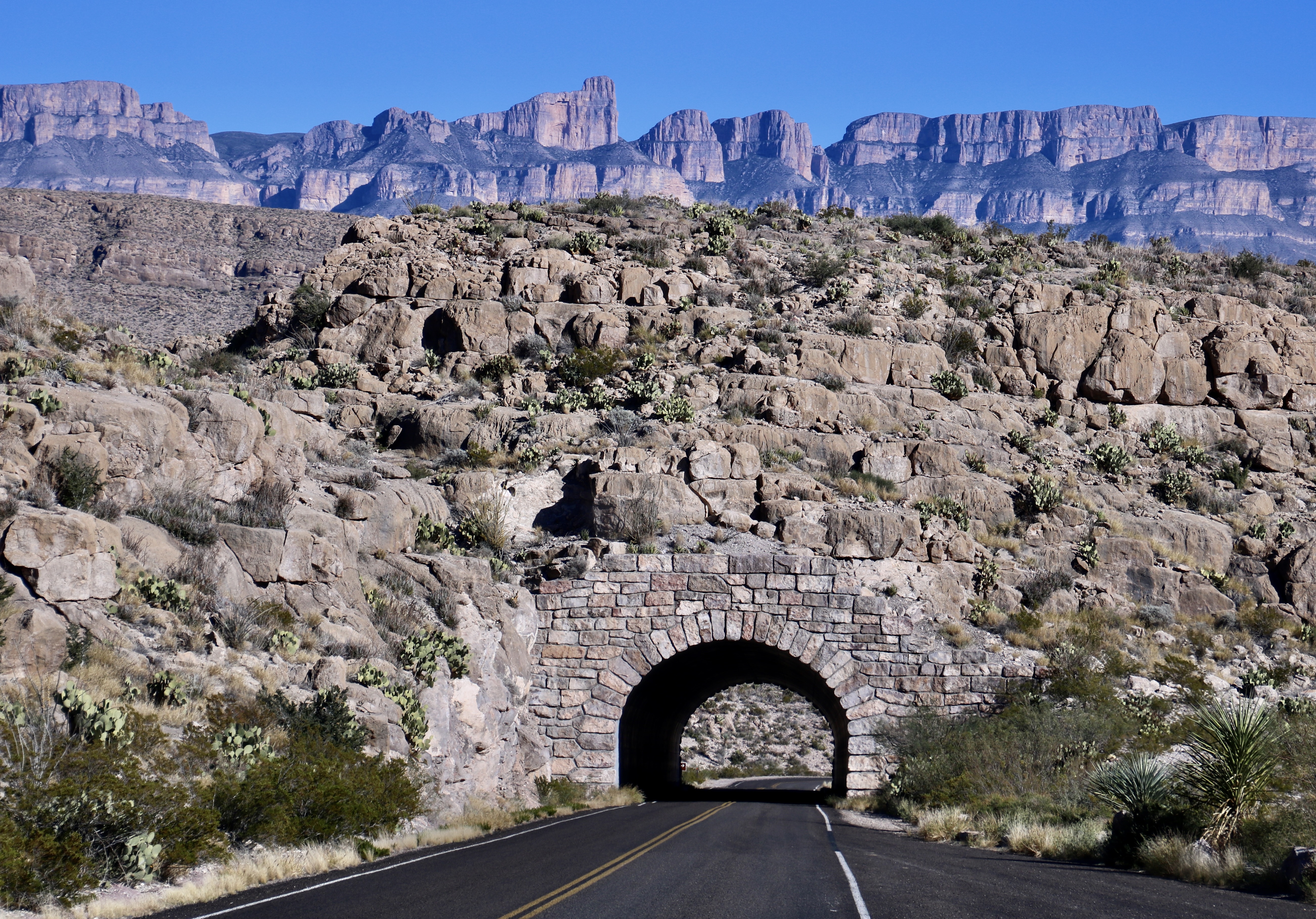
Over the past three years, as Peggy and I zigzagged our way across the US six times, we visited several parks including four that I didn’t have time to blog about: The North Rim of the Grand Canyon, Mesa Verde, Big Bend, and Theodore Roosevelt. That will bring the total in this series to 11 counting today’s review. Let’s get started! Note: All photos in this series were taken by either Peggy or me unless otherwise noted.
THE EVERGLADES
One way to think of the Everglades is as a vast, slow flowing river spread out over 7,000 square miles. According to the National Park Service, the “Everglades are home to frogs, toads, alligators, hundreds of species of birds, 300 different species of fish, Florida panthers (endangered), crocodiles, and snakes, just to name a few!” There are, also, more mangroves than anywhere else in North America.
The bird life was incredible! It ranged from Osprey…To anhingas…To snowy egrets…To ibis and many, many other species.We also saw a number of alligators, and several crocodiles. We liked the reflection on this alligator. The look on its face made us wonder what it had been up to!
THE PINNACLES…
The Pinnacles National Park, located just east of the Salinas Valley in central California, was the first national park we visited on our trip up the coast. Raised to national park status in 2013 by President Obama, it is a recent addition to the system. The park is noted for its monoliths, spires, canyons and the beauty of its spring wildflower display.
Huge monoliths rise up from the ground…As do impressive spires.Massive boulders have tumbled down from the ridges creating talus slopes and ‘caves’ people can actually walk through. This small one contained a creek we followed up a canyon.We were there in April and wildflowers were everywhere. We had never seen a shooting star displaying this many flowers.A lone oak standing on the crest of a hill caught our attention.
POINT REYES NATIONAL SEASHORE
Technically, Point Reyes National Seashore is not a national park. The primary reason is that the land incorporates a number of dairy ranches that were there before the park was created. But it is a unit in the national park system. And, I might add, a well-justified unit. Located just north of San Francisco, it is renowned for its beauty and wildlife. It also has the interesting geological history of having migrated north from Southern California along the San Andreas Fault. (Pinnacles has a similar history.) I was a regular visitor during the years I lived in Sacramento. It served as my winter go-to break. The summers were for the mountains.
Long Beaches with spectacular cliffs, forested mountains, grass covered hills and valleys, plus abundant wildlife contribute to the appeal of the park. During December through March, this beach will be busy with elephant seals breeding and having pups.We found this charming fellow and other elephant seals at Drake’s Beach on a previous visit. He’s come ashore looking for love.This whimbrel was strolling down the shore at Limantour Beach.A great blue heron made a lightning fast strike to catch a fish at Abbots Lagoon.The Point Reyes Lighthouse, always worth a visit.The Pierce Point Ranch provides an introduction to the historic significance of dairy farming at Point Reyes.California quail were running around the ranch when we visited. The wind was ruffling this guy’s feathers.And a large herd of tule elk is usually found nearby.
REDWOODS NATIONAL PARK
The National Park Service works in close coordination with the California Department of Parks and Recreation to maintain the towering redwoods that grace the coastal area of far northwestern California. It’s all about the trees , some of the oldest and tallest in the world, but its rainforest character, crashing waves and wildlife add to its splendor.
Massive trees reach for the sky…Crashing waves roll ashore…The rainforest harbors ferns whose origins are lost in the mist of time…Herds of Roosevelt elk are as likely to be found bedding down in someone’s front yard as they are wandering through the redwoods…And hundreds of seals pull up on remote shores to rest and bathe in the sun.
OLYMPIC NATIONAL PARK
Olympic National Park serves as an iconic example of a temperate rainforest receiving over 150 inches of rain on its west side while harboring old growth forests on its drier east side. Major rivers come tumbling down from its glacier covered peaks. Its 62 miles of wilderness coastline constitutes the longest undeveloped coastline in the contiguous US. As I noted in my post on Olympic National Park, our visit was limited this year, so I have added a couple of photos from previous trips. The other photos you will probably remember from last week!
The Skokomish River is one of several that flow out of the park fed by the extensive rainfall and high glaciers.In 2017 we stopped in the small town of Forks (home to the Twilight books and movies) on the western side of Olympic National Park. Here Peggy points out how much rain the park had received by November.On that same trip, we drove over to the wilderness part of the park that runs along the Pacific Coast. Here Peggy is admiring sea stacks. Huge piles of driftwood brought in by Pacific storms stretch up the coast. Back on the southeastern portion of the park, we admired the moss covered trees that are typical of temperate climate rainforests.Our hike up the Staircase Rapids trail along the Skokomish, led to this view we had when crossing a bridge that had been wiped out twice before by the raging river during spring melt. A final photo that provides a view into the park from our kayak trip on upper Cushman Lake. Next, we will explore the impressive mountains of Cascades National Park as we leave our trip up the Pacific Coast and start our journey back to our basecamp/home in Virginia.Cascades National Park
As we walked on a raised boardwalk through the wetlands of Billy Frank Jr. Nisqually National Wildlife Refuge in Olympia, Washington, I kept hearing bullfrogs and wanted to see one. A large one lived in the ditch in front of our house when I was growing up in the foothills of California’s Sierra Nevada Mountains. I had slept outside in the summer and gone to sleep listening to the his deep ‘chug-a-rum, chug-a-rum, chug-a-rum.’ At around three inches, the guy above was far too small. “It’s a red legged frog,” a volunteer told us.
We saw several red legged frogs and possibly an Oregon spotted frog, which is rare in the area and is listed as endangered. Bull frogs, it turns out, are an invasive species at the refuge and a threat to the locals. “Oh, they’re bullies!” the ever clever Peggy proclaimed as I groaned.
When I was reading up on the frogs, I saw a job description for a person who would work ‘nights in a canoe or kayak capturing non-native bullfrogs in areas where federally listed Oregon spotted frogs are found.’ Need work? I couldn’t help but wonder if the captured frogs donated their legs to the local cuisine. My brother Marshall and I hunted bull frogs as kids for the family larder. Marshall also sold the legs to local restaurants. He got 25 cents for a pair. A fortune. We left the big guy out front alone, however. I thought of him as something of a pet. (Plus our parents told us that the ditch water was of ‘questionable character.’ We weren’t supposed to drink it, play in it, or catch frogs in it!)
This was the frog the volunteer described as a red-legged frog. The legs didn’t seem red to me, but hey, I’m color-blinded to red. For real. Do they look red to you?I watched this guy/gal make its way through the mud. Maybe it was heading to one of the communal gatherings of Oregon spotted frogs where dozens/hundreds get together and make tadpoles by the light of the moon.The wildlife refuge is located where the freshwater of the Nisqually River flows into Washington’s Puget Sound. The fresh water bog includes a number of habitats that support an incredible diversity of wildlife. Including this great blue heron that also has a taste for frog legs. And the whole frog! “Where’s the frog?” it squawked at us. “Show me froggy!”Was this shelf mushroom saying “Leave the little frogs alone.” We also spotted a turtle in the same area with the frogs. I was reminded of the saying when I was working as a young grassroots organizer in the 70s: “Behold the turtle who only makes progress when it sticks its neck out.” I stuck my neck out a lot.
I was curious about how the wildlife refuge got its name. Who was Billy Frank Jr? It turns out he was a Native American leader of the Nisqually tribe who fought for treaty rights and was an environmental advocate. During the 60s and 70s he had organized a number of fish-ins to assure that the tribe had fishing rights along the Nisqually River, the Nisqually’s home base. He was arrested numerous times during the Fish Wars. He then became a leader in efforts to protect and manage the region’s natural resources. In November of 2015, he was posthumously awarded the Presidential Medal of Freedom by President Barack Obama.
In addition to the fun walk through the wetlands, the wildlife refuge features the Nisqually Estuary Boardwalk Trail that provides an excellent introduction to life on an estuary.I took a photo of Peggy and our niece, Christina, out on the Boardwalk and rendered it in black and white.I’ll conclude today’s post with a final photo of the red legged (or Oregon spotted) frog. This also concludes our trip up the Pacific Coast which was filled with beauty and great adventures. Our journey isn’t over, however. We still have two National Parks to visit: The North Cascades and Glacier. My next post will be a quick review of the five we have already visited during 2024. I’m throwing in Everglades as a bonus since we were there in February before we started west.
Cushman Lake is a fairly large lake around 10 miles in length and a 100 feet in depth. While it isn’t in Olympic National Park, the northern end where we kayaked serves at the gateway to the Staircase entry to the park. The road into the park can be seen on the right. The Skokomish River, which I featured in my last post, flows into the lake at the upper right end of this photo.The upper end of the lake is connected to the lower end via the bridge on the left. We kayaked from the Bear Gulch Picnic Site and explored this upper section including the lower end of the Skokomish River.The red pin shows the location of Lake Cushman in Washington. Note: Forks, the site of the Twilight books and movies, is on the upper left. We were camped near Shelton.Our niece, Christina and Peggy are kayaking into the Skokomish River here. The slight blur around Peggy was due to a drop of water on my lens. Grin. Peggy caught this interesting photo. An old growth forest of huge trees once occupied this canyon before they were logged out. These large stumps, now flooded by the lake, provide perspective. Compare them to the trees on the lake’s edge. And doesn’t the photo seem surreal?Peggy and Christina wanted their photo taken by these roots from another large tree that would have once stood in the canyon before Lake Cushman was dammed. The bridge on the map can be seen in the background.This surface shot of upper Lake Cushman shows how shallow the hundred foot deep lake had become.I thought the roots had personality.Peggy found this merganser with its chicks.And she imagined this bush as a huge spider lurking on the bank of the Skokomish waiting to capture unwary kayakers.This stump on the lake’s edge was busy growing its own forestA close up.Tall trees lined a portion of the upper lake.Large rocks were located in the forests above the lakes.We wondered what wildlife the cave might host? A snoozing bear in the winter, perhaps…Peggy found a convenient tree to rest under on the Skokomish River.It was a beautiful day for kayaking. A slight breeze came up and the water grew more choppy in the early afternoon.We rowed over to the bridge for a glance at the lower section of Cushman Lake and things got much more windy and choppy! We decided that it was time to call it a day. That’s it for now. Next, we will feature a walk at Nisqually National Wildlife Refuge north of Olympia that Christina took us on.There were frogs…
Olympic National Park has both beauty and diversity ranging from its well known rain forest to high mountains, coastline, lakes, rivers and wildlife. We’ve been there several times over the years and were looking forward to exploring even more of what it has to offer. This photo was take from our kayaks on Cushman Lake which is at the southern entrance to Olympic.
But the best laid plans of “Mice and Men”… You know how that goes. I developed a health issue and decided to go directly to Olympia rather than the gorgeous campsite on a bay near Port Angeles we had reserved for a week. It turns out the issue wasn’t urgent. My doctor in Virginia told us to continue on our trip and see her when we got back.
Fortunately, we were already planning to visit our niece, Christina, who works in Olympia. She is a good friend, as are her brother Jay and her sister Amy. Jay and I have backpacked together. Both Jay and Christina have been to Burning Man with us, and Peggy is Amy’s godmother. Before starting on our West Coast adventure, we had just completed our safari trip to South Africa with their dad John (Peggy’s brother) and his wife Frances!
Christina had taken time off from work as an attorney for the Washington State Attorney General’s office and had a ton of outdoor stuff planned for us. Fortunately, one of these activities included a hike up the Staircase Rapids Trail on the Skokomish River at the southern end of the park.
Moss covered trees are an iconic symbol of Olympic National Park. No surprise, it’s a rain forest! The park receives 100-140 inches a year— more on the coast, less as you journey inland. It is estimated that it takes 70-100 inches a year to create a rainforest. We were hiking on the park’s Staircase Rapids Trail when we took this photo. The trail and Lake Cushman receive around 100 inches a year. The moss creates a magical world where you half expect to find elves around the next corner. Or Bigfoot.This was a moss covered root.Speaking of roots, I wondered if this tree was about to rise up and go wandering. Had we arrived at Fanghorn Forest from Lord of the Rings?Hmm. Were we about to meet Treebeard?If so, he was lying down and taking a nap for a year or two.This was the granddaddy of roots along the trail, however. I half expected to find a dryad/wood nymph playing among the roots.And did! At no prompting from us, Christian immediately headed over to the tree and started climbing among the roots of the forest giant— like she belonged there.Given the name of the trail, Staircase Rapids, we expected to find rapids along the trail. And we did. But they were gentle. We had missed the massive runoff from snowmelt in the spring.Most of the snow had already melted off.Small rapids have a charm of their own, however.A bridge across the Skokomish River provided this view.One brave soul wanted a different perspective. At 81, I decided to pass… Grin.And depended on my telephoto to bring me up close and personal. That’s it for today. Monday’s post will find us kayaking on Cushman Lake and the Skokomish River just below the Staircase Rapids.Kayaking on the Skokomish River at the edge of Olympic National Park
Unless you live in Oregon or have traveled through the state on the Pacific Coast Highway, it’s likely that you think of cheese or ice cream when you hear the word Tillamook rather than the town or region. The products are distributed widely throughout the US. The Tillamook Creamery produces 170,000 pounds of cheese and 18,000 gallons of ice cream every day and has a cold storage facility capable of aging 50 million pounds of cheese at once. It has a secondary creamery in the town of Boardman on the Colombia River east of Portland that produces another 300,000 pounds of cheese a day.
Peggy and I normally include Tillamook on our route when we travel up the Oregon Coast. We are big fans of the ice cream. Both of the containers above are in the process of being eaten! They were given to us by our niece, Christina, last week when we visited her in Olympia. She knows our taste in ice cream. Our weekly Date Day treat for years has been a substantial bowl of Tillamook’s vanilla ice cream topped with hot fudge and whipped cream. Peggy likes to add a sprinkle of Heath Bar English Toffee Bits to hers. I sometimes substitute Irish cream liquor for the hot fudge. Whatever we add, the total package adds up to decadence.
We also like Tillamook’s cheese. I often have its pepper jack on hand. But there are so many excellent cheeses out there, most of what we eat comes from different creameries. Our trip up the Pacific Coast over the past three months qualified as a cheese lover’s dream— and we took full advantage of it.
The entrance to the visitor center at the Tillamook Creamery. A large restaurant and ice cream parlor is on the left. Visitors are invited to watch the processing of cheese on the right. There is also a large gift shop where anything the creamery produces is for sale. With over 1.3 million visitors annually, the creamery is one of Oregon’s top tourist destinations. On a busy summer day, up to 17,000 visitors will tour the facility.It all starts with cows, and, when you walk into the entrance, Tilly the Cow is there to greet you. The creamery is actually a cooperative owned by local dairy farmer families that go back several generations. One example of the importance of cattle in the region was that the herds had a special evacuation route across the coastal mountains during World War II in case of a Japanese invasion.My fellow blogger and friend Crystal Trulove of the blog, Conscious Engagement, came over from Portland to visit us in Tillamook. Her best bud, Pedro, and his two sons Liam and Andre, joined us in chowing down on various flavors of ice cream at the creamery. Bone also made it into the photo. Crystal, who is a Cherokee, took Bone with her to visit the Cherokee Nation in Oklahoma. (BTW: For new followers of this blog, Tom Lovering, a friend of mine, and I found Bone when we were backpacking in 1977. Bone has been traveling with us and friends ever since. He has been to over 50 countries and had incredible adventures, including being blessed by the Pope, attending a Presidential Press Conference, climbing Mt. Kilimanjaro, and being married at Burning Man to the beautiful Bonetta.)We also visited the Tillamook Forest Center with Crystal, Pedro and the boys. Smokey the Bear greets visitors. An old donkey steam engine can be seen on the side. Crystal took this photo from a fire tower that is next to the Center.The fire tower.Peggy and Crystal snuggle up to Smokey. The bear looks like he has put on a few pounds. I’d say it’s middle age spread except Smokey has left middle age far behind. He turns 80 in August. Shouldn’t his fur be showing some grey hair?The inside of the Tillamook Forest Center is crammed full of information on the forest industry and tells the story of how the area recovered from three devastating fires in the 40s and 50sTha attractive Wilson River flows by the Forest Center. A walking bridge across the river provides great views. This is looking down the river. (Photo by Crystal Trulove.)Looking upstream from the bridge.As might be expected, given that Tillamook is a few miles away from the spectacular Pacific Northwest coast, there is also great scenery in the area. We were staying at the Netarts Garden RV Resort on Netarts Bay and this was the view from our campground. The dots are seals— bellied up to the sand bar, so to speak.A closer look…And closer.The Netarts Garden RV Resort lived up to its name by being covered with flowers such as these.A Calla Lily…And this rose.You know what they say, however: A rose by any other name is still a rose. We found this wild one out on Cape Meares, which is just up the road from Netarts Bay.The roses decorated a path leading up to the Cape Meares Lighthouse.The lighthouse, framed by trees and bushes.A signboard informed us that the French hand-ground Fresnel Lens is one of only two eight sided lights in the US. The other is in Hawaii.The Cape Meares Lighthouse has the distinction of being the shortest lighthouse on the Oregon Coast.The Octopus Tree is another well-know feature of Cape Meares. Whether created by nature or careful pruning by Native Americans, the sitka spruce has eight branches that travel outwards parallel to the ground and then shoot up into the air. (One of the original limbs has been cut off, in case you are counting.)Peggy used me as model…Sitka spruce cones.Like so many other locations along the Pacific coast, there were towering seas stacks…And plunging cliffs. Last time we were here, we watched baby murres flutter down to the ocean and their waiting fathers. That’s it for today. The next post will take us up to Olympia and Olympic National Park.
Like a moth to a porch light, I’ve always been attracted to lighthouses. There is something about their remote, often scenic, location that I find incredibly romantic. The Heceta Head Lighthouse is one of many located along the Oregon Coast, and is among the most beautiful. At one time or the other, I’ve been to all of them.It’s hard to beat the lighthouse’s front row seat on the Pacific Ocean. Imagine watching the giant waves crashing ashore from here during a major storm. Or being here when the sun was casting the nearby islands and lighthouse in a warm glow, as it did during our visit.Naturally, we had to photograph the lighthouse from a number of different perspectives. (Peggy was taking the photo featured on top.)Heceta Head Lighthouse was built in 1894 and placed on the National Register of Historic Places in 1978.The two islands located next to Heceta Head added to the scenery. The top of the islands hosted nesting cormorants, murres and California sea gulls. We were surprised (and pleased) with how the camera depicted the ocean behind the islands. A closer look.The scenery changed to crashing waves at the bottom of the islands. That left behind hundreds of cascading waterfalls.This was the head lighthouse keeper’s home. Not bad. It now serves as a B&B. Calla lilies cascaded down the hillside off to the right of the house. We have found them in every location we have camped at along the coast on our journey north.
Just above the picket fence there was a small gift shop. I’m not sure Peggy has ever found one she didn’t want to visit. Besides, she was on a mission: Looking for octopuses. She’s been searching for them ever since she read a book on their intelligence. She found one and named it Octo.Leaving Heceta Head we took two more photos. One a beach level photo of the two islands…And two, this iconic Oregon bridge built over Cape Creek, which flows into the small bay just beneath the lighthouse. The bridge opened in 1932. It was designed by Conde McCullough who was also responsible for designing a number of other classic bridges found along Highway 101 in Oregon.Back at camp, things got a little strange. Octo immediately climbed up on Bone as a convenient perch for keeping track of what was happening inside and outside of our tiny trailer/house. We thought Bone would go crazy and toss the presuming octopus into the nearest ocean…But Bone, being Bone, merely thought of Octo as a rather unique new hat he could wear on formal occasions.While Eeyore, the donkey, moderated a discussion between Bone and Octo about their new living arrangements, Peggy and I prepared to try out our new boats, a pair of Aquaglide, Deschutes 130 inflatable kayaks. I was bit nervous. It wasn’t about the kayaking. We had owned a pair of Innova inflatable kayaks for 25 years and kayaked in such diverse waters as Alaska and the Florida Everglades, the Boundary Waters of Minnesota and the Gulf of California off of Baja. My concern was how our new kayaks would handle. Plus it would be our first time setting them up.We chose to head out to Cleawox Lake at Honeyman State Park, which is just south of Florence. We had kayaked there before in our Innovas. Setting our new kayaks up turned out to be relatively easy and they handled beautifully. Here, Peggy is checking out some water lilies. Knowing how much I always enjoy them, she called me over with my camera.Having got my water lily fix, we kayaked toward one of the coastal sand dunes located at the upper end of the lake. The Oregon Dunes are world famous for their extent and for their appeal to the dune-buggy crowd. I don’t think that the dune buggies are allowed here, but the spots you see a third of the way up the dune are people sand boarding, which is also a popular sport.
I learned a fun fact about the dunes when I was getting my haircut in Florence. The barber, who was a sci-fi fan, noticed me reading a sci-fi book. “Did you know that Frank Herbert was inspired to write Dune by a visit he made to the Oregon Dunes in the late 50s researching a magazine article he was writing about how people were trying to control the flow of the sand over roads and trails in Florence.” Researching the story when I got back to camp, I found several articles that confirmed the fact.
That’s a wrap for today. For our next post we will be in Tillamook, Oregon which is the home of Tillamook ice cream and Tillamook cheese. We will take you to the factory where it is produced. Plus.This large cow photo, which must be at least 20 feet tall, stands above the entry to the Tillamook Creamery.
Roaring down a narrow passage between dark volcanic rocks, this wave will soon crash into a rock wall and shoot into the air, creating a breathtaking display of the ocean’s power and danger. Peggy and I were standing on rocks at the edge of this daunting channel, The Devils Churn.
My first visit to the Devils Churn was in the late 70s during a massive Pacific storm. My brother and a partner owned an old hotel on the edge of the ocean a few miles south of the Churn between the towns of Florence and Yachats. Since my dad was managing the hotel, I had driven up to visit him. “Curt,” he had said, “you have to go see the Devils Churn, but stay way back. In a major storm, it can throw huge logs into the air.”
This is the hotel my brother co-owned and my dad managed on Oregon’s scenic coastline in the late 70s and early 80s. A path led down to the ocean. My brother and his partner sold it at an incredible bargain without telling me it was for sale. I never quite forgave him. I would have bought it, even if I had to rob a bank!While it was a beautiful, sunny day when Peggy and I visited the Devils Churn a few weeks ago, there had been a substantial storm the day before and the ocean was still riled up with large waves crashing ashore. This was just off the beginning of the Churn.Close to 80 feet wide at the beginning, the Churn narrows to a few feet at the end. The channel was created over thousands of years from either a collapsed sea cave formed by the waves or possibly a collapsed lava tube. Barely visible on the the left, you can see the trail that leads right down to the bottom.Railings follow the trail down to the Churn where visitors are allowed to walk out on the rocks— with dire warnings.Another view of the waves crashing into the cliff. The rocks on the right have just been coated with the foam created by the Churn, not a place to be standing.A moment of relative calm. The waves roll in continuously. One is about to crash in to the cliff while another follows. Water from the first wave then flows back toward the ocean, hitting the next wave, which adds to churning action. Thick brown foam that resembles whipped cream is the result of all the action.Chaos might be a good description. It’s not a good place to go for a swim— whether you mean to or not.Just south of Devils Churn are three more impressive results of the ocean carving out channels in the basaltic rock: Cooks Chasm, the Spouting Horn, and Thors Well. Here, a giant wave makes its way into Cooks Chasm. Captain Cook made his way past this area on March 7, 1778.The wave continues to roll into Cooks Chasm.Another view.When the wave crashes into the end, it forces water into a cave. The pressure created in the cave blows the water out of a hole in its roof, thus creating the Spouting Horn seen on the upper right.Another view across the twisted basaltic rocks where the Spouting Horn appears almost ghost-like.Cooks Chasm can be seen from Oregon’s Coast Highway 101.The result of the pounding action of the waves in Cooks Chasm is similar to that of Devils Churn.The people here provide a perspective on where Peggy and I were standing.Thors Well is just north of Cooks Chasm. Here a wave arrives…And fills up the Well!As the wave retreats, Thors Well re-emerges.A final view. Below is a map that shows the relationship between the three locations.Yachats is about 2 1/2 miles north of Devils Churn. My brother’s hotel was five miles to the south.In our next post we will take you to Heceta Head Lighthouse shone here, and invite you to join us as we break in our new kayaks!