Chapter 35: Teacher

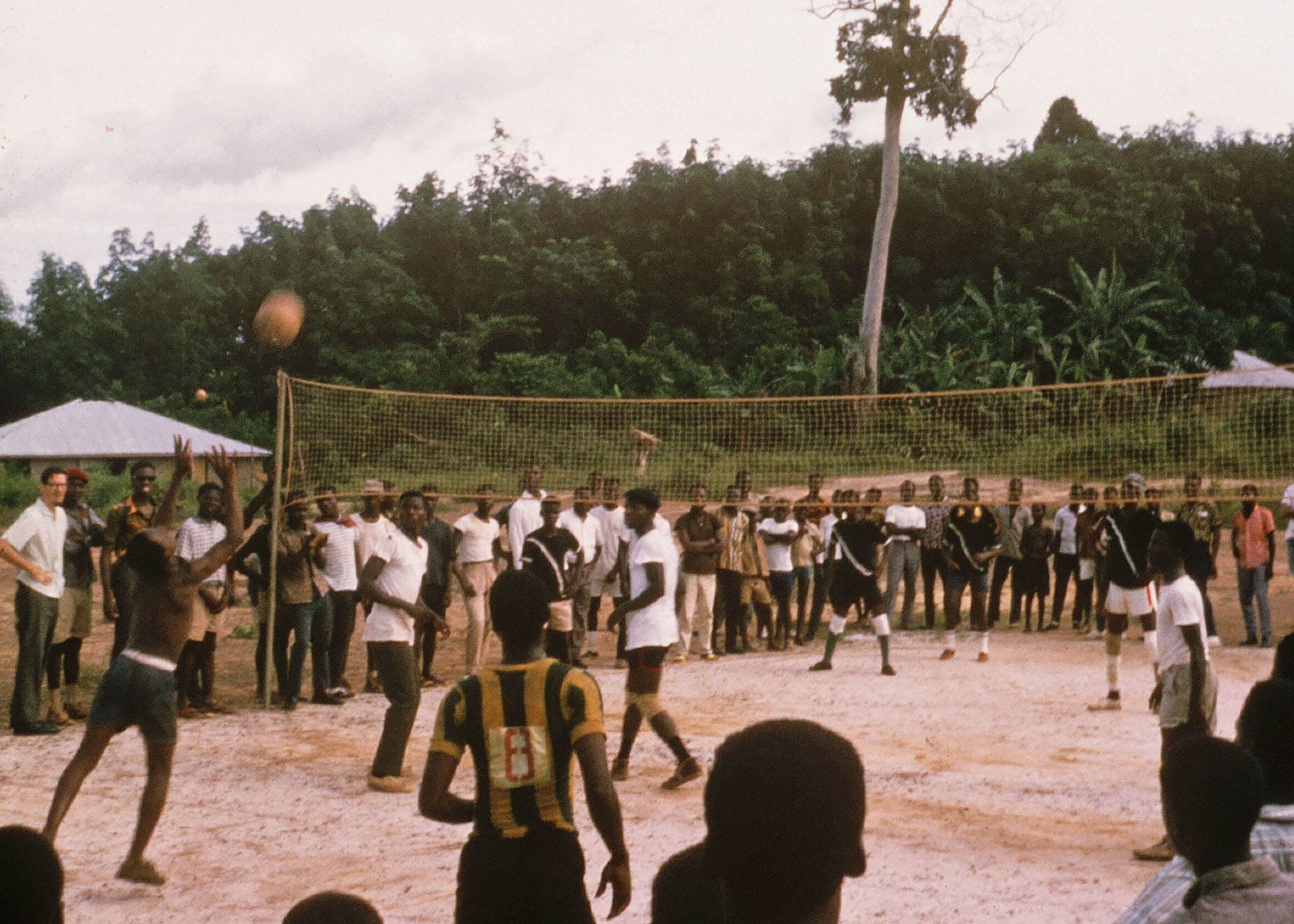
Good teaching involves capturing the imagination of students and encouraging them to become active participants in the classroom. Often it also involves participating in extracurricular activities. In this 1966 photo I am coaching Gboveh's High Scool volleyball team in Gbarnga, Liberia.

Good teaching involves capturing the imagination of students and encouraging them to become active participants in the classroom. Often it also involves participating in extracurricular activities. In this 1966 photo I am coaching Gboveh’s High School volleyball team in Gbarnga, Liberia.

I am not sure I earned the title of teacher at the elementary school, even though I put in the time and occupied the chair. I did learn that teaching was hard work and developed a life-long respect for elementary school teachers. I like to believe, had to believe, that I had some impact on the life of my students.

High school was different. From the beginning I was teaching subjects I truly enjoyed: World History, World Geography, African History and African Geography. I had never understood how history and geography could be boring. The best of my teachers had brought the subjects to life and made them exciting and relevant. I was determined to do the same for my students. We debated, did projects and made maps.

As strange as it may seem, my high school African History course was a first for Liberia. We travelled back in time starting with the exciting discoveries being made at Olduvai Gorge in East Africa about the early beginnings of humanity. We looked at the major West African kingdoms such as the Songhai and Mali. We explored the impacts of slavery, Colonialism, Islam and Christianity on Africa.

In geography we started locally and moved outward, from Gbarnga to Liberia to Africa and the world. Like their elementary school counterparts, the high school students found it almost impossible to accept that Liberia occupied such a small part of the African Continent. They became incensed, like it was my fault.

I wisely opted out of teaching Liberian History. It’s likely that I would have deviated from the Americo-Liberian version and been run out of the country. How could I teach the kids that Matilda Newport was someone they should idolize when her claim to fame was blasting their great-great-grandfathers with a cannon? I even had to be careful what I taught my World and African History classes. The students were bright and would draw their own conclusions.

“Gee Mr. Mekemson, the way the white minority in South Africa controls things is a lot like Americo Liberians control things here.”

“Oh really?’’ was about as far as I dared go in response. Things had a way of getting back to the authorities. Favors could be earned by reporting supposedly seditious comments to paranoid government officials and I had already earned enough black marks from the second grade reader and Boy’s appetite for Guinea Fowl.

But I didn’t stay out of trouble. During our second semester at Gboveh, I decided that creating a student government would help our students prepare for the future. I argued that the best way to prepare for democracy was to practice it. Everyone, including students, teachers and Mr. Bonal, agreed. We pulled together interested students, worked through developing by-laws, and set up elections. The students even decided they would organize and run for office on party tickets. Why not? It sounded like fun.

It never entered my mind that this relatively innocent gesture would strike terror in the hearts of Americo-Liberians. Once again, I had failed to comprehend just how paranoid the Liberian government was. Within 24 hours we had been accused by the Superintendent of Bong County of setting up competing political parties to the Government’s True Whig Party.

Student leaders were told to cease and desist or they would be arrested and thrown in jail. Mr. Bonal called me in and suggested I should start packing my bags. There was no way that he was prepared to take responsibility. I didn’t blame him. At a minimum he could lose his job… and that would be a stroll through the rainforest in comparison to rotting in a Liberian jail.

On one level, the government’s paranoid behavior made sense. The True Whig Party was how the Americo Liberians maintained control of the government and, more importantly, their privileged positions. The Kpelle Tribe was the largest tribe in Liberia and my students were becoming the elite of the tribe through education. A political party set up at high school might indeed morph into a political party of the Kpelle, given time.

So we eliminated the tickets and names. We were then allowed to proceed but I have no doubt we were closely monitored. I couldn’t help but wonder which of my students or fellow faculty members reported regularly to the Superintendent on my treasonable behavior.

Somewhat on the lighter side was the business of keeping the names of my students straight. It wasn’t that I had a lot to remember; there were five students in the 12th grade, ten in the 11th and sixteen in the 10th. Most teachers would kill for that student-teacher ratio. The problem was that the students changed their names frequently.

John Kennedy was big in Liberia at the time so there were several John Kennedys. Moses was also popular. Five trillion missionaries made sure of it. Kids would also take the name of whomever they were living with. Most of them had left villages and were trying to survive life in the big town. By adopting the name of the family taking care of them, they encouraged better care. Sam even told me he considered becoming Sam Mekemson, our African son. Finally, as students became more aware of their heritage, some switched back to their tribal names. What a unique thought that was.

Roll call was often a challenge. Students wouldn’t answer if I didn’t use their name of the moment. I finally adopted a rule that students could change their names but only at the beginning of a semester. It worked, sort of.

My school activities increased as time went on. I chaired the social studies department from the beginning. This wasn’t too significant since I was the social studies department and my primary responsibility involved keeping me in line. (Some misguided people claim that is not an easy task.) I also took on more work for Mr. Bonal and eventually came close to functioning in the role of vice principal. Daniel Goe had returned to the U.S. for further education.

Jo created a high school chorus that became so good the County Superintendent wanted her to create a Bong County Chorus. She gracefully declined. This was, after all, the same man who wanted to throw us in jail when Boy ate his Guinea Fowl and was ready to kick us out of the country because we dared to develop a student government.

Jo Ann directing her Gboveh High School chorus. At Berkeley, she had belonged to the University's elite Glee Club.

Jo Ann directing her Gboveh High School chorus. At Berkeley, she had belonged to the University’s elite Glee Club.

There were a multitude of other activities. I developed a library for the school by raiding departing PCVs book collections. For some reason I was roped into coaching the school’s football/soccer team, a task I quickly traded for volleyball.  (There were four-year olds in town who knew more about soccer than I did.)

I also created a local Boy Scout troop. I taught them how to tie knots and they took me for great jungle walks. Jo Ann contributed by sewing Patrol flags. All in all, we kept busy carrying out the same type of work being done by thousands of Peace Corps Volunteers around the world.

One of my many activities as a Peace Corps Volunteer was serving as a scout master. My scouts took me on outdoor adventures.
One of my many activities as a Peace Corps Volunteer was serving as a scout master. My scouts took me on outdoor adventures.

Treason

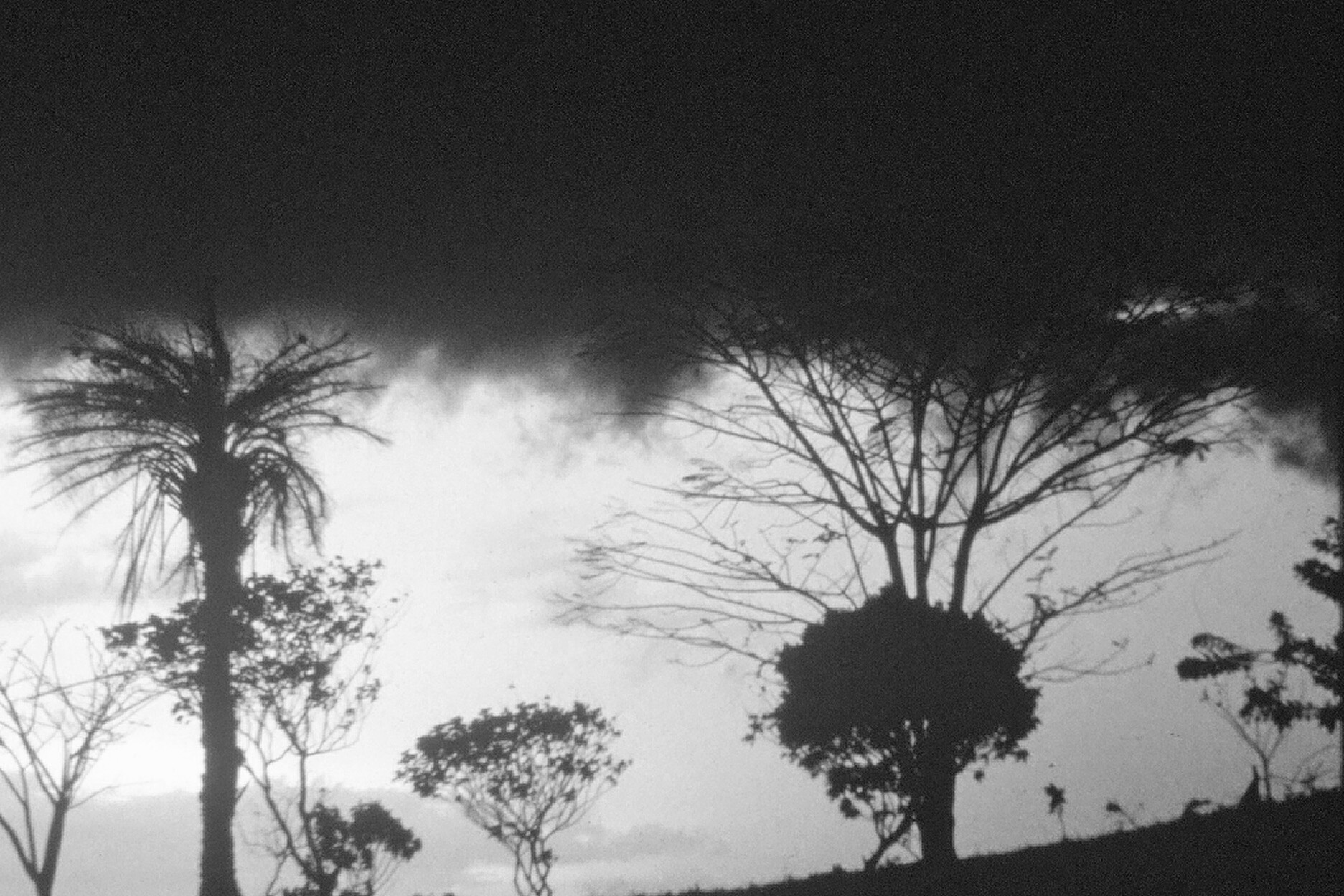
Gathering storm clouds over Liberia. I took this photo from my front porch in 1967. Looking back, it symbolizes for me the gathering political storm that would tear Liberia apart in the 70s, 80s and 90s.

Our job as teachers was to help bring Liberia’s tribal population into the twentieth century.

It was something of a first for the Country considering Americo-Liberians had worked hard for over a century to keep the tribal population in the darkest of the Dark Continent. Americo-Liberians were the descendents of freed slaves who had returned to Africa in the 1800s. They had promptly established themselves as the ruling elite.

It was a position they wished to maintain.

The times ‘they were a changing’ though. Independence was sweeping through Africa as one country after another threw off its colonial chains. Liberia’s tribal peoples were aware of what was happening in the world around them and the natives were getting restless.

The challenge to William Shadrach Tubman, who had been President since 1943, was to convince the tribal people they were getting a good deal, hold together a disparate people, make a show of it internationally, and still protect the privileges of the Americo-Liberians. Achieving the latter while moving forward on the first three was close to impossible.

It required an incredible balancing act at which Tubman was a master. The recipe for success involved one part substance, five parts fancy footwork and ten parts paranoia. The paranoia evolved from the fear that the tribal Liberians would take the process seriously and demand an equivalent portion or, God forbid, all of the goodies. Or possibly the nation would shatter apart.

As long as we behaved ourselves, we were part of the substance. The Liberian government made it quite clear that there would be grave consequences for anyone caught challenging the supremacy of the True Whig Party. For Liberians, the grave consequences could literally mean a hole in the ground. For us, it was a one-way ticket out of the country.

Don’t bother with stopping at Go or collecting $120 (our monthly salary).

Phil Weisberg in our back yard. Virgin tropical rainforest provides the backdrop.

One of our fellow Peace Corps Volunteers in Gbarnga, Phil Weisberg, actually tested the government’s resolve just prior to our arrival. Phil was a tall, gangly PCV who always looked like he had recently lost something of profound value.

He became upset whenever President Tubman or Vice President Tolbert came to Gbarnga and all of the school children in town were required to stand beside the road and cheer.

It didn’t matter if the luminary was one or two hours late, which he often was, or if it was pouring down rain, which it did half of the time, or if the sun was boiling hot, which it did the other half; the kids were expected to be there.

Teachers were required to go along. While most of the Volunteers managed to find something else to do, Phil’s personality was such that if his kids had to suffer he was going to be right out there suffering with them.

One day he found himself waiting an hour in the hot sun for the President’s wife and decided to protest. He did so by penning a sign that said in the best Liberian English, “MRS. TUBMAN, YOU ARE TOO LATE!”

Two hours later when her motorcade came tooling in to Gbarnga, Phil held up his sign and waved it about. Minutes later he found himself arrested and thrown into jail. This was not a piddling little kick your ass out of the country offense. One didn’t mess with the President’s wife.

Luckily Phil had the power of the American government behind him. Diplomatic maneuvering plus a personally written apology earned him a get out of jail free card. He was even allowed to stay in the country and finish up his term, provided of course he behaved.

I understood why Phil got in trouble. Waving a sign around criticizing the Presidents wife was not how to win friends and influence people among the Americo-Liberians. We all knew that the government was paranoid. Just how paranoid, I was to soon find out.

Peace Corps teachers were required to undertake a project during their first school vacation in Liberia. Given my experience at the elementary school, I decided do away with Dick, Jane and Spot and write a second grade reader. Why shouldn’t Liberian children have their own readers that reflected their own culture? Peace Corps agreed.

I jumped in. There were teaching guides to review, people to interview, folk tales to gather, and stories to write, rewrite and finish in one syllable English.

Eventually I finished the reader and shipped it off to Monrovia. Peace Corps was excited about the book and assigned an editor and illustrator to work with me. I would soon be a published author. Not. WAWA (a term coined by experienced African hands that stood for West Africa Wins Again) struck.

The book wouldn’t be published at all.

I had made the mistake of assuming the government would support a reader that featured Liberian children and African Folk Tales instead of Dick, Jane and Spot. What I had failed to understand was just how paranoid the Americo-Liberians were about maintaining power.

Apparently the book was a highly subversive tract and I was a dangerous radical. Liberian children would learn about their native heritage and rebel. Another misstep and I would be booted out of the country… or worse.

My next criminal activity was to organize a student government at Gboveh High School where I was taught African and World History. I decided the exercise would help our students prepare for the future and give them skills they would need in helping to govern their country.

Everyone, including students, teachers and Mr. Bonal, agreed. We pulled together interested students, worked through developing by-laws and set up elections.

Then the kids decided they would organize and run for office on party tickets. Why not? It sounded like fun. To provide identification for each ticket, they adopted names. It never entered my mind that this gesture would strike terror in the hearts of Americo-Liberians.

Within 24 hours we had been accused by the Superintendent (governor) of Bong County of setting up competing political parties to the Government’s True Whig Party. Student leaders were told to cease and desist or they would be arrested and thrown in jail.

I was told indirectly that I should start packing my bags.

So we eliminated the tickets and names. We were then allowed to proceed but I have no doubt we were closely monitored. I couldn’t help but wonder which of my students or fellow faculty members reported regularly to the Superintendent on my treasonable behavior.

The senior class. Yes, there were only five students in the class! Mamadee Wattee, standing on my right with a brown shirt and tie, was the student body president. He is also featured in my blog about the Lightning Man. Later he would move to the US and become an elementary school principal.