
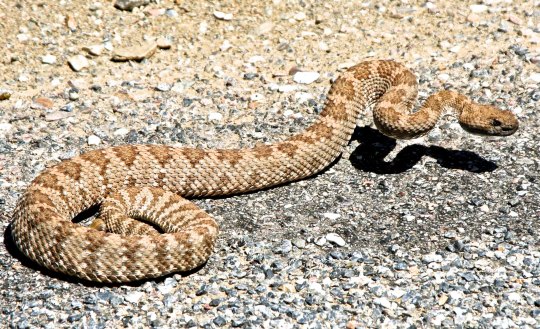
I’m convinced that a deep fear of snakes is programmed into our brains. It’s an instinctual reaction that suggests we vacate the premises— a trait that we share with other members of the animal kingdom. I was playing with my cat Rasputin in Africa once when I rolled a spring from our screen door at him. I thought he would view the spring as a toy and pounce on it. Instead he jumped four feet into the air and ended up six feet away. Liberians view all snakes as poisonous and Rasputin was 100% Liberian when it came to snakes. He had quickly determined that the spring was a snake and leapt into action— literally.
I’ve pulled a Rasputin myself a few times— especially when I am out in the woods and hear the distinctive buzz of a rattlesnake that I can’t see. It’s guaranteed to increase your heart rate. Once I stepped on a log and it started buzzing. I ended up 30 feet down the trail in one prodigious leap. (Slight exaggeration.) Rasputin would have been proud of me. Had a track coach seen me, I would have been entered in the Olympics.
Our Christian heritage in the West added to our instinctual dislike of our slithery brethren. Everyone knows the Biblical tale of how Eve was seduced into sneaking a snack from a snake and ended up being banned from Eden forever along with her significant other, Adam. The snake has had a bad rap ever since. Eve and Adam didn’t come out all that well either, especially Eve. I’ve always thought that God overacted when they broke his commandment that ignorance is bliss. A little knowledge and out came the fig leaf, okay, but was the flaming sword really necessary.
Ancient cultures have had a different perspective on snakes. The fact that they shed their skin annually suggested immortality. Your old body isn’t working quite the way it should? Fine. Get a new one. (This is particularly attractive to newly-turned 77-year olds.) As a result, snakes were considered sacred. If you’ve visited ancient sites in Mexico and Central America, the odds are you are familiar with Quetzalcóatl, the plumed serpent, the Toltec/Aztec/Mayan god of the wind and lots of other things.

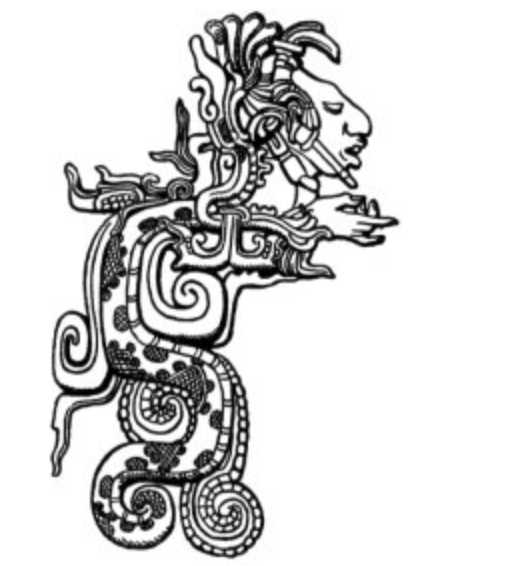
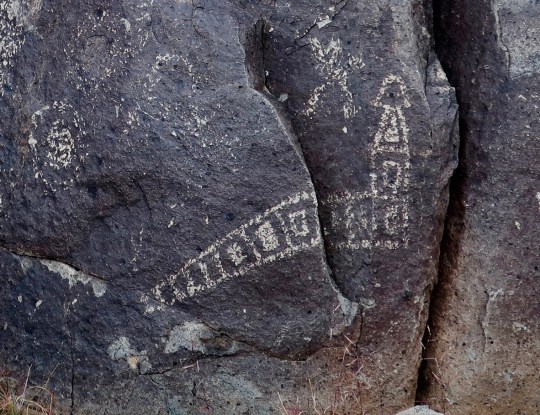
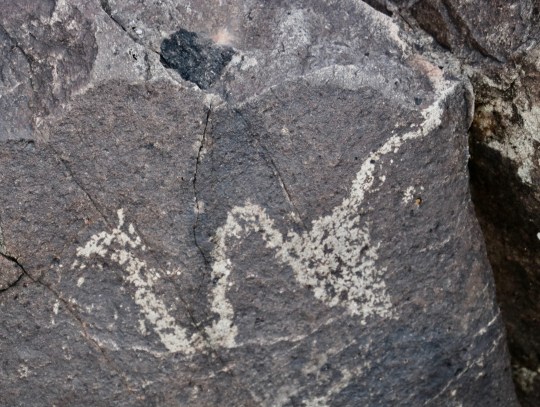
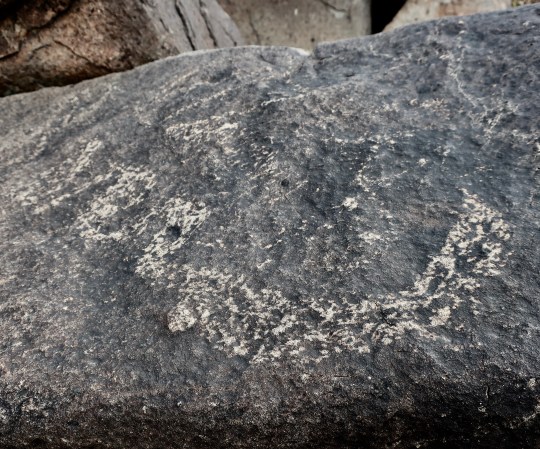
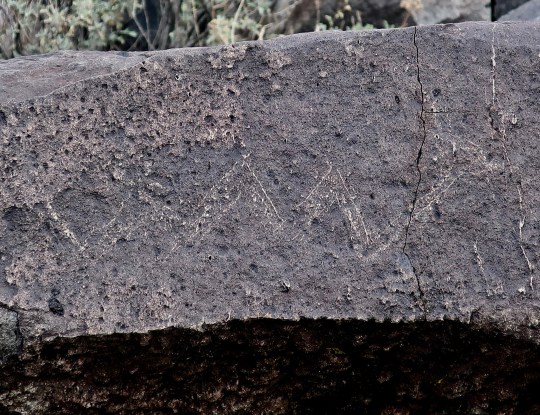
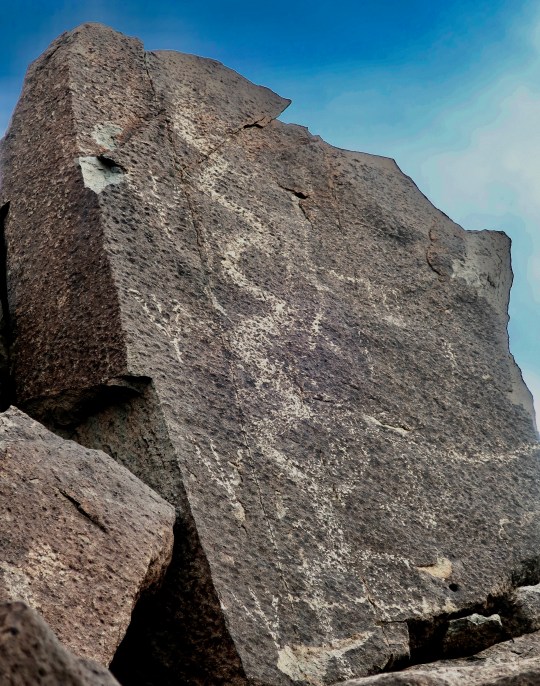
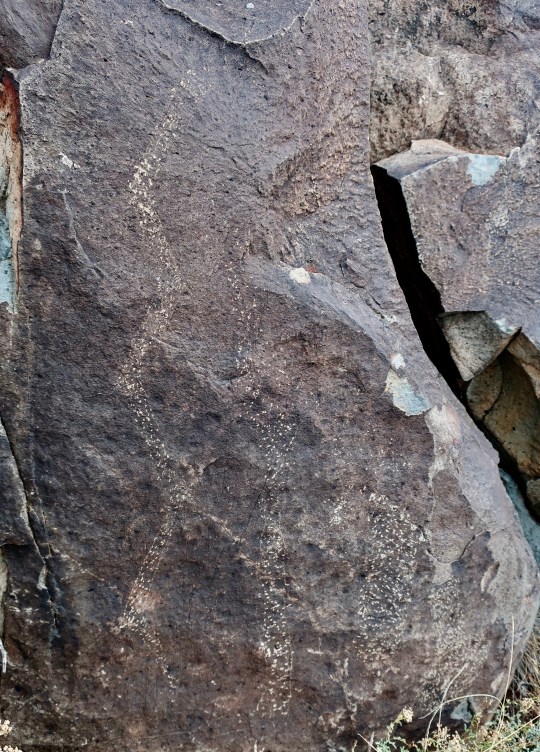
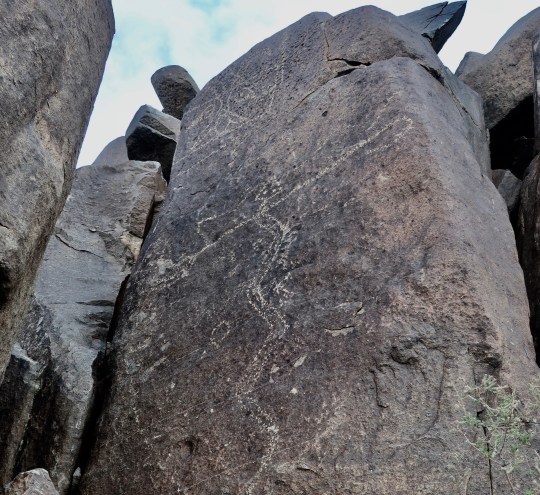
Given his importance to these cultures, it isn’t surprising that Quetzalcoatl made his way north and became part of the mythology of early people living in the Southwest. We found a number of petroglyph serpents crawling over the rocks of Three Rivers. I should point out here that the snakes weren’t just any old snakes. They were rattlesnakes! I’d also like to report that Peggy was quite pleased that we didn’t find any live representatives of the clan among the rocks.


NEXT POSTS: Not exactly sure what I will focus on, but it will be petroglyphs for another week.
 Wandering through Time and Place