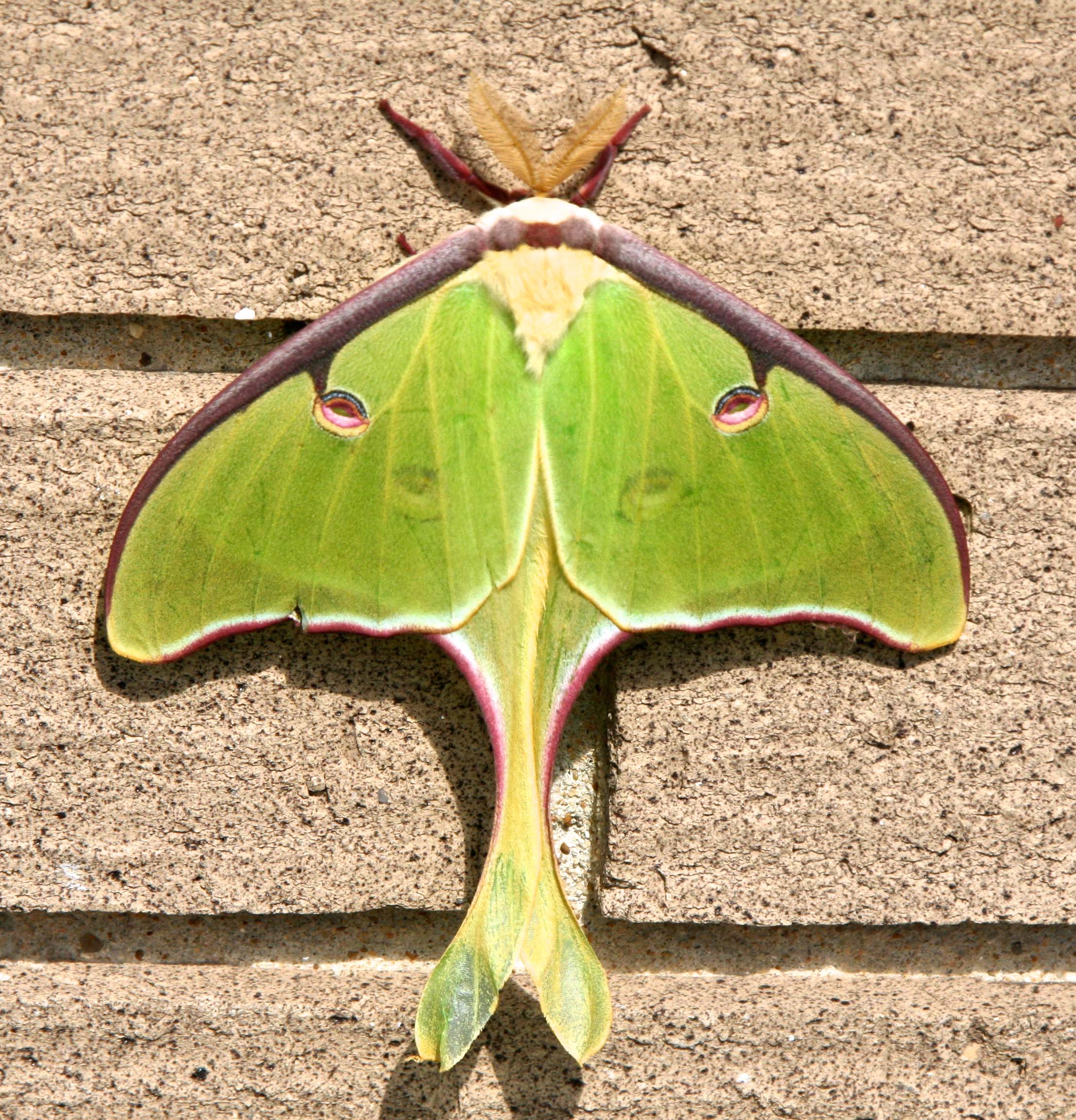
Peggy and I were driving down the Natchez Trace when we came on this beautiful Luna Moth with a wingspan of about four inches. It was one of many treasures we found along the way. (Photo by Peggy Mekemson.)
It’s Wednesday, time to scroll down through my iPhoto and find photos to feature. This time, my finger landed on the Natchez Trace, one of America’s premier drives— or bicycle trips. If you are ever wandering through Mississippi, Alabama or Tennessee, be sure to include it as part of your itinerary.
Large game animals, including buffalo, first used sections of what would become known as the Natchez Trace. Later it served as a major trade route for Native Americans. By the early 1800s, the Trace had been modified by a young United States into a 450-mile transportation corridor between Nashville, Tennessee and Natchez, Mississippi. Soldiers, highwaymen and missionaries travelled the route, but Kaintucks were its primary users.
Kaintucks were rough frontiersmen from Kentucky who operated flatboats on the Ohio and Mississippi Rivers. They would load their boats with merchandise in Nashville and then oar down the Mississippi to Natchez where they would sell their goods for a handsome profit. Getting the money home was the challenge. Rowing up the Mississippi was not an option. Kaintucks were faced with the 450-mile hike back up the Trace— and they were faced with a multitude of folks who wanted to separate them from their newfound wealth.
First came the gauntlet of booze, prostitutes, gamblers, and gangsters in ‘Natchez Under the Hill.’ Assuming the Kaintucks got out of town with fortune intact, they became fair game for highwaymen. It was open season on the rivermen and their cash. For this reason, the Natchez Trace became known as the Devil’s Backbone. Today the Trace is a beautiful National Parkway with no commercial traffic. I’ve driven it several times, and once, I bicycled 370 miles of it from Natchez into southern Tennessee.

A number of lakes and waterways are found along the Trace. We took this photo from our campsite. We also watched a beaver working while relaxing in our camp chairs.

I found this grass growing in the lake the next morning and enjoyed its reflection.
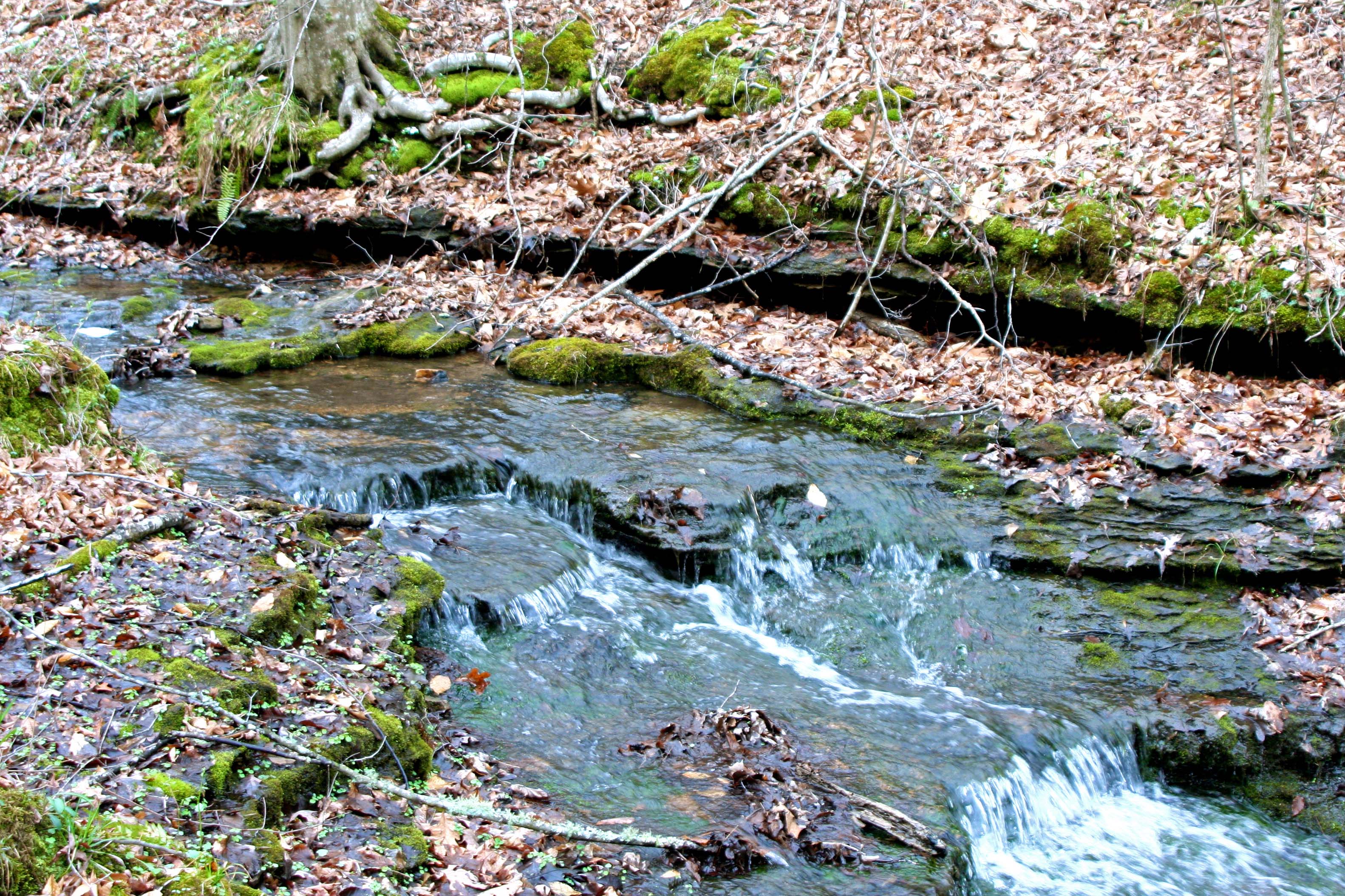
Numerous trails lead off of the Trace, often leading to babbling brooks.

And lots of fungi, including this shelf fungus, which decorated a rotting log.

Miles and miles of dogwood bloom along the Natchez Trace in Spring.

Peggy and I also found these colorful violets.

Meriwether Lewis of Lewis and Clark was found dead in a house on the Trace. To this day it is debated as to whether he was killed or committed suicide while under the influence of opium. This monument stands over his grave.
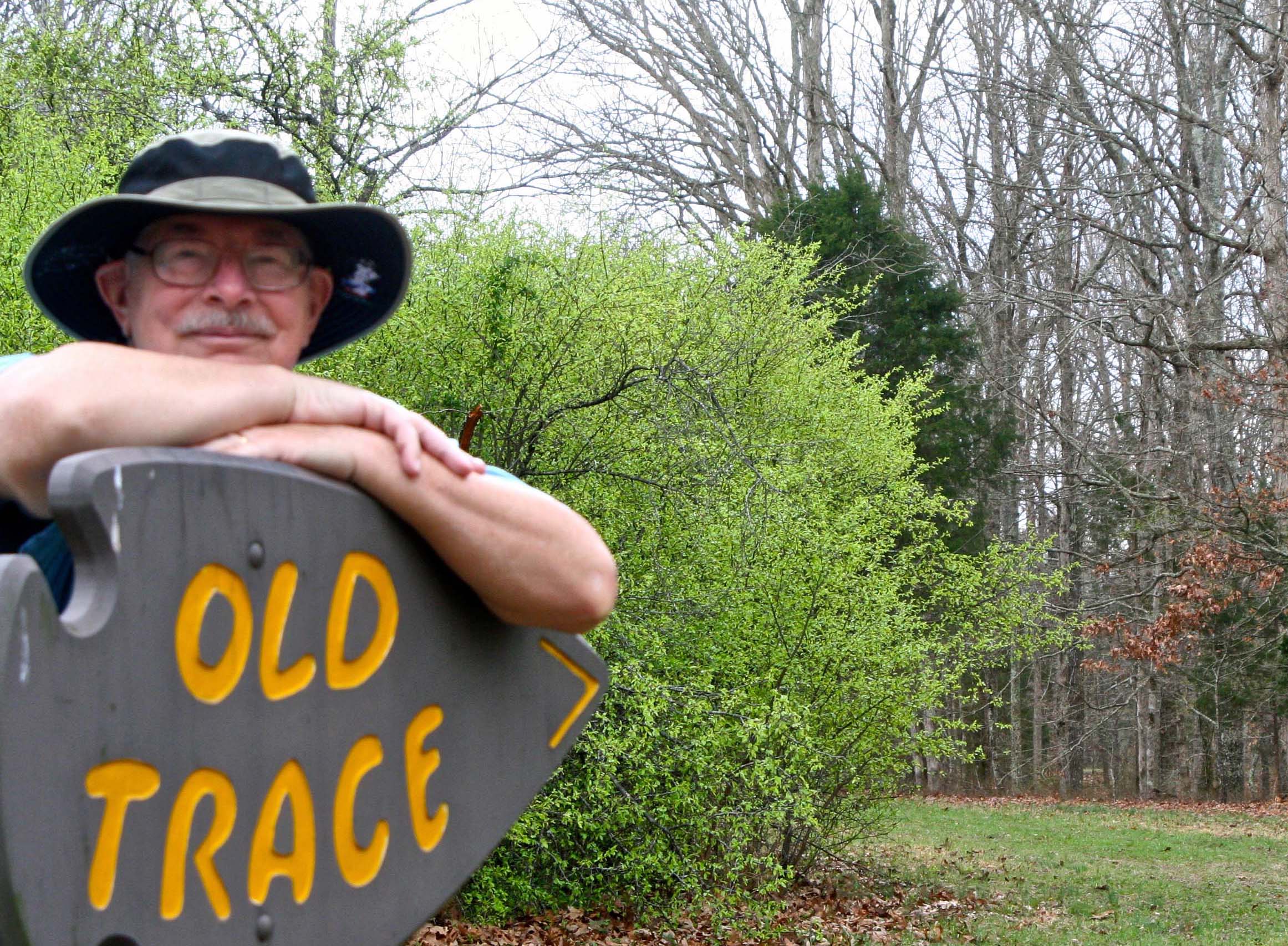
I wondered if Peggy had some type of message in mind when she asked me to pose for this photo. The sign is pointing toward portions of the historical Trace that are still found along the Parkway. (Photo by Peggy Mekemson.)
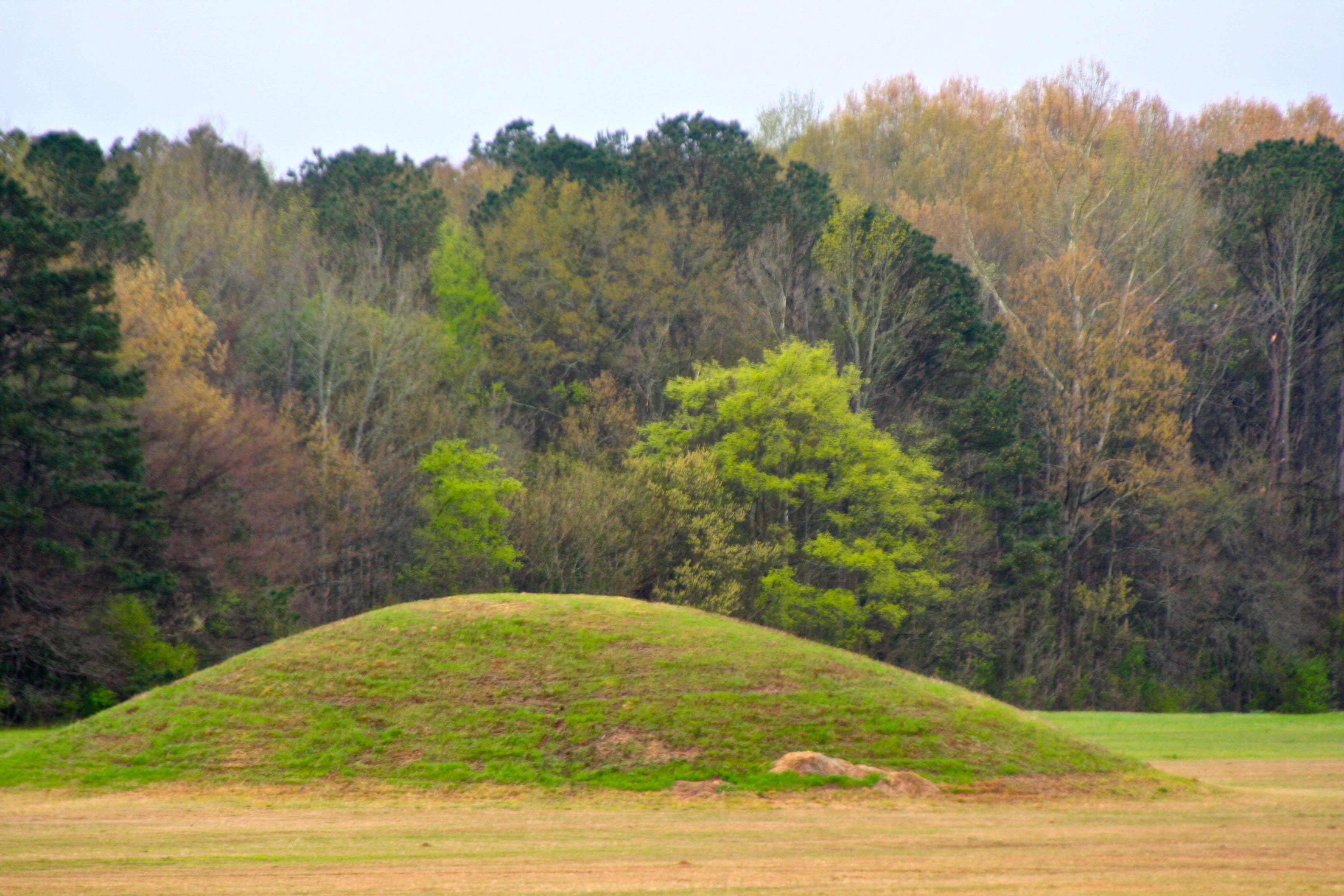
The Phar Mounds located north of Tupelo, Mississippi were left behind by nomadic Native Americans somewhere between 1-200 AD as burial mounds.
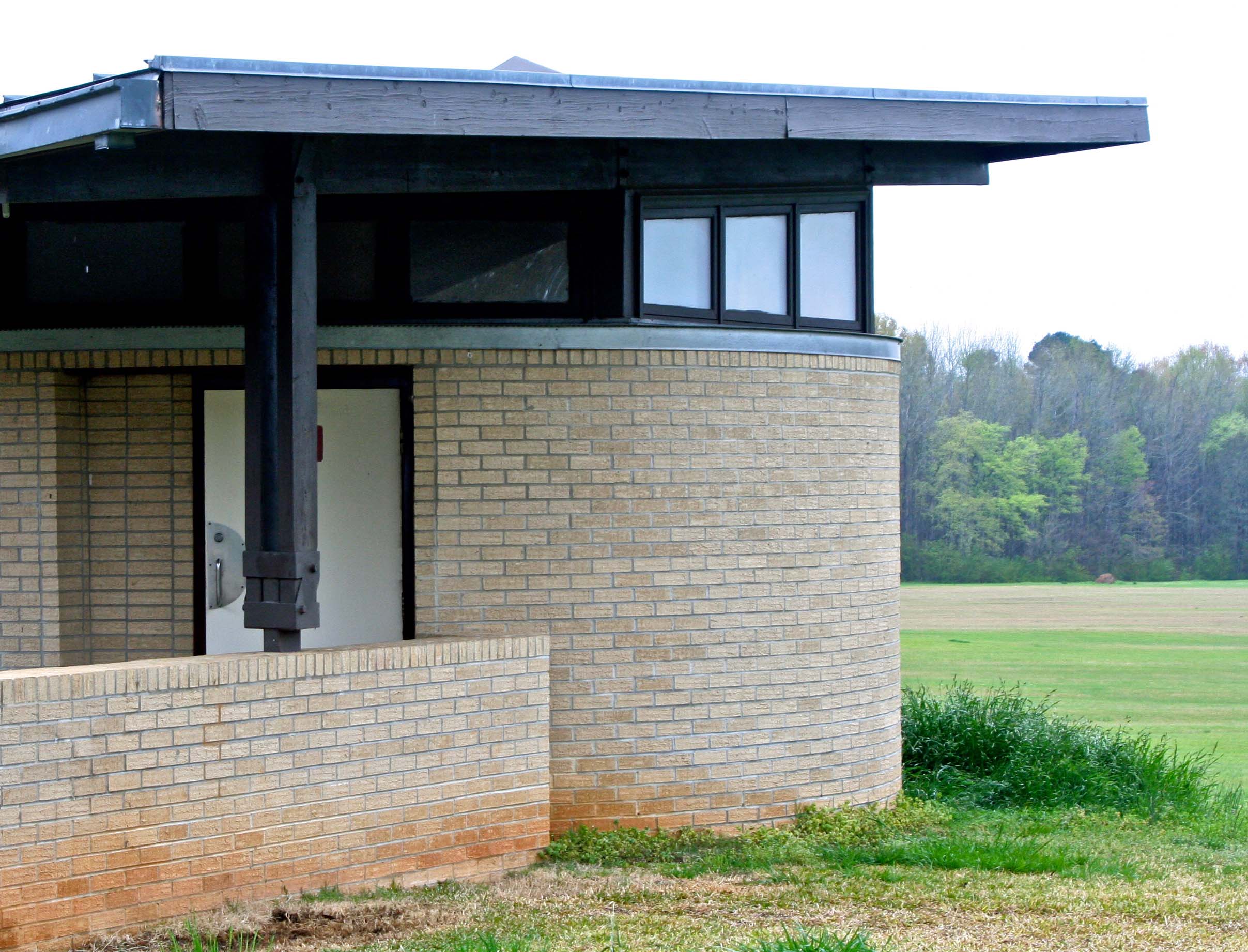
These are the brick restrooms at Phar Mounds. I’ve included them because they are my favorite restrooms in the whole world, bar none. I hid out in them when I was on my bike trip around North America and a tornado ripped apart the woods a quarter of a mile away. My bike hid with me.
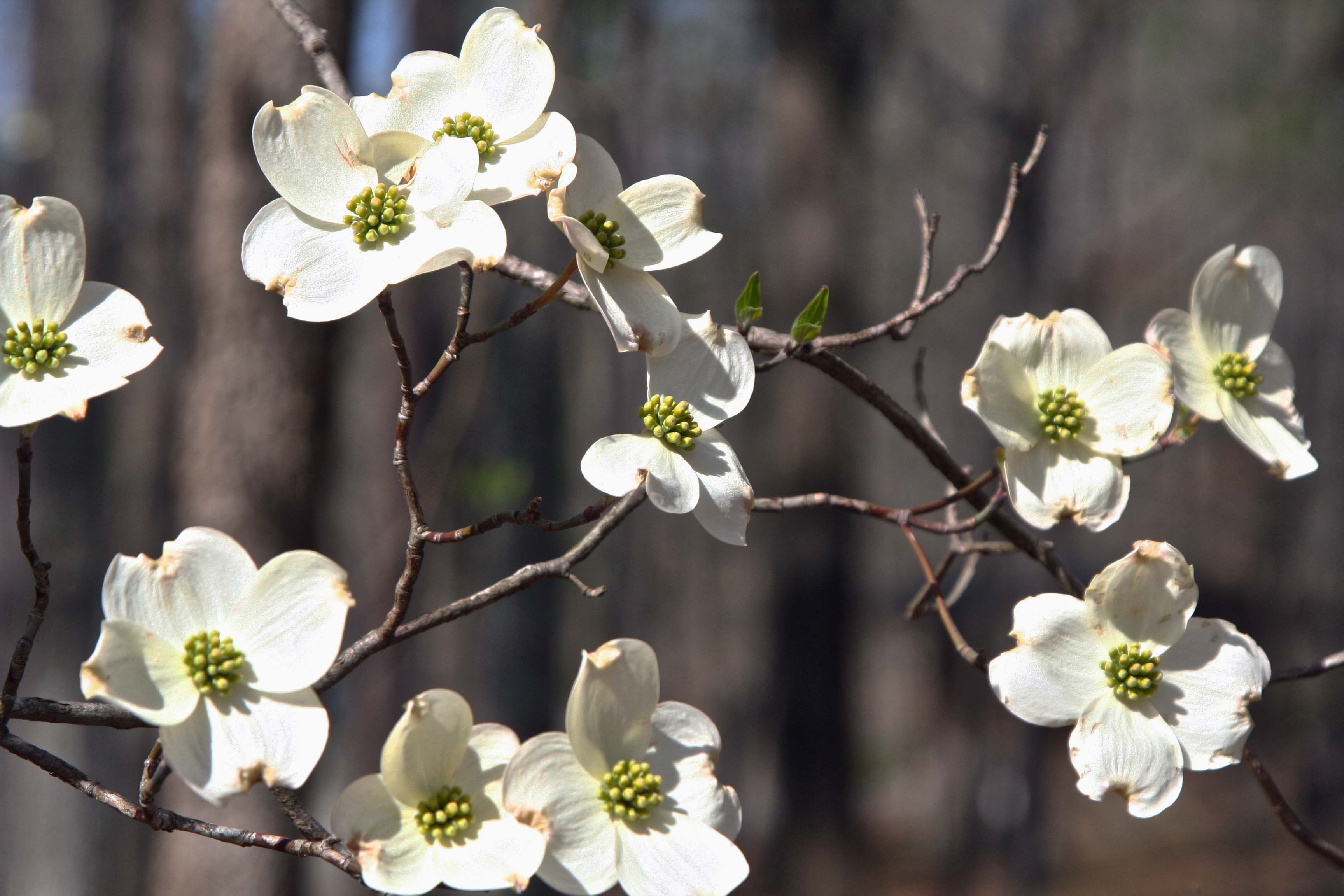
I’ll conclude with a final photo of dogwood. NEXT BLOG: The Friday Essay: Just possibly a ghost is involved.
 Wandering through Time and Place