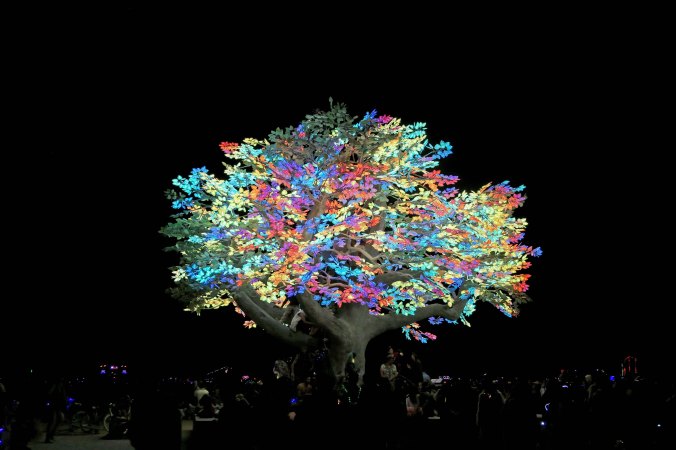
The Tree of Ténéré with its 15,000 leaves lit up at night by LED lights that changed color.
It seems strange to talk about the trees in the Black Rock Desert. The Playa stretches out to the distant mountains, flat and featureless, immense in its nothingness. But this year’s theme, Radical Ritual, encouraged a number of artists to imagine trees in the desert. And they imagined some very interesting ones. They ranged from Methuselah, a 4,848-year old Bristle Cone Pine that lives in the White Mountains of California, 325 miles south of Black Rock City, to the Tree of Ténéré, a solitary acacia that was once described as the most isolated tree on earth and lived some 7000 miles from Burning Man in the vast Sahara Desert of northern Niger.
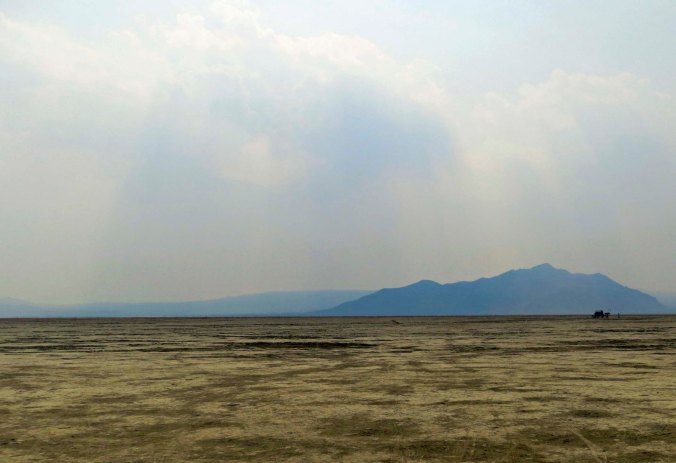
Looking out from Burning Man across the treeless Black Rock Desert playa.

This close up of Ténéré provides a view that shows some of the 175,000 LED lights that decorated the tree. Artists and technologists from around the world were invited to help develop the software that controlled the lighting and provided ever-changing light shows. The tree was also designed for climbing, capable of accommodating up to 60 climbers at one time.
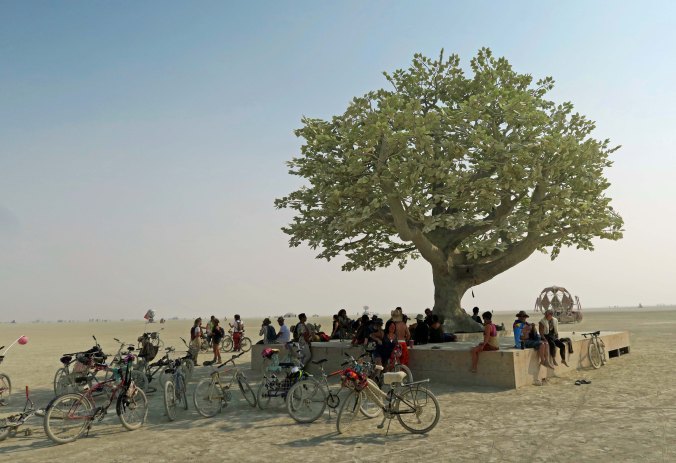
The Tree of Ténéré on the Playa provided shade from the burning sun for Burners in much the same way its namesake did in the Sahara Desert for Tuareg wanderers where the tree stood for decades by itself in hundreds of square miles.
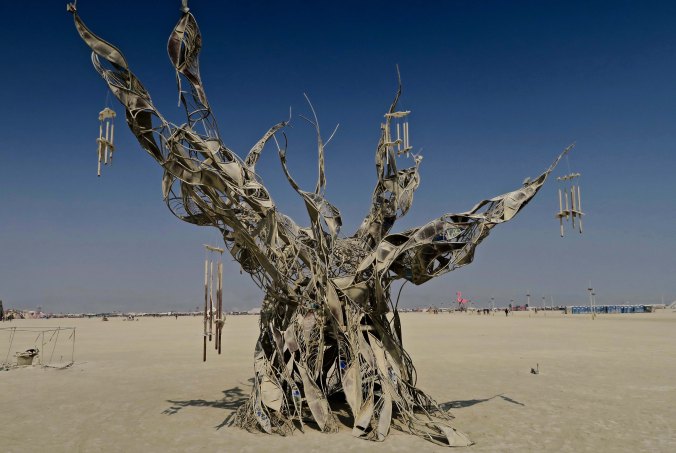
Methuselah of Biblical fame, was said to have lived to the ripe old age of 969, passing away just a few weeks before the Great Flood that his grandson built the Ark for. Reputedly, the oldest man ever, he was a mere youngster in comparison to Methuselah the Bristle Cone Pine, which, up until recently, was considered the oldest tree in existence. (A 5,000 year old Bristle Cone Pine has been found.)
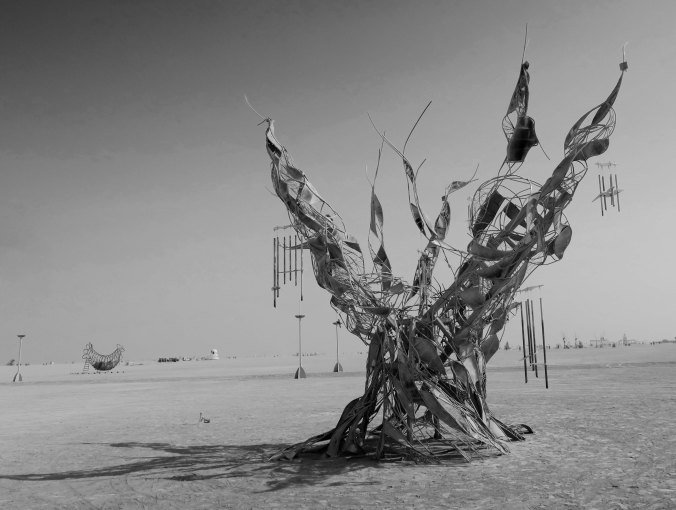
A different view rendered in black and white. The twisted metal of the tree reflects the twisted wood of the actual tree. Peggy and I have visited Methuselah in its natural setting in the White Mountains and wandered among the ancient trees in a radical ritual of our own.
Sysimetsä was a poignant reminder of the forest fires that have been plaguing the West for the past several years. Put together by artists from Lake County in Northern California, it was a memorial to a fire that had destroyed their county and the Raven’s Landing Art Space in 2015. As I walked through the display at Burning Man, fires were threatening my home in Southern Oregon. As I write today, the terrible conflagration that has destroyed so much of California’s beautiful wine country and taken numerous lives, still rages.
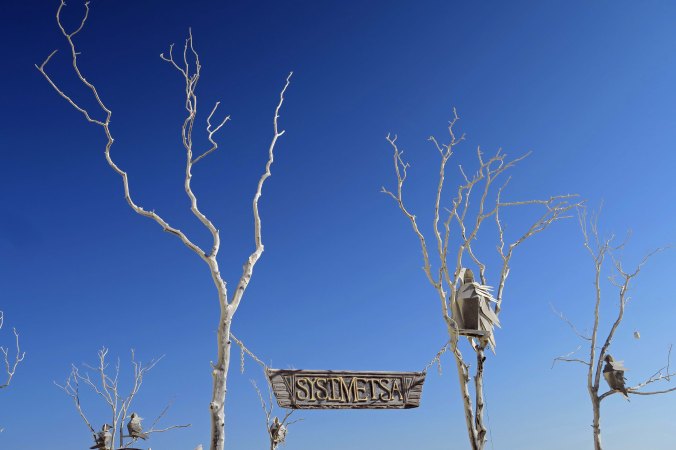
Trees left naked by the Lake County fire were brought to Burning Man to create this sculpture. Ravens, representing the Raven’s Landing Art Space that was burned down by the fire, roost in the trees.
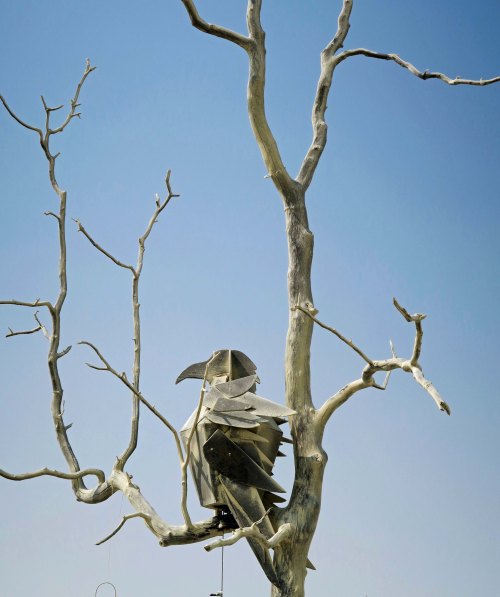
A close-up.
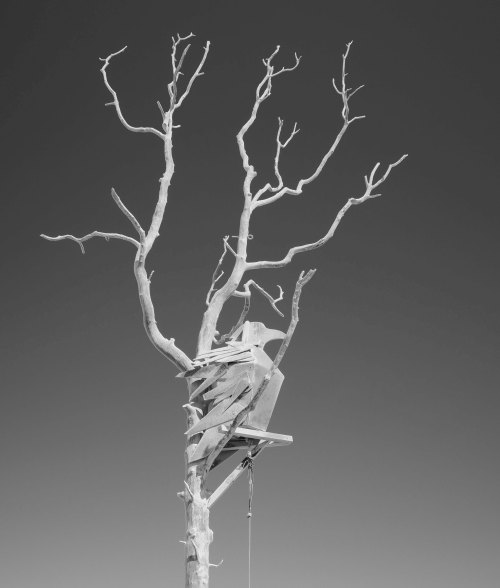
Rendered in black and white by me, I wanted to capture the bleakness of areas that have been burned.

The center piece of the Sysimetsä sculpture represented a different message, life rising out of the flames and the ashes, being regenerated by both nature and humans.
Malcolm Tibbett’s’, Wood Carver’s Dream, reminded me of the beauty of wood. This gracefully curving art piece is made up of wood from a number of different tree species reflecting their different colors, textures and grains. As Tibbetts notes on his Web site, “Segmented woodturning is an art form with few limitations. By combining components, I can create just about any shape or size and by arranging different wood species, I can create just about any type of surface design. There are few art forms with this much freedom.”
Tibbetts’ creation seen from a distance. Wind is whipping up a dust storm on the Playa, reminding me that it is time to head back to camp.

A closer look.
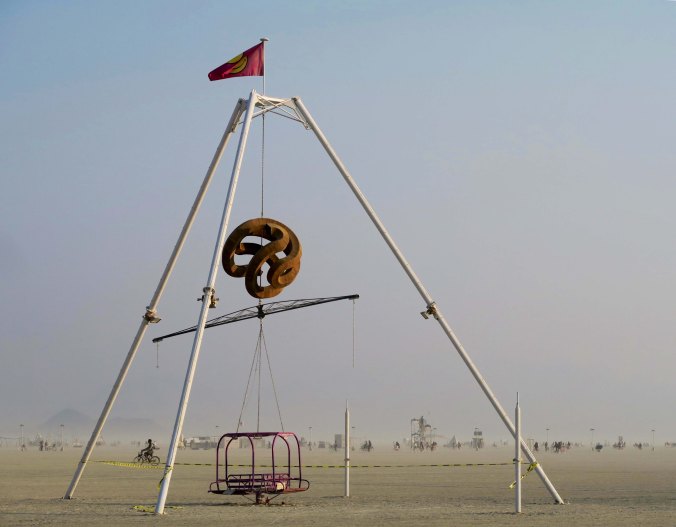
Machina Naturale by Dave Boyer from Reno, Nevada brings us forward in time to a kinetic wind sculpture that resembles a tree and captures the wind, mimicking, or bringing together our natural and mechanical worlds.

Machina Naturale with its tree-like look and kinetic wind sculpture.

Looking up.
It isn’t hard for me to imagine trees as being sacred, to understand how they have been involved in humankind’s rituals down through the ages. The heat from their fires provided warmth, a means of cooking, and a way to keep wild animals at bay on dark nights for ancient peoples. Spreading limbs and leaves provided shelter from rain, snow and hail— and the wood itself was used for making shelters. Many trees provided food necessary for survival. And finally, there is the awe that the size and beauty of trees can bring.
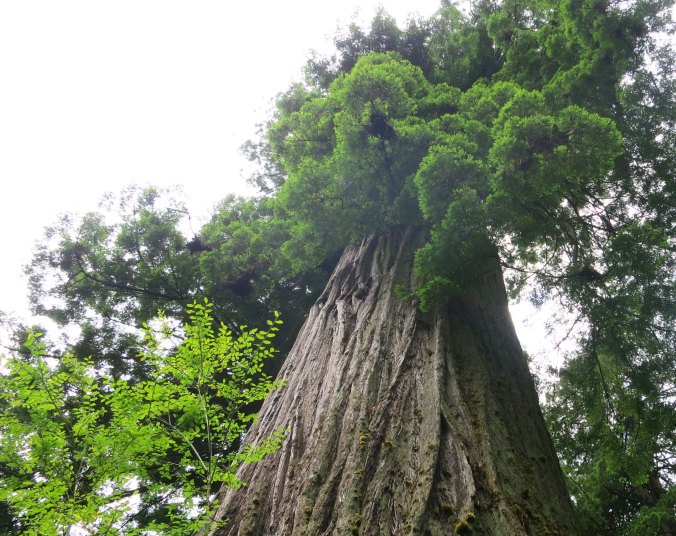
How could one not feel awe when confronted by giant redwoods in their cathedral-like setting. This beauty is a couple of hours away from our home.

Peggy stands next to one of the giants.
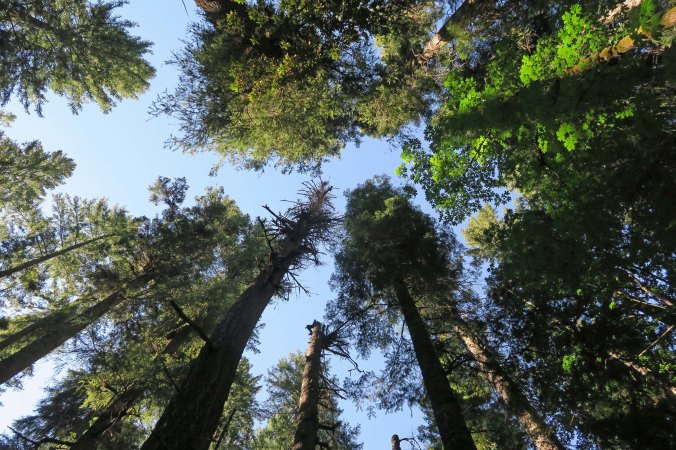
Closer to home, we found our own sacred cove of virgin timber while out backpacking this summer, about eight miles from where we live.
 Wandering through Time and Place