
Whenever people think of ancient Egypt, one of the first thoughts that pops into to their minds is the three pyramids of Giza: The Great Pyramid, the Pyramid of Khafre, and the Pyramid of Menkaure, along with the Great Sphinx. They were in built Egypt’s early history during the Fourth Dynasty of the Old Kingdom between 2600 and 2500 BC and are the main focus of my next Egypt post— along with camels.

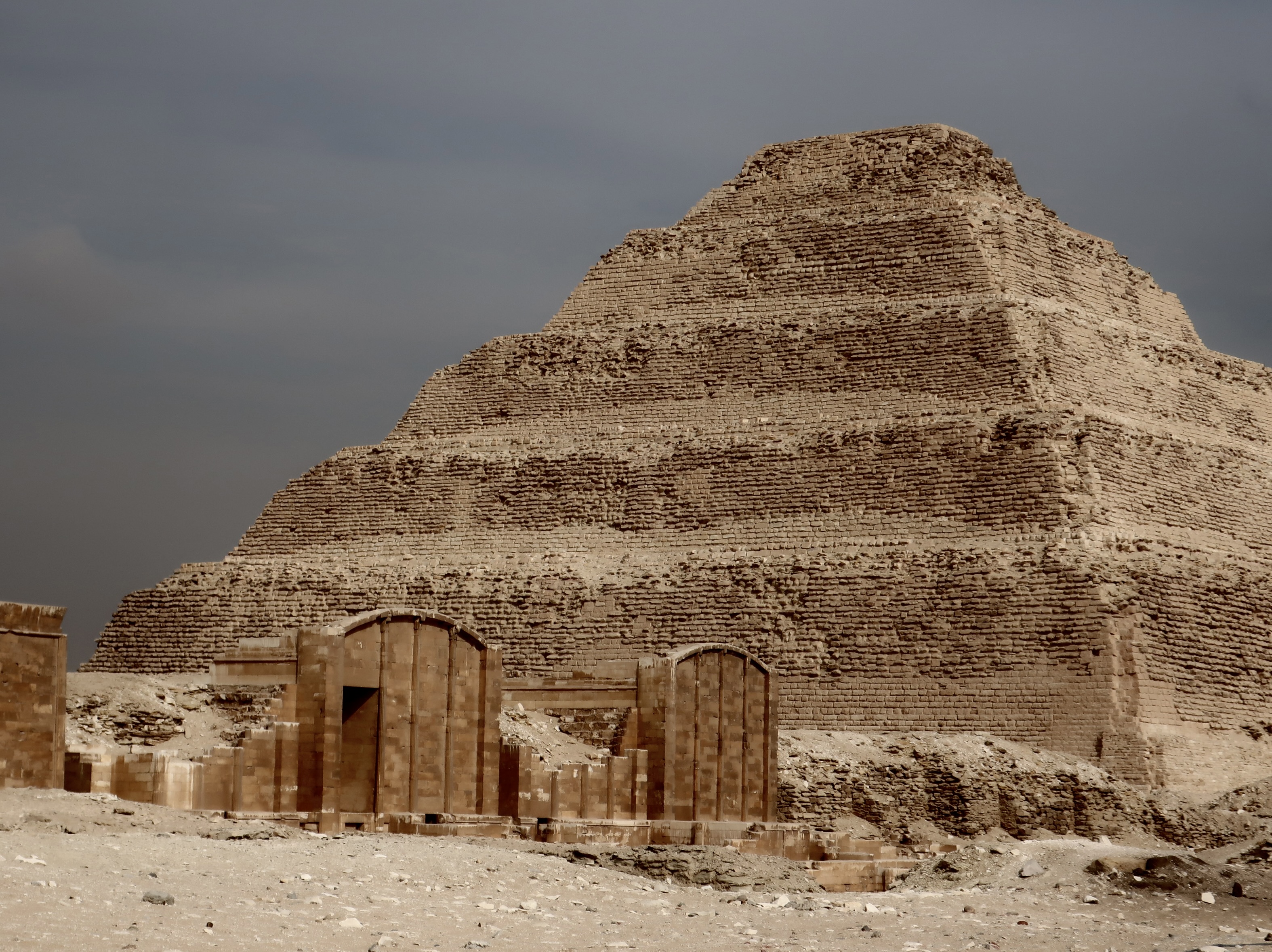
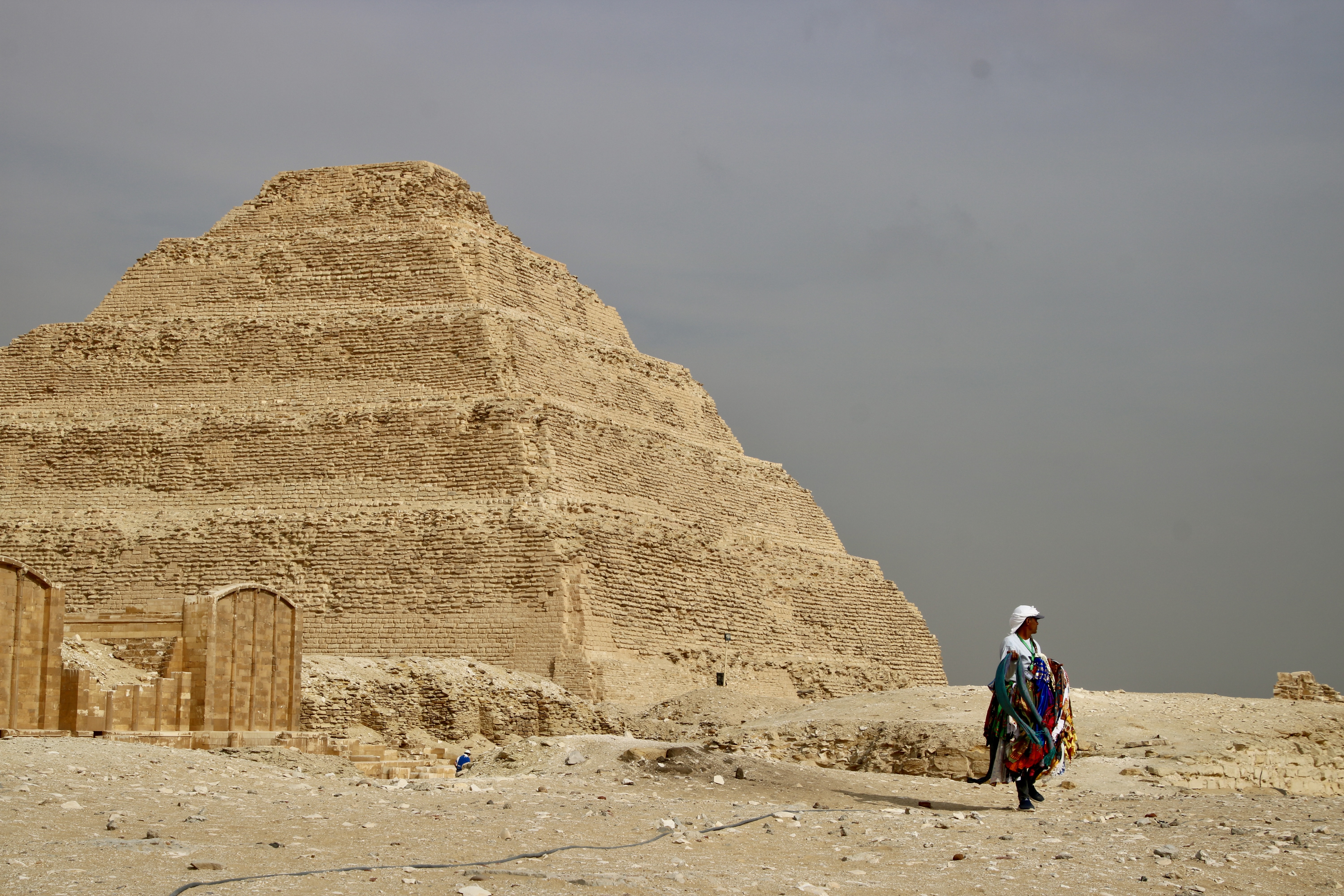
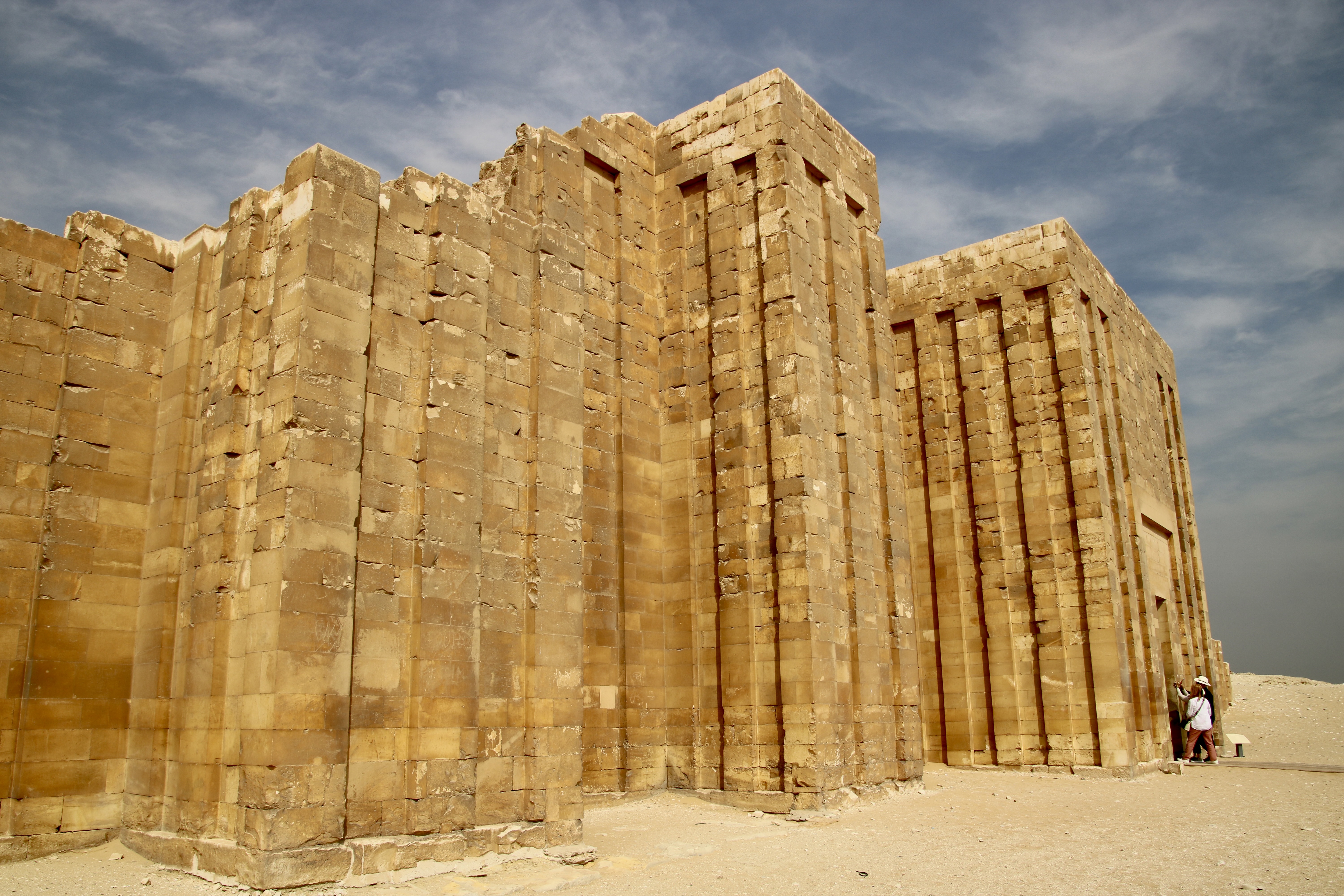
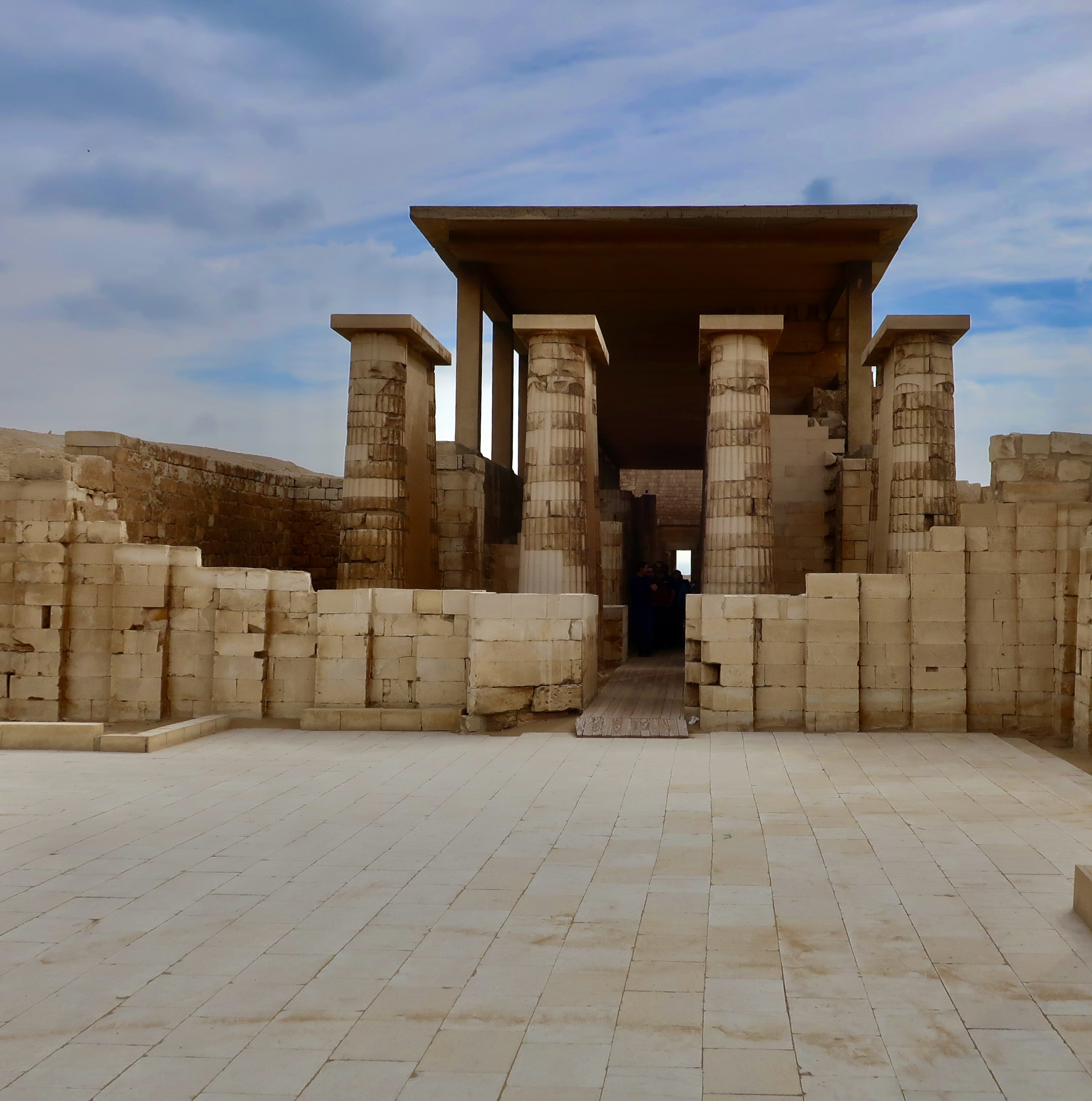
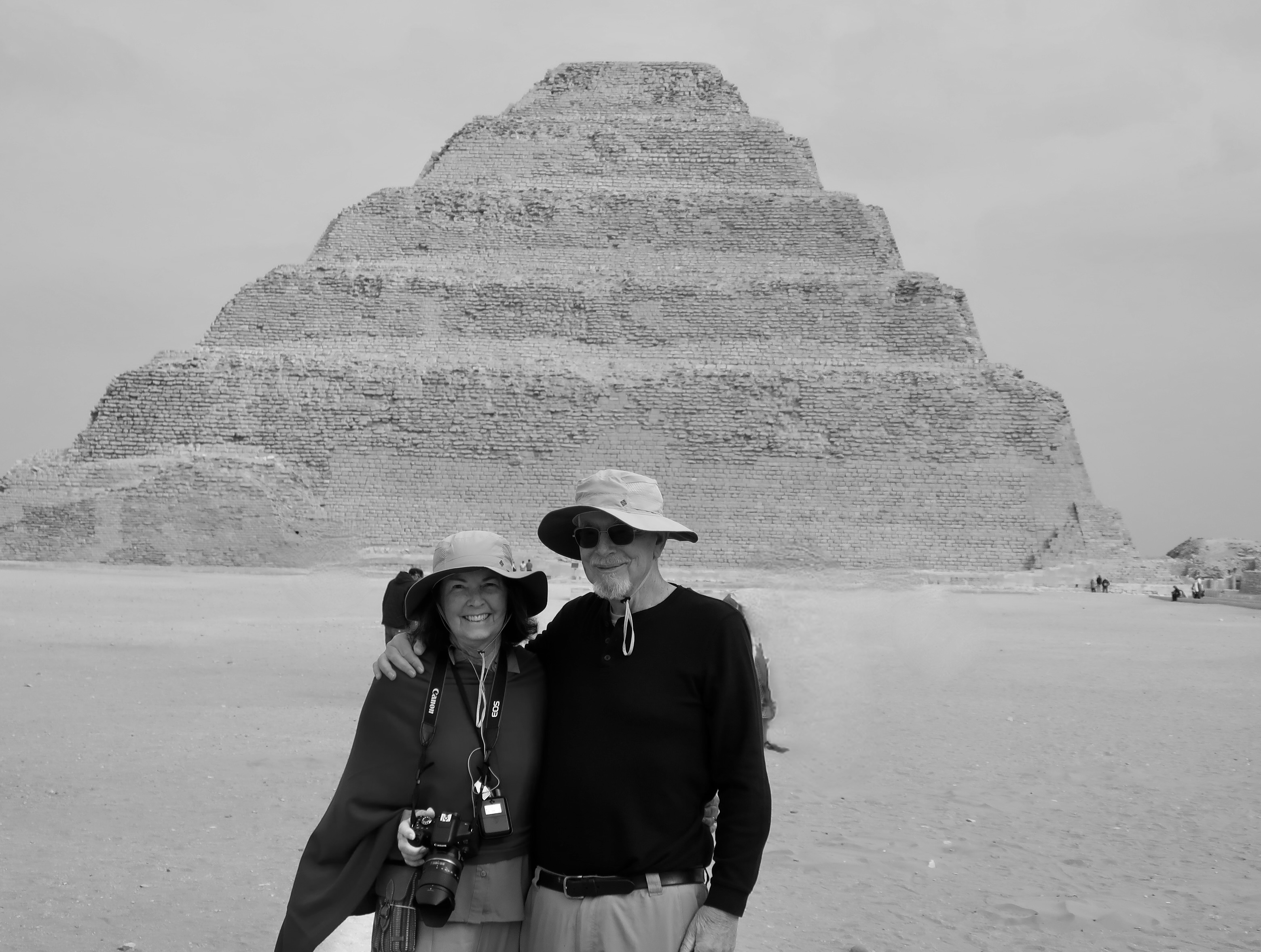
But today, I want to go back to their precursor, the Step Pyramid of the Pharoah Djoser, located in the Saqqara necropolis outside of Memphis. Built in the 27th Century BCE (2700-2600) during Egypt’s Third Dynasty, it is the oldest, complete stone building complex known in history. Its architect was Djoser’s brilliant vizier, Imhotep. If you ever watched the Mummy movie series, he was cast as the bad guy, intent on world domination and allergic to cats. But to ancient Egyptians he was a good guy, so good that he was eventually (with eventually being 2000 years Egypt time) given the status of a god complete with a portfolio that included major medical responsibilities.
Imhotep’s first layer of the pyramid was based on a mastaba, or eternal house, an ancient Egyptian tomb that was built as a one story, rectangular mud brick building with inward sloping sides where royalty from Egypt’s Early Dynastic and Old Kingdom period were buried. He then proceeded to build a series of five mastaba-like structures on top of the first one with each being smaller, thus creating the pyramid concept. The structure stands at 203 feet tall with a base of 410 by 357 feet. A maze like series of tunnels run under the pyramid that were used for the burial of Djoser, royal family members, and grave goods from royal ancestors. The latter included over 40,000 vessels.


Next Post: We will travel back to South Dakota and the incredibly ambitious stone carving of Chief Crazy Horse. After 75 years, it may be a quarter finished.
 Wandering through Time and Place