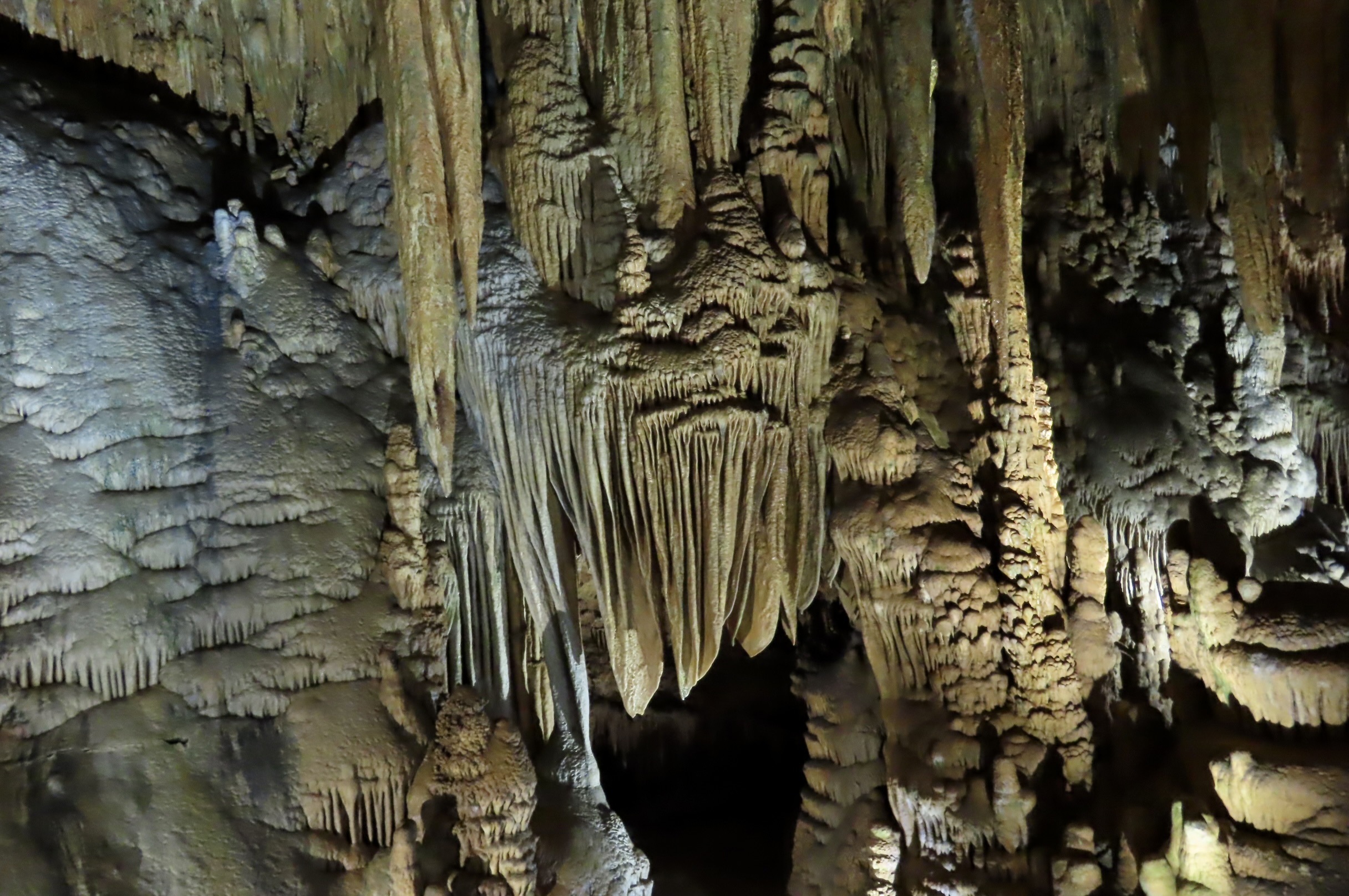
Luray Caverns, A Geological Fantasy Land Considered the Best Cavern Experience on the East Coast of America

While my wife Peggy was off cruising through the Caribbean with our daughter Tasha and visiting Mayan ruins on a mother-daughter excursion, I traveled south some 60 miles from our home near Leesburg, Virginia to the small town of Luray in the ShenandoahValley. My motel was in an ideal location. A 15 minute drive east took me onto Skyline Drive with its fantastic fall views of Shenandoah National Park. A 15 minute drive west took me to Luray Caverns. I’ve already featured the fall colors of the Blue Ridge Mountains. Today, I am going underground to focus on the colors and mind-blowing rock structures that are found in what is considered the best and largest cavern on the eastern coast of the US.
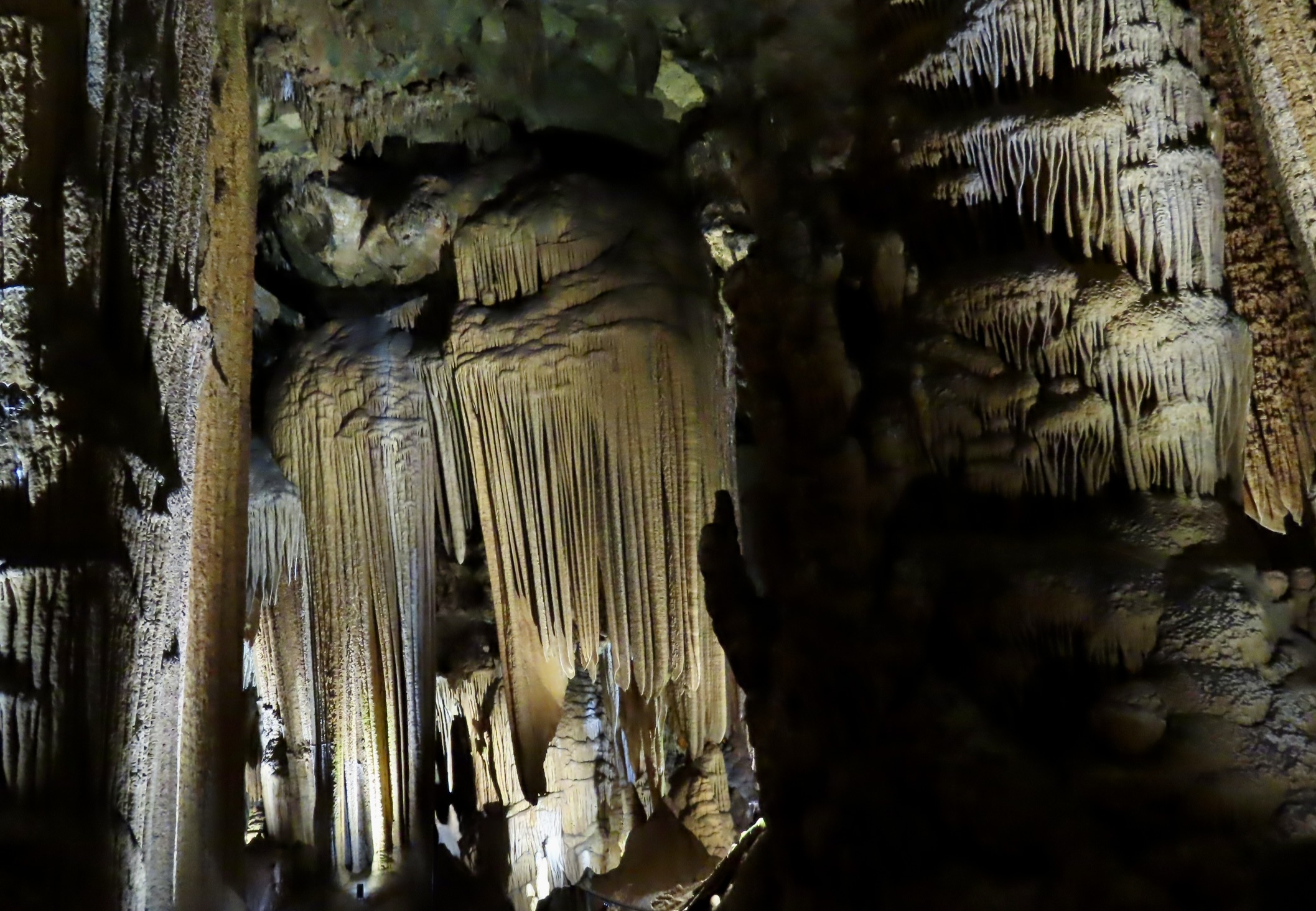
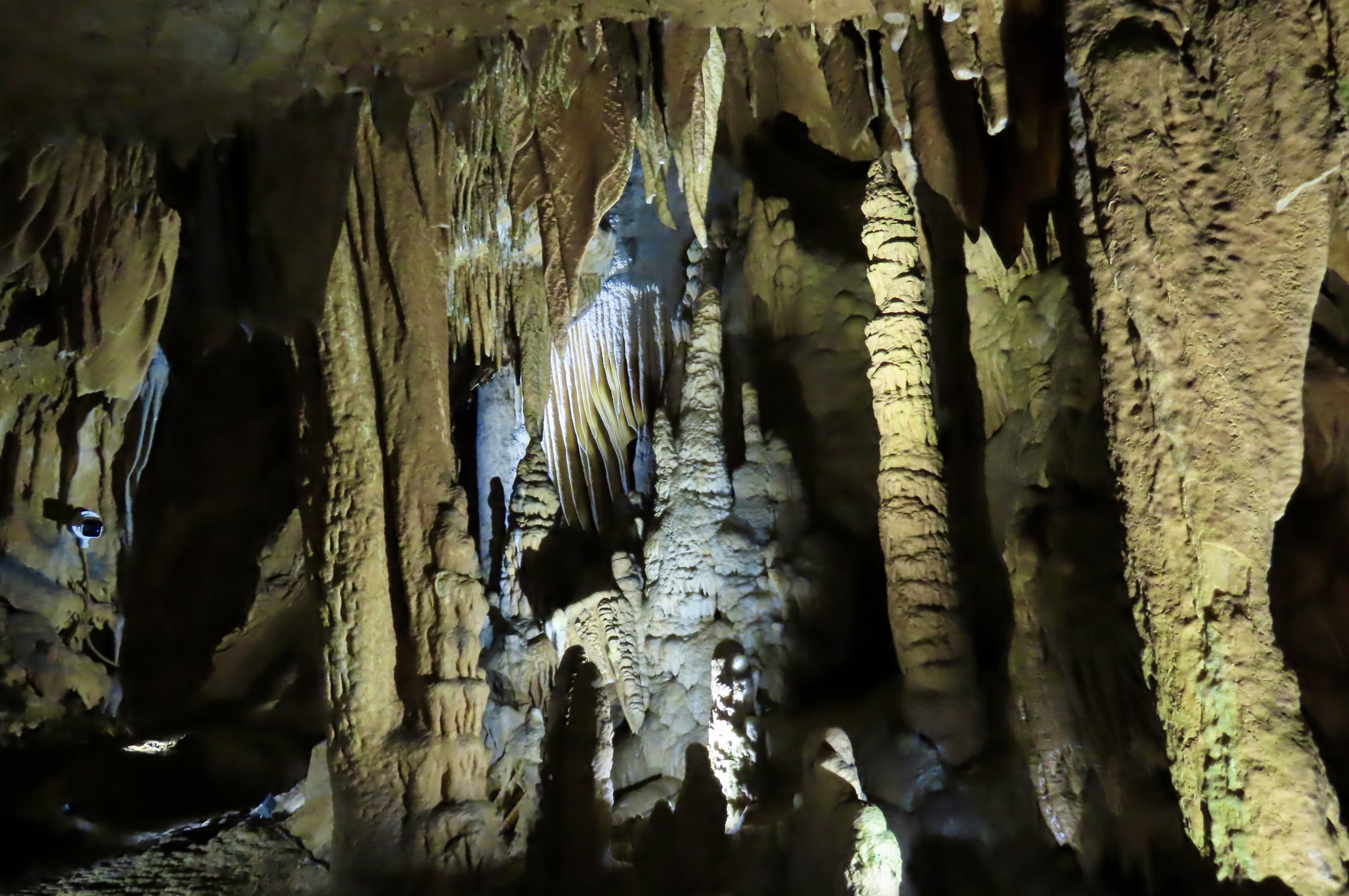
A one and one half mile self-guided tour takes visitors through the section of Luray Caverns opened to the public. One can easily cover it in an hour. I took two, stopping frequently to admire (and photograph) the sheer variety of speleothems (stalactites, stalagmites, columns, flowstones, plus mirrored pools), and their distinct colors.

A Smithsonian report in 1880 stated: “It is safe to say that there is probably no other cave in the world more completely and profusely decorated with stalactite and stalagmite ornamentation than that of Luray.” Several, such as Mammoth and Carlsbad in the US, and others throughout the world are equally unique, but I can guarantee that visitors to Luray will not be disappointed.

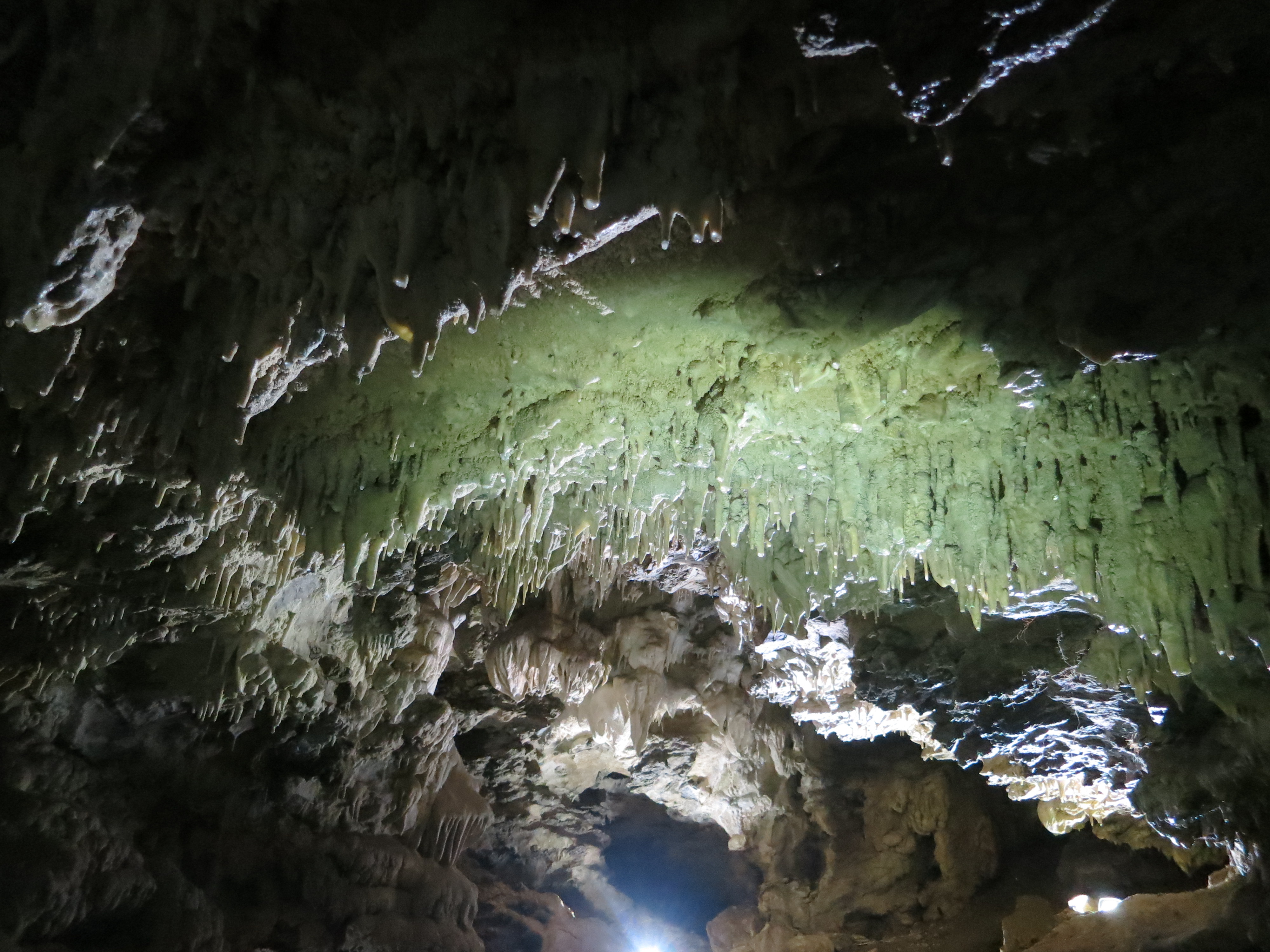
My first thoughts on the colors, as shown in the above photo, were enhanced by colored lighting, but I learned that Luray emphasizes natural-looking illumination which includes “neutral and cooler white as well as amber-toned lighting designed to highlight the rock textures, calcite, and crystal formations.” Also, while Luray Caverns is privately owned, it is designated as a National Natural Landmark. Along with this designation comes the requirement that colored lighting not be used. Presently, Luray is switching to LED lighting, which it claims will replace older, harsh lighting with “softer illumination that will highlight geological details while supporting cave preservation.”
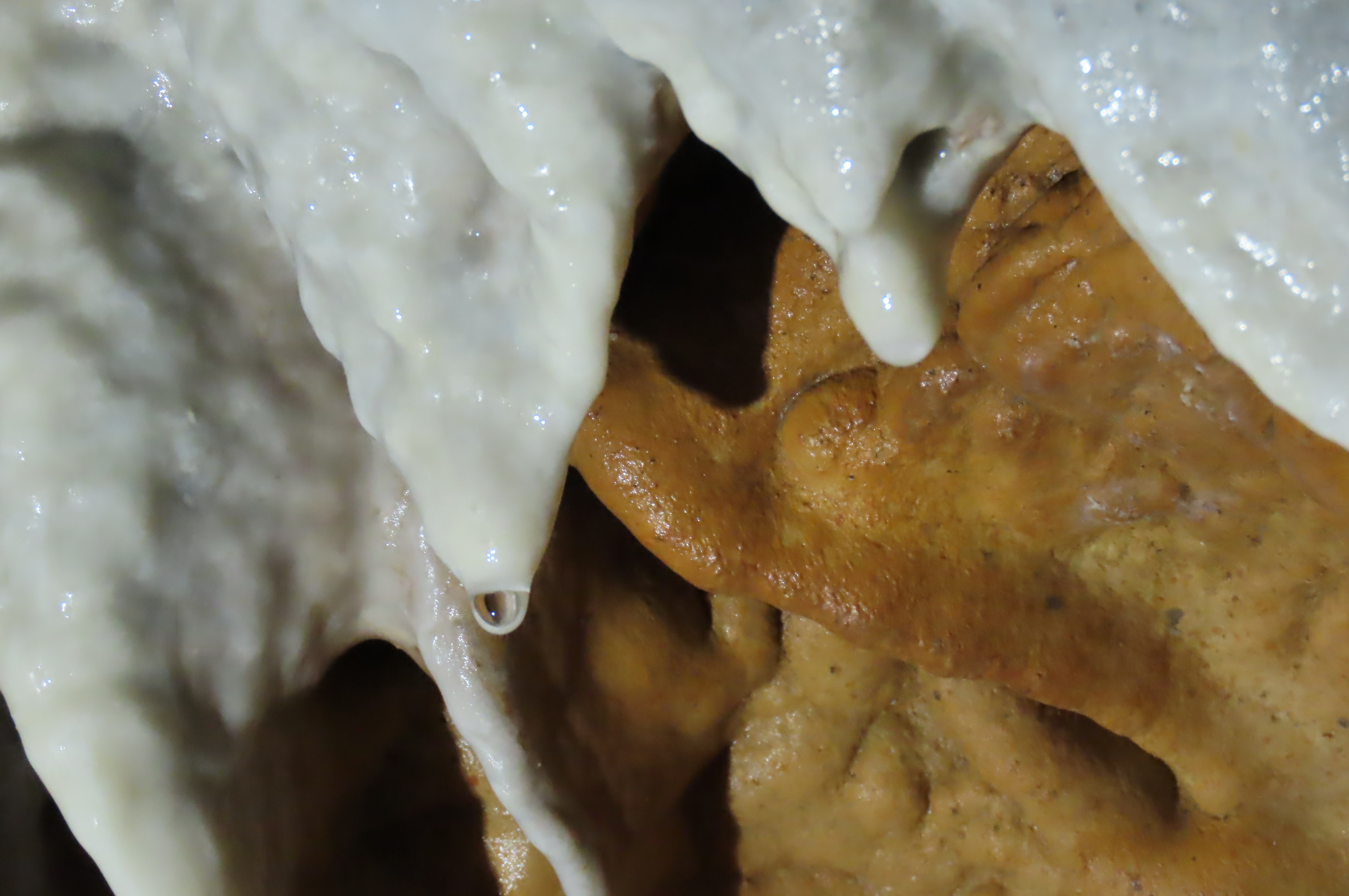
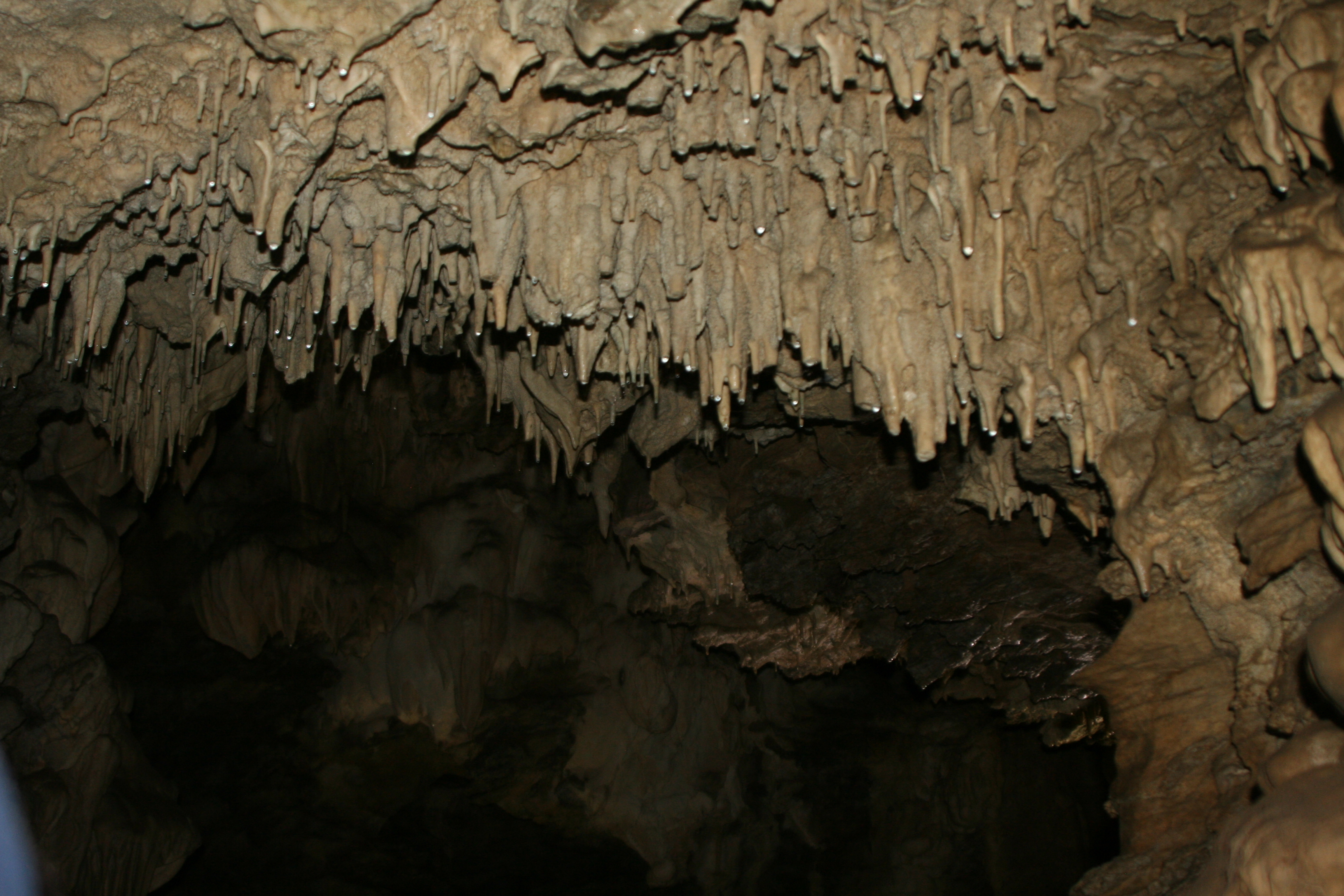
My ‘live action’ camera caught the formation of a stalactite! It’s being created by water, one drop at a time— and will grow a walloping one cubic inch in the next 120 years. When the drop of water falls to the floor it starts building a stalagmite that will eventually reach and combine with the stalactite. Do you see the cat’s eye in the drop of water? That was a bonus.

The drop of water isn’t just water. It’s a weak carbonic acid formed when rain water absorbs carbon dioxide from decaying vegetation. As it seeps down to the caves, the carbonic acid passes through a layer of lime rock, dissolving and absorbing some of it to create the mineral calcite (calcium carbonate). Upon reaching the cave, a portion of the carbon dioxide is released into to the air, which reduces the amount of calcite the water can carry. The calcite precipitates out of the water in a circle, beginning or continuing the creation of the stalactite and a tube that carries the water.
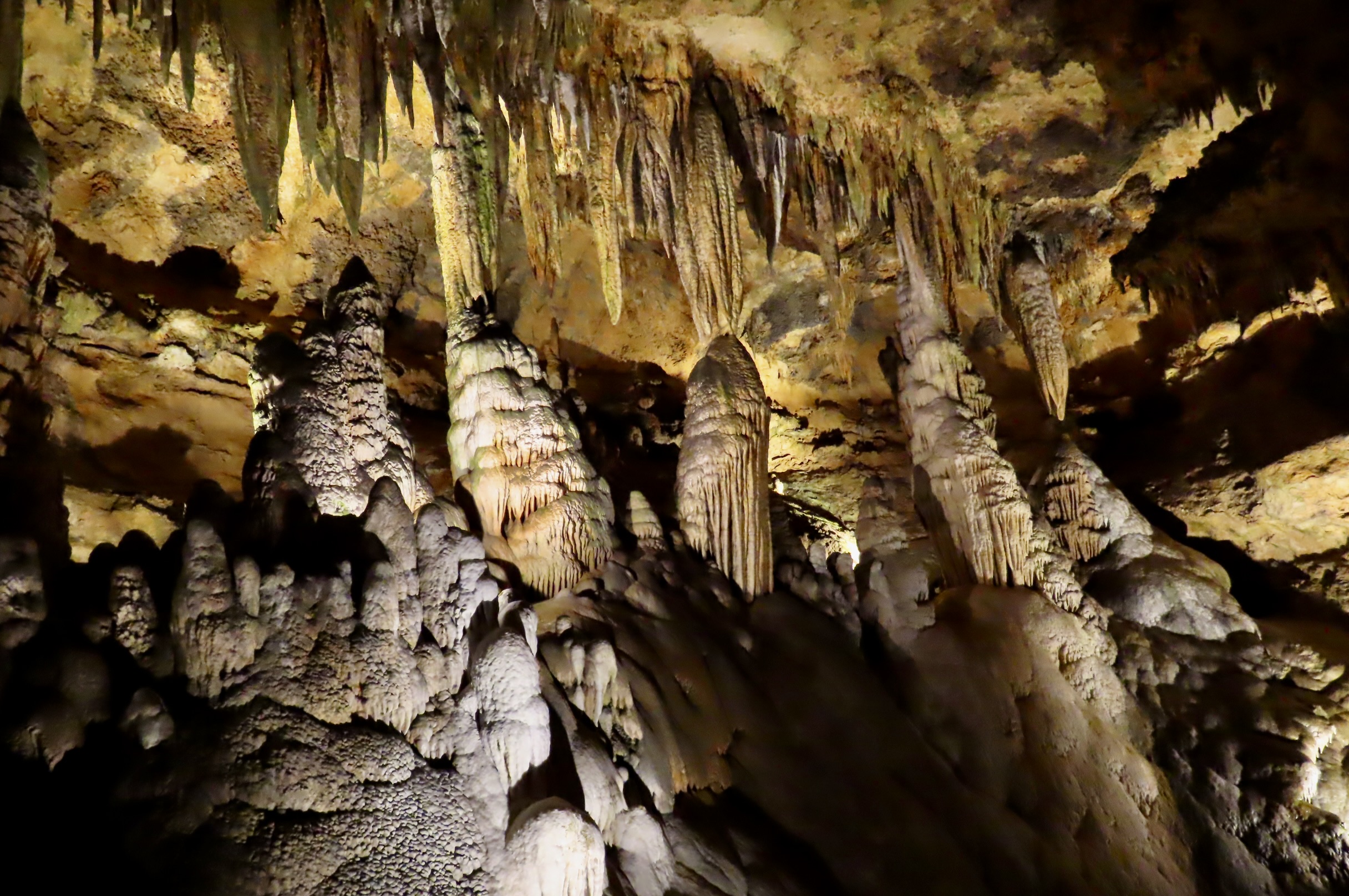
The creation of stalactites and stalagmites in Luray Caverns.
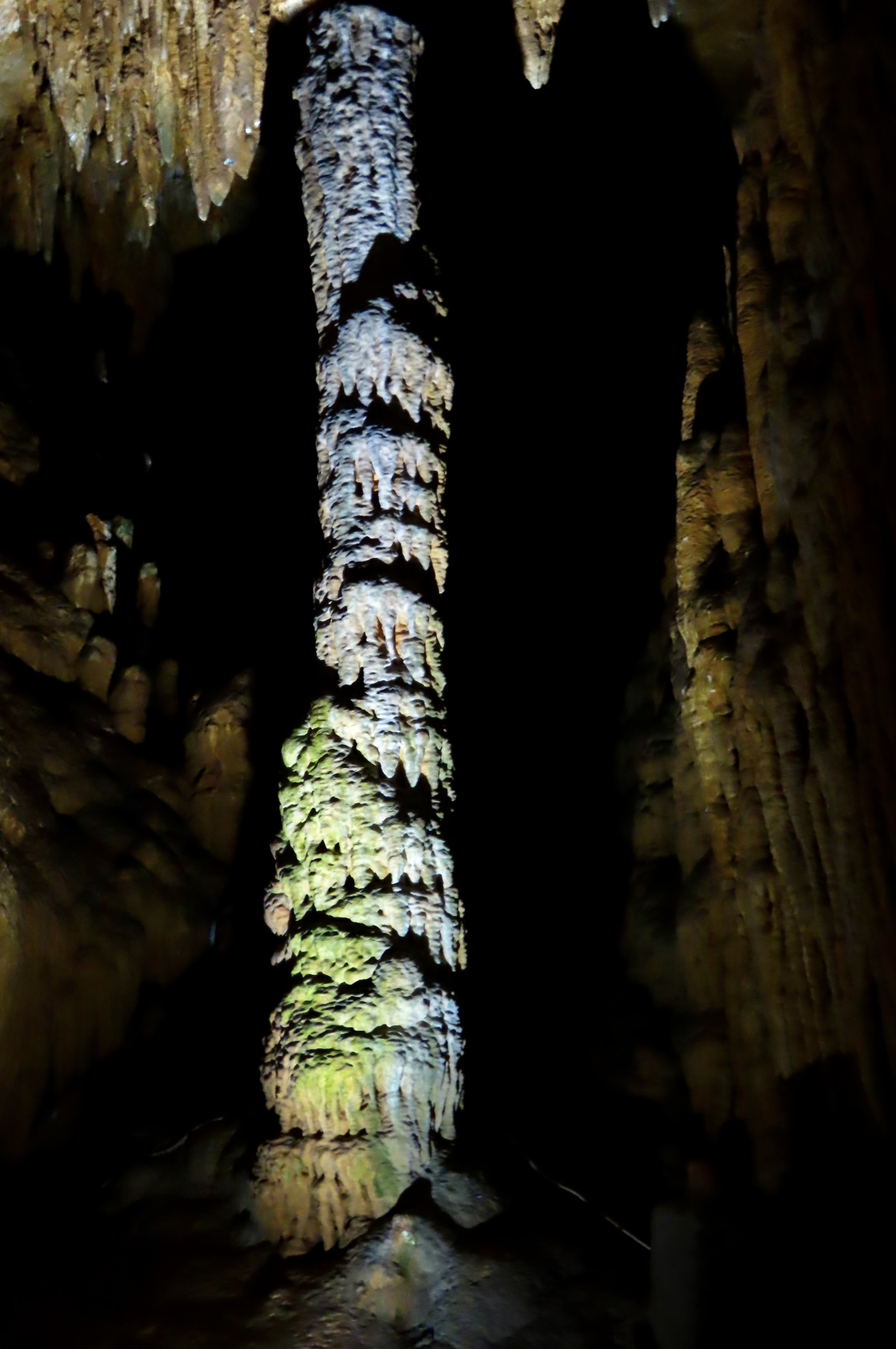
A united stalactite and stalagmite forming a column. Note its multi colored look.

White is the natural color of calcite, so where do the colors come from? In addition to absorbing carbon dioxide and dissolved lime, the water also absorbs traces of the minerals it passes through. These minerals create the various colors: Reds and yellows come from iron and iron-stained clays, blacks from manganese dioxide, and blues and greens from copper compound solutions.
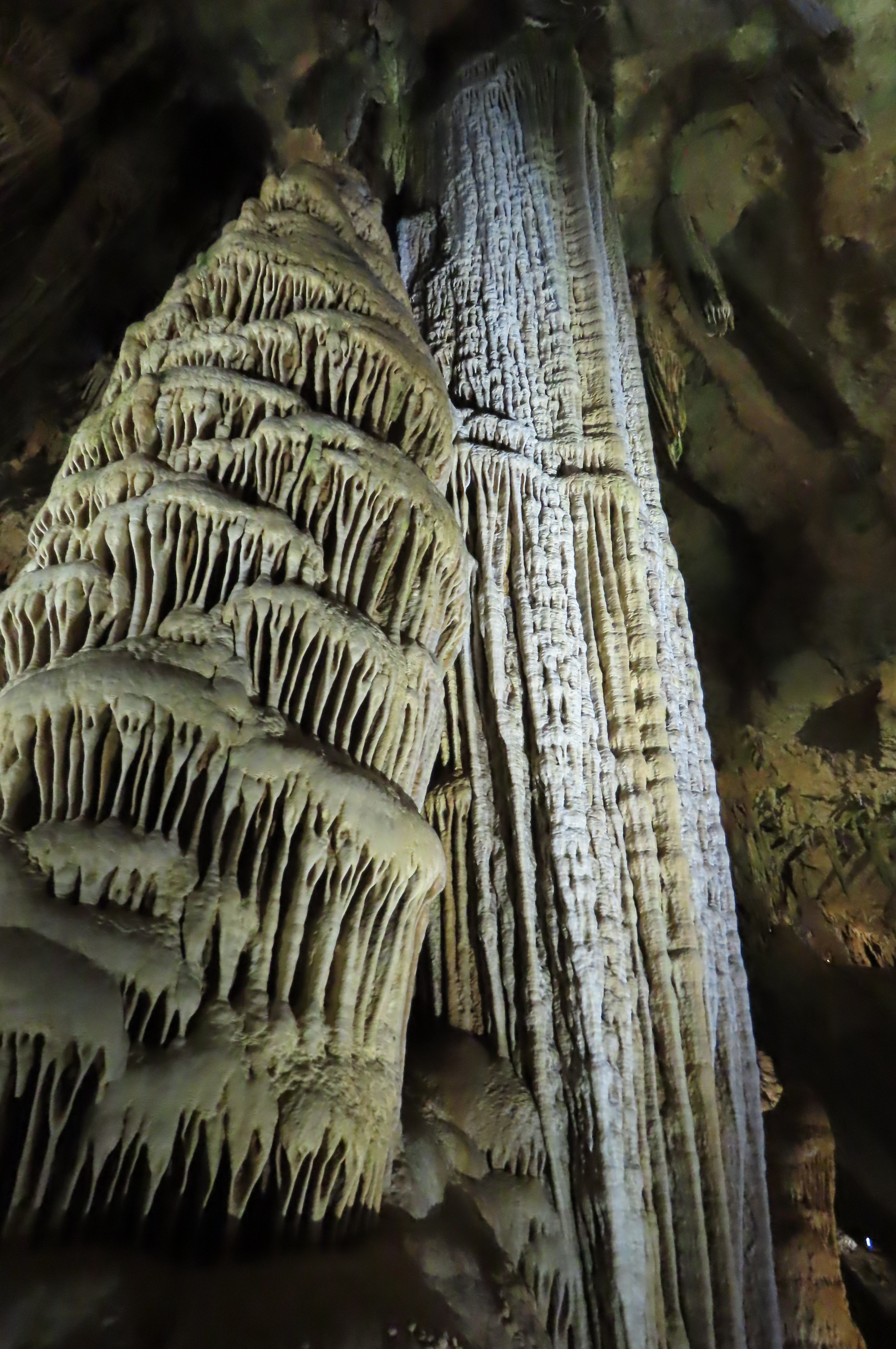
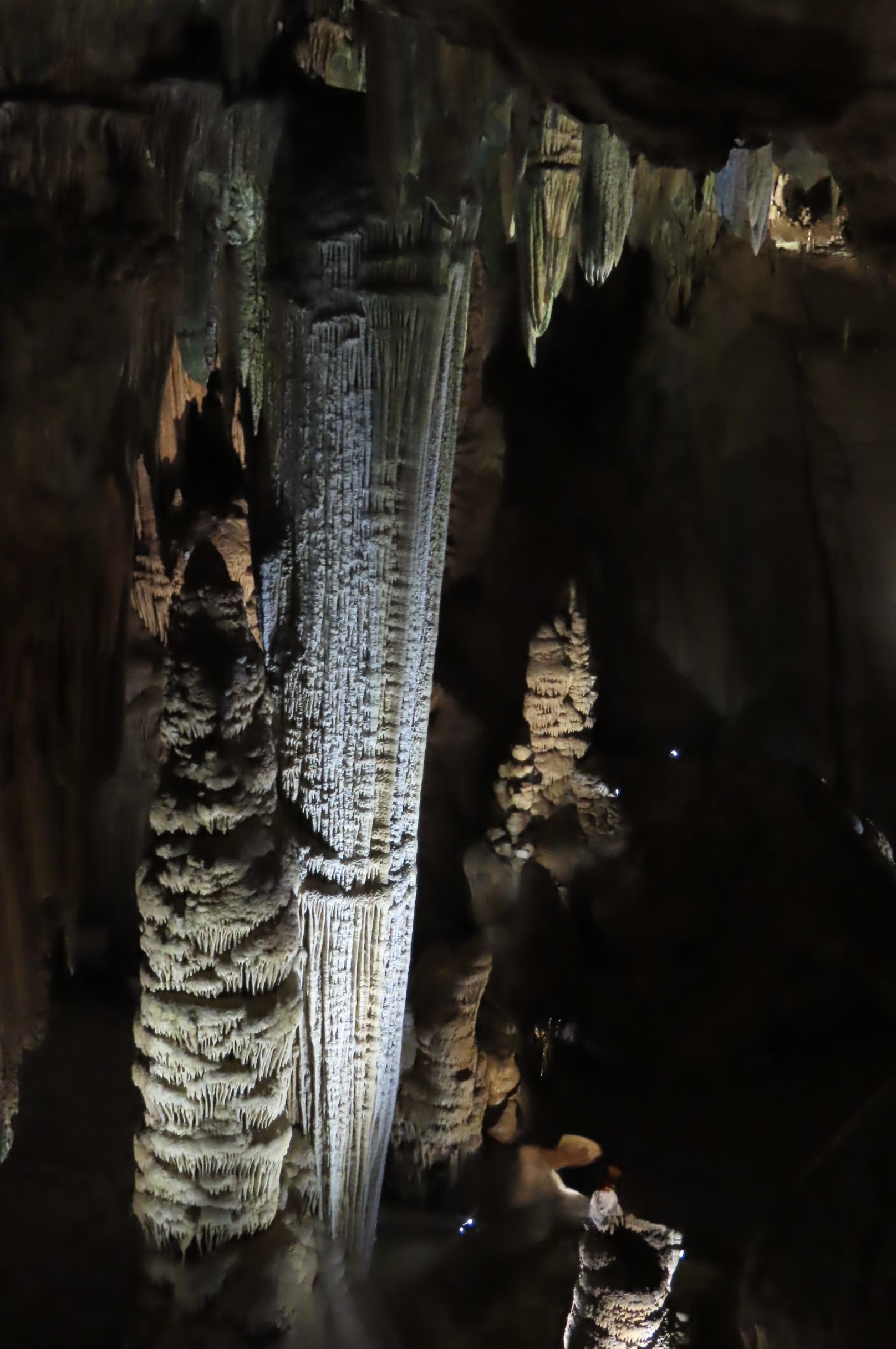
The speleothem columns in Luray Caverns can be gigantic, with the tallest reaching 49 feet and taking millions of years to create.

Speleothems of this size require huge caves. Their creation was also caused by carbonic acid water. It doesn’t seep down from above, however. It follows fractures in the rock underground and dissolves the limestone and dolomite along the way, creating chambers and passage ways. When carbonic acid water filled these chambers, as it did in its prehistoric past, it continued to dissolve the limestone and dolomite helping form the large caves of today.
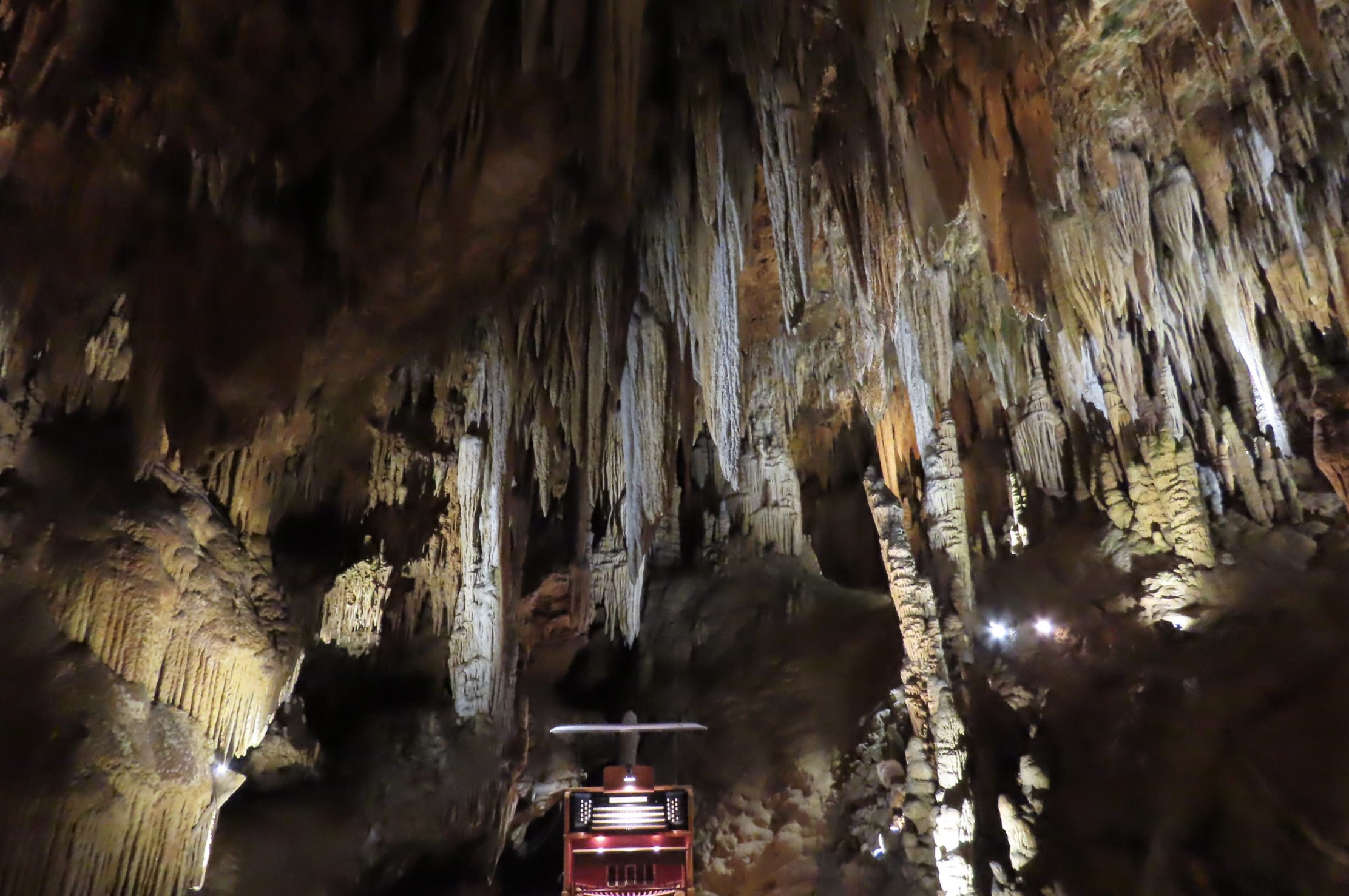
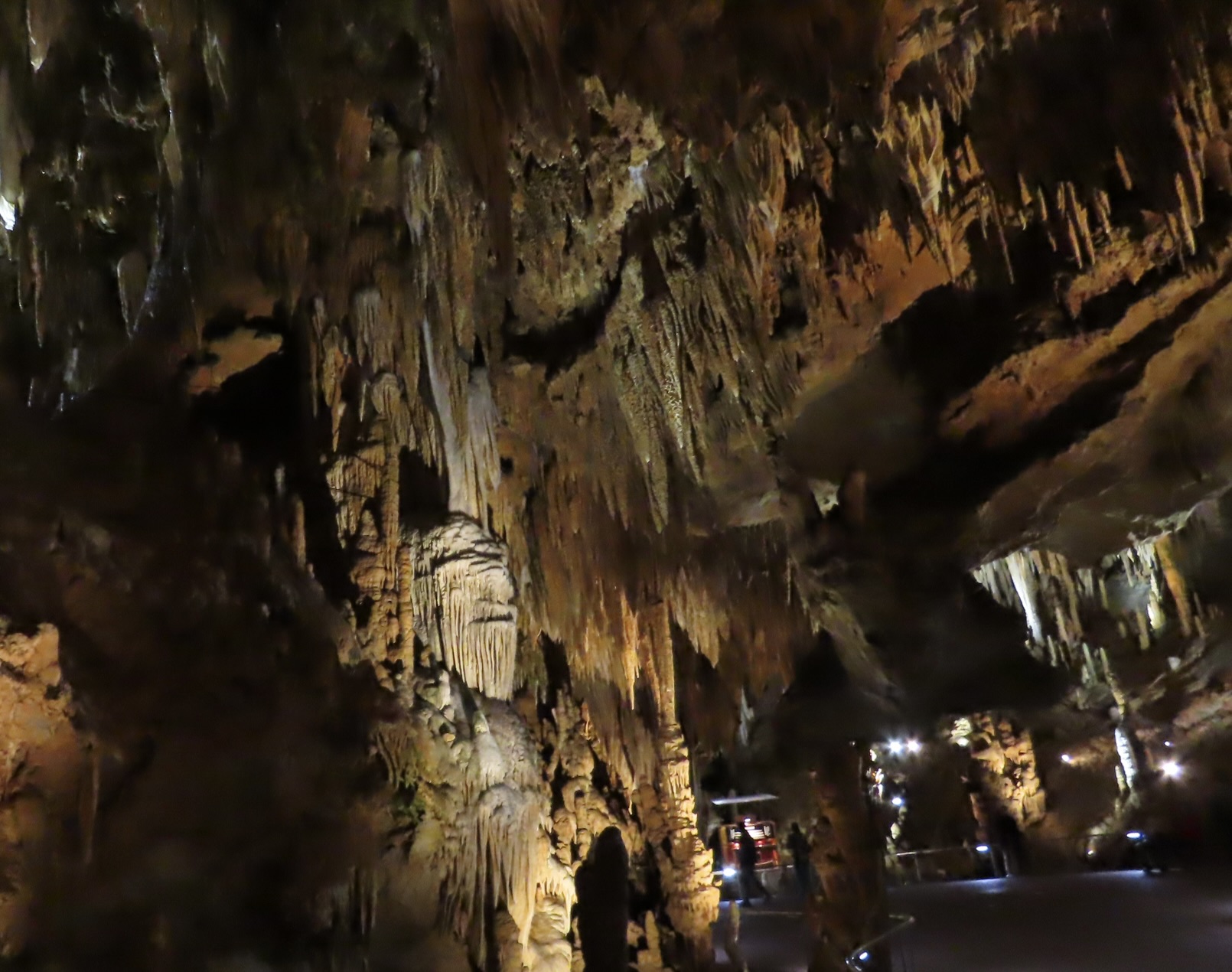
One of the large chambers contains an organ. Does it perform concerts? Sort of. Its claim to fame is being the largest musical instrument in the world, a claim backed up by Guinness Book of Records. The Great Stalacpipe organ uses stalactites to create music. Rubber tipped mallets are electronically signaled to tap various stalactites, creating different tones. It was doing so when I walked through. They were gentle, almost meditative. I felt like I was in a temple. Luray calls the chamber the Cathedral.
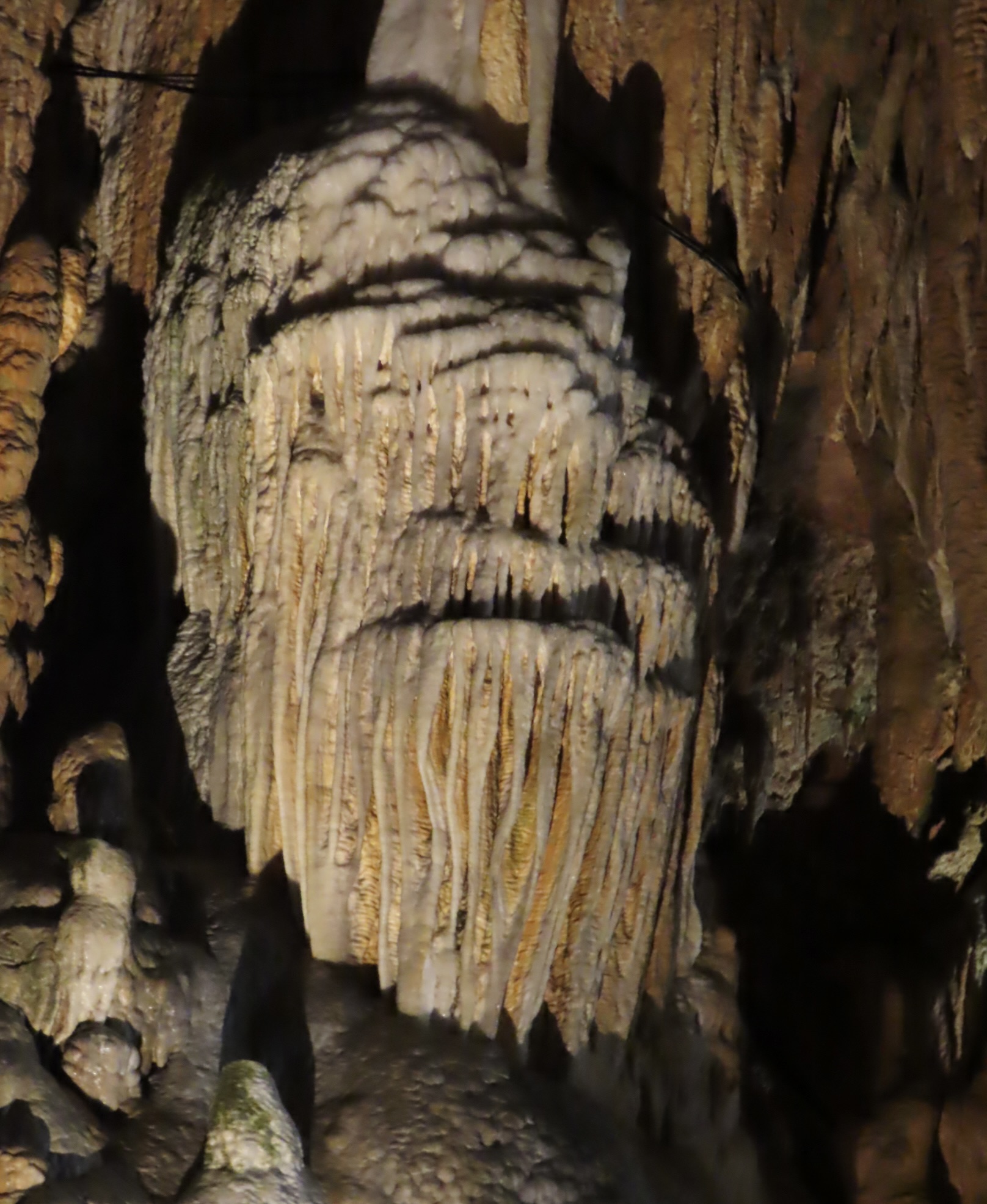
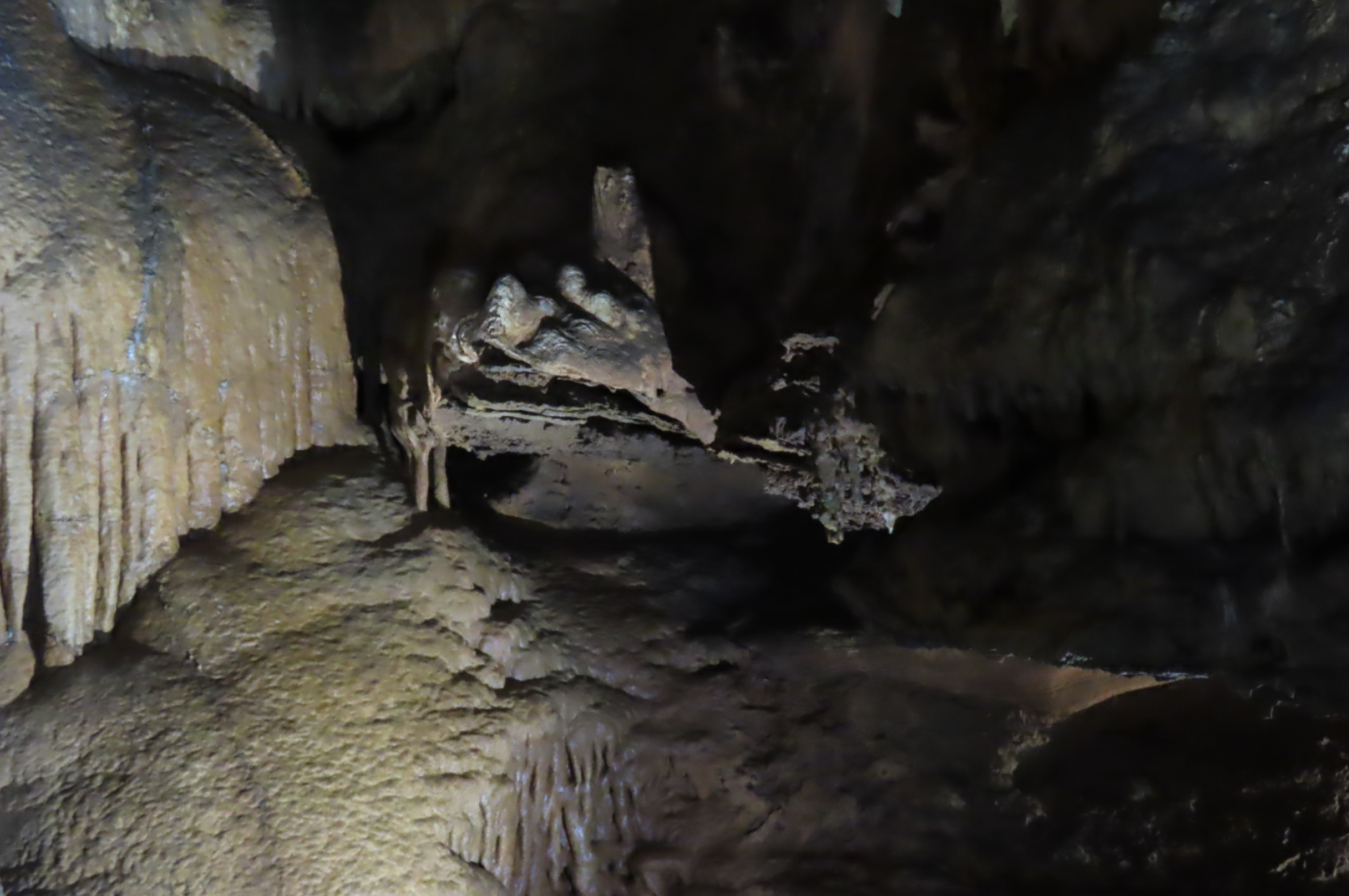
I was amused to find this bearded character illuminated in the Cathedral. A gargoyle, perhaps? As those of you who follow this blog know, Peggy and I are always looking for ‘faces and creatures’ created by nature.
A close up. Note the half lidded eye above the left corner of the mouth. A bit creepy, I’d say. Grin.
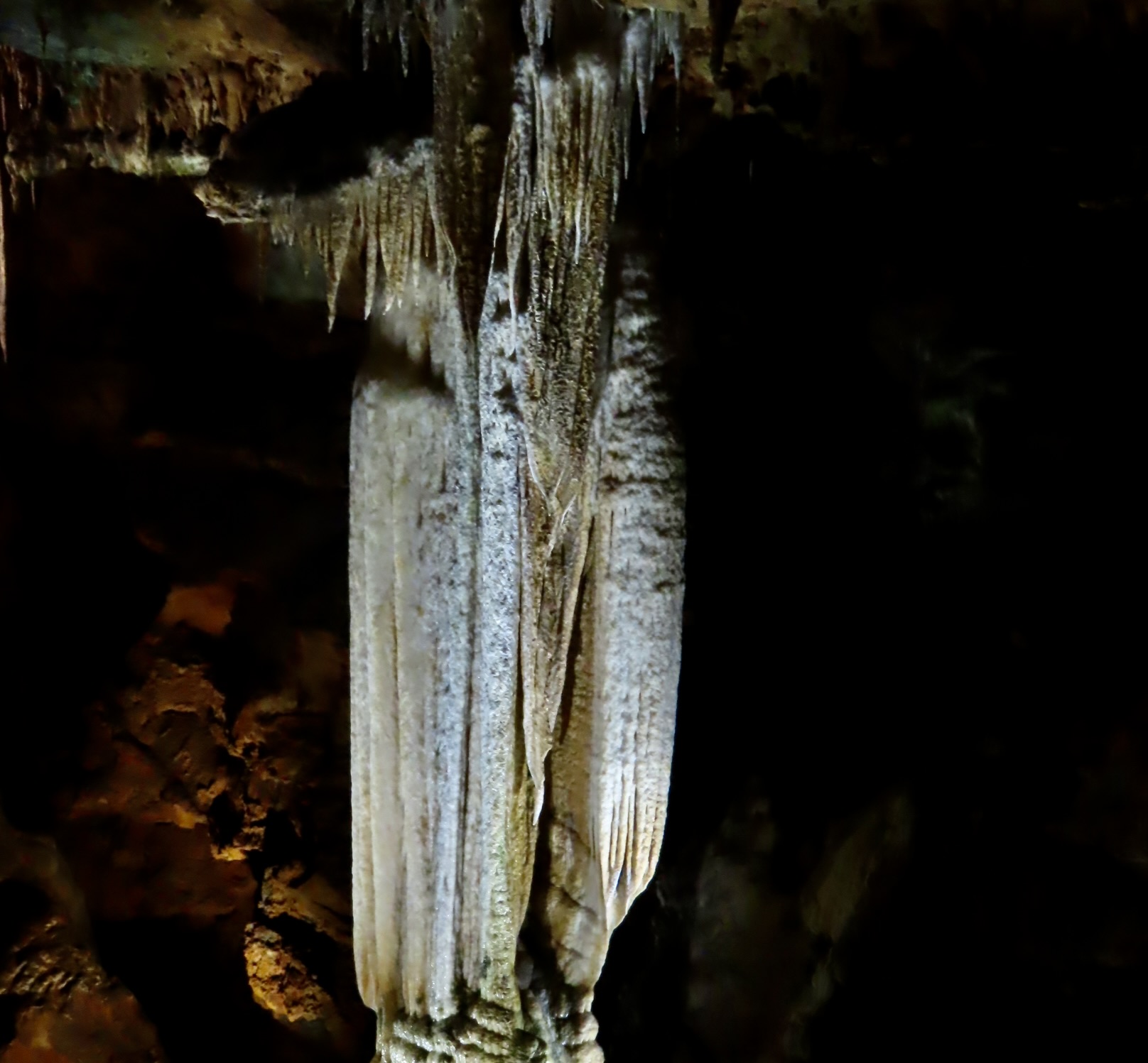
Luray Caverns named this column the Ghost of Pluto, The Roman God of the Underworld. The spelunker who found it declared it felt like it was following him as he made his way through the cave.
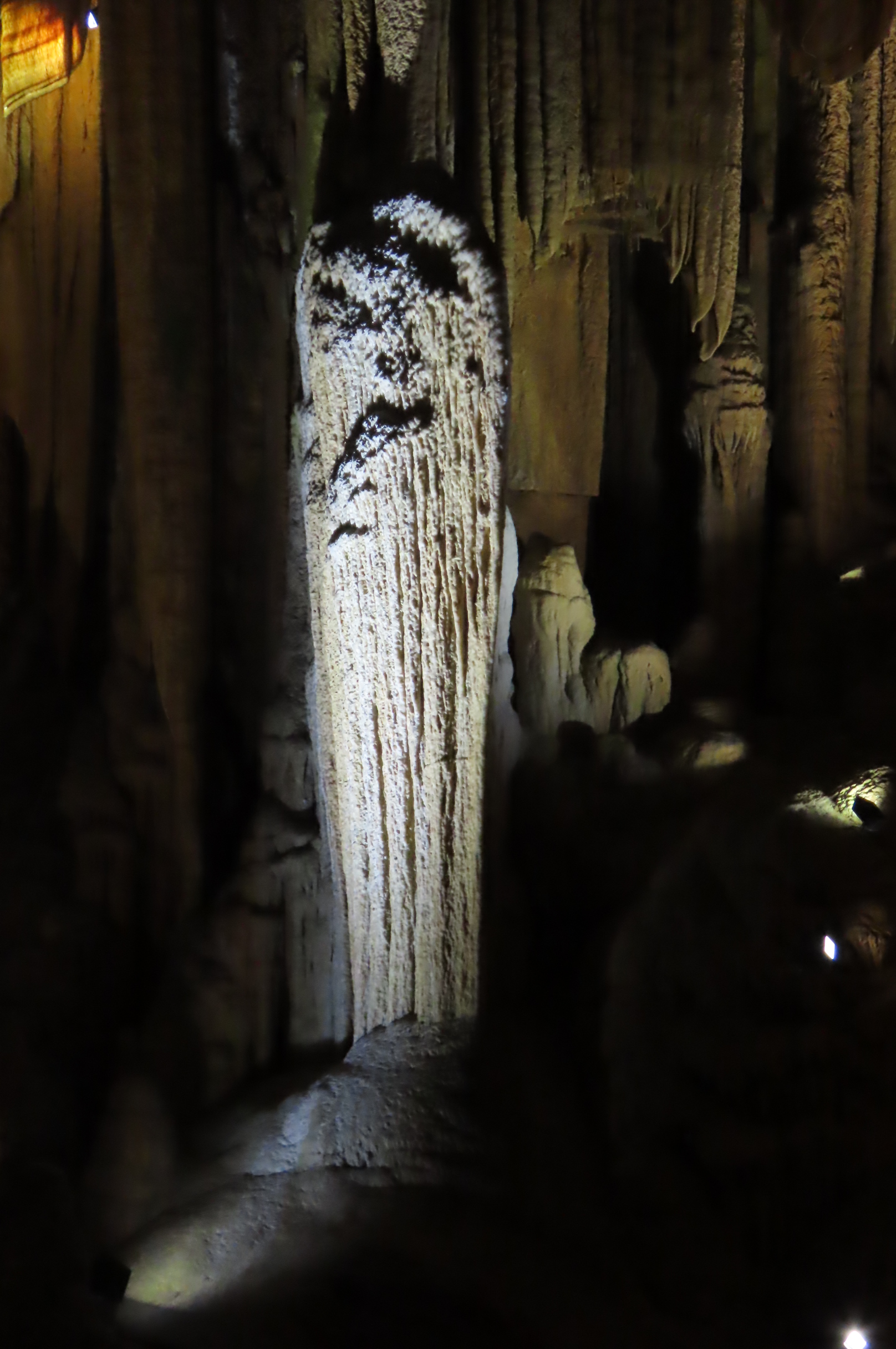
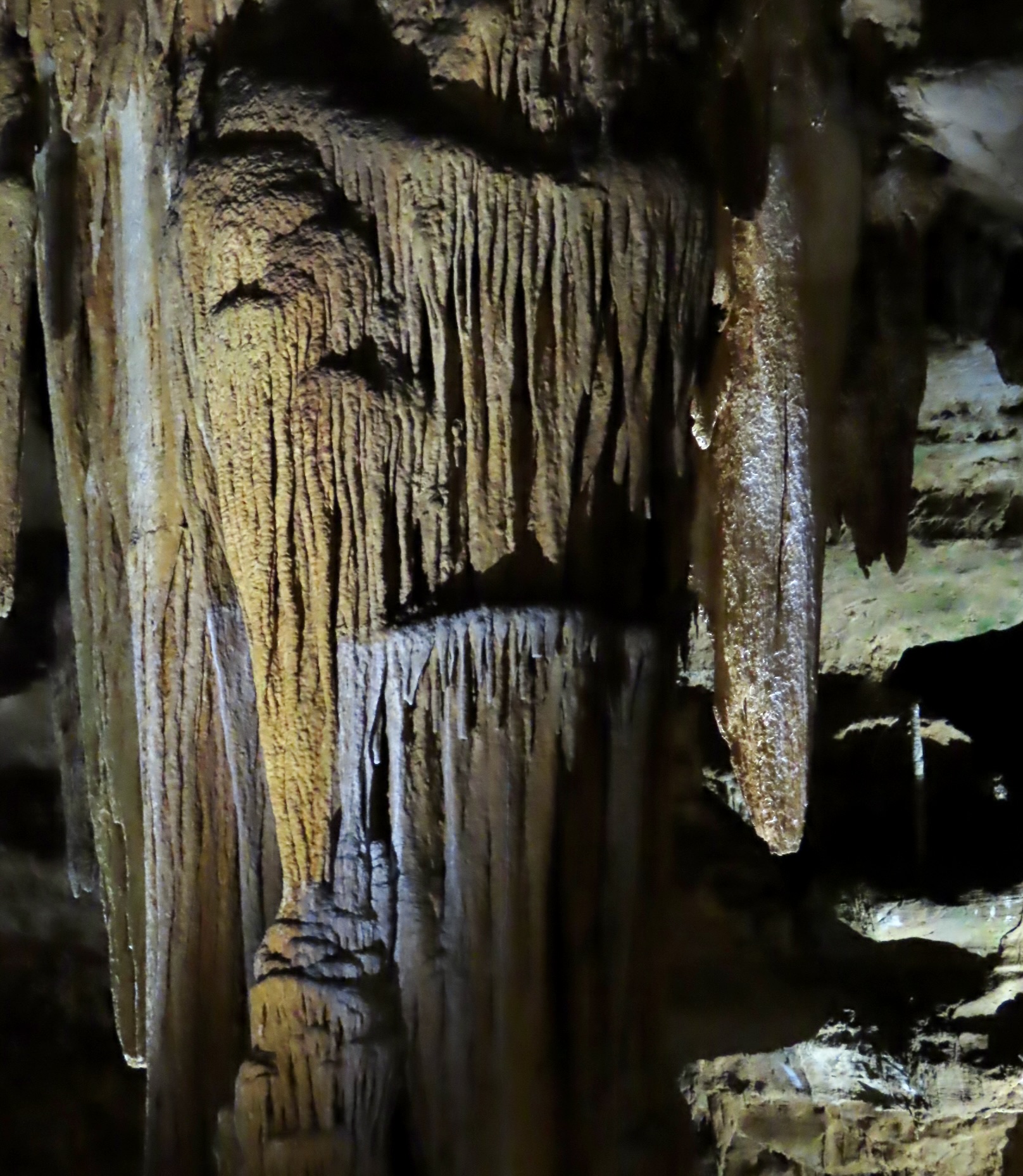
My favorite, however, was this ghost with no name! I think Luray could host a great Halloween by featuring the various ‘creatures’ found in the Caverns. I’d wait until people were next to this ghost and then turn the spotlight on it! Most of the characters we spotted were in the darker corners, hard to photograph. Maybe they are hiding.
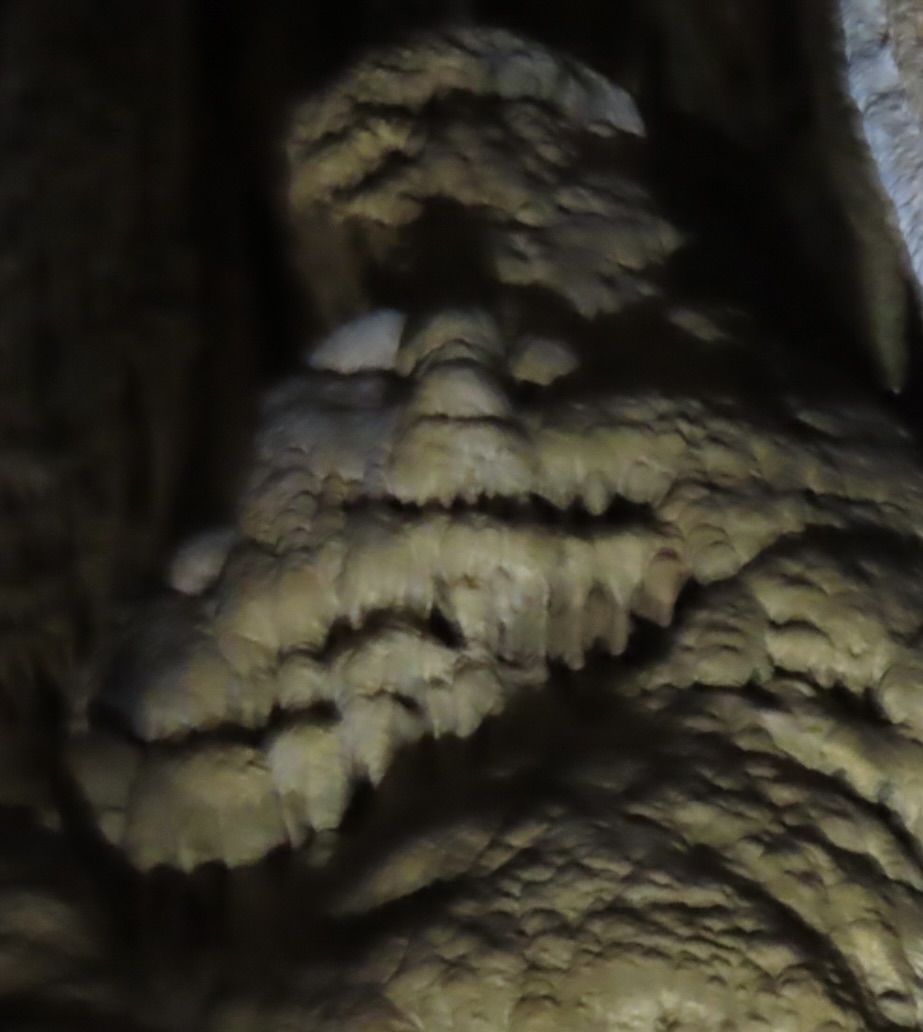
For example, this fellow. It reminded me of some of images I’ve seen of Big Foot.
A croc lurking in the shadows. But enough fun. I suspect that people don’t come to Luray Caverns to seek out monsters hiding in the shadows.
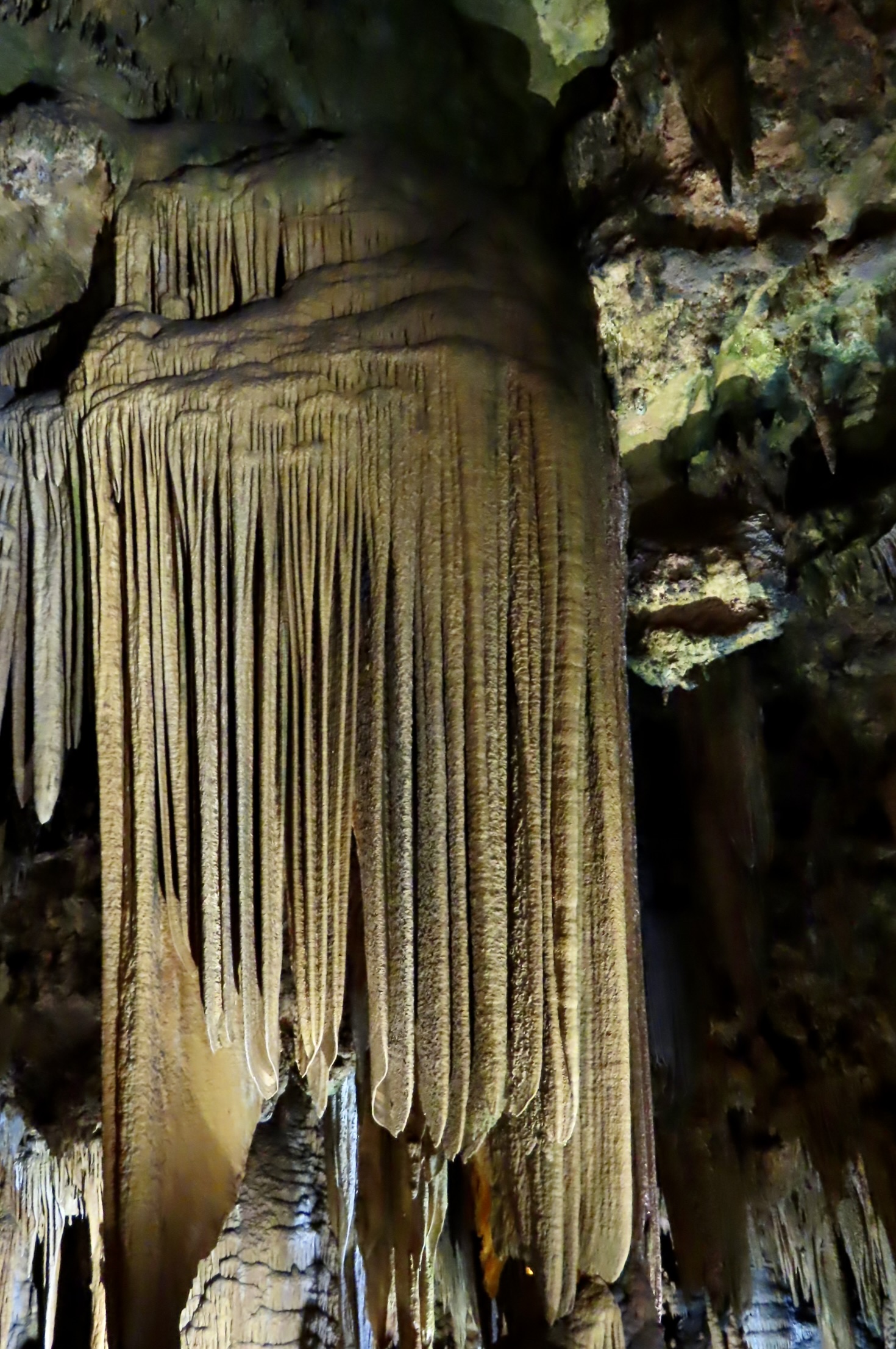
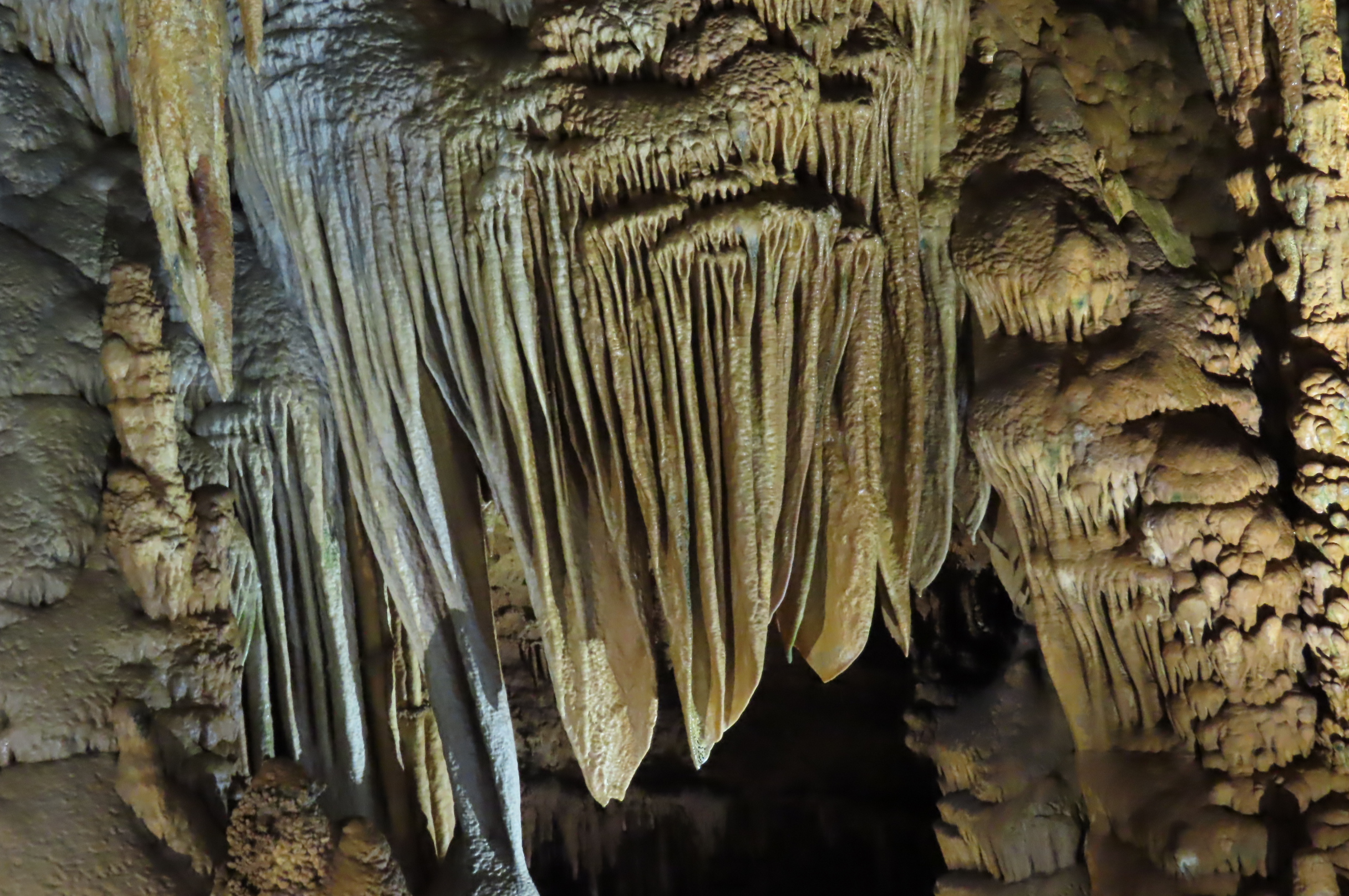
They come for views like this. It’s named Saracen’s Tent. (Saracen was a Medieval term referring to nomadic Arabs.)
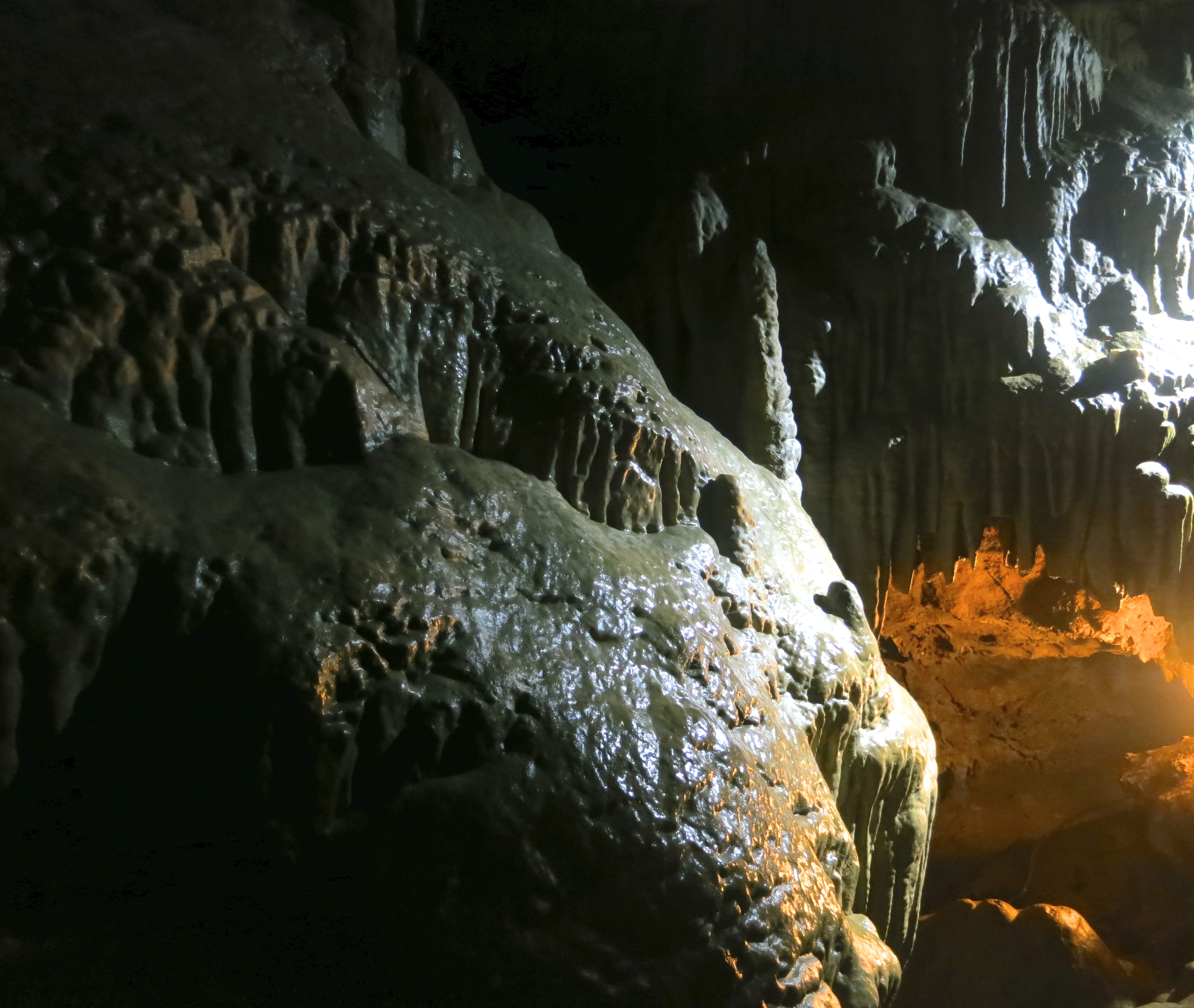
It’s quite famous. National Geographic has named this one of the best examples of flowstone in the world. Unlike the water flowing through a tube in the stalactite as shown in the second photo, this drapery-like formation is created when water/carbonic acid flows down the outside, releasing carbon dioxide into the air and depositing the calcite that creates the flowstone.
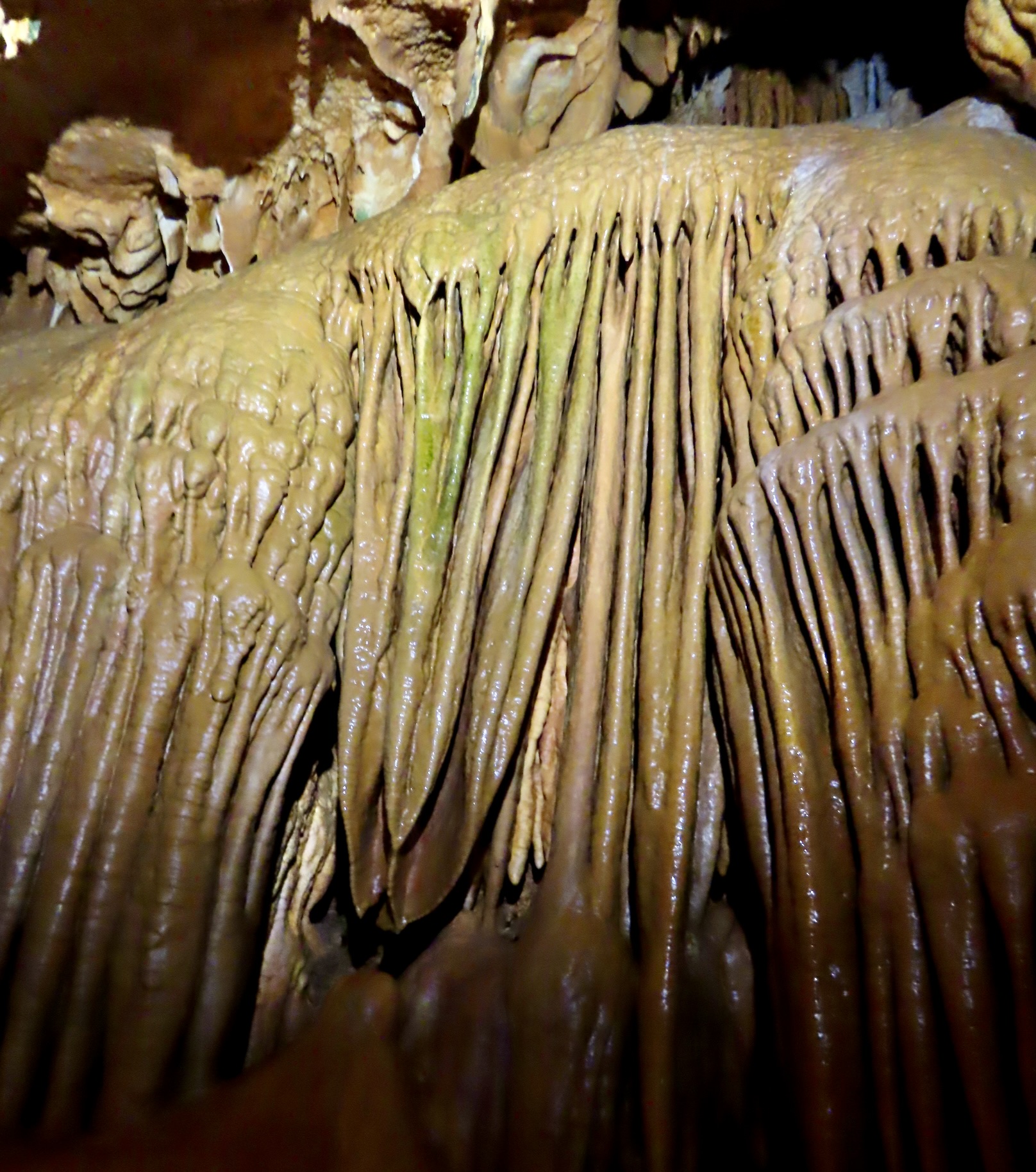
Flowstones are found throughout the cavern. Here, it is being created.

Now, random photos that continue to emphasize the formations and color that make Luray Caverns famous.
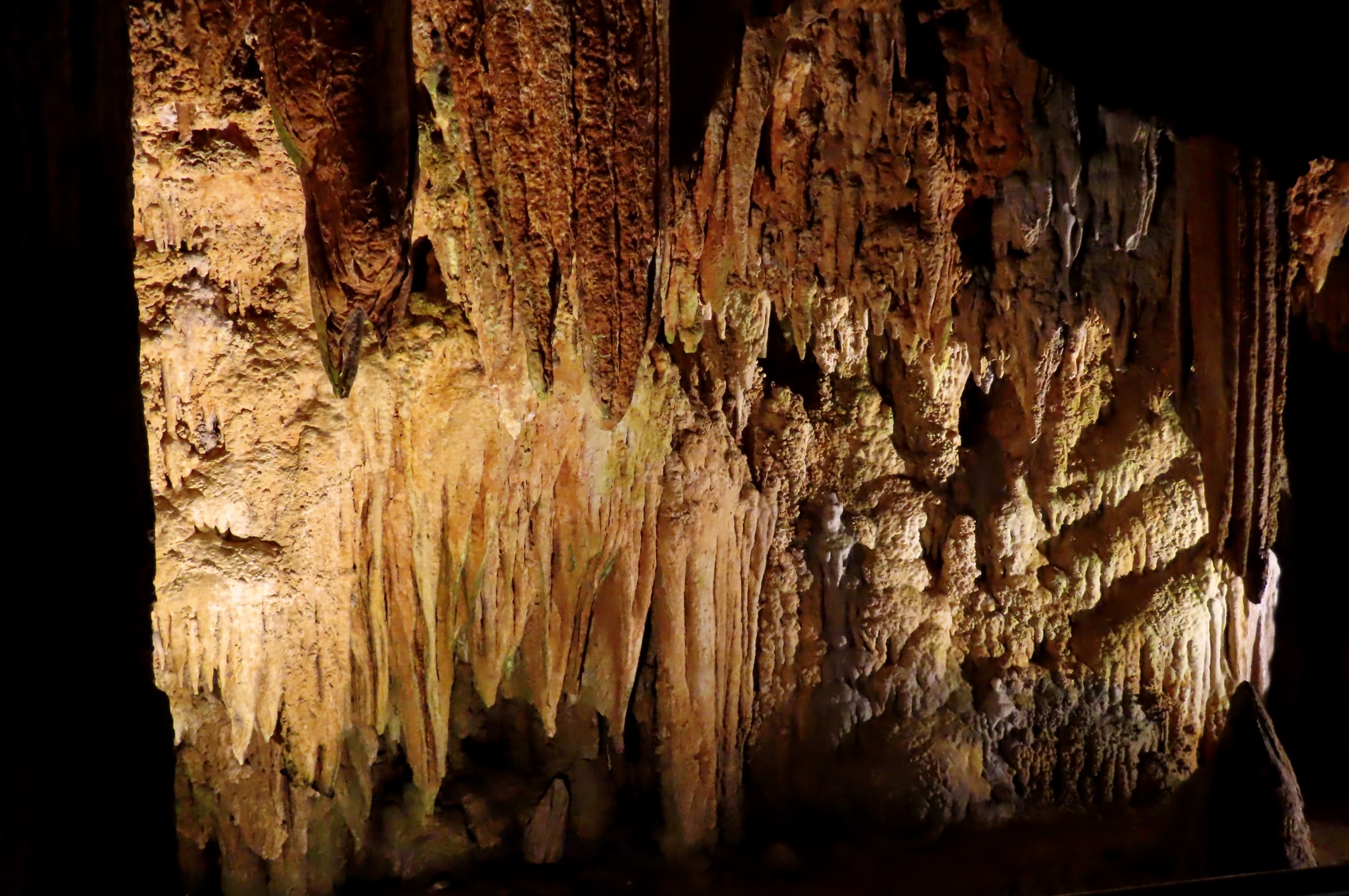
Golden browns.
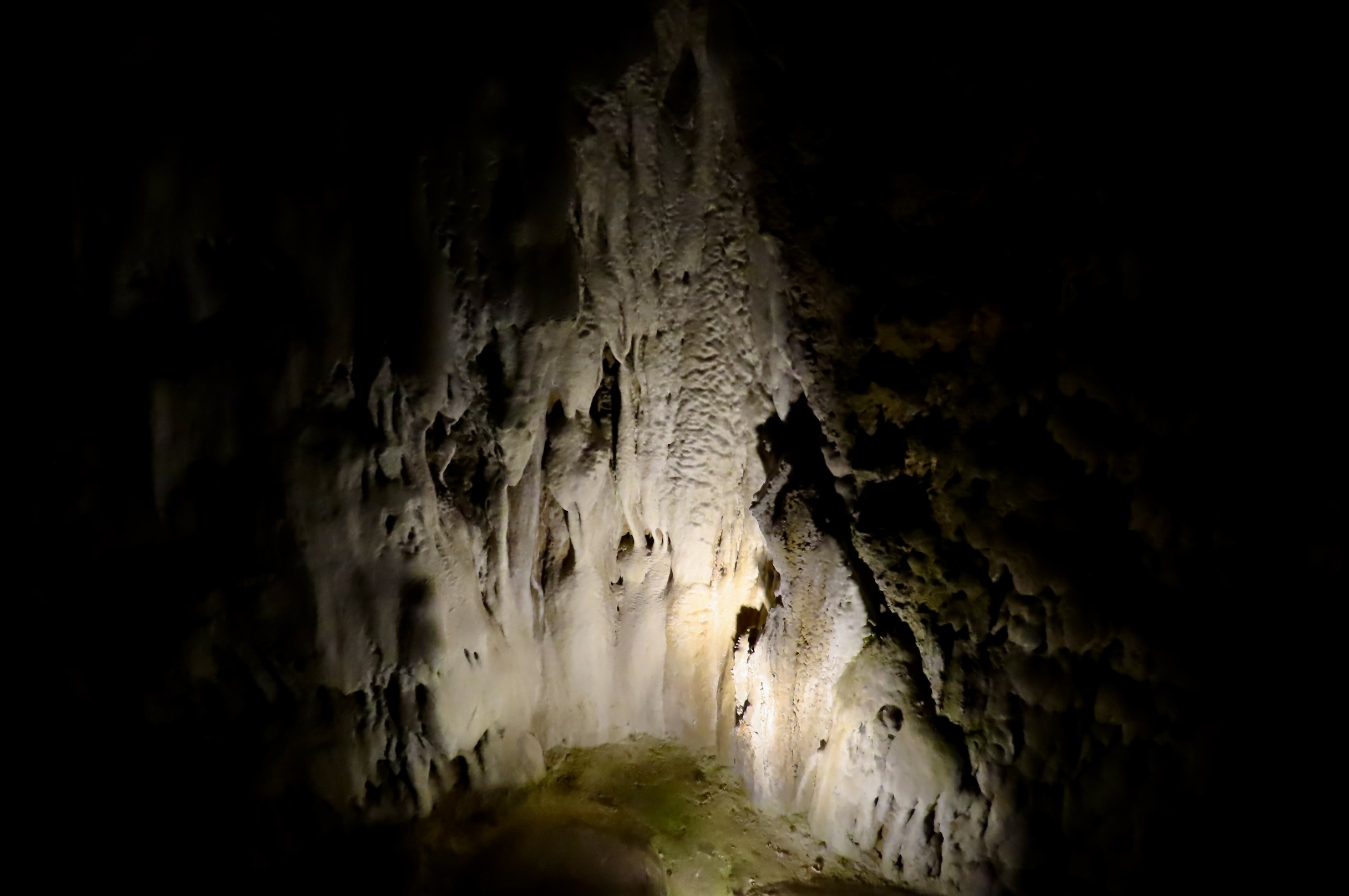
The white od pure calcite.
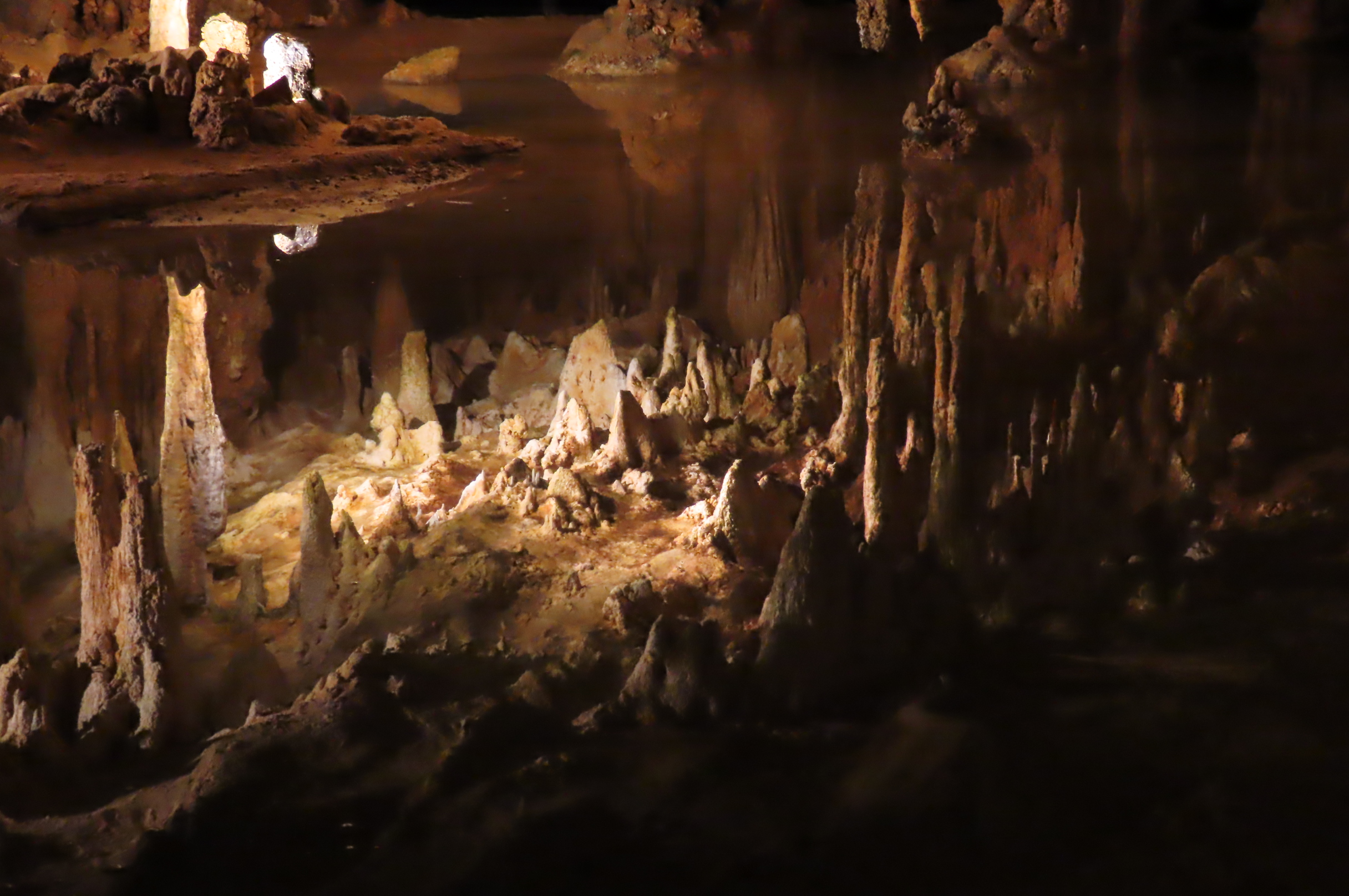
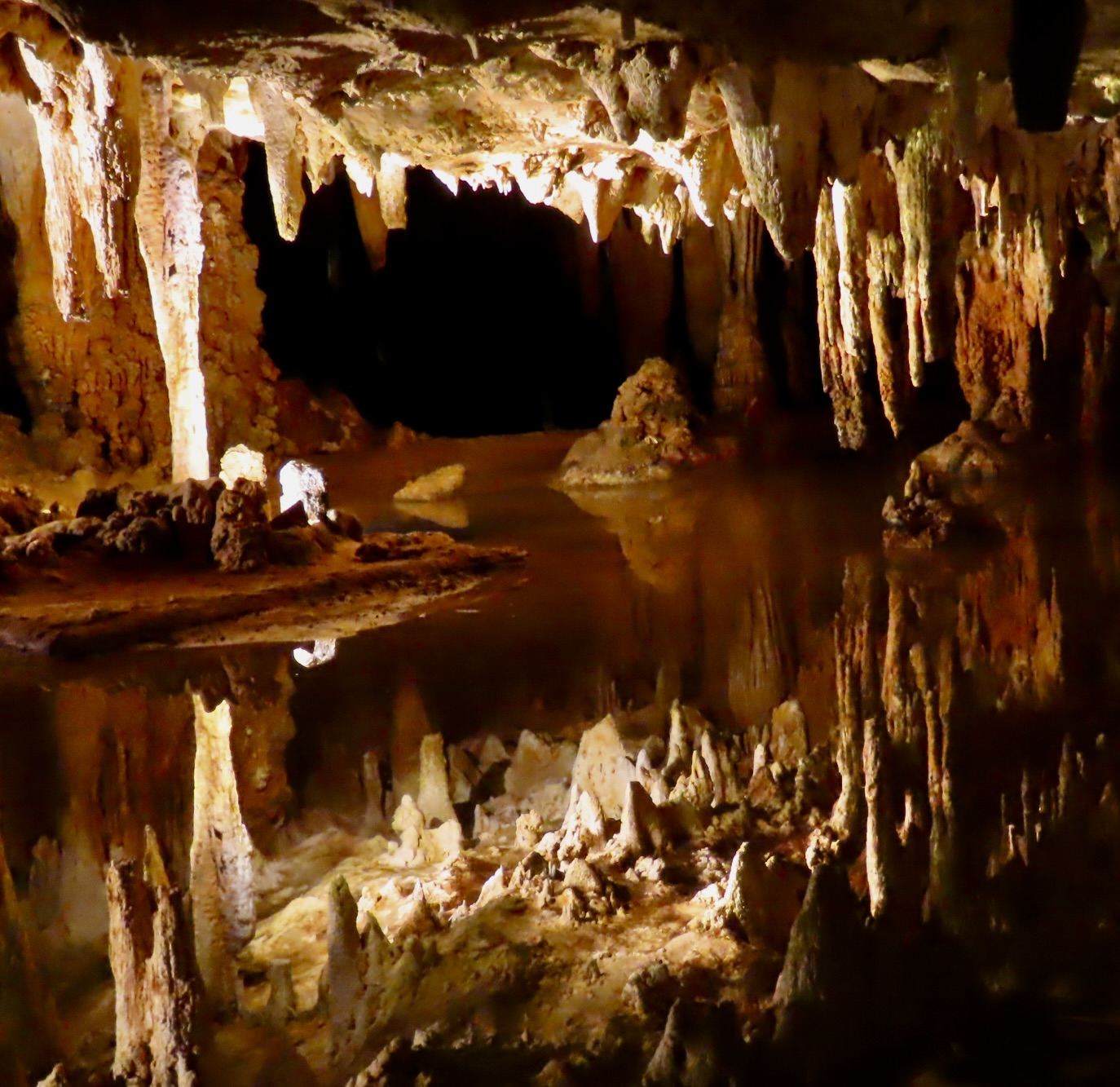
Real or not. Are these stalagmites under water?
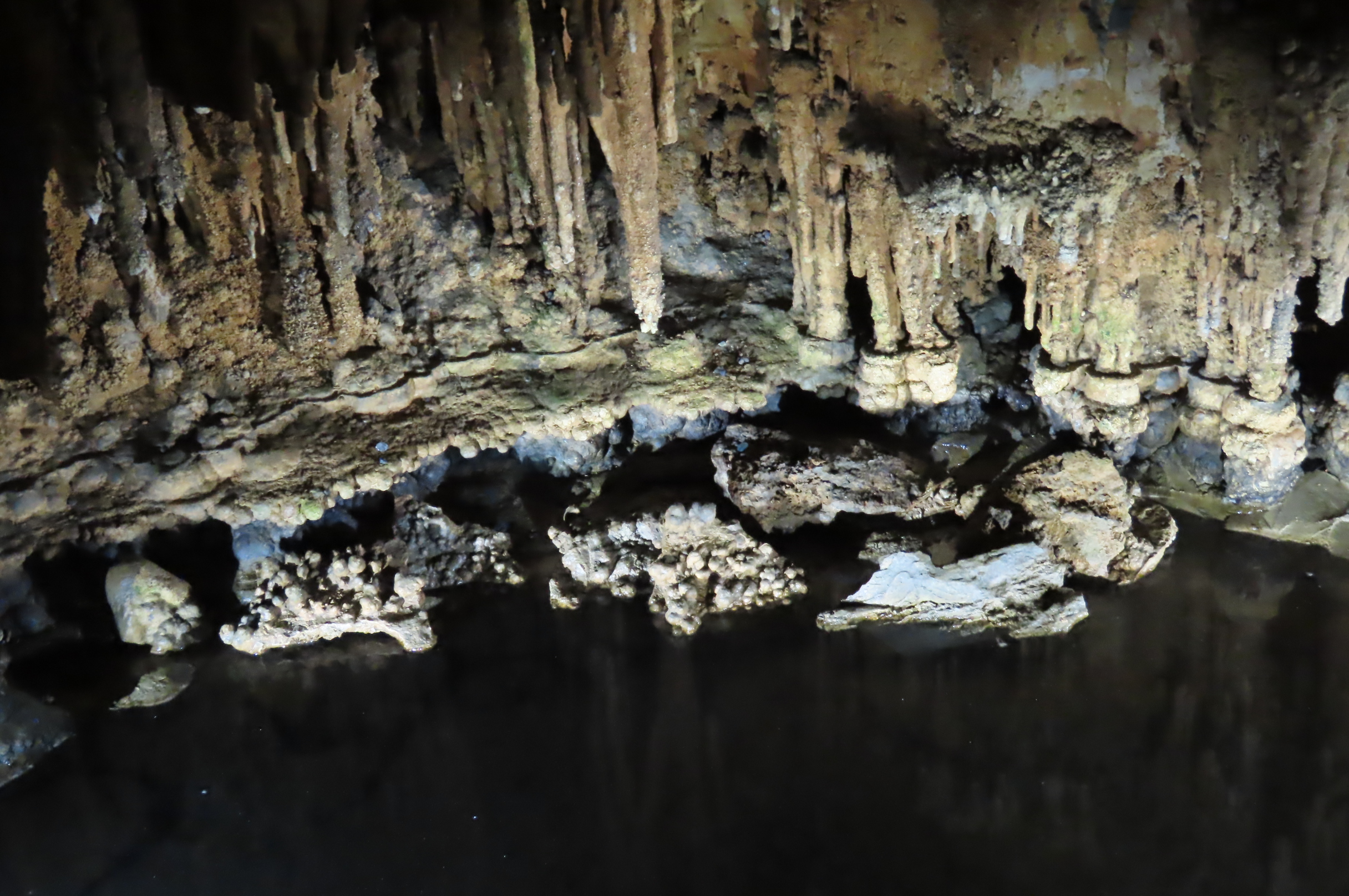
Not. They are actually stalactites, a reflection of the ceiling in Dream Lake, one of the cavern’s main attractions.
A chamber where the white calcite seems to glow. (Thank you, lighting.)
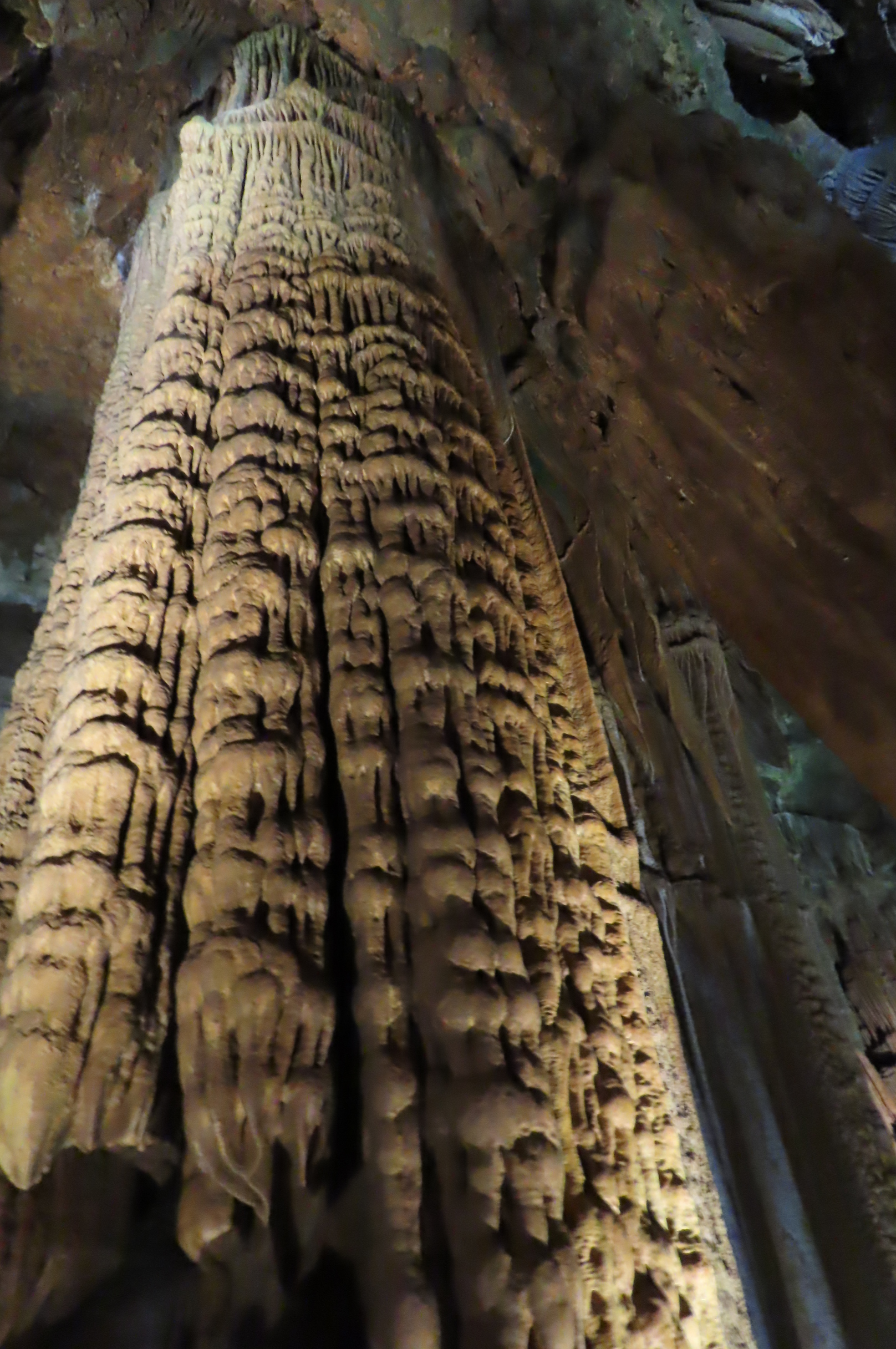
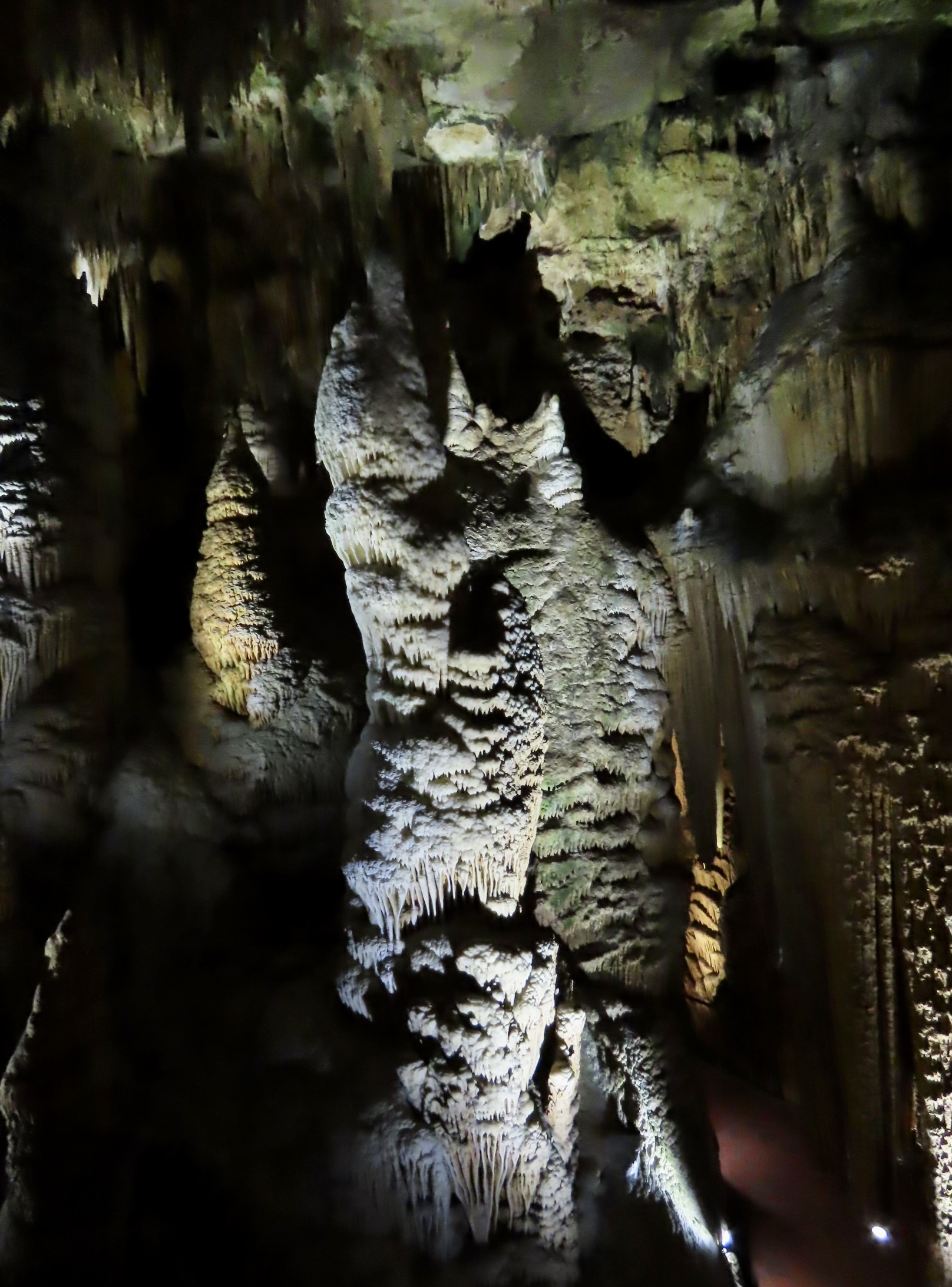
Massive. (Peggy said she saw elephants all the way up!)
Same as my fifth photo but looking down. The pathway through the caves provides both perspectives for many of the formations in the cave.
Flowstone, columns, stalagmites and stalactites.
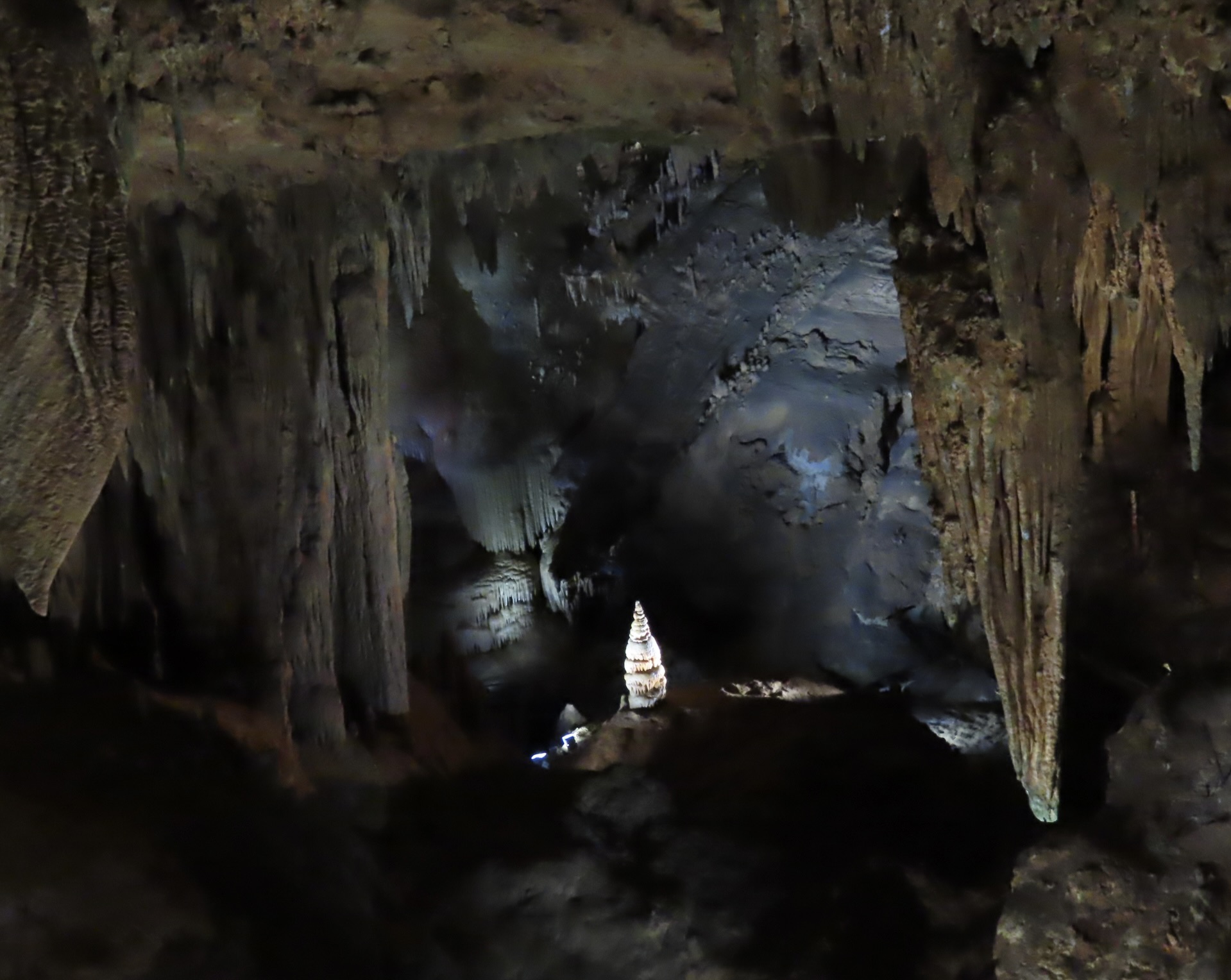
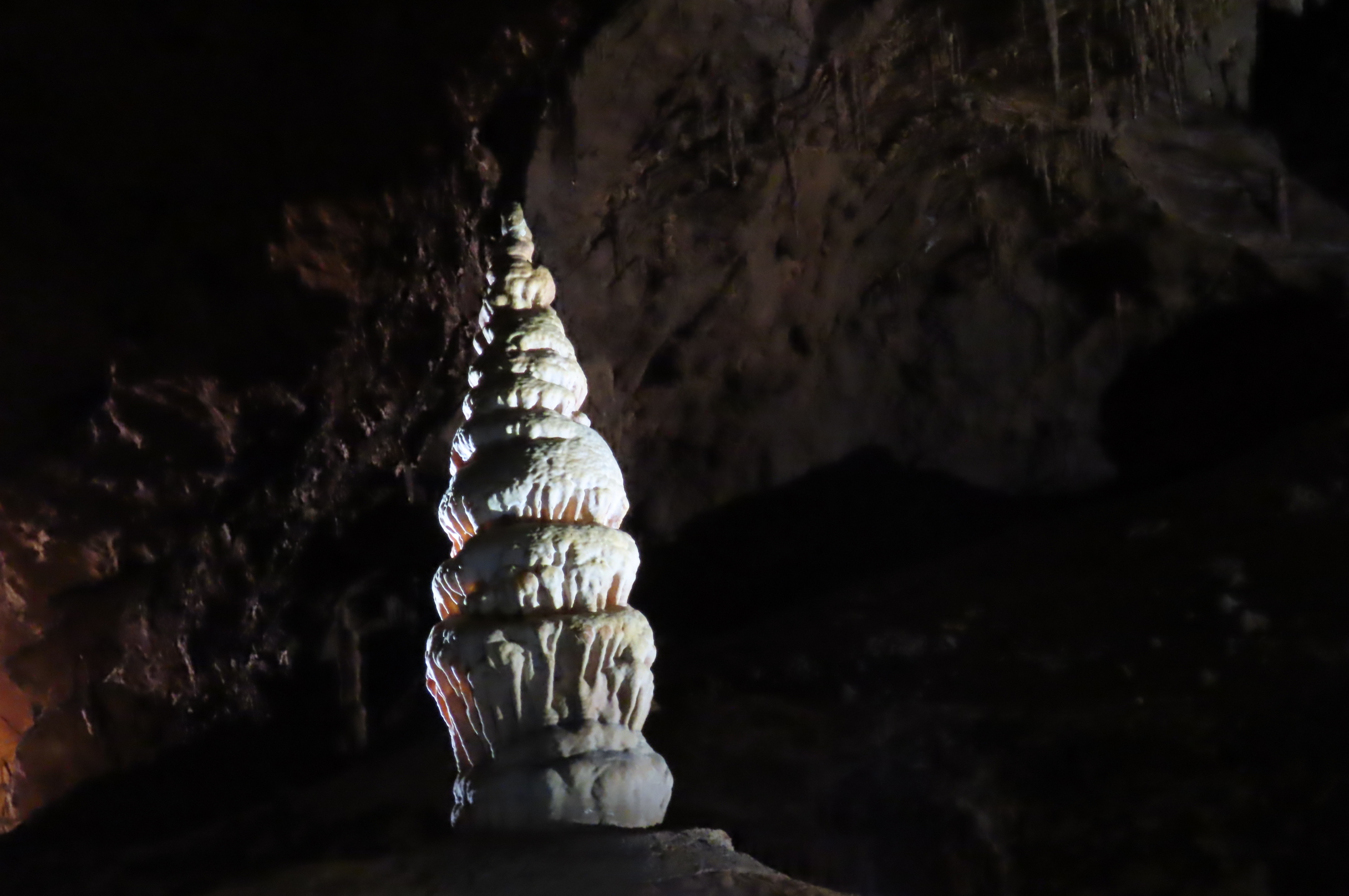
I thought Luray did a great job of highlighting the white stalagmite. I was looking down.
Here, I was level with it.
Islands in a spring.
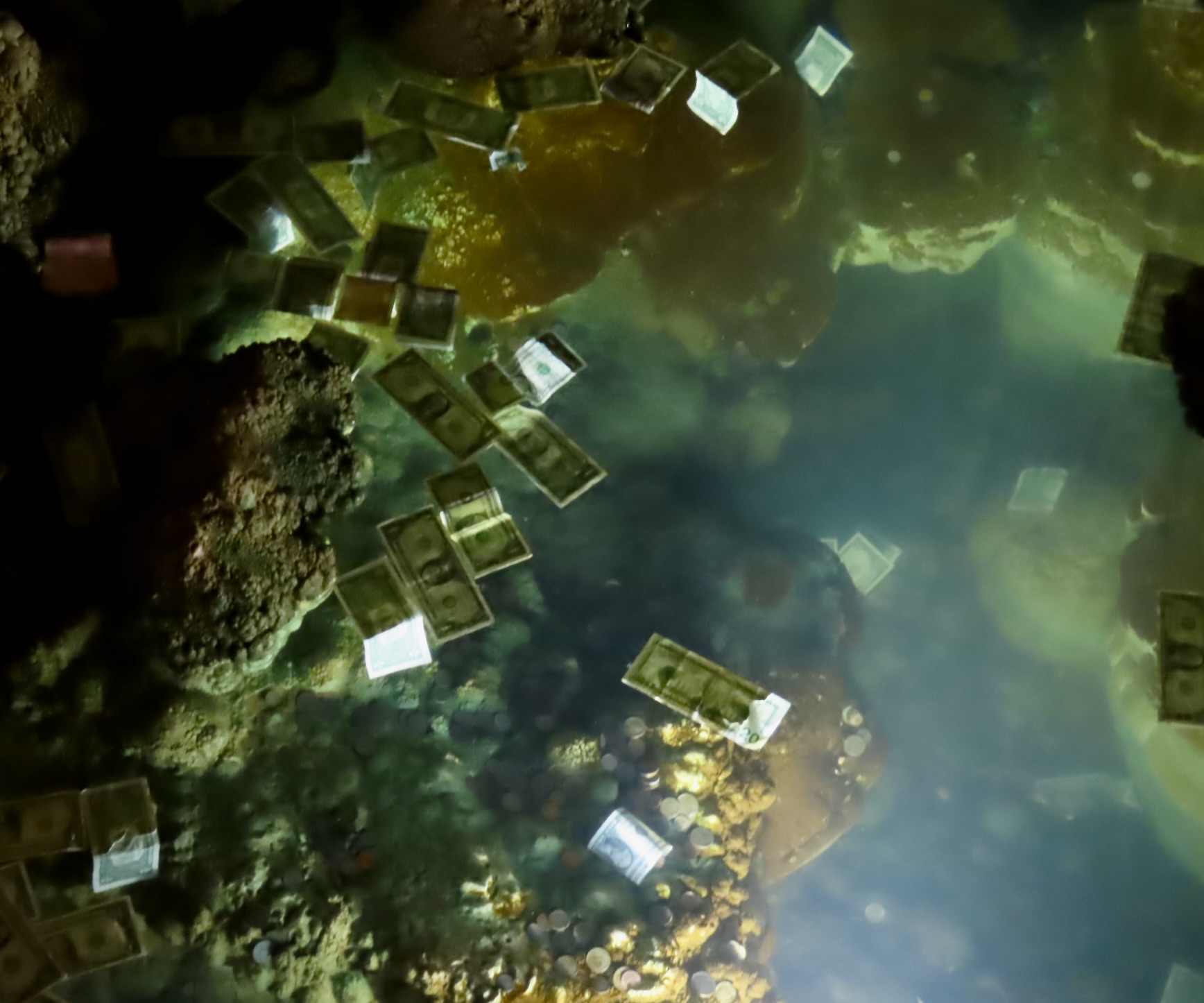
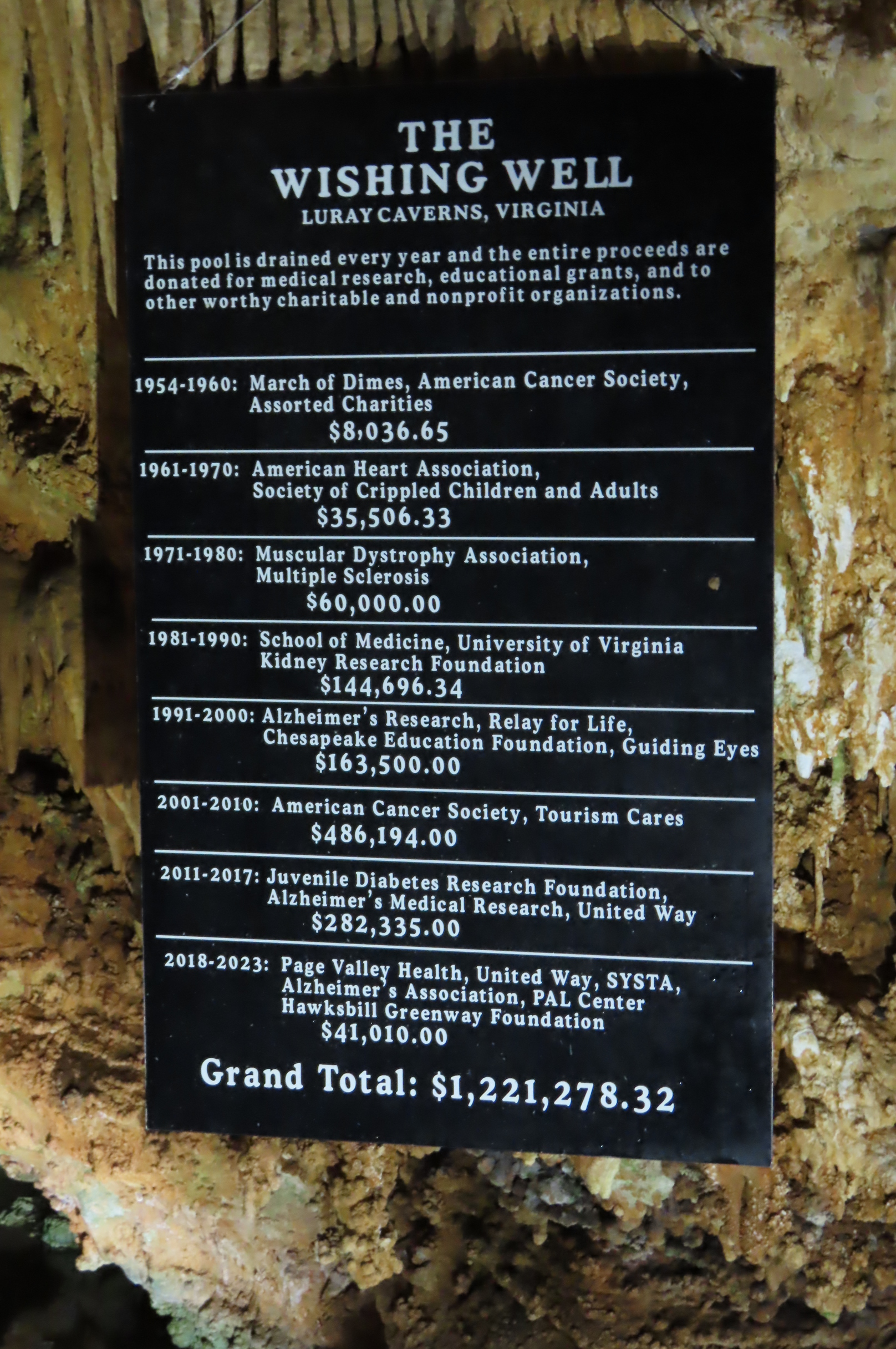
Speaking of springs, this one was special. It’s called the Wishing Well. Toss your money in and make a wish. But this goes beyond your wish…
Luray Caverns designed the Wishing Well to raise funds for designated charities and non-profits. Once a year, the well is drained, money collected, and the donation made.
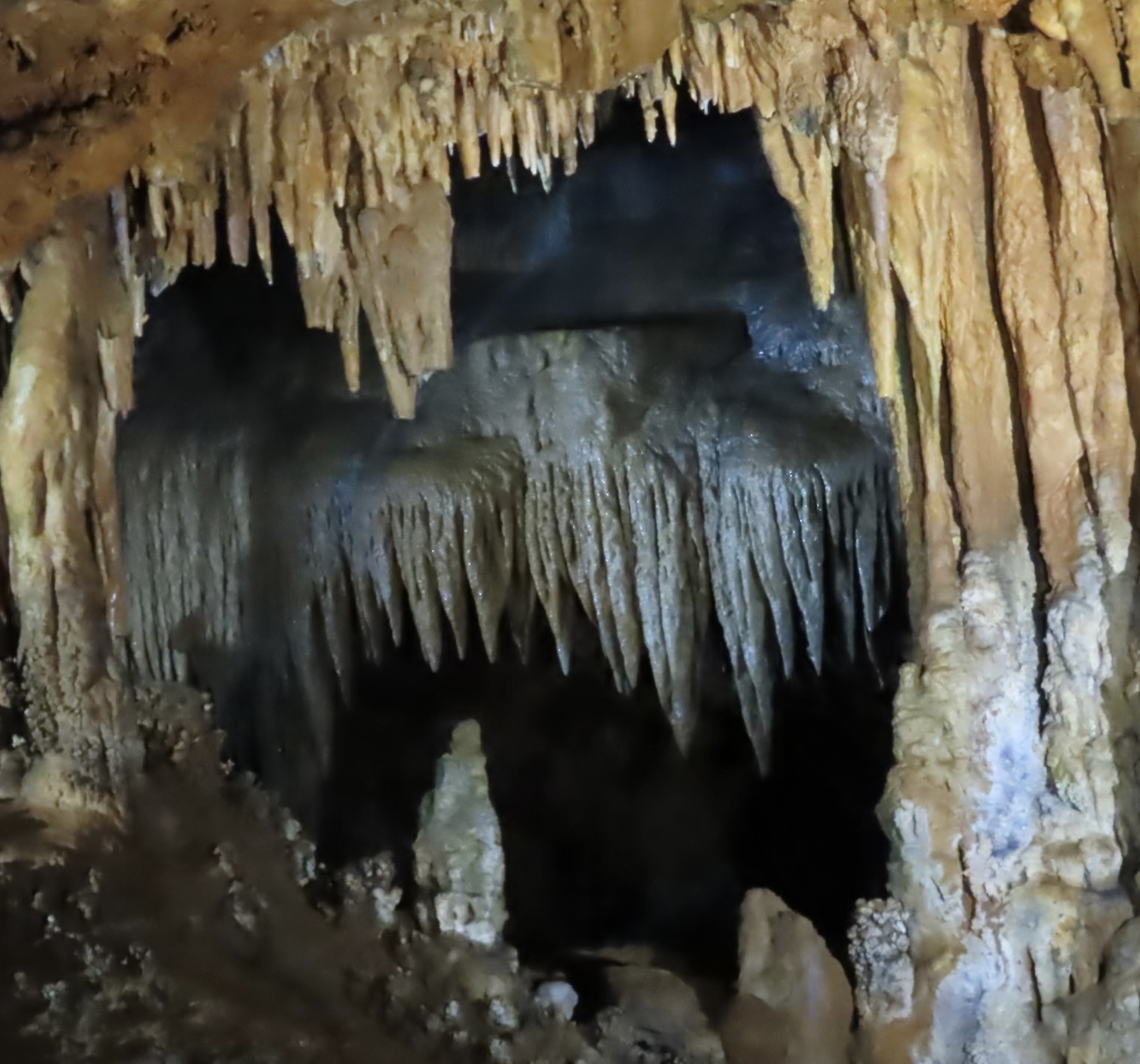
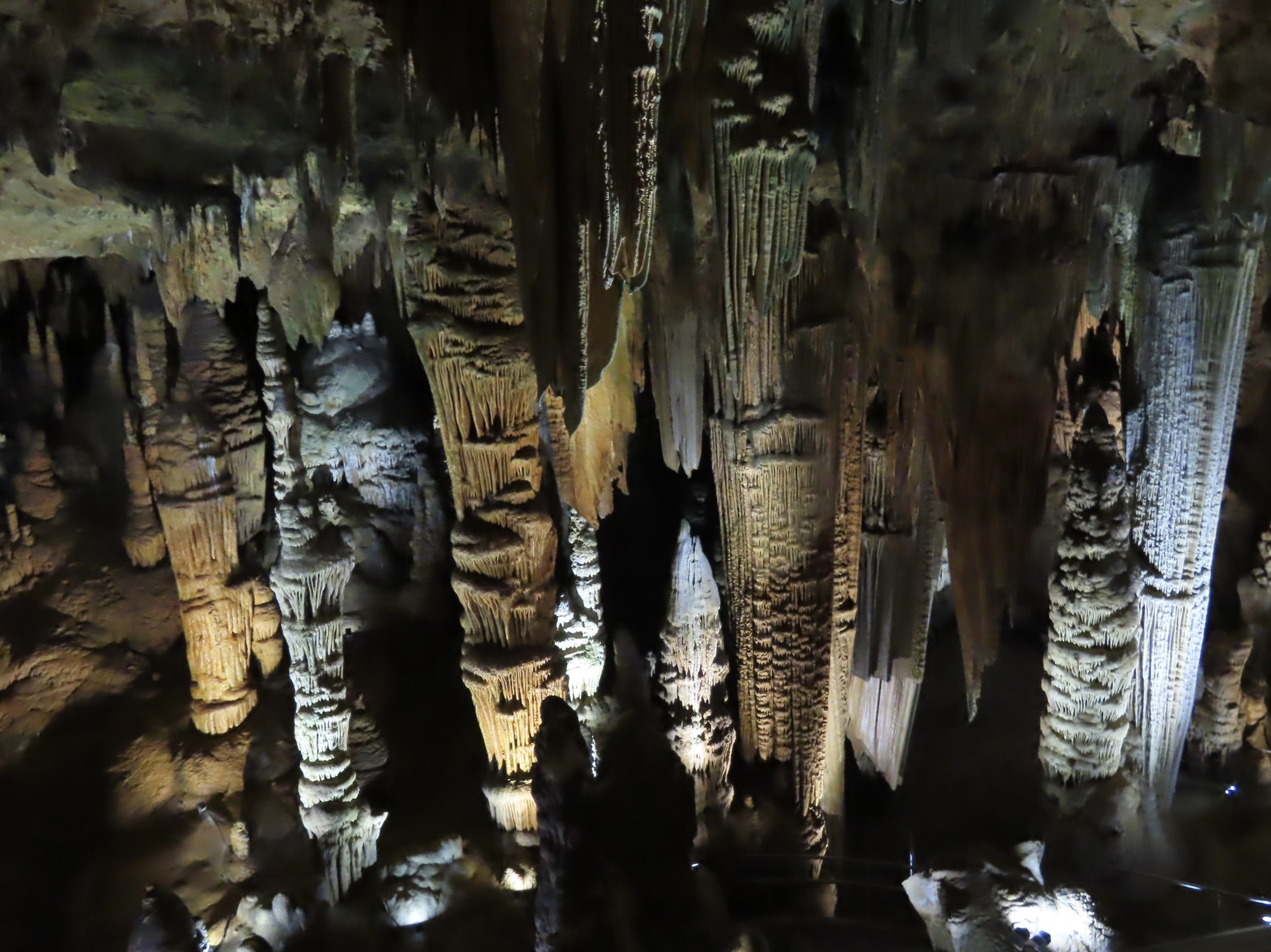
Many views feature layer upon layer upon layer. Sometimes it felt like I was looking into infinity.
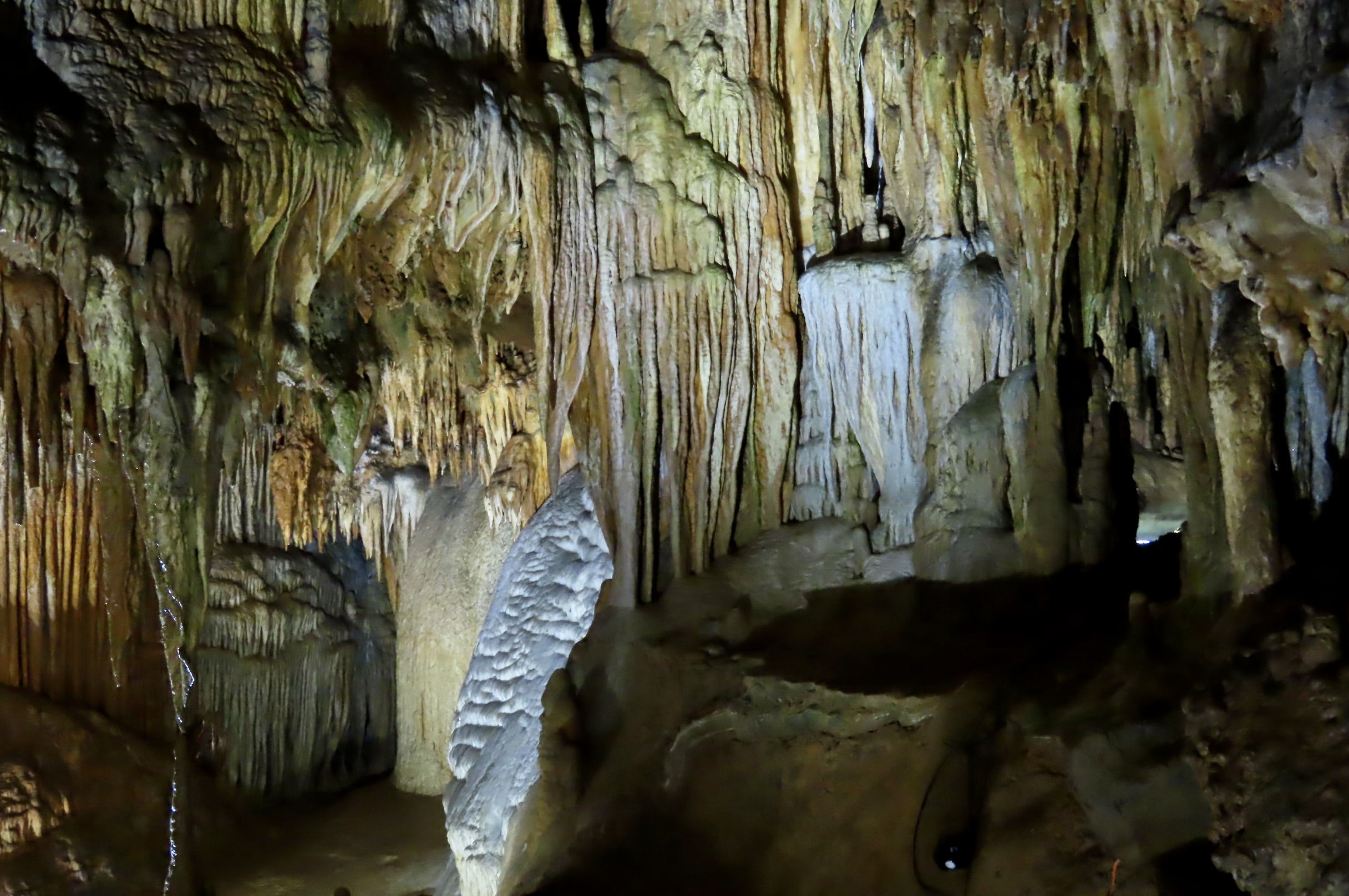
Again, flowstones, stalactites, stalagmites and columns.
A close up.
Blue, suggesting trace elements of copper are present.
And a final photo. I journeyed down to the town of Luray with thoughts of catching the beautiful fall colors of the Shenandoah National Park and the Blue Ridge Mountains from Skyline Drive. And I did, even though it was late in the ‘leaf-peeping’ season. Luray Caverns were something of an afterthought. I’m ever so glad I visited them. To easily combine both in one trip was a real bonus! If you find yourself in the area, take advantage of the opportunity.

Next, Peggy and I resume our posts about our summer travels in Scotland, Ireland, and Greece.
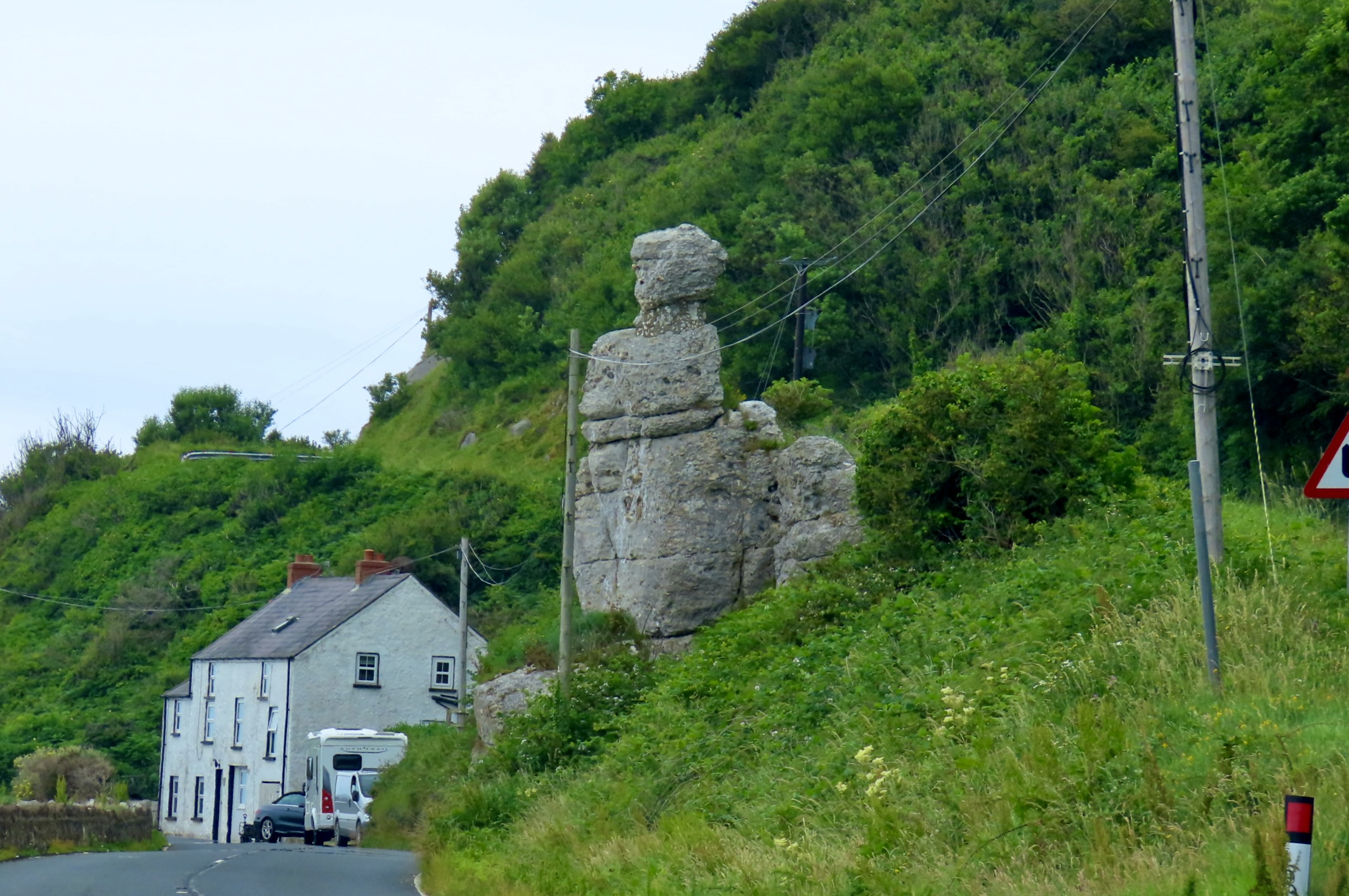
Northern Ireland has much to offer. Lots of green, for example. Scenery, history, culture and fun places to stay can all be added to the mix. This was our VRBO on the northeastern Antrim coast looking out on the Irish Sea toward Scotland. The upper three windows on the left side were part of our apartment. Episodes of the Game of Thrones were filmed just over the hill behind us. Our first post will begin in Belfast and work its way up the coast. Items will include a fun bookstore, the Titanic, Ireland’s unending ‘Troubles,’ a botanic garden, an ancient graveyard where we search for long dead ancestors, and beautiful waterfalls. Lots. You won’t want to miss it.
Join us.

A Journey Underground… Oregon Caves National Monument

Rock formations in Oregon Caves National Monument.

Unusual rock formations created by minerals from dripping water led the Oregon Caves to be set aside as a national treasure in the early 1900s.

Claustrophobia: A fear of confined places

Acrophobia came up in my blog about Mt. Whitney. No surprise there, thousands of feet are between the hiker and a rather unfortunate landing. Splat! It’s a reasonable fear. Claustrophobia is just as real as fears go, but more irrational. The odds of being squished in a tight space— unless you are Indiana Jones or a misplaced wookie caught in a starship’s garbage disposal unit— are between slim and none. Don’t sweat it, right?

Try telling that to someone who is claustrophobic. I suggest you don’t stand between her and the exit. I get it. I am not particularly fond of enclosed spaces myself, whether they are physical or mental. I don’t like driving through tunnels and I hate freeway construction where imposing cement barriers shrink down to your vehicle’s width and provide a view of what hell is like. And that’s even before the gigantic truck comes barreling down on you and breathes fire up your tail pipe because you insist on driving 45 MPH in a 45 MPH zone. At least I can take my revenge when they put up plastic cones instead of cement barriers, as Peggy might tell you. Crunch. Curt strikes another blow for freedom.

Where does this leave me with caving, or spelunking, as the sophisticates call it? How do I feel about getting down on my belly and crawling through a space my skinny fourteen-year-old body would have gotten stuck in several hundred feet under ground? Not a problem; it’s not on my to-do list. But for some unfathomable reason, the standard well-known cave tours don’t bother me. In fact, I find them fascinating. Stalactites and stalagmites tickle my fancy and stir my imagination.

Photo showing how stalactites grow in Oregon Cave National Monument.

These small stalactites show tiny drops of mineral laden water that come down from a tube in the center of the stalactite. They will add about an inch of growth in a thousand years. (Photo by Peggy Mekemson.)

This photo from Oregon Cave National Monument shows the development of stalactites (coming down) and stalagmites (coming up). Eventually they meet, as demonstrating on the left. (Photo by Peggy Mekemson.)

This photo from Oregon Cave National Monument shows the development of stalactites (coming down) and stalagmites (going up). Eventually they meet, as demonstrated on the left. (Photo by Peggy Mekemson.)

So when Peggy suggested we head off to the Oregon Cave National Monument for her birthday a couple of weeks ago, I readily agreed. We’d been talking about it ever since we moved to Oregon. Except for the last few miles of the road that shot up a mountain and redefined the meaning of curves, the hour and a half drive was quite pleasant.

A ranger greeted us and gave us the bad news. We should expect a two-hour wait. He also wanted to know if we had been in any eastern caves in the last five years. If so— no go. White nose syndrome was wiping out eastern bats. So far their western cousins had lucked out. It had been six years since we had visited Mammoth Cave in Kentucky. We were in by a cat’s whisker.

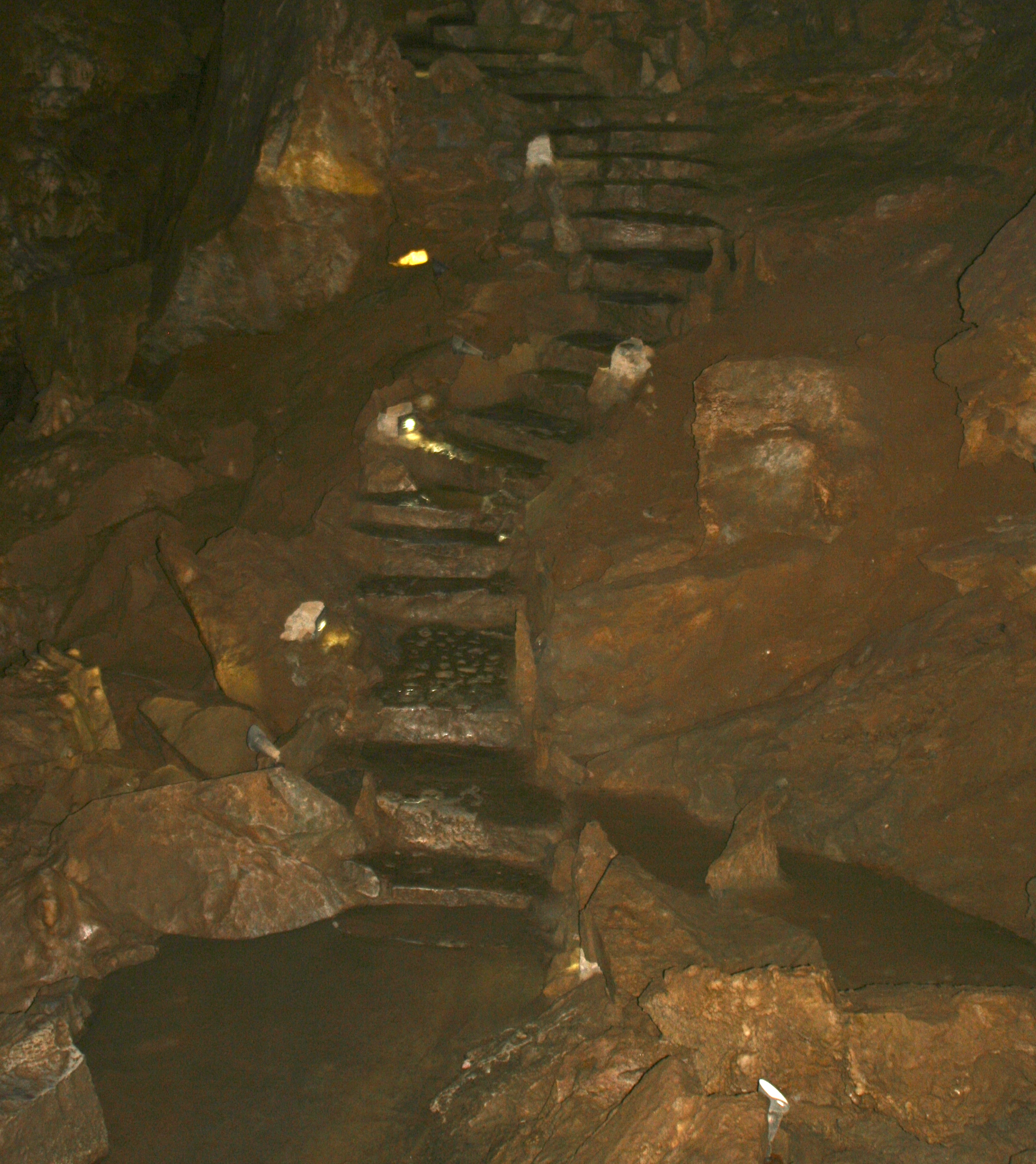
Our wait turned out to be just over an hour. There was barely time for lunch and a look through the visitor’s center before we found ourselves at the cave entrance shivering from a blast of 44˚ F air. “Cave’s breathe,” our guide stated. He also told us about the 500 narrow stairs we would be negotiating and the low ceilings. I would be bent over double with my size 14 shoes balanced precariously on wet slippery rocks. I looked enviously at a small girl who would be standing up straight with her feet resting solidly on the narrow stone steps. She gave me an impish grin.

Stone steps in Oregon Caves National Monument

Dimly lit stone steps make their way up from what is known as Ghost Cave. The narrowest ones were about half the depth of my size 14 shoes. (Photo by Peggy Mekemson.)

The Oregon Caves are somewhat unusual in that they are made out of marble. Once upon a time they were a coral reef far out in the Pacific. Plate tectonics sent the Pacific Plate diving under North America and scraped off portions of the ocean floor some 100 million years ago, adding new land to the continent. The tremendous heat and pressure involved changed the lime into marble. Folding, faulting and water created the caves.

This map shows the location of Oregon Caves National Monument.

This map shows the location of Oregon Caves National Monument. (Center Right)

Lit up stalactites in Oregon Caves National Monument.

Artificial lighting adds to the magic of caves.

Another example of the impact of lighting. The rock on the left had been signed by all of the members of a geology class that had visited in the 1800s. Strict rules are now in place to protect the cave.

Another example of the impact of lighting. The rock on the left had been signed by all of the members of a geology class that had visited in the 1800s. Strict rules are now in place to protect the cave.

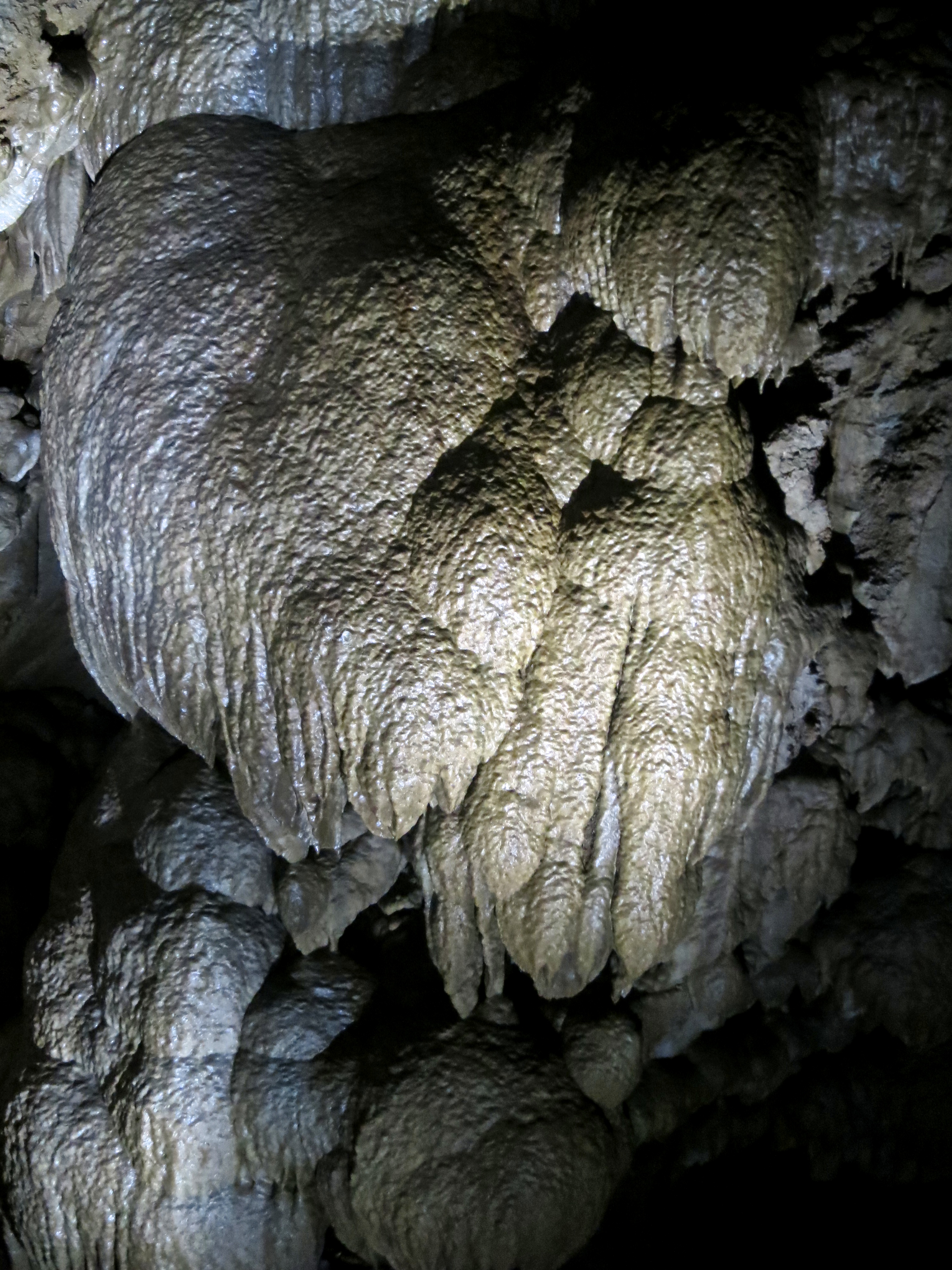
Unusual stone structure in Oregon Caves National Monument.

This unusual structure caught my camera’s attention.

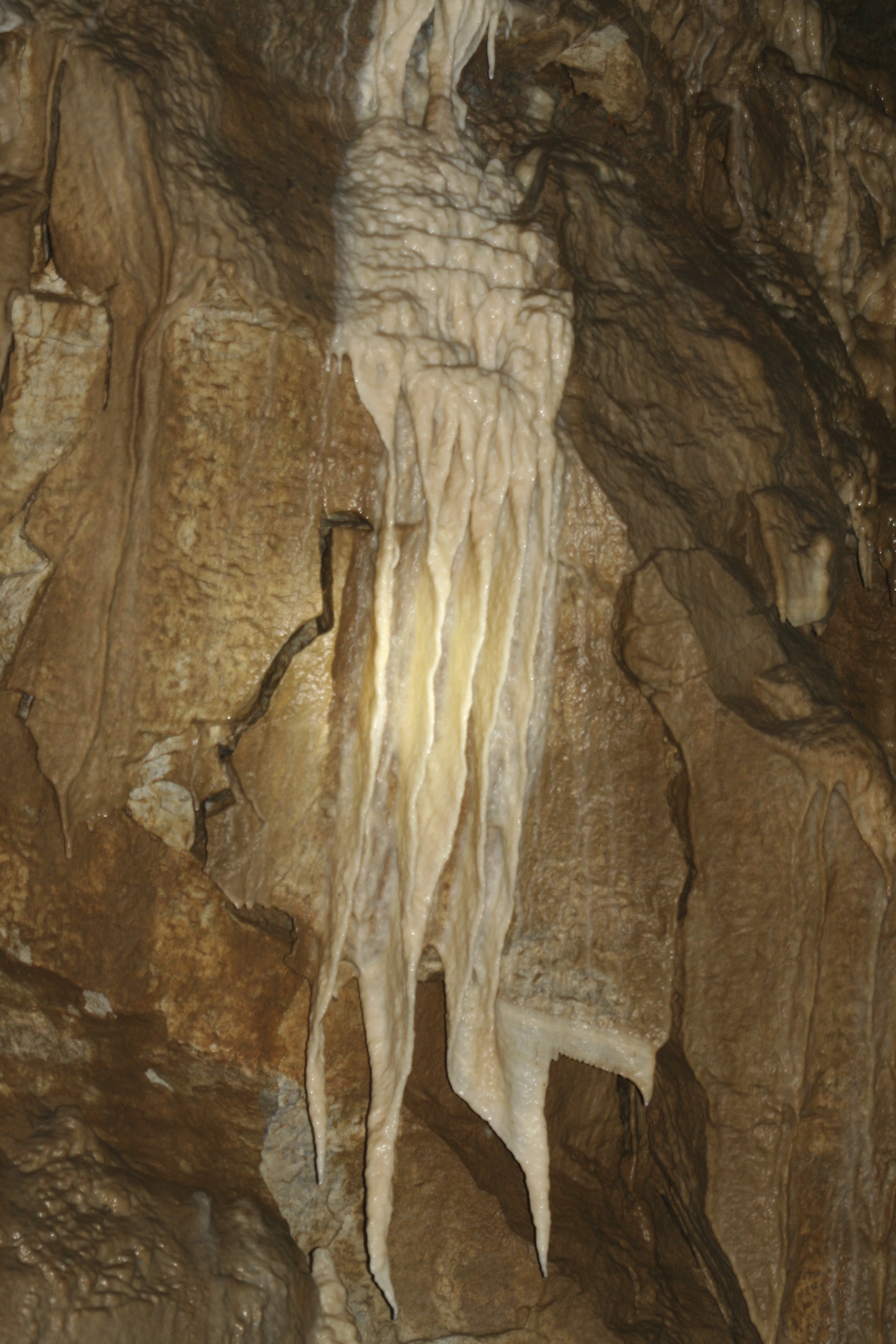
Ghostly rock waterfall at Oregon Caves National Monument.

Peggy captured this ghostly rock waterfall. (Photo by Peggy Mekemson.)

Cave exit at Oregon Caves National Monument.

A view of where we came out from our 90 minute tour.

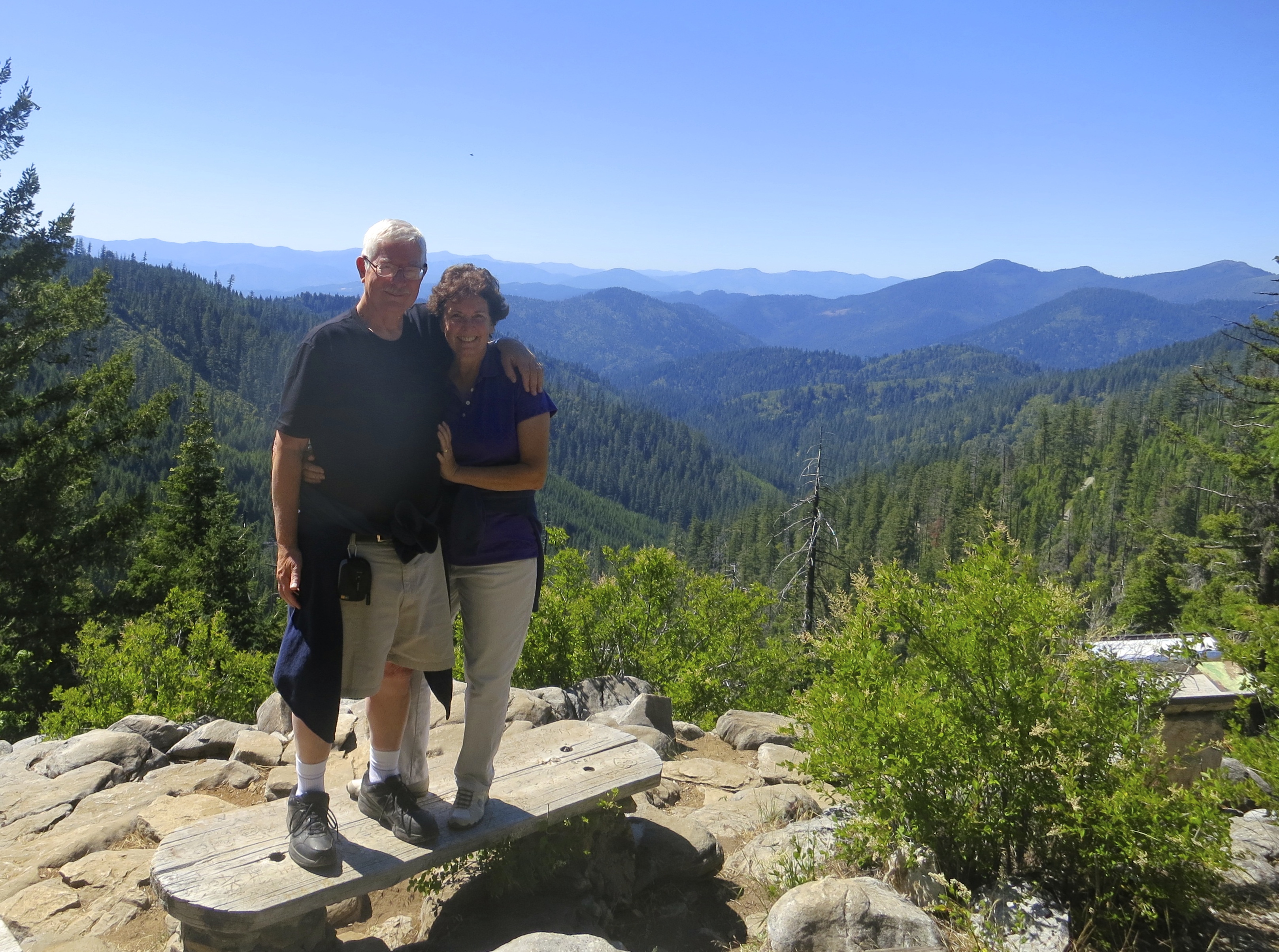
Standing on top of the mountain that contains Oregon Caves National Monument.

Tour over, Peggy and I stand on top of the mountain that contains the caves. This photo gives a perspective on the surrounding countryside.

NEXT BLOG: Peggy and I are headed off for a brief hiking tour at Mt. Rainier National Park for the next several days so I may be out of computer range. When I come back I will report on my recent experience as a chicken farmer: The Chicken Whisperer.