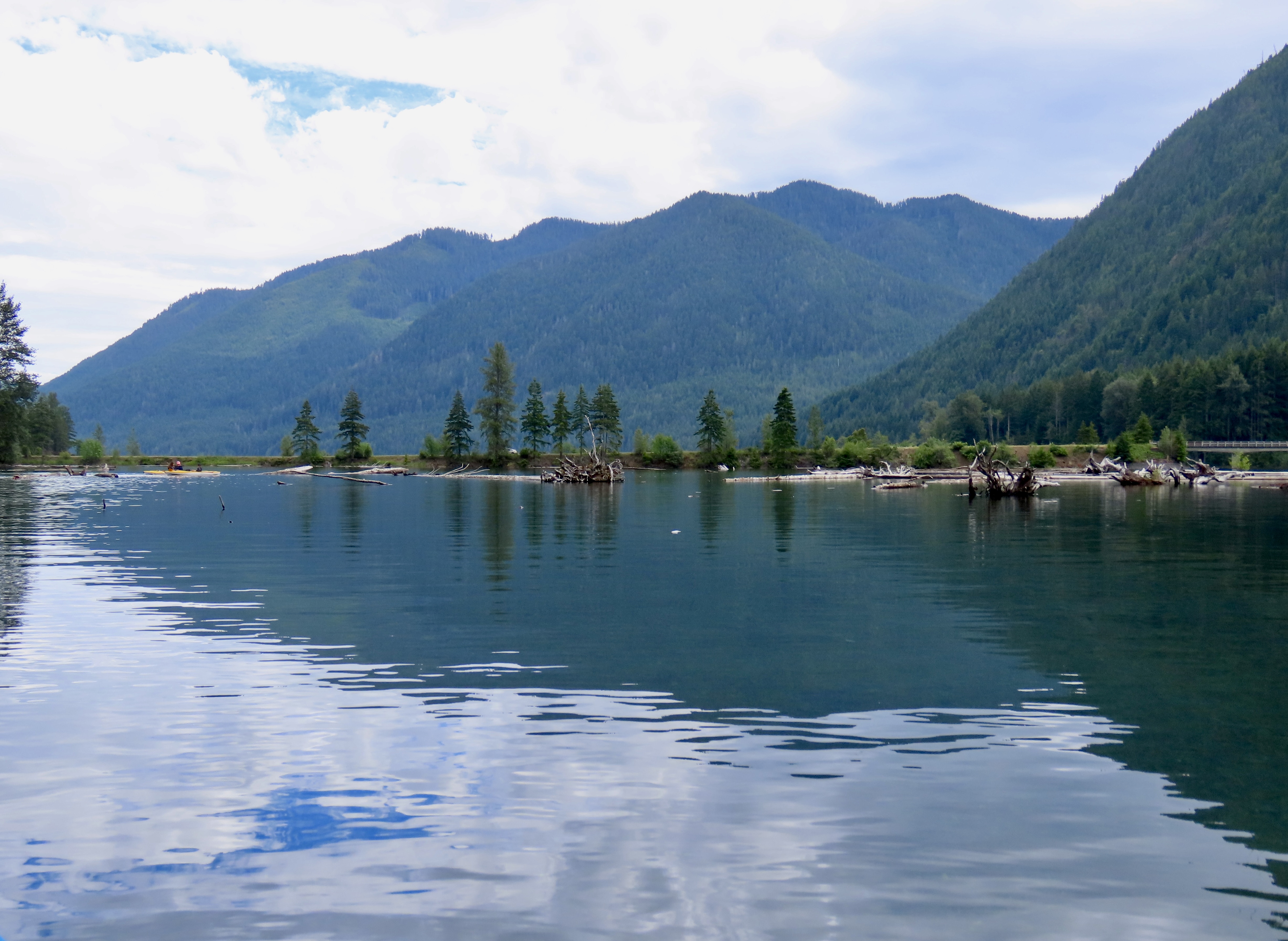
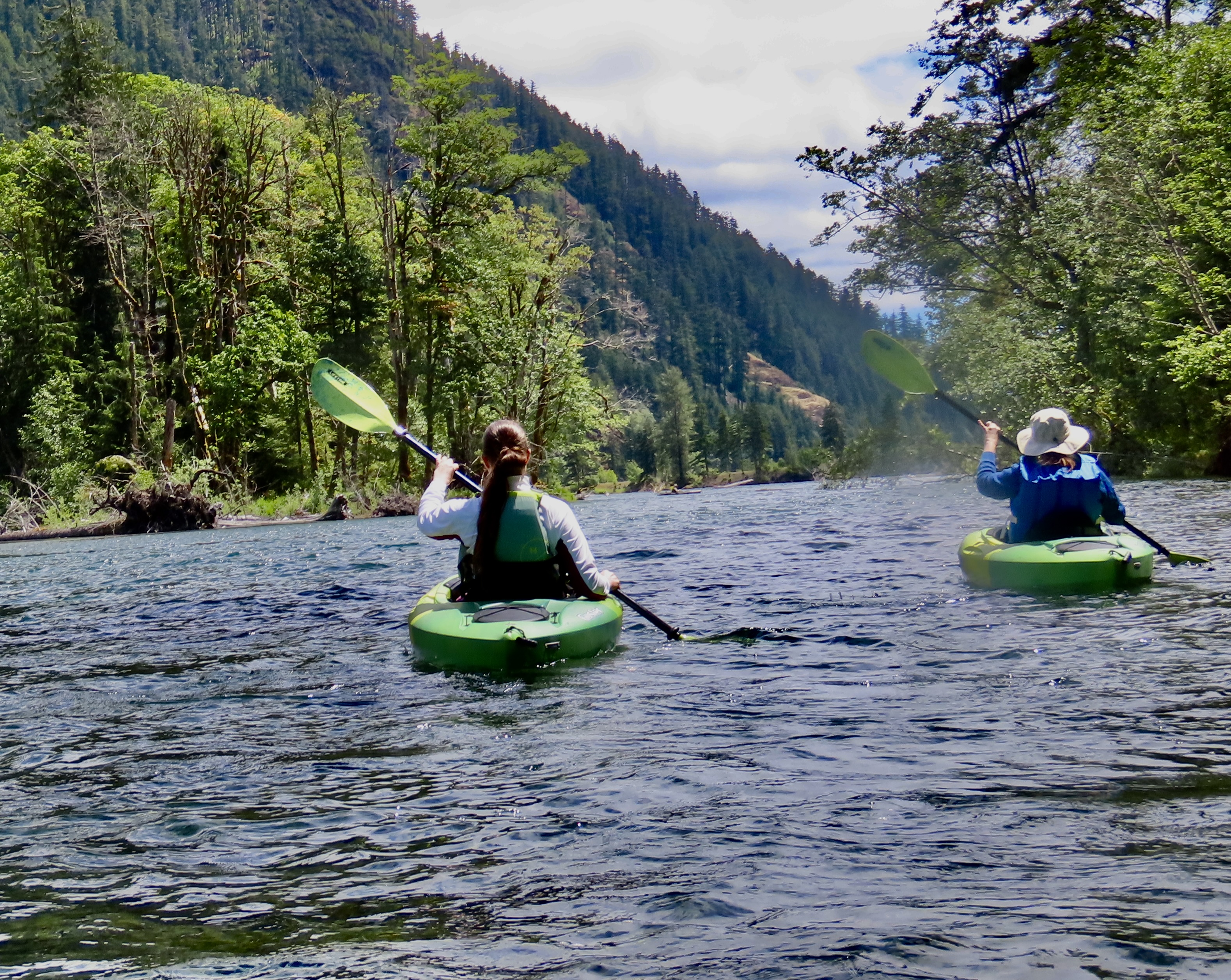
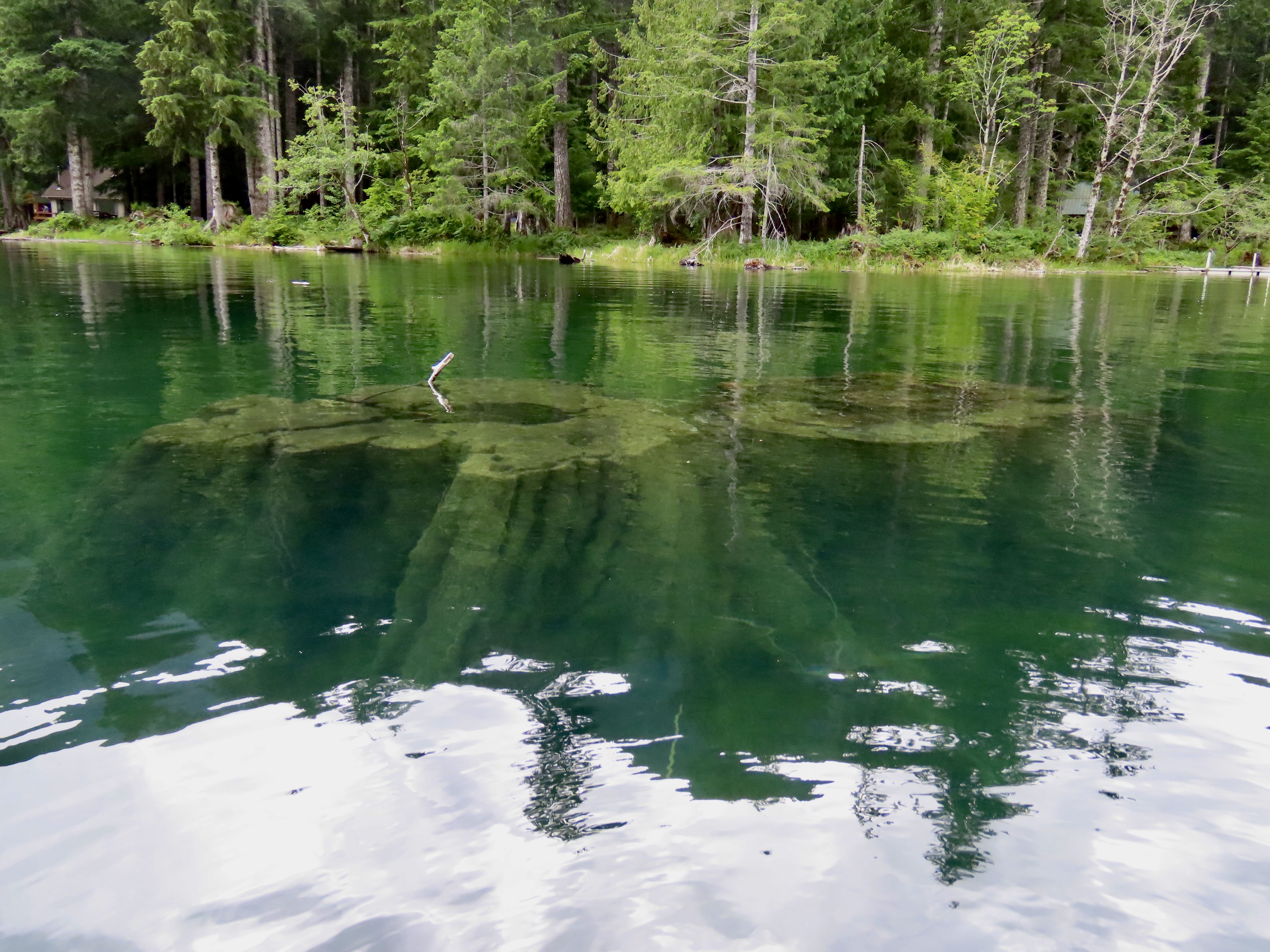
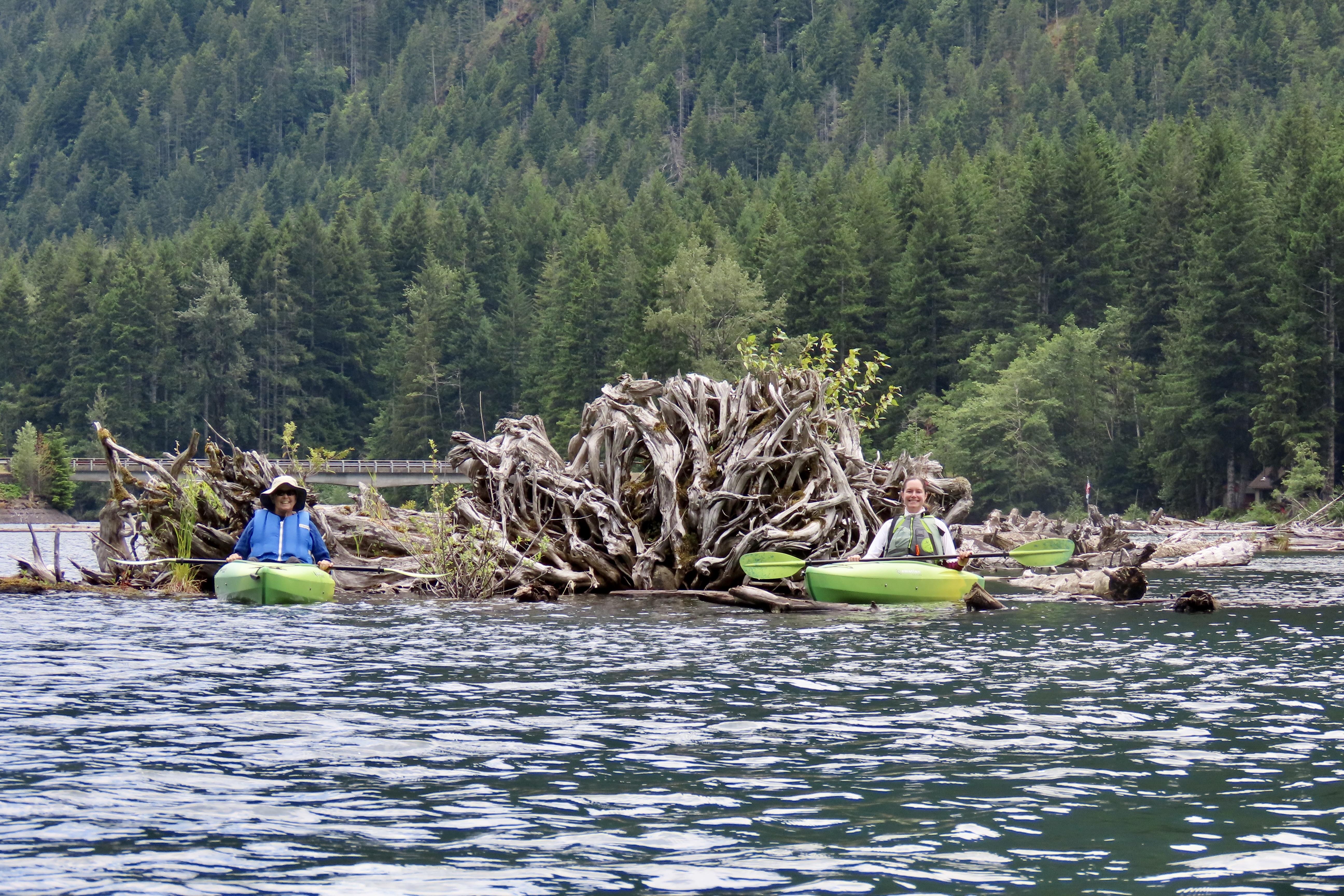
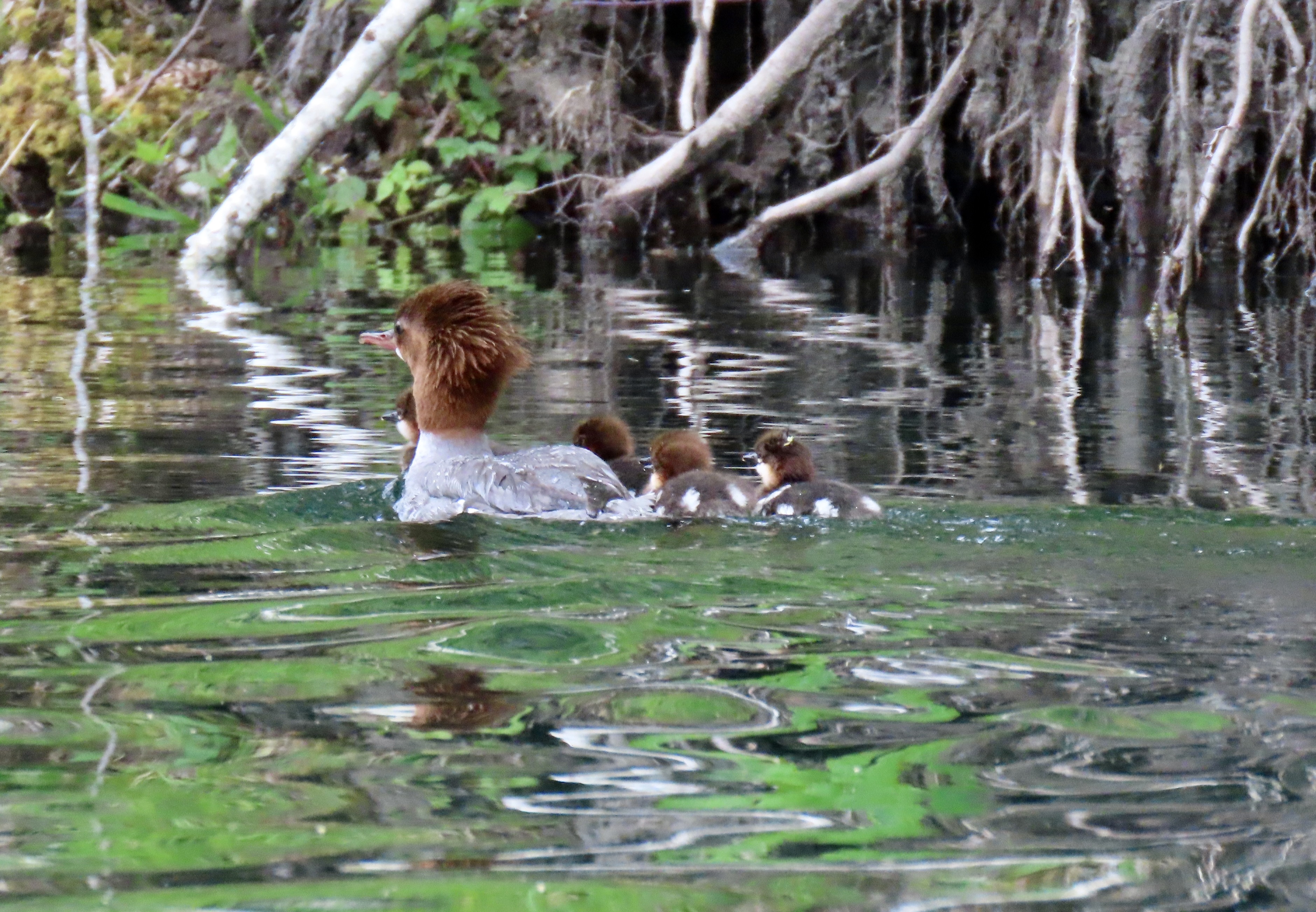
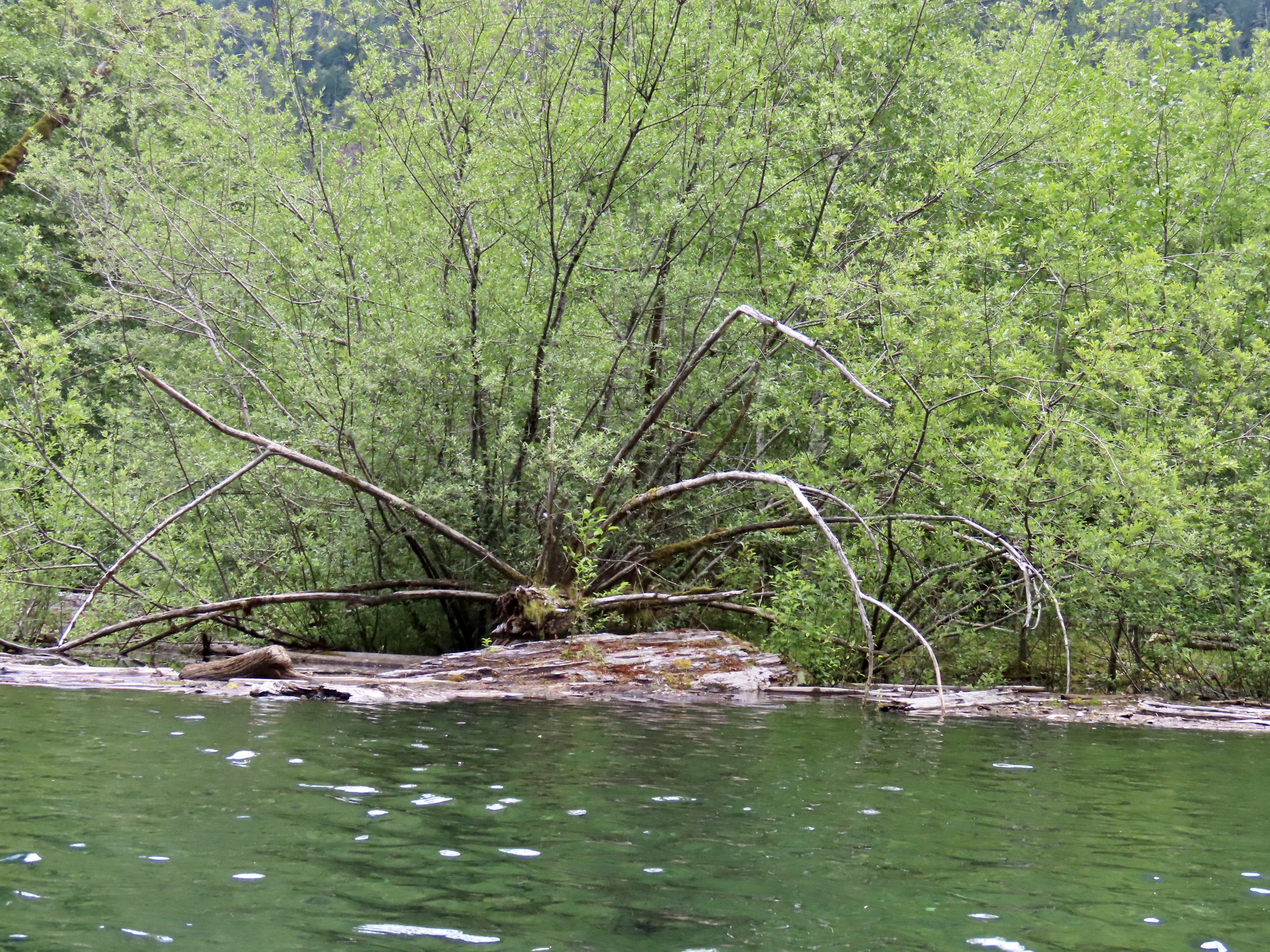
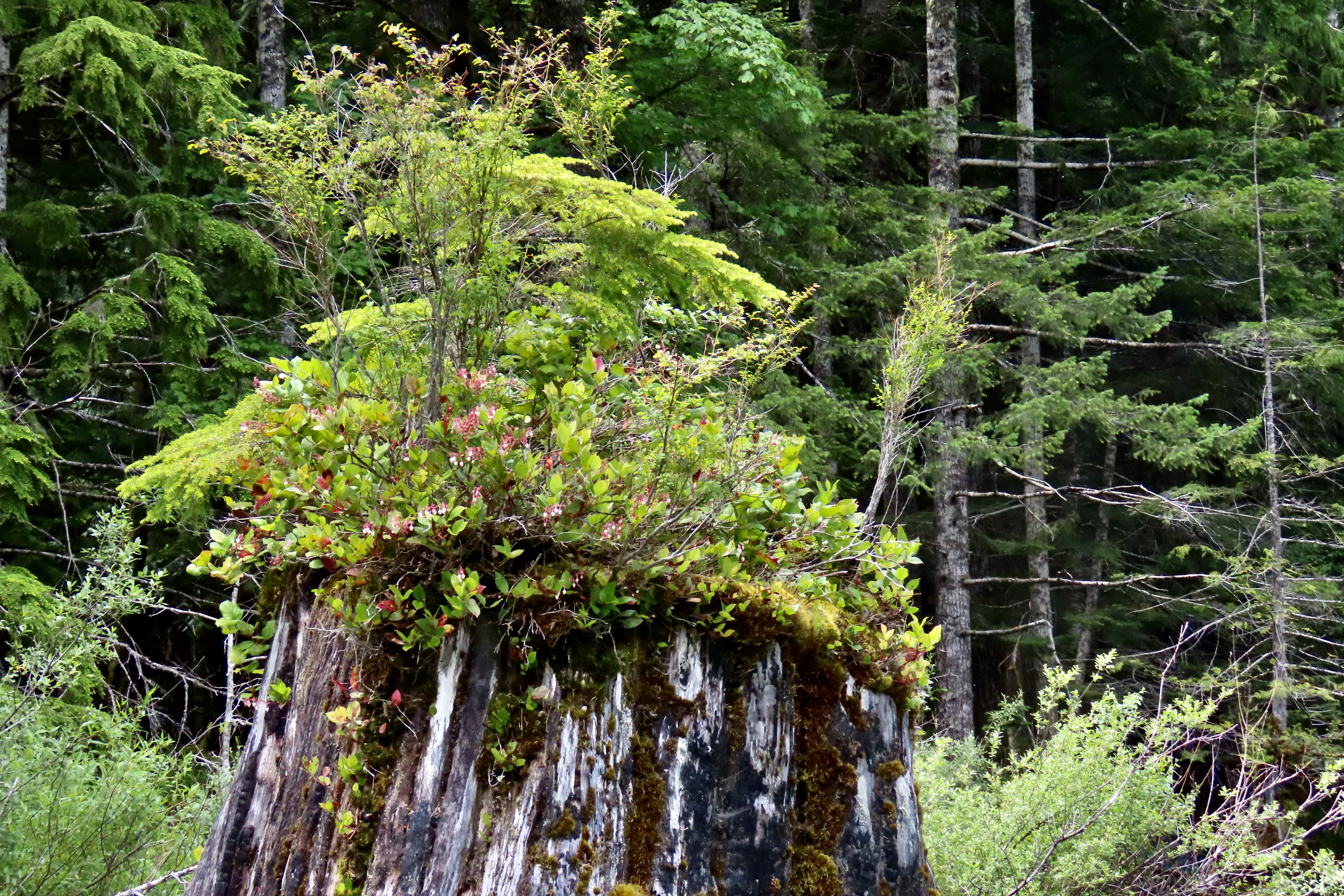
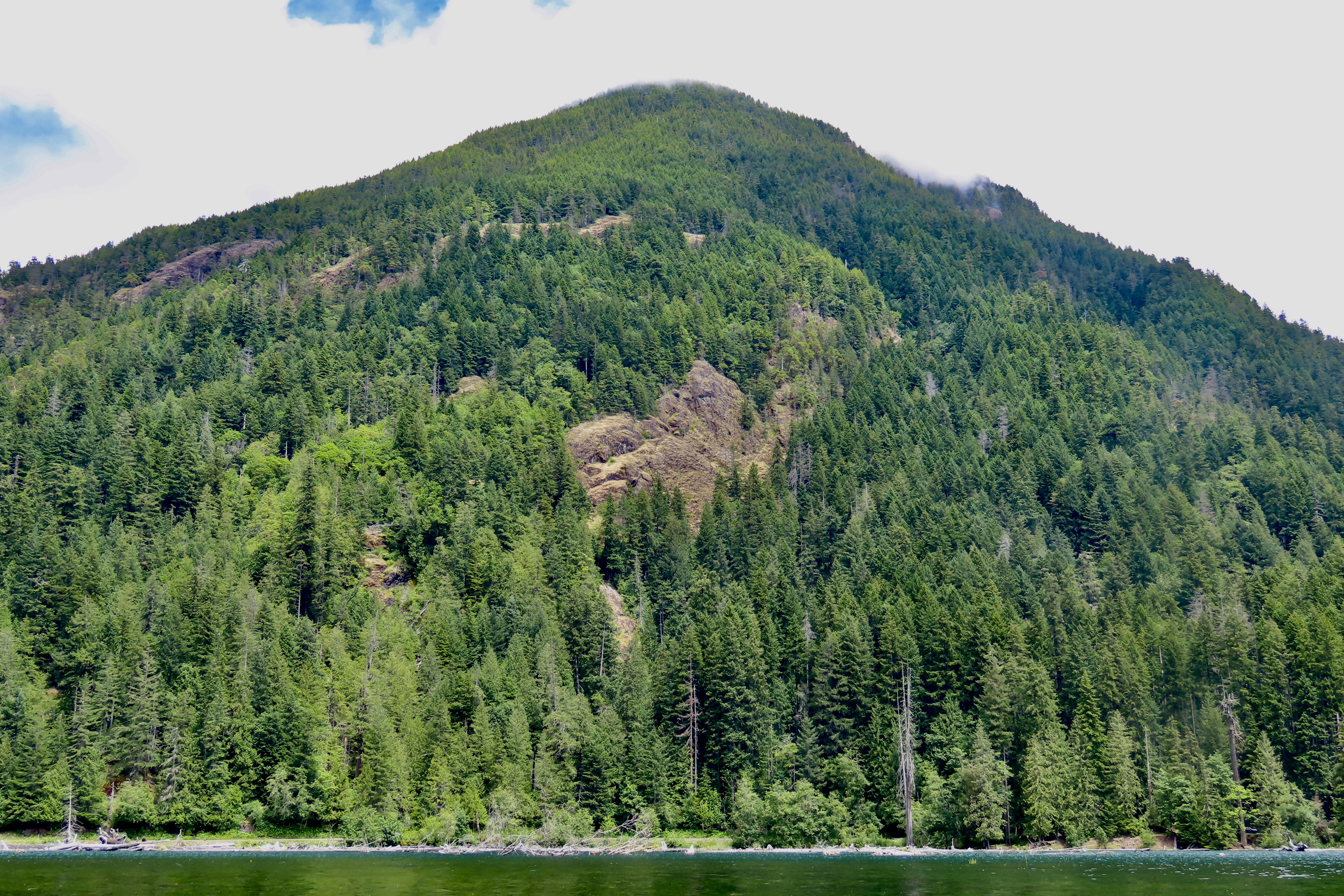
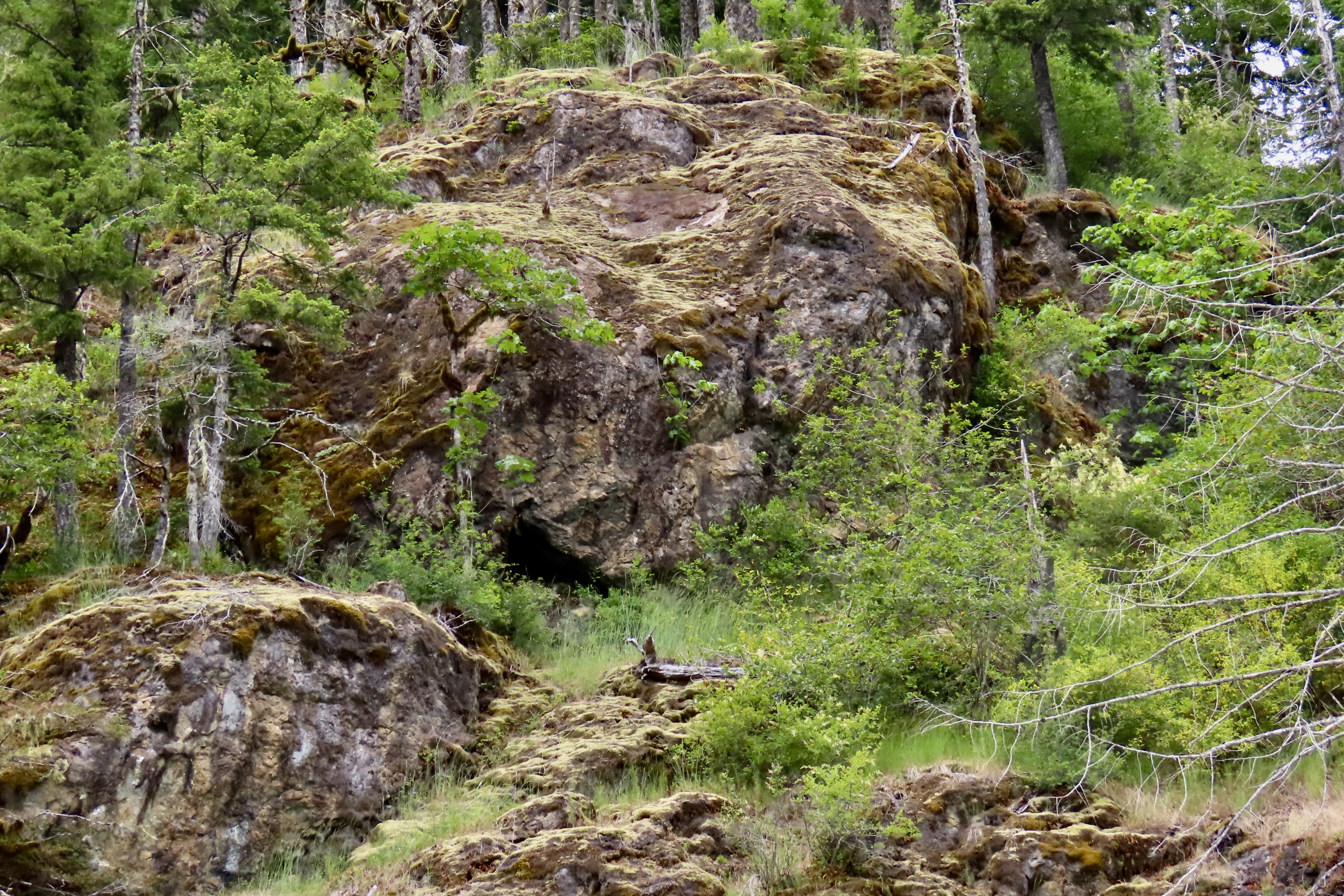
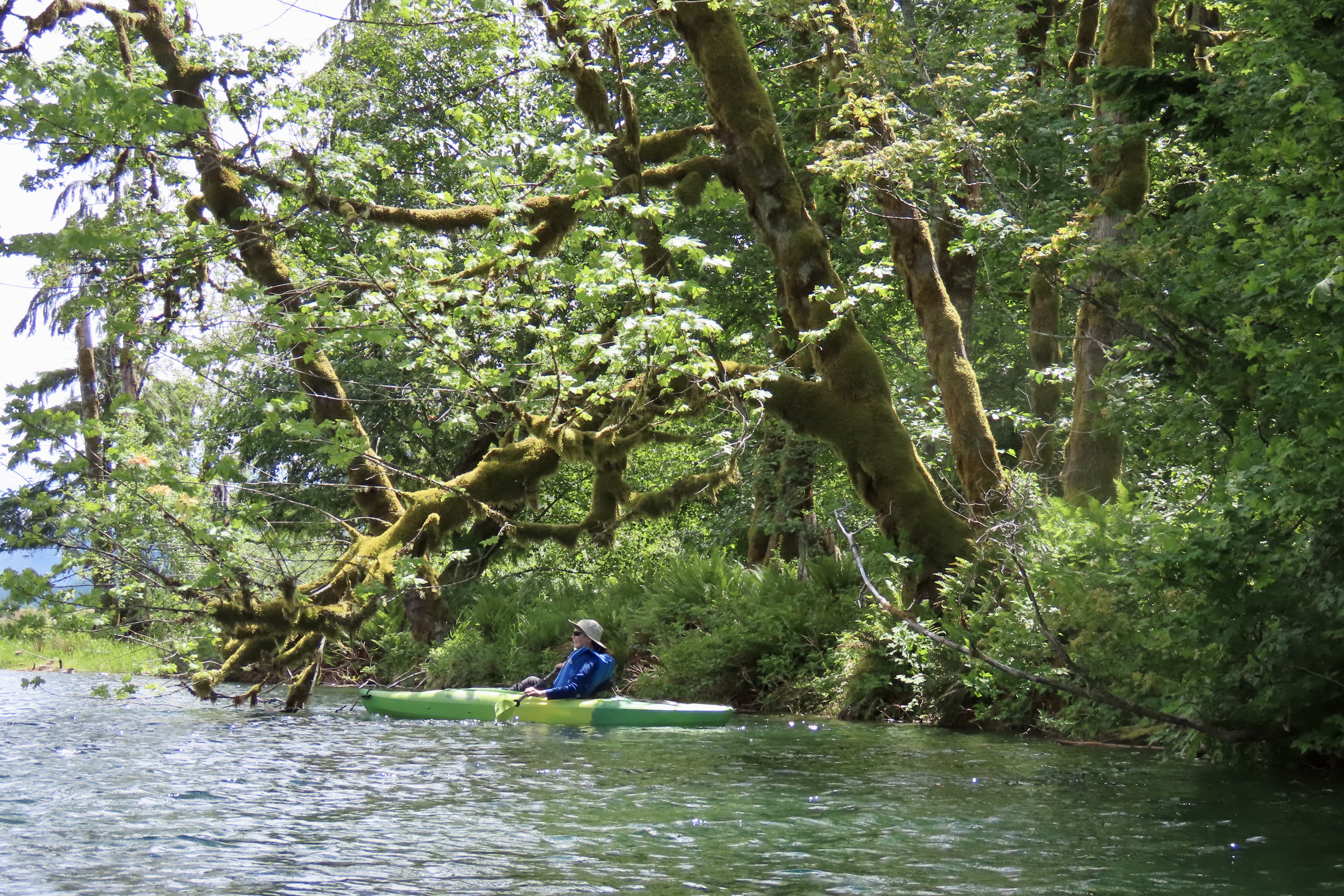
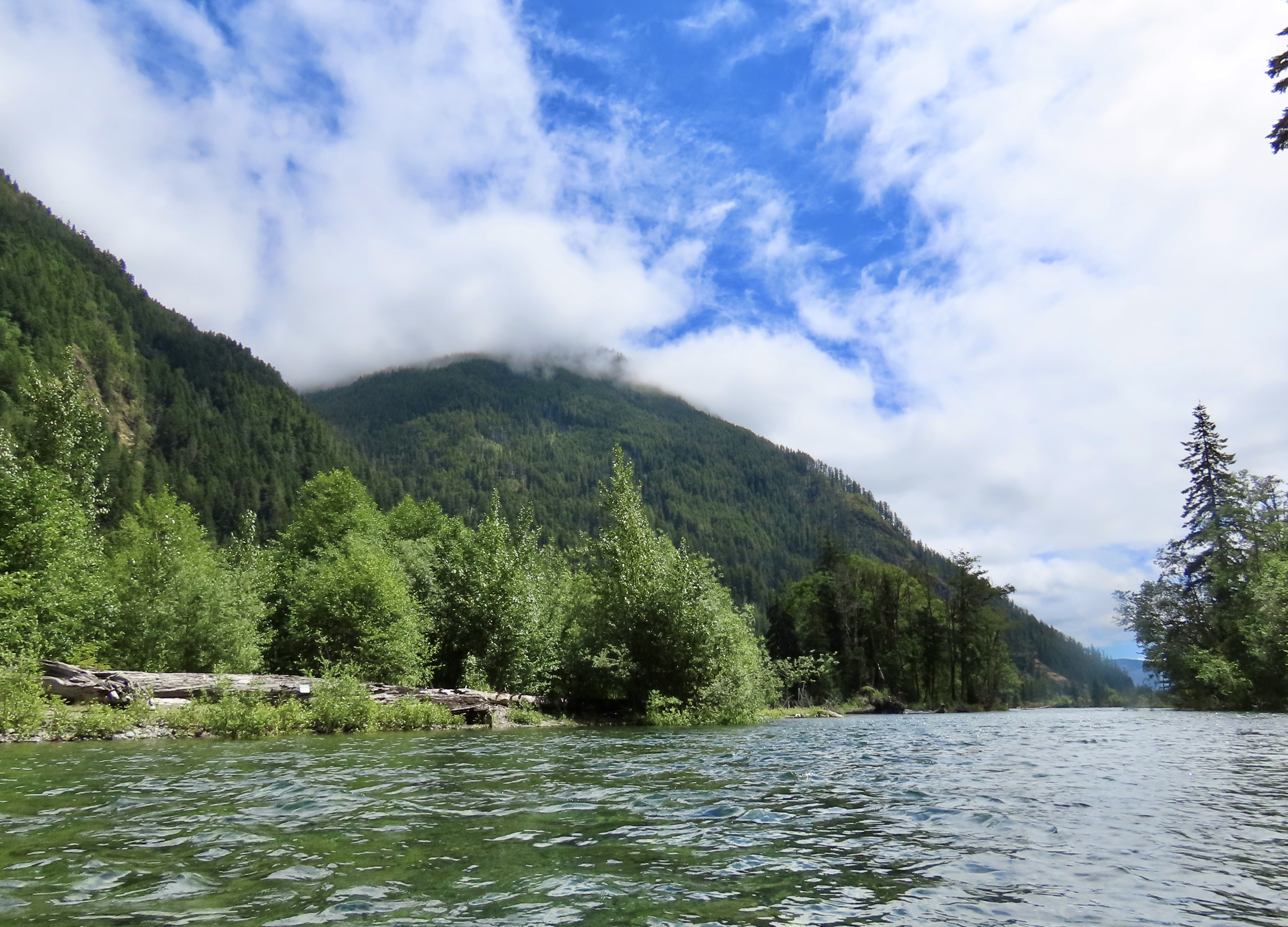
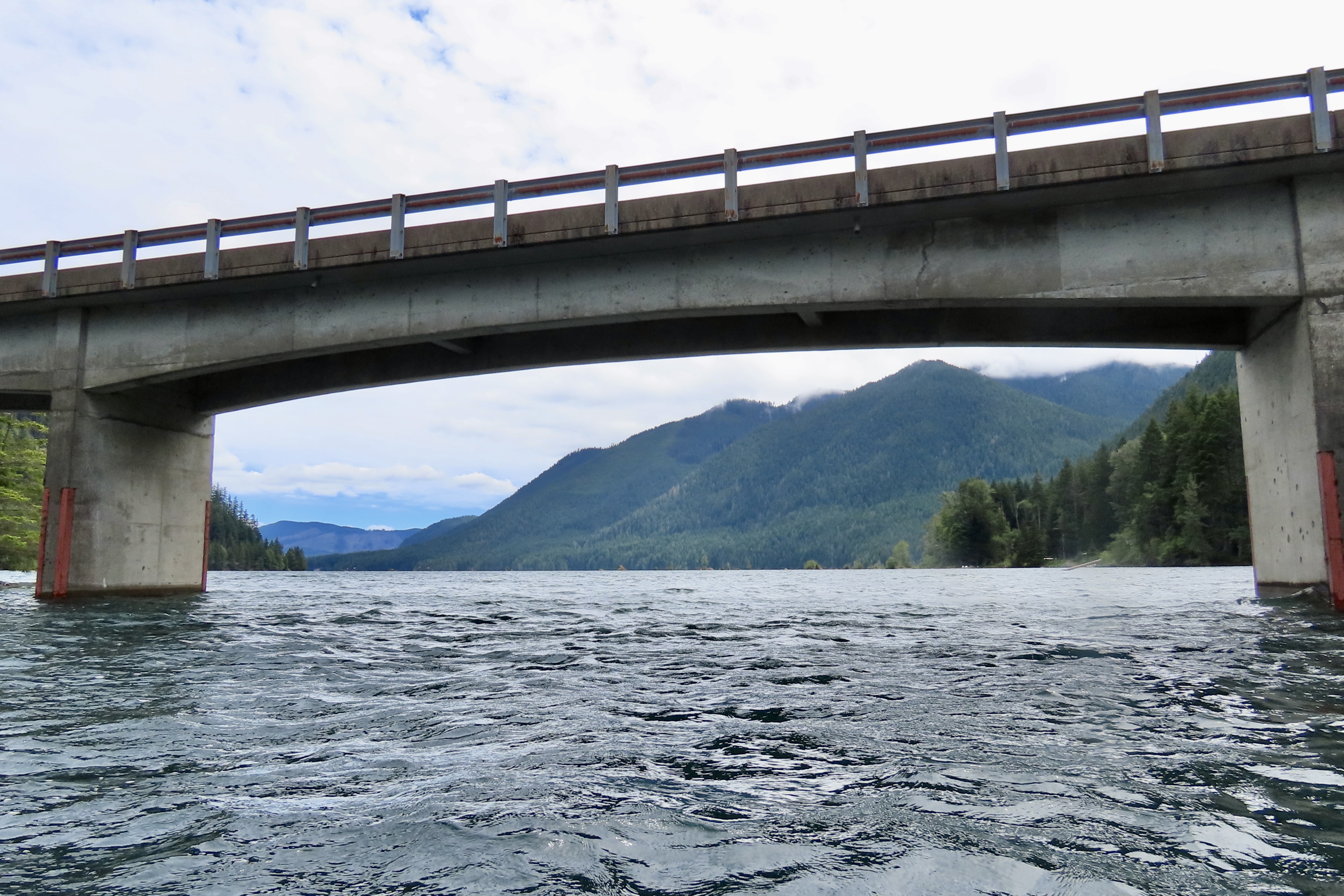
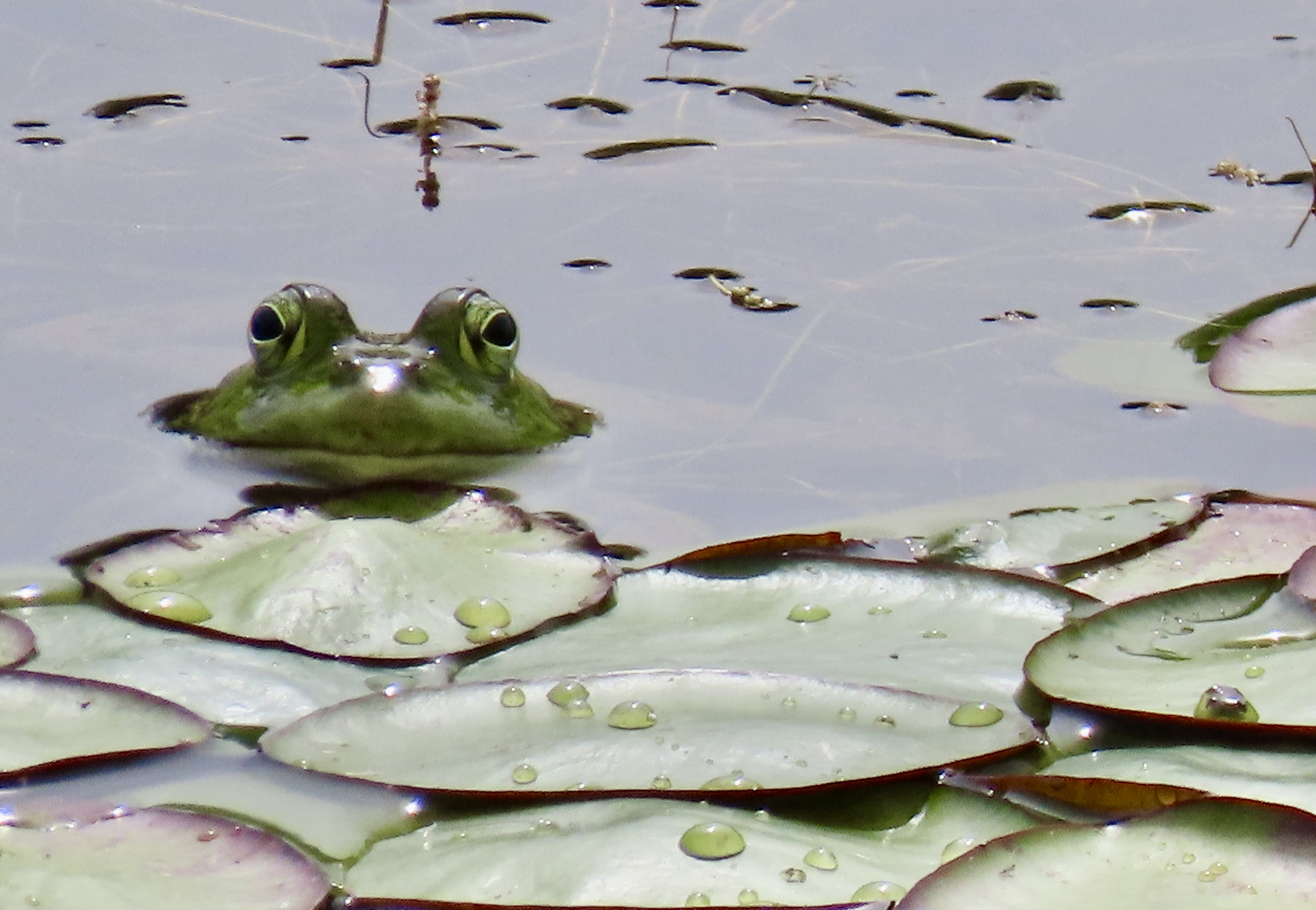
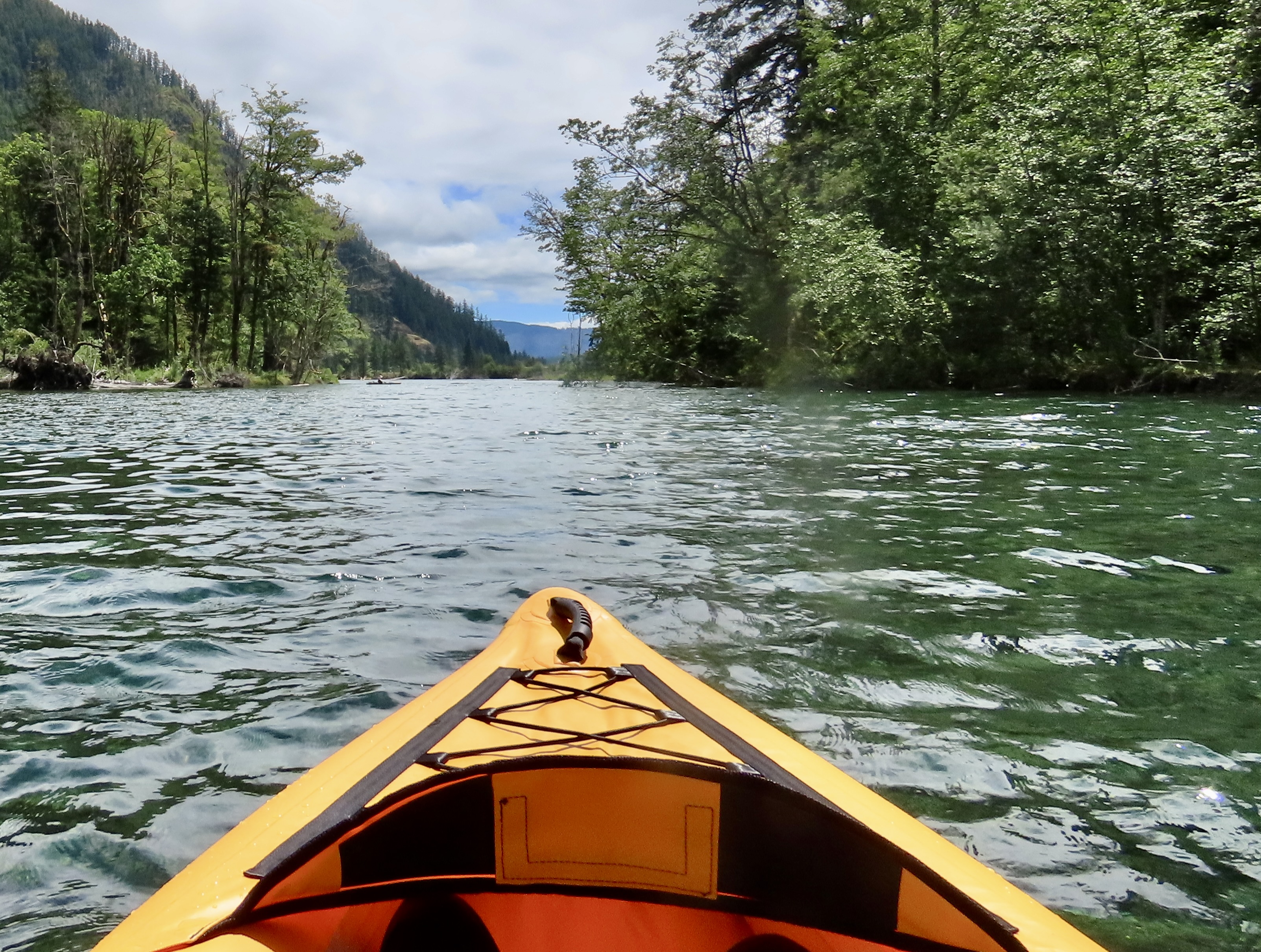
Cushman Lake is a fairly large lake around 10 miles in length and a 100 feet in depth. While it isn’t in Olympic National Park, the northern end where we kayaked serves at the gateway to the Staircase entry to the park. The road into the park can be seen on the right. The Skokomish River, which I featured in my last post, flows into the lake at the upper right end of this photo.The upper end of the lake is connected to the lower end via the bridge on the left. We kayaked from the Bear Gulch Picnic Site and explored this upper section including the lower end of the Skokomish River.The red pin shows the location of Lake Cushman in Washington. Note: Forks, the site of the Twilight books and movies, is on the upper left. We were camped near Shelton.Our niece, Christina and Peggy are kayaking into the Skokomish River here. The slight blur around Peggy was due to a drop of water on my lens. Grin. Peggy caught this interesting photo. An old growth forest of huge trees once occupied this canyon before they were logged out. These large stumps, now flooded by the lake, provide perspective. Compare them to the trees on the lake’s edge. And doesn’t the photo seem surreal?Peggy and Christina wanted their photo taken by these roots from another large tree that would have once stood in the canyon before Lake Cushman was dammed. The bridge on the map can be seen in the background.This surface shot of upper Lake Cushman shows how shallow the hundred foot deep lake had become.I thought the roots had personality.Peggy found this merganser with its chicks.And she imagined this bush as a huge spider lurking on the bank of the Skokomish waiting to capture unwary kayakers.This stump on the lake’s edge was busy growing its own forestA close up.Tall trees lined a portion of the upper lake.Large rocks were located in the forests above the lakes.We wondered what wildlife the cave might host? A snoozing bear in the winter, perhaps…Peggy found a convenient tree to rest under on the Skokomish River.It was a beautiful day for kayaking. A slight breeze came up and the water grew more choppy in the early afternoon.We rowed over to the bridge for a glance at the lower section of Cushman Lake and things got much more windy and choppy! We decided that it was time to call it a day. That’s it for now. Next, we will feature a walk at Nisqually National Wildlife Refuge north of Olympia that Christina took us on.There were frogs…
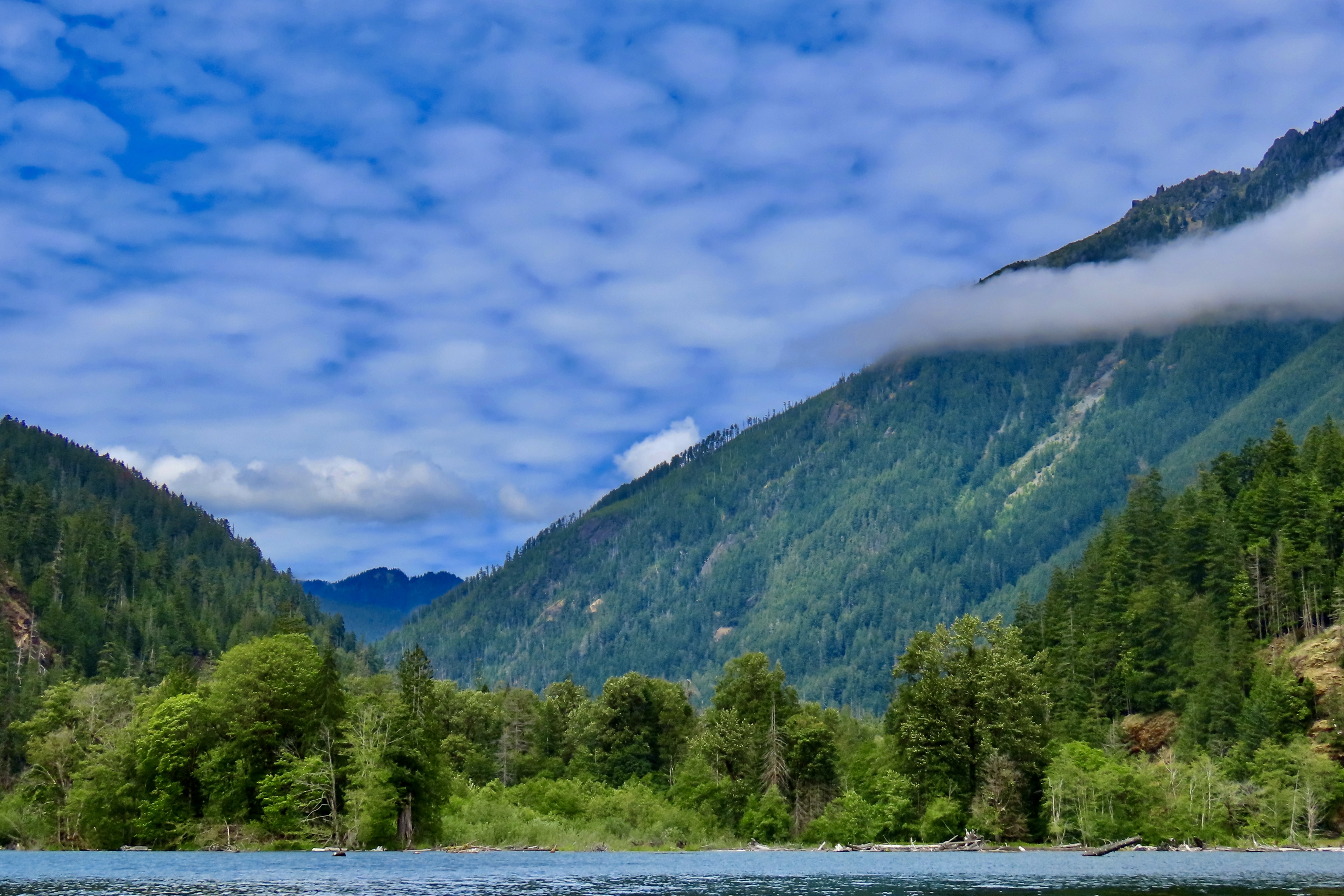
Olympic National Park has both beauty and diversity ranging from its well known rain forest to high mountains, coastline, lakes, rivers and wildlife. We’ve been there several times over the years and were looking forward to exploring even more of what it has to offer. This photo was take from our kayaks on Cushman Lake which is at the southern entrance to Olympic.
But the best laid plans of “Mice and Men”… You know how that goes. I developed a health issue and decided to go directly to Olympia rather than the gorgeous campsite on a bay near Port Angeles we had reserved for a week. It turns out the issue wasn’t urgent. My doctor in Virginia told us to continue on our trip and see her when we got back.
Fortunately, we were already planning to visit our niece, Christina, who works in Olympia. She is a good friend, as are her brother Jay and her sister Amy. Jay and I have backpacked together. Both Jay and Christina have been to Burning Man with us, and Peggy is Amy’s godmother. Before starting on our West Coast adventure, we had just completed our safari trip to South Africa with their dad John (Peggy’s brother) and his wife Frances!
Christina had taken time off from work as an attorney for the Washington State Attorney General’s office and had a ton of outdoor stuff planned for us. Fortunately, one of these activities included a hike up the Staircase Rapids Trail on the Skokomish River at the southern end of the park.
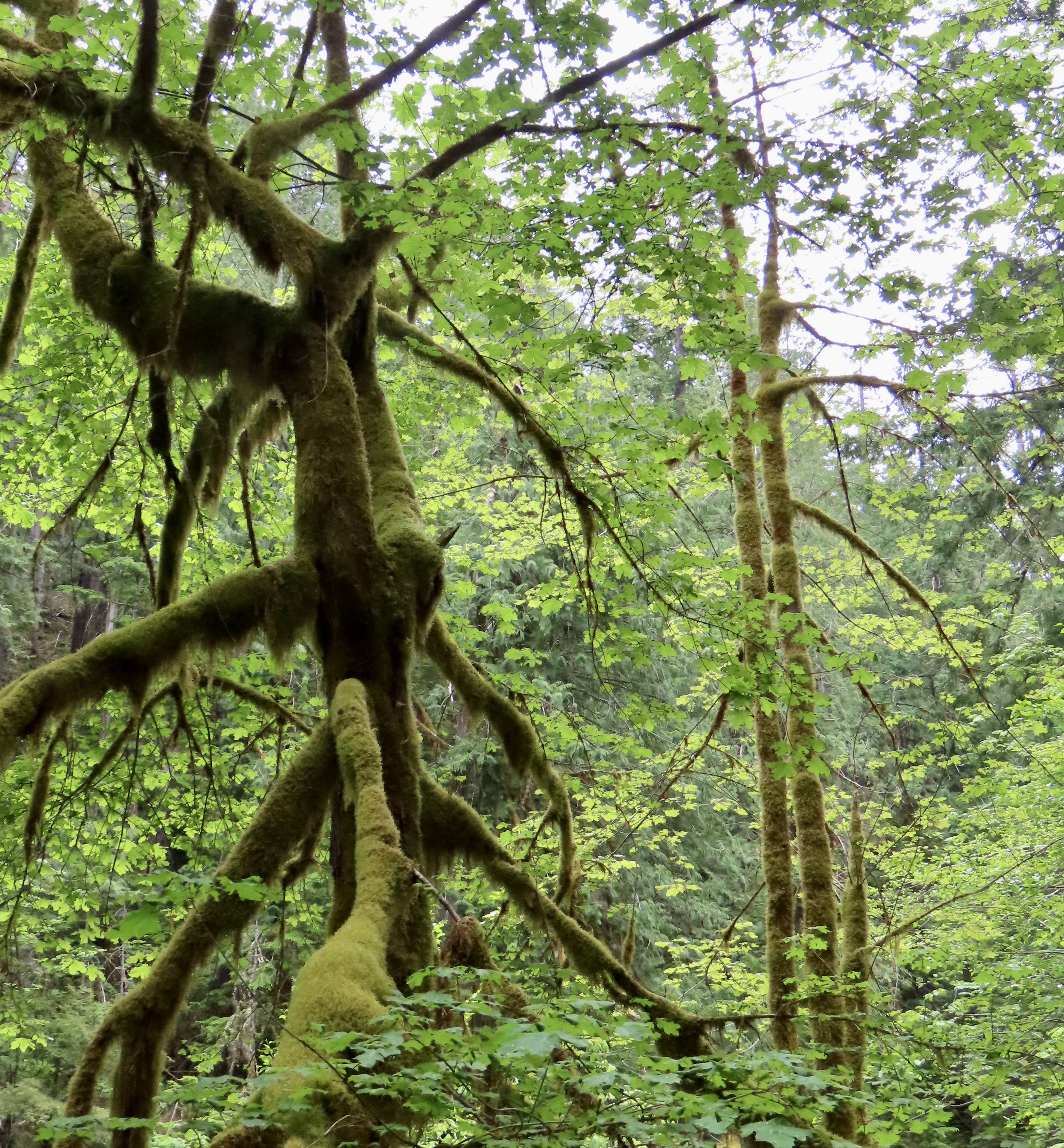
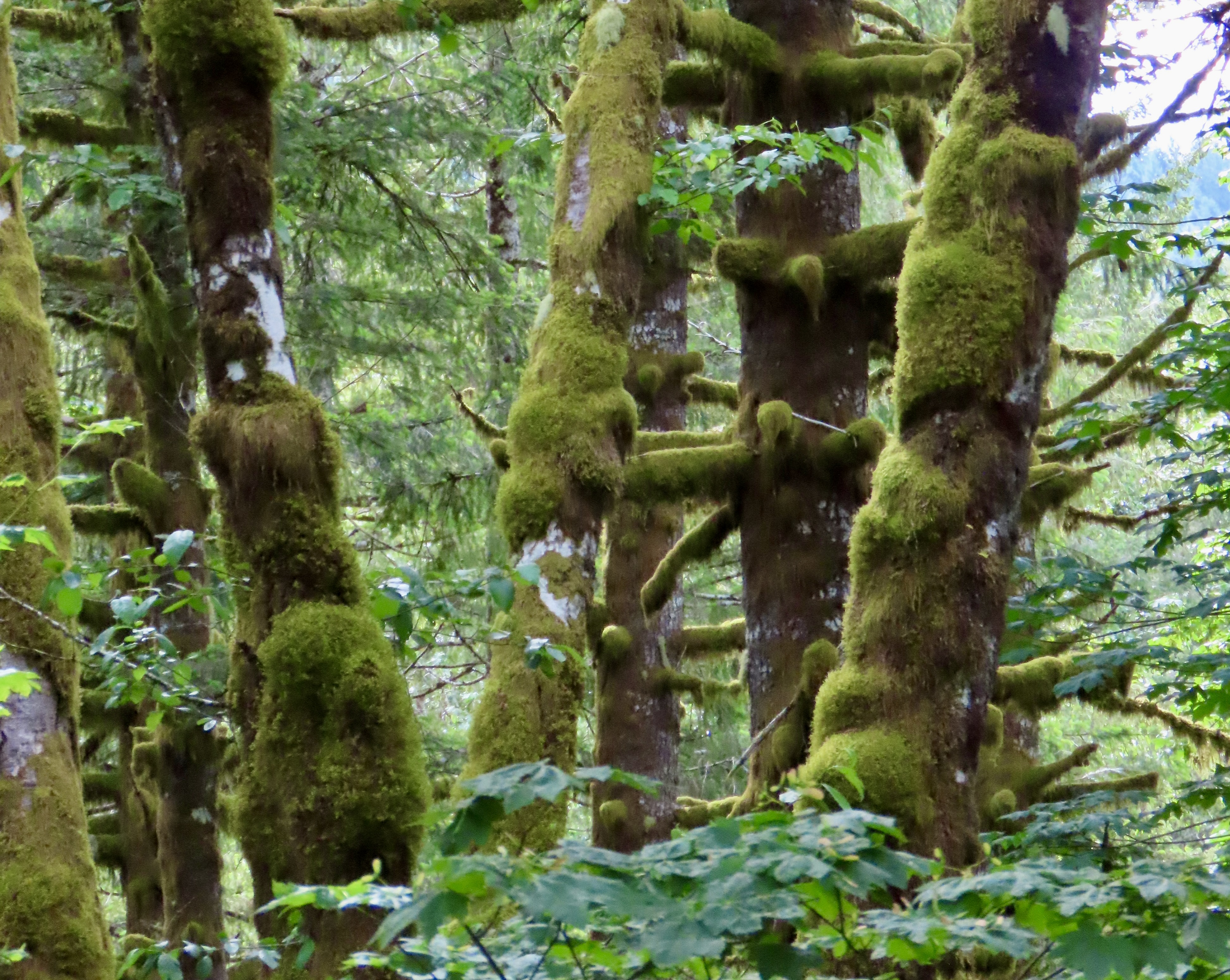
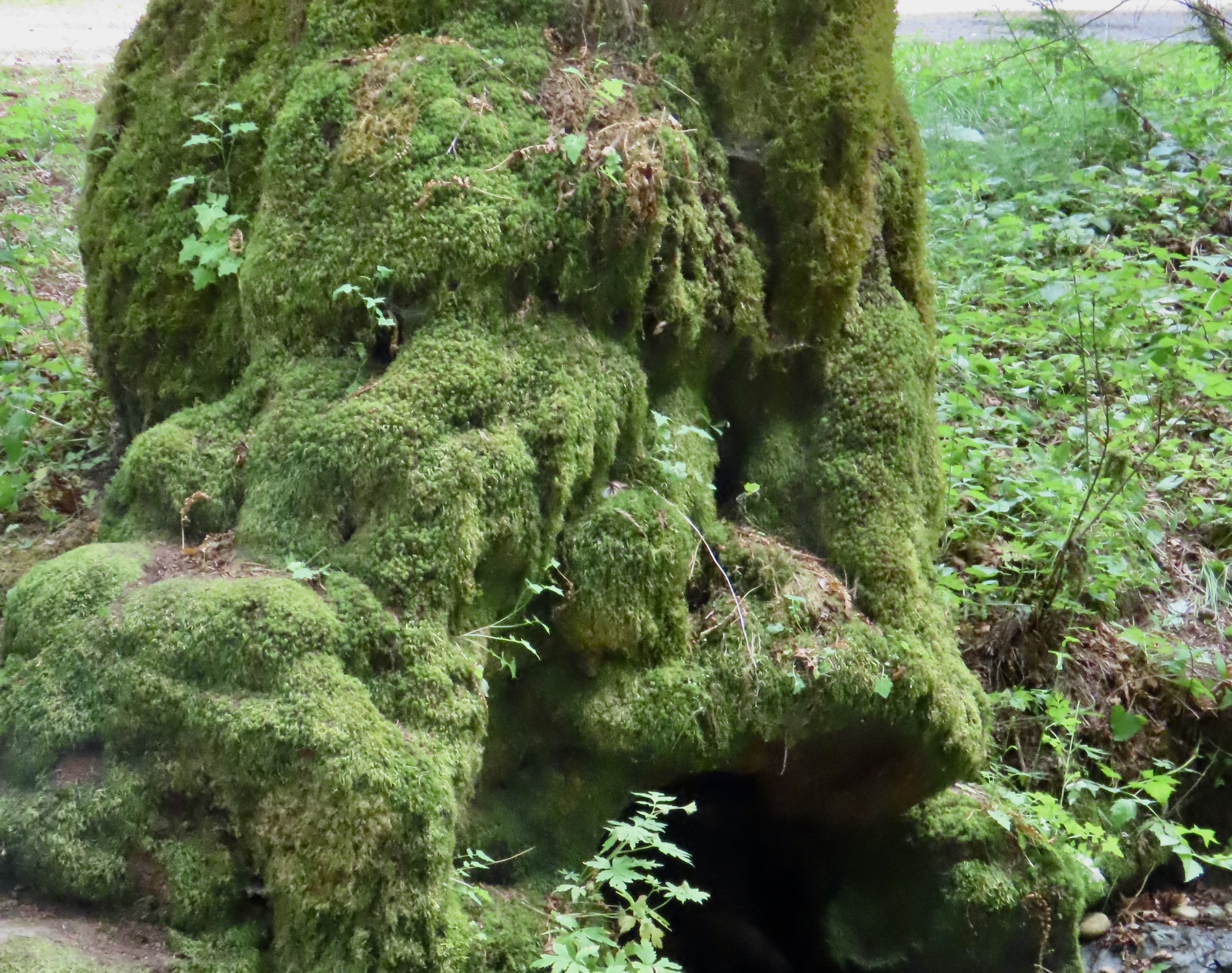
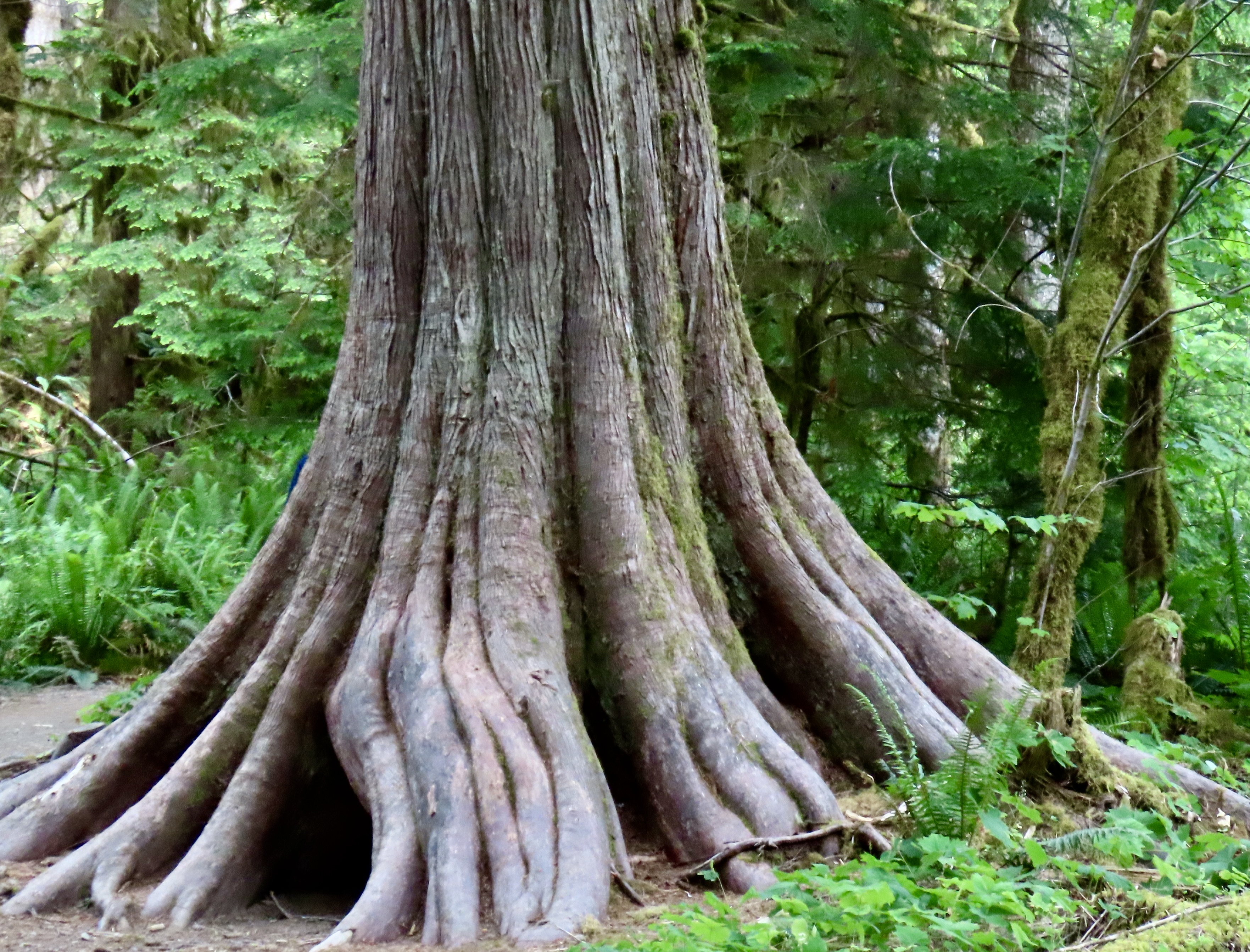
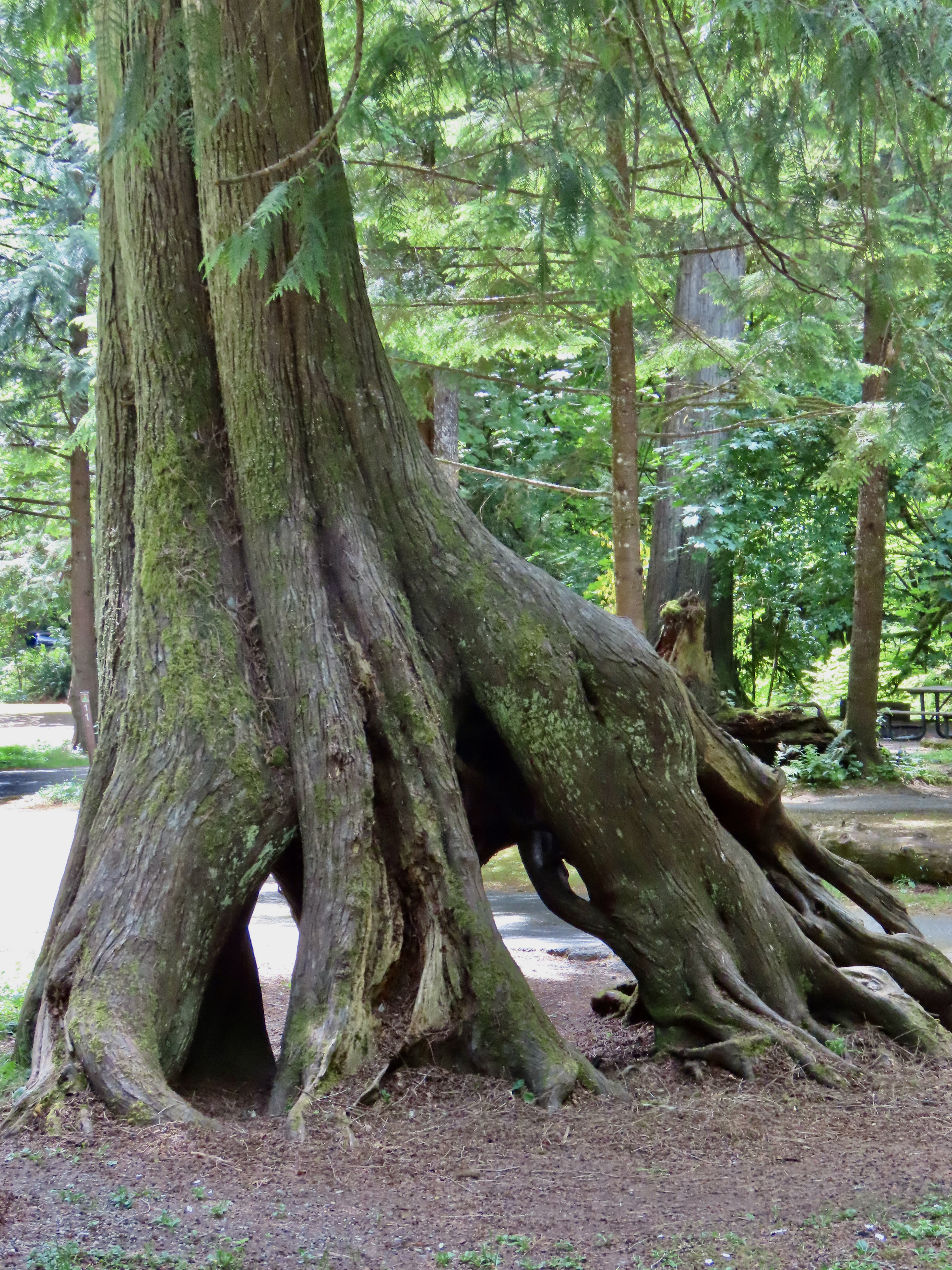
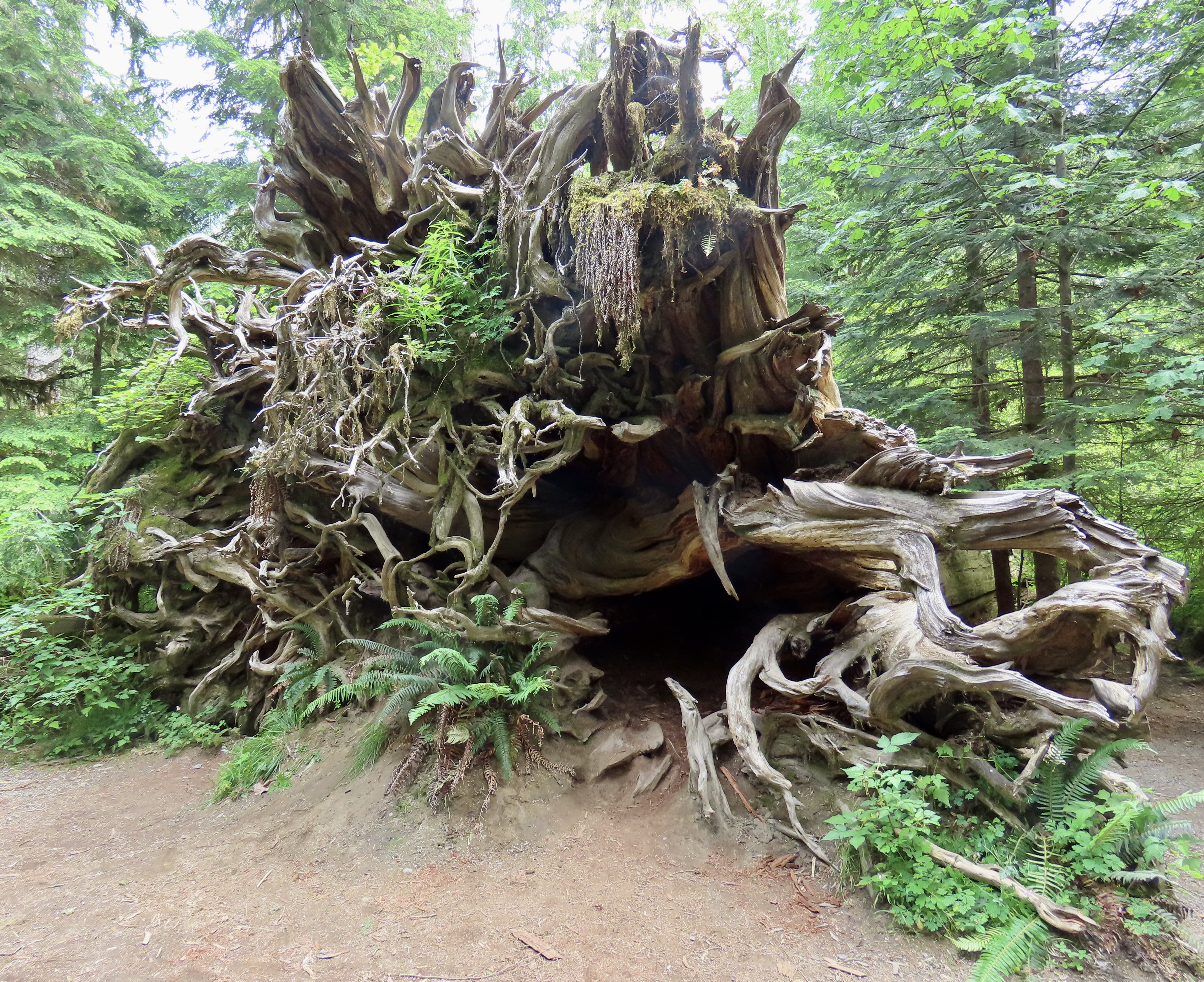
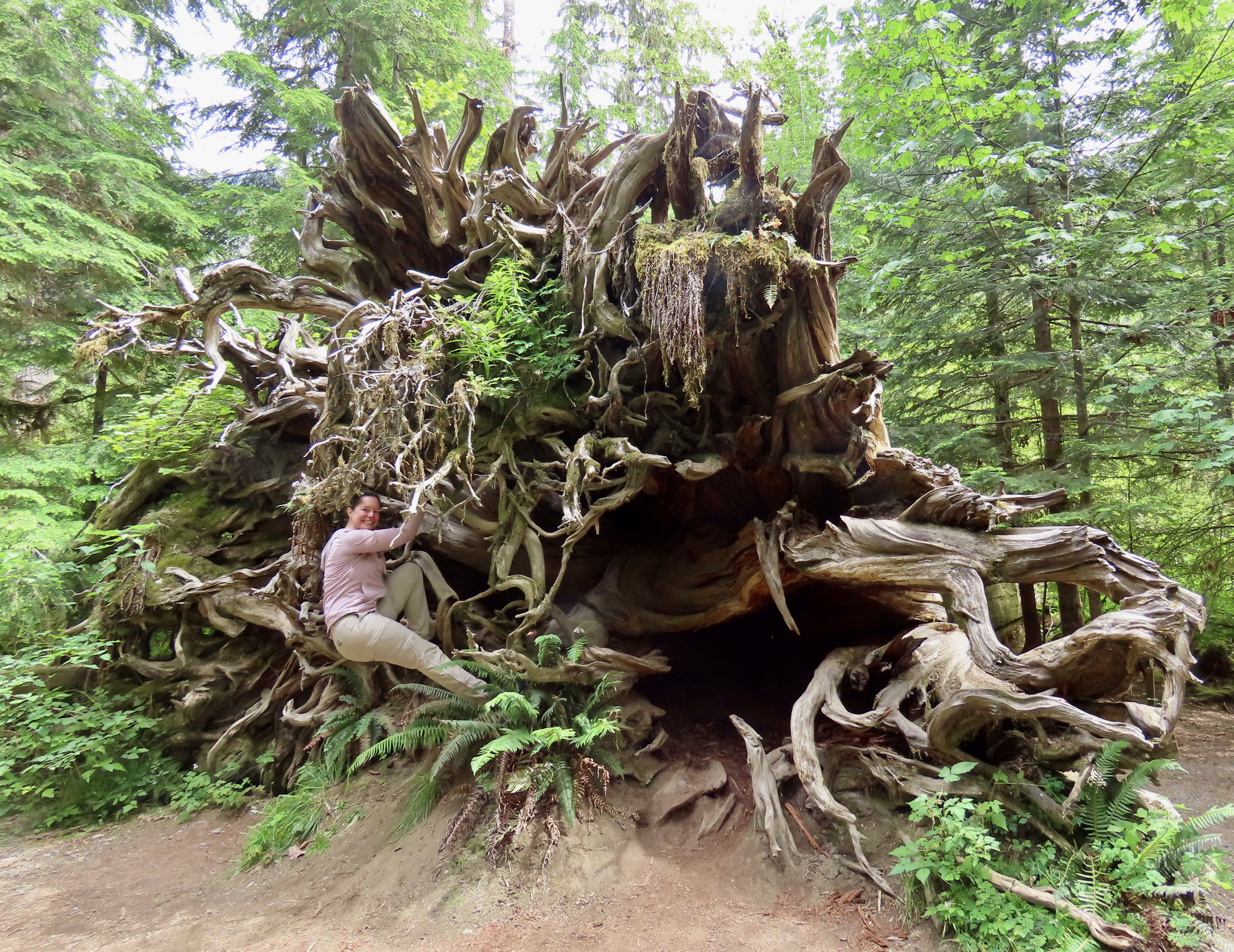
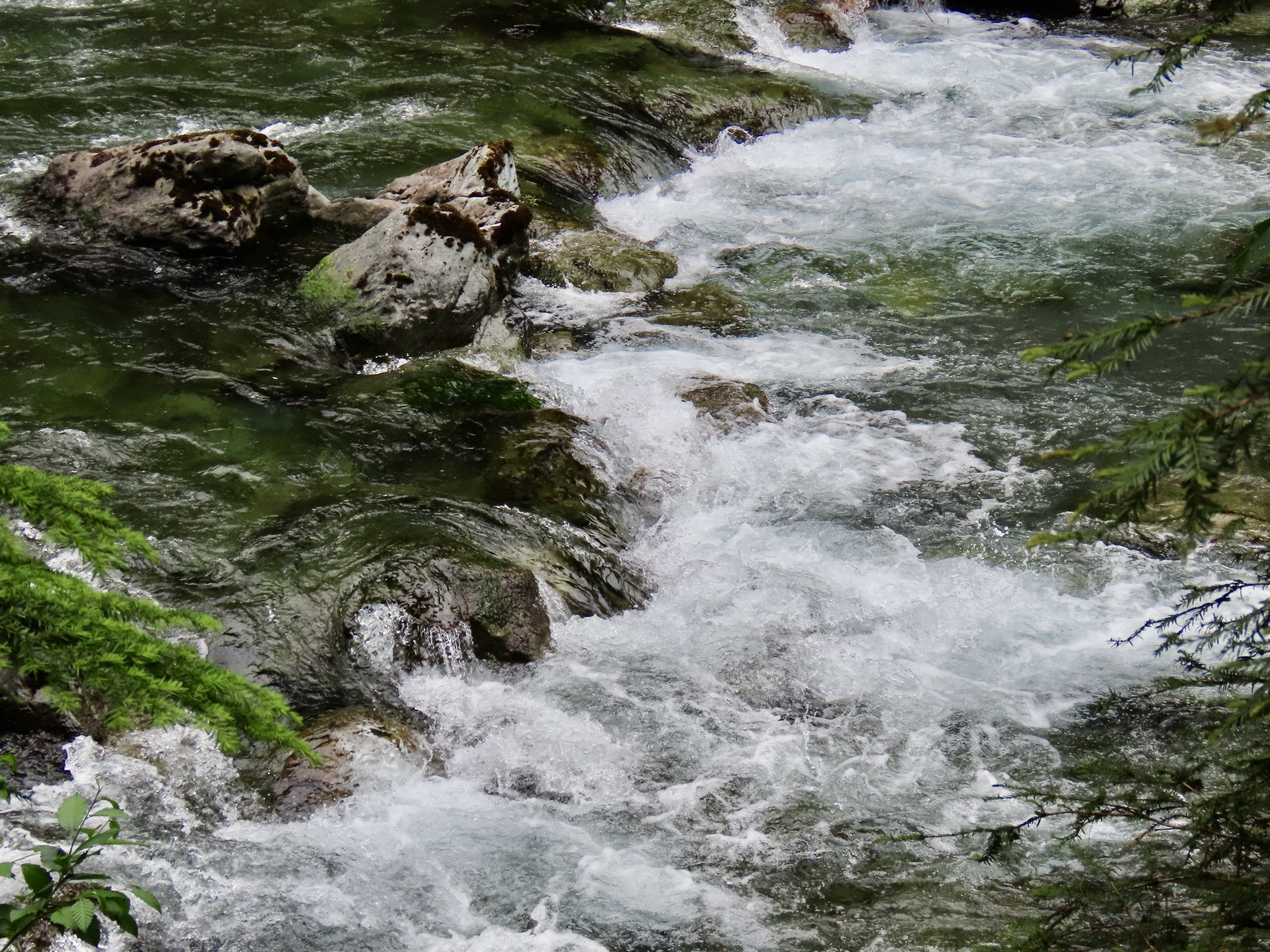
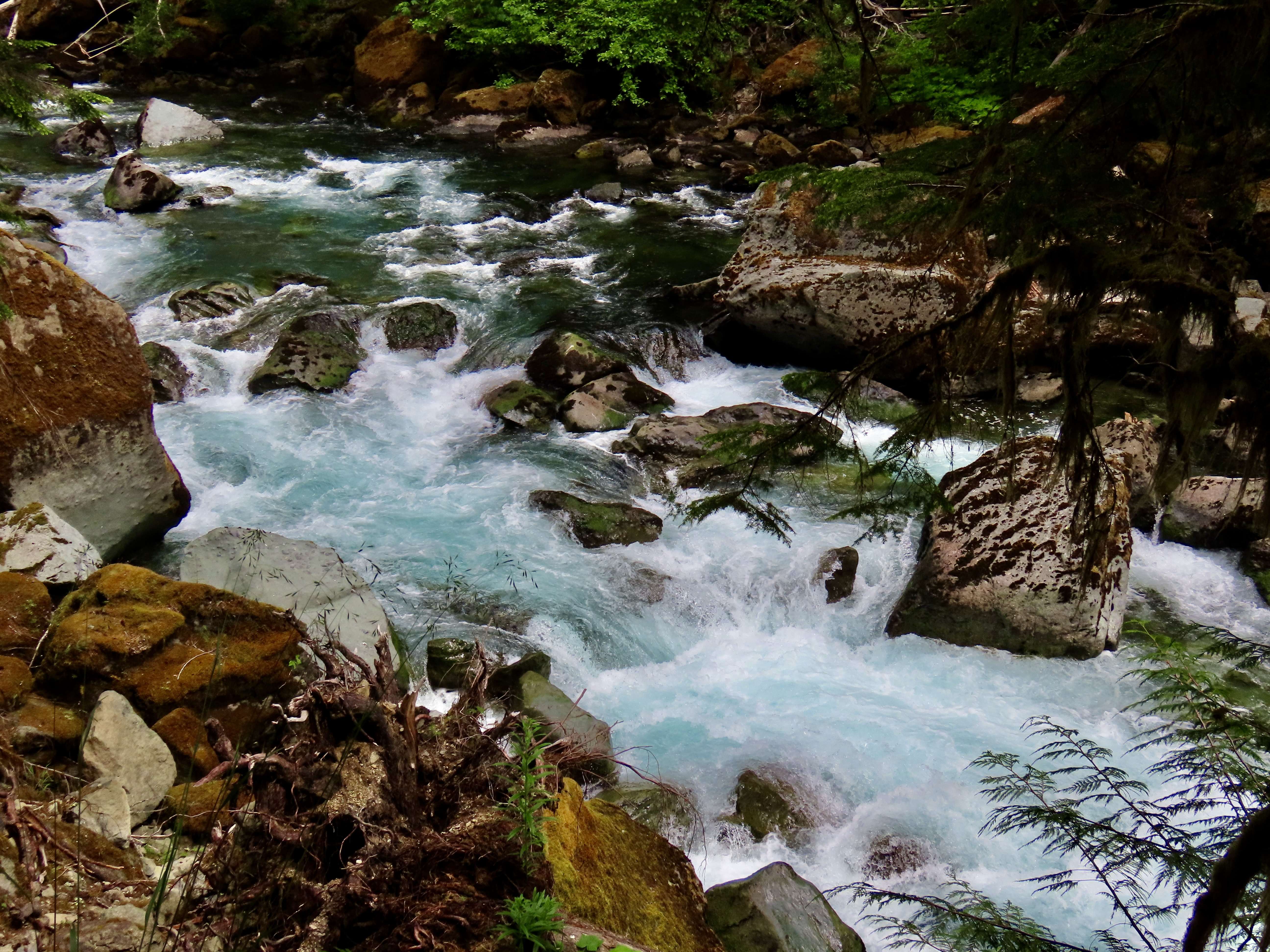
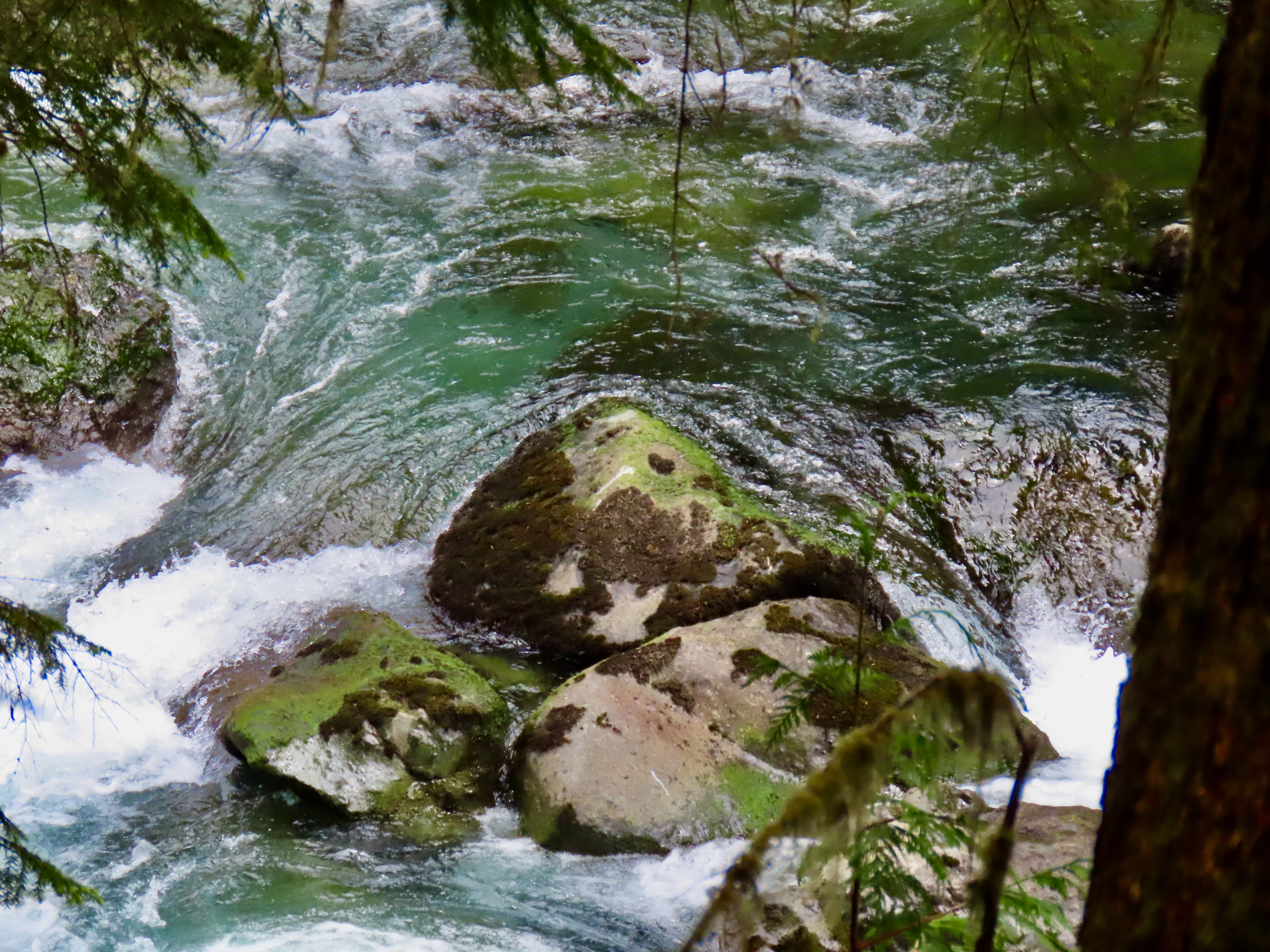
Moss covered trees are an iconic symbol of Olympic National Park. No surprise, it’s a rain forest! The park receives 100-140 inches a year— more on the coast, less as you journey inland. It is estimated that it takes 70-100 inches a year to create a rainforest. We were hiking on the park’s Staircase Rapids Trail when we took this photo. The trail and Lake Cushman receive around 100 inches a year. The moss creates a magical world where you half expect to find elves around the next corner. Or Bigfoot.This was a moss covered root.Speaking of roots, I wondered if this tree was about to rise up and go wandering. Had we arrived at Fanghorn Forest from Lord of the Rings?Hmm. Were we about to meet Treebeard?If so, he was lying down and taking a nap for a year or two.This was the granddaddy of roots along the trail, however. I half expected to find a dryad/wood nymph playing among the roots.And did! At no prompting from us, Christian immediately headed over to the tree and started climbing among the roots of the forest giant— like she belonged there.Given the name of the trail, Staircase Rapids, we expected to find rapids along the trail. And we did. But they were gentle. We had missed the massive runoff from snowmelt in the spring.Most of the snow had already melted off.Small rapids have a charm of their own, however.A bridge across the Skokomish River provided this view.One brave soul wanted a different perspective. At 81, I decided to pass… Grin.And depended on my telephoto to bring me up close and personal. That’s it for today. Monday’s post will find us kayaking on Cushman Lake and the Skokomish River just below the Staircase Rapids.Kayaking on the Skokomish River at the edge of Olympic National Park










 Wandering through Time and Place