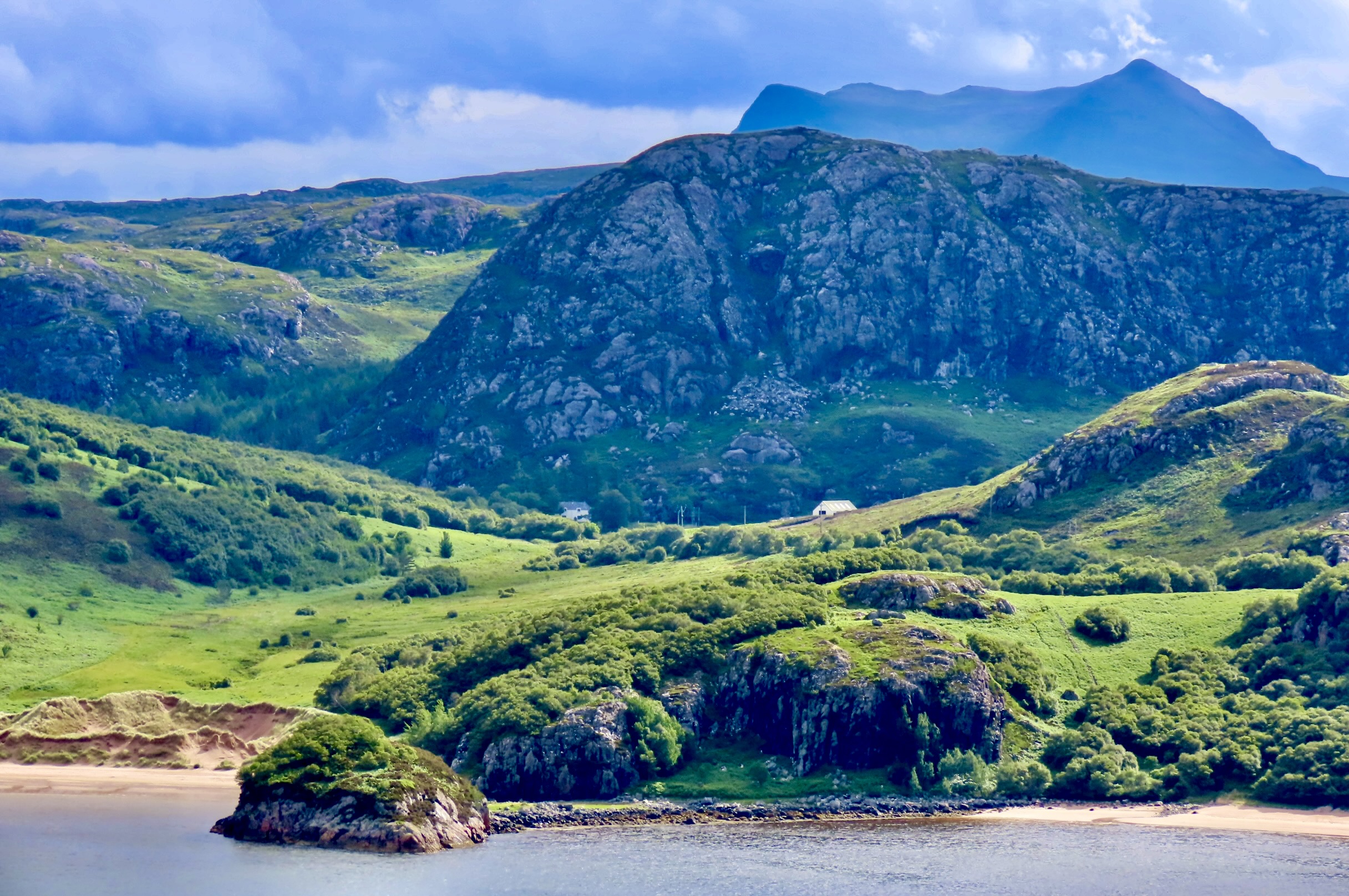
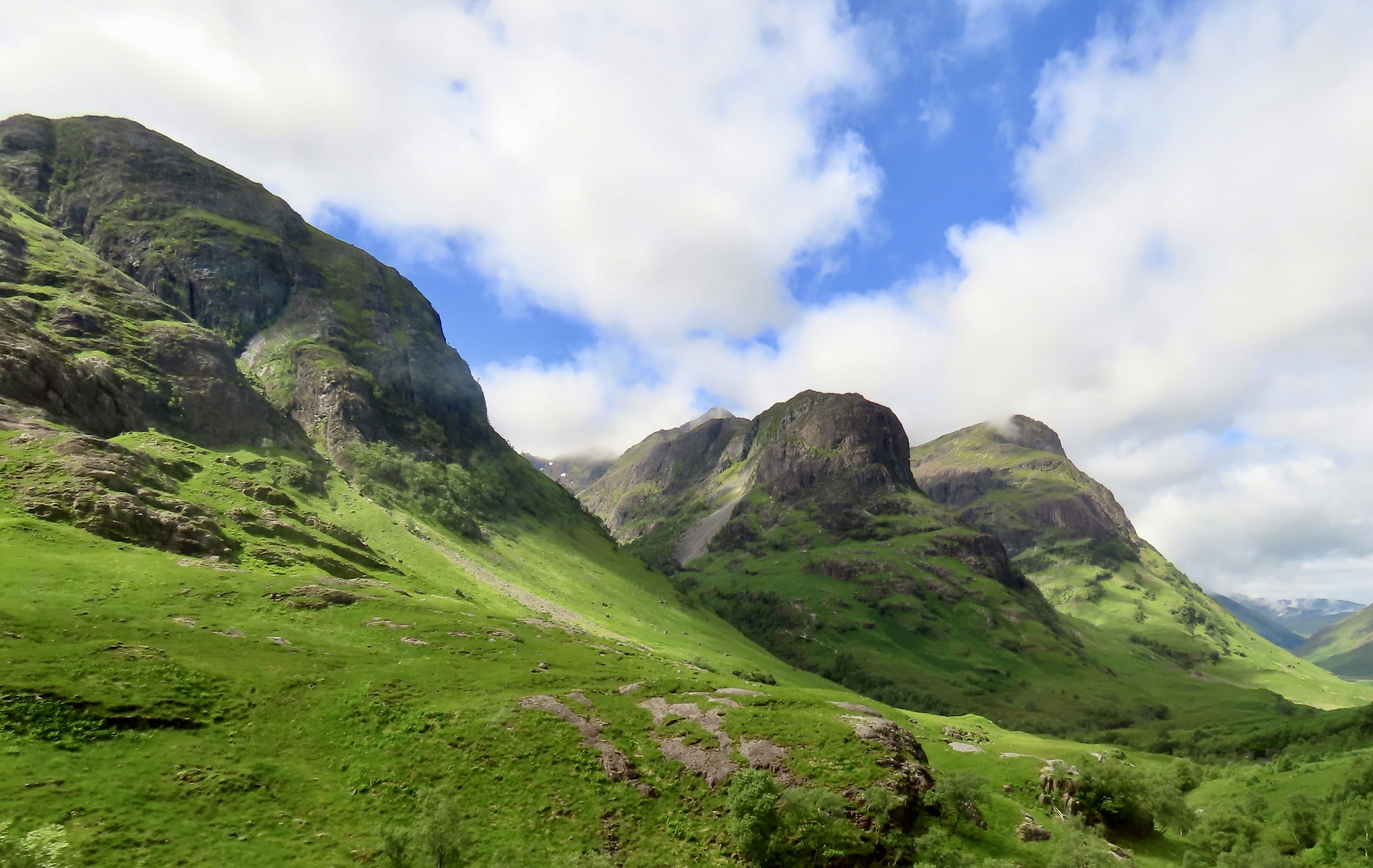
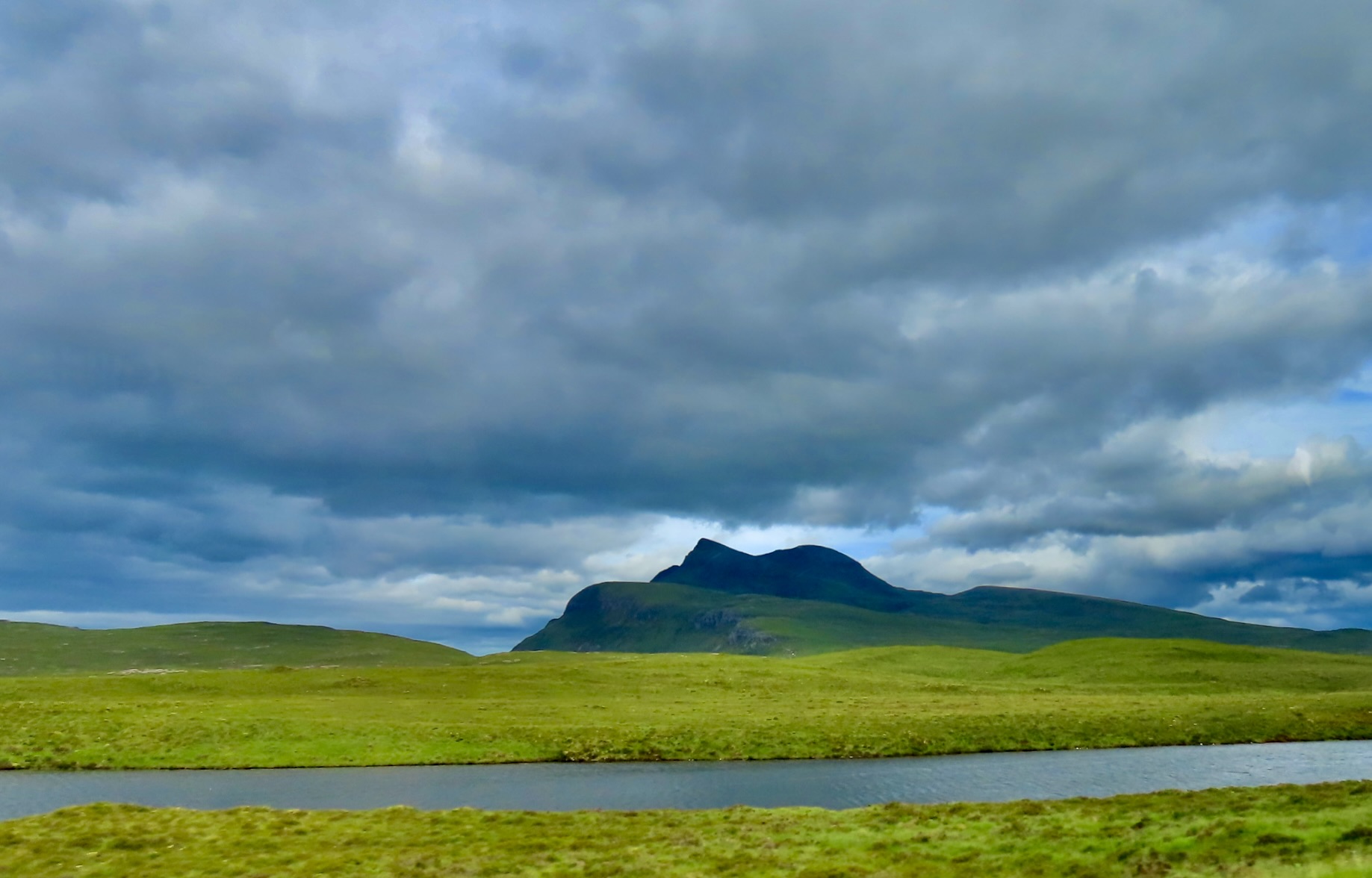
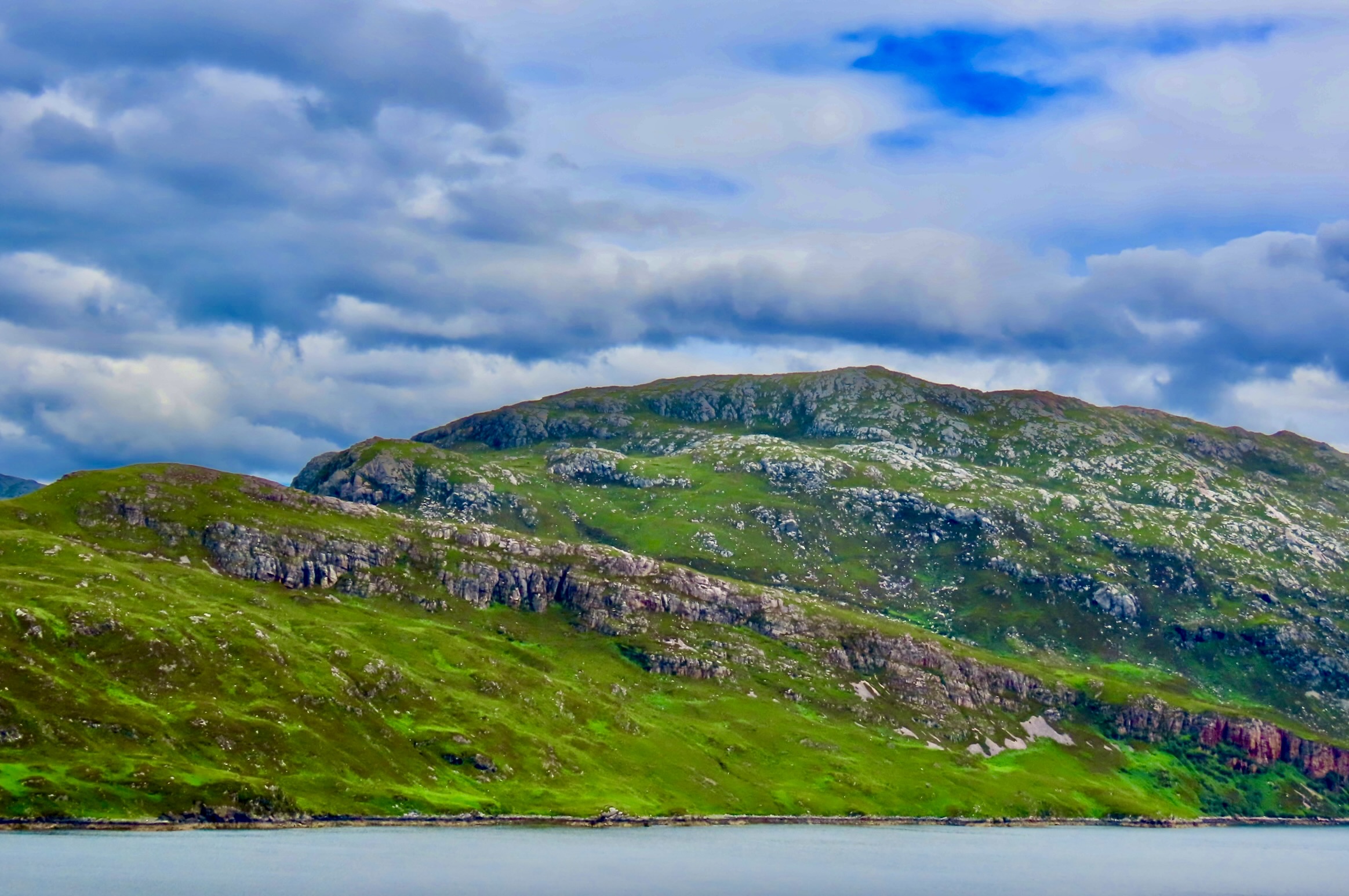
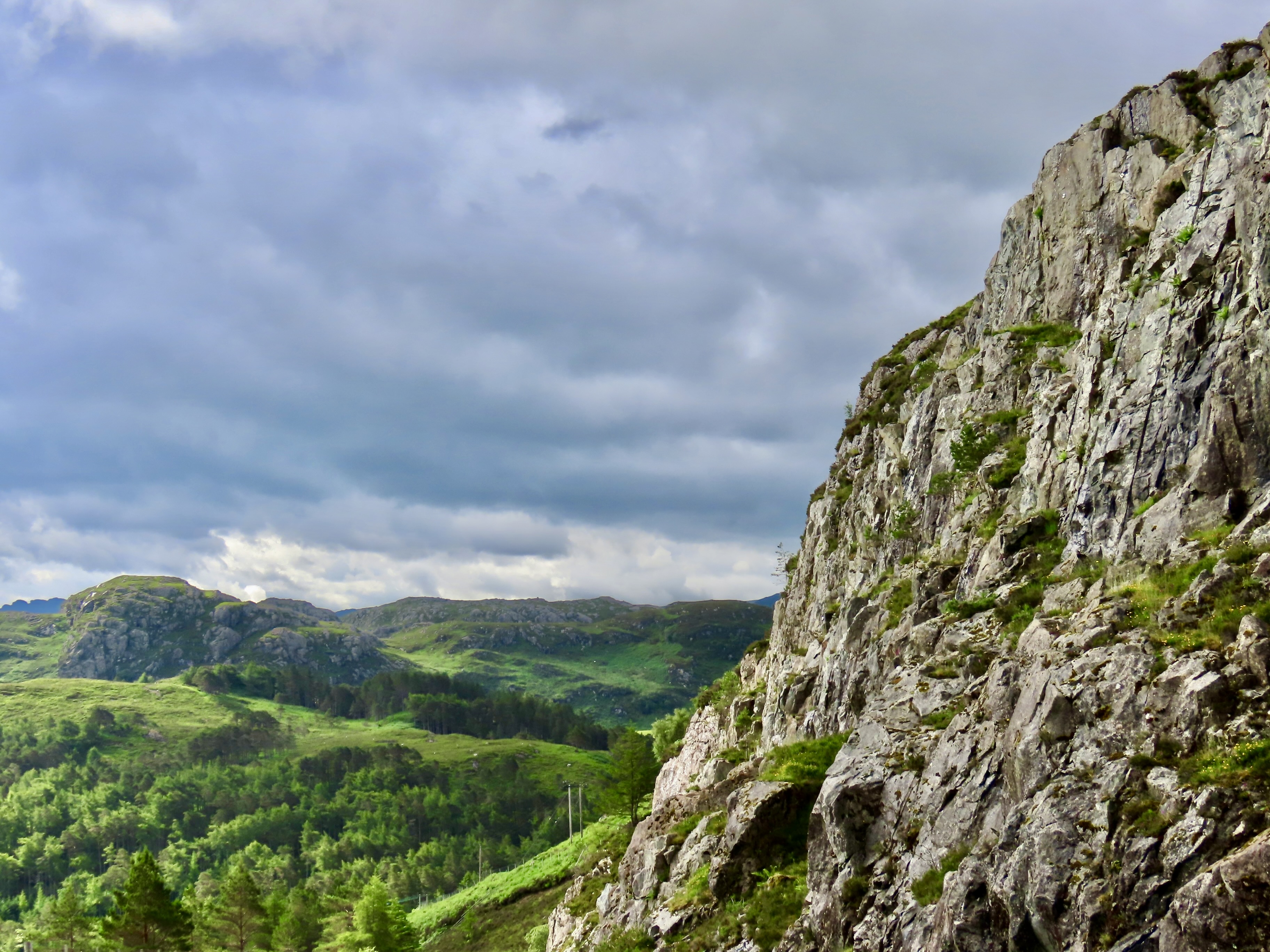
We are returning to our CIE Scotland tour that Peggy and I took along with our grandson Cody this summer. Today, I will be featuring the scenic beauty of the Scottish Highlands. All photos are taken by Peggy, Cody or me unless otherwise noted.
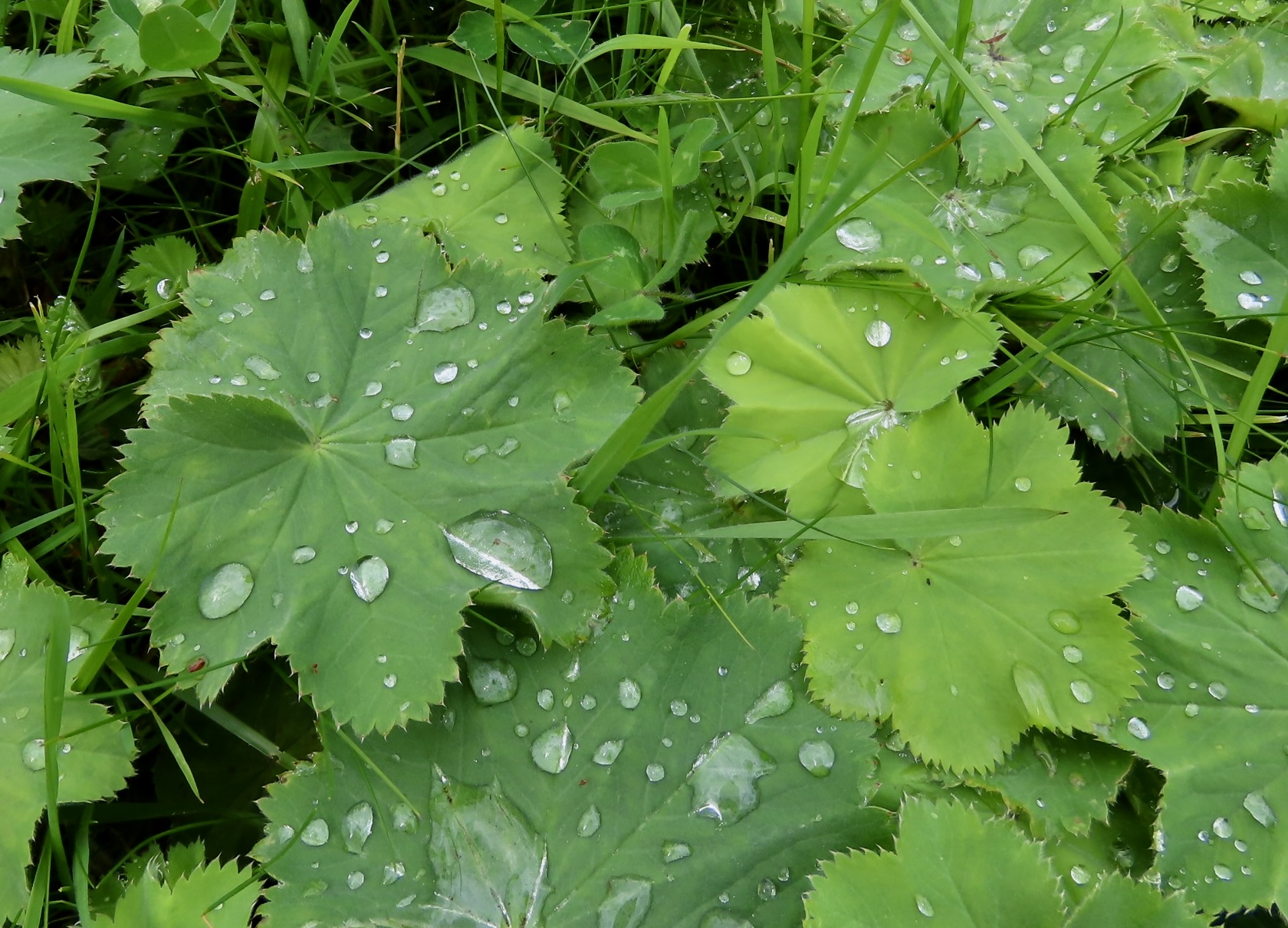
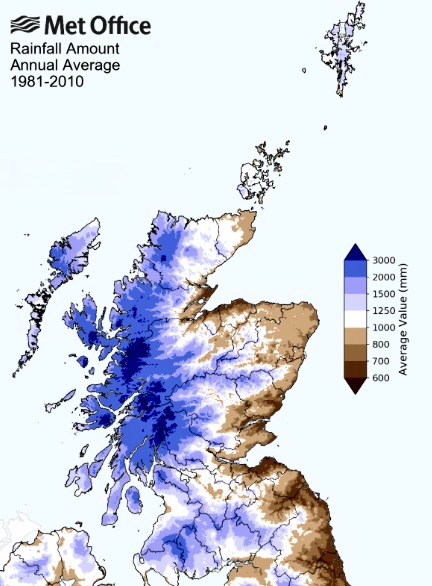
Between towering mountains, rocky, green landscapes, hanging cliffs, plunging waterfalls, lochs, and firths, the Scottish Highlands are world renown for their rugged beauty. They also feature vast open spaces with few people. Once there were more, but the wealthy landlords who owned the property forced the tenant farmers off of their ancestral communal lands because they could make more money off of large scale sheep and cattle farms in what was known as the Highland Clearances between 1750 and 1860. They were a dark blot on Scotlands History.There is a simple reason for all of the green. The highlands get a lot of rain: 118 to 177 inches (3,000 mm to 4,500 mm ) a year in the western mountains making them the wettest place in Europe. If you are visiting, expect to get wet. Bring appropriate clothing. Our tour was close to rain-free, however, even though dark clouds often hovered above us. Cody swore that it was the good luck he brought with him. We may have to travel more with the kid to test the theory.This UK Government map shows the rainfall in Scotland. It’s heaviest in the mountainous western region of the Highlands. The reason is the same as the reason for the heavy rainfall in Northern California, Oregon, and Washington where I lived and played for most of my life.
The jet stream flowing from west to east passes over the Pacific and Atlantic Oceans and soaks up evaporated moisture. When it reaches the mountainous regions of both the north coast of the US and the Scottish Highlands, it is driven up by the mountains and cooled, which reduces the amount of water the air can hold. Rain, snow, sleet, hail, etc. are the results. It’s called orographic relief if you want to impress your friends. I think of having a full bladder and dashing for a restroom. Relief! Less rain on the east side of the mountains is called the rain shadow effect. There are two reasons. One, obviously, the air has lost much of its water. Two, as the air rushes down the mountains, it heats up and can hold more. The annual rainfall on the east coast of Scotland ranges from 28-31 inches (700-800 mm).
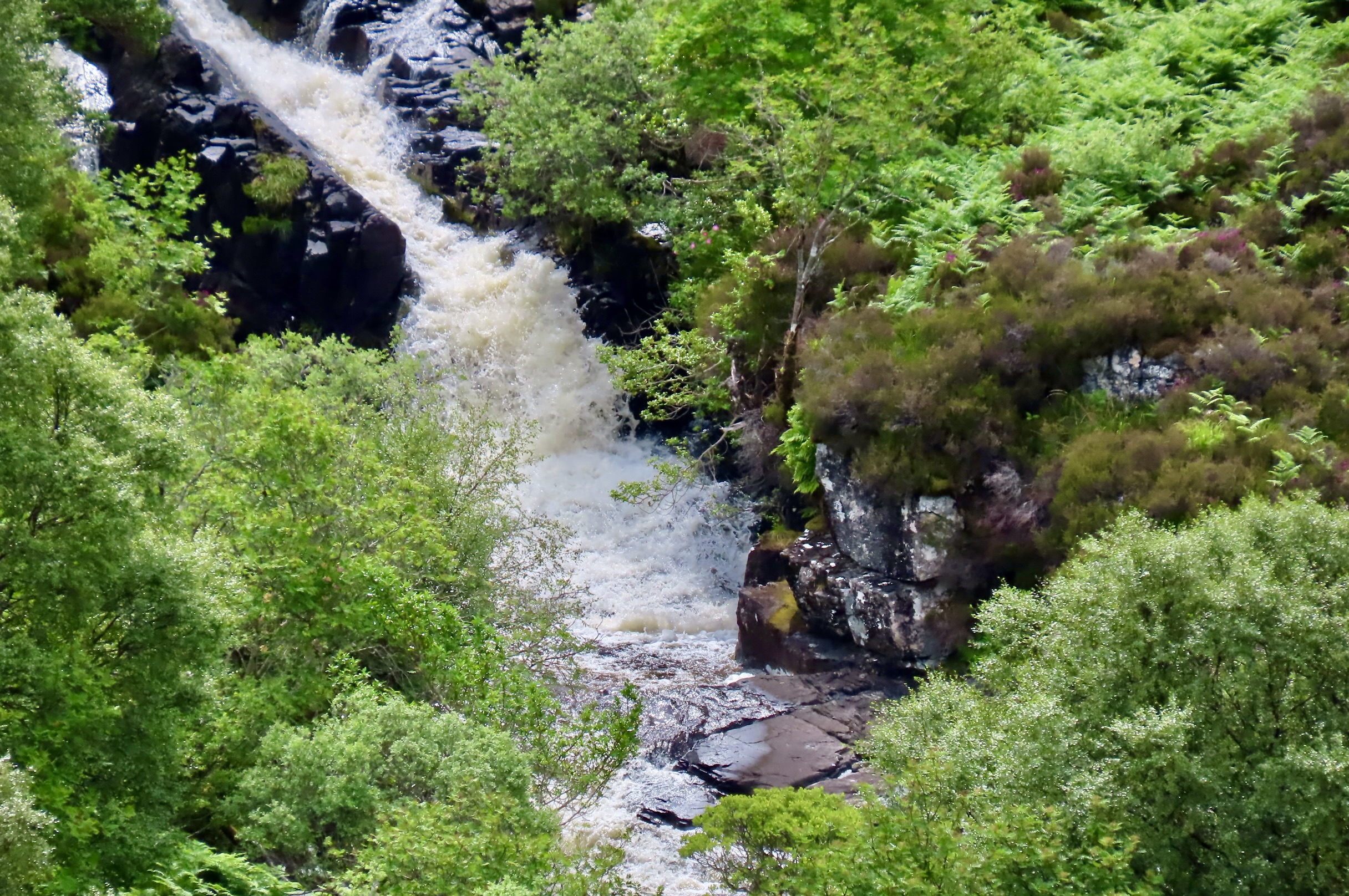
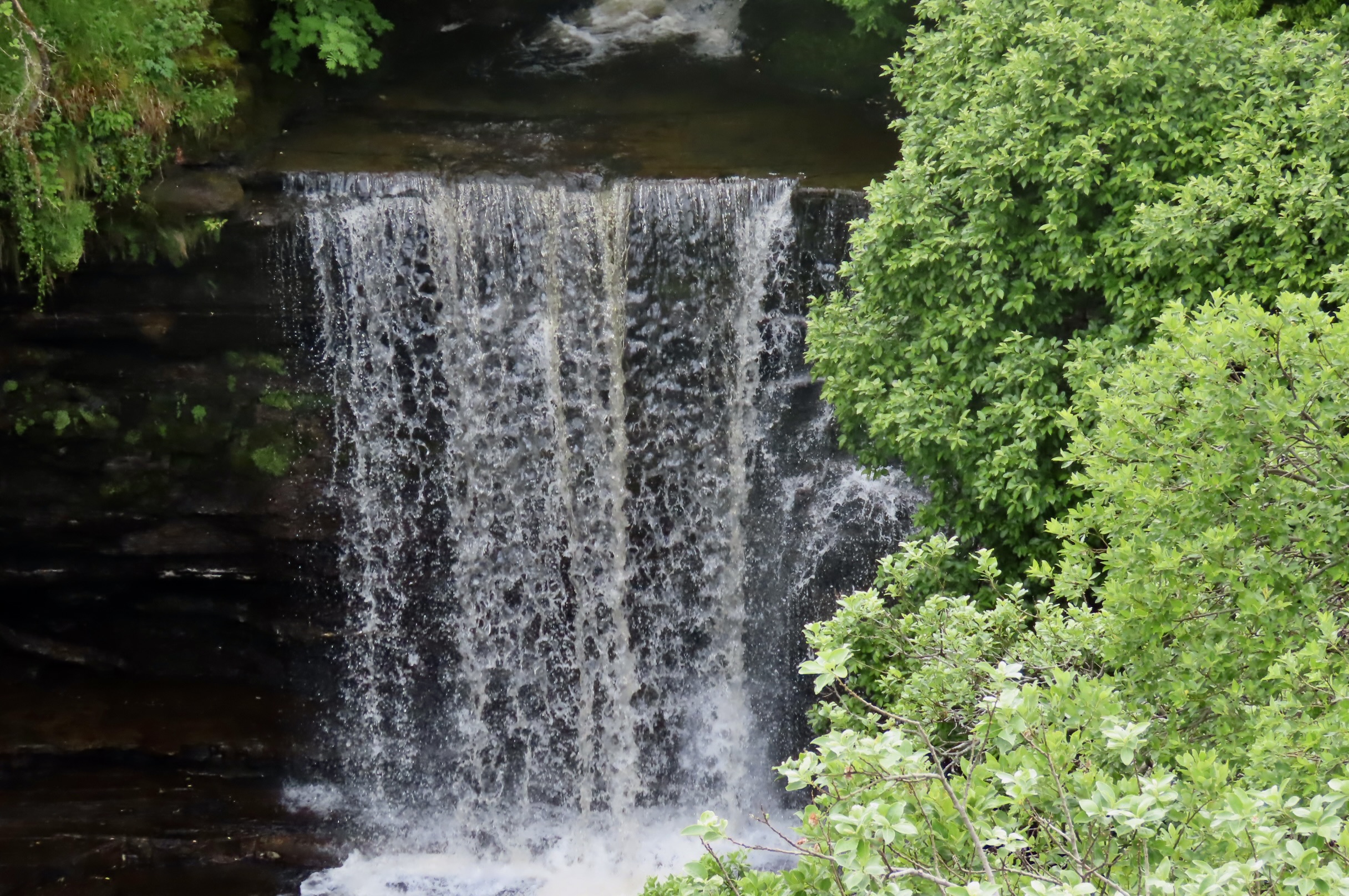
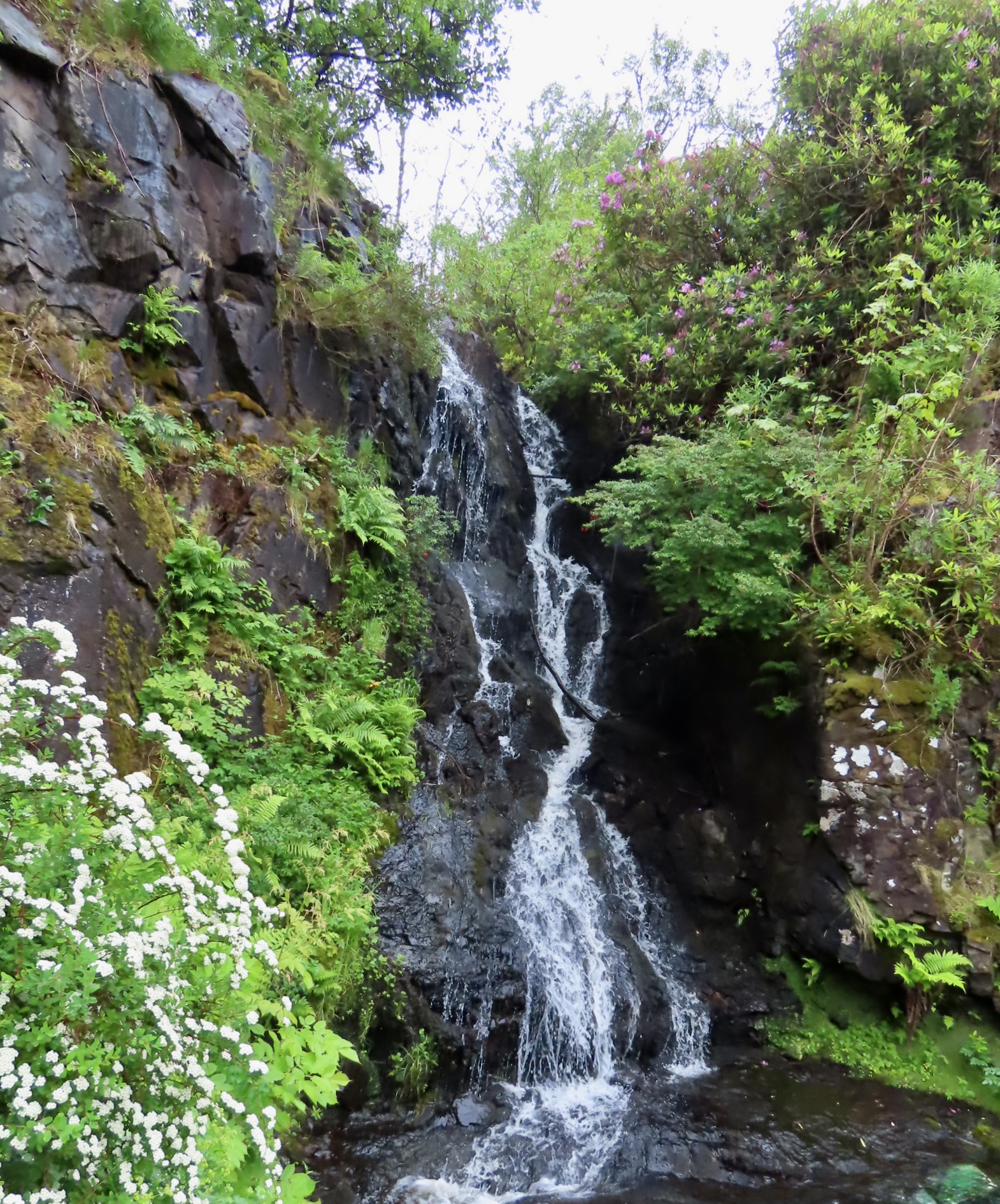
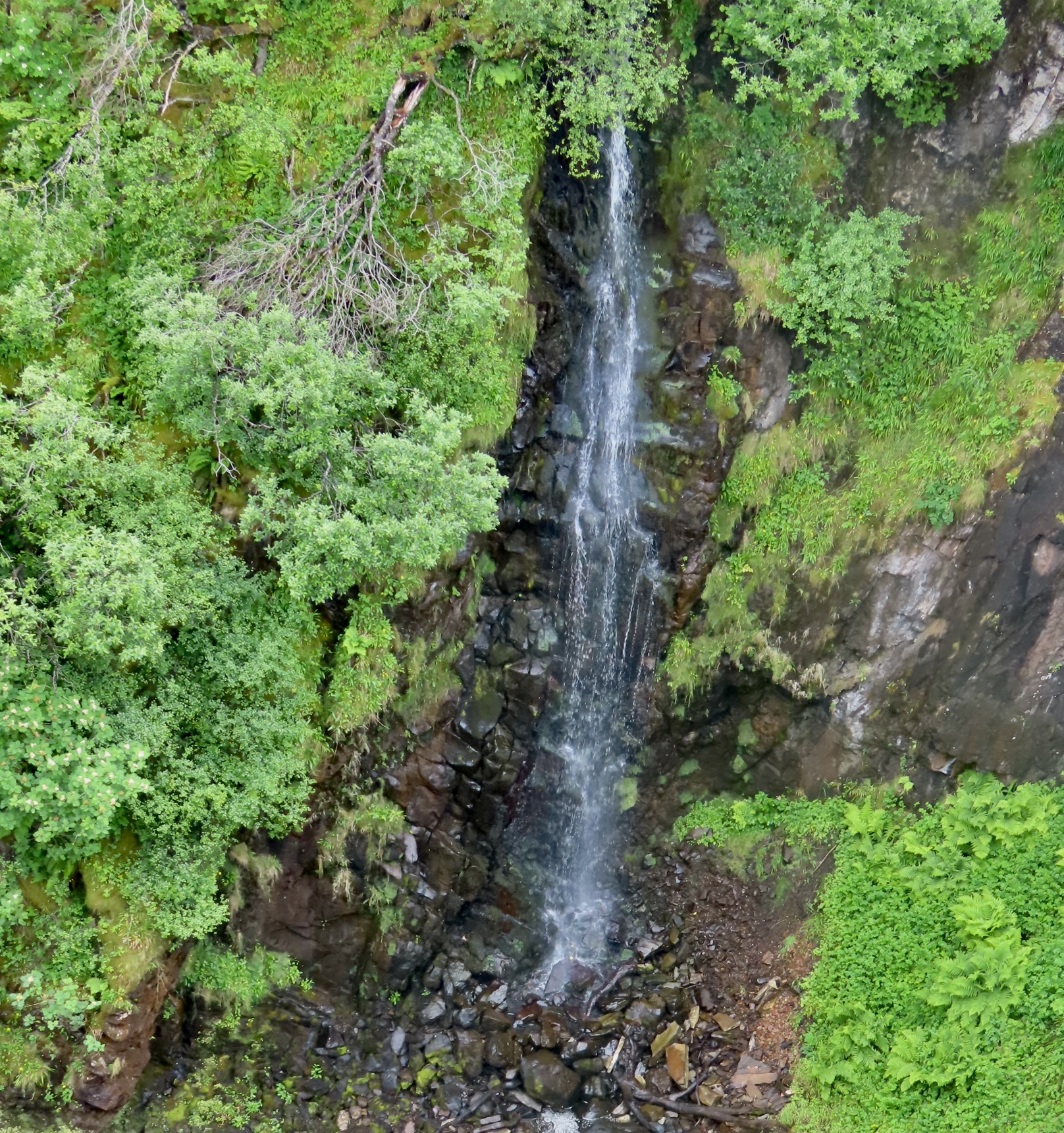
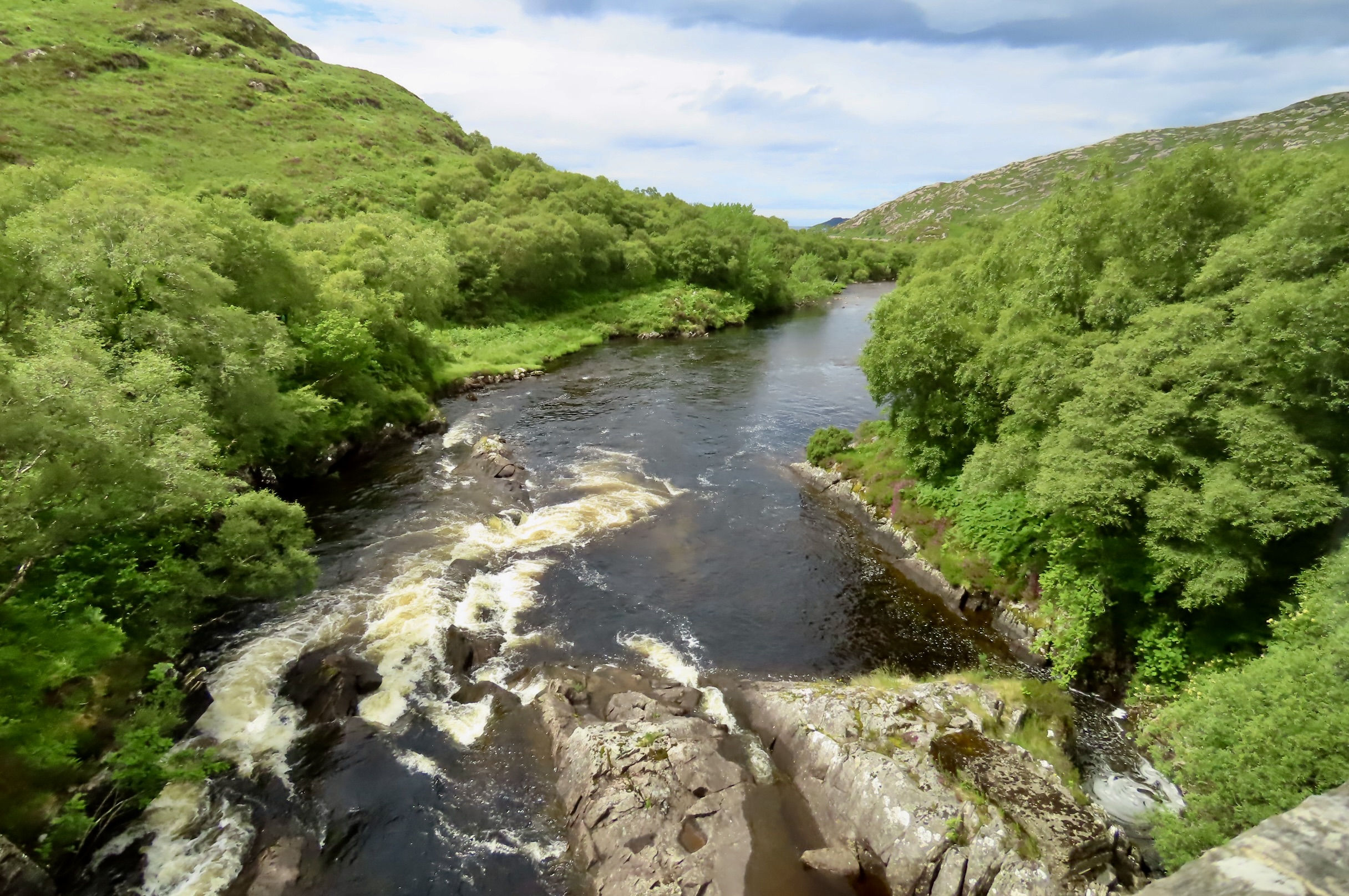
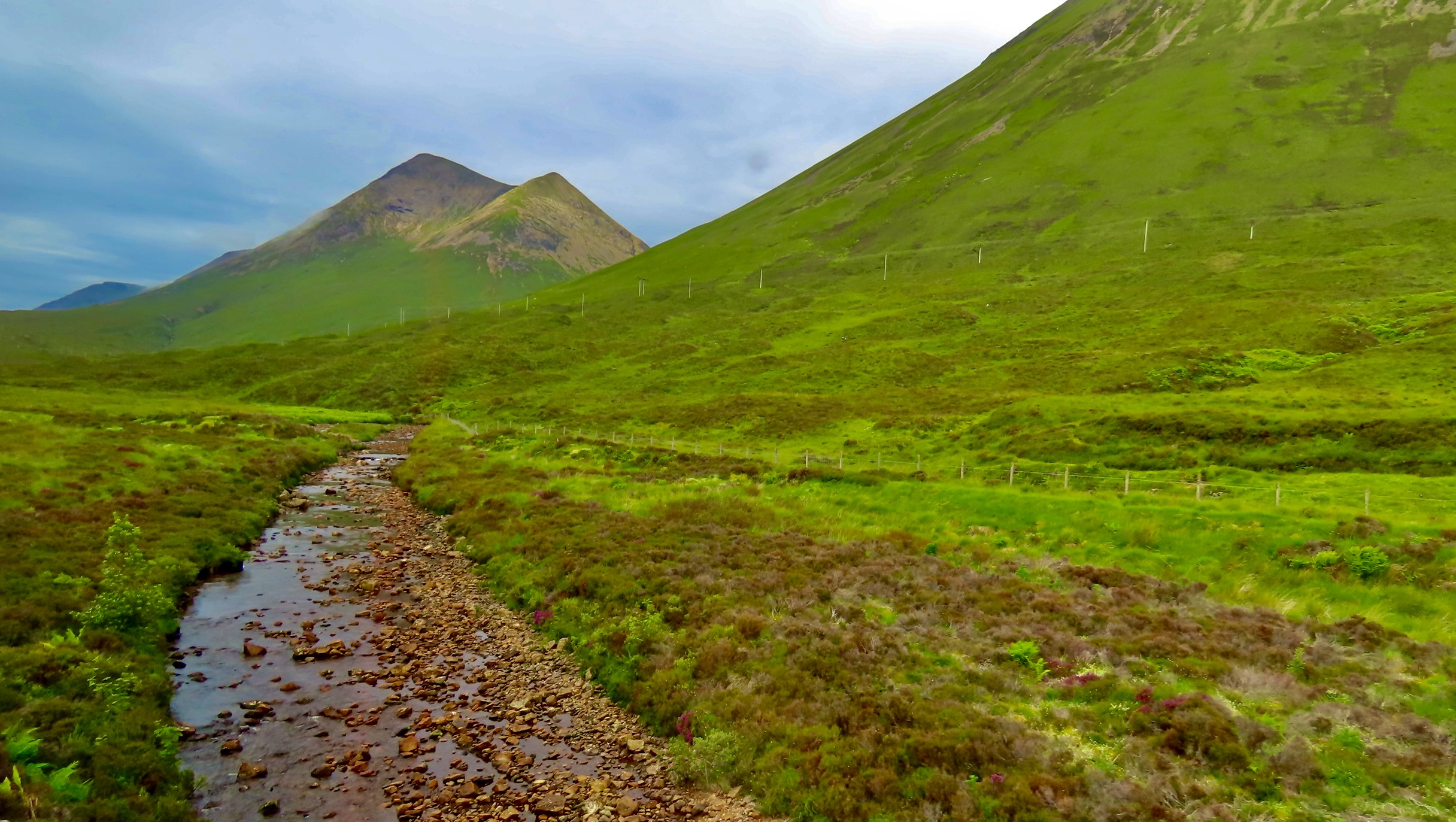
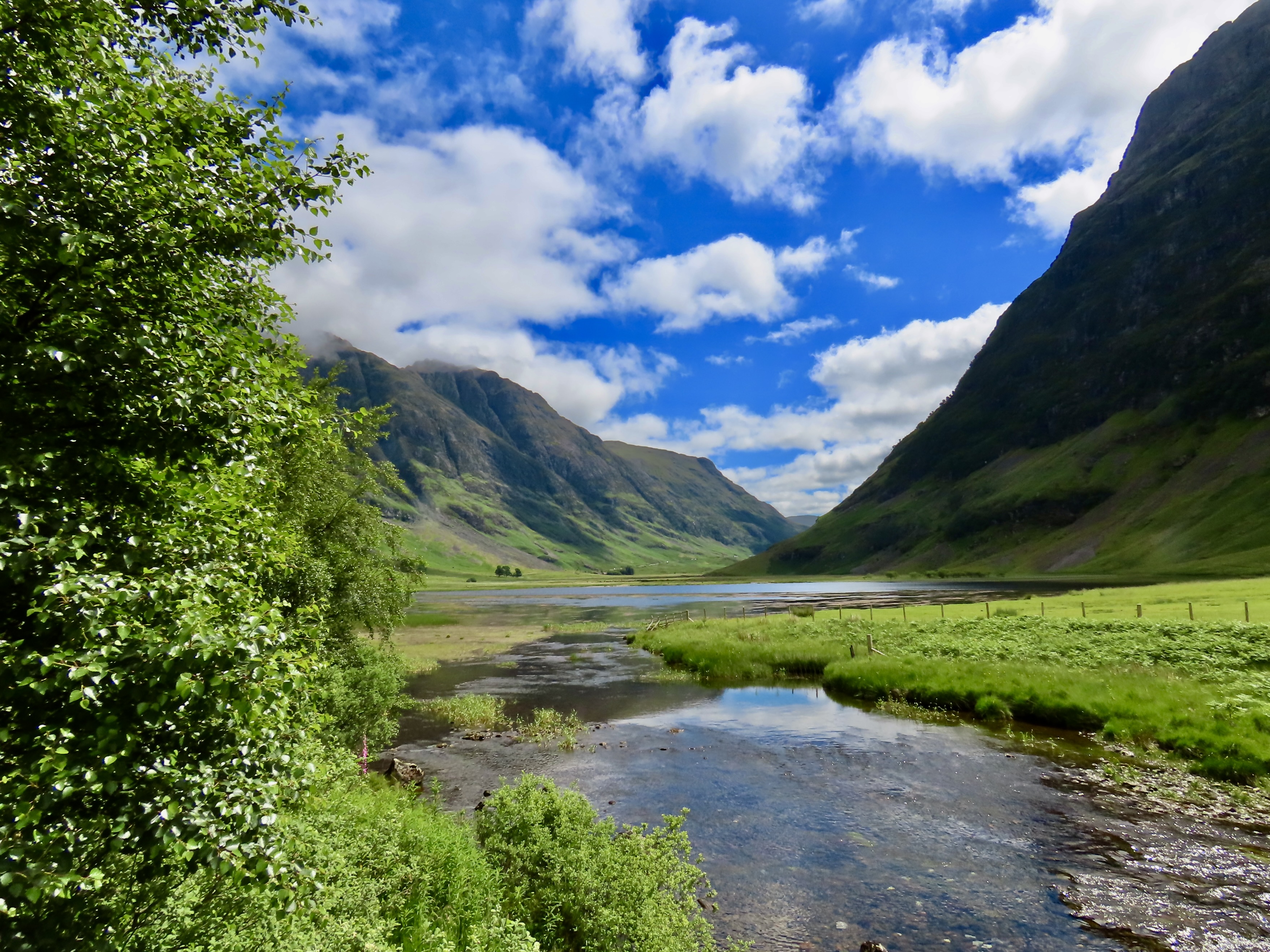
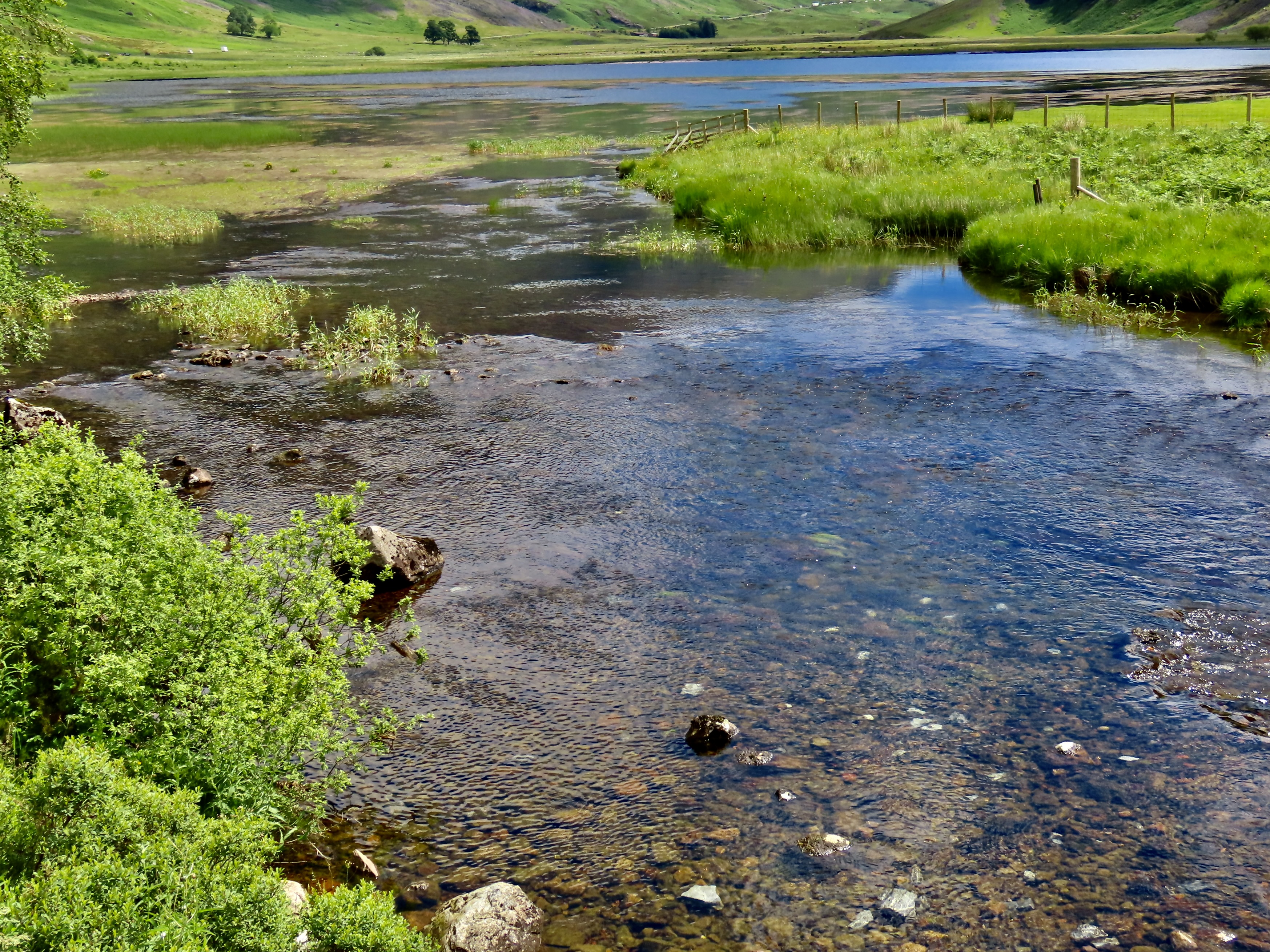
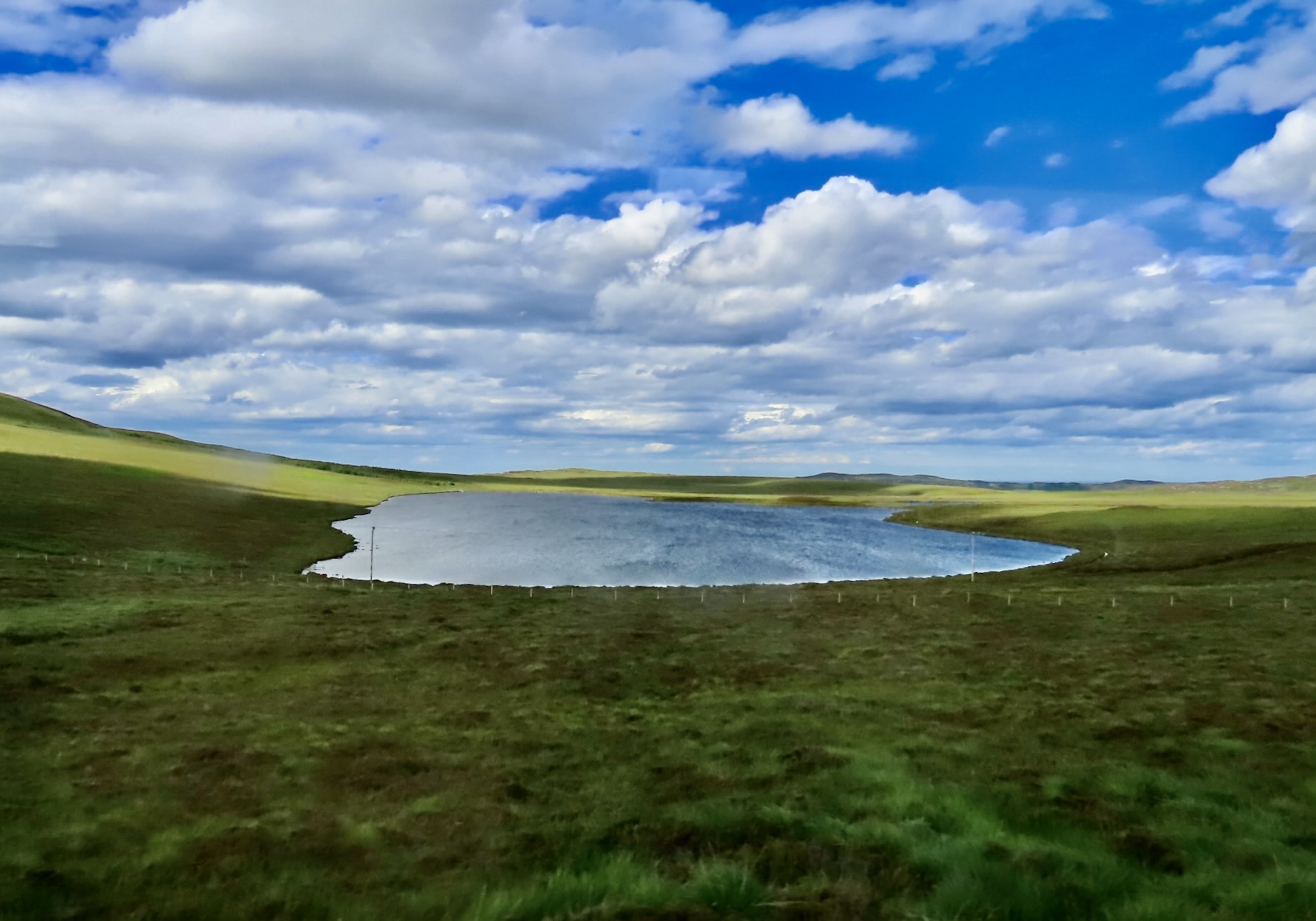
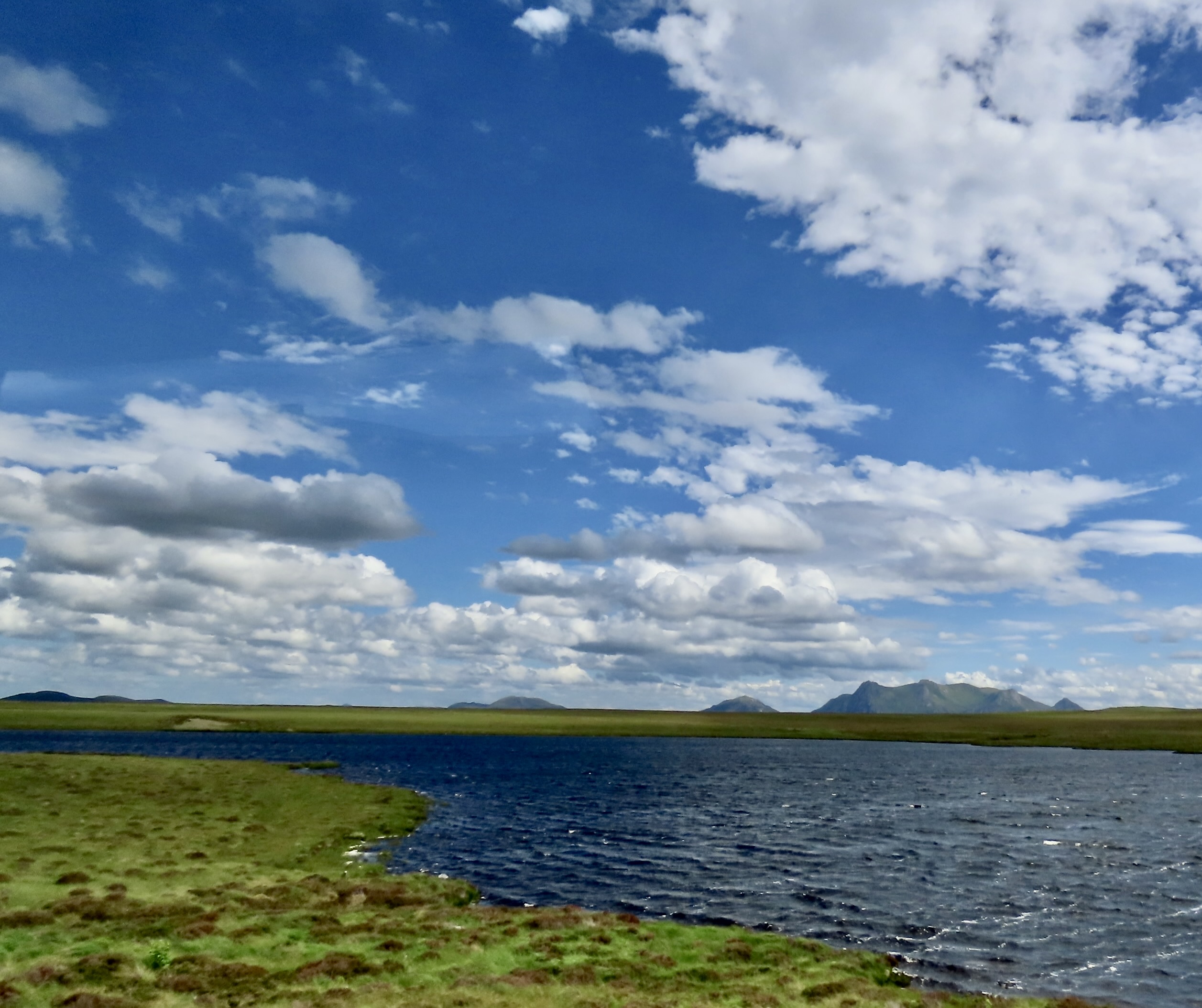
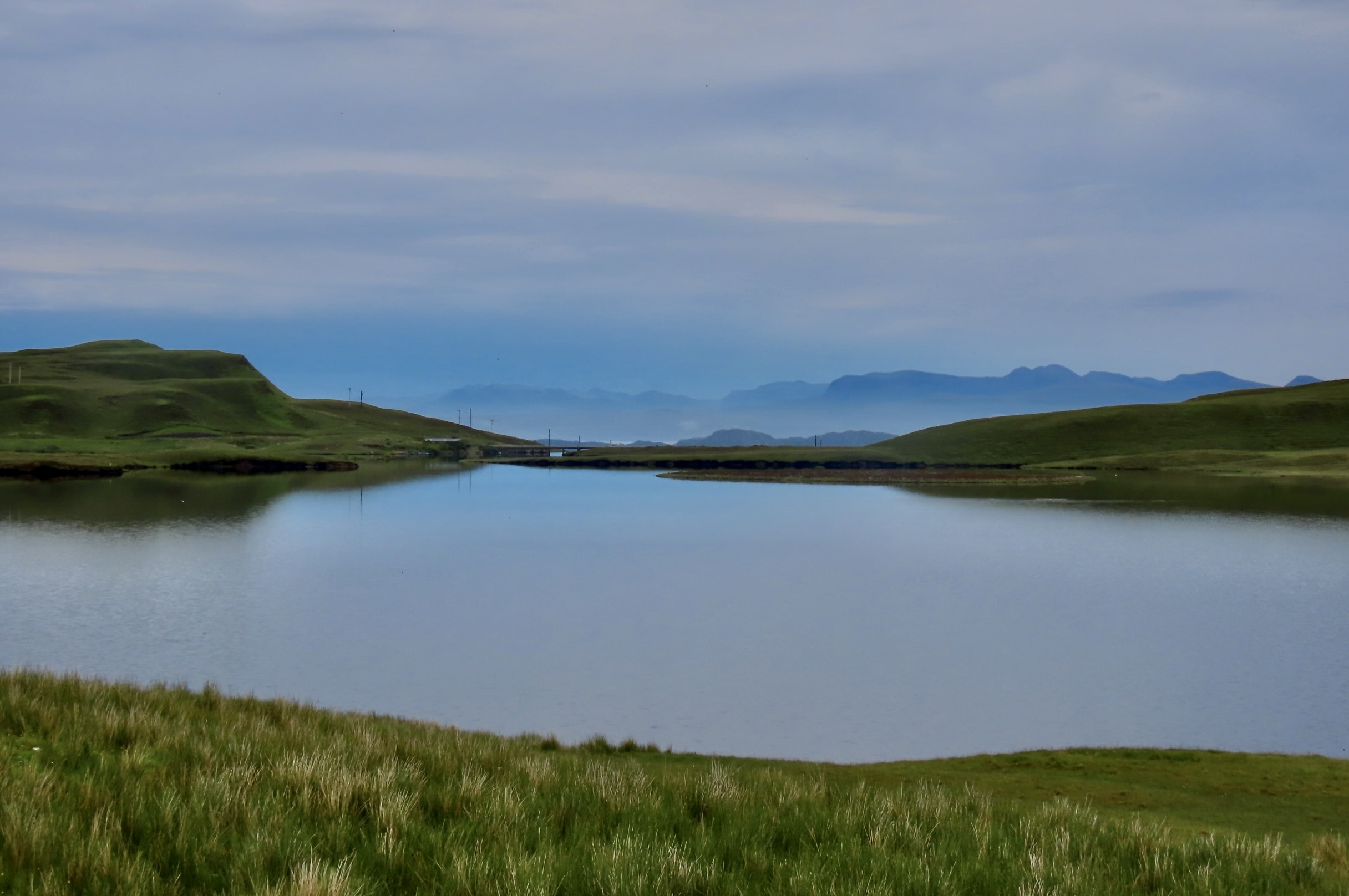
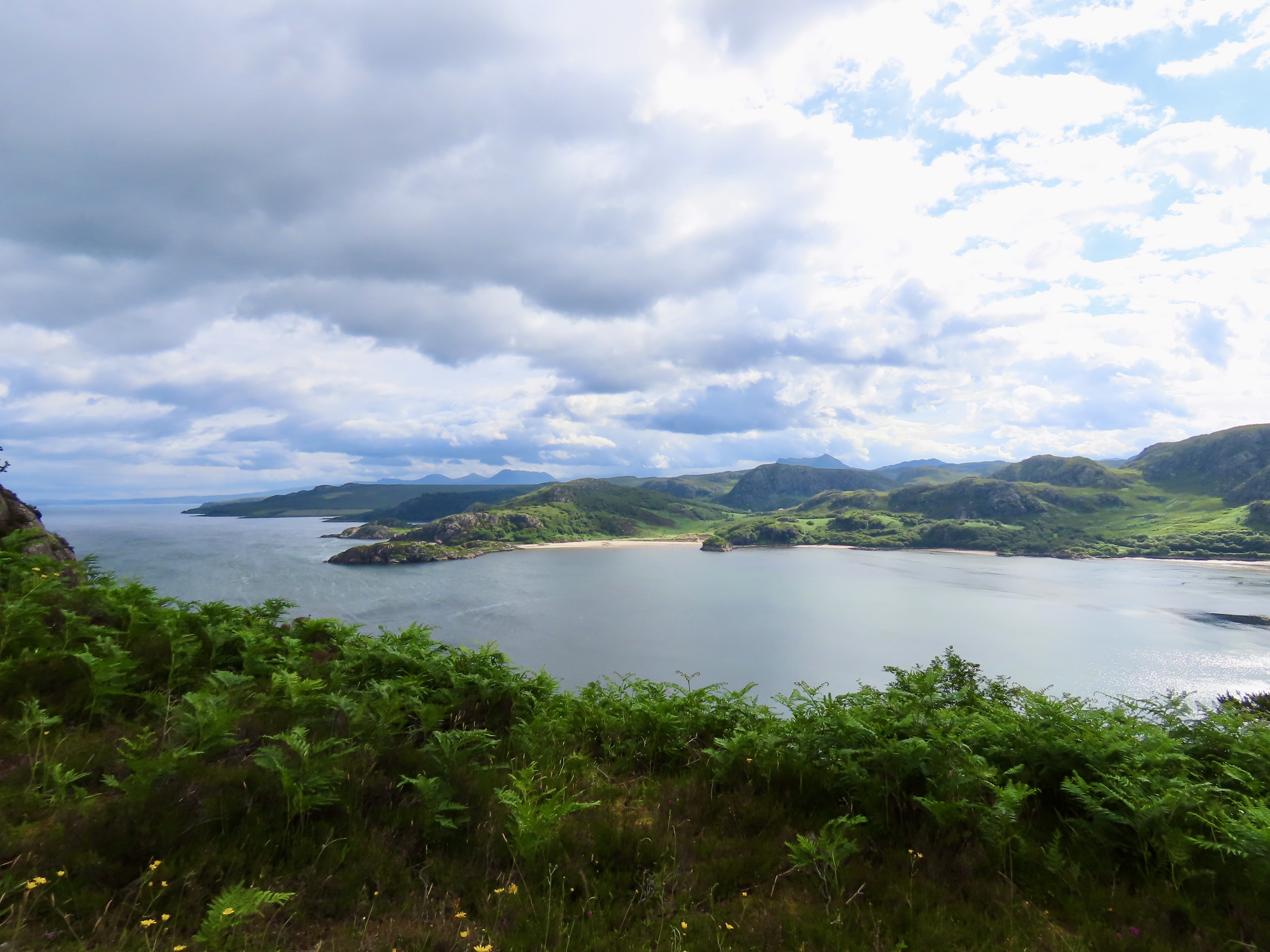
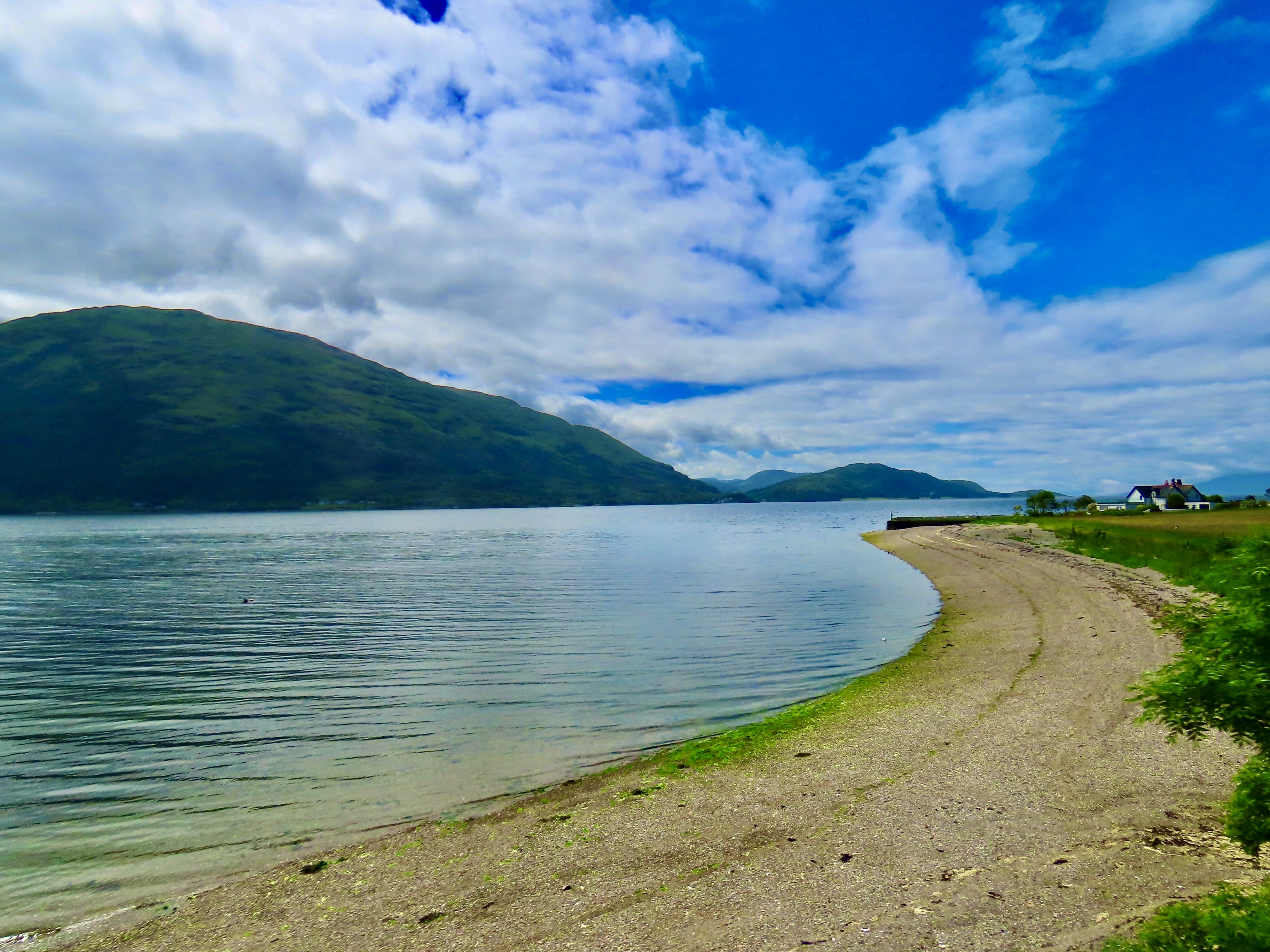
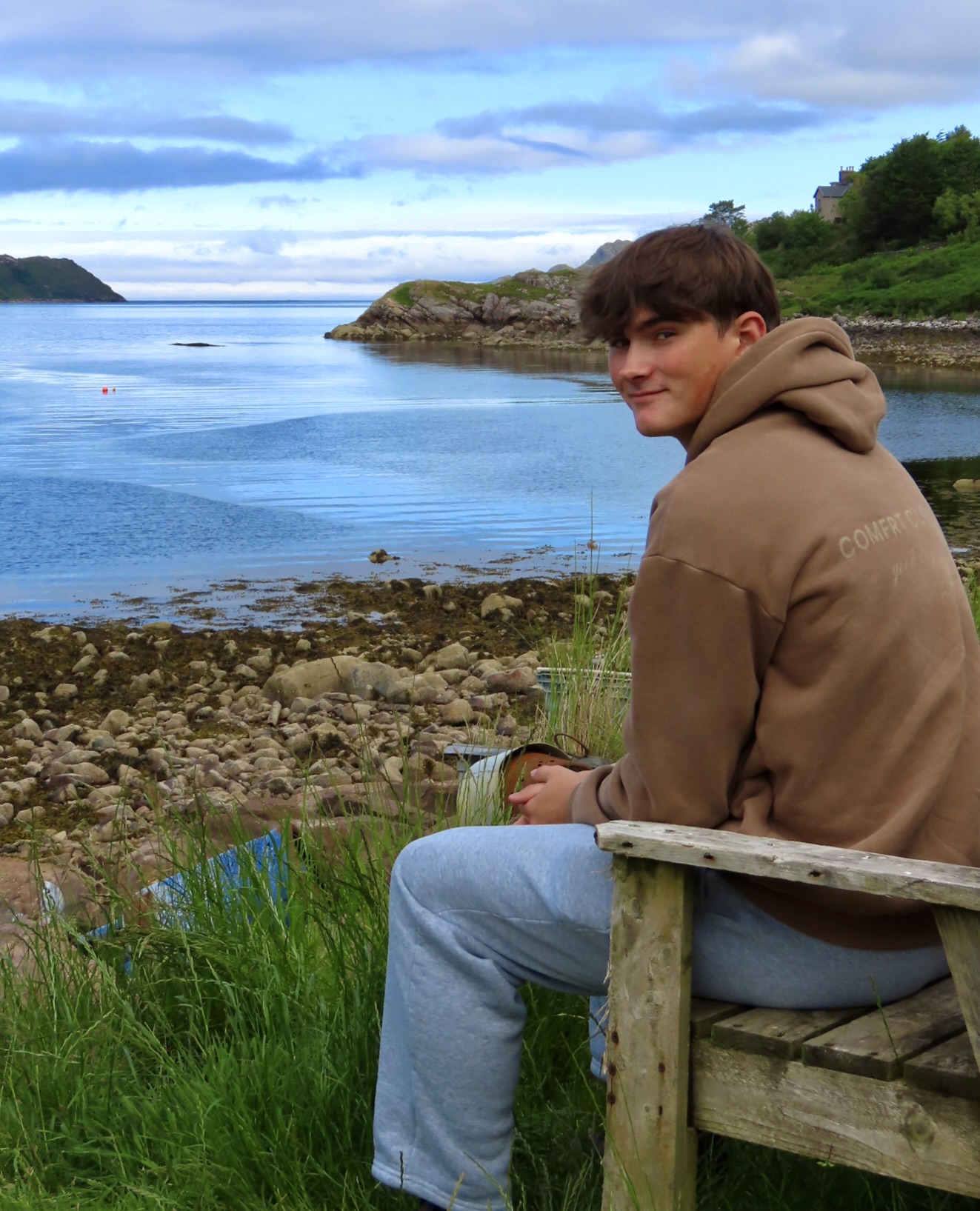
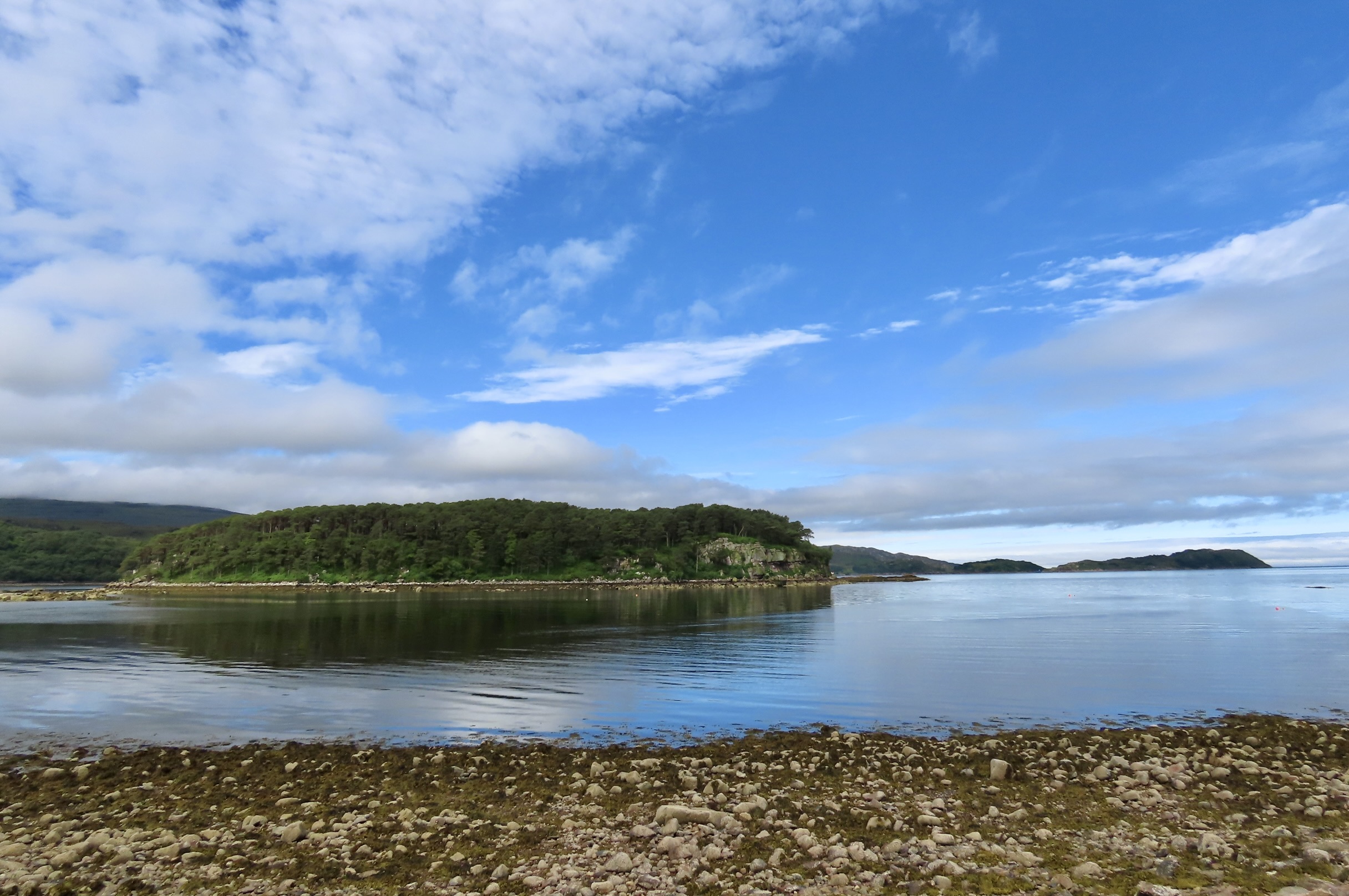
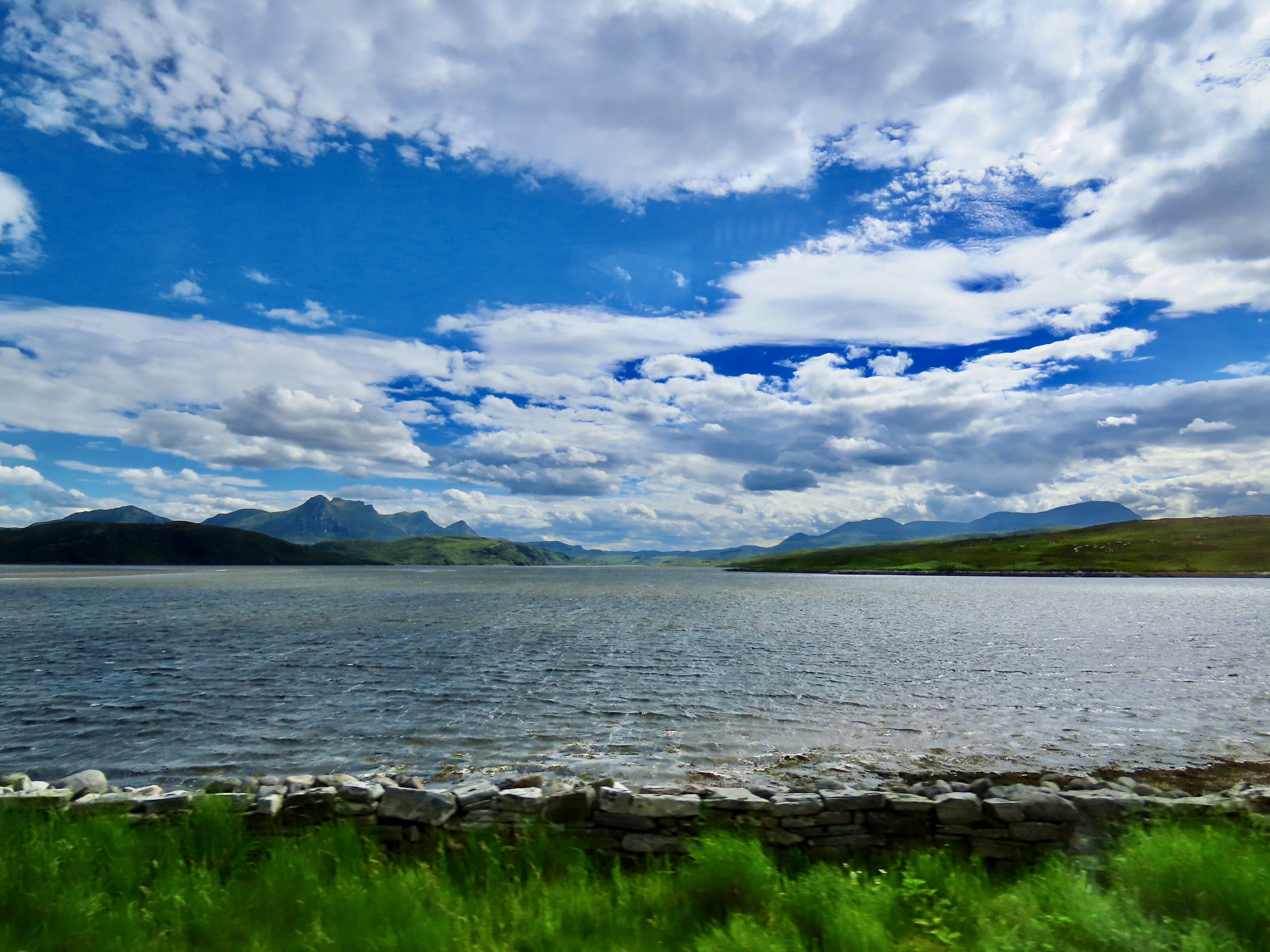
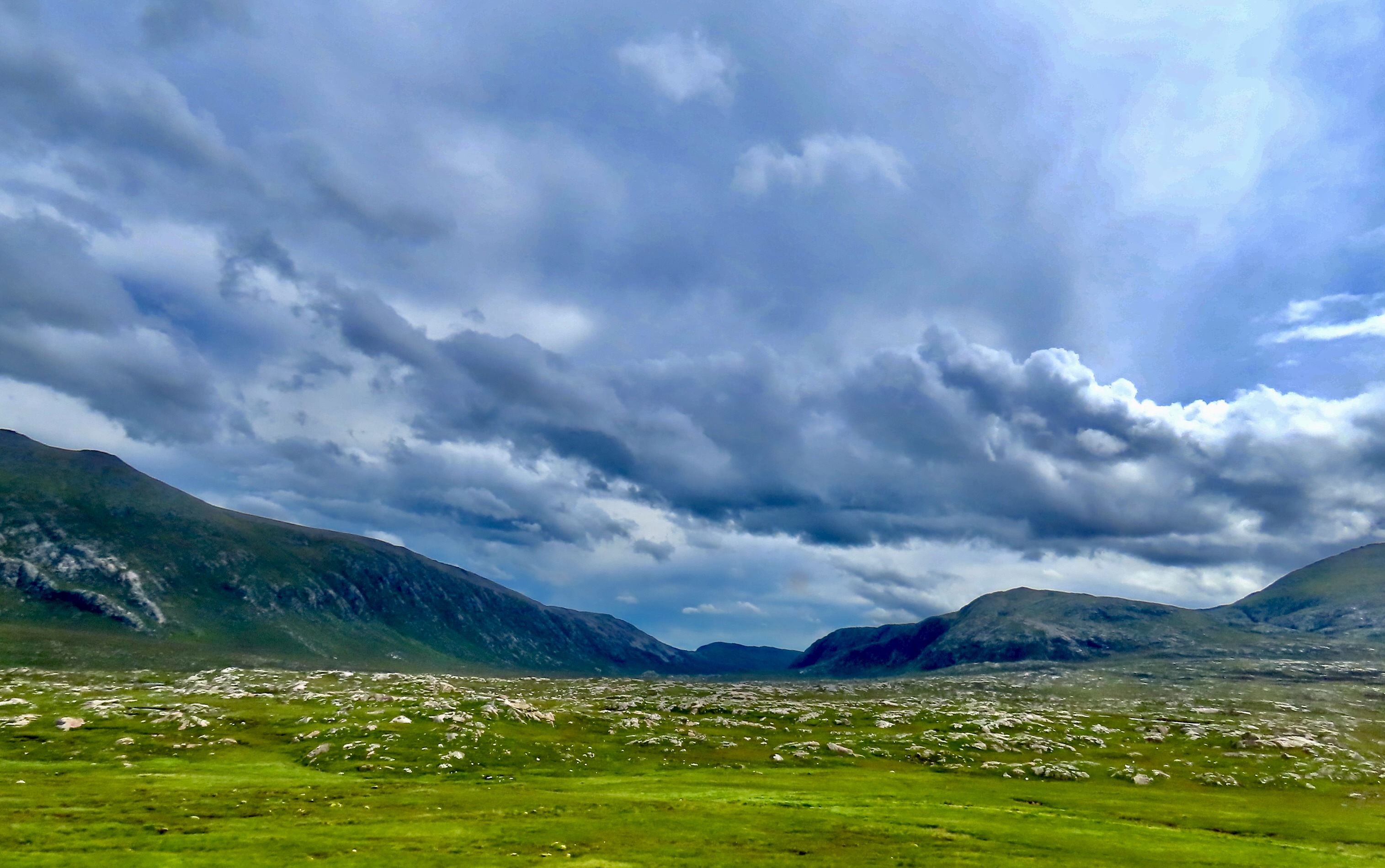
All of the water rushing down the mountains can lead to crashing waterfalls.And more quiet…But still beautiful…Waterfalls.The rainfall also leads to roaring rivers…Quiet streams, and…Lochs (lakes to the uninitiated). They are everywhere. This one combines a loch, a stream and mountains.A closer view of the stream.One of my favorite lochs.And one of Peggy’s.This was another beauty. I think it was a loch, although it might have been part of a firth. A firth is the Scotch/English word for a long, narrow inlet from the sea, like San Francisco Bay.Given that Scotland is surrounded by oceans, it isn’t surprising that there are numerous firths. Like lochs, they add to the beauty of Northern Scotland.This one came with a long, sandy beach. The lone home at the end of the beach speaks to the vast open spaces of the Scottish Highlands with few people. Once there were more, but the wealthy landlords who owned the property forced the tenant farmers off of their ancestral communal lands because they could make more money off of large scale sheep and cattle farms in what was known as the Highland Clearances between 1750 and 1860. They were a dark blot on Scotland’s History. The homes of the tenant farmers were usually burned down so the farmers wouldn’t return. Thousands ended up migrating. Others scratched by as best they could on small farms, crofts, along the coast.This firth came with Cody.It also featured an attractive island.Another favorite photo.While the green landscape, rivers, lochs and firths are an essential part of the Highlands’ beauty, we are talking Highlands— and that translates into mountains.
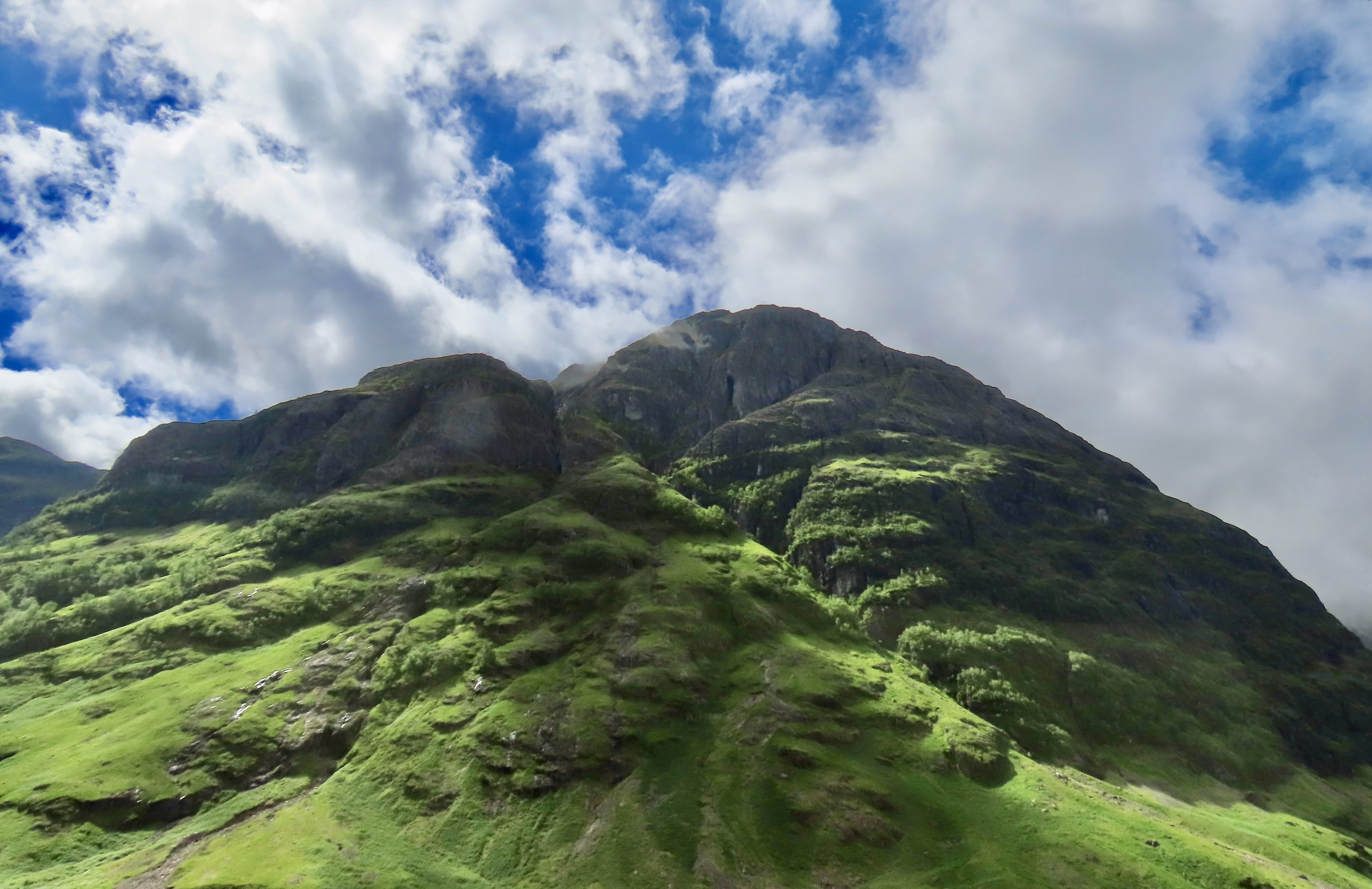
While they only reach 3000 feet (914 meters) in height, their lack in elevation does not take away from their beauty and ruggedness. Here’s something to contemplate: They were once as high as the Himalayas, around 20,000 feet (6,100 meters). Four hundred million years of erosion can wear you down a bit, however. It’s apparent in this photo that a lot of erosion is still taking place. The mountains were created when Scotland and England crashed into each other around 500 million years ago. They didn’t always hang out together. Once they were part of two different continents separated by the no longer existing ocean of Iapetus. Northern Scotland belonged to the ancient continent of Laurentia, occupying a landmass with North America. England was part of a smaller continent far to the south known as Avalonia. Plate tectonics did away with Iapetus and brought Scotland and England crashing together in the Caledonian Orogeny, the event that raised the Scottish Highlands to their Himalayan heights.
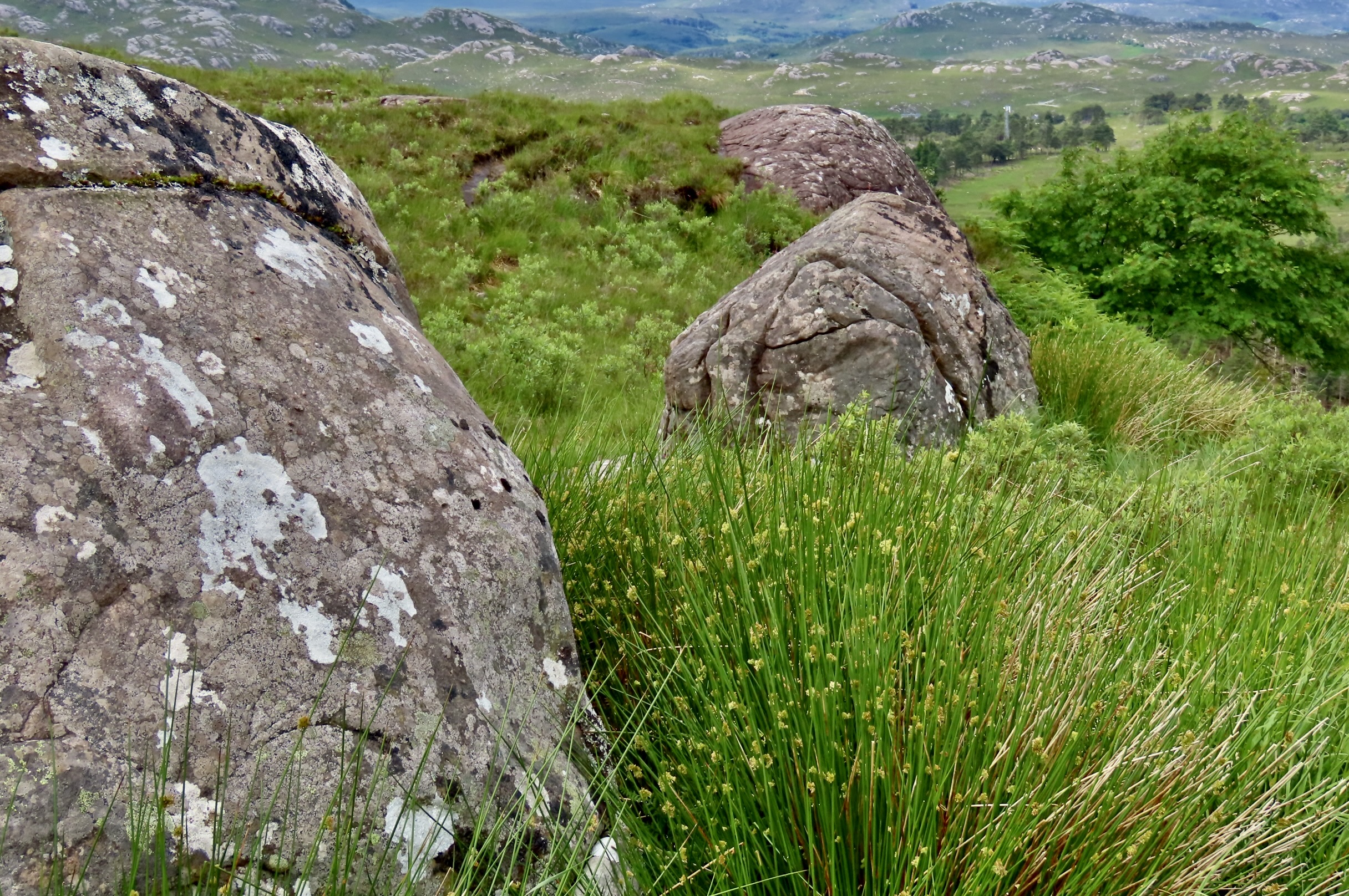
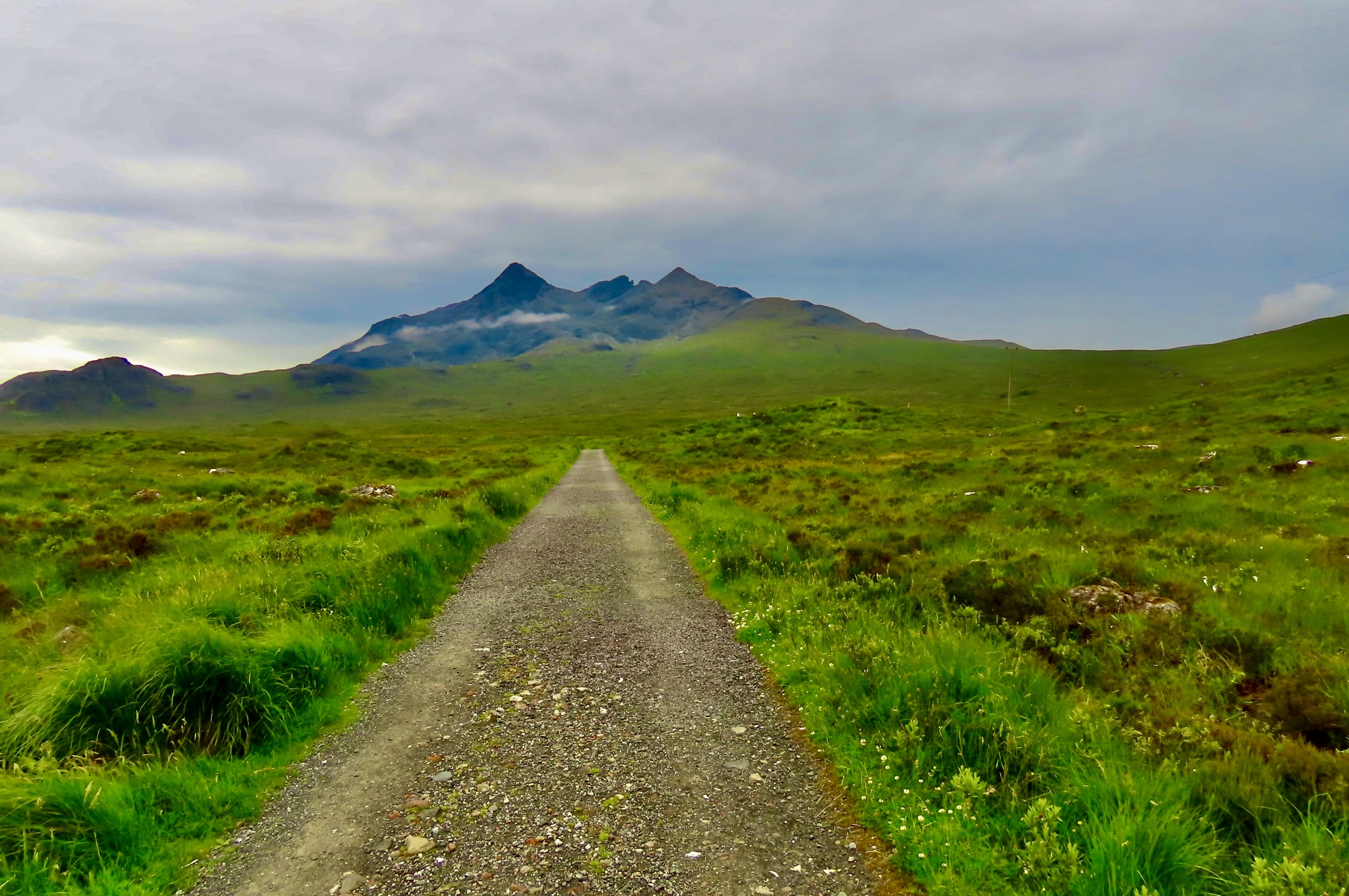
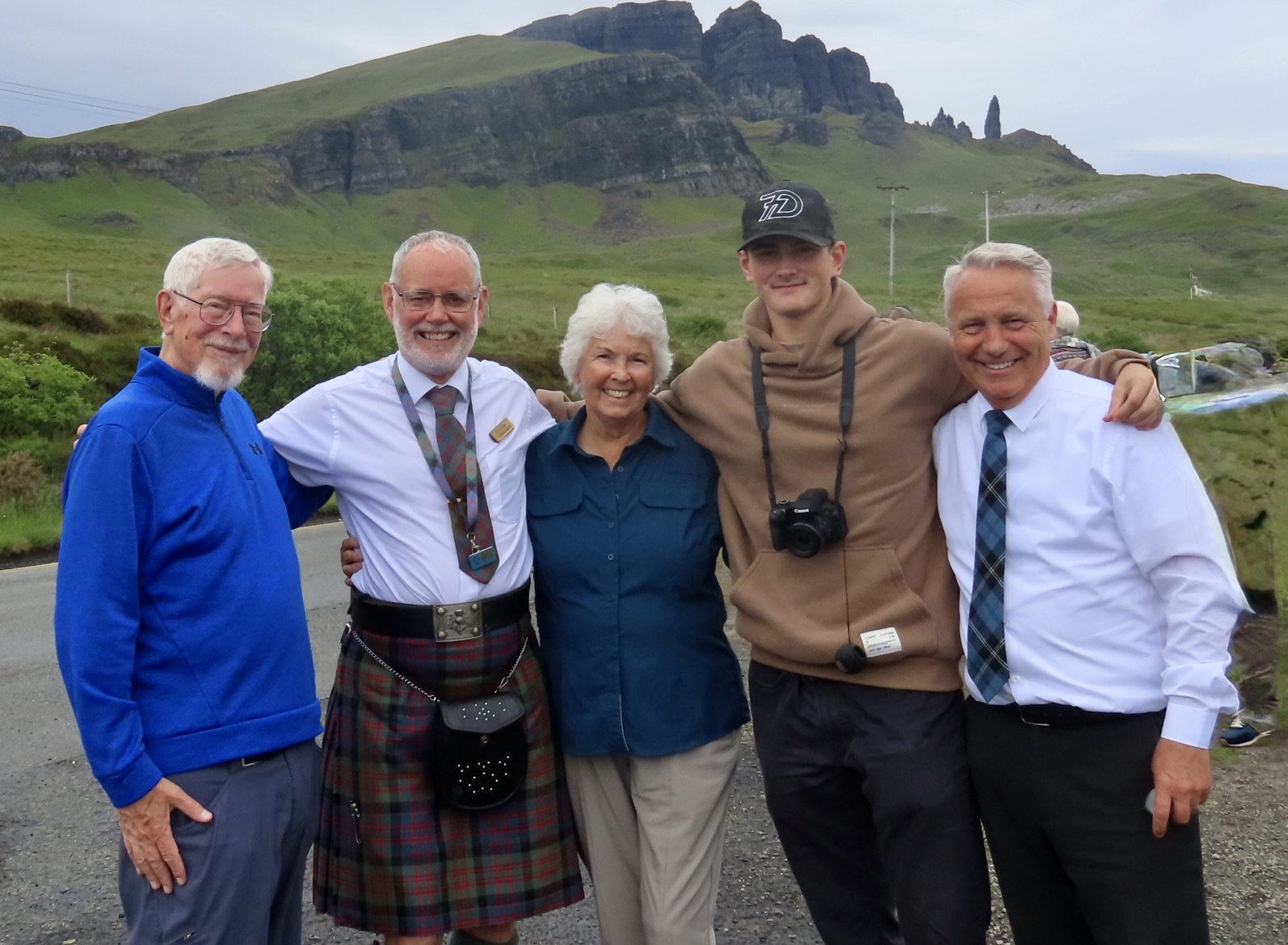
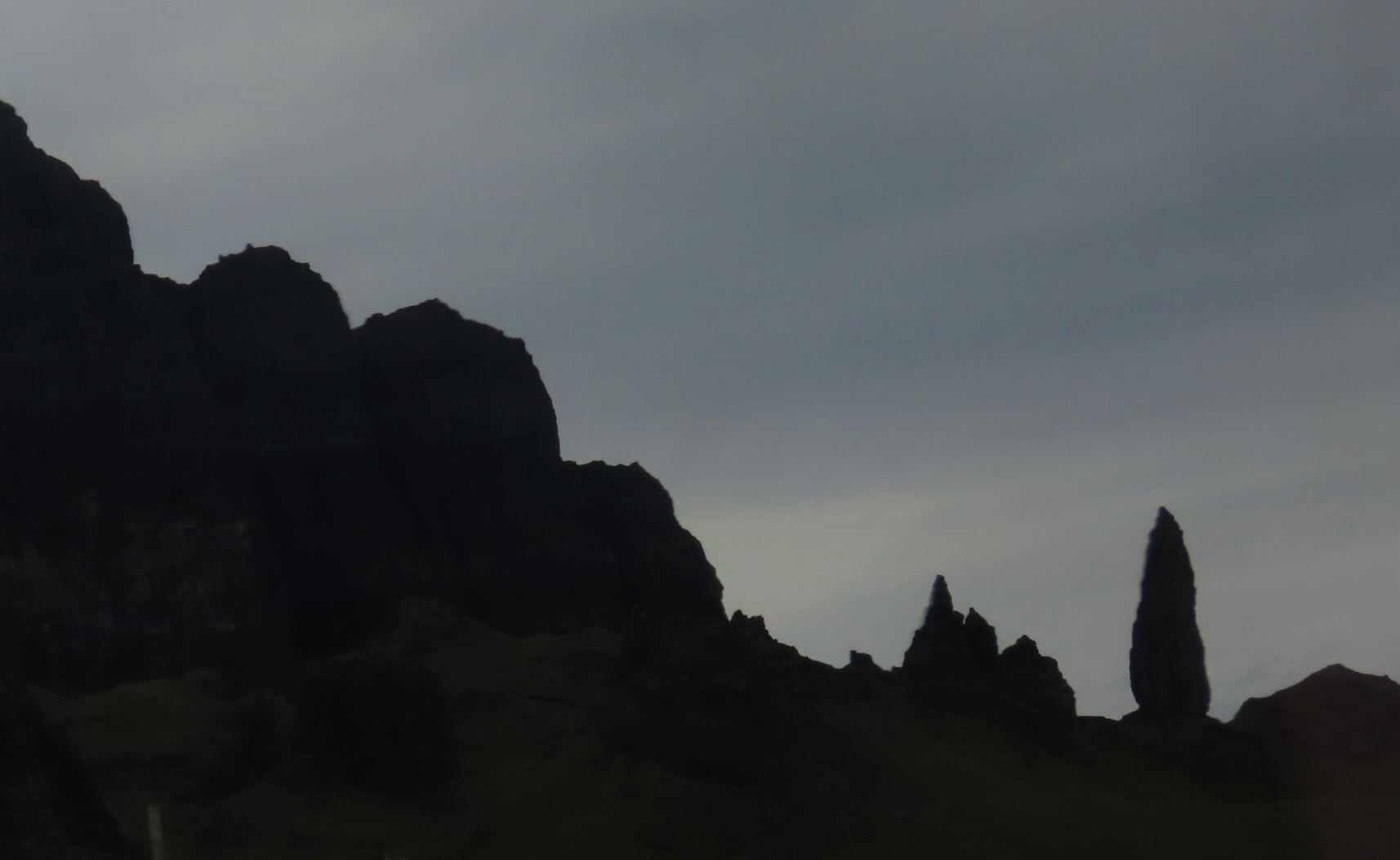
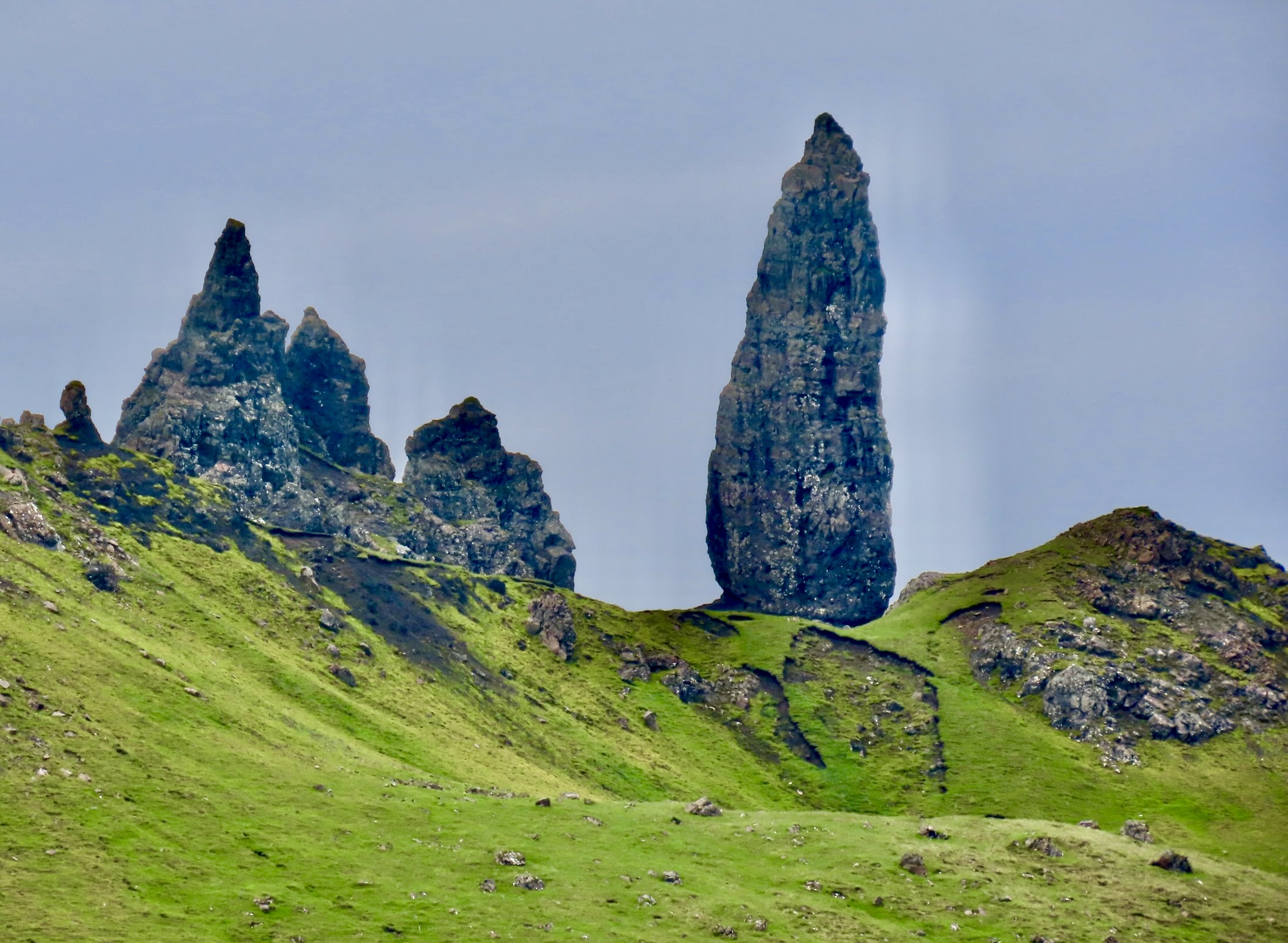
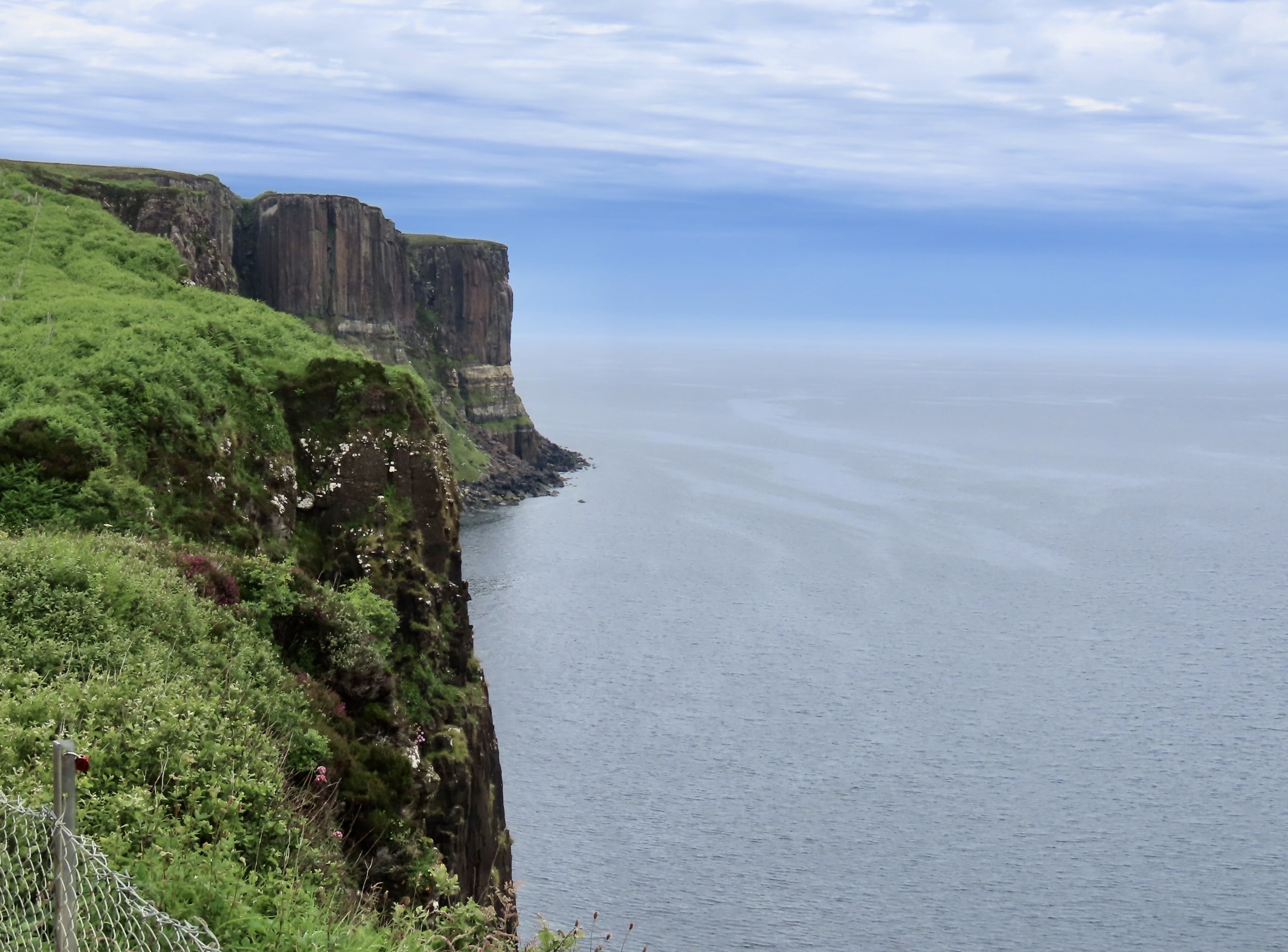
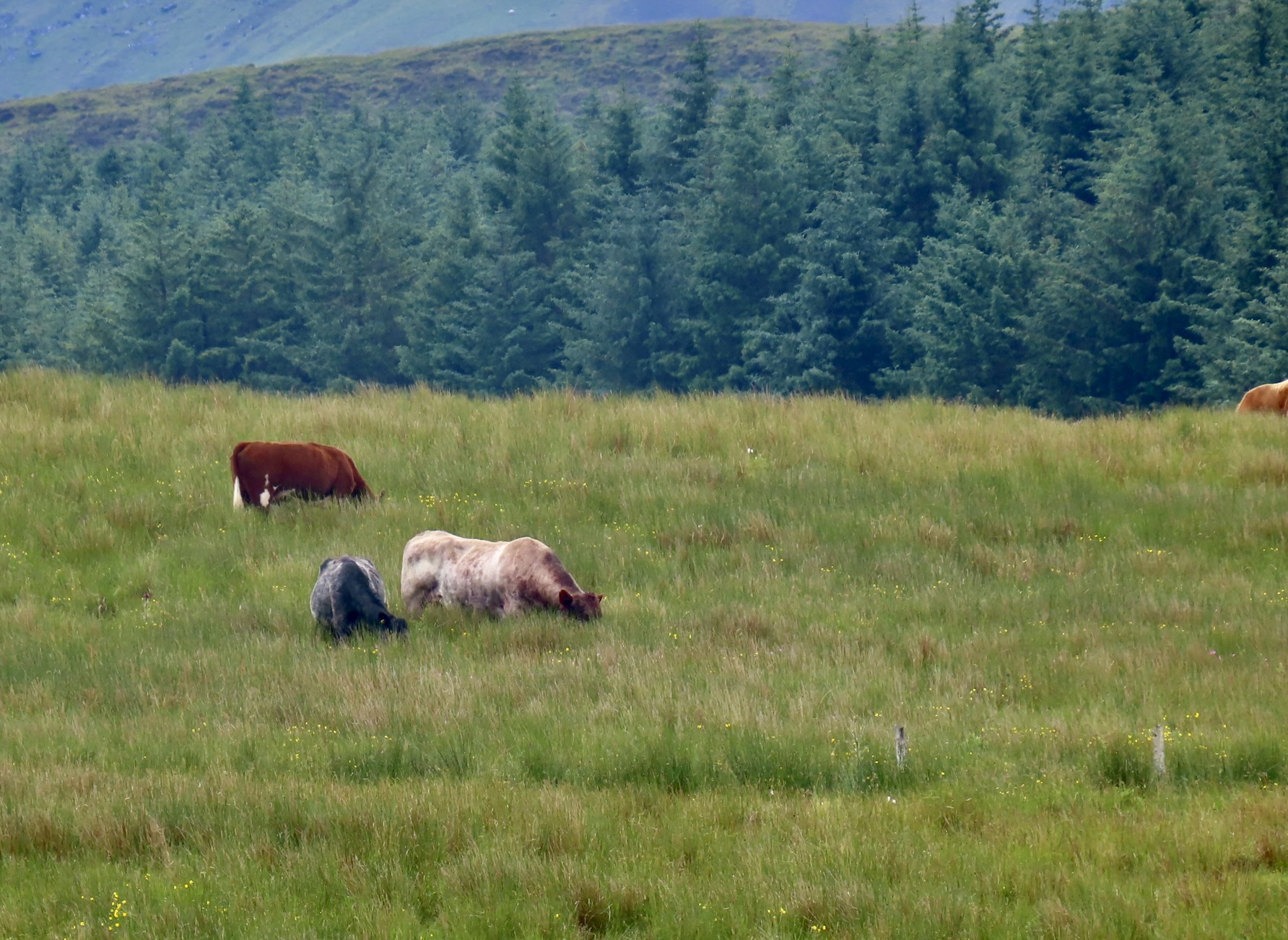
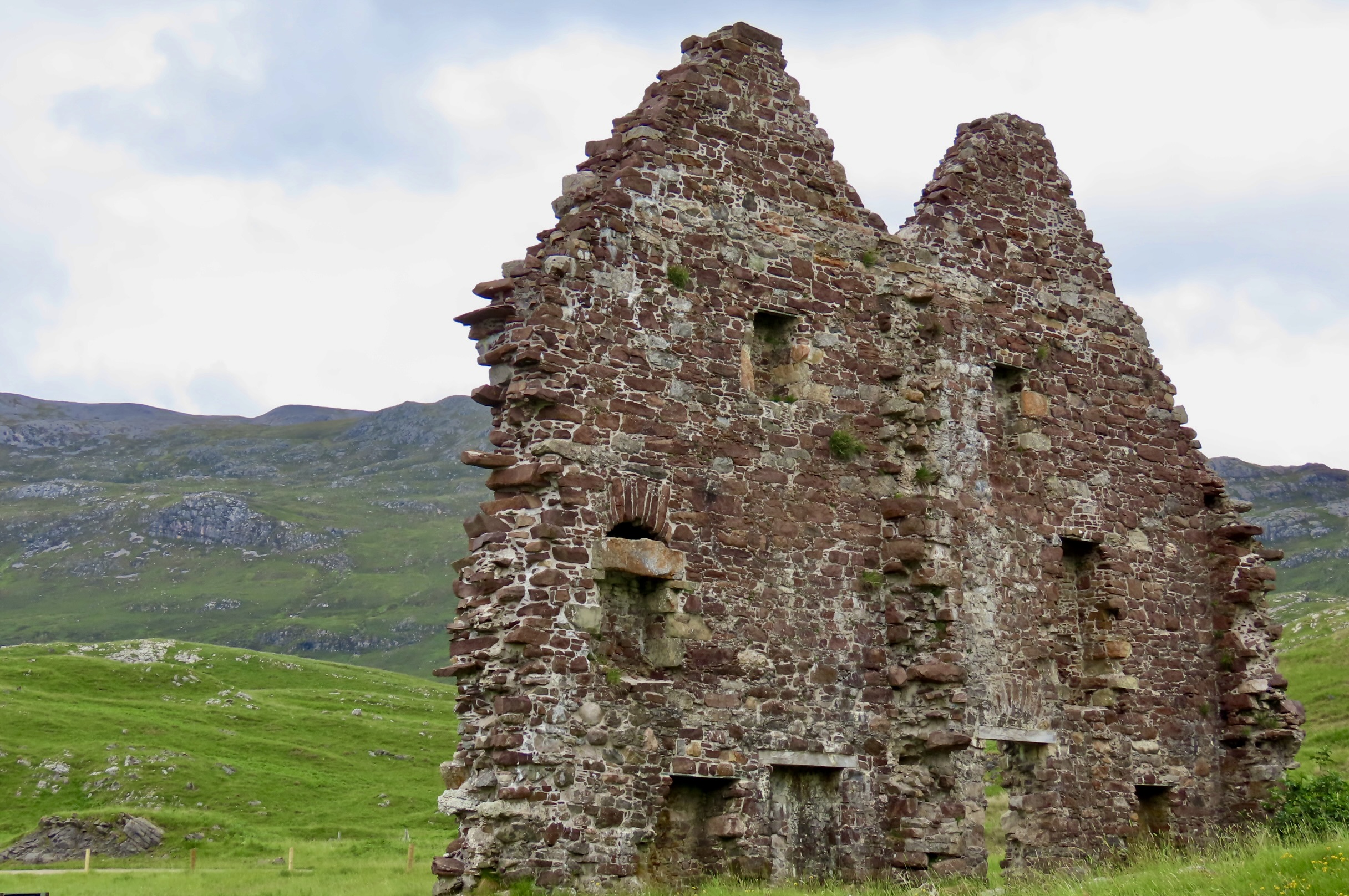
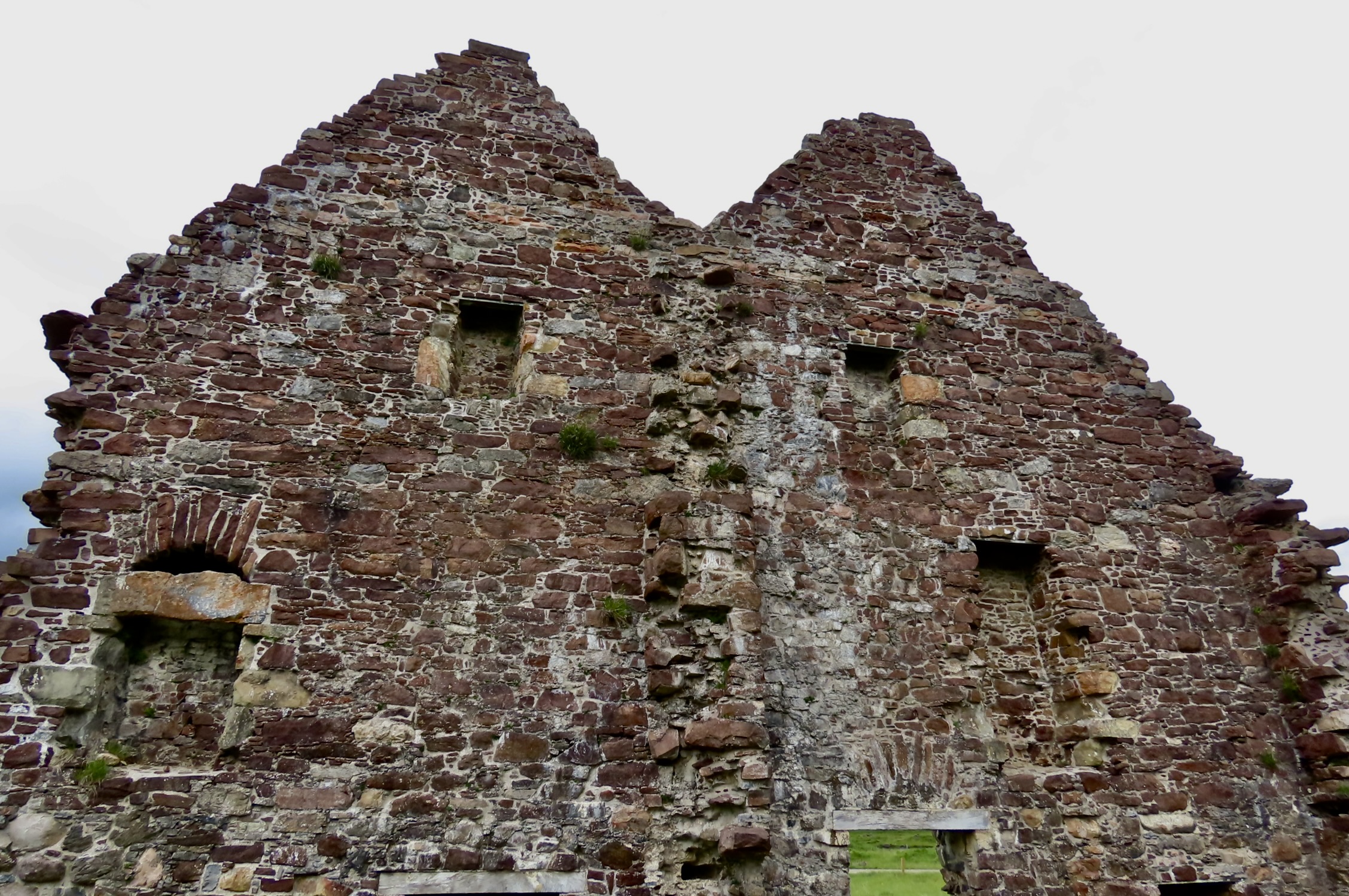
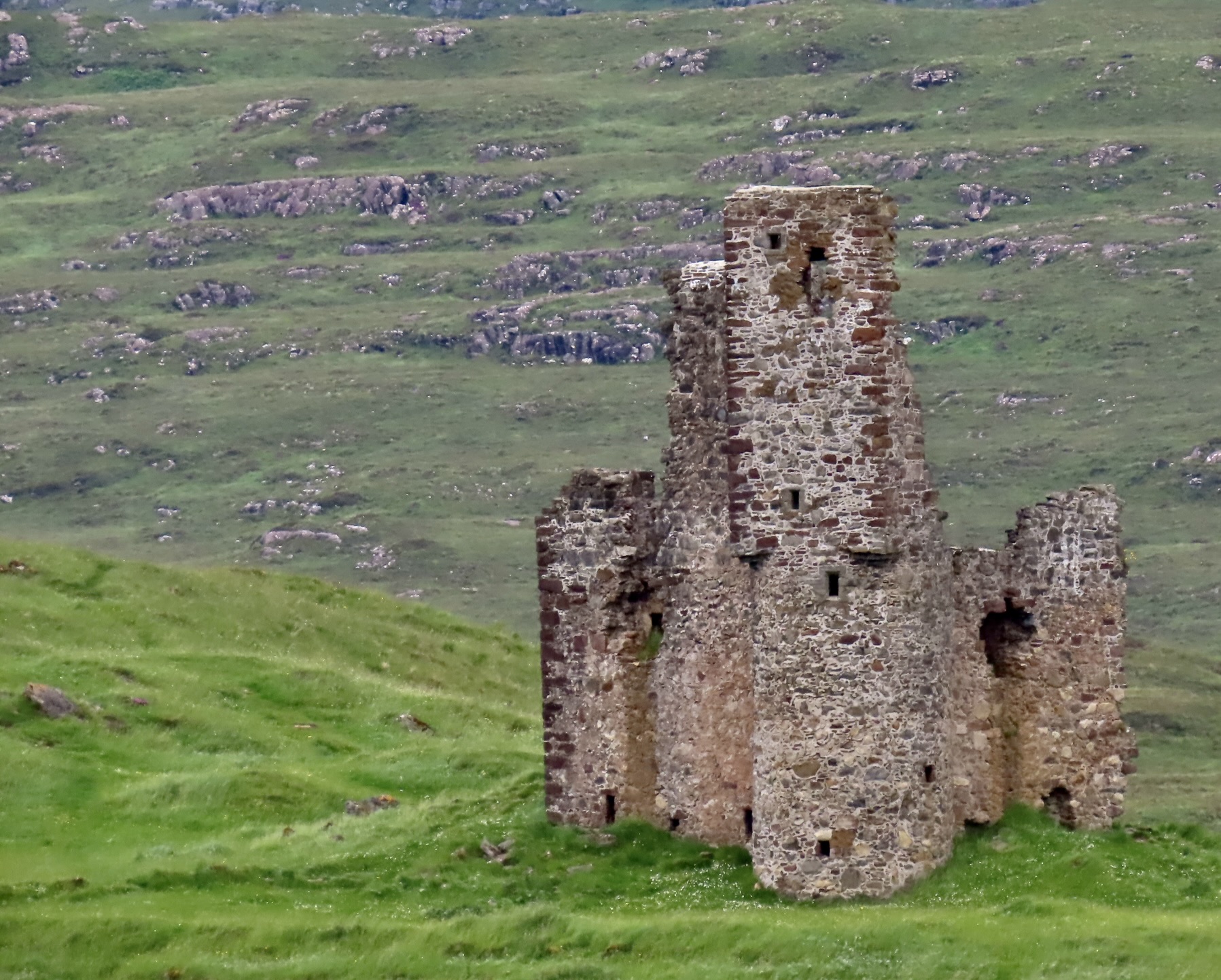
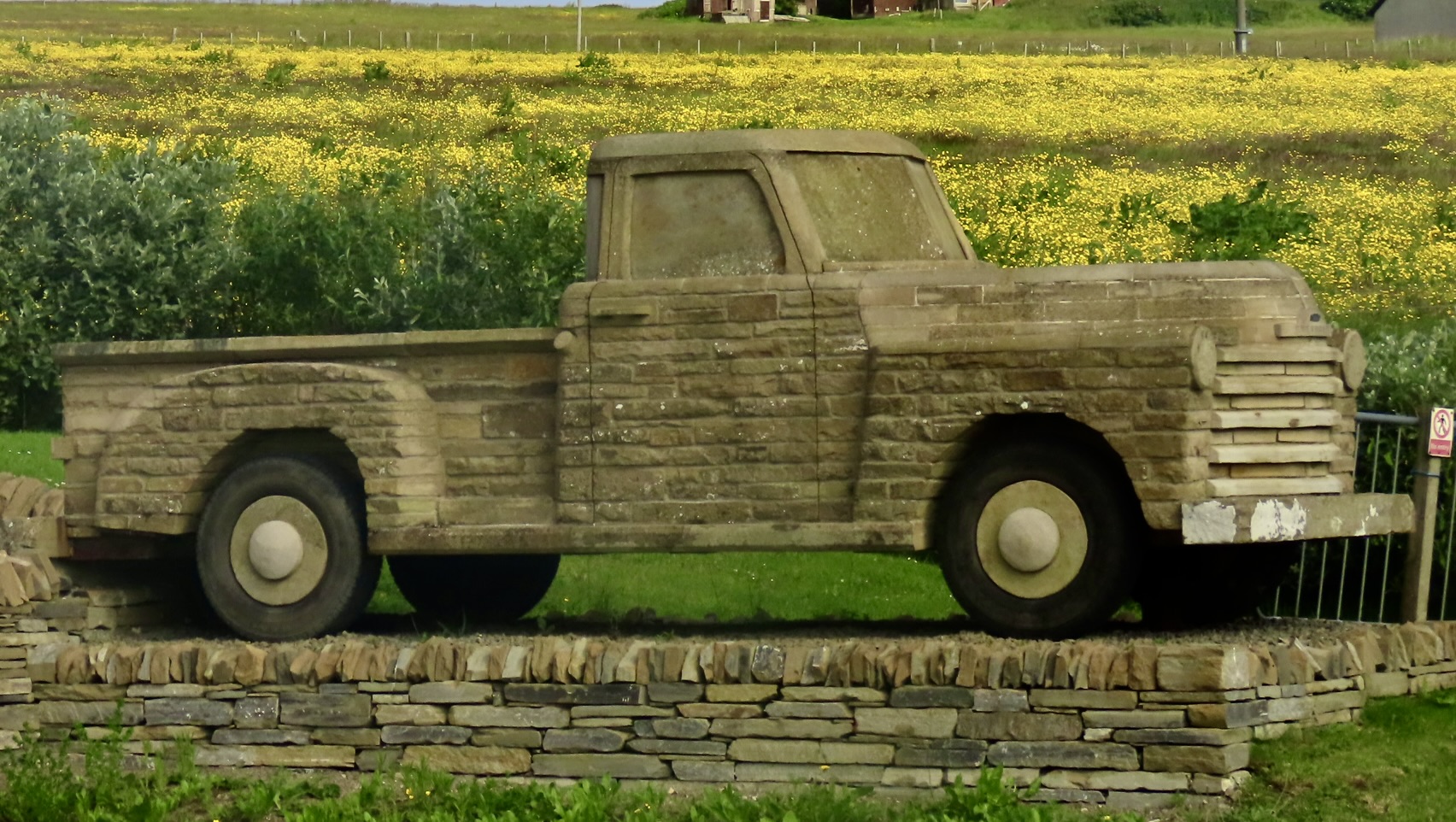
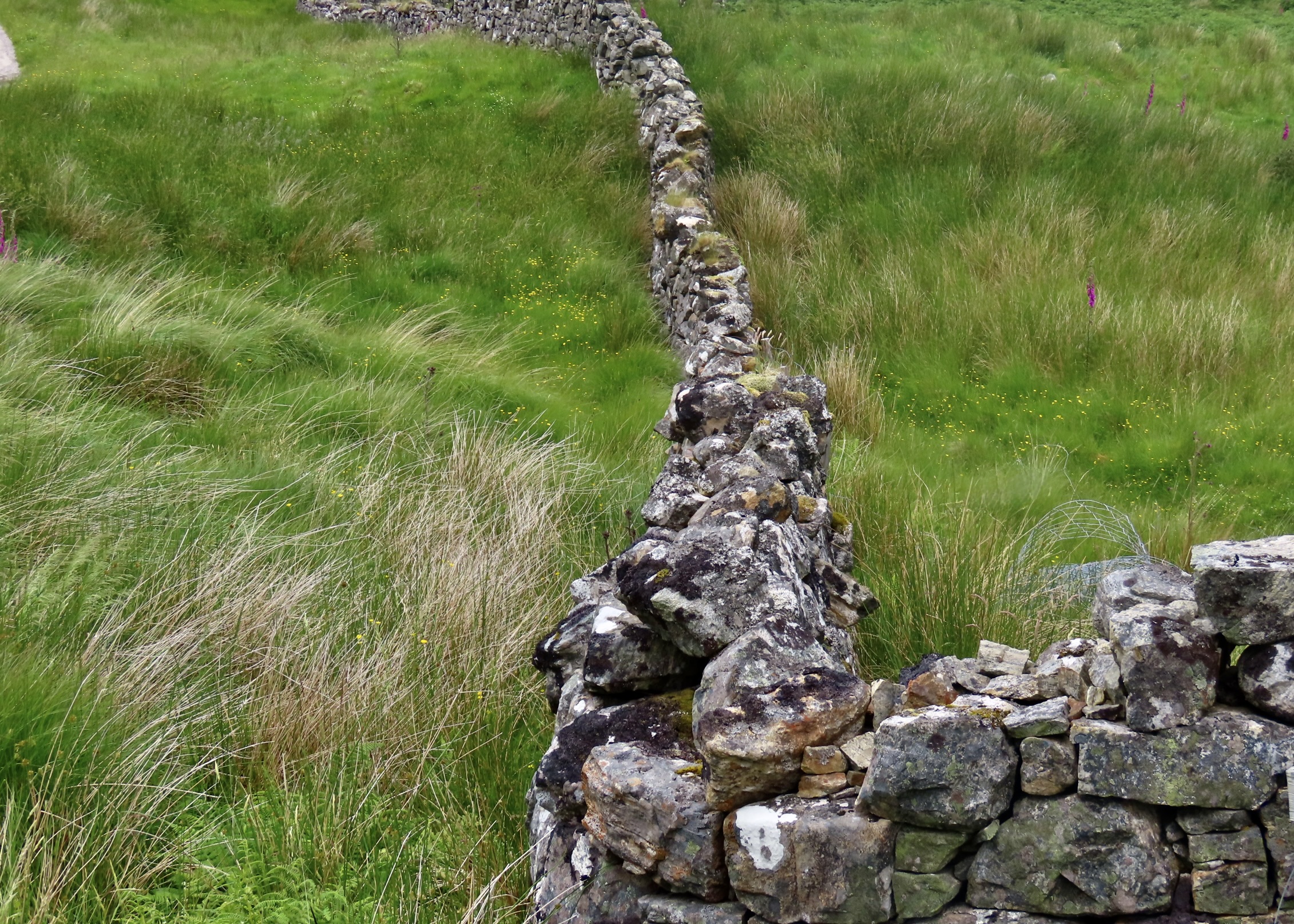
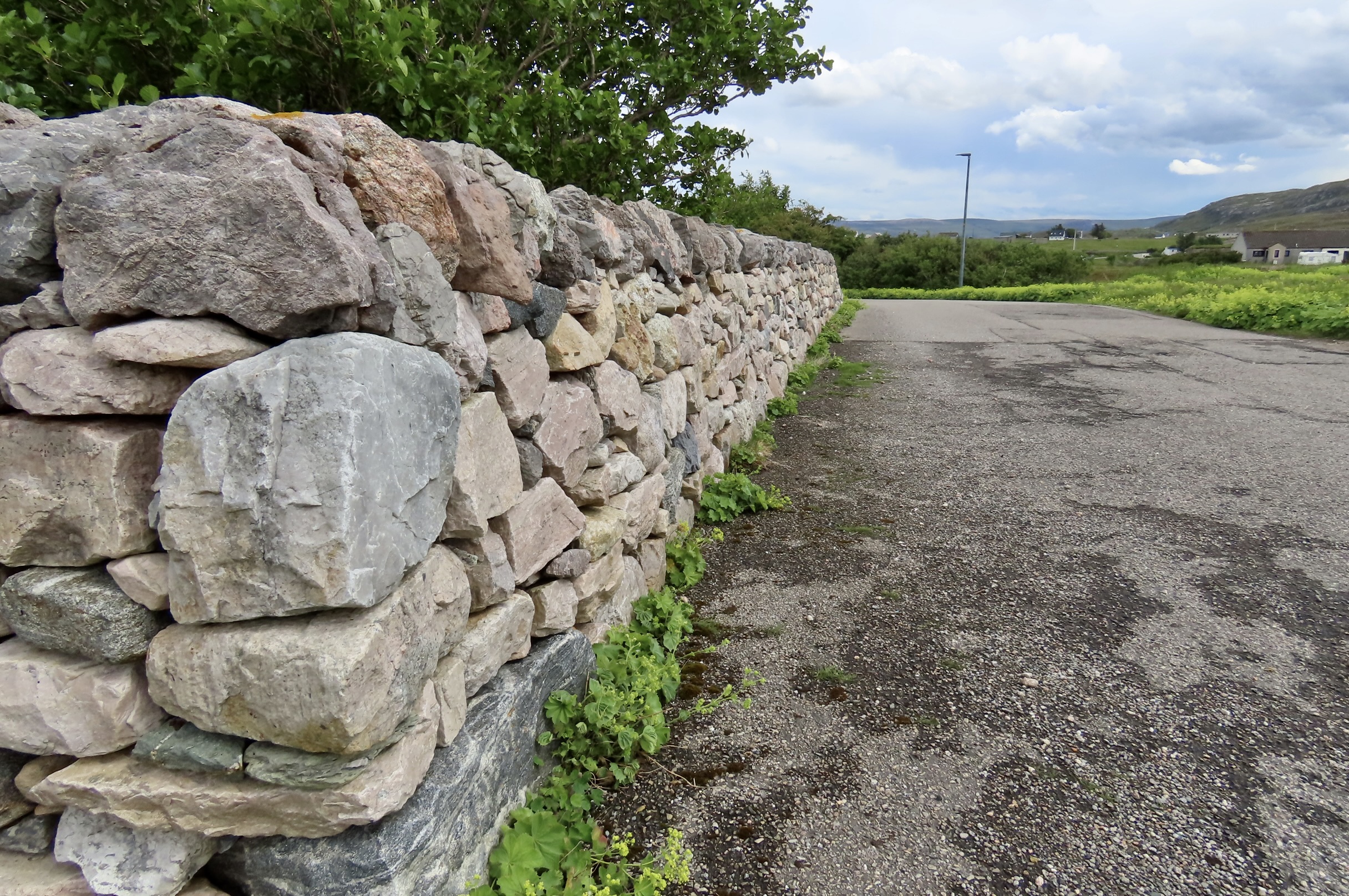
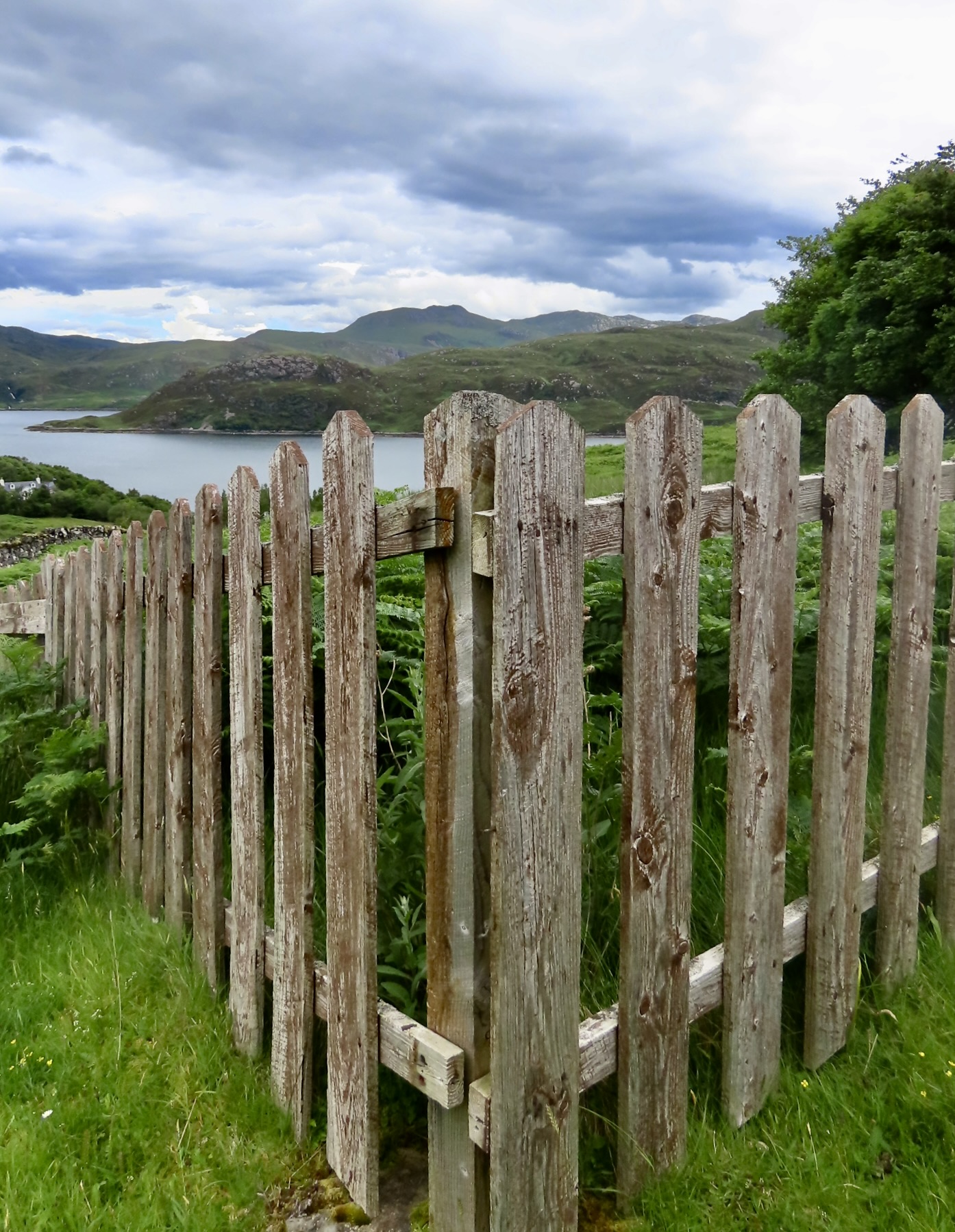
Mountains were in view almost everywhere on our CIE bus tour of the Highlands.A face in the mountains.Many of the mountains were quite rocky. Because of their different origins, the rocks of Scotland are different than the rocks of England. As are the fossils. The unique geology of Scotland led Scottish geologists to play an important role in the development of modern geology including concepts of deep time (the age of the earth), plate tectonics and structural mapping (vital in reconstructing the deformation history of the Earth’s crust).A rocky cliff face.I was impressed by the way these rocks led into this photo of mountains.These large boulders with their lichen were perched above a firth.Roads like this call my name. “Follow me, Curt,” they demand. We were on the Isle of Skye and my tour bus guide would have been unhappy if he would have had to chase me down. Sigh. I behaved. Instead….We took a photo of us along with our guide and bus driver. They were both named Graham. Our guide is between Peggy and me and our bus driver is standing next to Cody. The rock pinnacle in the background is called the Old Man of Storr. Storr, the volcanic ridge to the right, was given its name by the Vikings. It means great or large.The sunlight behind the Old Man of Storr gave it a shadowy appearance.This Old Man of Storr from the other side. They say if you have the right angle, the rock looks like an old man. I’m fairly good at seeing faces, people, animals and monsters in rocks. Nothing stood out here for me. Must have been the wrong angle. Judging from the light outline on the righthand side, maybe he ghosted me.Because of the volcanic flows of basaltic rock on the Isle of Skye, there are a number of dramatic sea cliffs like this one located near the Old Man of Storr. The flow is obvious, sitting on top of the cliff. Being harder than the rocks under it, it forms a cap. As the lower rock eroded back into the cliff, the basalt cracks and falls into the ocean, forming the steep cliff. The fence in the foreground is designed to keep visitors from wandering over to the edge to look down, or worse, take selfies on the edge. “Look at me, look at me! Whoops!”There is more to scenery than nature, however. We took lots of photos of cattle and sheep.Historic ruins always caught our attention.Another perspective.This small castle was nearby. It was designed for defense.We found this unique bit of ‘scenery’ on Orkney Island. It’s a 1950’s era Chevy pickup. Its creation dates back to Covid, when the Orkney stone mason John Hamilton found himself with a lot of spare time on his hands. Operating under the inspiration of Don McLeans 1971 “Drove my Chevy to the levee but the levee was dry” he built his pickup to the exact size of an original Chevy pickup using only stones and masonry (no standard bricks). Visitors are invited to take all the photos they want— and make a contribution to local charities. It’s a win-win.Winding things down here, given all the stones there are in the Highlands, is it any surprise there are lots of stone fences? As fences go, they are close to impossible to beat in terms of scenic value. I’d be remiss if I didn’t include this stone wall in the small northern community of Durness, Scotland. It was built by our guide, Graham Bruce, who had been headteacher in the local school there for 29 years.An old wooden fence runs a close second, however. That’s it for today. You may be saying, finally! Our next post will feature the towering mountains of Grand Teton National Park in Wyoming’s Rocky Mountains.
On a personal note, I was working on this post when Peggy exclaimed, “Curt, your blog had now received over one million views since you started !” It was worth noting. We celebrated.