Death Valley… A Photographic Journey through America’s National Parks

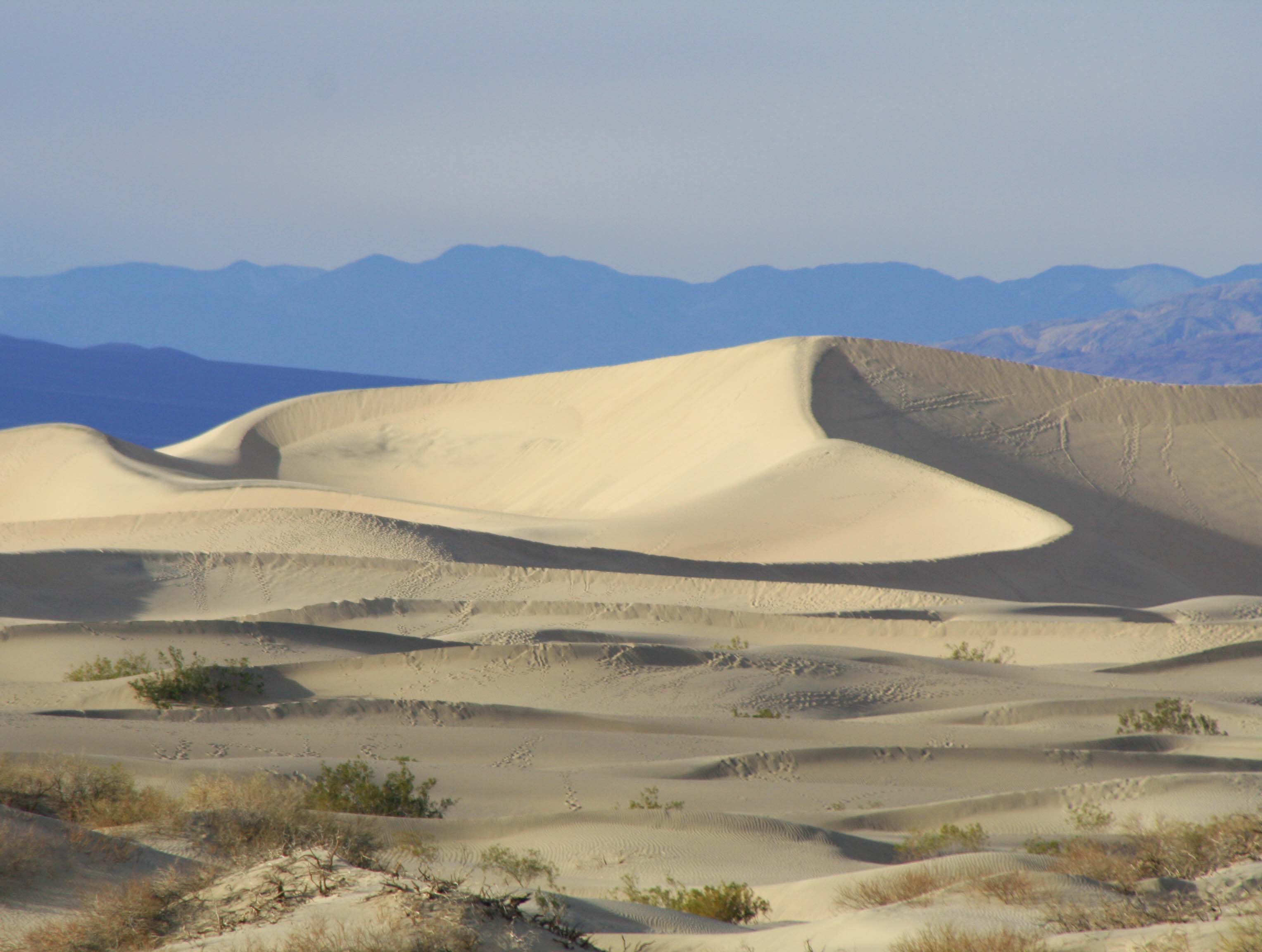
Sand dunes in Death Valley. Photo by Curtis Mekemson.

Tall sand dunes with their graceful curves loom up near Stove Pipe Wells in Death Valley National Park. It is quite an experience to walk out and climb to the top of the dunes.

I rode through Death Valley on my bicycle once. It was part of the six-month 10,000-mile solo trip I made around the US and Canada in 1989.

I had started my adventure in the small town of Diamond Springs near Sacramento, California, bicycled down the Central Valley, climbed up and over the Sierra Nevada Mountains from Bakersfield and, dropped down into Panamint Valley.  The climb from Panamint Valley to Death Valley was the toughest of my whole trip. I was out of the saddle, standing on the pedals, and travelling at 2-3 miles per hour under a relentless sun.

Halfway up there was a large water tank for cars that overheated and couldn’t make it. There was nothing for bicyclists. I was on my own. The climb was burned into my memory banks. But I made it, crossed the valley, and biked on to Maine, where I turned around and started back.

I had been to Death Valley several times before I made the bike trip and have been back several times since. The National Park’s solitude, stark beauty, history and geology have brought me back, time and time again.
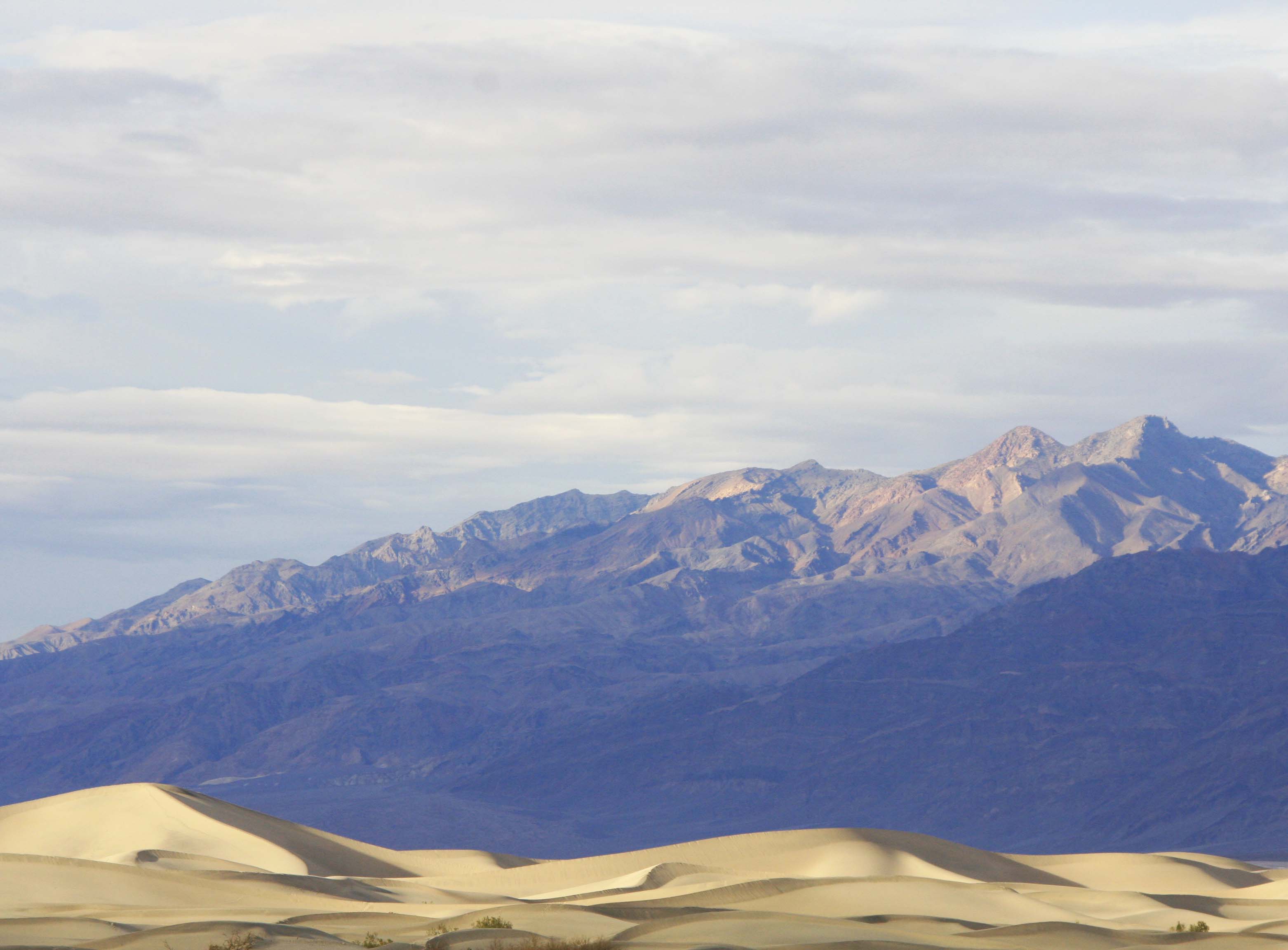
Photo of sand dunes and mountains near Stove Pipe Wells in Death Valley by Curtis Mekemson.

I like this photo because of the contrast between the golden dunes and purple mountains in evening sunlight.

Devil's Golf Course, Death Valley. Photo by Curtis Mekemson.

They call this section of Death Valley the Devil’s Golf Course. It’s easy to see why. Salt deposits left behind by an evaporated lake go down several thousand feet. (Photo by Peggy Mekemson.)
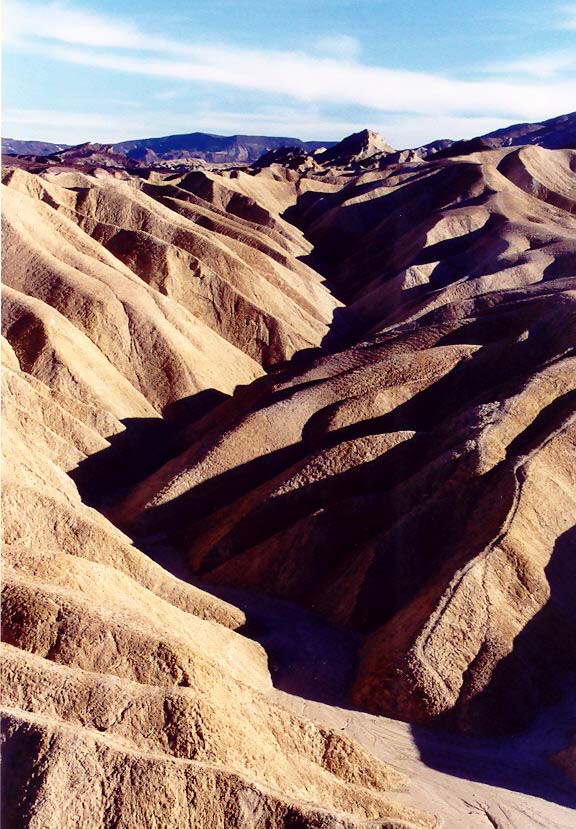
Zabriskie Point, Death Valley. Photo by Curtis Mekemson.

It is difficult to imagine the variety of landscapes in Death Valley unless you have been there. This photo was taken looking down from Zabriskie Point.

Photo of Zabriskie Point, Death Valley taken by Curtis Mekemson.

Another photo taken from Zabriskie Point. This one looks out across Death Valley.

Golden Canyon, Death Valley. Photo by Curtis Mekemson.

You can hike up to Zabriskie Point following an old road that goes up through Golden Canyon. Part of the original Star Wars movie was filmed in this canyon. I kept a sharp lookout for Luke.

Here, Peggy caught a shot of me following the trail toward Zabriskie Point. The hiking was ever so much easier than my bicycling experience. (Photo by Peggy Mekemson.)
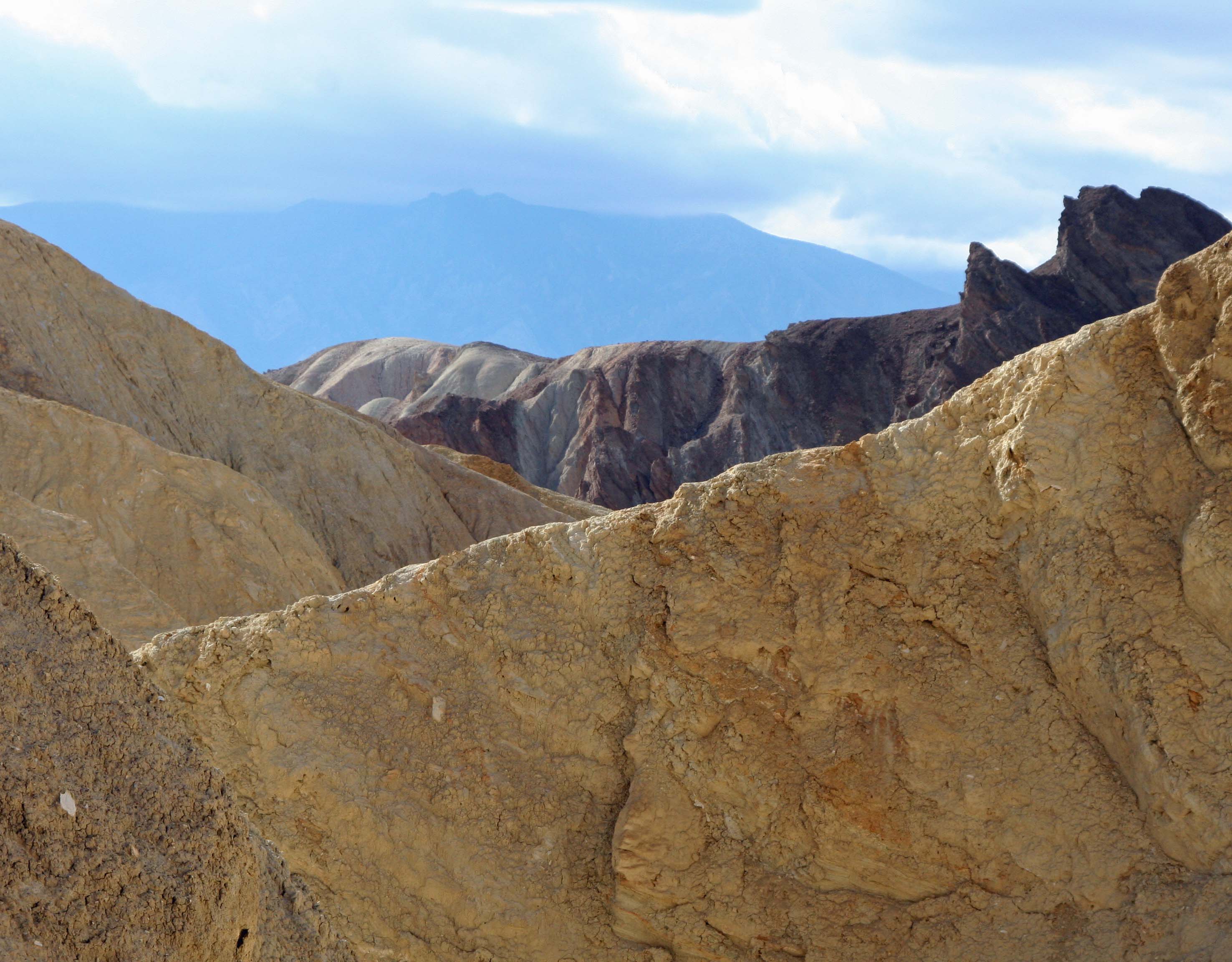
Here, Peggy caught a shot of me following the trail toward Zabriskie Point. The hiking was ever so much easier than my bicycling experience. (Photo by Peggy Mekemson.)

Golden Canyon, Death Valley. Photo by Curtis Mekemson.

Our view on the way down Golden Canyon.

Artist's Palette, Death Valley. Photo by Curtis Mekemson.

The colors here are created by different minerals in the rocks. Because of the color, this site is known as Artist’s Palette.
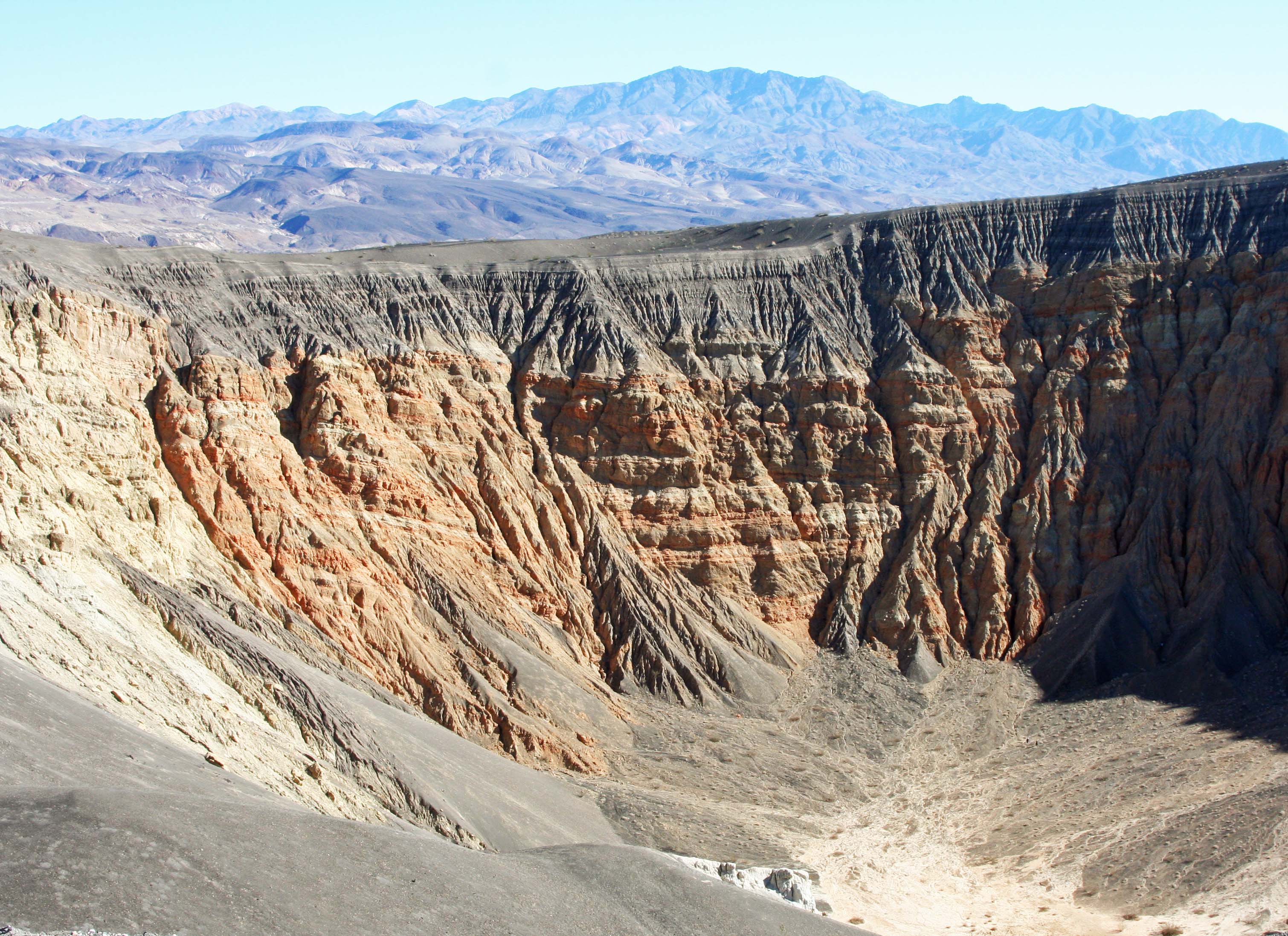
Traveling north, we come to Ubehebe Volcanic Crater, another of Death Valley's geological wonders. (Photo by Peggy Mekemson.)

Traveling north, we come to Ubehebe Volcanic Crater, another of Death Valley’s geological wonders. (Photo by Peggy Mekemson.)
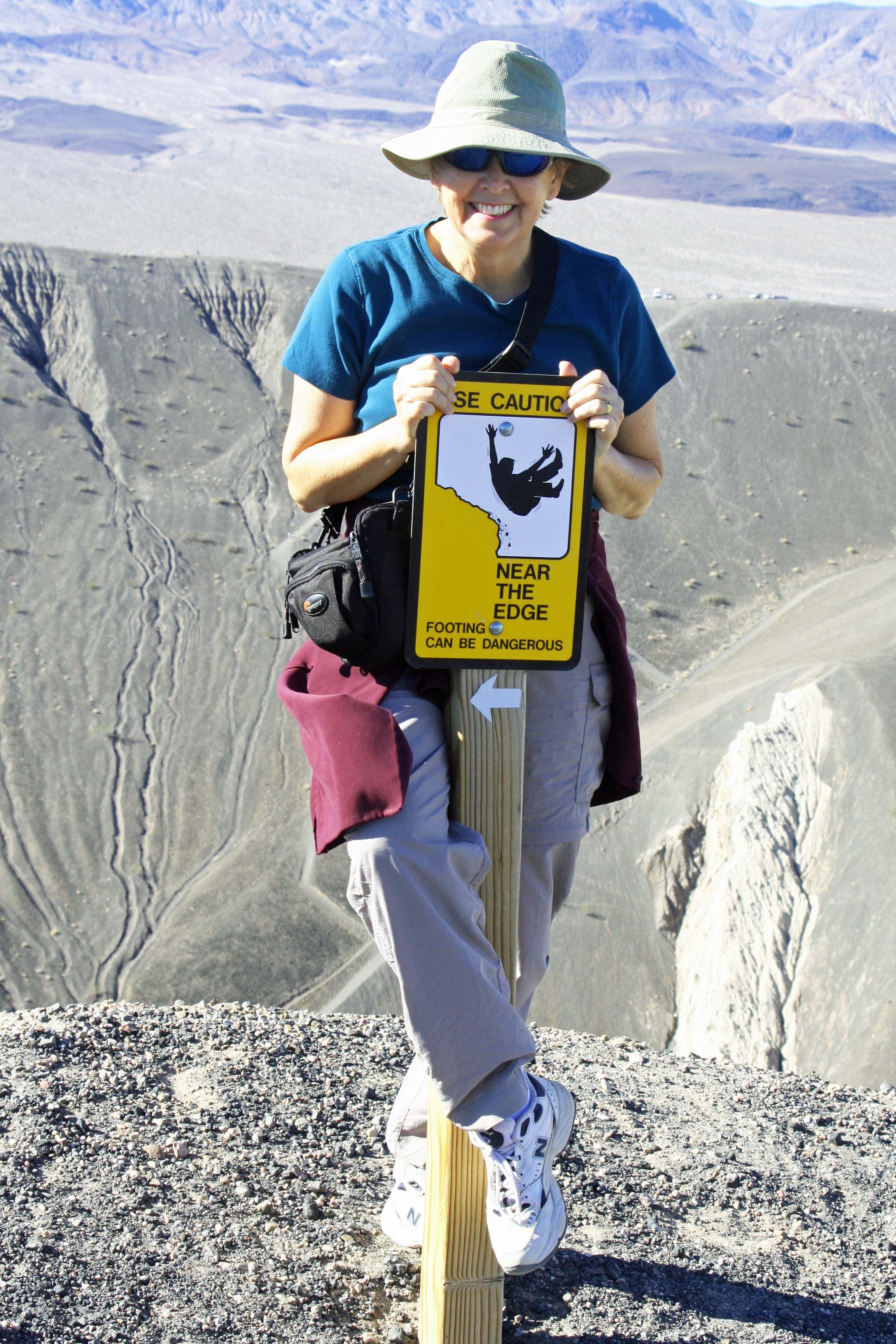
Warning sign at Ubehebe Crater, Death Valley. Photo by Curtis Mekemson.

You are welcome to walk into the crater. Falling is not recommended, as demonstrated by Peggy.

Small crater next to Ubehebe Crater in Death Valley. Photo by Curtis Mekemson.

A smaller crater next to Ubehebe.

Erosion patterns near Ubehebe crater. Photo by Curtis Mekemson.

I think the erosion patterns near Ubehebe are fascinating.

Scotty's Castle, Death Valley. Photo by Curtis Mekemson.

Scotty’s Castle. The history of Death Valley is filled with characters and none was greater than Scotty. Born Walter Scott, Scotty was a first class con-man who persuaded Albert Johnson to build the castle and then claimed it was built with money from his own gold mine. Albert, who loved Death Valley and liked Scotty, went along with the tale.
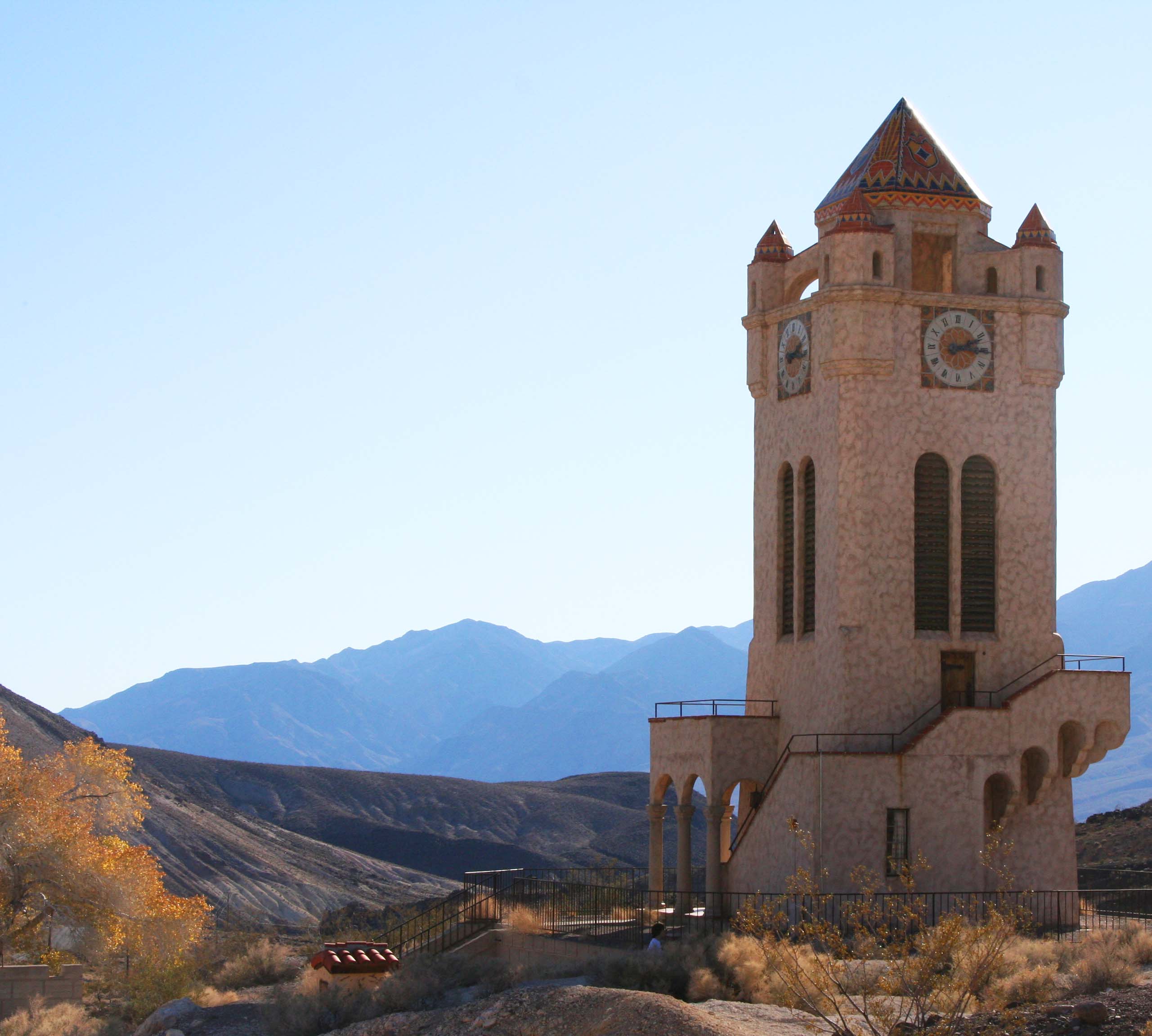
Scotty's Castle at Death Valley. Photograph by Curtis Mekemson.

The clock tower at Scotty’s Castle.

NEXT BLOG: We will journey east to the Everglades and I will introduce you to my all-time favorite buzzard.

The Sand Dunes of Death Valley… The National Park Series

The sand dunes of Death Valley National Park provide a striking contrast to the surrounding mountains.

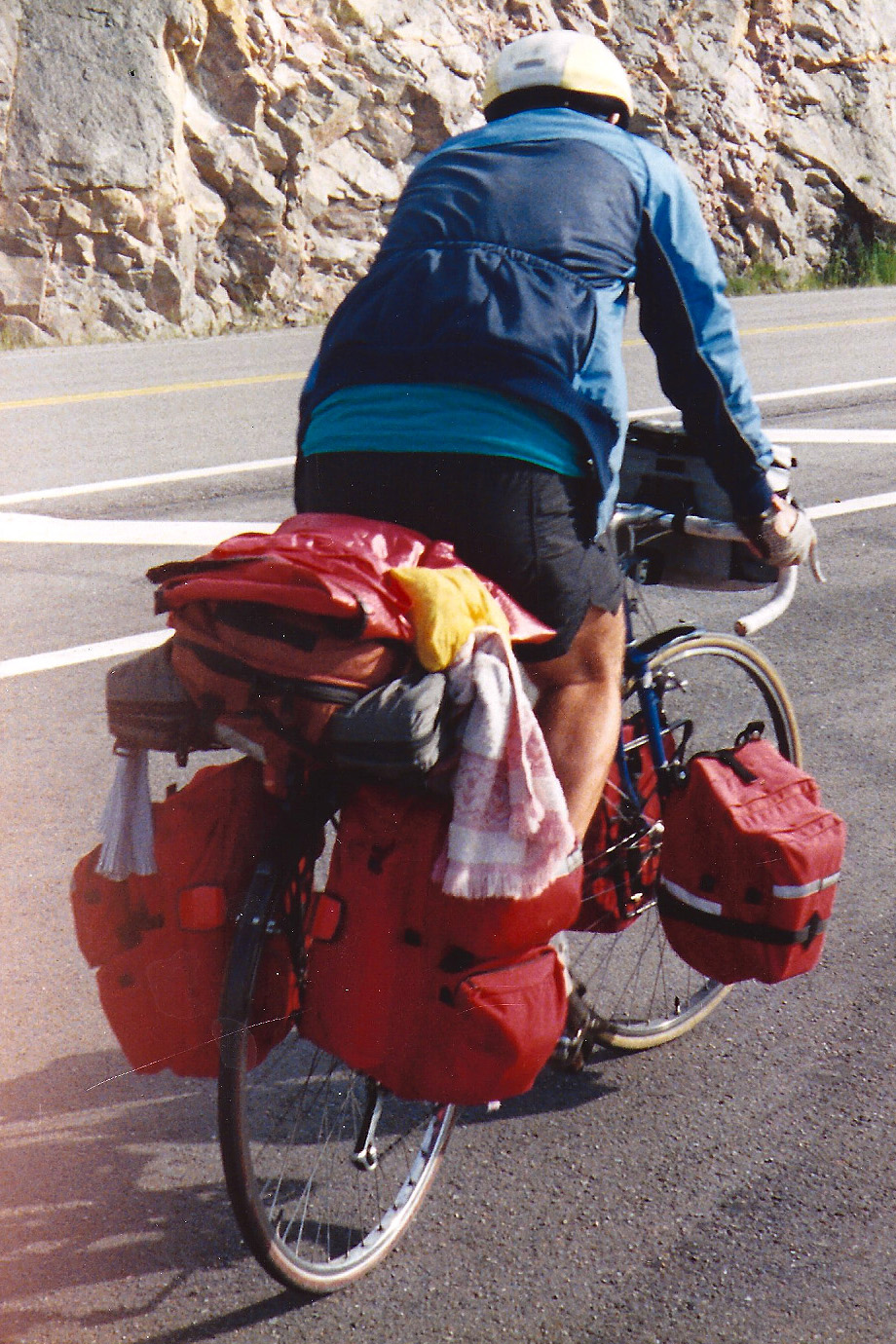
I was in my lowest gear, out of the saddle, and moving at three miles an hour. It would have been easier to get off the bicycle and push, but I am stubborn.

Three days before I had climbed over Greenhorn Pass in the Southern Sierra Nevada Mountains during a blinding snowstorm. I wasn’t going to let the Panamint Range of Death Valley National Park defeat me

There was ample time as I struggled up the mountain to question the sanity of doing a six-month, 10,000-mile solo bike tour around North America. I’d prepared for the journey by increasing my beer ration. Of course I paid for my folly. I usually do.

I started my 10,000 mile solo trip around North America out of Sacramento California. Every thing I would need to survive for six months on the road was packed on my bike, some 60 pounds of gear. It wasn't totally solo. The Peripatetic Bone was riding in my handle bar bag.

By the time I reached Death Valley, however, I was two weeks into the trip and my body was toughening up. I succeeded in making the nine-mile climb out of Panamint Valley to the top of the 4956 Towne Pass even though it took me three hours and burned half of my carefully acquired beer calories.

Euphoria was the result. Looking back, I count the climb as one of the top ten challenges of my 10,000-mile trek. It almost competes with dodging a tornado in Mississippi.

I rewarded myself by declaring it lunchtime. I also allowed myself to contemplate the 17 mile downhill ride into Stove Pipe Wells and what I would find at the bottom: the Sand Dunes of Death Valley.

I’ve been in and out of the Valley numerous times over the years. It’s all beautiful or at least wonderfully strange. But for me, the Sand Dunes are in a class by themselves. I am fascinated with their sinuous curves and how they contrast with the surrounding mountains. I love climbing up and down their slippery slopes in the early morning and wandering along their peaked ridges on a moonlit night.

The sinuous, flowing slopes of the sand dunes in Death Valley National Park are a thing of beauty.

The dunes are a product of wind, sand and topography, all of which Death Valley has an abundant share.  Mesquite Flat Dunes, located at Stove Pipe Wells and featured in this blog, are the easiest to reach and the most commonly visited. Being relatively close to Hollywood, they have starred in many movies, including Star Wars.

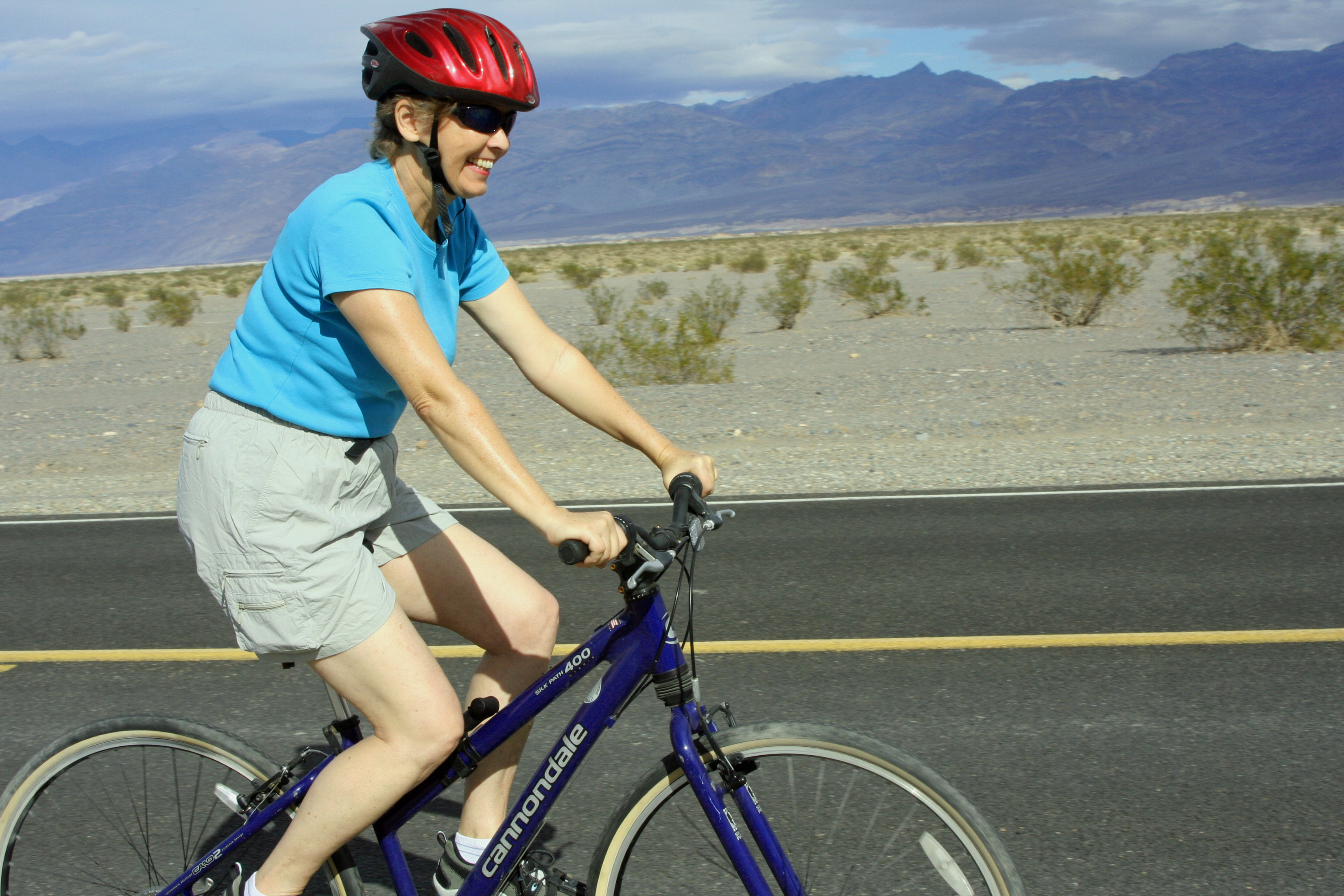
The last time Peggy and I were in Death Valley, we brought along our bikes for a more relaxed tour of the Valley floor and dune area.

How you look when you aren't loaded down with 60 pounds of gear and climbing a mountain. Note Peggy's smile.

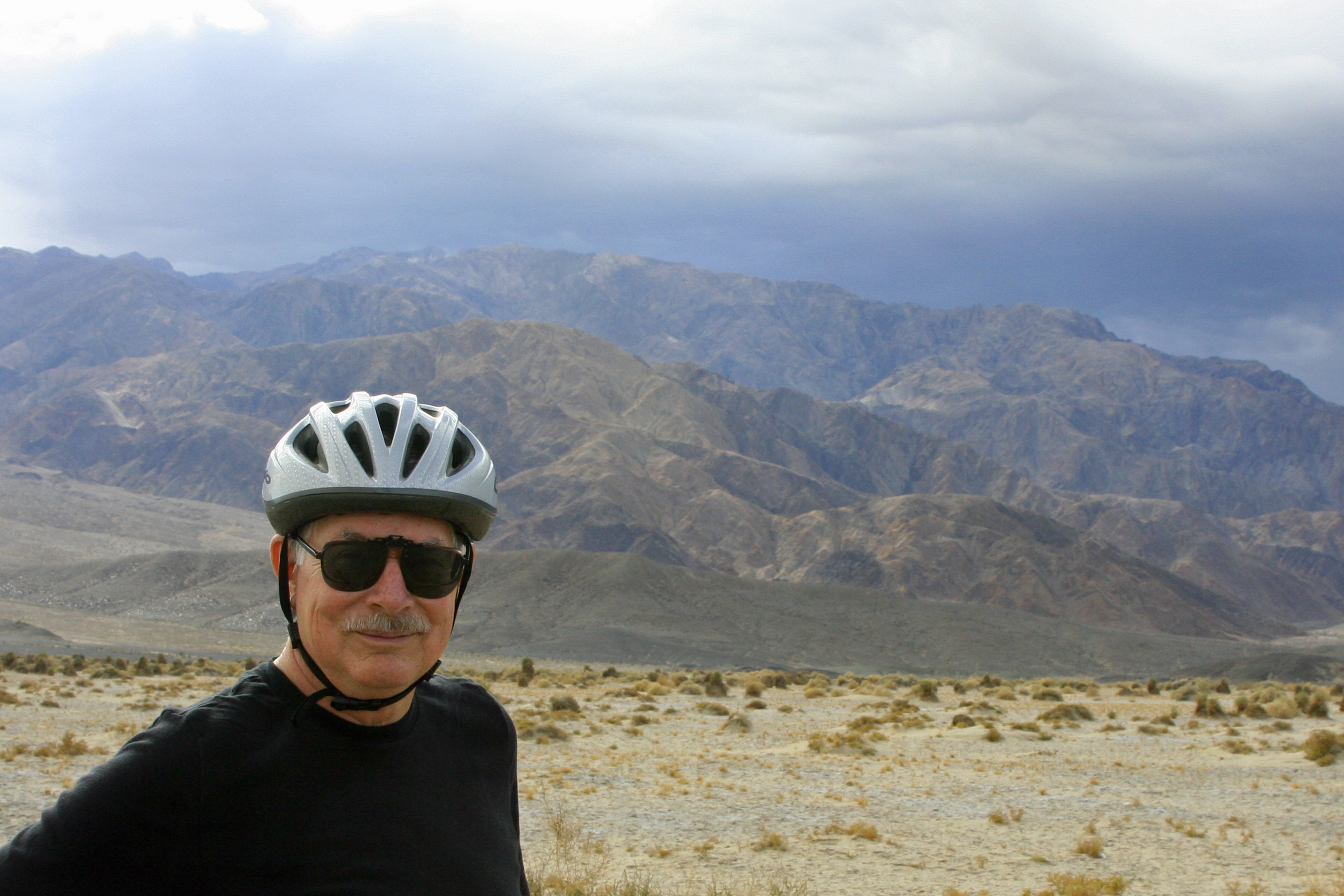
I am looking rather relaxed myself. Peggy took this photo looking across what is known as the Devil's Cornfield. The Panamint Range looms in the background.

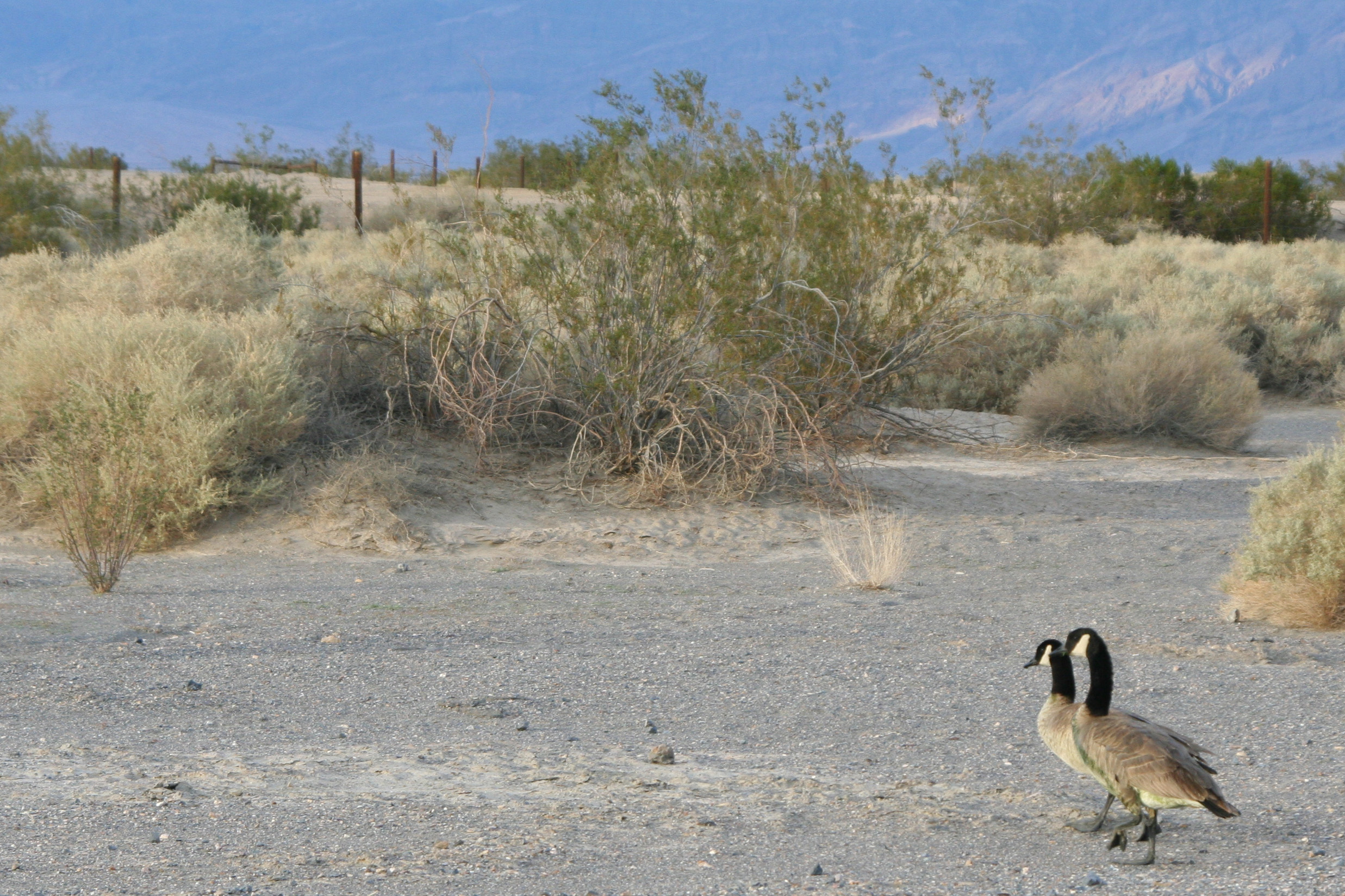
Peggy and I were on an evening stroll out to the dunes when we came across a pair of Canadian Geese. I assumed they were lost but they didn't ask for directions.

A final view of the dunes set off by a cloud filled sky.