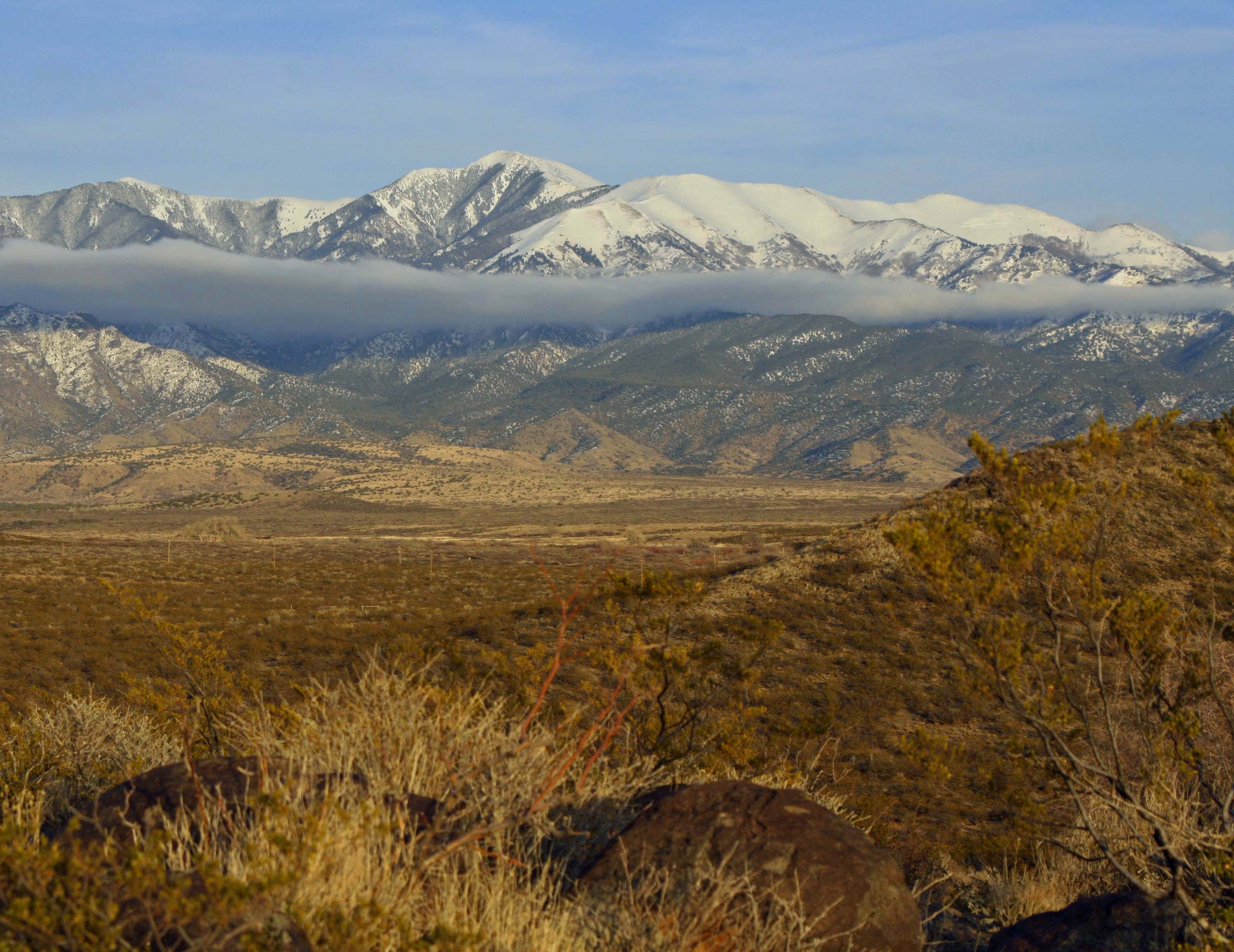
A layer of clouds stretching along the Sacramento Mountains adds beauty and mystery to the Three Rivers Petroglyph site. It is easy to understand why Native Americans chose the area for their rock art.
This marks the beginning of a new series where we leave the beautiful but crowded cities of Europe to visit the lonely, wide-open spaces of the American and Canadian west. Our journey will take us from New Mexico’s northern Chihuahuan desert to Alaska’s remote Kodiak Islands.
For the next three weeks we will explore the mystical world of Native American rock art found in the Three Rivers Petroglyph site of southern New Mexico. Afterwards Peggy and I will spend six weeks travelling up the Alaska Highway through British Columbia and the Yukon Territory to Alaska and back. We will finish off our summer at the celebration known as Burning Man held in Nevada’s Black Rock Desert.
Peggy and I have been visiting rock art sites throughout the Southwestern United States for the past 15 years. The Three Rivers’ site is one of our favorites. Some 21,000 petroglyphs featuring everything from people to bugs are spread out over 50 acres. Created by the Jornada Mogollon people of the Chihuahuan Desert, the glyphs were pecked into rock using stone tools for a period of over 500 years starting in 900 AD.
This is wide-open country set off by dramatic mountains. Within a hundred miles of Three Rivers, Billy the Kid fought in the Lincoln County Wars, Smokey the Bear was found hidden in a tree avoiding a forest fire, bug eyed aliens became synonymous with Roswell, and history was forever changed with the explosion of the world’s first atomic bomb.
I rode through the area on my bicycle as part of my ten thousand mile trek around North America. It’s a long way between pit stops.
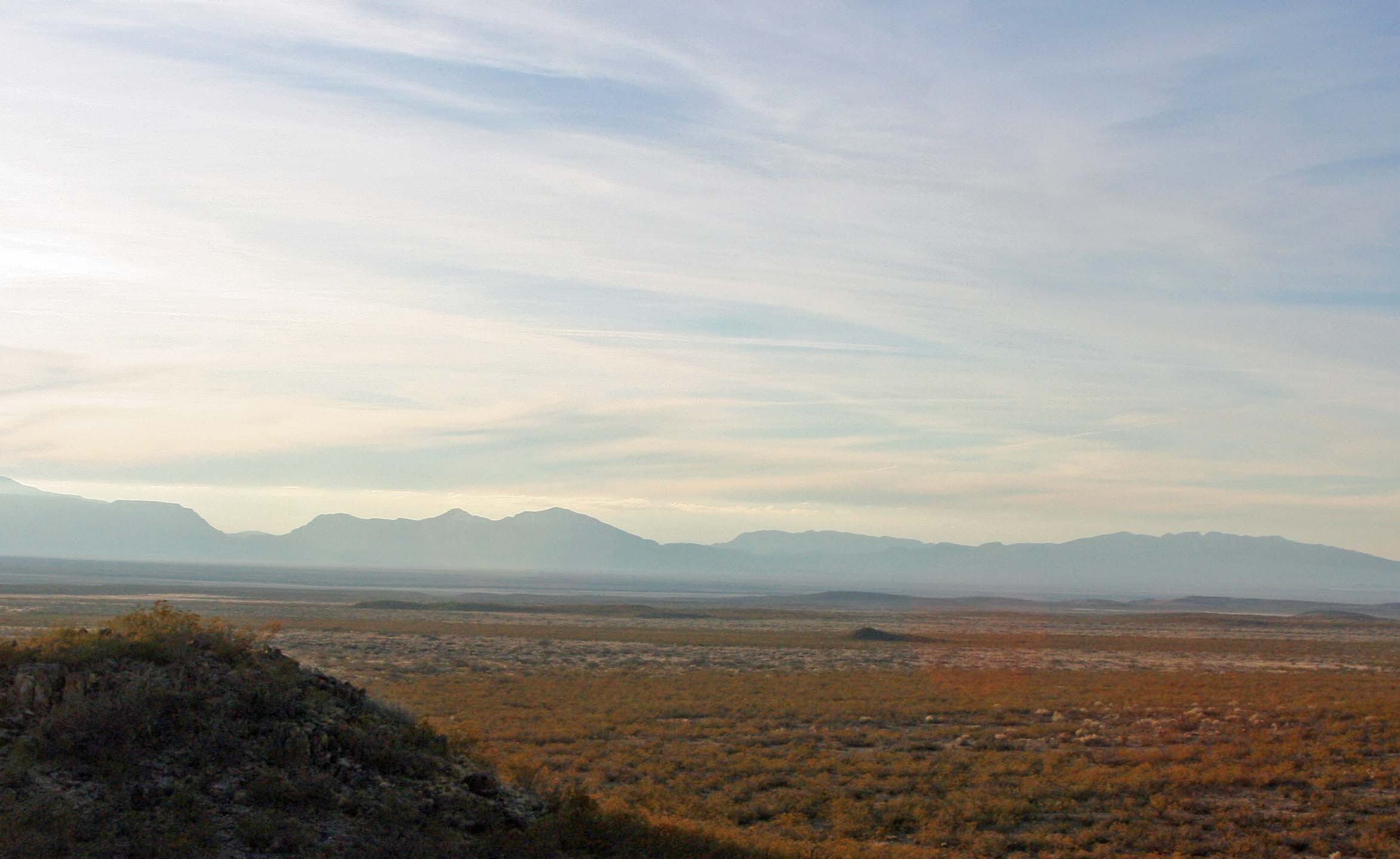
What southern New Mexico looks like from a bicycle.
Native Americans often chose special sites for their rock art and it is immediately apparent that the Three Rivers site is special. The words “raw beauty” come to mind. Set on a ridge, the site provides commanding views of the surrounding desert and mountains. Today’s blog will explore the natural beauty of the region. In my next blogs I will feature petroglyphs of people, animals, birds, geometric designs, animal tracks, reptiles, bugs and anything else that caught the fancy of the Jornada people– including a whale and a mysterious ship.
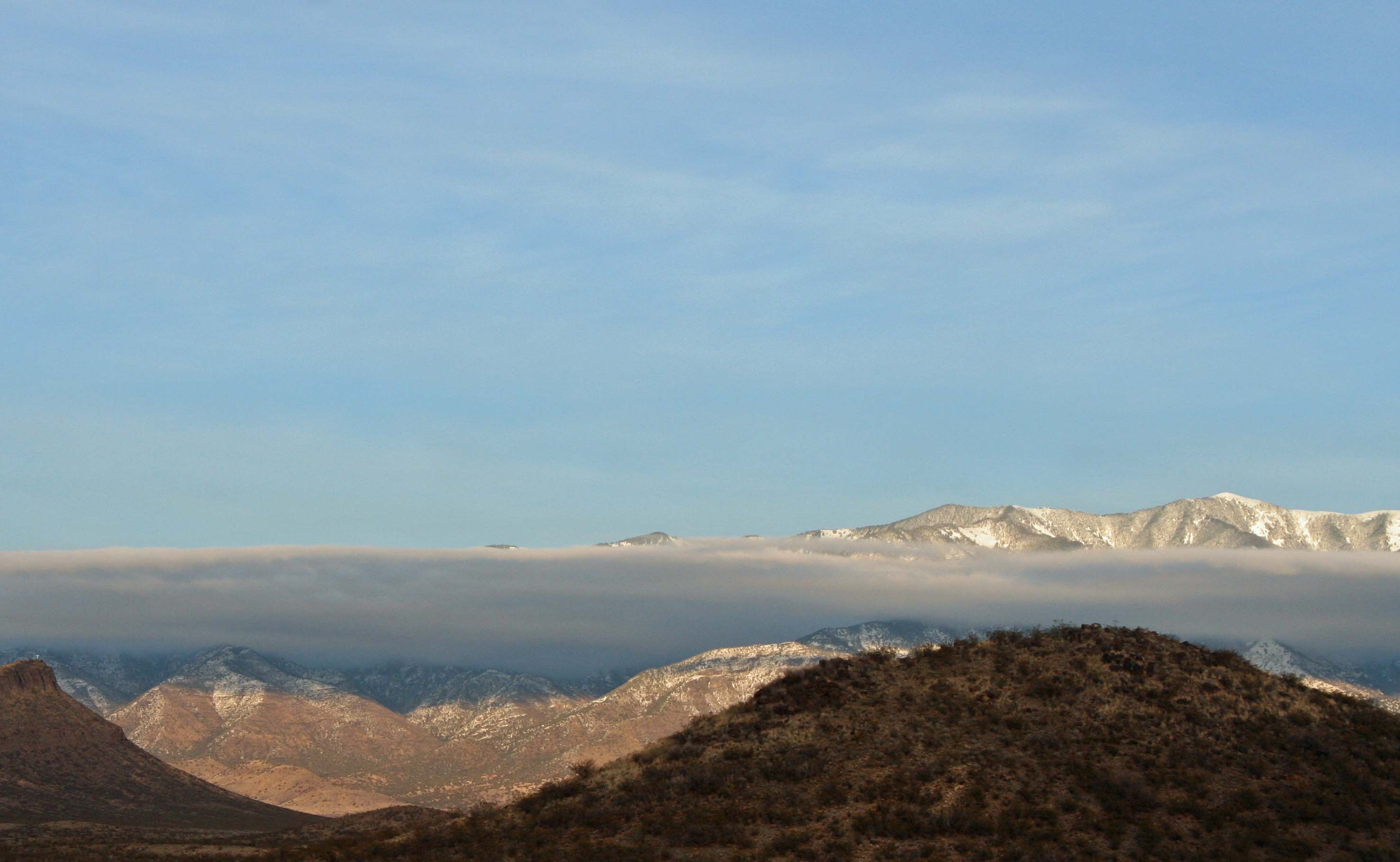
Another photo featuring the Sacramento Mountains and clouds from the perspective of the Three Rivers Petroglyph site.
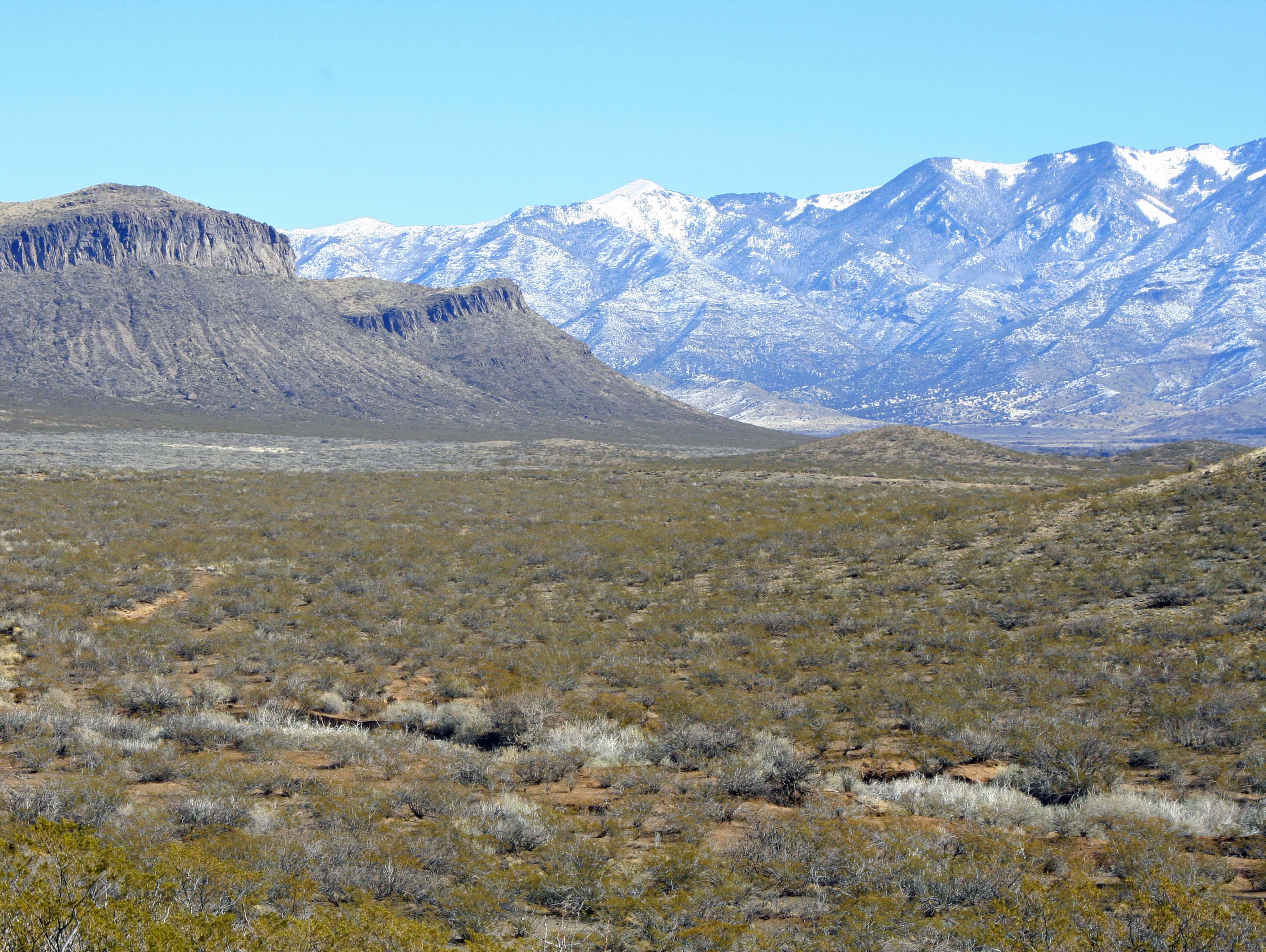
Native Americans often chose cliff areas such as those on the left for their rock art.

Our van, Quivera, provides a perspective on the region. We took this photo from the ridge where the majority of petroglyphs are located. We pretty much had the site to ourselves during the two days we were there.

Peggy stands on the ridge next to a rock likely to hold petroglyphs. Some glyphs are immediately obvious while others are hidden. Sharp eyes are required.

Faded bear and what may be badger prints are shown on these rocks. Petroglyphs are made by using a stone to peck away the outer layer of rock varnish (a layer of minerals that attaches to the rock over time).
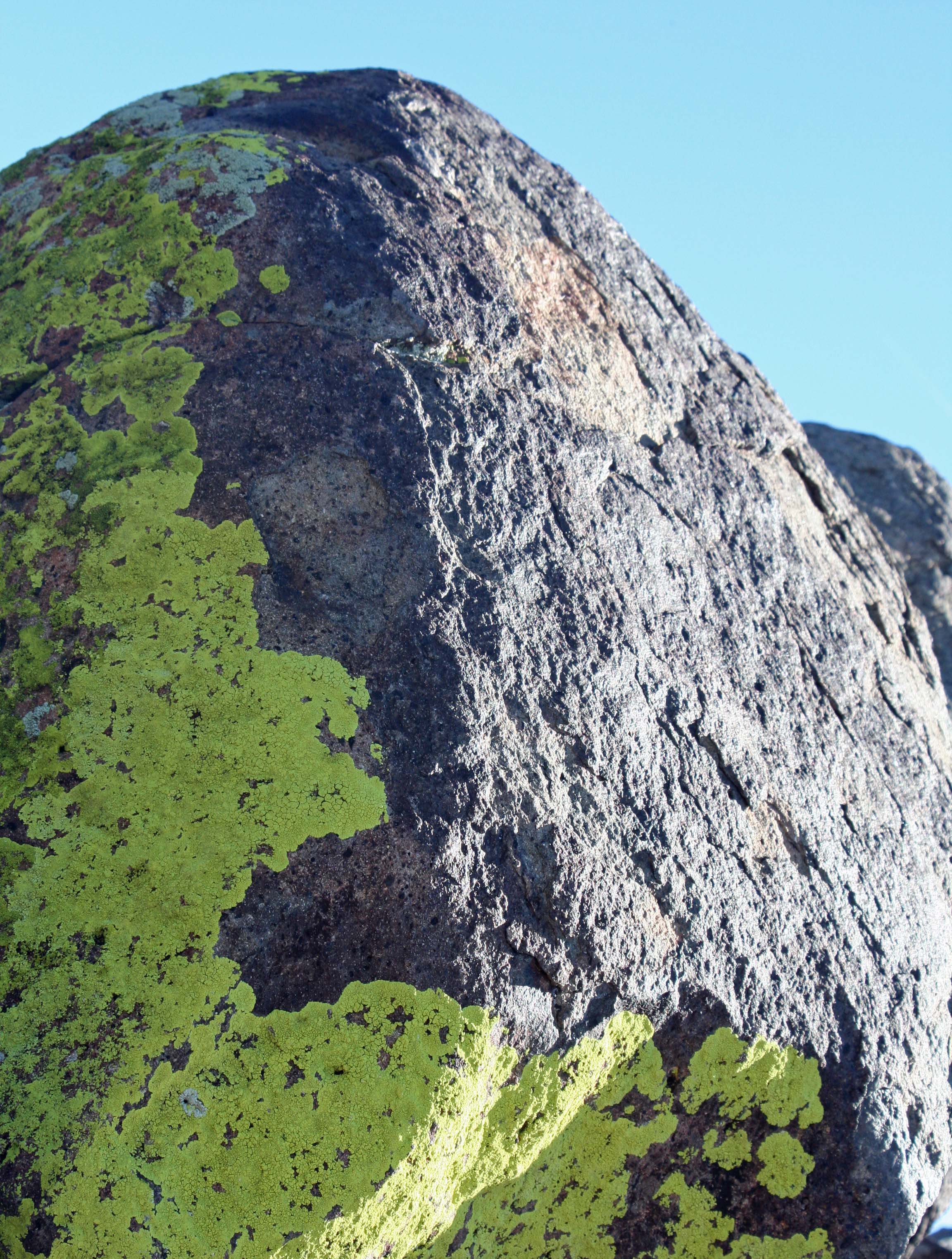
We also found the lichens to be quite attractive.
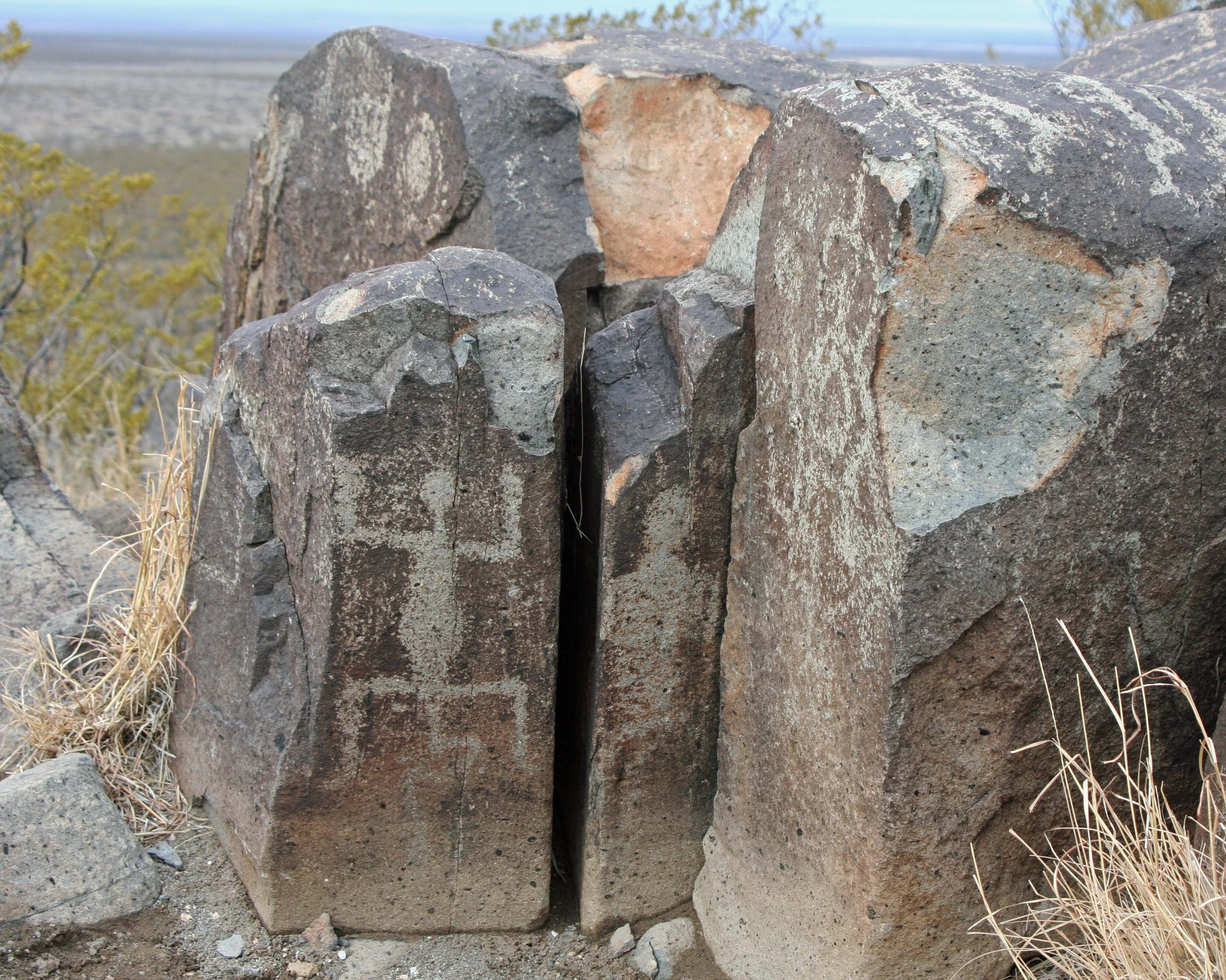
Many rocks at Three Rivers are covered with petroglyphs. In addition to the prominent lizard,we found circles, geometric designs, and a possible map on the various faces of this rock.

Sunset lights up the Sacramento Mountains. I found the contrast created by the cloud layer quite interesting.
NEXT BLOG: I will look at glyphs that feature the Jornada Mogollon people and their gods.

One of the many strange beings we found lurking among the rocks.
 Wandering through Time and Place