Route 66: Part 2… Where the Dinosaurs Roam and What Dreams Are Made Of

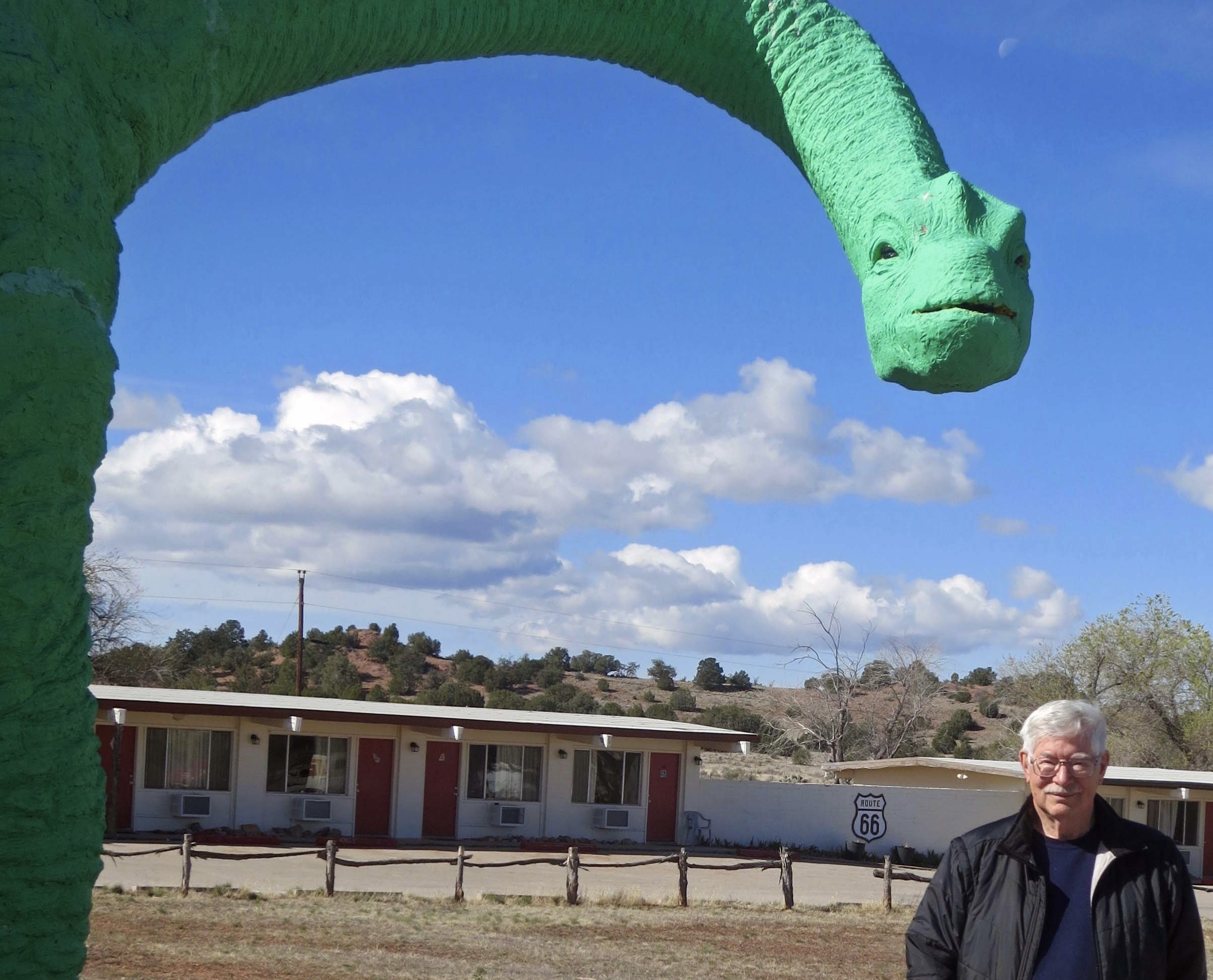
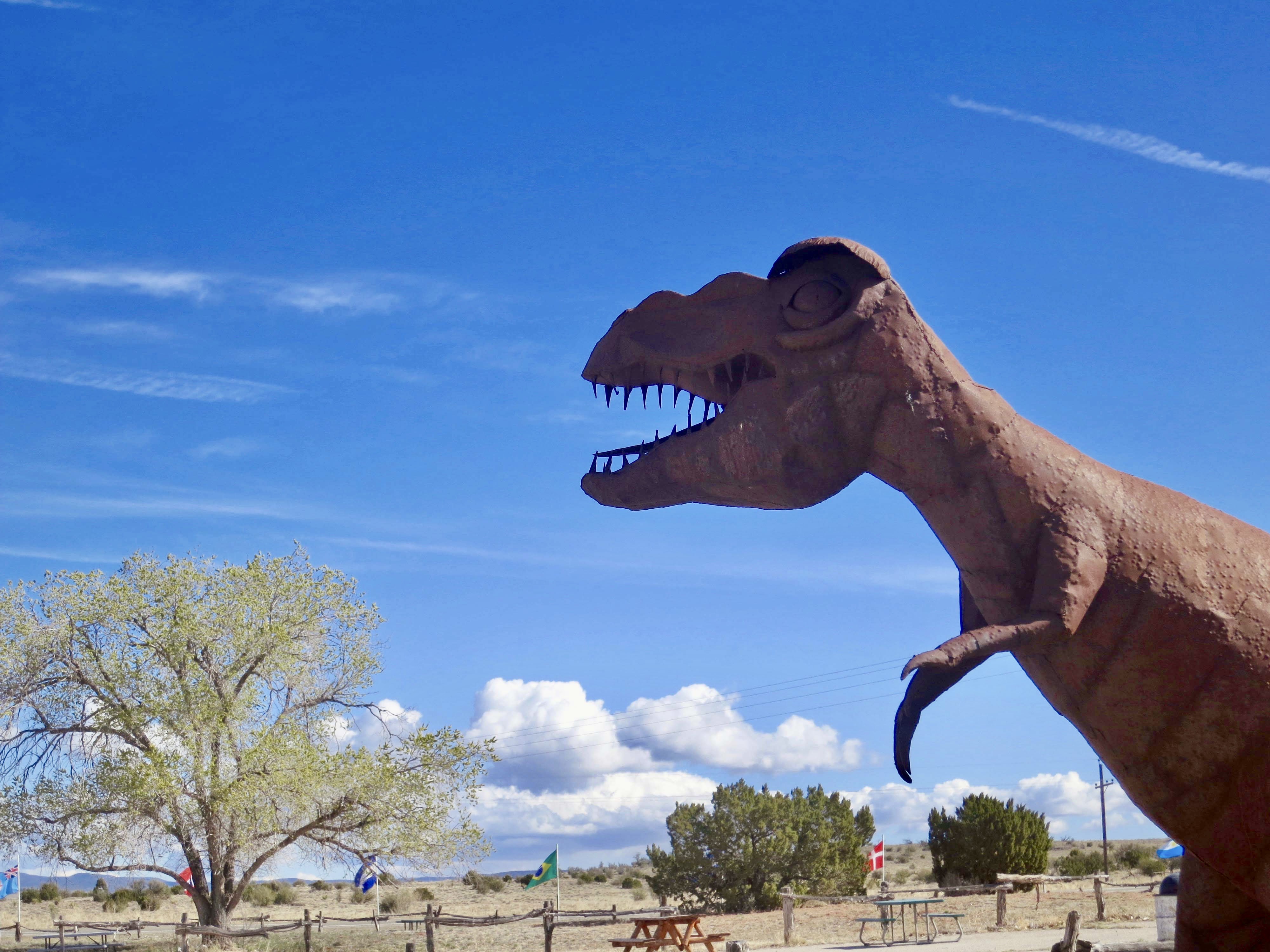
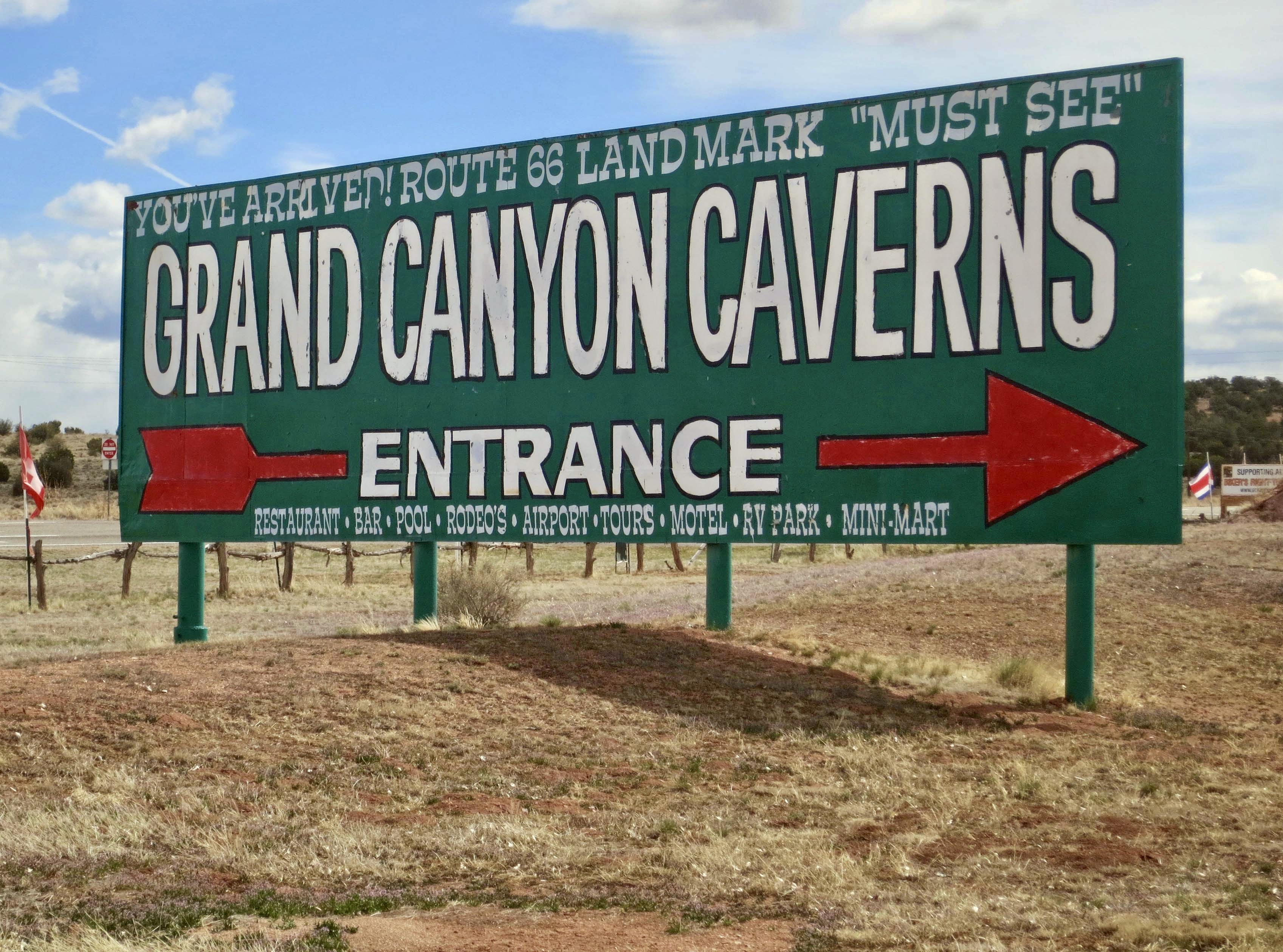
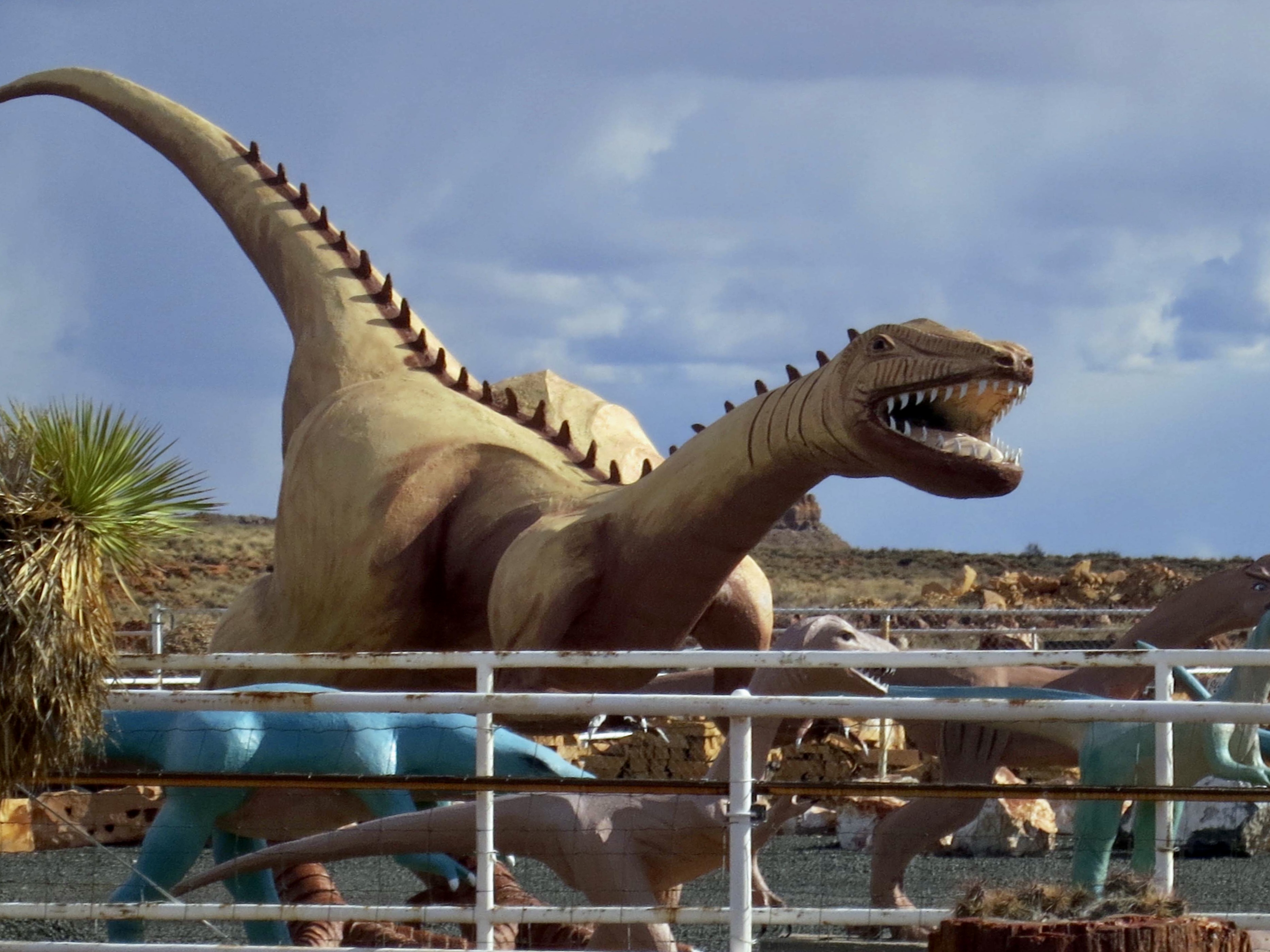
It’s in the interest of the merchants who live along Route 66 to entice people off the speeding freeways like I-40. History, scenery and nostalgia work, but a special twist doesn’t hurt. Donkeys provided an extra incentive in Oatman. Seligman had the Wild West tie in and the Road Kill Cafe. “Hey, I ate at the Road Kill Cafe” has bragging rights. The Grand Canyon Cavern has a cavern— and a couple of dinosaurs. I introduced you to the brontosaurus at the end of my last post. Here’s a hungry T-Rex. Dinosaurs are a mainstay Route 66 attraction. We’ll meet more along the way.
If you want to go for an extended spin on Historic Route 66, pick up the highway in Kingman and follow it to Seligman, or vice-versa. The road is 83 miles long if you return to I-40 at Seligman, or 92 miles if you continue on to Ash Fork. It’s the longest, uninterrupted stretch of the historic highway and an excellent example of what Route 66 would have looked like in the 50s and 60s. I bicycled this stretch on my trip around the country. Grand Canyon Cavern is about half way. I camped there, as did Peggy and I when we retraced my bike route.
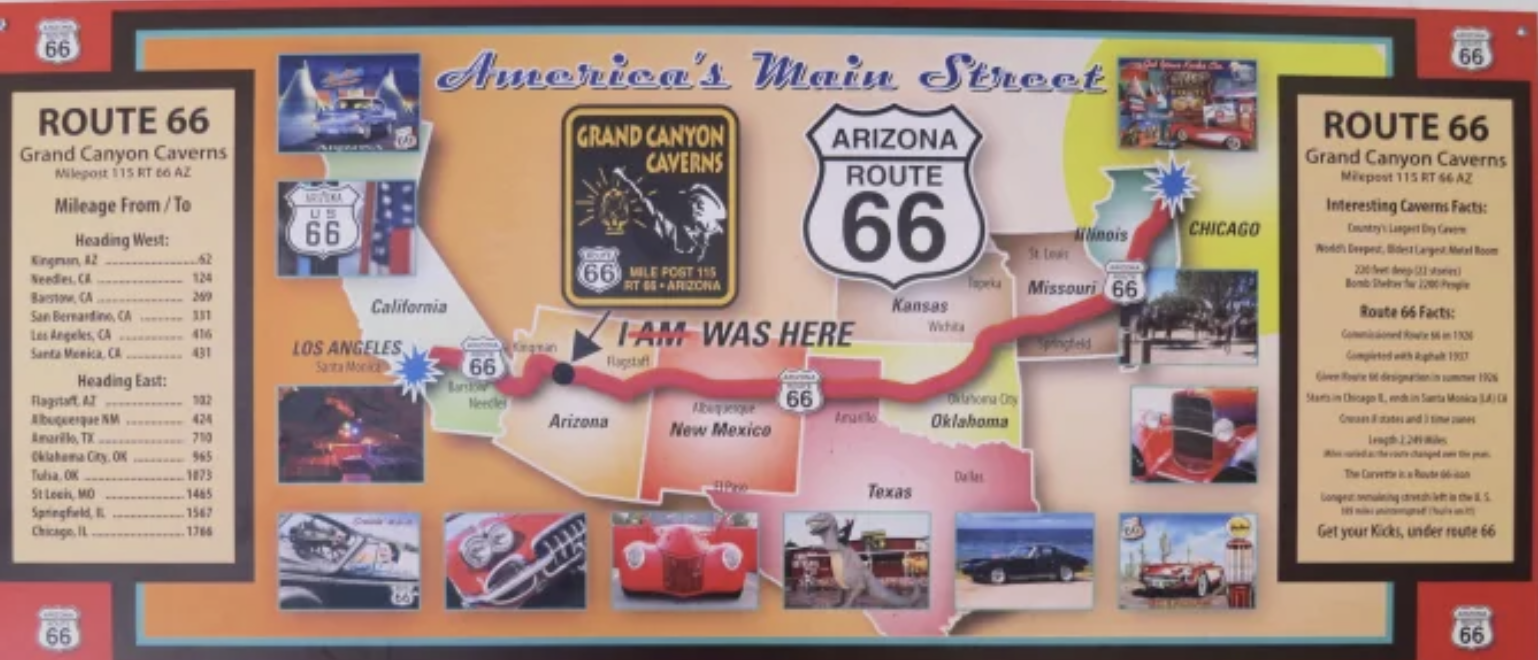
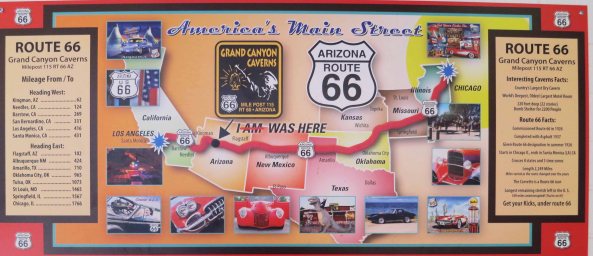
We found this tourist map in the motel memorabilia shop. We were there! While the Caverns are the main attraction and the dinosaurs capture people’s attention when they drive by, the site had also adopted the name Grand Canyon as another way to attract tourists— even though the South Rim is 120 miles away! The map is titled ‘America’s Main Street,’ which along with The Mother Road, is a common name for Route 66.
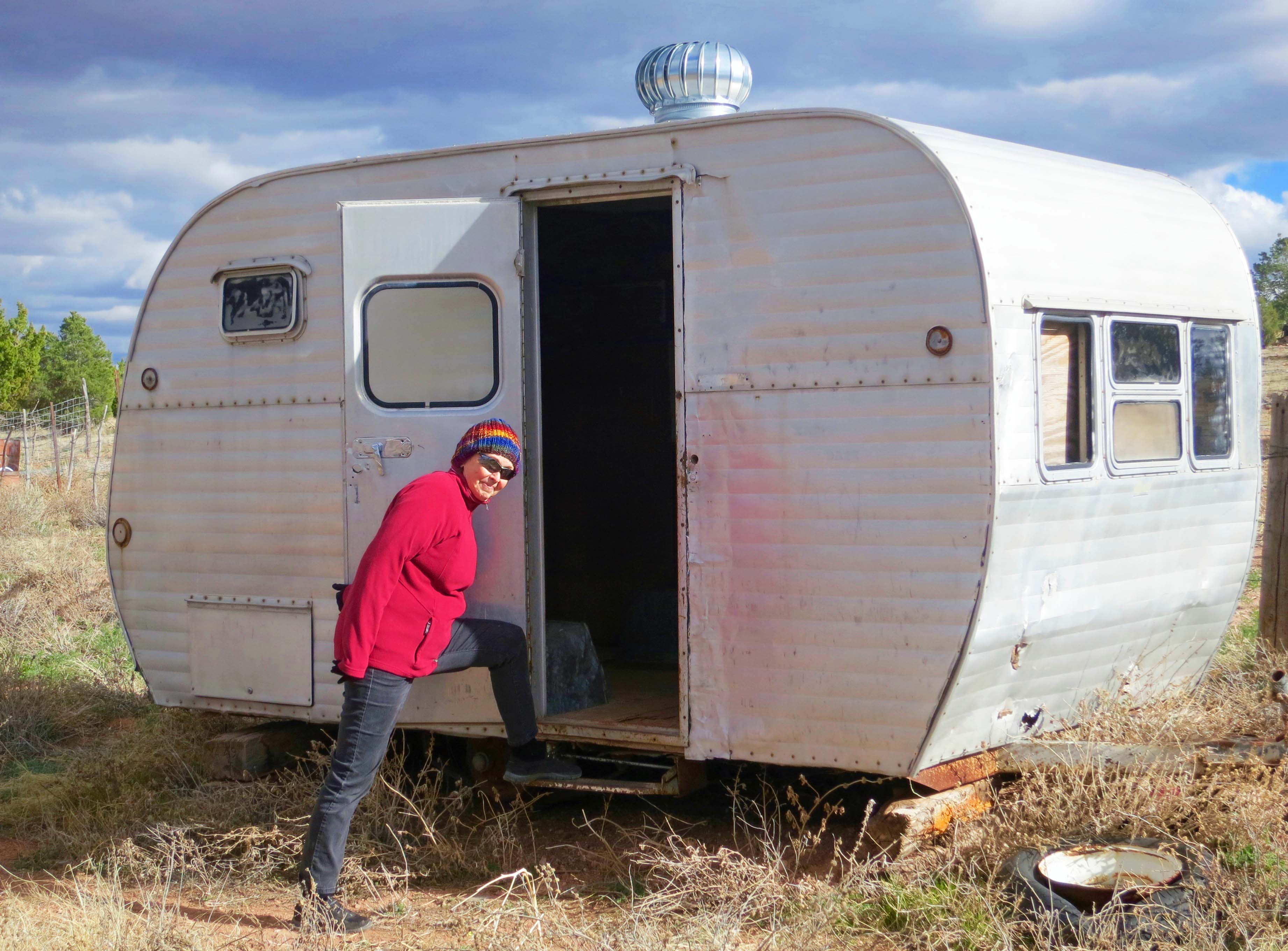
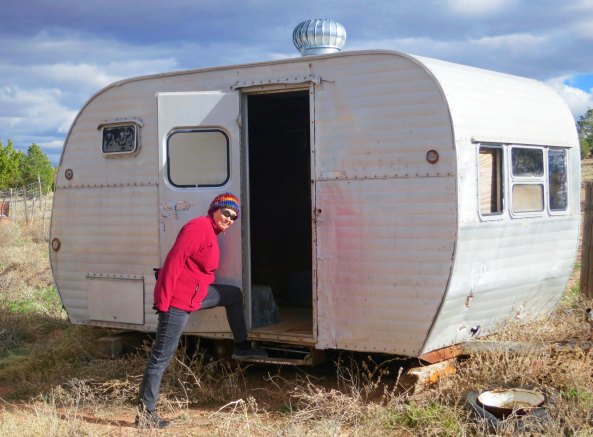
When Peggy and I were out hiking behind the Caverns, we found this ancient trailer that may indeed have been traveling up and down Route 66 in its glory days. It wasn’t going anywhere. The wheels had been removed. “Hey, Curt,” Peggy called out, “I’ve found us a cheap room.” We had to dodge cow pies getting there.
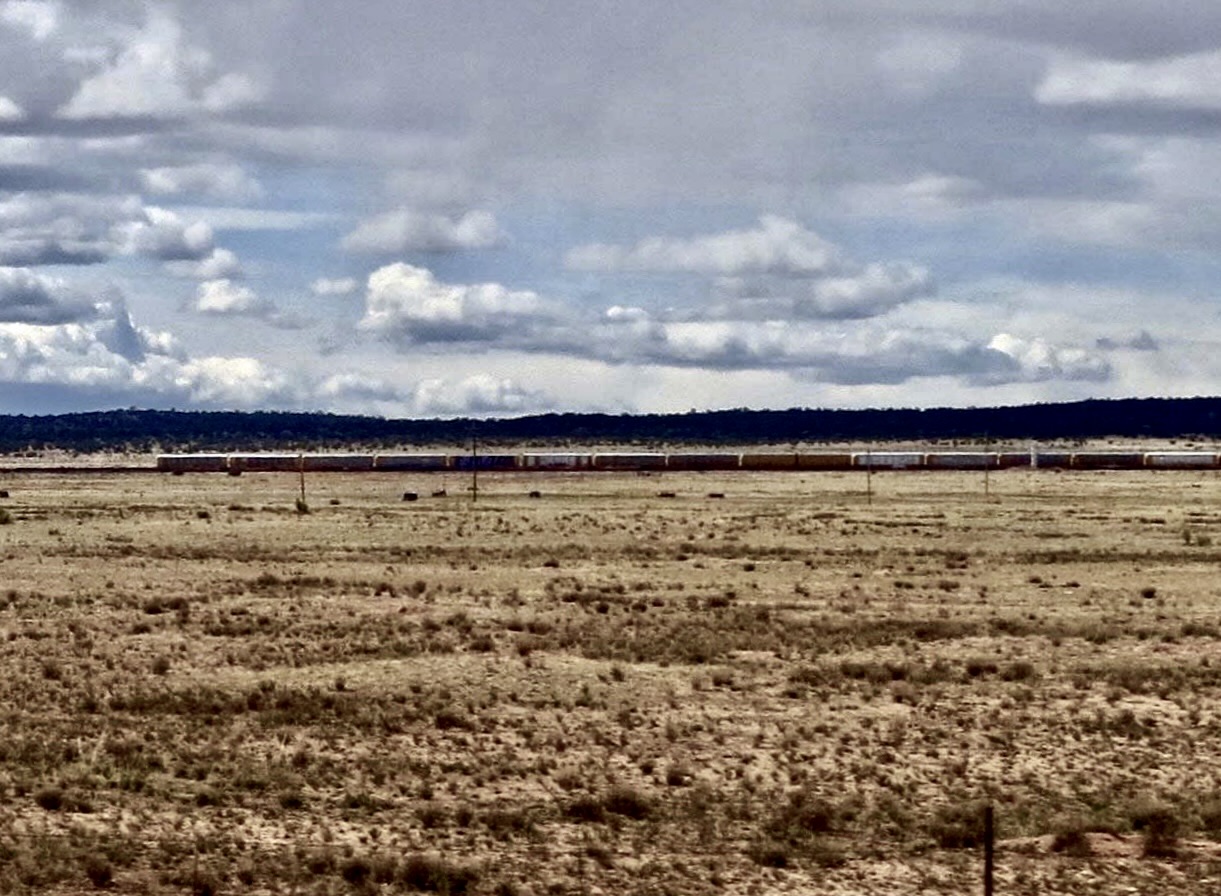
It can get lonely when you are riding your bike solo across America’s vast open spaces for hundreds of miles. A distant train was often my only companion in the West. That and cattle. I’d stop to watch the train. I’d moo at the cows. When I got lucky, one would moo back. I took this photo between the Grand Canyon Caverns and Seligman.
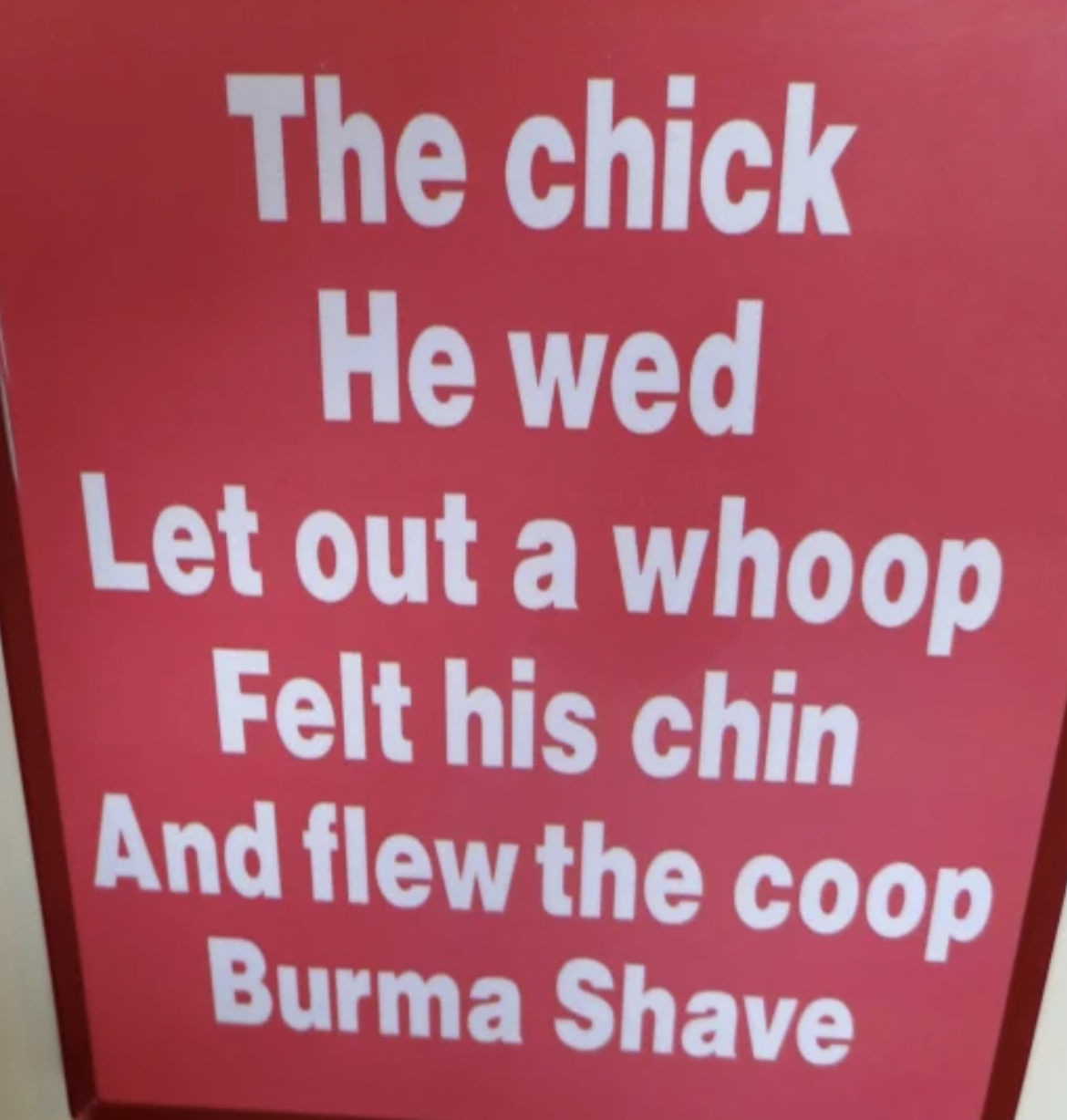
Burma Shave signs once dotted the highways of the West. They can still be found on occasion on Route 66. This one was featured in Kingman’s Route 66 Museum. Out on the highway, the sign would have been divided into five parts: The chick he wed— Let out a whoop— Felt his chin— And flew the coop— Burma Shave, each one farther down the road. I remember riding down a California highway with my family as a kid, waiting in anticipation for the next sign. It was a great, inexpensive way for Burma Shave to advertise and keep kids (and adults) entertained at the same time.
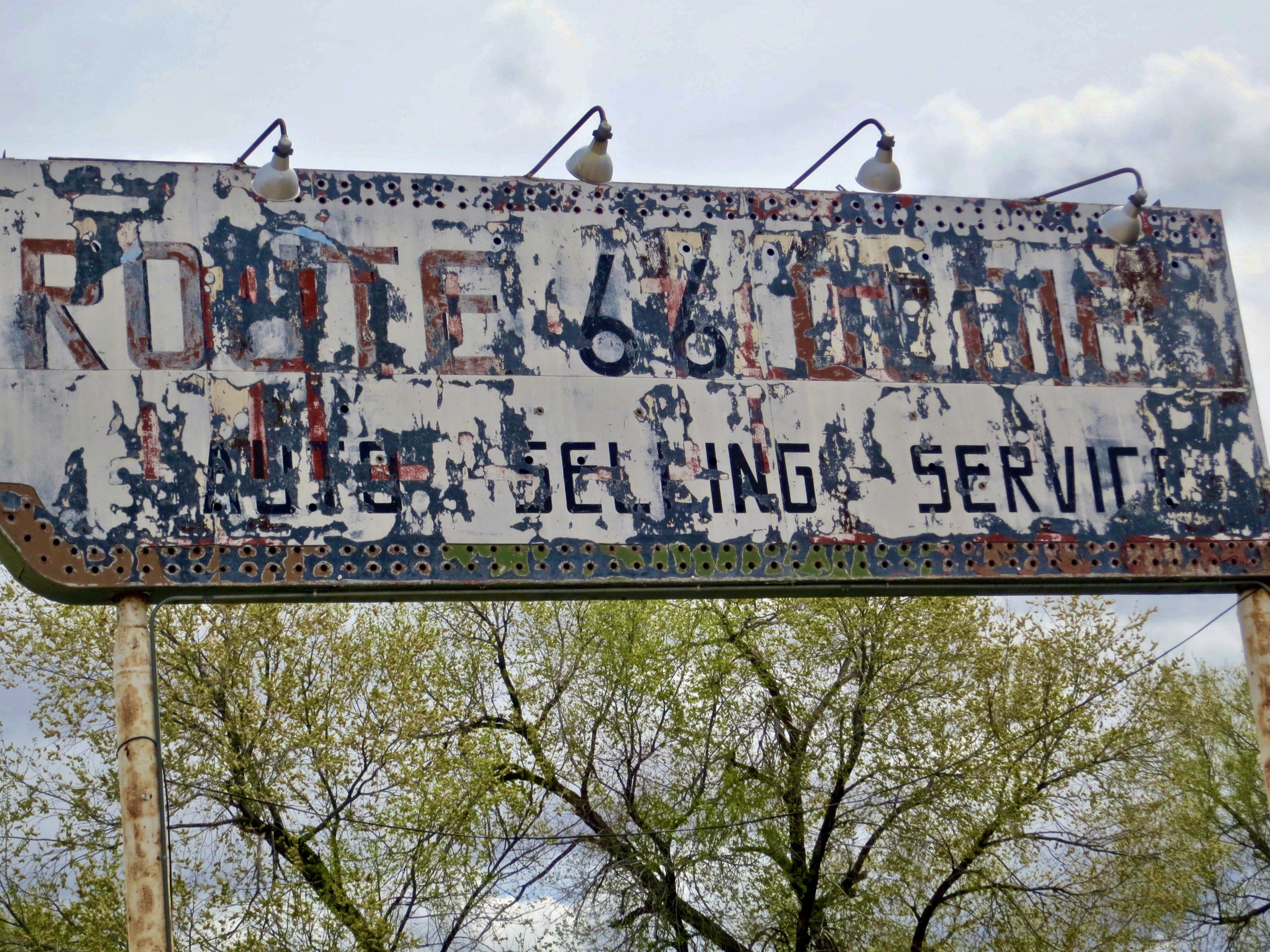
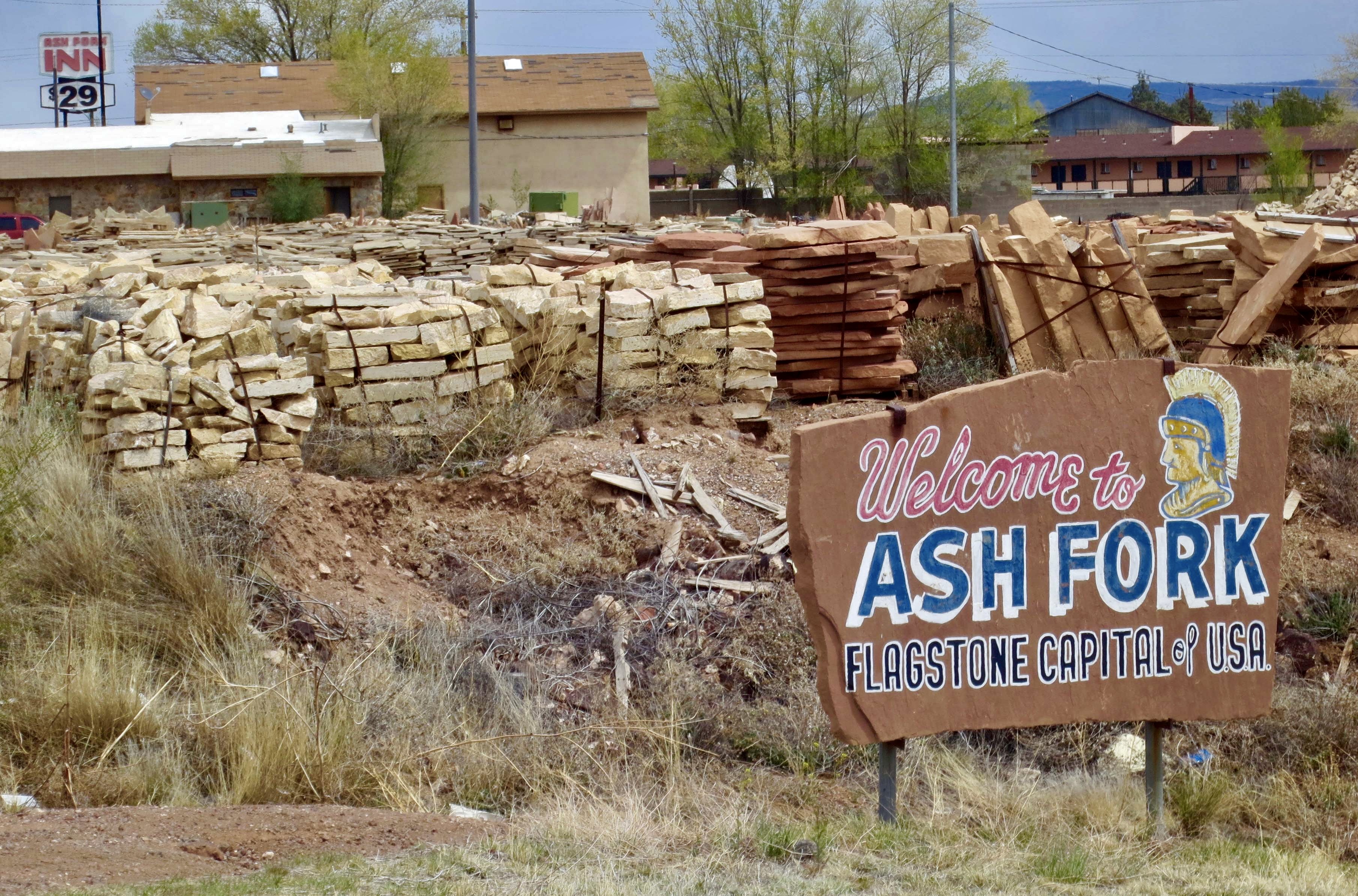
Peggy and I stayed at a campground in Ash Fork on our recent Southwest trip. It’s just above Seligman going east. The old sign greeted us. No fake news there. I suspect the ‘auto sales’ featured a used car lot. A “Great Deal” could be found. And probably, a used car salesman. Our campground advertised it fronted Route 66.
Ash Fork’s primary source of income in the early 1900s and continuing to today is flagstone.
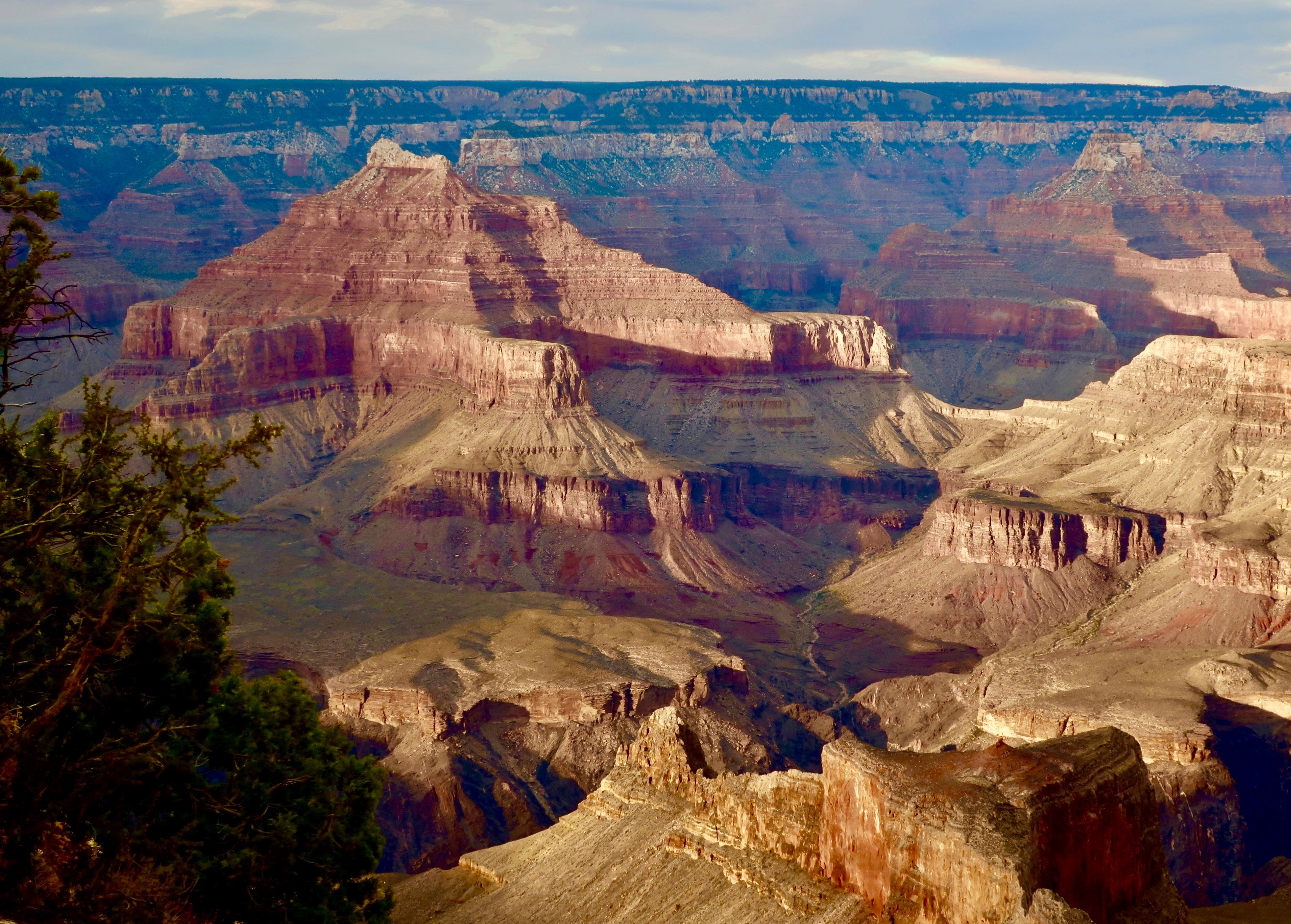
Traveling up Route 66 provides an opportunity for enjoying some of the greatest scenery America has to offer. For example, the Grand Canyon. Travelers along the highway could have stopped at Williams, 20 miles up the road from Ash Fork, and taken a train up to the South Rim. You still can.
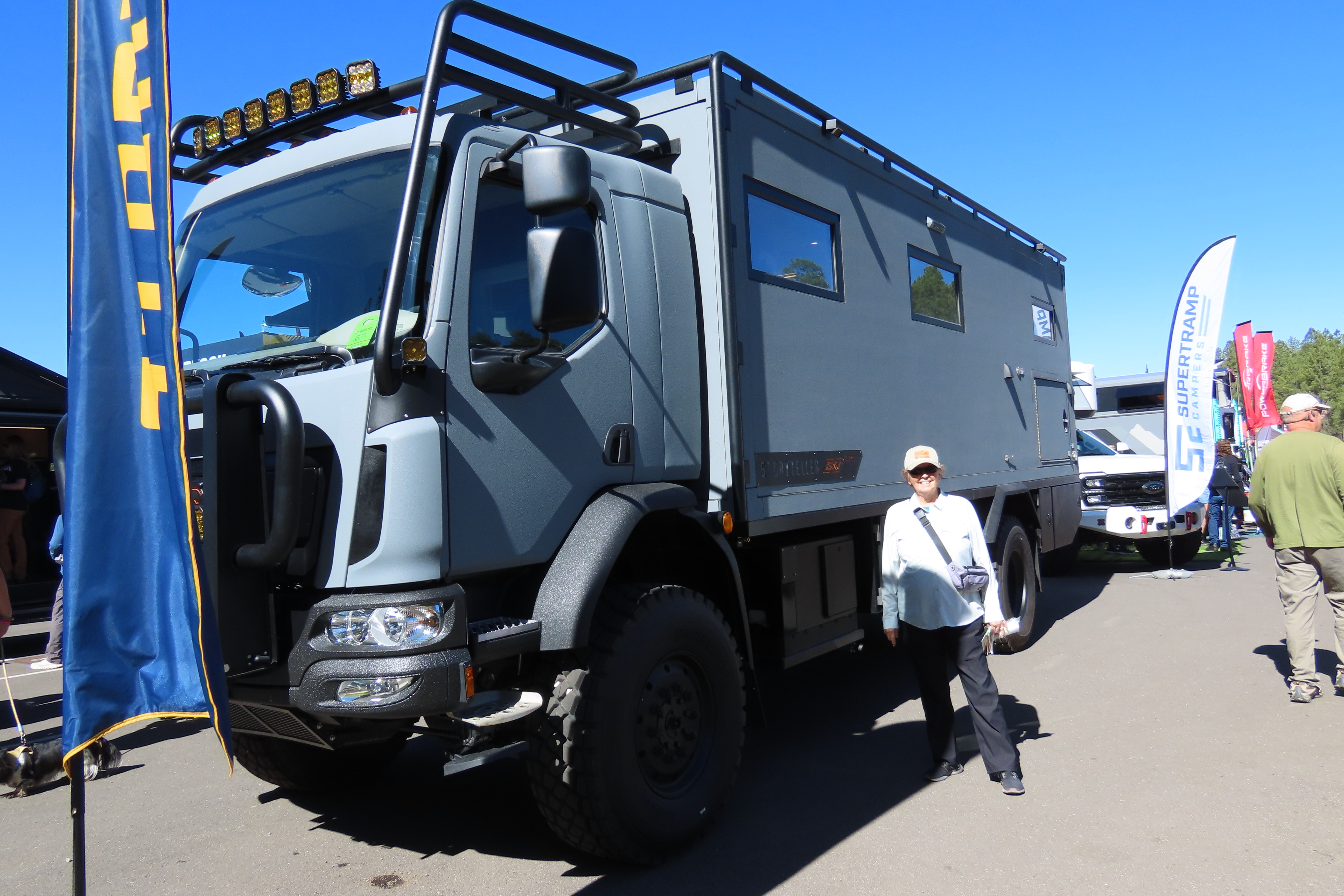
Flagstaff was another major stop along 66. We didn’t stay there on this trip, but we did visit the 2025 Overland Expo with our friends Tom and Lita. The expo featured everything for escaping into the wilderness in your favorite backroads vehicle from tents that could be attached to the top of a pickup to this monster. Peggy provides a perspective on its size. I had the feeling that one could go to war in it. Tom was there promoting his battery driven blender. After all, what wilderness oriented person driving into the backcountry wants to be stuck out in the woods without the ability to whip up a margarita? Makes sense to me. I’m sure that Tom would argue it’s even small and light enough for backpacking. “Okay, Tom, you carry the tequila, mix, ice and salt.”
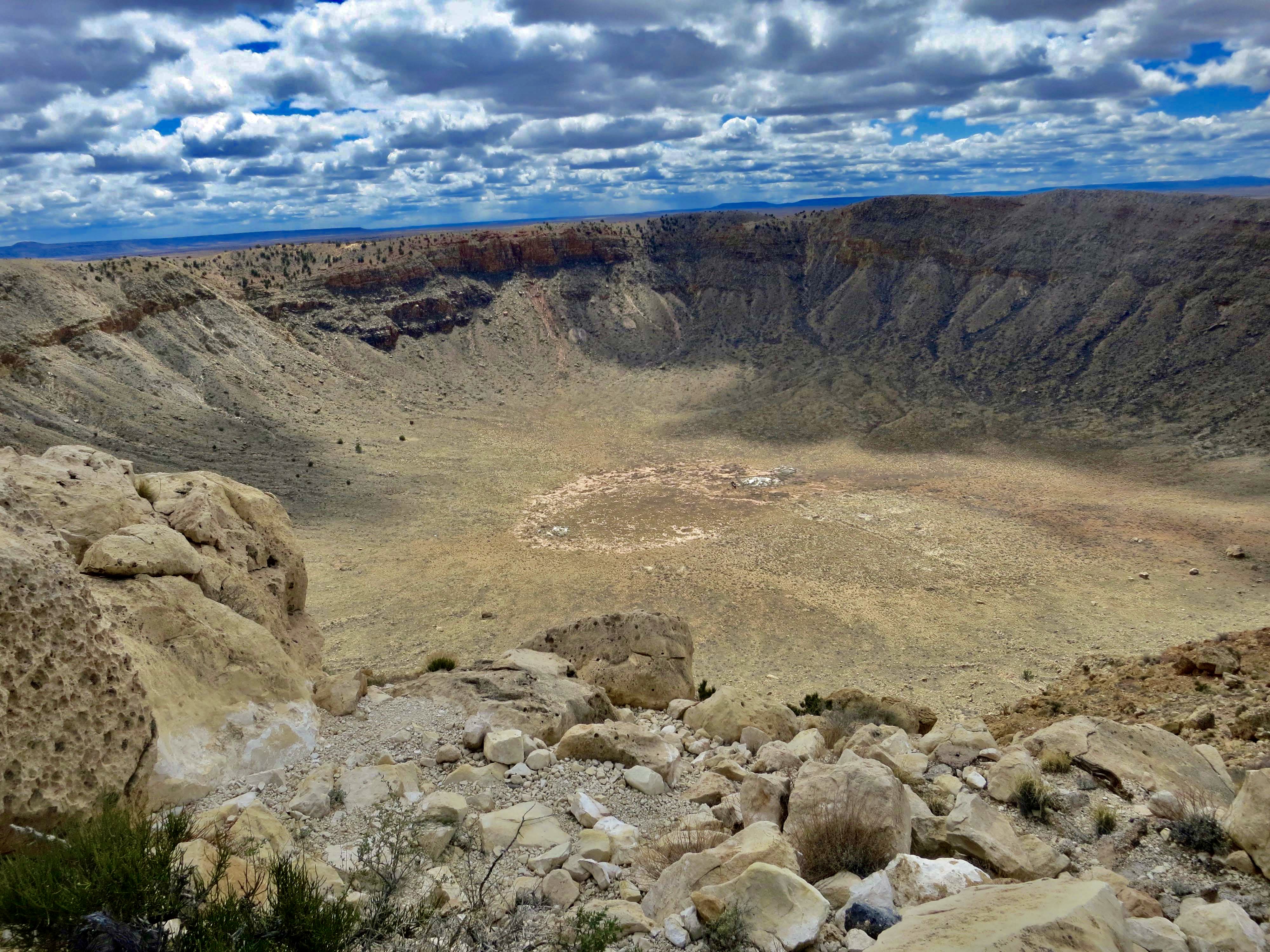
This meteor crater, 37 miles east of Flagstaff off of I-40/Route 66, was another ‘must see’ stop for early Route 66 travelers. Zooming at 29,000 miles per hour, the 160 foot wide meteor hit the earth around 50,000 years ago. Being 3,900 ft (1,200 m) in diameter, 560 ft (170 m) deep, it’s a testament to the impact that large meteors can have. It would have awed Route 66 travelers. It certainly awed us. It’s considered the best preserved meteor crater in the world.
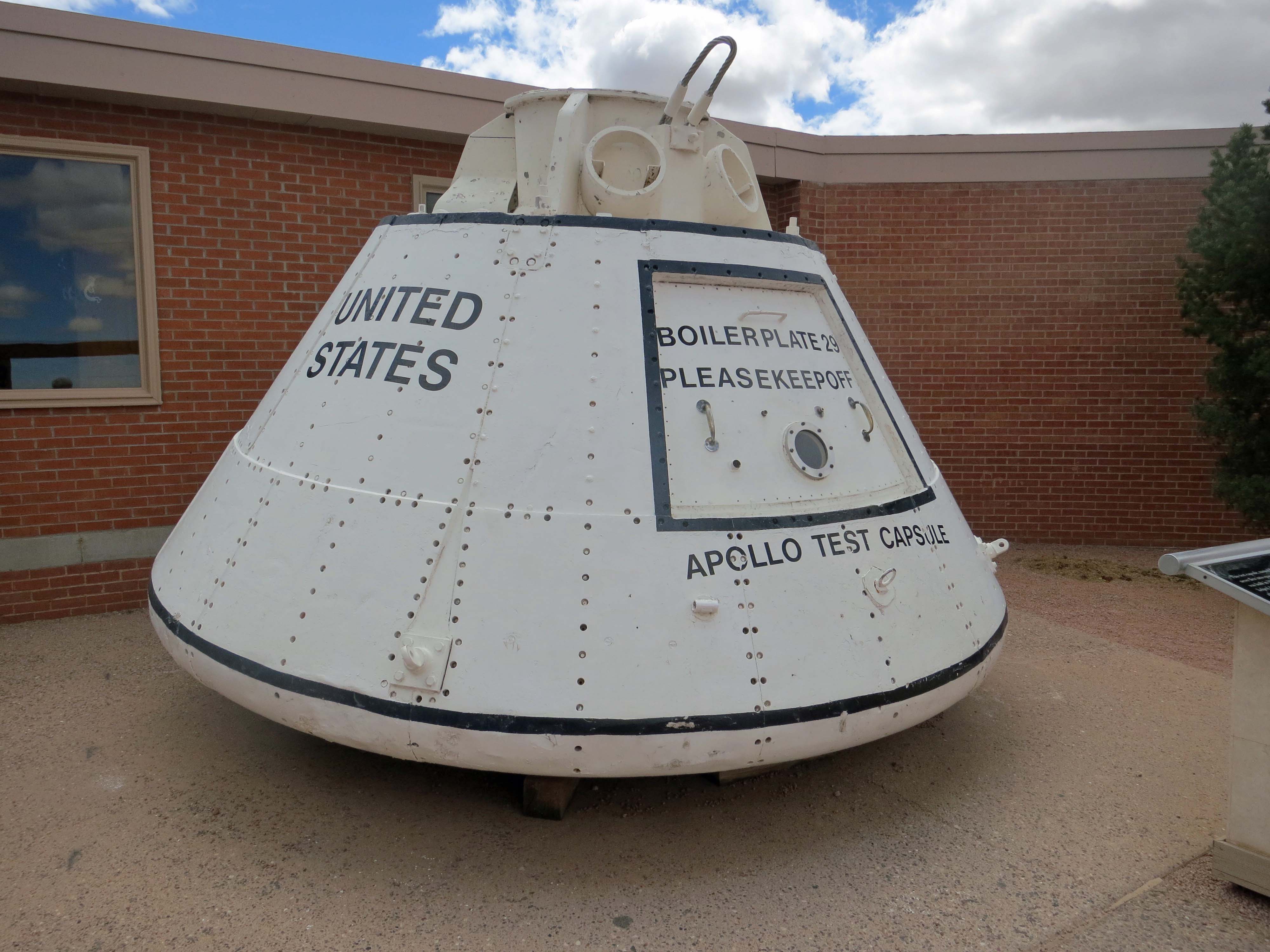
Before Neil Armstrong made his ‘giant leap for mankind’ on the moon, he was wandering around in the meteor crater, along with Buzz Aldrin and Michael Collins, as part of his training program. This test module used by the astronauts in their training is on display at the crater.
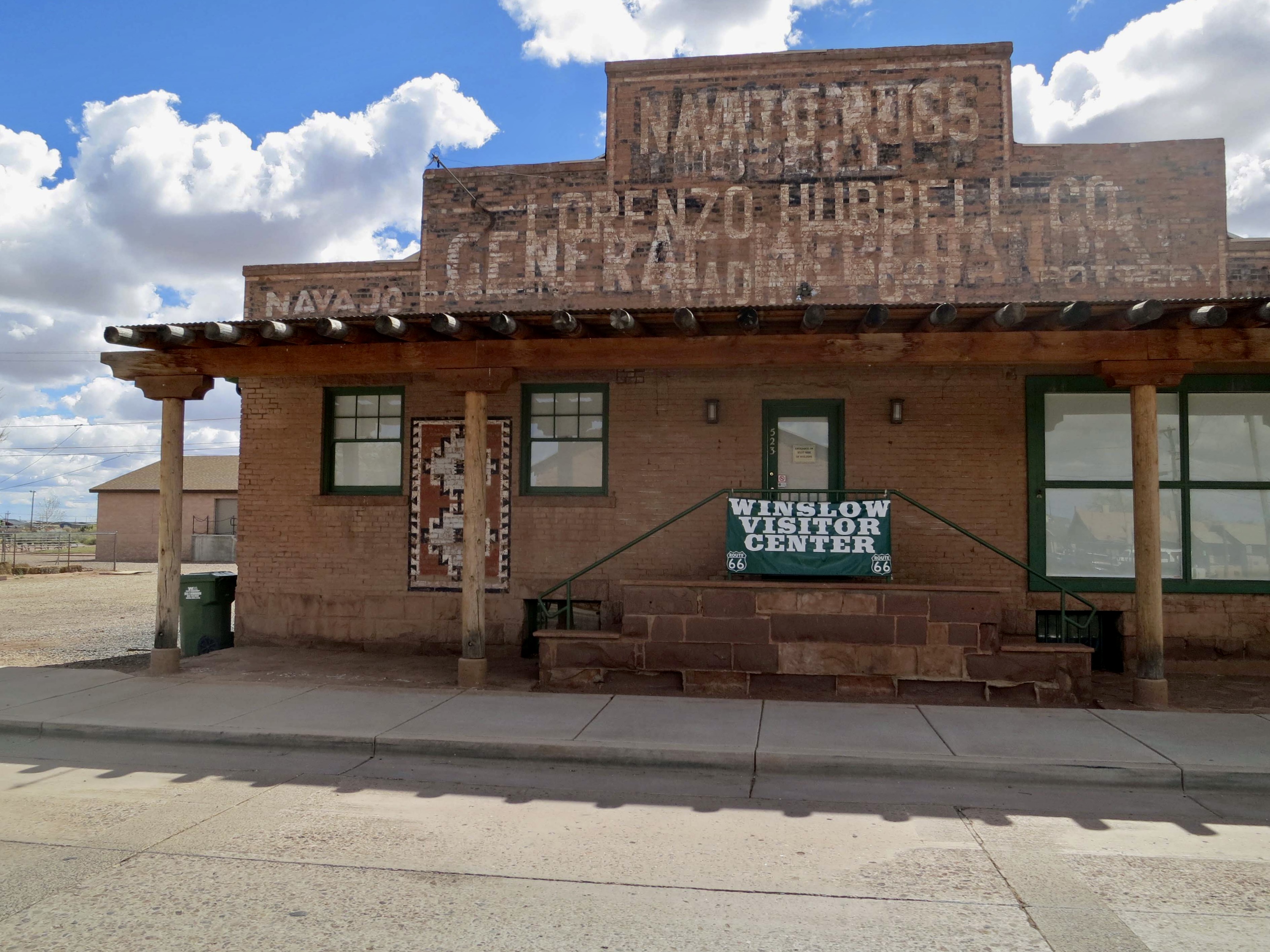
Another 18 miles up the road brings us to Winslow and its Visitor Center. This old building once served as part of the Hubble trading empire that sold Navajo made products including rugs, pottery and jewelry. Located on the Santa Fe Rail line gave the traders access to both the east and the west coast for its products. A number of stores, several of them dating back to the 40s-50s, still sell hand made Native American products and Route 66 memorabilia along the highway today. Huge billboards announce their presence.
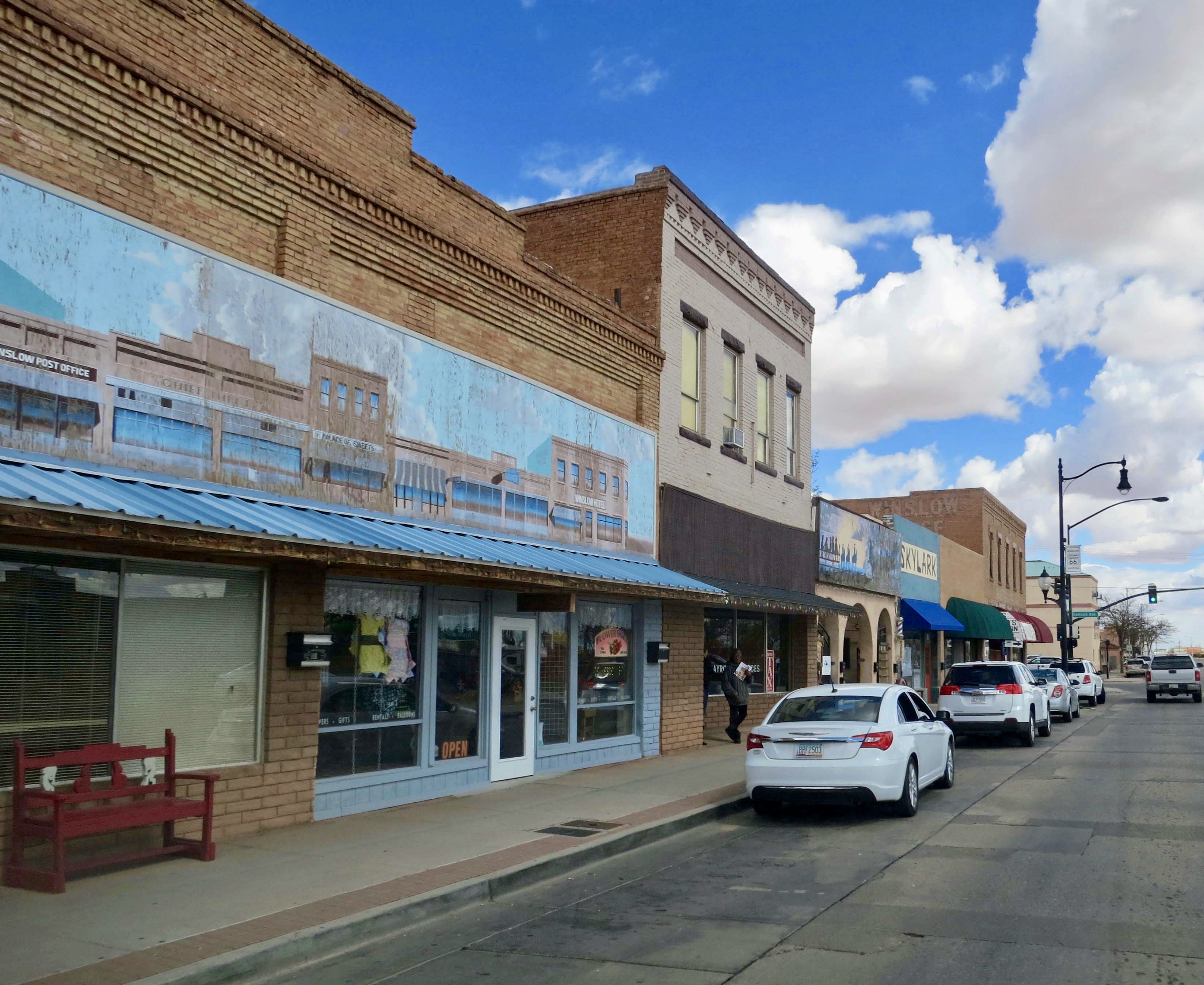
The Main Street of Winslow. Jackson Browne of the Eagles was stranded here in 1972 when his car broke down and was inspired to write the song Take It Easy with the words: Well I’m a-standin’ on the corner in Winslow, Arizona, With such a fine sight to see, It’s a girl, my lord, in a flatbed ford, Slowin’ down to take a look at me. The song became the first Top 40 hit of the Eagles and made Winslow famous. Today the town has a statue of Browne standing on a corner as one of it’s main attractions.
As promised earlier, here are more dinosaurs. It’s all about them (and rocks) in Holbrook, the next town up. Compared to the fences in Jurassic Park, this one looks rather feeble. I wonder how often the dinosaurs escape to wander the streets of Holbrook.
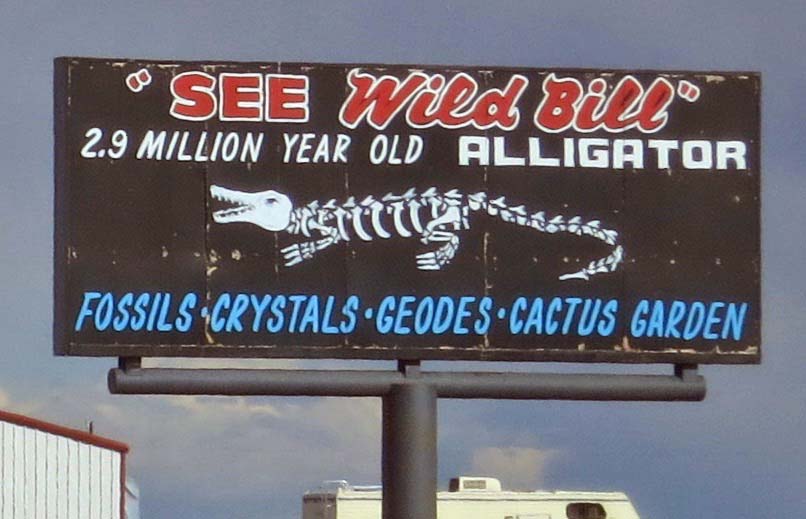
One of many billboards along Route 66/I-40. Fossils are found throughout the area. Wild Bill serves as an attraction to get people into the shop.
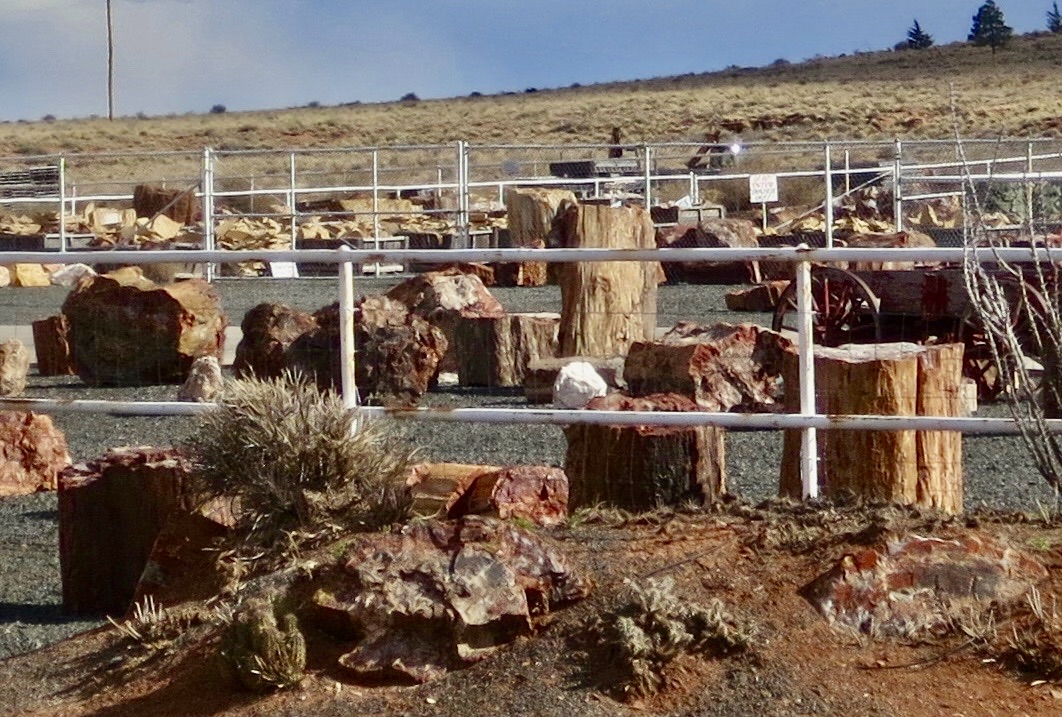
As rocks for sale go, petrified wood is the most common. There are tons of it. While it can’t be gathered at Petrified Forest National Park, there is plenty found on private lands surrounding the park.
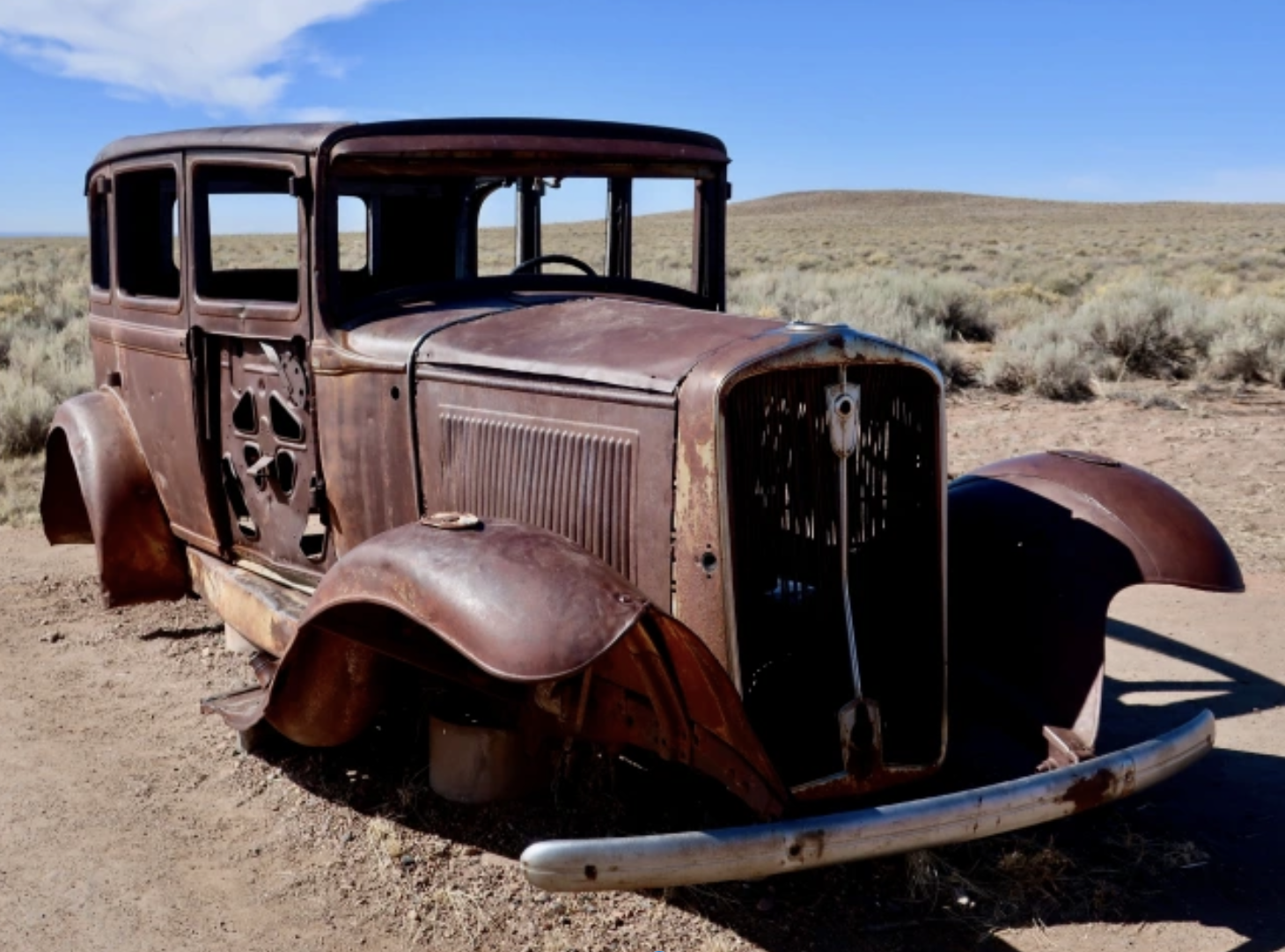
As I pointed out in an earlier post, Petrified Forest National Park is quite proud of its position as being the only national park that Route 66 passes through and commemorates it with this old Studebaker.
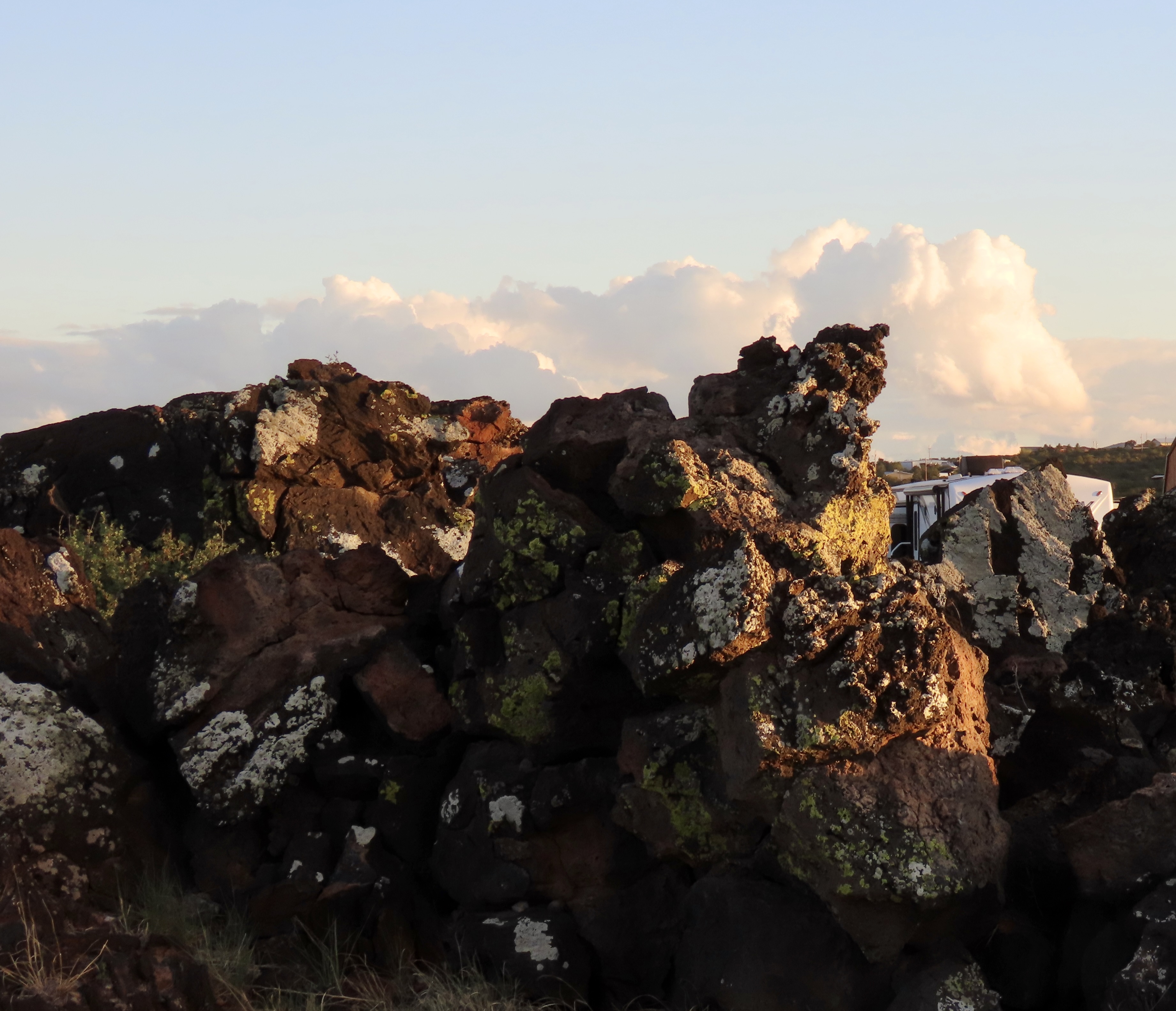
While Grants, New Mexico was also along Route 66 and emphasized its connection, we were too busy exploring El Morro and El Mapais National Monuments to spend much time there. The KOA we stayed at was in the middle of a lava flow. This lava outcrop was in the middle of the campground.
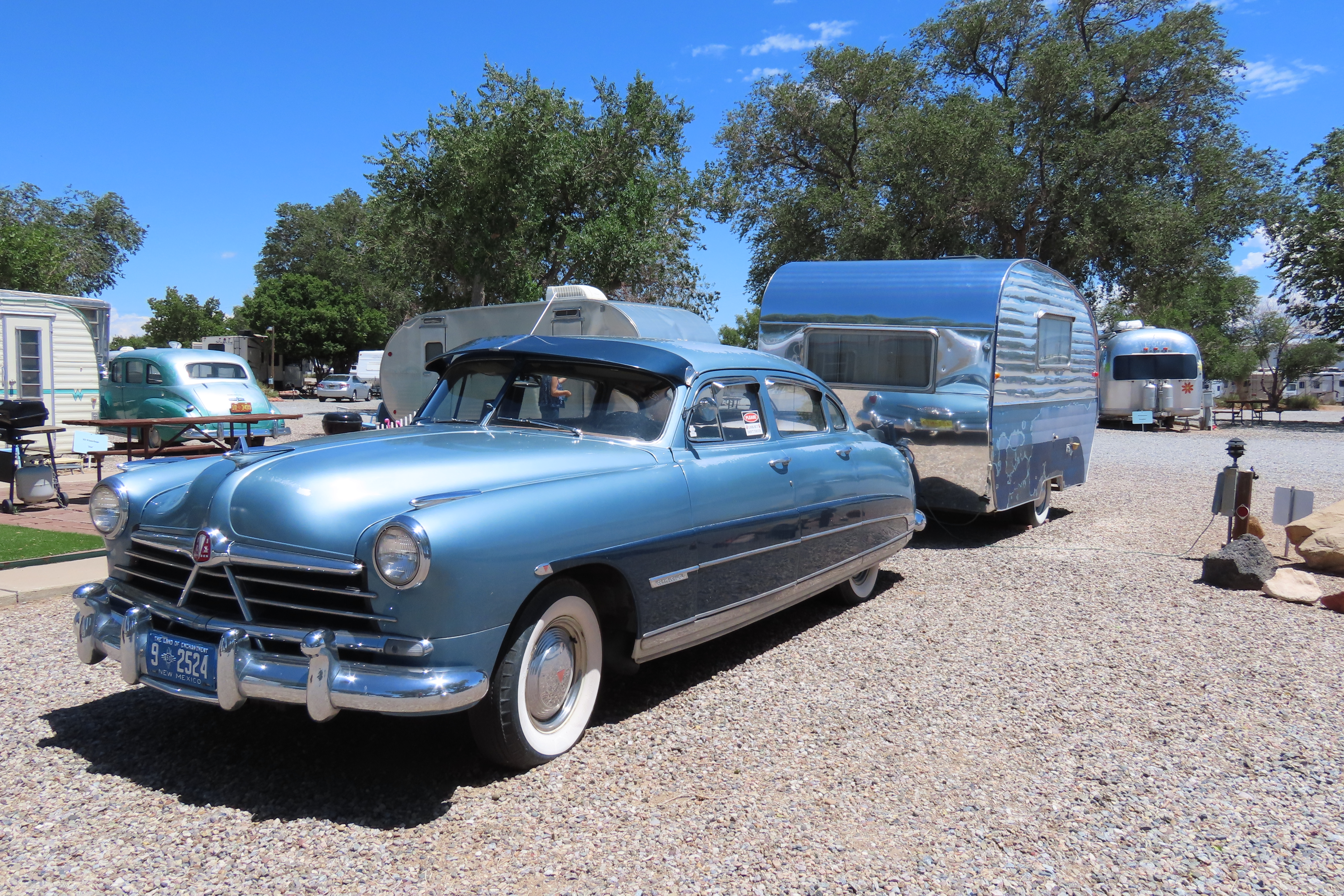
The Enchanted Trails RV Park we stayed at in Albuquerque was right on Historic Route 66 and honored its heritage with a great display of old cars and trailers from the 50’s, 60’s and 70s.
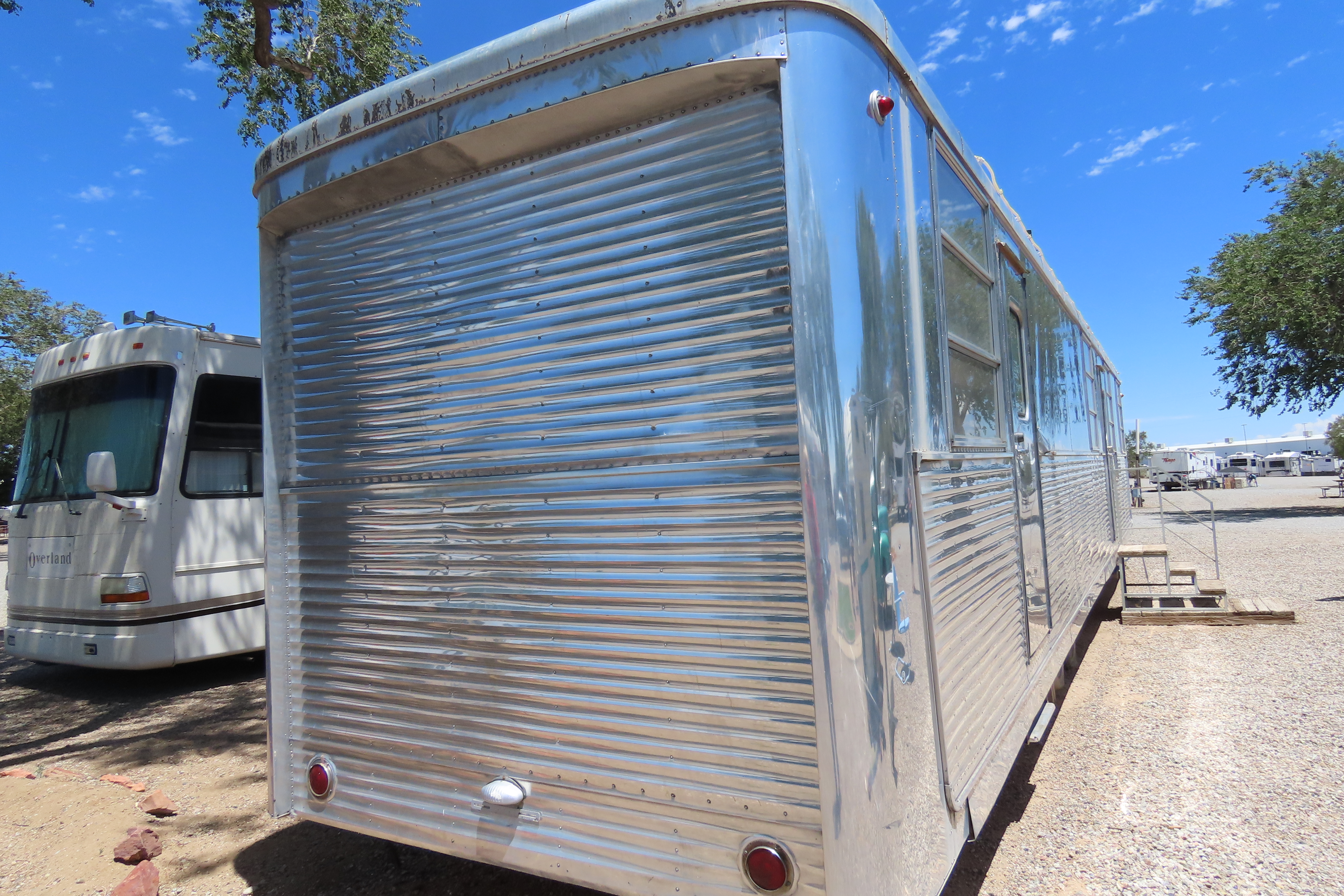
The RVs ranged in size from the small we were expecting to quite large like this one.
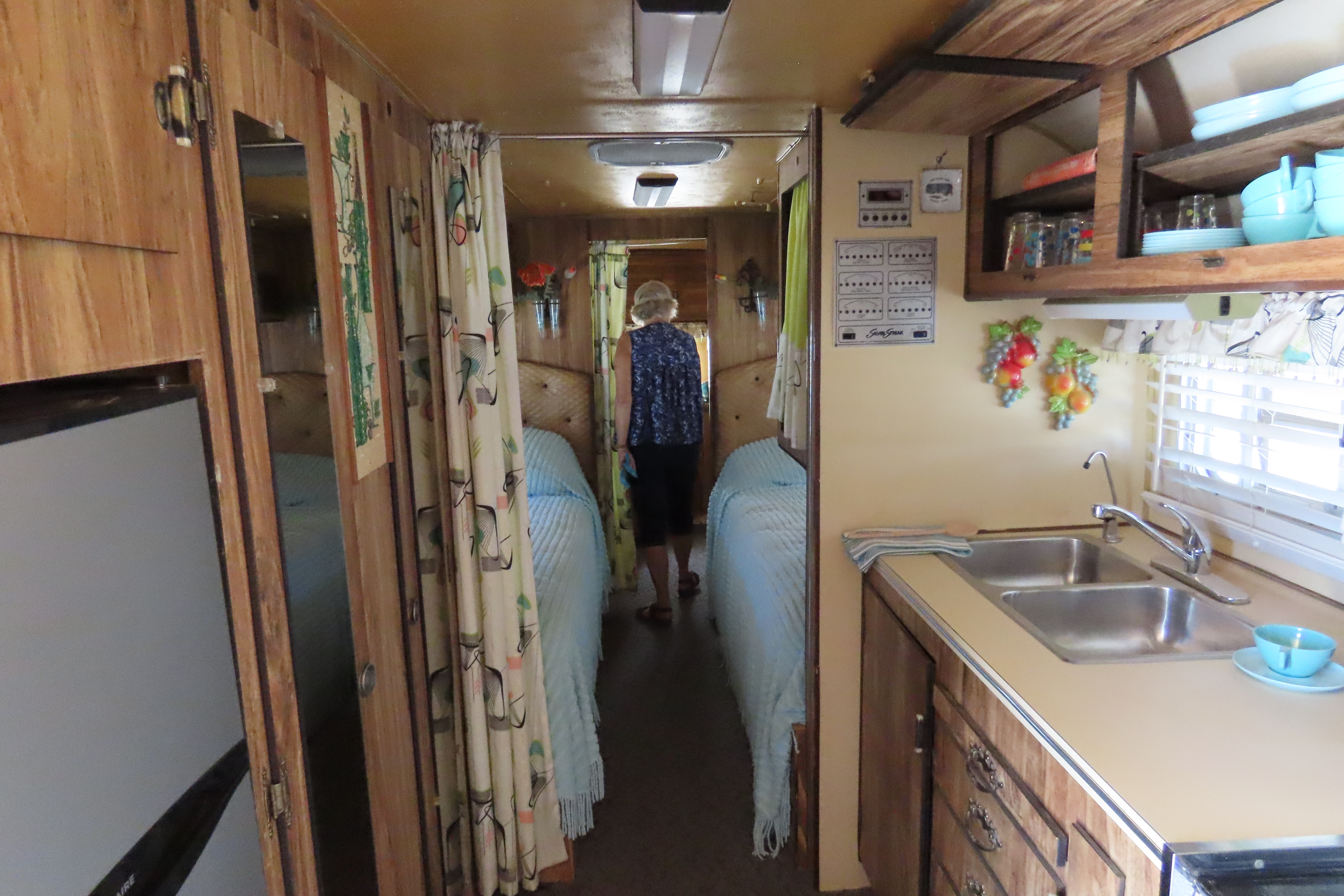
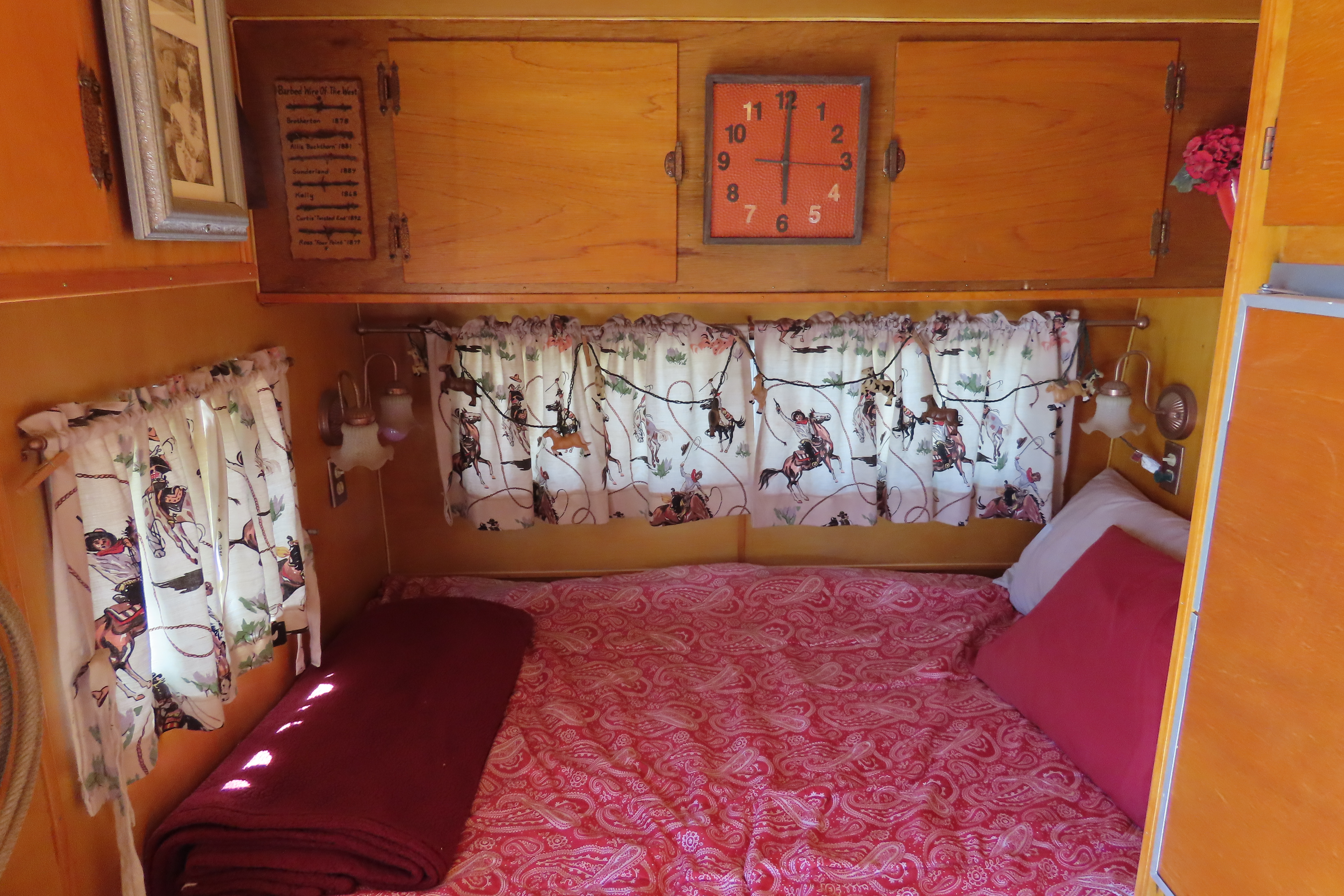
Peggy got the keys from the office so we could check out the inside of the various trailers on display. Not wide but definitely long.
Colorful.
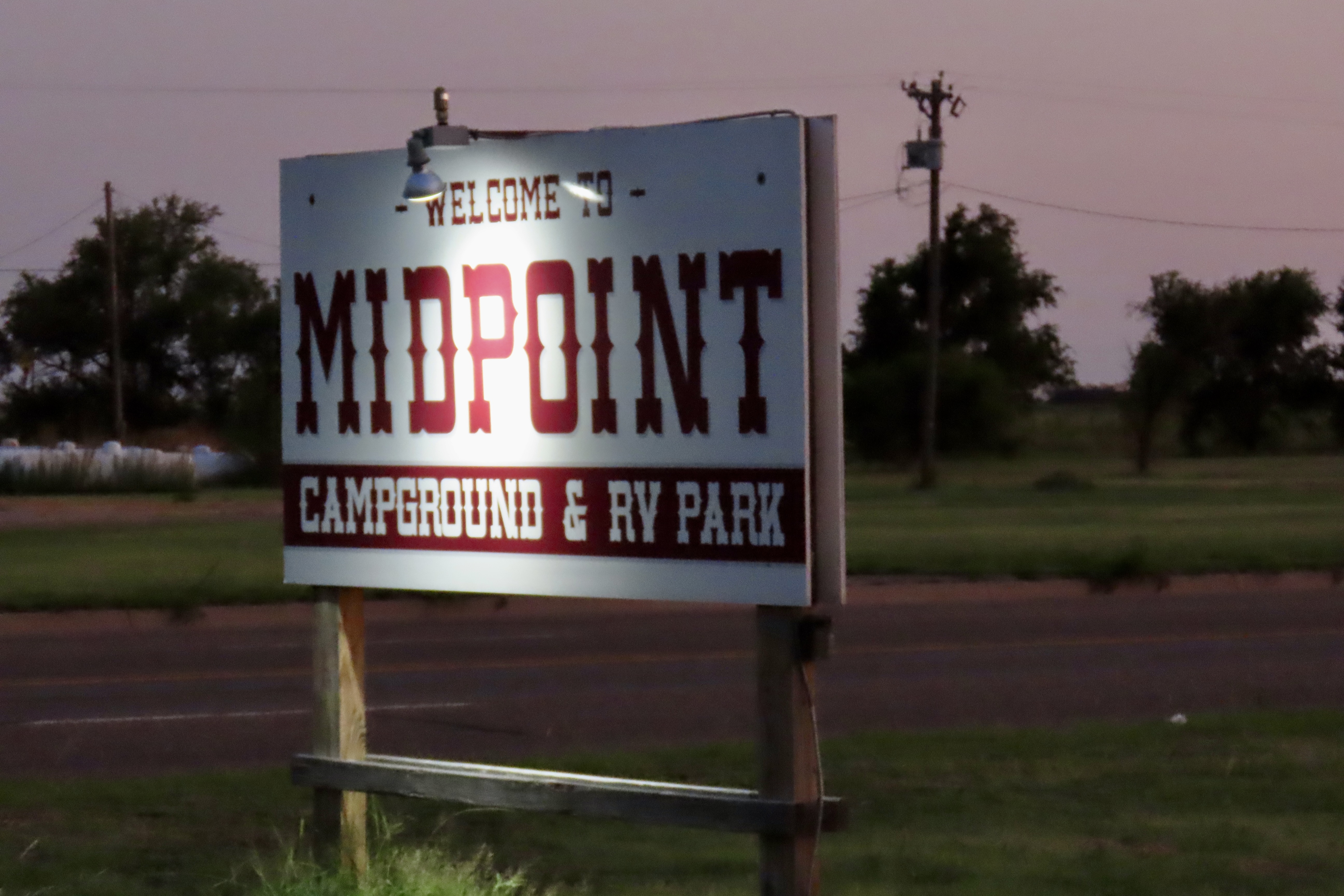
Our last connection with Route 66 was more happenstance than planned. We were on our way back to Virginia and pulled into Adrian, Texas in the Texas Panhandle. The Midpoint RV campground offered a minimal, inexpensive place to stay overnight. “Put $20 in the slot and find a vacant space,” the instructions read. A question we had was where we midpoint between?
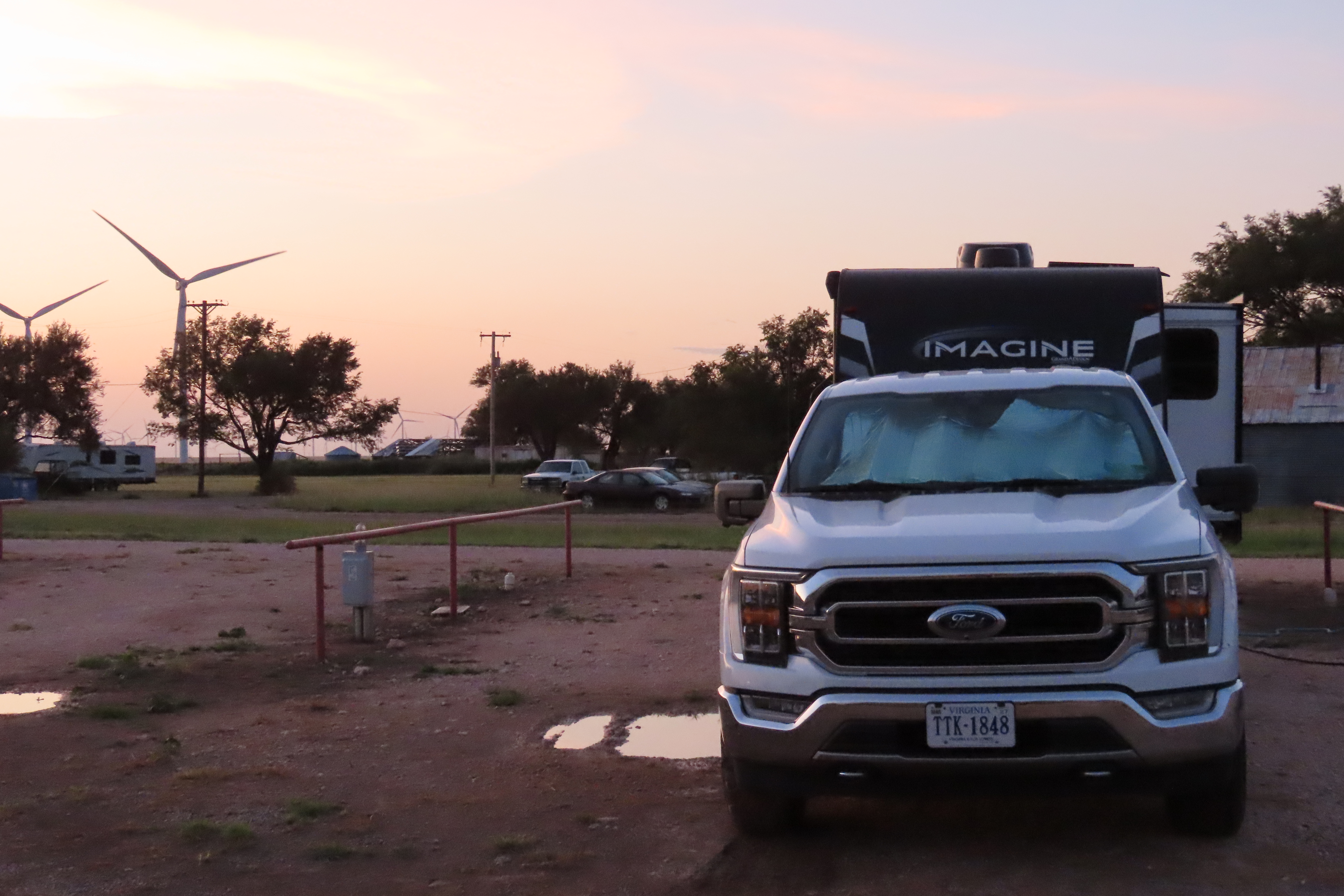
Here we are at midpoint between two vacant spaces.
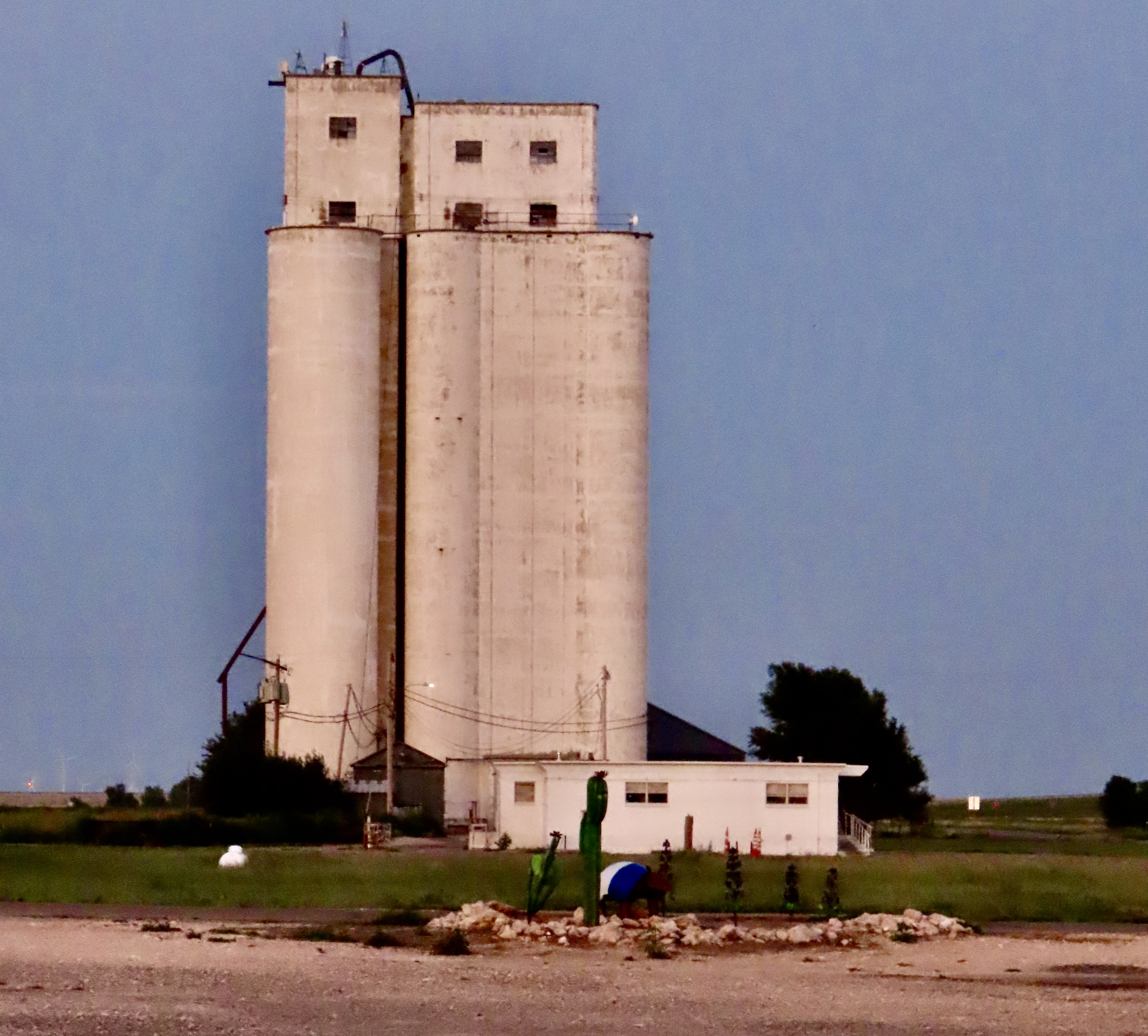
The scenery represented Texas well. A large grain elevator….
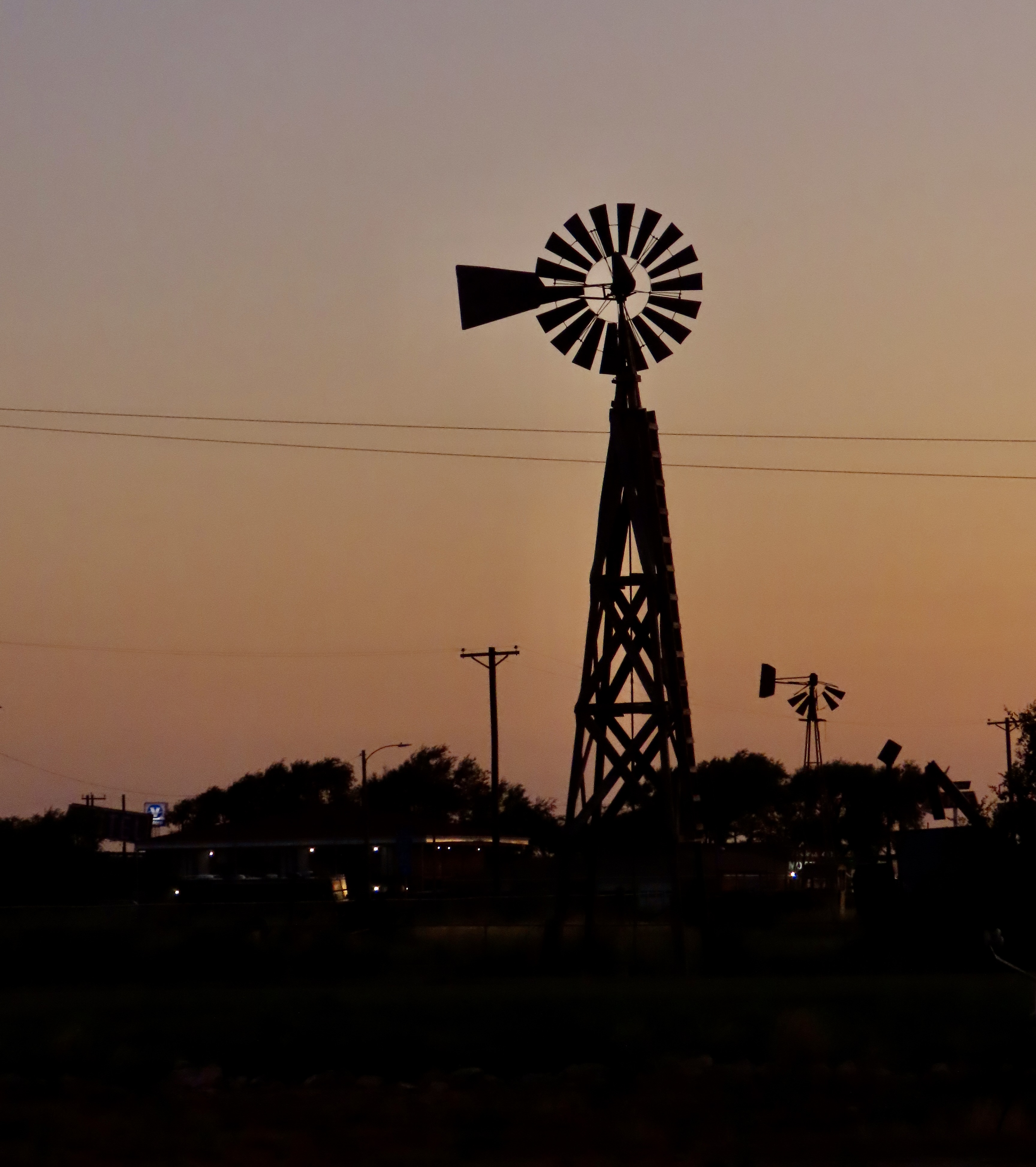
And a windmill.
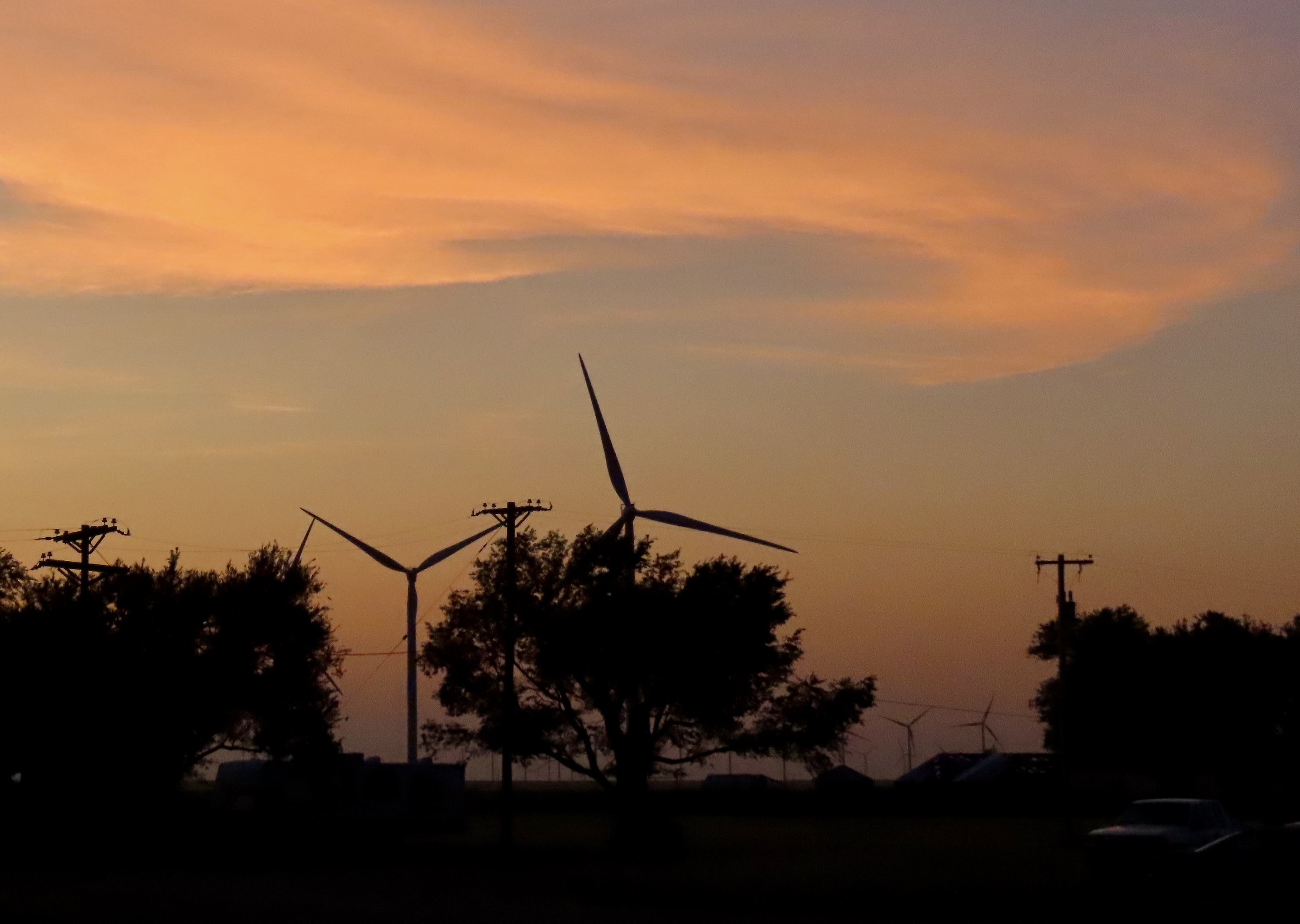
Modern windmills, the type the Washington Administration is trying to discourage because they reduce our dependence on fossil fuels, filled the horizon, however.
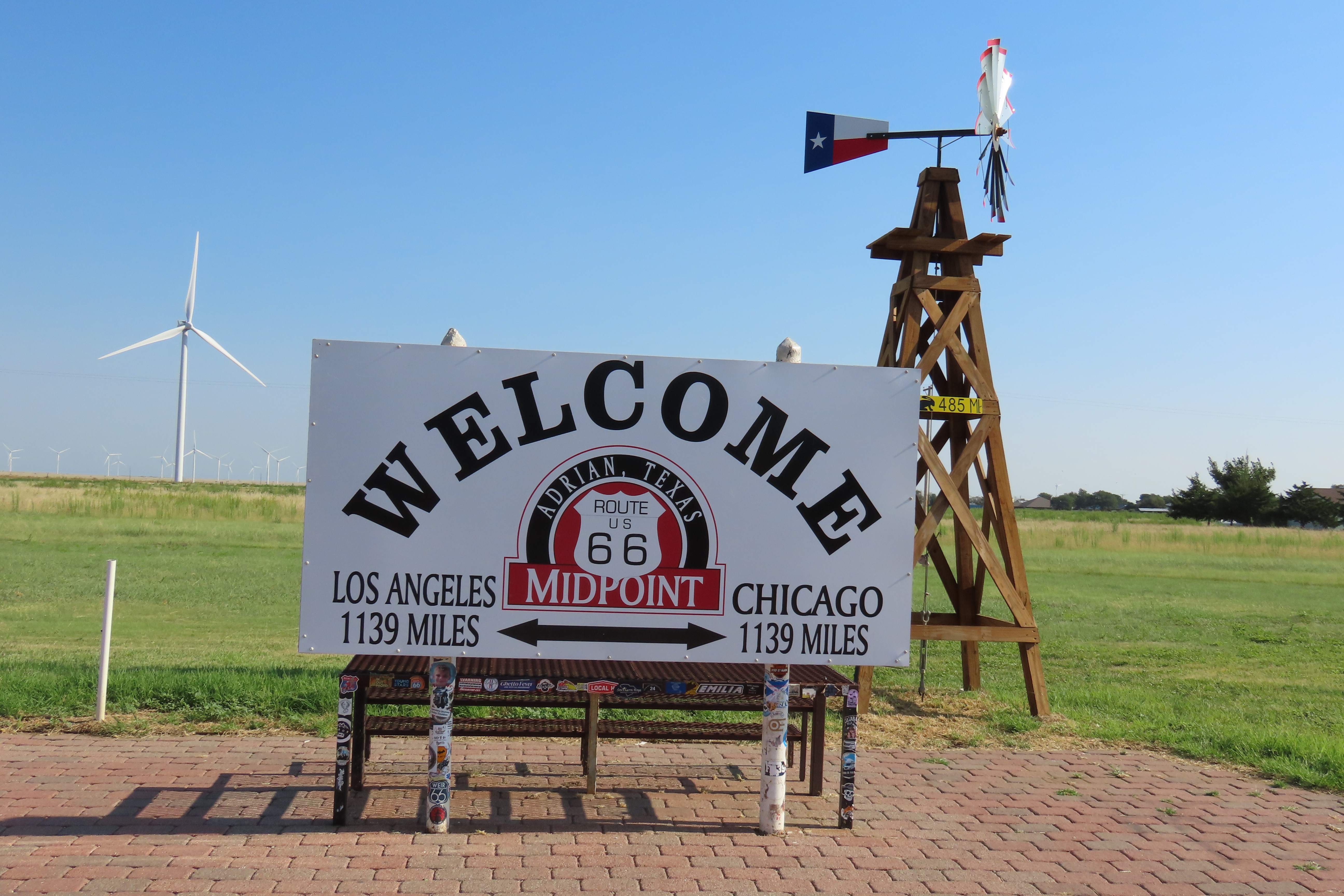
It turns out that we were at the midpoint of Historic Route 66. LA was 1139 miles to the west and Chicago 1139 miles to the east.
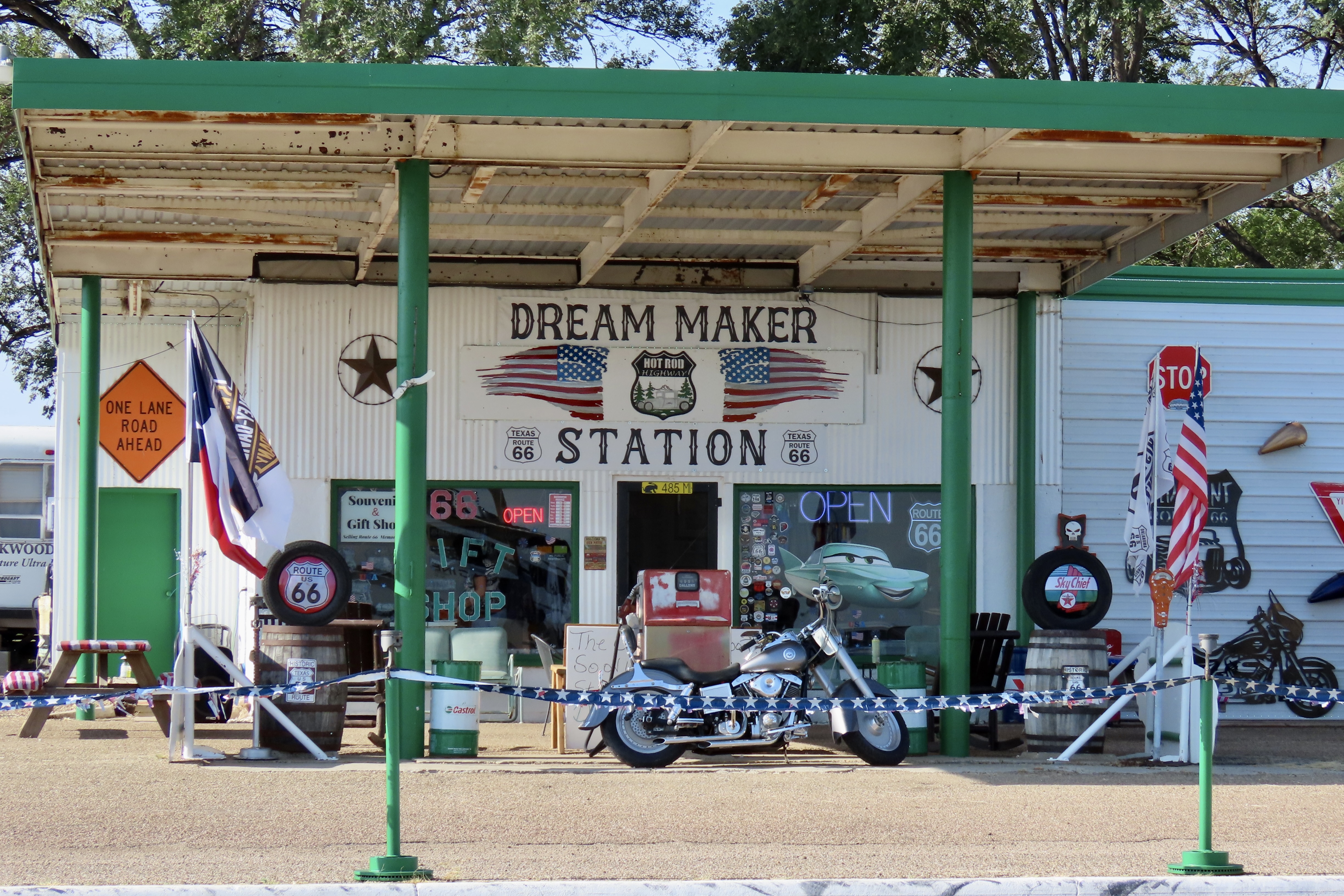
We stopped to take a photo of our last Route 66 station. We hadn’t planned on Route 66 being a part of our trip but were ever so glad it was. Traveling Route 66 is one of the things that dreams are made of.
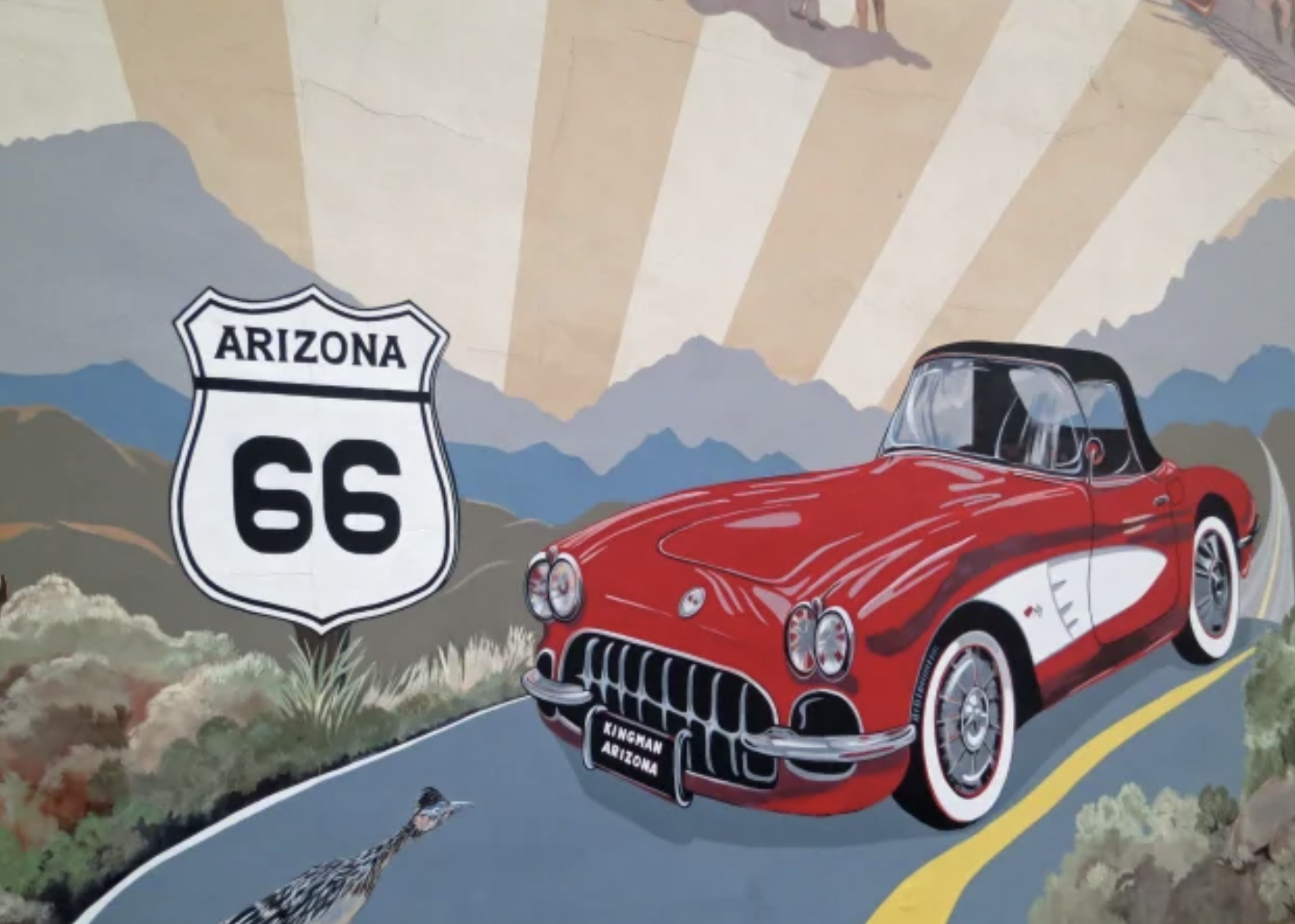
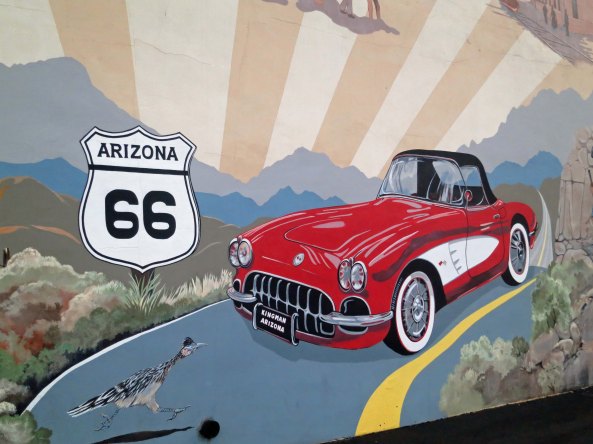
A mural we found in Kingman.

We have a final post we want to do on petroglyphs not featured yet, but we are heading out for New England this week so our next posts will be featuring fall colors and cozy towns.
“Get Your Kicks on Route 66″…America’s Mother Road: Part 1

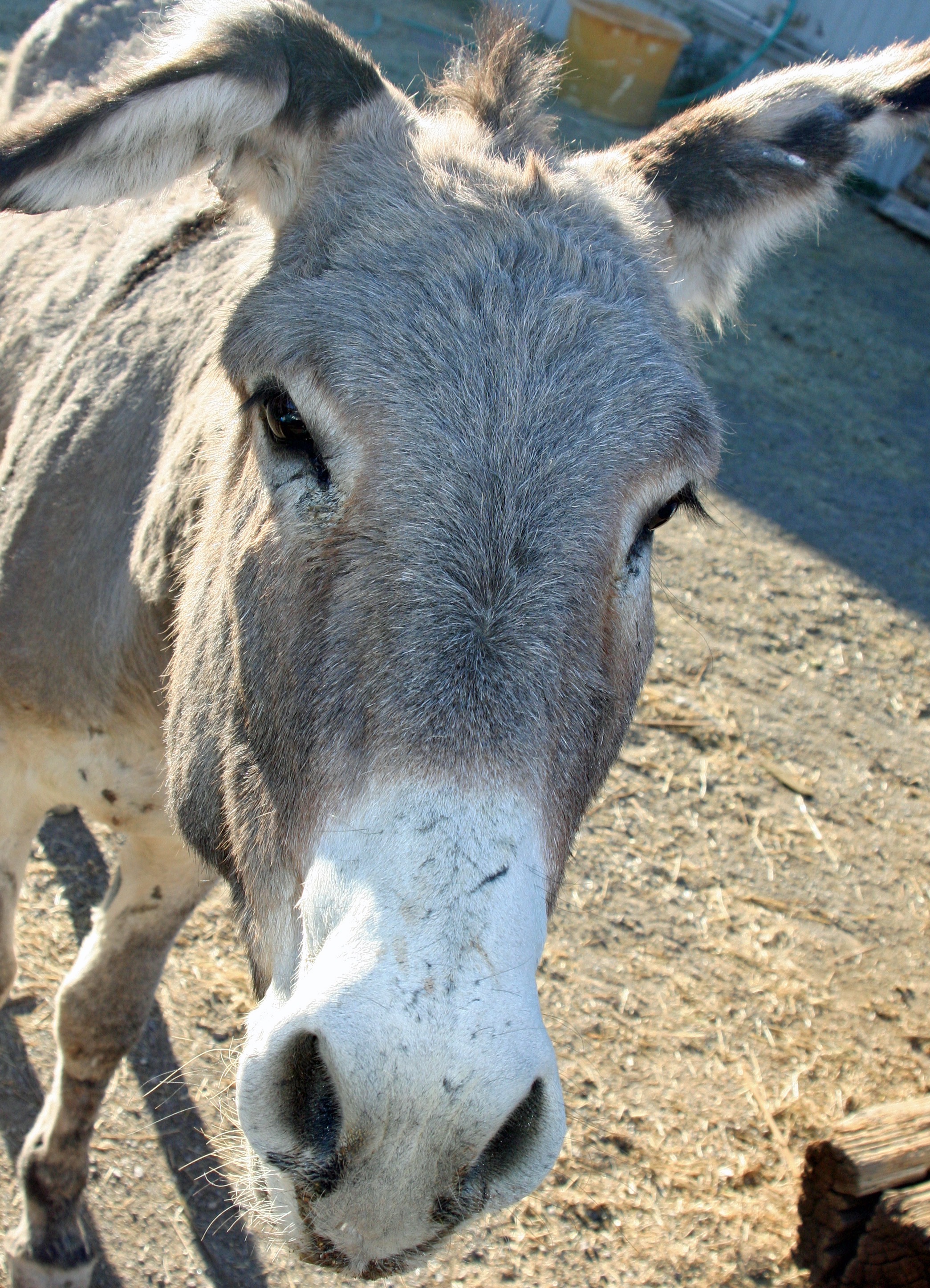
“Get Your Kicks on Route 66” was a song first sung in 1946 by the Nat King Cole Trio. World War II was over, gas rationing a thing of the past, and America was ready to celebrate. And what better way than a scenic road trip from Chicago, Illinois to Santa Monica, California. The song helped to make Route 66 popular in 50s and 60s. There was even a Route 66 television series that ran on CBS from 1960 to 1964. Tourists still flock to “America’s Mother Road” with its close to legendary status, quaint towns and scenic views. Peggy and I met the donkey/burro in Oatman, Arizona, one of the colorful communities along the way. I am featuring it and Seligman, Arizona, in today’s post. The donkey was looking for carrots.

On our recent trip to the Southwest, we camped in six different locations along the historic highway: Kingman, Ash Fork, and Holbrook in Arizona, Grants and Albuquerque in New Mexico, and Adrian in the Panhandle of Texas. I’ll be incorporating some of them in the next two posts plus other visits we have made to the area over the years.
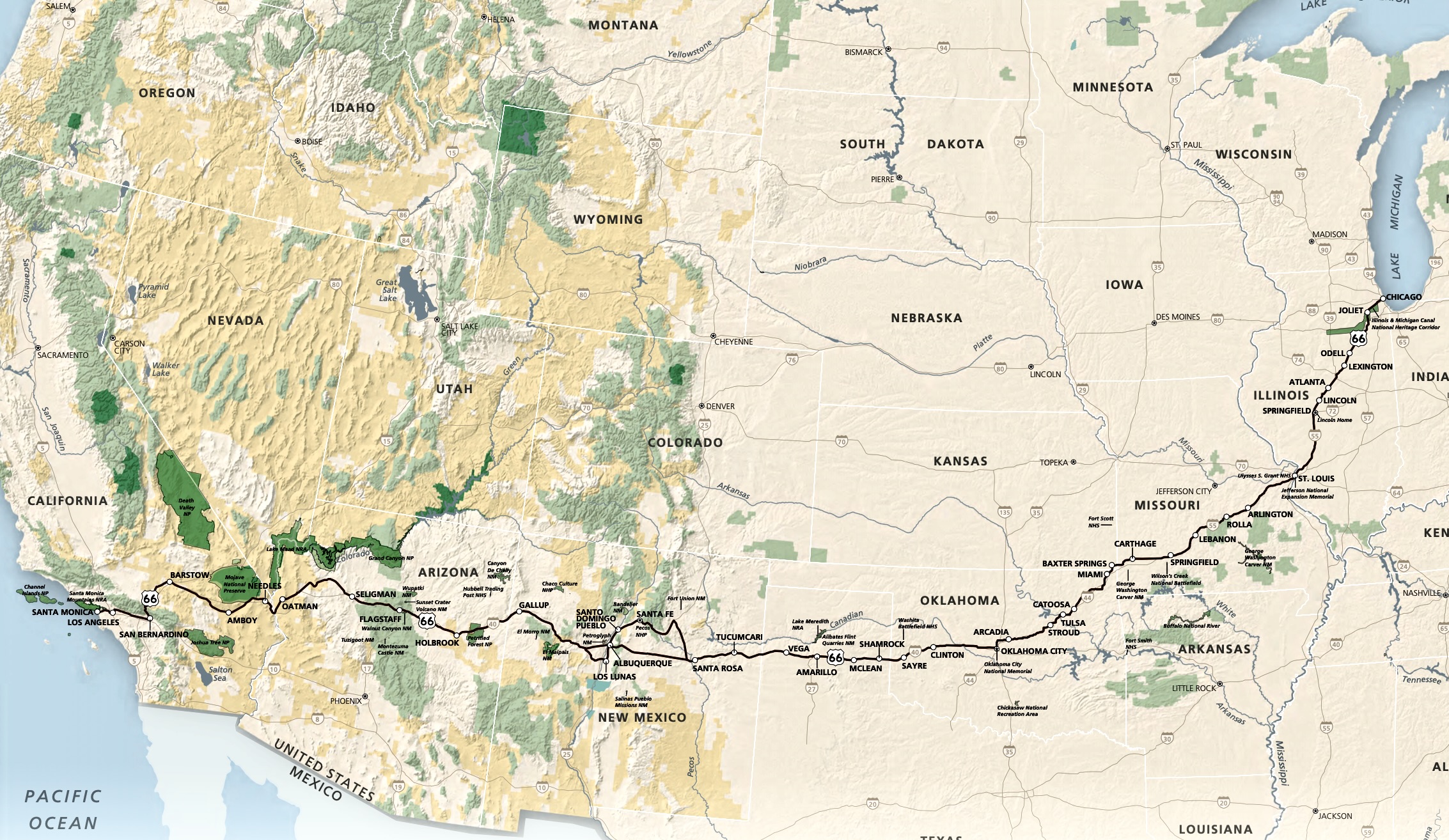
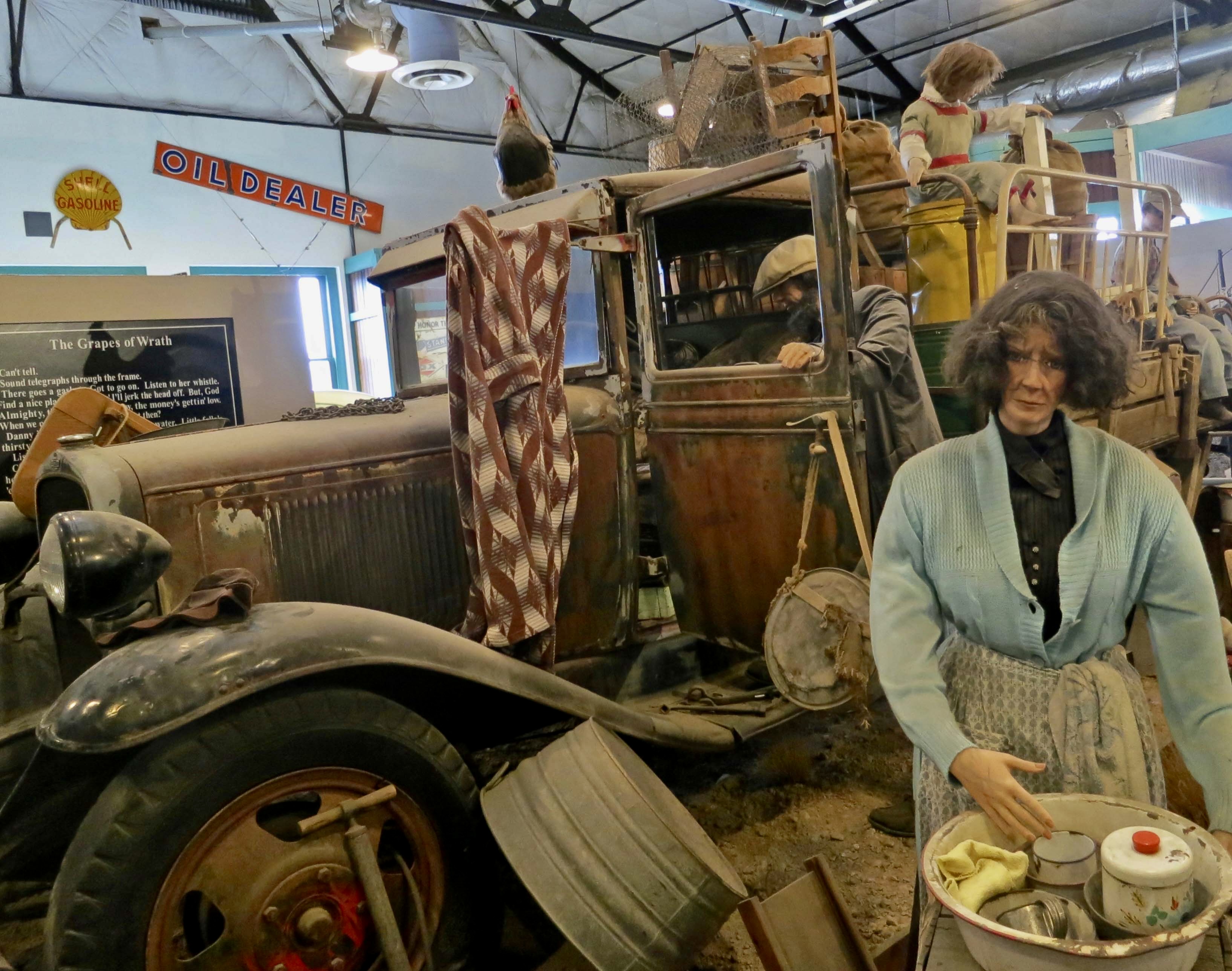
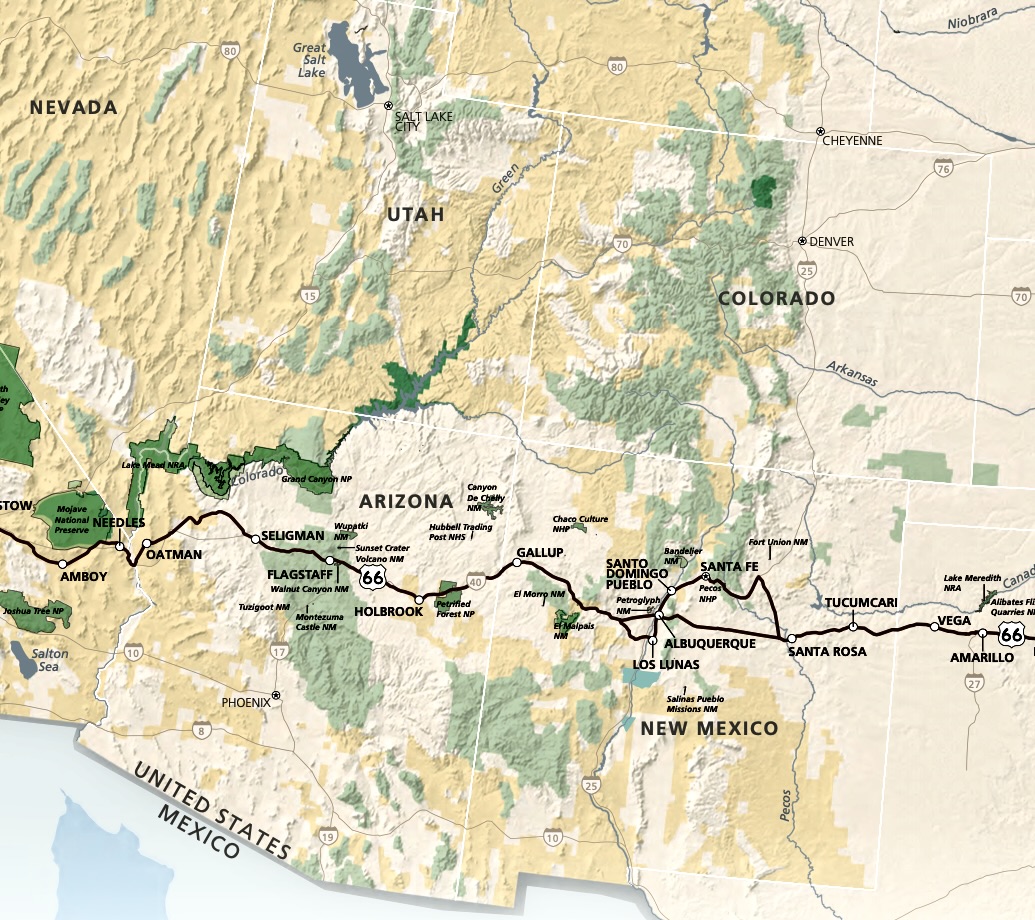
This National Park Service map shows the route that Historic Highway 66 followed between Chicago and Santa Monica, traveling through the states of Illinois, Missouri, Kansas, Oklahoma, Texas, New Mexico, Arizona, and California for a total of 2,448 miles (3,940 km). Established in 1926 the road became the major thoroughfare for migrants escaping the Dust Bowl in the 30s searching for a better life in California. In fact, it was John Steinbeck in his classic novel about the migration, The Grapes of Wrath, who gave Route 66 the name ‘America’s Mother Road.’
This diorama in Arizona’s Route 66 Museum in Kingman features migrants from the Dust Bowl traveling on Route 66 in the 30s. During World War II, Route 66 became a major road for military transports from the East heading for the West Coast and the war in the Pacific.
Most of our exploration of Historic Route 66 over the years has taken place in the Southwest starting with Oatman and working our way east into Texas. Freeways have replaced Route 66 as the major national transportation corridors for traveling back and forth across the nation, but local town, county and state roads have incorporated parts of Route 66 into their road systems and promote it proudly, from both an historical and economic perspective.
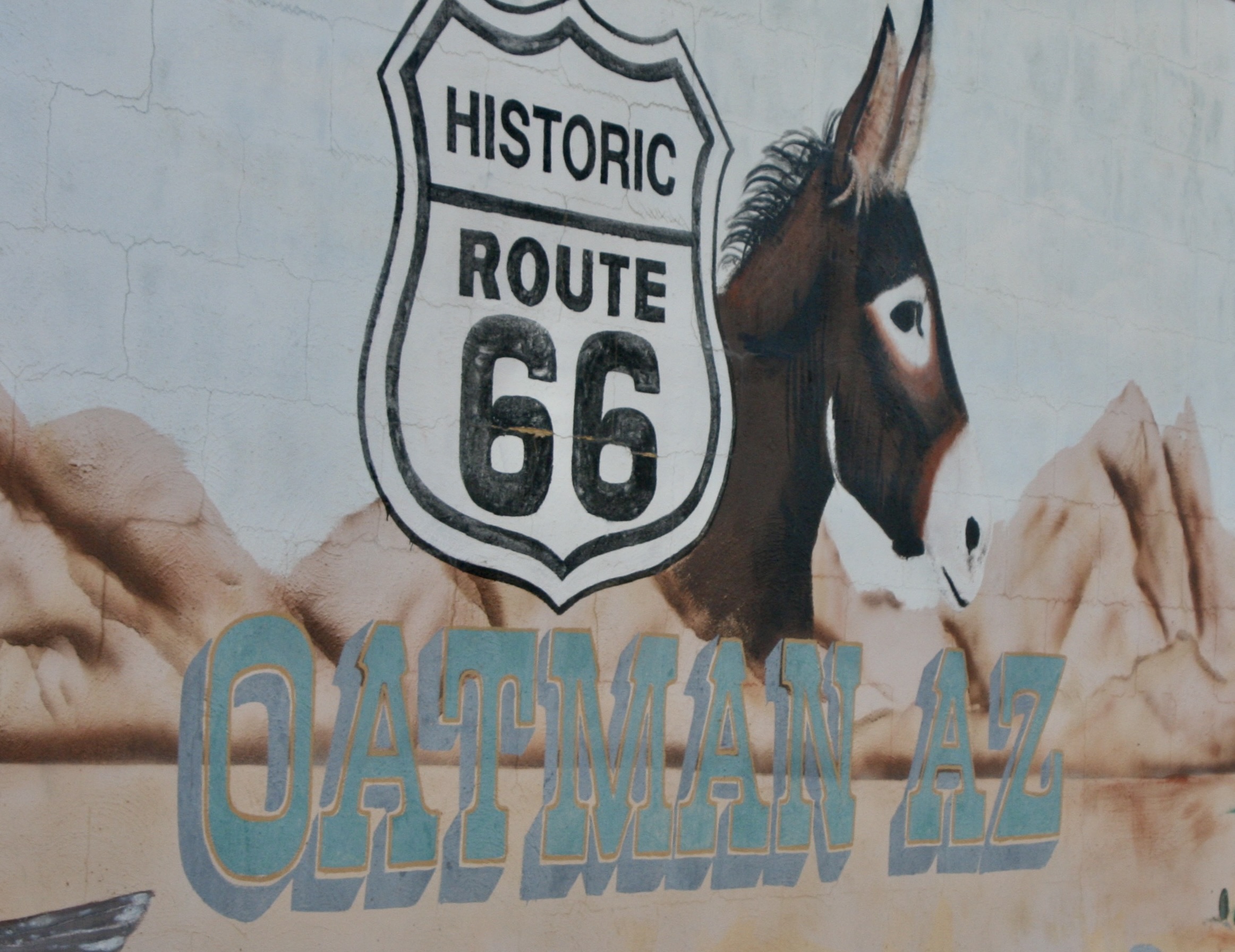
Donkeys have become a major attraction in Oatman, as the sign suggests.
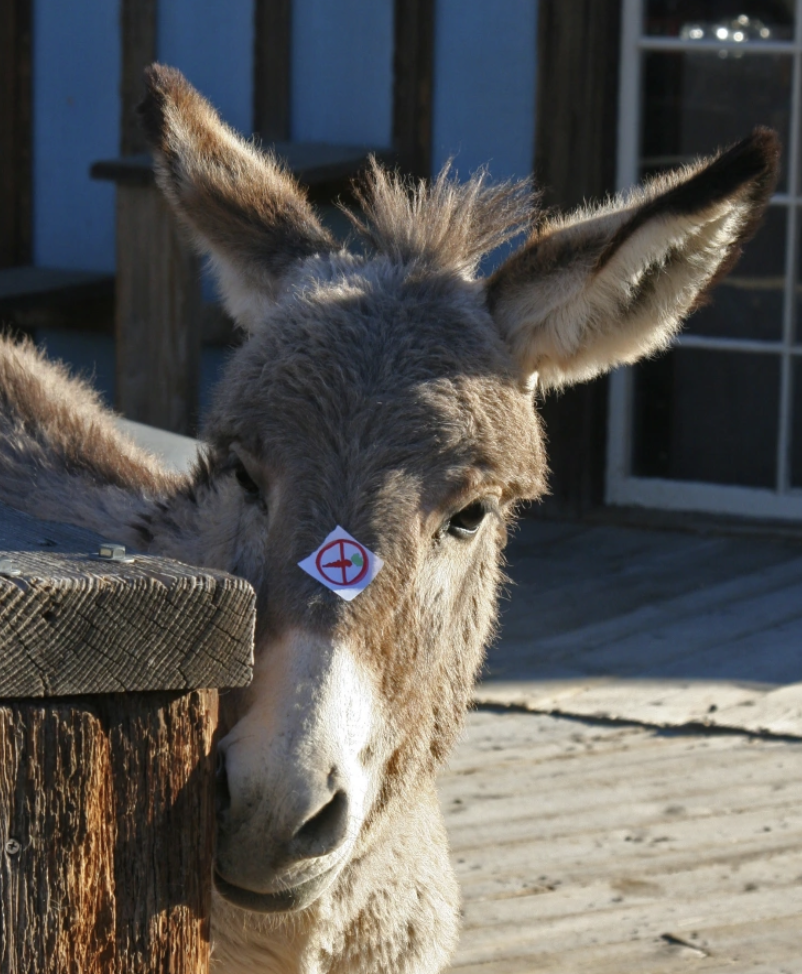
Like who could resist this cutie.
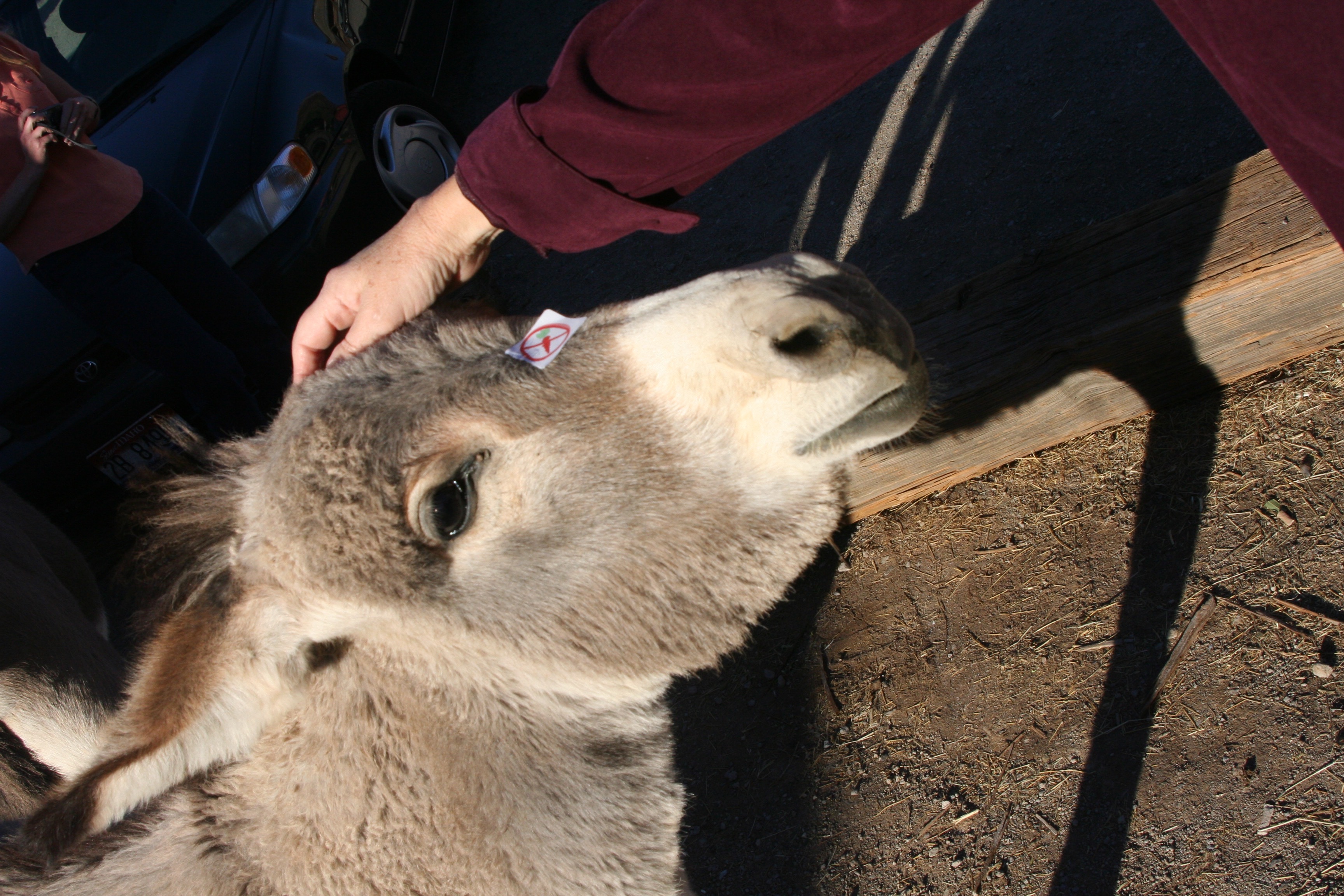
Certainly not Peggy. It’s hard to tell which one was enjoying the head scratch more. The no-carrot sign on its forehead, by the way, is to protect the youngster. The little ones are known to choke on them.
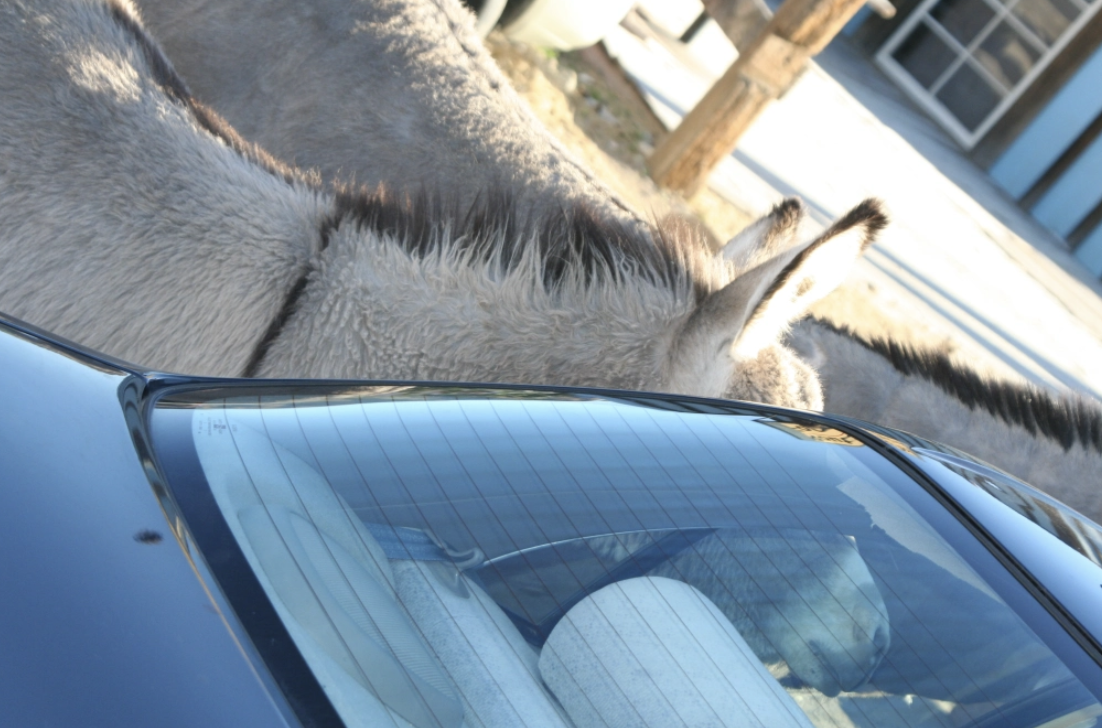
Not so with the big ones. In fact you might find yourself with one sticking its head in your window while searching for carrots. As I recall, these folks had left their window open while they explored the town. Their seats were probably covered with donkey drool when they returned.
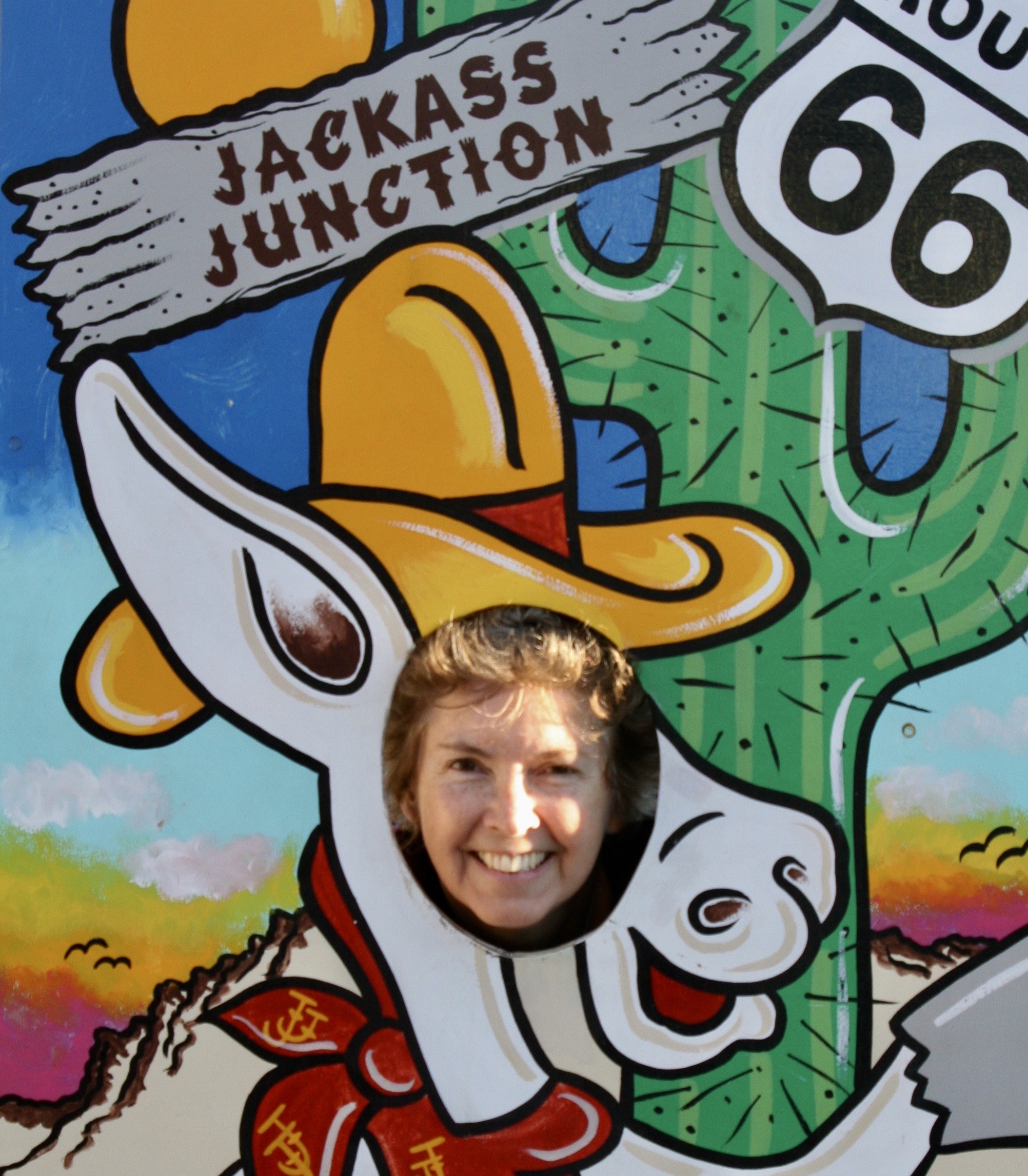
Many of the establishments promote the town’s connection to the donkeys as well as their location along Route 66. Not missing a bet, this sign also featured its location in the desert and local brands from cattle ranches. You knew you were in the ‘Wild West.’ I took Peggy’s photo here several years ago when we were visiting Oatman.
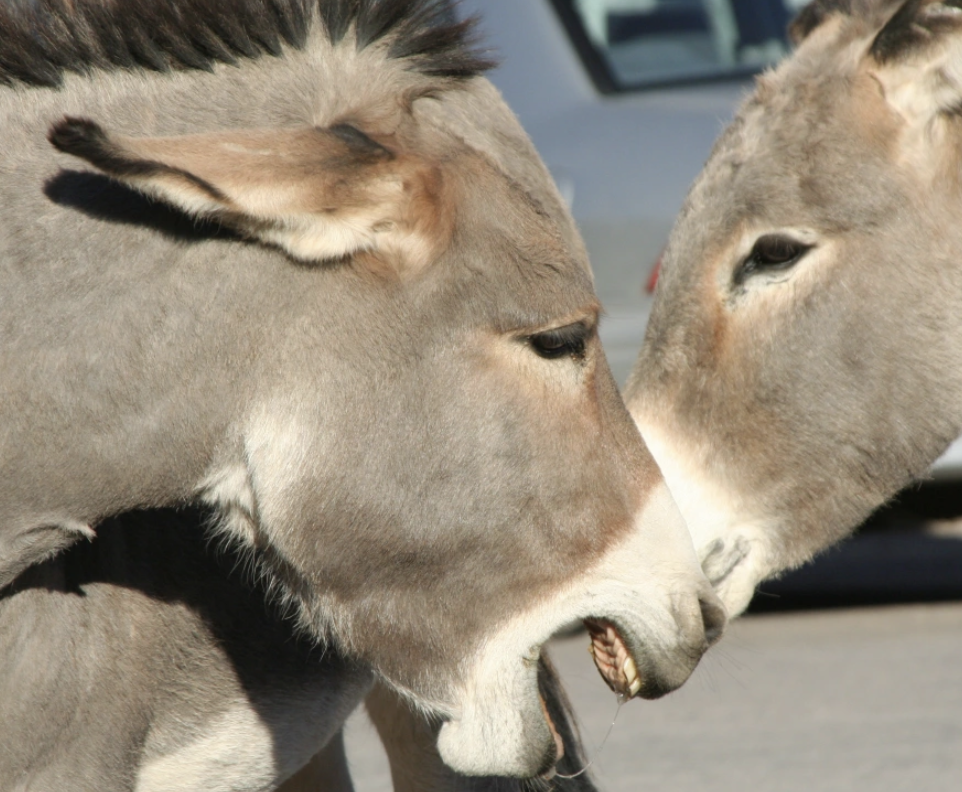
While the female featured in the top photo was begging/demanding a carrot from us, a male slipped up behind her for some major sniffing. Ears laid back, she objected strenuously.
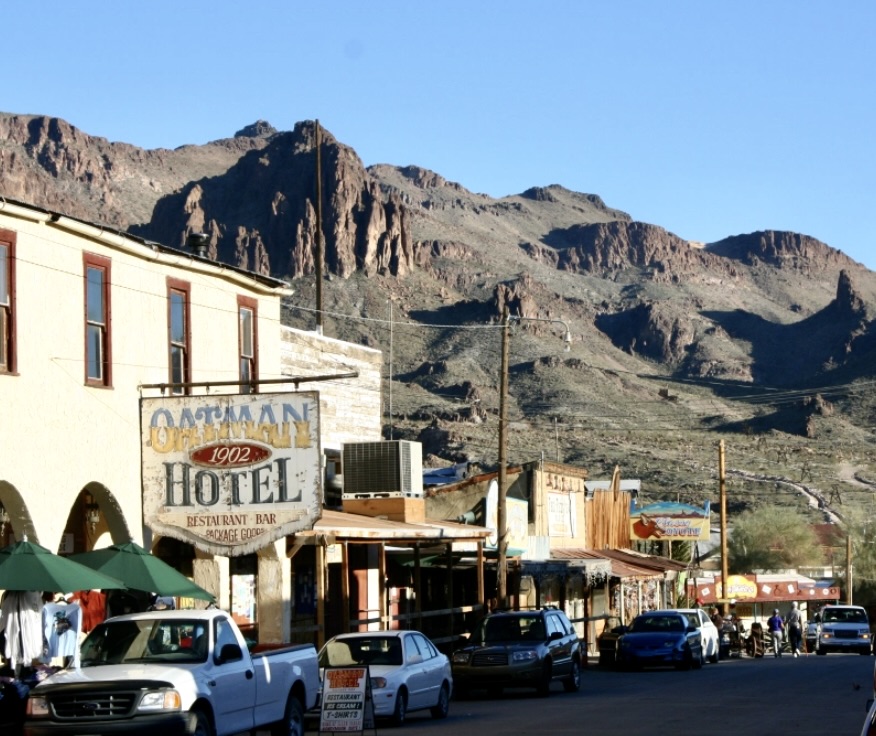
A photo of Oatman in its desert setting. The 1902 hotel predated Route 66 and was built during Oatman’s days as a mining boomtown. Its remote location today suggests that Oatman would likely be a ghost town now without Route 66 and its donkeys. The donkeys, or burros as they were called at the time, were left behind or escaped to go wild when the boom ended, not only in Oatman but throughout the west. Like wild horses, their descendants can still be seen roaming in areas of the West and Southwest.
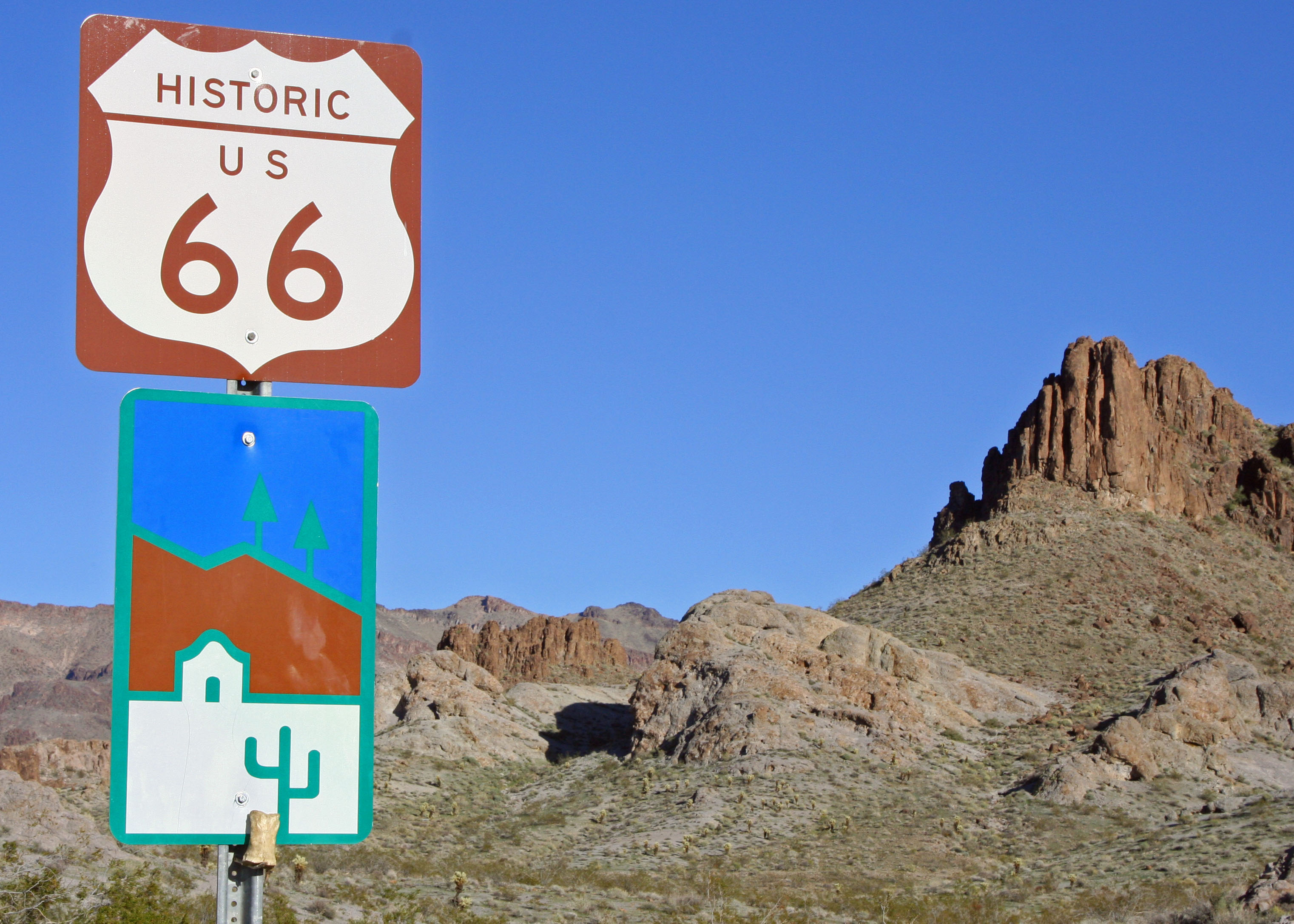
This sign marks Route 66 just outside of Oatman. Bone considered it a photo op. The Black Mountains are in the background.
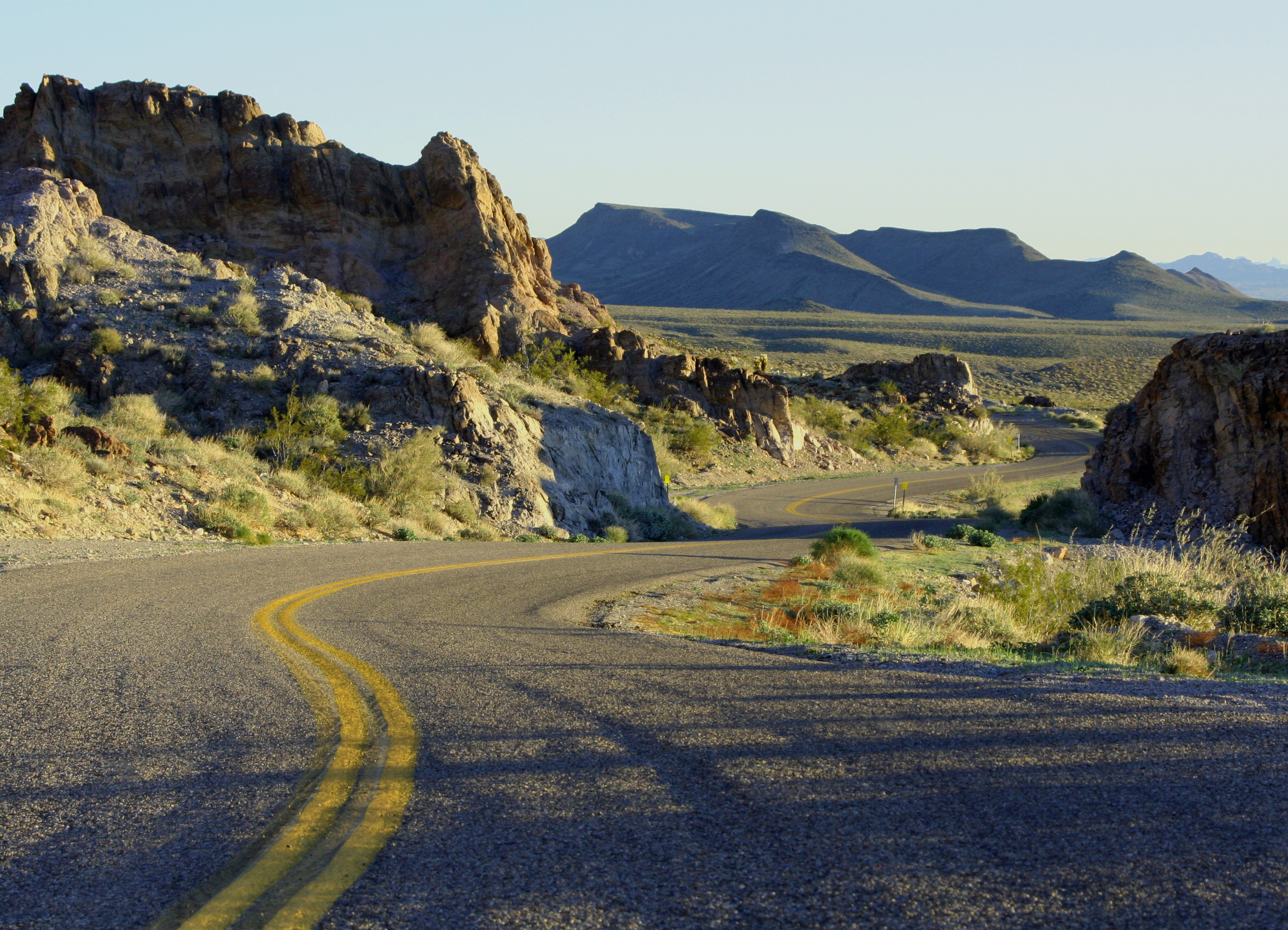
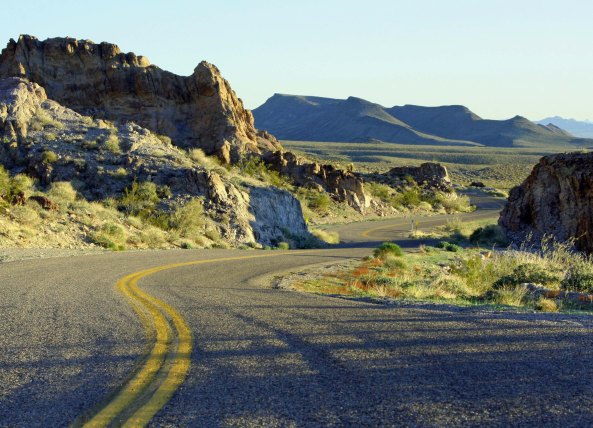
Historic Route 66, a few miles south of Oatman, still looks like the highway would have been in the 40’s and 50’s. First paved in 1938, the mainly flat road was easy to drive as it made its way through Middle America and the Southwest deserts. A few sections were known as ‘Bloody 66’ because of curves. This was one. Here’s what Wikipedia has to say about it: “One section through the Black Mountains outside Oatman, Arizona was fraught with hairpin turns and was the steepest along the entire route, so much so that some early travelers, too frightened at the prospect of driving such a potentially dangerous road, hired locals to navigate the winding grade.” Obviously they were flatlanders. Grin.
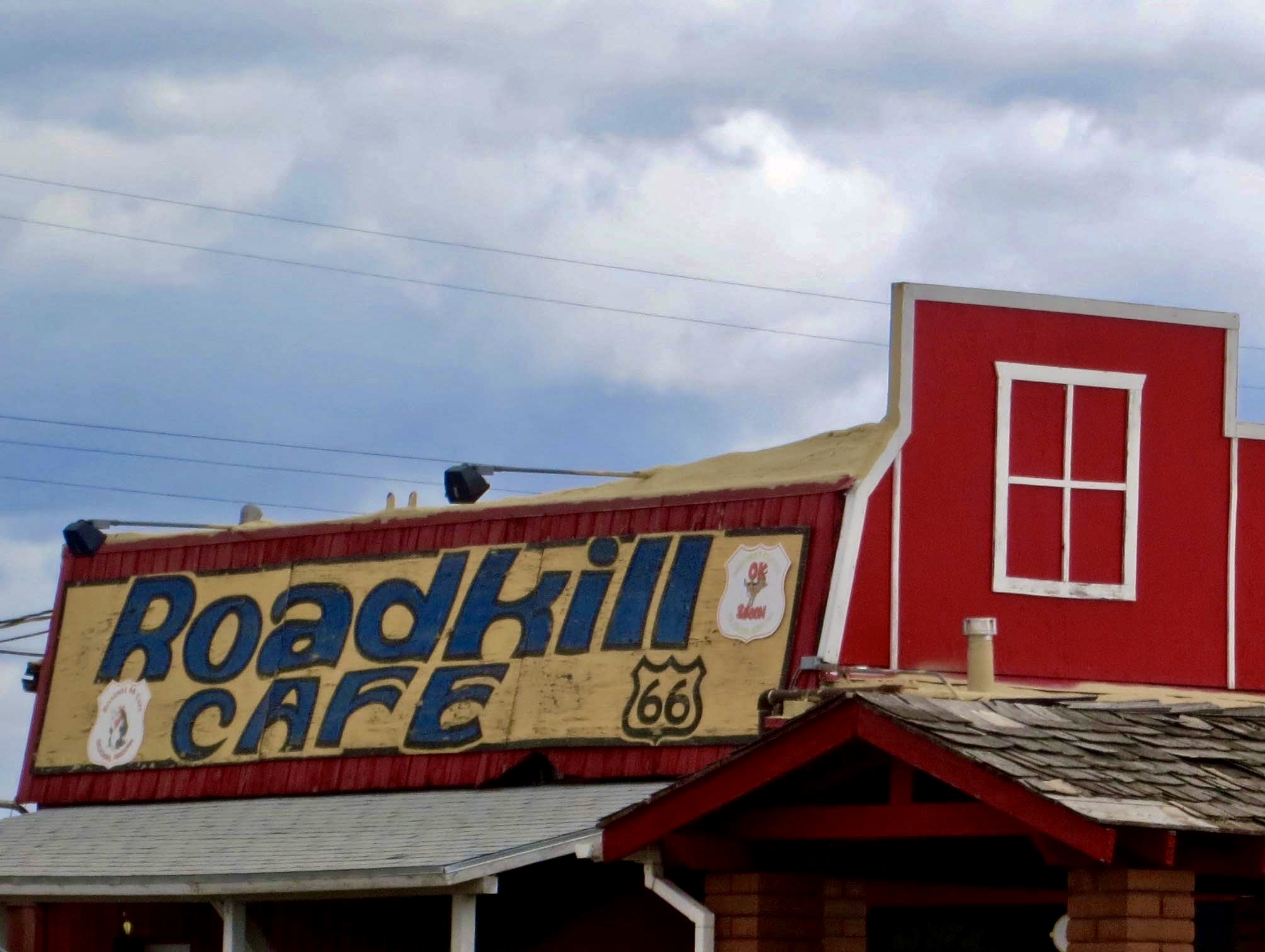
Now, on to Seligman. If you go back to the second map where I featured the Southwest, you will find Seligman just above Oatman. Unlike Oatman, however, it is located just off of I-40. I don’t know whether the Roadkill Cafe adopted that name in the glory days of Route 66 or later, but it has to be given credit for its eye catching name.
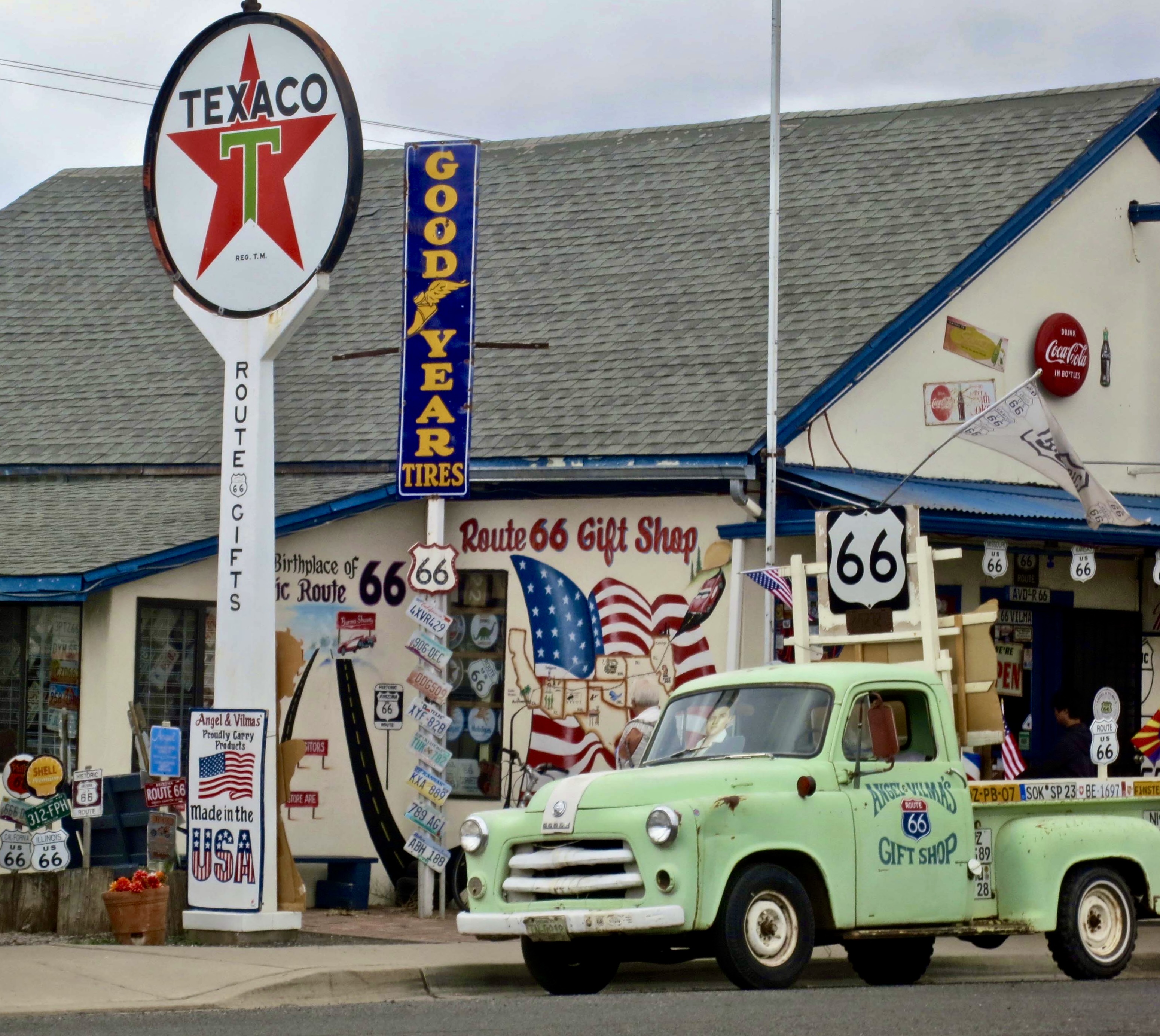
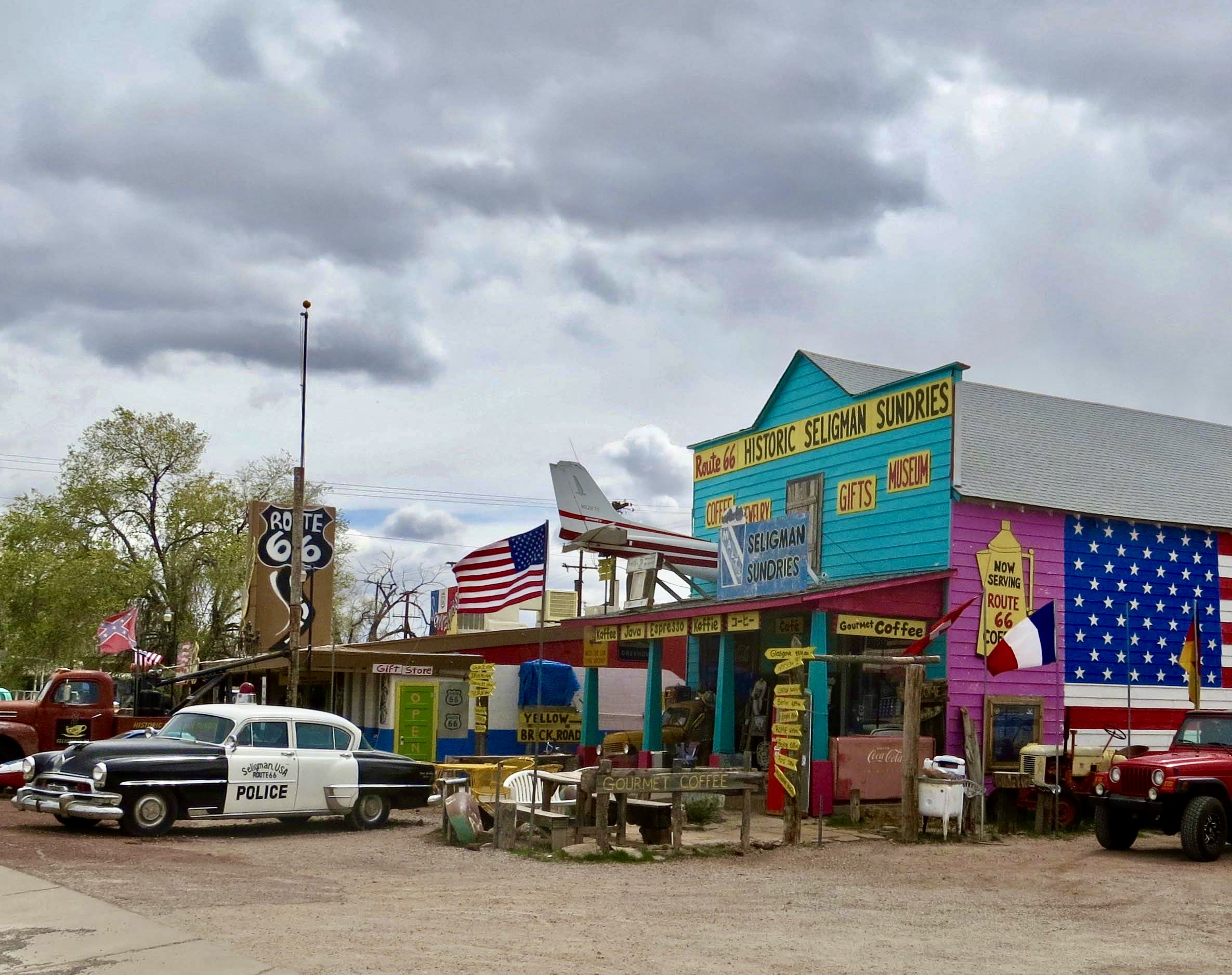
Seligman was one of the first towns along Route 66 to fight back when fast freeways threatened their livelyhood. Old buildings were repurposed to provide a colorful Route 66 experience. Road signs were put along I-40 to encourage people to stop off. Traveler services such as restaurants, bars, motels and RV campgrounds were provided. Almost every town featured old vehicles and license plates, not to mention a ton of Route 66 signs and memorabilia. I counted at least 12 Route 66 signs here.
Old police cars also got into the act. And note the washing machine out front. My parents had one like that in the 40s. It has a wringer on top that you would put your clothes through before you hung them out to dry.
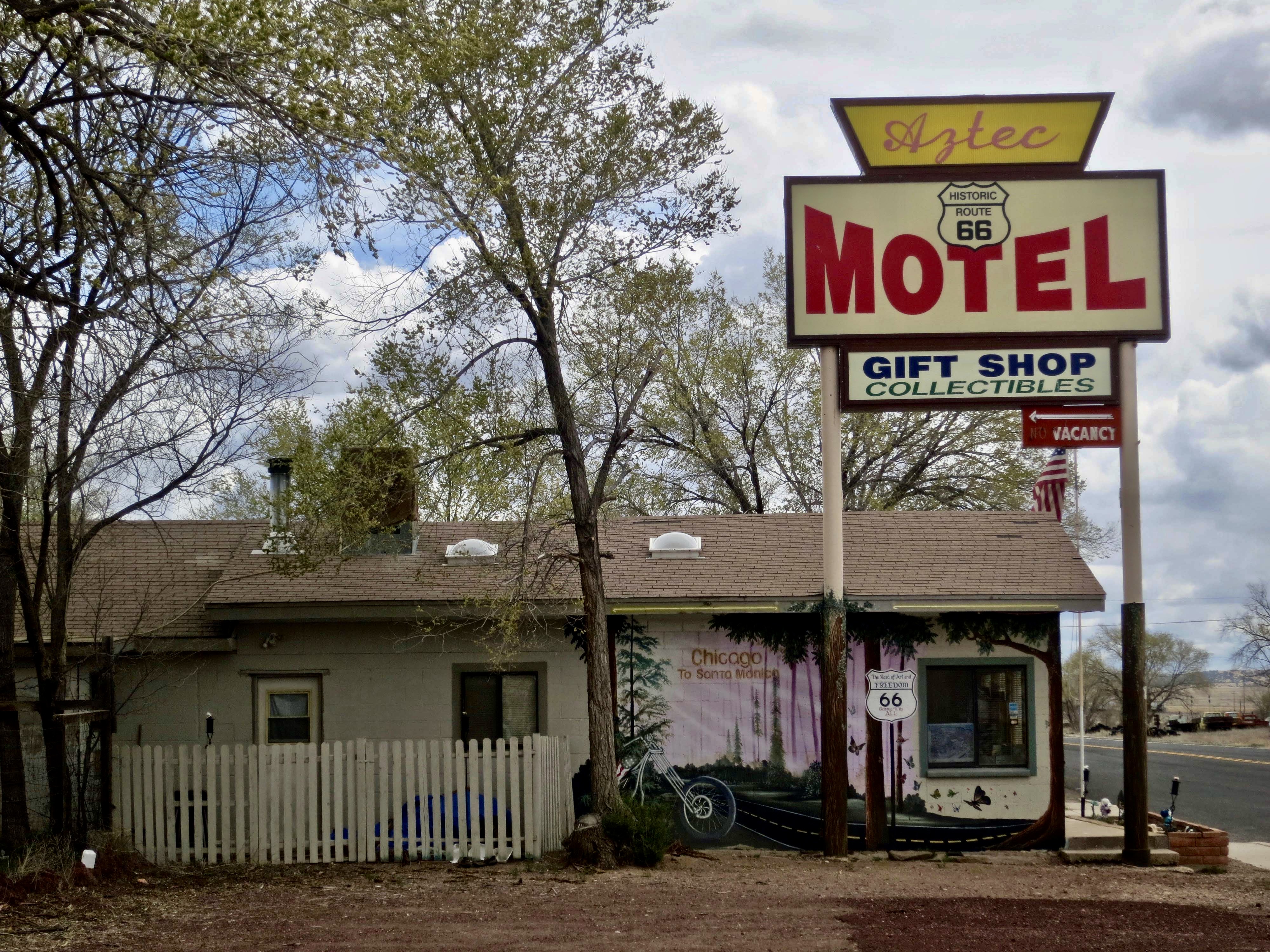
Have an ancient motel that has long since passed its expiration date? Not a problem. Just point out that people could have a unique Route 66 experience sleeping in it. Maybe there would even be a ghost for entertainment.
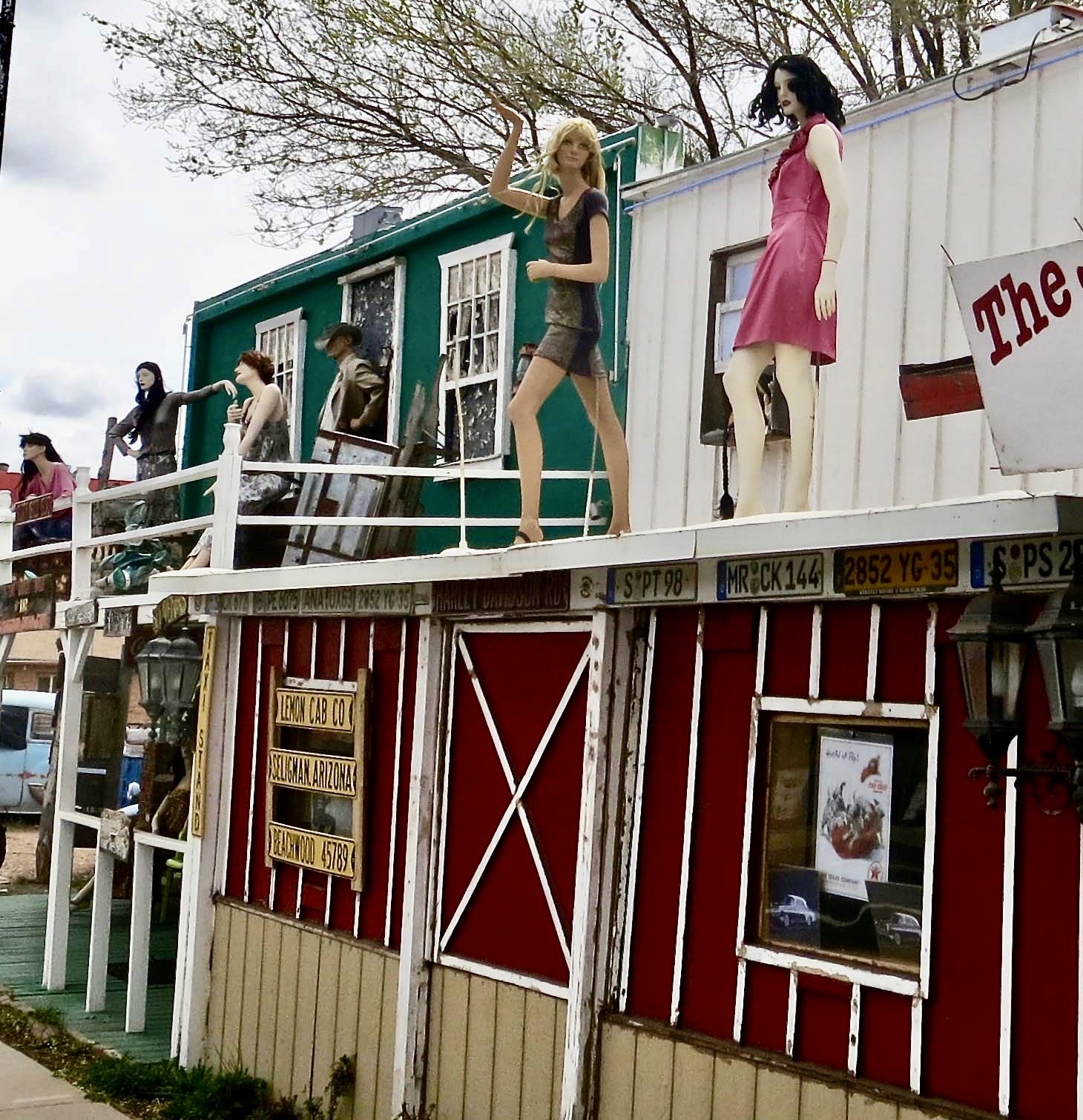
Speaking of entertainment, I suspect these woman hanging out on the veranda of a Seligman building offered a special type that may have been available in the 40s when soldiers were heading west on their way to war. Their mannequin presence still illicit smiles. I don’t remember if they were up there when I rode my bicycle through in 1989 on my 10,000 solo trip around North America.
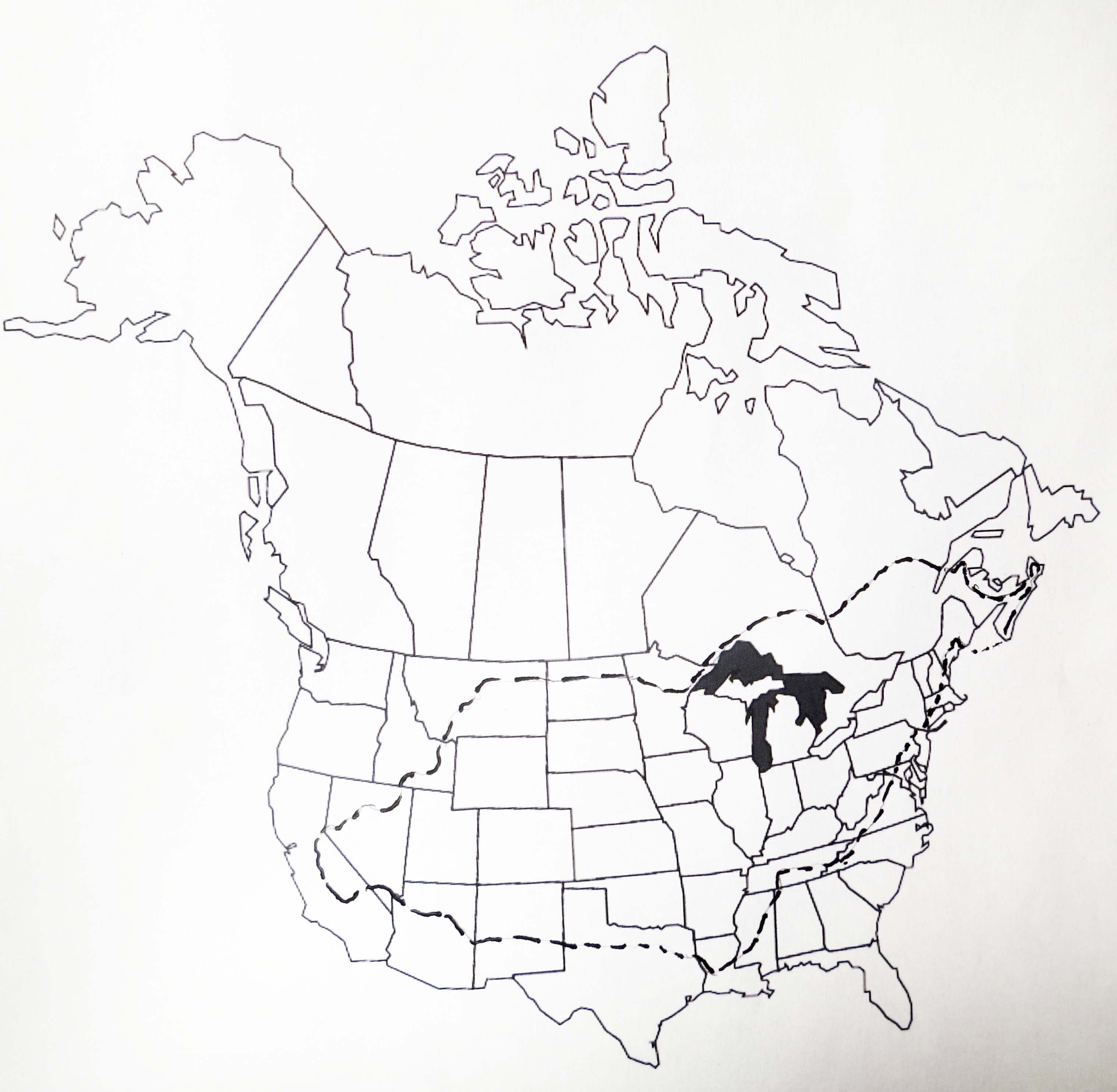
This is my bike route, starting and returning to Sacramento CA. I followed Route 66 or I-40 from Kingman to Holbrook, Arizona for around 250 mile including detours.
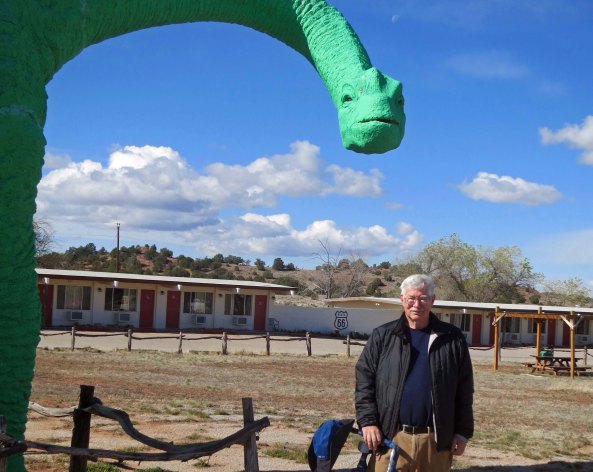
I’ll start Part 2 of my Route 66 post next week. You will meet a few dinosaurs along the way. This one was at Grand Canyon Caverns just before Seligman. Peggy took this photo of me when we drove my bicycle route in 2016. Peggy drove so I could take notes and photos.

Route 66: A Journey Back in Time… The 10,000 Mile Bike Trek

While historic Route 66 travels through six states and numerous climate zones, I always think of it as being in the desert, a prejudice I developed from reading my grandfather's Arizona Highways as a child.

While historic Route 66 travels through eight states and numerous climate zones, I always think of it as being in the desert, a prejudice I developed from reading my Grandfather’s “Arizona Highways” as a child. This photo I took a couple of years ago near Oatman, Arizona would have been the same 60 years ago.


Nostalgia: Pleasure and sadness that is caused by remembering something from the past and wishing that you could experience it again. — Merriam-Webster Dictionary

Route 66 represents nostalgia in mythic proportions. It harkens back to an earlier era— back before the hustle and bustle of modern-day freeways, back before the advent of McDs, BKs, and numerous other fast food restaurants, and back before cell phones insisted that we keep in contact with anyone and everyone all the time, even when on the open road.

It is a blue highway incarnate, and, as I am sure you have figured out, I am a blue highway kind of guy.  When I was planning my bike trip, I designed it to follow some of the loneliest, bluest roads in the US and Canada. Of course there were compromises, Las Vegas being a glaring example. And there were times when my only option was to climb onto a freeway. As I followed busy Boulder Highway up and out of Las Vegas, however, it was Route 66 and North America’s other historic byways that I was dreaming of.

I worked my way up to Railroad Pass, which marks the dividing line between Las Vegas/Henderson and Boulder City. It had been a long haul out of Vegas so breakfast at the Railroad Casino seemed in order. The casino has been there forever and lacks the glamor of its Las Vegas cousins. It even came with an old-fashioned café. I ordered one of my favorites: sausage, two eggs over medium, hash browns, whole wheat toast and coffee. It cost four bucks. I left with a happy tummy and a smile on my face, retrieved my bike from the post it was locked to, and headed for Hoover Dam, keeping an eye out for the Desert Big Horned Sheep that hang out in the mountains above the highway.
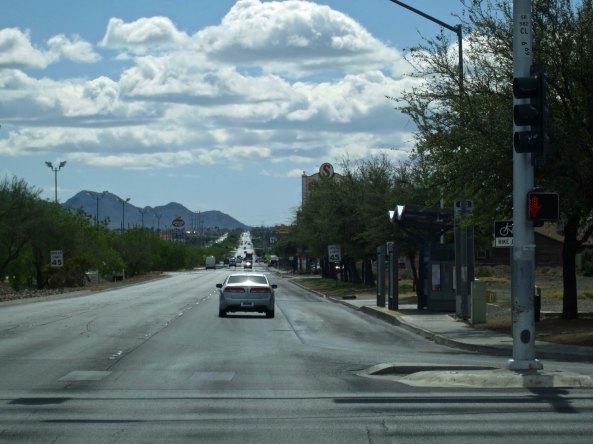
Boulder Highway as it looks today... not much different than it looked in 1989.

Boulder Highway as it looks today… not much different from it looked in 1989.

“Watch the road, Curt!” I admonished me. Do you talk to yourself? I always have. Riding on a bike for six months by myself made me much more fluent, or maybe the word is verbose.

There is a fun story about the Big Horn Sheep in the area that I related in an earlier blog but is worth repeating here. A small park is located just off the road that bypasses Boulder City to Hoover Dam. The bright green grass beckons to the sheep up on the mountainside during Nevada’s hot, dry summers and down they come. I’ve stopped by a couple of times to photograph them. An acquaintance of my friend Ken Lake lives across the road from the park and related this tale.

The path the sheep follow down to the park passes right by a house that has a shiny, aluminum garage door. One day the herd ram noticed another large ram in the door— staring back at him, challenging him. Here was competition for his lovely ewes! This wasn’t to be allowed, of course, so he reared up and charged the door full tilt, crashing into it with his mighty horns. But the other ram was still standing, albeit a bit beat up. So he charged again and then again. The door was trashed. Apparently the owner had a hard time persuading his insurance agent how the damage was caused.
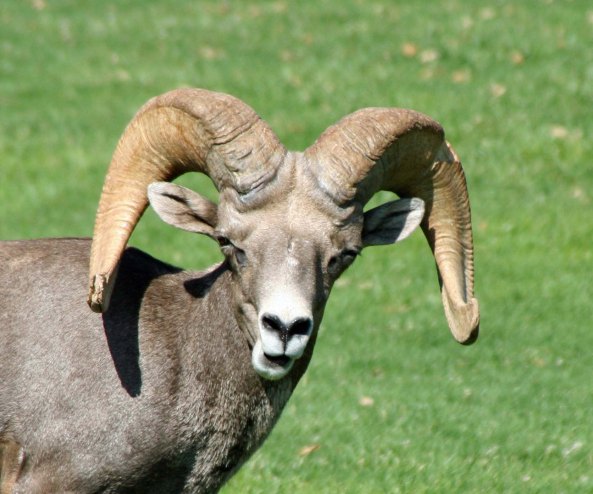
The herd ram determining whether my taking his photo was something he should be objecting to.

The herd ram determining whether my taking his photo was something he should be objecting to.

Peggy and I have a similar problem at our home in Oregon. The big tom turkeys that live in the forest like to parade their harems through our yard. The largest of the toms has discovered the turkey that lives in the bumper of our Toyota Tacoma pickup. He is not happy. I’ve seem him stand in front of the bumper for thirty minutes at a time, fluffing out his feathers, sticking out his neck in a loud gobble, and pecking the bumper. The other turkey fluffs his feathers, sticks out his neck and pecks right back. All of this would just be humorous except the big tom goes looking for the other turkey. He flies up, lands in the pickup bed… and poops. Admittedly, turkey poop isn’t as traumatic as having your garage door trashed, but it is copious and messy. The tom and I have had several discussions about my love of roast turkey.

I was yet unaware of the Big Horn Sheep and a long way off from owning a wilderness retreat in Oregon when I cycled by the park on my bike trip. I made my way down to Lake Mead and crossed over Hoover Dam. Looking out over the lake and the distant drop on the far side from a bicycle was quite an experience. If I were to cross the dam today on my bike, TSA would stop me at its check point and make me empty out my panniers to determine whether I was a mad bomber. Why else would someone bike across the dam— and up the other side?

The climb out was hot and steep, filled with hairpin turns, autos and large RVs. I sweated all of them, so to speak. Reaching the top, I was faced with another challenge, miles and miles of sizzling, desolate desert with minimal facilities. My kind of country.
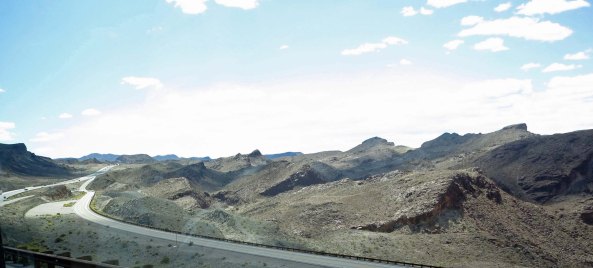
A high four multi-lane bridge has replaced crossing over Hoover Dam when traveling between Nevada and Arizona. This shot looks down on the old highway I was following after climbing out of the canyon.
A high, multi-lane bridge has replaced crossing over Hoover Dam when traveling between Nevada and Arizona. This shot looks down on the old highway I was following after climbing out of the canyon.

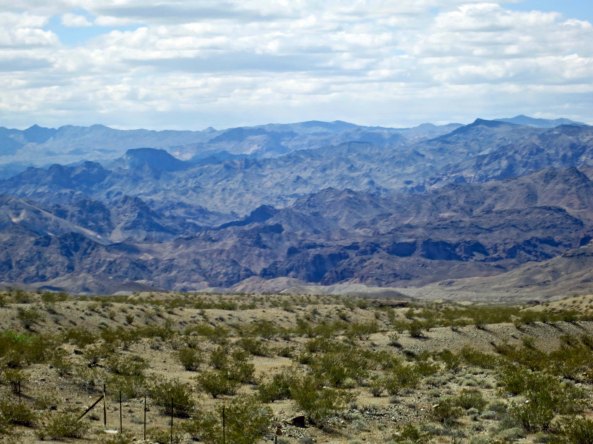
A bit farther up the road looking south. Dante would have found this site suitable for his concept of hell.

A bit farther up the road looking south. This photo could have served as an illustration for Dante’s Inferno.

I biked on, catching far off views of the Colorado River and then picking out a distant mountain to bike toward. As I reached my goal, the sun began to set, and warm breezes turned slightly cool. It was time to search for a home. Unfortunately, a sturdy fence blocked easy access to the desert. I wasn’t particularly interested in being caught climbing over. There are a lot of guns in Nevada. A kindly dirt road came to my rescue. I took advantage of a break in traffic and zipped down it and into a dry gulch, the perfect hiding place— as long as it didn’t rain and the local rattlesnake was elsewhere. I fired up my backpacking stove, made a cup of coffee, added a dash of 151 proof rum, and downed a granola bar. Life was good. Coyote music lulled me to sleep.
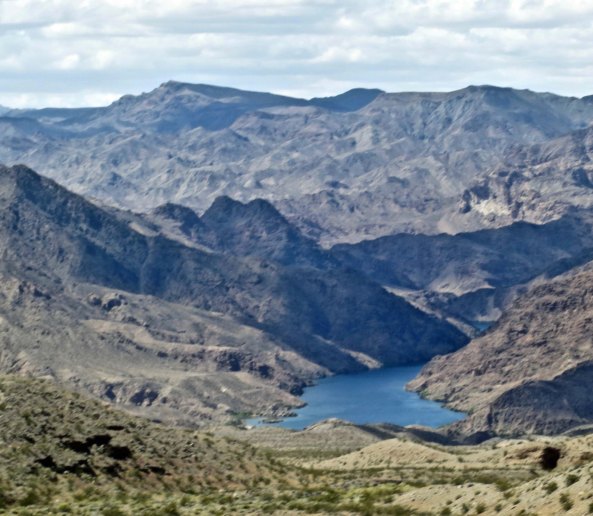
Looking down on the Colorado River from a viewpoint on the Las Vegas-Kingman road.
Looking down on the Colorado River from a viewpoint on the Las Vegas-Kingman road.

I used this mountain as a marker to determine my progress.
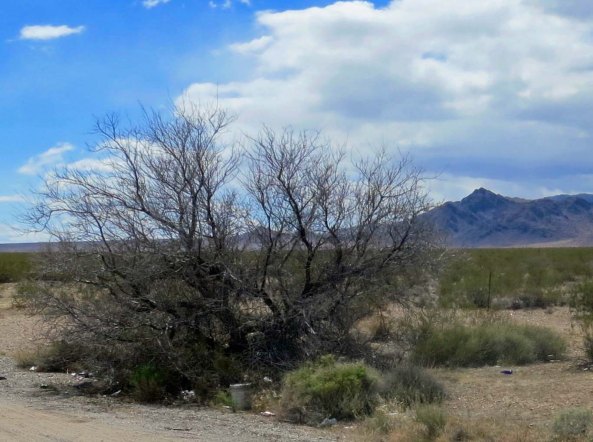
I used this distinctive mountain as a marker to determine my progress.

Looking out toward my home for the night.

Looking out toward my home for the night. Not bad, eh? Or is it that 151 proof rum improves how everything looks?

I was up early in the morning and out before the traffic. Fifty-miles later I was in Kingman, Arizona, a town bursting with pride about its Route 66 heritage, and hoping to harvest a bundle of tourist dollars because of it. I grabbed a room in a beat up old motel that claimed Route 66 vintage and prices. Following a much-needed shower, I headed out to follow the road through the town and absorb some of its ambience.
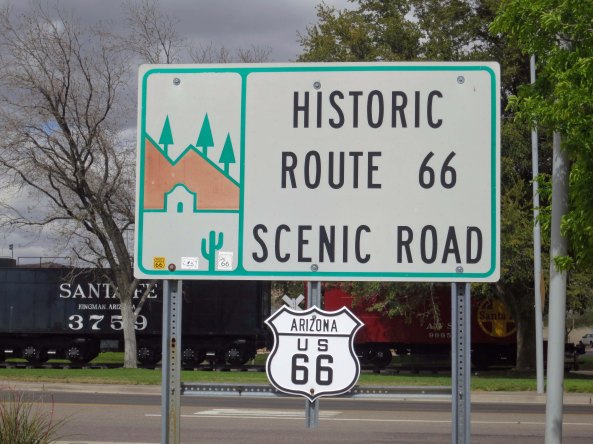
Kingman, Arizona is quite proud of its connection to Route 66. Two different museums in town feature Route 66 themes.
Kingman, Arizona is quite proud of its connection to Route 66. Two different museums in town feature Route 66 themes.

A number of murals depict a romanticized view of travel on the highway.
A number of murals depict a romanticized view of travel on the highway.

When I talk about the inexpensive motels I found along my bike route, this is what Peggy assumes they looked like.
When I talk about the inexpensive motels I found along my bike route, this is what Peggy assumes they looked like.

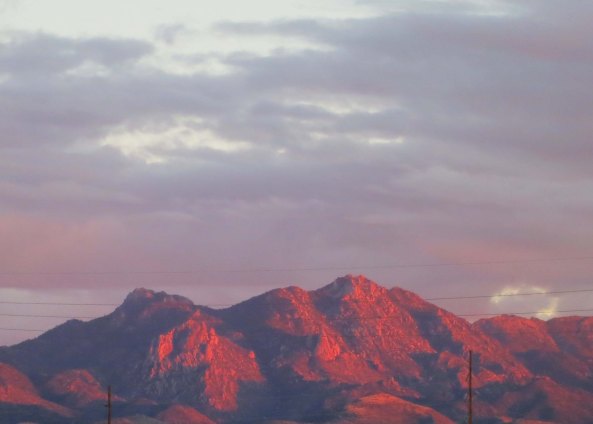
A beautiful desert sunset as seen from Route 66 in Kingman.

A desert sunset as seen from Route 66 in Kingman.

The next day found me absorbing much more as I left the town behind and made my way east on what was once one of America’s main cross-country routes. Today it is a quiet road. The majority of the people traveling east and west are zipping by on Interstate 40, rushing toward whatever destination/destiny awaits them.

When I think of Route 66, I think desert. When I was a small boy, I was enthralled by my grandfather’s subscription to “Arizona Highways.” It often featured Route 66, and it featured deserts. My first acquaintance with the highway was when I was driving west from Atlanta in 1968 and followed portions of it through Arizona, including the one I was biking on.

My route for the day took me on a gentle climb up through arid lands with views of mesas along the way. Occasional creeks were teaming with life that was seeking the desert’s most treasured commodity, water. I passed by ramshackle old buildings that had seen their heyday in the 40s and 50s. I waved at the few cars that passed me, either locals going about their business, or romantics like me, seeking a taste of a bygone era. A train whistle receding into the distance fit right in. I ended my day at the Grand Canyon Caverns, a tourist attraction of the early Route 66 that still pulls in visitors today.
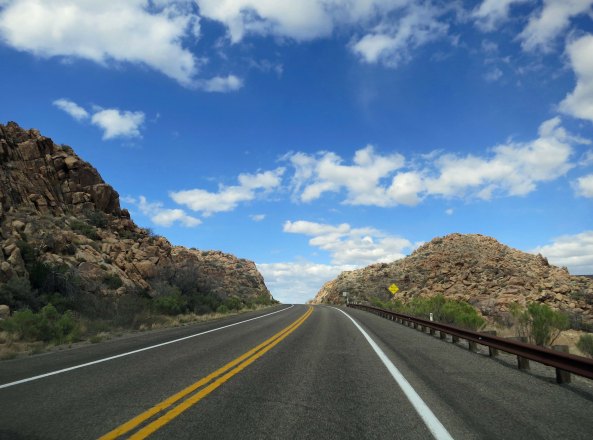
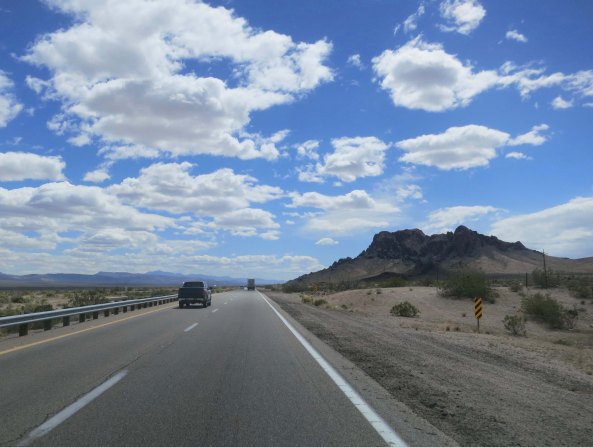
Route 66 above Kingman.
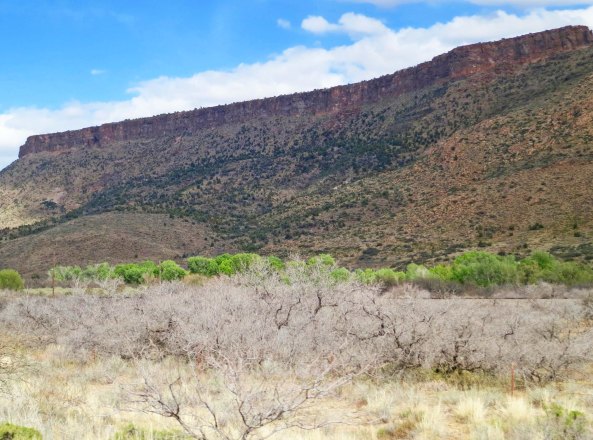
Route 66 above Kingman.

A mesa above the highway. Traveling over the mets and beyond will bring you to the Grand Canyon.

A mesa above the highway. Traveling over the mesa and beyond will bring you to the Grand Canyon.
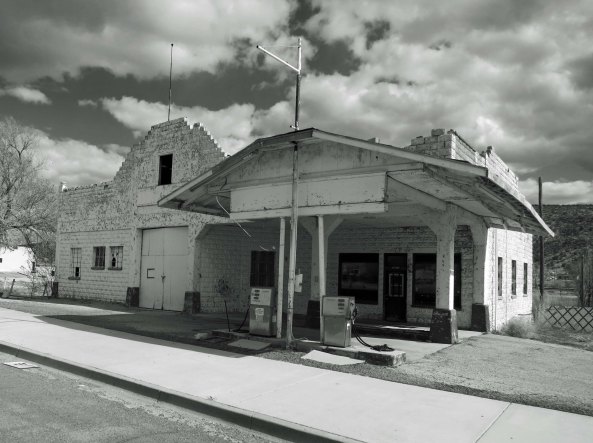
An old building that served as a gas station and garage during the heyday of Route 66. The gas pumps had been updated, but even they were no longer in use. I rendered the photo in black and white to represent the era.
An old building that served as a gas station and garage during the heyday of Route 66. The gas pumps had been updated, but even they were no longer in use. I rendered the photo in black and white to represent the era.

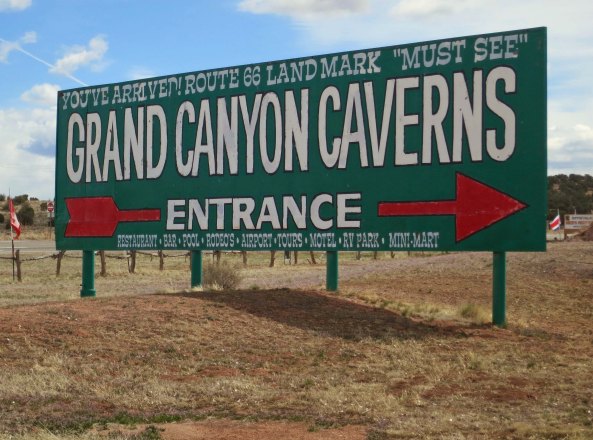
My campground for the evening with a typical Route 66 sign.
My campground for the evening with a typical Route 66 sign.

The campground/motel and caverns also featured dinosaurs. (Photo by Peggy Mekemson.)

The campground/motel and caverns also featured dinosaurs. (Photo by Peggy Mekemson.)

The restaurant featured Betty Boop.
The restaurant featured Betty Boop.

And this map showing historic Route 66.

And this map showing historic Route 66. The arrow points to the Grand Canyon Caverns.
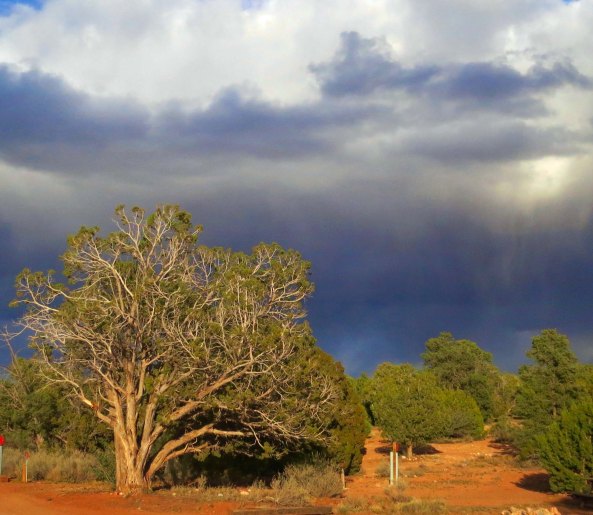
Sunshine lights up dark clouds that were promising rain at the campground.

Sunshine on the juniper trees provides an interesting contrast to the dark clouds that were promising rain at the campground.

Sunset at the Grand Canyons Cavern Campground.

I’ll conclude this post with sunset at the Grand Canyons Cavern Campground.

Note: If you are new to this series, my wife Peggy and I are retracing my 1989 bike route, this time in our van. Most of the photos come from our present trip.

NEXT BLOG: I will feature the rest of my bike trip across Arizona, including a very scary one a.m. invasion of a motel room I was sleeping in.


The (not so) Wild Burros of Oatman Az. and Route 66… On the Road

Oatman Arizona is noted for its history, location on Route 66 and its wild burros. As this photo suggests, its burros are not very wild, but they are characters.

Oatman, Arizona would be a ghost town if it weren’t for its wild burros and location on Route 66. Peggy and I stopped there on one of our explorations of the historic highway and were immediately greeted by the burros.

A ten million dollar gold strike in 1915 gave Oatman its initial growth spurt. Travel on Route 66 during the highway’s days as a major east-west road maintained its existence. Clark Gable and Carole Lombard spent a honeymoon night there and Clark returned occasionally to gamble with the miners.
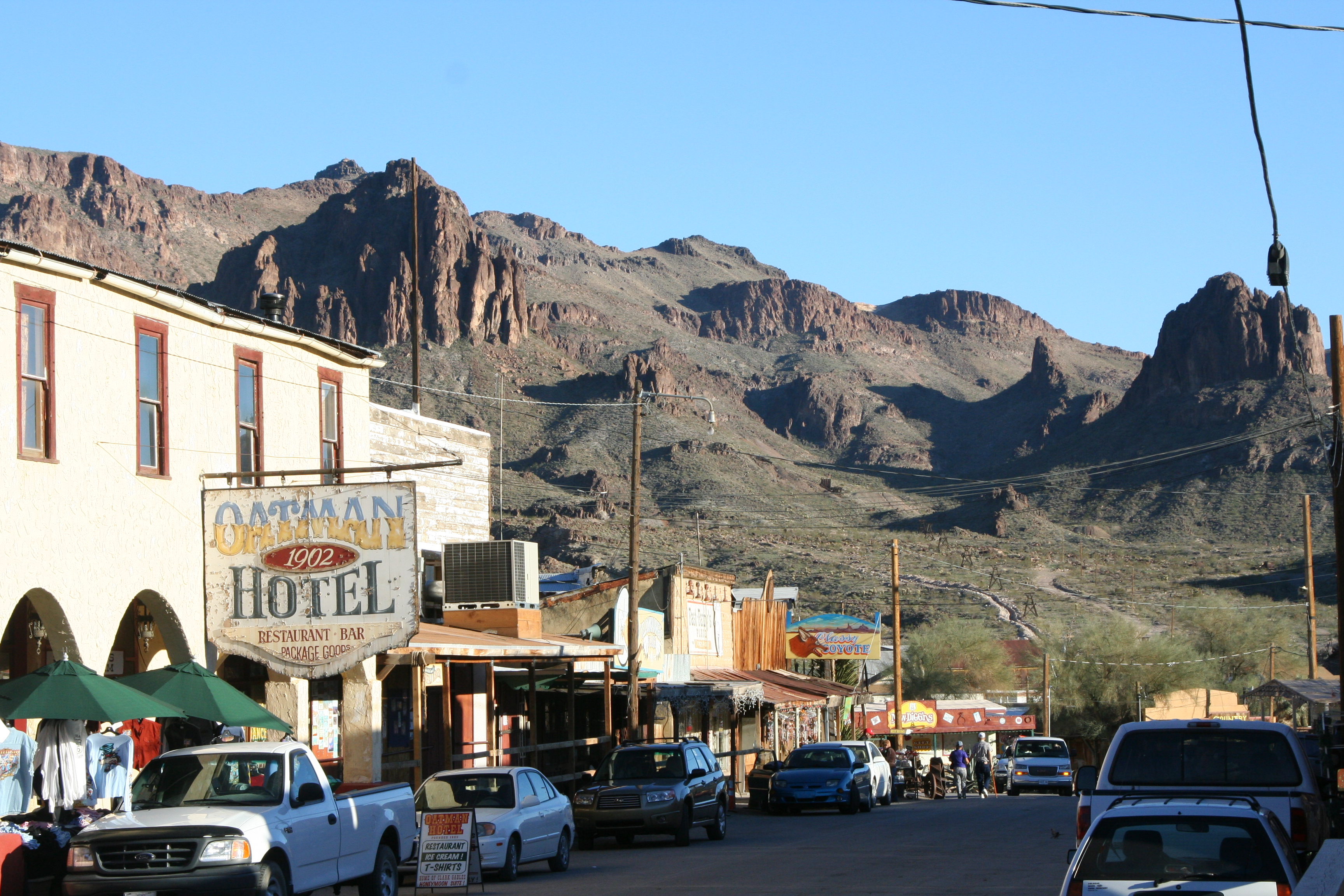
A view of main street Oatman in its desert setting with its historic buildings.

The town received its name from Olive Oatman who had been kidnapped by the Yavapai Indians, rescued and tattooed by the Mohave Indians and eventually released near the town.
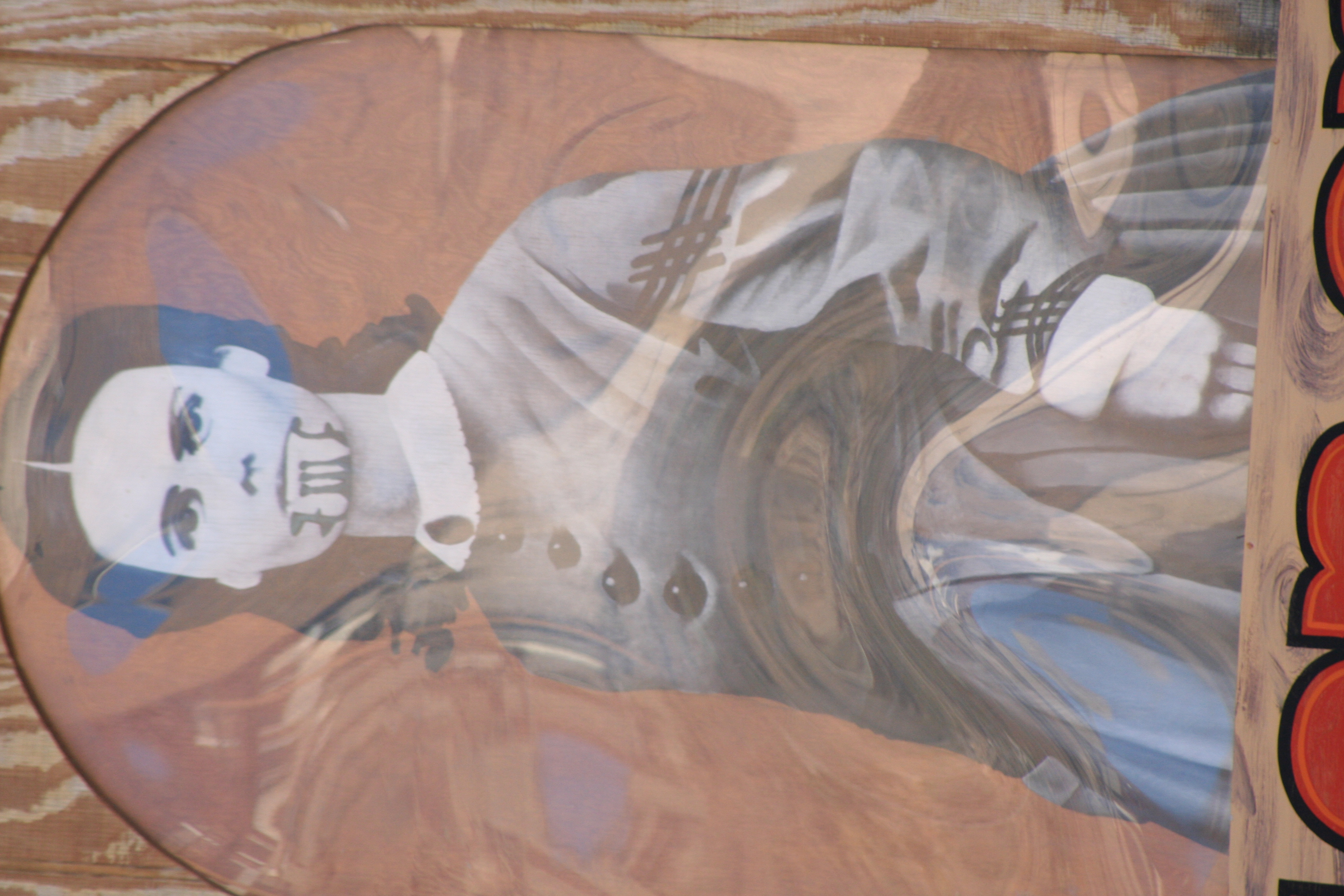
Olive Oatman with her tattoos that were applied by the Mohave Indians.

The wild burros, or donkeys, are a legacy of early prospectors who used the burros to carry their gear as they wandered in search of gold and other valuable minerals. Today they can be found throughout the desert Southwest. The burros of Oatman hit tourists up for carrots, provide lessons on donkey mating practices, and leave their calling cards on the streets of the town.
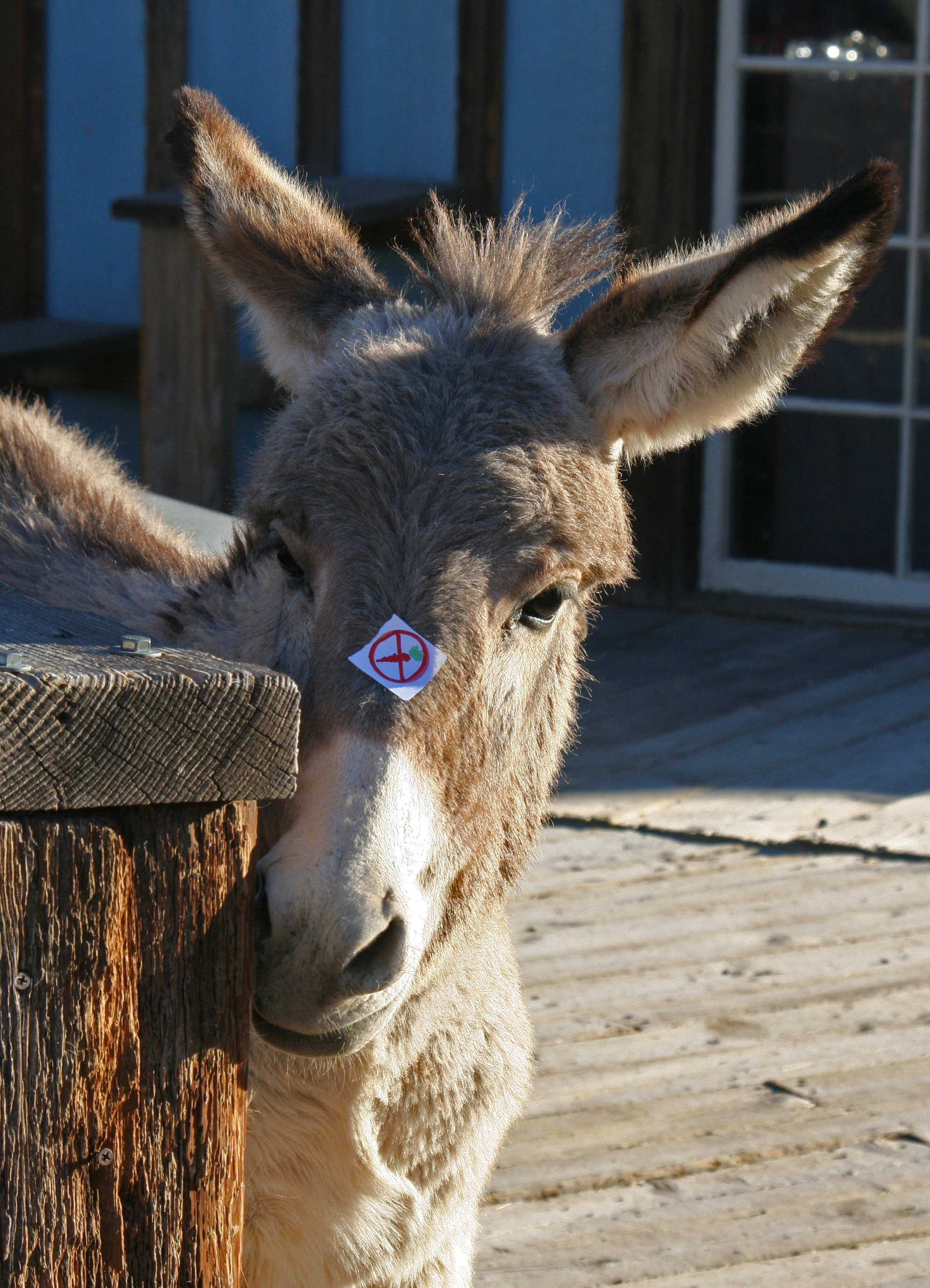
This cute little fellow had a no carrot sticker on his nose. Apparently young burros can choke on the carrots.

By 1960 the gold was gone and the highway was rerouted. Oatman was on its way to ghost town status. Fortunately the energy of the town’s citizens, the rebirth of Route 66 as a national historic treasure, and the desire of the burros for carrots have given Oatman reasons to prosper. It’s definitely worth a visit.

Oatman is located in northwestern Arizona off of Highway 95 on Historic Route 66 between Bullhead City and Needles.

The Peripatetic Bone joins an historic Route 66 sign on the edge of Oatman.

Historic Route 66 a few miles south of Oatman reminds travelers of another time and invites them onward.
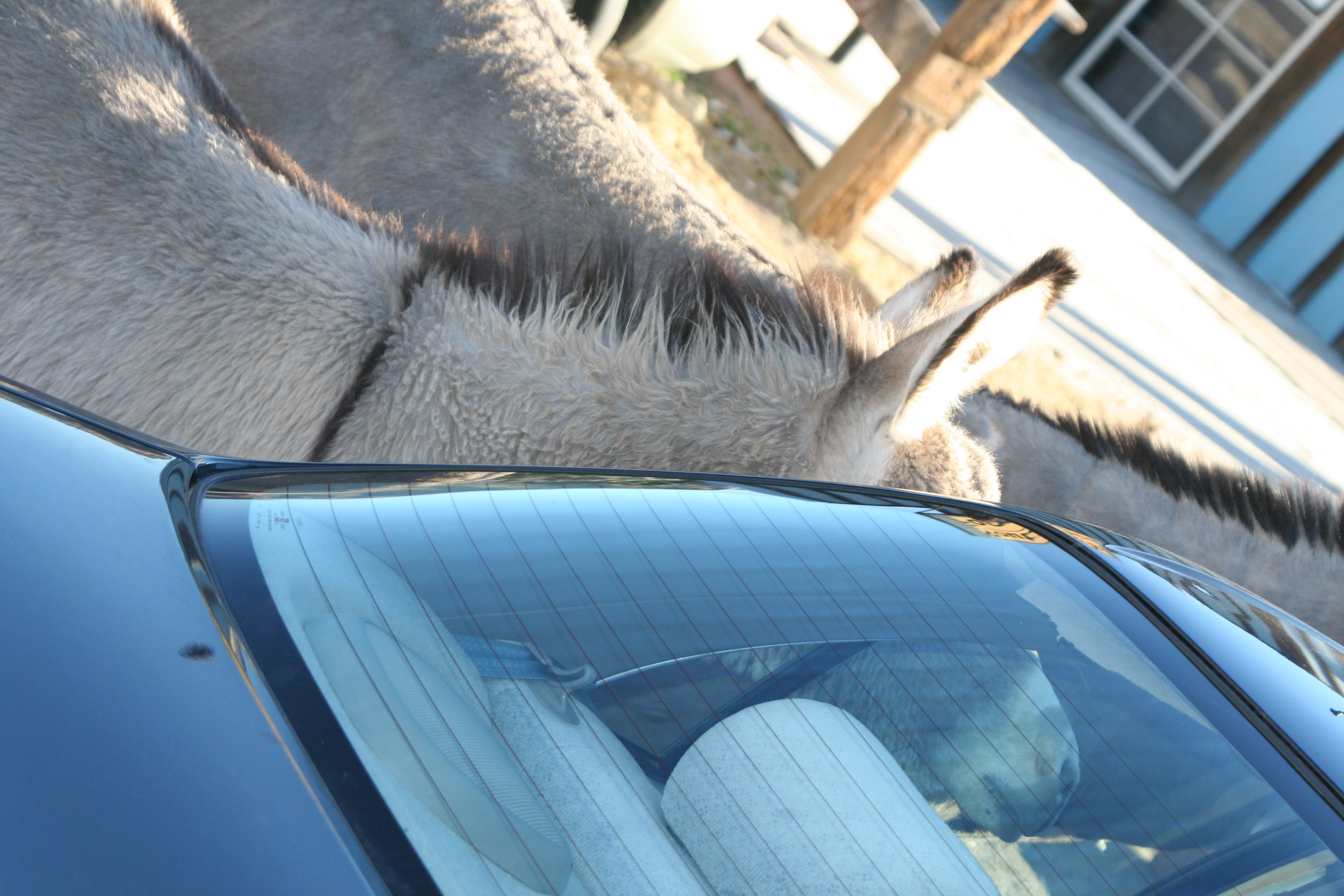
A good reason to leave your windows up when visiting Oatman Arizona.
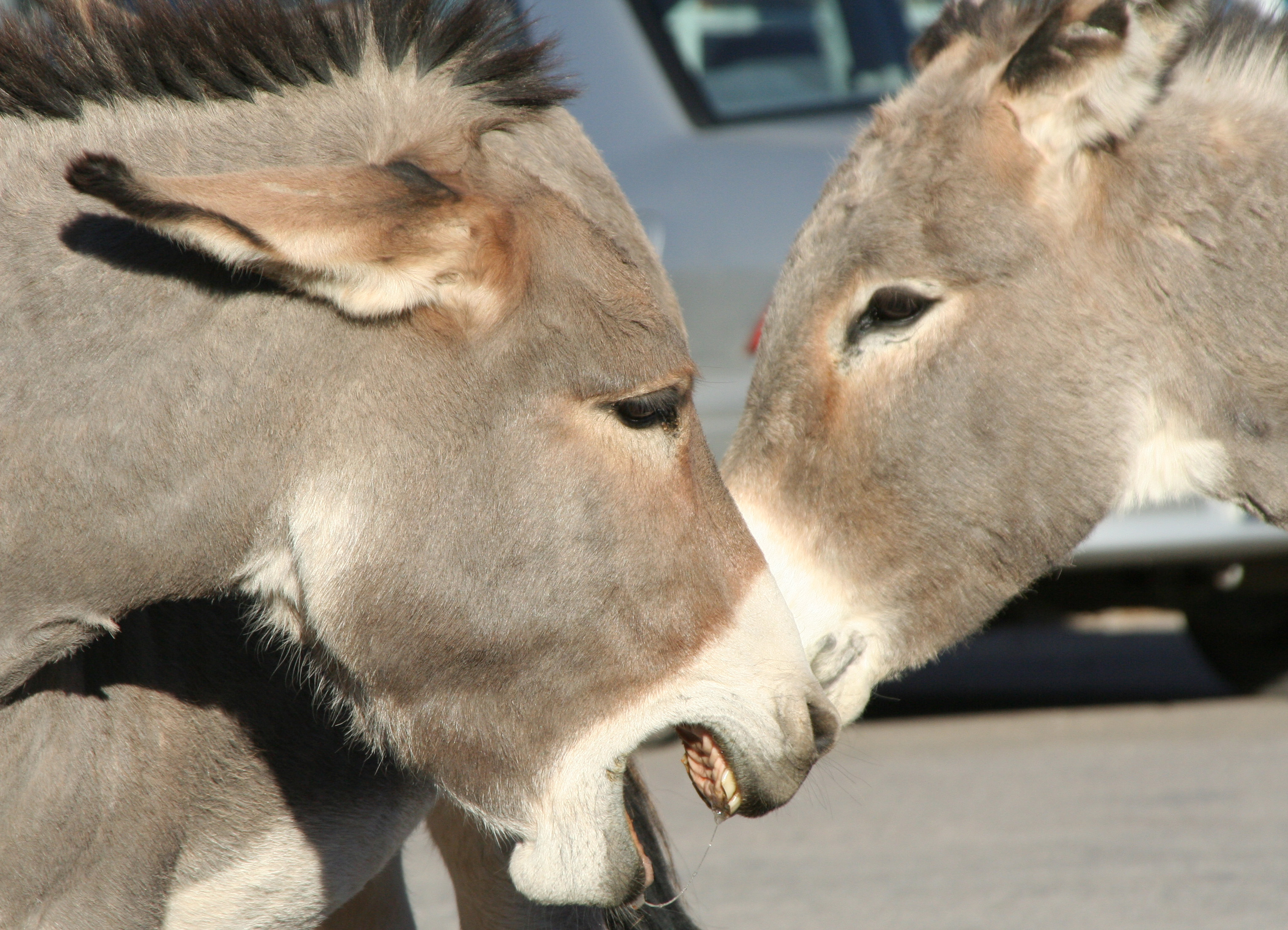
This photo deserves a caption. Mine would be, "Watch what you're sniffing, Mr.!"
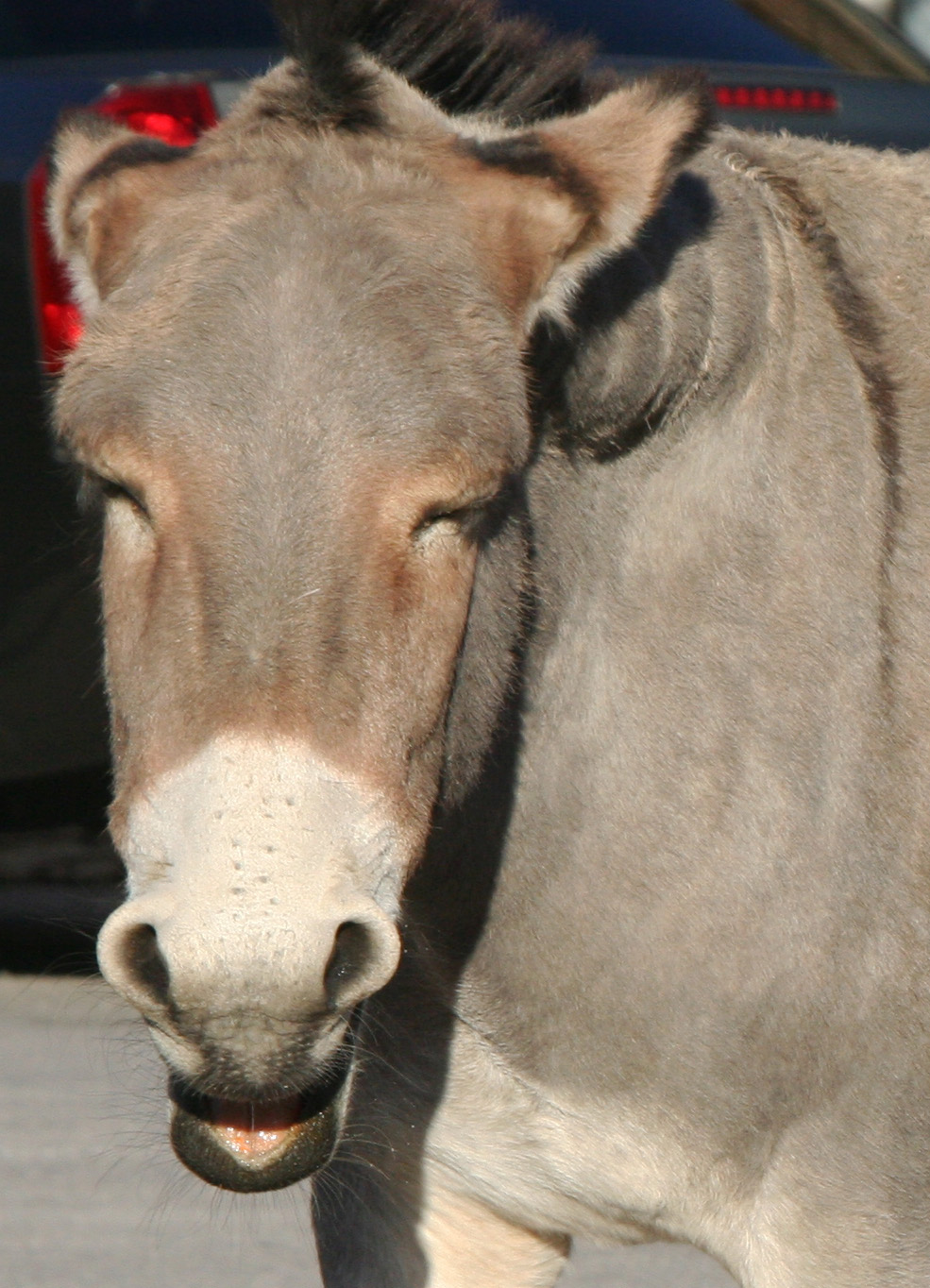
Sheer pleasure?