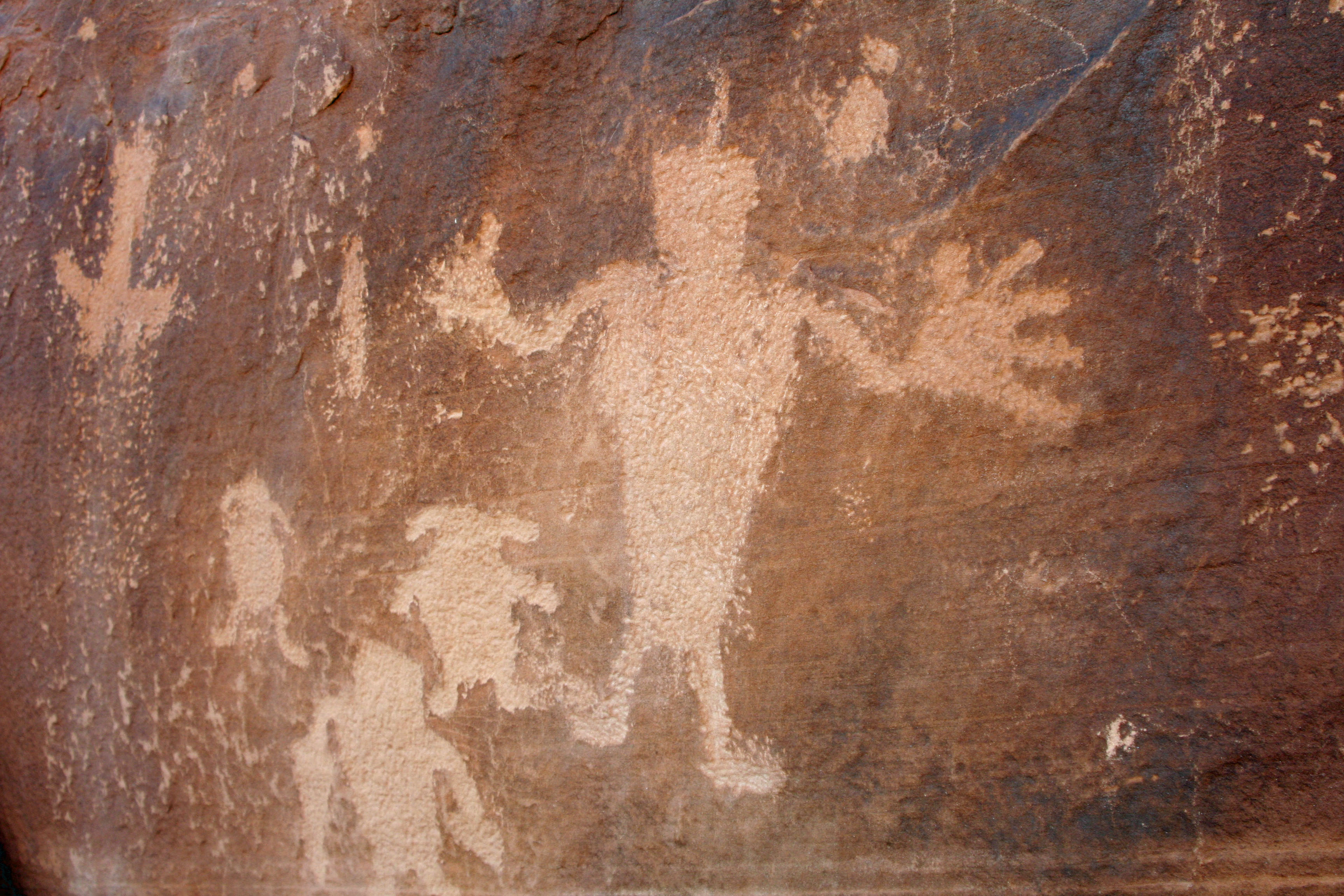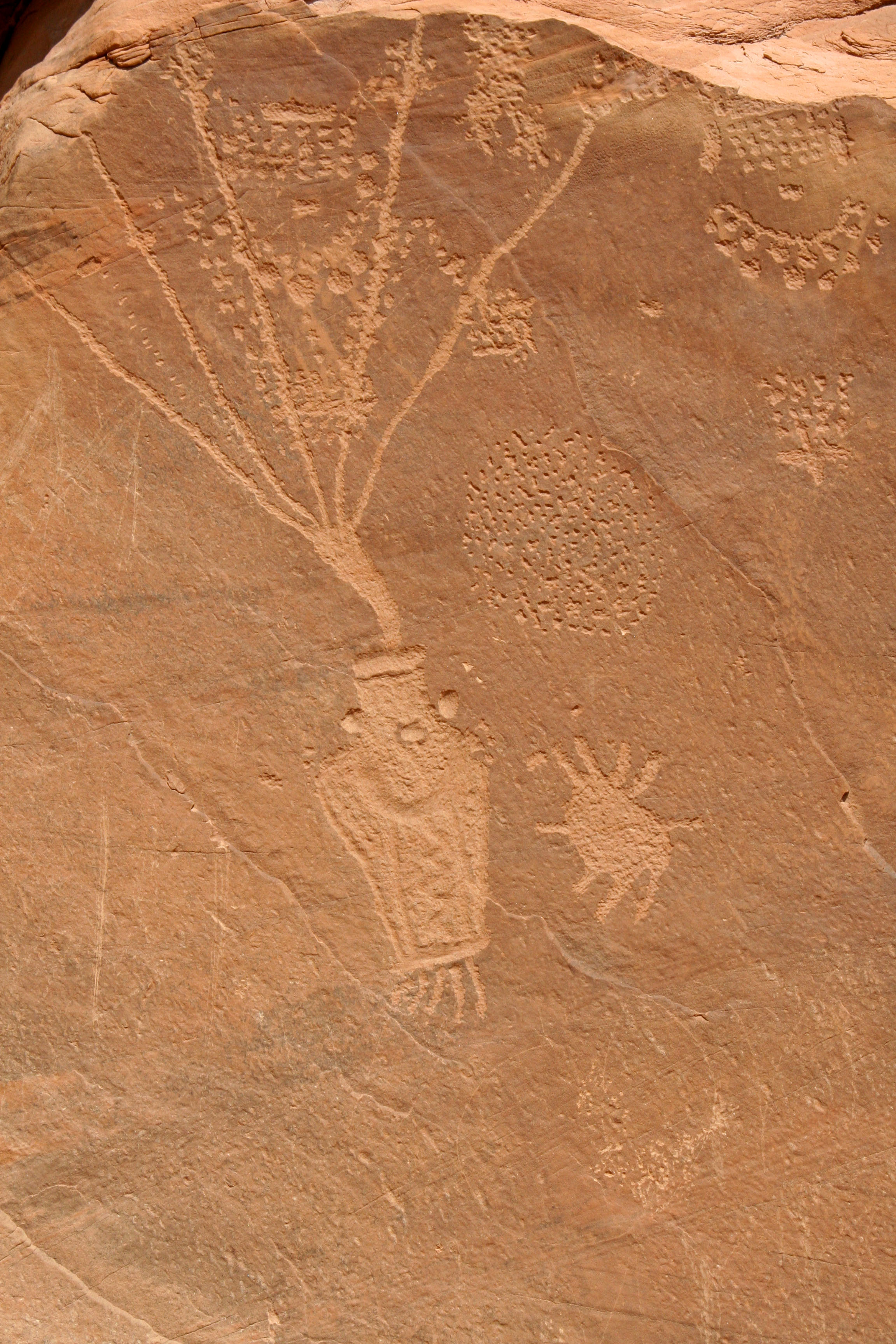
Cub Creek Petroglyphs… Dinosaur National Monument

Like much Indian rock-art, Cub Creek petroglyphs in Dinosaur National Monument raise intriguing questions. It would be fascinating to know the story behind this unique anthropomorphic figure. What do the lines stretching toward the sky represent?

Peggy and I crossed over the Green River in Dinosaur National Monument and followed the road toward the cabin of Josie Basset Morris, the tough old pioneer woman who had worked her way through five husbands and finally discovered she preferred living alone.

The river, mountains and distant vistas entertained us along the way. Two prominent landmarks, Elephant Toes and Turtle Rock, lived up to the names the early settlers had bestowed on them. I found the big toes particularly amusing.
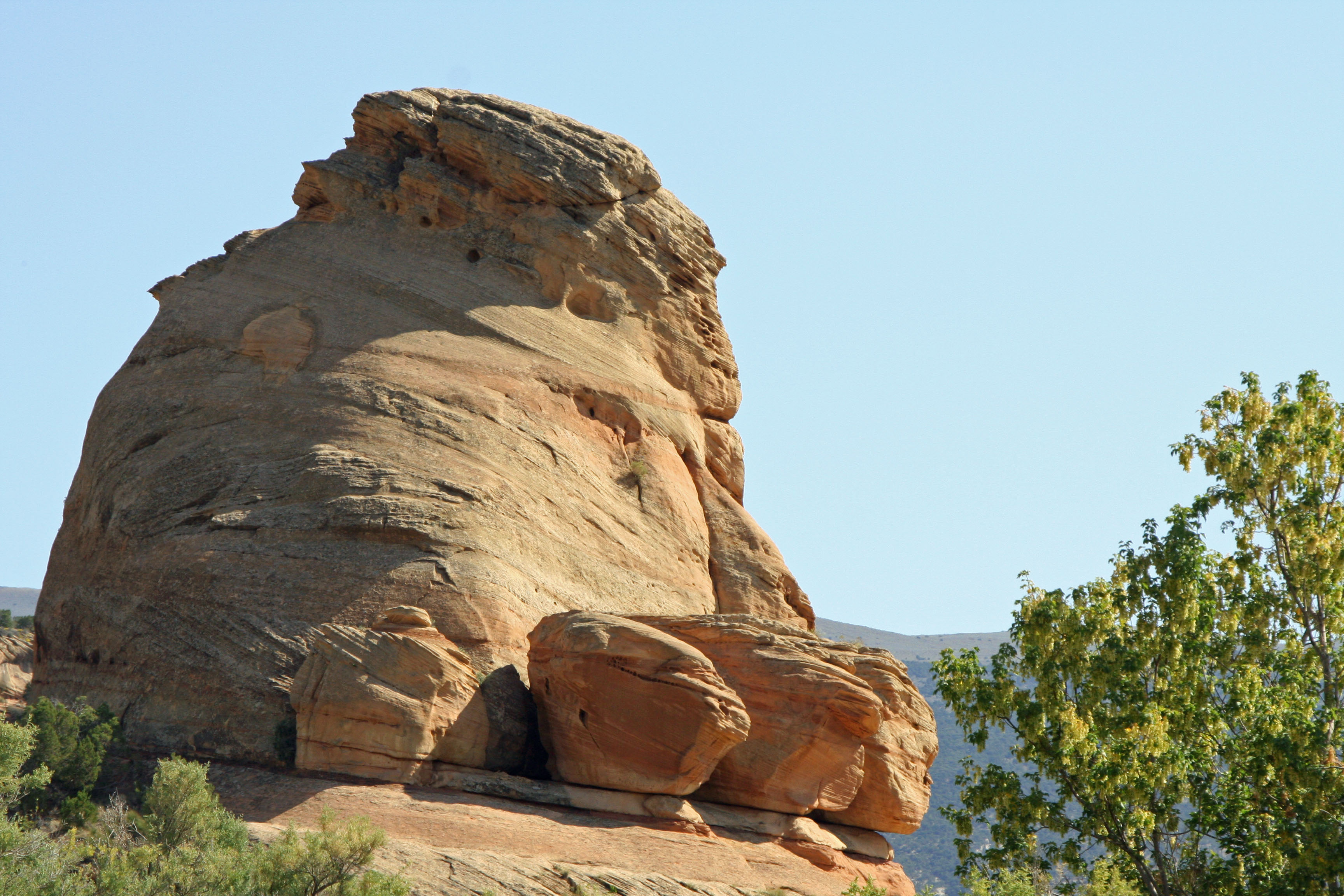
Elephant Toes Rock in Dinosaur National Monument along the Cub Creek Road. 
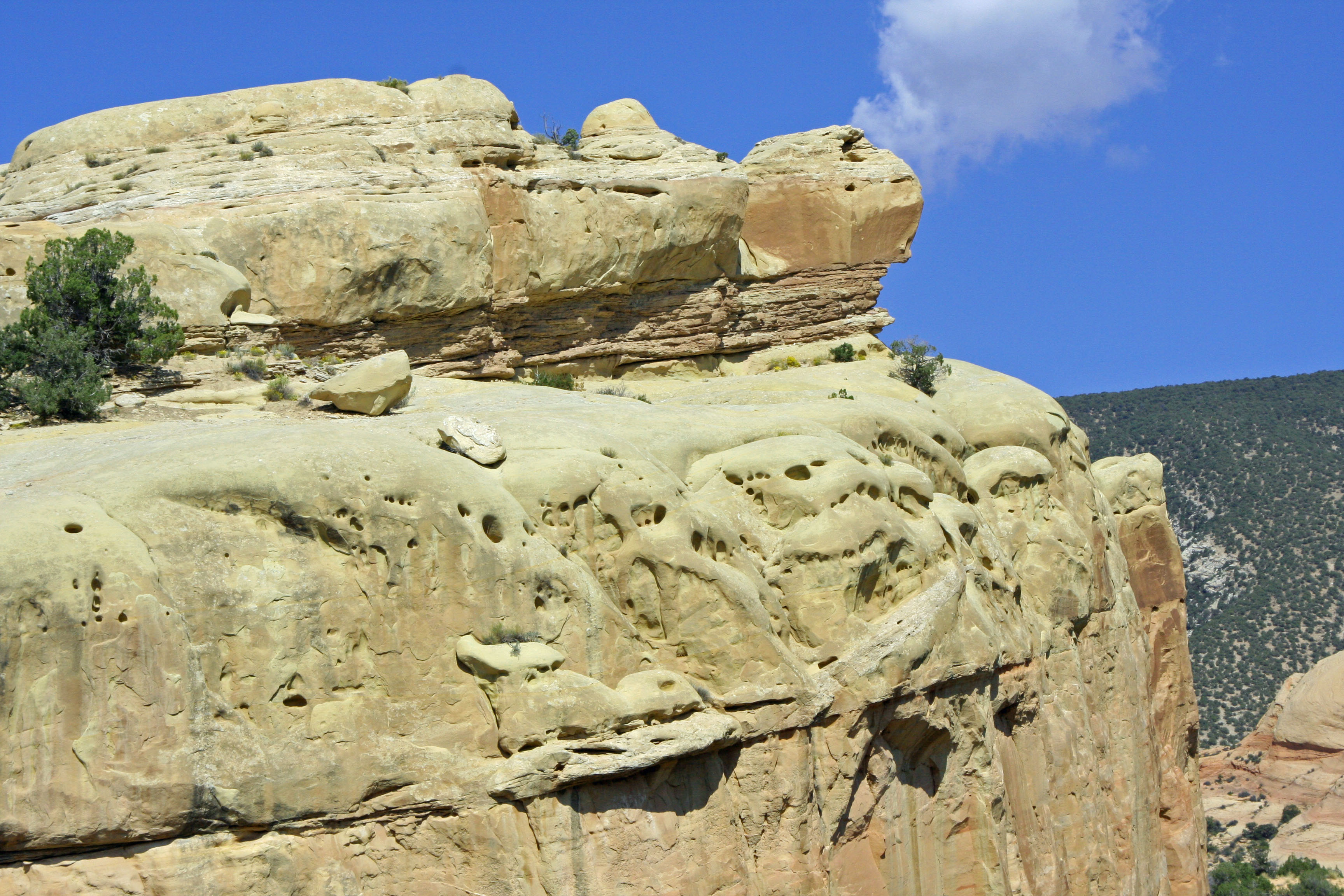
While not  as humorous as Elephant Toes, the turtle of Turtle Rock is easy to see. Both Native Americans and pioneers were quick to see and name familiar figures in the landscape.

The true surprise on our way to Josie’s, however, was the Indian rock-art. Huge six-foot lizards had been pecked into the cliff faces high above the Cub Creek Valley. One can only wonder if the Native Americans of the Fremont Culture had somehow made the correlation between dinosaur bones found throughout Dinosaur National Monument and really big lizards. Or did small lizards so prominent in desert environment serve as the models?
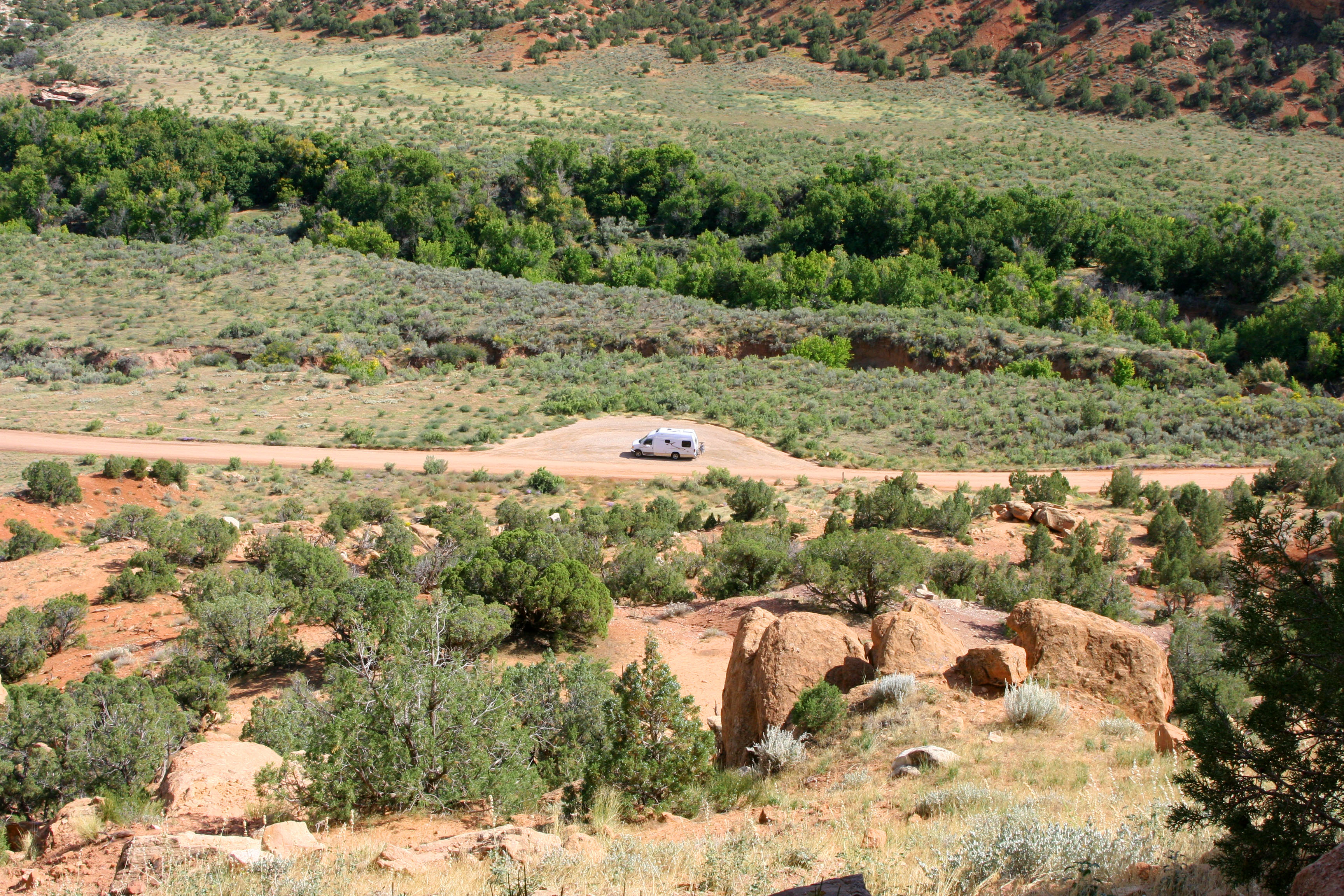
Our van, Quivera, provides perspective on how high up in the cliffs the Cub Creek petroglyphs are.

Giant, six-foot long, rock-art lizards work their way up the rock face at Cub Creek. Are they representative of the dinosaur bones Native Americans found at Dinosaur National Monument?

Or did the giant petroglyph lizards represent the small lizards so prominent in the arid regions of the West?

Numerous other petroglyphs also demanded our attention. We even found a partial image of Kokopelli, the hunch backed flute player found in ancient rock-art from Mexico to Canada and whose image has been applied on everything from jewelry, to blankets, to pottery in today’s gift shops throughout the West. Kokopelli was both a musician and trickster god, but mainly he was a fertility deity known for his for his bad behavior. Watch out fair maidens one and all.

My wife Peggy admires a small section of the numerous petroglyphs found at the Indian rock-art site on Cub Creek in Dinosaur National Monument.

A partial petroglyph of the flute playing Kokopelli is found at the Cub Creek Indian rock-art site. Odds are he is luring young maidens with his music.
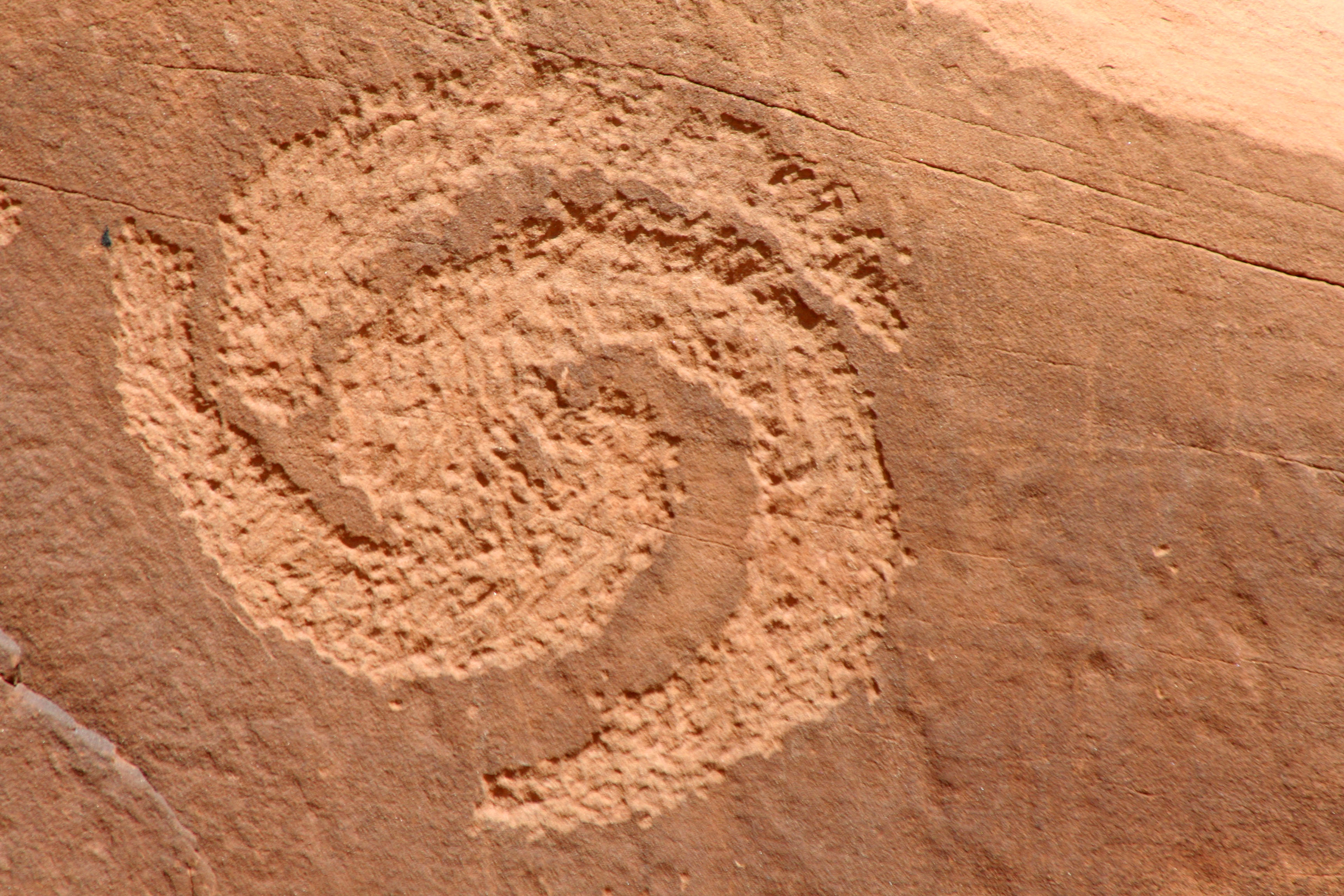
Geometric forms are common in rock-art. This galaxy-like representation caught my attention.
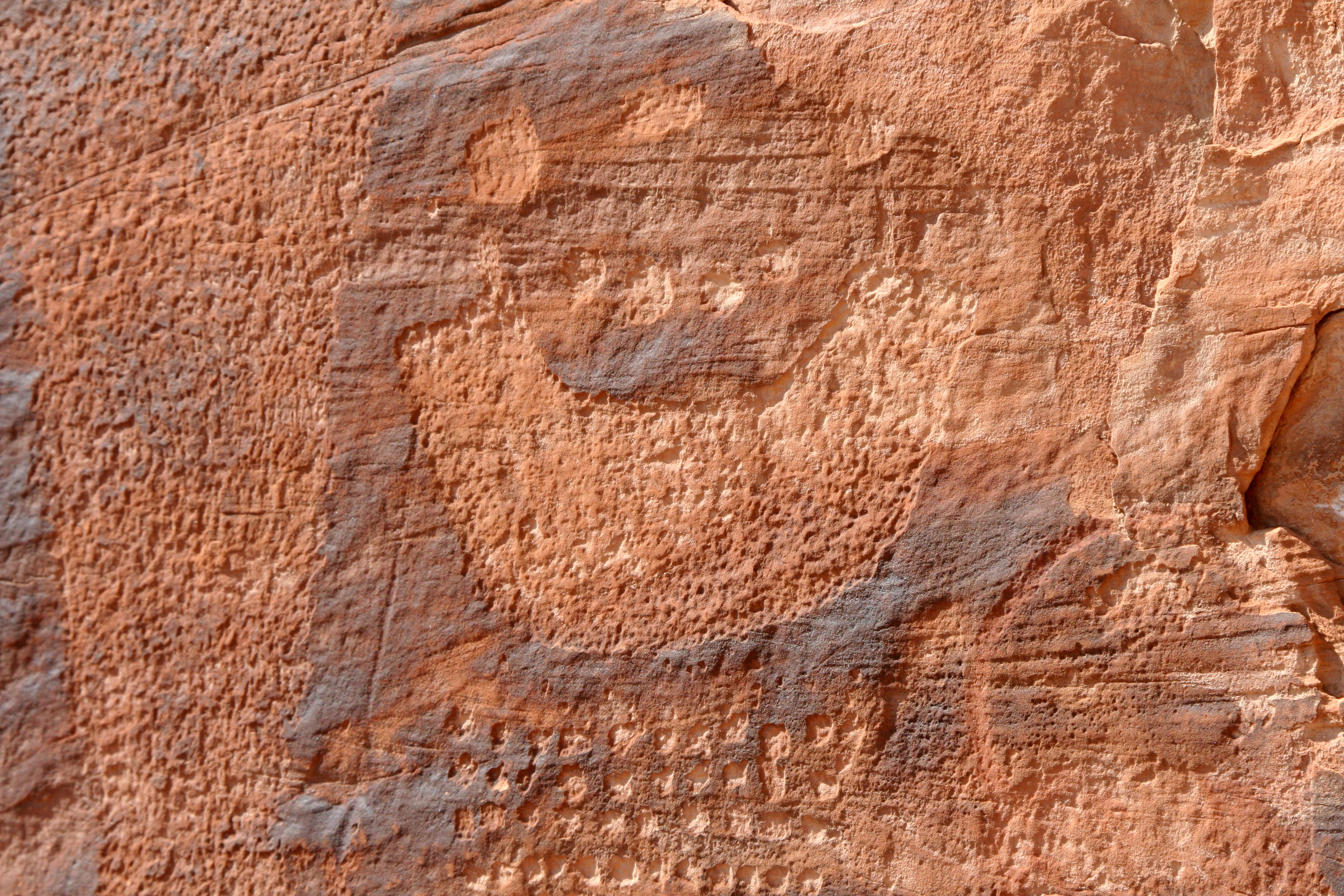
I selected this particular photo because it demonstrates how dark rock varnish has been chipped away in the petroglyph process to reveal the lighter colored rock underneath.

An early day smiley? This guy appears to me to be all mouth and legs but it’s creator likely had something else in mind.
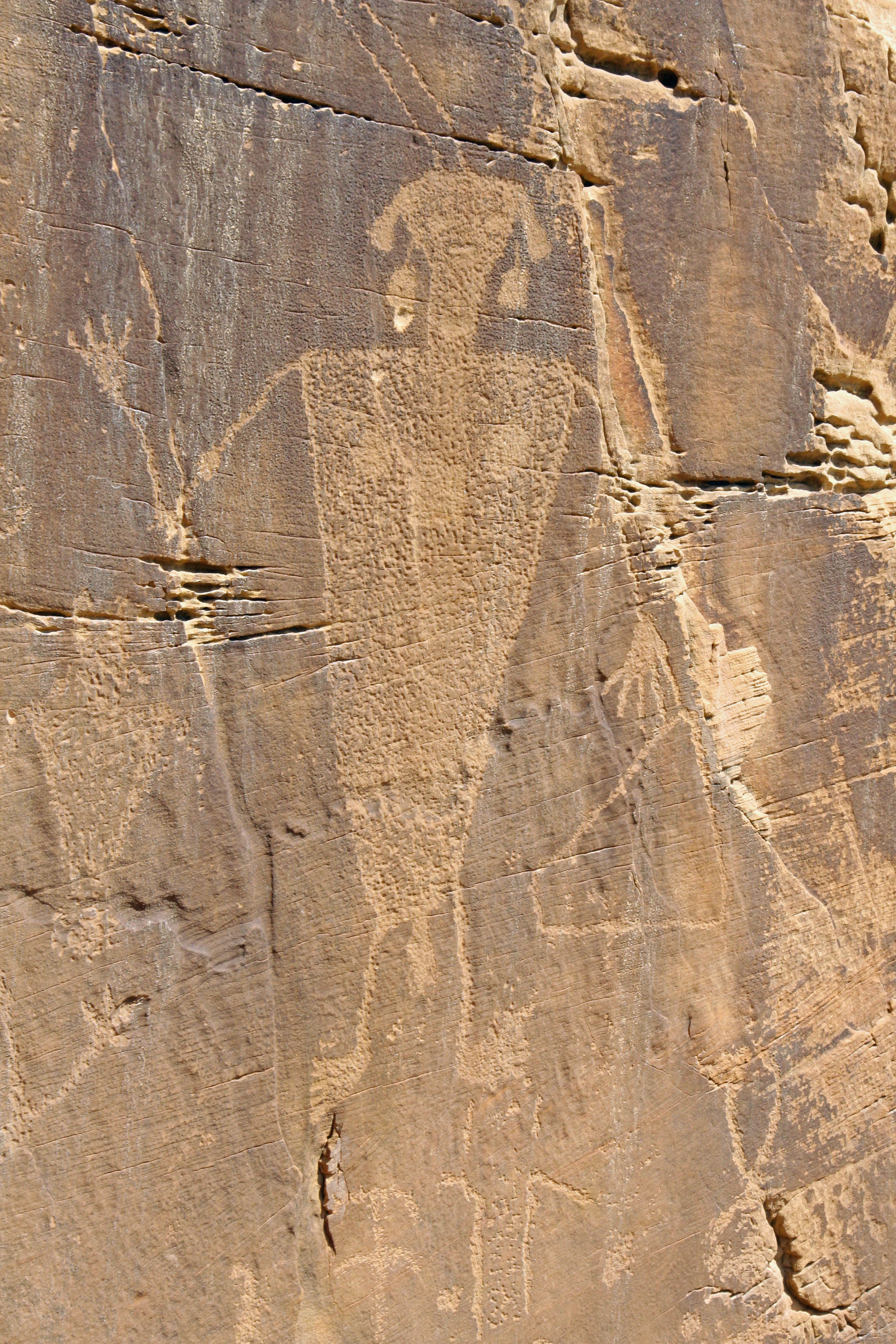
Greetings Earthlings. Check out the dangling ear rings and necklace on this guy. Jewelry apparently was quite important to early Native Americans and may have represented an individuals importance or clan. You will probably note the prominent anatomy as well. Genitalia was often included on Indian rock-art until the Spanish Missionaries informed the natives that such display was sinful.

I call this petroglyph Big Boy.
The Ancient World of Indian Rock Art… On the Road

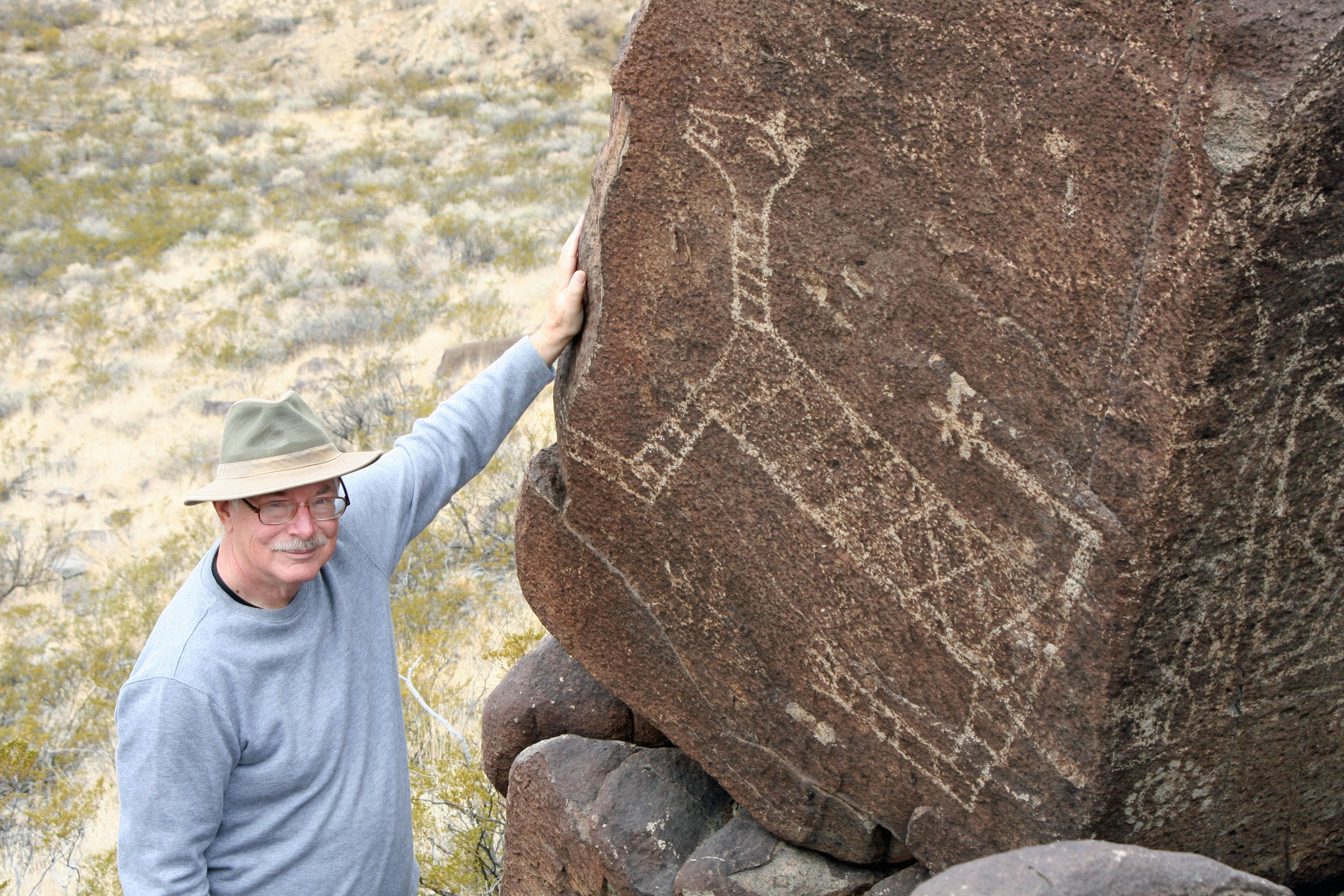
My wife Peggy and I have travelled throughout the western United States visiting and photographing Native American rock-art. We found this petroglyph of a cougar in the Three Rivers Petroglyph National Recreation Site of southern new Mexico.

I grew up in the town of Diamond Springs, California located in the foothills of the Sierra Nevada Mountains.

Once upon a time Diamond had been known as Mo-lok’epakan, or, Morning Star’s Spring. It was a very holy place to the Maidu Indians. They came from miles around bearing their dead on litters for cremation.

Apparently the Maidu had been living in the area for a thousand years. It is a sad commentary on both our education system and how we treated the Indians that I grew up never hearing the name Morning Star’s Spring much less Mo-lok’epakan.

Our only connection with the Maidu’s lost heritage was finding an occasional arrowhead or Indian bead.

The thrill of finding arrowheads, however, led to a lifelong fascination with the culture of Native Americans. Over the past ten years that fascination has led me to an interest in Indian rock-art or petroglyphs and pictographs. Petroglyphs are pecked or scraped from dark, rock varnish exposing a lighter color underneath. Pictographs are painted on rocks.

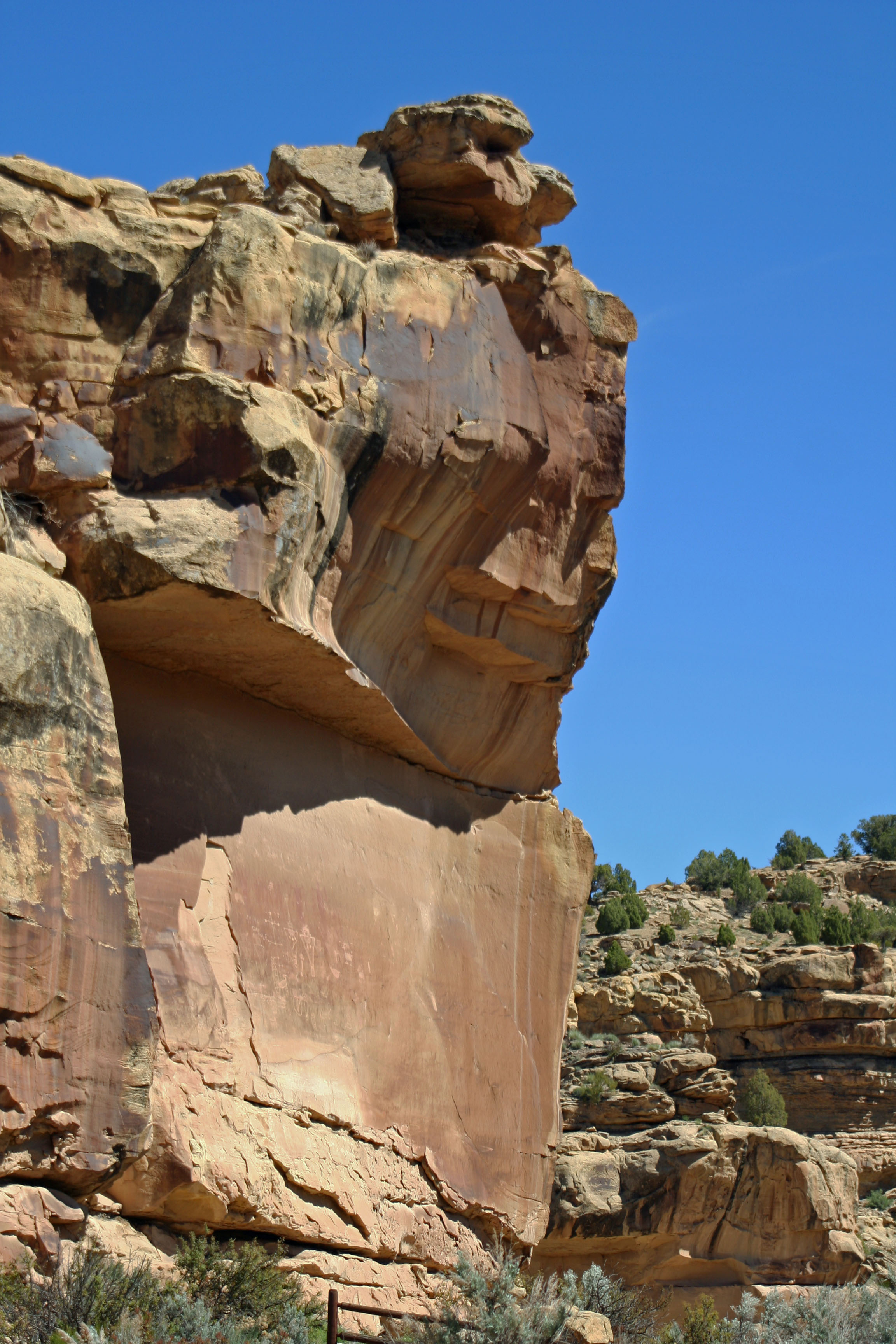
Indian rock-art is found at thousands of locations throughout the Western United States often near water or unique landmarks. Searching for rock-art is often like a treasure hunt. Here you can spot a group of petroglyphs on the left about a third of the way up the rock.

Peggy and I have explored and photographed major rock-art sites throughout the western US. Today I will introduce Sego Canyon located in eastern Utah off of I-70 near the small town of Thompson. Later I will blog about other sites such as the Three Rivers Petroglyph National Recreation Site of New Mexico.

What captured me about Sego Canyon is the unique, almost ethereal rock-art of the archaic peoples, and the fact that the rock-art represents three distinctive Native American cultures ranging over 8000 years.

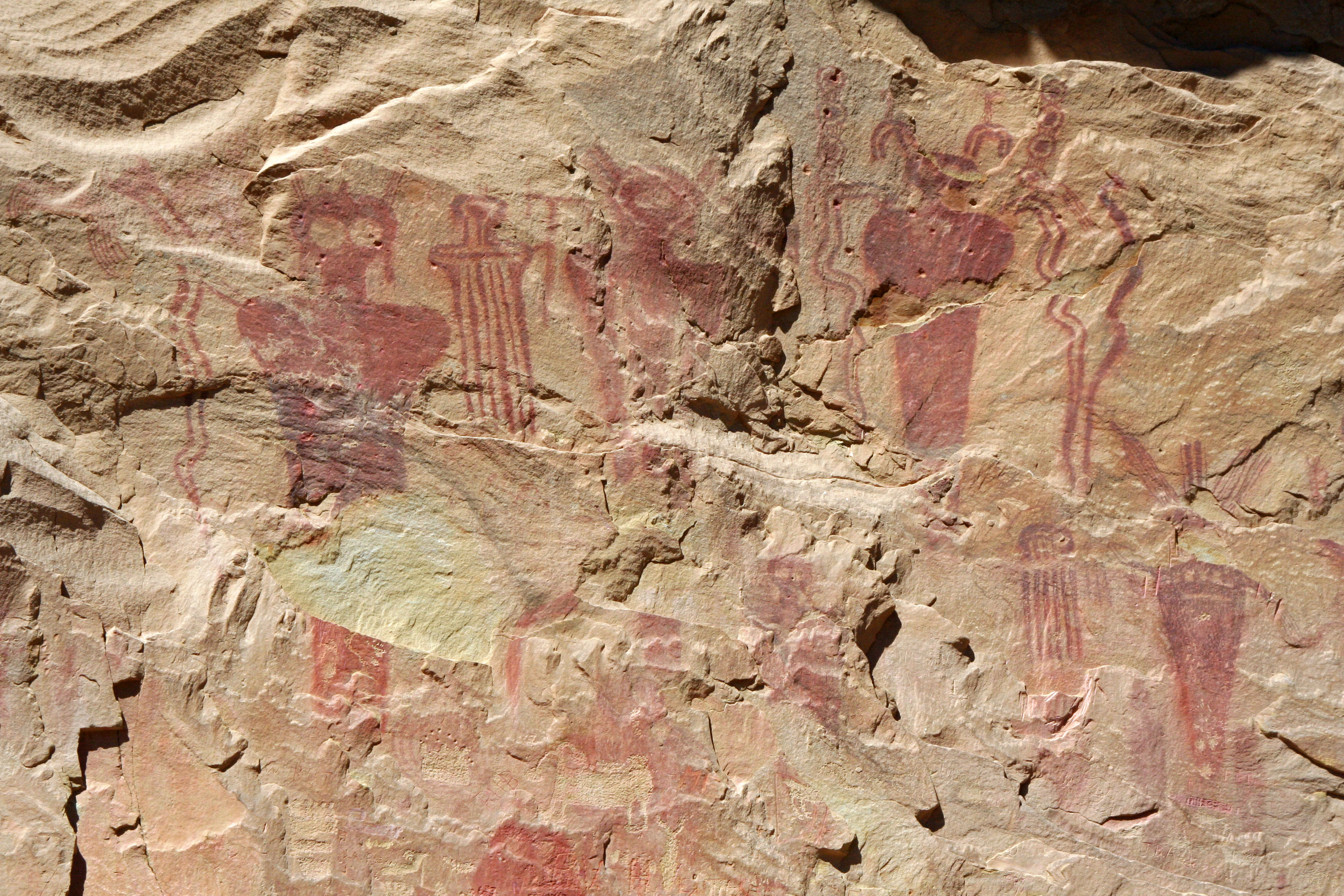
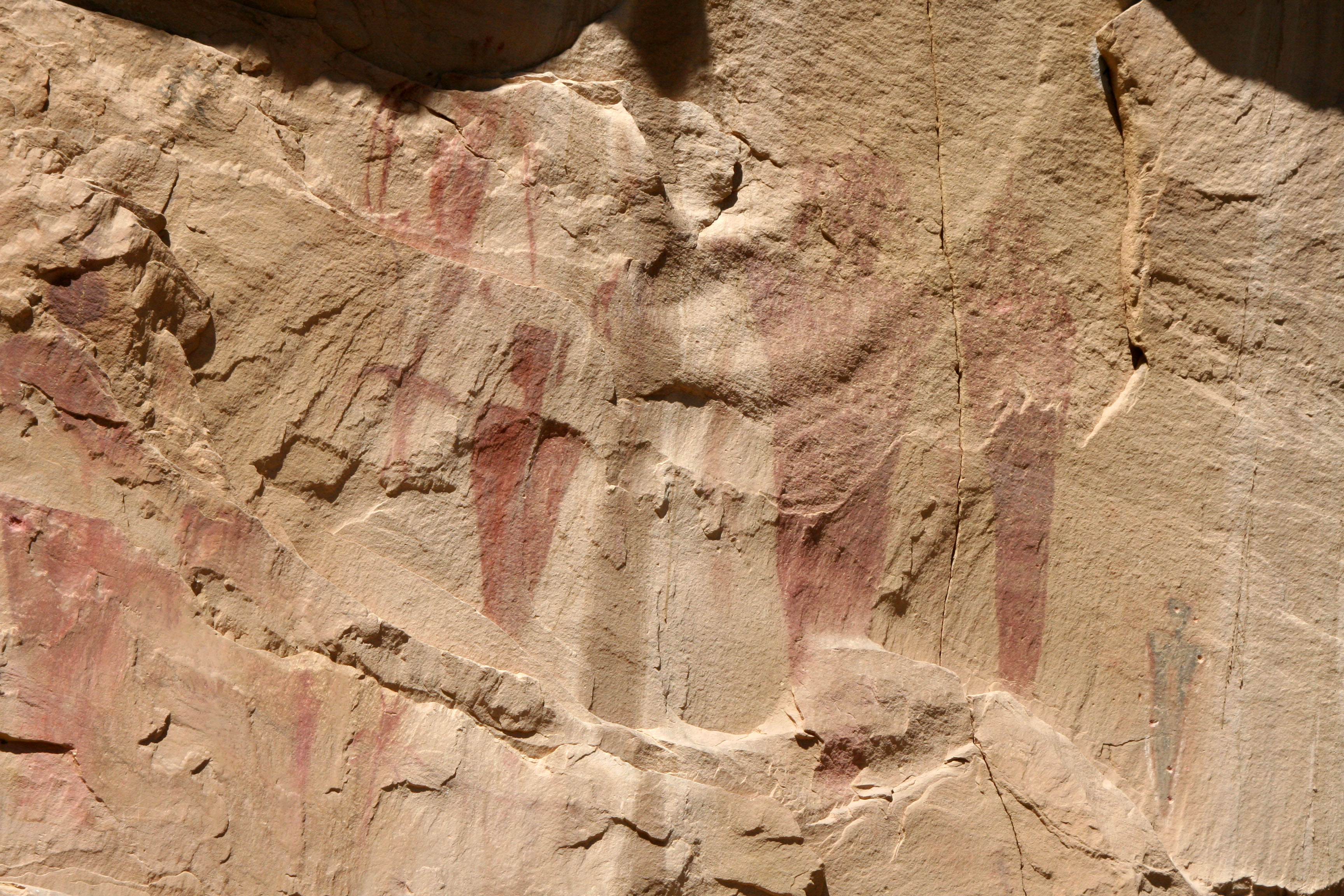
The pictographs featured below were made by archaic hunter-gatherer nomads who wandered across western North America between 6000 and 100 BC. Rock art is classified according to various styles and this particular style is known as Barrier Canyon. Its attributes include life-size, man-like creatures with hollow eyes, missing arms, antennae, and lots of snakes. The theory is that the figures may have represented shamanistic journeys to the underworld. I am voting for encounters with aliens… just kidding.

This rock-art, which is found in Sego Canyon, Utah, was created sometime between 6000 and 100 AD. It is classified as the Barrier Canon style. Note the hollow eye sockets, antennae, horns and snakes.

This is a close up showing images from the above photo. There is some thought that these figures reflect shamanistic visits to the underworld but one can understand why UFO fans might think they represent encounters with aliens.

These figures from the Barrier Canyon style seem wraith-like… red ghosts arising from the rock.

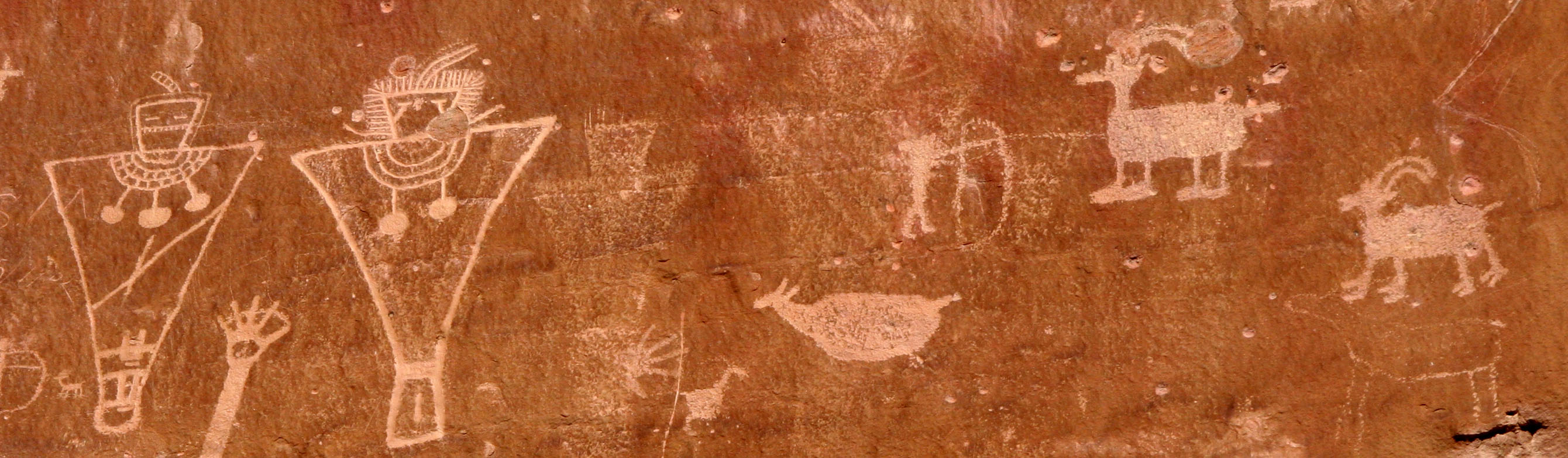
The Fremont Culture existed between 600 and 1200 AD and represented a more settled lifestyle. The rock-art of the Fremont Indians featured rectangular bodies with small heads. Both deer and mountain sheep are also found in the rock art below. Note the Indian shooting the mountain sheep with a large bow and arrow.

This rock-art found in Sego Canyon is done in the so-called Fremont style where rectangular figures with elaborate jewelry were common.

Mountain sheep are the most common animals found in Native America rock-art.

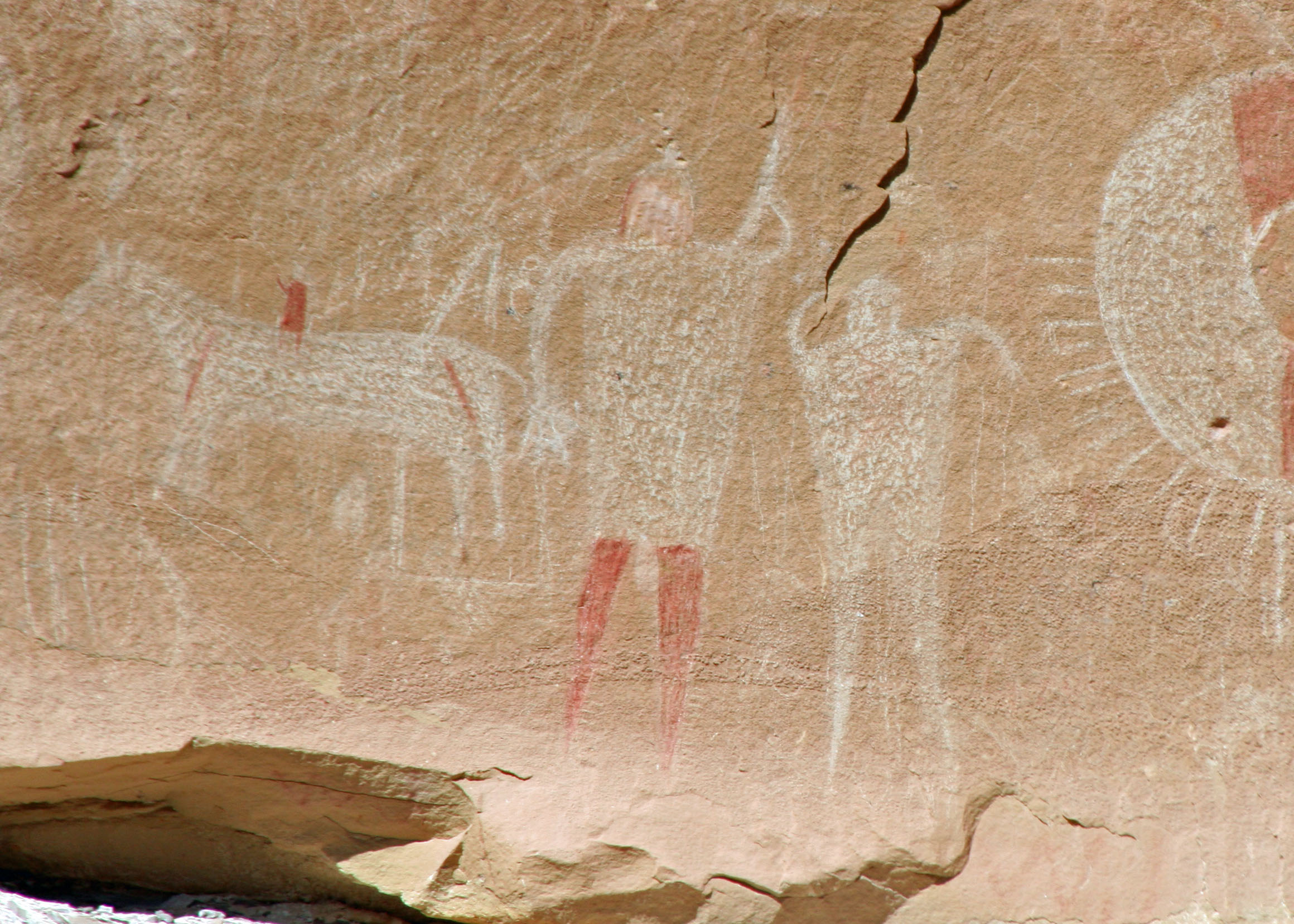
The final culture represented in Sego Canyon is that of the Ute Indians who lived in the area from 1300 AD up to 1880 when they were forced off the land to live on reservations. One indicator of more ‘modern’ rock-art is the presence of horses that didn’t exist in North America until the Spanish introduced them in the 1500s. Note the red leggings on the central figure. I also like the little red guy riding the horse. Yahoo! The round figure on the right is thought to represent a shield.

Identifying the age of petroglyphs is a difficult process. The appearance of horses shows that the petroglyphs were created after the 16th Century when the Spanish introduced horses to North America.

In my next post I will travel to Dinosaur National Monument, which also has some very unique Indian rock-art such as this one featuring what I assume is a woman with big hands and some very fat dogs.