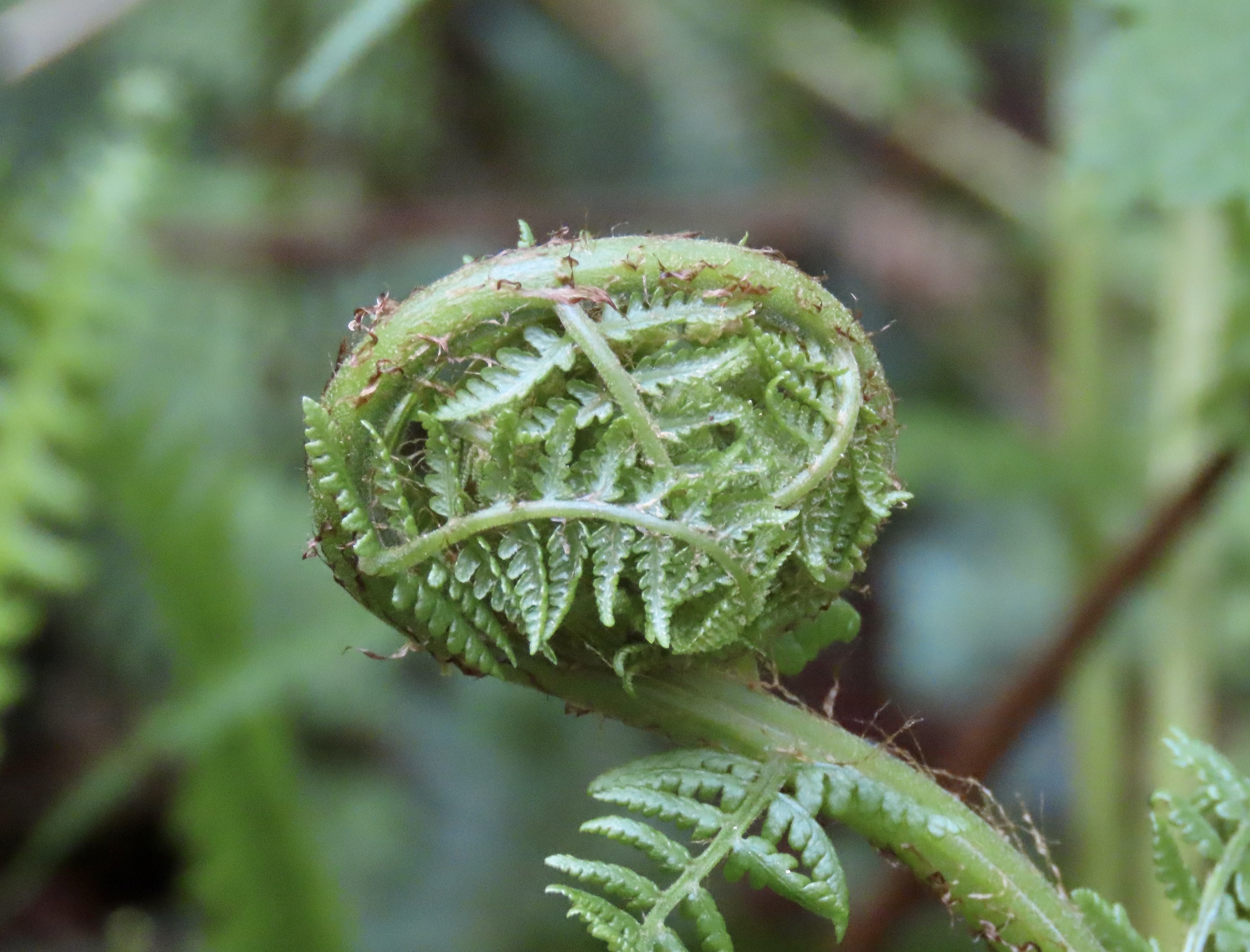
When I see something like this rolled up fern head, I have no problem imagining Jurassic Park, Star Wars, or even ET. Parts of all of these movies were filmed in the National and State Redwood Parks of the far northwest coast of California. ET phoned home, the Ewoks celebrated into the night on Endor, and T-Rex stomped through the rainforest of Fern Canyon in search of two-legged morsels. To top it off, even Bigfoot has been sighted in the Redwoods. Several times.A carving of Bigfoot Jr. sat outside the Redwood Carving Gift Shop in the small town of Orick.As the fern head featured above unrolls , it seems even more ancient. In reality, the fern is ancient. It was one of the first plants on earth, dating back to as far as 430 million years ago.The last phase of unrolling. It looks even more primitive.
The six mile road into Fern Canyon from Highway 101, where Jurassic Park, The Lost World, was filmed, was about a mile from where Peggy and I were camped. We had to go! The first four miles or so of the road had not recovered from winter storms. In addition to being one lane, it was full of Jurassic-size potholes. Had we fallen in one, it would have devoured our pickup faster than T-rex.
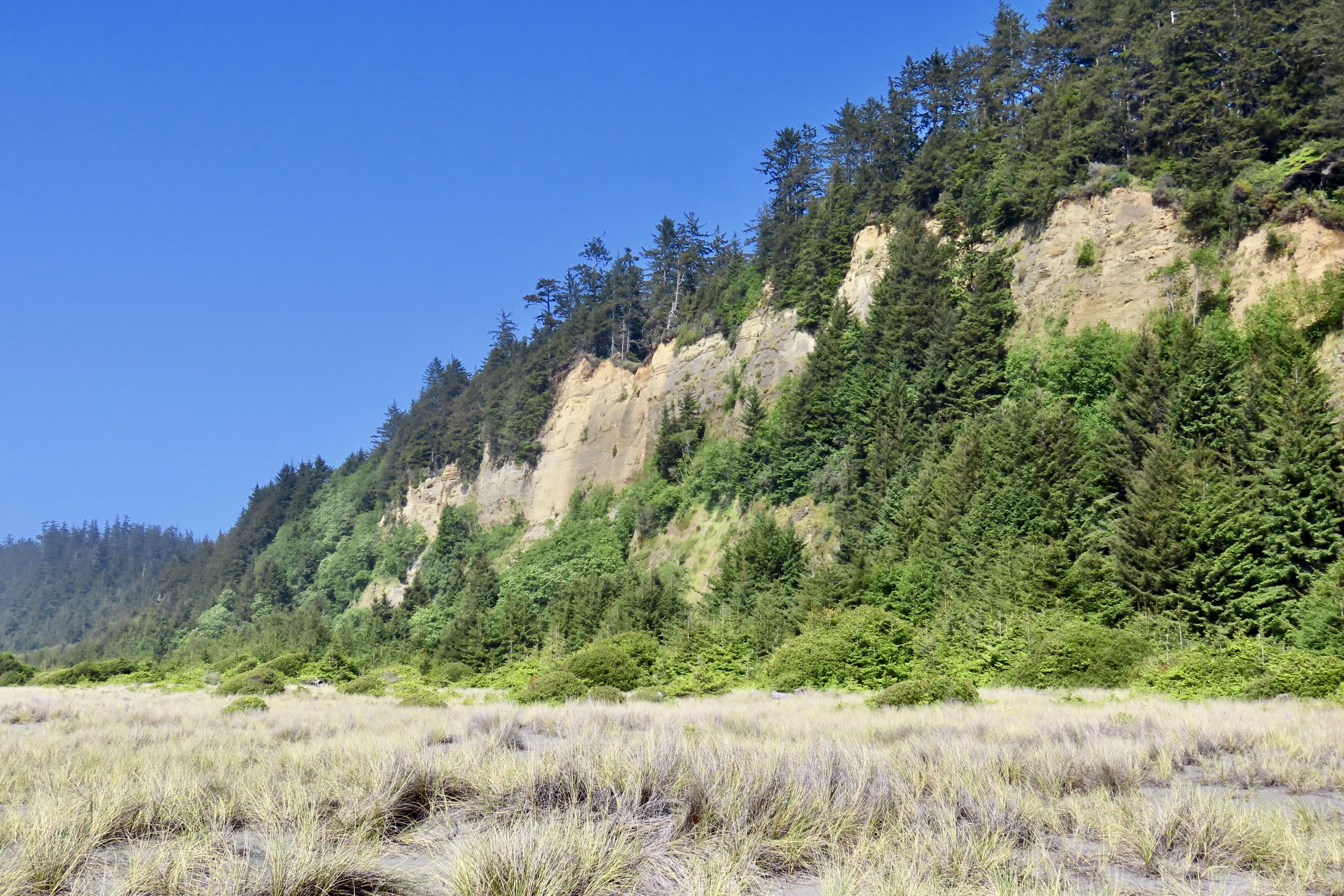
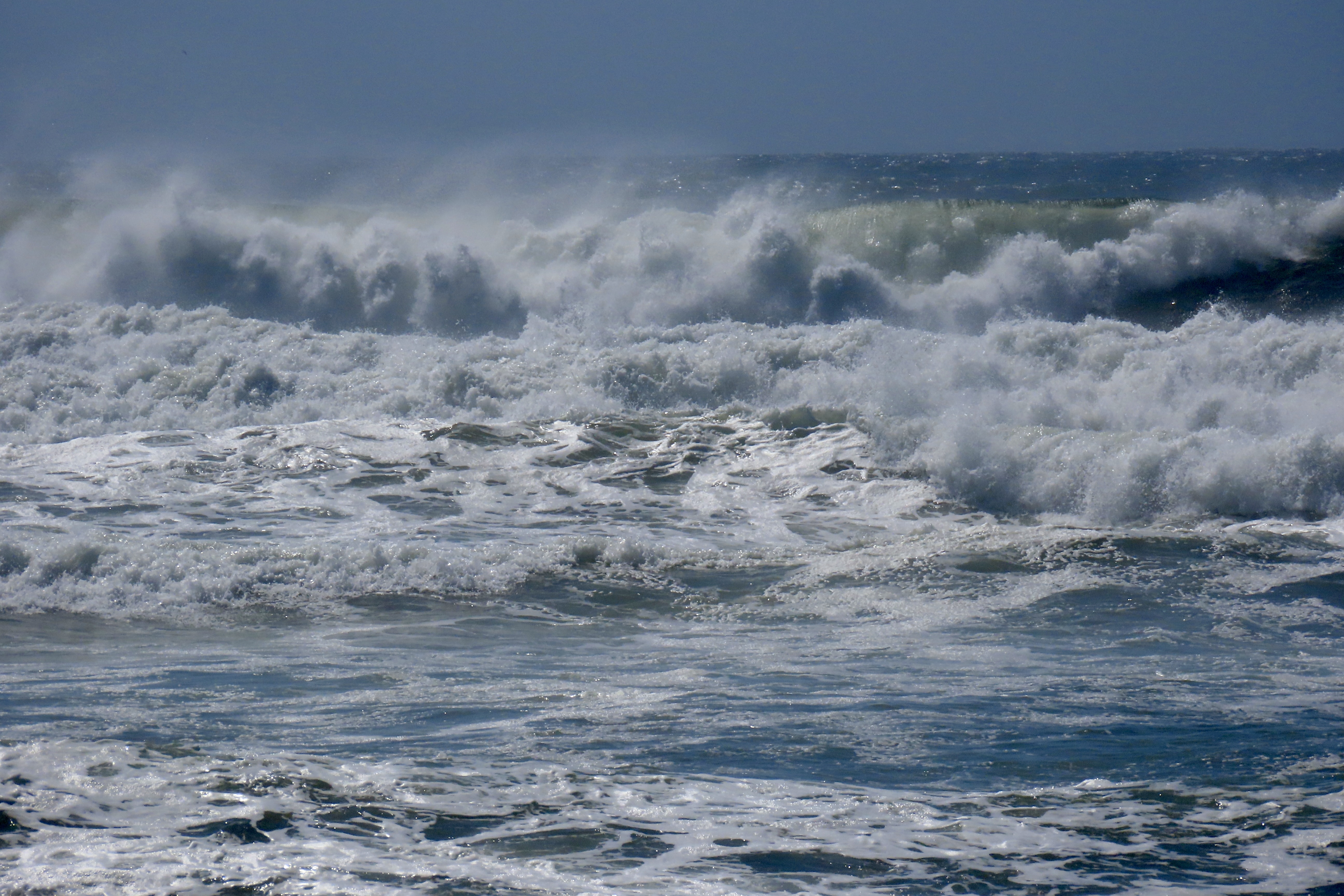
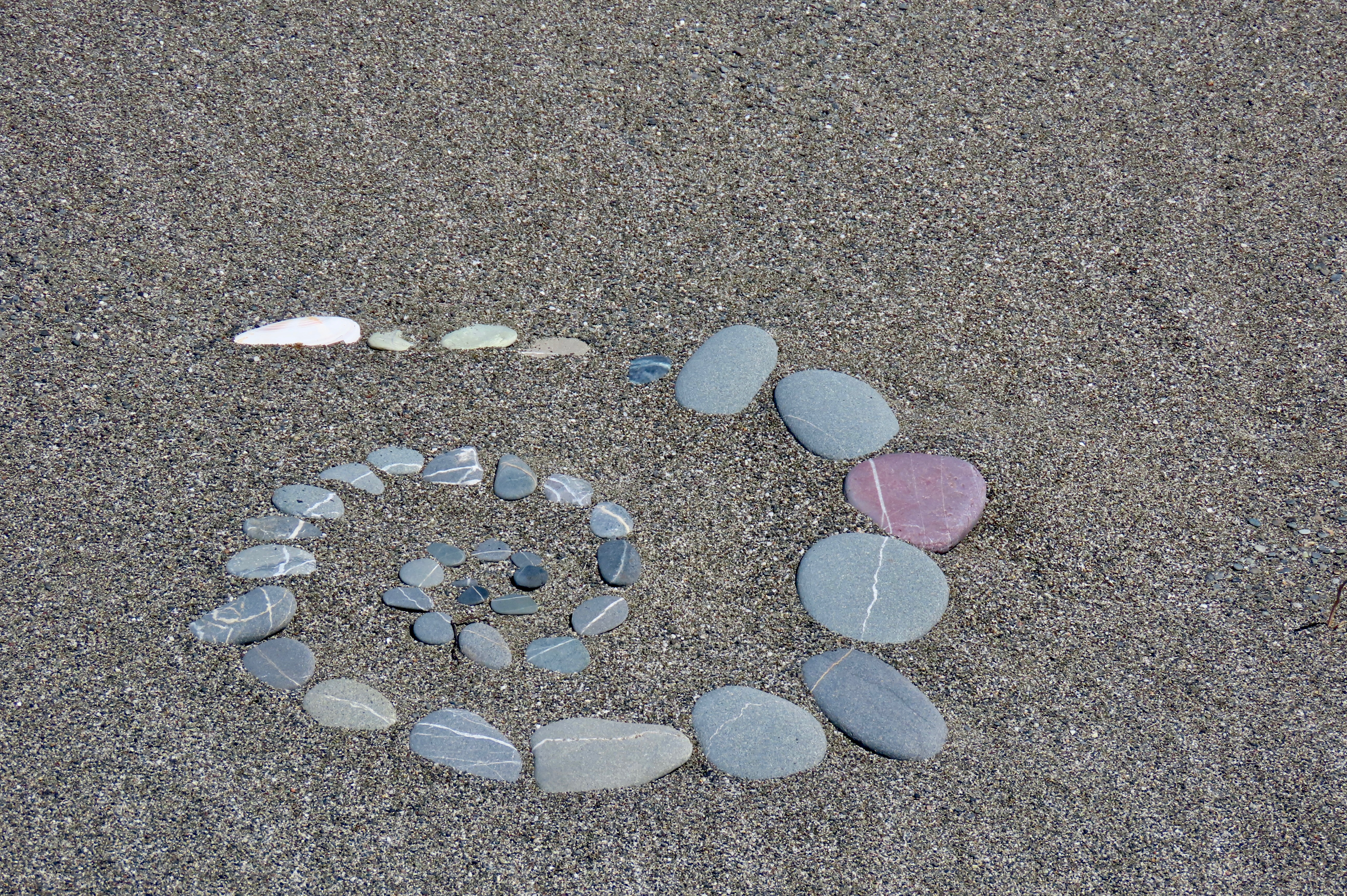
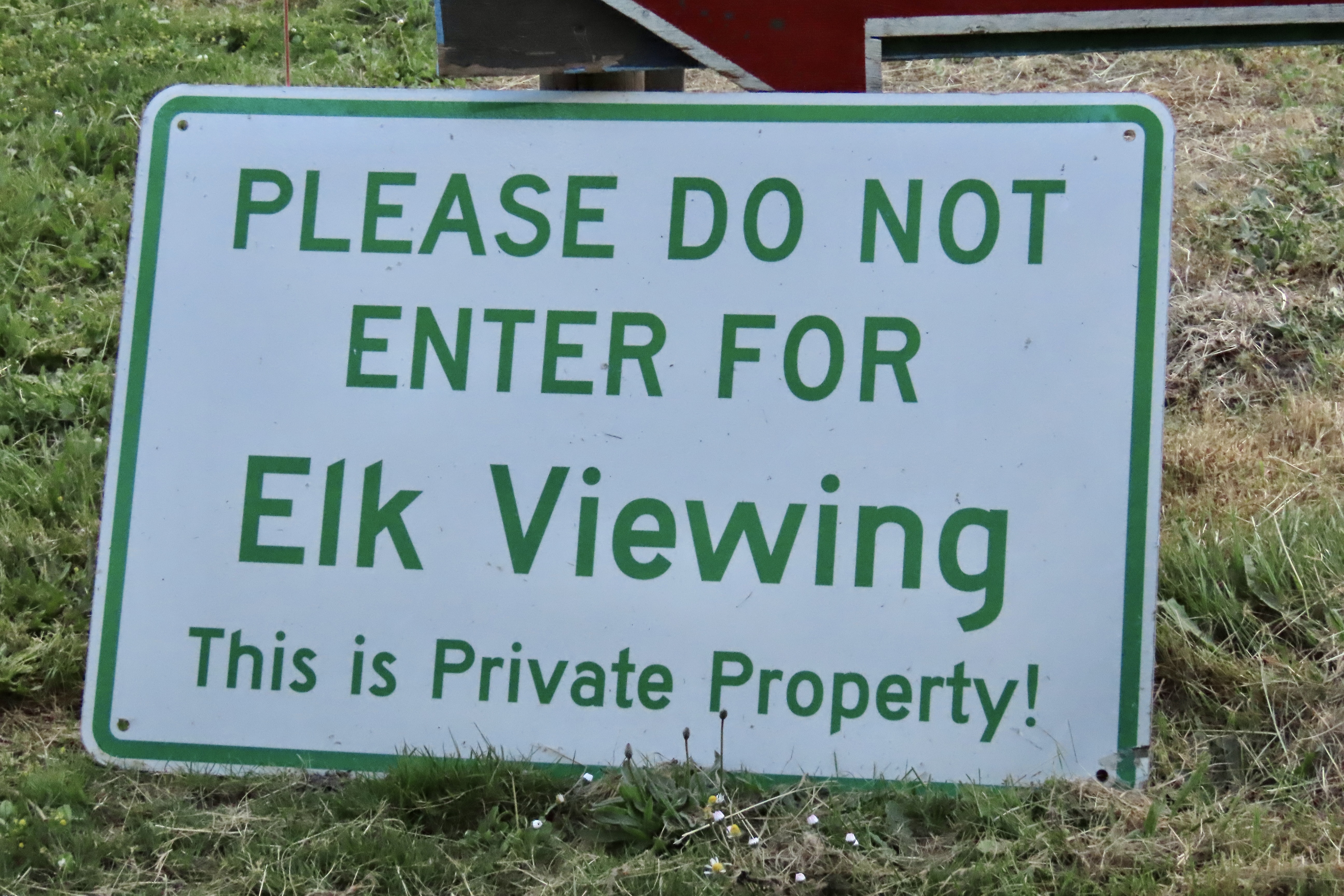
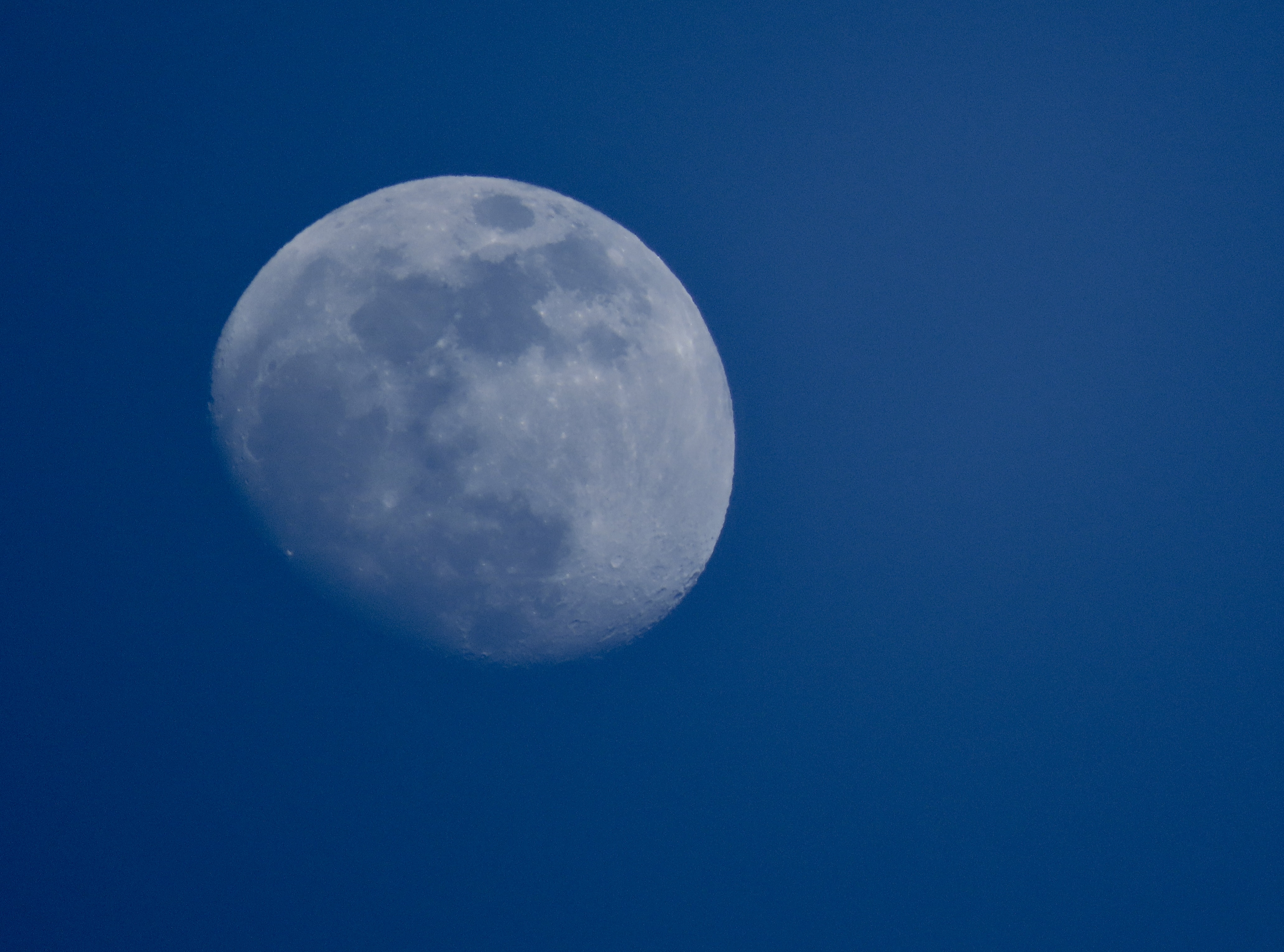
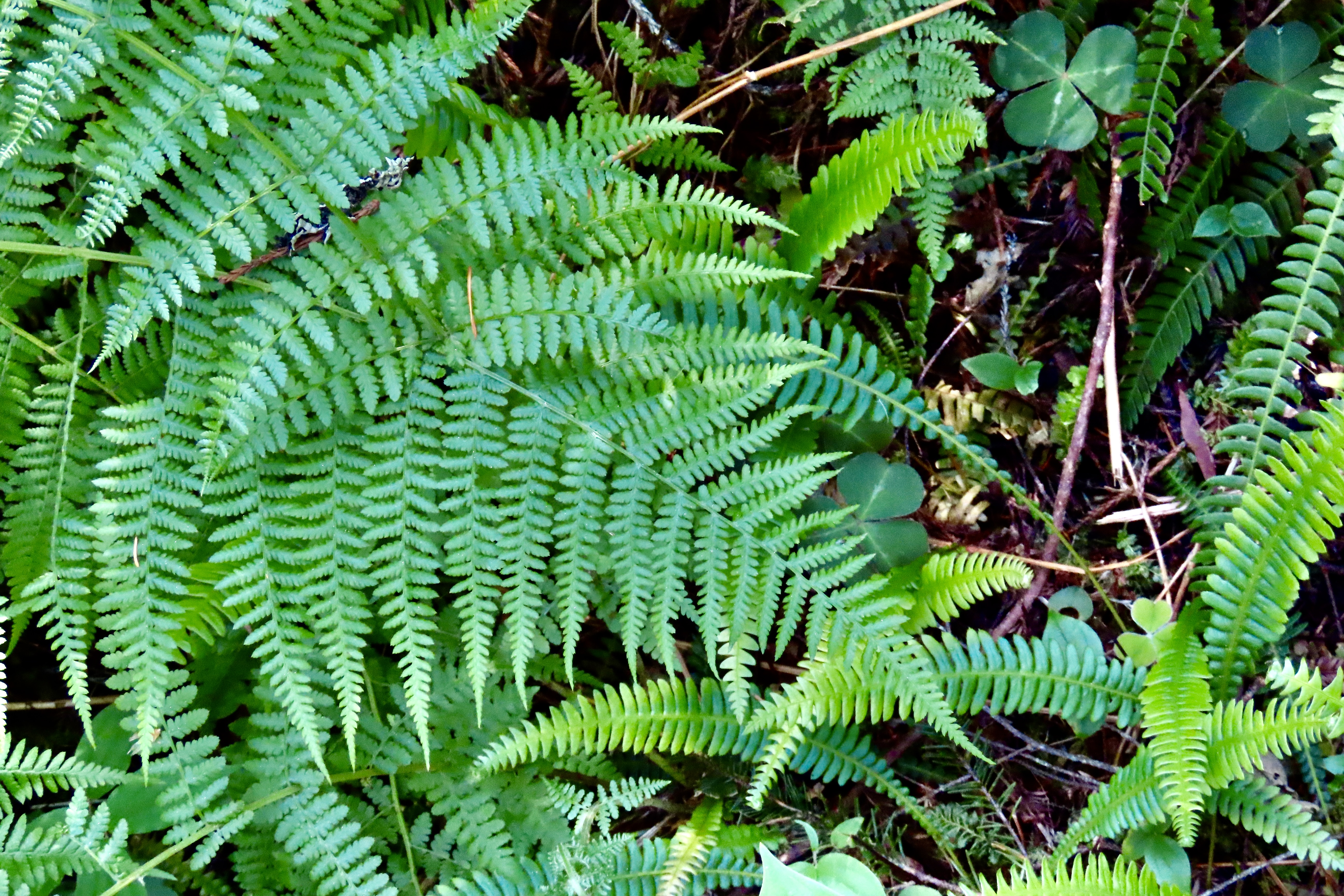
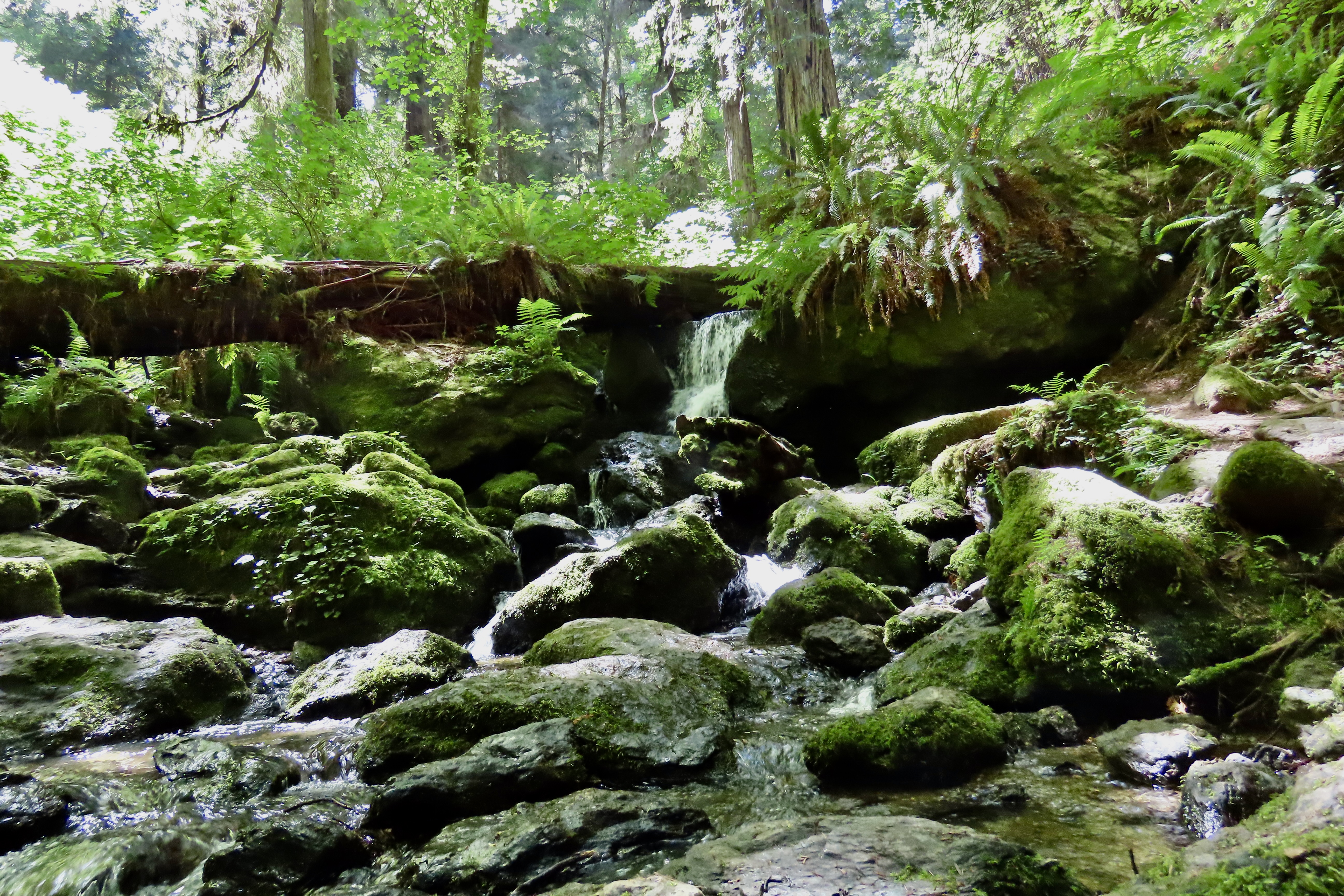
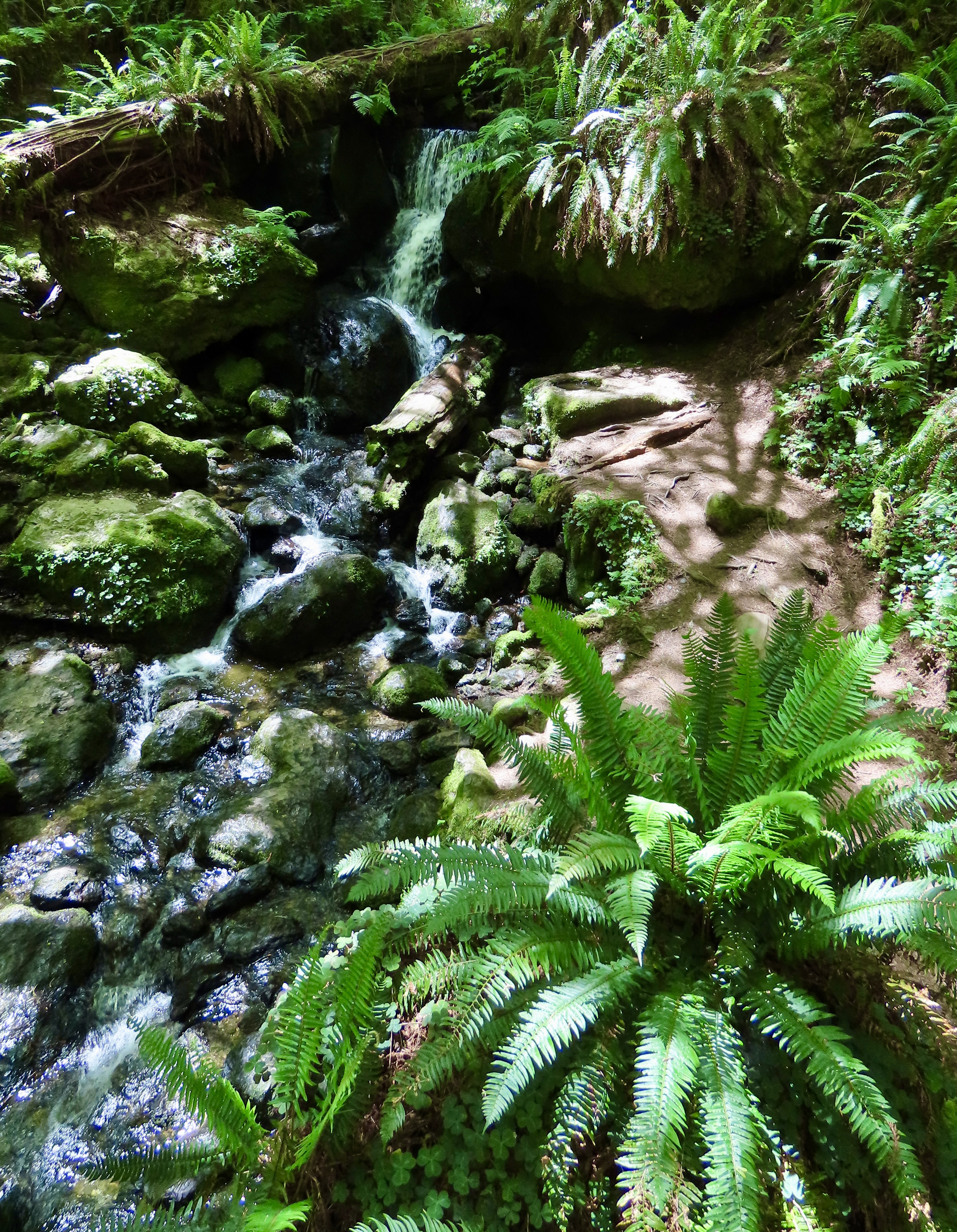
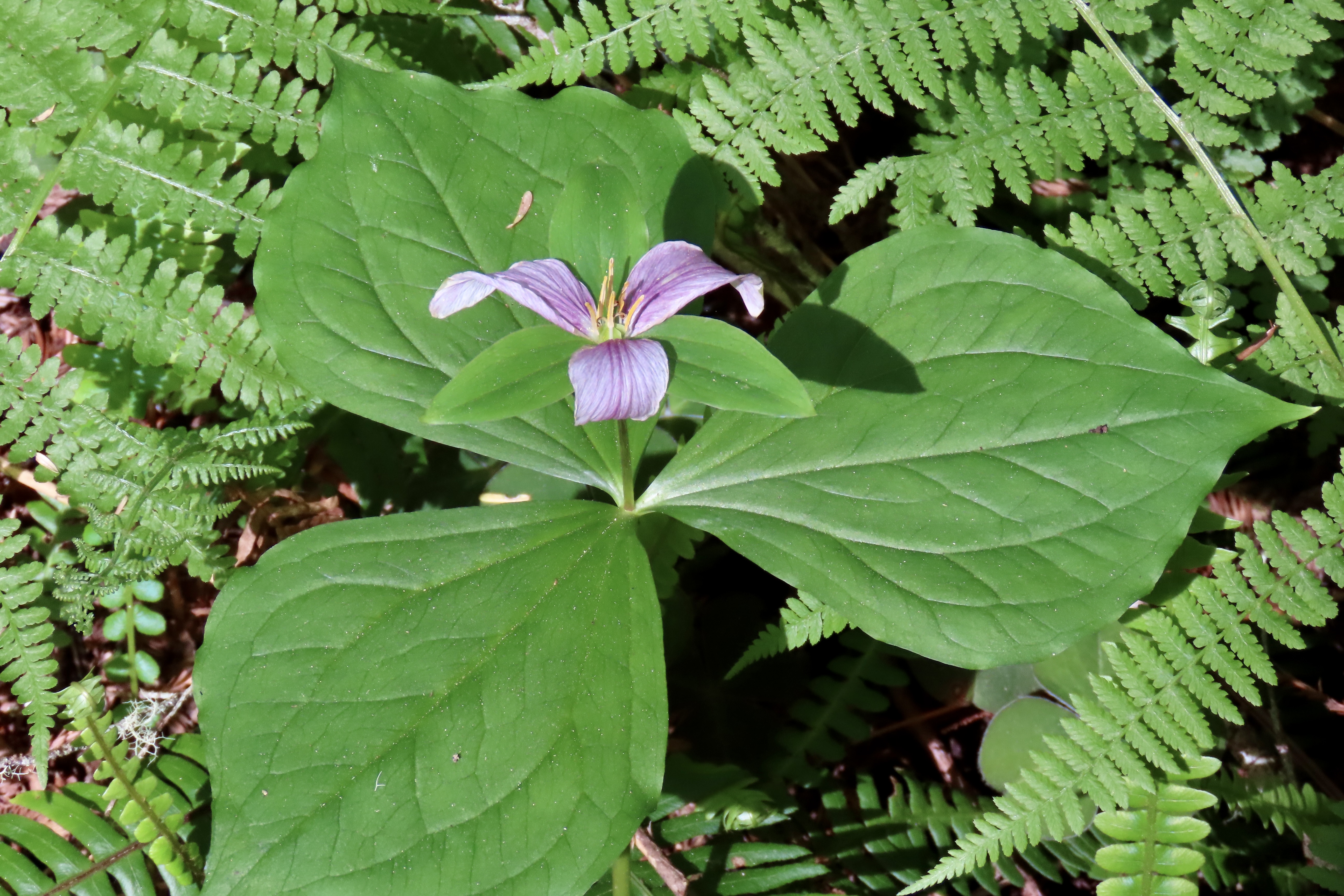
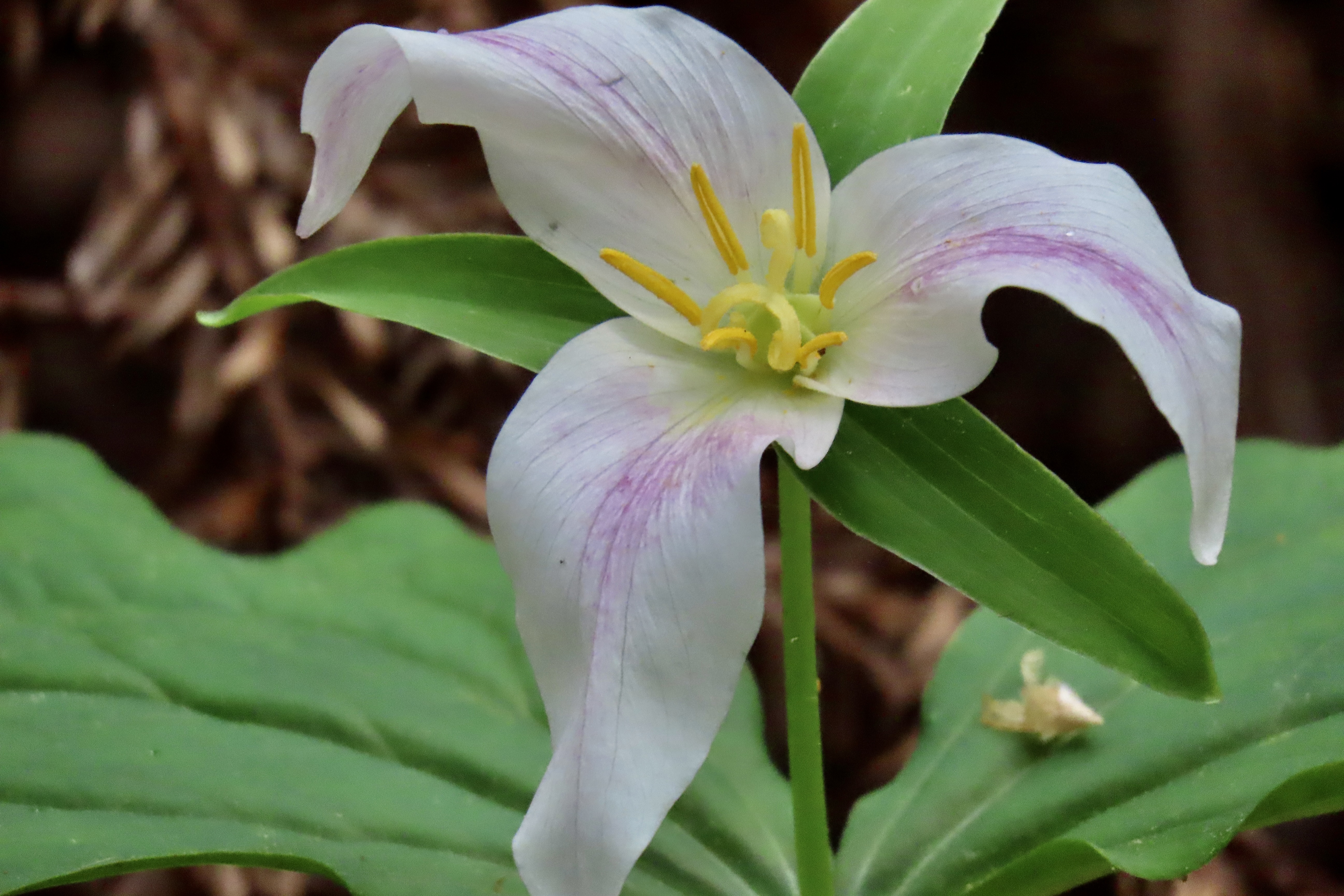
Fortunately, the road became wider and flattened out when we reached the ocean. Heavy equipment was eliminating pot holes. Gold Bluffs was on our right…And the ocean, on our left, was pounding ashore.Some one had left this neat artwork on the beach. I doubt it was Big Foot.The road came to an end and we started our hike into Fern Canyon. A small herd of elk was resting in the tall grass just off the trail. Had we realized how difficult it would be for us to see elk up close in the park, we would have spent more time with the herd.This sign greeted us as we drove into the small Heart of the Redwoods RV Campground where we stayed. Can you blame us for assuming we would be seeing elk— like out our door!This person’s front yard, about two miles away from our camp, was what we imagined.We reached the beginning of Fern Canyon and thought, “Is this it?” Actually it wasn’t. We would have had to wade a mile up the canyon and we weren’t wearing the right shoes.We lost ‘our once in a blue moon’ opportunity to see dinosaurs. (We took this from our campground. I played a bit with the processing.)We did see lots of ferns, however. And giant clover.On the way back to Highway 101, a trail sign invited us to see Trillium Falls. We like trilliums and we like waterfalls, so off we went. The falls were small, but still, technically, falls. We felt it was an appropriately Jurassic-like scene.Complete with ferns! But no trilliums.We found this one elsewhere in the Park. Trilliums earn their name by having three petals, three sepals, and three leaves.They are whiter when young and become more pink as they age.
AND A WRAP-UP
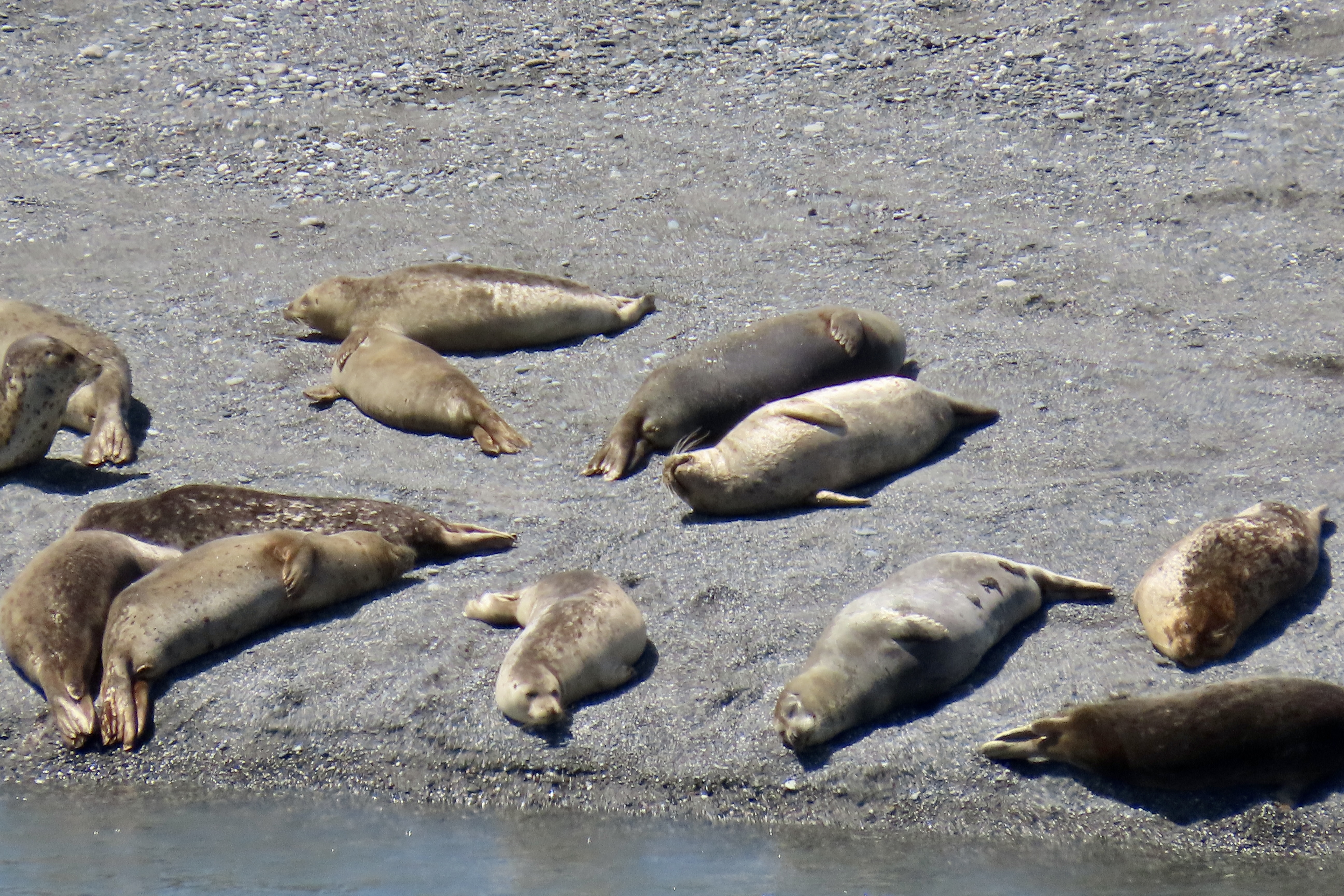
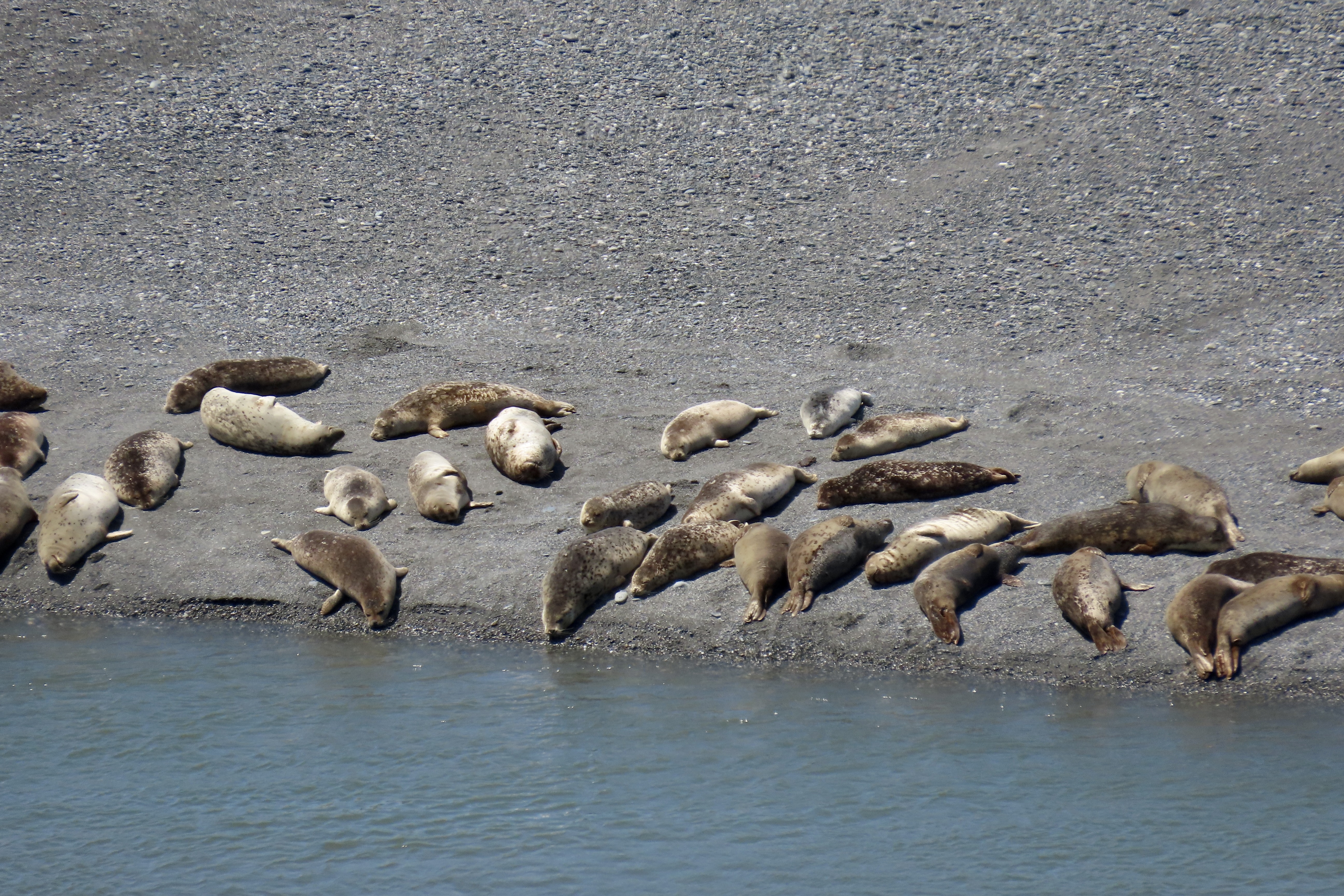
Peggy and I finished off our visit with a trip up to the Klamath Beach Road on the northern end of the Park. We had visited the beach on a previous trip to the Redwoods and found it covered with colorful small pieces of redwood that had been carved by the ocean. While the road was theoretical paved, it was equally rough to the road into Fern Canyon. Unfortunately, the access road was closed. The beach had been taken over by seals! We drove up to an overlook.
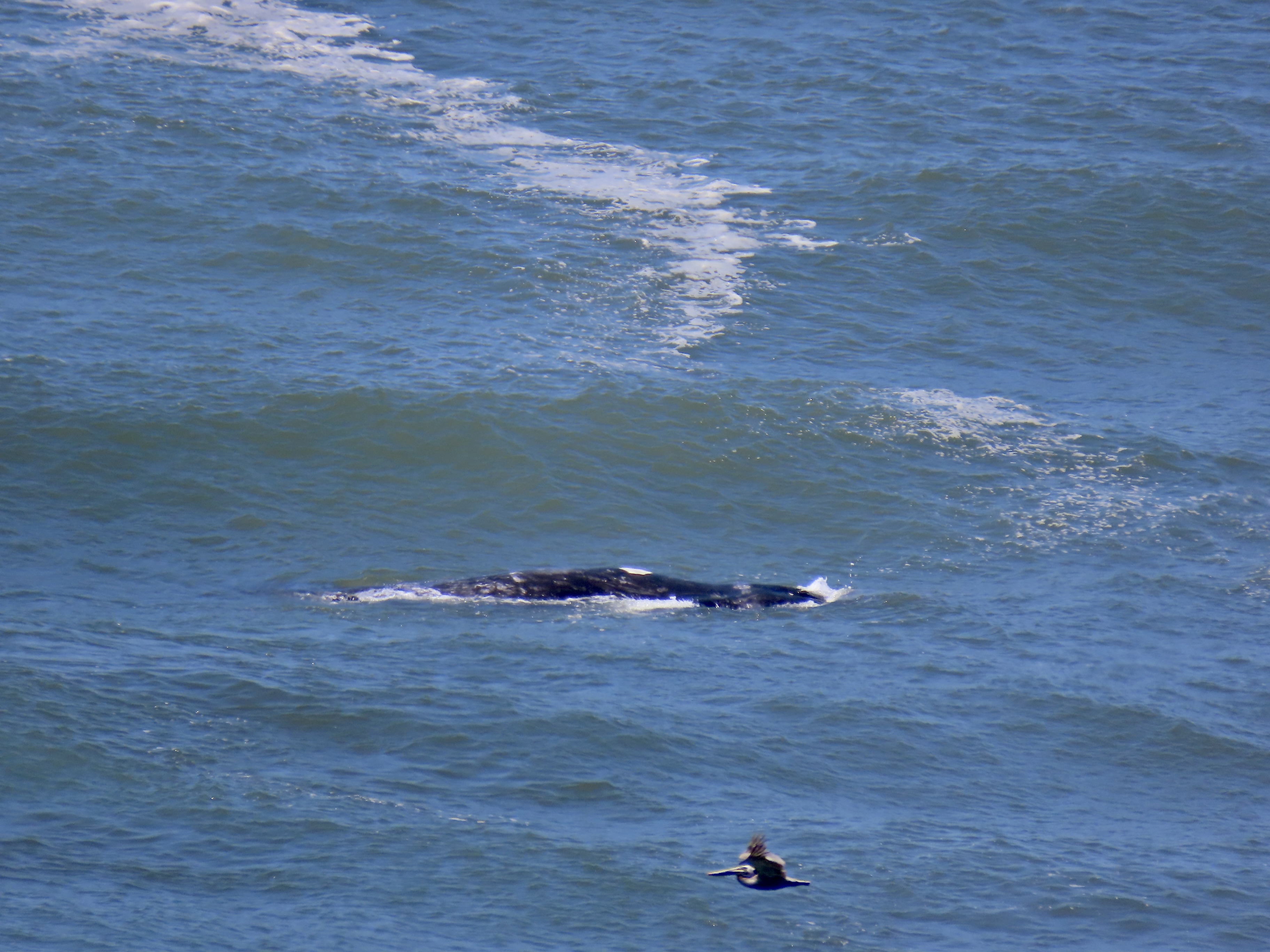
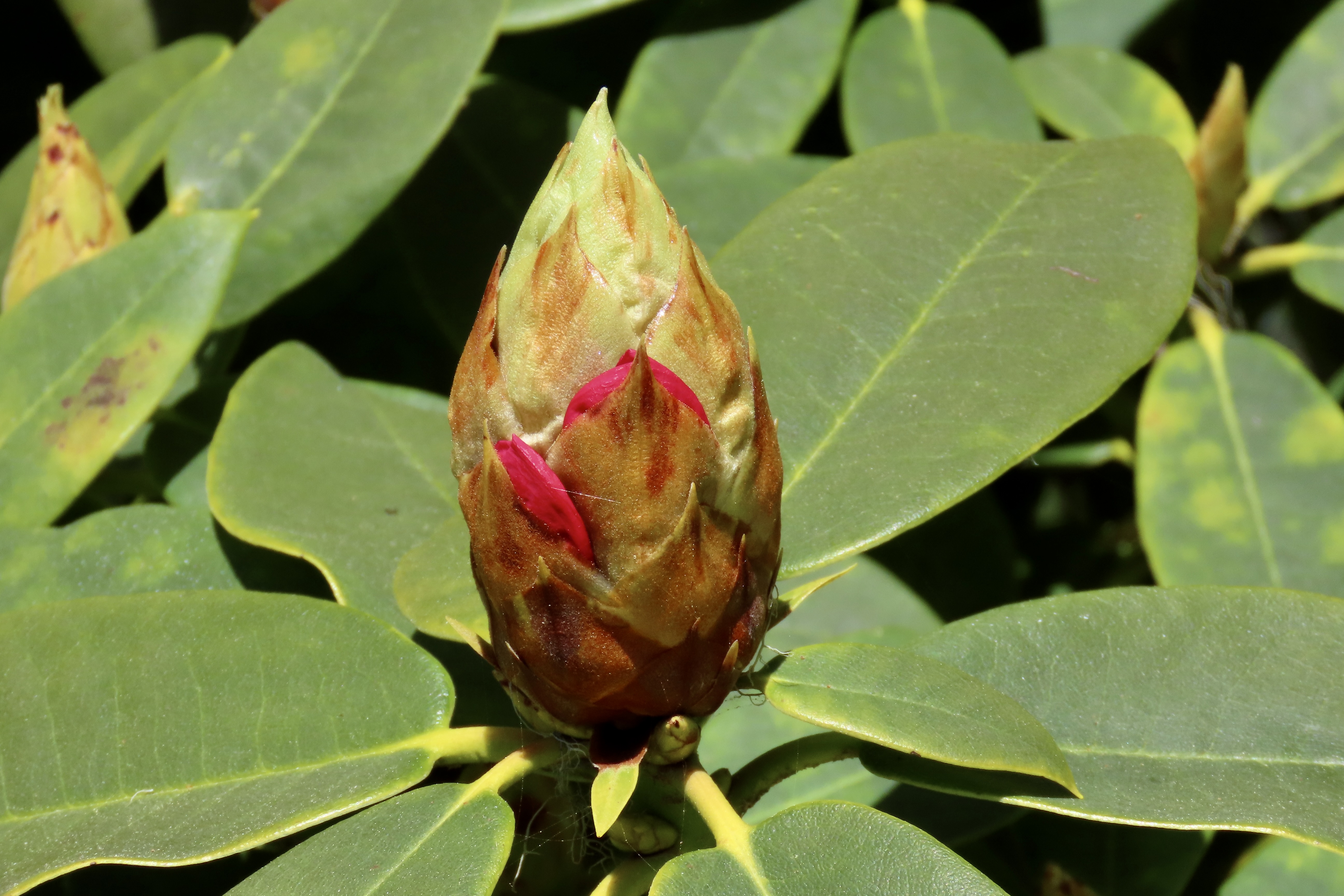
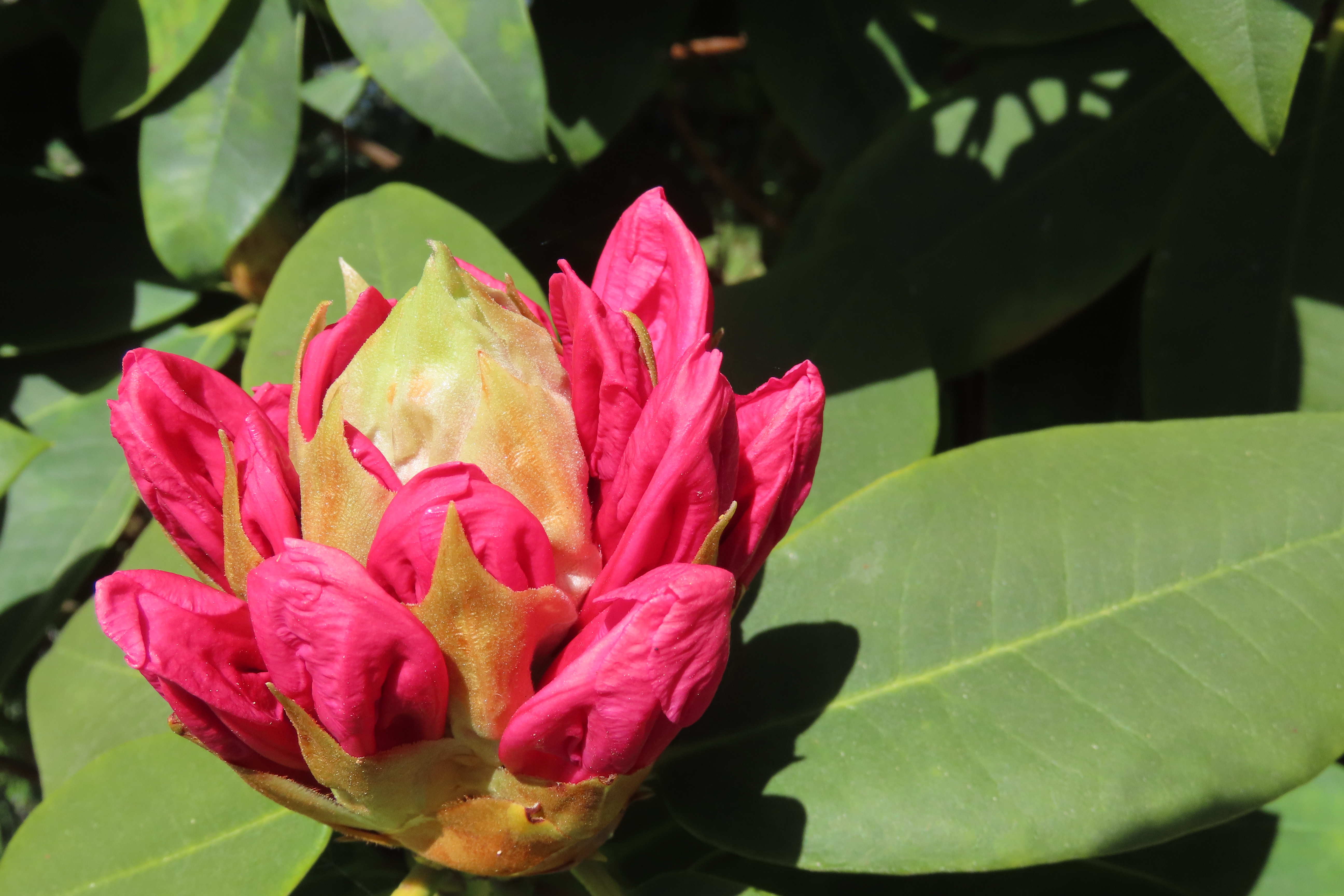
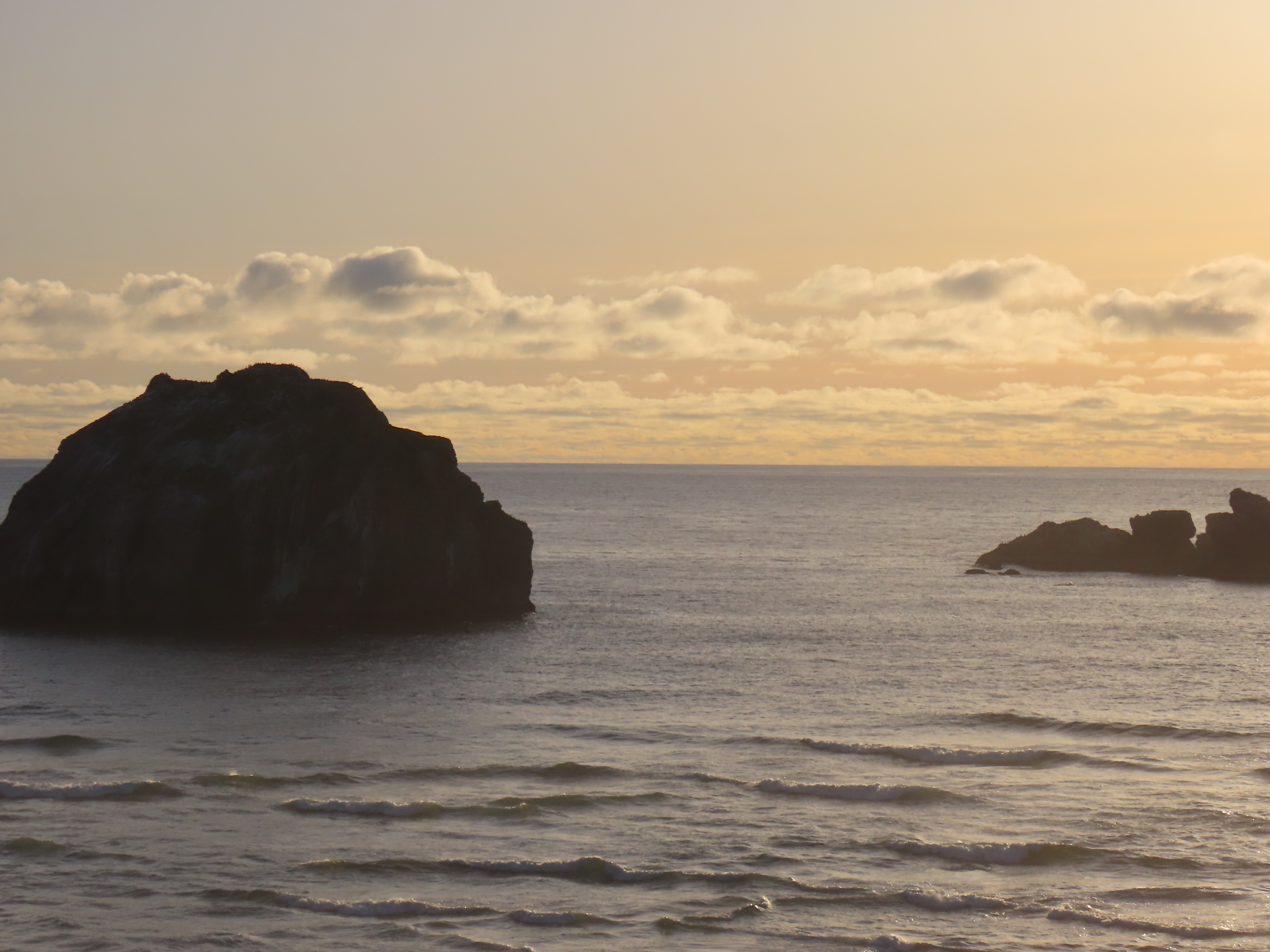
You’ve seen a number of seals so far from our journey up the coast. I’m sure you will see more. These, like the rest, seemed well fed and not particularly interested in physical exercise! That’s reserved for when they are in the water.What was different about these seals was their sheer numbers.California brown pelicans and seagulls backed up the seals.And Peggy spotted a whale out in the ocean, making its way north to Alaska.An old cemetery was next to where we were parked. Rhododendrons were budding in it.And had a unique beauty. With that, I’ll close our posts on the Redwoods. The fabulous sea stacks of Bandon, Oregon, are waiting.Brandon’s famous Face Rock outlined by the setting sun.
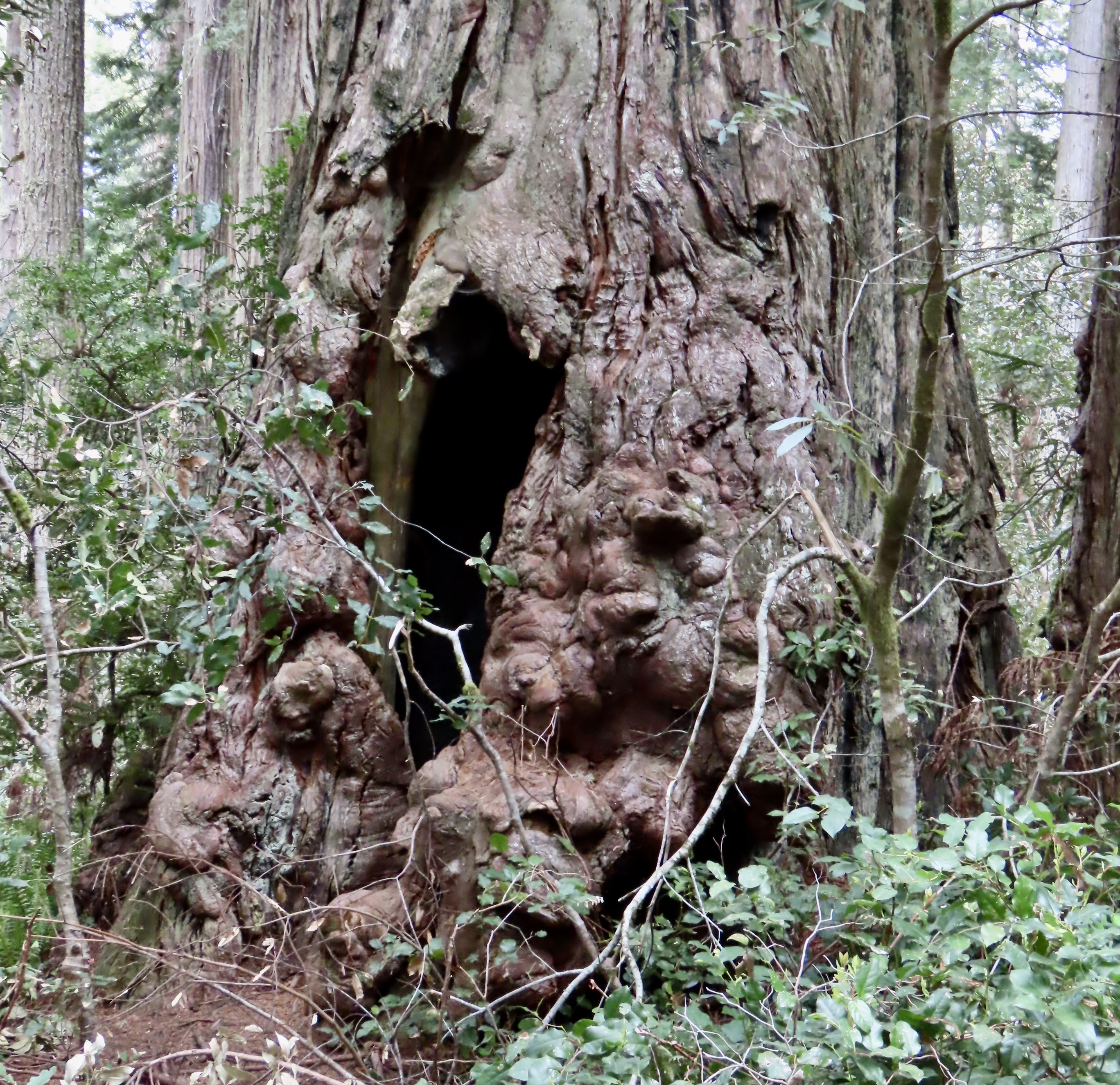
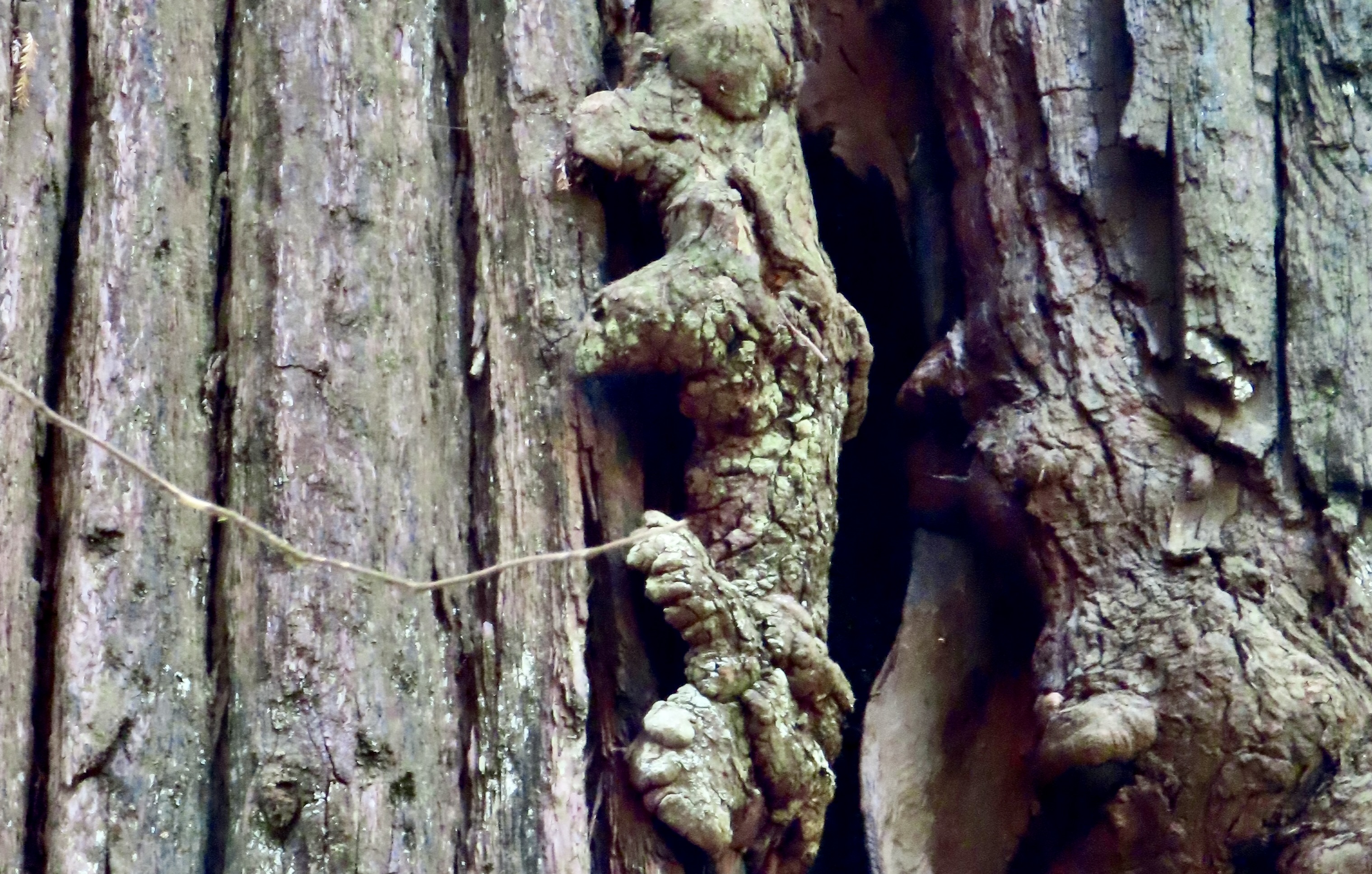
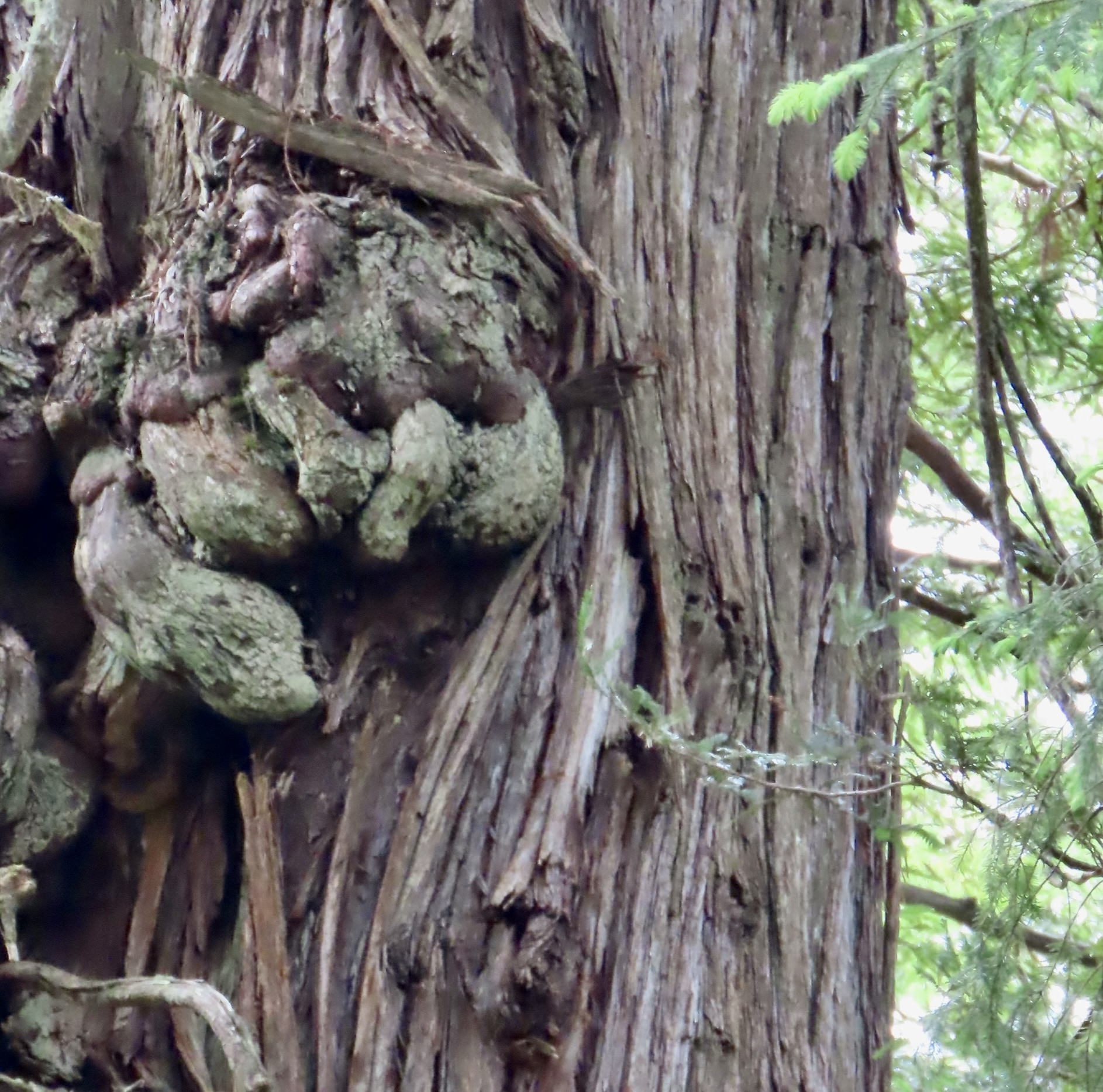
Strange creatures lurk among the redwoods, which is no surprise for forests with giant trees that date back 2500 years. Maybe even more so for trees whose ancestors were around in the age of dinosaurs. The dark eyes, nose with a nose, and gaping mouth suggest this might be a creature of your nightmares. Do you ever gaze at the clouds and see animals or dragons or weird people? How about rocks or driftwood. Peggy and I let our imaginations run wild and see all sorts of fantastical creatures. Looking at this tree, it’s easy to imagine beings lurking among the burls. How many can you see? I’m sure that ancient peoples who wandered among these groves had no problems spotting otherworldly animals and incorporating them into their world. While it may look like this tree is sick, burls are actually a woody material full of bud tissue that serves as storage compartments for the genetic code of the parent tree. Young trees can actually sprout from the burls.Peggy and I found a number of creatures on various redwoods, such as this diving dragon. Following are a few of our other favorites.Scary fellow with wart on his nose.Devilish? Note the baby redwoods growing out of its head and making up its hair.Have trunk, will travel.Tree climber. Only 350 feet more to go.Reach out and grab someone. Not a hugger!Daliesque dragon with horns and a melting nose.We think it’s friendly. Maybe…..Smiling turtle?You name it. Next up, given all of these creatures, we will visit Fern Canyon where parts of Jurassic Park 2 were filmed in the redwoods.We didn’t find T-Rex, but we did find Number 42 with a tracking collar.
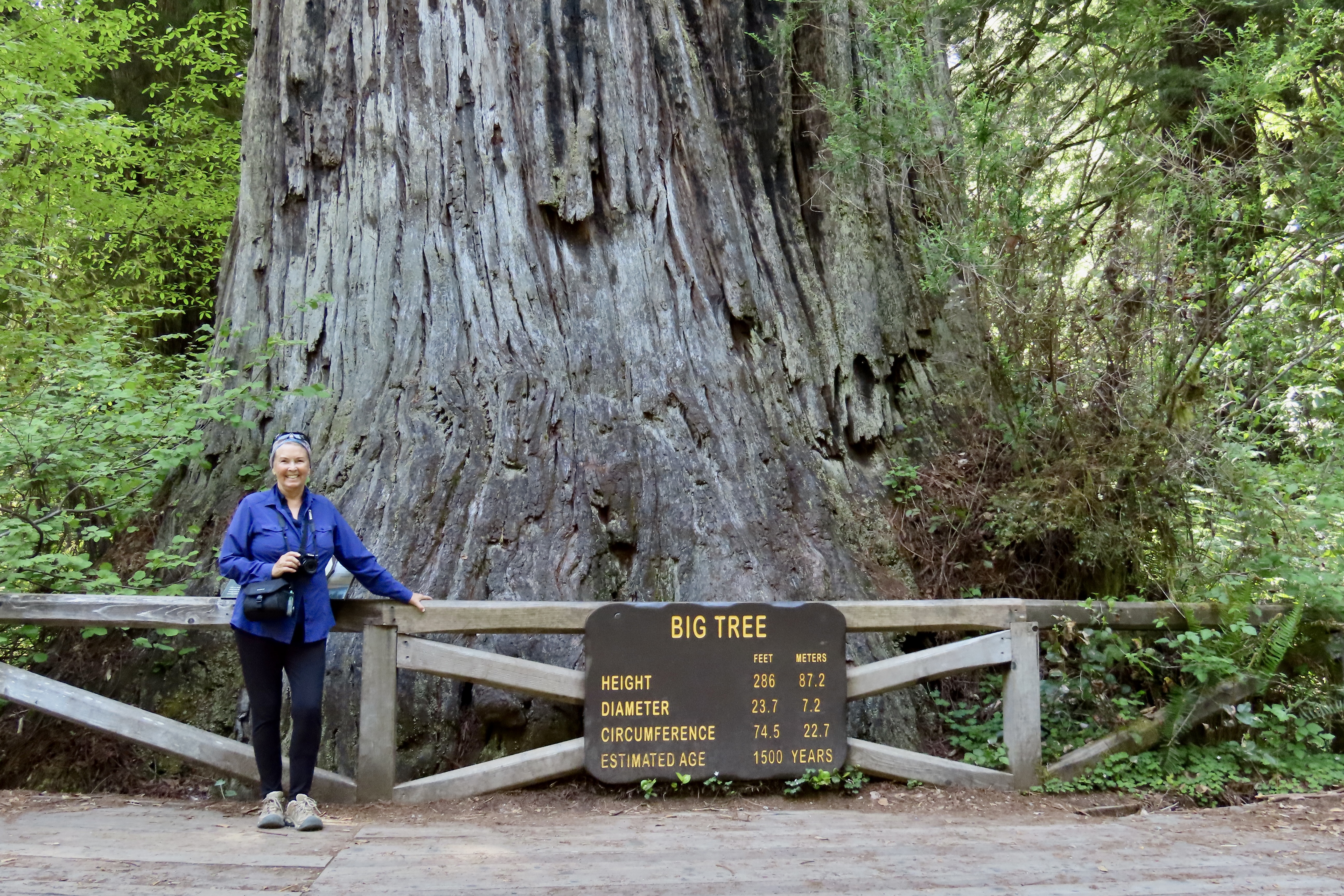
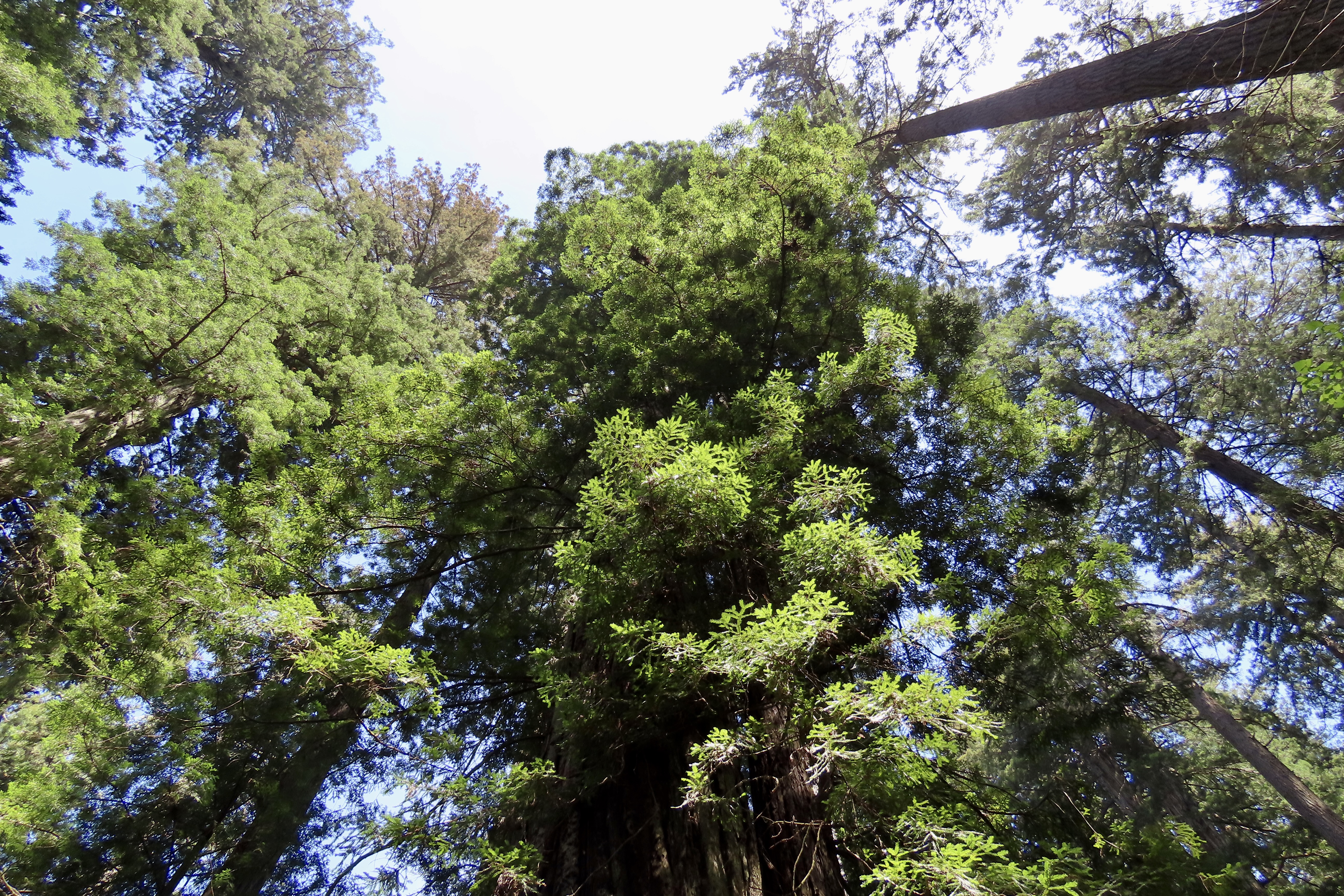
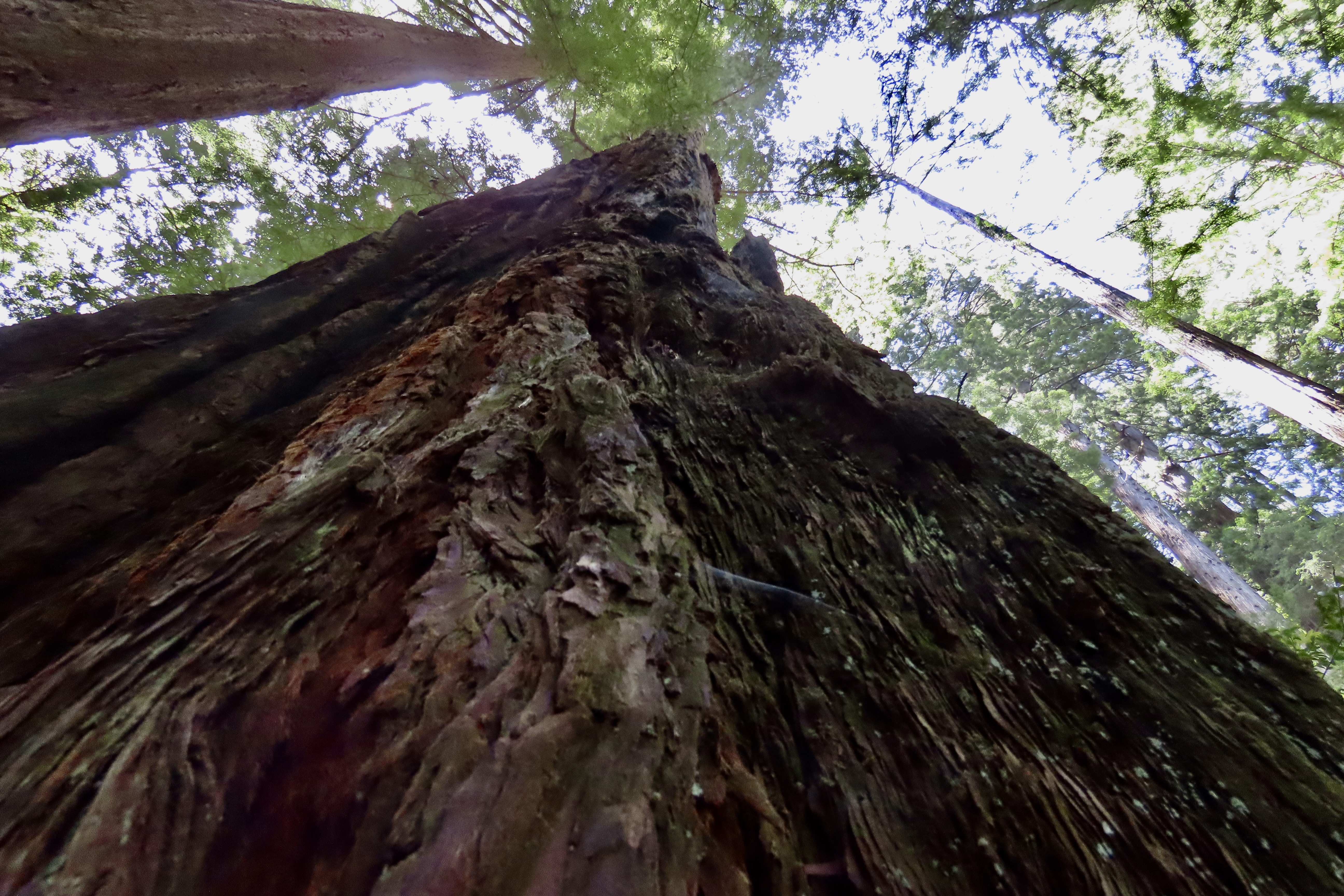
That redwood trees are tall and old is not news. One of the best known of the giants in Redwood National Park (appropriately if unimaginatively named Big Tree) stands at 286 feet tall and is 1500 years old. It is neither the tallest nor the oldest among the redwoods that stretch along the Pacific Coast from Central California to Southern Oregon, however. The tallest reaches a hundred feet higher into the sky, the oldest a thousand years further back in time. Circumference is another way of measuring these behemoths. Big Tree stretches out to over 74 feet. It would take 15 Peggys to reach around it.A view looking up Big Tree.
To truly get a feeling for the size of the redwoods, one needs to go for a walk among the magnificent trees. Words and photos simply can’t capture the awe one feels. Living in Northern California and Southern Oregon, which we did before moving to Virginia, Peggy and I have been privileged to visit the Redwood National Park several times. When we were planning out our 3-month trip up the Pacific Coast, there was no question that we would visit again.
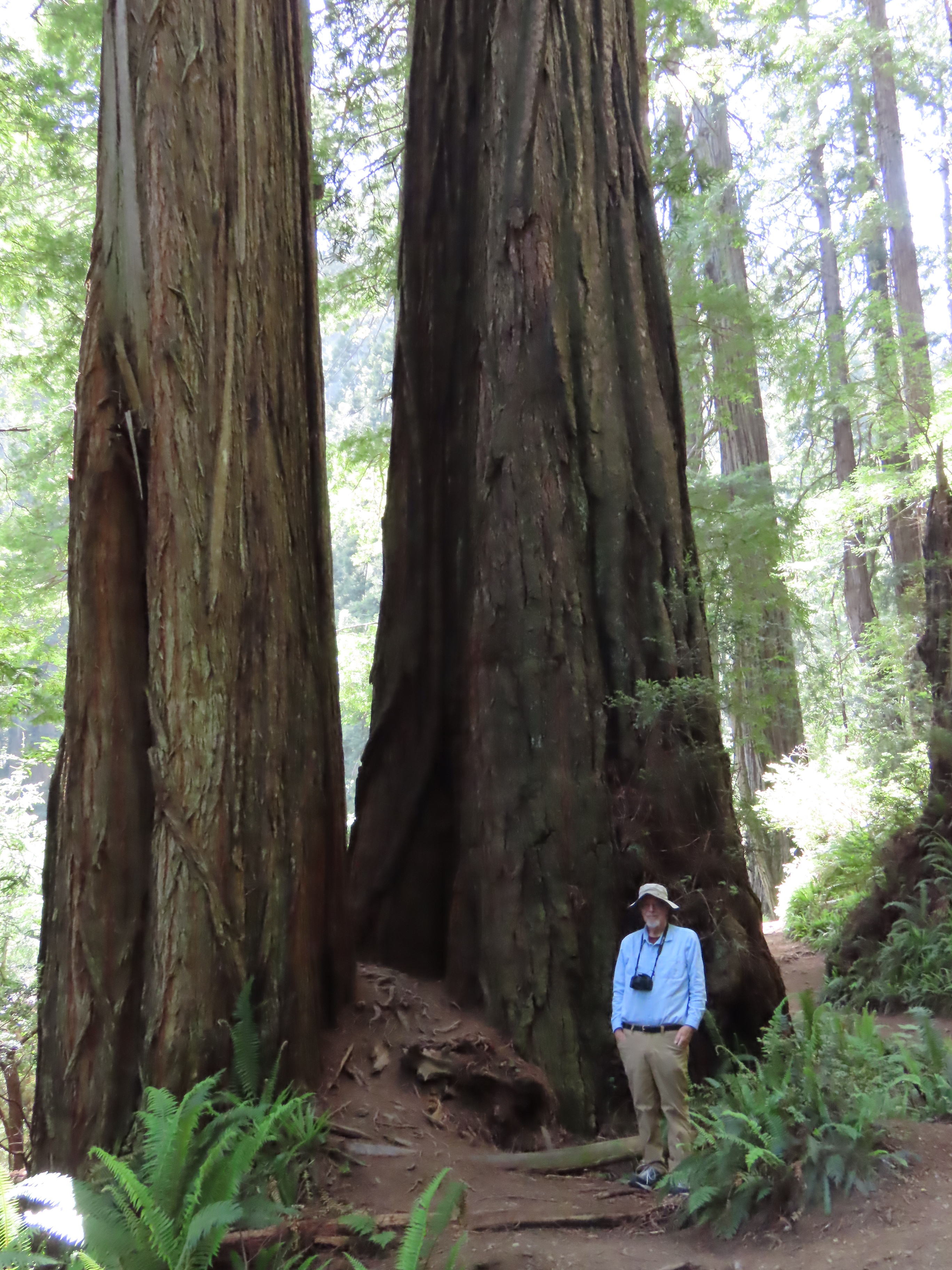
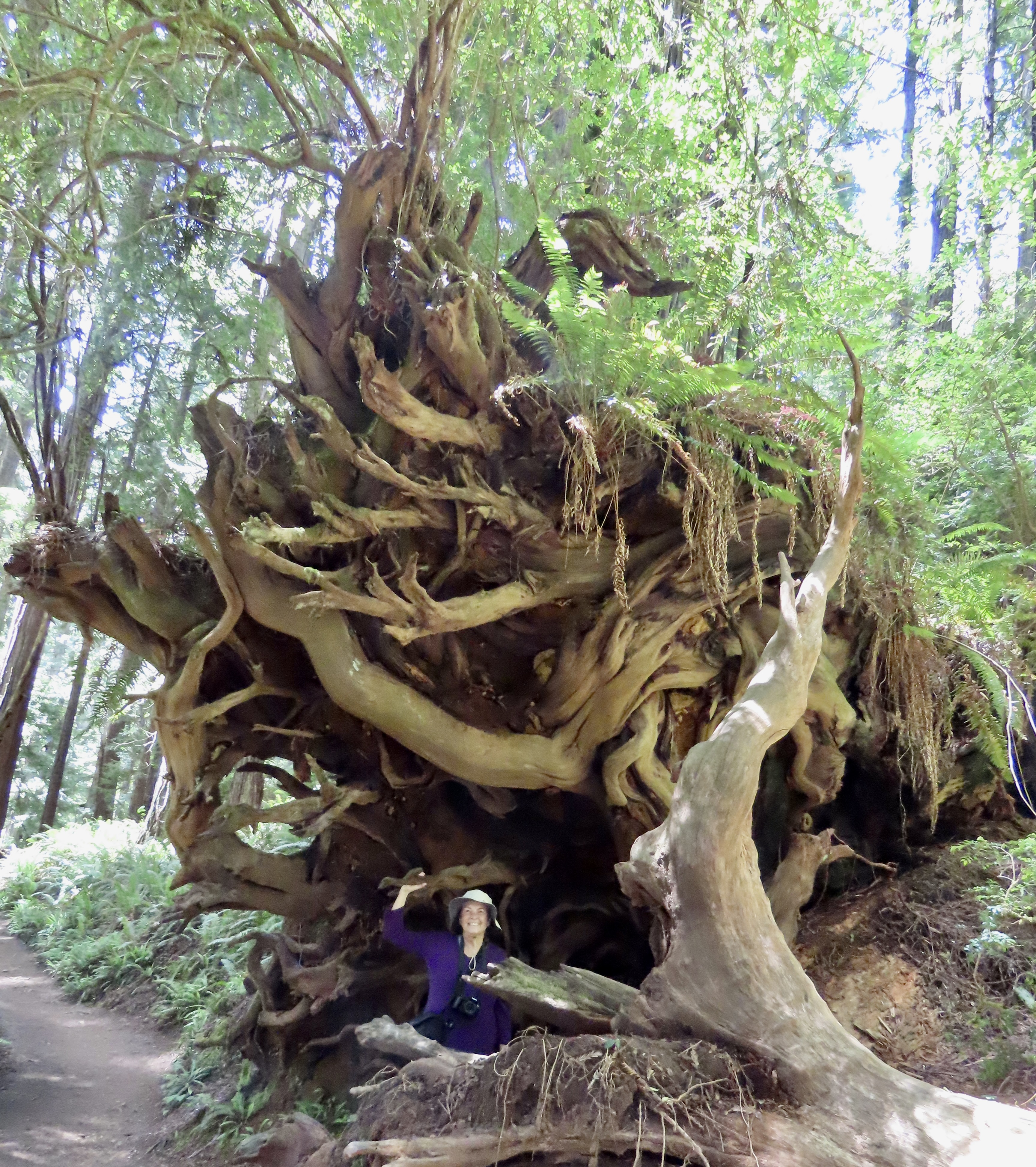
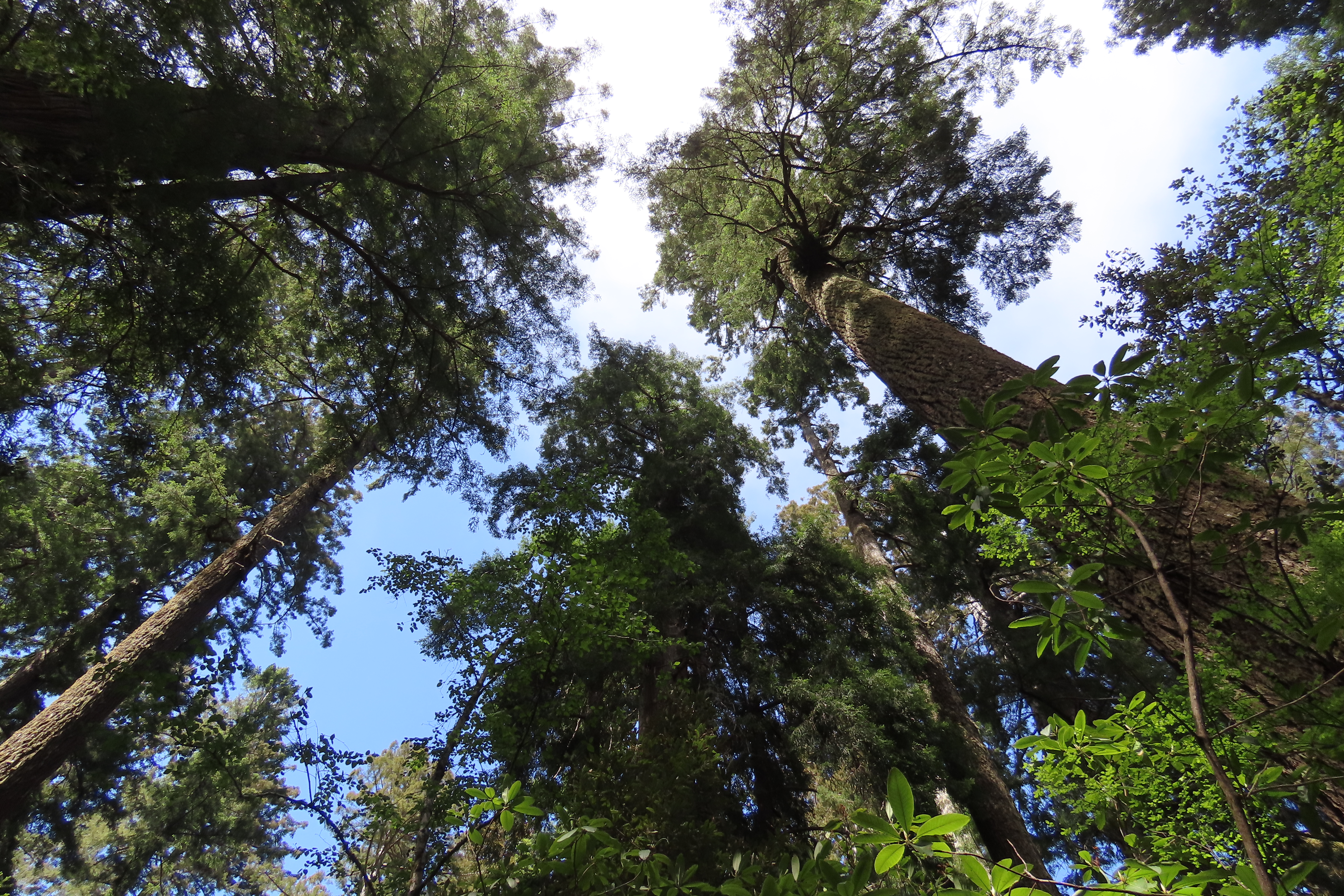
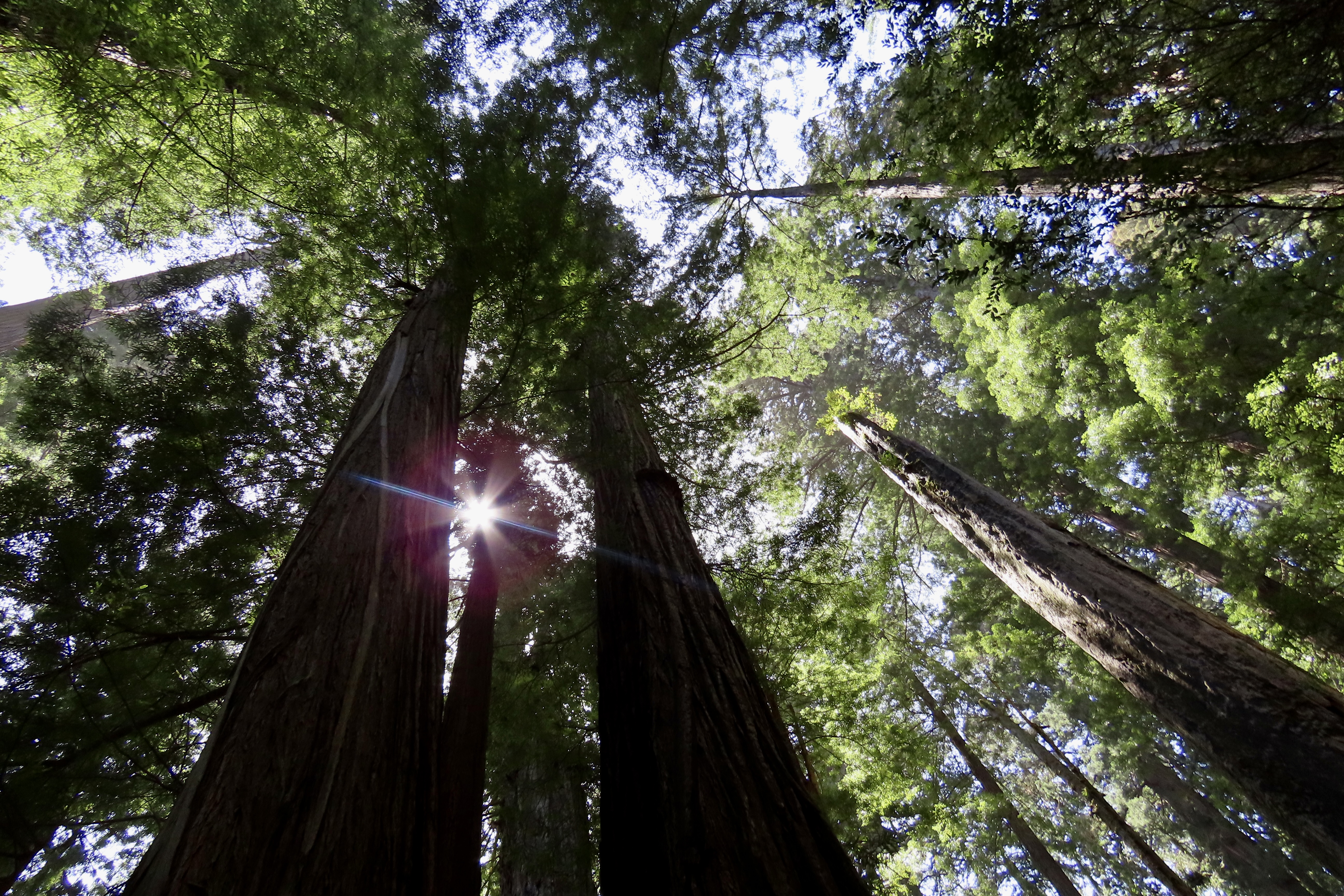
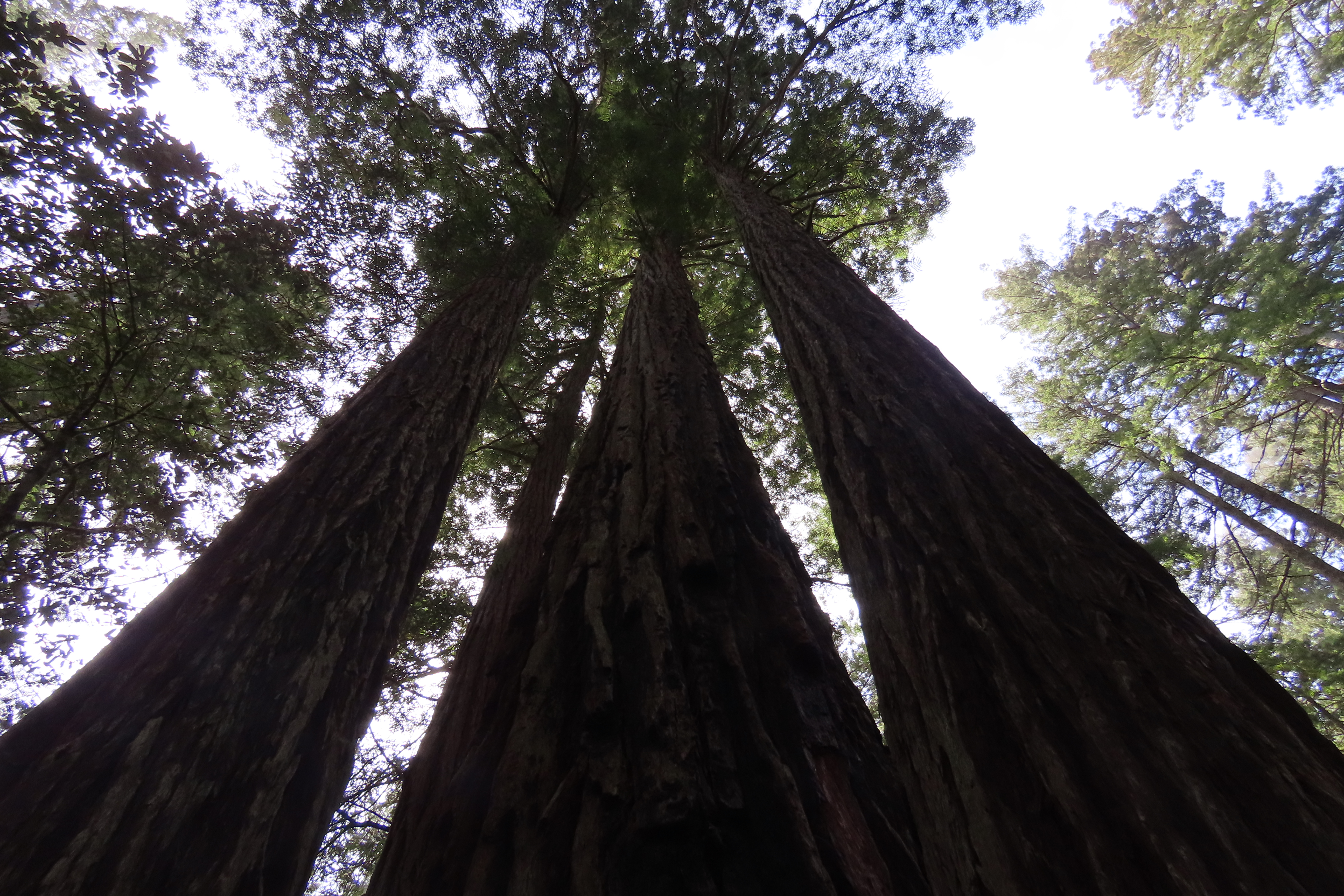
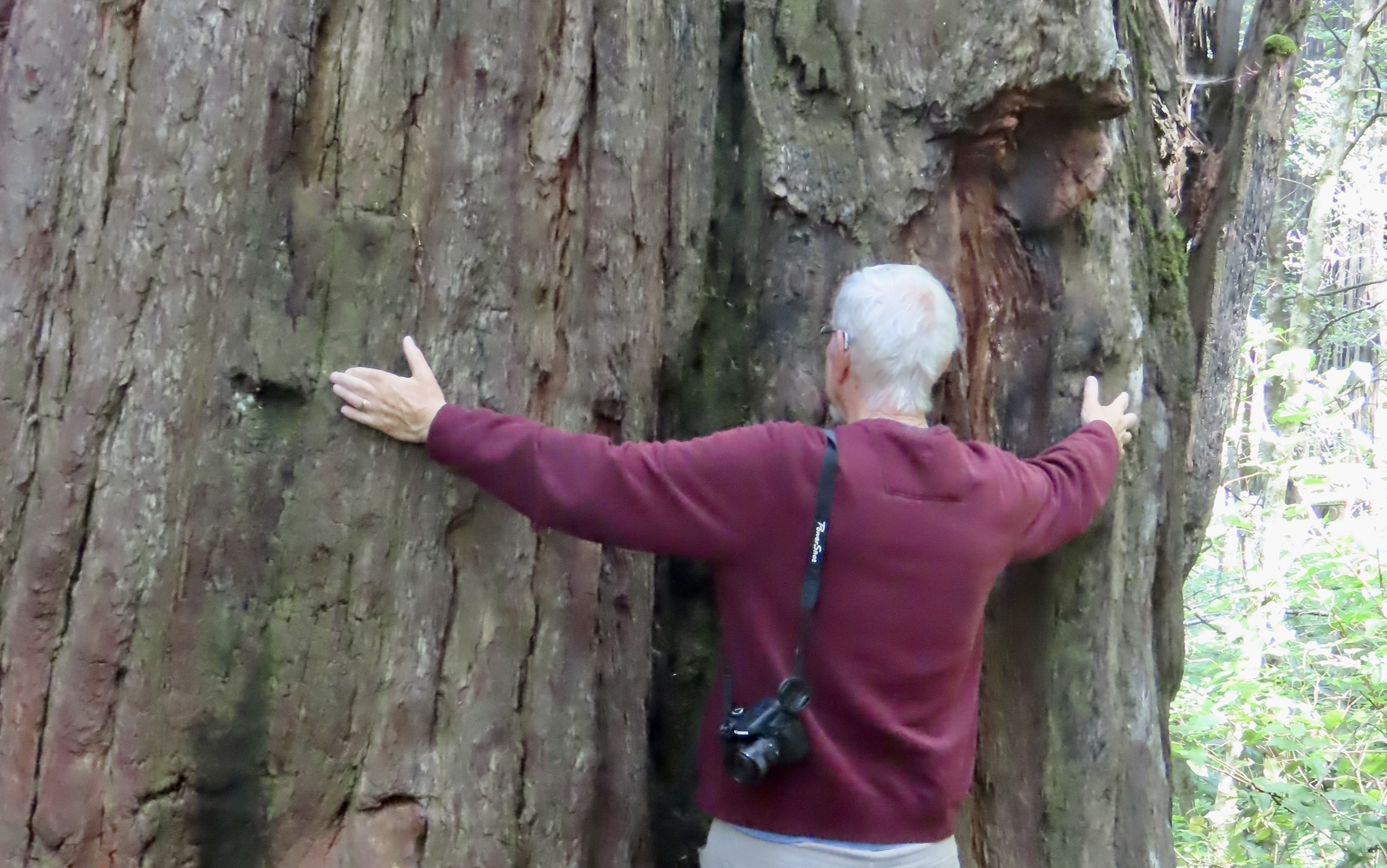
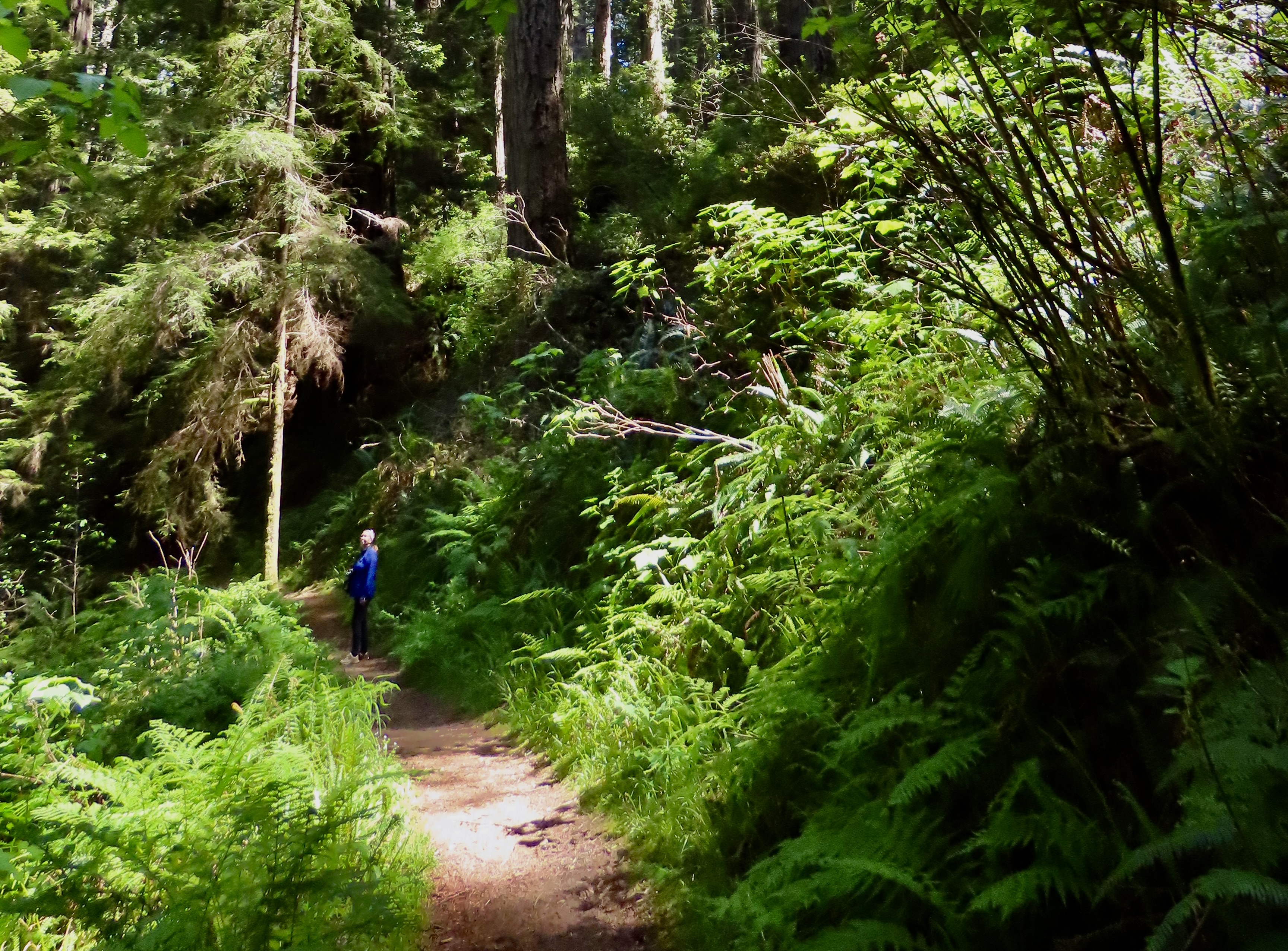
One of the easiest ways to provide perspective on size is to put a person in the photo. I volunteered.A well worn trail worked its way up between these two. I was not the first to stand there and pose.Given the size of the redwoods, one would expect to have roots digging deep into the ground to hold them up. It isn’t the case. But what they lack in depth, they make up in width, as Peggy demonstrates here. It isn’t unusual to find the base of Redwood trees burned out while the tree continues to stand and live. The spaces created have an unusual name: Goose pens. They were so large that early pioneers could fence them in and use them for animals such as geese.Peggy and I often joke about getting crooks in our necks because we spend so much time looking up when we walk through the various groves.I always like the perspective gained from shooting up from the base of a large tree.Or three.One of the most impressive walks one can take in Redwood National Park is the Lady Bird Johnson Grove Trail. Among America’s First Ladies, Lady Bird stood out for her environmental concern and was a strong advocate for saving the redwoods.This plaque was located in the heart of the grove. Saving the redwoods was a long, difficult process that involved the dedication of numerous people starting in the early 1900s with the formation of the Save the Redwoods League. Before 1850, there were approximately 2 million acres of coastal redwoods. California’s gold rush brought hundreds of thousands of people to California and a huge demand for lumber to build homes and commercial structures. It is a demand that has continued down through the decades. Today, only 5 percent of the old-growth coastal redwood forest remains. I confess, I am something of a tree hugger myself. This early photo from the Erickson Collection at Humboldt State College shows old growth redwoods being hauled out of the forest to the Excelsior Lumber Company in Eureka, California where they were to be sawed into lumber.In addition to saving the redwoods for present and future generations, considerable work is also being done throughout the National Park to repair damage done by the logging activities of the past. Peggy and I hiked down the Ah-Pah Trail off the Newton Drury Scenic Highway which talks about and demonstrates some of the efforts being made. This woodsy trail was once a logging road. That’s it for today. In our next post we will feature some of the strange ‘creatures’ that hang out on the trees and are worthy of a fantasy novel. There’s no preview photo this time. It will be a surprise.



















 Wandering through Time and Place