“Point Reyes is the windiest place on the Pacific Coast and the second foggiest place on the North American continent. Weeks of fog, especially during the summer months, frequently reduce visibility to hundreds of feet. The Point Reyes Headlands, which jut 10 miles out to sea, pose a threat to each ship entering or leaving San Francisco Bay. The historic Point Reyes Lighthouse warned mariners of danger for more than a hundred years.” From the Pt. Reyes National Seashore website.
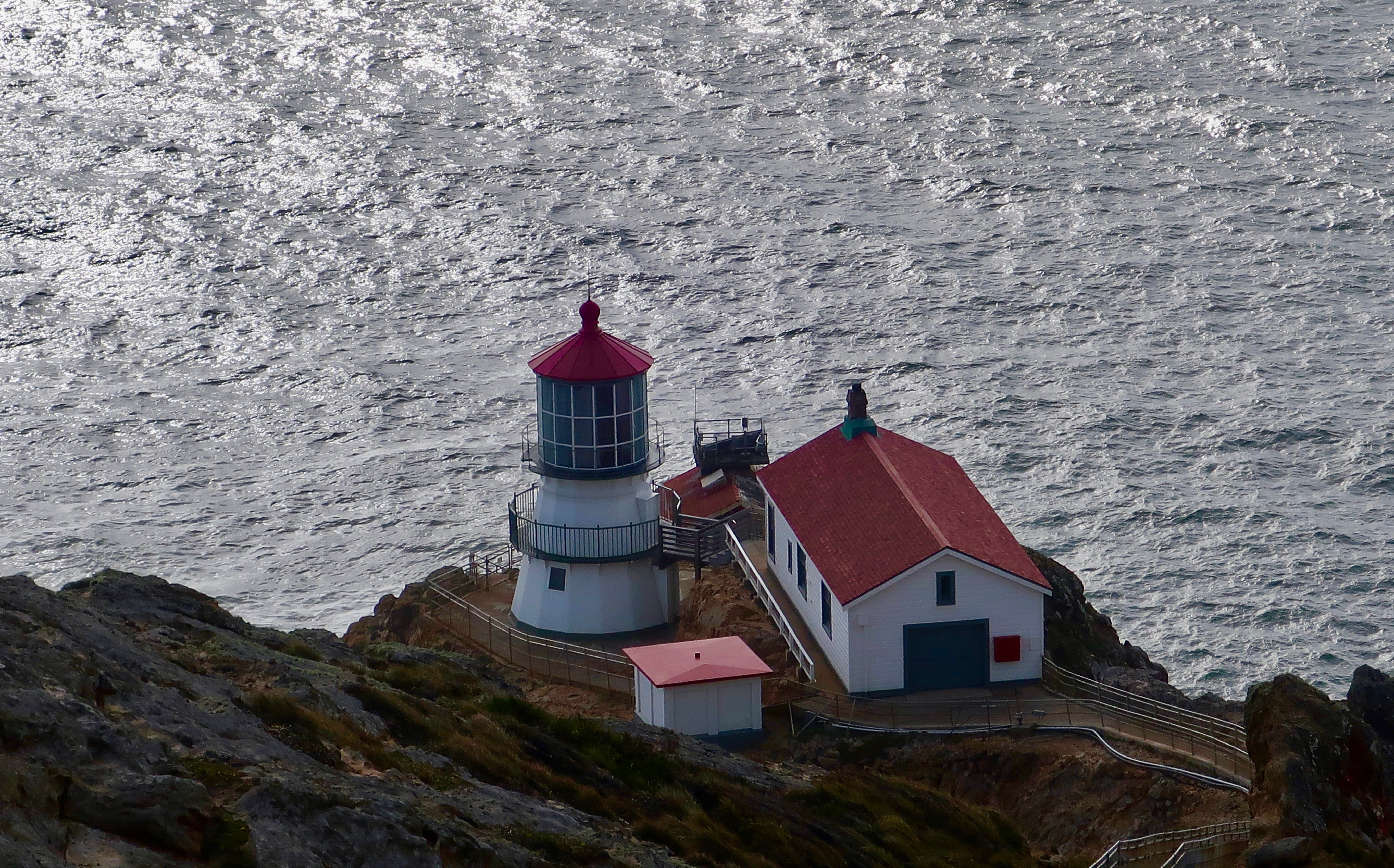
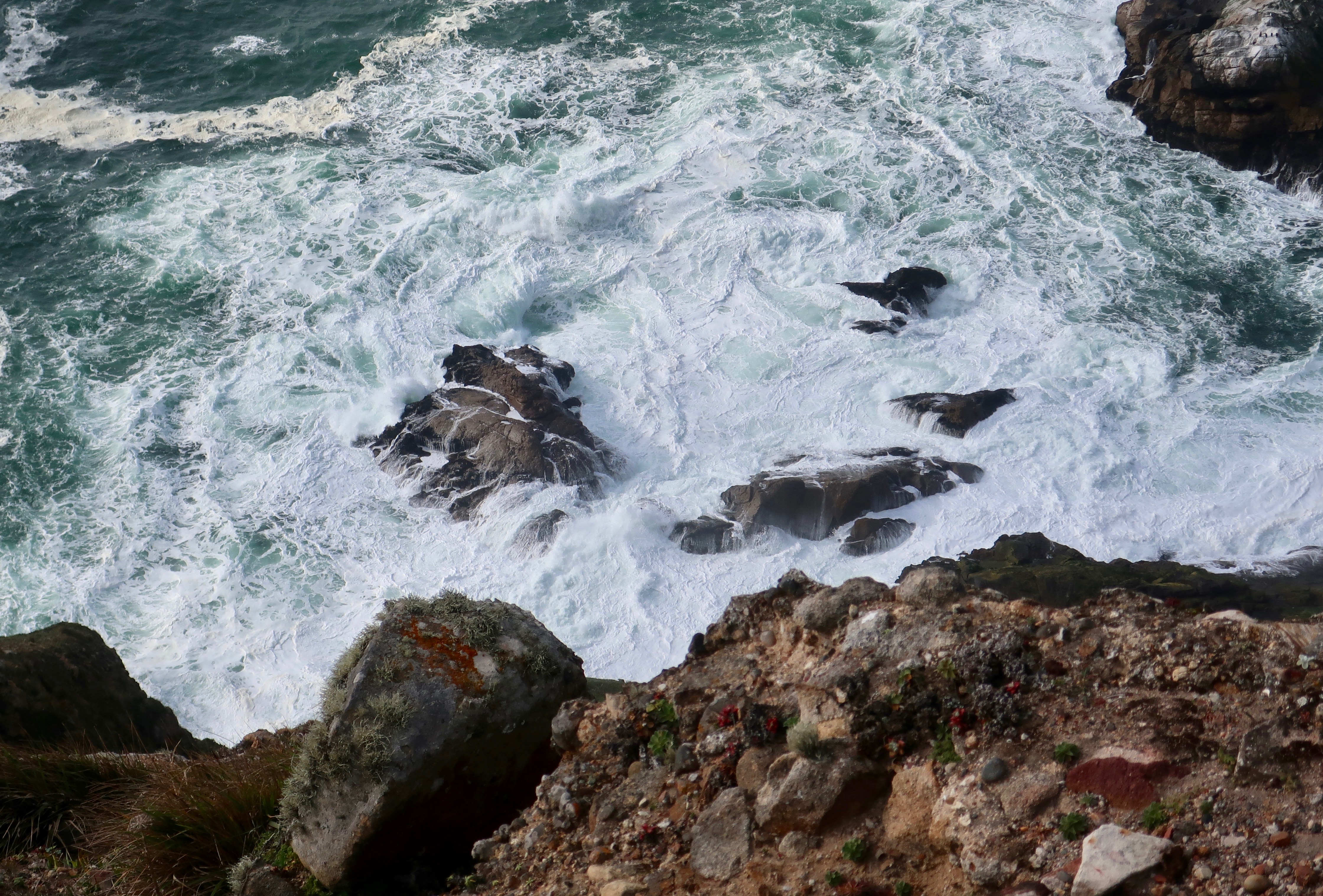
For as much as I enjoy Pt. Reyes National Seashore, I studiously avoid it in the summer. One reason is the fog. That’s true for much of the Pacific Coast. The other is tourists, gazillions of them. Traffic slows to a turtle’s pace along Highway 1, campgrounds are full, and popular sites such as the lighthouse are packed. I have a limited sense of humor about any of the above, especially given that I can visit during the late fall, winter, and early spring when few tourists are out and about and days are often crystal clear. Or, if I am particularly lucky, a raging storm will send huge waves crashing ashore producing spectacular views. I love both.
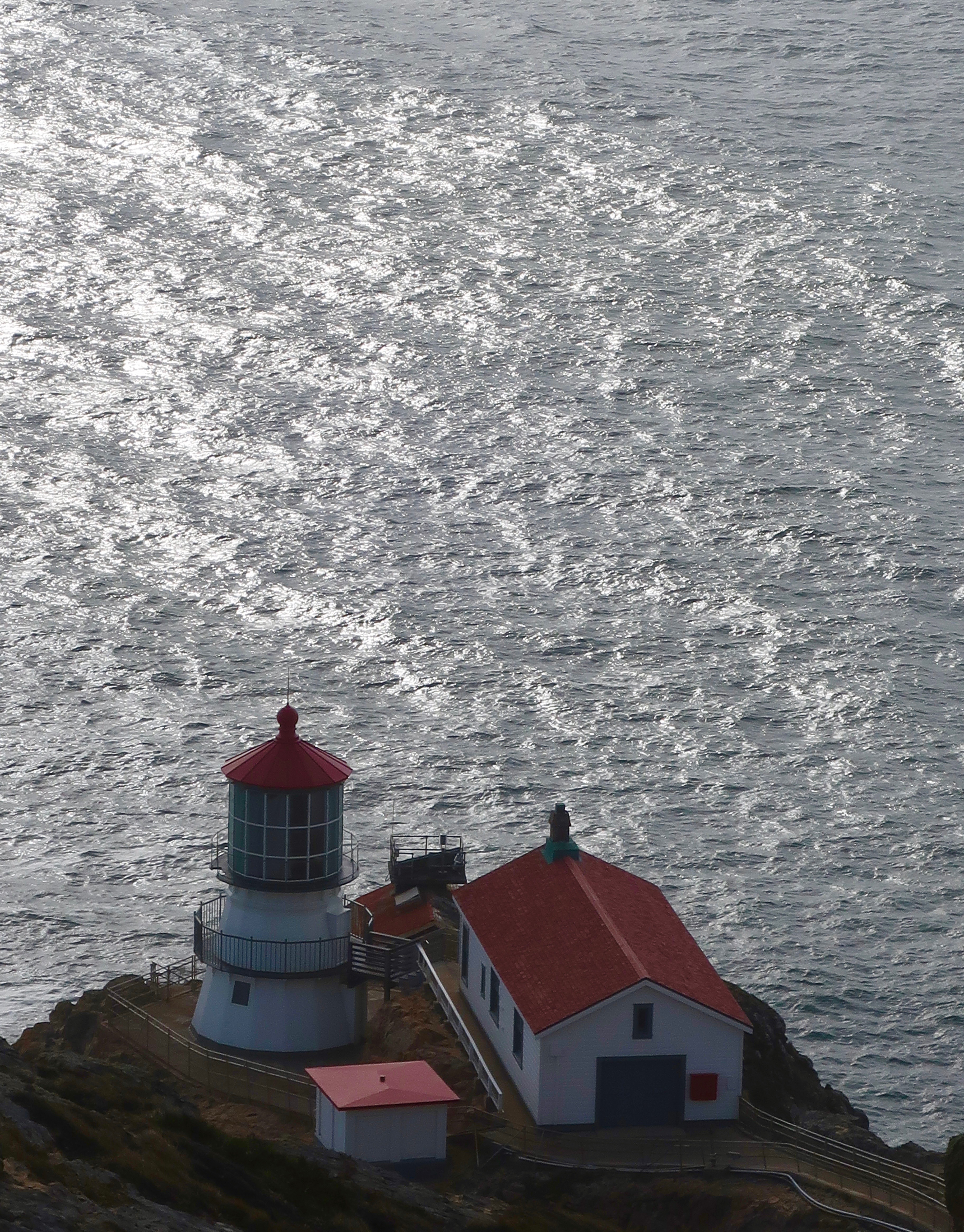
It was mainly sunshine when Peggy and I visited the National Seashore in early March to celebrate my birthday. The lighthouse was closed due to Covid, but I have visited it before. This time, we admired it from above.

The lighthouse served its purpose for over 100 years, finally shutting down in 1975 when the US Coast Guard replaced it with an automated light found just below the historic lighthouse. Up until then it was tended by a lighthouse keeper whose responsibility was to keep the light burning. In addition to warning mariners off of the treacherous rocks, the lighthouse served as a navigational aid. Each lighthouse along the coast has a different frequency of light that ship pilots recognize. At Pt. Reyes, the light flashed once every five seconds.

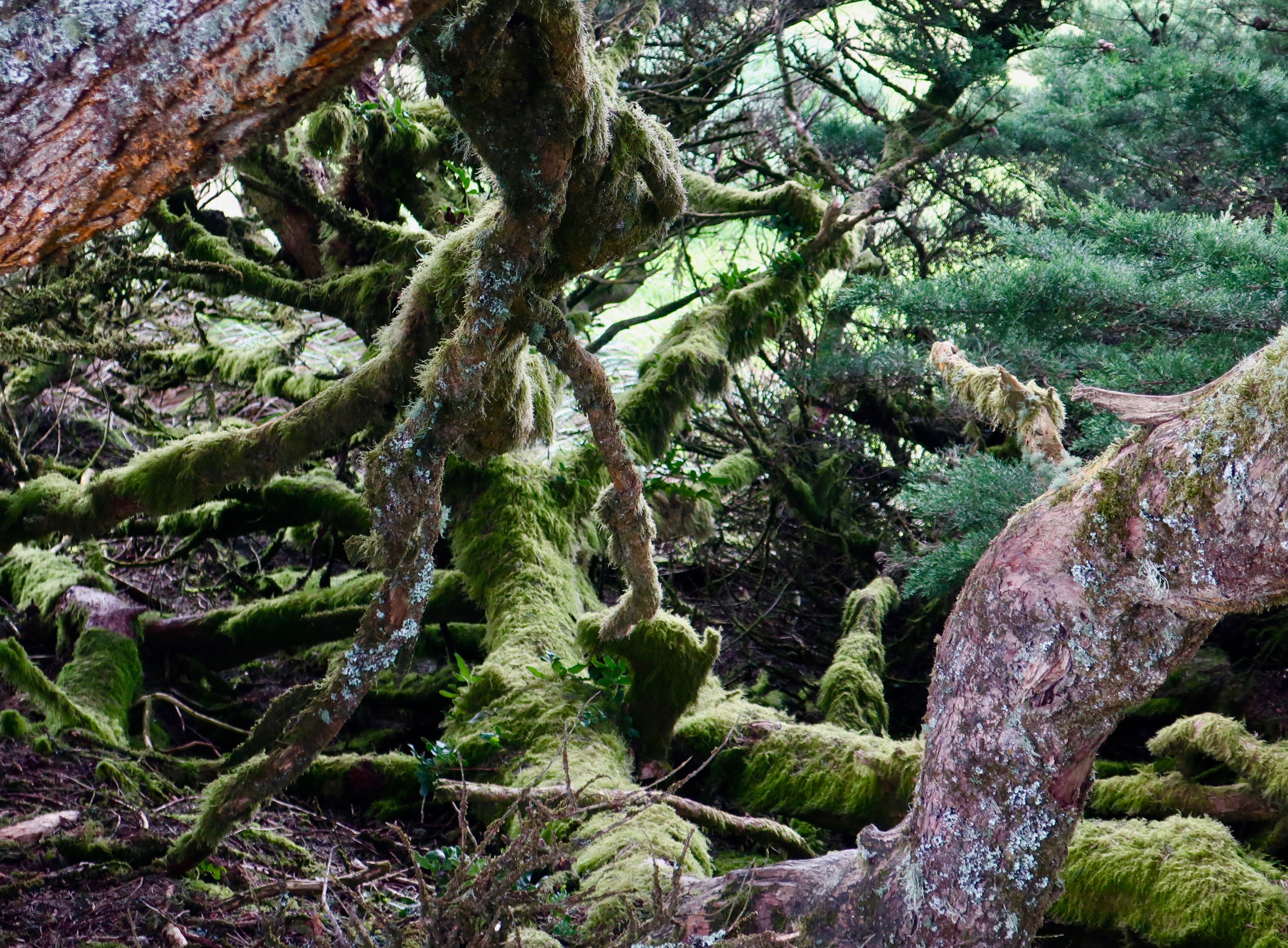
Peggy and I parked Quivera and followed the trail that led out to the lighthouse. Along the way, we found trees that showed the effects of the high winds that frequent the headlands.

NEXT FRIDAY’S TRAVEL BLOG: I’ll wrap up my Pt. Reyes series with a pleasant walk out to Abbot’s Lagoon and a visit to the colorful town of Pt. Reyes Station.
 Wandering through Time and Place