The Historic Pierce Ranch and a Herd of Tule Elk… Pt. Reyes National Seashore

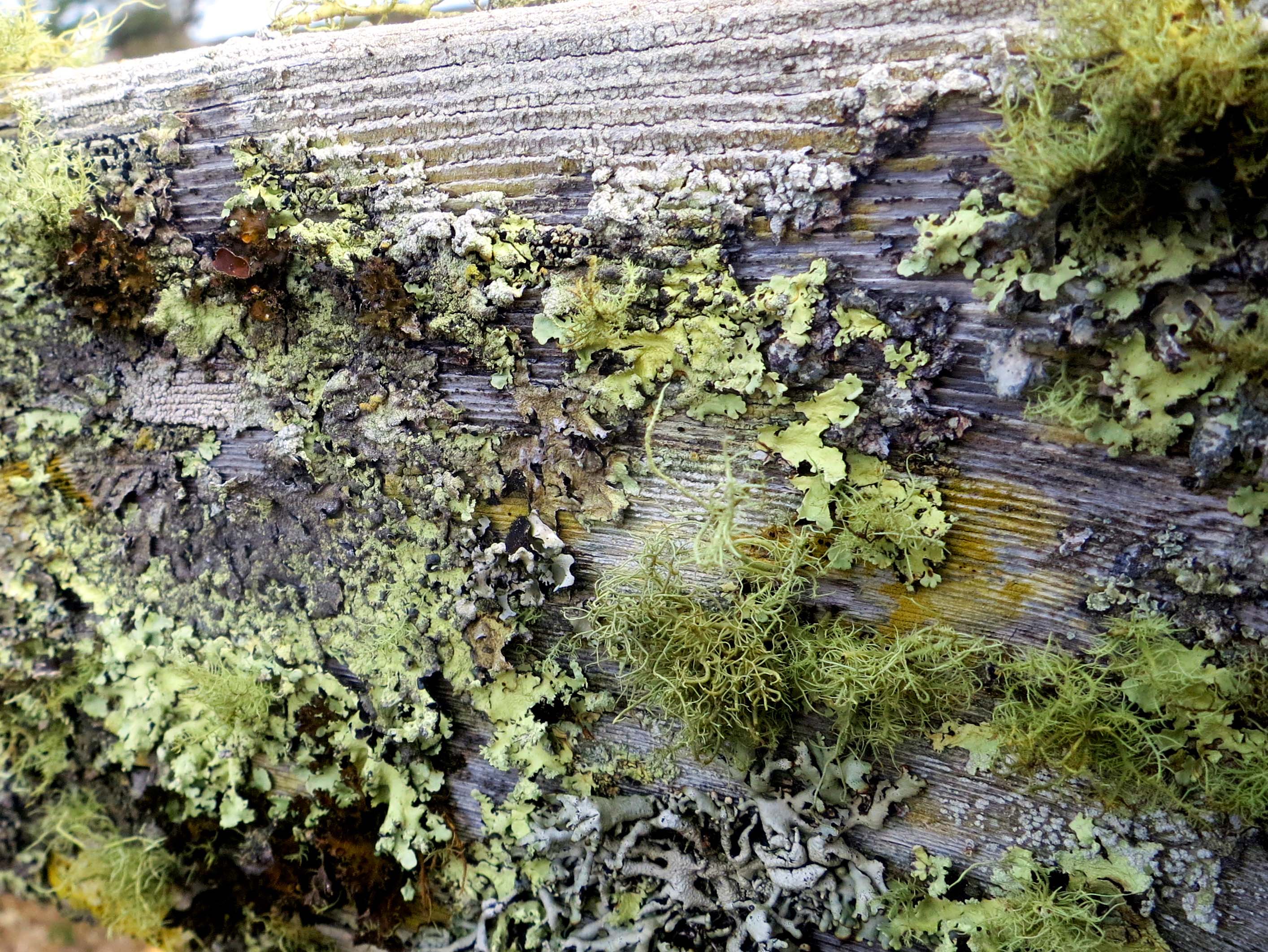
Lichens found on a fence on Pierce Ranch at Pt. Reyes National Seashore. Photo by Curtis Mekemson.

Lichens, adorning a fence on the historic Pierce Ranch at Pt. Reyes National Seashore, remind visitors that it has been 46 years since the last cow mooed.

Marin County land speculators, real estate firms, and local governments had a dream in the 1950’s. They were going to turn Pt. Reyes into one vast housing tract. Mouth-watering profits were to be made. Local tax dollars would increase proportionately. Everyone would gain.

Well, not quite.

Local ranchers saw a life style they had loved for over a century disappearing. The Sierra Club saw one of the world’s richest natural environments falling under the blades of bulldozers. The National Park Service saw it’s dream of opening the beautiful coast and forests of the area to the public being replaced by a forest of no trespassing signs.

An alliance was formed. Environmentalists and ranchers joined together with visionary local and national leaders to devise a plan that would protect the environment, allow ranchers to continue ranching, and give the National Park Service the opportunity to create one of America’s premier parks, a gift to America and the world that would last for generations. In 1962, John Kennedy signed the legislation that would create the Pt. Reyes National Seashore.

The Pierce Ranch, located out on Tomales Point, ceased operation in 1973. Three years later it became part of the park as a historic representative of the dairy ranches at Pt. Reyes that had been milking cows and shipping butter to the Bay Area since 1866.

In 1978 a herd of Tule Elk was reintroduced to the area as part of the Tomales Point Tule Elk Reserve. Native to California, Tule Elk had once roamed throughout the state in substantial numbers. By 1900 they were close to extinction. Saved by a Bakersfield rancher, over 20 protected herds are now located in California.

Photo of a lichen covered fence at Pt. Reyes National Seashore.

Another photo of the lichen covered fence. It’s like a strange forest.

Photo of cypress tree wind break on Pierce Ranch inPt. Reyes National Seashore. Photo by Curtis Mekemson.

Possibly the mother of all cypress tree windbreaks stands above Pierce Ranch.
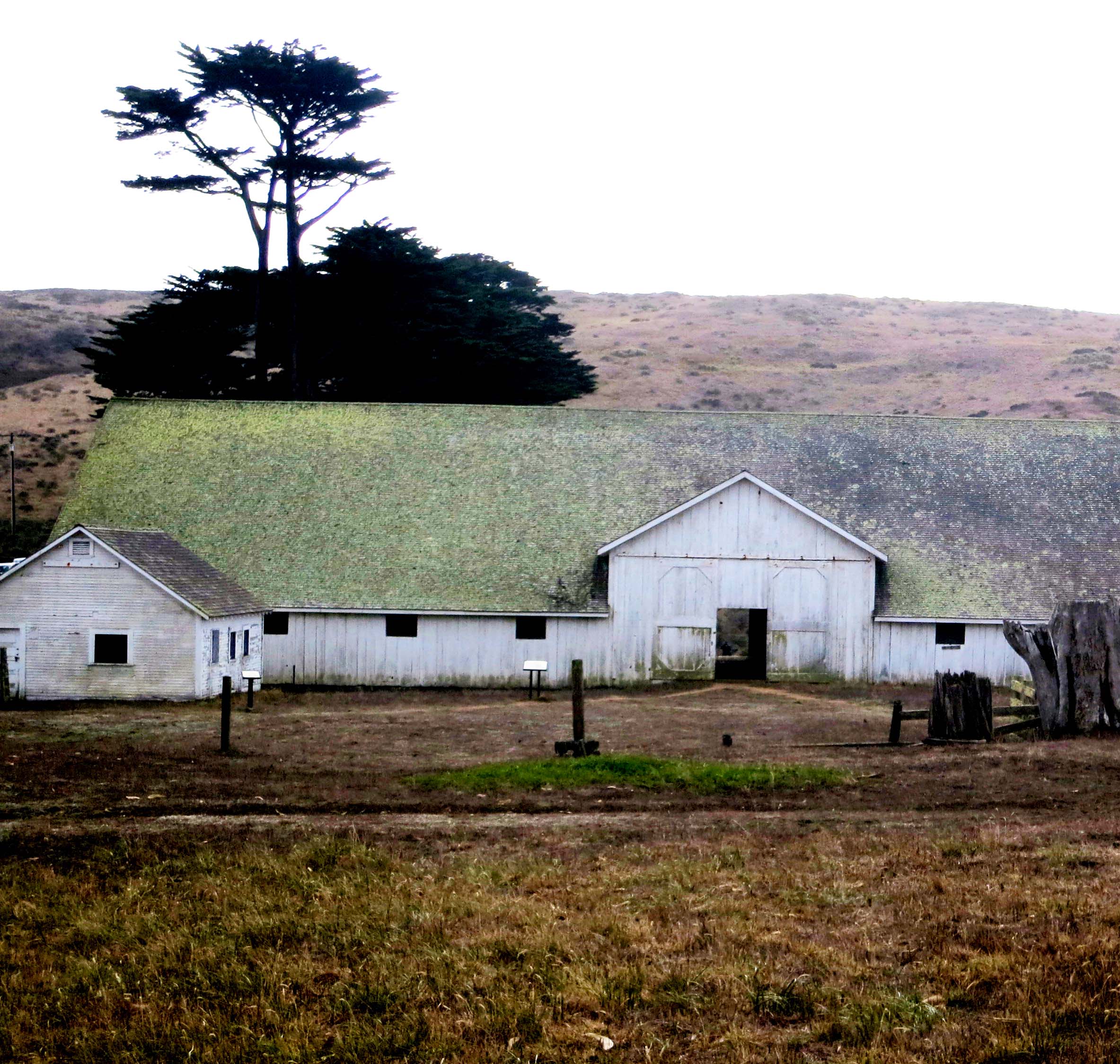
Photo of barn at Pierce Ranch, Pt. Reyes National Seashore.  Photo by Curtis Mekemson.

A number of buildings make up the ranch, including this old barn.
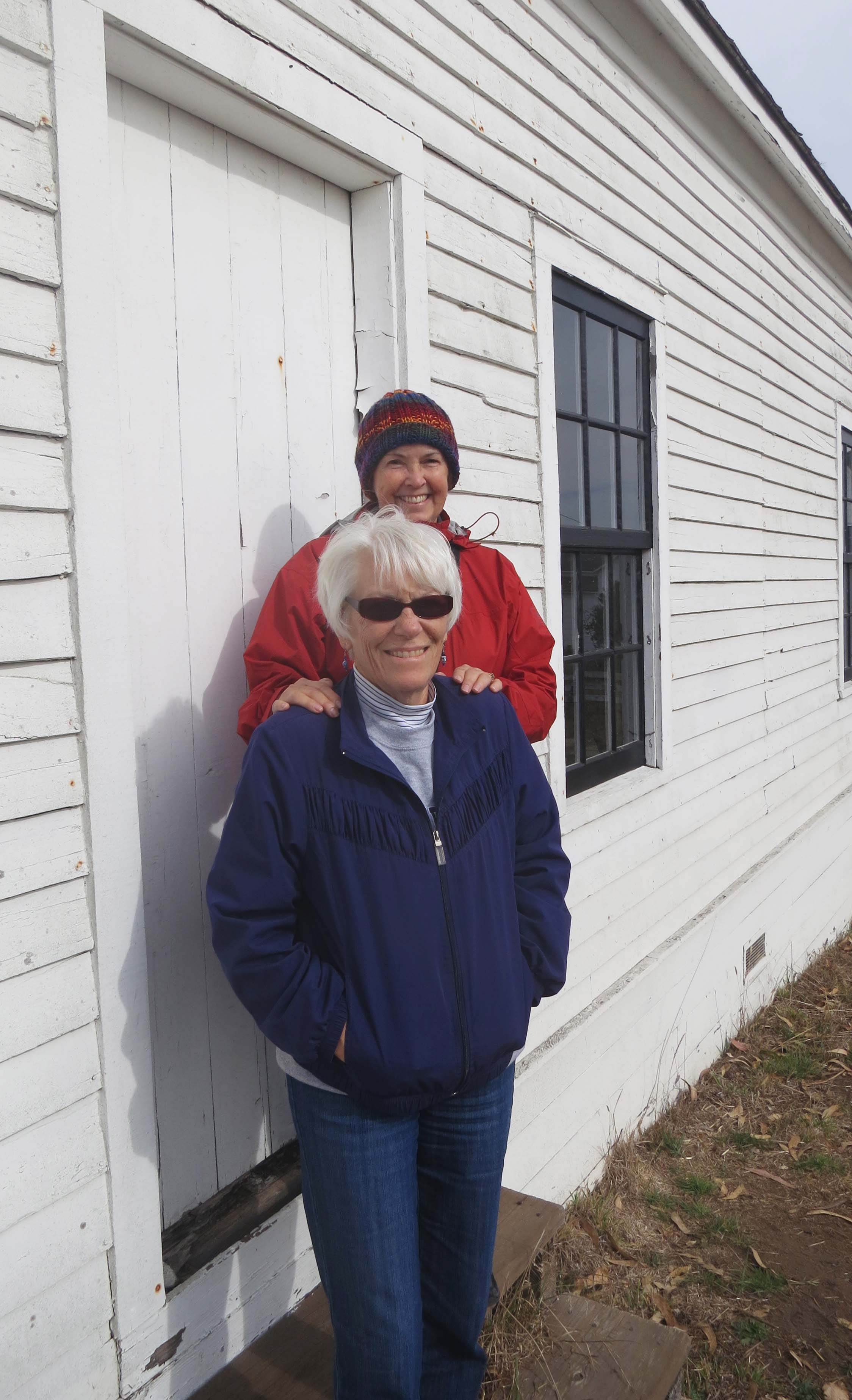
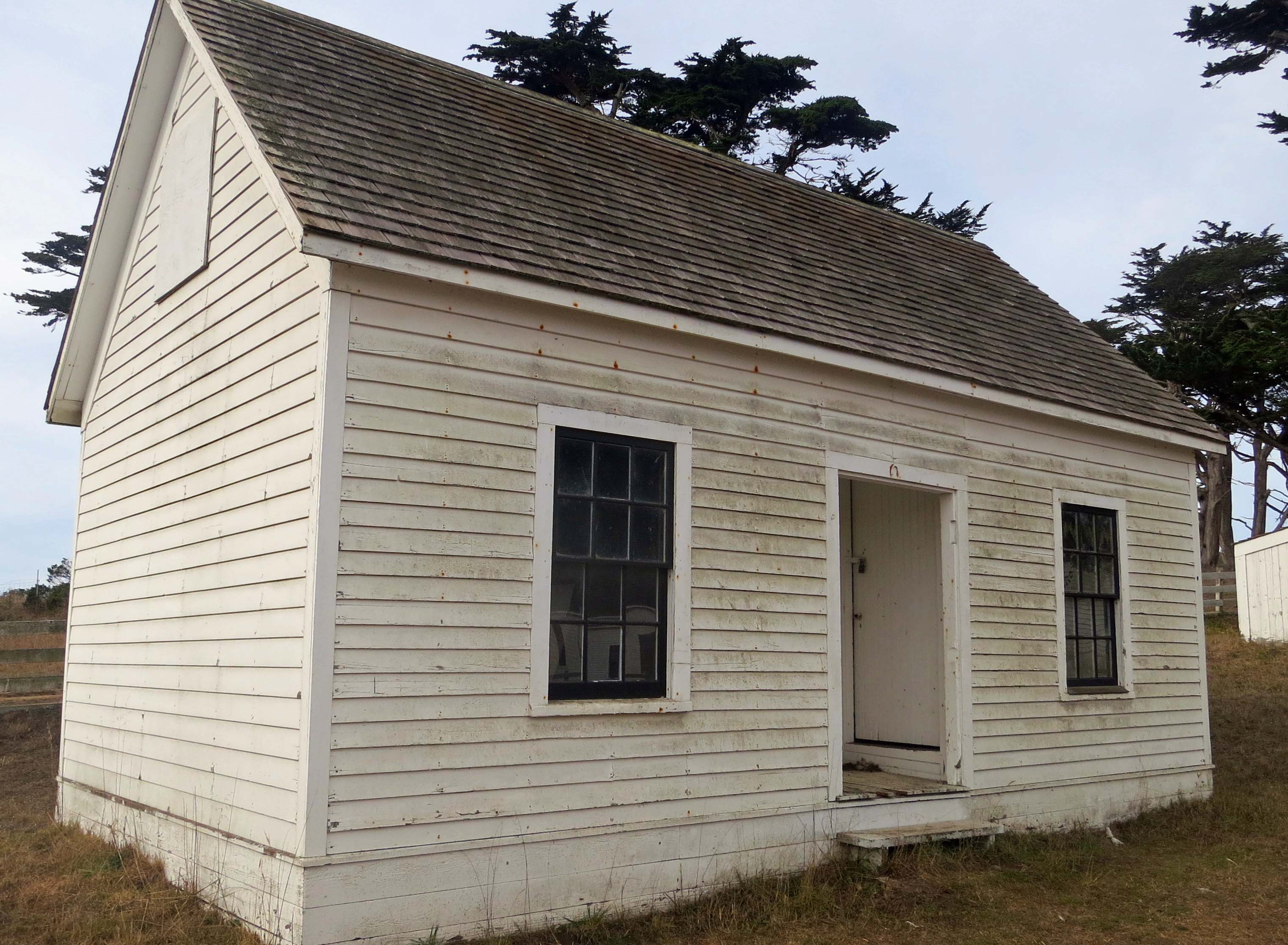
Photo of one-room school house at Pierce Ranch, Pt. Reyes National Seashore including Leslie Lake and Peggy Mekemson. Photo by Curtis Mekemson.

Isolated out on Tomales Point, Pierce Ranch formed a small community that included a store and this school-house. Since our friend Leslie Lake spent many years as a third grade teacher and Peggy worked as an elementary school principal, I’ve included them in the photo.

Looking inside school at Pierce Ranch on Pt. Reyes National Seashore. Photo by Curtis Mekemson.

Once filled with laughing children learning their abc’s, the school is now vacant and the windows are covered with cobwebs– ghostly reminders of the past.
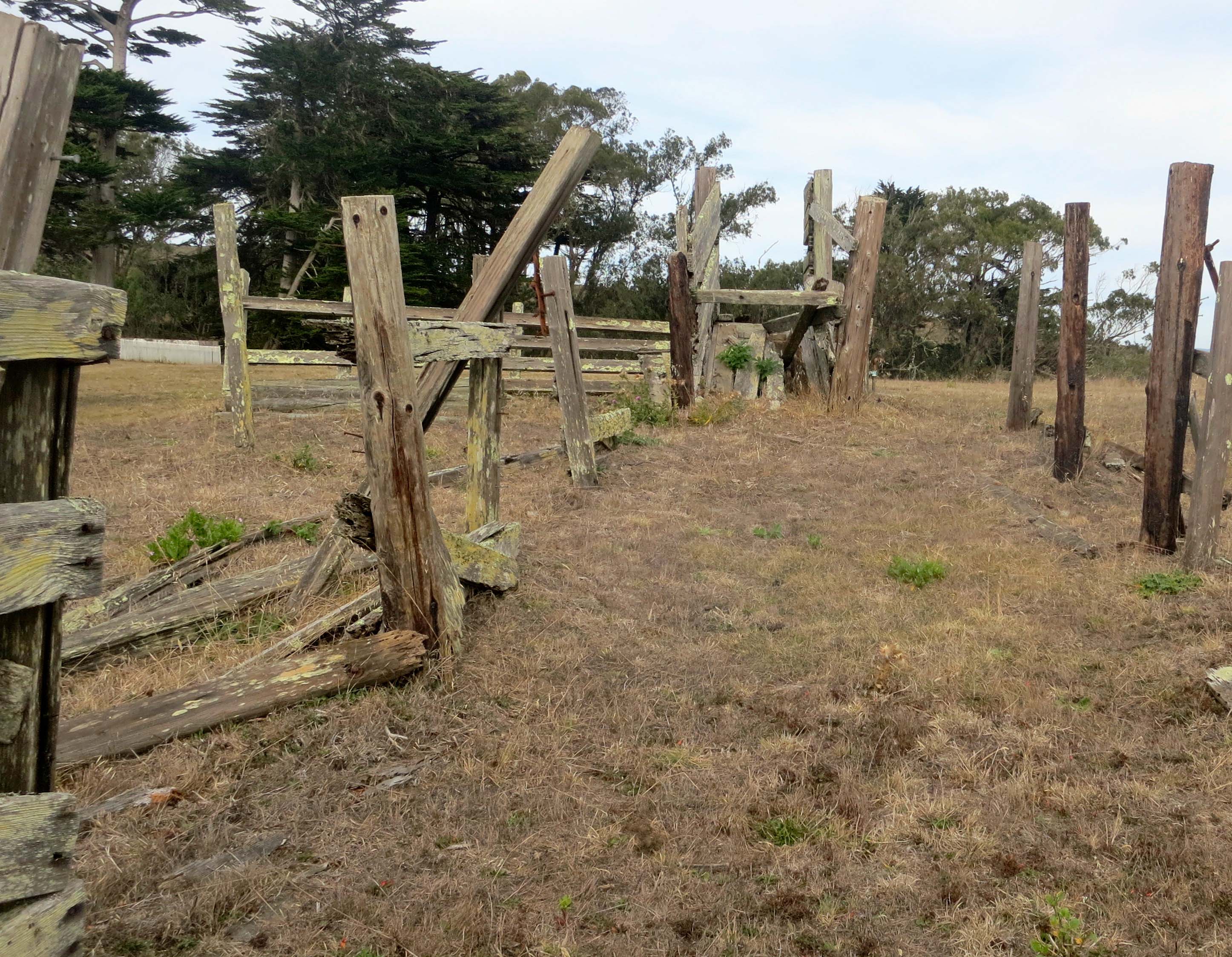
Old cattle pen at Pierce Ranch at Pt. Reyes National Seashore. Photo by Curtis Mekemson.

Once upon a time cattle would have been penned up within these fences, ready to be loaded on to trucks using the blocked ramp at the top of the photo.

Aging fence at Pierce Ranch, Pt. Reyes National Seashore. Photo by Curtis Mekemson.

A close up of the fence.

Bunk house at Pierce Ranch on Pt. Reyes National Seashore. Photo by Curtis Mekemson.

This small bunk house would have accommodated ranch hands. Up to 20 were employed at the height of milking season.
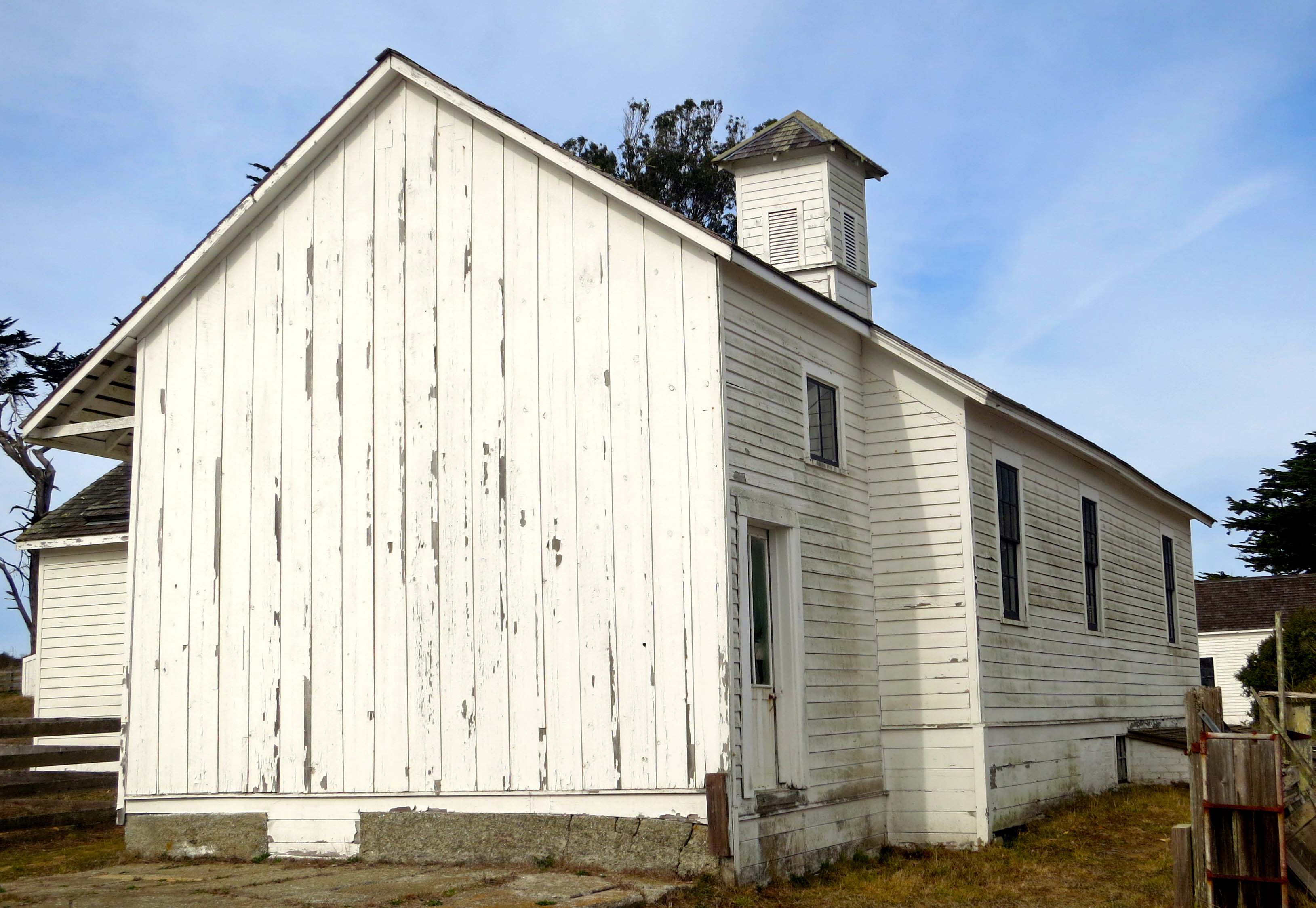
Photo of dairy house at Pierce Ranch, Pt. Reyes National Seashore by Curtis Mekemson.

This dairy house was where butter was prepared to be shipped off to San Francisco in large kegs. Butter from Pt. Reyes was considered to be very high quality and was sold in gourmet shops and used in the best restaurants.

Old farming equipment at Pierce Ranch on Pt. Reyes National Seashore. Photo by Curtis Mekemson.

What’s a farm without equipment? This piece had morphed into a planter.
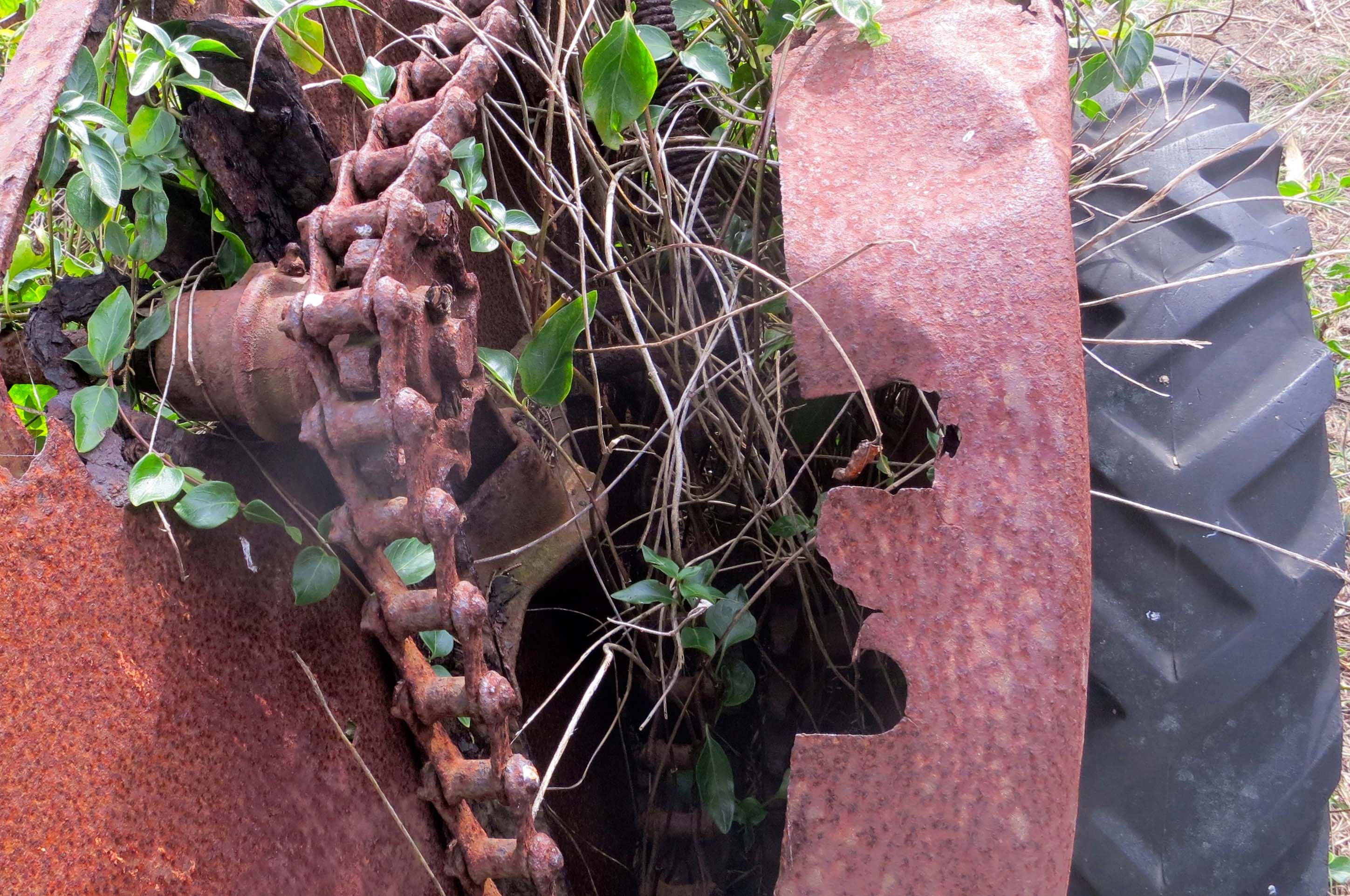
Close up of old farm equipment at Pierce Ranch on Pt. Reyes National Seashore. Photo by Curtis Mekemson.

A close up.

Old soil tiller at Pierce Ranch, Pt. Reyes National Seashore. Photo by Curtis Mekemson.

This tiller also caught my attention.

Rusted gear and chain on soil tiller at Pierce Ranch, Pt. Reyes National Seashore. Photo by Curtis Mekemson.

Rusted gear teeth and chain on tiller.

Tule Elk grazing on a hill at the Tule Elk Preserve at Pt. Reyes National Seashore.

Having toured Pierce Ranch we climbed the hill next to the ranch in search of Tule Elk. We found them a long ways off. (Photo by Peggy Mekemson.)
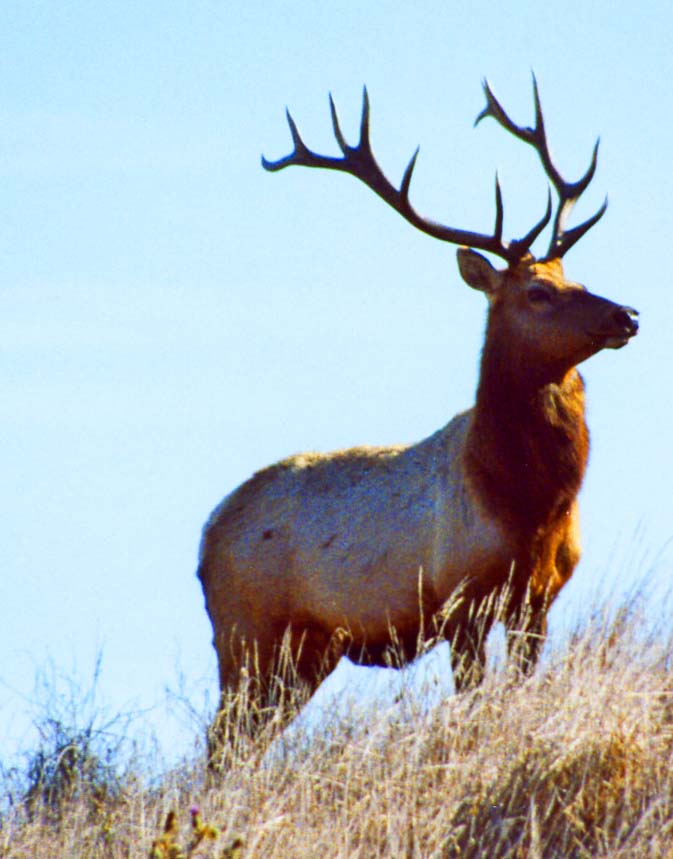
Photo of bull Tule Elk at Pt. Reyes National Seashore Tule Elk Reserve. Photo by Curtis Mekemson.

Here’s how one looked a little closer.

NEXT BLOG: North and South Beach where the Pacific Ocean crashes ashore. Here’s a final shot of the Tule Elk. One of the big guys had obviously taken an interest in me. I was hoping it wasn’t personal. –Curt
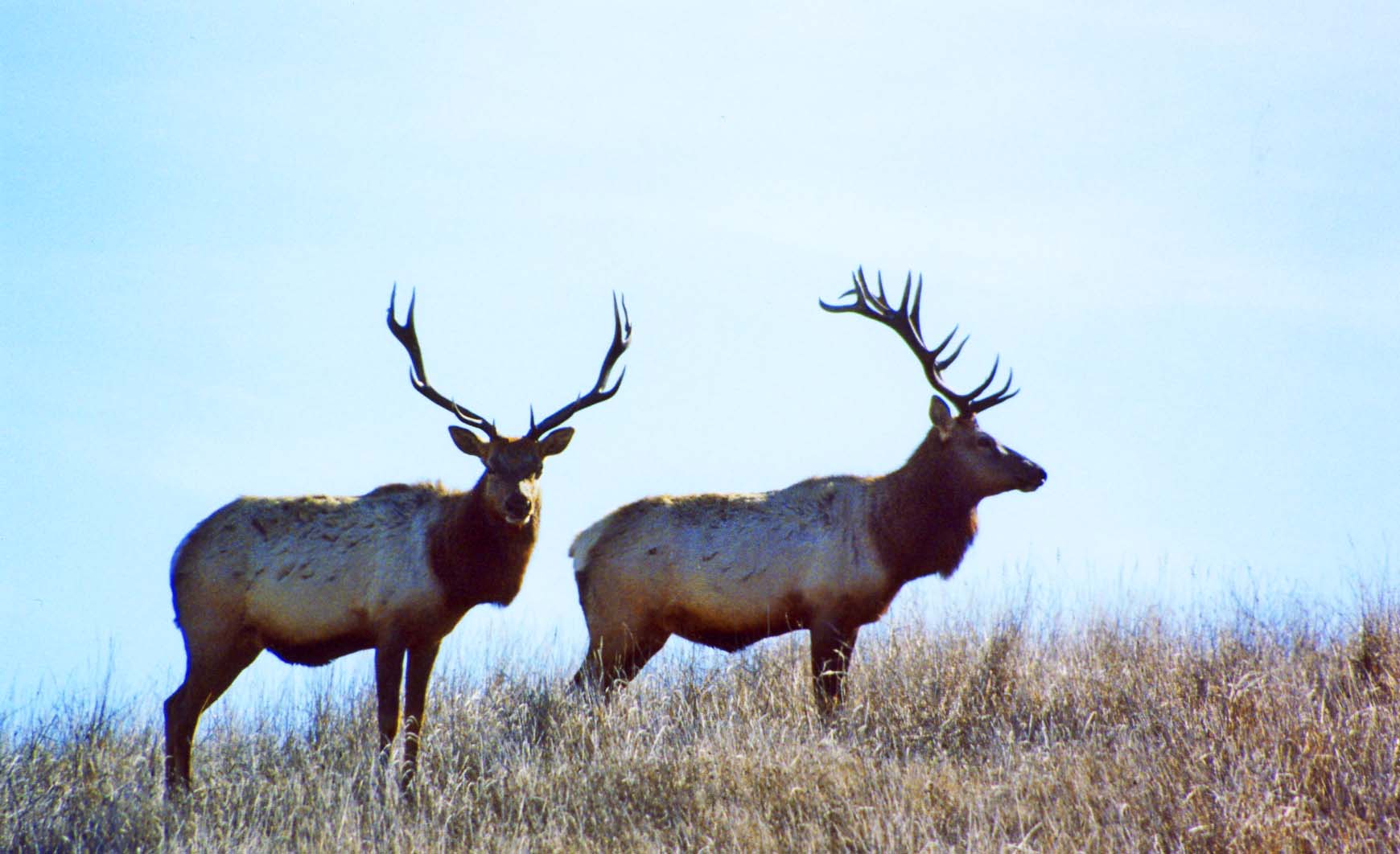
A pair of Tule Elk at Pt. Reyes National Seashore. Photo by Curtis Mekemson.

Earthquake Swallows Cow… Pt. Reyes National Seashore: Part 1

Sanderlings take flight at Pt. Reyes National Seashore on Limantour Beach. (Photo by Peggy Mekemson.)

Pt. Reyes National Seashore is an American Treasure. In this photo, Sanderlings take flight on Limantour Beach. (Photo by Peggy Mekemson.)

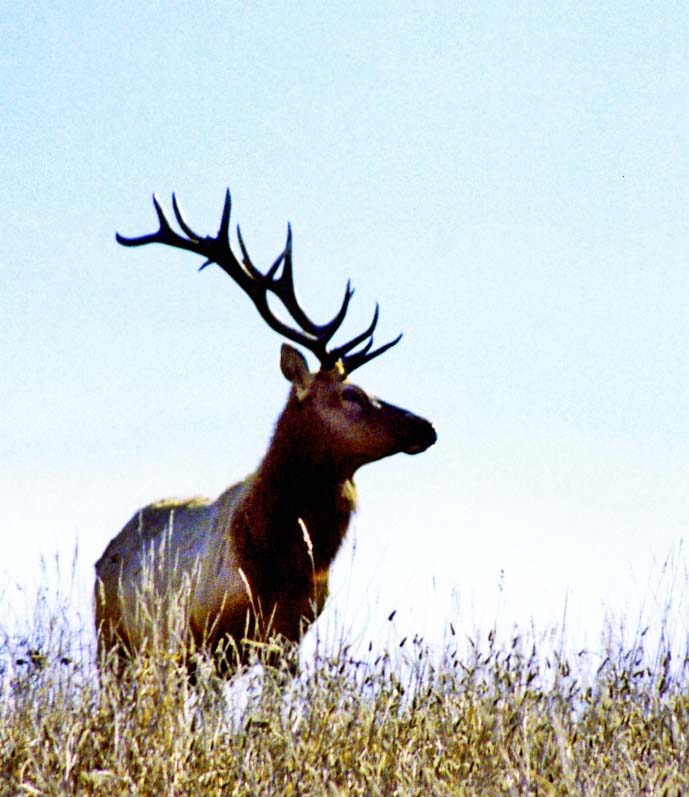
Photo of bull elk at Pt. Reyes National Seashore by Curtis Mekemson.

A bull elk is outlined against the sky at the Pierce Ranch.

My legs were not working and I was laughing. I had just completed one of Pt. Reyes’ easiest walks from the park headquarters out to the beach and back via Bear Valley. At the end of the 10 mile round trip, I had gratefully fallen into my car and driven to Bodega Bay. It was 1969 and the pre-Yuppified Inn-at-the-Tides consisted of motel cabins going for $15 as opposed to rooms starting at $200. My legs had gone on strike when I stepped out of the car to register.

I had just completed a year of recruiting for Peace Corps in the Southern United States where exercise had consisted of traveling between airports, motels and college campuses from Texas to Washington DC.  Adding injury to insult, I had eaten most of my meals at Southern restaurants serving large helpings of Southern food. Curt had become a little chubby. The legs were not happy. Fortunately, a half-pint of whiskey and a full night’s sleep ended their rebellion. The next morning I returned to my exploration of Pt. Reyes and the beginning of a life-long love affair with the North Coast of California.

Peggy and I returned to the area last week for three days and stayed at Olema Campground in the small town of the same name. It’s always been my campground of choice and has changed little over the decades. Even the restrooms have remained the same. I’ve used the campground as my jump off point for exploring Pt. Reyes, as a writing retreat, and as a campsite for the 500 mile-bike treks and 7 day walking tours I led on the North Coast during the 70s, 80s and 90s.

Photo of Olema Campground next to Pt. Reyes National Seashore by Curtis Mekemson.

One of my favorite campsites at Olema Campground backs up to a small stream and looks out on Pt. Reyes National Seashore. Obviously, we were celebrating Halloween.

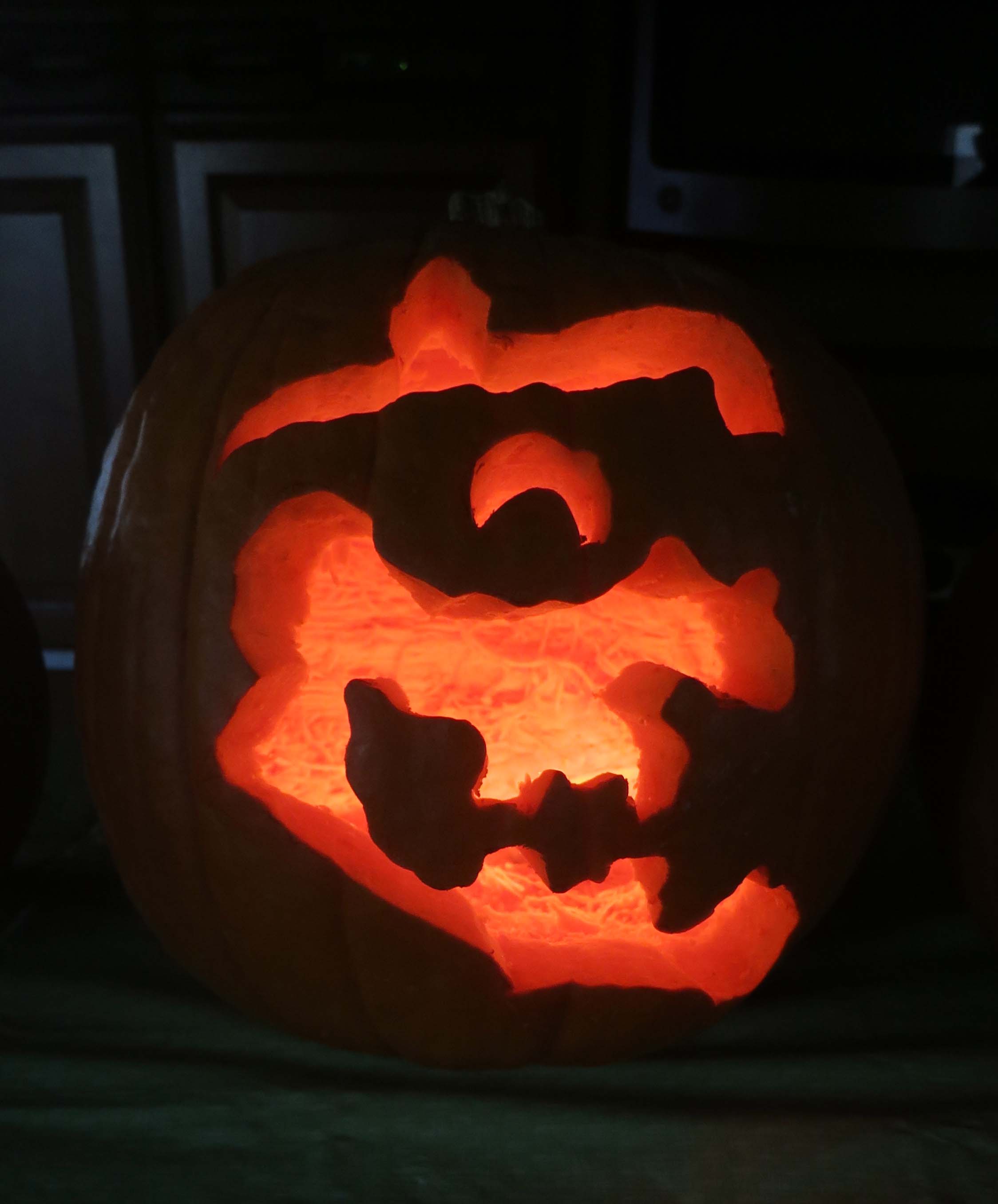
Pumpkin carving photo by Curtis Mekemson.

Peggy and I join my Sister Nancy and her husband Jim each year for a pumpkin carving contest. We brought ours to Pt. Reyes. This witch was my entry in the contest.

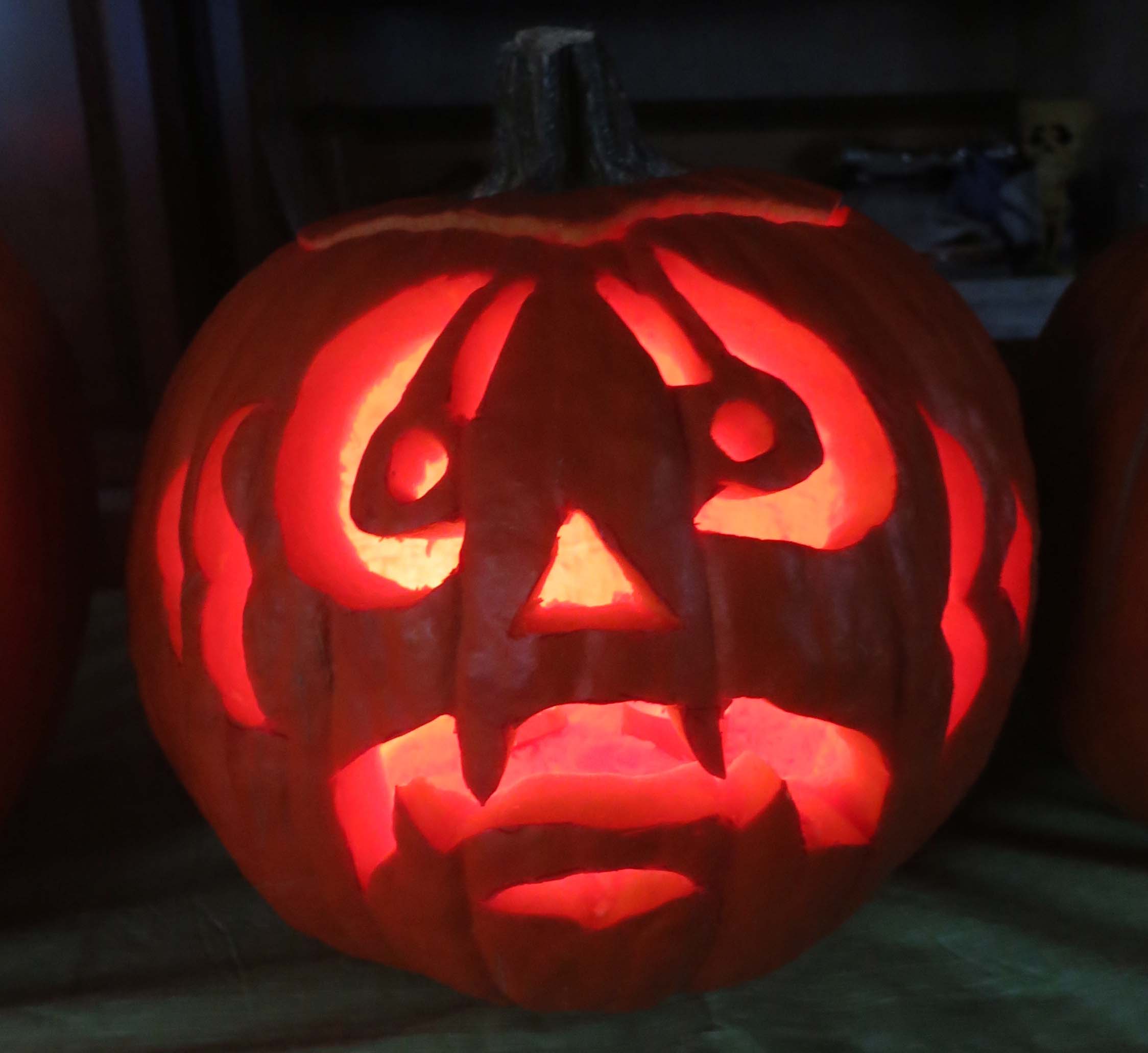
Peggy's pumpkin. (She won the contest. Our grandkids voted without knowing who had carved the pumpkins.)

Peggy’s pumpkin. (She won the contest. Our grandkids voted without knowing who had carved the pumpkins.)

Our friends Ken and Leslie Lake joined us at the campground, arriving just in time to eat lunch in Pt. Reyes Station and to visit the Bovine Bakery and Pt. Reyes Books. The bookstore is a jewel and the bakery has buttermilk scones to die for. They, along with the Station House Café, are required stops on my trips to Pt. Reyes.

 Photo of Point Reyes Books and Bovine Bakery in Point Reyes Station by Curtis Mekemson.

Two of my favorite stops at Pt. Reyes Station. For a small, locally owned bookstore, Point Reyes Books has a great selection. And I’ve never met a pastry at the Bovine Bakery I didn’t like. More often than not, people are lined up out the door.

Afterwards we visited the park’s information center in Bear Valley and did a short walk around the Earthquake Trail. The Olema Campground is located a quarter of mile from the park headquarters and the infamous San Andreas Fault. Sitting in camp we could look across the fault at the peripatetic park. It had begun life some 300 miles to the south and is still working its way north. Normally its progress is measured in inches over decades. In 1906 it jumped 20 feet in the earthquake that was responsible for the destruction of San Francisco. Local legend is the earth cracked open, swallowed an Olema cow, and closed, leaving only the tail showing.

Pt. Reyes National Seashore photo by Curtis Mekemson.

A view along the Earthquake Trail. One of the things I like about Pt. Reyes National Seashore is the diversity of environments…

Photo by Curtis Mekemson of how far the San Andreas Fault slipped near Olema, California in 1906.

Leslie and Peggy stand on the San Andreas Fault and demonstrate how far the fault slipped in 1906.

This old black and white photo included by the park service along the EarthQuake Trail shows the actual slippage created by the 1906 earthquake.

This old black and white photo included by the park service along the Earthquake Trail shows the actual slippage created by the 1906 earthquake. You can see the actual crack in the ground.

And this photo from the Earthquake Trail shows the result of the 1906 earthquake on San Francisco.

And this photo from the Earthquake Trail shows the impact of the 1906 earthquake in San Francisco.

NEXT BLOG: We will visit Limantour Beach and go for a beach walk.