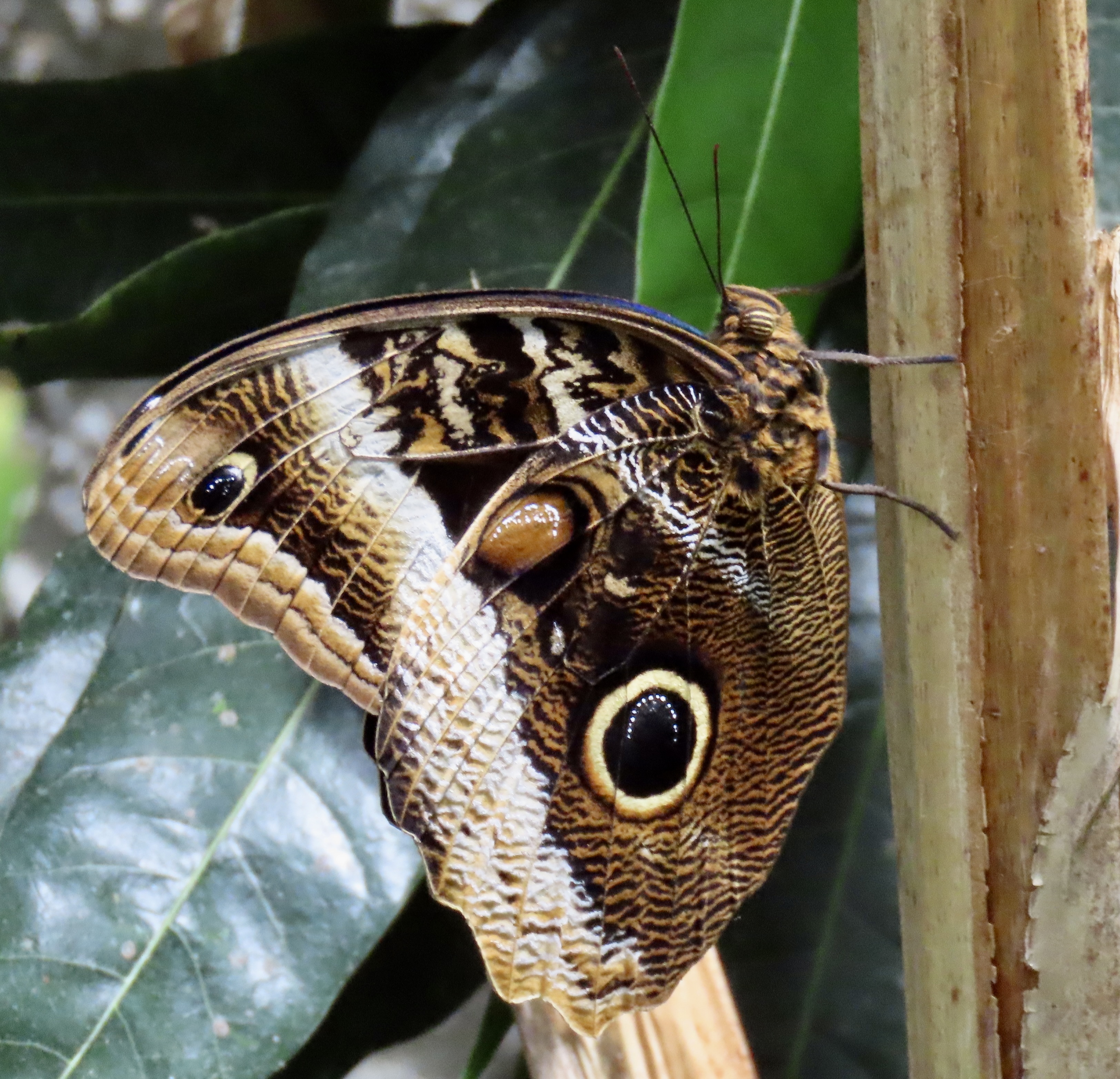
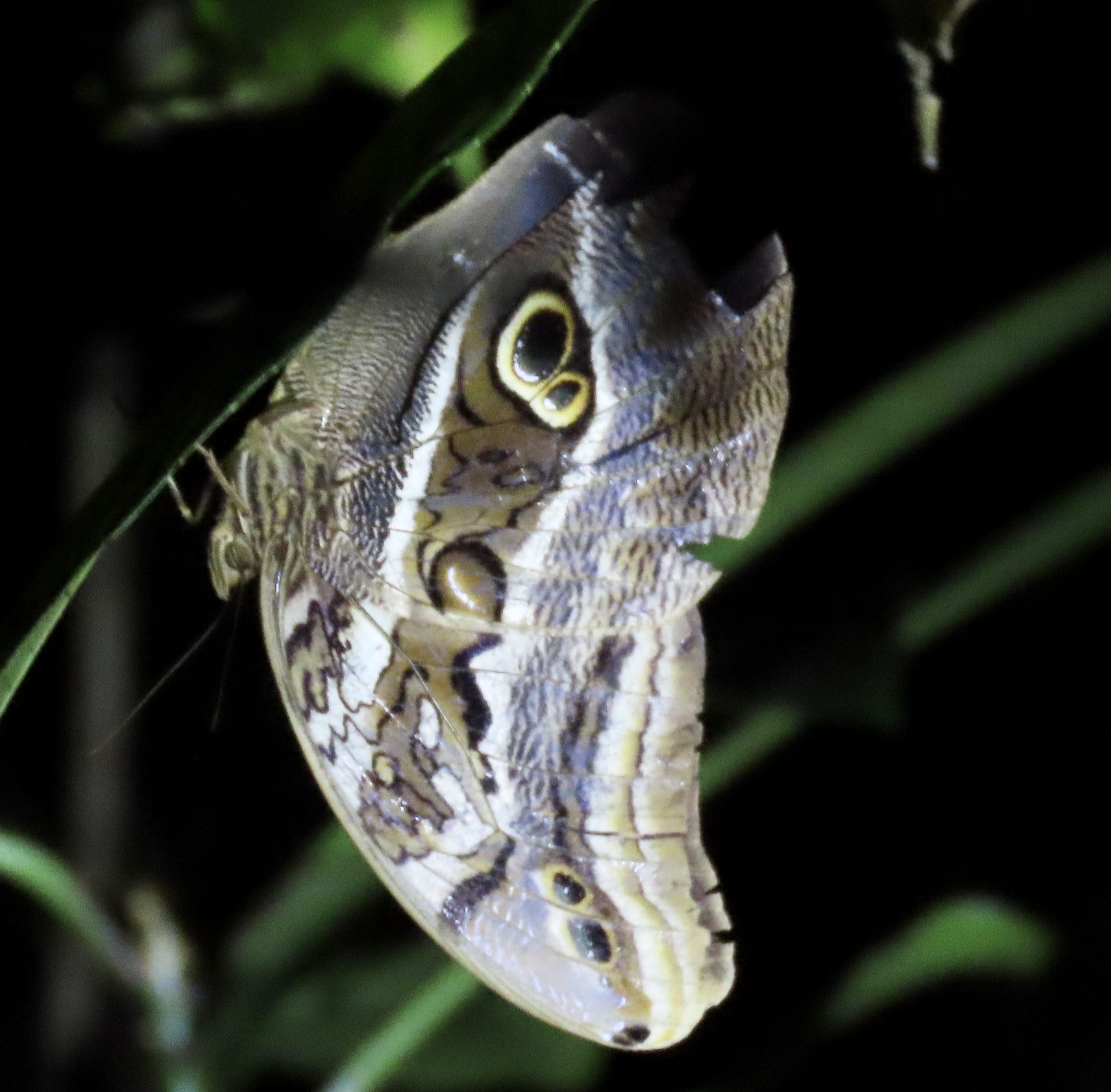
Our jungle night hike in Costa Rica introduced us to the Owl Butterfly in addition to the tarantula, pit vipers, and scorpions we featured on that post. Some fun, huh. This owl butterfly photo was taken during the day at the Monteverde Butterfly Gardens, where we visited to see it, and other butterflies of Costa Rica, up close.
The owl butterfly is so named because the large spot on the lower part of the wing. It has a matching spot on the other wing that resemble an owl’s eyes when the wings are open and seen from below. It’s called mimicry. One theory is that predators see the eyes and decide that fleeing is a better option than chomping lest they end up being the chompee. Another theory is that the predator sees the eyes and thinks that they represent the head of the butterfly, bites down, and get a mouthful of wing instead of the body. Given that the owl butterfly is one of the giants of the butterfly world with a 6-8 inch wing span, it has plenty of wing left to still fly. Either theory leaves the butterfly free to complete its goal in life, which is to breed and have babies, i.e. lay eggs.
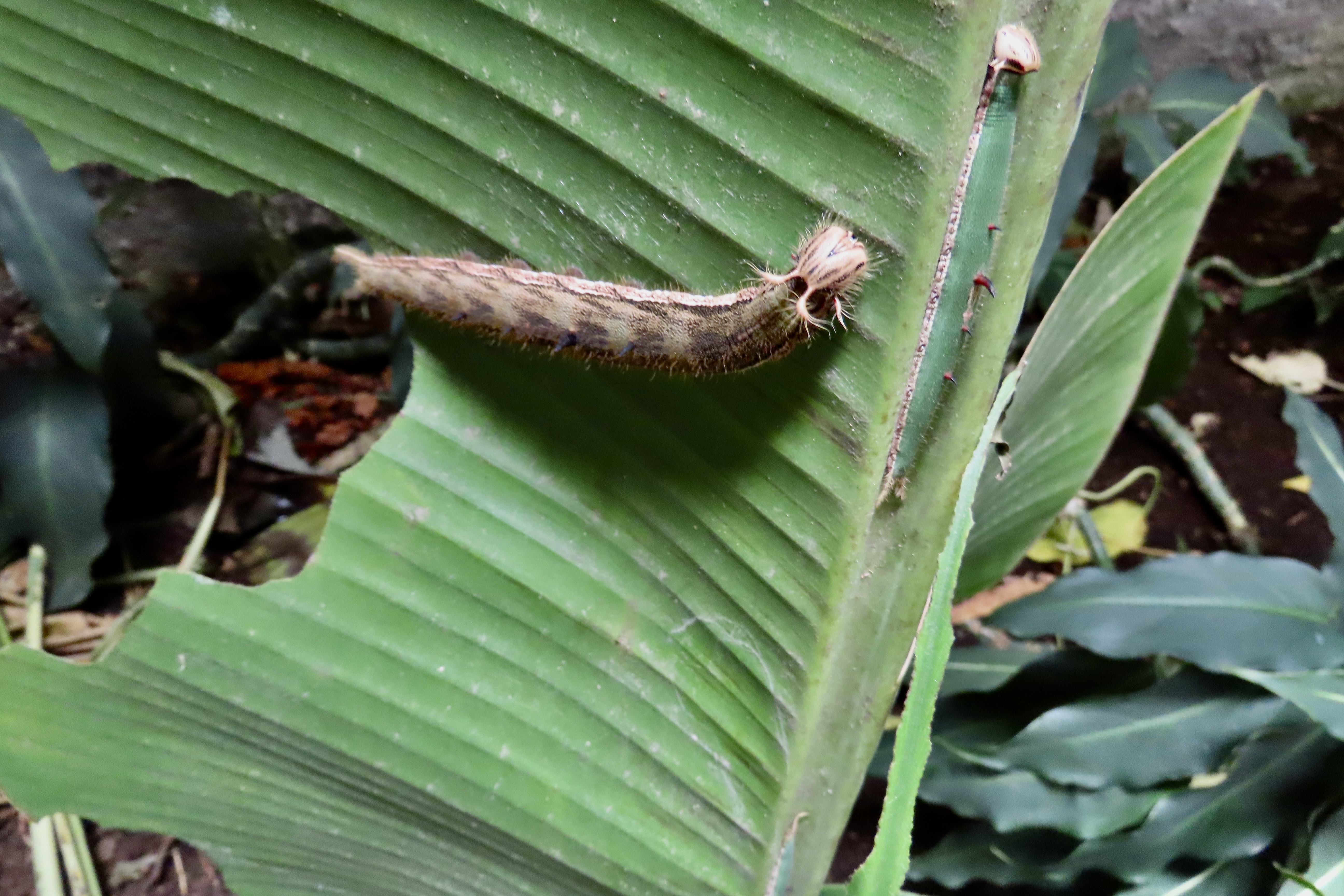
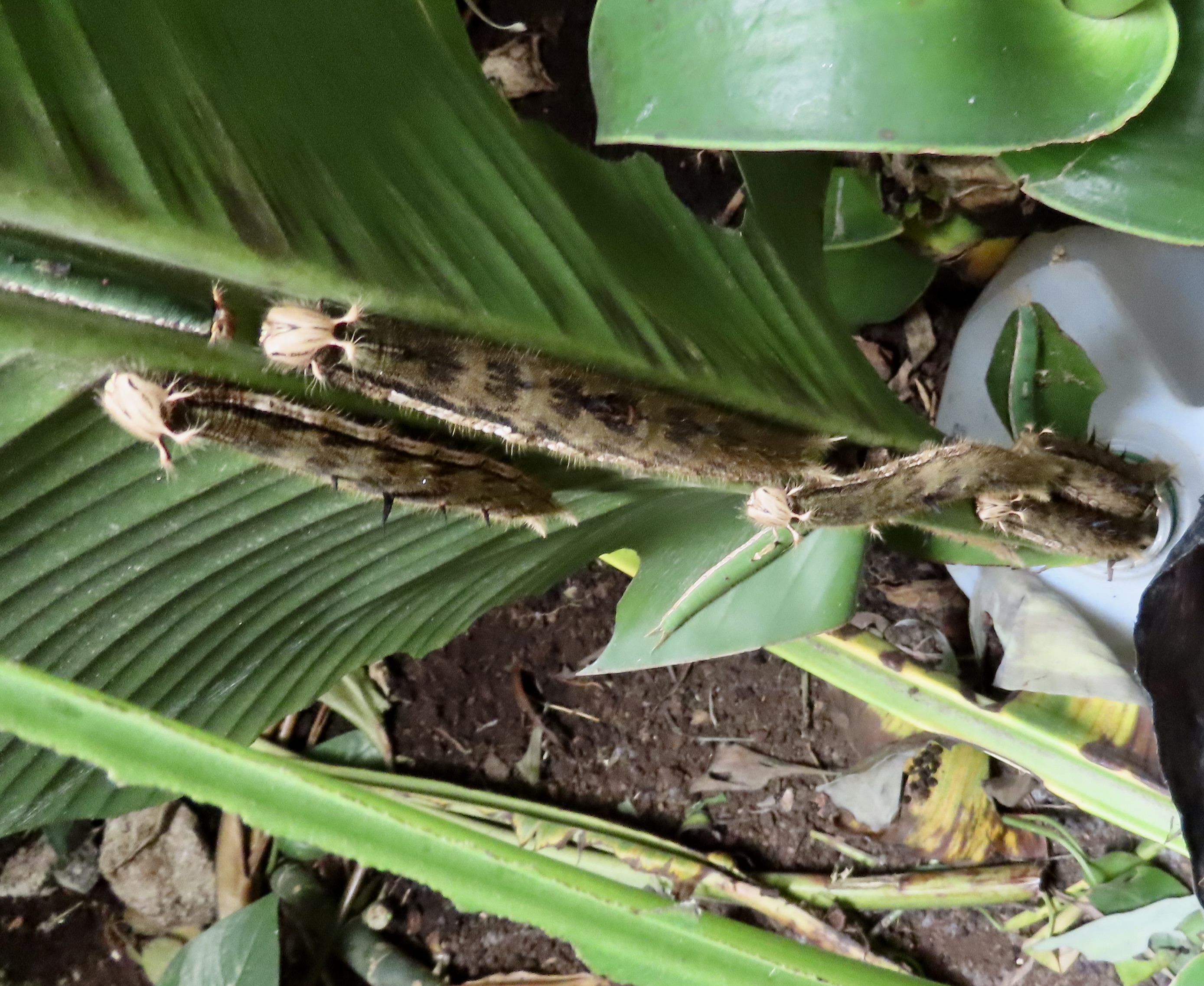
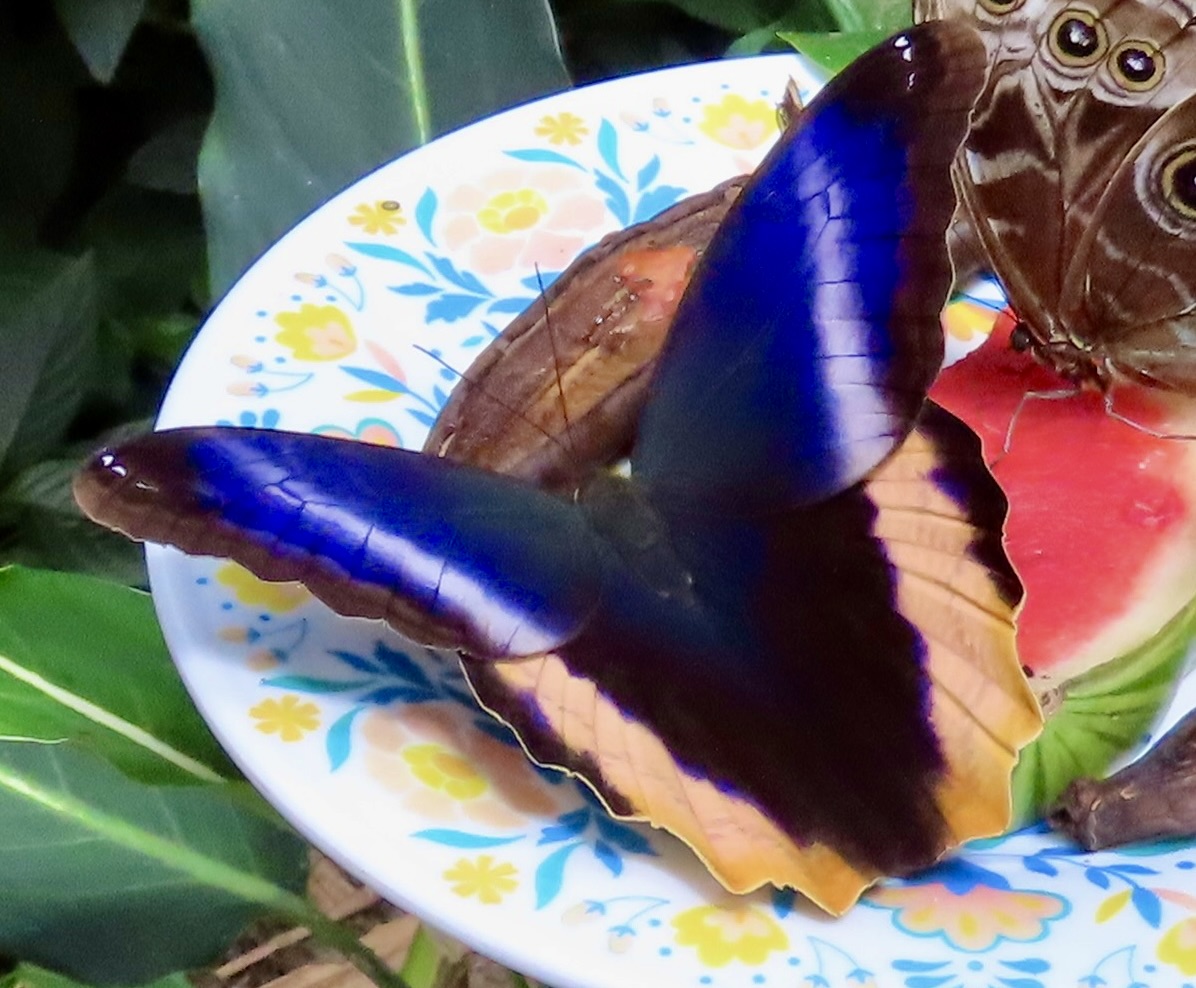
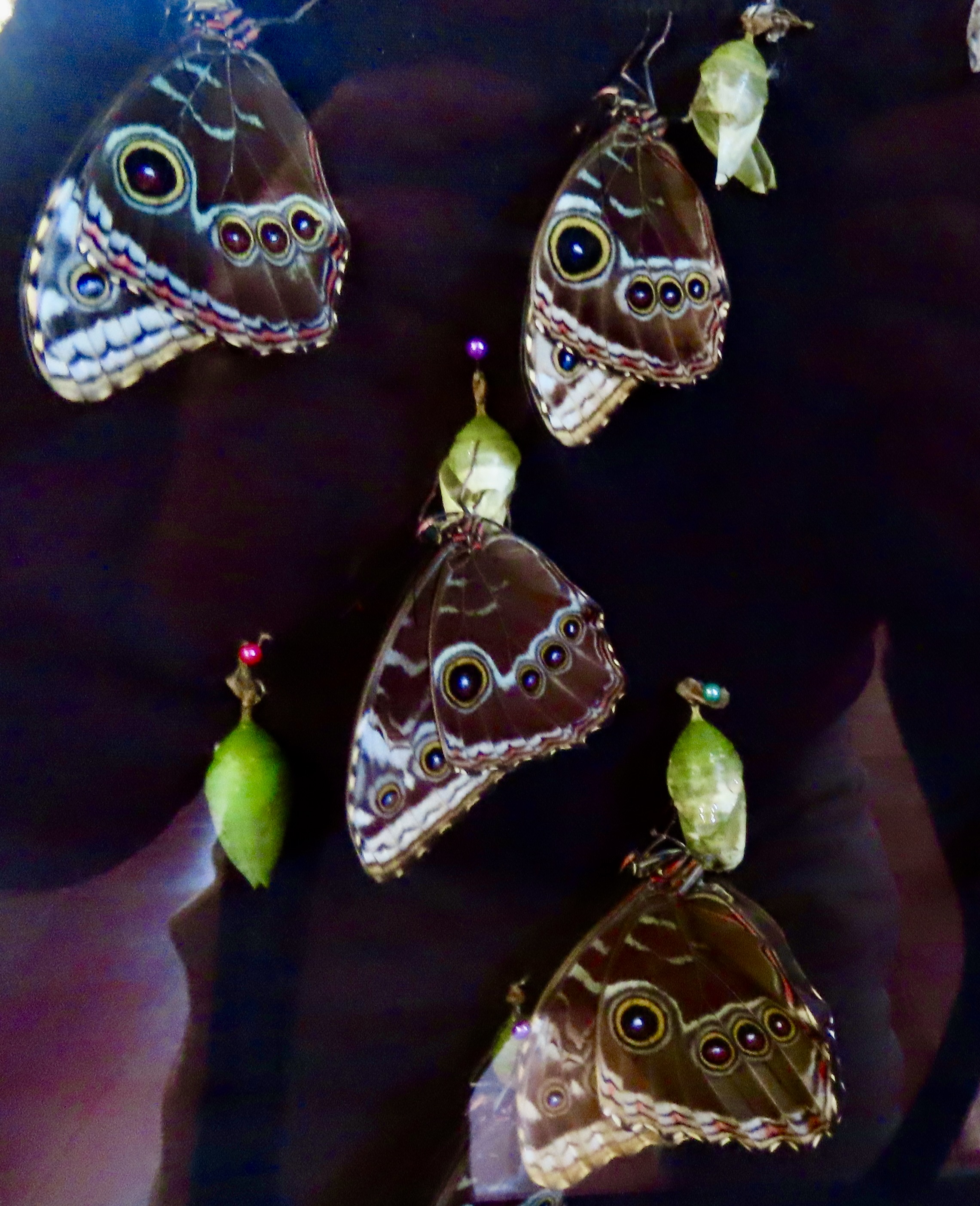
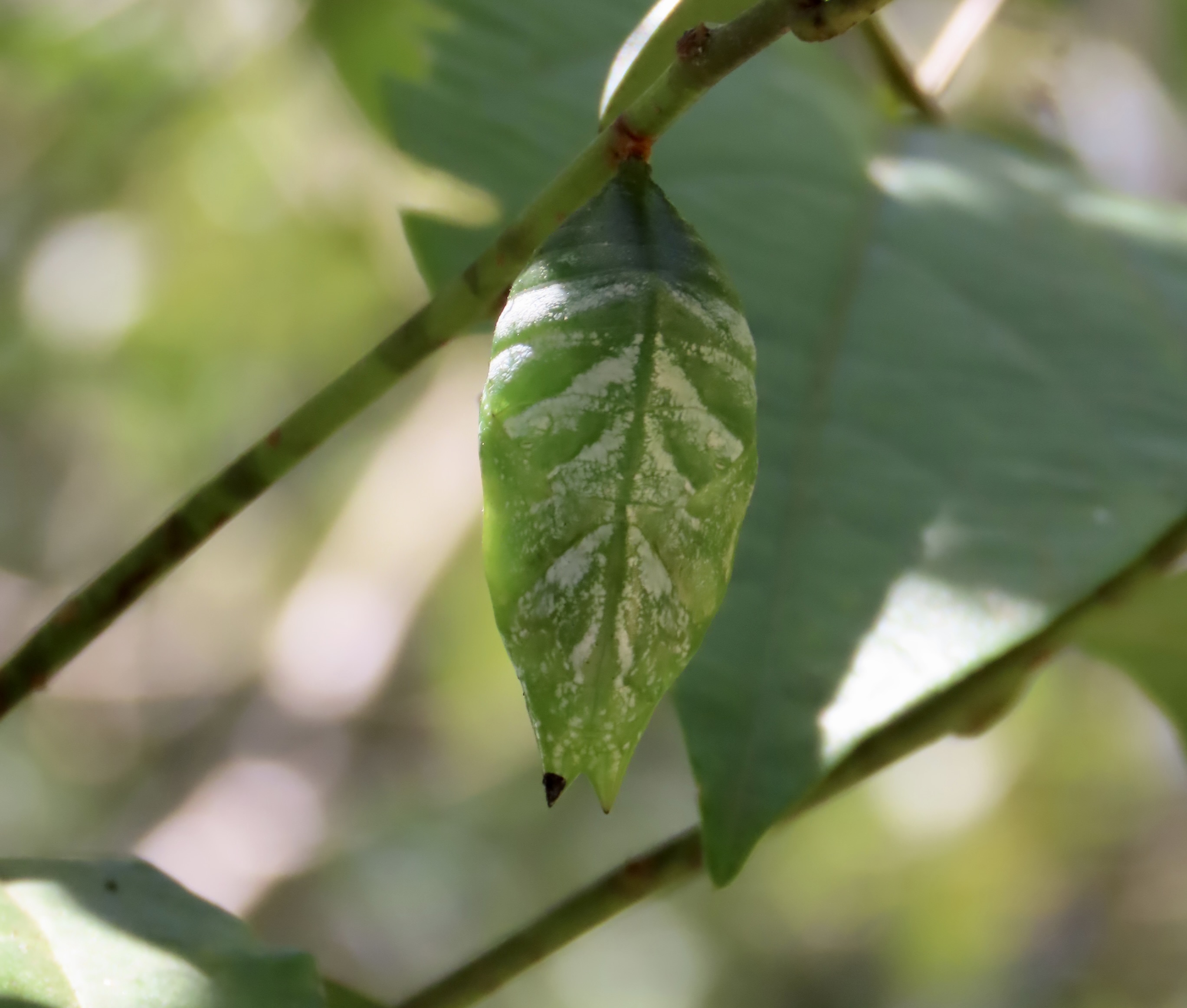
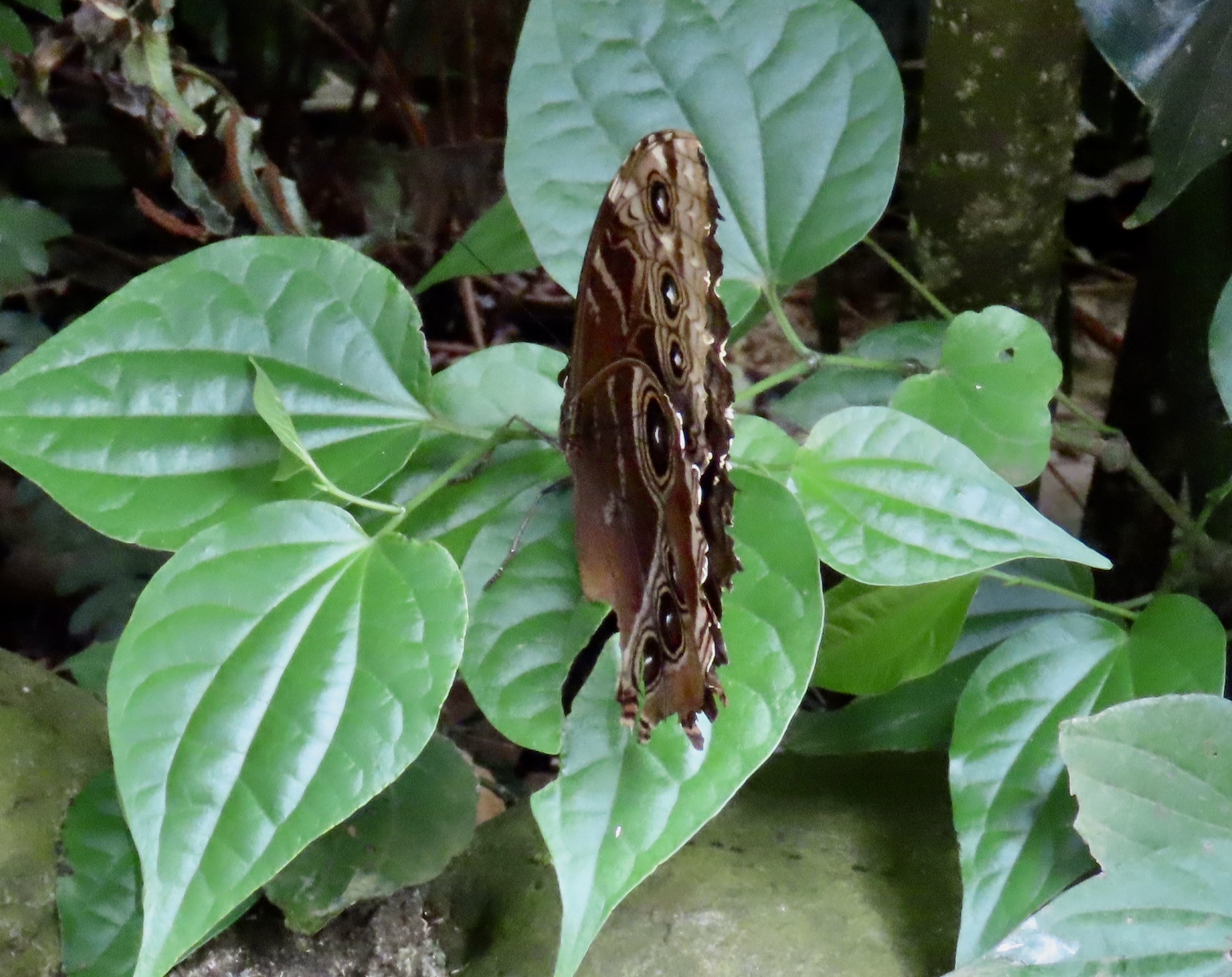
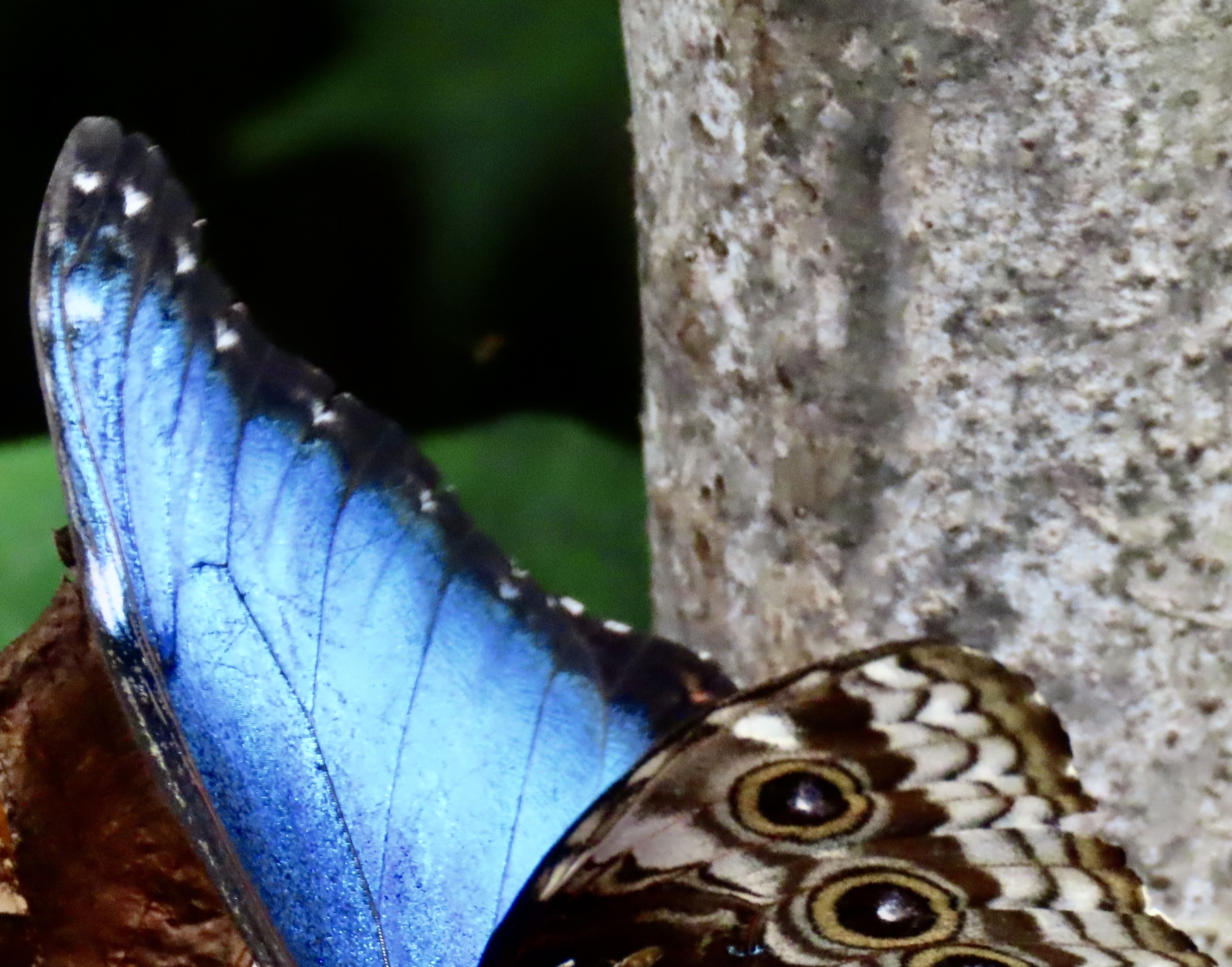
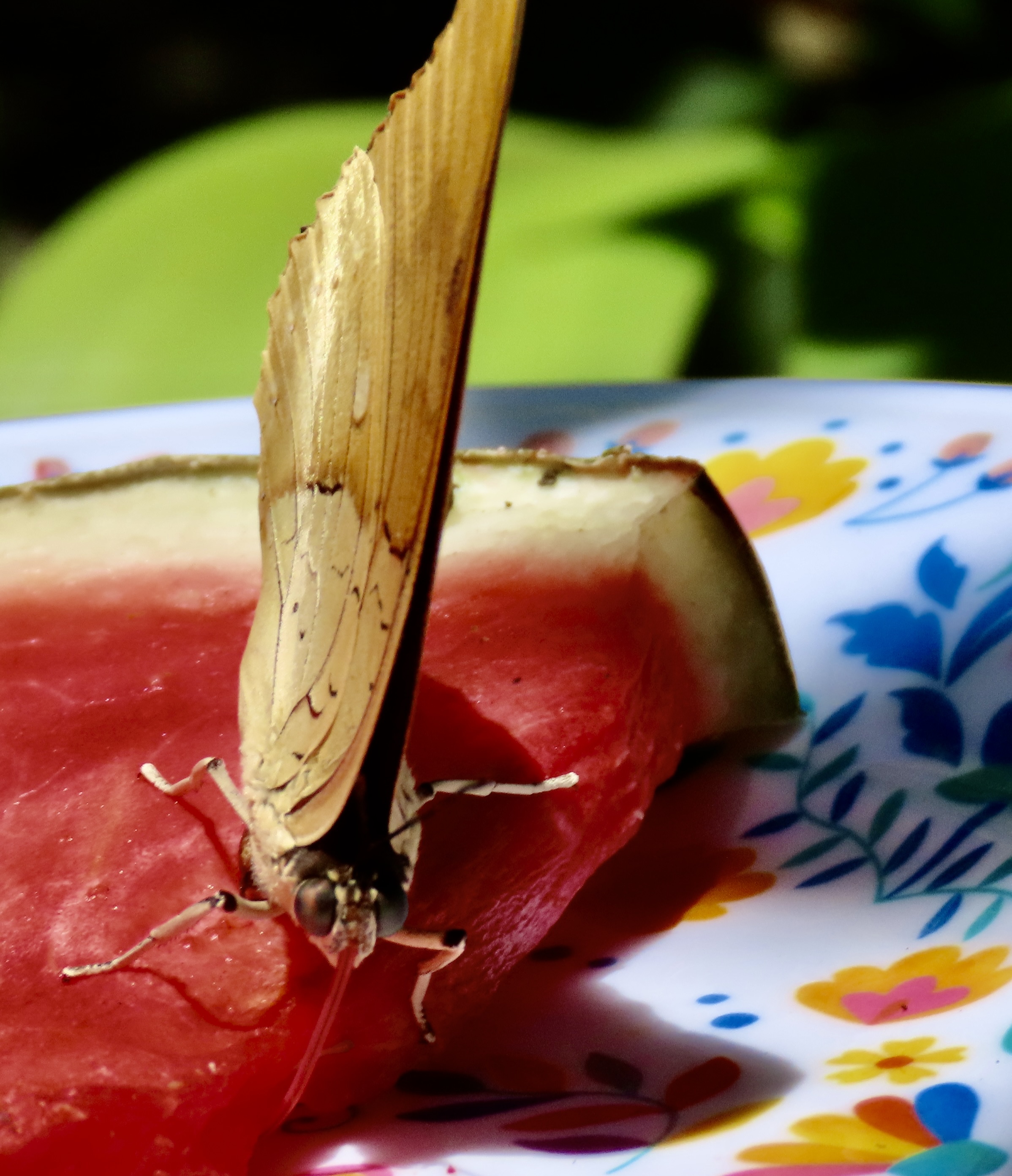
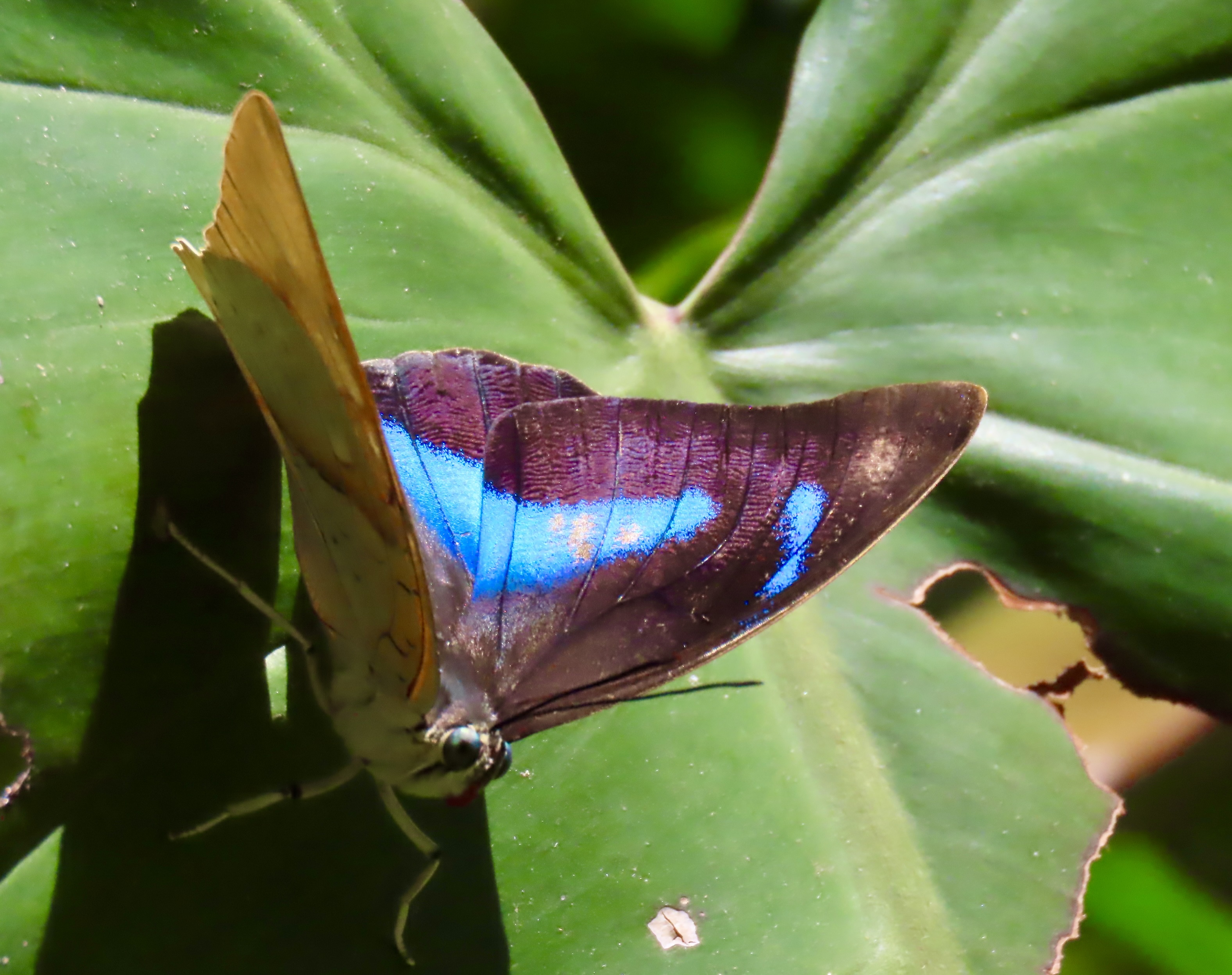
The eggs hatch into tiny caterpillars that come with a voracious appetite and quickly grow in size. Molting frequently, they change their looks each time. The caterpillar on the right is a younger version of the caterpillar on the left. The large hole in the banana leaf is why the big caterpillar is so big. It’s also the reason why banana farmers aren’t particularly fond of these insects that can grow 5 to 6 inches long off of devouring their plants before entering their chrysalis stage.From the perspective of the banana leaf, these owl caterpillars must look like one long gut approaching. The biggest one is about to enter the chrysalis stage of the metamorphous from caterpillar to butterfly. The first step is for to dissolve into a nutrient rich goop. Specialized cells that survive the melting process then utilize the nutrients to develop into the adult butterfly.The owl butterfly is quite beautiful when seen from above with its wings in open position. Here it was busy consuming watermelon that staff had left out for it. On the right is another one of Costa Rica’s best known butterflies, the blue morpho.Here a number of blue morpho are simultaneously hatching out of their chrysalis at a special hatching station that the Monteverde Butterfly Garden maintains for this purpose. Their wings have to dry and harden before they are ready to fly.Peggy found this blue morph chrysalis looking leaflike out in the Monteverde Butterfly Gardens. The chrysalis of the owl butterfly, btw, resembles the head of a viper. Both the leaf and the viper chrysalises are two more examples of evolutionary mimicry.A blue morph resting on leaves.A blue morpho gave us a brief glimpse of the vibrant blue color of its inner wing that gives the butterfly its name.
And now, for a quick look at some of the other beauties we photographed at the Monteverde Butterfly Gardens. Given that there are between 1200 and 1500 species of butterflies in Costa Rica, I’m late with this post, and my mind is on butterfly overload, I didn’t have time to pin down all the names.
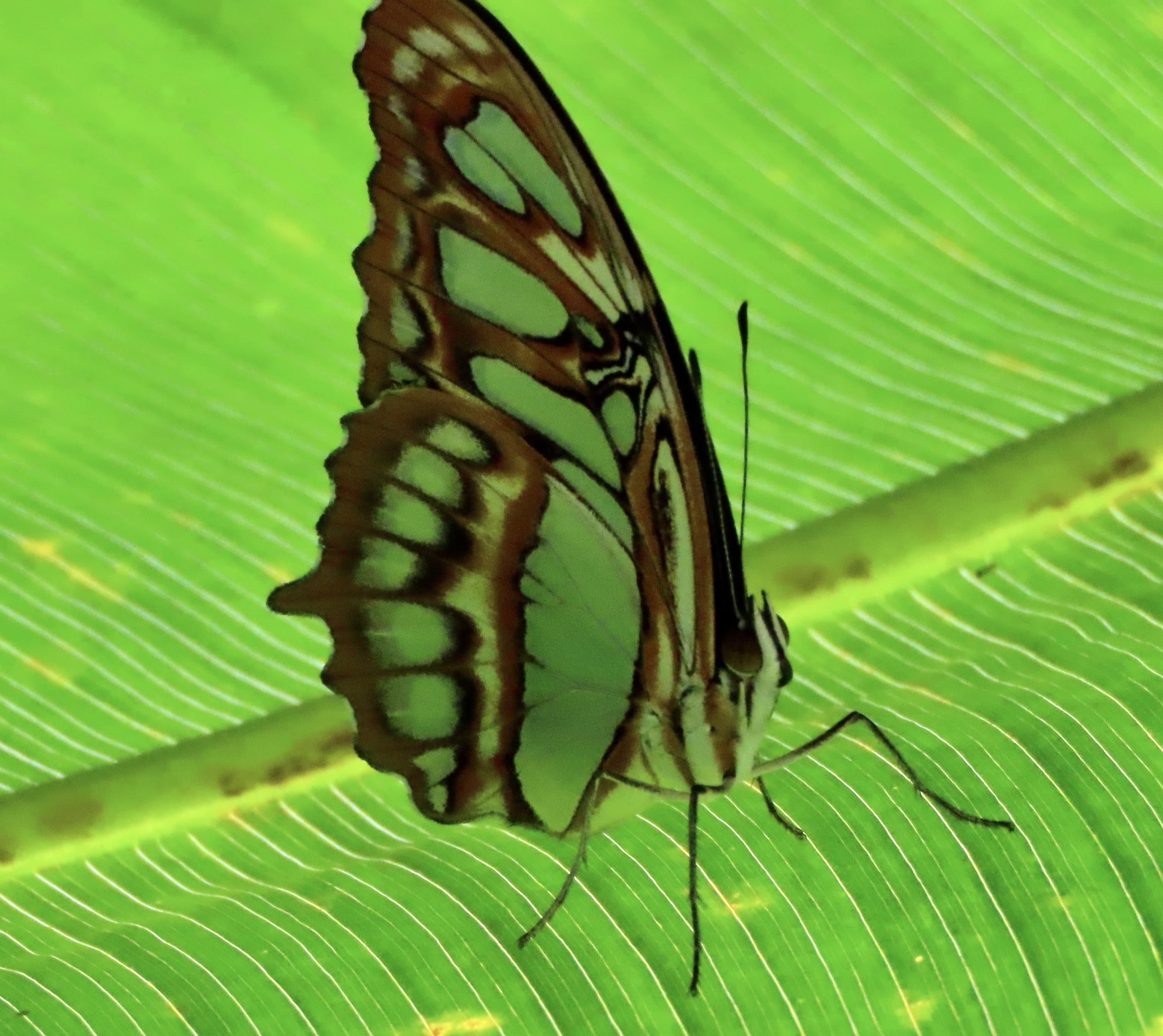
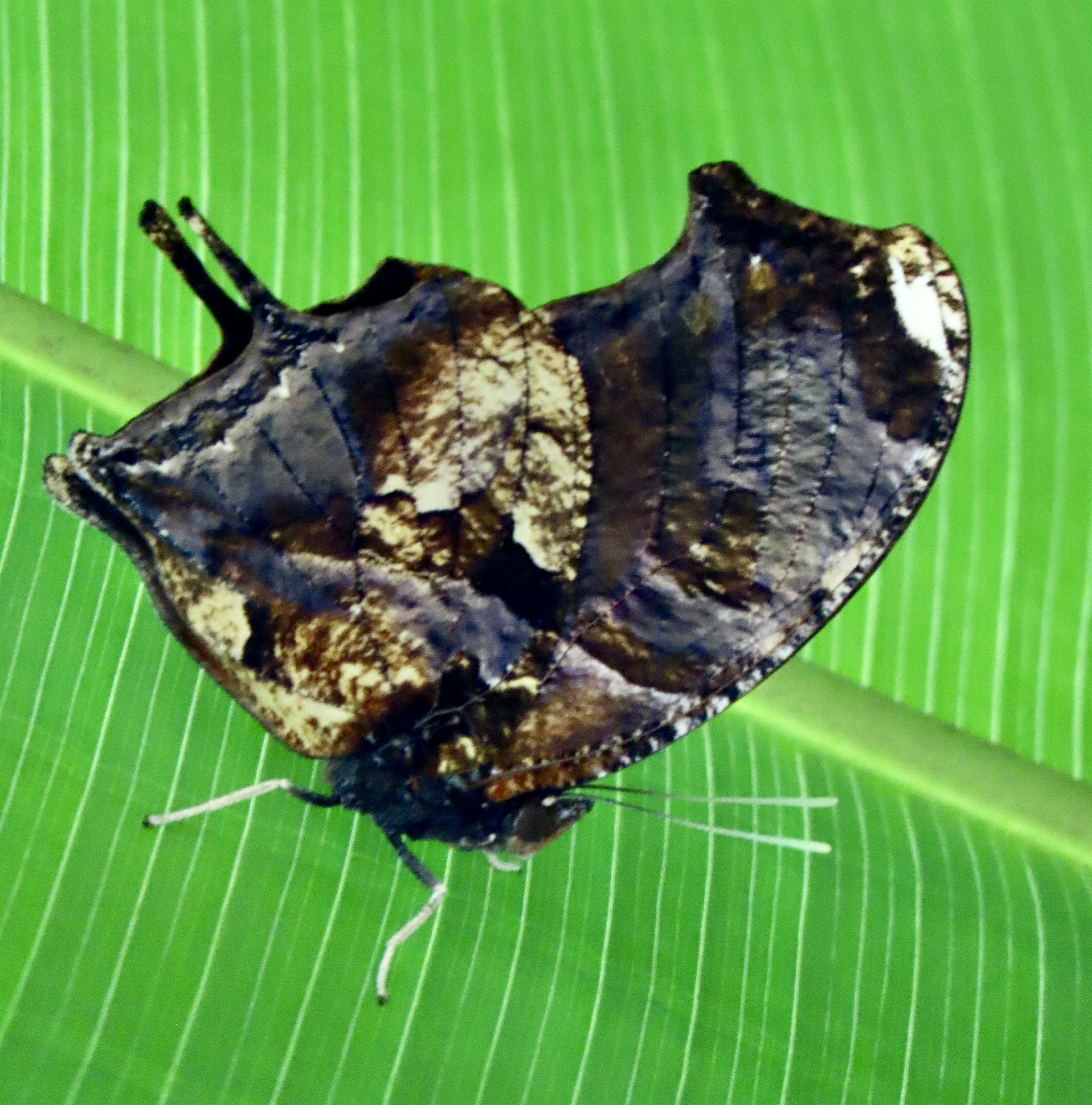
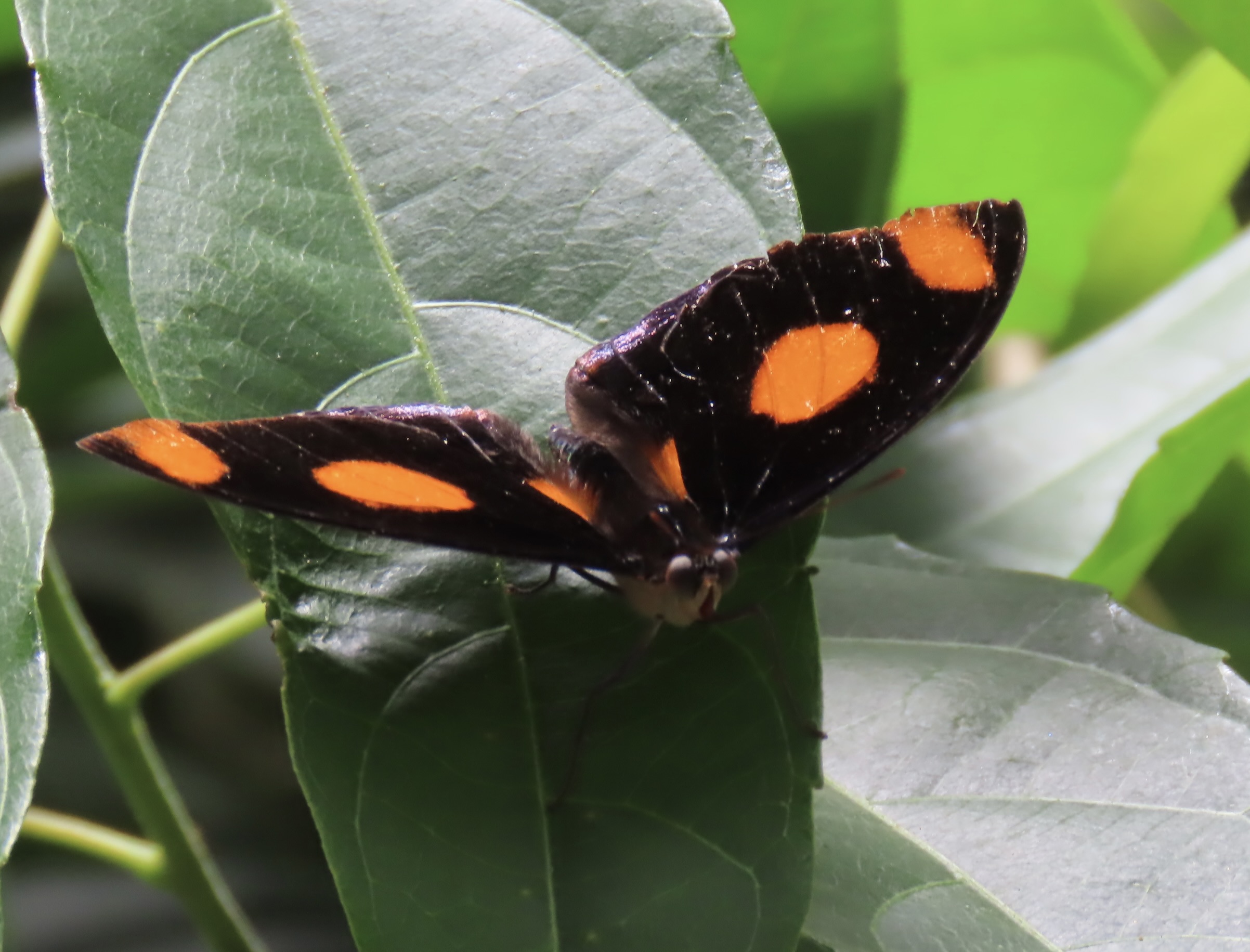
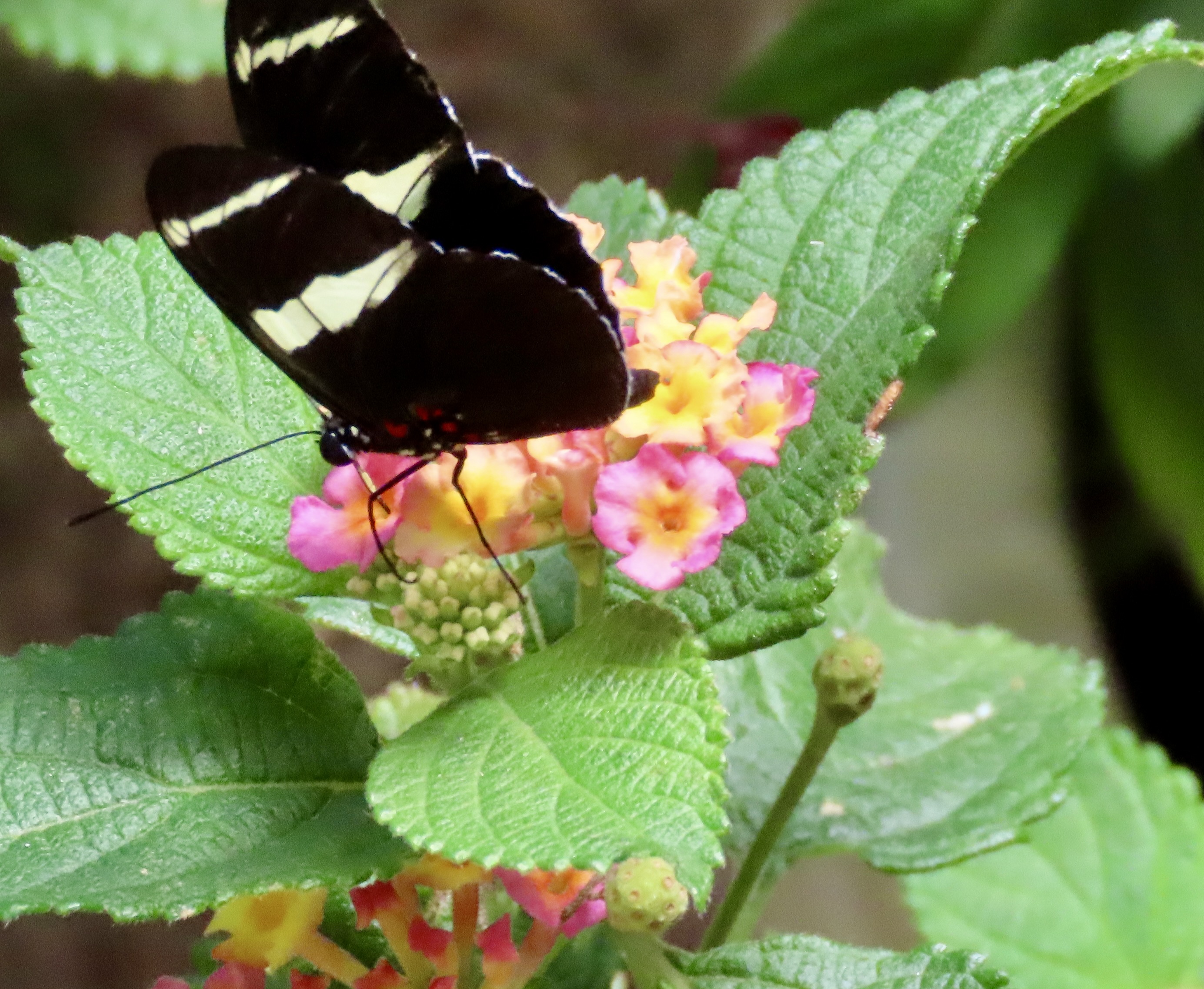
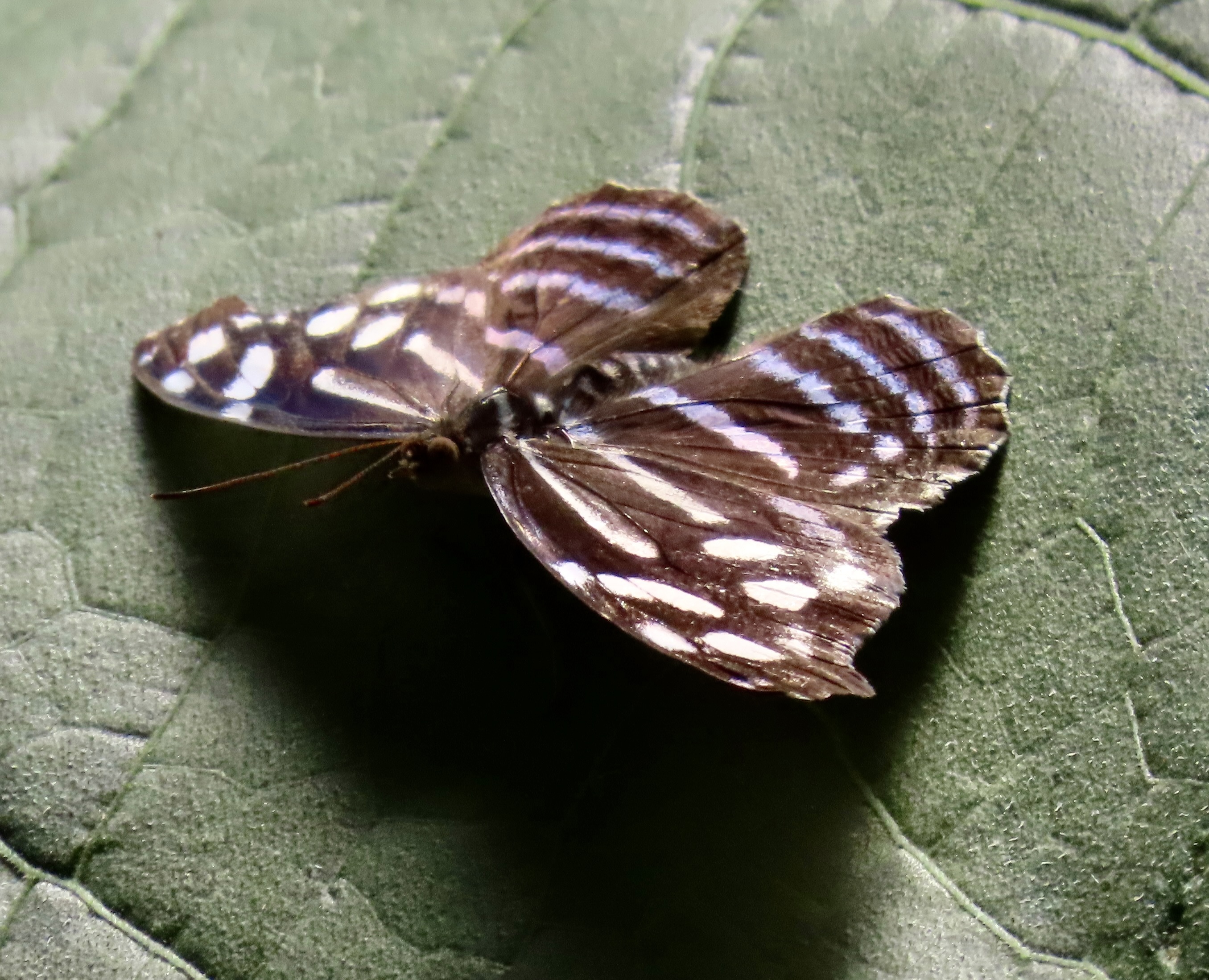
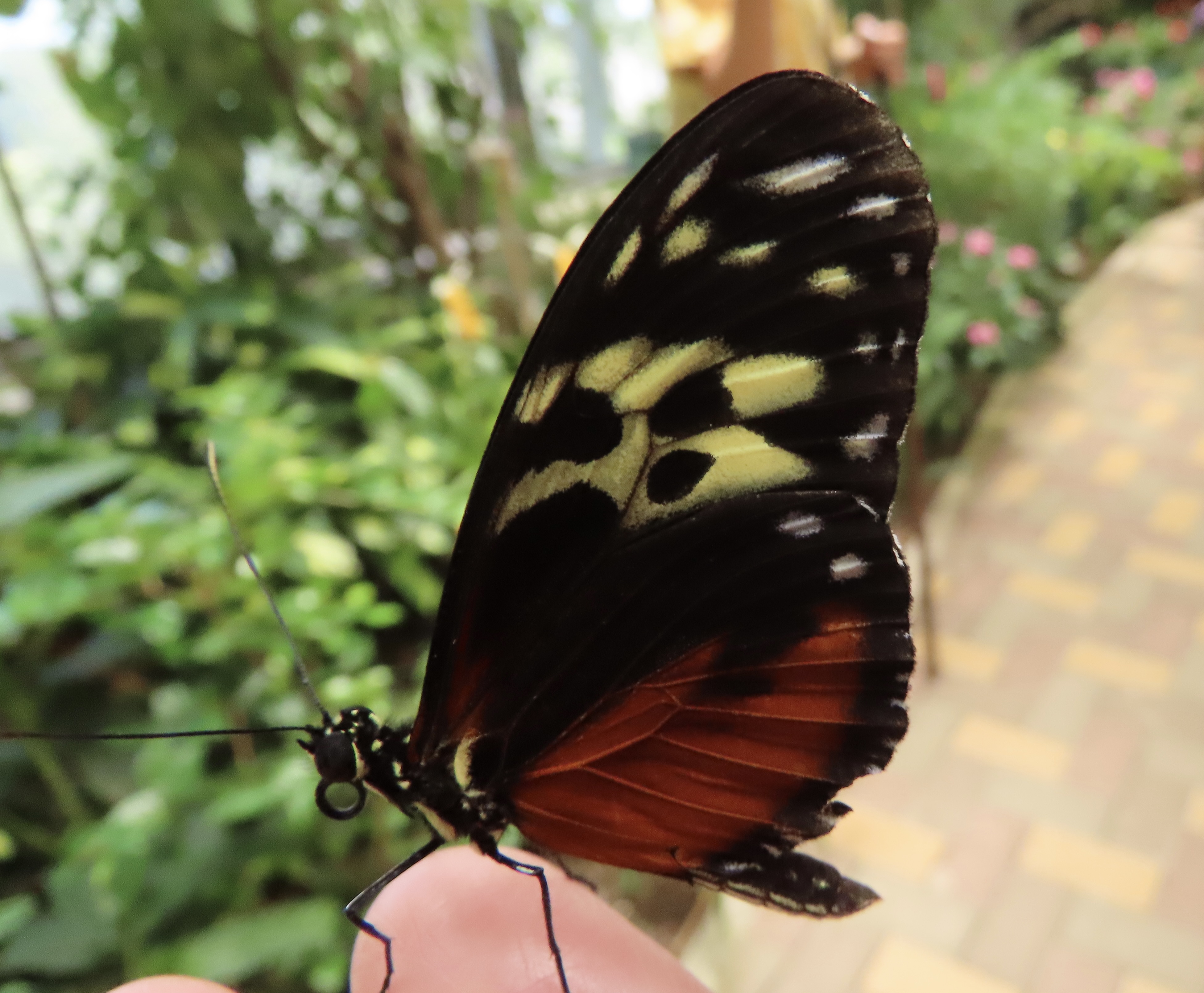
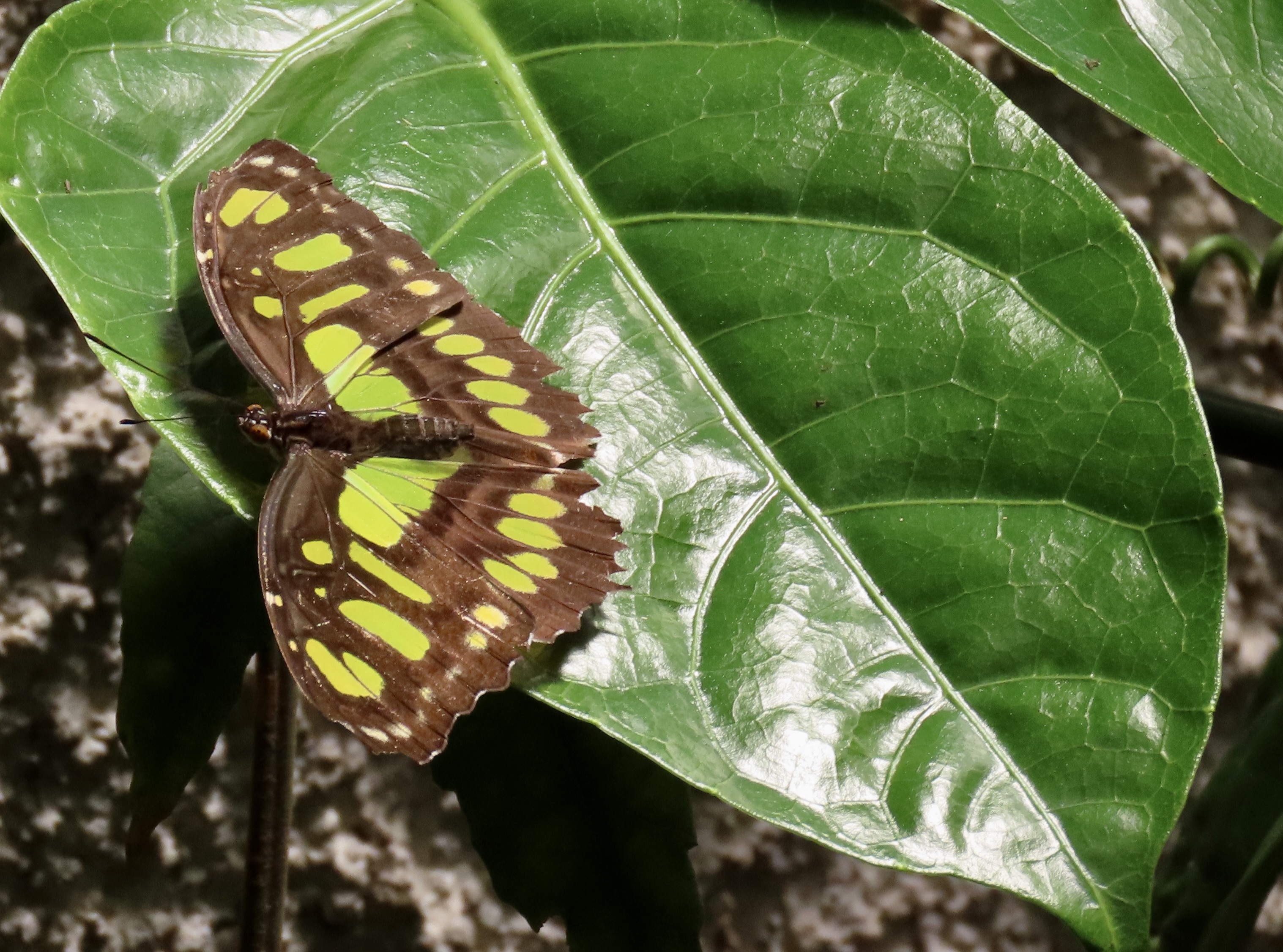
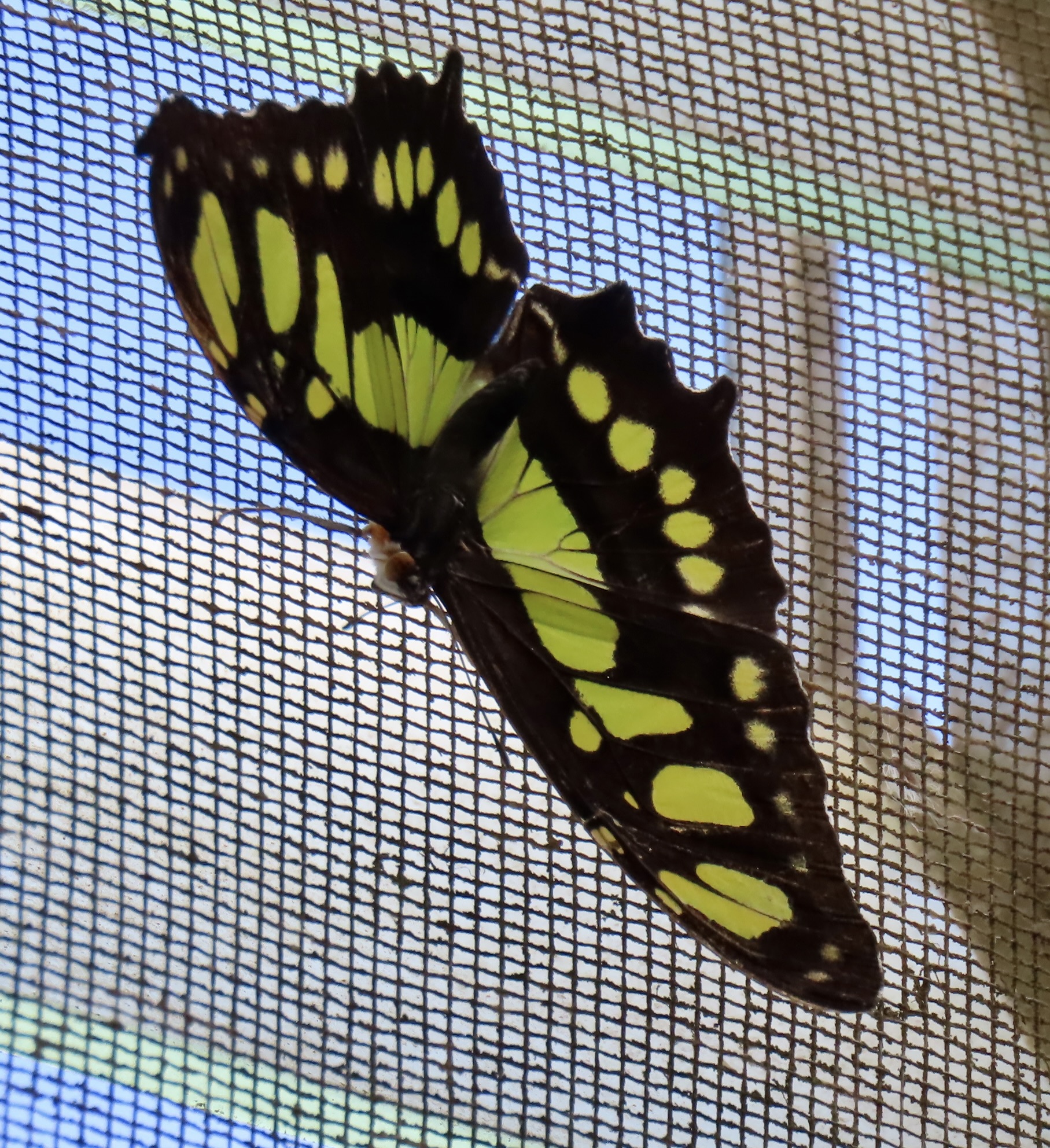
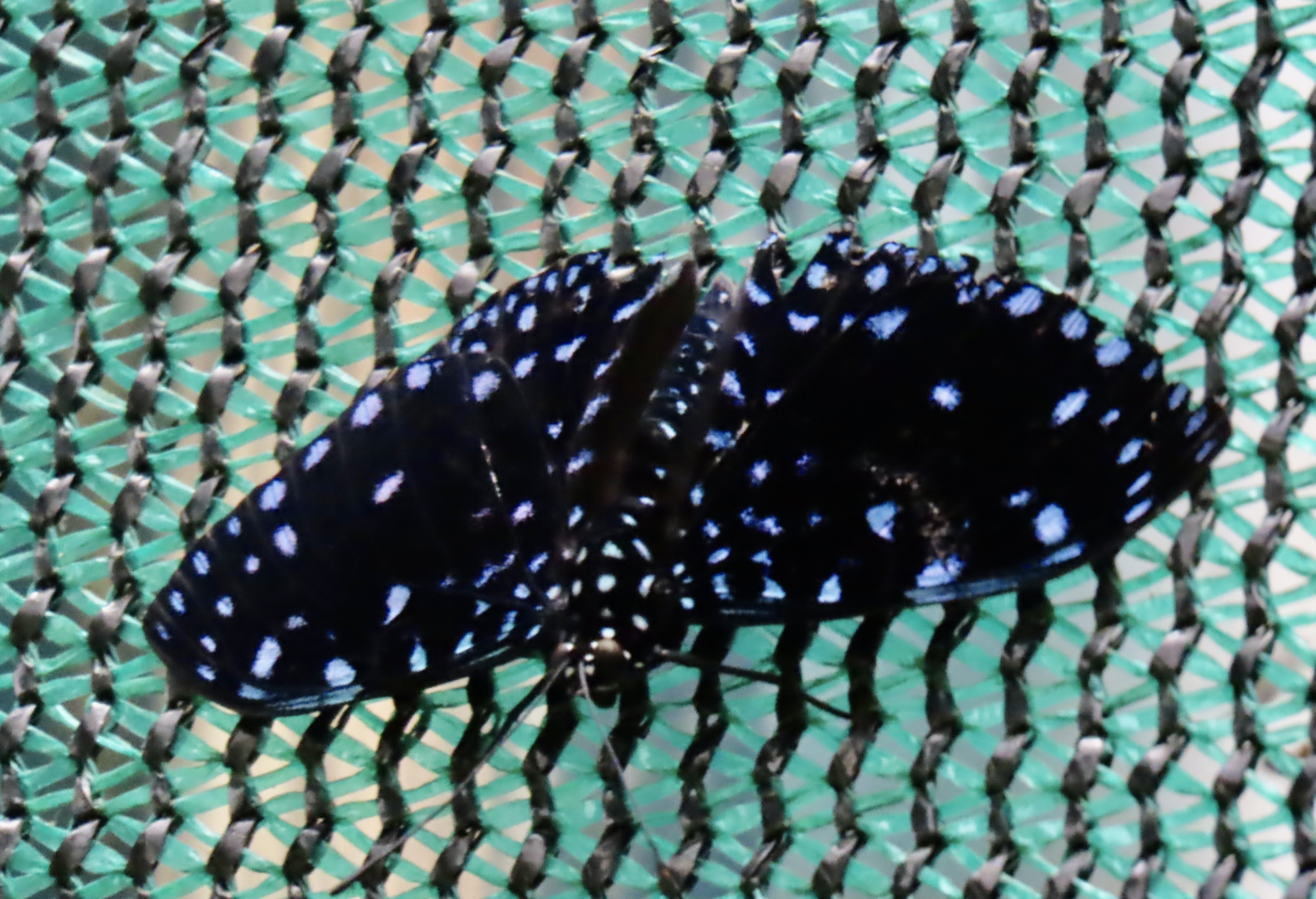
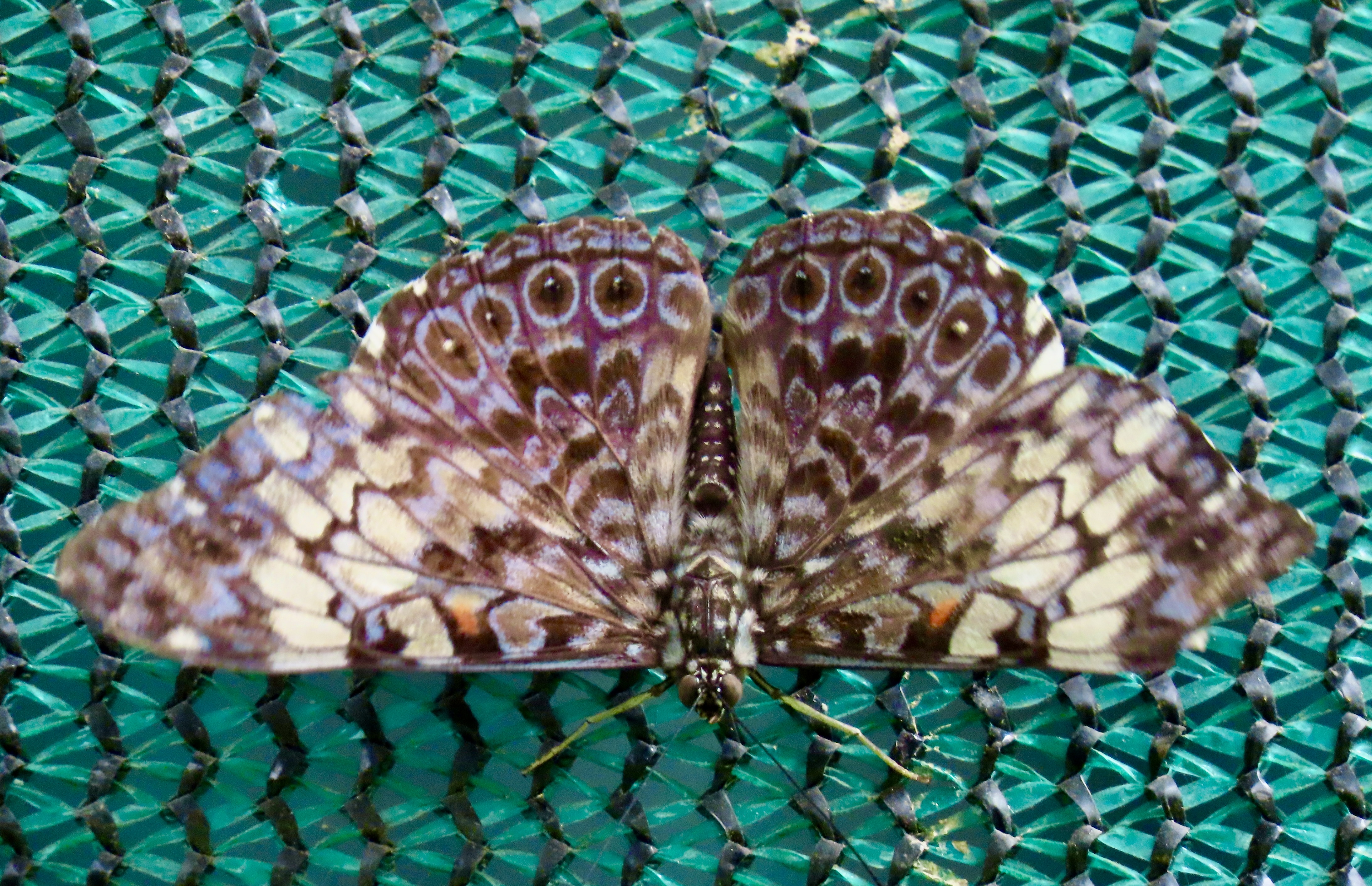
Set off by green, a Green Longwing Butterfly. Great camouflage. One of a number of butterflies that pretend to be dead leaves. This may be excellent camouflage on leaf litter covered forest floor. Not so good here.Red spots. This may be a ‘see me, see me’ look as opposed to camouflage. The caterpillars of some butterflies feast on plants that are poisonous to birds, lizards and other predators. The poison is transferred to the butterfly. Instead of hiding, the butterfly, announces its presence with bright colors that are designed to tell predators ‘You really don’t want to eat me.’ Other butterflies may adopt the same colorization in what is known as Batesian mimicry. They aren’t poisonous, but who’s to know the difference?Lunch. Butterflies, unlike caterpillars, sip nectar with their long proboscis instead of eating leaves. This is a HeliconiusSara (I think.)This sulfur colored butterfly is using its proboscis to sip watermelon juice. Note the color of the proboscis. Many Costa Rican butterflies take advantage of fallen, rotting (translate fermenting) fruit for food. They can actually become a little tipsy.This one looks like the same species as above with its wings open.Brown on green.I call this a finger butterfly since it landed on Peggy’s finger and refused to get off. It may be a Crimson Longwing.I’m going with a Malachite Butterfly on this one.And this one as well even through the colors are dramatically different. But note how close the pattern of their spots is. The butterflies often rested on the screens that kept them in the butterfly houses. Maybe they were longing to be free.Peggy’s favorite, a Starry Night Cracker Butterfly.And a final beauty. This is a Variable Cracker Butterfly. The unusual cracker name is said to come from the noise they make when they are flying.As for what noise that is, I lifted this: “The Cracker butterfly gets its name because the males are able to produce a crackling sound, reminiscent of bacon cooking in a frying pan. They make the sound when they take off, by twanging a pair of spiny rods on their abdomen against their anal claspers.” Not sure about the anal clasper but it brings a vision to mind.
Next Post: It’s back to UT-OH with two more final tales about the Mekemson Gang. There’s the issue of how I lived up to Bertha Brays expectations about my leading her son astray (although there’s an issue of who led who.) And there’s a question about why Tony Pavy wanted to shoot me. It had to do with his pig.
Night tours are big in Monteverde, Costa Rica. Every corner seems to advertise one. Take a dash of the exotic, throw in a pinch of danger, add a competent, knowledgeable guide— and how can one resist? No wonder there were at least 10 companies to choose from. There is big money to be made. We paid our $300 and off we went. We had an excellent guide, Marvin. He found us each of the big three, don’t mess with me, attractions, plus more.
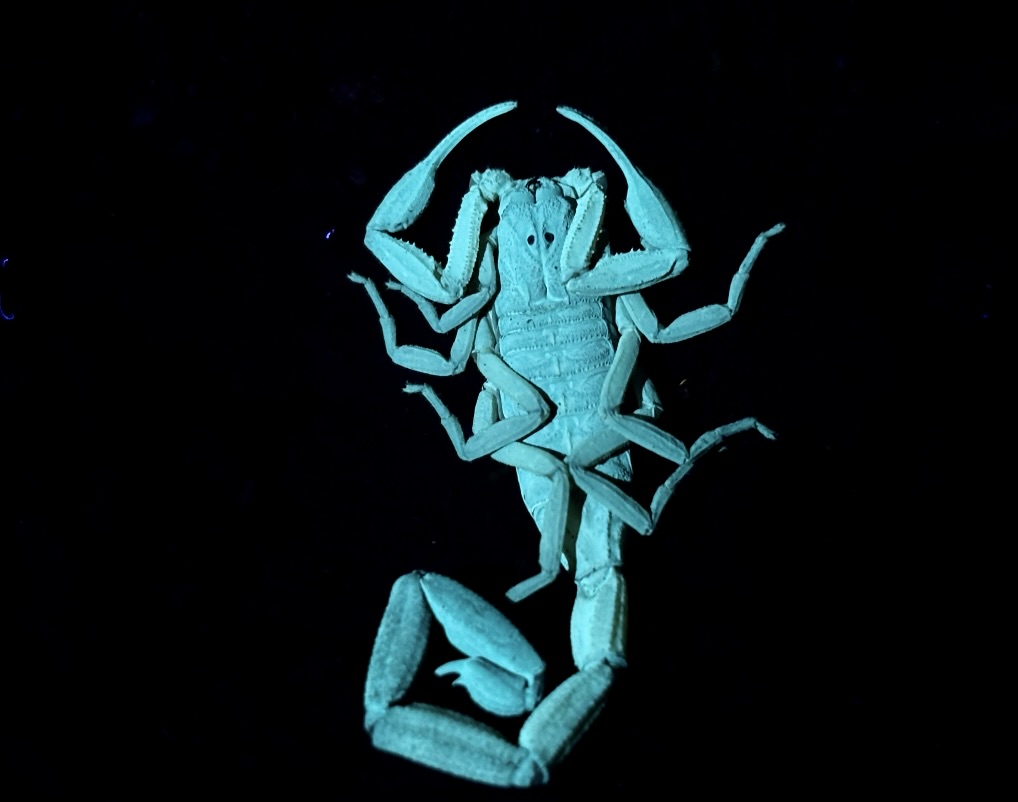
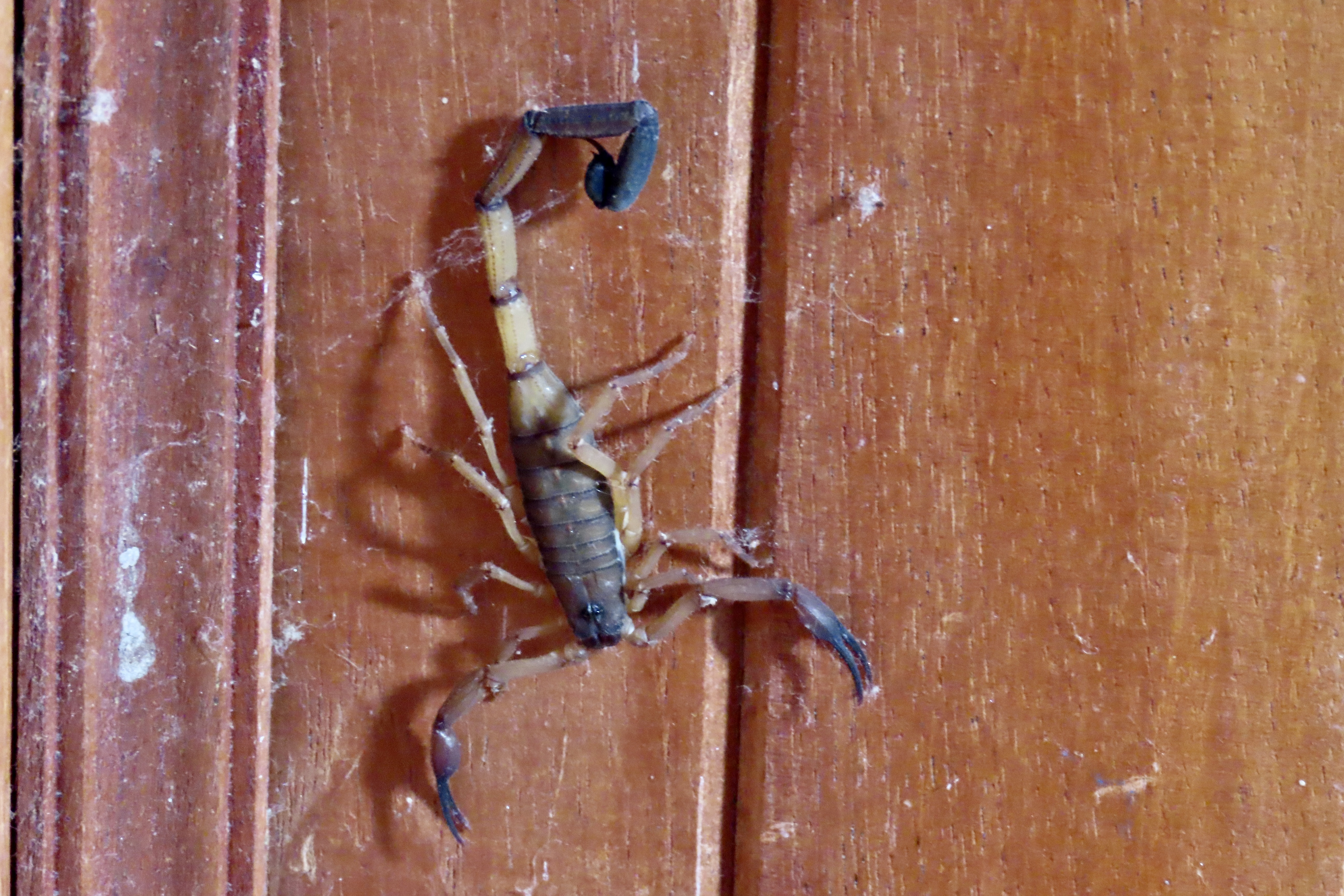
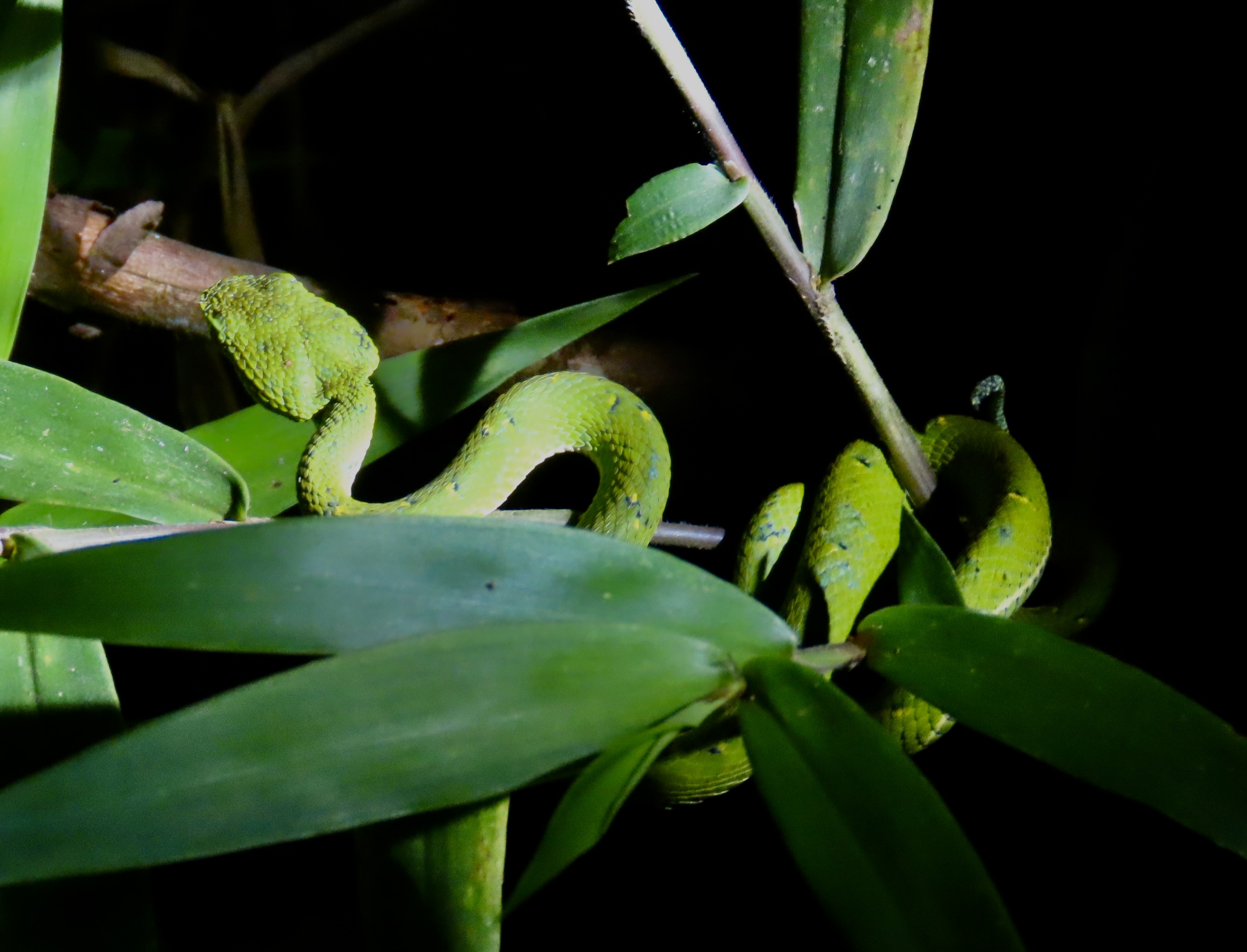
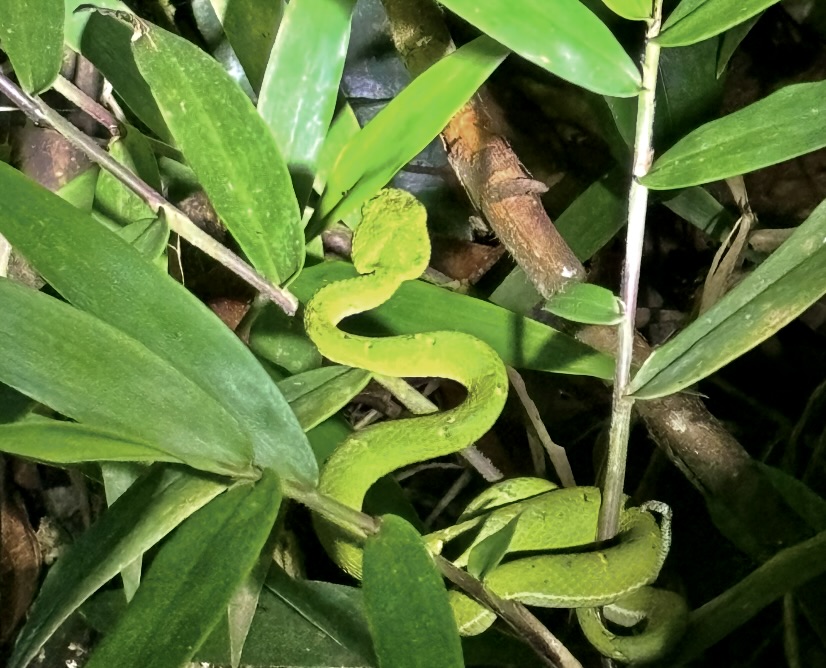
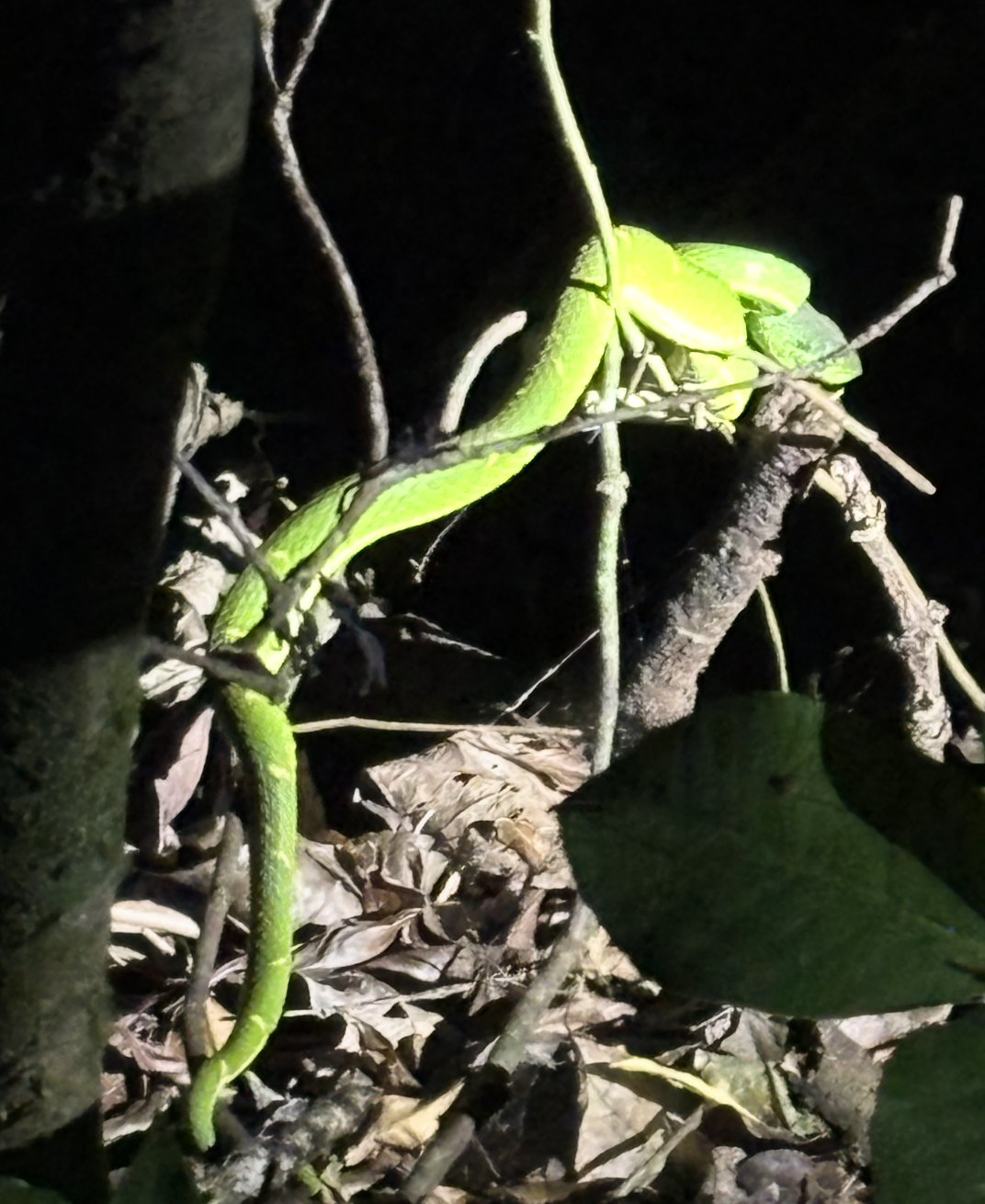
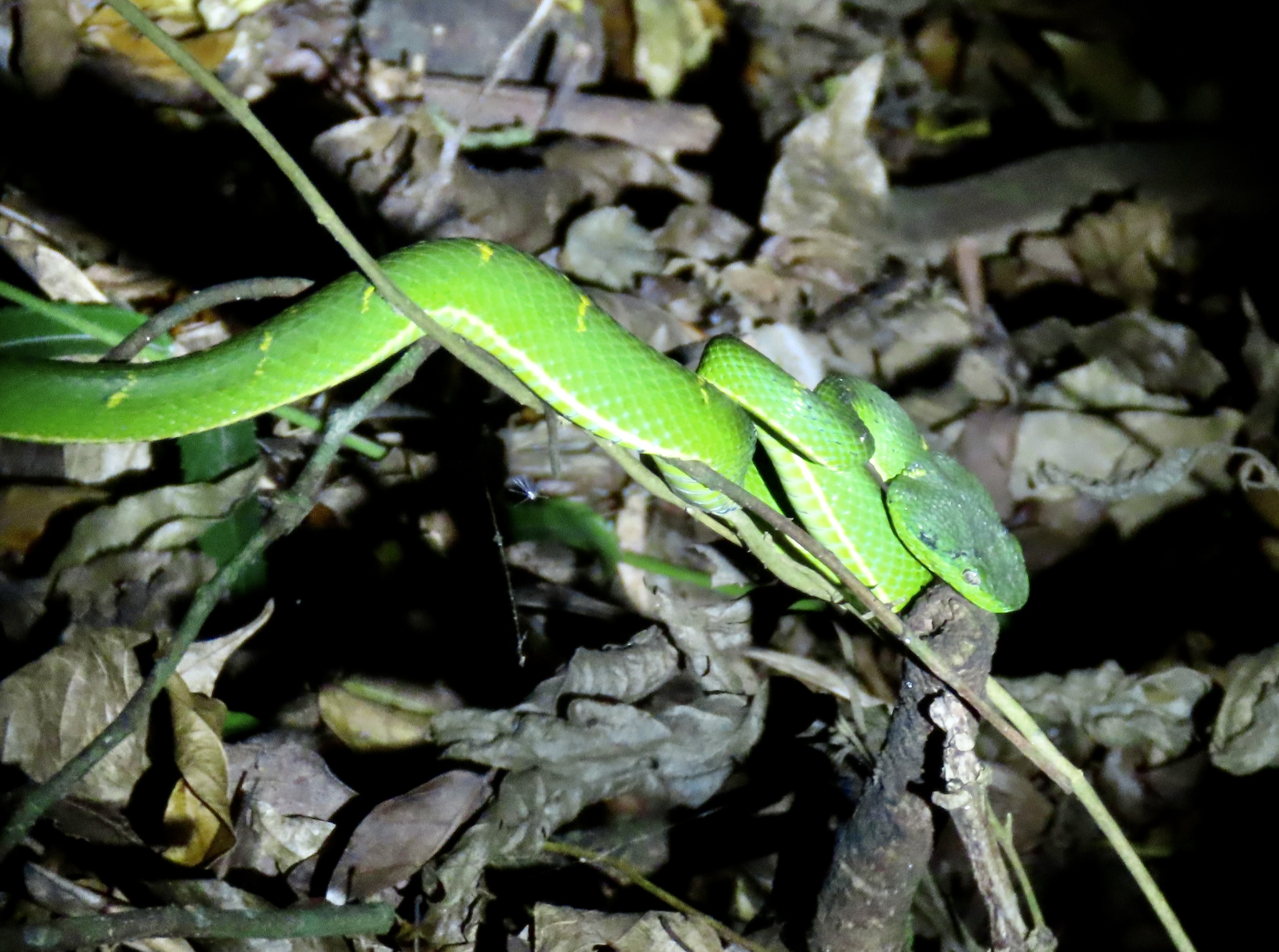
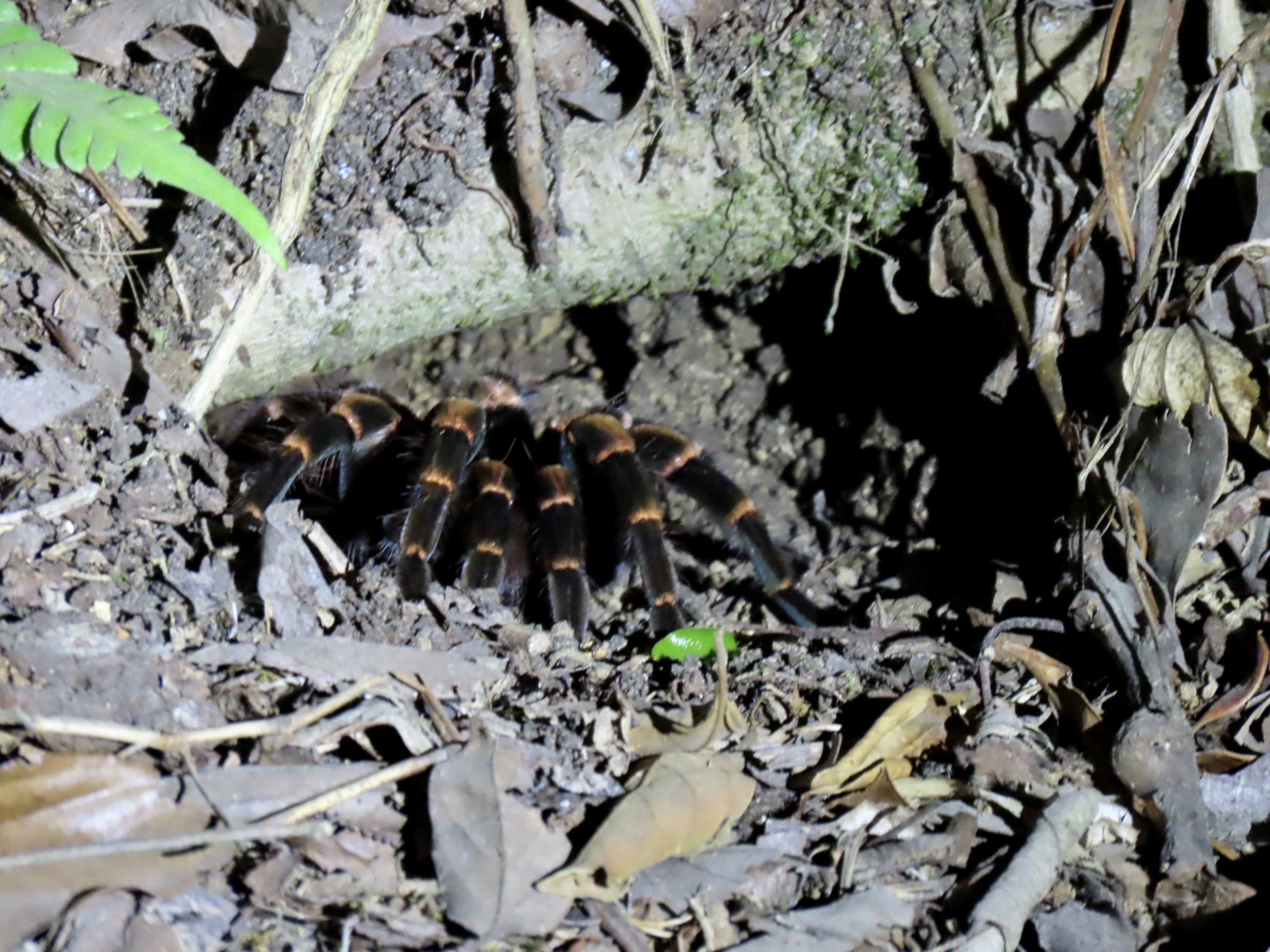
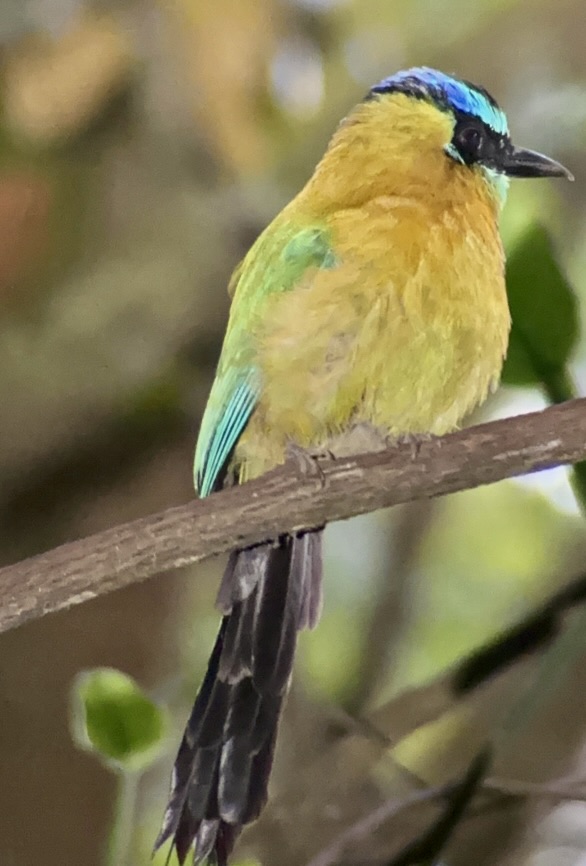
This iridescent, blue-green fellow was one of the creatures we came across. Actually, our youngest grandson, Cooper, spotted it first. Our son Tony claimed ‘That’s because Cooper is closest to the ground.” You will recognize this blue-green insect for what he is. A scorpion. I’ve seen many over the years. But never one of this striking color. They all pack a mean sting. Costa Rica claims that no one has ever died in the country from a scorpion. Well, except for that one girl…This one seemed almost tame in comparison. Our grandson, Chris, found it crawling up the wall behind him where he was watching TV at our VRBO. “Grandpa,” he yelled, “You have to see this.” “Well, hello,” I said, to the scorpion, and sent Chris scurrying for something to catch it with. He came back with a martini glass, i.e. large top, shallow bottom. Not ideal for catching something that packs a wallop in its tail, but great for a double martini if you get stung. Make it a triple. I slapped it over the top of scorpion but missed the offending appendage. It was swishing around trying to find me. I turned the glass right side up and he slid to the bottom, looking thoroughly peeved. “Just be glad it’s me,” I told him. “Anyone else and you’d be a grease spot on the wall.” It waved its tail at me in a single digit salute. I took him over to our balcony and tossed him out of the glass into the shrubs below. Chris, Peggy and I made a pact not to tell anyone else in our household. Mom might have had them packing.Next, on our pitch dark night, Marvin found a baby green pit viper known by the scientific name of Bothriechis lateralis, or if you prefer something you can pronounce, a side-striped palm pit viper. Apparently, they like to hang out in palms. Note its distinctive triangle shaped head: A sure sign you are dealing with a viper. Translate poisonous. There would be no trying to catch it! Least of all in a martini glass. I took this photo.Marvin, carried a spotting scope that gave us another view of the side-striped palm viper. He used Tony’s cell phone to take a photo through the scope. Here, you can see the stripe along its side. We each carried flashlights so we could see the trail plus light up whatever we wanted photos of. Not too far down the trail, we found an adult side-striped palm viper and Marvin took this photo through his spotting scope.I focused in on the upper part of its body. The viper, like New World monkeys, has a prehensile tail. It can use it to wrap around a limb while it dangles and relaxes. Or, he can whip it out to wrap around and retrieve dinner in the form of lizards and small rodents. While poisonous, few people die from its bite. Not so the lizards or a tasty mouse. The final member of our trio, a Costa Rican zebra tarantula, also known as the striped-knee tarantula. Peggy took this photo. These large spiders dig deep burrows into the ground which helps regulate temperatures. It’s reported that they often live together in large numbers. One was enough for us, but I must say, it was quite striking.Just so this post doesn’t give you nightmares, our night tour also produced less threatening species. This is Lesson’s Motmot seen through Marvin’s spotting scope. An owl butterfly. Marvin told us it was one of the largest butterflies in Costa Rica. It has large spots on the lower parts of its wings that resemble owl’s eyes when its wings are open.
Next up, the Mekemson Kids Did It: Something go wrong in Diamond Springs? Who do you blame? Like the gunslingers of the Old West, we developed a reputation that far exceeded our capacity for mischief.
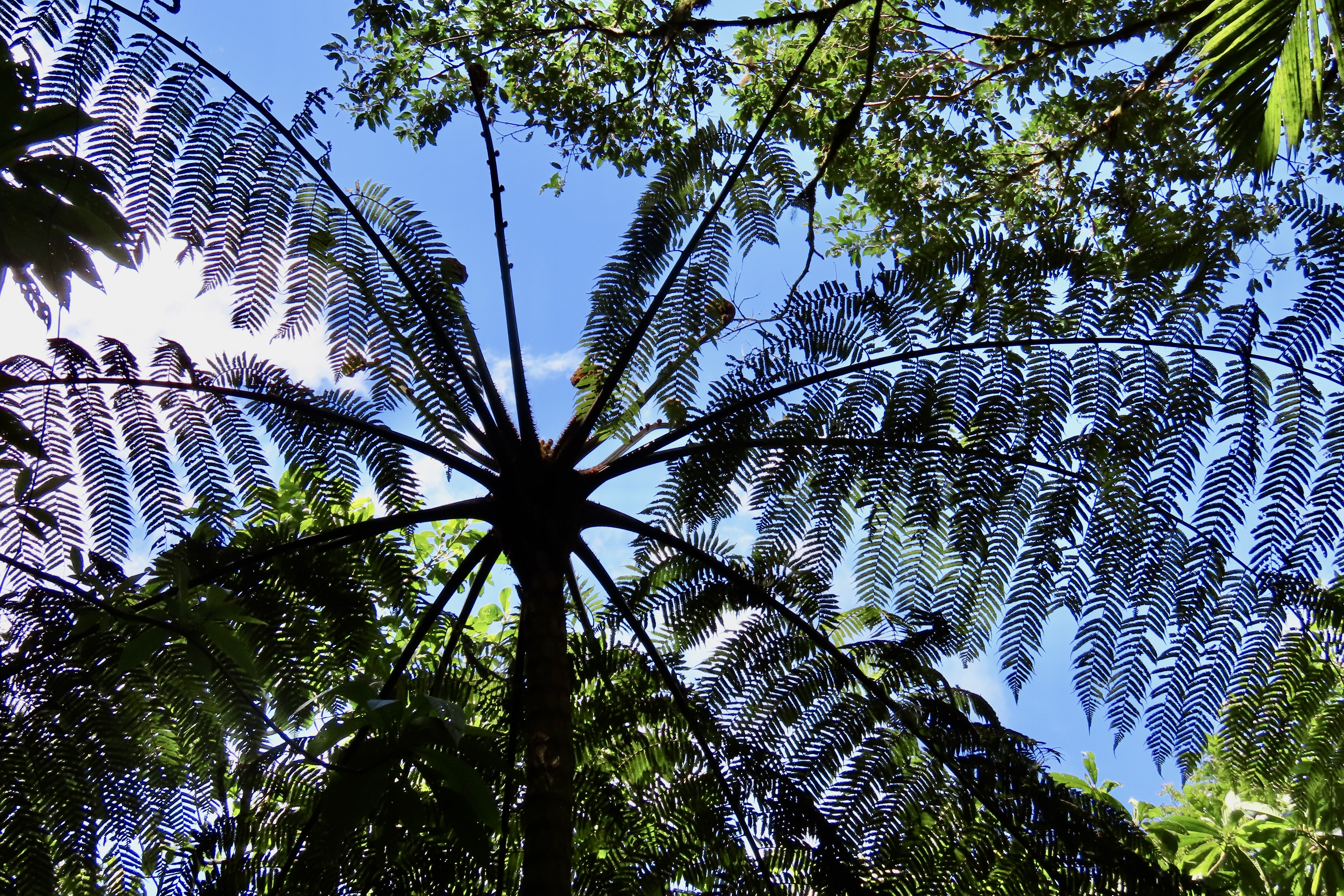
I mentioned in my last post that there were no photos of the Pond or the Woods. They were victims of the endless march of ‘civilization.’ Fortunately, and I should add, so far, there are still wild places on earth. Costa Rica has many. Some, such as Monteverde, are attracting hordes of tourists. There’s good and bad news here. Among the good is that the tourists provide Costa Rica with a welcome source of income and the opportunity for the tourists to enjoy the beauty and wildlife of Costa Rica. The bad news is the incredible commercialization that goes along with it and the impact. It’s similar to when the large cruise ships drop thousands of people onto the small Greek Island of Santorini, or our most popular National Parks in America turn into traffic jams in the summer. But enough on that. The tree above was a new one to me, a fern tree. There are more photos below after my UT-OH chapter on the Woods.
Part 2: The Woods
The Woods, like the Pond, earned a capital letter. To get there I walked out the back door, down the alley past the Graveyard, and through a pasture Jimmy Pagonni rented for his cattle. Tackling the pasture involved crawling through a rusty barbed wire fence, avoiding fresh cow pies, climbing a hill, and jumping an irrigation ditch. The journey was fraught with danger. Hungry barbed wire consumed several of my shirts and occasionally went for my back.
Torn clothing and bleeding scratches were a minor irritation in comparison to stepping in fresh cow poop, though. A thousand-pound, grass-eating machine produces acres of the stuff. Deep piles sneak up your foot and slosh over into your shoes. Toes hate this. Even more treacherous are the little piles that hide out in the grass. A well-placed patty can send you sliding faster than black ice. The real danger here is ending up with your butt in the pile. I did that, once. Happily, no one was around to witness my misfortune, or hear my language, except Tickle the Dog. I swore him to secrecy. He knew many of my secrets. It’s a damned good thing he couldn’t talk.
For all of its hazards, the total hike to the Woods took about 15 minutes. Digger pines with drunken windmill limbs guarded the borders while gnarly manzanita and spiked chaparral dared the casual visitor to venture off the trail. Poison oak proved more subtle but effective in discouraging exploration.
I could count on raucous California jays to announce my presence, especially if I was stalking a band of notorious outlaws. Ground squirrels were also quick to whistle their displeasure. Less talkative jackrabbits merely ambled off upon spotting me, put on a little speed for a hyper Cocker, and became bounding blurs in the presence of a hungry greyhound. Flickers, California quail and acorn woodpeckers held discussions in distinctive voices I soon learned to recognize.
From the beginning, I felt at home in the Woods, like I belonged. I quickly learned that its hidden recesses contained a multitude of secrets. I was eager to learn what they had to teach me, but the process seemed glacial. It required patience and I hardly knew how to spell the word. I did know how to sit quietly, however. This was a skill I had picked up from the hours I spent with my nose buried in books. The woodland creatures prefer their people noisy. A Curt stomping down the trail, snapping dead twigs, and talking to himself was easy to avoid, while a Curt being quiet might surprise them.
One gray squirrel was particularly loud in his objections. He lived in the top branches of a digger pine beside the trail and maintained an observation post on an overhanging limb. When he heard me coming, he would adopt his ‘you can’t see me gray squirrel playing statue pose.’ But I knew where to look. I would find a comfortable seat and stare at him. It drove him crazy. Soon he would start to thump the limb madly with his foot and chirr loudly. He had pine nuts to gather, a stick home to remodel, and a bright-eyed, bushy-tailed lady to woo. I was blocking progress. Eventually, if I didn’t move, his irritation would bring him scrambling down the trunk for an up-close and personal scolding.
After about 10 minutes of continuous haranguing, he’d decide I was a harmless, if obnoxious aberration and go about his business. That’s when I begin to learn valuable secrets, like where he hid his pine nuts. It was also a sign for the rest of the wildlife to come out of hiding. A western fence lizard might work its way to the top of the dead log next to me and start doing push-ups. Why, I couldn’t imagine. Or perhaps a thrush would begin to scratch up the leaves under the manzanita in search of creepy tidbits. The first time I heard one, it sounded like a very large animal interested in little boy flesh.
Occasionally there were special treats: A band of teenage gray squirrels playing tag and demonstrating their incredible acrobatics; a doe leading its shy, speckled fawn out to drink in the small stream that graced the Wood’s meadow; a coyote sneaking up on a ground squirrel hole with an intensity I could almost feel.
I also began to play at stalking animals. At some point in time between childhood and becoming a teenager, I read James Fennimore Cooper and began to think I was a reincarnation of Natty Bumppo. Looking back, I can’t say I was particularly skilled, but no one could have told me so at the time. At least I learned to avoid dry twigs, walk slowly, and stop frequently.
Occasionally, I even managed to sneak up on some unsuspecting woodland creature.
If the birds and the animals weren’t present, they left signs for me. There was always the helter-skelter pack rat nest to explore. Tickle liked to tear them apart, quickly sending twigs flying in all directions. There were also numerous tracks to figure out. Was it a dog or coyote that had stopped for a drink out of the stream the night before? Tickle knew instantly, but I had to piece it together. A sinuous trail left by a slithery serpent was guaranteed to catch my attention. This was rattlesnake country. Who’d been eating whom or what was another question? The dismantled pinecone was easy to figure out, but who considered the bark on a young white fir a delicacy? And what about the quail feathers scattered haphazardly beside the trail?
Scat, I learned, was the tracker’s word for shit. It offered a multitude of clues for what animals had been ambling down the trail and what they had been eating. There were deer droppings and rabbit droppings and mouse droppings descending in size. Coyotes left their distinctive dog-like scat but the presence of fur suggested that something other than dog food had been on the menu. Some scat was particularly fascinating, at least to me. Burped up owl pellets provided a treasure chest of bones— little feet, little legs and little skulls that grinned back with the vacant stare of slow mice.
While Tarzan hung out in the Graveyard and pirates infested the Pond, mountain men, cowboys, Indians, Robin Hood and various bad guys roamed the Woods. Each bush hid a potential enemy that I would indubitably vanquish. I had the fastest two fingers in the West and I could split a pine nut with an imaginary arrow at 50 yards. I never lost. How could I? It was my fantasy.
Daydreams were only a part of the picture. I fell in love with wandering in the Woods and playing on the Pond. There was an encyclopedia of knowledge available and a multitude of lessons about life. Learning wasn’t a conscious effort, however; it was more like absorption. The world shifted for me when I entered the Woods and time slowed down. A spider with an egg sack was worth five minutes, a gopher pushing dirt out of its hole, 20, and a deer with a fawn, a lifetime.
It isn’t surprising that I became known as Nature Boy by my classmates, given all the time I spent in the woods. I considered it a compliment.
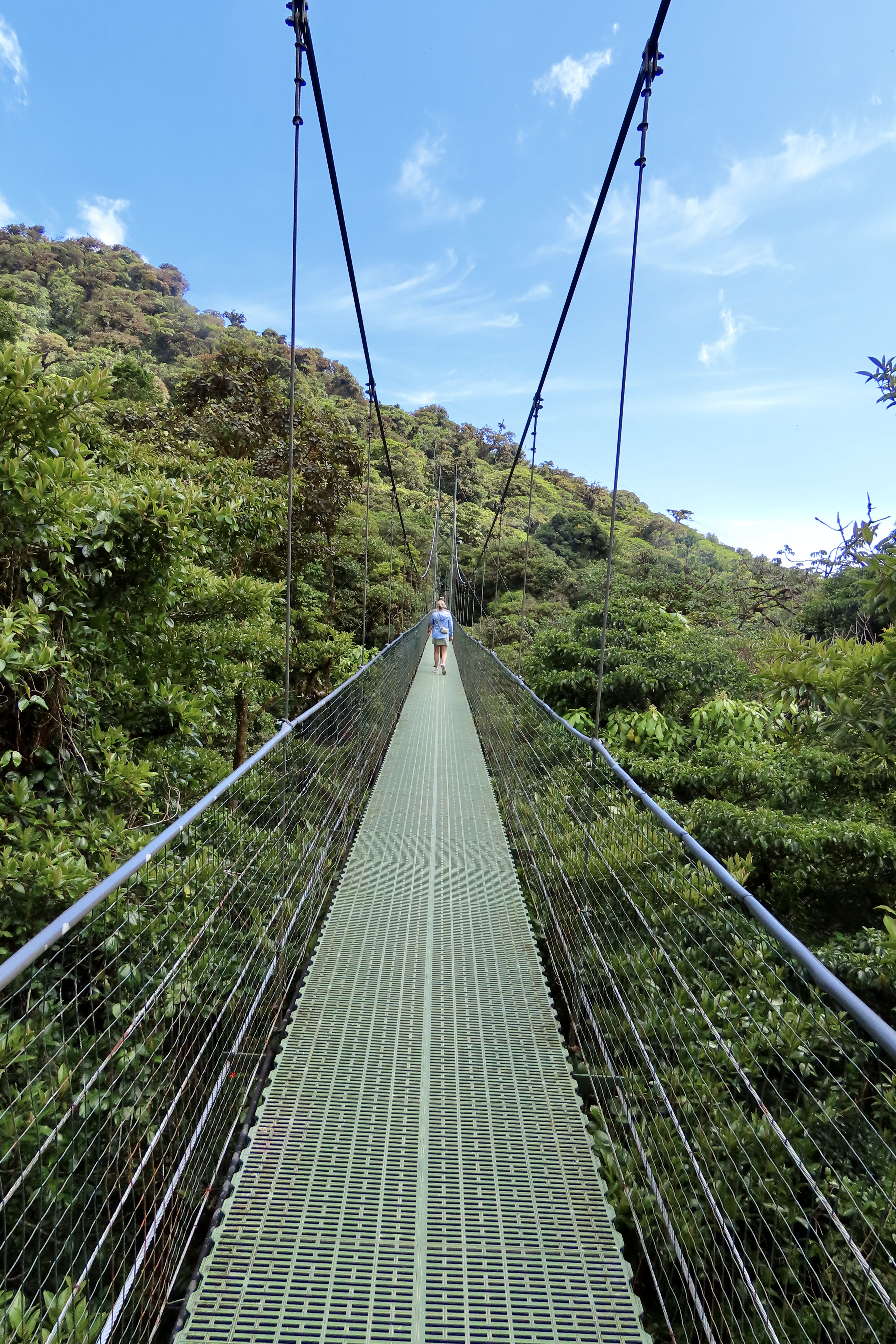
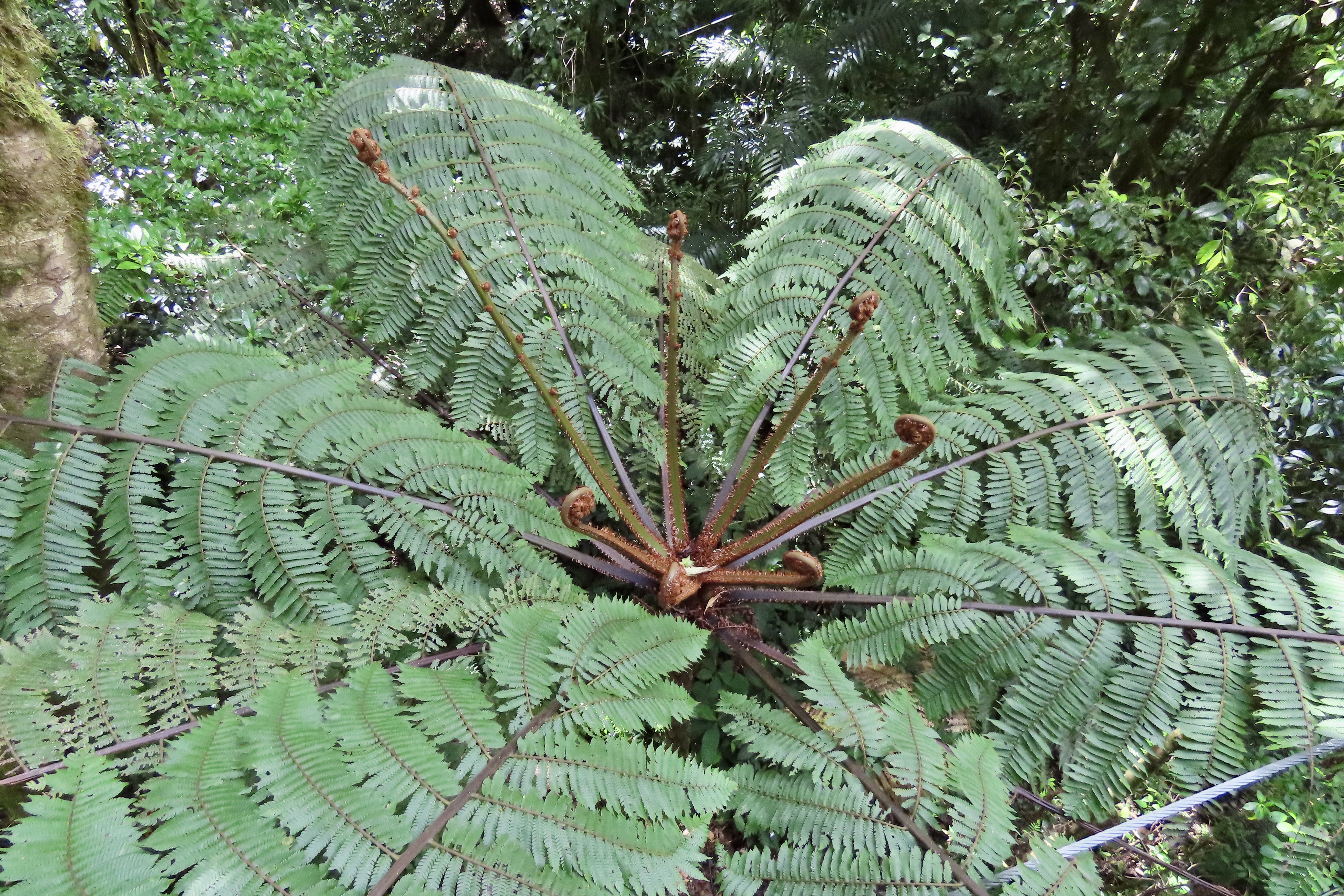
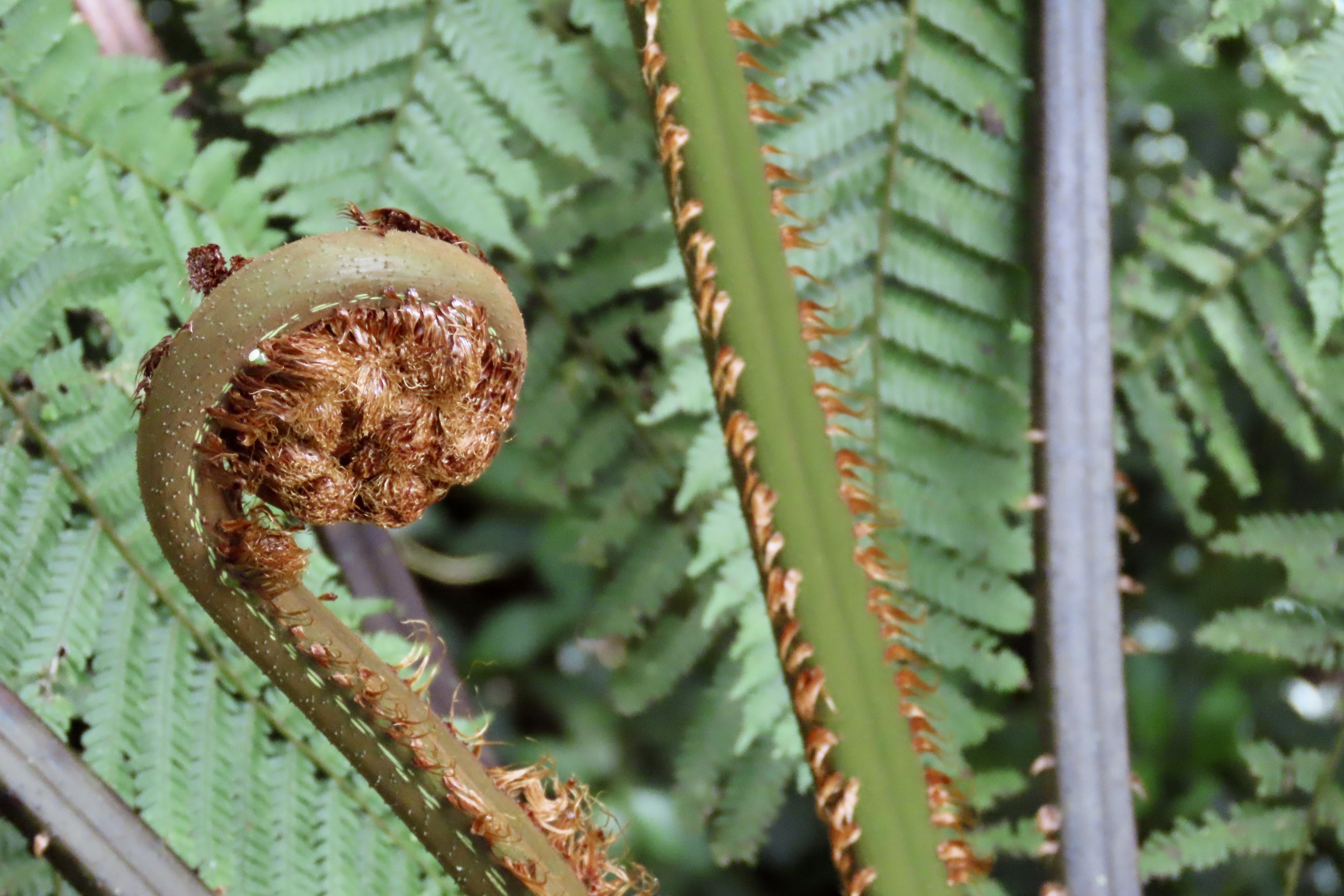
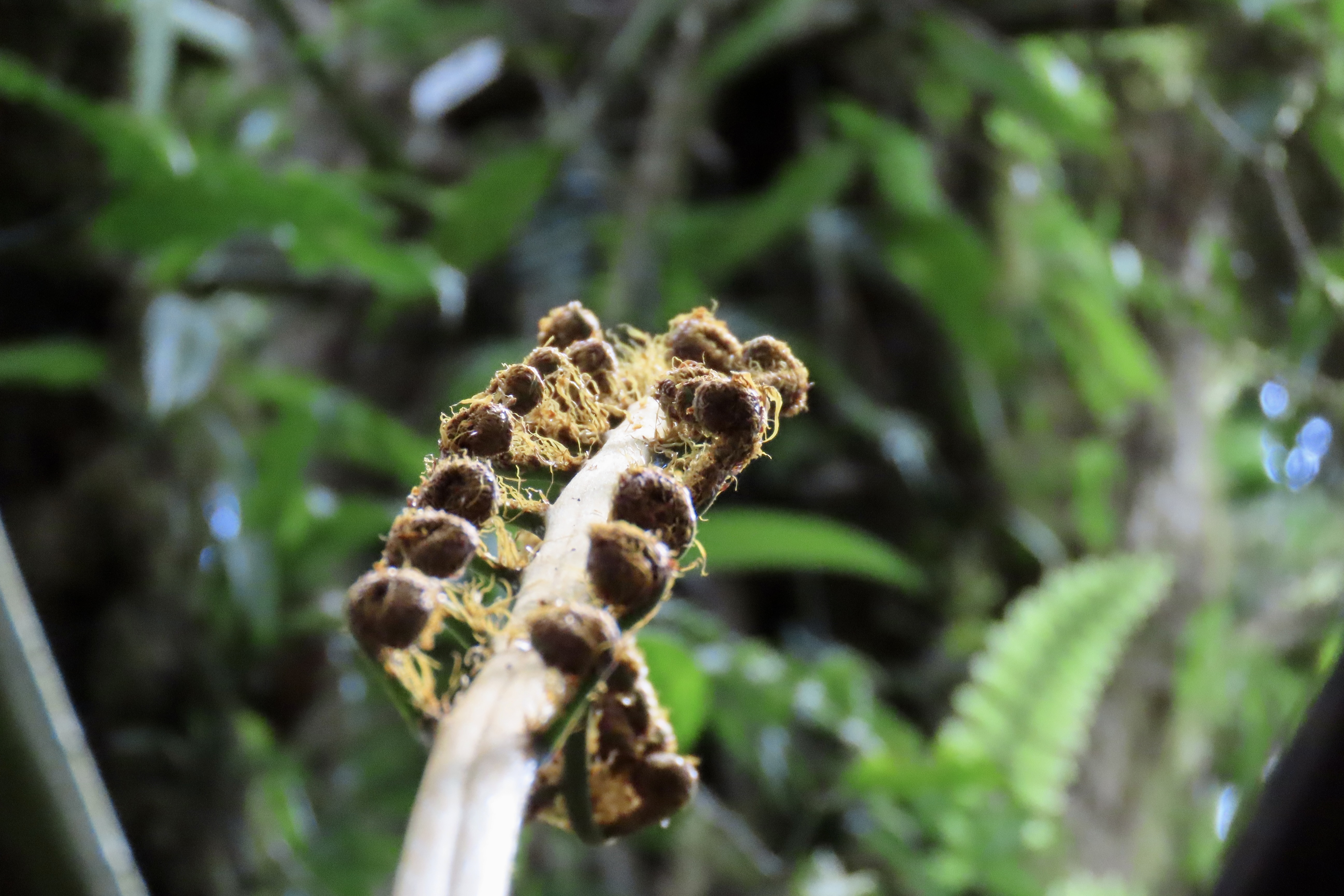
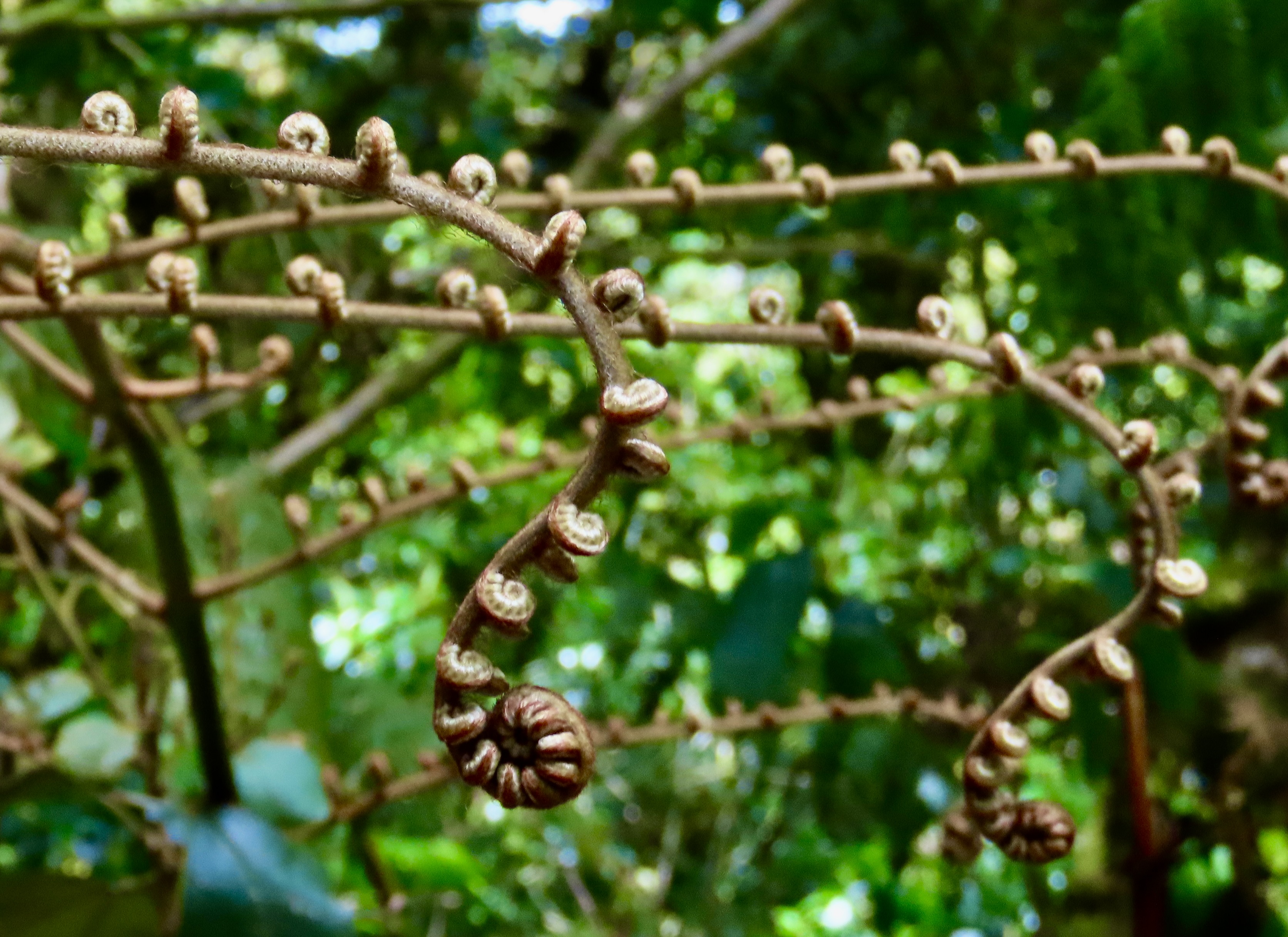
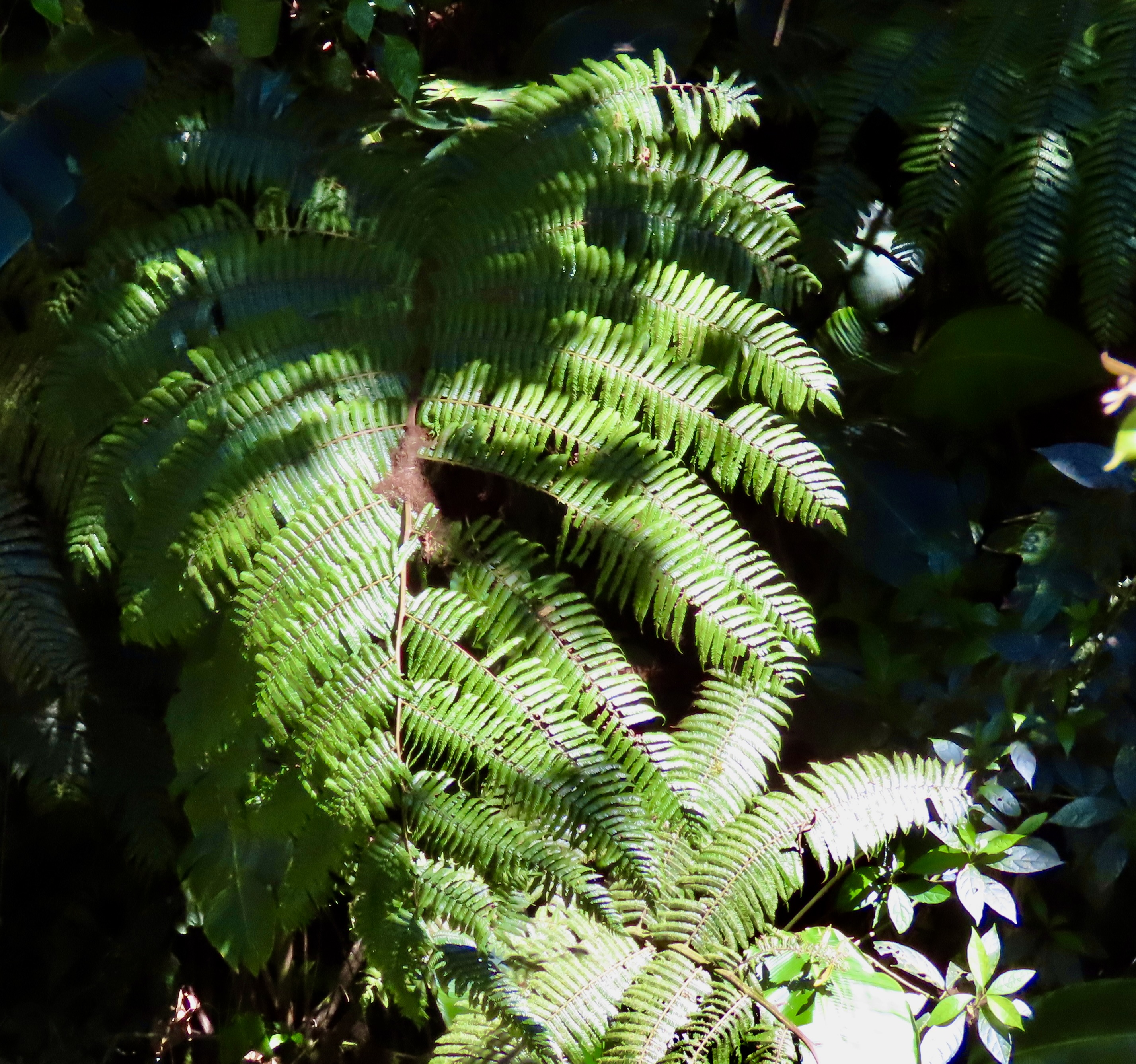
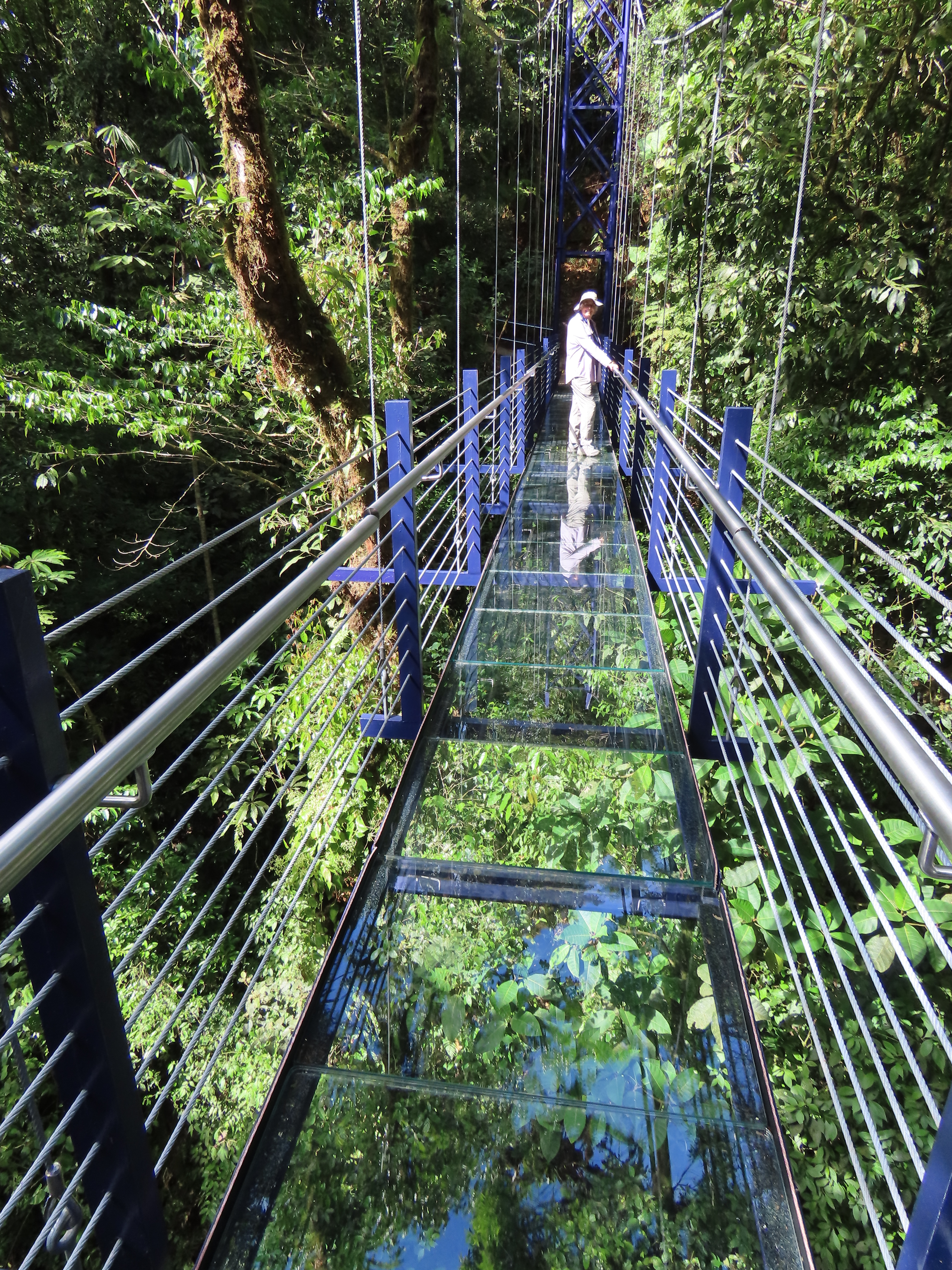
The hanging bridges of Monteverde gave us a unique opportunity to study both the canopy and the forest beneath. There were six bridges at Treetopia Park. At 774 feet, this was the longest. It was also more open. The canopy towered over most of the bridges.One bridge provided us with an opportunity look down on a fern tree. The leaves were a definite clue that we were looking at a fern.As did how the leaves unfold or unfurl known as Circinate vernation. This has always fascinated me about ferns. I have many photos of different species. But given that there are 10-12000 or more know species, I have a few to go…Here’s a different species at Treetopia.And another. Both tropical and temperate rainforests provide ideal conditions for ferns to grow. Some can be giants. We spotted these down on the ground from the hanging bridge. I wish I had a person down on the ground to provide perspective. They would have made my 5 feet 11 inches appear small.
I’d love to show you a photo of the Pond, or the Woods. Unfortunately I didn’t take any photos of either when I was young. I went back a few years ago to photograph the sites that were so important to my childhood— and life. The Pond had become a large gas station and the Woods had become a trailer park. It’s called progress. There was money to be made.
Instead you have a gorgeous sunset photo over Monteverde, Costa Rica taken by our grandson, Cooper, who is in the eighth grade. Our son, Tony, his wife, Cammie and their three boys, Connor, Chris, and Cooper have joined us this week. We are situated up on a high hill surrounded by rainforest. It even has vines that are safe to swing on and a view that looks all the way to the Pacific Ocean. We sent the boys out with our cameras to explore the surrounding woods and take photos of what they found most interesting. There are more pictures after today’s UT-OH tale.
Part 1: The Pond
There came a time when the Graveyard no longer met my wandering needs. I started traveling farther and farther afield, 15 minutes at a time. That’s how far the Pond and the Woods were away. They were where I played and, more importantly, where I developed a life-long love of the natural world. As such, they earned a capital P and capital W. First up: The Pond.
There were a number of ponds in the area. Oscar ‘Ot’ Jones had one on his ranch for cattle; Caldor had one where logs waited for their appointment with the buzz saw; Forni had one over the hill from his slaughterhouse, and Tony Pavy had one that was supposedly off-limits. But there was only one capital P Pond, the one next to the Community Hall. If I told Marshall, my parents or my friends I was going to the Pond, they knew immediately where I would be.
It was a magical place filled with catfish, mud turtles, bullfrogs and pirates. Although the Pond was small, it had a peninsula, island, deep channel, cattails and shallows. In the spring, redwing blackbirds nested in the cattails and filled the air with melodic sounds. Mallards took advantage of the island’s safety to set up housekeeping. Catfish used holes in the bank of the peninsula to deposit hundreds of eggs that eventually turned into large schools of small black torpedoes dashing about in frenetic unison. Momma bullfrogs laid eggs in strings that grew into chubby pollywogs. When they reached walnut size, tiny legs sprouted in one of nature’s miracles of transformation. Water snakes slithered through the water with the sole purpose of thinning out the burgeoning frog population. I quickly learned to recognize the piteous cry of a frog being consumed whole. Turtles liked to hang out in the shallows where any log or board provided a convenient sunning spot. They always slid off at our appearance but a few quiet minutes would find them surfacing to reclaim lost territory.
By mid-summer the Pond would start to evaporate. The shallow areas surrendered first, sopped up by the burning sun. Life became concentrated in a few square yards of thick, tepid water, only inches deep and supported by a foot of squishy mud. All too soon the Pond was bone-dry with mud cracked and curled. Turtles, snakes and frogs crawled, slithered and hopped away to other nearby water. Catfish dug their way into the mud and entered a deep sleep, waiting for the princely kiss of winter rains. Ducks flew away quacking loudly, leaving only silence behind.
Fall and winter rains found the Pond refilling and then brimming. Cloudy, gray, wind-swept days rippled the water and created a sense of melancholy that even an eight-year-old could feel.
But melancholy was a rare emotion for the Pond. To us, it was a playground with more options than an amusement park. A few railroad ties borrowed from Caldor and nailed together with varying sized boards made great rafts for exploring the furthest, most secret corners of the Pond. Imagination turned the rafts into ferocious pirate ships that ravaged and pillaged the far shores, or primitive bumper cars guaranteed to dunk someone, usually me.
In late spring, the Pond became a swimming hole, inviting us to test still cold waters. One spring, thin ice required a double and then triple-dare before we plunged in. It was a short swim. Swimsuits were always optional and rarely worn. I took my first swimming lessons there and mastered dog paddling with my cocker spaniel, Tickle, providing instructions. More sophisticated strokes would wait for more sophisticated lakes.
Frogs and catfish were for catching and adding to the family larder. During the day, a long pole with fishing line attached to a three-pronged hook and decorated with red cloth became irresistible bait for bullfrogs. At night, a flashlight and a spear-like gig provided an even more primitive means of earning dinner. The deep chug-a-rums so prominent from a distance became silent as we approached. Stealth was required. A splash signified failure as our quarry decided that sitting on the bottom of the Pond was preferable to joining us for dinner.
Victory meant a gourmet treat, frog legs. Preparation involved amputating the frog’s hind legs at the hips and then pealing the skin off like tights. It was a lesson I learned early: If you catch it, you clean it. We were required to chop off the big feet as well. Mother didn’t like being reminded that a happy frog had been attached hours earlier. She also insisted on delayed gratification. Cooking the frog legs on the same day they were caught encouraged them to jump around in the frying pan. “Too creepy!” she declared.
Catching catfish required nerves of steel. We caught them by hand as they lurked with heads protruding from their holes in the banks. Nerves were required because the catfish had serious weapons, needle sharp fins tipped with stingers that packed a wallop. They had to be caught exactly right and held firmly, which was not easy when dealing with a slimy fish trying to avoid the frying pan. But their taste was out of this world and had the slightly exotic quality of something that ate anything that couldn’t eat them.
Next up on Wednesday: The Woods. On Friday, we will focus on some of our Costa Rica adventures.
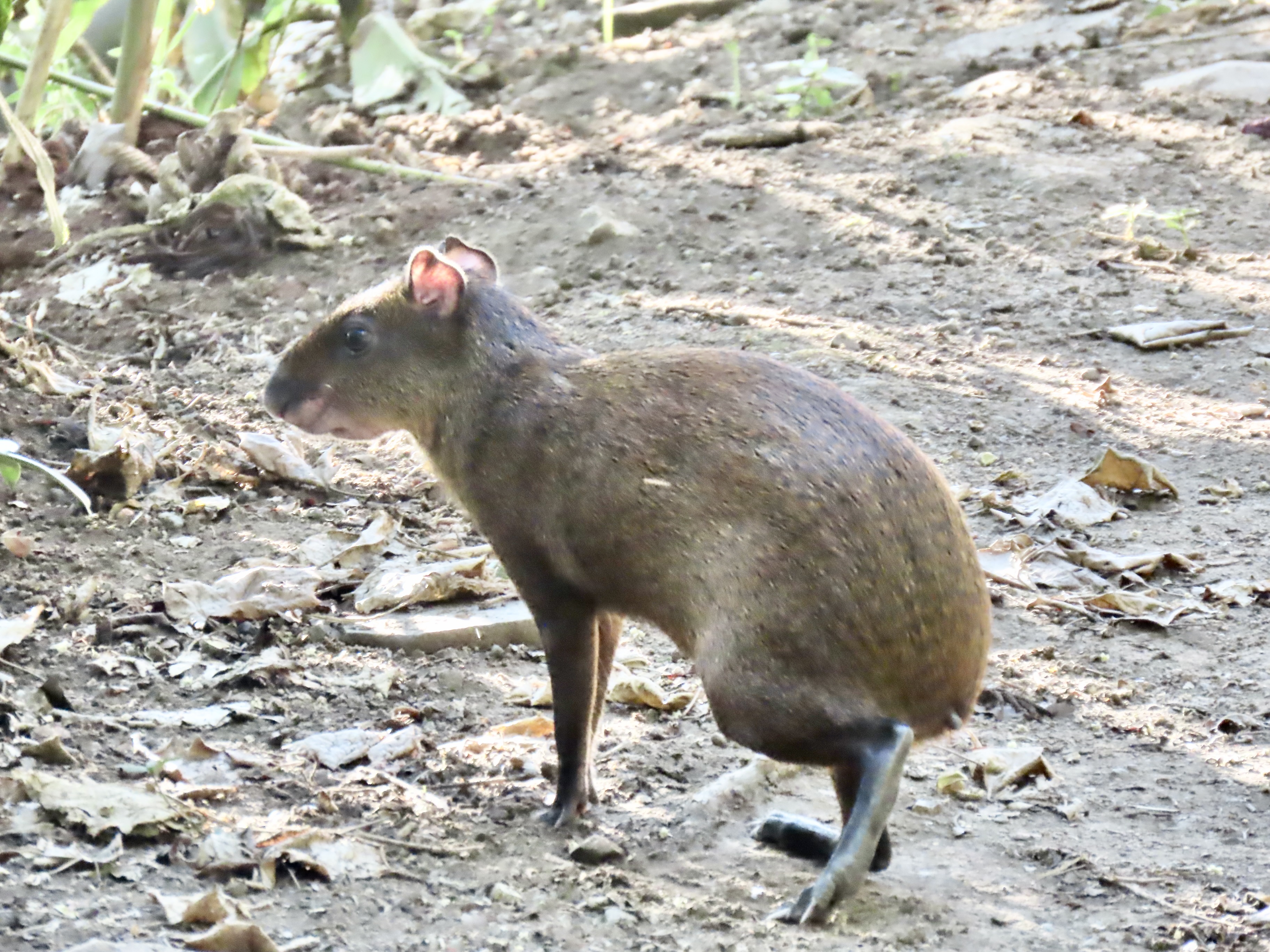
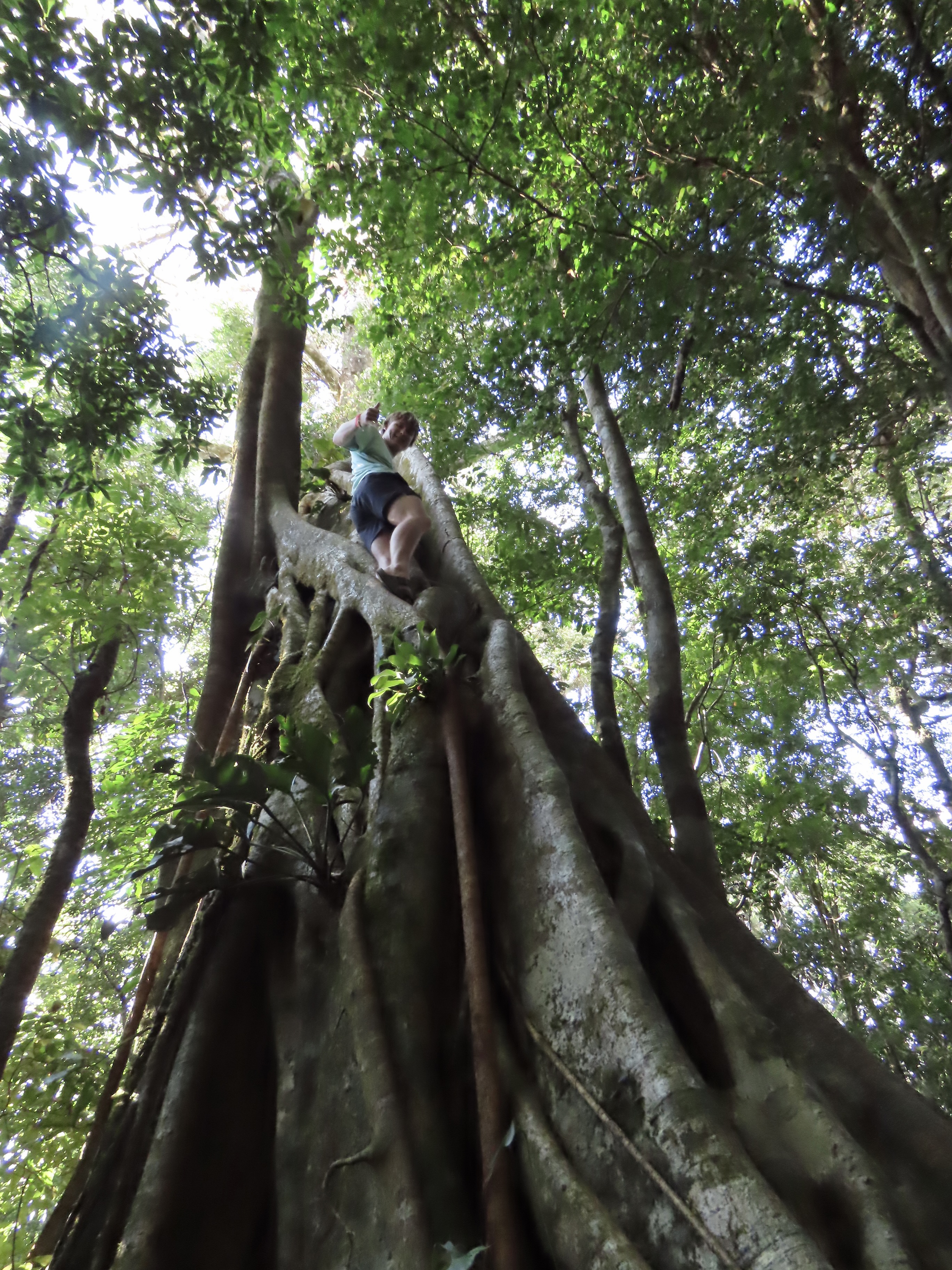
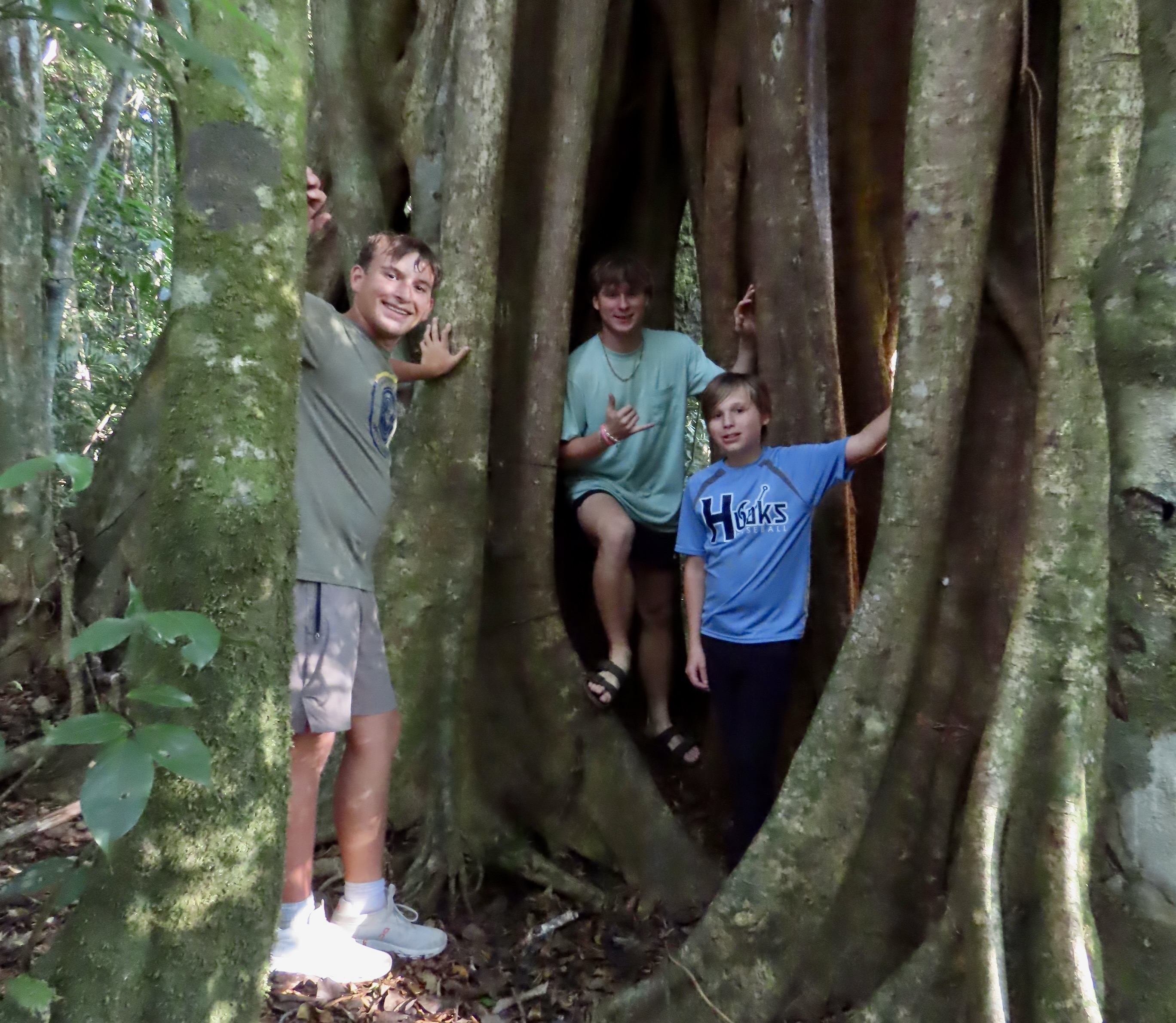
Chris, who is a sophomore in high school, had watched a capybara as it disappeared into the woods. Later when he was visiting a waterfall, one did him the courtesy of hanging out long enough for a photo.Connor, who is a junior, actually preferred to have a photo of himself taken up a banyan tree without a ladder. His passion for high places reminds us of his dad when he was his age. Here are the boys together at the base of the banyan tree: Chris on the left, Connor in the back, and Cooper on the right.Our other activity of the day was to explore the forest canopy on hanging bridges. There were 6 different bridges. This one had a glass bottom you could see the jungle below. That’s grandma, Peggy, down on the end. Next up on Wednesday, the Woods.
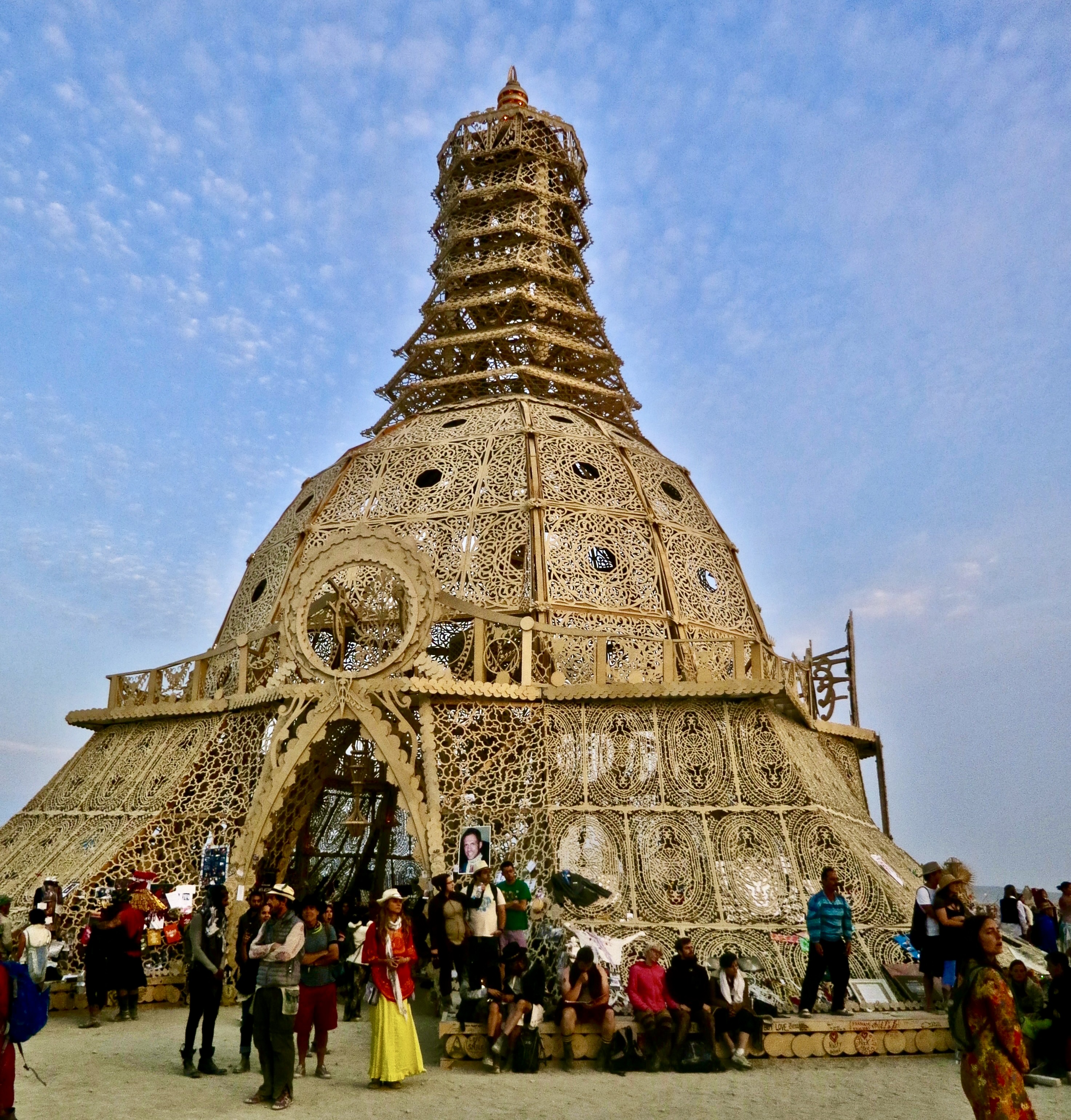
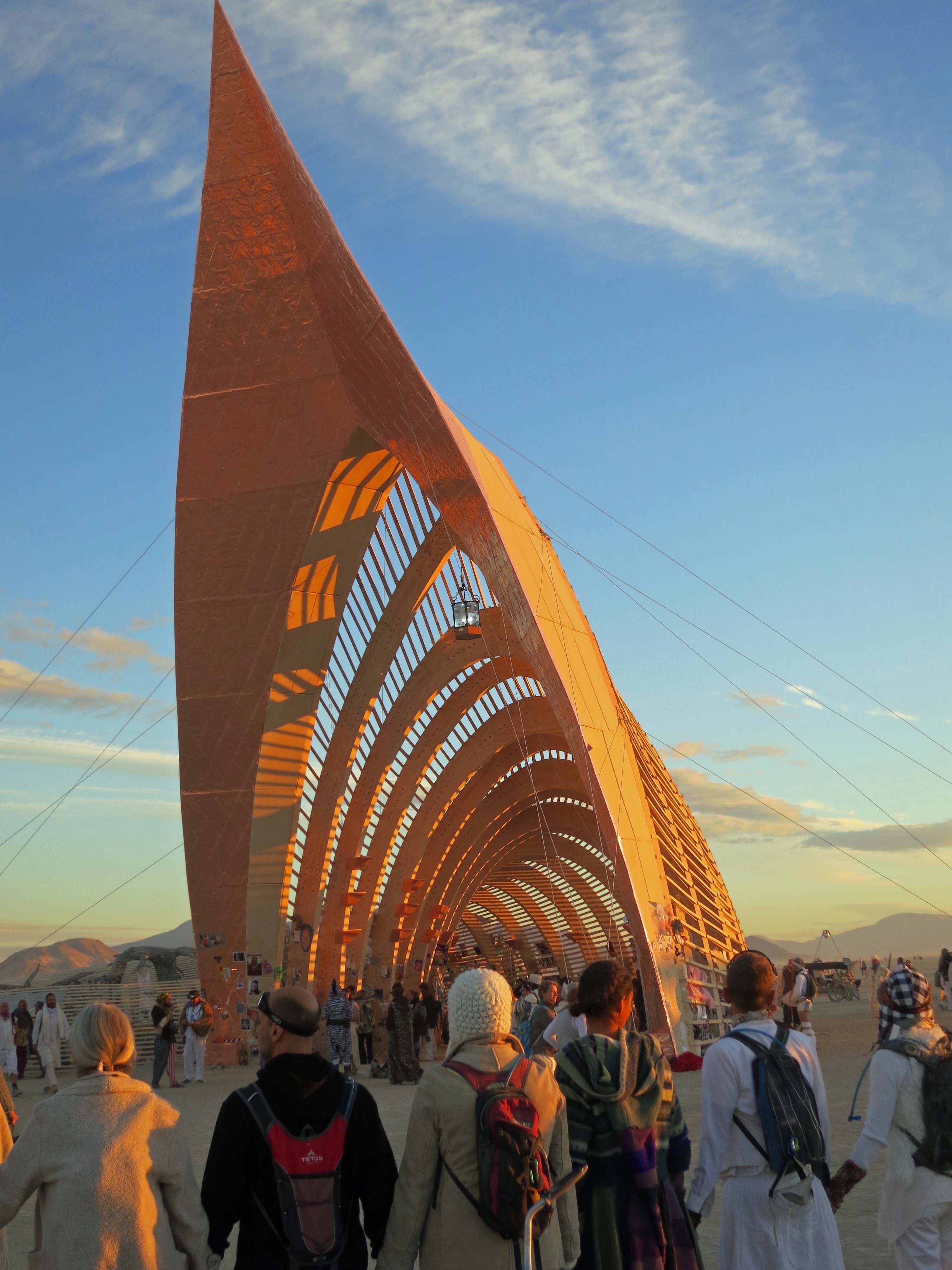
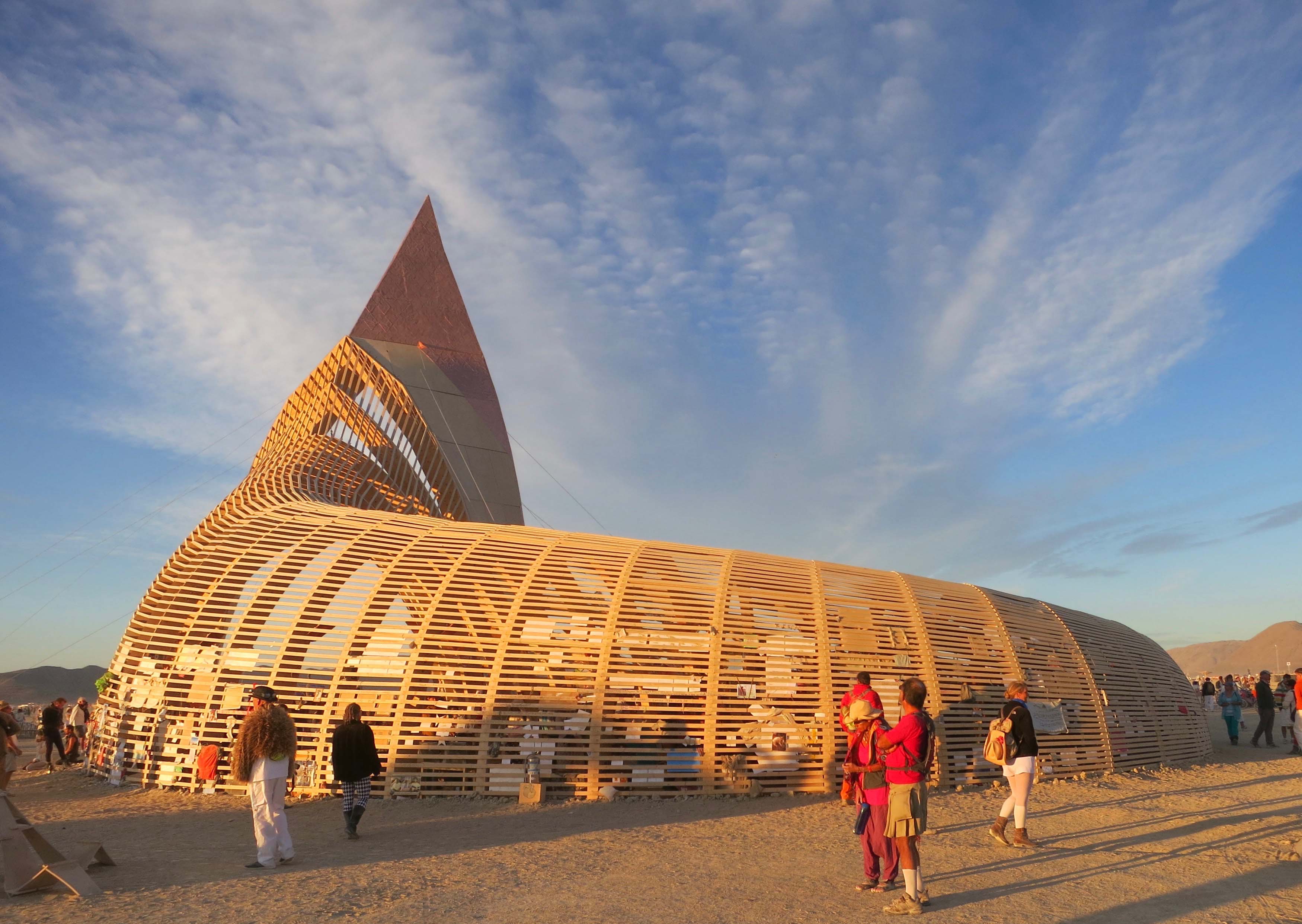
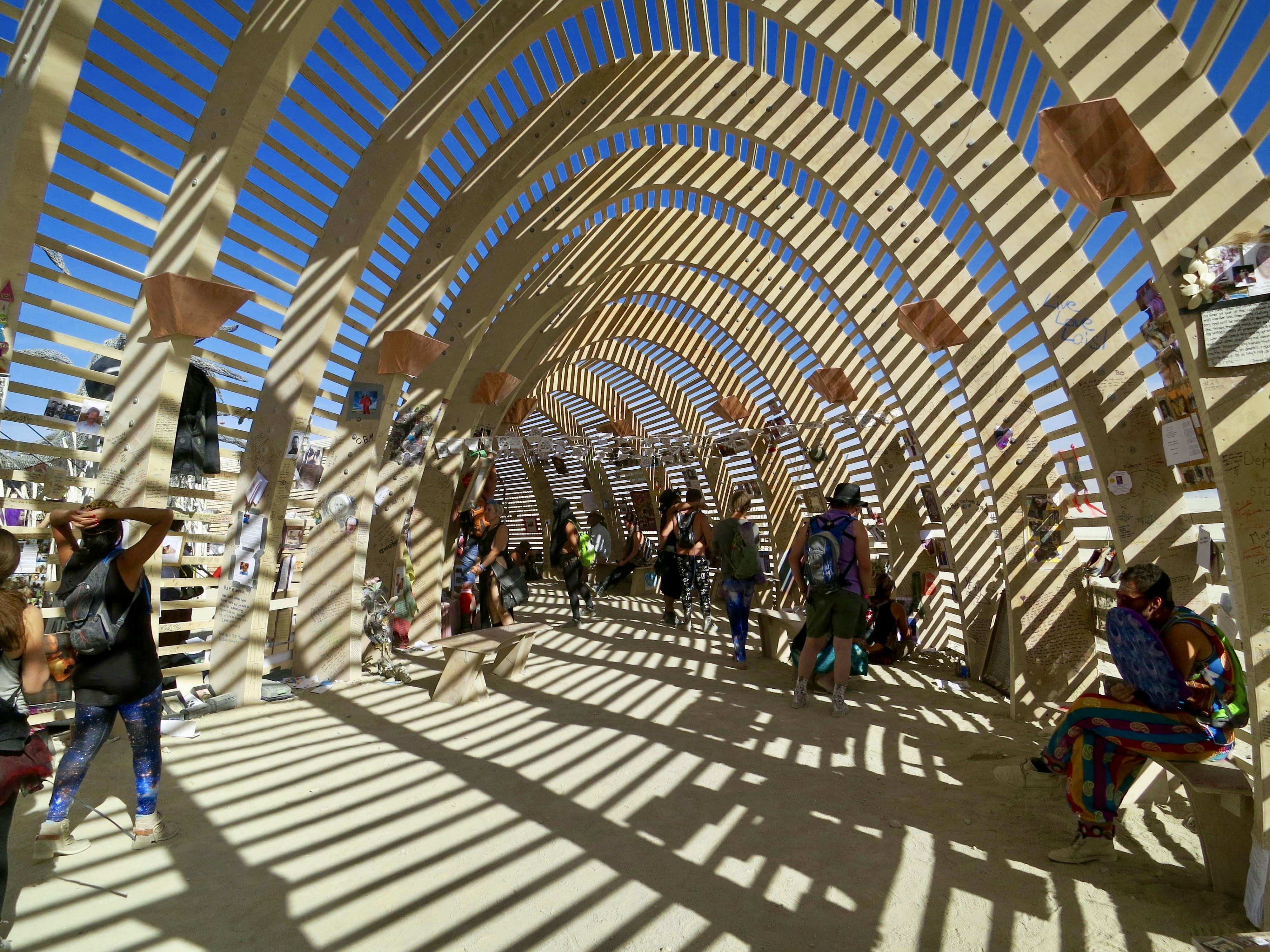
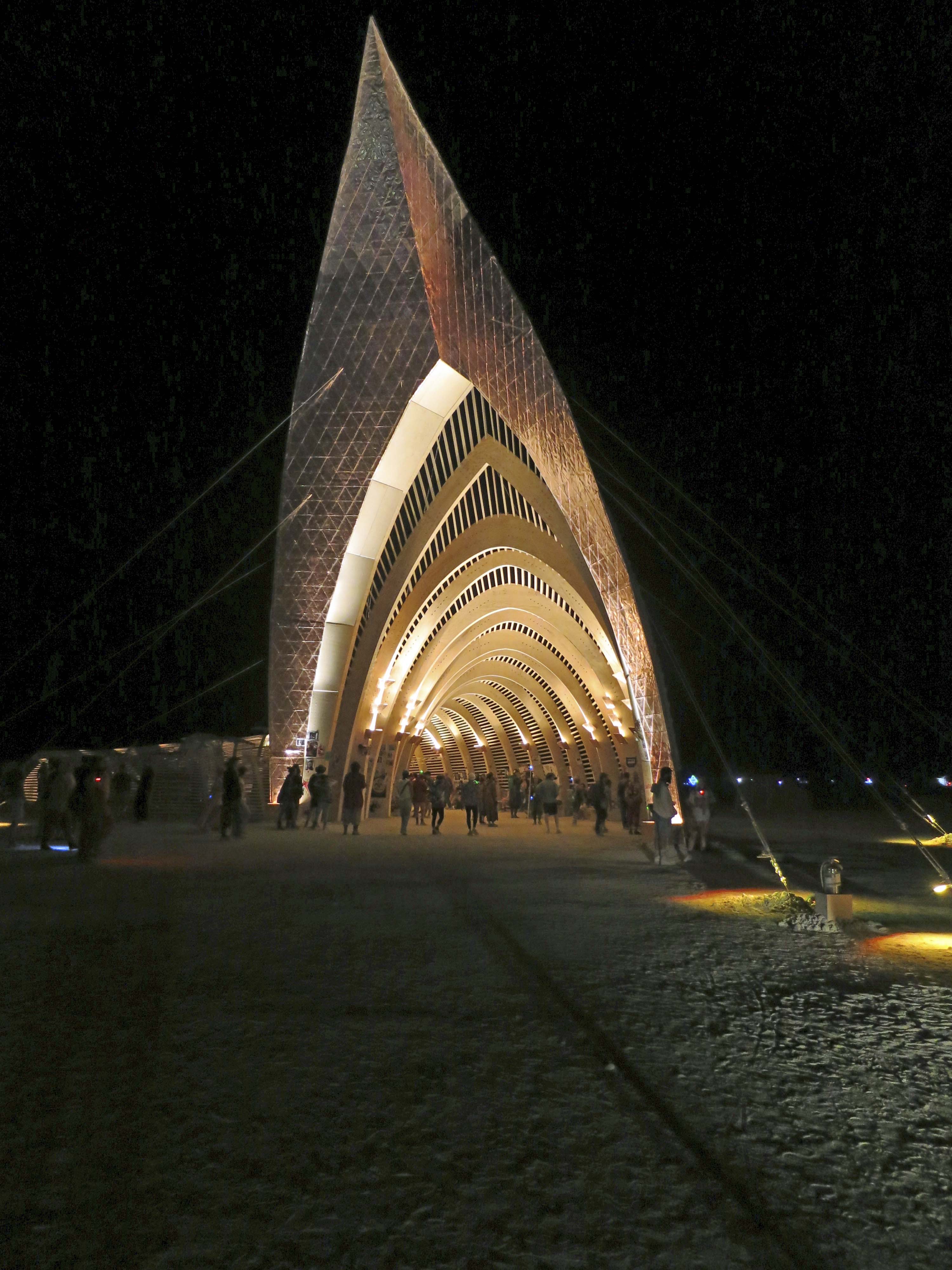
This is the fourth post in our focus series on Burning Man including one on mutant vehicles, one on sculptures, and an overview from our last trip to Burning Man in 2023. Today, I am going to feature the Temples of Burning Man, which are both beautiful and sacred— as suggested in the headline. A quick look at the Temple of Grace above speaks to the beauty of the structures. I will provide examples from seven more years below, plus an introduction to what Burners will see this year. Given that there have been 25 Temples so far, my objective is to simply provide a sample. In our 12 years of attending Burning Man, we have never seen a temple that we didn’t consider special.
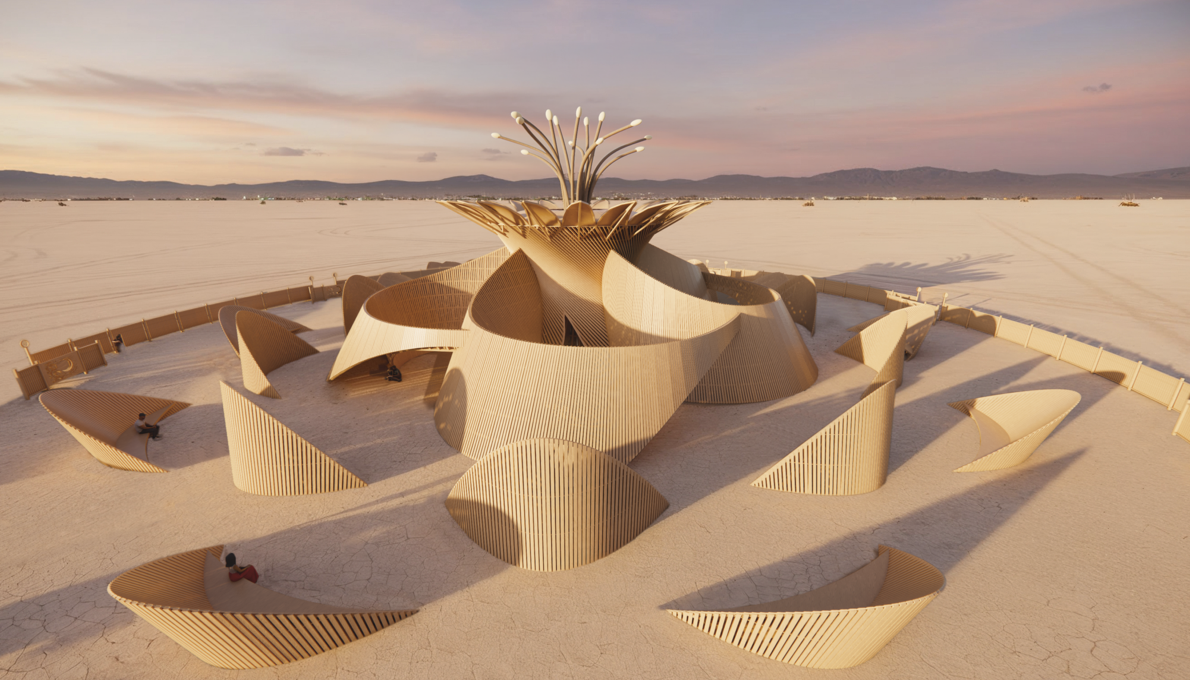
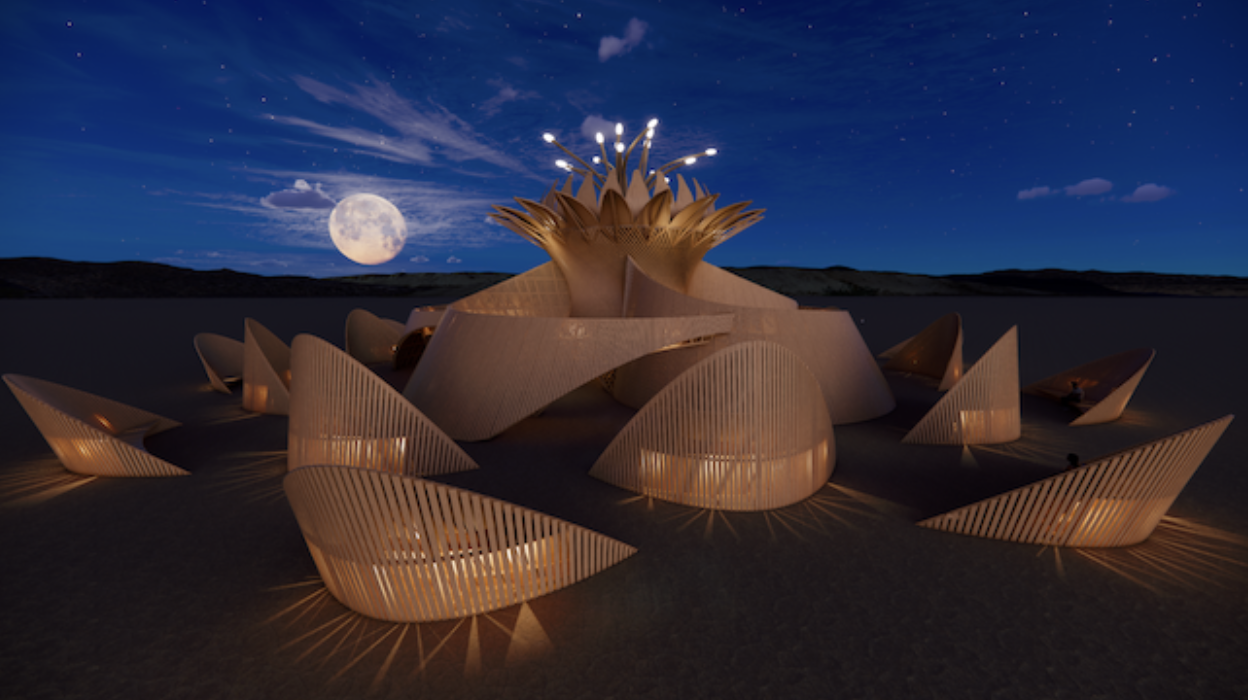
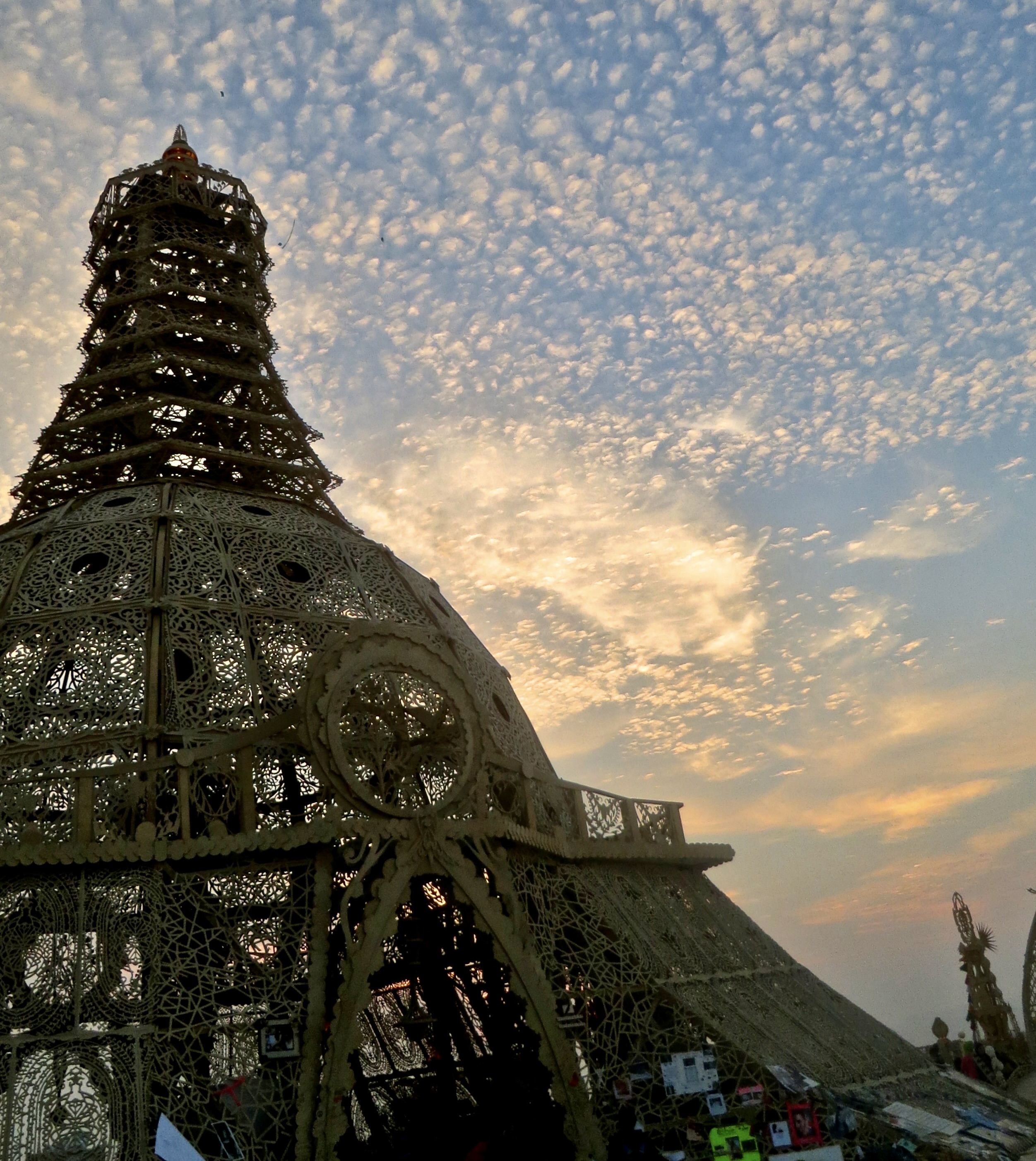
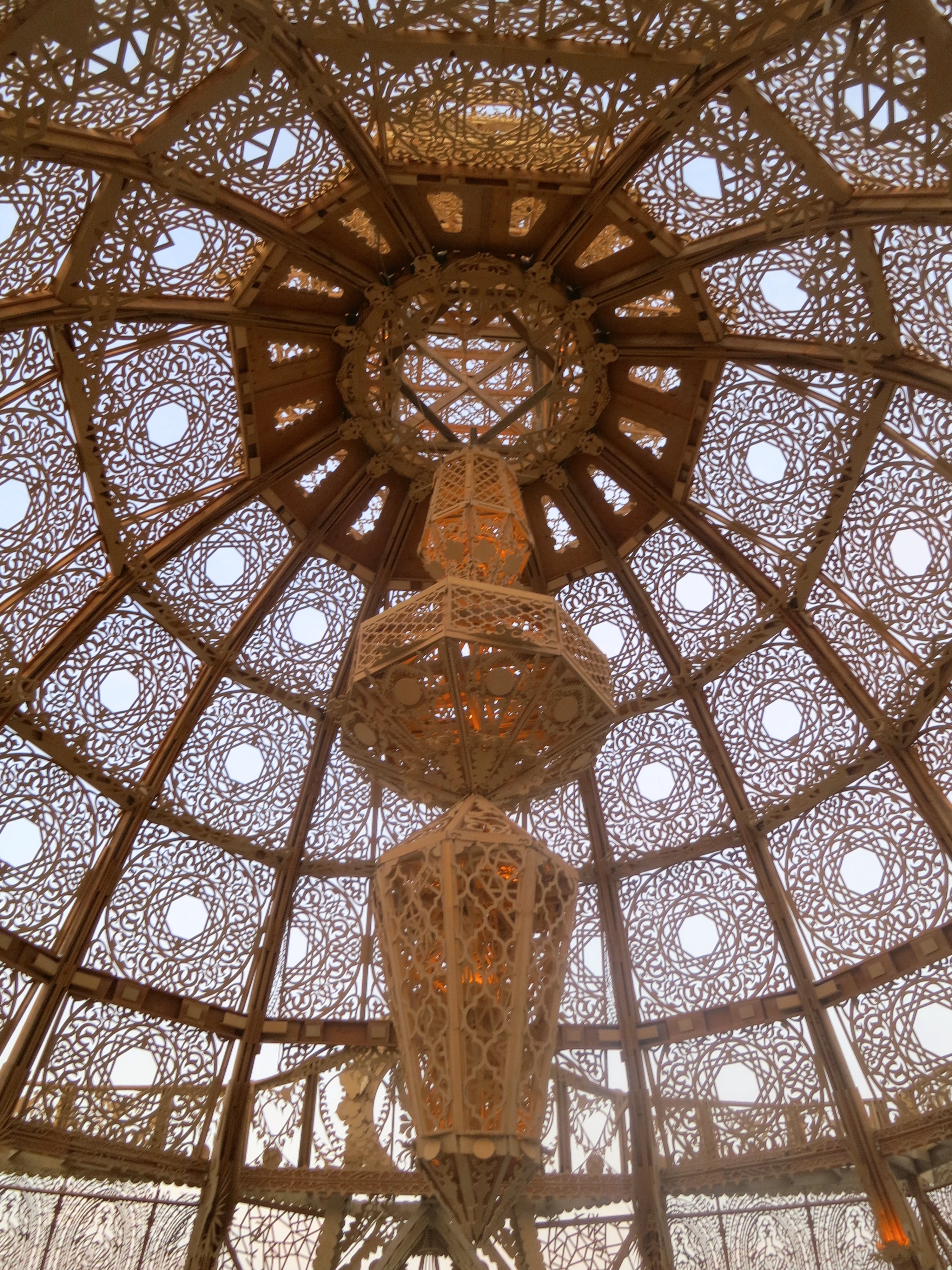
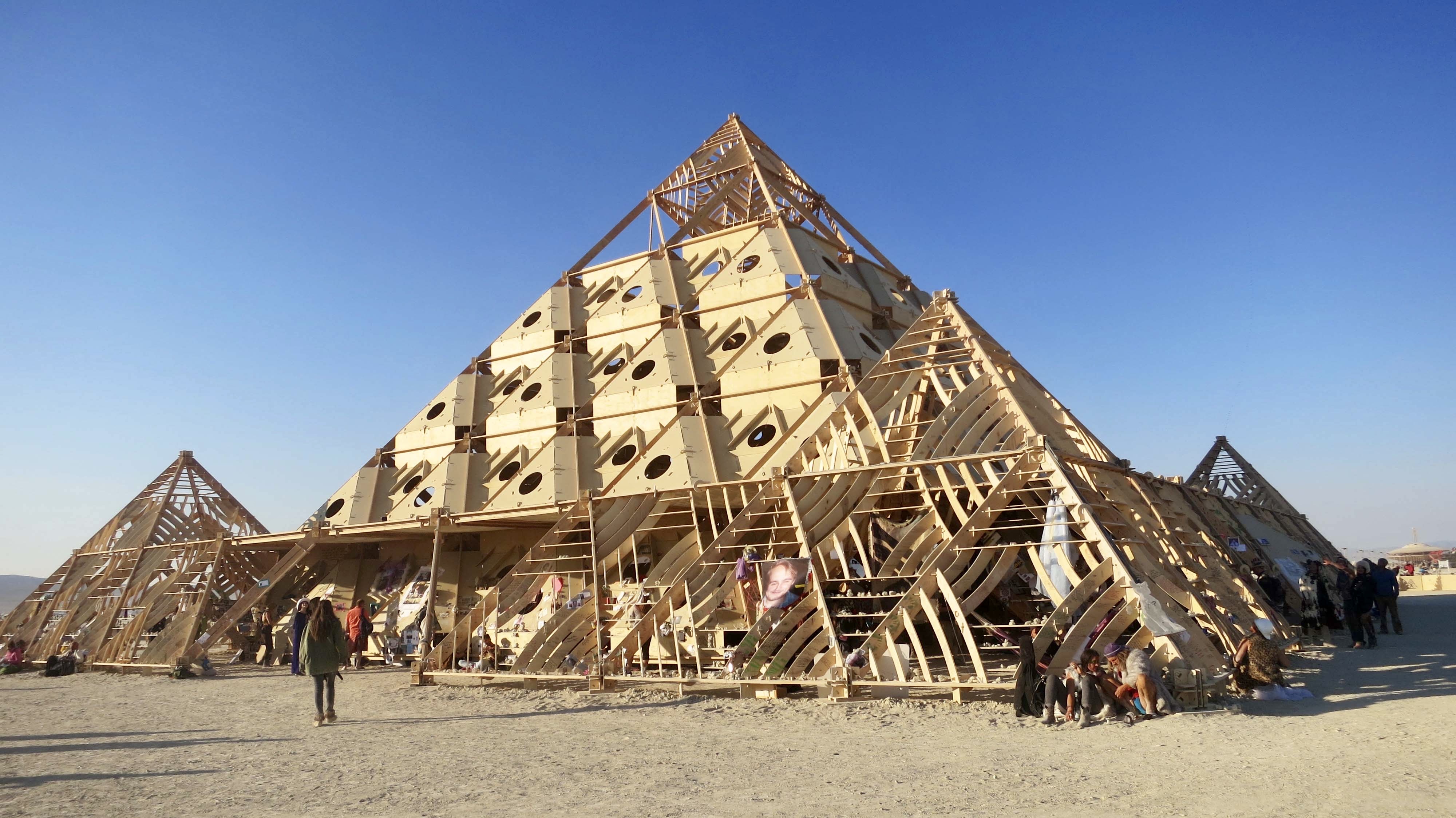
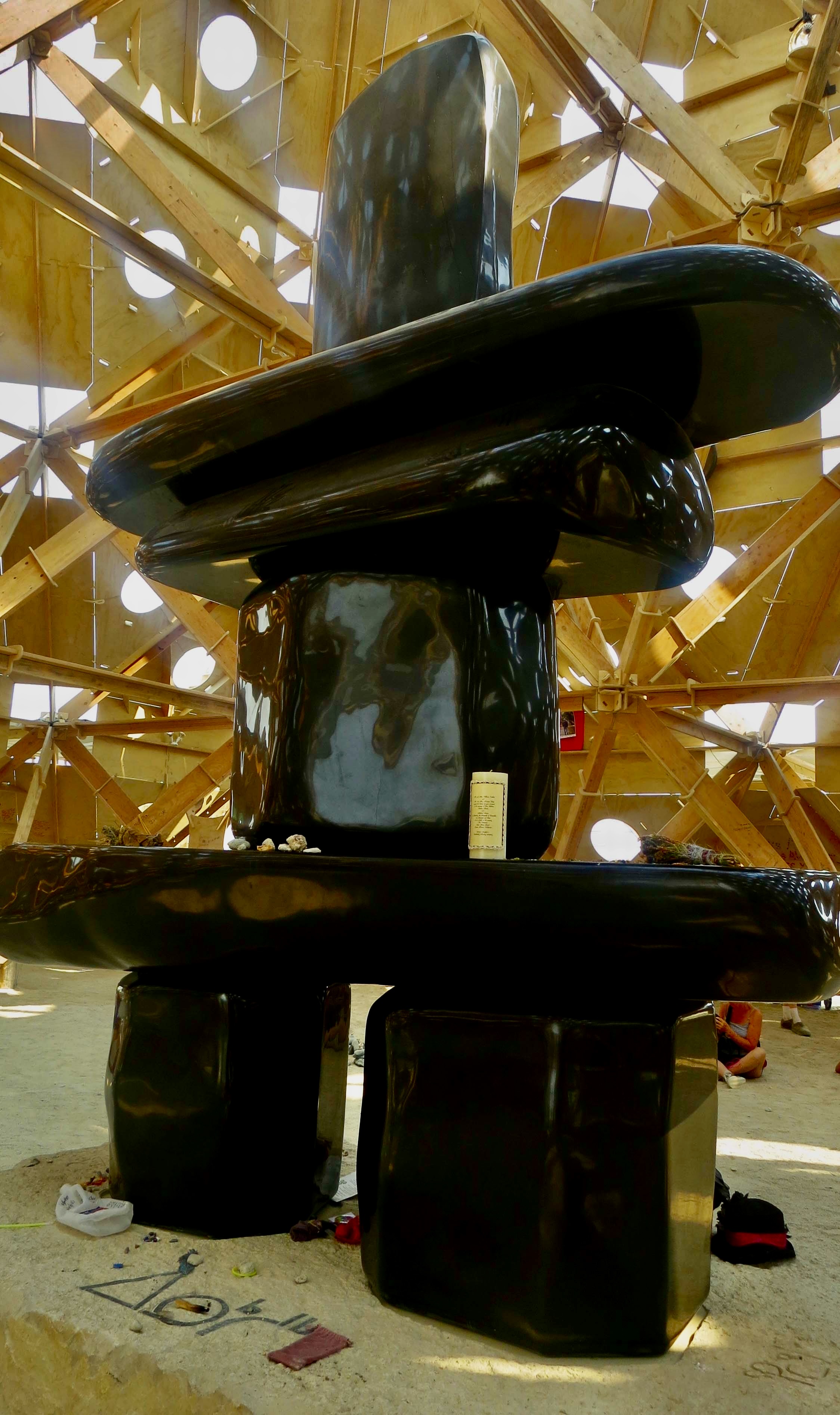
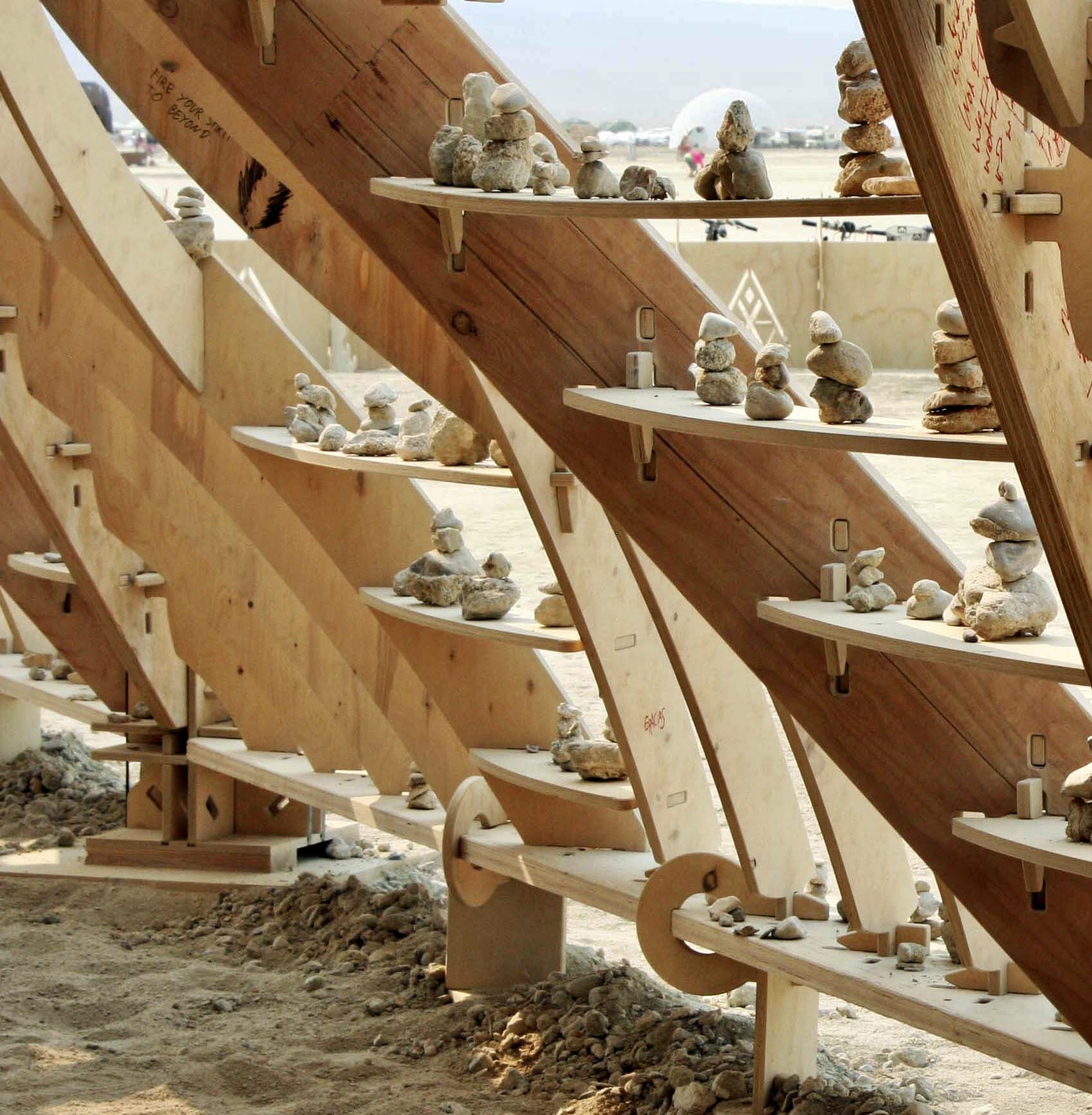
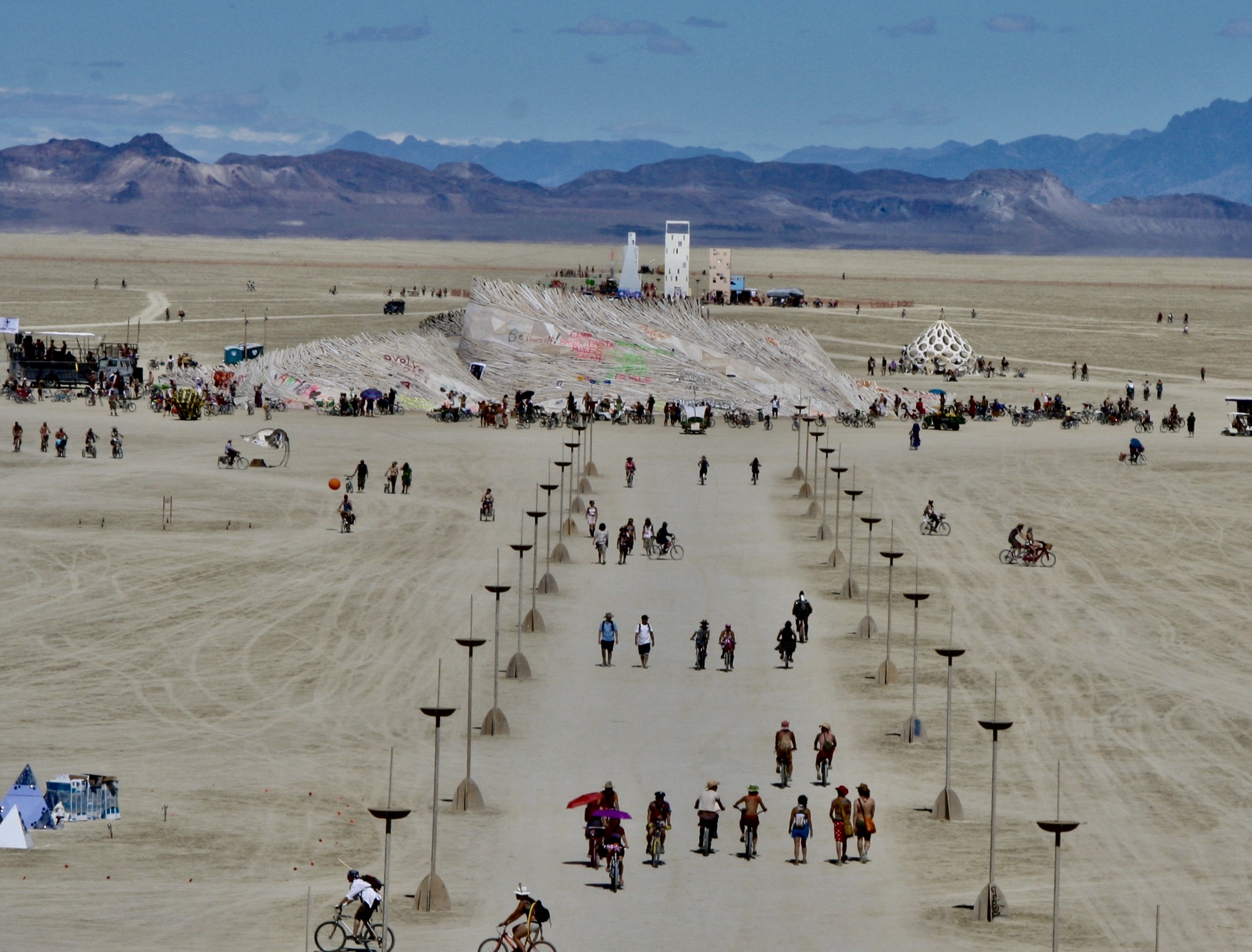
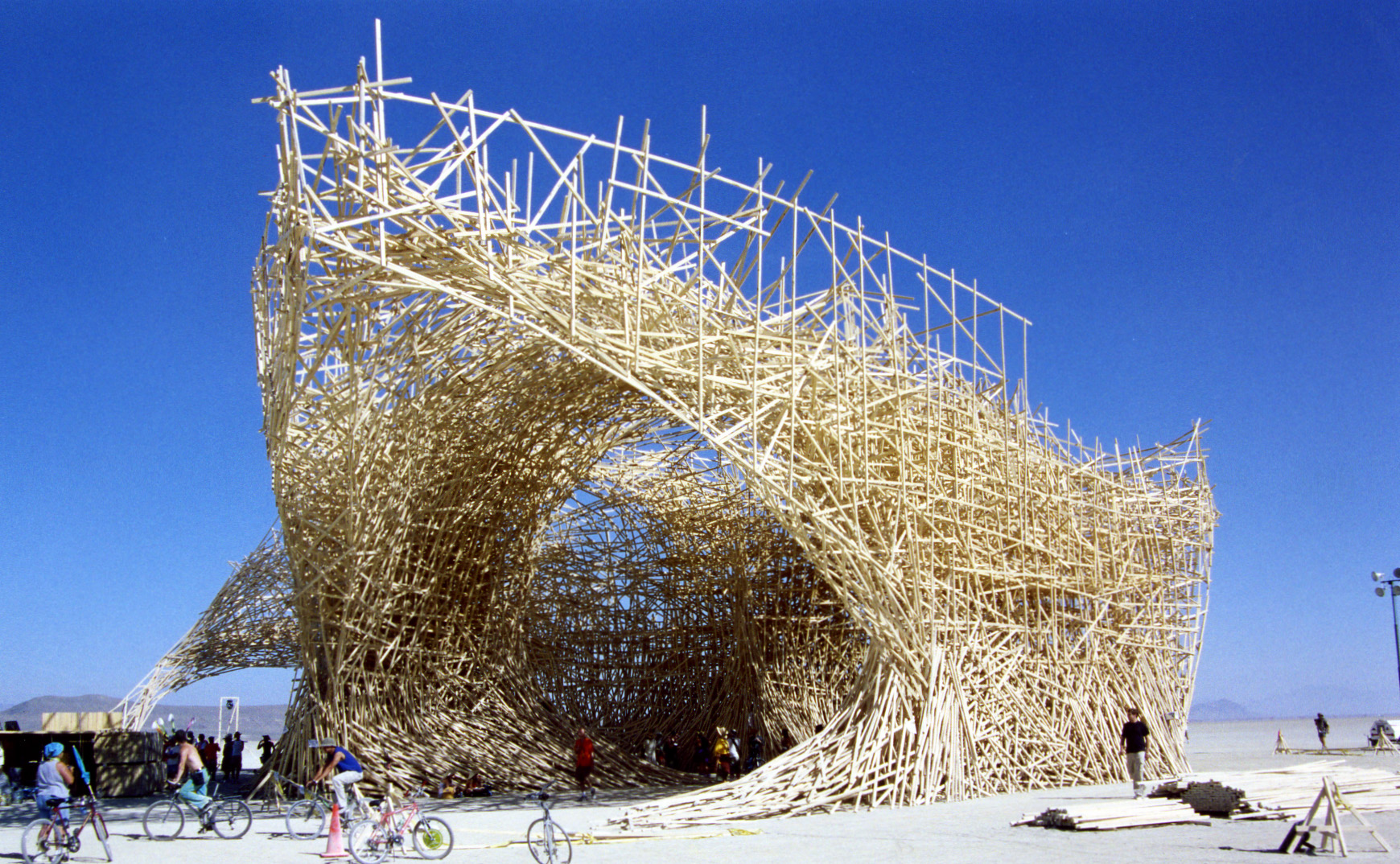
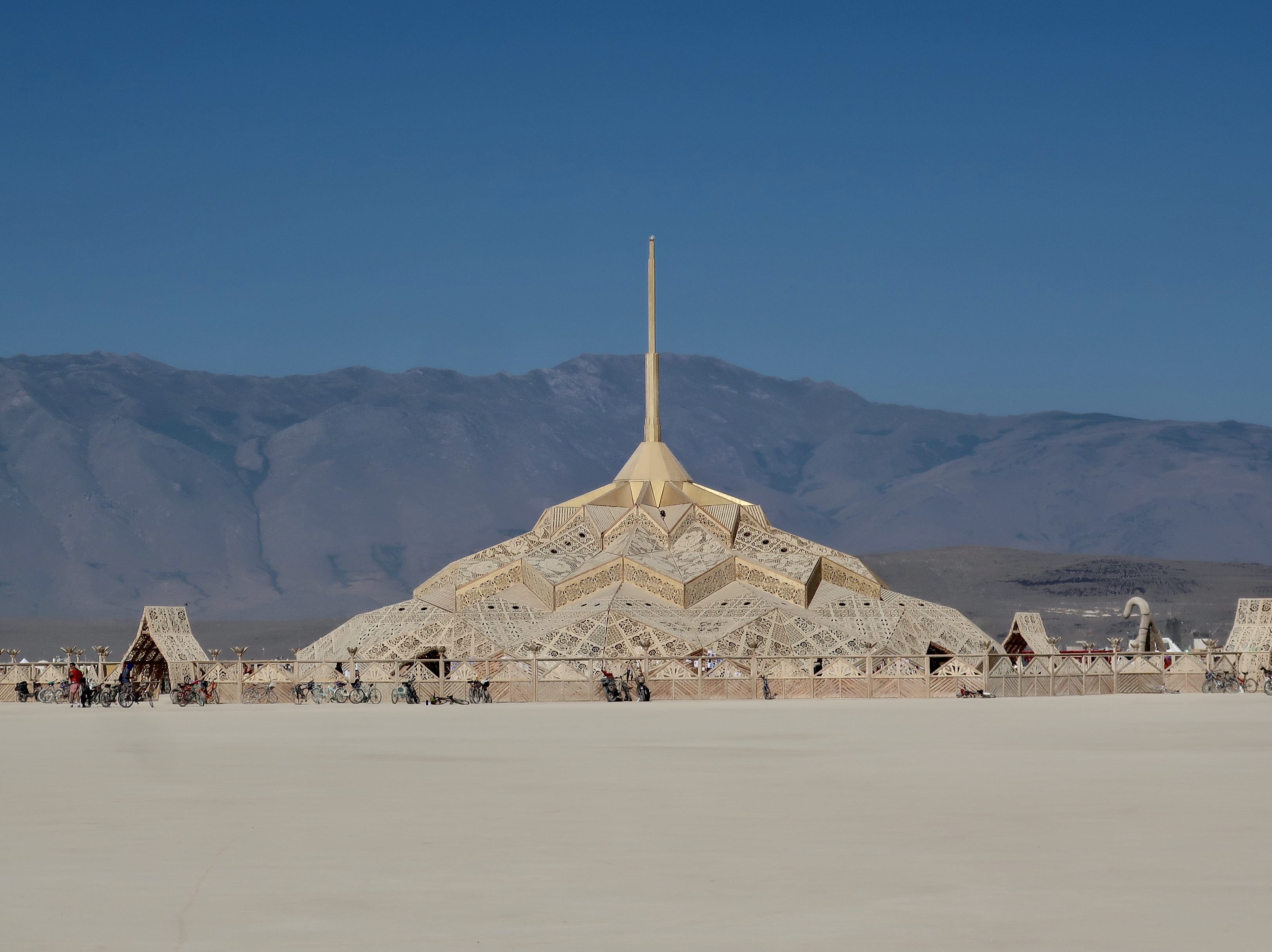
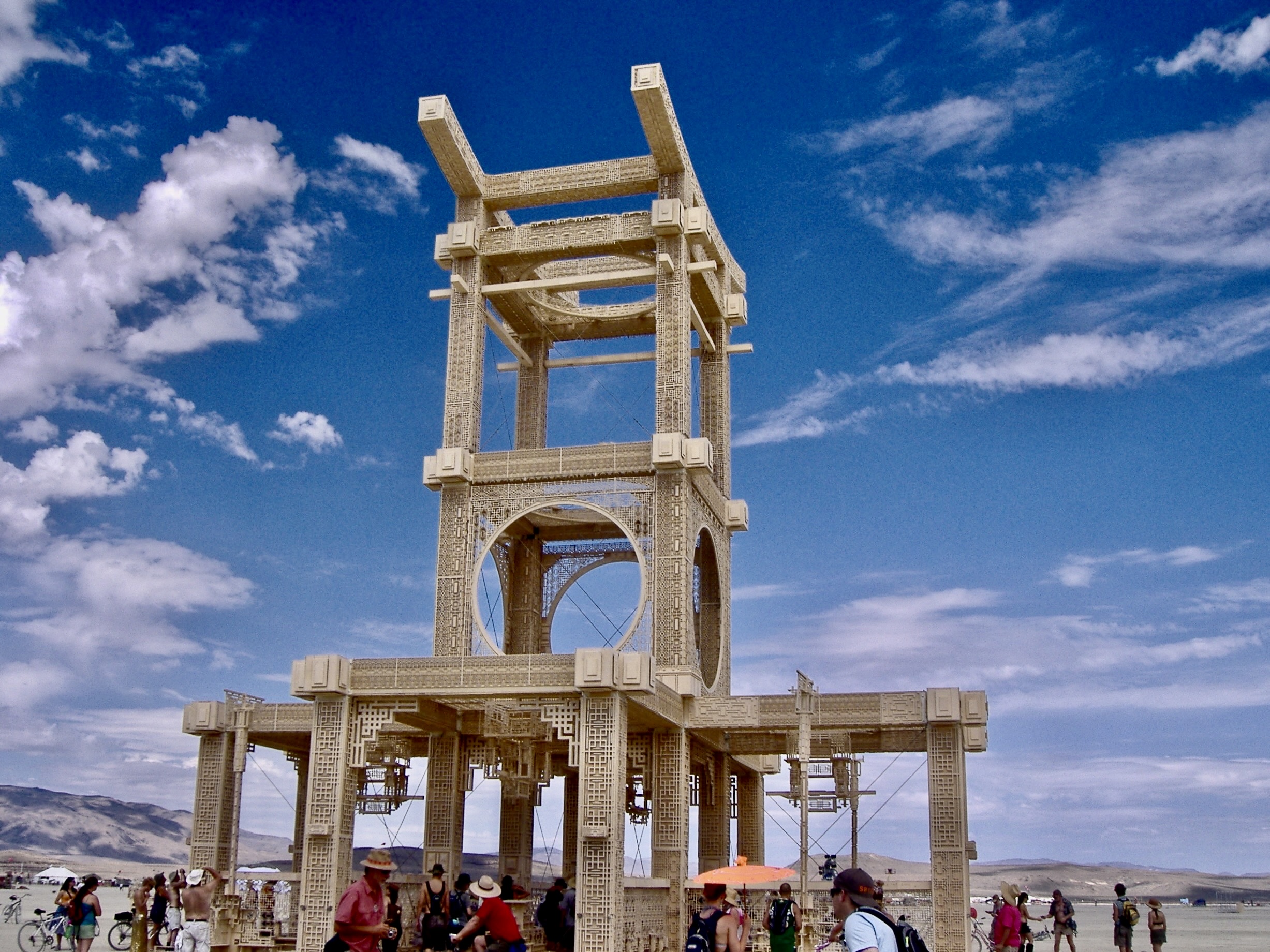
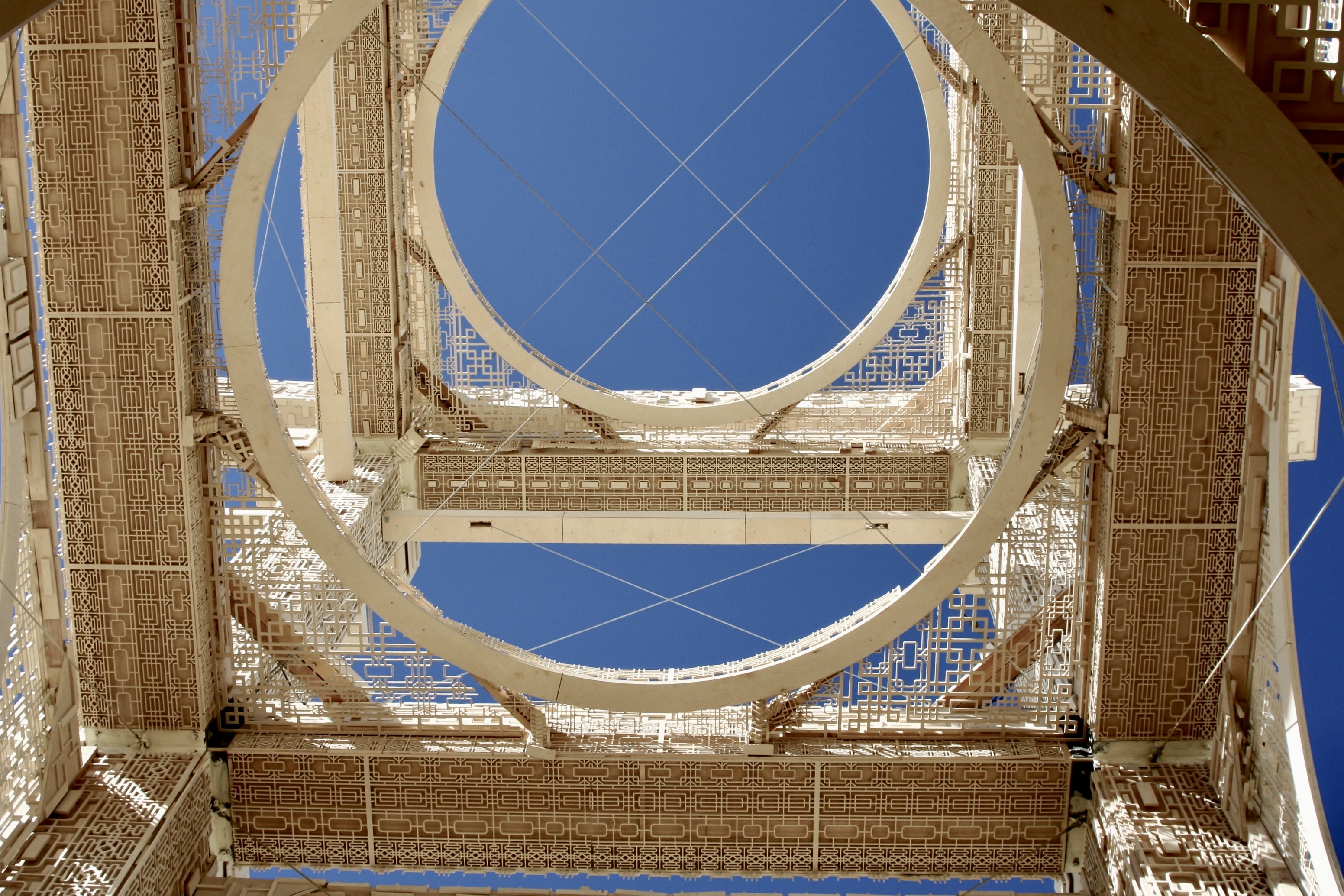
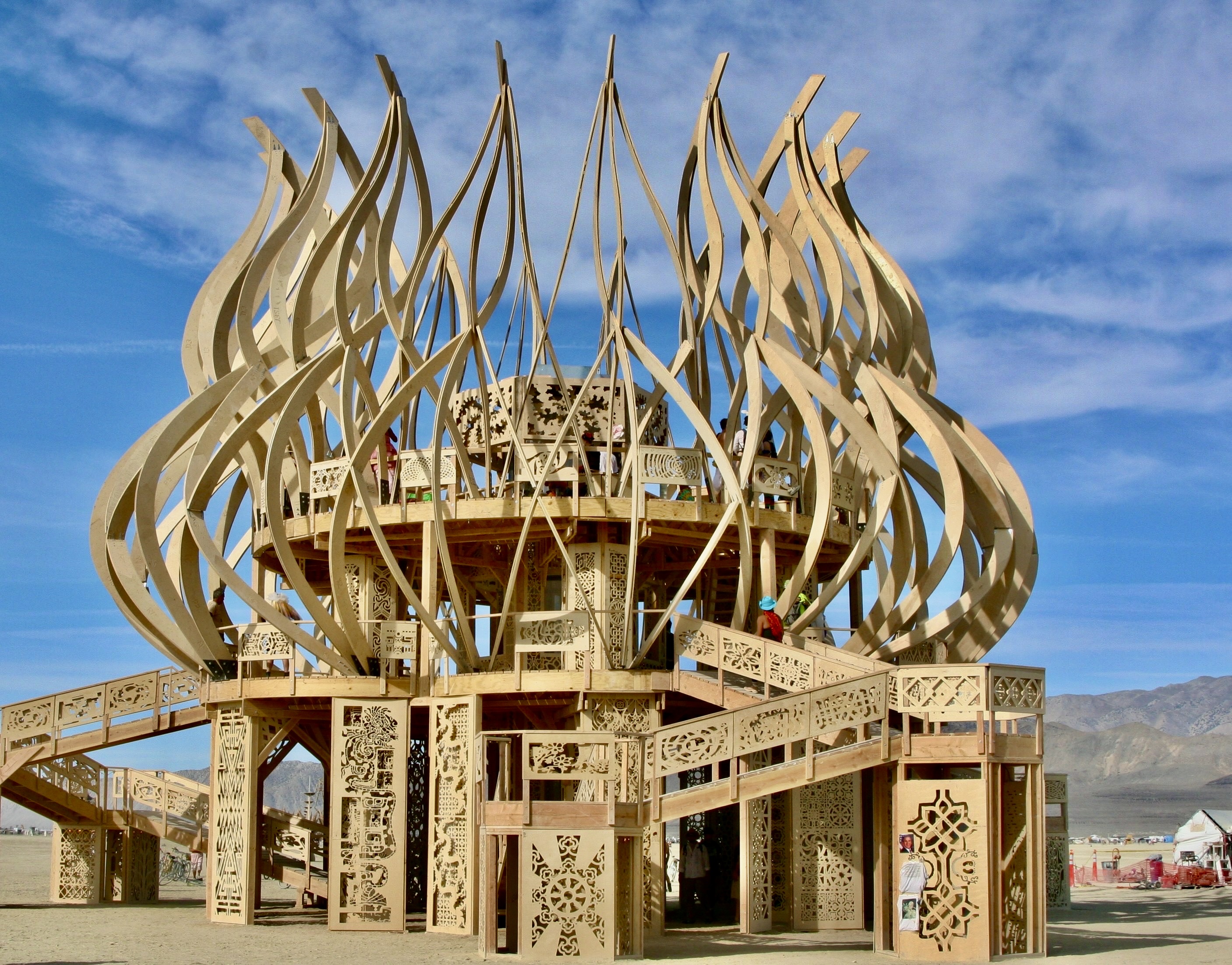
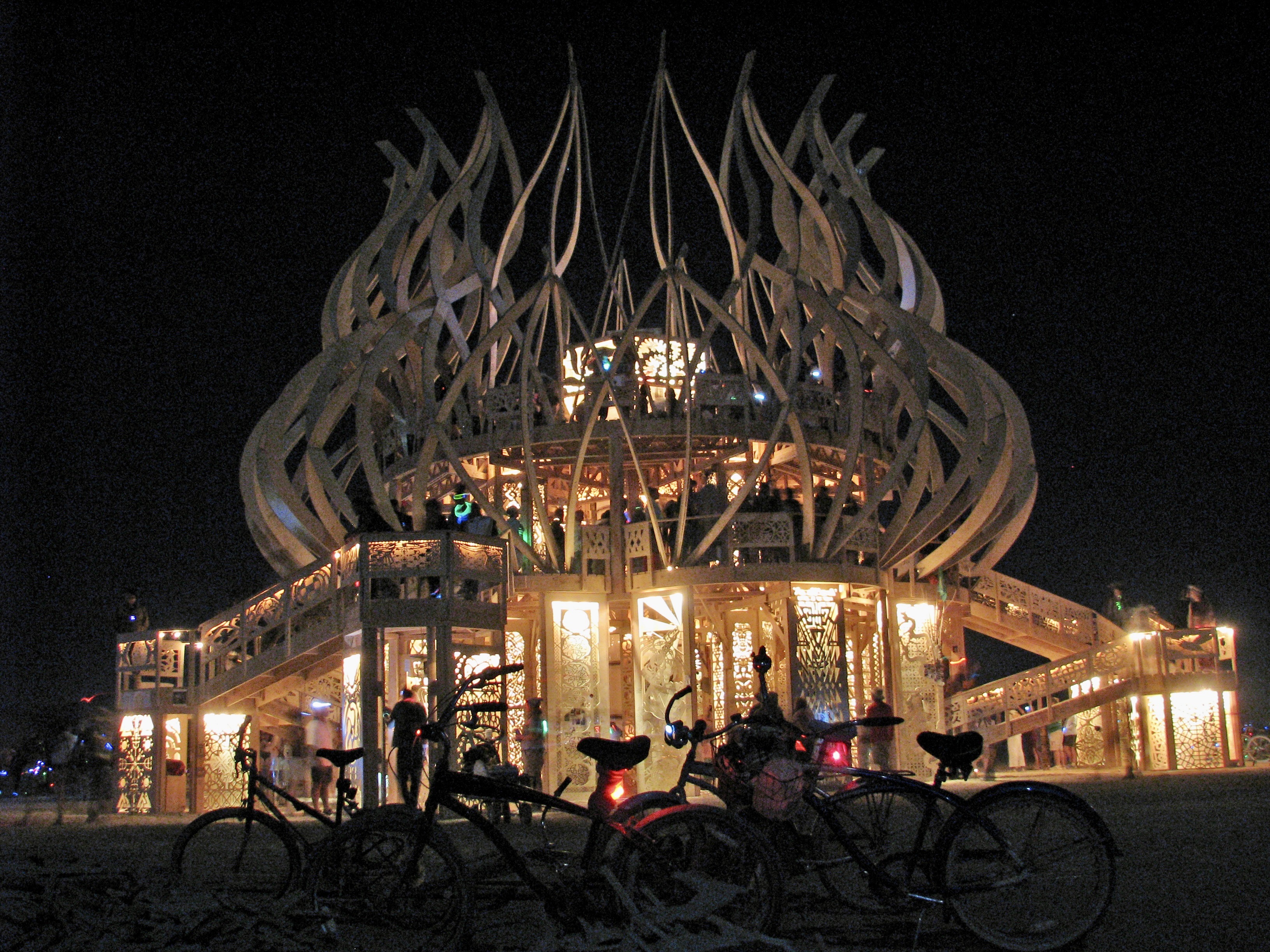
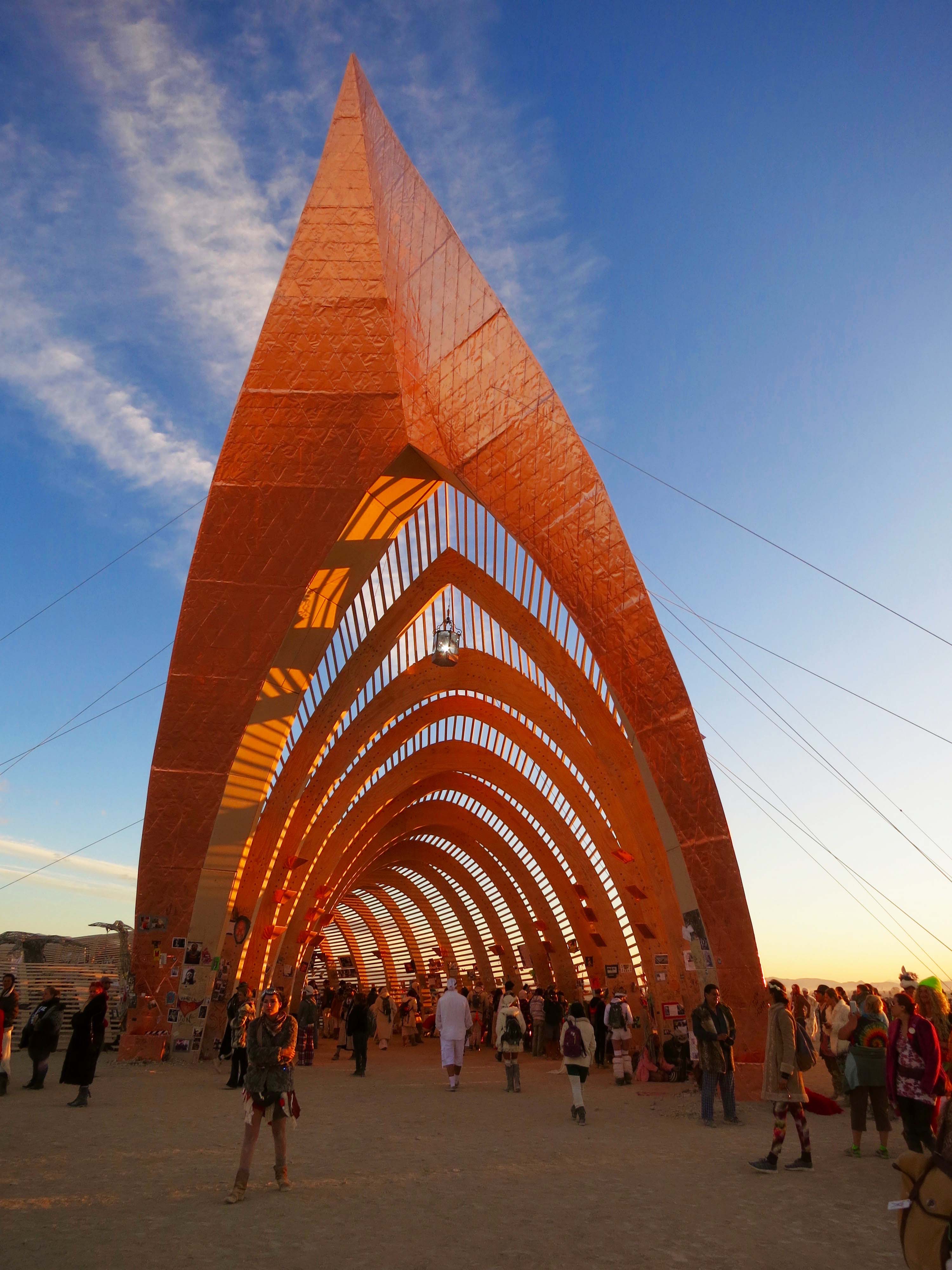
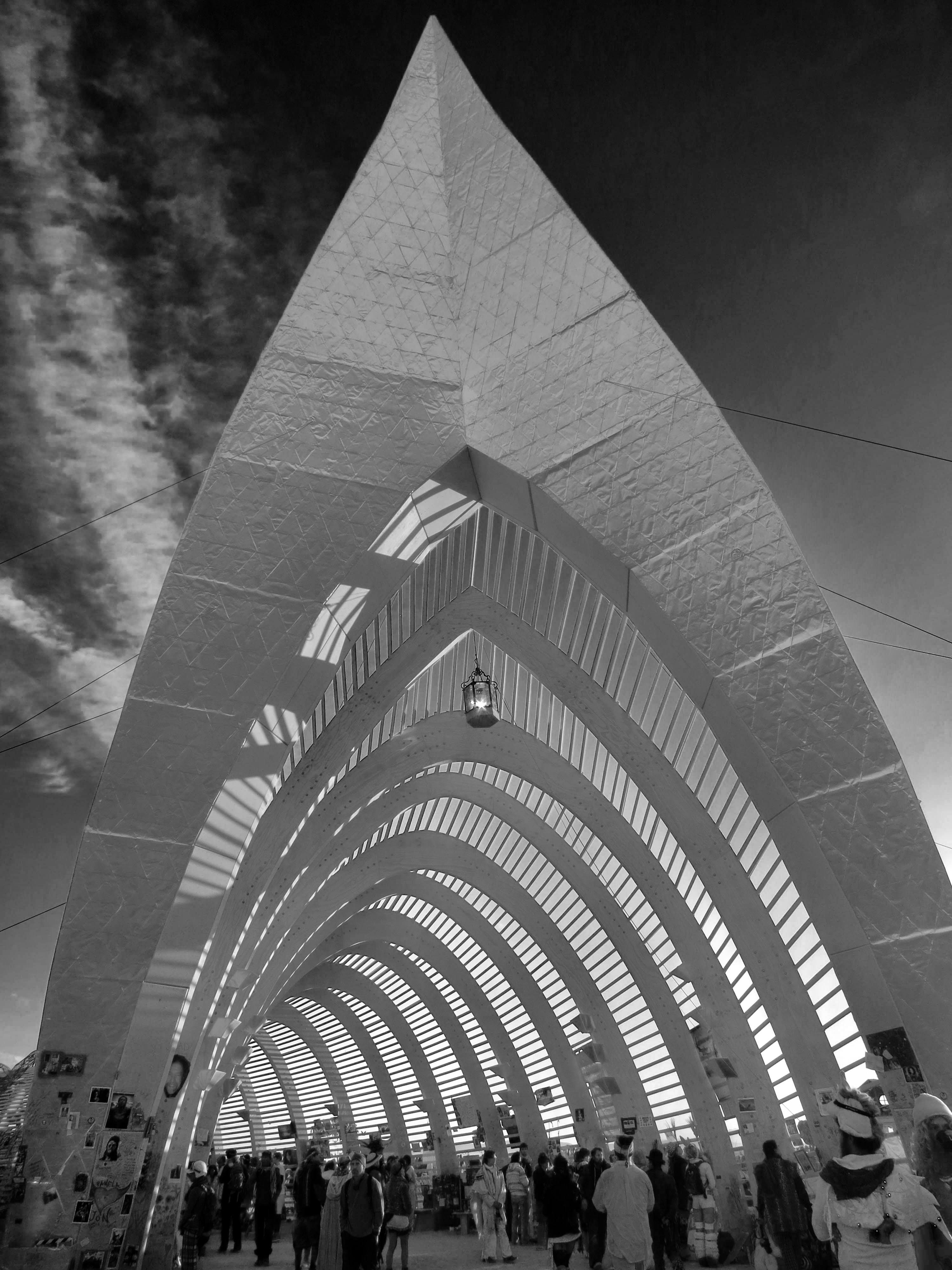
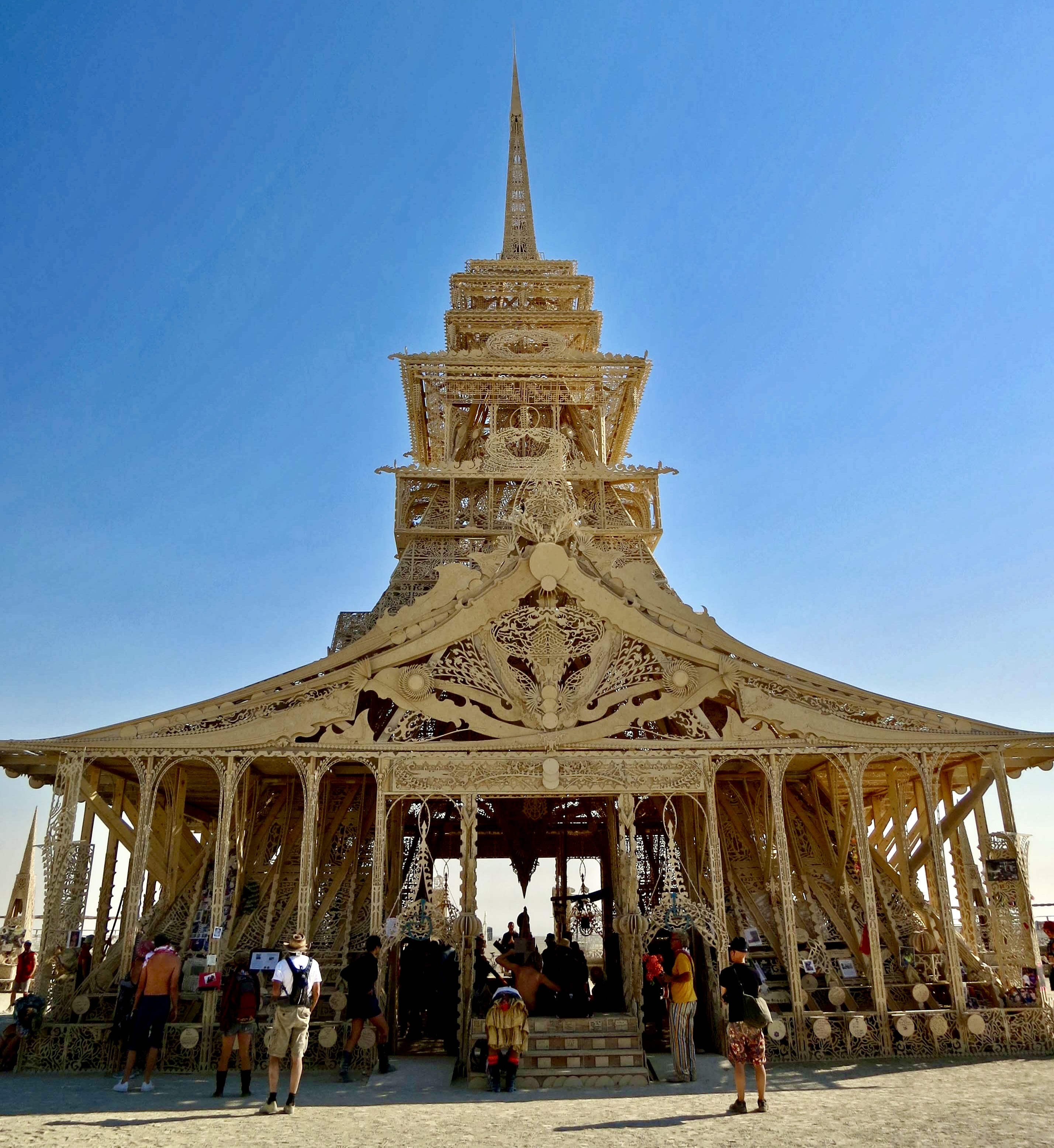
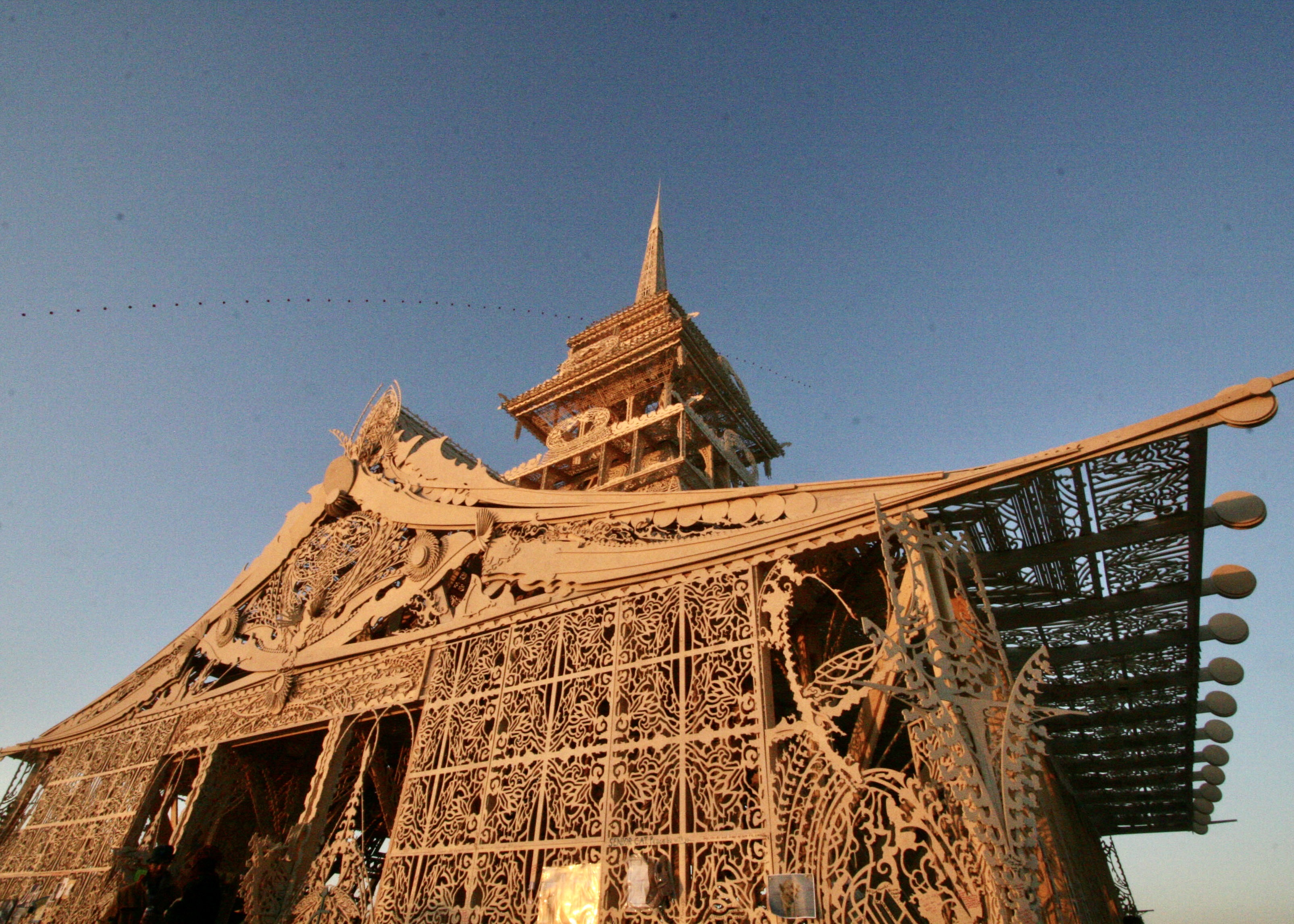
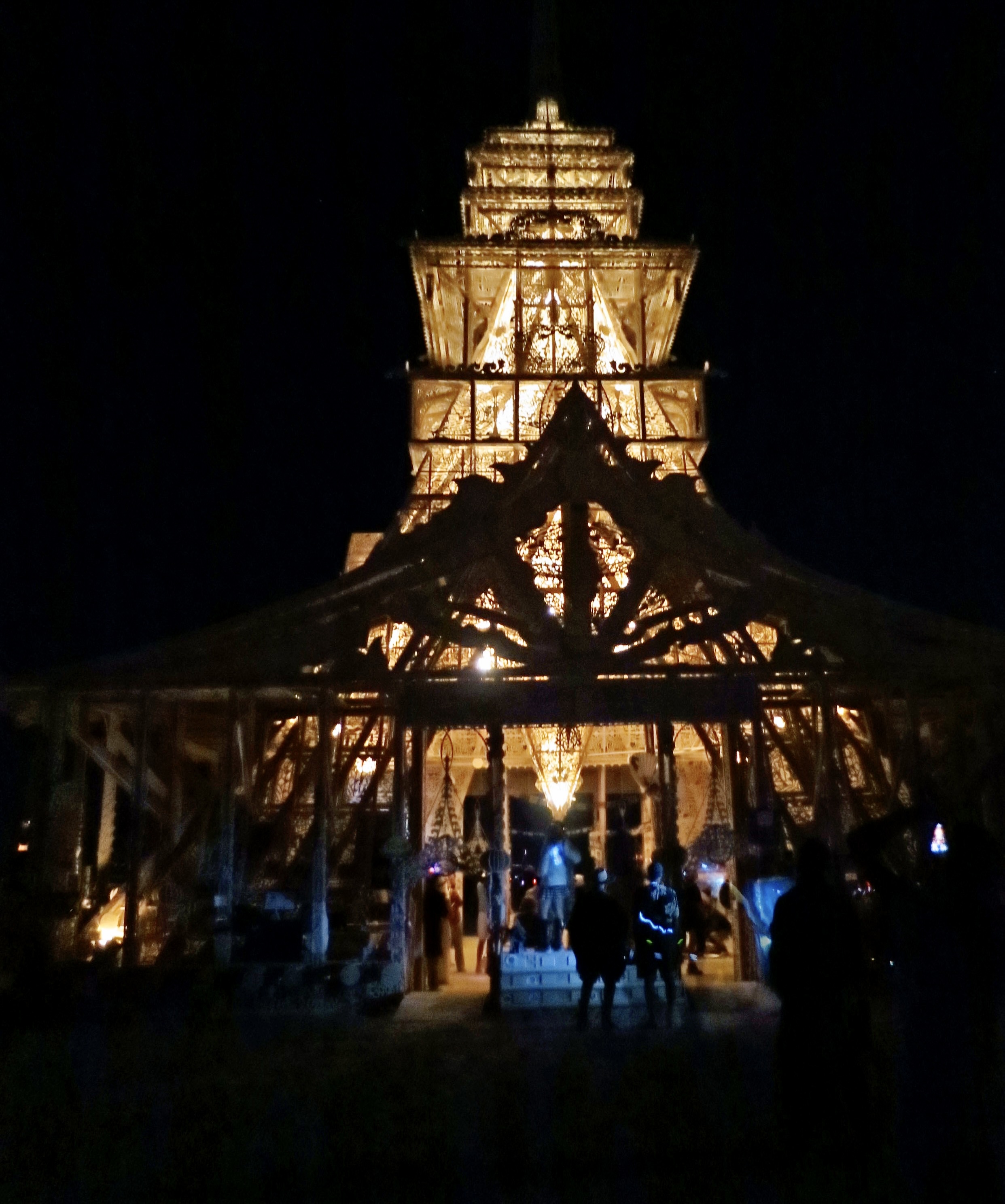
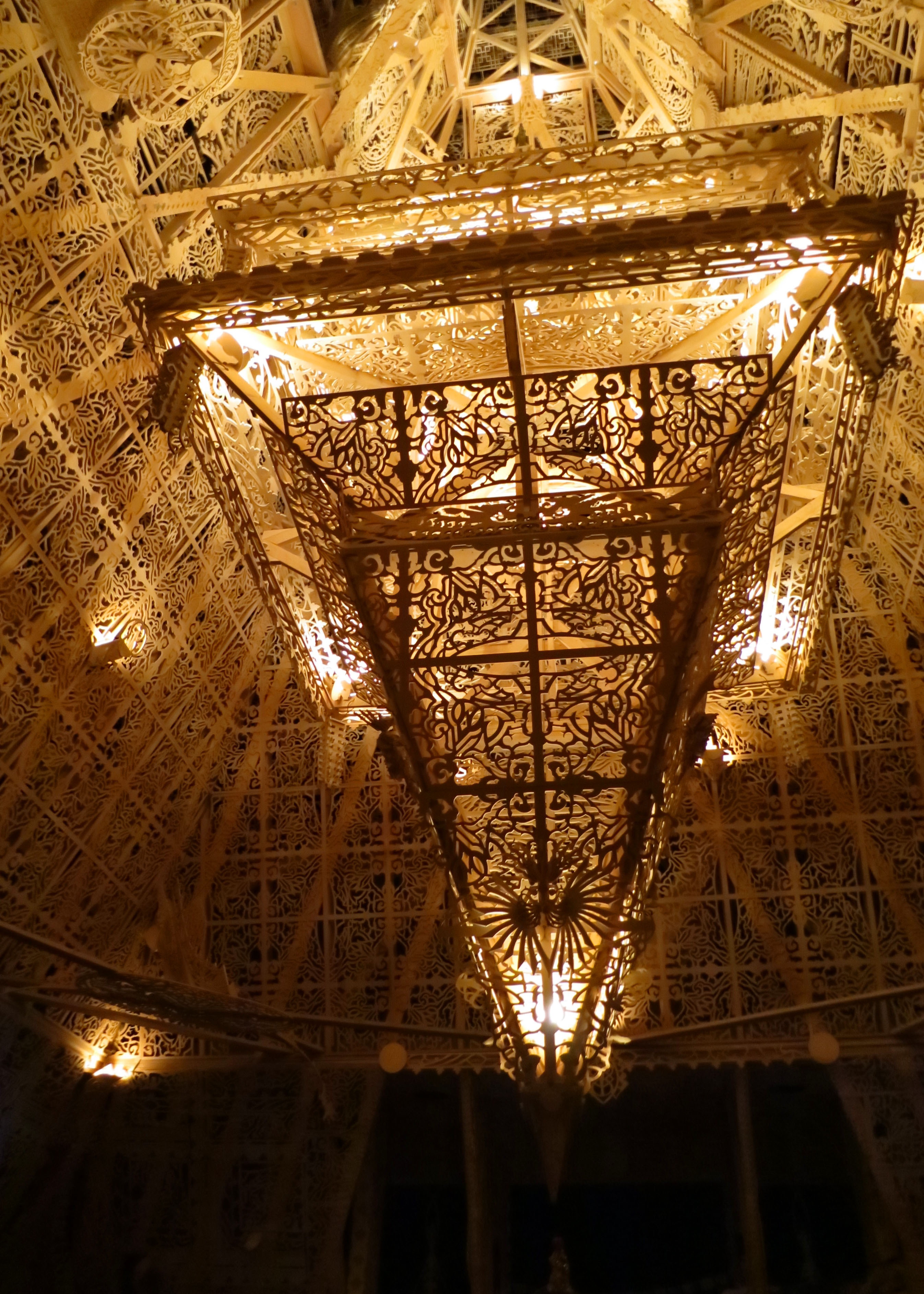
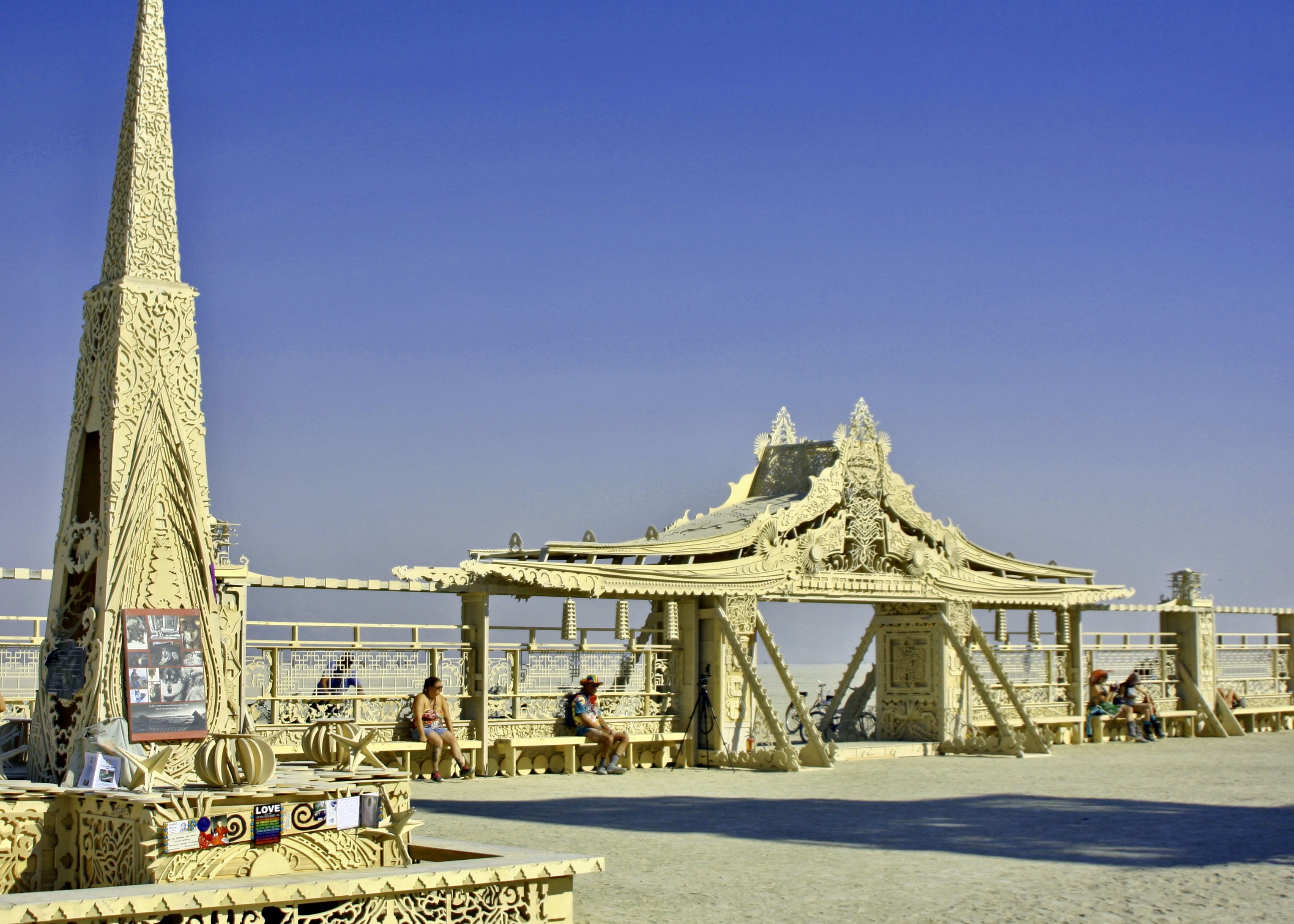
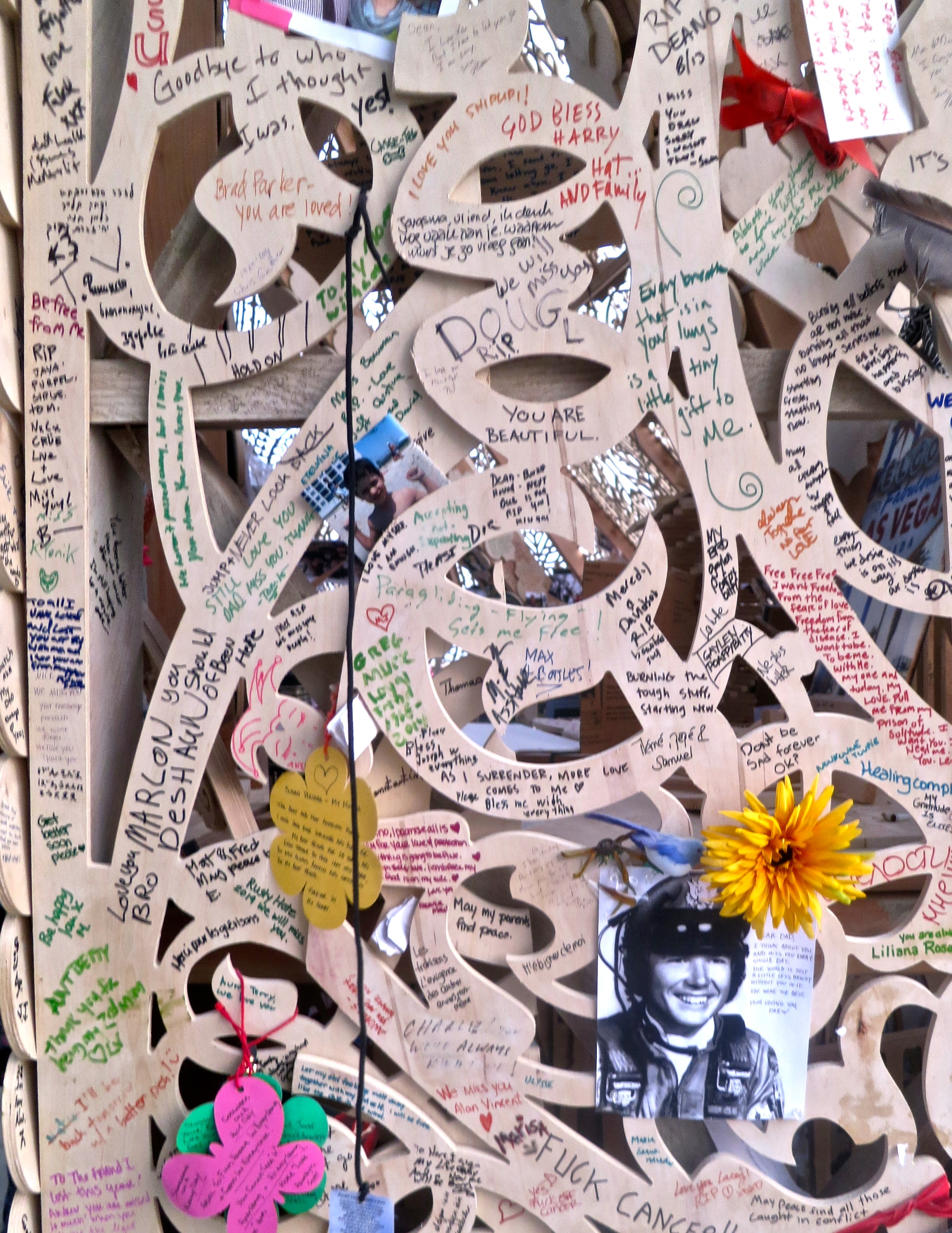
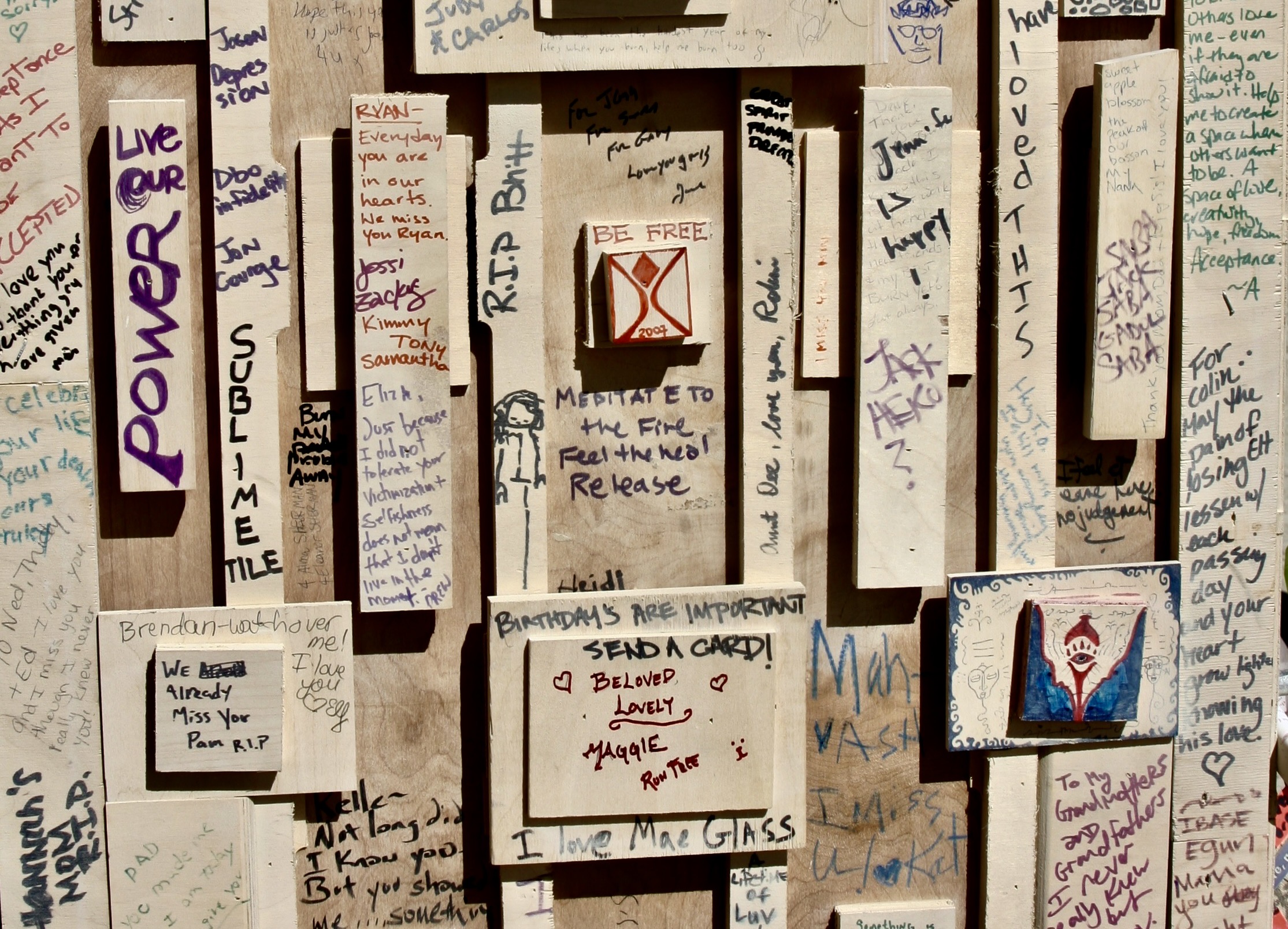
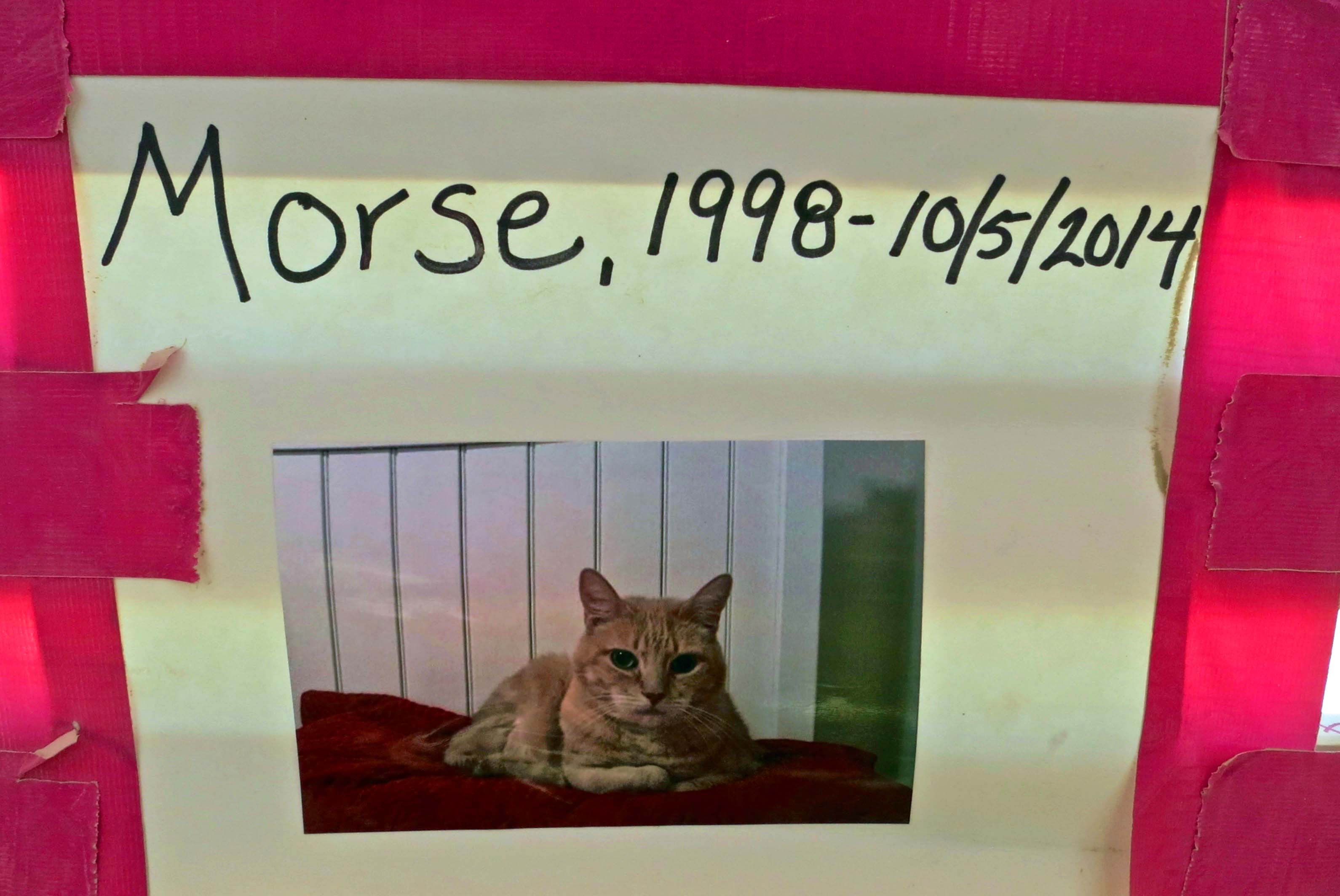
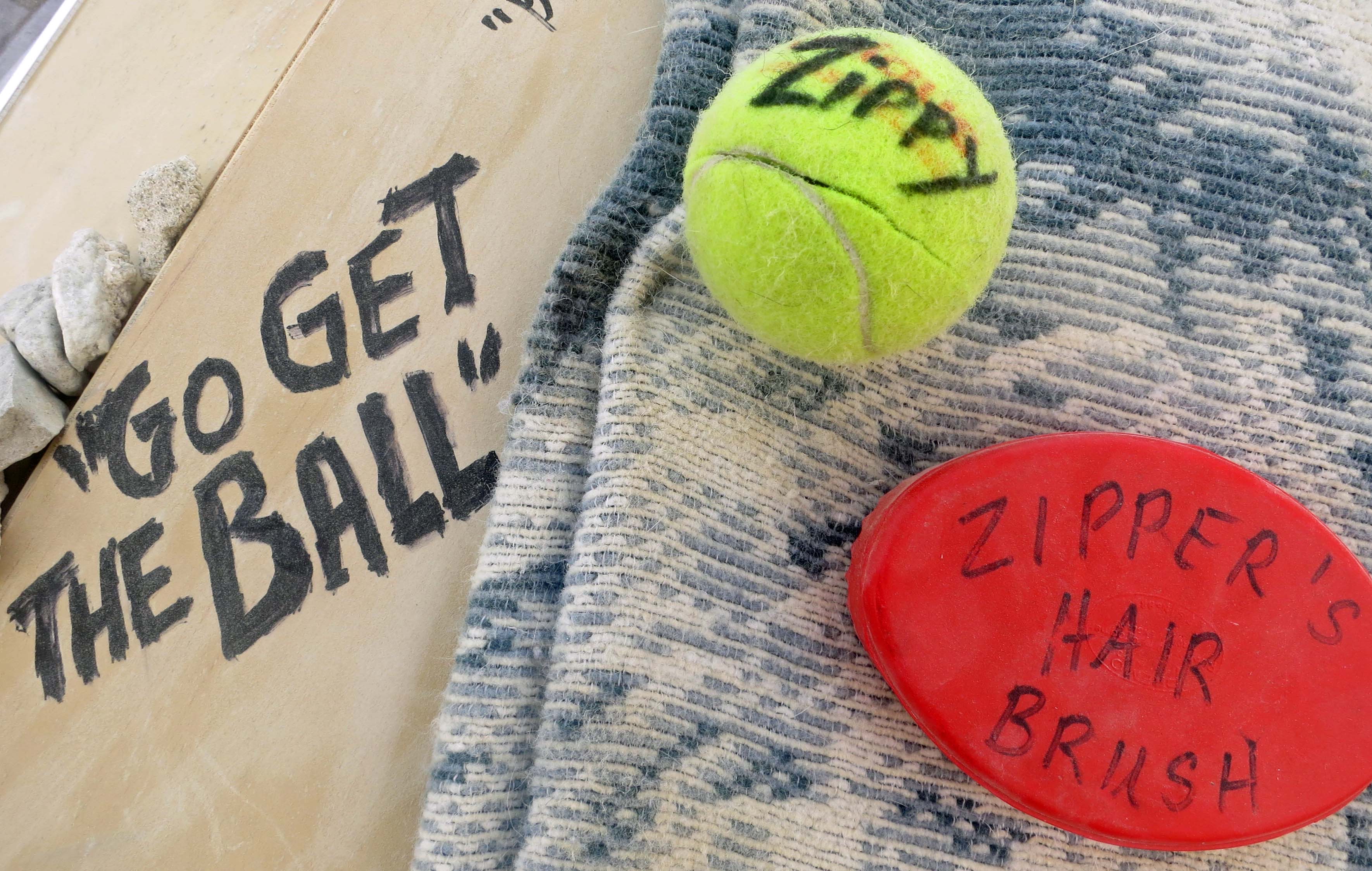
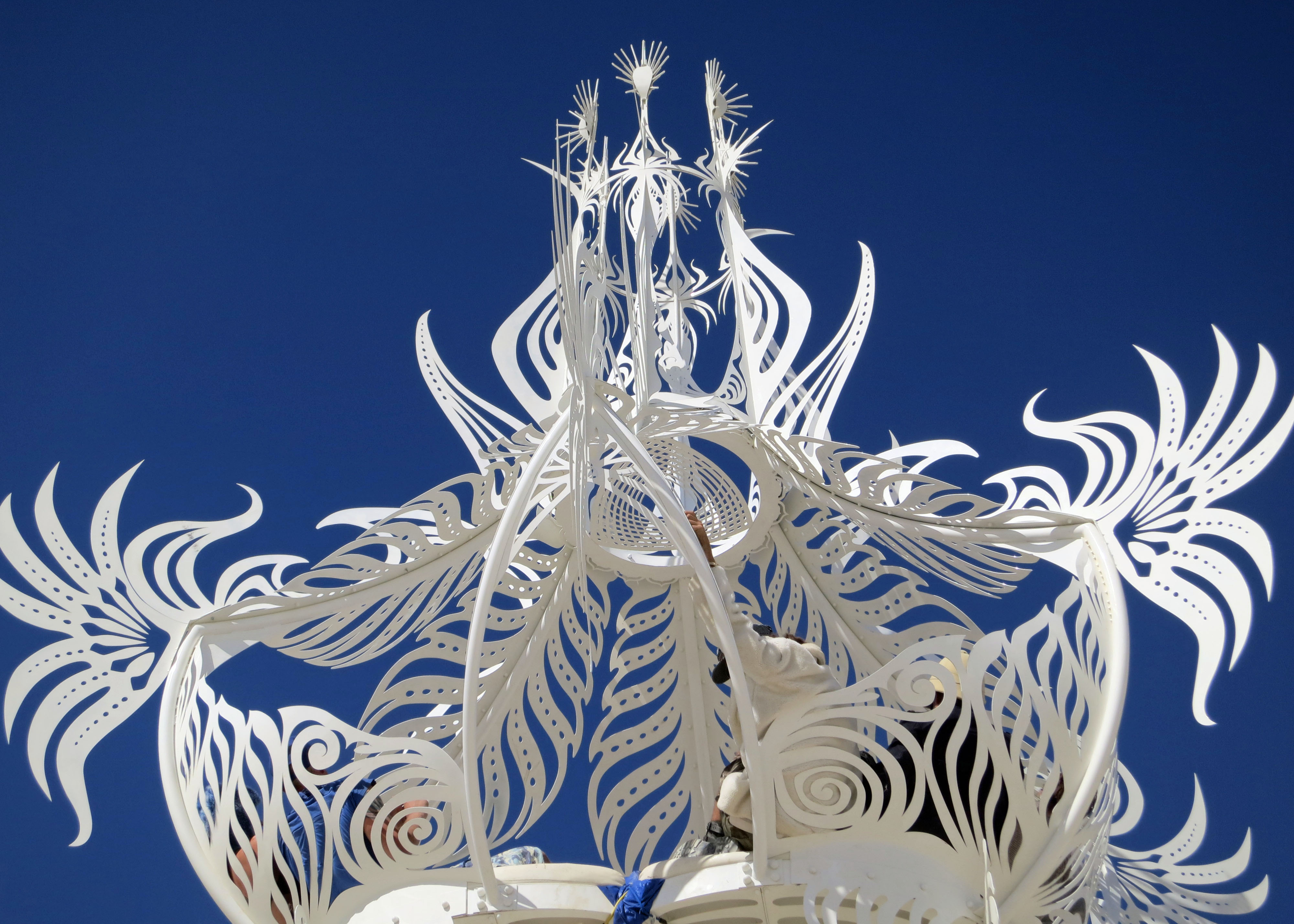
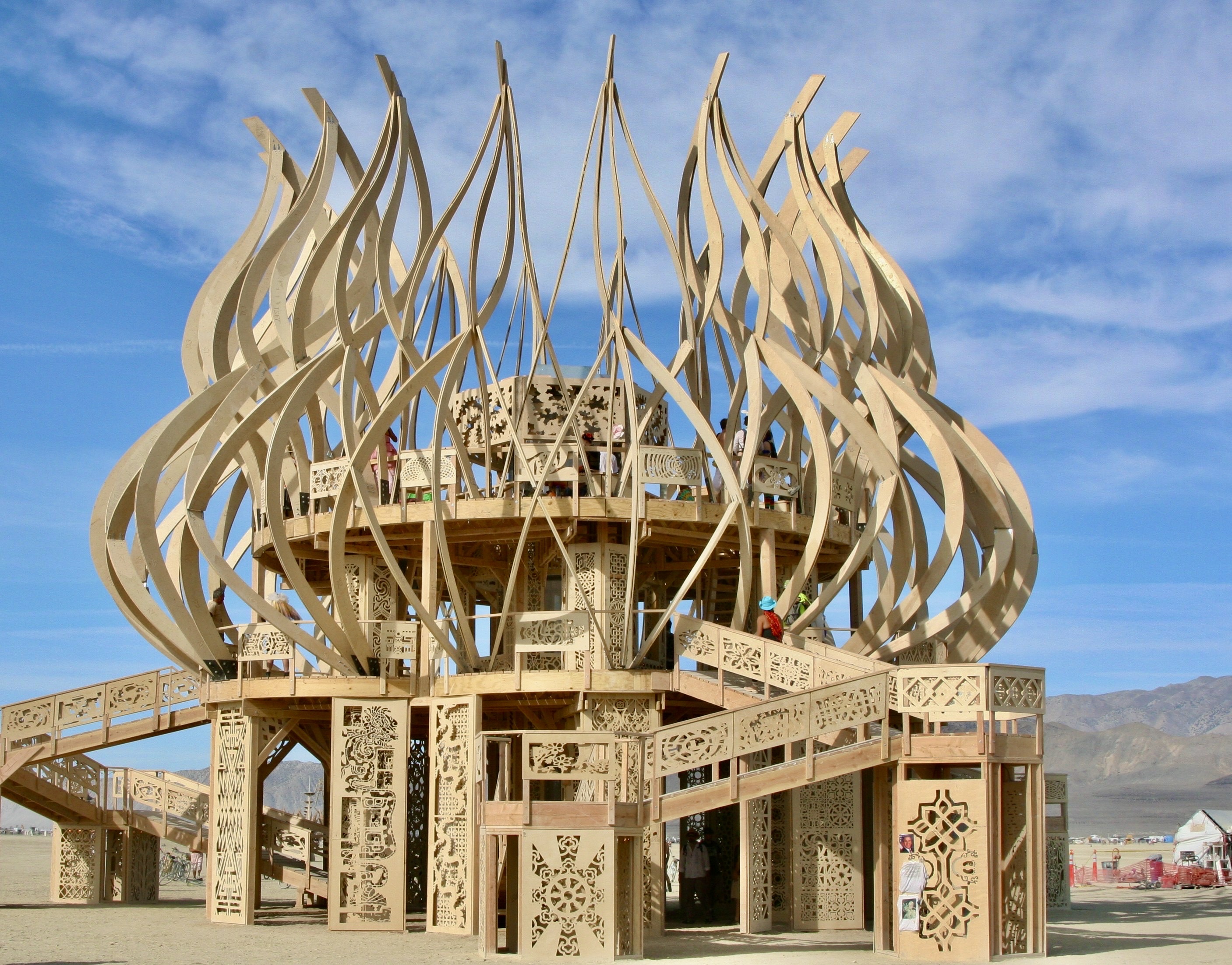
The process of selecting and building the Temple each year starts with various artists submitting proposals to Burning Man for different designs. This is an artistic rendering of the temple selected for 2026— James Gwertzman’s proposal for the Temple of the Moon. His inspiration was the Queen of the Night desert flower, a flower that blooms and dies in one night. The design rendering of the Temple above is by Gwertzman, and the dawn rendering is by artist Annie Locke Scherer. (Burning Man Journal)Artistic rendering of the 2026 Temple at night. (Burning Man Journal)Artistic rendering of the inside of the 2026 Temple. (Burning Man Journal)Early morning view of the 2014 Temple of Grace at Burning Man. Temples are funded by a major grant from Burning Man plus fundraising. A close look at the structure speaks to the amount of work that goes into building one of the temples. It is mainly done by volunteers. The work starts as soon as the project is chosen. Wood is cut prior to Burning Man and then brought to the site. Depending on the complexity of the project, a volunteer crew of 100-200 people arrives at Burning Man 2-3 weeks before the event to assemble the pieces.Looking up from inside the Temple of Grace.The 2013 Temple of Whollyness at Burning Man was a pyramid-shaped structure of interlocking wood that used no nails, glue, or metal fasteners. It was surrounded by four smaller pyramids.A large altar or ‘cairn’ constructed of black, igneous basalt was located inside the Temple. Cairns are normally large piles of rock arranged in a cone-like formation as a way to mark routes through wilderness areas. I’ve often followed them, or their smaller cousins, ducks, as I’ve hiked and backpacked through the wild regions of North America. In case you are wondering what a ‘duck’ looks like…The temple was filled with them. The symbolism was obvious: Helping people find their way. This photo also shows how some of the wooden, interlocking devices were use to build the Temple.The 2010 Temple of Flux at Burning Man stressed impermanence in life. This photo was taken from the Man looking out across the Playa to the mountains of the Black Rock Desert. While the creators of the Temple noted that their inspiration came from desert canyons carved by wind and water, I thought that the outer structure resembled a sand dune, a perfect example of impermanence. The people on the pathway are biking/hiking between the Man and the Temple. At night, the poles held lit lamps. The buildings in the back were an urban representation of Wall Street. It was located close to the fence that marks the boundary of Burning Man.One of the entrances to the Temple of Flux We included the Temple of Heart in the Post we did on our 2023 trip to Burning Man. Unfortunately the rains hit the day before we had planned to visit it. Everything we saw from the outside was beautiful, however. I read that it took 1000 volunteers to build the Temple.The 2007 Temple of Forgiveness at Burning Man. This Temple was created by David Best, who was responsible for the design and building of several Burning Man Temples. Looking up from inside the 2007 Temple of Forgiveness.The top of the 2009 Fire of Fires Temple was designed to look like flames, reflecting that temples are burned on the last day of Burning Man.The Fire of Fires Temple at night.Of the Burning Man Temples that Peggy and I have seen, the 2015 Temple of Promise was one of our favorite because of its beauty and design.Early one morning, we joined hands with a few hundred other Burners surrounding the Temple as the sun rose.This back view provides a perspective on its cornucopia-like structure.A daytime view inside the Temple of PromiseThe Temple of Promise at night.My rendering of the Temple of Promise in black and white. Note the single lamp.The theme for the 2012 Burning Man was fertility. The name of that year’s temple was Juno, a Roman goddess of fertility, motherhood, and childbirth.This is an early morning photo of the Temple of Juno by our friend Tom Lovering.The Temple of Juno at night.Looking up inside the Temple of Juno at night. Note the intricate carving.A large courtyard surrounding the Temple of Juno provided places for people to gather and relax. It also provided space for Burners to leave messages expressing love, grief, hope, fear and anger, as well as thanks for blessings received. Literally thousands of people leave messages annually, most inside of the Temple.Sometimes, it seems like every inch of available space is used. A quick glance gives an overview on the breadth of messages. I particularly liked the one in the upper left hand corner: “Goodbye to who I thought I was.” More than one person has left Burning Man with that perspective!Another example. Numerous pets are also memorized: a final opportunity to say goodbye.A loving tribute to Zippy: Zippy’s ball, hairbrush, and bed.Whatever the message, it burns along with the Temple on the last night of Burning Man each year. This is the Temple of Juno going up in flames, releasing the thousands of messages that Burners left in, on and around it— honoring those who have passed on, expressing love for those who still live, and letting go of anger, hate and other negative emotions. Our Burning Man focus next week will be on unique structures found out on the Playa such as La Llorona, the large ship seen above.
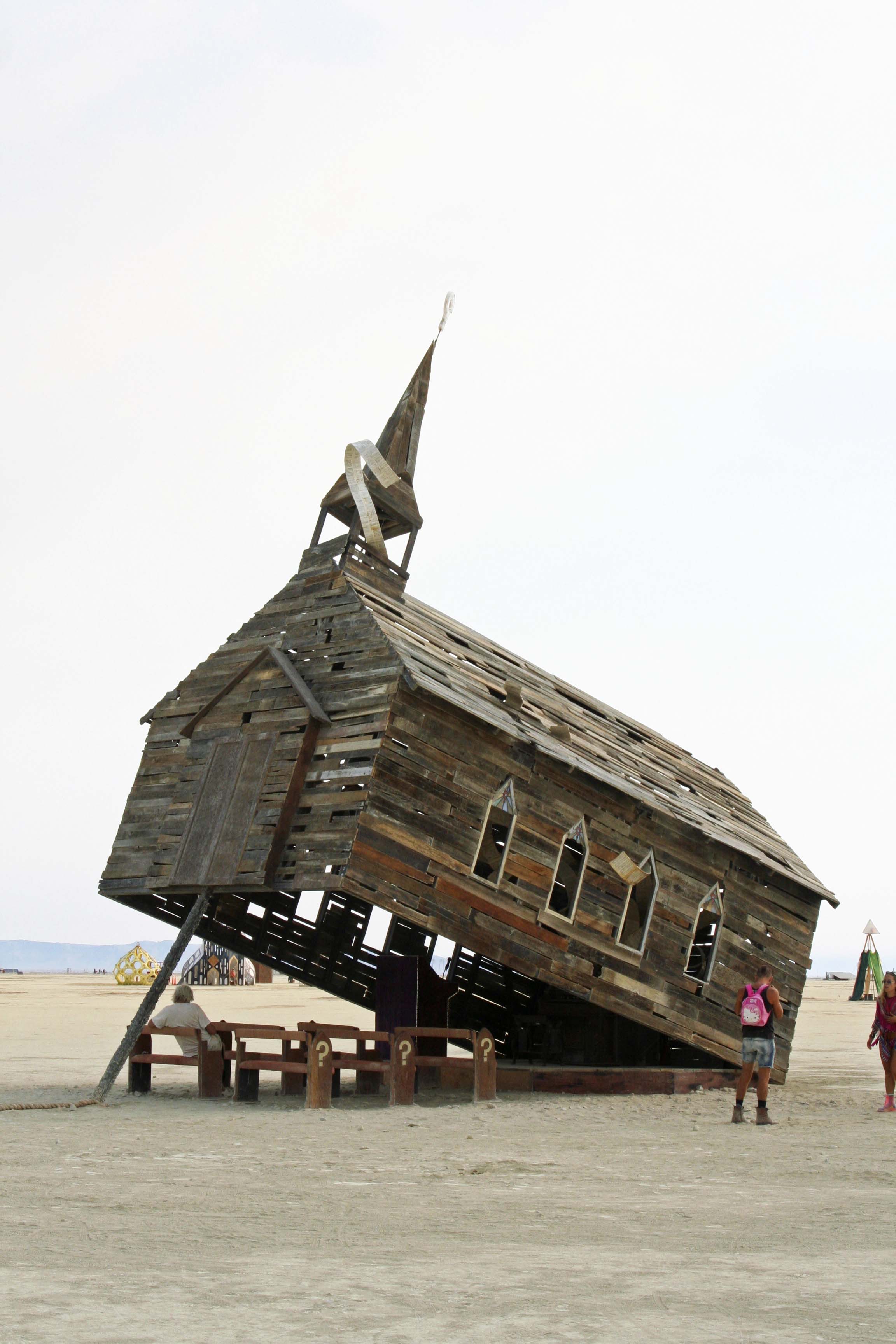
My next blog-a-book post this Thursday will be my childhood experiences of “looking for God in all the wrong places.” While I don’t have a photo, I thought that this picture I took at Burning Man below is relevant…
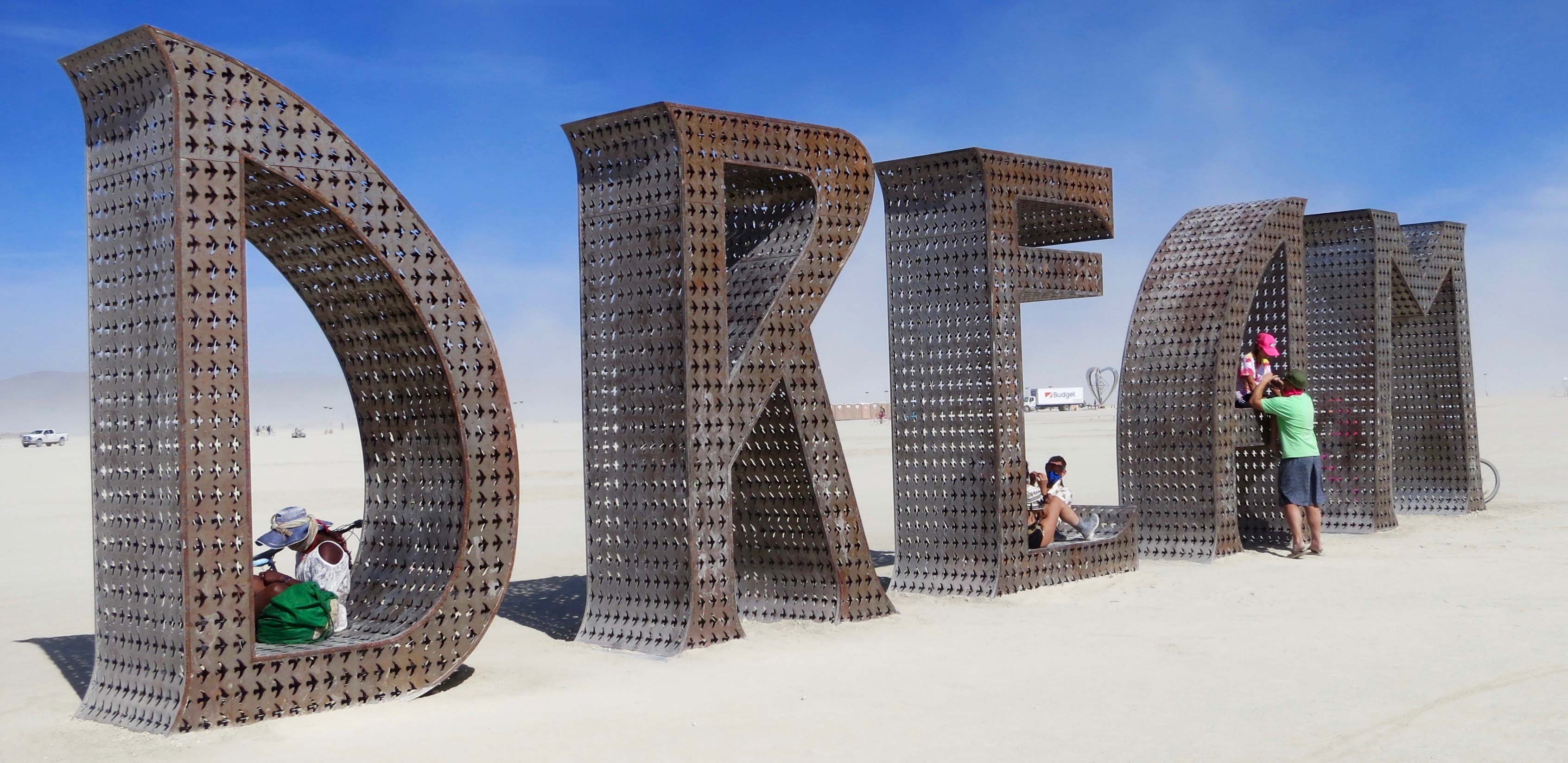
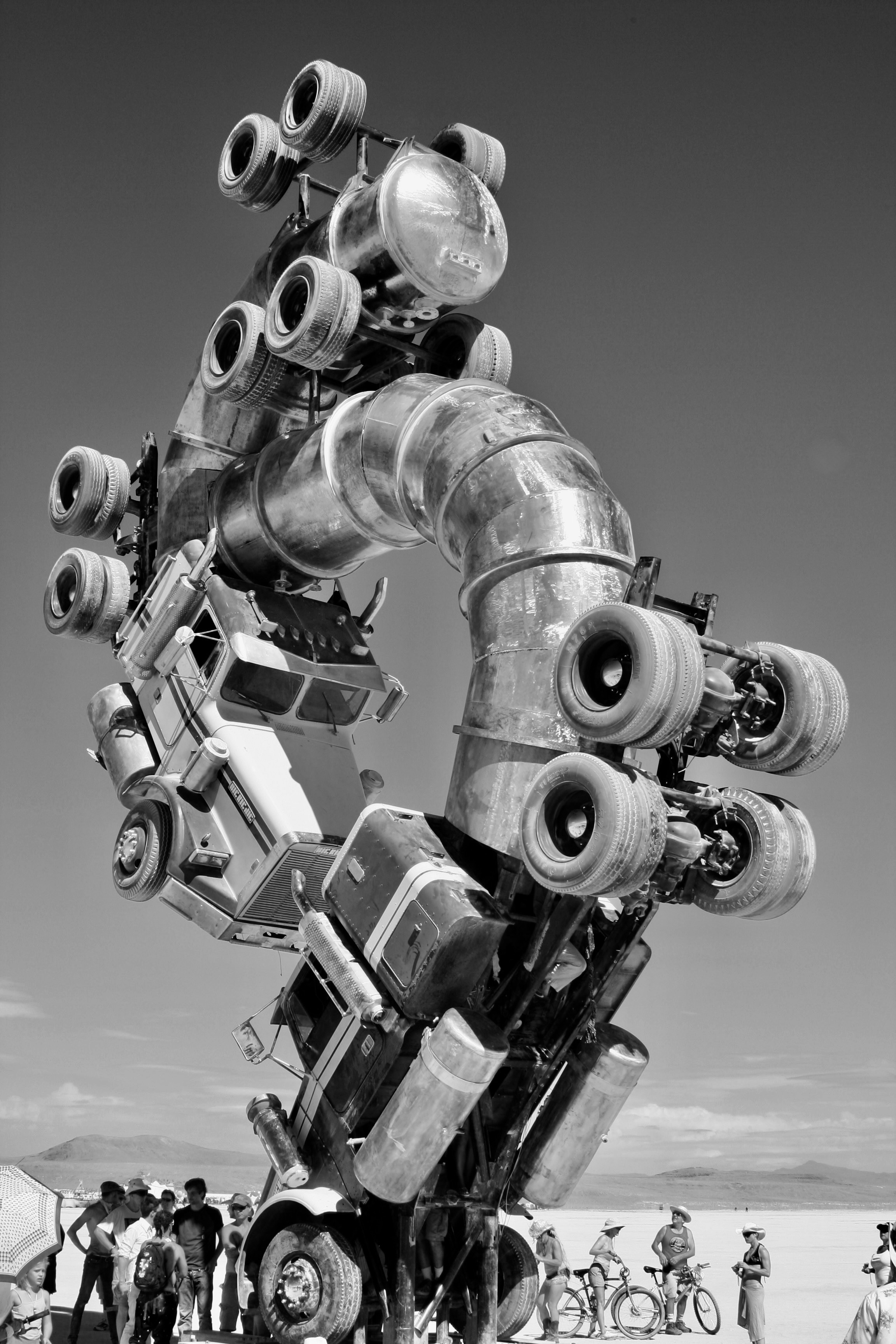
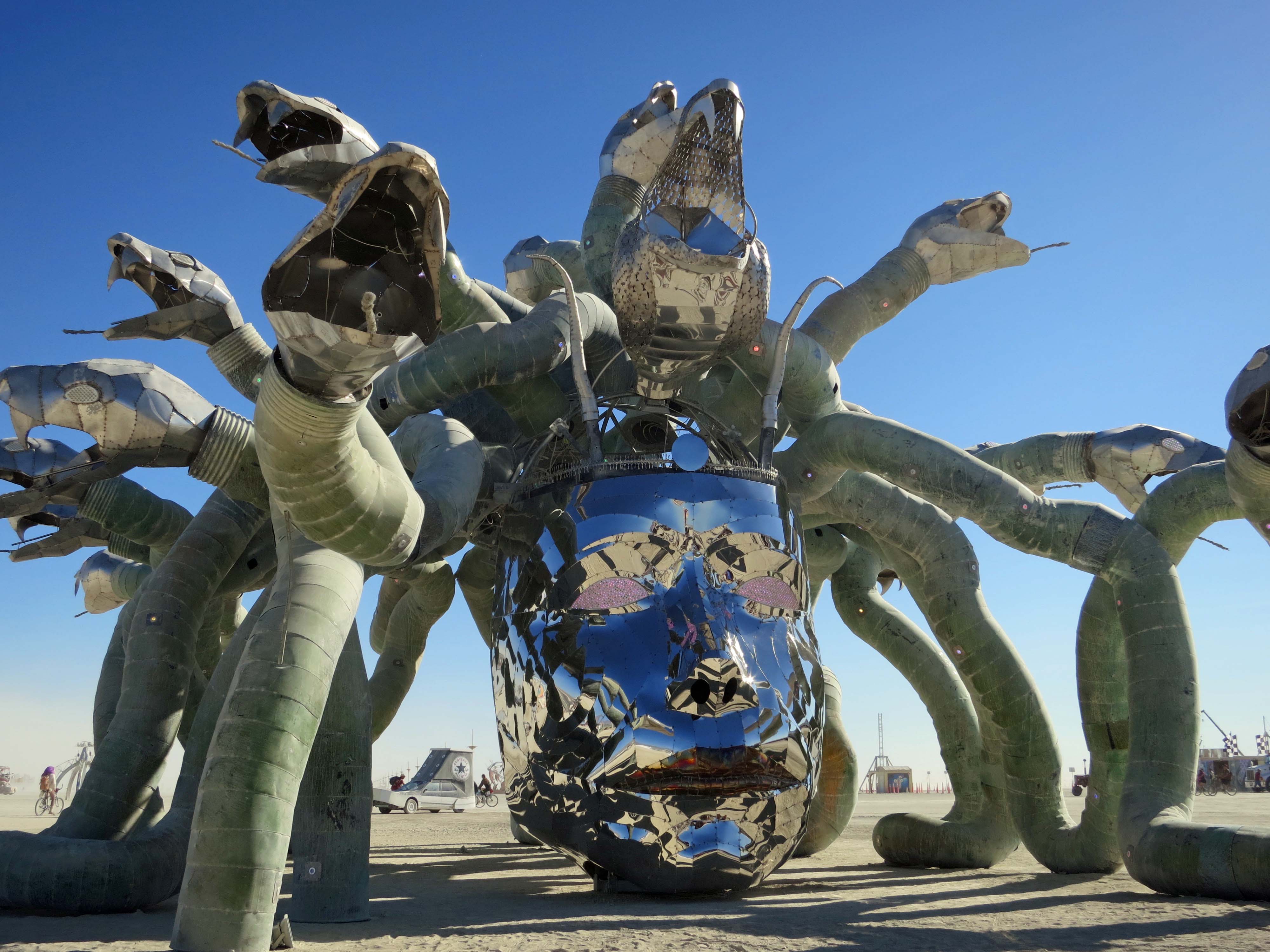
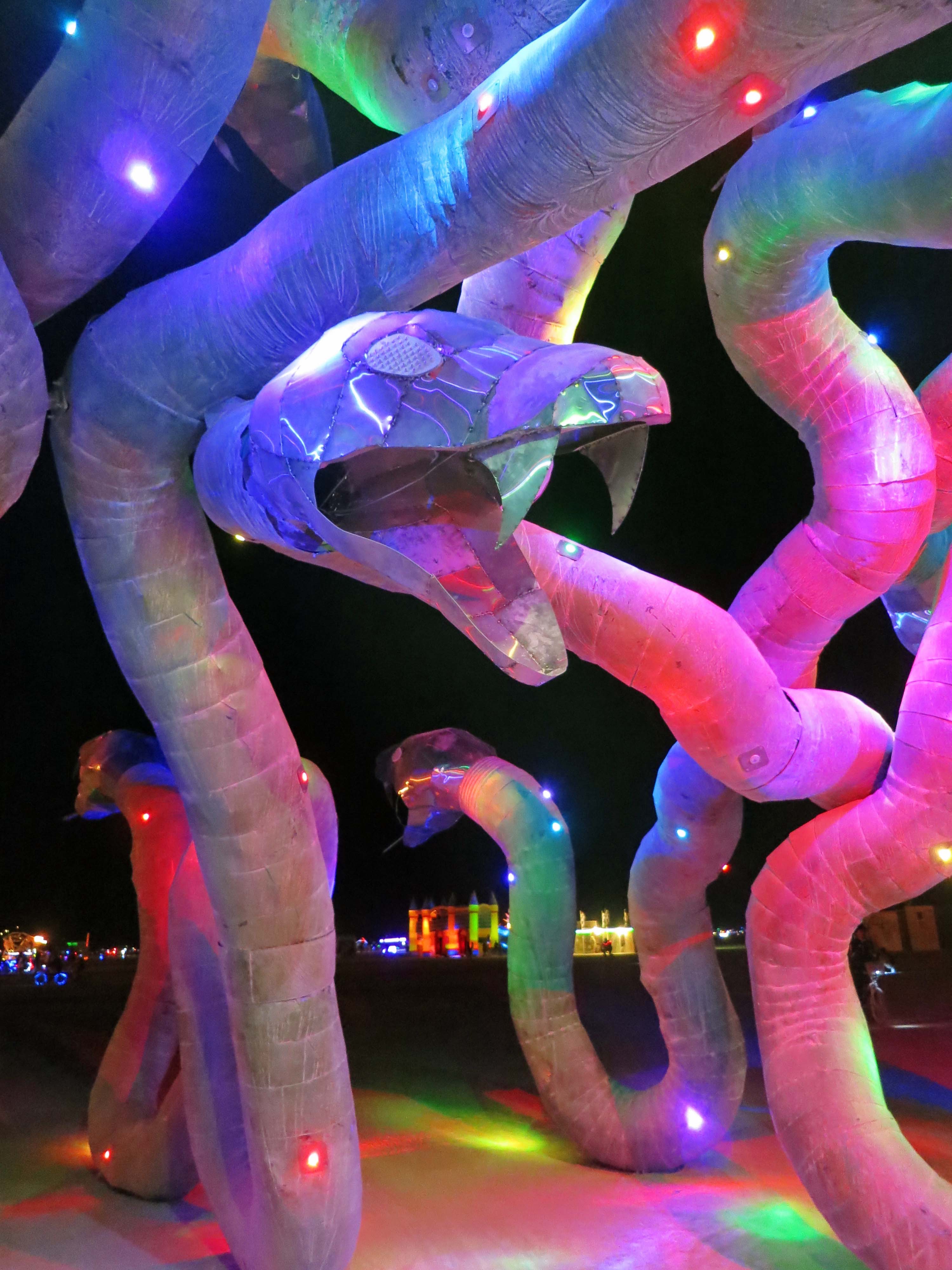
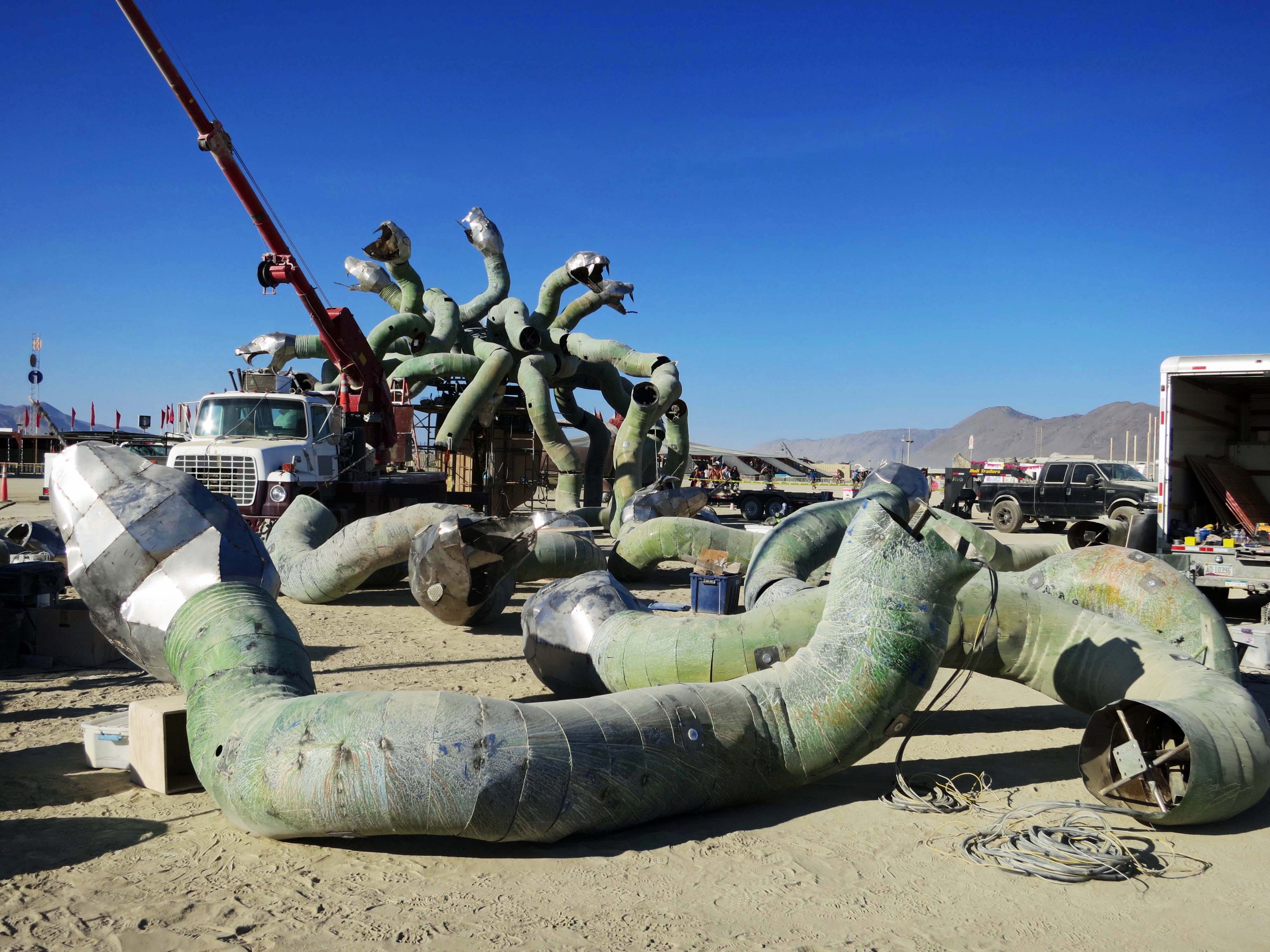
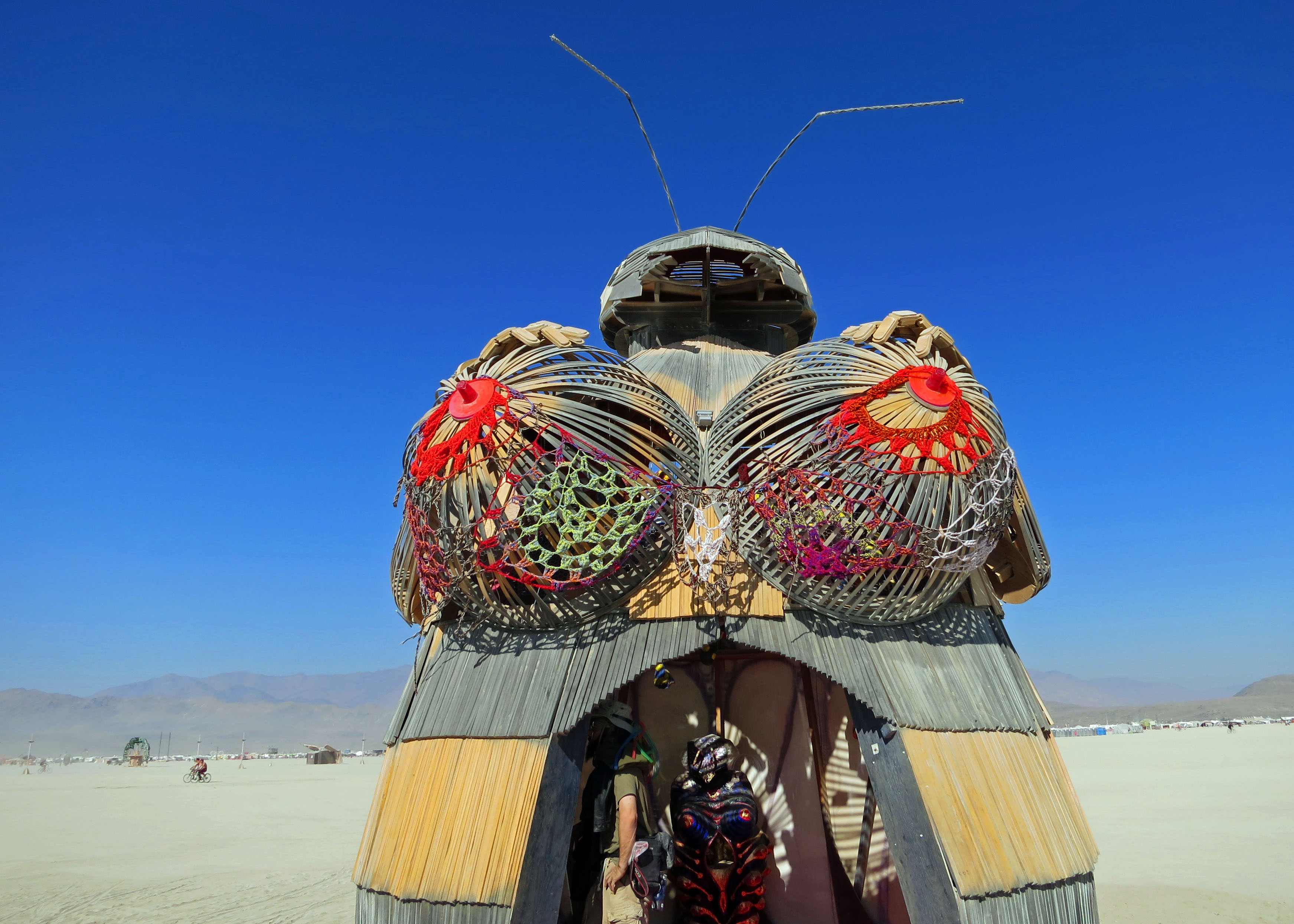
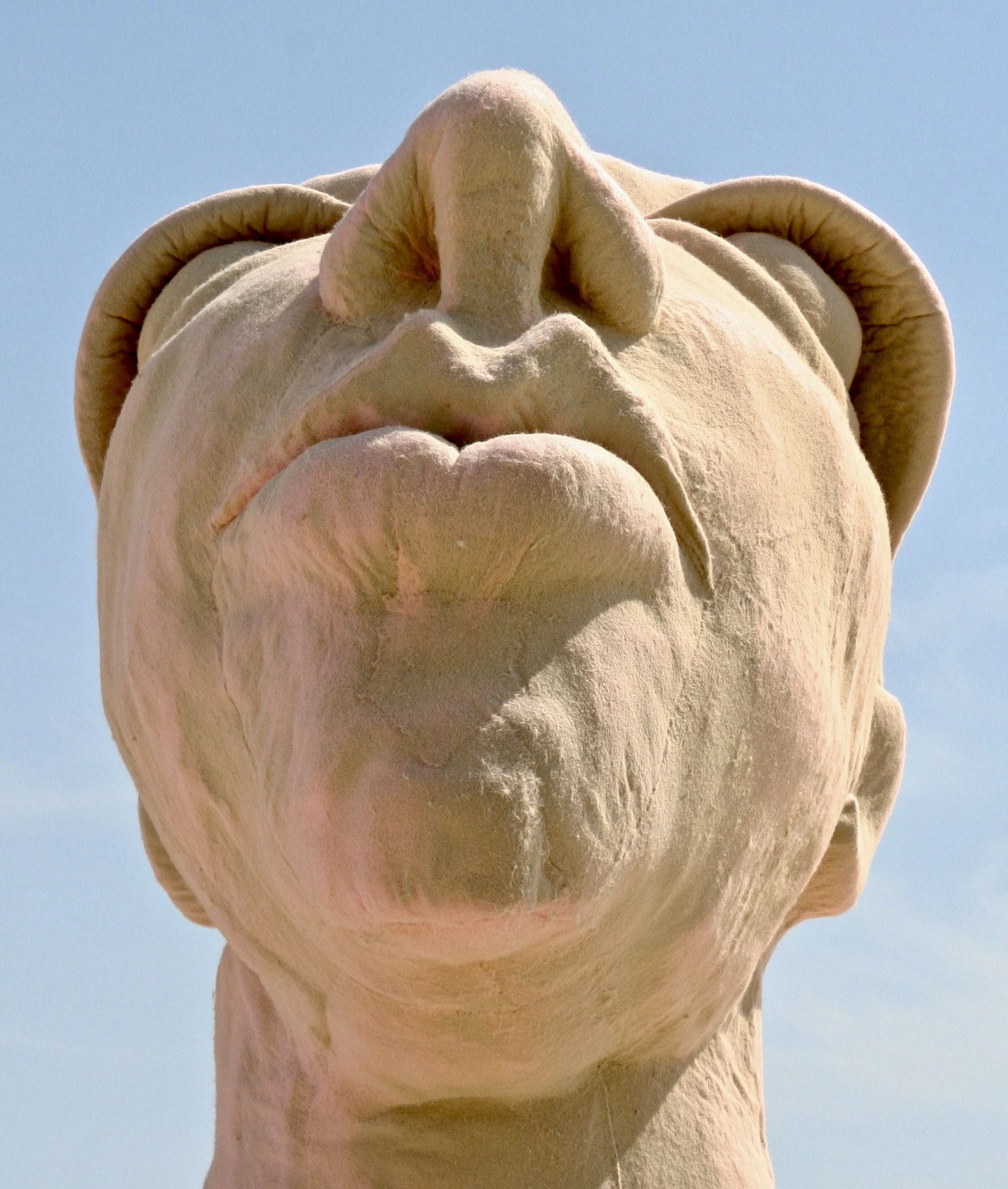
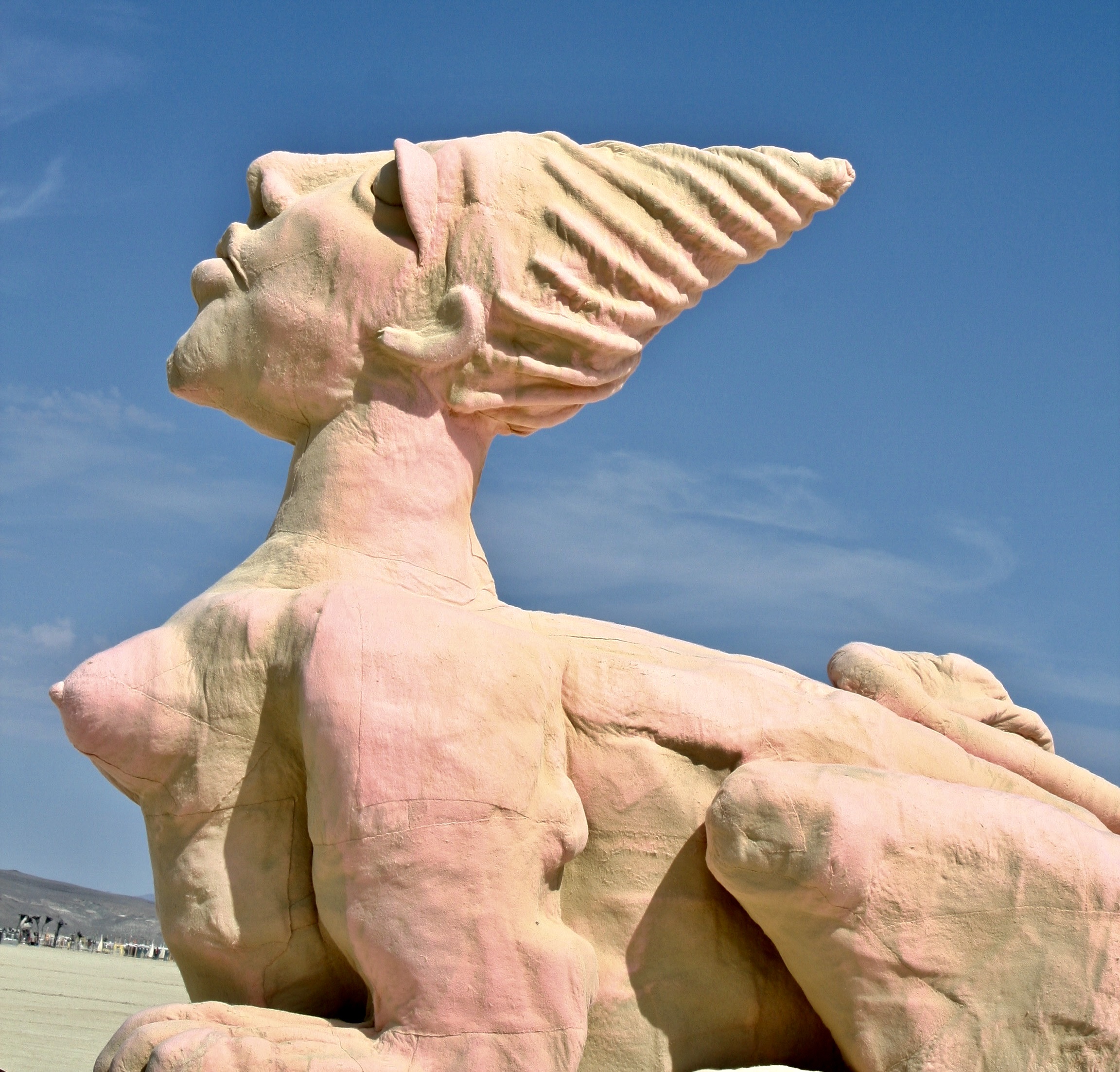
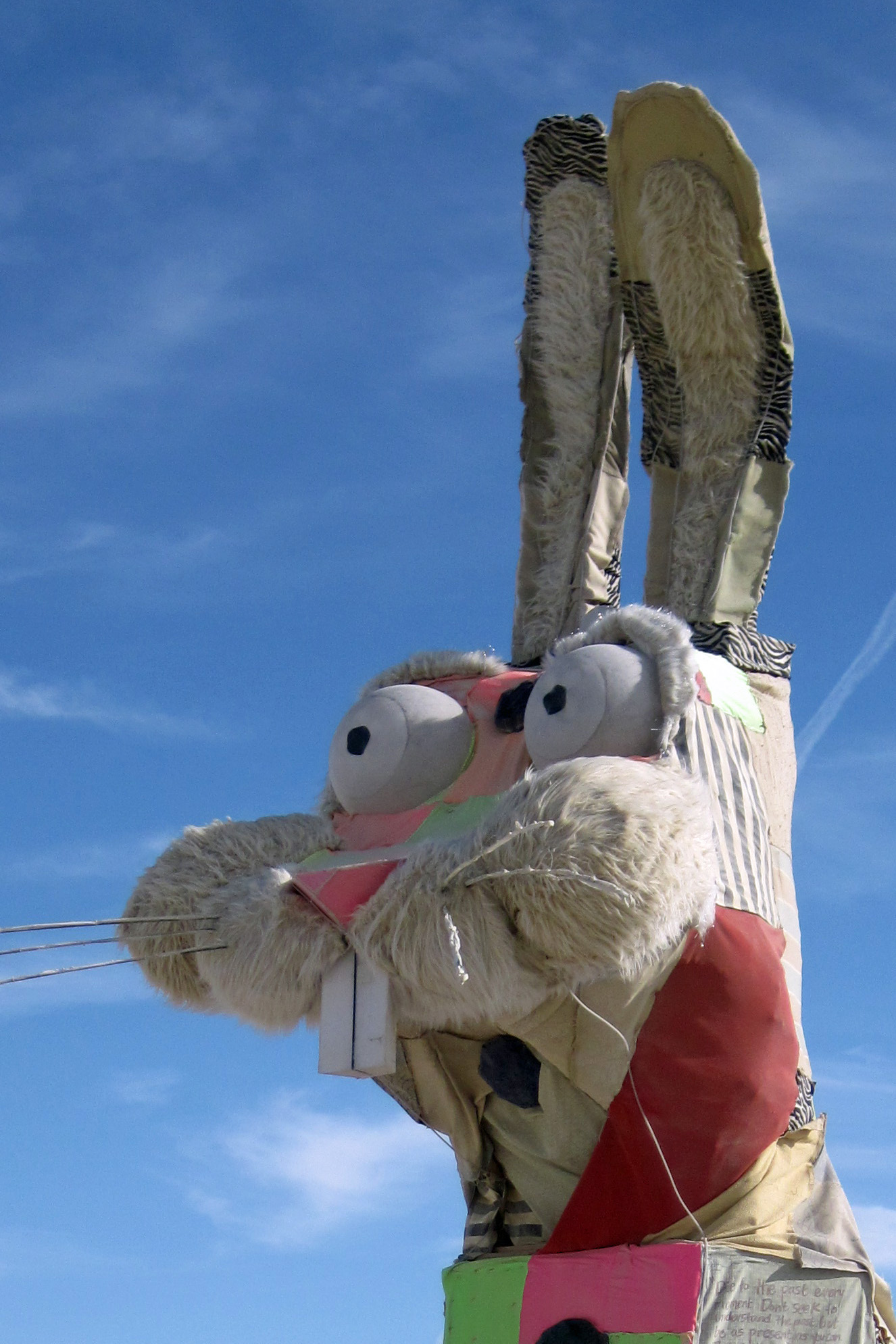
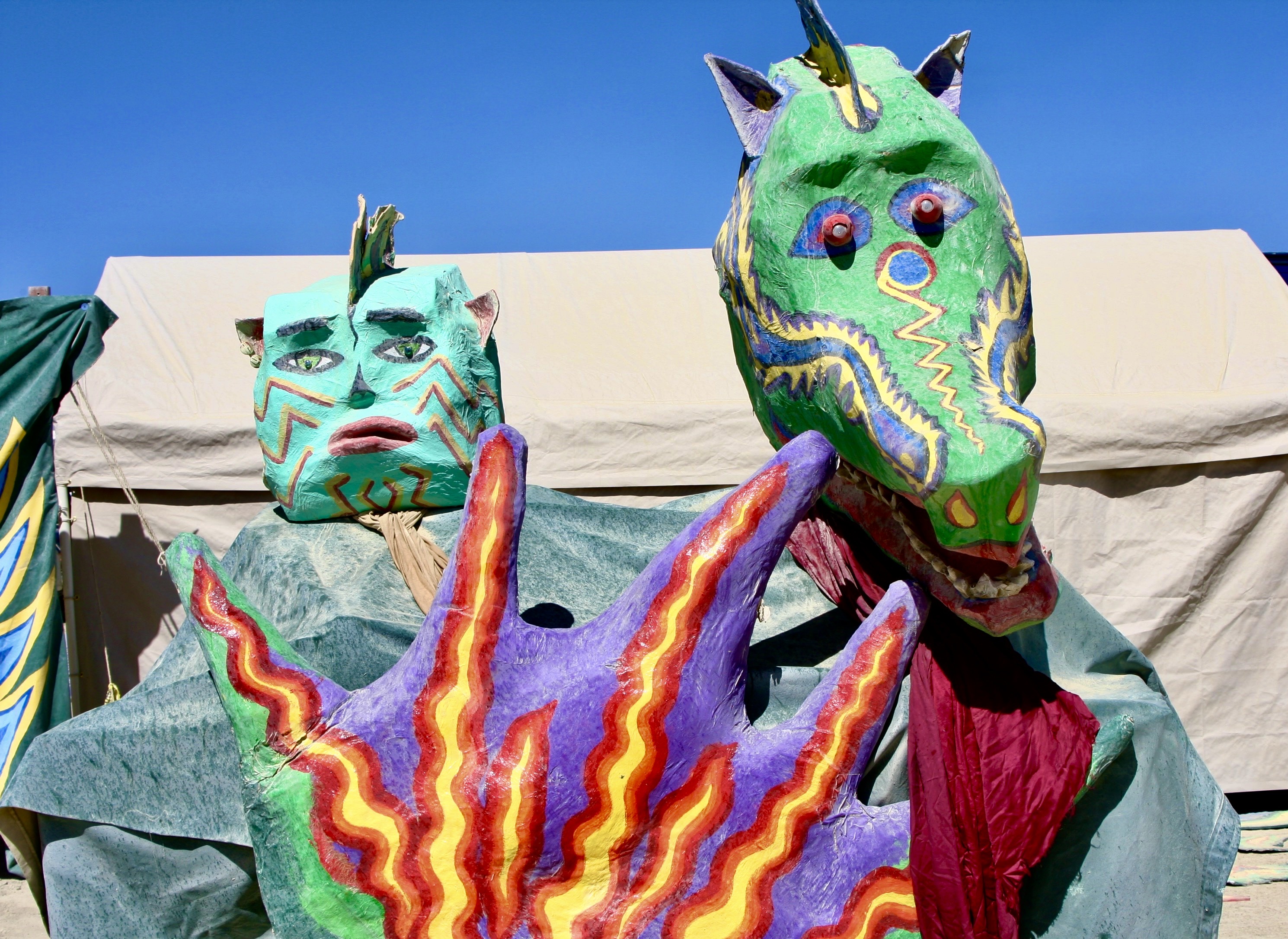
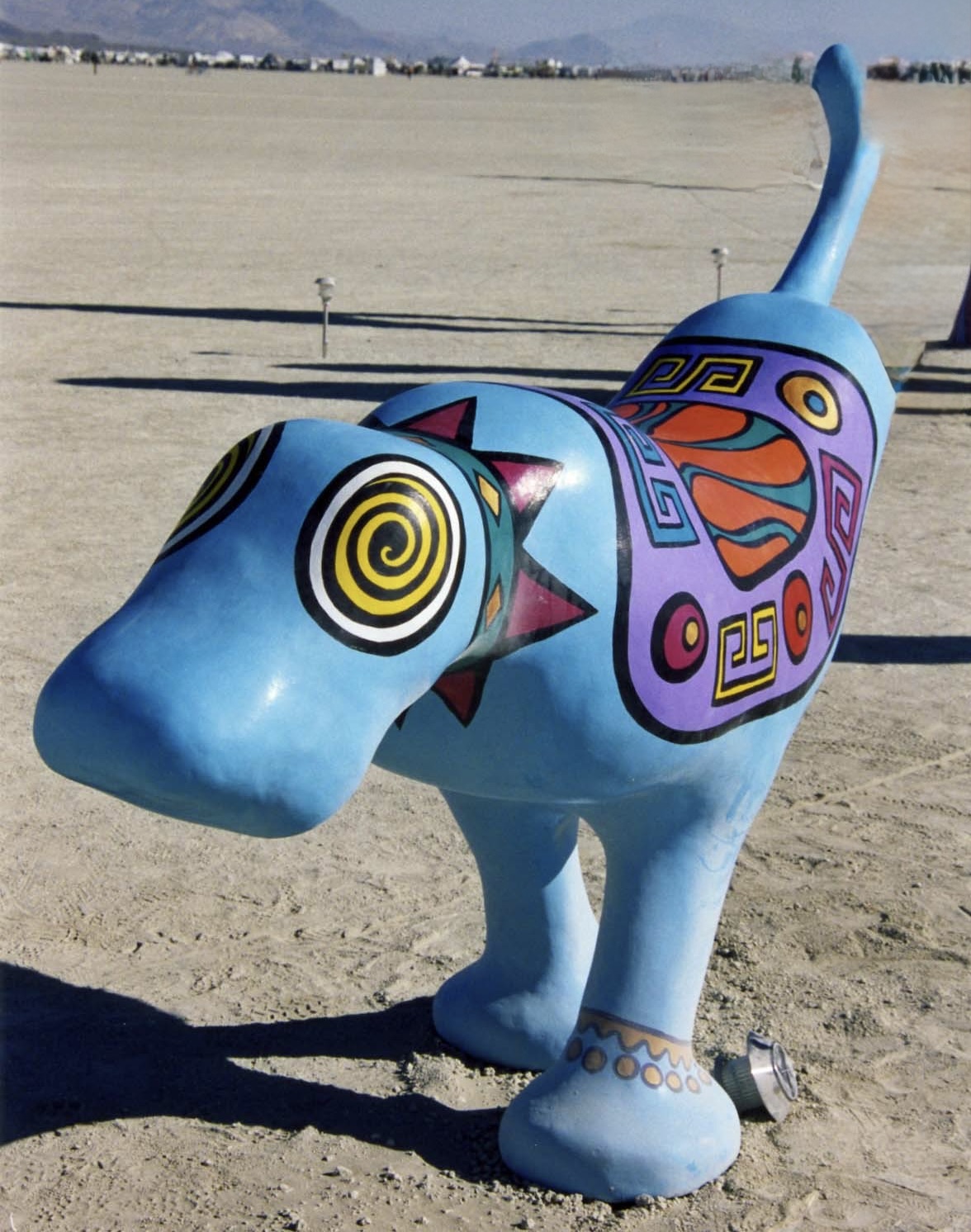
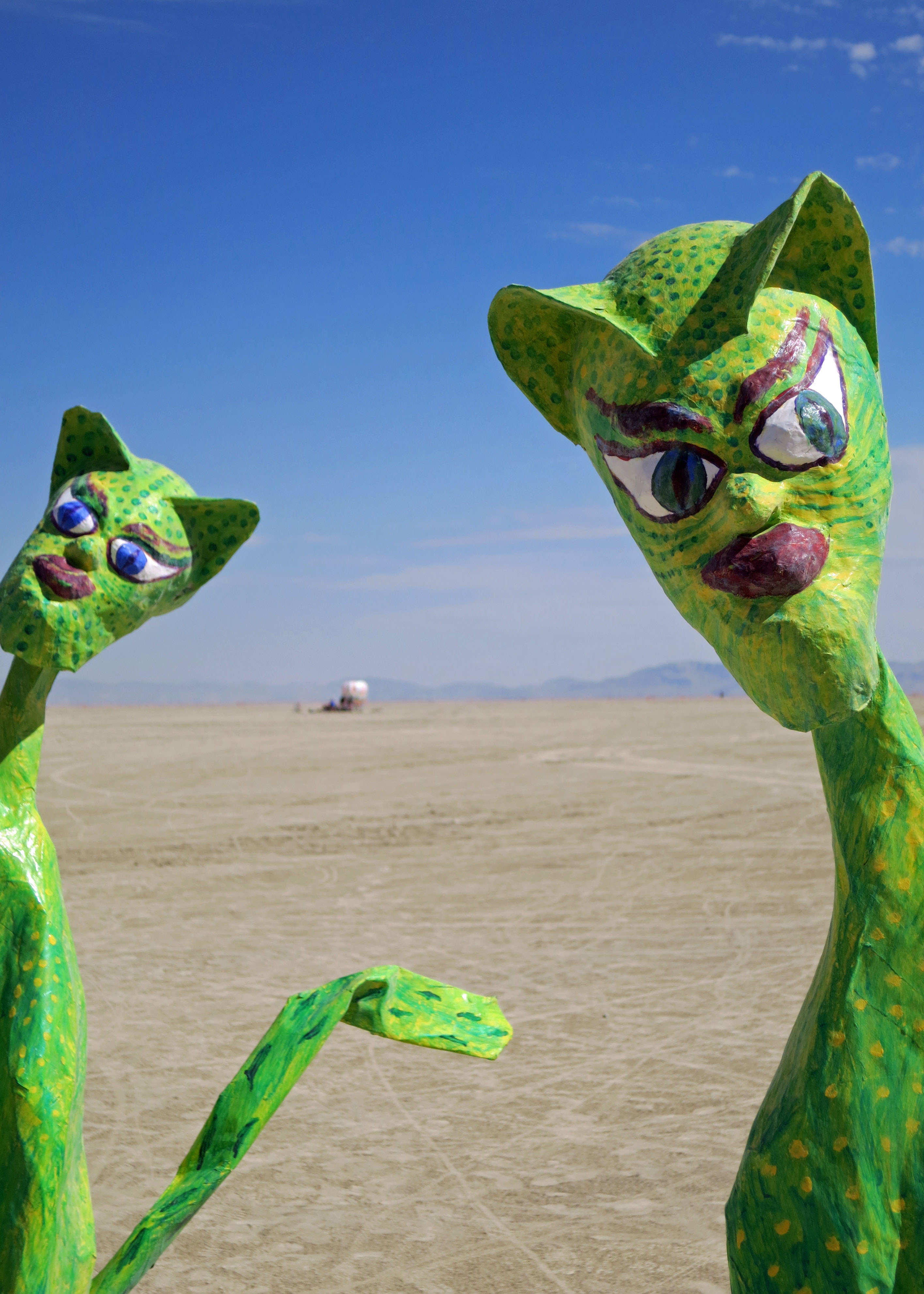
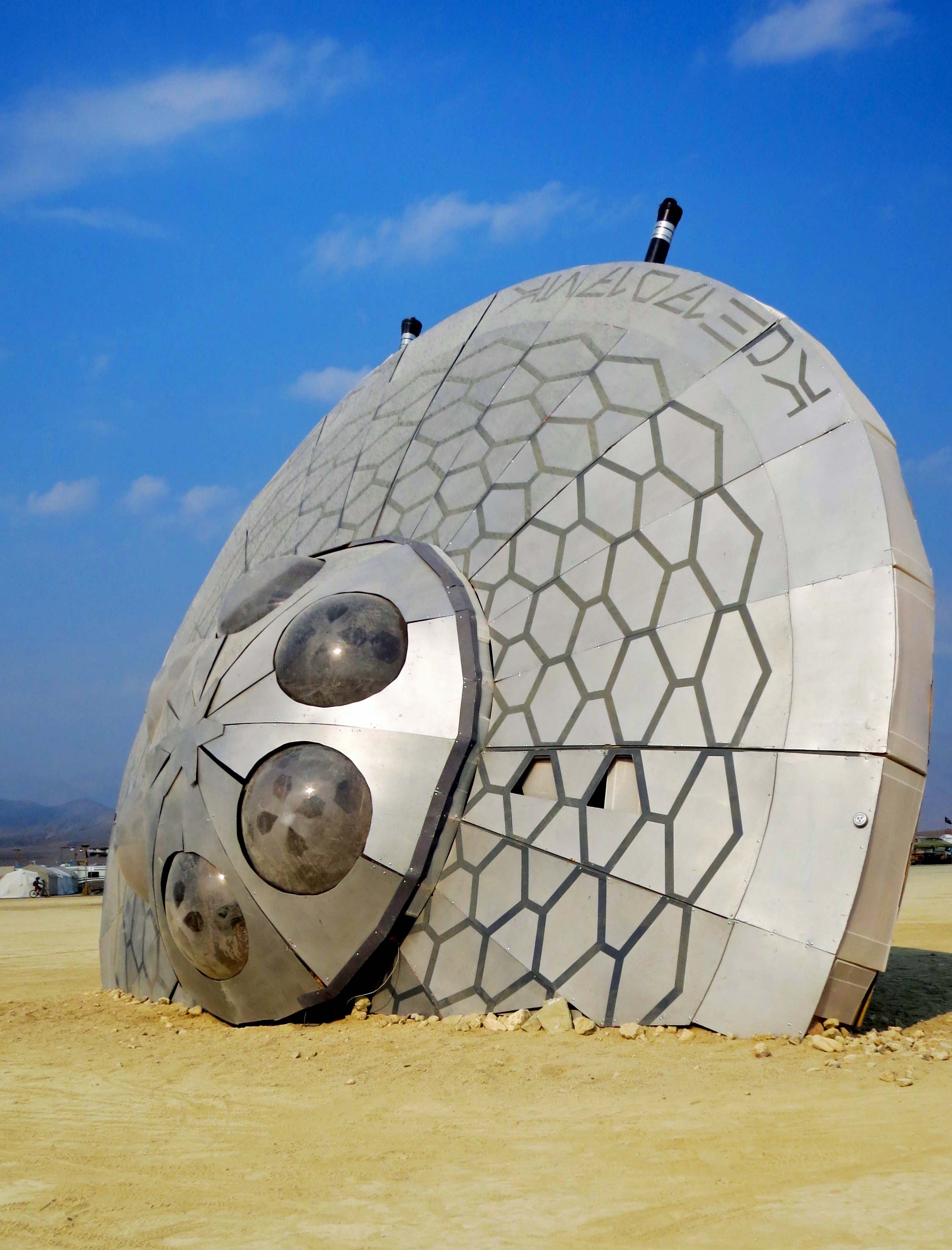
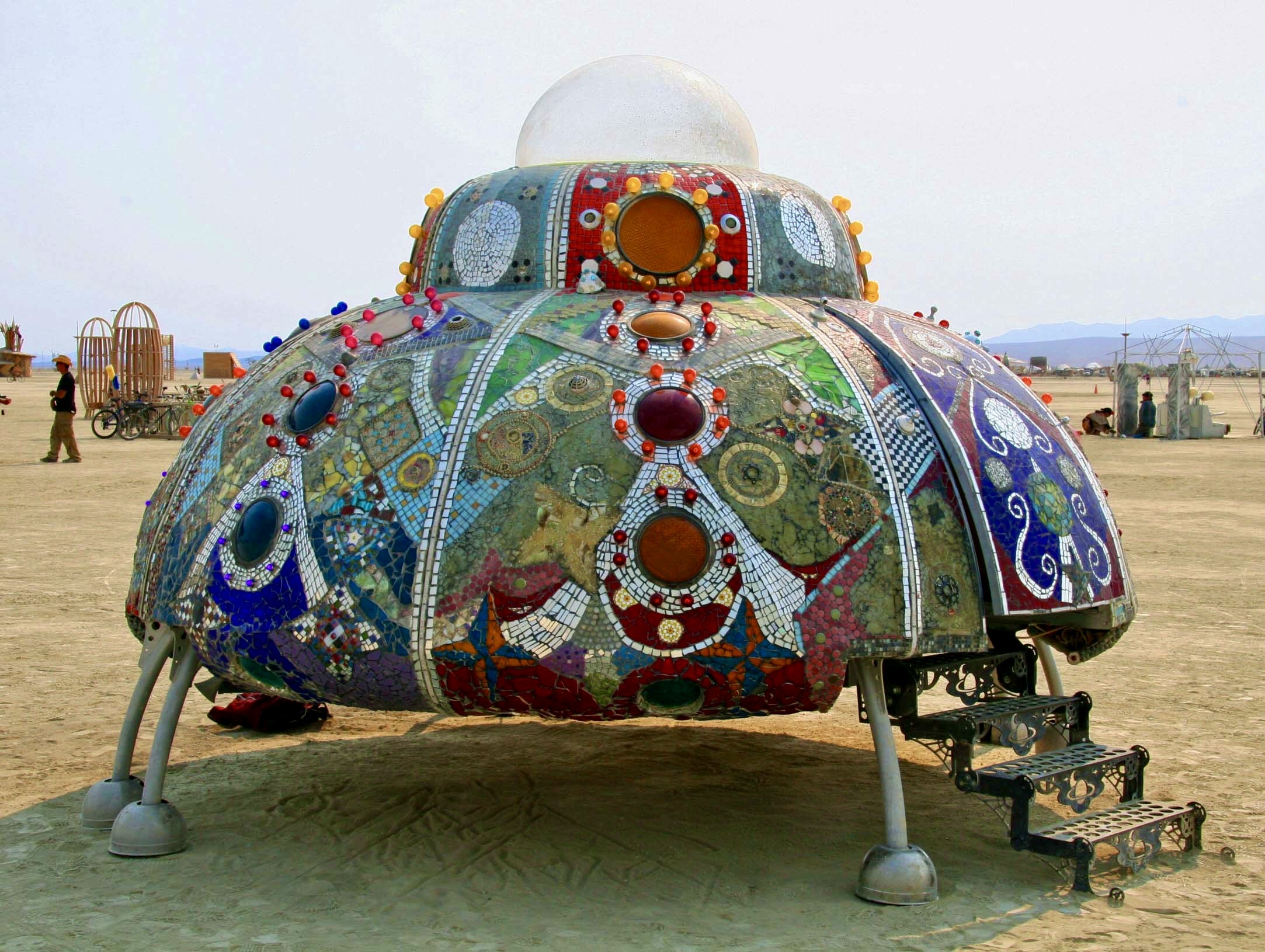
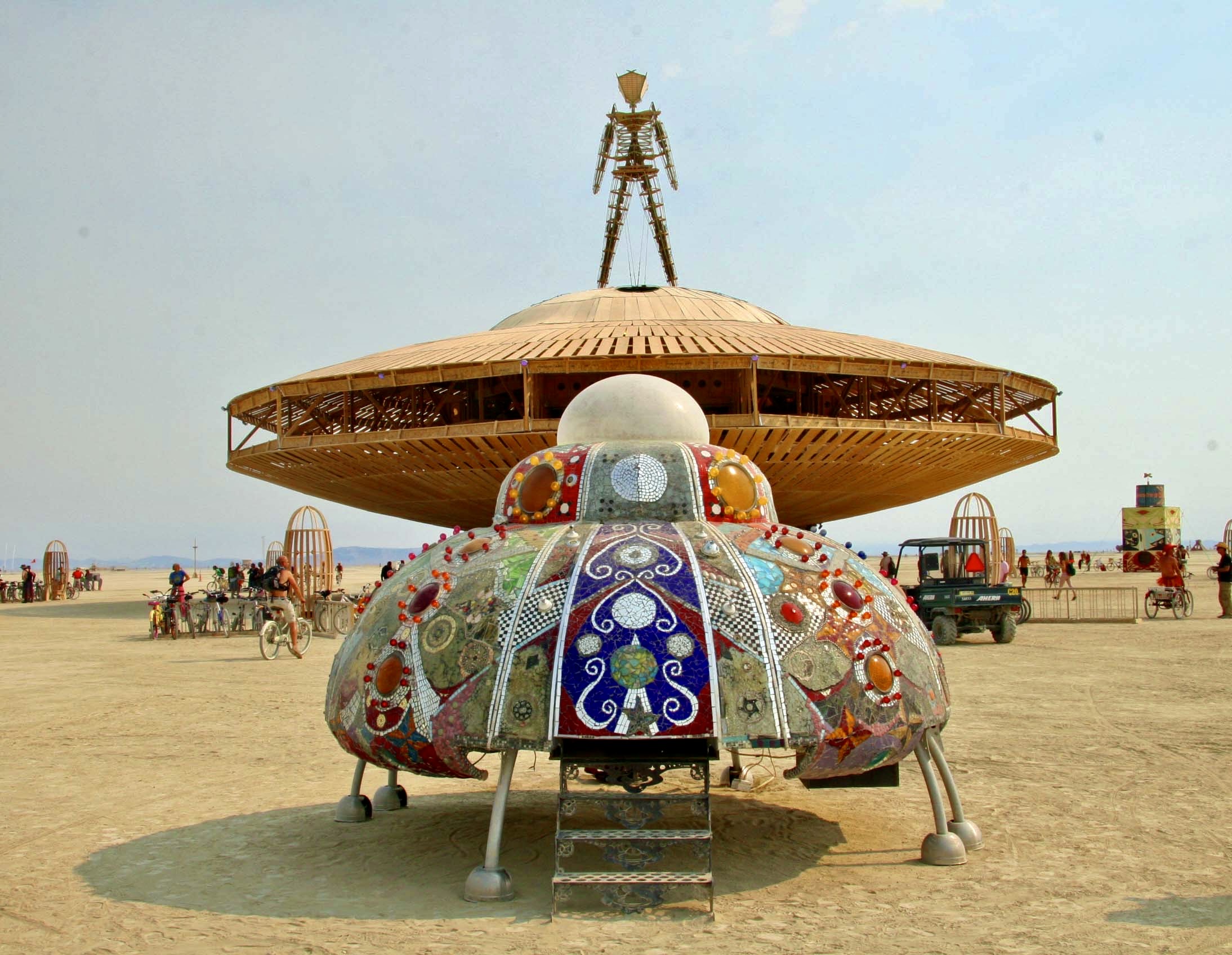
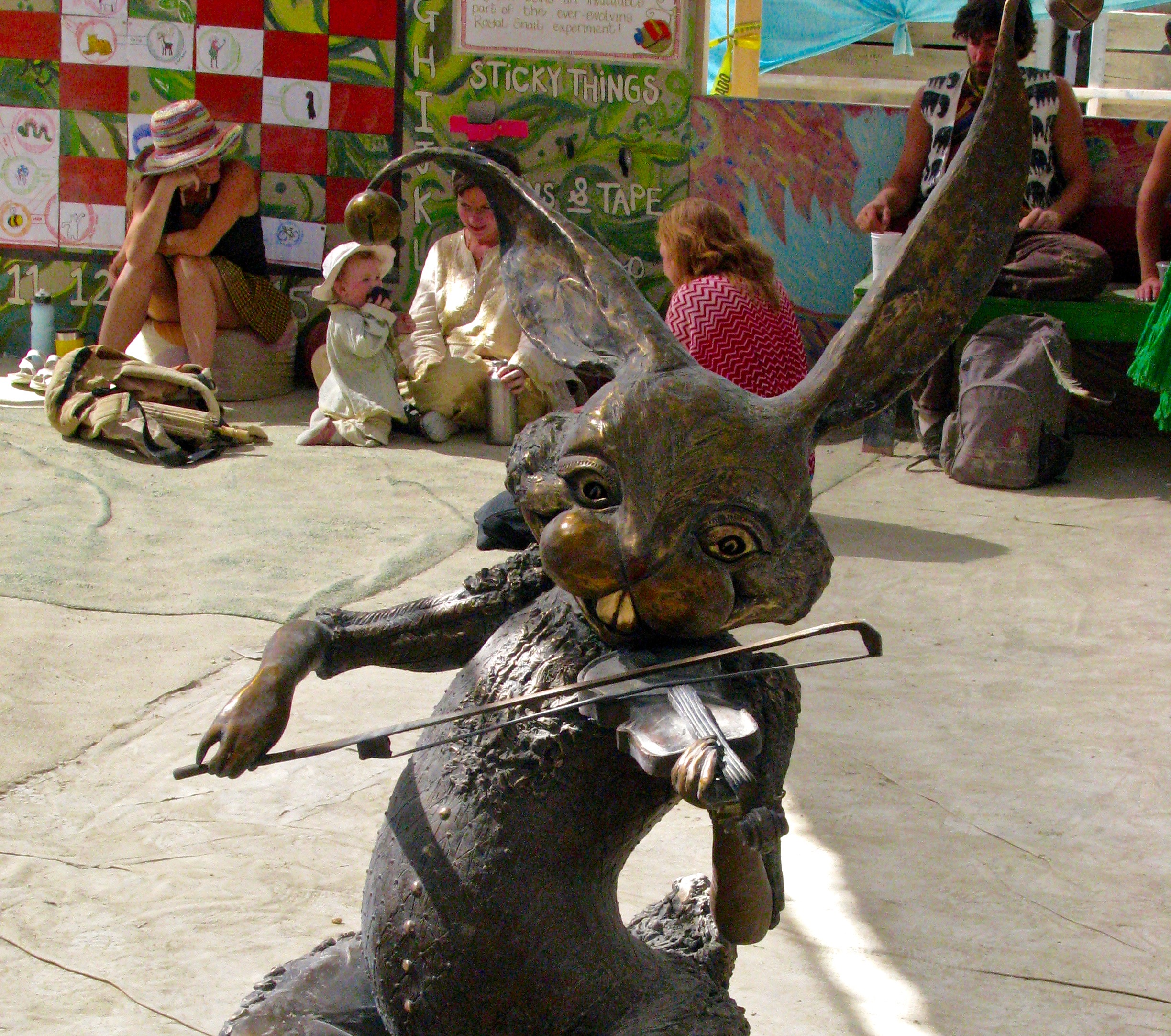
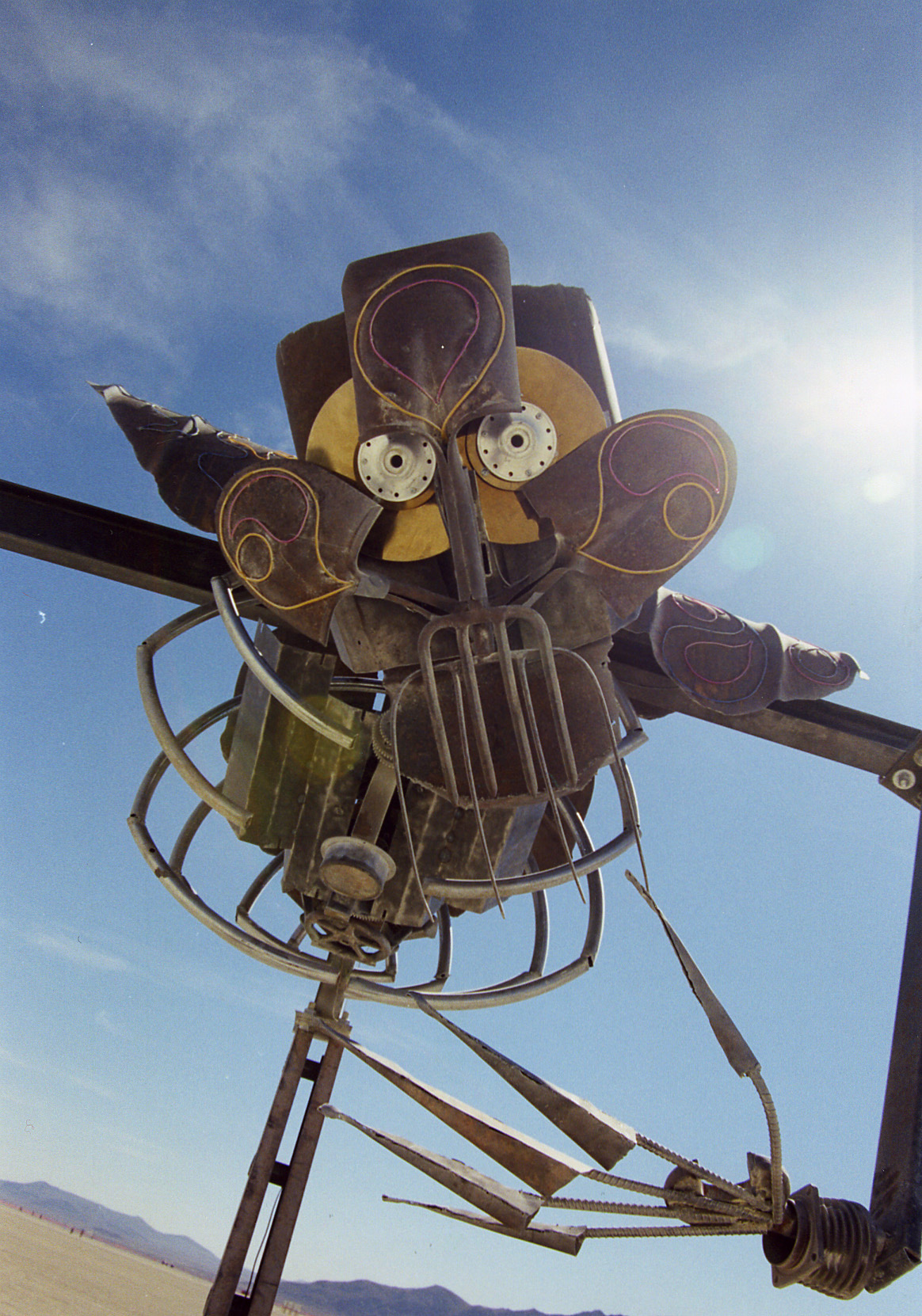
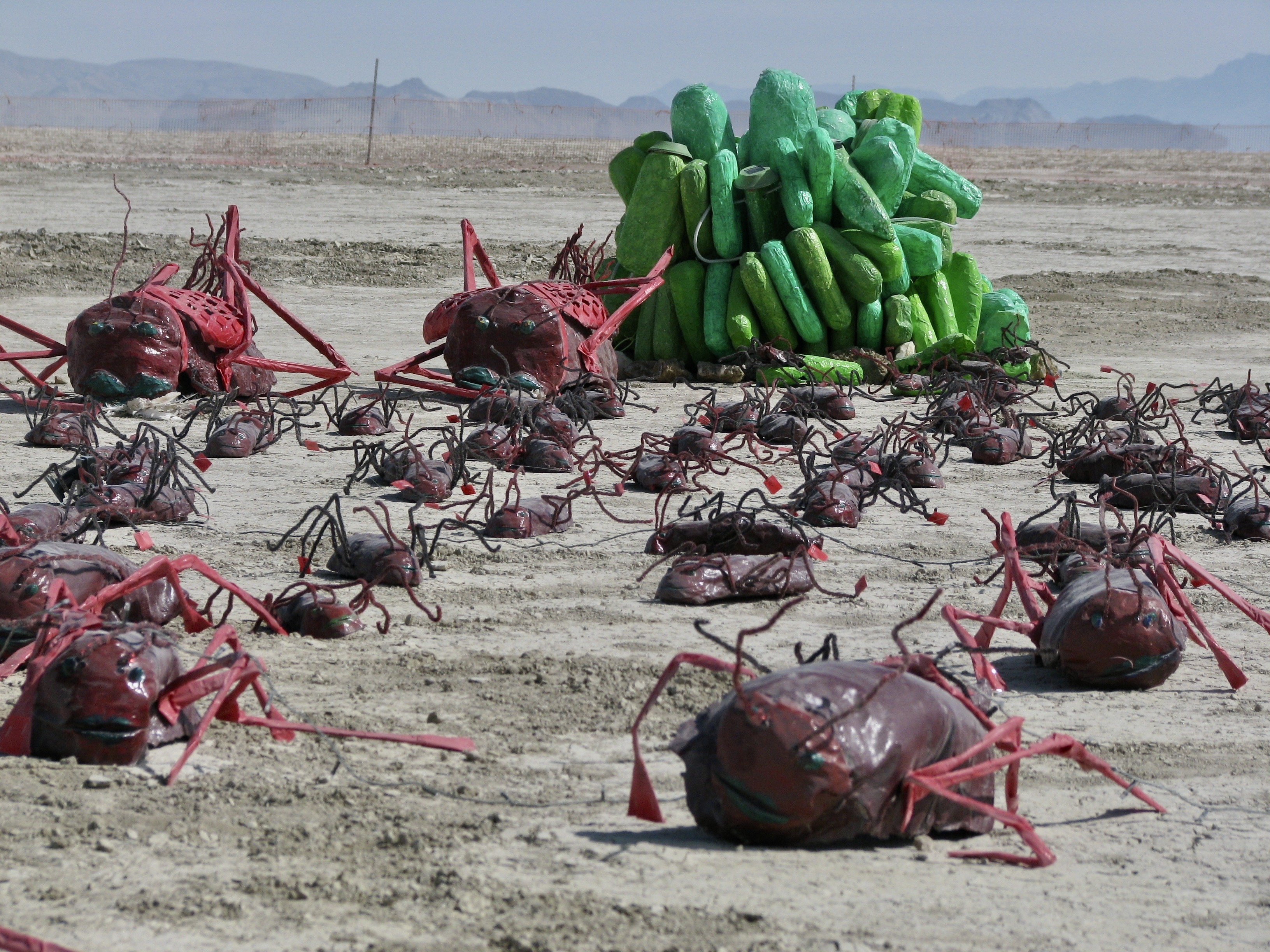
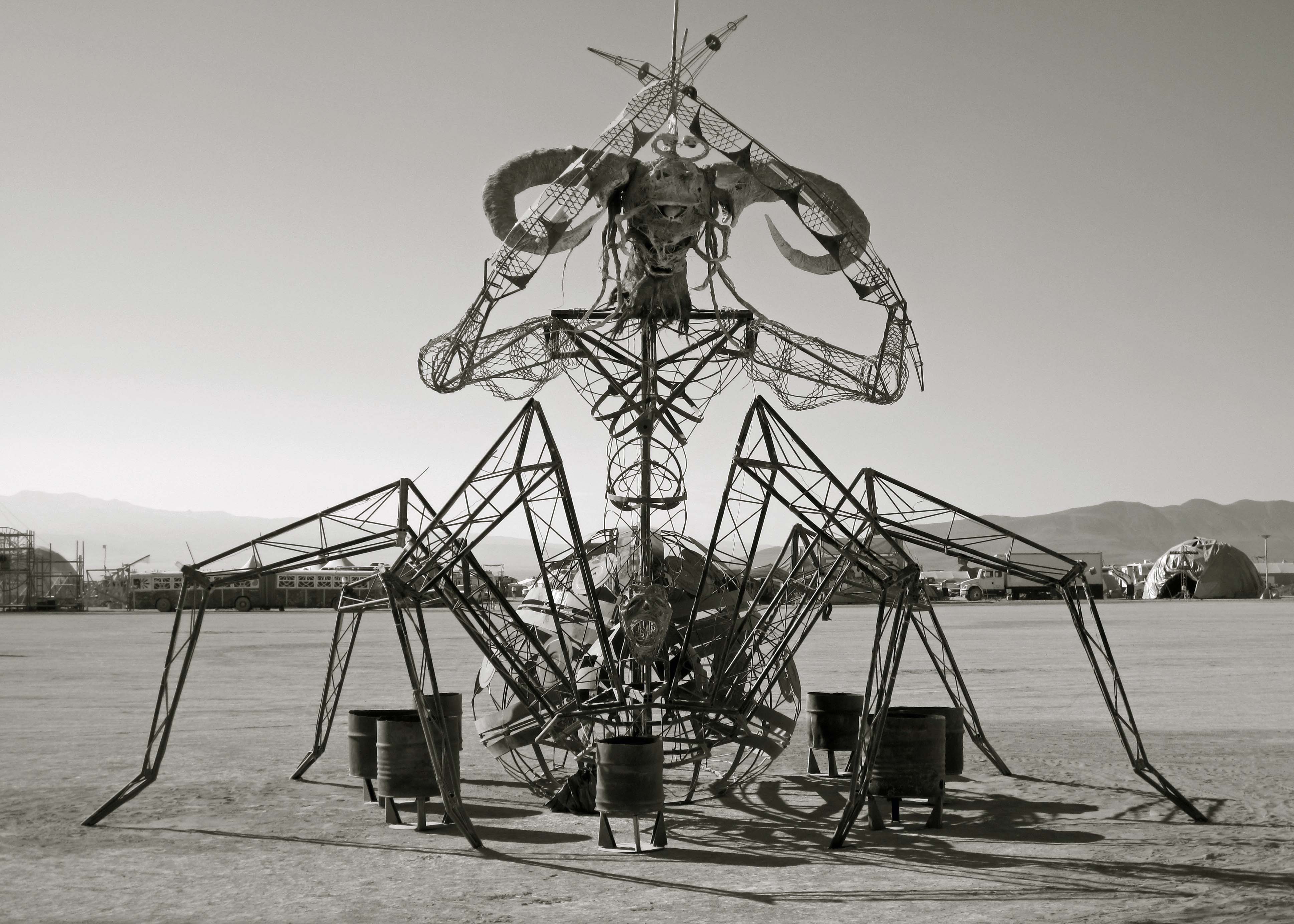
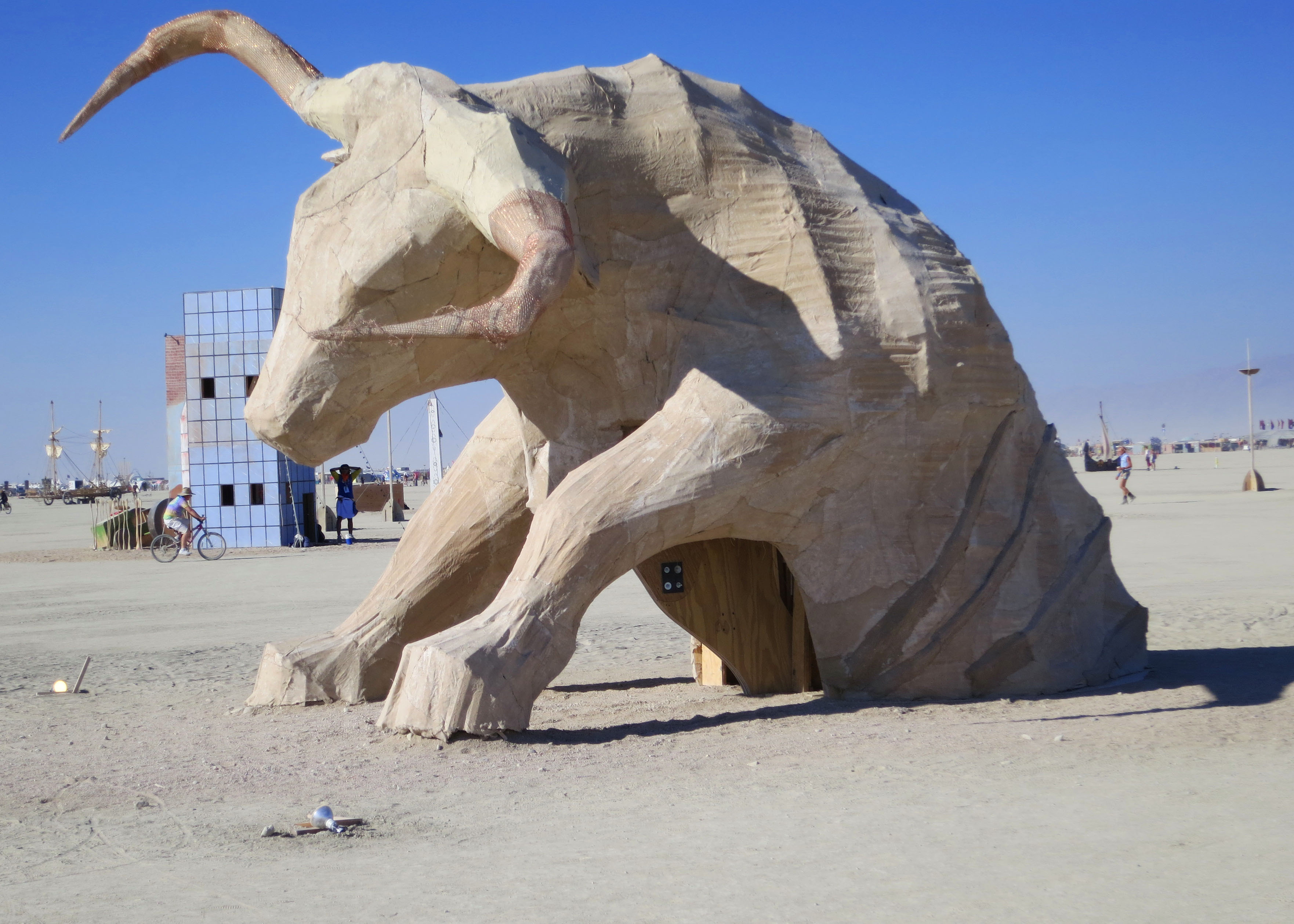
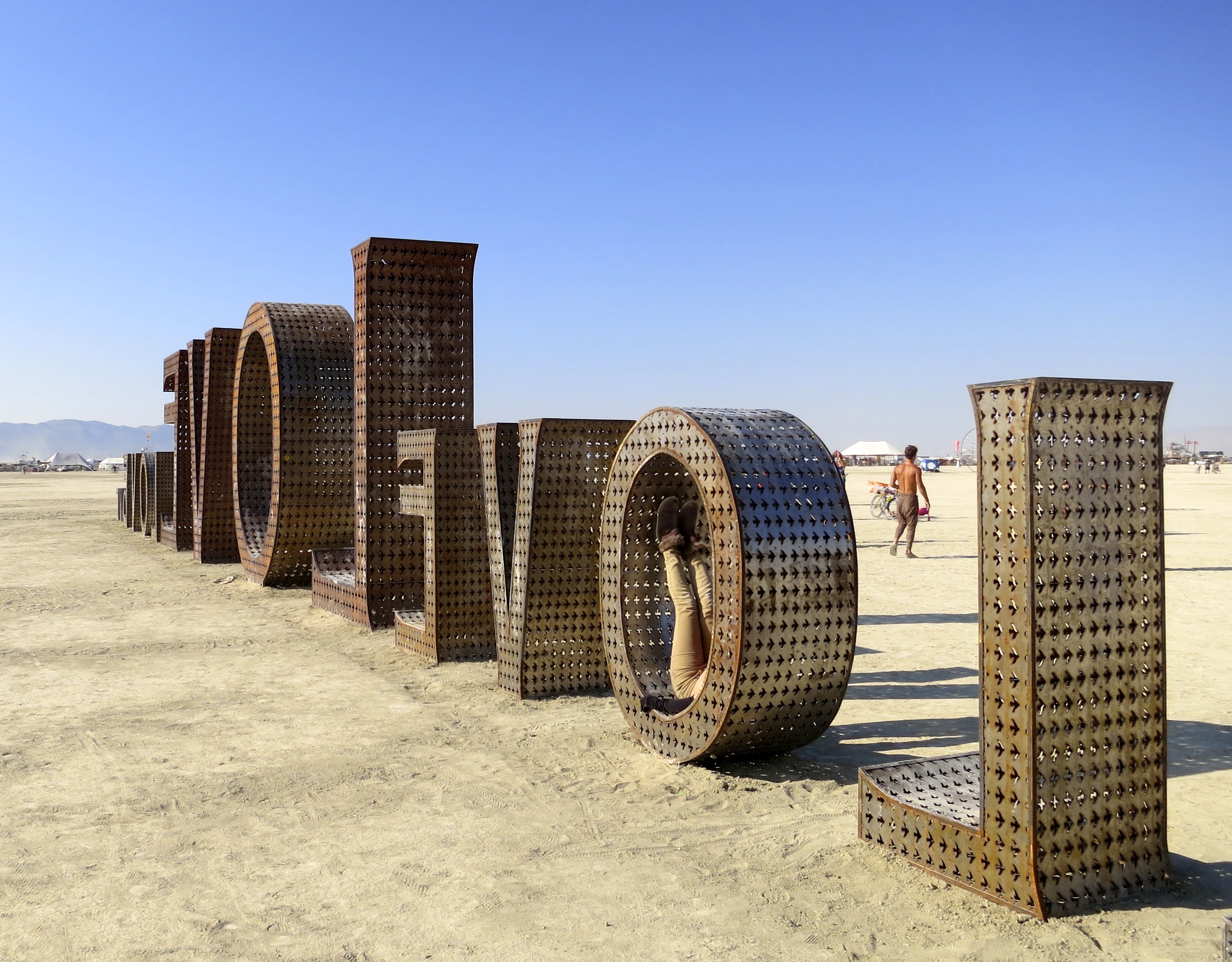
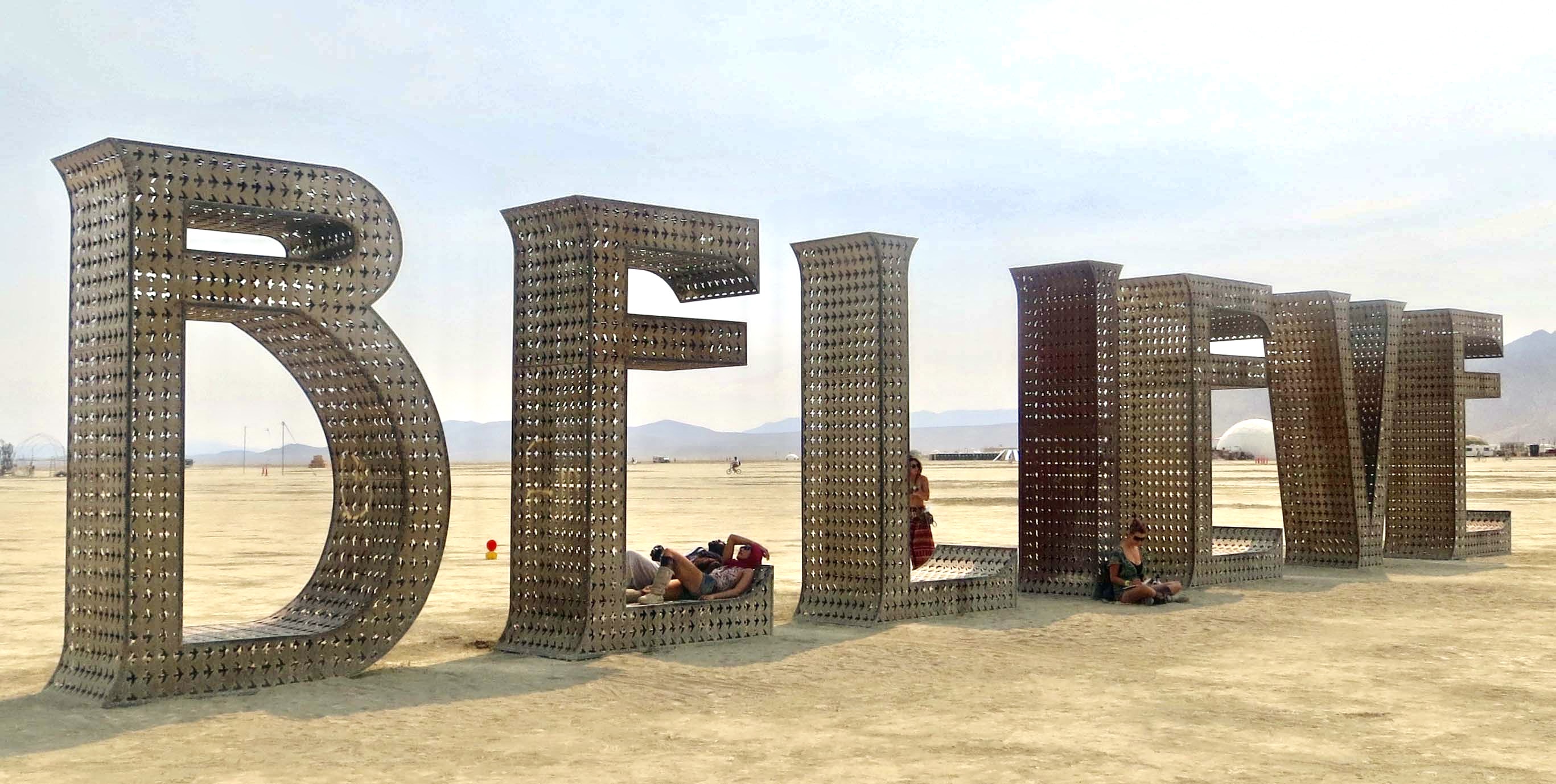
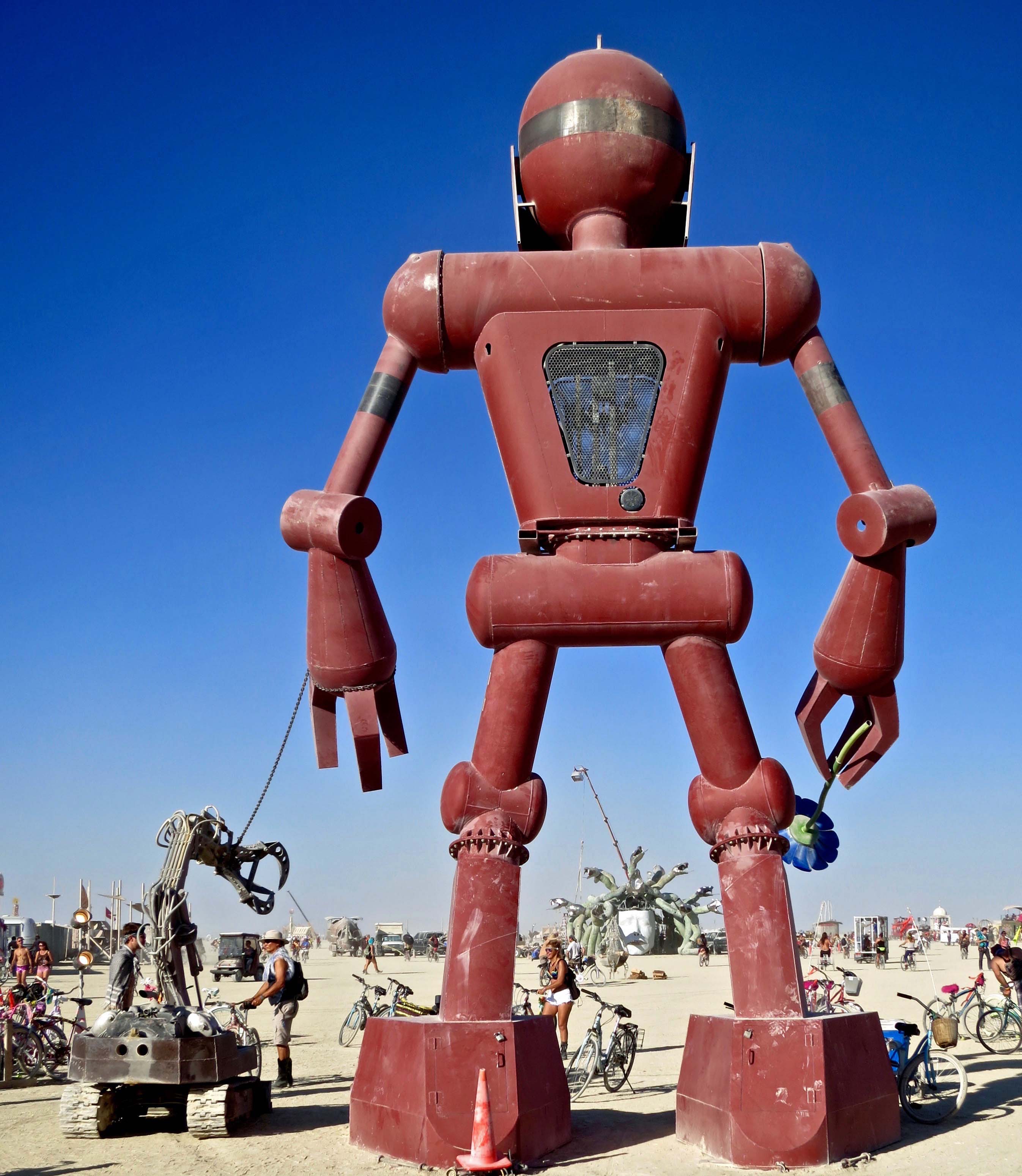
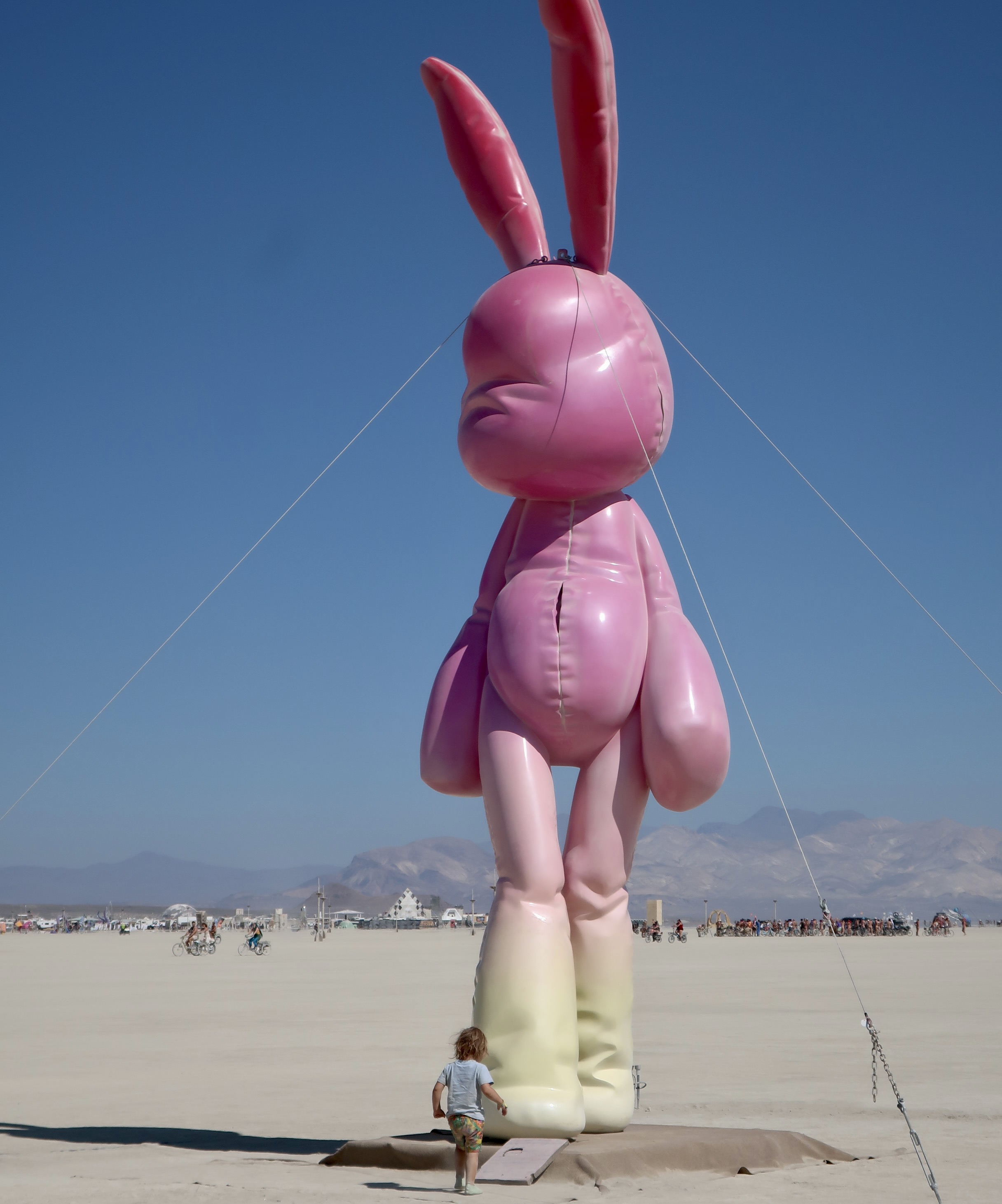
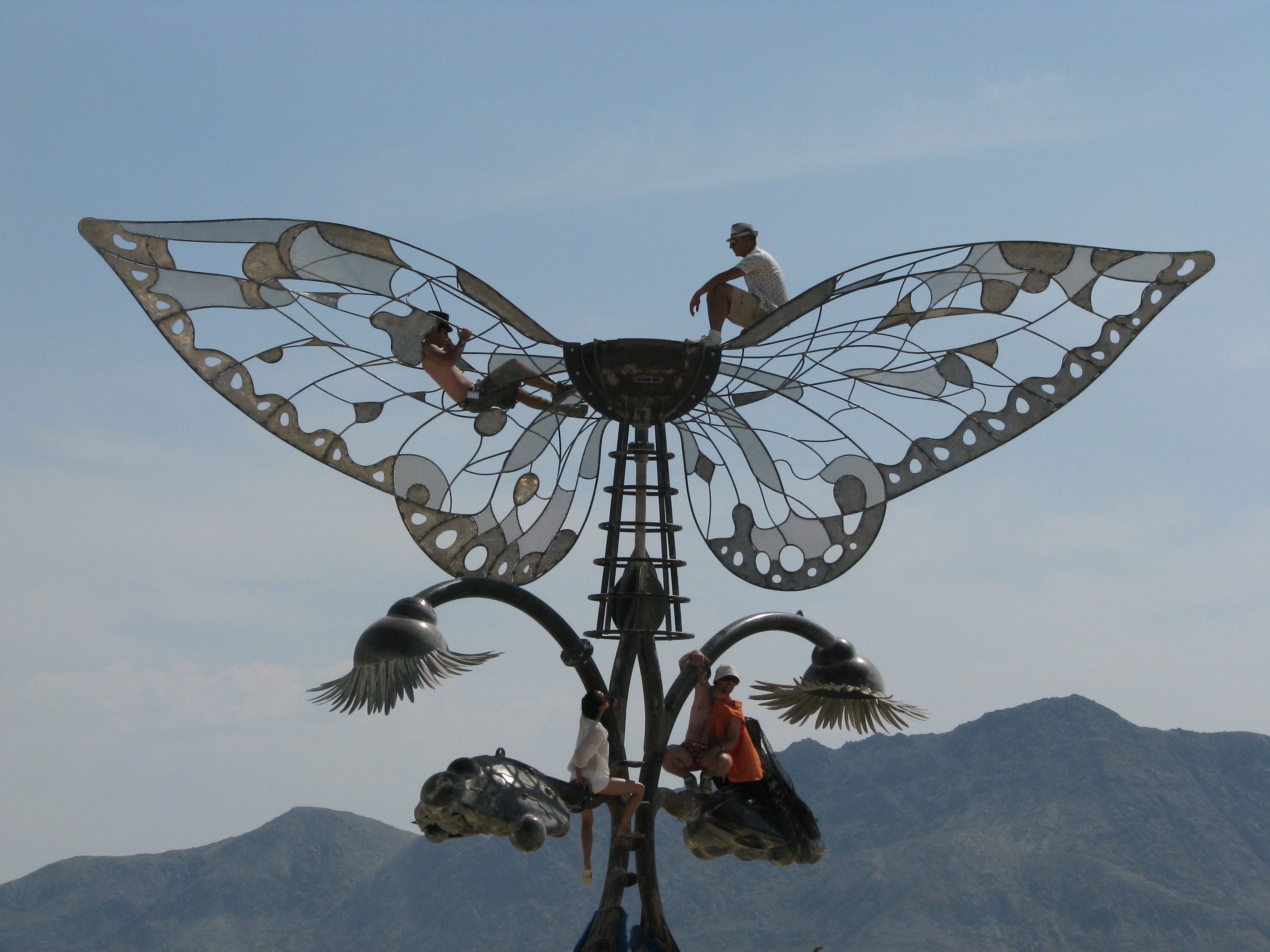
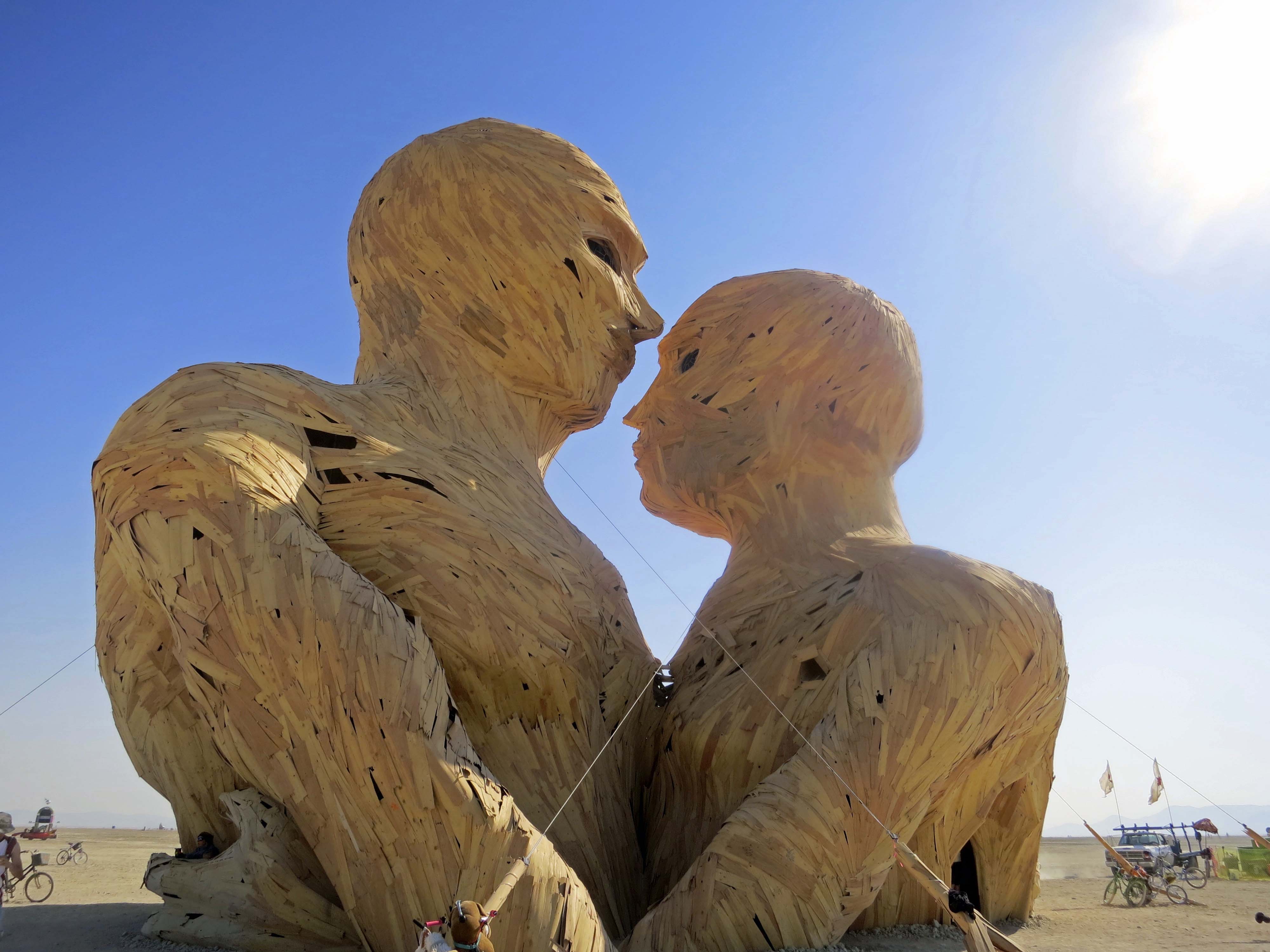
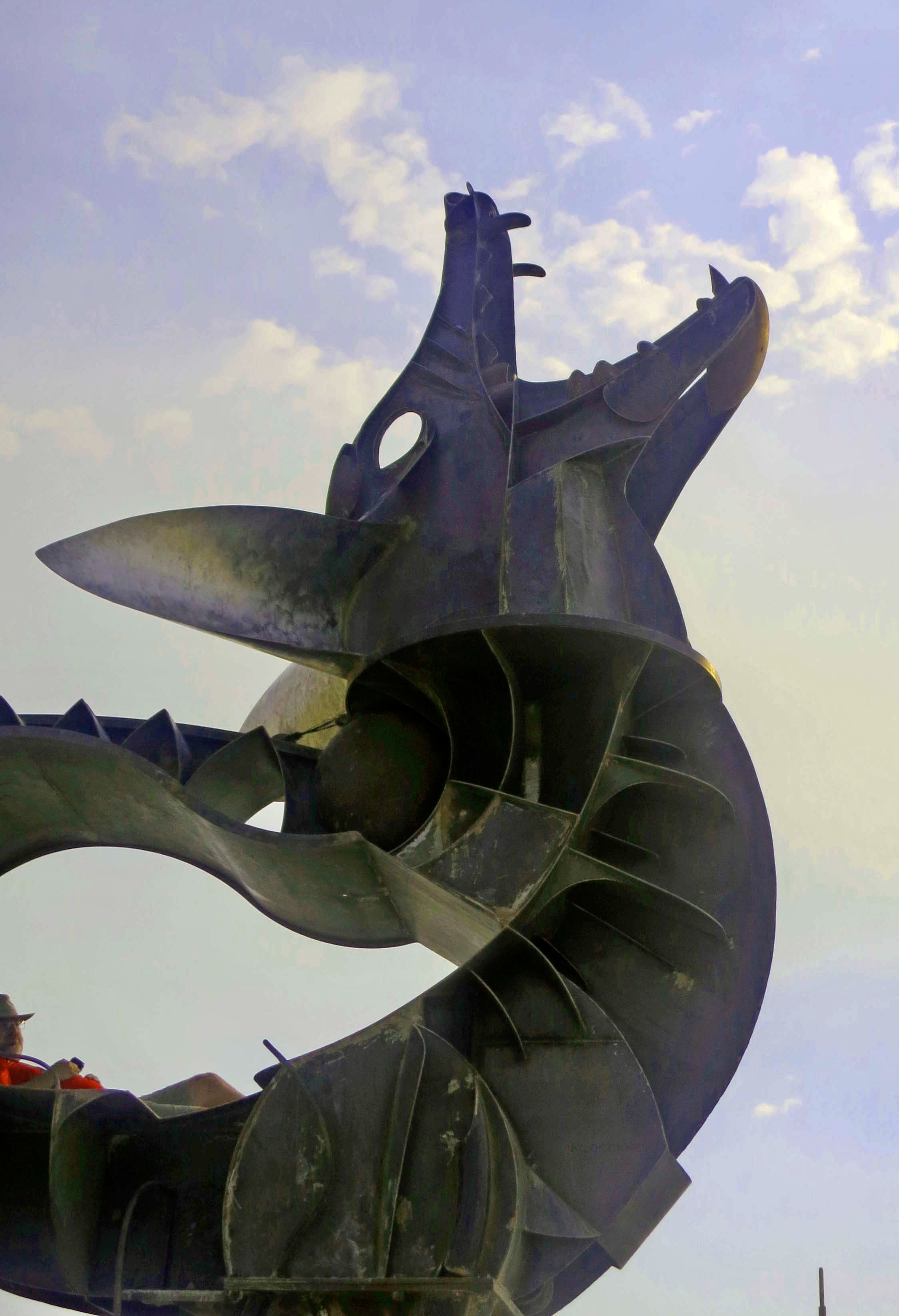
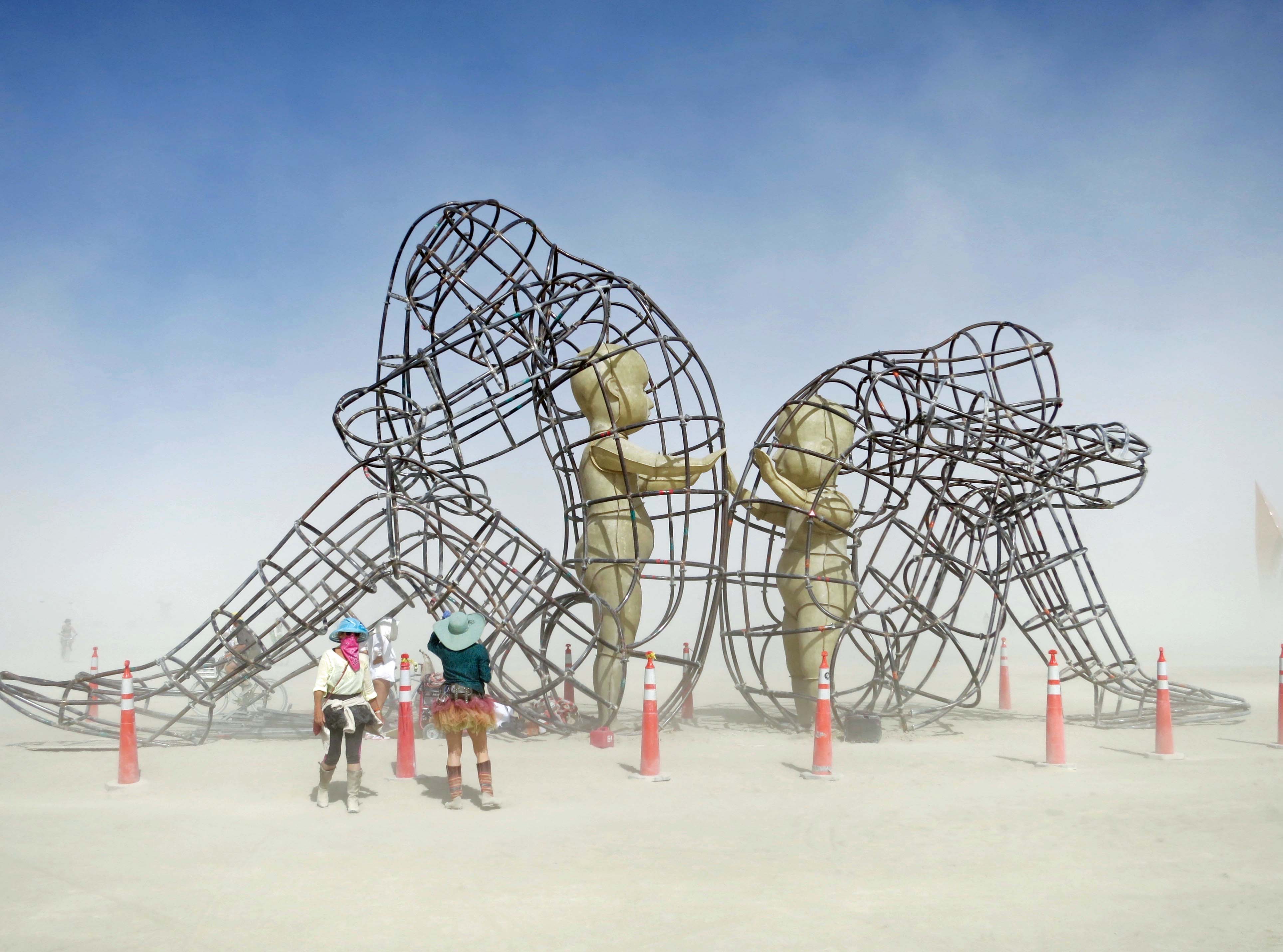
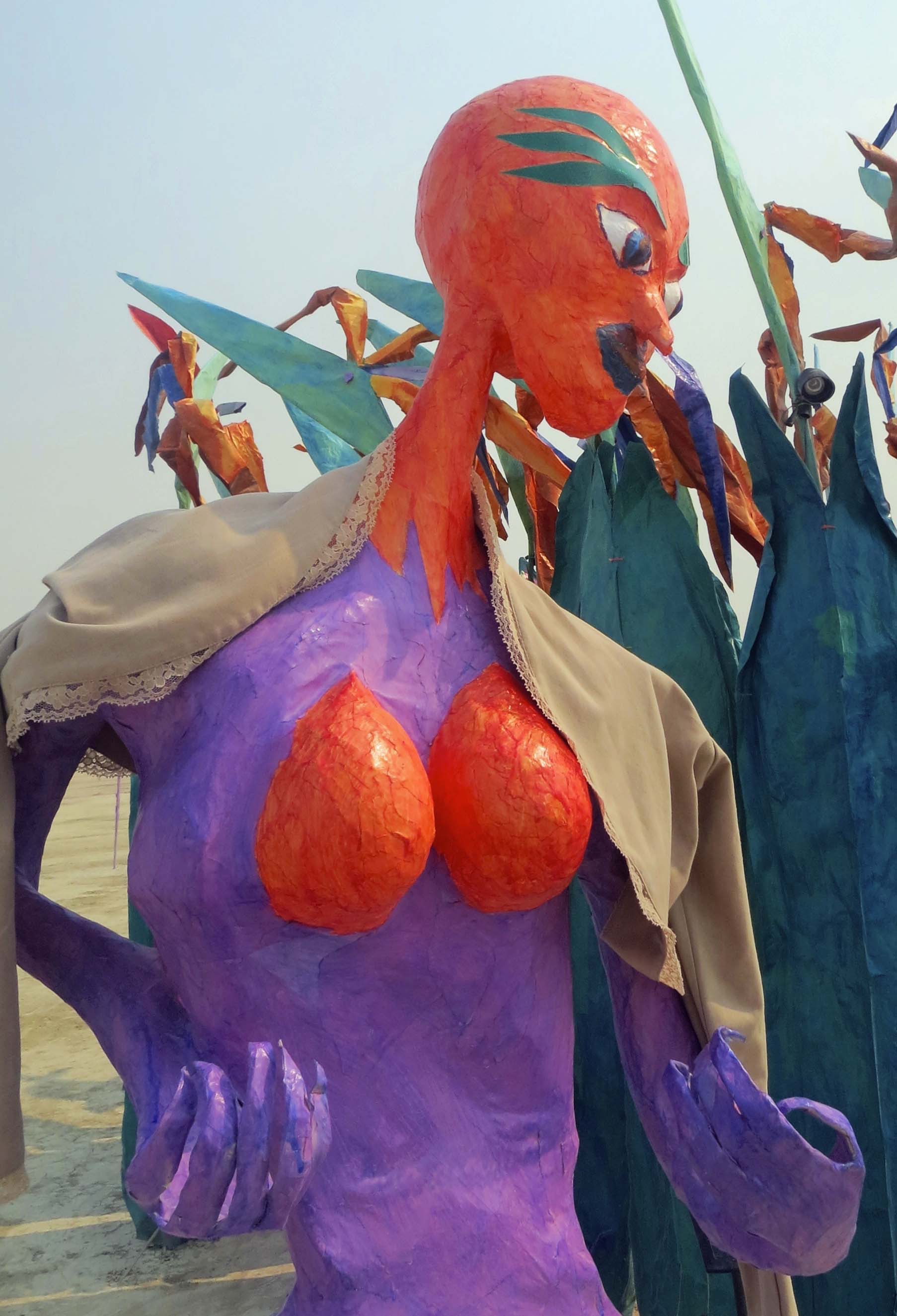
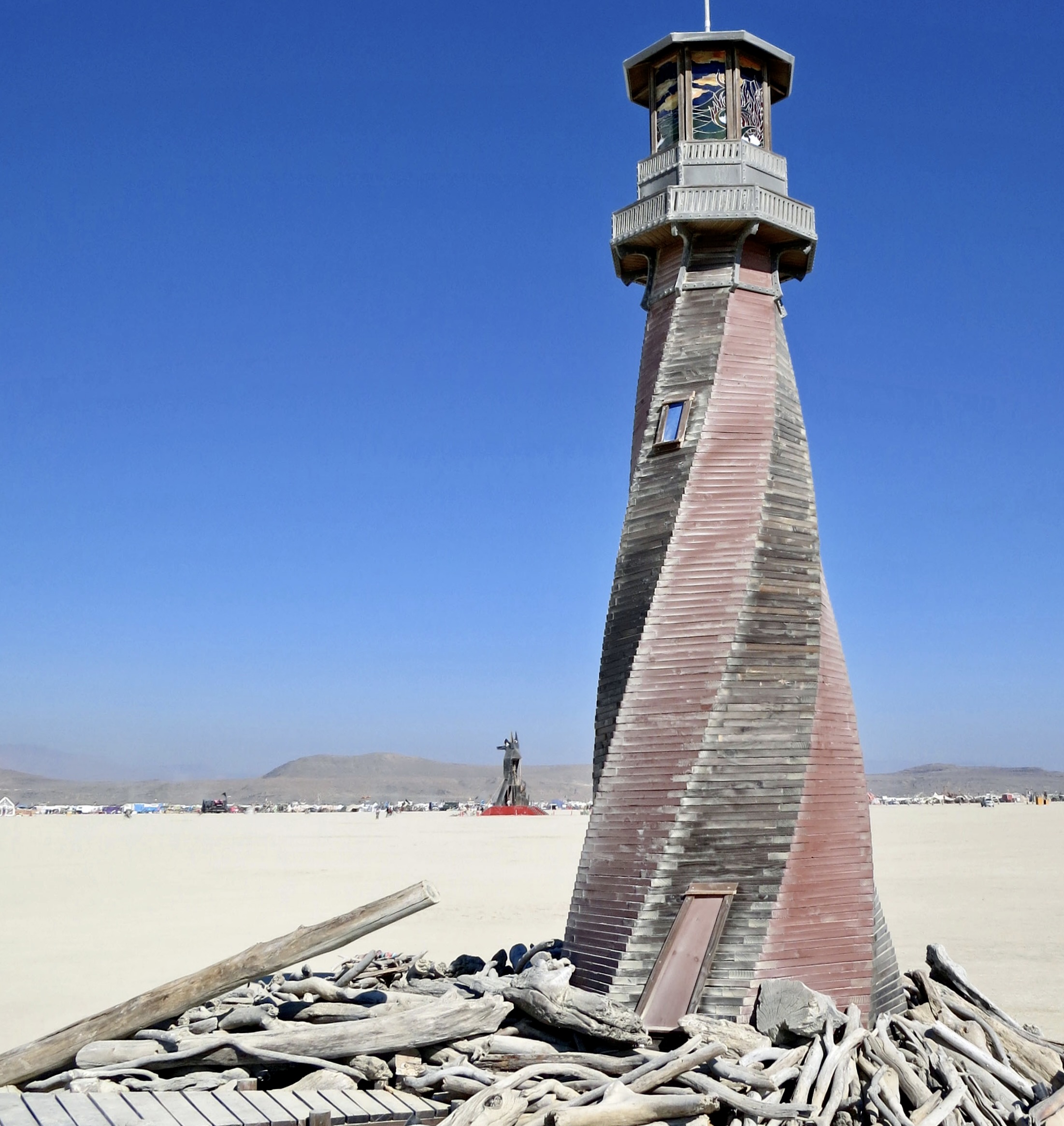
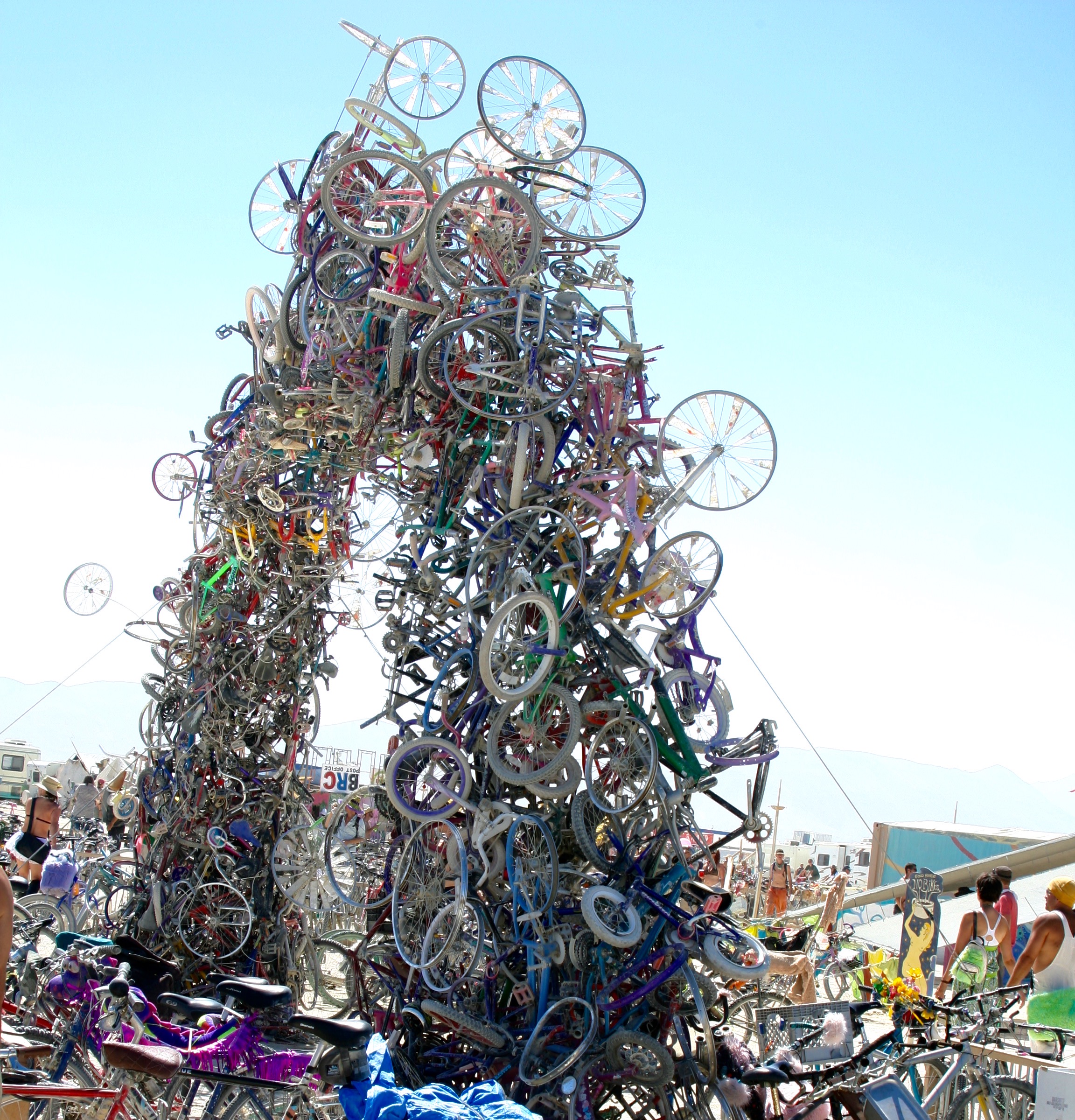
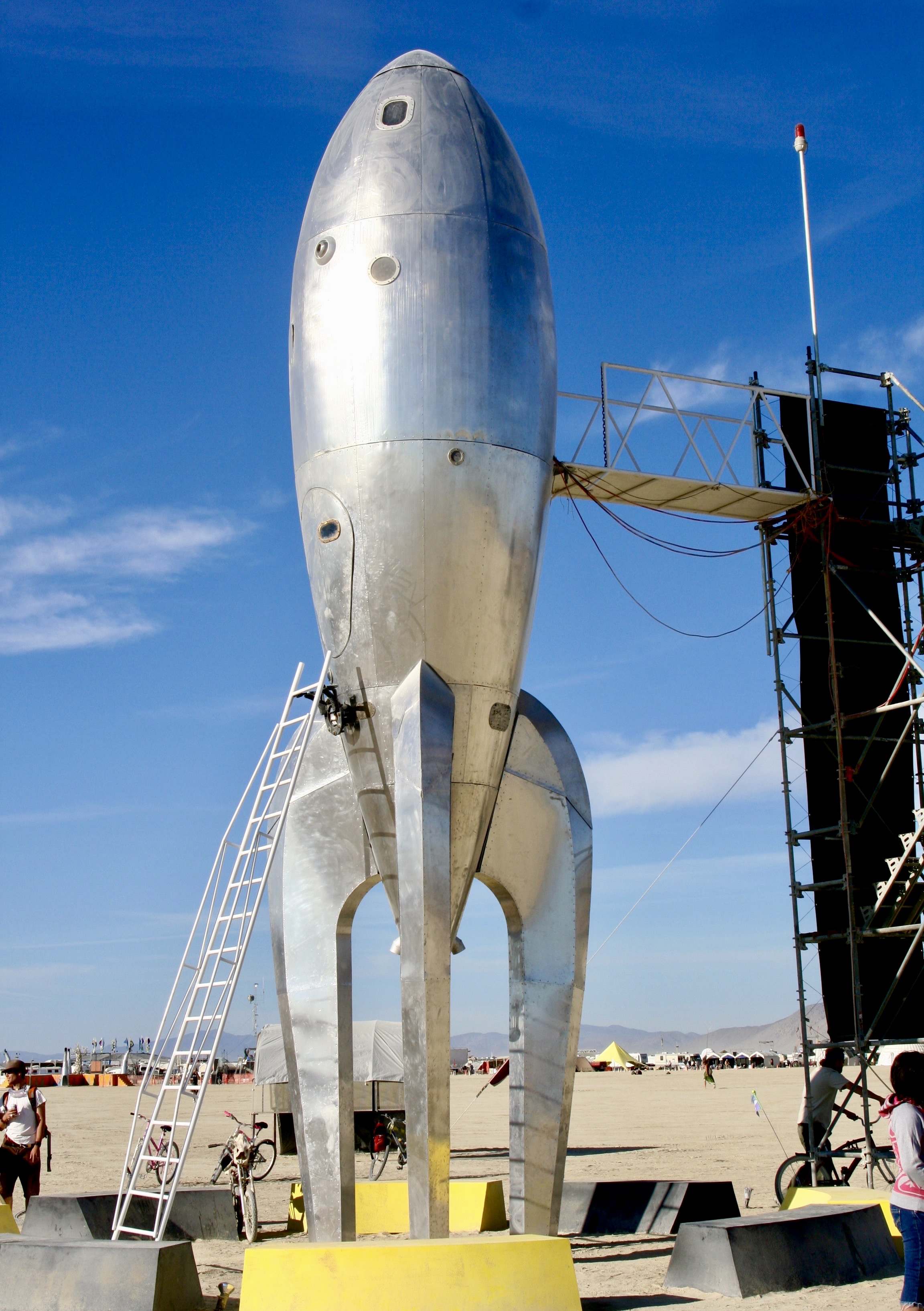
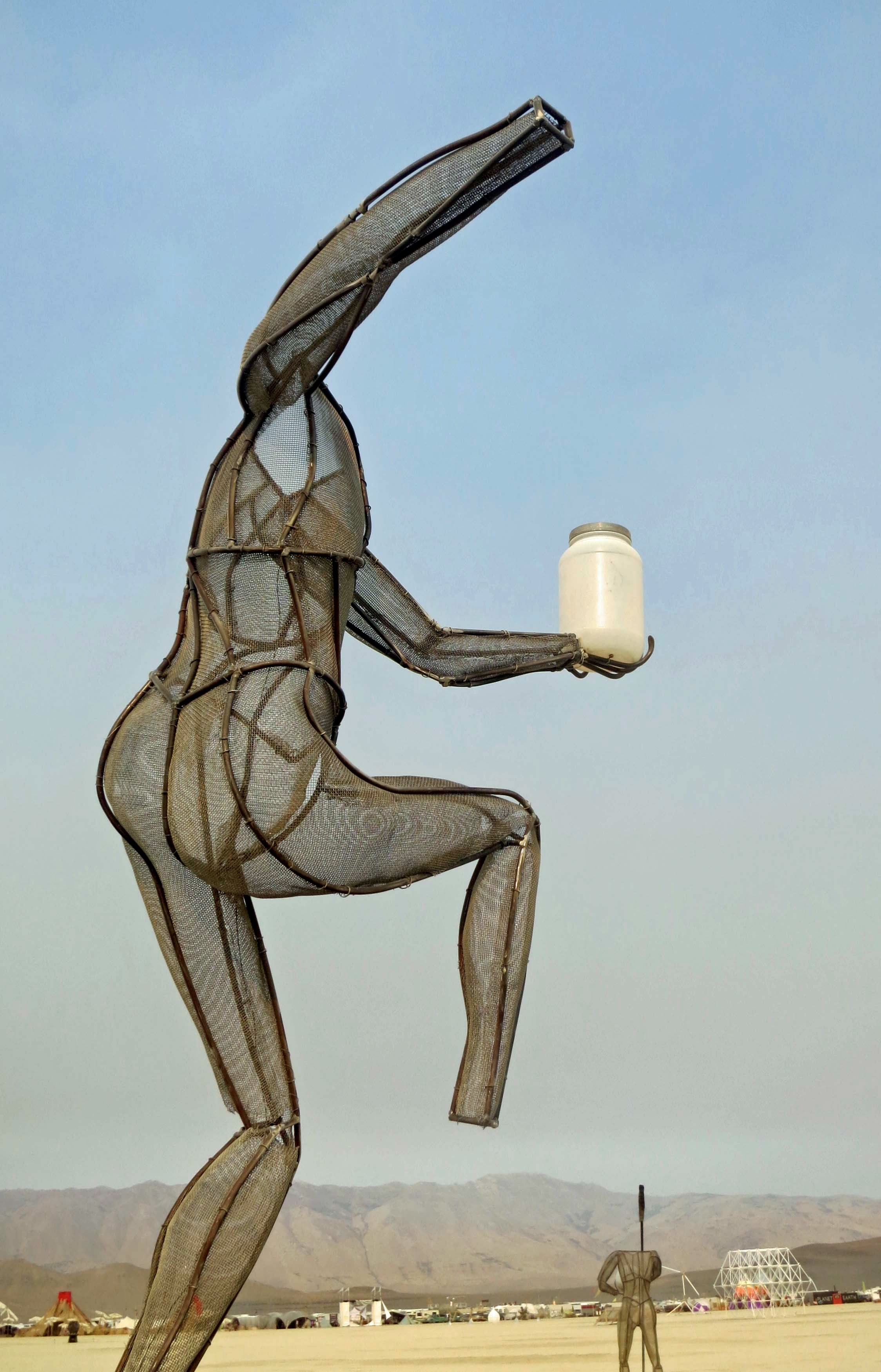
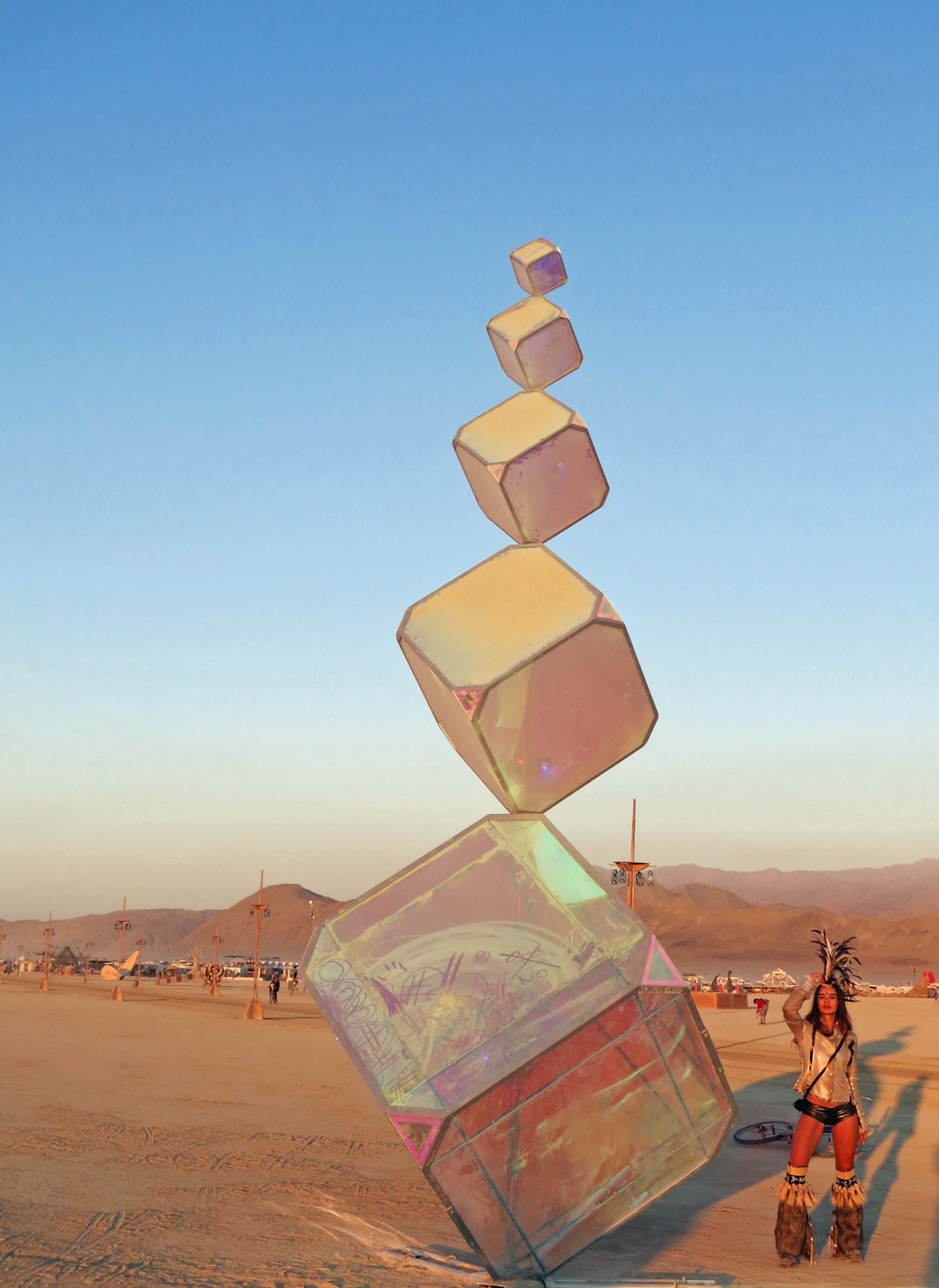
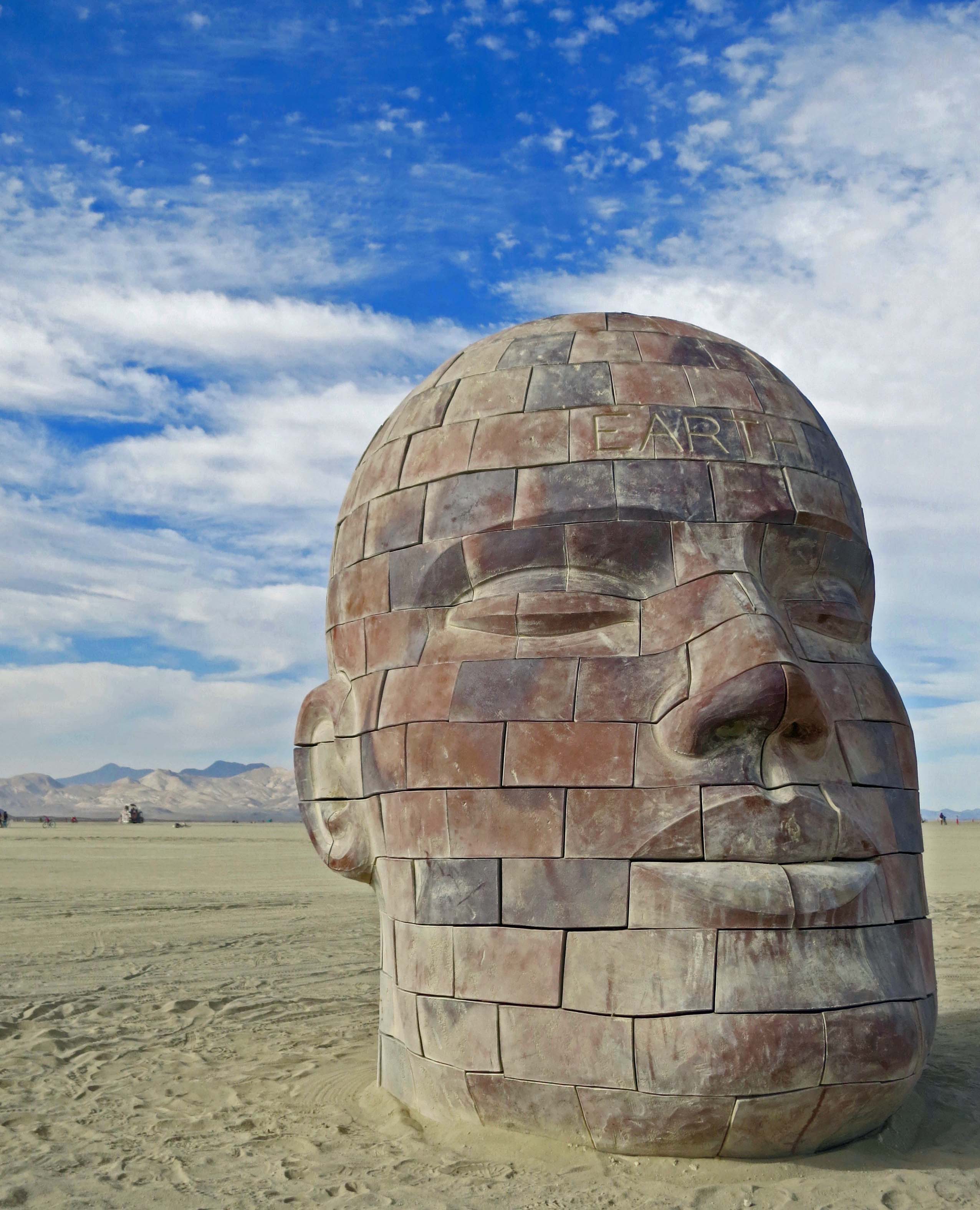
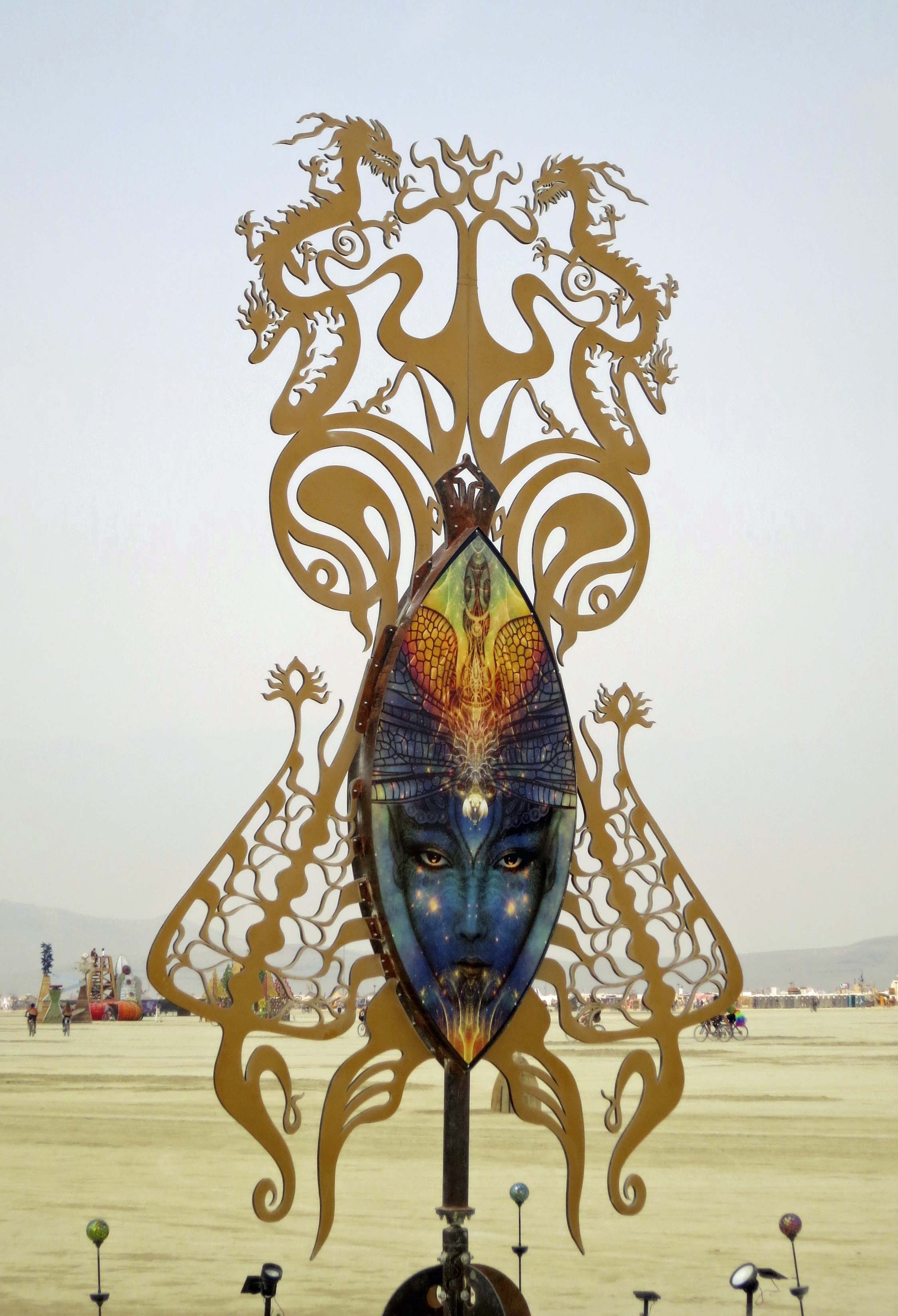
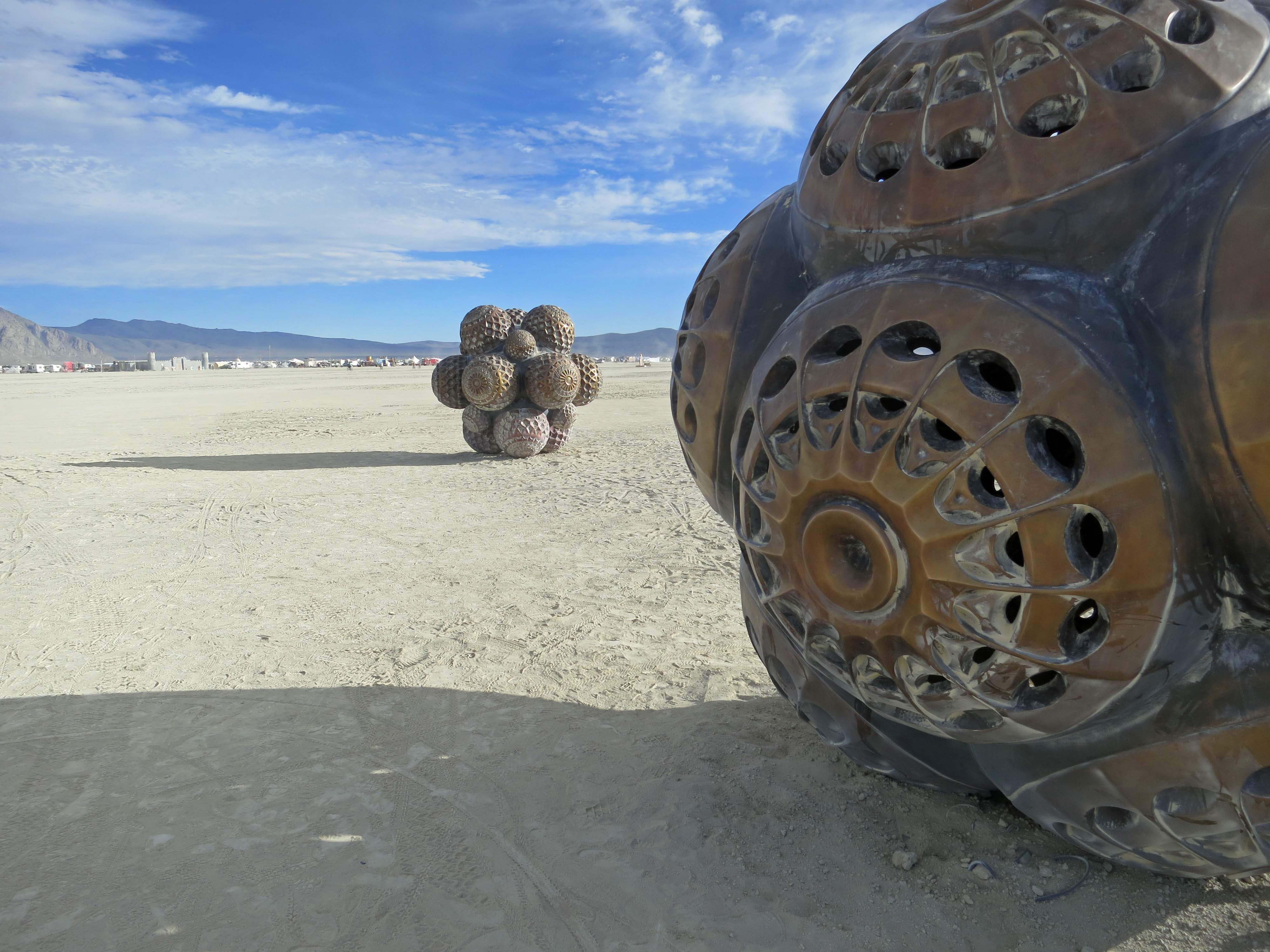
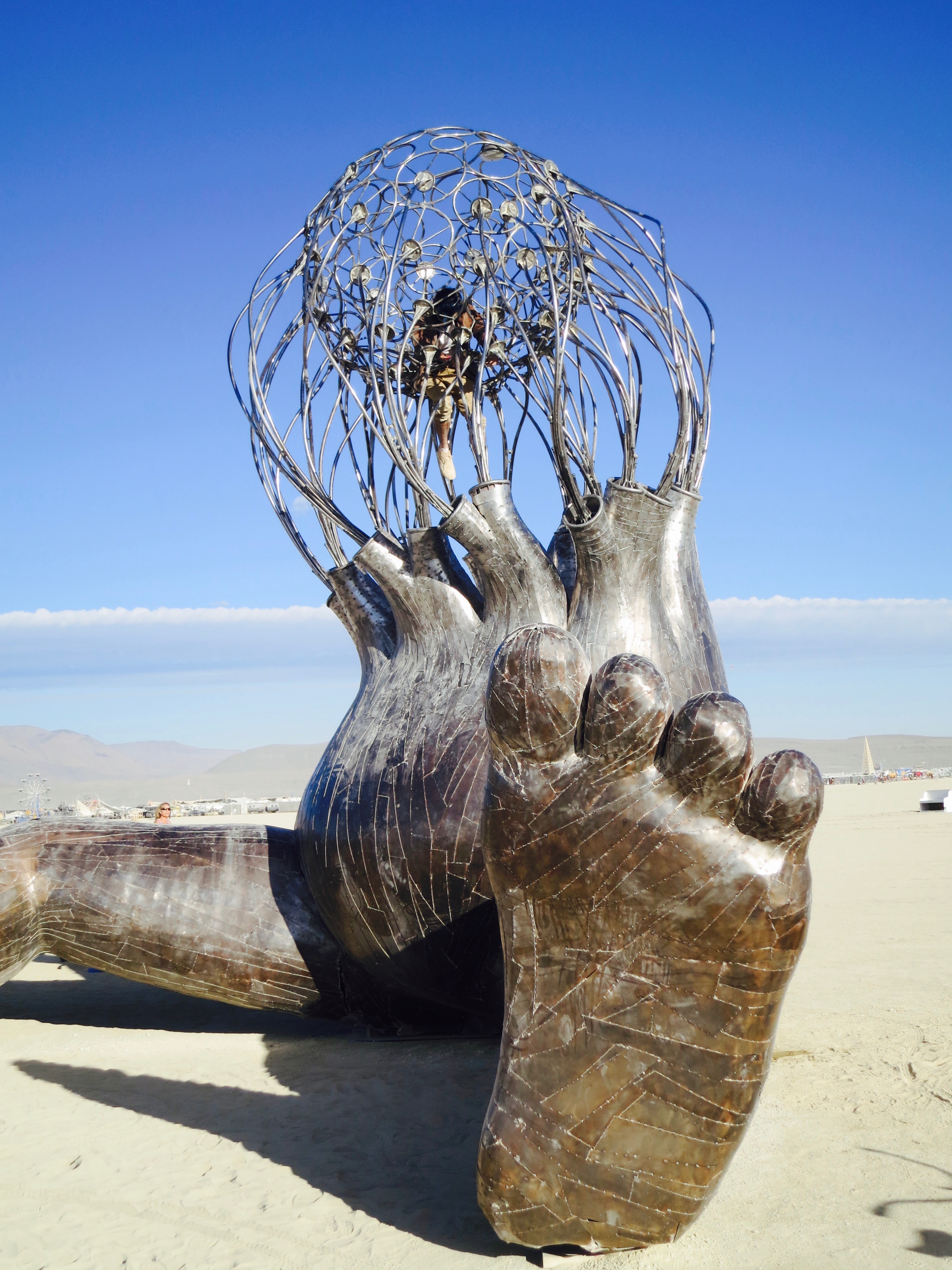
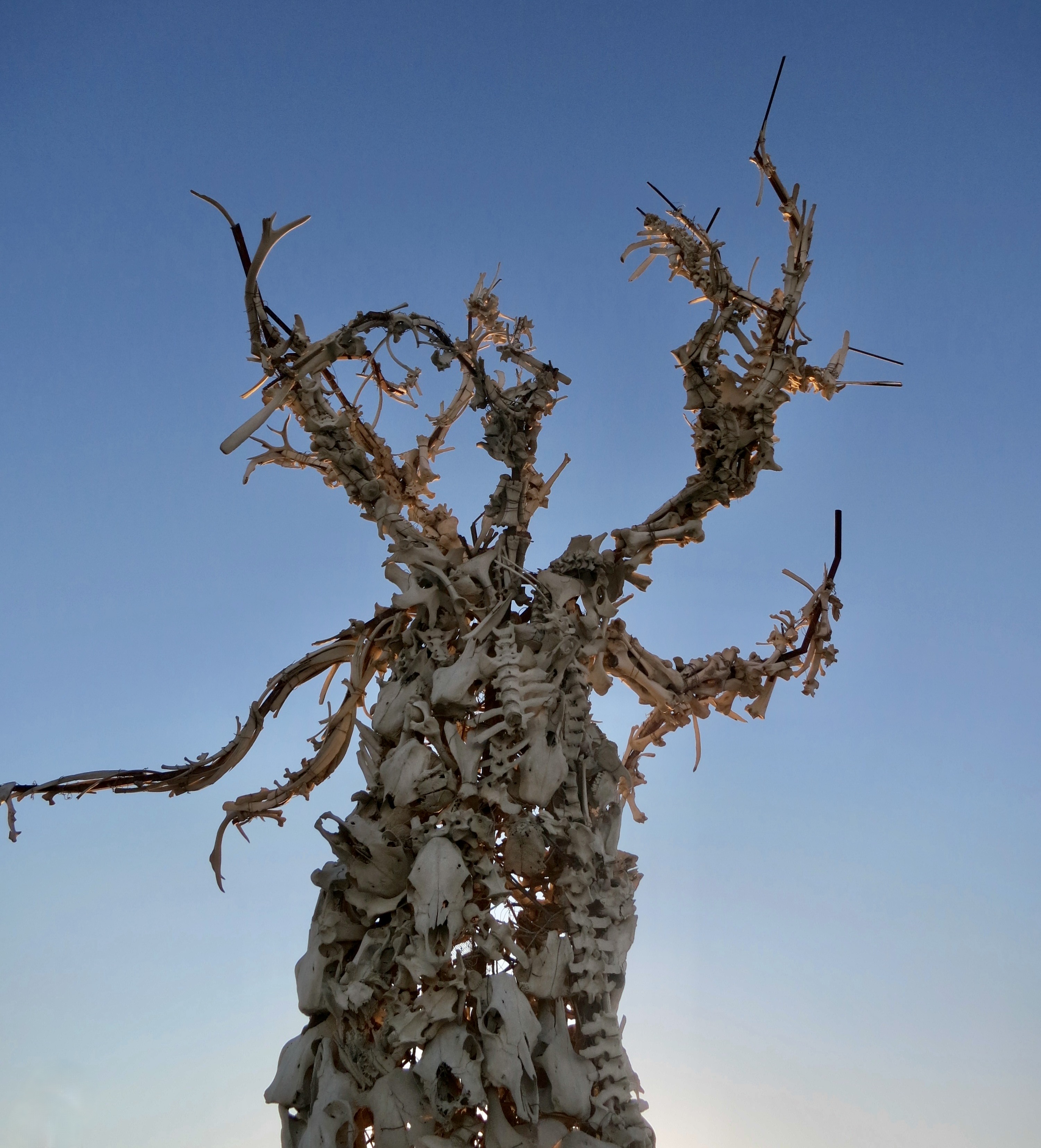
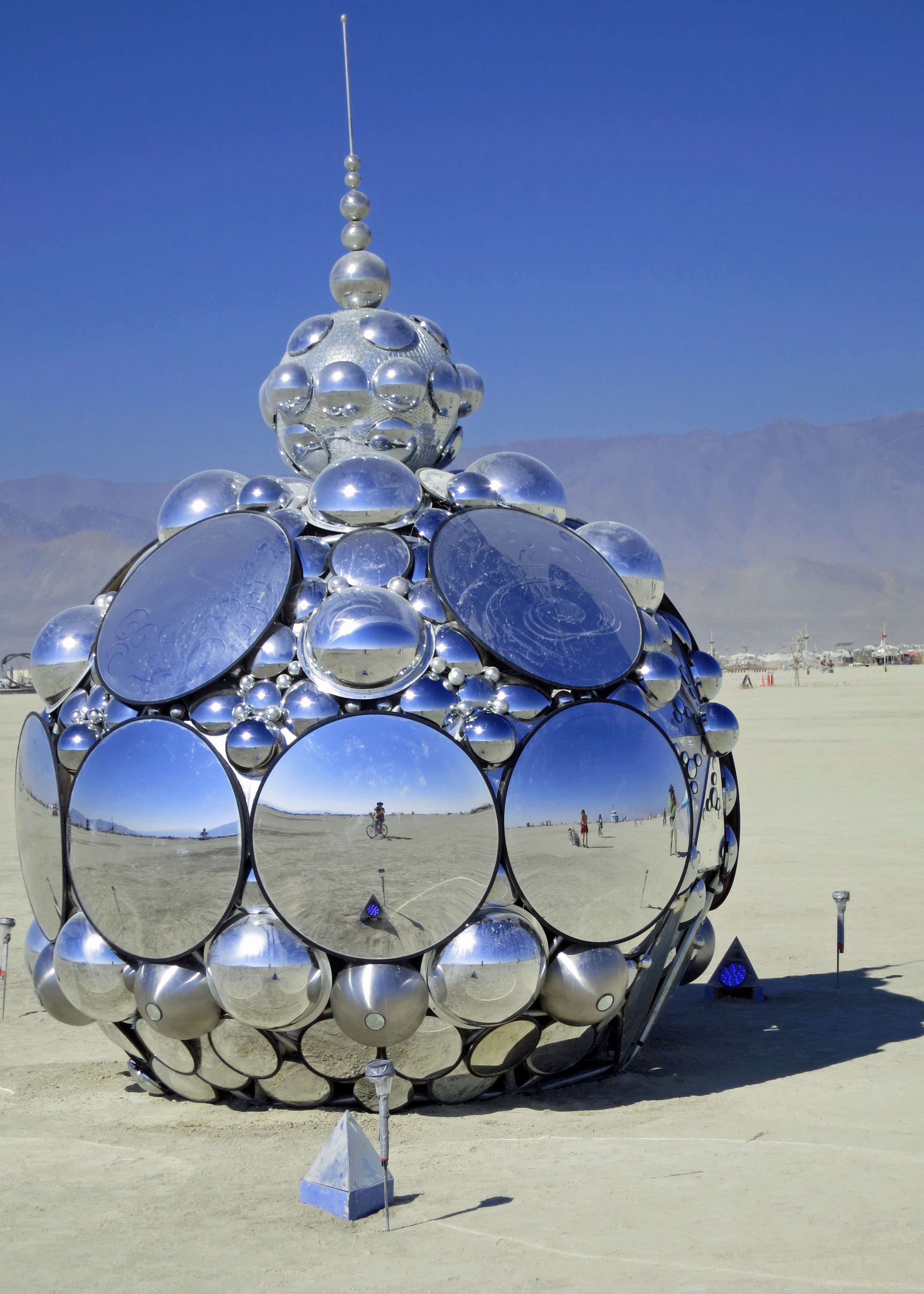
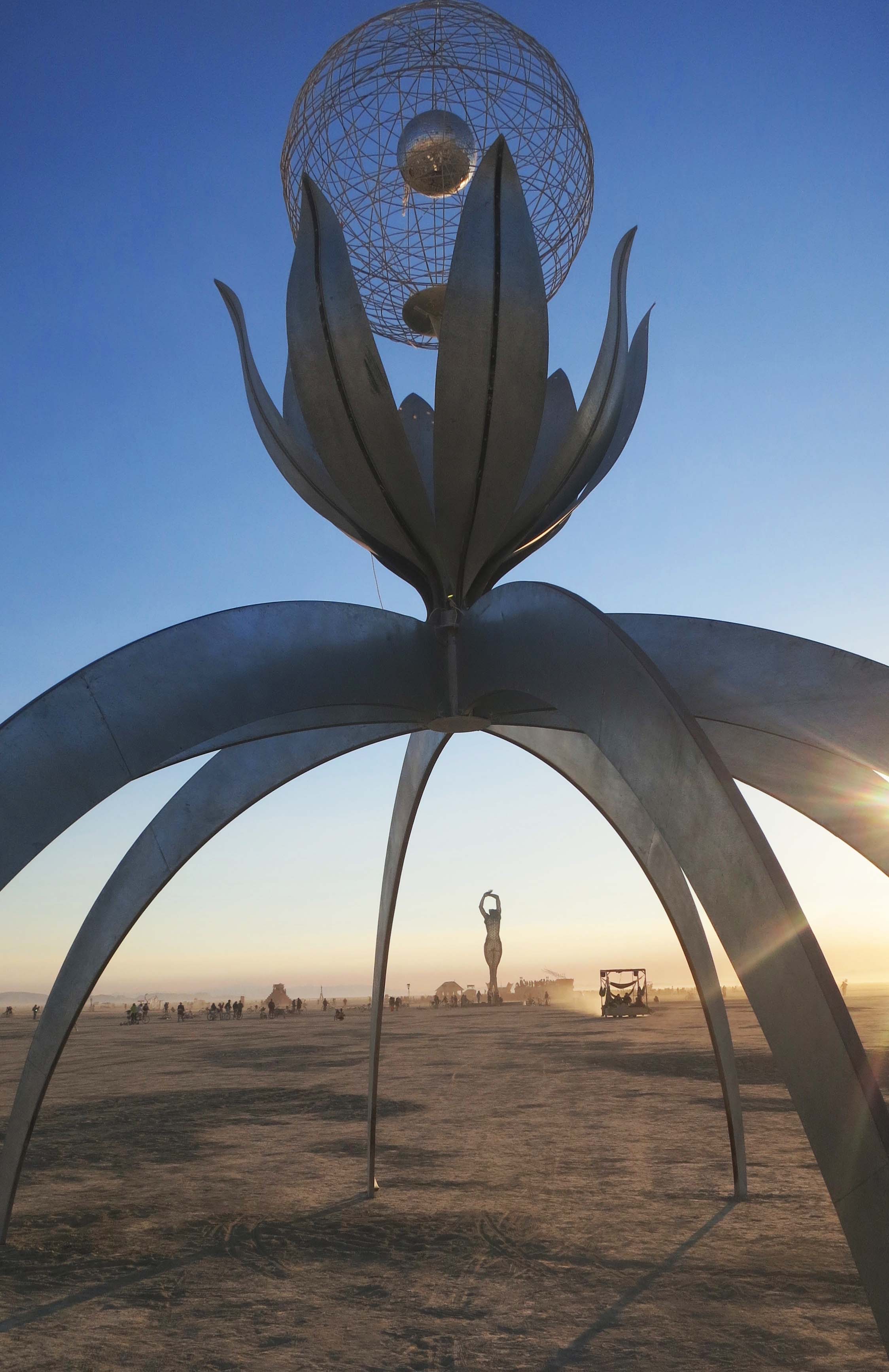
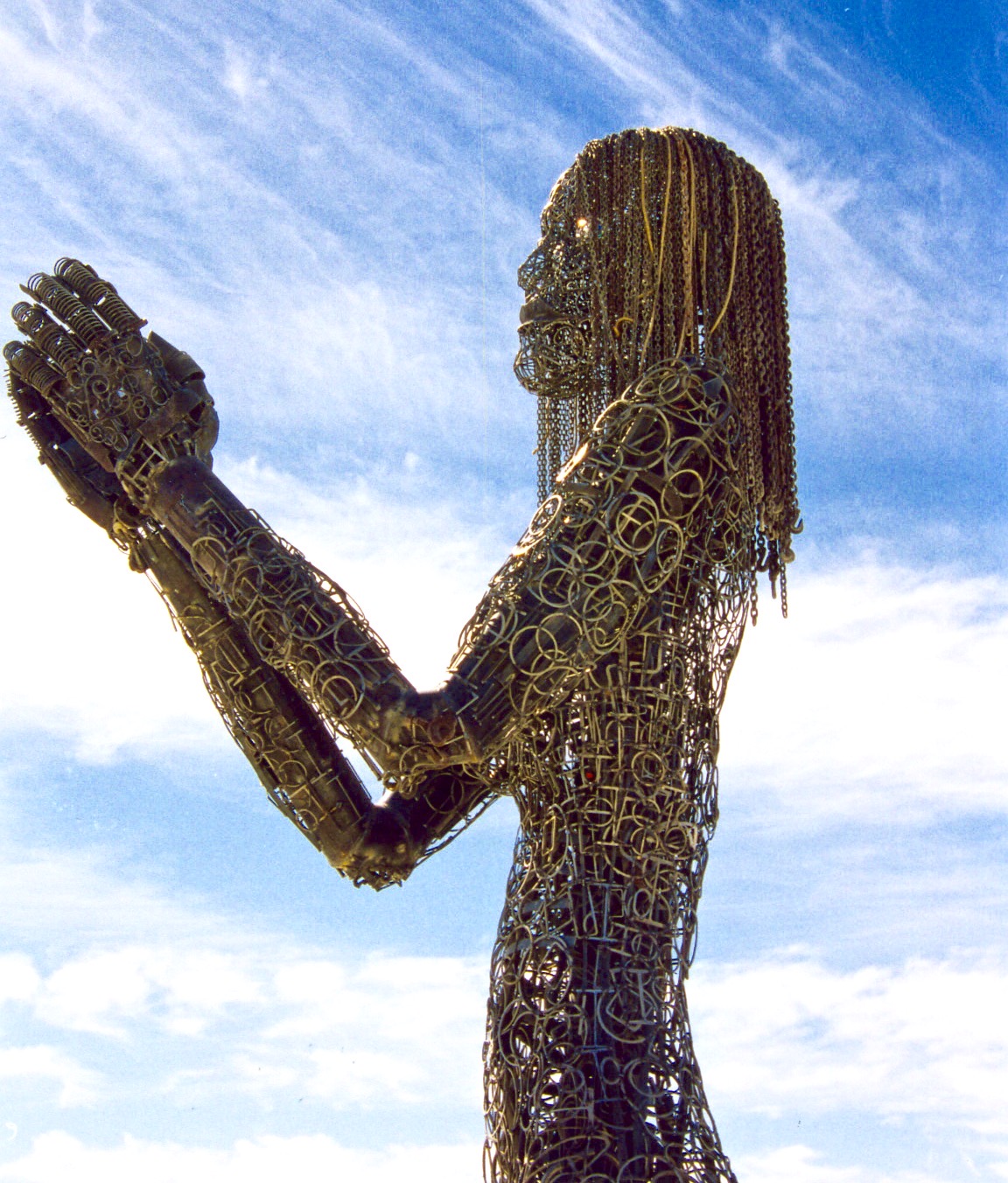
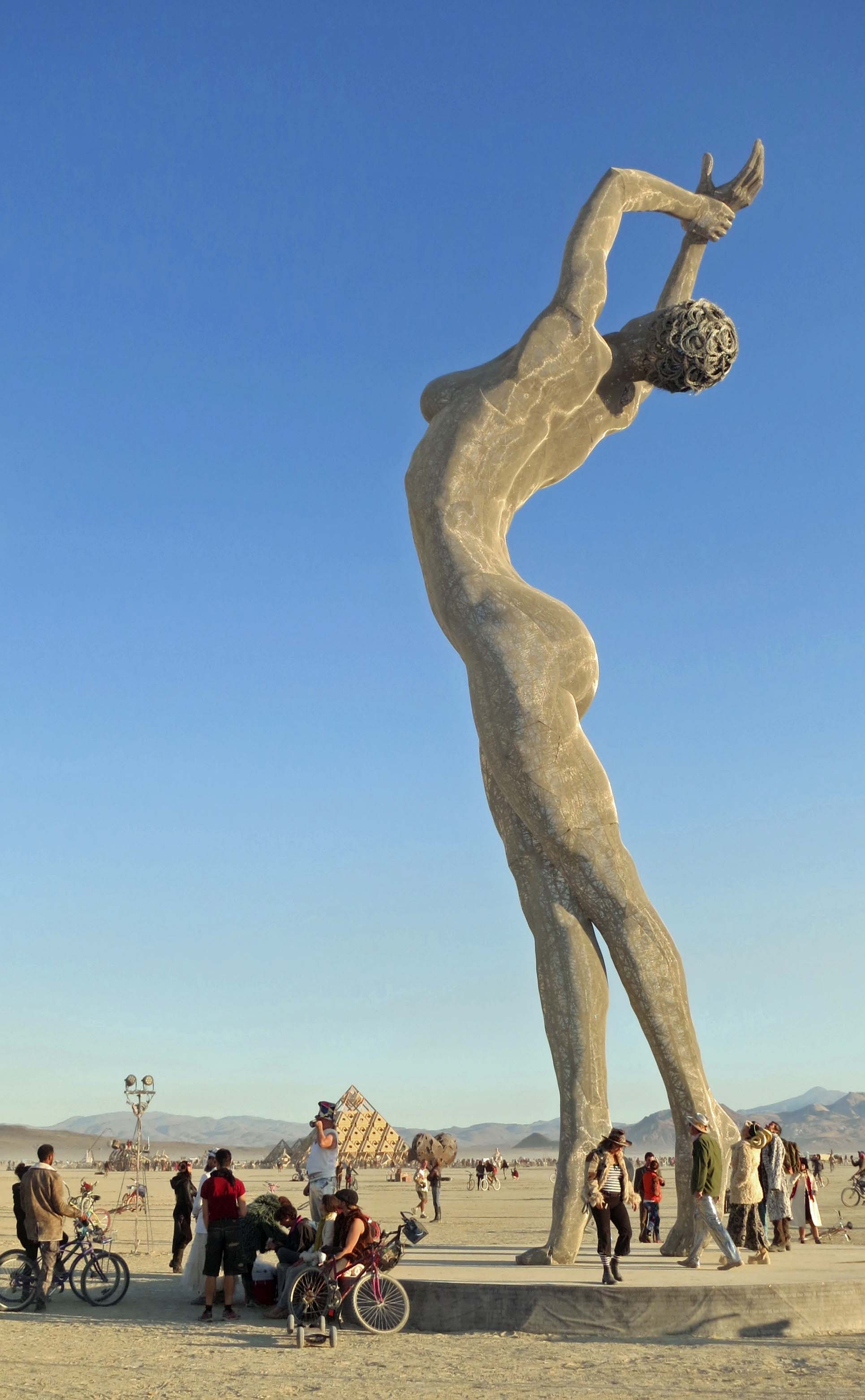
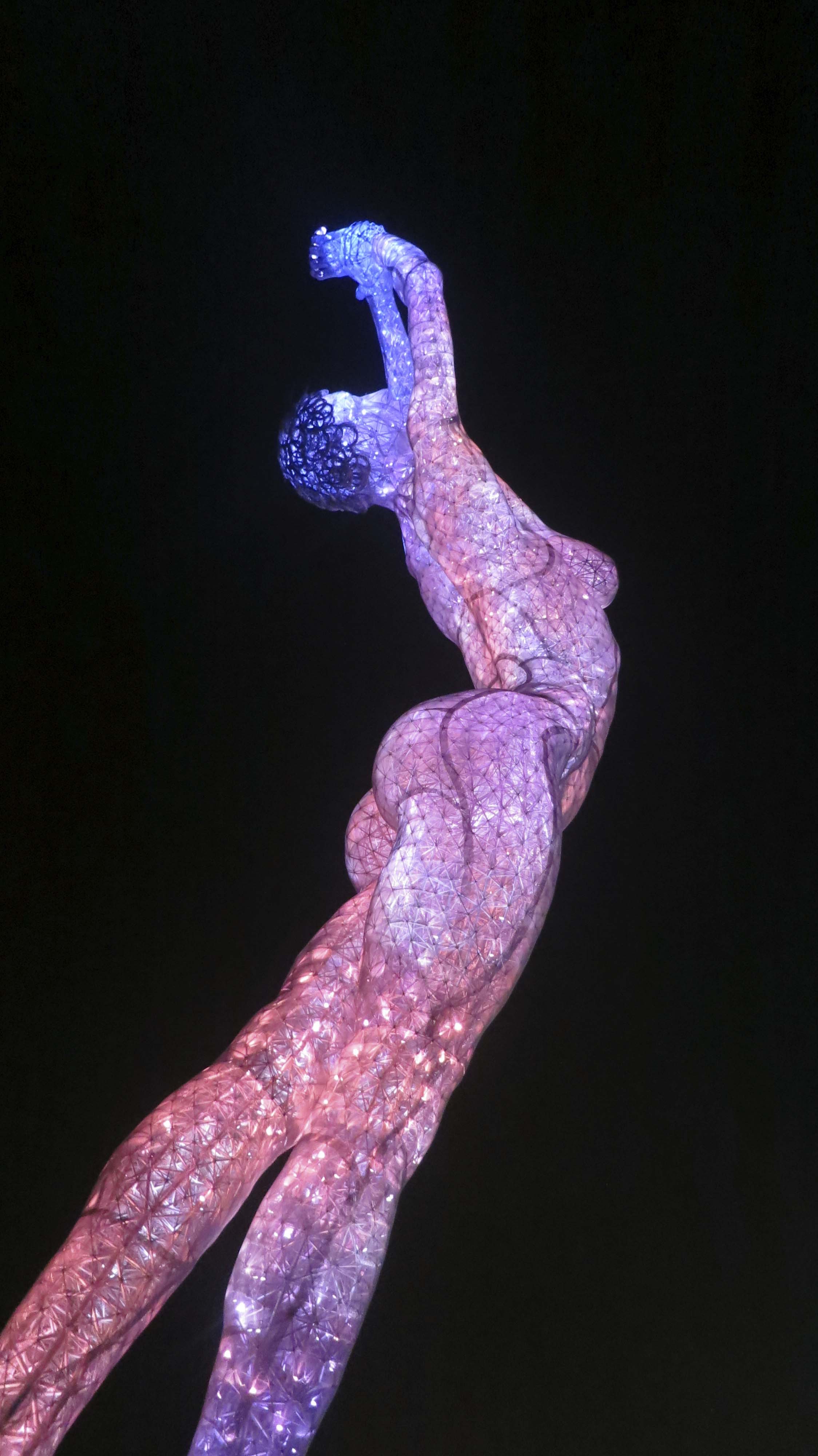
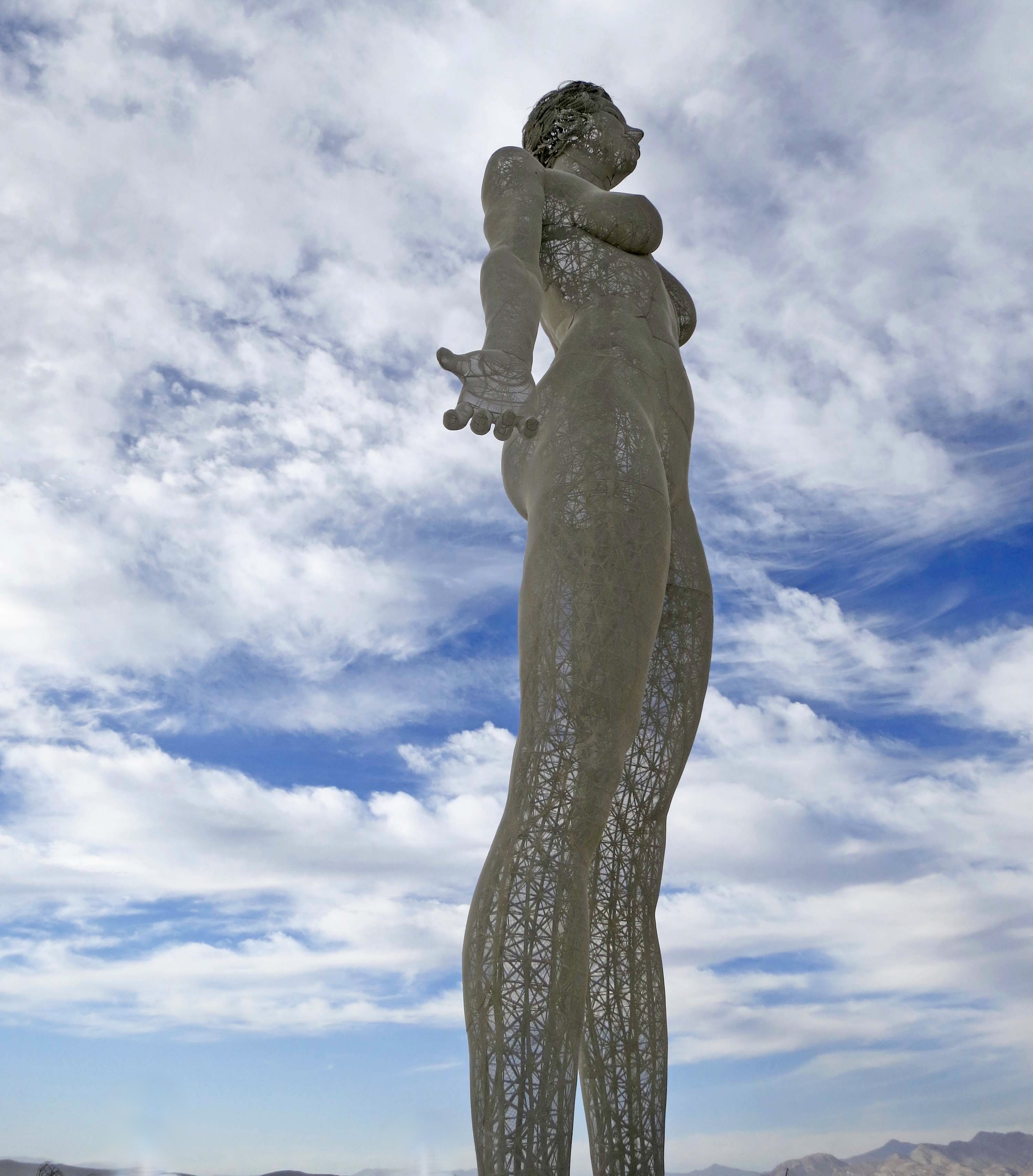
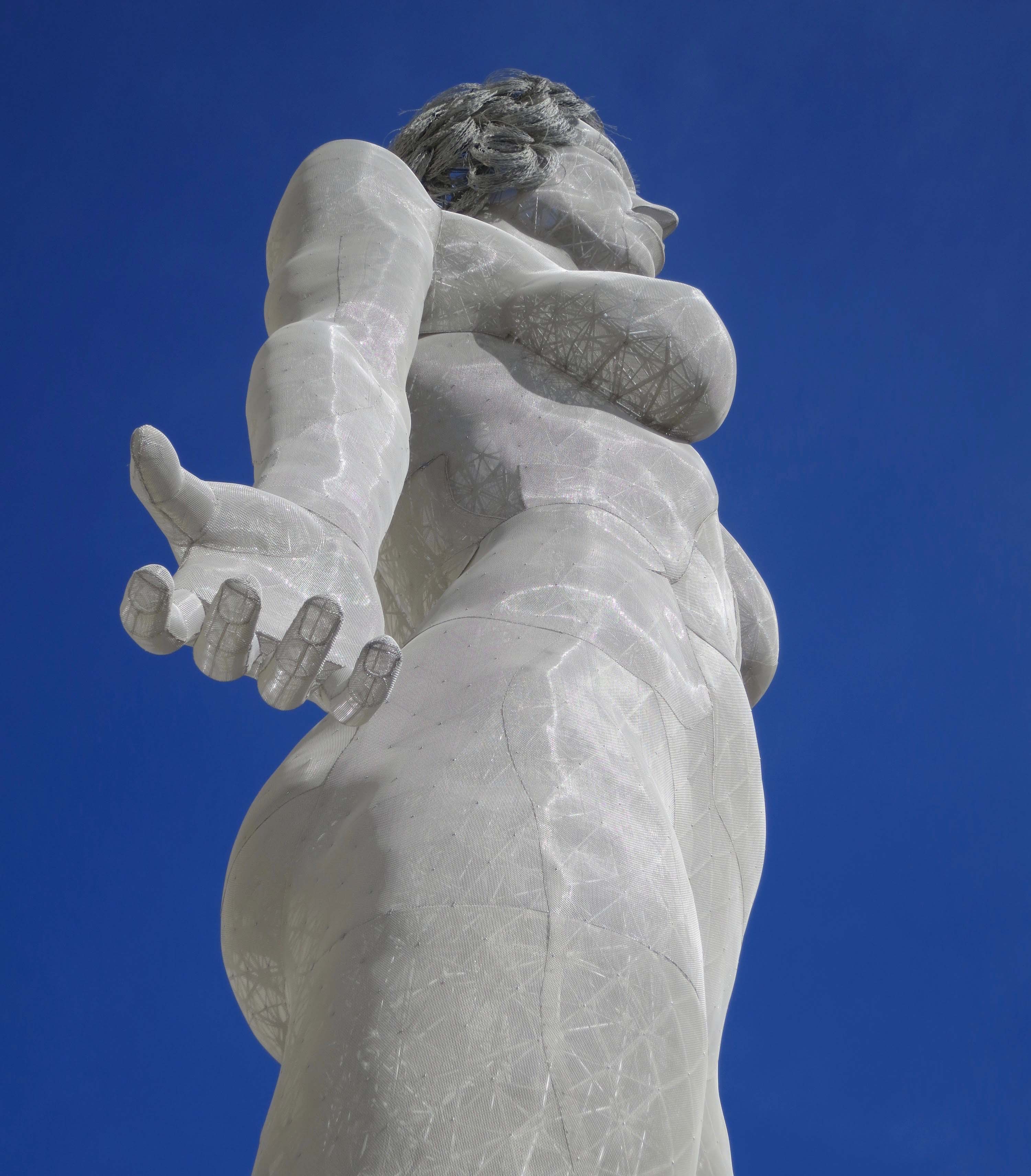
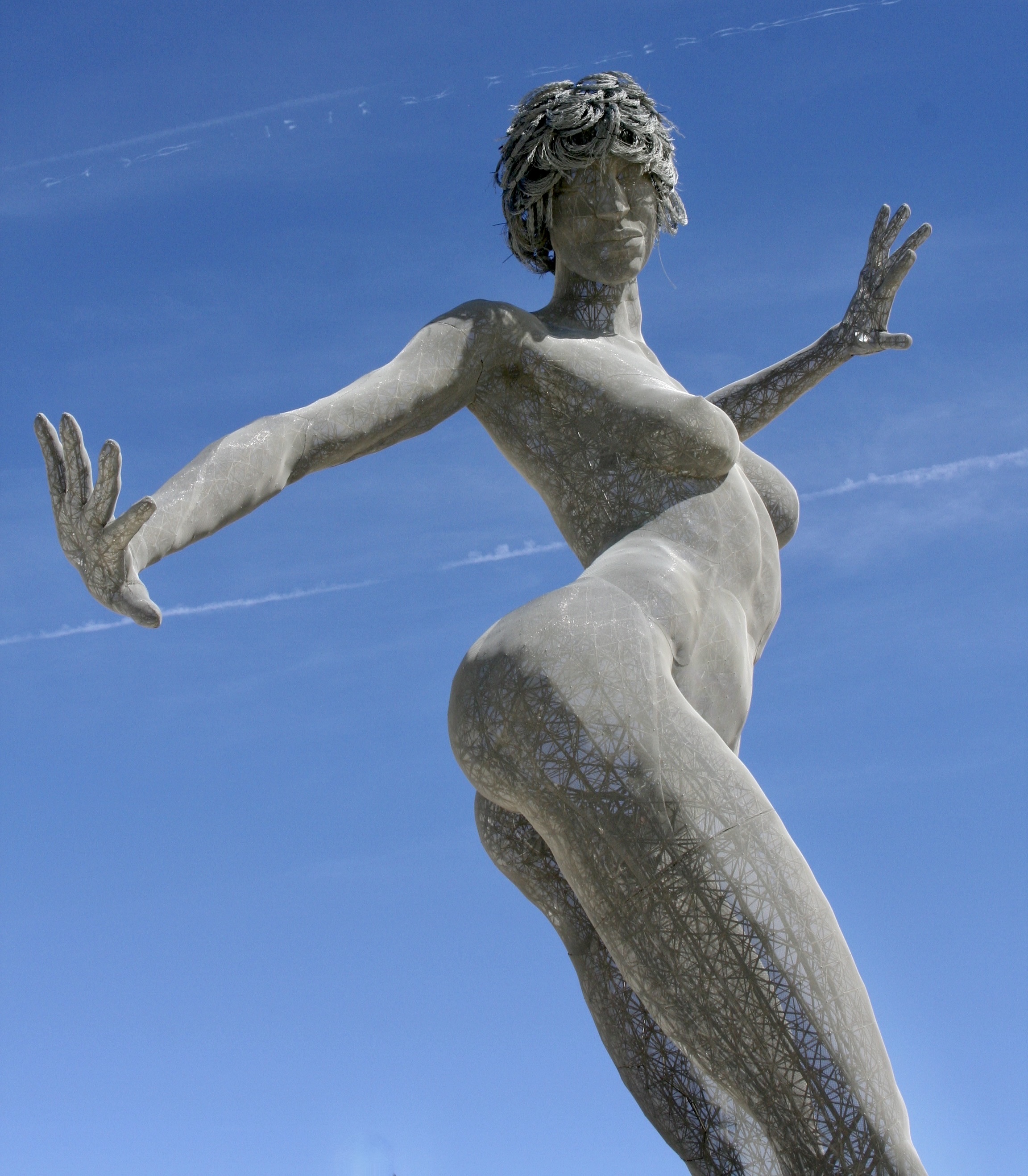
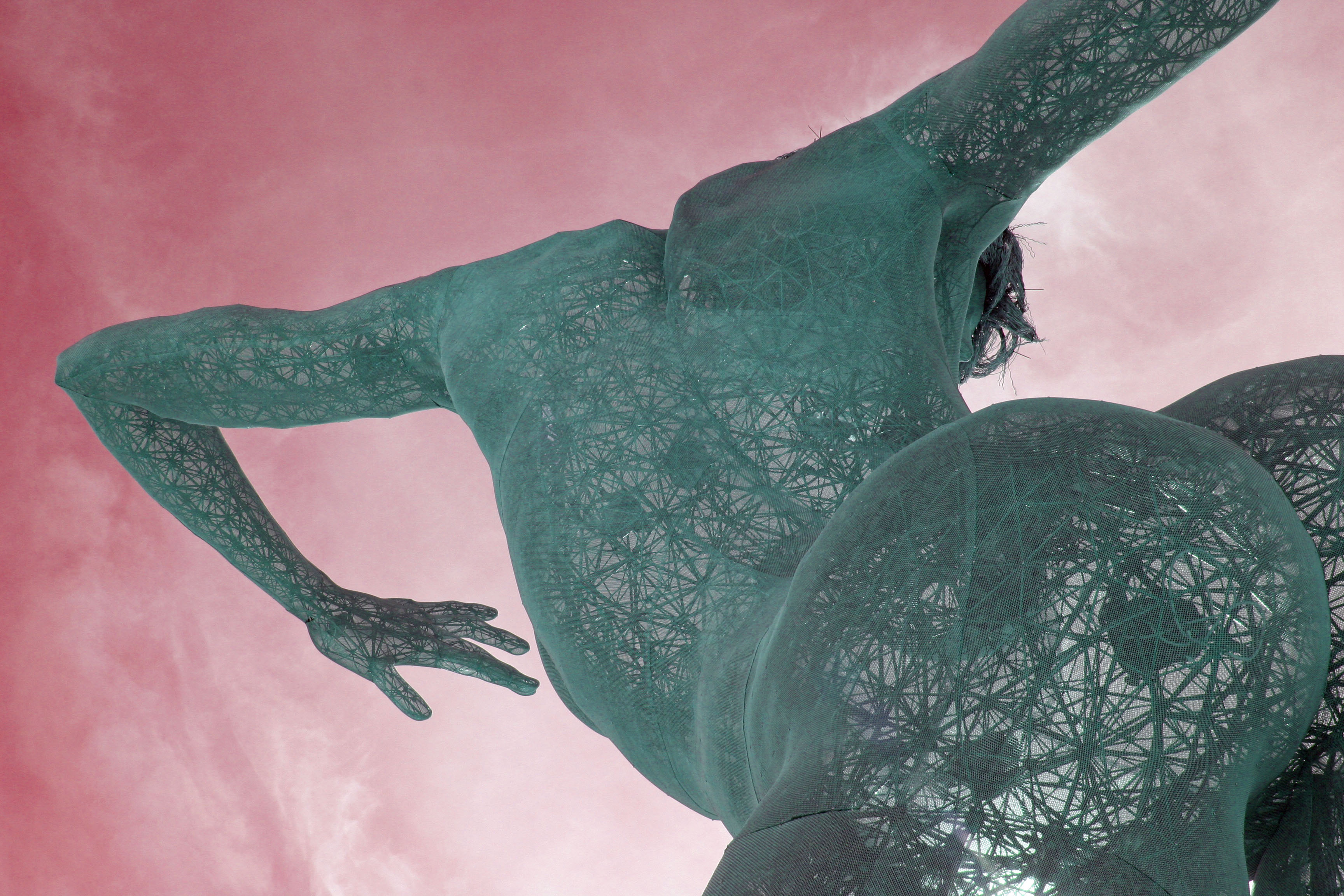
Art comes in many forms at Burning Man— from massive sculptures, to mutant vehicles, impressive buildings, costumes, performances, photography, murals, etc. There is no other place in the world that inspires as much creativity for a one week period.Today, I am going to consider some of Peggy and my favorite sculptures from our 12 years of visiting The Black Rock Desert. Where else could one find oil tankers welded together?Or Medusa.Not a ‘do’ you could get (or want) from your local hairdresser.Can you imagine the amount of work that goes into putting these creations together?While Medusa may give you nightmares, many of the sculptures are created with a sense of humor. Meet the Queen Bee with enormous boobs.Or join me as I photograph the nostrils of the sphinx…You probably didn’t see this coming.A 20 foot tall goofy rabbit. (Tom Lovering took this photo.)As I recall, these colorful characters were outside the Silicon Valley Village. Was there a message for us? The one on the left looks a bit like Elon.I really liked this dog.And these cats.It isn’t surprising that a flying saucer crash landed at Burning Man. It is located, after all, in the Nevada desert and all the ETs wandering around have to come from somewhere. This baby flying saucer, on the other hand, was a bit surprising.Was the Man keeping an eye on Junior from his flying saucer perch? There is plenty of mischief one can get into around Burning Man. Adult supervision is required…(Photo by Tom Lovering)Like dancing to this wild rabbit fiddling away at Center Camp. It’s not the dancing that would impact baby flying saucer, it was dancing into the wee hours as Burners do. Babies need their sleep. (Photo by our friend Don Green.)This guy, listening to the rabbit, came close to losing his pants while getting down to boogie.The little fellow might run into a dragon.Or, worse, a dragon guarding its egg! That’s one ferocious momma.Best to pass by when it’s sleeping.Then, there is pitchfork man who was seriously unbalanced…And monstrous bugs hatching and spreading out over the Playa. (Photo by Don Green.)One certainly wouldn’t want to run into this horny spider with crossed swords after dark.Or a Texas longhorn emerging from the Playa.The little guy needn’t worry, however. There is plenty of love at Burning Man.The key is letting go of your ego…And believing. For example, this monster robot was just out walking with his dog and carrying a flower.The large pink rabbit let a little kid run up and hug its leg.And the giant butterfly invited folks to relax and enjoy the view. (Photo by Don Green.)A 50 foot tall couple was willing to share hugs…And the ferocious looking Coyote was only howling at the moon.Babies (inner children) reached out to each other, providing hope…And lots of aliens cleverly disguised as topless Burners were available to look out for baby saucer. (Otherwise, they might be stuck on Earth, which they had serious doubts about at this time.)A lighthouse was available to provide guidance…To wherever in the world the little guy might want to travel…There were plenty of bicycles to borrow for local transportation (some fixing required).And a rocket ship to provide a boost into outer space if needed.Woohoo!And now that the baby flying saucer has been taken care of, here are some of our other favorite Burning Man sculptures…These blocks seemed to be reaching for infinity…A head made of bricks was Earthy, according to his forehead.A mask with glowing eyes stared out at passing Burners. Not sure what this was meant to signify, but it has always been a favorite of mine. One wonders where all of the Burners are. But if you get far enough out on the Playa, they are few and far between. Big feet, big heart? Yes, there is a person up there. A general rule at Burning Man is, if it can be climbed, it is climbed.Ghost tree made out of bones. No climbing this. A sign told Burners to stay off. But….no guarantees.Mirror image. Every time we passed by this sculpture, someone was taking a selfie. Usually posing. I took a photo of myself taking a photo of myself while sitting on my bike. Flight.Lotus flower with a distant view, which brings us to…Giants. This was from 2006 Burning Man. Several giant male and female statues were facing an oil derrick. The oil tankers shown at the beginning were from the same year. “Hope and Fear: The Future” was the theme.The human body has fascinated artists forever. Burning Man was blessed with these sculptures. There were three in the series. This was known as Truth Is Beauty.And she was beautiful at night as well as during the day. The sculpture was constantly changing color.R-Evolution was another of the three giant sculptures by Michael Cochrane. A close up. Note the internal structure, which also shows up prominently in the two photos above.And finally, Bliss. My favorite because she is obviously having fun.I’ll conclude with this close up. I had fun playing with both the form and colors. Like much that happens at Burning Man, these sculptures rightfully received world-wide attention. I was surprised to find that one of my photos even showed up in a French poetry magazine. (They didn’t ask, but they did give credit.)Next in the Burning Man Focus Series, we’ll take a look at the striking and unusual Temples of Burning Man.
On Thursday, I’ll post the next in my UT-OH! blog-a-book series: The tale of how MC the Cat barely avoided having his danglies cut off, which, much to his dismay, would have ended his tomcatting ways.
We are continuing our focus on Burning Man today with a look at the wild, whacky, weird (and, I would add wonderful) mutant vehicles that roam the Playa and make their way through Black Rock City every year. Other than official vehicles and bicycles, they are the only form of transportation that is allowed besides walking. Each year brings a new crop to admire as well as old favorites to appreciate. While who knows what 2026 will bring, my goal today is to provide a perspective of what is possible based on past years. The ‘mutations’ that people come up with are prime examples of the creativity that goes into making Burning Man special. BM encourages this artistic flare with mutant vehicles by requiring that they must be extensively transformed, unrecognizable from their original form. Throwing a few baubles on your vehicle and calling it mutant so you can drive around the Playa and Black Rock City doesn’t work.
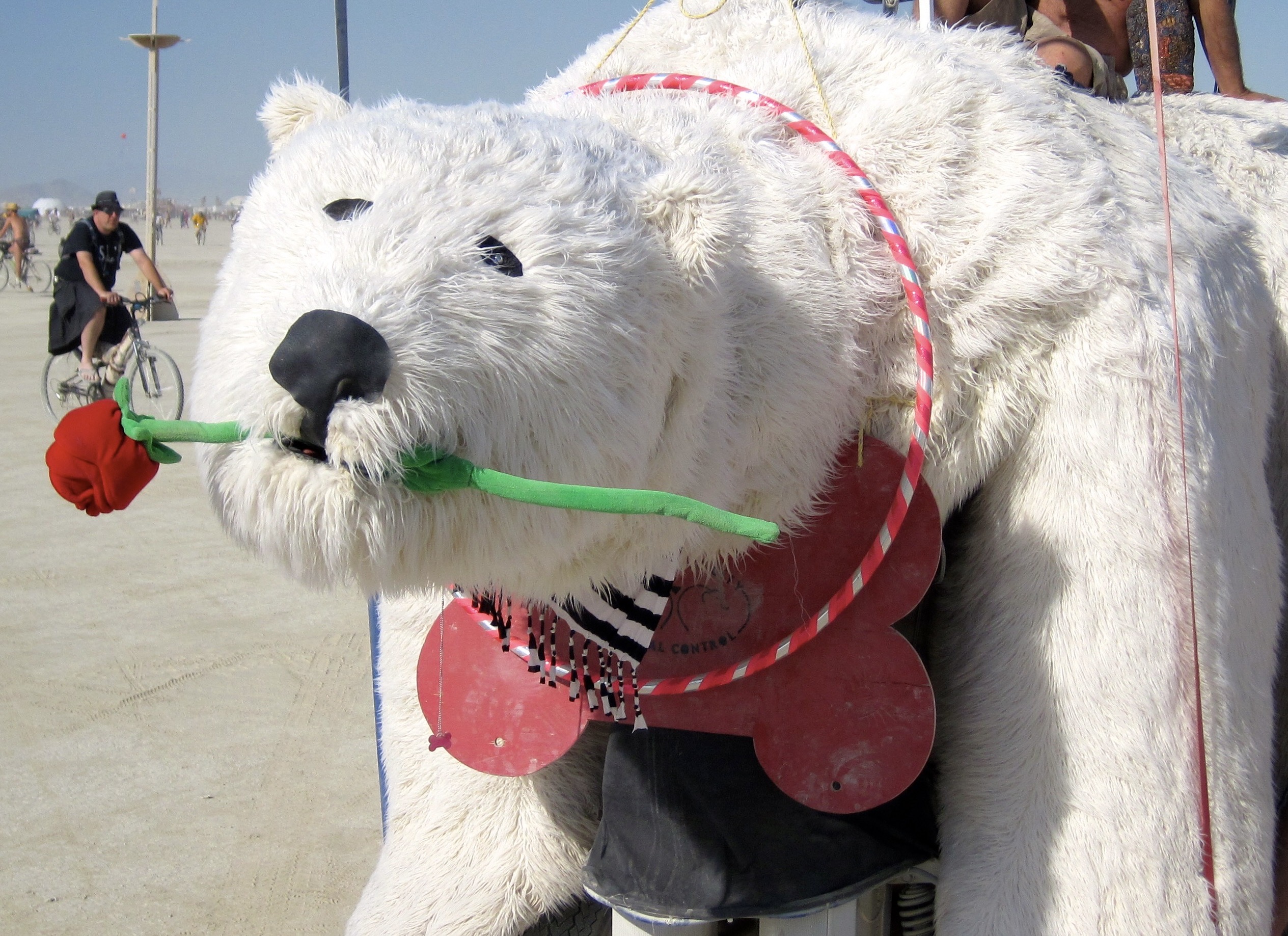
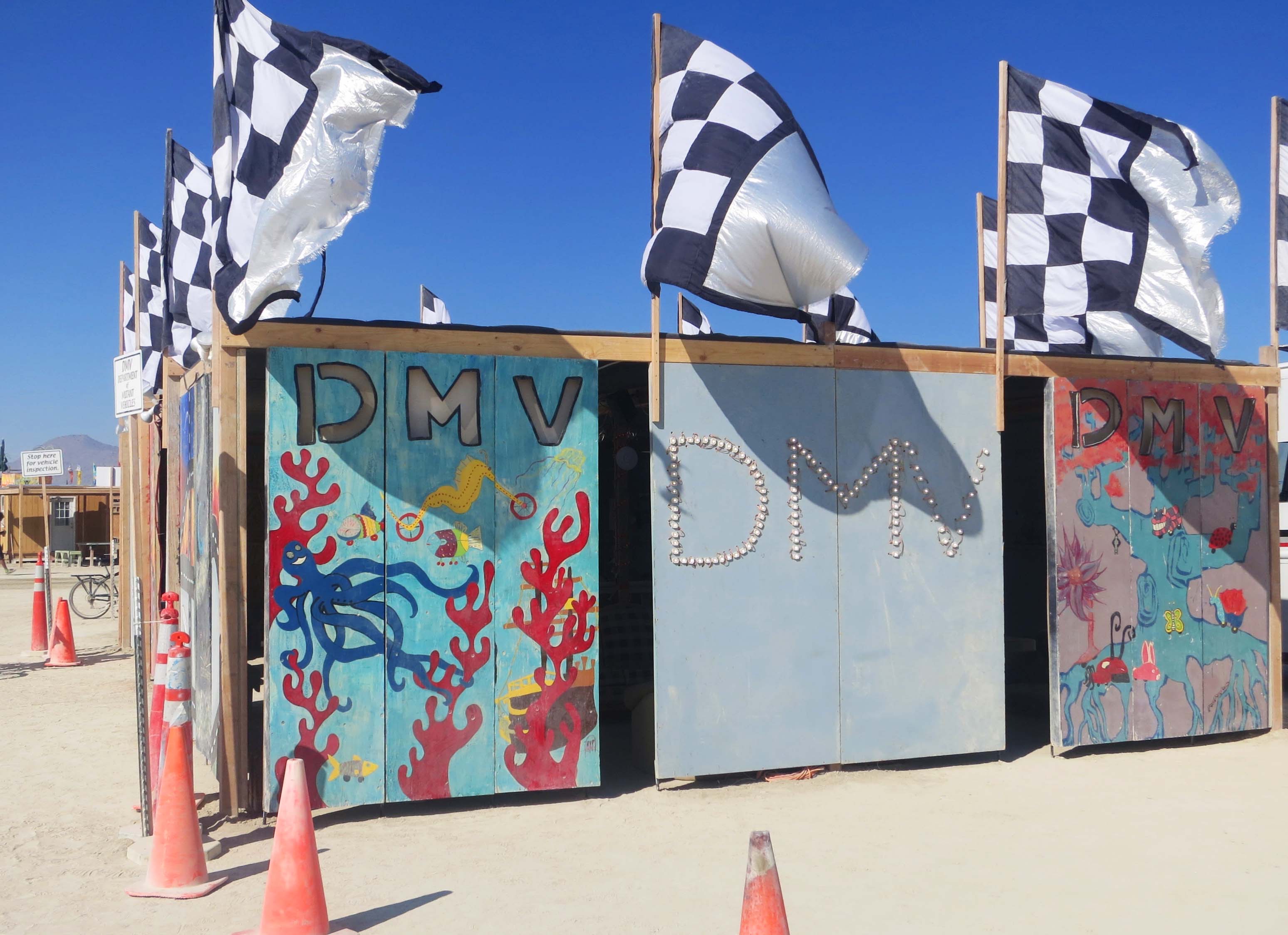
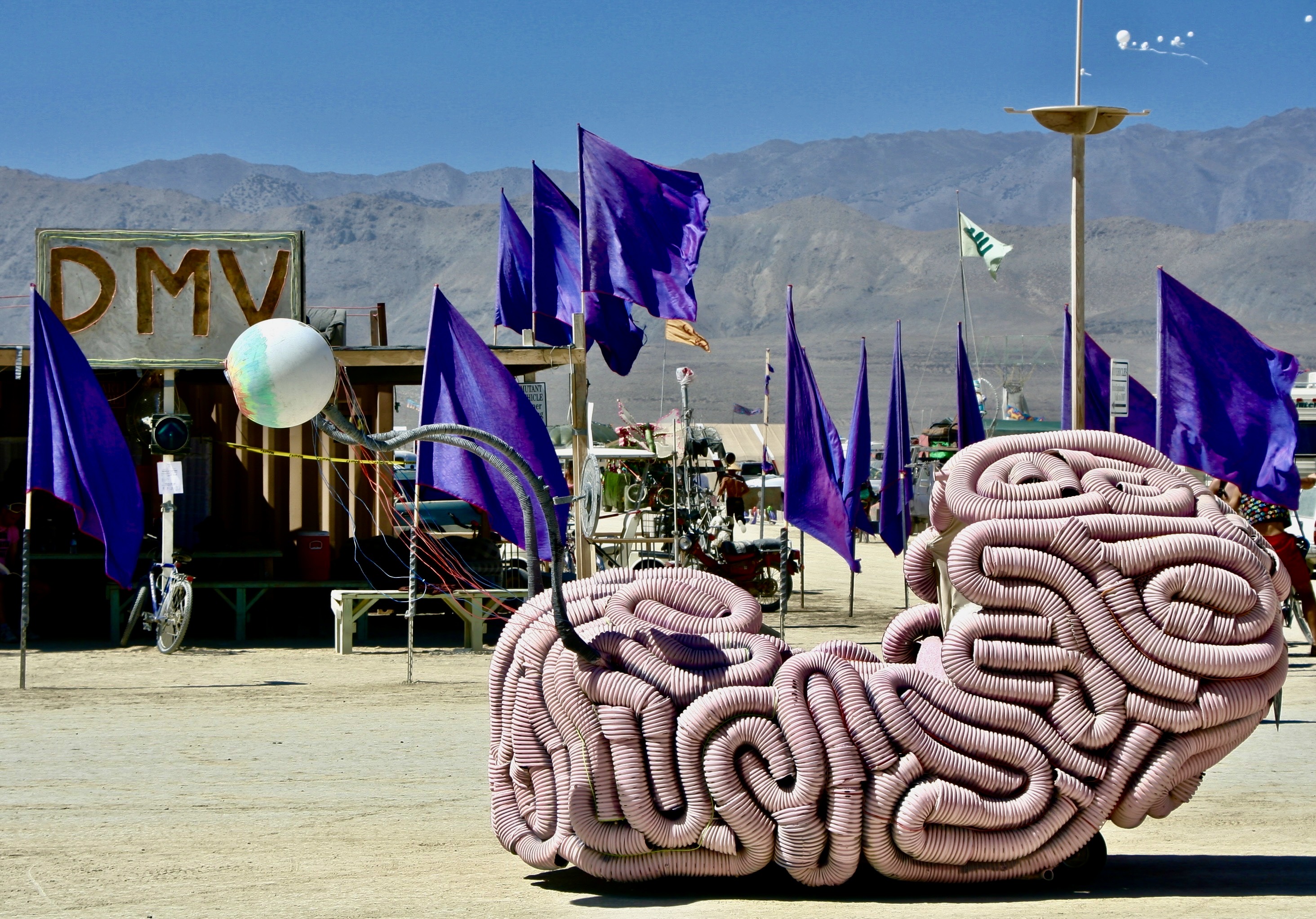
This is one that does. Valentine’s Day may have come and gone a few days ago, but this polar bear at Burning Man would be the perfect way to deliver a rose to your sweetheart, regardless of the date. I guarantee she or he would be impressed. (Photo by our friend and fellow Burner, Tom Lovering.)Beyond transformation, safety is the other requirement for mutant vehicles. Factors such as sturdy railings to keep passengers from falling off and “radical” nighttime lighting are considered as well as the usual, like good working brakes. Special requirements are added for the many vehicles that spout fire at night. A 5 MPH speed limit is required as are rules pertaining when and where you can play loud music. BM maintains careful control over both the ‘look’ of your vehicle, its safety, and the number of mutants allowed. It starts with a detailed application process. Assuming you are granted a permit, your first stop at Burning Man will be at DMV (The Department of Mutant Vehicles) where a safety check is performed. Only then are you free to roam.
Following are photos of 40 different vehicles. While that seems like a lot for a post, they are easy to scroll though, heavy on photos, light on words. Enjoy.
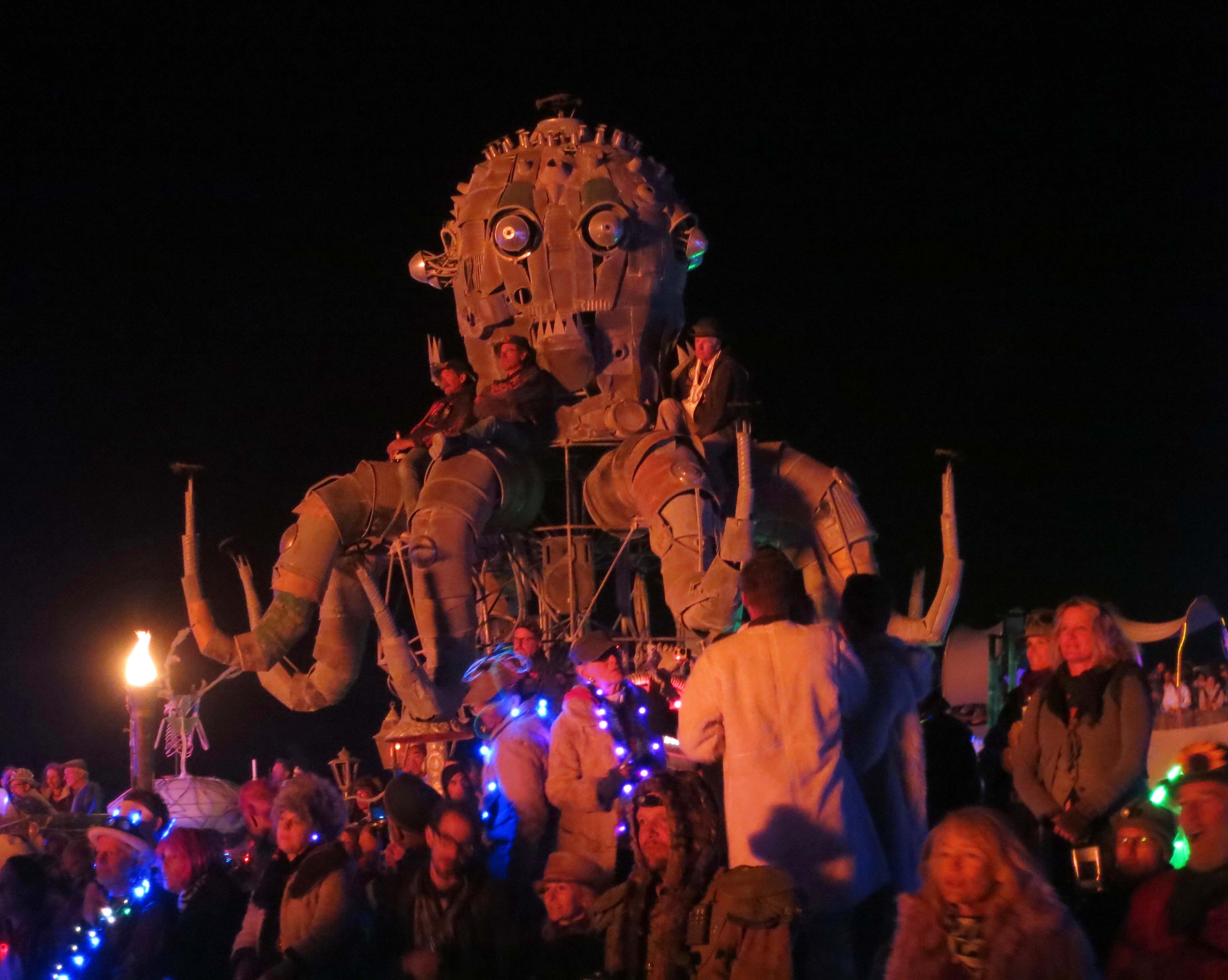
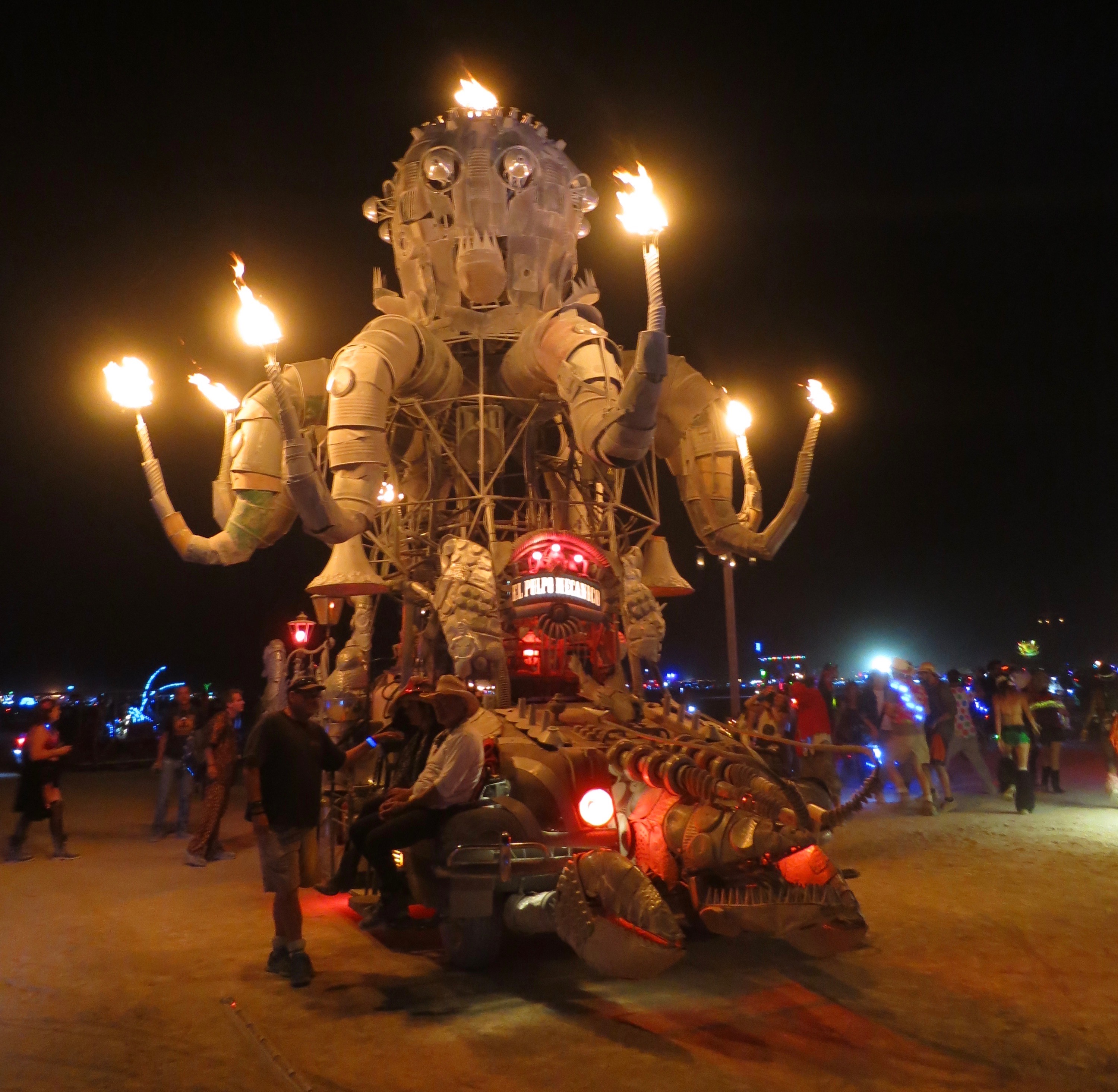
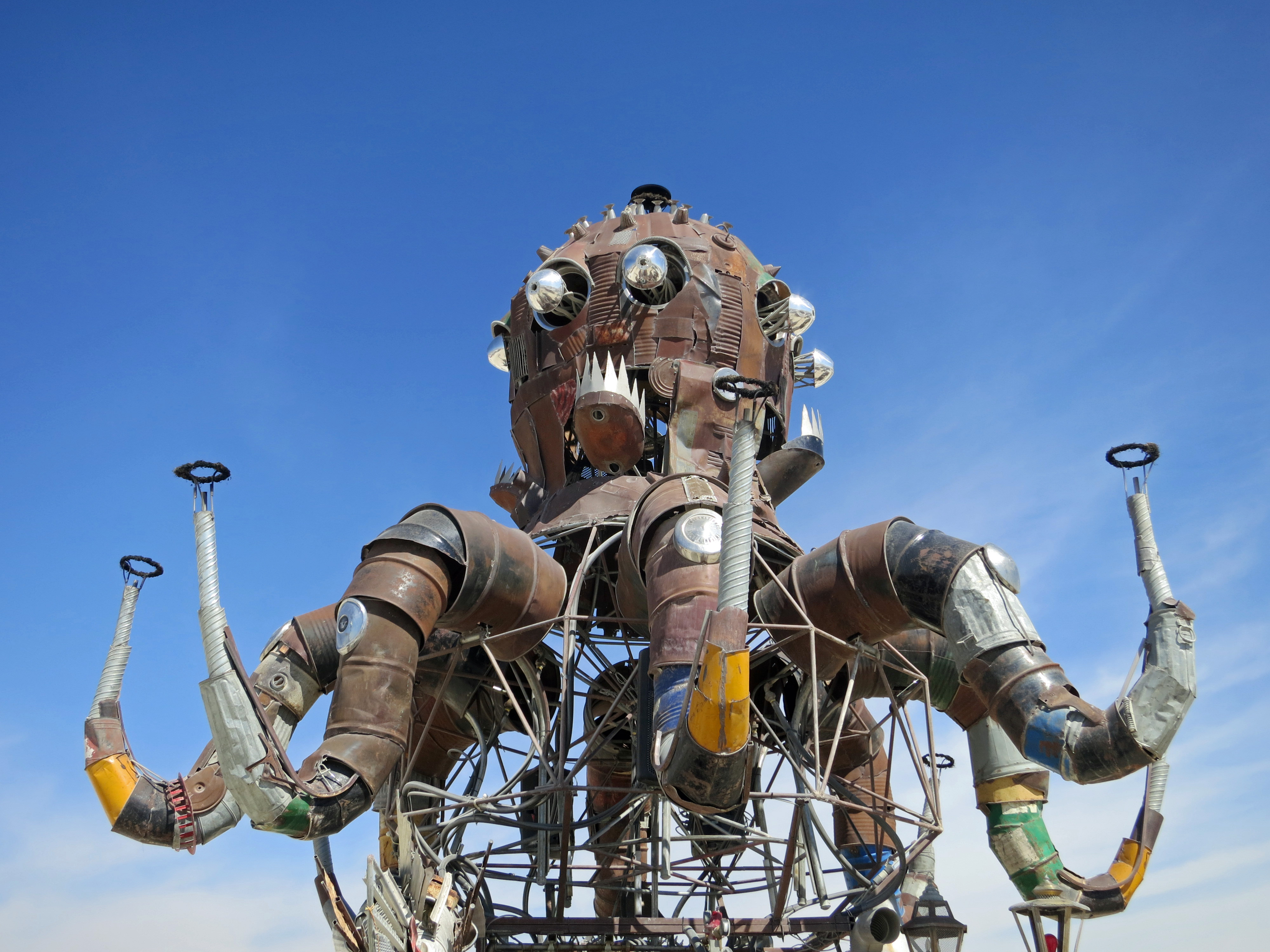
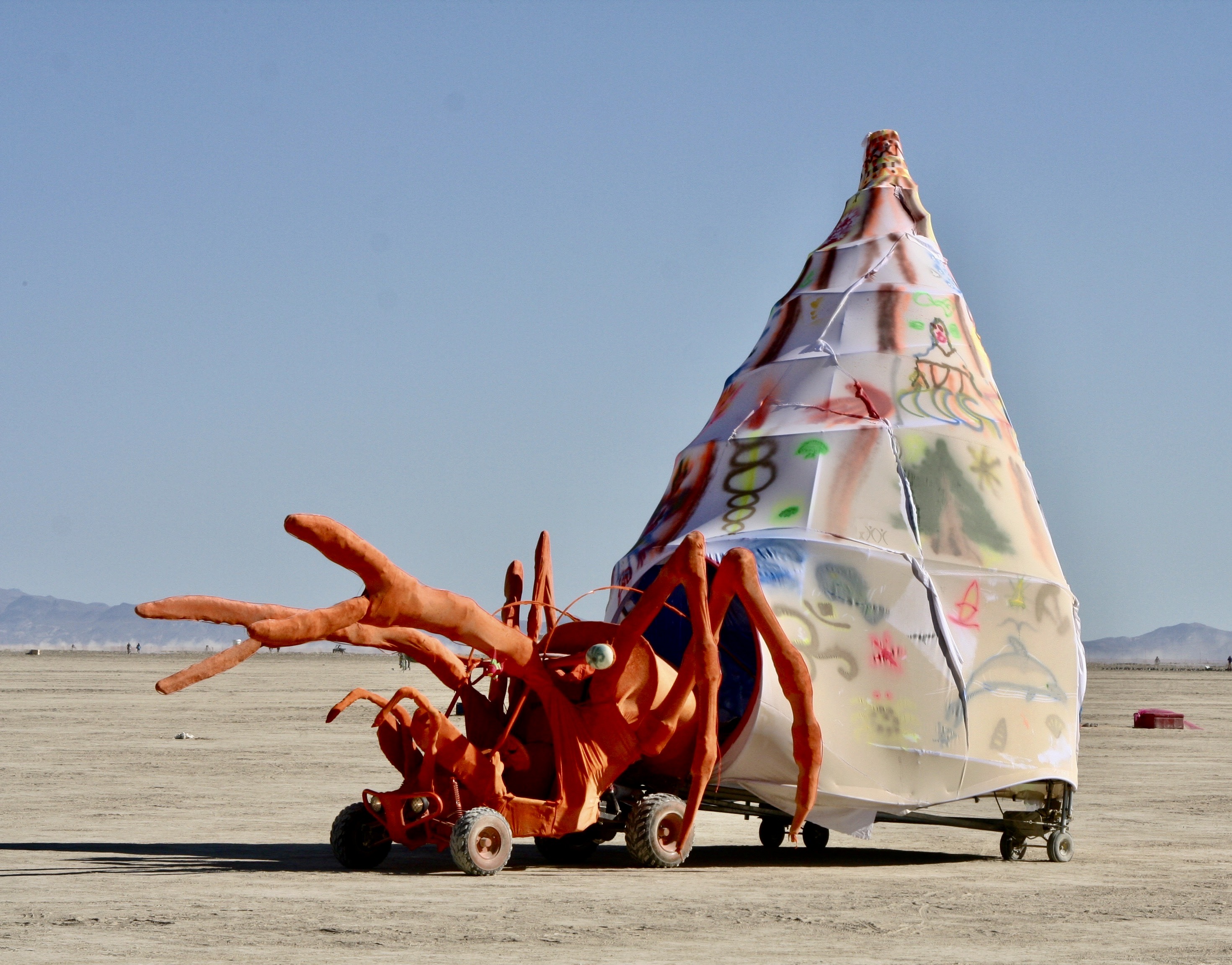
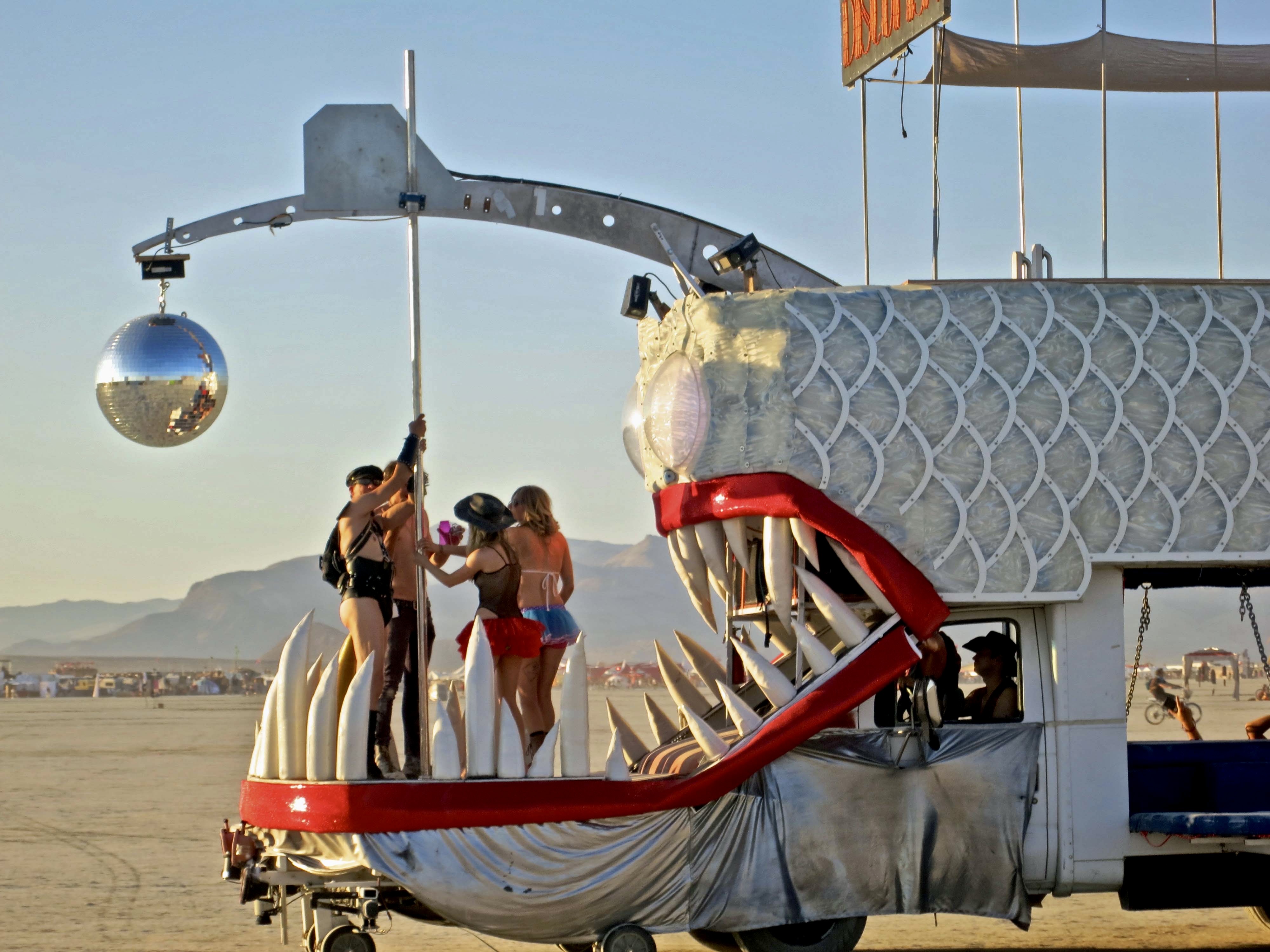
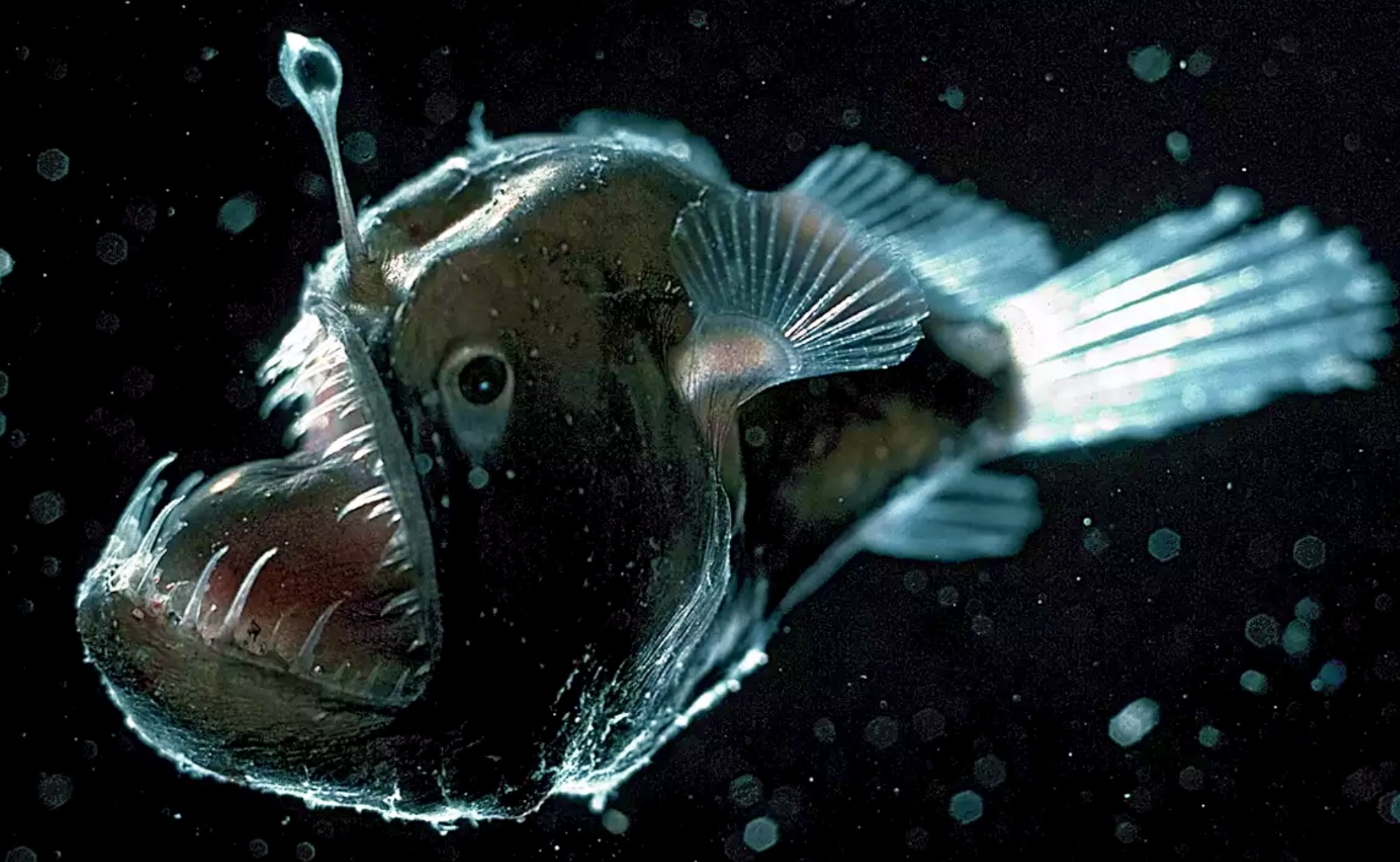
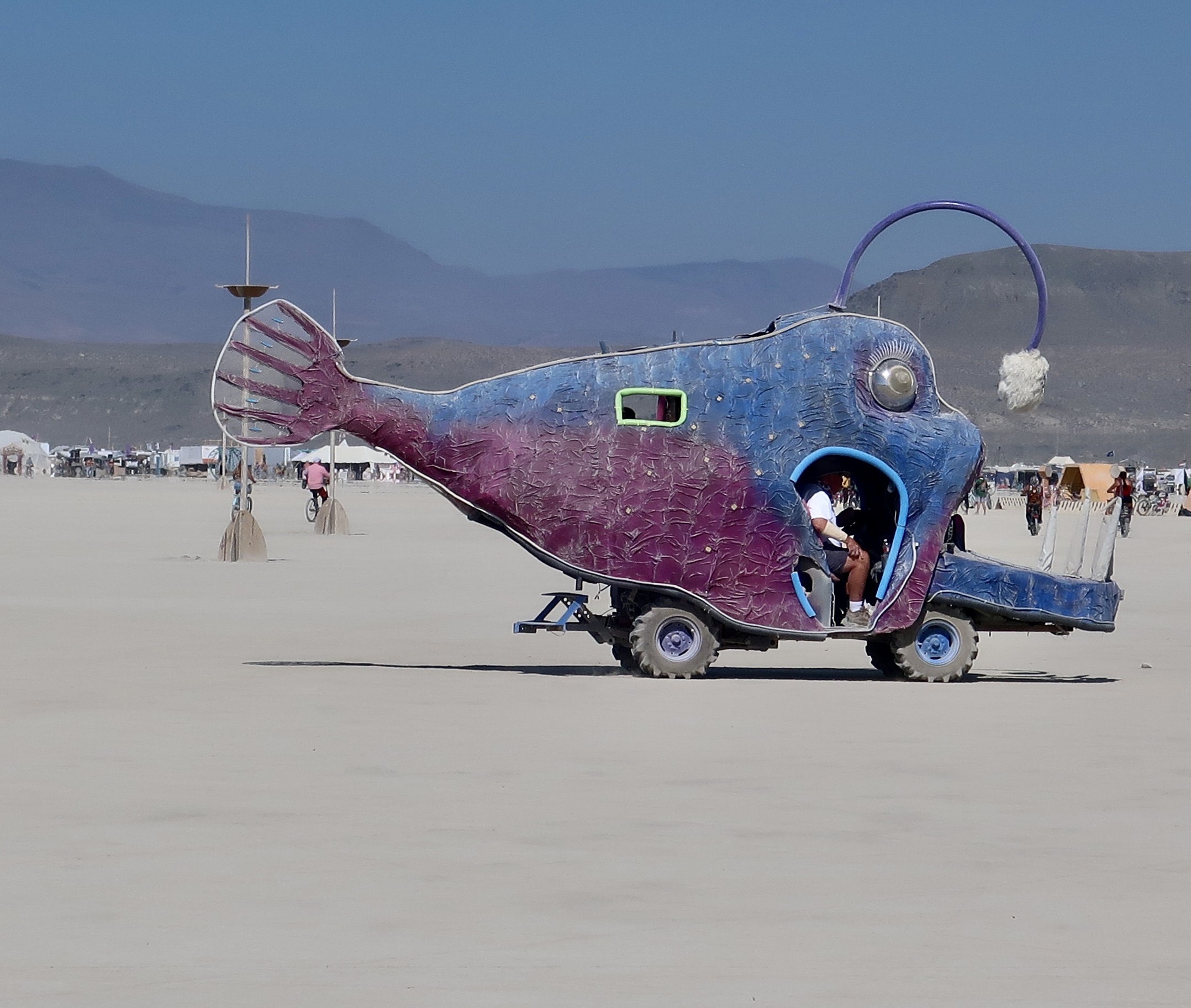
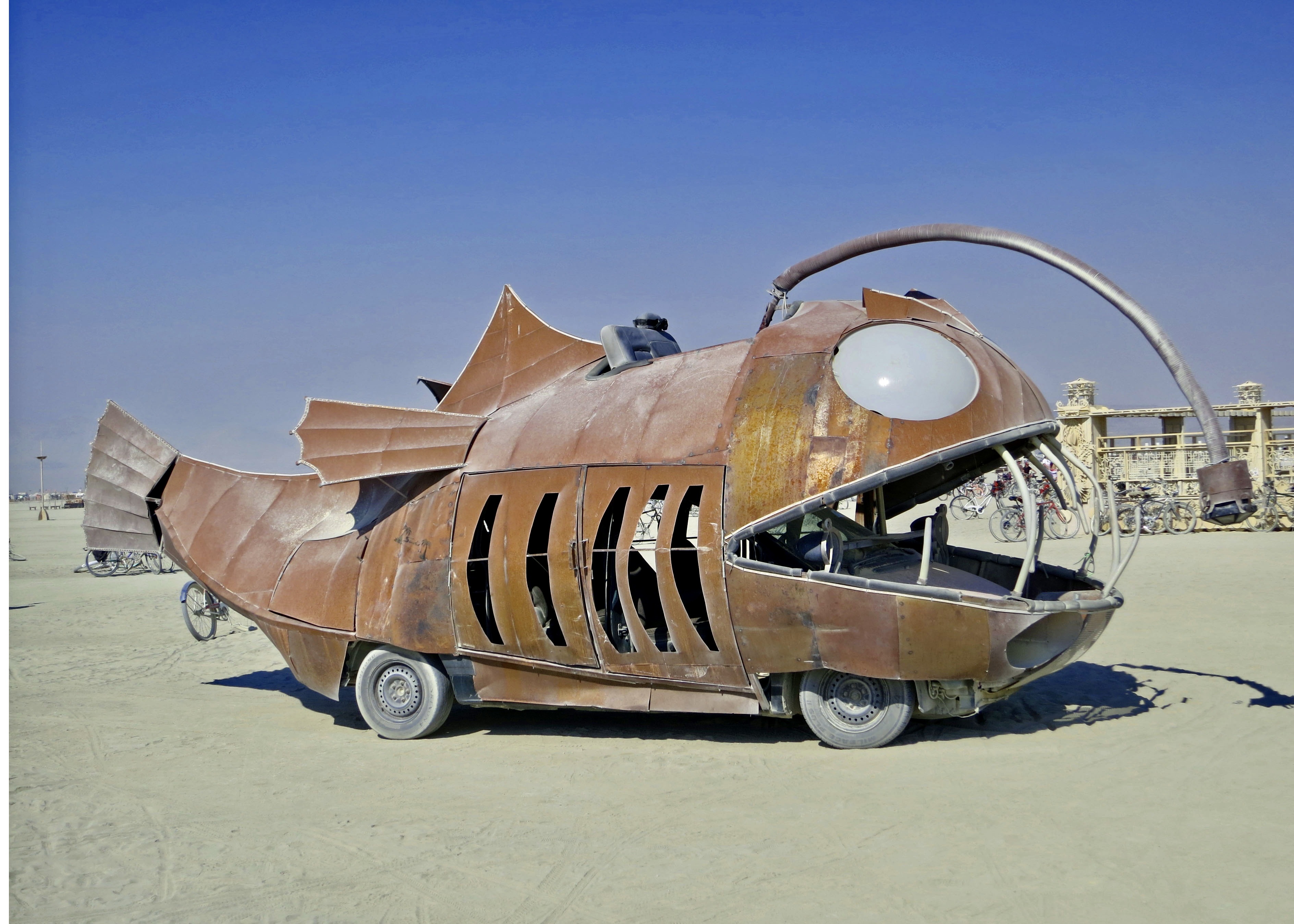
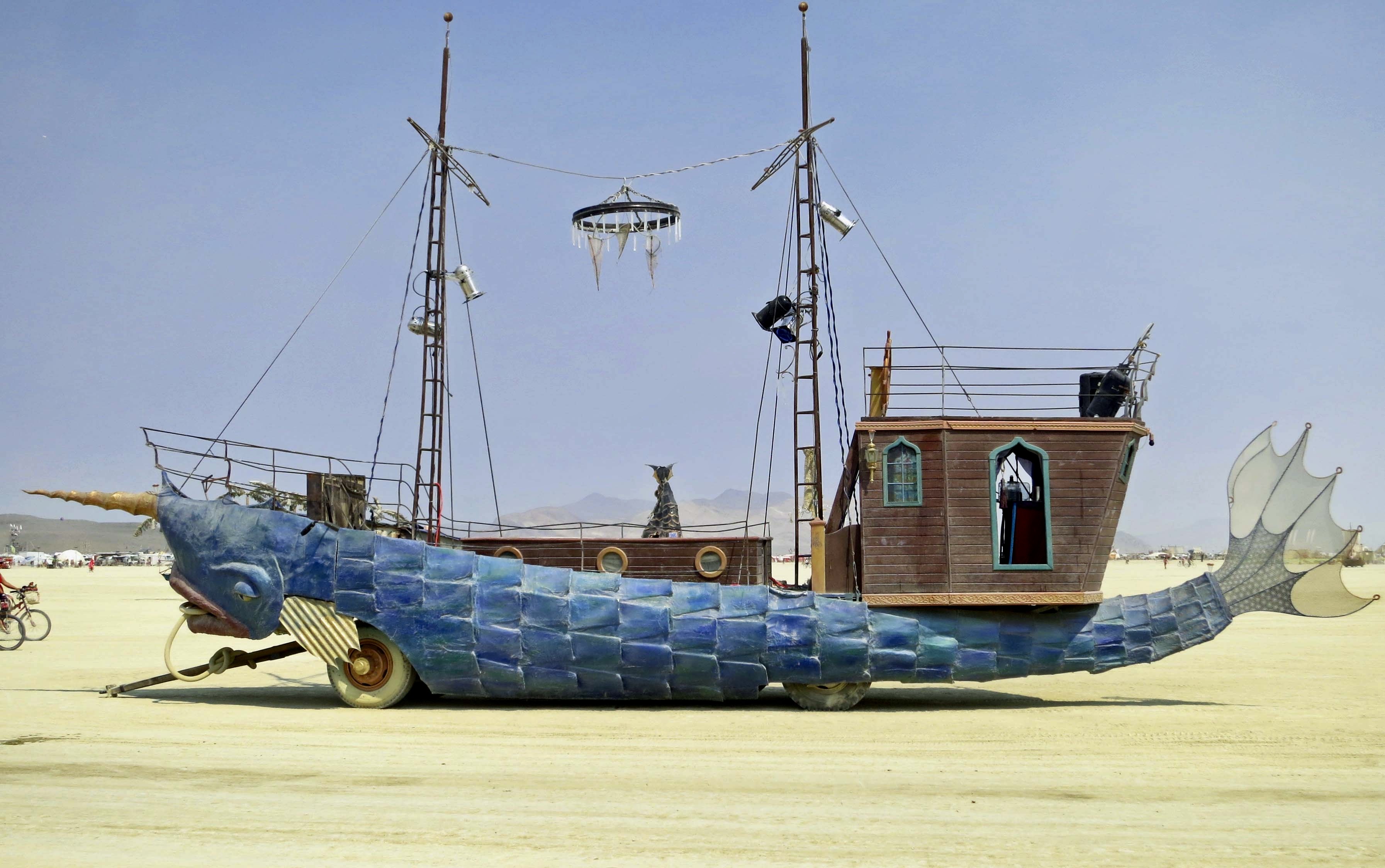
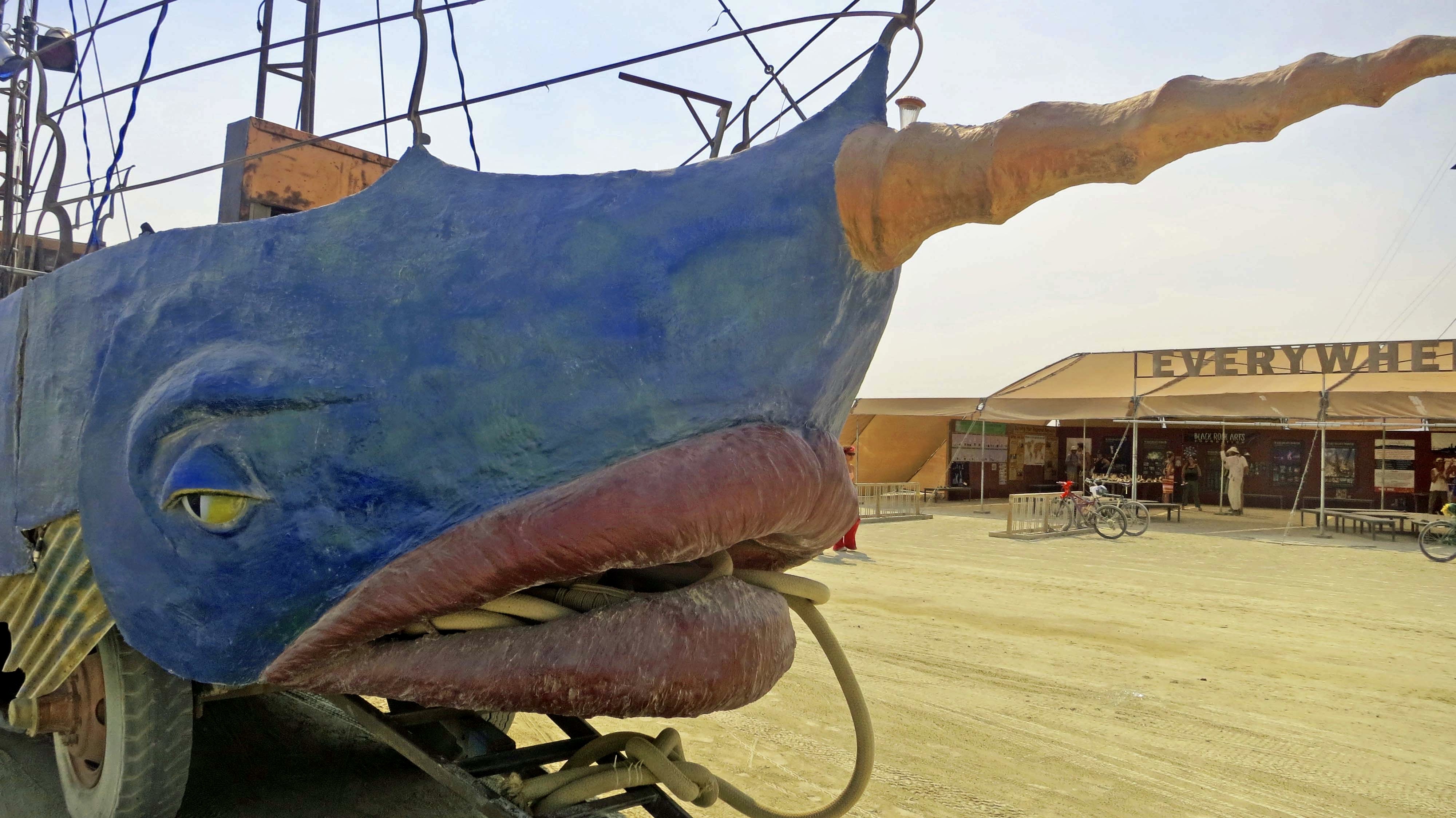
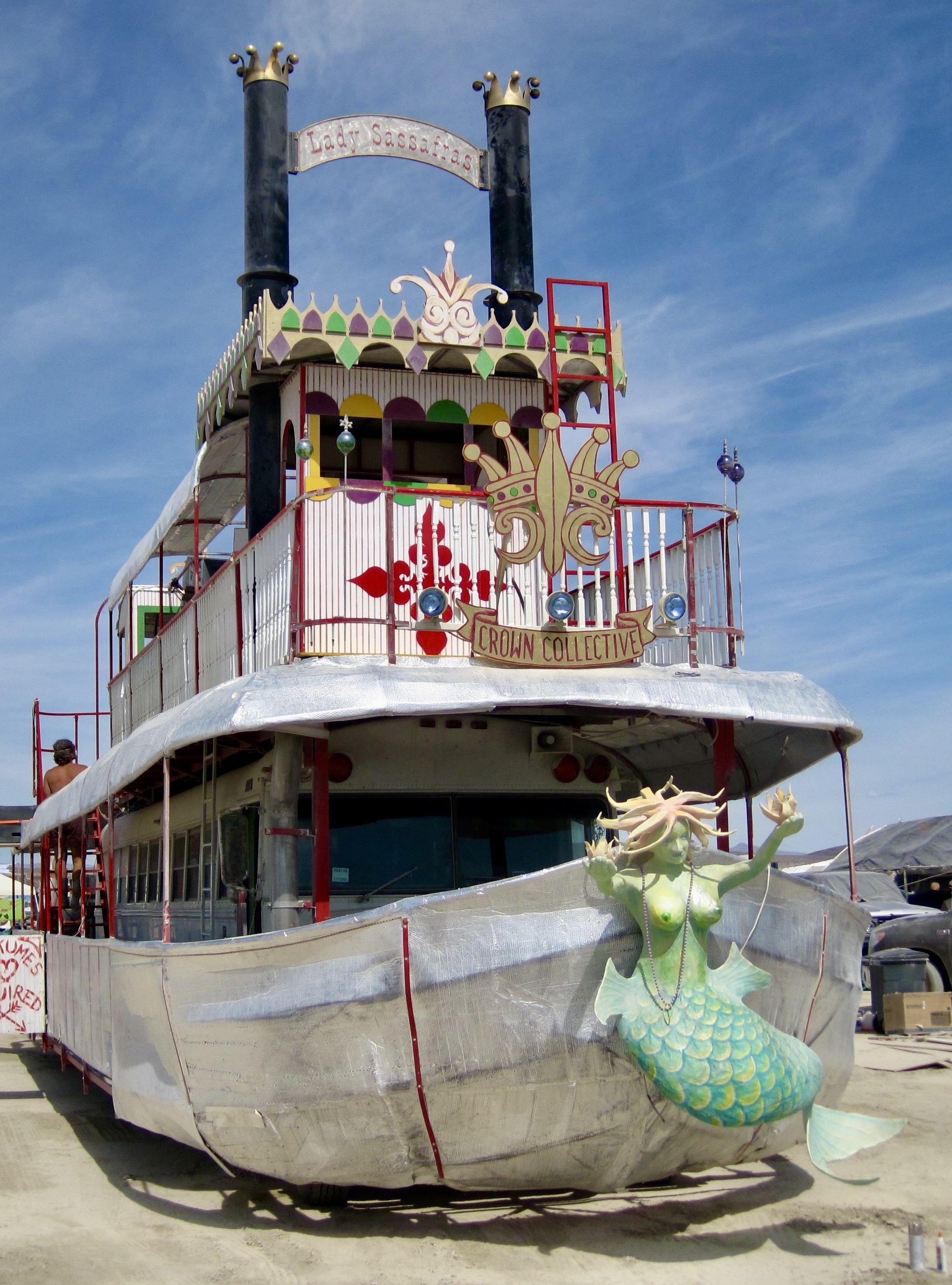
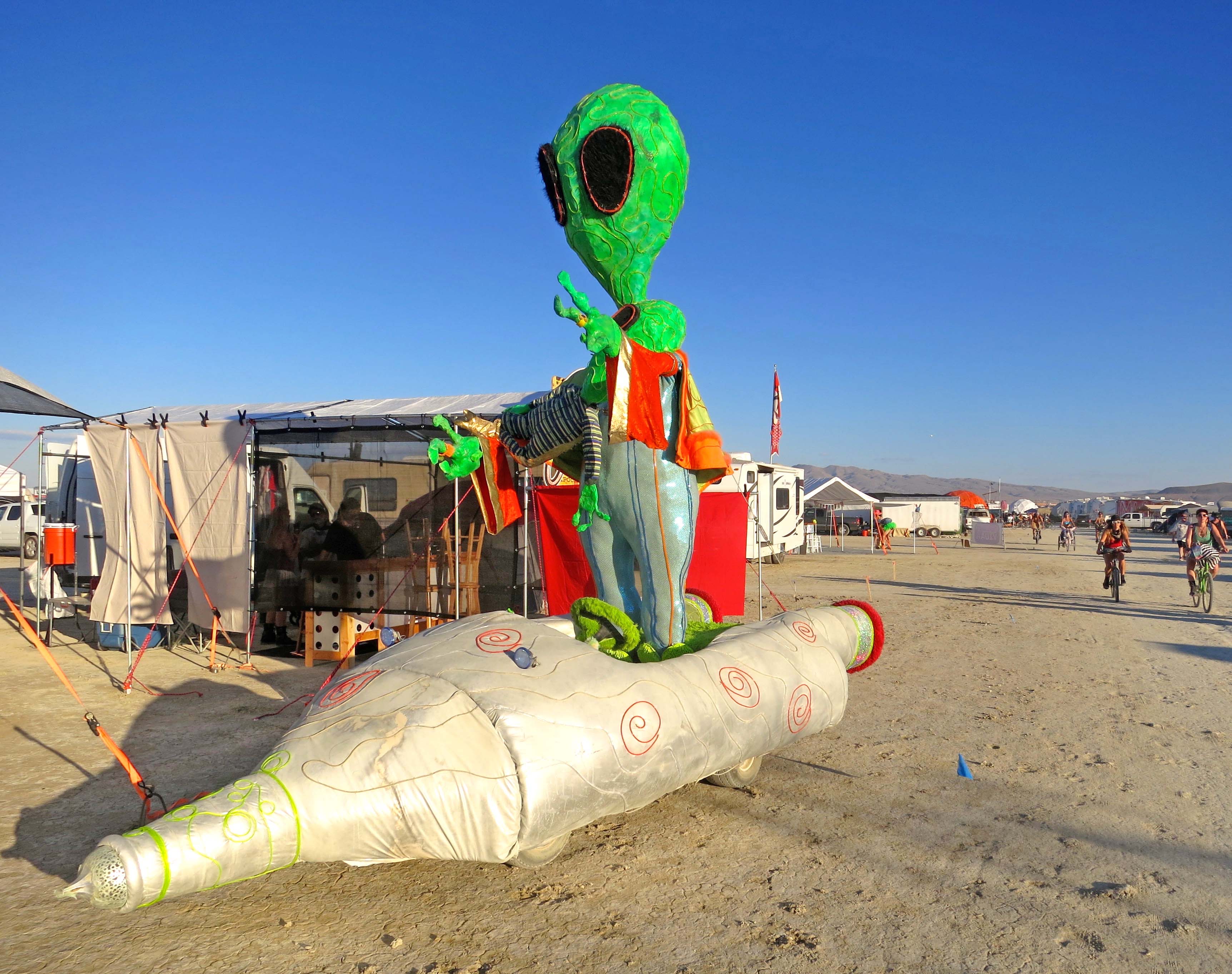
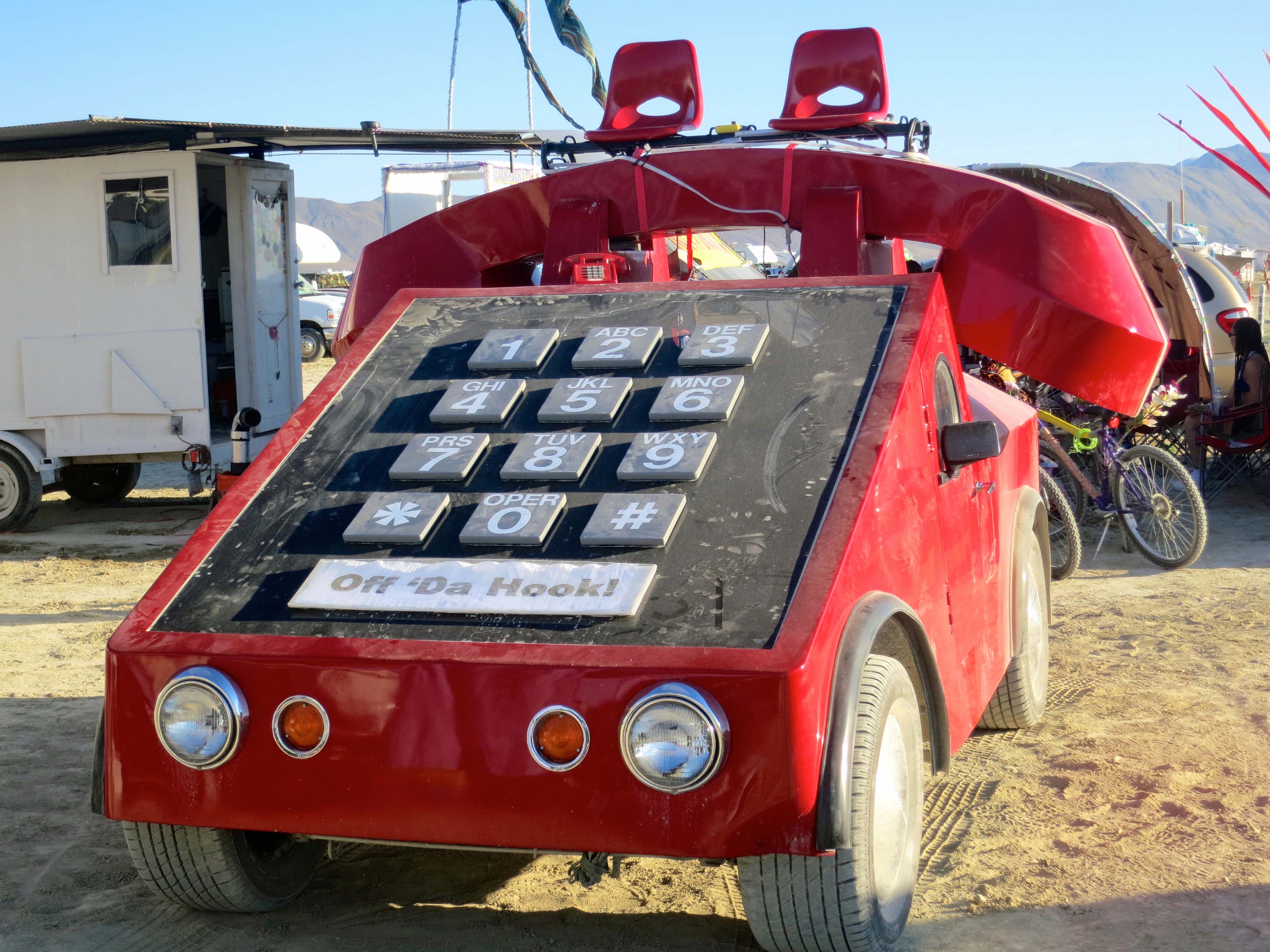
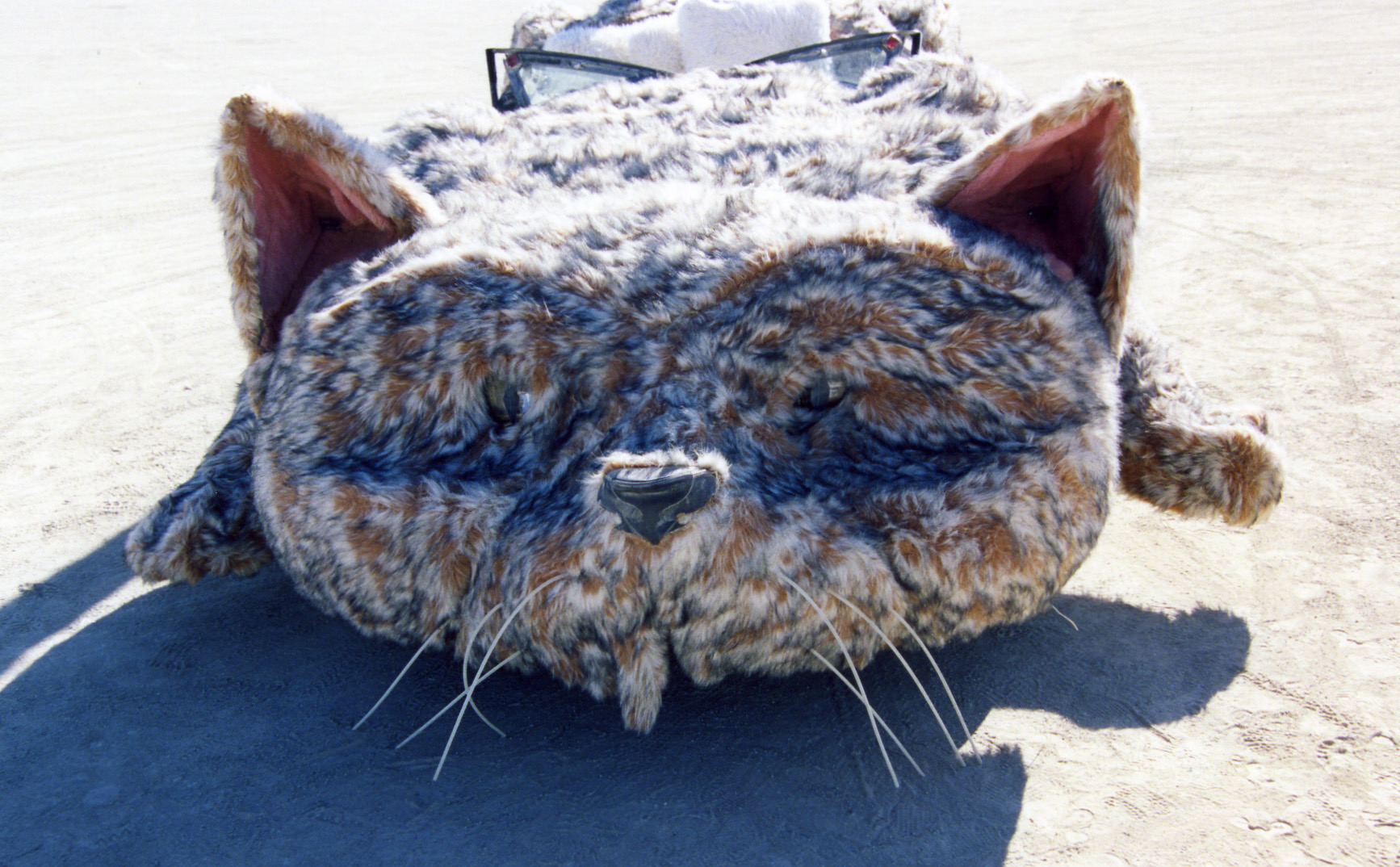
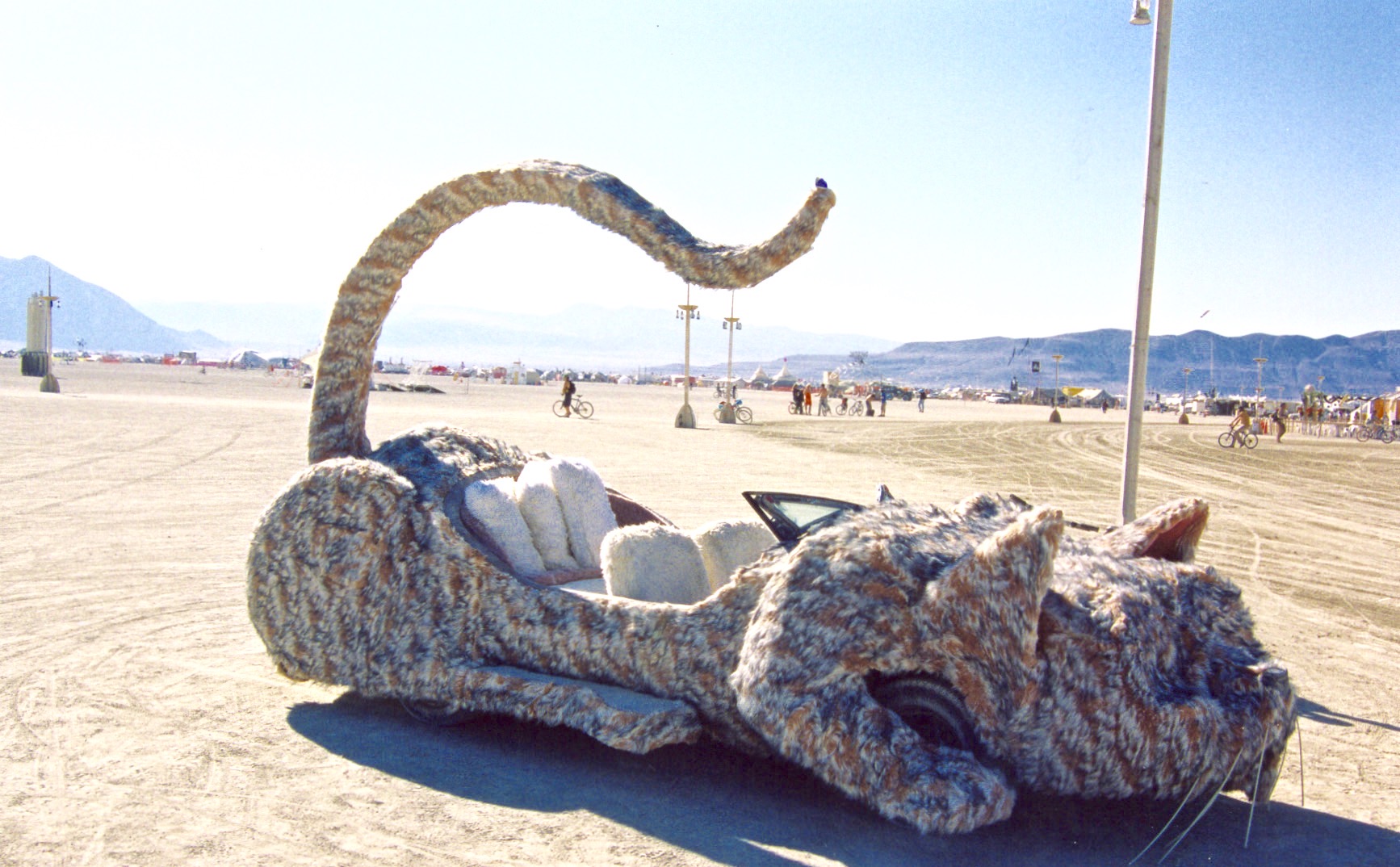
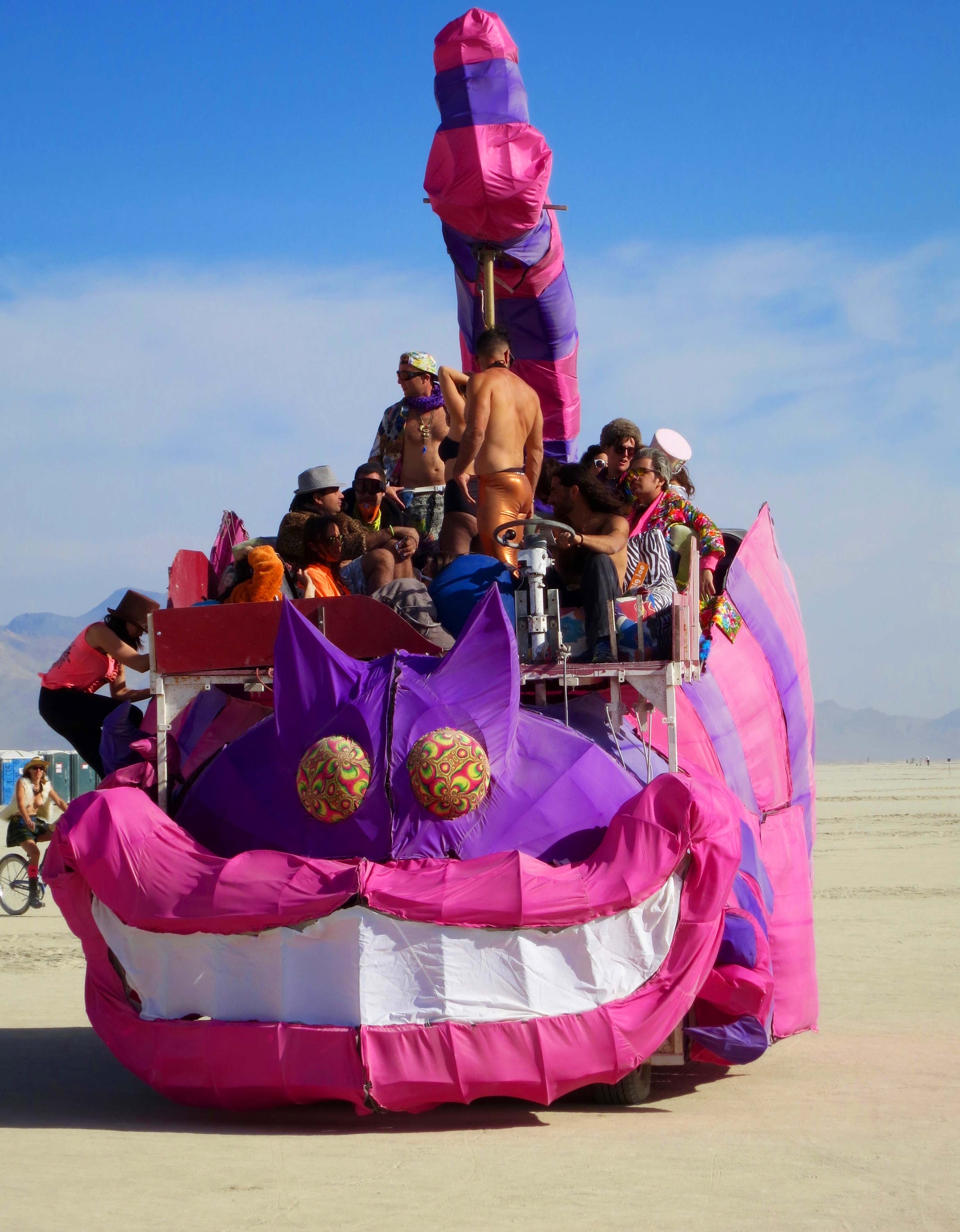
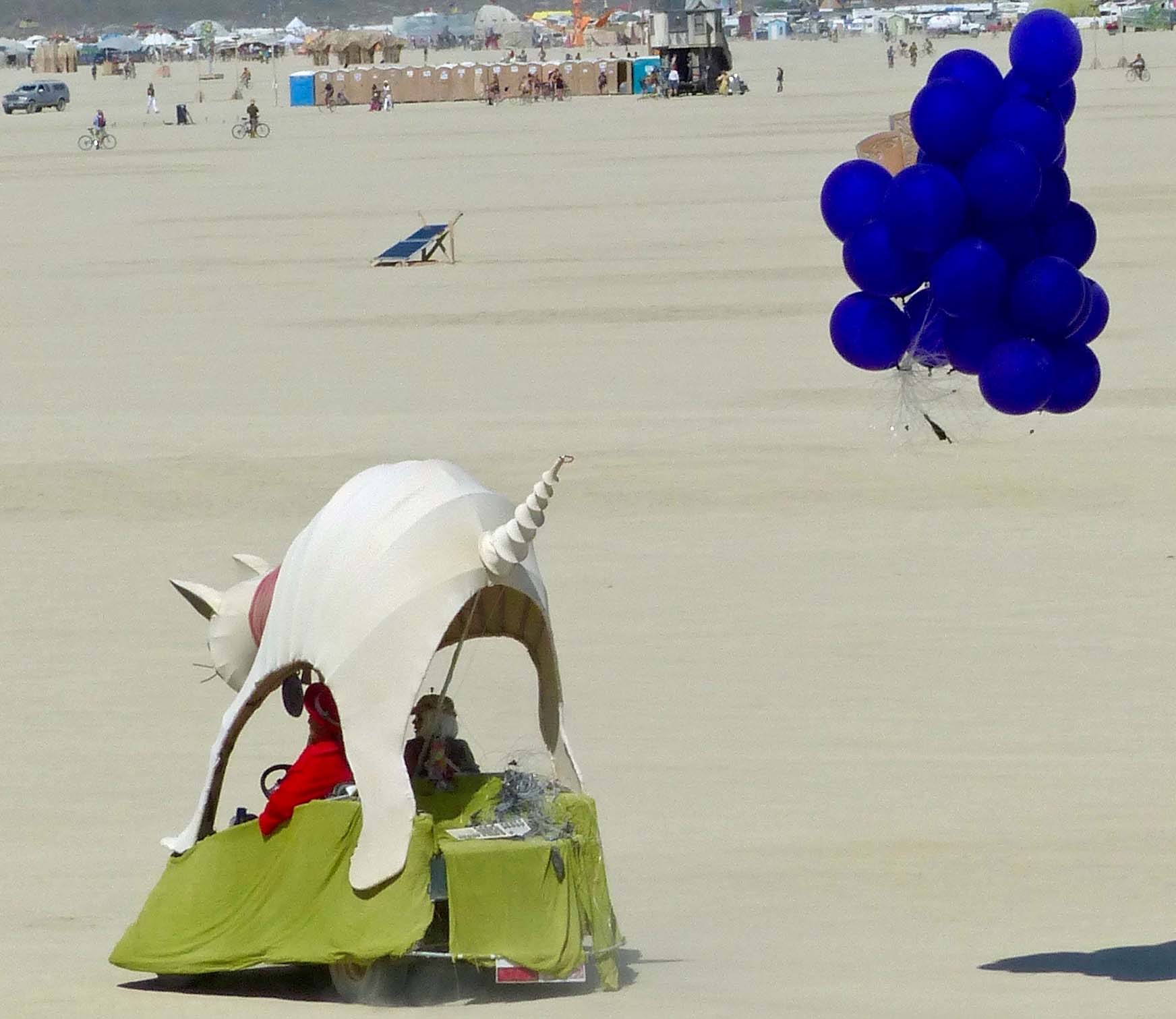
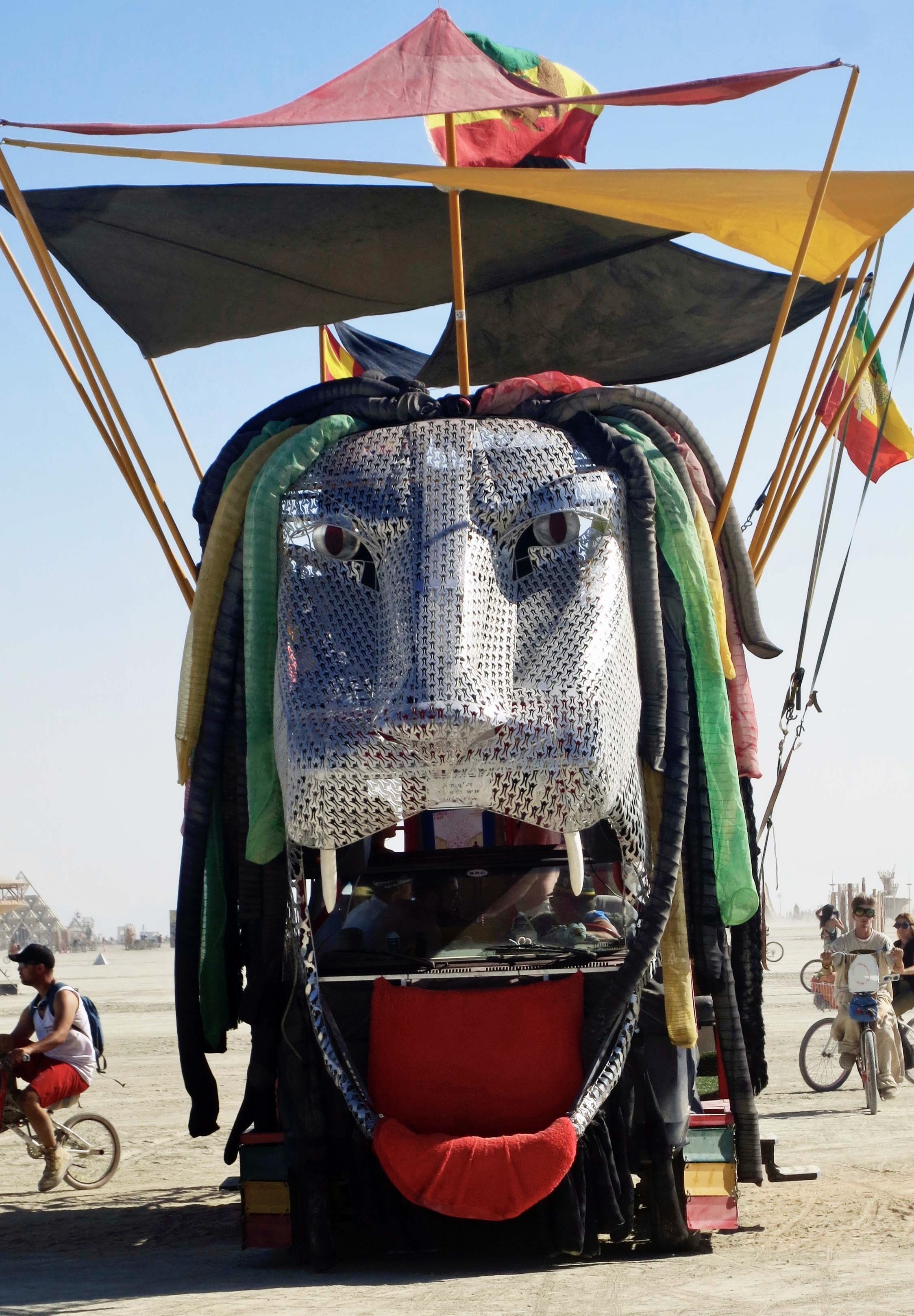
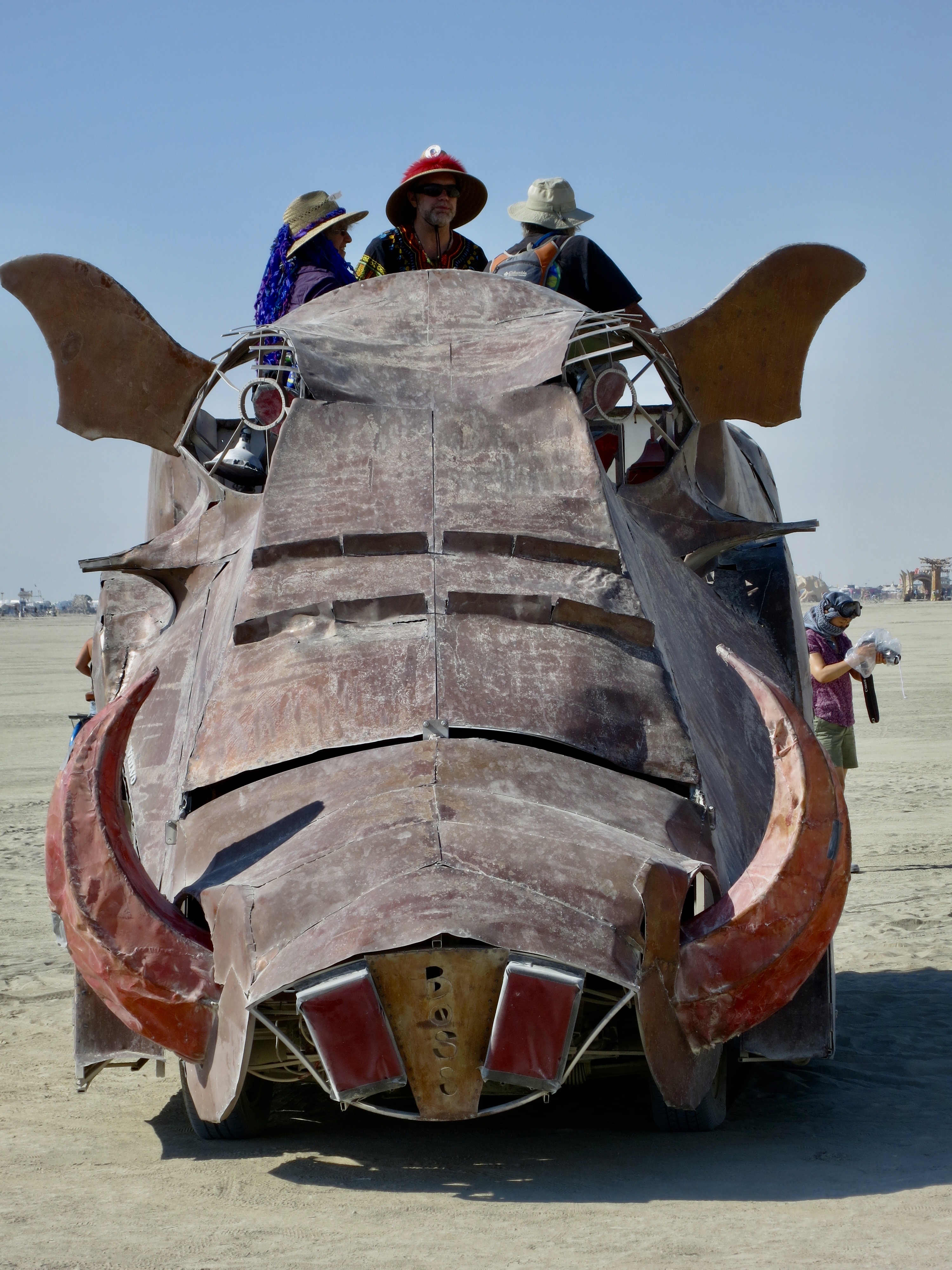
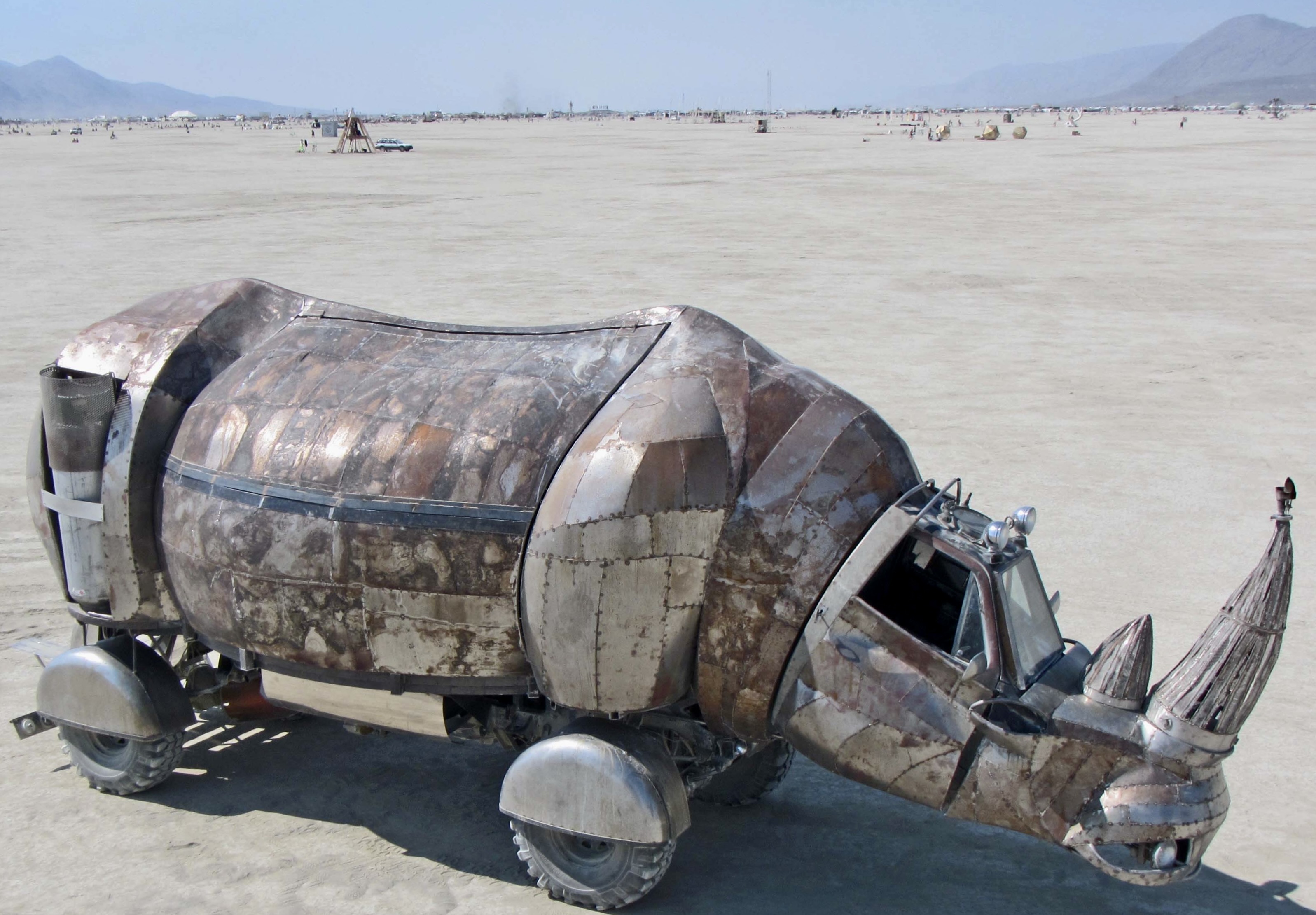
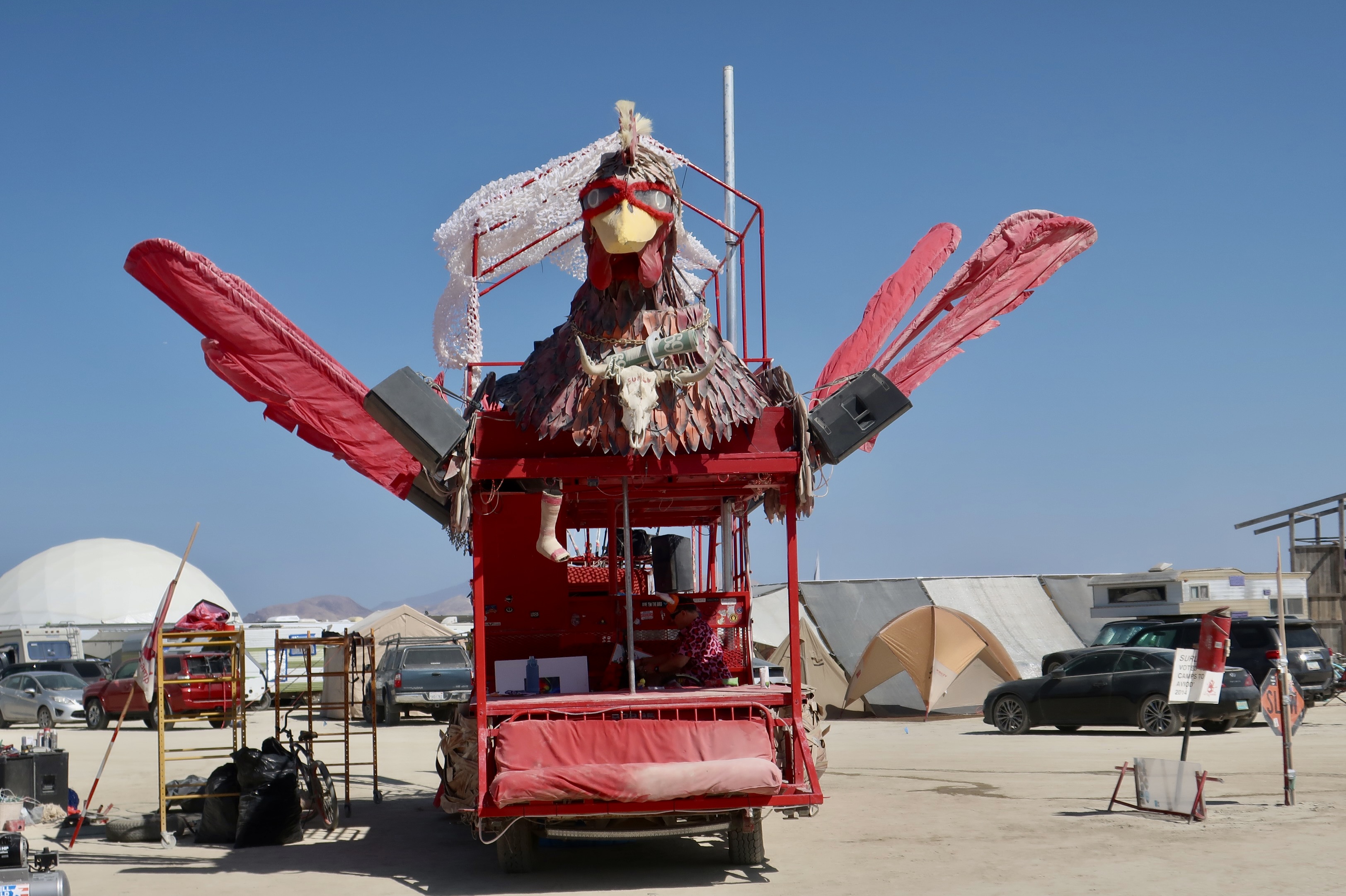
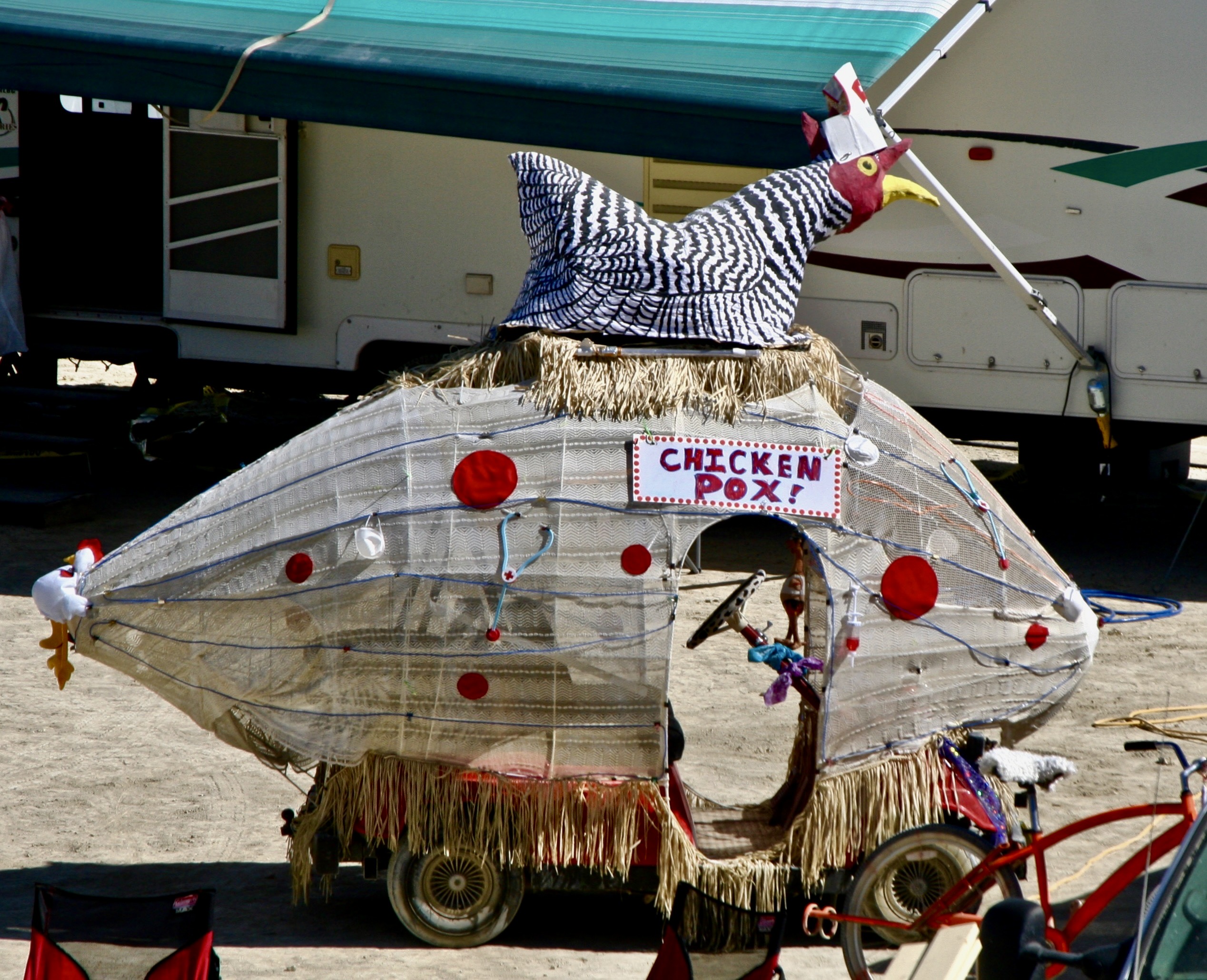
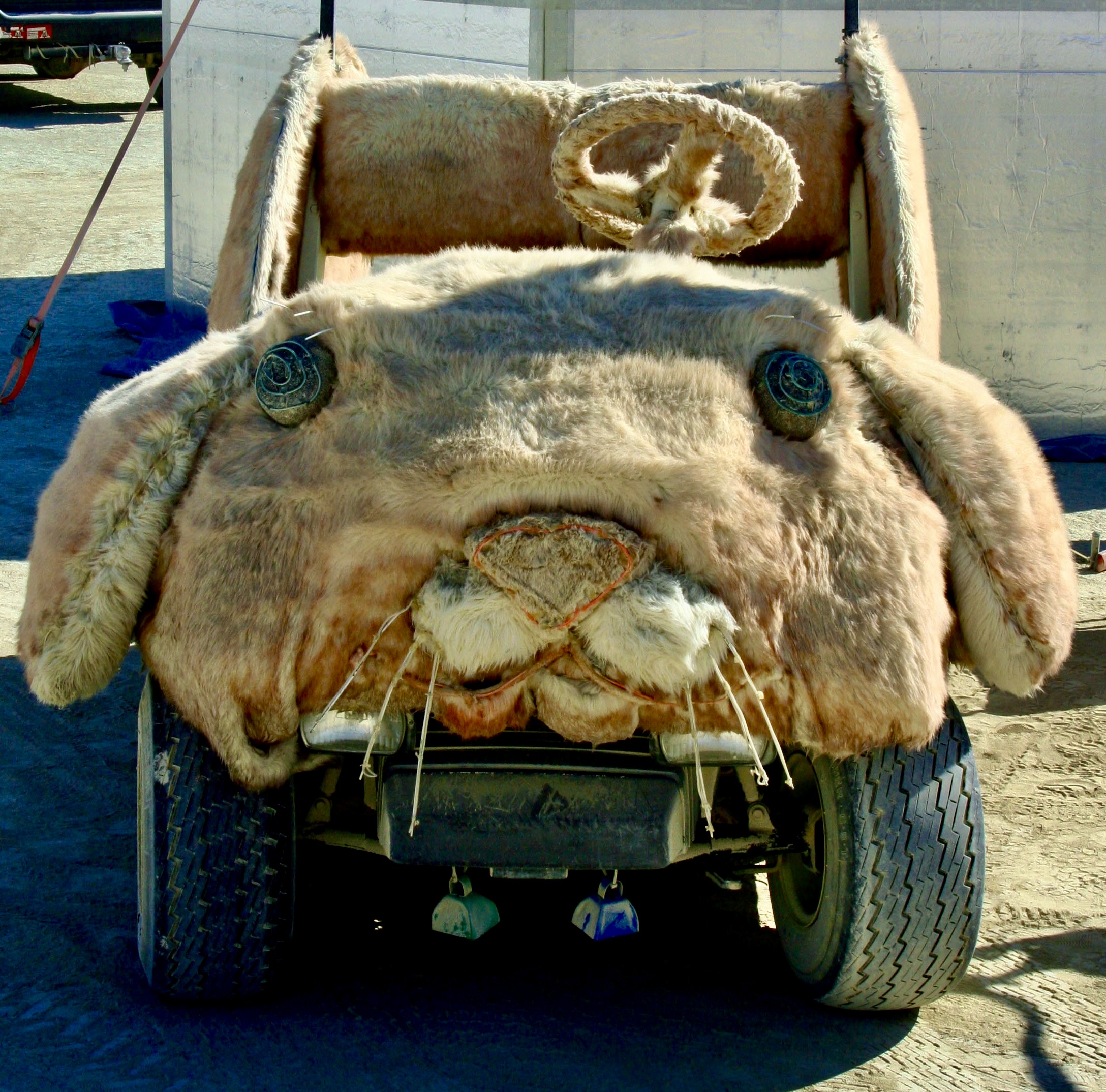
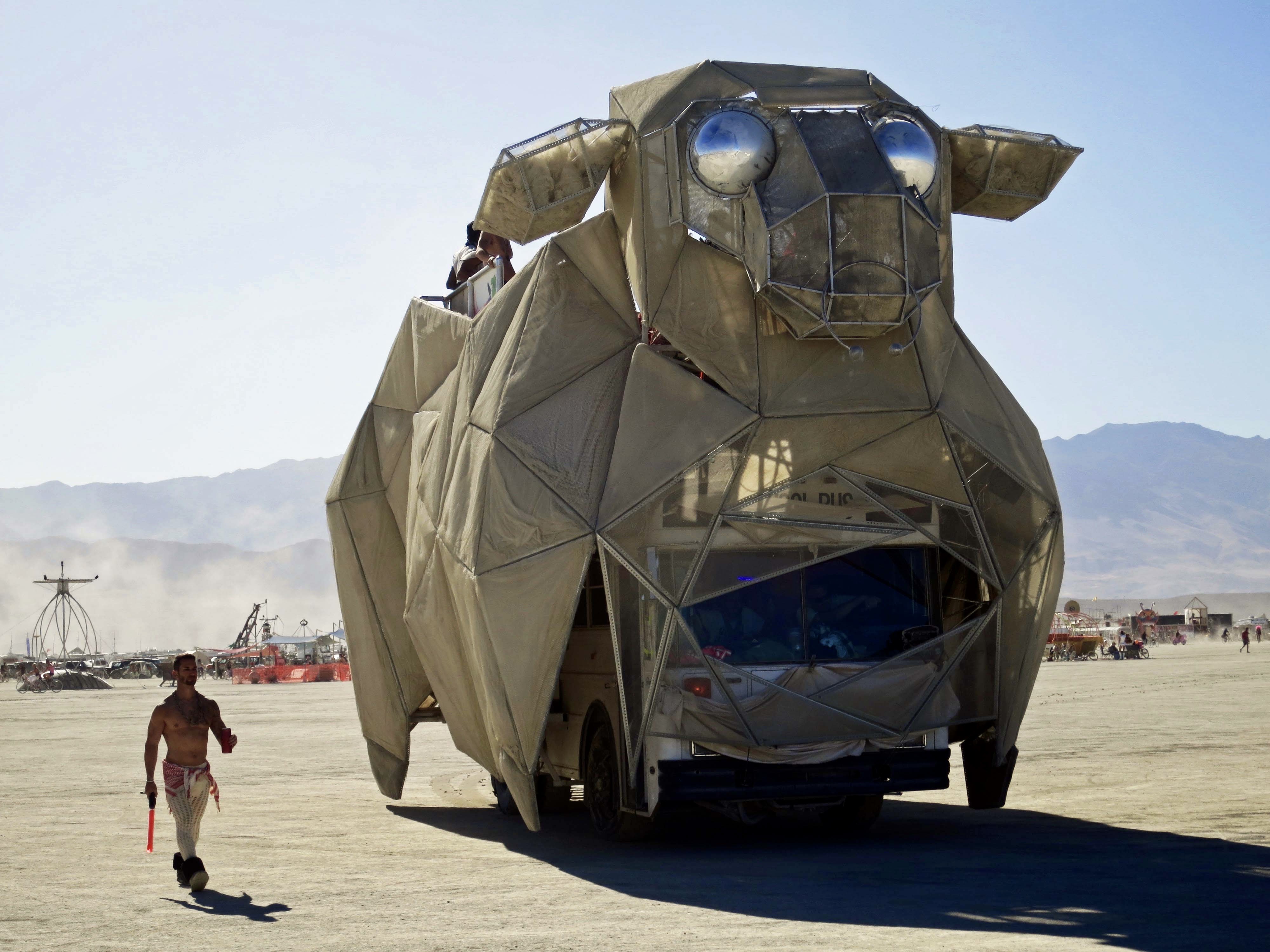
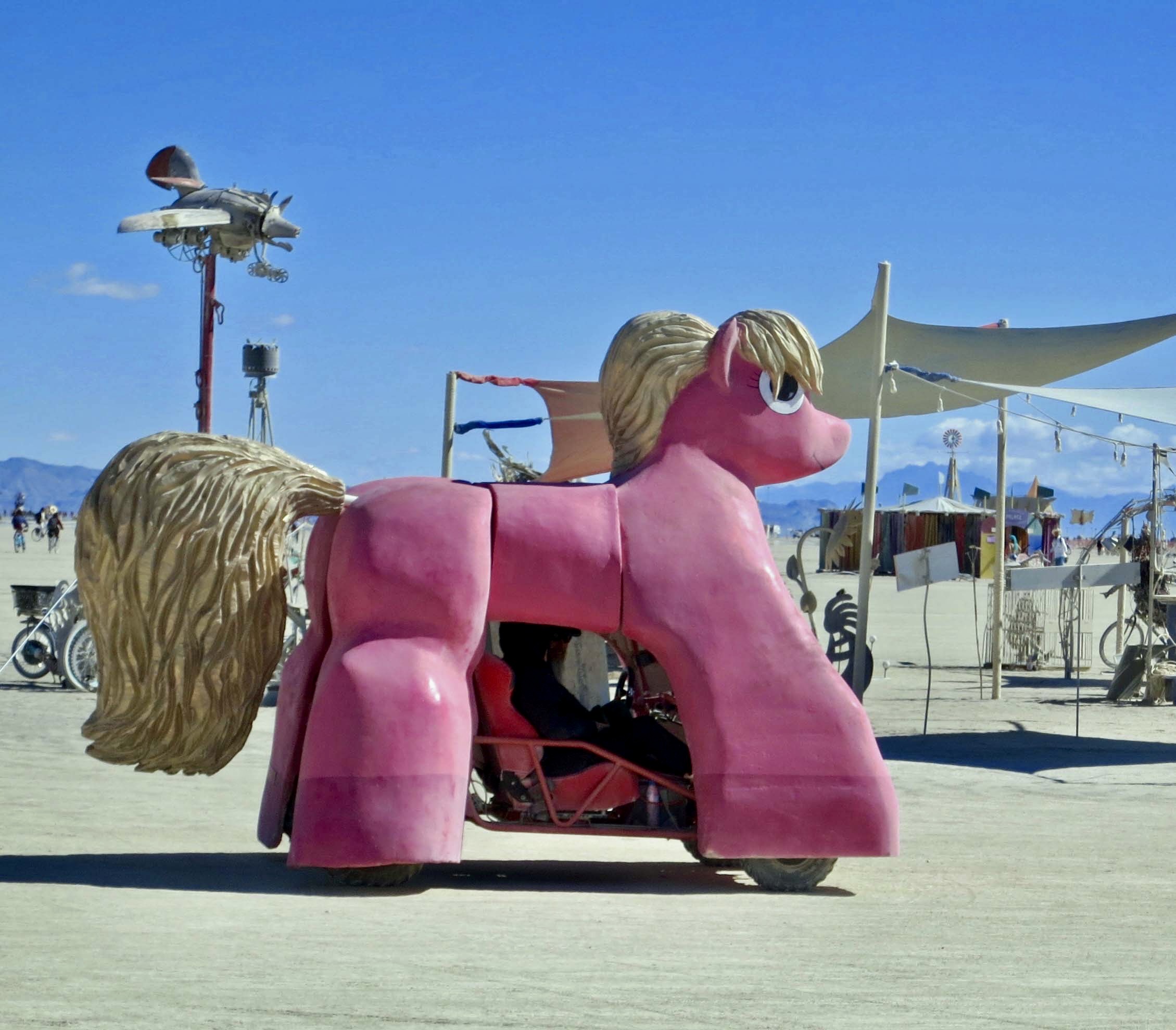
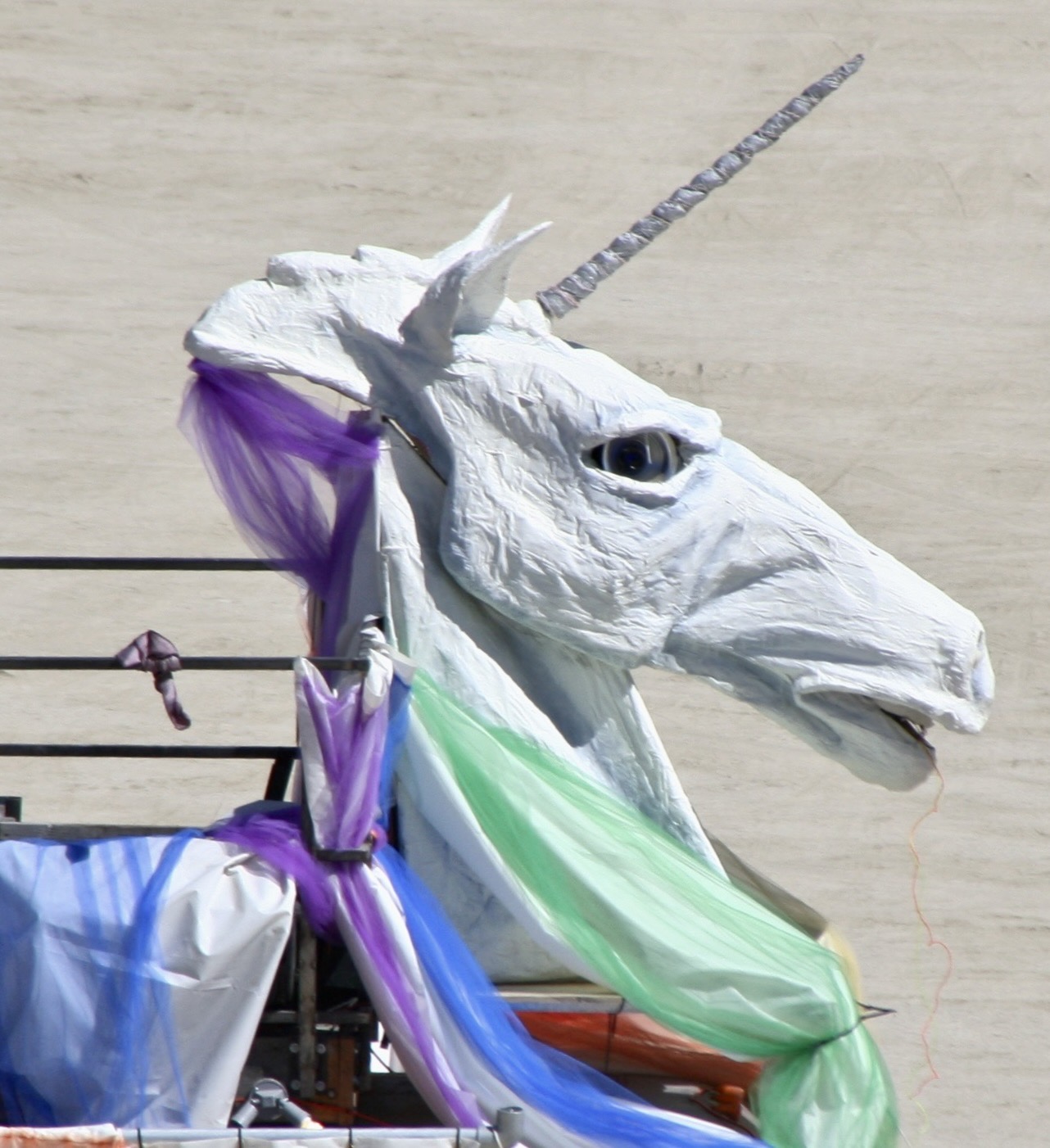
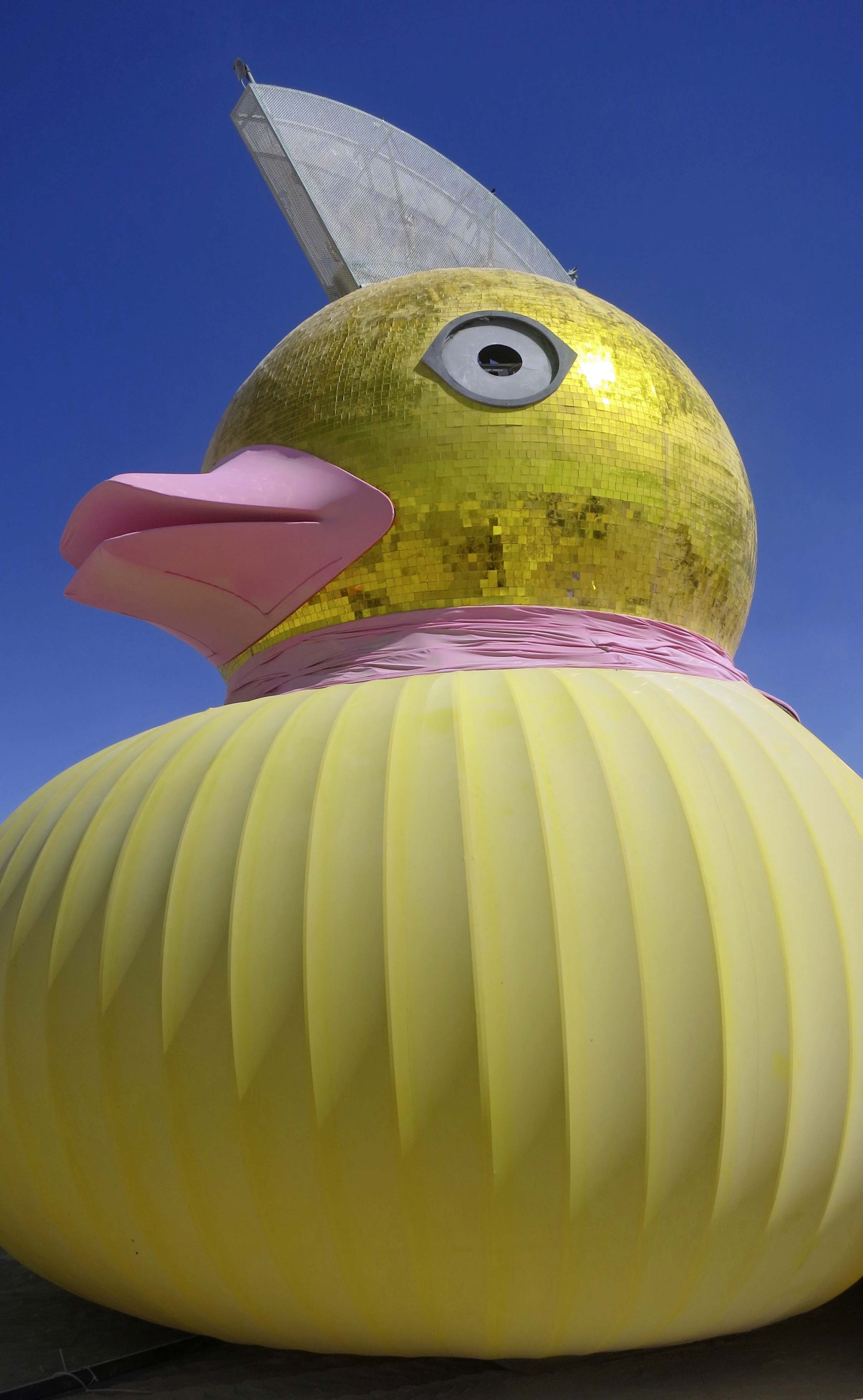
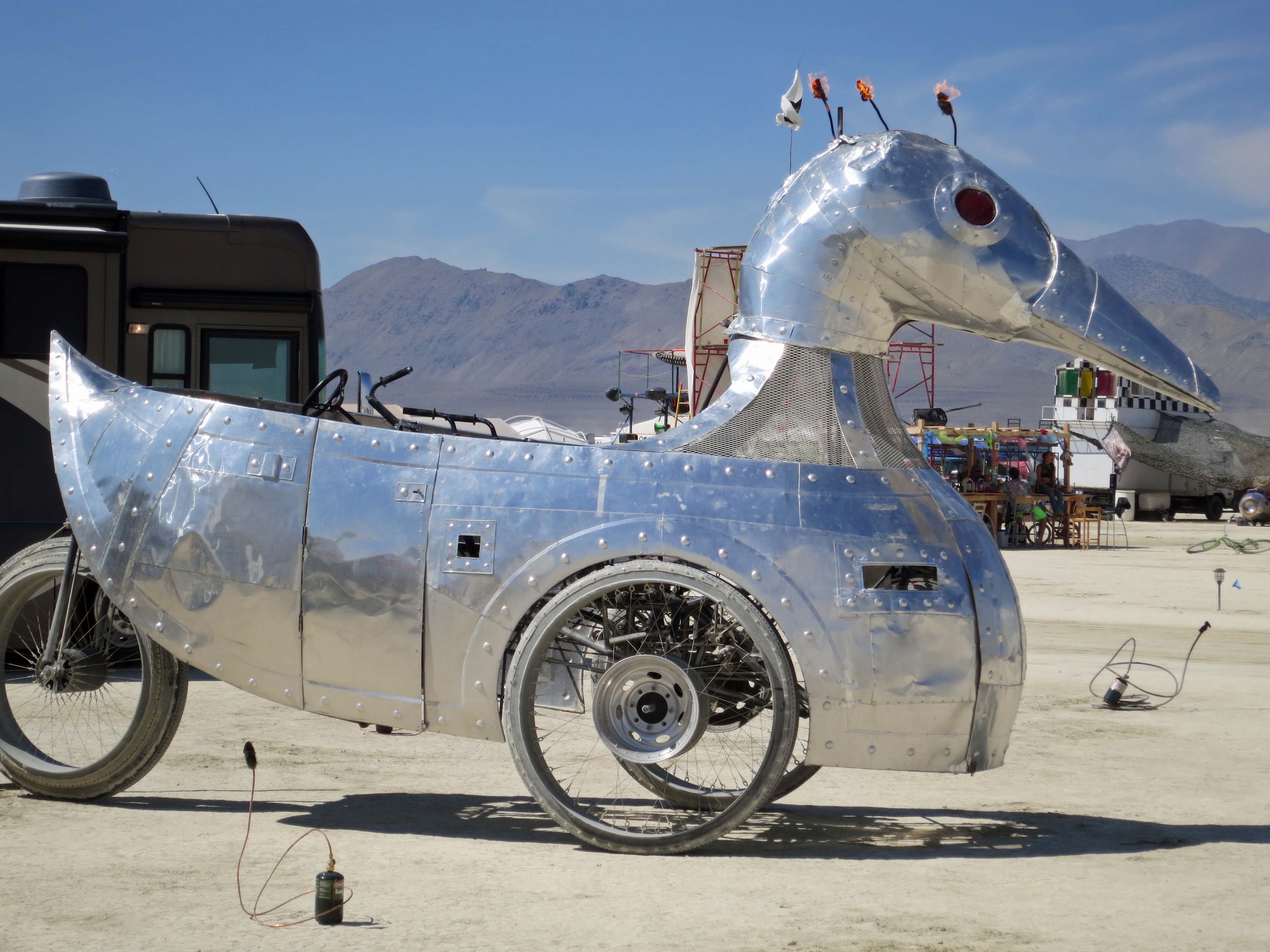
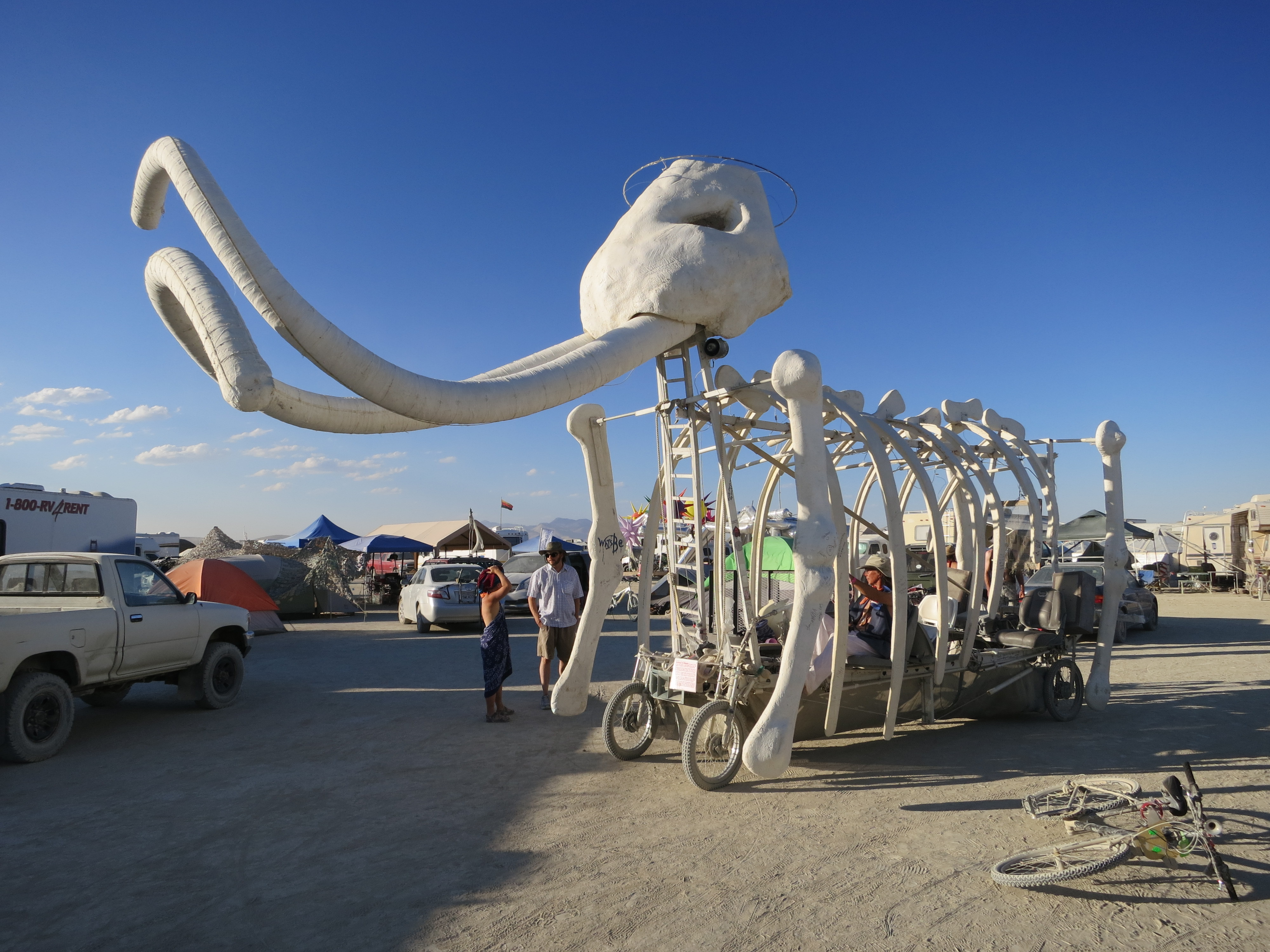
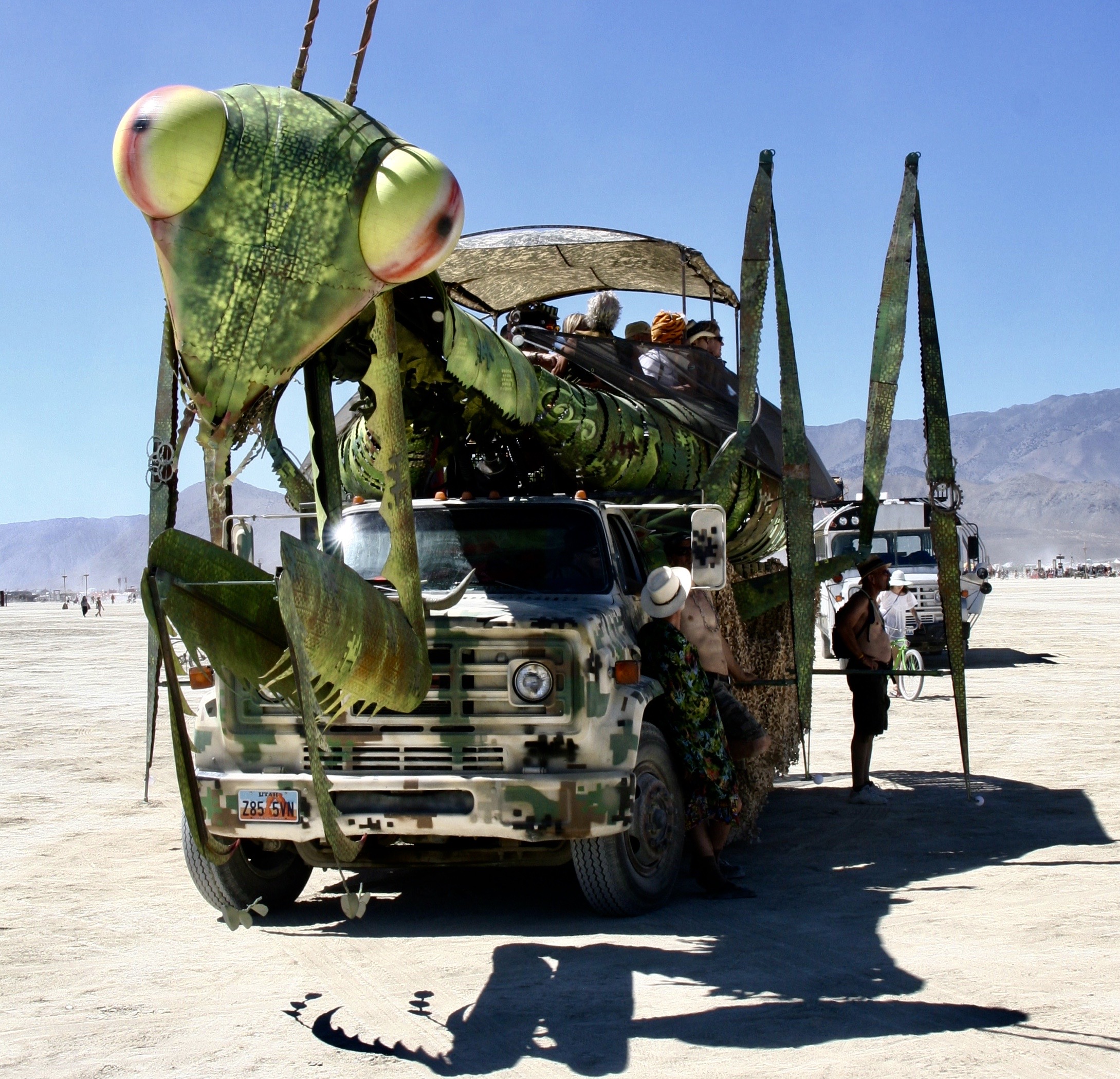
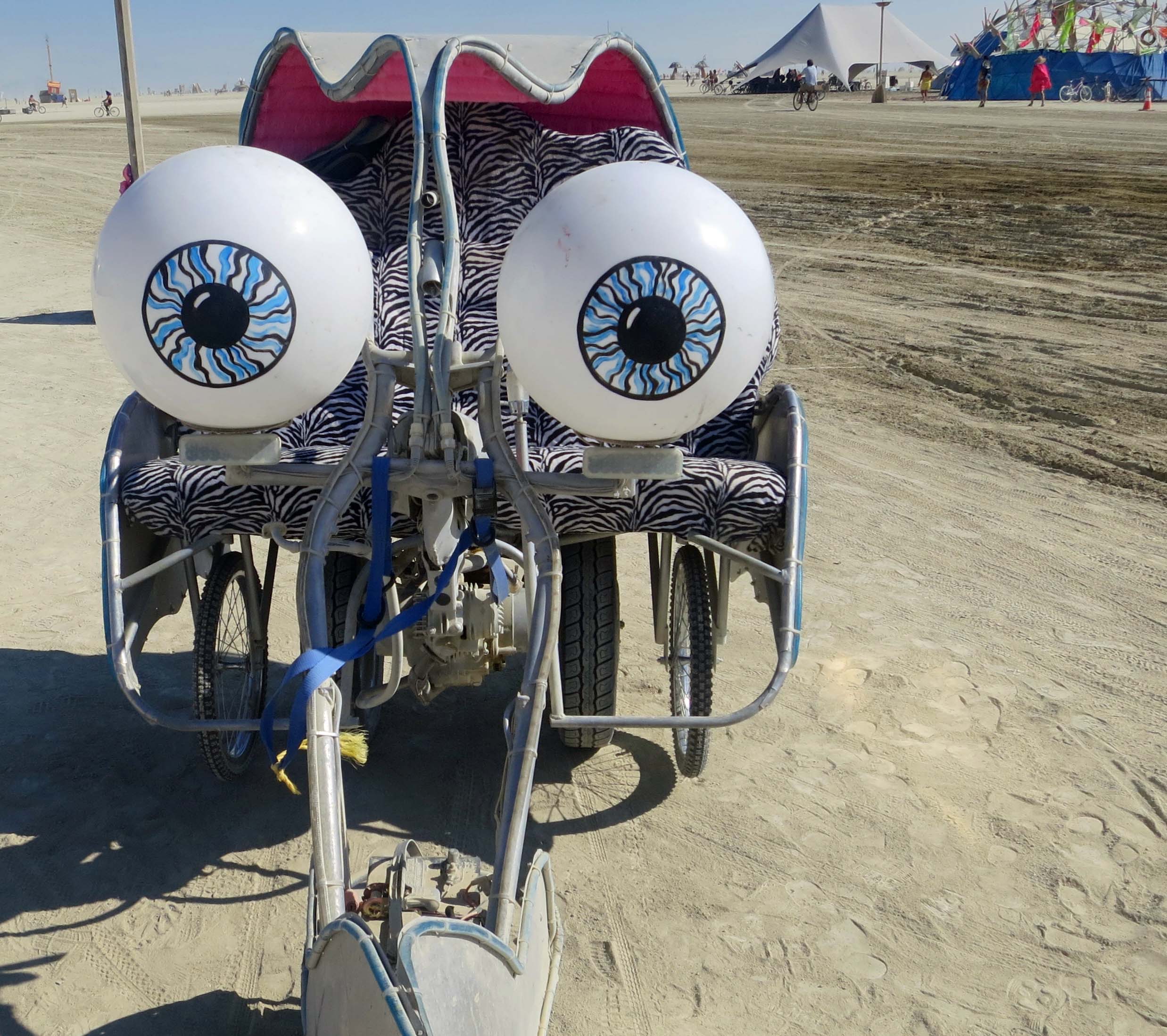
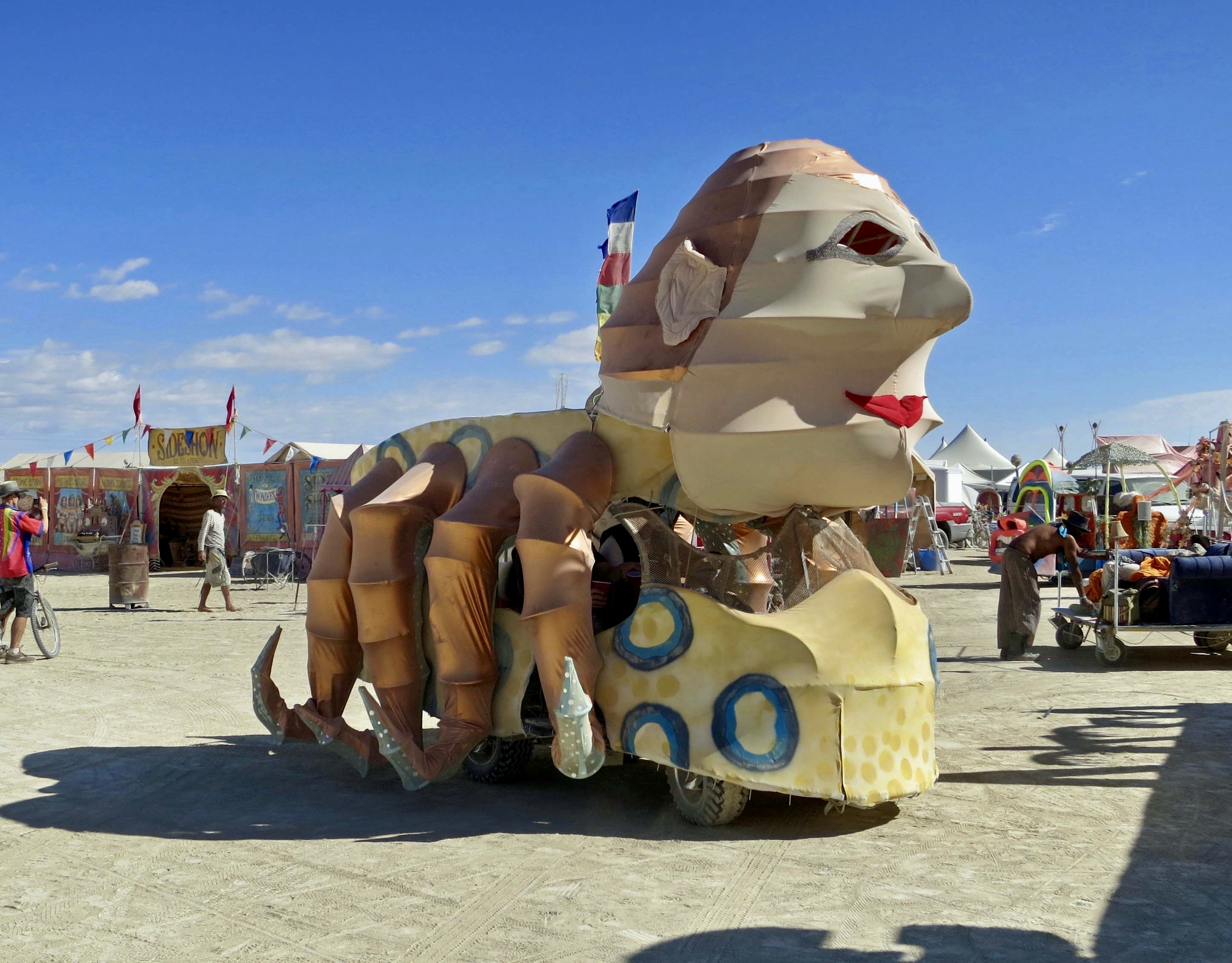
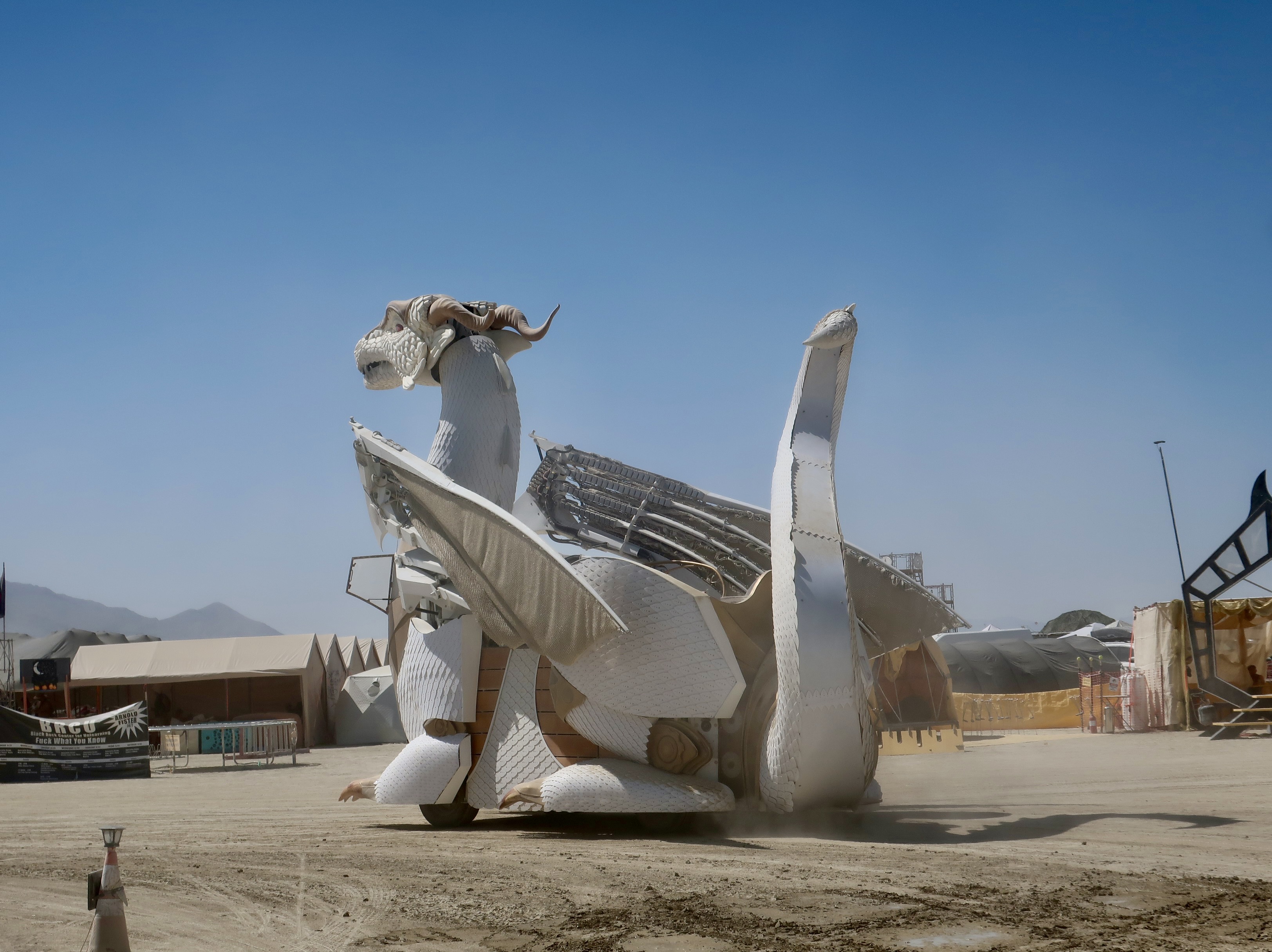
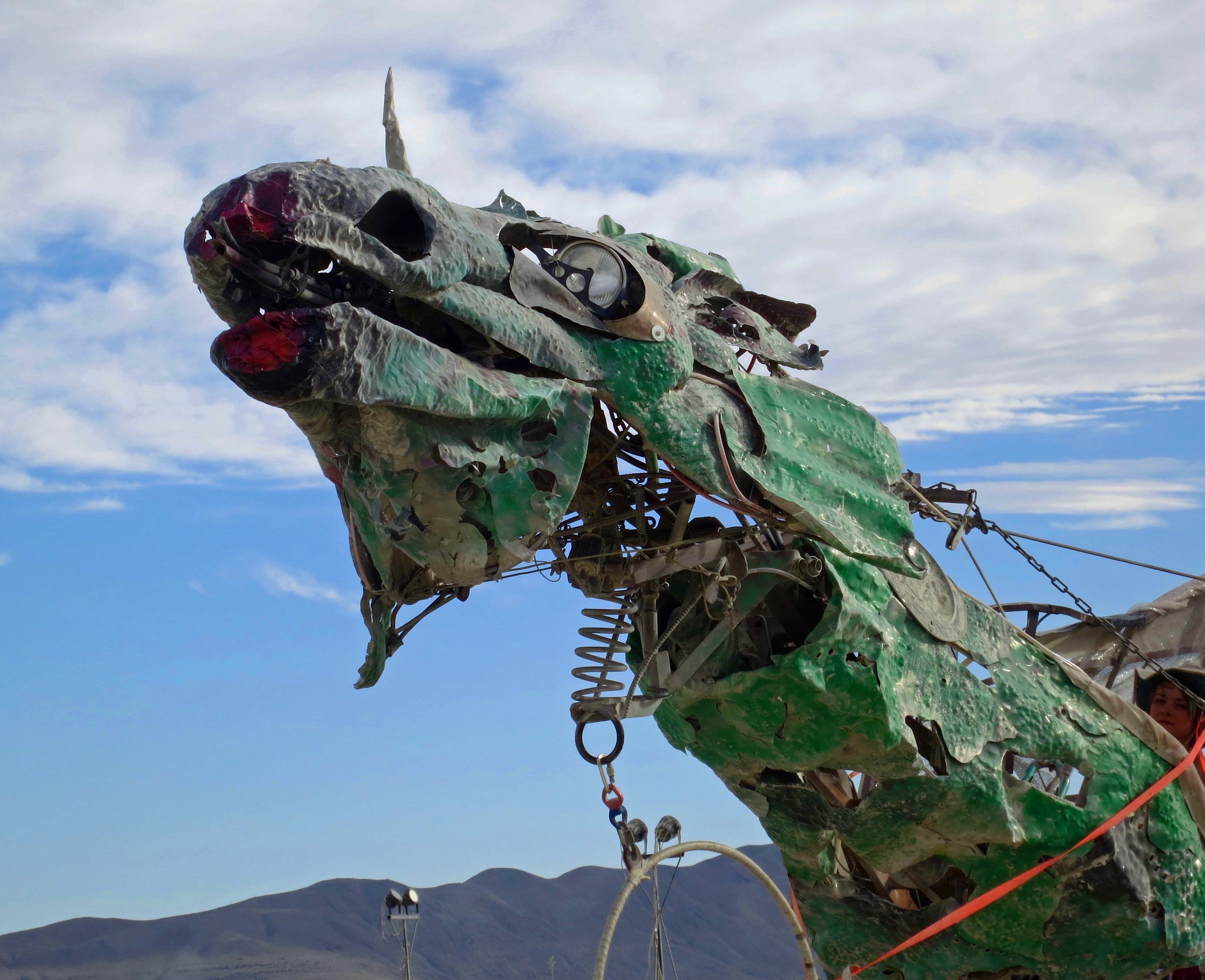
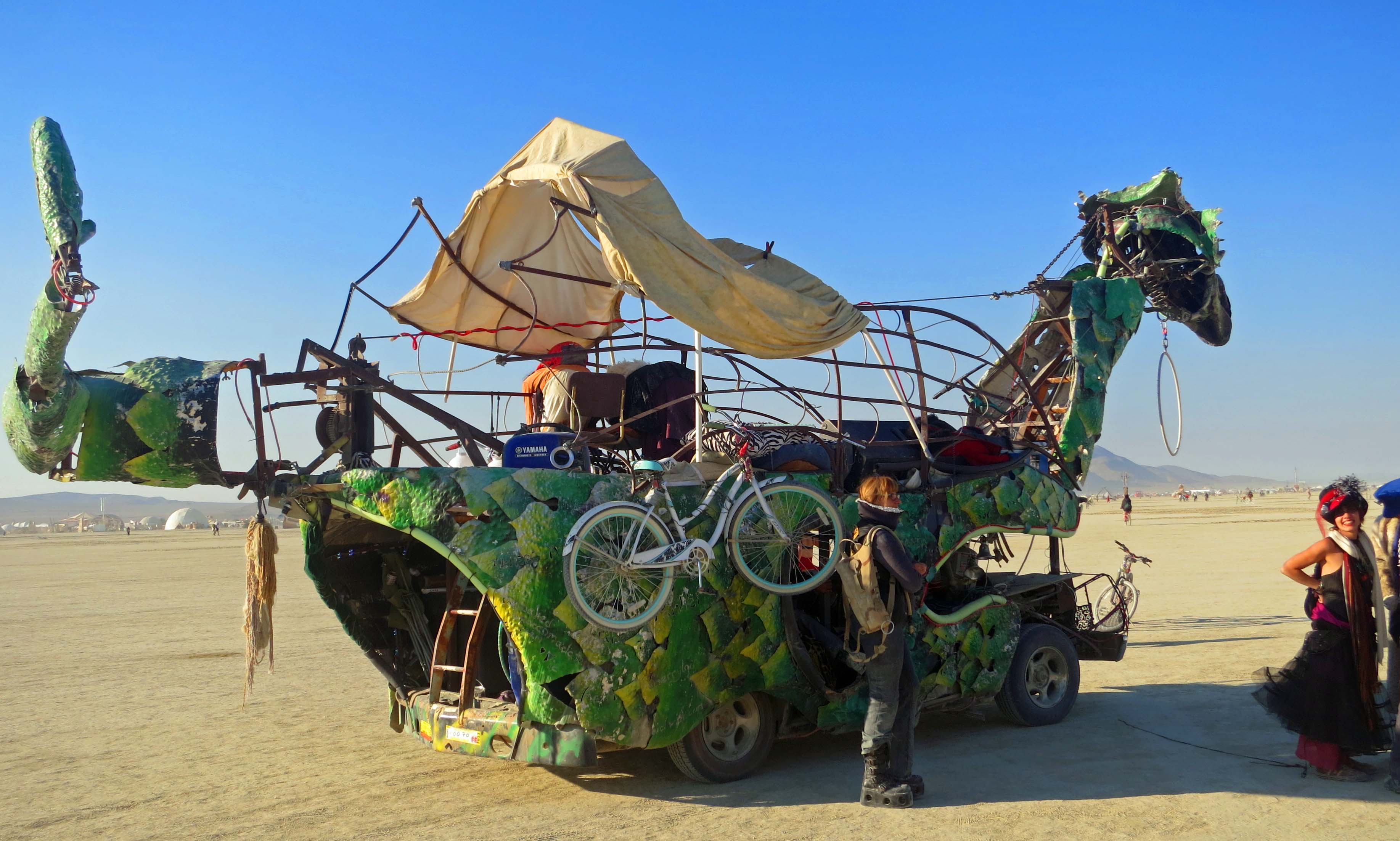
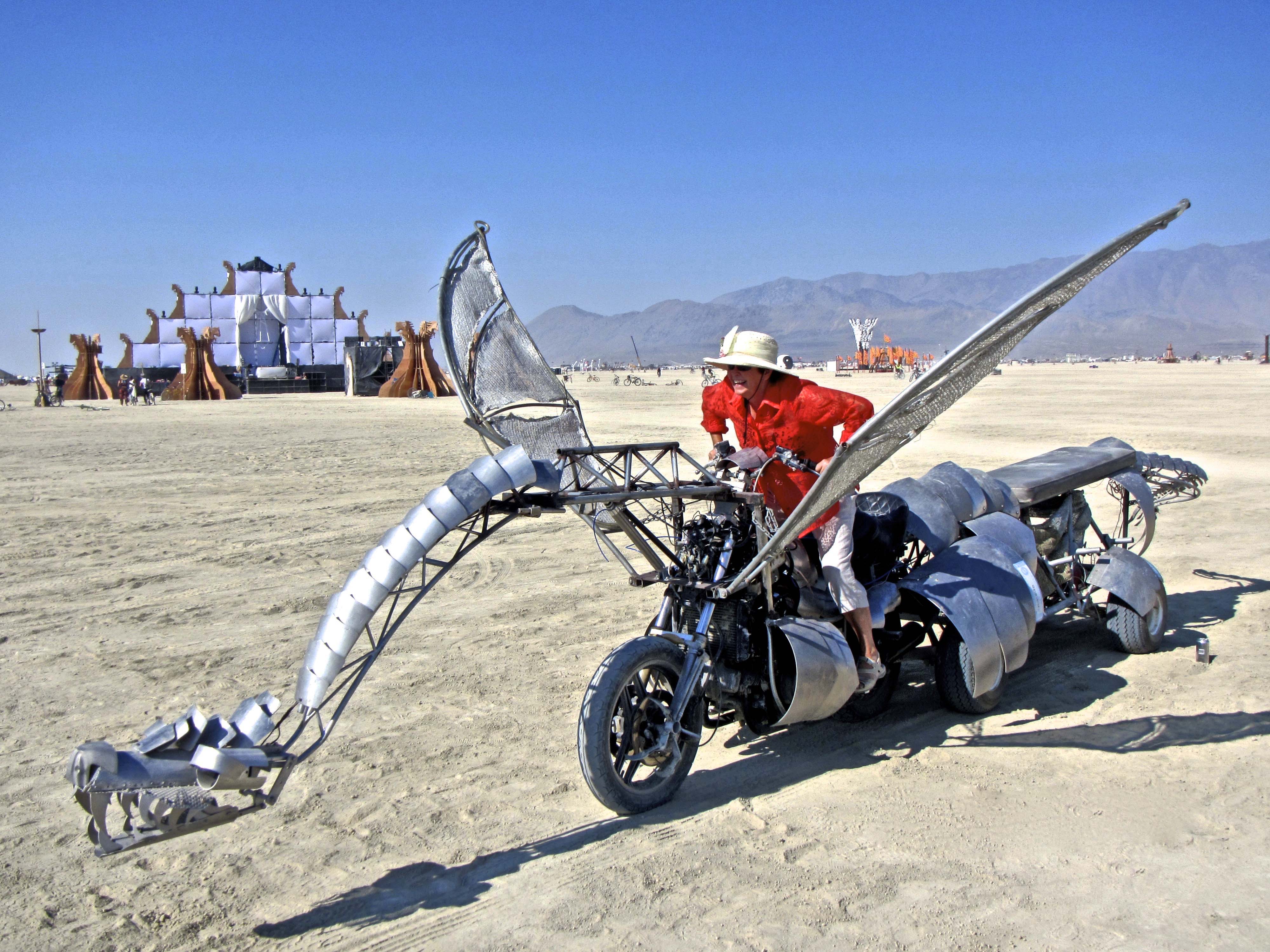
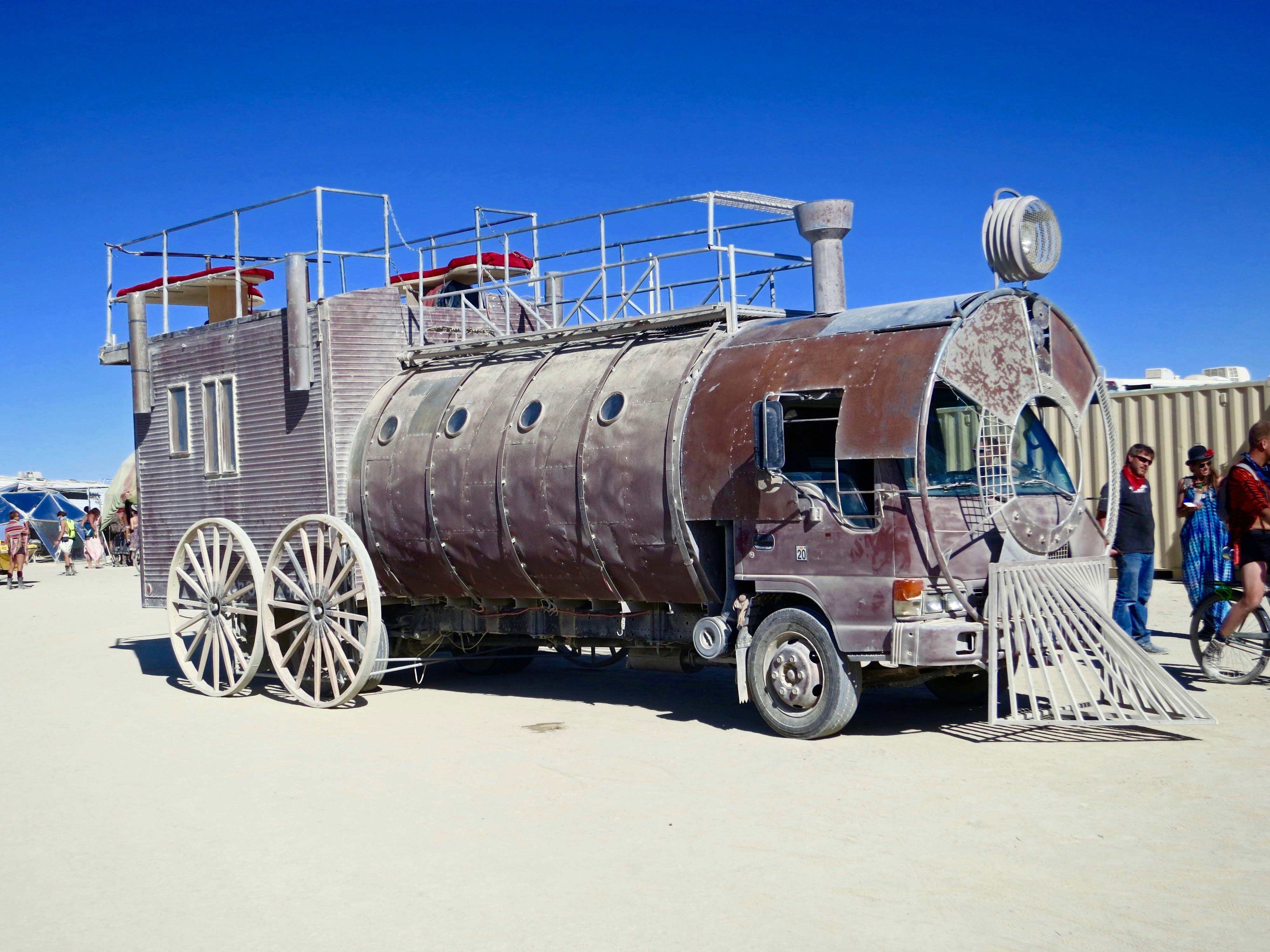
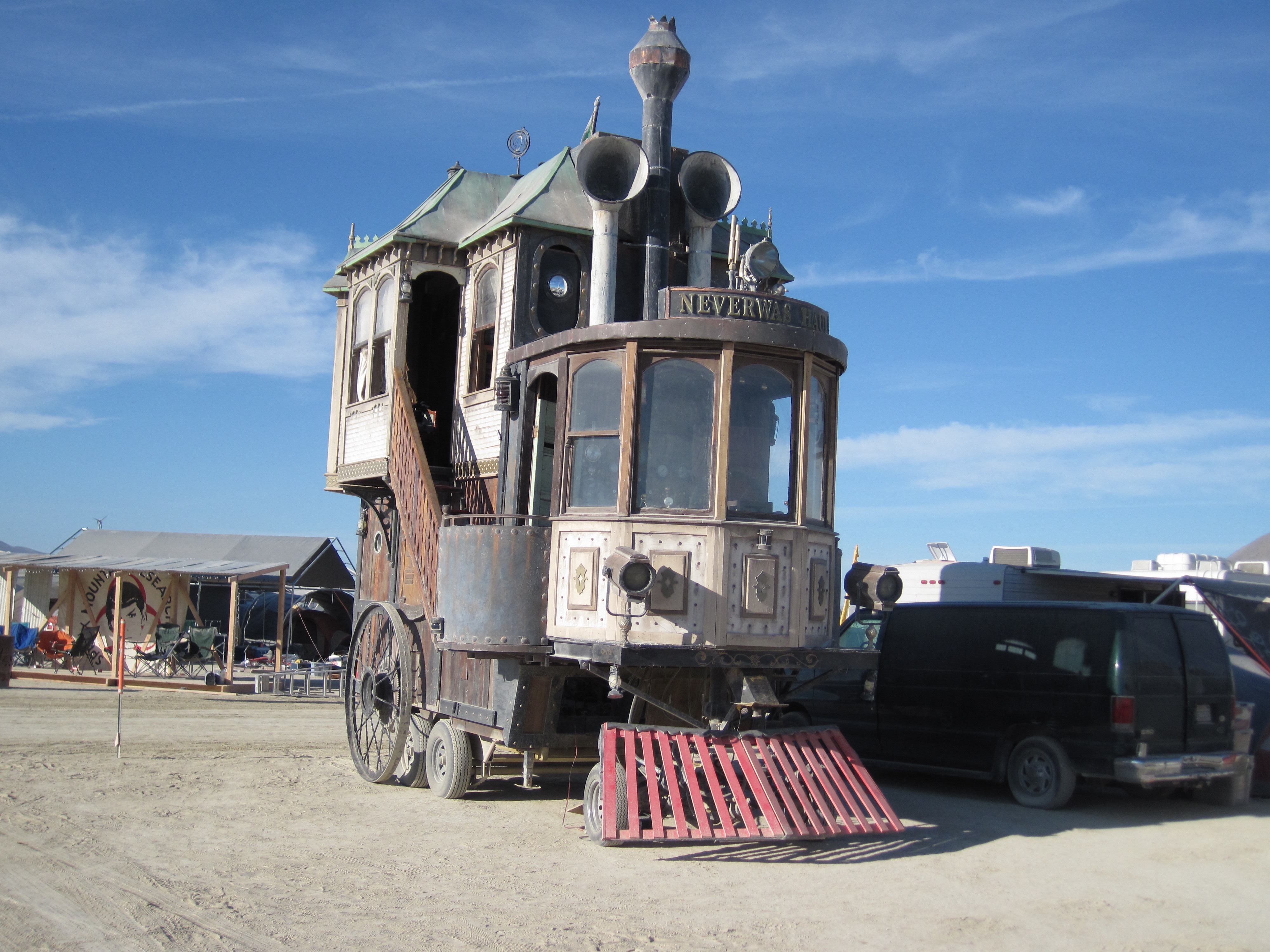
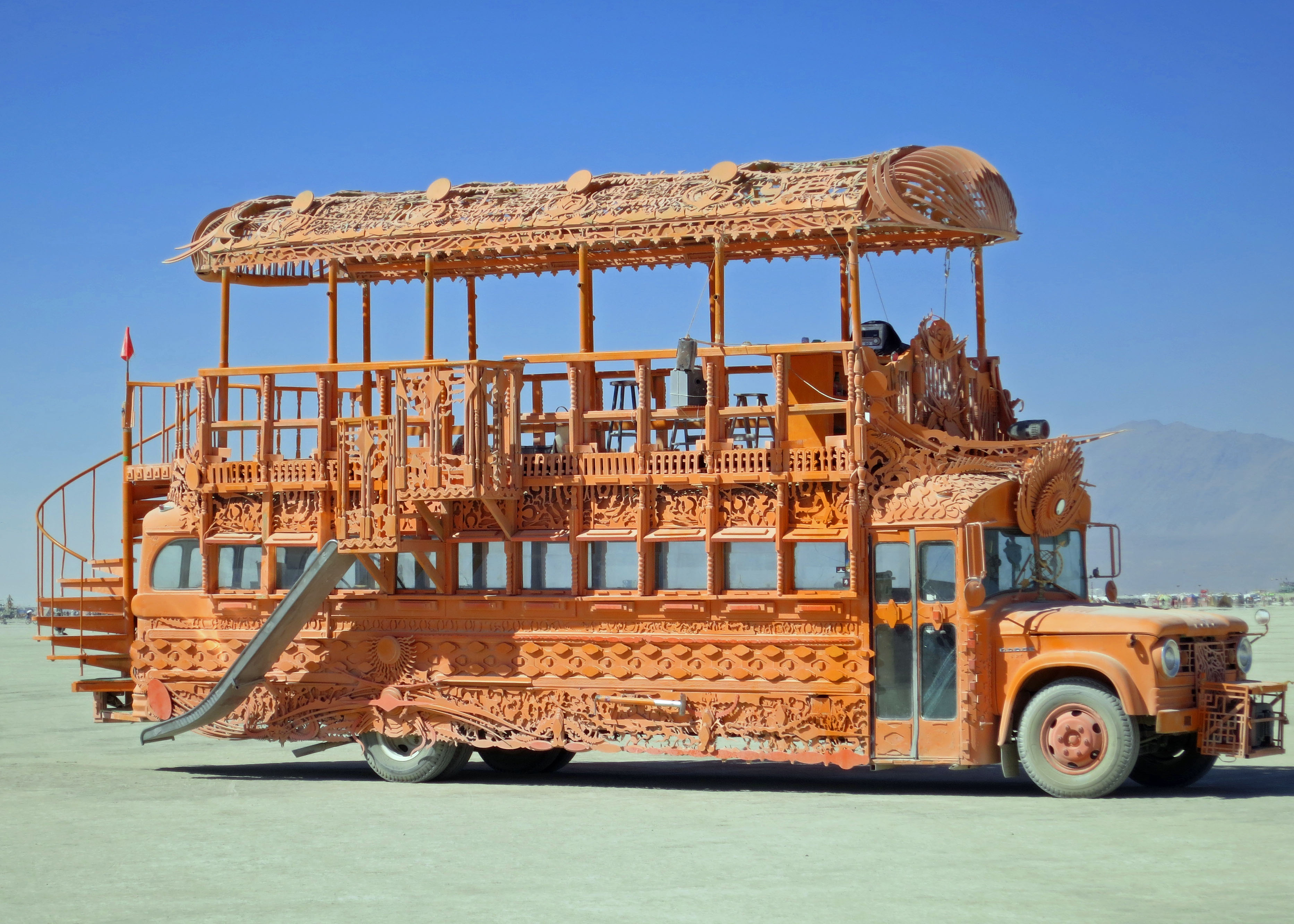
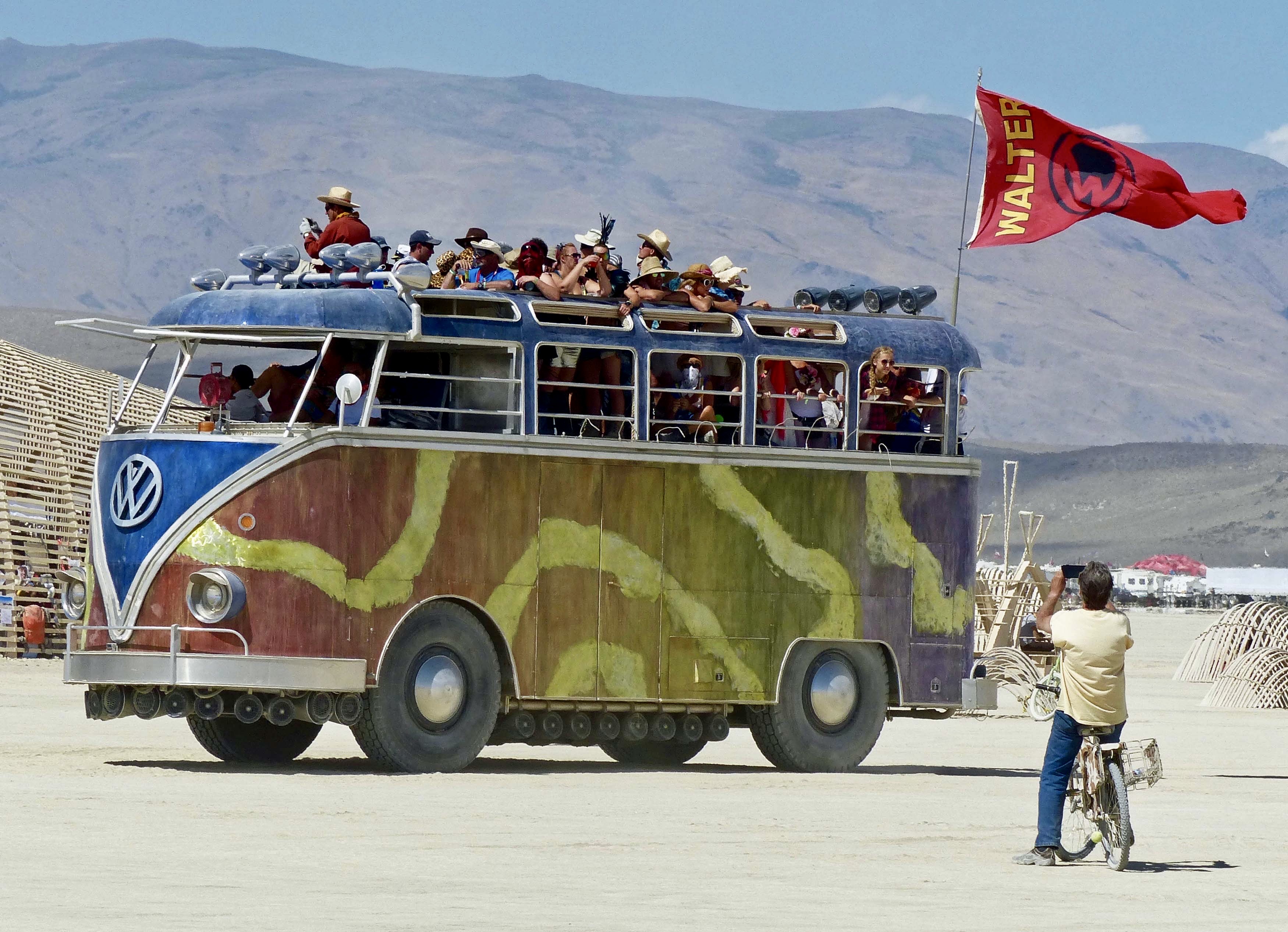
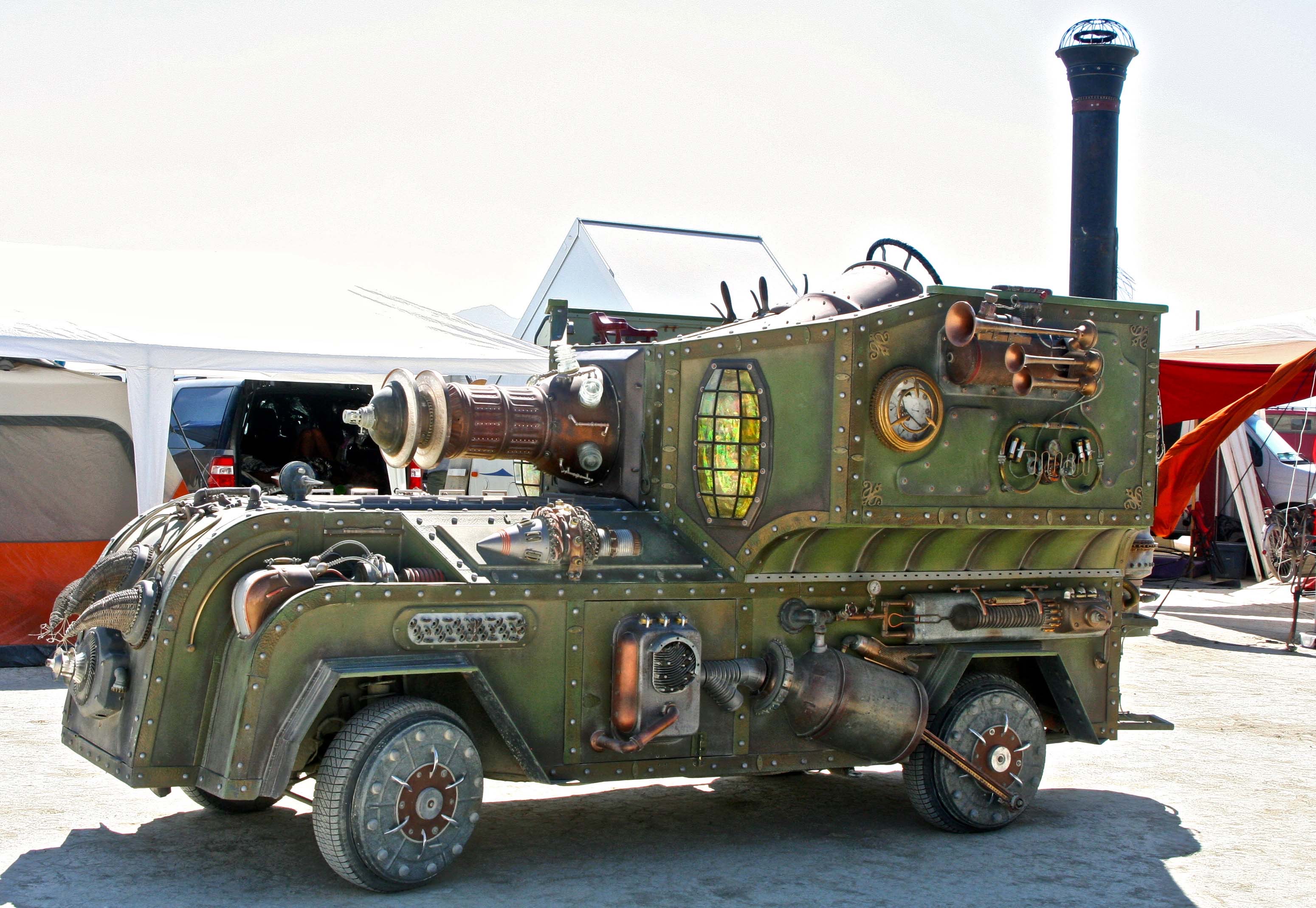
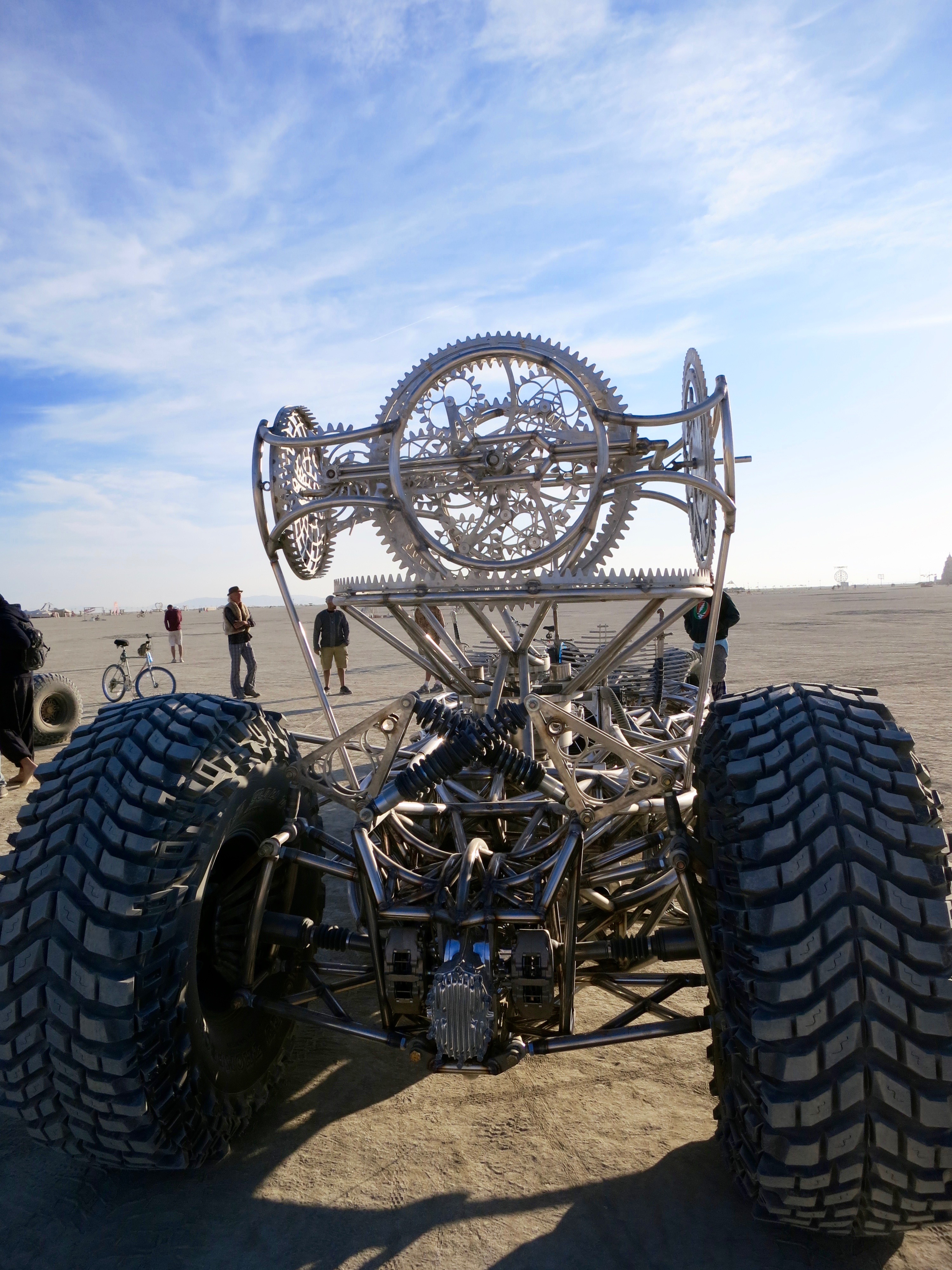
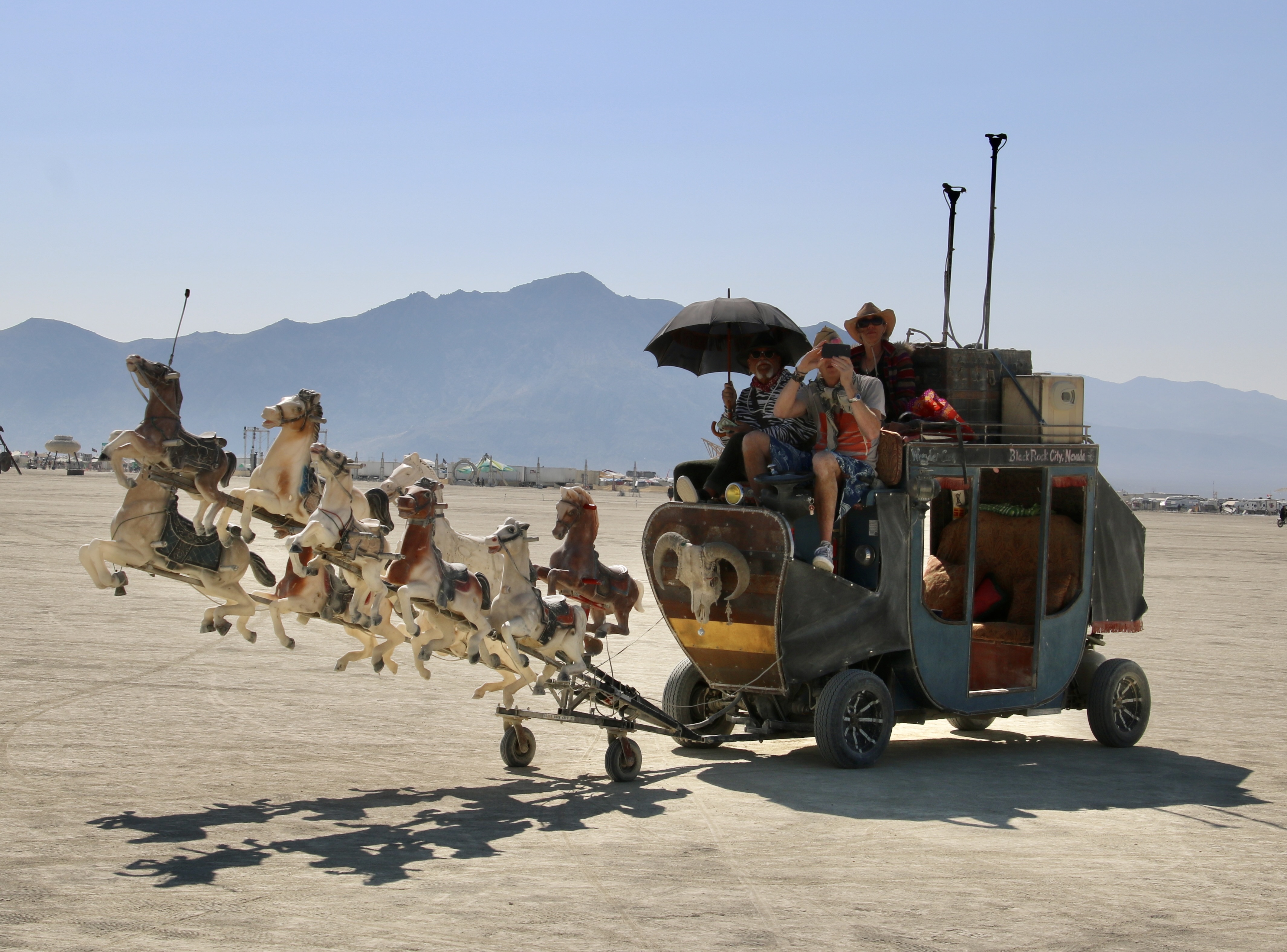
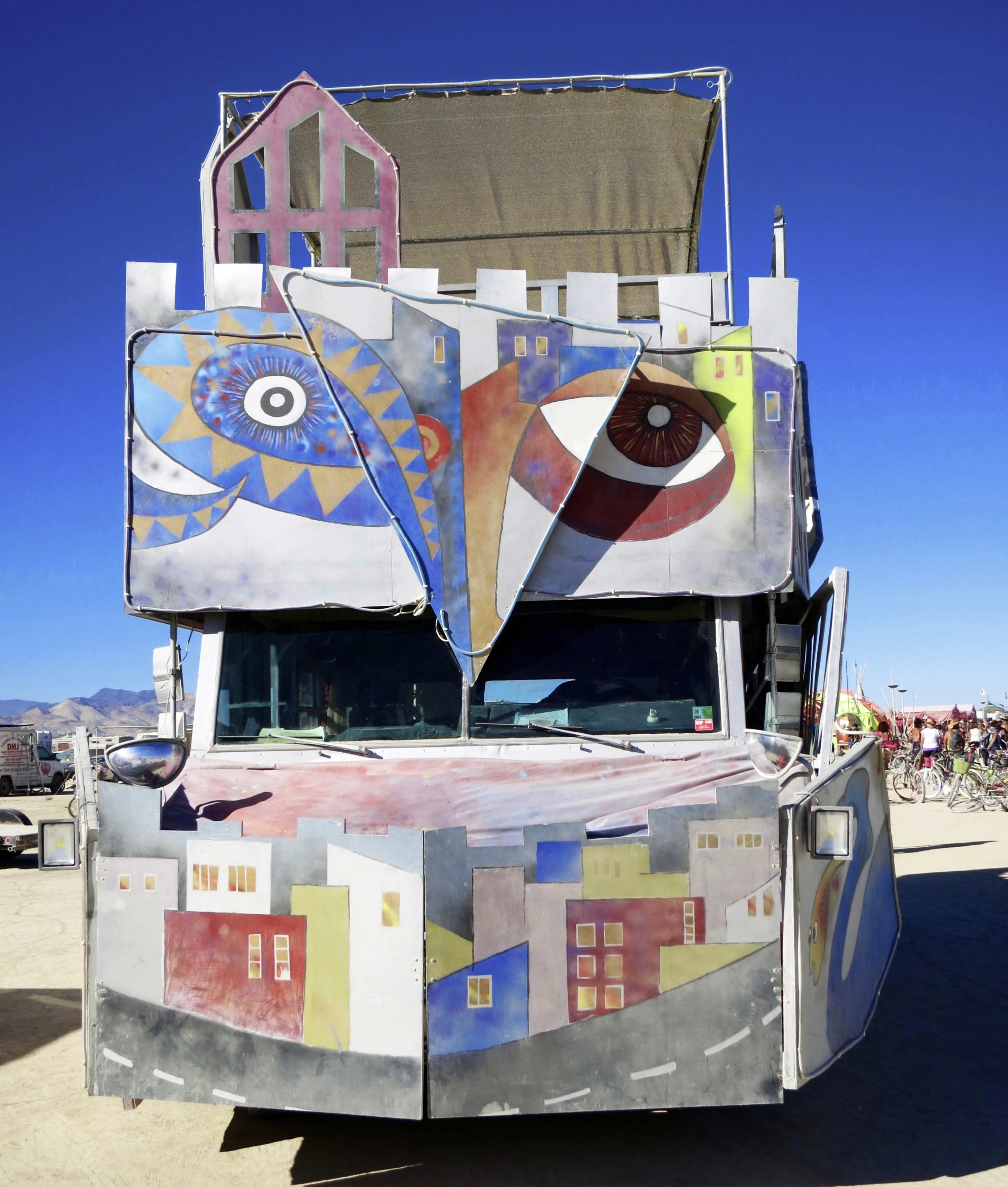
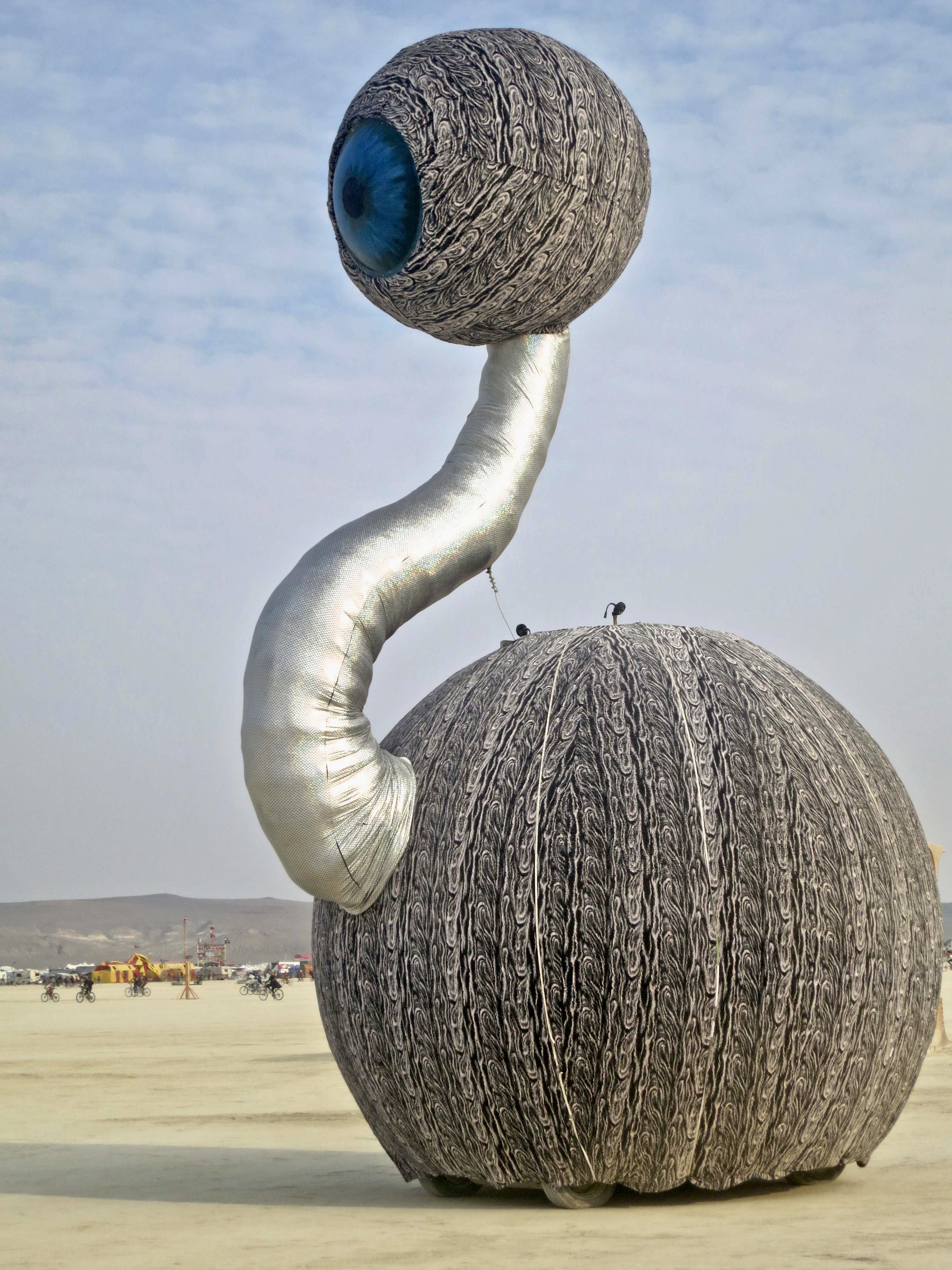
El Pulpo Mechanical, a giant octopus that shoots flames out of its tentacles, is a long time favorite. Here, El Pulpo is waiting for the Man to burn, along with dozens of other mutant vehicles and 50-70,000 people. Folks sitting up on his arms have prime seats.El Pulpo Mechanical on the move.El Pulpo during the day. Most of the parts that went into building the giant octopus came from a scrap yard in Arcata, California.El Pulpo isn’t the only mutant vehicle to have a connection with the ocean. This hermit crab with its colorful shell would fit right in on ocean’s edge.While this angler fish with its strange dangly designed as bait to lure smaller fish into its scary teeth would be found between 200 to 2,000 meters (650 to 6,561 feet) under the oceans surface. It appears that the angler has caught dinner. It probably offered drinks. Photo from the Monterey Bay Aquarium of an actual Angler Fish. BTW if you are ever near Monterey, be sure to include the Aquarium in your visit. It’s magnificent. As ferocious as this guy looks, it would fit in your hand. You might lose a finger, however.Here are two more angler fish that were roaming the Playa.This one is camouflaged with a desert look. Note the bait. It’s designed to spout fire at night.This rather distinctive narwhal is also a creature of the ocean. This one came with what I assume was a captain’s cabin and some pretension of being a sailboat.A closeup of narwhal. Great lips, sneaky eyes.And now we come to a ship for sailing the seas, or desert, complete with three well-rigged masts. There are lots of mutant vehicle boats plying the Playa. Once upon a time, around 15,000 years ago, the Black Rock Desert was part of the huge, glacial ,Lake Lahontan that was 500 feet deep and covered a substantial portion of northern Nevada.A yacht lit up at night. Speaking of expensive boats, several billionaires have made the pilgrimage to Black Rock City over the years including Elon Musk, Mark Zuckerberg, Jeff Besos, Larry Page and Sergey Brin. In fact, for several years, there was a Silicon Valley Village at Burning Man. The yacht is an example of the radical nighttime lighting I mentioned above. When you are walking or riding your bike out on the Playa you want to be able to stay clear of large mutant vehicles.It isn’t surprising to find a mermaid at Burning Man…Or an alien. We came on this fellow with his rocket ship wearing Burning Man garb. He fit right in.ET phone home. Off “Da Hook!” was one of the most unique mutant vehicles we have seen.In addition to the polar bear featured at the top, numerous other mutant vehicle animals make their way to Burning Man. This is the cat car/mutant vehicle.A side view.The Cheshire Cat of Alice and Wonderland.A golf cart cat with blue balloons! (Photo by our friend Don Green.)Possibly a very large cat, with dreadlocks for a mane? The tongue makes a very comfy chair, but it reminded me of the angler fish. Beware!Along with the ‘dreaded’ lion, the wart hog is another African animal.As is the rhino. (Photo taken by our friend Tom Lovering.)Moving on to the domestic side of the animal kingdom, we found this large red rooster…And where there are roosters, one expects to find chickens.A friendly dog. Or is it a friendly bunny?An enormous cow. The guy walking beside the cow is required as an extra safety measure for the large mutant vehicles. This is a sparkle pony. The Burning Man definition of a sparkle pony is “a Burner who is under-prepared for basic survival but still manages to pack 2 suitcases full of fabulous outfits.”One scary looking unicorn.Giant rubber ducky…Steam punk duck. It shot fire out of its head at night. Your basic wooly mammoth. Note: Several fossil mammoths have been found in the Black Rock Desert.Even insects end up as mutant vehicles.A buggy bug eyes.A spider, I think. Check out the lips. Dragons are ‘big’ at Burning Man. We introduced this giant in our introduction to a Burning Man post.They can appear quite ferocious. Usually you will find them out on the Playa at night spouting fire.A rear view of the green dragon mutant vehicle.Peggy goes on a wild dragon ride— in her imagination. Not that she wouldn’t have tried it for real. (Photo by Tom Lovering.)Many designs were more ‘vehicle-like’ in their mutant sort of way, such as this steam engine house.Tom Lovering’s all time favorite mutant vehicle at Burning Man, the Victorian-like, Neverwas-Haul. (Tom took the photo.)Once upon a time, this would have been a school bus. As a mutant vehicle, it would have made riding to school a lot more fun. I can see the first graders screaming as they exited via the slide, and the principal turning three shades of red.Before it mutated, this giant VW bus named Walter was once a fire truck in the historic mining town of Jerome, Arizona.A steam punk mutant vehicle.A rear view of a hot rod mutant that found its way onto the Black Rock Desert one year.A high flying stage coach. Giddy up! Who needs reindeer…A smart car?Modern art.And in conclusion, the eye. It may win a prize for being the most unique mutant vehicle. We hope you’ve enjoyed our tour of mutant vehicles at Burning Man. We have featured lots, but they are a mere fraction of what you might see.Next Monday on our Burning Man focus series, we will feature some of our favorite sculptures.
Thursday’s blog-a-book memoir will relate how a greyhound and a black cat got banned from sleeping on my bed.
Today, our focus series features ungulates. In case you don’t know what an ungulate is, like I didn’t, the short answer is that they are animals with hooves who walk or run on their toes. Did that help? They are divided into two categories: Odd toed ungulates (Perissodactyl) such as horses with one toe, and even toed ungulates (Artiodactyla) such as cows with two toes. The credit for having hooves goes to evolution. Horses, for example, started out with multiple toes just like us. They had 4 on the front and 3 on the back. Eventually, over millions of years, their claws/toenails expanded, grew together, and covered their toes. The evolutionary advantage being they could run a lot faster across grasslands and escape animals that wanted to eat them. A hoof is composed of keratin, the same fibrous protein that forms our toe and finger nails. It acts as a hard, protective casing that covers the toes and allows for weight-bearing, shock absorption, and traction— just like a good pair of running shoe works for our feet. But enough on the details. Let’s get to the fun part!
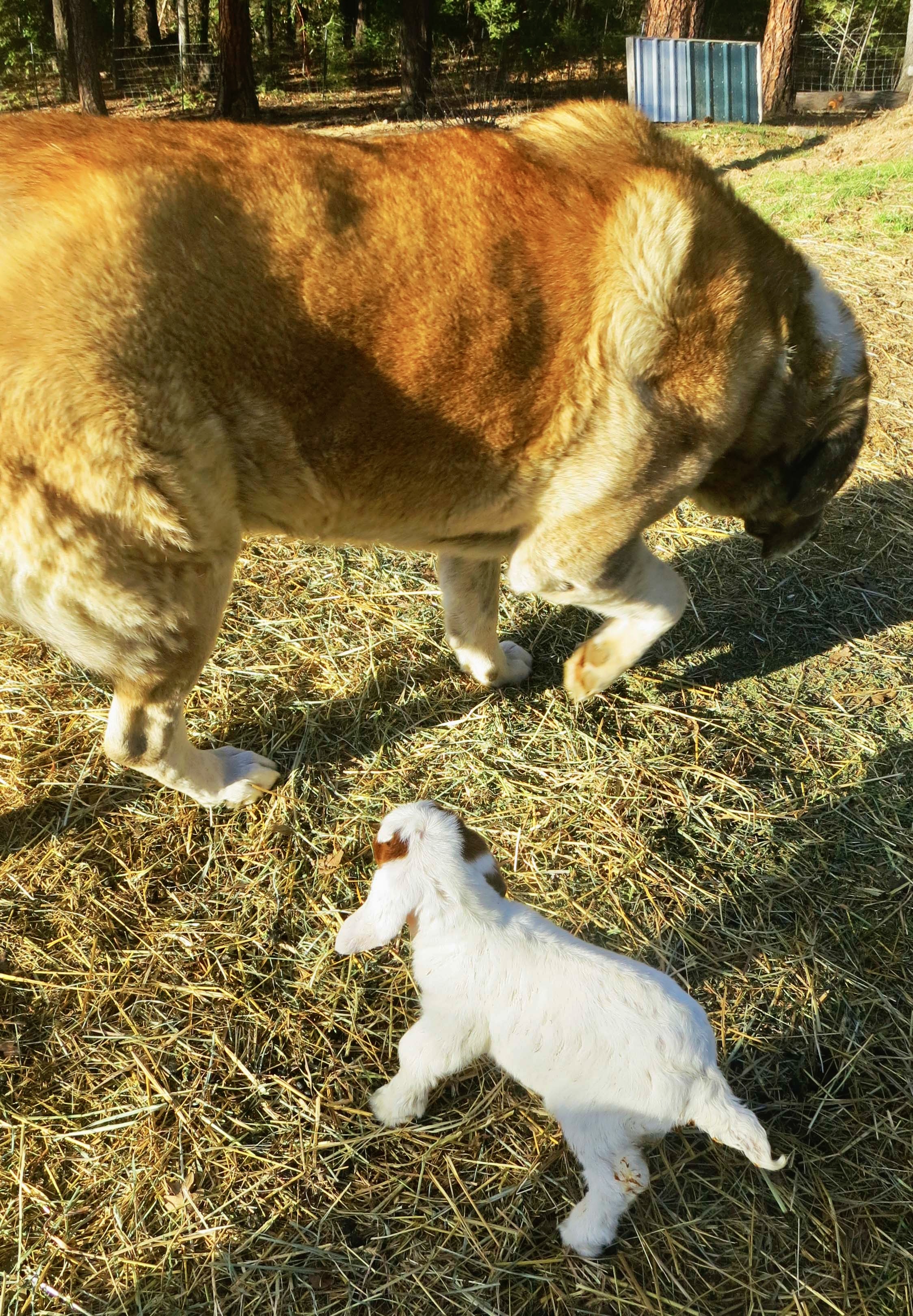
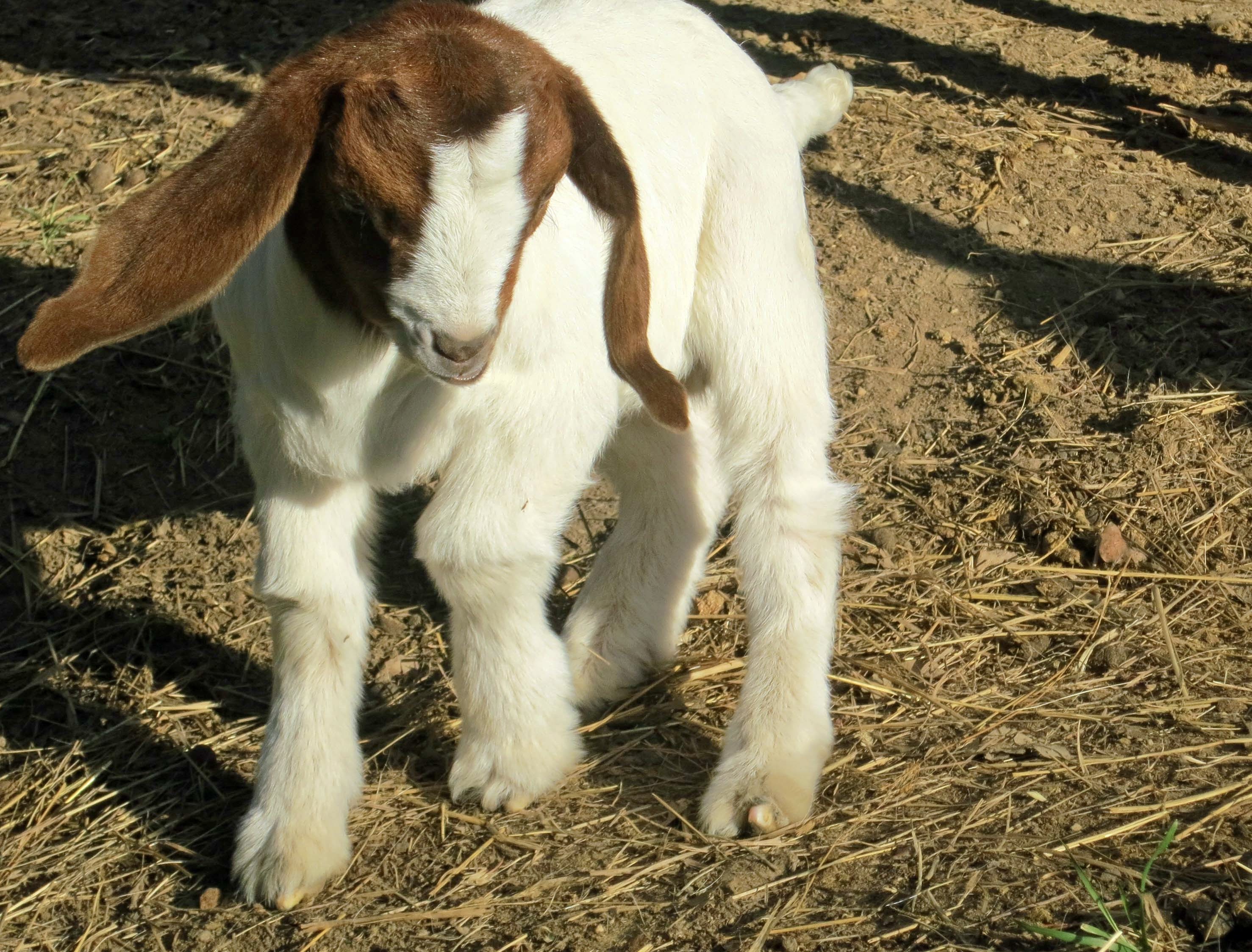
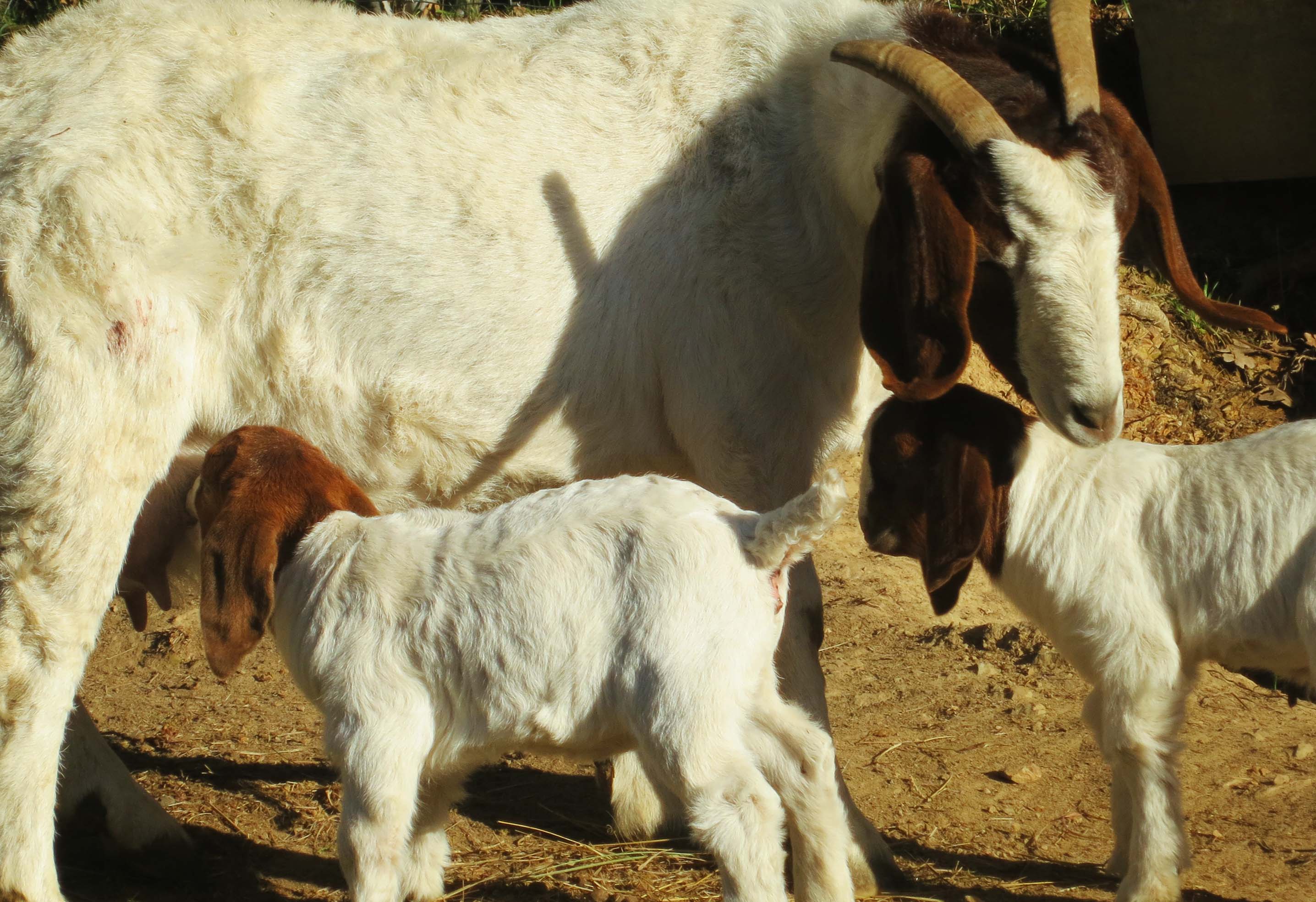
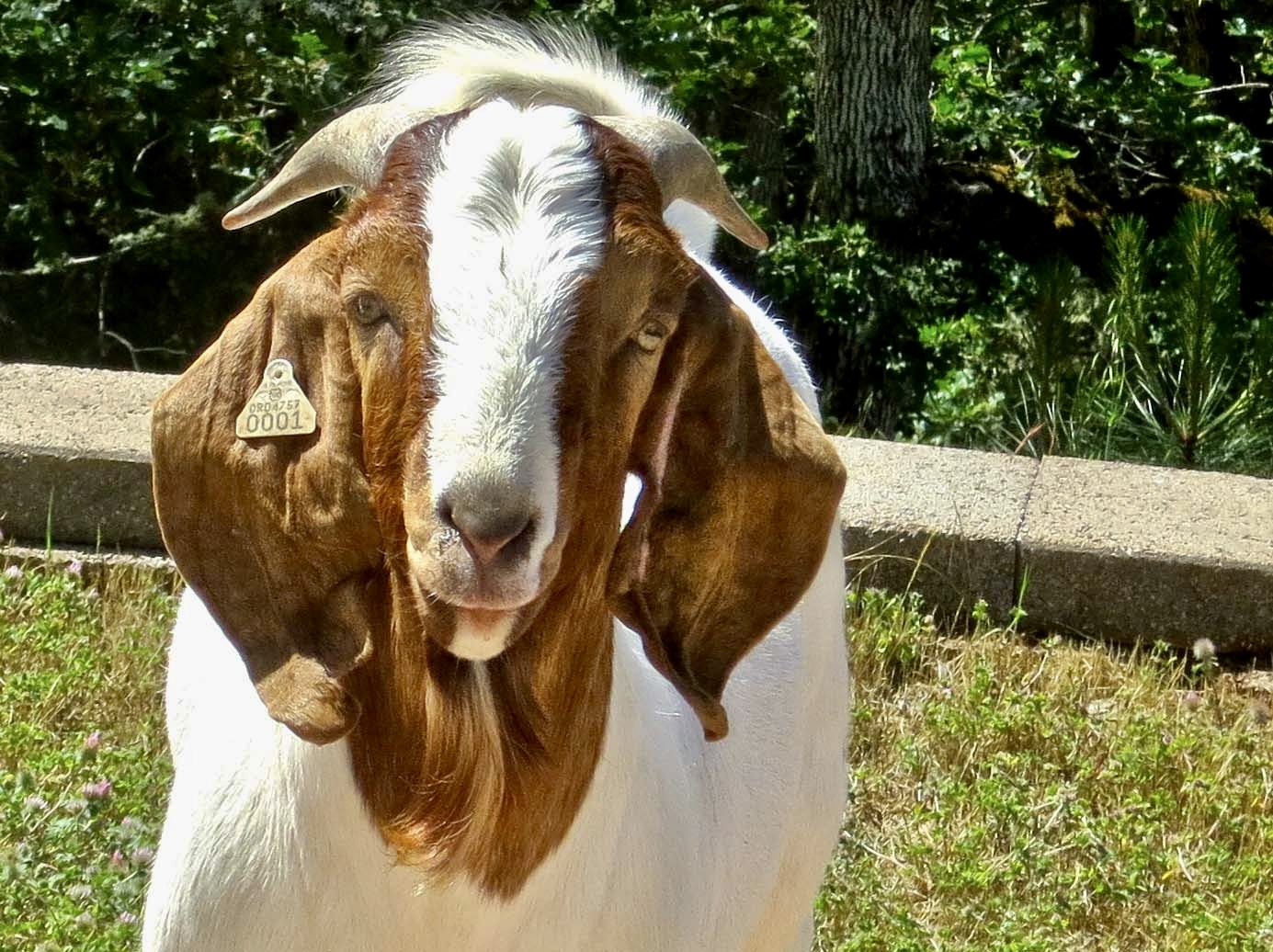
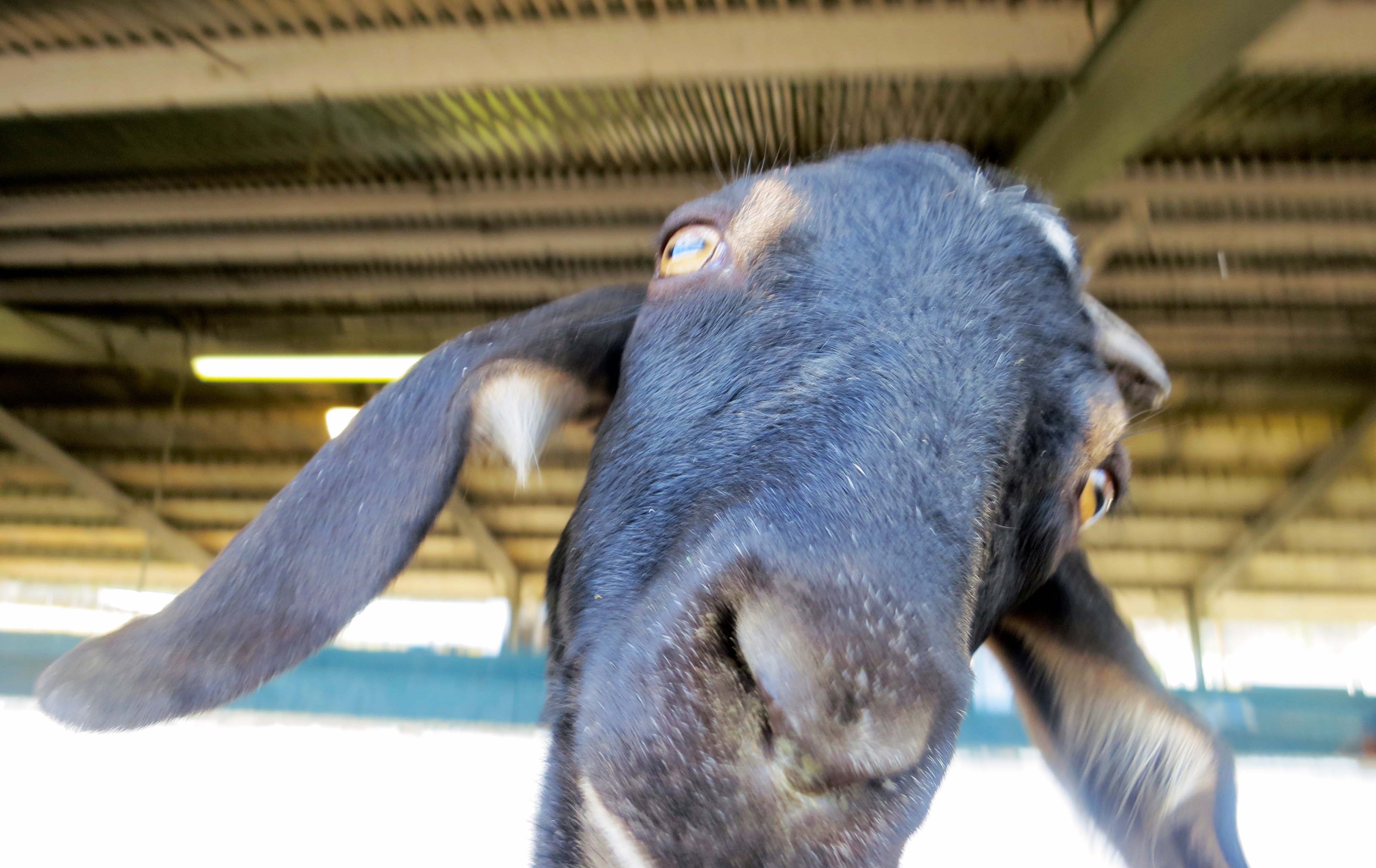
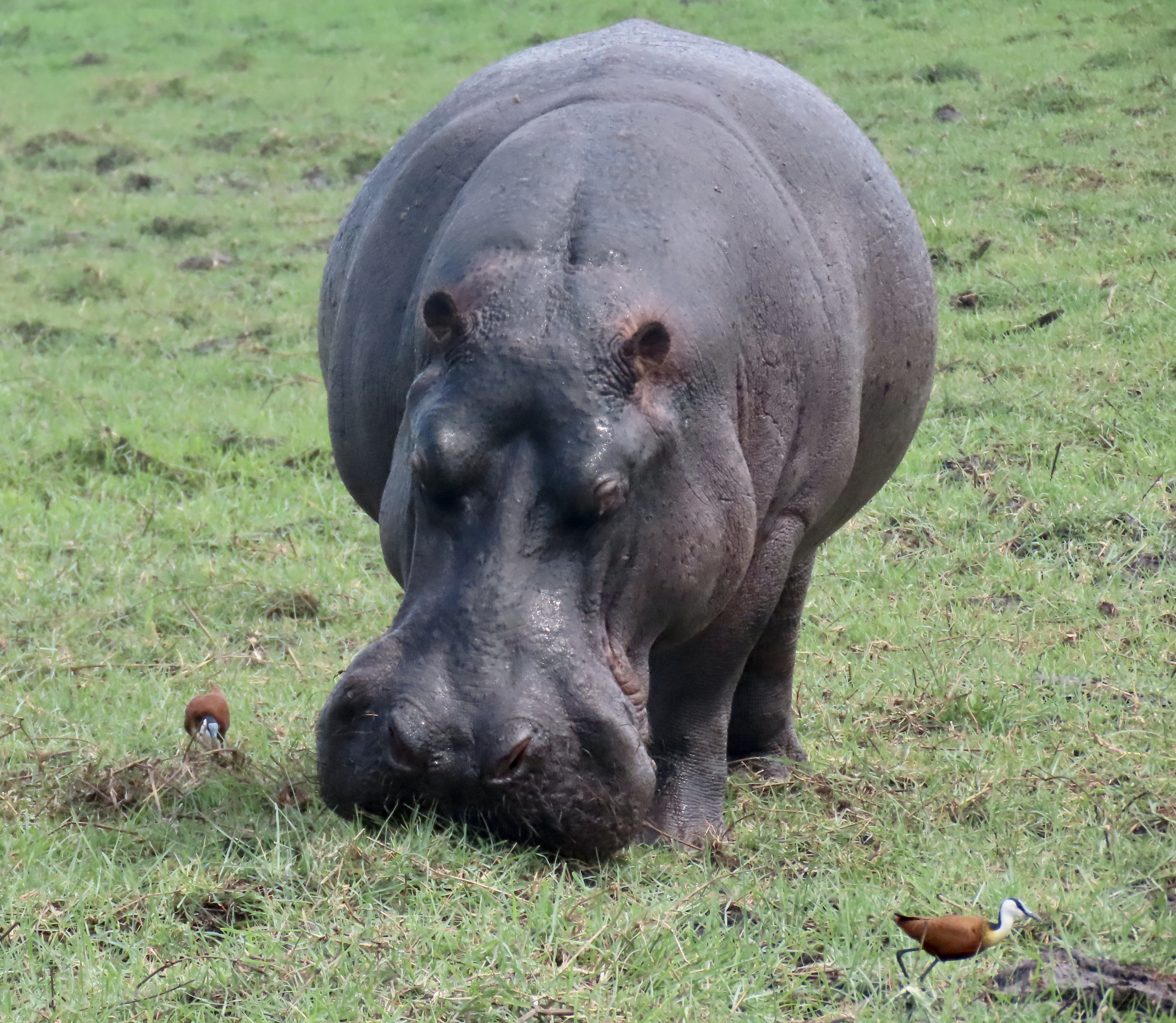
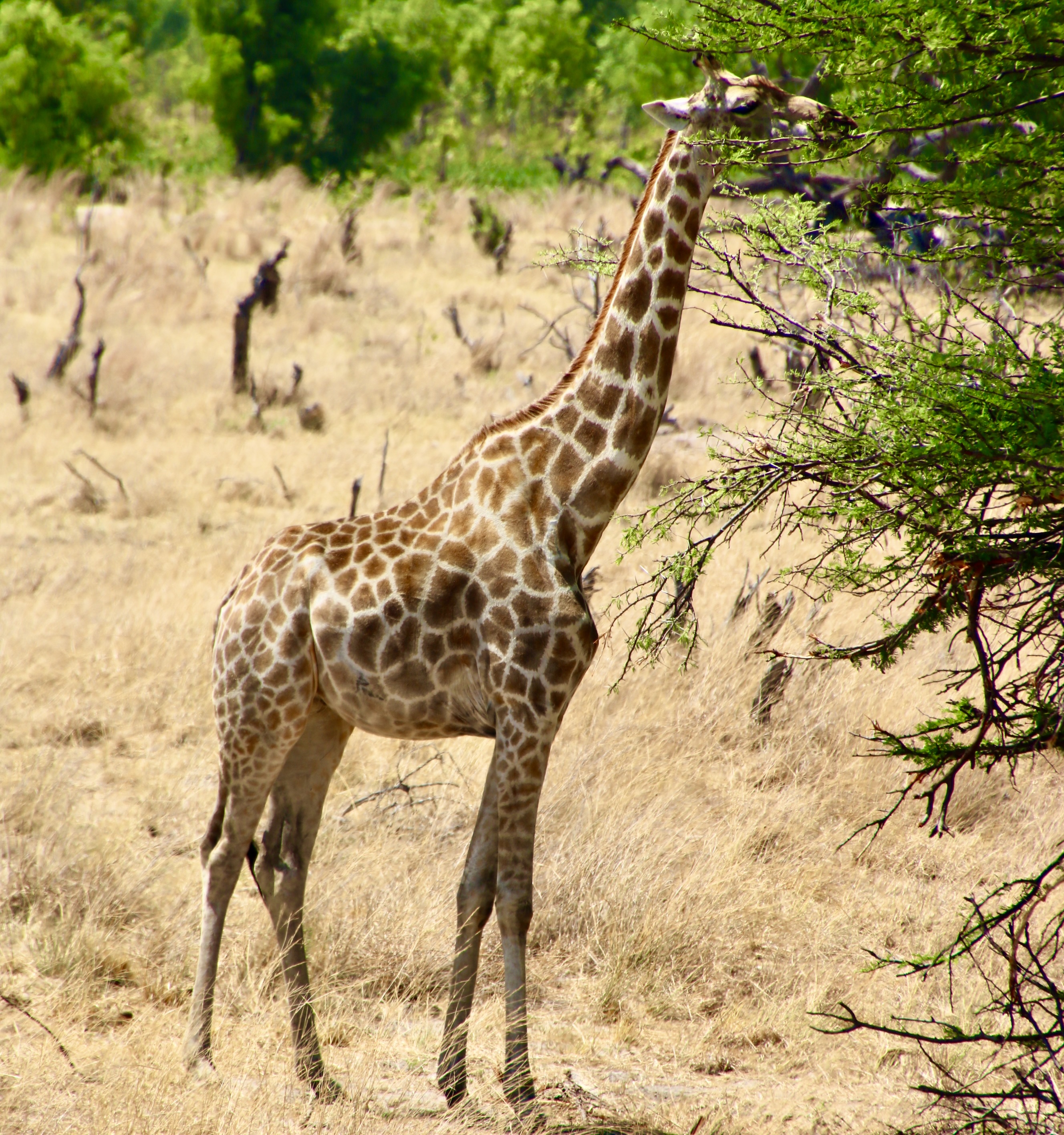
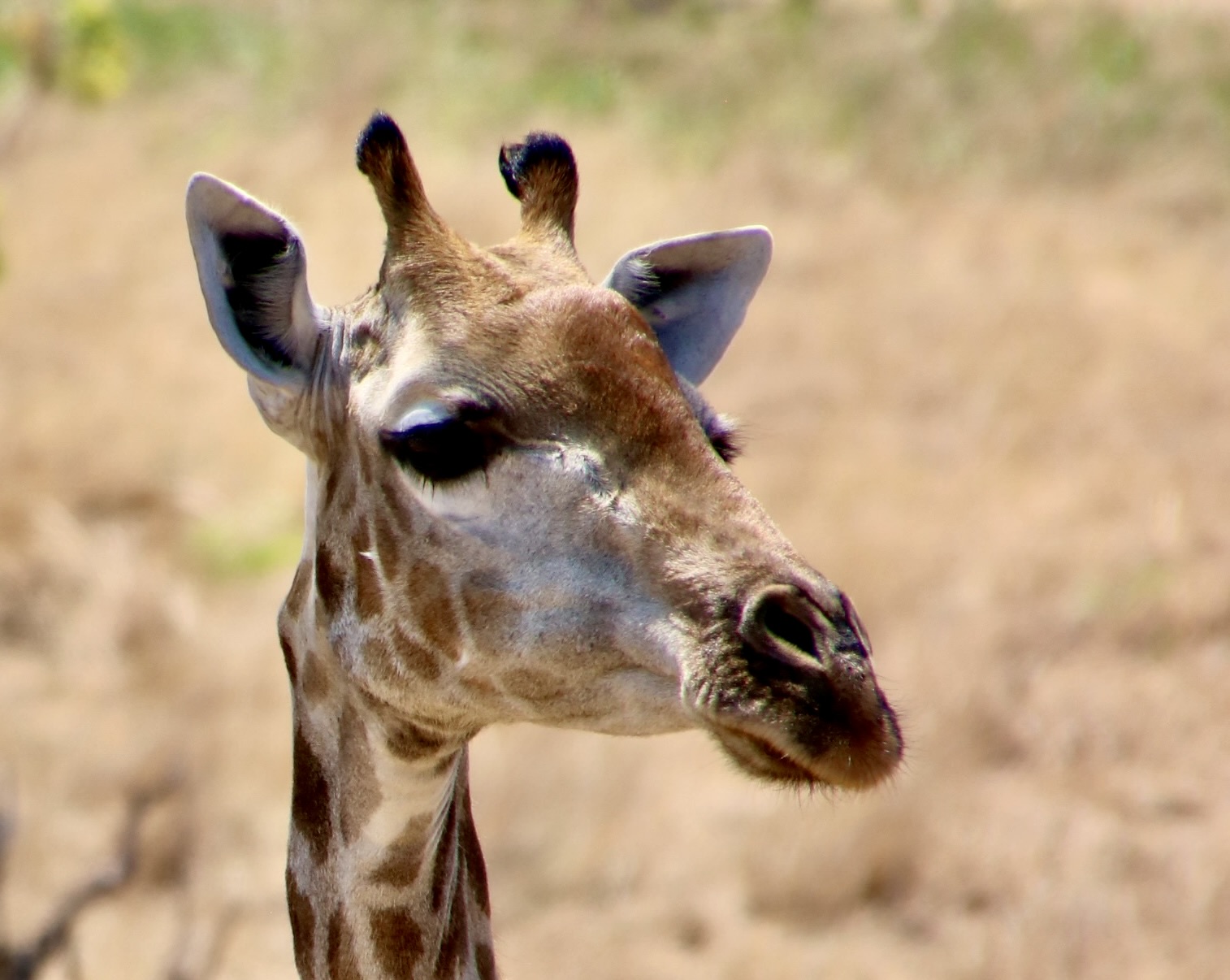
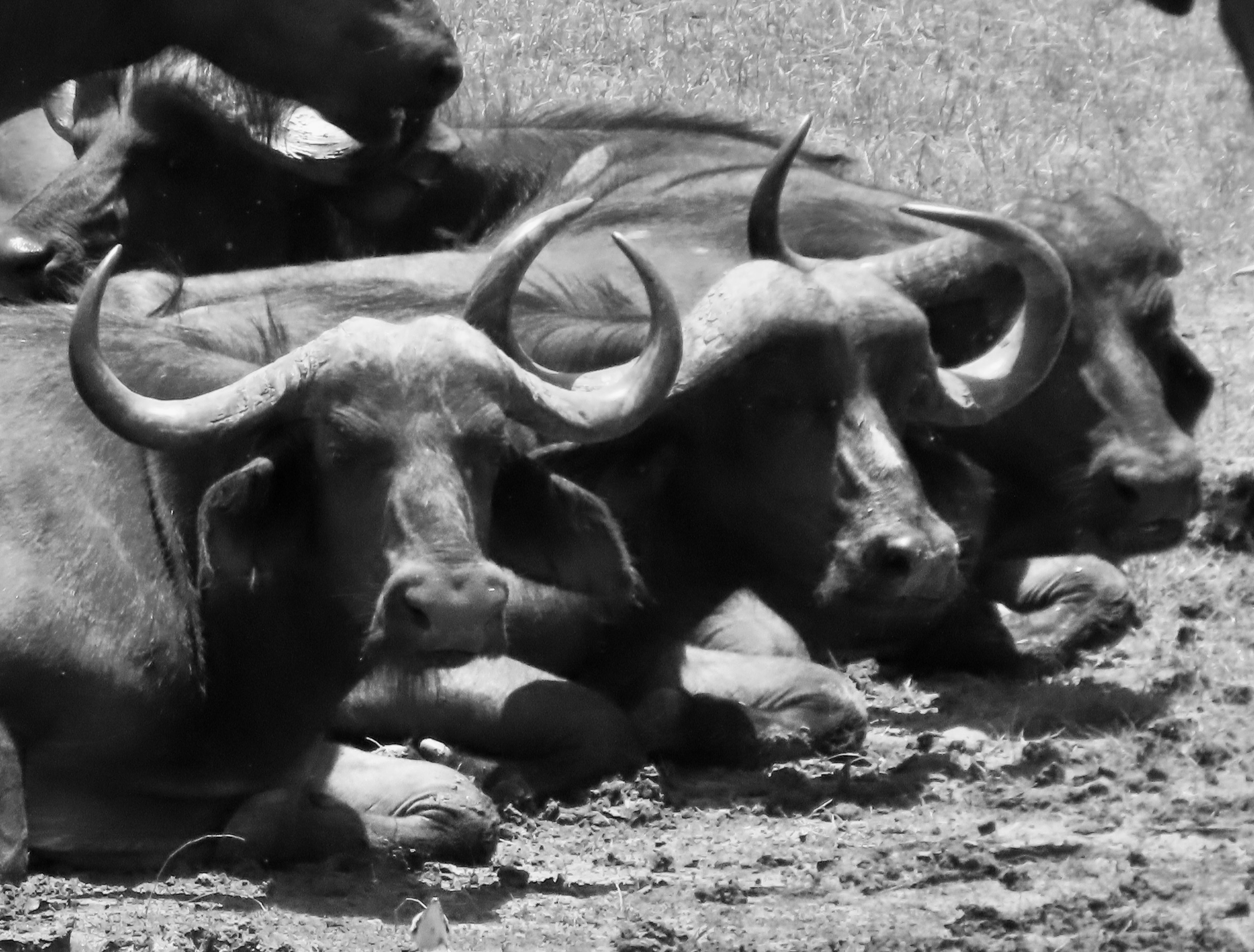
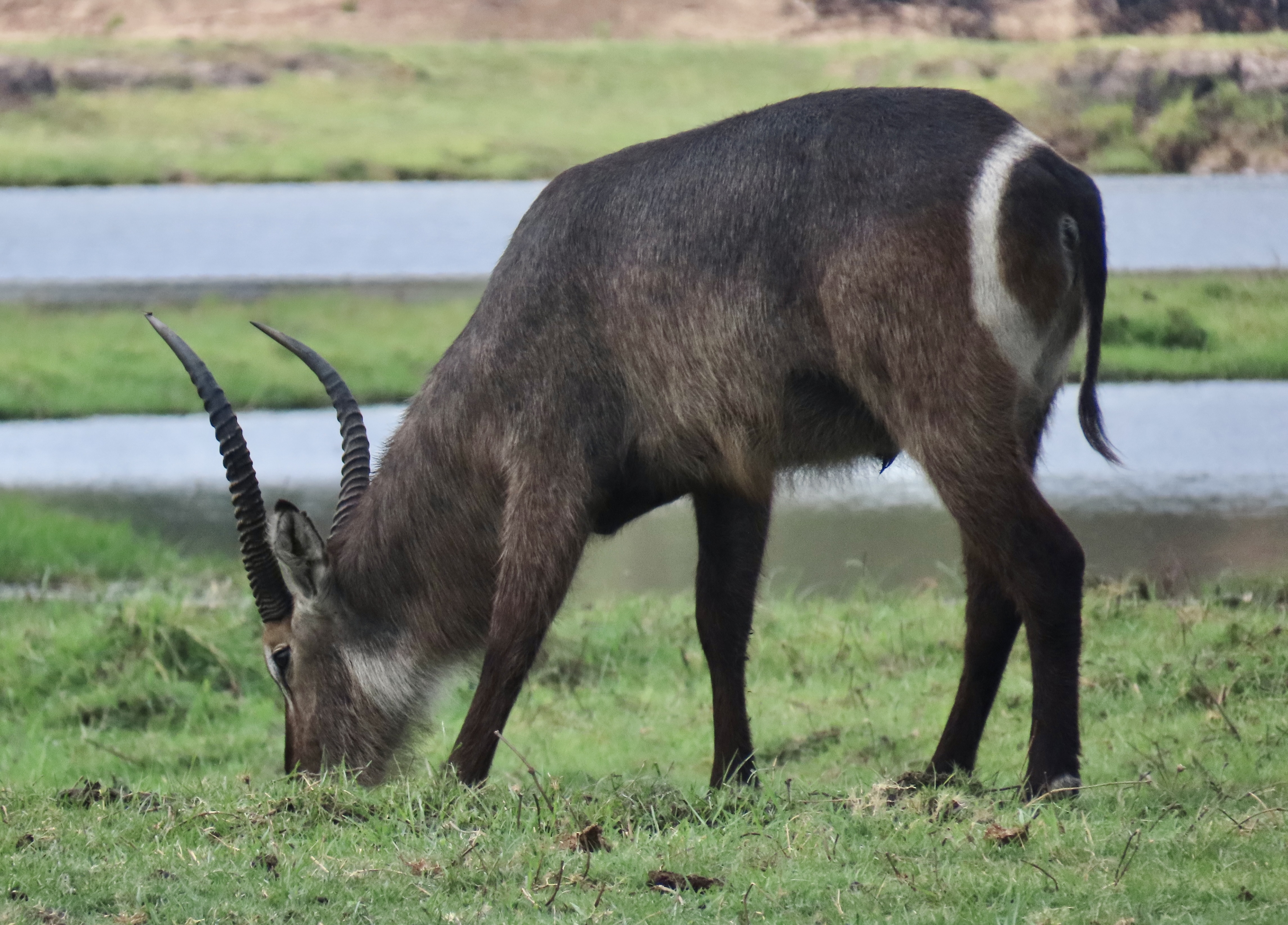
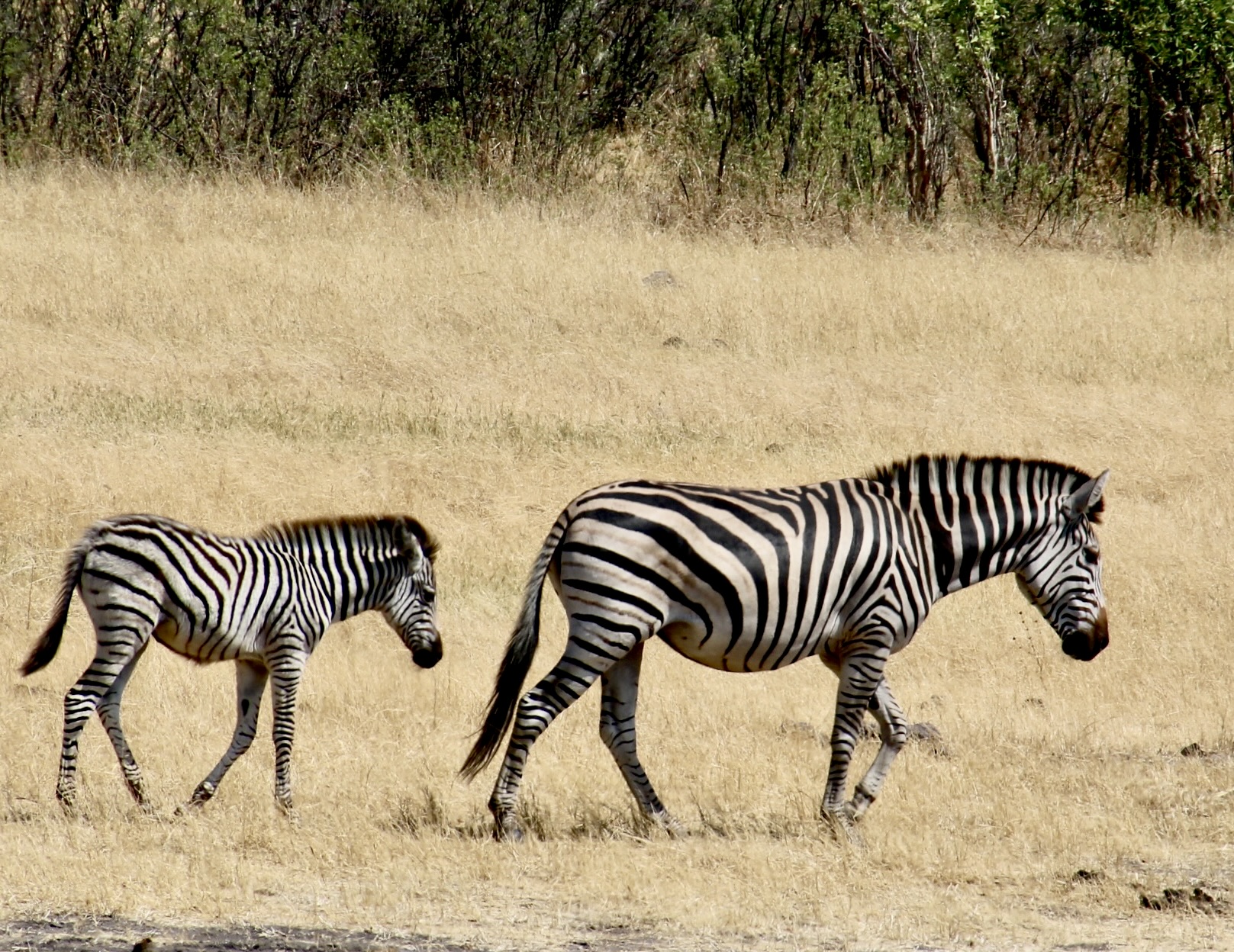
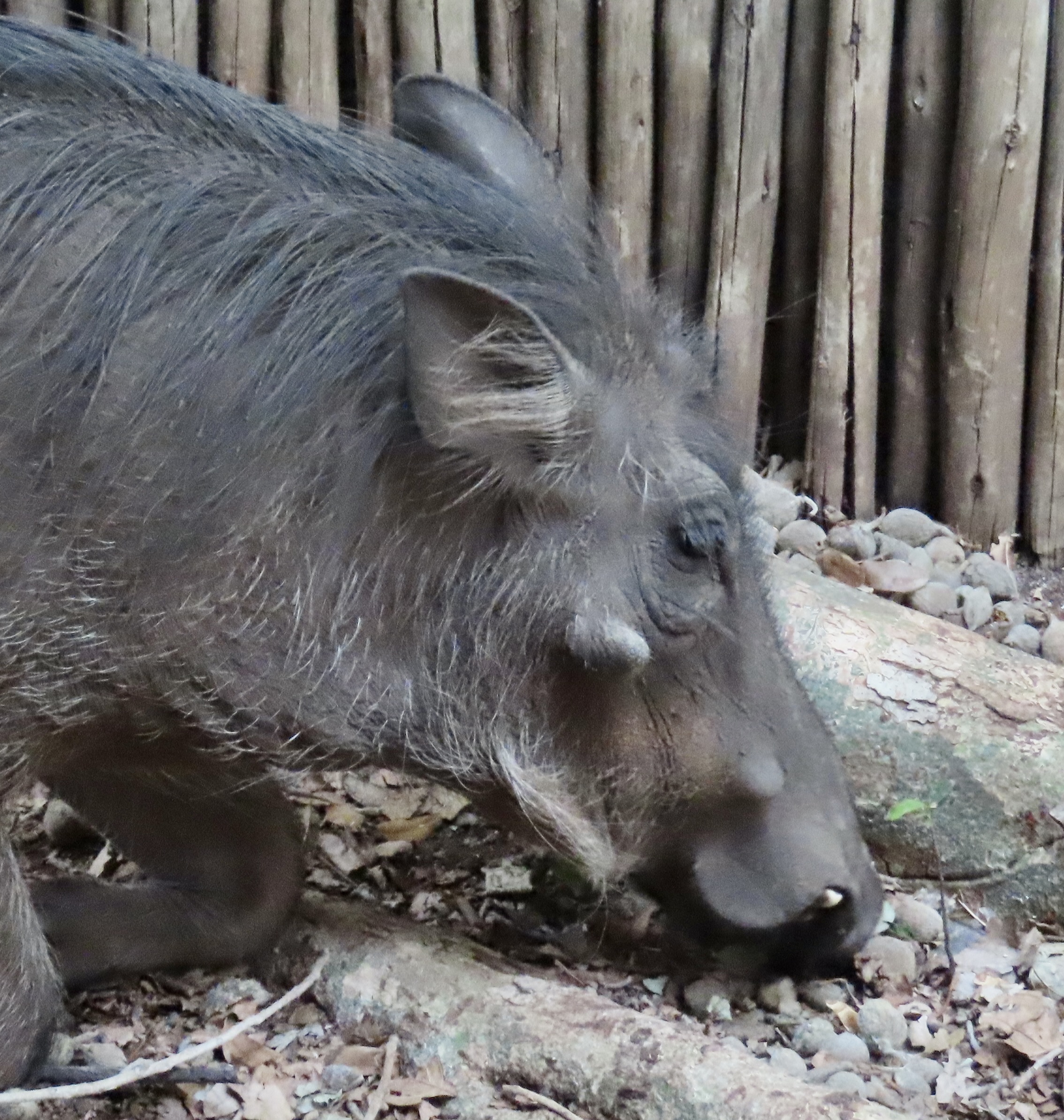
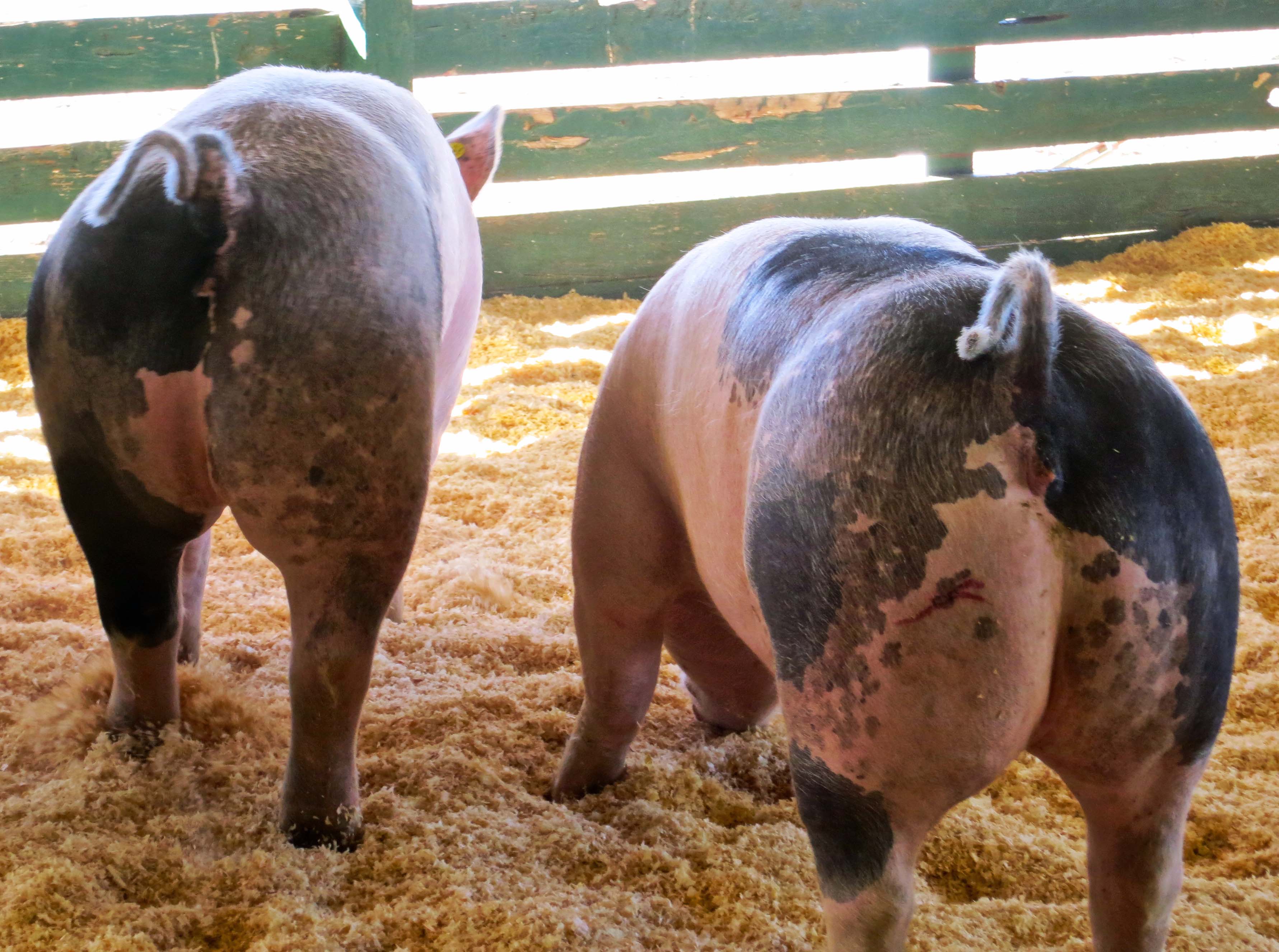
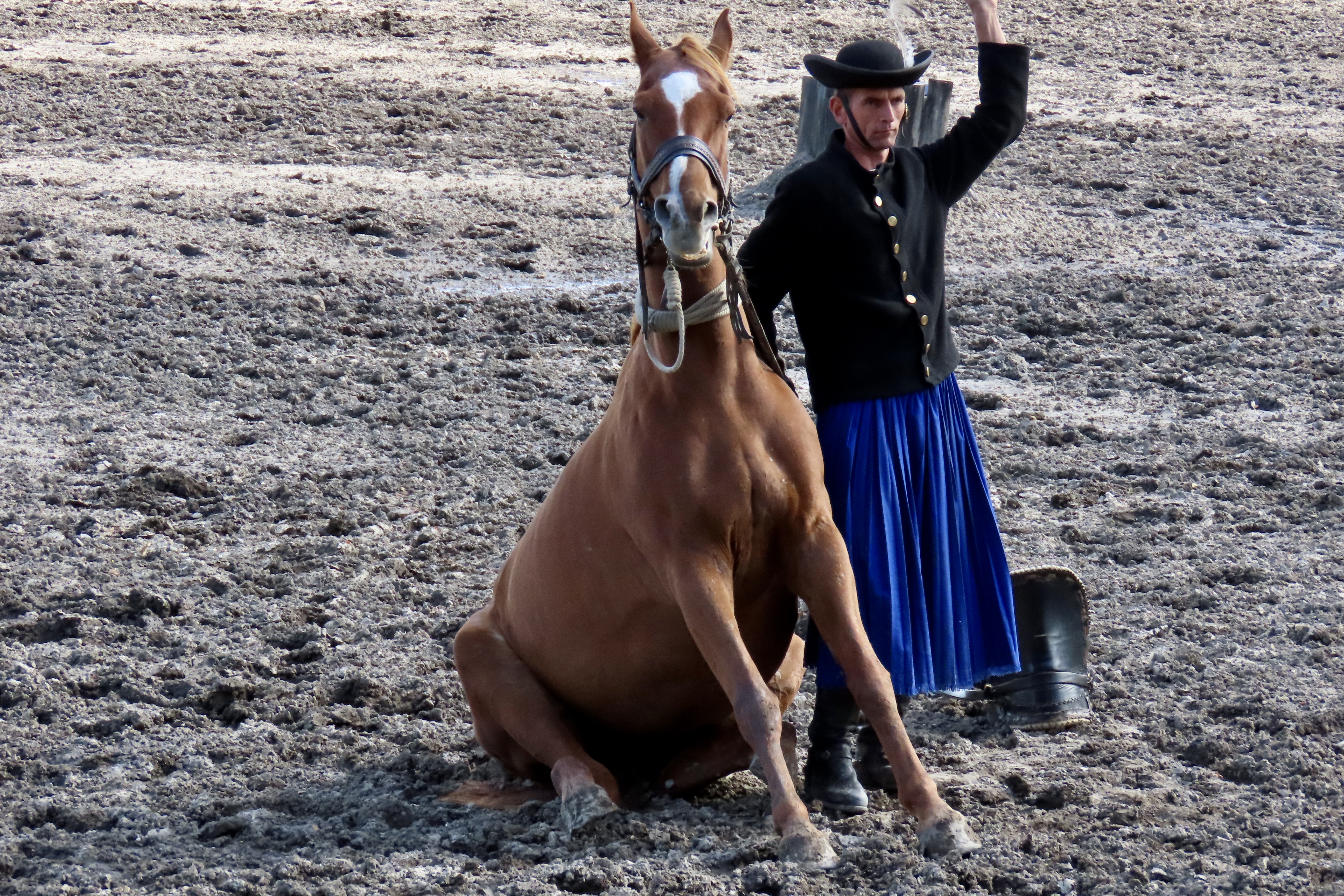
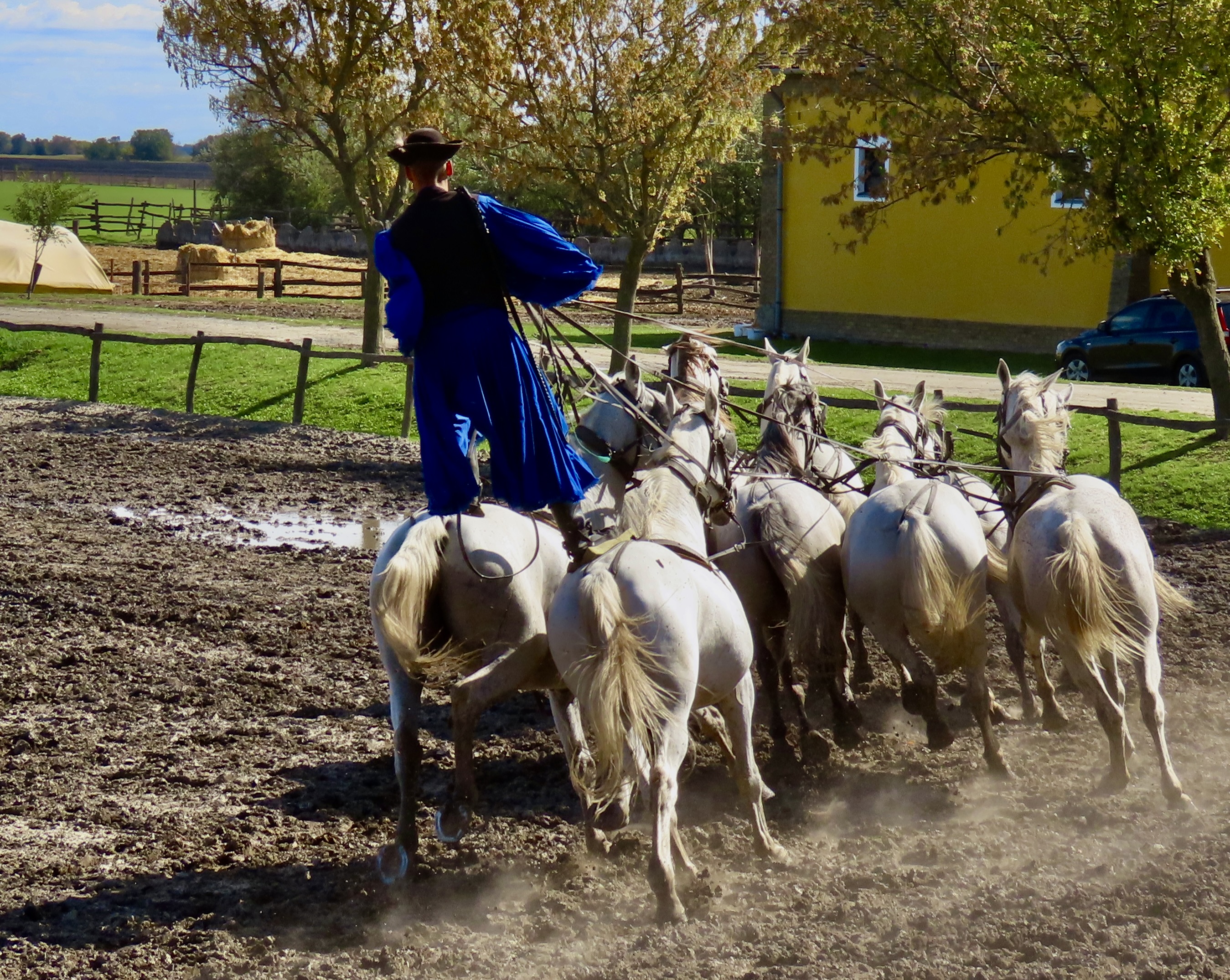
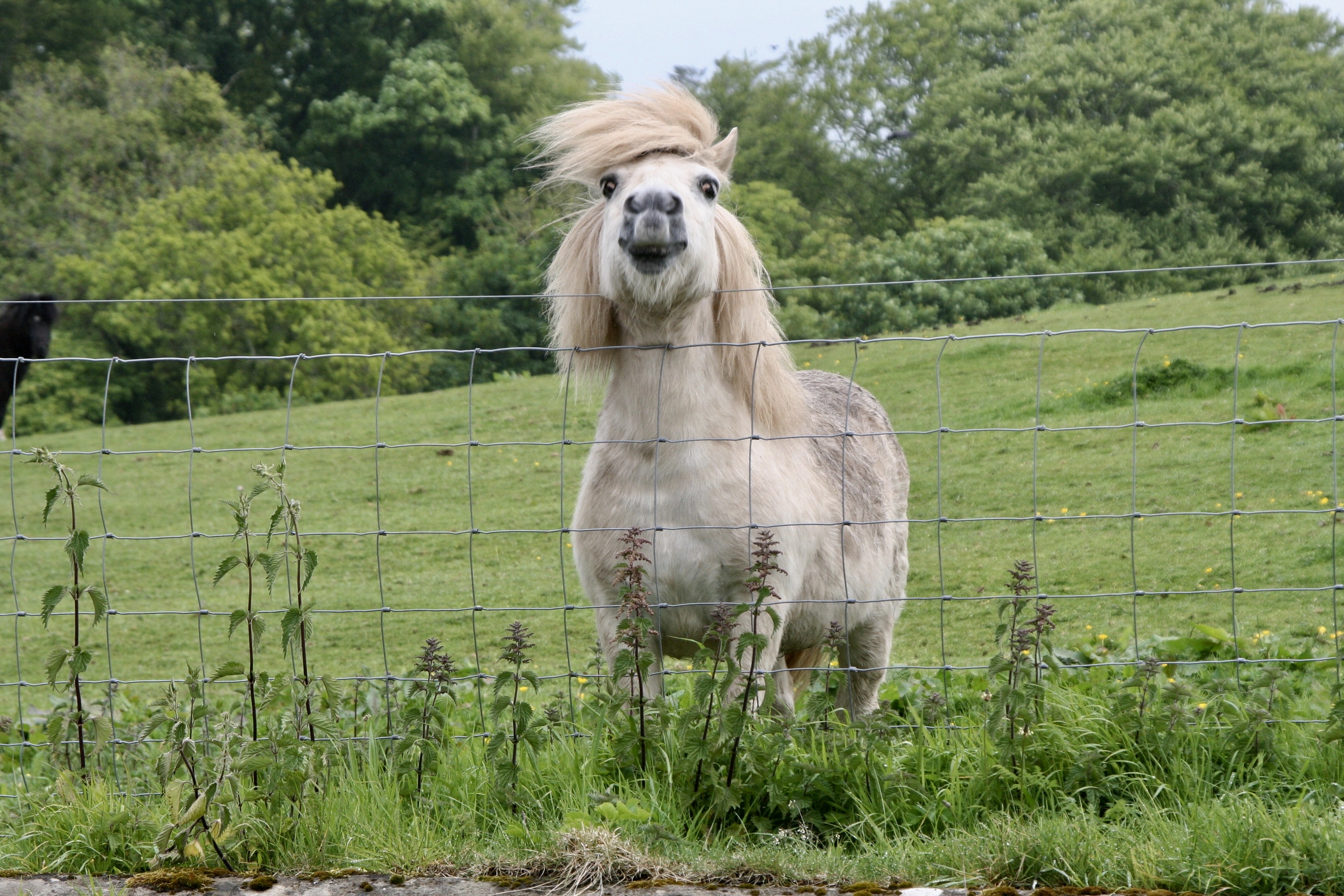
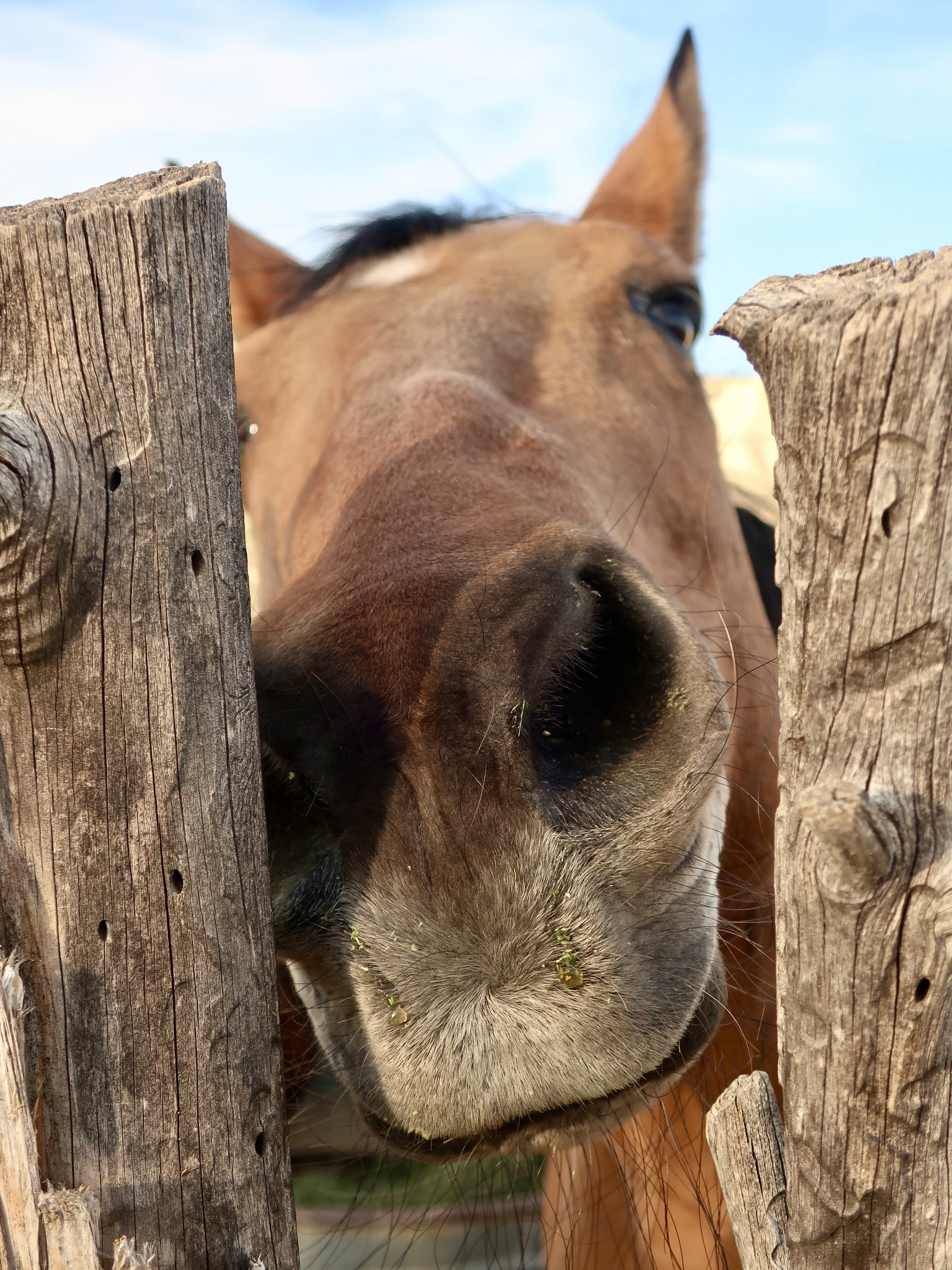
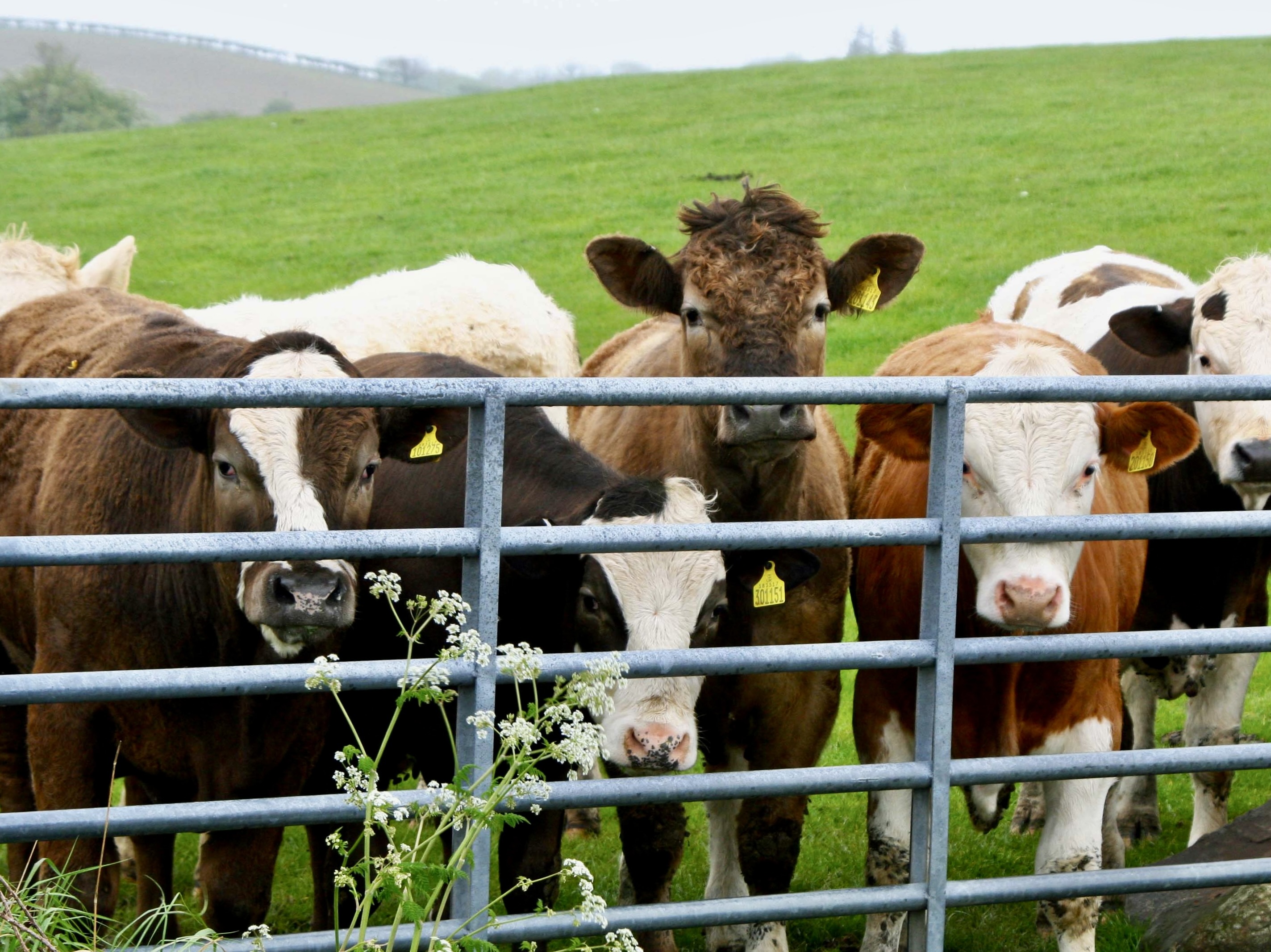
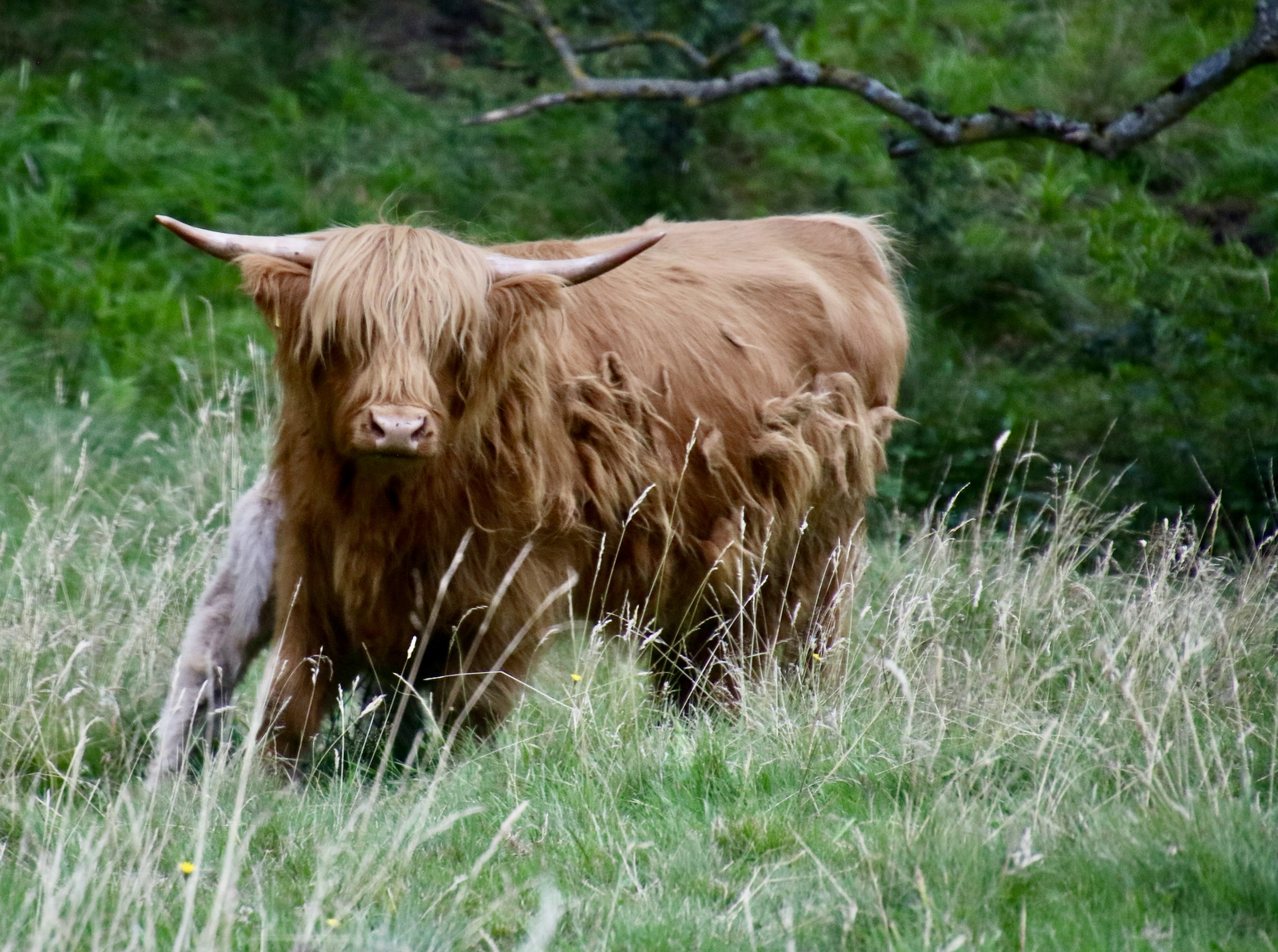
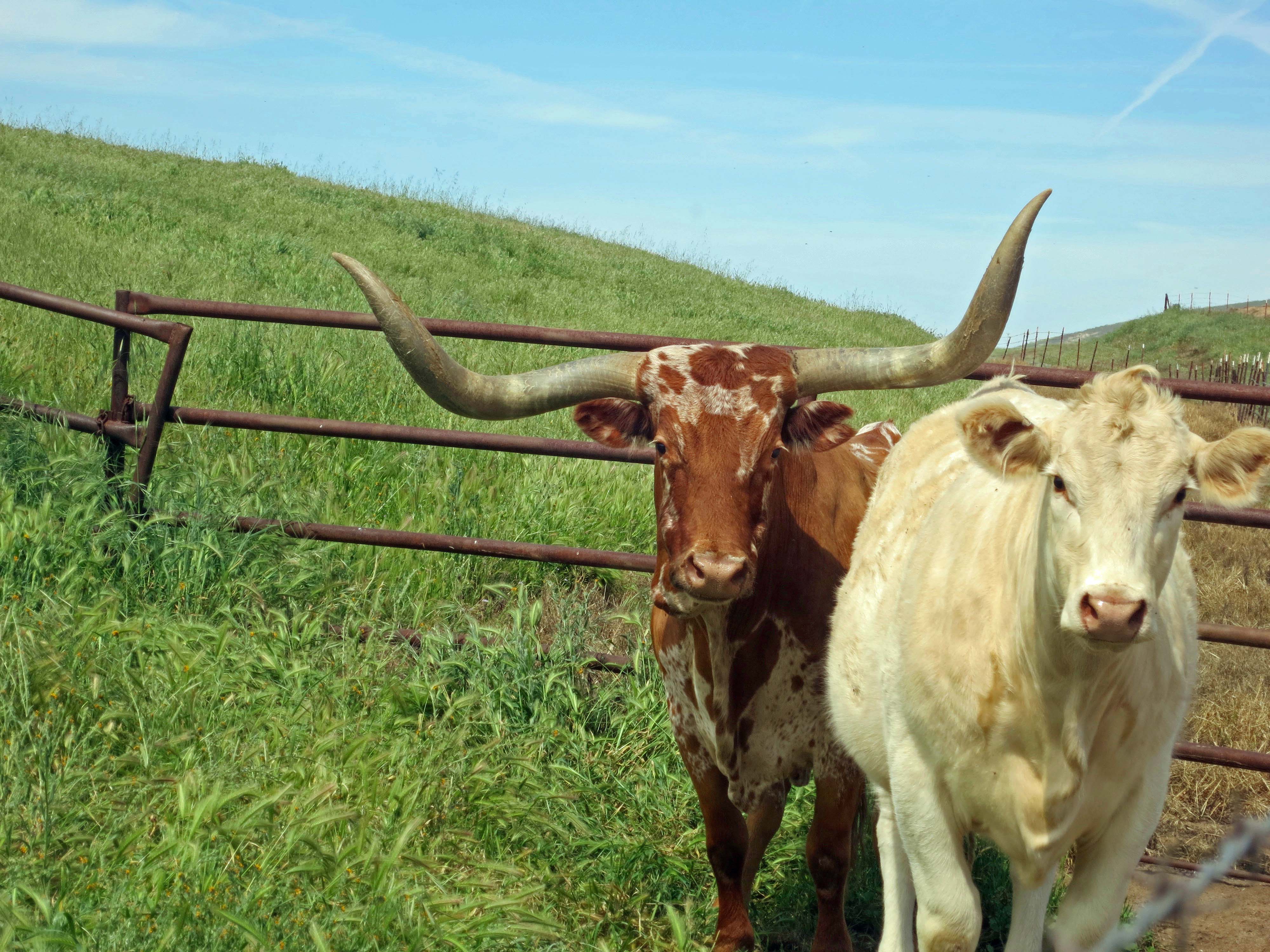
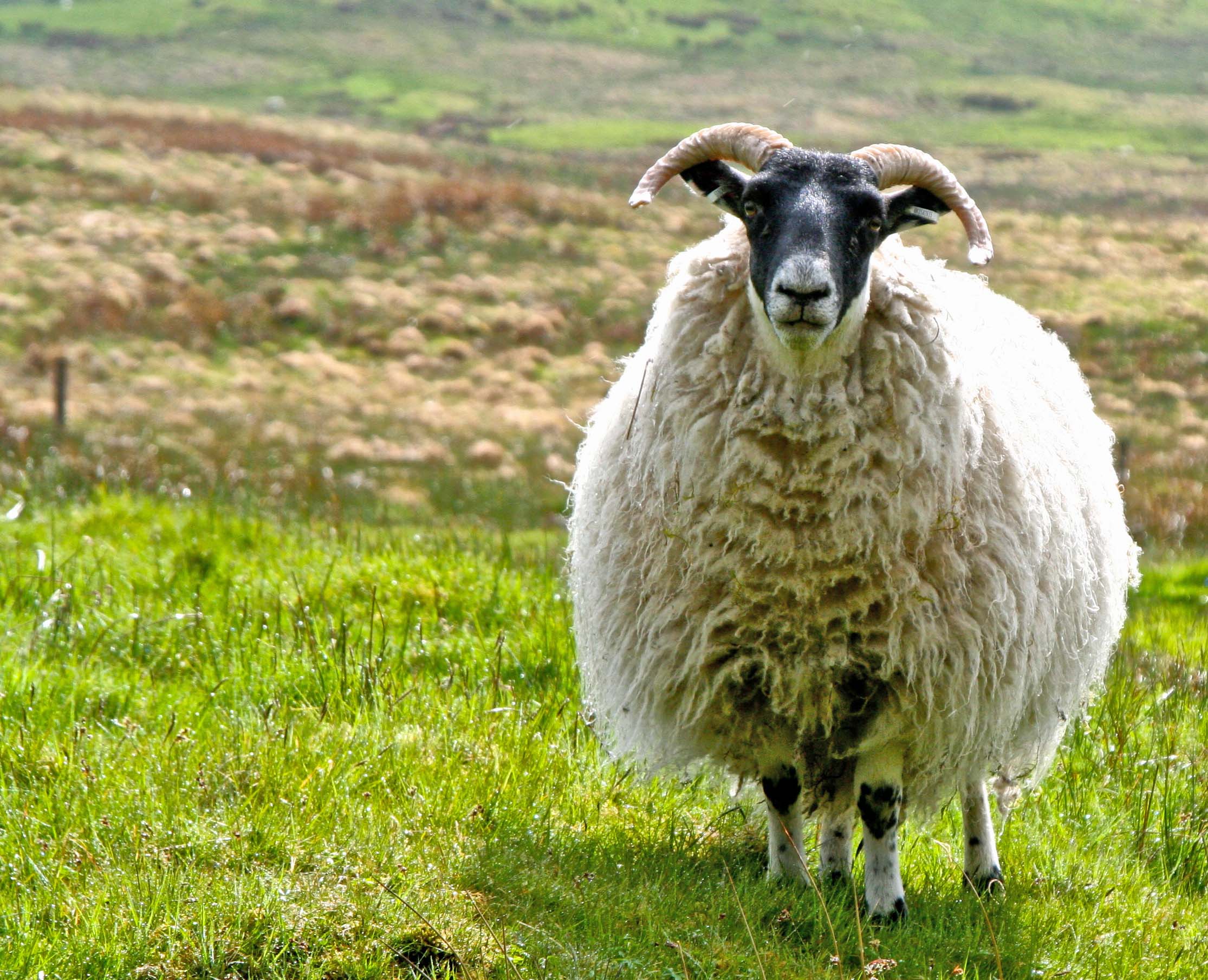
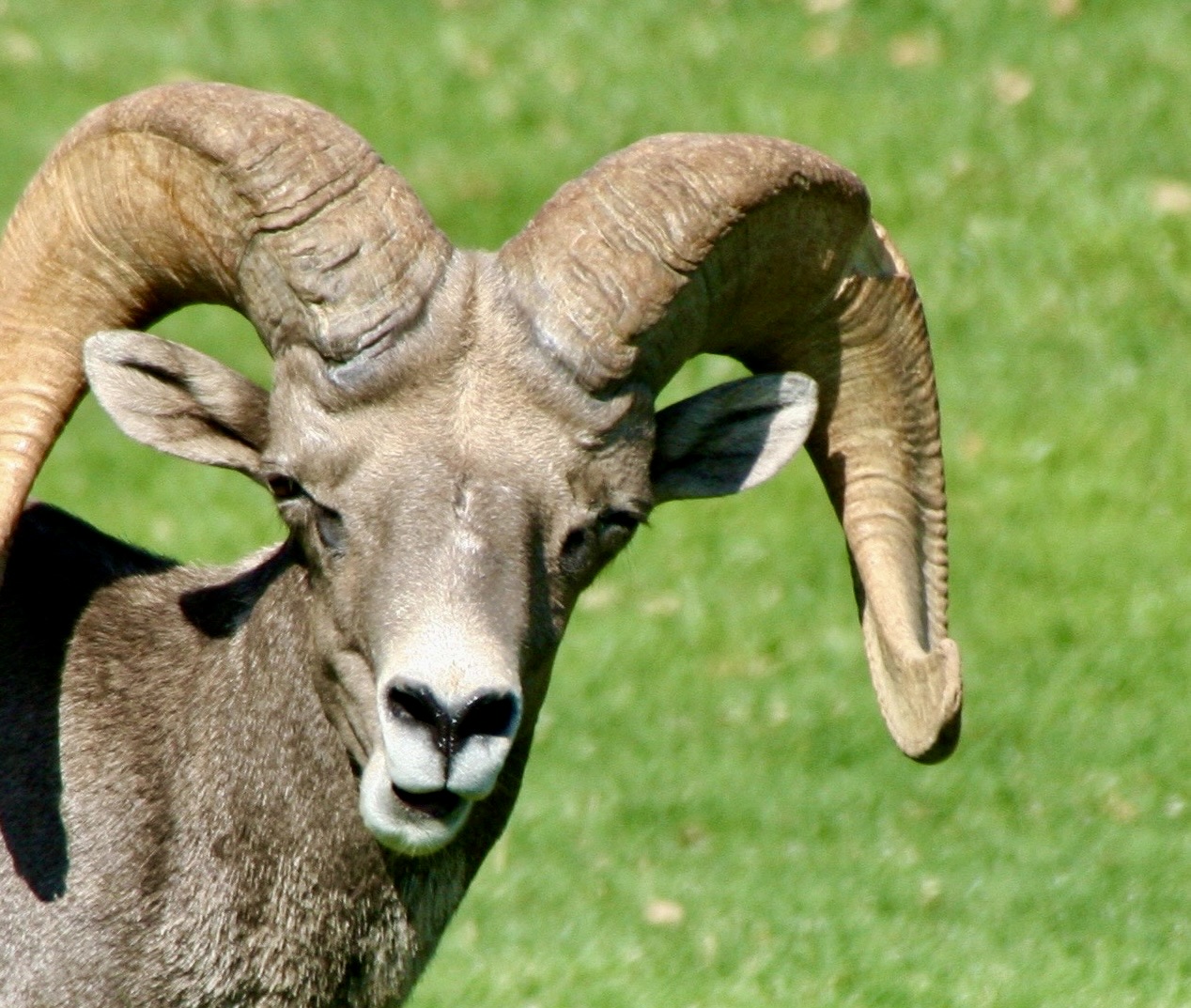
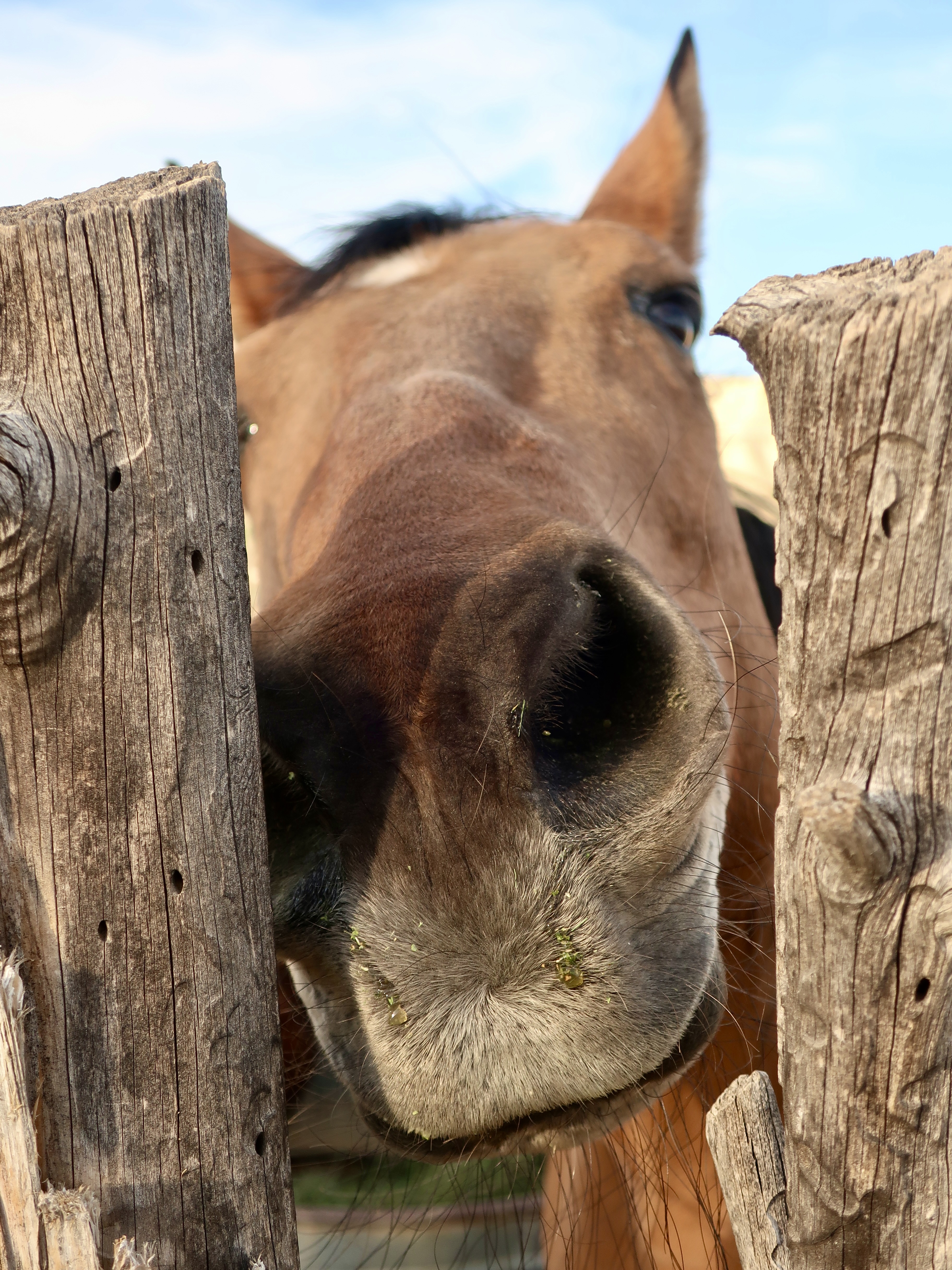
Bad dog! This was one of those occasions I was ever so glad to have a camera along. We had known that we would need one. Our neighbor Jim in Oregon had called and urged Peggy and me to come over and see his recently-born baby goats. Of course we went. Immediately. Who can resist baby goats? Plus, it was a photo op waiting to happen. I just didn’t expect this scenario where one, very small baby goat appeared to be dominating one very large dog. Have you ever seen such dejection? The dog, btw, wasn’t just a large dog; it was one of the largest, most ferocious dogs in the world, a Kangal Dog from Turkey. They are massive animals weighing up to 200 pounds that were originally bred to protect livestock from bears, wolves and other predators. Jim kept his to discourage unwanted intruders, whether four legged like our local bears and cougars, or two legged. I’m not sure what triggered the response above. The big dog had walked over and sniffed his latest charge and then started slinking away. Maybe baby or mom had objected.This is what we expected in terms of cute baby goat photos. Lining up for food cafeteria-style. Daddy. A handsome fellow. He had escaped from Jim’s and come over to visit us. Jim called him Rambo and was very careful not to turn his back on him. He had been butt butted far too many times. Goats are two toed ungulates, which make up the majority of the ungulates.Whenever I go to a county or state fair, my first stop is to visit the goats. I love the way they come over to visit and possibly nibble at your shirt. I found this guy at the Modoc County Fair in California, the same place I found the hogs shown below. In Africa, we met another two toed ungulate. It’s hard to find one more different from the goats. The birds are hanging out nearby because the big fellow stirs up lots of bugs as it shuffles along.While we are on the safari, we might as well check out other African ungulates. The giraffe is by far the tallest.A tree top perspective.The most dangerous of Africa’s two toed ungulates: The water buffalo. This is their “What are you looking at?” pose. I liked how each of them had its knee bent exactly the same. Horns and hooves, like finger nails keep growing for life. Apparently, there is a lack of farriers willing to trim water buffalo hooves.Africa’s numerous antelopes are also two toed. This antelope with a distinctive ring around its hind quarters is a waterbuck. Supposedly, the distinctive marking helps waterbucks follow each other when they are running through the woods. My guess is they would help a lion as well. “Target is in sight.” Horns, like hooves and your fingernails, are made of keratin.“I’d like to interrupt this presentation to announce that I, too, am a two toed ungulate even though Curt and Peggy didn’t find me on the safari. It was on the Nile River trip.Apologies for the interruption. Like the horses, donkeys and mules they resemble, zebras are single toed ungulates.I close my coverage of two toed ungulates in Africa with the warthog. It’s always in competition for one of the ugliest mammals to be found. Or maybe, it’s just cute. Guess who this one is related to?Yep. I found this handsome pair of porkers at the Modoc County Fair in northeastern California when I was on the way to Burning Man. Speaking of Burning Man, this is the time of the year that people sign up to attend the late August event that is held in the remote Black Rock desert of Northern Nevada. I often do a few posts around now to give newbies and curious folks an overview of what to expect. I’ve been going off and on since 2004. My friend Tom is trying to persuade me to join him this year in giving away hundreds of margaritas on the Playa. I’ll probably be rewarded for my work with all of them I can drink. Woohoo!Horses are one toed ungulates. Rarely do you find them sitting on their butt in the mud, however. Why would they? But Hungarian Cowboys, the Csikós, do things differently. We took this photo at the Bakodpuszta Horse Farm in Hungary, on our trip down the Danube River. Something else you wouldn’t find an American cowboy doing.This cutie came dashing up to a fence to see us when we were searching for ancestors of mine in Lowland Scotland near Stranrae. Given its excitement, I wondered if it wasn’t an ancient relative of mine reincarnated as a Shetland pony.I featured this horse in a promo for today’s post. He was hanging out on a ranch near Bryce Canyon National Park in Utah. I think it probably had high hopes for an apple..Cattle are two toed ungulates. We went looking for the unique Scottish Hielan coo (Highland cow) while we were in Lowland Scotland but only found what we normally find wandering around North America. Like the Shetland, they ran over to check us out.We found this Hielan coo in the Black Forest of Germany. Go Figure. This summer we are going to be exploring the Highlands of Scotland instead of the Lowlands. We are expecting to find the coos where they belong. This two toed ungulate with the large horns is immediately recognizable. It’s a Texas longhorn. We found it in the foothills of California.Not so clear in terms of heritage was this strange looking steer. But we found it about a mile from the gate to Area 51 in south eastern Nevada. Could it have been a cleverly disguised visitor from outer space? Hmmm.Sheep are also two toed ungulates. This stout fellow had been blocking a small rural road when we were lost in Scotland. It was being baaad. Had its body been black, I would have cited the old nursery tale to it: Baa, baa, black sheep have you any wool? Yes sir, yes sir, three bags full. BTW, sheep are closely related to goats and on rare occasions even crossbreed. Their offspring is called a geep. And no, I’m not making that up.Among sheep, nothing—from my perspective— is more regal than the wild big horned sheep of the deserts and mountains of Western North America. This magnificent example chewing his cud had bought his herd down to graze at a small county park between Las Vegas and Lake Mead Nevada.
There’s a fun story here. The big ram above had been bringing his flock down to the park from the mountains for years when a new subdivision was built beside the trail. This didn’t seem to bother the big horns and you can imagine what a treat it was for the people. But then, one of the home owners put a shiny aluminum door on his garage next to the trail. The leader looked over and saw his reflection. Except it wasn’t his reflection in his mind. It was another lage male challenging him for the leadership. He reared back and charged at the same time the other big horn did, again and again. Nobody was going to get his nannies. The story the locals told us was that the owner of the garage door had a really hard time convincing his insurance agent how the damage had been caused!
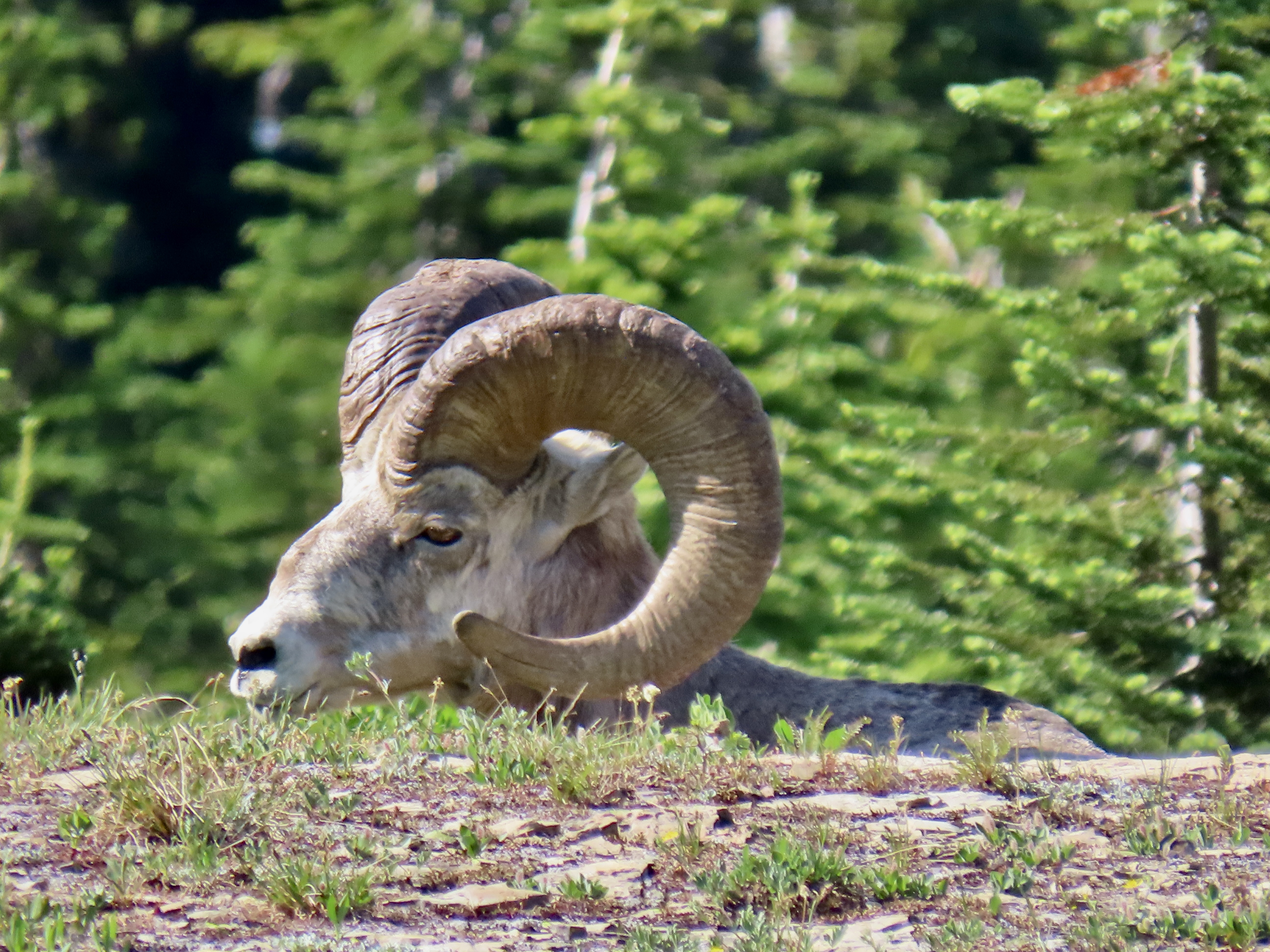
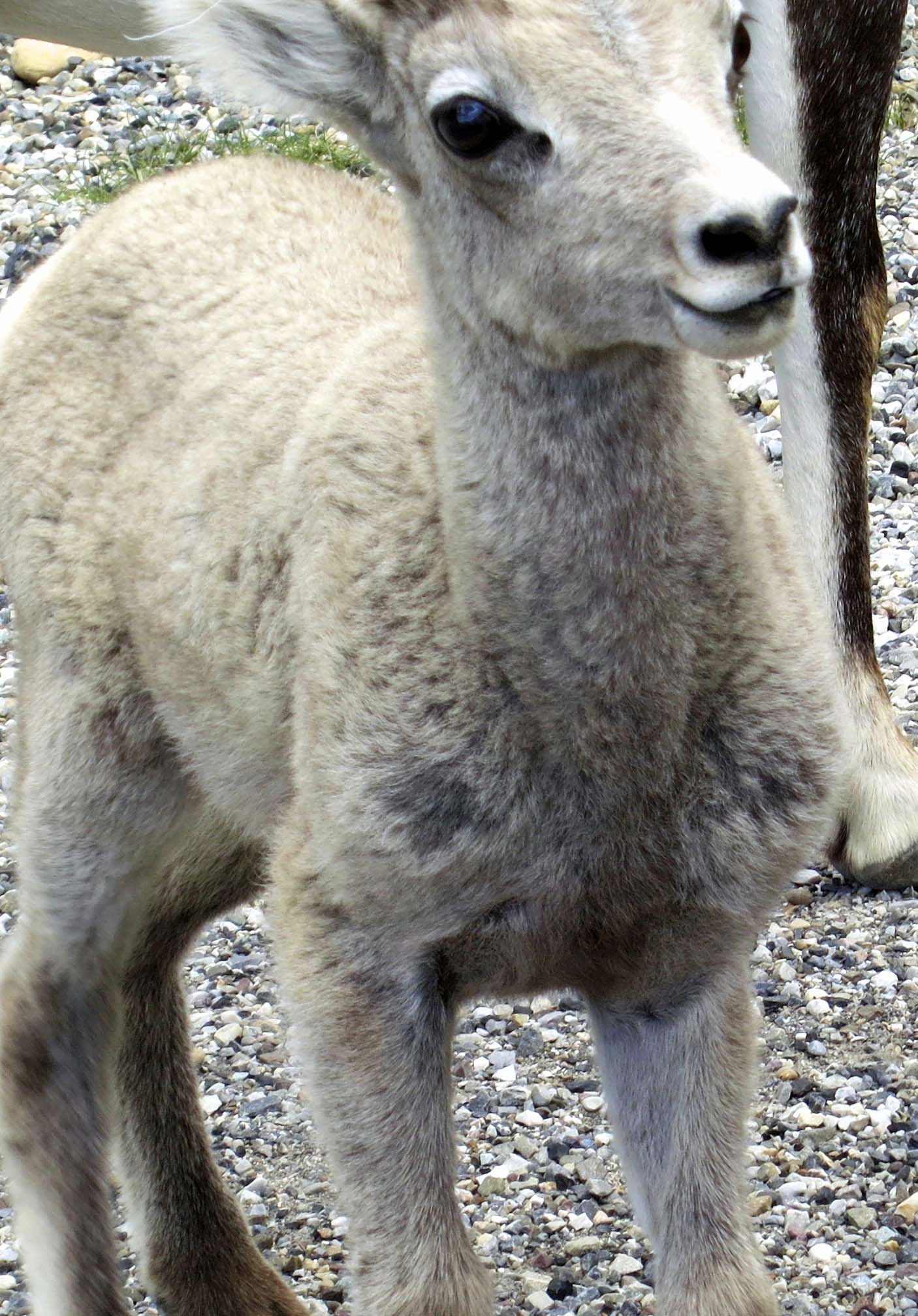
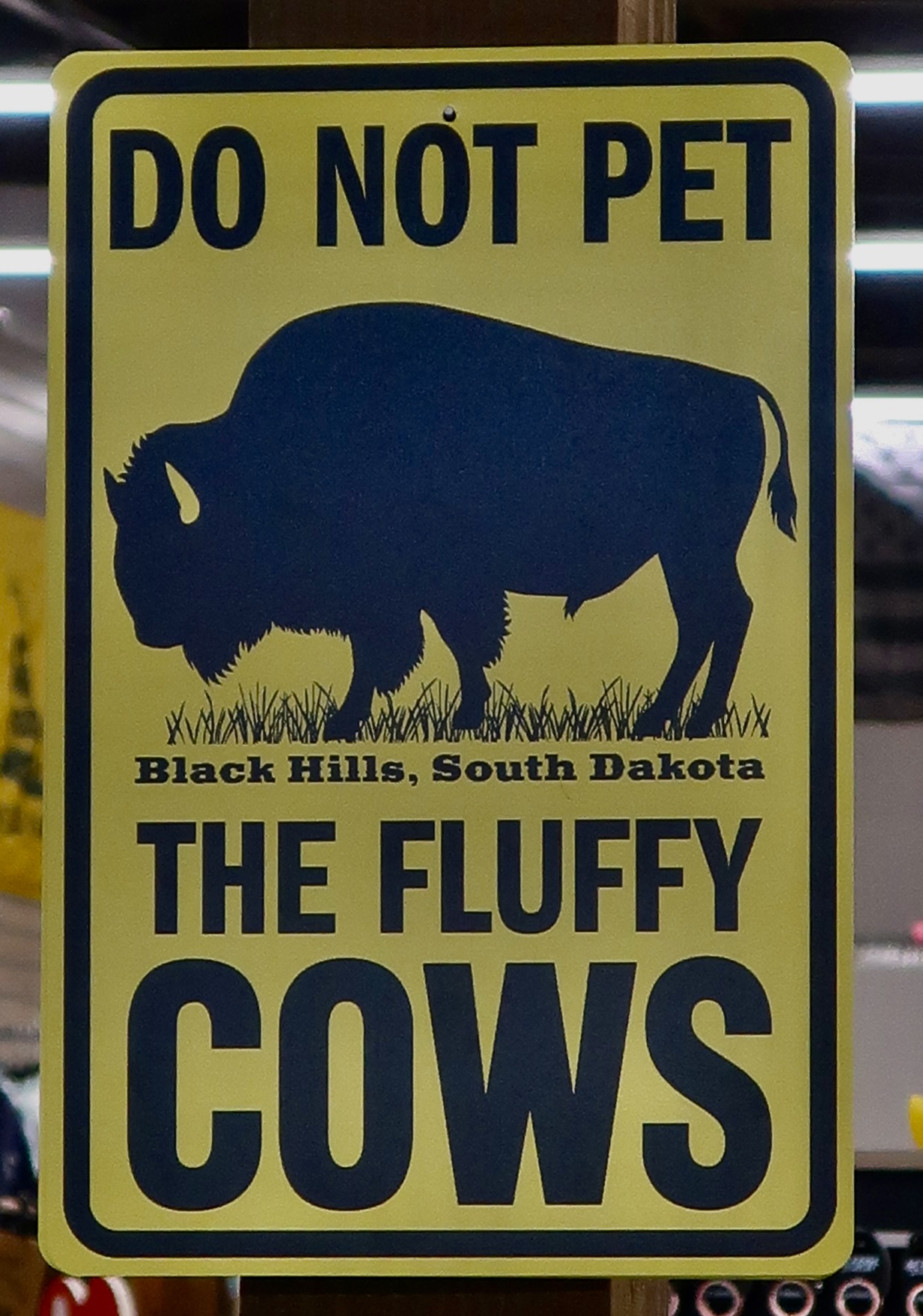
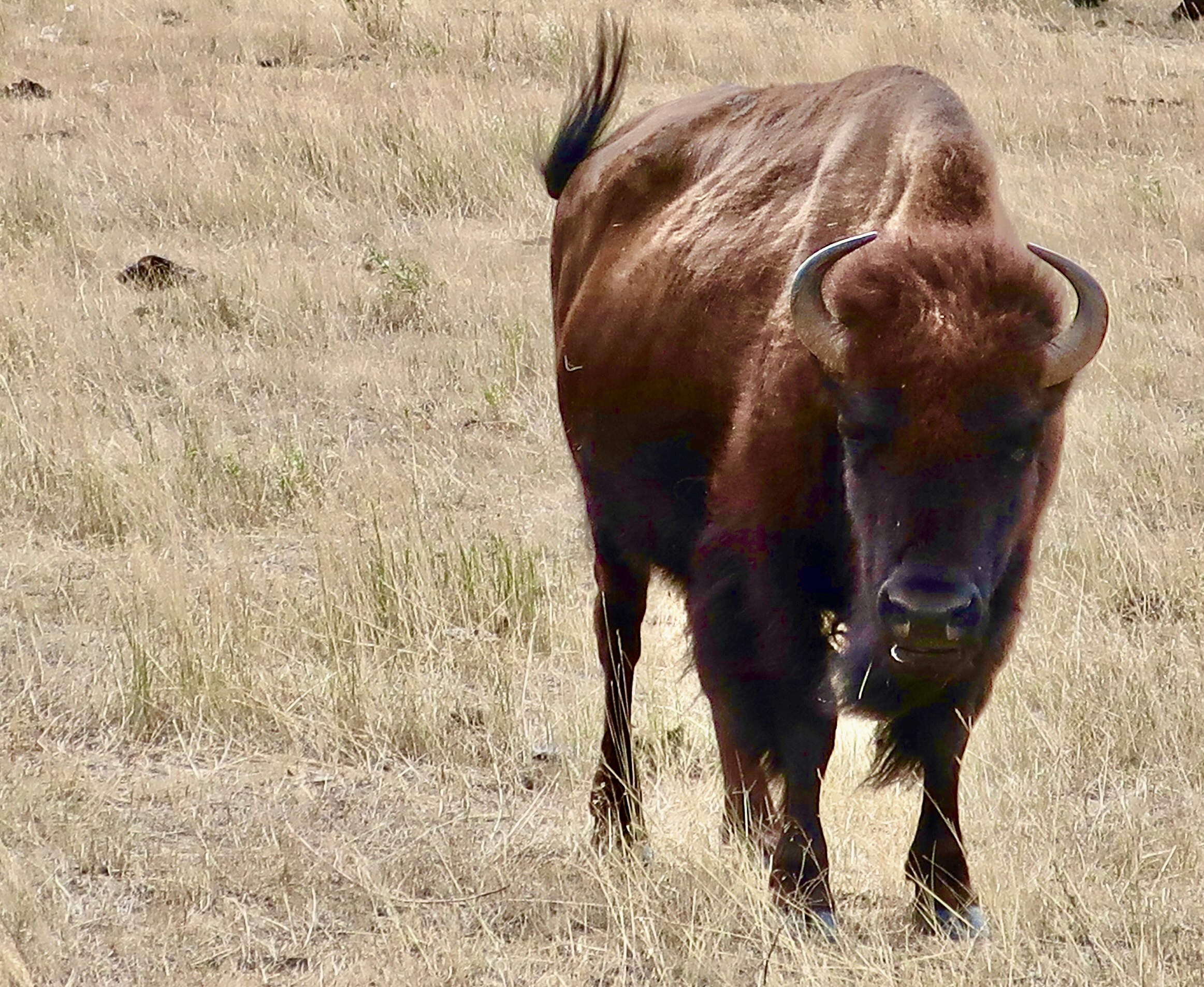
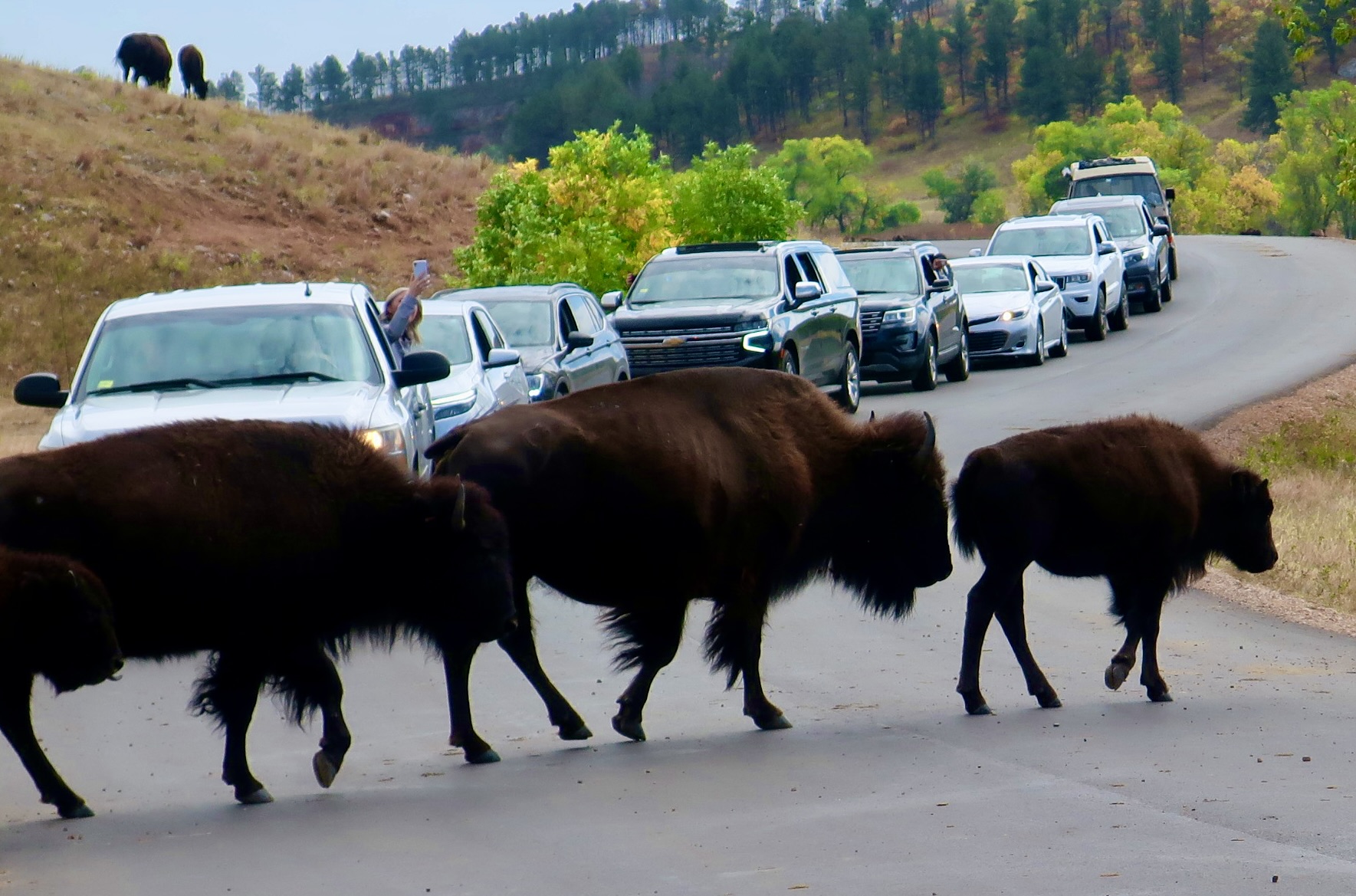
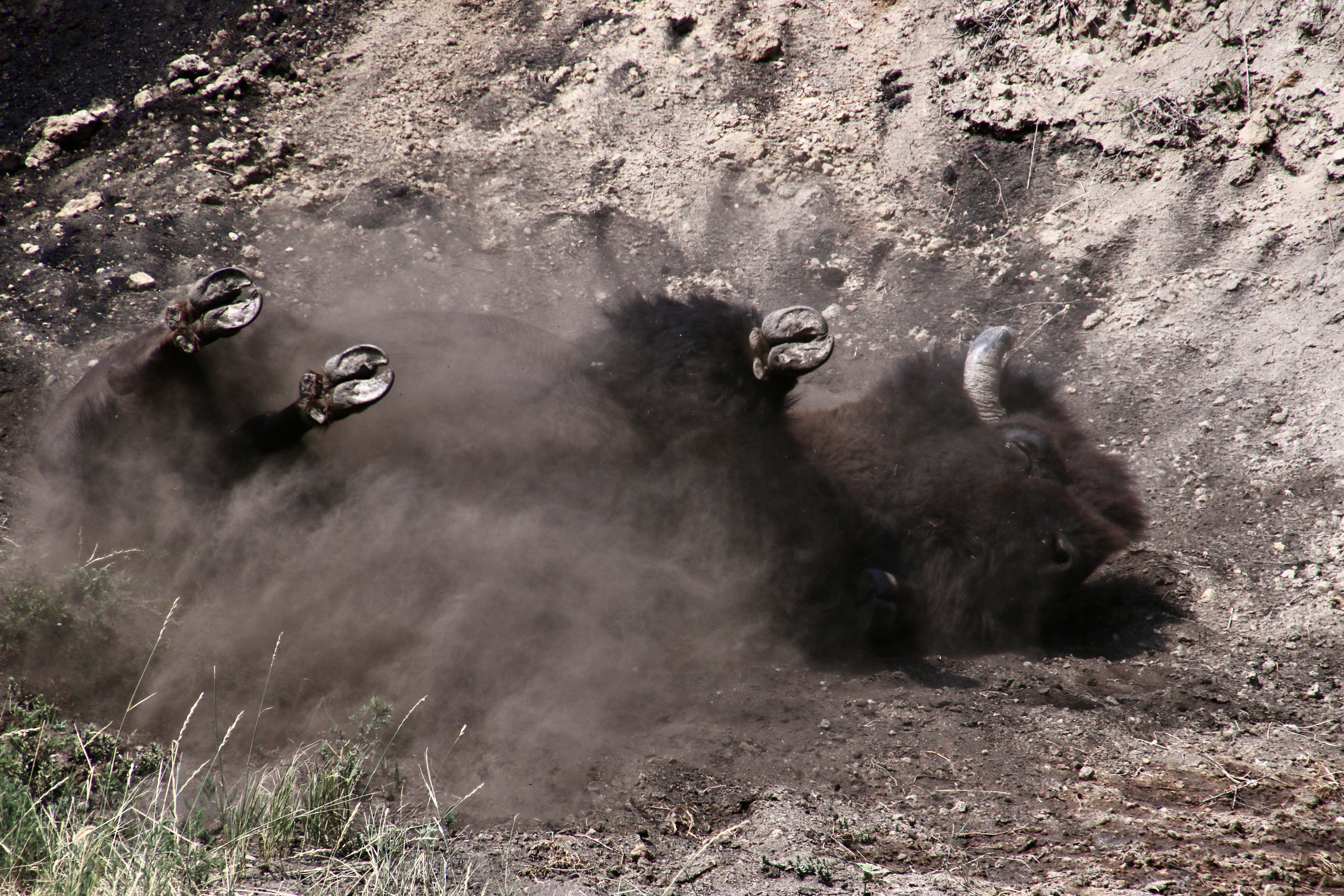
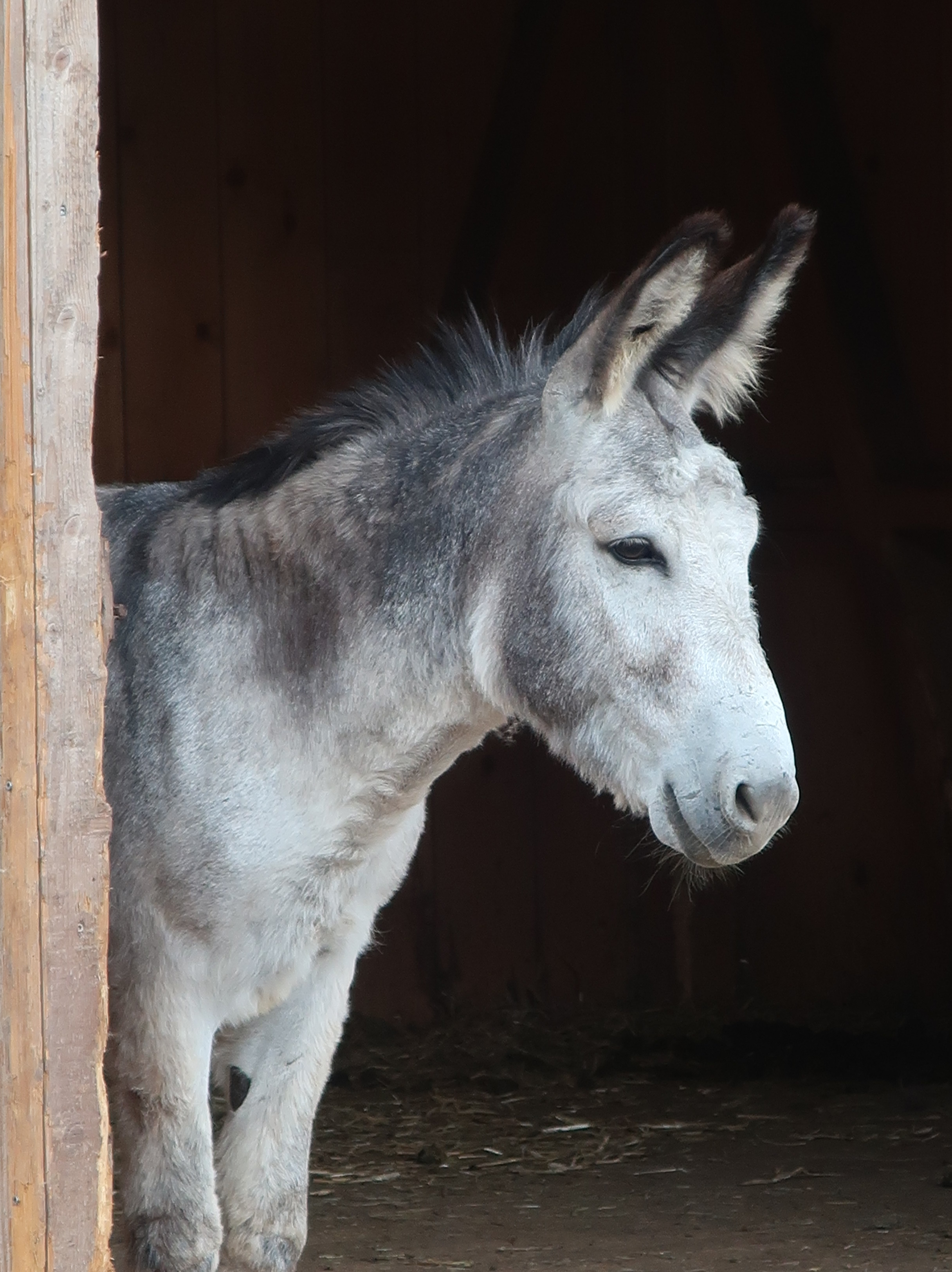
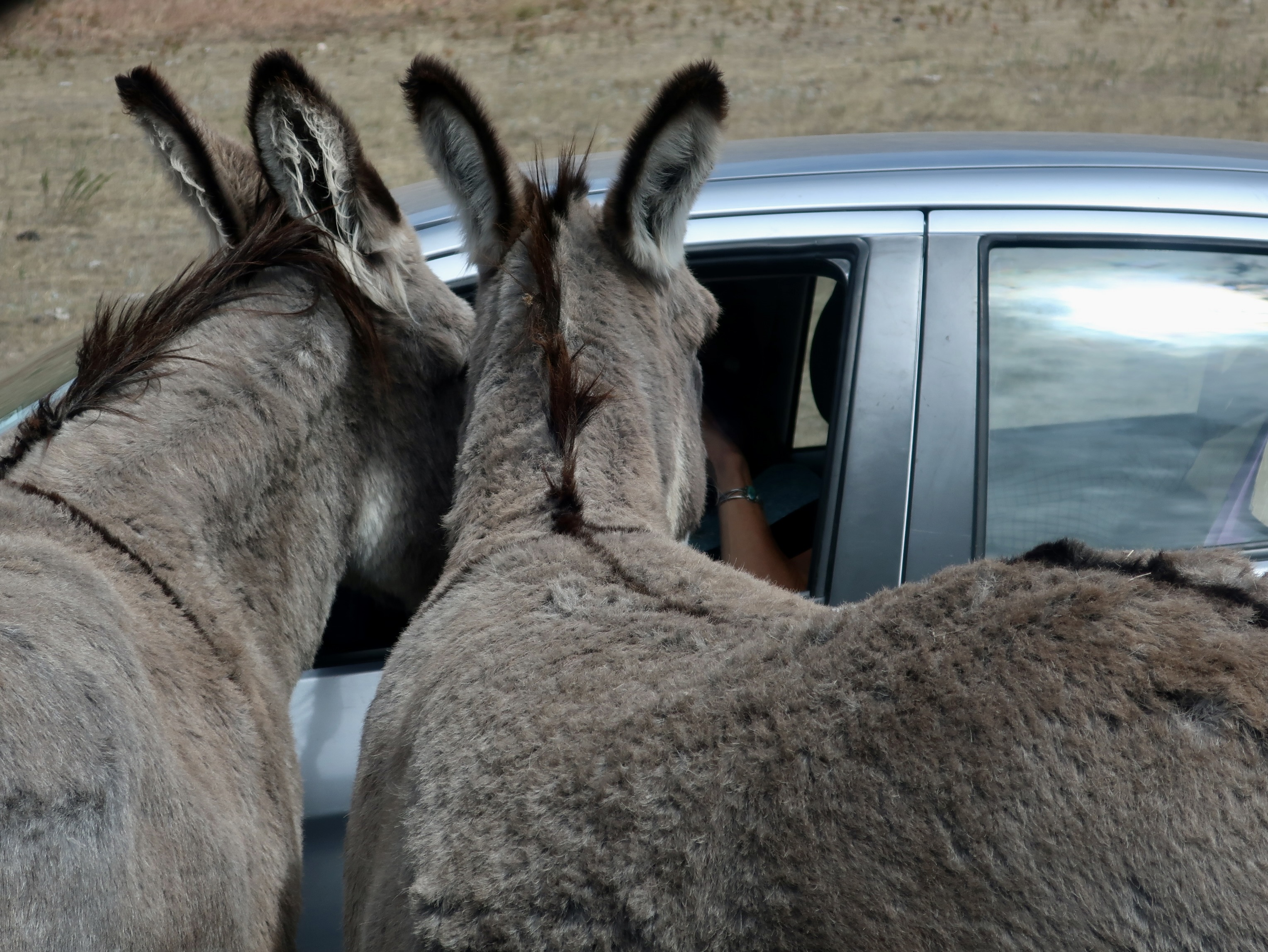
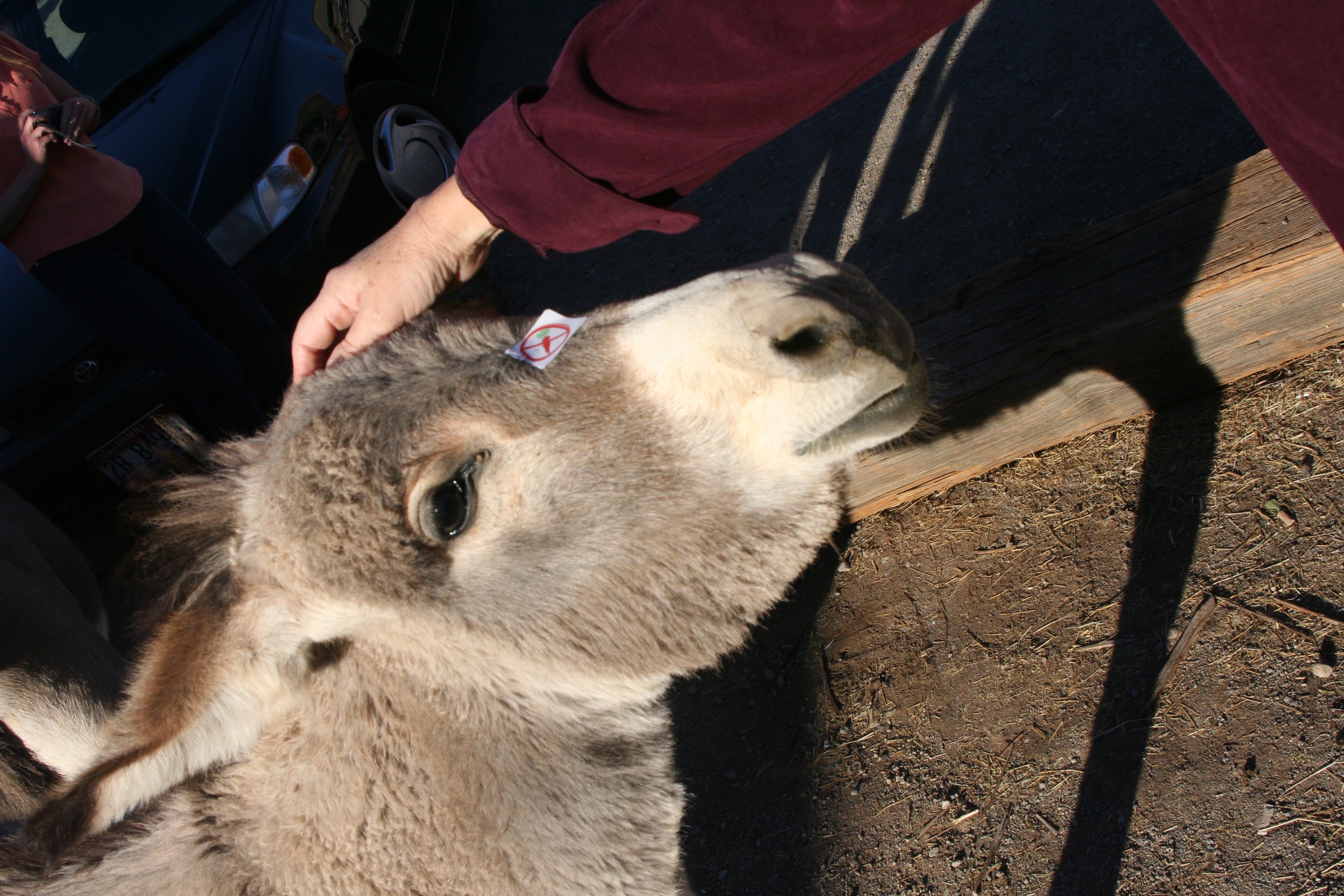
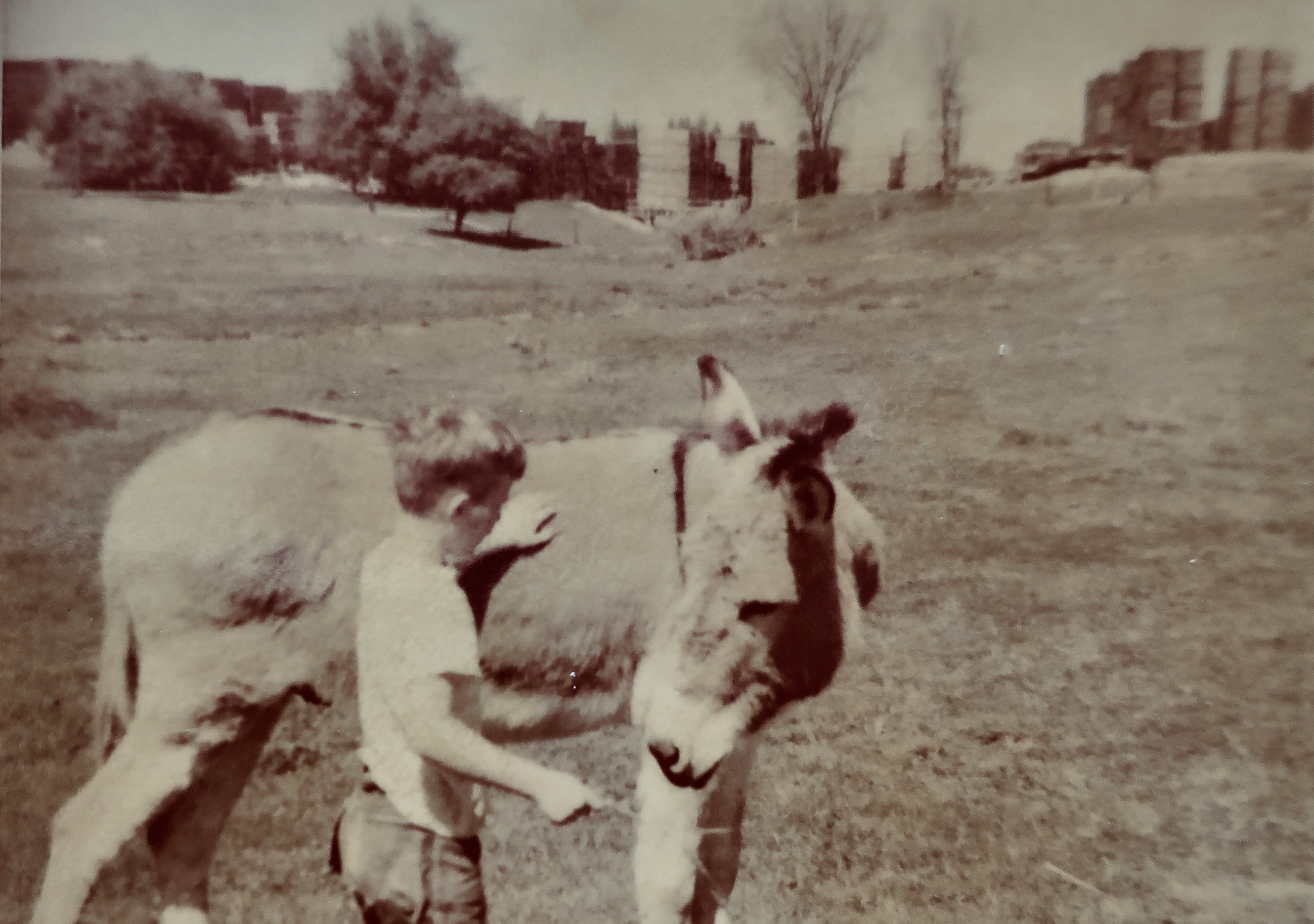
A big horned sheep at Glacier National Park.This young big horn sheep was standing beside the Alaska Highway in Canada’s Yukon Territory.Buffalo are another two toed ungulate. This sign was located in a store in Custer, South Dakota. We were on our way to Custer State Park. It’s good advice.If a buffalo stares at you, raises its tail, paws the ground and grunts, you are too close! It’s best to stay at least 75 yards away. Farther if there are calves around. This youngster was feeling its oats even though I was using my telephoto lens from a safe distance. The family of buffalo was crossing the road in Custer State Park. We waited patiently and took photos from the safety of our truck.Have you ever wondered how buffalo create their buffalo wallows? We caught this one wallowing away and taking a dust bath in Theodore Roosevelt National Park in North Dakota. It provides a good look at a two toed ungulate.I’ll close this post with what are our favorite one toed ungulates: Donkeys. This beauty was standing in a shed in Germany’s Black Forest.There were more than buffalo stopping cars at Custer State Park, South Dakota These two answered the age old question of how many donkeys can stuff their heads in a car’s window at one time.This donkey foal was obviously enjoying having its head scratched in Oatman, Arizona— but not nearly as much as Peggy was enjoying doing the scratching! The sticker on its head was put there to discourage people from feeding the youngsters carrots. They can choke on them.And finally, this is me petting a donkey in a field near my house in the early 50s. The lumber stacks in the background are at Caldor Lumber Company in Diamond Springs, California where my dad worked as an electrician. I may have been holding something to feed the donkey.
Next up on UT-OH, my blog-a-book-memoir, I learn valuable lessons that every first grader should know: It’s not smart to put your head down on a track to judge a train’s distance when it’s a hundred yards away (it makes the engineer nervous), deciding to go on a mile and a half hike by yourself at 5:30 a.m. may be frowned upon, habanero peppers are hot, and why it’s valuable to wear underwear. Getting caught in your zipper and having to have the first grade teacher free you is no joke.
The focus series looked at cats last week. Dogs insisted it’s their turn this week.
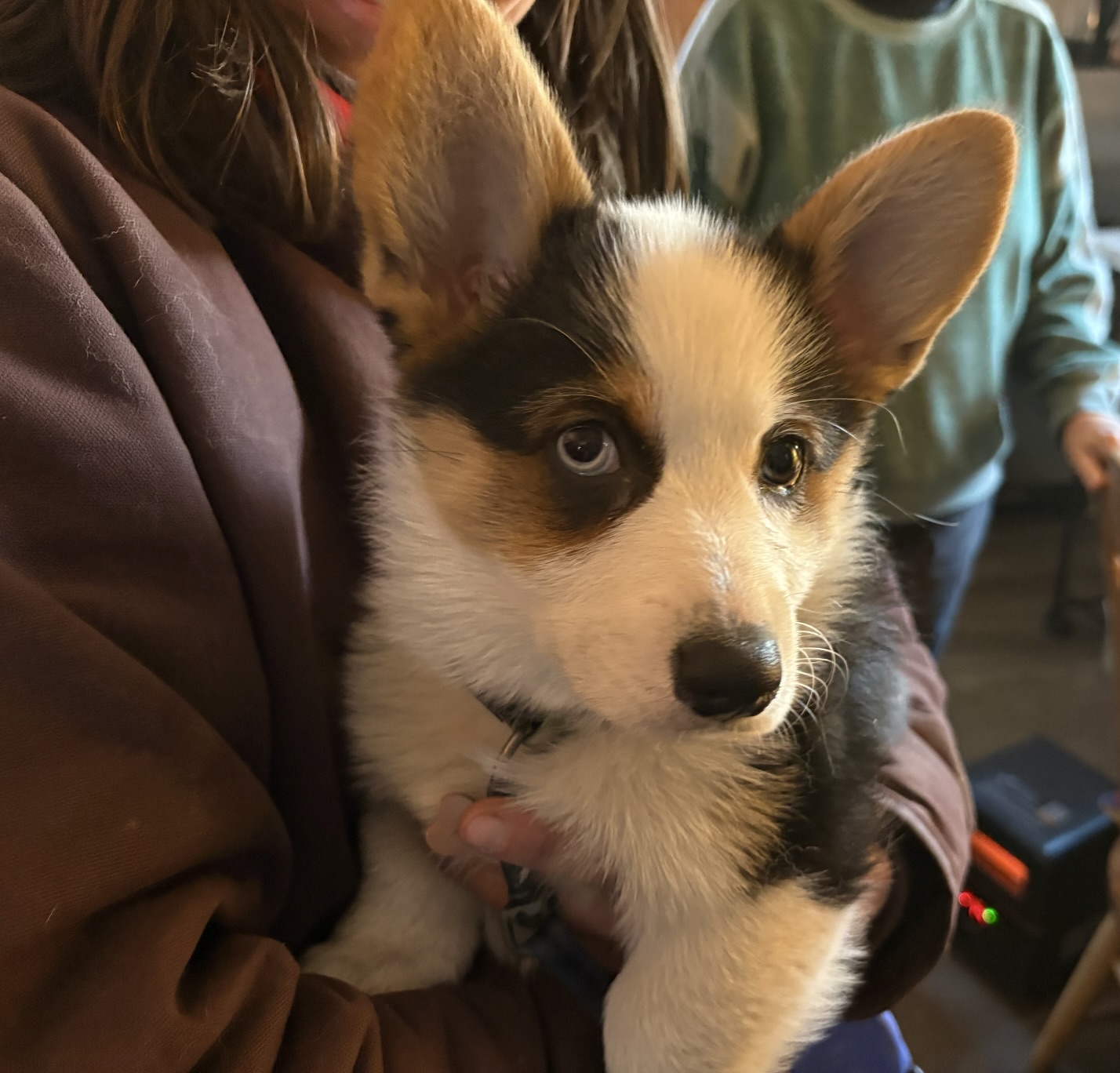
Meet Leta. When our grandson Ethan’s friend, Annie, came to visit recently, she bought her Corgi pup with her. It was ‘cuteness’ personified.
Here are some fun facts about the puppy and other dogs as well. Leta’s nose print is unique to her. Just like your thumbprint is to you. No two dogs have the same one. What her nose does share with most other dogs are some 150 million olfactory receptors. Humans have around 6 million. That’s why their sniffing ability far exceeds ours. Some dogs have a lot more. The blood hound is top dog with around 300 million. They can follow tracks several days old and can stay on a scent trail for over 100 miles. Their sense of smell is so well documented that it can be admitted as evidence in a court of law. “Sniff, sniff. Woof, woof, woof!” Translated: Number three in the lineup robbed the bank.
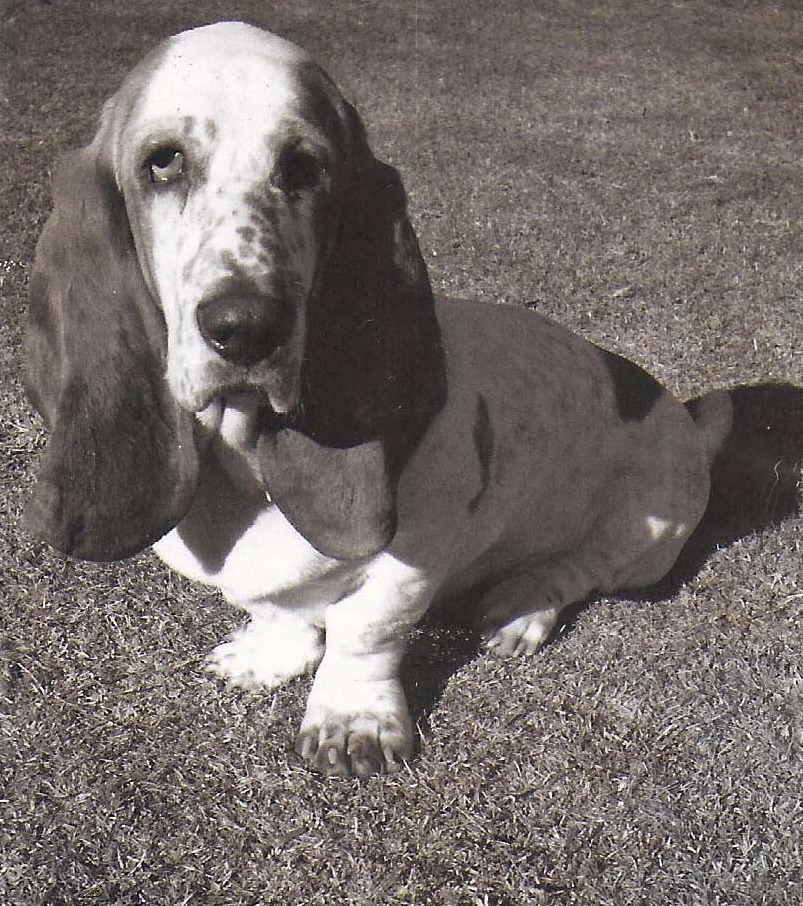
Basset Hounds are #2 in olfactory receptors and their capabilities for tracking. This is Socrates, my dog of the late 60s and 70s. He loved to go backpacking with me and wander off on his own— after who knows what. Gophers maybe. He specialized in trying to dig them up. I never worried about him, however. He always tracked me down later. He knew the source of his milk bones.
While we are dealing with a dog’s sense of smell, here’s a fact I didn’t know. They have a back up system for ‘smelling’ pheromones (chemicals) that contain a great deal of information. It’s called Jacobsons Organ and is found on the roof of their mouth. It has a direct line to the brain where the information on the pheromones is translated: Valuable information to Bowser: Such as whether Fifi is ready to breed. Information on health and mood can also be transmitted. Yours, as well as another dog’s.
Pee, poop, and even feet carry pheromones which are created by scent glands. Because pheromones are volatile, they are released to the air and can travel long distances. That’s why Bowser might get excited if Fifi is in heat, even if she lives three miles away. Given an opportunity, he will go roaming and show up on her doorstep. I found the information about feet interesting as well. You’ve likely seen a dog kicking backwards after it has done its business. I’d always thought it was making a half hearted attempt to cover its poop. Actually it’s using the scent glands on its feet to mark its territory. It’s kind of a “I pooped here,” message. The pheromone is the sentence; the poop the exclamation point.
Scent glands near the anus provide all kinds of information, which is why dogs are always sniffing each other’s butts. Each dog has its own unique pheromones that travel to the sniffing dog’s Jacobsons Organ and then their brain where they are stored and interpreted for immediate and future use. A dog can actually recognize a dog it has sniffed years before. And remember its mood. “When I was a puppy, you were grouchy and bit me. Now you are old and I’m twice as big. Guess what?”
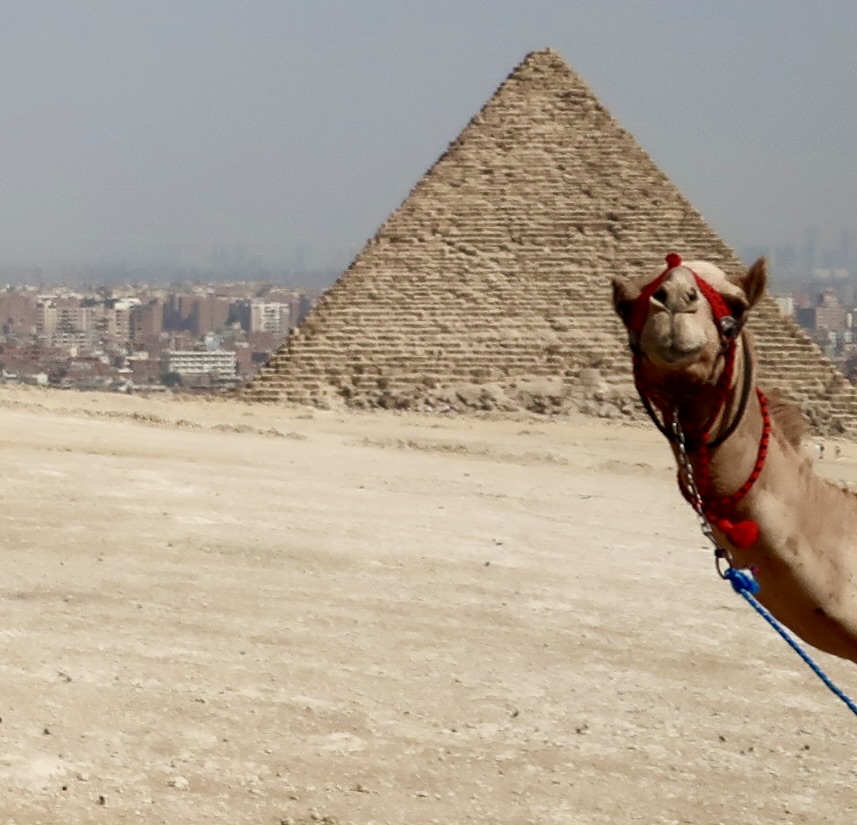
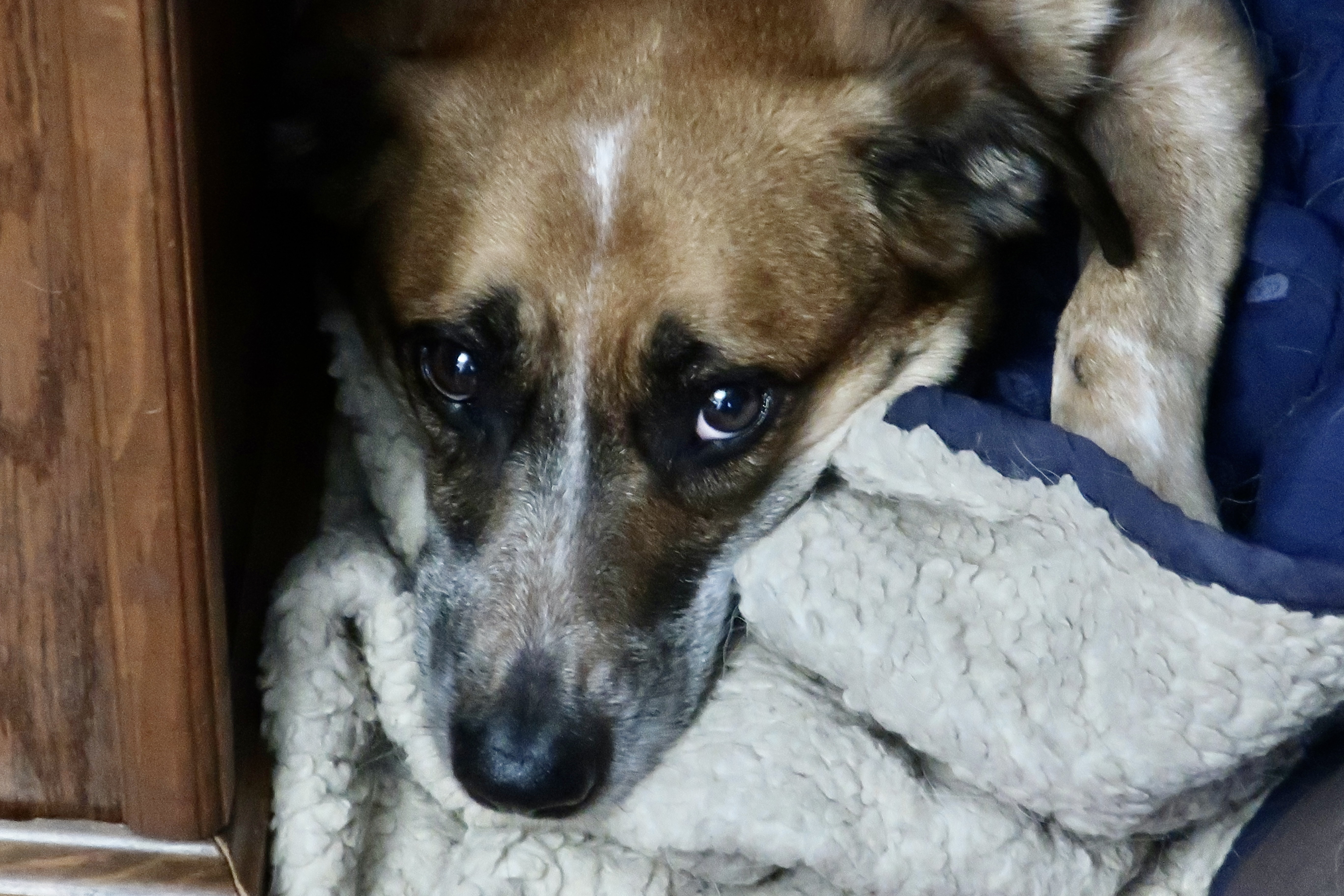
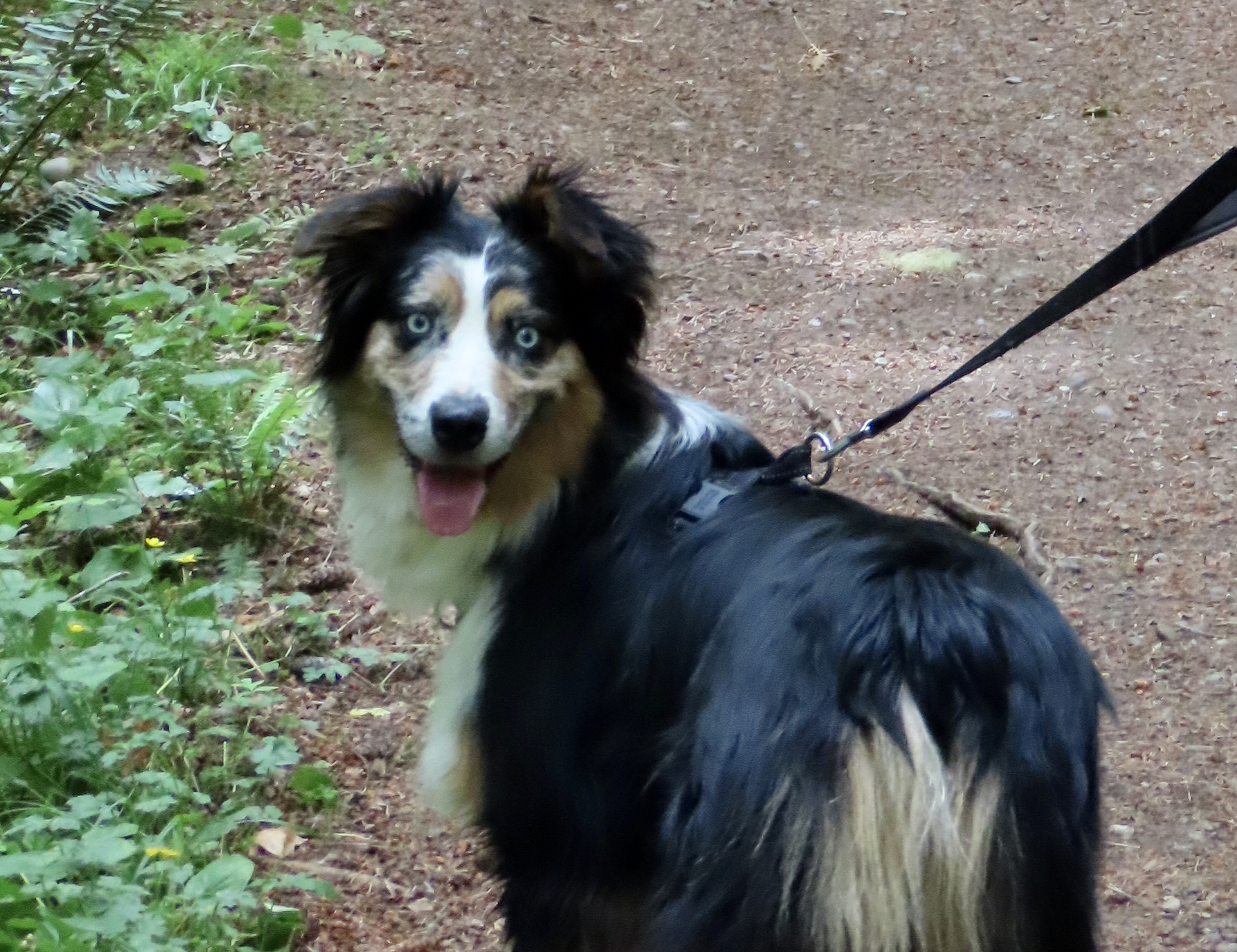
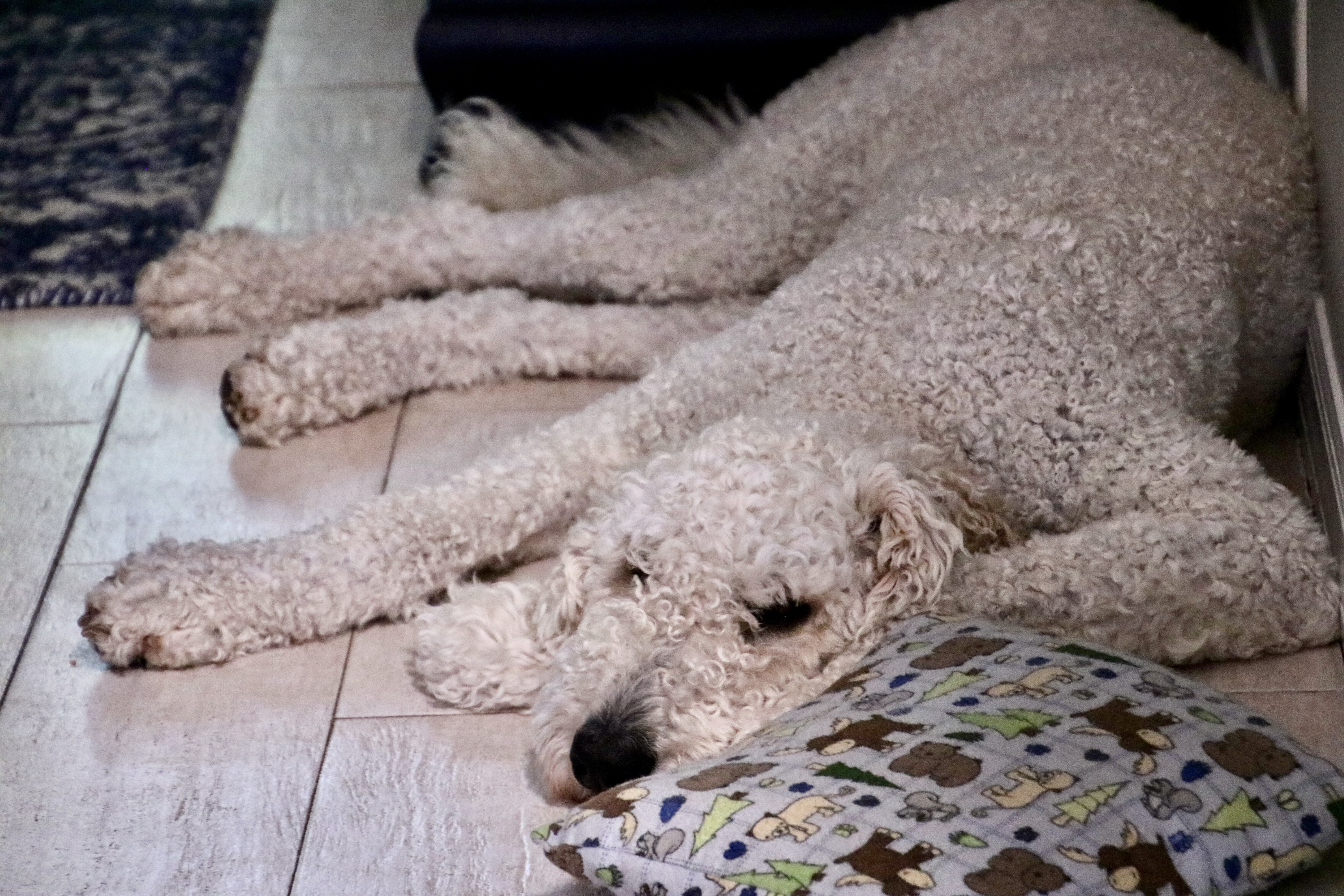
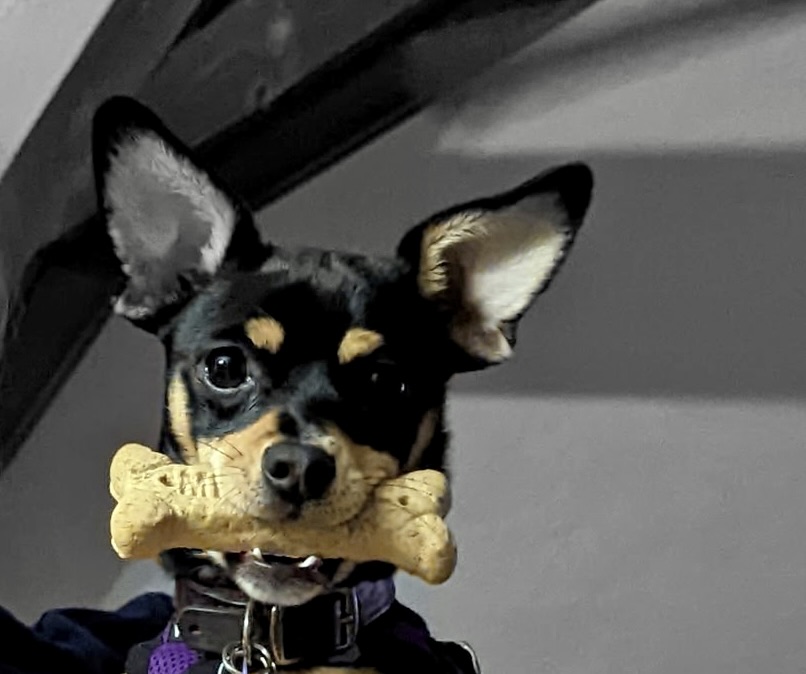
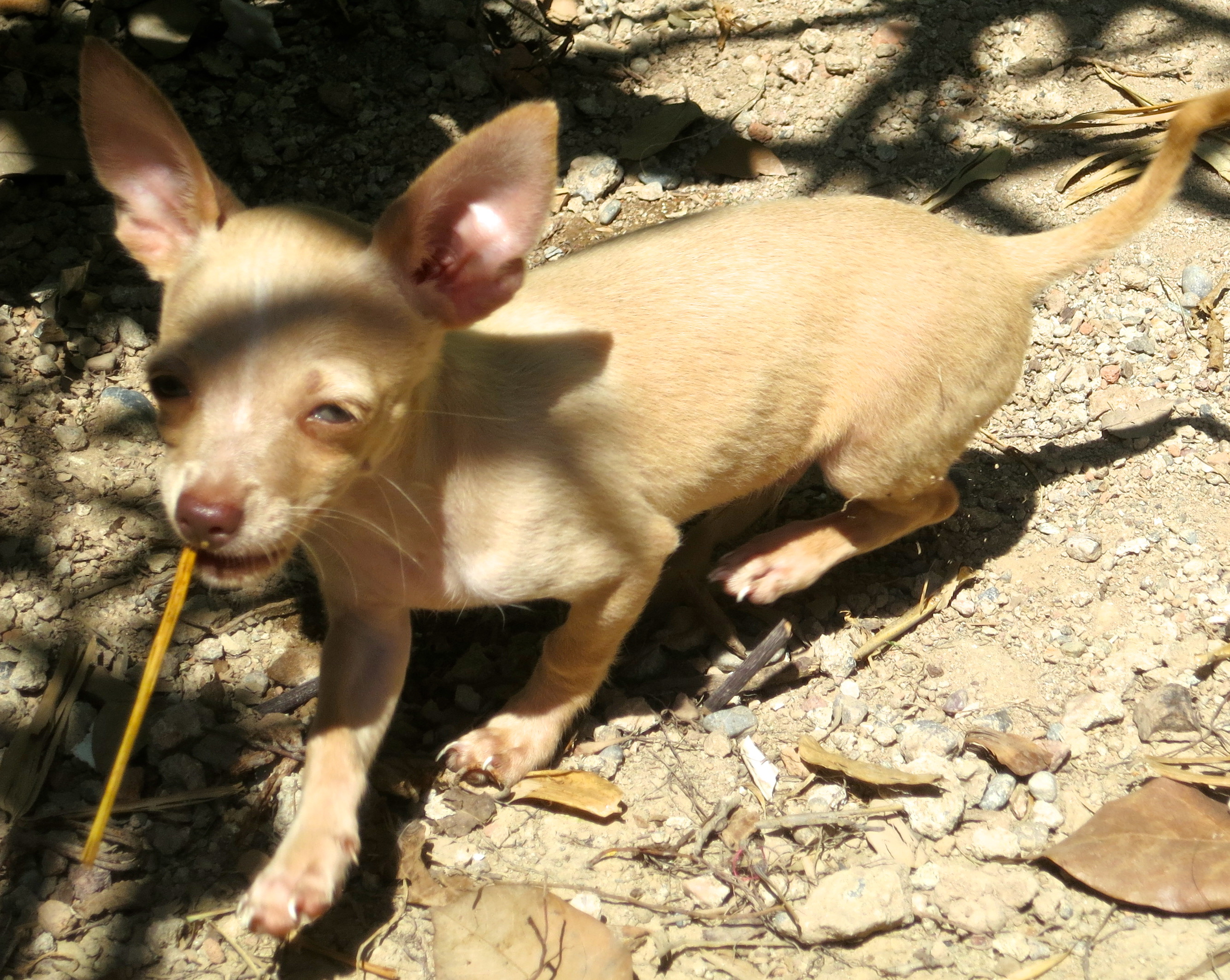
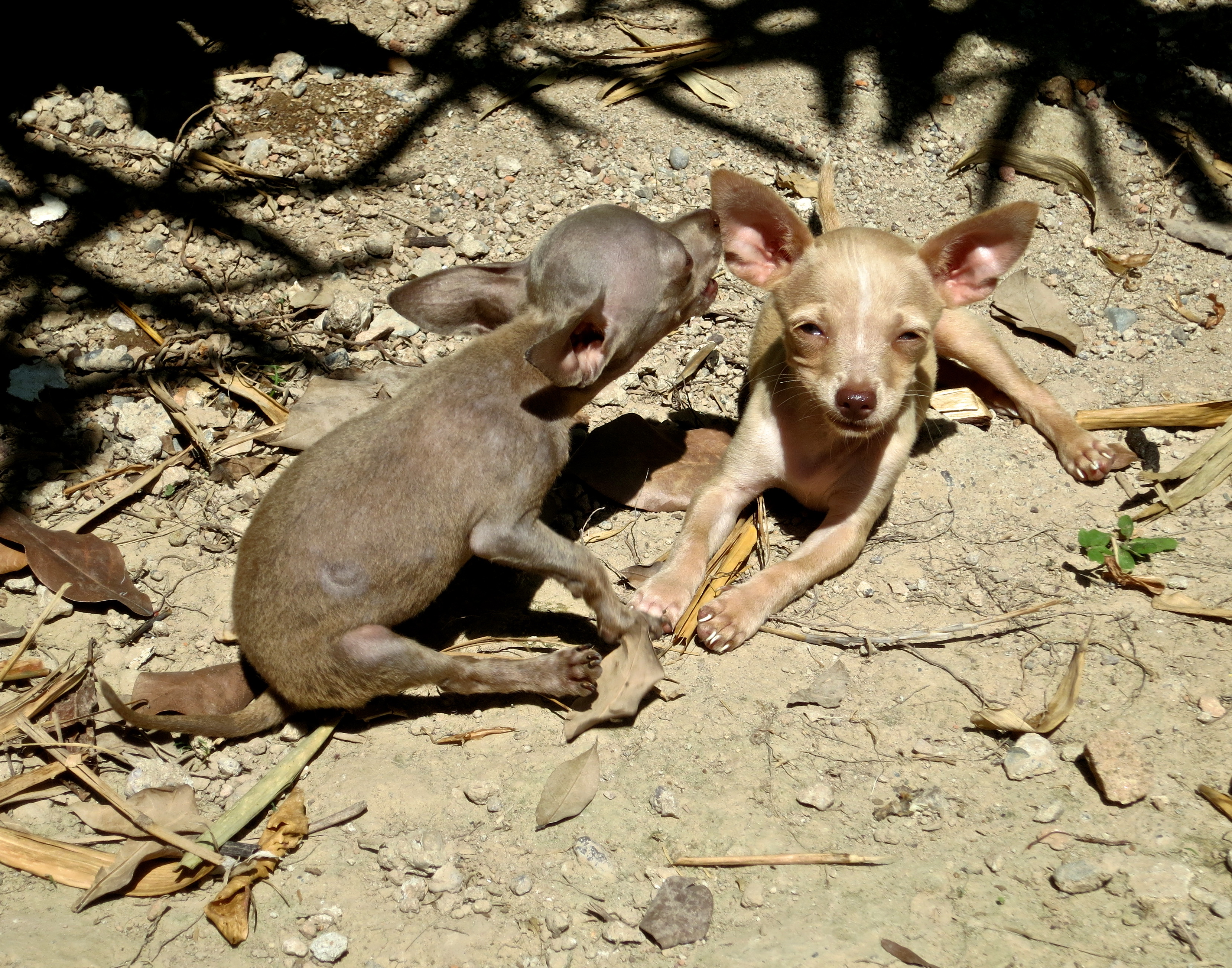
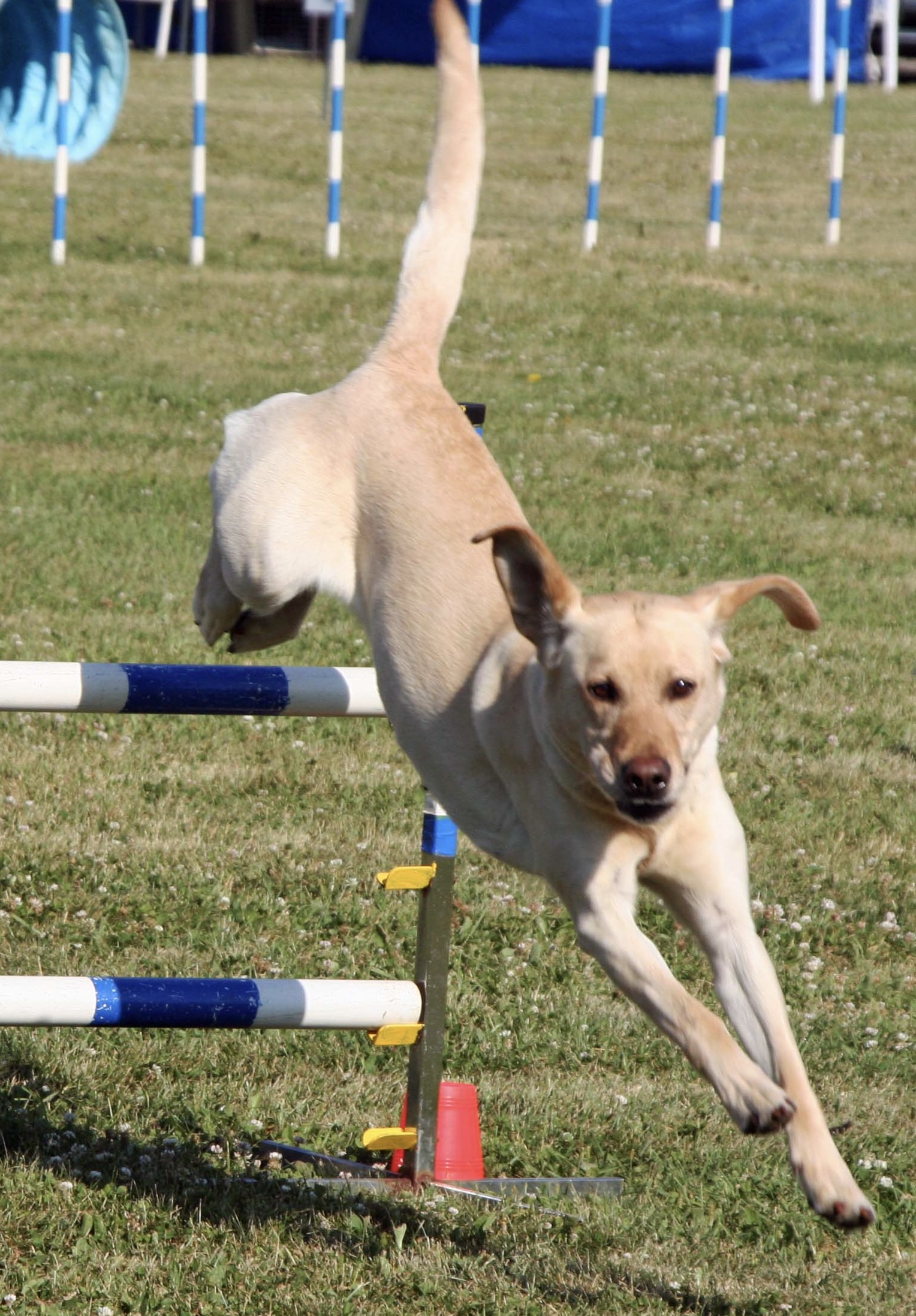
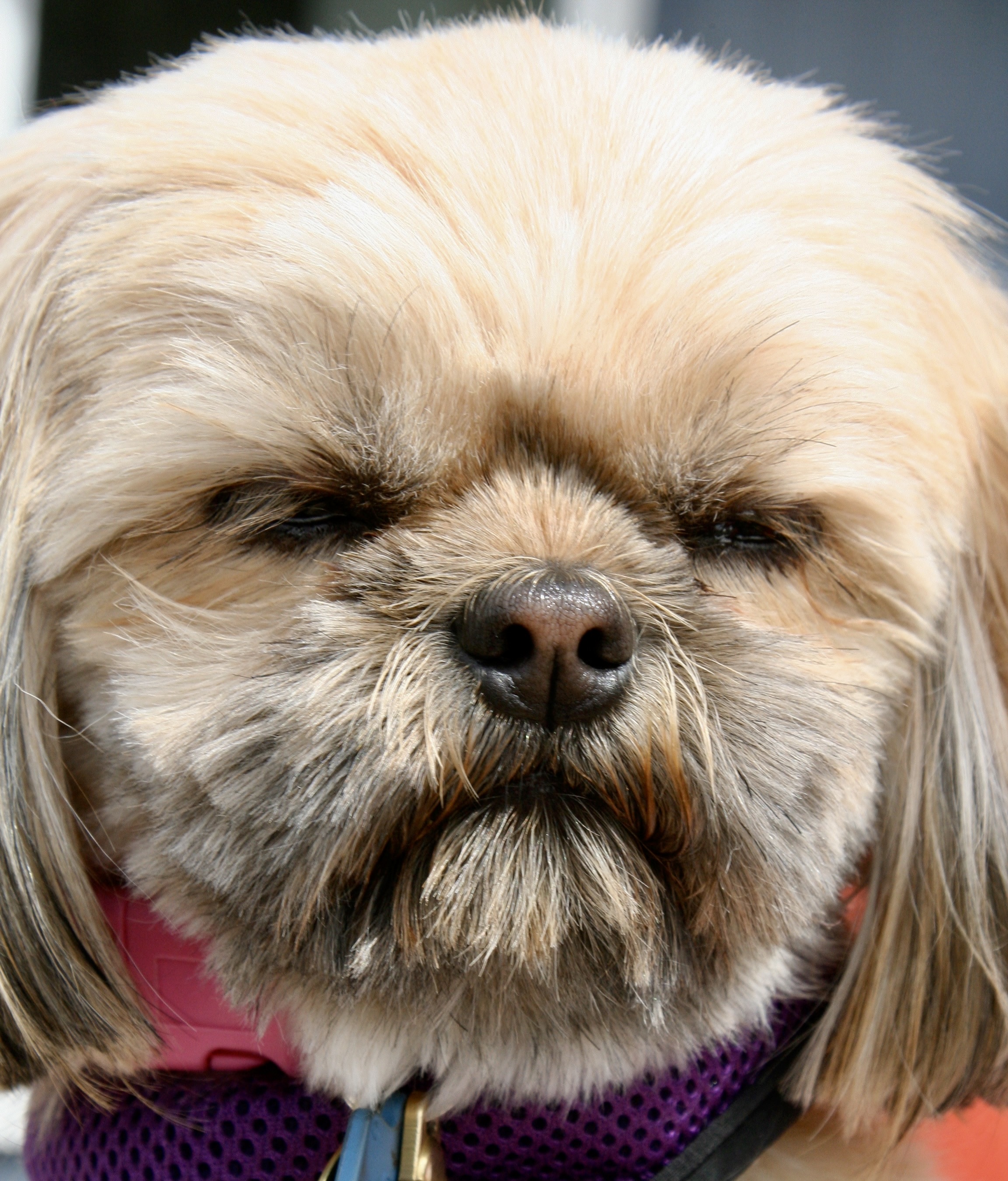
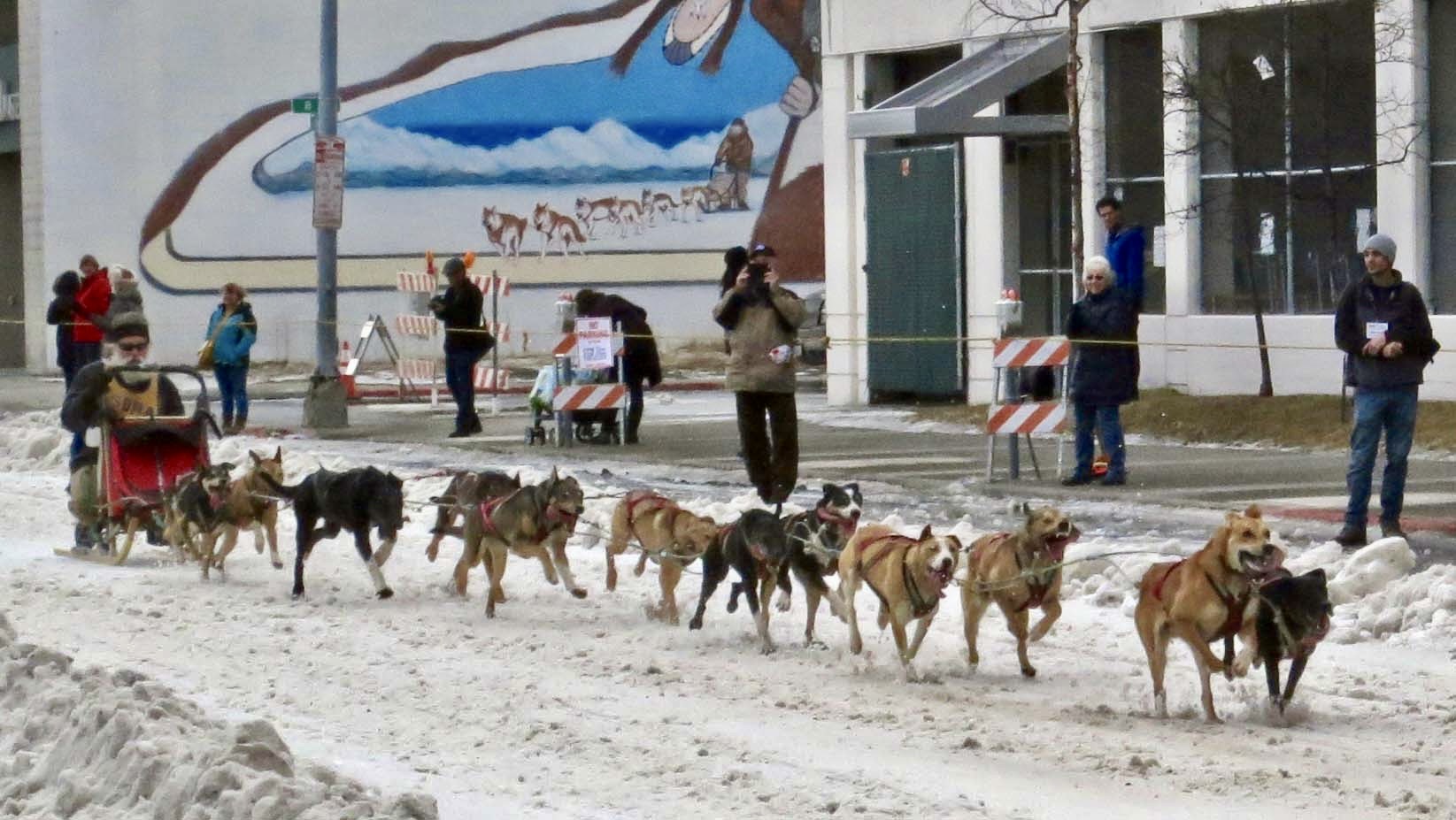
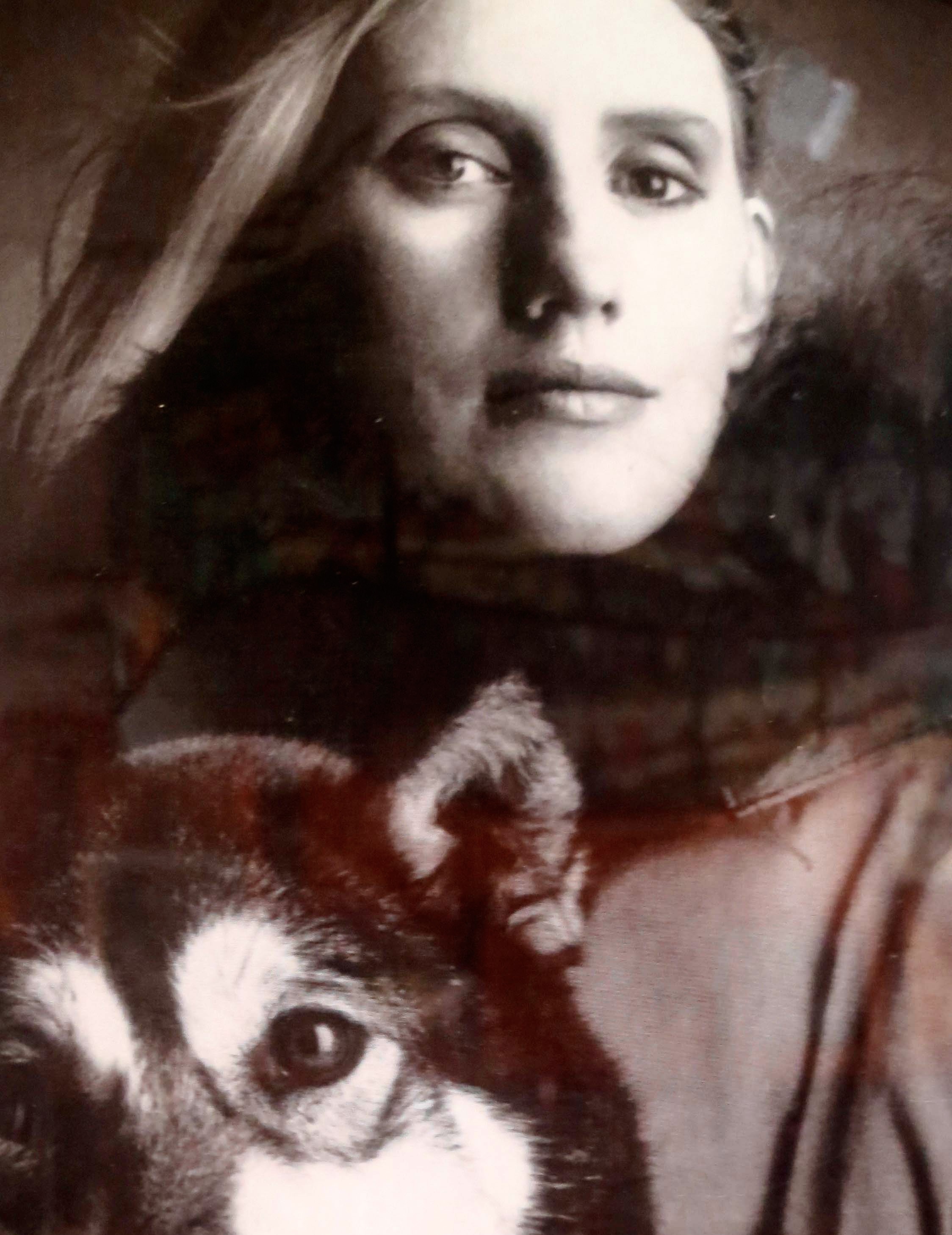
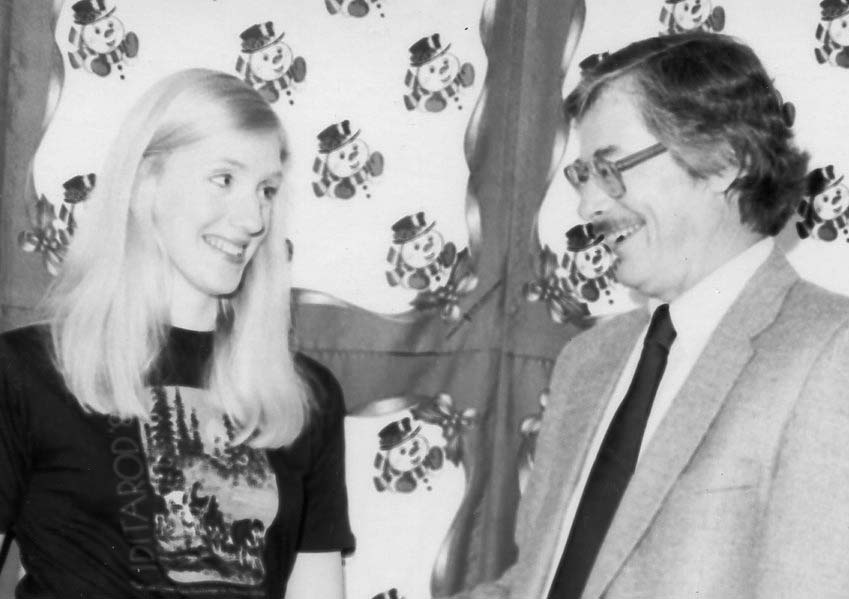
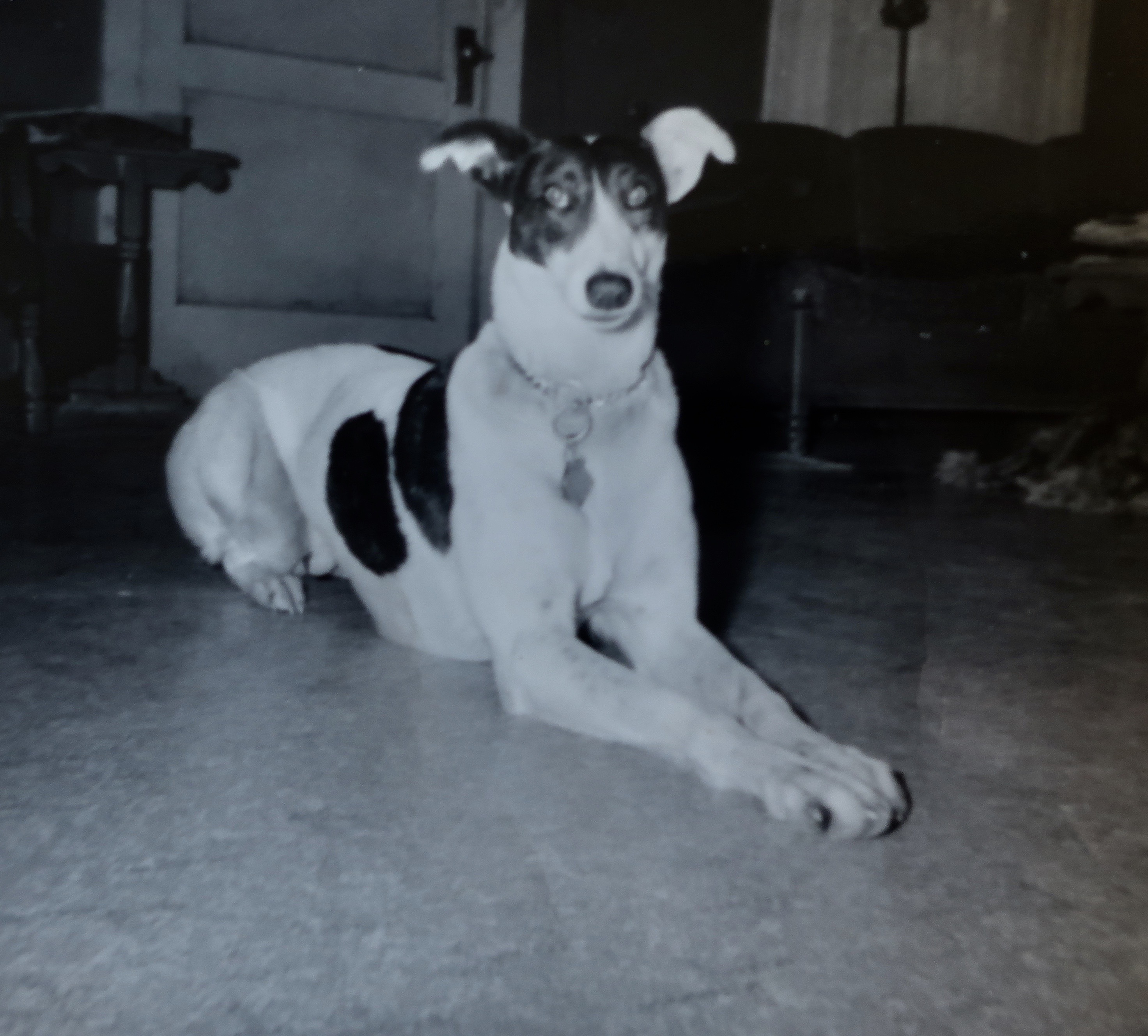
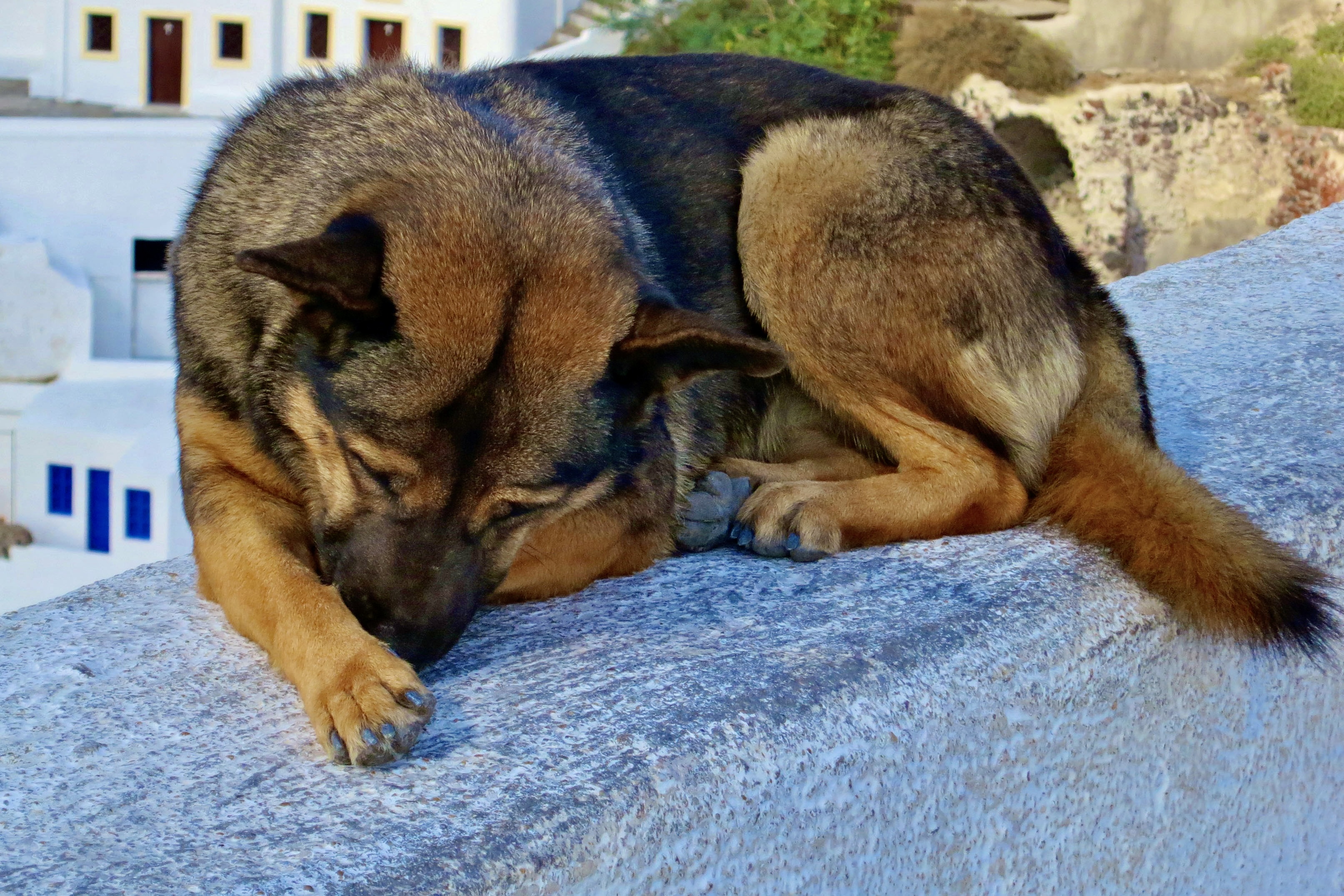
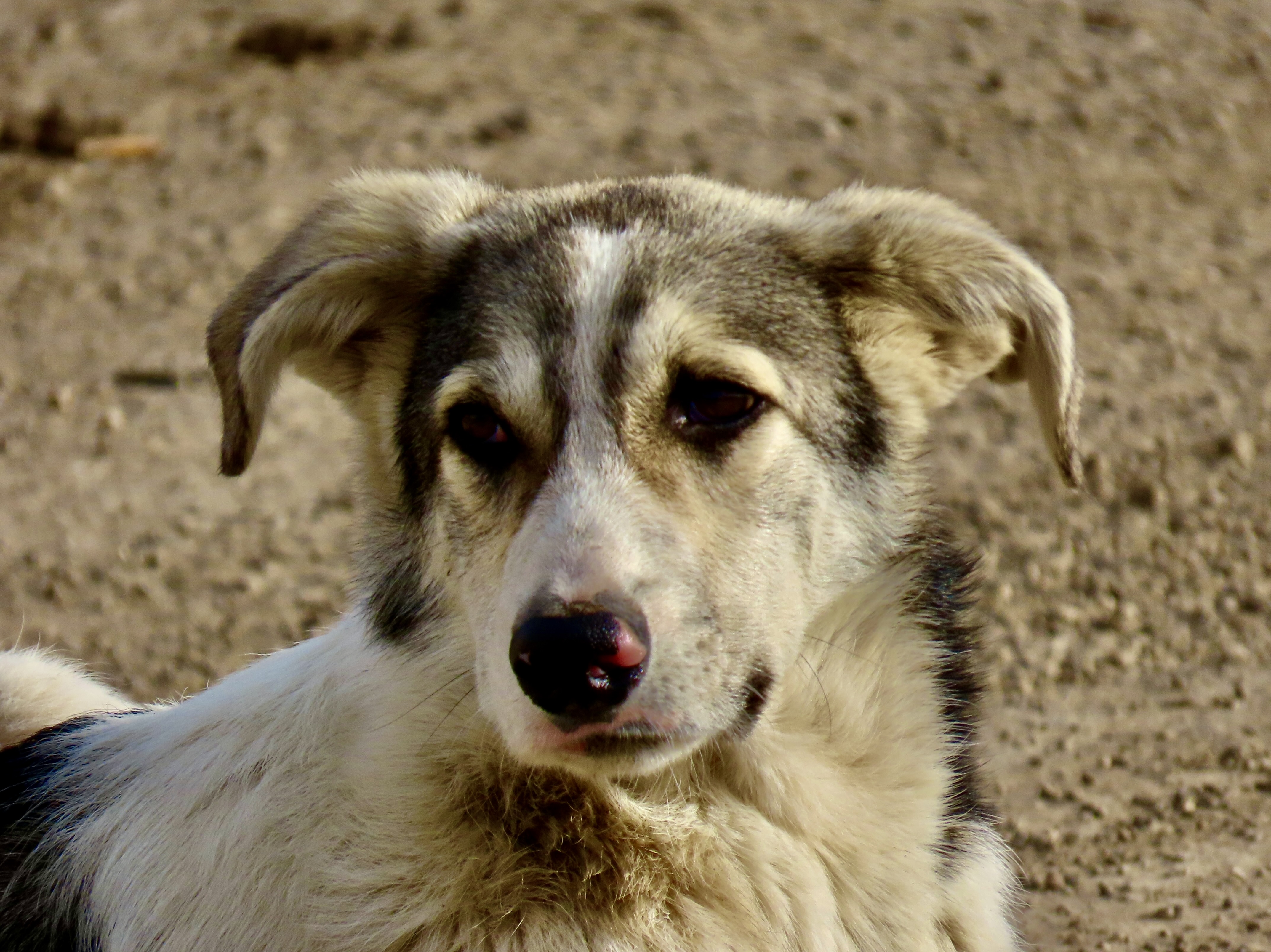
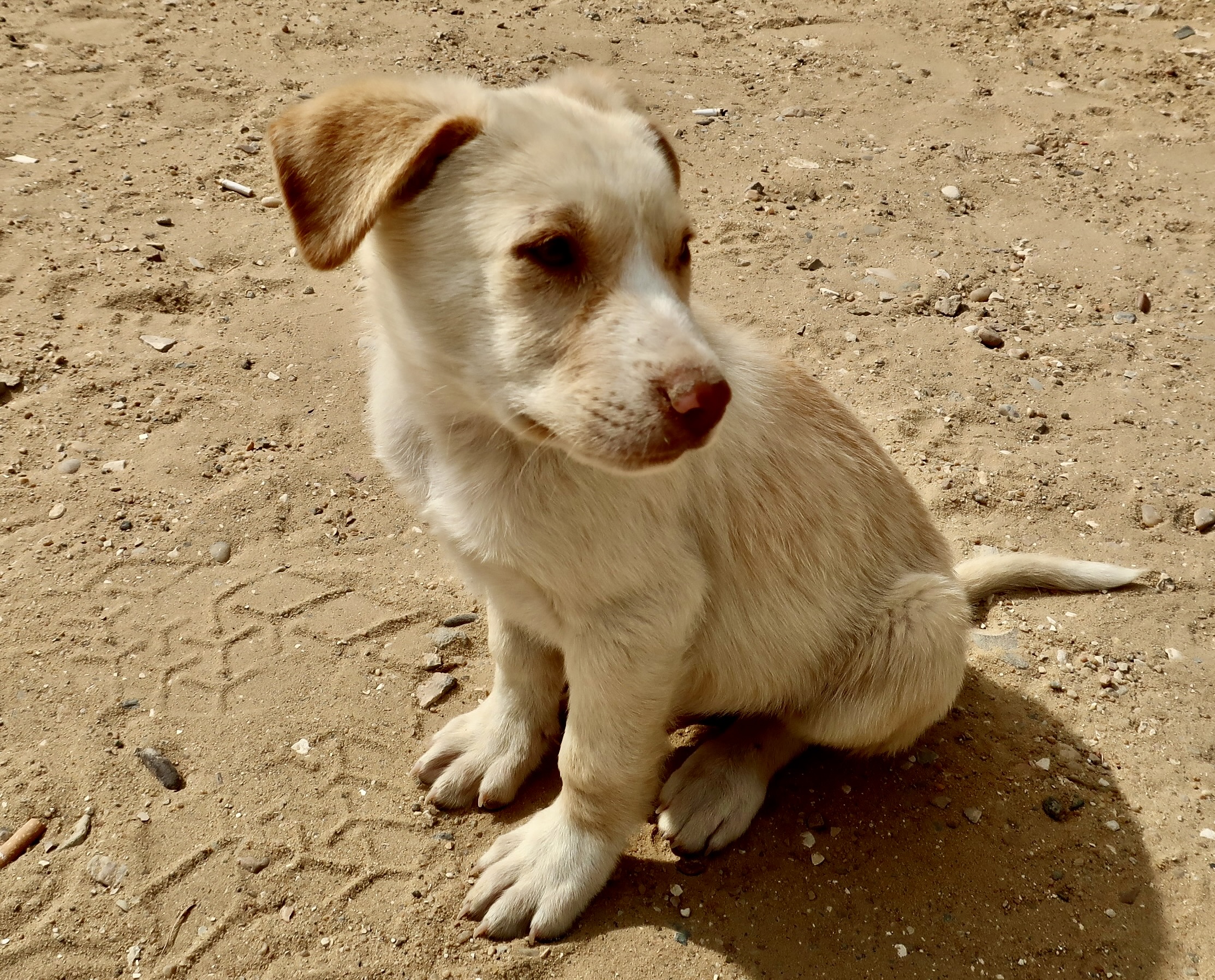
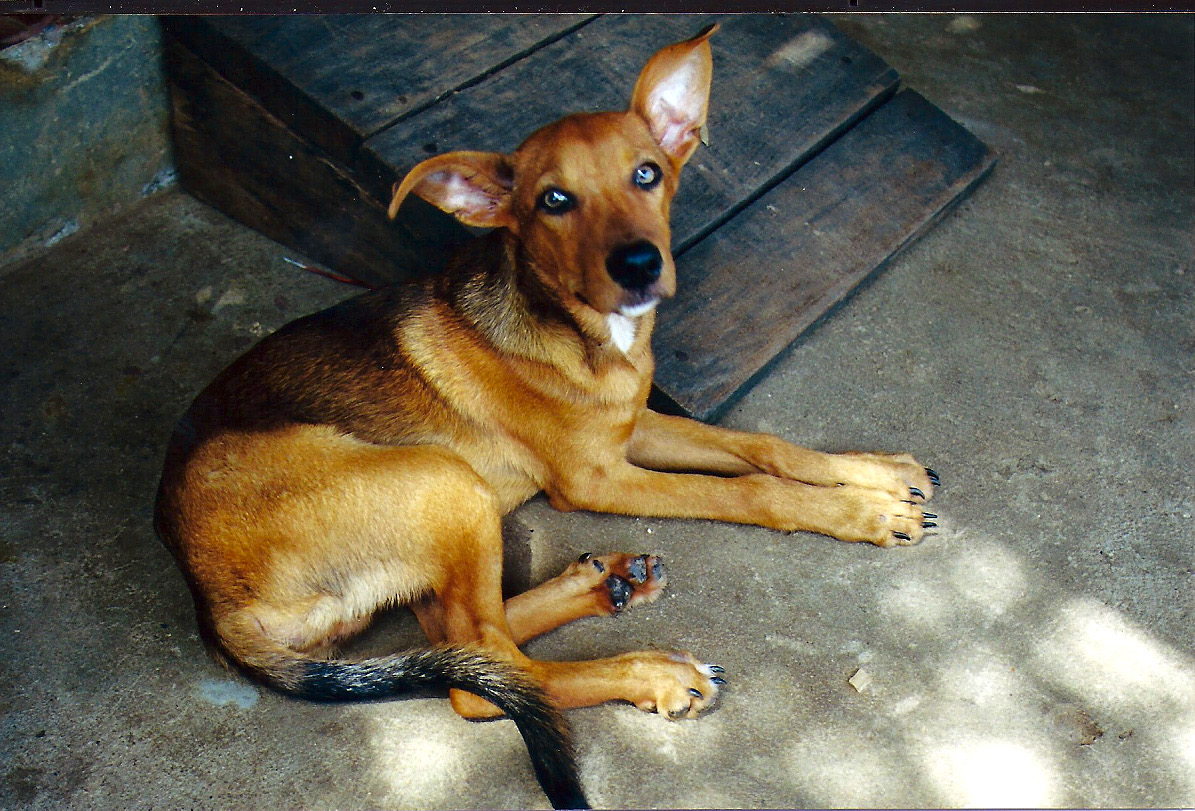
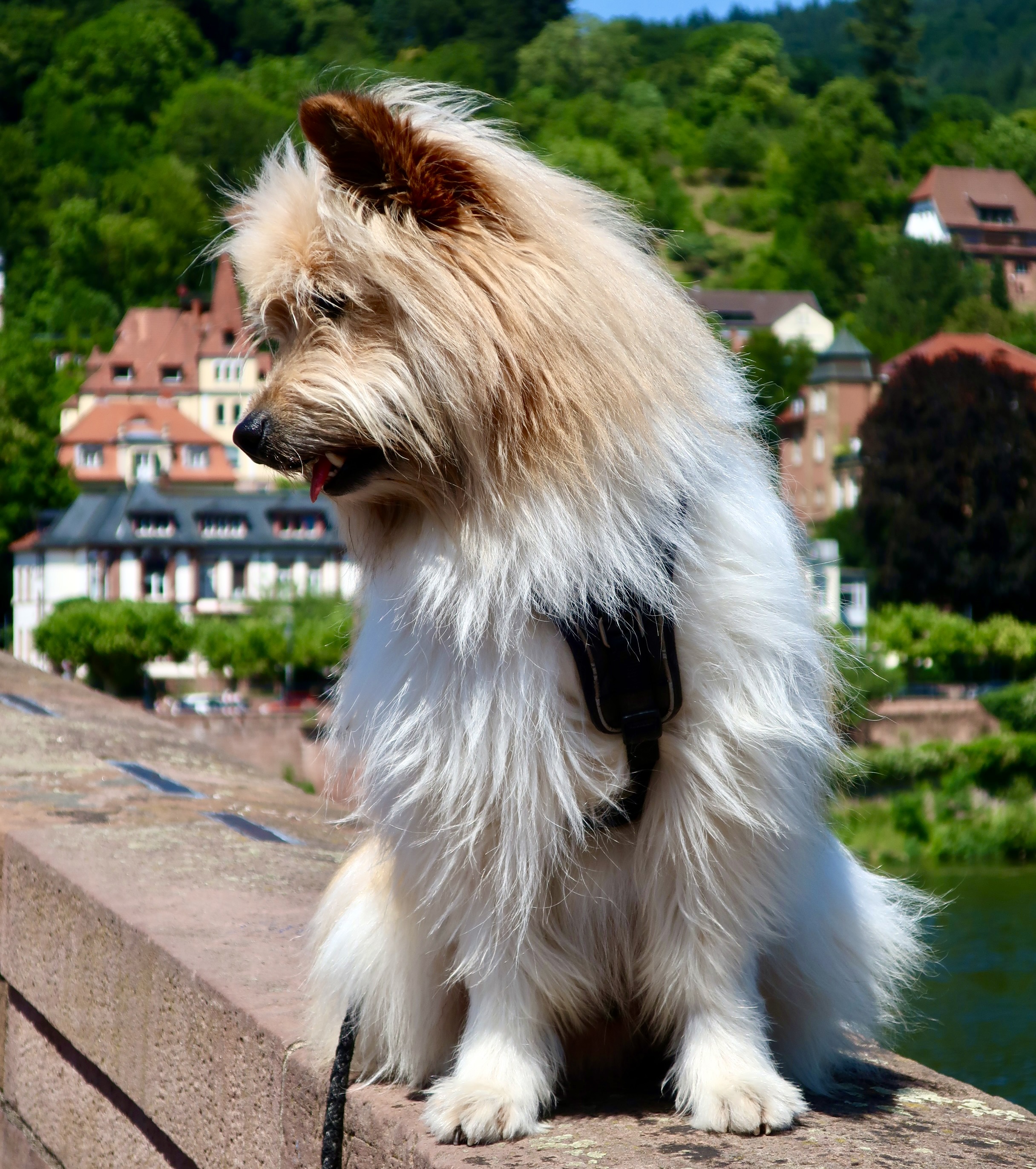
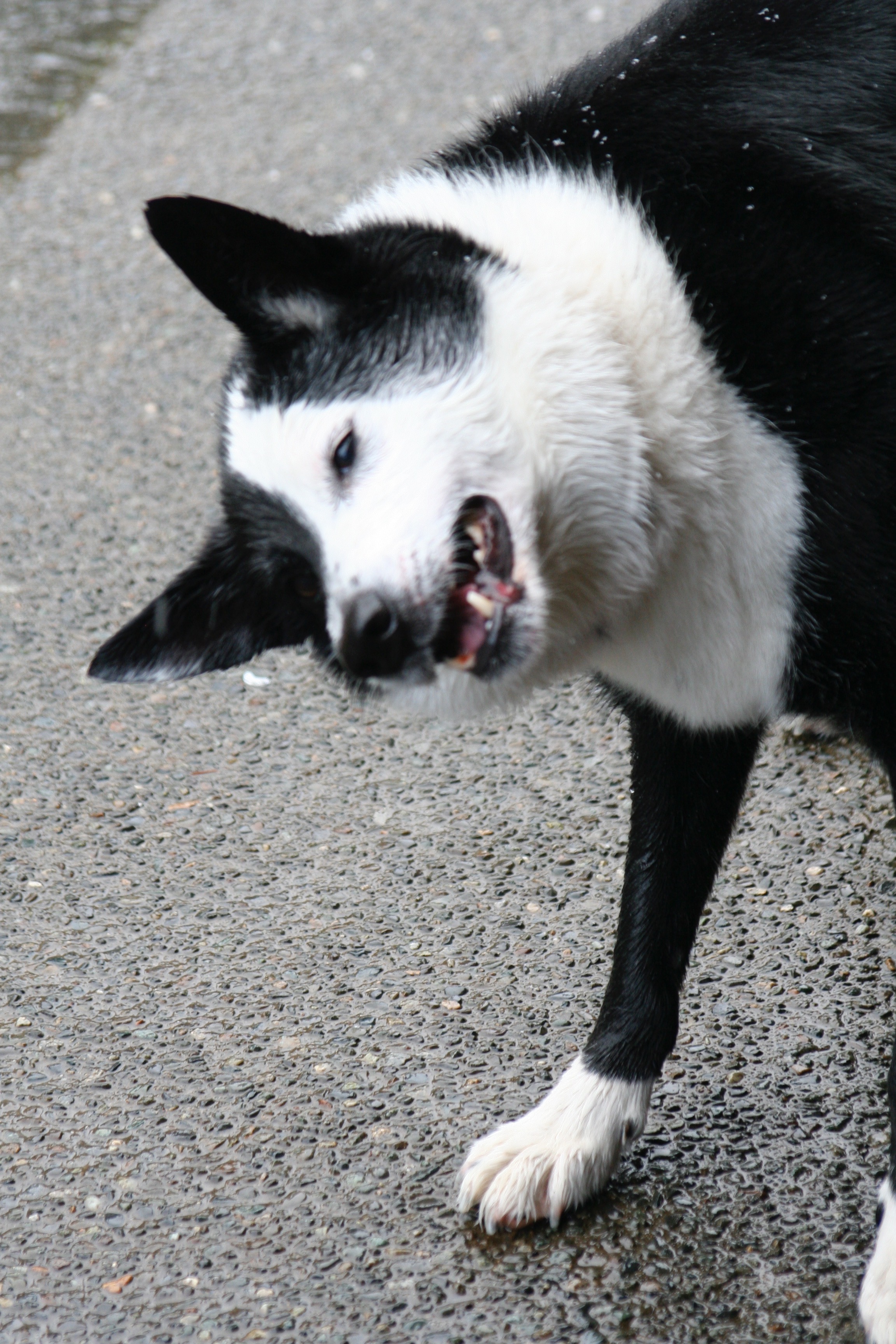
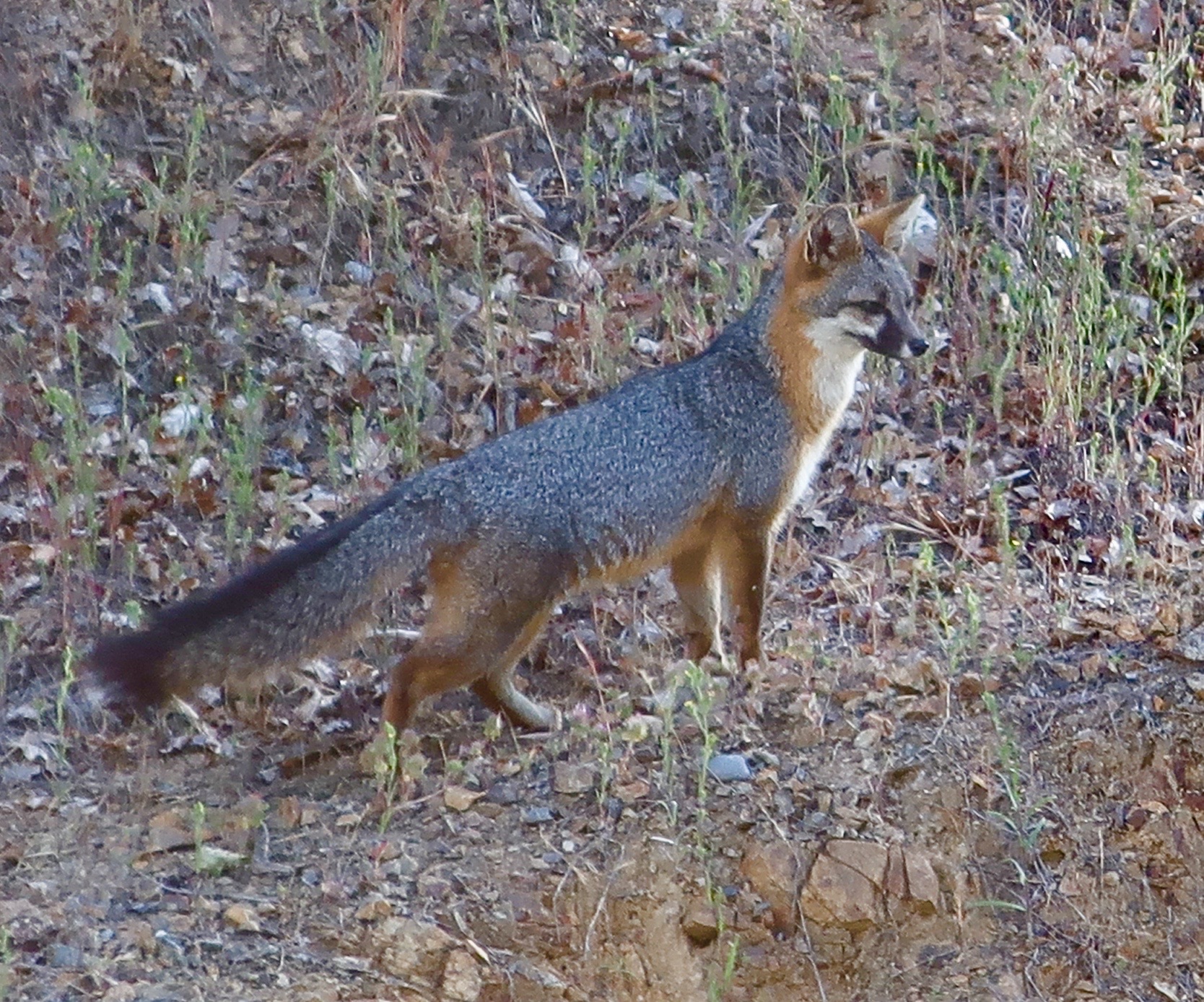
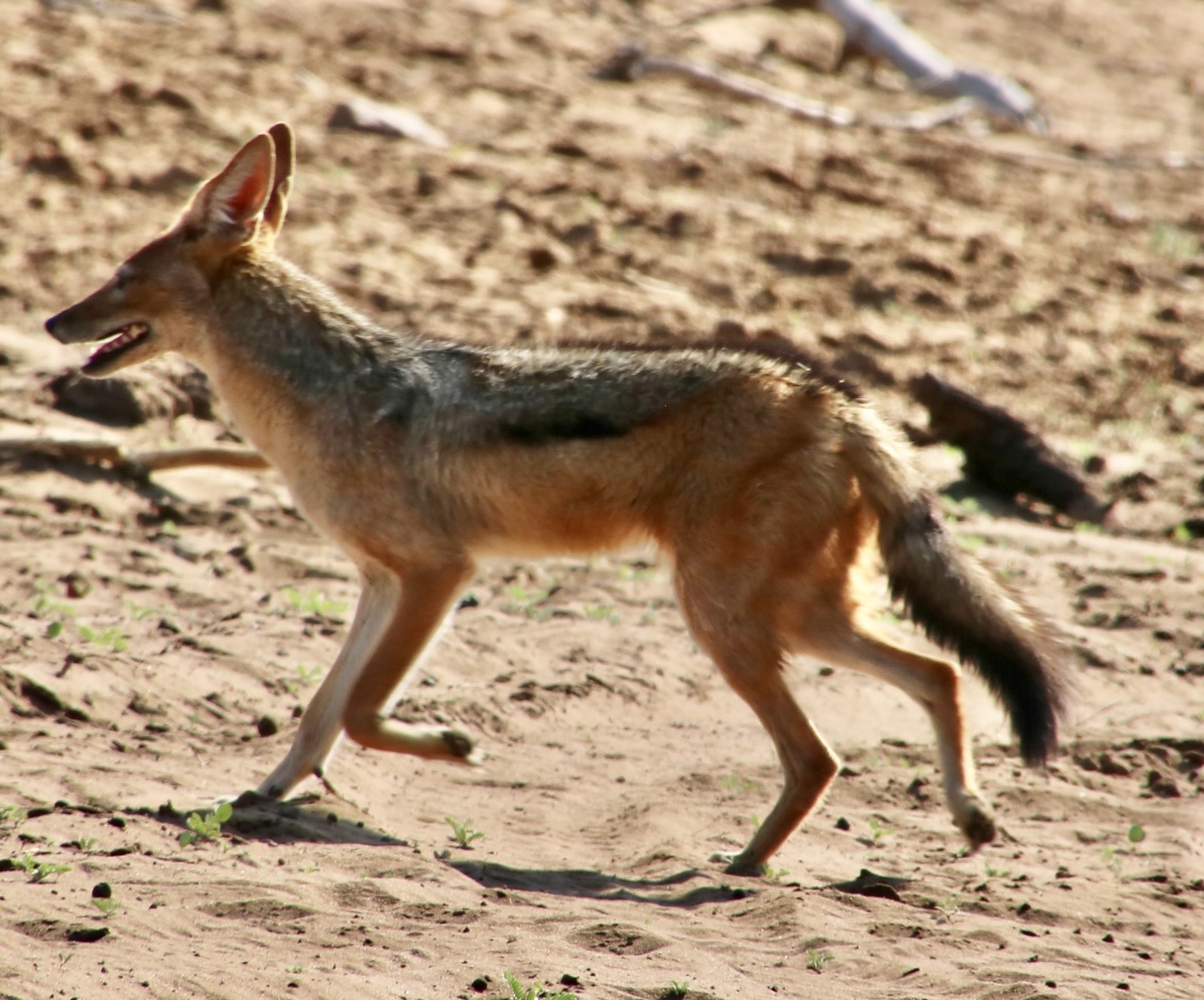
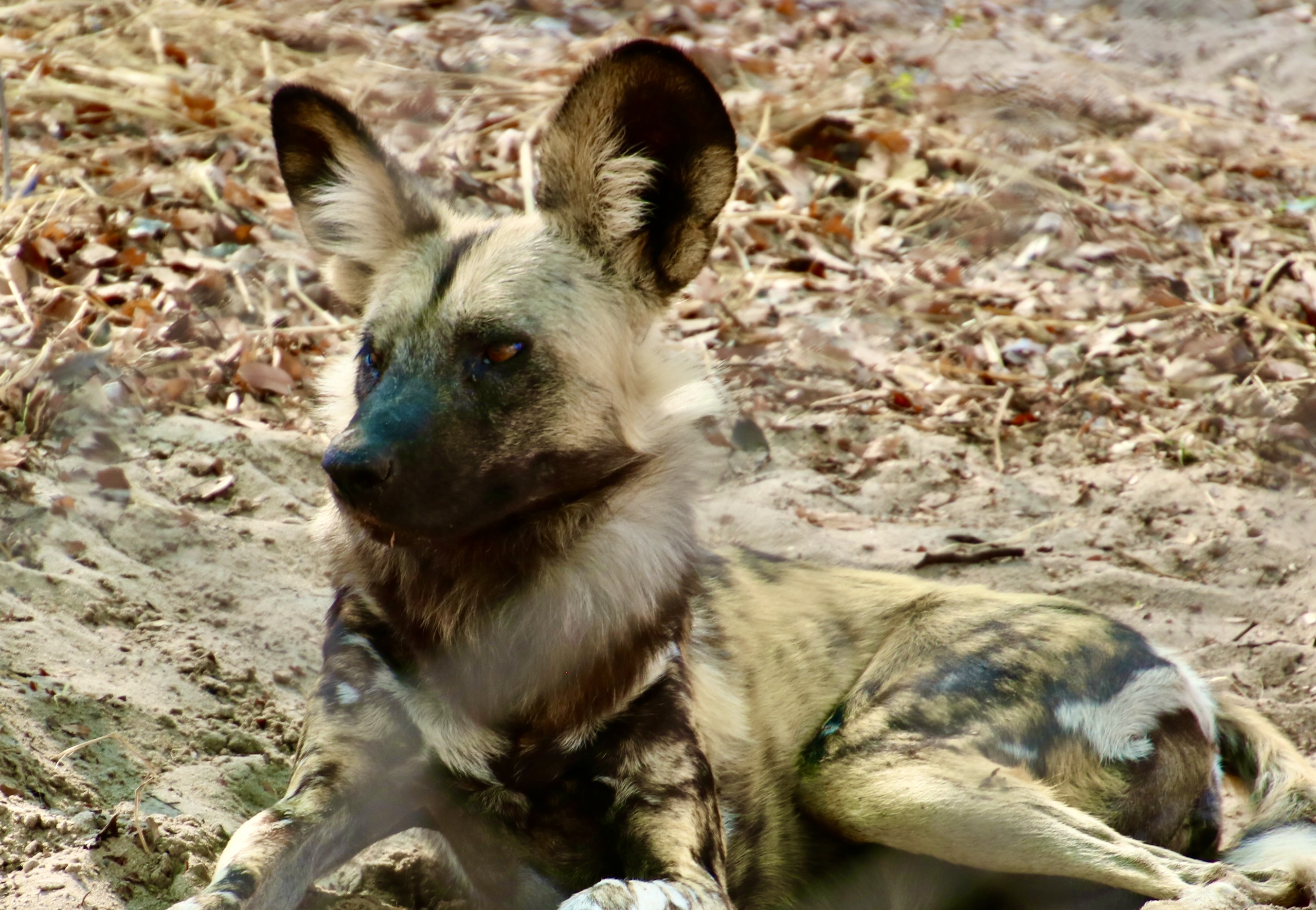
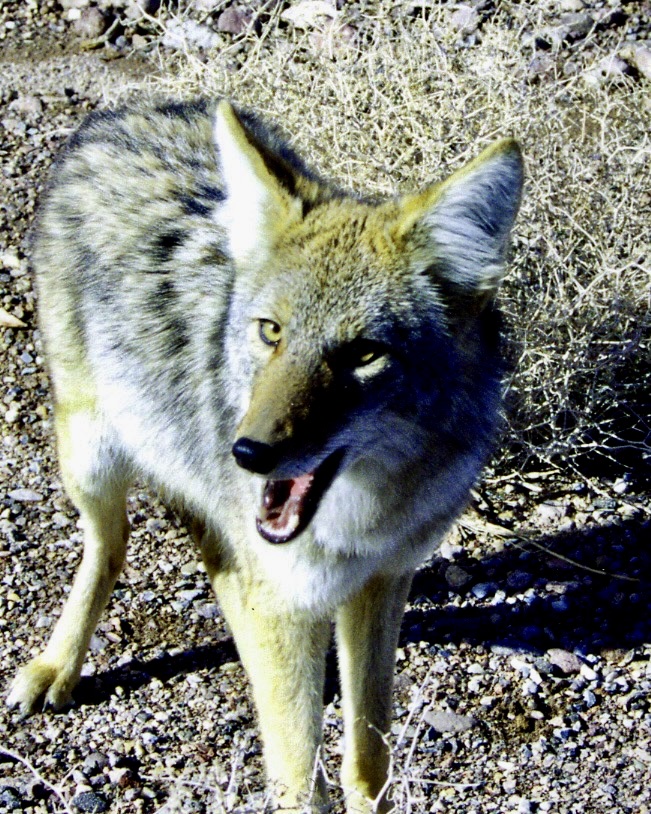
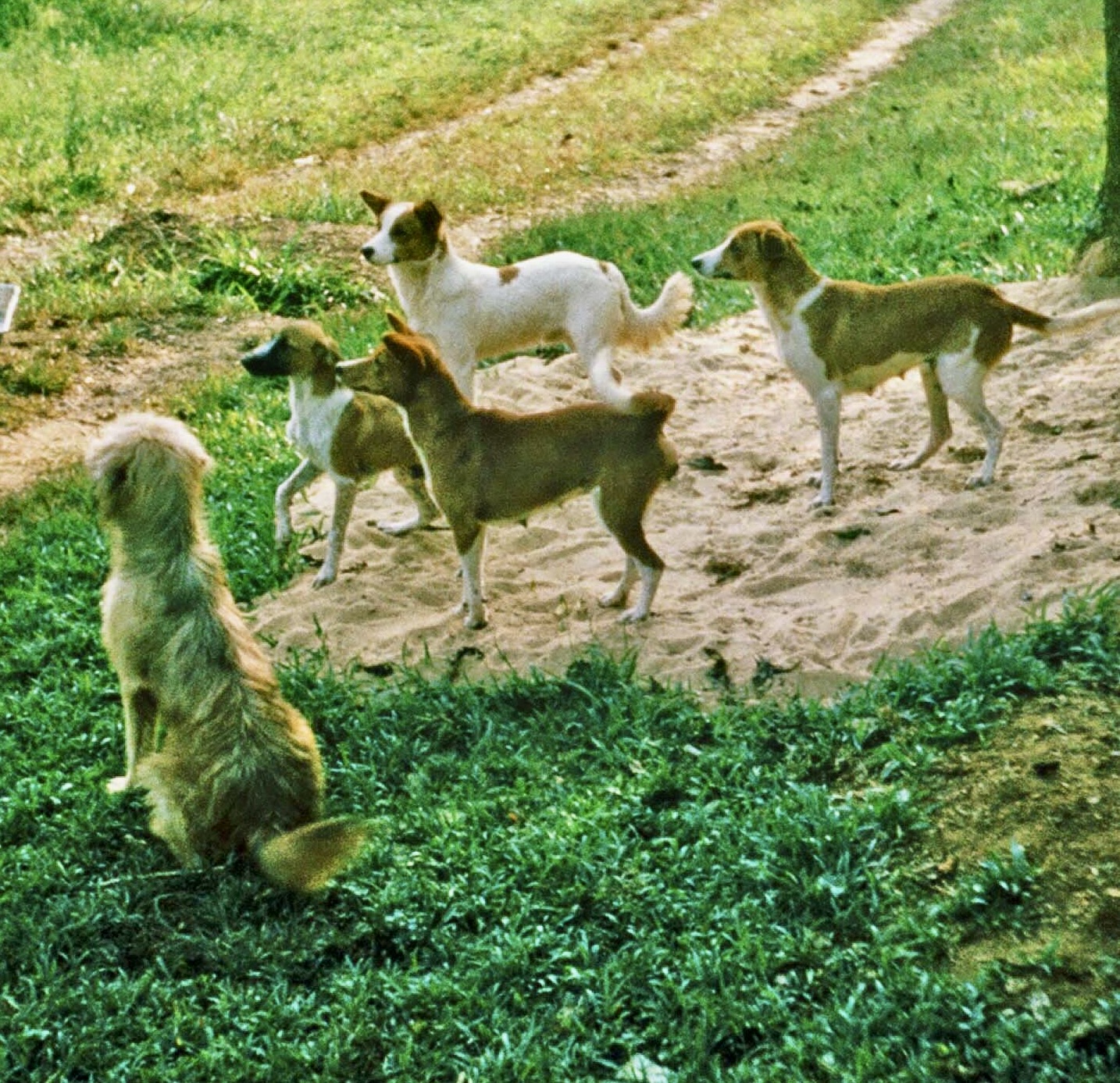
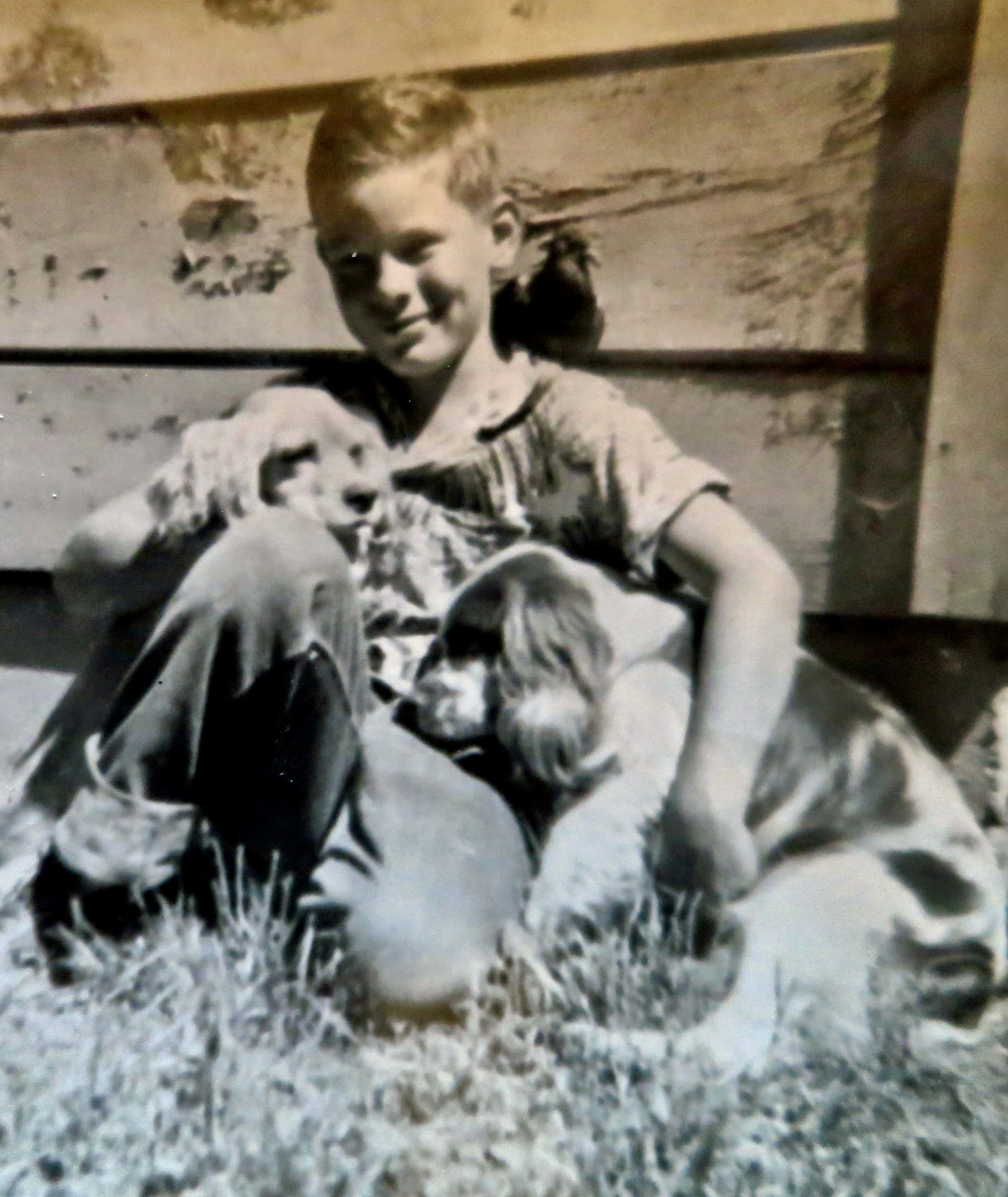
Dogs have been hanging out with humans for over 20,000 years, longer than any other domesticated animal. I commented on puppy eyes in my headline. It is theorized that they are an evolutionary development caused by people picking out dogs they found appealing down through the ages. Lexi, a blue Australian Cattle Dog definitely had them as a puppy.As did Chema, her sister, a brown Australian Cattle Dog. Both are by owned our daughter Tasha and her family. These were puppy pictures. They are both old dogs now but they still have the ‘look.’While we are on Aussies, this is an adult Australian Sheperd that belonged to our niece, Christina. It certainly hadn’t lost her puppy eyes. The blue eyes also capture your attention. The puppy Leta has them as well.As does Christina’s other Australian Shepherd, Zoe. This is a look that demands attention and includes a question. Likely, “Why are we stopped here, Mom.”A couple more family dogs before moving on… This is Lila, a Goldendoodle that belongs to my son Tony, his wife Cammie and their kids. No puppy eyes here but lots of brains (not to mention long legs). Poodles are noted for their intelligence. Of the above dogs, Corgi’s and Australian Cattle Dogs are also near the top. Socrates? Not so much. I once met a fellow Basset owner in Canada and we started talking about our respective dogs, as Basset Hound owners always do. I mentioned how difficult it was to train Socrates. He laughed. “My basset hound was kicked out of a dog training class in Edmonton. He was a bad influence.” Yep.I find the difference between our son’s family dog Lila and our daughter’s family dog, Rio, amusing. The milk bone provides perspective on Rio’s size. I asked Tasha what breed Rio was, assuming Chihuahua. And, yes, Tasha mentioned Chihuahua and then went on to list a few others. “Ah,” my response was, “Rio is a mutt.” Albeit a cute and loving mutt. “She sleeps on our bed with us,” Tasha admits. Actually, studies suggest around 50% of dogs sleep on their owner’s bed in the U.S. It might even be closer to 70%.The mention of Chihuahuas led me to remember an encounter that Peggy and I had with one in Puerto Vallarta, Mexico. I thought he looked cool carrying his small stick along in his mouth.This photo suggested that his ‘girlfriend’ had a different point of view. I imagined this to be the conversation. Her: “If I told you once, I’ve told you a hundred times, it’s stupid to walk around with a stick in your mouth. Odds are that you will stumble and drive it into your pea-sized brain.” Him: “Whatever.”Have you ever watched dogs compete on an agility course. We came on a competition once in British Columbia. Dogs work their way through a number of challenges that range from poles that they have to weave their way through to see-saws and tunnels. The more advanced the dog, the more barriers they have to overcome. Owners run along beside the dogs encouraging them to do their best. It’s as much fun watching the owners as it is the dogs. The dog that completes all of the challenges in the shortest period of time for its class wins. This small papillon was almost flying!Hurdles are another barrier the dogs have to leap over. The bigger the dog, the higher the hurdle.I asked this fluffy pooch with a pink collar if she had ever thought of competing in one of the dog agility competitions.Her response.The most renown dog competition in the world is the Iditarod, Alaska’s thousand mile sled dog race from Anchorage to Nome. This photo is actually from Anchorage’s Fur Rendezvous where the dogs were running more like 100 yard sprints than 1000 miles. They can run up to 20 miles per hour. I lived in Alaska for three years in the 80s and watched the beginning of the Iditarod each year. In fact, I was in Alaska the year that Libby Riddles was the first woman to win the race. I was Executive Director of the Alaska Lung Association at the time and called her up immediately afterwards and asked if she would consider serving as our Christmas Seal Chair. Winning the Iditarod is a huge deal in Alaska. Her immediate response was yes. Could I pick her up at the airport in a week when she got back from a photoshoot in Chicago.It was for Vogue Magazine.Libby and I with a backdrop of Christmas Seal scarves. I spent a couple of days driving Libby around to various media interviews. In addition to getting great PR for the Association, I had a lot of fun— and learned a lot about sled dogs.While sled dogs are fast and extremely tough, they aren’t the fastest dog in the world. That title goes to the greyhound. The fastest speed one was ever clocked at was 41.83 mph (67.32km/h). This is Pat, my greyhound, in our house in Diamond Springs CA. I named her after the local Greyhound bus driver I knew as a kid. Pat had been running wild, making a living off of jack rabbits and ground squirrels. She was getting skinnier by the day. One day, my mother stopped our car, opened the door and invited Pat to come home with her. Thereafter, she was my dog. What a great companion. I’d come home and she would be one big wiggle. Watching her run was poetry in motion.As we do with cats, Peggy and I take photos of dogs when we travel. This one had found a convenient ledge to sleeping on the Greek Island of Santorini.At a bus stop in Romania.This puppy hoping for food next to the pyramids in Egypt.A small village along the Amazon River.On a bridge overlooking the Neckar River in Heidelberg, Germany.Catching snowflakes on Vancouver Island, Canada. It took a second look to figure out what the dog was doing.We also try to capture photos of dogs’ ancestors when we get a chance. We had a pair of foxes that lived on our property in Oregon. One night we were awakened by them howling down near the road. It was repeated the next night and the next. Finally I went down to see if I could find out what was making them excited. I found a dead fox killed by an automobile. What we were hearing was its partner mourning its loss! I gave the dead fox a decent burial and said a few words over the grave. The nightly howling stopped.We caught this photo of a jackal when we were on our photo safari in southern Africa. In our post on cats, I mentioned how the cat was sacred to ancient Egyptians. So was the Jackal. Anubis, the god who guided souls into the afterlife and weighed people’s hearts during the final judgment had the head of a jackal.This is an African Wild Dog that we photographed in Zimbabwe. It is also known as a Painted Dog for its unique color.And finally, a coyote we found in Death Valley, obviously looking for a handout. Feeding them is a no-no in national parks.I could go on and on with dogs, but I realize it is past time when I should wrap up this post. See the little dog standing in front. She was a Basenji named Do-Your-Part by her Liberian owner. Basenjis are noted for not barking. Actually, they yodel. While she belonged to the principal of the high school where I taught in the Peace Corps, she adopted me. Everywhere I went, she went. Including my classroom. With zero training she was the best mannered dog I have ever known. And the sweetest. The day I had to leave, Do Your Part, who never climbed up on me, climbed up in my lap and shivered a goodbye. It broke my heart.One last photo. As a kid I was in charge of all the family pets. My first dog, Tickle, a Cocker Spaniel, is on the right. Another Cocker, Happy, is on the left. Our pigeon is on my shoulder. Missing was our grey squirrel, Pugemite, and several cats. Tickle, like Do Your Part, followed me everywhere. Much to his disgust, and mine as well, however, he wasn’t allowed to go to school with me.
In my next post on UT-OH, I relate how listening to the Lone Ranger on our family radio almost led to my head being smashed by a train. Our next focus post will be on Hoofing It with Ungulates.
We are continuing our focus series today with a look at cats. Our travels provide us with lots of opportunities to watch and photograph our feline companions. In their own enigmatic way, they are quite photogenic. Most of today’s entries are from around the Mediterranean Sea— or from my personal experiences of being owned by three cats: Demon, Rasputin and FE.
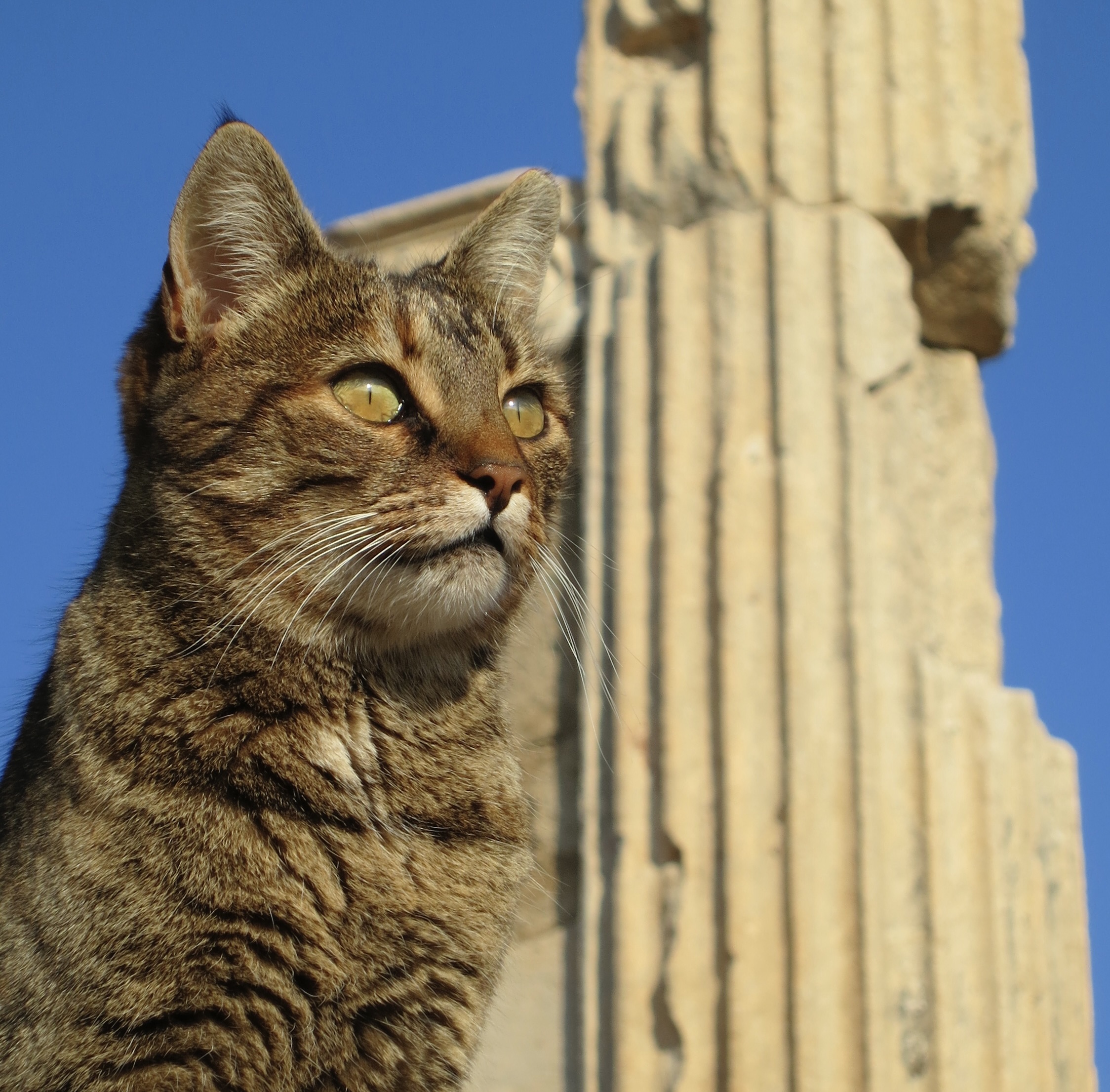
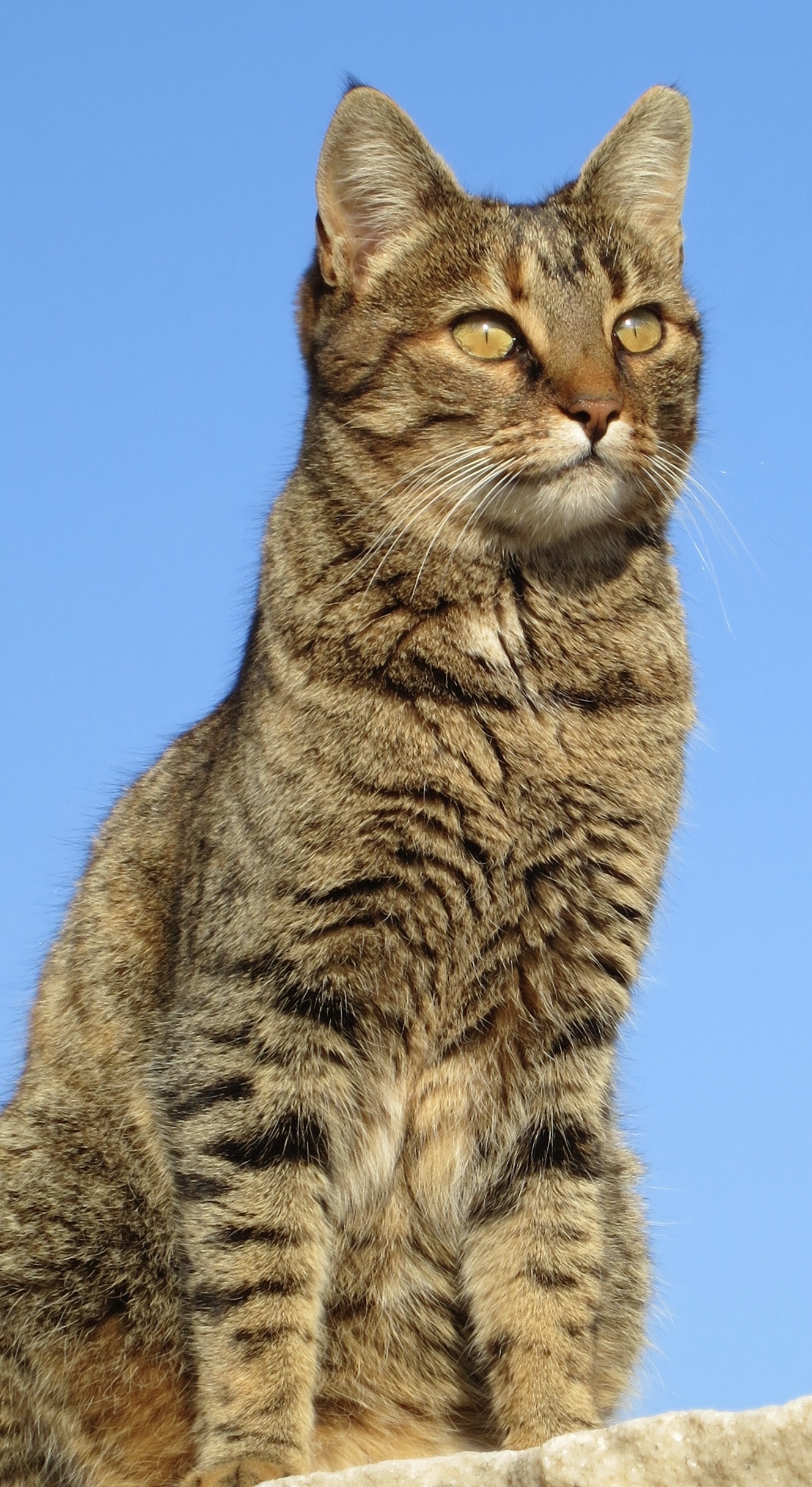
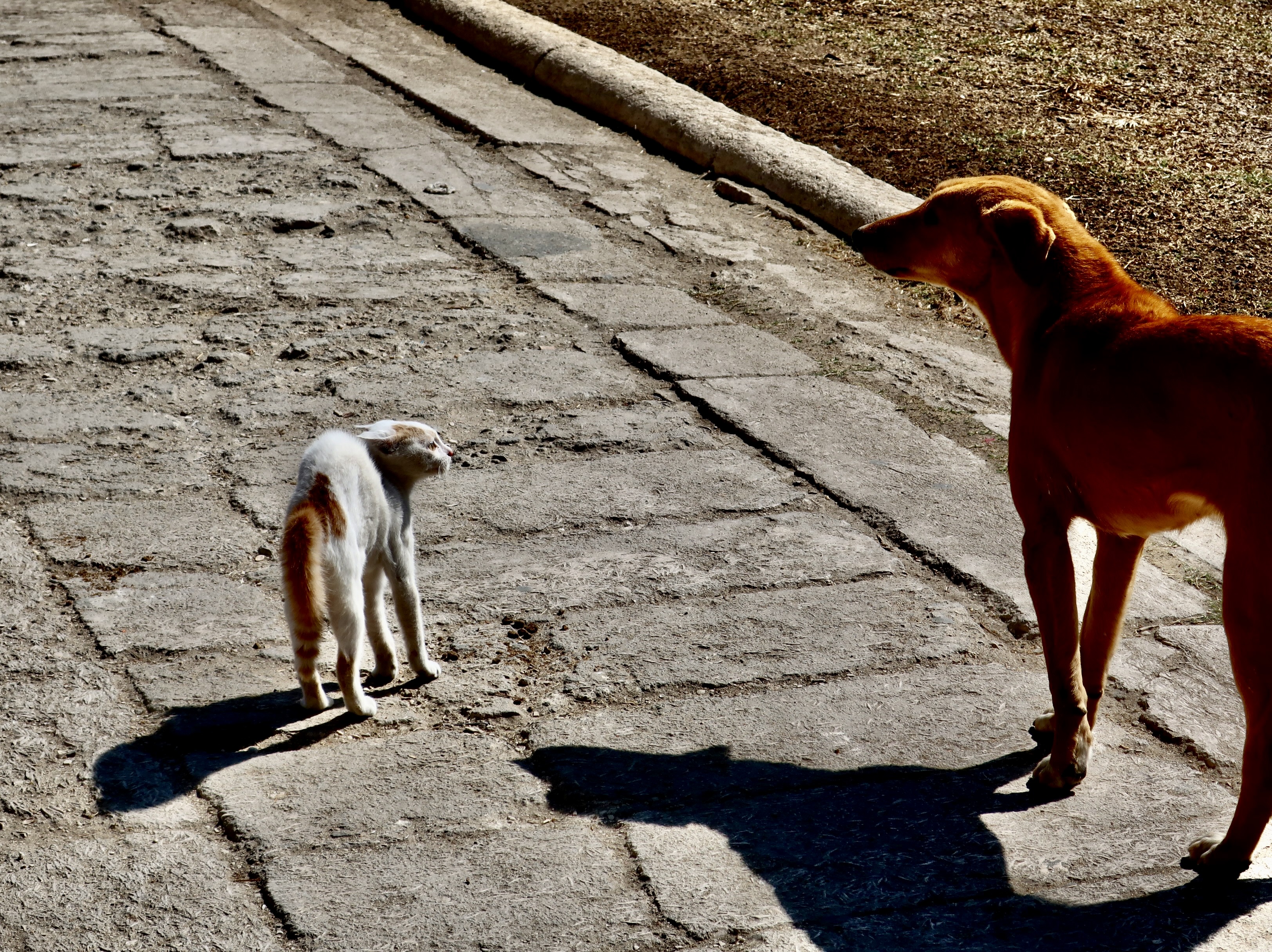
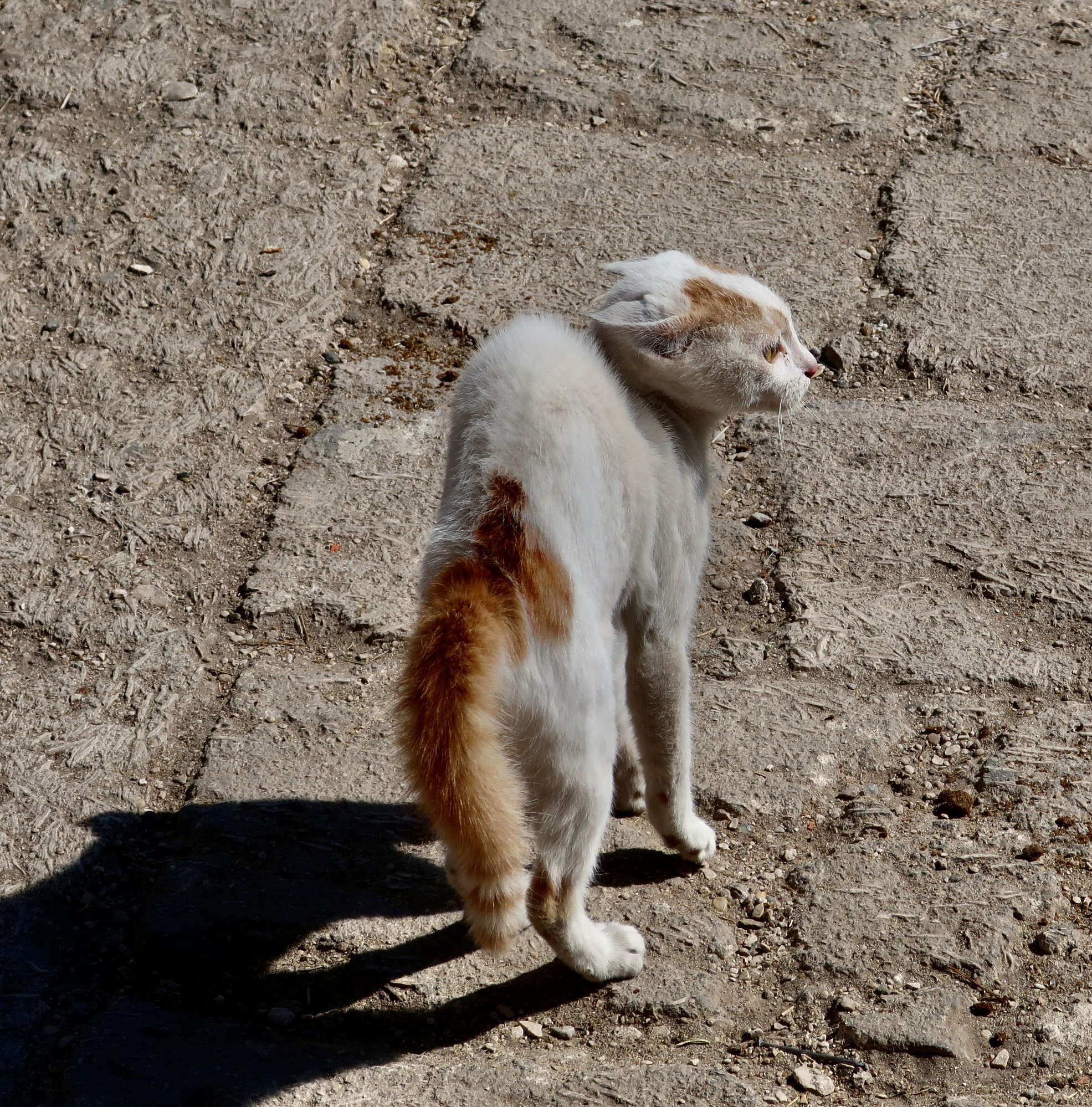
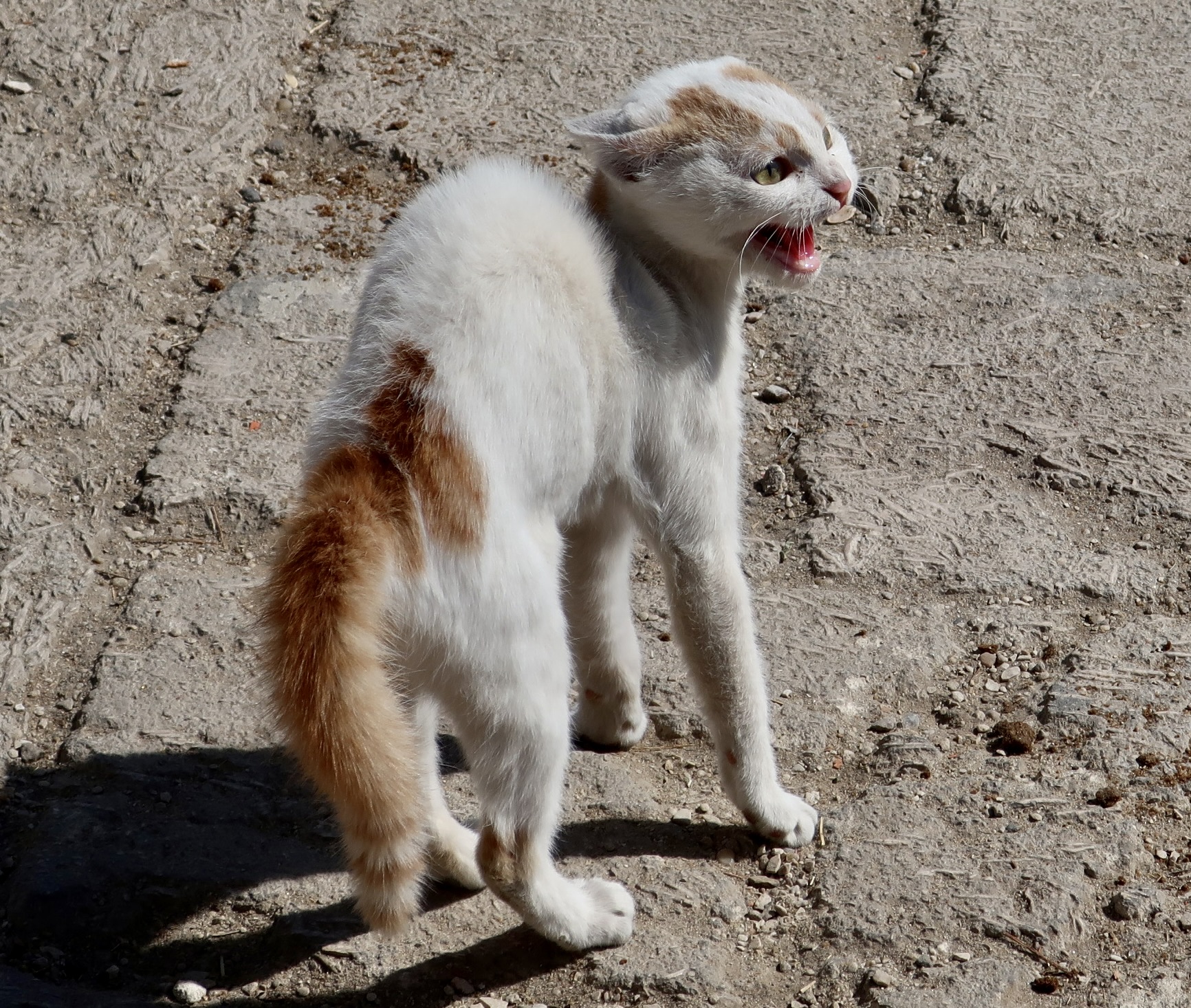
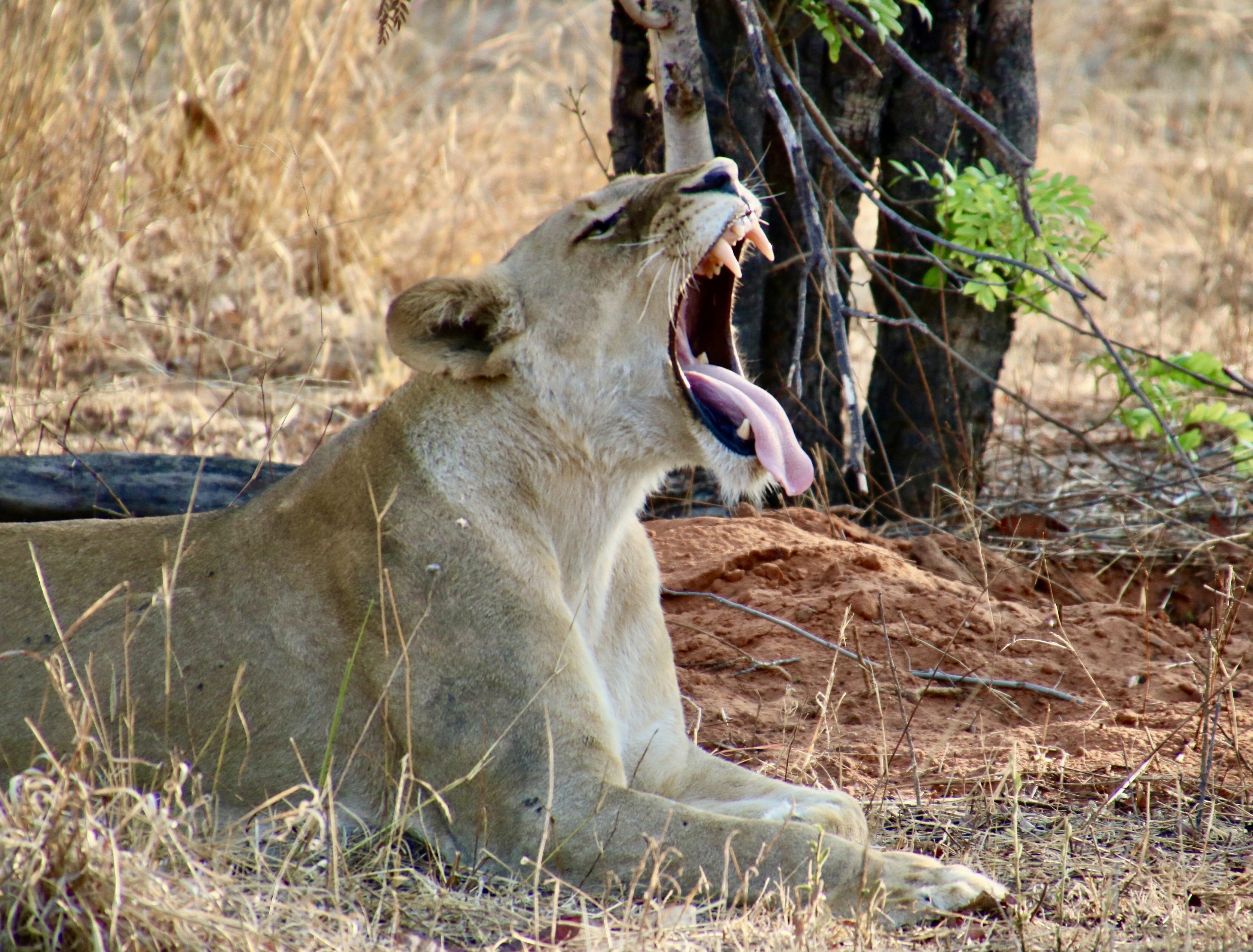
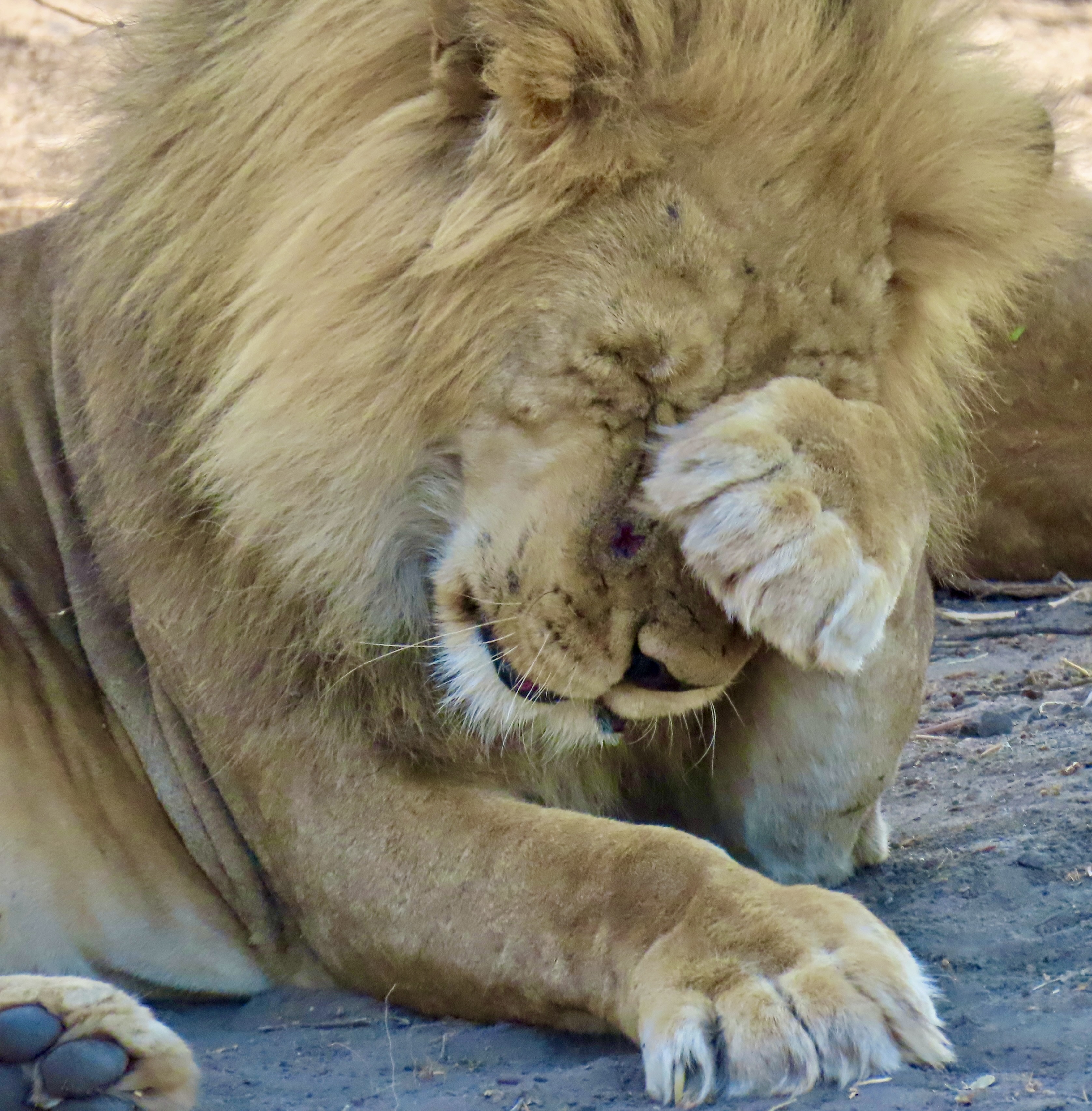
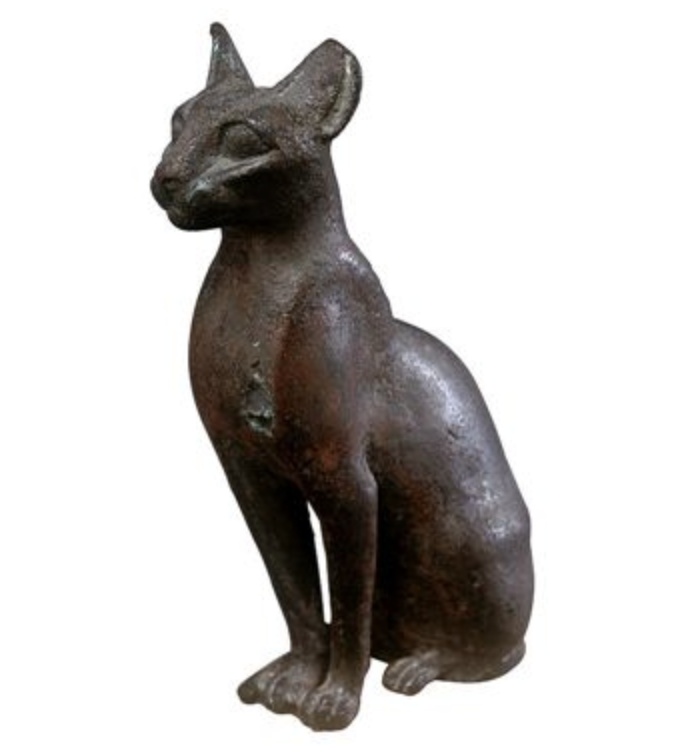
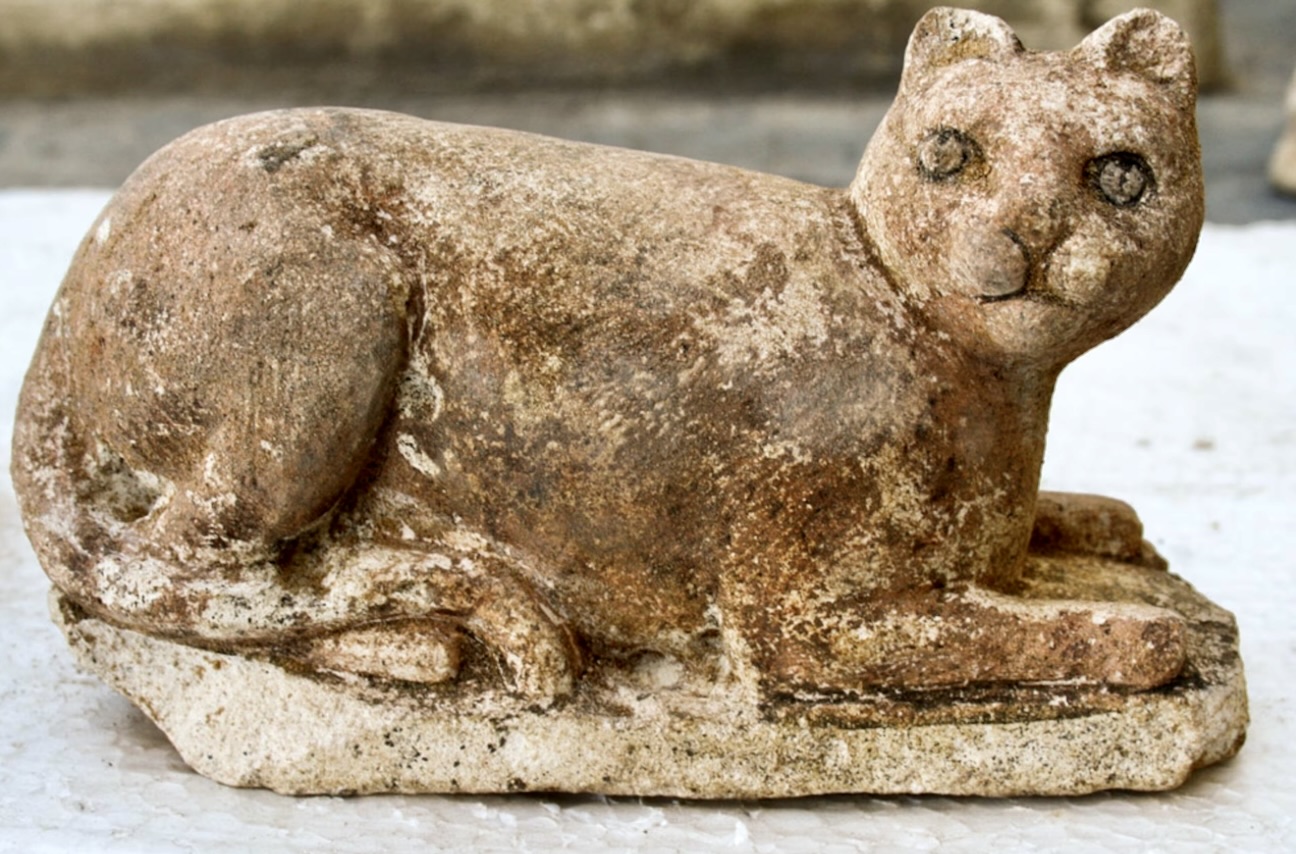
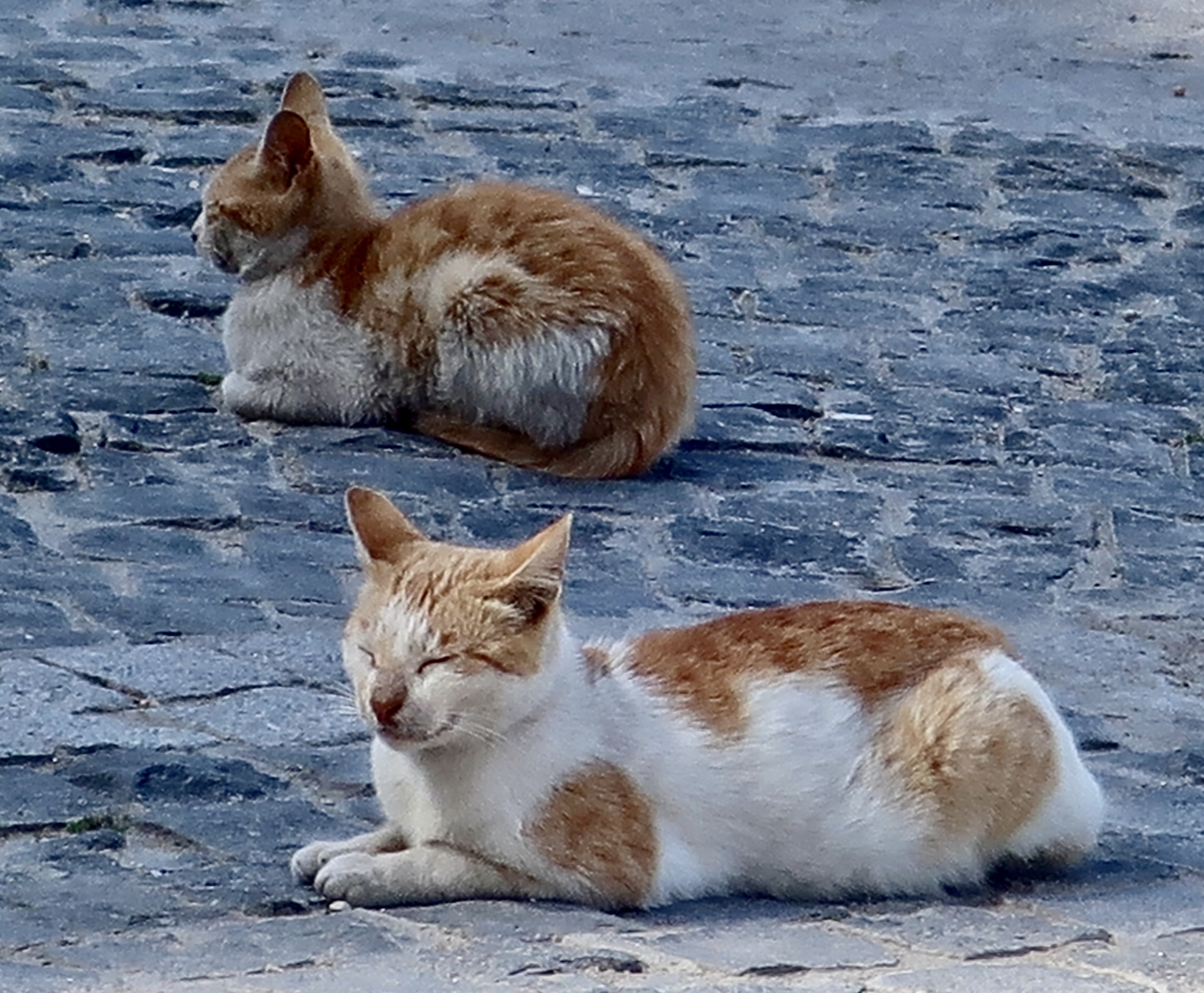
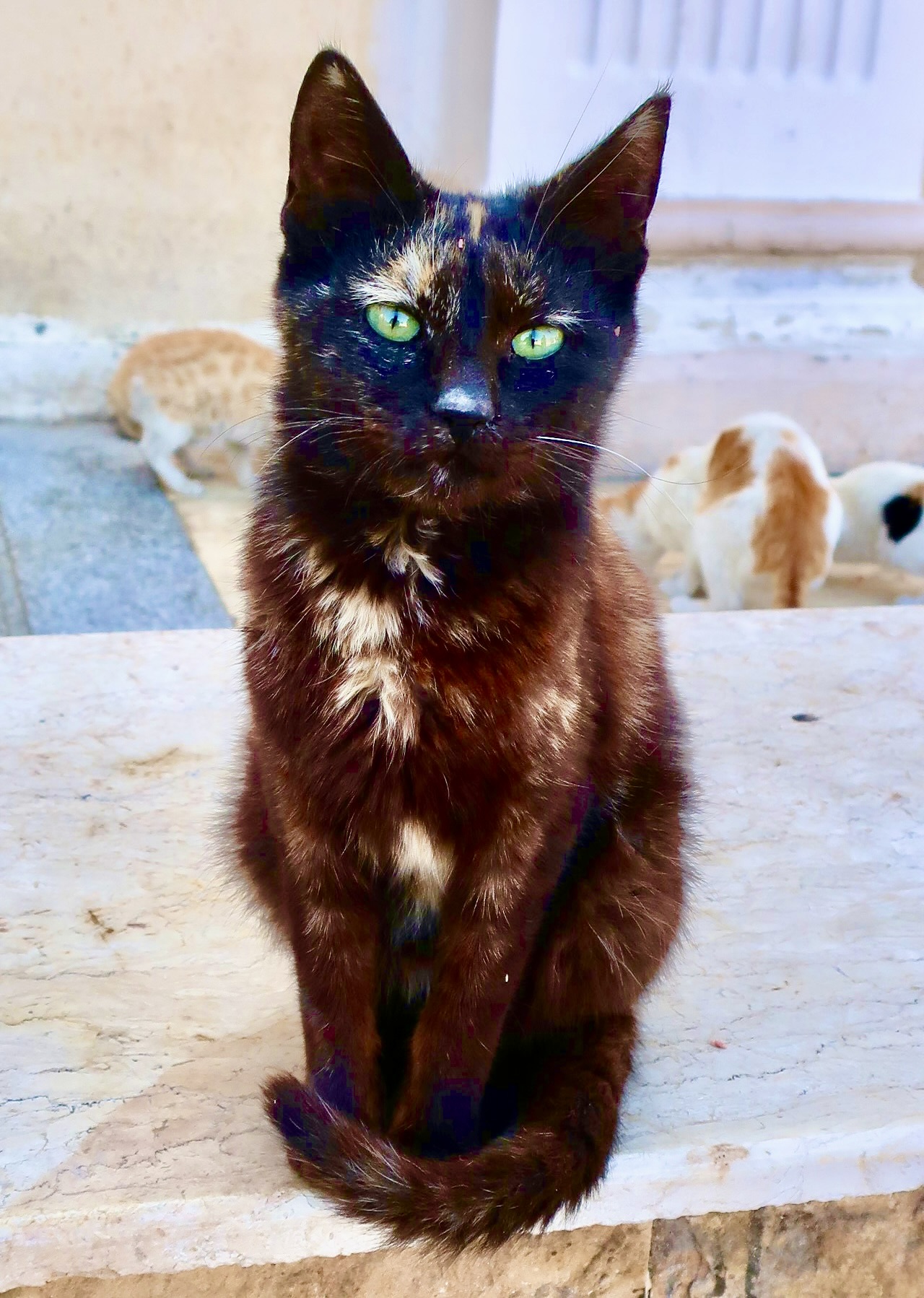
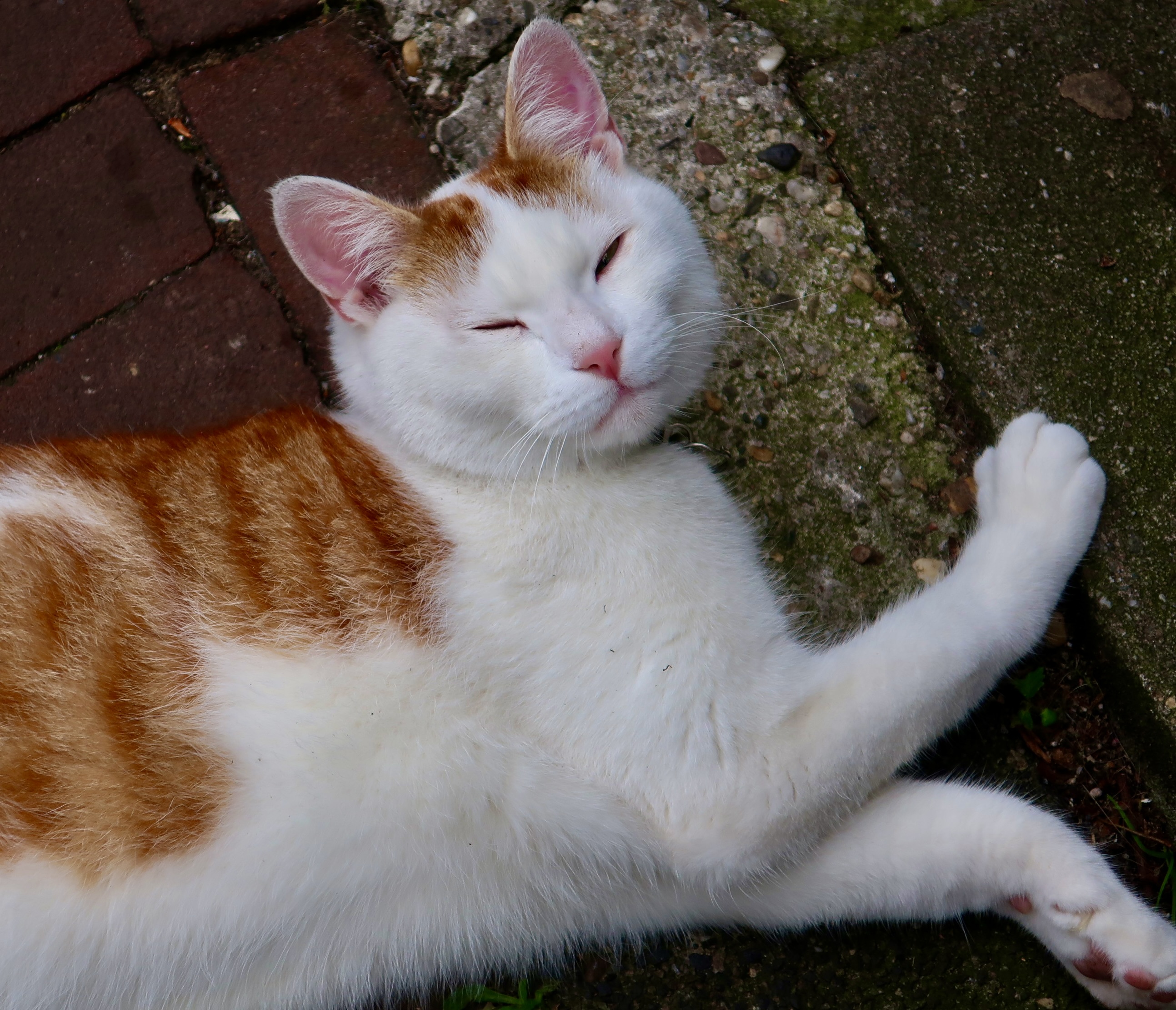
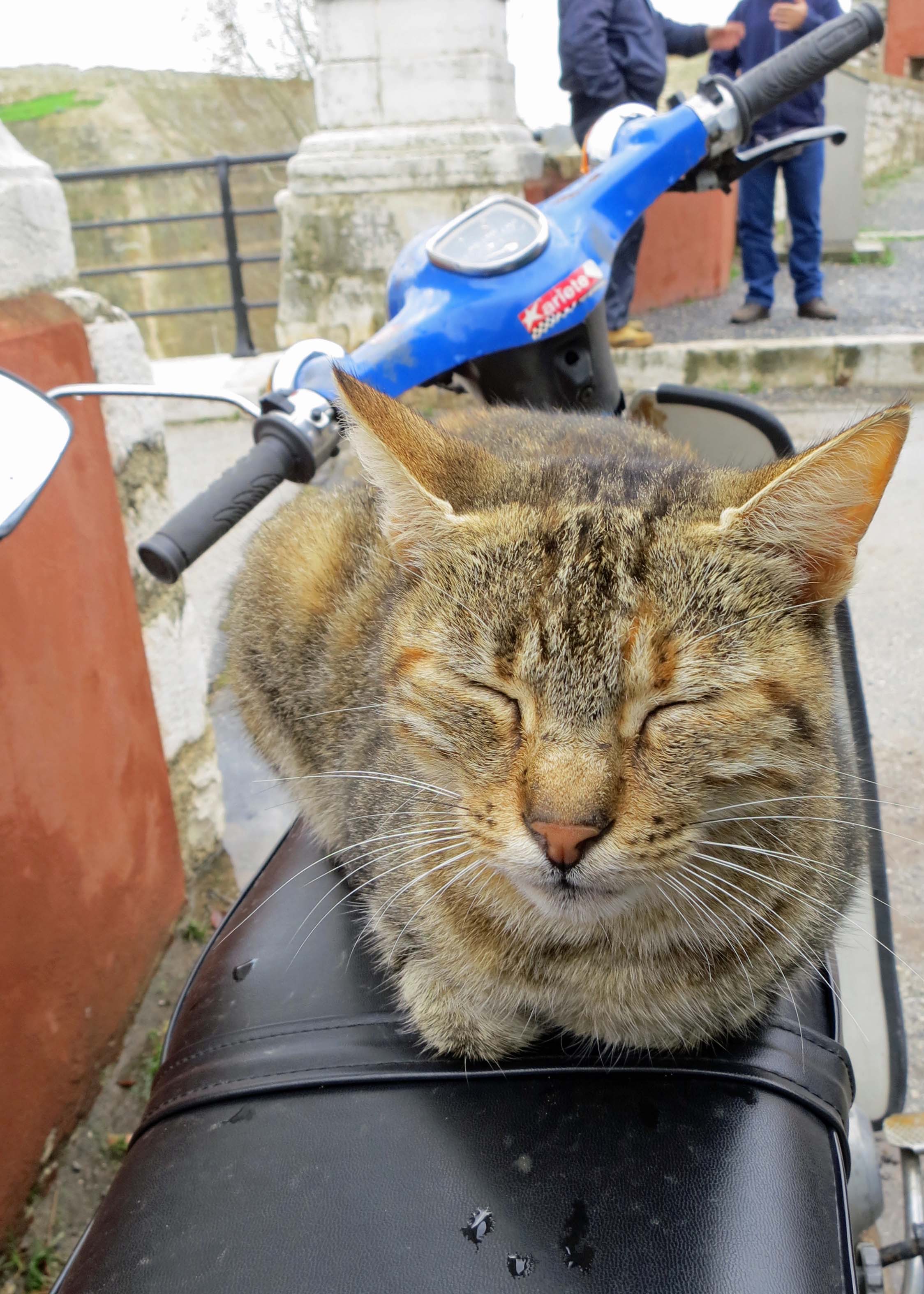
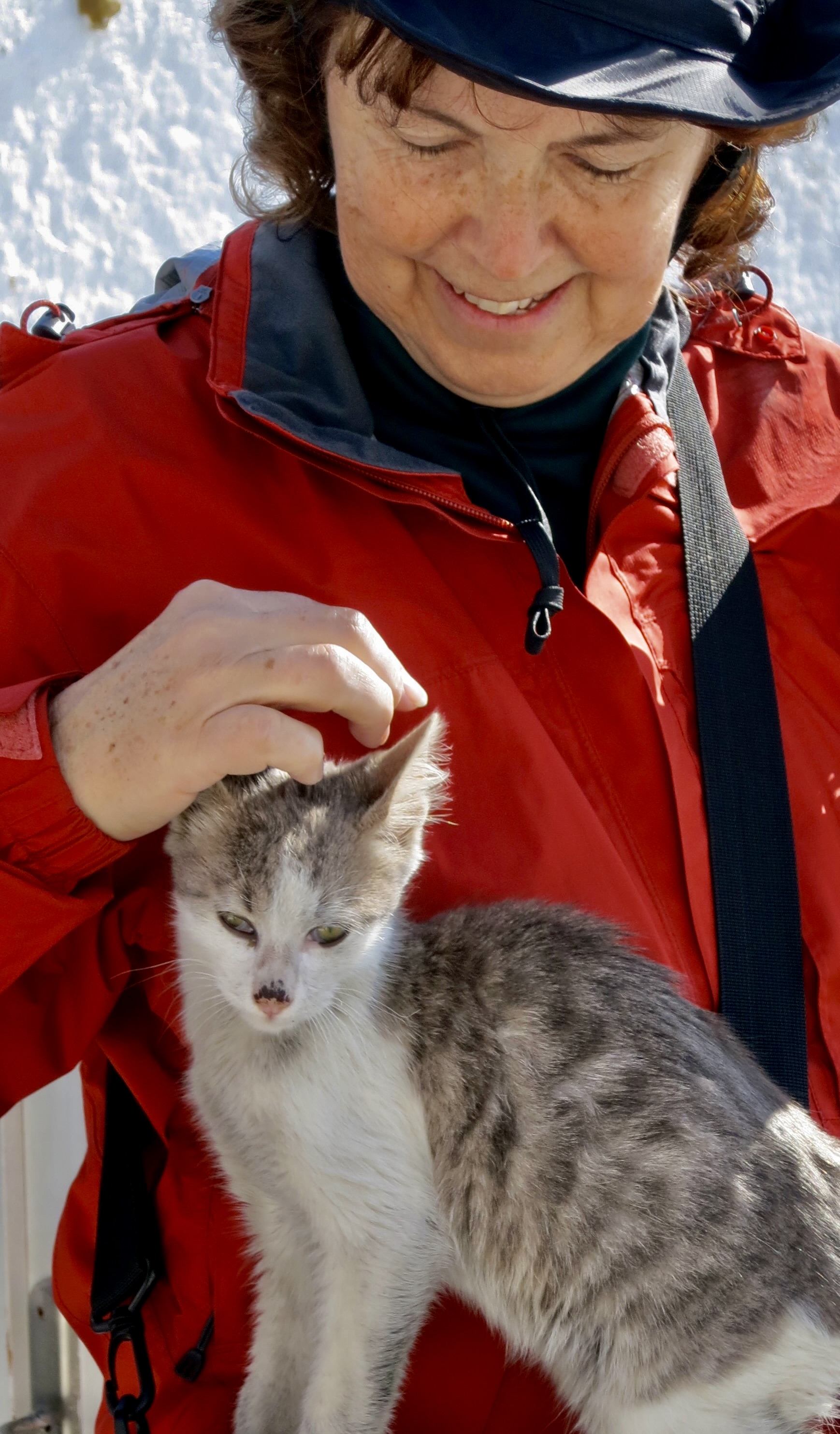
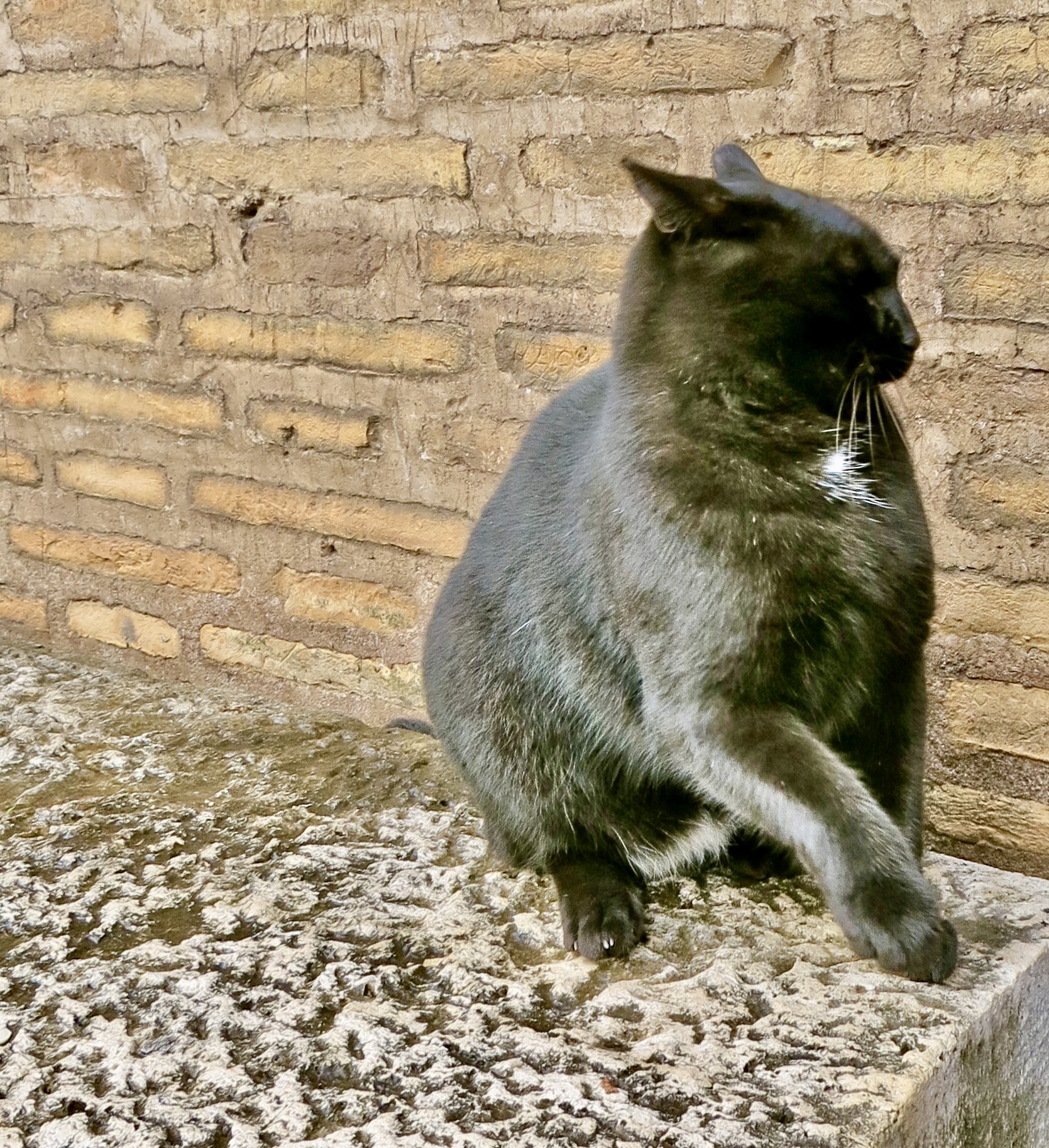
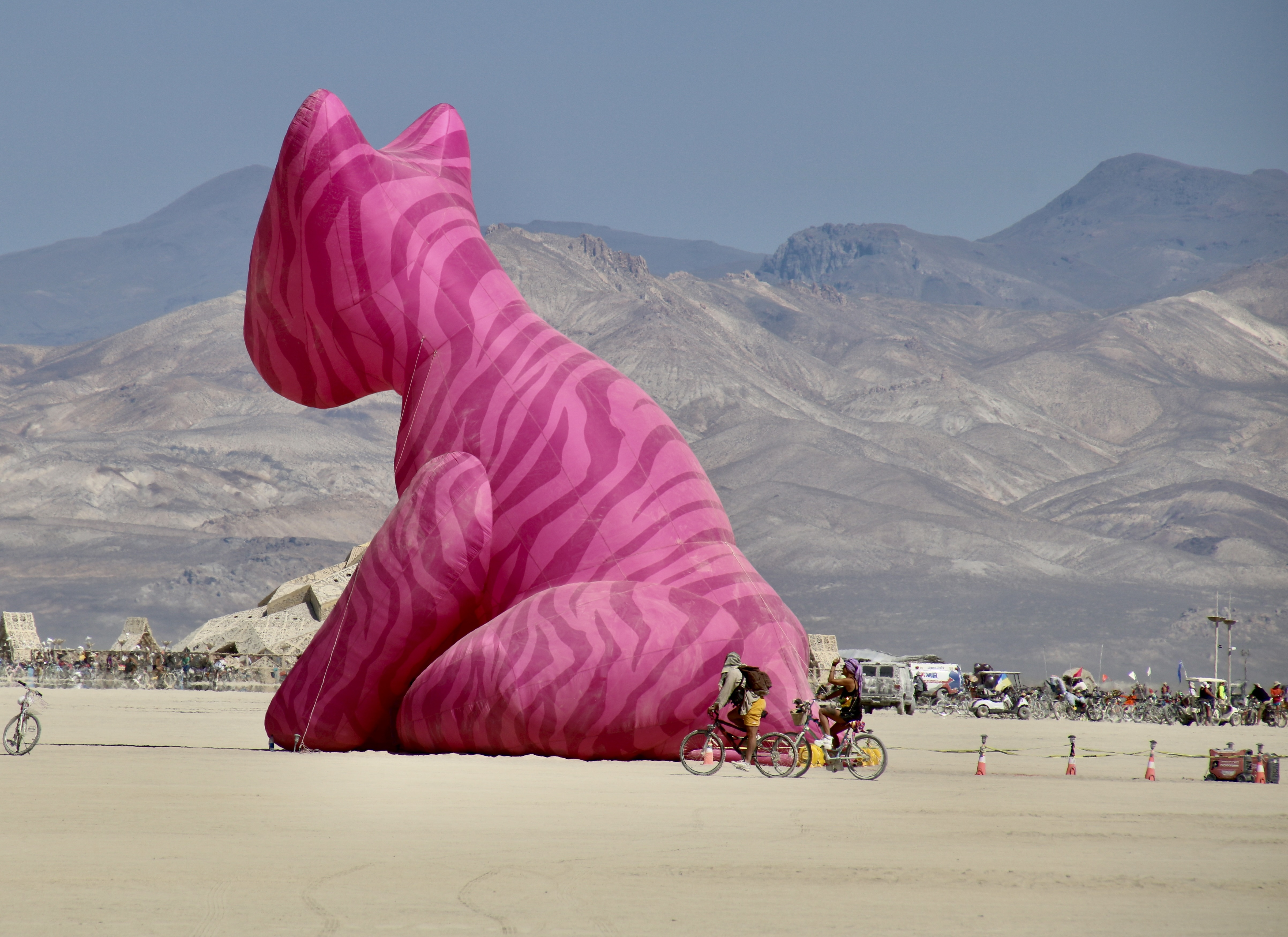
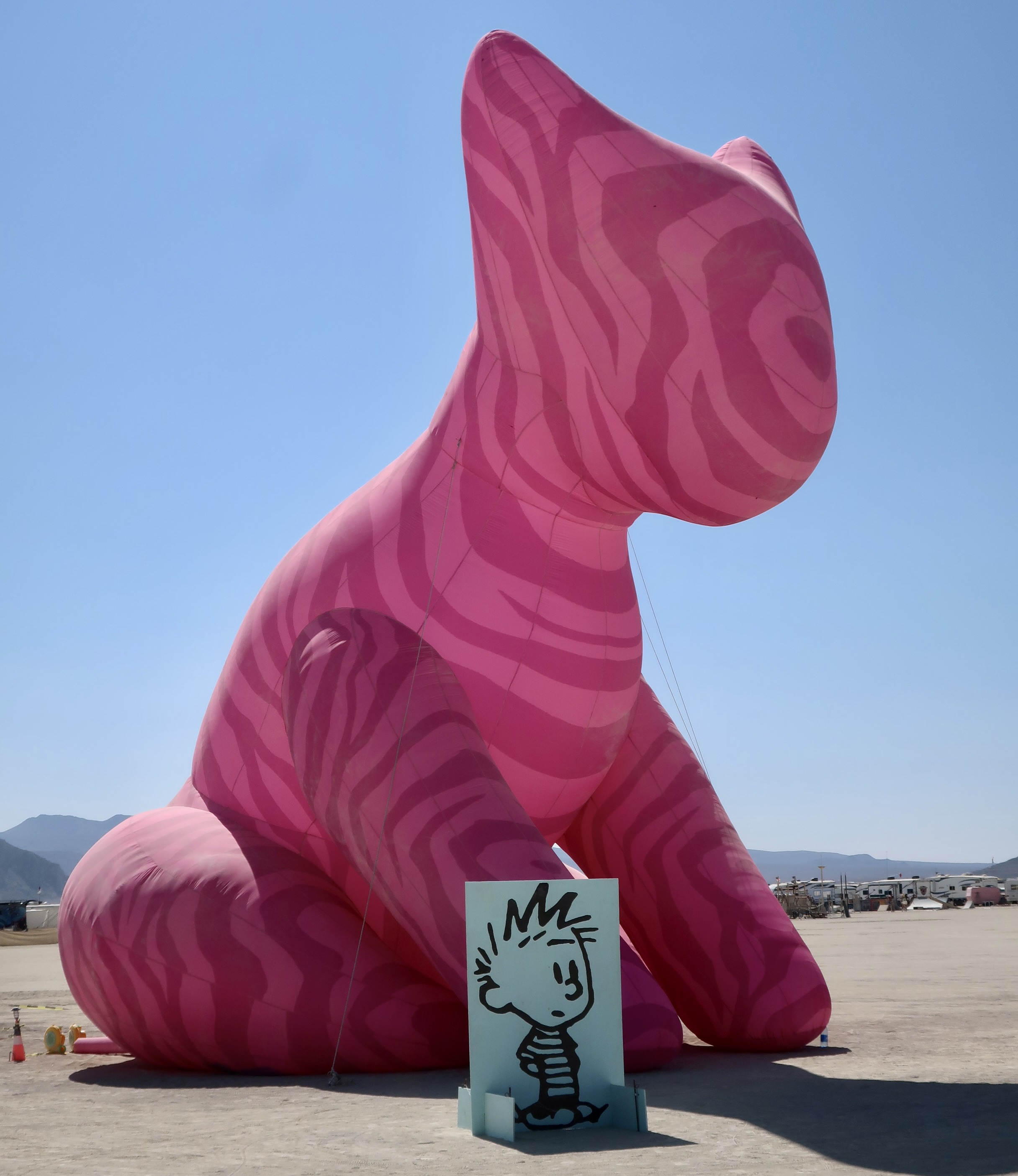
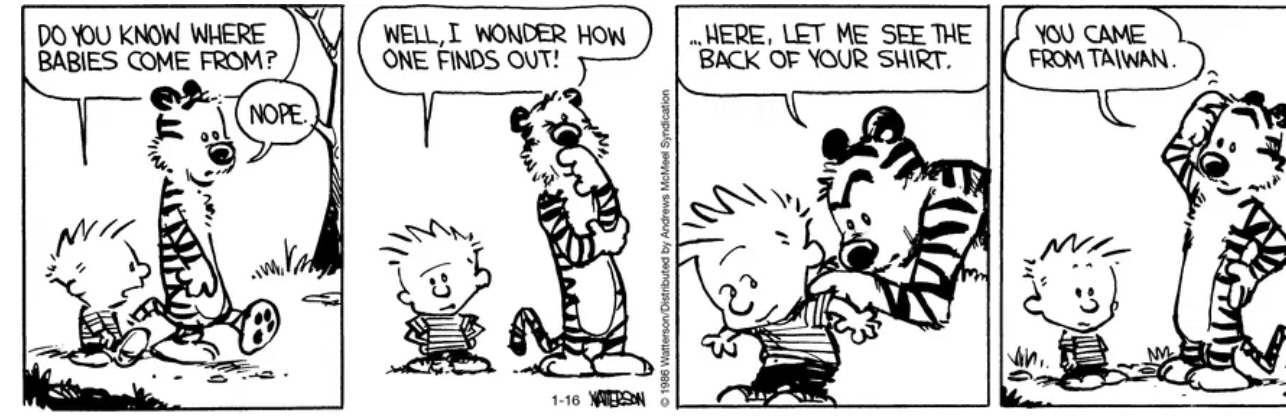
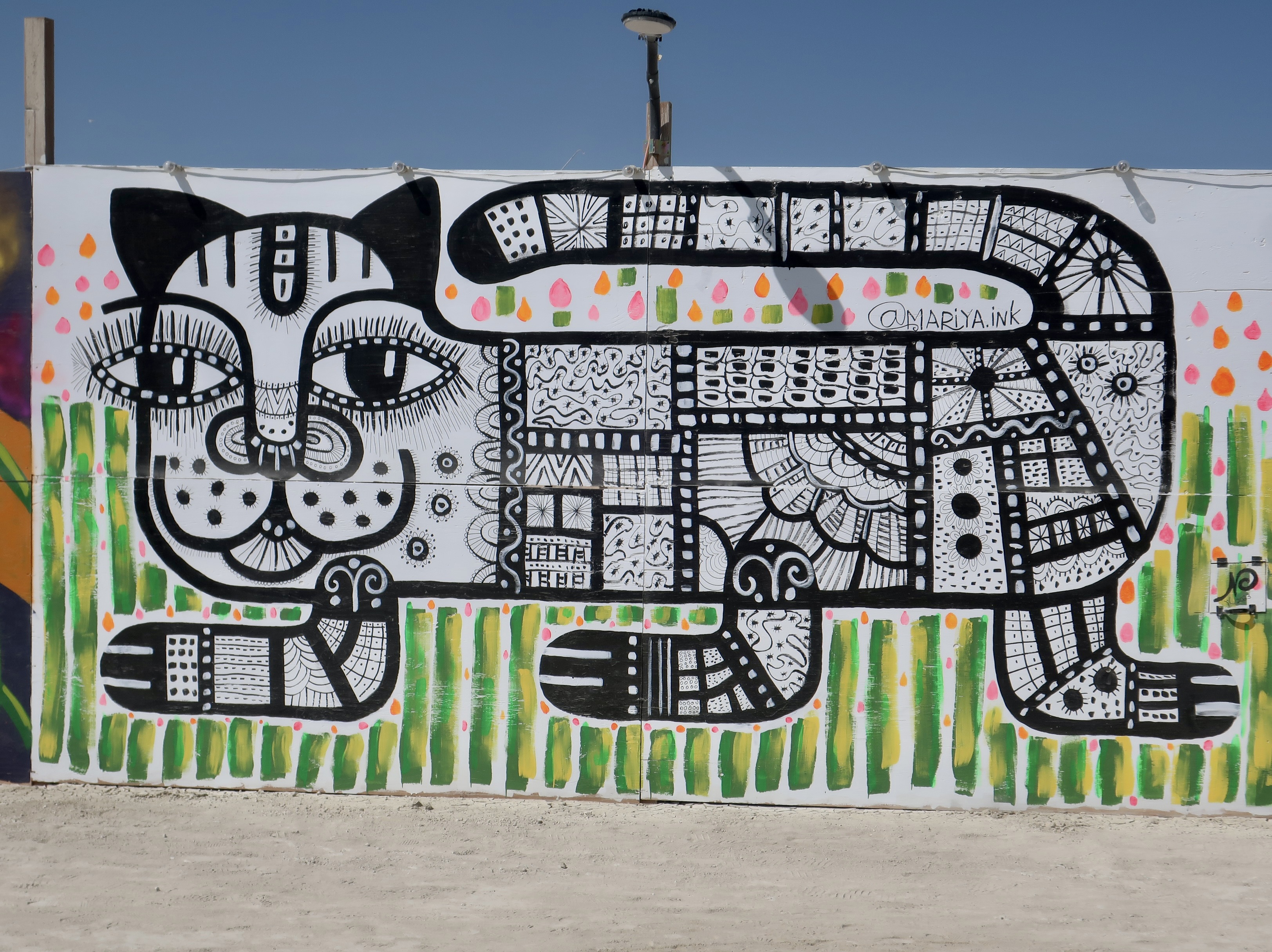
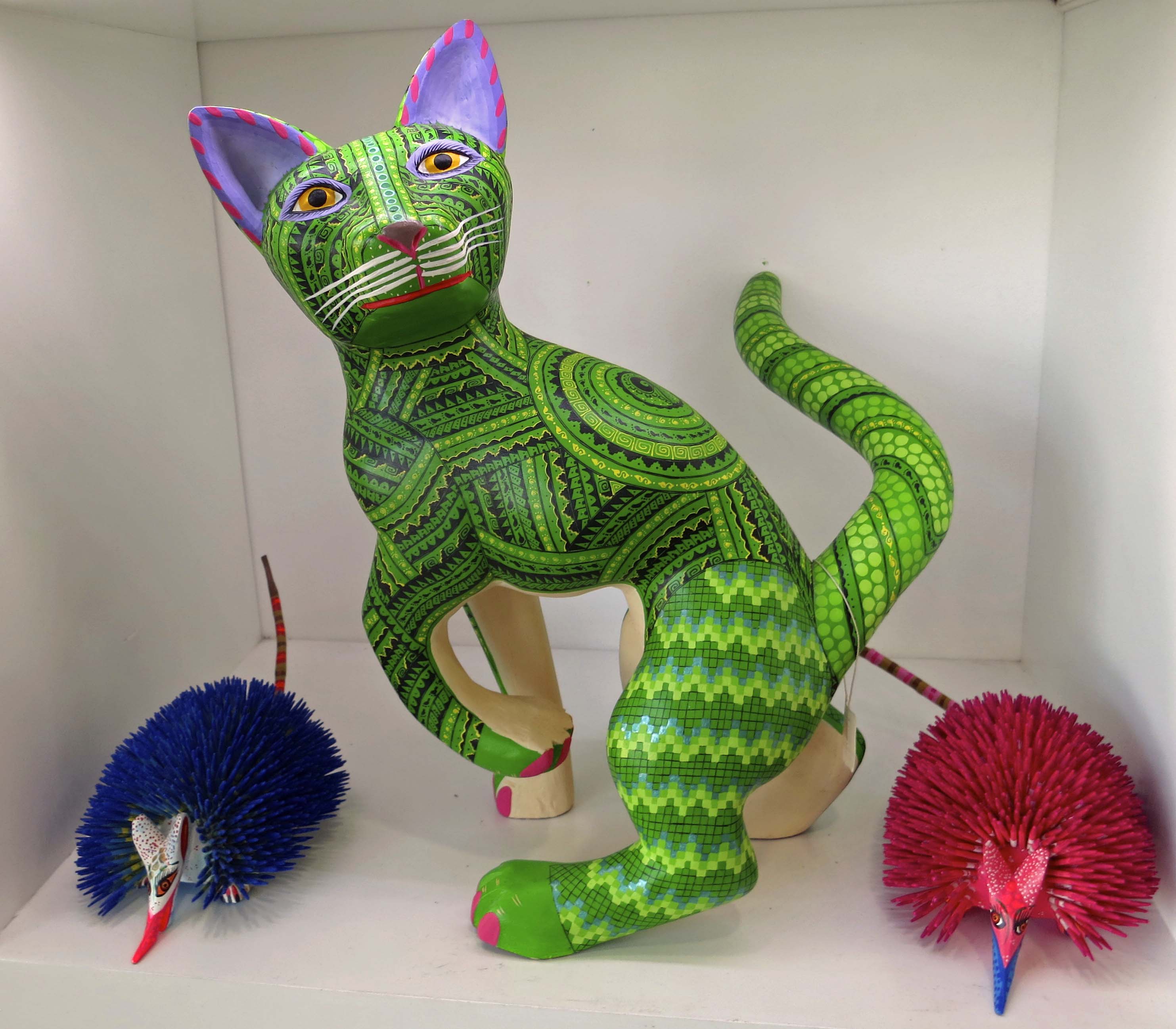
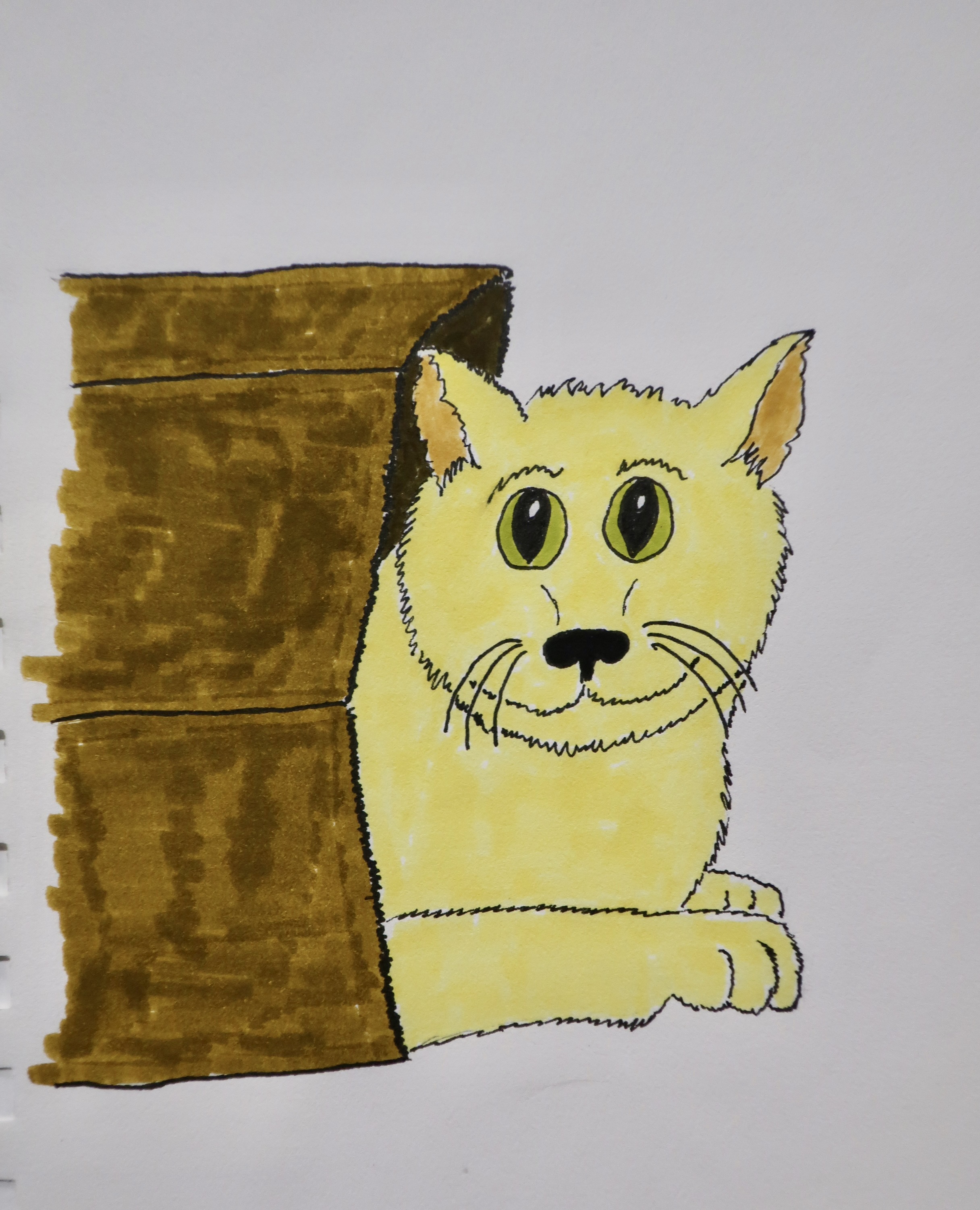
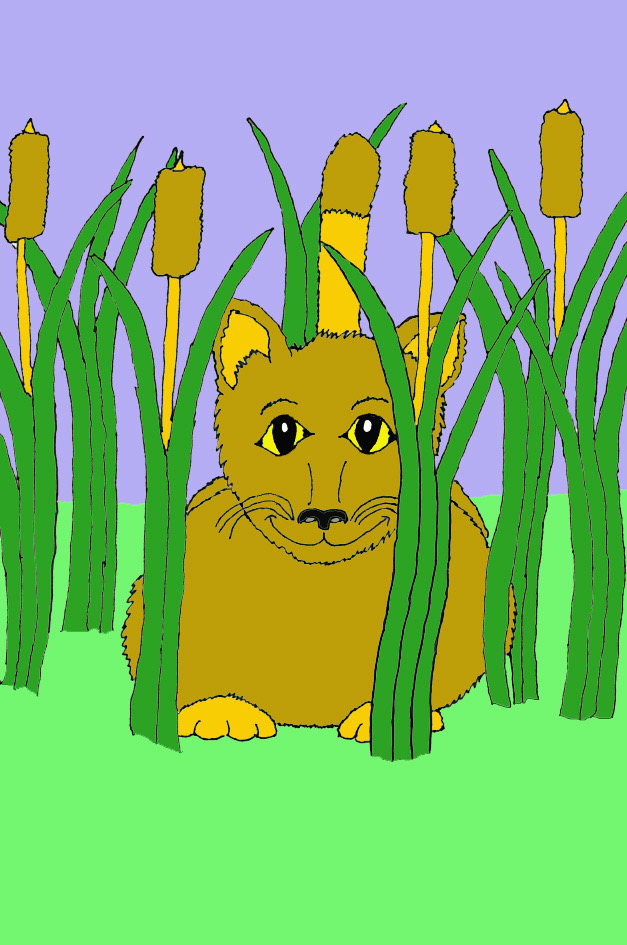
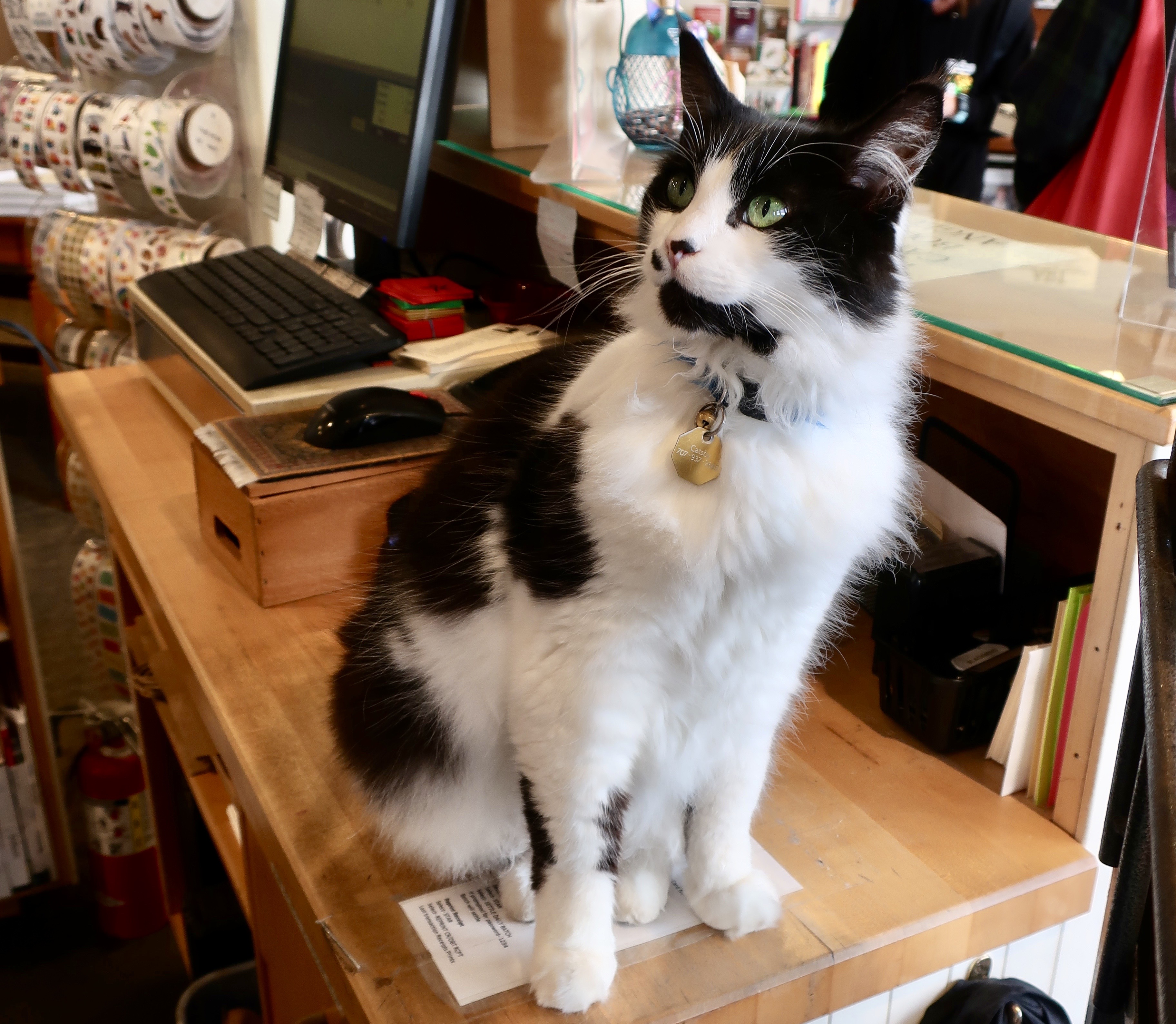
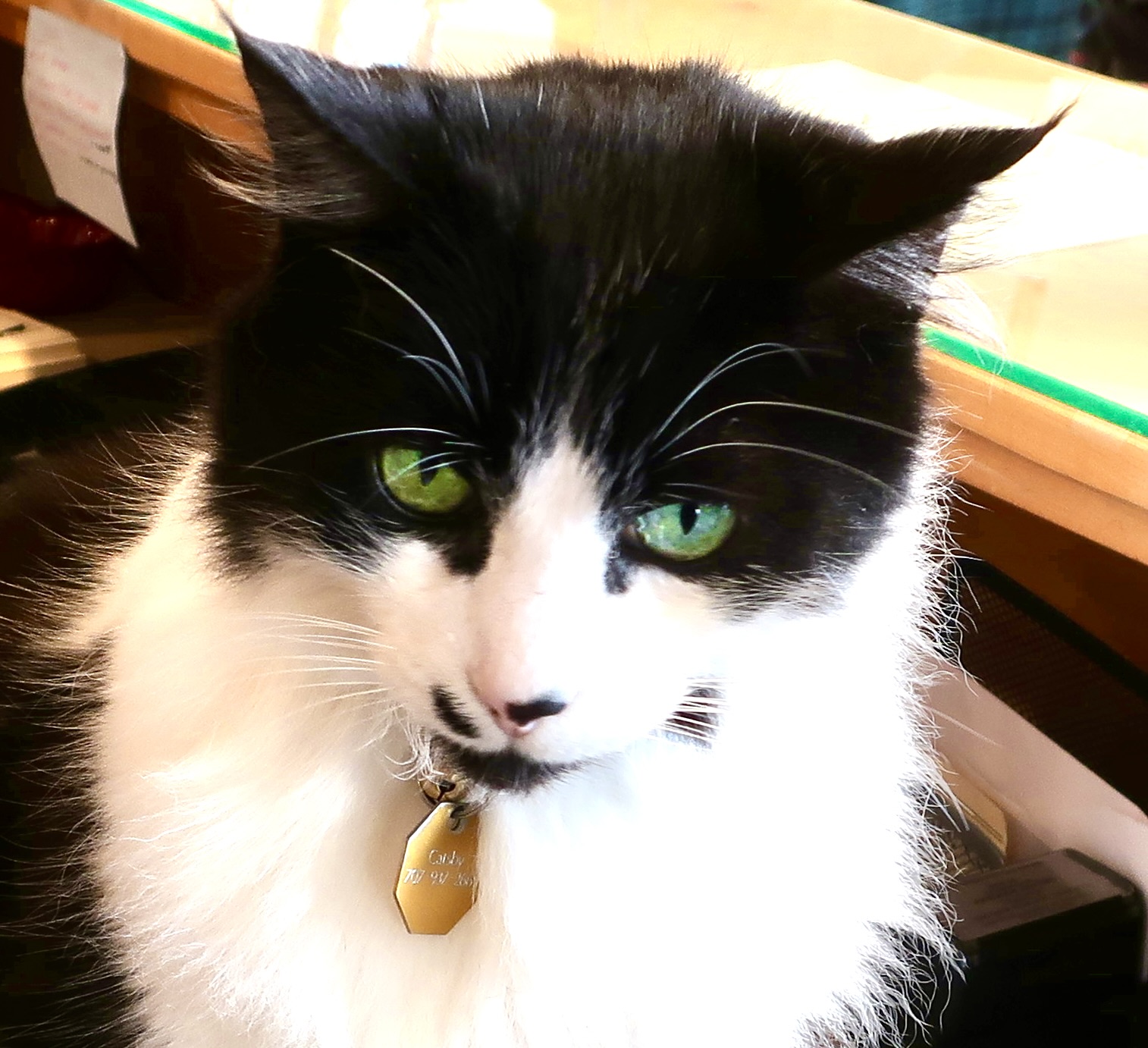
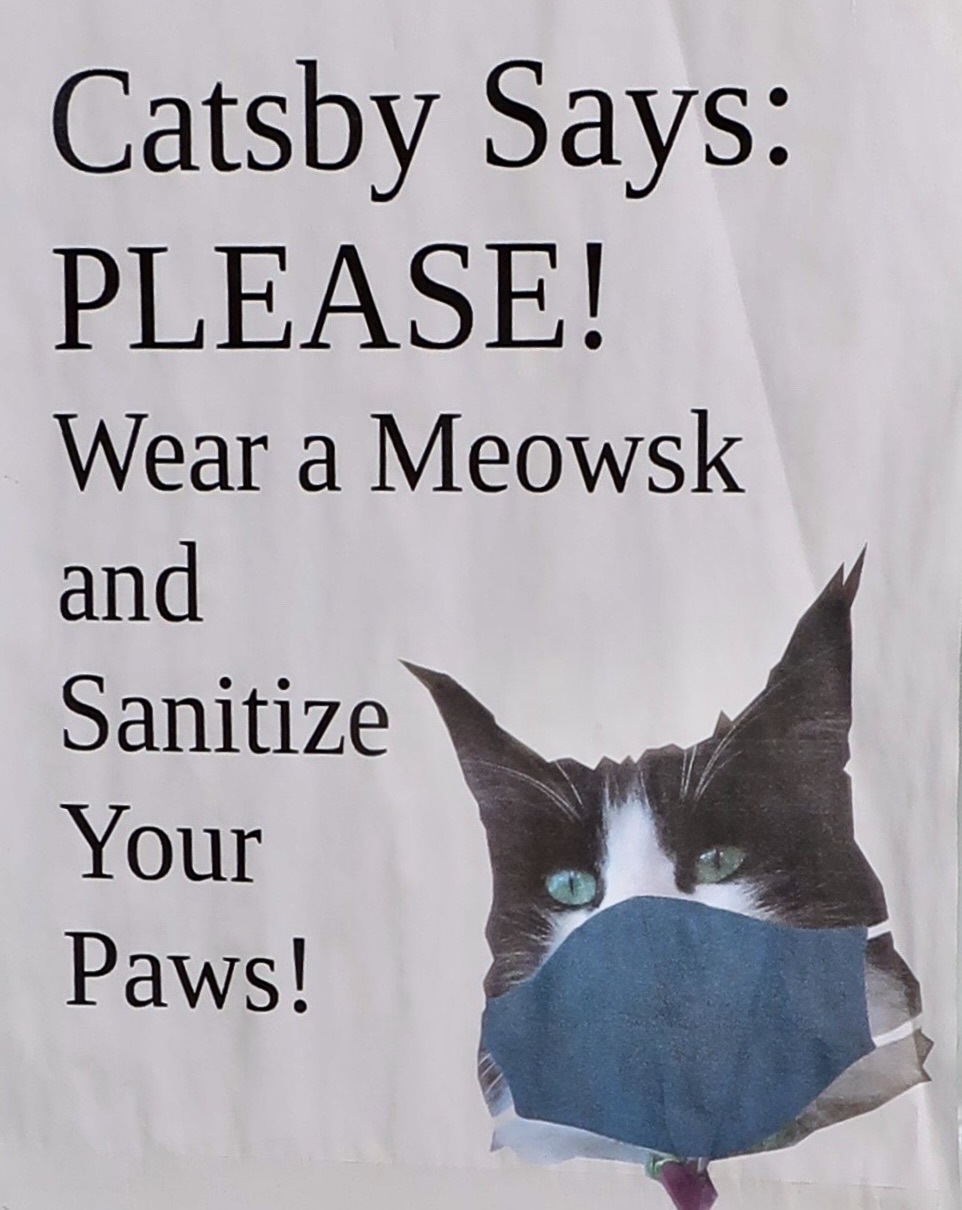
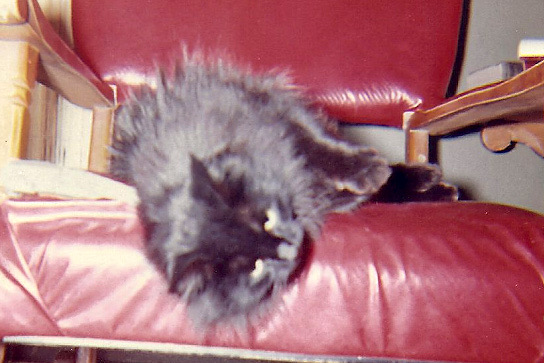
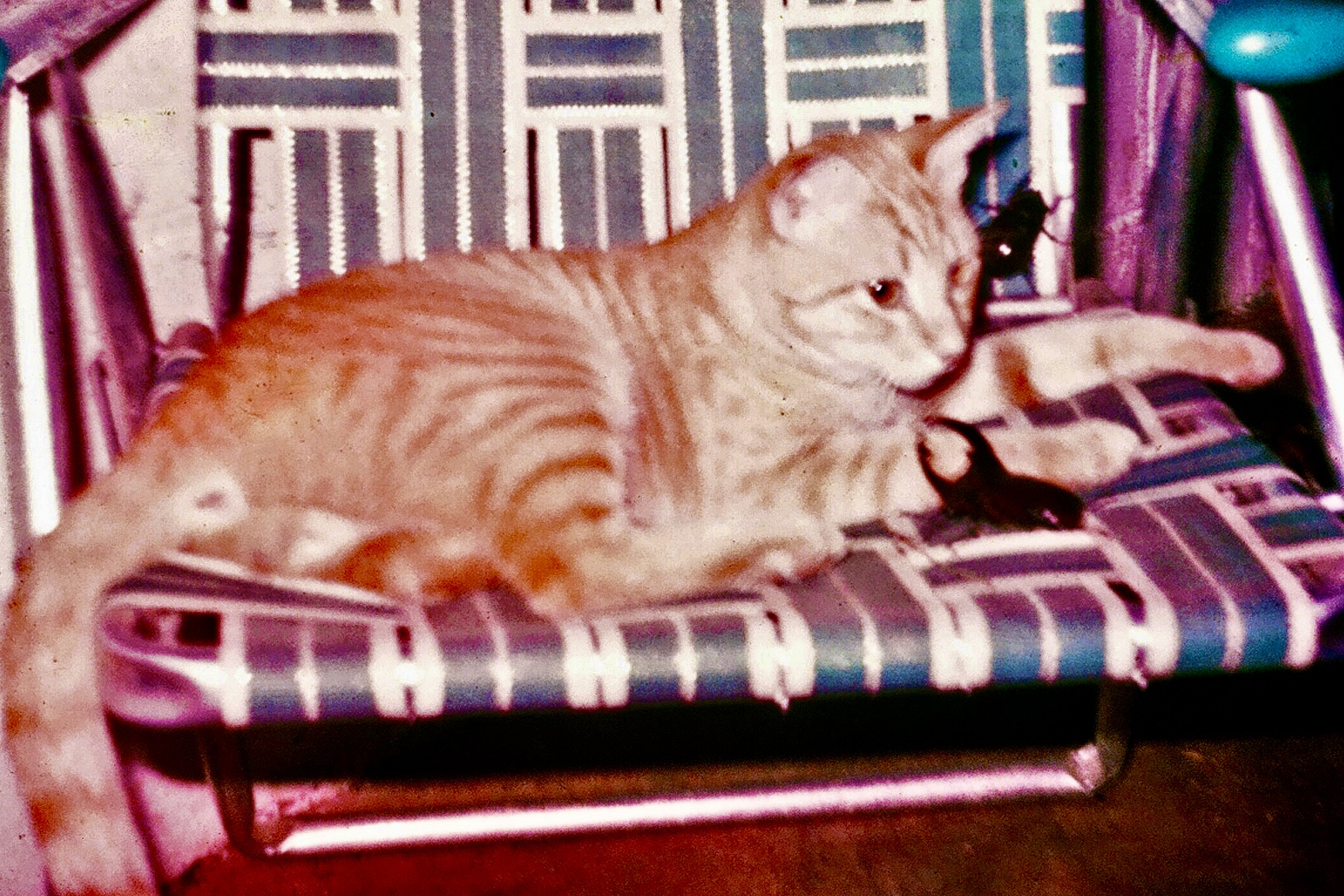
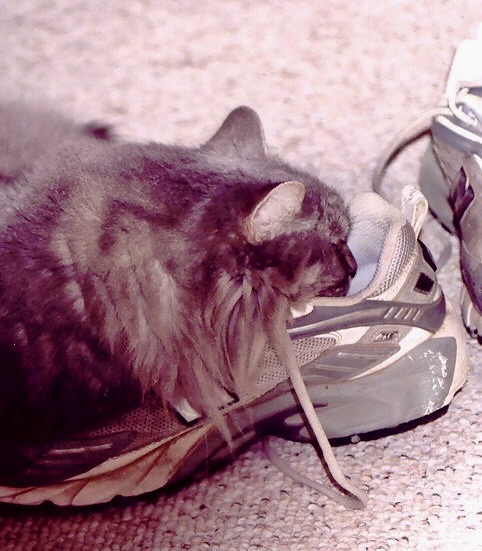
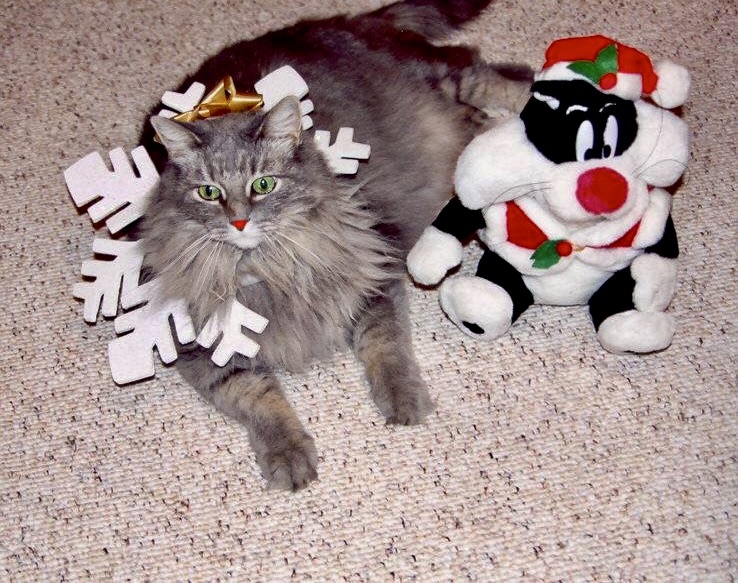
Cats, we have discovered, like to hang out in ruins. Maybe there are more mice there. This one had placed itself on a pedestal (no surprise there, cats like high places) in the Ancient Greek city of Ephesus in Turkey. Check out its gorgeous whiskers. Other than being handsome, they are an important part of a cat’s navigation system, helping them slip though tight spaces and avoid objects in the dark. The whiskers are so sensitive, they can even measure changes in the air flow, such as that caused by a mouse running by. Din,din!It looked quite regal. As the author Terry Pratchett wrote, “In ancient times cats were worshipped as gods; they have not forgotten this.” To explore their early godhood, we need to travel to Egypt where the cat goddess Bastet reigned. We found this cat near the beautiful Alabaster Mosque in Cairo. Ears laid back and body arched, she was letting a dog know to stay away from some small chunks of cat food located nearby.She was quite insistent.Our favorite photo. Hisssss. The goddess Bastet went through several changes evolving down through the ages from being like a ferocious lioness initially to much closer to our domestic cats by 1500 BCE or so. We thought this one was definitely representing her lioness phase.“Need help with that dog, sister? We cats have to stick together.” (Photo from our African safari two years ago.)“Damn, why does she have to do that when I’m having my nap!” It’s no secret that cats like their naps— up to 70% of the time. In fact, the lioness above wasn’t roaring ferociously, she was yawning. (Photograph from our photo safari.)Originally Bastet was represented as a woman with the head of a lion. Eventually, she assumed the look of a woman with a cat’s head, or simply a cat like this representation of Bastet in the Egyptian Museum in Cairo. During the 22nd Dynasty, the city of Bubastis, located in the eastern part of the Nile Delta (the modern city with the interesting name of Zagazig), became the cult center of Bastet. A granite temple there was dedicated to Bastet and thousands of mummified cats were buried in a nearby cat cemetery. An annual festival, best described as a drinking party, drew thousands to celebrate Bastet. As the Greek historian Herodotus noted: ‘More wine grapes were consumed at the Festival than the whole rest of the year together.’A temple to Bastet built around 230 BC was found beneath the streets of Alexander, Egypt in 2010. Included in this important archeological find were 600 statues of cats such as this one.We found a number of their ‘descendants’ still hanging out in the city at the tall Pompey column, including the above two catnapping in the sun.A calico cat posed prettily for us while her brothers and sisters were busy eating behind her. I’d bet on her being female because male calico cats are extremely rare and sterile. It’s all about genes.Speaking of poses…James Herriot once said that “Cats are connoisseurs of comfort.” This fellow proves the point. What could be more comfortable than a soft, black, motor scooter seat absorbing the sun after a rainstorm. I’d say the look on the kittie’s face is pure bliss. The Cat’s Meow, perhaps? (You might have to Travel back to the 1920s for this reference. Or at least Google.) We took this photo on the island of Corfu in the Ionian Sea.This young cat on the Greek Island of Santorini also proved Herriot’s point. It would probably still be sitting there enjoying a head rub by Peggy if we hadn’t of had a boat to catch.Not so this guy. I’d moved to rub behind his ears and he had responded by trying to take my hand off. It wasn’t too surprising due to the fact that we were in Rome’s Colosseum where his ancient relatives once dined on reluctant Christians. He had a reputation to maintain. Now, to cross the ocean and return to Burning Man…On our first journey out to the Playa in 2023 we discovered this huge pink cat dominating the desert. Curiosity drove us to ride our bikes around to the front. What did we discover???It was Hobbes, as Calvin made plain! But why pink? The simple answer: It was Burning Man where being different is an art form. It’s close to a rule.Calvin and Hobbes is my all-time favorite comic strip. I’m fortunate that my digital newspaper does reruns. I jumped into the comic section on Friday when I was putting this post together. This was the daily strip. How can anyone not love these two characters?I included a Burning Man mural featuring a cat in my blog last week promoting today’s post on cats. This is another cat mural from BM 2023.Traveling south to Mexico, we found an imaginative green cat in a box in Puerto Vallarta (along with what I assume were two armadillos). The cat came from the state of Oaxaca in southern Mexico, which is renowned for its wood carvings. If you have ever had a cat, you know they love to play in boxes and paper bags.This is one of the cat cartoons I’ve created. It’s titled, ‘Who let the cat out of the bag?’Here’s another one of my cat cartoons. I titled this “Old Tom cleverly disguises himself by hiding out in the cattails.” I think he was tying to catch the ‘blue bird of happiness.’ He’d heard it was a Happy Meal.Peggy and I are strong supporters of Independent bookstores and firmly believe that each of them should have a cat. We’ve discovered over the years that some of the best do. This is Catsby at the Gallery Bookstore in Mendocino, California.A closeup of Catsby.Peggy and I have visited the Gallery Bookstore several times over the years. Once it was during Covid. Catsby’s poster was next to the front door. And now it is time to wrap up this post with a visit to the the three cats I have been closest to over the years.I grew up with cats and dogs. This was Demon, named after her black cat persona, piercing eyes, and all of the time she spent in the Graveyard next door. My first memory of her was when I was six and she was one very pregnant cat. My mother had prepared a box filled with old clothes as a nursery. I was home alone one day when Demon was walking across the living room and suddenly stopped, squawked and squatted. Much to my surprise, and hers as a first time mother, a little black head appeared out of her undercarriage. Not knowing what else to do, I jumped up, grabbed her by the nape of the neck, and dashed for her closet nursery. Not fast enough. I was charging through the kitchen when the little black kitten completed its journey out of mom and was heading for a crash landing on the floor. Somehow I caught the little bundle and delivered Demon and her newborn to the box. Demon and I were bonded forever after that experience. I tell more Demon stories in my blog-a-book series, UT-OH.This is a photo of Rasputin, my cat when I was a Peace Corp Volunteer in Liberia from 1965 to 1967. He’s sharing his chair with a pair of Rhinoceros Beetles. I took this photo with the Brownie camera I brought with me to Africa. It isn’t the best of photos, but it is what I have. I wish I had more. He was quite the character and kept us entertained for the year and a half he lived with us. I included several tales about him in The Bush Devil Ate Sam, my memoir about my Peace Corps experience. I’d like to share one today because it illustrates the ability of a cat to jump high into the air, up to five feet. Liberian cats, like all Liberians share a belief that all snakes are deadly poisonous to be avoided at all costs. One night, probably after drinking a few Club Beers, I decided to try an experiment that would test both the Liberian fear of snakes and a cat’s ability to jump. We had an old fashion screen door with a long, round spring on it. In a moment of inspiration I unhooked the spring and rolled it across the floor toward Rasputin. The answer is yes, yes. Yes Liberian Cats are deathly afraid of snakes and ,yes, cats can jump high. I’m pretty sure it was over five feet. Not only did he leap high into the air but he managed to land on his stool, safely above the floor.And finally there is FE, the sweetest cat I have ever known. Peggy had got her for our daughter Tasha, but when Tasha moved away to go to college, FE adopted me. And showed it by choosing my shoes as her sleeping quarters. And by rubbing her face on my clothes frequently. That’s one way cats claim you as their territory, and cat’s are quite territorial. It beats the heck out of how tom cats claim their territory by backing up against things and peeing on them.I dressed Effie up for a photo with Felix the Cat and photoshopped a red nose on her. Peggy and I featured them in our annual Christmas letter. It speaks to how gentle she was by the way she tolerated her snowflake neckless. Rasputin would have torn it to shreds.
An endearing habit FE had was playing fetch with me. I’d roll up a small sheet of paper and toss it across the floor. Off she would go to retrieve it, bring it back to me, and drop it on the floor. Over and over. I never had the heart to tell her she was behaving like a dog. I’ll end this cat post with a quote from Einstein: There are two means of refuge from the misery of life: music and cats. I’d have to add dogs. They will be featured in our focus series to be posted a week from today.Our daughter’s dog, Rio, dressed up for Easter.
On Thursday, join me as I get kicked out of the first grade for a year! It’s the first chapter in UT-OH!












 Wandering through Time and Place