Bryce Canyon… The National Park Series

Bryce Canyon National Park in Utah is a fantasy land of rocks guaranteed to impress visitors.

The first time I came across a group of hoodoos, I stopped and stared. Then I grabbed my camera. But I didn’t have to rush. Hoodoos are strange rock formations of arid regions. They don’t go anywhere. They just stand there for centuries as nature and erosion do their work, carving whimsical statues of stone.

Bryce Canyon National Park is a superb location for hoodoo watching. They come in a multitude of shapes, forms and colors creating a fantasy land that even the wildest of imaginations can appreciate.
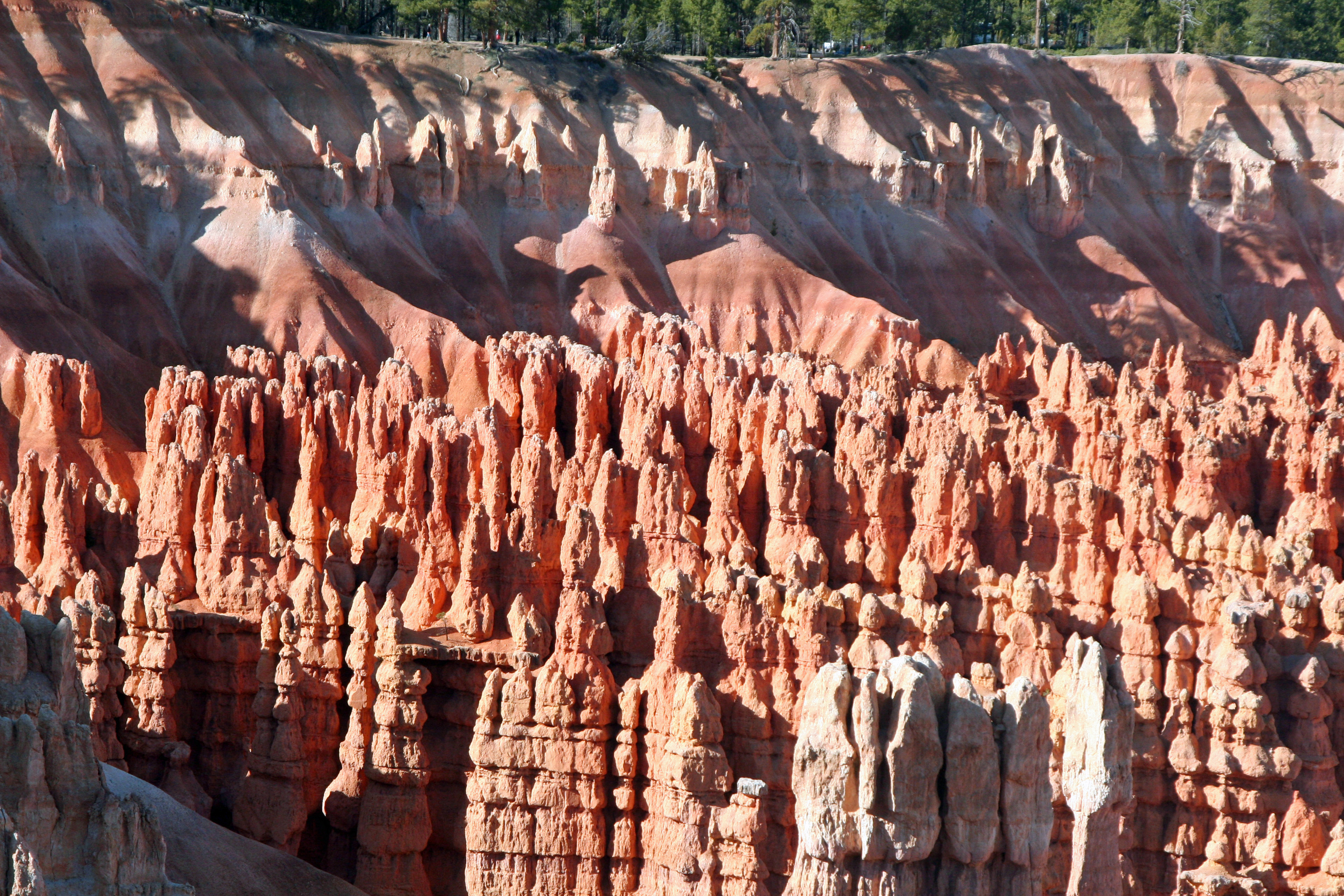
Hoodoos are created in Bryce Canyon through the erosion of sandstone, which eventually creates whimsical statues.

Carved from sandstone of the Paunsaugunt Plateau, Bryce Canyon drops some 2000 feet in altitude to the valley below. Trails ranging from easy to challenging provide the visitor with numerous opportunities to meet the hoodoos up close. Or you can stroll along the rim trail. Be sure to check the park out at sunrise and sunset.

Bryce Canyon is located off of Highway 89 in Southwestern Utah. An easy day’s drive can take you to either Capitol Reef or Zion National Parks and through millions of years of geological history. I consider Utah’s Highway 12 that connects Bryce National Park with Capitol Reef to be one of the most scenic roads Peggy and I found in our 200,000-mile exploration of America.

A family of Hoodoos hidden in a canyon.

Following one of the many trails into Bryce Canyon will bring you face to face with one of the National Park’s unique sculptures.

Another sandstone hoodoo. This one reflects the warm colors of the setting sun.

Erosion created a box canyon here. I saw it and thought immediately it would have made a great corral for cattle stolen by outlaws of the old west.
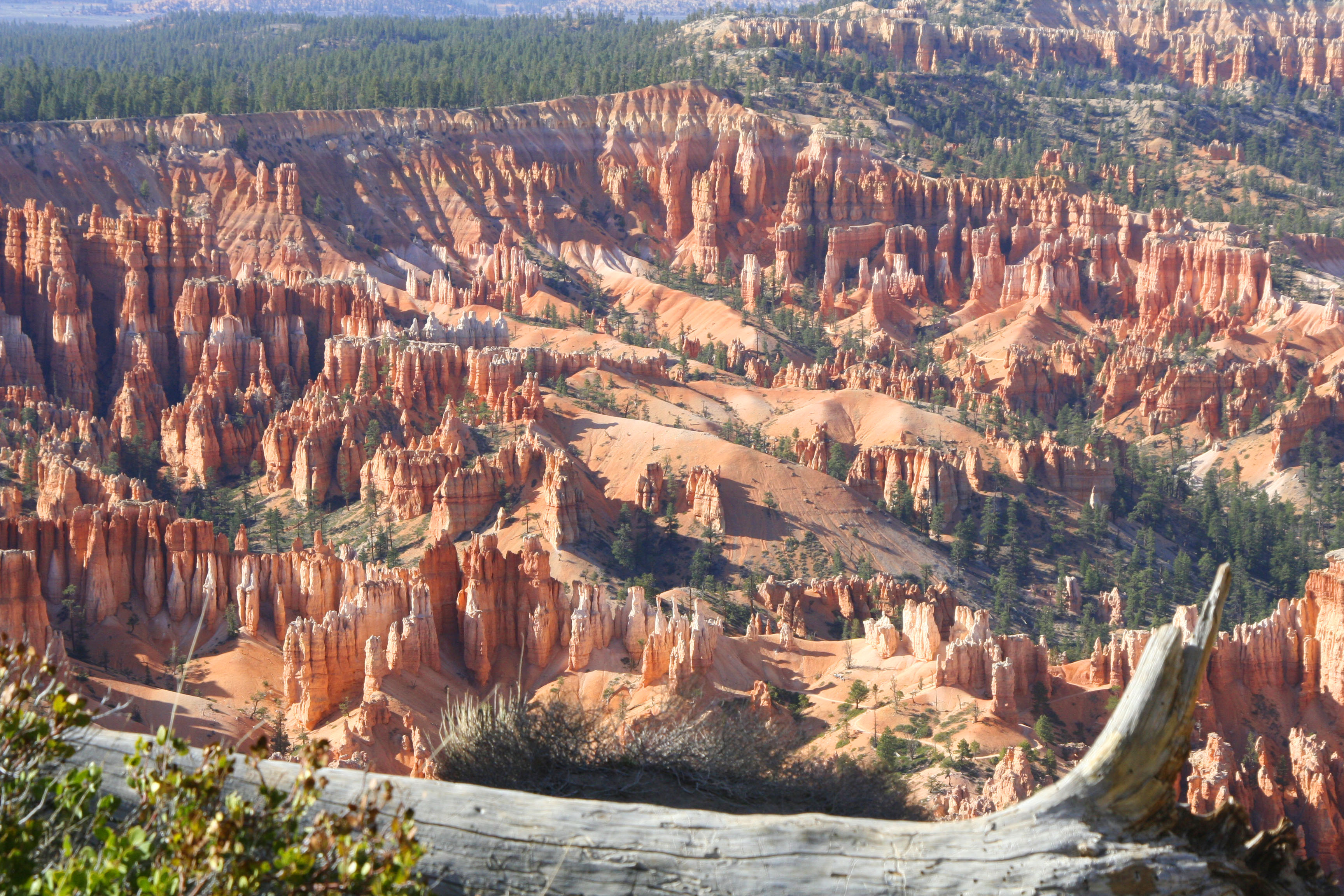
A final view of Bryce Canyon National Park.
Arches National Park… The National Park Series

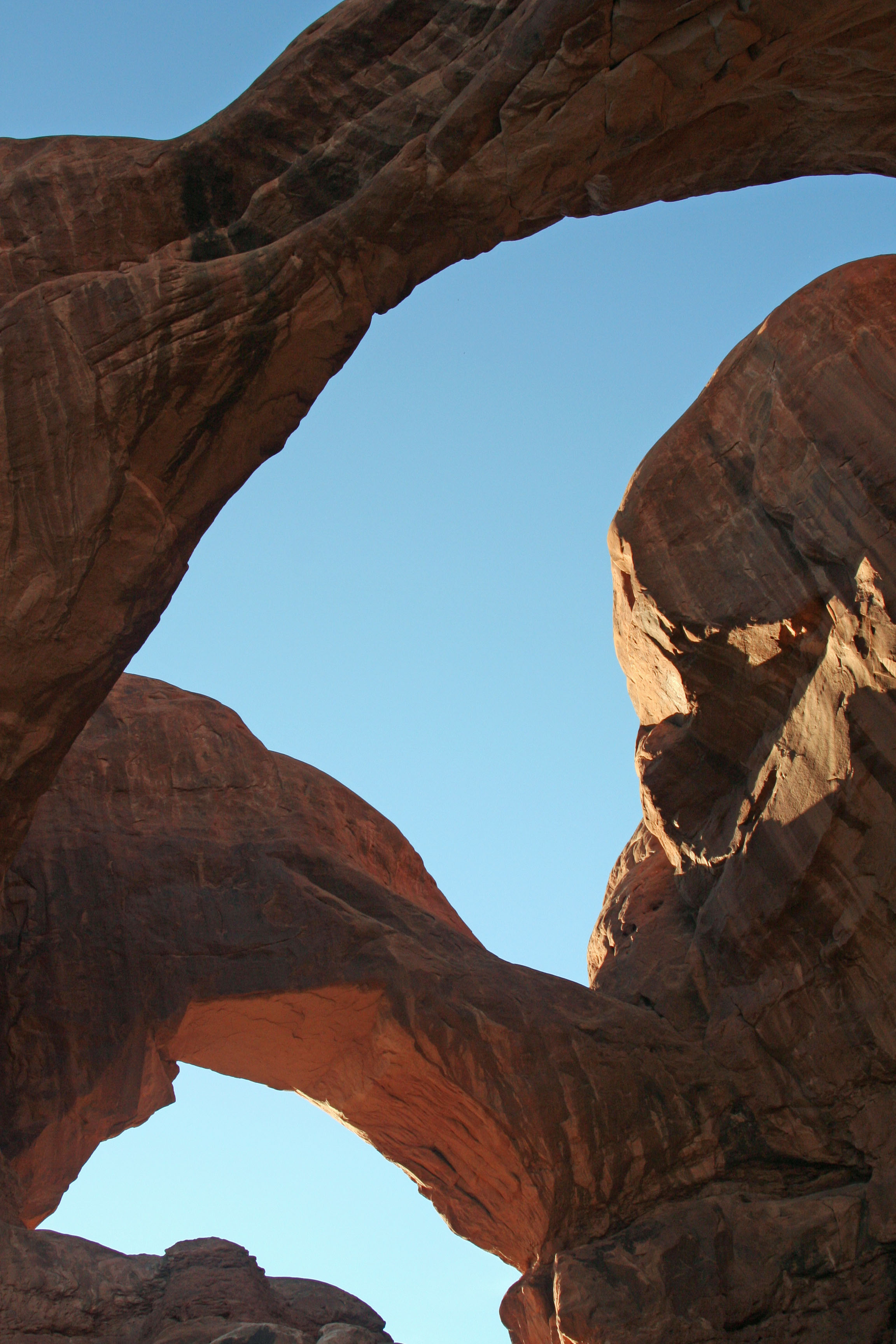
The soaring arches of Arches National Park create magnificent scenery.

I added Arches National Park to my must see list when I read Edward Abbey’s book “Desert Solitaire.” I highly recommend both. The Park is located just north of Moab in the scenic state of Utah. You can pick up Abbey’s book by following my link, or better yet, visiting your local bookstore.

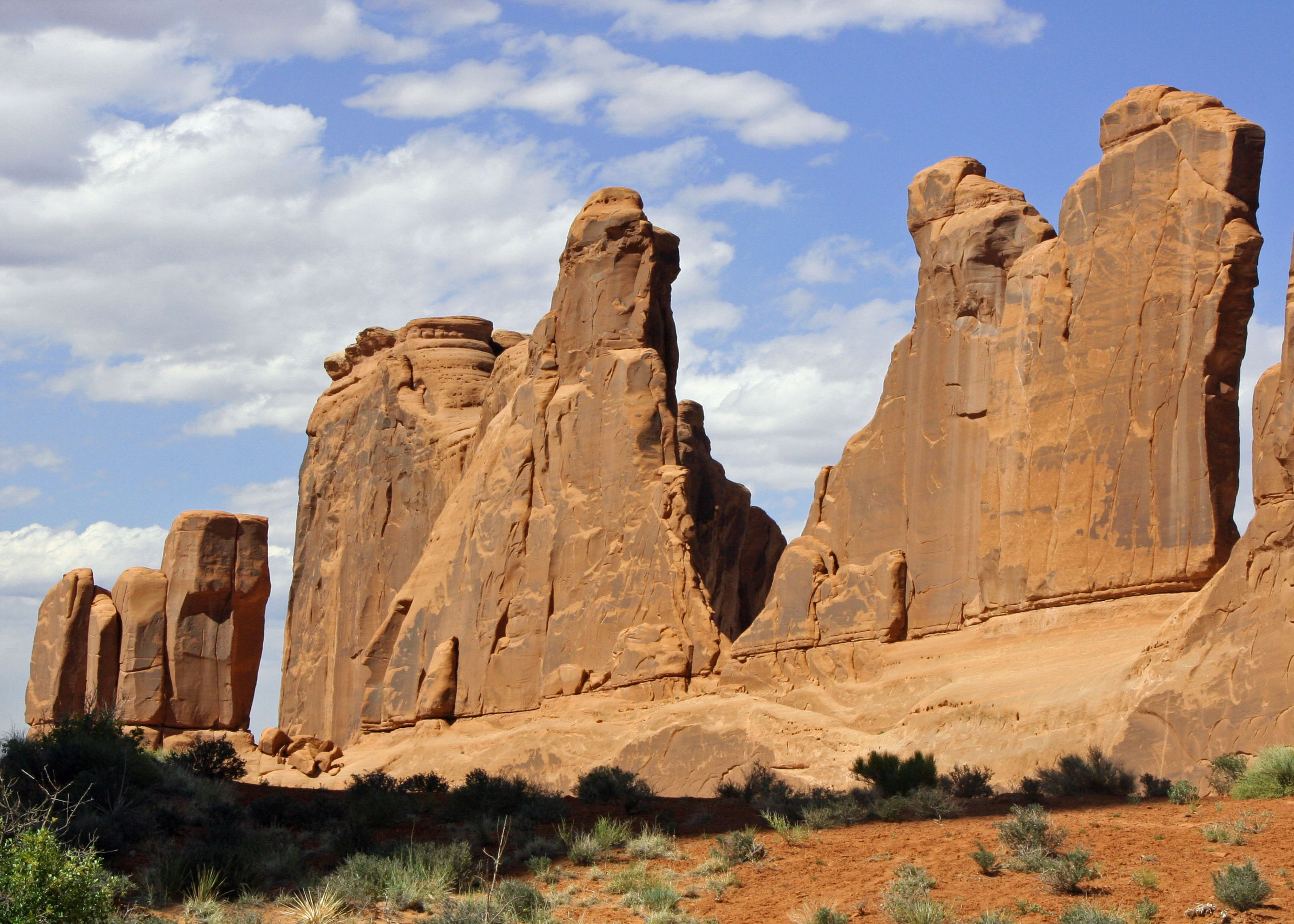
The eroded sandstone of Arches National Park forms some of the best stone sculptures in the world. Its claim to fame, of course, is arches, some 2000 of them, but I was equally impressed with its soaring pinnacles, massive balanced rocks, groupings of sculptures and long, thin ridges.

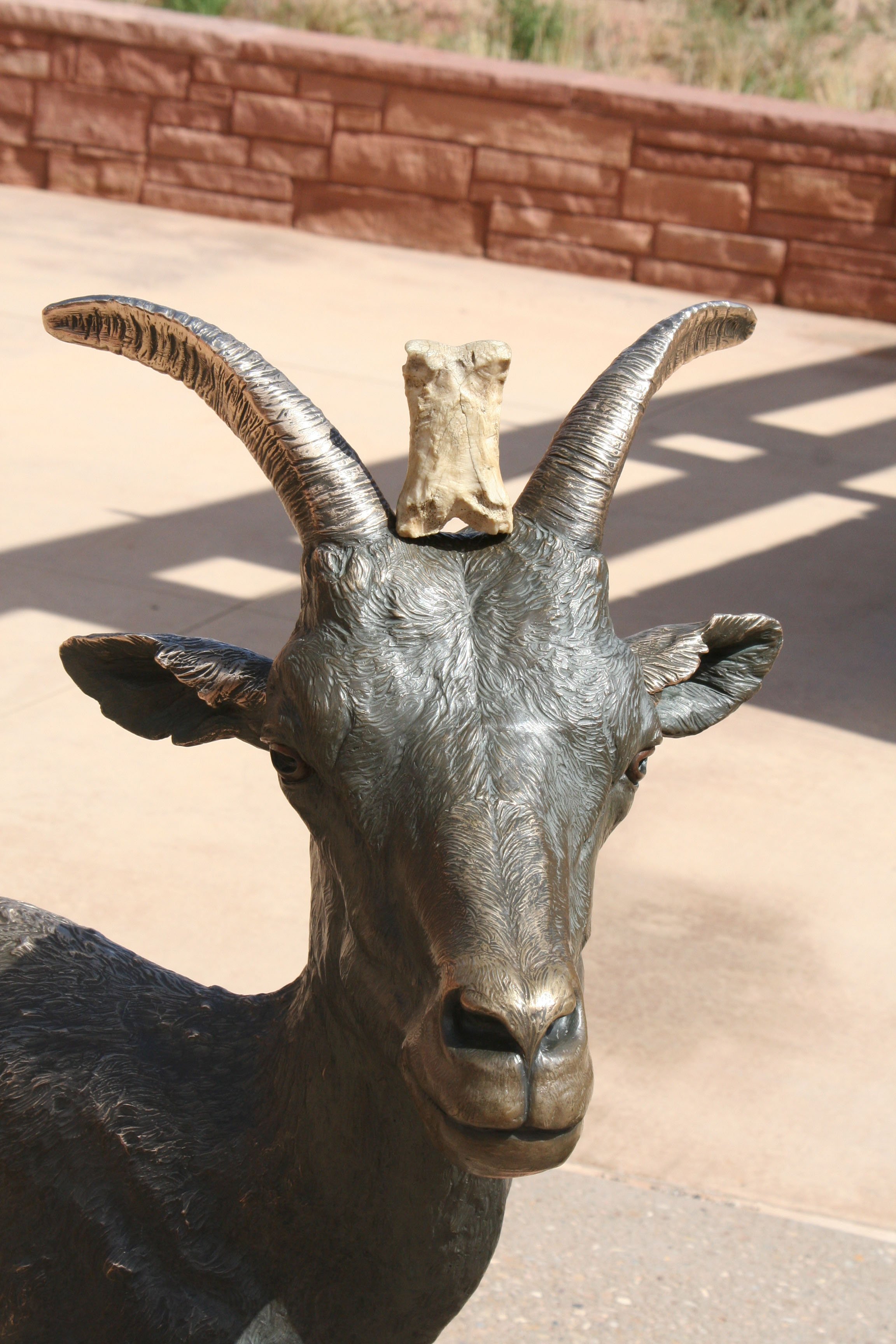
There are also Desert Bighorn Sheep in the area, often seen near the Visitors’ Center. Check out my blog on these magnificent animals.

Desert Big Horn Sheep are frequently seen near the Visitors’ Center at Arches National Park. The Peripatetic Bone decided to join a sculpture of the Big Horn Sheep at the Center.

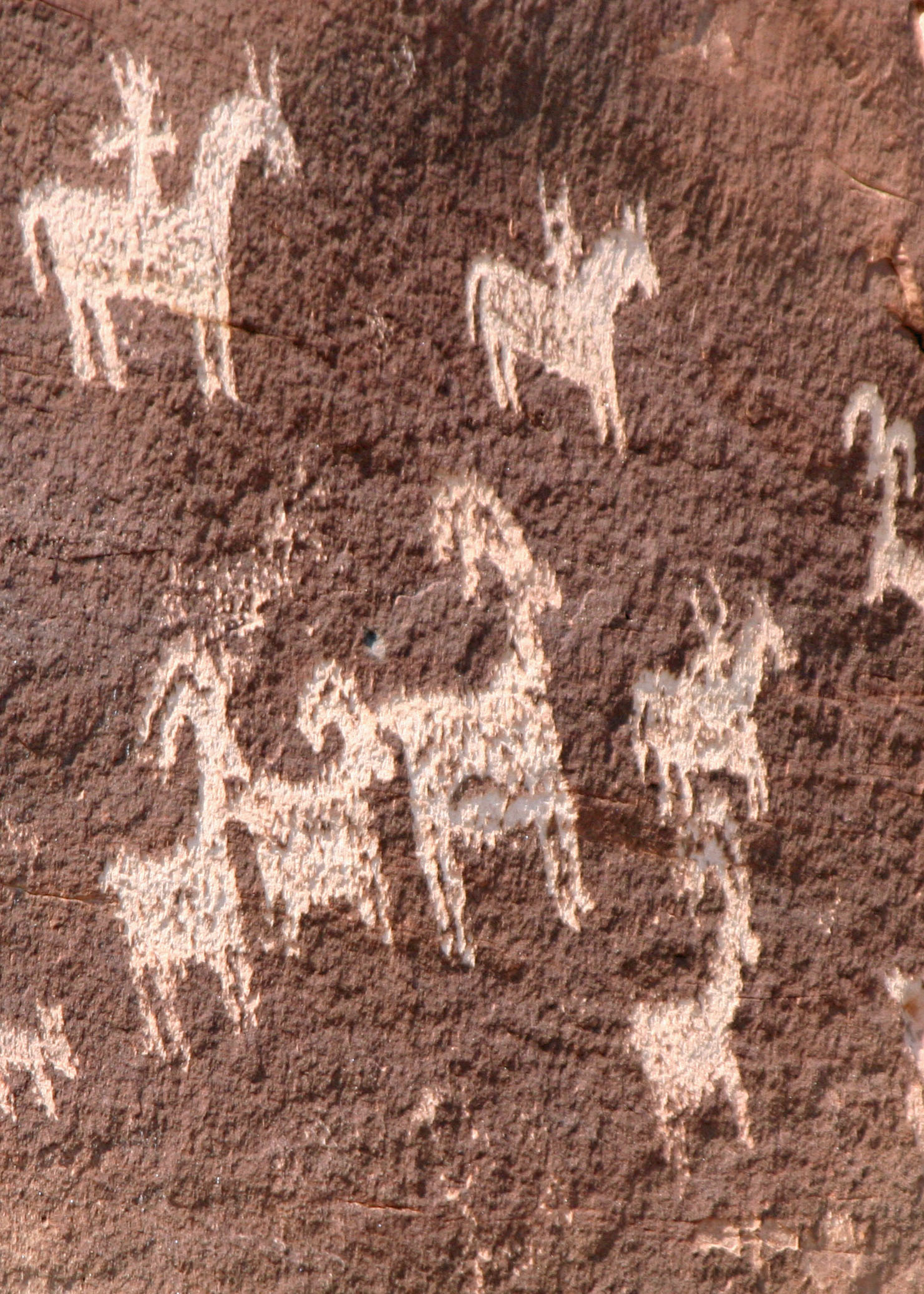
Ancient Native American Petroglyphs are found throughout the West and often feature Big Horn Sheep. This petroglyph is found in Arches National Park. Note the Indians on horses.

Utah has several other National Parks that I will feature in future blogs including Canyonlands, Capitol Reef, Bryce and Zion. You can visit these parks in a week but spending more time is definitely better. Each is worth a week itself!

I’ve been back to Arches National Park twice and have every intention of going again. Enjoy the photos.

Rock sculptures come in all shapes and sizes at Arches National Park. At one time arches would have connected these sculptures.

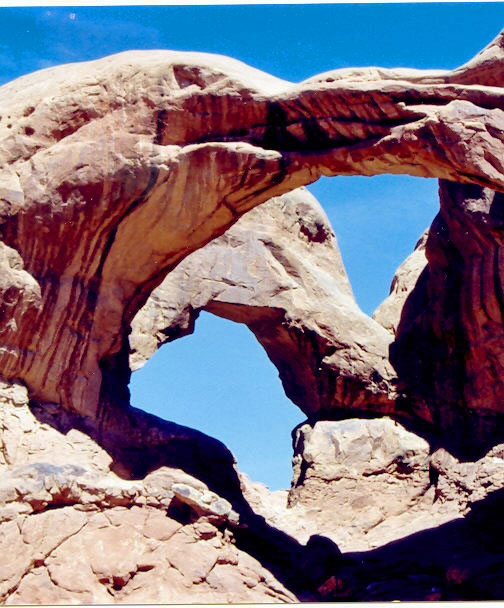
I took this photo on my first visit to Arches National park. The two arches are the same as I featured in my photo at the beginning of the blog.

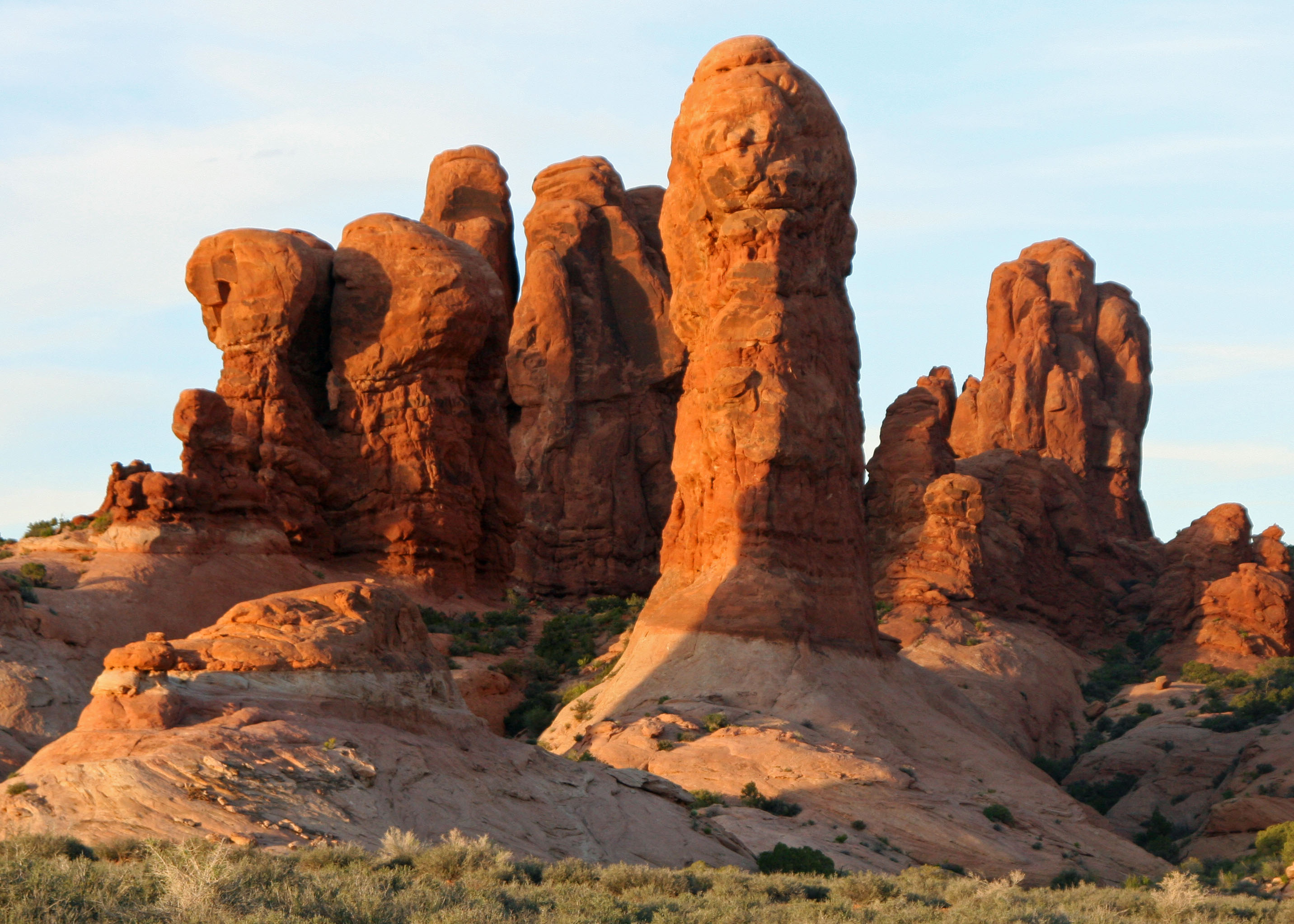
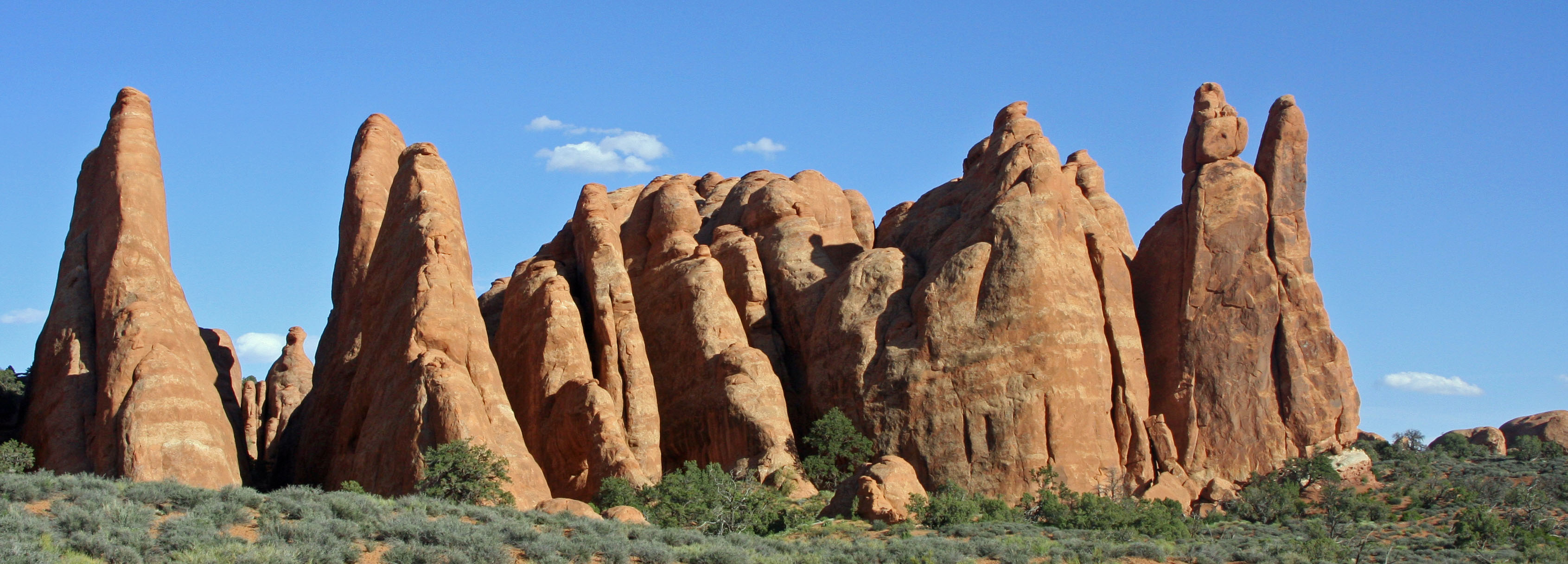
The stone sculptures at Arches National Park often form interesting groupings as demonstrated by the picture above and next three below.

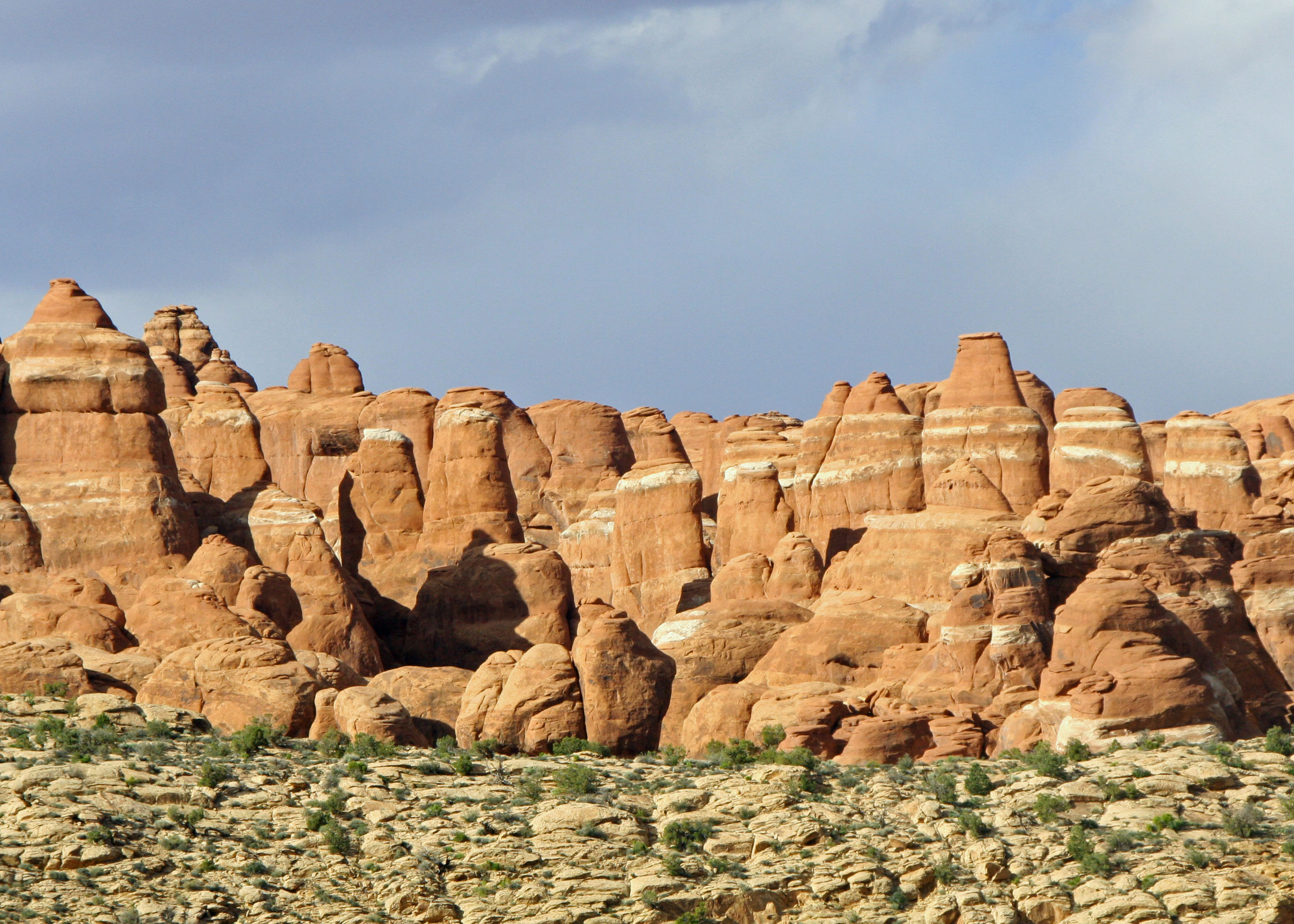
I thought teepees when I saw these sculptures.

The dark sky above these sun-lit rocks added drama to this view.

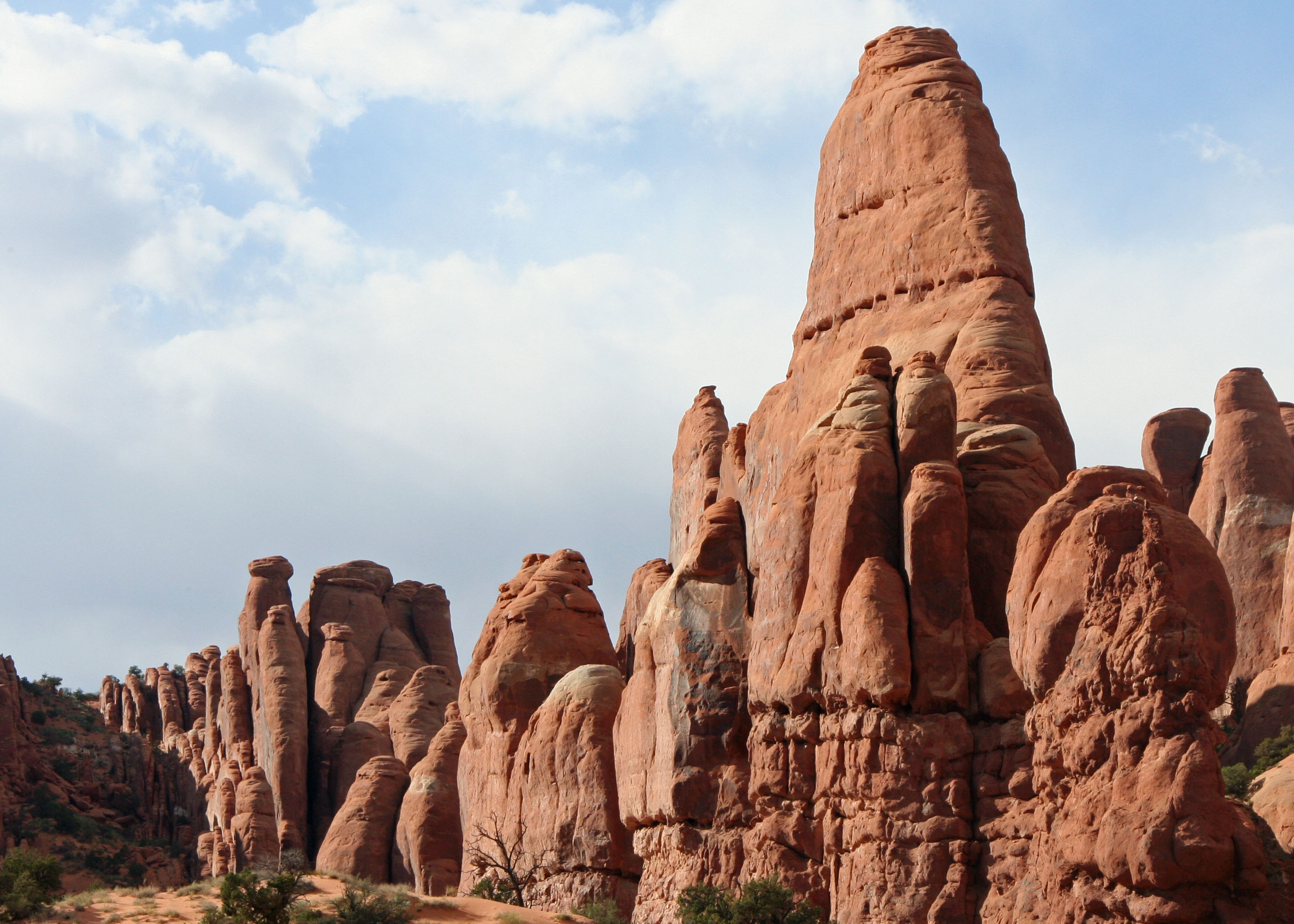
Parent with lots of kids?

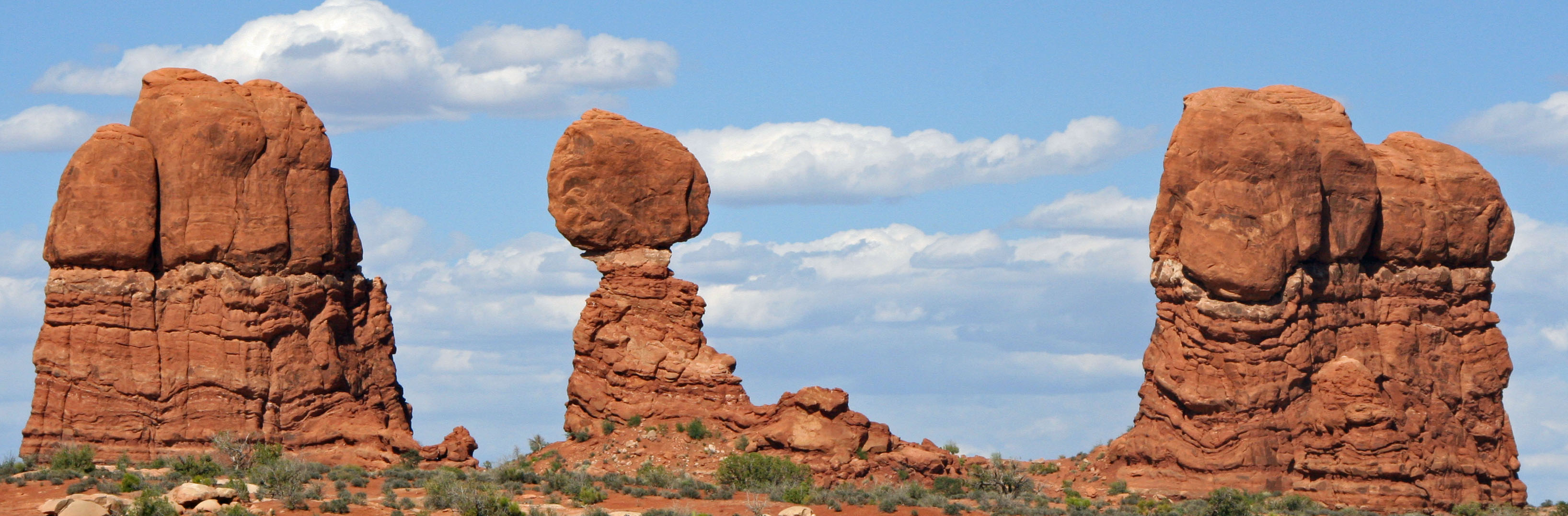
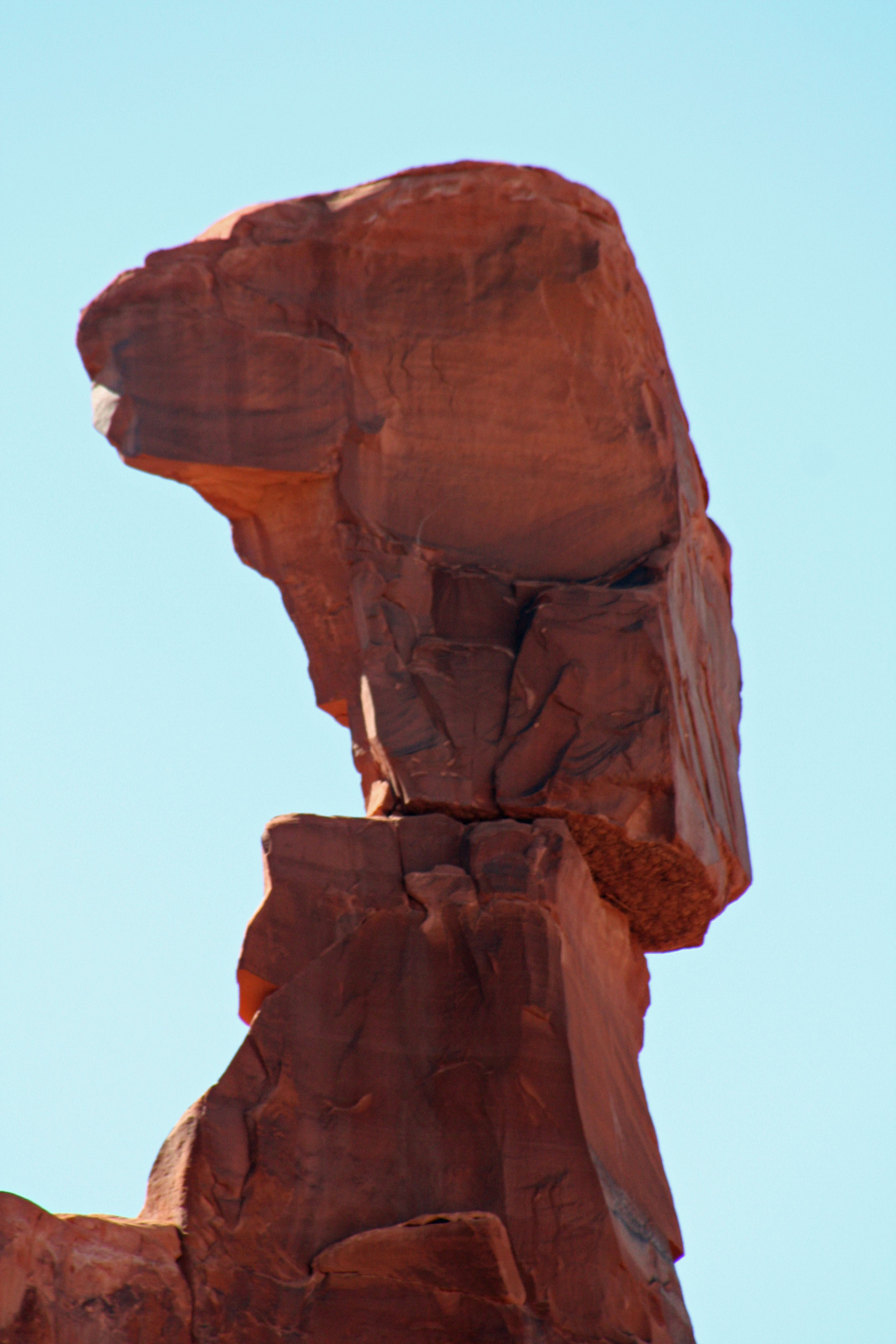
Erosion often leaves rocks precariously balanced at Arches. I wonder how long this rock will remain on its perch. it could fall tomorrow, or in a thousand years.

This impressive structure at Arches National Park is called the Courthouse. I call it V.

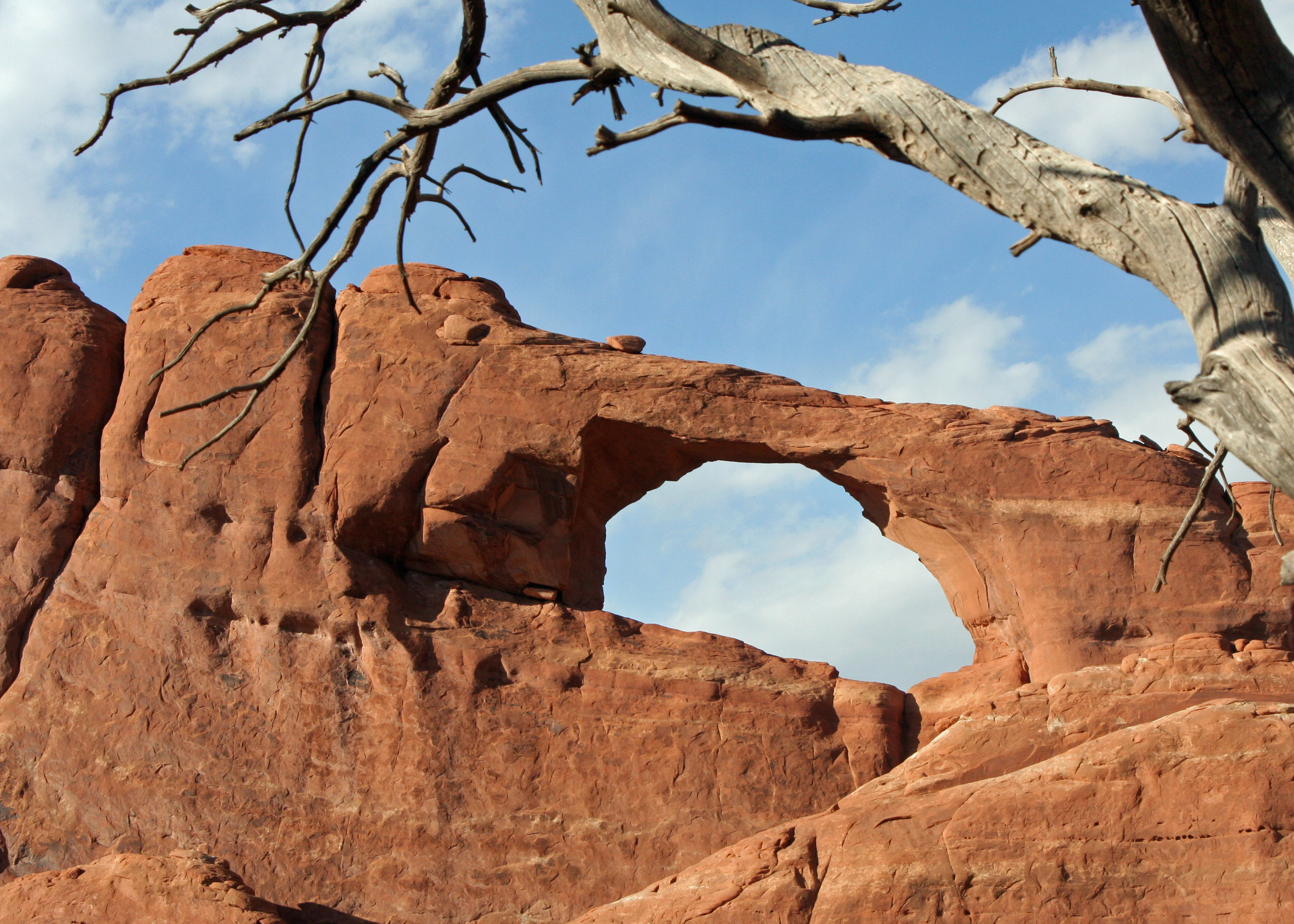
A final arch…

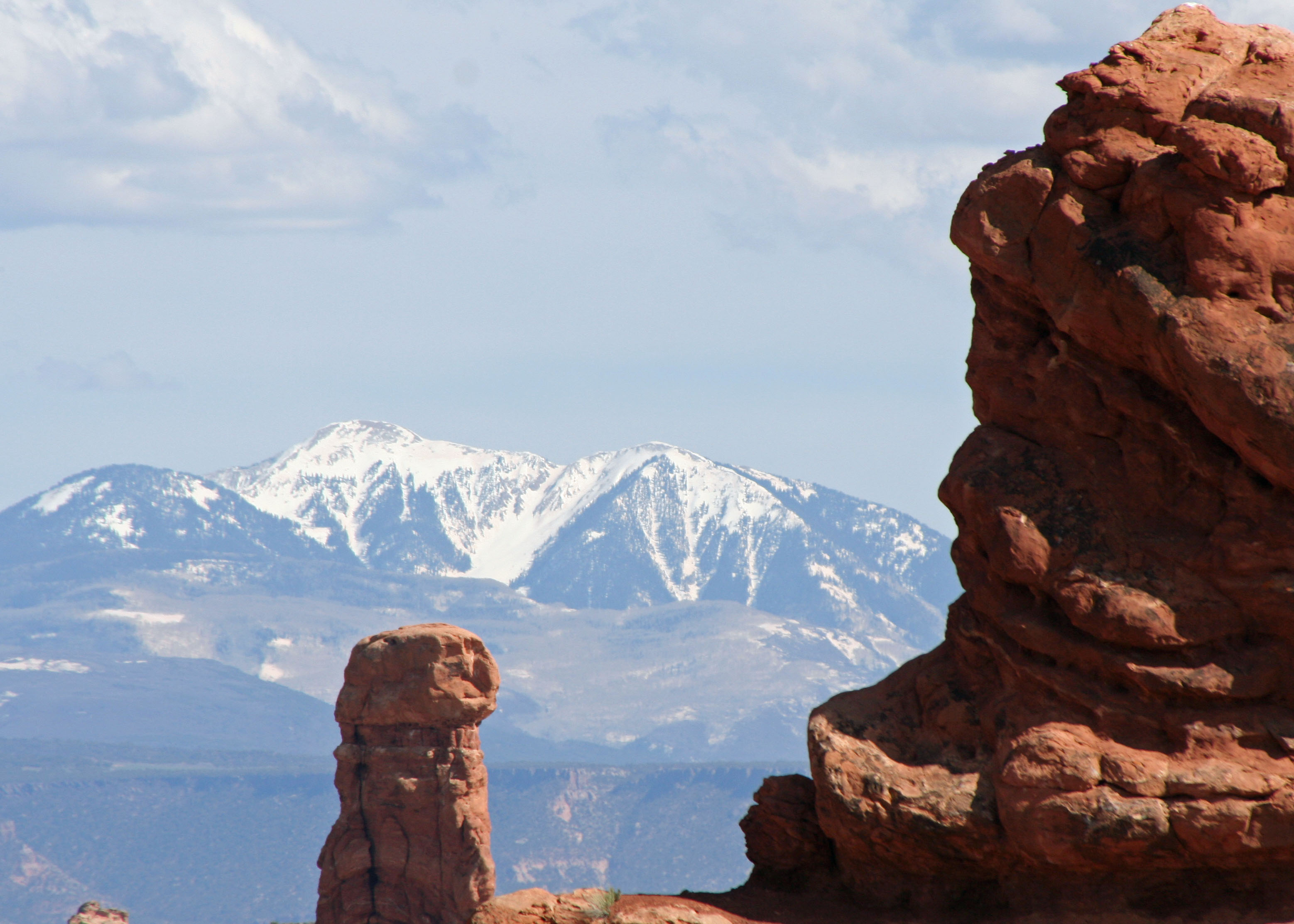
Distant snow-covered mountains add to the beauty of Arches National Park.