Diamond Springs, California: From Gold Rush to Sleepy… The 50th EUHS Reunion

The message arrived by mail. My 50th High School Reunion was coming up. Once again the mighty Cougars of Placerville, California’s El Dorado Union High School would roar.

Or at least meow.

Teenage angst, hormonal overload and dreams of glory had long since been dimmed by the realities of life and aging bones. My classmates and I have reached the point where looking back is easier than looking forward.

A Memory Book was being created. What had happened to us since that warm June day in 1961? It was time to sum up our lives in 400 words or less. Should I lie?

Naah. I dutifully begin to put the words down on paper. I found, however, that my mind kept wandering back to what had happened prior to our graduation, during the formative years of our lives. Always on the lookout for blog material, I decided to post a few stories from those years. First up:

Many things influence whom we become. DNA, parents, friends, teachers… it’s a long list. Where we are raised also has to be included. It doesn’t matter where we go in life; our hometown remains our hometown. And this takes me back to Diamond Springs, a small town outside of Placerville.

Sleepy is too lively a word for describing where I lived from 1945 to 1961.

In Old West terminology, Diamond was a two-horse town. There were two grocery stores, two gas stations, two restaurants, two bars, two graveyards and two major places of employment: the Diamond Lime Company and the Caldor Lumber Company.

On the one horse side of the equation there was one church, a barbershop, a hardware store and a grammar school. High school was in far off Placerville, three miles away.

It hadn’t always been quiet. Located in the foothills of the Sierra Nevada Mountain Range, Diamond was once a major gathering spot for the Maidu Indians and later became a bustling Gold Rush town.

To the Maidu it was Mo-lok’epakan, or, Morning Star’s Spring and a very holy place.  Indians came from miles around bearing their dead on litters for cremation. Souls were sent wafting on their way to where ever deceased Maidu went.

Apparently they had been living in the area for a thousand years. It is a sad commentary on both our education system and how we treated the Indians that I grew up in Diamond never hearing the name Morning Star’s Spring much less Mo-lok’epakan. Our only connection with the Maidu’s lost heritage was finding an occasional arrowhead or Indian bead.

Then, in 1848, John Marshall found some shiny yellow baubles in the American River at Sutter’s Mill, 13 miles away. The worlds of the Maidu, California, and Morning Star’s Spring were about to be shattered. “Gold!” went out the cry to Sacramento, across the nation and around the world. Instant wealth was to be had in California and the 49ers were on their way.

They came by boat, wagon, horse and foot… whatever it took. And they came in the thousands from Maine to Georgia, Yankee and Southerner alike. They came from England and Germany and France and China, pouring in from all points of the compass. They left behind their wives, children, mothers, fathers, and half-plowed fields. The chance of ‘striking it rich’ was not to be denied.

Soon the once quiet foothills were alive with the sound of the miners’ picks and shovels punctuated by an occasional gunshot. Towns grew up overnight: Hangtown (Placerville), Sonora, Volcano, Fiddletown, Angels Camp, Grass Valley, Rough and Ready and other legendary communities of the Motherlode.

In 1850 a party of 200 Missourians stopped off at Morning Star’s Spring and decided to stay. Timber was plentiful, the grazing good and a 25-pound nugget of gold was found nearby. Soon there were 18 hotels, stables, a school, churches, doctors, a newspaper, lawyers, vineyards, a blacksmith, some 8000 miners and undoubtedly several unrecorded whorehouses.

Morning’s Star Spring took on a new name, Diamond Springs. The Wells Fargo Stage Company opened an office and the Pony Express made it a stop on its two-year ride to glory.

The town burned down in 1856, 1859 and again in the 1870s. By this time most of the gold had been found and the residents were forced to find other means of gainful employment.

The timber industry came to the rescue in the early 1900s when the California Door Company out of Oakland set up shop in Diamond to handle the timber it was pulling out of the Sierra Nevada Mountains. Starting with oxen and then moving to steam tractors, the company finally settled on a narrow gauge railway for retrieving rough-cut lumber and logs from its forest operations. By the 50s, it had moved on to logging trucks.

A couple of decades after Caldor was established, Diamond Lime set up business by opening a quarry two miles east of Diamond and a processing plant on the edge of town. The lime was so pure that a block of it was used in the Washington Monument.

This was pretty much how things were when the Mekemsons arrived at the end of World War II. Next blog… the Mekemson/Bray gang terrorizes Diamond Springs.
Looking for Long Dead Mekemsons, Makemsons and Marshalls

Several years ago I became hooked on genealogy. Growing up, my knowledge of ancestors stopped with my grandparents. It remained there until I turned 60. My older brother Marshall inspired me. Describing himself as “a homeless man with a pickup truck and a bank account,” he had wandered America searching out our Mother’s side of the family, the Marshalls.

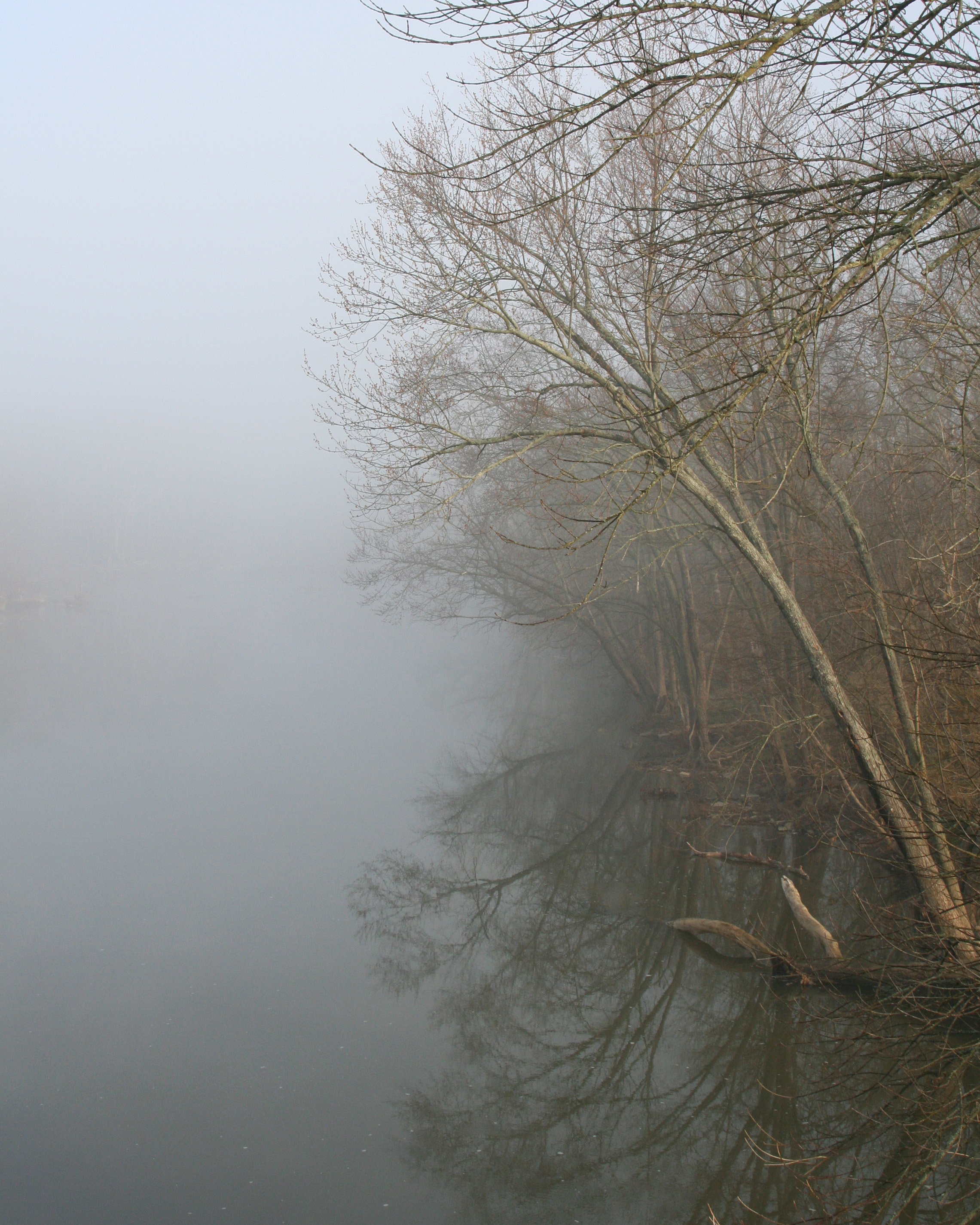
Ancestral Makemson/Mekemson lands hide behind the mist on the Licking River in Pendleton County, Kentucky. To me, the mist serves as a metaphor for the difficulty involved in uncovering family history.

He did it the old-fashioned way (as he likes to remind me): leafing through yellow, aging documents, tramping through almost forgotten graveyards, and spending countless hours in Mormon libraries.

I was skimming through a summary of his findings when I learned that our Great, Great Grandfather, George Loomis Marshall, had abandoned his pregnant wife, family, farm and friends in Will County, Illinois to the siren call of gold in California. He struck it rich but then his luck ran out.  He started home by sea and was killed for his gold.

Had my Great, Great Grandmother, Margaret Paddock, not been pregnant when he left Illinois, I wouldn’t be writing this paragraph. How could I not be intrigued? I became addicted to looking for long dead relatives.

I am not alone. Google lists 107 million sites related to genealogy and these numbers relate a fact; genealogy is no longer a hobby limited to aging elders (which I sort of resemble) rummaging around in musty courthouse basements.

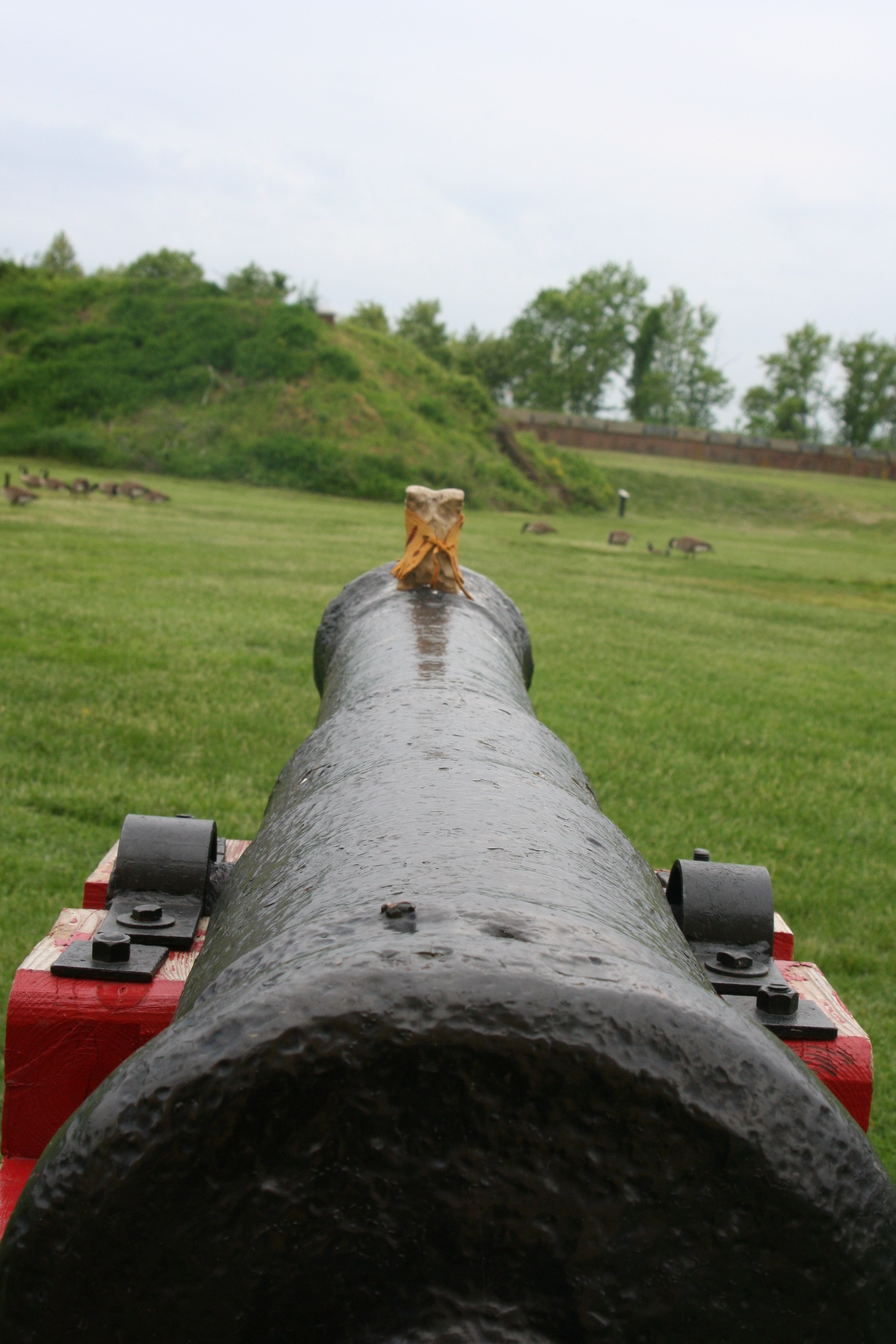
Bone serves as a sight on a cannon at Fort Mifflin just outside of Philadelphia. The Battle of Fort Mifflin was one of the bloodiest battles of the Revolutionary War and bought time for George Washington to escape to Valley Forge. Four Mekemson boys fought in the battle and two heroically gave their lives.

Millions of people today are using the Internet in search of their roots. Ancestral information that once required years of research is now available at the touch of a keystroke. Large Internet databases hold hundreds of millions of genealogy records and thousands more are added daily.

What captures our imagination about genealogy? Is there something about contemplating our future that sends us scurrying for our past? Is searching for our roots a way of seeking immortality in reverse? Or are we seeking fame? Was one of our ancestors a king? Or possibly she was a pirate… Maybe our inspiration is just plain-old-fashioned curiosity.

Whatever the bait that leads us to ask our first question about Great Grandma, it’s the thrill of the hunt that keeps us searching. A blank space on an ancestral chart is a mystery begging to be solved. Hours can be devoted to finding a single answer and that answer inevitably leads to another question, and another blank space.

Over the past 2½ years as Peggy and I have crisscrossed America traveling 65,000 miles in our van Quivera, we’ve added the search for roots to our itinerary of exploring the Country and doing grandparent duty.

Much to my surprise, I have discovered that the Marshalls arrived in America in the 1630s and the Mekemsons/Makemsons in the 1750s. The story of these two families is wrapped up in the story of America.

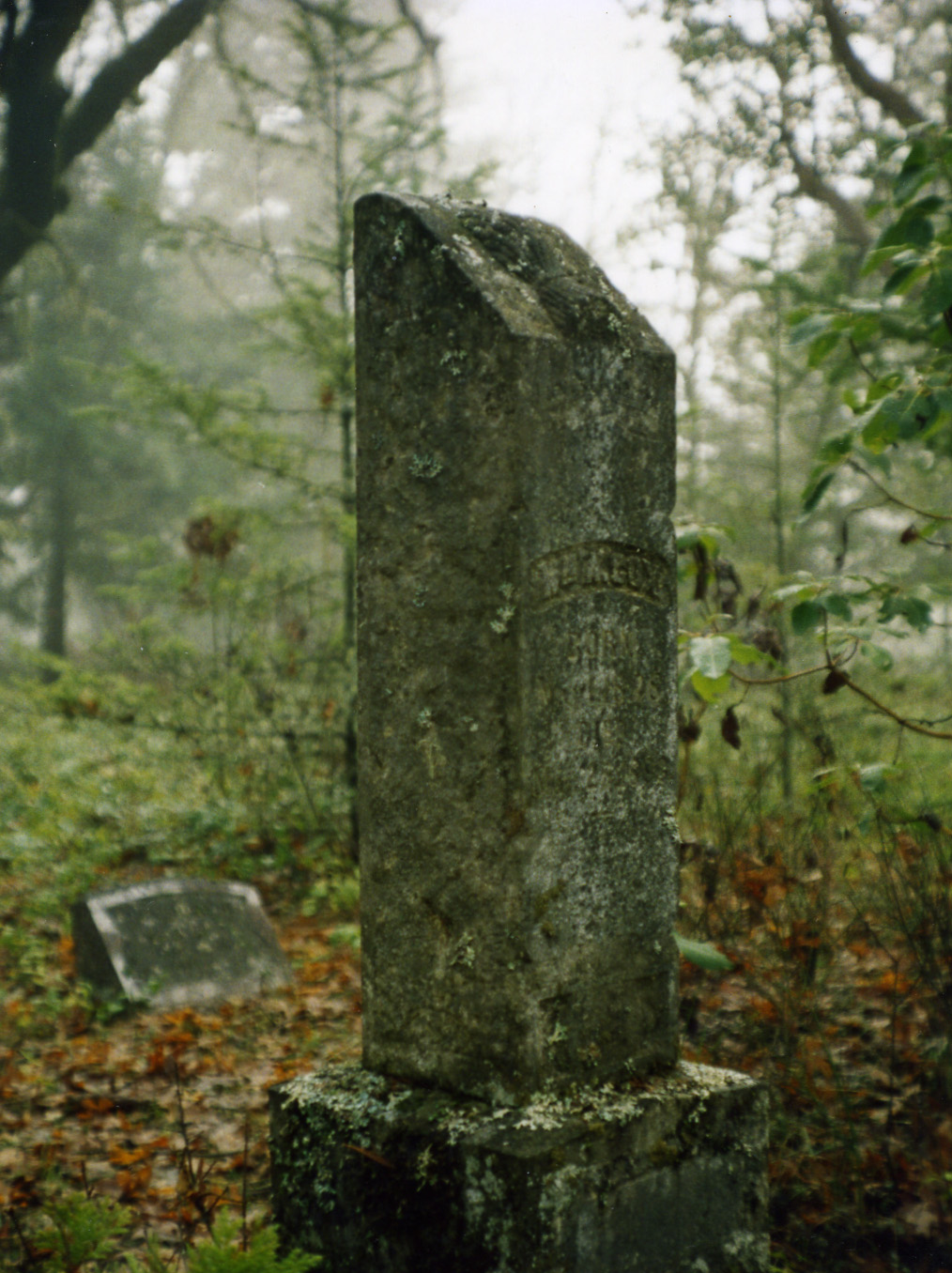
Family tombstones are often hidden in old, overgrown graveyards and difficult to find. This one marks the grave of William Cox, one of my Mother's Great Grandfathers who is buried near the town of Grants Pass, Oregon. William was born in the 1820s in Mississippi and came across America in a covered wagon.

The Marshalls began their American sojourn as stern Puritans in the 1600s. Three hundred years later they were in on the creation of Goofy. Four, and possibly all six sons of Andrew Mekemson (my first Mekemson ancestor to arrive in America) fought in the Revolutionary War.

Two of his sons died in heroic efforts at Fort Mifflin, a battle that allowed George Washington to escape to Valley Forge and possibly save the fledgling nation.

William Brown Mekemson had his head chopped off by tomahawks in the Black Hawk Indian War and rolled down a hill. His great-uncle may have wandered the forests with Daniel Boone. Abe Lincoln argued both for and against Makemsons in his early years as a lawyer. The stories go on and on leading up to modern times.

One of the most rewarding elements of my investigation has been collaborating with distant cousins on research. Early on I was lucky to come in contact with three of the leading Mekemson family genealogists, Ann Nell Baughman out of Kansas and Bill and Jan Makemson out of Florida. In addition to providing valuable information and support, these folks, along with other cousins, have become valued friends.

Ann even makes clothes for Bone.

Since genealogy is about wandering through both time and space, it is a fitting subject for the Peripatetic Bone’s blog. As I come across interesting stories, I will relate them on this site. Bone is particularly enamored with exploring old graveyards. He feels a kinship with the inhabitants.