A Devilishly Hard Decision… The Title to My Peace Corps Africa Book

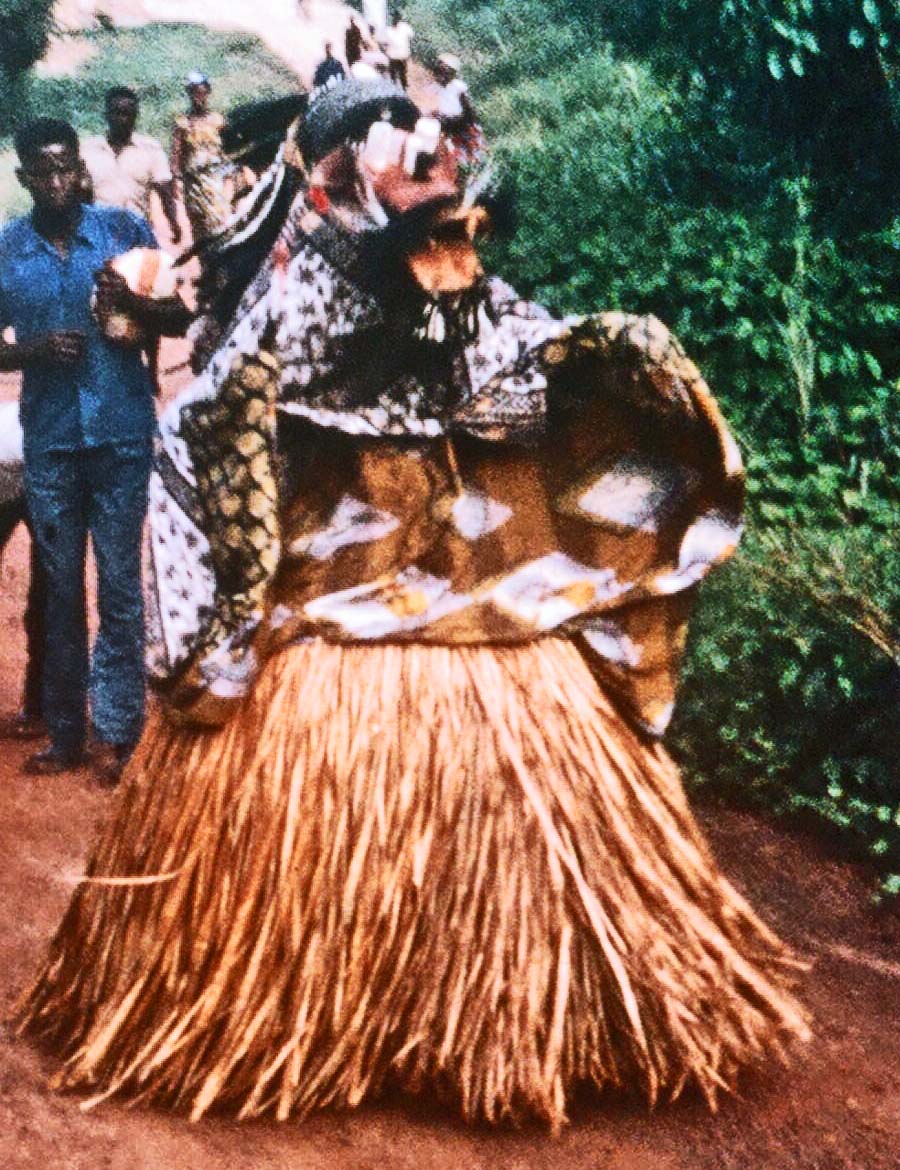
Pat hay stack and part voodoo nightmare, a Liberian Bush Devil shuffles through the dirt toward me.

A fading photo from 1967 captures a Liberian Bush Devil, part hay stack and part voodoo nightmare, as it shuffles toward me through the red laterite dirt.

So, I’ve been struggling with the title of the book about my experience as a Peace Corps Volunteer in Liberia, West Africa. As part of the process, I asked for help from my fellow bloggers and friends.

Step one included developing four options and providing backstories. Step two involved reviewing and summarizing the input.

Now it’s my turn.

I have two objectives for my title. First, it needs to be catchy. Unless people are familiar with an author or have recommendations from a trusted source (friend, author they enjoy, media), the first thing that leads them to choose a book is its title.

Second, the title needs to reflect my Peace Corps Africa experience.

For example, on the one level, The Dead Chicken Dance is about cutting the head off a chicken and watching it dance– slightly unusual and a little macabre. As such, the title might gain attention. But there was more. Early Peace Corps was struggling with how to prepare people to jump into another culture that was totally foreign to them. Killing, gutting, and plucking a chicken was guaranteed to provide trainees with a challenging experience that few of them had ever had but might face as a Volunteer. It’s a long ways between buying a pasty white, pre-packaged chicken in the grocery store and picking up a hatchet to cut the head off a feathered, clucking Henny Penny.

The Bush Devil Ate Sam and The Lightning Man Strikes Again reflected two aspects of African culture that were quite real to tribal Liberians. Both of these titles were designed to capture attention, but they also represented the dramatically dissimilar world that tribal Liberians existed in. Understanding Liberia, in fact understanding much of Africa, depends upon recognizing these differences.

How Boy the Bad Dog Ended Up in Soup represents a sharp break from our Western dog-centric world… of which I am very much a part. Dogs were a legitimate food source in Liberia. Students would tease me by coming by and pinching my cat, Rasputin. “Sweet meat, Mr. Mekemson” they would say while smacking their lips. They were cautious, however. Rasputin could take care of himself: “Pinch me once and I’ll squawk a warning. Pinch me twice and I’ll take off your finger.” As with each of my other titles,  there was more to the story with Boy than a gastronomical challenge.  It went beyond scary that soldiers would show up at my house in the middle of the night solely because the dog had eaten a guinea fowl.  It was strange with a strangeness that I would think of more than once when Liberia fell into the tragedy of its civil wars.

As I noted when I summarized the responses on titles, each title received strong support but Boy received the fewest ‘votes.’ Part of this may because we are so dog centric. As one blogger observed, the title might turn people off. I get that.

Support for the other three titles was evenly split. For me, it finally came down to either the Bush Devil or the Lightning Man. The Dead Chicken relayed an insight into early Peace Corps and cross-cultural challenges, but the other two did more to capture the Africa experience. Tossing a mental coin, I’m going with the Bush Devil. As my blogging friends James and Terri Gallivance, who have lived in Africa, noted: “We’re voting for The Bush Devil Ate Sam because we feel it embraces the mystery that is Africa.” The mystery that is Africa seems like a good place to start.

On a more prosaic level, I am adding “And Other Peace Corps Tales of West Africa” as a subtitle because it is important to have both Peace Corps and Africa included. Next up: the cover. As soon as I develop examples, I’ll post them.

NEXT BLOGs: Peggy and I will soon be heading into Nevada where I have several posts I am thinking about including 1) an art hotel in Reno created by Burners from Burning Man, 2) the remote town of Hawthorn with its history of being America’s primary ordnance depot (bunkers fill the desert), 3) the Extraterrestrial Highway and Area 51– subject of more conspiracy theories than there are people in Nevada, 4) Death Valley in the spring, 4) the Valley of Fire, 5) Red Rock Canyon, and 6) Las Vegas being Las Vegas. BUT, IN THE MEANTIME, I will post on another of my favorite petroglyph sites, Painted Rocks out of Yuma Arizona. I think I will also revisit the actual Big Foot trap about three miles from my home and see if Bigfoot is hanging out there. (It sort of goes along with the ET Highway.)

The Bush Devil Ate Sam… And Other Possible Book Titles: HELP!

Liberian bush devil photo by Curtis Mekemson.

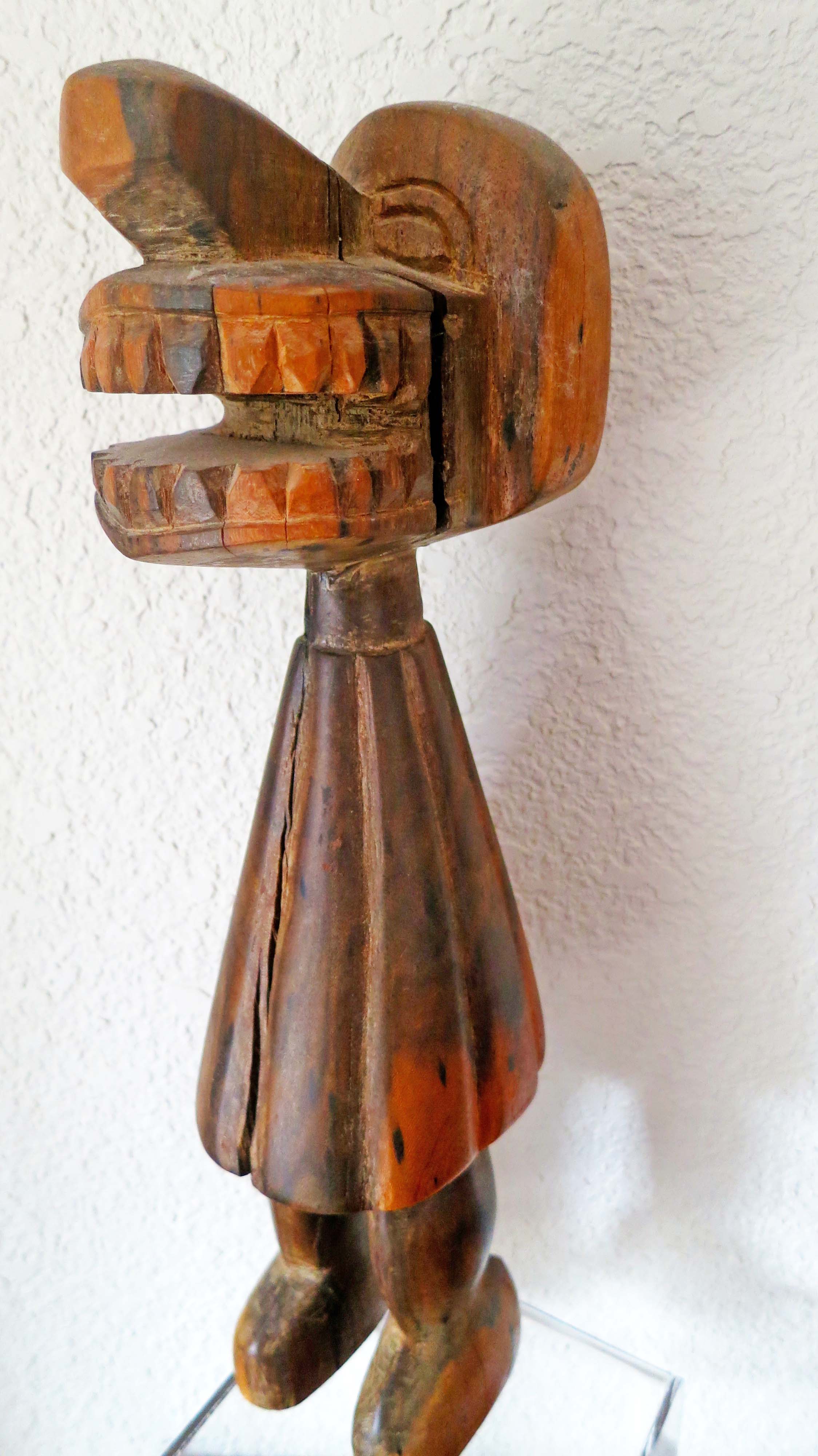
Freddie the carver, a leper who lived in the up-country Liberian town of Ganta, carved this replica of the Bush Devil for me in 1965. In the 70s similar carvings would become known as Jimmy Carter dolls.

What leads people to choose a particular book is a question every author, agent and publisher asks. If my name were Stephen King or J.K. Rowling and I was writing my umpteenth best seller, I wouldn’t have to worry about anything except writing the book and raking in the dough. But being Curt Mekemson… let’s just say I have a few more challenges (grin).

I am now in the final stages of self-publishing a book on my Peace Corps experience in Africa. Making money isn’t the objective; I’m happily retired. But I do hope people will read the book. I realize that success will ultimately depend upon whether people like what I have written and tell their friends. But first I have to capture their attention.

The Writer’s Guide to Self-Publishing (and every other book that purports to tell us go-it-alone writers how to) suggests that an enticing name, great cover, compelling back copy, and dynamite first few pages are what count. Of course, an endorsement by J.K. Rowling would help, but, as they say in the vernacular, that ain’t going to happen.

I’ve decided to ask for your advice. Several of the people who read this blog are authors and all of you are avid readers. So here’s the question. Which of the following titles would capture your eye and lead you to pick up the book? Why? (You can pick more than one.)

FYI, I’ve included the back-story behind each title. Depending on the title I choose, I will use a short, spiffed up version of the story in the introduction of the book.

Thanks for your participation!

Curt

1. The Dead Chicken Dance

And Other Peace Corps Africa Tales

Peace Corps training lacked its modern sophistication in the 1960s. Our group did its initial training at Cal State SF. We were then dropped off in the Sierra Nevada Mountains with paper sleeping bags for a wilderness camping experience. During the week, we faced a number of challenges such as rock climbing, bridge building, etc. A psychologist followed us around and took notes. It was serious business. Based on our responses, we could be sent home. One of the most memorable challenges was when our leader showed up the first night with a hatchet and a crate of live chickens. “Here’s dinner,” he announced with a laugh.  You can imagine how the kids from the big cities reacted. I was a country boy, however. I had killed, plucked, and gutted chickens. So I volunteered for the messy part. My chicken did a nice little dance when I cut off her head off. The city kids turned pale. They lost their appetites when I reached into Henny Penny and yanked out her still warm innards. It was a good thing; I got more to eat.

2. The Bush Devil Ate Sam

And Other Peace Africa Corps Tales

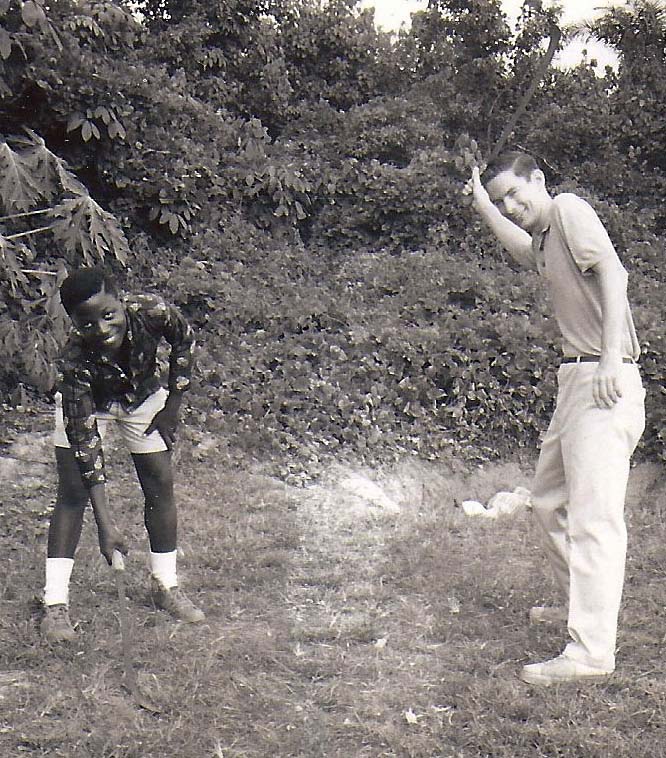
When my first wife, Jo Ann, and I arrived in Liberia we recruited a young man to help with our chores. In return, we provided meals and funds to cover school costs and other necessities. One day, Sam was working with me outside and took off his shirt. Jo noticed that he had a series of parallel scars marching down his chest. “How did you get those?” Jo had asked, partially out of concern but mainly out of curiosity. “I can’t tell you,” Sam had blurted out. “But,” he quickly added, “I can tell Mr. Mekemson.” Aha, I thought to myself, Sam and I belong to the same organization, the men’s club. Actually Sam belonged to a very exclusive men’s club, the highly secretive Poro Society that existed to keep tribal people in line and pass on tribal culture. The year before Sam had been to bush school where he had learned the Society’s secrets. At the end of the session, he had had a close encounter with the Bush Devil. It ate him. He was swallowed as a child and spit out as a man. The scarification marks represented the Devil’s teeth. The Bush Devil (so-named by Christian missionaries) is part politician, part cultural cop, part spiritual leader, and all secret.  Outsiders don’t get to see the Kpelle version. I was able to see one from another tribe, however. He looked like  someone had crossed a walking haystack with a voodoo nightmare.

Gbarnga photo of Curt Mekemson and Sam Kollie.

A photo of Sam and me cutting grass with machetes right around the time we noticed his scarification marks. Sam would later become a physician.

Liberian Bush Devil photo by Curtis Mekemson.

The Bush Devil I was allowed to see.

Another photo of the Liberian Bush Devil carved by Freddie.

Another photo of the Liberian Bush Devil carved by Freddie.

3. The Lightning Man Strikes Again

And Other Peace Corps Africa Tales

We left Mamadee with 50 dollars to buy a 50-gallon drum of kerosene while we went off to explore East Africa in a Volkswagen beetle. Mamadee was sitting on our doorstep when we returned but there was no kerosene and no 50 dollars. Someone had stolen the money. Mamadee’s father, who was a chief of the Kpelle tribe, wanted to assure us (and himself?) that Mamadee was innocent so he offered to subject Mamadee to a trial by lightning. The Lightning Man had a special power; he could make lighting strike people who had committed crimes. Somebody steals your cow or your spouse, ZAP! Even if Mamadee were guilty, we didn’t want him struck by lightning, or even singed for that matter. We passed on the offer. Another Volunteer took a different approach. He had spent half of his monthly income ($70) on buying a new radio. Somebody stole it the first day. He vowed that he would get his new toy back. So he had his students take him out in the jungle to hire the Lightning Man. That night there was a horrendous lightning storm. Ignoring for the moment that it was in the middle of the rainy season and there were always horrendous lightning storms, put yourself in the shoes of the person who had taken the radio and believed in the Lightning Man. Every lightning strike and every peal of thunder would have had his name on it. The next morning, the Volunteer went outside and there was his radio, sitting on the porch.

Dark clouds, roaring winds, crashing thunder and multiple lightning strikes are common during Liberia's rainy season. When ever someone was struck by lightning when we were there, the assumption was is that the Lightning Man had caused the strike and the person was obviously guilty of some wrong doing.

Dark clouds, roaring winds, crashing thunder and multiple lightning strikes are common during Liberia’s rainy season. When ever someone was struck by lightning, the assumption was is that the Lightning Man had caused the strike and the person was obviously guilty of some wrong doing.

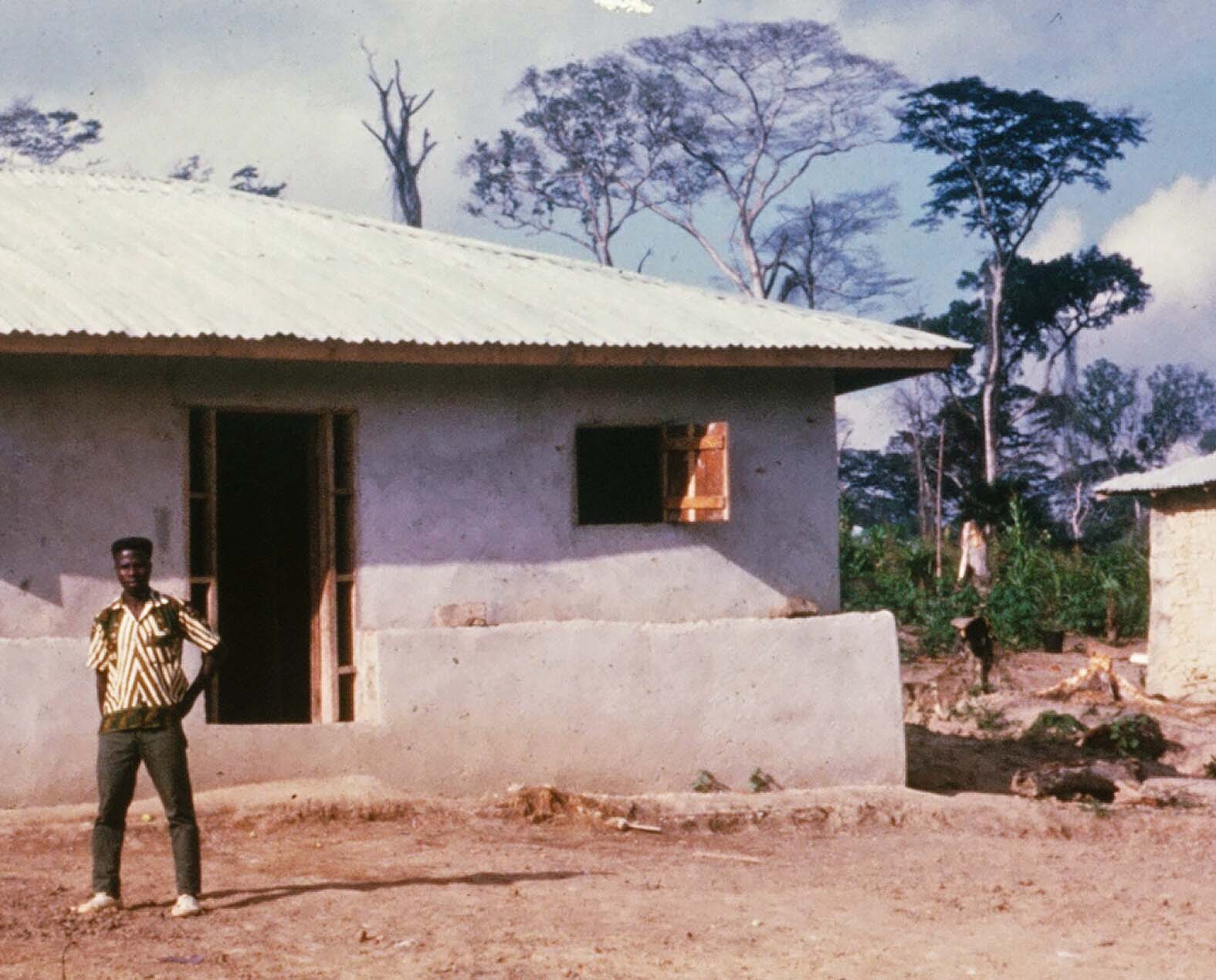
Mamadee standing in front of his house. Later Mamadee would become an elementary school principal in New Jersey.

Mamadee standing in front of his house. Later Mamadee would become an elementary school principal in New Jersey.

4. How Boy the Bad Dog Ended Up in Soup

And Other Peace Corps Africa Tales

Boy, the Bad Dog, lived at a Peace Corps Volunteer’s house across town with a female dog named Lolita. When Lolita had pups, she drove Boy off. He went looking for other Peace Corps Volunteers to live with and ended up at our house. Normally, this wouldn’t have bothered me. But Boy had a problem: he didn’t like black people. He also regarded our cat as dinner. I encouraged him to live elsewhere. One day I came home from teaching and found a number of soldiers occupying our yard. I approached nervously; Liberian soldiers were scary. “What’s the problem?” I asked the sergeant.  “Your dog ate one of the Superintendent’s guinea fowl,” he growled at me. The Superintendent was the boss of Bong County, the most powerful person in our neck of the jungle. “Which one?” I asked. “What does it matter which fowl the dog ate?” he snarled. “No, no,” I responded, “I meant which dog.” He pointed at Boy and I relaxed. “Why don’t you arrest him?” I suggested helpfully. “Not him!” the sergeant screamed. “You, you are coming with us.” The interview was not going the way he had expected. “The dog doesn’t belong to me and I am not going anywhere with you.” I replied and went into our house. The soldiers were not happy. They milled around in our yard for a half hour before marching off. It was a six-pack night for Jo and I.

At 4 AM the next morning we heard a loud bang, bang, bang. “What’s that,” Jo asked, frightened. “It sounds like someone pounding to get in,” I responded, grabbing our baseball bat and heading for the back door. I opened it just as the sergeant from the day before was preparing to strike it again with the butt of his weapon. “Your dog ate another one of the Superintendent’s guinea fowls,” he stated triumphantly. “This time you are coming with us.” The soldiers must have waited up all night for Boy. Maybe they threw the fowl over the fence. Here doggy. In addition to being scared, I was angry. “I told you yesterday that the dog belongs across town. Ask Mr. Bonal.” Mr. Bonal was the principal of the high school and lived next door. I slammed the door shut. It was like I had thrown a rock at a hornet’s nest. But Bonal was an important man in town and yanking a Peace Corps Volunteer out of his home was not something you did lightly. Eventually, the soldiers left. Jo and I waited nervously for strike three. Fortunately, the soldiers finally figured out that Boy belonged to a person who worked for the other Peace Corps Volunteer. The young man was hauled into court and fined. To pay the fine, he sold Boy to a village where the large dog became guest of honor at a tribal feast. Being a bad dog in Liberia can have serious consequences.

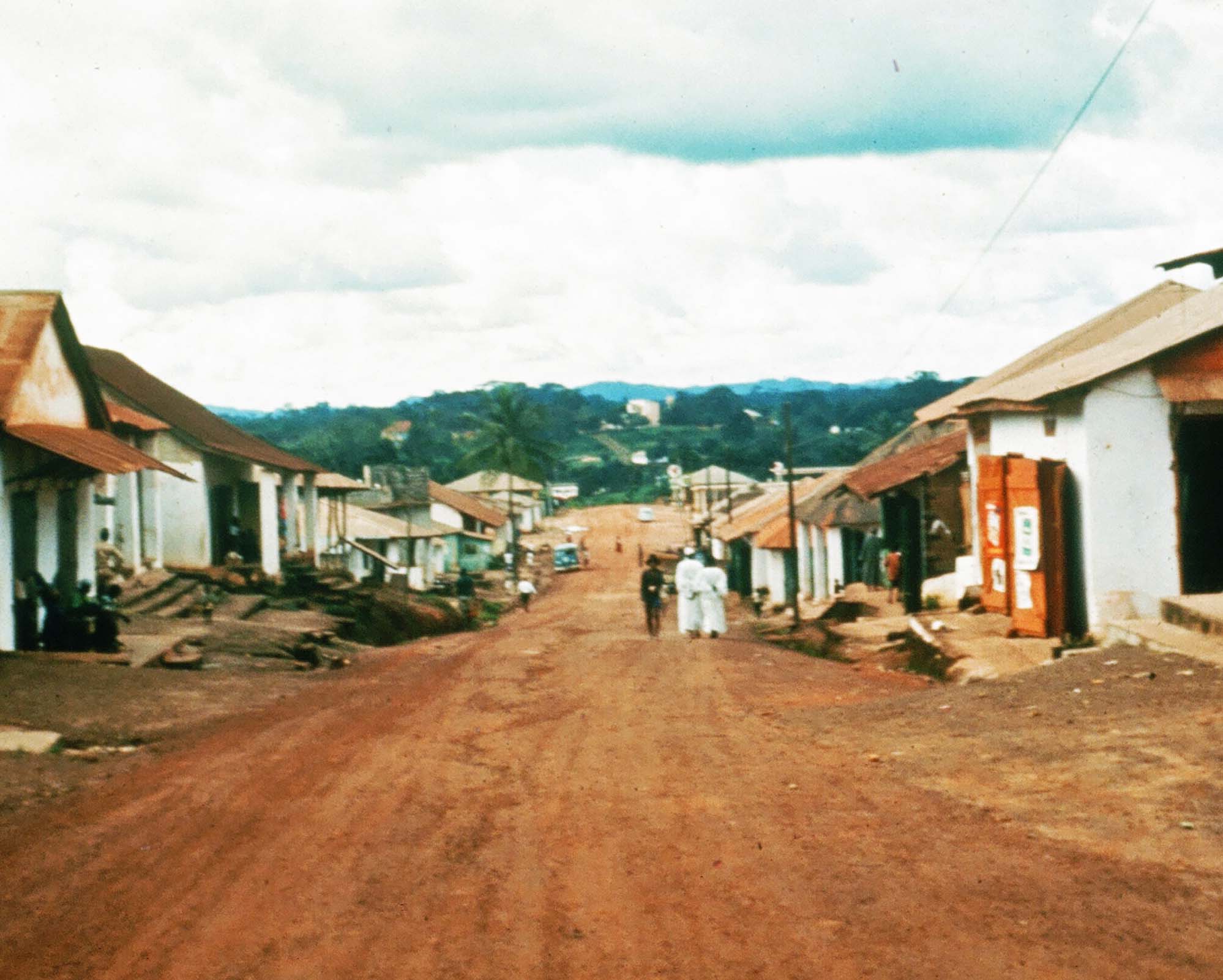
The main street of Gbarnga, Liberia where I served as a Volunteer in 1965-67. The large building you see in the distance was the Superintendent's compound. The high school and the house where I lived was off to the right.

The main street of Gbarnga, Liberia where I served as a Volunteer in 1965-67. The large building you see in the distance was the Superintendent’s headquarters. The high school and the house where I lived were off to the right of his compound.

An Introduction to The Bush Devil Ate Sam… and other Peace Corps Tales

Mandingo mosque in Gbarnga, Liberia circa 1965.

I watched as this mosque was built in Gbarnga, Liberia in 1966 and then showed up for the opening ceremony– the only non-African present. I was sitting up front with the dignitaries when Do Your Part the Dog came whipping through the door and made a beeline for me, almost causing a riot.

(I’ve been working hard on a book about my Peace Corps adventures in West Africa. It is actually getting close to being published as an Ebook– with close meaning some time in the next three months (grin). I’ve  posted a number of my draft chapters on this blog over the past year. They are listed under Africa Peace Corps Tales in the sidebar. Today I will post a draft featuring part of the book’s introduction. It is designed to give readers a taste of what is included in the book.)

The soldier pounding on our door with the butt of his rifle in the middle of an African night made me seriously question my decision to join the Peace Corps. When he demanded that I go off with him into the dark, my questioning became epic. People had been beaten and even killed under such circumstances. I told him to screw off.  The sergeant was not pleased.

My decision to become a Peace Corps Volunteer was one of the best decisions in my life, however. The way I was raised and educated, even my DNA, had pointed me in the direction of volunteering and striking off for parts unknown. But there was more.

I am very much a “child of the 60s.” Civil Rights, the Vietnam War, and student activism dramatically effected how I viewed the world. Being a student at UC Berkeley during the Free Speech Movement in 1965 intensified my involvement in these issues. Looking back, I can see how the Berkeley experience, my ‘wandering’ genes, and the influence of family, friends and teachers combined to encourage my decision to join the Peace Corps.

In 2007 I was working on my memoirs. I had retired from my career as an environmentalist and public health advocate, needed a new challenge, and loved to write. Conventional wisdom and a thousand books on writing dictated I should write about what I knew best. Having finished the first draft, I bravely decided to share the manuscript with the book club my wife Peggy and I had belonged to for 17 years, the BSBC out of Sacramento, California. We had a fun night and the book club was kind. It can be feisty.

At the end of the evening, John Robbins, an iconoclastic professor and physician with the University of California Medical School at Davis, suggested that I pull out the section I had written about my Peace Corps experience and turn it into a book on its own. His suggestion led me to consider the idea. The Fiftieth Anniversary of the Peace Corps in 2011 clinched the deal.
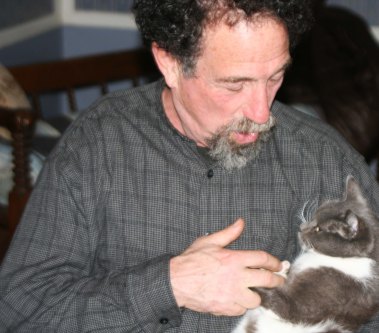
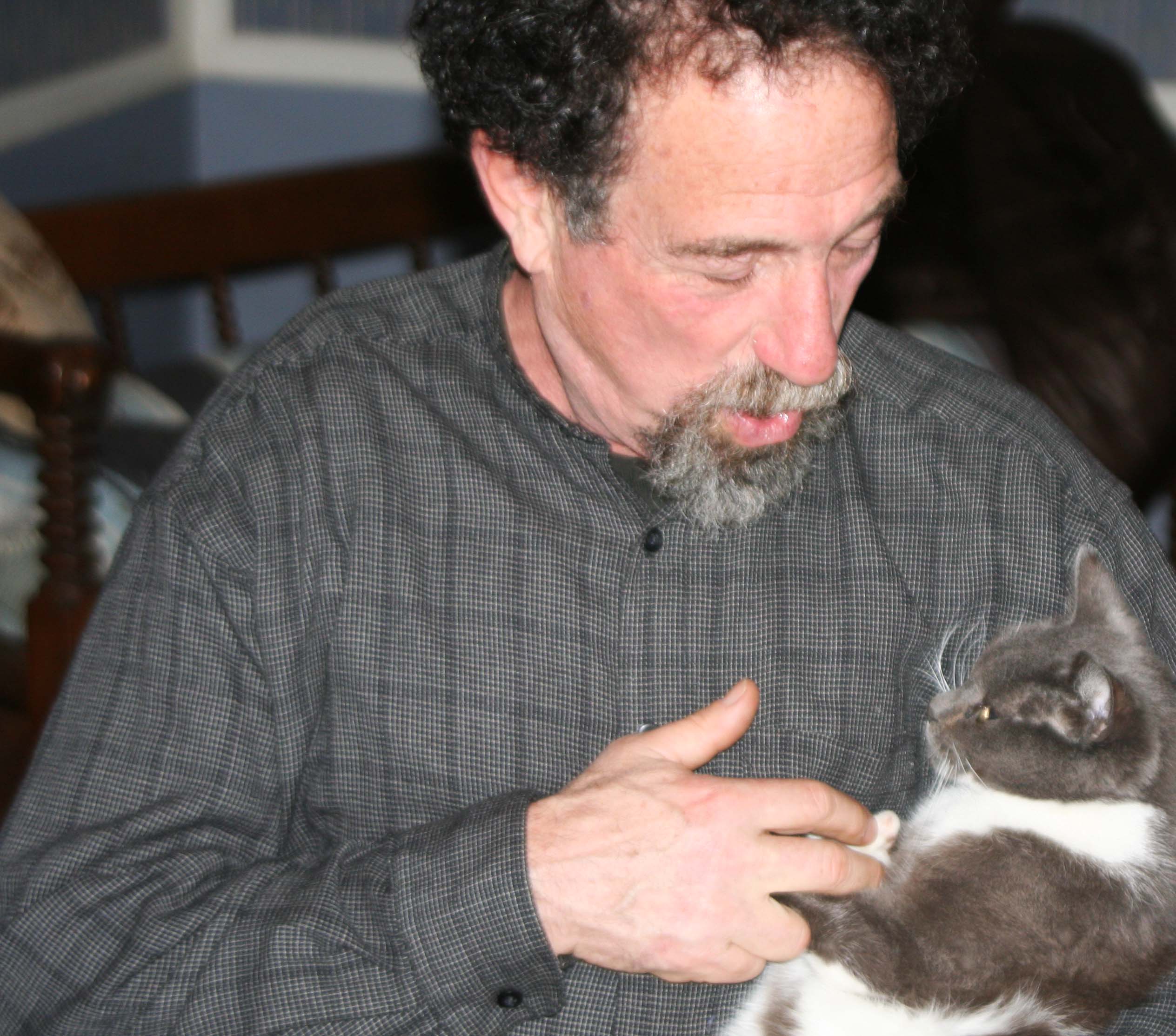
Dr. John Robbins of the University of California  Medical School of Davis.

John Robbins has a discussion with his cat at his home in Sacramento, California.

John Kennedy created the Peace Corps in 1961 as one of his first acts as President of the United States. His reasons were both idealistic and pragmatic. Yes, he wanted to help third world countries combat the terrible poverty, disease, hunger, illiteracy and conflict they faced, but he was also interested in winning hearts and minds for the West. The mindset of Kennedy, and most other leaders of his generation, was that we were in the midst of a worldwide conflict between capitalism and communism, totalitarianism and democracy, and Christianity and Atheism. The Cold War was raging and much of this war was being fought in third world countries.

While few Peace Corps Volunteers would list “making friends for America” as their reason for joining the organization, it more or less comes with the territory of being from the United States and working intensely in another country to help people improve their lives. In this sense, the Peace Corps is one of the most effective foreign aid programs ever created by the US. It is certainly one of the least expensive– especially when the work Volunteers do overseas and the skills and commitment they bring back home are considered. A recent Peace Corps budget justification noted that the total cost of running the Peace Corps for the past 50 years could be covered with what the US spends on the military every six days.

My assignment was to serve as a teacher in Liberia, West Africa.  The country has a unique history dating back to the early 19th Century when freed slaves from America were shipped back to Africa. Within 30 years, the freed slaves, or Americo Liberians as they came to be known, had established themselves as the rulers of Africa’s first black republic. When I arrived in 1965, their descendants still controlled the political, military, justice, education and economic systems of Liberia– i.e. almost everything. William Shadrach Tubman, President of the country since 1944, had invited Peace Corps into Liberia to help tribal Liberians, who made up 95% of the population, prepare for a larger role in the nation’s future. Not all Americo-Liberians agreed with this goal– as I would learn.

“The Bush Devil Ate Sam” is a the story of adventures that I, along my ex-wife, Jo Ann, had in Africa, but it also includes, background on my decision to join the Peace Corps and some thoughts on the tragic history of Liberia since the 60s.

I begin with a brief look at the influence of my family’s restless nature and discover that I was right to be worried about the soldier knocking on our door: wandering can be hazardous to your health. William Mekemson has his head chopped of by tomahawks during the Blackhawk War and George Marshall, my mother’s great grandfather, is killed for his gold after striking it rich during California’s gold rush.

Following in the footsteps of my ancestors, I wander off to UC Berkeley where police occupy the campus, liberally use nightsticks, and drag students down stairs. A roommate tells the FBI I am a Red, a Communist– and I not even pink. But this is a time when innuendo is more important than facts and J. Edgar Hoover believes there is a Russian agent hiding behind every tree on campus. I figure my chances of making it into the Peace Corps are ruined. Sargent Shriver, the first director of the Peace Corps, likes people who challenge the status quo, however, and I soon find myself in the Sierra Nevada Mountains decapitating a chicken as part of my training.

In Liberia I am thrown into a second grade class of 7-22 year olds where children who barely speak English are taught reading out of aging California textbooks featuring middle-class white kids and Spot, a pet that resembles dinner. Peace Corps encourages me to write a Liberian second grade reader using Liberian children and African folk tales, which I do. Americo-Liberians in the Department of Education determine the book is subversive. It’s torpedoed and I am told to never mention the project.

The high school principal recruits me to teach social studies to 10th, 11th and 12th graders and Jo Ann to teach French and English. Somewhat to my surprise, I discover I enjoy teaching and may even be good at it. Things run smoothly until the Liberian government determines that the student government I create to teach my students about democracy is a direct challenge to the country’s one party state. I am told to pack my bags. My students are told they will be arrested.
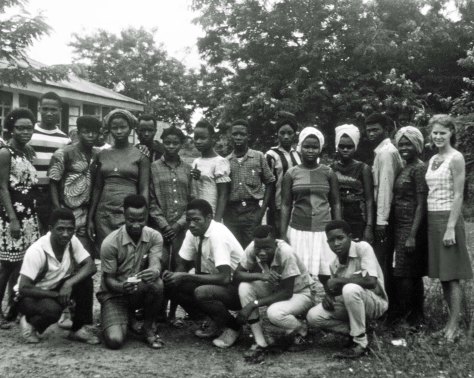
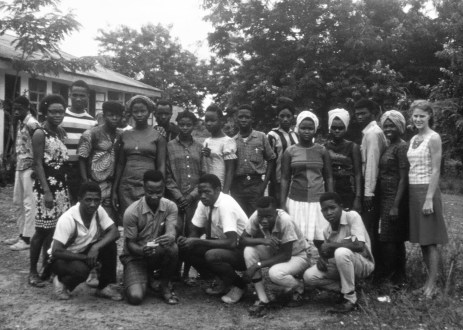
Our tenth and eleventh grade classes and Jo Ann at Gboveh High School in Gbarnga, Liberia (1967)

Our tenth and eleventh grade classes and Jo Ann at Gboveh High School in Gbarnga, Liberia (1967)

On the home front I repulse an invasion of army ants, breed rhinoceros beetles, and watch Jo Ann make mincemeat out of a Green Mamba, one of the world’s more deadly snakes. A menagerie of animals adopt us and provide both companionship and comic relief. They also create mischief. Rasputin the Cat collaborates with the Cockle Doodle Rooster to wake us at five every morning. Do Your Part the Good Dog crashes a solemn ceremony I am at attending at a mosque and causes a riot while Boy the Bad Dog develops a penchant for eating guinea fowl that belong to the Superintendent (governor) of Bong County. It’s the latter that brings the soldiers to our house in the middle of the night. Apparently, the illegal consumption of would-be chickens is a more serious crime than writing a subversive second grade reader or teaching high school kids they can be part of the government.

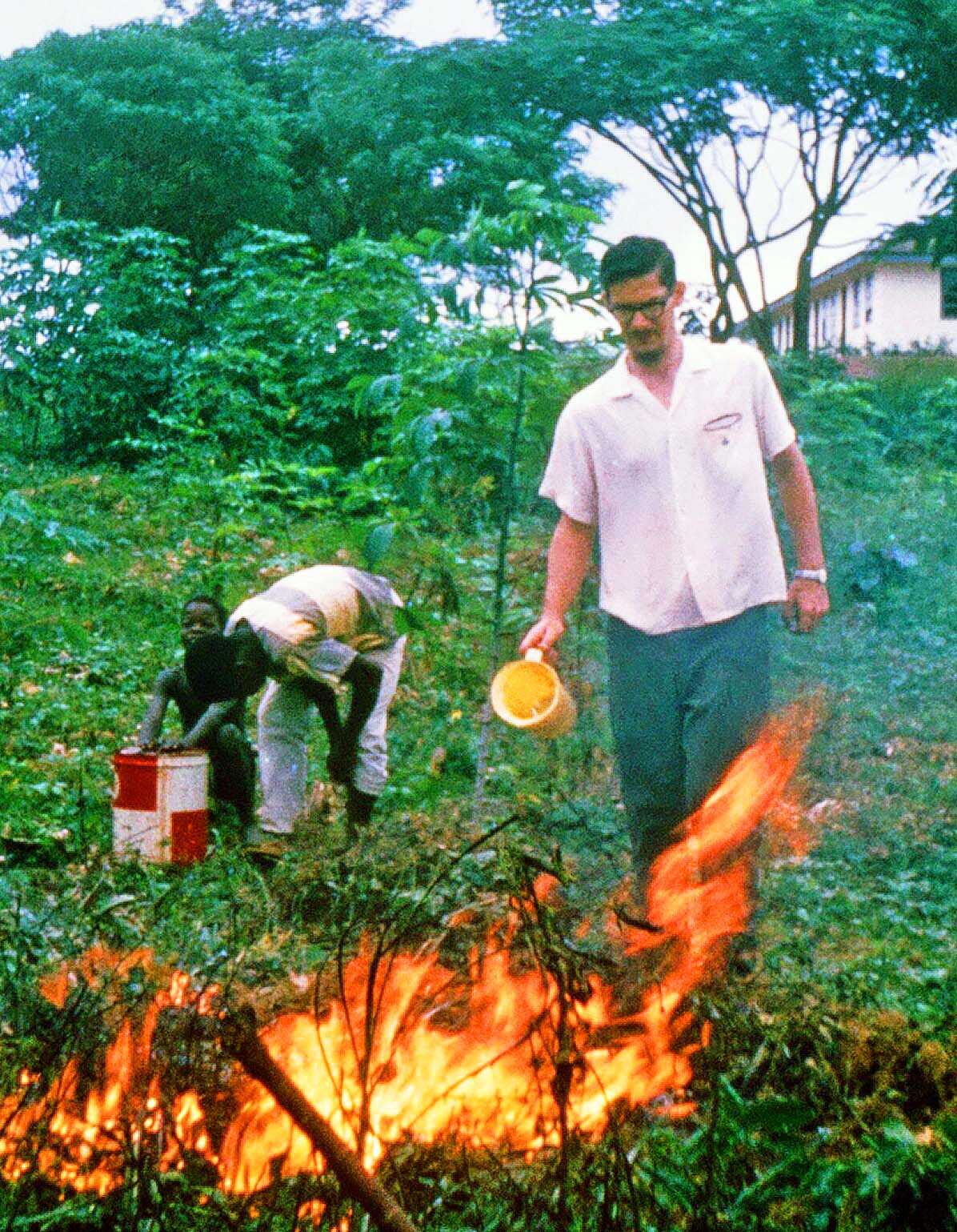
Burning out a nest of army ants in Gbarnga, Liberia circa 1966.

The army ants invaded our home. Here I burn out their nest in an effort to persuade them to move elsewhere.

I learn that the scarification marks marching up the chest on Sam, the young man who works for us, were ‘made’ by the Kpelle Bush Devil’s teeth, which leads to an interest in tribal culture. I discover the Lightning Man can make lightning strike people, sit in on a trial where justice is determined by a red-hot machete, and find myself involved in a situation where Juju, the dark magic of West Africa, is being used on one of my students.
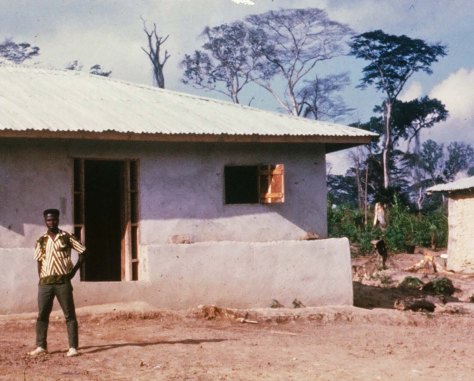
The use of Juju in West Africa.

Mamadee Wattee, shown here, appeared at our house on a dark, stormy night to tell us that juju, dark magic, was being used to make him sick.

A year and a half into our service, we are numbered among the veteran Peace Volunteers of Liberia, the people to go to for sage advice. Jo and I take a month off to tour the big game parks of East Africa in a rented VW Bug, my students receive top national honors in social studies, and we turn down a request from Peace Corps’ to spend our last six months touring Liberia and training teachers. Instead we spend our time with the students who have earned our allegiance and the animals that have won our hearts.

I snapped this photo of a baby zebra with a Kodak Instamatic camera on our trip through East Africa.

I snapped this photo of a baby zebra with a Kodak Instamatic camera on our trip through East Africa.

One of my final encounters is disturbing. A representative from the US Embassy in Monrovia requests that I meet with him at our house in Gbarnga. He wants my views on the future of Liberia. My experience with the paranoid reactions of the government leads me to suggest that the future is bleak unless drastic changes are made in how Liberia is governed. Unfortunately, as I share in the Epilogue, much of what I feared in 1967 comes to pass. Only today is Liberia recovering from the tragic results.
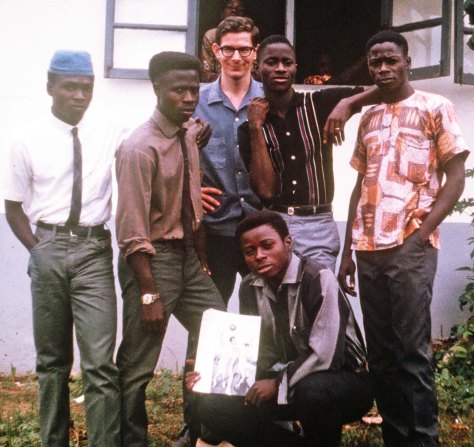
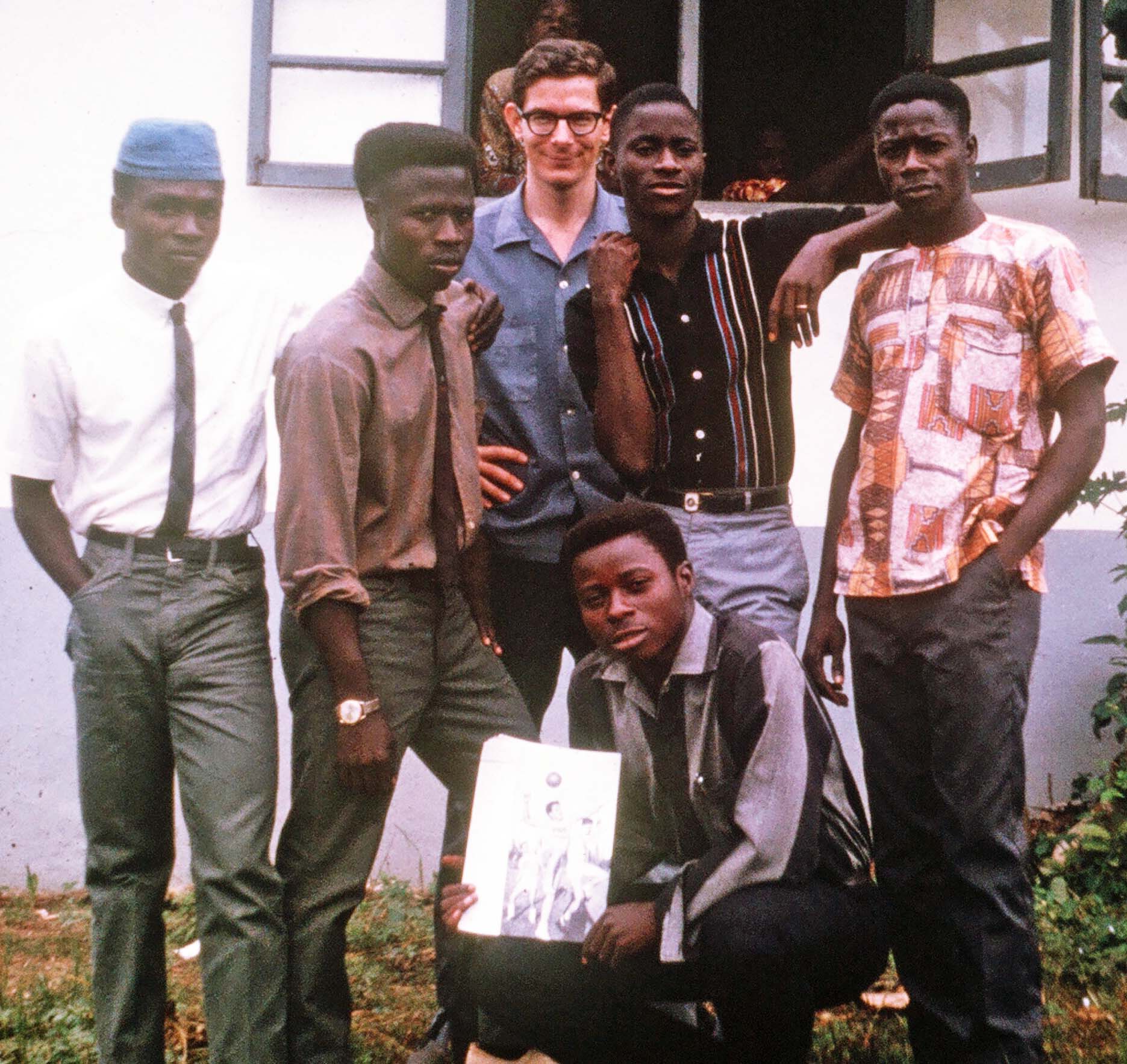
12th Grade Class of Gboveh High School, Gbanrga, Liberia (1967)

A photograph of my twelfth grade class along with me standing in front of Gboveh High School. (1967)

NEXT BLOG: I join the spirit of the season by re-blogging hair-raising stories of the ghosts that lived in the graveyard next to the house I grew up in.
Chapter 27: Trial by Poisonous Leaves and a Red Hot Machete

Welcome to “The Dead Chicken Dance and Other Peace Corps Tales.” I am presently on a two month tour of the Mediterranean and other areas so I thought I would fill my blog space with one of the greatest adventures I have ever undertaken: a two-year tour as a Peace Corps Volunteer in Liberia, West Africa. Every two days I will post a new story.

When I have finished, I will publish the stories in digital and print book formats.


This was the Eleventh Grade class at Gboveh High School in Gbarnga in 1967. Amani Page is second from left on the bottom row.

This was the Eleventh Grade class at Gboveh High School in Gbarnga in 1967. Amani Page is second from left on the bottom row. Jo Ann is on the right.

While the Lighting Man provided a hit or miss opportunity for taking out bad guys, a more formal means of determining guilt and innocence was achieved by asking the tribal judge or Sassywood Man to resolve the issue. This tribal official obtained his name through use of poisonous leaves from the Sassywood tree. The accused person was invited to chew a few. If he died, he was guilty. No DAs, lawyers or juries were needed.

Since modern society frowned upon trial by survival, the Sassywood Man had been forced to come up with a new way of determining guilt. As it turned out, the father of one of my students, Amani Page, was the local tribal judge and Jo and I were privileged to witness an actual trial.

It all started with Amani showing up at our house at two in the afternoon on a Saturday in the middle of the dry season. His father was about to start a trial. Would we like to see it? There was no hesitation on our part even though it meant like ‘mad dogs and Englishmen’ we had to forgo our afternoon siesta and go out in the tropical sun.

As we headed west across town through the stifling heat, Amani provided background on the case. The plaintiff’s wife had come home in the evening after a hard day of selling oranges at the market and told her husband that three men had accused her of not wearing underpants. This was serious slander suggestive of loose behavior and the husband had filed charges through Liberia’s western-type court system.

But there was a potential problem: what if the men knew something about his wife’s behavior he didn’t? Perhaps his wife was lying to him. If he lost the suit, he would have to pay all of the court costs plus he would be subject to countersuit. He decided to hedge his bet by taking his wife to the Sassywood Man first. If he found his wife was lying, the husband would drop the charges and probably divorce her.

We arrived at court before the husband and wife and were rewarded with front row dirt seats. Jo and I had already asked Amani what the appropriate title for his father was and Amani had told us to call him Old Man, a term of respect. So we did. Old Man didn’t speak English and we didn’t speak Kpelle but there was much smiling and finger snapping. We were delighted to meet him and he was equally delighted to meet his son’s teachers.

After the greetings were complete, we got down to the important business of preparing for the trial. The first thing Old Man did was to ignite a roaring bonfire, just the thing for a hot afternoon. About this time the husband arrived sans wife.

“Where’s your wife,” Old Man asked as Amani translated.

“She is being brought by her family,” the husband replied.

‘Being brought,’ it turned out, was a conservative description of the process. She was being dragged and appeared ready to bolt at the first opportunity, which she did. The woman was half gazelle; my greyhound of childhood days couldn’t have caught her as she leapt off down the trail. For everyone involved, it looked like a clear case of guilt. But the trial was still going to be held. I asked Amani if it was being carried on for our benefit but he explained it was legitimate for the husband to sit in for the wife.

Old Man disappeared into his hut and came out with a wicked looking machete, a can of ‘medicine’ or magical objects, a pot of mystery liquid and a pot of water. He promptly shoved the machete’s blade into the fire. Next, he dumped his can of magic objects on the ground. Included were two rolls of Sassywood leaves and several small stones of various colors and shapes.

“Uh-oh,” I thought to myself. “Are we about to witness something here with the Sassywood leaves that we would just as soon not see?”

But Old Man had a use for them other than ingestion. He asked the husband to sit down on the ground opposite him and place one roll of the leaves under his right foot. He placed the other roll under his. Both men wore shorts and had bare feet. It appeared we were to witness a trial by osmosis.

Next he arranged his magic objects and proceeded to mumble over them like a priest preparing for Communion. Once the appropriate spirits had been called, it was time for mystery liquid. A generous amount was rubbed on each Sassywood leg. We were ready for the truth.

“If the knife is cold, the woman is lying,” Old Man declared dramatically as he pulled the glowing machete from the fire.

Old Man took the “knife” and rubbed it down his leg. It sounded like a hot grill cozying up to a T-bone steak. But Old Man grinned. The knife was cold.

The husband was next. His leg appeared much less optimistic about the process. It was, in fact, preparing to follow his wife’s legs lickety-split down the hill. A firm glare from Old Man made the leg behave. The machete sizzled its way down the shinbone and a look of surprise filled the husband’s eyes. The knife was cold; the woman was lying.

We had to be absolutely sure, however, so Old Man shoved the machete back in the fire. This time he rubbed water up and down his and the husband’s legs instead of mystery fluid. He then rearranged his magic rocks and commenced mumbling over them again. After about fifteen minutes he was ready for the final phase of the trial. He yanked the machete from the fire a second time.

“If the knife is hot, the woman is lying,” he instructed as he reversed the directions.

“Ow!” he yelled and jumped back as the machete barely touched his leg! The knife was definitely, absolutely, beyond the shadow of a doubt, hot.

This time Old Man couldn’t even get near the husband’s leg since the husband had jumped up from his sitting position and was strategically located ten feet away. The jury had returned its verdict; his wife was lying and he would drop the charges. He didn’t need his leg torched to prove the point.

All of these elements of tribal culture were fascinating to me. There were aspects of what the Kpelle believed such as the spirit in the cottonwood tree that I could almost believe myself. I like the pantheistic concept of spirits existing in plants, animals and places as well as people. It implies an element of sacredness, interconnectivity and respect for the world around us that was lost ever so long ago when we decided that humankind was the hottest stuff in creation.

There also was a lot I didn’t believe in but could recognize had value. The Lightning Man, Sassywood Man and the Bush Devil played important roles in maintaining order within the tribal society. They served as policeman, judge and priest.

Think of the power of the Lighting Man as a deterrent to crime. It’s almost biblical. Given our scientific knowledge of how lightning works, it’s easy to be amused by the concept of lightning striking bad guys. But is our system all that different? After all, we believe lawyers stand for justice. I know, I know… cheap shot, but if you stop and think about it, our society requires almost as much faith to operate as the Kpelle’s.

The use of Juju to make people become sick or die was something else, both dark and dangerous. Left unchecked these practices can and did lead to dire consequences. Some of the more macabre aspects of the violence that has haunted Liberia may be traced to similar abuse of the ‘dark arts.’

Chapter 26: The Lightning Man

Happy New Year!

Welcome to “The Dead Chicken Dance and Other Peace Corps Tales.” I am presently on a two month tour of the Mediterranean and other areas so I thought I would fill my blog space with one of the greatest adventures I have ever undertaken: a two-year tour as a Peace Corps Volunteer in Liberia, West Africa. Every two days I will post a new story.

When I have finished, I will publish the stories in digital and print book formats.


Mamadee Wattee stands in front of his home in Gbarnga Liberia in 1967. Later Mamadee would become an elementary school principal in New Jersey.

Mamadee Wattee stands in front of his home in Gbarnga Liberia in 1967. Later Mamadee would become an elementary school principal in New Jersey.

Late one evening in the middle of a tropical downpour, one of my high school students appeared on our doorstep very wet and very frightened. Mamadee Wattee was running for student body president and his opponent had purchased ‘medicine’ from a Juju man (witch doctor) to make him sick.

It was serious business; people were known to die in similar circumstances. Had the opposition slandered Mamadee or stuffed the ballot box I could have helped, but countering magic potions wasn’t taught at Berkeley. I took the issue to Mr. Bonal and he dealt with it. Mamadee stayed well and won the election.

The use of Juju medicine represents the darker side of tribal culture. Human body parts derived from ritual human sacrifice are reputed to be particularly effective in creating potions. On the lighter side, my students once obtained a less potent “medicine” and buried it under the goal post on the football (soccer) field with the belief that it would cause the other team to miss goals. Apparently it lacked power; the other team won.

Mamadee was also the reason behind our introduction to the Lightning Man. When Jo and I went on vacation to East Africa, we left Mamadee with $50 to buy us a drum of kerosene. When we returned there was neither kerosene nor $50 but Mamadee was waiting.

Someone had stolen the money and Mamadee was extremely upset. Fifty dollars represented several months’ income for a Kpelle farmer. Mamadee’s father, a chief of the tribe, was even more upset and wanted to assure us that his son had nothing to do with the missing fortune. It was a matter of honor. He offered to have Mamadee submit to the Lightning Man to prove his innocence.

The Lightning Man had a unique power; he could make lighting strike whoever was guilty of a crime. If someone stole your cow or your spouse, zap! Since we were in the tropics, there was lots of lightning. Whenever anyone was struck, people would shake their heads knowingly. Another bad guy had been cooked; justice had been served.

We didn’t believe Mamadee had taken the money and even if he had we certainly didn’t want him fried, or even singed. We passed on the offer. The Chief insisted on giving us $50 to replace the stolen money.

Another Liberian Peace Corps Volunteer in a similar situation chose a different path. Here’s how the story was told to us. The Volunteer had just purchased a brand new $70 radio so he could listen to the BBC and keep track of what was happening in the world. The money represented half of the Volunteer’s monthly income. He had his bright, shiny, new toy for two days when it disappeared.

“I am going to get my radio back,” he announced to anyone who would listen and walked into the village where he quickly gathered some of his students to take him to the Lightning Man. Off he and half the town went, winding through the rainforest to the Lighting Man’s hut. The Volunteer took out five dollars and gave it to the Lighting Man. (Lighting Men have to eat too.)

“I want you to make lighting strike whoever stole my radio,” he said.

The Volunteer and his substantial entourage then returned home. By this time, everyone in the village knew about the trip, including undoubtedly, the person who had stolen the radio.

That night, there was a tremendous thunder and lightning storm. Ignoring for the moment that it was in the middle of the rainy season and there were always tremendous thunder and lightning storms, place yourself in the shoes of the thief who believed in the Lightning Man’s power. Each clap of thunder would have been shouting his name.

In the morning the Volunteer got up, had breakfast and went out on his porch. There was his radio.

In my next blog I will report on a Sassywood trial of The Woman Who Wore No Underpants where poisonous leaves and a red-hot machete tip the scales of justice.

The Dark Side of African Tribal Beliefs… The Peace Corps Series

This week marks the beginning of a new blog about my experiences as a Peace Corps Volunteer in Liberia West Africa from 1965-67. I am using a WordPress theme designed to look and read like a book. Each week I will post a new chapter. When I have completed the book, I will publish it both digitally and in print. Visit me at http://liberiapeacecorps.com/ to read the first and subsequent chapters.

This week I will post three different short stories about Liberia on this blog, “Wandering in Time and Place,” to give my readers a sample of what to expect on the new blog and in the book. Today’s story: The Dark Side of African Tribal Beliefs. (I have posted this story before under Lightning Man.)

Late one evening during a tropical downpour, a very wet and frightened candidate for student body president, Mamadee Wattee, knocked on our door. The opposition had purchased ‘medicine’ from a Ju Ju Man (witch doctor in Tarzanese) to make Mamadee sick.

It was serious business; people were known to die in similar circumstances.

Had the opposition slandered Mamadee or stuffed the ballot box, I could have helped. But countering black magic was way out of my league. I took the issue to the High School Principal and he dealt with it. Mamadee stayed well and won the election.

Later, he unintentionally introduced us to another tribal phenomenon, the Lightning Man.

I had left Mamadee with $50 to buy us a drum of kerosene while my wife and I were on vacation in East Africa. When we returned home, Mamadee was sitting on our doorstep. Someone had stolen the money and he was obviously upset. Fifty dollars represented a small fortune to most tribal Liberians. (Given that we were paid $120 dollars a month for teaching, it was hardly spare change to us.)

Mamadee’s father, a chief of the Kpelle tribe, was even more upset and wanted to assure us that his son had nothing to do with the missing money. It was a matter of honor. He offered to hire a Lightning Man to prove Mamadee’s innocence.

The Lightning Man had a unique power; he could make lighting strike whoever was guilty of a crime. If someone stole your cow or your spouse, ZAP! Since we were in the tropics, there was lots of lightning. Whenever anyone was struck, people would shake their heads knowingly. One more bad guy had been cooked; justice had been served.

We didn’t believe Mamadee had taken the money and even if he had we certainly didn’t want him fried, or even singed. We passed on the offer.

Another Liberian Peace Corps Volunteer chose a different path. Here’s how the story was told to us. Tom had just purchased a $70 radio so he could listen to the BBC and keep up with the news. He enjoyed his new toy for a few days and it disappeared.

“I am going to get my radio back,” he announced and then hiked into the village where he quickly lined up some students to take him to the Lightning Man. Off they went, winding through the rainforest to the Lighting Man’s hut.

“I want you to make lighting strike whoever stole my radio,” Tom said, and then paid five dollars for the service. (Lightning Men have to eat too.)

Tom and his entourage then returned home. By this time, everyone in the village knew about the trip, including undoubtedly, the person who had stolen the radio.

That night, there was a tremendous thunder and lightning storm. Ignoring for the moment that it was in the middle of the rainy season and there were always tremendous thunder and lightning storms, put your self in the shoes of the thief who believed in the Lightning Man’s power. Each clap of thunder would have been shouting his name.

The next morning Tom got up, had breakfast and went out on his porch. There was the radio.

(Note: Mamadee would go on to become an elementary school principal in New Jersey.)

If Someone Steals your Dog, Spouse or Car, Who Do You Call: The Lightning Man

(This is one of a series of travel blogs I am doing on my experience as a Peace Corps Volunteer in Gbarnga, Liberia, West Africa to honor the 50th Anniversary of the Peace Corps.)

The dark side of tribal beliefs arrived at our house late one evening in the middle of a tropical downpour.

A very wet and frightened candidate for student body president, Mamadee Wattee, knocked on our door. The opposition had purchased ‘medicine’ from a Ju Ju Man (witch doctor in Tarzanese) to make him sick.

It was serious business; people were known to die in similar circumstances.

Had the opposition slandered Mamadee or stuffed the ballot box, I could have helped but countering black magic was way out of my league. I took the issue to the High School Principal and he dealt with it. Mamadee stayed well and won the election.

Later, he unintentionally introduced us to another tribal phenomenon, the Lightning Man.

I had left Mamadee with $50 to buy us a drum of kerosene while my wife and I were on vacation. When we returned home, Mamadee was sitting on our doorstep. Someone had stolen the money and he was obviously upset. Fifty dollars represented a small fortune to most tribal Liberians. (Given that we were paid $120 dollars a month for teaching, it was hardly spare change to us.)

Mamadee’s father, a chief of the Kpelle tribe, was even more upset and wanted to assure us that his son had nothing to do with the missing money. It was a matter of honor. He offered to hire a Lightning Man to prove Mamadee’s innocence.

The Lightning Man had a unique power; he could make lighting strike whoever was guilty of a crime. If someone stole your cow or your spouse, ZAP! Since we were in the tropics, there was lots of lightning. Whenever anyone was struck, people would shake their heads knowingly. One more bad guy had been cooked; justice had been served.

We didn’t believe Mamadee had taken the money and even if he had we certainly didn’t want him fried, or even singed. We passed on the offer.

Another Liberia Peace Corps Volunteer chose a different path. Here’s how the story was told to us. Tom had just purchased a $70 radio so he could listen to the BBC and keep up with the news. He enjoyed his new toy for a few days and it disappeared.

“I am going to get my radio back,” he announced and then hiked into the village where he quickly lined up some students to take him to the Lightning Man. Off they went, winding through the rainforest to the Lighting Man’s hut.

“I want you to make lighting strike whoever stole my radio,” Tom said, and then paid five dollars for the service. (Lightning Men have to eat too.)

Tom and his entourage then returned home. By this time, everyone in the village knew about the trip, including undoubtedly, the person who had stolen the radio.

That night, there was a tremendous thunder and lightning storm. Ignoring for the moment that it was in the middle of the rainy season and there were always tremendous thunder and lightning storms, put your self in the shoes of the thief who believed in the Lightning Man’s power. Each clap of thunder would have been shouting his name.

The next morning Tom got up, had breakfast and went out on his porch. There was the radio.

(In my next blog I will relate the story about how Do Your Part, my dog, invaded a mosque and barely escaped.)