
Mt. Shasta is one of the world’s most beautiful mountains. Driving up I-5 through Northern California on a clear day presents this view.
California is jam-packed with world-class natural wonders. One immediately thinks of places like the Redwoods, Yosemite, and Death Valley. But there is ever so much more. Two gems in the northern part of the state are Mt. Shasta and Burney Falls. Our trip into Nevada three weeks ago took Peggy and me past both.
Mt. Shasta has been part of my world for decades. I first became aware of it as a child when my parents followed historic Highway 99 north from our home in the Sierra Nevada foothills to visit with my Dad’s parents in Ashland, Oregon. Over the years since, I’ve made dozens trips up and down Interstate 5. The beauty of the mountain has never ceased to awe me.
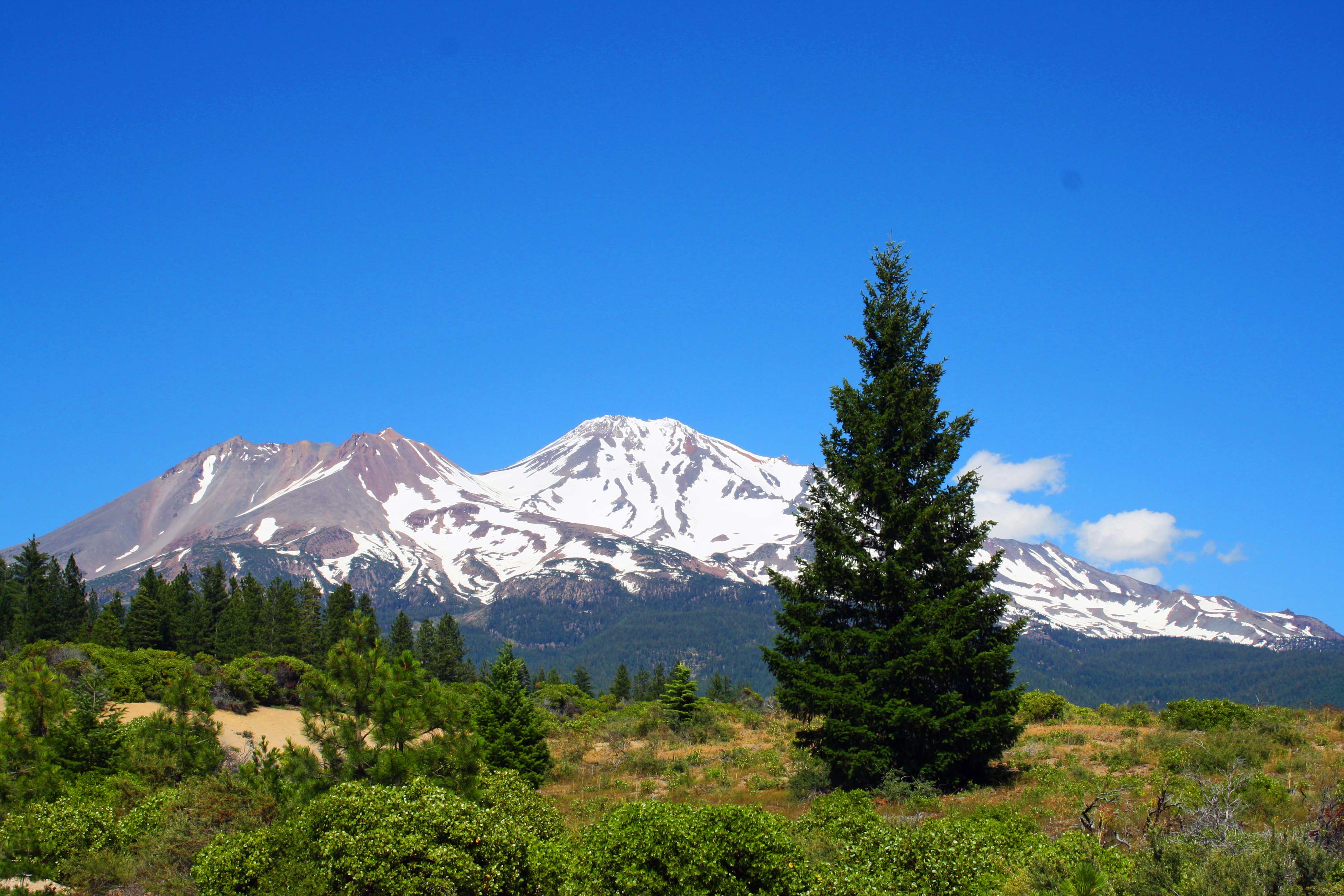
Following different roads around the mountain presents different perspectives. This shot is from Highway 97, on the north side. You can clearly see that the mountain is made up of more than one volcano.
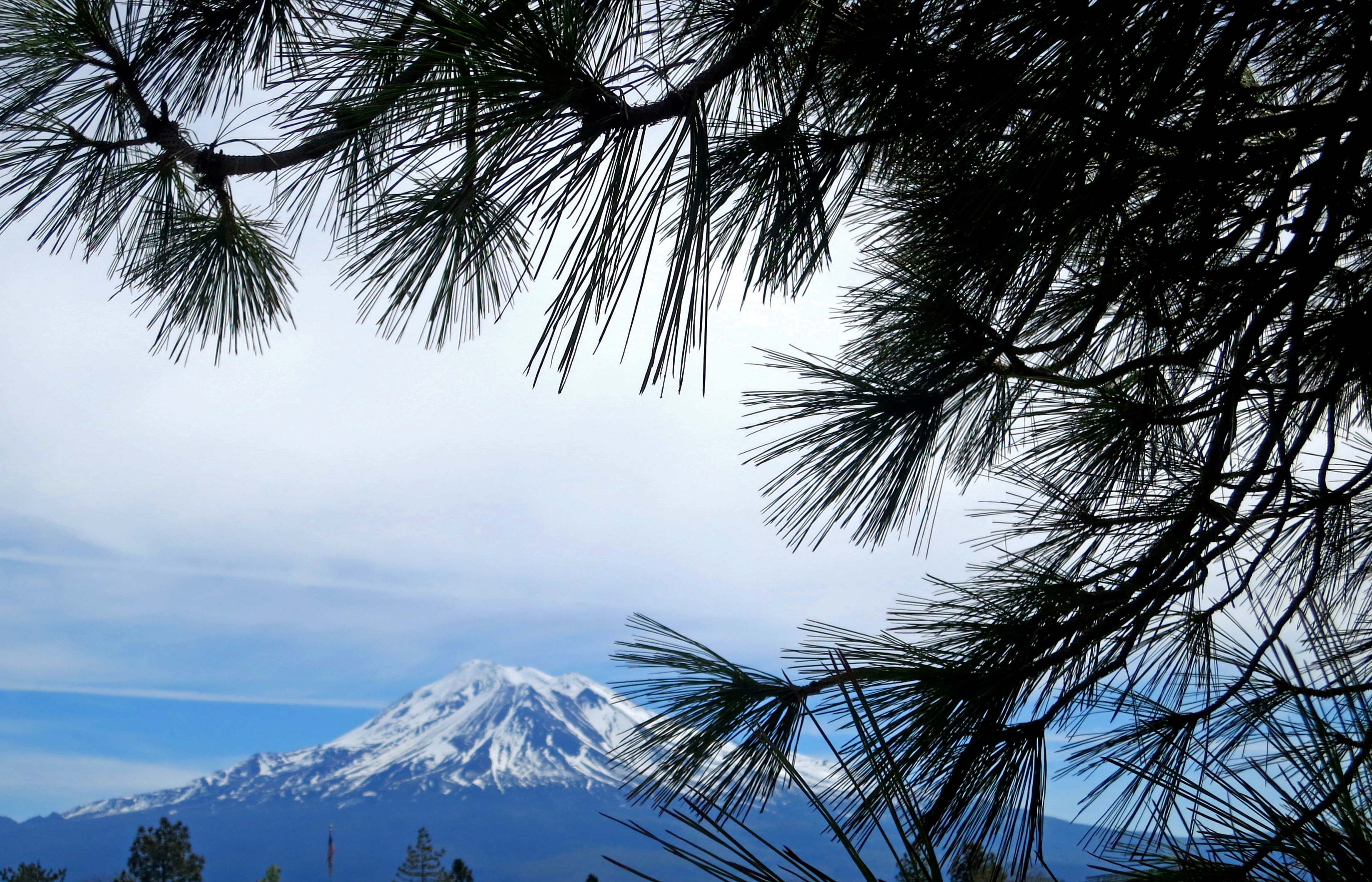
This photo is taken from a rest stop on I-5 west of Mt. Shasta
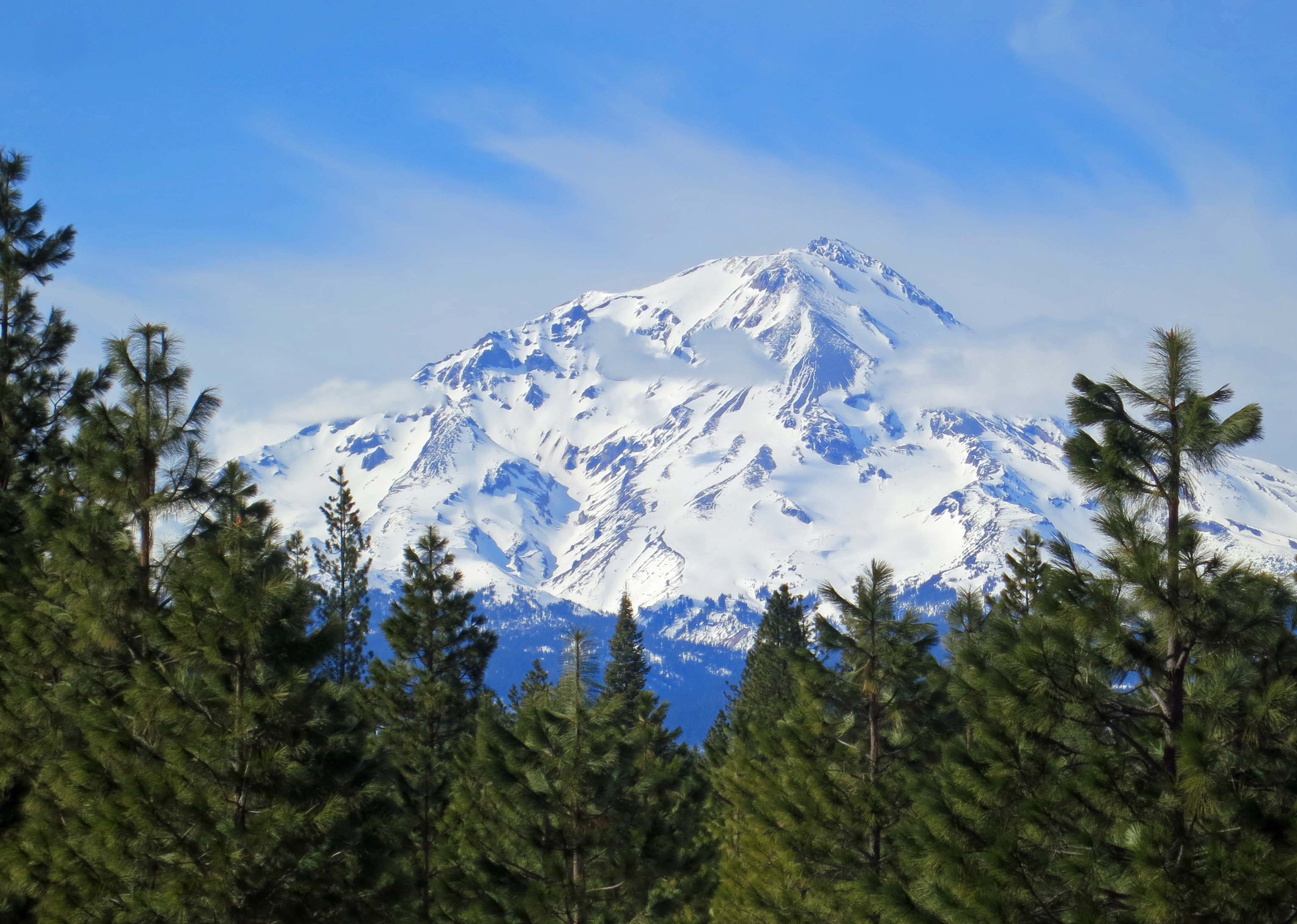
And finally, I took this picture south of the mountain on Highway 89.
The 14,162-foot volcanic peak dominates California’s more remote far north and, along with Mt. Lassen, serves as the southern anchor to the series of volcanoes that make up the Cascade Mountains of the Northwest.
In 1980, I was honored to climb Shasta with Orvis Agee, possibly the oldest man to ever climb the mountain. In 1974, the 71-year-old Orvis had persuaded me that he could handle a hundred mile backpack trip I was planning by informing me he had climbed Mt. Shasta three times the previous year. He made his last ascent up the mountain in 1988 at 85. It marked his 30th trip to the top. Two years later, in 1990, he did a 60-mile journey through the Granite Chief and Desolation Wildernesses west of Lake Tahoe with Peggy, me and other friends. He was still going strong at 87.
“Not bad for a guy who is just a bunch of bones held together by rubber bands,” Orvis told Jenny Coyle when she interviewed him for her book on Mt. Shasta.
Not surprisingly, Mt. Shasta plays a prominent role in the mythology of Native Americans who have lived in the area for thousands of years. On a somewhat stranger note, it is supposedly the home away from home of Lemurians who are said to live in a cave complex beneath the mountain and are occasionally seen walking on the surface. Lemuria was an Asian equivalent of Atlantis in that it too was considered a cradle of civilization that sank beneath the ocean. I don’t have a clue as to why the Lemurians chose to live on Shasta. And no, I haven’t seen any.
Located on California’s Highway 89, Burney Falls are even more remote than Mt. Shasta. Peggy and I had driven by the location several times but never stopped. If you are anywhere near, don’t make the same mistake. Our niece, Christina Dallen, had stopped by the falls after visiting with us and posted a photo on Facebook. It inspired us.
“Bully!” Theodore Roosevelt was said to utter when he saw the falls and declared them the eighth wonder of the world. They were declared a National Landmark in 1984. The following photos provide a glimpse as to why.
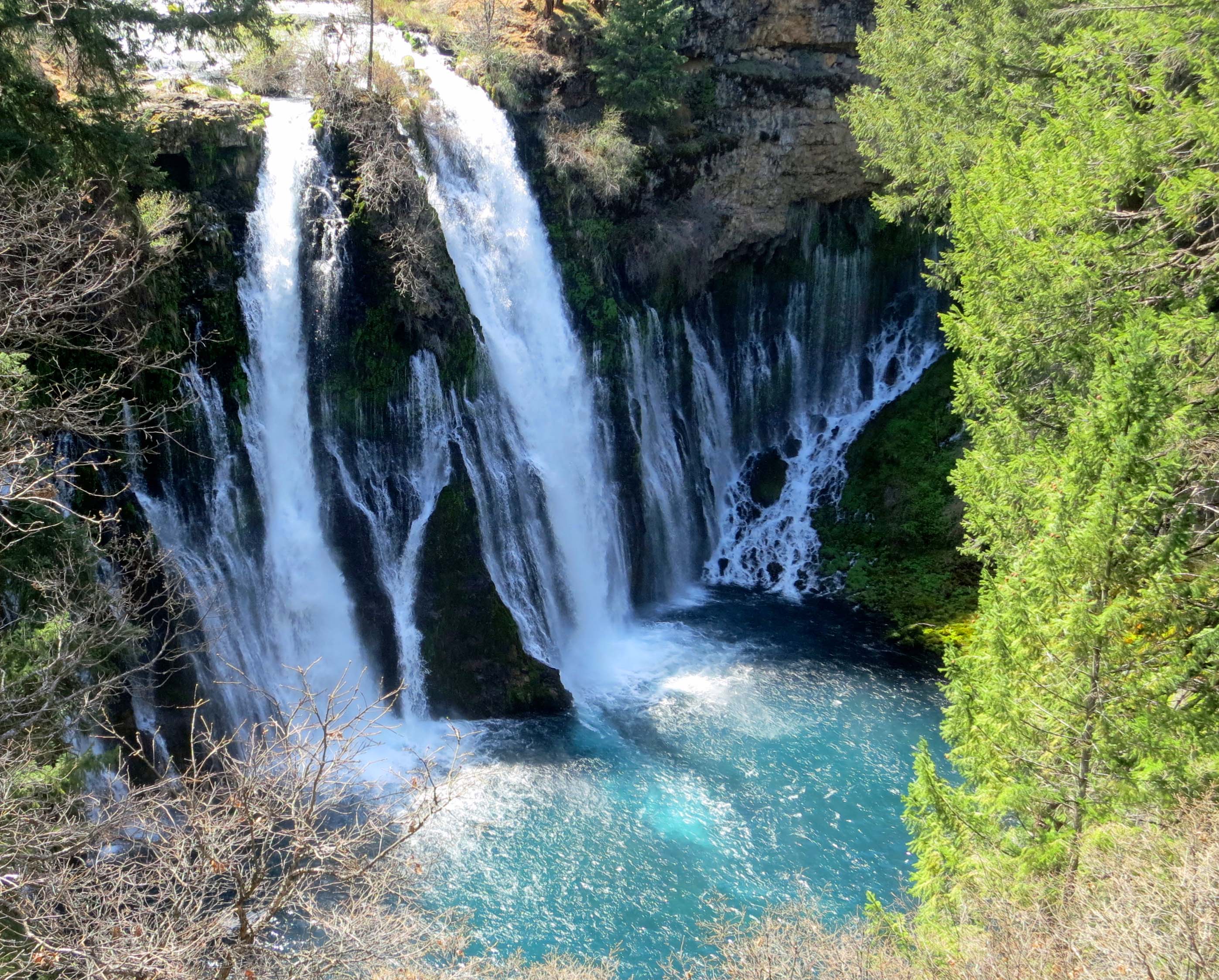
Burney Falls are located at McArthur-Burney State Park. Note how the falls originate out of various layers of rock as well as flowing over the top.
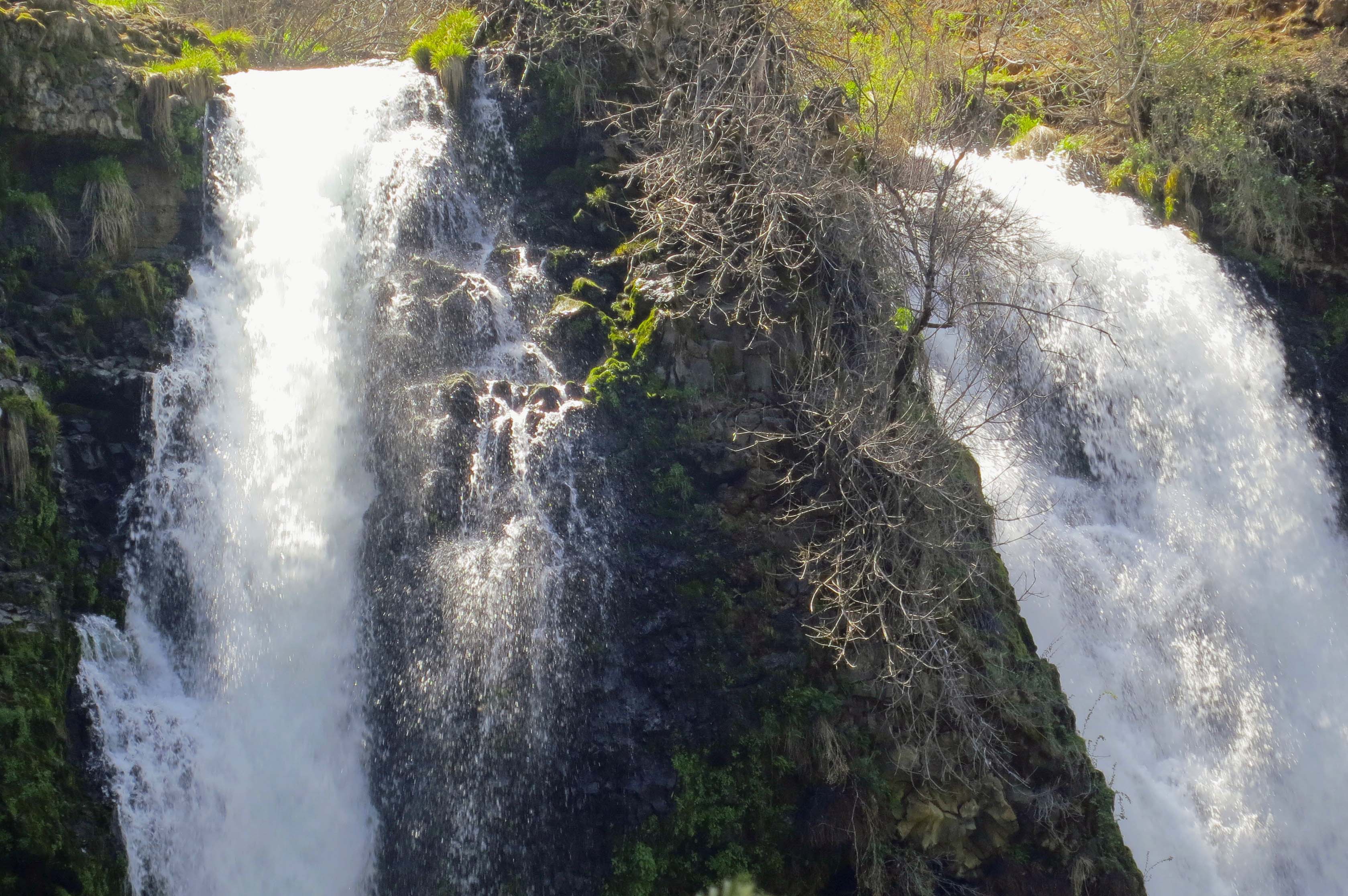
Here, the falls roar over the top.
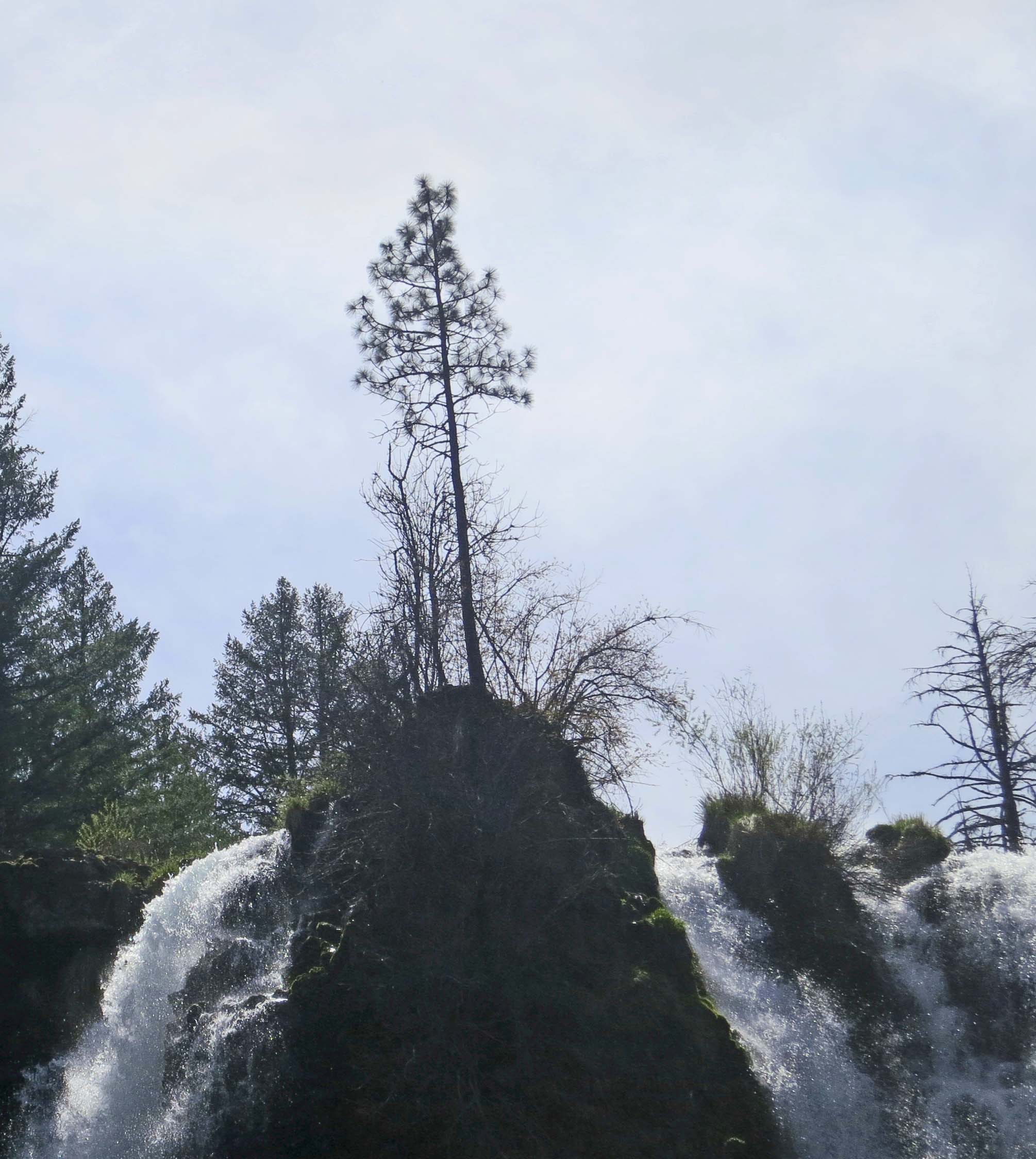
A lone Ponderosa Pine grows between the two channels.
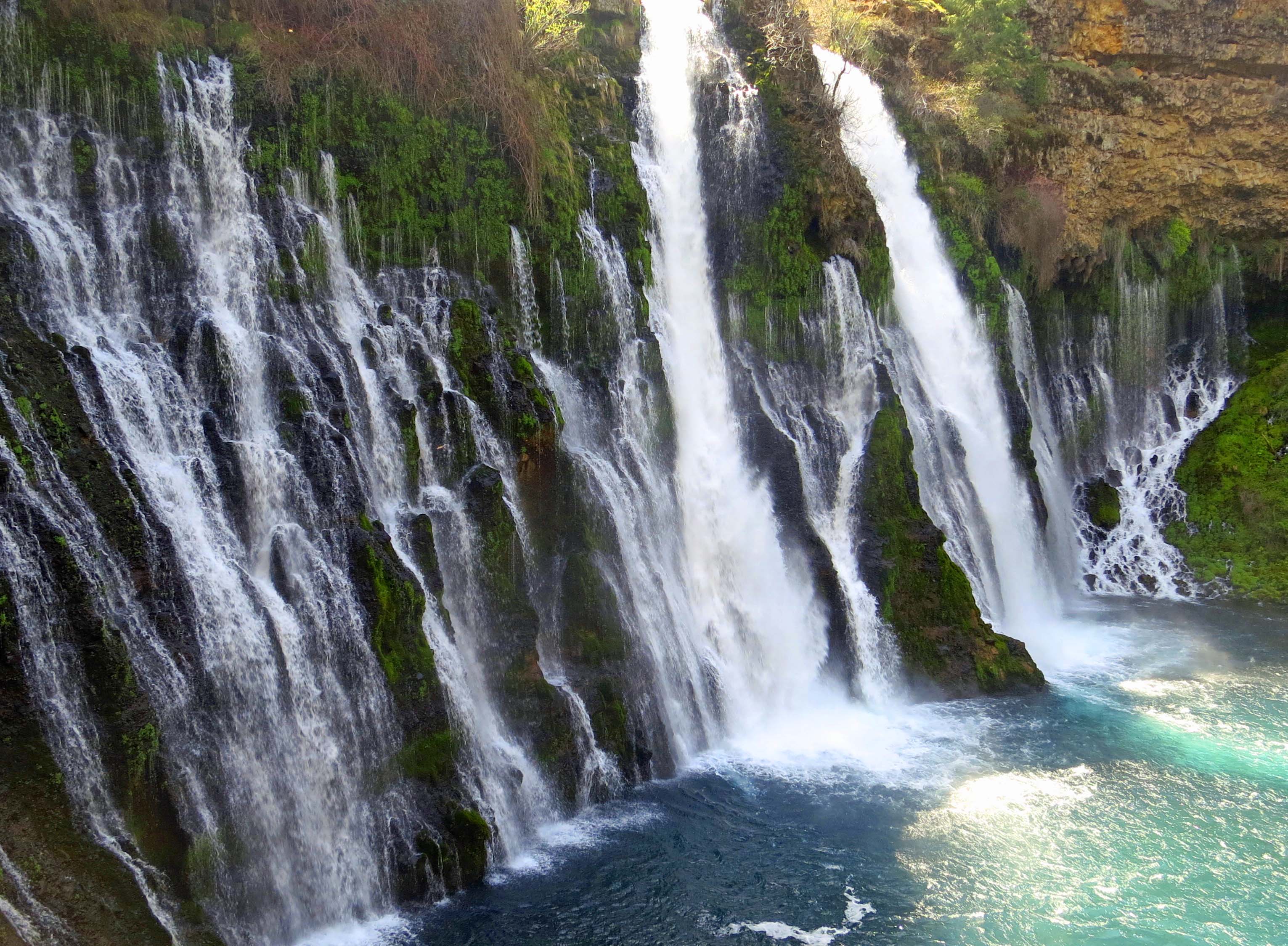
The water shooting out from the rocks provides an almost etherial quality to the falls.
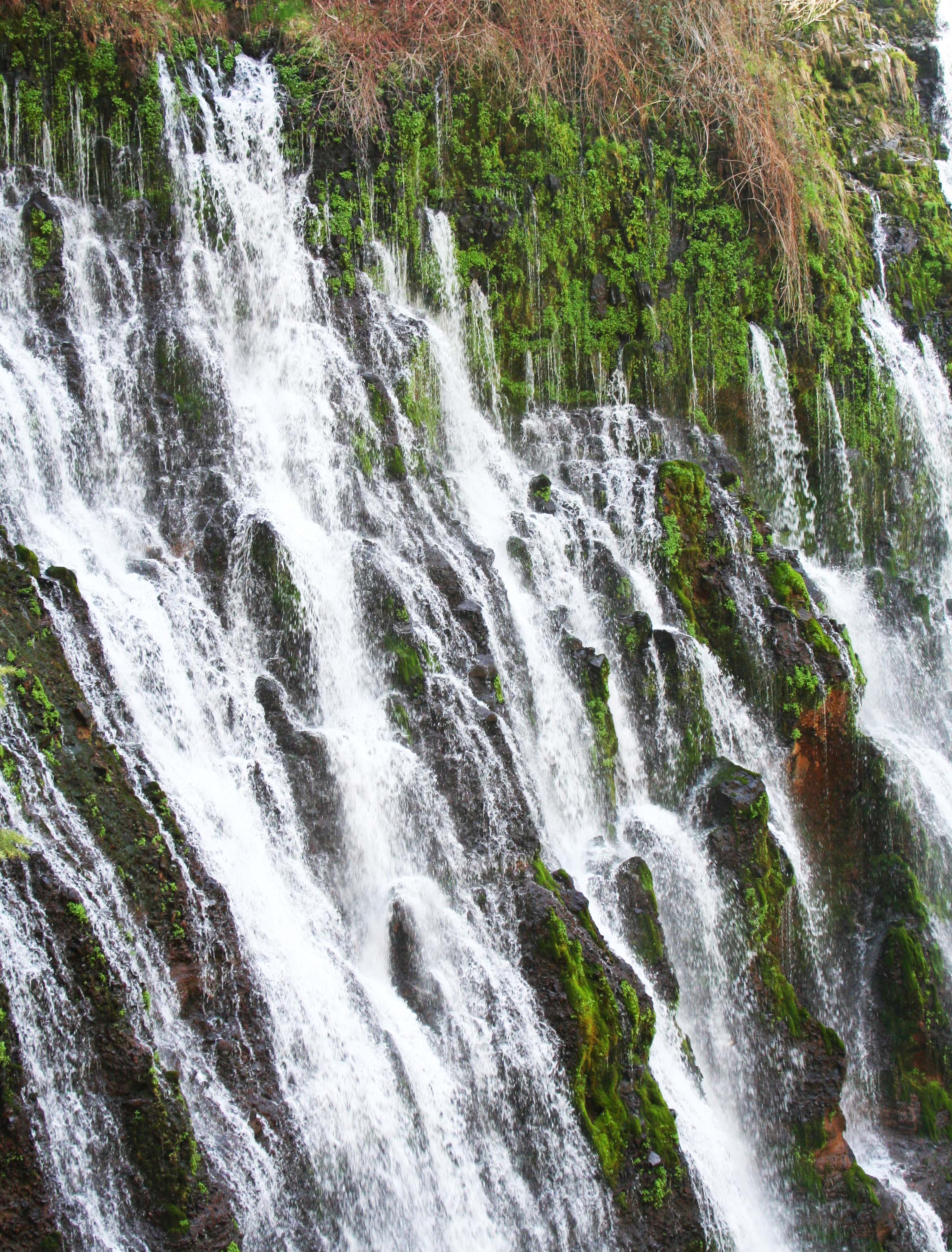
A close-up of the water emerging from the rocks. (Photo by Peggy Mekemson.)
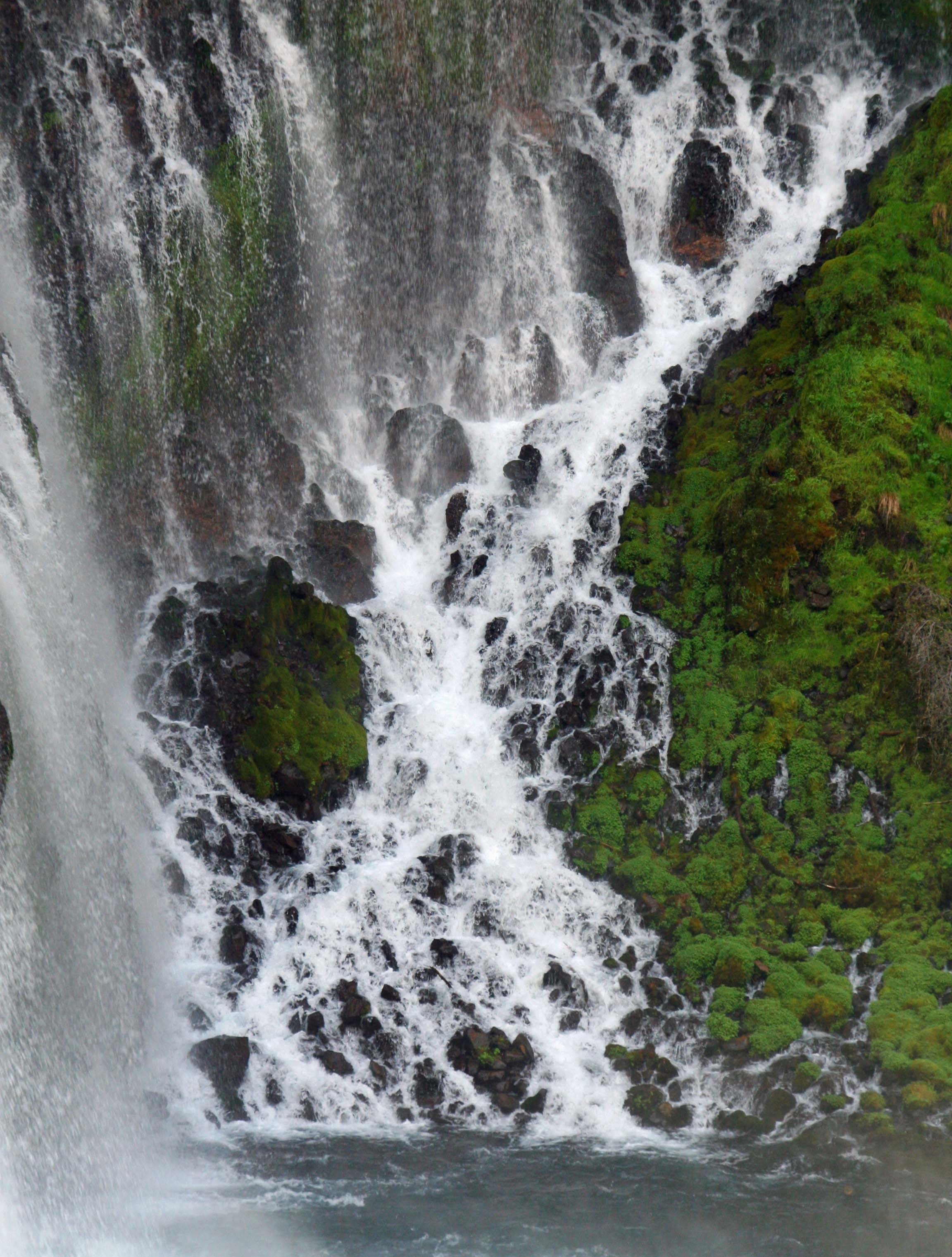
Peggy captured the braided quality of the falls on the right. (Photo by Peggy Mekemson.)
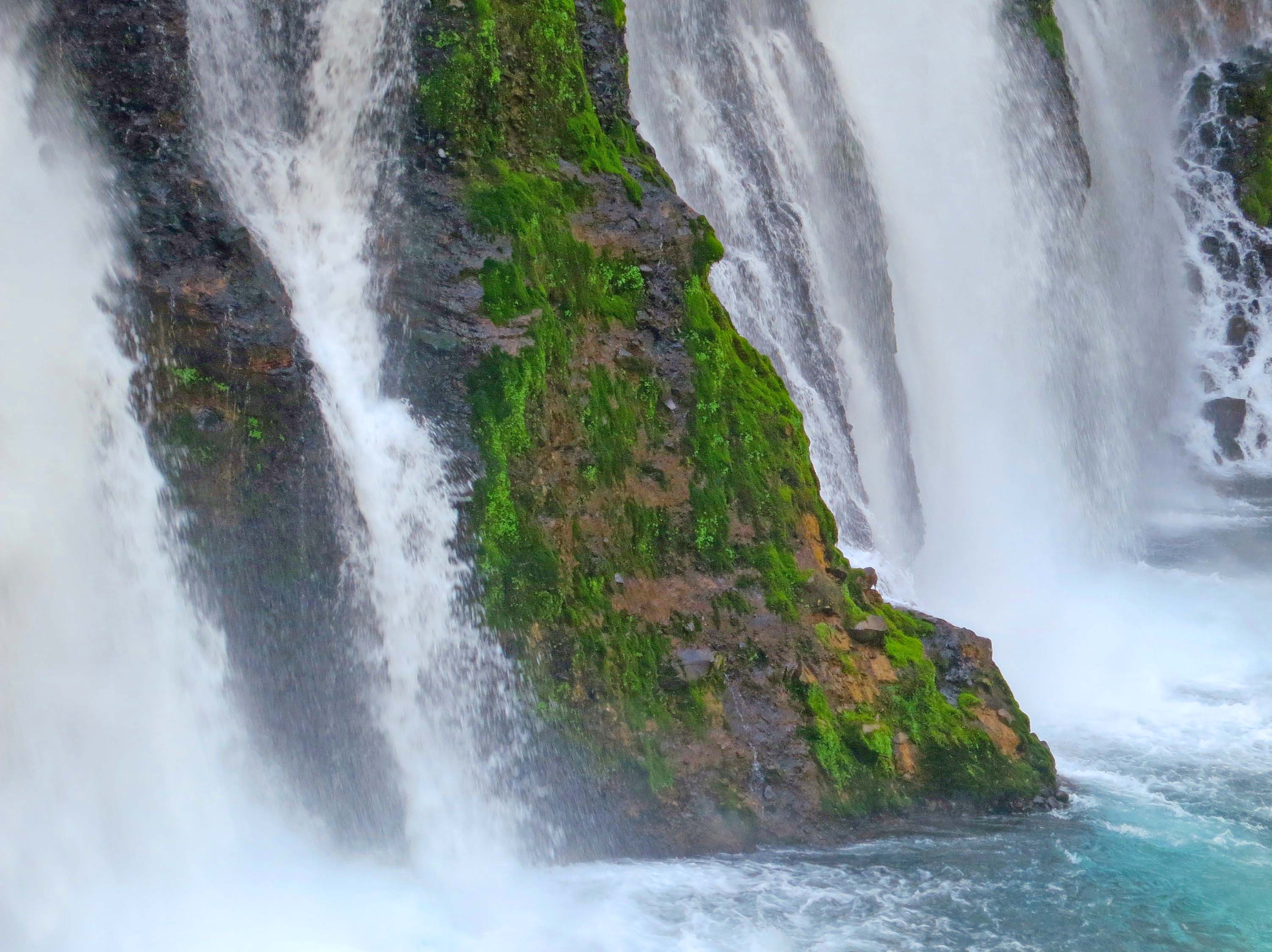
A final shot catching the water crashing into the river.
NEXT BLOG: What if you could hire a different talented artist to paint each room of your house? The results would be fascinating. That is exactly what is happening at a hotel in Reno that takes its inspiration from Burning Man. I visit the hotel in my next blog.
 Wandering through Time and Place