I think this may be the definition of bliss, an emotion one wouldn’t normally associate with a hippo. We took this photo on Lake Kariba in Zimbabwe.
I didn’t expect hippos to be photogenic, but they kept Peggy and me busy with our cameras. Today’s post will mainly be made up of pictures. Folks who read my long elephant blogs deserve it. LOL. But still, a few facts are in order. I’ll work them into the photos.
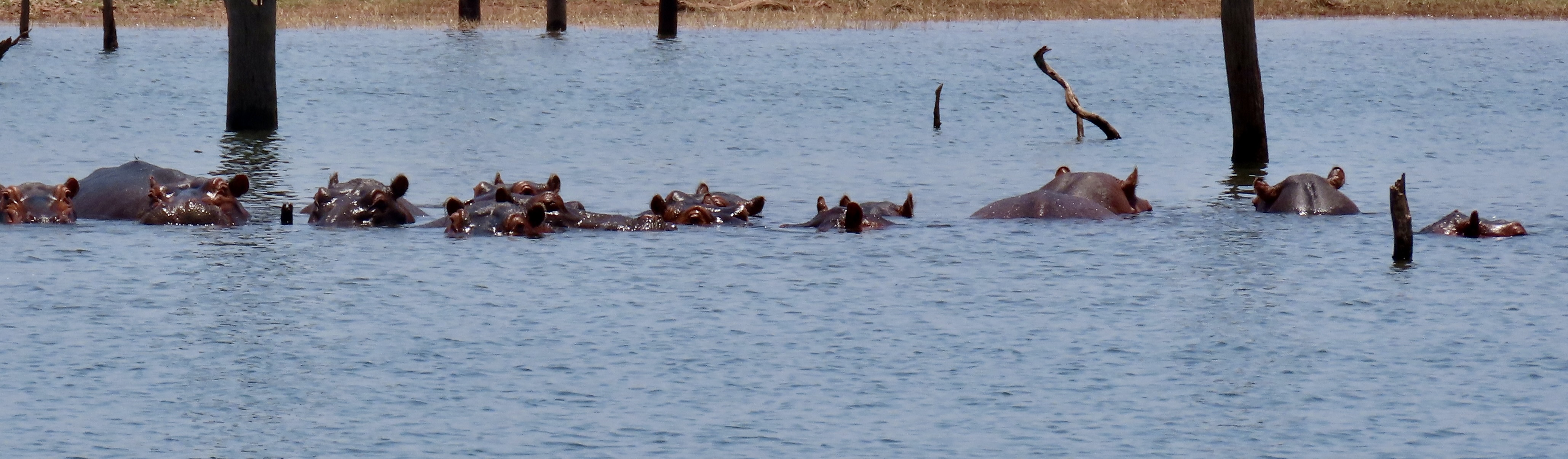
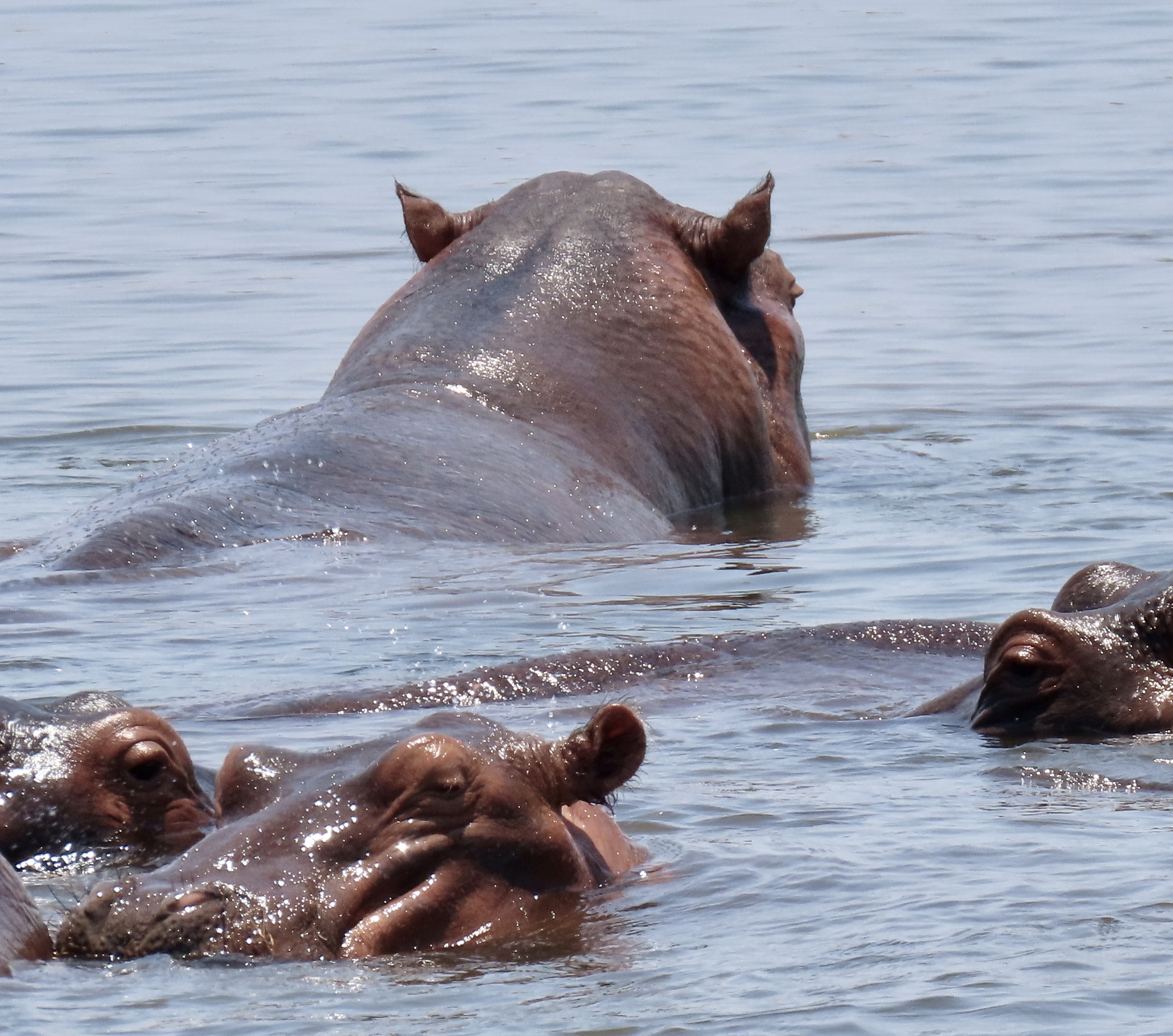
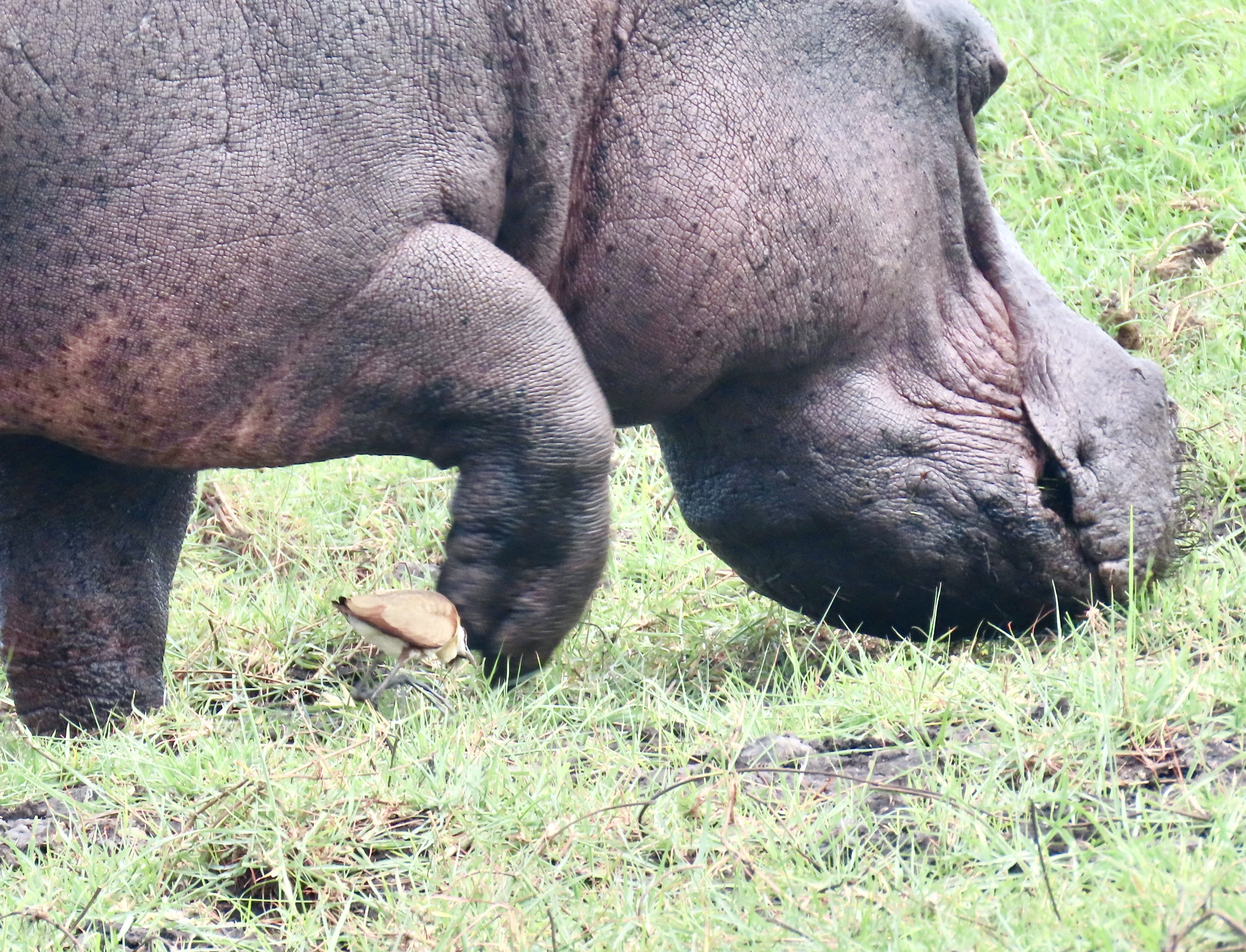
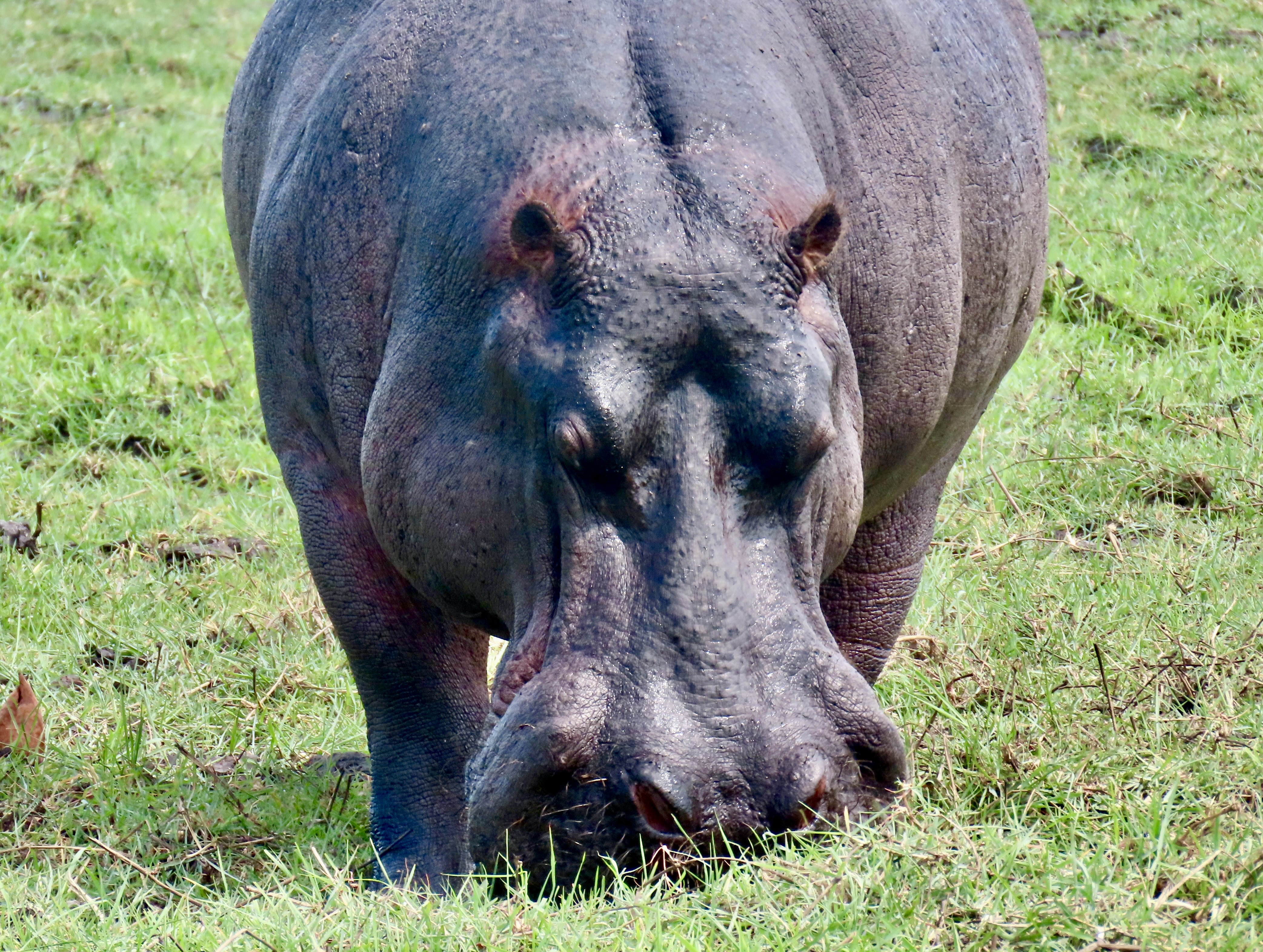
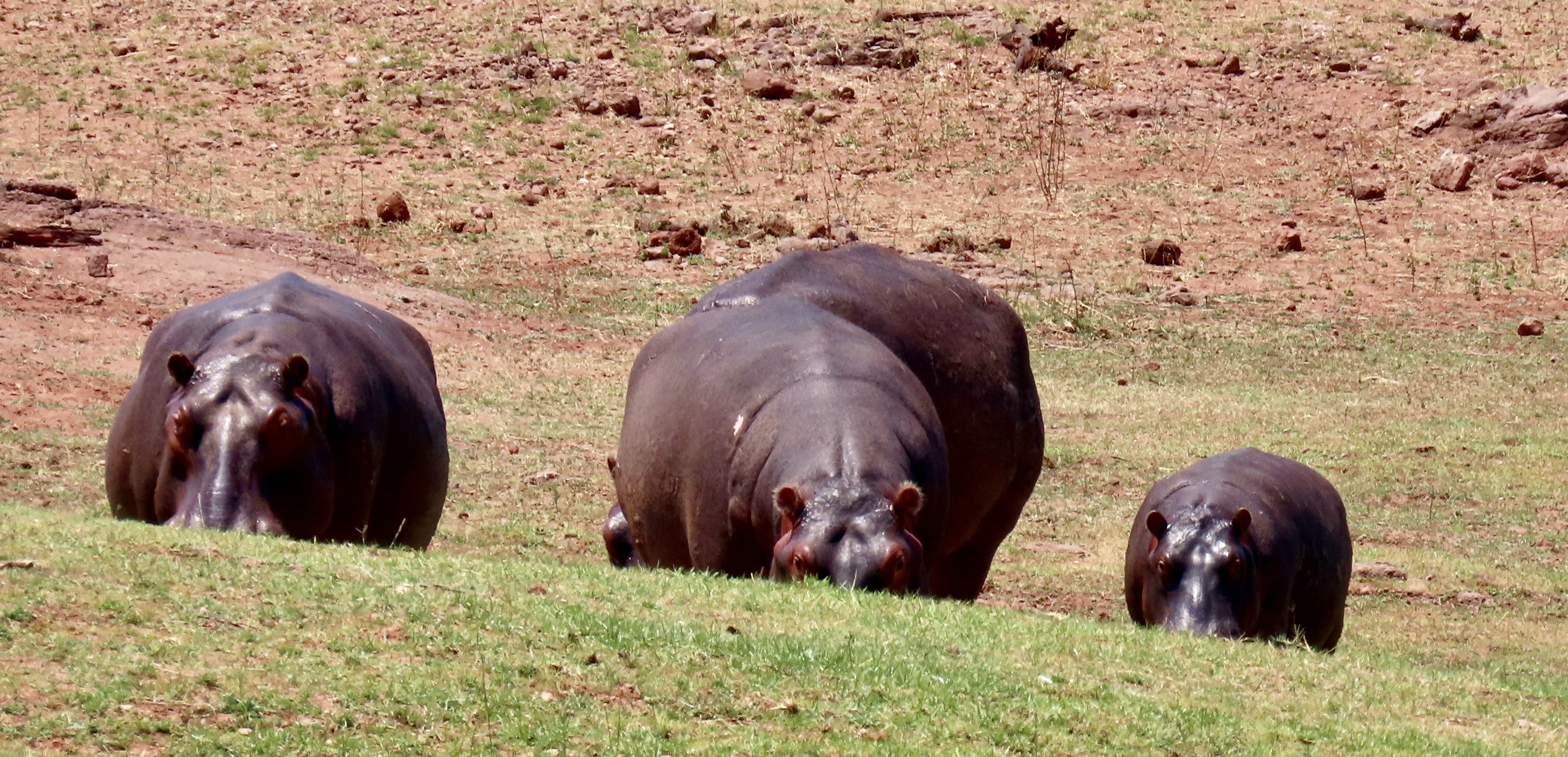
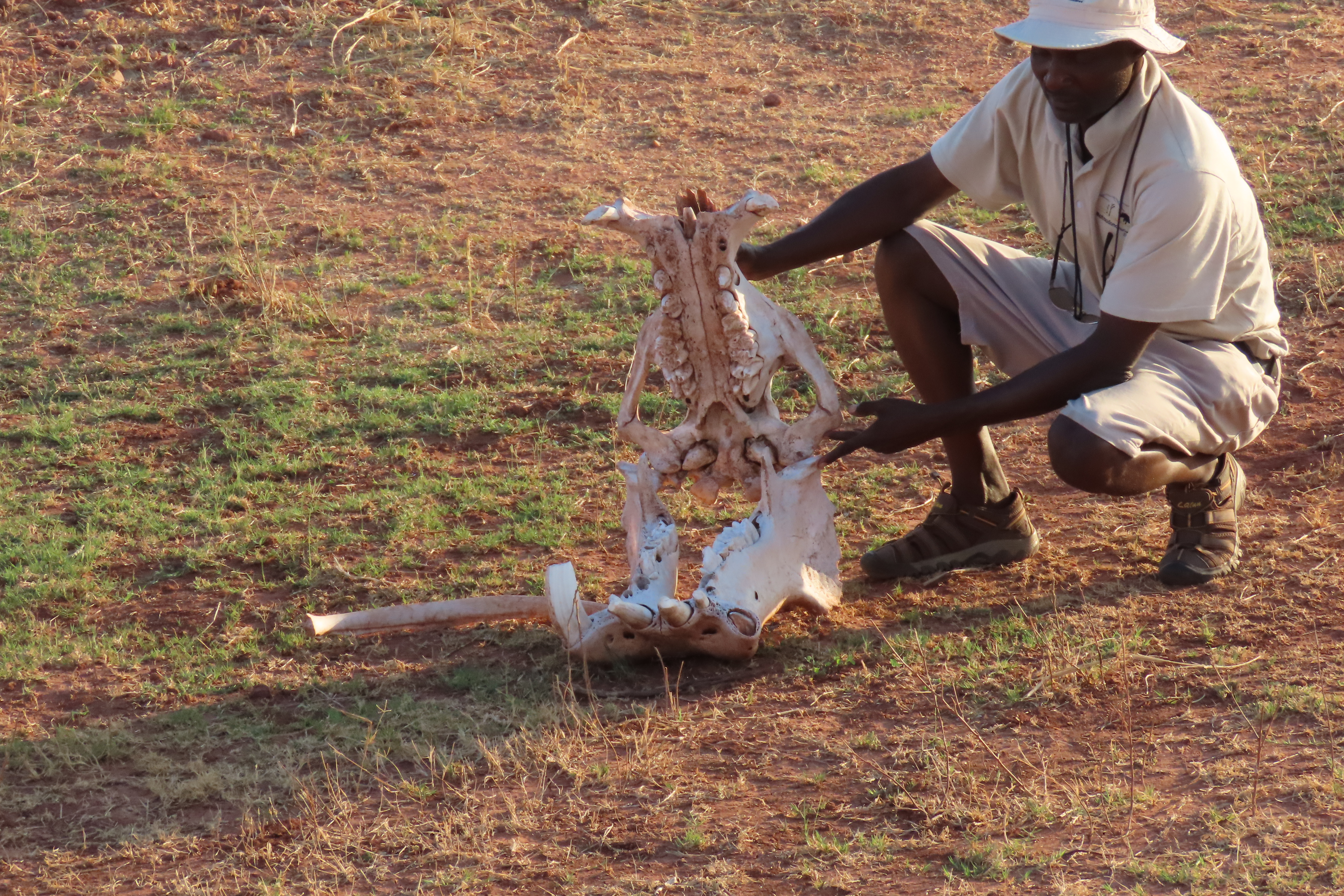
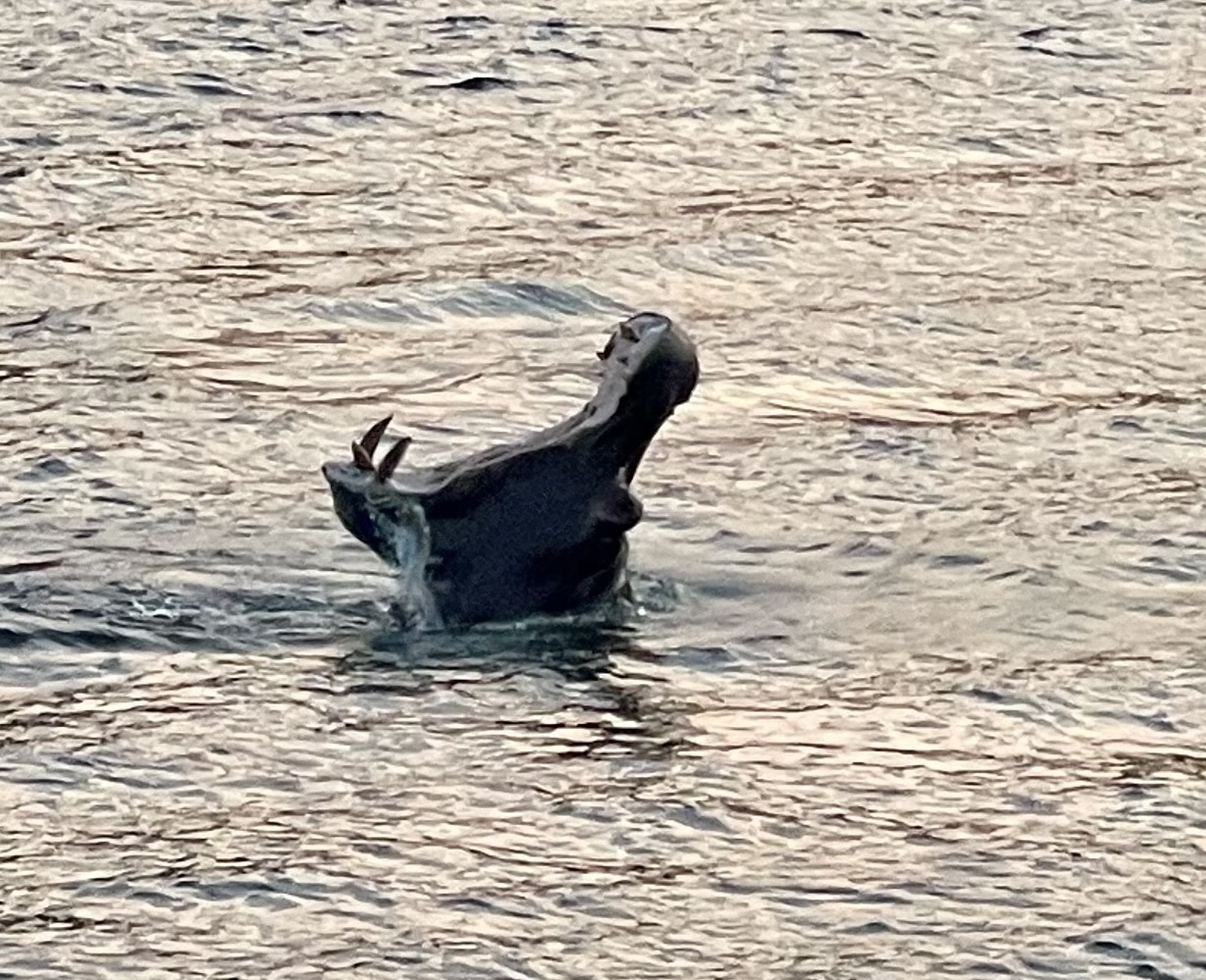
My new camera with its super long lens provided plenty of opportunity to get up close and personal with hippos. You could count the whiskers on this guy’s snout. Hippos spend around 16 hours a day in water. Their nose, eyes and ears are all on top of their heads. This allows them to be able to see, hear and breath while being close to submerged— keeping cool and protecting their skin.This is a common photo of hippos in water including males, females, and babies. They like to hang out together in groups of 10-30 known by such names as schools, pods, sieges or bloats. My favorites are the last two. If you were surround by these guys you would definitely feel like you were under siege. As our boat on Lake Kariba in Zambia approached this group of hippos, they were sinking under the water, a normal tactic.These hippos at Lake Kariba provided a photo op. “Okay, everyone, line up. And stop mooning the camera!”The sun was setting on this big fellow when we took our first boat trip on the Chobe River in Botswana. I’d say ‘bloat’ works here. An average female tips the scales at 3000 pounds while a big male can weigh up to 9000.Groups are normally dominated by a large male who is in charge of protection— and mating, which is mainly carried out in the water due to the weight factor. The gestation period is eight months. Moms give birth to one baby weighing 30-50 pounds. The babies can actually nurse under water.Hippopotamus is derived from ‘water horse’ in ancient Greek. Can you imagine trying to ride one? You would probably drown. They can’t swim. Their size and density makes them sink. But they are ideally suited for travel under water and can stay down for five minutes at a time. They actually walk or run along the bottom. Flaps over their noses and ears close automatically when they go under. A special lid covers their eyes. This fellow, BTW, is probably asleep. Hippos can sleep under the water for up to ten hours, automatically rising every five minutes or and so and sucking in air while continuing to snooze. Great whiskers.This was my favorite shot of hippos in the water. Is it a two headed four eared hippo? Grin. Huge odds are not… But I sure couldn’t imagine how they managed to arrange themselves this way. Going for a ride? Breeding? Maybe.The literature emphasizes that hippos stay in the water during the day and come out to graze at night. Fortunately, everywhere we went that included hippos, a few were out happily stuffing themselves on grass. They average around 80 pounds a night/day, traveling some 6 miles (10K) to get their fill. When out in the day, their skin exudes a protective layer that serves as sunblock. A pair of hippos grazing along with oxpeckers. (The birds peck off insects but they also peck holes in the hippos and drink blood. Hmmm, friend or foe?) I’m assuming this is a pair. Males tend to mate for life but are polygamous.Peggy and I took lots of close-ups of the hippos grazing along the river in Chobe National Park, Botswana. Check out the big tusks. They are used for fighting, not grazing.Any large African animal, be it hippo, elephant, Cape buffalo or giraffe, has a coterie of birds that follow along and catch insects the animals stir up.The little guys seem fearless. Is it grabbing an insect from under the hippo’s foot?We liked this head shot.Males are very territorial. It’s one of the things that make them so dangerous. And they have a unique way of marking their territory. They use their tails to fling poop. That’s what is happening here. The tail is moving so fast, it’s a blur. Remember the old statement, “When shit hits the fan.” You don’t want to be around. Hippos can actually fling their stuff for 10 meters, almost 33 feet. Be you man or beast, you might become toast (or possibly a pancake) if the hippo decides you are invading its territory. And they can run up to 30 miles per hour for a short distance, i.e. probably far enough.Imagine being on top of this small hill at Lake Kariba photographing a few tons of hippos as they come charging over. Fortunately, my telephoto lens allowed me to be a long way off.This hippo skull was beside a small road we were following into Matusadona National Park at Lake Kariba. Note the tusks.The park ranger who was taking us on the tour into the park, got out of our safari vehicle to demonstrate how far a hippo can open its jaw.Peggy captured the phenomena on the Chobe River. From a humorous perspective, it appears junior is getting a lecture on his behavior. “Next time you go near that crocodile, I’ll let him eat you!” And look how long the hippo is! A large male can grow up to 16 feet.This is the ultimate picture of a hippo opening its jaws and declaring a territorial challenge, or yawning. Everyone who goes on safari wants to capture one. Believe me, we tried. Our last opportunity was when we were on the Zambezi River outside of Victoria Falls. Unfortunately, we were on the wrong side of the boat. One of our tour group was glad to share.
I’m going to try something now in concluding this post that I rarely do: Share a video. We normally take several for ourselves but not for the blog. Too many oops. Handheld videography has its challenges! But this two minute video shows an excellent example of an elephant-hippo confrontation. It’s worth checking out, even with its occasional shakes. It’s almost funny as the hippo maneuvers his way through the elephants trying to show itself as harmless and submissive as possible— and only raises its head when the elephants are left far behind. You can almost hear its sigh of relief. Enjoy. Click twice on the photo to start the video. On our next post, we will feature giraffes, Peggy’s favorite animal.








 Wandering through Time and Place