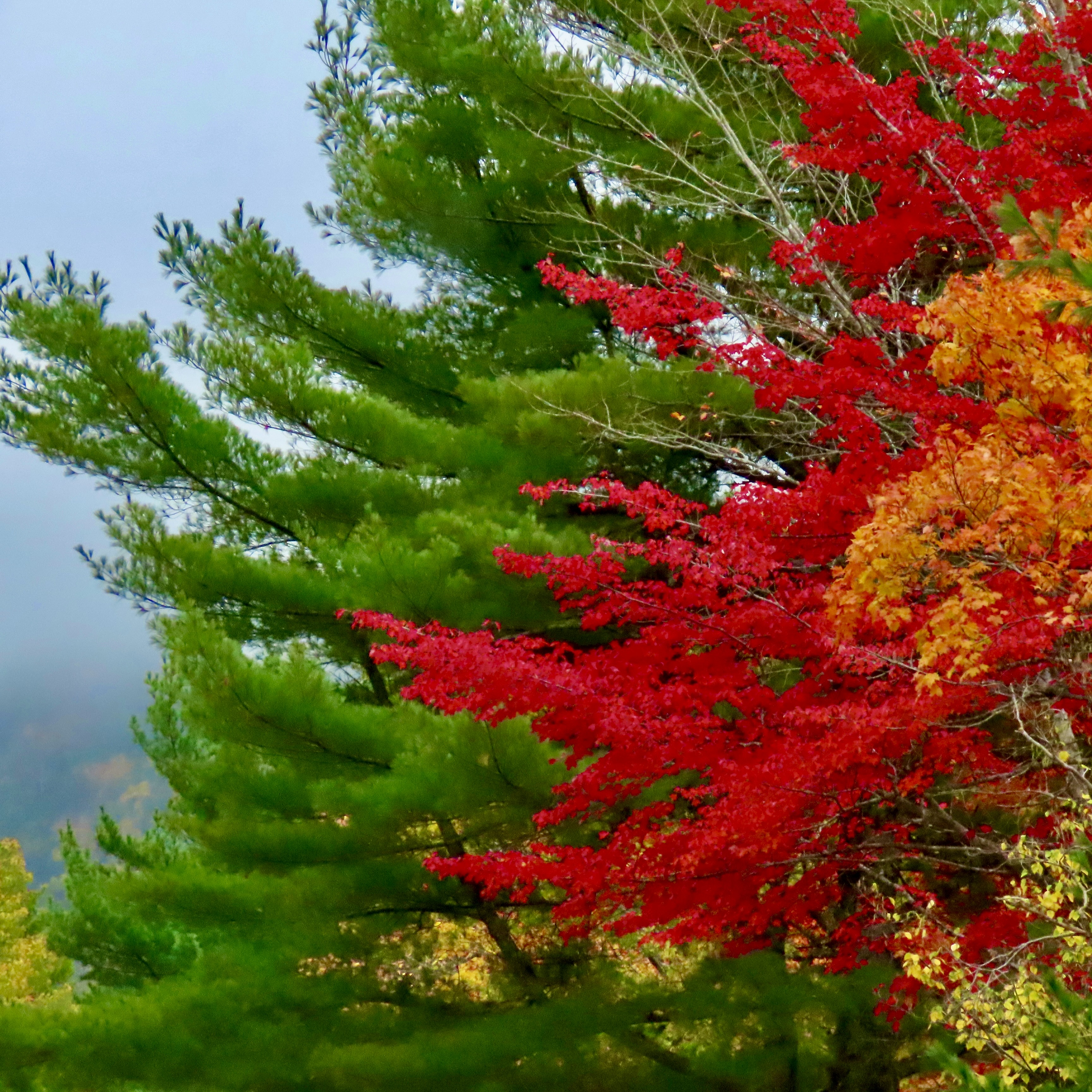
As we noted in last week’s post, our 2025 wrap-up is based on three trips we made during the year and blogged about. The first was Hawaii, which I posted last Monday. Today’s post features our Southwest journey where we wandered through the Southwestern US for five months visiting national parks, state parks, and national monuments. Next week’s post will cover our three week leaf-peeping trip through New England in the fall.
The photos used in the three posts are all from ones we selected to include in three calendars we developed for our extended family, each focused on one of out trips. (Not all of the photos here made it into the calendars, but it was a flip-of-the-coin type decision.)
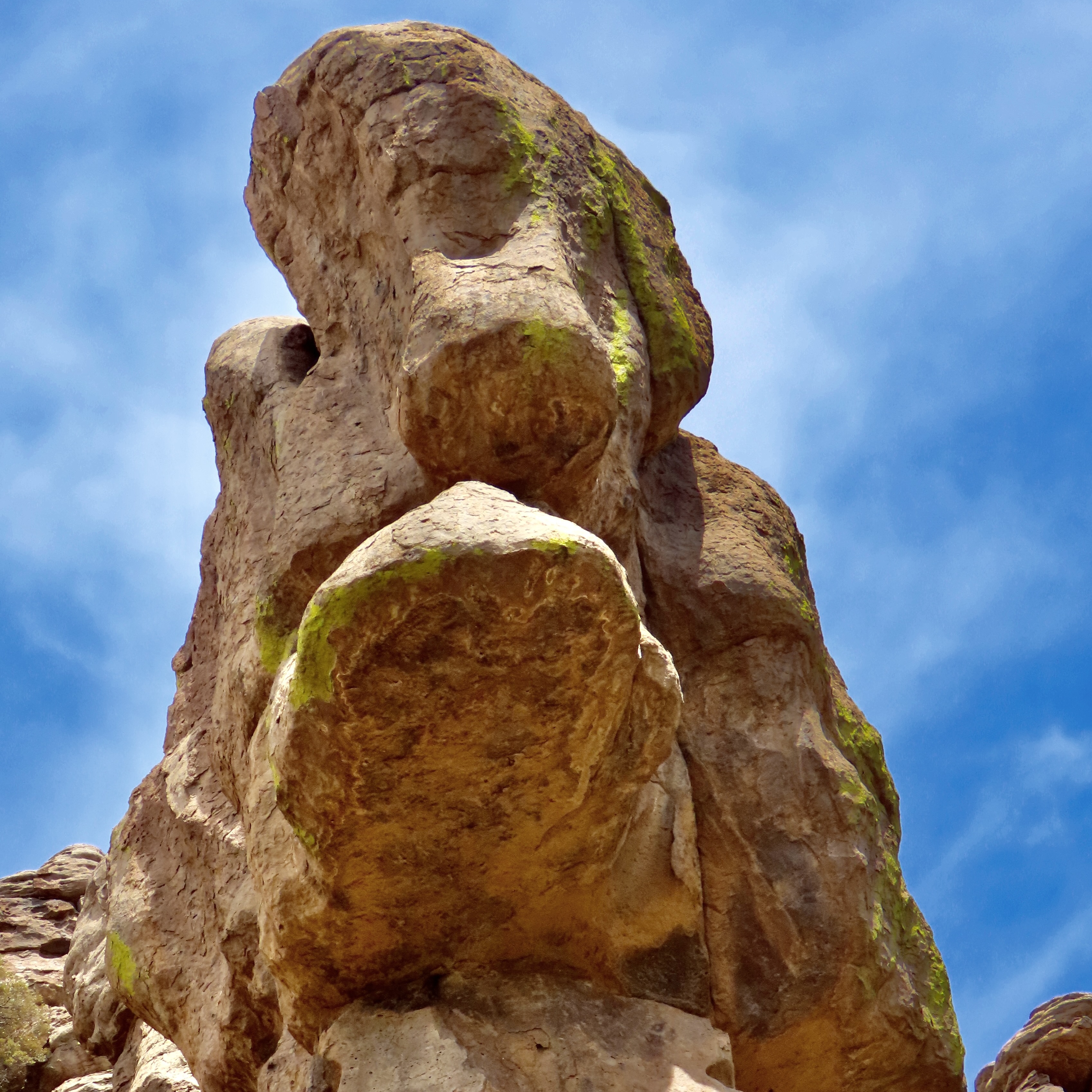
We discovered the towering rock above in Chiricahua National Monument, which is located in southeastern Arizona. The monument is named after the Chiricahua Apaches who roamed the area prior to it being occupied by pioneers from the eastern US. A couple of notes. One, the park is filled with a fascinating variety of rock structures. Two, we have discovered over the years that national monuments often include scenery, geology, history, plants and animals that easily match those found in national parks. They are definitely worth visiting and are usually far less crowded.
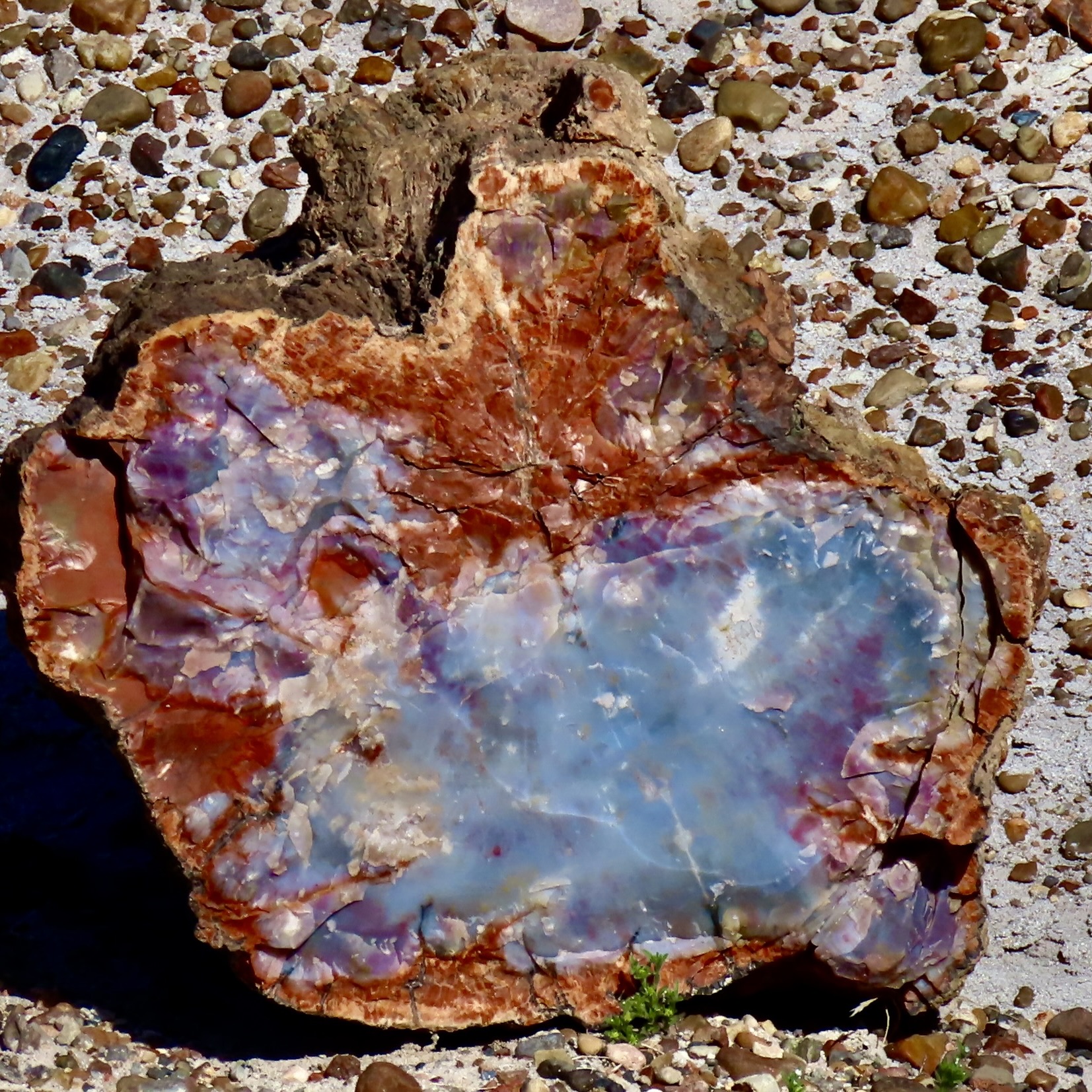
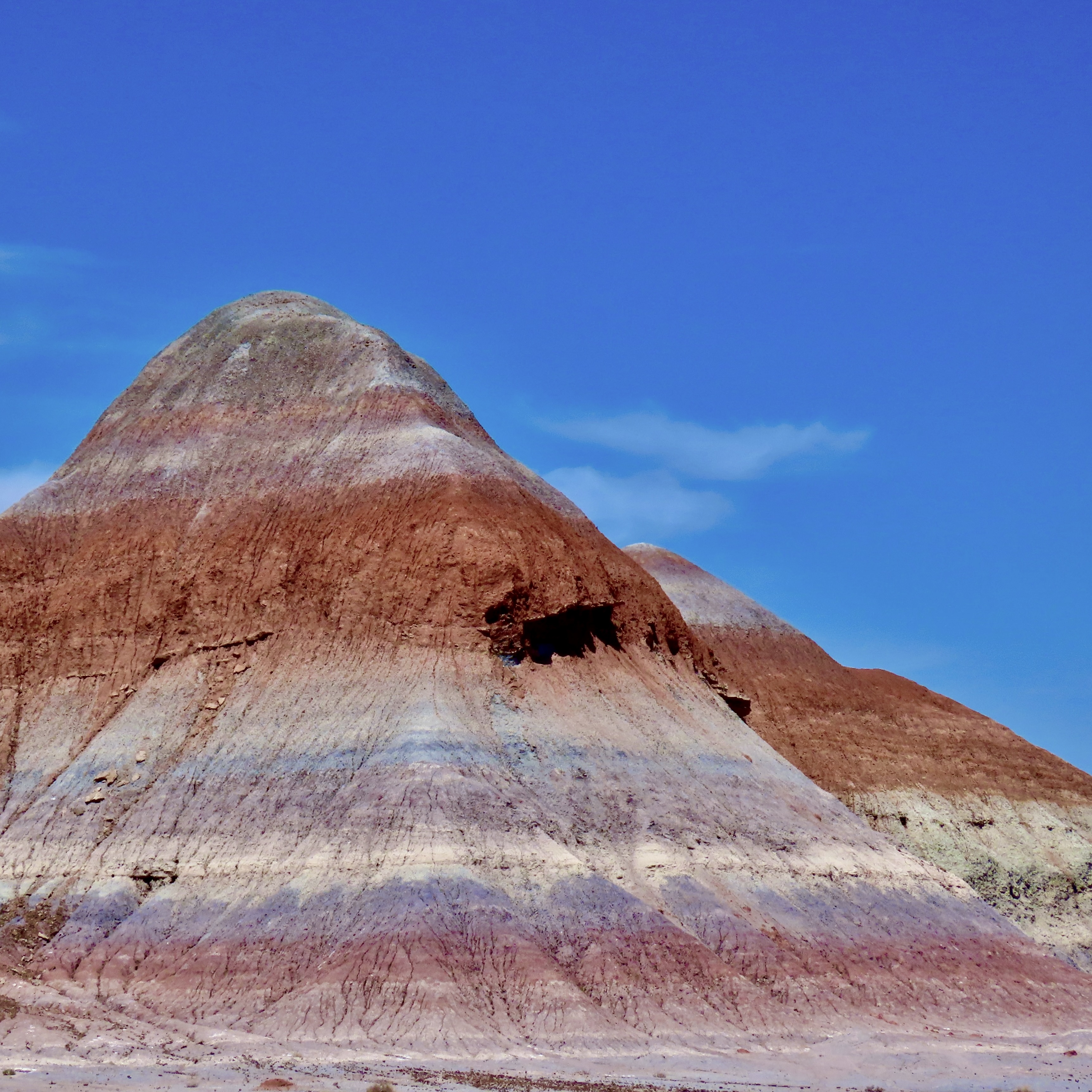
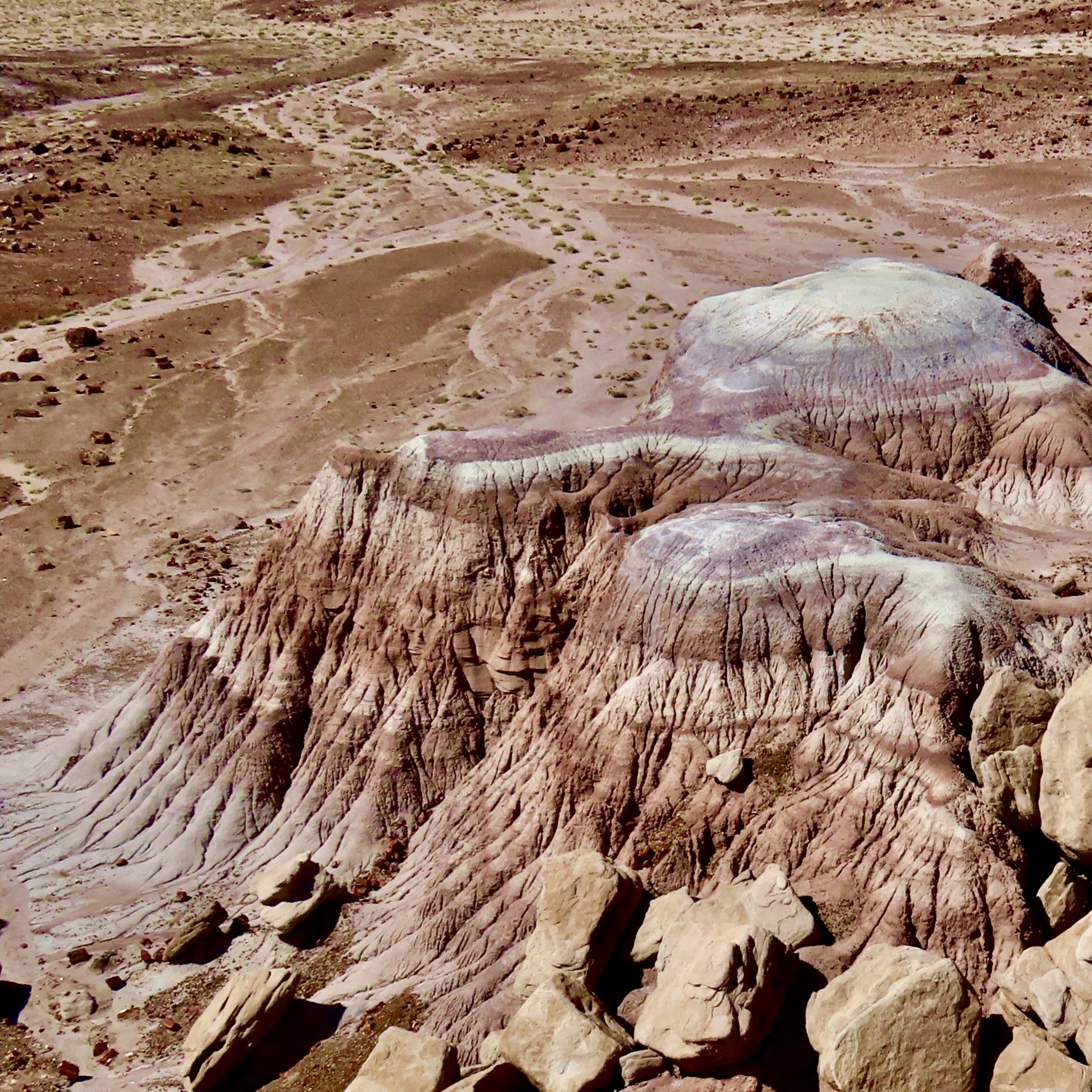
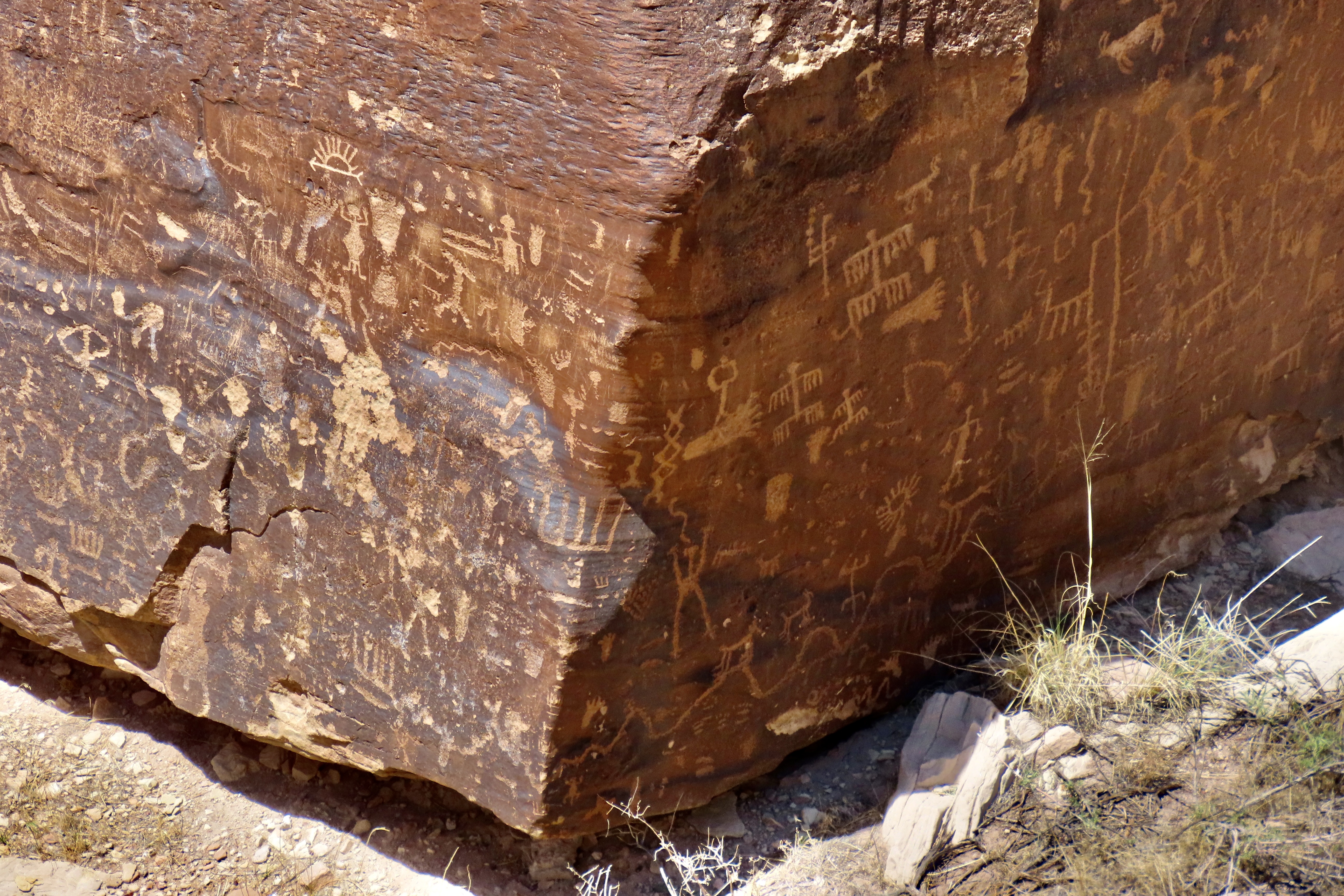
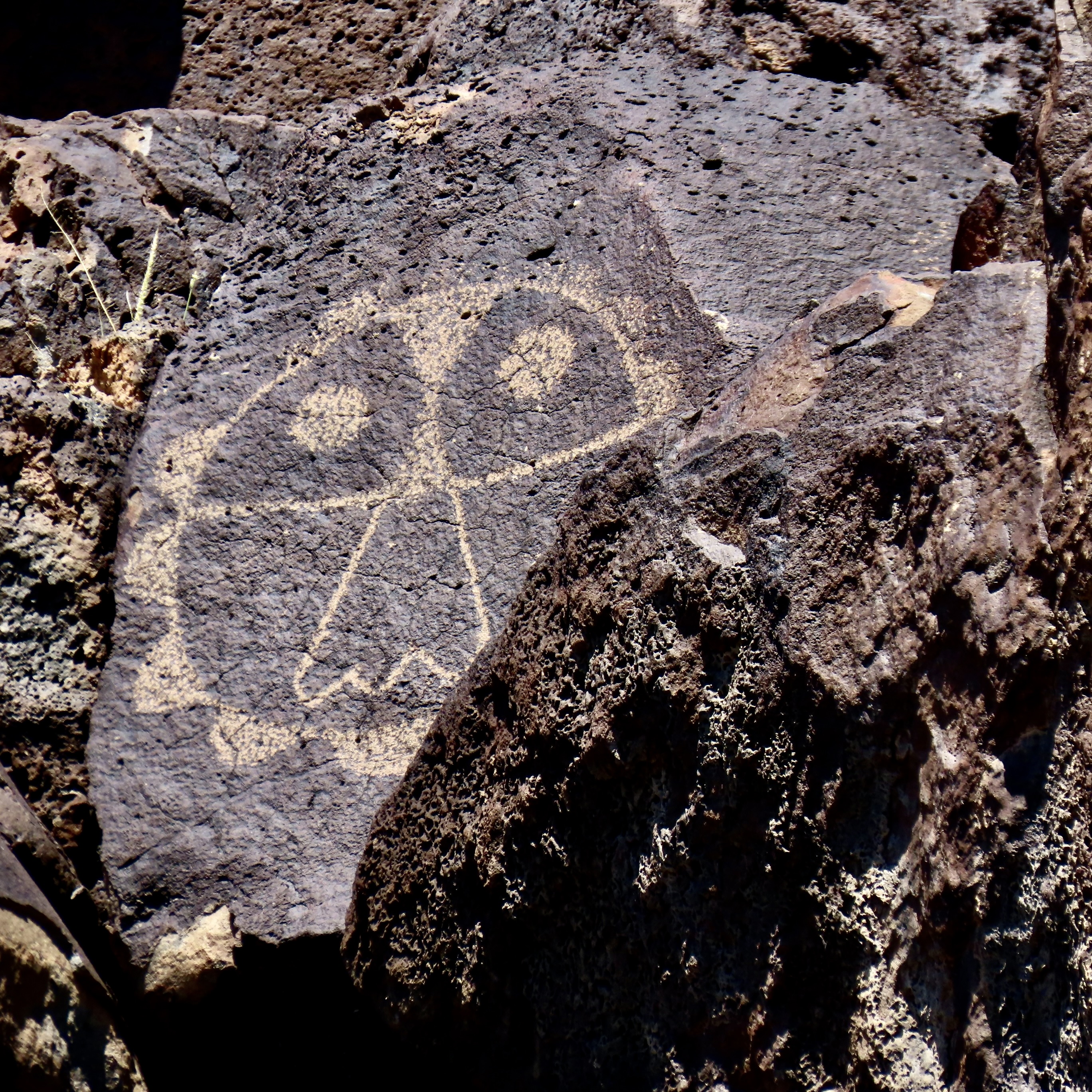
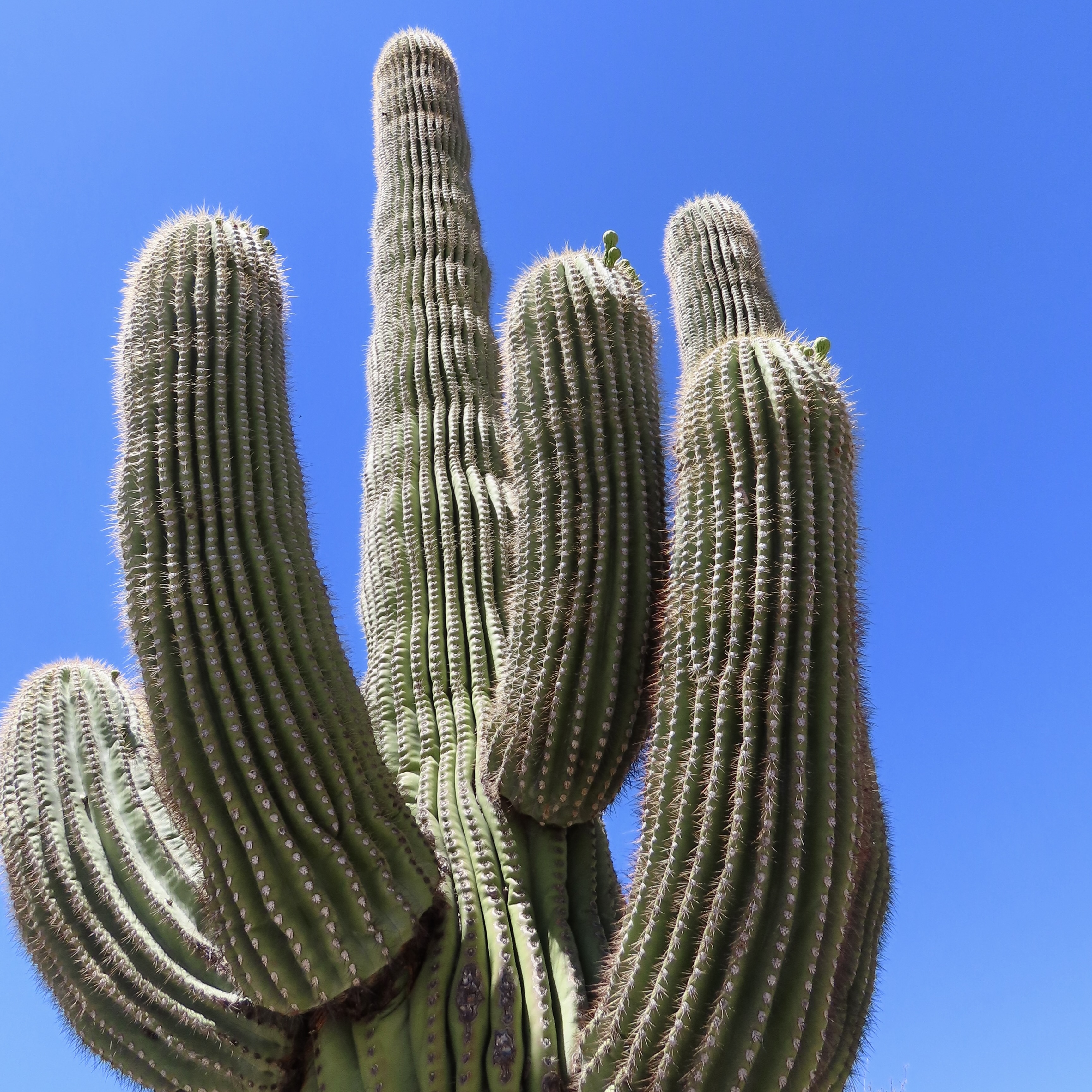
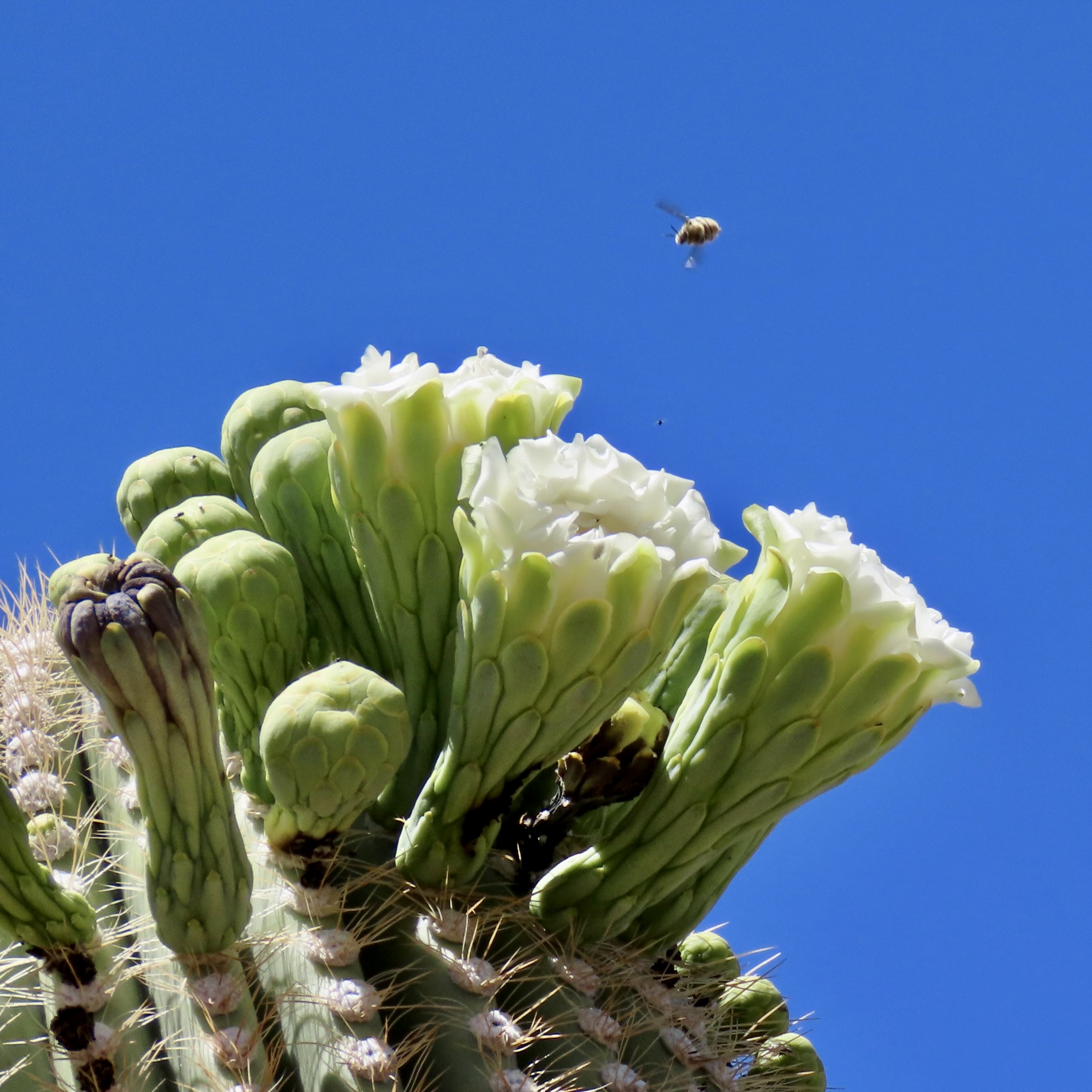
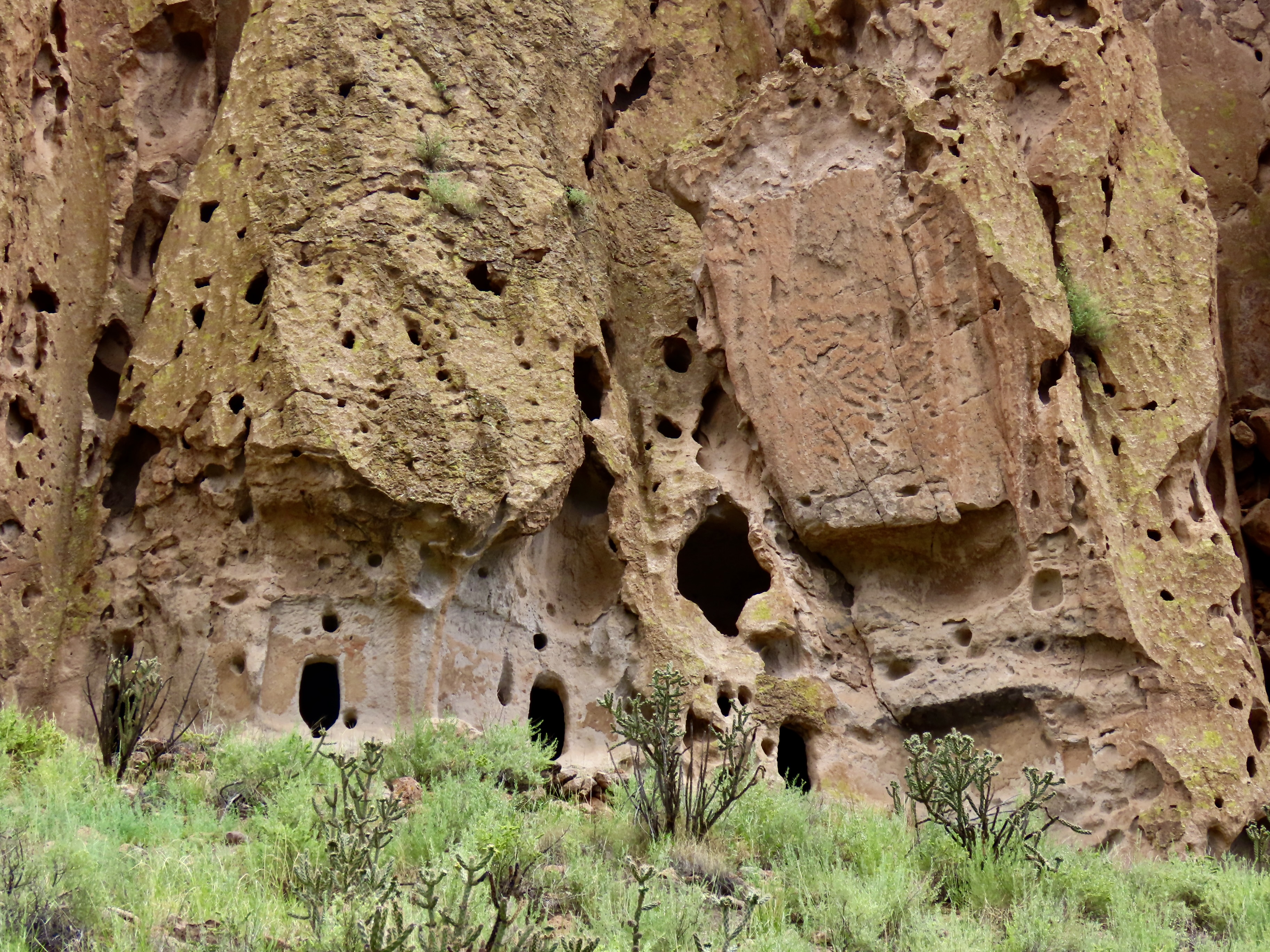
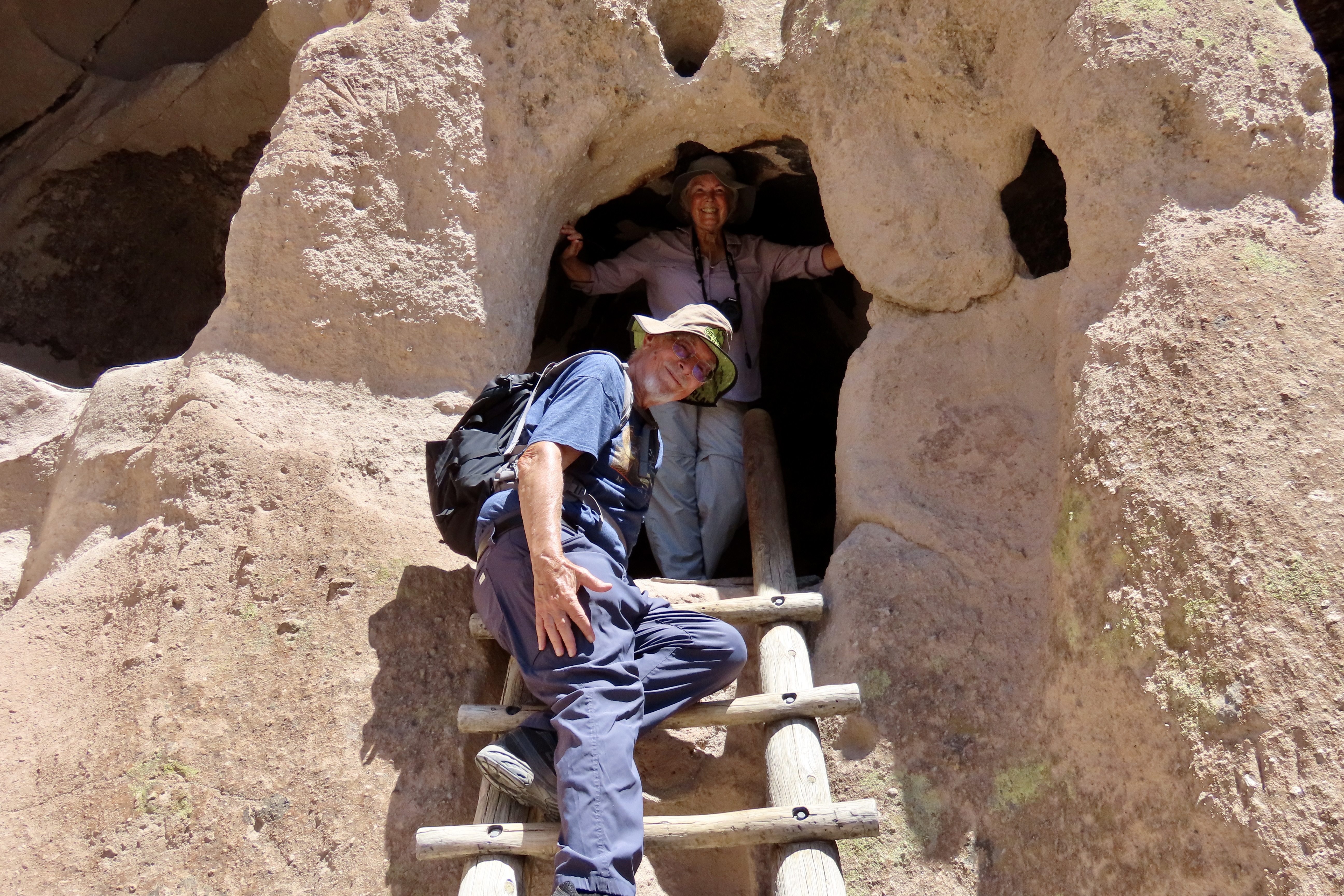
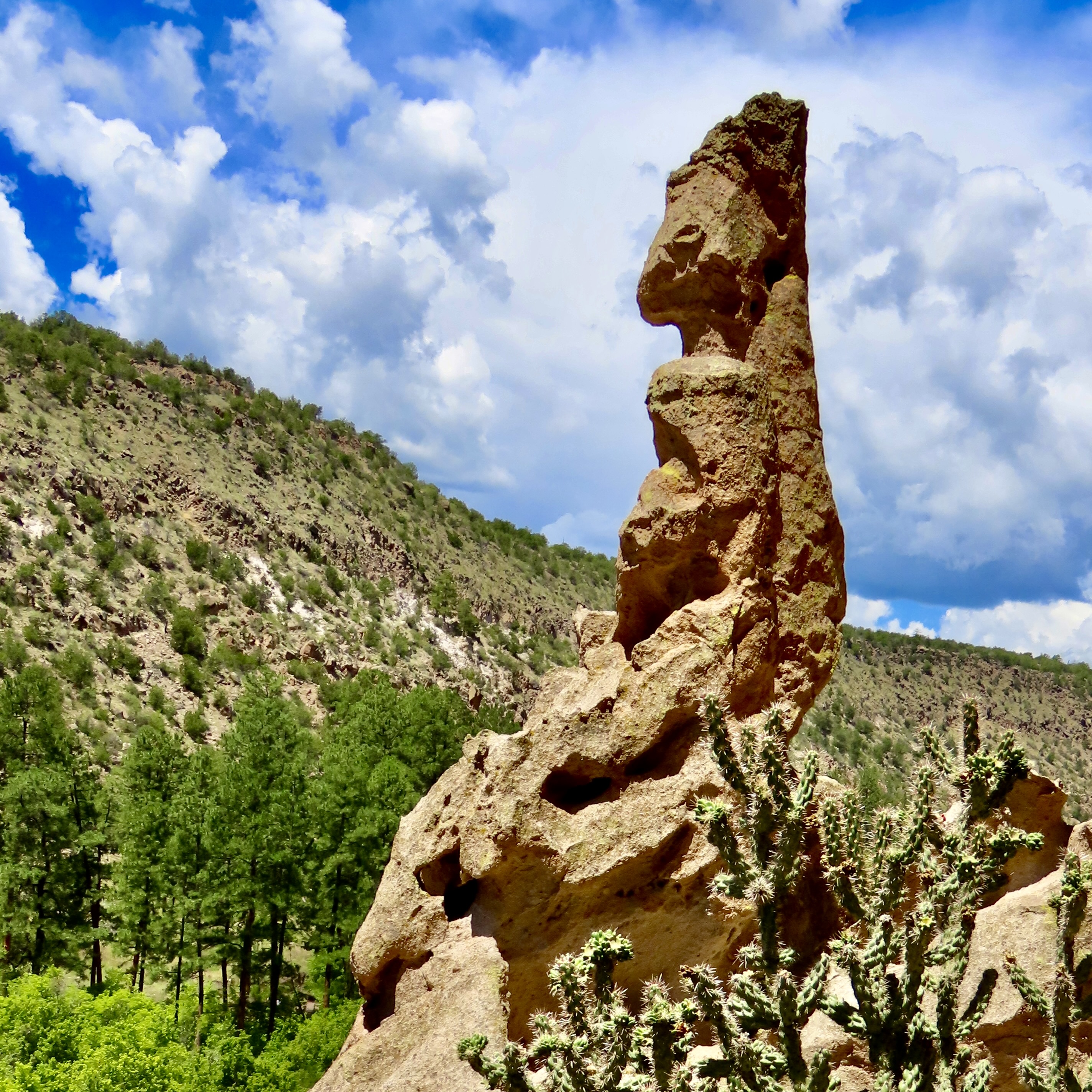
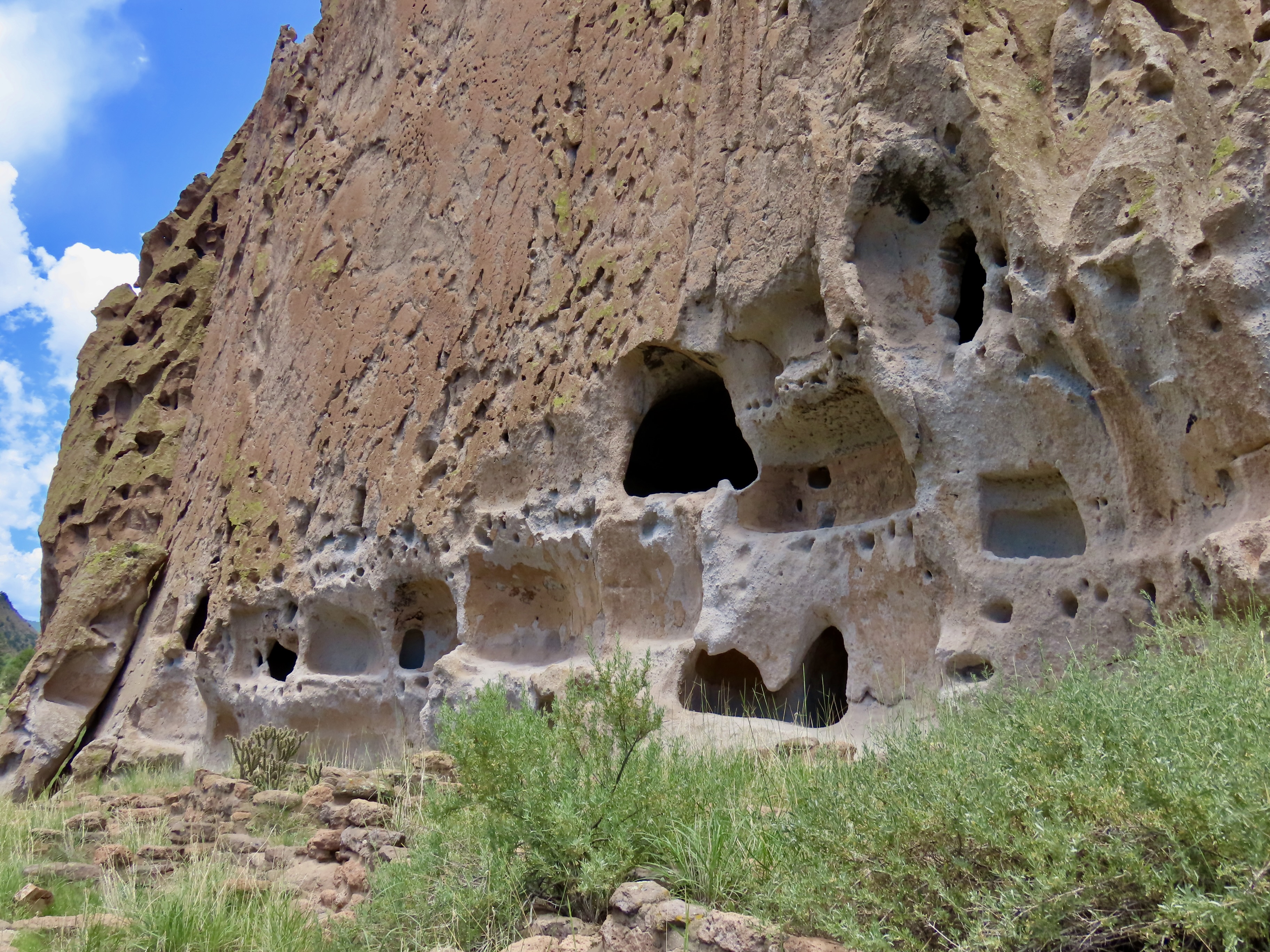
Petrified Forest National Park is found just off of I-40 in eastern Arizona. There are thousands of logs like the one above found in the park. You can still see the bark on this petrified wood that was once a tree that fell 200 million years ago.While most people come to the park to admire the petrified wood, there is also much beauty such as the colorful ‘Teepees’ found on the main road. Each color has a different story to tell representing millions of years in geological history.The Blue Mesa side road includes many other interesting and colorful land forms such as this. If you visit the park, be sure to take the short detour. A walk out in the desert on well maintained trails is definitely in order.Ancestral Puebloans and other indigenous tribes left a view of their ancient world in Petrified Forest NP in petroglyphs on Newspaper Rock. While our understanding of what they were communicating is limited, there is magic in contemplating the possibilities.While we are on the subject of petroglyphs, we found this unique one staring out at us in Petroglyph National Monument in Albuquerque, NM. Over 20,000 petroglyphs have been discovered in the monument. Peggy has plans to include this one in the revision of her word search book: Artistic Word Searches, Unique and Magical: Discovering Petroglyphs from the Southwest.Canyon De Chelly (pronounced shay) is located in northeastern Arizona. Jointly operated by the Navajo Nation that owns the property and the National Park Service, Canyon De Chelly features striking canyon views plus Ancestral Pueblo ruins and petroglyphs left behind by both the Pueblo peoples and Navajos.Our trip this past spring and summer took us into Califonia where we visited family and friends in San Diego, LA, and Sacramento. We also took time to visit Joshua Tree National Park in Southern California, known for its strange trees, after which it is named.We found the rock structures to be of equal, if not greater, interest. Some of which could be said to possess personalities.In addition to being known for its outstanding rock forms (think of the Grand Canyon, Zion, Bryce and Arches— plus what we visited this year), the Southwest is noted for its deserts and cacti, none of which is better known than the Giant Saguaro. We’ve often stopped to admire these huge plants in Saguaro National Park but have never been in Arizona when they are blooming. Things were about to change. Note the buds popping out on top of the arms.This time we were lucky. The blooms are almost other-worldly, in addition to being a source of food for numerous insects such as the bee coming in for a landing.A number of other cactus flowers also lit up the desert.Like plants, animals adjust to the deserts of the Southwest. Several birds choose to nest among the needles of various cacti including the curved bill thrasher Peggy found raising her family in a cholla cactus. The thrasher was not happy when she sneaked up to it and her hatchlings to catch a photo with her iPhone. It’s probably a good thing Peggy couldn’t understand what momma was saying.Bandelier National Monument, located mere miles away from where the first atom bomb was created at Los Alamos, New Mexico, features the ruins of homes built by Ancestral Puebloans that included natural and carved caves (cavates) with pueblo structures once built up against them.Peggy and I climbed up to one of the cavates. It was quite cozy inside. “Honey, I’m home.”Just beneath the cavate, this outcropping of rocks overlooked the large Tyuonyi Pueblo at Bandelier. A corner of the ruins can be seen here. It was built in a circle and contained contained 400 rooms.This tall rock was among the rocks in the outcropping. My first thought was wow! Nowhere in our travels though out the Southwest have we seen a statue like it carved by Ancestral Puebloans or any other indigenous tribes. We had a guide to the trail we were walking on, but there was no information on the statue. Nor was there anything in the information center. The emphasis was all on the scenery, cavates, petroglyphs and pueblos. Human or nature carved, I would think that the park’s literature would at least comment on it. That’s it for today. Next up:We wrapped up our year of travel with out trip to New England so it’s proper that we finish off 2025 with the trip.
Happy New Year to everyone and thanks for joining us on our adventures in 2025. It’s much appreciated. Costa Rica, Bali, and Scotland are coming up in 2026! Curt and Peggy
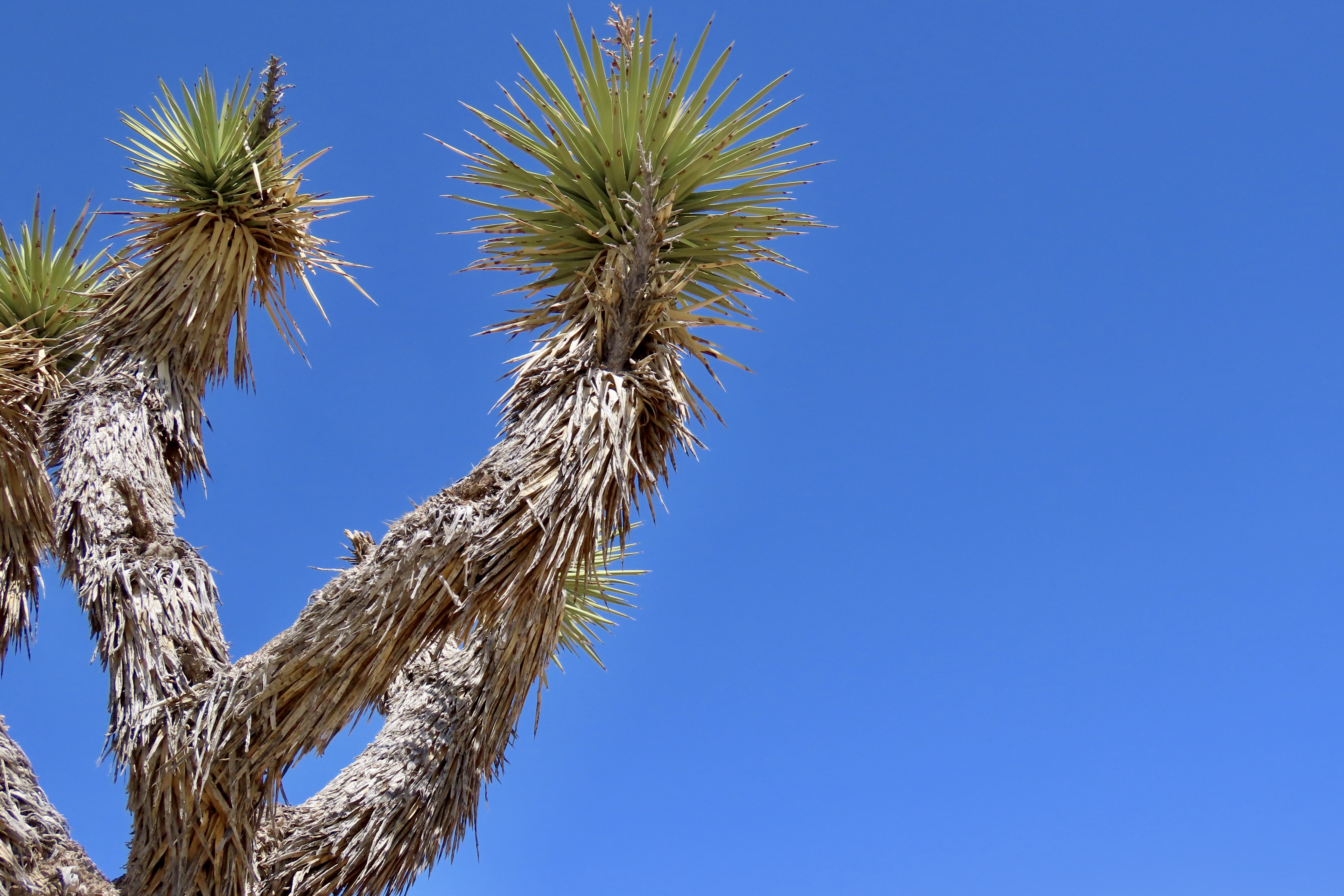
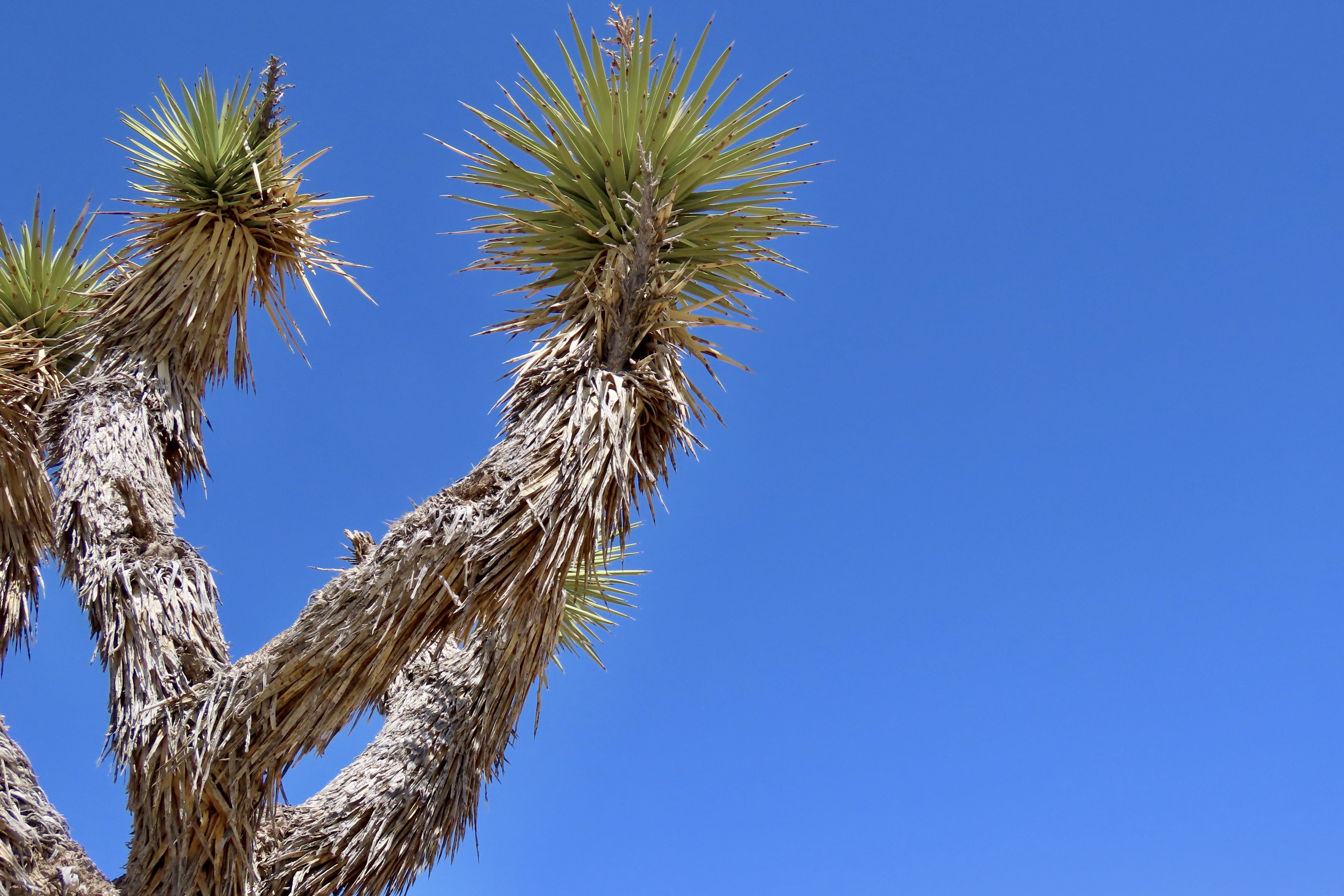
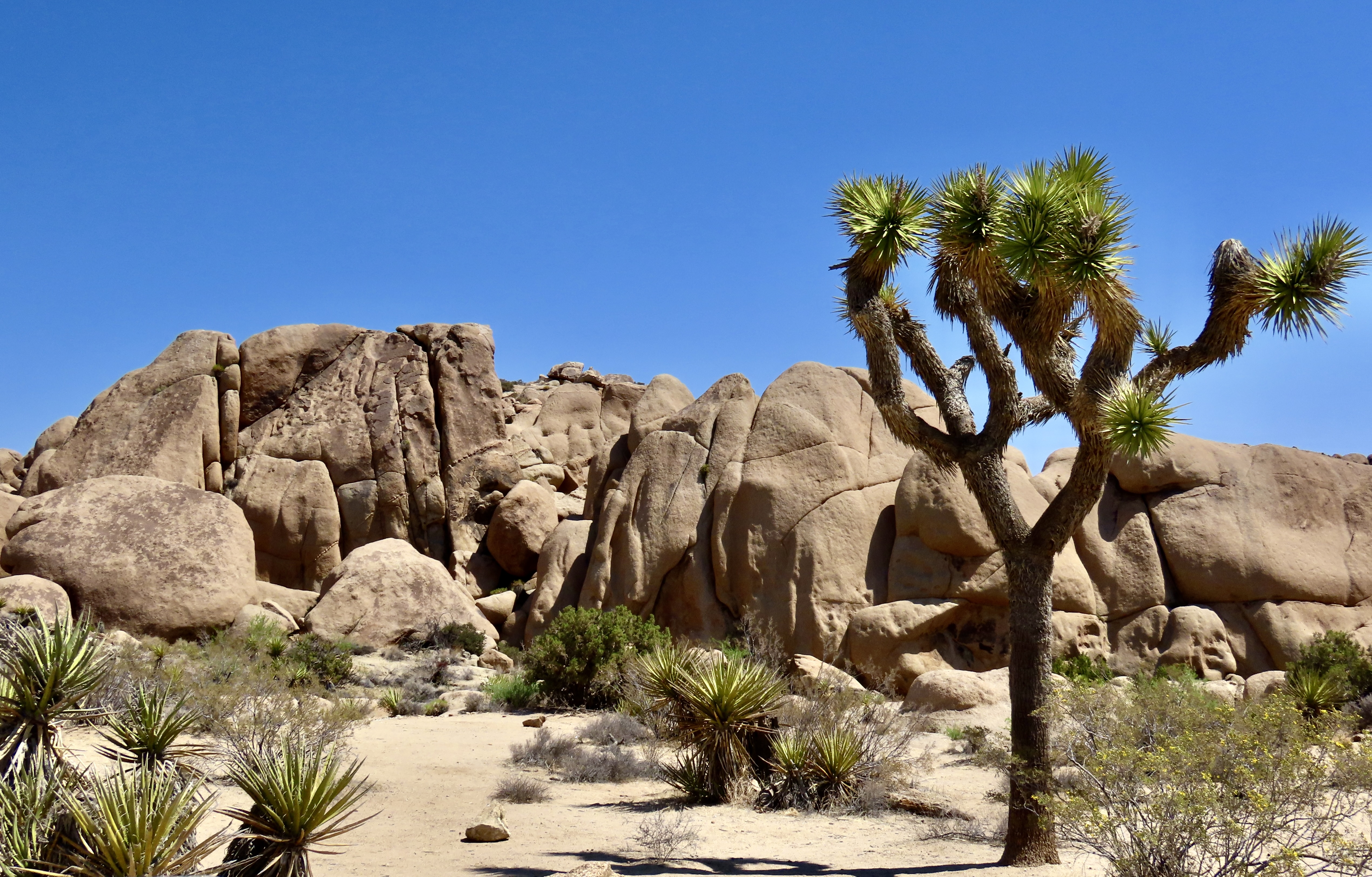
Joshua trees are a bit strange as trees go. They are actually monocots, more closely related to grass than trees. If that seems weird, up until recently they were thought to be lilies, related to onions and other members of the family. The park sign still claims the relationship.
As much as the trees are worth blogging about, we found the rocks of the park even more intriguing.
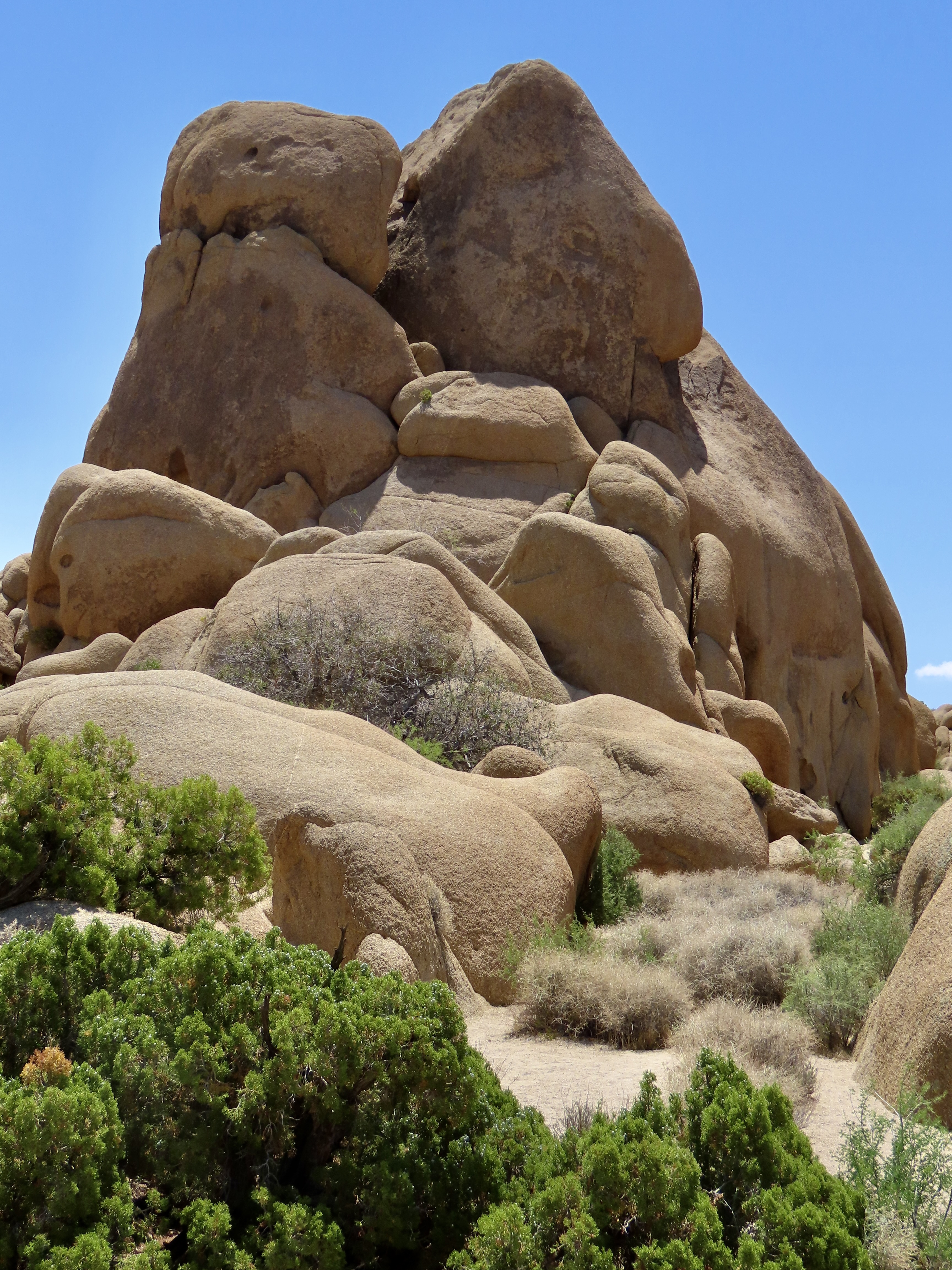
Massive piles of monzogranite boulders reach for the sky in the park. Originating far under the ground as lava oozing up from the earth’s mantle some 80-100 million years ago, the lava cooled and hardened into a batholith of granite. Nature in the form of earthquakes and water cracked it into rectangular blocks while mountain raising and erosion brought it to the surface. Along the way, erosion also wore the rectangular blocks into the massive rounded boulders that visitors admire today.
This was our second visit to the park. Peggy and I spent a whole day driving 30 miles through the northern portion of it. We stopped a lot.
An information board at the beginning of the park, made the following observation: “Look around you. Perhaps you see a stark land that nature never got around to finishing. Or you may see potential mineral wealth, defense testing grounds, alternative energy sources, or a vast recreational playground. Or maybe you see the desert for what it is— a diverse, thriving, ecosystem.”
I would add that deserts are a place of rare beauty and endless fascination, the equivalent of any of the other natural wonders we find in the world.
A quote from Edward Abbey was also included on the board: “It seems to me that the strangeness and wonder of existence are emphasized here, in the desert, by the comparative sparsity of the flora and fauna: life not crowded upon life, with a generous gift of space for each herb and bush and tree, each stem of grass, so that the living organism stands out bold and brave and vivid against the lifeless sand and barren rock.
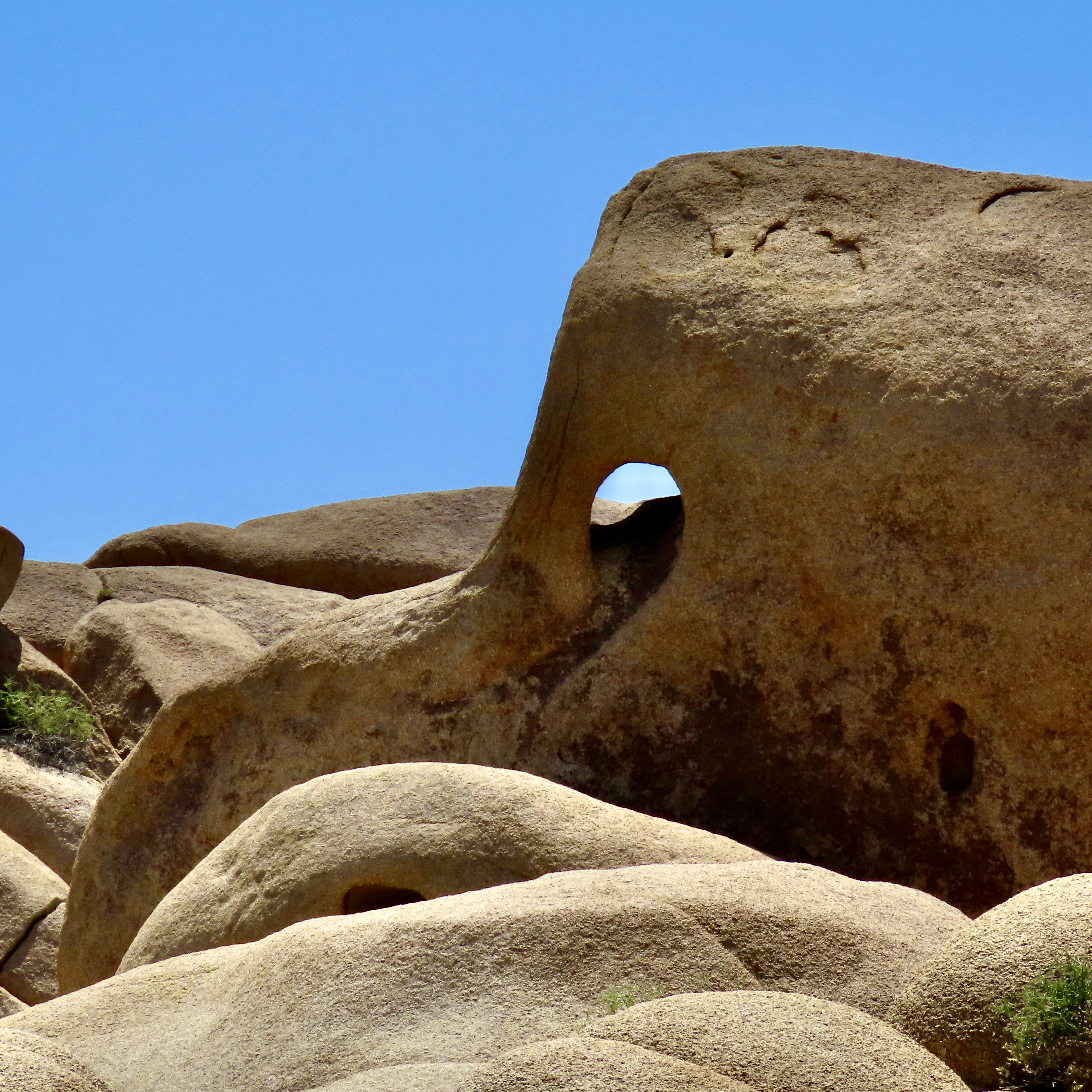
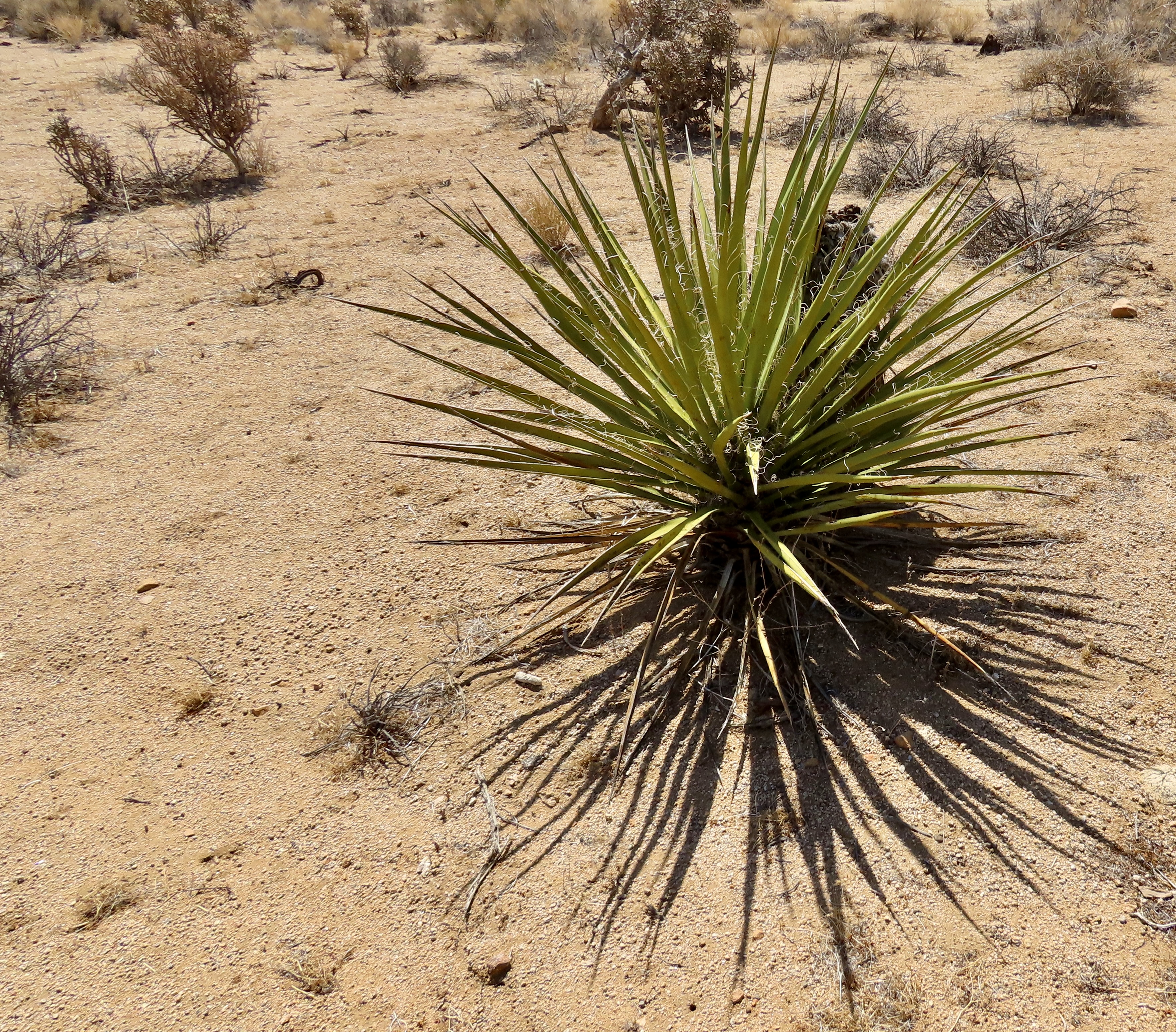
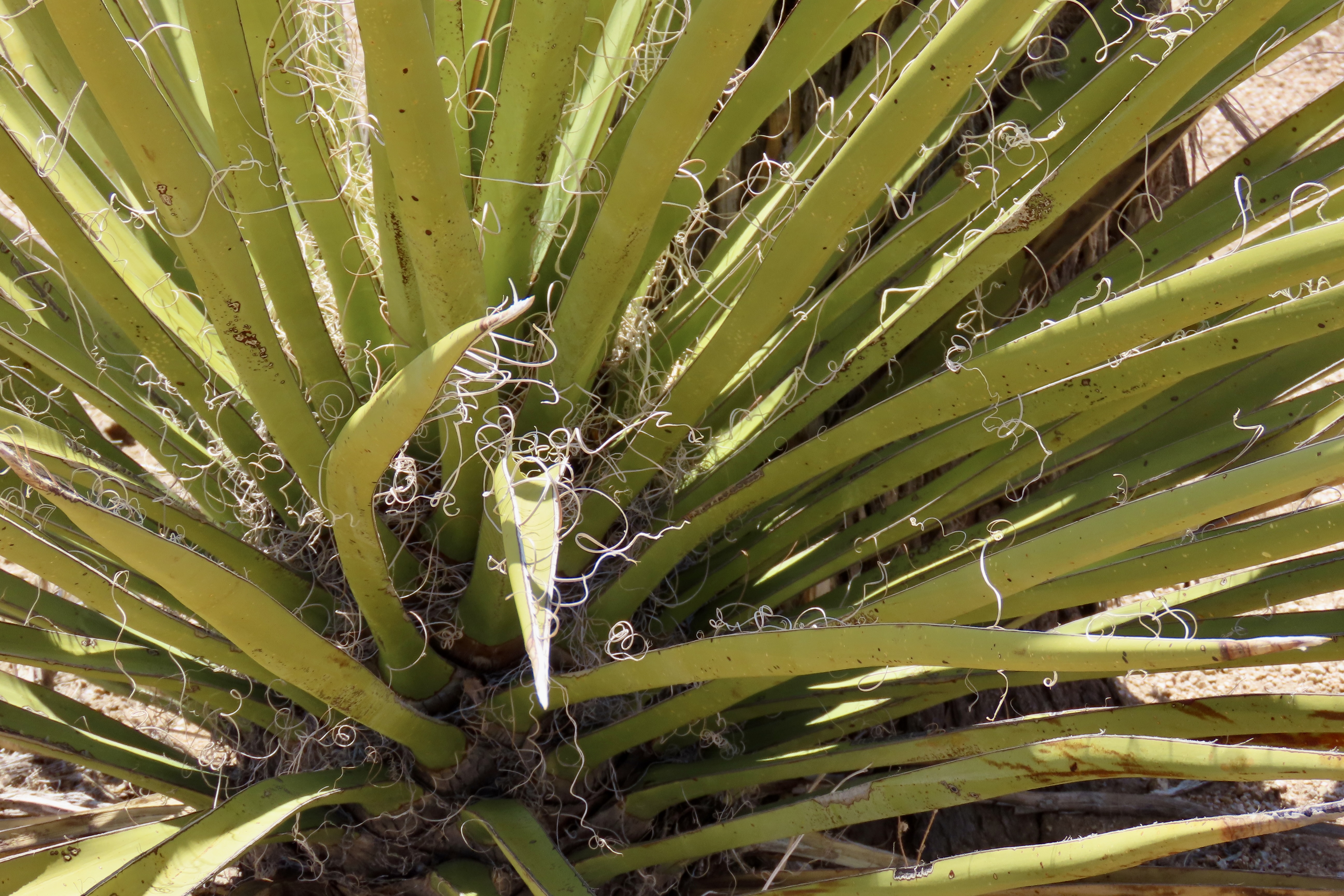
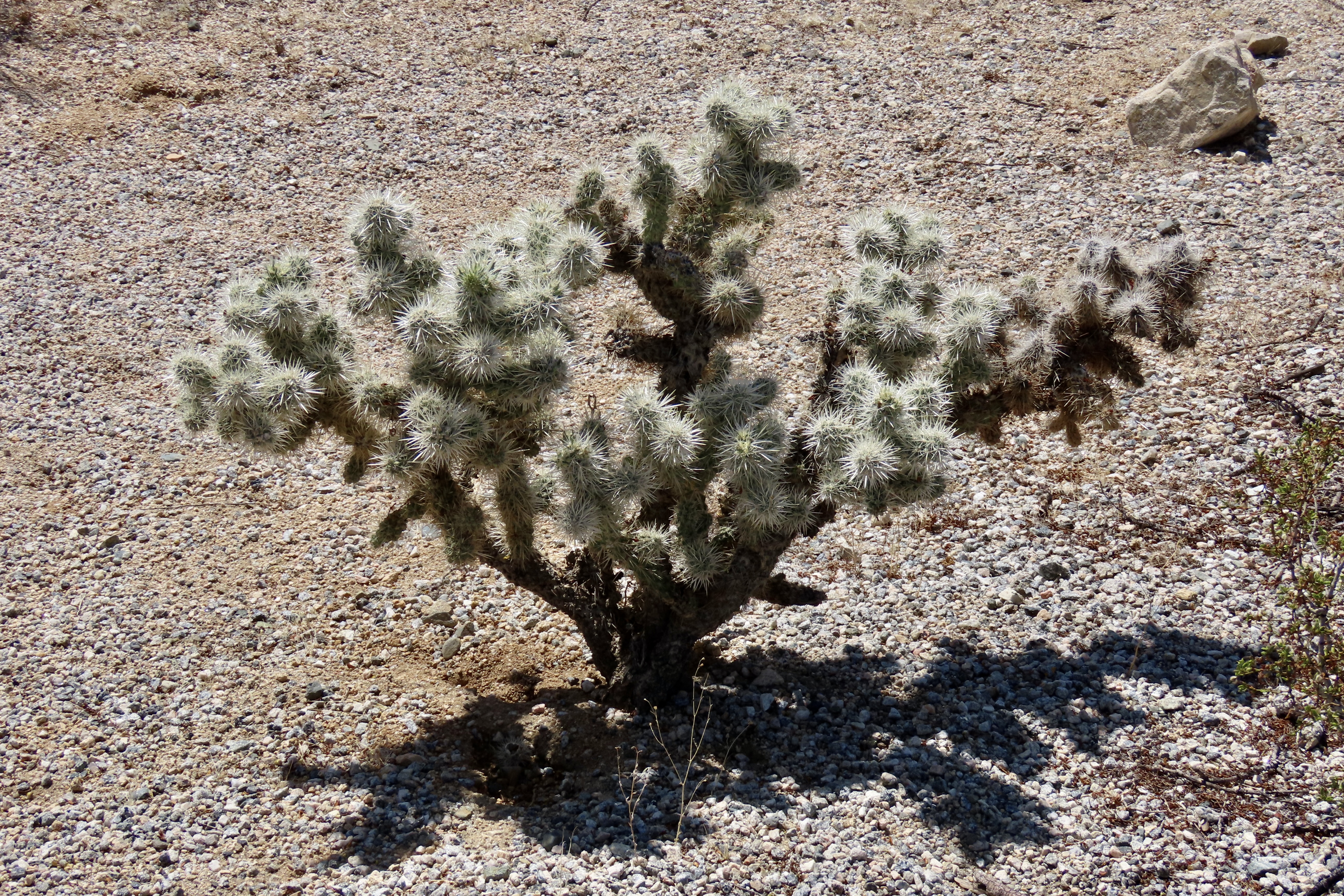
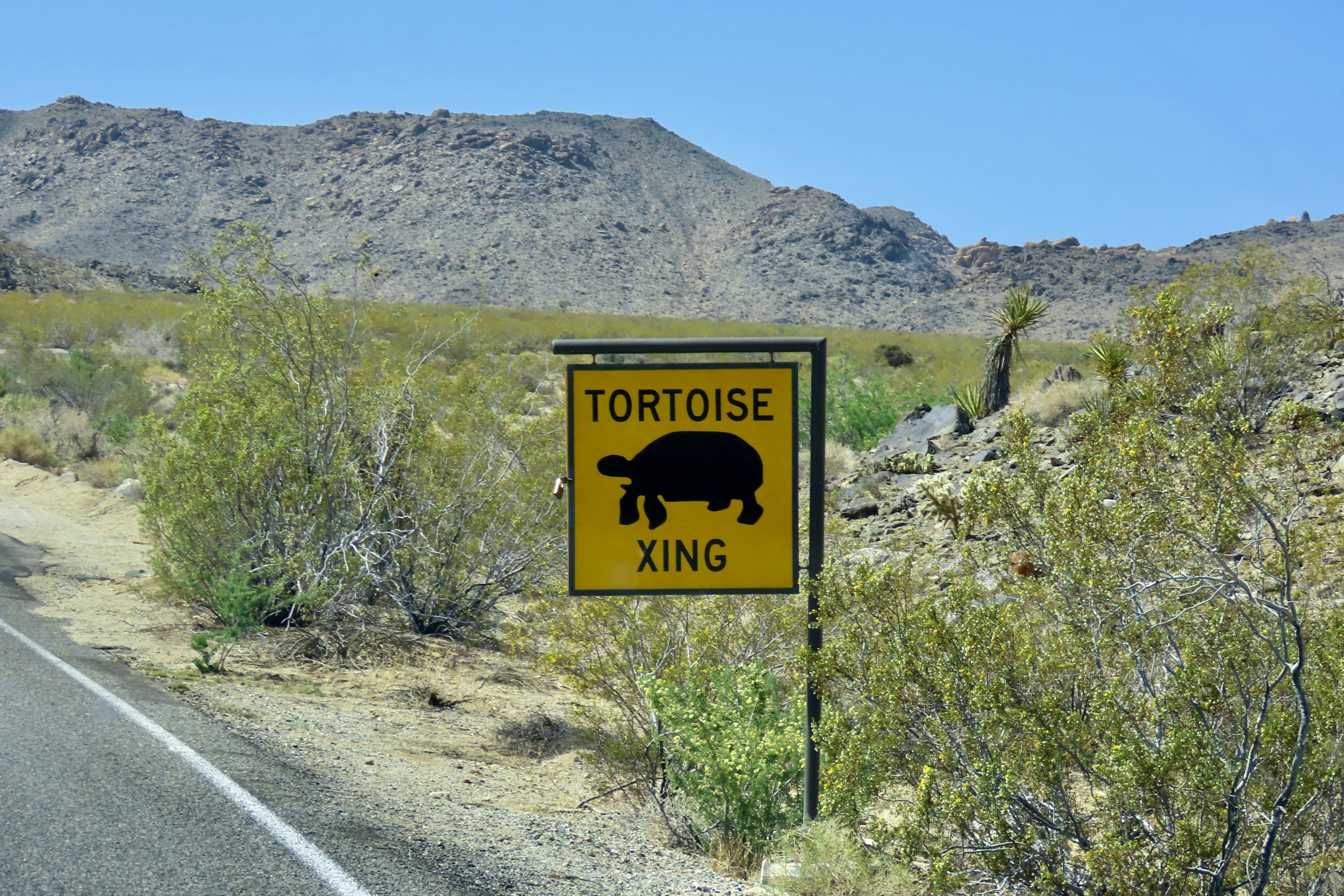
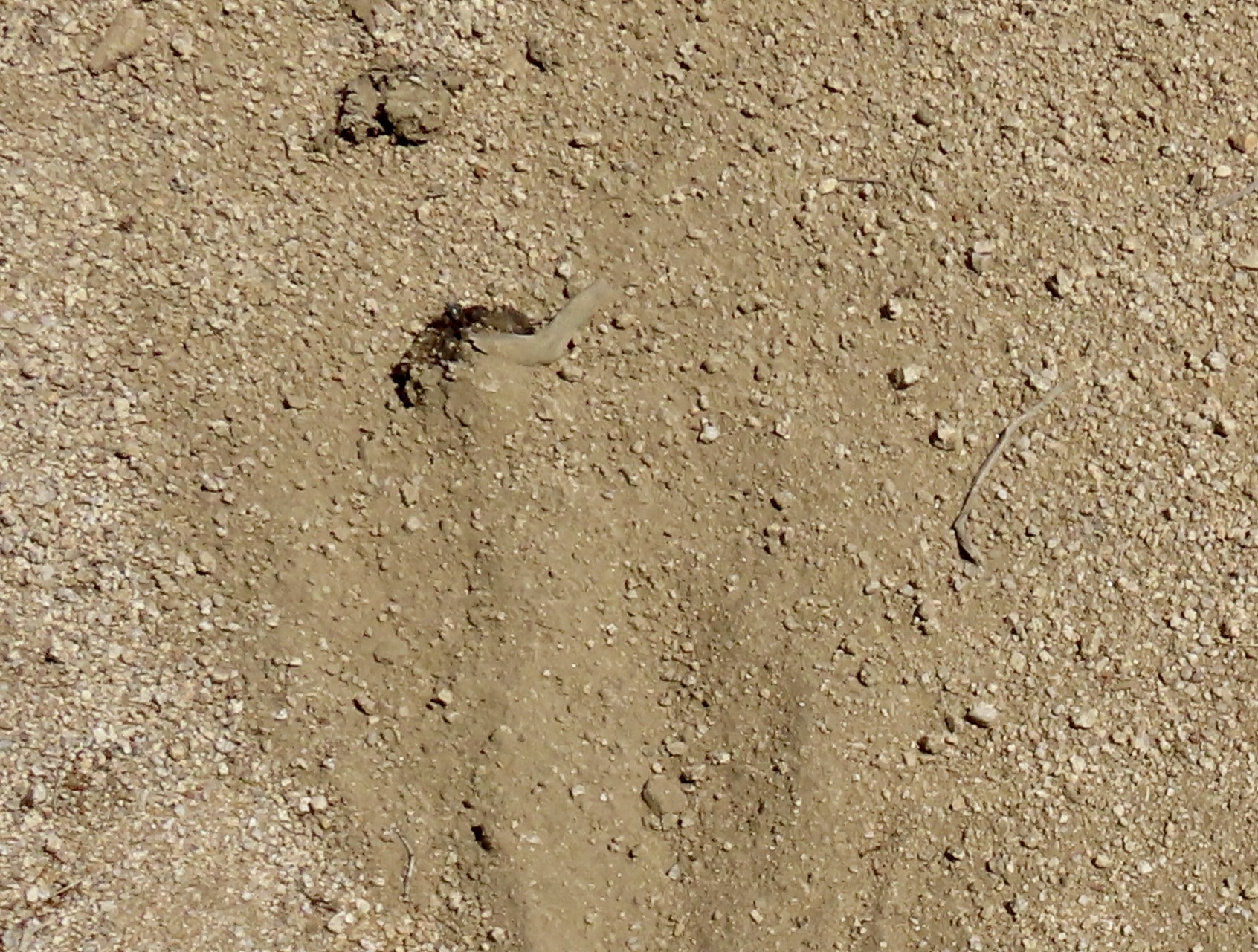
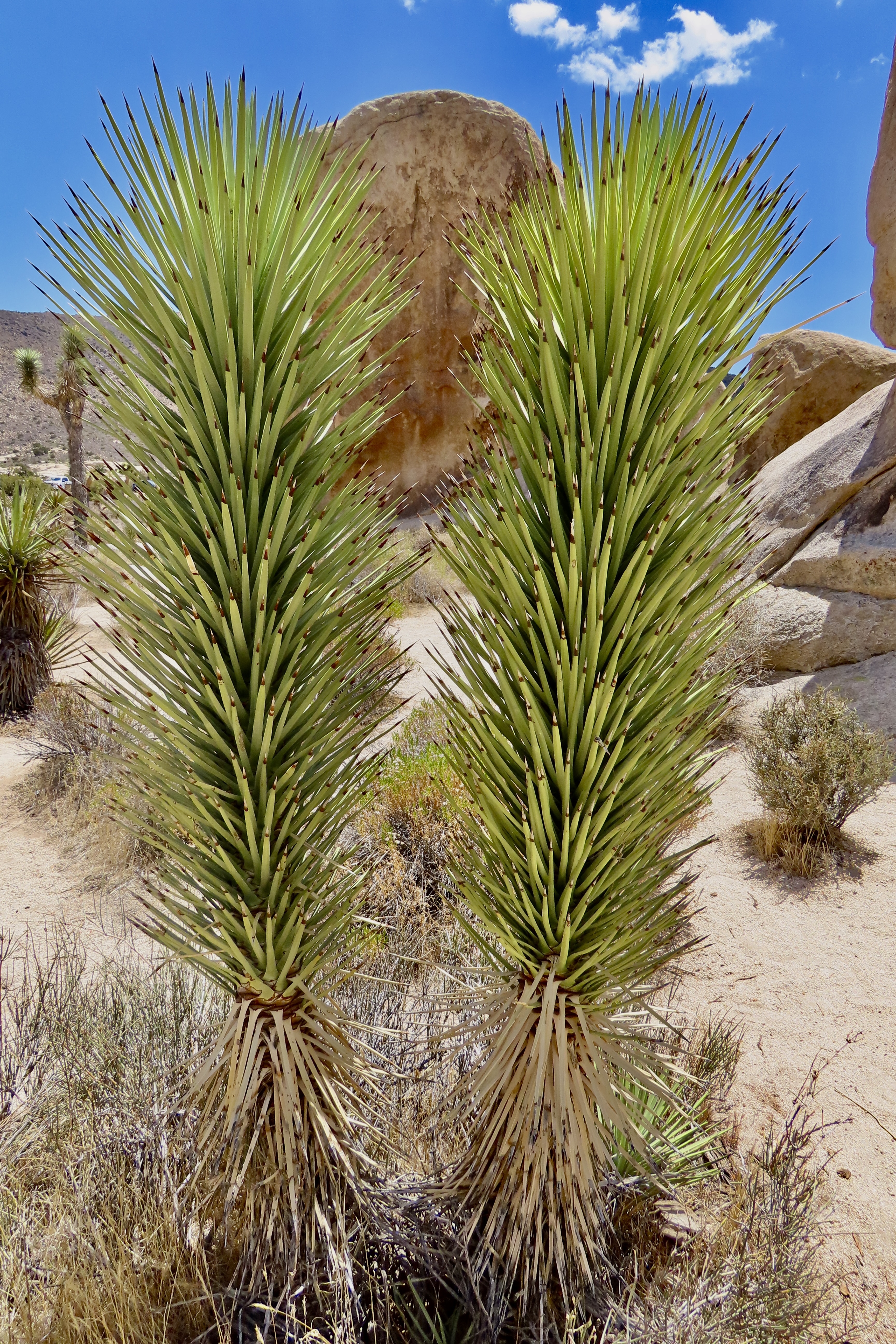
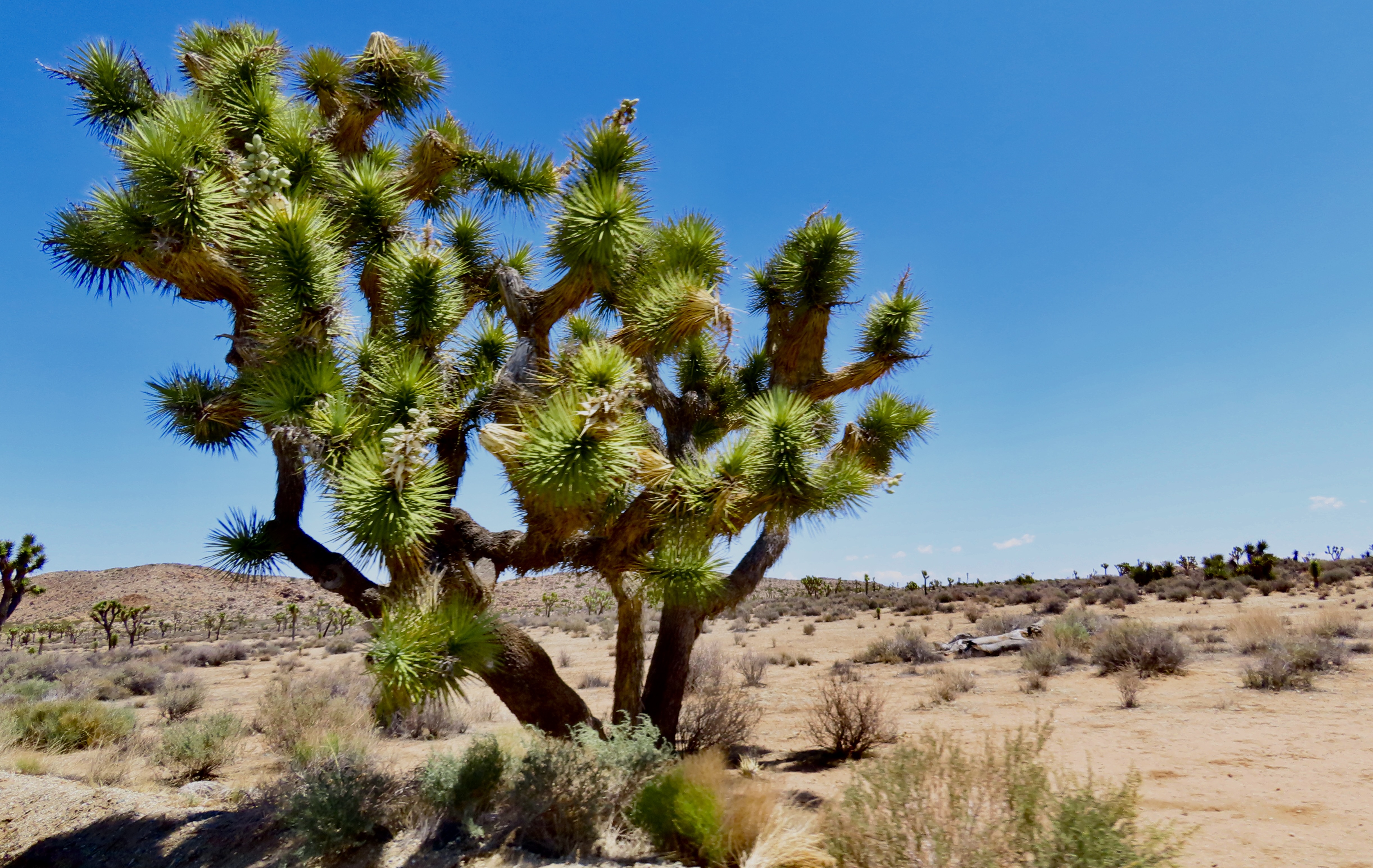
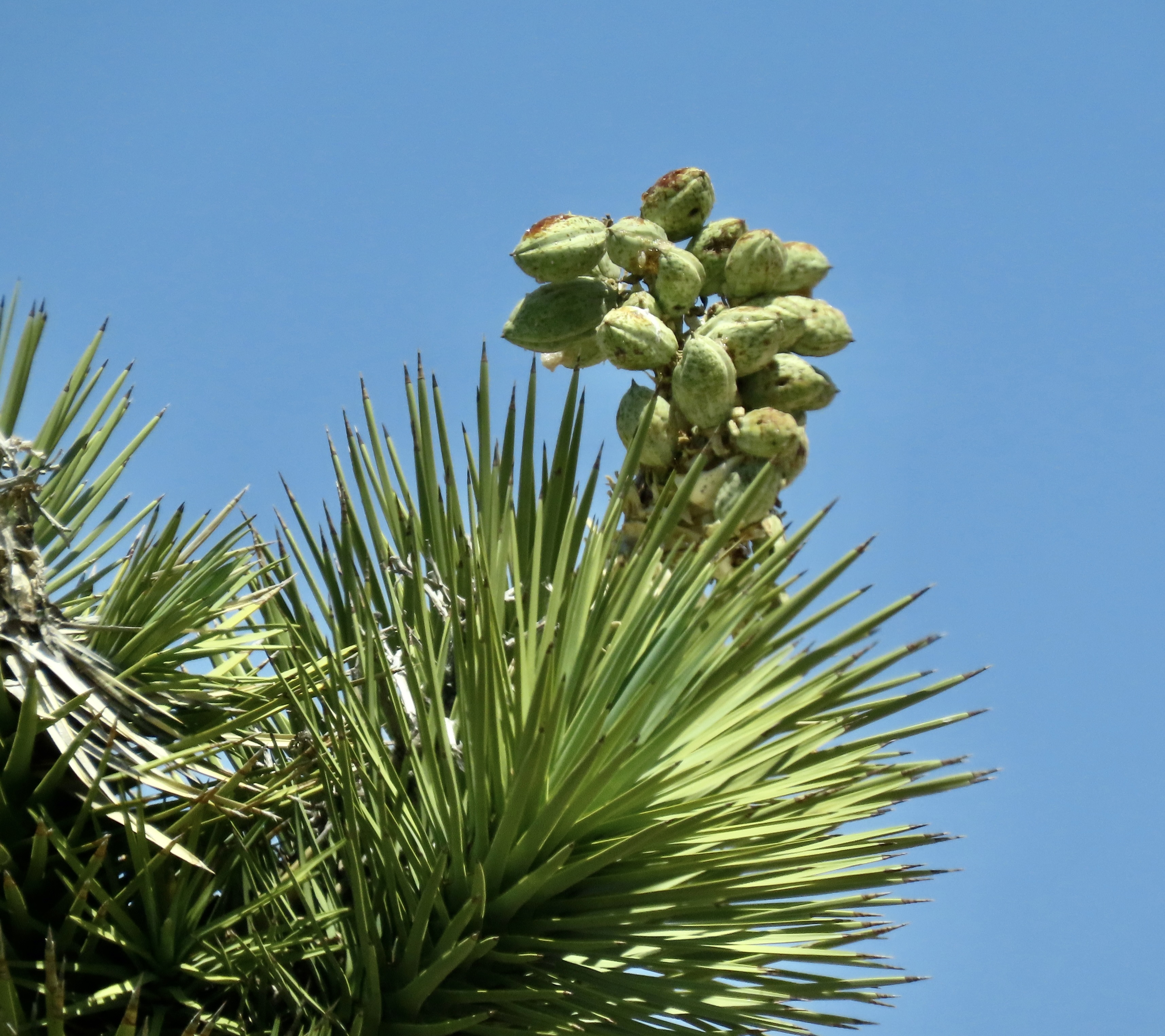
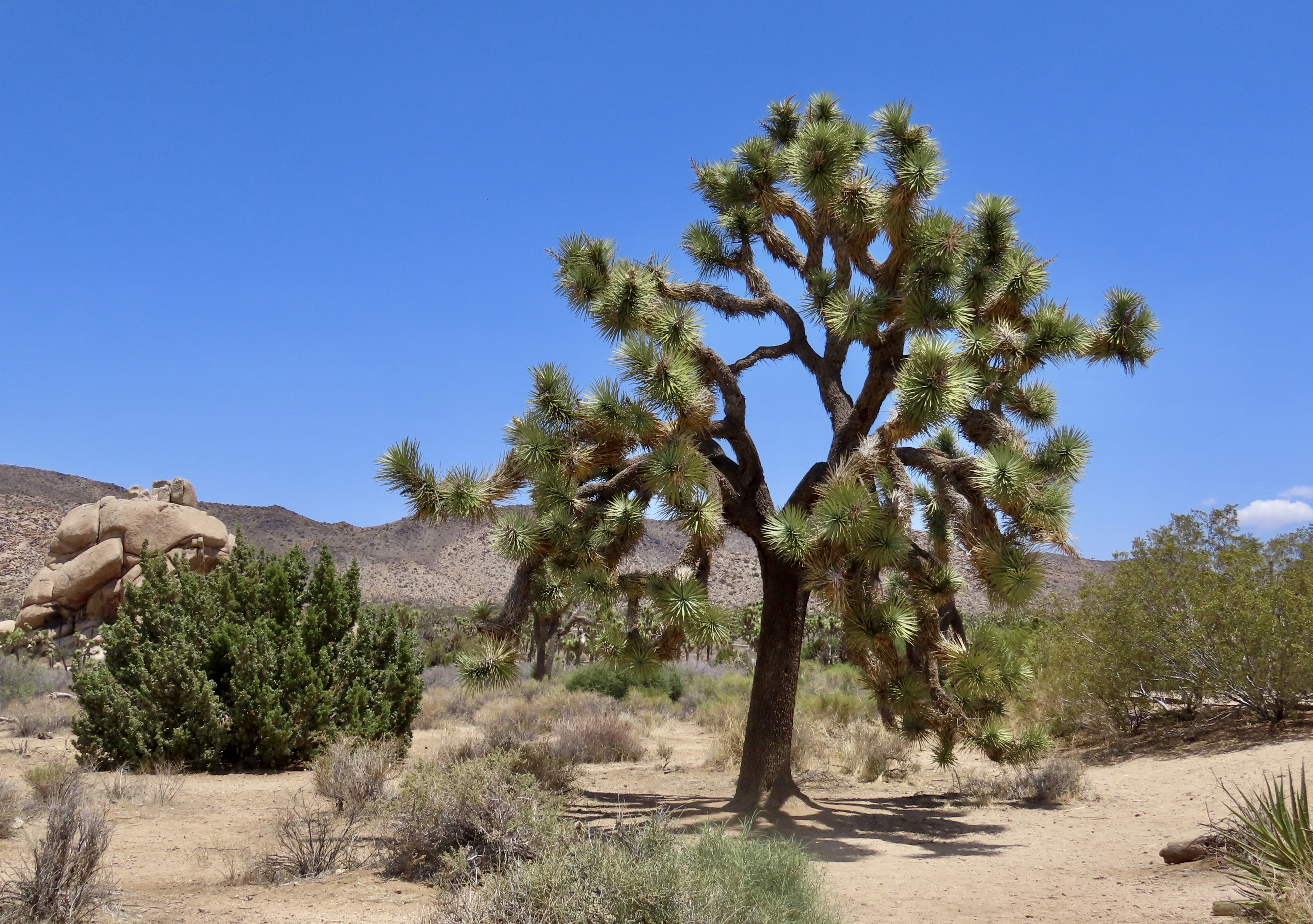
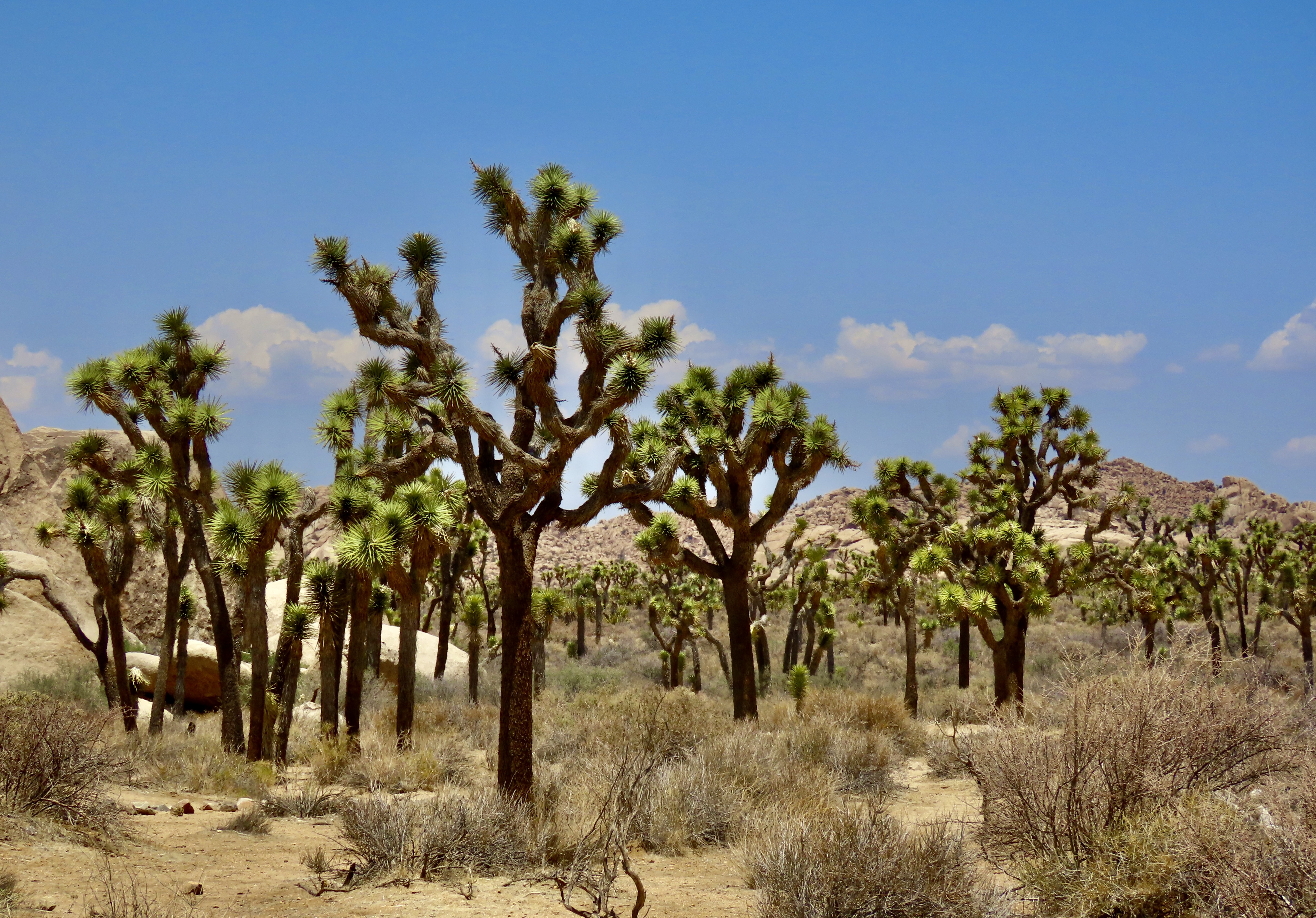
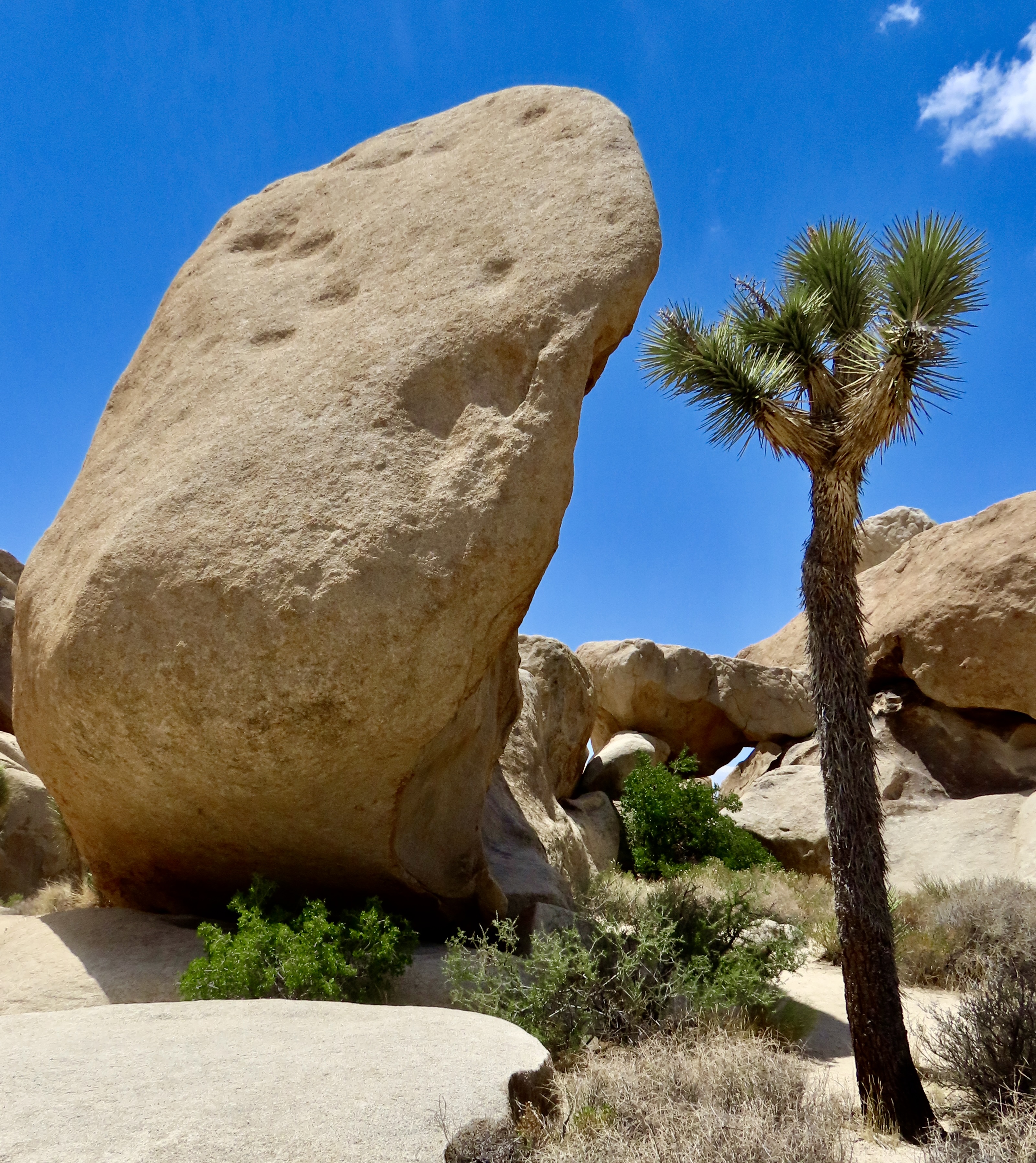
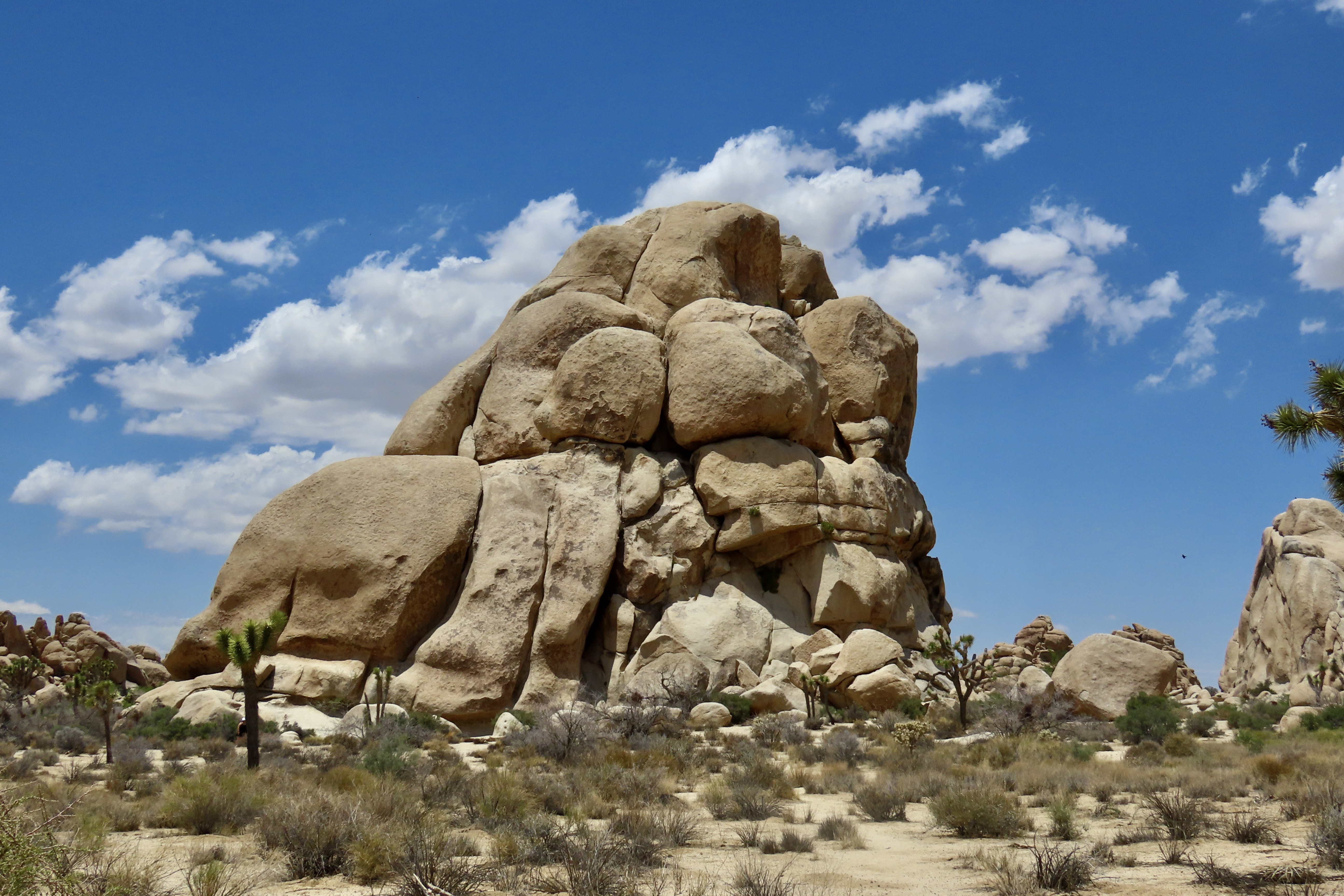
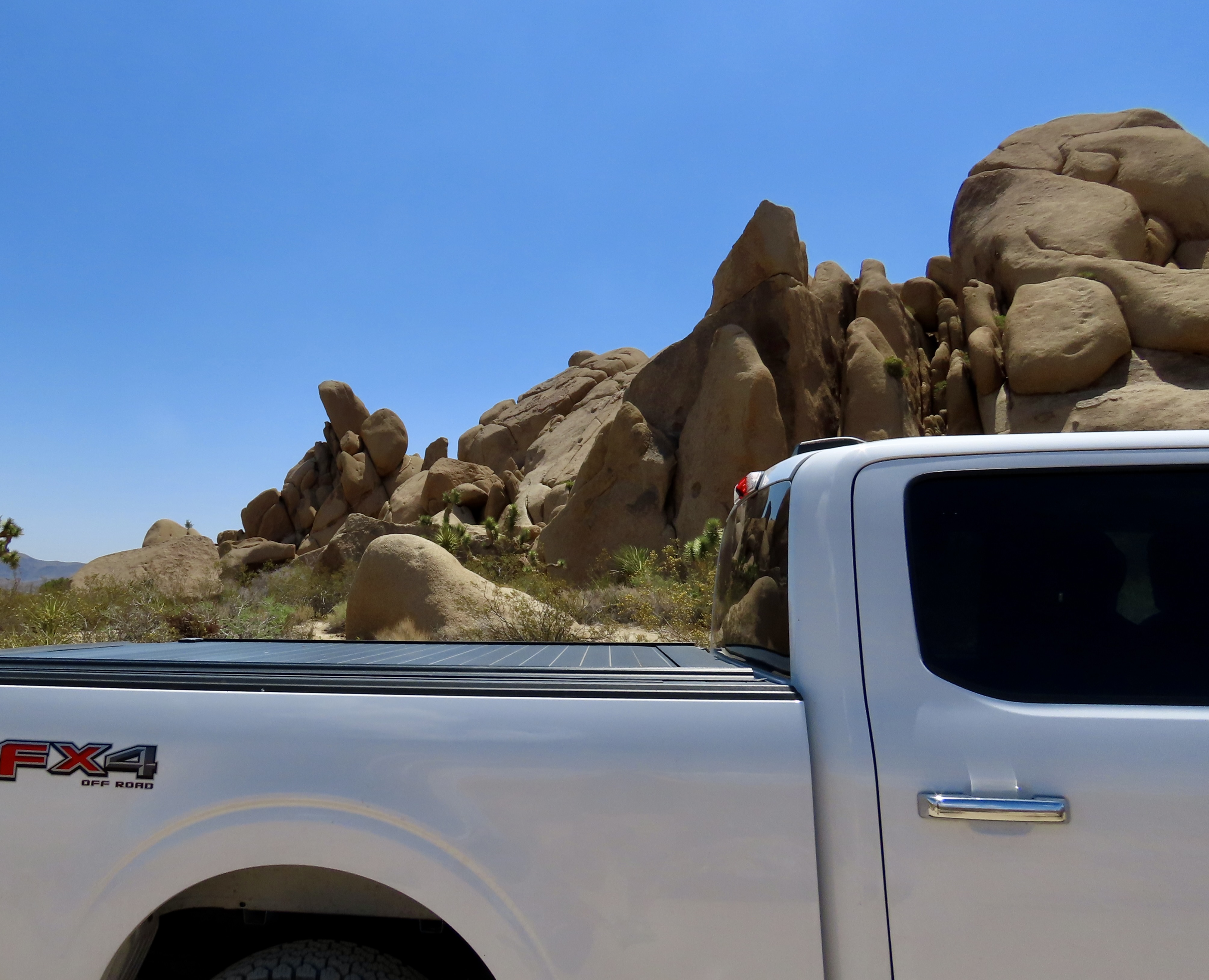
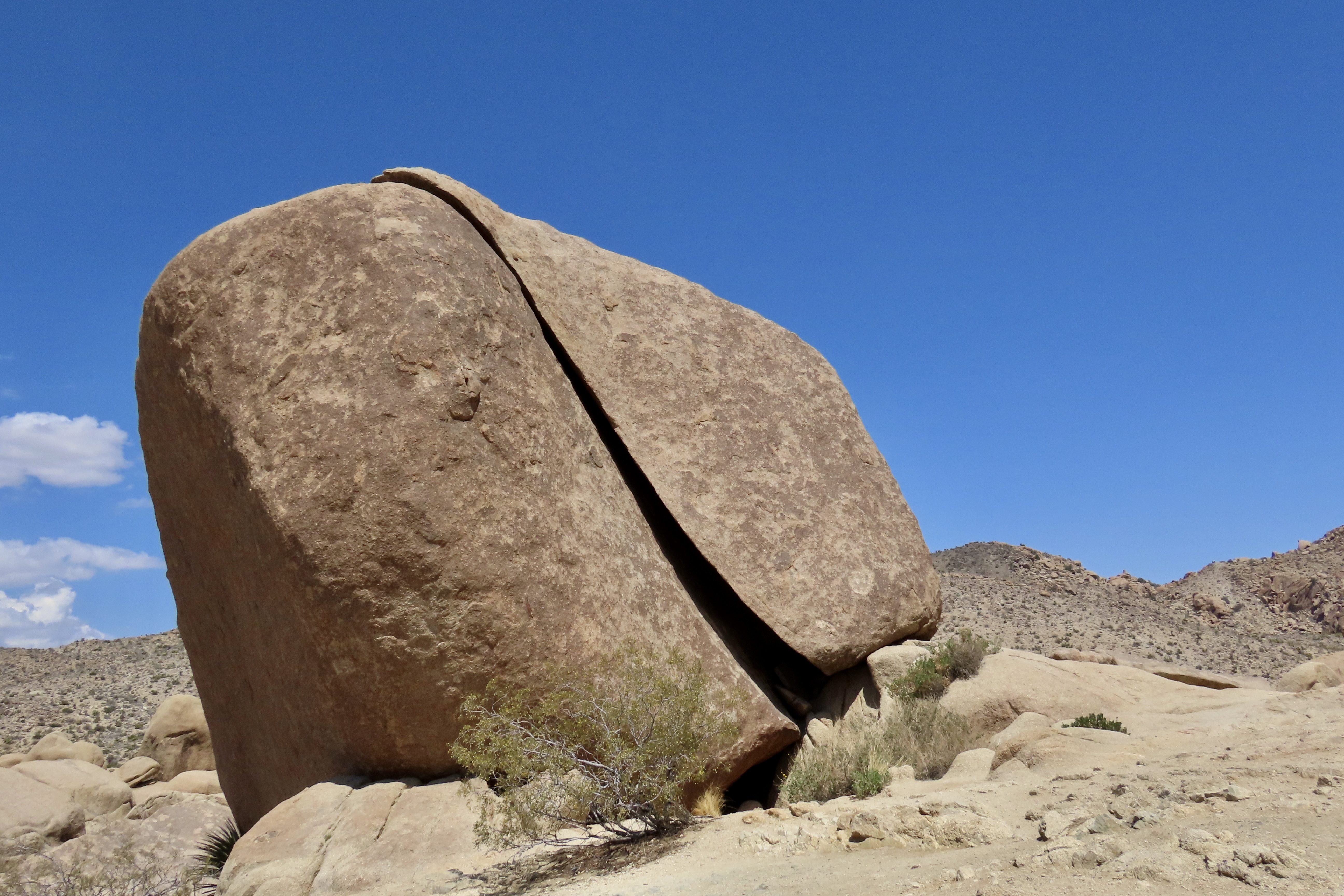
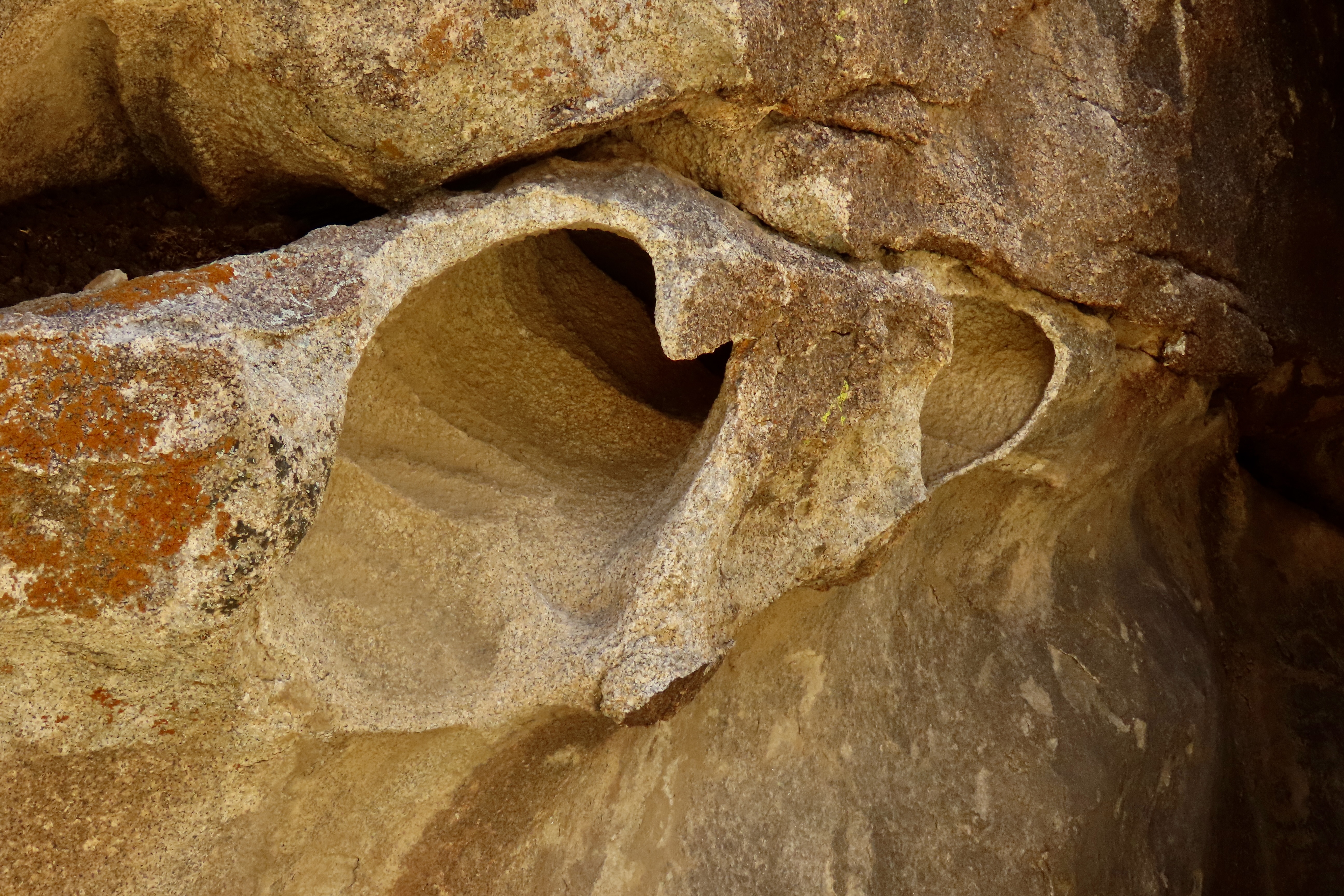
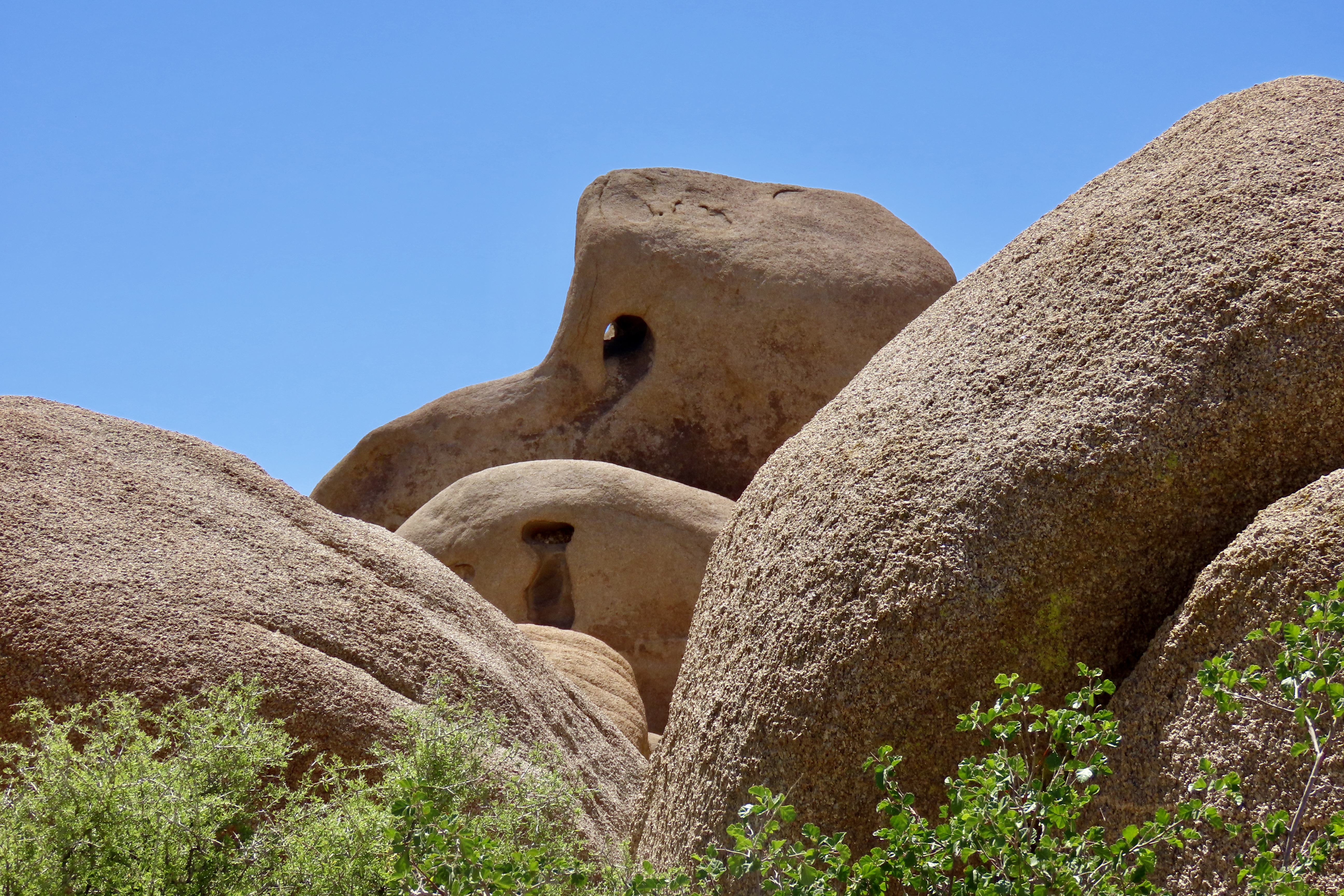
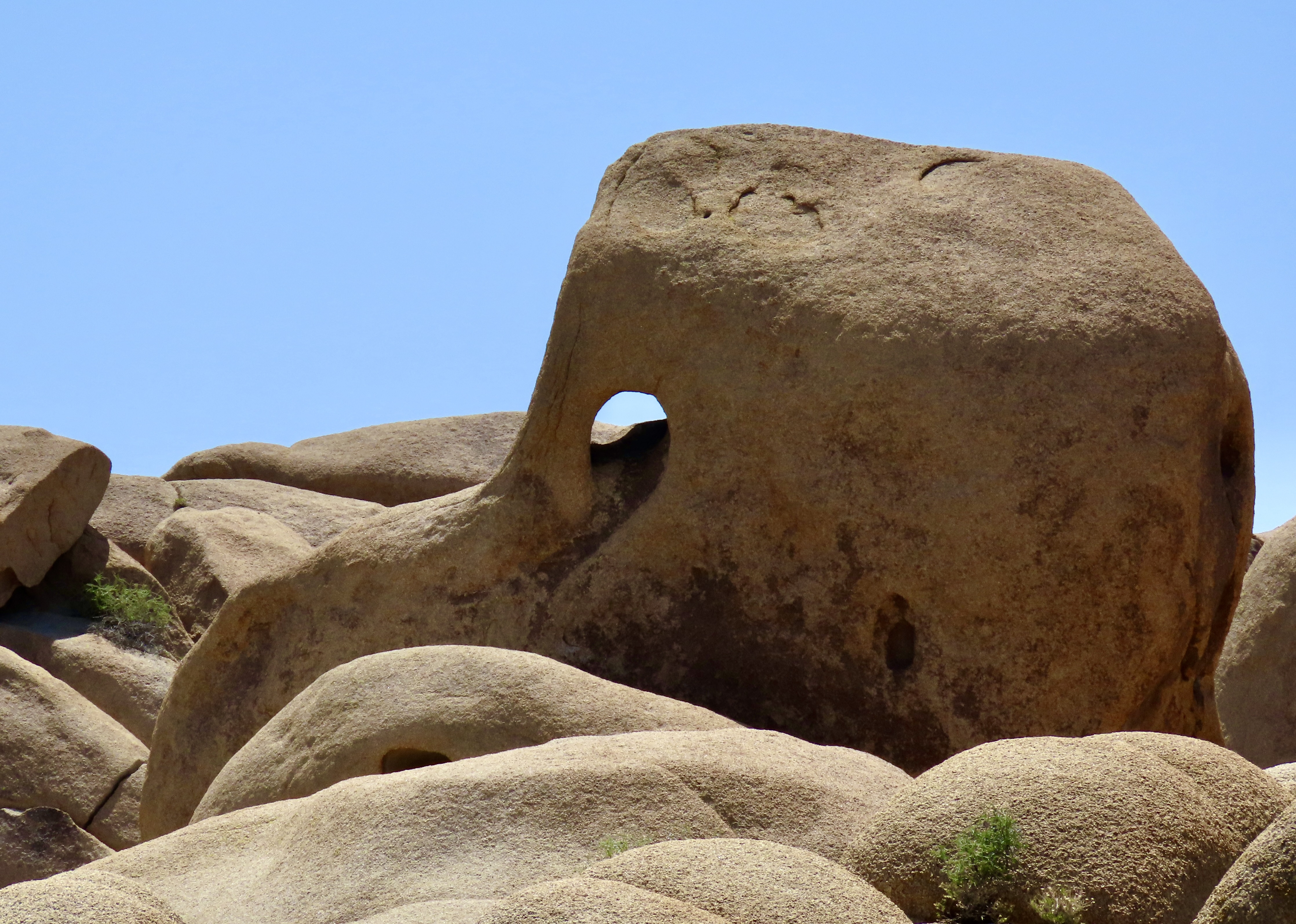
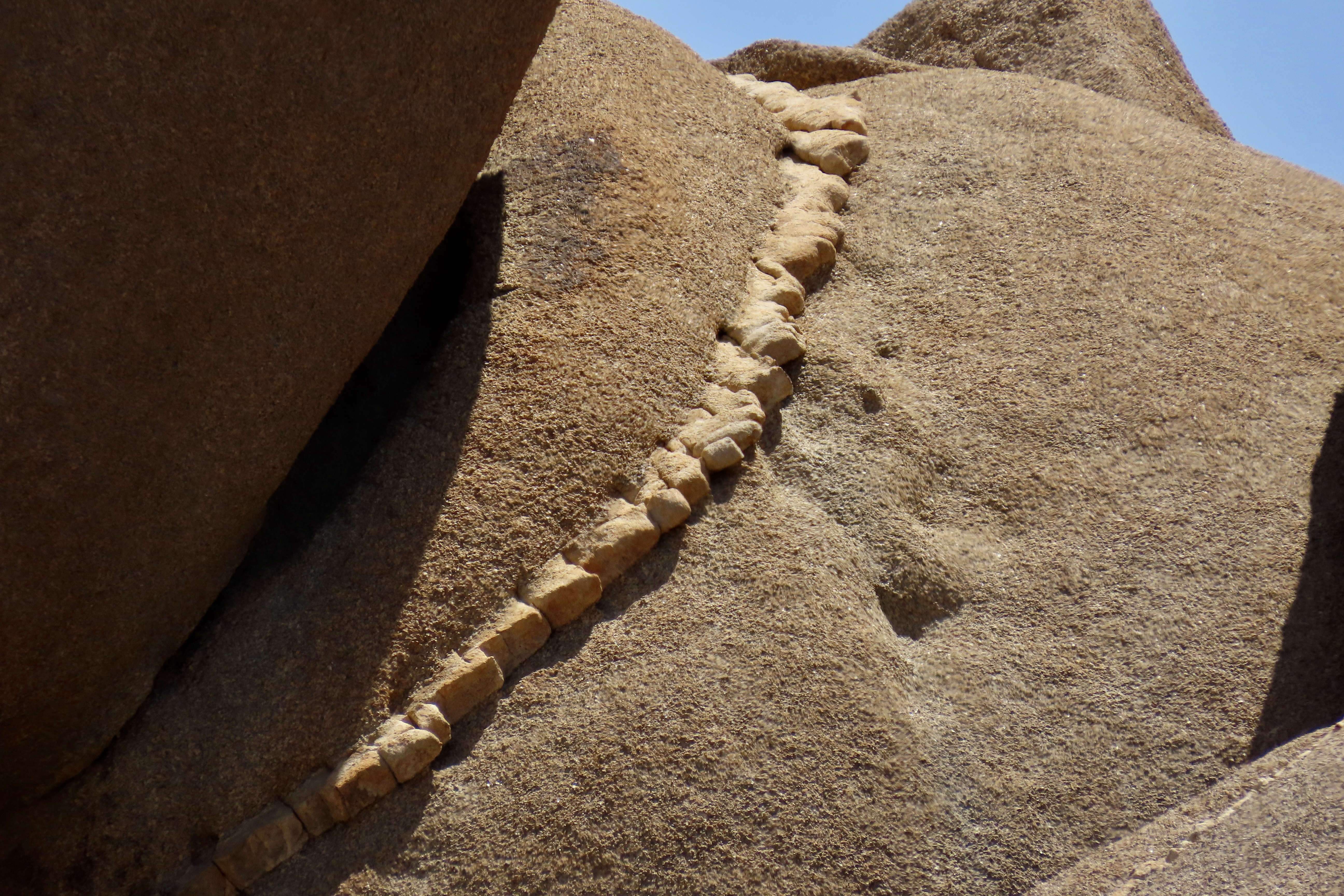
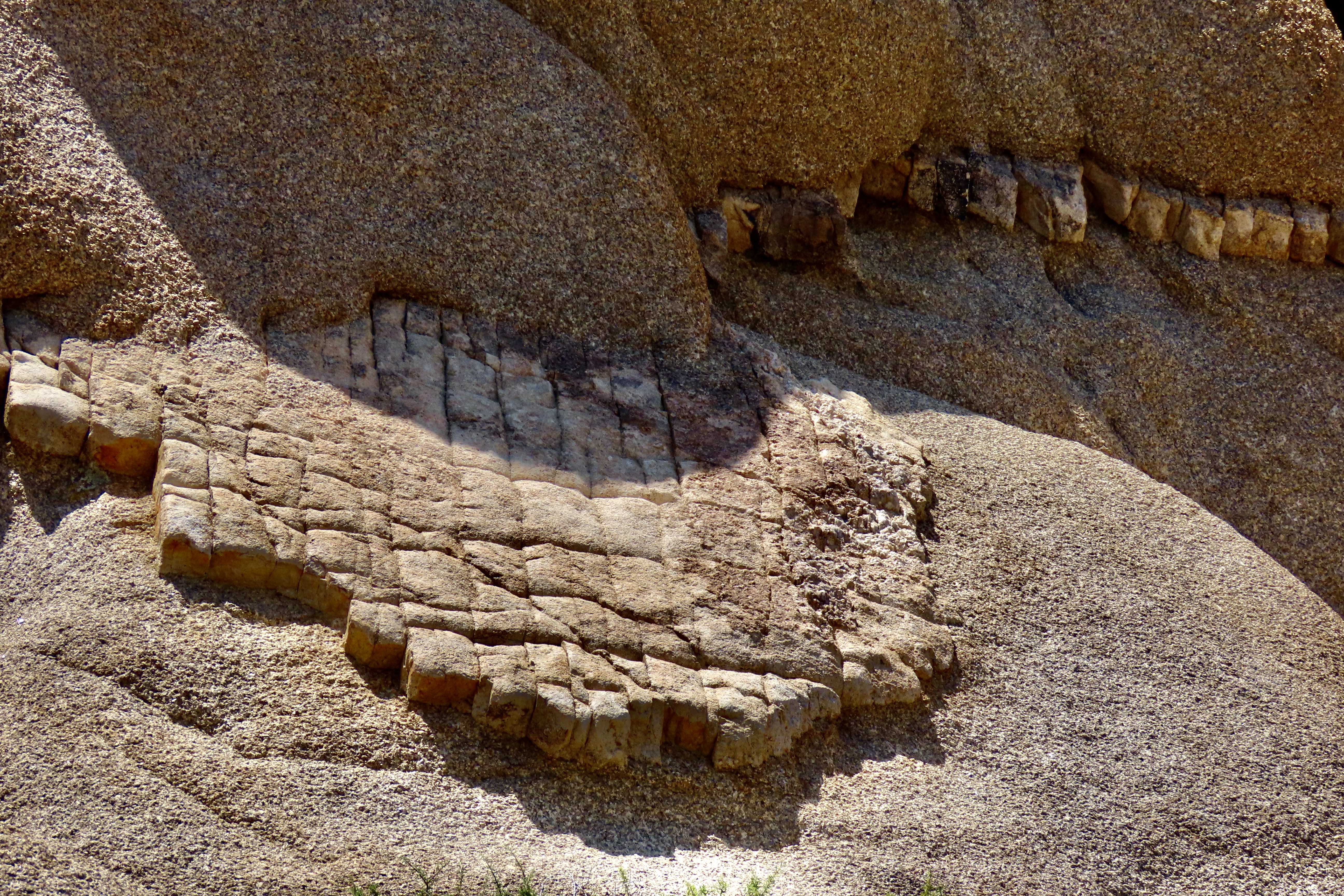
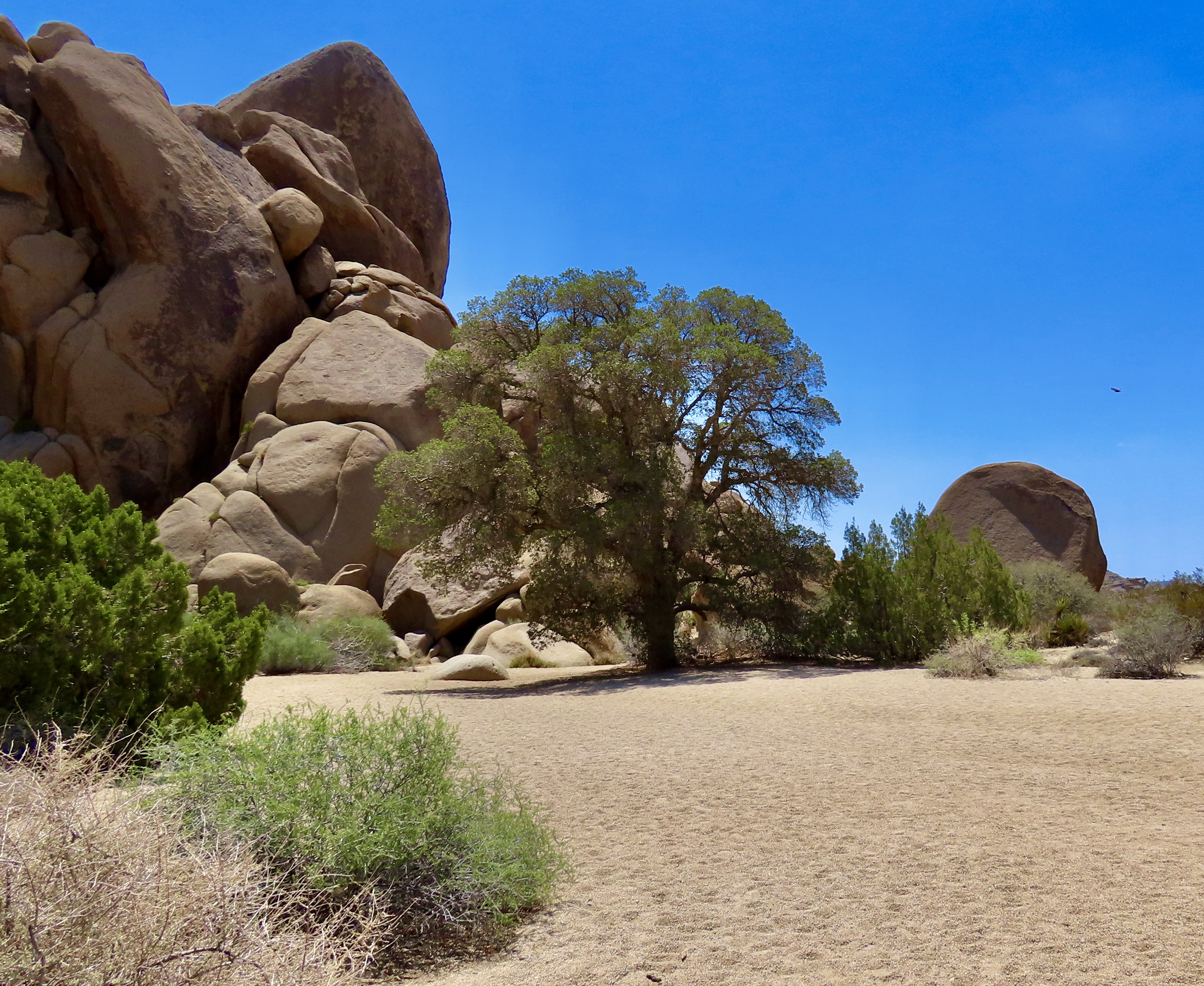
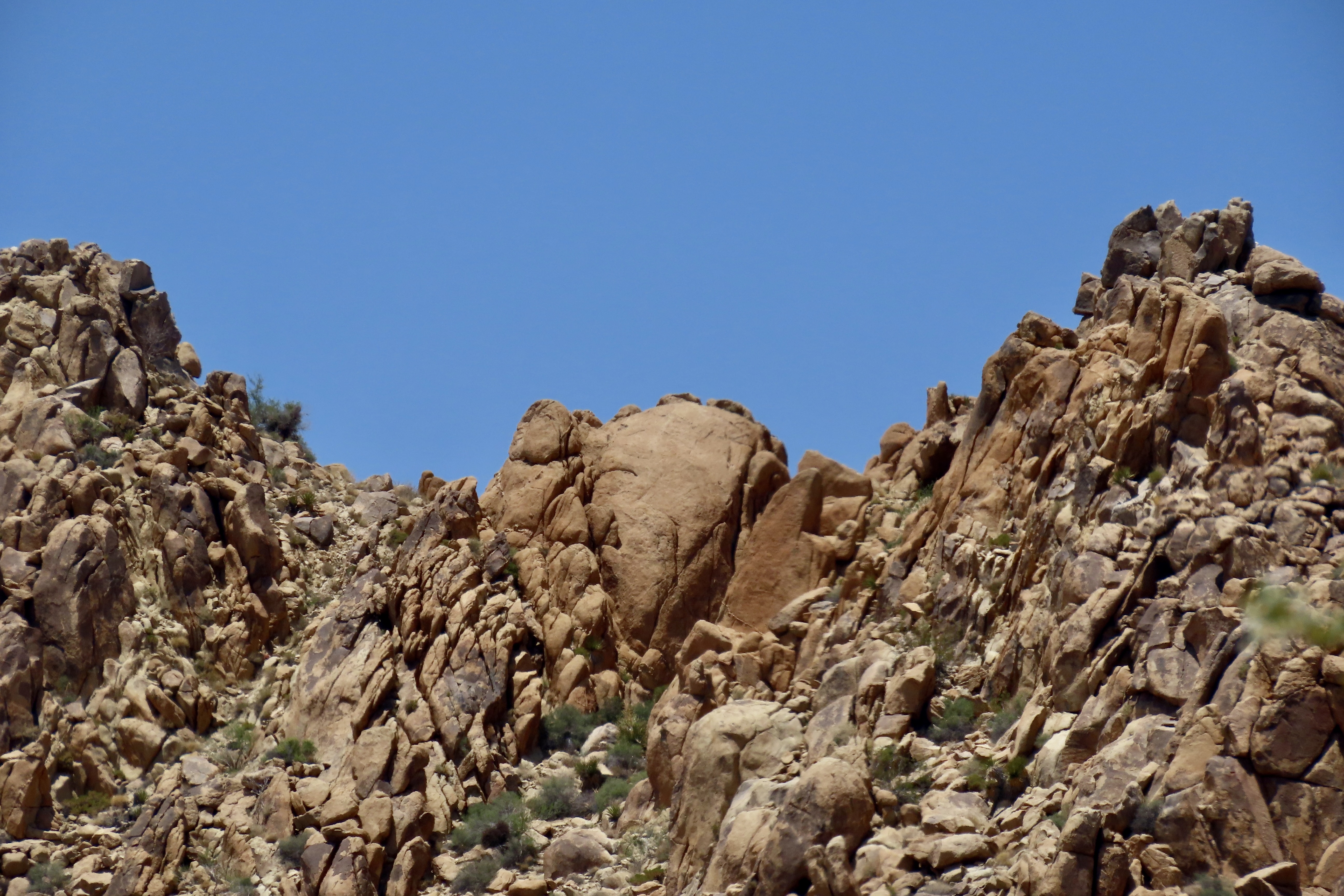
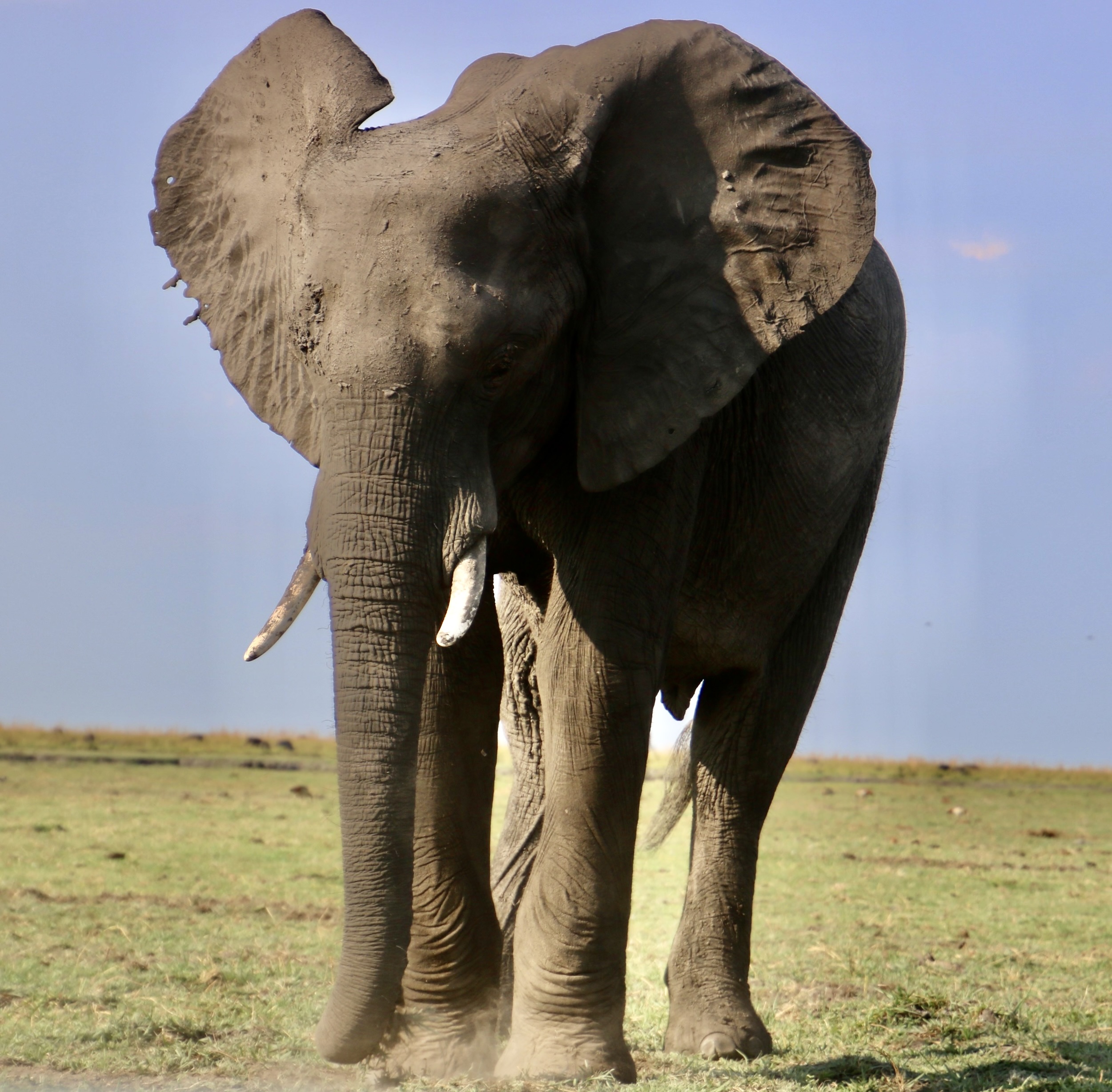
This single Joshua tree and sparce plant life backed up by a massive rock monument emphasize what Abby had to say.A yucca claimed its space on the desert floor.It featured curlicue fibers peeling off the edges. They are common to yuccas.Also claiming its space was a cholla and its shadow backlit by the sun. As untouchable as they appear, we found birds nesting in them throughout the Southwest. What spelled danger for most animals (including us), proved to be a safe haven for Curved Bill Thrashers and Cactus Wrens.This tortoise crossing sign reminded us of how much plants and animals that call desert home have adapted to life in an extreme hot, dry climate. Tortoises, for example, are experts at getting water from plants and conserving what water they get. When water is in short supply, they excrete their urine in a toothpaste-like form and hang on to the water! On a more prosaic note, I wondered how fast they can move. They are turtles after all. I learned that Bertie the Tortoise holds the Guinness record of .6 of a mile per hour. I also learned what a group of turtles are called: A creep. You can challenge your friends with this one.Careful observation informed us of other desert inhabitants. Something had scratched the ground here. But who— and what for. I noticed something partially buried at the end of the scratch and looked closer…It was fresh scat filled with berries. When one thinks of buried scat, the first thought that normally comes to mind is a cat, right? That led me to think bobcat. While they are mainly carnivorous, they won’t pass up berries if their favorite food isn’t on the menu. With that in mind, we left thinking it was probably a bobcat that had passed by the night before. That may be older cat-scat just above it. If so, the bobcat was likely marking its territory.Legend has it that the Mormons making their way through the desert named Joshua Trees after the Biblical Joshua who ‘lifted his arms’ to guide the Israelites. These youngsters ‘raising the arms’ may be sprouting from a fallen tree.The usual form of propagation is from seeds, however. We saw several Joshua trees sporting seed pods. A freeze is required for the tree to bloom and produce seeds. (Because of the requirement, global warming may endanger the plant. Forest fires have also taken a toll.)Seed pods. There is one more requirement: Yucca moths. The tiny, rice-sized insects are the trees sole pollinators and the trees flowers are the sole hosts for yucca moth eggs and caterpillars, thus forming an evolutionary, symbiotic relationship.While most Joshua trees seem rather skimpy, this one was a beauty. The trees normally grow to be around 40 feet tall and live around 150 years. Giants can top out at over 50 feet and live to be 300. Lacking tree rings, however, age is extremely difficult to determine. Some may be much older.A forest of Joshua trees.And now, on to the rocks. This skinny Joshua tree and massive rock seem to be having a conversation.The most impressive pile of boulders we saw.For fun, we took a photo of our truck, Iorek, in front of a rock pile. (Iorek is named after the Polar Bear in The Golden Compass. Our travel trailer is named Serafina, after the witch in the movie.) It wasn’t until I was putting together today’s post that I noticed the rock reflection in rear window. What a great optical illusion. It appears to be coming out of the window.This split rock was the most unusual stand-alone rock we saw. Holes in the rocks led to some interesting photo ops.Peggy playing around. Had she been 70 years younger, I can guarantee she would had been crawling through. In fact, there was no guarantee she wouldn’t at 75!We thought, “bird.”Close up. Snoopy’s friend Woodstock, perhaps.A necklace of rock cutting through the granite caught our attention. It was formed after the monzogranite formed and developed cracks. A subsequent flow of molten rock consisting of a mixture of quartz and potassium minerals were forced into the cracks and cooled as lighter colored rocks. When the rocks were exposed at the surface, they broke into blocks somewhat uniform in structure.As the granite eroded away, it left the harder dike rock on the surface.Nearby, a lone oak added a touch of beauty. We were surprised to find it here where Joshua trees dominate the landscape.We were also surprised to find an elephant. Grin. Can you spot its image? An elephant from our safari trip to Southern Africa two years ago. This is a good place to wrap up this blog. Next up: Bandelier NationalMonument in New Mexico.To the Ancestral Puebloans, this was home sweet home.






 Wandering through Time and Place