The Slithery Serpents of the Three Rivers Petroglyph Site

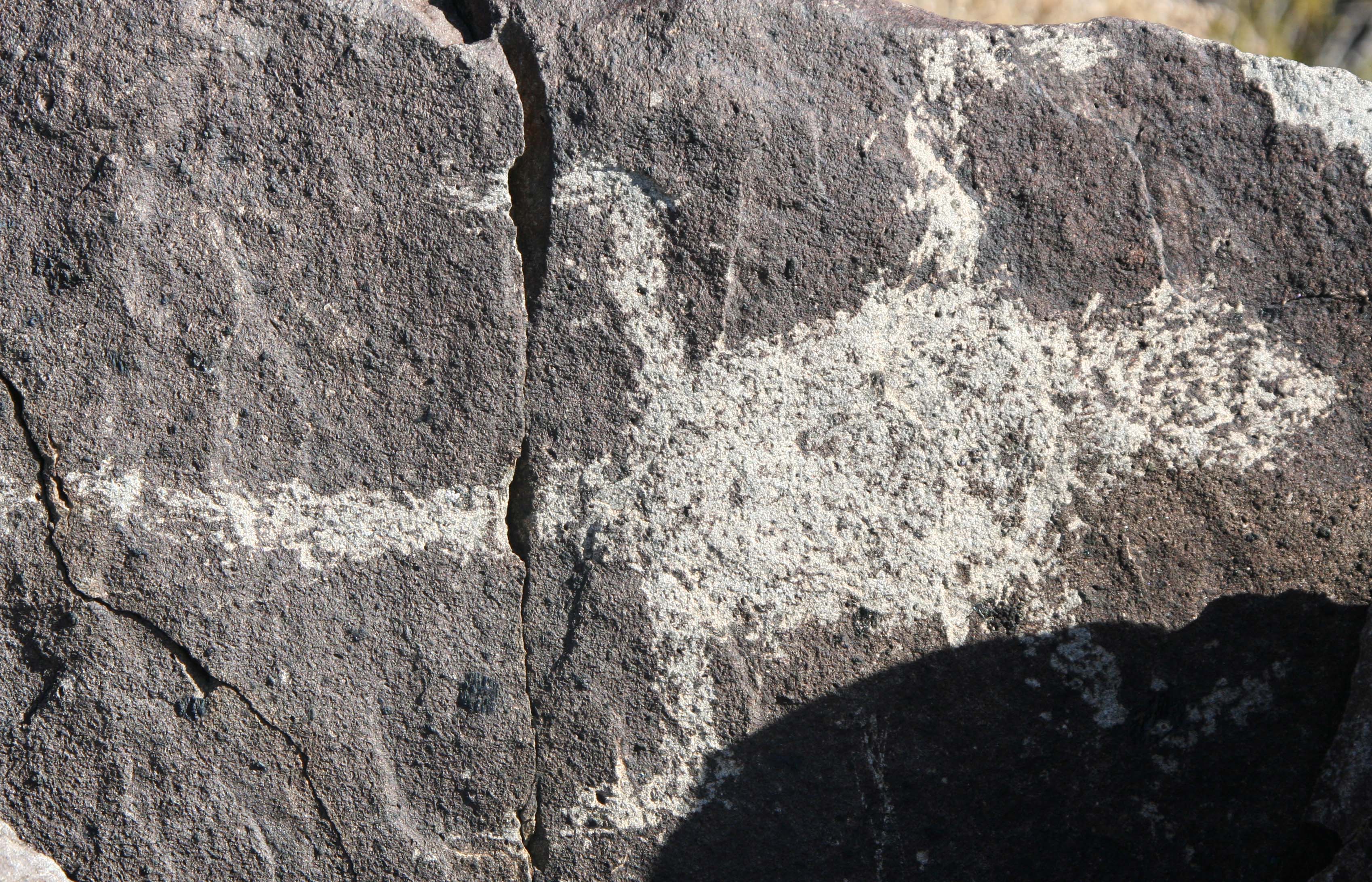
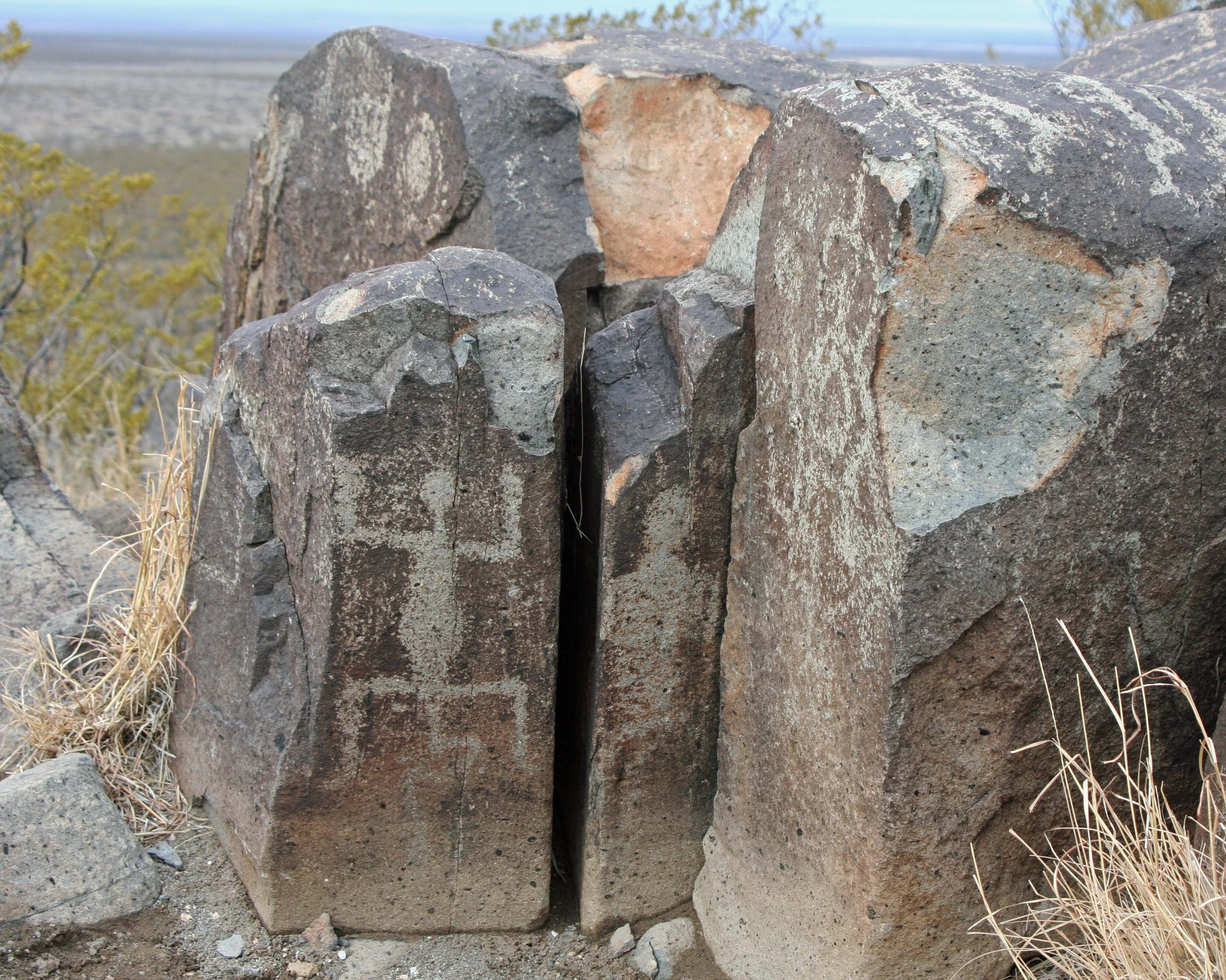
Rattlesnake petroglyph at Three Rivers Petroglyph Site in southern New Mexico.

I could rave about how this fellows curves follow the rock. In fact I am raving about it. Also check out the serpent hear on this guy and his buzzy tail. Rattlesnake for sure.

Bad snakes have been giving good snakes a bum rap for eons. It all started when the Biblical Eve bit into the apple she had obtained from the proverbial snake in the tree and realized she was naked. It must have been a shocking discovery. Snakes have been pummeled, stomped, cut up, diced, crushed, shot, speared and smashed ever since.

Actually, there is no such thing as a bad snake; there are only snakes that have had a bad childhood and will bite you if you step on them or wake them up when they are sunbathing on their favorite rock or lollygagging in a scummy pond. They don’t really mean to kill you; it’s a waste of good venom. Normally, we are too big to eat.

I’ve had numerous snake encounters over the years from the rainforests of the Amazon and West Africa to the rattlesnake country of the American West. Believe me when I say there is nothing like stepping on a log and having it come alive with the buzz of rattlesnakes. I once set an Olympic record for the standing long jump when that happened. Another time, I almost sat on a rattler when I was going to the bathroom in the woods. I couldn’t poop for days.

The Jornada Mogollon people of the Three Rivers Petroglyph site must have had a special relationship with snakes. There are numerous snake glyphs scattered throughout the area… and these are BIG snakes with BIG heads and jaws. “The better to bite you with my dear.” I suspect the snakes were considered sacred and worshipped, which is what the nearby Navajo and Hopi people did.

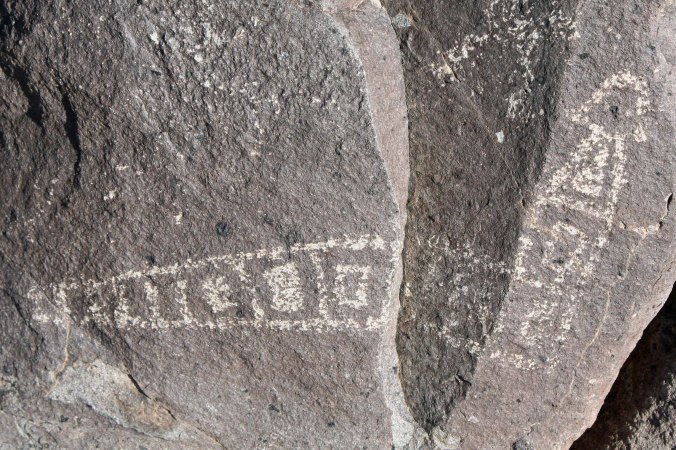
These long snakes slithering down the rocks are worthy of an Indiana Jones movie.
These long snakes slithering down the rocks are worthy of an Indiana Jones movie.

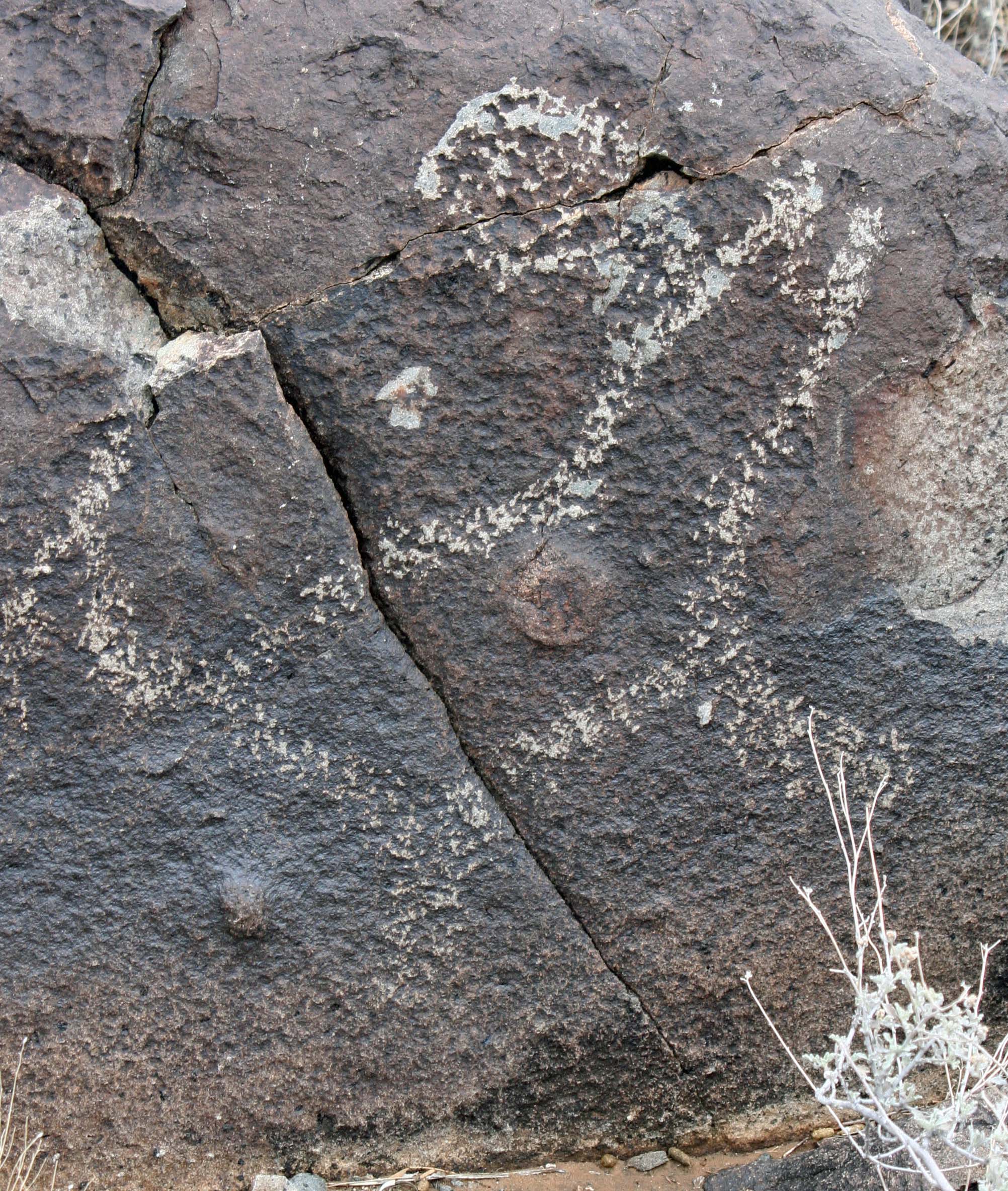
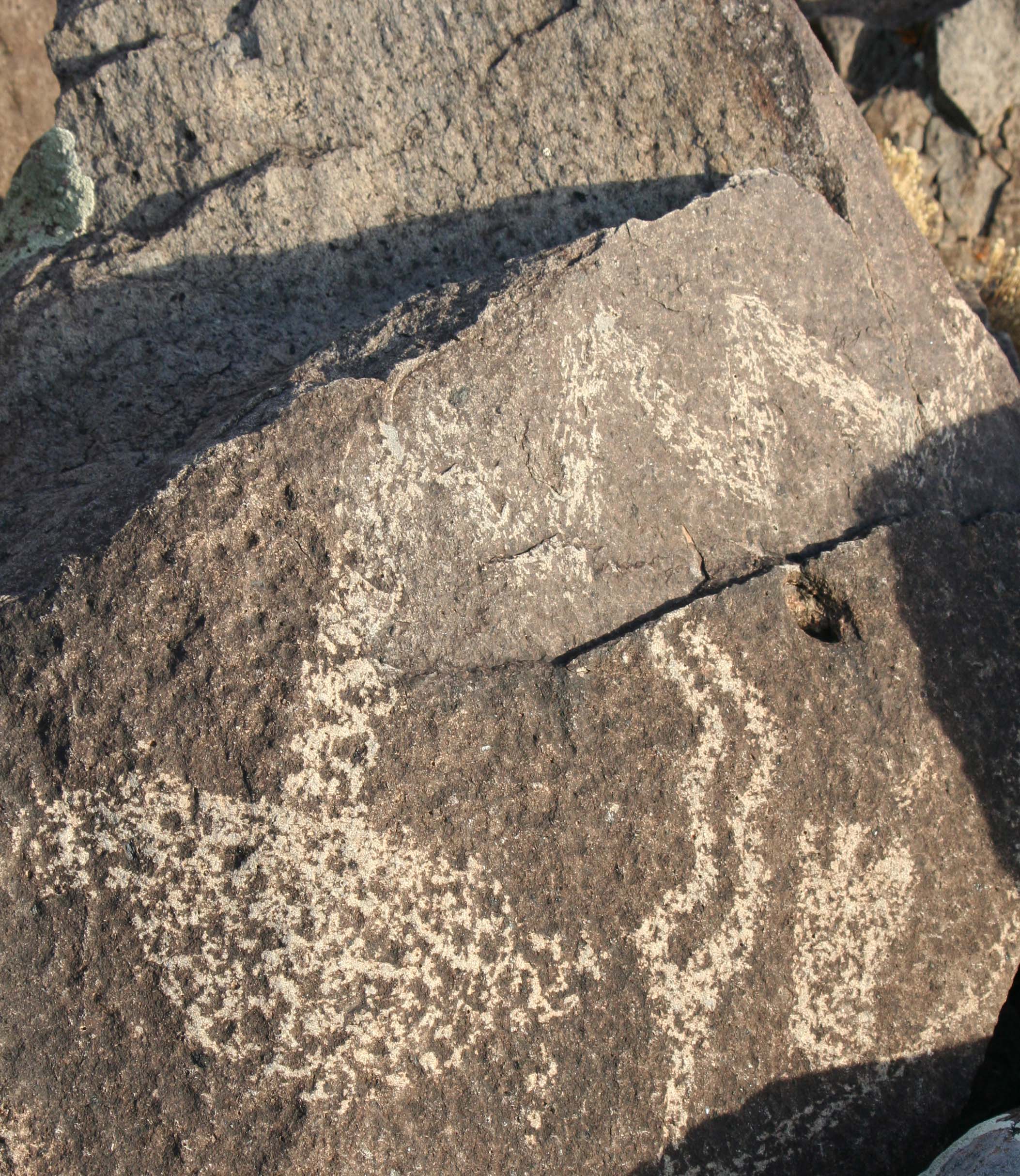
Petroglyph snake with large head in Three Rivers Petroglyph site.

In the world of big snake heads, this Three Rivers serpent would be a record holder.

Rattlesnakes weren’t the only poisonous denizens of the desert recorded in the petroglyphs of Three Rivers. There were also spiders and scorpions.  On the more benign side of the equation, there were numerous rock art lizards.

Spider petroglyph at Three Rivers Petroglyph site.

I think this large, scary bug is probably a spider.
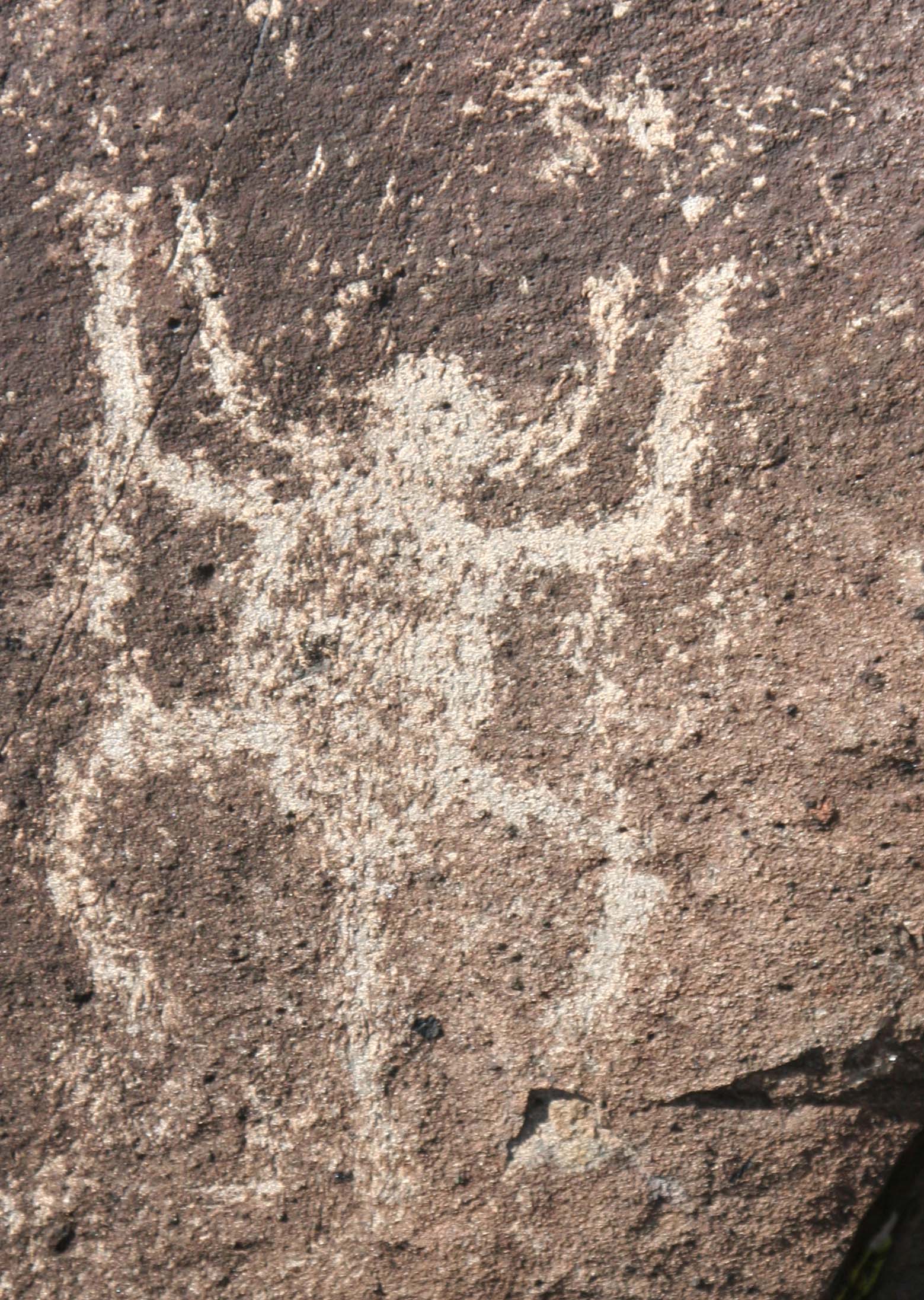
Scorpion petroglyph at Three Rivers Petroglyph site.

My money would be on a scorpion here. Check out the rounded end of his tail and the two pincher claws up front.
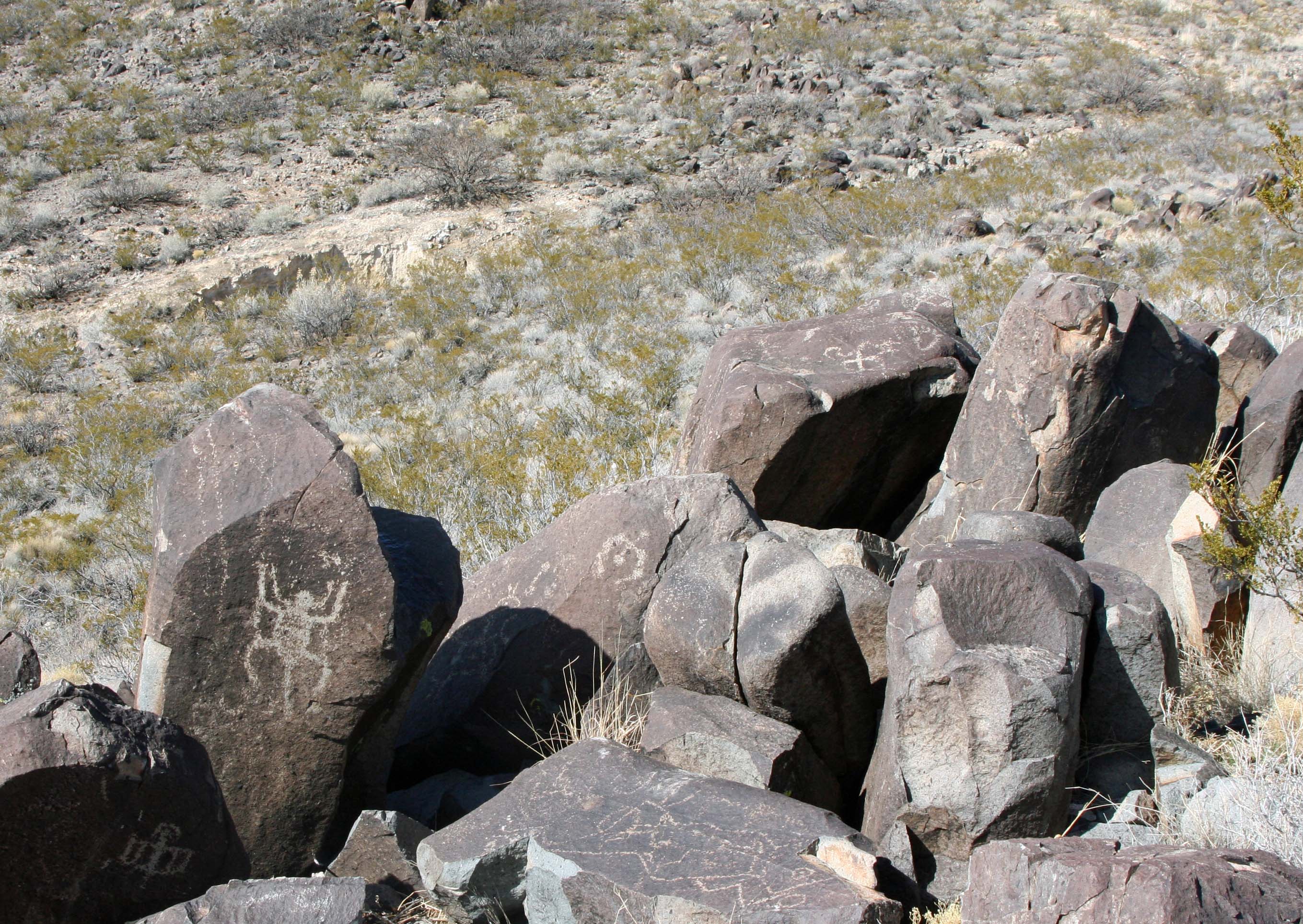
A number of petroglyphs at Three Rivers Petroglyph site in New Mexico.

This is where we found the scorpion. I suspect that his modern-day cousins are lurking in the rocks surrounding him.

Lizards are considered much more benign than snakes, spiders and scorpions. For example, my eight year old grandson Ethan caught several during his recent visit.

Lizards are considered much more benign than snakes, spiders and scorpions. For example, my eight year old grandson Ethan caught several during his recent visit. He was only chomped on a couple of times.
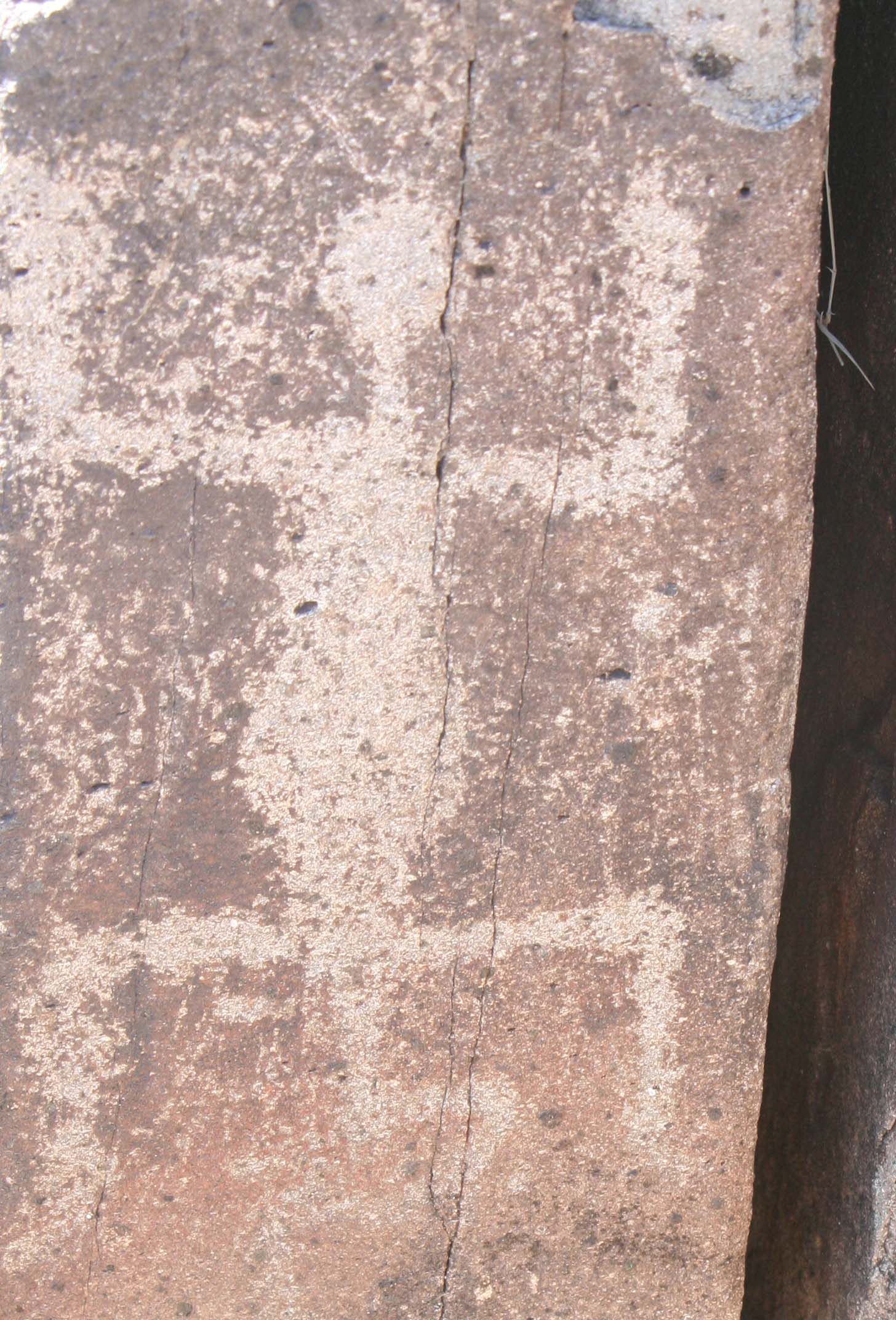
A petroglyph lizard foud at the Three Rivers Petroglyph Site.

Pregnant petroglyph lizard?

Petroglyph lizard at Three Rivers Petroglyph site in southern New Mexico

A well-fed petroglyph lizard?

This frog doesn’t belong here along with the reptiles and bugs but he absolutely had to go somewhere.
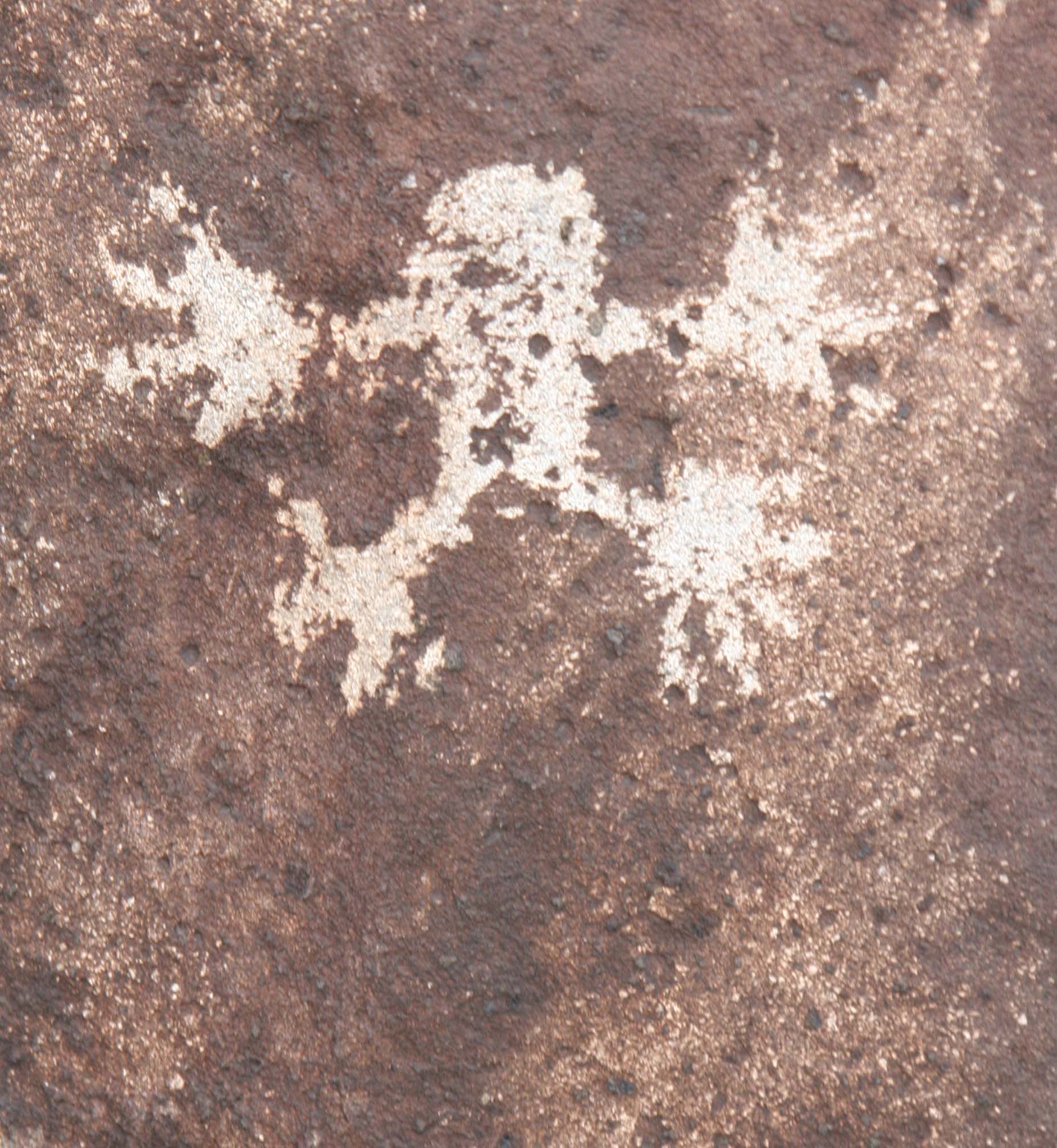
Frog petroglyph at Three Rivers Petroglyph site.

Gotta love this guy.

NEXT BLOG: Patterns in the rock. We will look at some of the many geometric patterns found among the petroglyphs and guess at their meaning.
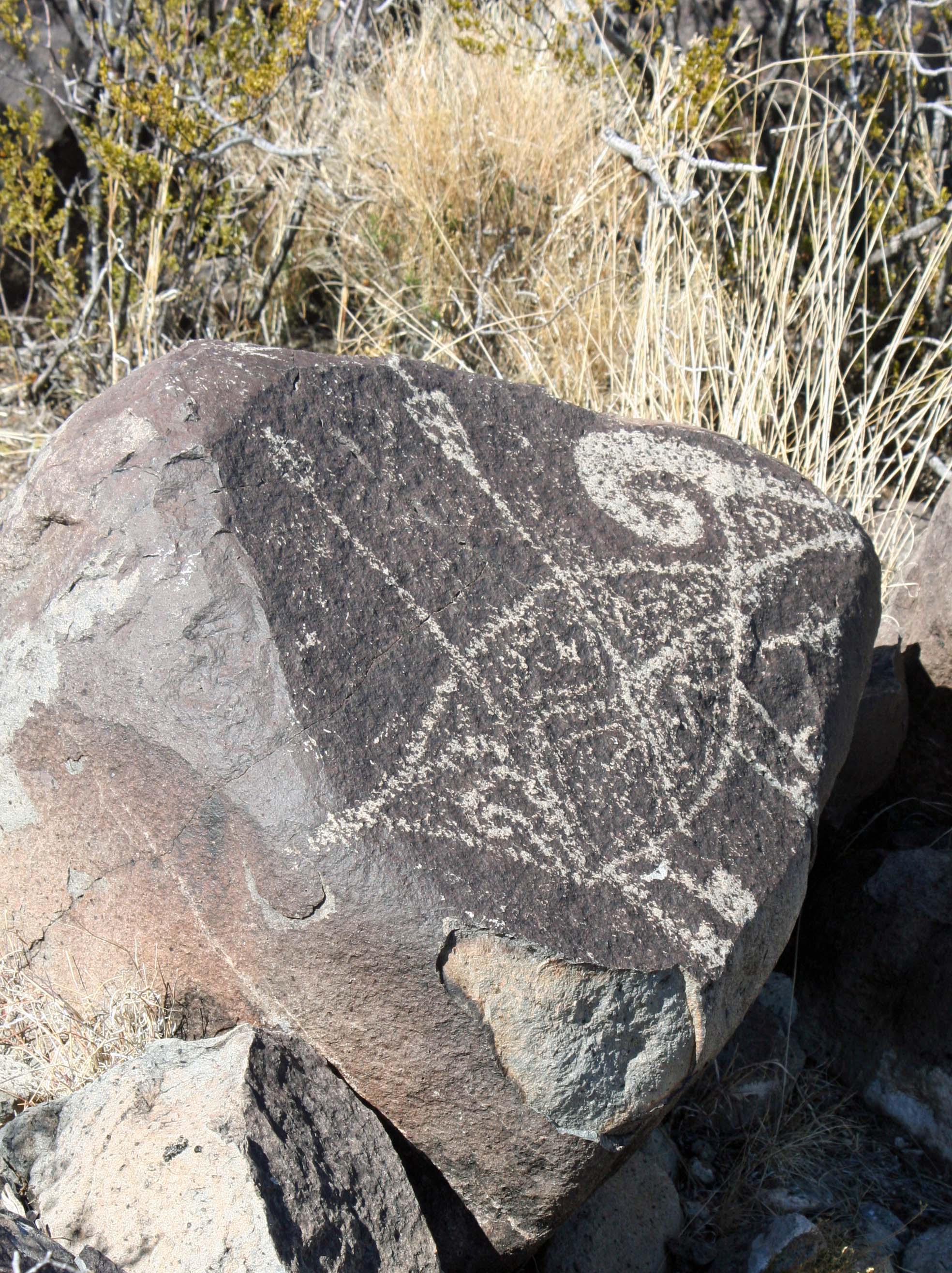
Big Horns and Sharp Claws… Animal Petroglyphs at Three Rivers

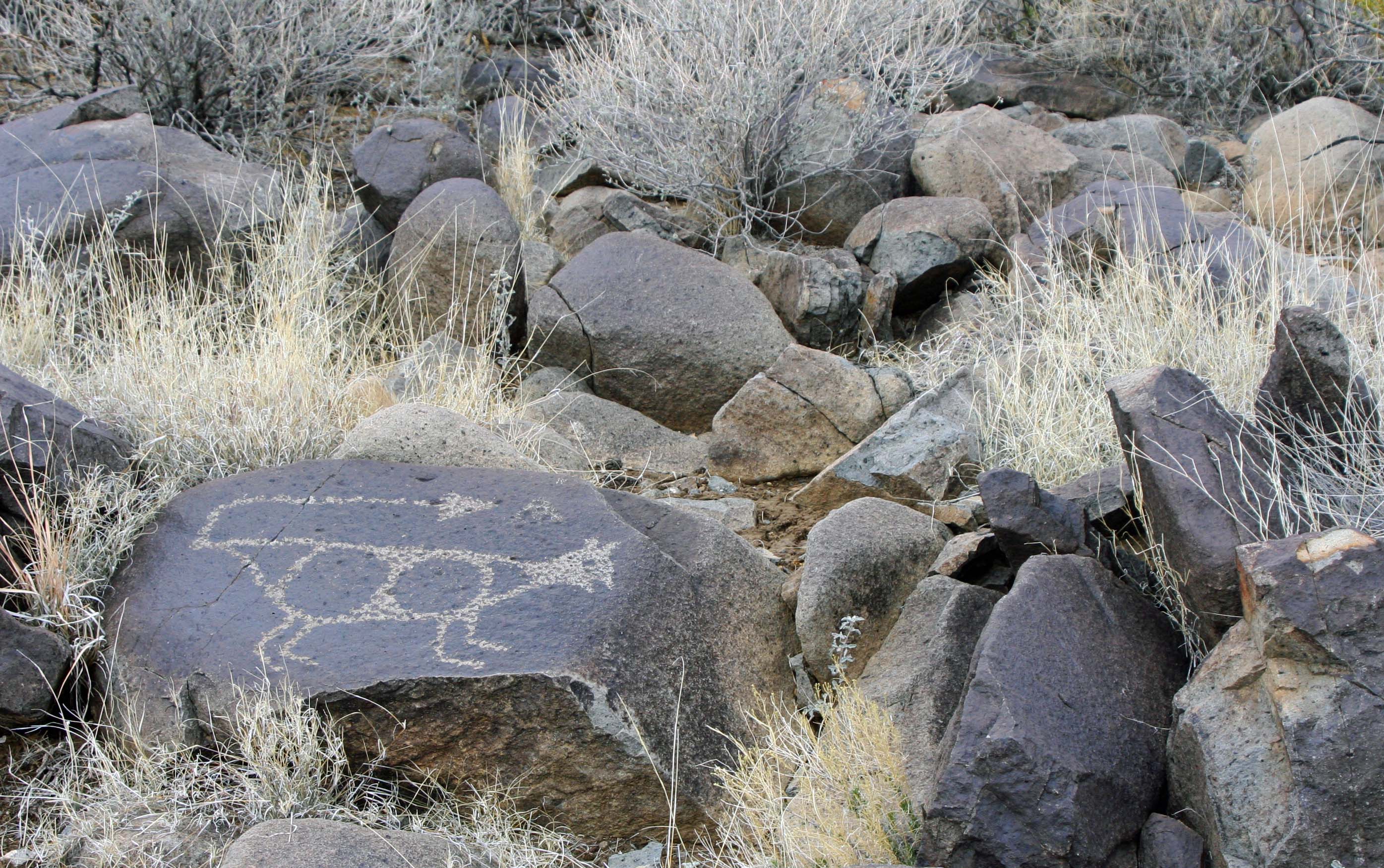
Bighorn sheep petroglyph with arrows at Three Rivers Petroglyph site in southern New Mexico.

Bighorn sheep were a major source of food for the Jornada Mogollon people of New Mexico and for Native Americans throughout the South West. Animals are often found with arrows sticking out.

Hunting wild animals for meat provided an essential source of food for the majority of mankind’s existence. While the Jornada Mogollon people at the Three Rivers’ Petroglyph site cultivated corn, hunting remained a vital activity.

Success meant learning as much as they could about the animals that inhabited their desert world: where they lived, what they ate, where they drank, and what trails they used were all important.  The Jornada were excellent trackers, able to read in a few scuffed tracks the story of who had wandered down a trail and what they were doing.

Petroglyph bear track at Thrre Rivers Petroglyph site in southern New Mexico.

A number of petroglyph tracks are found at the Three Rivers site. This big fellow is a bear.

Human foot print found at Three Rivers Petroglyph site in Southern New Mexico.

A human footprint for comparison. Human hand and foot print petroglyphs are relatively common.

Possible petroglyph of cougar print with claws extended at Three Rivers Petroglyph site.

I am not sure what these wicked claws belonged to but possibly it was a cougar with its claws extended.

There was a close, almost sacred, relationship between the hunter and the hunted. Clans assumed animal names and young people went on vision quests to discover which animal might serve as personal guides. Shaman put on animal cloaks and assumed animal personalities. The gods and the spirits of animals were both honored. (It helped assure they would be around at dinner time.)

Some animals were more important than others. Bighorn sheep were a primary food source throughout the South West. Cougars and bears were large predators demanding respect.  The arrival of Spaniards in the 1500s meant the arrival of horses.

Not surprisingly, the petroglyphs found at Three Rivers reflect the importance of the various animals in the life of the Jornada. We discovered numerous bighorn sheep and an unexpected number of cougars. There were also horses, rabbits and coyotes. Horses provided a radical new form of transportation; coyotes were known for their trickery; and rabbits provided an easy food supply.

I took this photo of a bighorn sheep near Lake Mead in southern Nevada. He had come down from the mountains to take advantage of the green grass of a small park.

I took this photo of a bighorn sheep near Lake Mead in southern Nevada. He had come down from the mountains to take advantage of the green grass of a small park. His arch rival was his reflection in an aluminum garage door. The owner had a hard time convincing the insurance agent that his door had been smashed in by the enraged animal.

Bighorn sheep petroglyph founf at Three Rivers Petroglyph site in southern New Mexico.

Similar horns are displayed on this Three Rivers Petroglyph. Note: It is not unusual to find geometric designs incorporated into animal petroglyphs.

Bighorn sheep petroglyph at Three Rivers Petroglyph site in southern New Mexico.

I thought this bighorn sheep petroglyph at Three Rivers was a sophisticated work of art. Did the Jornada have their Rembrandts?

Mountain lion photo

Peggy and I took our grandkids to a wildlife sanctuary last week and found this curious mountain lion that sniffed our five-year old. Nice kitty.

Mountain lion petroglyph found at Three Rivers Petroglyph site in southern New Mexico.

Peggy and I found a number of mountain lion petroglyphs at Three Rivers, which suggested that the cougar played an important role in the lives of the Jornada people.

Another mountain lion petroglyph. As to why the big cats have there tail extended over their backs, I don't have a clue. Any ideas?

Another mountain lion petroglyph. As to why the big cats have their tails extended over their backs, I don’t have a clue. Any ideas?

I used this petroglyph in my last blog. This photo provides an interesting view of the whole rock and the other petroglyphs.

I used this petroglyph in my last blog. This photo provides an interesting view of the whole rock.

Photo of Coyote in Death Valley near Scotty's Castle.

Coyote played an important role in Native American mythology as a Trickster. I took this photo in Death Valley.

Petroglyph of coyote howling at the moon found in the Three Rivers Petroglyph site.

While this petroglyph wasn’t as clear as many we found at Three Rivers, I am including it because the coyote is howling at the moon. Every gift shop in the South West will sell at least one item with a coyote howling at the moon.

The Spanish introduced the modern horse into North America six centuries ago, an act which had a major impact on the culture of Native Americans. I've been waiting for six months to reintroduce this Scotland pony into my blog.

The Spanish introduced the modern horse into North America six centuries ago, an act which had a major impact on the culture of Native Americans. I’ve been waiting for six months to reintroduce this Scotland pony into my blog. I snapped its picture two years ago when it ran up to greet me in the Scottish lowlands.

Horse petroglyph from Three Rivers Petroglyph site in southern New Mexico.

We found three horse petroglyphs that seemed to have a blanket with geometric designs draped over their bodies.

Rabbit petroglyph at Three Rivers Petroglyph site in southern New Mexico

I’ll conclude with what I felt was a good representation of a jack rabbit… until I noticed the possible tail arching over its back. (grin)

The next blog is for the birds.

A small, nondescript bird pecks away on a rock.

A small, nondescript bird roosts on a rock at Three Rivers Petroglyph site.

New Mexico’s Three Rivers Petroglyph Site… Where Art Rocks

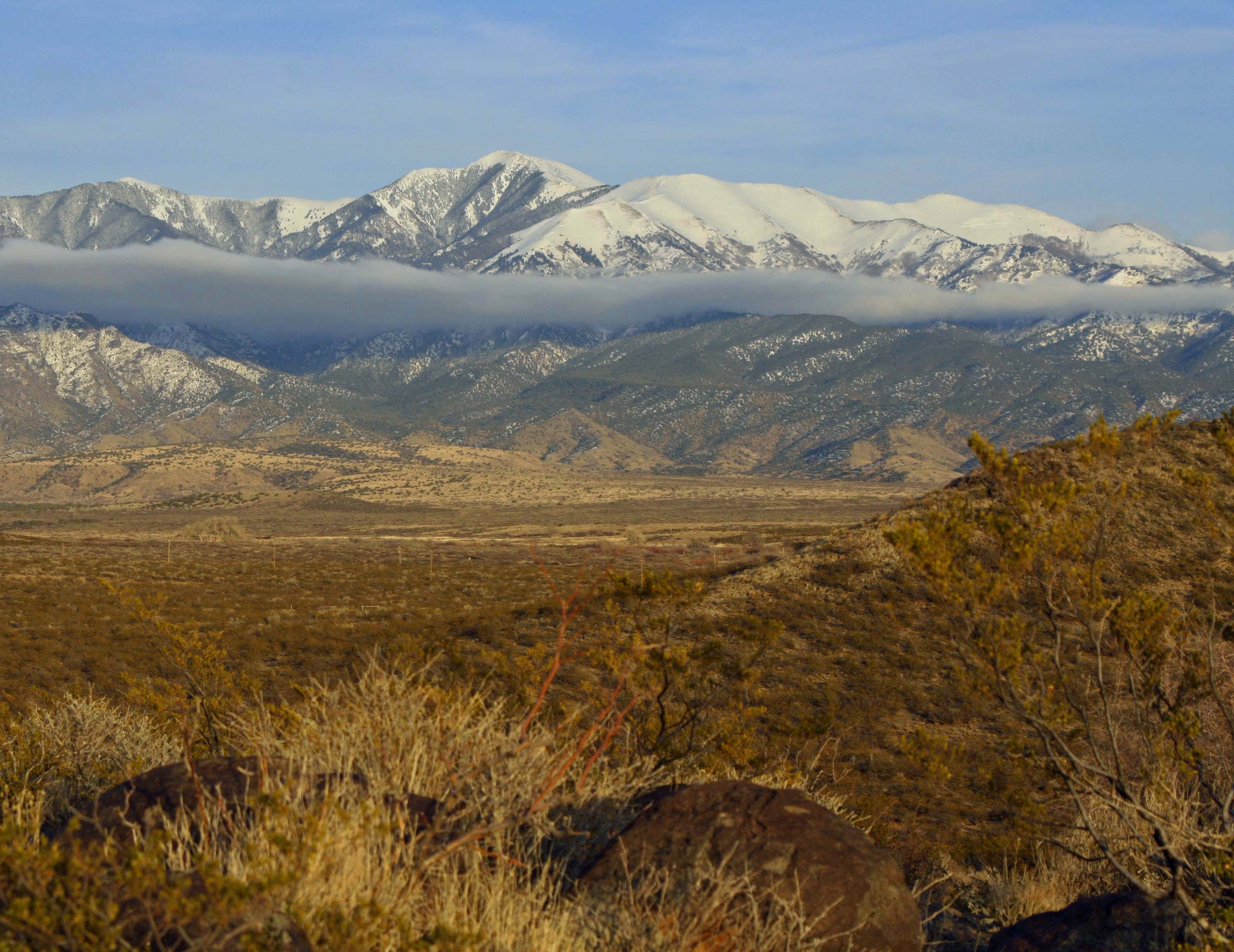
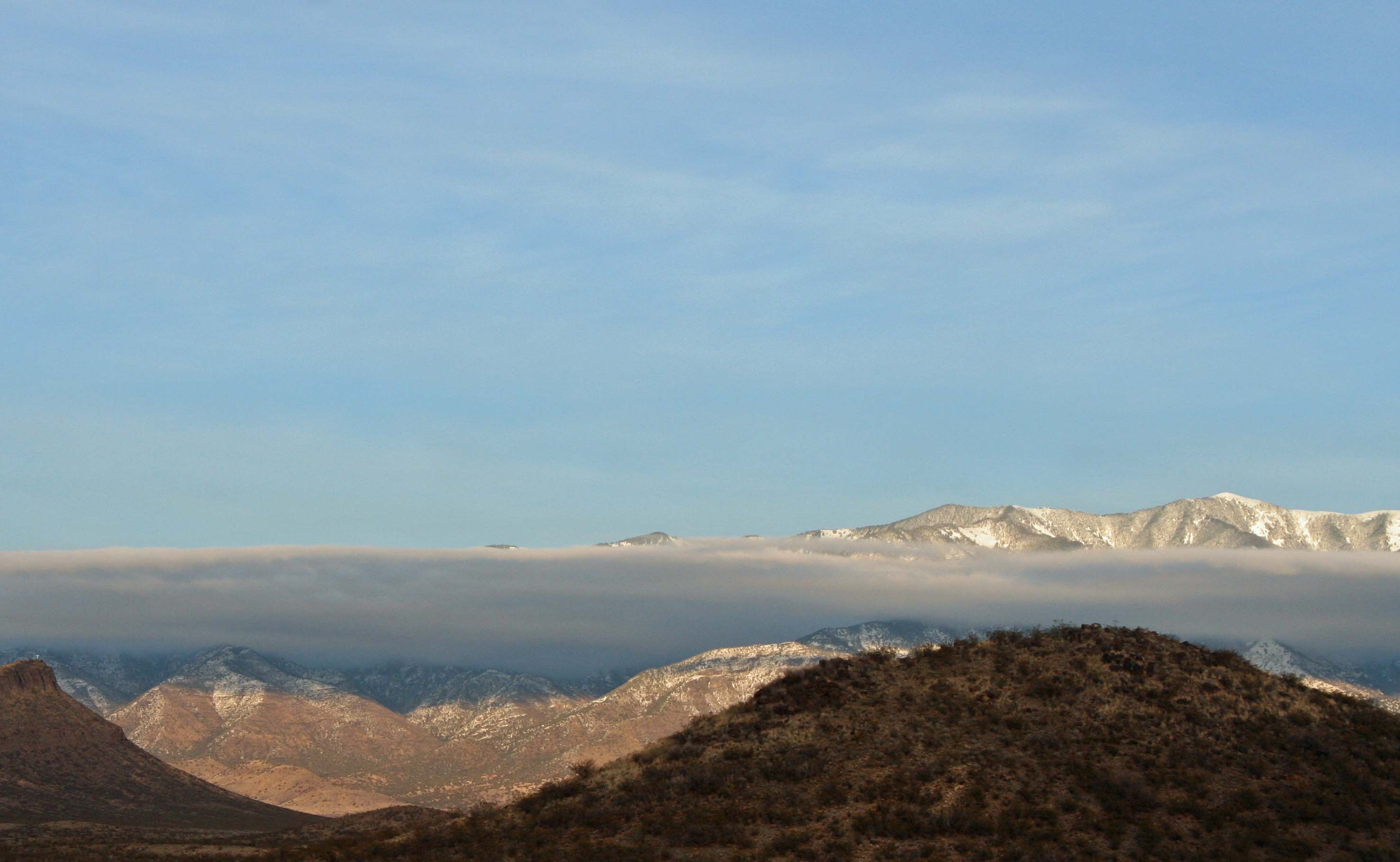
Sacramento Mountains of New Mexico.

A layer of clouds stretching along the Sacramento Mountains adds beauty and mystery to the Three Rivers Petroglyph site. It is easy to understand why Native Americans chose the area for their rock art.

This marks the beginning of a new series where we leave the beautiful but crowded cities of Europe to visit the lonely, wide-open spaces of the American and Canadian west. Our journey will take us from New Mexico’s northern Chihuahuan desert to Alaska’s remote Kodiak Islands.

For the next three weeks we will explore the mystical world of Native American rock art found in the Three Rivers Petroglyph site of southern New Mexico. Afterwards Peggy and I will spend six weeks travelling up the Alaska Highway through British Columbia and the Yukon Territory to Alaska and back.  We will finish off our summer at the celebration known as Burning Man held in Nevada’s Black Rock Desert.

Peggy and I have been visiting rock art sites throughout the Southwestern United States for the past 15 years. The Three Rivers’ site is one of our favorites. Some 21,000 petroglyphs featuring everything from people to bugs are spread out over 50 acres. Created by the Jornada Mogollon people of the Chihuahuan Desert, the glyphs were pecked into rock using stone tools for a period of over 500 years starting in 900 AD.

This is wide-open country set off by dramatic mountains. Within a hundred miles of Three Rivers, Billy the Kid fought in the Lincoln County Wars, Smokey the Bear was found hidden in a tree avoiding a forest fire, bug eyed aliens became synonymous with Roswell, and history was forever changed with the explosion of the world’s first atomic bomb.

I rode through the area on my bicycle as part of my ten thousand mile trek around North America. It’s a long way between pit stops.

Mountains and deserts of Southern new Mexico

What southern New Mexico looks like from a bicycle.

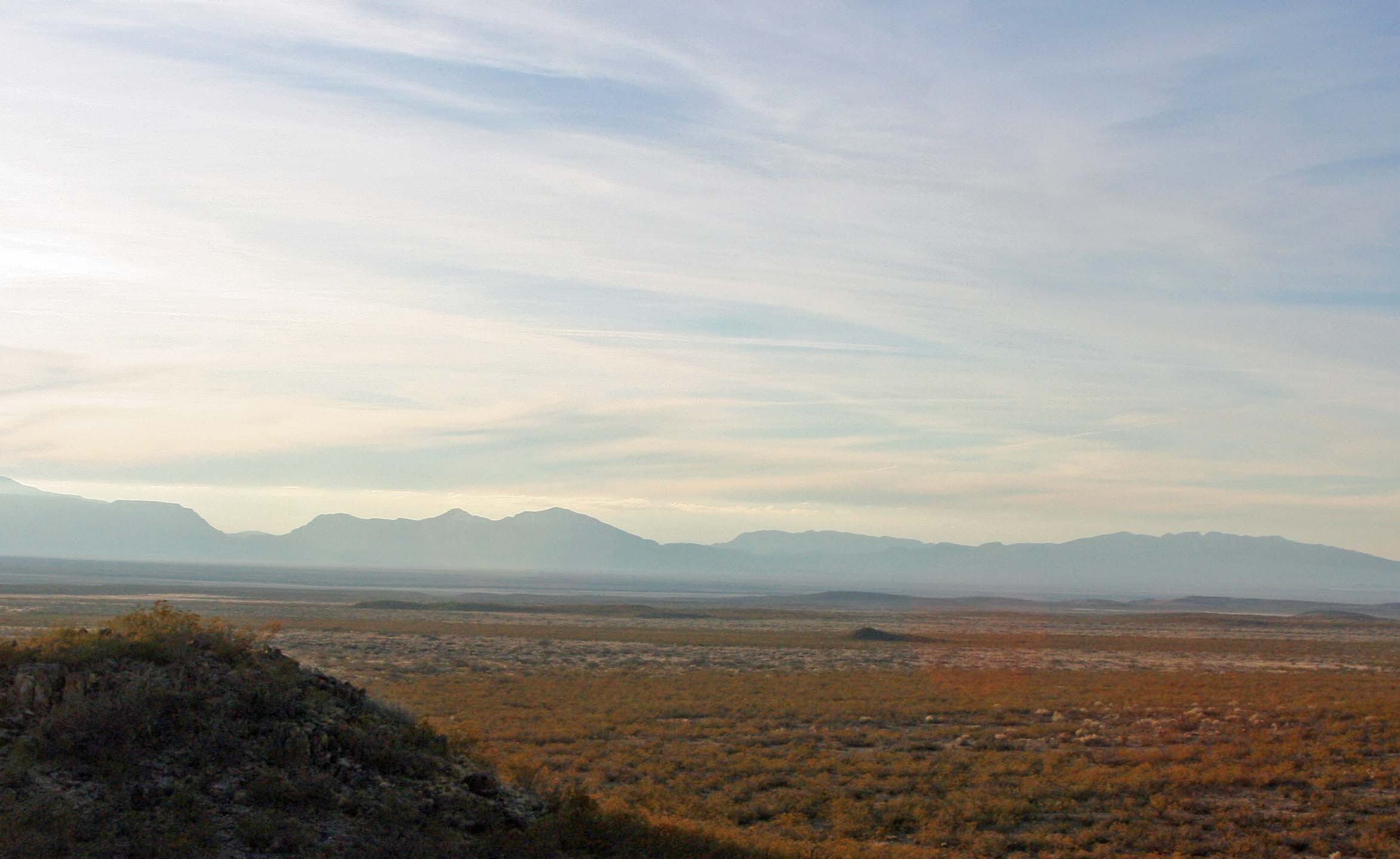
Native Americans often chose special sites for their rock art and it is immediately apparent that the Three Rivers site is special. The words “raw beauty” come to mind. Set on a ridge, the site provides commanding views of the surrounding desert and mountains. Today’s blog will explore the natural beauty of the region. In my next blogs I will feature petroglyphs of people, animals, birds, geometric designs, animal tracks, reptiles, bugs and anything else that caught the fancy of the Jornada people– including a whale and a mysterious ship.

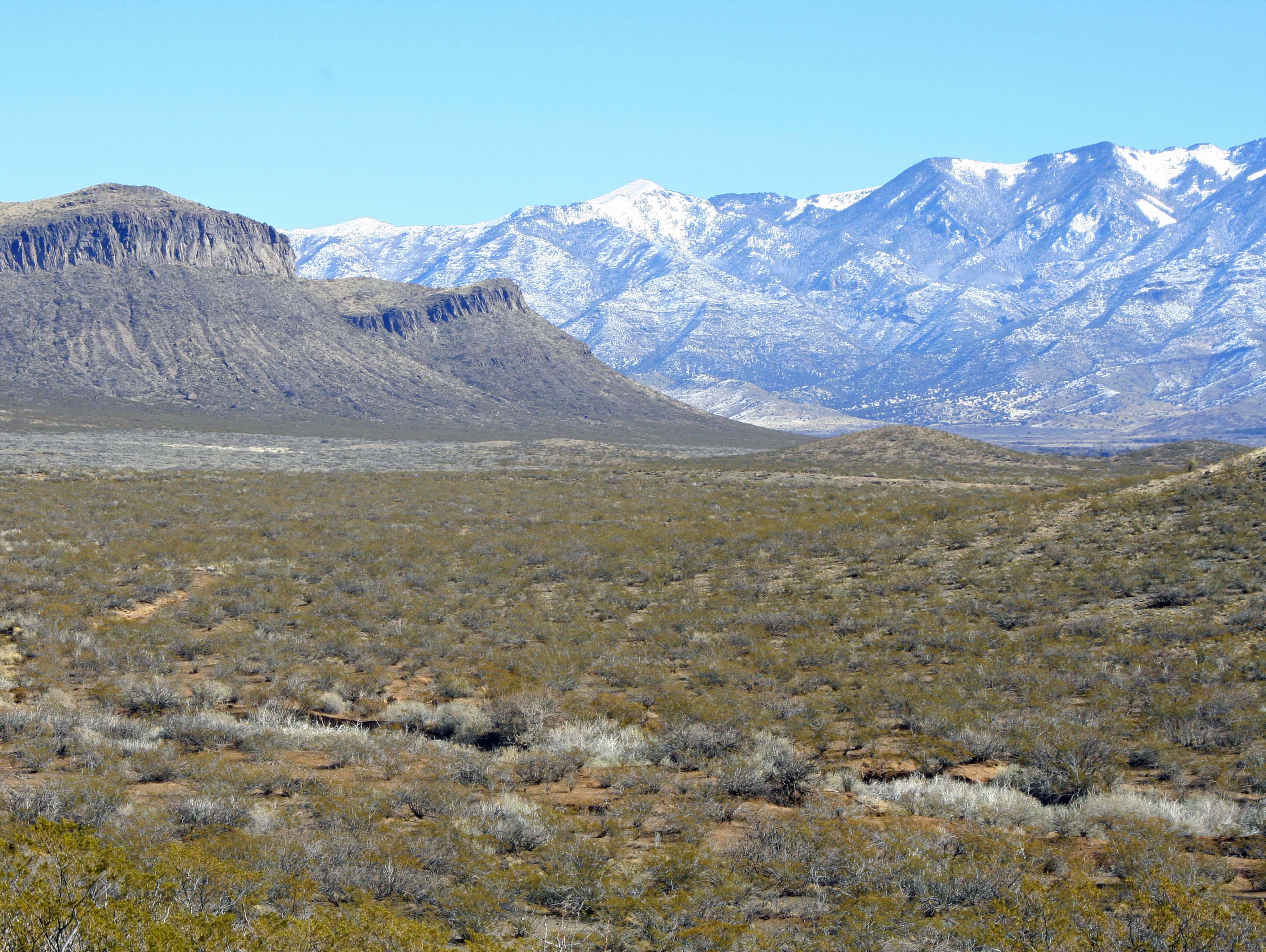
Three Rivers Petroglyph site in southern New Mexico.

Another photo featuring the Sacramento Mountains and clouds from the perspective of the Three Rivers Petroglyph site.

Three Rivers Petroglyph site in southern New Mexico with Sacramento Mountains providing the backdrop.

Native Americans often chose cliff areas such as those on the left for their rock art.

Three Rivers Petroglyph site in southern New Mexico.

Our van, Quivera, provides a perspective on the region. We took this photo from the ridge where the majority of petroglyphs are located. We pretty much had the site to ourselves during the two days we were there.

Peggy stands on the ridge next to a rock likely to hold petroglyphs. Some glyphs are immediately obvious while others are hidden. Sharp eyes are required.

Peggy stands on the ridge next to a rock likely to hold petroglyphs. Some glyphs are immediately obvious while others are hidden. Sharp eyes are required.

Petroglyphs at Three Rivers Petroglyph site in southern New Mexico.

Faded bear and what may be badger prints are shown on these rocks. Petroglyphs are made by using a stone to peck away the outer layer of rock varnish (a layer of minerals that attaches to the rock over time).

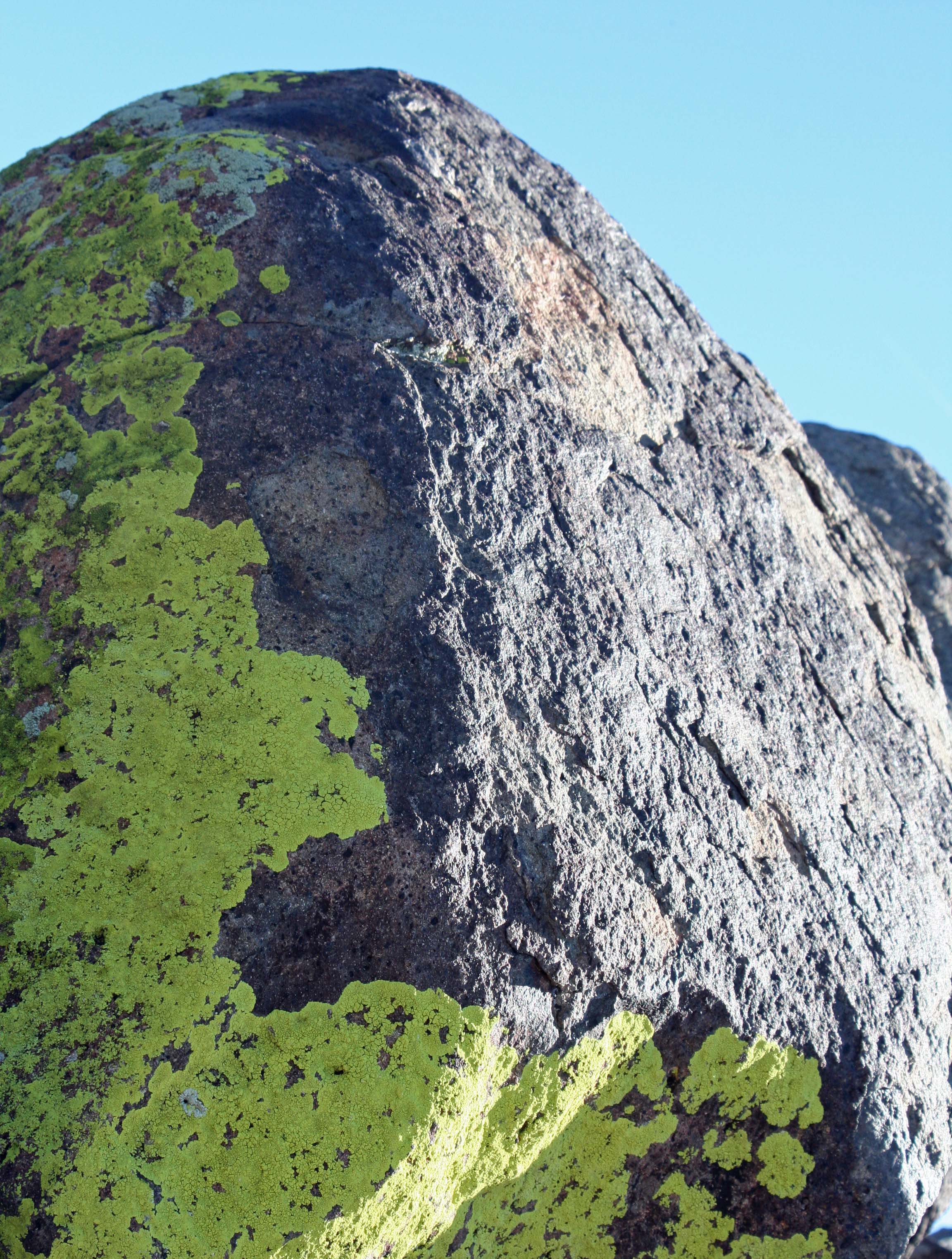
Lichen on rock at Three Rivers Petroglyph site in Southern New Mexico.

We also found the lichens to be quite attractive.

Lizard glyph at Three Rivers Petroglyph site in Southern New Mexico.

Many rocks at Three Rivers are covered with petroglyphs. In addition to the prominent lizard,we found circles, geometric designs, and a possible map on the various faces of this rock.

Evening clouds over the Sacramento Mountains of New Mexico.

Sunset lights up the Sacramento Mountains. I found the contrast created by the cloud layer quite interesting.

NEXT BLOG: I will look at glyphs that feature the Jornada Mogollon people and their gods.

Petroglyph at Three Rivers Petroglyph site in Southern New Mexico

One of the many strange beings we found lurking among the rocks.