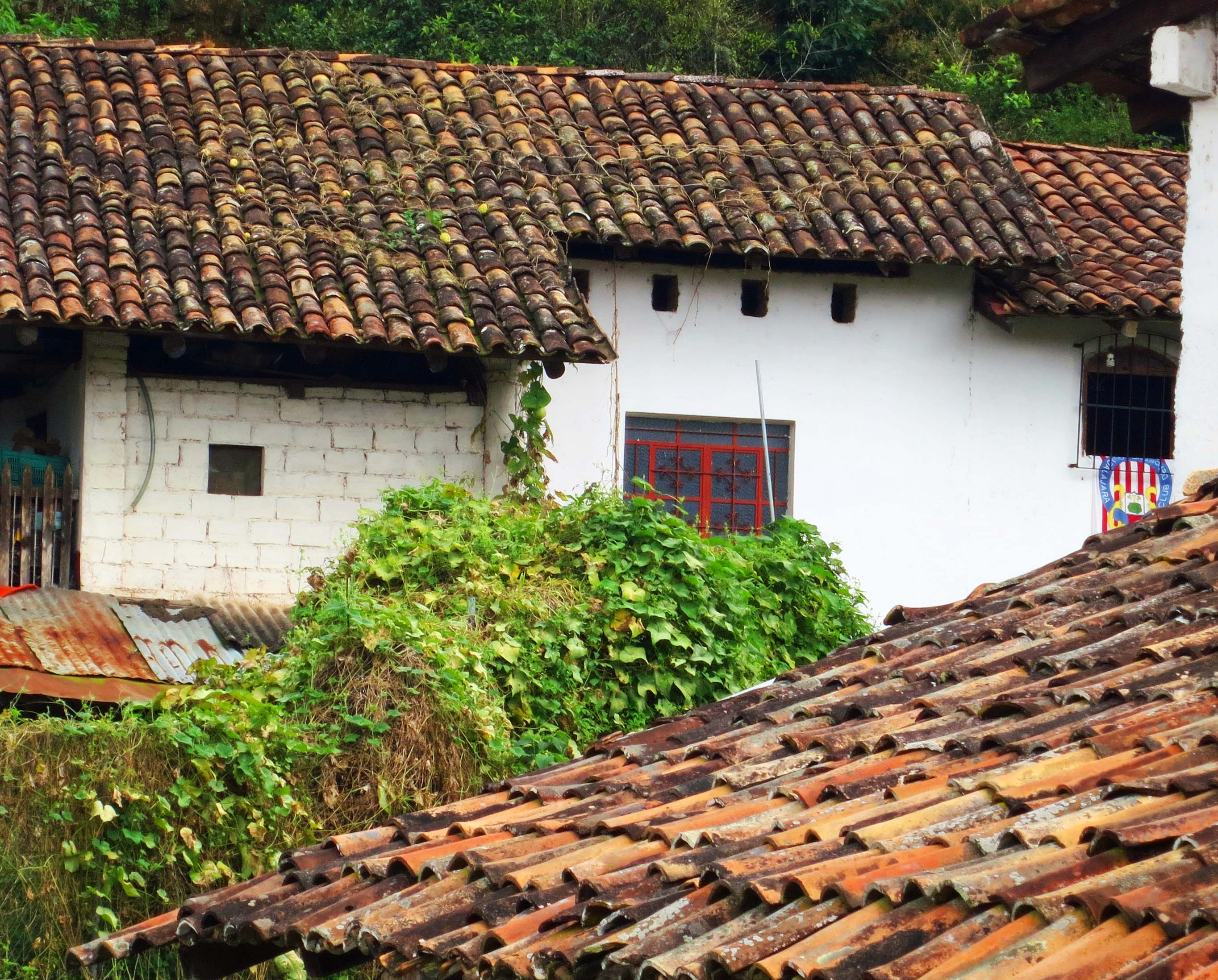
Nestled in the Sierra Madre Mountains above Puerto Vallarta, the town of San Sebastian was once a bustling silver mining town of 20,000. Now it is a quiet village of 600.
We didn’t plan on visiting San Sebastian del Oeste on Mexican Independence Day. Neither did we expect to have a guide immersed in Mexican history. It was all happenstance, a fortuitous occasion. As our bus climbed the steep, curvy road into the Sierra Madre Mountains above Puerto Vallarta, our talkative guide climbed on his soapbox. We learned a lot about the Mexican Revolution.
On November 20, 1910, people throughout Mexico were urged to rise up in revolt against Mexico’s autocratic president, Porfirio Diaz. Times were bad, especially for the poor, i.e. just about everybody. Ninety five percent of Mexico’s wealth was controlled by five percent of the population. Vast swaths of land were tied up in haciendas. Peasants who worked these haciendas were treated little better than slaves.
It would take over a decade but eventually the people of Mexico won massive reforms and better living conditions for themselves. Two legendary figures, Pancho Villa and Emiliano Zapata, rose out of the conflict. Both would be assassinated but their names and legacy would live on into modern times as heroes of the common man and symbols of freedom, not only in Mexico but also around the world.

Pancho Villa’s raid across the border into New Mexico for military supplies made him a wanted man in the US and sent General John Pershing charging into Mexico on horseback in hot pursuit. Pershing and his troops spent a frustrating year chasing Villa through the mountains but never caught the illusive patriot/bandit. Pershing returned to the US to lead American troops in a more successful World War I effort.
Our bus passed by cornfields, crossed over a high bridge and stopped. It was apparently a Kodak moment. The bridge was famous for cutting a couple of hours off the journey to San Sebastian. The old road made its way tortuously in and out of the canyon. Once it had been a burro trail, used to bring salt up from Puerto Vallarta, which was known as Las Peñas at the time. The salt was used in the smelting process to help break silver and gold out of the rich ores in the region.
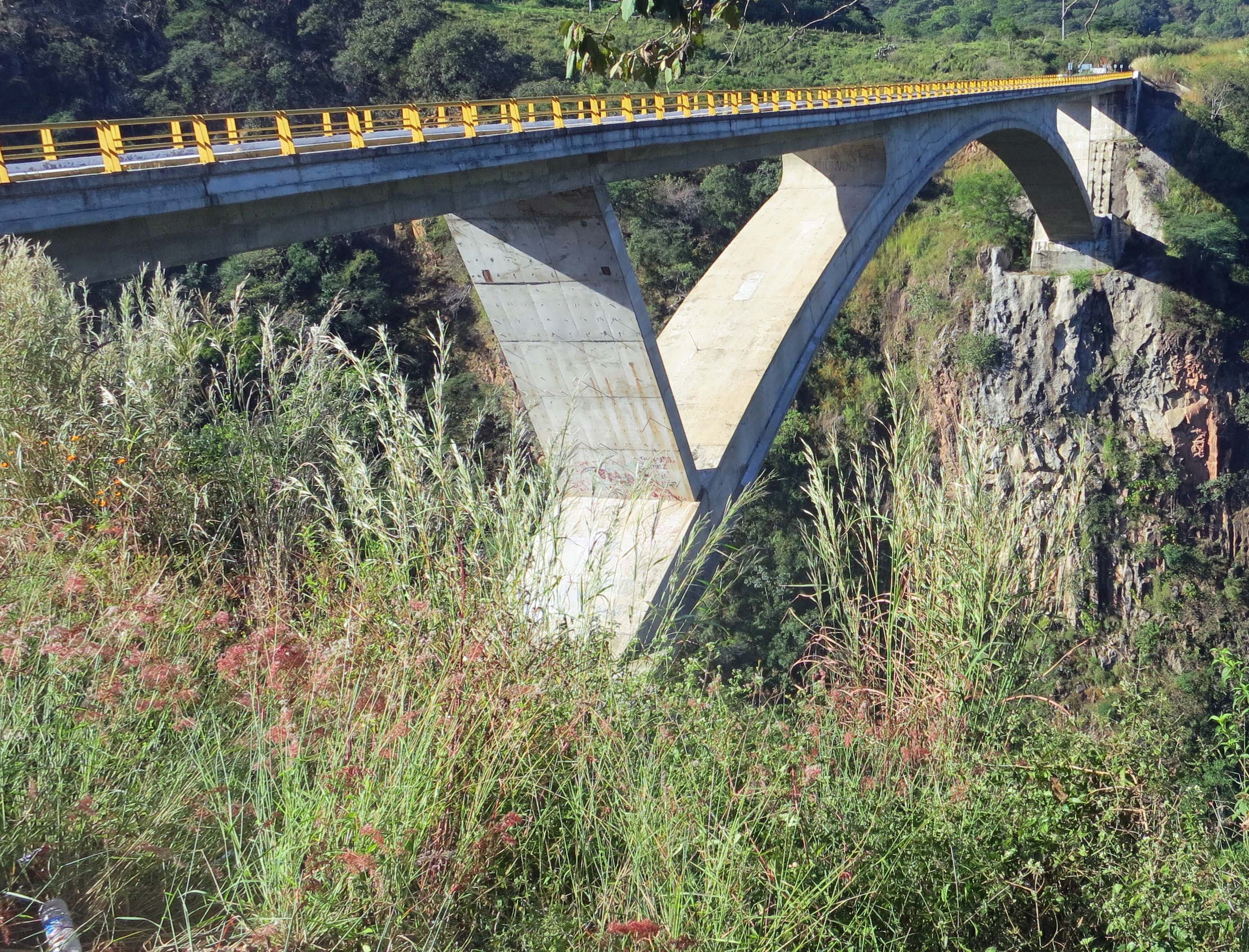
Our dutiful tourist picture of the bridge on the road to San Sebastian.
Peggy and I dutifully took photos of the bridge. More importantly, we took advantage of the available restrooms. We’d consumed lots of coffee waiting for the bus. The next stop was a tequila factory where we sampled the wares, checked out an agave plant, and bought a bottle of orange-flavored tequila that made vanilla ice cream taste like you had died and gone to Valhalla, or some other yummy place. I am ever so glad we didn’t discover how good it tasted until just before we left Mexico. Otherwise I would have consumed gallons of ice cream and been charged double for the airplane ride home.
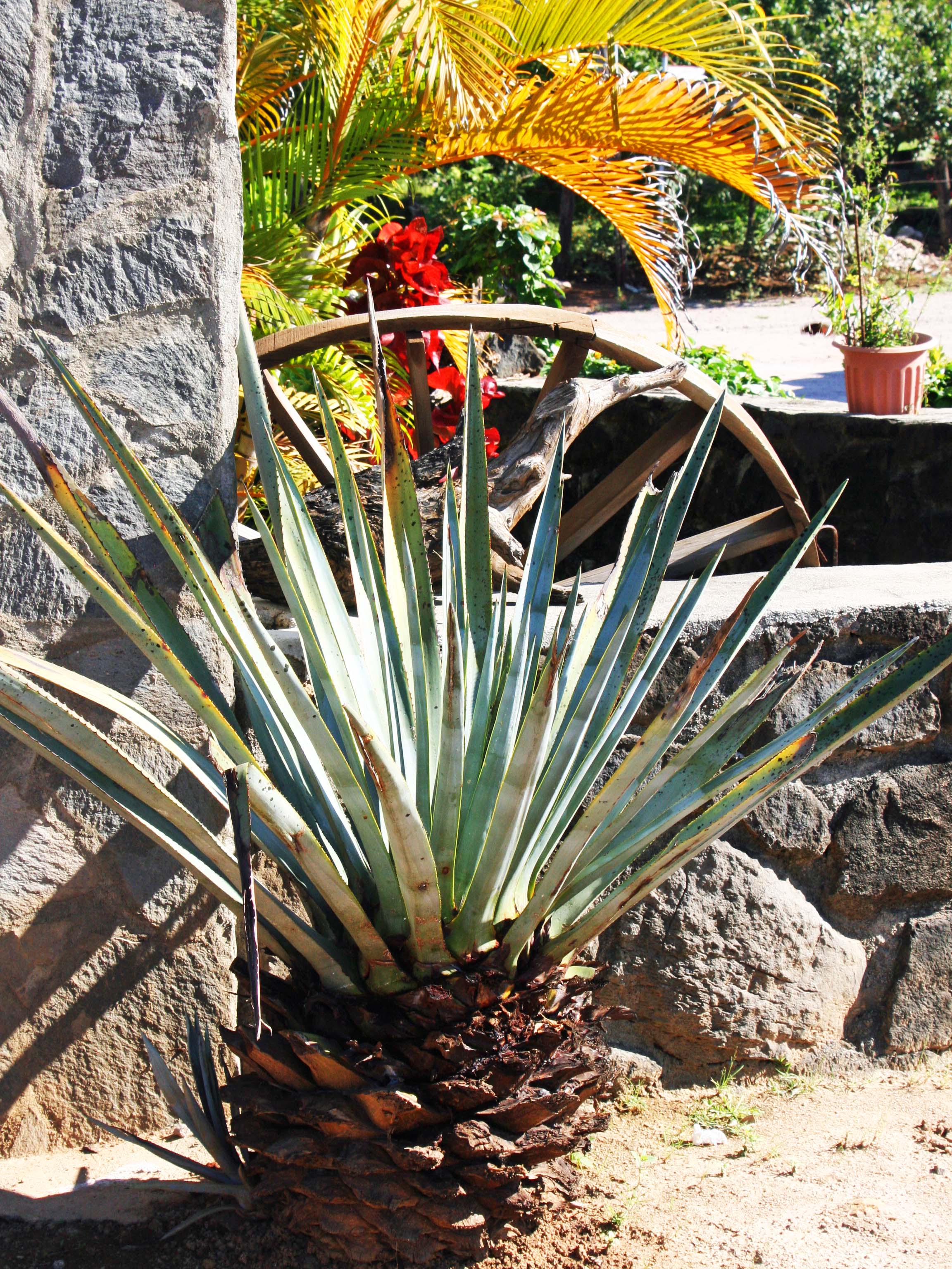
The agave plant, shown here, is the source of tequila. (Photo by Peggy Mekemson.)

Our host at the tequila distillery displays his wares. The first time I ever drank tequila I was a senior at UC Berkeley and the potent liquor came in a small barrel like the one above. I spent my night in a hallucinogenic haze. The next morning marked the beginning of the Free Speech Movement and the 60’s student revolution. Could there have been a correlation between the two? (grin)
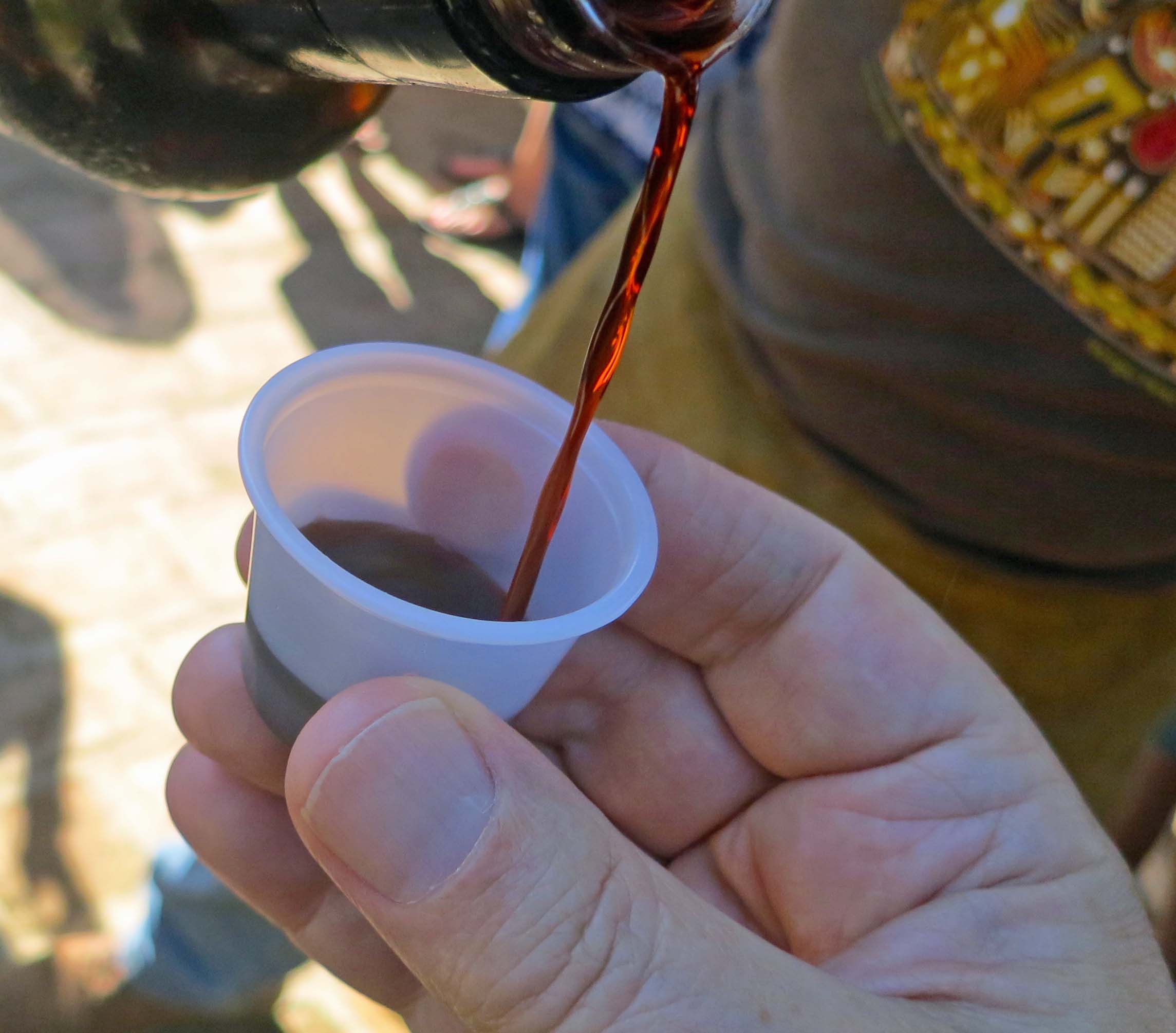
This time I was more cautious.

We were in the midst of sampling when a Mexican Independence Day Parade passed. Check out the wooden rifle of the young boy.
The most interesting stop on our journey to San Sebastian was to visit Hacienda Jalisco, one of the old haciendas whose history was related to the silver mining. You can still see the smelters. The hacienda’s thick walls provided protection for storing the treasure of silver before it was sent onward. Burros carried it to Guadalajara, Mexico City, and finally Vera Cruz, where it was shipped out once a year to Spain, maybe. Getting to Spain assumed that pirates didn’t relieve the treasure ships of their glittery cargo in the Caribbean.
Hacienda Jalisco’s silver mining history came to an abrupt end with the Revolution of 1910 but another type of silver, the silver screen, awaited its future. Discovered and restored by the American expatriate Bud Acord in the 1960s, the hacienda was to become a favorite hangout of John Huston, Elizabeth Taylor and Richard Burton during and after the filming of the Night of the Iguana. Today it happily continues to serve as a B&B. Brochures describe it as romantic. There is no electricity and rooms are lit by lantern at night. You might sleep in the same room where Burton and Taylor pursued their scandalous, extramarital affair.
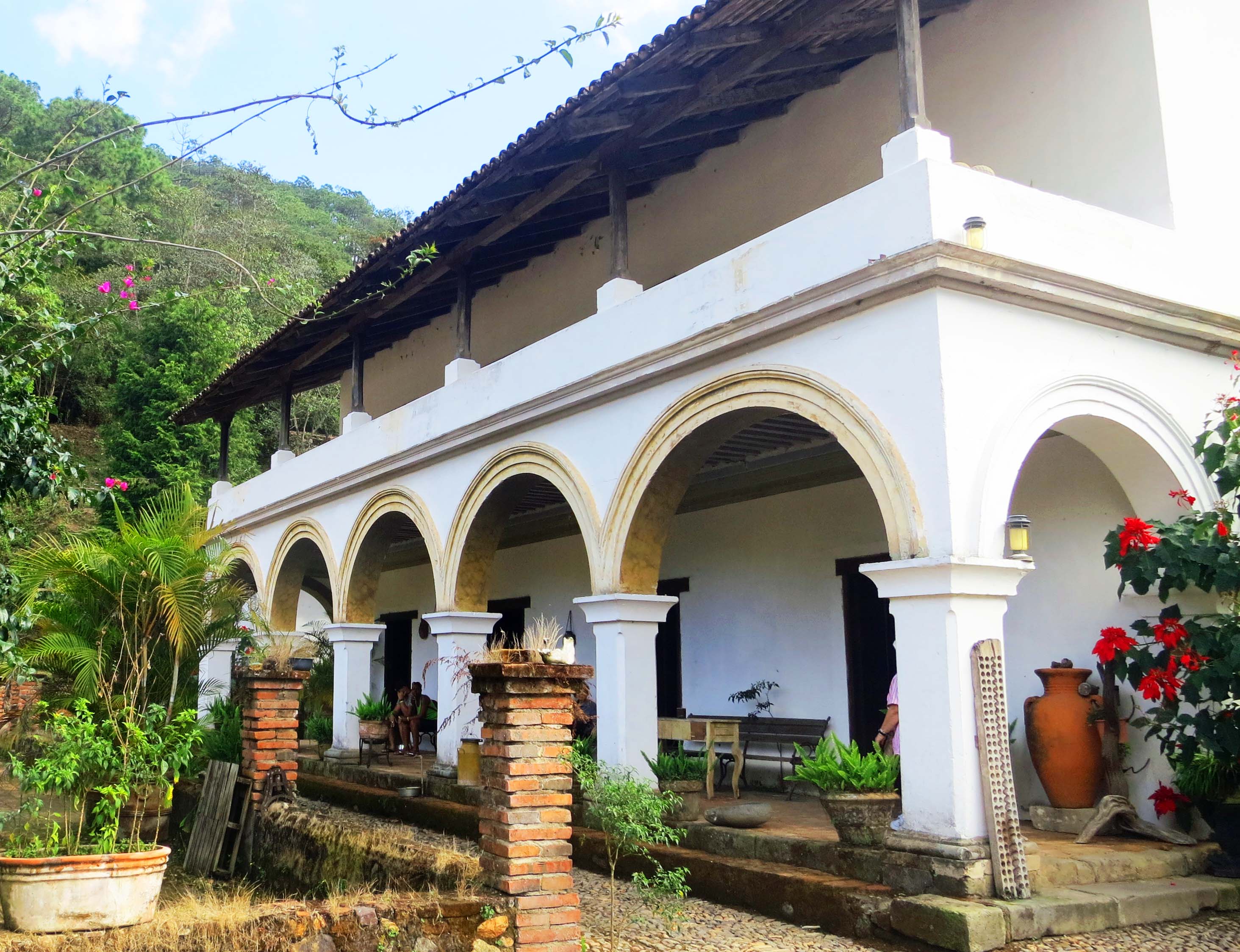
The Hacienda Jalisco as it looks today.

I captured a bit of Old Mexico with this adobe wall and tile roof.

Part of the silver smelter at Hacienda Jalisco. (Photo by Peggy Mekemson.)

While I found this jawbone of a boar interesting…
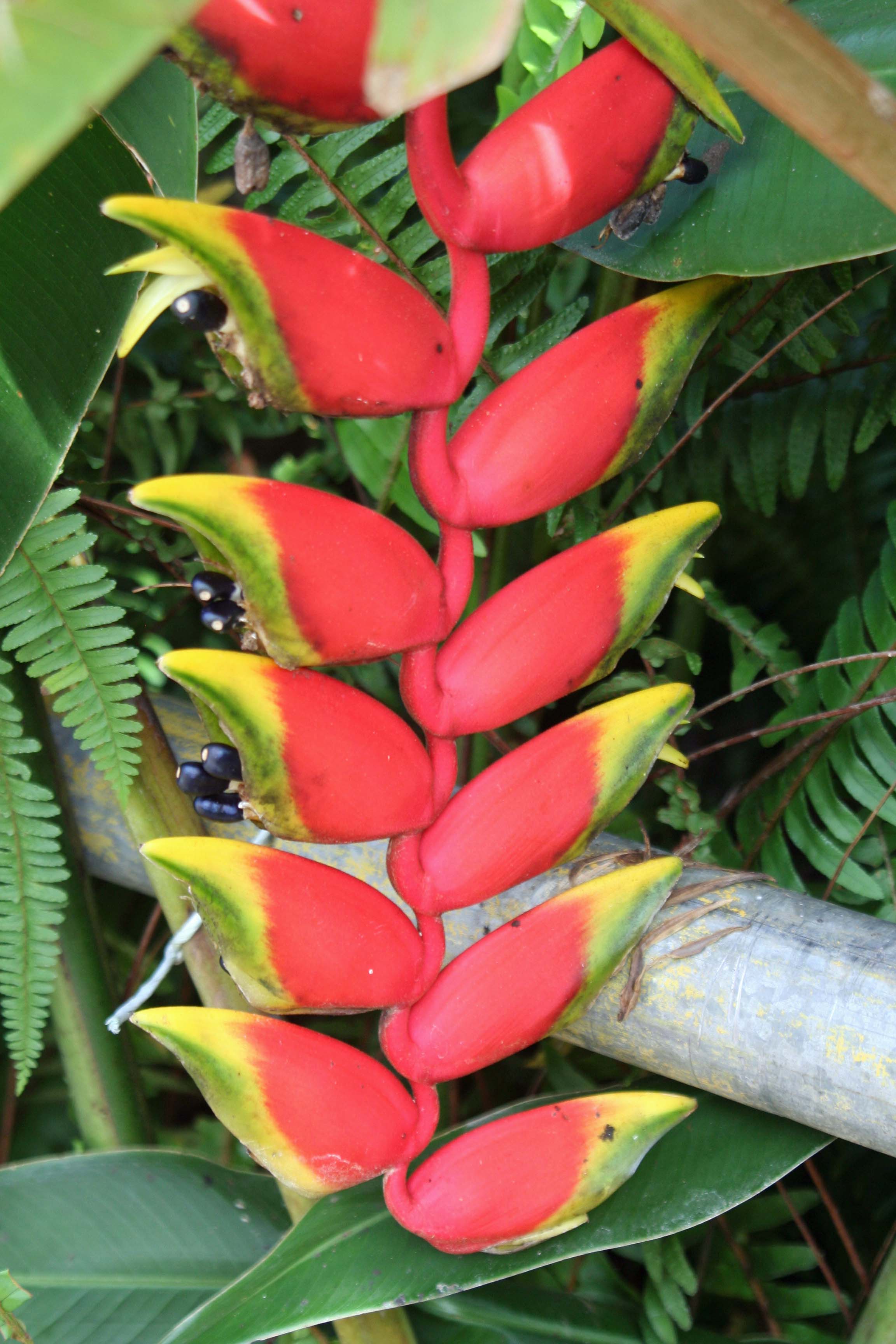
Peggy preferred to photograph flowers that adorned the Hacienda. (Photo by Peggy Mekemson.)
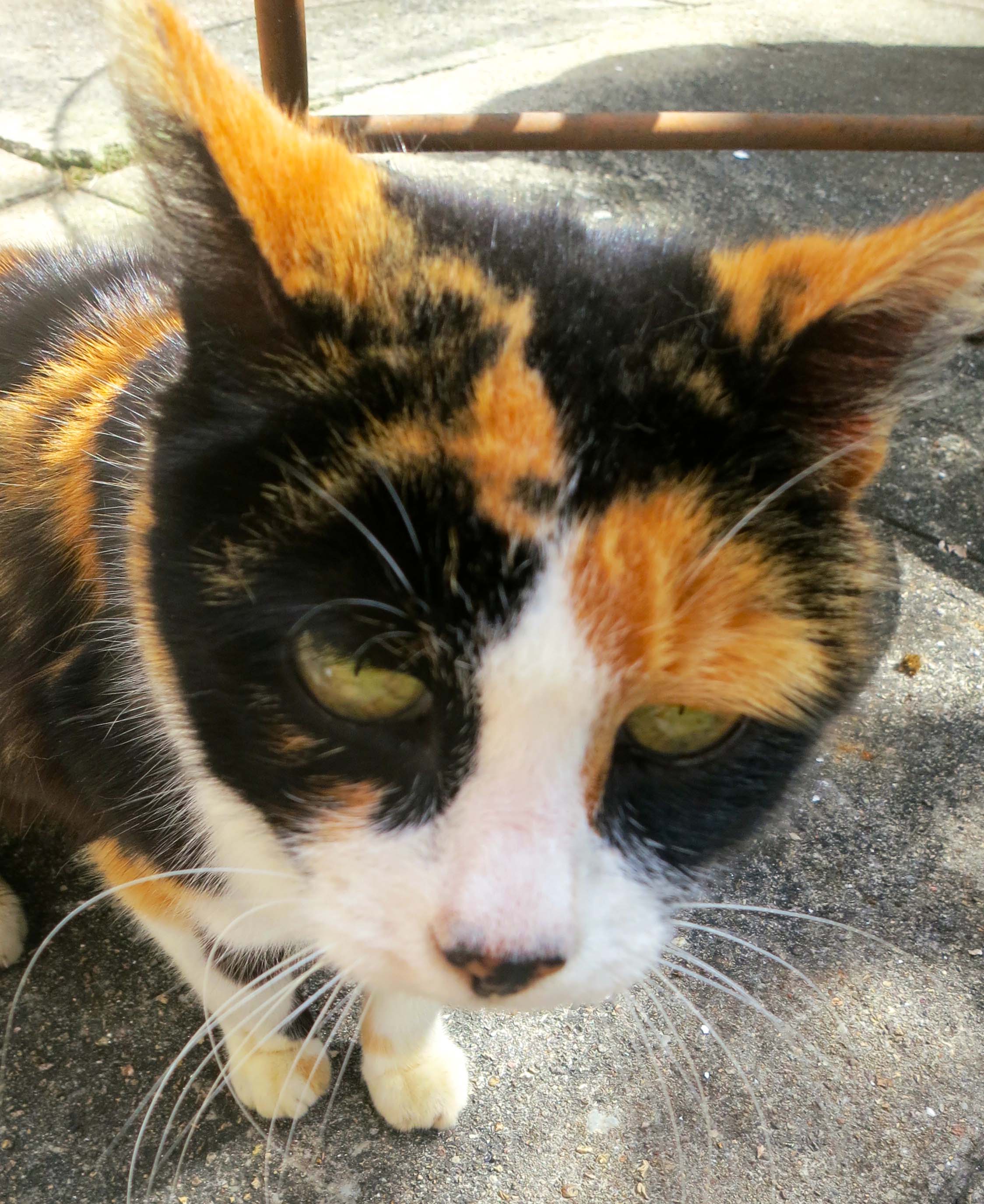
We both liked Gato.
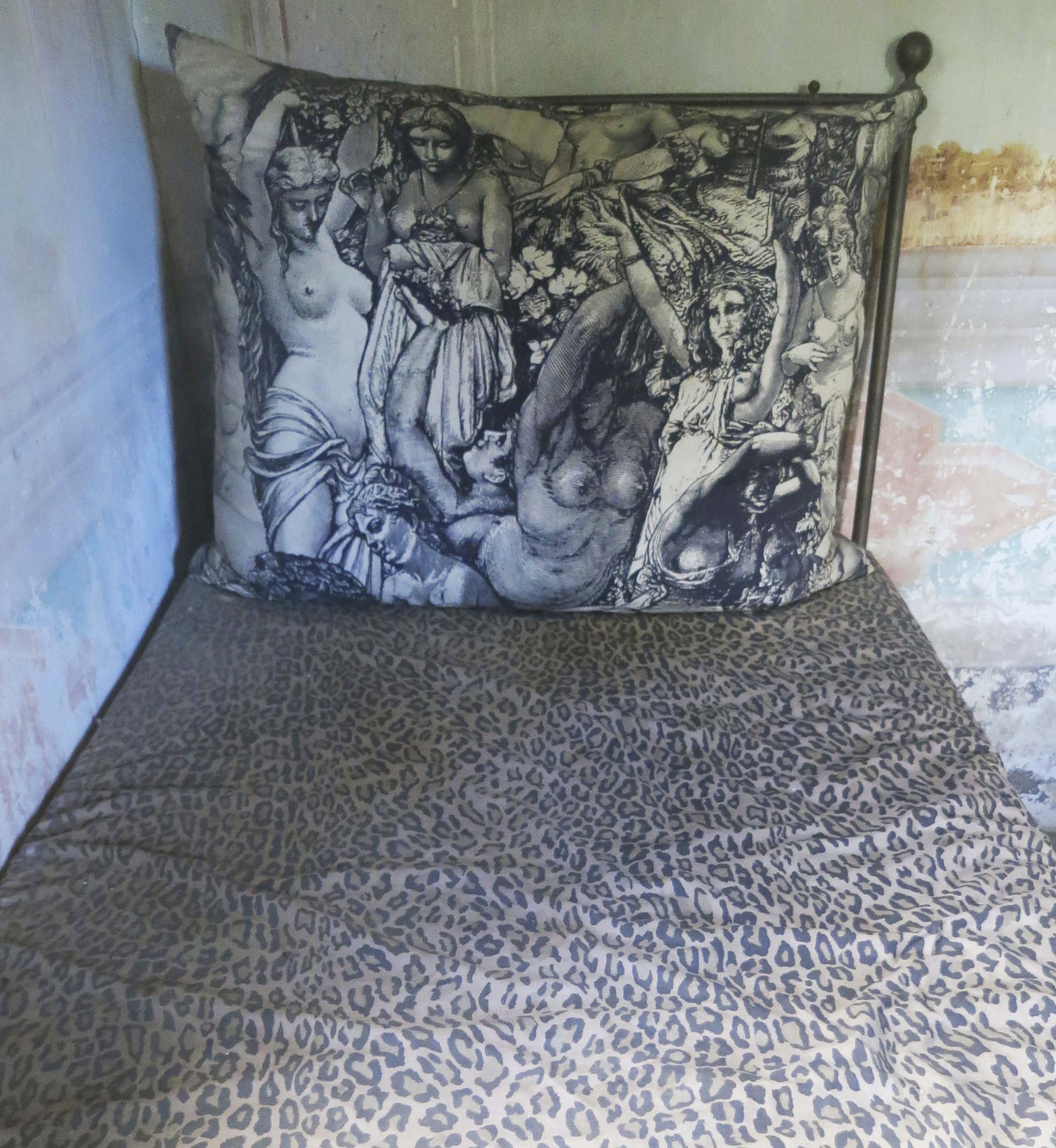
You could almost hear the springs of this antique bed squeak given its wild pillow. I wonder if the ghosts of Elizabeth and Richard ever stop by for a midnight tryst?
Our final stop before San Sebastian was at a coffee plantation that shared a building with a coffin maker.
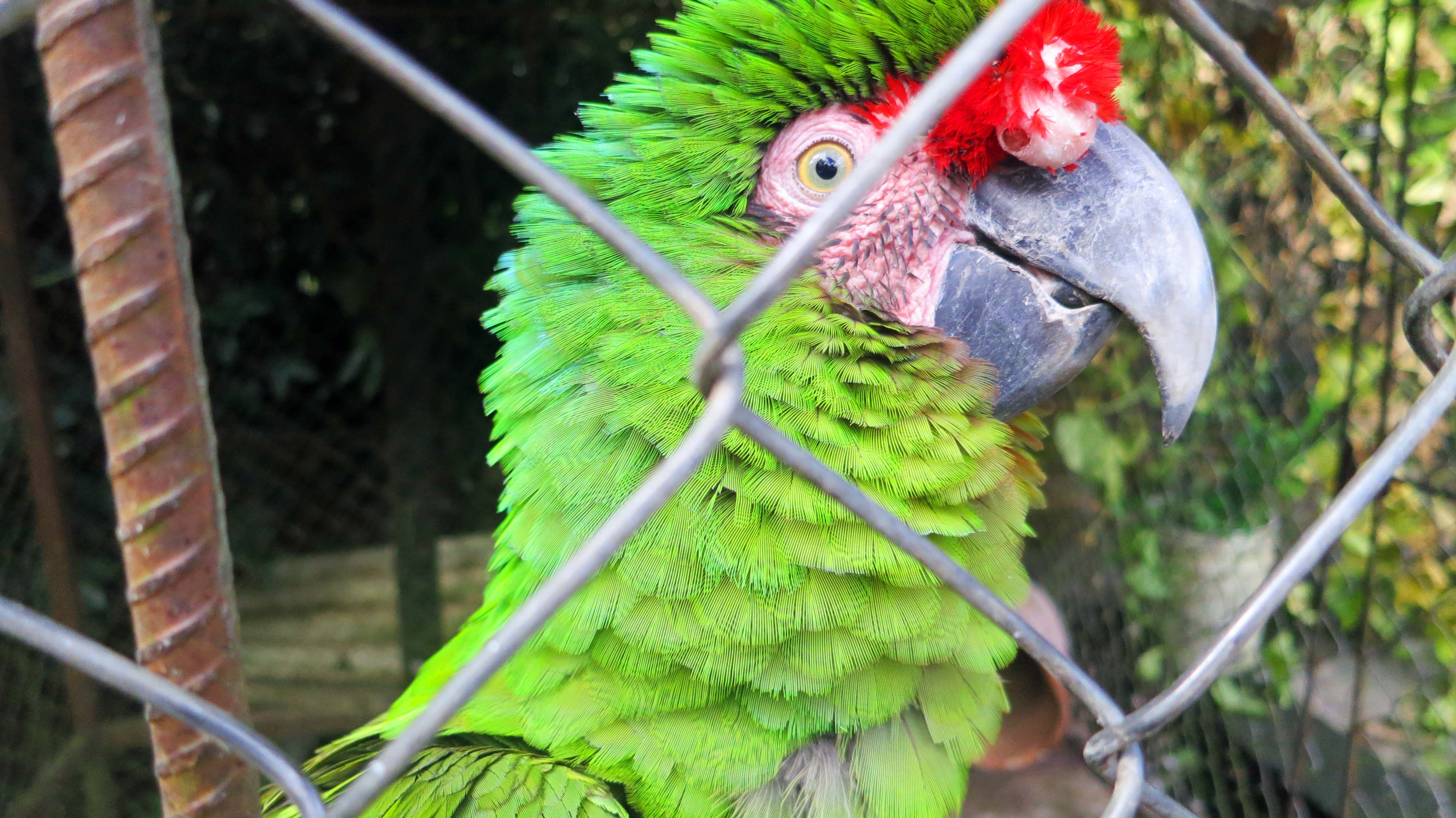
Peggy and I admired this guy as we drank our coffee and contemplated our ultimate demise.
Our son Tony made it to San Sebastian before we did. He bought a sailboat while living in San Diego, sailed it to Puerto Vallarta with his girlfriend Cammie (and our nephew Jay), took the bus up to San Sebastian (without Jay), went on a horseback ride to a remote waterfall, and asked Cammie to marry him. You can’t get much more romantic! We were eager to see the town.
Treasure seeking Spaniards settled San Sebastian in 1605. To put this into perspective, Jamestown, the first British settlement in North America, was founded in 1607. First Spain and then Mexico continued to pull silver from its surrounding mines up until the Revolutionary era of 1910-20. Once a bustling community of 20,000 importing luxury items from far away Europe, San Sebastian is now a quiet community of 600 surviving off of agriculture and a small tourist trade. Peggy and I liked it.
An attractive bandstand dominates the central plaza (Revolution Square) and provides views of the surrounding town and countryside. We had just missed the Independence Day celebration so Peggy and I had a pleasant lunch, walked through the town, visited the impressive Church of Saint Sebastian, and stopped to watch a local craftsperson weave a basket so quickly we could barely see her hands move. I could happily spend a week, or several in the town and surrounding area.
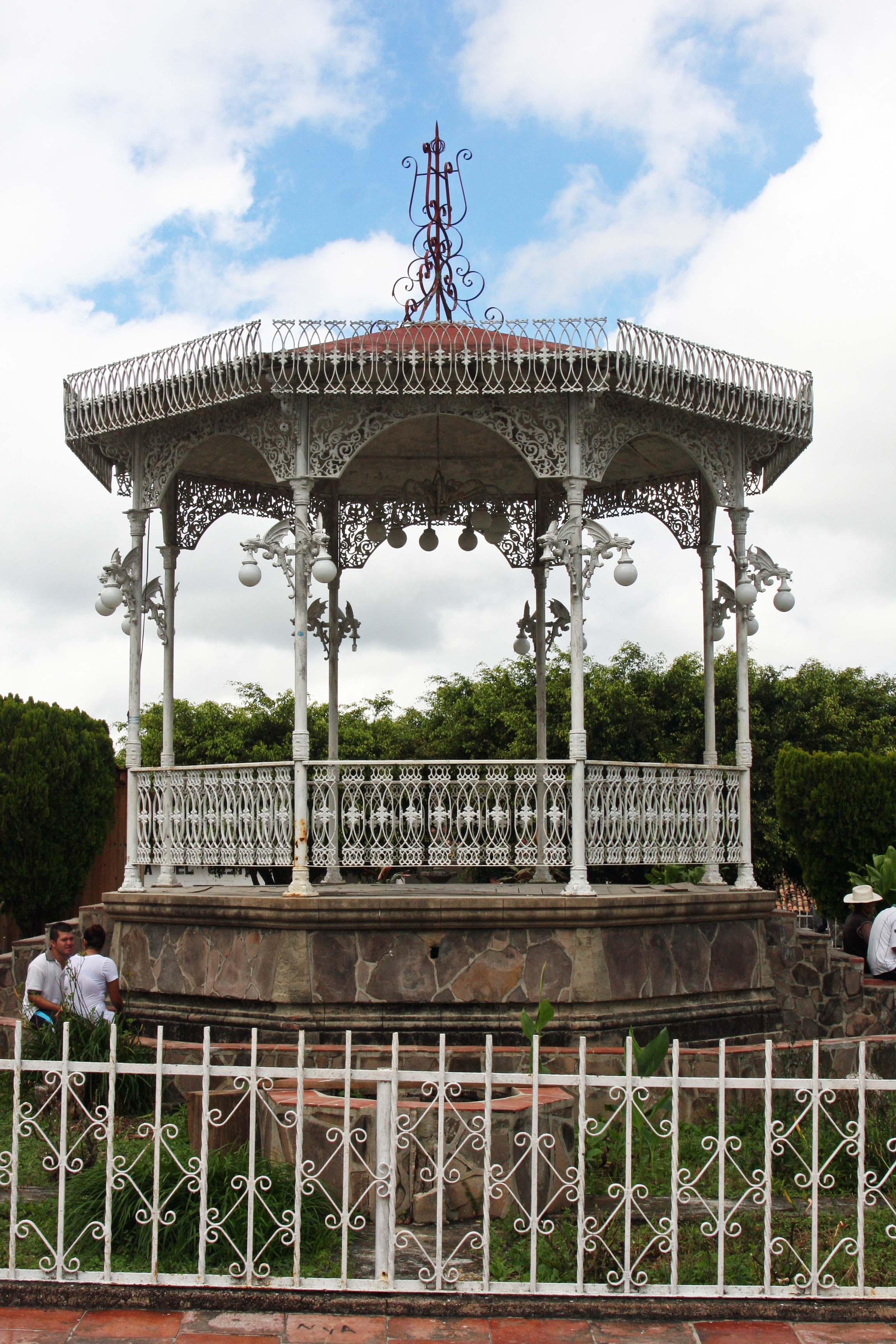
An attractive bandstand dominates Revolution Plaza in San Sebastian. (Photo by Peggy Mekemson.)
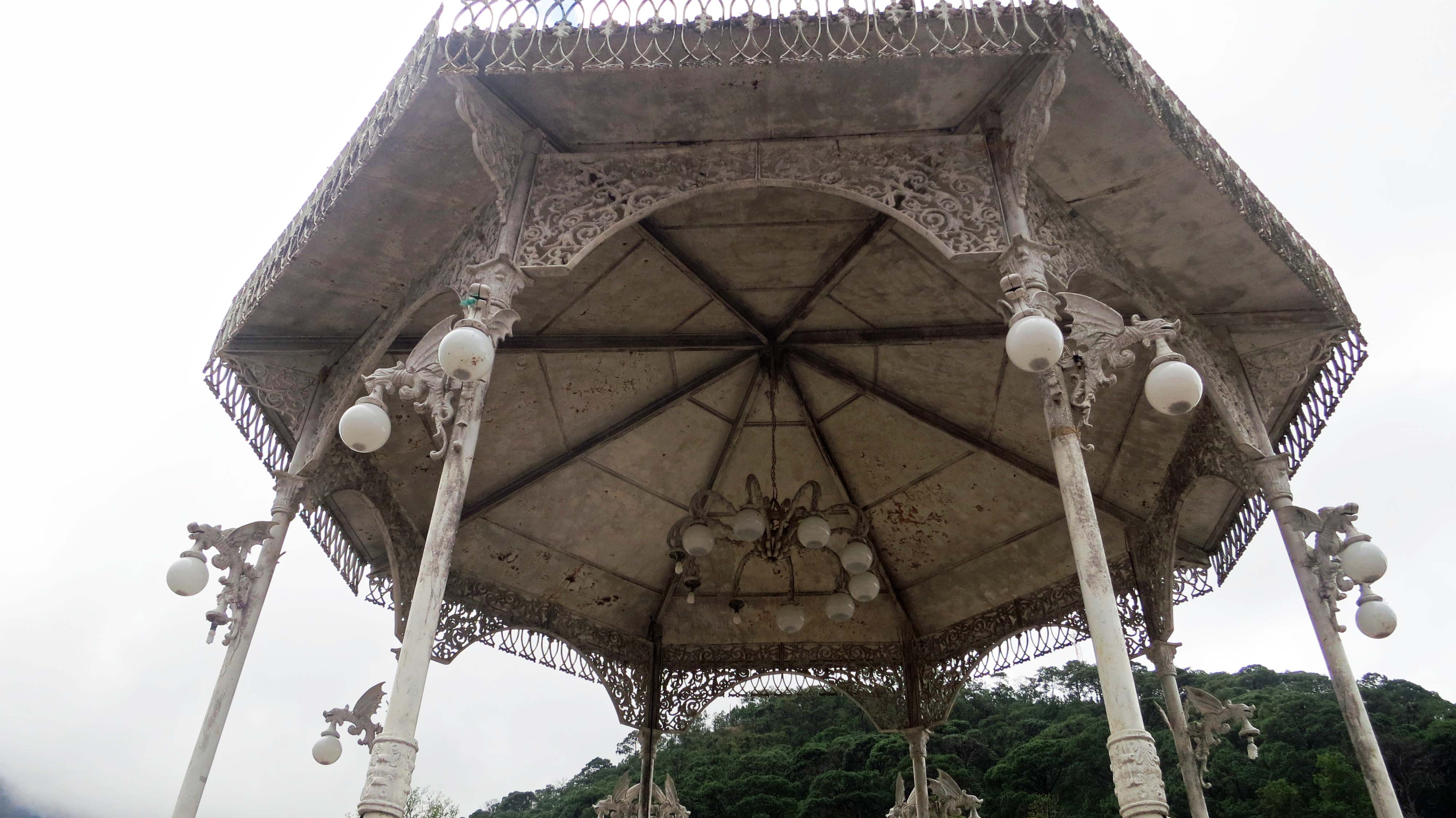
Looking up at the bandstand.
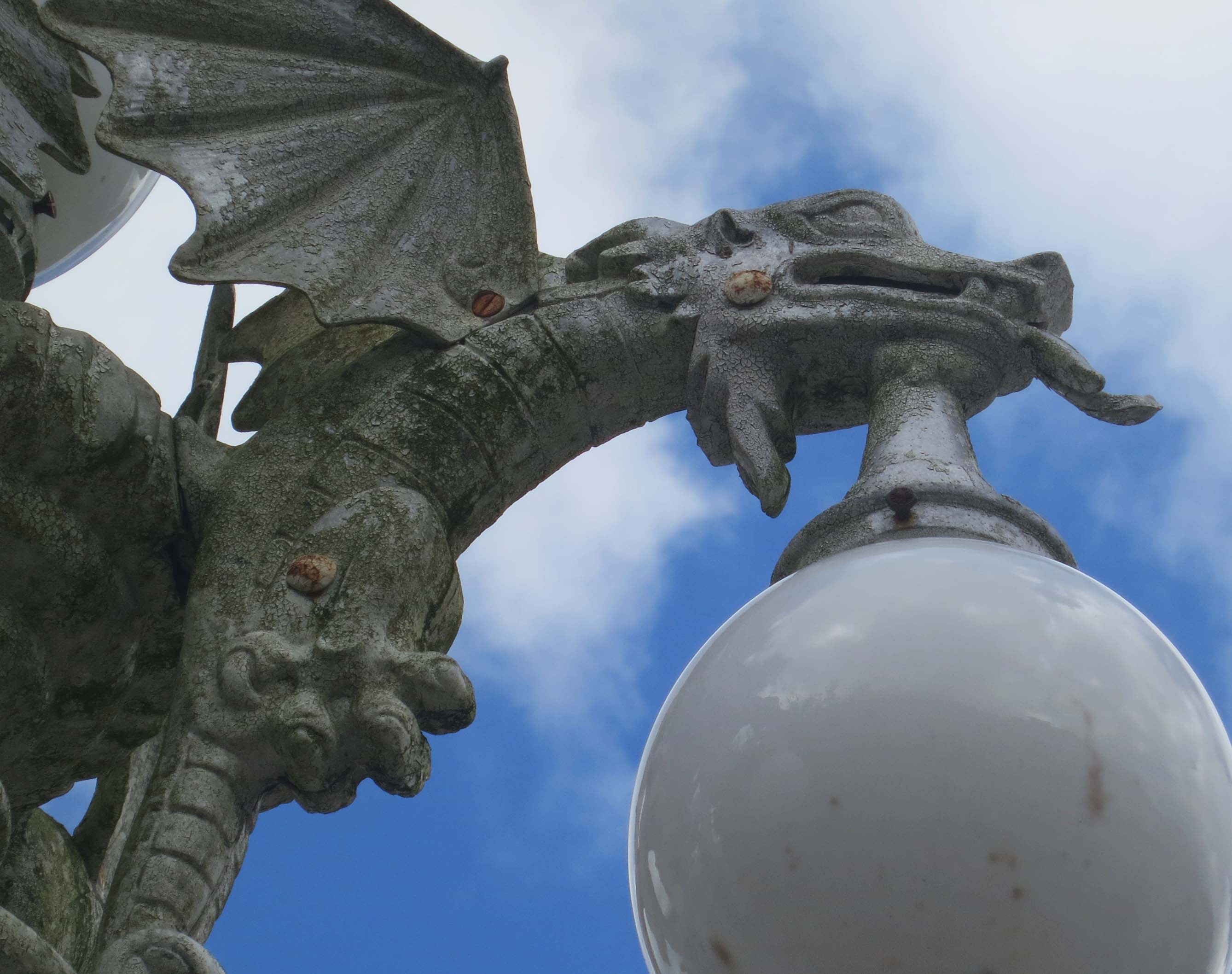
Dragons, like this fellow, decorate the bandstand and plaza.

Views of the town, including this view of the Church Of San Sebastian were available from the bandstand. (Photo by Peggy Mekemson.)

A black and white rendition of the church under cloudy skies.

An inside view of the church showing the altar. Saint Sebastian, who is normally depicted full of arrows, is pictured on the upper left. Sebastian is considered the patron saint of sports. Do you think this includes archery? (Bad Curt.)
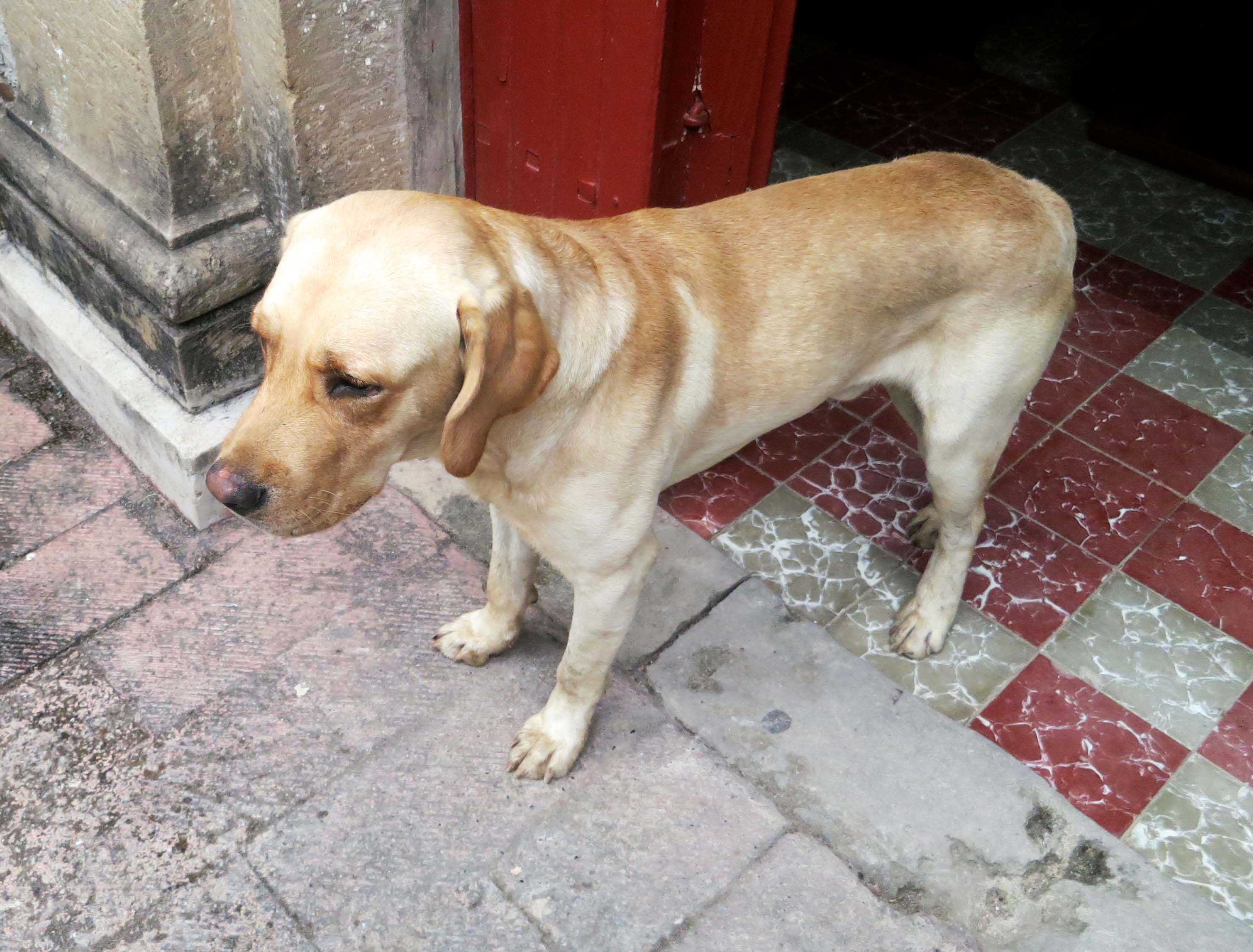
This was the only local we found in the church. He was lying in the central aisle when we entered the church and then walked out with us.
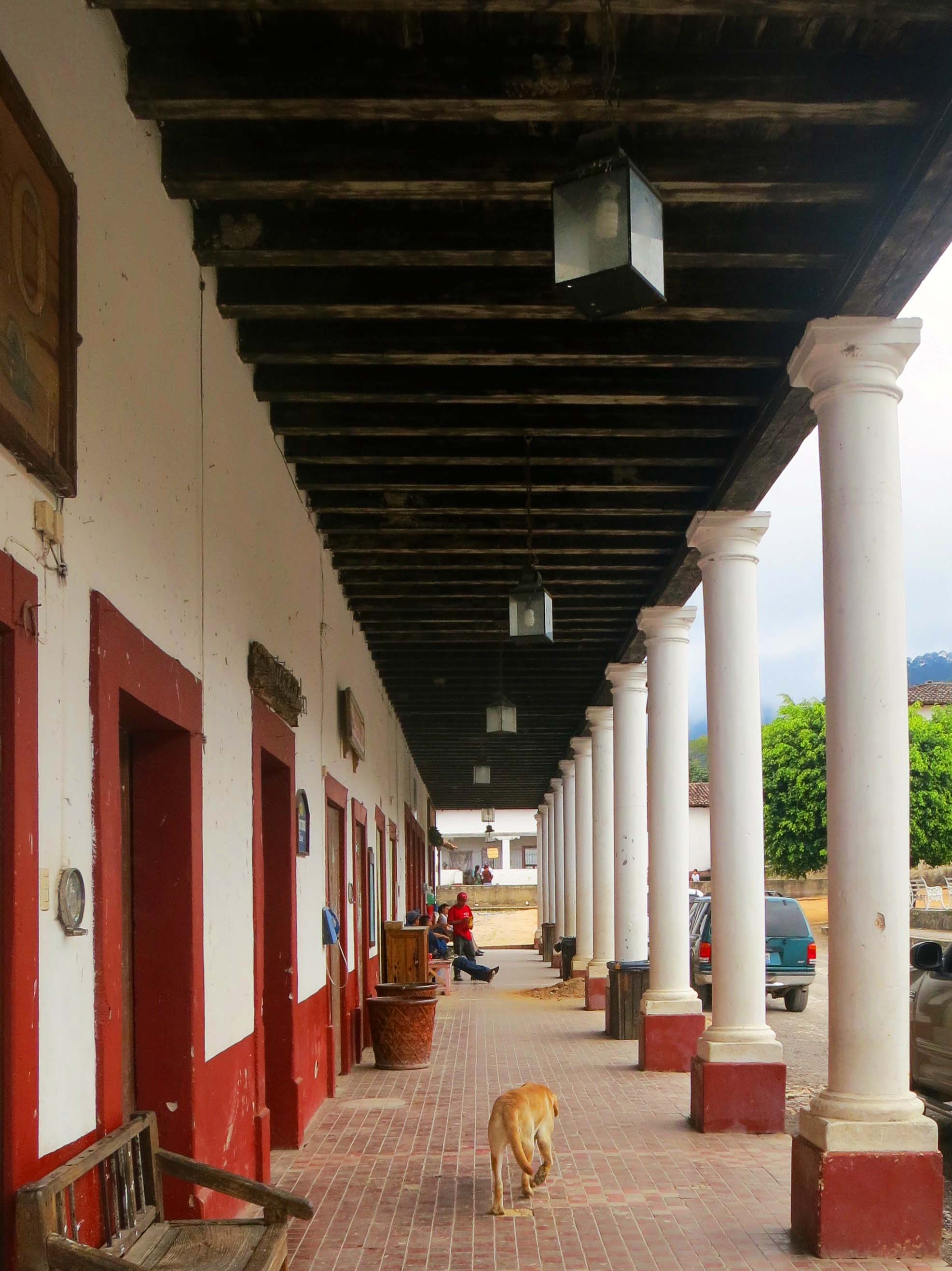
Later we saw the dog making his way along the walkway of one of the buildings facing the plaza.
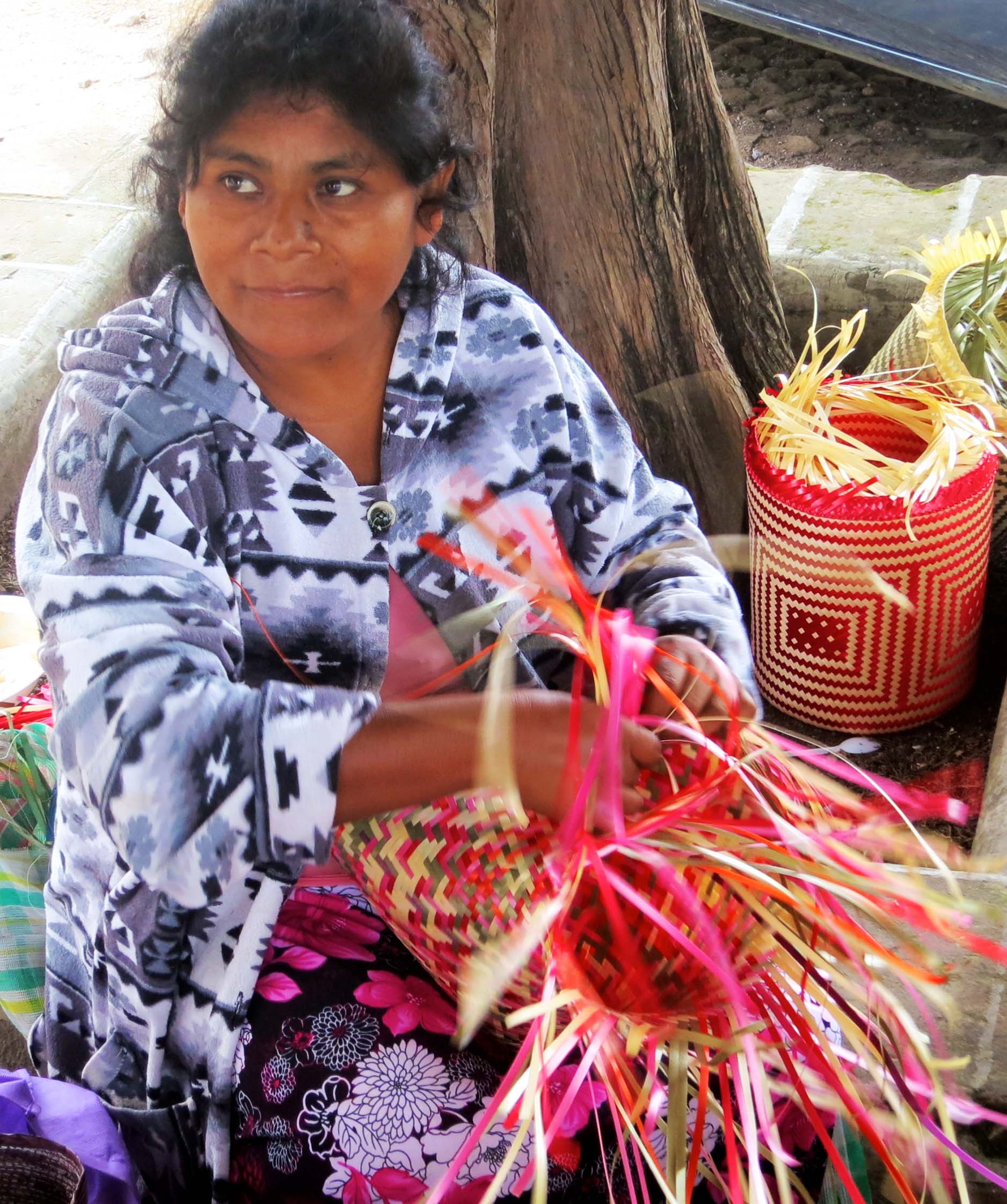
The hands of this basket weaver flew so fast I could hardly follow what she was doing.
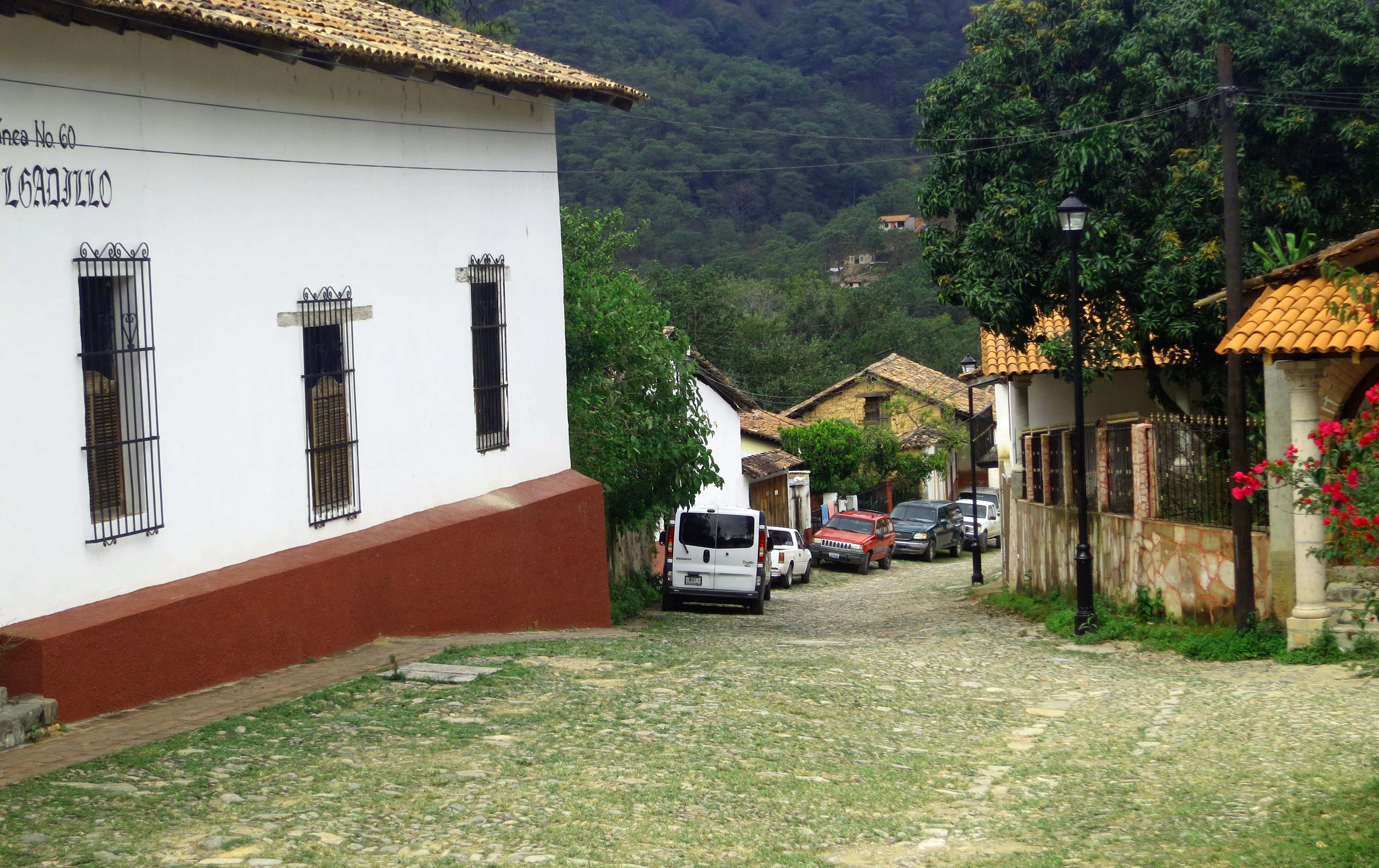
One of the side-streets in San Sebastian that Peggy and I wandered along.
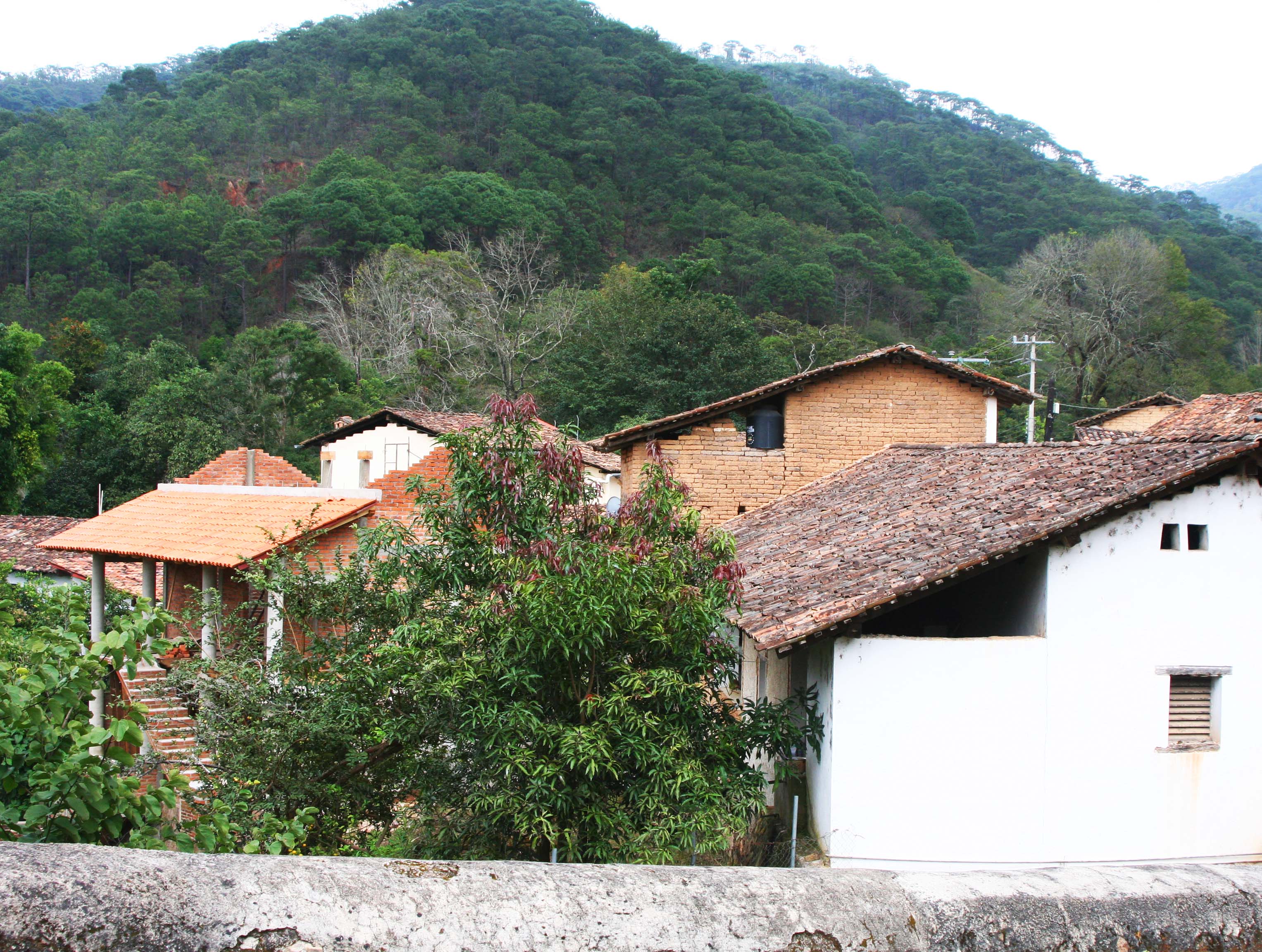
Altogether, San Sebastian is a gem of a community nestled among the Sierra Madre Mountains. If you make it to Puerto Vallarta, it is well worth the day trip to see it. (Photo by Peggy Mekemson.)
NEXT BLOG: One Hundred Thousand Thank You’s for One Hundred Thousand Views.
 Wandering through Time and Place