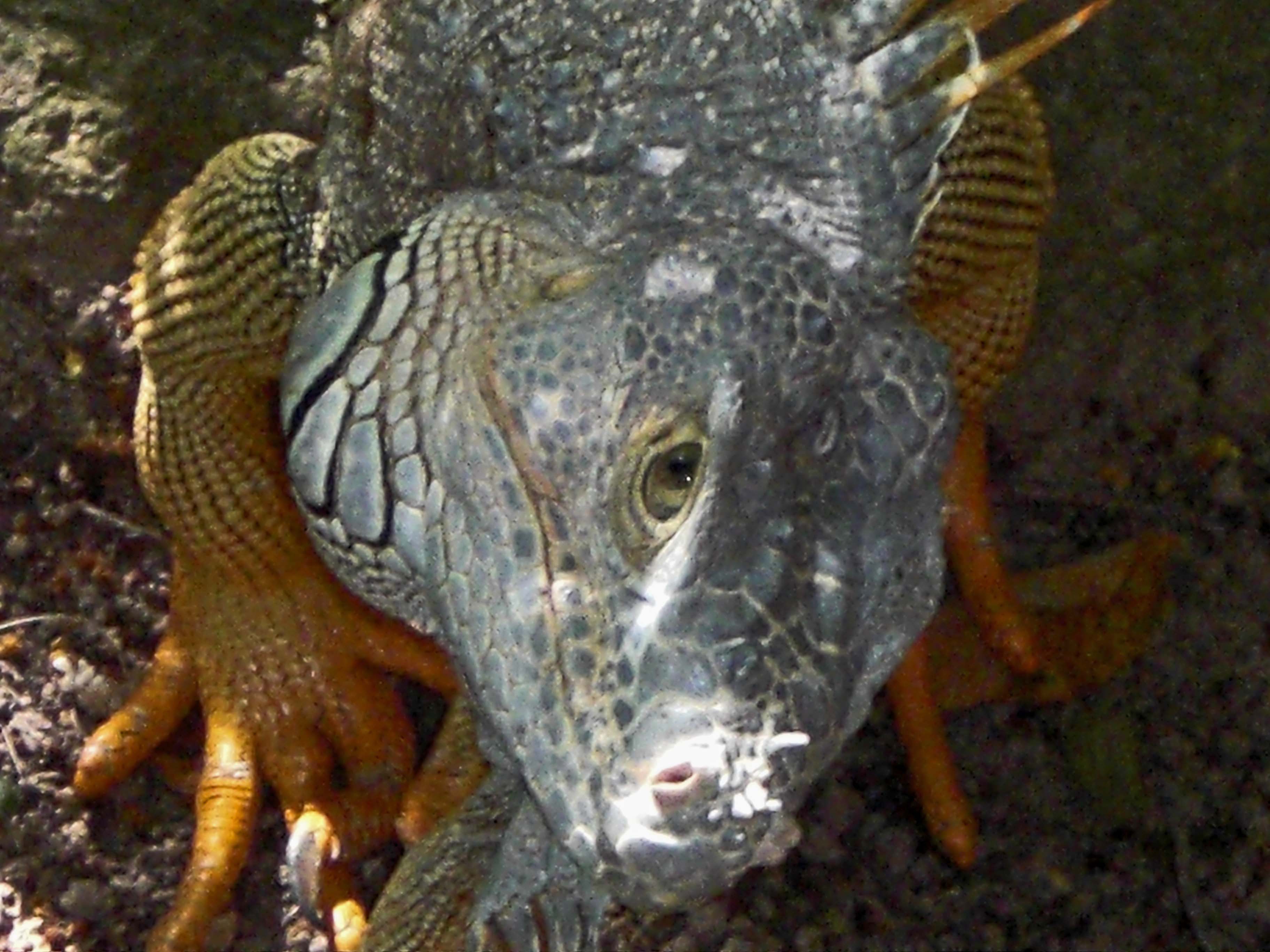
Our grandsons Ethan and Cody were fascinated by the iguanas we found in Puerto Vallarta. The 8-year-old Ethan took this photo as an iguana checked him out. (Photo by Ethan Cox.)
The iguana I named Big Orange was staring up at us with a curious eye. He had come down out of his tree and shuffled over to where we were having lunch on a patio above the Rio Cuale. My eight-year-old grandson, Ethan, was scratching the wall to attract his attention. The iguana and the boy seemed equally interested in each other.
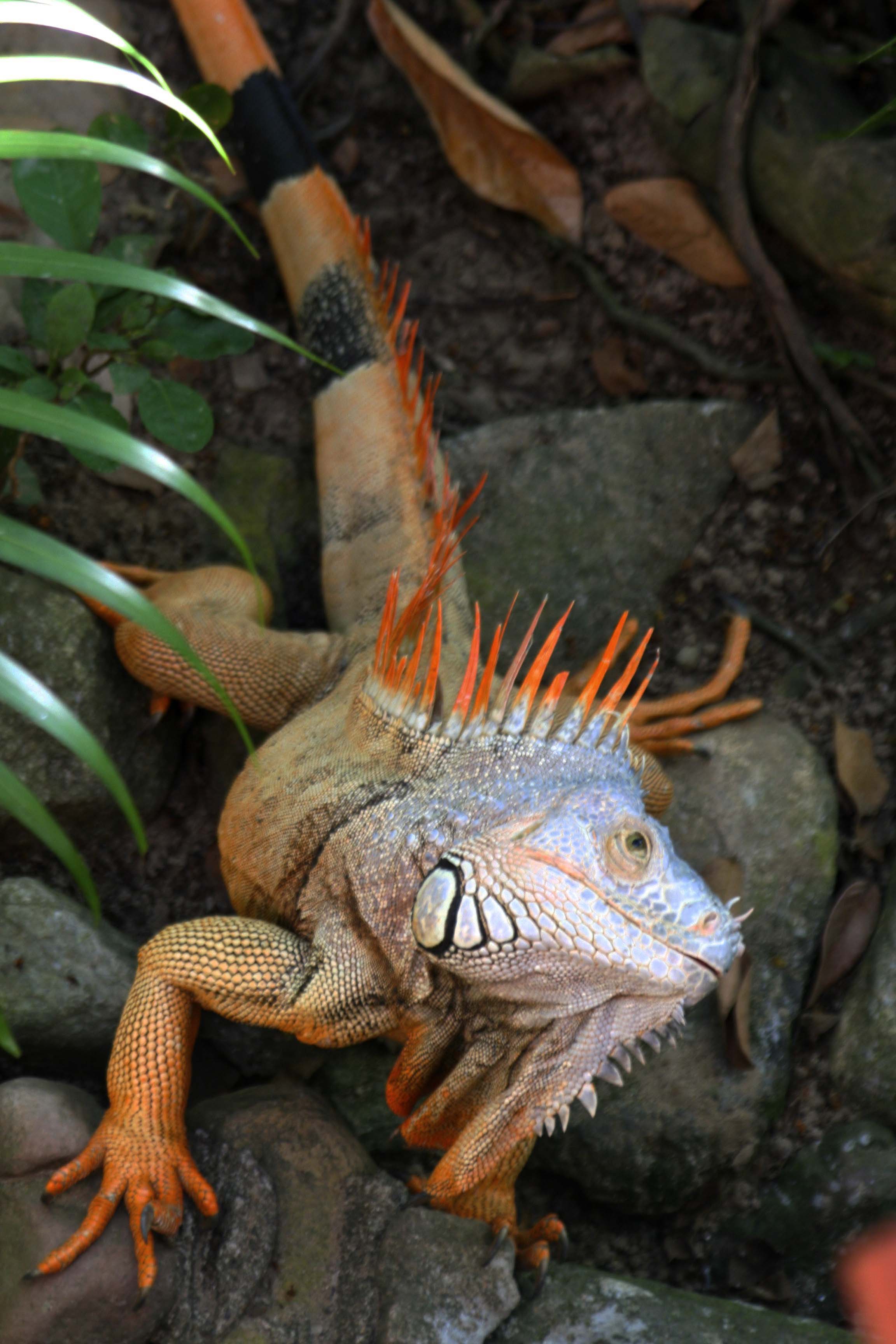
Another shot of the curious iguana. I named him Big Orange because of his color.
These large lizards can grow to be over 5 feet long. If their tastes tended toward meat, they might be worrisome, especially given their fearsome appearance. But iguanas are vegetarians and prefer to avoid conflict. Still, you wouldn’t want to irritate one; their lightning fast spiky tails and sharp little vegetarian teeth can do considerable damage.
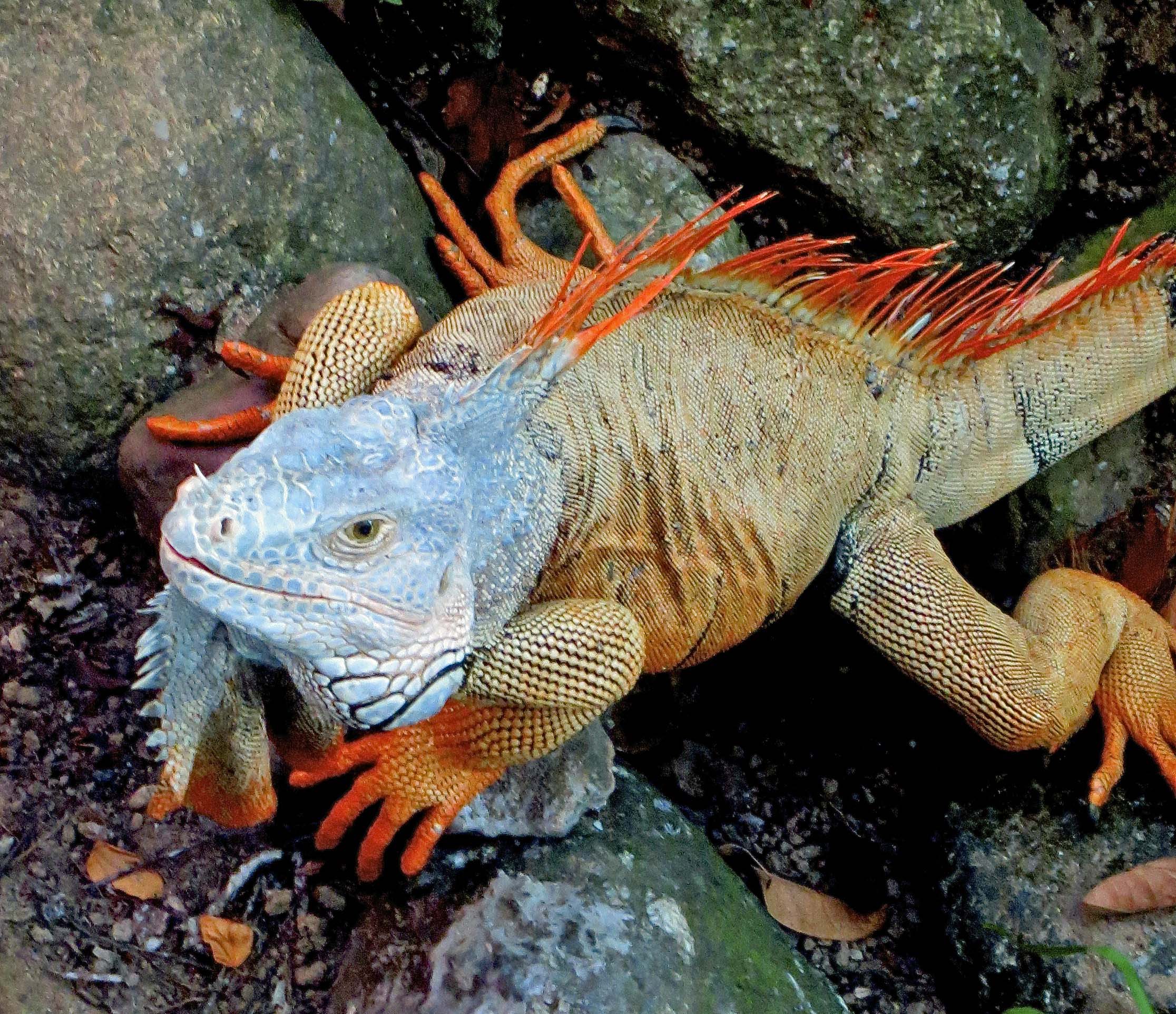
I, for one, would hesitate to get in an argument with the iguana I named Big Orange with his spiky tail, long claws and his tiny, but sharp teeth.
They also have a third eye, located on top of their heads. As eyes go, it is rather primitive. Cells sensitive to light and dark can warn an iguana when something is blocking the sun, such a hawk hovering over its head. One way of escape is to fall out of the tree. If there is a river underneath, you might call it a dive. They are good swimmers and use their powerful tails for locomotion.
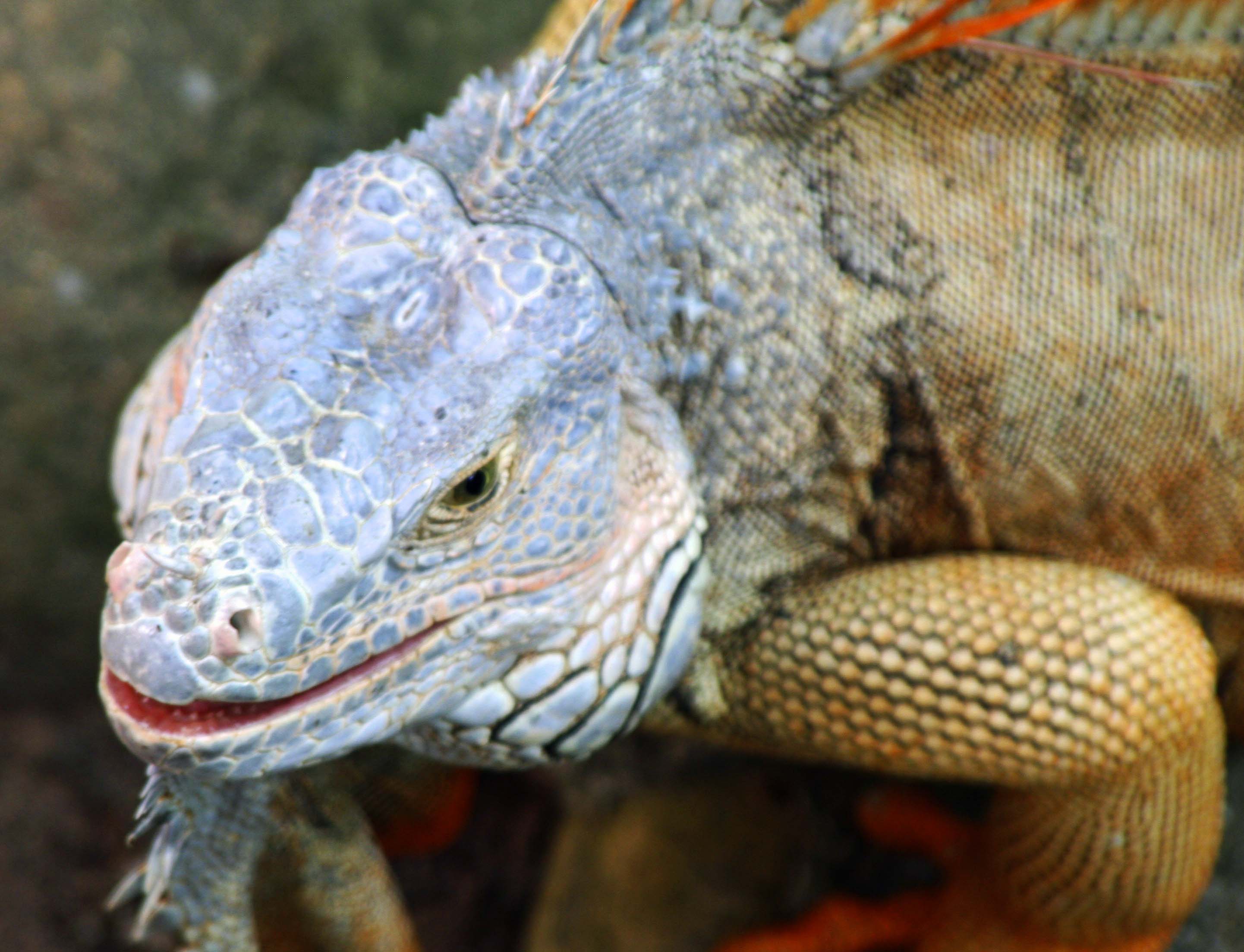
The small oval on top of the iguana’s head serves as his third eye and is sensitive to light and dark. This photo also shows Big Orange’s leaf-eating teeth.
If a convenient river isn’t present, they land on the ground with a loud plop. Peggy witnessed one such fall. It was a little close for comfort. She was living in Panama at the time with her first husband. Our daughter Tasha, Ethan and Cody’s mom, was splashing around in a baby wading pool in the shade of a palm, when one of the big guys fell out of the tree and crash landed next to the pool.
“The iguana landed flat and seemed stunned. Then he stood up on his legs, shook his head, and wandered off.” Apparently iguanas can fall for up to 50 feet and survive. Whether baby Tasha could survive an iguana falling 50 feet and landing on top of her was another issue. Peggy moved the pool.
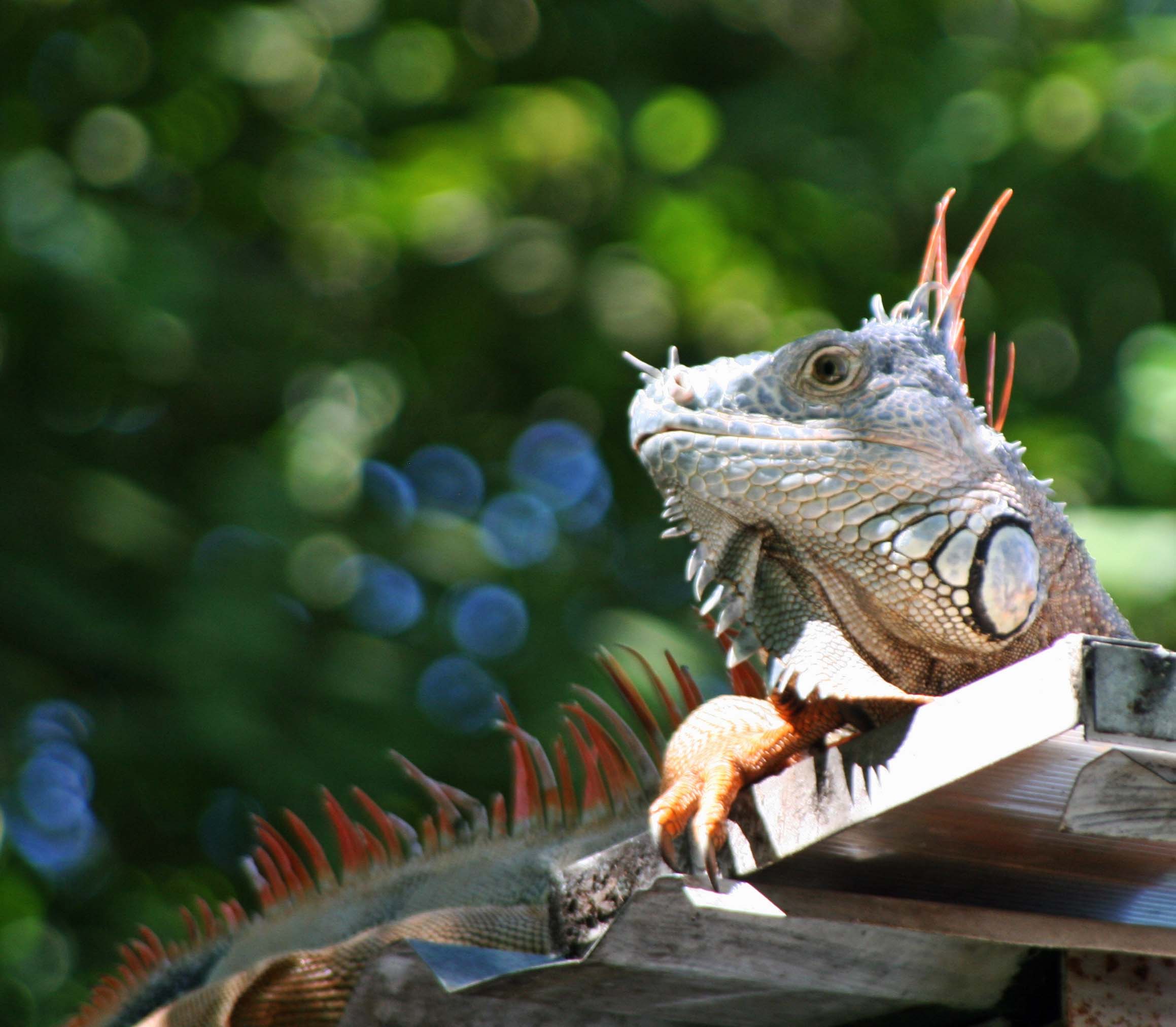
Iguanas are arboreal (live in trees). A convenient roof will do in a pitch, however.
One of the stranger aspects of iguana physiology is a rather large dewlap that hangs down from the chin. I am surprised Big Orange didn’t stumble over his. Male iguanas bob their head and shake their dewlap when trying to impress a lady iguana. They also do the same thing to scare off the male competition. It must get confusing at times.
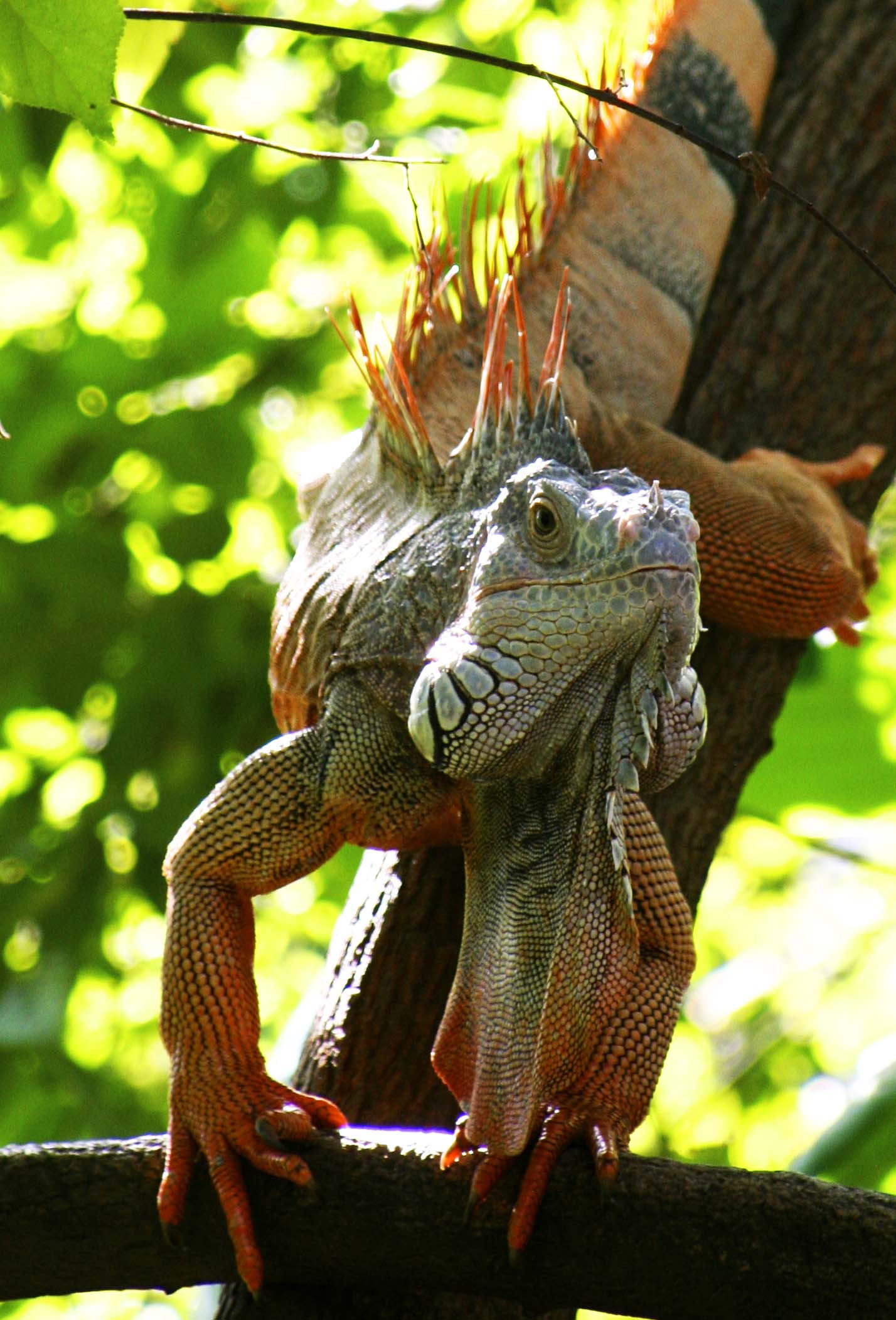
Check out the large dewlap on this iguana. The loose skin hanging down from his chin does double duty, both attracting females and scaring away males. This guy was bobbing his head and shaking his dewlap at a lady iguana.
Human-iguana interaction goes in two very different directions. One, iguanas are used as pets. Their normally benign disposition and bizarre looks makes them quite popular. The downside here is that they require an unusual diet that pet owners frequently fail to provide. Two, they have served as a source of food in South America for over 7000 years. A common name is gallina de palo, which translates chicken of the tree. And yes, you guessed right. They supposedly taste like chicken.
I’ve never eaten an iguana but I did eat a rattlesnake once that tasted like chicken. Eating it, however, was like chewing a rubber band.
In addition to the iguanas that hang out in the middle of Puerto Vallarta on the Rio Cuale, we had a family in our back yard. The challenge each morning was to try to find where these arboreal lizards were hiding out in the trees. Later in the day they would come down and graze on our grass. Clover was in high demand.
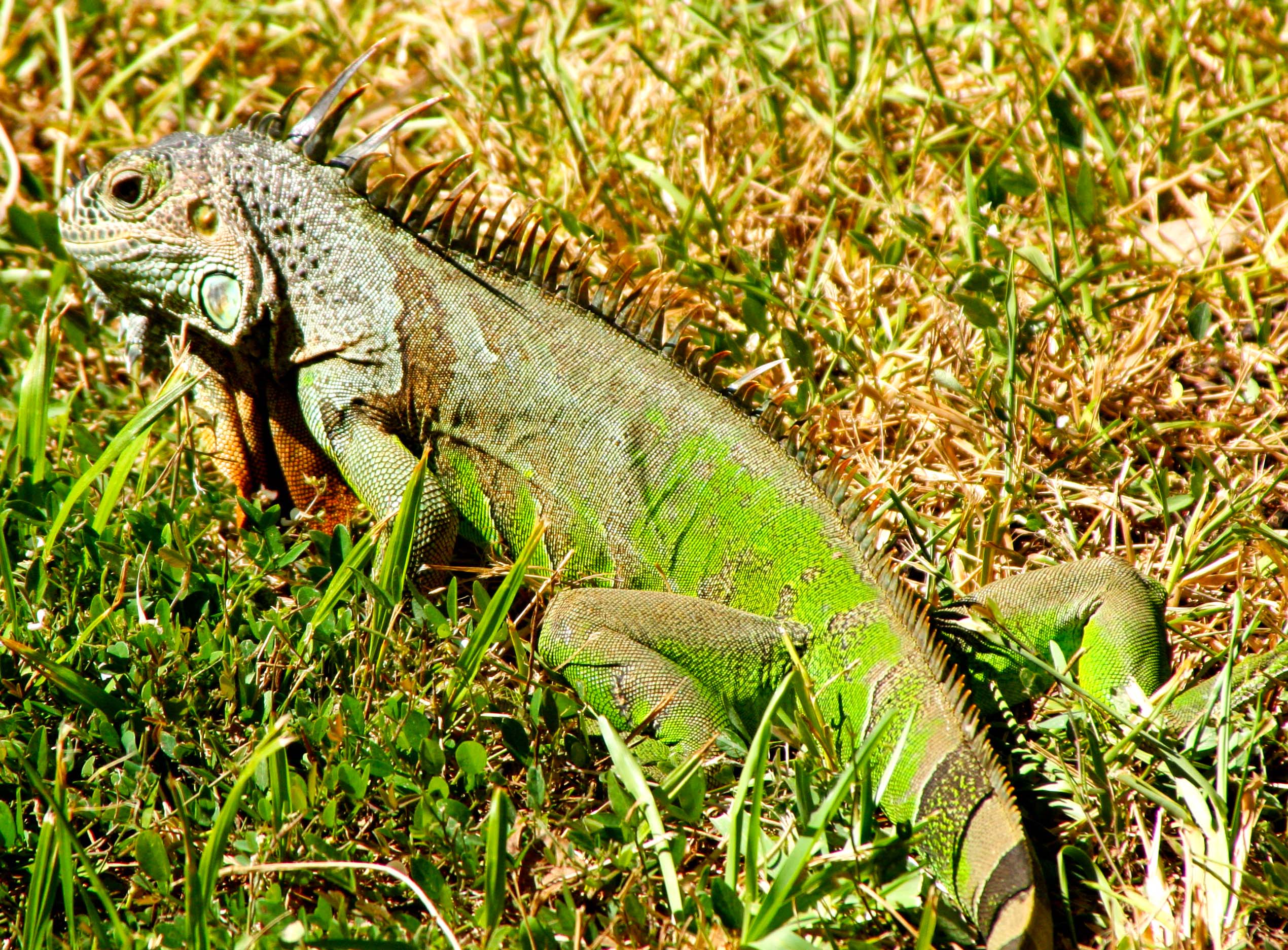
“Come quick, Curt,” Peggy urged. A Green Iguana had come down from its tree and was grazing on the grass in our yard.
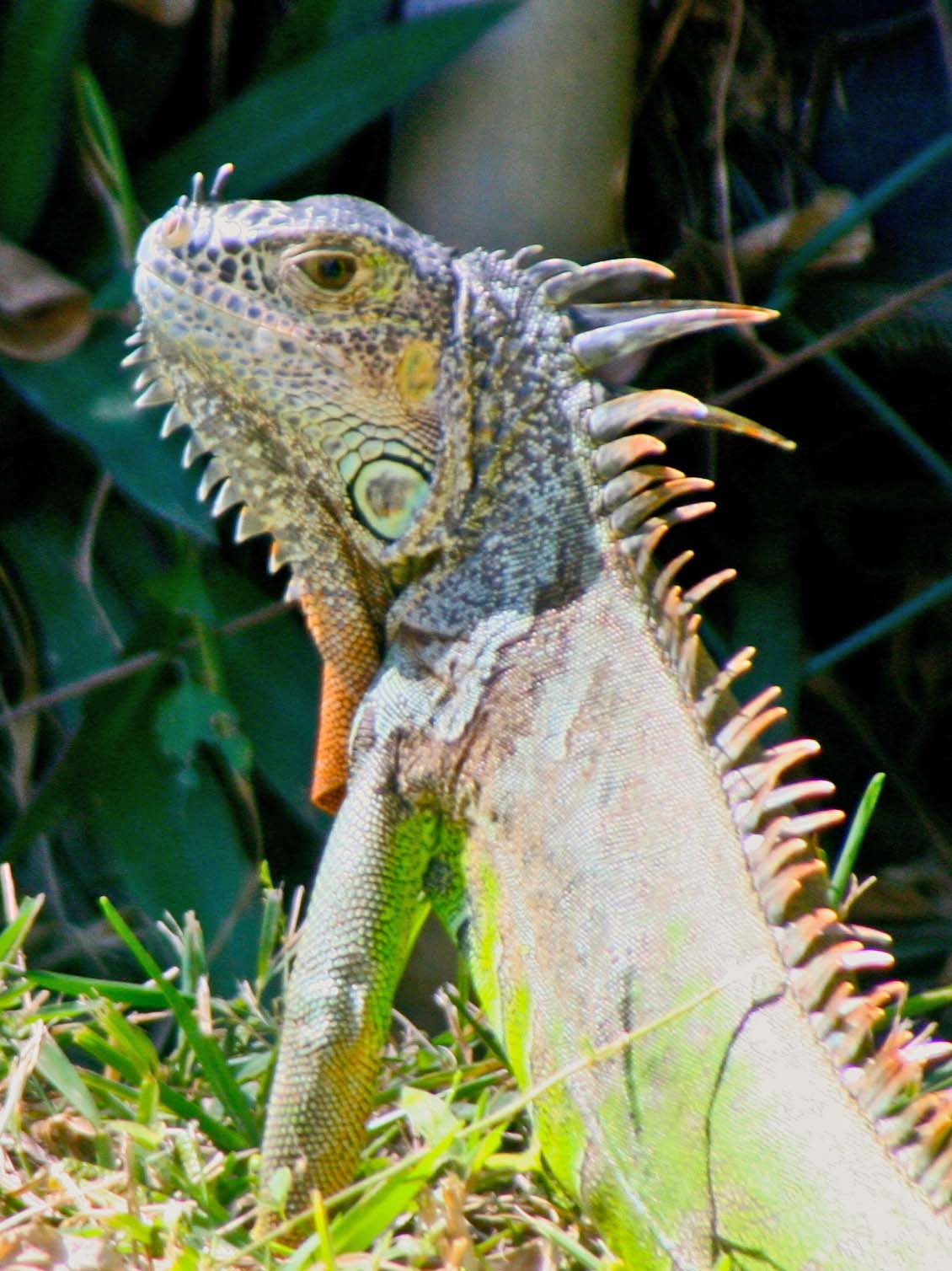
The grass-eating iguana ignored me for the most part, until I tried to sneak up on her for a photo. I got the eye. It was pretty much the same look Peggy gives me when I am misbehaving.
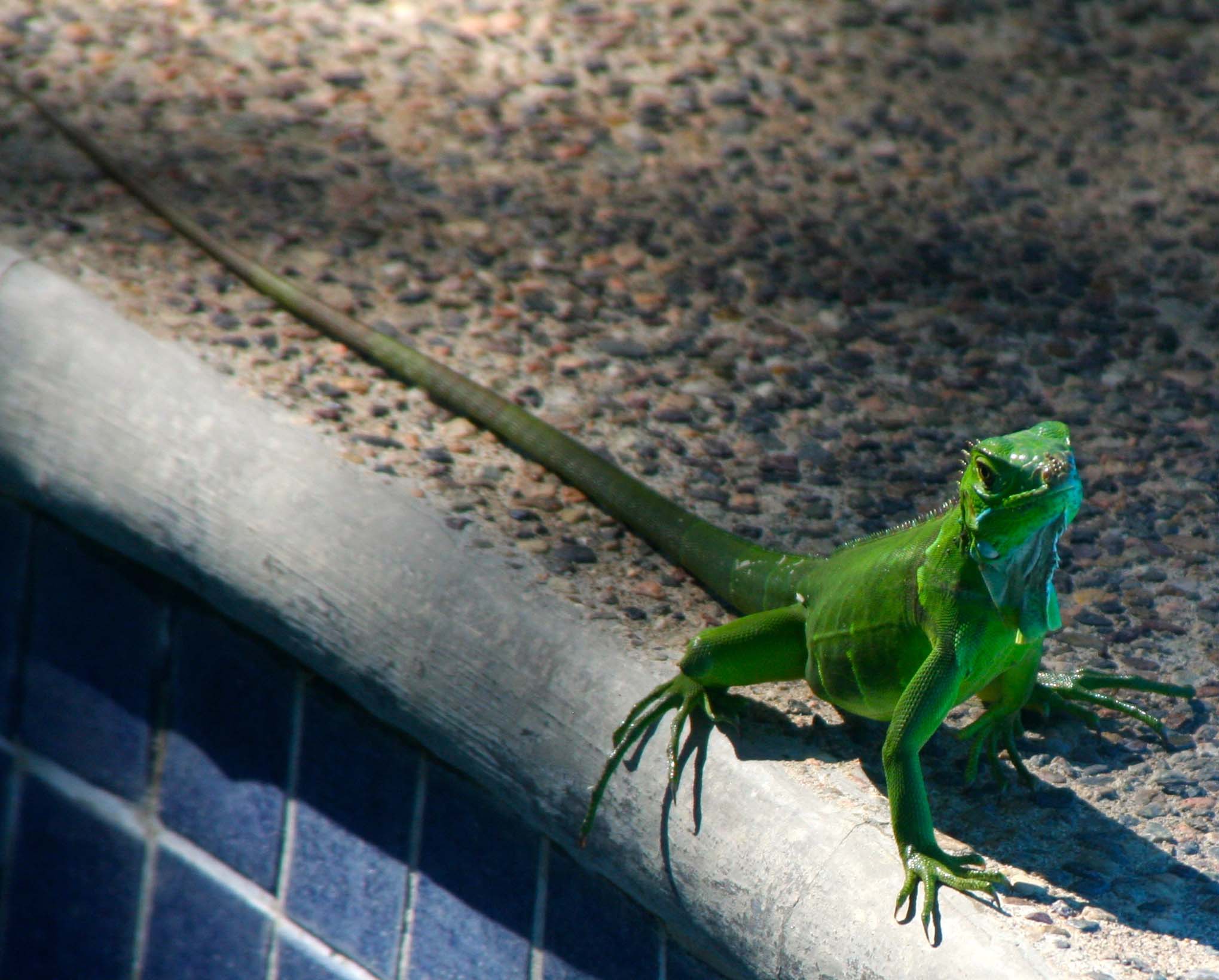
While I was sneaking up on the Green Iguana, this youngster came scurrying out next to our pool.
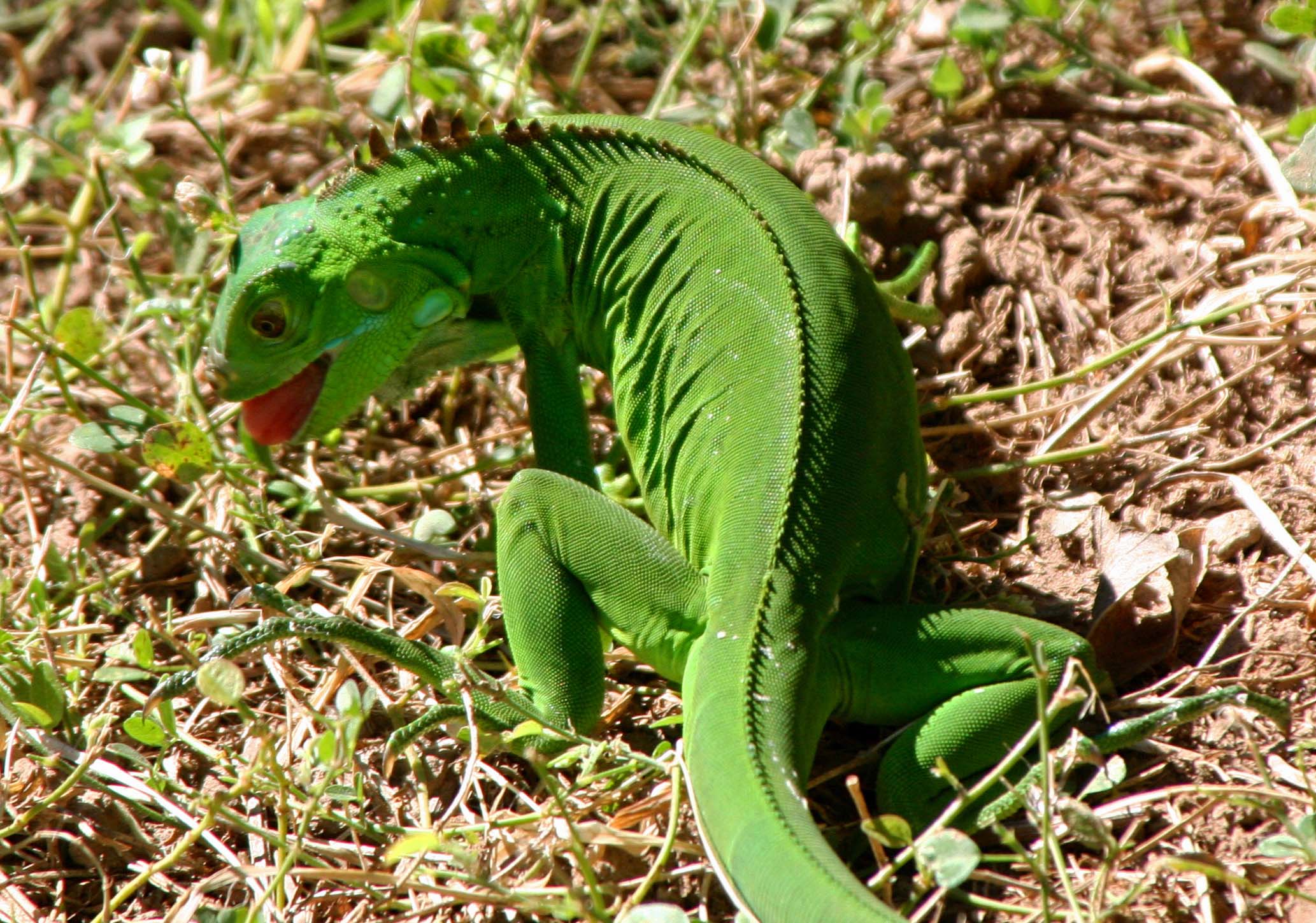
Having satisfied itself that I was not dangerous, the young iguana returned to grazing on our grass. He is about to chomp down on a tender clover leaf.
NEXT BLOG: The peyote influenced art of the Huichol Indians.
 Wandering through Time and Place