An Iguana, an Elephant Seal, and a Pelican Walked into a Bar… Run, the Bartender Screamed!

Today marks the beginning of a new/old series for us. It’s old in the sense that we have done a similar series in the past, but not for a long time. We are going to select a specific subject for each post. Today, for example, is on iguanas. Our next post will be on elephant seals, and the time after on pelicans. We chose these three to kick off the series because we find them wonderfully weird. They also represent reptiles, mammals and birds.

Given that we have 100,000 (plus or minus) photos in our photo library that we’ve gathered over 25 years of wandering the world, there will be no lack of subjects for future posts. We will, of course, continue to do posts on our ongoing adventures as they take place. As always, photos appearing on our blogs have been taken by either Peggy or me unless otherwise noted.

I am also going to do a new series titled Ut-Oh, which is how I pronounced uh-oh as a child. But more on that in the next few weeks.
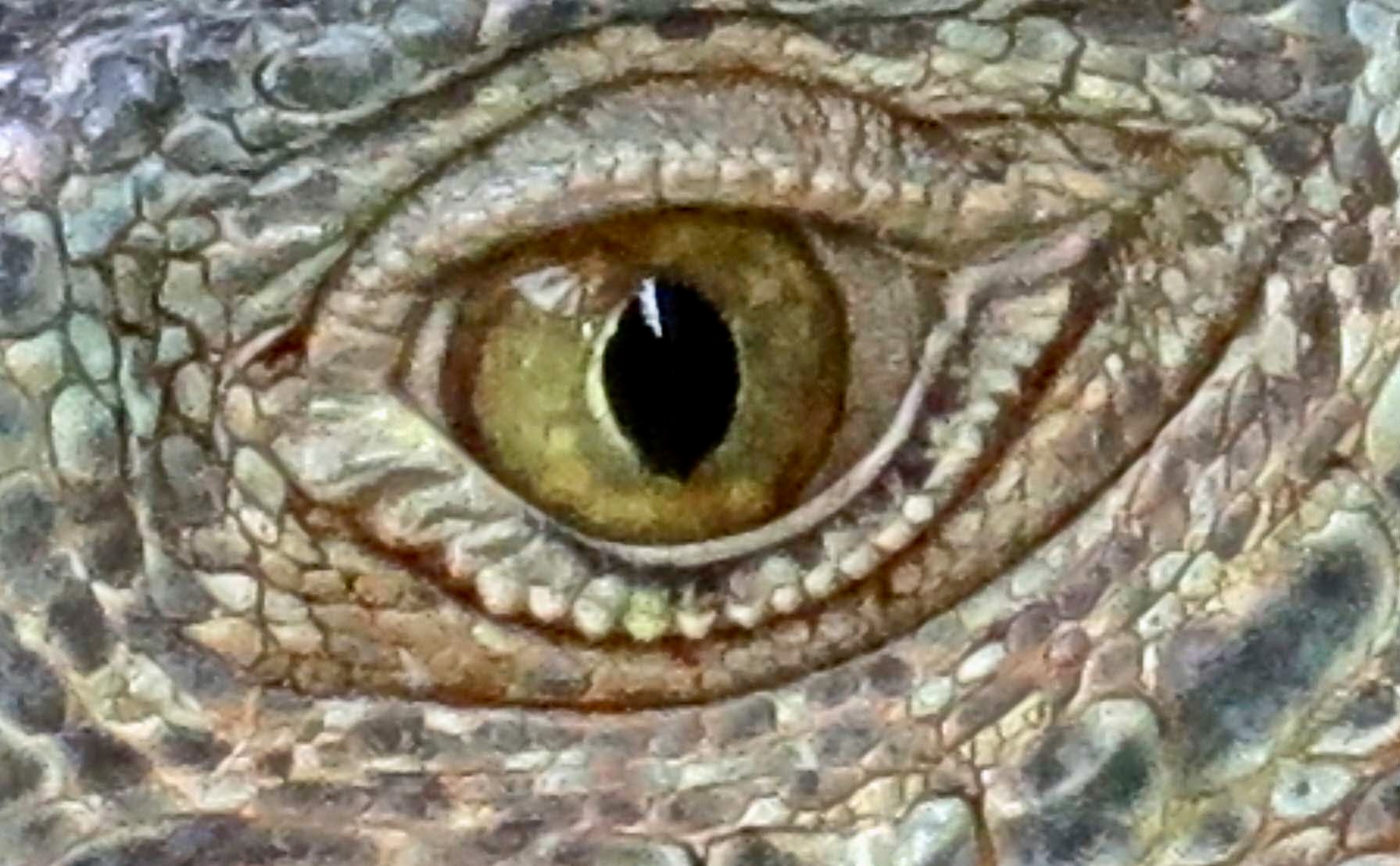
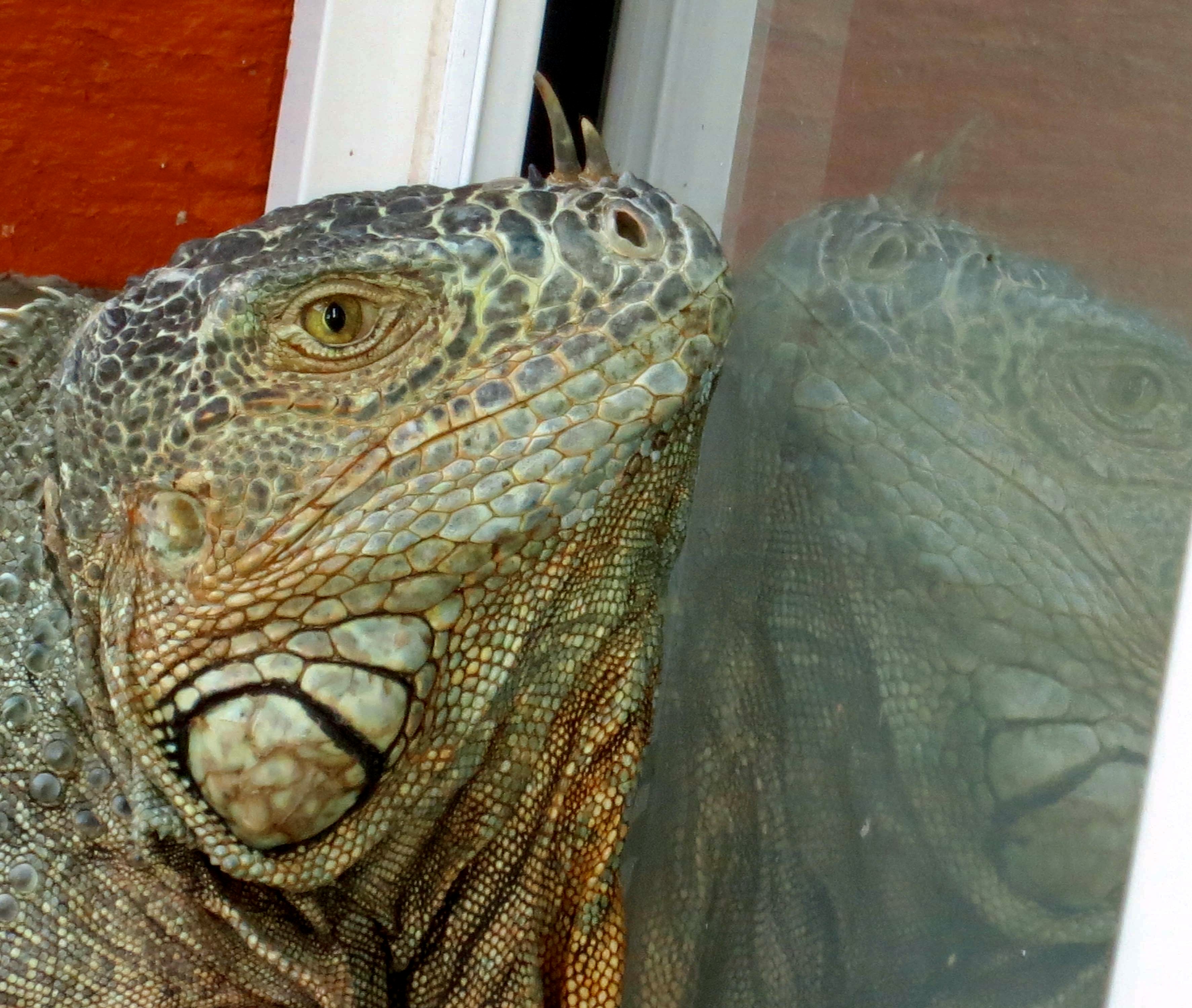
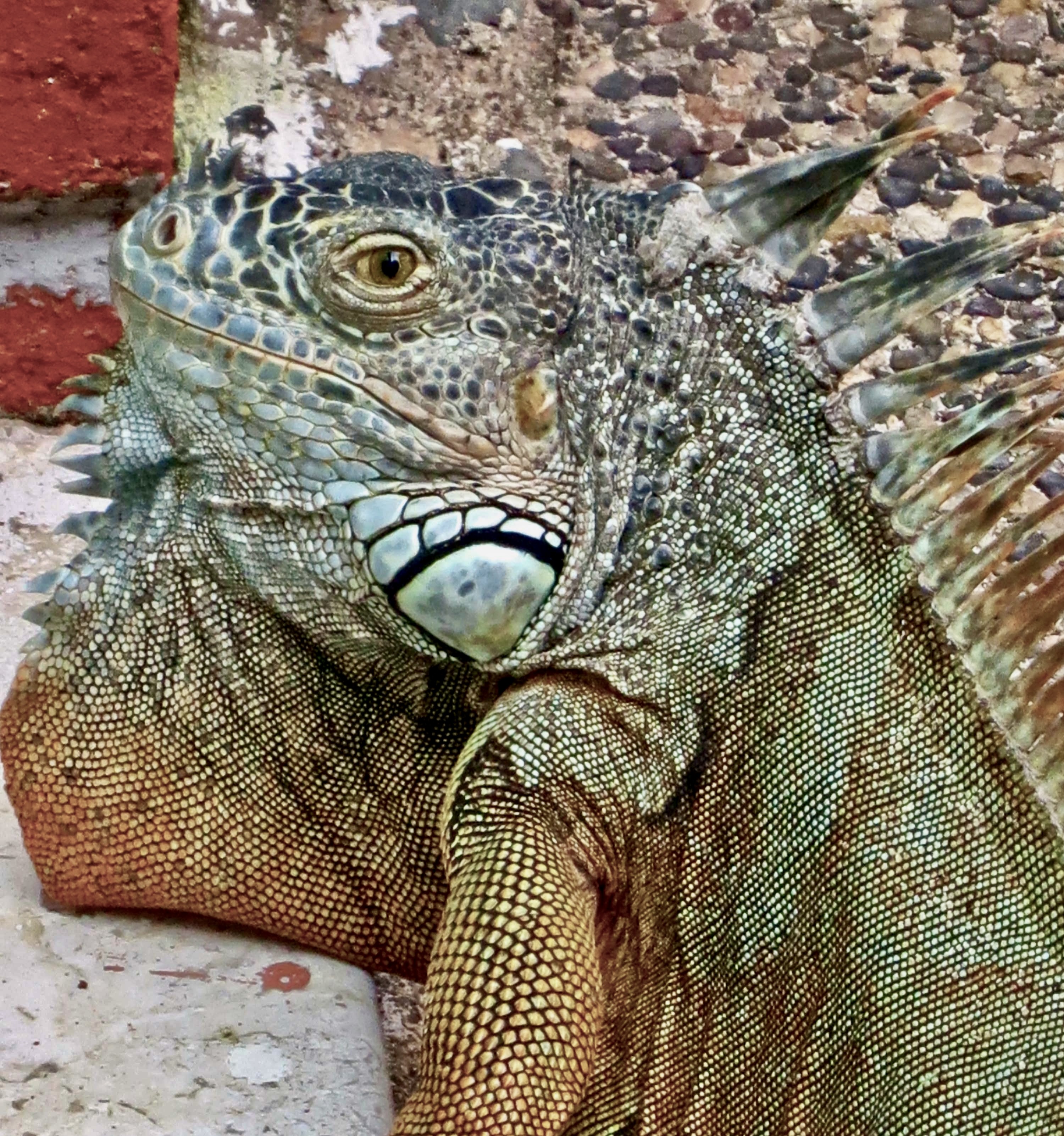
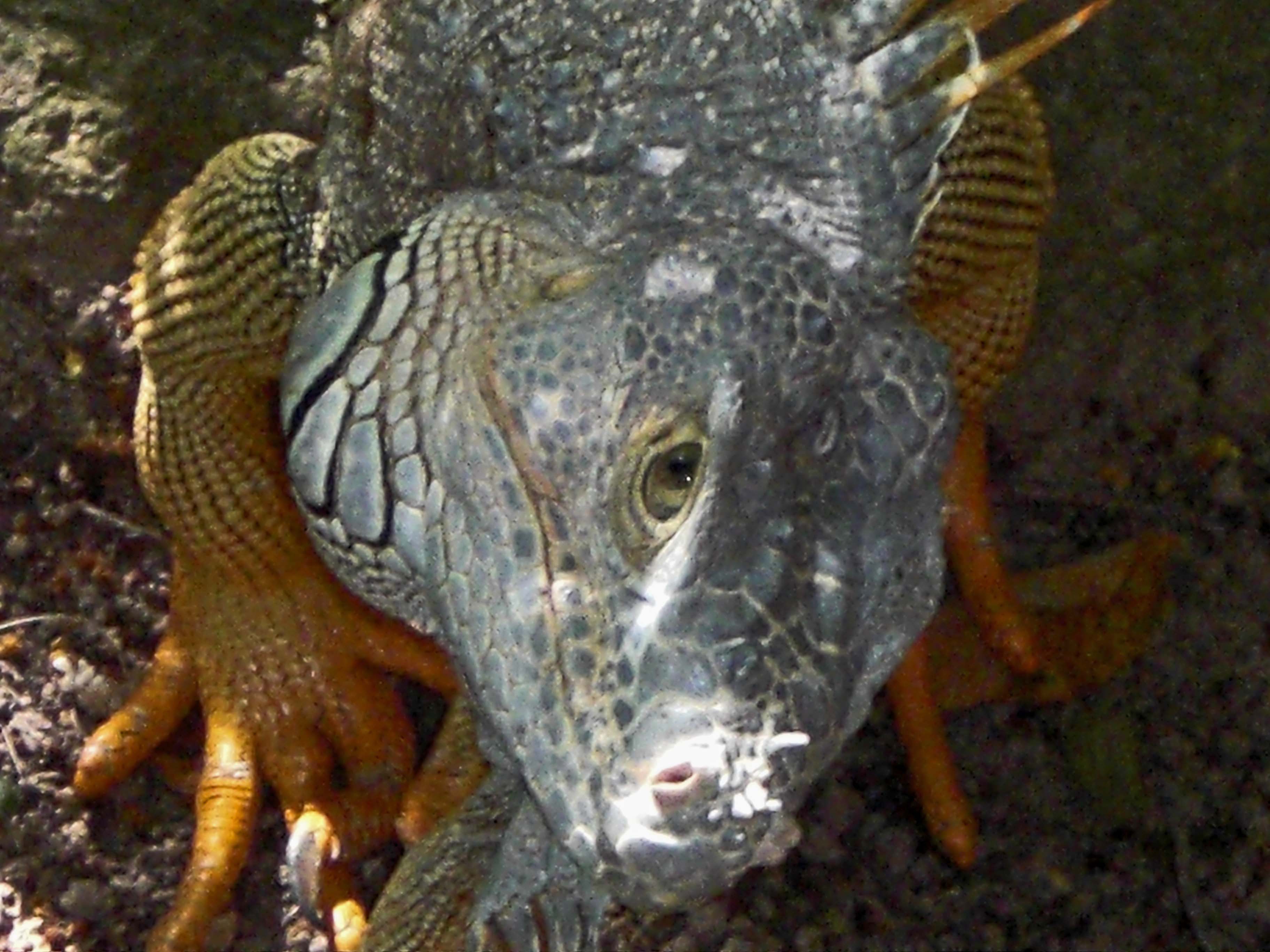
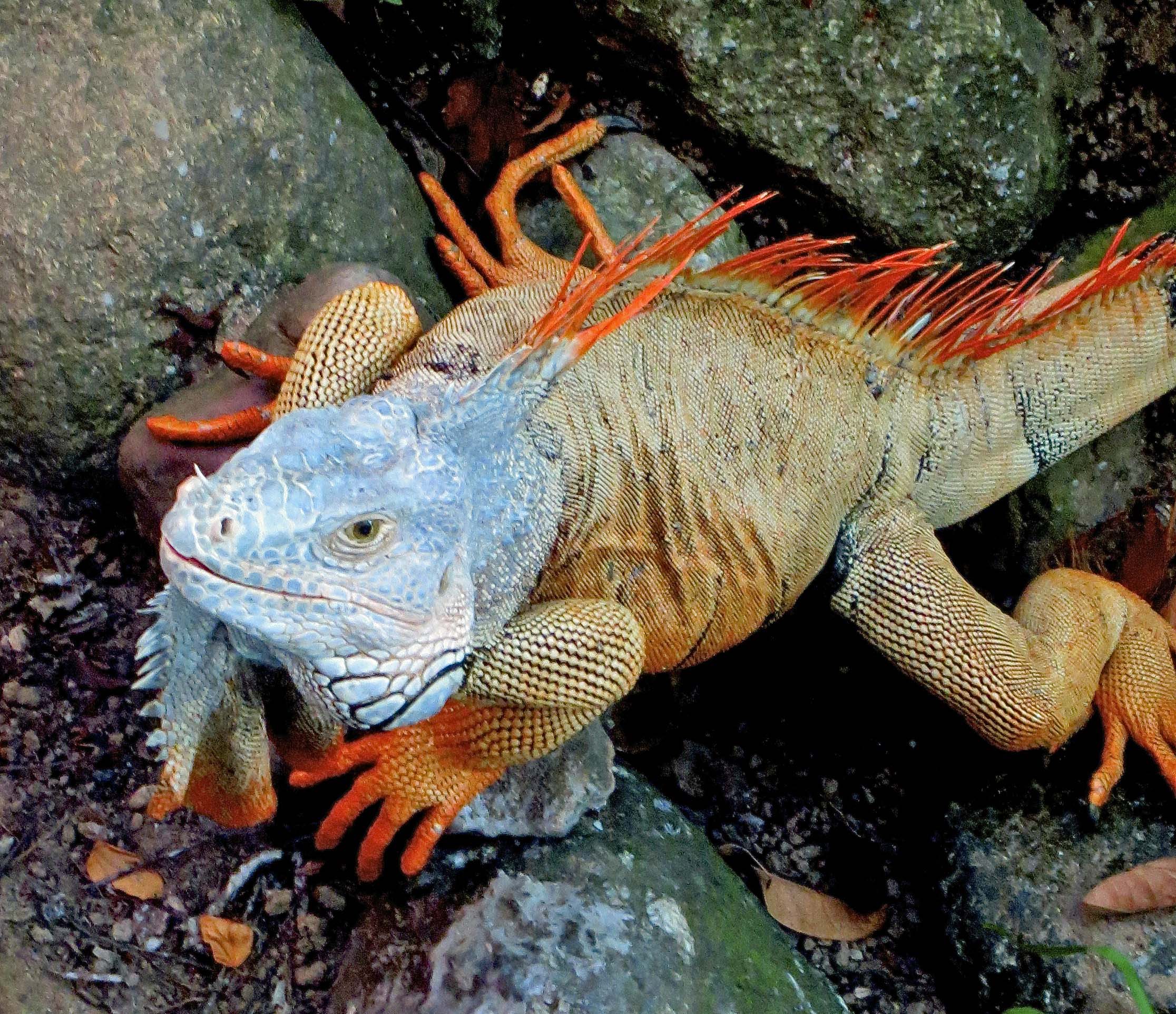
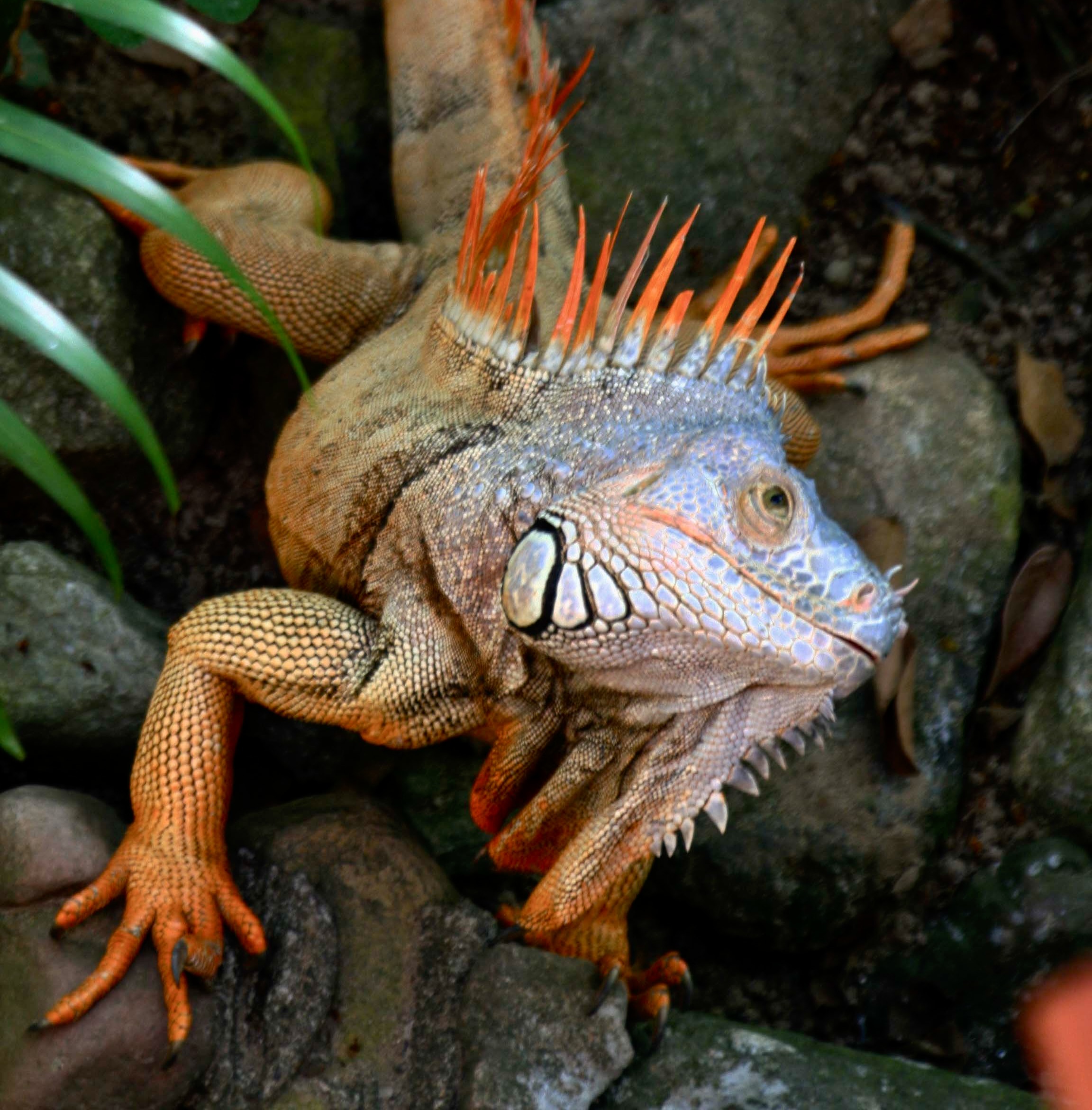
Let’s imagine for a second that you look through a peephole in your door and see this eye staring back at you. I don’t know about you, but my reaction would be to follow the bartender’s advice and “Run!” Or at least bar the door with anything available! “Oh, Peggy, could you lend a shoulder here…” I’ve named the photo The Eye of the Iguana in honor of the classic 1964 movie, The Night of the Iguana, starring Richard Burton, Ava Gardner, and Deborah Kerr. Like Burton’s iguana, ours was hanging out in Puerto Vallarta. As the peep hole scenario suggests, it wanted in. He wasn’t pounding on our door, however…
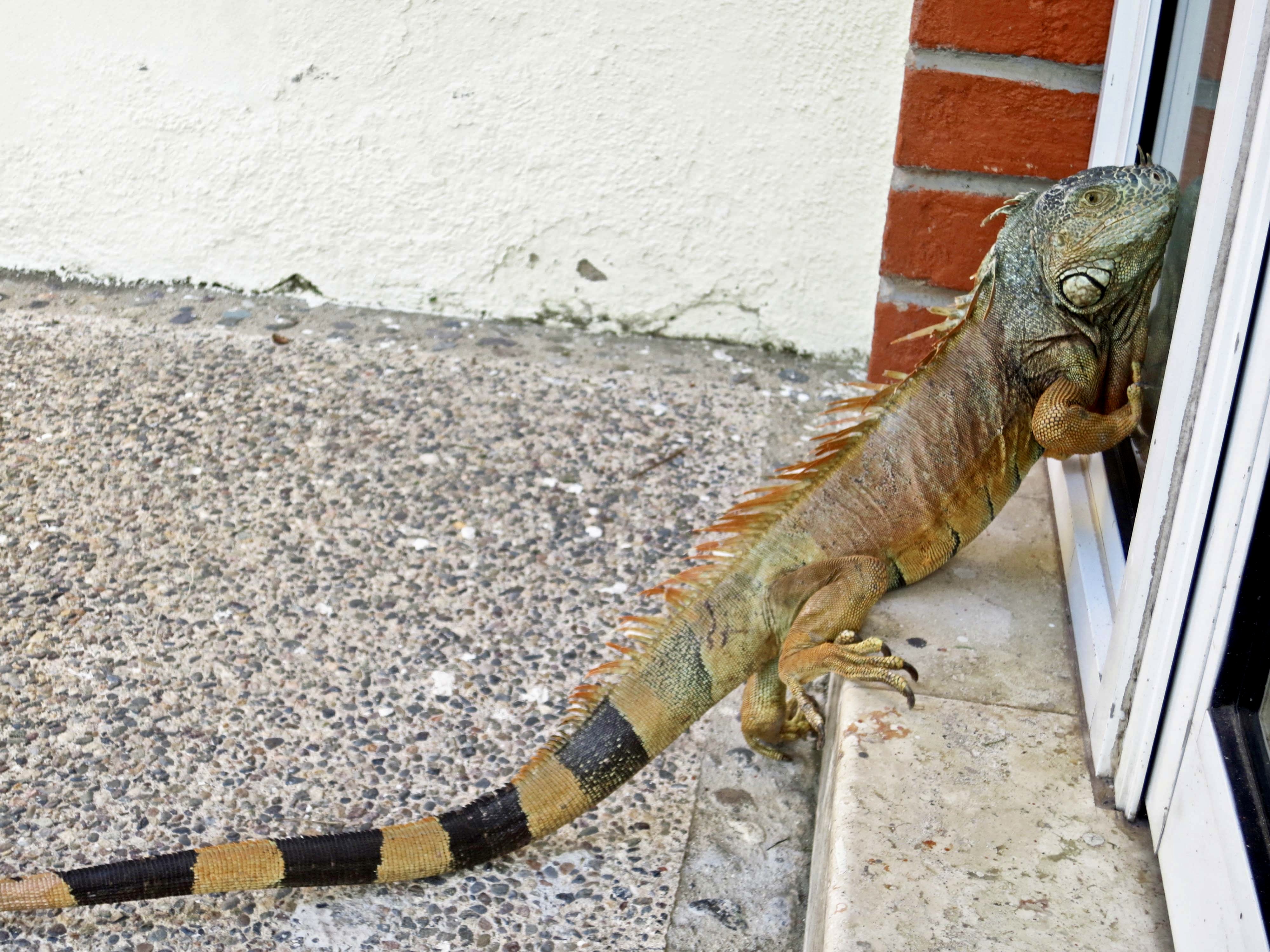
It was scratching loudly on our frosted window. Other than big and possibly scary, we didn’t have a clue what it was. I opened our door just far enough so I could see out— and close it immediately necessary. Just in case, you know.
Here’s what I saw: a huge male iguana. But what did it want? Had it come by demanding arugula? I took a photo from another angle and found the answer.
it was staring at its image. I don’t think he was thinking, “My, what an handsome guy you are.” It was more like “Who are you and what are you doing in my territory. Get out now!” He was obviously trying to get at his competition. Peggy came out and sat on our doorstep to watch him. “Hey, Curt,” she asked, “what if we leave our door open? Do you think he will come in?” That’s Peggy, for you. Okay…
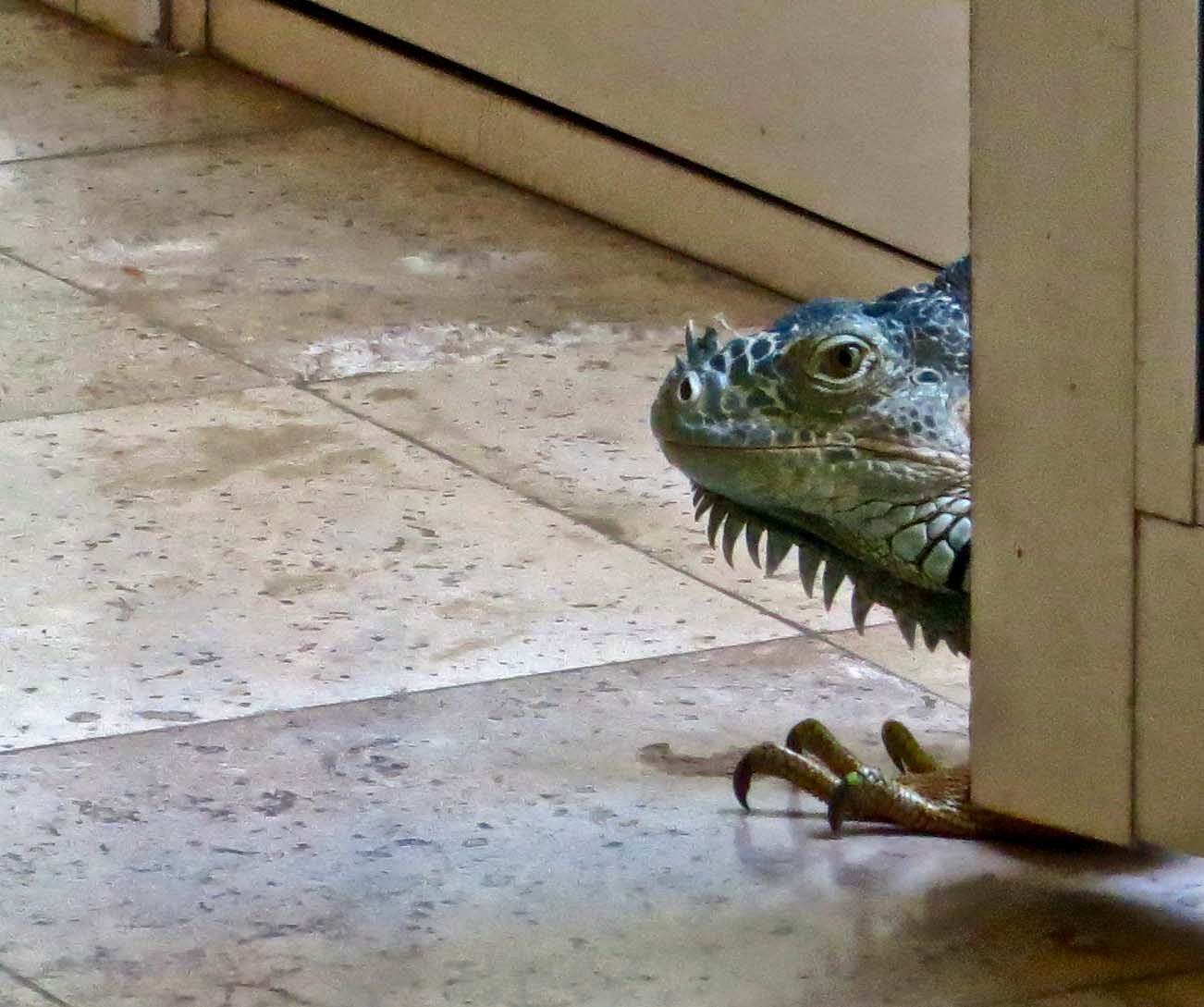
“Hola, amigo. ¿Estás abrigando a un invasor?” (Hello friend. Are you harboring an invader?) I’d say it took him about three minutes to poke his head through the door and look around…..
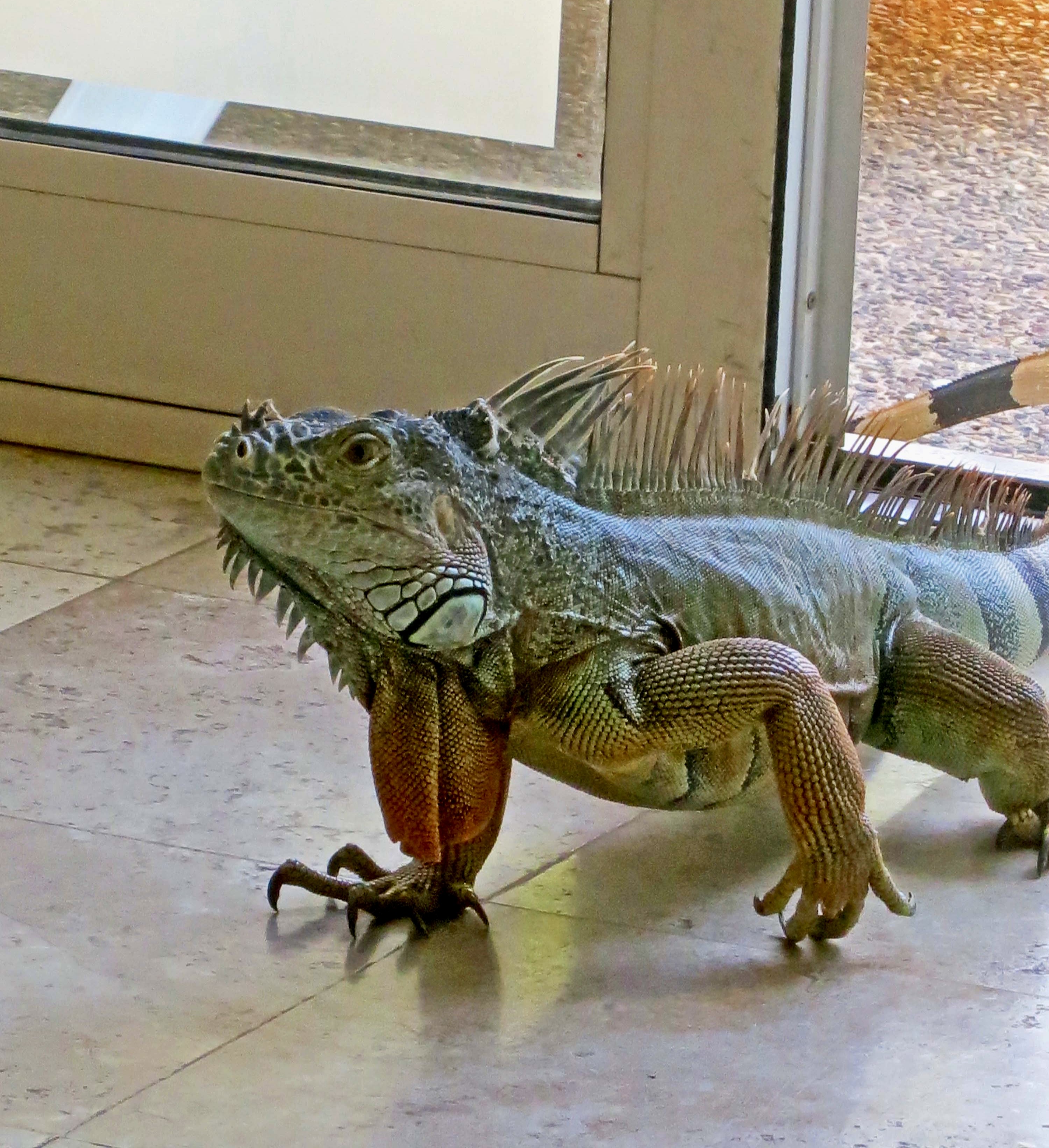
And a few seconds to invite himself in. Check out those claws! No wonder his scratching was so loud. That’s his tail coming along behind. Like his smaller cousins (normal size lizards), he can detach it if something grabs it thinking about dinner, like a very large snake or puma.
He did a thorough search, pausing to look around. We kept our feet up off the floor.
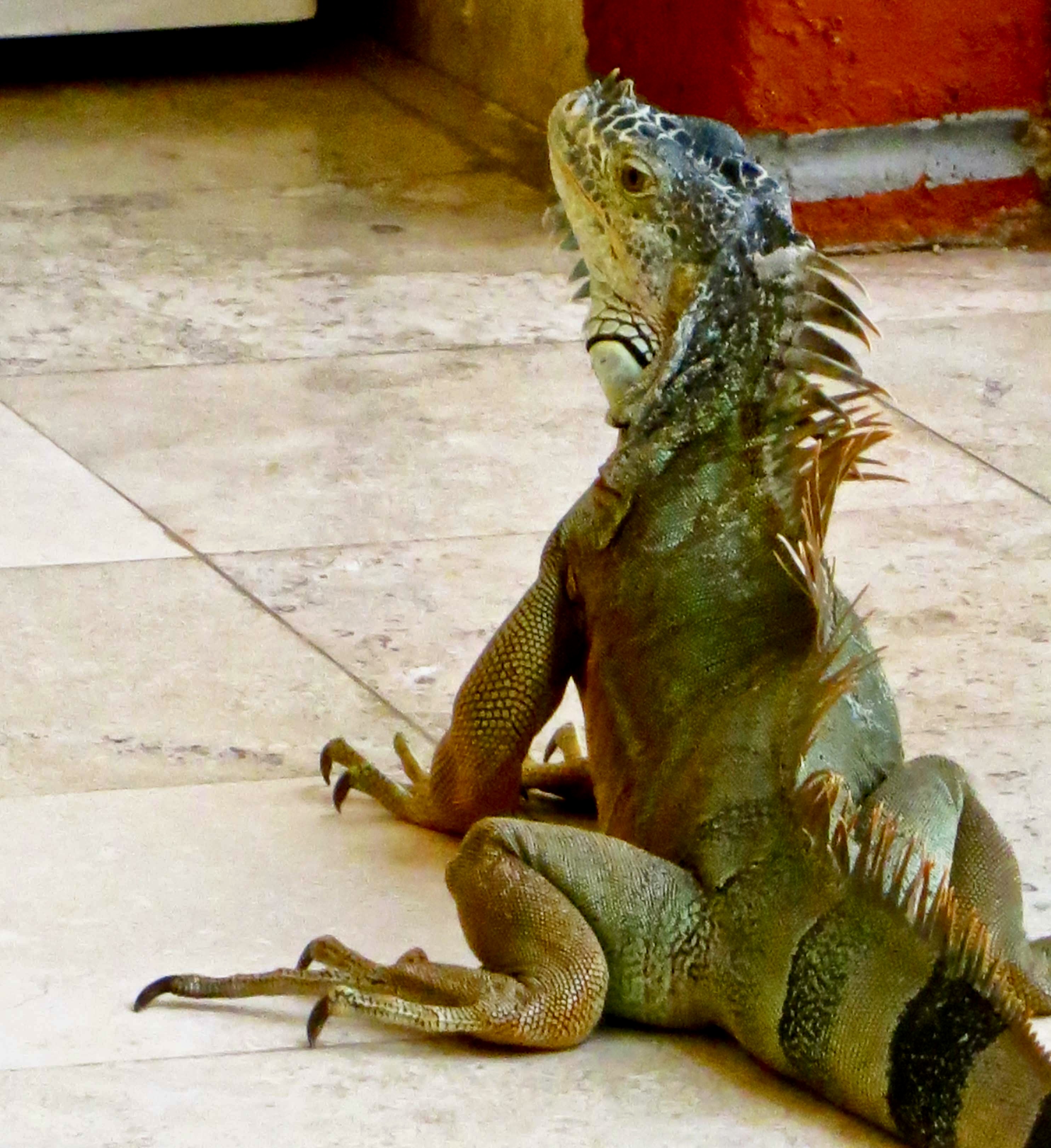
And then sat down, as if he wanted to chat with us about where the other iguana went. Like was there a reason we had closed our bedroom door? Grin. Actually, the answer was yes. Can you imagine this fellow sleeping under your bed? Talk about childhood nightmares!
He truly was a handsome fellow. He wandered around for about 20 minutes and then, satisfied that he was still the biggest iguana in the neighborhood, went back outside.

These large representatives of the reptile class are herbivores and relatively peaceful. People even keep them as pets. It’s said that they enjoy being petted and eating arugula.

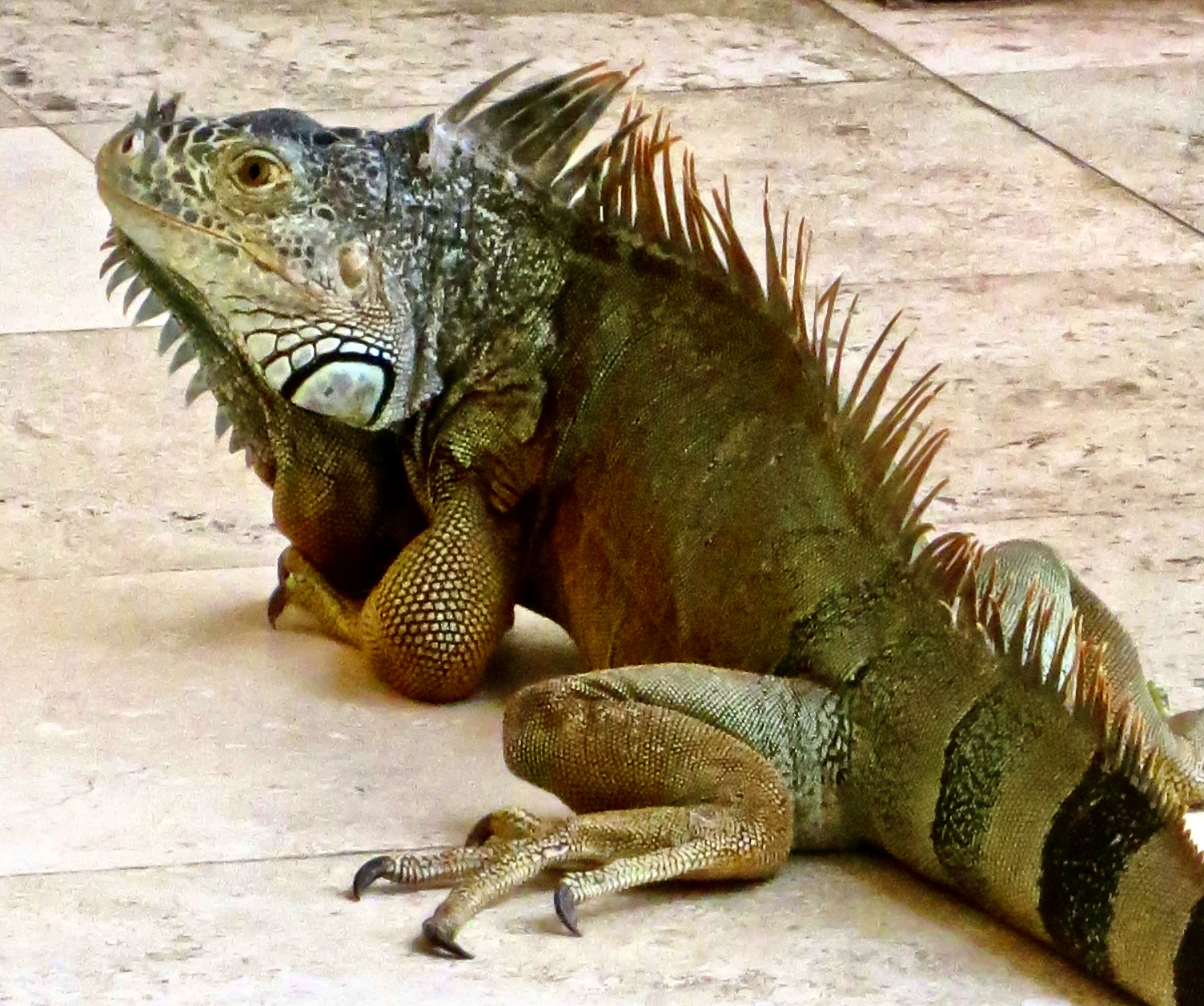
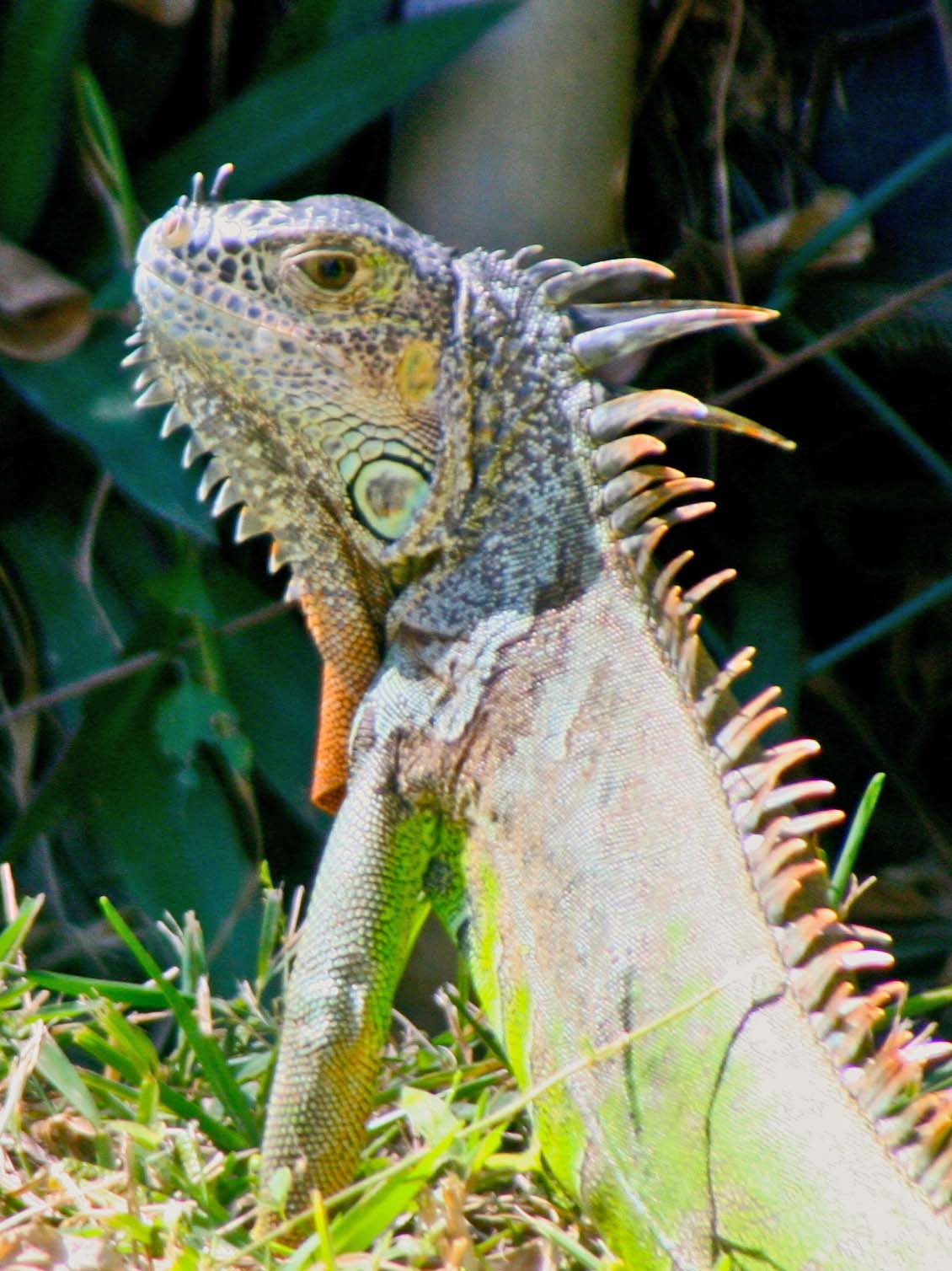
Two of their prominent characteristics are dewlaps and spines. Dewlaps are the large flap of skin hanging down from their chins. They are used for thermoregulation, communication, and courtship, i.e. gaining or losing heat, scaring off competition or predators, and attracting females— the larger the dewlap, the greater the attraction. Size matters. Females also have dewlaps, but they are smaller.

A couple of other interesting facts: One, they are great swimmers. They often jump from trees into water when a predator is after them. Two, they can jump from great heights without harm, up to 50 feet. It isn’t always a jump, however. When the temperature drops to 50° F or below, their bodies ‘freeze’ up and they come cashing down. Every once in a while when Florida suffers from a cold spell, headlines warn, “Watch out for falling iguanas.” They aren’t kidding.

A huge one fell out of a tree and landed about a foot away from our two-year-old daughter Tasha when she was sleeping outside in Panama. Needless to say, she was quickly moved.
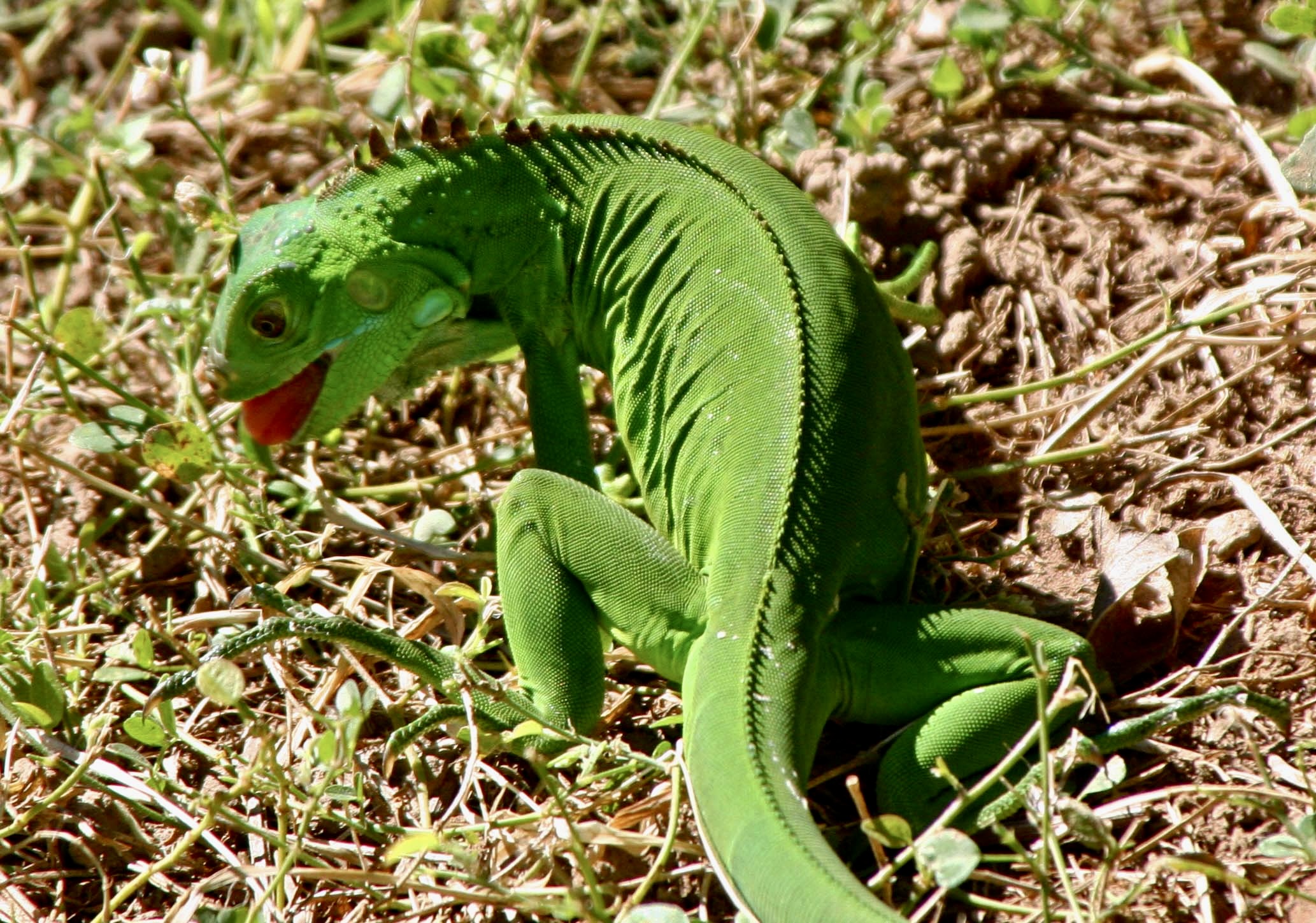
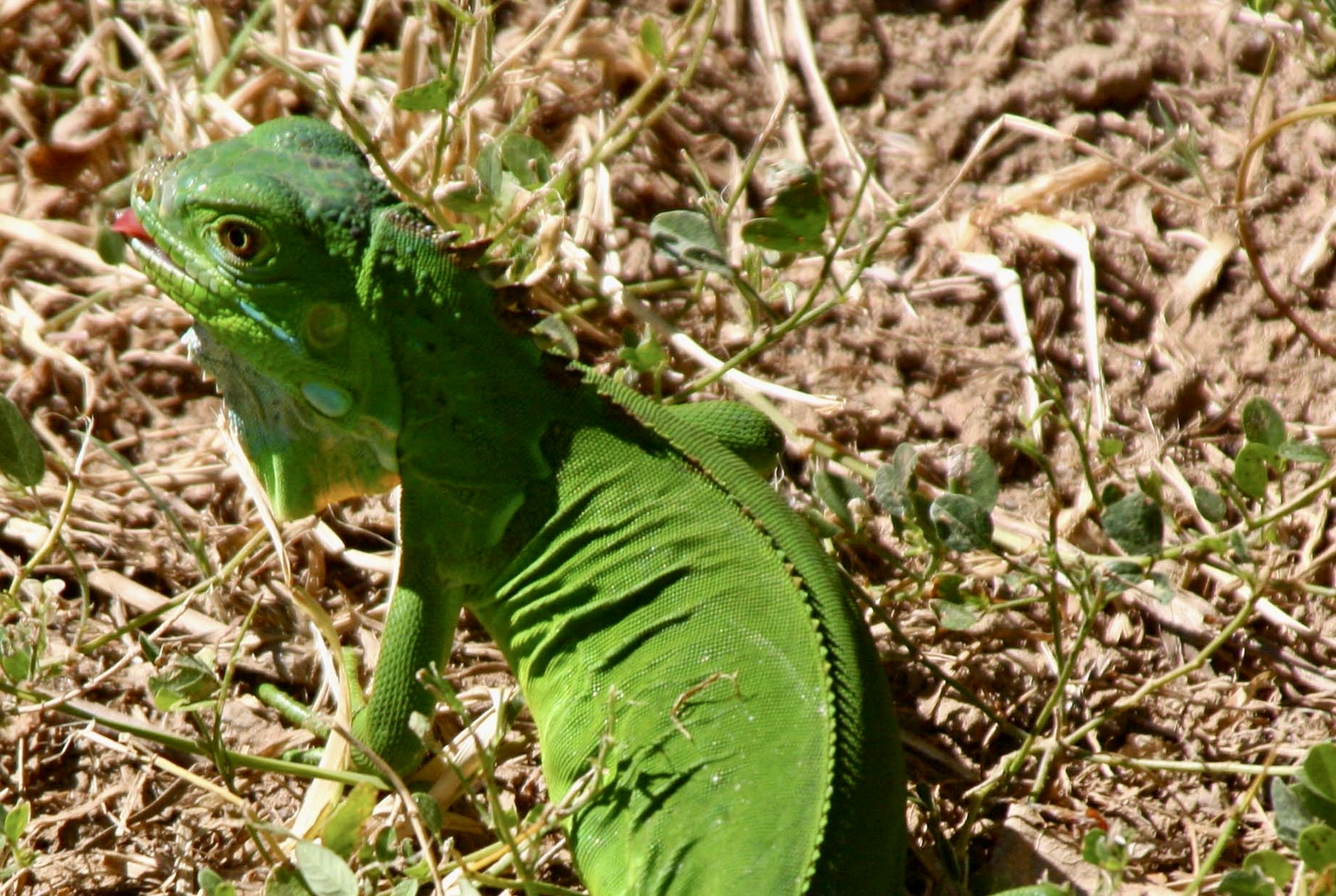
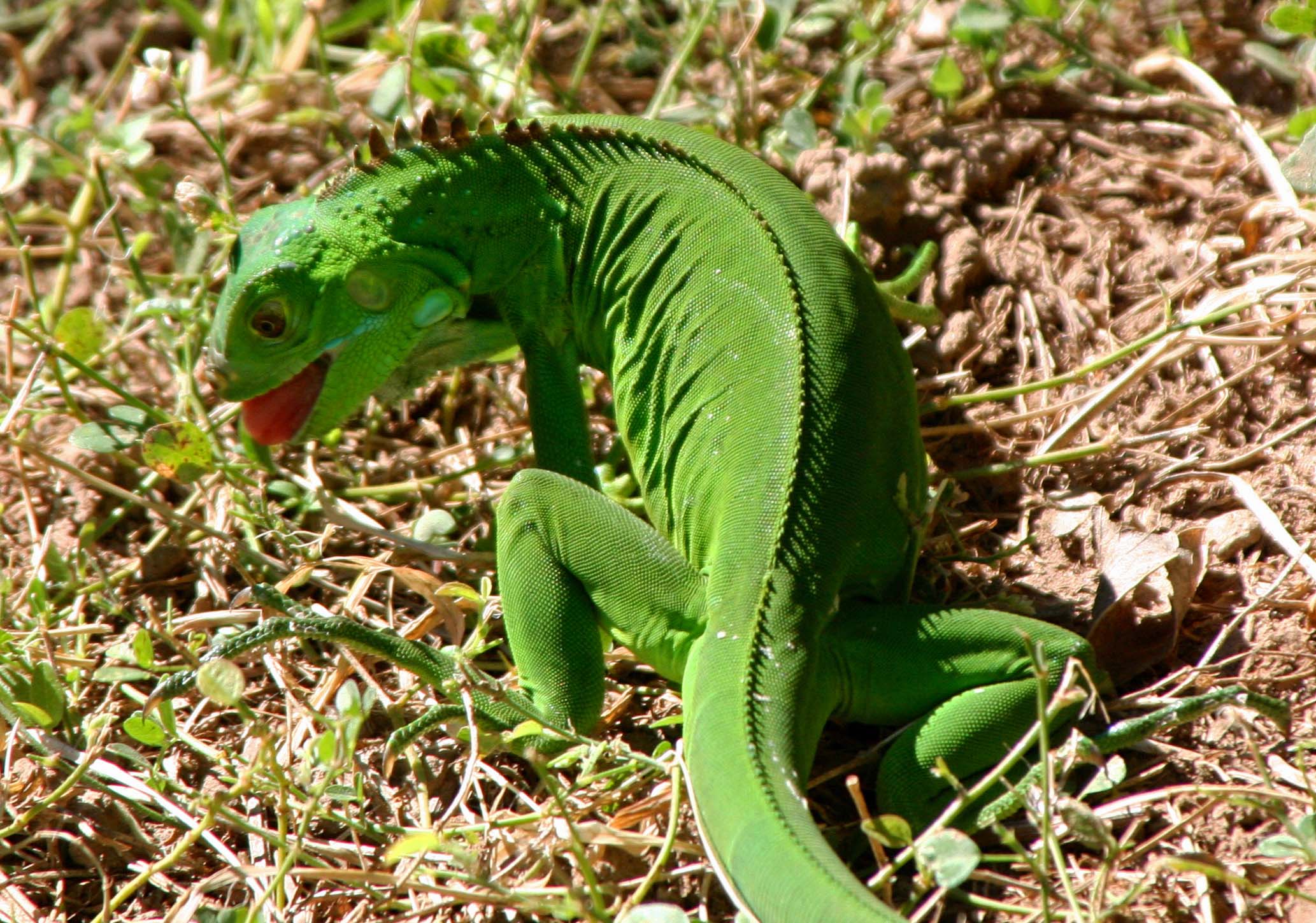
We also found this much smaller green iguana running around in our yard gobbling down plants. There are some 35 different species of iguanas. Check out the tongue.
A closer look. The now missing plant is being swallowed. Is the iguana licking its chops? Yum.

There is a small, narrow island, La Isla del Rio Cuale, on the Cuale River that runs through the heart of Puerto Vallarta where iguanas like to hang out.  Open air restaurants along the river provide a front row seat for watching them and the birds. Peggy and I always try to grab a seat right next to the river.
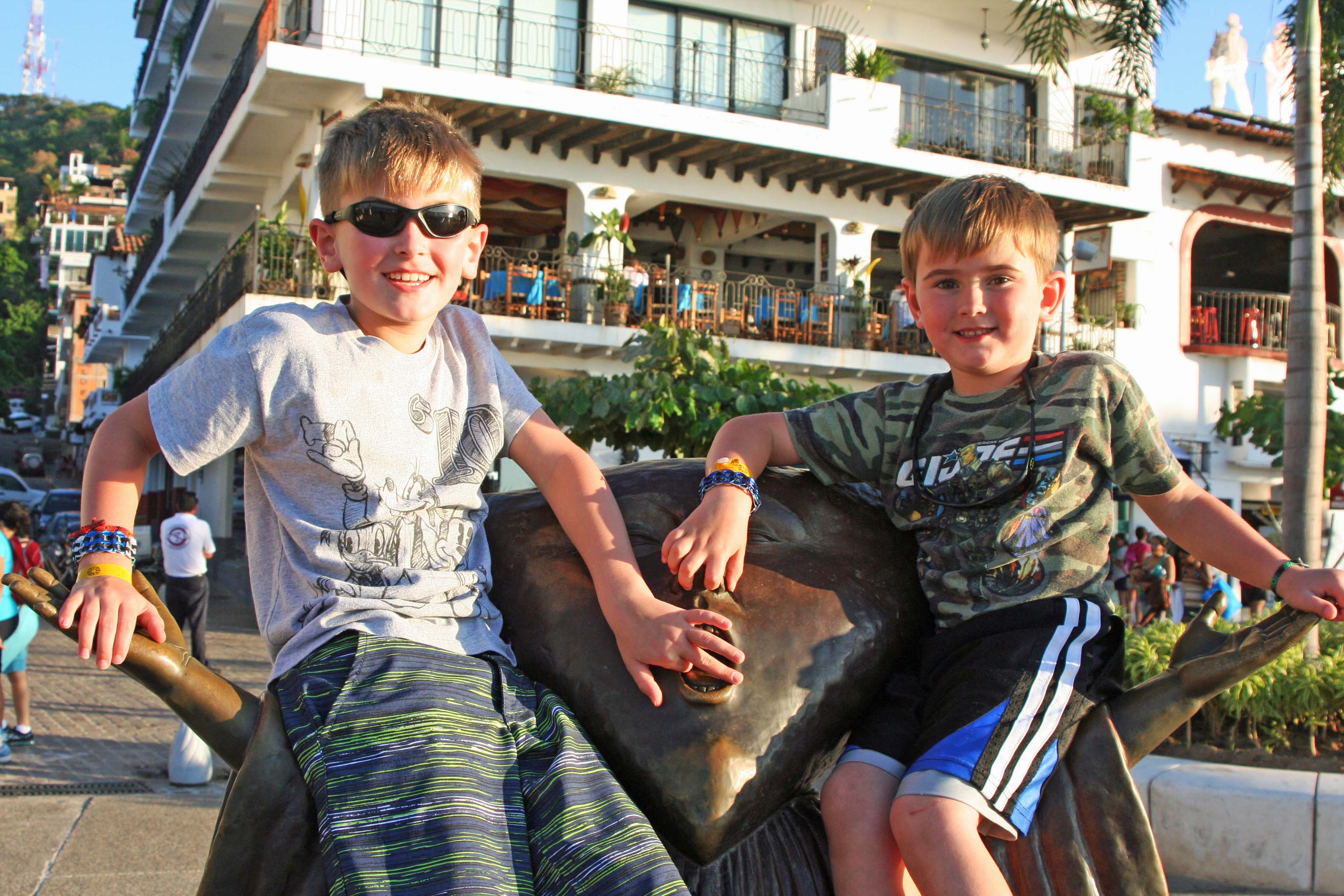
My grandson, Ethan, grabbed our camera and took this photo when he was 9. The iguana was on the ground checking us out.
Our grandsons Ethan and Cody having fun with the art in Puerto Vallarta, 2013.
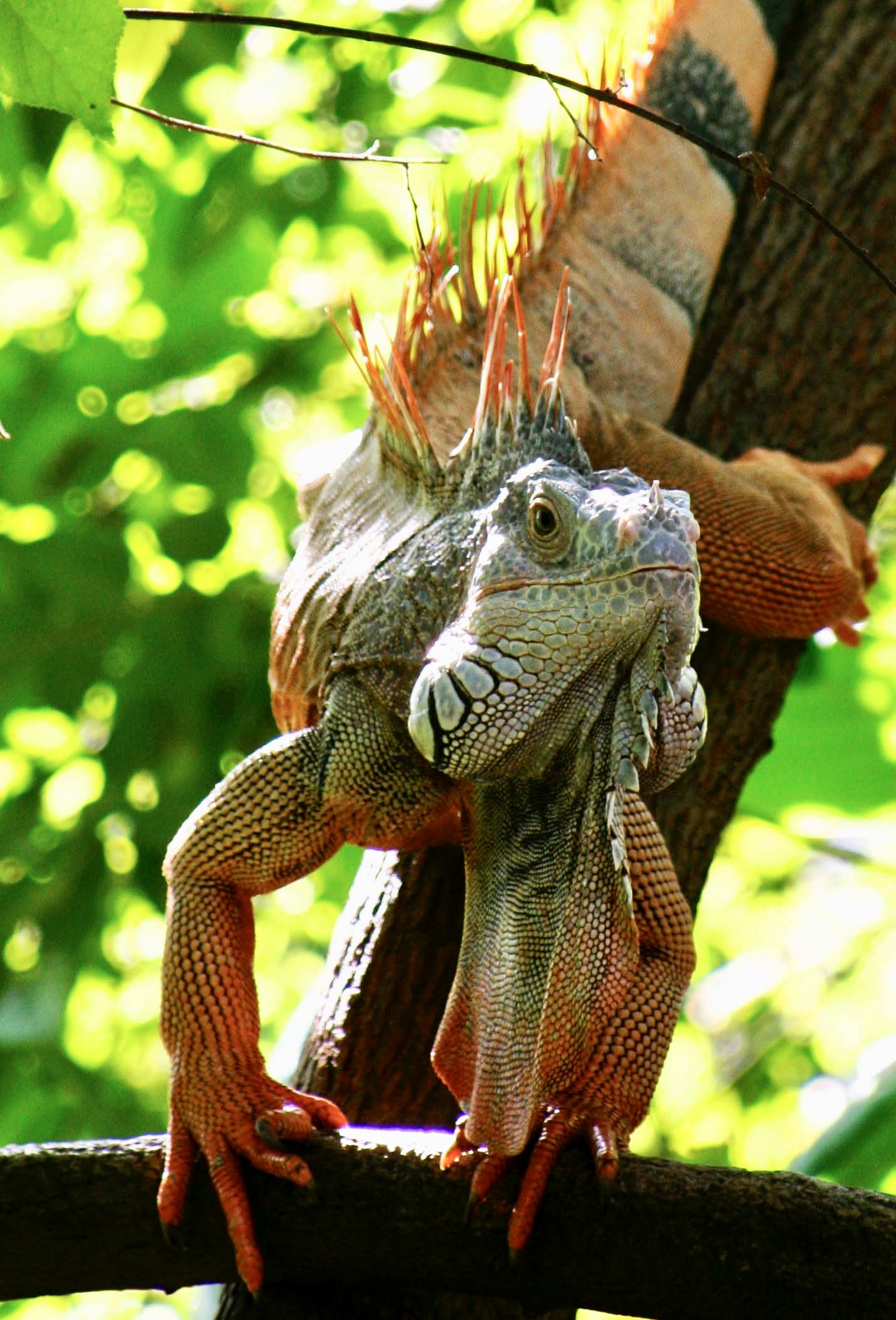
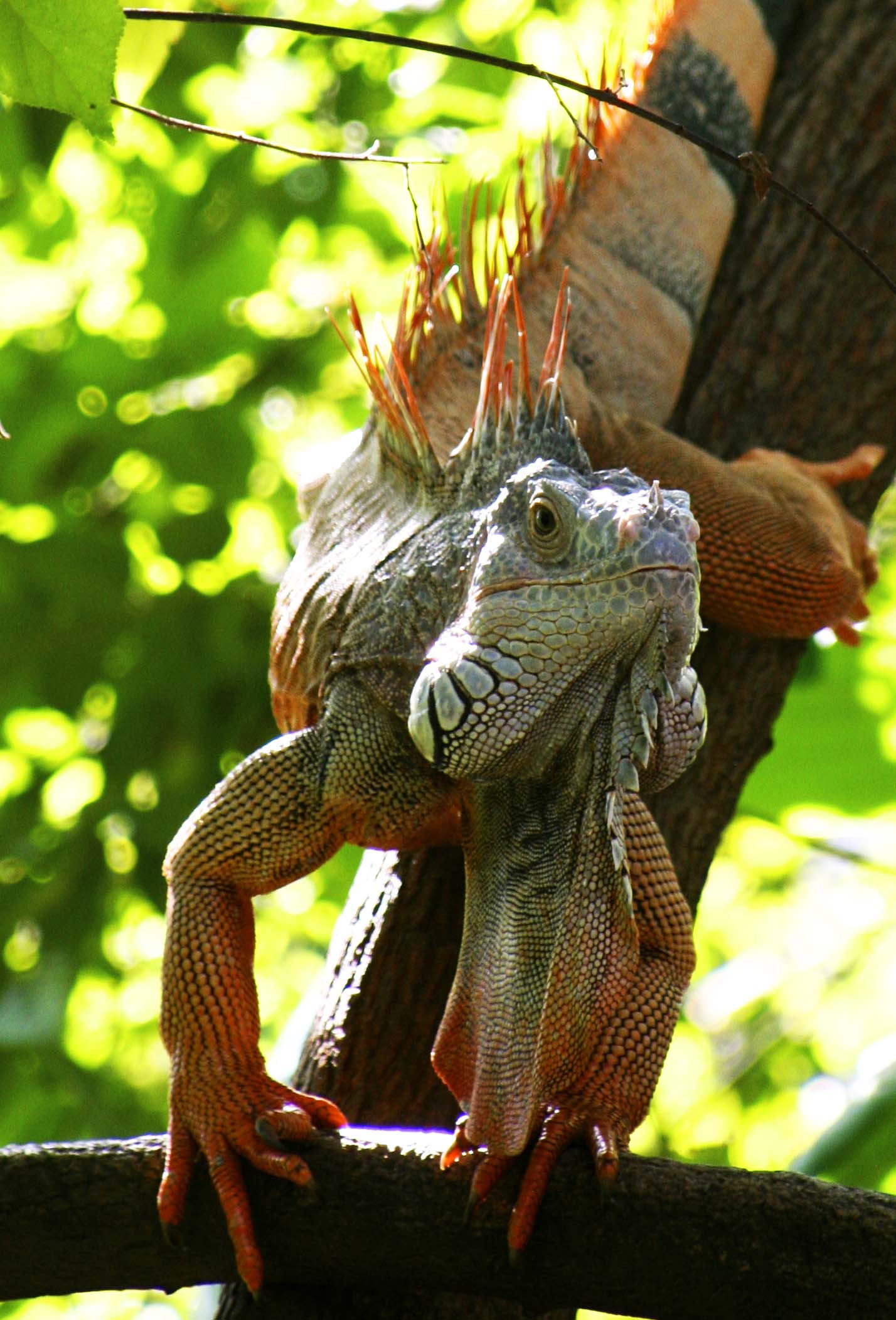
Another iguana climbing down a tree. Their long claws are what enable them to climb. The also use them to slow their falls when jumping down, which can lead to injured toes like this guy displays on his right foot.
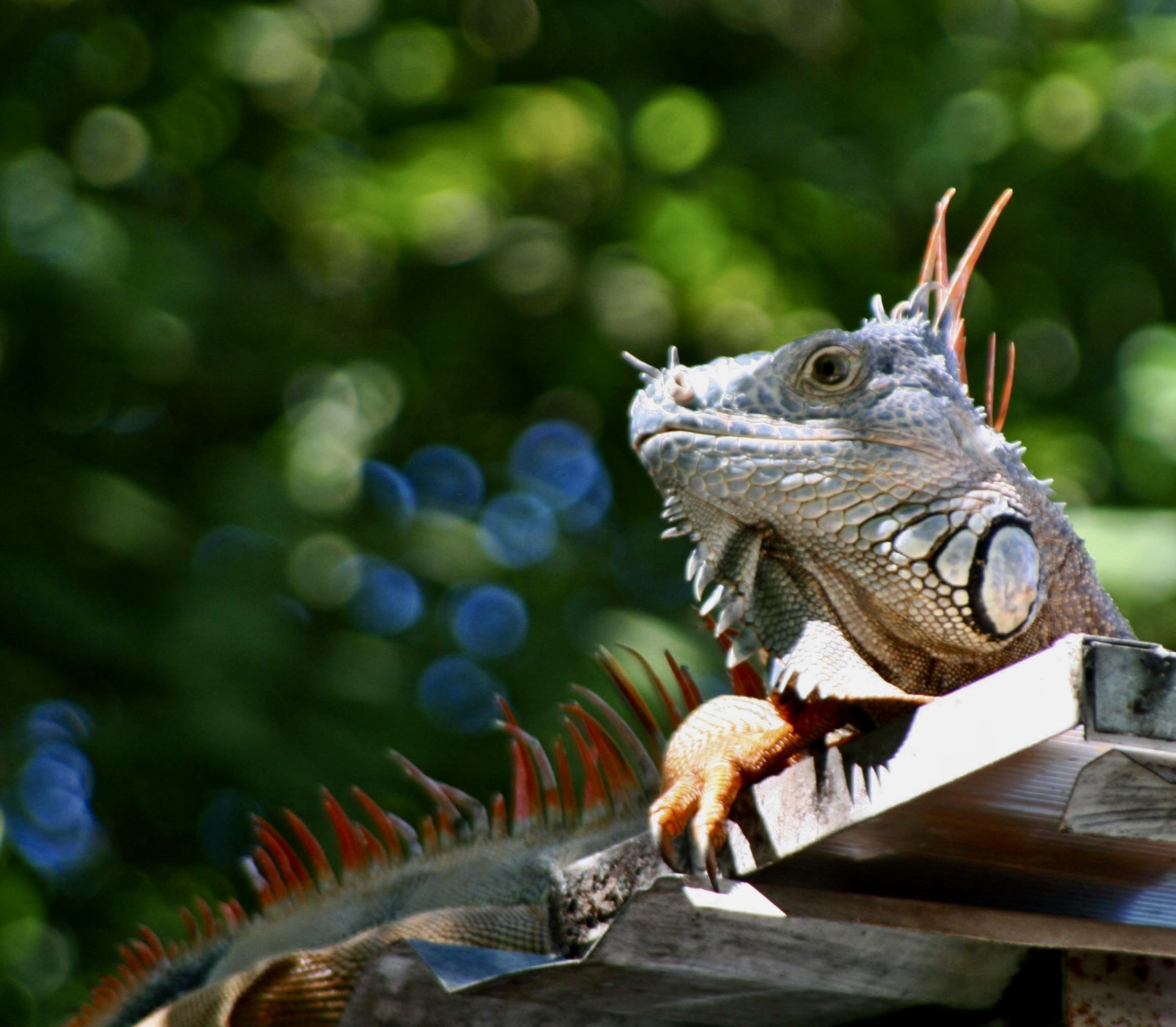
I’ll close with this youngster who was looking down at us from the roof.
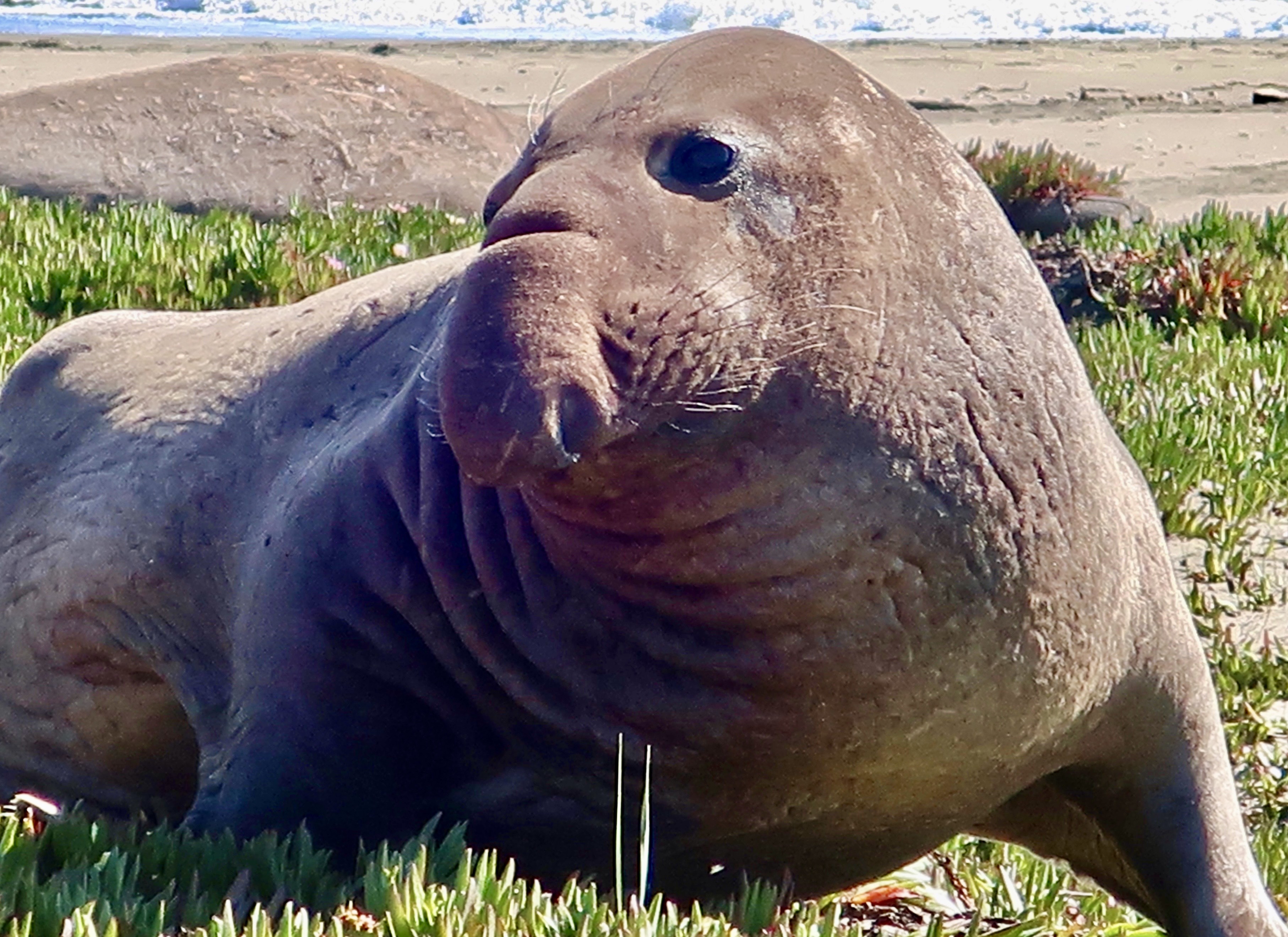
Next up: Elephant seals. We found this big guy at Point Reyes National Seashore, California.

“Oh my, what a big dewlap you have.” The Iguanas of Puerto Vallarta

Our grandsons Ethan and Cody were fascinated by the iguanas we found in Puerto Vallarta. The 8-year-old Ethan took this photo as  and iguana checked him out. (Photo by Ethan Cox.)

Our grandsons Ethan and Cody were fascinated by the iguanas we found in Puerto Vallarta. The 8-year-old Ethan took this photo as an iguana checked him out. (Photo by Ethan Cox.)

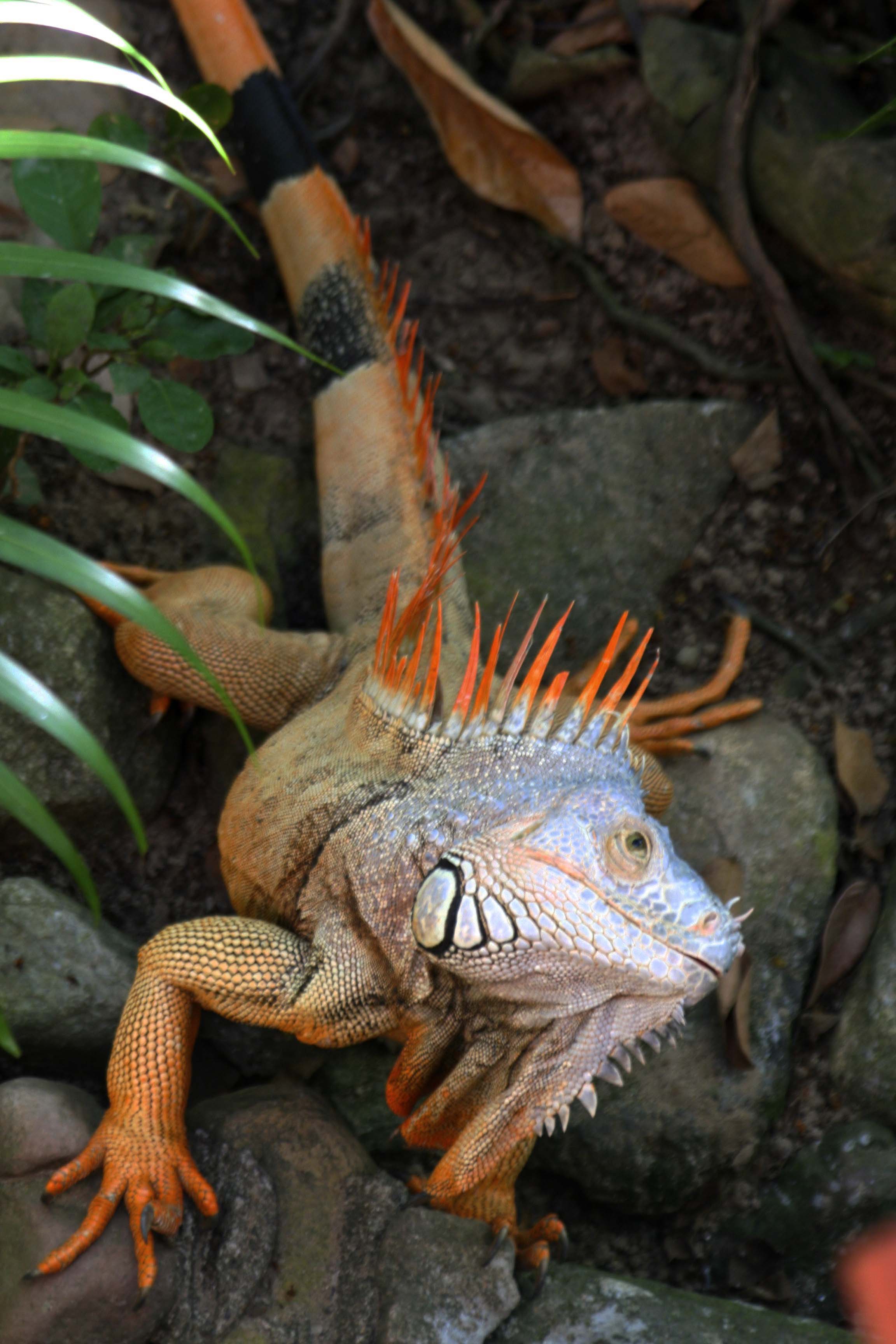
The iguana I named Big Orange was staring up at us with a curious eye. He had come down out of his tree and shuffled over to where we were having lunch on a patio above the Rio Cuale. My eight-year-old grandson, Ethan, was scratching the wall to attract his attention. The iguana and the boy seemed equally interested in each other.

Iguana in Puerto Vallarta, Mexico. Photo by Curtis Mekemson.

Another shot of the curious iguana. I named him Big Orange because of his color.

These large lizards can grow to be over 5 feet long. If their tastes tended toward meat, they might be worrisome, especially given their fearsome appearance. But iguanas are vegetarians and prefer to avoid conflict. Still, you wouldn’t want to irritate one; their lightning fast spiky tails and sharp little vegetarian teeth can do considerable damage.

Iguana in Puerto Vallarta, Mexico. Photo by Curtis Mekemson.

I, for one, would hesitate to get in an argument with the iguana I named Big Orange with his spiky tail, long claws and his tiny, but sharp teeth.

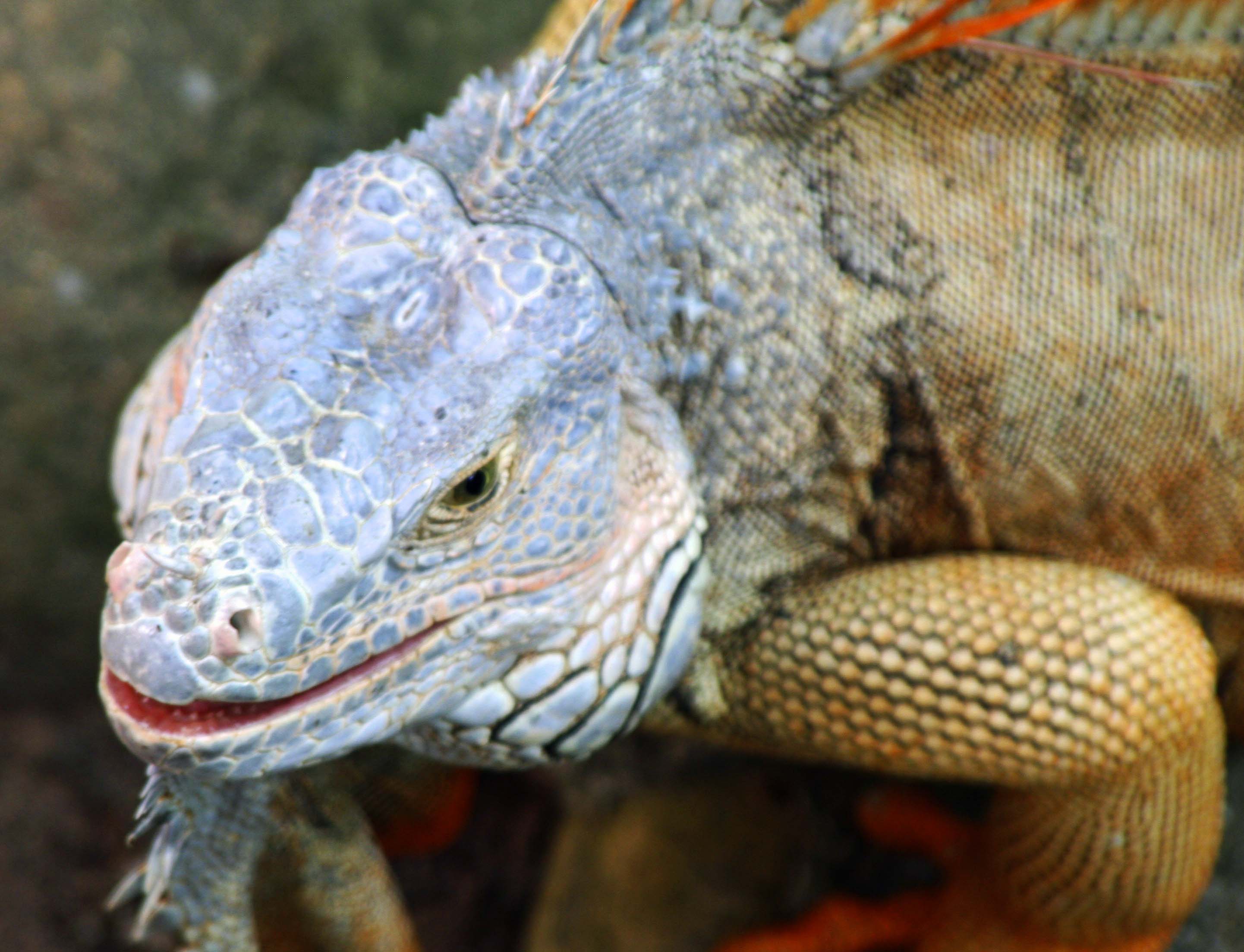
They also have a third eye, located on top of their heads. As eyes go, it is rather primitive. Cells sensitive to light and dark can warn an iguana when something is blocking the sun, such a hawk hovering over its head. One way of escape is to fall out of the tree. If there is a river underneath, you might call it a dive. They are good swimmers and use their powerful tails for locomotion.

Parietal eye of iguana. Photo by Curtis Mekemson.

The small oval on top of the iguana’s head serves as his third eye and is sensitive to light and dark. This photo also shows Big Orange’s leaf-eating teeth.

If a convenient river isn’t present, they land on the ground with a loud plop. Peggy witnessed one such fall. It was a little close for comfort. She was living in Panama at the time with her first husband. Our daughter Tasha, Ethan and Cody’s mom, was splashing around in a baby wading pool in the shade of a palm, when one of the big guys fell out of the tree and crash landed next to the pool.

“The iguana landed flat and seemed stunned. Then he stood up on his legs, shook his head, and wandered off.” Apparently iguanas can fall for up to 50 feet and survive. Whether baby Tasha could survive an iguana falling 50 feet and landing on top of her was another issue. Peggy moved the pool.

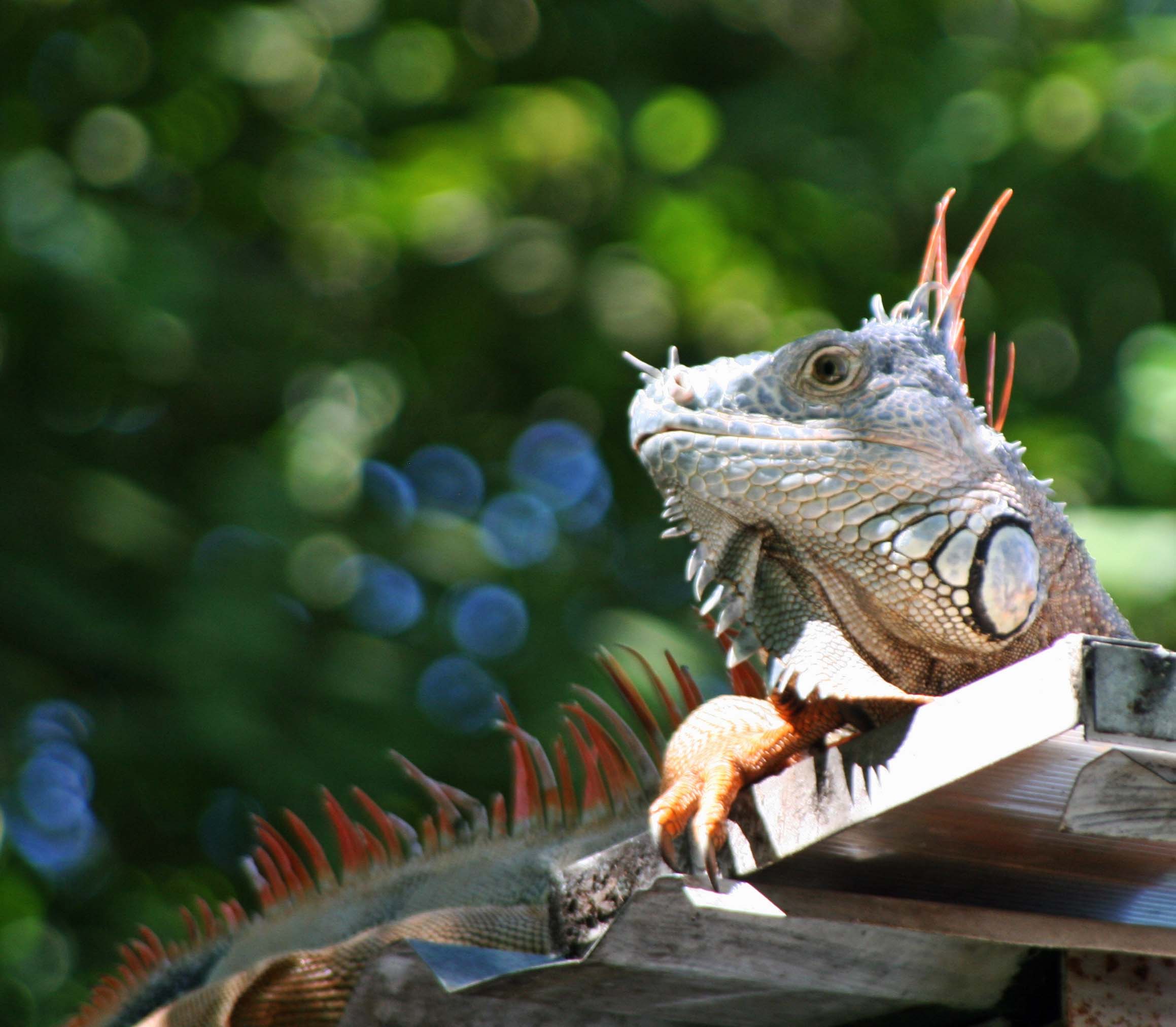
Iguana on roof in Puerto Vallarta. Photo by Curtis Mekemson.

Iguanas are arboreal (live in trees). A convenient roof will do in a pitch, however.

One of the stranger aspects of iguana physiology is a rather large dewlap that hangs down from the chin. I am surprised Big Orange didn’t stumble over his. Male iguanas bob their head and shake their dewlap when trying to impress a lady iguana. They also do the same thing to scare off the male competition. It must get confusing at times.

Large dewlap on Puerto Vallarta iguana. Photo by Curtis Mekemson.

Check out the large dewlap on this iguana. The loose skin hanging down from his chin does double duty, both attracting females and scaring away males. This guy was bobbing his head and shaking his dewlap at a lady iguana.

Human-iguana interaction goes in two very different directions. One, iguanas are used as pets. Their normally benign disposition and bizarre looks makes them quite popular. The downside here is that they require an unusual diet that pet owners frequently fail to provide. Two, they have served as a source of food in South America for over 7000 years. A common name is gallina de palo, which translates chicken of the tree. And yes, you guessed right. They supposedly taste like chicken.

I’ve never eaten an iguana but I did eat a rattlesnake once that tasted like chicken. Eating it, however, was like chewing a rubber band.

In addition to the iguanas that hang out in the middle of Puerto Vallarta on the Rio Cuale, we had a family in our back yard. The challenge each morning was to try to find where these arboreal lizards were hiding out in the trees. Later in the day they would come down and graze on our grass. Clover was in high demand.

A Mexican Green Iguana. Photo by Curtis Mekemson.

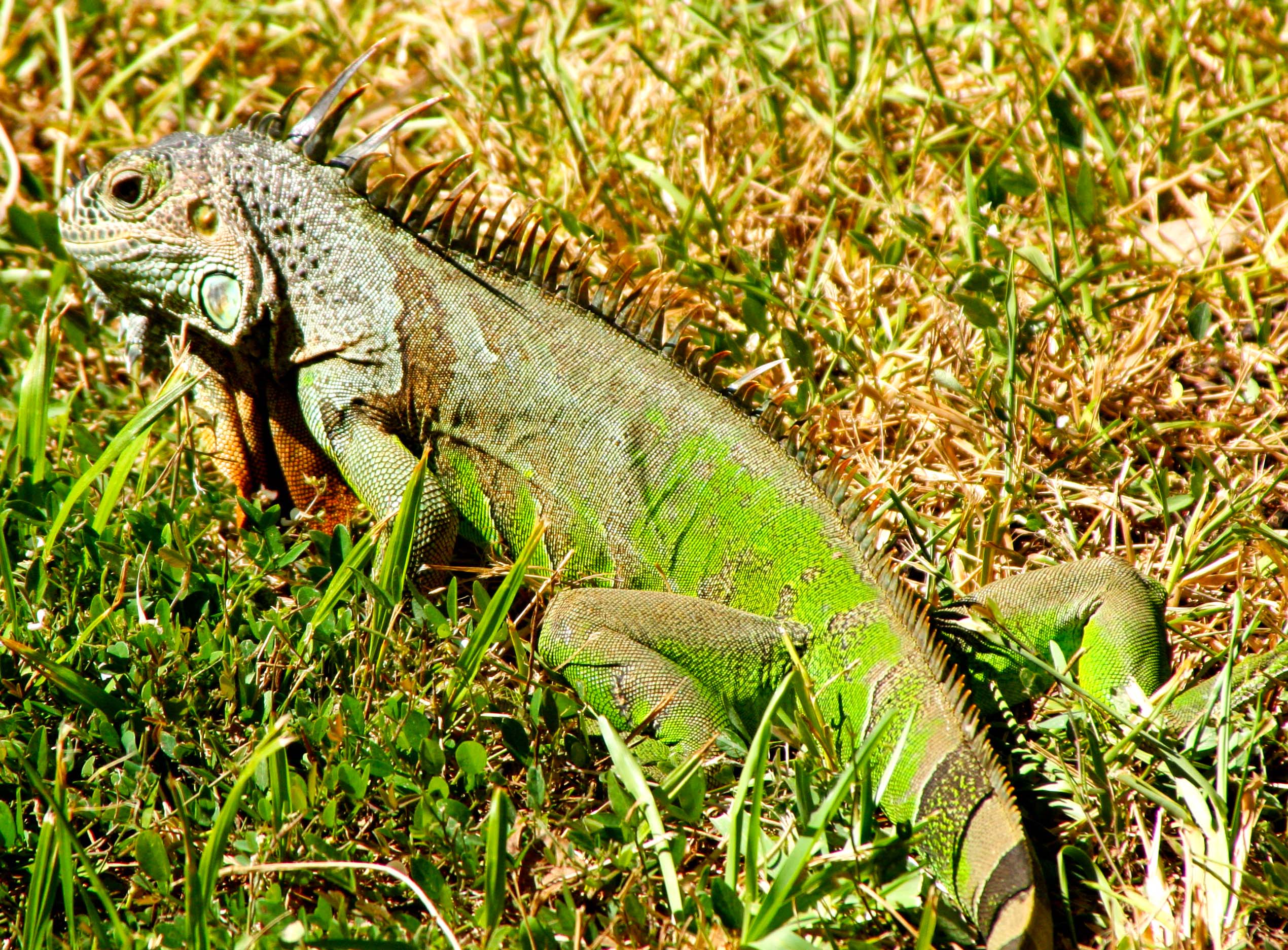
“Come quick, Curt,” Peggy urged. A Green Iguana had come down from its tree and was grazing on the grass in our yard.

Green Iguana in Puerto Vallarta Mexico. Photo by Curtis Mekemson.

The grass-eating iguana ignored me for the most part, until I tried to sneak up on her for a photo. I got the eye. It was pretty much the same look Peggy gives me when I am misbehaving.

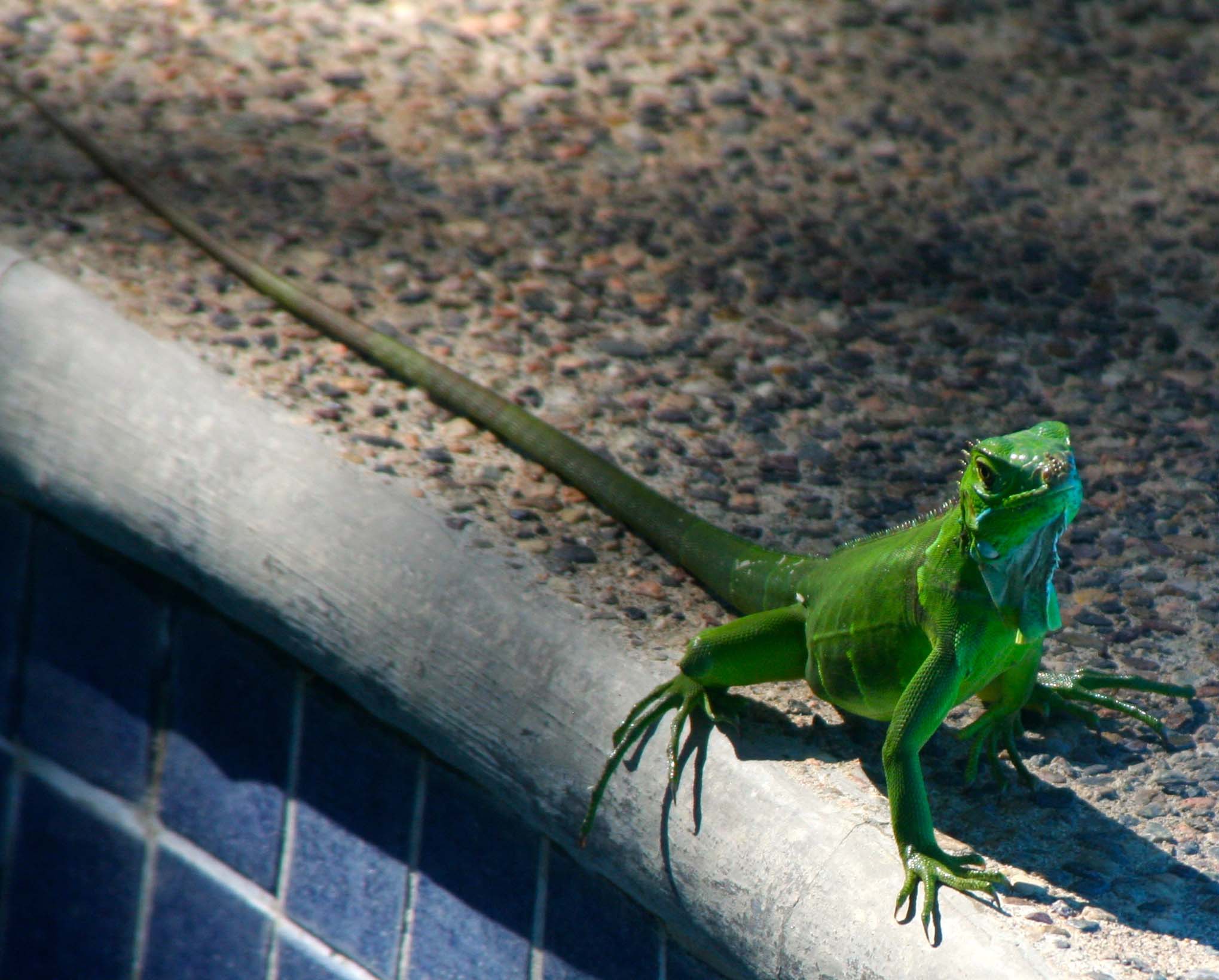
Baby iguana in Puerto Vallarta. Photo by Curtis Mekemson.

While I was sneaking up on the Green Iguana, this youngster came scurrying out next to our pool.

Young iguana grazing on grass in Puerto Vallarta, Mexico. Photo by Curtis Mekemson.

Having satisfied itself that I was not dangerous, the young iguana returned to grazing on our grass. He is about to chomp down on a tender clover leaf.

NEXT BLOG: The peyote influenced art of the Huichol Indians.