A Hodgepodge of Cute African Animals and Scary Reptiles… On Safari 18

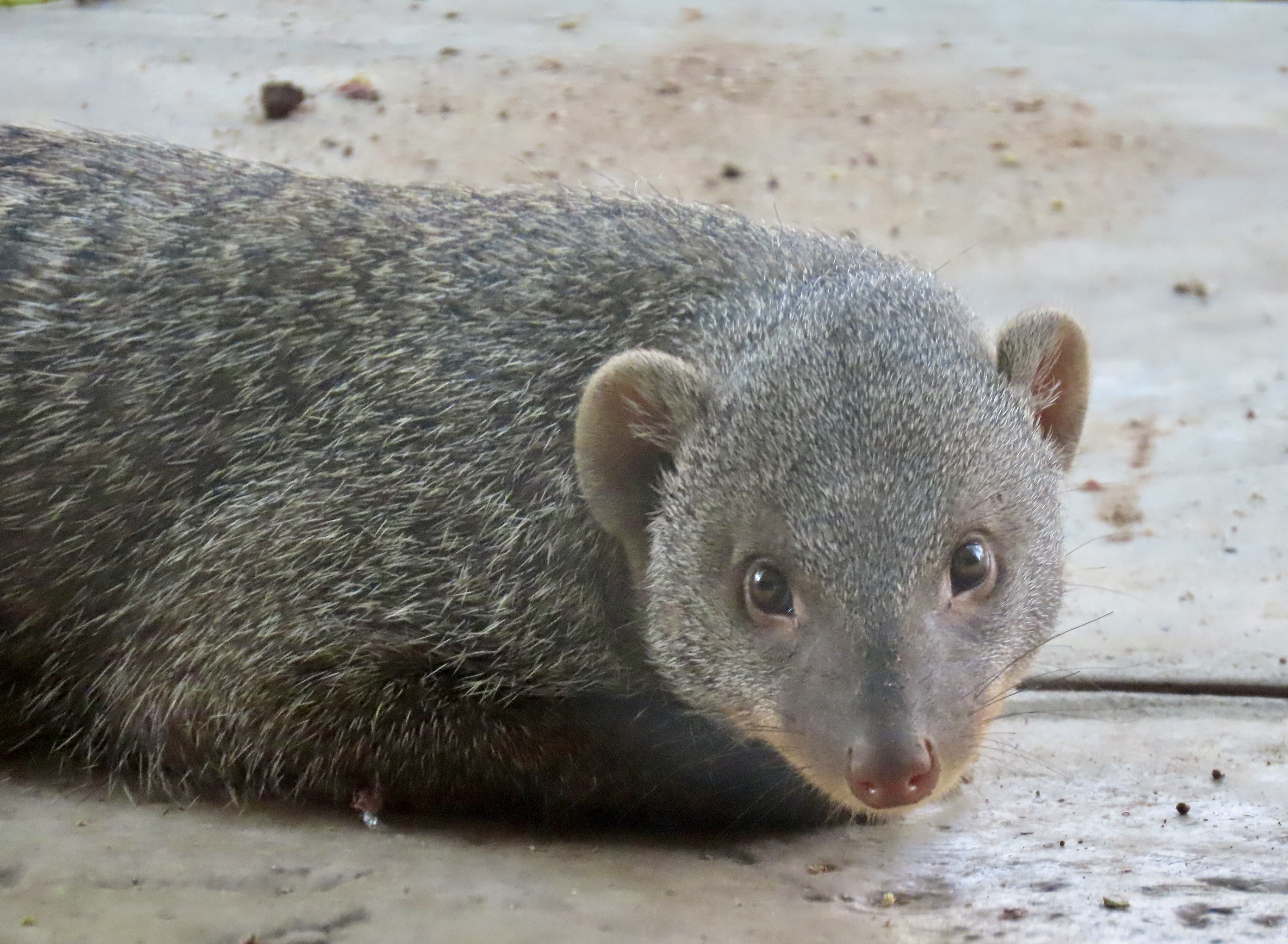
“Snake? What snake? Let me at it!” It’s hard to believe that this cute, friendly looking mongoose lying outside my door at our lodge in Victoria Falls could be a deadly enemy to snakes, or anything, except bugs…
A pack had arrived on the lawn while I was “home alone.” Peggy had gone out with our group to a local in-home dinner while I was catching up on some much needed rest. The mongoose were all busily hunting for insects except for the one that was taking advantage of our warm balcony. I think she took offense at my comment…
“Who dares to say I can’t take on a snake?” I thought I’d provide her with some options…
How about this one? We heard our next door neighbors yelling as they dashed out of their tent cabin on the edge of Hwange National Park. They had a visitor, this long olive green fellow that looked like a black mamba. Black mamba’s are long, skinny, and can be more olive colored than black. They are one of the most feared snakes in Africa. I grabbed my camera and ran over to photograph it before the staff showed up and kicked me out. Getting up close and personal with a mamba might not seem too smart but I’ve been known to lie down in front of rattlesnakes so I can get good headshots. Grin. But hey, I turned 81 yesterday and I’m still here. Turns out it was a grass snake, but boy could it move fast. The staff came armed with brooms.
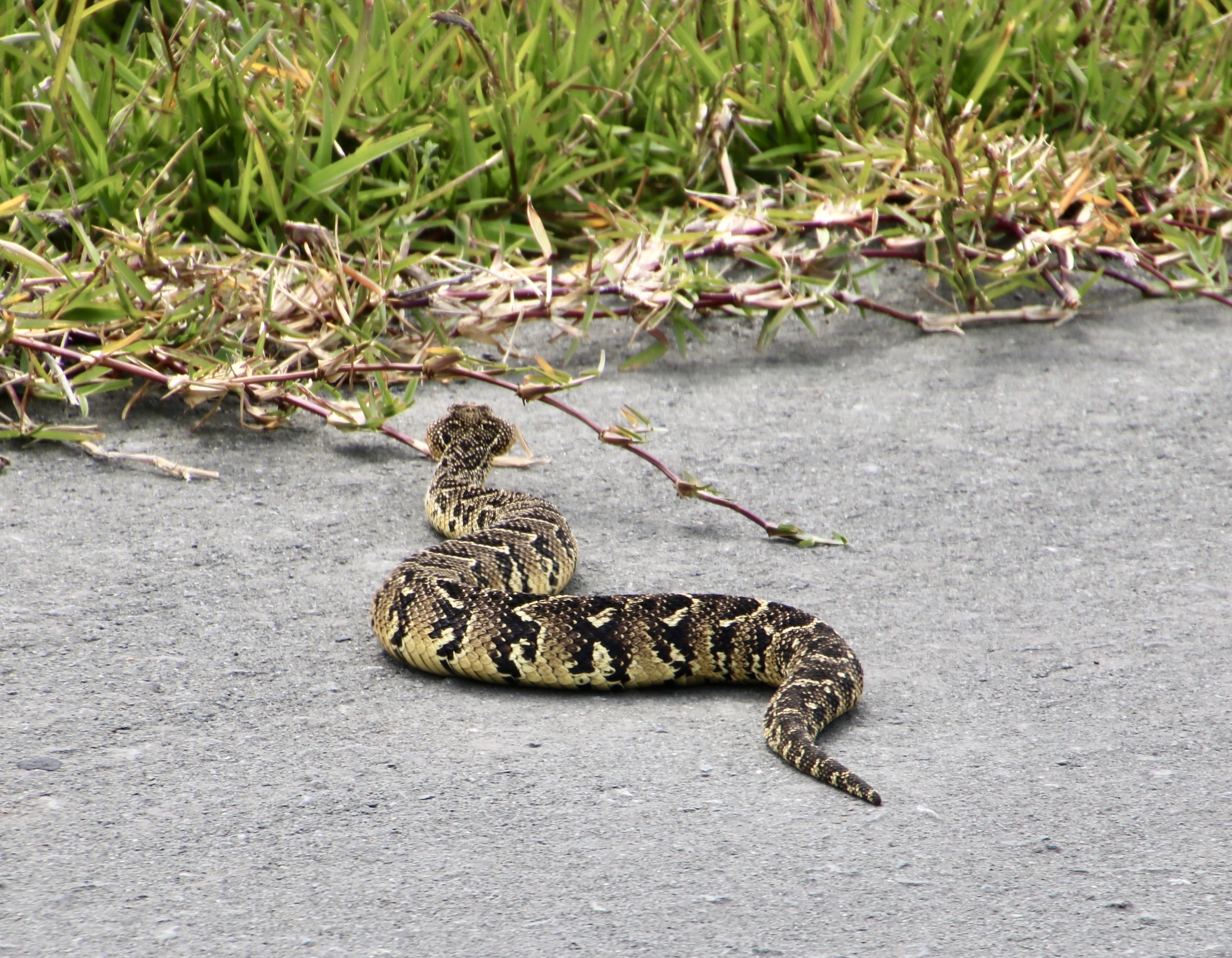
Or how about this large black snake? It looked scary enough when we came upon it near the Cape of Good Hope. It’s nonpoisonous, however, and good at capturing gophers and mice. The next snake we discovered close by was different, a worthy opponent of of my visiting mongoose. It’s scientific name is Bitis ariens, and with a name like Bitis…
The puff adder causes more fatalities than any other snake in Africa and is responsible for 60% of the snake bites in South Africa. With long fangs, a venom that kills cells, and the ability to swim and climb trees, it was not a snake to be messed with. Note its forked tongue and puffed out cheeks.
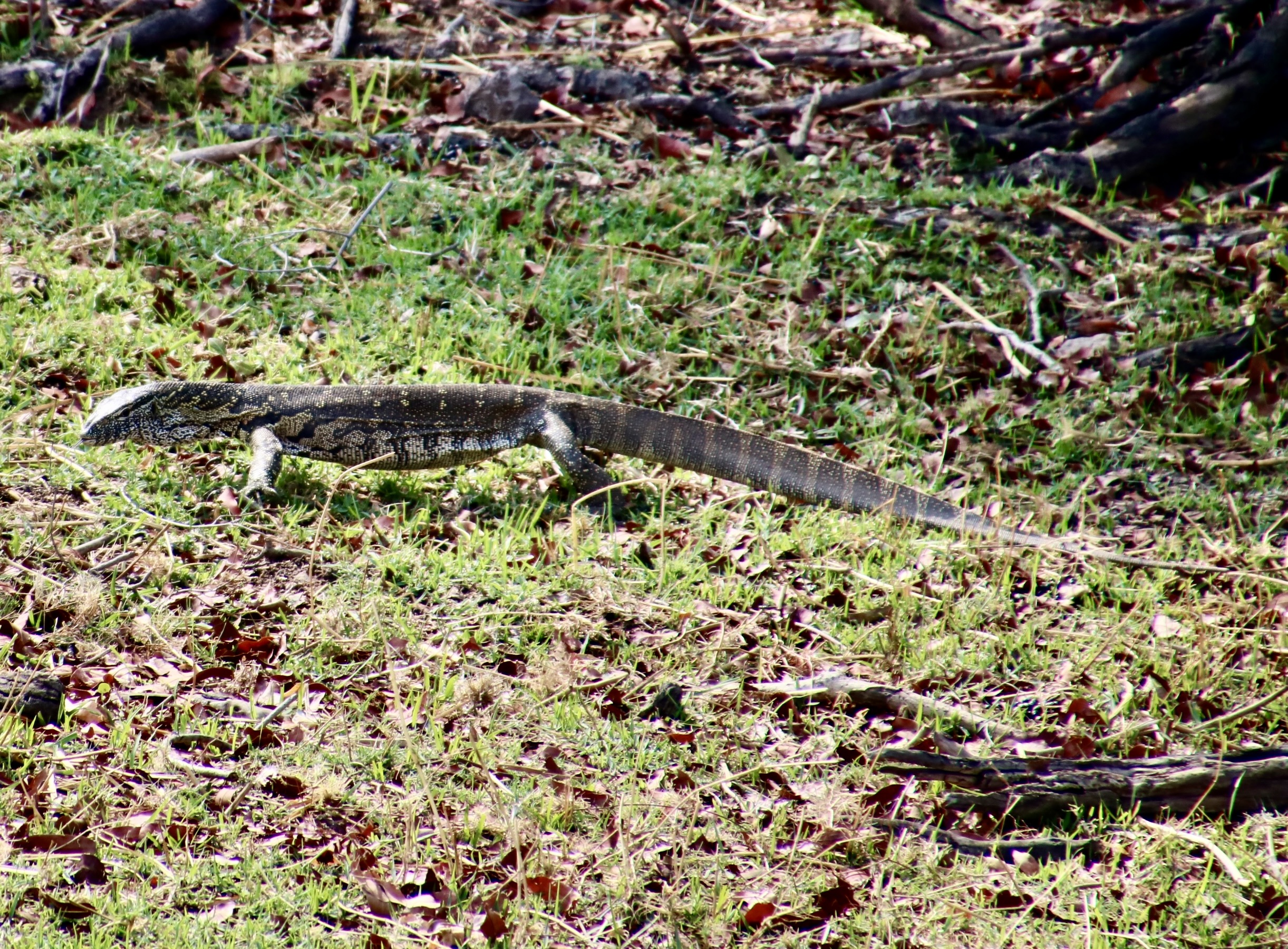
It headed off for the grass and we were glad to let it go. We saw several other reptiles that didn’t push our heart rates off the charts, including a six-foot long lizard.
We spotted this monitor lizard on the banks of the Chobe River in Botswana. They can reach 6 1/2 feet in length and are known for standing on their hind legs to monitor their surroundings, thus the name. In addition to being the largest lizard in Africa, they are the only lizard with a forked tongue. Some specialists argue that this makes them more snake than lizard. They are also supposed to have a high IQ— for a lizard. Apparently, they can be taught to count up to six. One clever thing they do that I read about is lay their eggs on termite nests. The termites cover them up and the nest provides protection and heat regulation. When they are born, they have a ready supply of termites to eat. It hardly seems a fair way to treat your host.
We found this colorful lizard on a rock near the Cape of Good Hope. It’s a southern African rock agama.
It disappeared over the edge, but then poked its head up to watch us.
We were up on Table Mountain next to Cape Town, South Africa, when we spotted this interesting, “armor-plated” lizard. It’s called a black girdled lizard.
I’ve always liked tortoises. I wasn’t expecting to see any in Africa, so this leopard tortoise in Chobe National Park came as a happy surprise.
We also found another one. Check out its attractive shell. Males compete for their lady loves by bumping into each other. They also pursue and bump into females until they agree to mate. But mainly, both males and females wander around and graze on grass and other herbaceous plants.
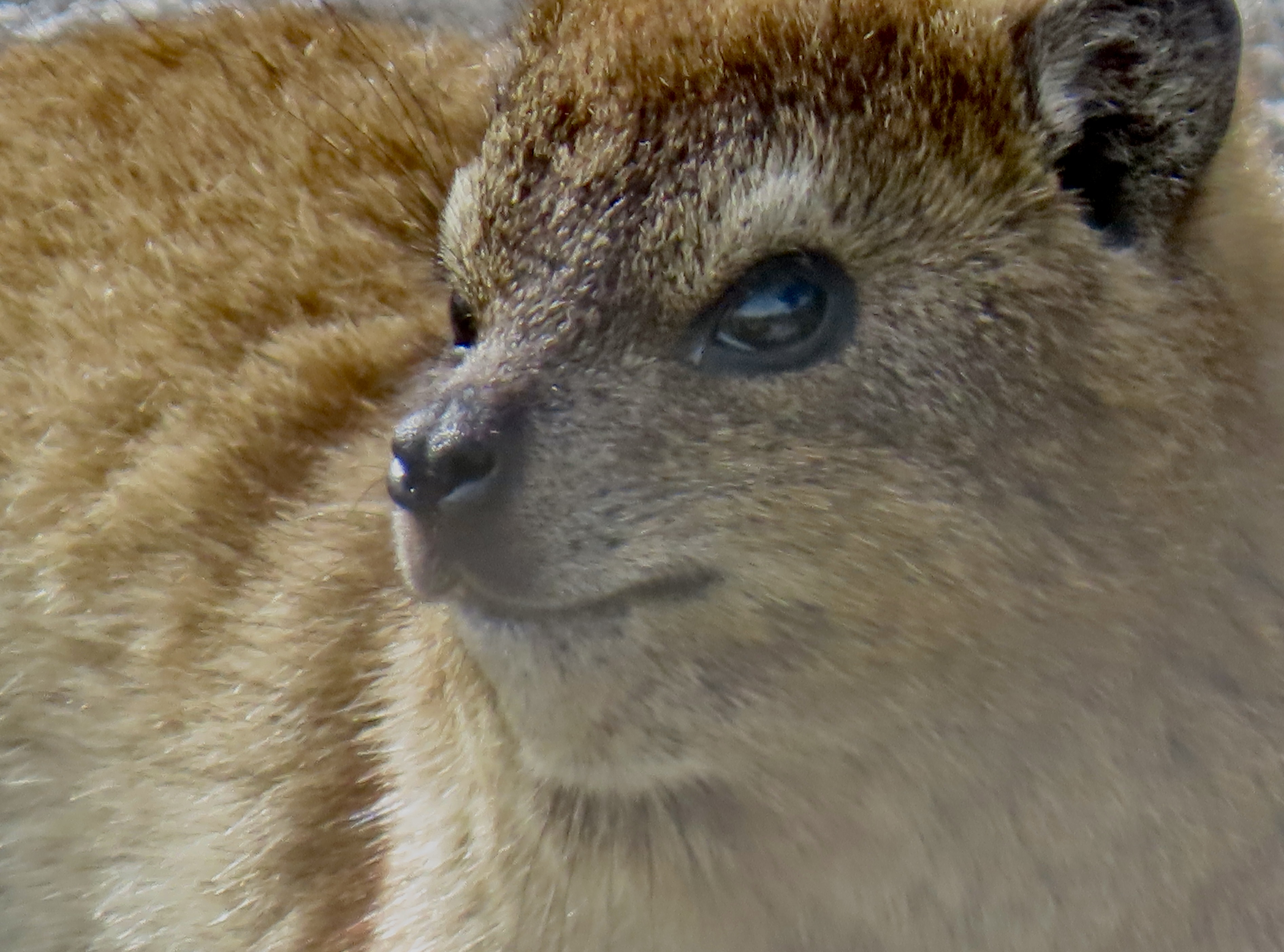
And now back to mammals and the competition for cutest animal. We thought that the mongoose featured on top might win, but that was before we met a hyrax up on Table Mountain.
As I mentioned in my last post, hyraxes have a number of physiological characteristics that make them more closely related to elephants and manatees than to the rodents one would expect. They are found throughout Sub-Saharan Africa and the Middle East.
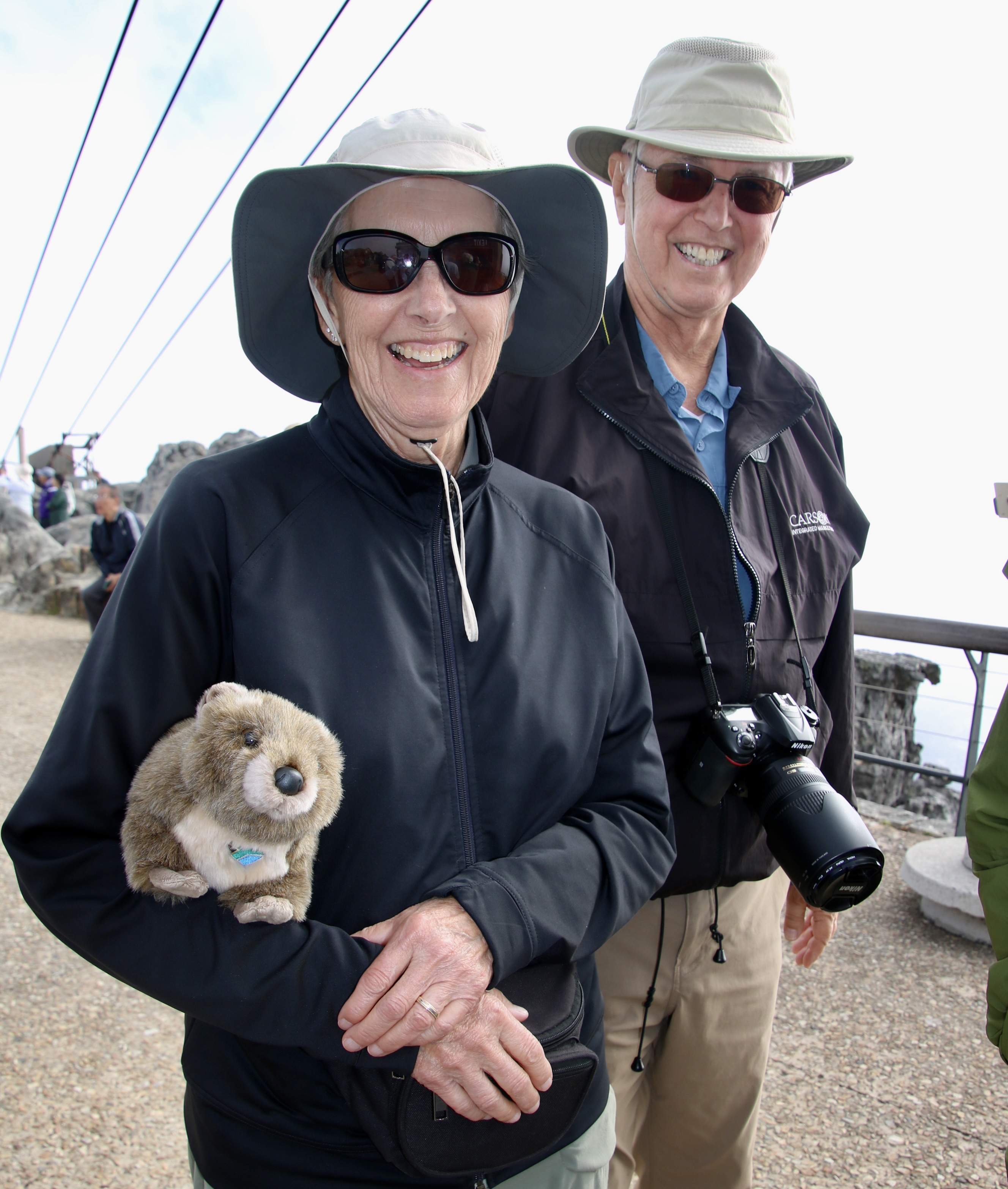
And just how cute are they? Our sister-in-law, Frances, couldn’t resist buying a cuddly toy hyrax for her new granddaughter.
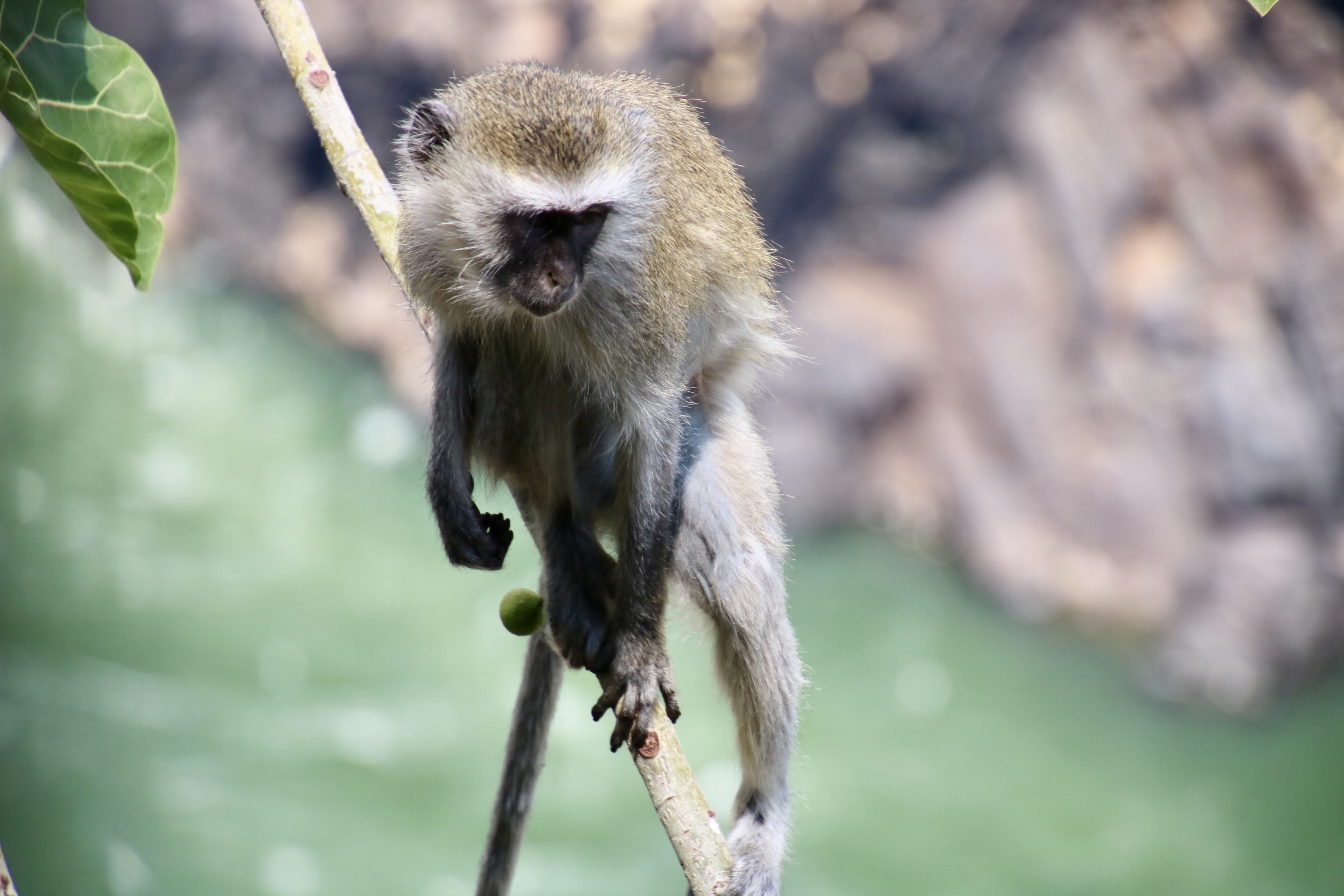
Speaking of cute, this small velvet monkey showed up at a restaurant overlooking the Victoria Falls gorge where we had stopped for lunch. I think he was looking for a paw out. That does it for today. On Wednesday, Peggy and I will take you back to the Everglades. On Friday, it’s all about Cape buffalo.
On Wednesday, we’ll return to the fantastic birdlife of the Everglades and the Bald Cypress National Preserve plus throw in some crocodiles, alligators and dolphins.