Night tours are big in Monteverde, Costa Rica. Every corner seems to advertise one. Take a dash of the exotic, throw in a pinch of danger, add a competent, knowledgeable guide— and how can one resist? No wonder there were at least 10 companies to choose from. There is big money to be made. We paid our $300 and off we went. We had an excellent guide, Marvin. He found us each of the big three, don’t mess with me, attractions, plus more.
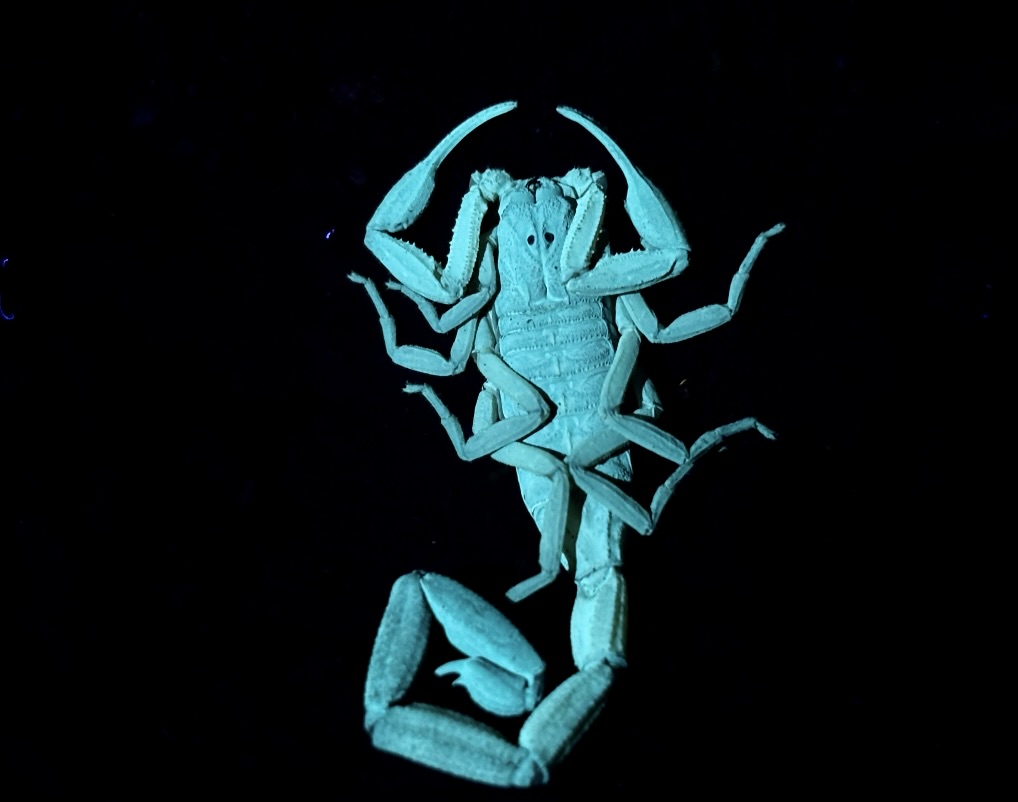
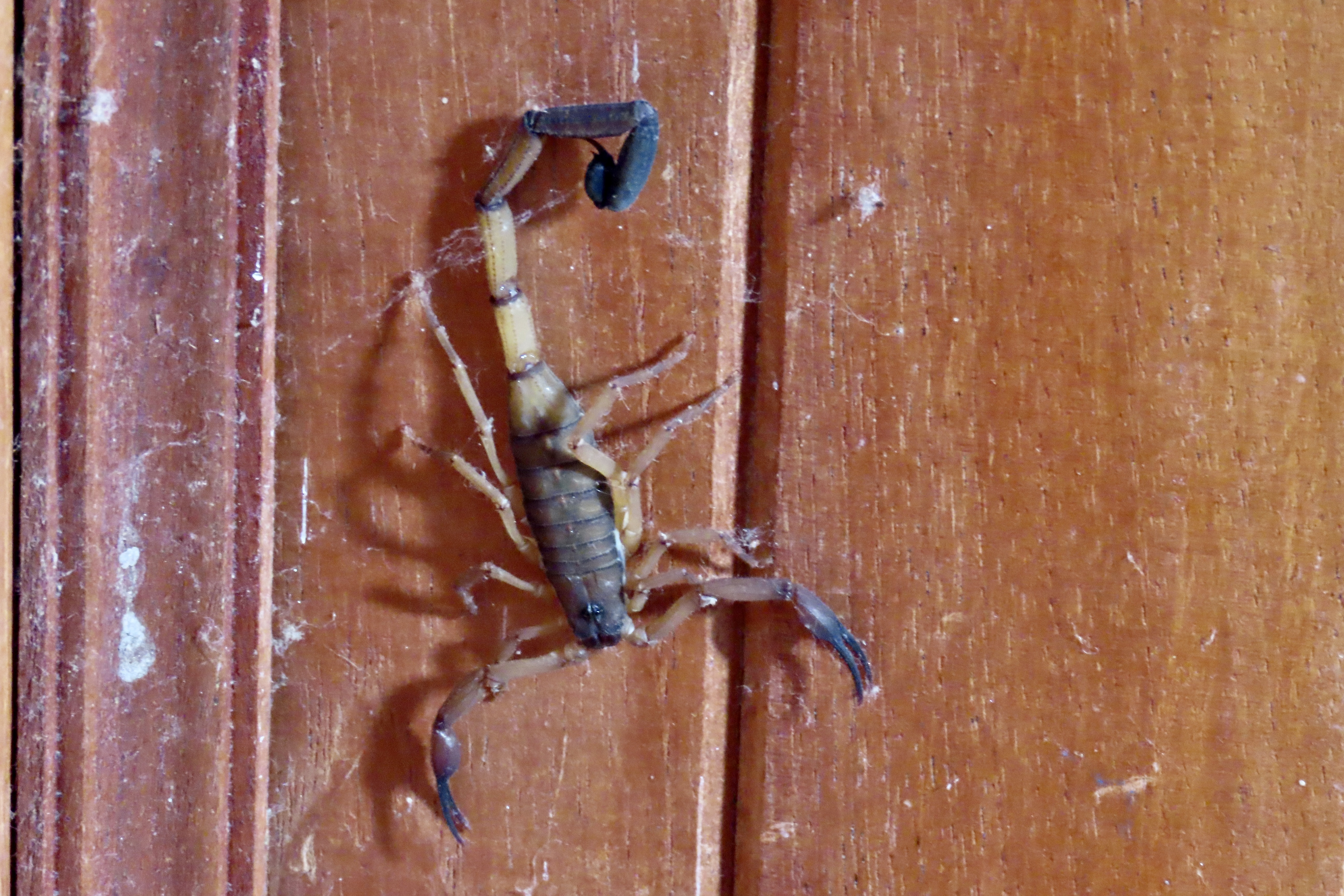
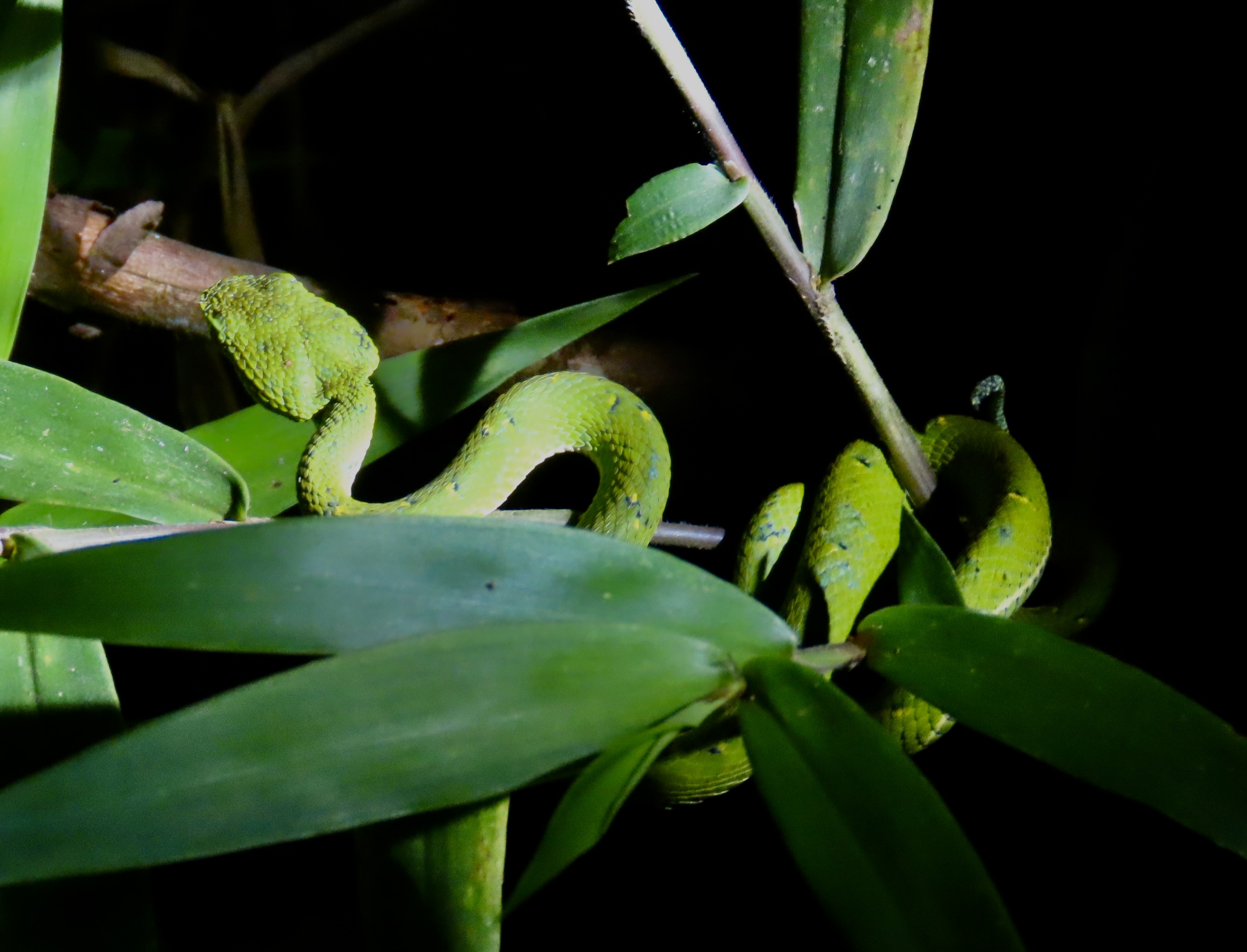
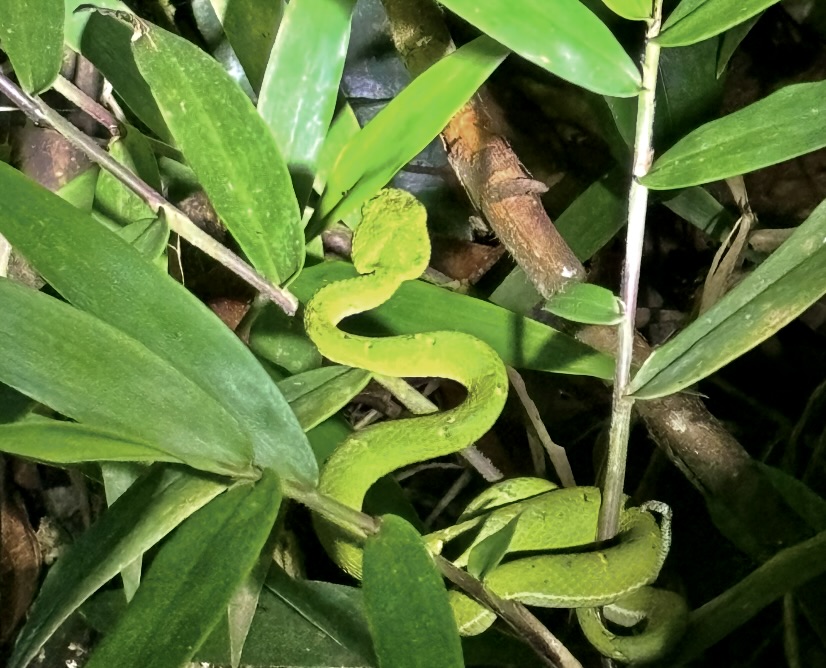
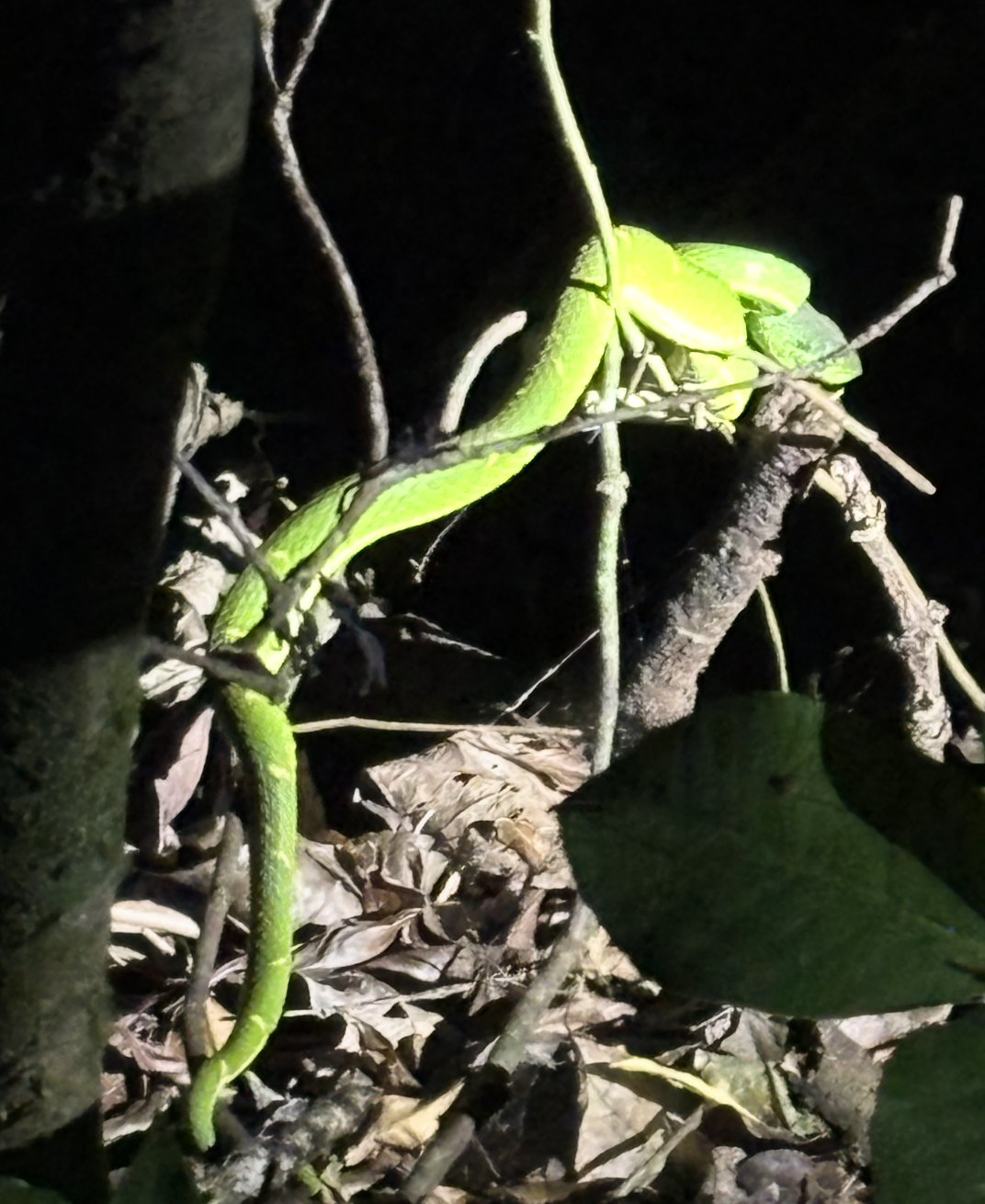
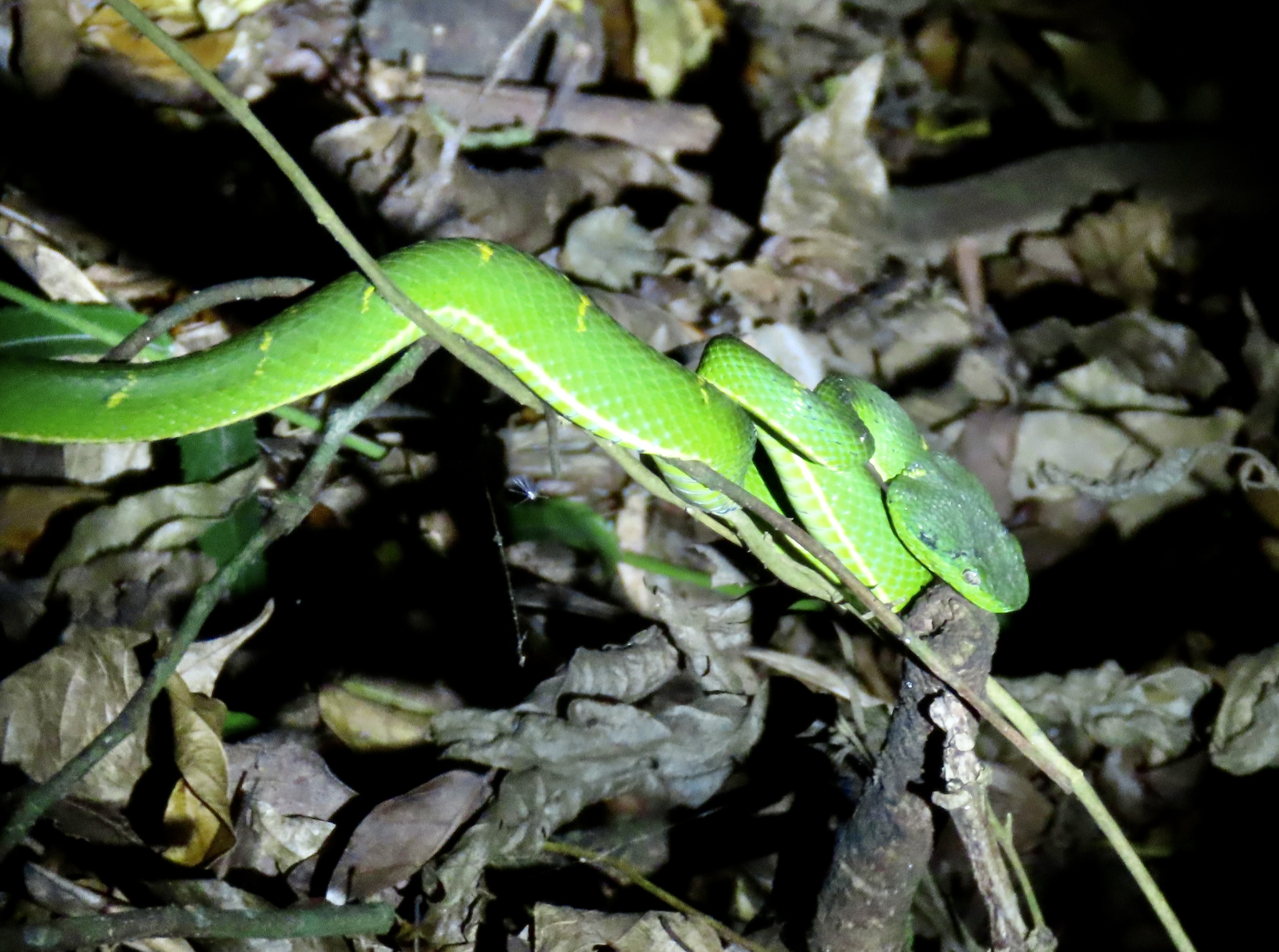
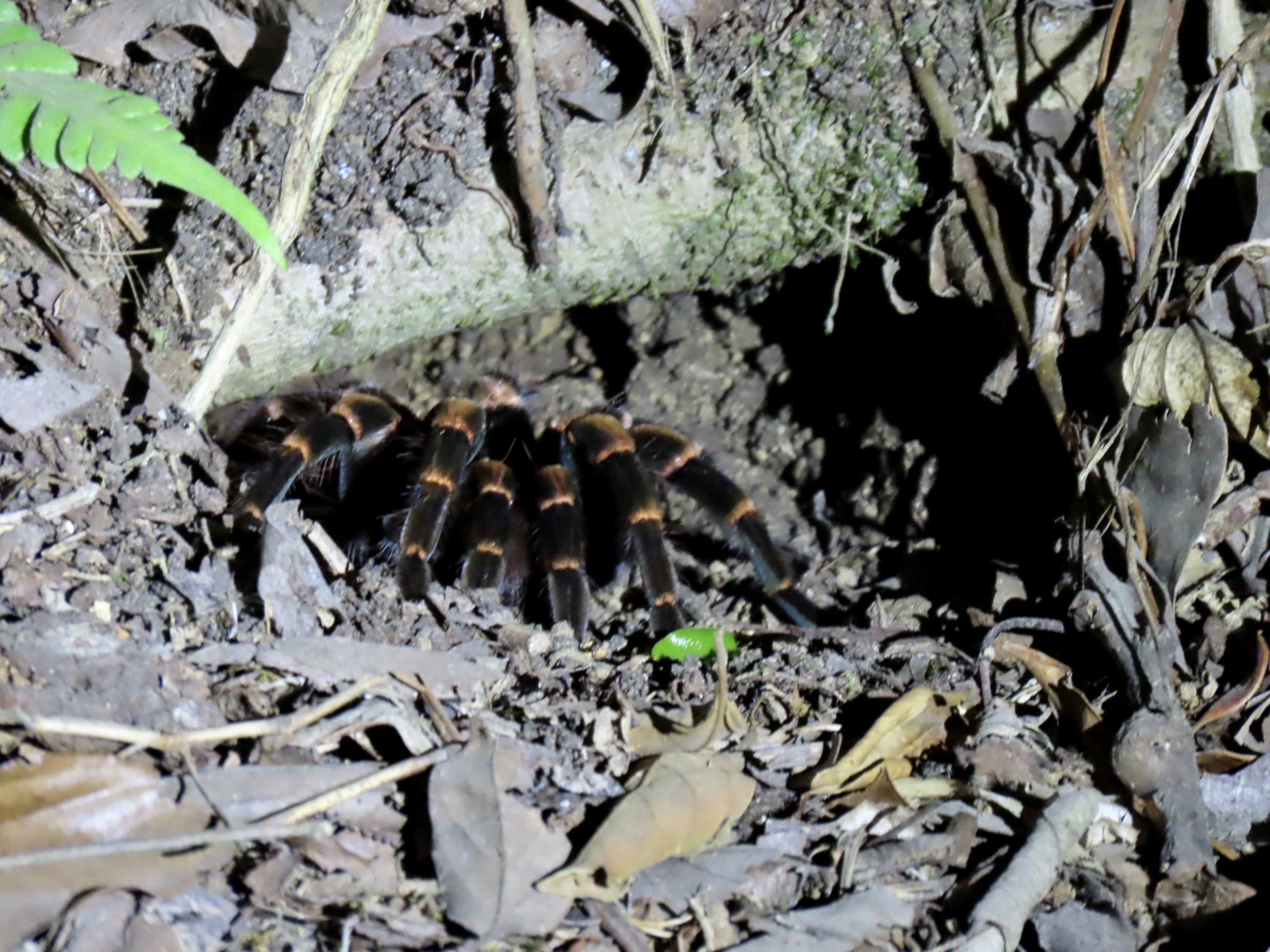
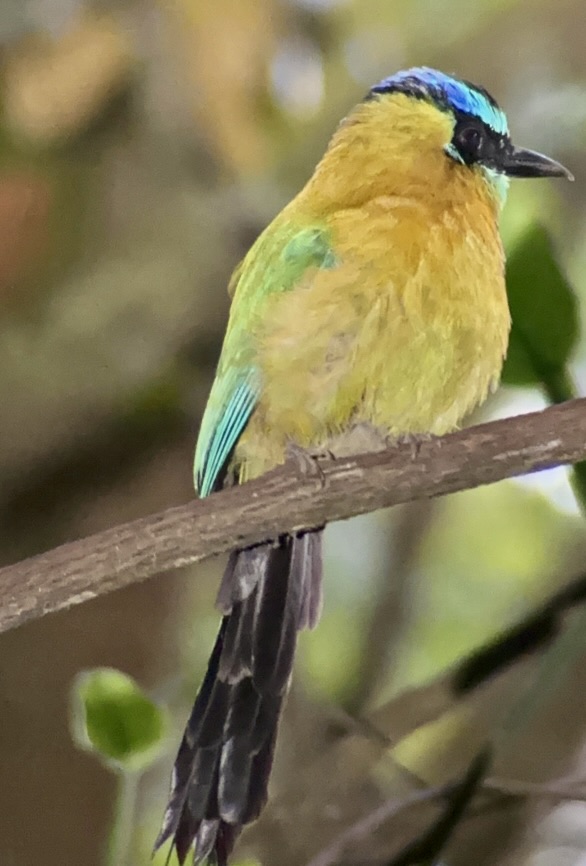
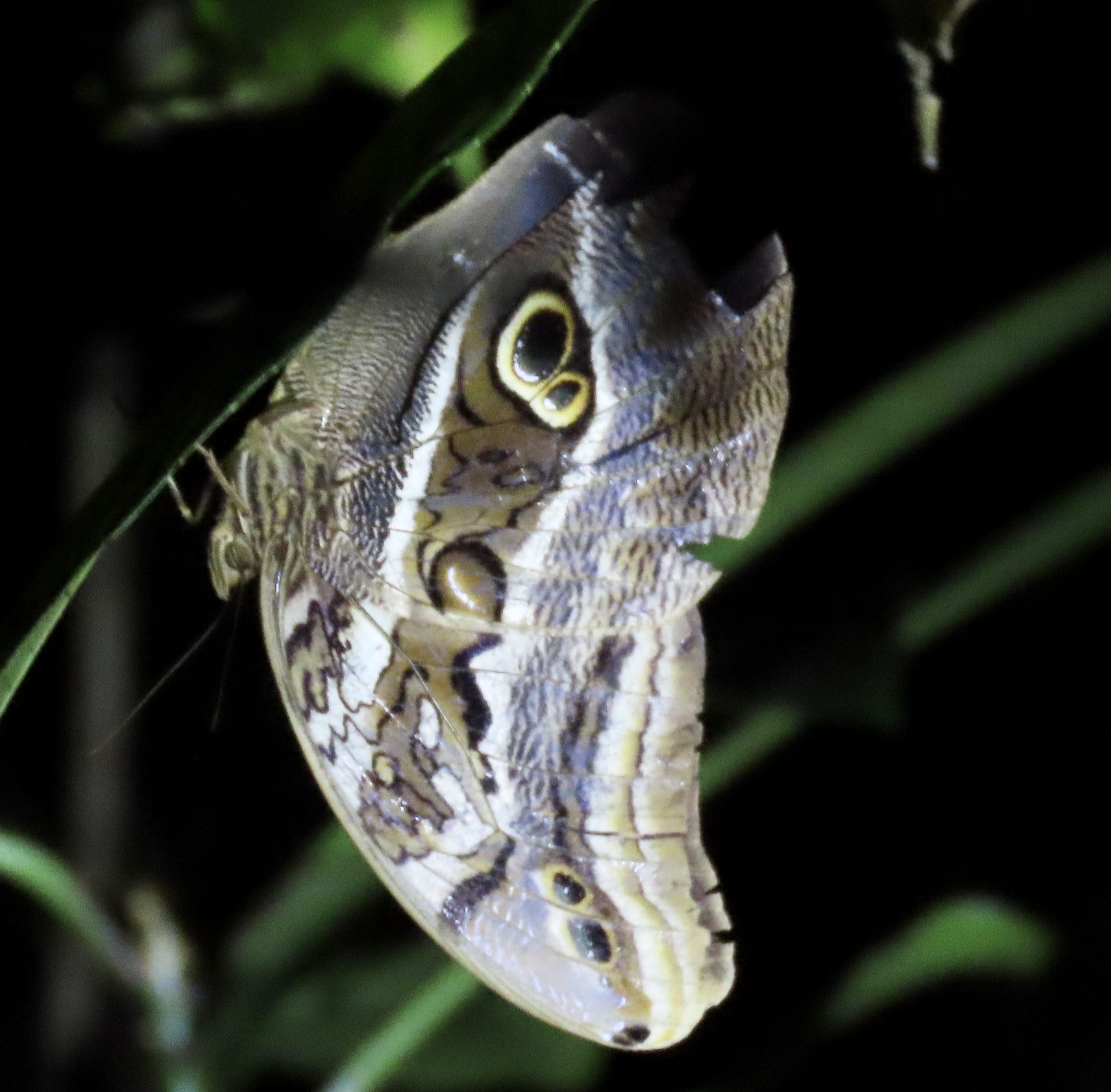
This iridescent, blue-green fellow was one of the creatures we came across. Actually, our youngest grandson, Cooper, spotted it first. Our son Tony claimed ‘That’s because Cooper is closest to the ground.” You will recognize this blue-green insect for what he is. A scorpion. I’ve seen many over the years. But never one of this striking color. They all pack a mean sting. Costa Rica claims that no one has ever died in the country from a scorpion. Well, except for that one girl…This one seemed almost tame in comparison. Our grandson, Chris, found it crawling up the wall behind him where he was watching TV at our VRBO. “Grandpa,” he yelled, “You have to see this.” “Well, hello,” I said, to the scorpion, and sent Chris scurrying for something to catch it with. He came back with a martini glass, i.e. large top, shallow bottom. Not ideal for catching something that packs a wallop in its tail, but great for a double martini if you get stung. Make it a triple. I slapped it over the top of scorpion but missed the offending appendage. It was swishing around trying to find me. I turned the glass right side up and he slid to the bottom, looking thoroughly peeved. “Just be glad it’s me,” I told him. “Anyone else and you’d be a grease spot on the wall.” It waved its tail at me in a single digit salute. I took him over to our balcony and tossed him out of the glass into the shrubs below. Chris, Peggy and I made a pact not to tell anyone else in our household. Mom might have had them packing.Next, on our pitch dark night, Marvin found a baby green pit viper known by the scientific name of Bothriechis lateralis, or if you prefer something you can pronounce, a side-striped palm pit viper. Apparently, they like to hang out in palms. Note its distinctive triangle shaped head: A sure sign you are dealing with a viper. Translate poisonous. There would be no trying to catch it! Least of all in a martini glass. I took this photo.Marvin, carried a spotting scope that gave us another view of the side-striped palm viper. He used Tony’s cell phone to take a photo through the scope. Here, you can see the stripe along its side. We each carried flashlights so we could see the trail plus light up whatever we wanted photos of. Not too far down the trail, we found an adult side-striped palm viper and Marvin took this photo through his spotting scope.I focused in on the upper part of its body. The viper, like New World monkeys, has a prehensile tail. It can use it to wrap around a limb while it dangles and relaxes. Or, he can whip it out to wrap around and retrieve dinner in the form of lizards and small rodents. While poisonous, few people die from its bite. Not so the lizards or a tasty mouse. The final member of our trio, a Costa Rican zebra tarantula, also known as the striped-knee tarantula. Peggy took this photo. These large spiders dig deep burrows into the ground which helps regulate temperatures. It’s reported that they often live together in large numbers. One was enough for us, but I must say, it was quite striking.Just so this post doesn’t give you nightmares, our night tour also produced less threatening species. This is Lesson’s Motmot seen through Marvin’s spotting scope. An owl butterfly. Marvin told us it was one of the largest butterflies in Costa Rica. It has large spots on the lower parts of its wings that resemble owl’s eyes when its wings are open.
Next up, the Mekemson Kids Did It: Something go wrong in Diamond Springs? Who do you blame? Like the gunslingers of the Old West, we developed a reputation that far exceeded our capacity for mischief.
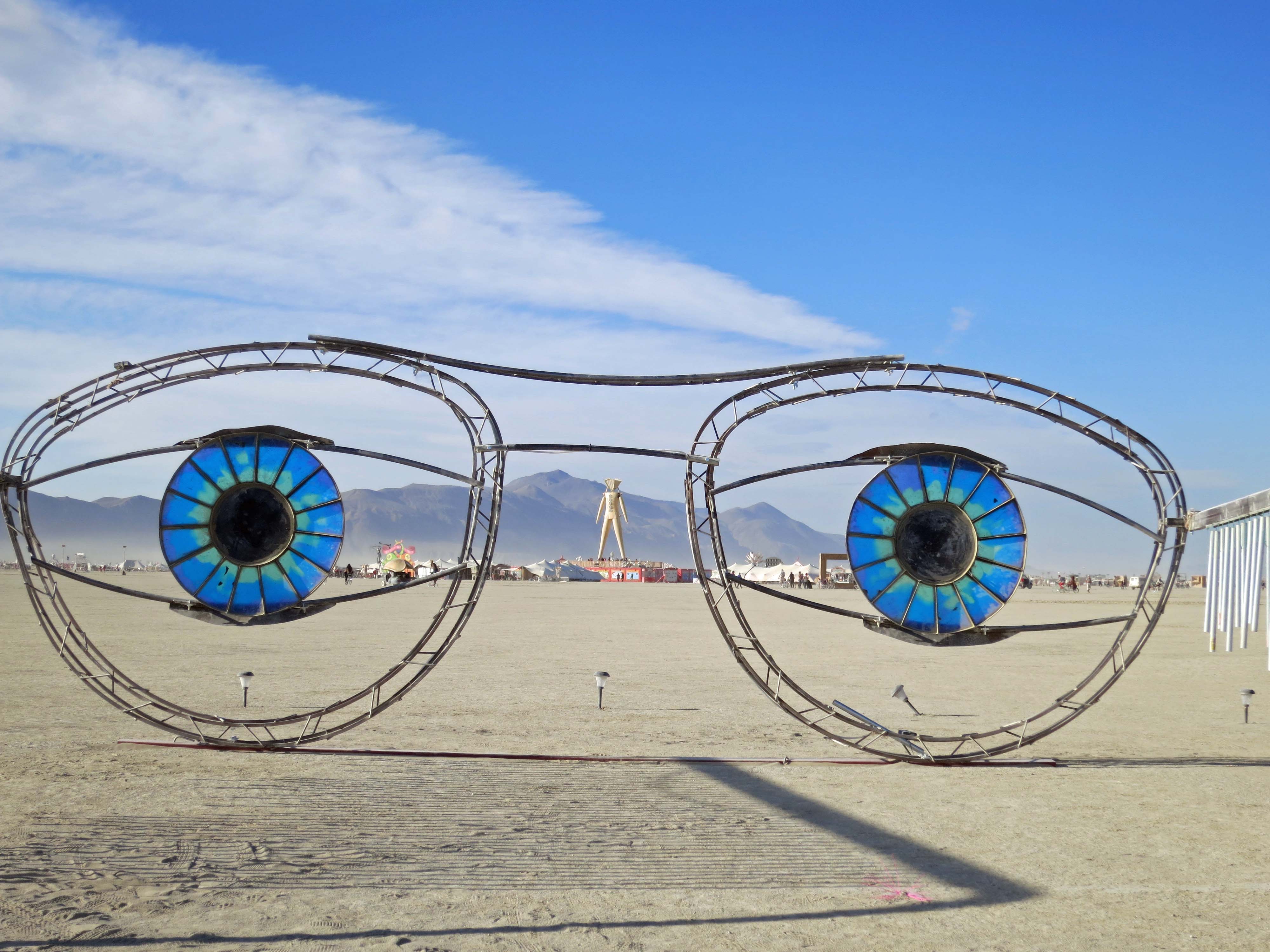
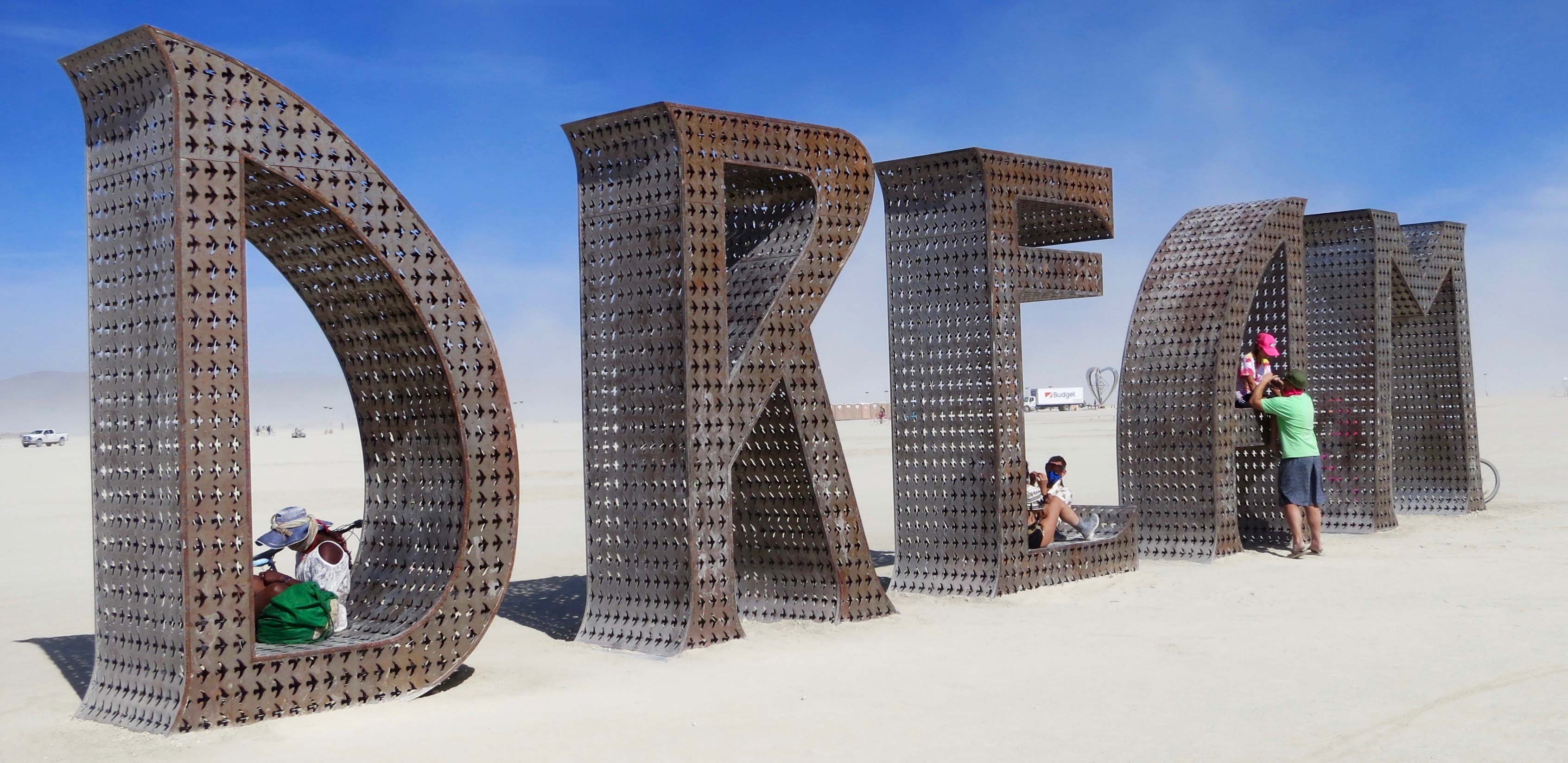
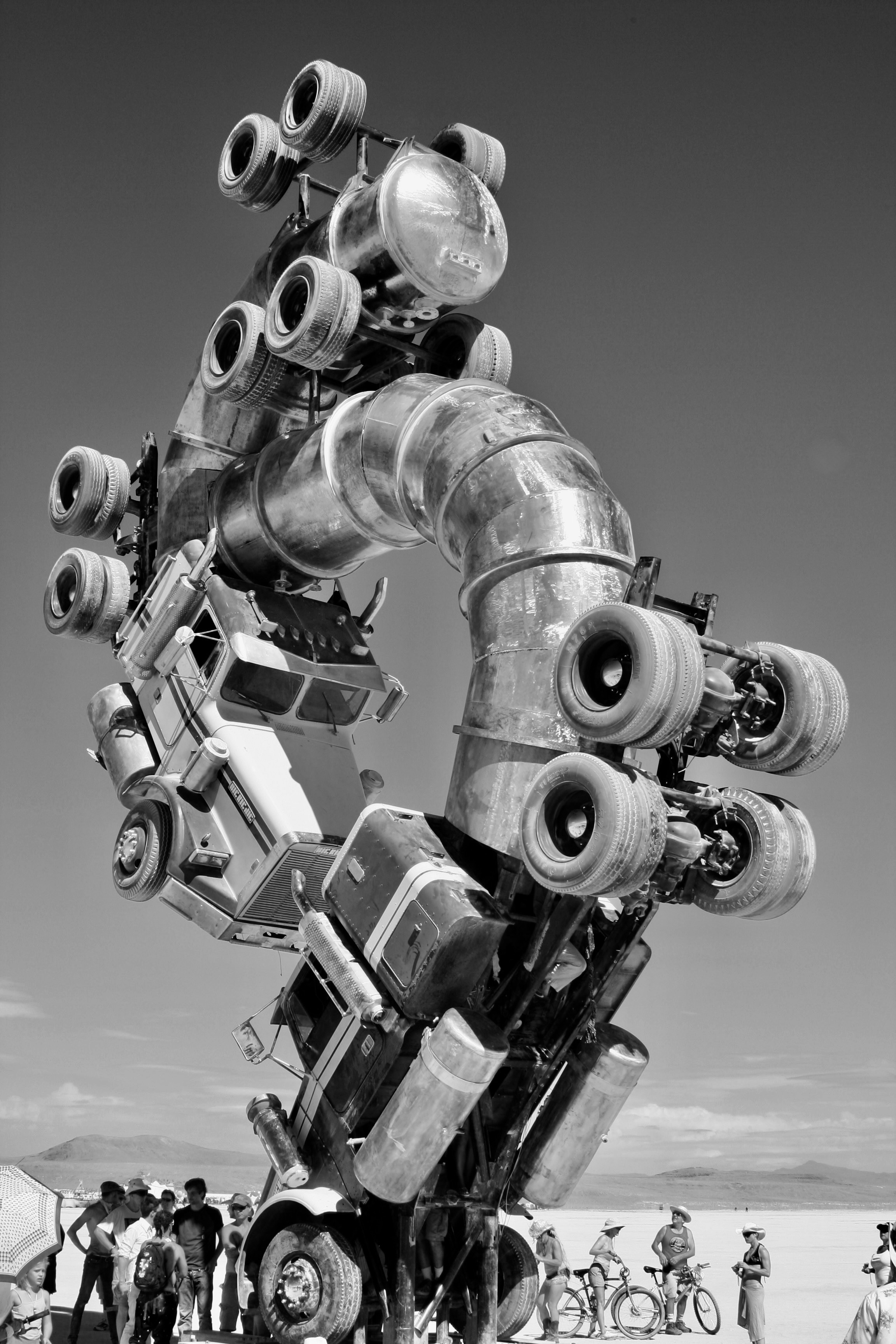
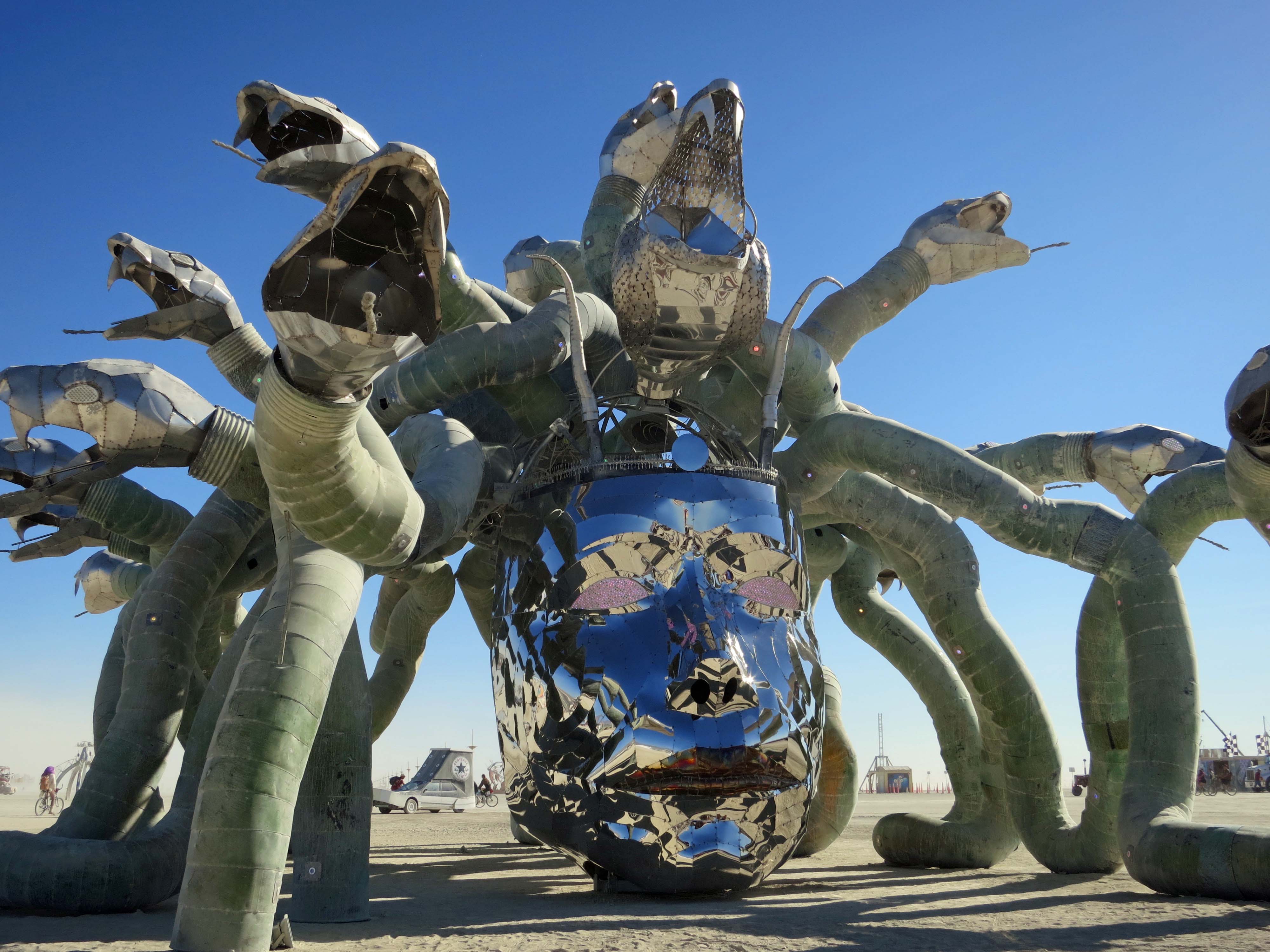
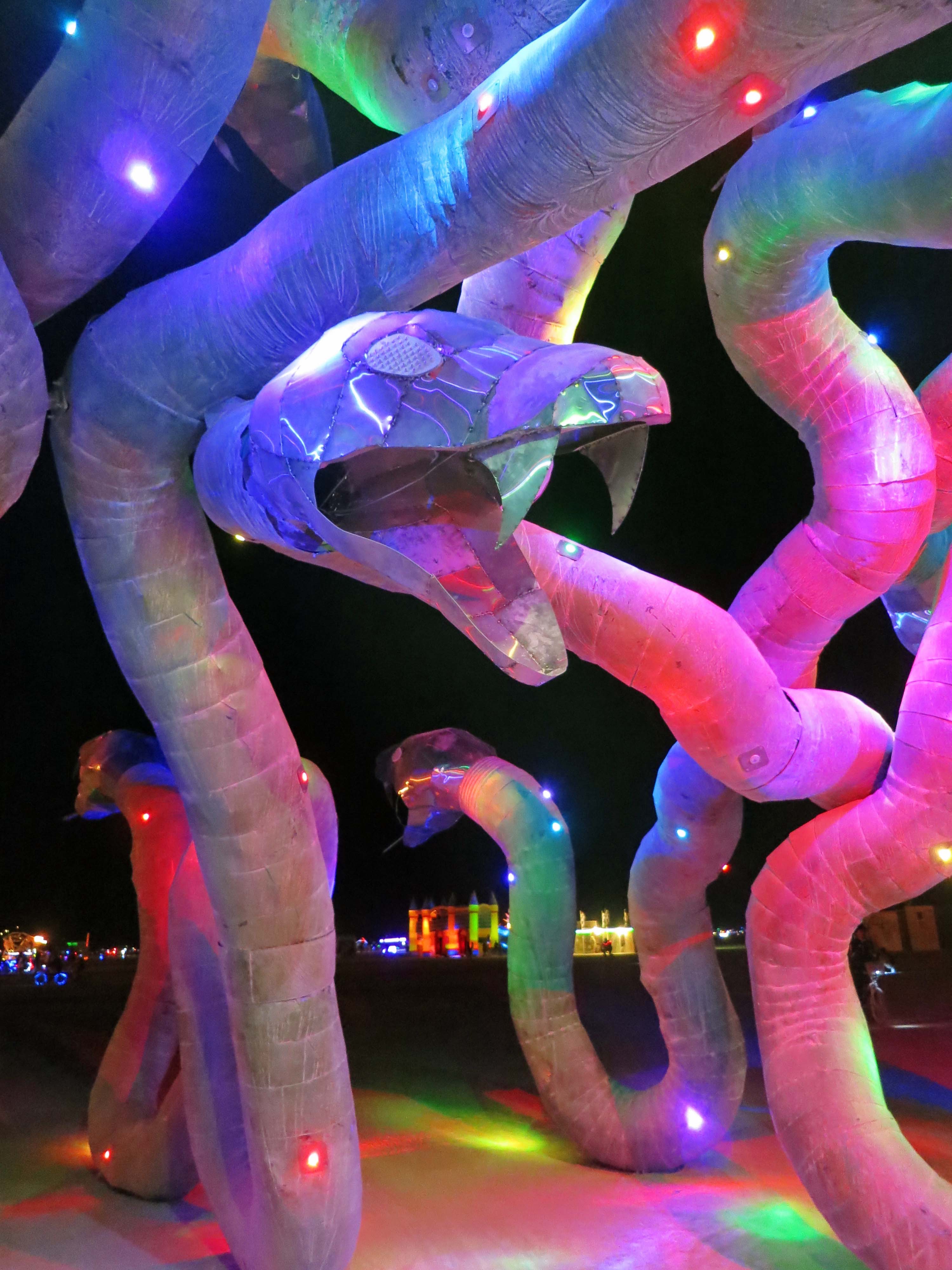
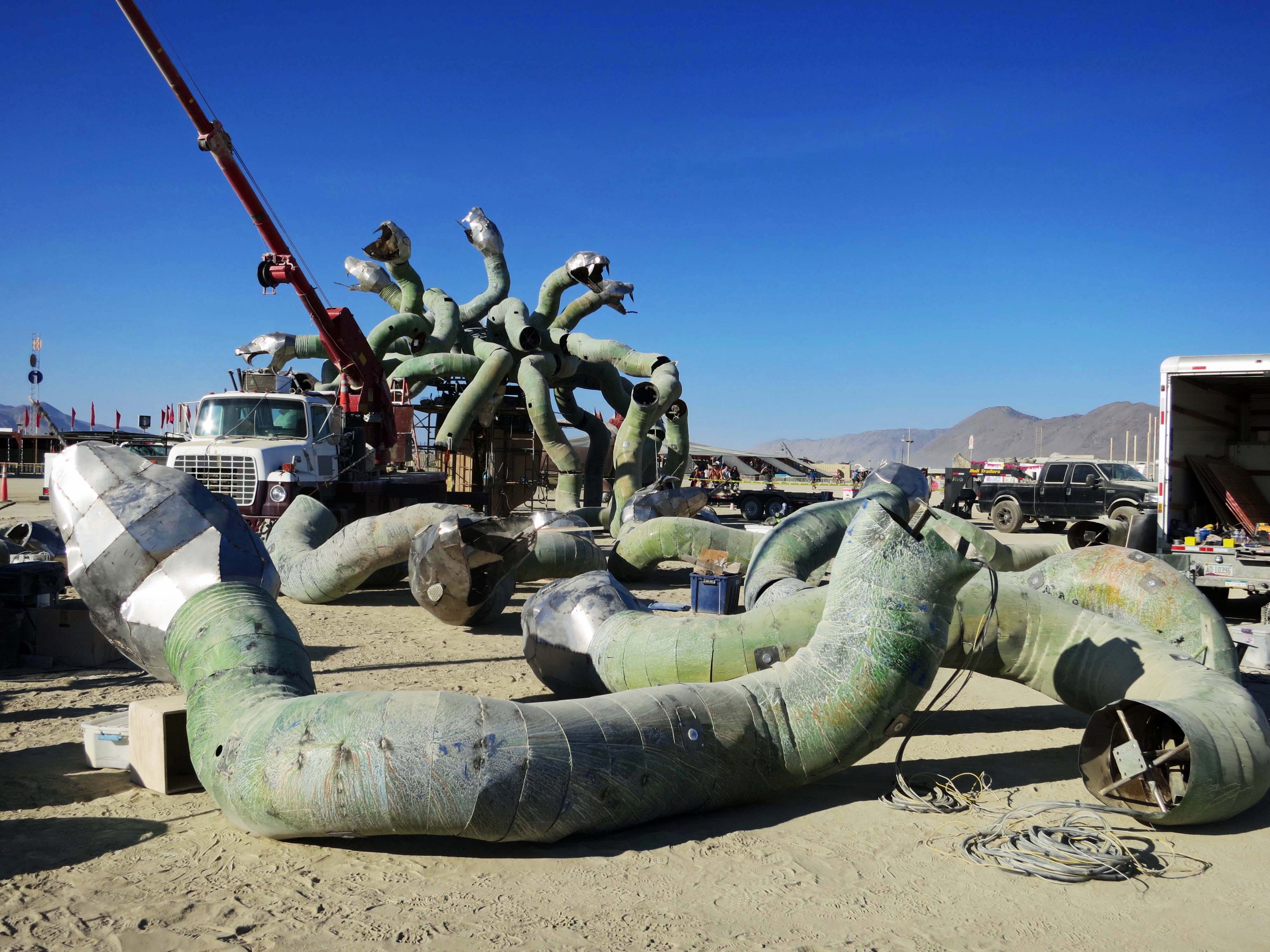
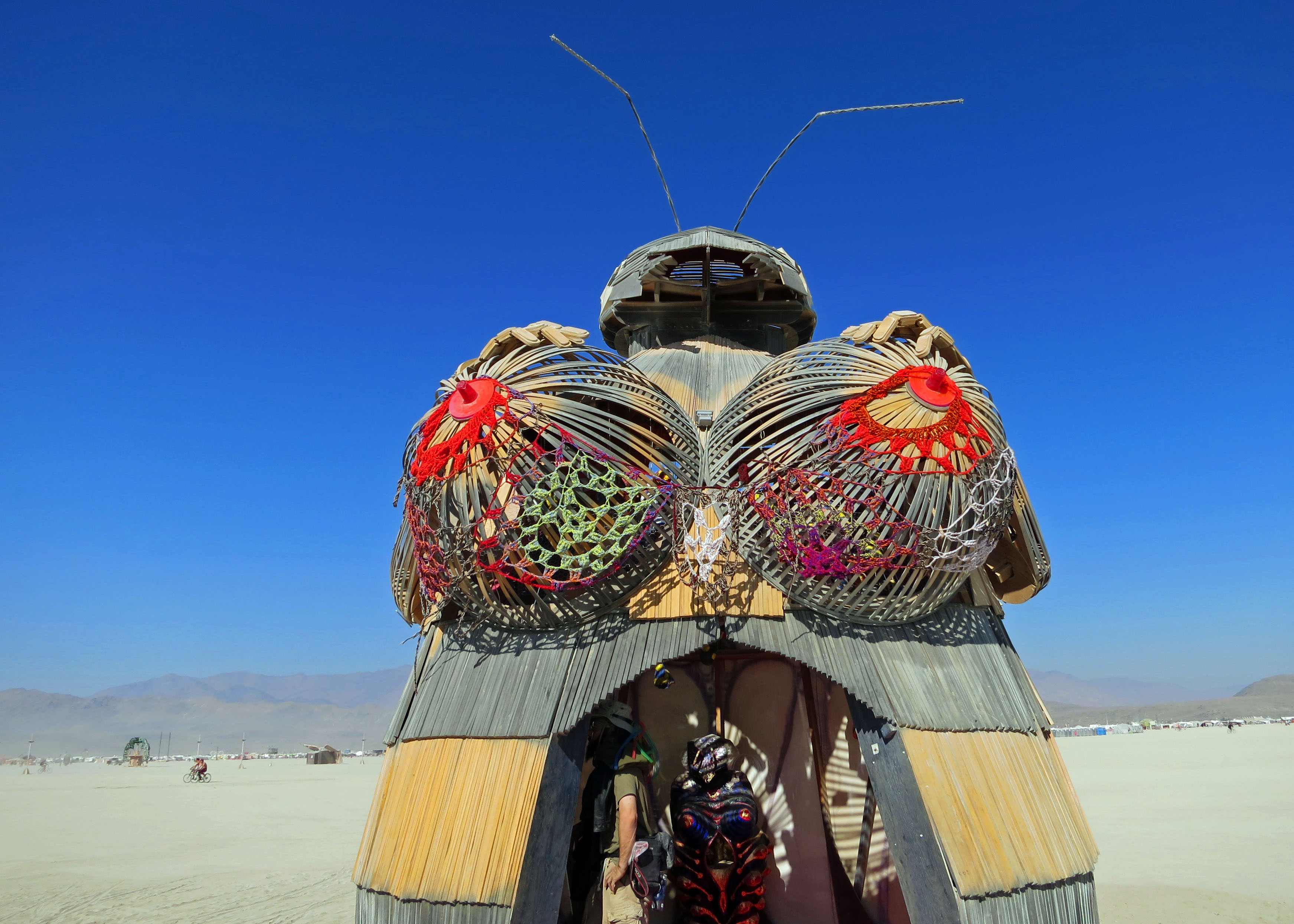
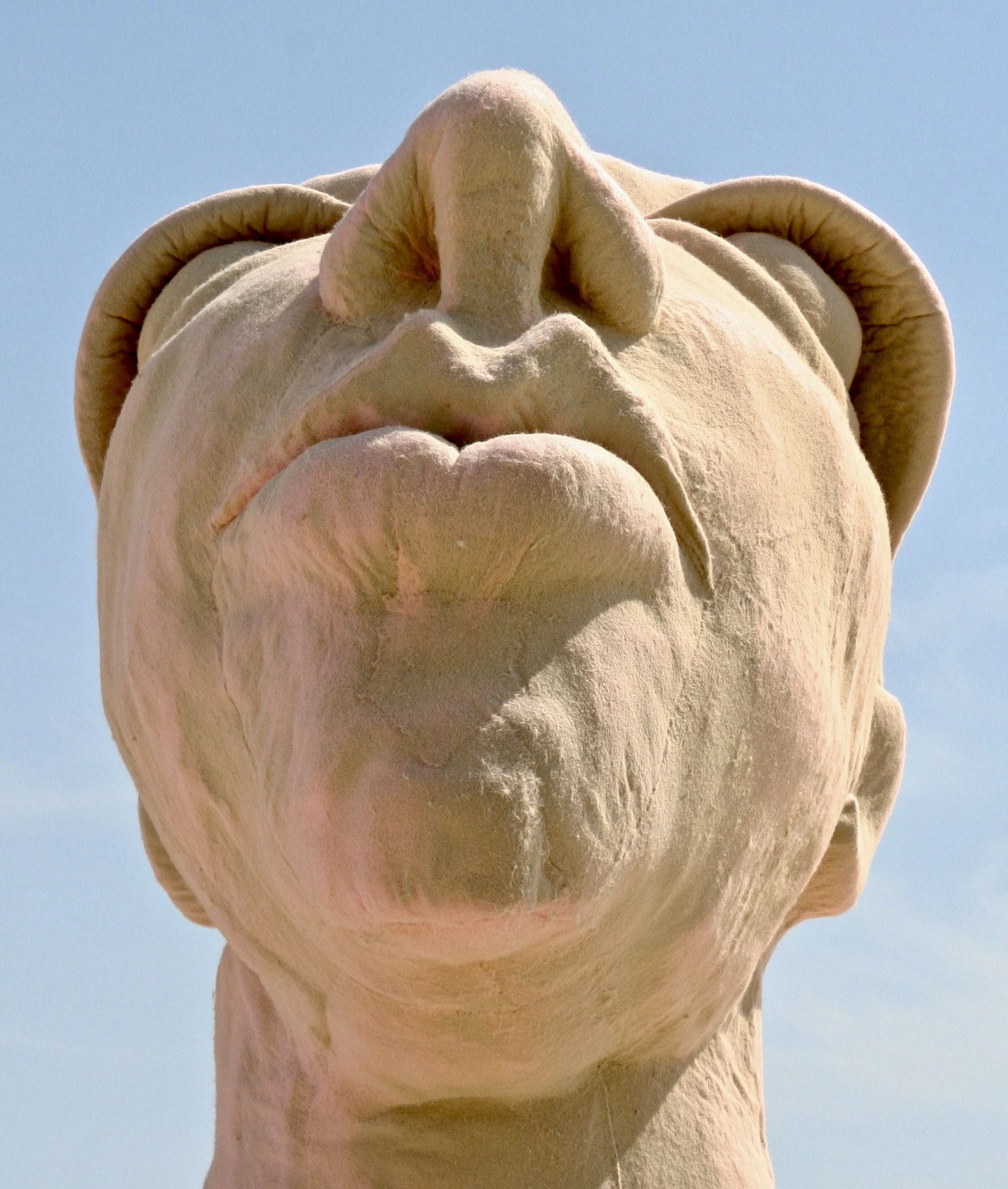
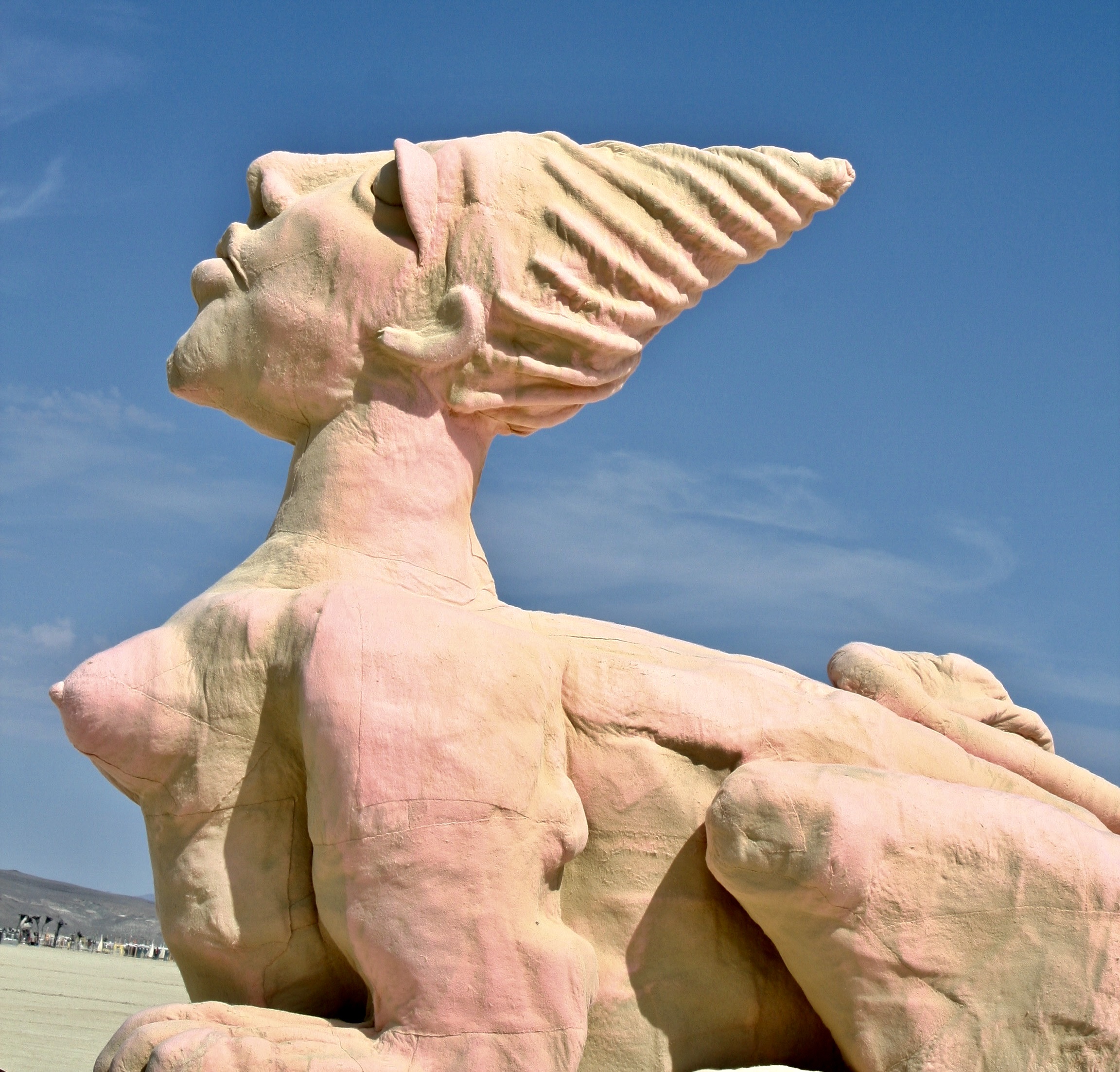
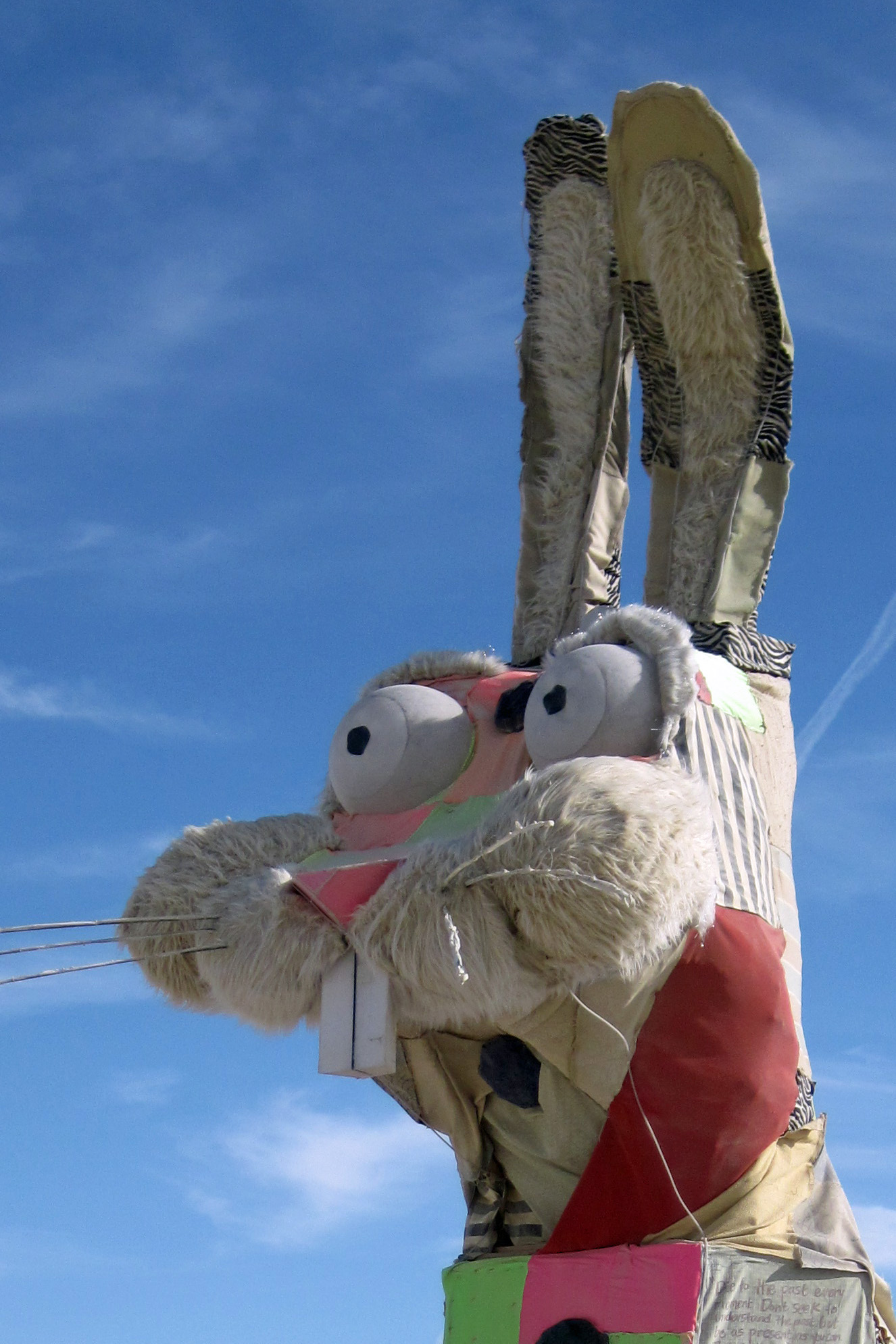
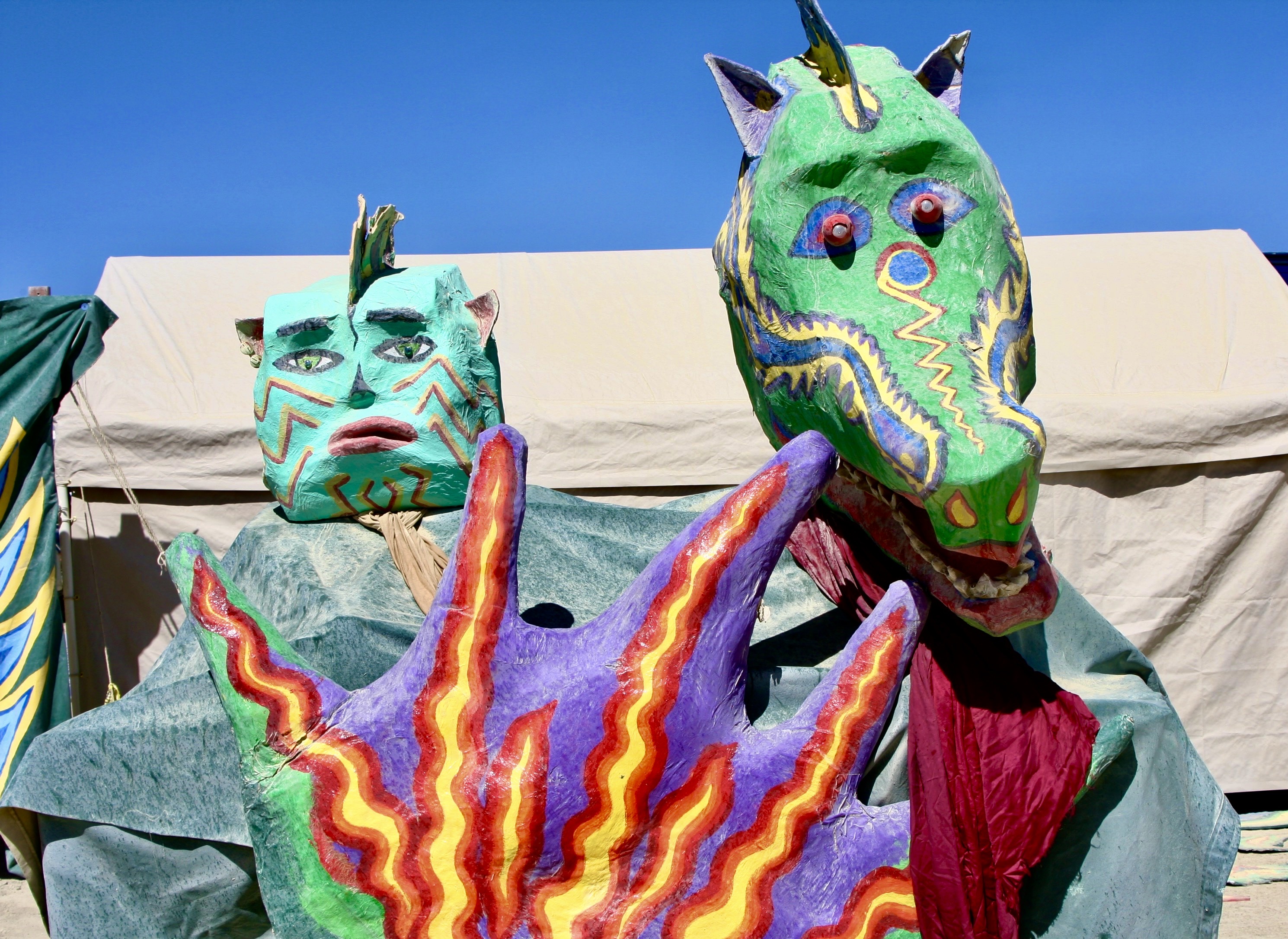
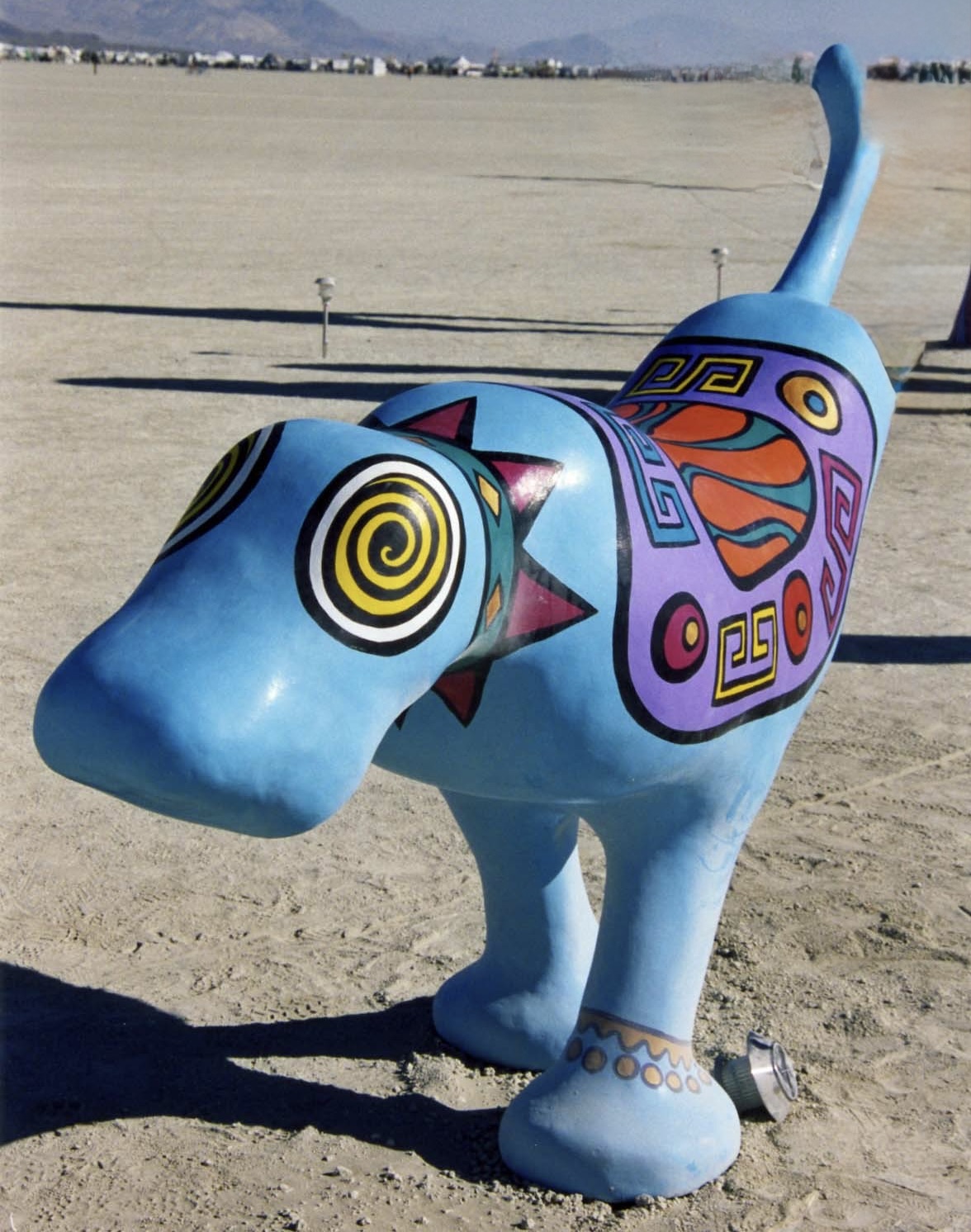
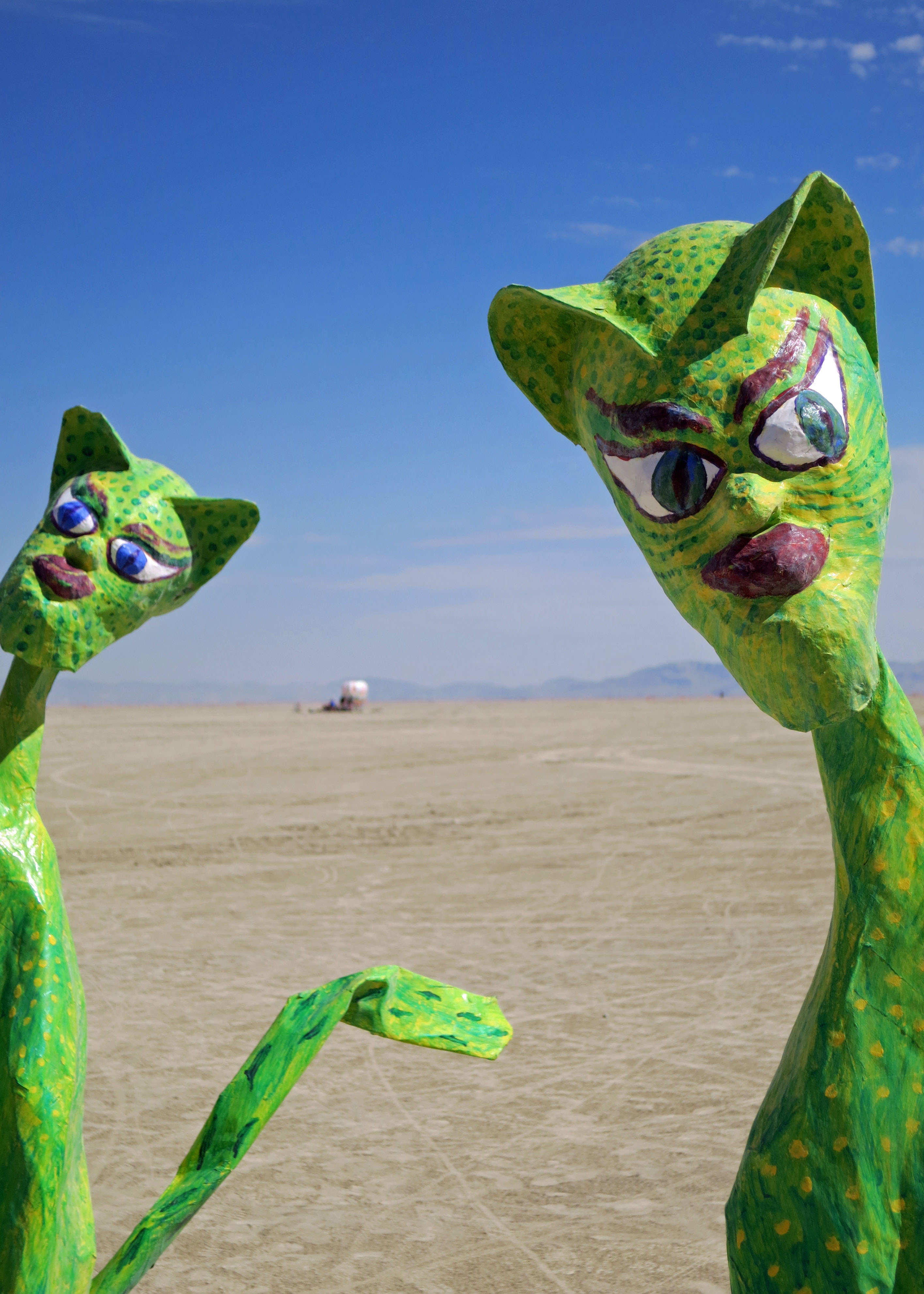
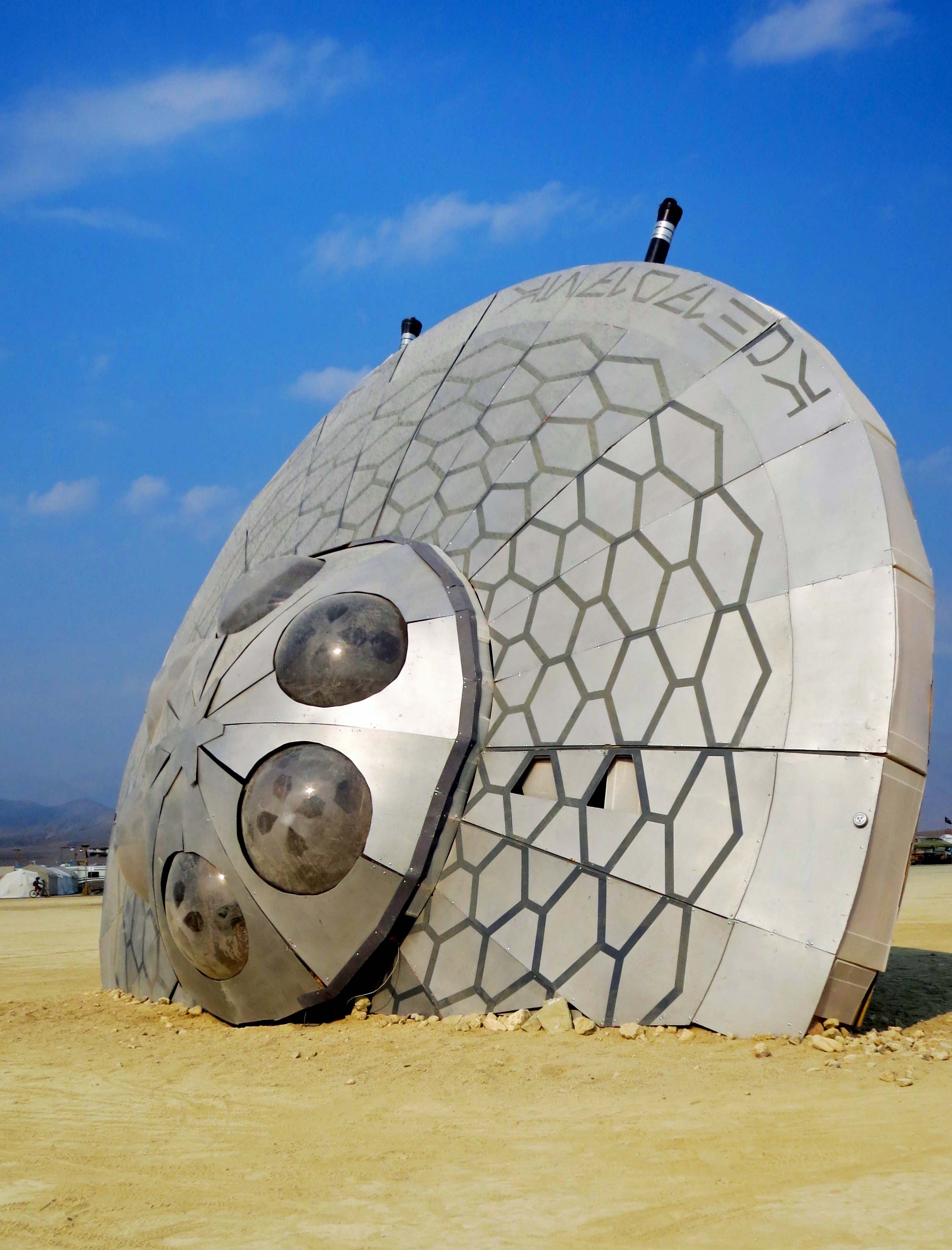
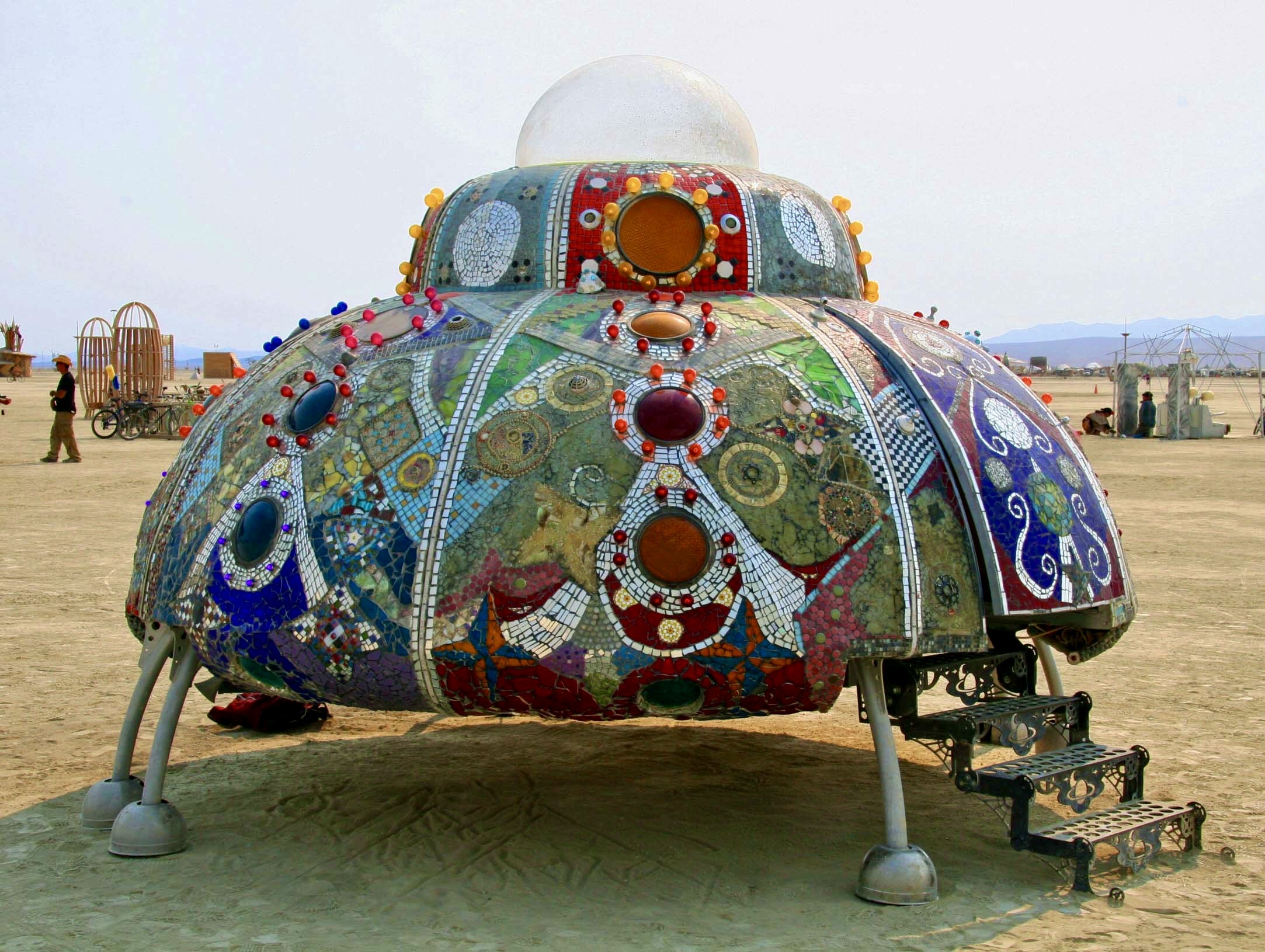
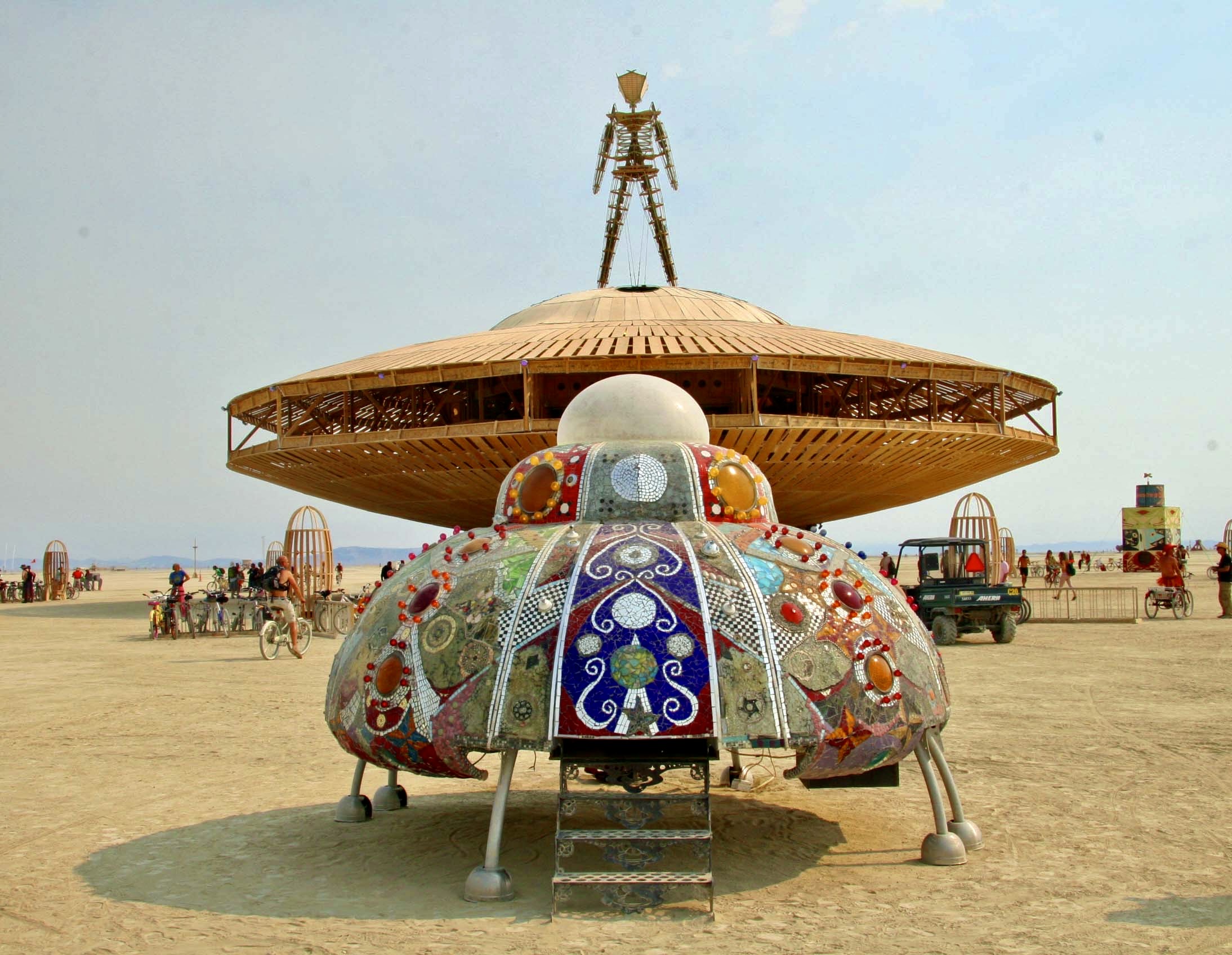
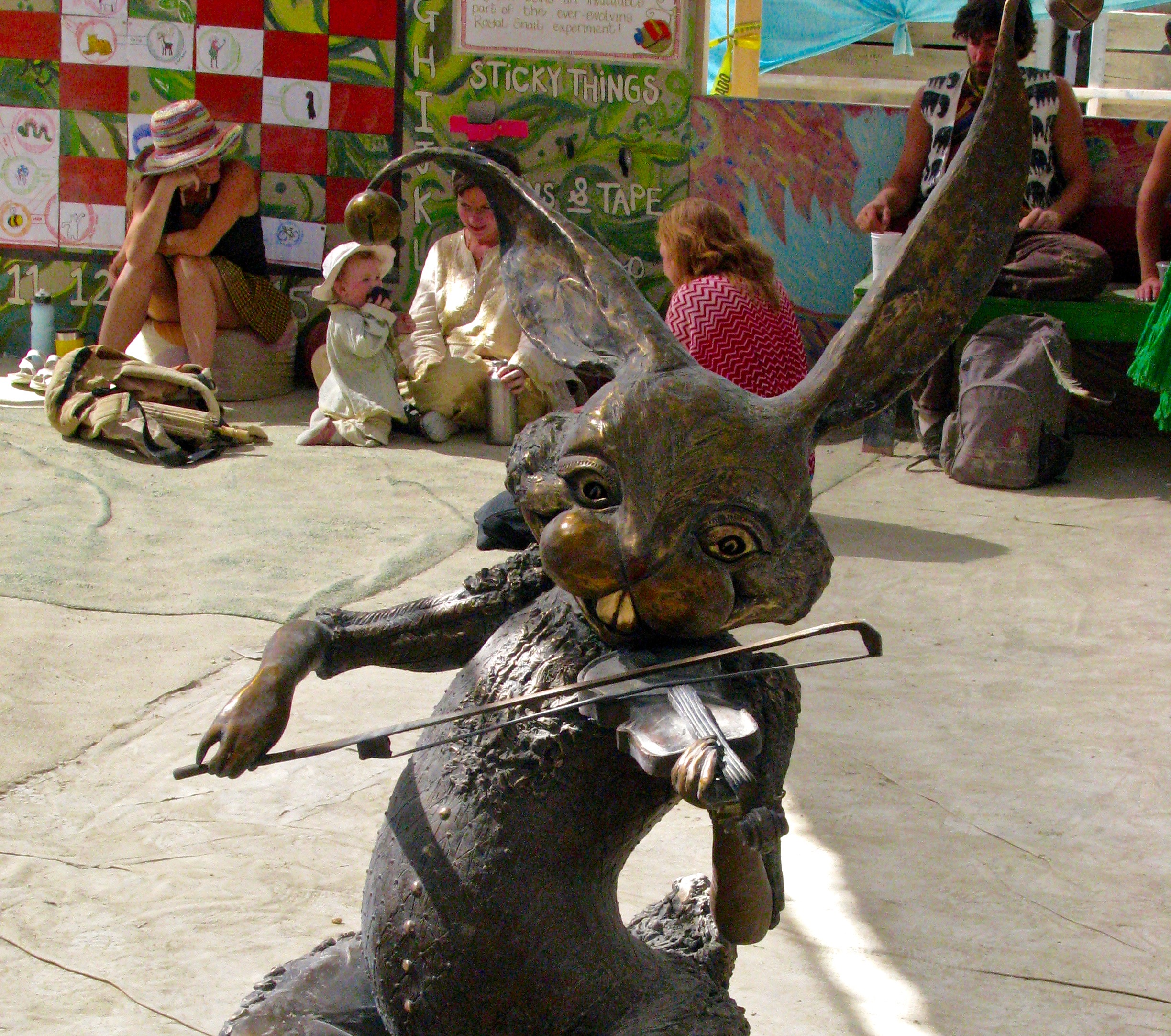
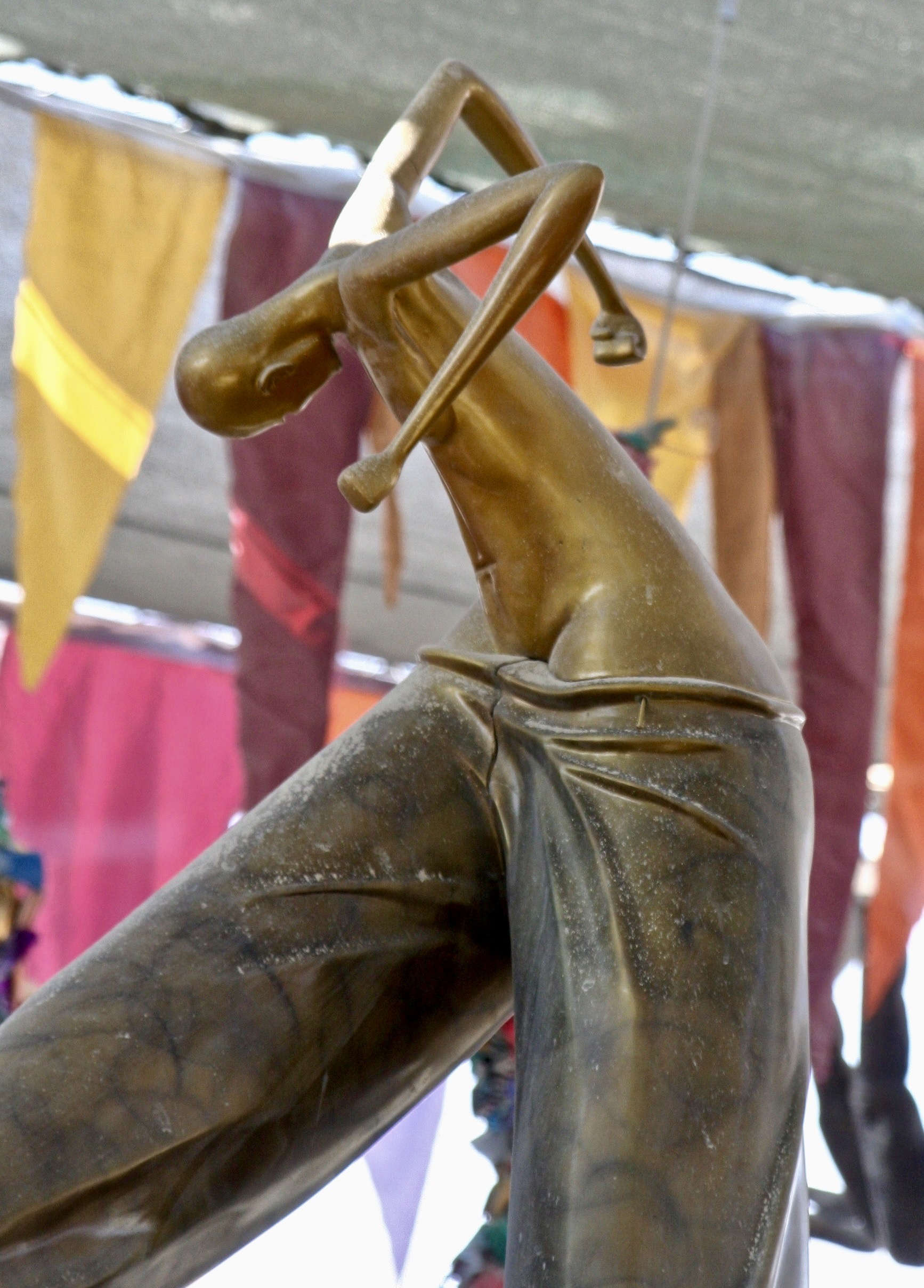
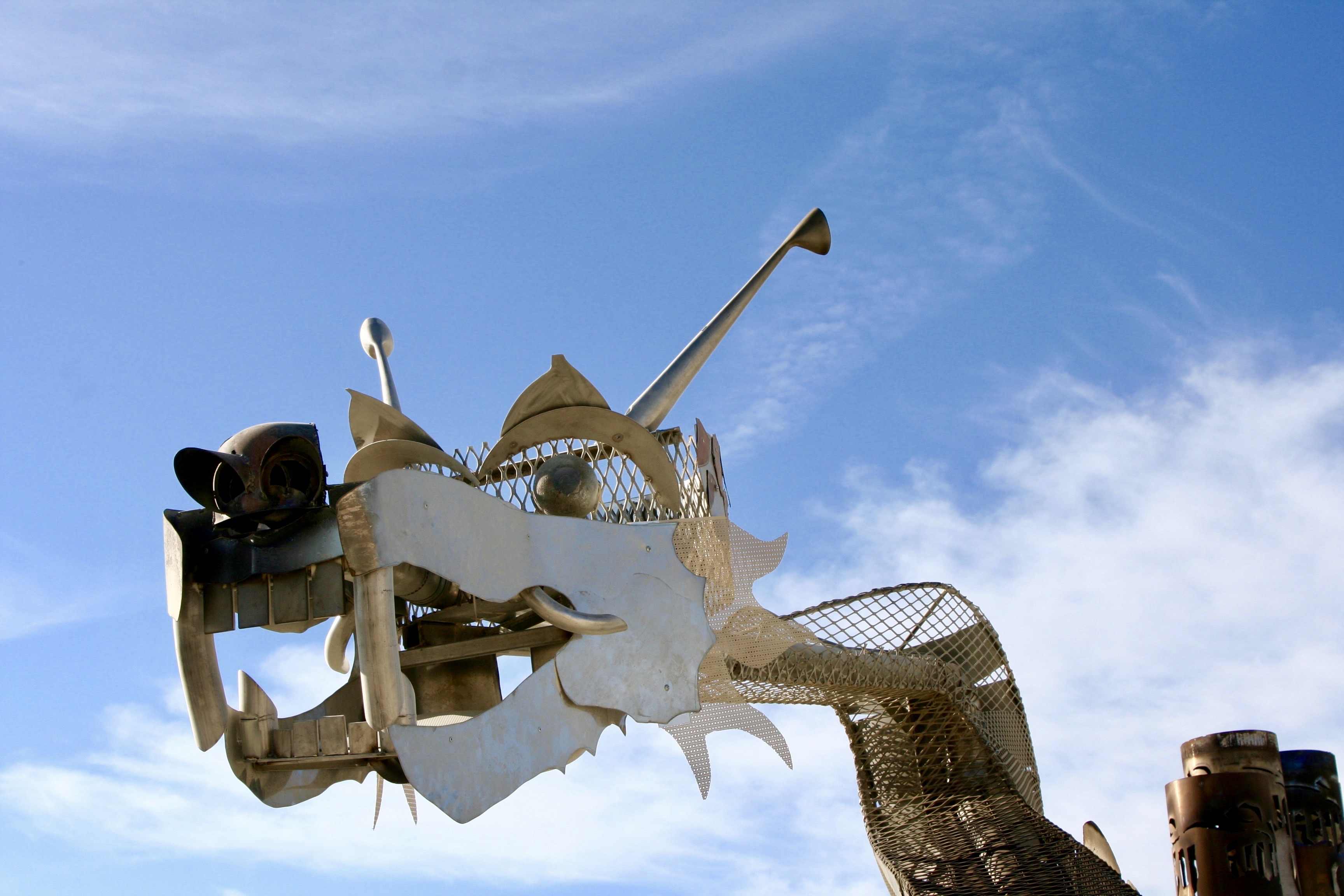
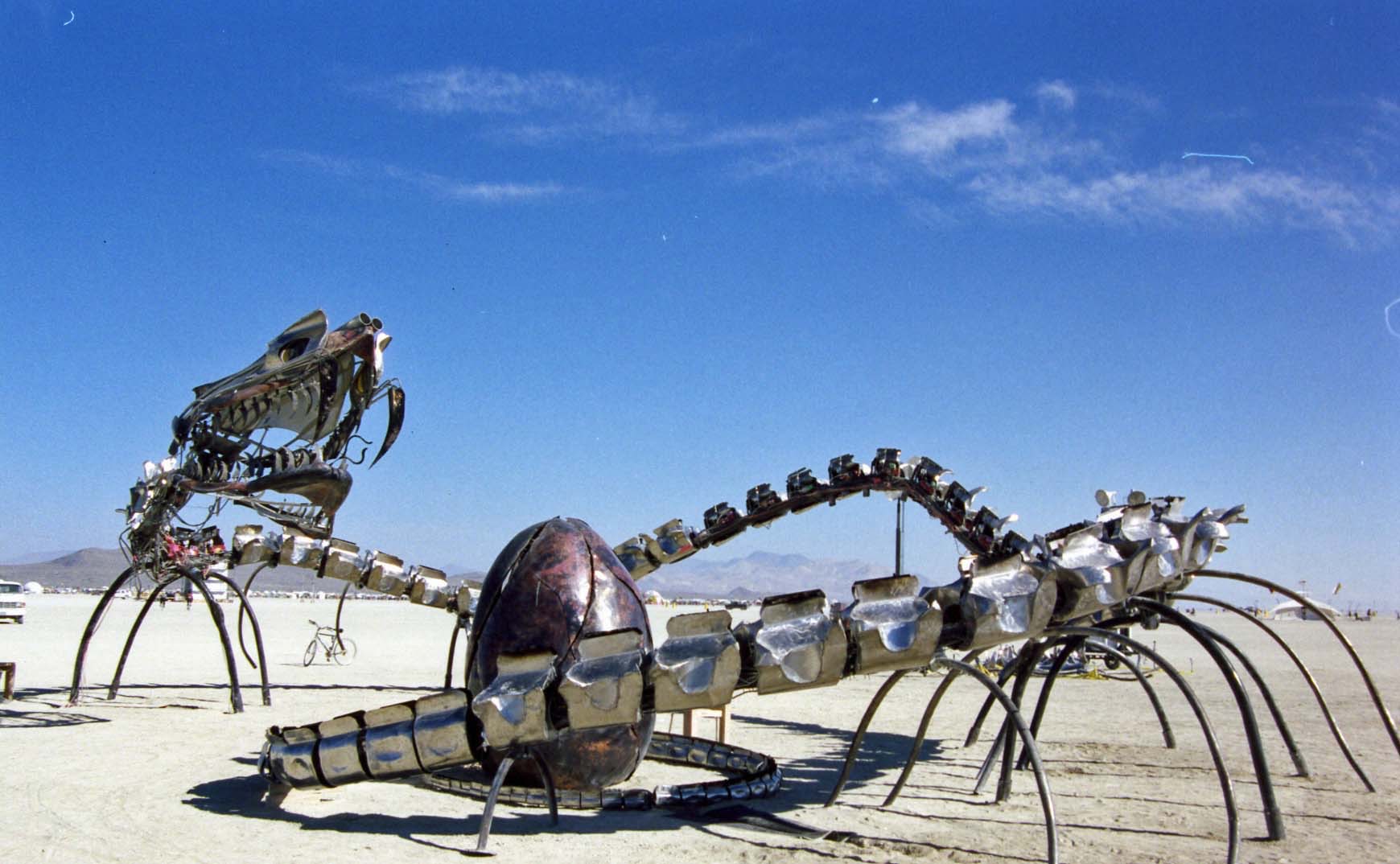
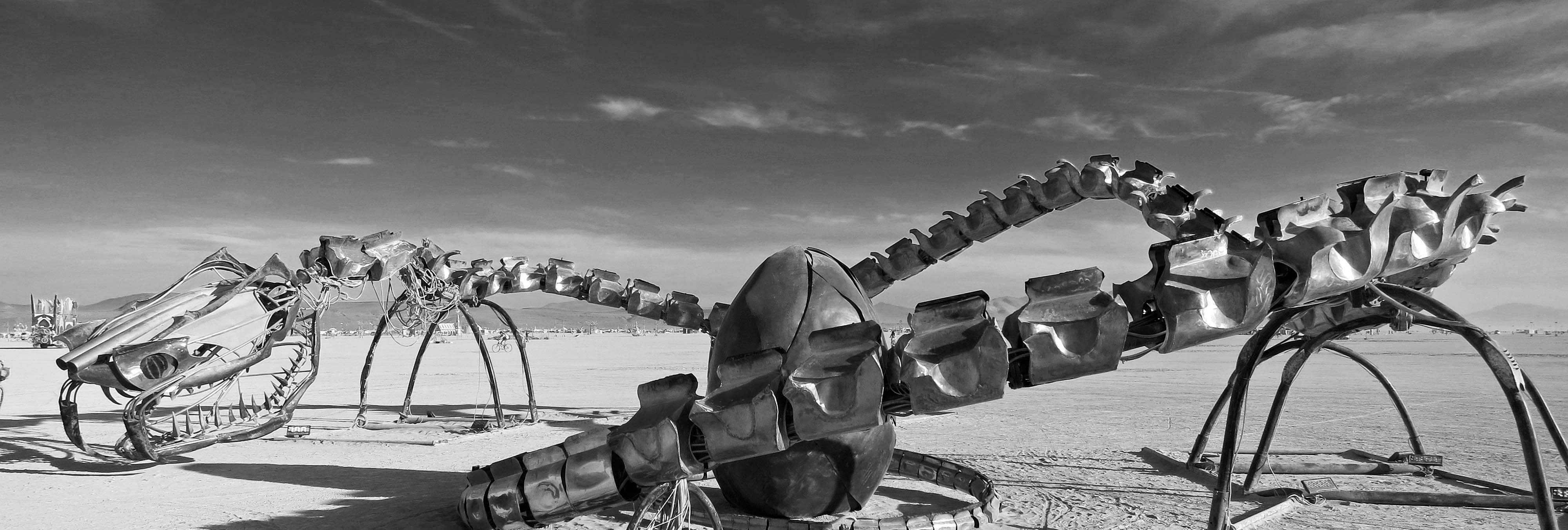
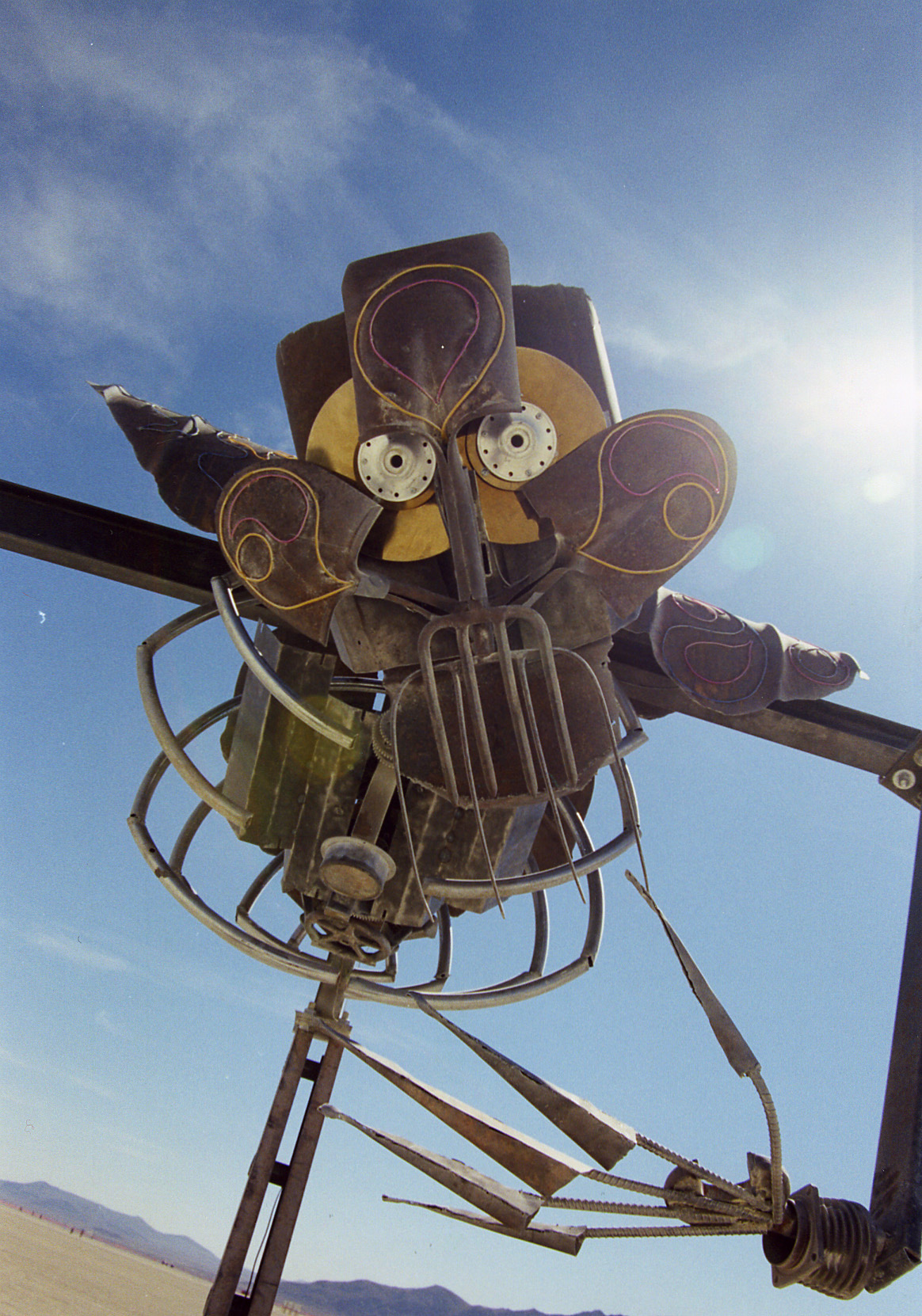
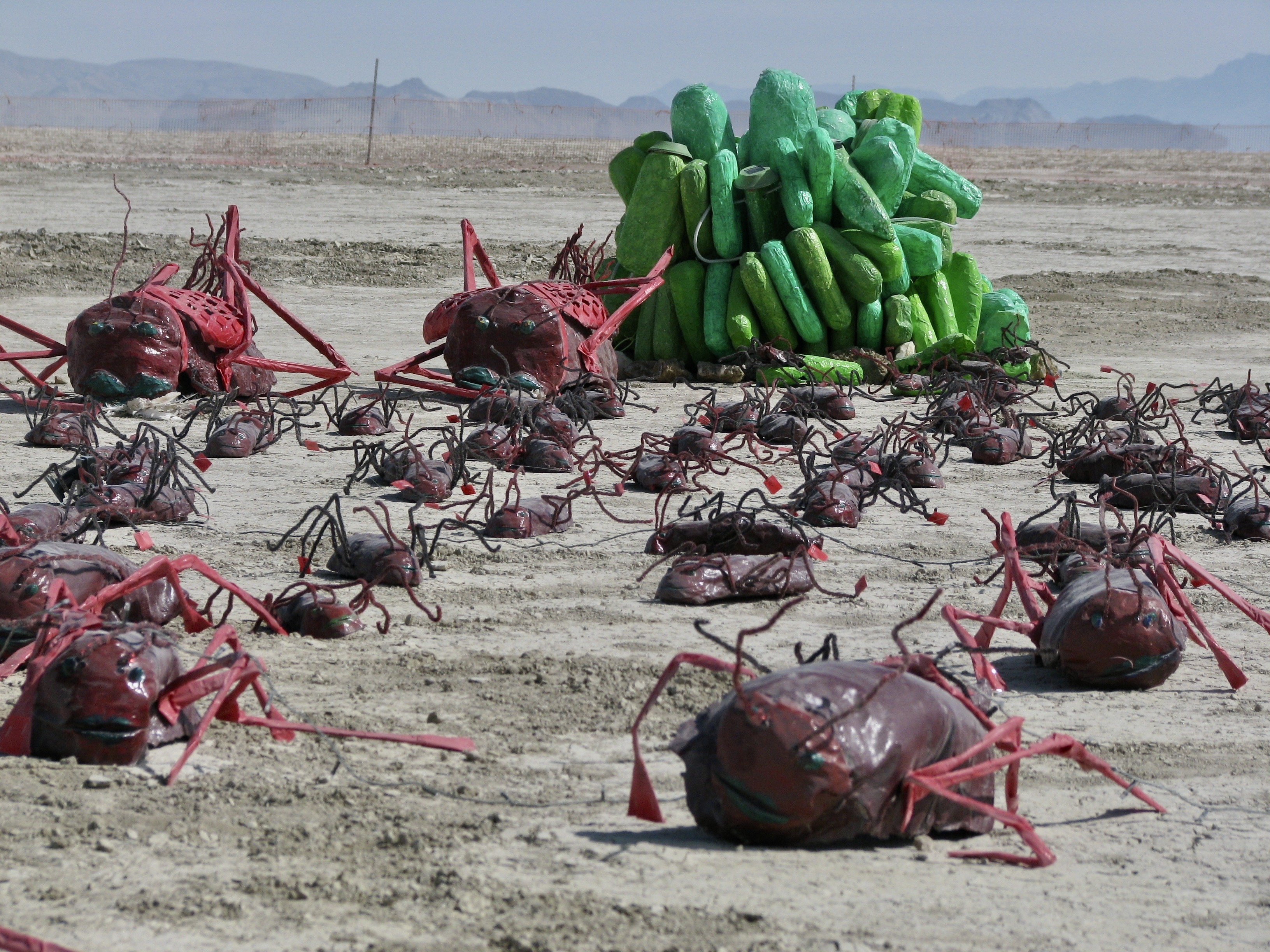
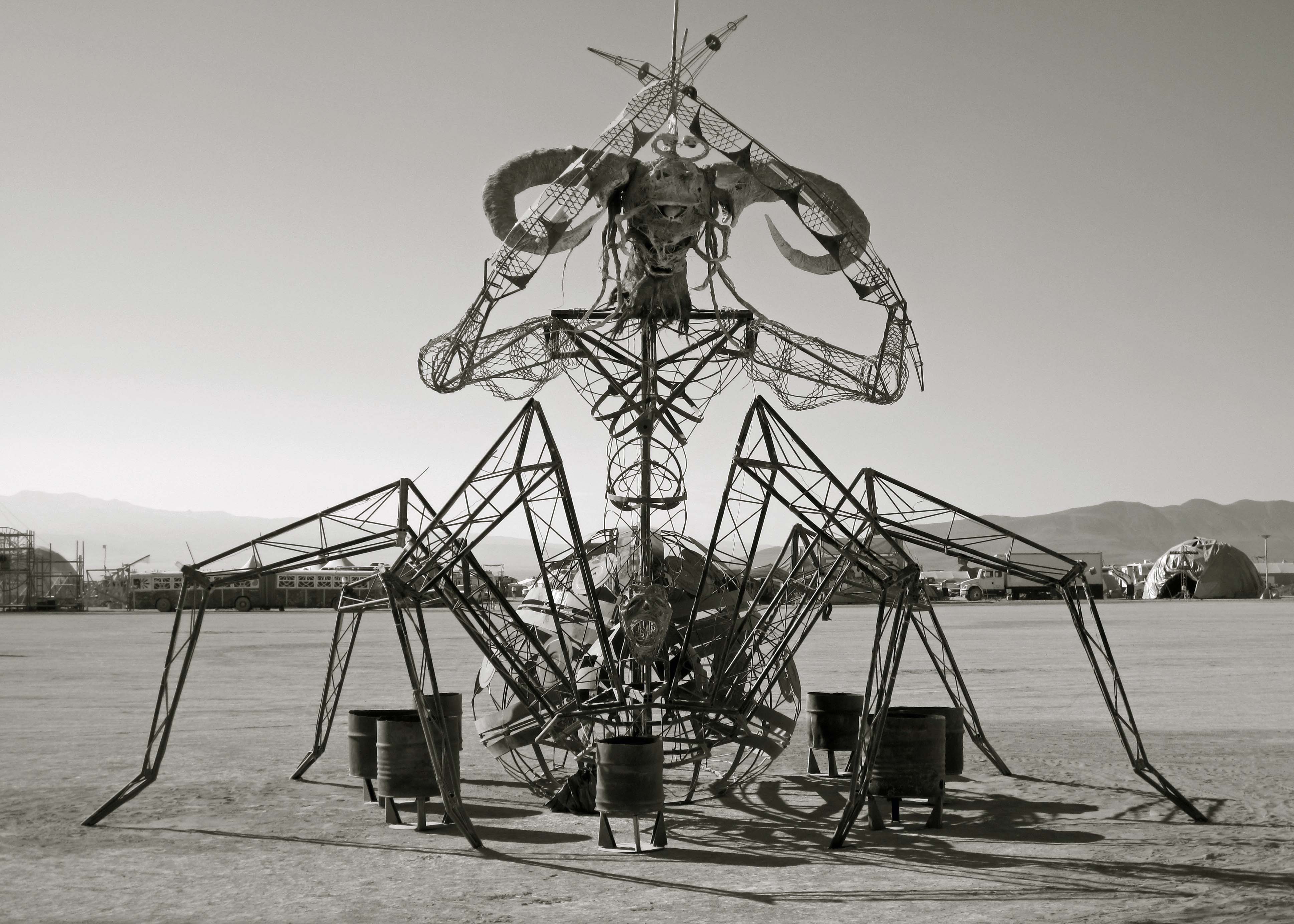
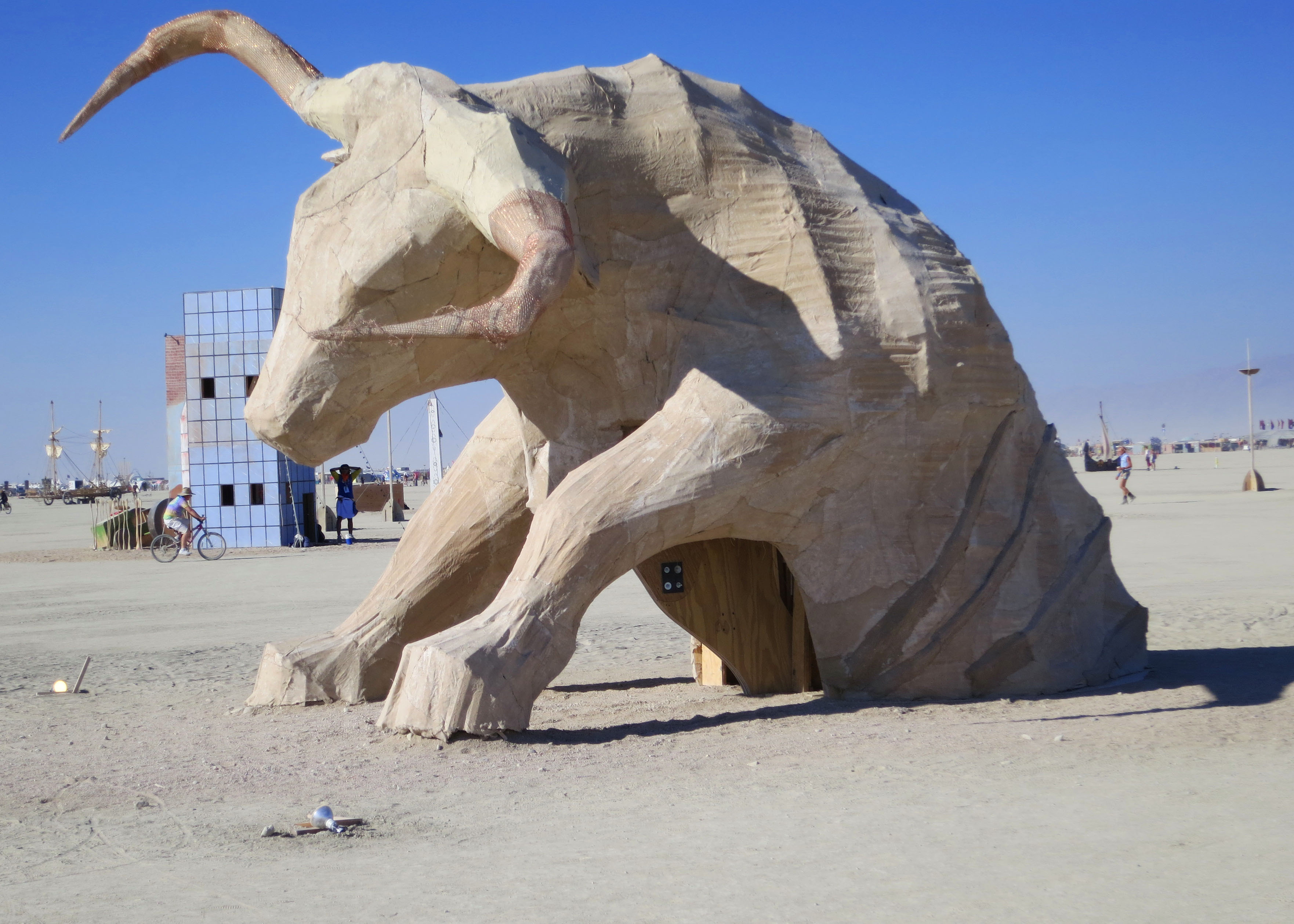
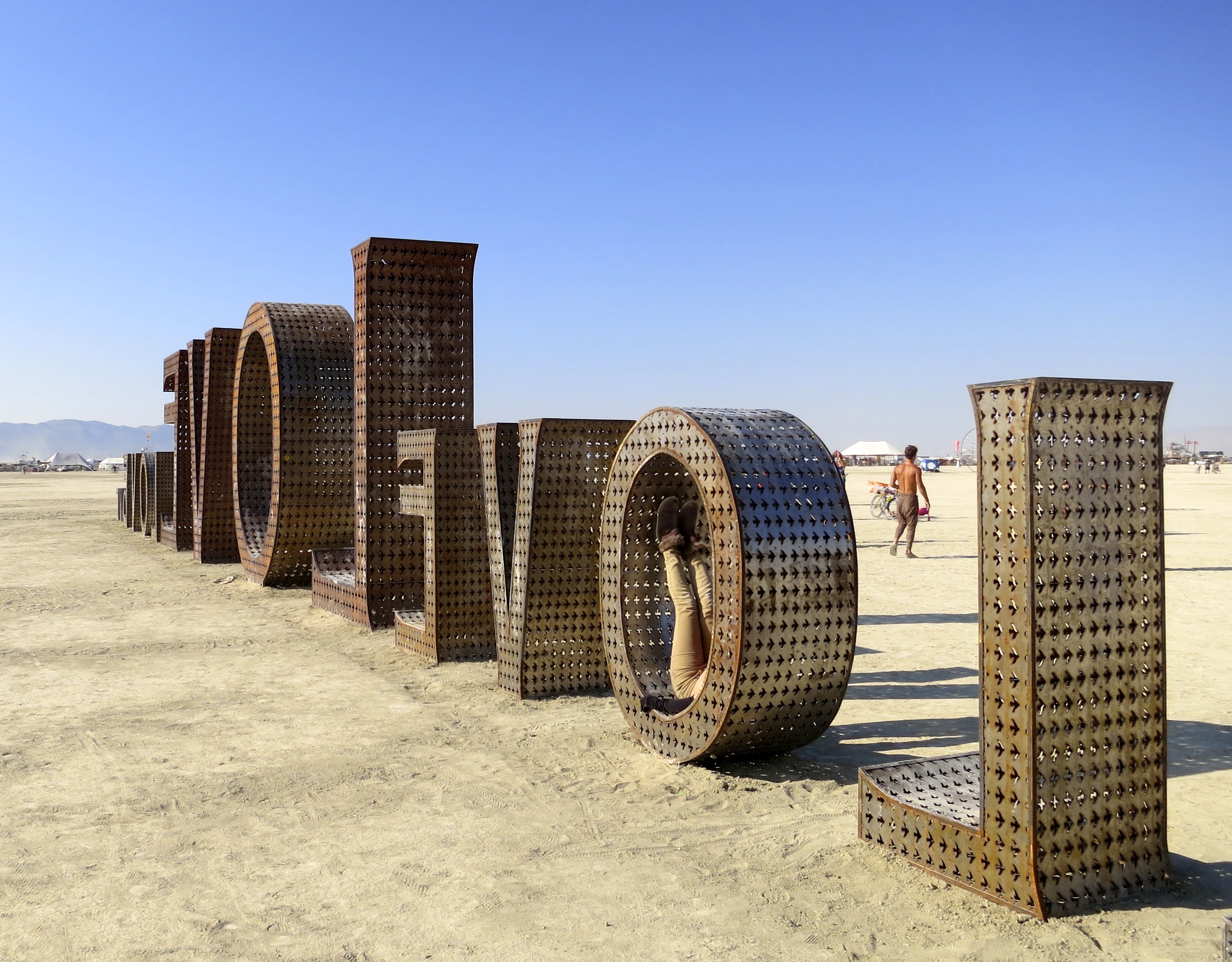
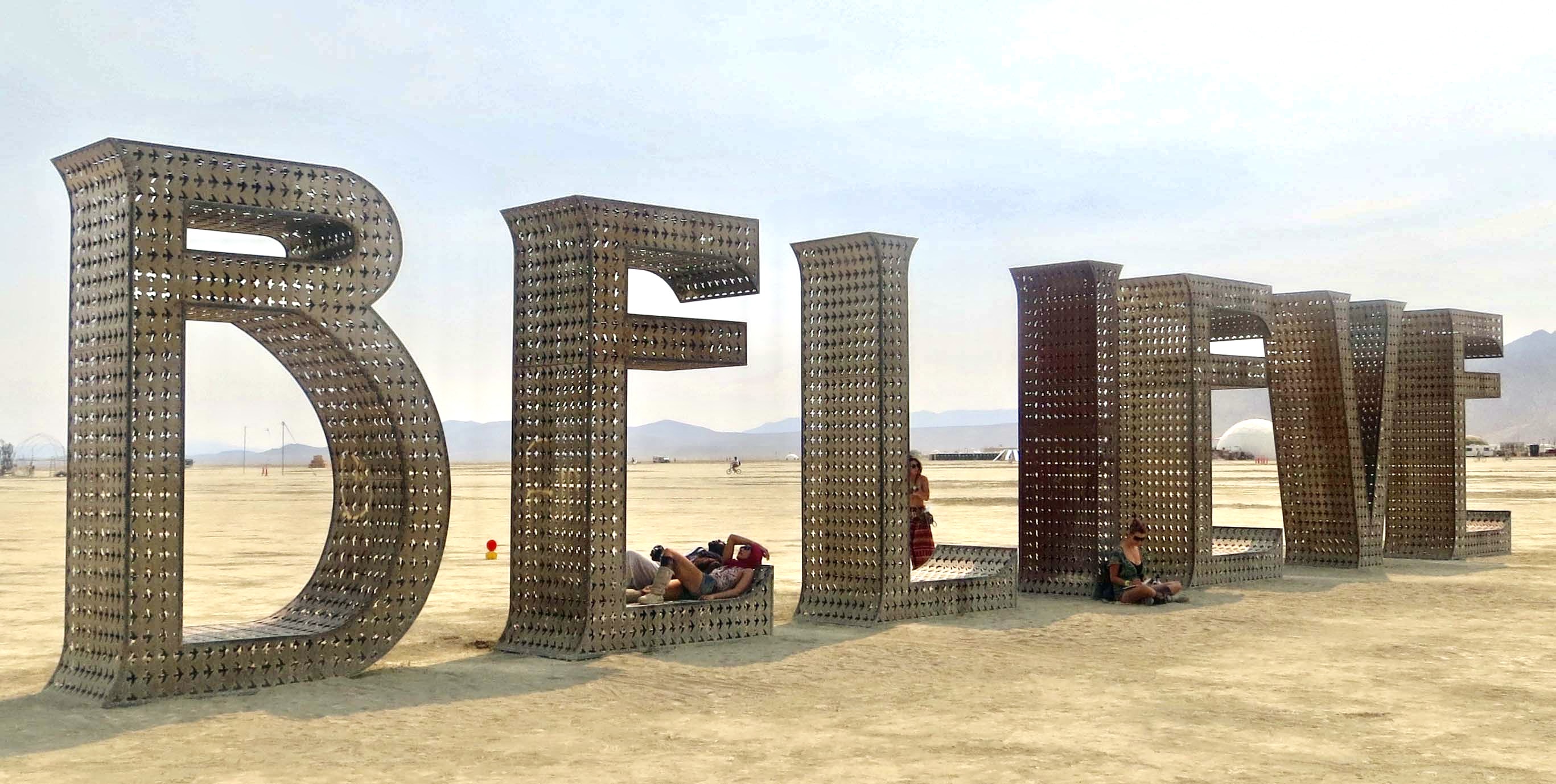
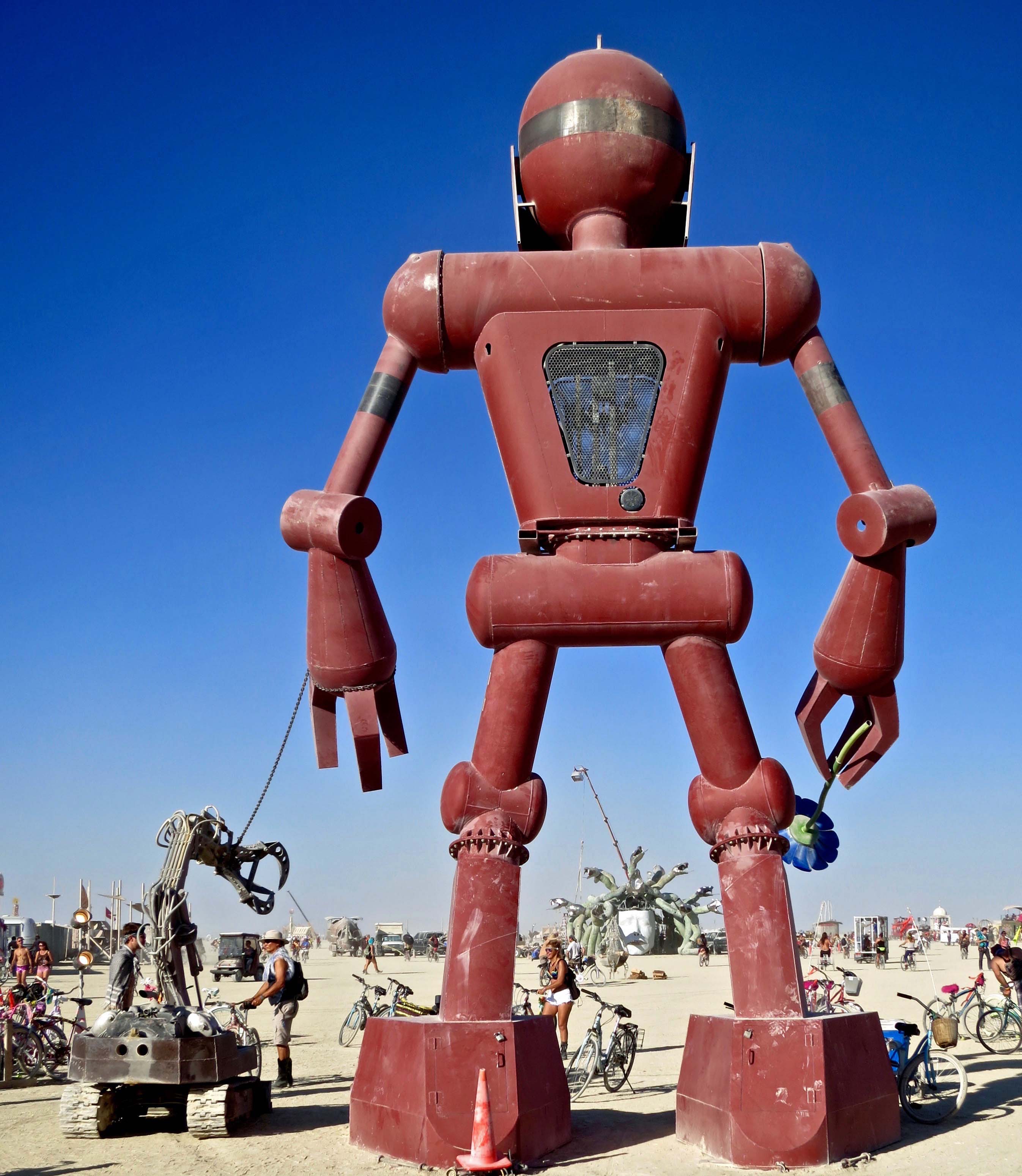
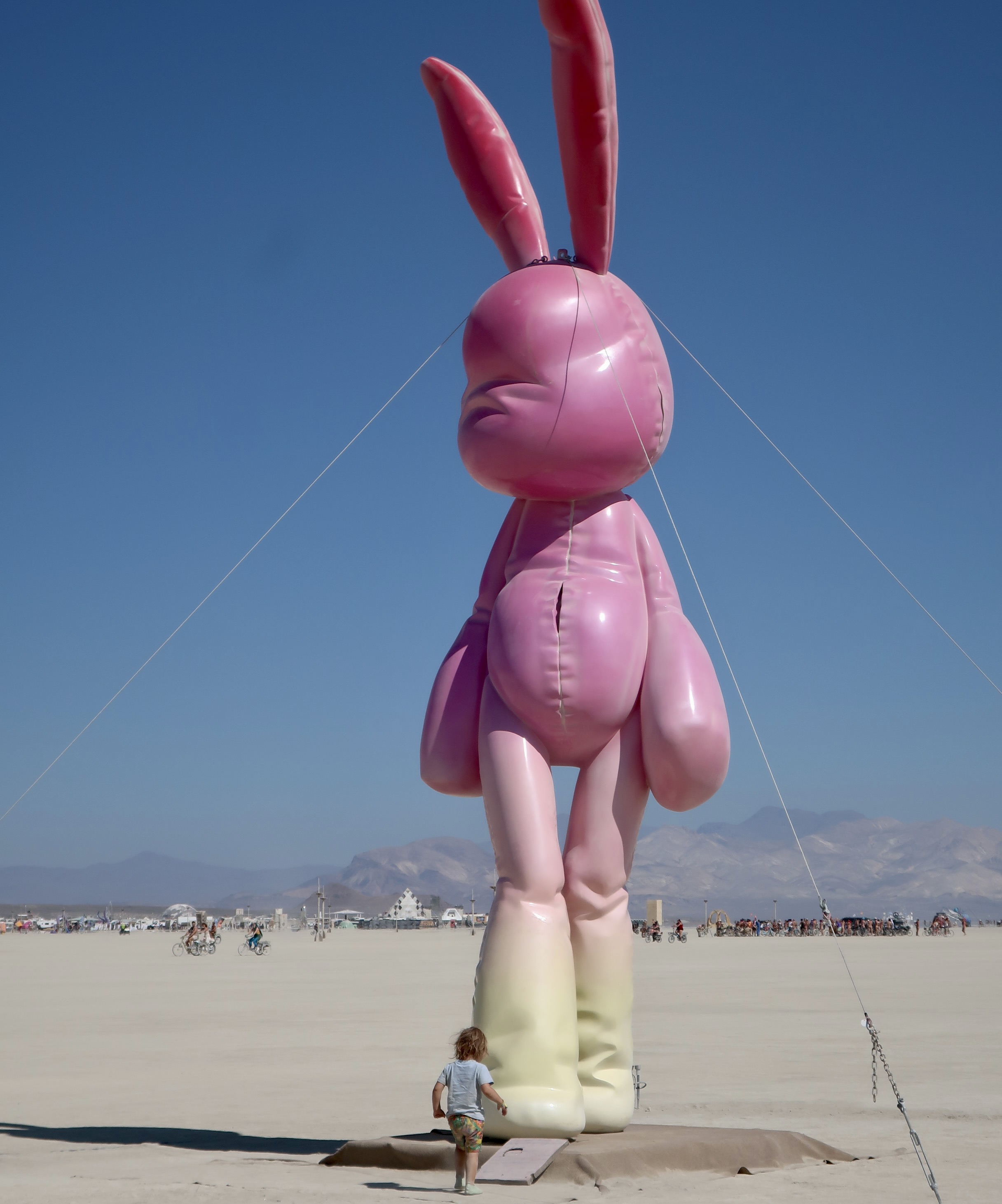
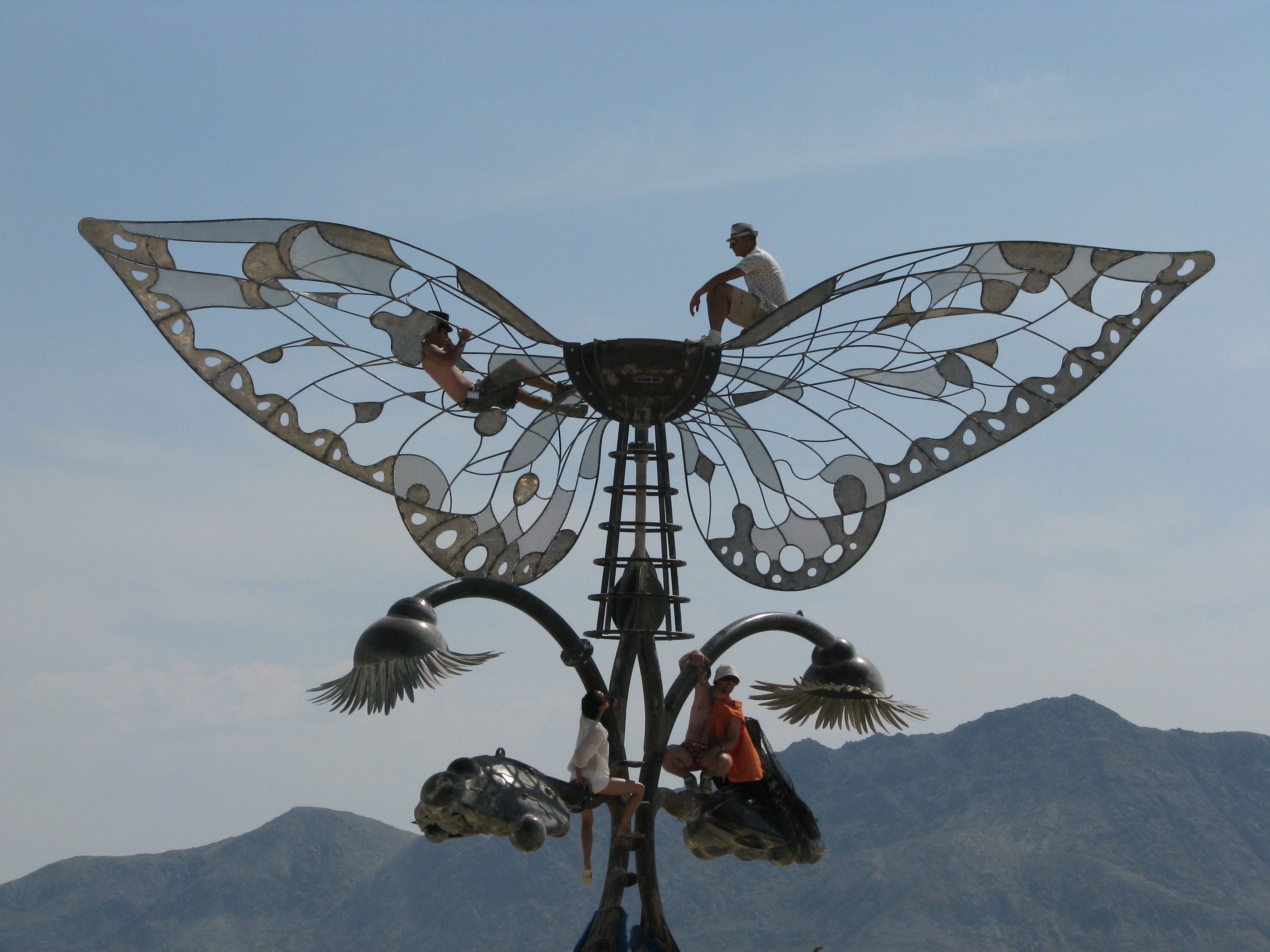
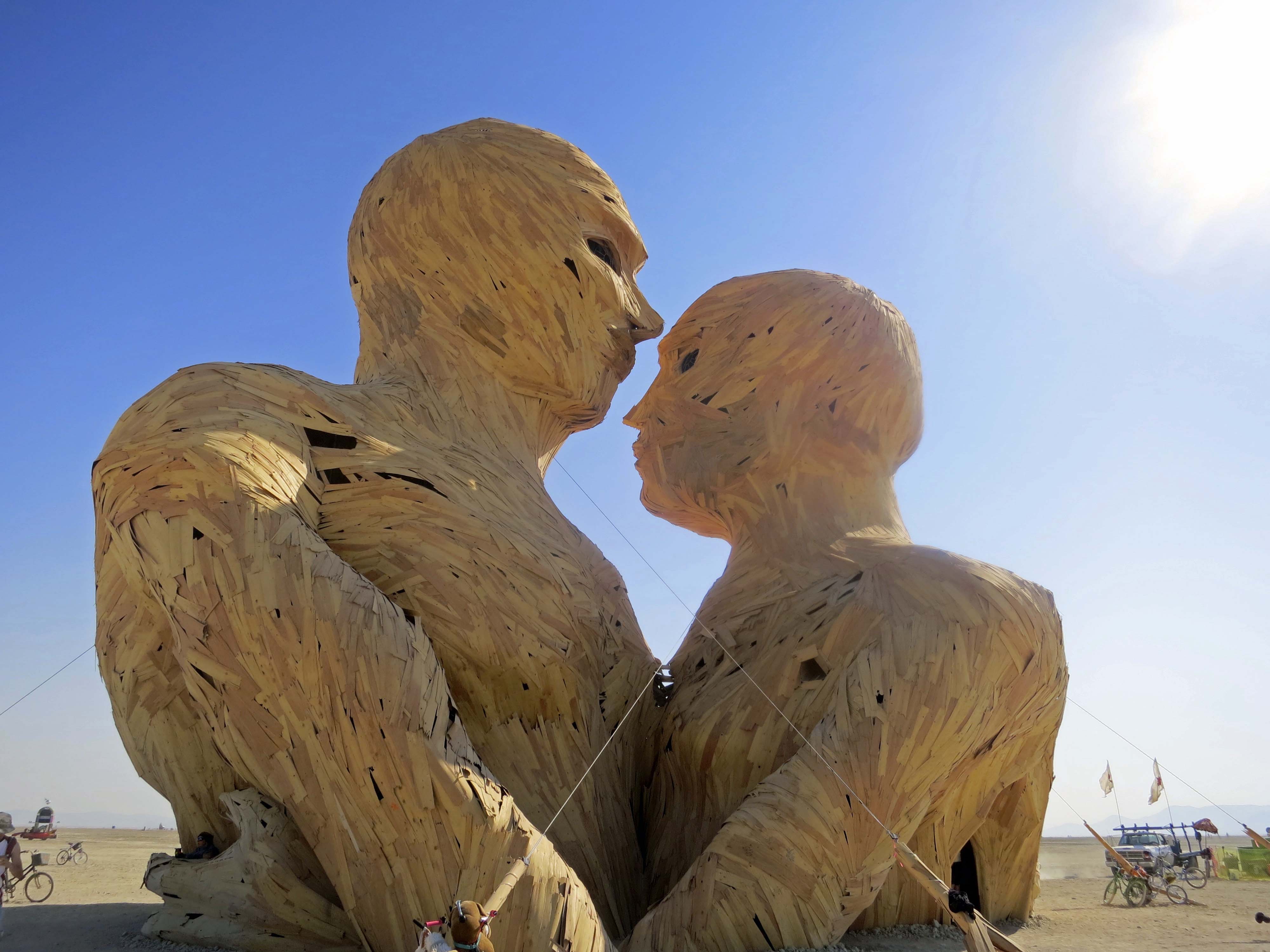
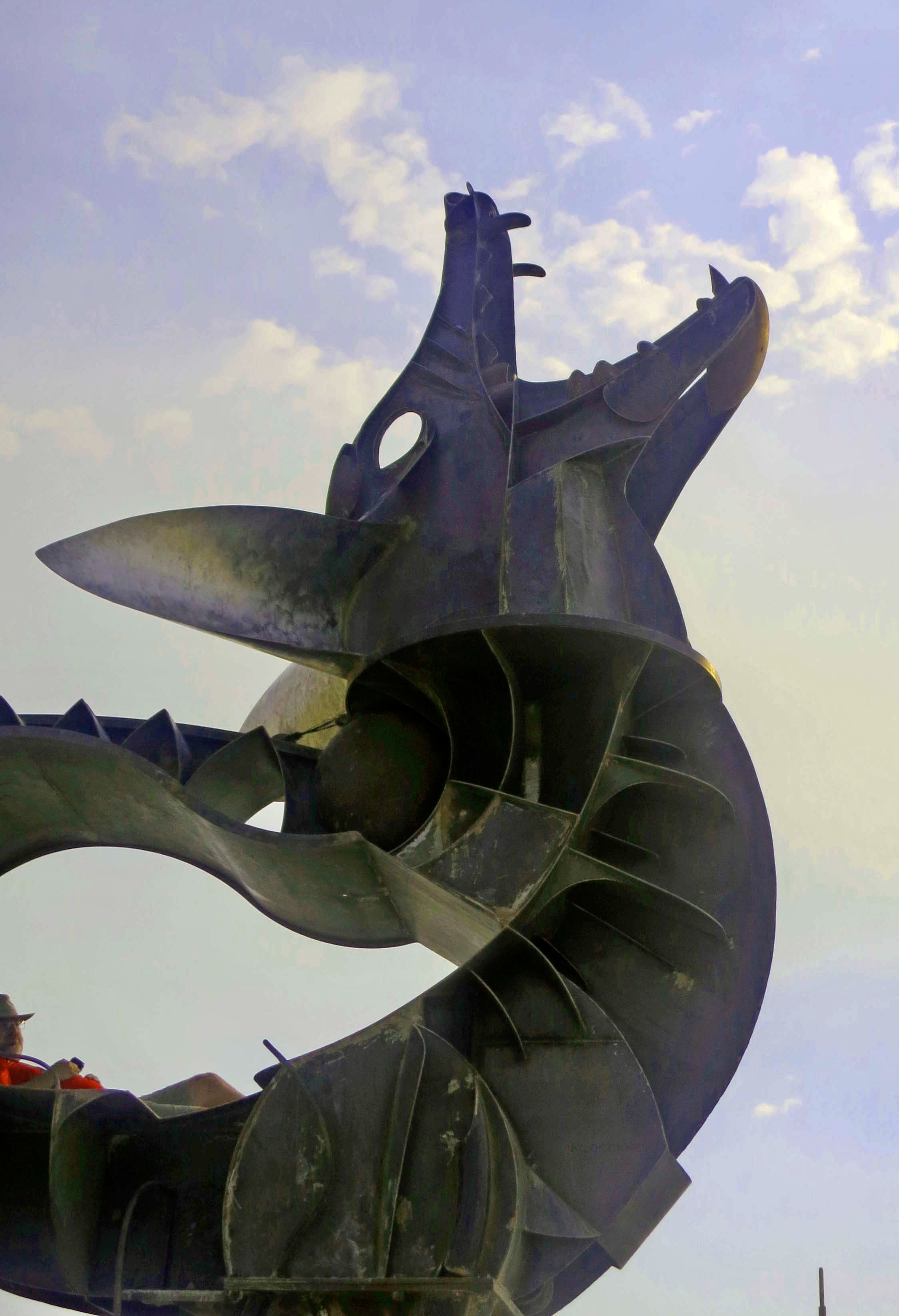
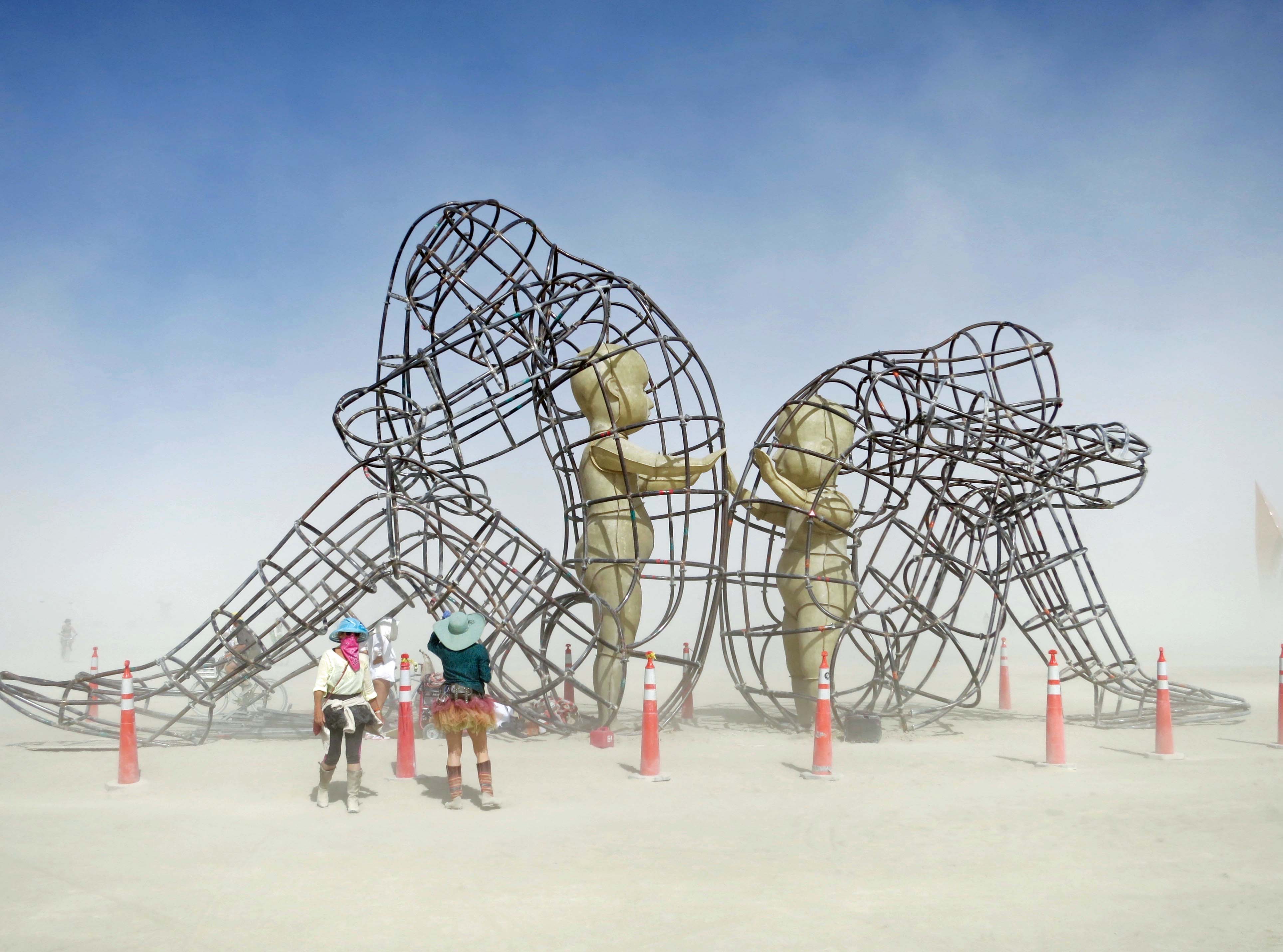
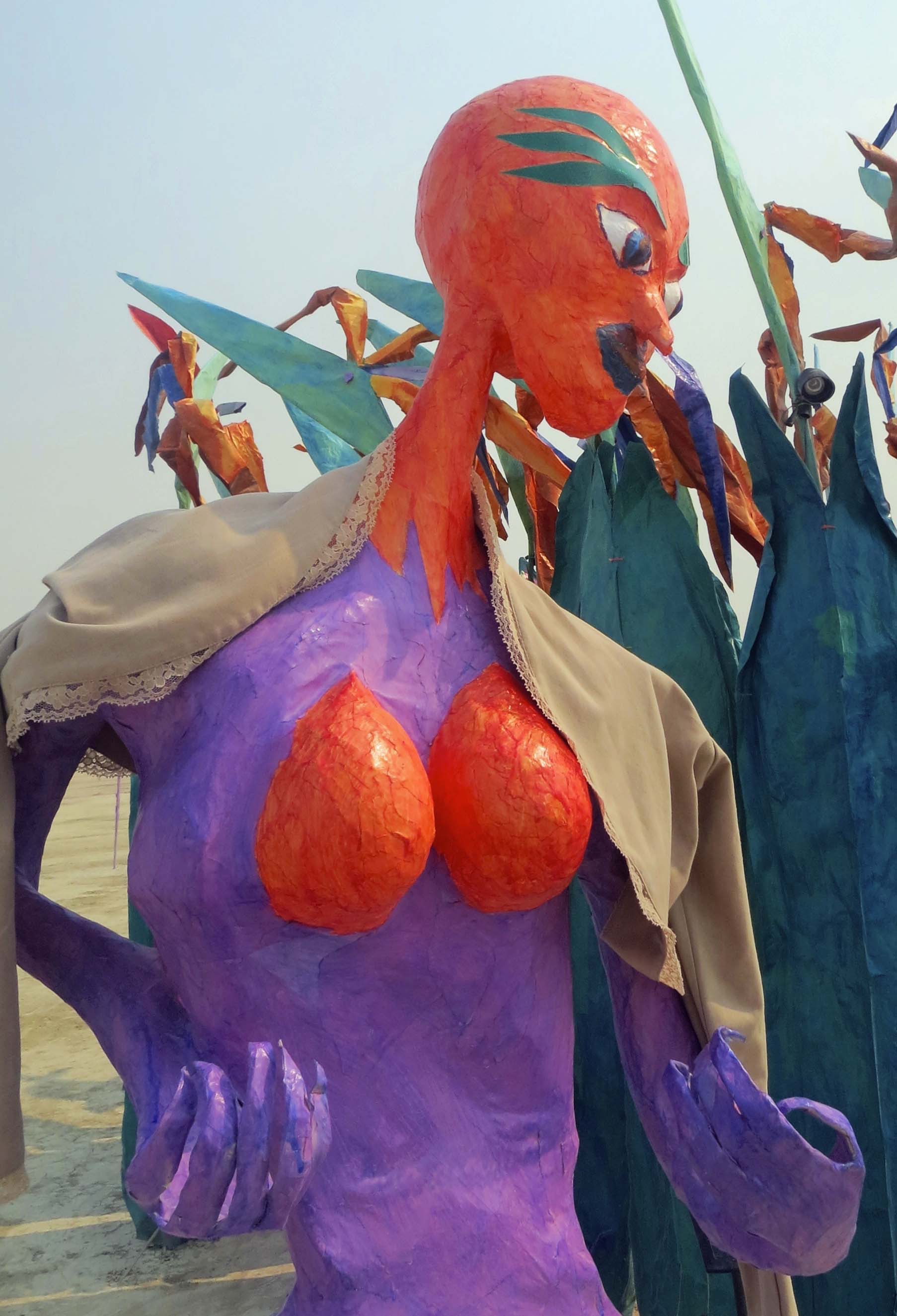
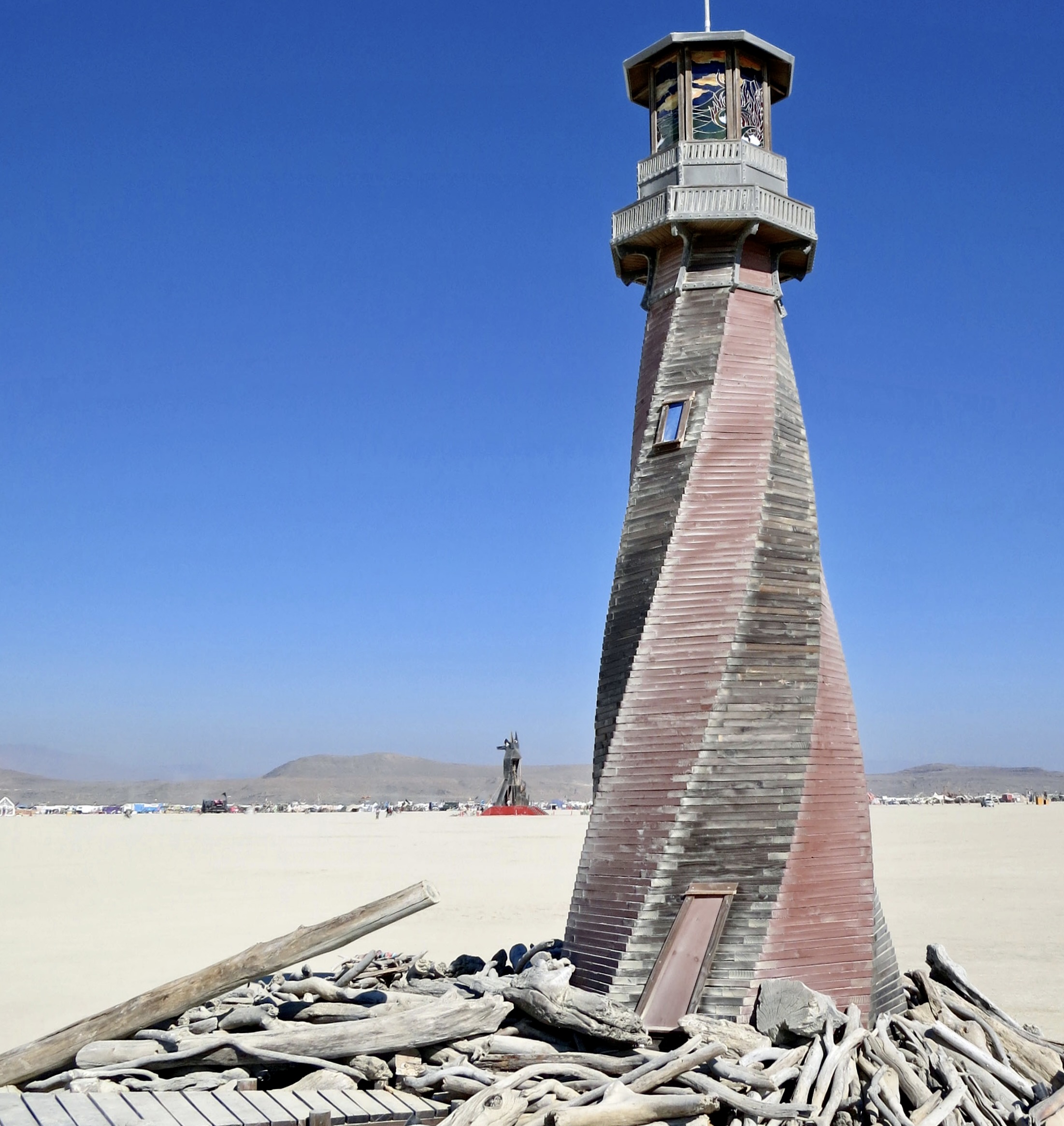
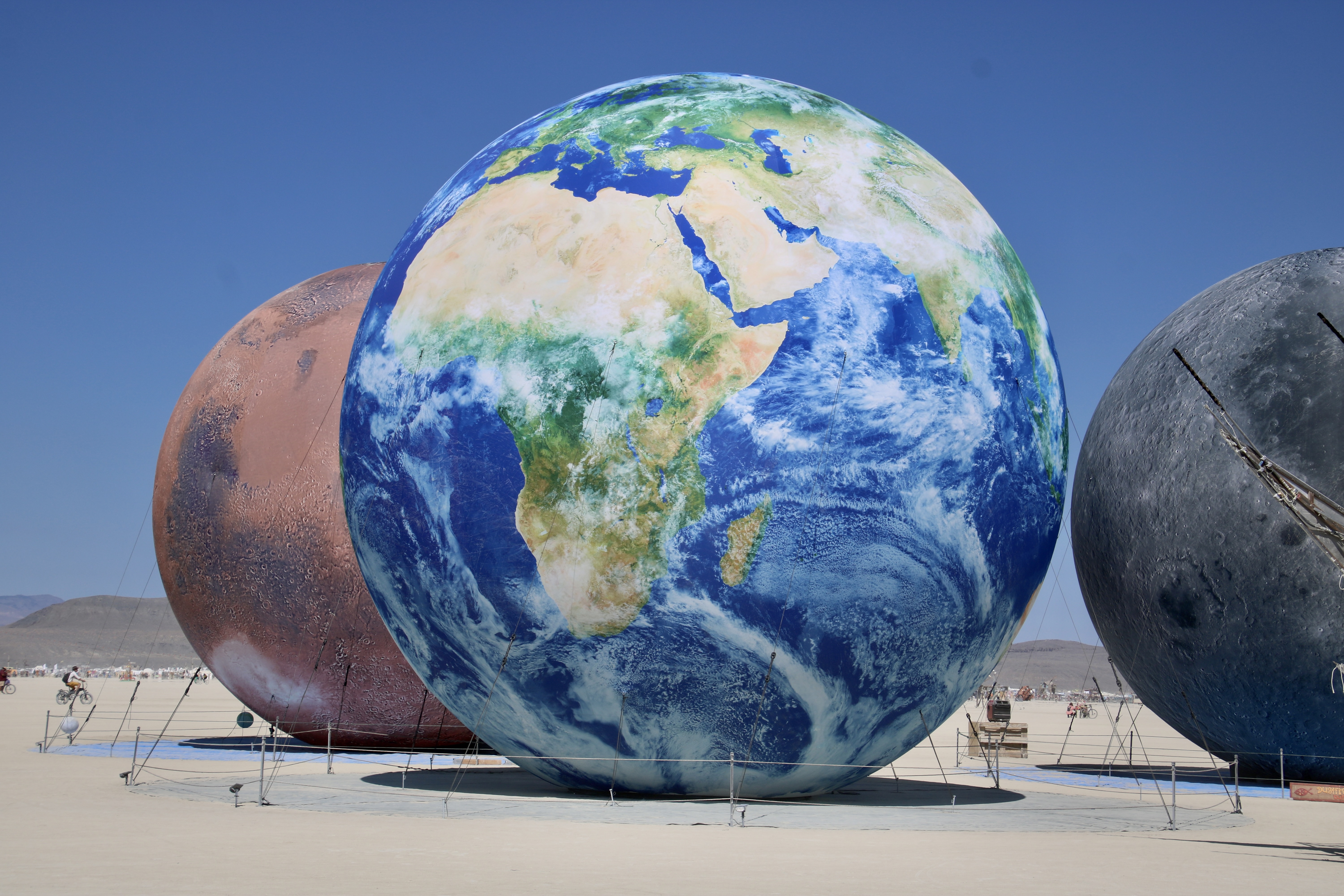
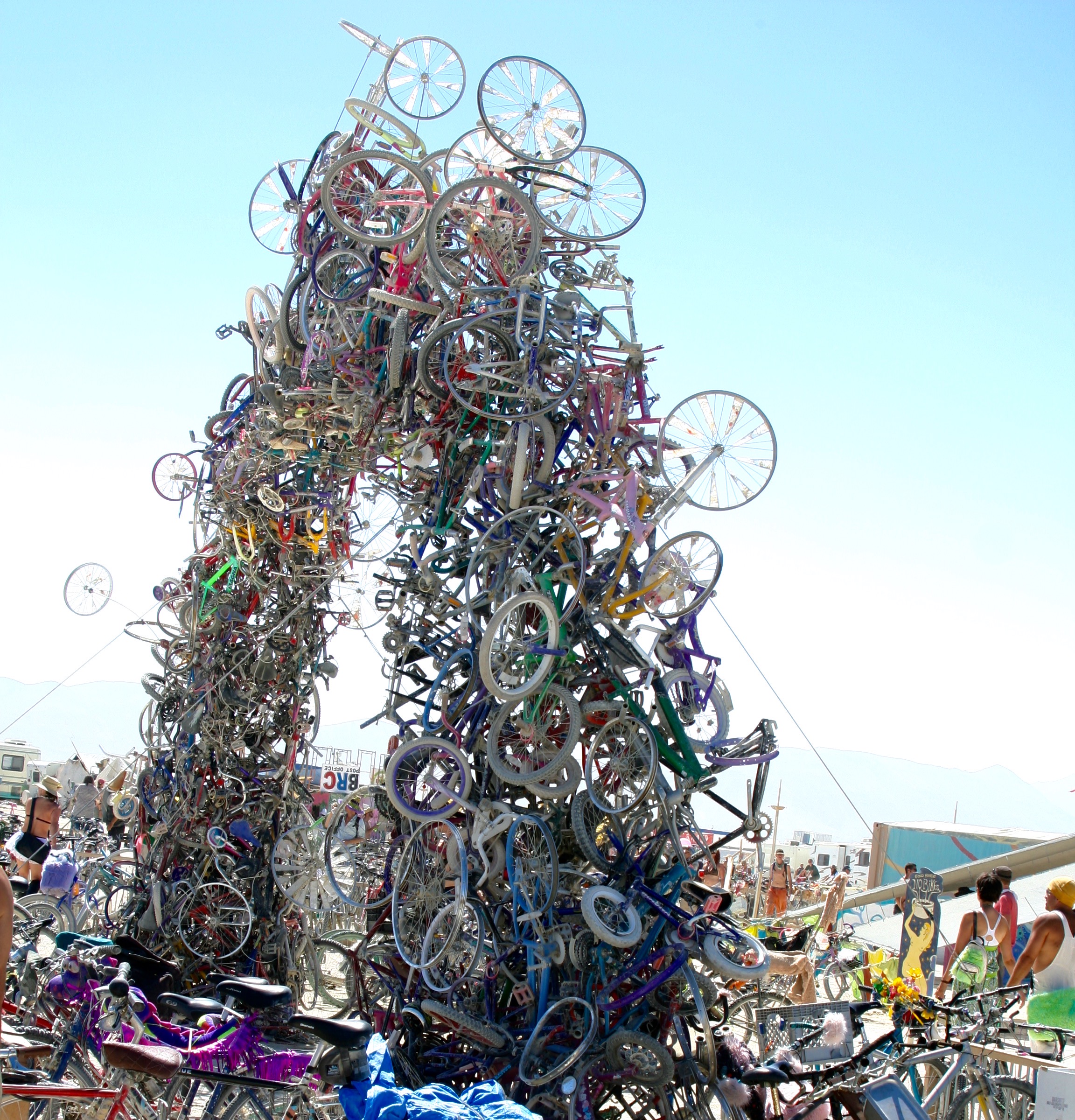
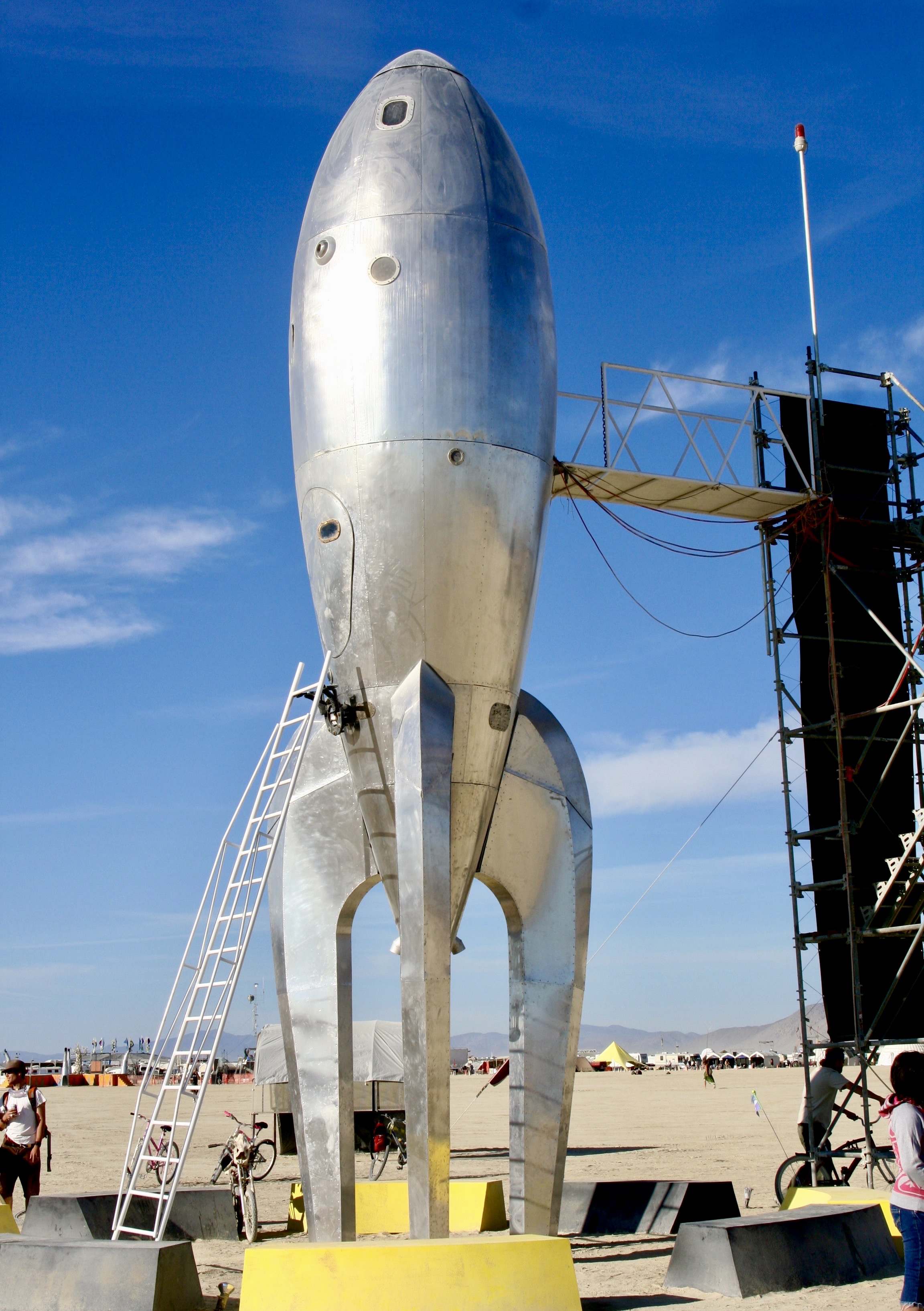
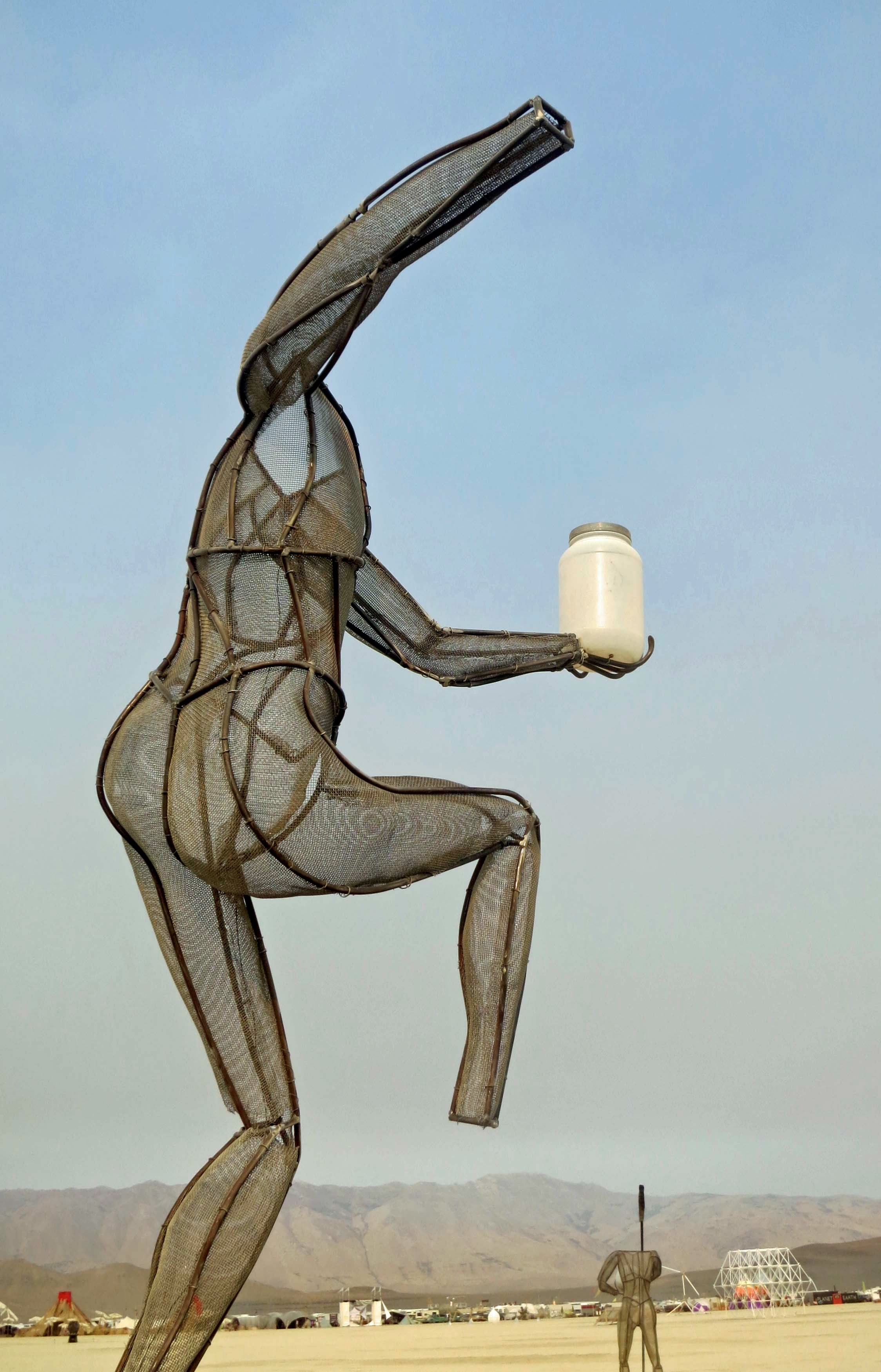
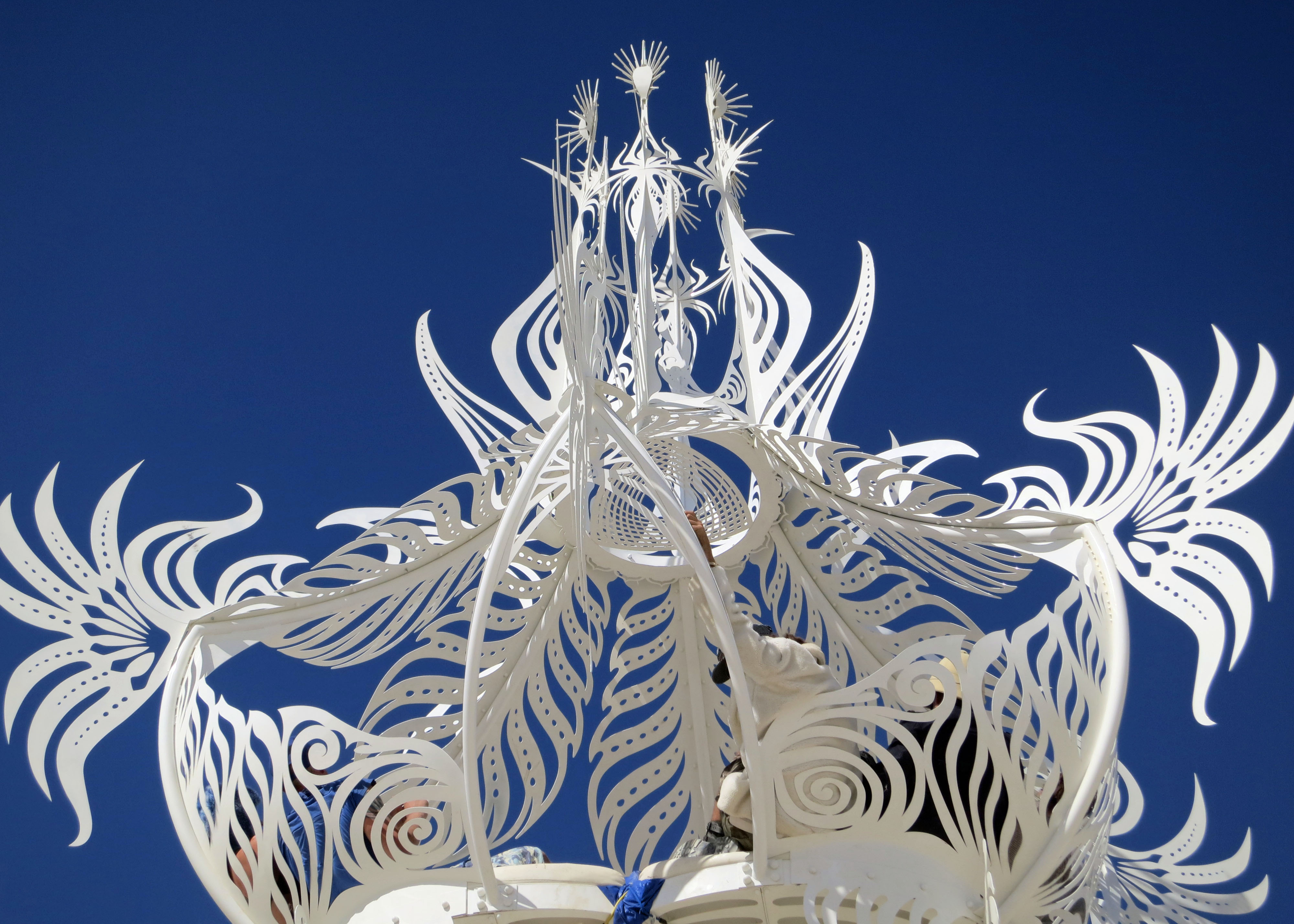
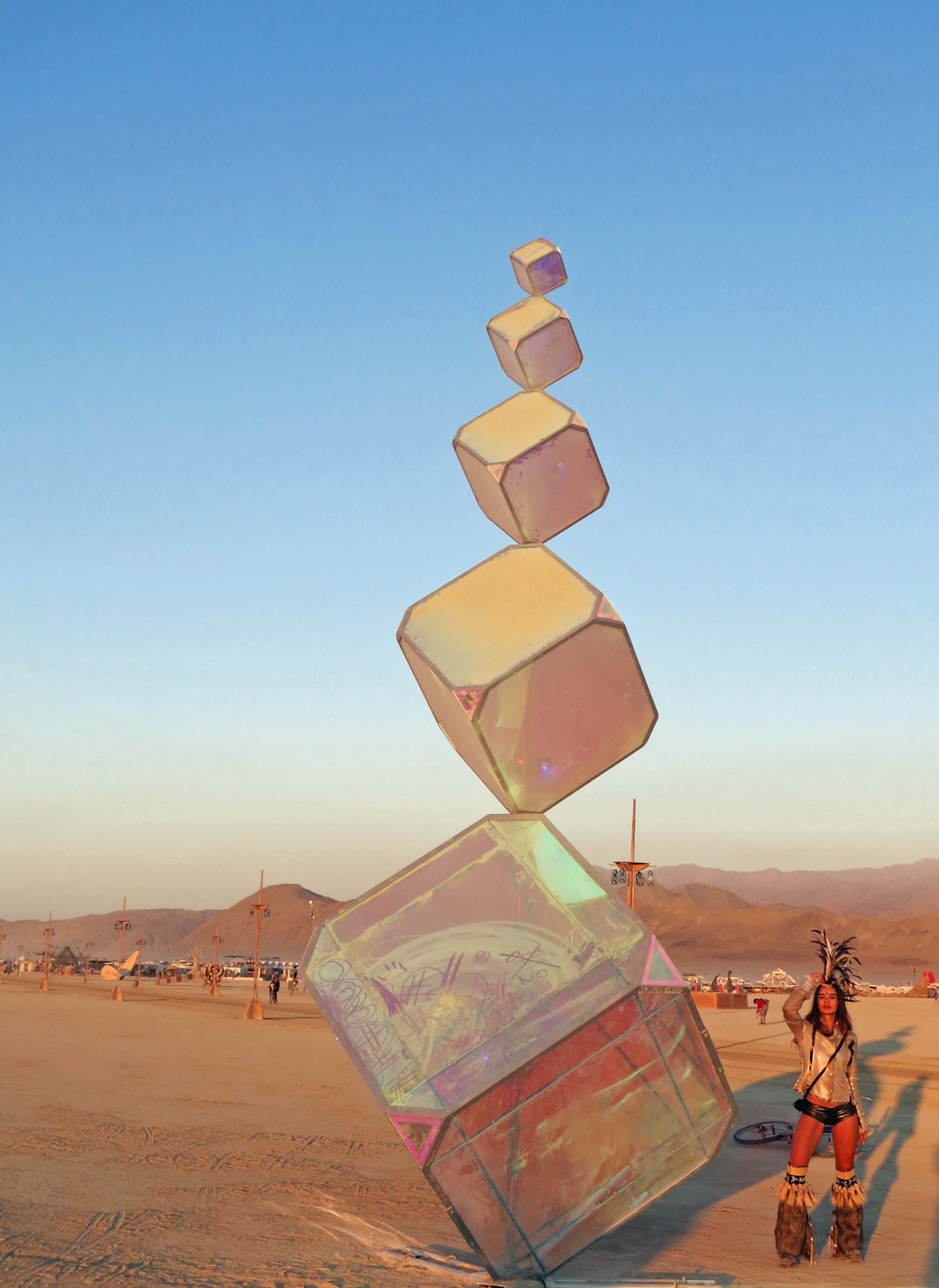
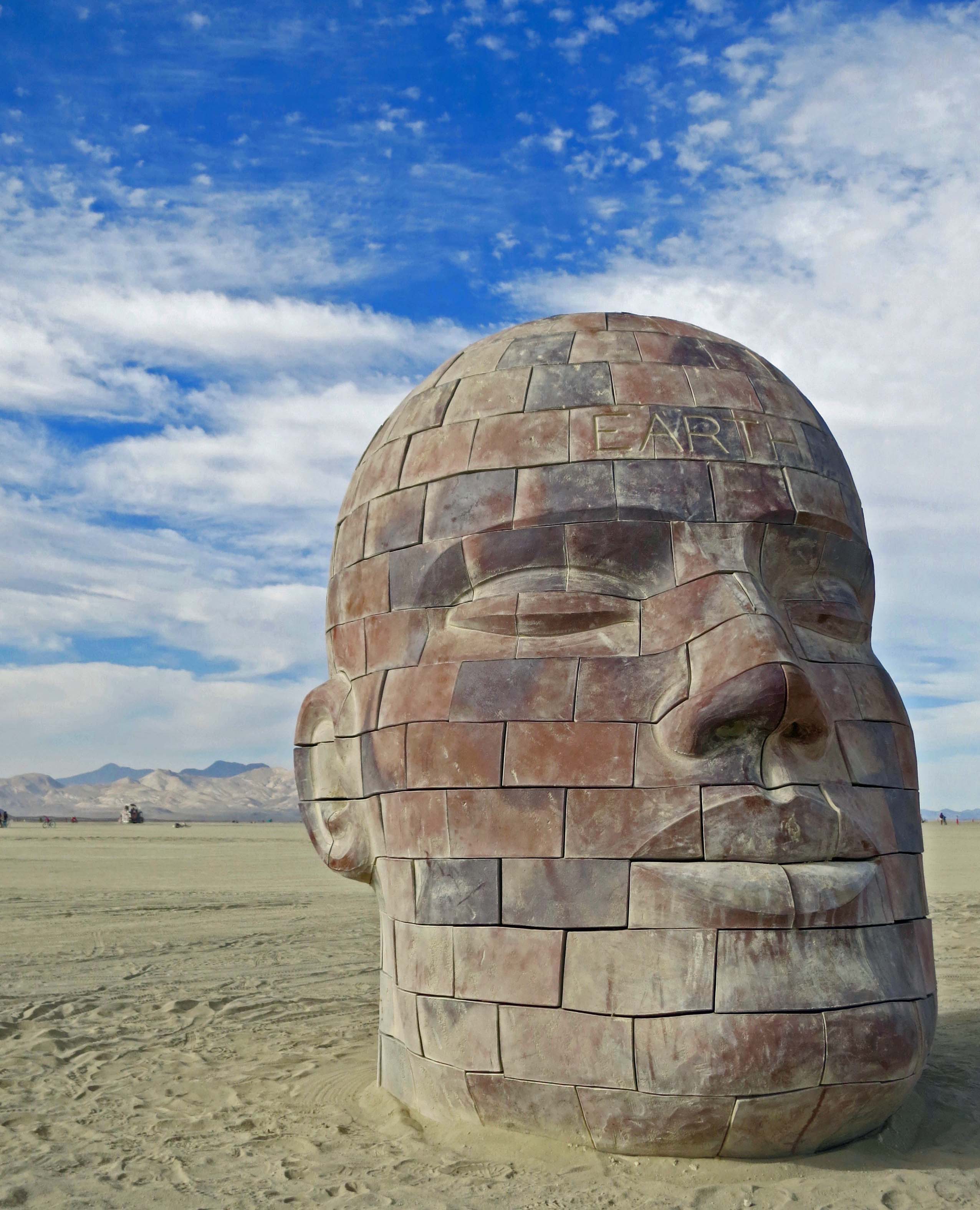
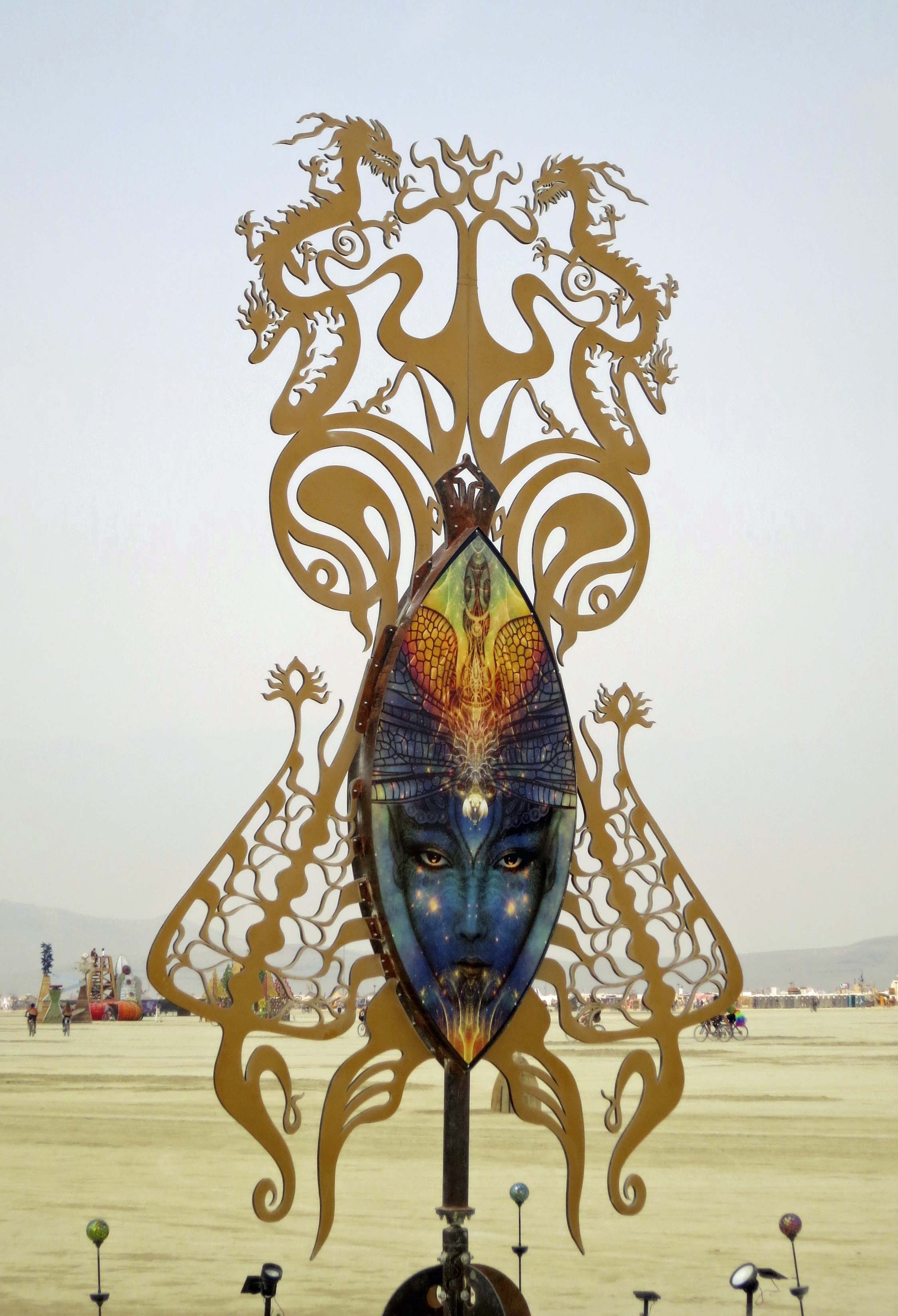
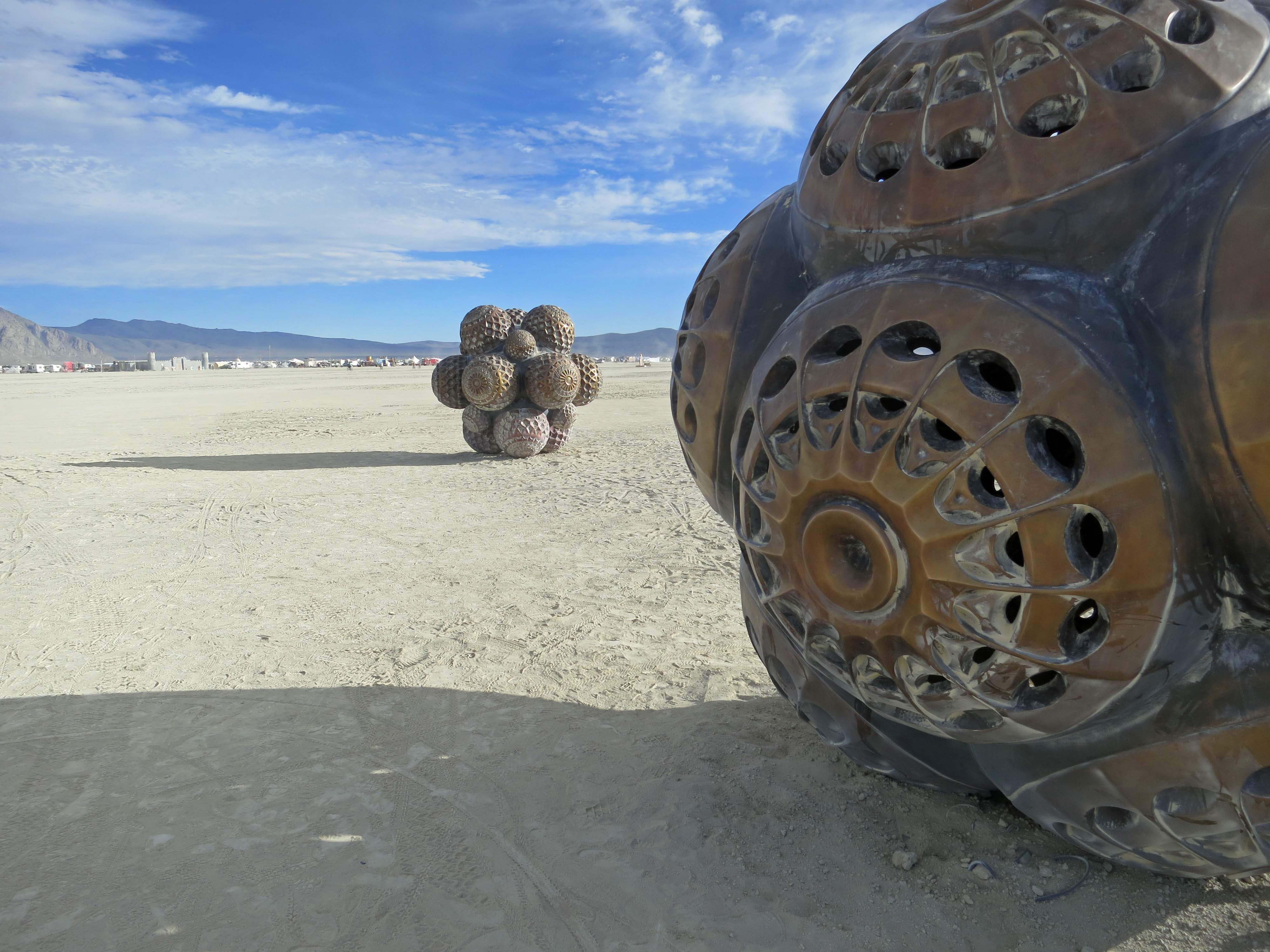
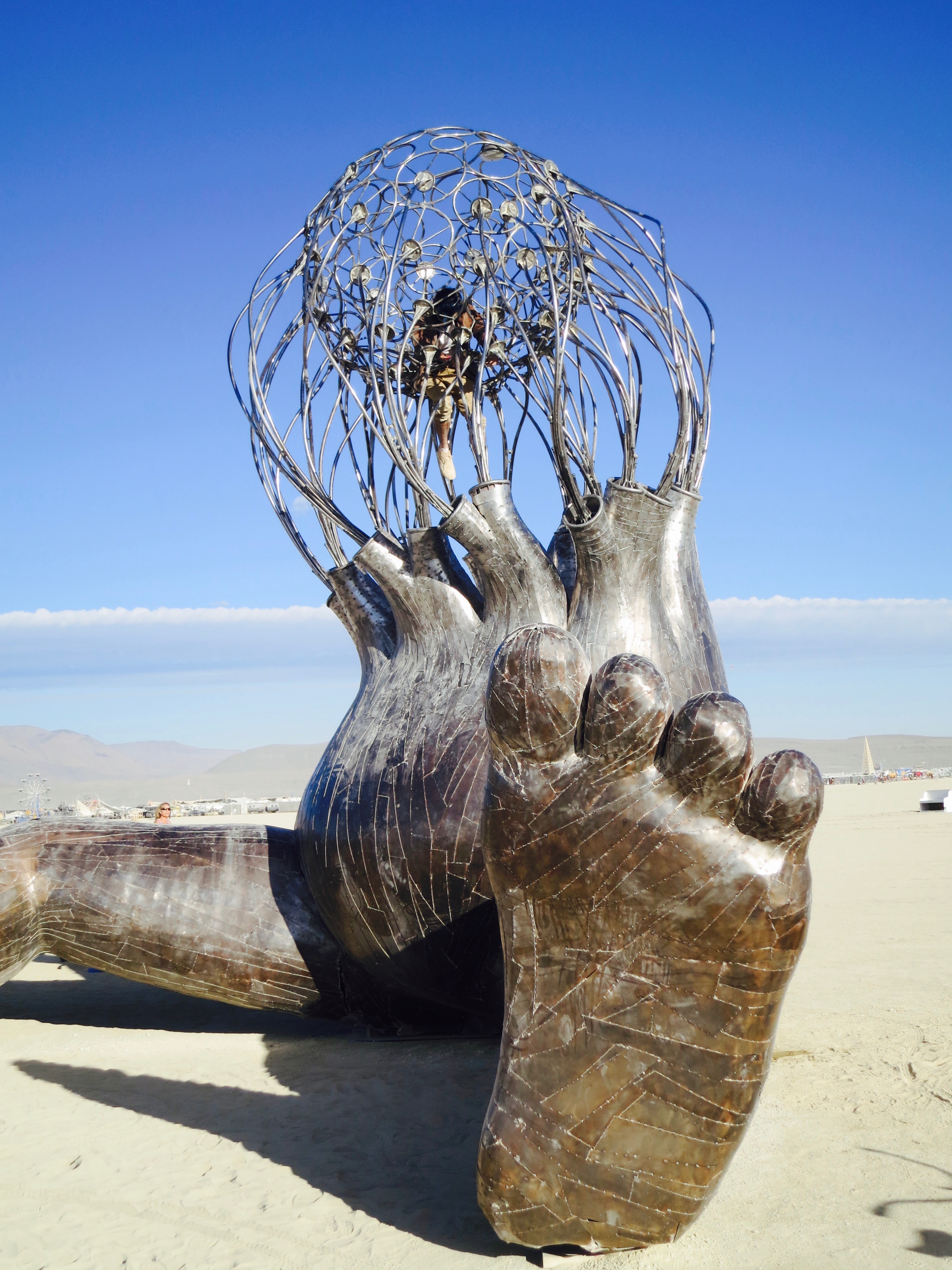
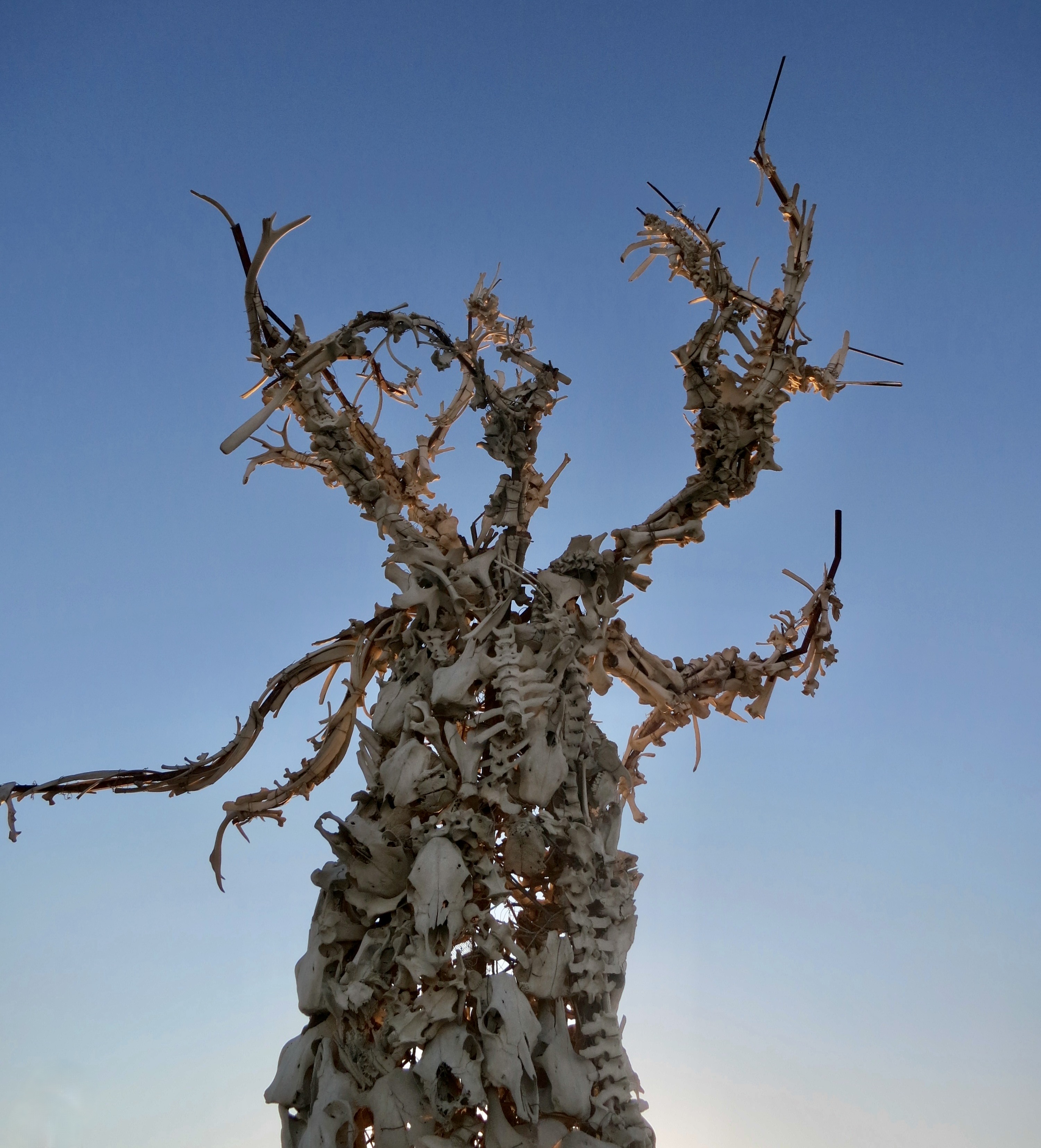
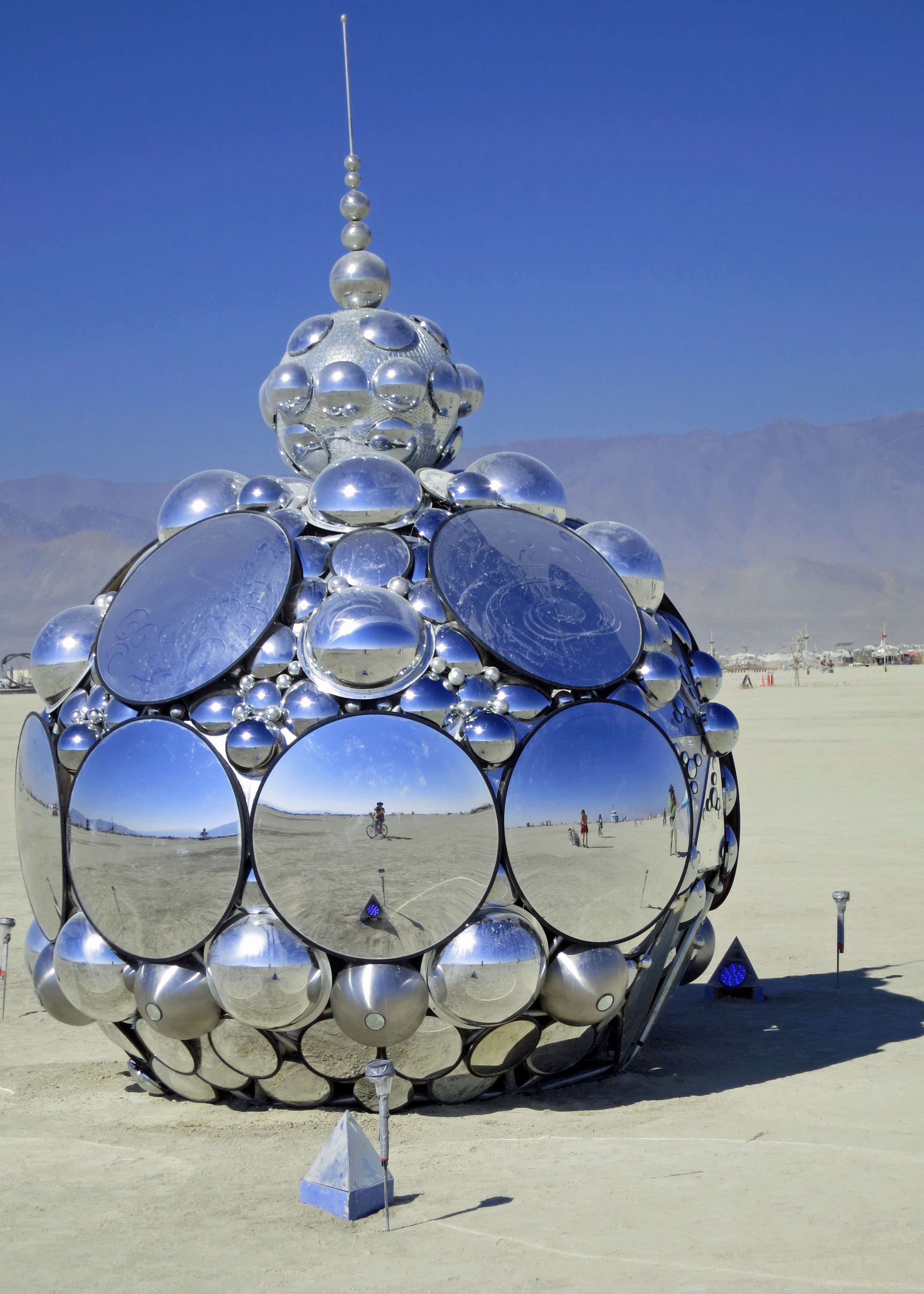
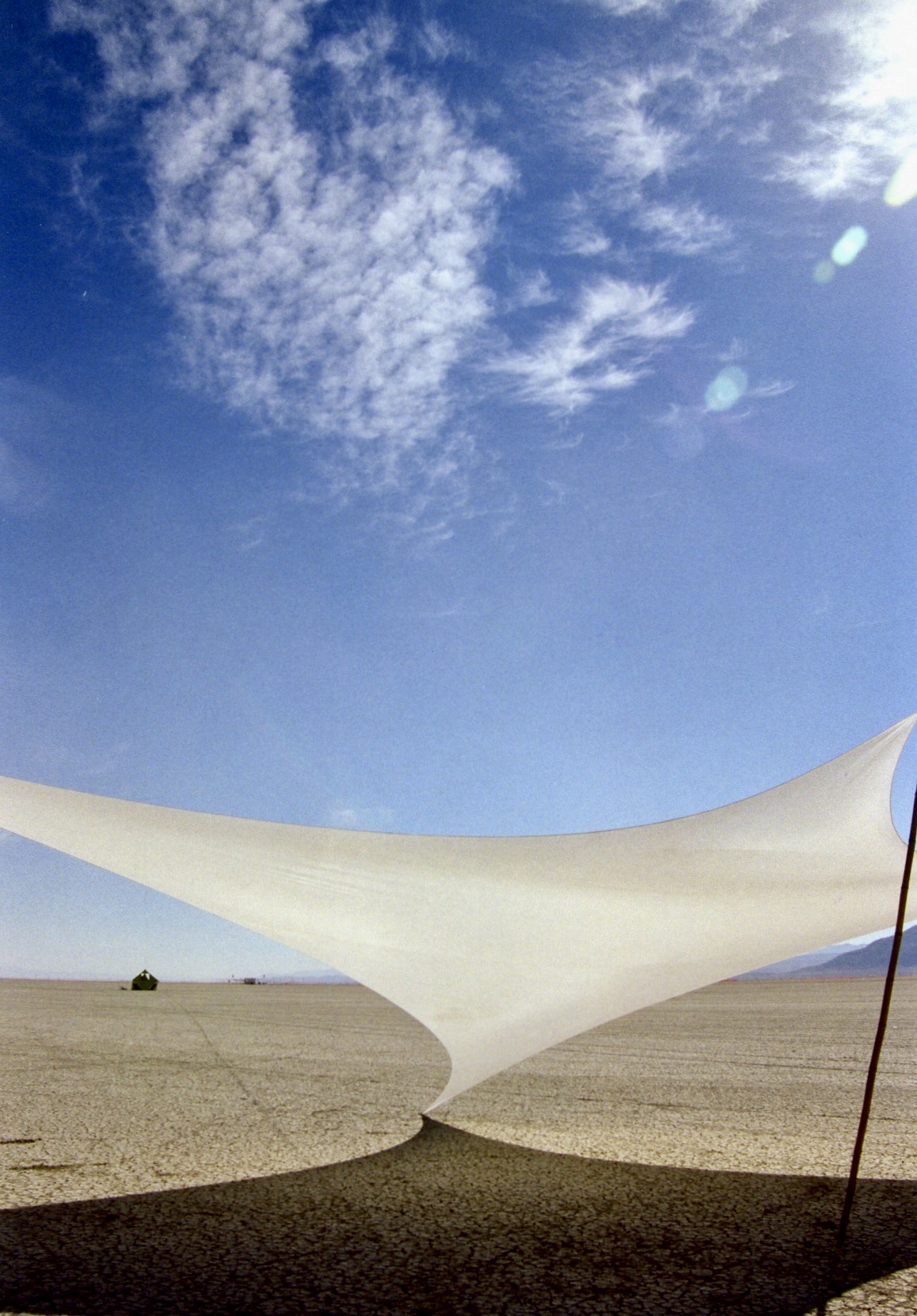
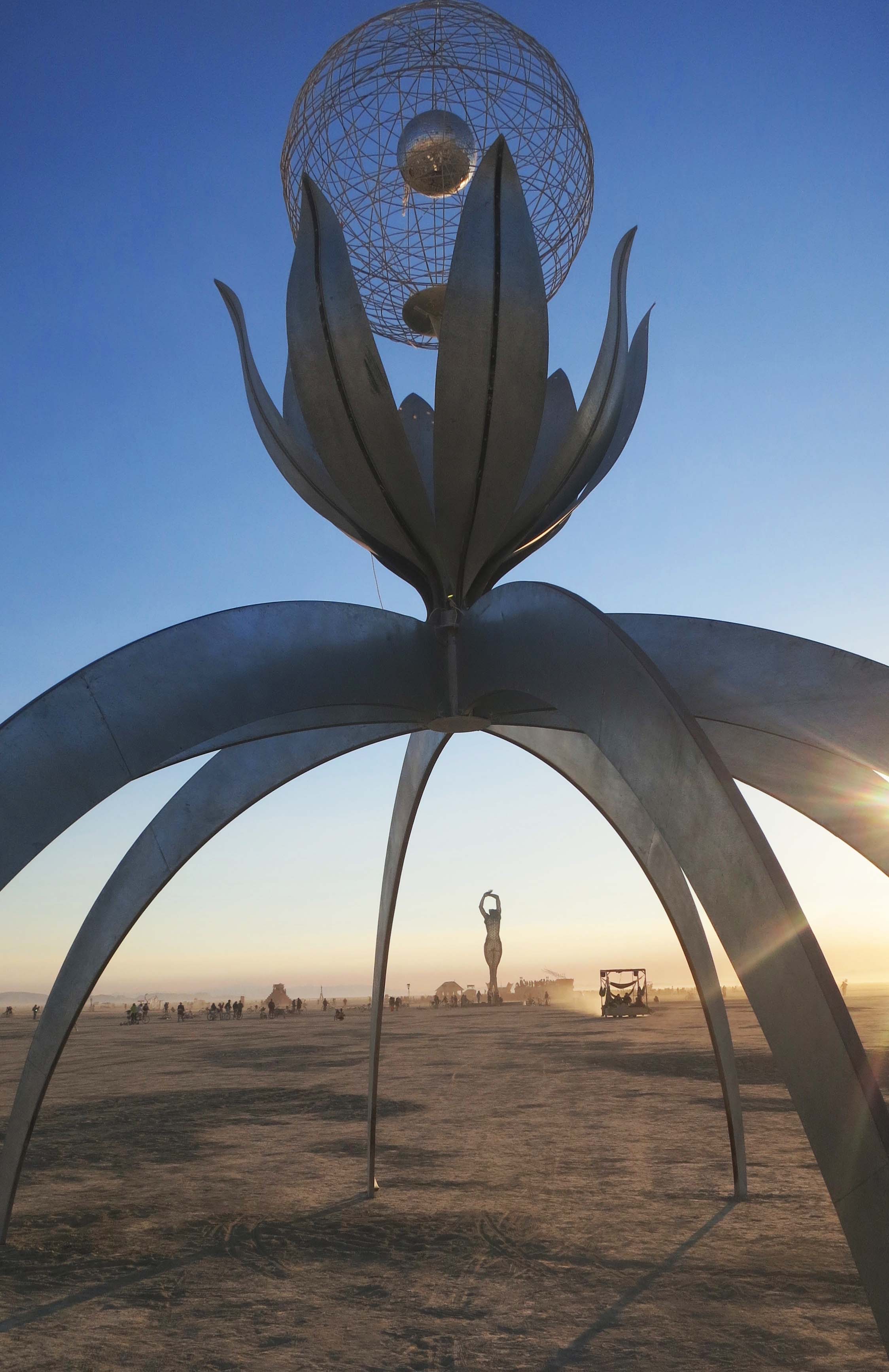
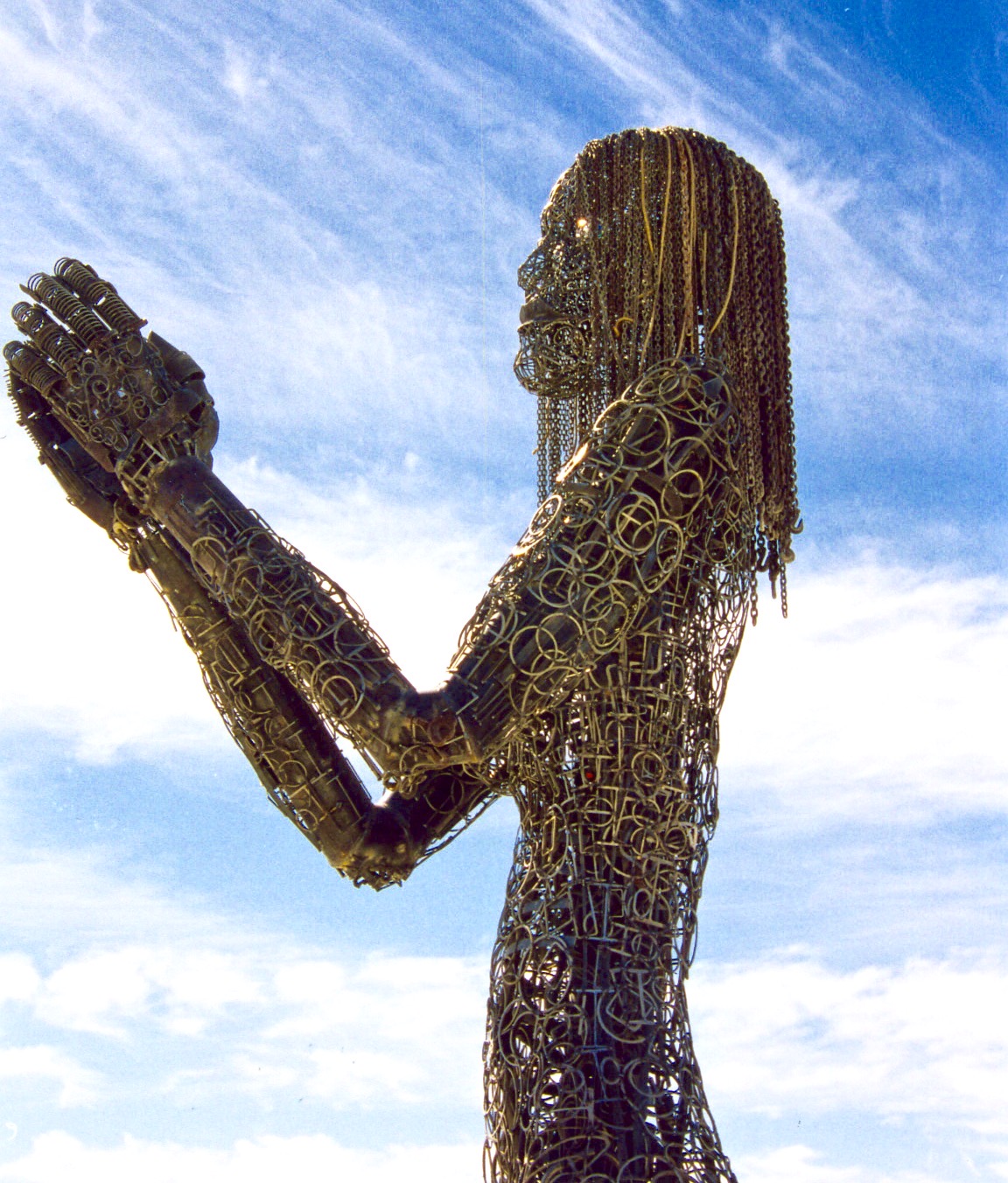
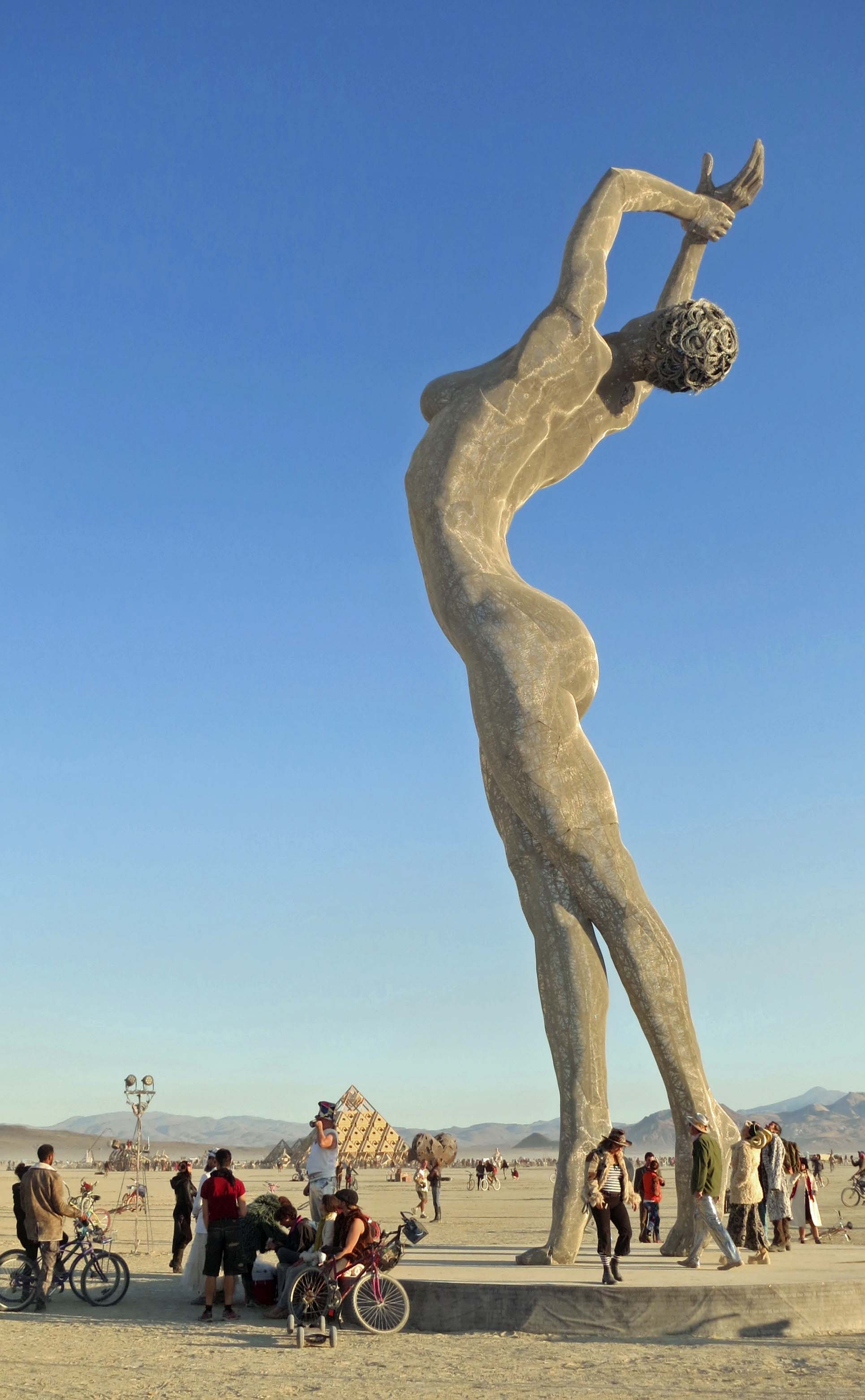
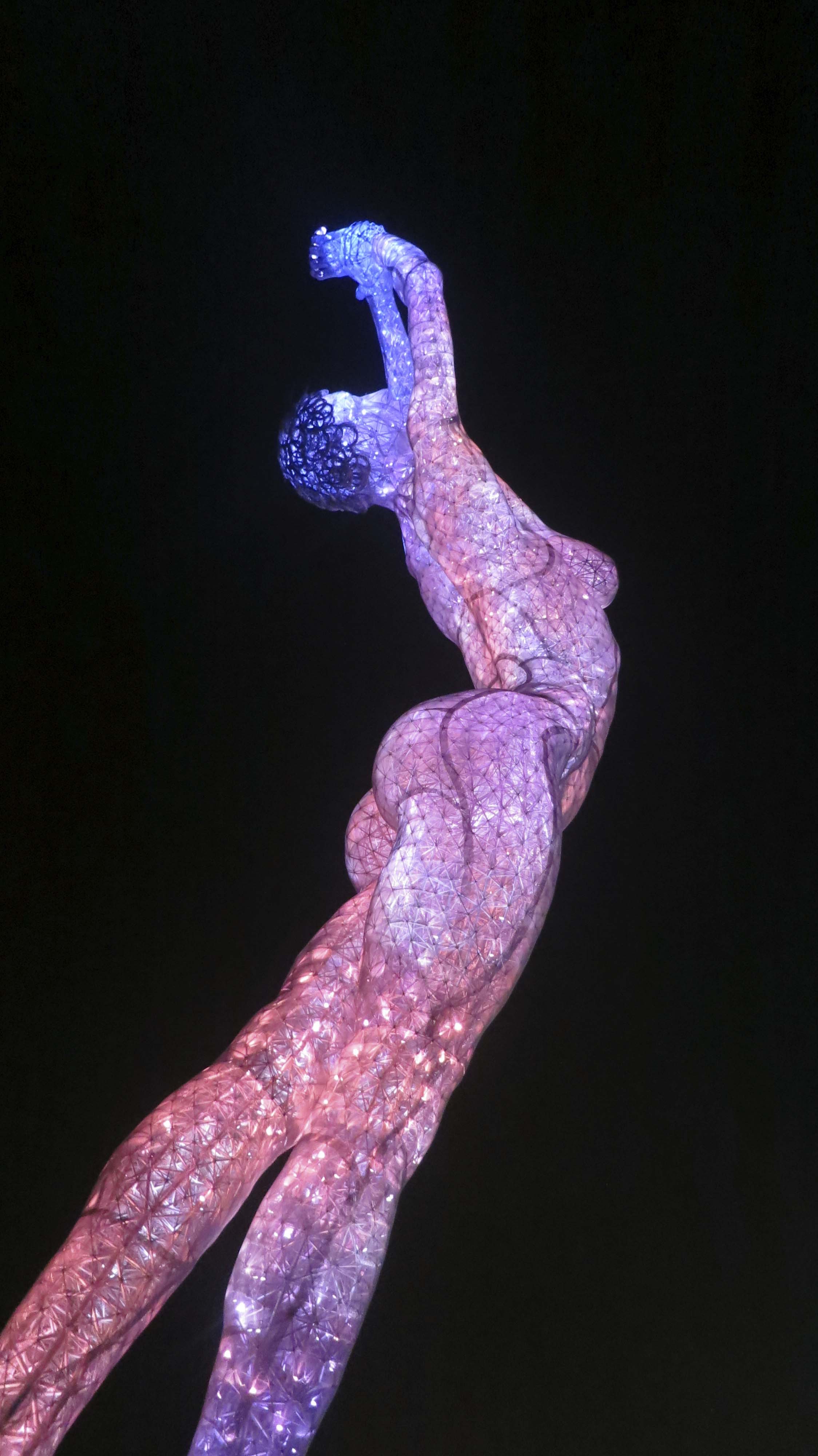
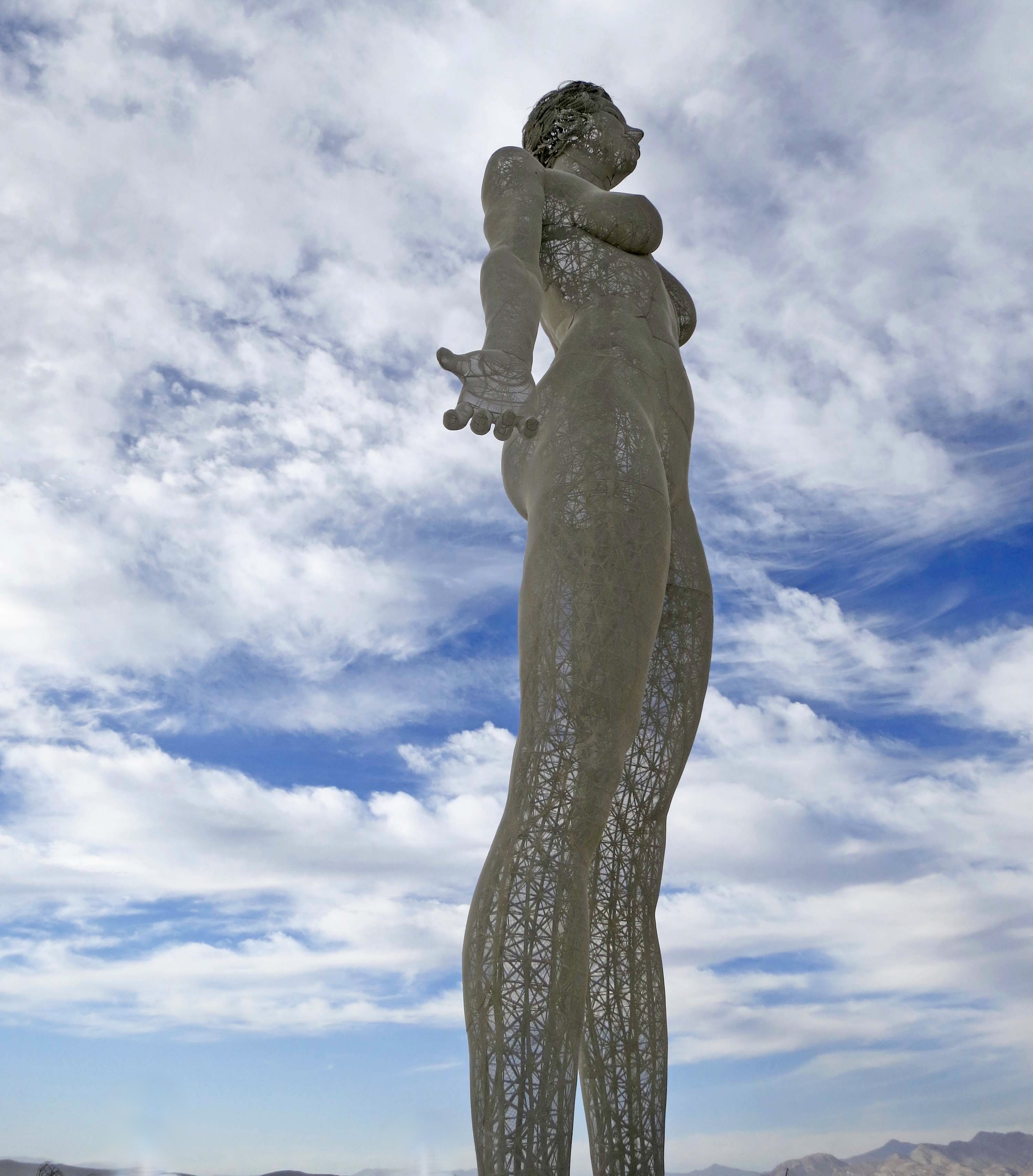
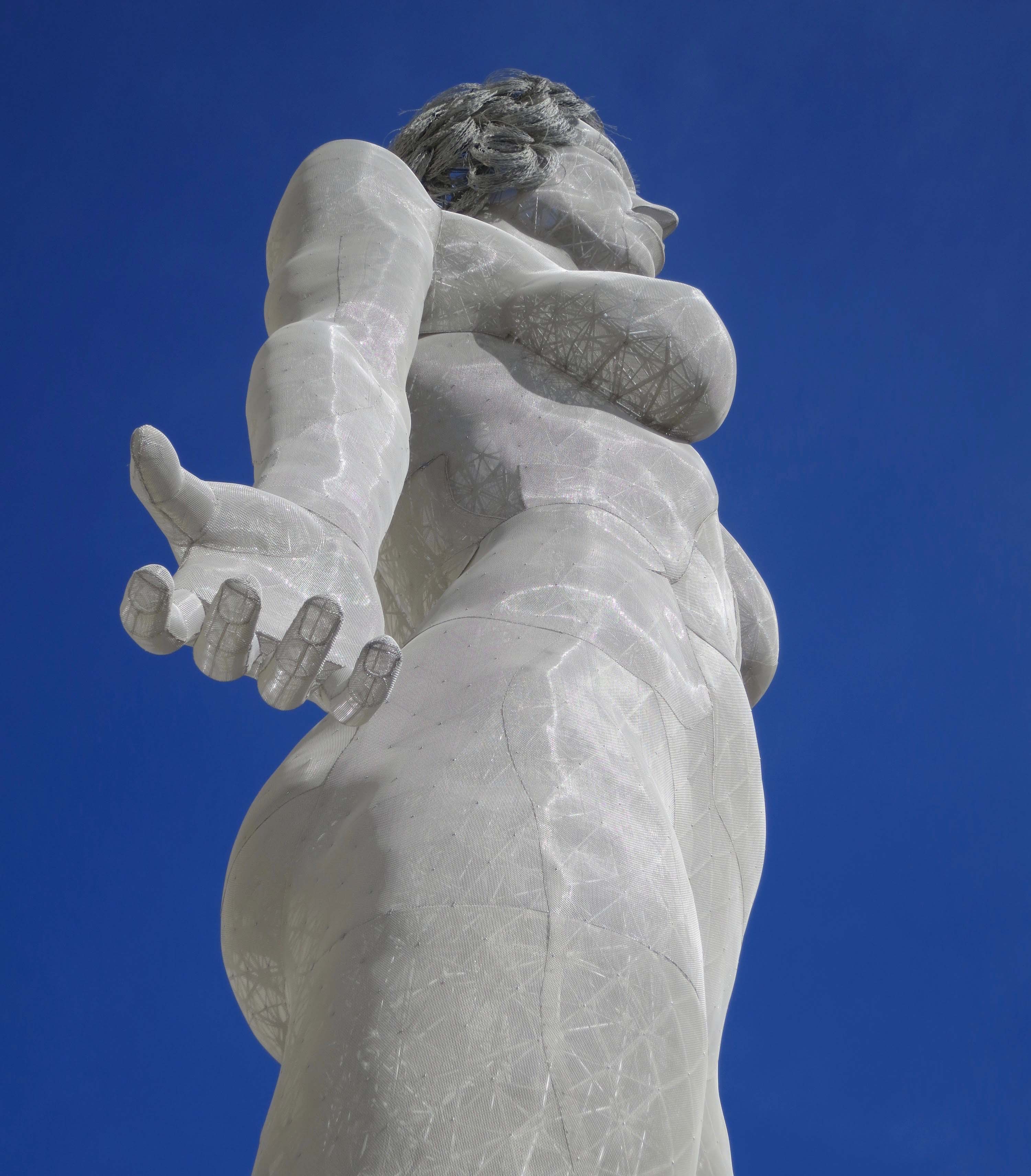
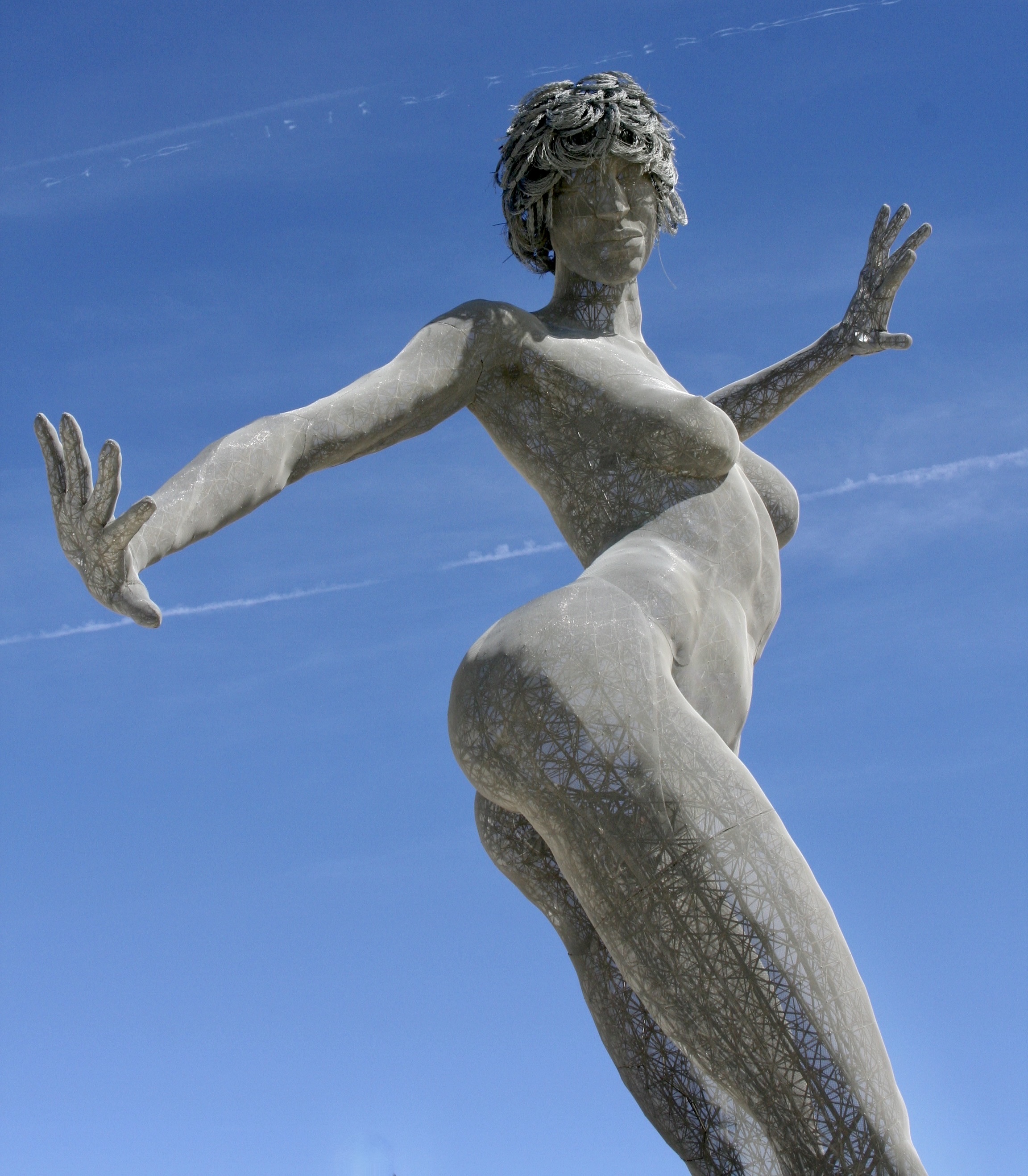
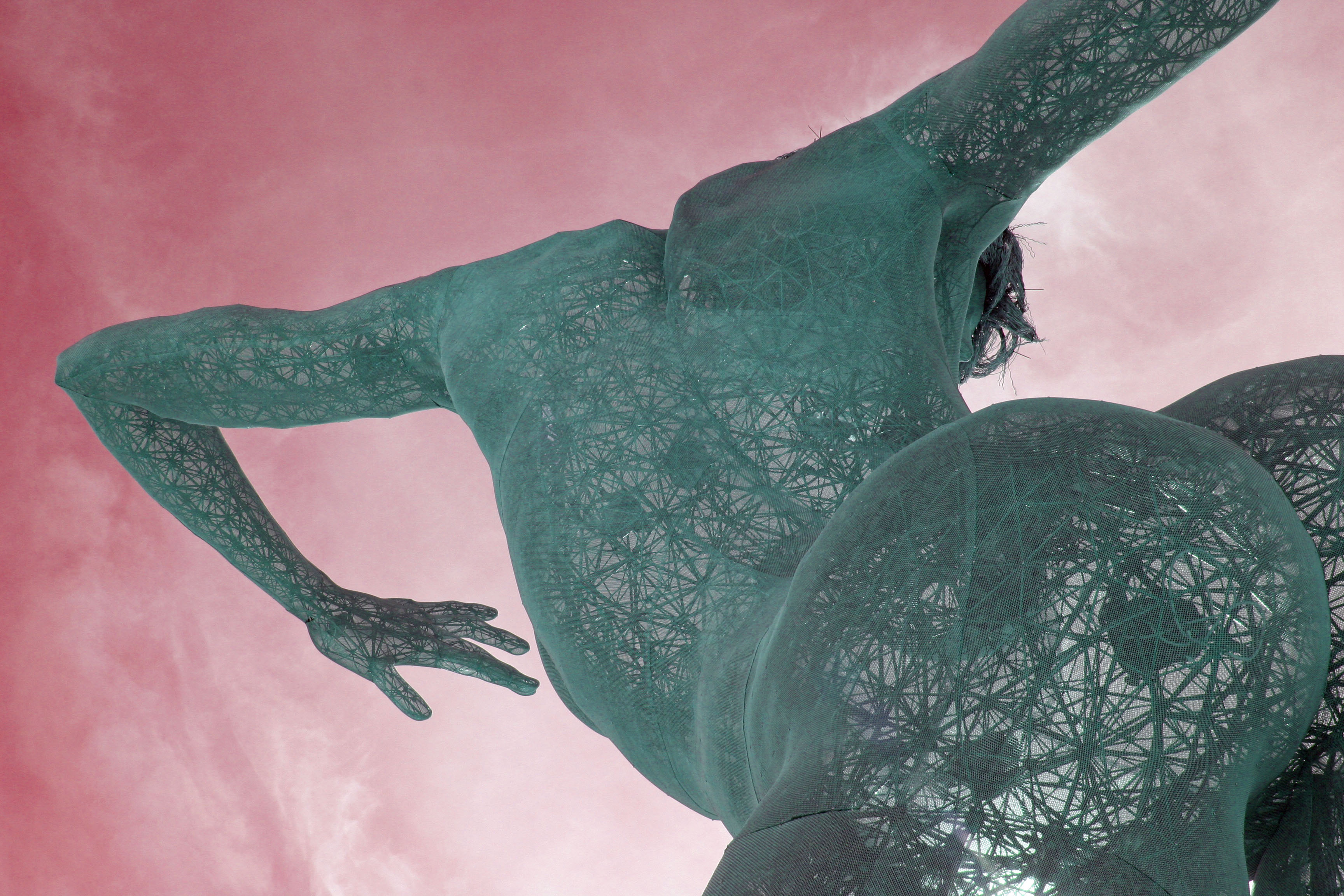
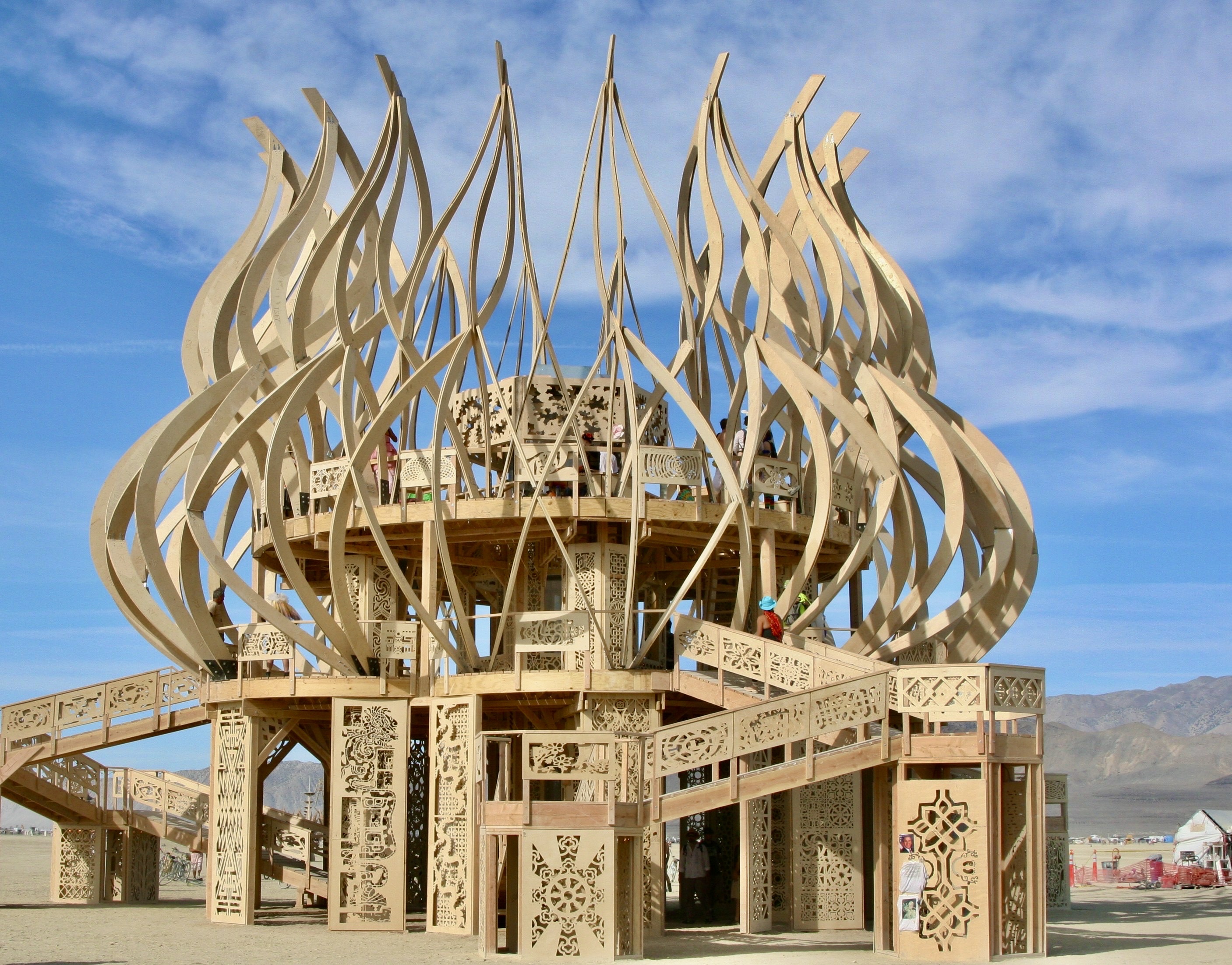
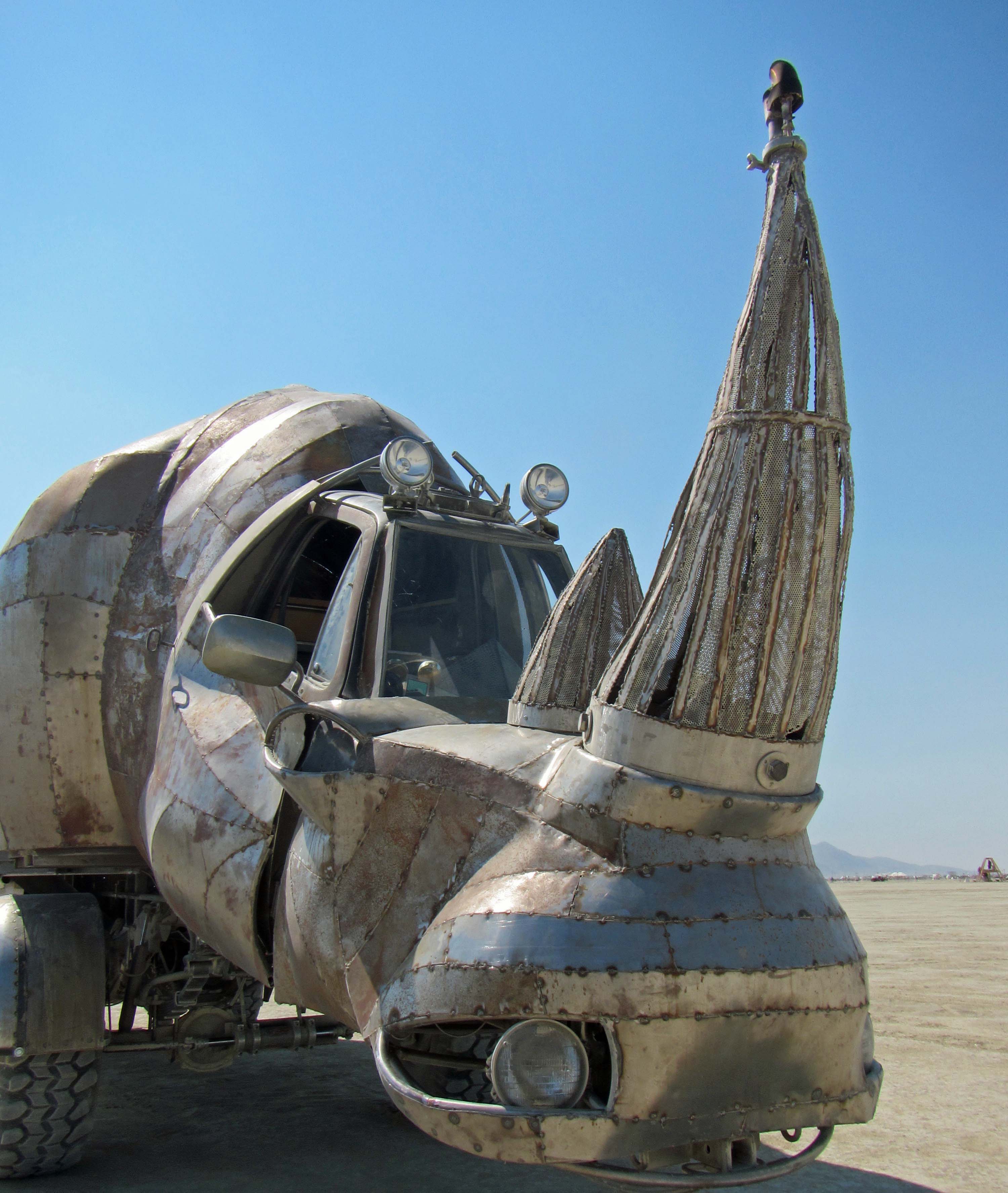
Art comes in many forms at Burning Man— from massive sculptures, to mutant vehicles, impressive buildings, costumes, performances, photography, murals, etc. There is no other place in the world that inspires as much creativity for a one week period.Today, I am going to consider some of Peggy and my favorite sculptures from our 12 years of visiting The Black Rock Desert. Where else could one find oil tankers welded together?Or Medusa.Not a ‘do’ you could get (or want) from your local hairdresser.Can you imagine the amount of work that goes into putting these creations together?While Medusa may give you nightmares, many of the sculptures are created with a sense of humor. Meet the Queen Bee with enormous boobs.Or join me as I photograph the nostrils of the sphinx…You probably didn’t see this coming.A 20 foot tall goofy rabbit. (Tom Lovering took this photo.)As I recall, these colorful characters were outside the Silicon Valley Village. Was there a message for us? The one on the left looks a bit like Elon.I really liked this dog.And these cats.It isn’t surprising that a flying saucer crash landed at Burning Man. It is located, after all, in the Nevada desert and all the ETs wandering around have to come from somewhere. This baby flying saucer, on the other hand, was a bit surprising.Was the Man keeping an eye on Junior from his flying saucer perch? There is plenty of mischief one can get into around Burning Man. Adult supervision is required…(Photo by Tom Lovering)Like dancing to this wild rabbit fiddling away at Center Camp. It’s not the dancing that would impact baby flying saucer, it was dancing into the wee hours as Burners do. Babies need their sleep. (Photo by our friend Don Green.)This guy, listening to the rabbit, came close to losing his pants while getting down to boogie.The little fellow might run into a dragon.Or, worse, a dragon guarding its egg! That’s one ferocious momma.Best to pass by when it’s sleeping.Then, there is pitchfork man who was seriously unbalanced…And monstrous bugs hatching and spreading out over the Playa. (Photo by Don Green.)One certainly wouldn’t want to run into this horny spider with crossed swords after dark.Or a Texas longhorn emerging from the Playa.The little guy needn’t worry, however. There is plenty of love at Burning Man.The key is letting go of your ego…And believing. For example, this monster robot was just out walking with his dog and carrying a flower.The large pink rabbit let a little kid run up and hug its leg.And the giant butterfly invited folks to relax and enjoy the view. (Photo by Don Green.)A 50 foot tall couple was willing to share hugs…And the ferocious looking Coyote was only howling at the moon.Babies (inner children) reached out to each other, providing hope…And lots of aliens cleverly disguised as topless Burners were available to look out for baby saucer. (Otherwise, they might be stuck on Earth, which they had serious doubts about at this time.)A lighthouse was available to provide guidance…To wherever in the world the little guy might want to travel…There were plenty of bicycles to borrow for local transportation (some fixing required).And a rocket ship to provide a boost into outer space if needed.Woohoo!And now that the baby flying saucer has been taken care of, here are some of our other favorite Burning Man sculptures…These blocks seemed to be reaching for infinity…A head made of bricks was Earthy, according to his forehead.A mask with glowing eyes stared out at passing Burners. Not sure what this was meant to signify, but it has always been a favorite of mine. One wonders where all of the Burners are. But if you get far enough out on the Playa, they are few and far between. Big feet, big heart? Yes, there is a person up there. A general rule at Burning Man is, if it can be climbed, it is climbed.Ghost tree made out of bones. No climbing this. A sign told Burners to stay off. But….no guarantees.Mirror image. Every time we passed by this sculpture, someone was taking a selfie. Usually posing. I took a photo of myself taking a photo of myself while sitting on my bike. Flight.Lotus flower with a distant view, which brings us to…Giants. This was from 2006 Burning Man. Several giant male and female statues were facing an oil derrick. The oil tankers shown at the beginning were from the same year. “Hope and Fear: The Future” was the theme.The human body has fascinated artists forever. Burning Man was blessed with these sculptures. There were three in the series. This was known as Truth Is Beauty.And she was beautiful at night as well as during the day. The sculpture was constantly changing color.R-Evolution was another of the three giant sculptures by Michael Cochrane. A close up. Note the internal structure, which also shows up prominently in the two photos above.And finally, Bliss. My favorite because she is obviously having fun.I’ll conclude with this close up. I had fun playing with both the form and colors. Like much that happens at Burning Man, these sculptures rightfully received world-wide attention. I was surprised to find that one of my photos even showed up in a French poetry magazine. (They didn’t ask, but they did give credit.)Next in the Burning Man Focus Series, we’ll take a look at the striking and unusual Temples of Burning Man.
On Thursday, I’ll post the next in my UT-OH! blog-a-book series: The tale of how MC the Cat barely avoided having his danglies cut off, which, much to his dismay, would have ended his tomcatting ways.
Here I am with Tickle and my mother, sitting on the edge of the Graveyard. Tickle was my constant companion when I wasn’t at school. That included nights when I slept outside in the summer where he joined Pat the Greyhound and Demon the Black Cat in keeping the ghosts away.
First Grade was not the highlight of my school years, thankfully. Things had to get better. And did. My second and third grade teacher turned out to be my Godmother. There is a commandment issued on a mountain somewhere and written in granite: She had to like me. My attitude toward education made a dramatic leap. I actually became something of a teacher’s pet, which surprised everybody. Me, most of all. But back to the wilderness, er, Graveyard.
Between the third and fourth grade, I discovered a new way to enjoy nature. I moved my bedroom outdoors in the summer. It was partially to avoid sharing a room with Marshall and partially to escape my father’s house shaking snores. But the real reason was that I loved being outdoors. I would move out as soon as school was over and stay until it started, or later if parents and weather permitted.
At first I slept on the ground in a cheap cotton sleeping bag. The ground was hard, the nights cool, and the mosquitoes persistent, but these were minor drawbacks. I was free. If I had to pee, I’d climb out of the sleeping bag and find the nearest bush. If I woke up thirsty, a convenient garden hose was nearby. I would go to sleep watching the stars and listening to a giant bullfrog that lived in the ditch in front of our house. I would wake up to the cool morning air and chirping robins. Life was good.
Then it got better. My grandparents bought me a real bed— a wood framed, steel spring army cot, complete with mattress. Looking back, I think they may have been embarrassed that their grandson was sleeping on the ground.
My paradise was marred by one thing, the Graveyard. It was always there on the edge of my sight. White tombstones glared at me.
As hard as I pretended, the cemetery and its frightful inhabitants would not go away. So I developed a set of defenses. The first was to sleep facing the opposite direction, or hide under the covers, ostrich like. A more sophisticated approach was to locate the bed where I couldn’t see the Graveyard. Our well-seasoned cars worked in a pinch, but they weren’t quite large enough. Bits and pieces of the Graveyard would creep around their sides, peak over their tops and slink under their bottoms. A trellis built by my father, Pop, was much better. Its luxurious growth of honeysuckle created the perfect screen. I set up a permanent residence behind it.
But even the trellis wasn’t enough to calm my imagination. More drastic action was called for. I hired protection. It came in the form of various family pets. Their job was to chase the ghosts away. Payment was made by allowing them to sleep on my bed. Apparently, the scheme worked. The evidence is irrefutable: No ghosts attacked me in the years I slept outside.
The downside was that I didn’t have much room. Two dogs, a cat, and me on a one person army cot constituted a menagerie, or a zoo, if you counted the fleas. It was difficult to move. At first, I was very careful not to disturb my sleeping companions. I became a circus contortionist frozen in place with body parts pointed in every direction. If this meant a sleepless night, so be it. It was a small price to pay for keeping the ghosts at bay.
Gradually, my attitude changes. I grew larger, the bed space shrank, and the animals started sleeping on top of me. Meanwhile the ghosts, who tend to hassle little people more than they do big people, became less of a threat. Therefore, I needed less protection. Neither of these factors led to the final banning of the animal kingdom, however, it was the shameless shenanigans of Demon the Cat and Pat the Greyhound.
Demon the Black Cat
Demon, the alpha family cat, was as black as the darkest night. As such, she was appropriately named and attired for Graveyard duty. In fact, she spent a good deal of her life there, stalking mice, lizards, birds and anything else she could get her claws into with impunity. Captured prey would then be brought home for approval, or as gifts. My job was to dispose of the half devoured carcasses, preferably before Mother saw them. I would sometimes tie a string around the unsolicited gifts and run around the yard with Demon in mad pursuit. (Okay, this was admittedly weird, but I did receive high marks from the cat.)
Depopulating the Graveyard was not Demon’s claim to fame, however. Motherhood was. She had kittens often and everywhere. I suspect that half of the cats living in Diamond Springs and El Dorado County CA, today, can trace their lineage back to her.
Two instances of kitten production bring back vivid memories. The first took place on the living room floor. Demon was a young cat at the time, and a neophyte at motherhood. Her impending delivery was quite apparent from her large belly and ceaseless exploration of clothes hampers, closets and other dark places. With high hopes of avoiding a misplaced litter, Mother had arranged her bedroom closet as a maternity ward.
It was my duty to show Demon her new home several times a day. I would carefully pick up the very pregnant cat, carry her to the closet, and deposit her in a box with well-used clothes. Demon didn’t buy the program. It seems that my bedside manner was faulty. She would climb out of the box, glare at me, and stalk out of the room.
When the joyous day finally arrived, I was home alone. Demon was practicing her would-be mother waddle walk across the floor when she suddenly stopped, squawked and squatted.
Neither she nor I was ready for what followed. After all, how prepared can a young kid and a first-time mother be prepared for birth? In a massive surprise to both of us, a tiny, black bundle of fir emerged from Demon’s undercarriage. Surging emotions paralyzed my seven-year-old mind.
One thought stood out: The closet! If Demon hadn’t memorized her delivery lessons, I had. I jumped across the room, grabbed her by the nape of the neck, and dashed for Mother’s bedroom. As fast as I ran, it wasn’t fast enough. In the middle of the kitchen, the new arrival completed her journey and was heading for a crash landing. Somehow, somewhere between Demon and the floor, I caught the warm, wet ball of fur in my free hand. After that, my memory fades but I know that the three of us made it to the closet. I left Demon busy licking her new baby. Demon accepted her new home and four more kittens followed the first, although in a less dramatic way. Diamond’s cat population explosion was underway.
Part 2 of Hiring the Family Pets to Keep the Graveyard Ghosts Away will be posted next week on Thursday’s blog-a-book day. Tune in to learn about my second vivid memory of Demon’s kitten production, how Pat the Greyhound became a member of our family, and how Pat and Demon’s bad behavior led to the banning of animals from my bed. Sort of.
Monday’s focus post will be on the wonderful, weird, and often whacky mutant vehicles at Burning Man. It’s a blog you won’t want to miss.
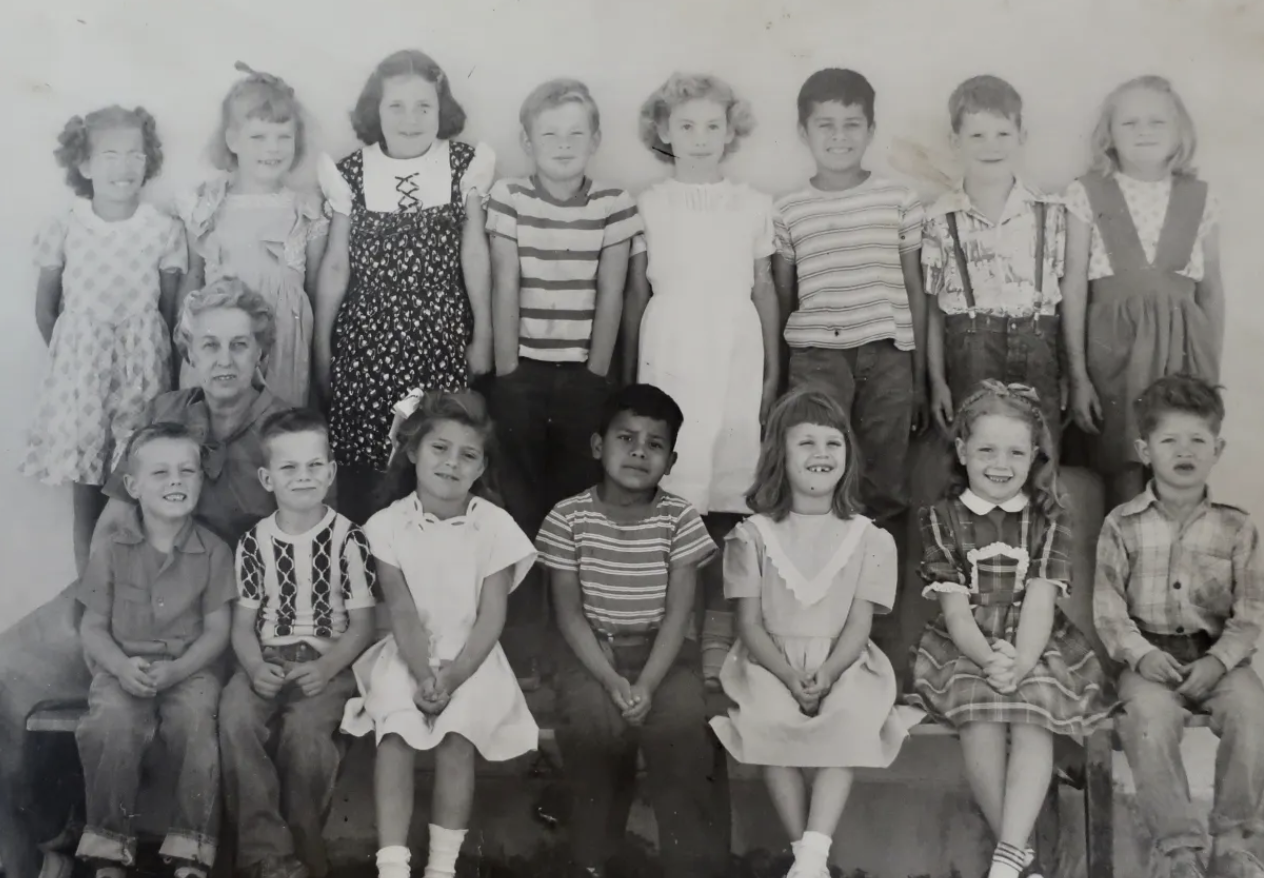
Here we are in the first grade class of Diamond Springs Elementary School in 1949. I’m in the middle of the back row with my hands in my pocket, crunched together between two girls. Rudy is one person to the right of me. Robert is in the middle of the first row. Joe is on the far right, bottom row. My life-long friend Bob Bray, who you will meet in future chapters, is sitting in the front row just right of Mrs. Young.
My endless vacation came to an end the fall of 1949. It was time for the first grade. Mother was delighted. Mrs. Young, not so much. A number of the little boxes on my report card that reflected good behavior were marked ‘needs improvement.’ Mrs. Young had decided I needed a lot. Is neat: needs improvement. Shares: needs improvement. Is polite: needs improvement. The list went on. I was a little savage.
The ‘neat’ part was particularly sensitive. My shoes were falling apart, my pants had holes in them (this was before it became a fashion statement for young women), I smelled like a little boy who only bathed once a week, and didn’t wear any underwear. You might wonder how Mrs. Young knew about the latter. It wasn’t that she did an inspection. The zipper was to blame.
I was in the bathroom one day, had finished peeing, and was zipping up my pants when my poor little guy got stuck in the zipper. Damn that hurt! I screamed like the six year old man I was and made a beeline to Mrs. Young to solve the problem. She must have been delighted and wondered where in her contract it stated “Must be available to liberate little boys’ penises from zippers.” Anyway, she did her job. I suspect a not-nice note was sent home to my mother. Anyway, underwear became part of my attire, forever after.
I thought of naming this chapter, Free the Penis! But my editor/Peggy (wife) thought not.
Once, I got spanked. “Reading and writing and ‘rithmetic taught to the tune of a hickory stick” the old song School Days proclaimed. My classmate Joe and I had disagreed over who was top dog. We fought it out on the playground. I thought I was doing Mrs. Young a favor by clarifying the issue. Joe was even more uncivilized than I. She thought otherwise. The only justice I could see was that Joe got it in the end as well, so to speak.
The high point of my year was that I made my first two friends who weren’t family or buddies of my older brother. Rudy and Robert were a pair of Hispanic brothers who lived in a small house out in east Diamond. We had hit it off immediately and on a Saturday toward the end of school, the boys and their parents invited me up to their house to spend the night. It was my first official play date and my first ever sleep-over. I was nervous. My mother took me up and dropped me off to a royal greeting by the boys, their parents and their siblings.
“Quick,” the boys urged, “we have to go stand by the railroad tracks.” We could hear the train’s whistle as it approached Diamond.
The tracks were part of a narrow-gauge railway Caldor Lumber Company used to bring logs from its tree-cutting operation 20 miles up in the El Dorado National Forest to its lumber mill in Diamond Springs. When the company was established in the early 1900s, it had located its sawmill in the forest near its logging operation and used mules for hauling the logs. It had then switched to oxen, and finally a giant steam tractor. The tractor made so much noise that the company was required to use outriders a quarter of a mile in front to warn people so their horses wouldn’t be spooked.
Understandably, the company switched to the railroad when it relocated its mill to Diamond Springs, 20 miles away. The train, in turn, would lose out to logging trucks in the 50s. At the time, however, little kids still had the joy of watching the engines and their line of rail cars carrying massive logs out of the forest.
Caldor’s steam engine and its load of logs. Note the size of the logs. (Old newspaper photo)
My father had a close connection with the railway. As one of Caldor’s two electricians, he was responsible for maintaining phone service along the track between the lumber camp and the mill as well as the massive machinery the mill used for cutting up logs and producing lumber. When there was a problem with the phones, off he went to check out the 20 miles of line. A hand cranked generator was necessary for creating the electricity to make calls. We inherited one when the line was replaced. Marsh and I would invite our little friends over, crank up the machine, and have them touch the outlet. They got the message. It was shocking.
Pop’s favorite railway task was clearing snow off the tracks each summer when the logging camp opened up for the season. “We had a diesel-powered rail car with a snow plow on it,” he explained to me later. “We’d back up and take a run at snow banks, crashing into them, and hopefully breaking through. Often our car would jump the tracks. We’d all pile out and lift it back on.” Some fun; he loved it.
While watching the train was high entertainment, the primary attraction for us was that the engineers carried an ample supply of wrapped hard candy that they would throw out to the boys and girls standing alongside the track. It was a tradition.
The train was near. We could hear it chugging along. Rudy, Robert, their brother, sisters and I sprinted the hundred or so yards over to the tracks. Being a smart ass, I laid down and put my ear on one of the rails. It was a trick I had learned from the Lone Ranger and his side-kick, Tonto. You can actually hear the vibrations and supposedly judge how far away the train was. I needn’t have bothered since the train came into view a hundred yards away while my I was focused on the ‘vibes.’ I’m sure the engineers saw me.
“Get off the track!” Rudy and Robert screamed. We started waving vigorously. One of the engineers dutifully leaned out of the cab and tossed us candy, lots of it. We scrambled around picking it up and shoving it in our pockets. At least the ones that weren’t shoved into our mouths.
After we had collected our candy from the train, dinner was a long hour off. I suggested to Robert and Rudy that we head out to the woods behind their house and ride trees. Who needs horses? My brother and I had learned that we could climb up to the top of young, skinny pines and make them sway back and forth by leaning out. The farther we leaned, the more they swayed. It offered a free carnival-like experience 10 feet up in the air. Even more could be accomplished by throwing our feet out in the direction the tree was swaying and hanging on for dear life. If the tree was skinny enough, two of us could make it bend all of the way down to the ground, where we would drop off and allow it to snap back up. It took a while for me to persuade Rudy and Robert that the sport wasn’t going to kill them.
I suspect the trees didn’t enjoy the experience nearly as much as we did. Years later when I read Robert Frost’s poem about children bending birches, I fondly recalled our pine tree horses— or bucking broncs if you prefer.
“It’s dinner time!” came the call so we rushed back to the house and made use of an outside water faucet to wash the pine pitch off our hands. Sort of. Pitch has a way of sticking like super glue. It’s the pine tree’s revenge. Mother had a box of Boraxo at home for the task. Hand inspections were held afterward.
“You have to try this,” Rudy enthused, dashing into the house and coming out with a red pepper. I should have been suspicious when the rest of the kids gathered around. But what does a first grader know? I gamely bit into the pepper and was introduced to habanero-hot. The kids roared as I made a mad sprint for the faucet and drank a gallon of water, becoming a major part of the evening’s entertainment. It would have served them right if I’d peed in their bed later.
I forgave them when I had my first Mexican dinner, however. I still love Mexican food. And I’ve come to enjoy habanero-hot on foods ranging from burritos to spaghetti.
As the night progressed, it soon became time for bed. I was about to flunk sleep-over etiquette. The boys slept on the same bed. Admittedly it was bigger than my small single at home, but I had never slept in a bed with another person, much less 2 others, or maybe it was 10. That’s what it felt like. They put me in the middle. I was mortified, but I tried. I really did. Ten o’clock came and there I was, eyes wide open, staring at the ceiling, body frozen in place, and midnight, and two, and four. At five, I gently nudged Robert.
“I can’t sleep. I haven’t slept all night,” I confessed. “I have to go home.”
“Ummm,” the half-awake Robert had moaned and moved.
I got up, dressed, and slipped out of the house by 5:30, careful not to wake anyone else. It was close to dark outside with only a dim light announcing the morning. Home wasn’t that far away, maybe a mile and a half at most. But I still remember the journey from a first grader’s perspective: It was long and spooky, my first great solo adventure. I followed the dirt road over the railroad tracks out to the Pleasant Valley Road. Not one car zipped by. Fortunately. They probably would have stopped and driven me home. Everyone knew everybody else in Diamond Springs with its population of 750. “Sorry to wake you up, Marge, but I found Curt out wandering in East Diamond.” By noon, everyone in town would have heard the story.
I walked past the hill with the cross on it and picked up Highway 49. Halfway home, I came to Tom Murphy’s grocery store. Sodas were stacked in wood boxes in front, waiting to be moved inside. I looked around furtively; I was totally alone. So, I helped myself to a Coke; I deserved it. I continued on my journey, walking by the post office, Dub Walker’s store, the barber shop, Scheiber’s hardware store, the historic Pony Express stop, the firehouse and Gust Brother’s Garage, eventually reaching the dreaded Graveyard. I clutched my coke and crossed the road, preferring Pagoni’s mean dogs to the ghosts.
Arriving home, I carefully hid the soda outside. It wouldn’t do to have overly inquisitive parents discover the purloined drink and ask questions. I happily enjoyed it later in the day, feeling much less guilty about stealing than I did about abandoning my friends. I suspect there was a bit of consternation when Rudy and Robert’s parents woke to find me missing. Imagine what would happen today.
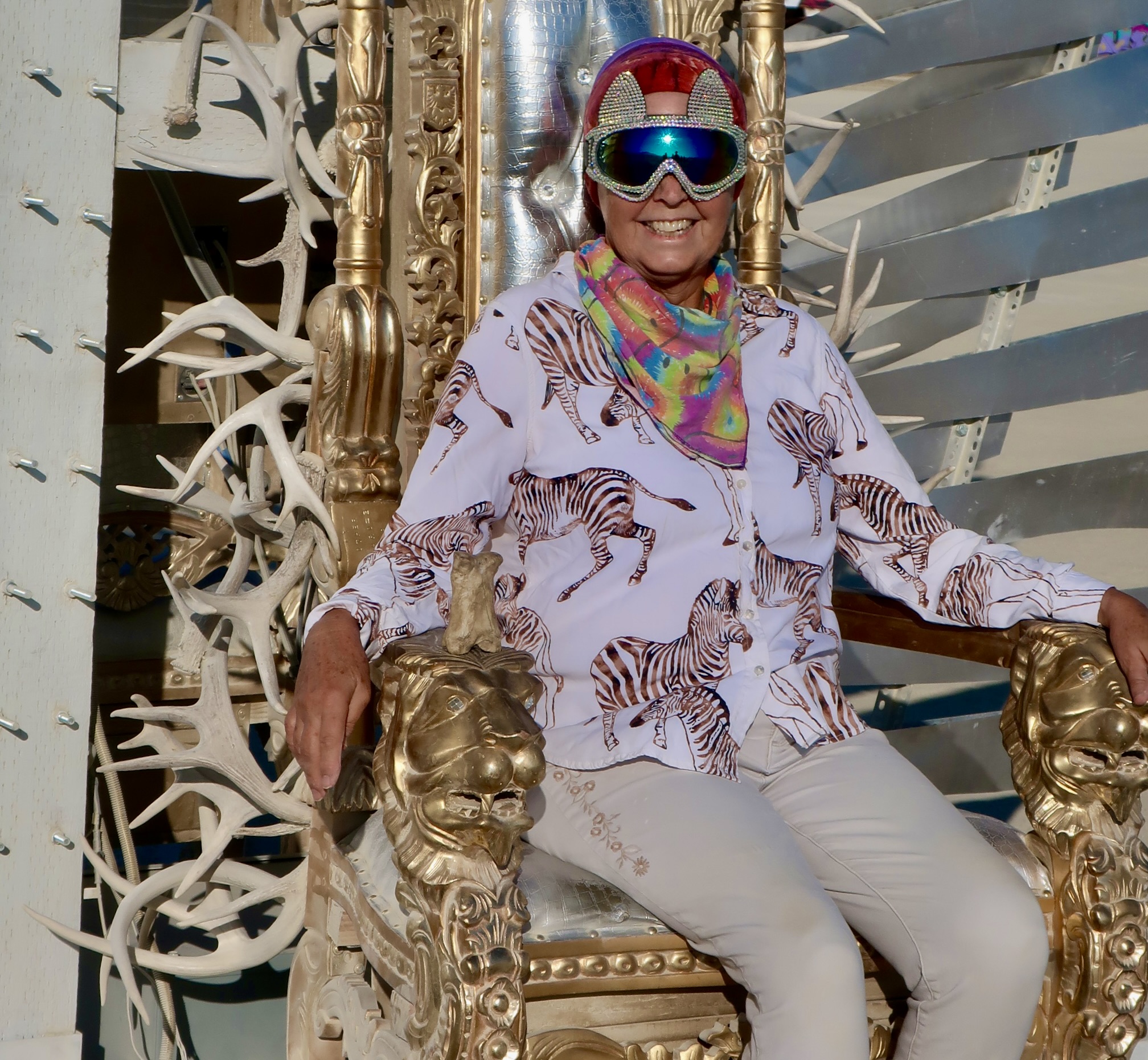
Are you ready for our next focus series? Peggy and I will be returning to the whacky, wild, weird and wonderful world of Burning Man. This is Peggy decked out for Burning Man 2023. The world traveller, Bone (over 50 countries), is resting on the right arm of the throne.
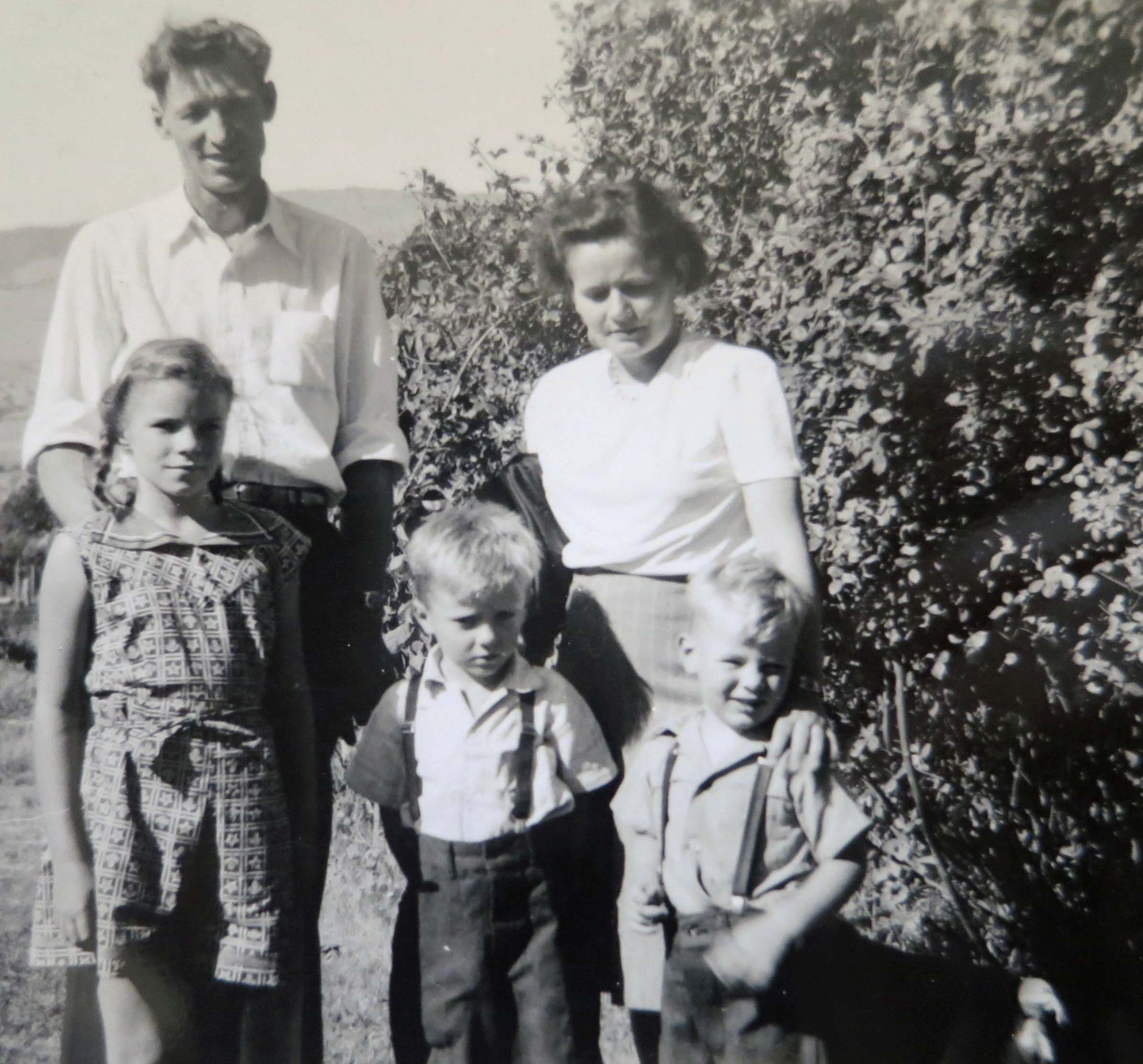
A family portrait taken near Santa Jose, California in 1945. My father, Pop, and my mother, Mother, are in the back. My sister Nancy, brother Marshal and me, the giggling two-year-old, are in the front.
Years that end in three have a special significance to me. They mean another decade has passed. I was born on March 3, 1943. According to the March issue of Life Magazine that year, Americans and Australians were duking it out with the Japanese at the Battle of Bismarck Sea, Westinghouse was firing frozen chickens at airplane windows, and women were wearing bow ties as a fashion statement. None of these events registered on my mind. It was still devoted to getting milk, although, looking back, I would have loved to have witnessed the frozen chicken splat test.
The introduction to my new series is below, but first I want to share a few thoughts in general about UT-OH.
My objective is to relate stories from my past in a memoir format which incorporate— if you’ll pardon the expression— Oh Shit! moments. We all have them, right. My focus will be on such experiences that you laugh about later, not on those you find yourself asking yourself, “Why or why did I do that?” I can haunt myself on those. I don’t need to haunt you.
Second, let’s talk about the name: Ut-Oh. Some of you may look at it and say, “Curt doesn’t know that the proper spelling of Uh-Oh. Maybe I should tell him before he embarrasses himself further.” For the record, I know it’s Uh-Oh, but Ut-Oh is how I pronounced it as a kid and I have every intention of continuing to, no matter how embarrassing. It fits.
Third, a number of these stories I have told in the past in my 15 years of blogging. In fact I even started to organize them once before. I’m doing it again. My apologies to those of you who have already read them. A handful have been with me the whole 15 years. I love you, but a good story deserves to be told over. And there will be new tales!
Finally, there is the issue of accuracy. Peggy read an article recently that stated the older the story from your early childhood, and the more it has been told over the years, the more likely it is to change. Very slightly each time perhaps, but after 75 years? Who knows. Here’s a summary of what AI has to say about it: “Yes, memories from early childhood change over time… reflecting how our brain develops, making narratives richer or more fragmented.” I like richer. Having said that, I’ve tried to make my stories as accurate as possible given my memory and active imagination. Each one actually happened, even if my mind has modified the script, especially from my earliest years.
My intention, assuming I don’t get sidetracked, is to post UT-OH stories on Thursdays and my normal travel blog and focus stories on Mondays.
UT-OH! ANINTRODUCTION
We all have Ut-Oh moments where things don’t go according to plan. Most are relatively minor, like spilling a bowl of spaghetti in your lap when you are having lunch with your future mother-in-law (first marriage). Minor, perhaps, but it’s better if she does the spilling. Either way, it’s an ut-oh in small letters unless your sense of humor (or hers) is out of whack. Even then, it has the potential for making a good story.
In this book, I am mainly talking about larger Ut-Ohs, even all cap UT-OHs— like the time a group of murderers, kidnappers, bank robbers, and Patty Hearst got stuck in a snowbank next to me on a remote mountain road in the Sierra Nevada Mountains. They were out practicing with their automatic weapons, apparently preparing to rob a Sacramento bank.
UT-OH is full of such tales. Most take place in the outdoors. How could it be otherwise given that I’ve spent over 77 years of my life wandering in the woods. I started when I was five by exploring the jungle-like graveyard next to my house. (I’d been kicked out of the first grade for a year.) At 75 I was backpacking 750 miles down the Pacific Crest Trail to celebrate my birthday. Now in my 80s, the adventures continue— as do the Ut-Ohs.
I know what it’s like to be stalked by a grizzly bear in Alaska, charged by a herd of elk in New Mexico, and attacked by army ants in Africa. Once, a rattlesnake tried to bite me on the naked butt. I hadn’t seen it slither into a cat-hole I had dug for bathroom duty in the woods and I’d almost pooped on him. Fortunately for both of us, he had rattled his displeasure as my rear loomed above him.
There are lessons to be learned in this book. Checking your cat-hole for rattlesnakes is one of many. For example:
You should sleep with your shoes in the sleeping bag when you are snow camping in minus 30° F weather at Denali National Park. Toasty warm toes do not appreciate being shoved into solidly frozen shoes.
Screaming loudly may dislodge a bear when you wake up at 4 AM with one standing on top of you.
It’s best to be in shape before venturing out on a solo 10,000 mile bicycle journey around North America. Boy did I pay for that. Did you know that having calluses in your crotch is an important part of preparing for a long distance bike trip?
And finally, I recommend you have more than a 20 mile backpacking trip behind you before you decide you are qualified to lead 60 people, aged 11-70, on a hundred mile backpack trip across California’s Sierra Nevada Mountain Range. The learning curve was straight up that time— for nine days in a row.
But hey, I’m a man who has been carrying a horse bone with him as a traveling companion for 48 years. What could possibly go wrong? Join me next Thursday as I get kicked out of the First Grade and learn that the graveyard next door is a very scary place at night.
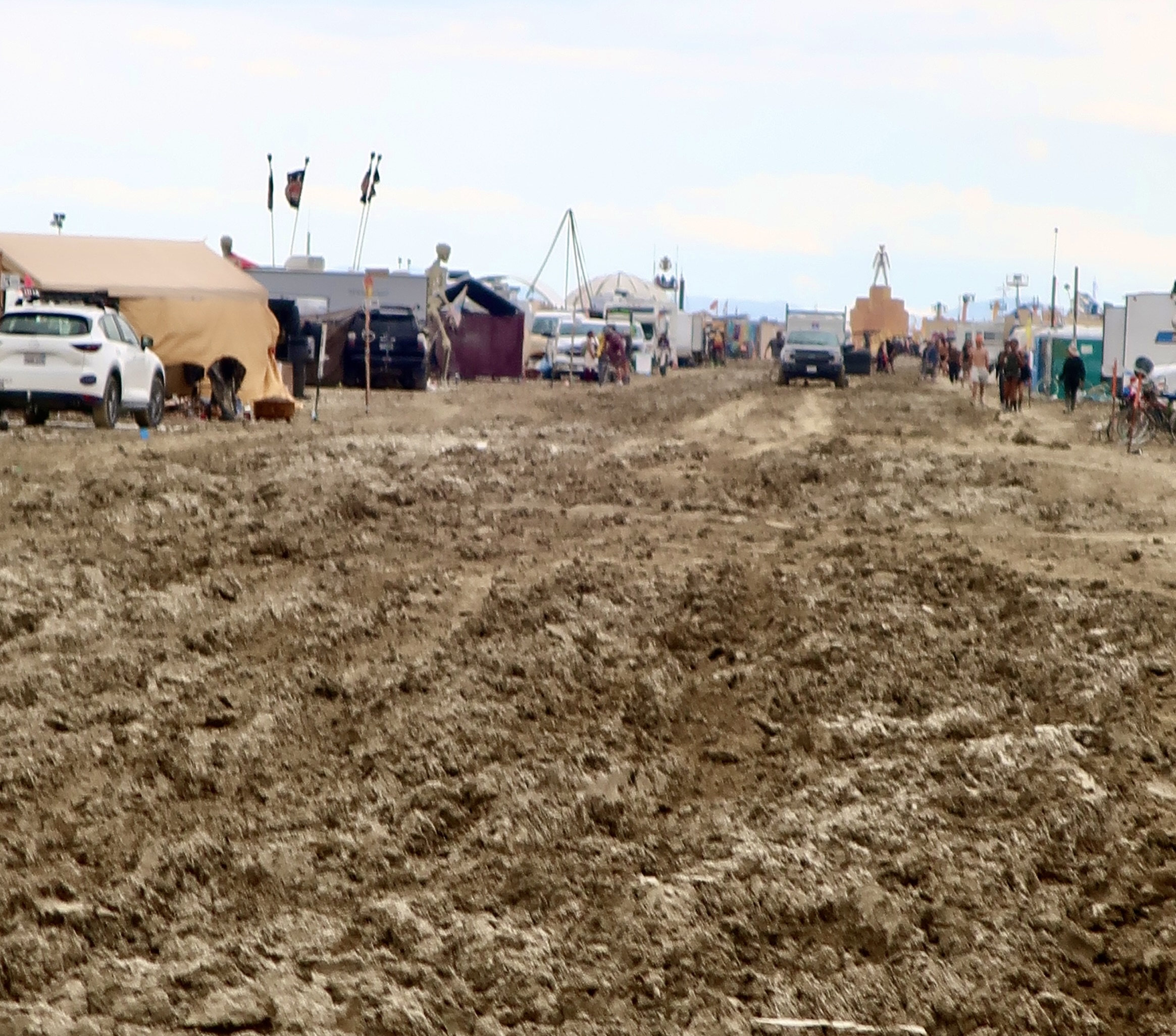
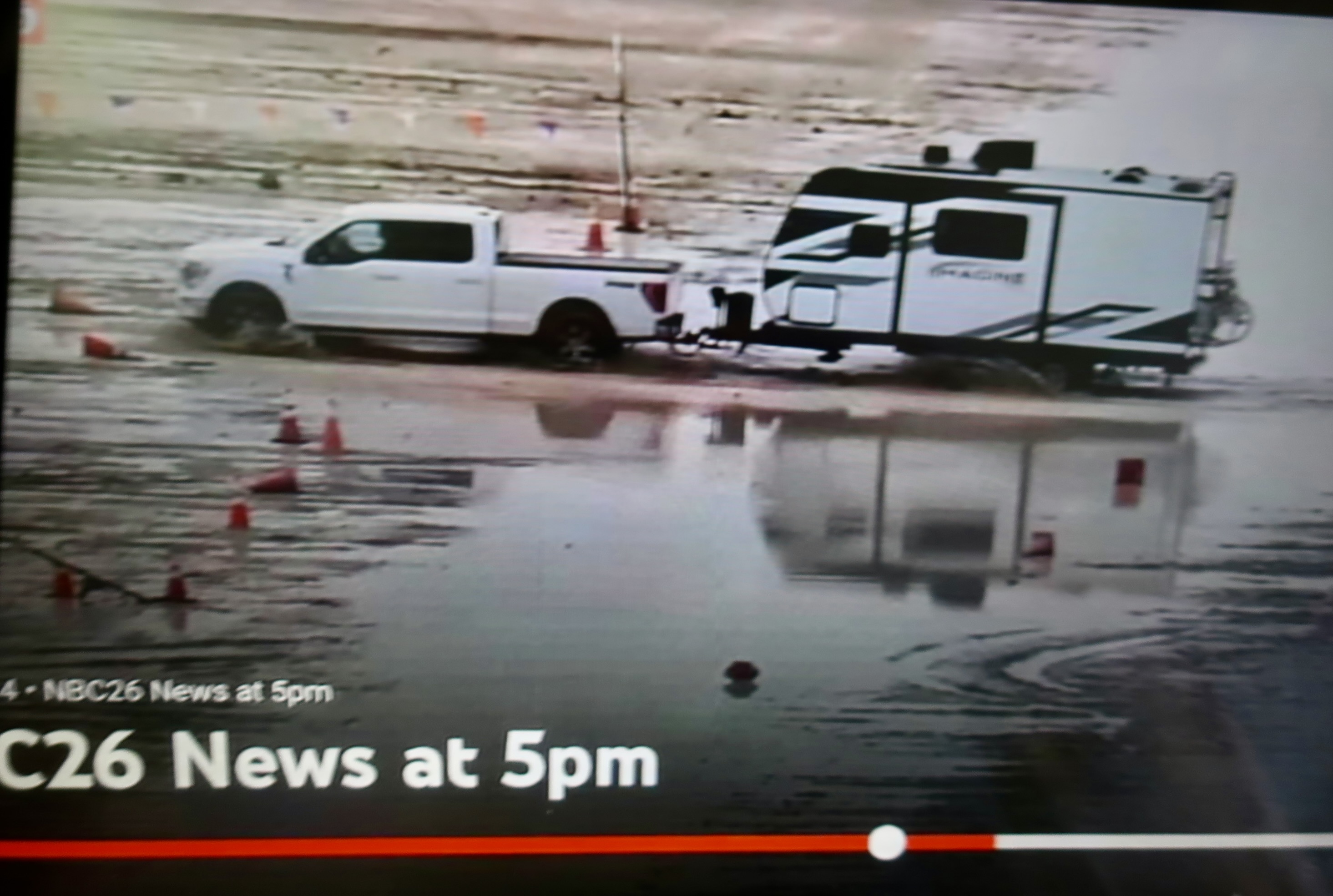
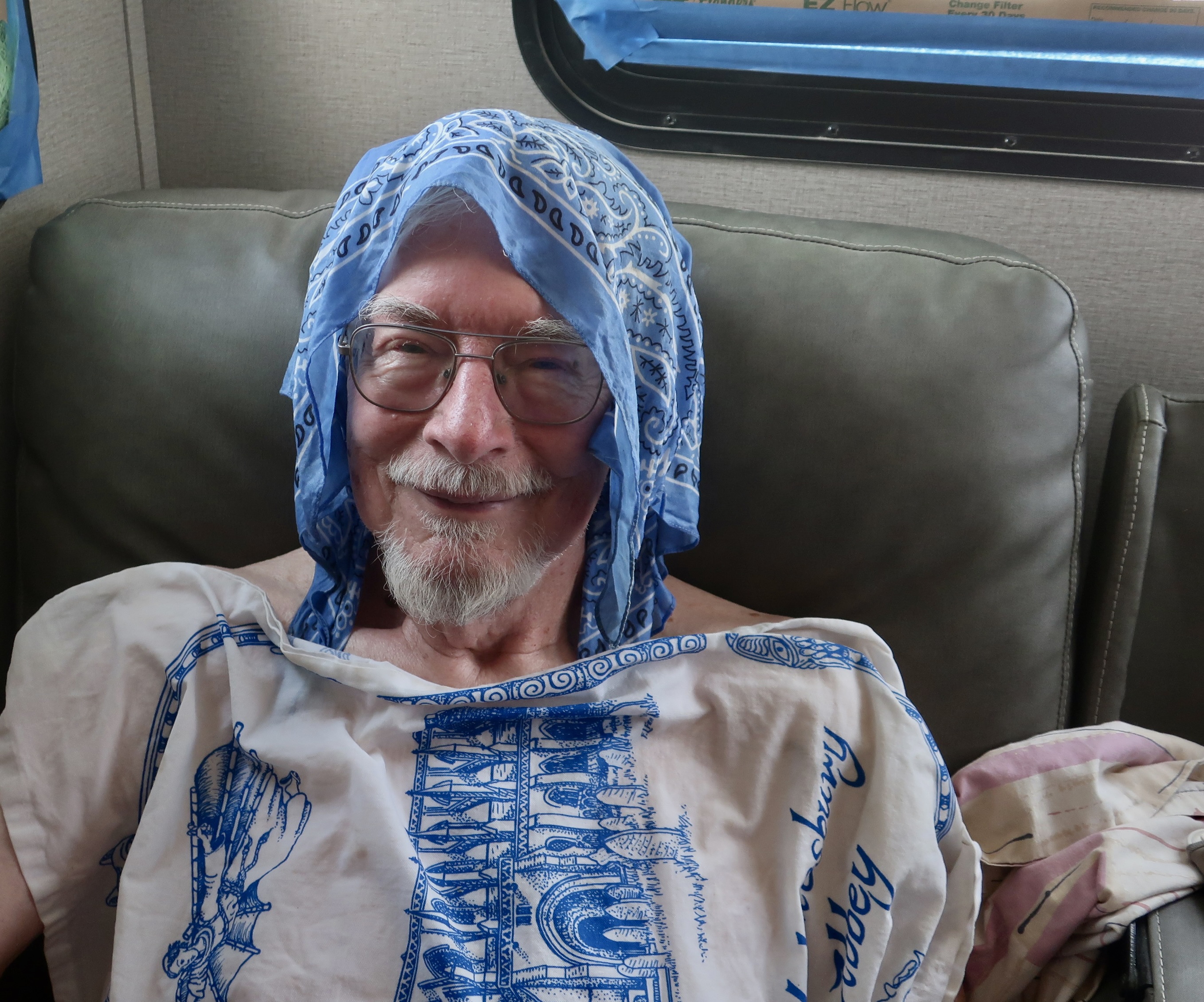
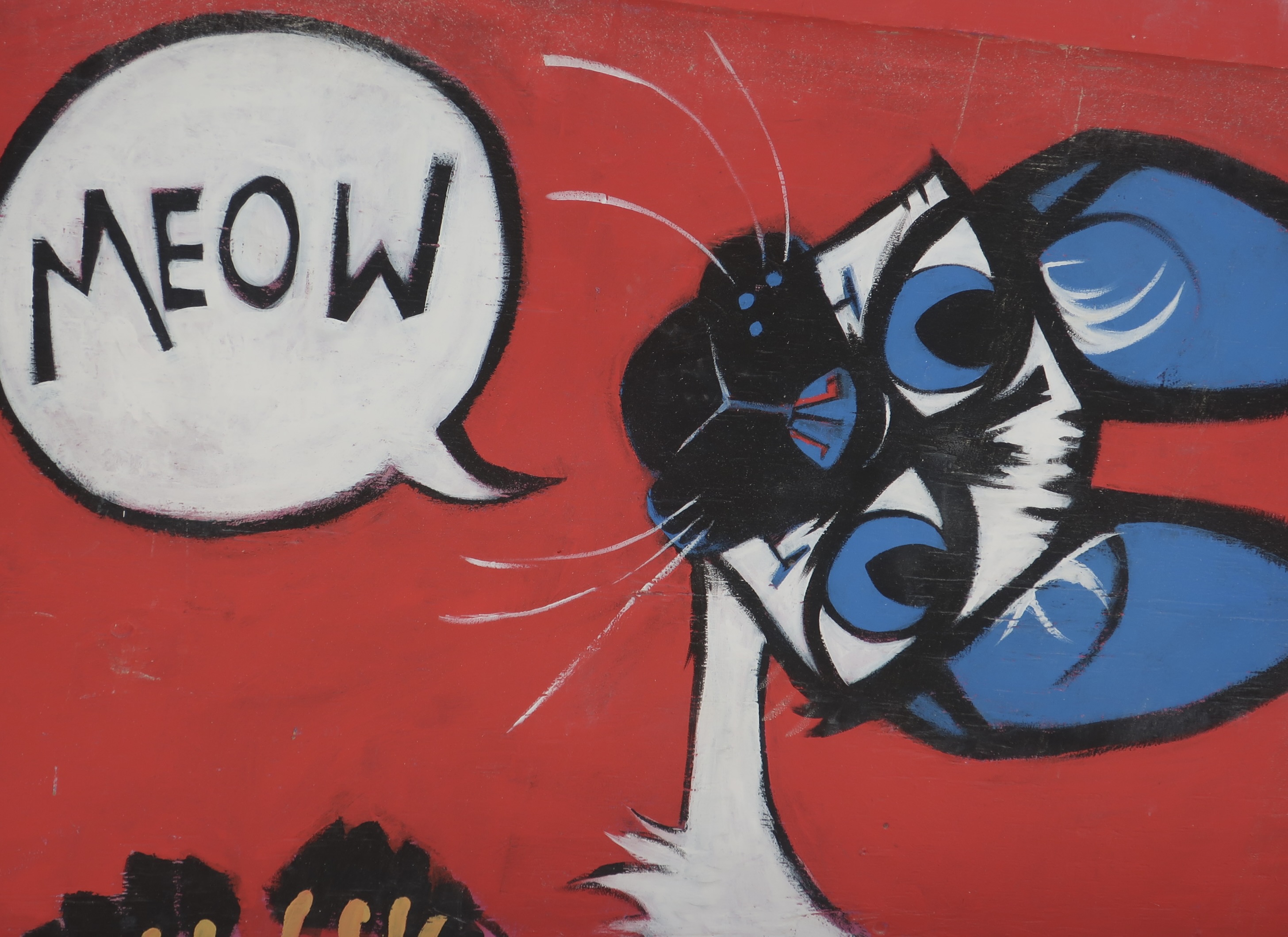
Bone at Burning Man in 2023. He’s been there 10 times with me, starting in 2004. Here he is making a sacrificial offering to the Rain Gods: Not to make rain start. But to make it stop!Everything had come to a dead halt, mired in mud. The porta-potties were overflowing and nobody was going anywhere. It was scary— a hair raising, nail biting experience. UT-OH!We lucked out. A Ranger told me we could leave, given our powerful 4-wheel drive F150 complete with a special mud and ruts drive mode. Off we went, merrily fish tailing along while pulling our small Imagine trailer. Bone sat up on our dashboard, supposedly guiding us. He was covering his eyes instead. We were out in 20 minutes. A television camera caught us escaping and the video was shown nationally. When the Burners were finally released to leave the next day, it took up to 14 hours to get out.Peggy found this photo of us escaping on an Imagine Trailer Facebook page.I mentioned that you would learn things in this series. Here’s one way of keeping cool when you find yourself at Burning Man and the temperature has climbed over 100° F, dust storms are whipping across the Playa, and you don’t have air conditioning. Settle into your vehicle, take your clothes off, and cover your body in wet dish towels. In no time, you will be grinning like me. That’s it for today. Join me on Monday for our post on “Cats of the World.”From a mural at the 2023 Burning Man.
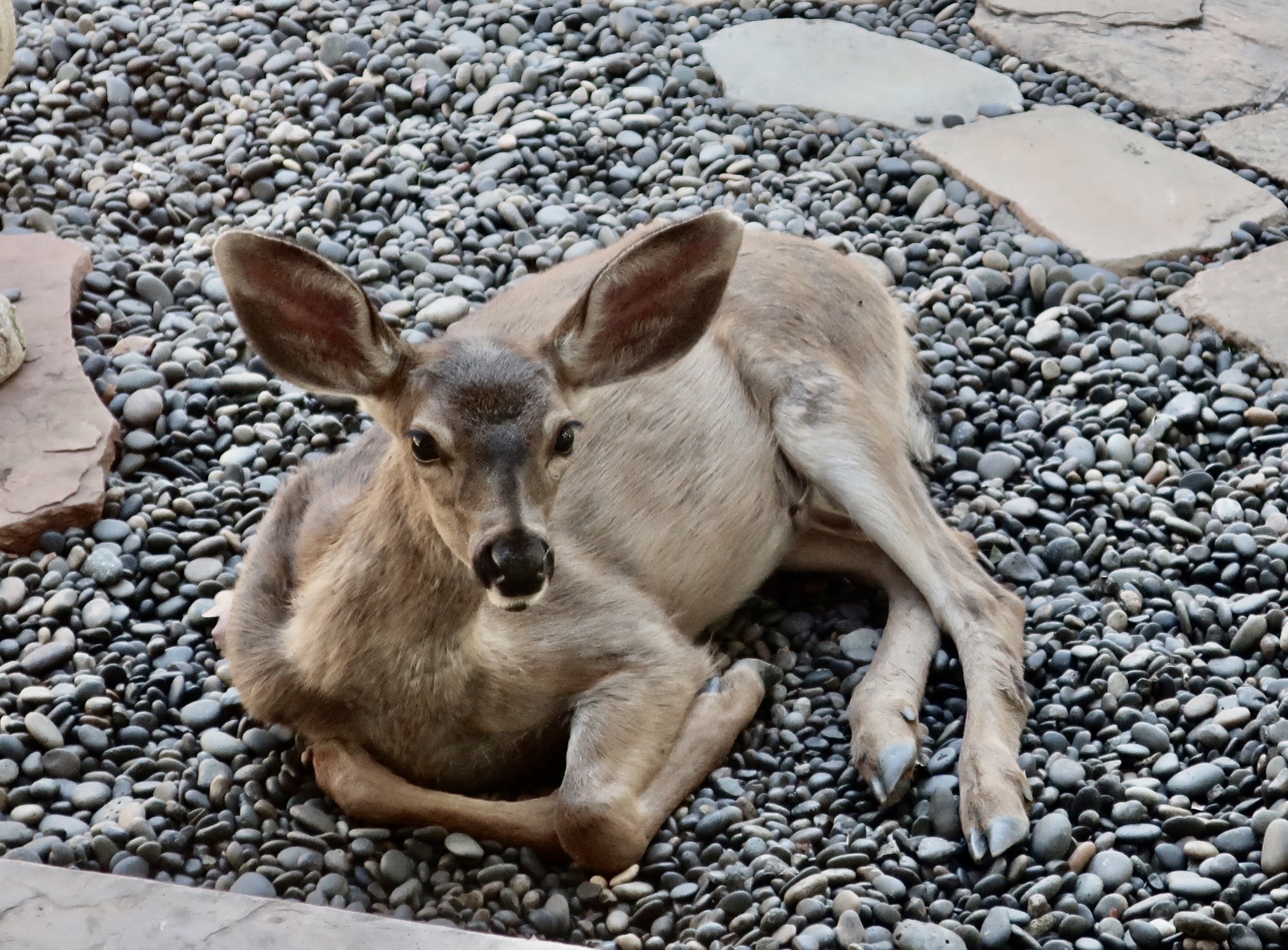
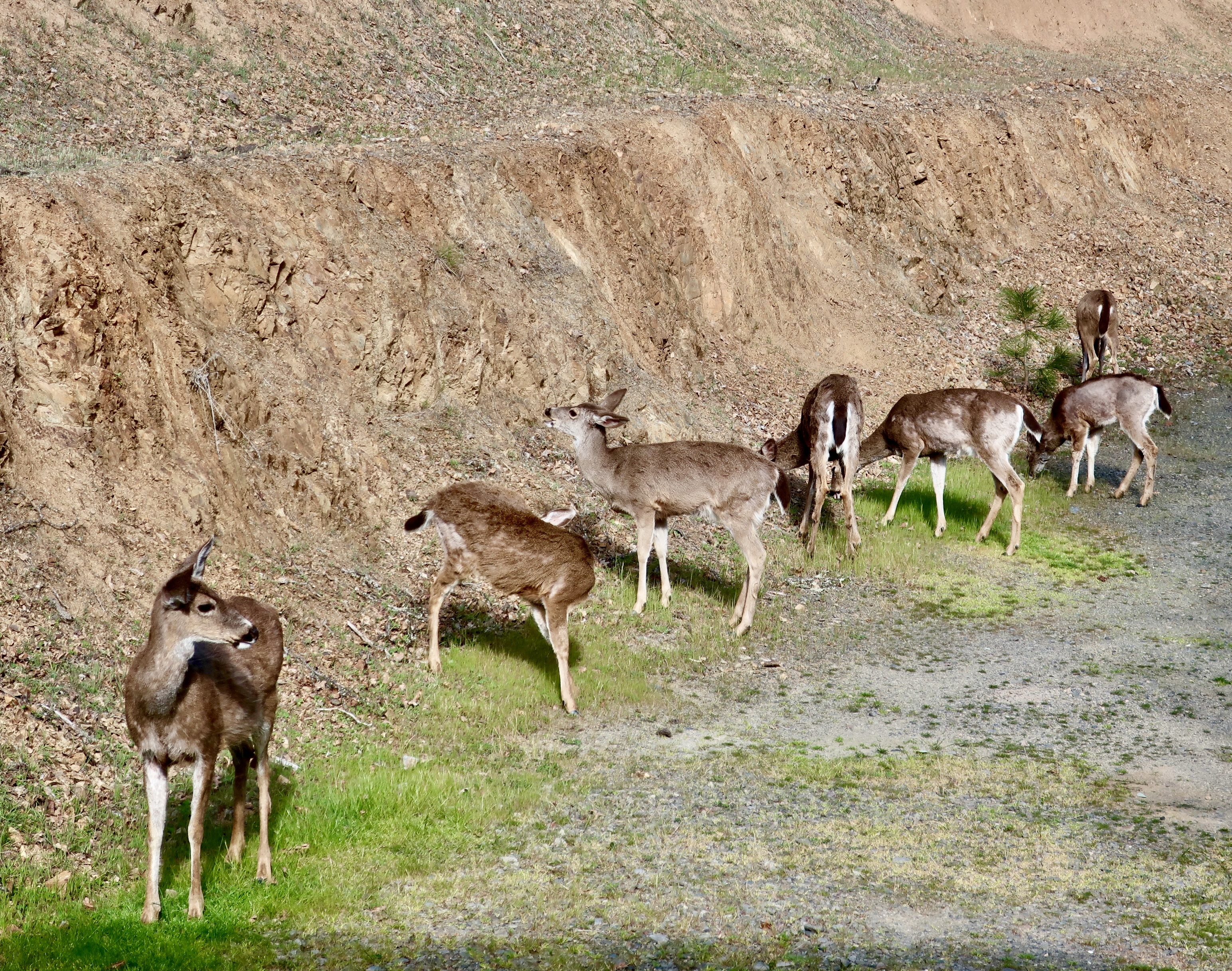
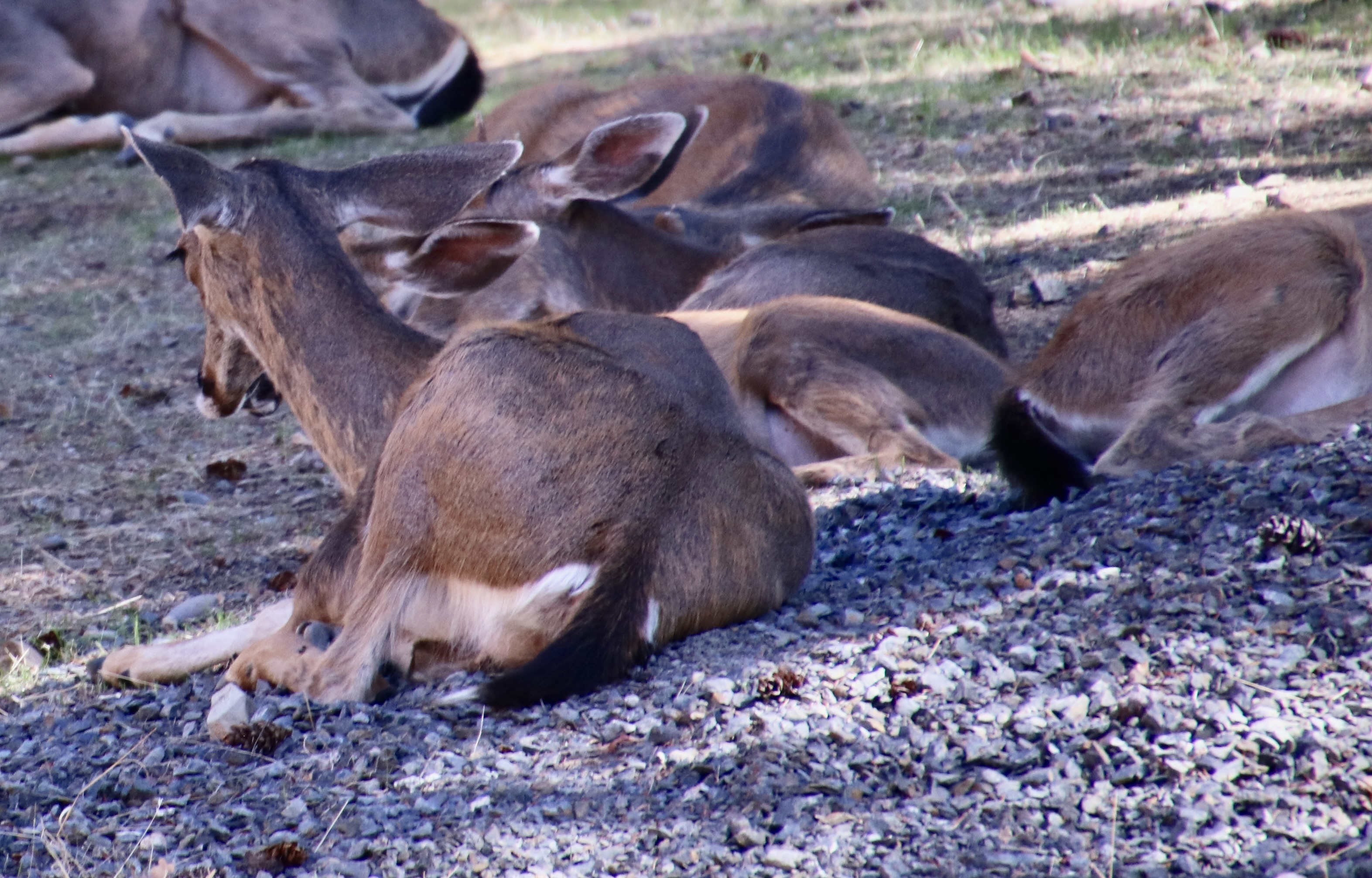
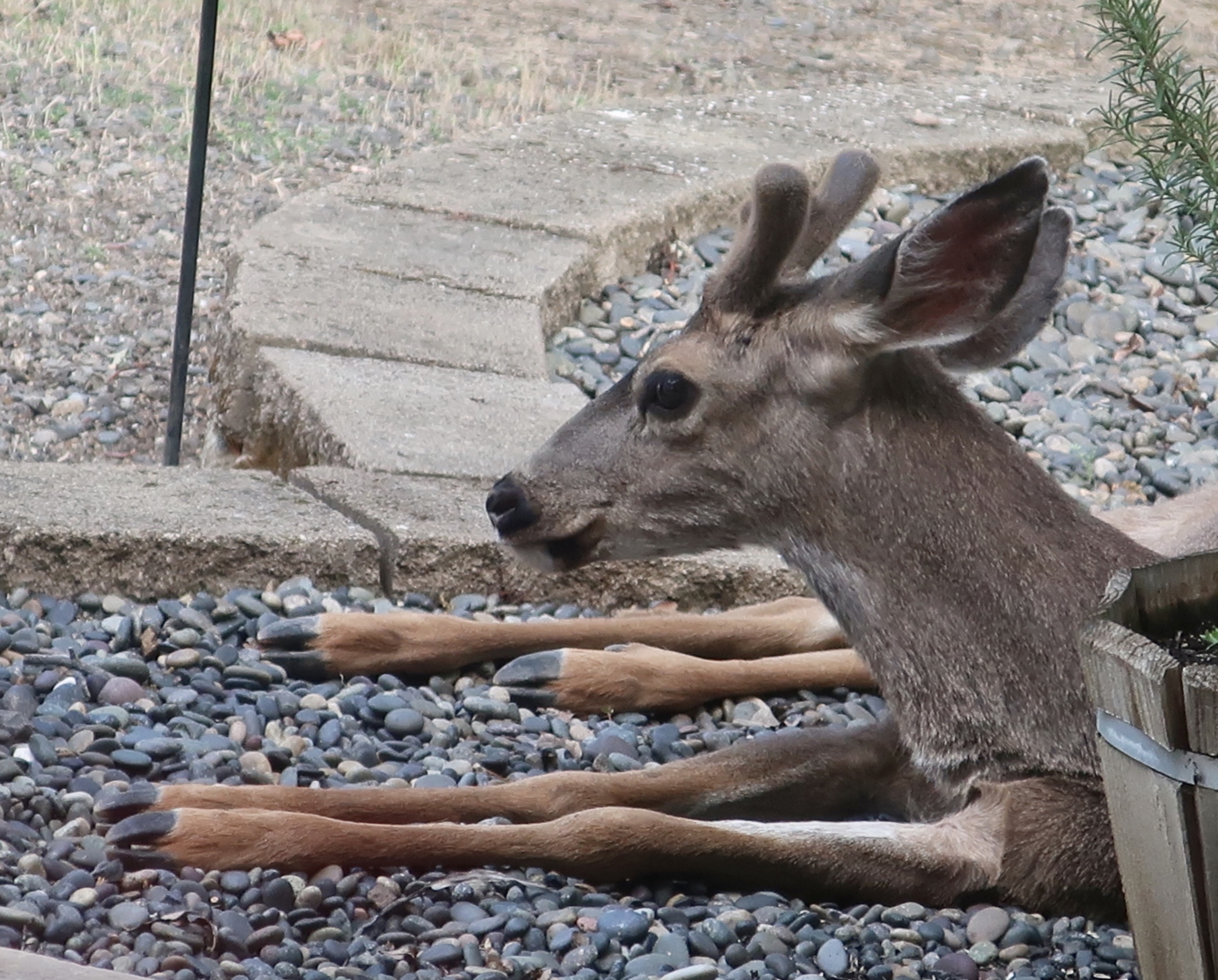
Today’s post on deer is part of our focus series where I make use of our extensive photo library to feature a single subject. From 2011 to 2021 we lived in Southern Oregon up in the mountains about 30 miles west of Ashland on five acres that backed up to a million acres of national forest. There were many things that we loved about the property. The deer herd that insisted on calling it home was a big one!
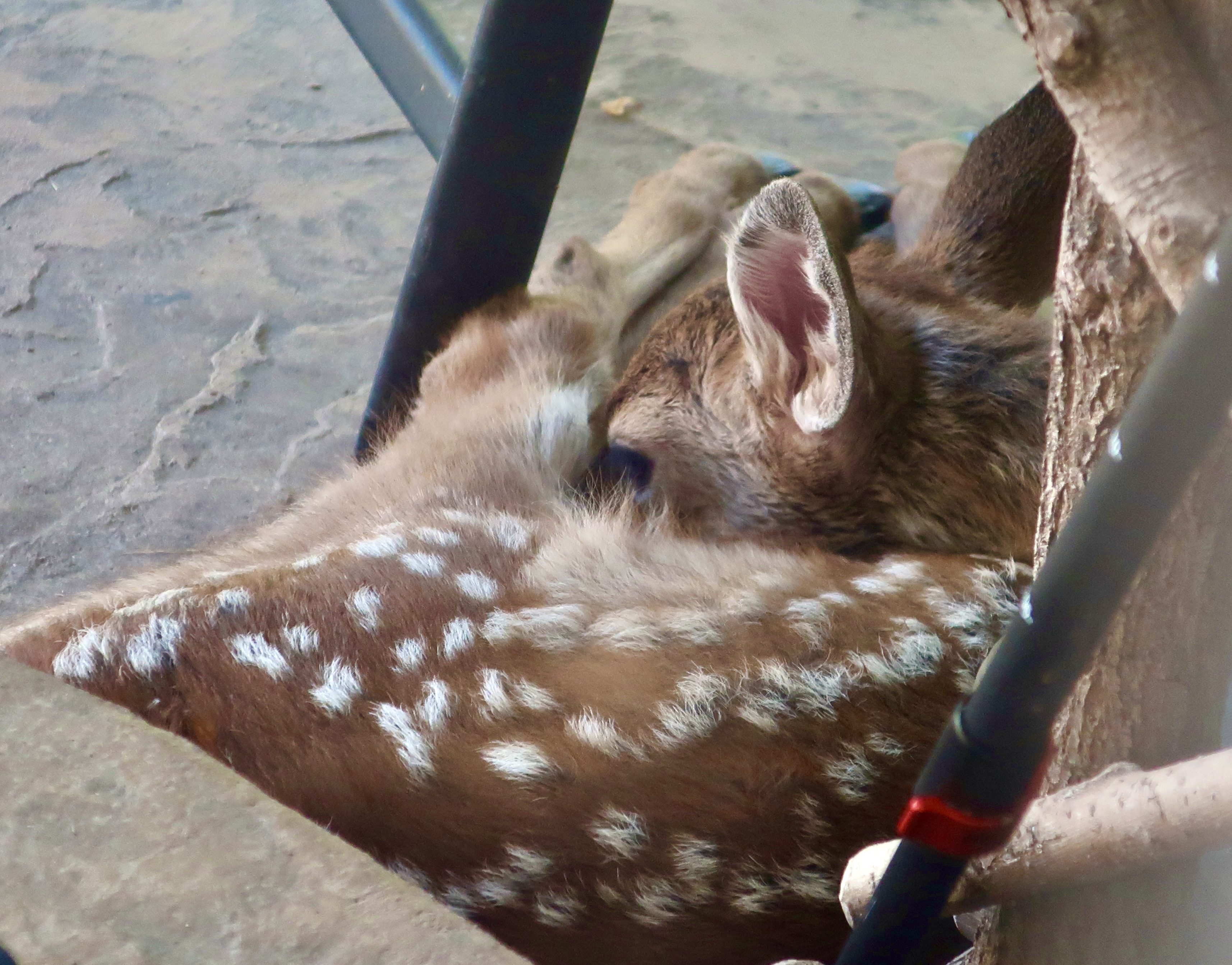
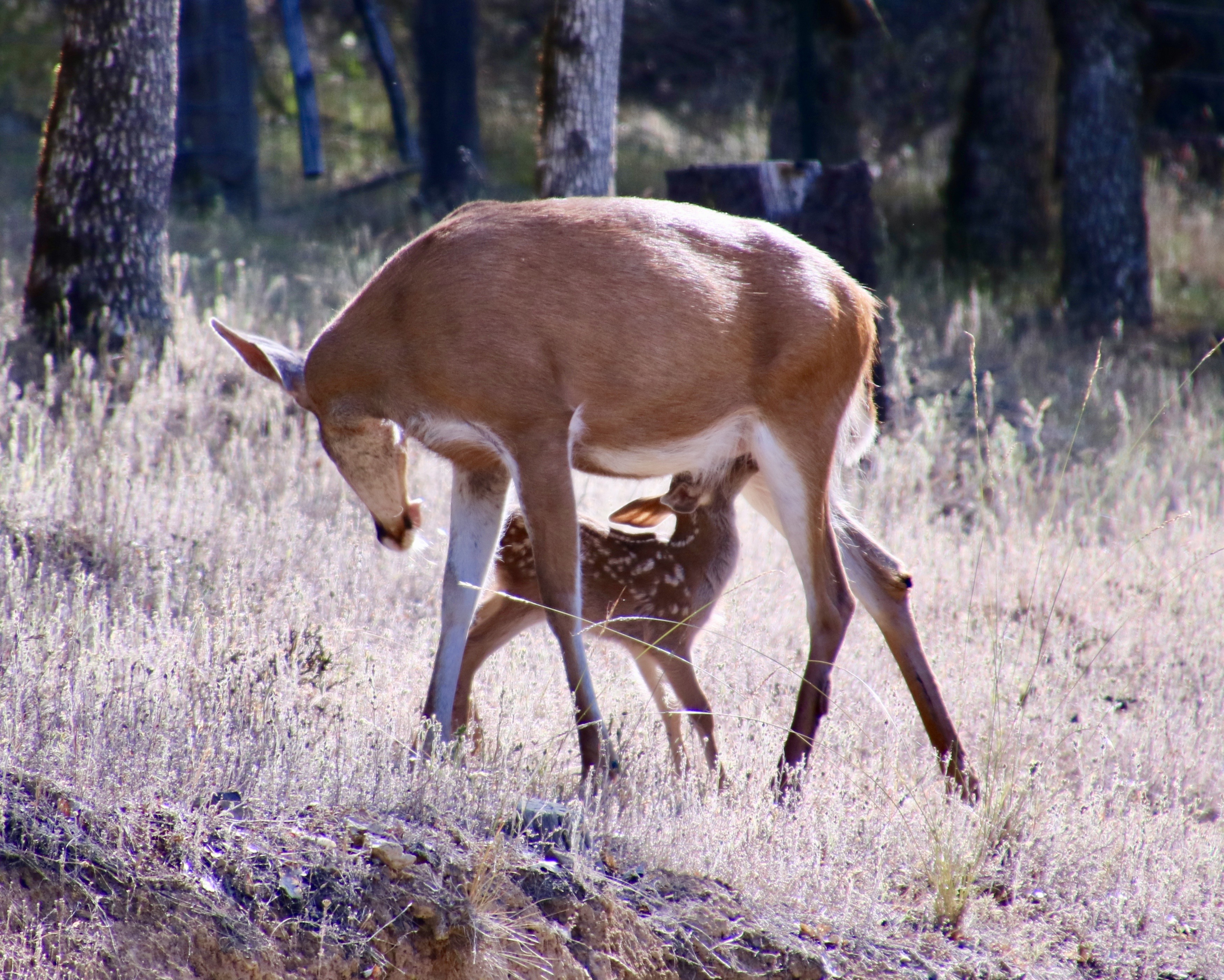
I walked out my door one June day and found this fawn napping next to our doorstep. It was wedged in between the step, a chair, my walking stick, and a natural wood shelf we used for our shoes. One eye was checking me out but it obviously wasn’t worried about my presence. In its short life, it had determined that I was harmless and might indeed be helpful. Mom wasn’t worrying either. She was out browsing (eating) while her baby was sleeping. Our house and yard served as a safety zone for the herd and the cement porch was apparently the safest place in the yard, considering how often it was used as a day bed. Hunters weren’t allowed on our property and natural predators of the deer such as bears and cougars tended to avoid it— for the most part.This was the first time we saw this youngster. Mom was performing some hygiene with her tongue while the baby ate. Grooming is common among deer and is one way they maintain close ties. We’ve watched adult deer simultaneously groom each other.
Fawns on our property were normally born in April or May, hidden away by the doe, and sternly instructed to stay put and not move when she was away eating for the first 2-3 weeks. The spots they are born with serve as natural camouflage making the fawns extremely difficult to see. They are also scentless when born, making them impossible to smell.
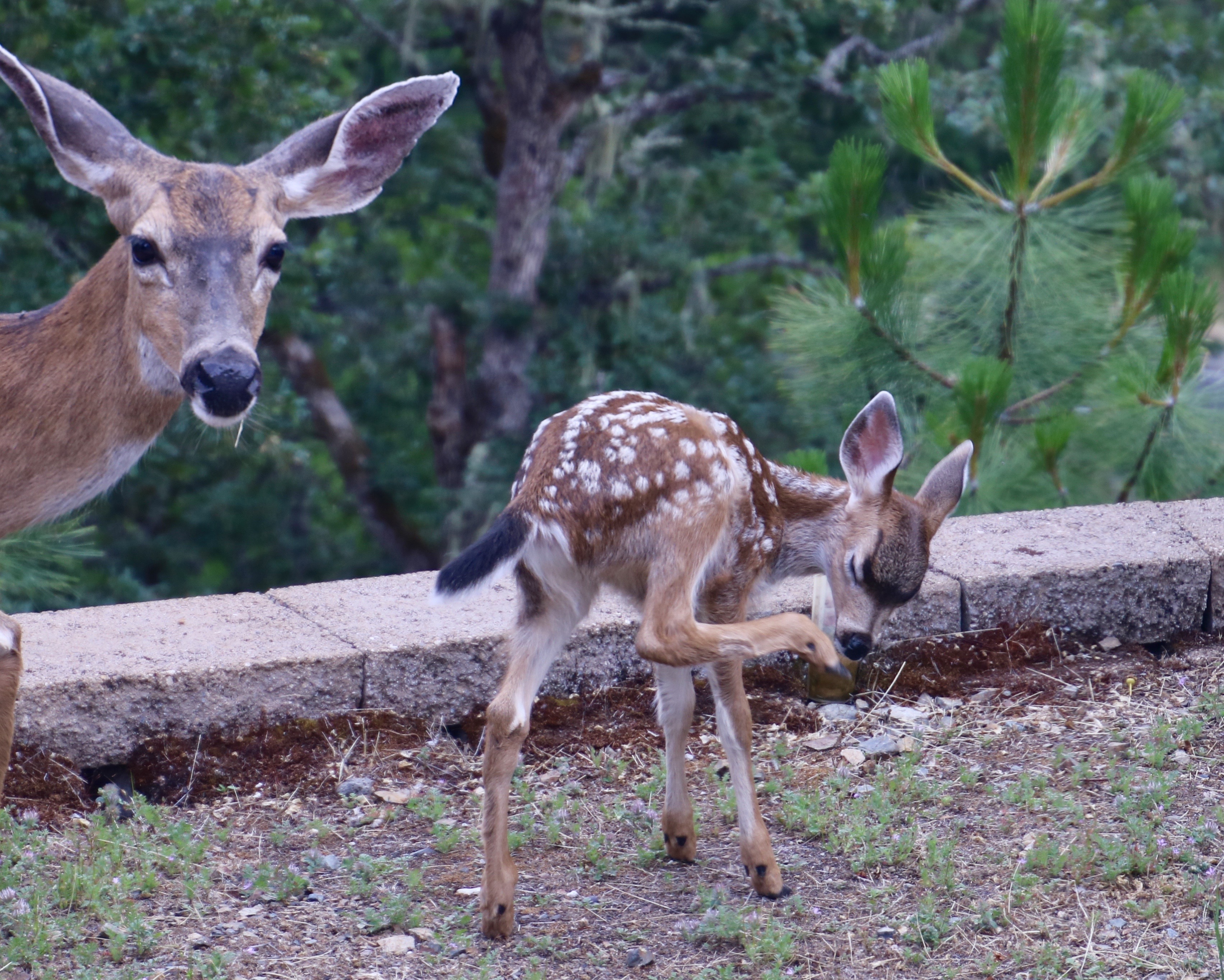
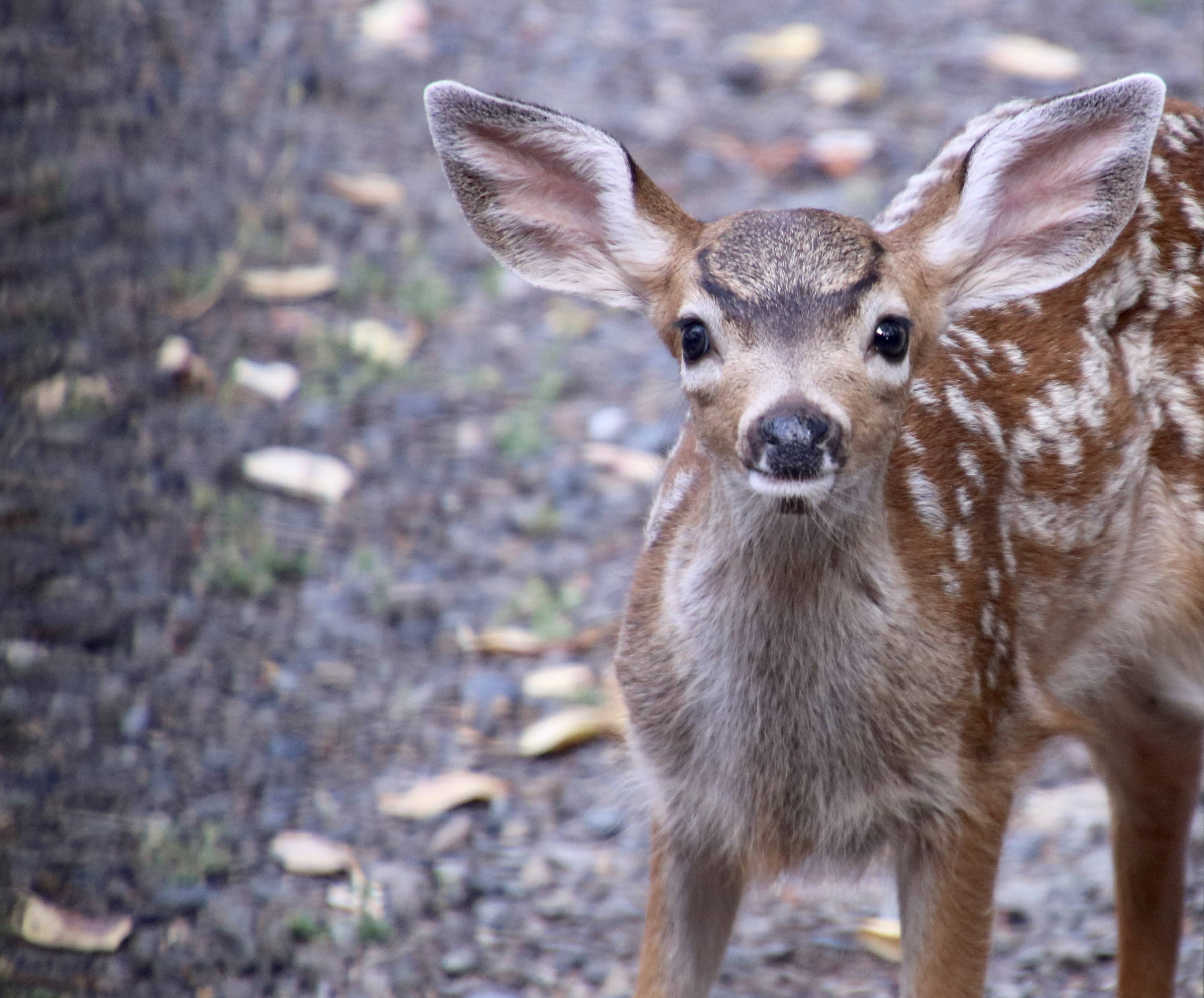
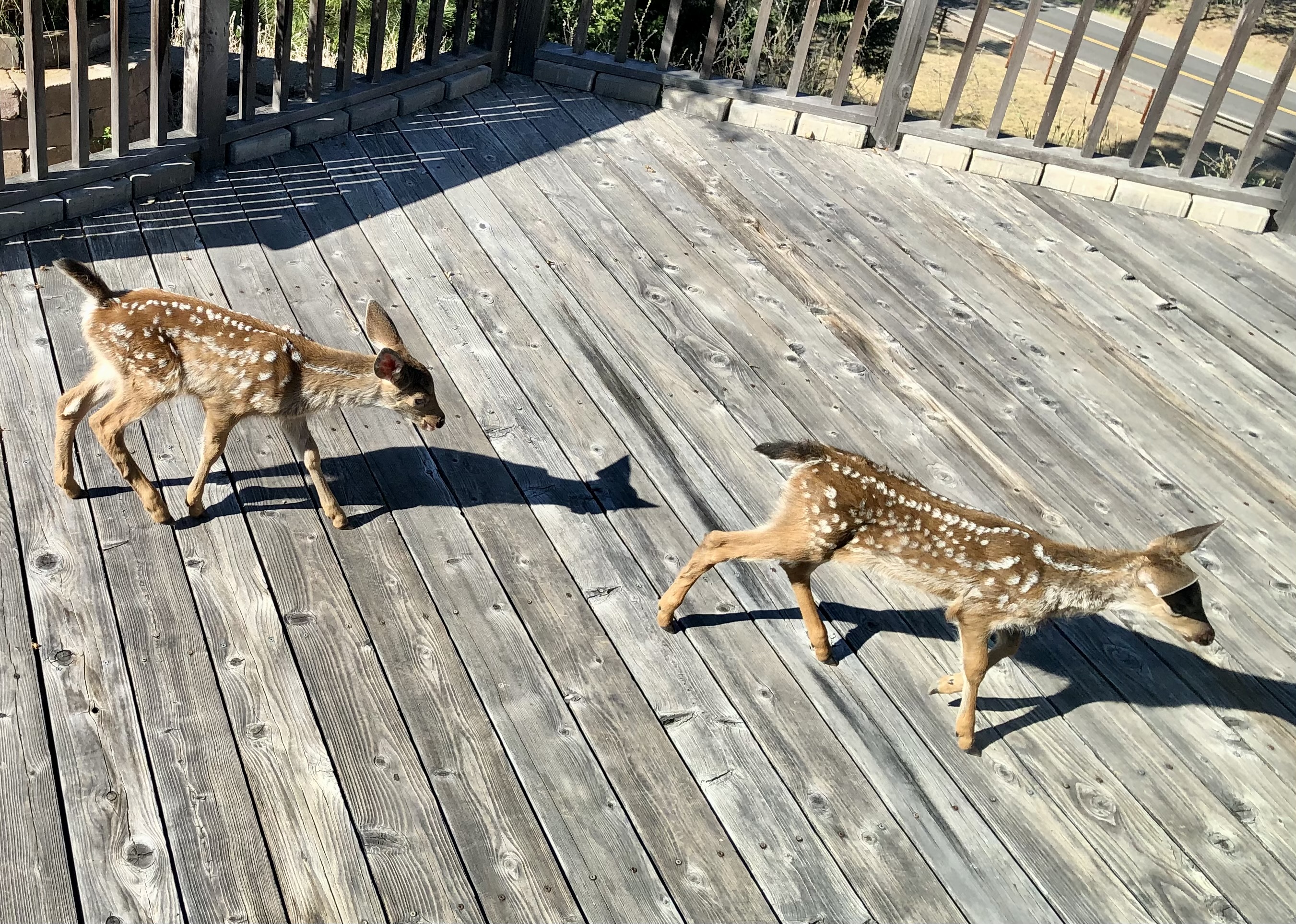
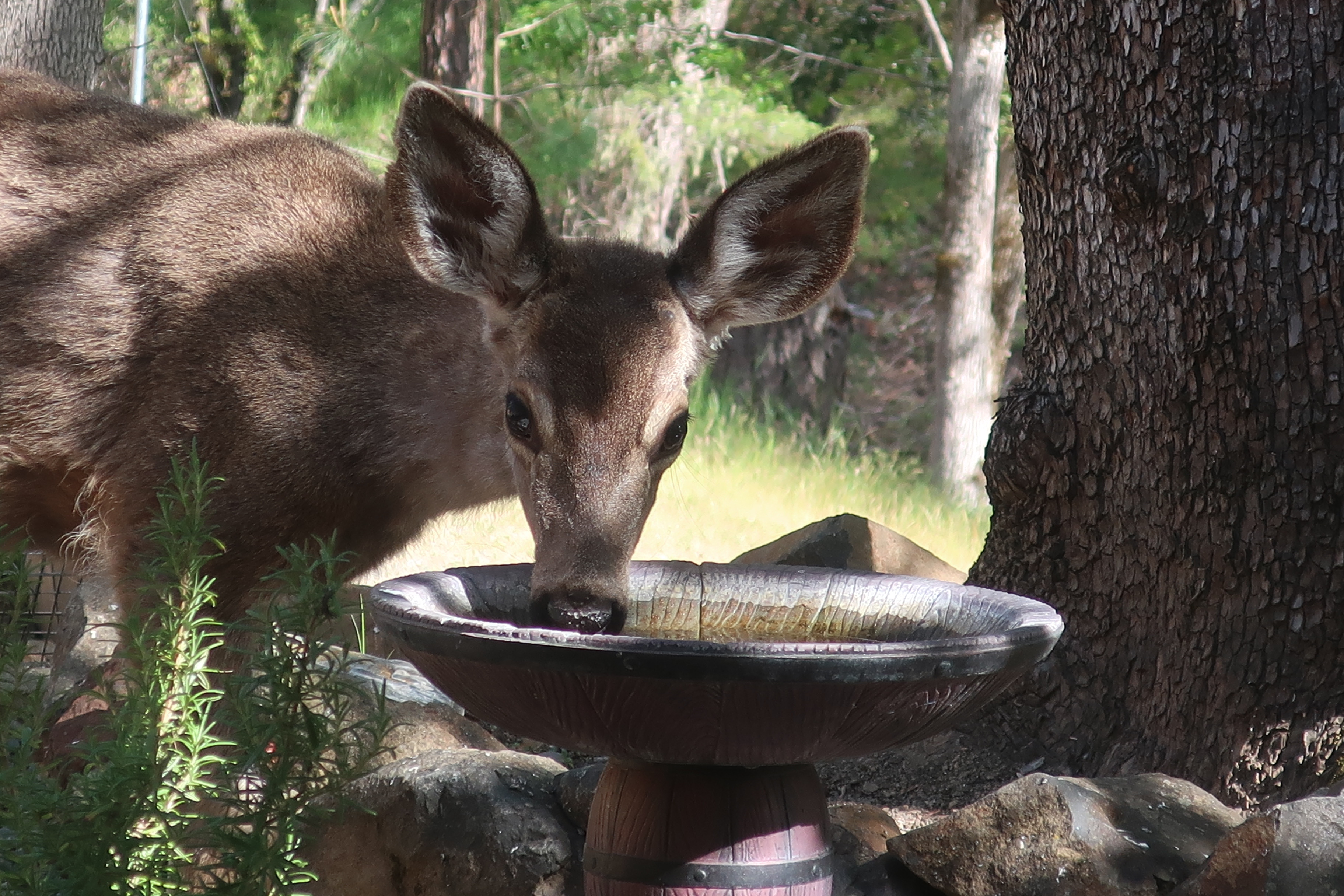
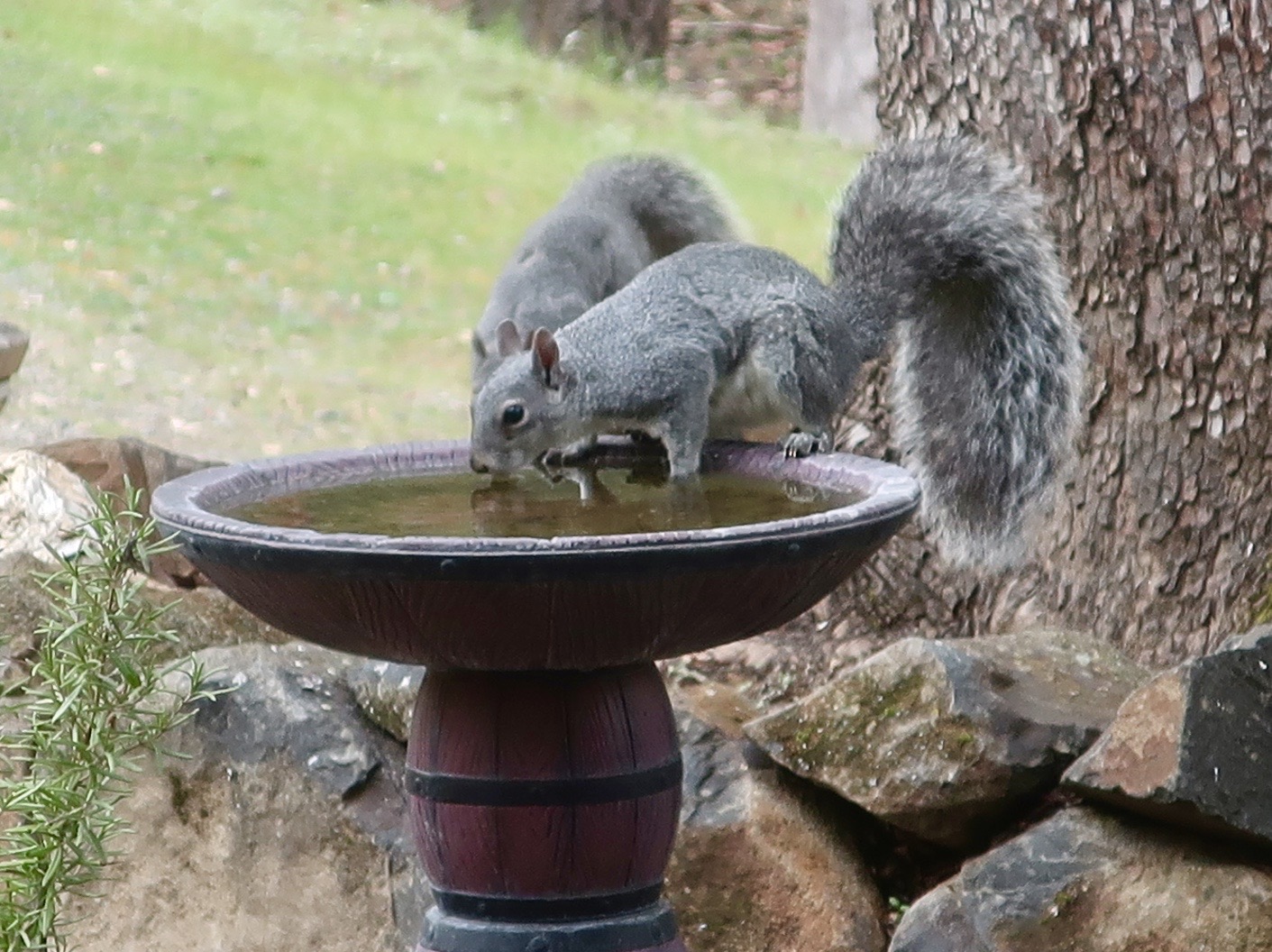
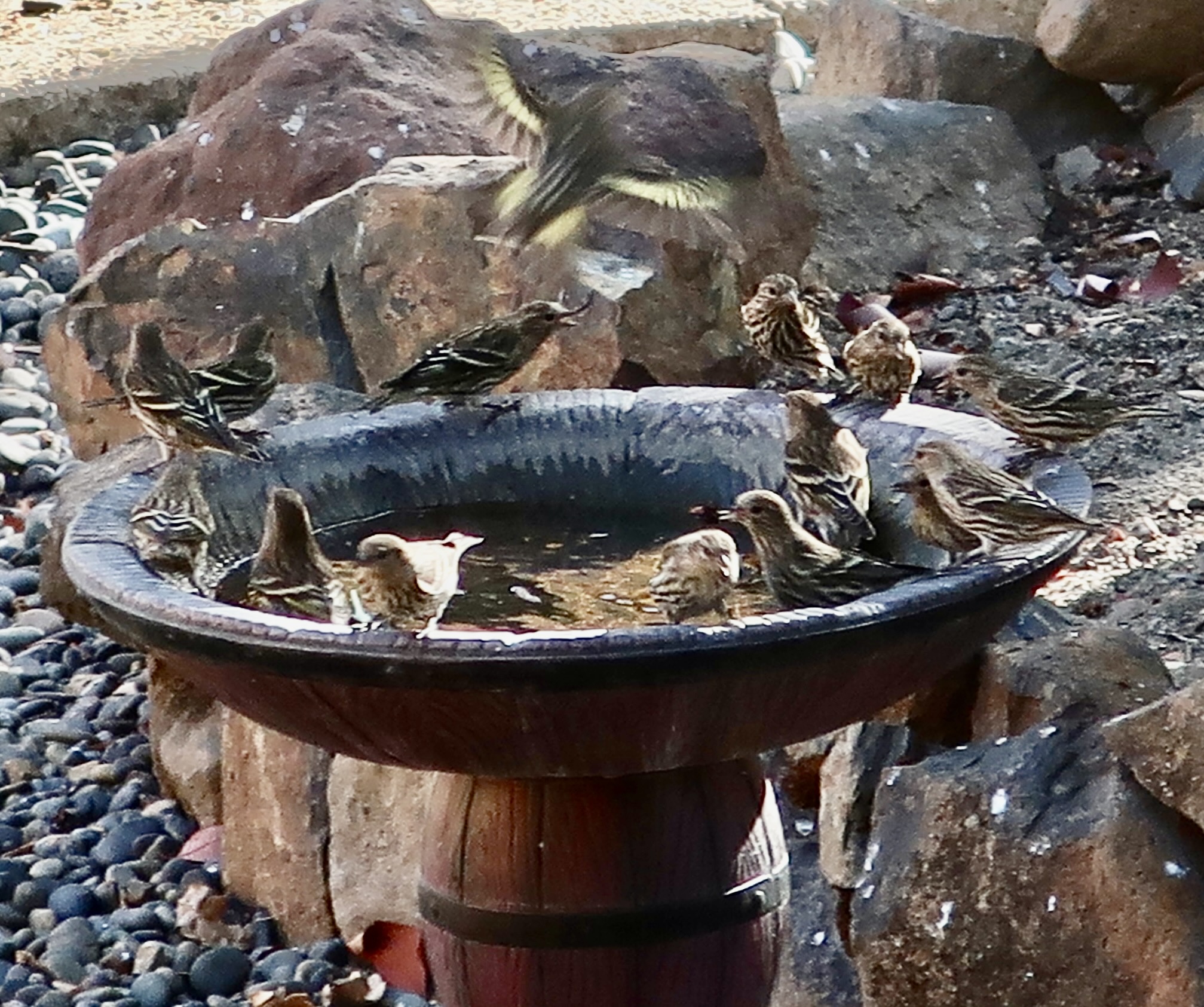
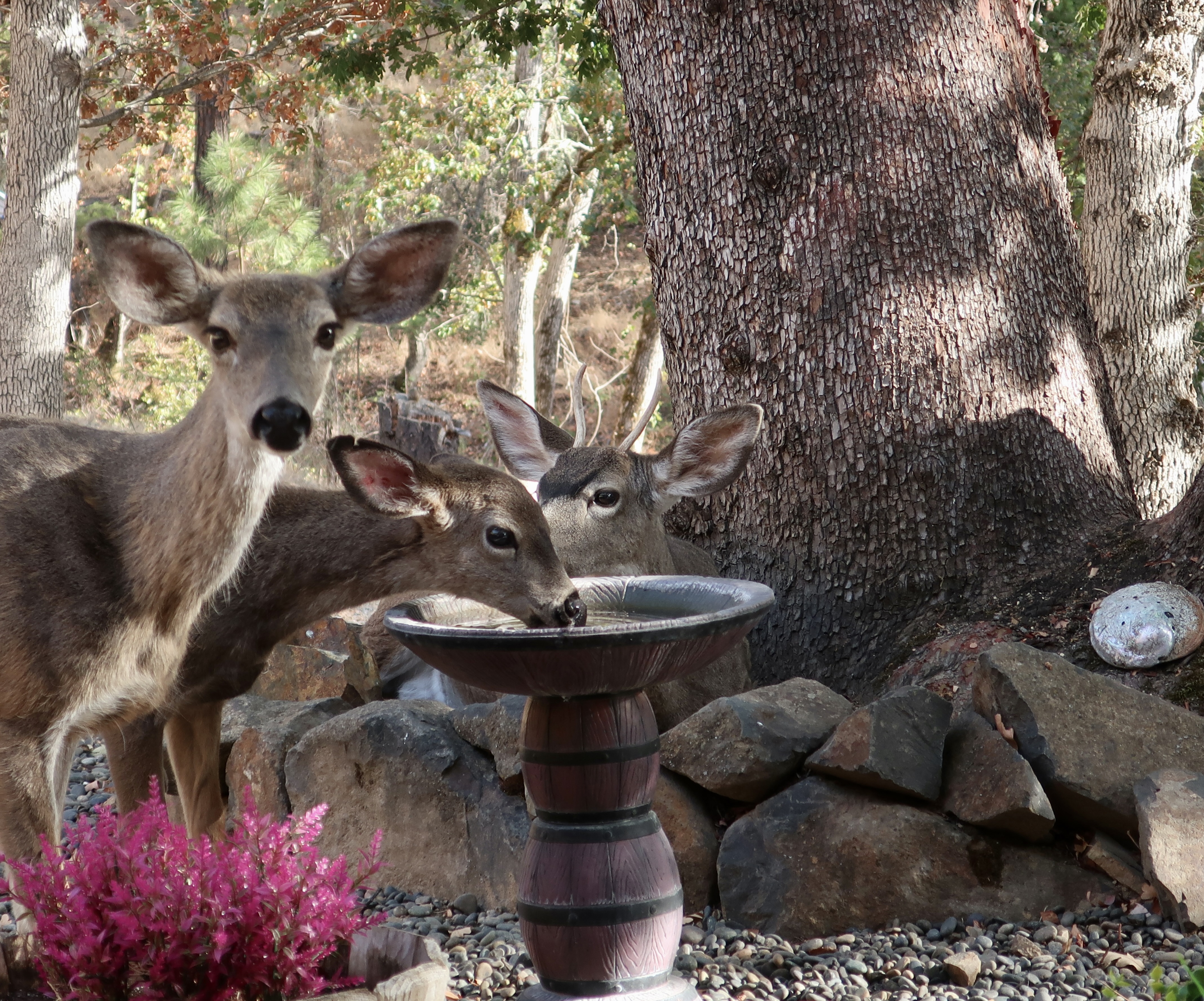
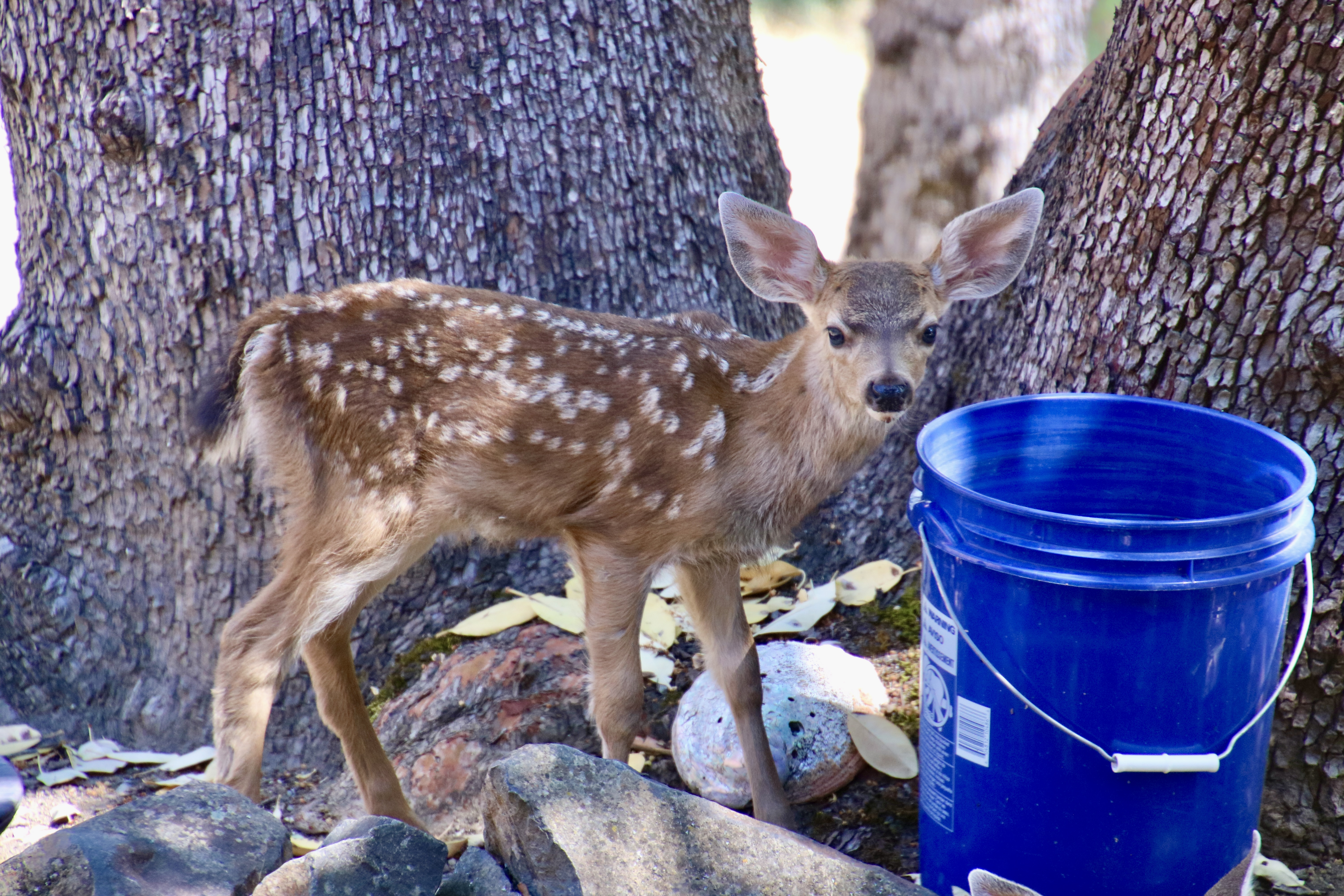
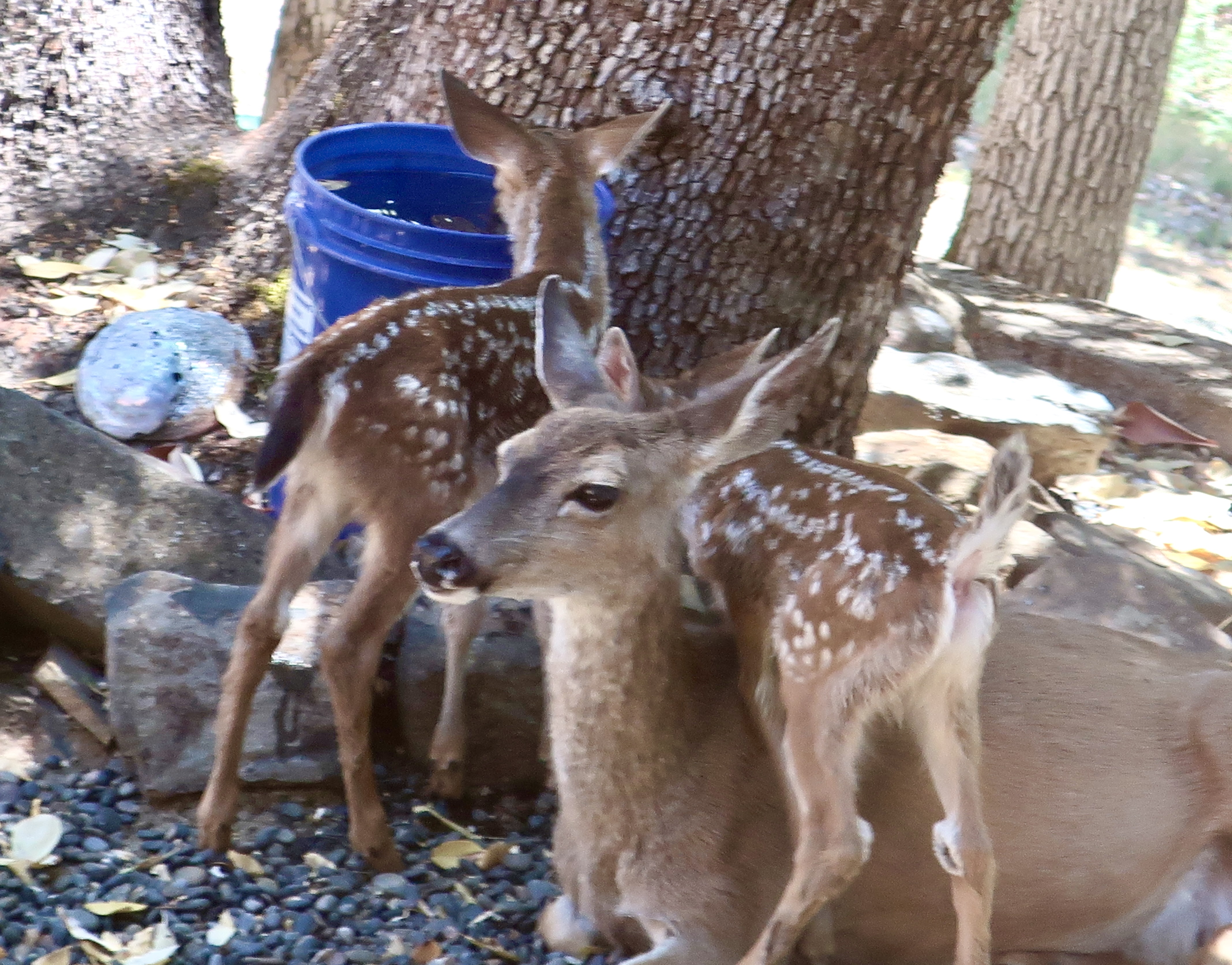
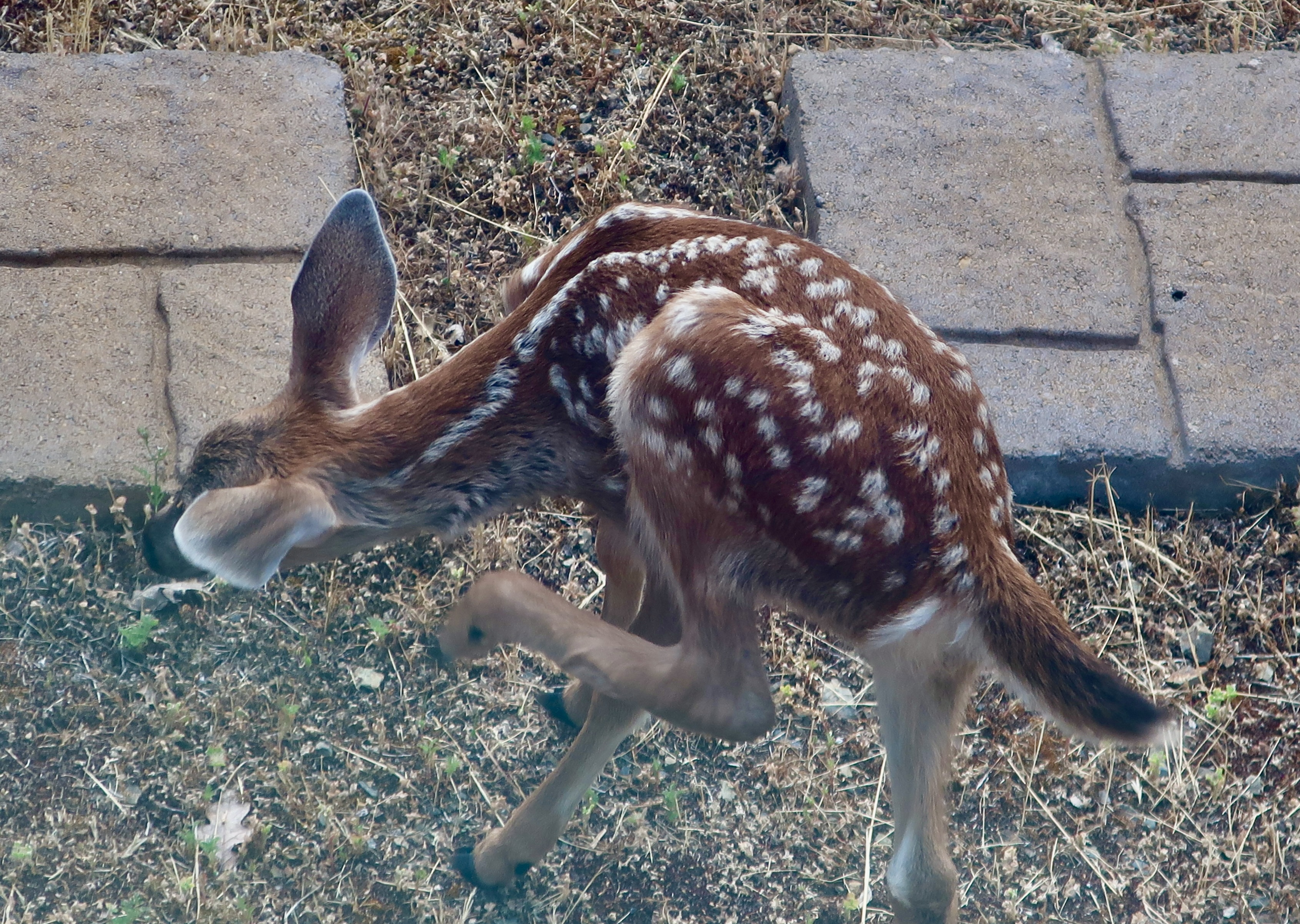
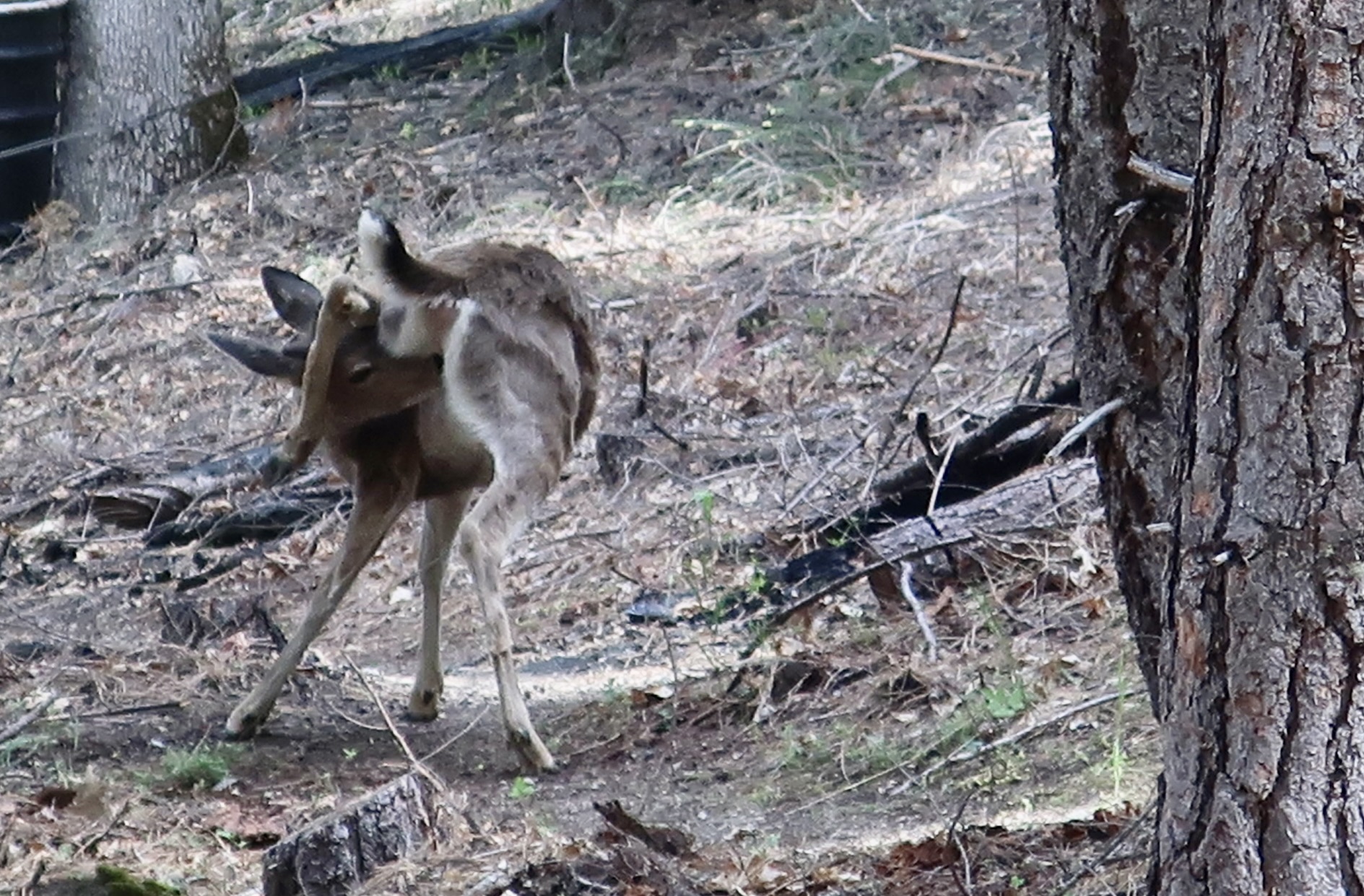
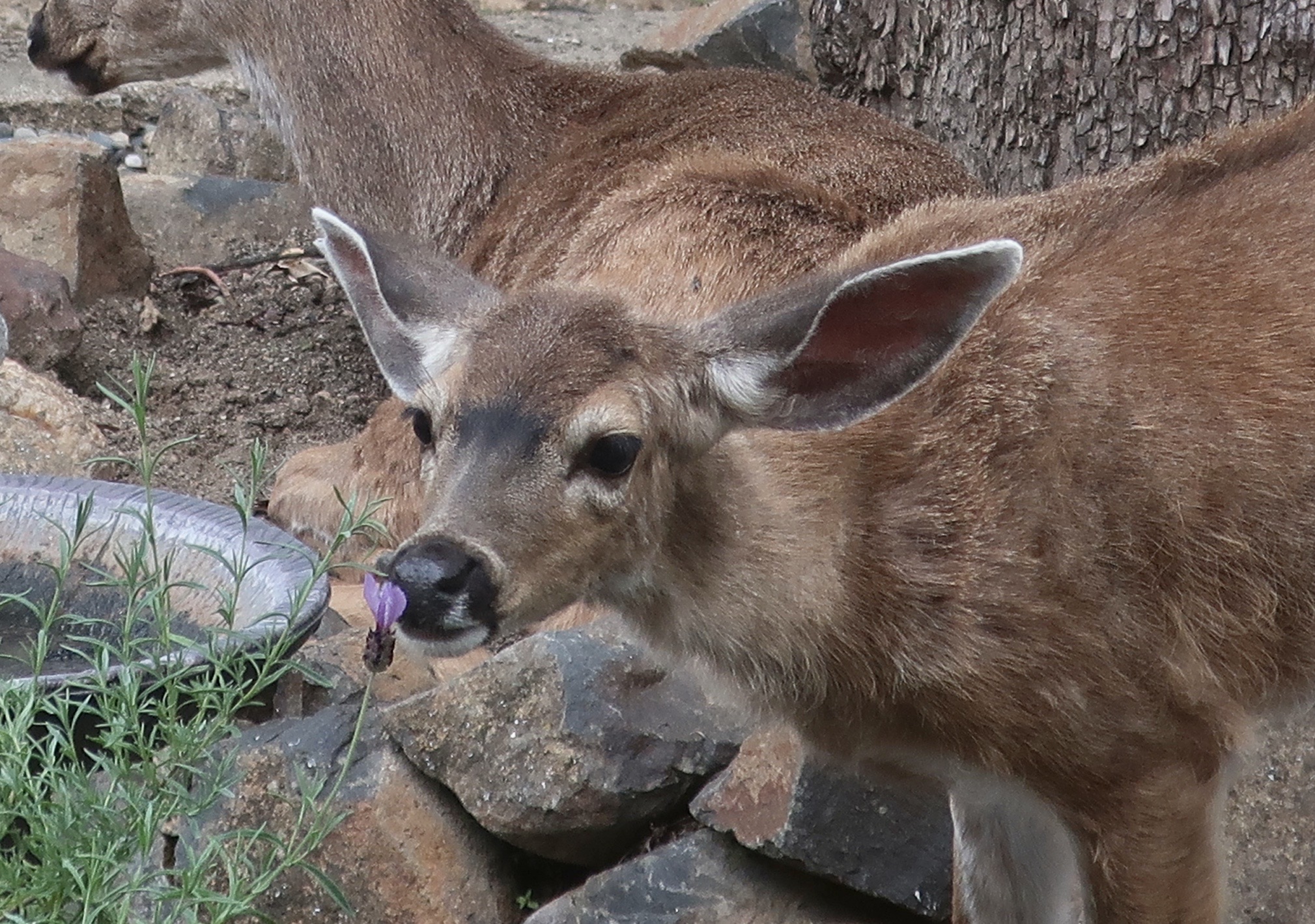
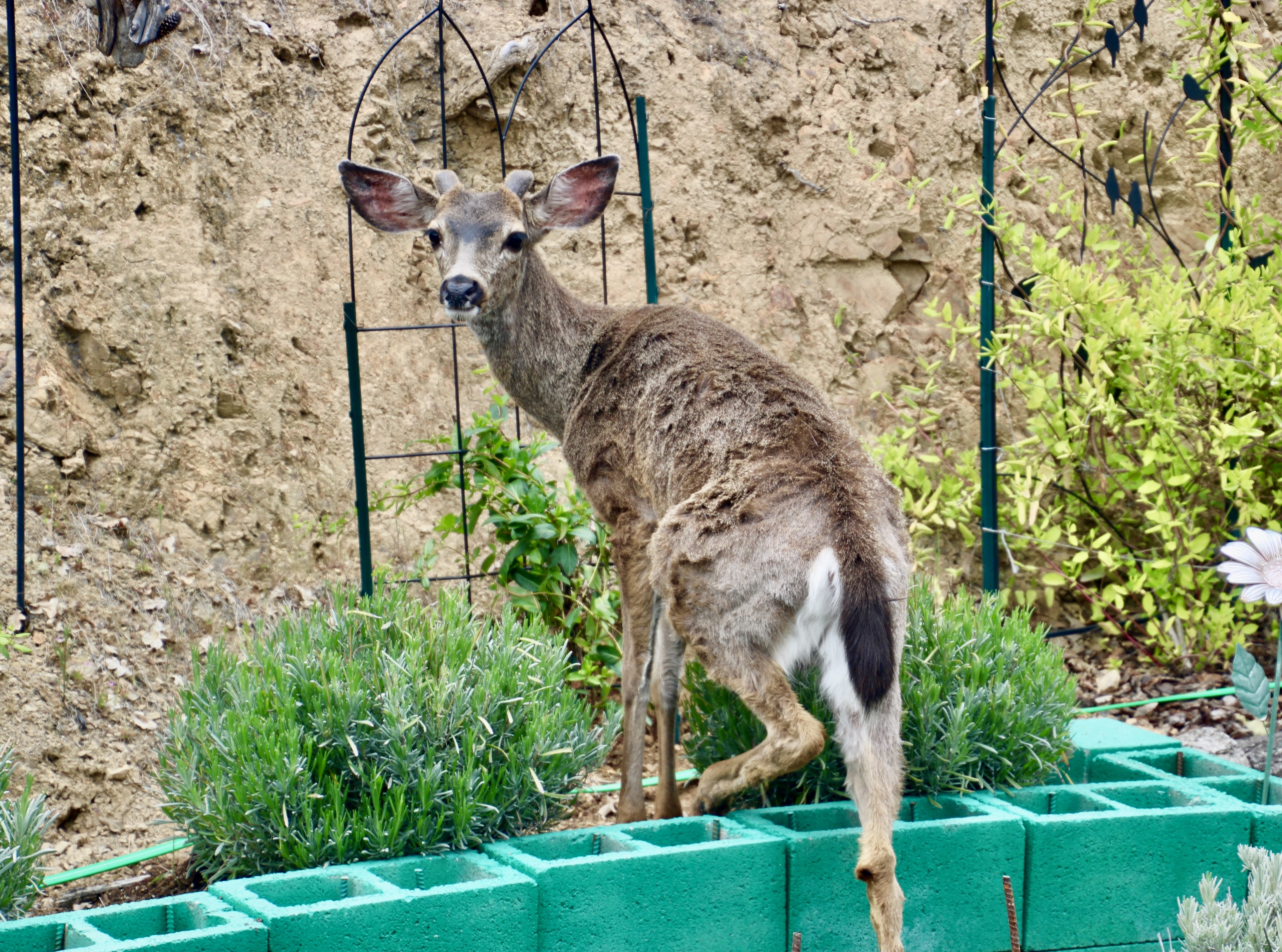
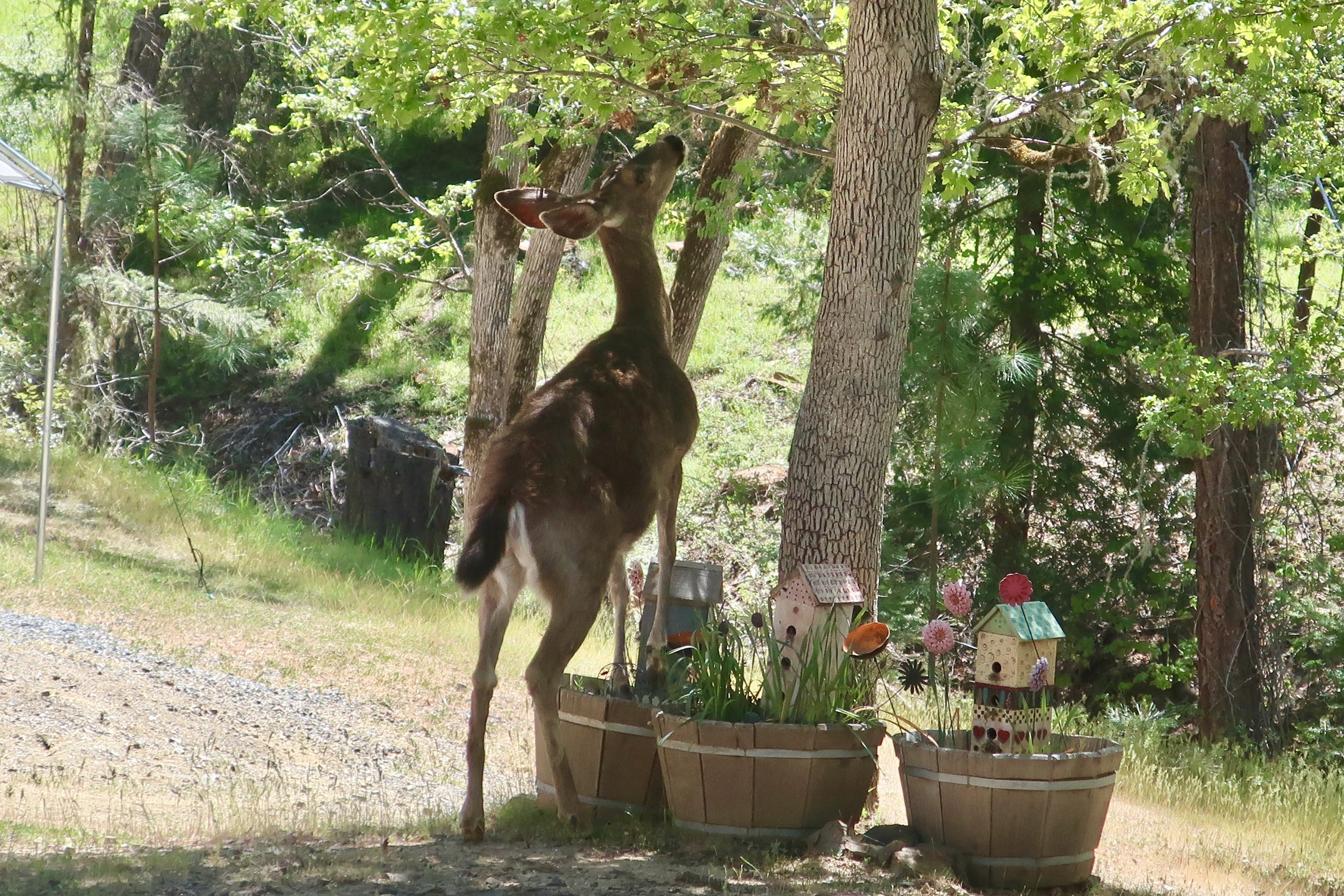
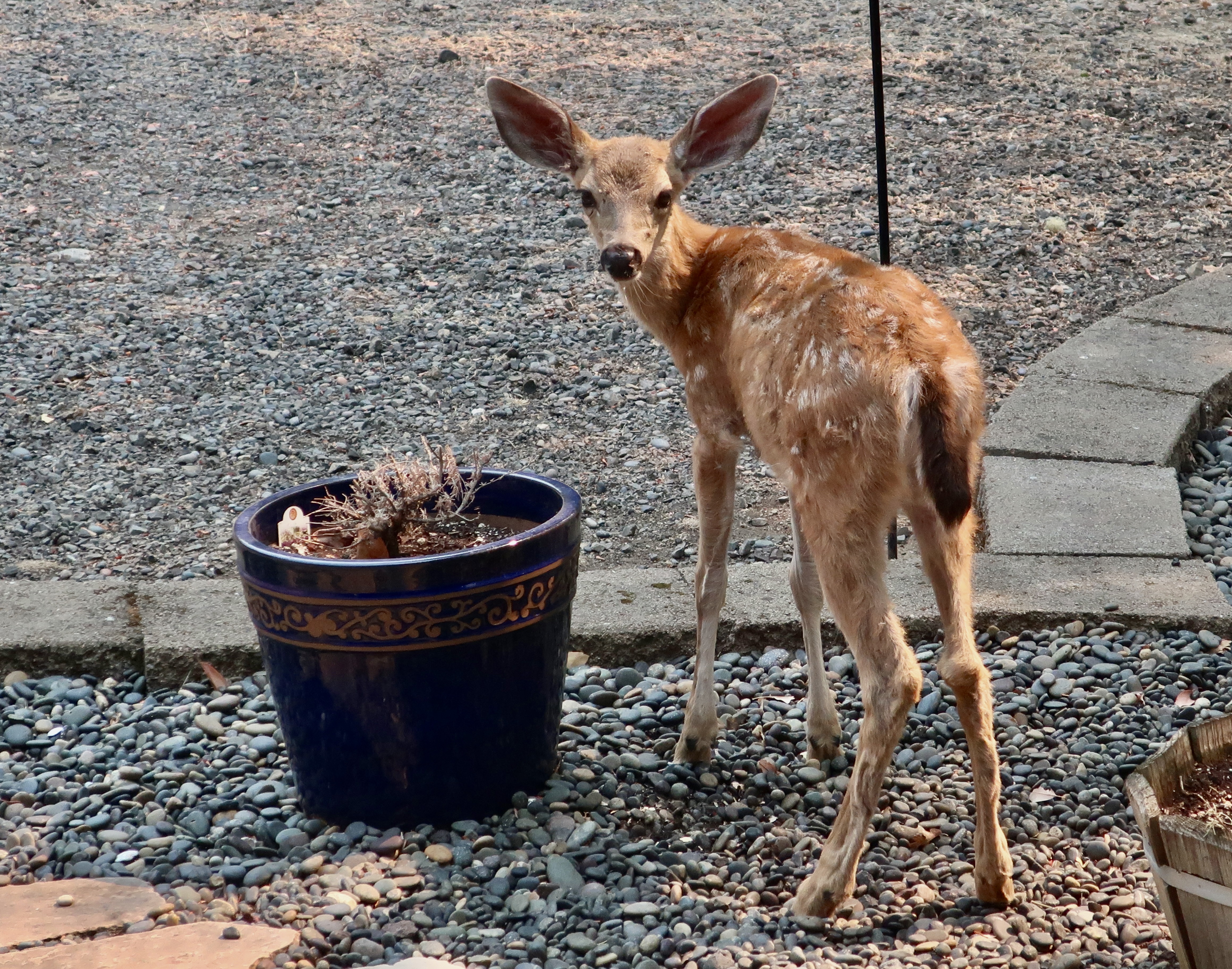
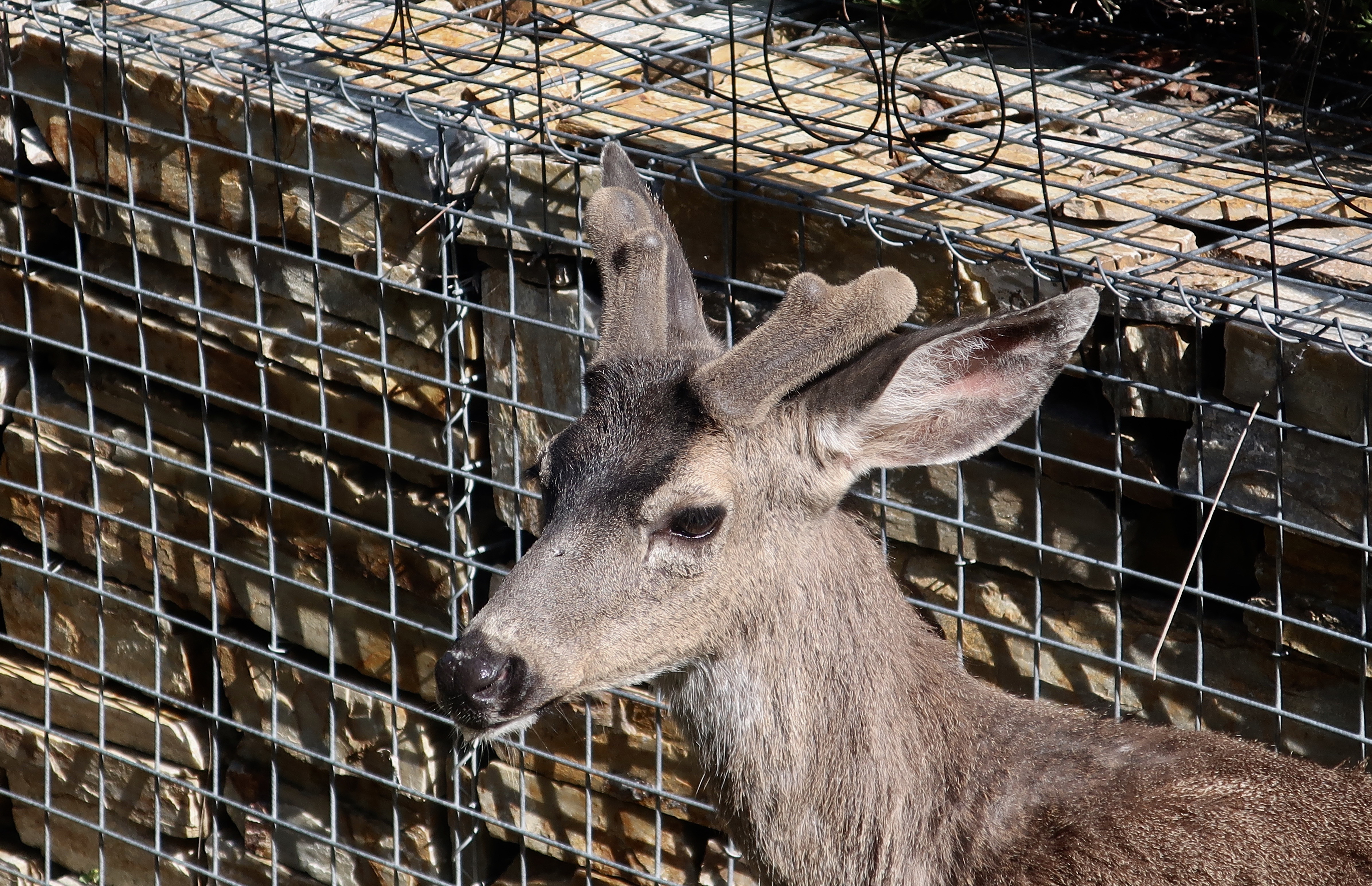
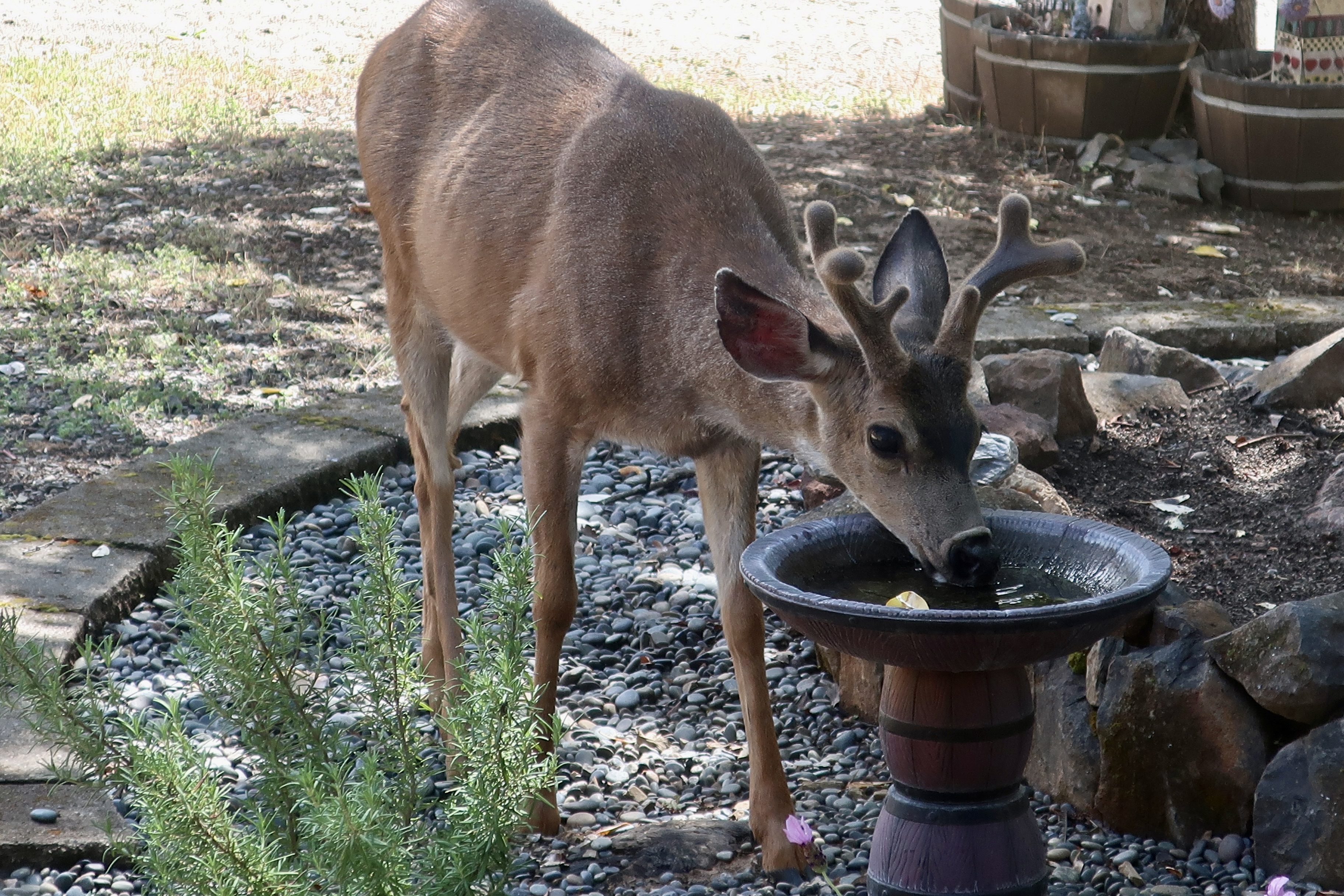
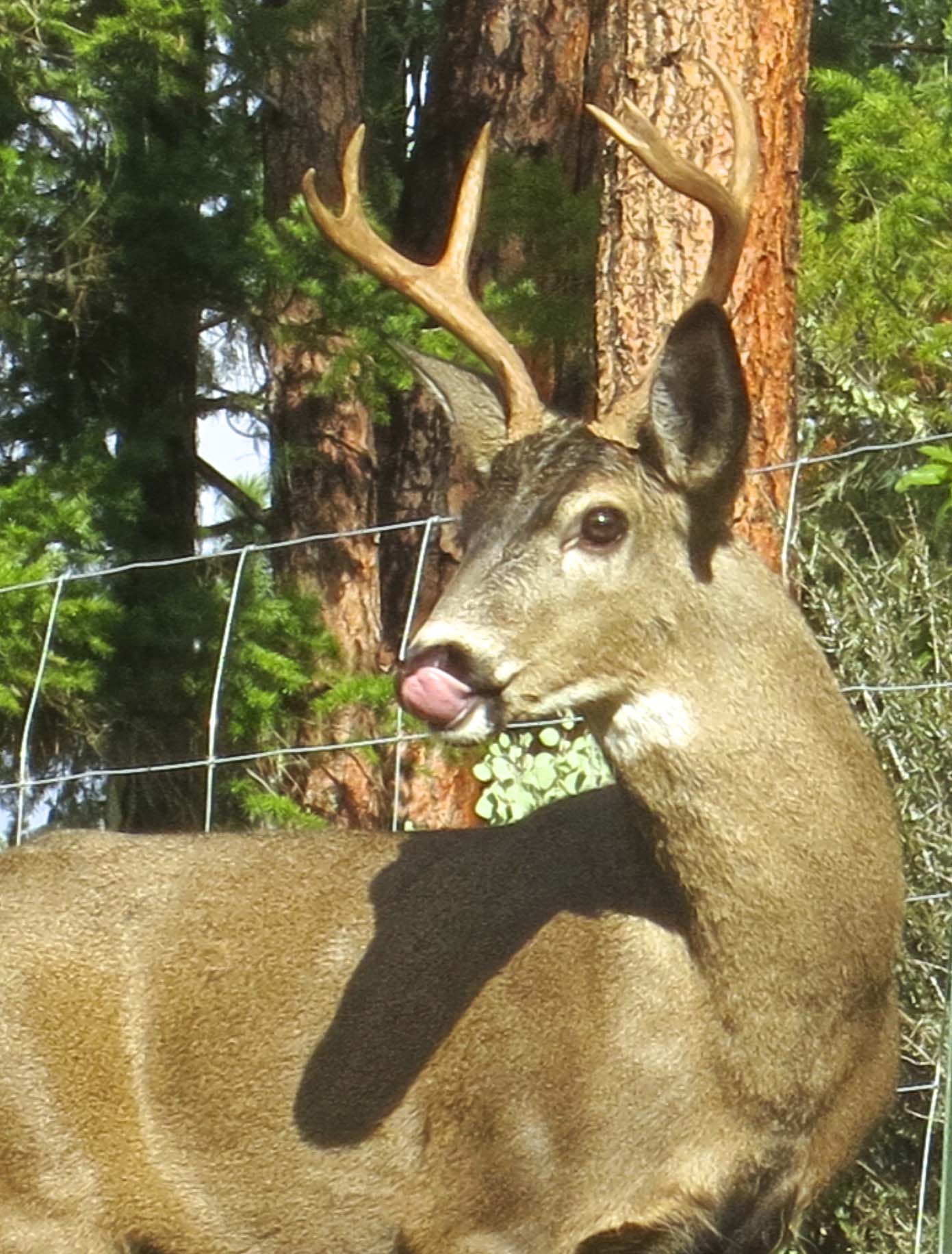
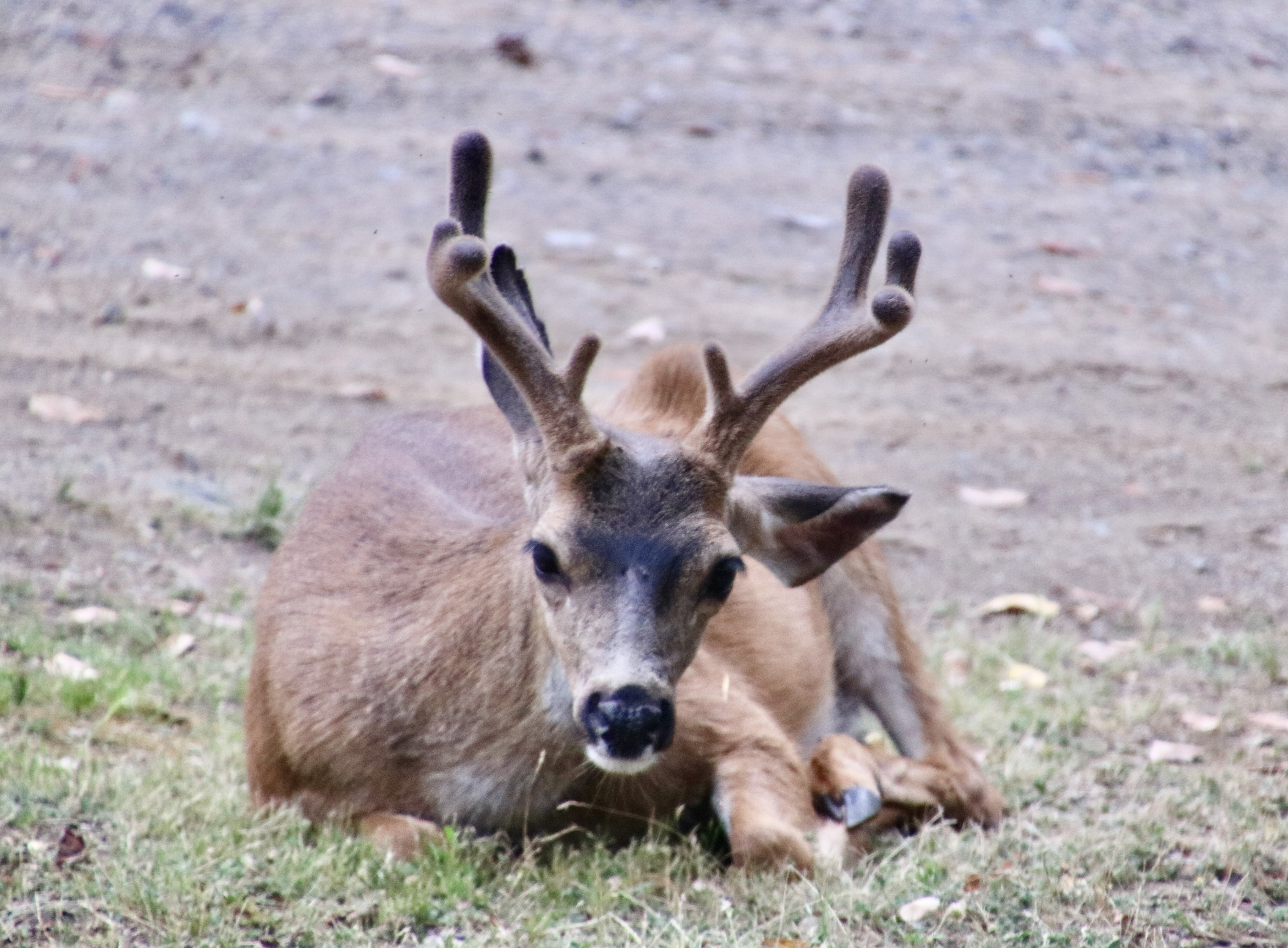
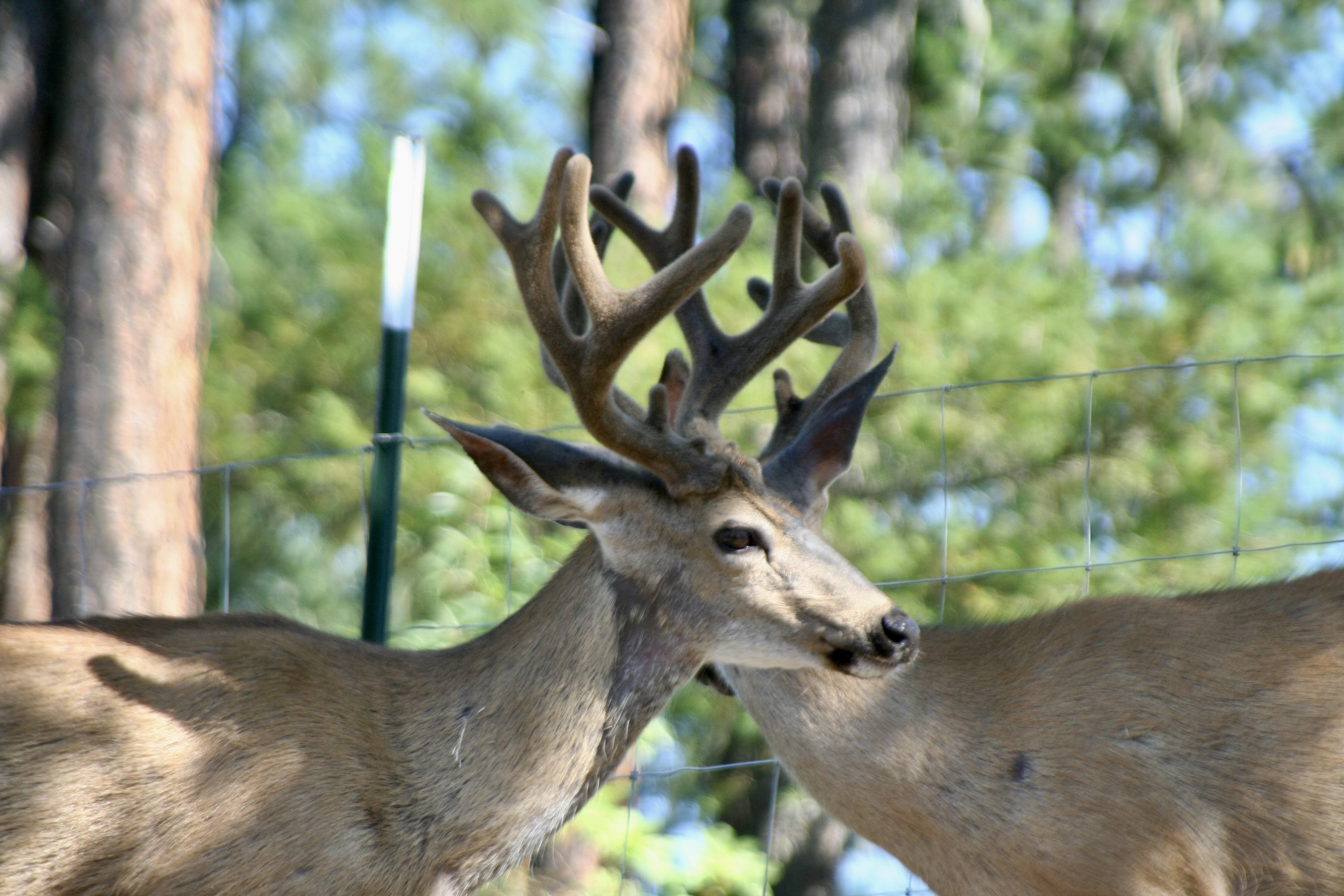
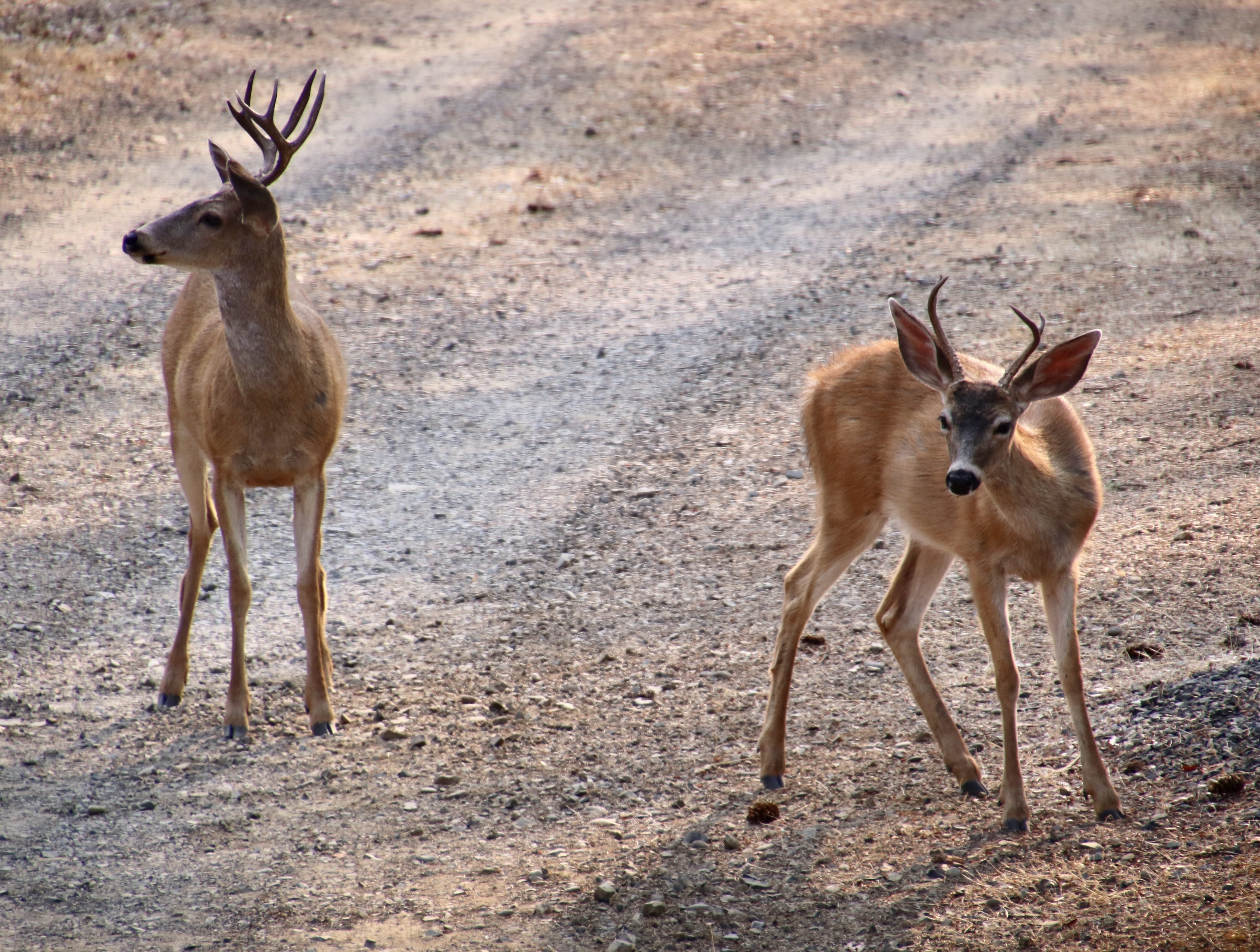
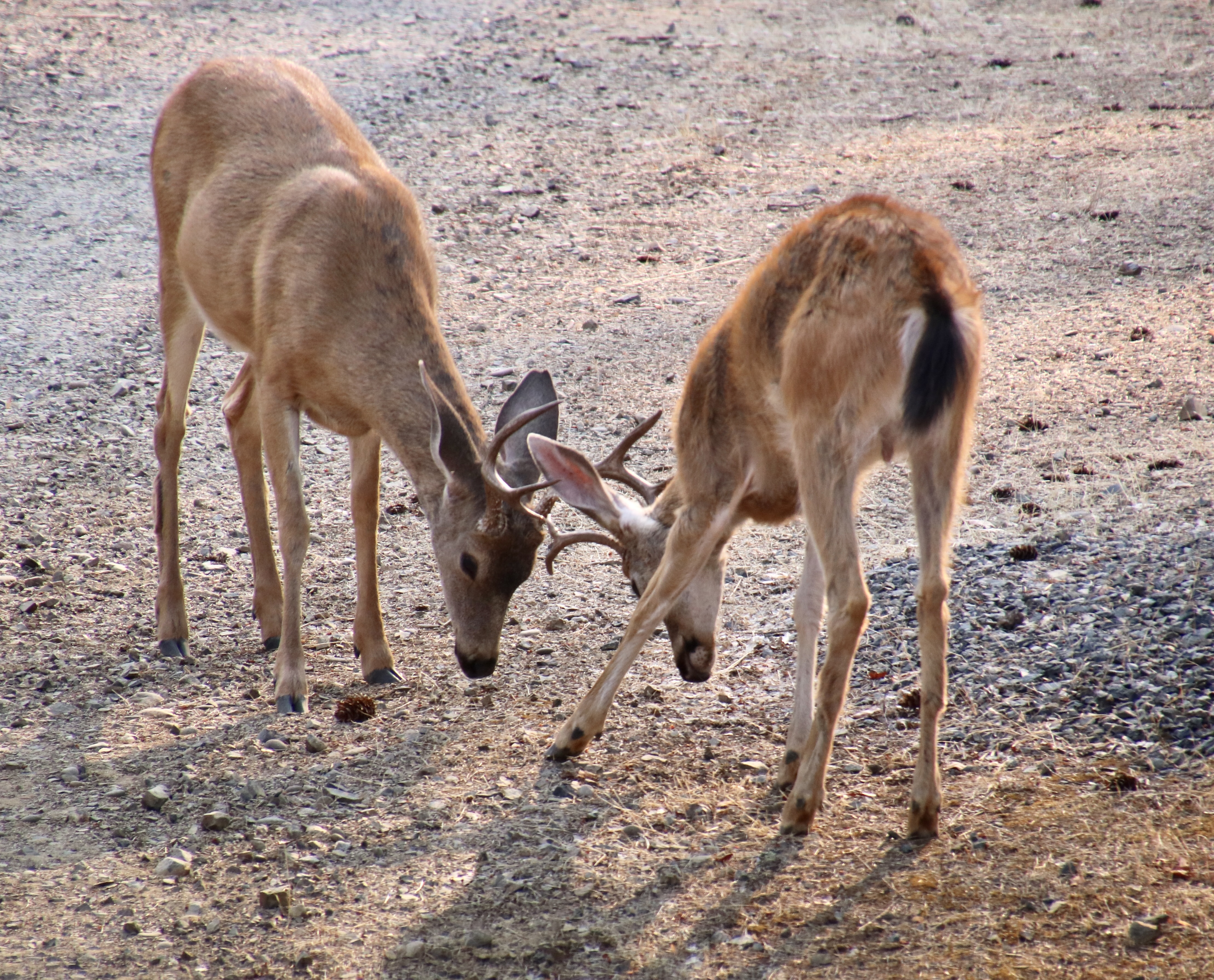
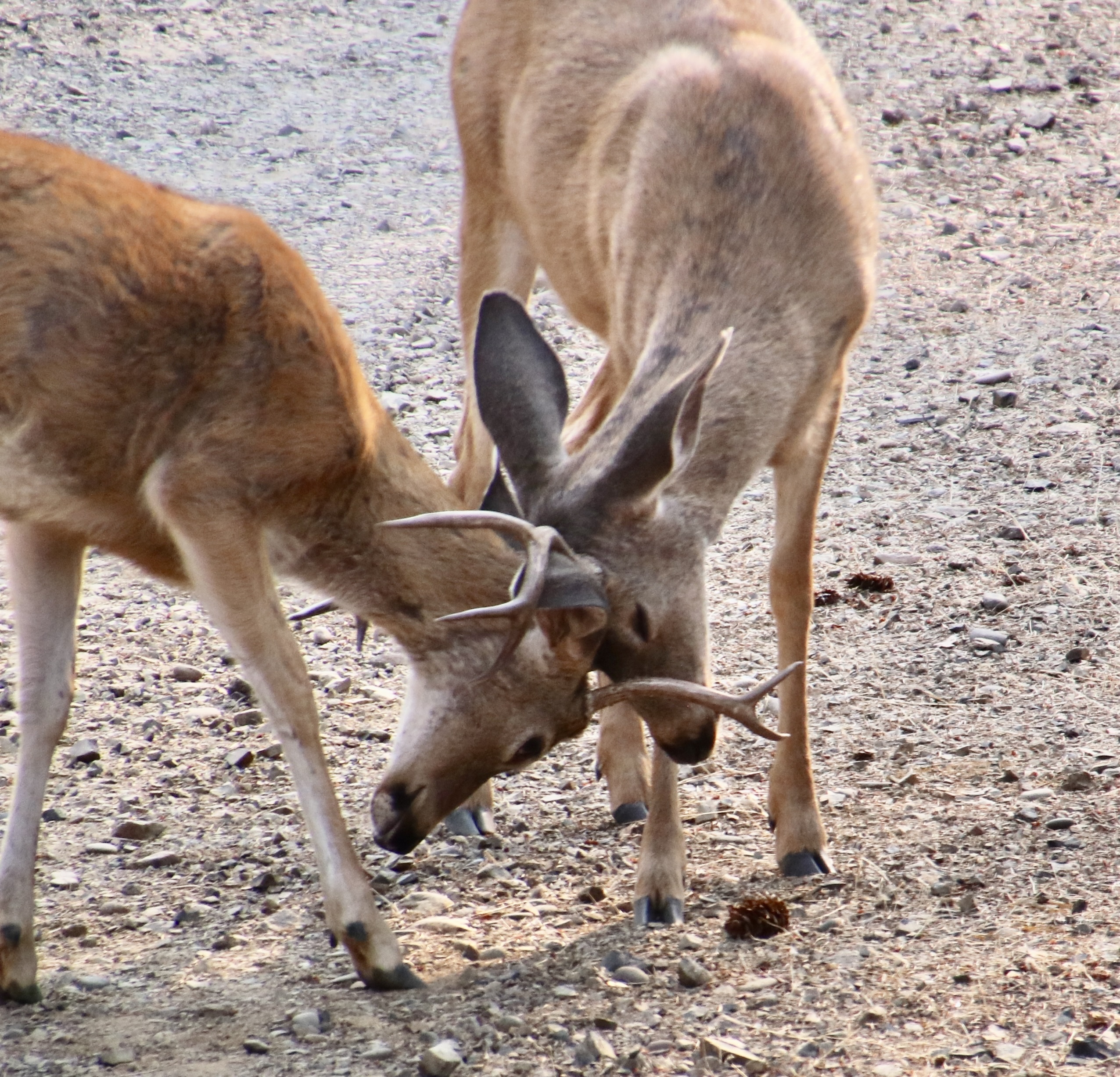
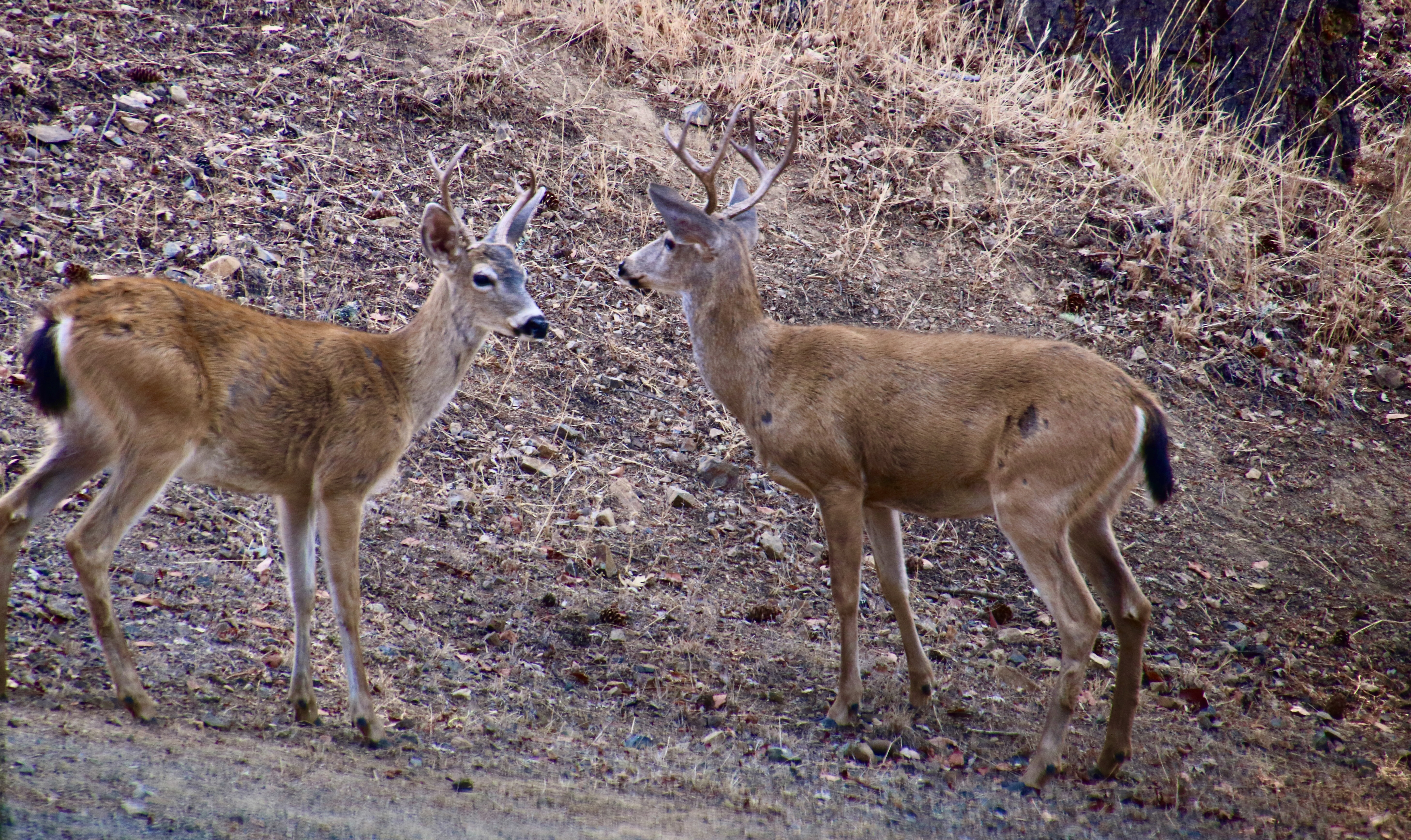
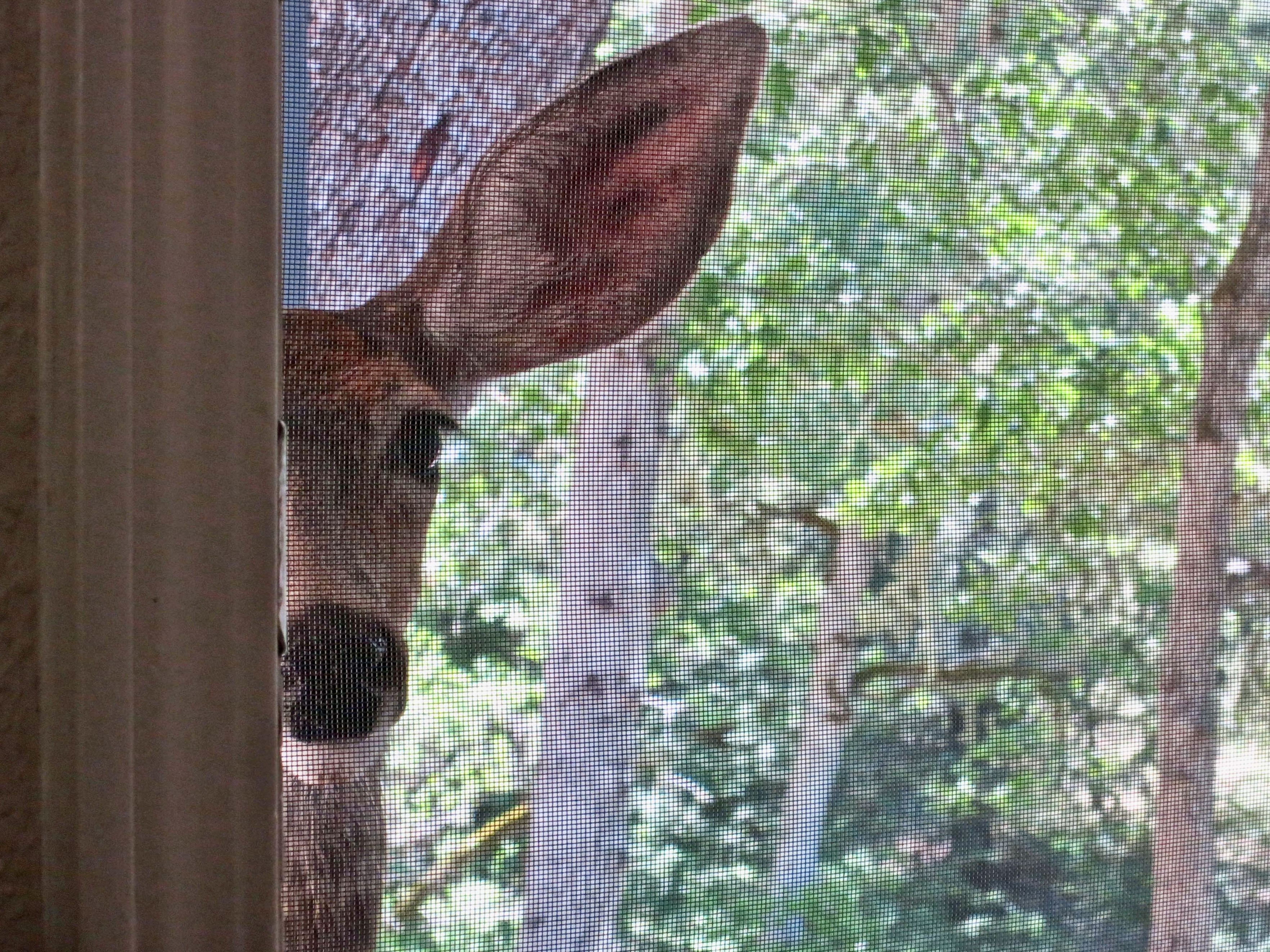
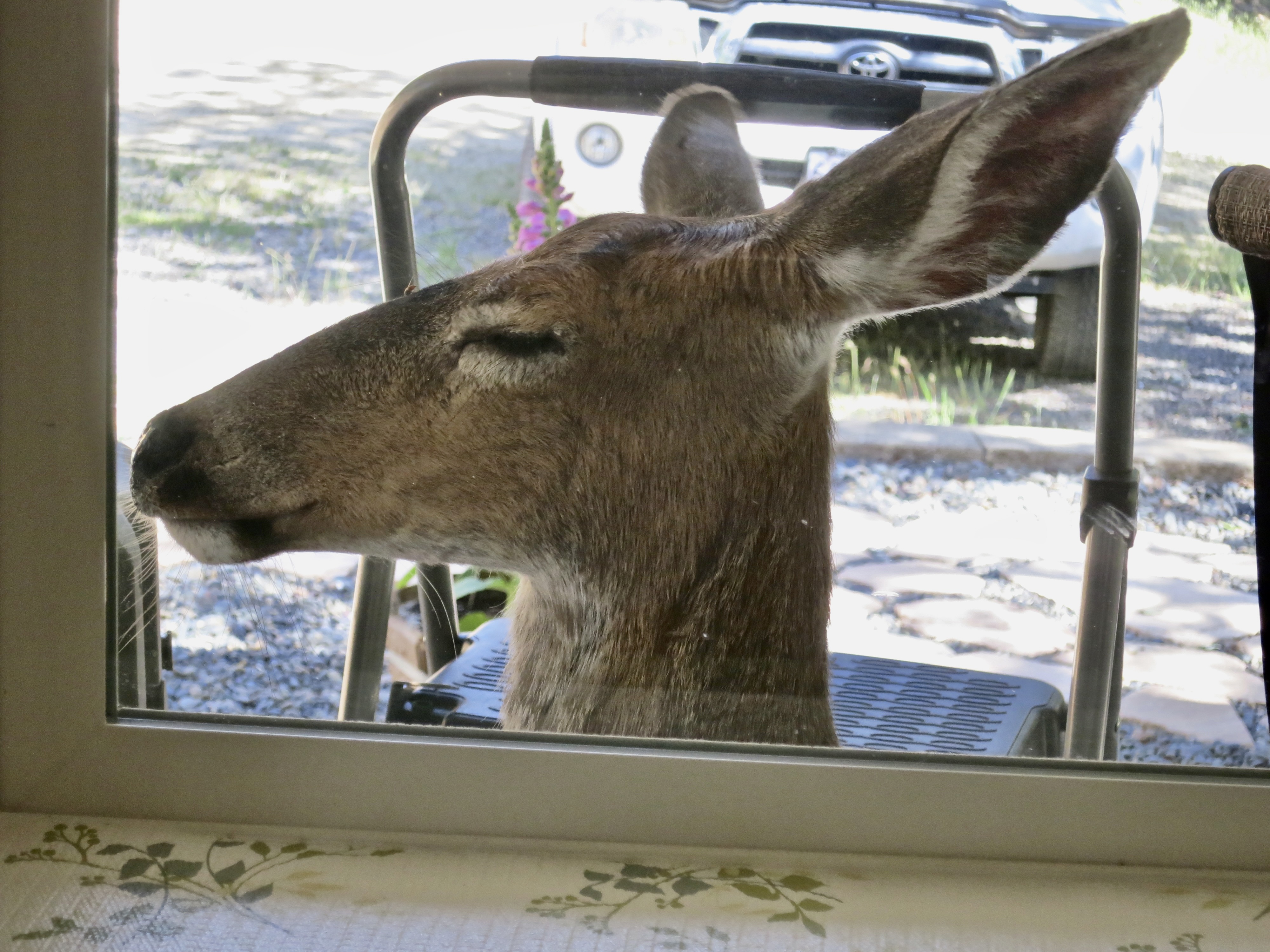
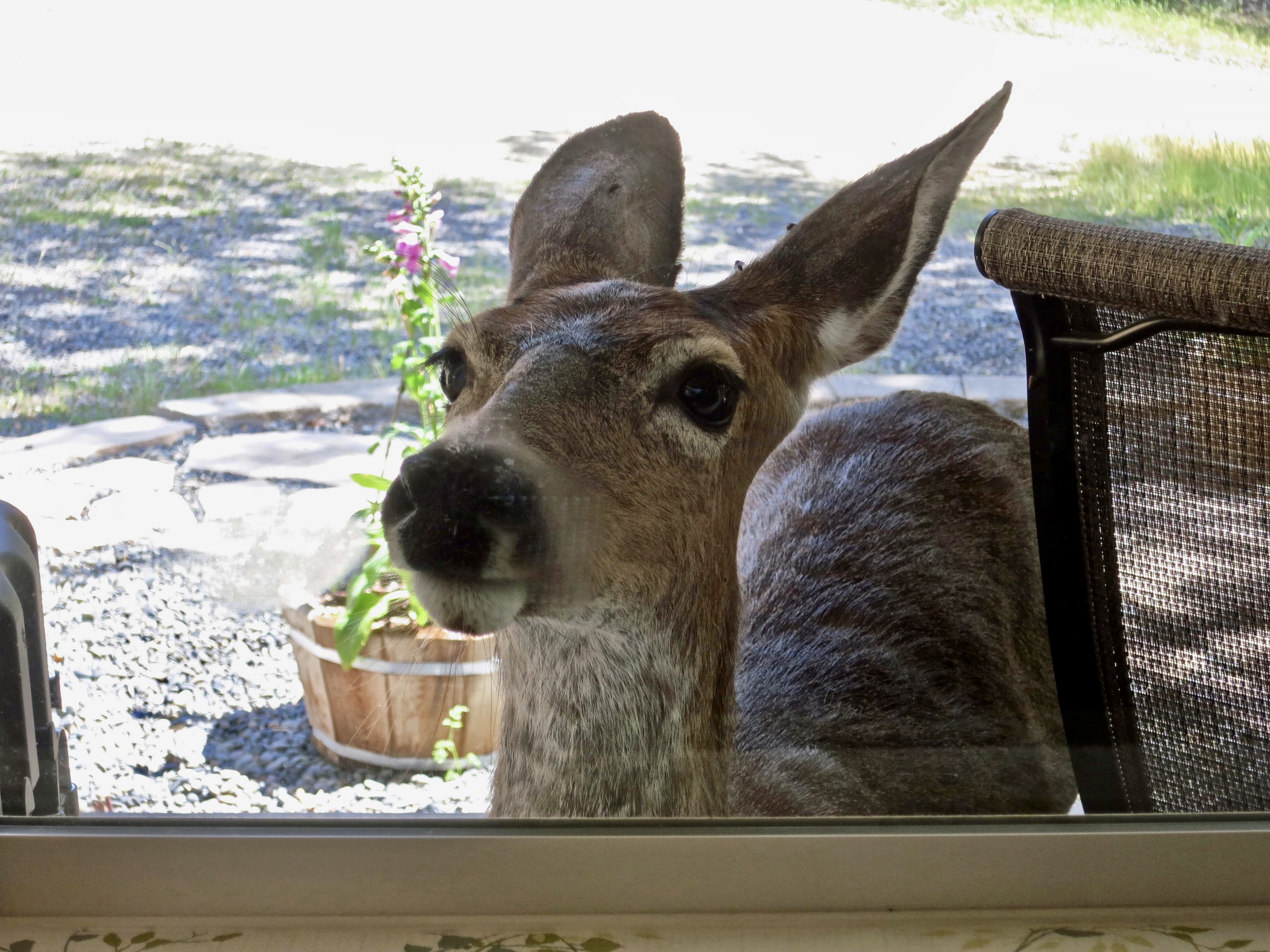
We did come upon a newborn fawn once. The mother had blown it and given birth right in the middle of our driveway. We were returning from town and sat for 30 minutes as the doe urged the baby to get up. Its twin was already off to the side. Finally the youngster stood on wobbling legs and managed to totter off to the side. I kicked myself very hard for not having my camera.If this buck appears nervous, it’s for good cause. A few minutes earlier we had watched junior walk under him, see danglies, and assume they were udders. Reaching up, it had chomped down. Deer are noted for their prodigious ability to leap, jumping over fences as high as 5-6 feet. I swear this guy cleared 10! Apparently, the baby was coming back for more. The buck ran away. The small size of the fawn signifies how young it is. They grow fast. The buck’s antlers are still growing and are in velvet. More on that shortly.Does brought their fawns by to meet us shortly after they had grown out of the ‘hide the baby’ stage. Or at least it seemed that way. Anyway, they trailed along with mom. At 3-4 weeks, they could easily keep up with her and even run fast enough to get away from many predators. They would dash madly around in our yard playing. Not sure whether baby is smelling its feet or scratching an itch. The ears on the doe are almost as big as its head! Deer have extremely sharp hearing and constantly move their ears to detect sounds that might suggest danger. I actually watched one with its ears pointed in two different directions.Hello. The deer in the west are black tail deer as opposed to the white tail deer found in the east and the south. One sign of a black tail deer is its dark forehead.The fawn from above and its twin walking across our deck. Speaking of the deck, it was right next to our bedroom and we could hear deer (and bears) when they crossed it at night. Once we heard a loud thump followed by two quieter thumps immediately afterward. I went out and checked the tracks in our yard the next morning. It was a deer that had made the loud bump as it landed on and cleared the deck in one leap. It was a cougar right behind in hot pursuit.One of the reasons the deer were frequent visitors was that they considered our bird bath their watering hole, especially in the summer. The section of Southern Oregon we lived in has a Mediterranean Climate and is very dry in the summer. The nearest water was down the hill, across the road, and down to the Applegate River. I’m sure that the deer thought ‘why bother.’ The challenge was that two thirsty adult deer would come close to emptying the bird bath. Other deer, birds, squirrels, foxes, etc that used the watering hole were out of luck until I refilled it.Hey, save us some water. We don’t drink much.What is it that you guys don’t get about bird bath!Who? Us? Note the antlers on the buck in the background. There’s a reason why yearlings are know as spikes.My solution to the water hole problem was to add a five gallon paint bucket filled with water. It was a welcome addition. How welcome?Well, baby climbing over Mom to get to it is an example. The laid back ears suggest that Mom wasn’t particularly happy with being used as an obstacle course.No smelling this time. The fawn is scratching an itch. Flies, fleas and ticks all hassle the deer. Again, I enjoyed the three leg acrobatics. Now note the next photo…Don’t ask.One of the fawn’s responsibilities is to learn what is and isn’t edible. It watches what Mom eats and also smells her breath. Lavender isn’t on the deer menu. We grew lots. It took us a few years to figure out what plants the deer wouldn’t eat and plant accordingly. In the meantime, Peggy would rush out and lecture the deer. It was quite humorous, for me and the deer.This young buck, who had leapt over our Gabion cage wall, climbed over the cement blocks, and worked its way past the lavender, stopped to listen to Peggy’s lecture before leaping up the cliff to gobble down the plants and flowers it loved to eat.The real treat was acorns. Squirrels, turkeys, woodpeckers, Stellar jays, and bears seemed to agree.Remember how I said the fawns grow up quickly. Check out the legs. Also note that the fawn’s spots are disappearing.By fall the spots have totally disappeared. The young deer will hang out with their mom through the winter until she gives birth to her new fawn in the spring. Mom then chases them away. They aren’t happy about it and often continue to stay nearby for a while longer—at a safe distance. The young doe will become part of the herd that Mom, Grandma, and possibly Great Grandma oversee. The herd of does browsing in our back yard…And taking an afternoon snooze.The young buck, Spike, here growing his first set of antlers, will slip off to join the boys.And now to the bucks. They lose their antlers in January and February and begin to grow new ones in March and April. A soft, hairy skin known as velvet covers the new antlers providing them with the blood and nerves necessary for bone growth. Aren’t the legs impressive?The antlers will continue to grow until they have reached the size of the previous year and then grow larger, dividing into more points.Bucks are judged by the size of their racks and the number of points on one side. A deer with two points is a forked horn, with three, a three pointer, and so on. The first year the deer grows spikes. Second year is normally a forked horn. Third year 3 and 4 pointers. Five pointers plus grow in the fourth year and beyond.A three point buck without velvet. “Did somebody say apple?”This big boy in velvet is a five-pointer. The back antlers are split but can’t be seen in this picture.Two bucks displaying a forest of antlers! We thought this was a fun photo. Come August-September the antlers have completed their growth and the bucks scrape off their velvet on anything available, normally a tree or bush. It’s time to get in fighting form. One year we arrived home and found a buck using our hammock to scrape off his velvet. I chased him off but it was too late. The hammock was torn to sheds. By November and December it’s time to decide who gets the girls.This is a contest that the bigger buck normally wins. Size is often enough to decide the outcome without a contest.These two three pointers have been checking each other out. The one on the left is larger and has a bigger rack, but…They go at it, head to head and antler to antler. The biggest buck shoved the smaller buck around. I worried about their eyes.And then they separated without either being harmed. The big fellow seems to be saying, “You want more of me?” The smaller guy had had enough, however. He vacated the scene. For a day or so, the three pointer chased does around our yard, happily making the rounds and rutting away— until a bigger buck came off the mountain. After the rutting season is completed is when the bucks lose their antlers and a new year begins.A very pregnant doe.As you have probably figured out, this doe and her twins were the stars of our blog. She was usually somewhere nearby and was the first to bring her fawns by. Always curious about what we were doing, she often stared in our window. Here she is looking though our screen door.Our house was surrounded by windows providing excellent views of everything happening outside. I had the best seat, however. I turned my writing chair around in our library and could watch all of the action in our backyard. We considered it a great privilege that the deer herd allowed us to share in its daily and yearly life. Here, Mom taking a snooze on our back porch, was about four feet away. That’s it for the day. Next up:
On Friday I will do the intro to the my memoir: UT-OH. I am blogging one chapter at a time. I am quite excited about the book and have already written 22 chapters. Please join me.
2025 was a good year for us from a travel perspective. We stayed home, so to speak, and limited our wandering to Hawaii, the Southwest, and New England. Now we have the itch to go abroad again. We’ve chosen three areas known for their beauty, culture, wild areas— and relative safety: Costa Rica, Scotland, and Bali.
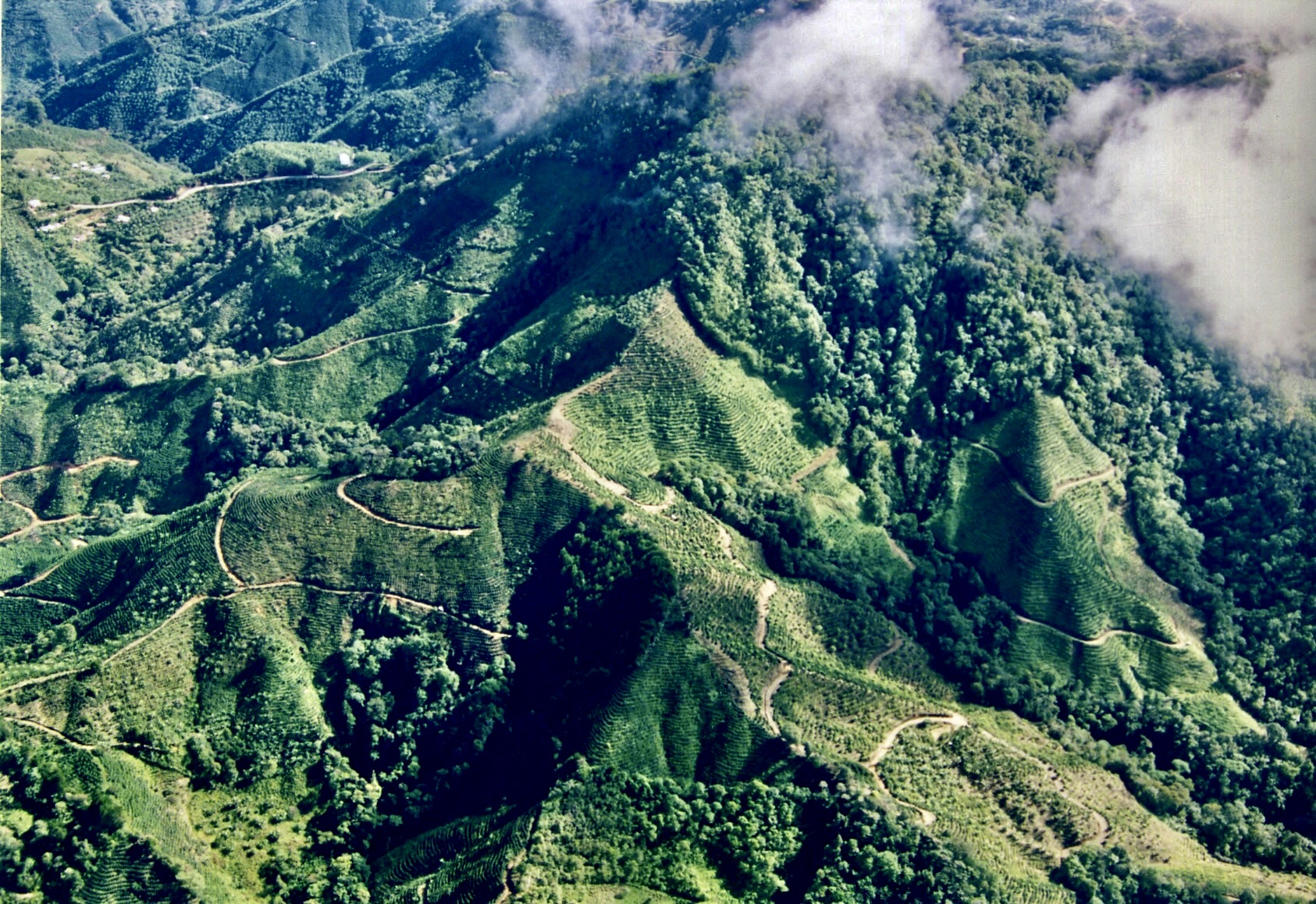
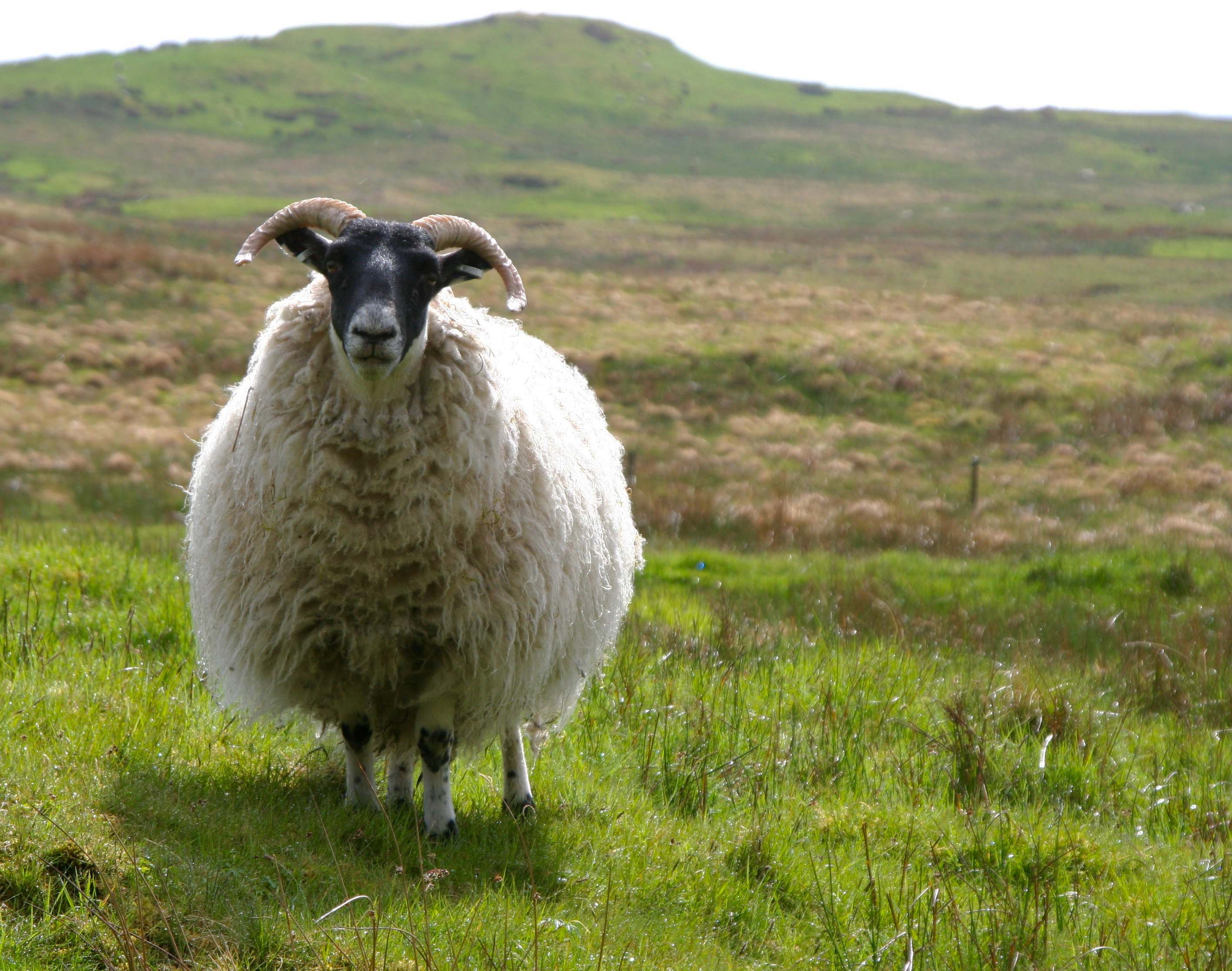
First up: Costa Rica. We took the above photo when we were in a small plane flying back and forth across the country on a tour in the 90s. This year we will be renting an SUV with high clearance and driving ourselves. The country roads can be challenging— even in the dry season! Peggy and I will be going there for the month of March. Our son Tony and his family will join us for a week in Monteverde.Next up, we will be visiting Bali. I visited in 1976 as part of a six month tour of the South Pacific. I’d lost my camera in Fiji, so I don’t have any Bali photos. I brought a painting home instead. The region is known for its colorful art. This one depicts a rice harvest. The woman on top is making an offering. It’s important to keep the gods happy. We will be there in May. Our grandson Ethan will join us for a week.We met this fellow in Scotland when we were doing family genealogical research in 2014. He had positioned himself in the middle of the narrow road we were driving on for about 10 minutes before finally moving over to the grass. Peggy and my families were Lowland Scotch so we were in the southern part of the country. This year we are visiting the highlands, coastal regions and islands of the north in late June and July. We will be checking out castles and looking for Nessie, the Loch Ness Monster. Our grandson Cody will be joining us for two weeks. We are planning to hop over to Northern Ireland after Scotland.
Naturally, we will be blogging about our journeys. But there is more, as they always say on late night TV ads. Or at least they used to. Peggy and I don’t stay up that late and most of our TV time is streaming without ads. I am continuing our focus series over the next two months and beyond. “Oh Deer” is my next one. I’ll be featuring the herd that lived in our backyard in Oregon and liked to stare at us through the windows.
A not unusual sight!
And finally, I’ll be offering a new series I’m calling “Ut-Oh” where I will be pulling together posts that I have included on my blog over the past 15 years plus new material featuring my more serious/humorous misadventures in my life. I’ll do an introduction to it next week.
The question here is why should such an innocent looking child be kicked out of the first grade for a year. My first post will answer the question plus relate how a caterpillar I was using to cut a road fell off a cliff— with me on it.
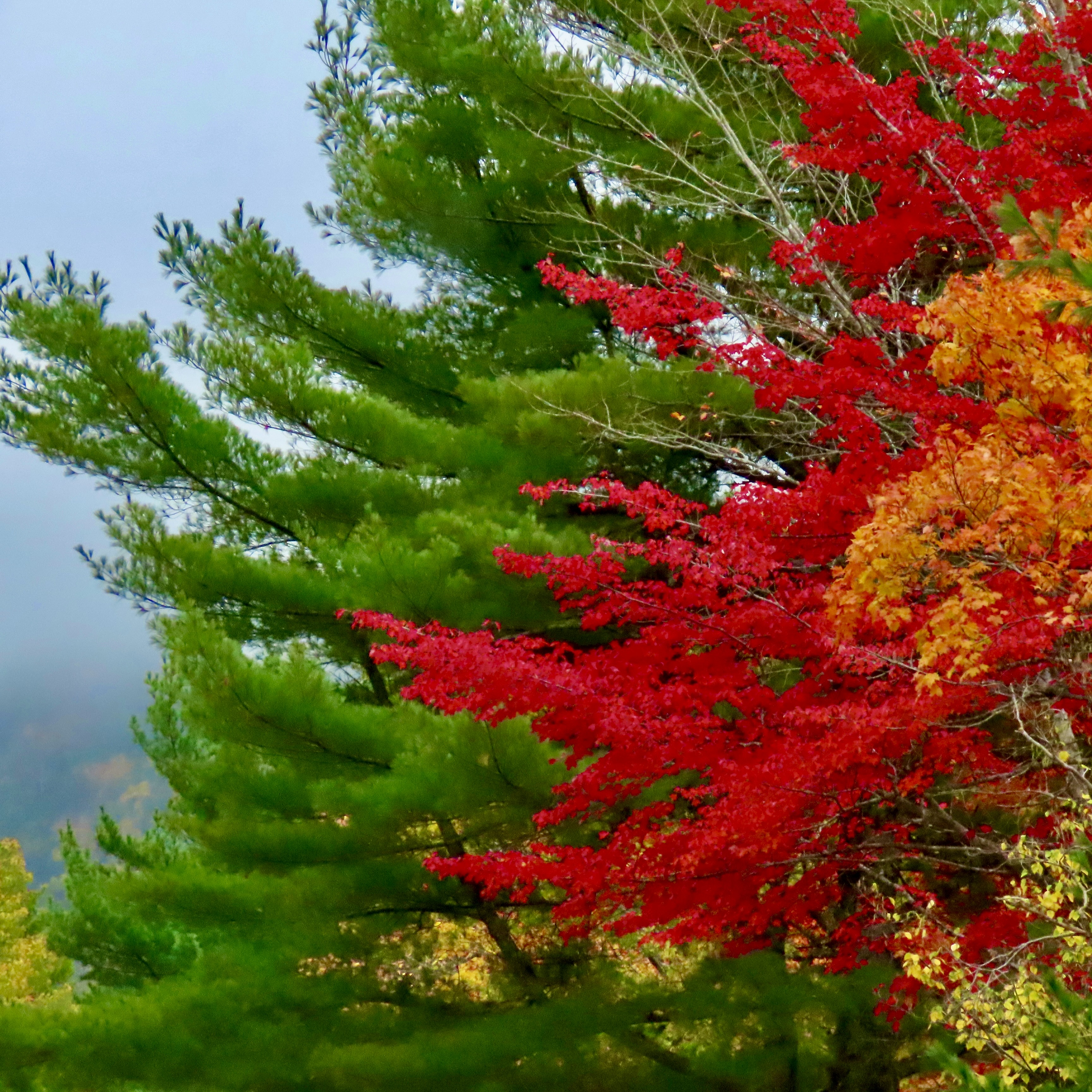
As we noted in last week’s post, our 2025 wrap-up is based on three trips we made during the year and blogged about. The first was Hawaii, which I posted last Monday. Today’s post features our Southwest journey where we wandered through the Southwestern US for five months visiting national parks, state parks, and national monuments. Next week’s post will cover our three week leaf-peeping trip through New England in the fall.
The photos used in the three posts are all from ones we selected to include in three calendars we developed for our extended family, each focused on one of out trips. (Not all of the photos here made it into the calendars, but it was a flip-of-the-coin type decision.)
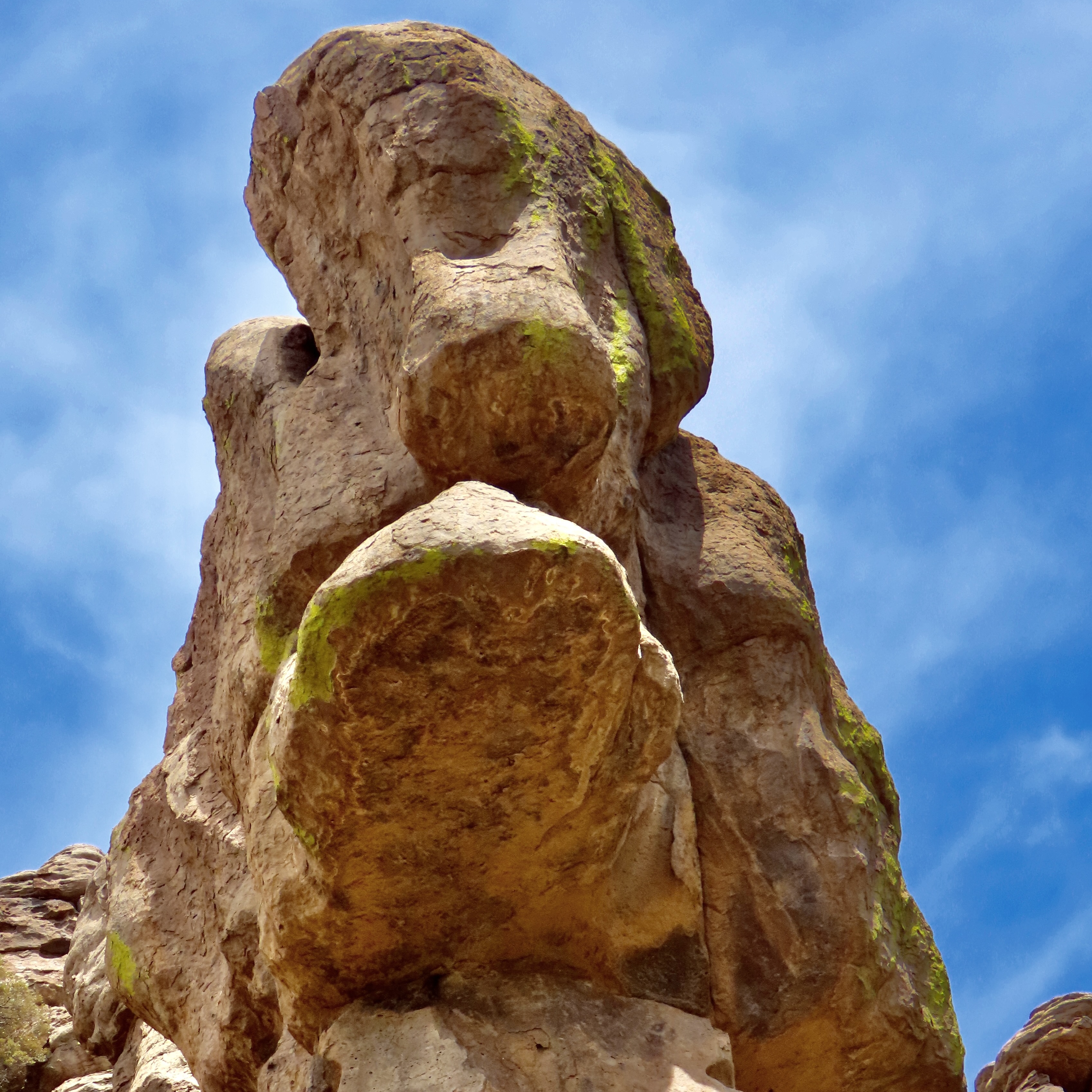
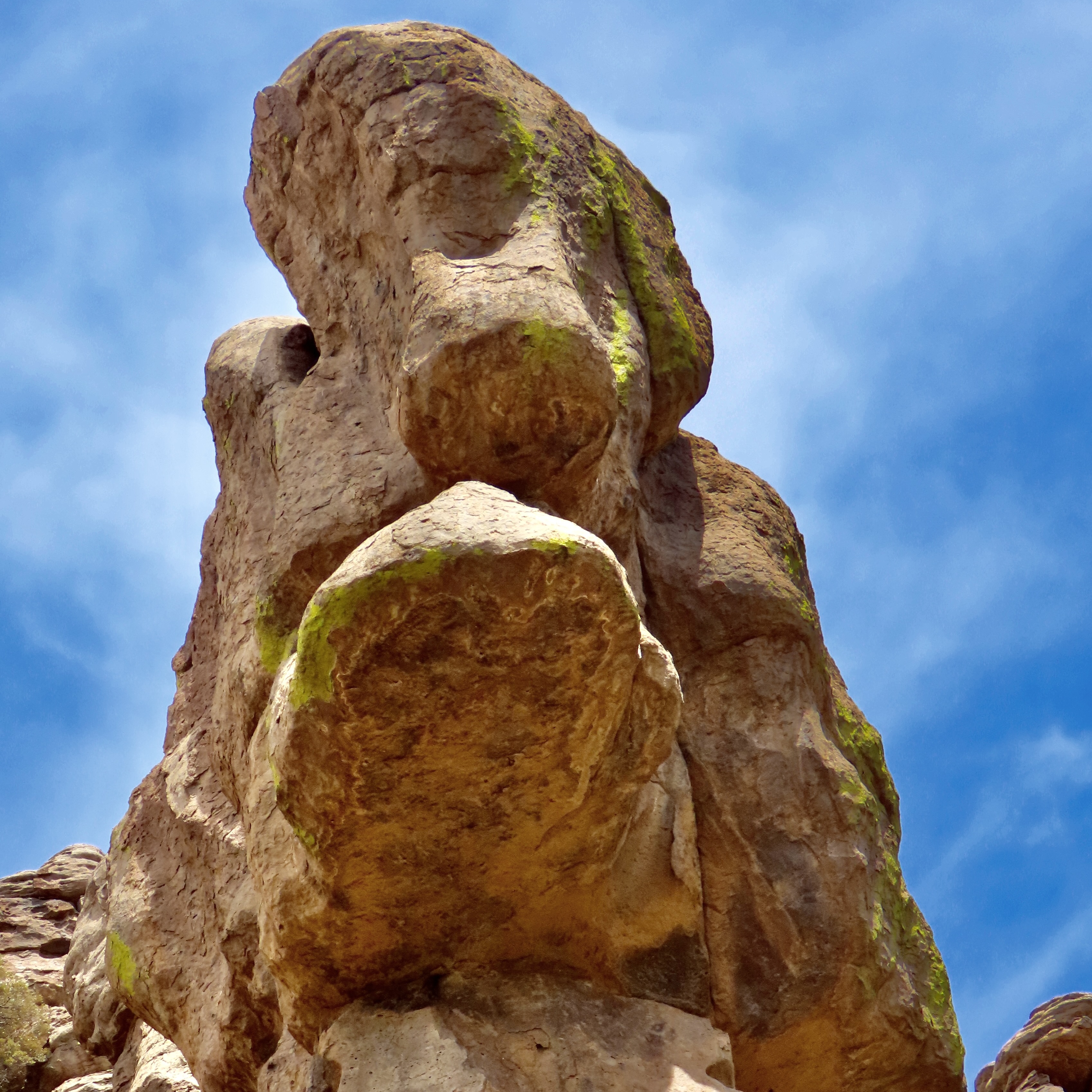
We discovered the towering rock above in Chiricahua National Monument, which is located in southeastern Arizona. The monument is named after the Chiricahua Apaches who roamed the area prior to it being occupied by pioneers from the eastern US. A couple of notes. One, the park is filled with a fascinating variety of rock structures. Two, we have discovered over the years that national monuments often include scenery, geology, history, plants and animals that easily match those found in national parks. They are definitely worth visiting and are usually far less crowded.
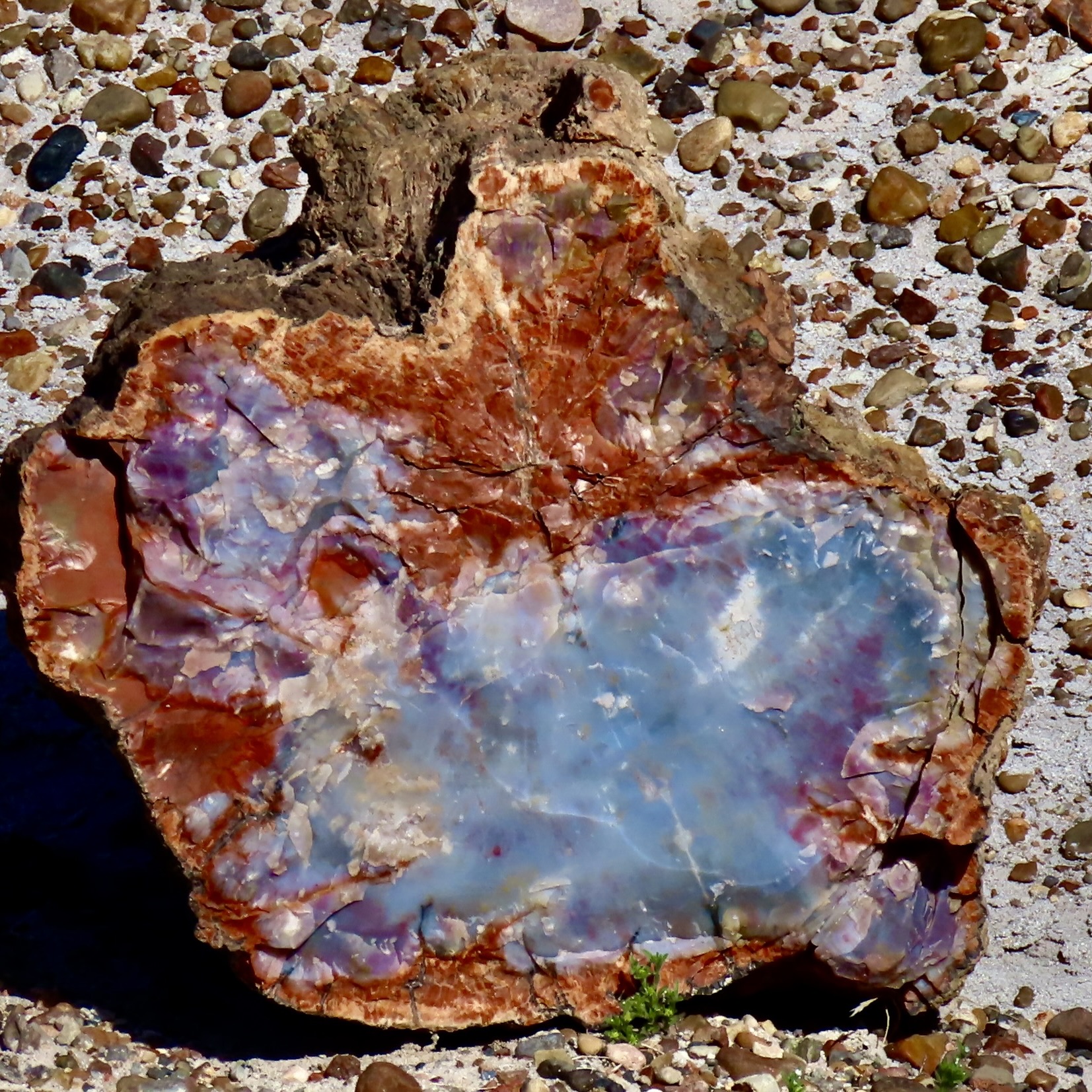
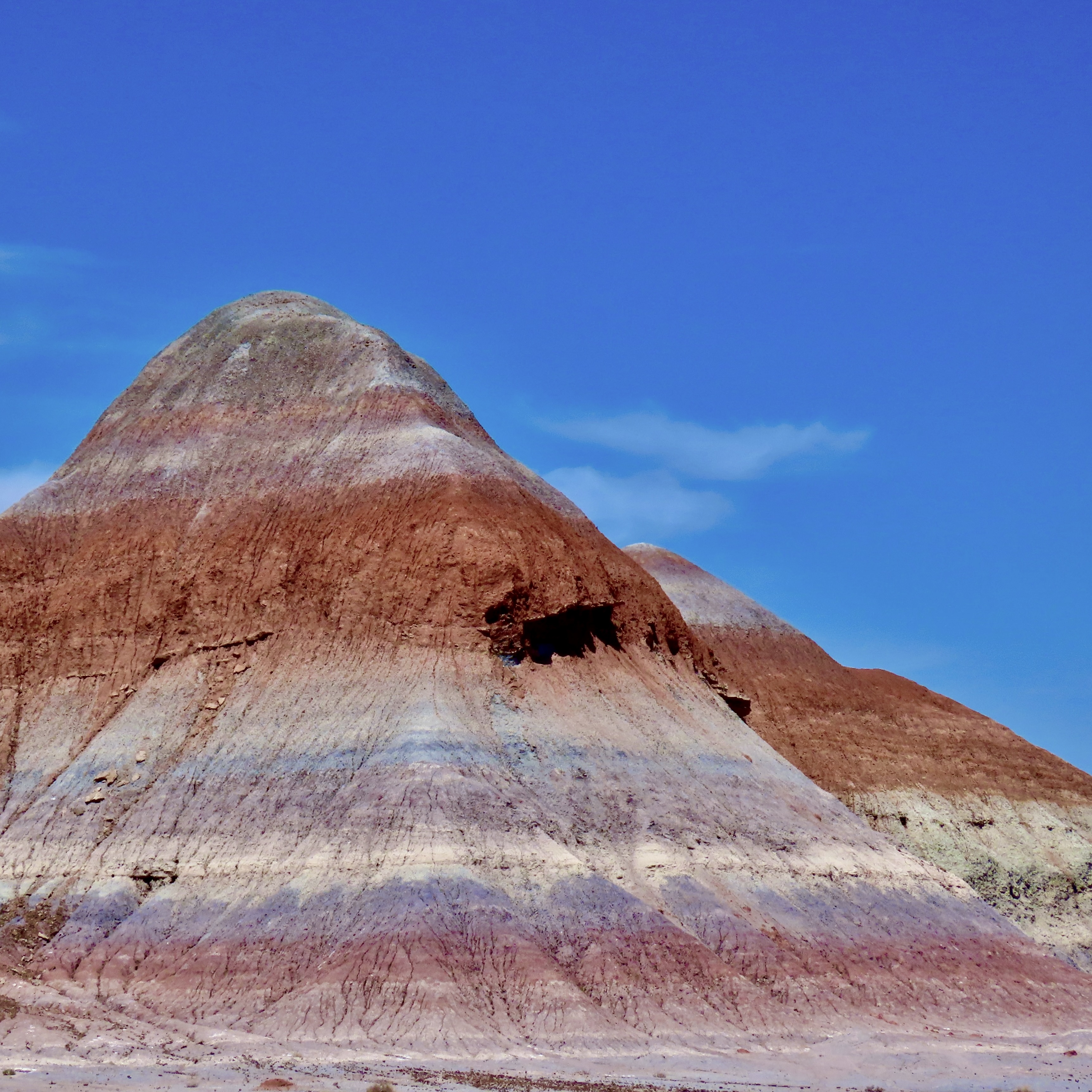
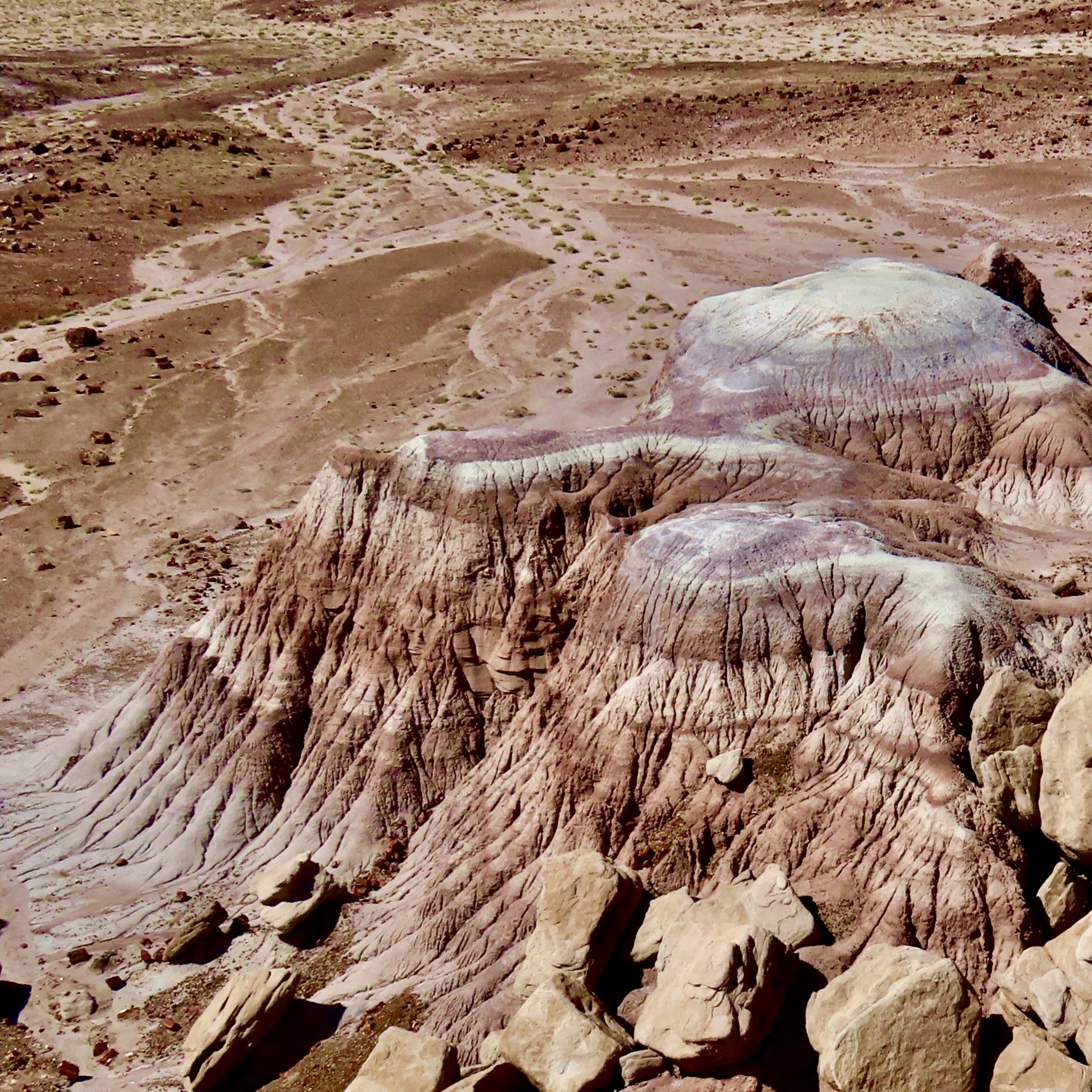
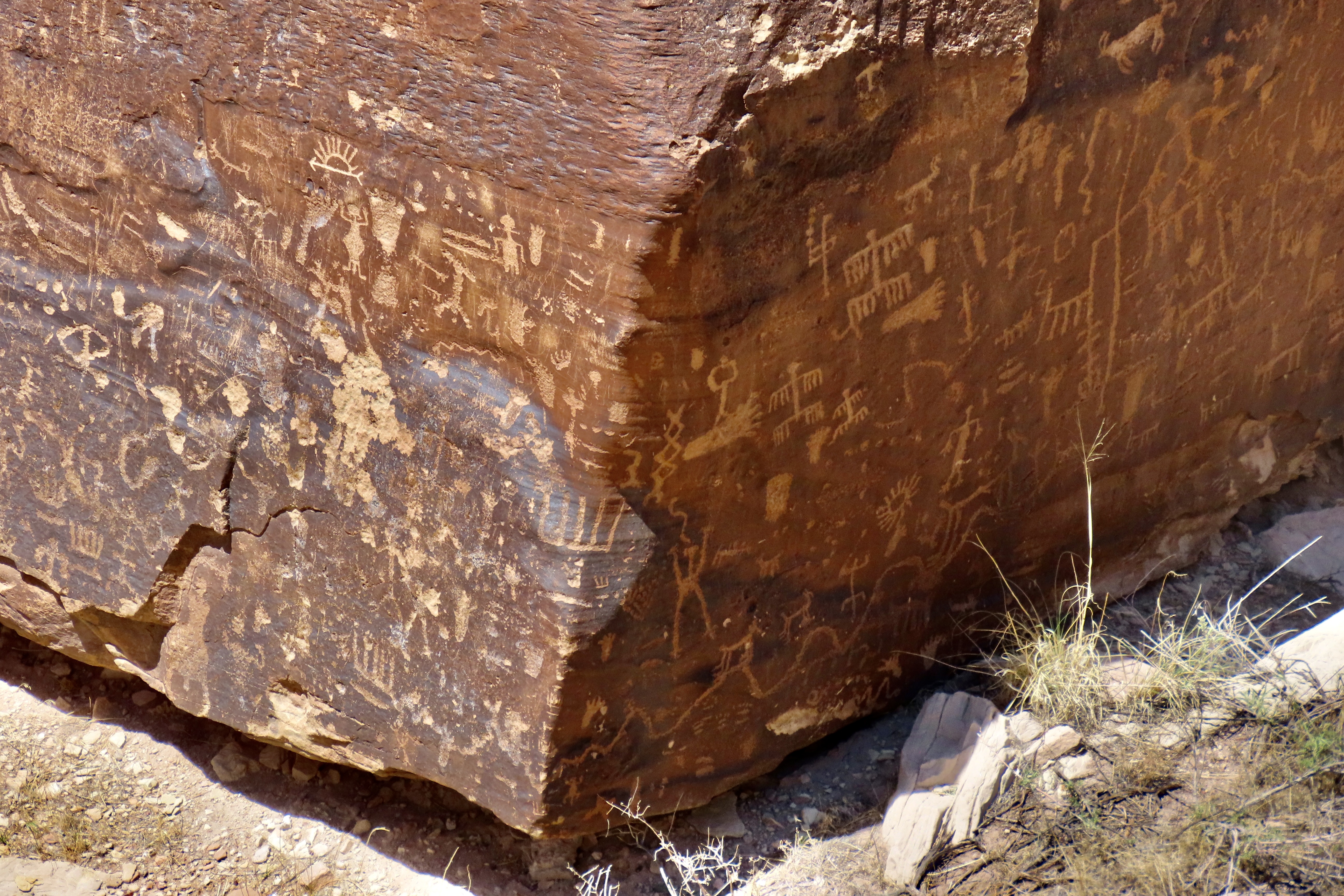
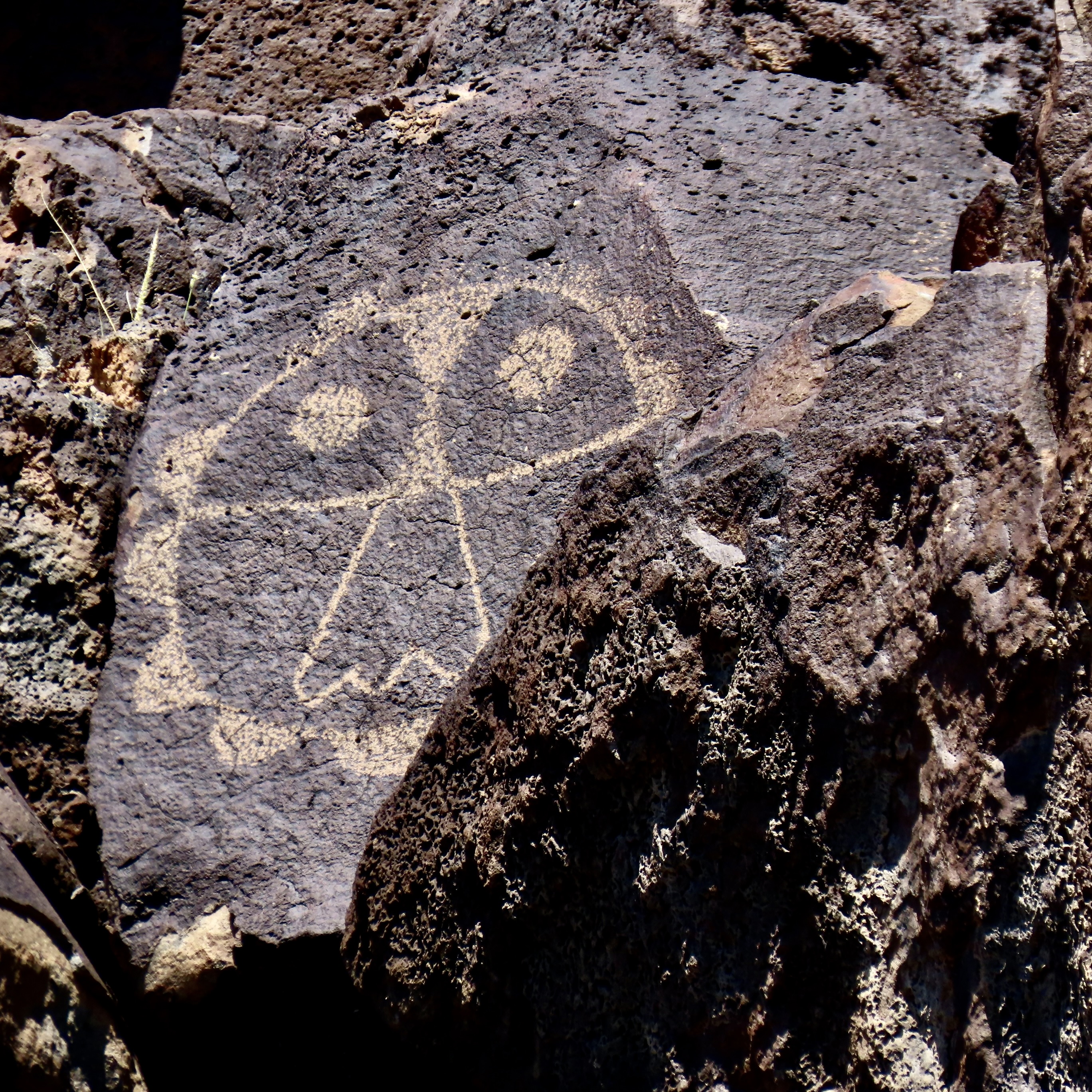
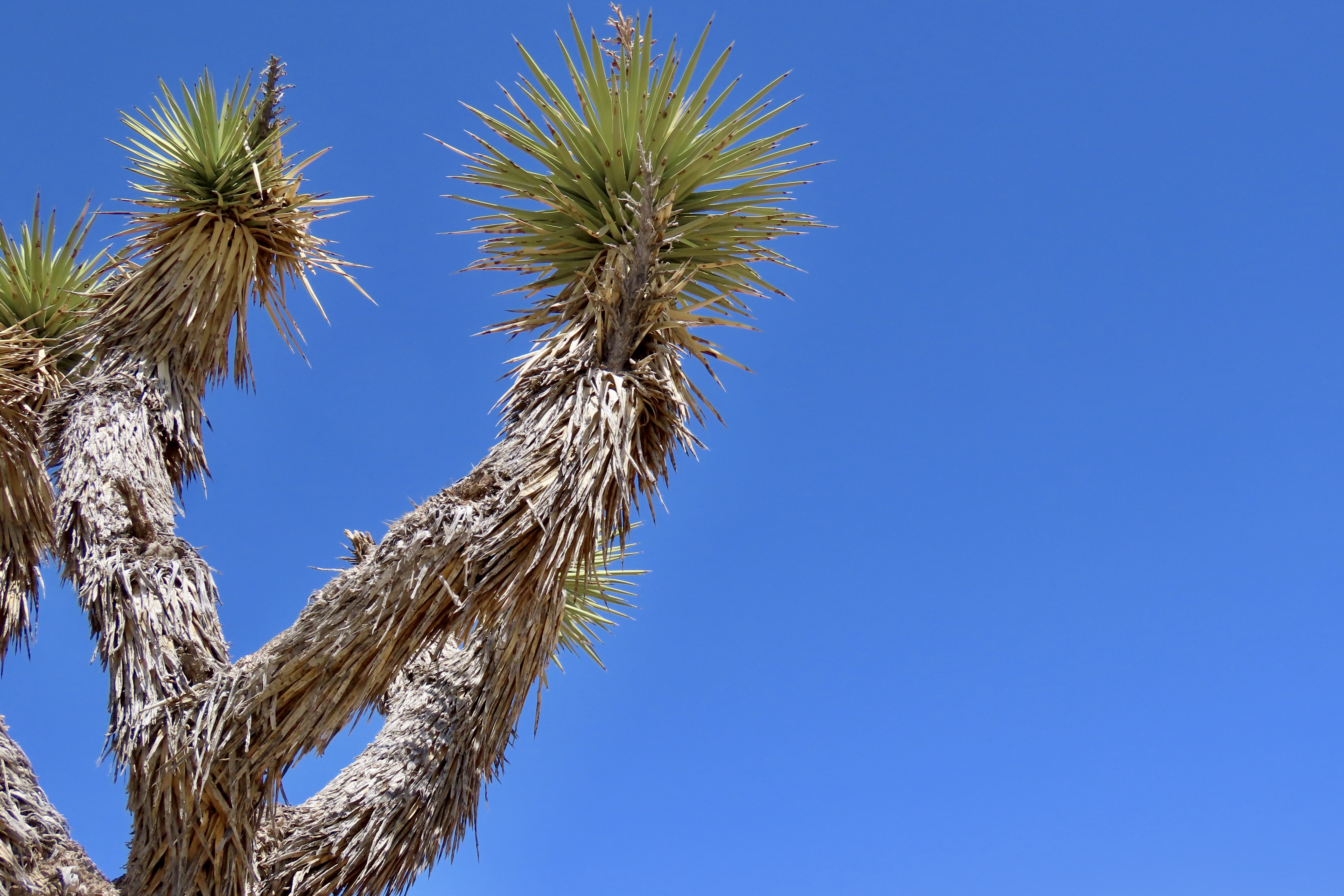
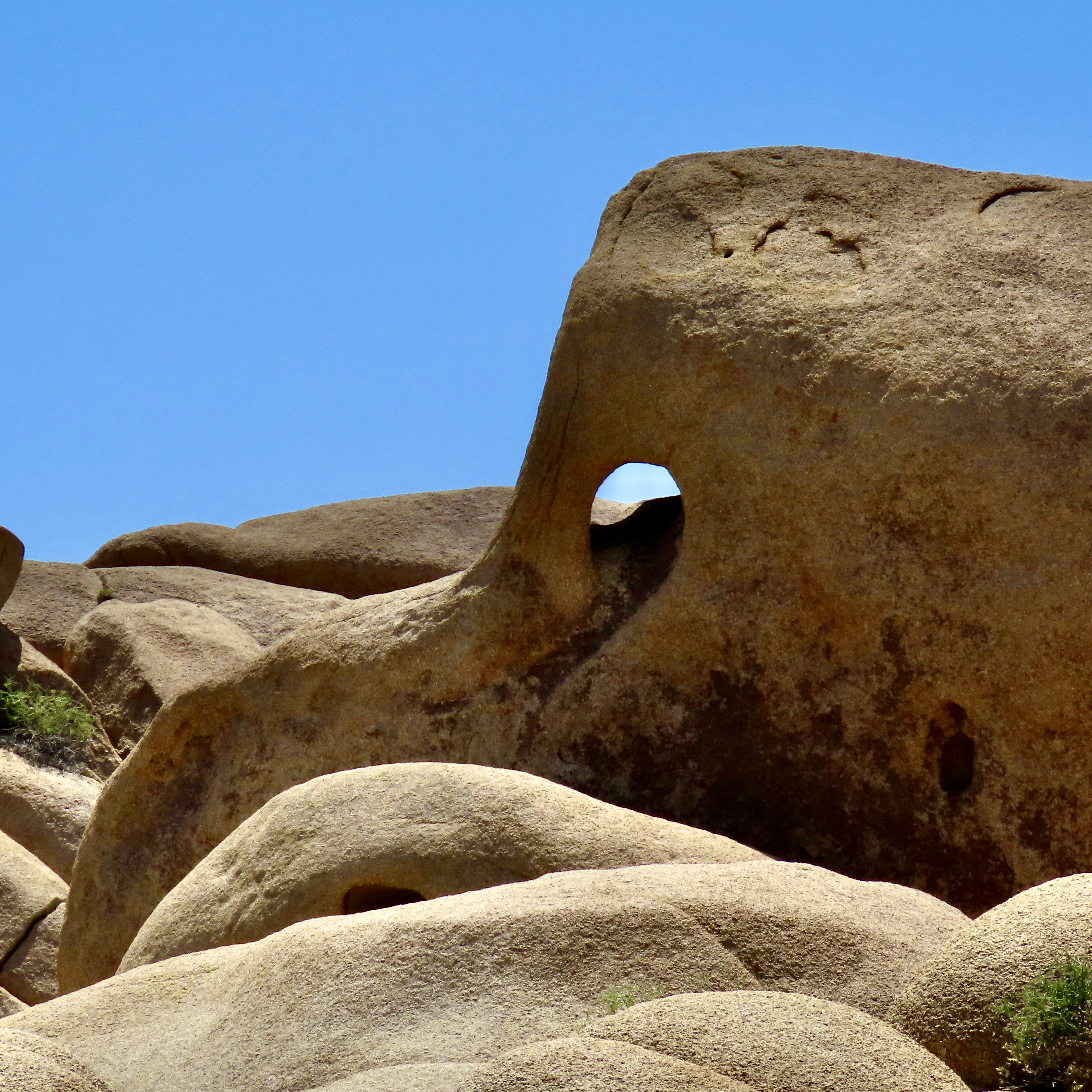
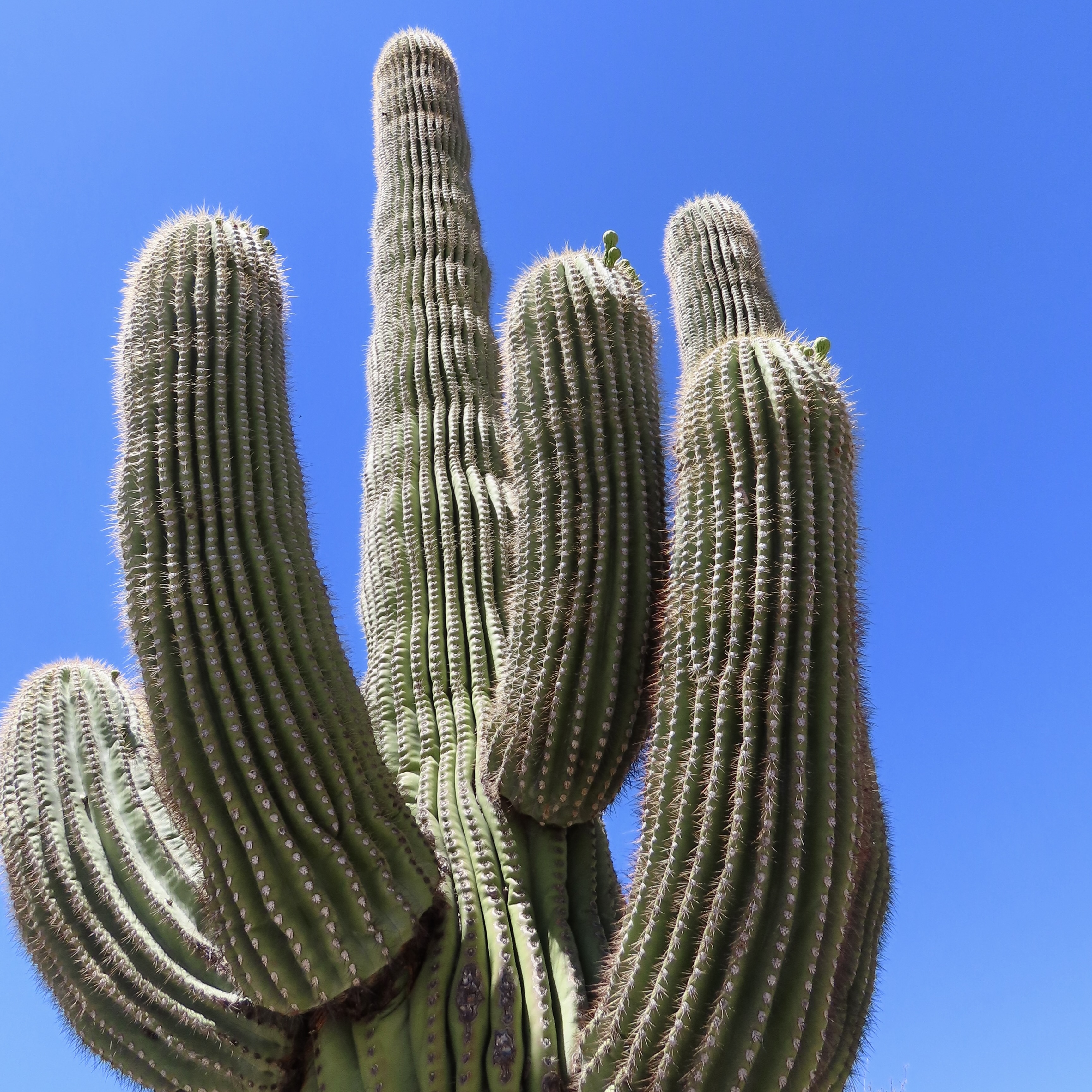
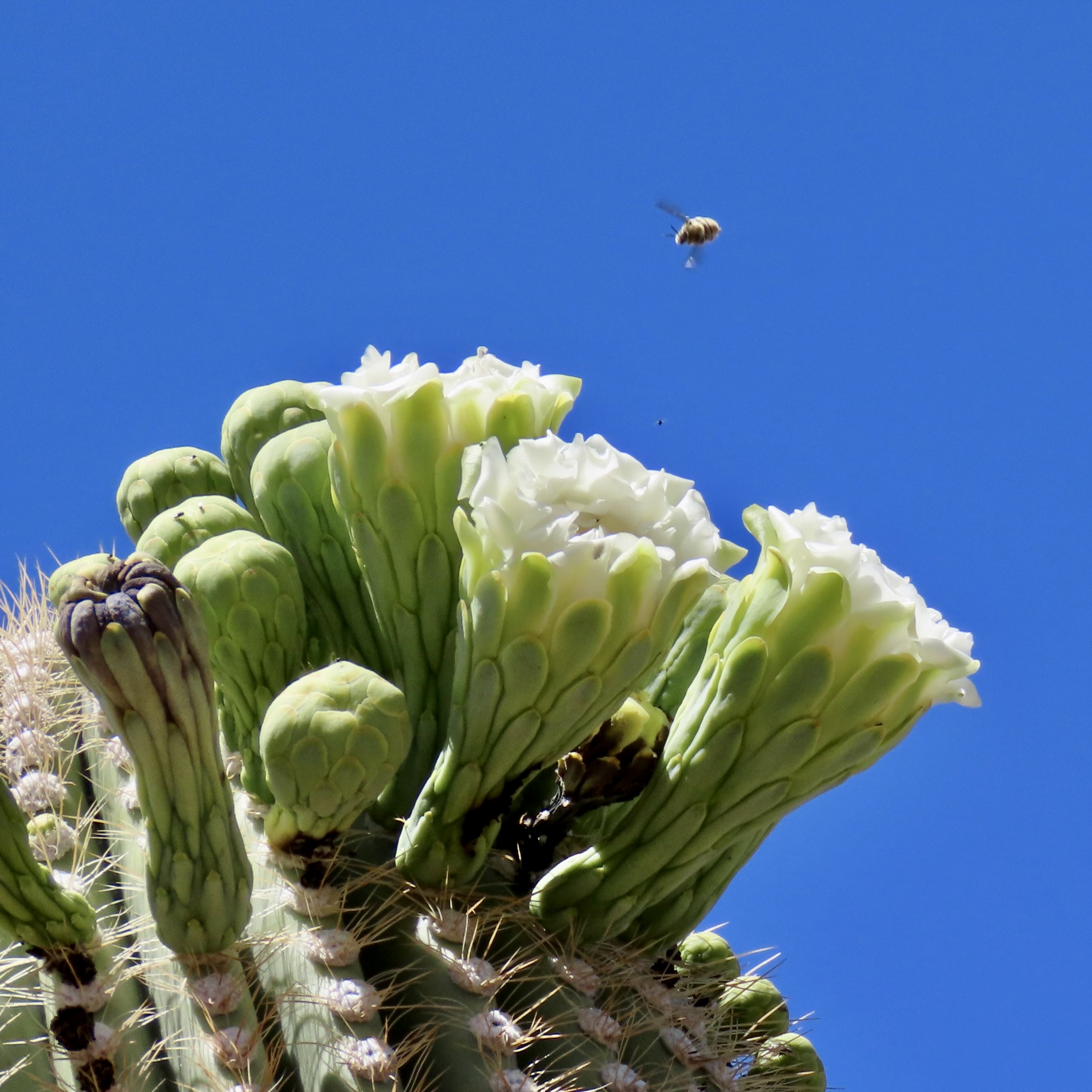
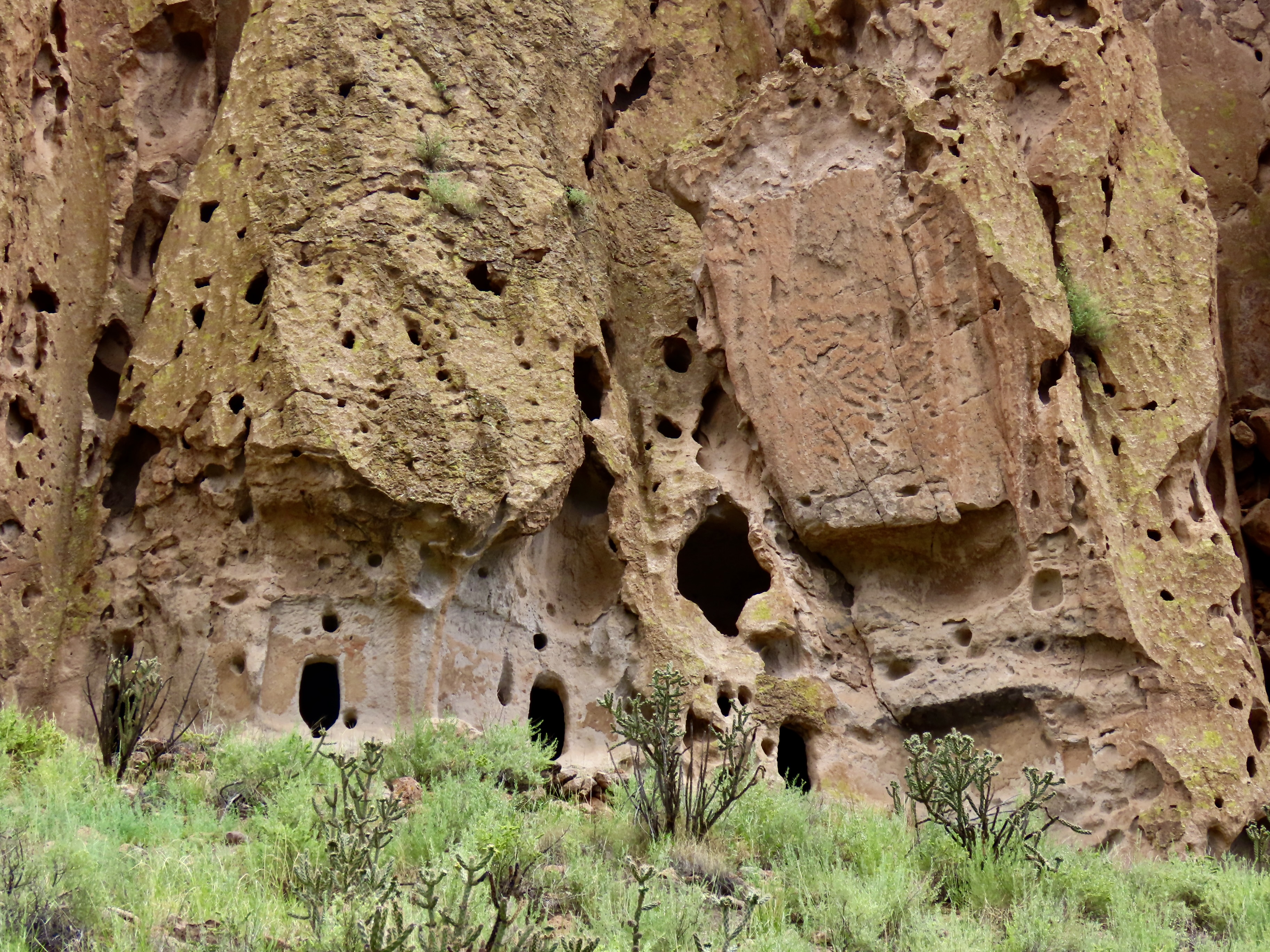
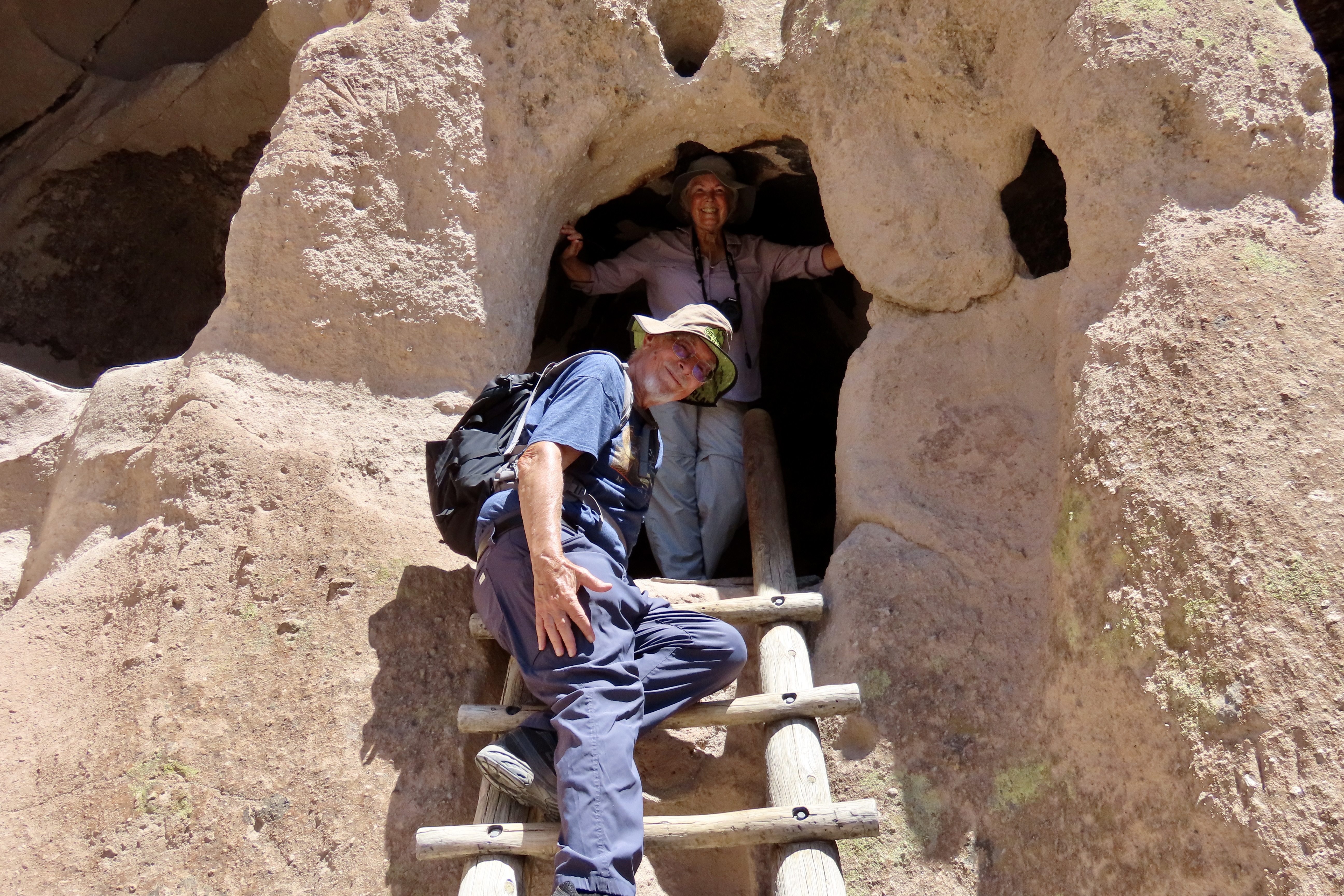
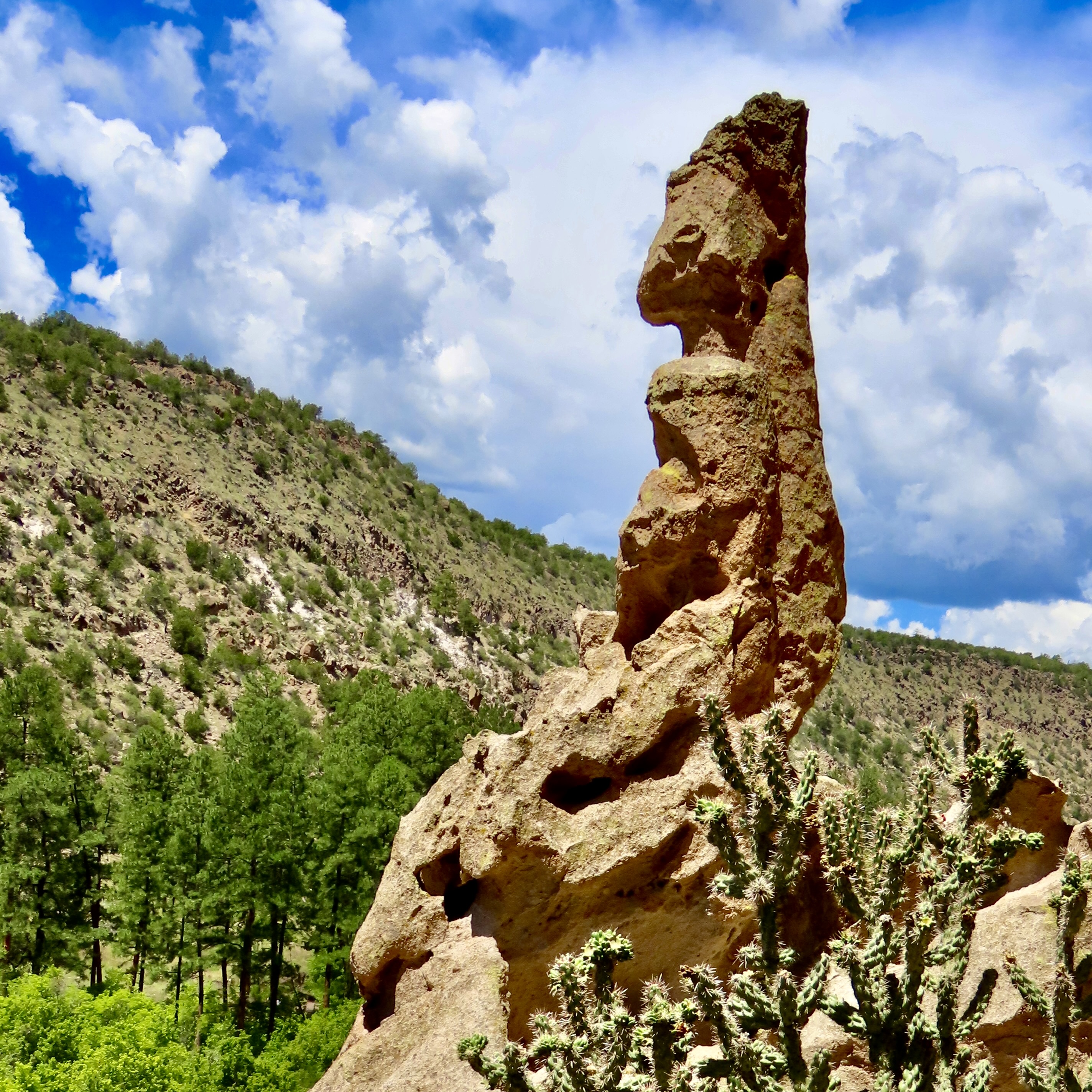
Petrified Forest National Park is found just off of I-40 in eastern Arizona. There are thousands of logs like the one above found in the park. You can still see the bark on this petrified wood that was once a tree that fell 200 million years ago.While most people come to the park to admire the petrified wood, there is also much beauty such as the colorful ‘Teepees’ found on the main road. Each color has a different story to tell representing millions of years in geological history.The Blue Mesa side road includes many other interesting and colorful land forms such as this. If you visit the park, be sure to take the short detour. A walk out in the desert on well maintained trails is definitely in order.Ancestral Puebloans and other indigenous tribes left a view of their ancient world in Petrified Forest NP in petroglyphs on Newspaper Rock. While our understanding of what they were communicating is limited, there is magic in contemplating the possibilities.While we are on the subject of petroglyphs, we found this unique one staring out at us in Petroglyph National Monument in Albuquerque, NM. Over 20,000 petroglyphs have been discovered in the monument. Peggy has plans to include this one in the revision of her word search book: Artistic Word Searches, Unique and Magical: Discovering Petroglyphs from the Southwest.Canyon De Chelly (pronounced shay) is located in northeastern Arizona. Jointly operated by the Navajo Nation that owns the property and the National Park Service, Canyon De Chelly features striking canyon views plus Ancestral Pueblo ruins and petroglyphs left behind by both the Pueblo peoples and Navajos.Our trip this past spring and summer took us into Califonia where we visited family and friends in San Diego, LA, and Sacramento. We also took time to visit Joshua Tree National Park in Southern California, known for its strange trees, after which it is named.We found the rock structures to be of equal, if not greater, interest. Some of which could be said to possess personalities.In addition to being known for its outstanding rock forms (think of the Grand Canyon, Zion, Bryce and Arches— plus what we visited this year), the Southwest is noted for its deserts and cacti, none of which is better known than the Giant Saguaro. We’ve often stopped to admire these huge plants in Saguaro National Park but have never been in Arizona when they are blooming. Things were about to change. Note the buds popping out on top of the arms.This time we were lucky. The blooms are almost other-worldly, in addition to being a source of food for numerous insects such as the bee coming in for a landing.A number of other cactus flowers also lit up the desert.Like plants, animals adjust to the deserts of the Southwest. Several birds choose to nest among the needles of various cacti including the curved bill thrasher Peggy found raising her family in a cholla cactus. The thrasher was not happy when she sneaked up to it and her hatchlings to catch a photo with her iPhone. It’s probably a good thing Peggy couldn’t understand what momma was saying.Bandelier National Monument, located mere miles away from where the first atom bomb was created at Los Alamos, New Mexico, features the ruins of homes built by Ancestral Puebloans that included natural and carved caves (cavates) with pueblo structures once built up against them.Peggy and I climbed up to one of the cavates. It was quite cozy inside. “Honey, I’m home.”Just beneath the cavate, this outcropping of rocks overlooked the large Tyuonyi Pueblo at Bandelier. A corner of the ruins can be seen here. It was built in a circle and contained contained 400 rooms.This tall rock was among the rocks in the outcropping. My first thought was wow! Nowhere in our travels though out the Southwest have we seen a statue like it carved by Ancestral Puebloans or any other indigenous tribes. We had a guide to the trail we were walking on, but there was no information on the statue. Nor was there anything in the information center. The emphasis was all on the scenery, cavates, petroglyphs and pueblos. Human or nature carved, I would think that the park’s literature would at least comment on it. That’s it for today. Next up:We wrapped up our year of travel with out trip to New England so it’s proper that we finish off 2025 with the trip.
Happy New Year to everyone and thanks for joining us on our adventures in 2025. It’s much appreciated. Costa Rica, Bali, and Scotland are coming up in 2026! Curt and Peggy
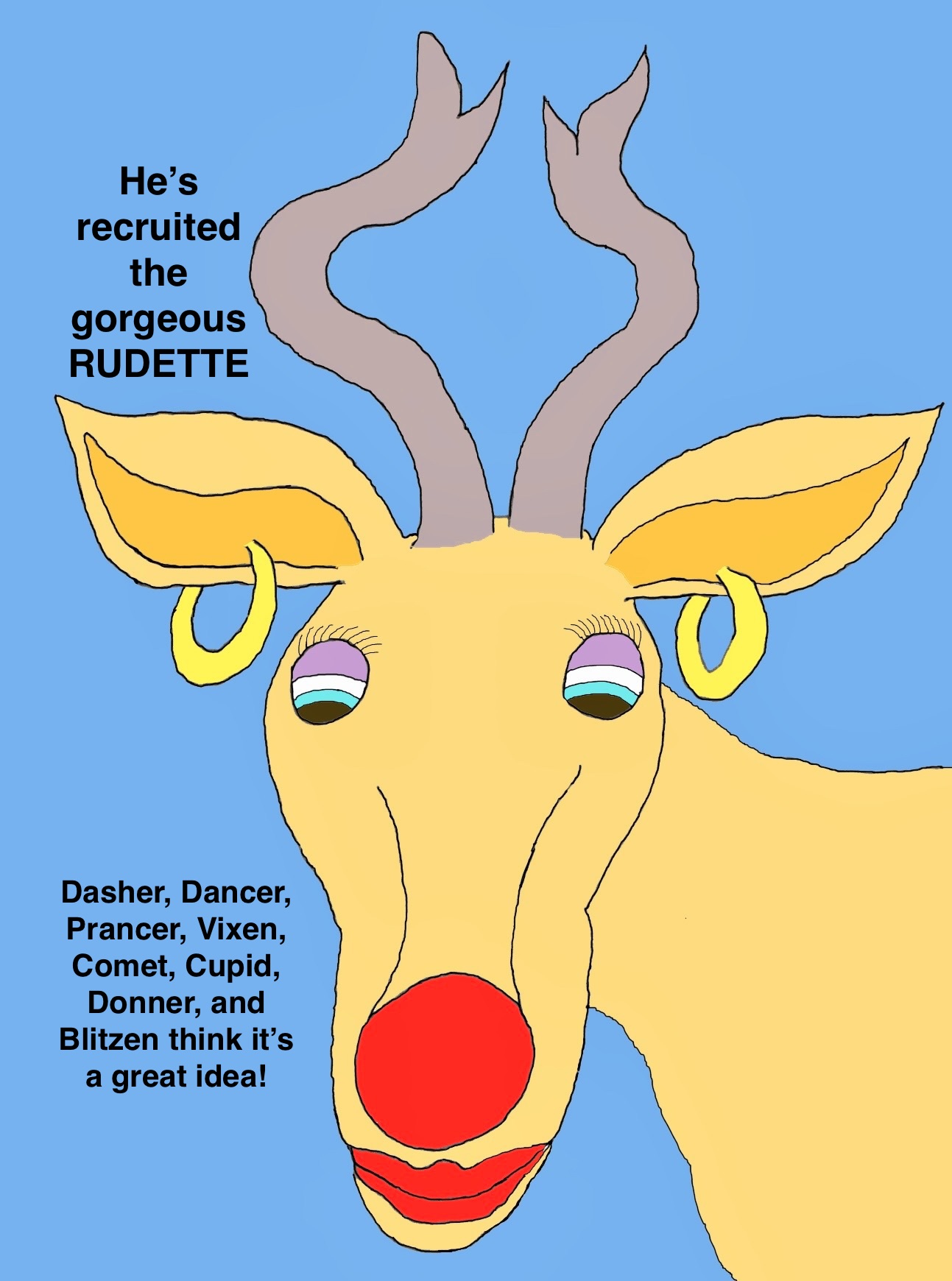
Each year, I create a Christmas Card for Peggy and me to send out to family and friends, and, I might add, share with you on Wandering Through Time and Place. Admittedly, they are designed to be a bit strange, and hopefully elicit a chuckle. After all, Santa is ‘a jolly old elf.’ This year, he has a bit of a problem, however…
Okay, let’s think about this. Rudolf only has to work one day out of the year. What in the world does he have to complain about? Well… Here’s some information I included on the back of the card:
-To start with, Santa is really old. He takes his origins back to Saint Nicholas who was born around 270 AD. That makes his age around 1700 years! No wonder he hasn’t kept up with modern production and delivery services. If he contracted with Amazon Prime, he, his elves, and the reindeer could all sit around a bonfire drinking rum infused eggnog and celebrate a job well done on Christmas Eve. Instead…
-He and the reindeer have to visit some 300 million homes. And, they have to do it in 34 hours, given changing time zones. “So what are you whining about?” Santa likes to argue. “I got you ten extra hours.” But what does that really mean…
-He has to deliver gifts to 9,127,789 houses per hour, or 2,536 per second. And what applies to Santa, also applies to his reindeer. That’s one heck of a lot of landing on roofs, taking off— and flying. How far do the reindeer have to fly, you ask…
-It’s been clocked at over 100,000,000 million miles by according to Santa’s odometer (and confirmed by scientists who have ‘worked’ it out). That means the reindeer have to fly a staggering 2,823,529 mile per hour.
No wonder Rudolph is upset about his pay. But Santa has a solution that won’t cost him an extra penny. He has recruited Rudolph’s girlfriend who is willing to work for less to get into the business of guiding flying sleds on foggy nights. Rudolph is not happy…
Dasher, Dancer, Prancer, Vixen, Comet, Cupid, Donner, and Blitzen are all for Santa’s decision. They think it will be a lot more fun to follow Rudette for 100 million miles than Rudolph. What a surprise? But wait, negotiations are under way, and…
There is good news from the North Pole! Santa and Rudolph have reached and agreement. 10 pounds of apples, 4 pounds of corn and 5 pounds of alfalfa will be added to Rudolph’s trough each day. Plus, he will have Rudette along as a partner on Christmas Eve to help light up the night and his life— at equal pay. Dasher, Dancer, Prancer, Vixen, Comet, Cupid, Donner, and Blitzen will each get 9 pounds of apples, 3 pounds of corn, and 4 pounds of alfalfa, and, they still get to follow Rudette. Everyone is a winner!
Wishing each of you a great holiday season and a healthy and happy New Year. Thanks for coming along with us on our journeys this past year!
Curt and Peggy
*A final note, I know that Ut-Oh is usually spelled Uh-Oh but Ut-Oh is how I pronounced as a kid and continue to today.
Our blogs each year, for the most part, are based on our wandering ways. We kicked off 2025 with a trip to the Big Island of Hawaii where we stayed in a VRBO 30 miles outside of Hilo for a month, rented a car, and explored the island. Spring and summer found us wandering through the Southwestern US for five months, pulling a small trailer behind our truck, and visiting national parks and monuments. In October/November, we left the trailer behind at our home base in Virginia and traveled for three weeks through New England admiring the beautiful fall colors.
Our next three posts will be devoted to doing our yearly wrap-up of our travels— based on our annual calendar. Each year we select 13 photos from among what we consider our best travel photos for use in a calendar we create for our extended family. This year we created three: one for each of the areas we visited. Family members got to choose which calendar they wanted. The photos for today’s post were selected for our Hawaii Calendar. The orchid above is one of numerous different species found at the Hawaii Tropical Botanical Garden just outside of Hilo. We highly recommend a visit if you travel to the Big Island. Over 2000 tropical plants are found in the garden.
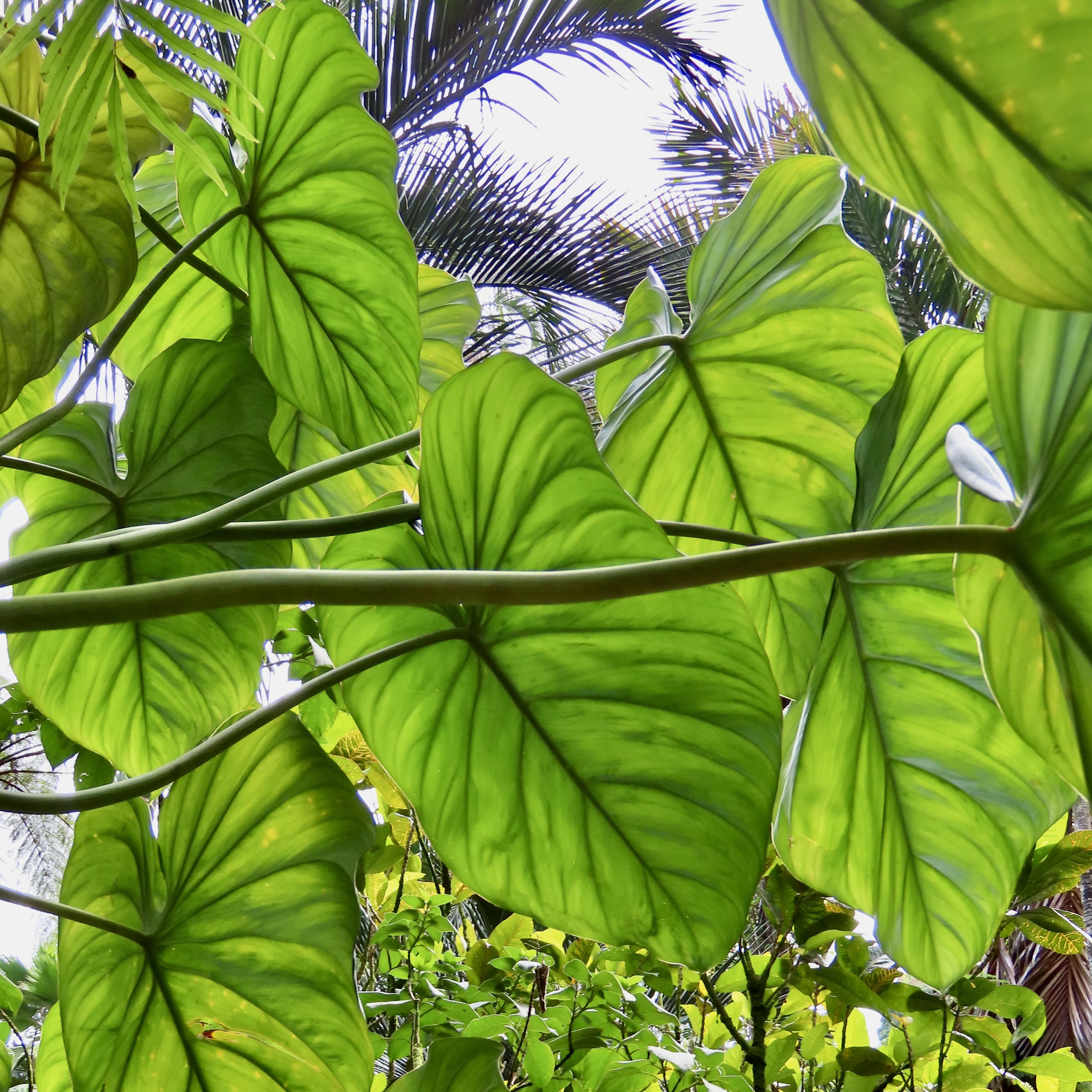
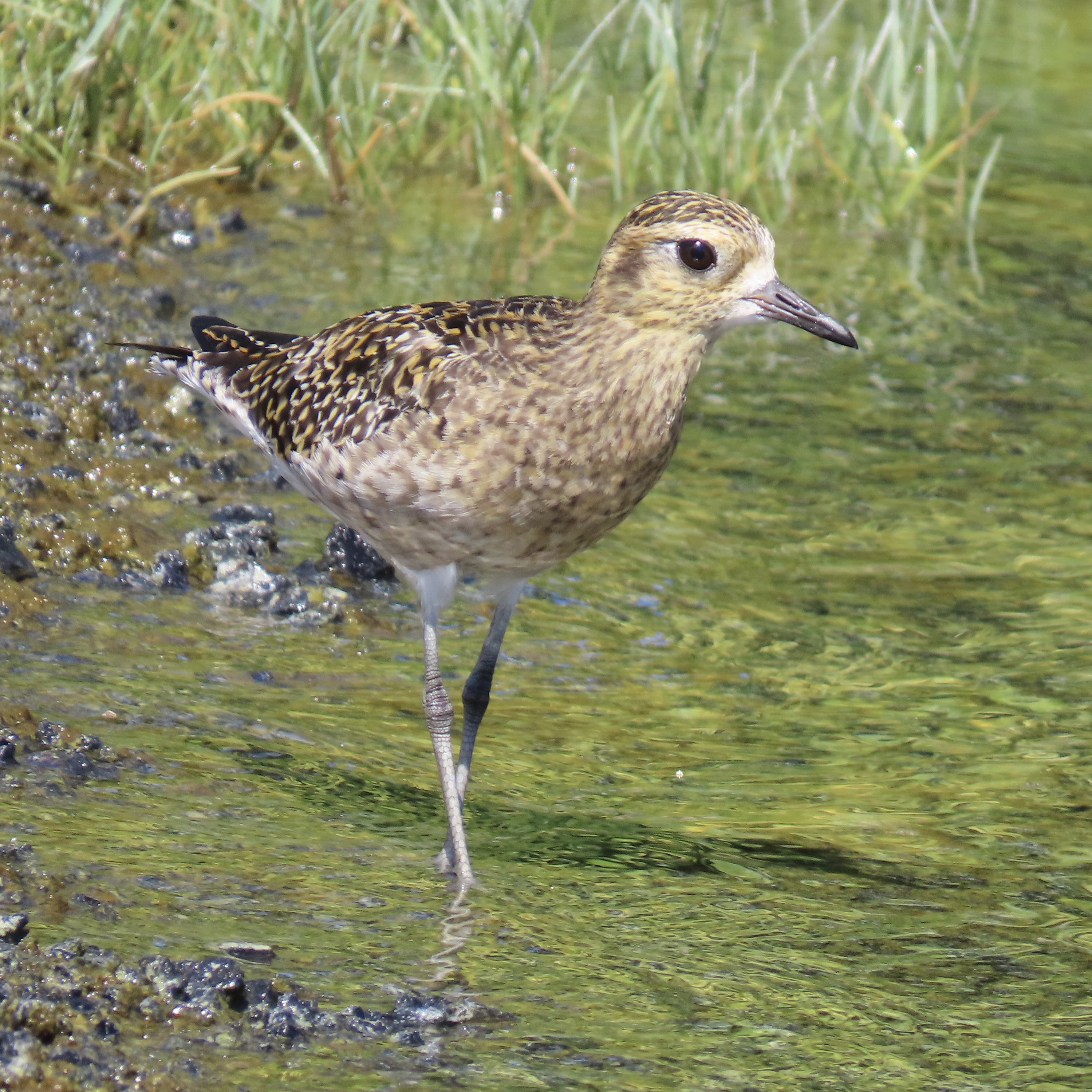
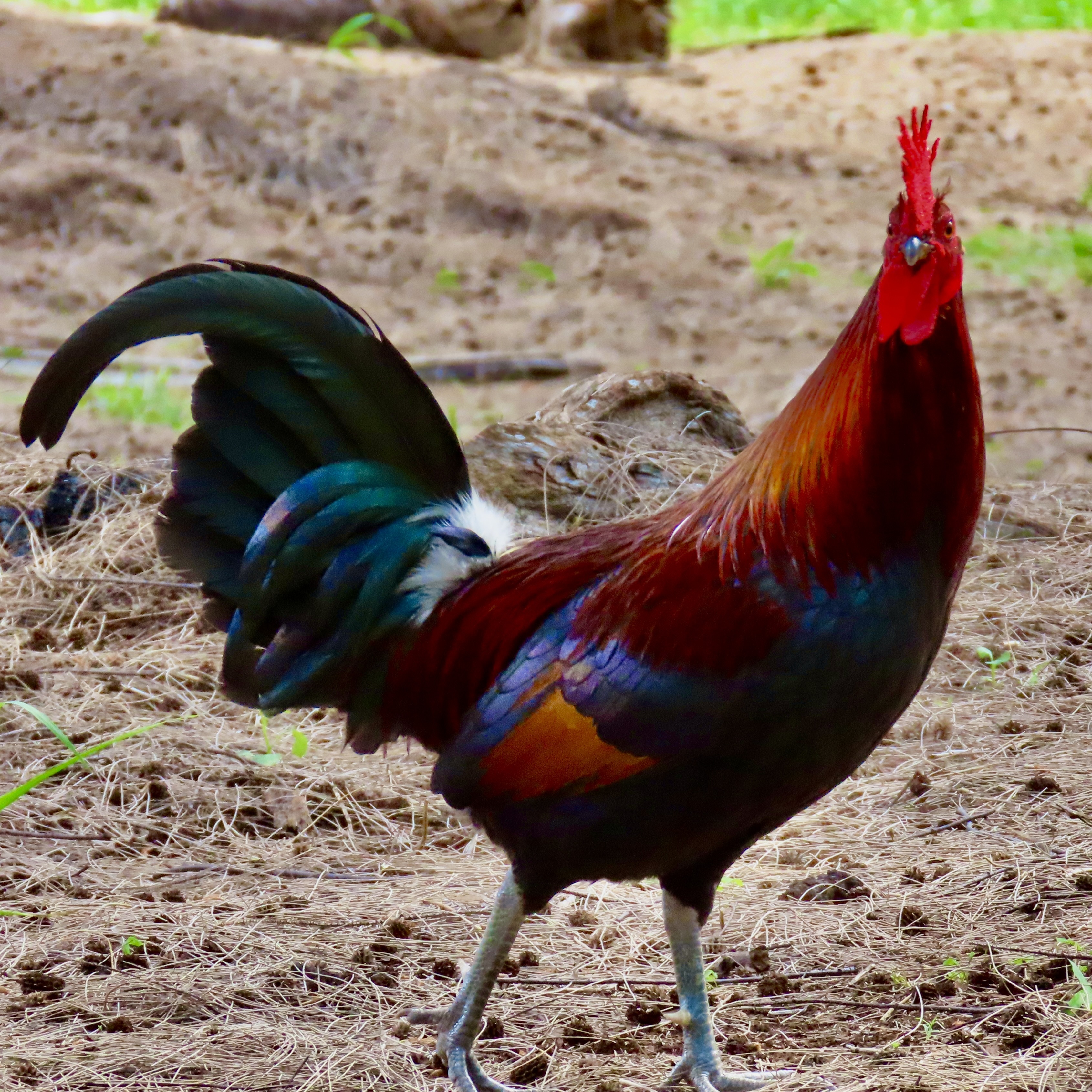
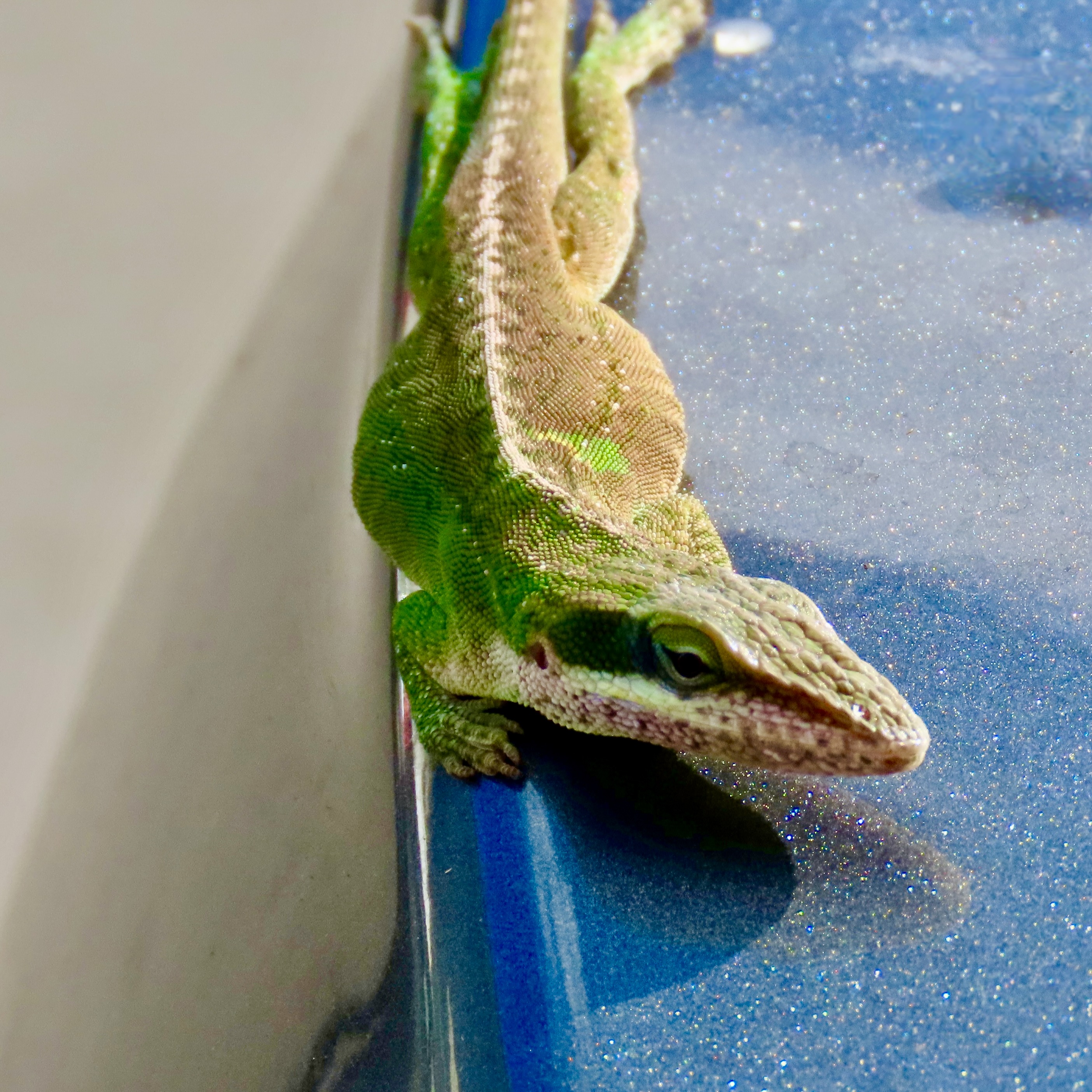
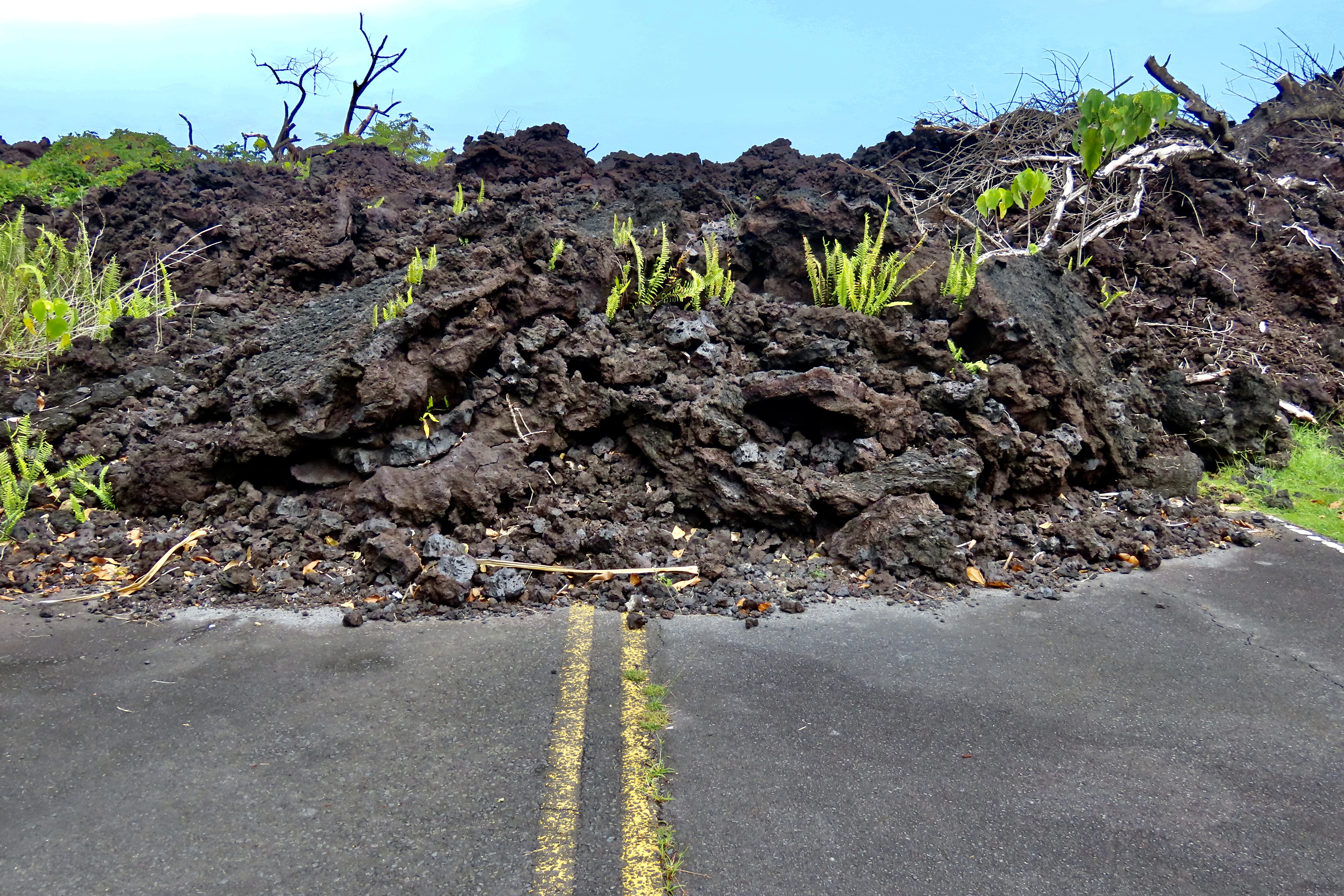
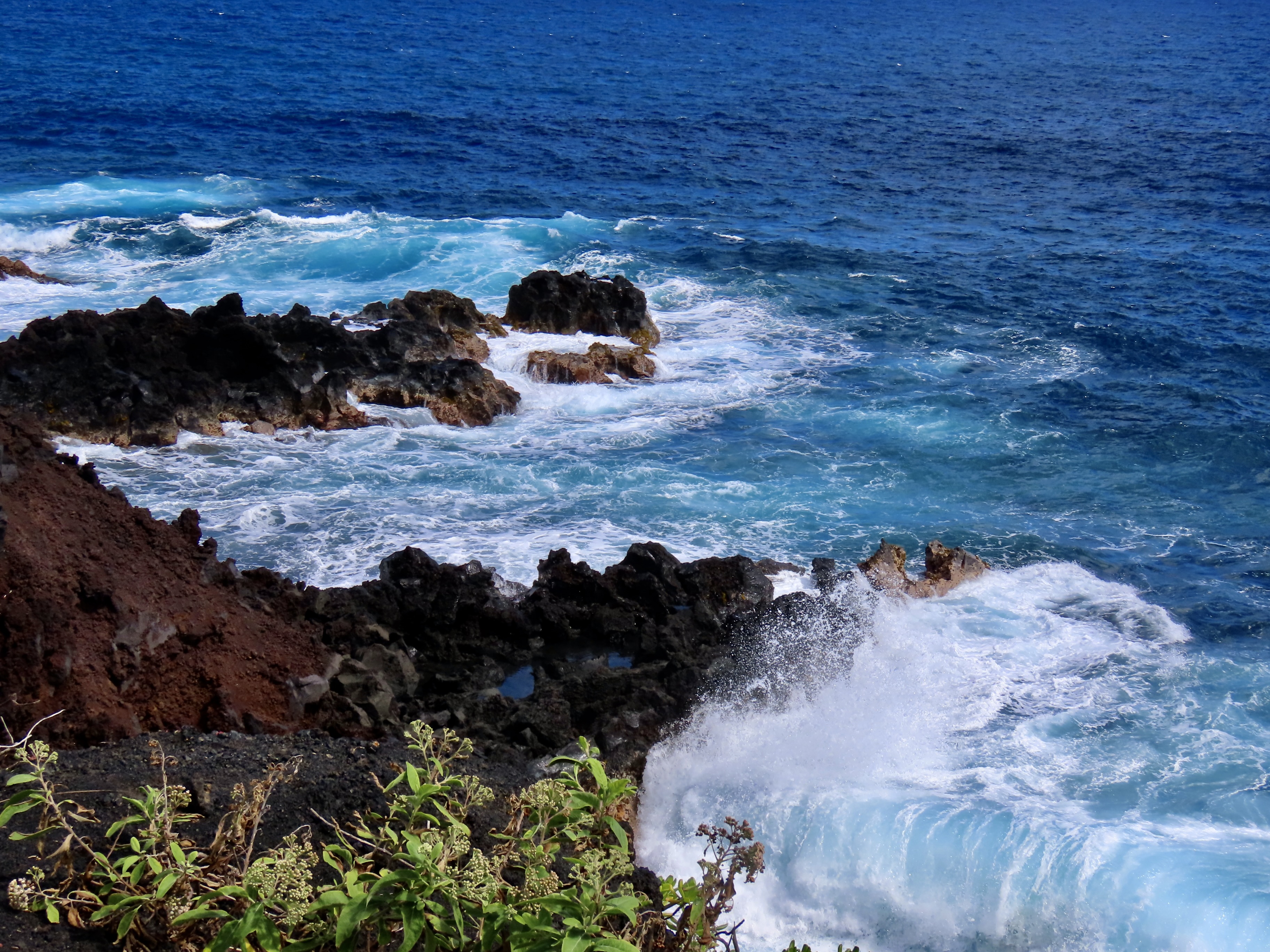
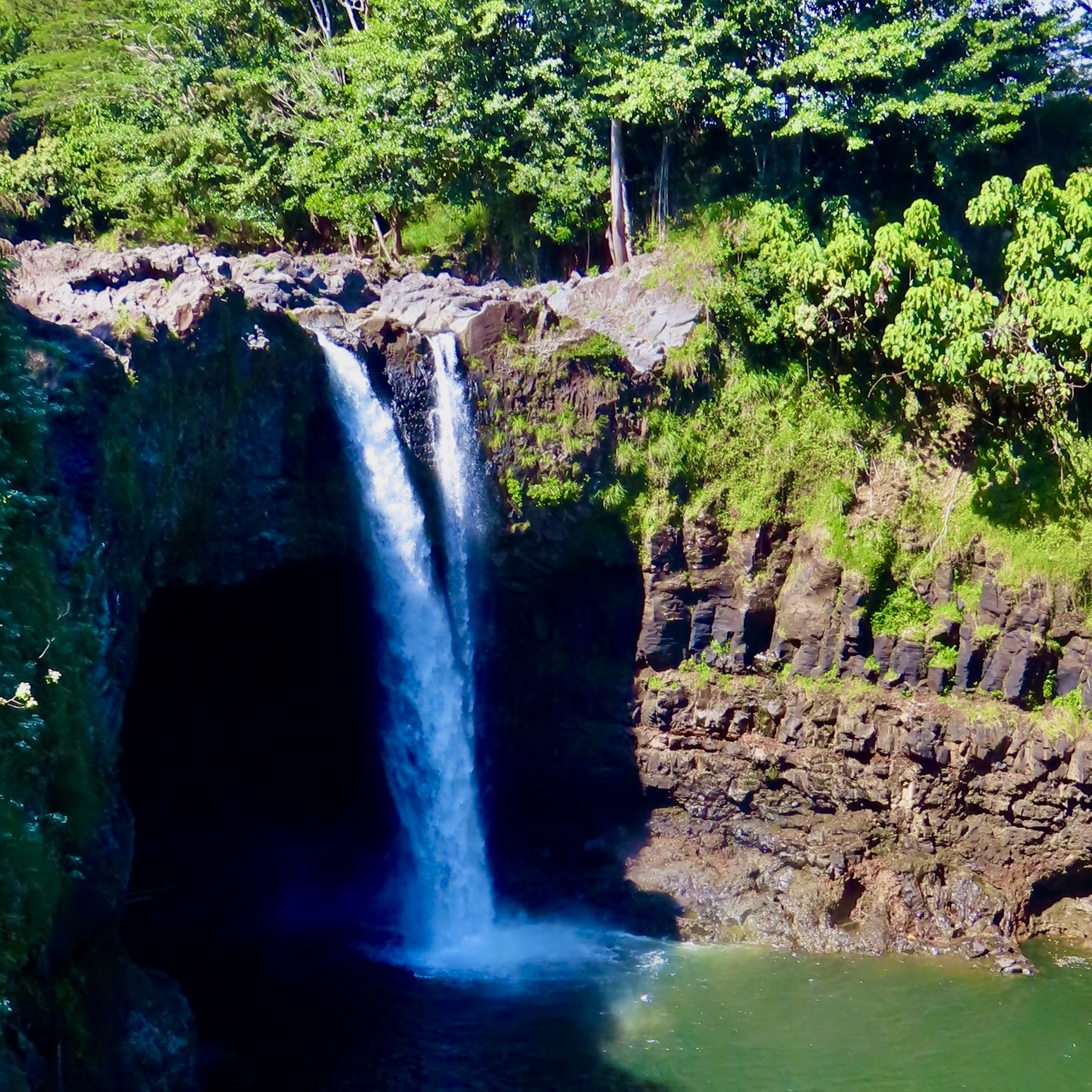
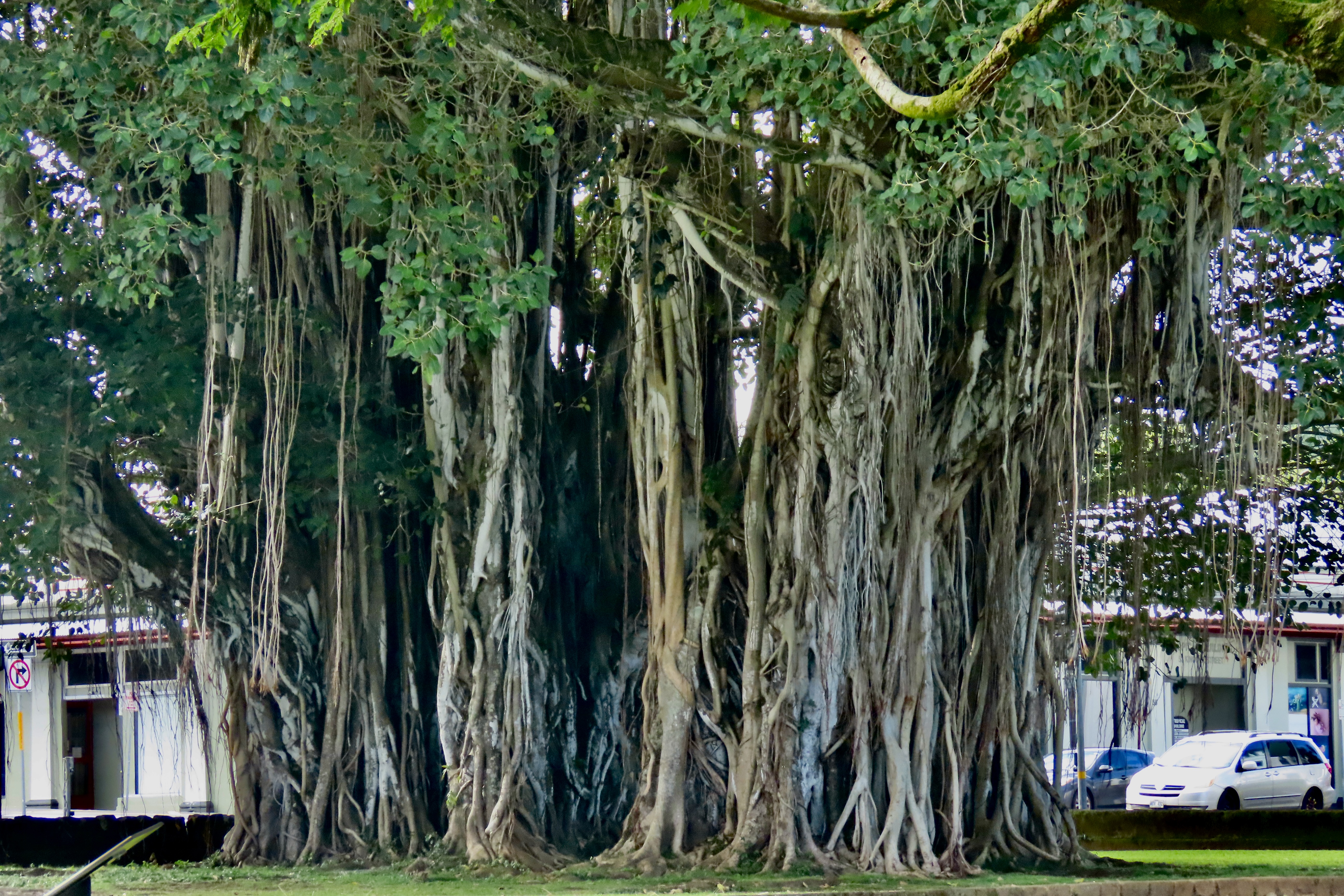
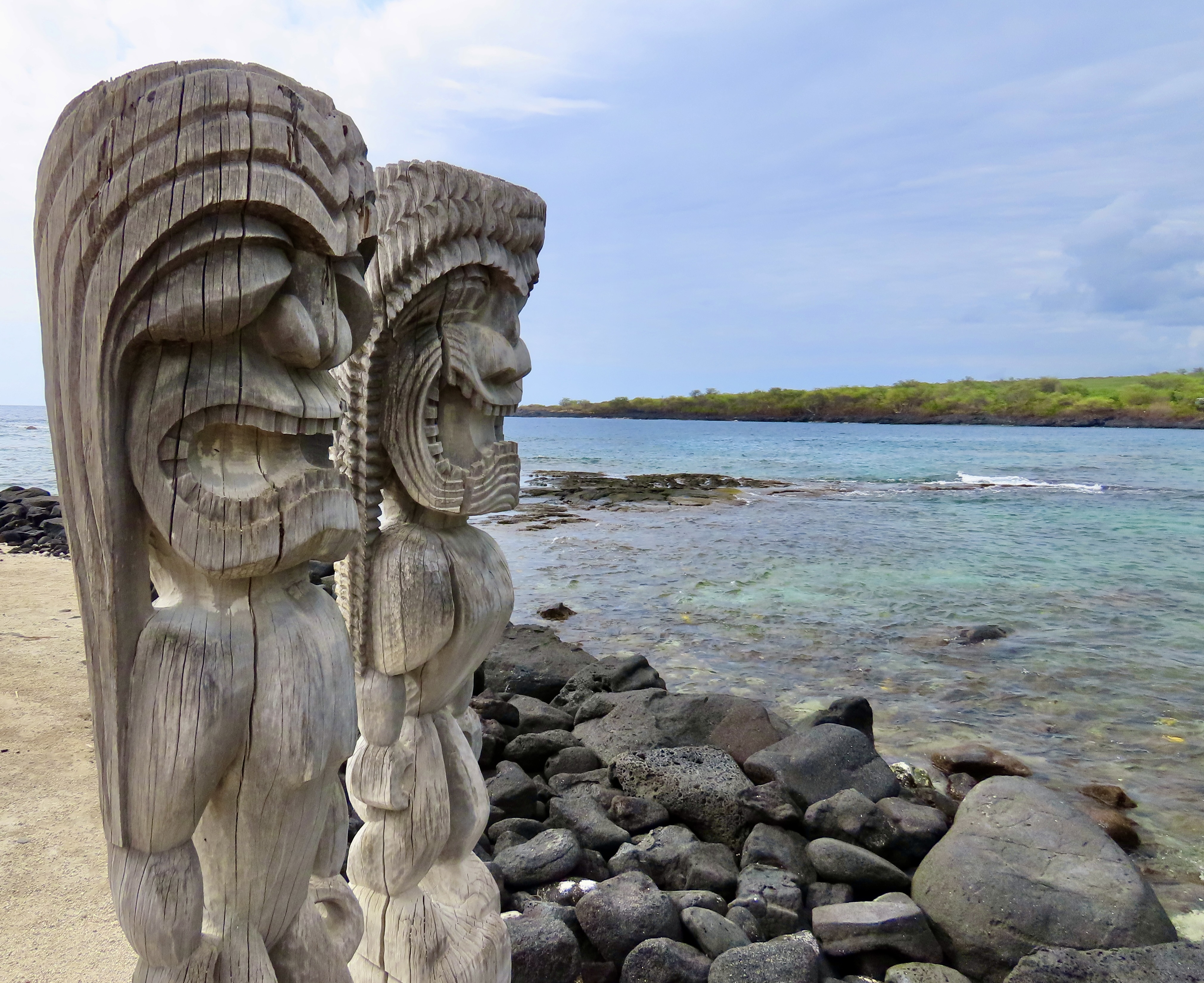
Big leaves are expected whenever one travels in tropical rainforests. Having served as a Peace Corps Volunteer in tropical Africa for two years, I can speak to this personally. Peggy and I were particularly impressed by the beauty, size, and importance of taro leaves to native Hawaiians. Served as a food staple thoughout the islands, Taro is also important in Hawaiian mythology where Taro is regarded as the ‘Elder Brother’ of humankind.If you are a crossword buff, you will know the name of this bird: Meet nene, the native goose of Hawaii.While we photographed a number of birds, as always, we found this slender golden plover particularly attractive. It hardly looks like it is up to a 3000 mile journey to get here each year, but it is. Breeding and raising its chicks in the arctic each summer, it makes the 3000 mile journey to Hawaii each August/September where it will live and feed until April/May when it will make its return journey to the far north. A couple of other facts we found interesting: It often flies non-stop and it always returns to the same location. We would likely find this same bird here if we traveled back to the Big Island this year!Any discussion of the wild birds of Hawaii almost always includes chickens which arrived in the Hawaiian Islands with the Polynesians around 1200 AD, went wild, and have since interbred with modern chickens brought over in the 19th and 20th centuries. We found this gorgeous fellow wandering around in the forest near us.The anole is another interesting member of the Hawaiian wildlife. We had been shopping at a local supermarket when we came out and found the colorful lizard on the hood of our rental car. I suggested that it might want to relocate but it refused, even when we were driving 50 miles per hour down the road. Turns out that anole lizards have specialized toe pads covered with millions of tiny, microscopic hairs that create molecular attraction with slick surfaces. They are related to the iguanas I featured three weeks ago and even come with dewlaps.We were fortunate to find the Kīlauea Volcano active during our visit in February. We watched as it spewed lava 300-400 feet into the air. By November, it was shooting lava as high as 1500 feet!Isaac Hale State Park was located 15 minutes away from where we were staying south of Hilo in the small development of Seaview on the coast. The park was the end of the road for us. No sign was required. An eruption of a side vent on the lower east rift zone of Kīlauea sent lava spreading out over 14 square miles in 2018, destroying 700 homes, blocking several several roads, and covering a portion of the state park before reaching the ocean. Residents of Seaview watched in fear at the time, hoping that the lava flowing a mile away wouldn’t reach their development. They lucked out.Having destroyed homes and blocked roads, the lava finally plunged into the ocean, sending steam high into the air and adding new land to the island. This is what it looks like today off of Isaac Hale State Park as waves from the Pacific Ocean roll in.With Hilo, Hawaii receiving over 100 inches of rain a year, it isn’t surprising that there are a number of waterfalls in the surrounding country. Rainbow Falls is actually located in the town.Coconut trees are a common sight in Hawaii.As are Banyan trees. This one was located in downtown Hilo.While we spent the majority of our time on the Hilo side of the Big Island, we did take a day to drive over to the Kona side, which is where most of the tourists hang out. We went to check out a petroglyph site we had been to before and visit the Puʻuhonua o Hōnaunau National Historical Park, or Place of Refuge. Ancient Hawaiians who broke sacred laws could flee to the site and find safety instead of death. A number of wooden carvings like these represent the Hawaiian gods that once protected the sanctuary.
That’s the overview for our trip to Hawaii. Next up is the Southwest.Our trip though the Southwest took us to three national parks and five national monuments. This photo is from Chiricahua National Monument in southeastern Arizona.
I want to give a special thanks today to Lauren Scott at baydreamerwrites.com who did a great review of my book, The Bush Devil Ate Sam. Lauren is a published poet and author of a children’s book. Her most recent works include King Copper and Cora’s Quest. King Copper is a touching collection of poems about her dog, a chocolate lab, that recently passed away. Cora’s Quest is a children’s book that follows a young fawn as she goes on a delightful journey of exploration through the woods with her parents— until she gets lost.(Don’t worry, the book has a good ending.) You can learn more about both books by visiting Lauren’s site listed above.
What I like most about Lauren is her humanity— her warm sense of caring. Here’s what she says about her writing: So, whatever genre I share with you, whether poetry, personal stories, fiction, or kid-lit, I hope you’ll discover a piece of writing that evokes a special memory or acts as a reminder that you are not alone living with your emotions. Maybe you’ll get a good laugh, after all, we know laughter is the best medicine. Or perhaps you’ll experience an ‘aha’ moment.


















 Wandering through Time and Place