
Peggy and I bought this Huichol yarn art painting several years ago. Yarn is pressed into beeswax to make the painting. This piece represents the Huichol’s annual journey to the sacred mountain of Wirikuta to gather peyote, which is central to their religion.
My fascination with indigenous art was piqued again on our recent trip to Mexico. The Huichol Indians, one of the last tribes in North America that has preserved pre-Columbian cultural traditions, are noted for their brightly colored bead and yarn art.
You can’t miss their work as you stroll down the streets and through the markets of Puerto Vallarta. What most casual visitors don’t realize, however, is that the art incorporates shamanistic visions inspired by peyote. Each piece provides an insight into the religion and mythology of the Huichol.
For example, the round buttons in the center of the painting above represent peyote. Just to the left of the peyote is the plant solandra, also with hallucinogenic qualities. The deer serve as intermediaries with the gods and the eagle serves as a messenger. Below the deer on the right is maize. To the left of the maize is what I believe is a prayer arrow with eagle feathers attached and to the left of that another arrow that has been shot into the base of a peyote plant. The wiggly lines represent communication that is taking place– between everything.
The Huichol, as they are known in Spanish, or the Wixaritari, as they call themselves, live in the Sierra Madre Occidental Range of Mexico. Each year, representatives of the tribe make a journey of several hundred miles to the sacred mountain of Wirikuta in central Mexico where they gather peyote.
Peyote is a small cactus with psychoactive alkaloids, particularly mescaline, which can create hallucinogenic reactions similar to those created by LSD. (If you’ve been around for a while, you will immediately think of Timothy Leary and the 60s.) Effects include alterations in the thinking processes, sense of time, and self-awareness. Colors are said to appear brilliant and intense. Synesthesia, where senses interact, may also occur. An example of the latter is seeing colors when listening to music.
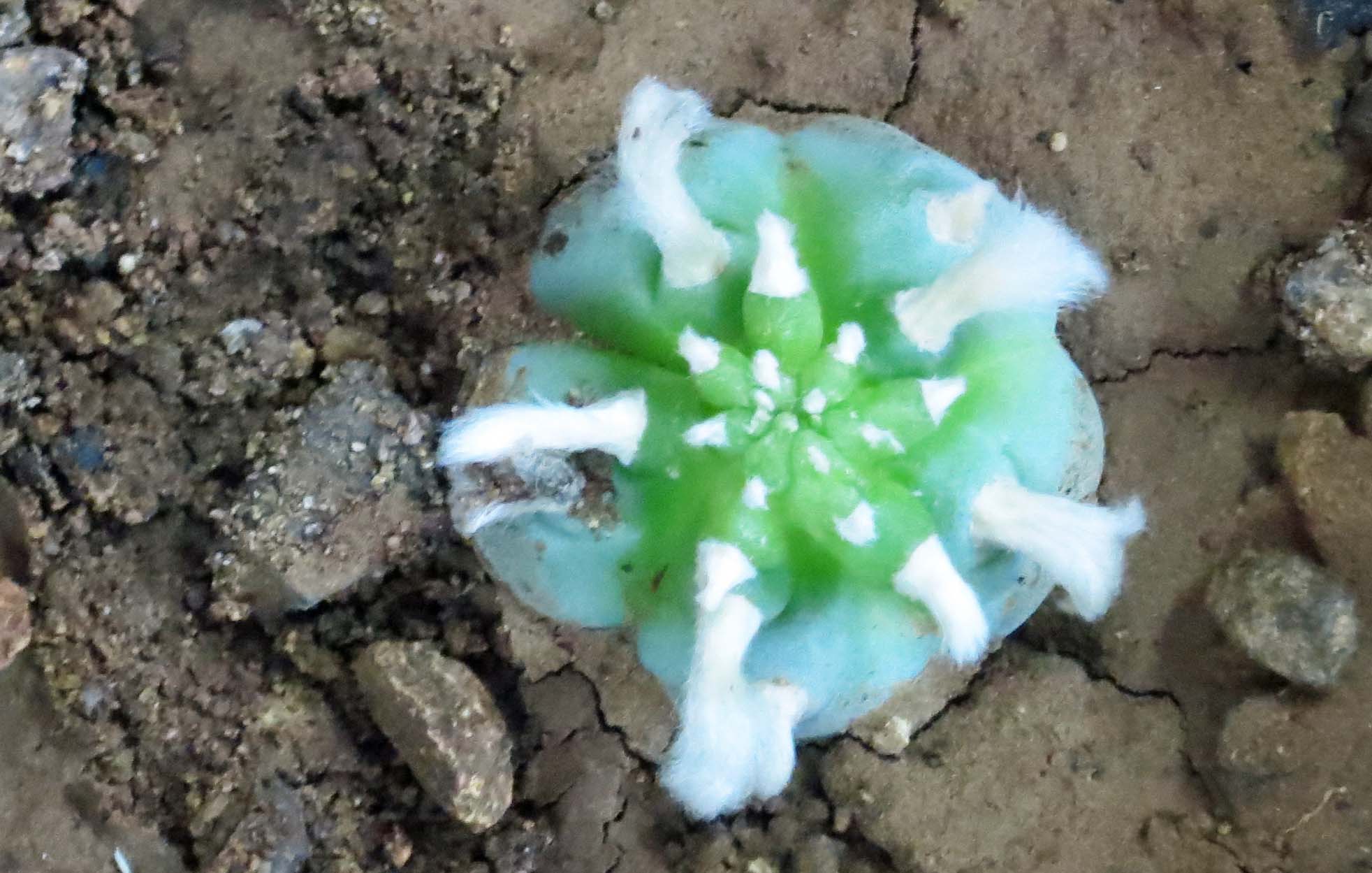
The peyote plant is a small, spineless cactus that contains mescaline, a hallucinogenic drug.
Huichol Shamans use the peyote to enter a trance where they communicate with the gods of the Huichol people. The shamans then make small yarn paintings known as Nierikas that represent the visions they experienced. The paintings are left as offerings to the gods in caves, temples and streams.
The Nierikas serve as the foundation for the Huichol art found in Puerto Vallarta, Guadalajara, and other urban locations. We have bought several pieces of the art, as has our daughter, Tasha. Our favorite Huichol artist for small bead art, Ernesto, maintains a table along the Rio Cuale. This year he took time to let our grandson, Cody, press some beads into a piece he was working on.
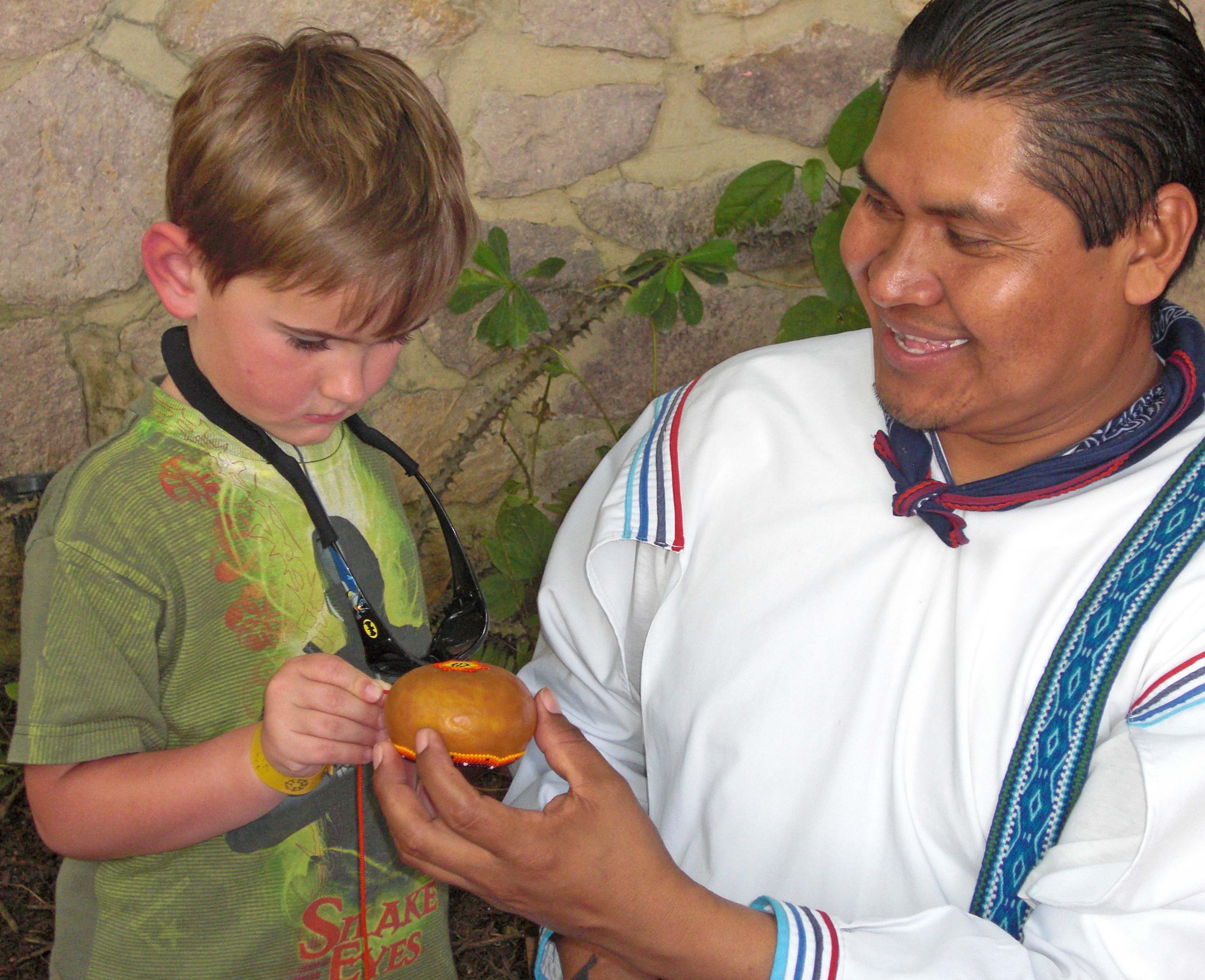
Ernesto shows our grandson Cody how to press beads onto a gourd covered with beeswax. (Photo by Ethan’s mom, Natasha.)
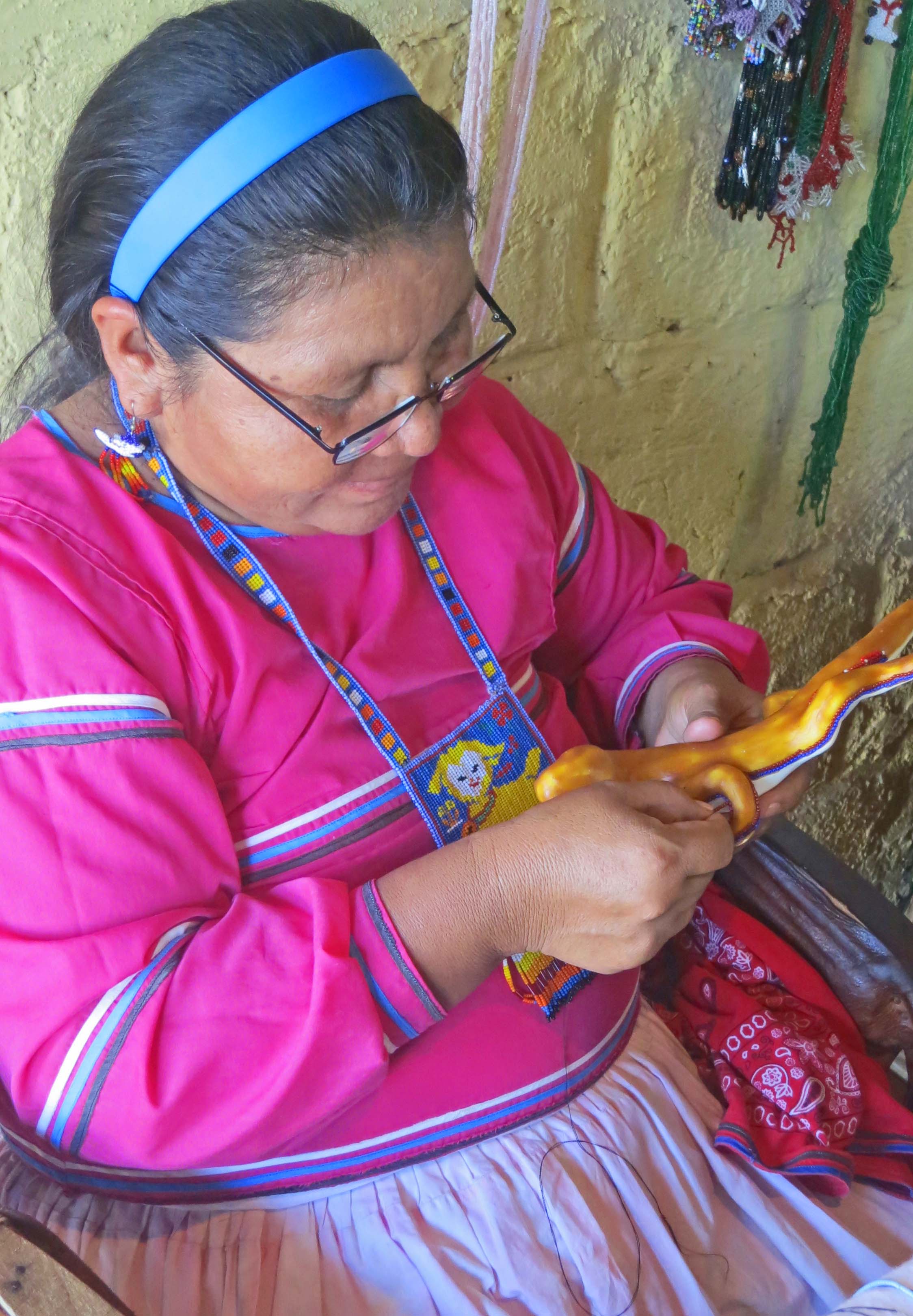
In this photo, a Huichol woman works on another bead art sculpture.
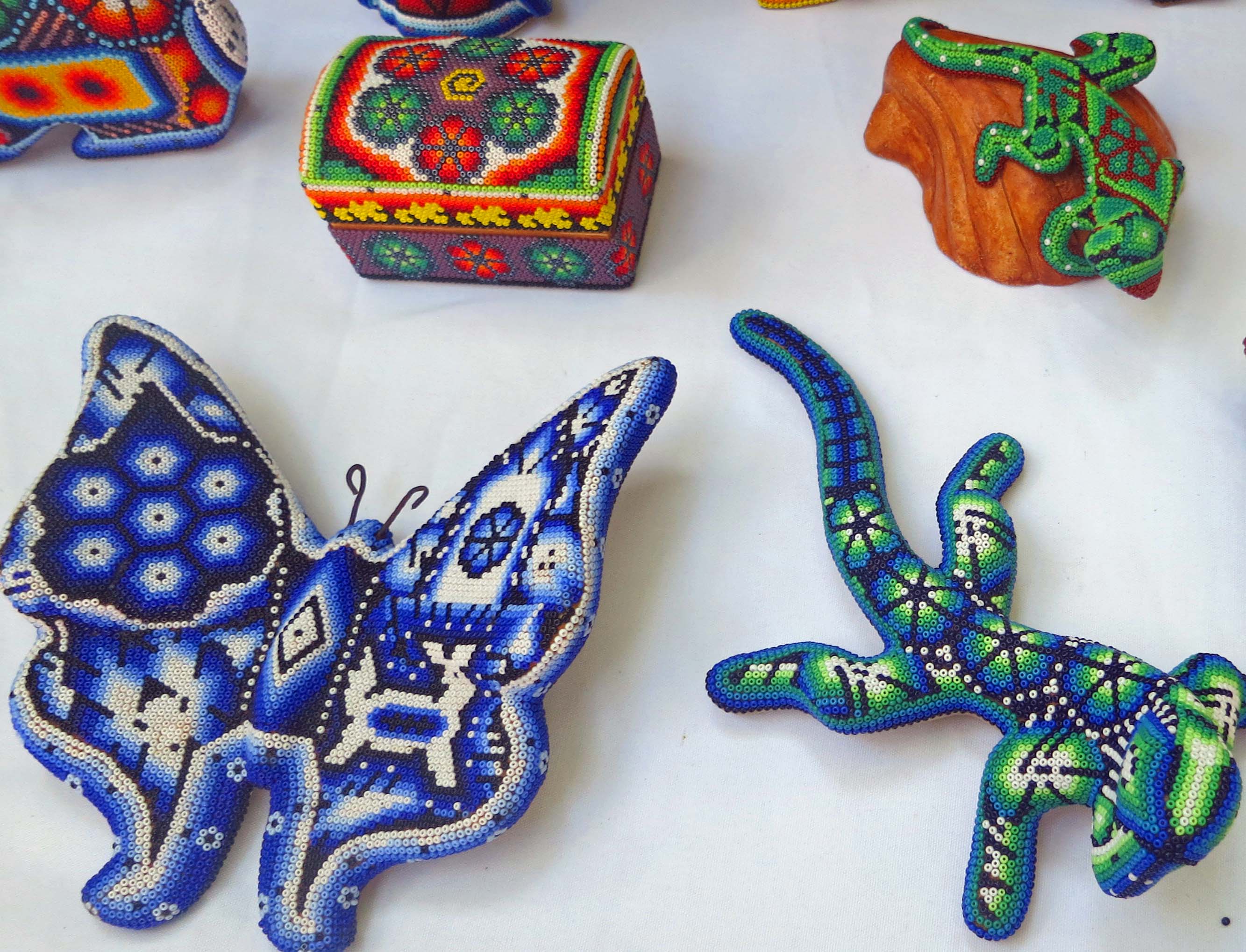
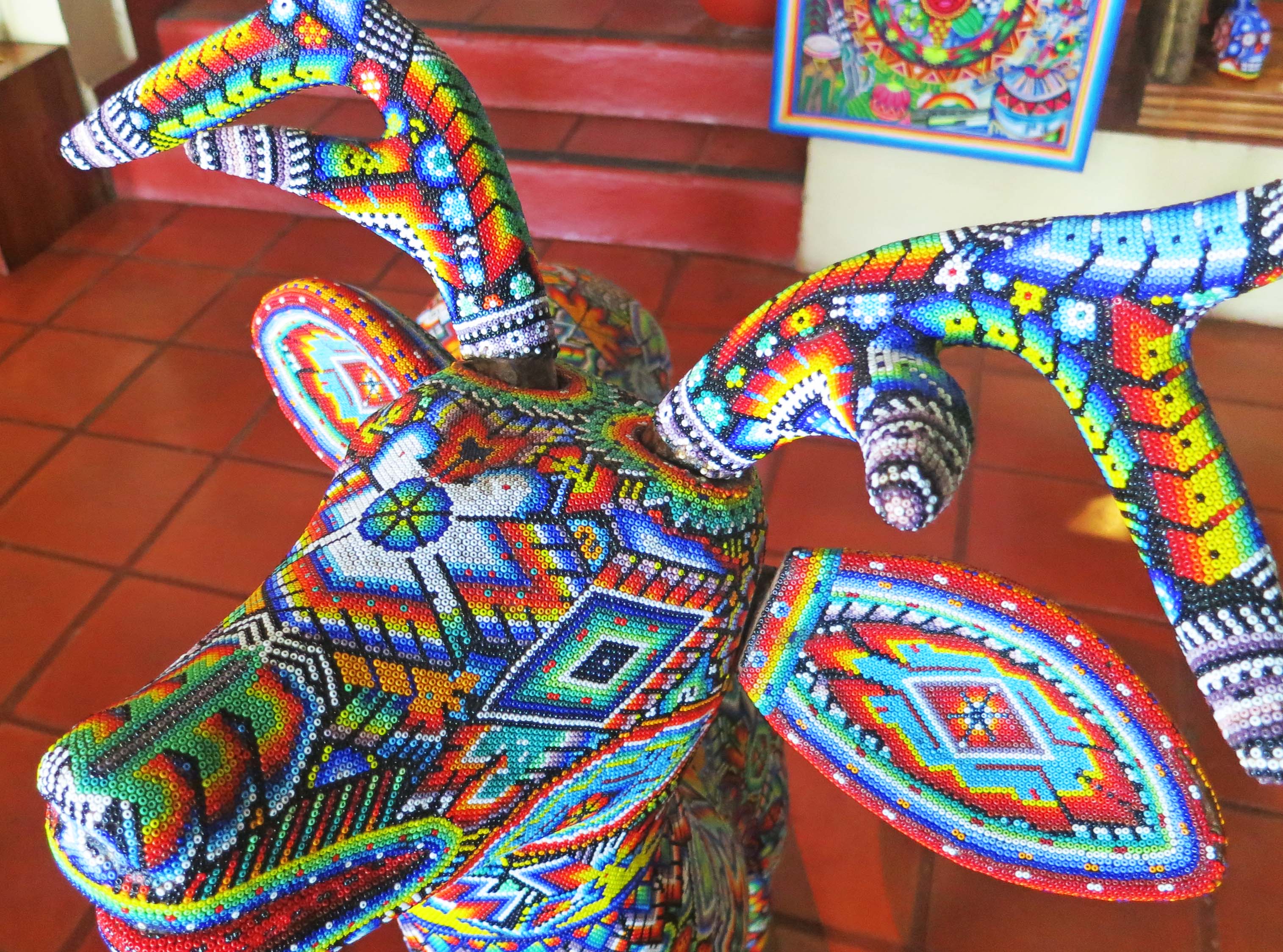
Beaded Huichol art can range in size from these small pieces created by Ernesto to much larger sculptures such as the deer shown below. Beaded art, like the yarn art, includes symbols of the Huichol Indians’ religion. The salamander, with peyote buttons marching down its back, helps bring rain.
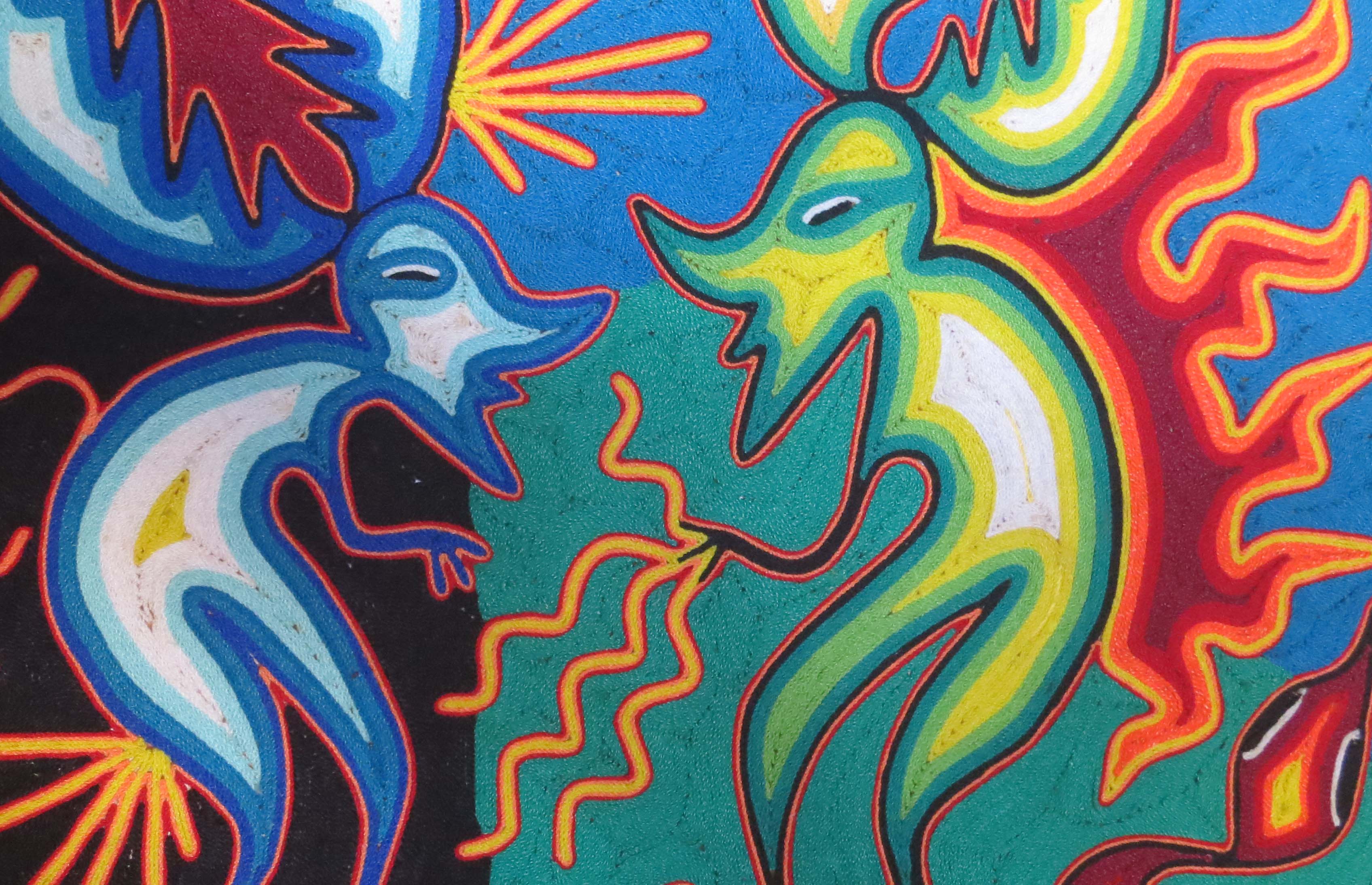
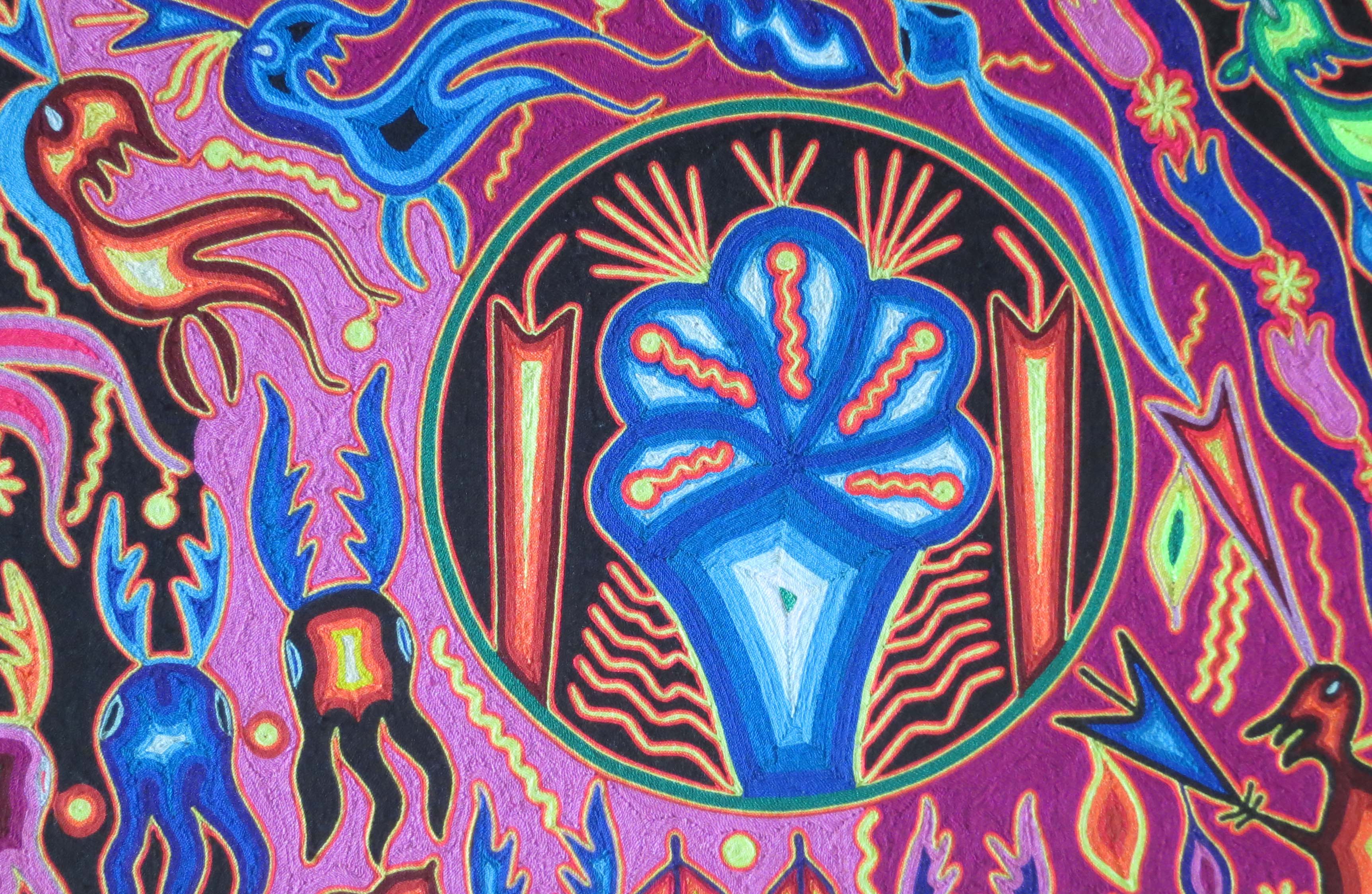
I’ll conclude today’s blog with several examples of Huichol yarn art which demonstrate the vibrant colors and spiritual figures seen by shamans while in trance.
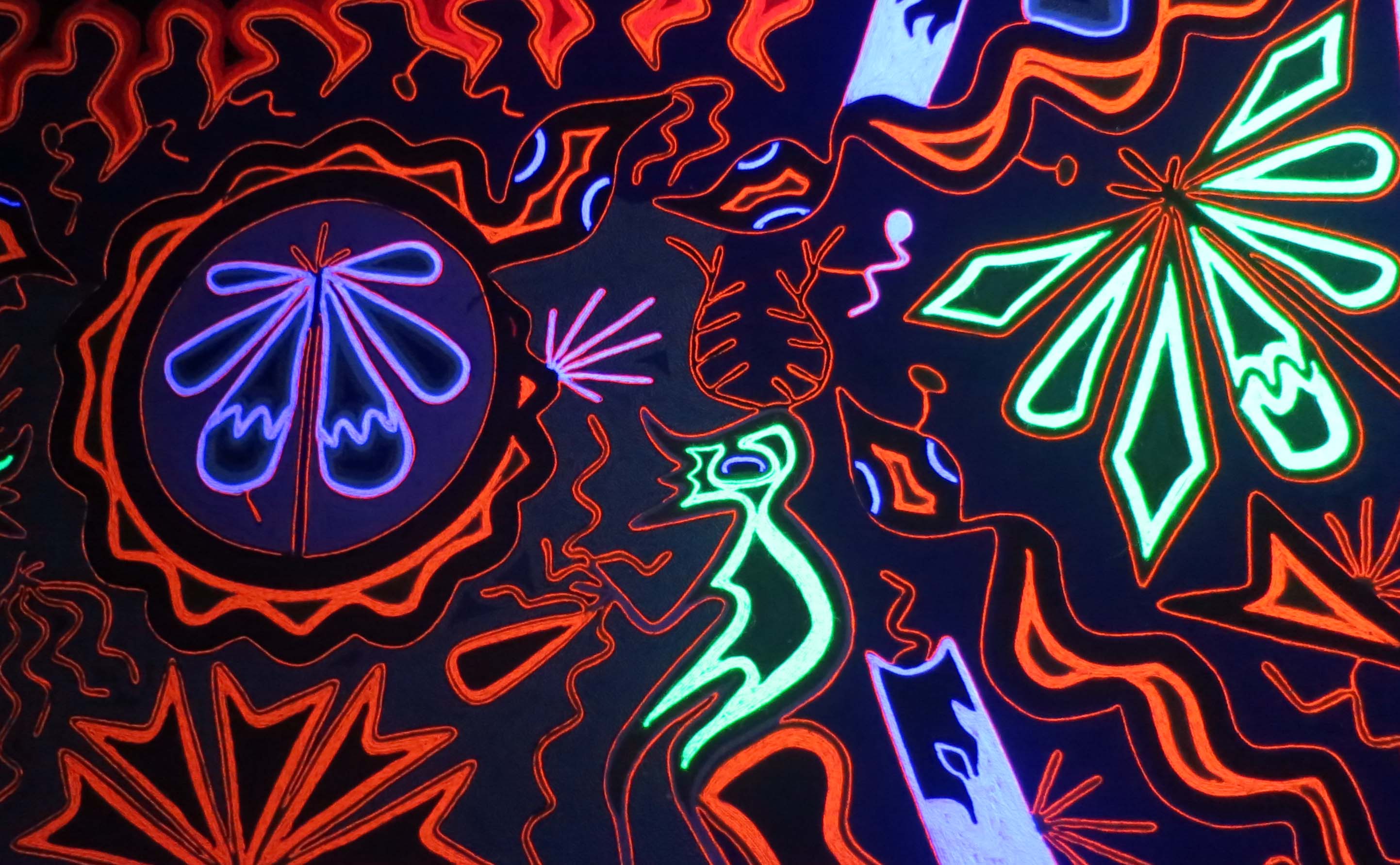
Deer person in center represents a shaman.
NEXT BLOG: I hope you are enjoying this journey into Mexico. I will be taking a break from blogging over the next couple of weeks to celebrate the season. Peggy and I would like to wish each of you Happy Holidays. –Curtis
 Wandering through Time and Place