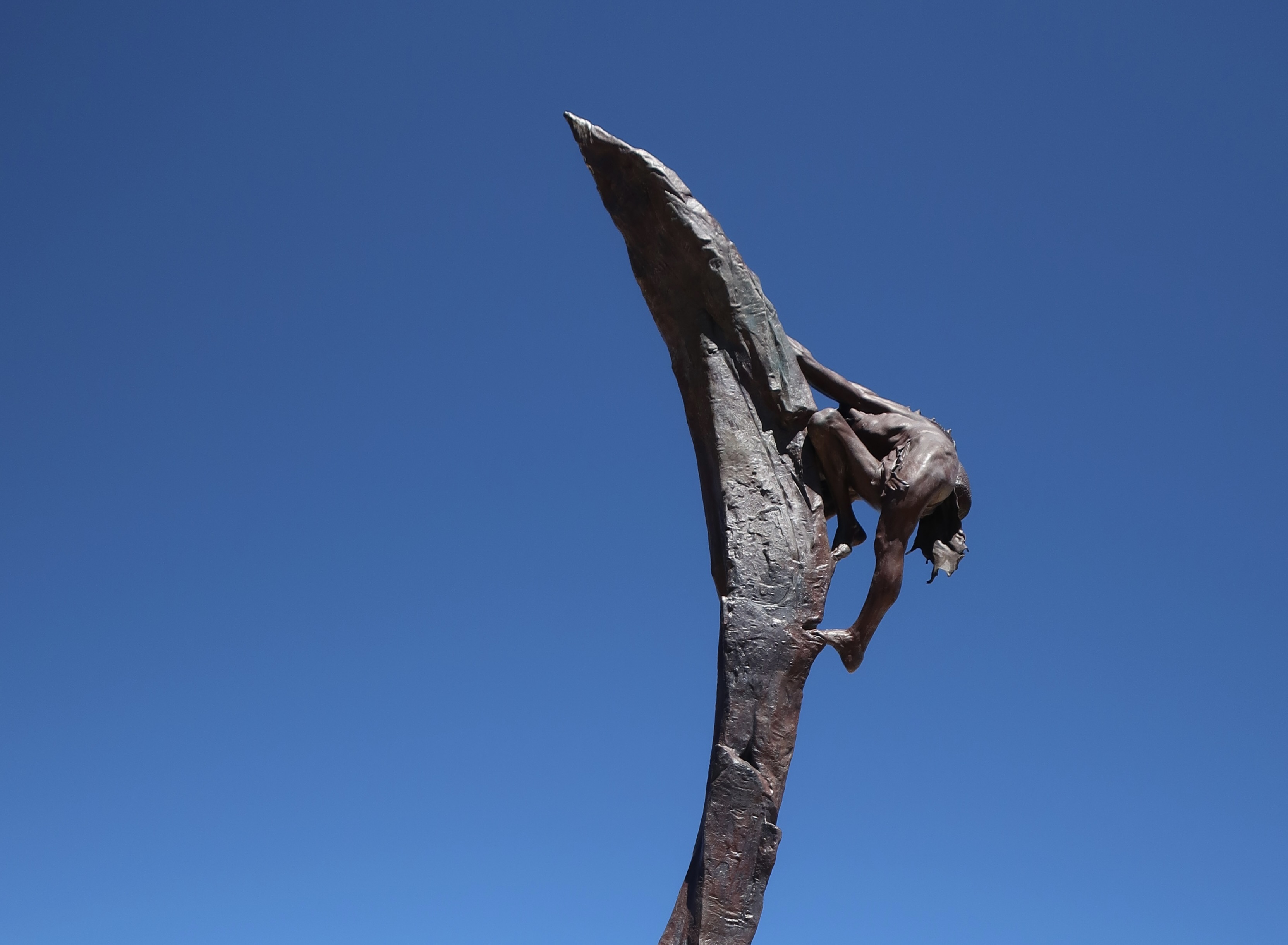
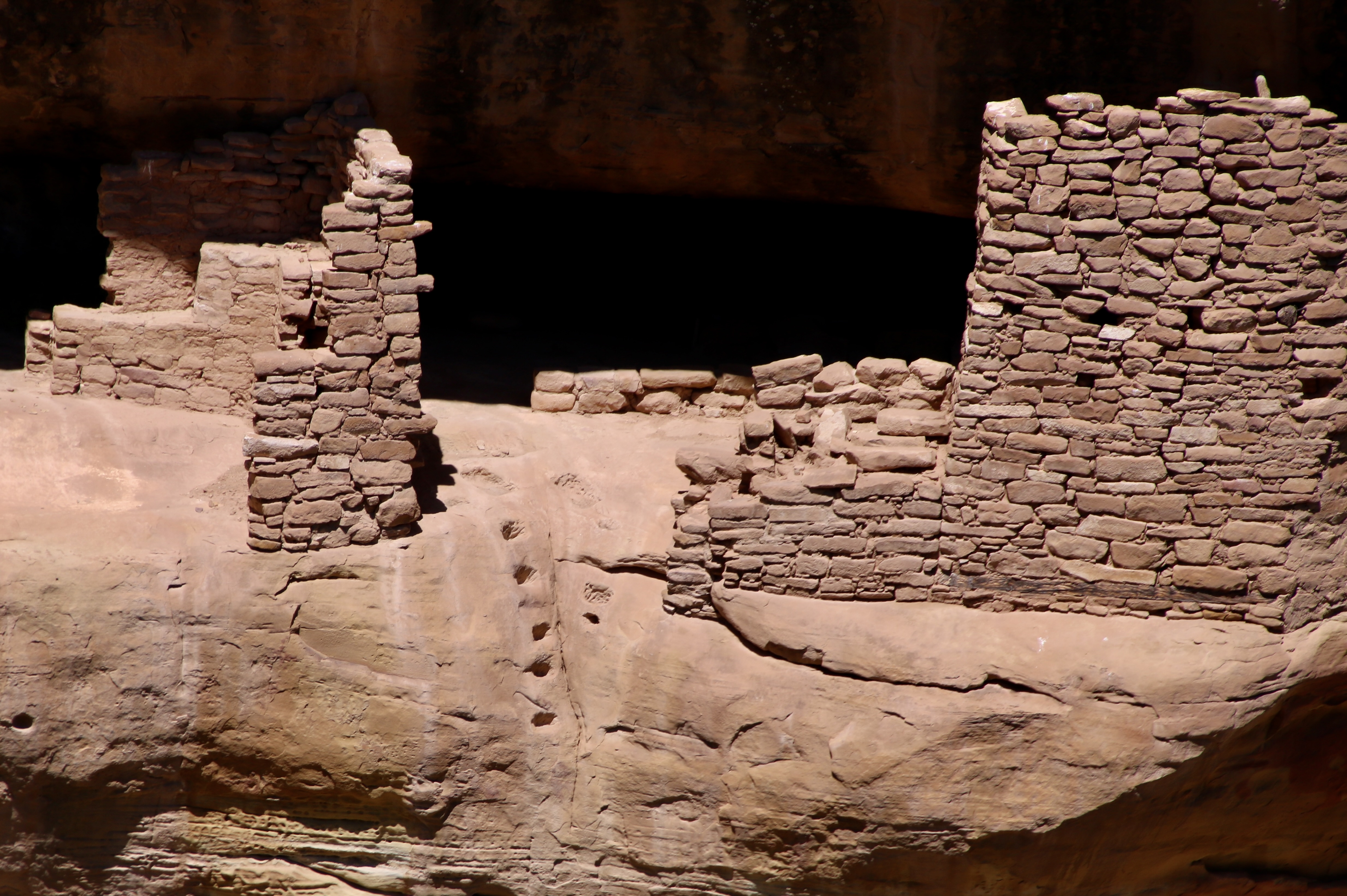
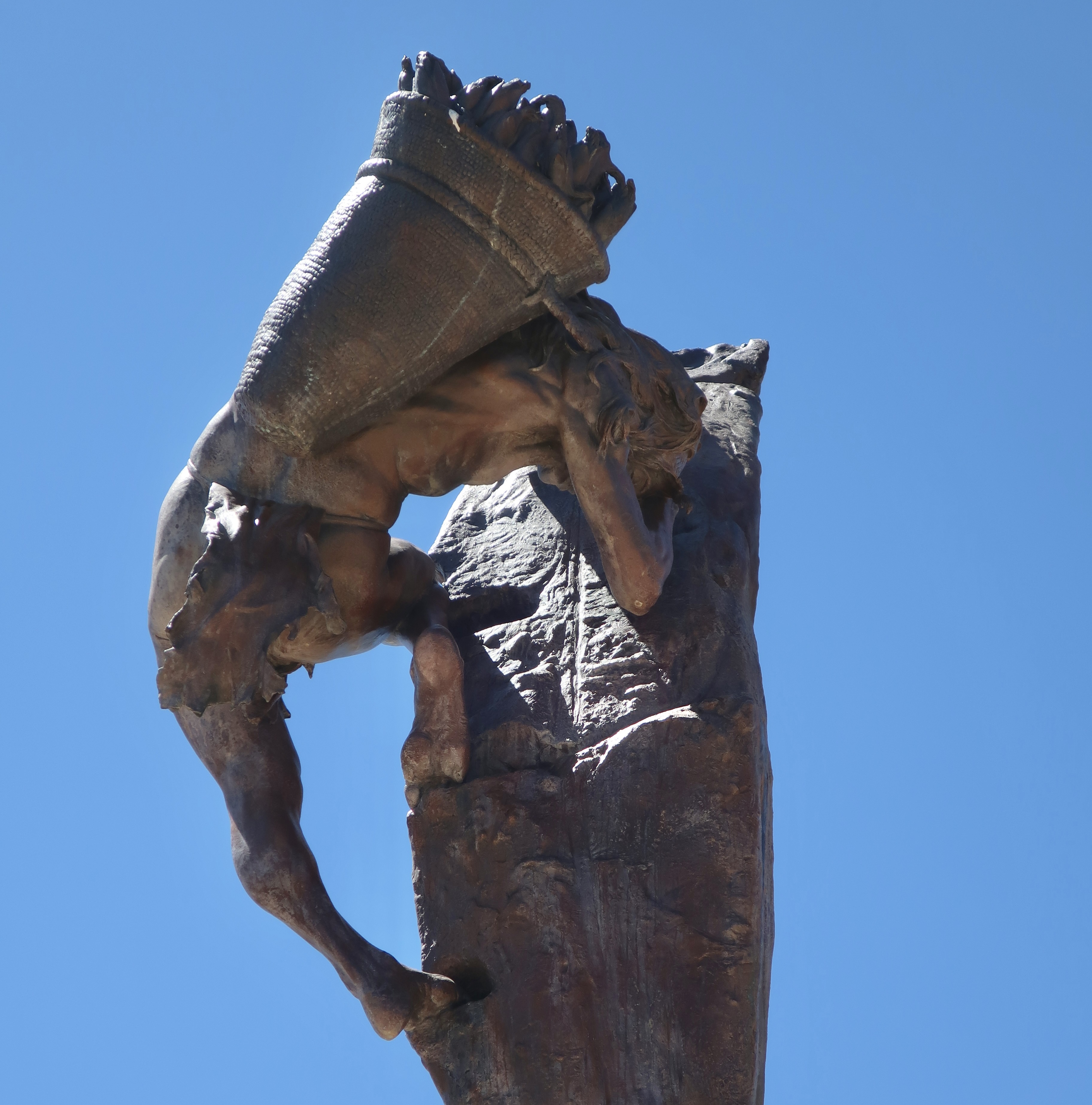
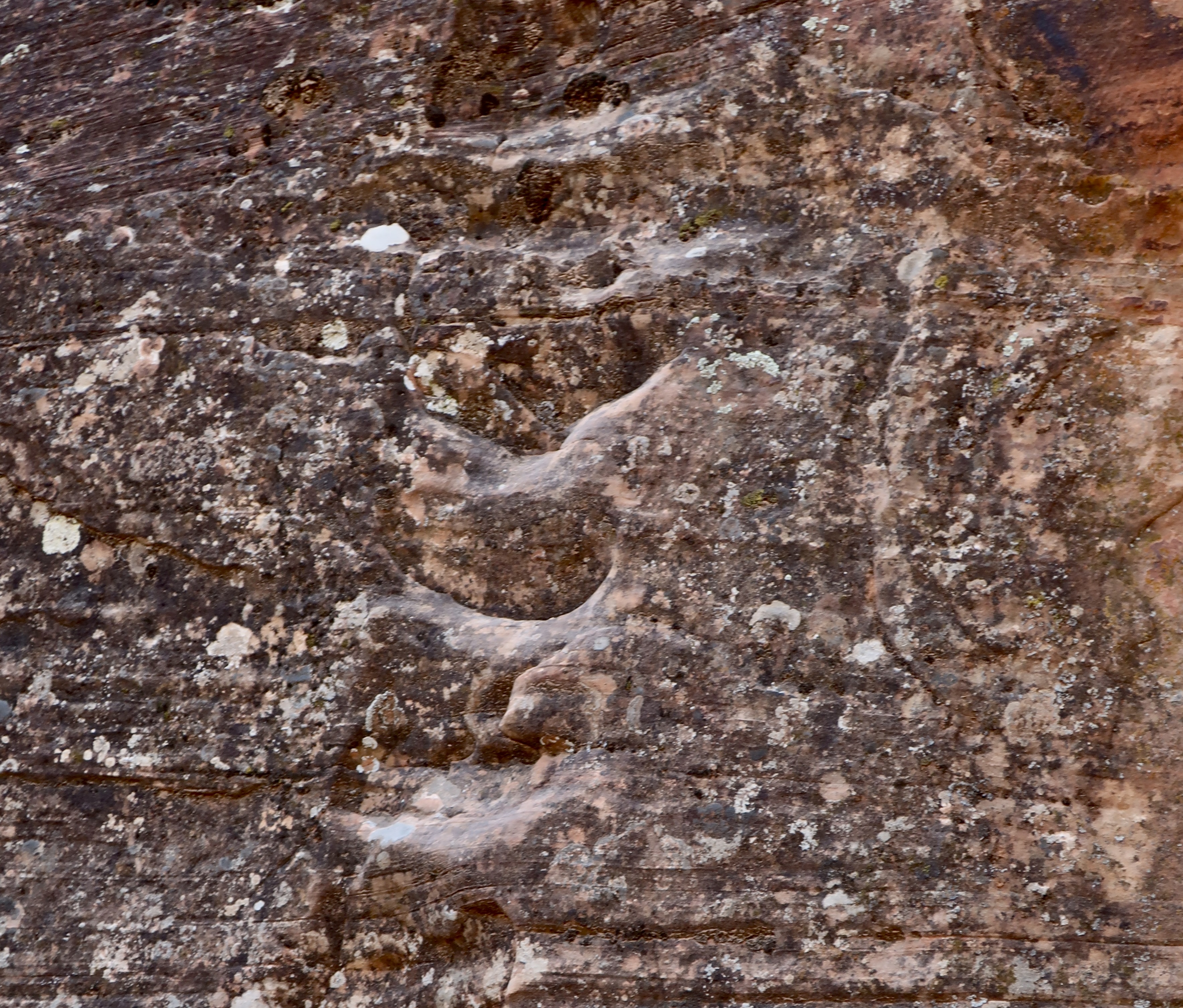
Normally, one would start a post on Mesa Verde featuring cliff dwellings. One of my earliest thoughts as a child about these magnificent structures, however, was how the inhabitants managed to get up to their homes perched high up on cliffs. This 22 foot bronze cast statue by Edward J. Fraughton at Mesa Verde dramatically illustrates the challenge. I couldn’t resist featuring it. Note the footholds, or maybe I should say, toeholds.Split level living at its best? It is thought that the Fire Temple complex at Mesa Verde was used for ceremonial purposes and possibly as living quarters for those who oversaw the ceremonies. It features these structures located on two different levels plus a large open area for ceremonies and meetings off to the left. The toe holds for climbing are clearly visible. Ladders that could have been raised or lowered would have extended below the toeholds: Lowered to get up to the second level under normal circumstances— or raised to frustrate an enemy if under attack.A close up of the toeholds. We wondered if the indentations on the right were used for handholds. Getting up or down would have been complicated by having to carry a load such as shown below when looking at the Ancient One’s statue from a different perspective.“Could you hold that pose while I finish the statue?” It looks like maize/corn in the basket, which was the primary crop of the Ancestral Puebloans. Other things that would have to be carried in addition to food would include water, babies, building materials and items for day to day living. I suspect that children learned to scramble up and down at a relatively young age.Peggy and I found these footholds climbing up a cliff in Zion National Park when we were searching for petroglyphs in a remote area. I thought I’d try climbing them. “Um, maybe not,” my companion suggested rather forcefully. I don’t think my offering to carry her would have made a difference.This is the meeting/ritualistic section of the Fire Temple. A large, raised fire pit is located in the center of the plaza. There is some speculation that the square vaults beside the fire pit may have been covered and used for drumming. I can imagine the people gathered here asking for rain, good crops, health, or protection from a marauding enemy. Or maybe they danced.
Ancestral Puebloans reached the Mesa Verde (“green table”) area sometime around 600 CE (A.D.). They would remain in the area for 700 years reaching the peak of their civilization between 1100-1300 CE. At first, they focused on building pithouses, pueblos, masonry towers, and farming structures on top of the mesa. The National Park Service features a number of the buildings. While we visited several of them, our focus today will be on the cliff houses for which Mesa Verde is famous. But first, a quick look at the countryside where the Puebloans chose to make their homes.
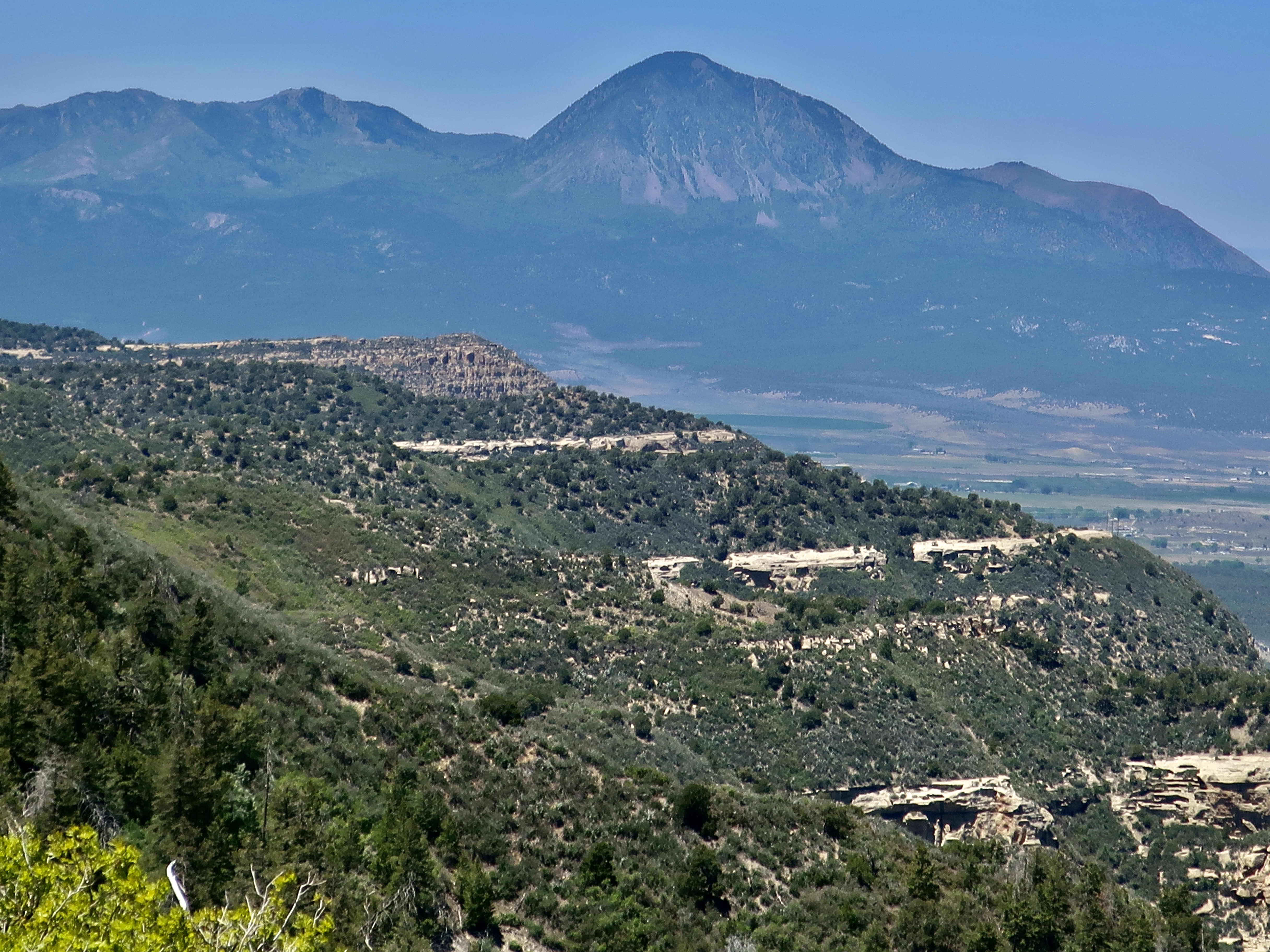
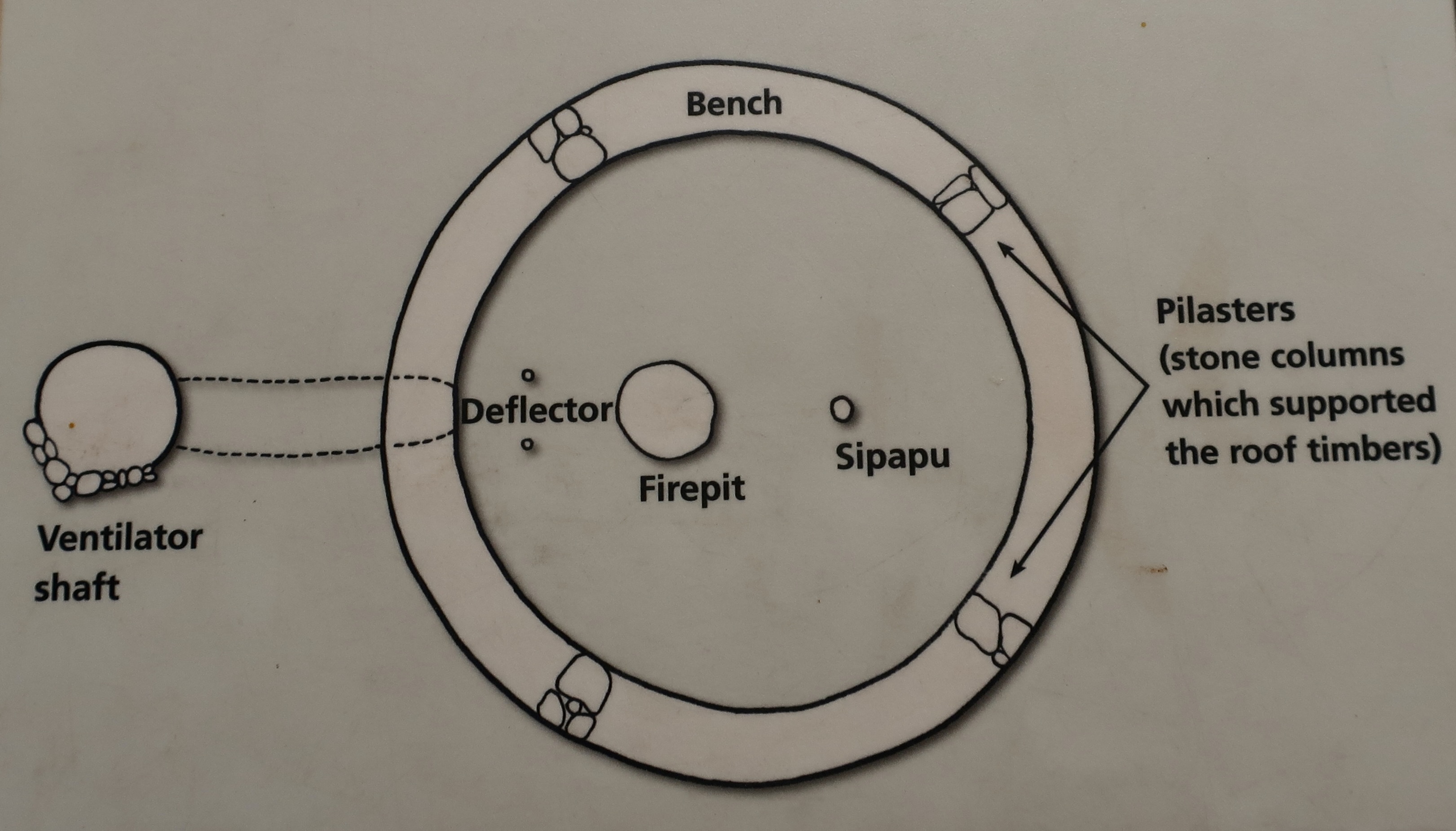
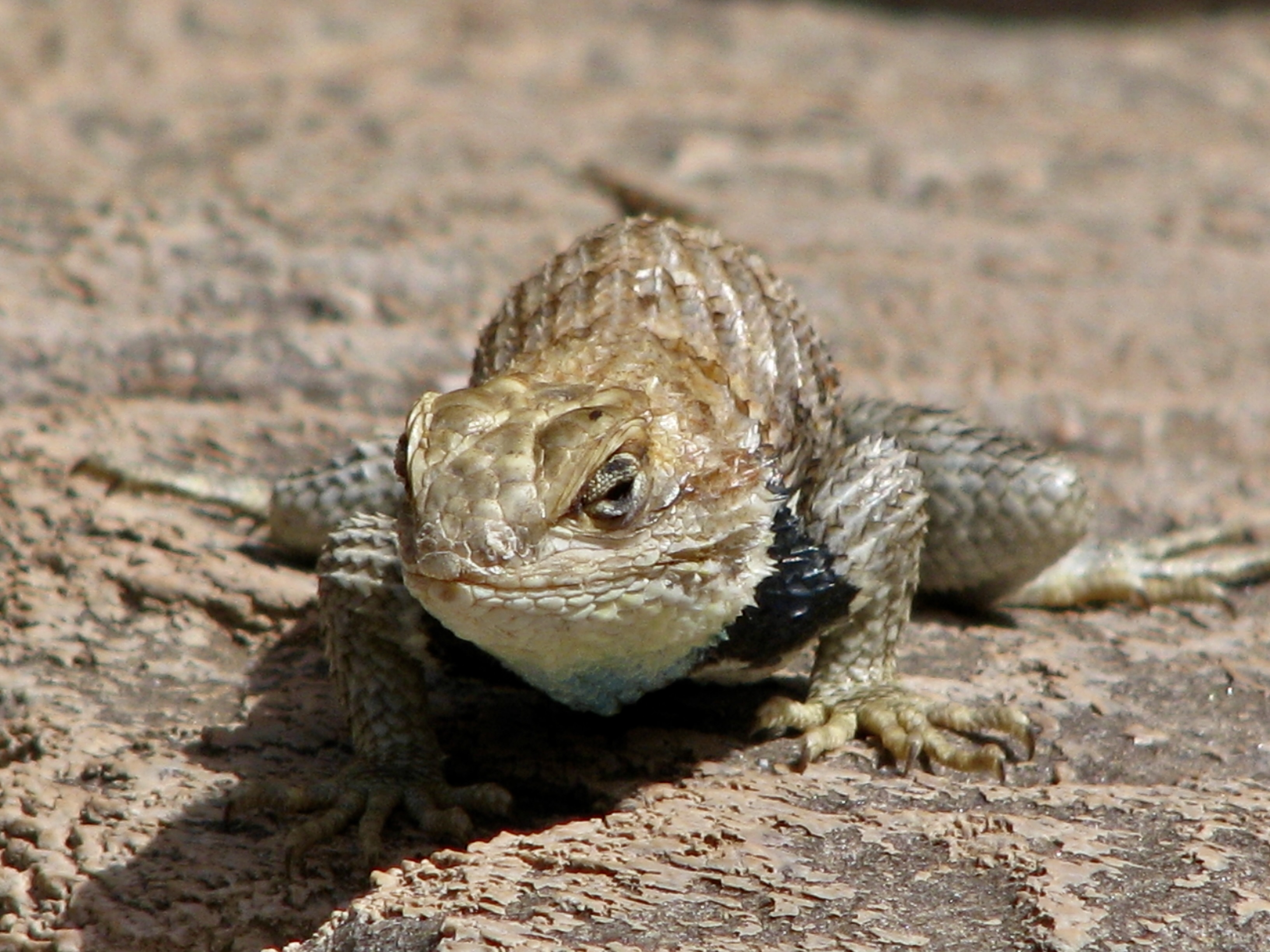
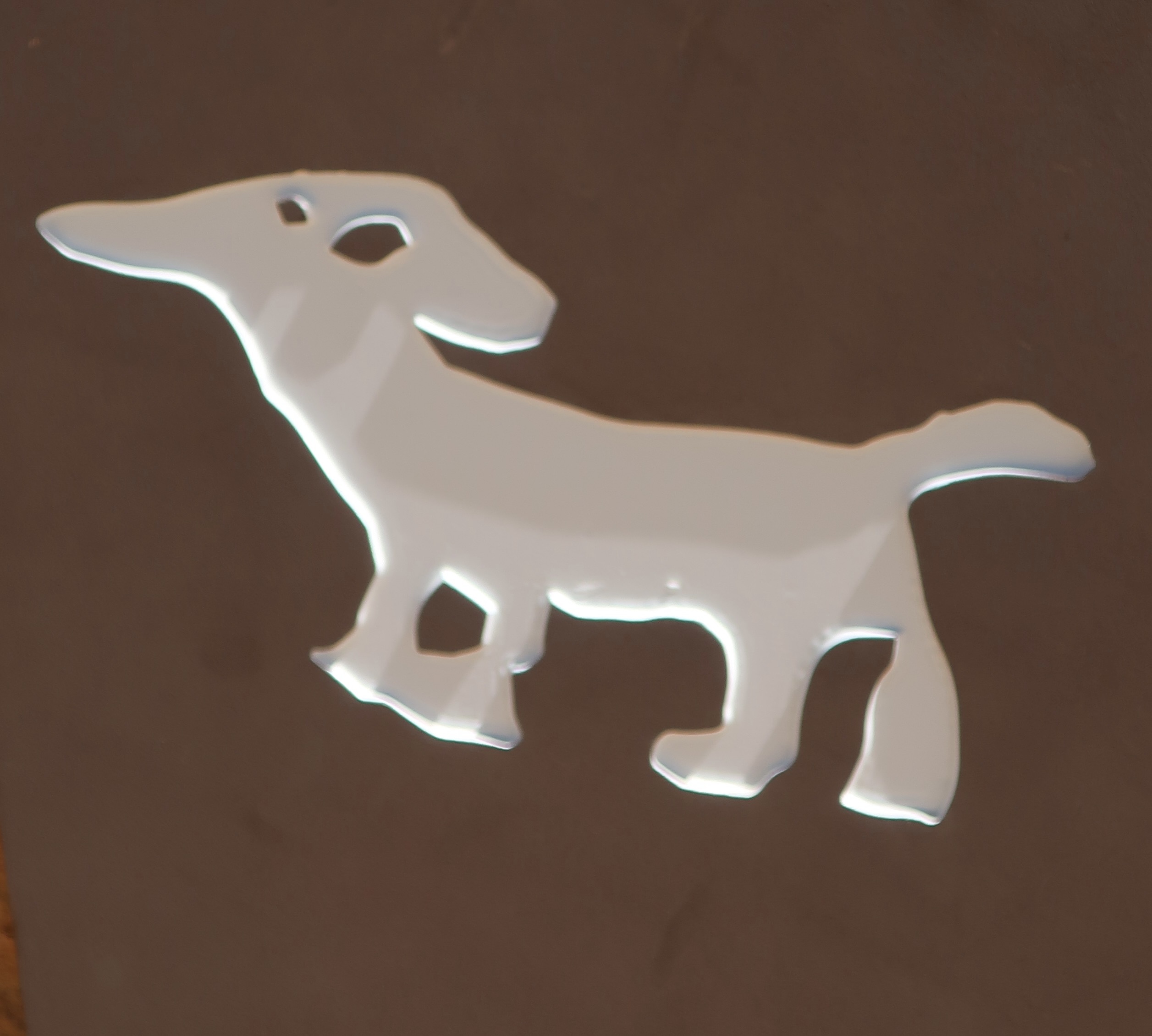
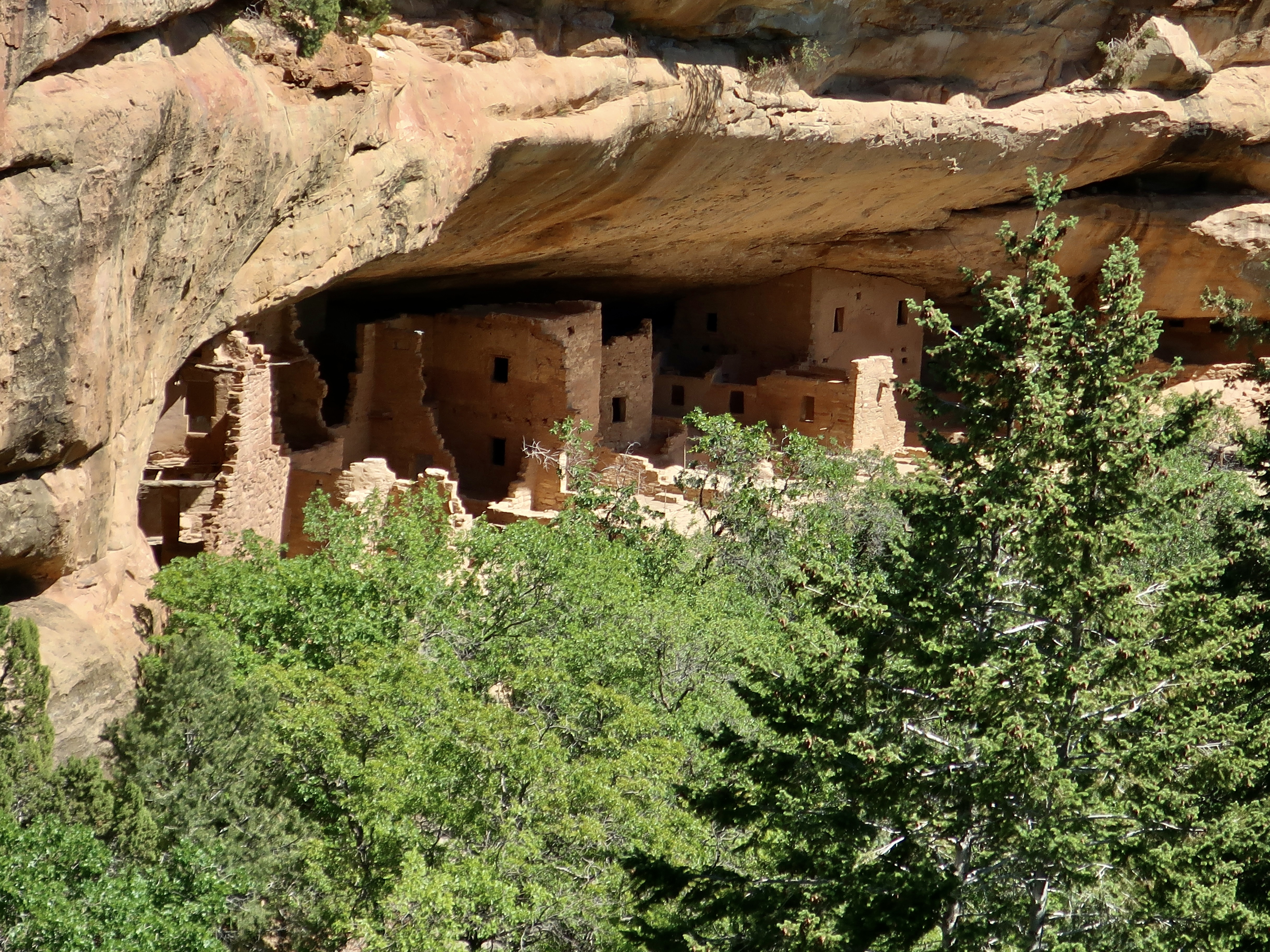
This prominent landmark overlooks visitors as they enter the park. The road works its way up from the lower left. It’s likely that the Ancestral Puebloans would have considered the mesa sacred.Mesa Verde translates as “green table.”A drive up to Park Point, the highest point in Mesa Verde at 8572 feet (2612 m), provides great views of surrounding valleys and distant mountains.Layered sandstone rocks like these provided sites for cliff houses. The distant mountain is known as Sleeping Ute Mountain.And now for three of the major cliff dwellings at Mesa Verde. This one, called Cliff Palace, is the largest cliff dwelling in North America. It has 150 individual rooms and 20 kivas. Kivas are round structures used for ceremonial purposes.This illustration of a kiva was on an information board at Mesa Verde. Most of it is self-explanatory, but you might find yourself asking, “What the heck is a Sipapu?” To the Ancestral Puebloans and their modern day descendants, the sipapu represents the opening through which their ancient ancestors emerged to enter this world as lizards and then changed into their human form.The Hopi believe that the entrance to this world was found on the Little Colorado River a few miles above where this photo was taken. We had stopped here when we were on our 18 day raft trip down the Colorado River through the Grand Canyon. I’ll be reposting blogs from that trip in a few weeks as Peggy and I are boating down the Danube River from Vienna to Budapest.Our friend Don Green, who was with us on the Colorado River adventure, found this fellow watching us from a ledge when we stopped off at the Little Colorado. Hmm.A closer look at the Cliff Palace. The Square Tower House, built in the mid 1200s CE, is the tallest structure in Mesa Verde. Standing at 27 feet (8 m), it is four stories high. Painted murals and petroglyphs are said to be located throughout the structure. Peggy and I have spent many happy hours searching for petroglyphs throughout the West and would have loved to have seen what was in the Square Tower. This might provide a clue. It is a replica of a big horn sheep petroglyph found at Mesa Verde’s Petroglyph Point. Unfortunately, we didn’t have the time for the 2 1/2 mile hike out to the point. This is a National Park Service photo of the petroglyphs found on Petroglyph Point. The sheep is upper center. To the right of it is a turkey and to the right of that, hands. Beneath it are women giving birth. All of these are common themes of petroglyphs throughout the West. I think the cat-looking creature on the far left is a mountain lion. I found it rather humorous. Are its front legs on backwards or is it eating a person? It may be that the animals in the panel represent various clans.Several other structures were located at the Square House cliff dwelling. Was the rock here originally and the Puebloans built around it? Or did Nature add it later?Another large rock was located at the Square House cliff dwelling in the kiva on the right. The same question about how it got there applies.This photo of the Square House cliff dwelling shows how shallow the dwelling was, and how it might be vulnerable to rock fall. Only the Square House seems totally protected.And finally, we come to the Spruce House Dwelling, which is located a short walk away from the Visitors’ Center. It is the third largest cliff dwelling found at Mesa Verde. Built between 1211 and 1278 CE, the dwelling holds 130 rooms and 8 kivas.Another perspective. It was first discovered by pioneers in 1888 when a pair of cowboys found it while they were searching for lost cattle. They climbed down what they thought was a large spruce tree to get in. Thus the name. (It was actually a Douglas fir that is now cut down.) I wonder if they took off their spurs? Below are three photos of the buildings at Spruce House.
Theodore Roosevelt established Mesa Verde National Park in 1906 to “preserve the works of man.” It was the first park of its kind designed to protect and maintain an important historical and cultural treasure. Located in Southwestern Colorado, the park covers an area of 52,485 acres.
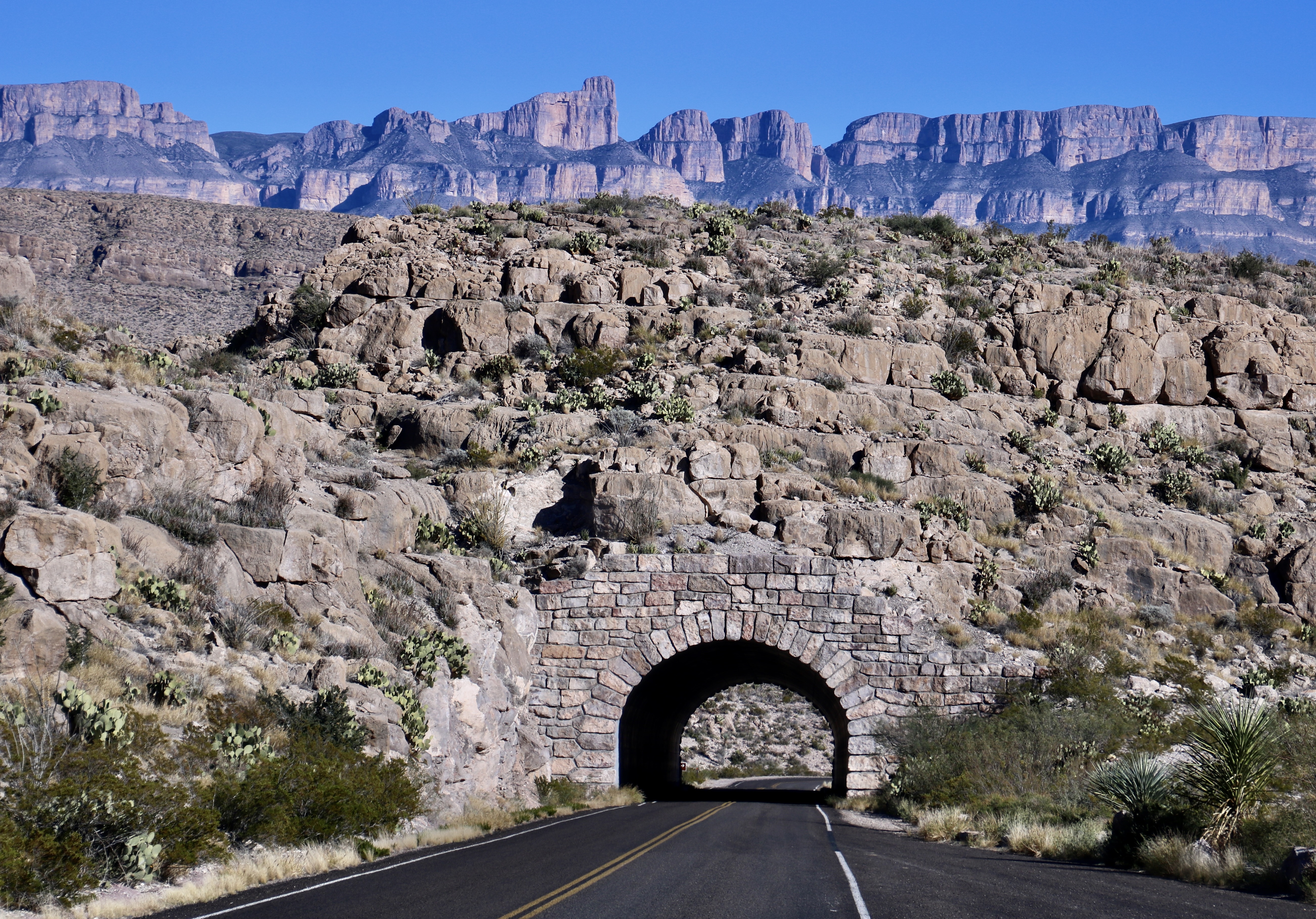
Our next post will take you to visit another national park of great natural beauty and relatively few visitors, Big Bend. It is located in southwestern Texas far from any major metropolitan areas.
Join us as we explore its desert beauty, starting Friday.











 Wandering through Time and Place