The Granite Chief Wilderness… Lake Tahoe’s Next Door Neighbor

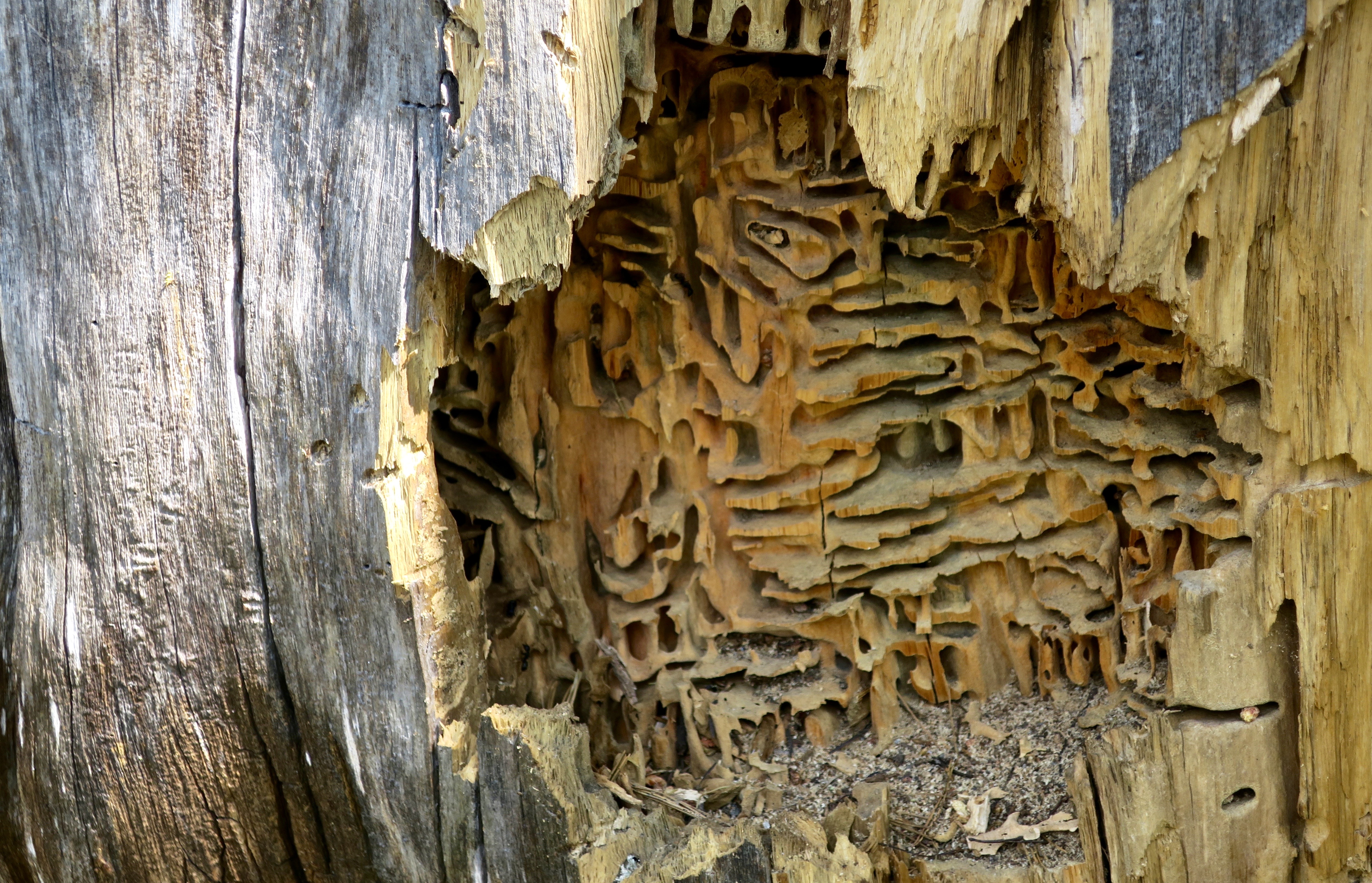
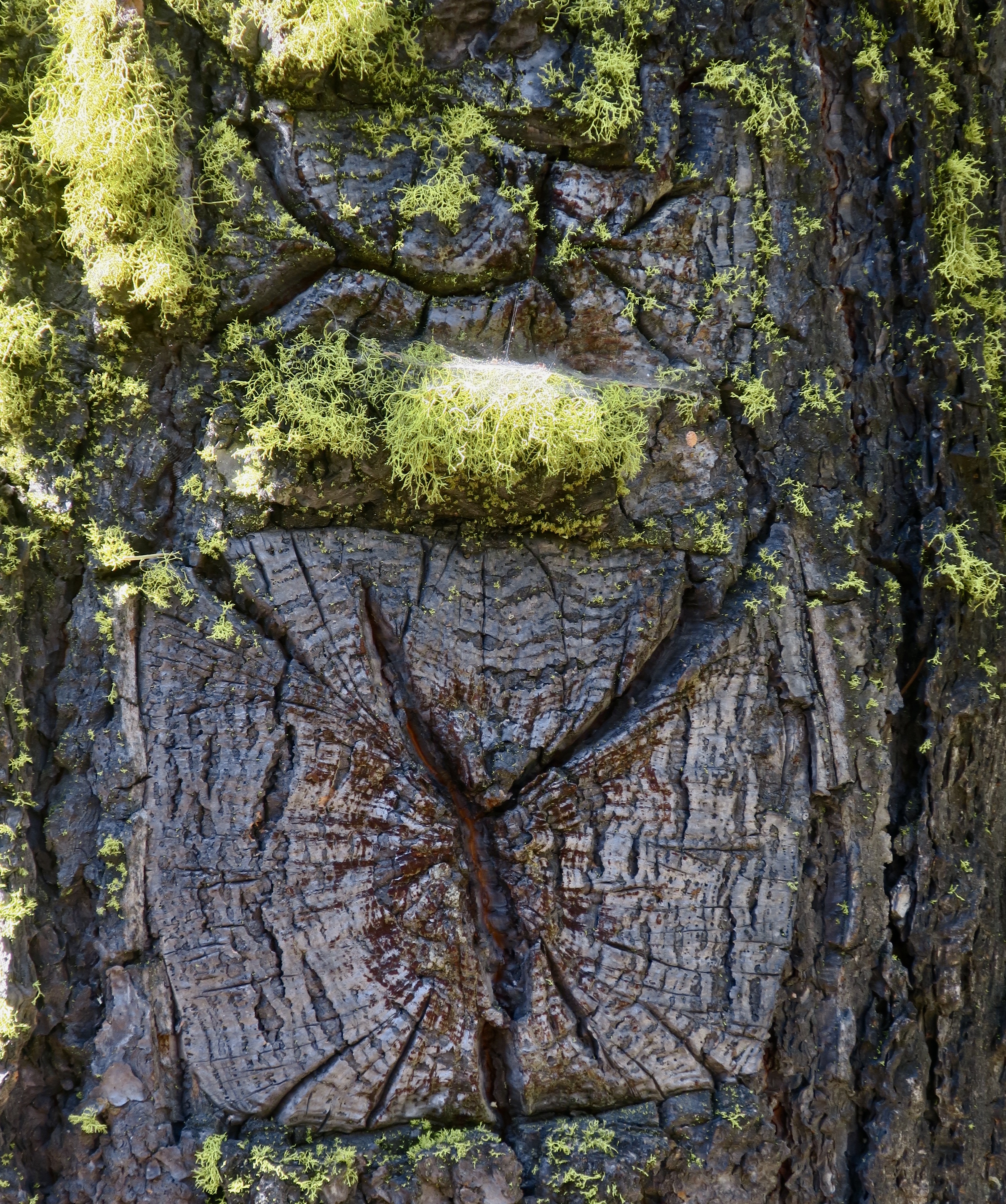
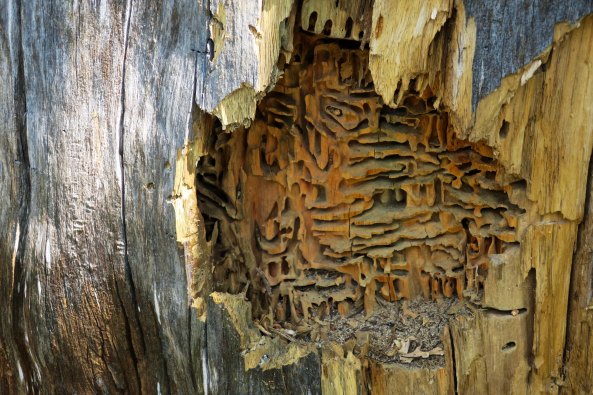
There is a fascinating world to be discovered on America’s pubic lands. For example, you will occasionally find a pile of sawdust next to a dead tree. Odds are that carpenter ants have been at work building an apartment complex. This ‘cut-away’ view in Granite Chief Wilderness provides an inside view of their home. If you are lucky, you will see the ants plying their carpenter trade. They appear out of a crack or hole in the wood with mandibles filled with sawdust, which they drop on their pile and then return to chew/break out another load. Unlike termites, they don’t actually eat the wood. The ants provide a valuable service in the forest breaking down dead wood (not so valuable when it’s the lumber in your house).
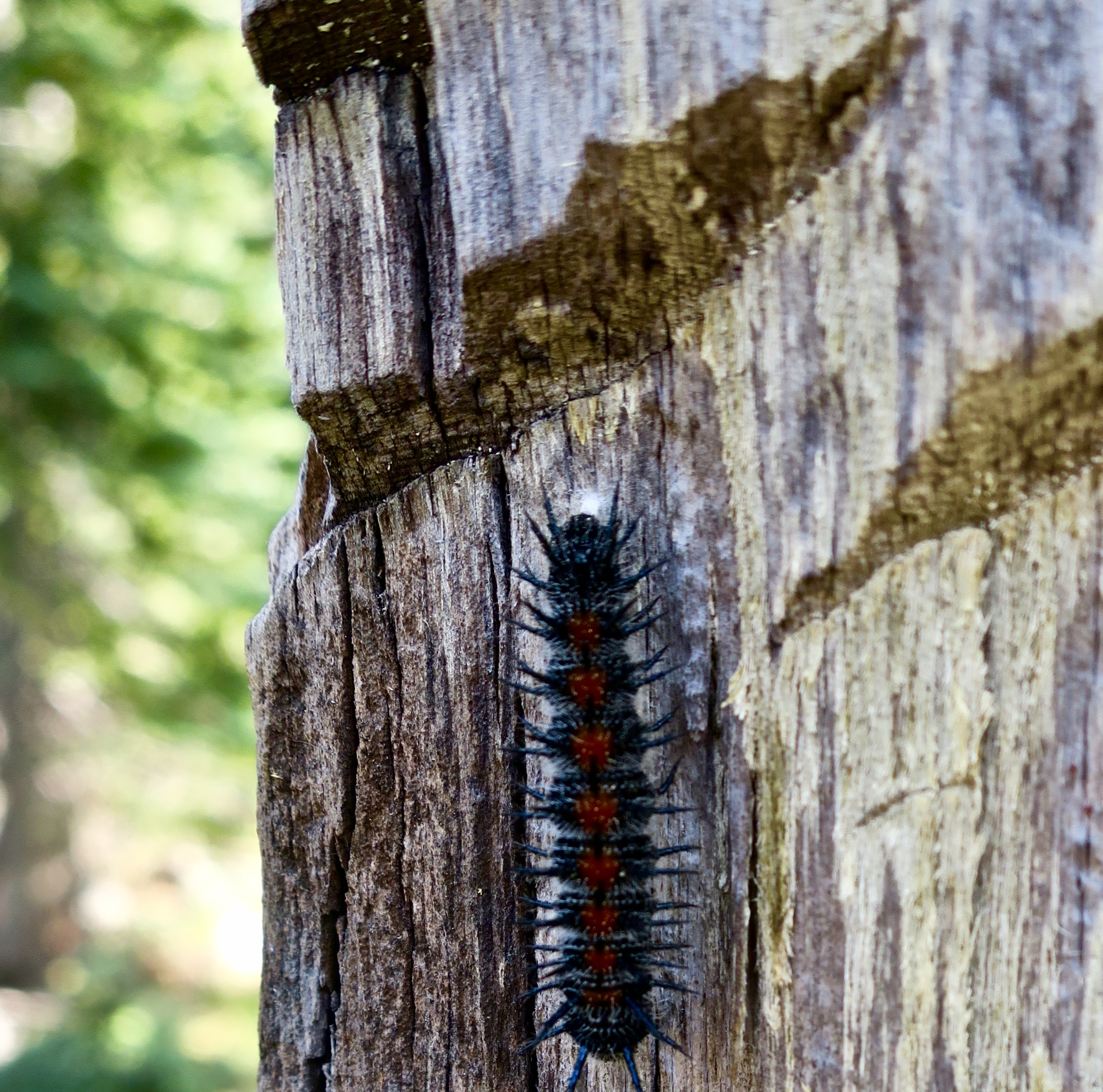
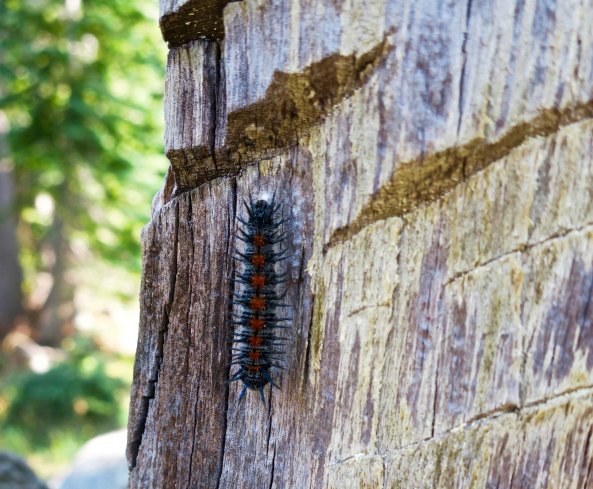
So, who or what opened up the tree? Clue, it wasn’t me. Nor was it the caterpillar, obviously. I photographed it just above the ant apartment complex for perspective on the size of the slashes just above it. They tell the tale. They are bear claw marks. A bear had torn open the log for breakfast. Or was it lunch?
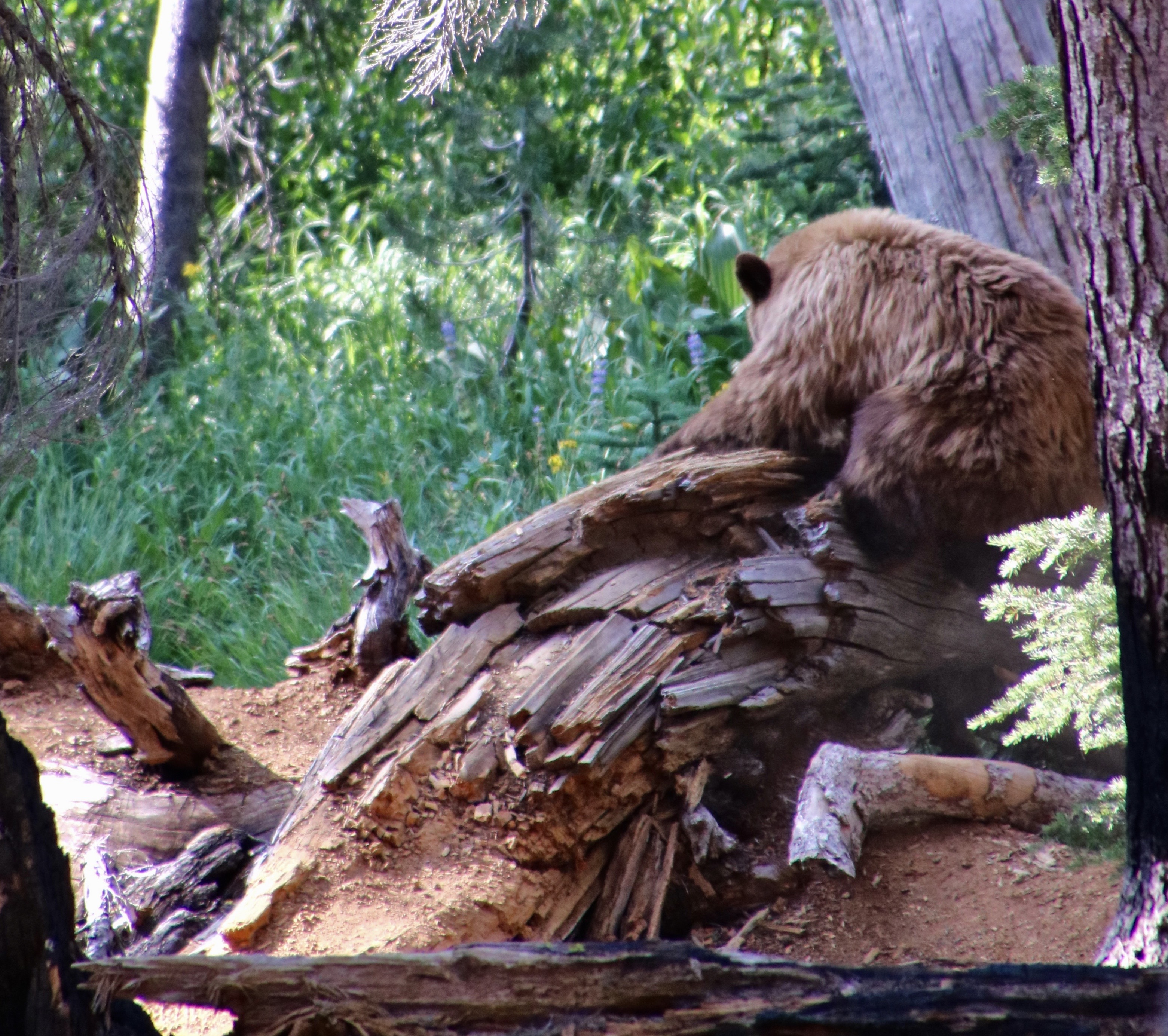
While I was backpacking through Lassen National Park on my 750 mile/75th birthday trek in 2018, Peggy caught this photo of a bear and her cubs opening up a log on a trail near the park’s road. “Dust and wood were flying everywhere!” she told me. Peggy quickly vacated the premises. You do not want to get close to a mama bear with cubs!

Today, Peggy and I are continuing our series on national parks, monuments, wilderness areas and other public lands with an emphasis on their unique beauty, geology, flora, fauna and history that makes them so important to us today— and to our children, grandchildren and future generations. I can only repeat how vital it is at this point in history to let decision makers know how we feel about protecting and maintaining public lands.

In my last post, I discussed a bill by Republican Senator Mike Lee of Utah to be included in President Trump’s “Big Beautiful Bill” that would require the government to sell of 50-75% of BLM and National Forest Lands in America over the next five years. Here’s what the Southern Utah Wilderness Association has to say about the bill:

  • It bypasses public process, allowing public land to be sold with minimal transparency, and depriving the public of input on the future of their public lands. It also bypasses any environmental, cultural resources or endangered species reviews. 
  • While Senator Lee attempts to make his bill more palatable by claiming that it will create opportunities for affordable housing, it does no such thing. There is no requirement that any housing developed on sold public lands would be affordable or meet any affordable housing requirements. 
    • There is no provision to prevent lands sold under Lee’s bill  from being developed into high-end vacation homes, Airbnbs, or luxury housing projects, which would be especially desirable near scenic or high-demand areas. 
    • The bill will primarily benefit real estate developers and speculators rather than addressing real housing needs. 

The Pacific Crest Trail Association also noted this week that the bill would have serious implications for the PCT by blocking access to the public lands that the trail now crosses over. The 750 mile trip I did for my 75th birthday would not be possible. But that’s nothing compared to the millions upon millions of people who would forever lose future access to these lands that now belong to all of us. Please, let your Senator know Lee’s bill will do irreparable damage.

But, now on to my post about hiking through the Granite Chief Wilderness on the Pacific Crest Trail.

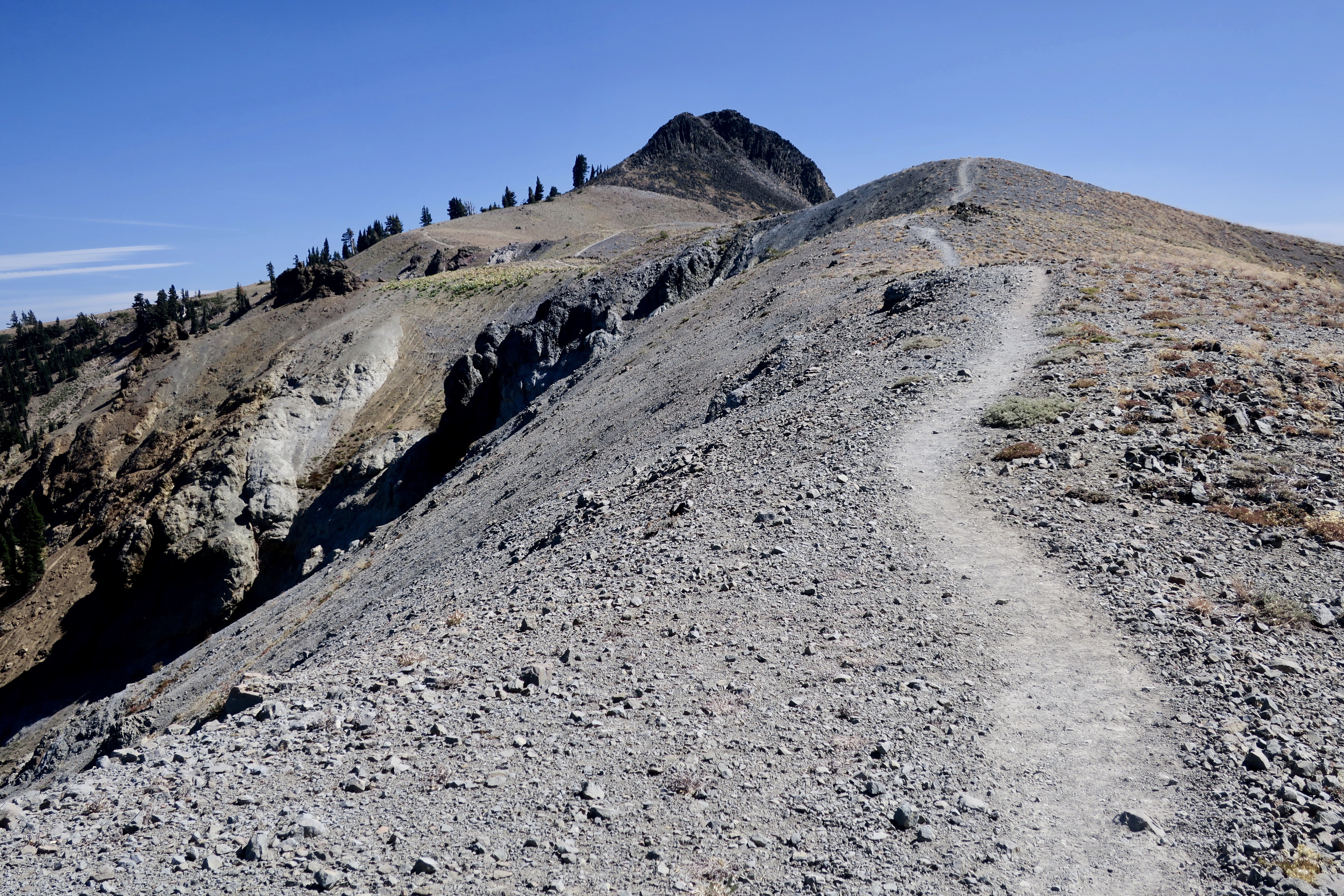
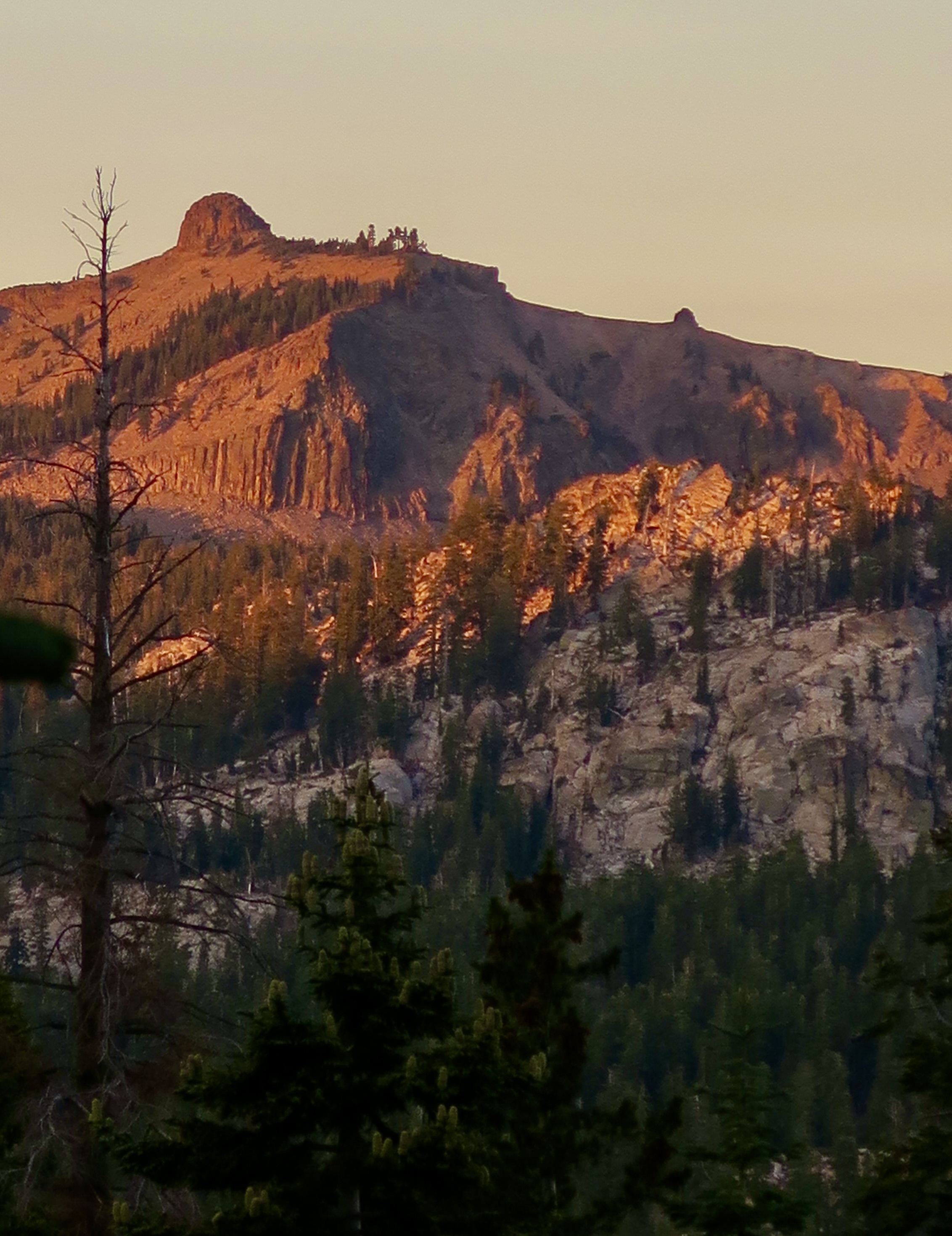
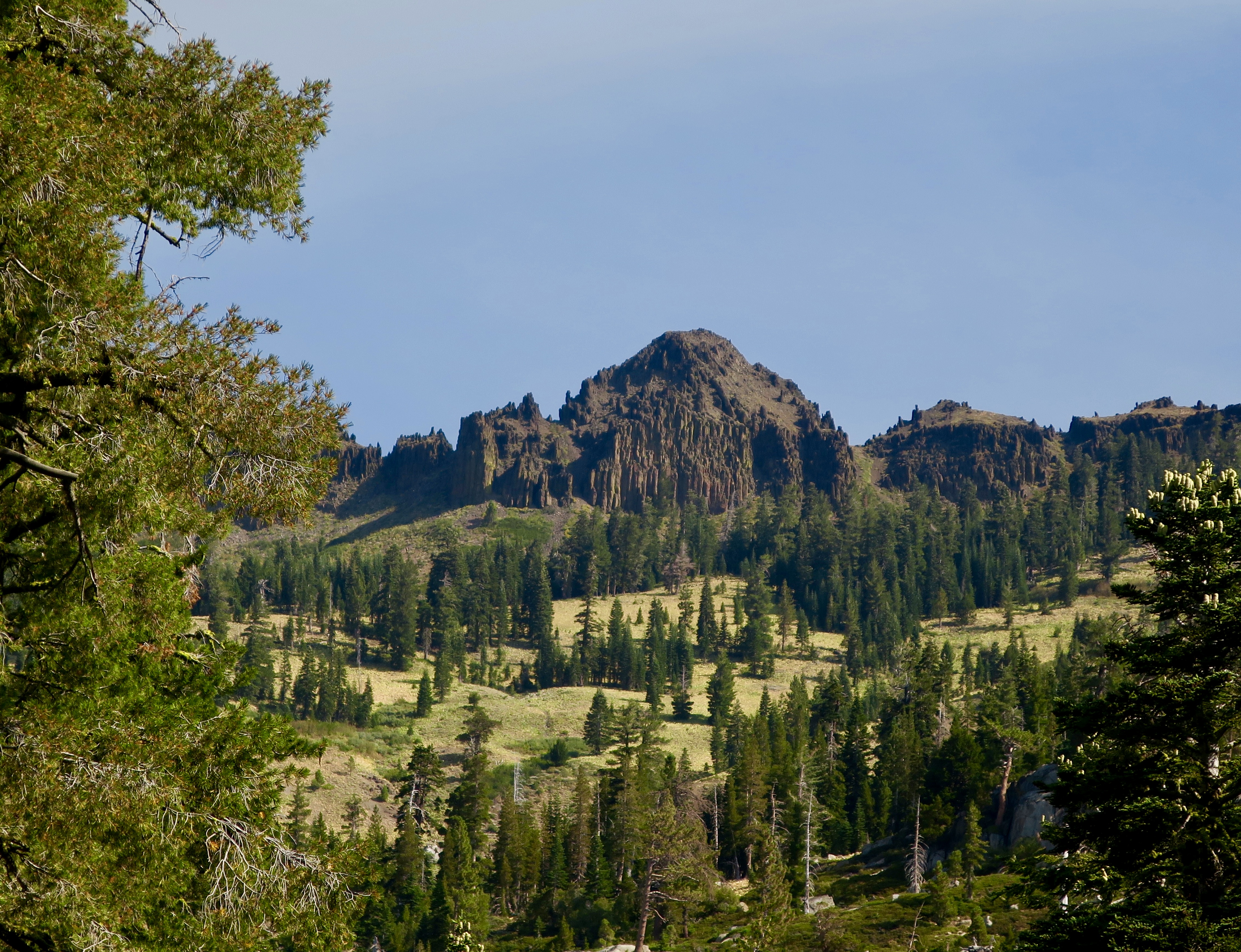
I began this section of the PCT where I hiked through the Granite Chief and Desolation Wilderness areas on historic Highway 40 near the Sugar Bowl and Donner Summit. Before it was replaced by I-80, it was part the Lincoln Highway, America’s first cross country road. Like most of the Sierra Trails I know, the PCT here begins with a climb. The peak you see up ahead is Tinker’s Knob. The Knob, BTW, was named after James A. Tinker, a freight-hauling teamster in the area. Legend has it that it was named after his nose, which was said to resemble the knob.
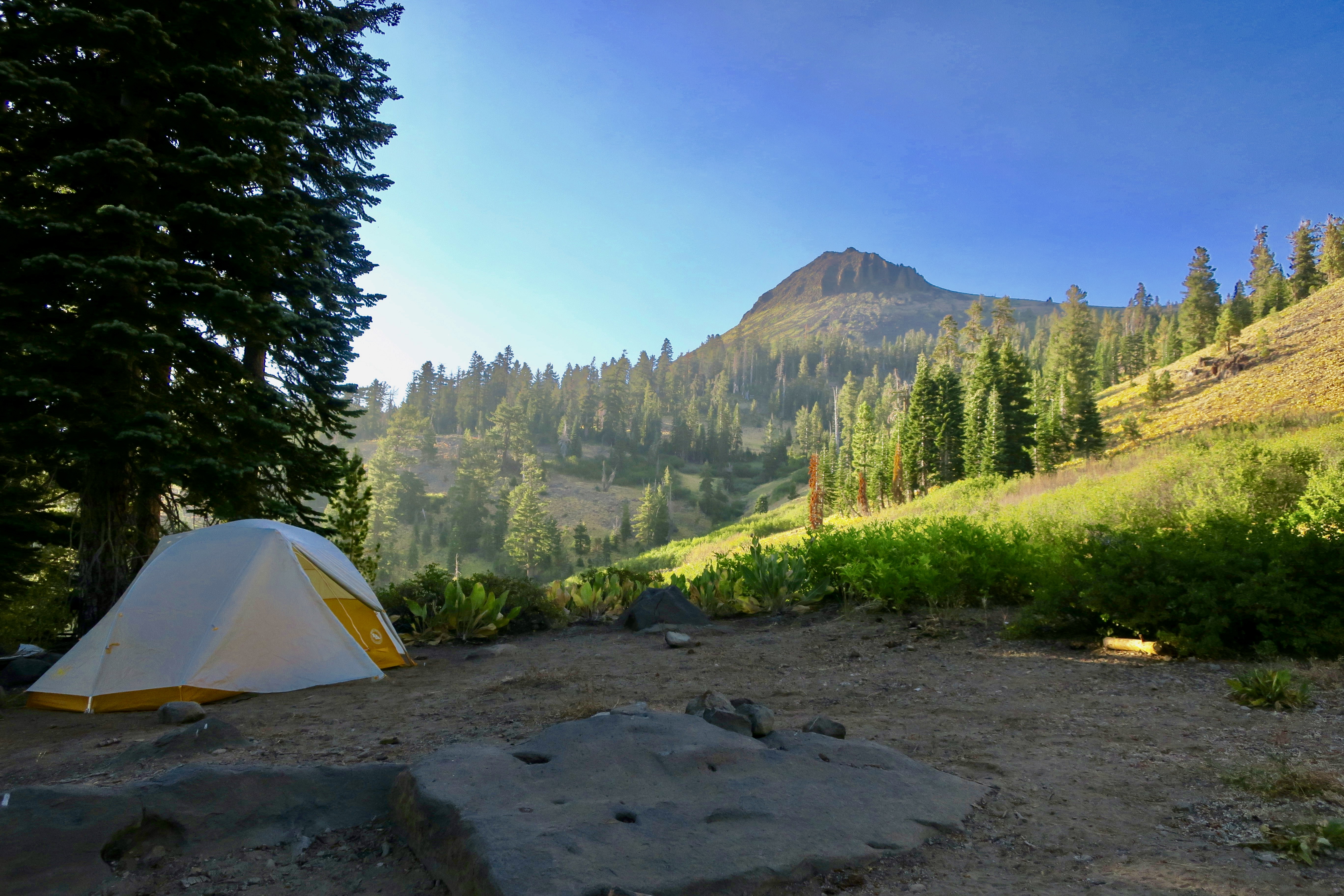
Having got a late start after Peggy dropped me off, I camped that night with a view of Tinker’s Knob. As far as I know, not one other person was camped in the valley. That’s one of the beauties of backpacking.
The views from my campsite were gorgeous.
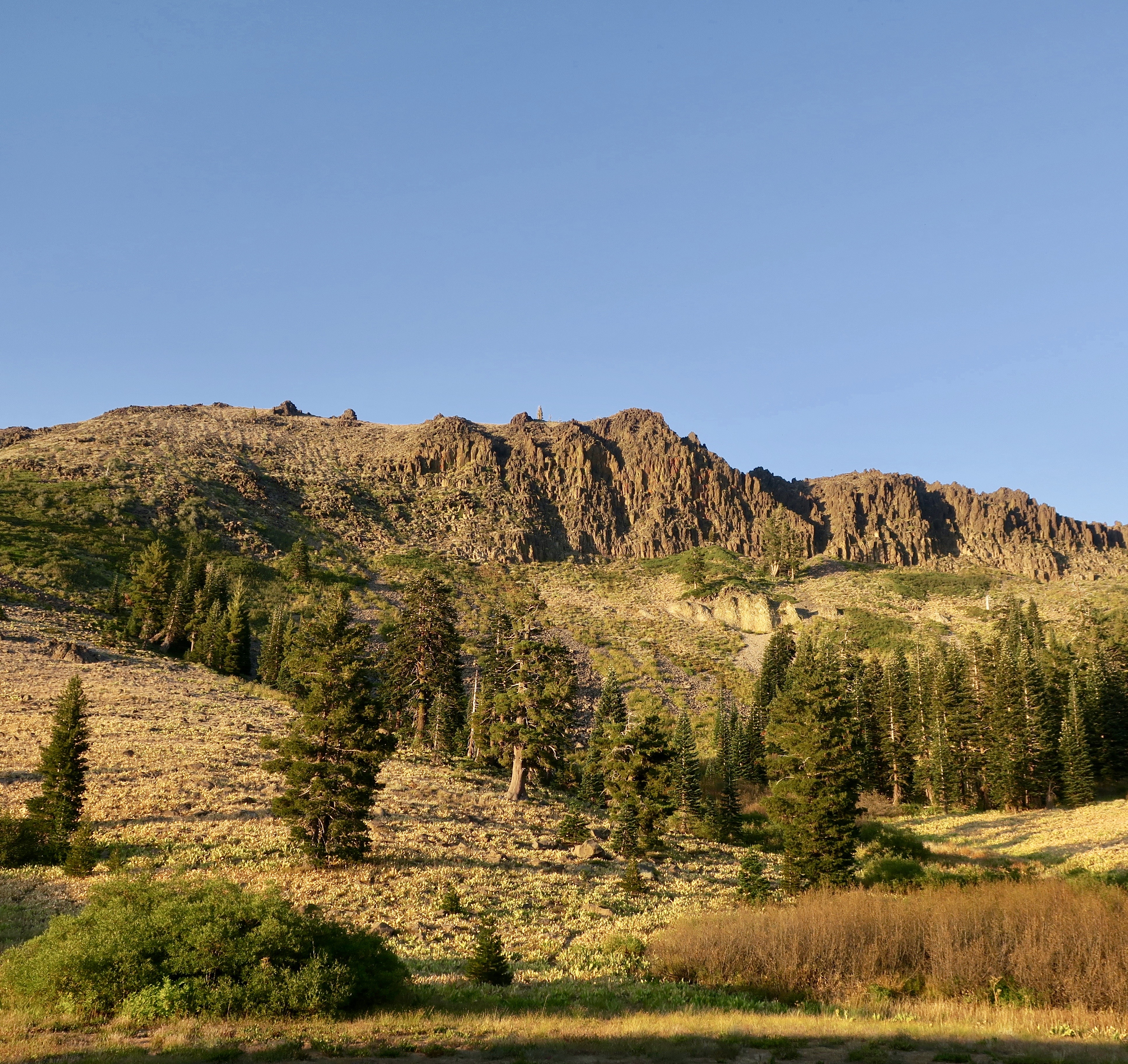
I watched as the sun set on Tinker’s Knob, outlining it in golden, warm colors.
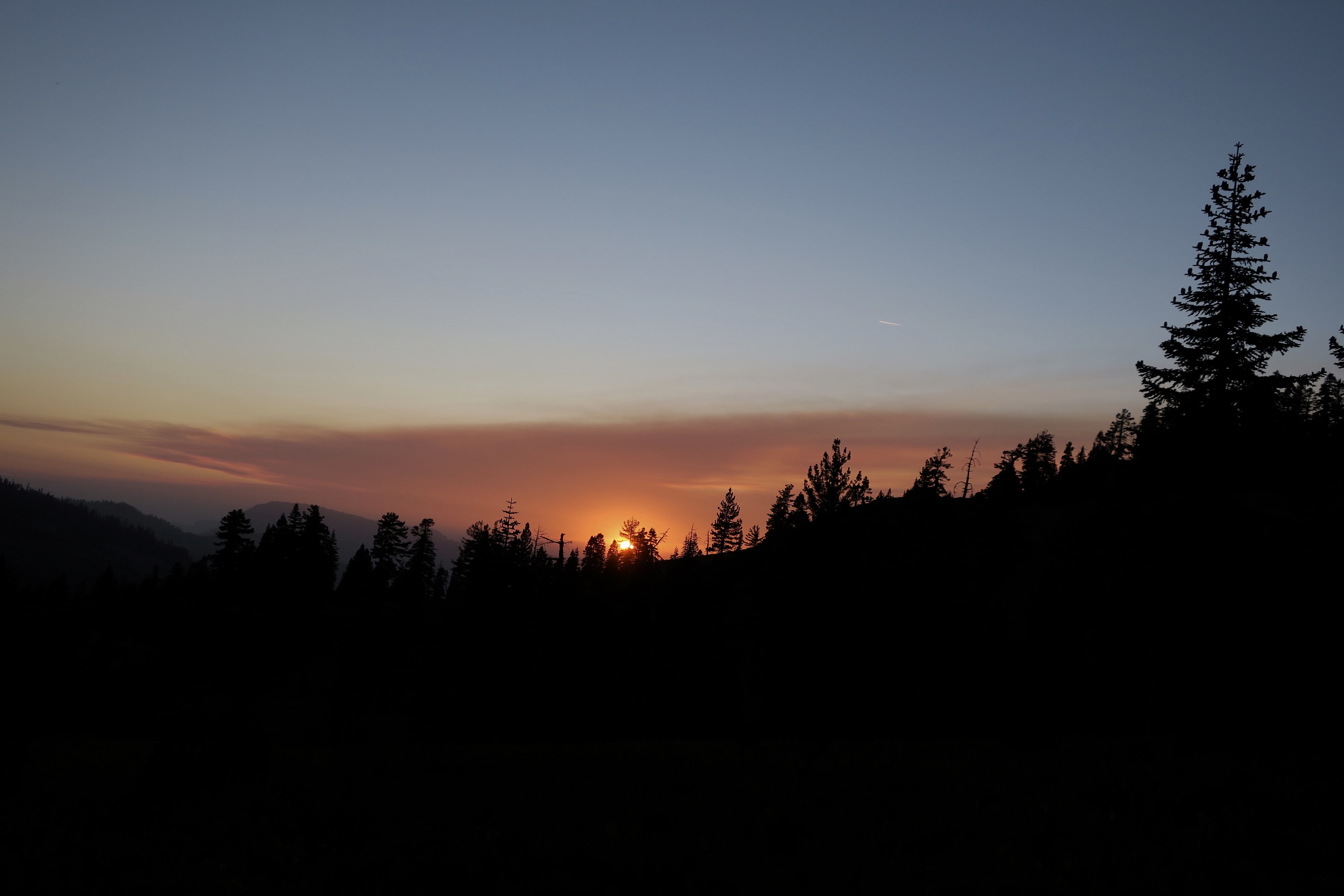
And then went for a short walk and watched the sun set in the west. A note here: Tinkers Knob is just outside of the Granite Chief Wilderness in the Tahoe National Forest. It’s part of the land that Lee’s bill might open for sale. I can see a land speculator grabbing this and making it available to developers for huge profits who would then sell it to multi-millionaires for homes at even greater profits. No trespassing signs would quickly follow.
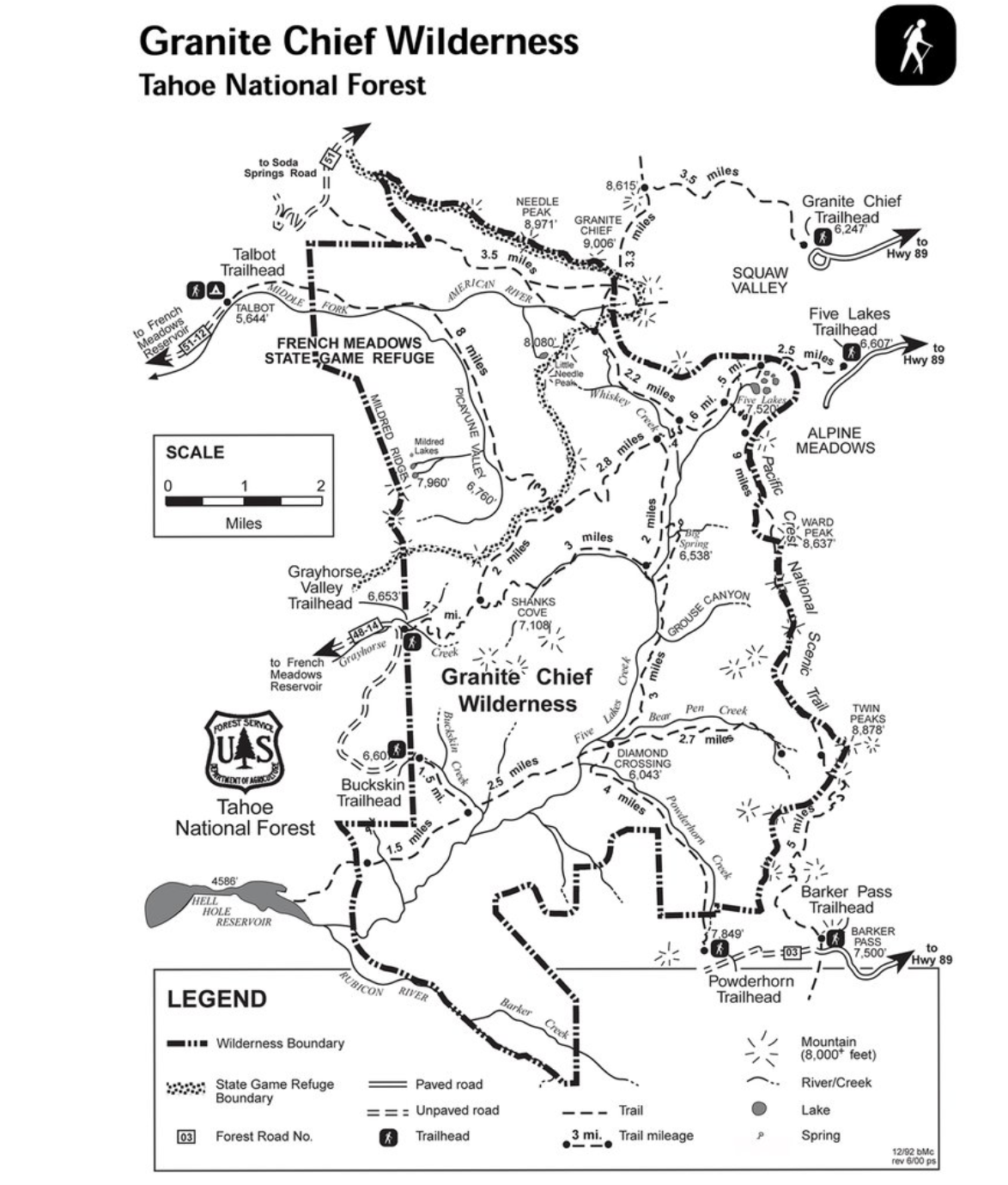
This map of the Granite Chief Wilderness provides a fairly accurate view of the trail system. Tinker’s Knob is on the top, just outside of the wilderness to the north of the 9005 Granite Chief Pass.
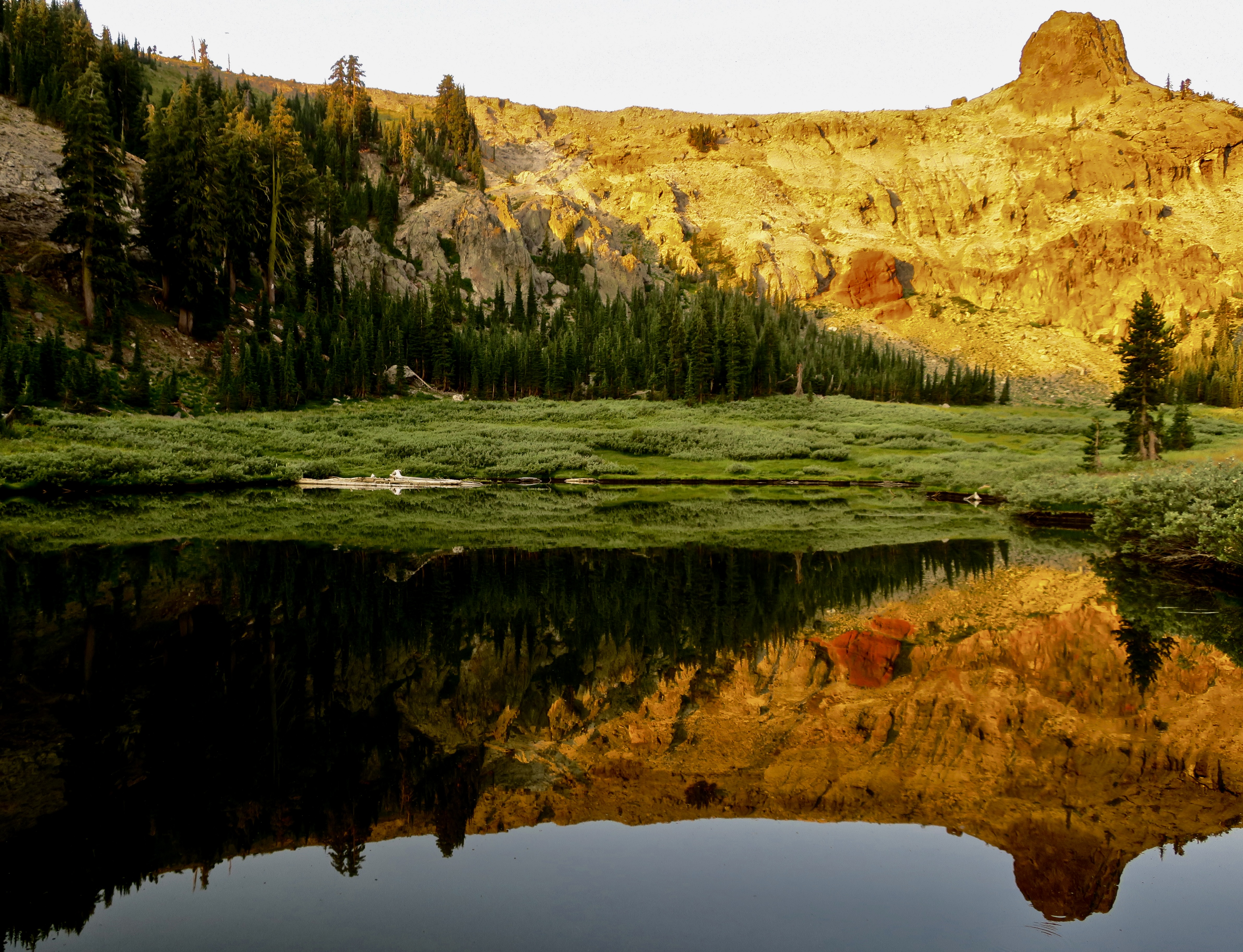
I caught this photo the next morning. There are two Needle Peaks in the Granite Chief Wilderness. Needle Peak and Little Needle Peak. This is the former. Both are made up of volcano cores.
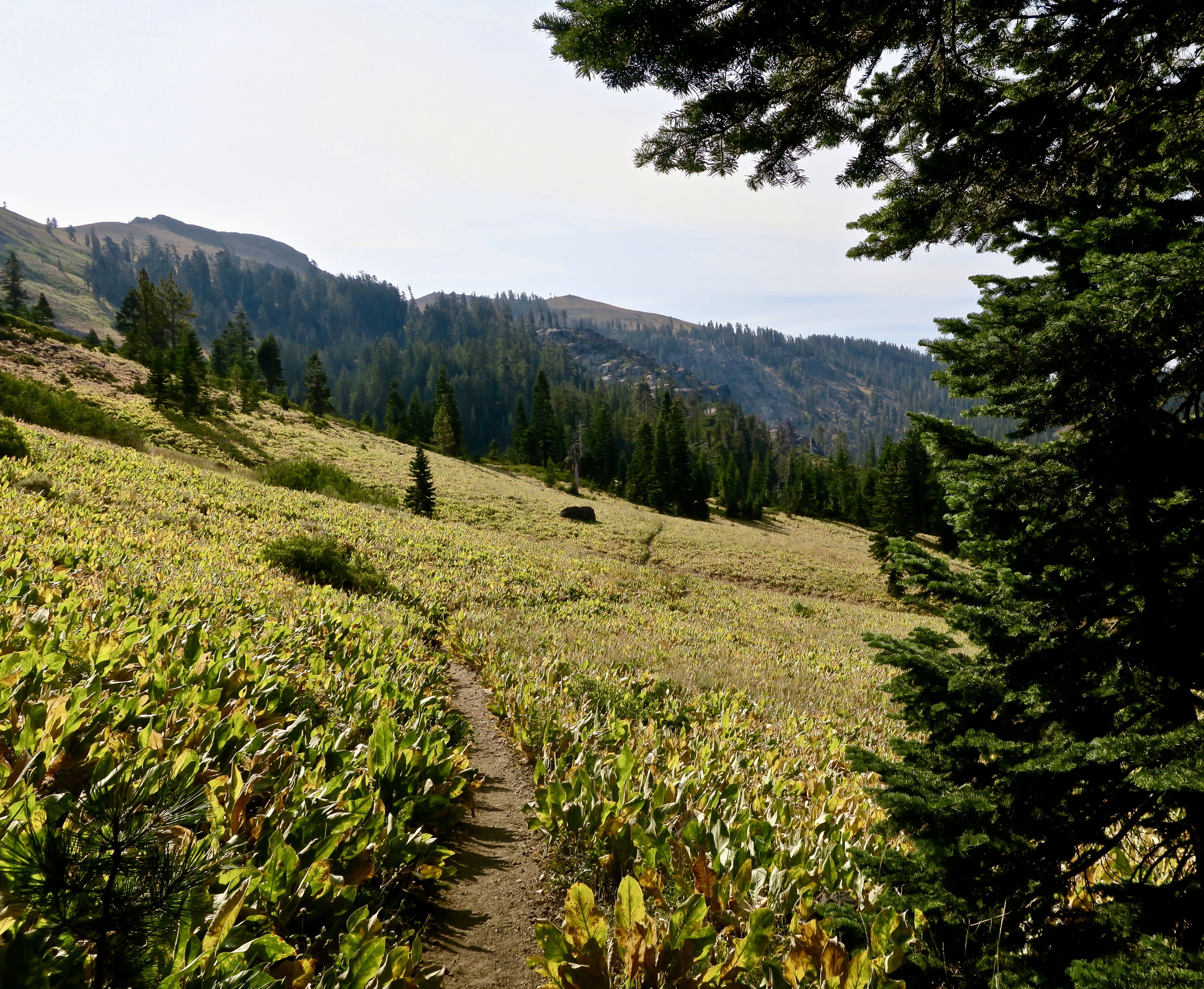
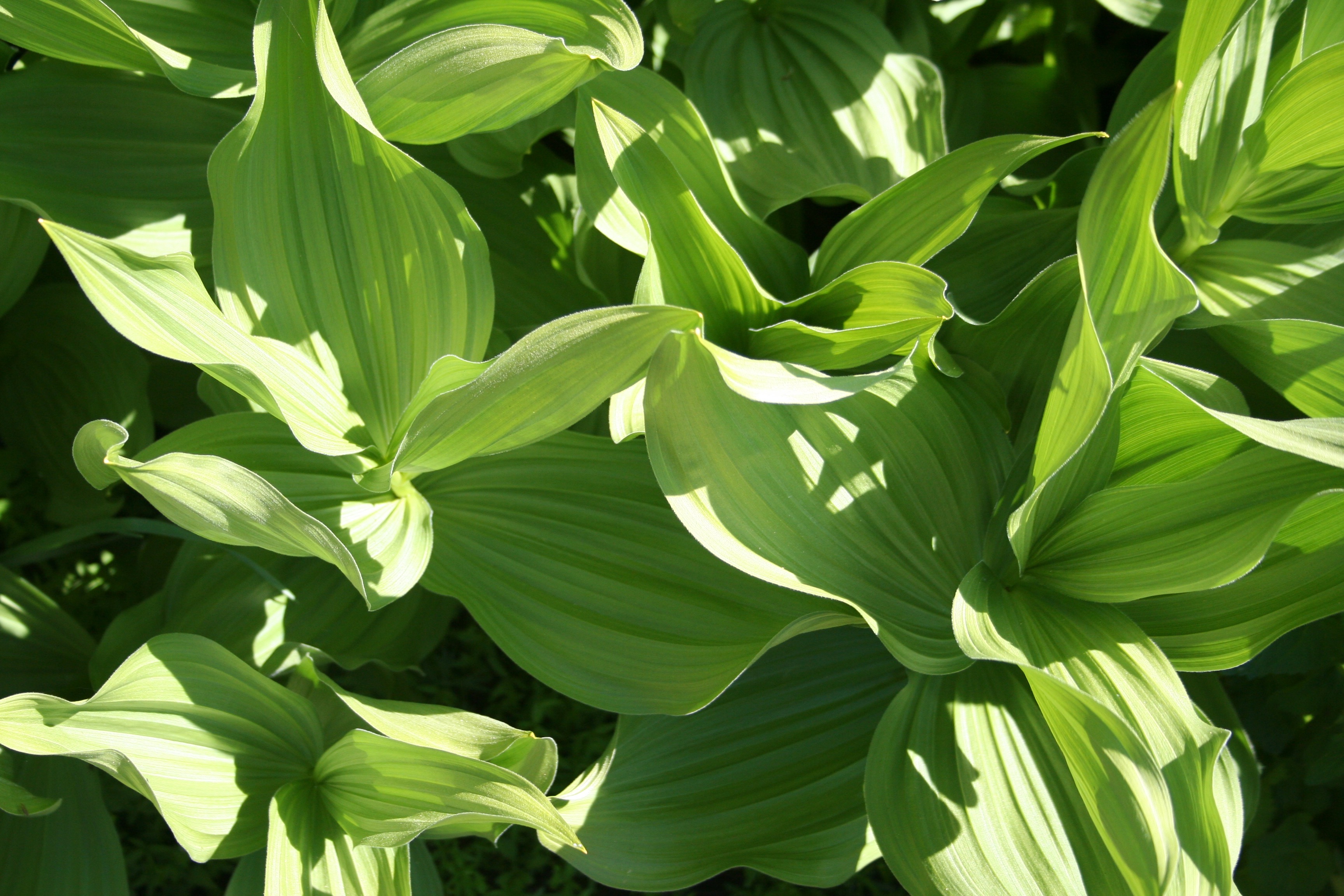
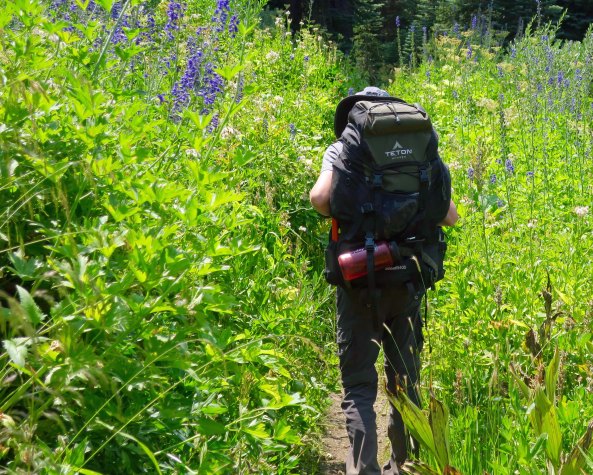
Leaving my camp, the PCT took me through an extensive field of corn lilies.
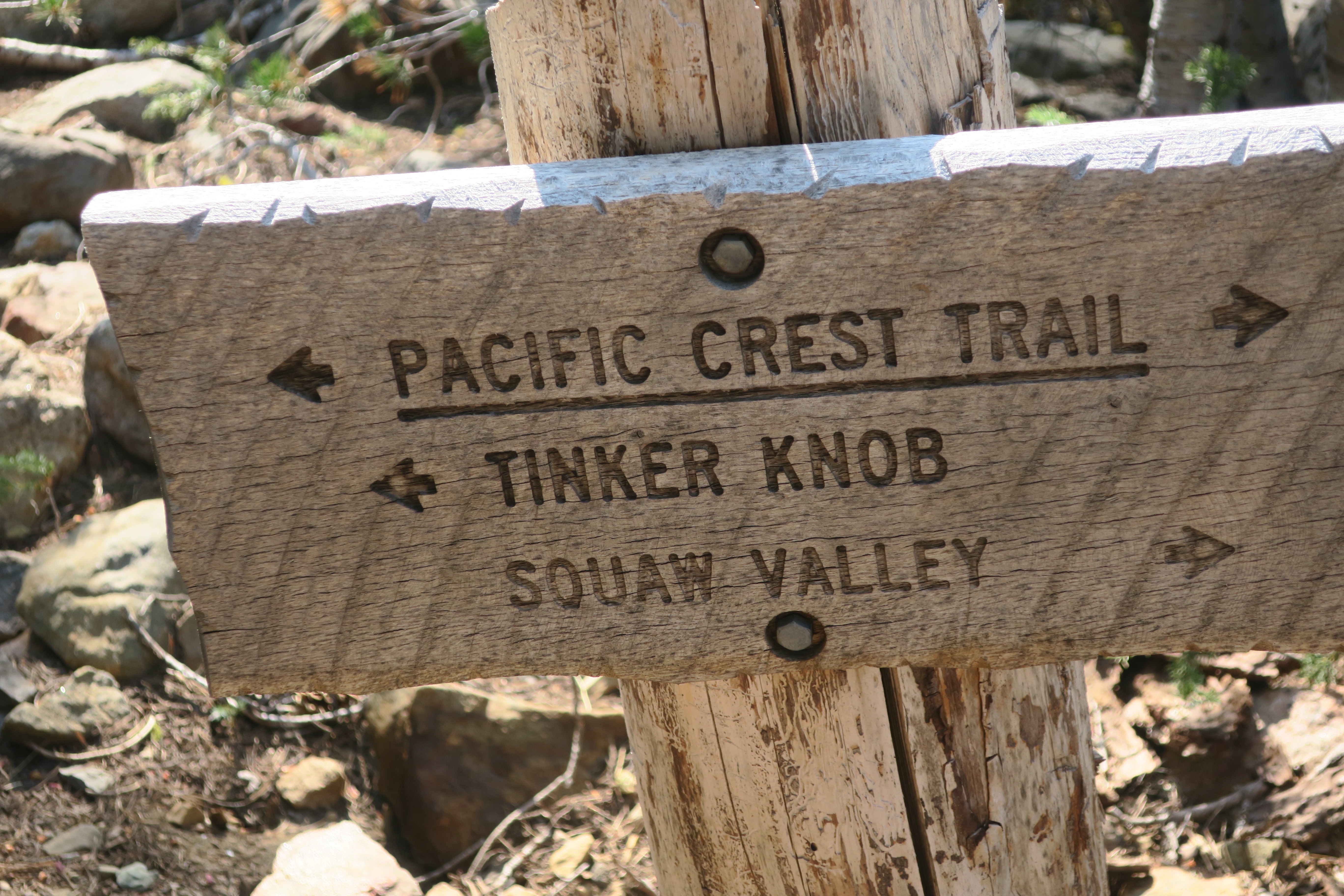
I came across this old PCT Trail sign placed before the name of Squaw Valley was changed. The name squaw had become controversial. Since the 1960 Winter Olympics were held at the Squaw Valley Ski Resort, the name was changed to Olympic Valley.
The Granite Chief Wilderness is just behind the mountains. All I had to do was hike over them.
I actually made two trips though the Granite Chief Wilderness on my 750 mile PCT Trek. The first was with my grandson Ethan. We took the tram up from the Olympic Valley floor to reach the wilderness area and then hiked through Granite Chief Wilderness and part of the Desolation Wilderness when Ethan sprained an ankle. I decided on a do-over starting at historic Highway 40. I needed the miles given the areas I had to skip because of forest fires. The following photos are from both trips.
Ethan and I spent our first night at Little Needle Lake beneath Little Needle Peak. It’s a relatively short hike from where we got off the tram and an old favorite of mine going all the way back to the 1974 when I first started leading hundred mile backpack trips through the Sierras.
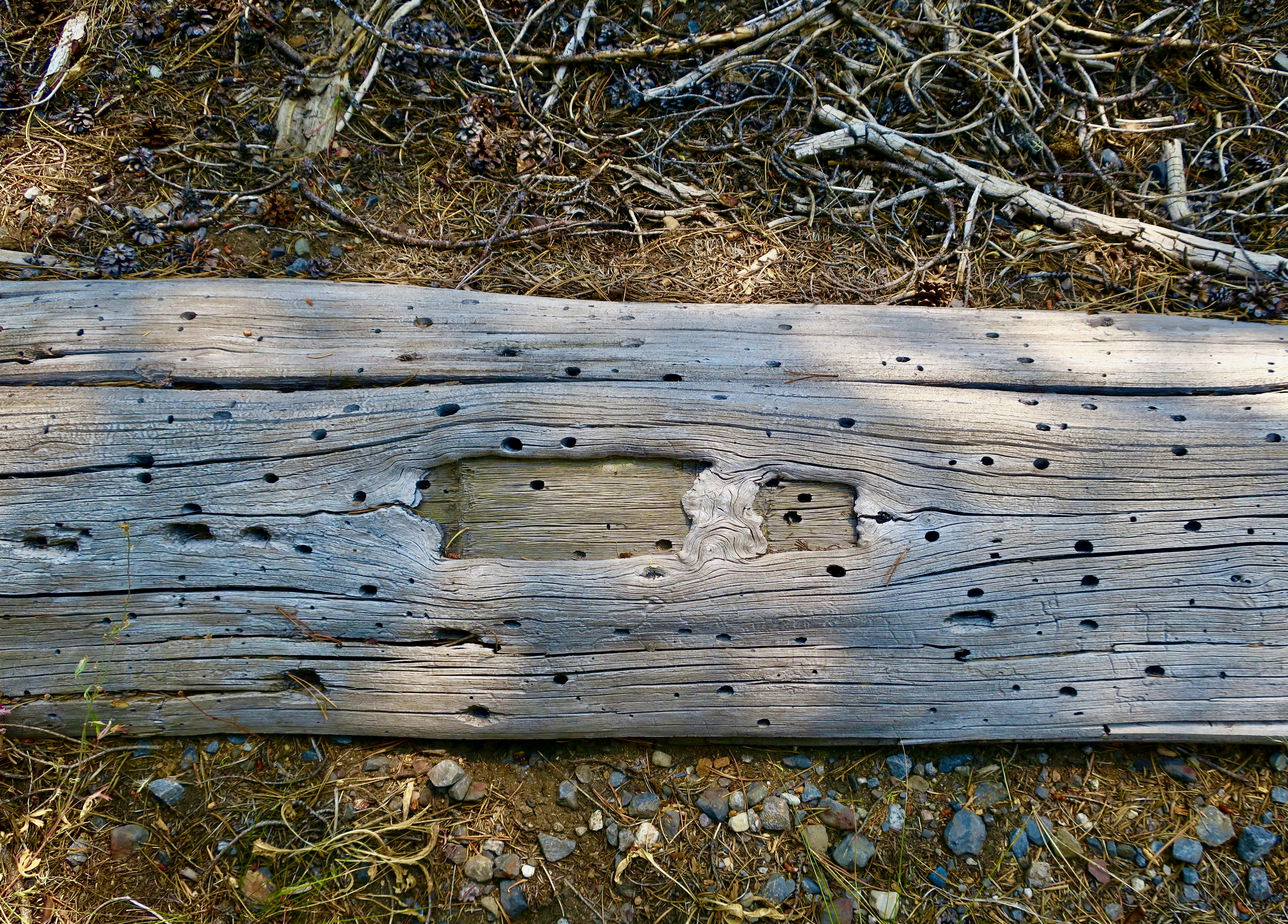
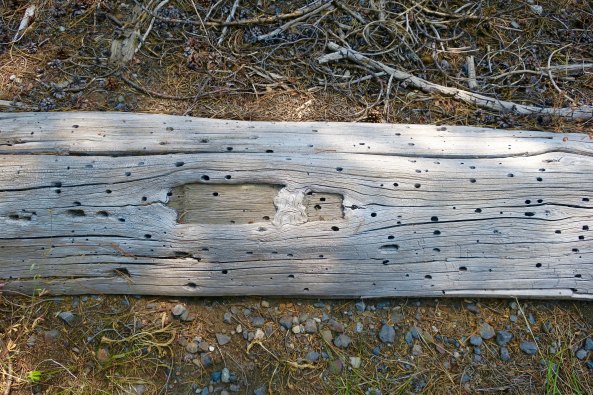
Instead of following the PCT through the Granite Chief Wilderness, we dropped down off the ridge to Five Lakes Creek. Once, this trail marker, known as a blaze, would have marked the trail along the creek. It’s likely that carpenter ants carved the holes.
Another old blaze on a tree that still lives. I’ve followed blazes many times over the years. Especially when the trail disappeared under the snow.
A limb came out of this snag when the tree was young. The rings take you back in time to its youth. I thought it made a neat photo.
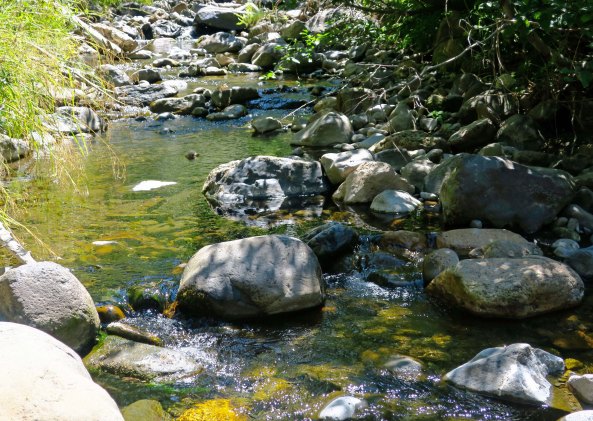
A small amount of water was still flowing in Five Lakes Creek.
The trail follows the creek for five miles and reaches what is known as Diamond Crossing where I have often camped.
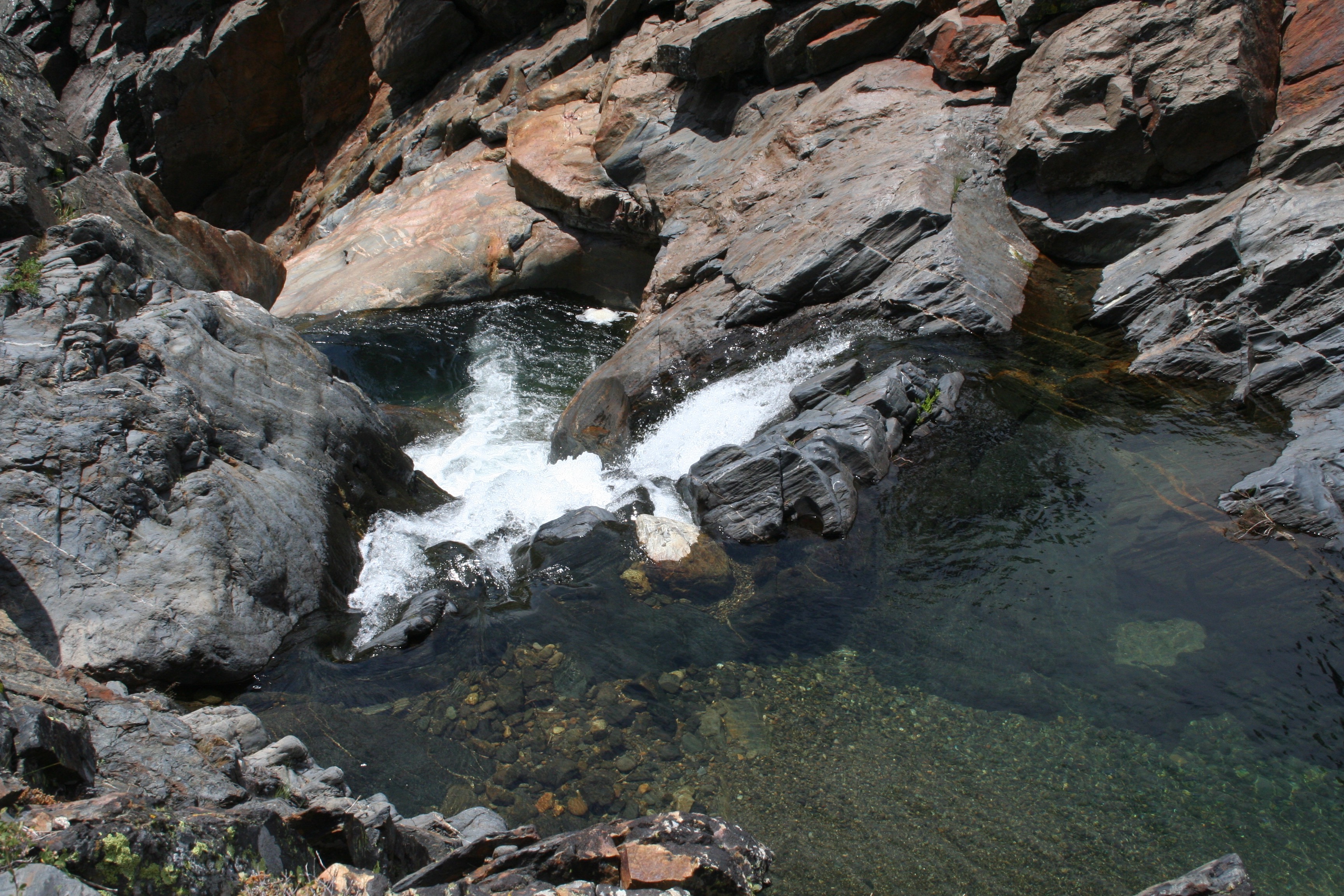
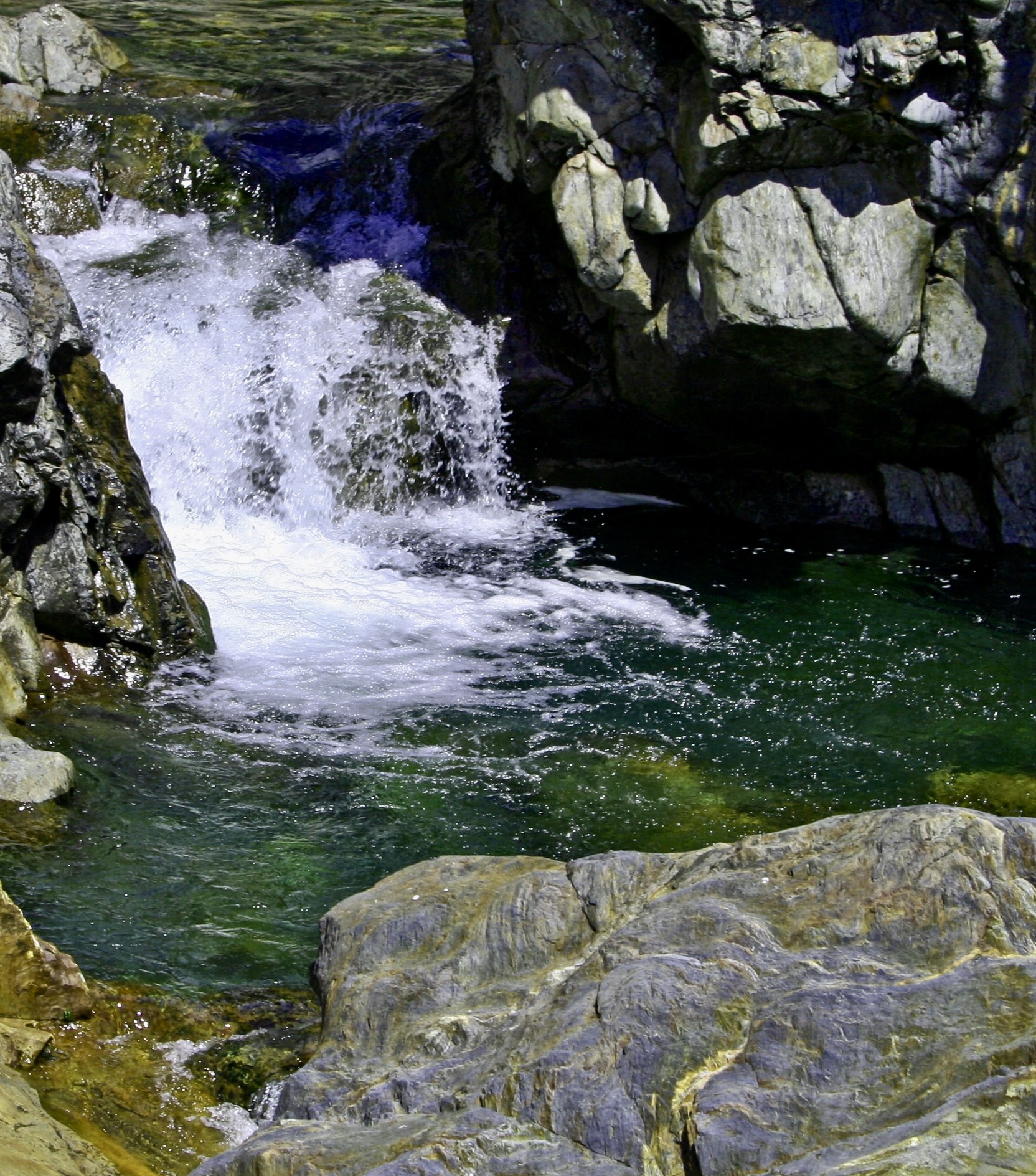
Earlier in the season there is a small, but photo-worthy waterfall just up Five Lakes Creek from Diamond Crossing.
With a great swimming hole to cool off in.
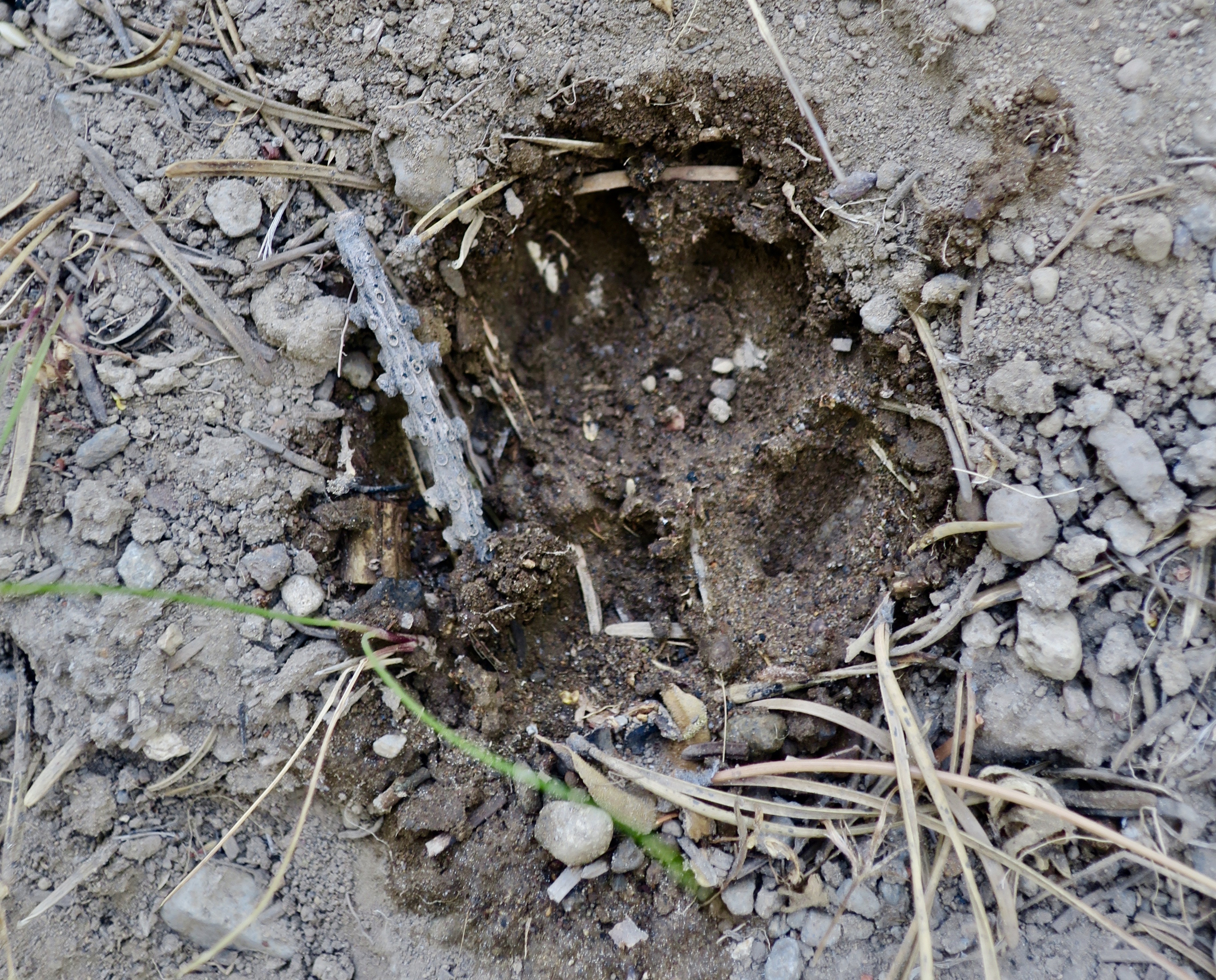
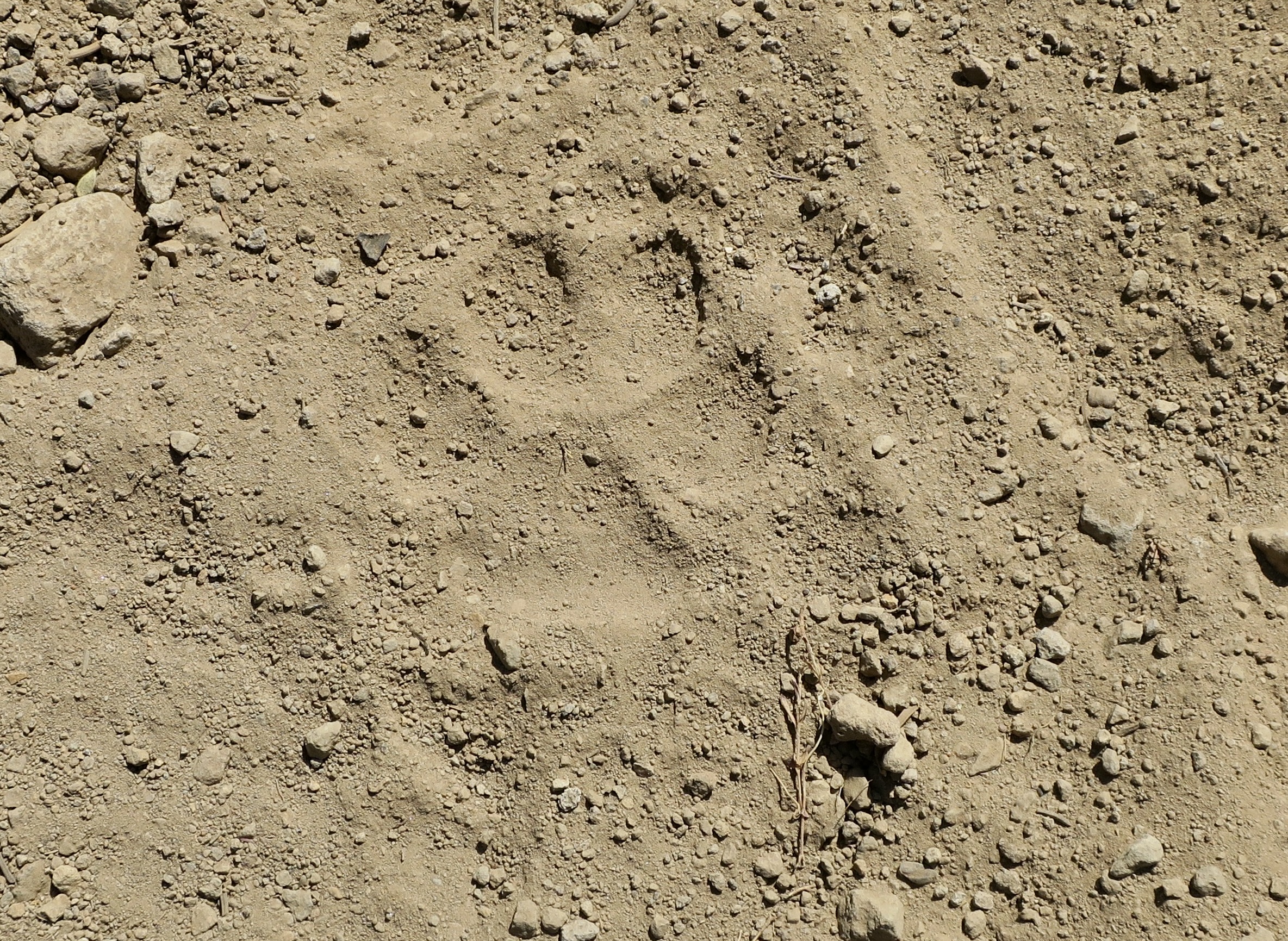
The trail leaves the canyon at Diamond Crossing and heads up a long steep climb following Powderhorn Creek. I heard something splashing in Powderhorn on my second trip when I was by myself. I snuck up and discovered two bobcats frolicking in the water. They took off before I could get my camera out but I was able to pick up one very wet track left behind.
I continued to follow their trail out of the canyon. Here kitty, kitty, kitty.
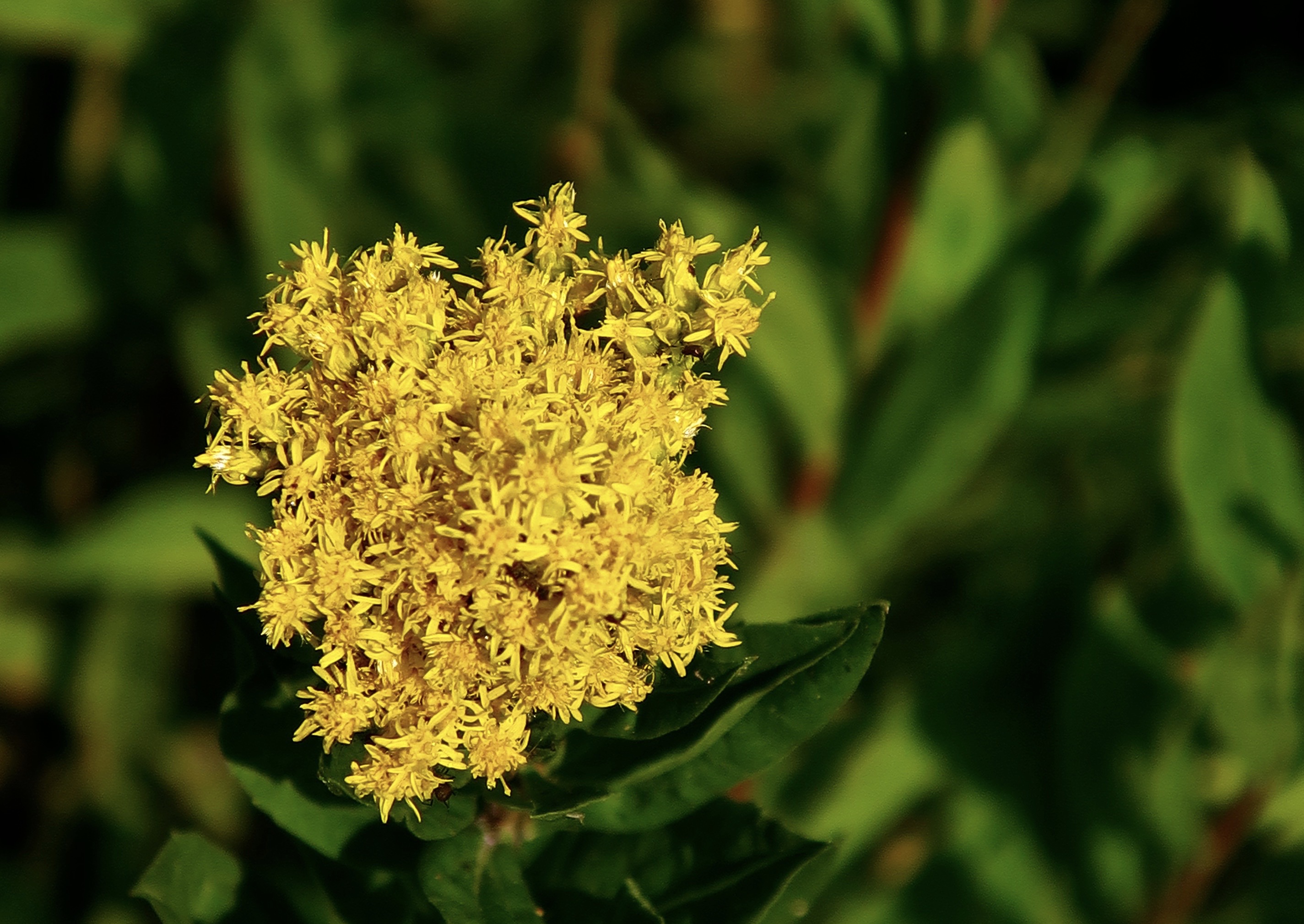
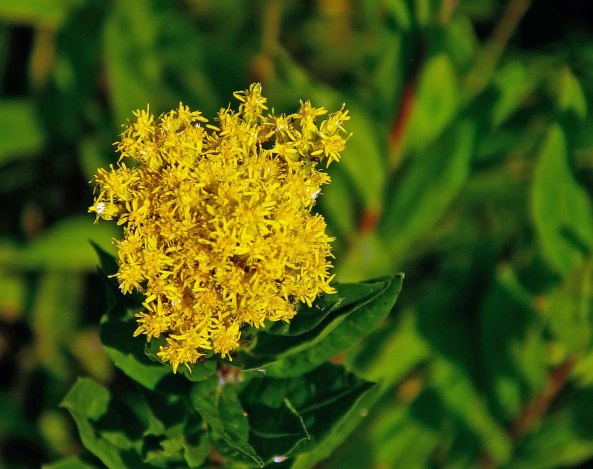
By late August most of the flowers were finished, but I did find abundant goldenrod…
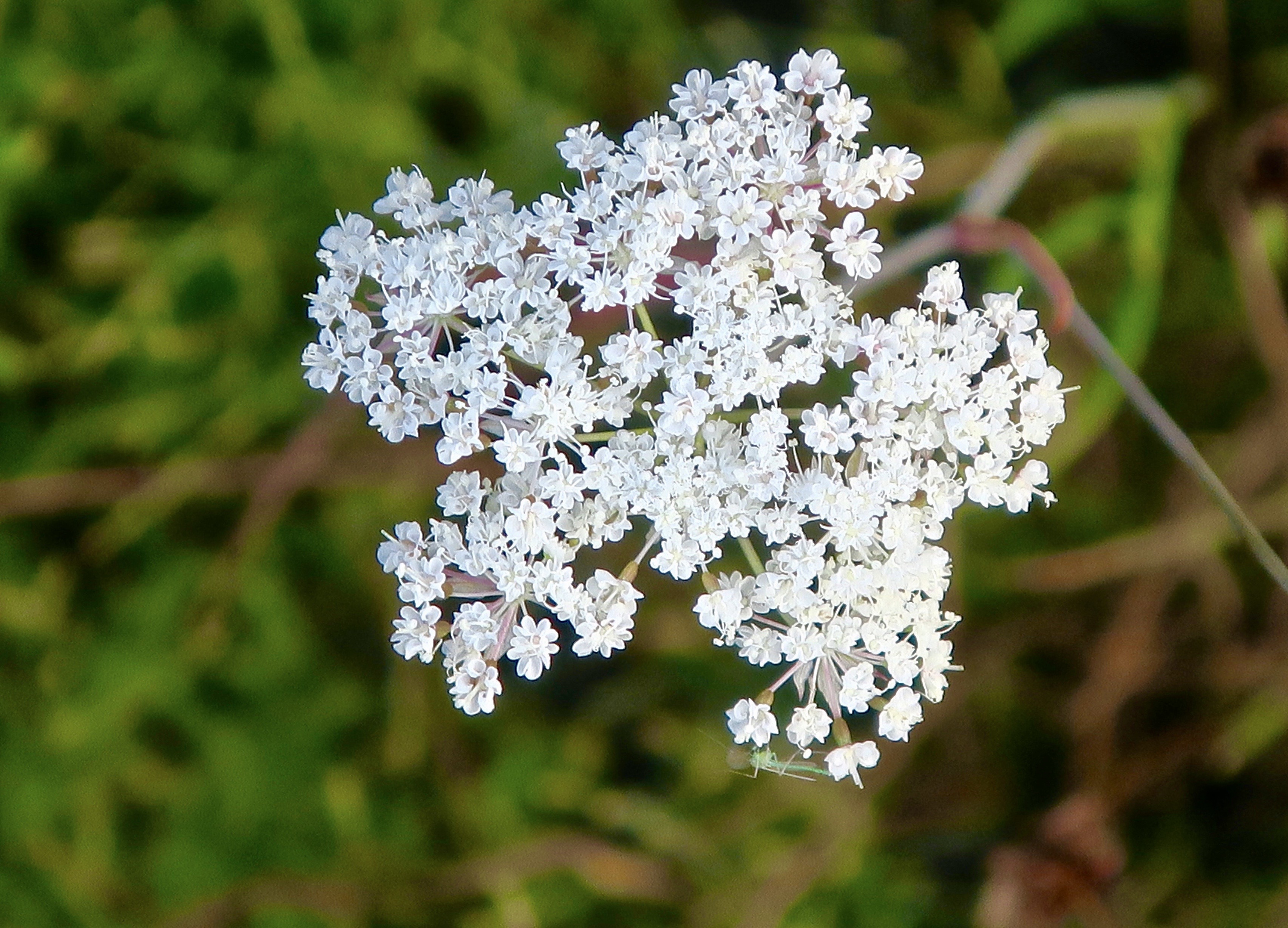
And Queen Anne’s Lace.
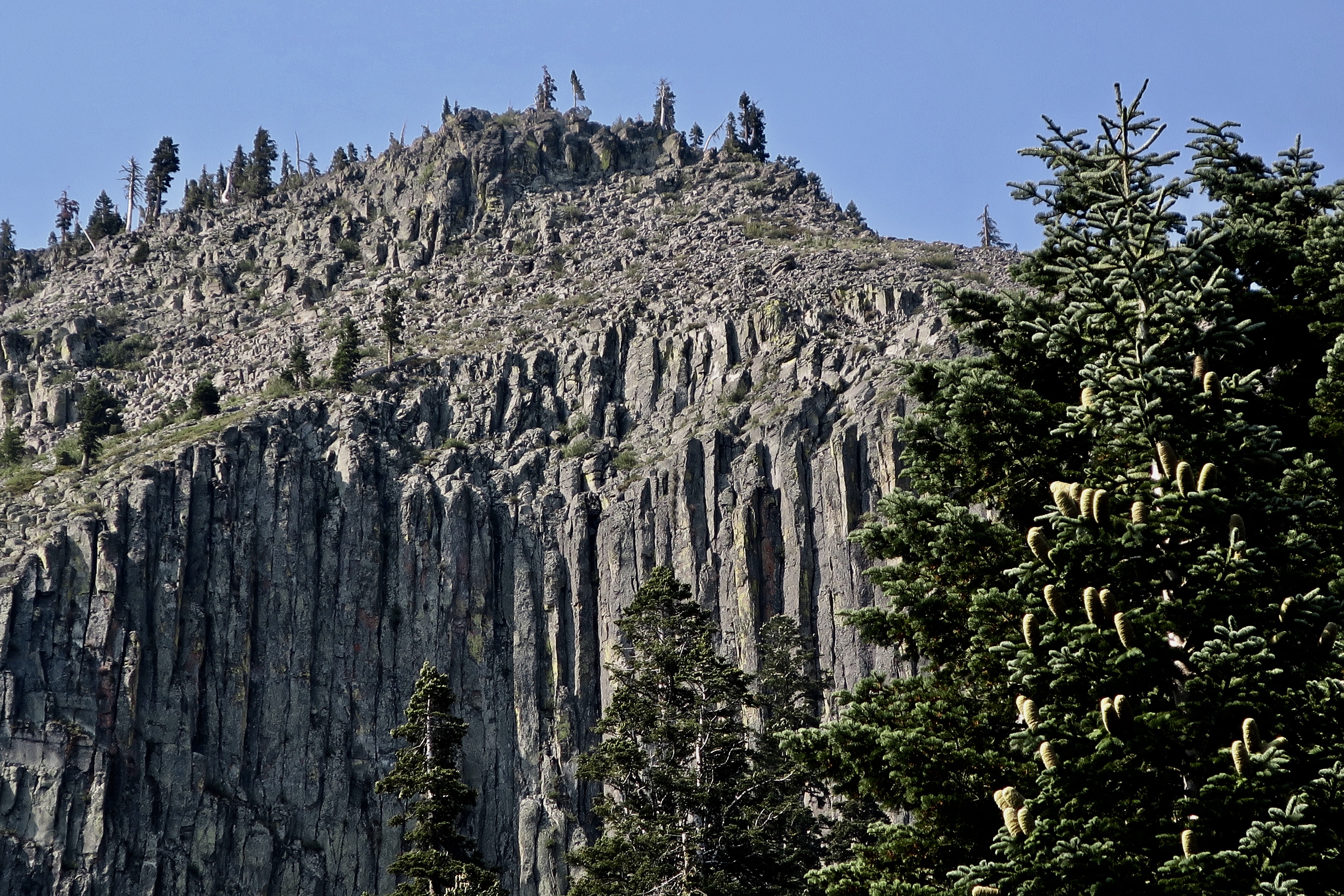
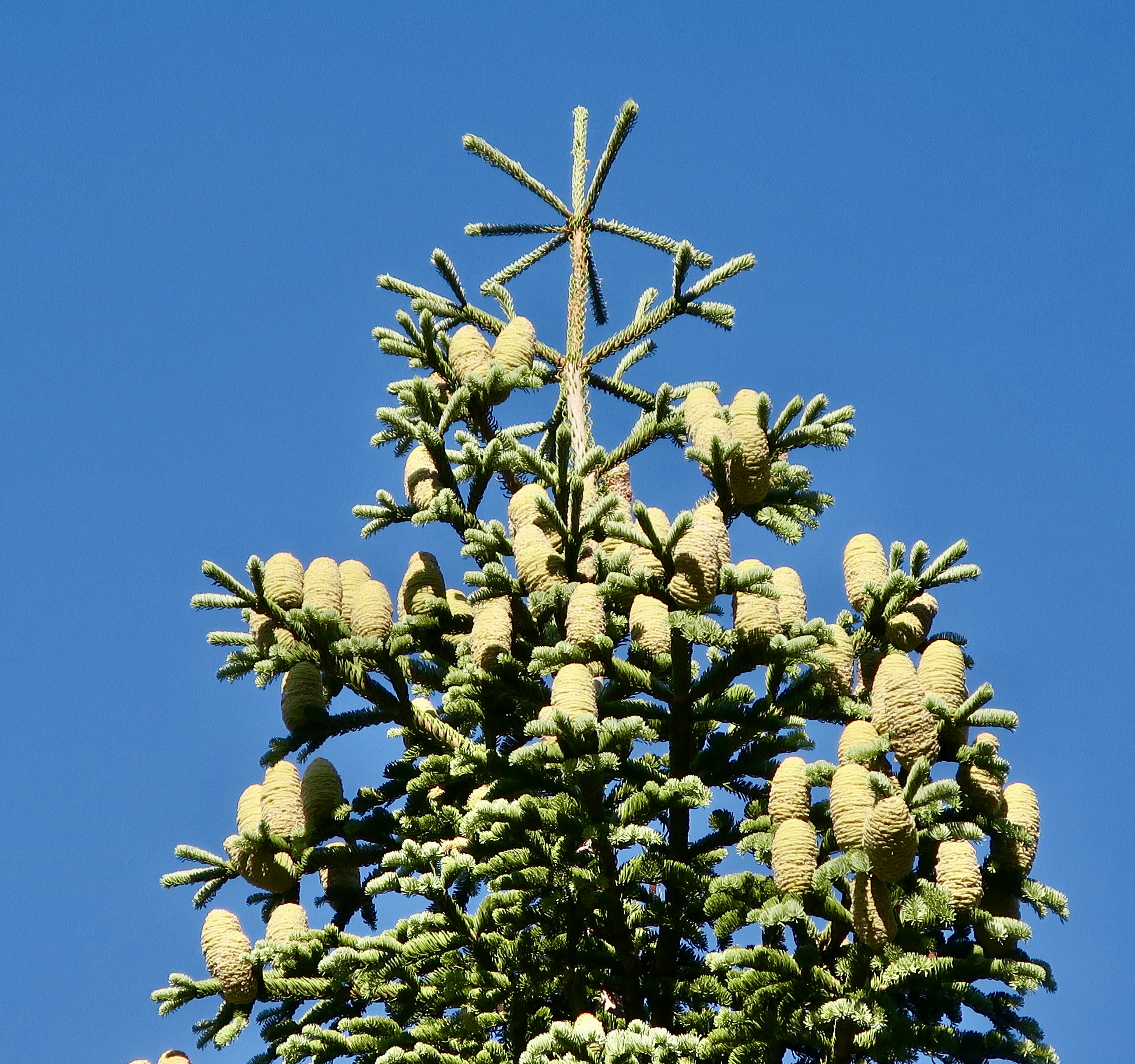
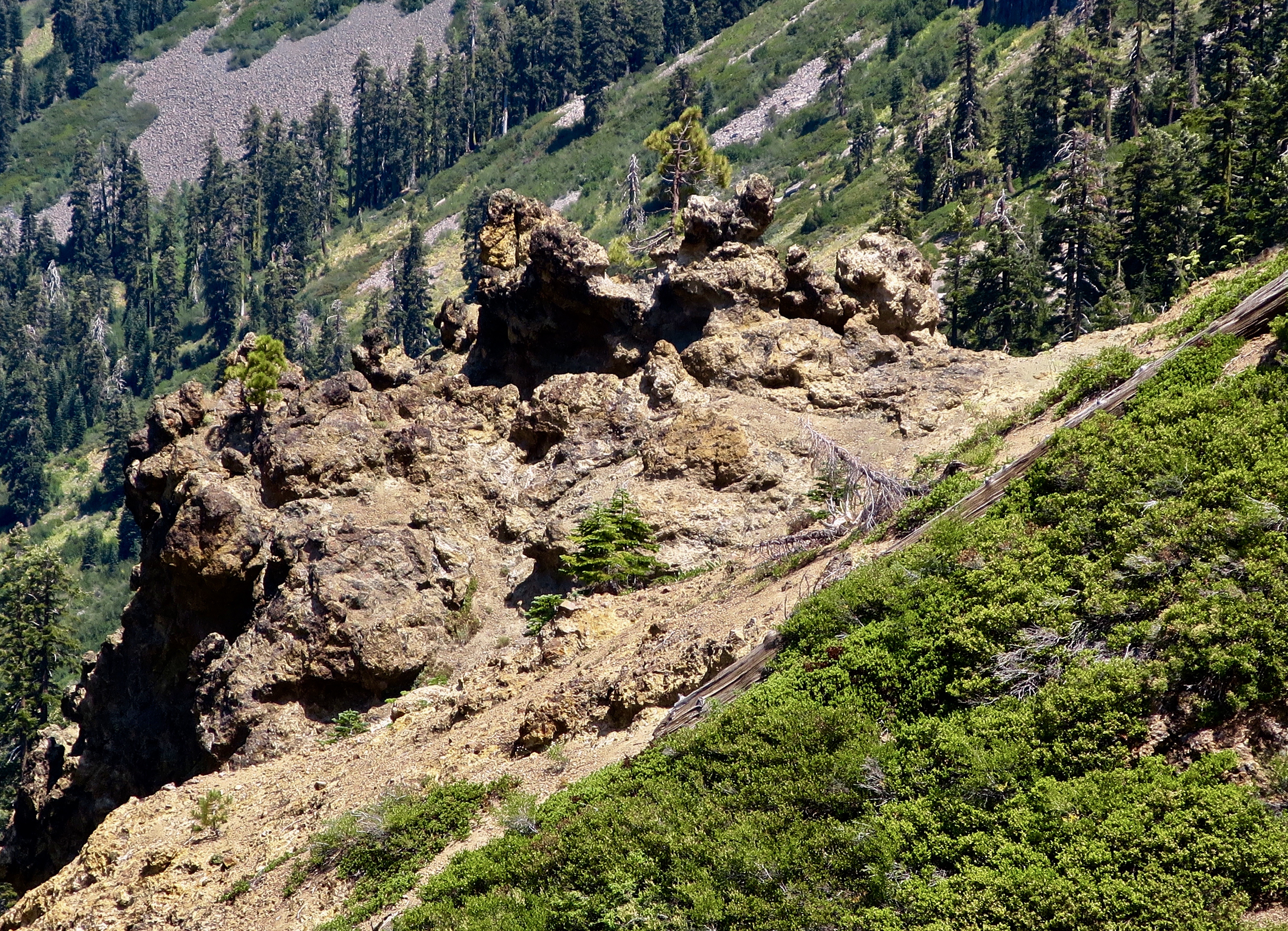
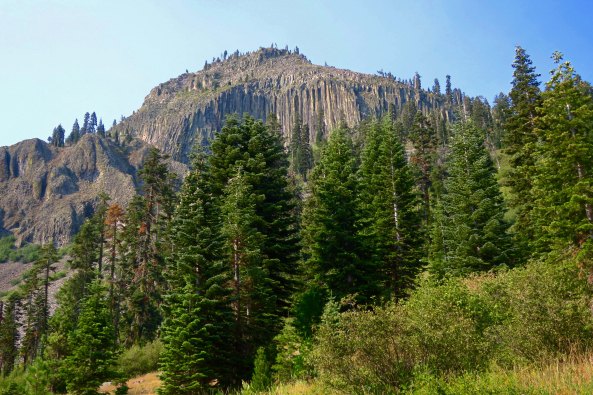
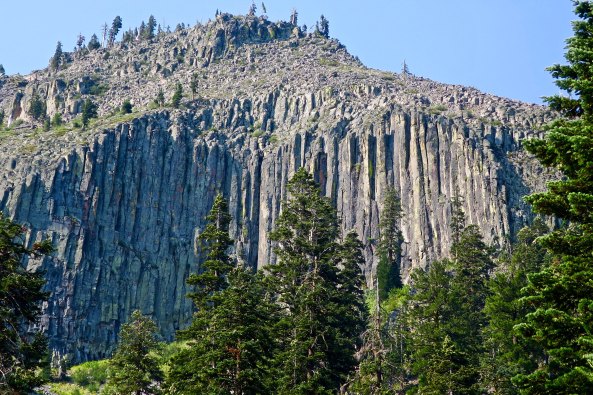
There is ample evidence of volcanic activity throughout the Sierras. This view is of a basalt lava flow that cooled and contracted into vertical hexagonal columns can be seen from the upper section of the Powderhorn Creek trail. The tree on the right is a red fir. Unlike pine cones, red fir cones disintegrate.
Another view of ancient volcanic activity: A volcanic mudflow. I believe the talus slope in the background is from the basaltic lava flow.
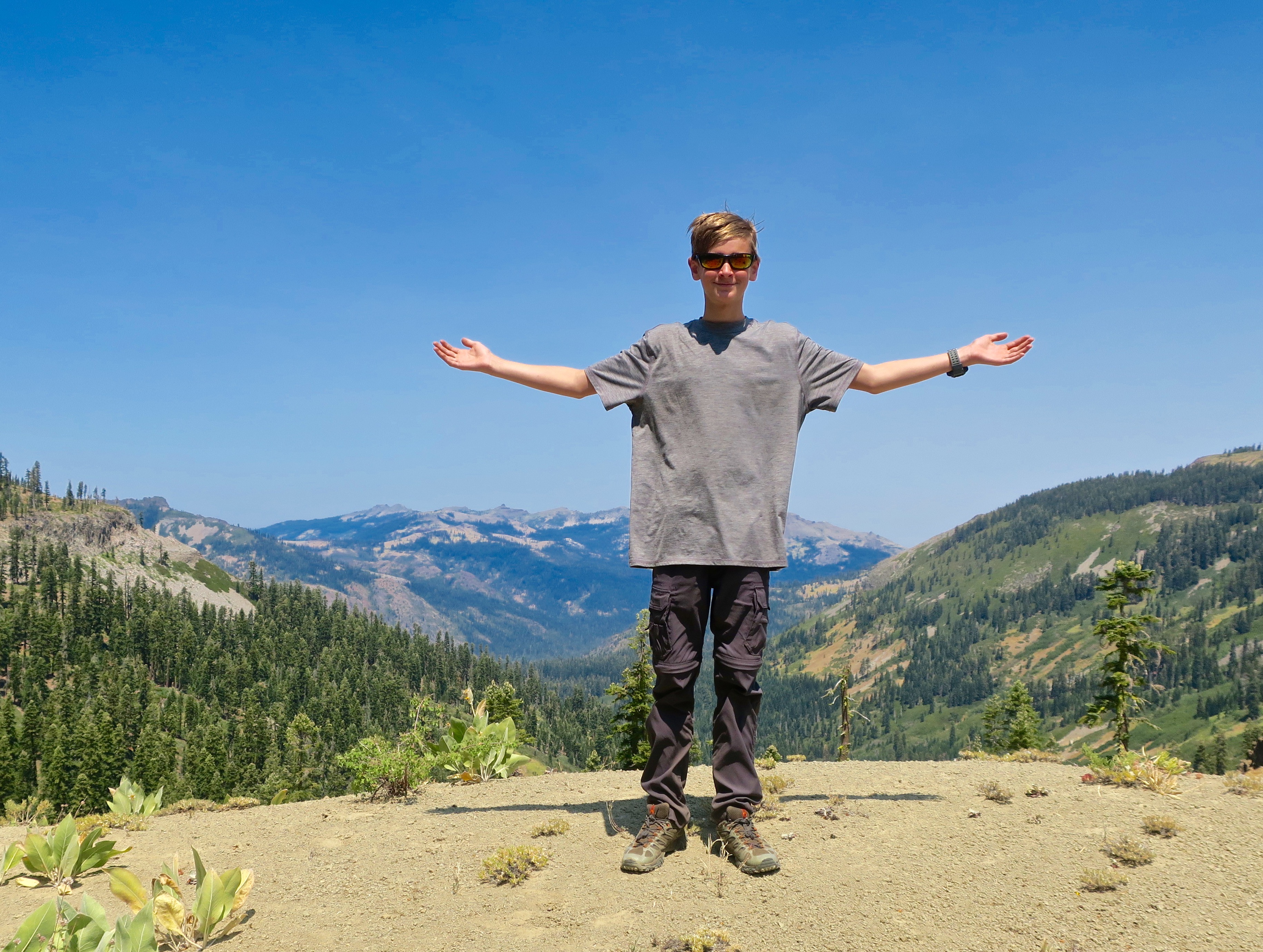
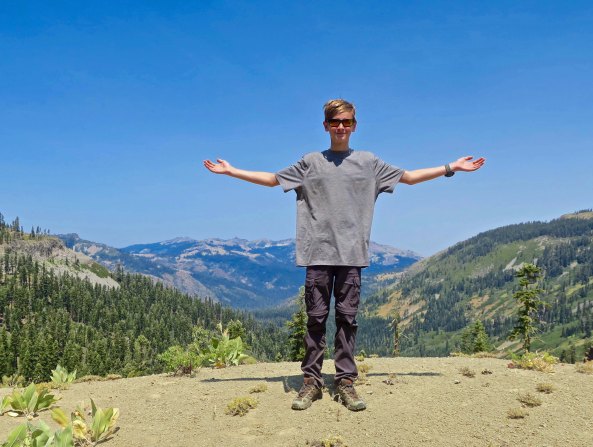
The climb up from Diamond Crossing is no joke. Ethan had every reason to celebrate! The Granite Chief Wilderness stretches out to the farthest peaks in the background where Ethan and I started and I had hiked twice in a row. You can barely see Big Needle Peak below Ethan’s right arm. The Barker Pass road provides and easy exit or entry point for both the Powderhorn Creek Trail and the PCT.

Peggy and I will be taking a break from our blog over the next three weeks. We are in Sacramento this week visiting with friends and relatives. Next week we are flying to Florida where we celebrate Peggy’s 75th Birthday with our son and his family. The following week we fly back here and will continue to celebrate. This time with a backpack trip retracing the route of the first backpack trip I ever took— in 1969! Then we will continue our exploration of the southwest and blog series.

Winding Down the Journey… Hiking on the PCT at 75

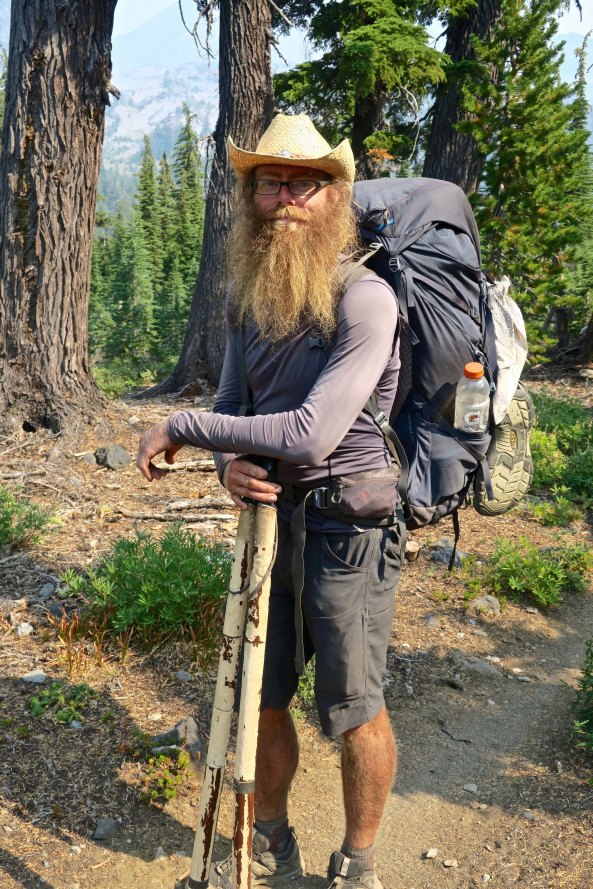
Some trail names are really obvious. Take Big Red, for example. Peggy and I met him in the Three Sisters Wilderness of Oregon.


Big Red from San Diego towered over my 5’11” height, putting him somewhere up in the stratosphere. Peggy and I met him along the PCT in the Three Sisters Wilderness area of Oregon. He had been hiking for 2,000 miles. “This is my first and last through hike,” he informed us. “There are times,” he explained, “when I camp on a beautiful lake and would love to stay there. But I can’t. I have to keep moving. I have to get in my 25 miles for the day.” Otherwise, he might not be able to finish the trail before winter storms hit northern Washington.

There is something close to heroic about completing the 2600 miles of the PCT in a year. Sacrifices have to be made— like not enjoying the incredible beauty of the trail as much as you might like. Red had also made another sacrifice.  His walking sticks were encased in balsa wood that he had planned to carve. But it wasn’t to be. “I’m just too tired at night,” he told us.

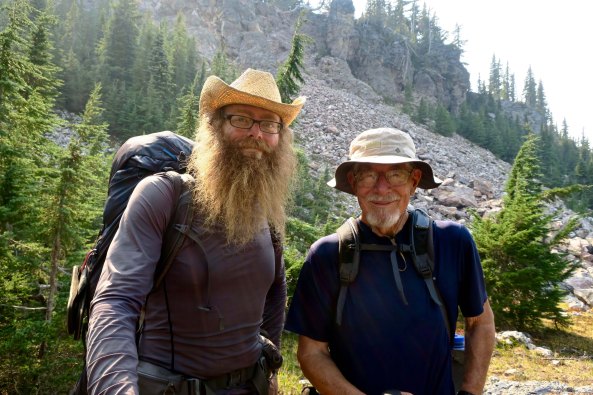
Big Red posed for a photo with me, making me feel small.

I understood both sentiments all too well. It’s just hard. At 75, I found hiking 15 miles a day exhausting. In fact, the day and a half breaks I had planned between segments of the trail to allow my body time to recover weren’t long enough. I realized this as I made my way up the humongous hill leaving Interstate 5 going south. I was fine for the first three hours. After that, it was all I could do force one foot in front of the other. I had just completed hiking 100 miles from Etna Summit to Castle Crags and my body was threatening to go on strike. I loaded up on water and decided to dry camp when I reached the top instead of hiking on to the next source. I was cooking dinner on my ultralight propane stove when I found myself nodding off, unable to keep my eyes open. Not good! Can you imagine how dangerous that was given the bone-dry condition of the forests? Three massive forest fires this summer within 50 miles of where I was camping have proved the point.

The thought of creating a life-threatening fire that would burn tens of thousands of acres if my small stove was accidentally knocked over woke me up like a bucket of ice water. It also forced me to rethink my schedule. I would reduce the number of miles I was traveling each day and increase the number of layover days I would take between hiking segments of the trail. If I didn’t make my 1,000-mile goal, so be it. There was another factor as well. I really did want to enjoy the beautiful lakes, and mountains, and trees, and flowers and rocks and streams. That had been my reason for returning to the wilderness again and again throughout my life. And it was my reason for being out there at 75.

Fires and smoke continued to be a reality of my hike, as it has been for all PCT hikers this year. I jumped from northern California to Central California and back to Northern California in an unsuccessful search of clear skies. As my journey wound down, I had a decision to make. Would I head toward Yosemite and the John Muir Trail or would I go elsewhere? There really wasn’t time to finish the JMT and I had hiked it several times over the years, so I opted for the Three Sisters Wilderness of Oregon. I’d never been there plus Peggy would be able to backpack with me. We would finish our adventure as we had started it, backpacking together in Oregon. It was a great decision. The area is drop dead beautiful.

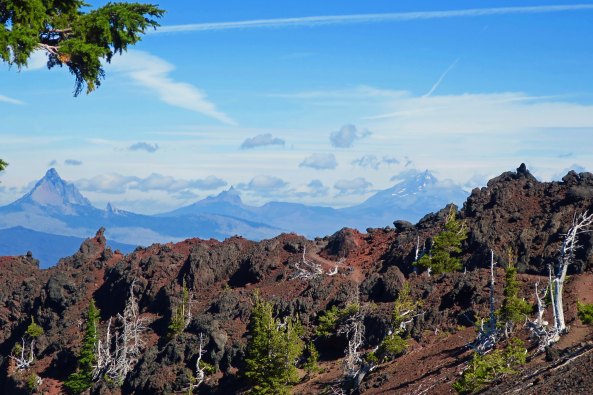
Mt. Washington, Mt. Jefferson and Mt. Hood as seen from the Three Sisters Wilderness, which features another three volcanoes of the Cascade chain in Oregon.

I came off the trail last week with close to 700 miles behind me. It has been an incredible experience and I will continue to post blogs on it for the next month. Plus, I’ll start writing the book that will tie this summer’s adventure together with several other backpacking experiences I have had over the years.

Today, I will continue with my trip between Donner Pass and Echo Summit that I started to blog about last week with an exploration of the Granite Chief Wilderness behind Squaw Valley.

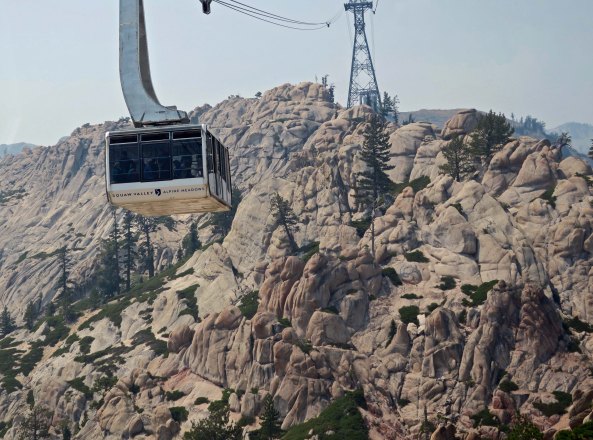
My grandson Ethan and I started our journey through the Granite Chief Wilderness with a trip up the Squaw Valley tram. Squaw Valley was the site of the 1960 Winter Olympics. I used this same tram system when I began my first 100 mile backpack trip in 1974.

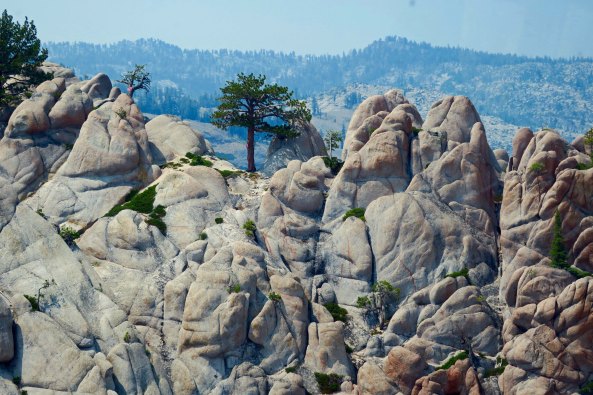
The ride provides great views of the granite that forms the backbone of the Sierra Nevada Mountain Range. Once again, smoke from Northern California forest fires filled the air, promising to obscure our views and poison our lungs. Fortunately, the smoke was limited and we even experienced some ‘clear’ days.

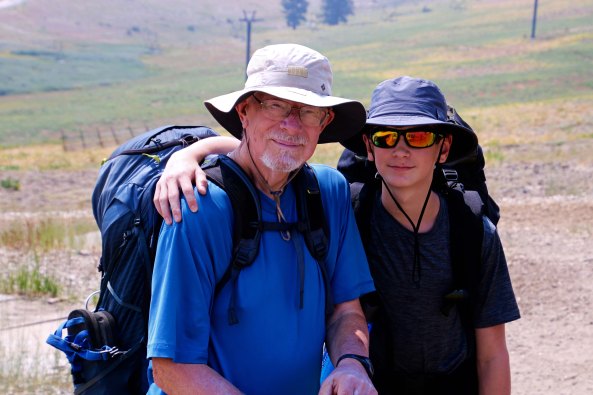
Peggy took this photo of Ethan and me at the end of the tram ride, ready to tackle our first mountain.

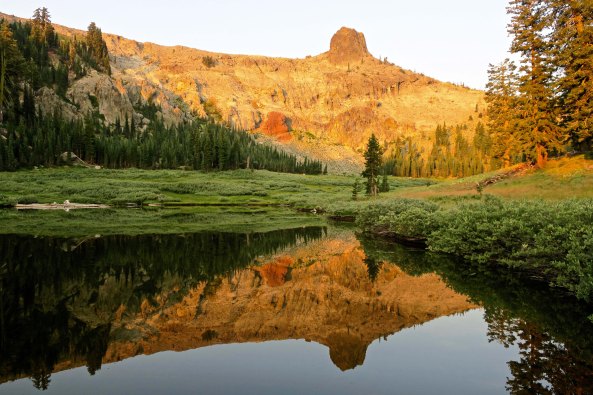
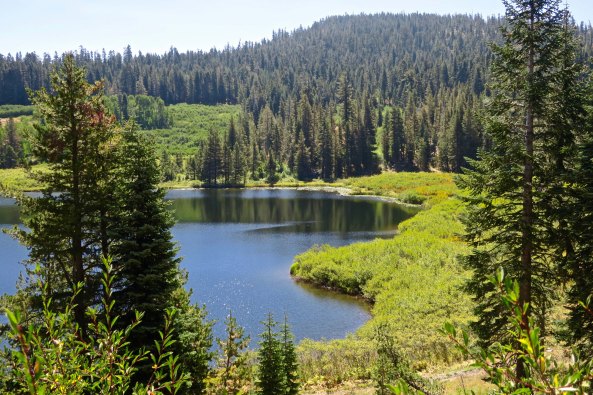
Our goal for the day was a short hike over to Little Needle Peak and Lake, both shown here. The lake is a mile or so off the PCT on a little used trail that we had to search for. I’ve camped on the lake several times over the years.

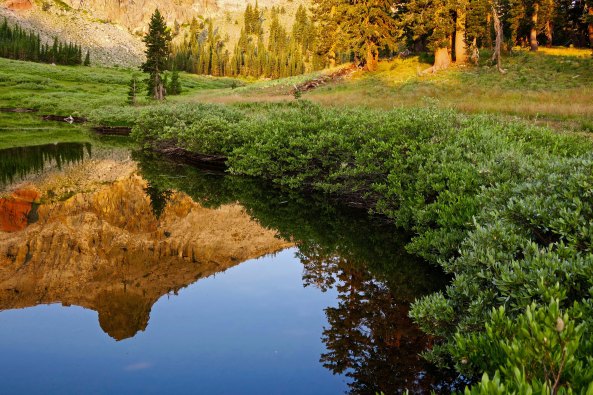
Another reflection shot. Ethan and I were camped in the trees to the right.

Bear scat and other bear sign was everywhere! I wondered if our food would survive. A black bear had ripped open this dead tree to go after the carpenter ants inside. Ethan and I were intrigued by the labyrinth the ants had carved out of the tree. It was worthy of a fantasy novel, or a Greek myth.

This caterpillar had tethered itself to the same tree and was making a cocoon. The claw marks above and beside the caterpillar were left behind by the bear.

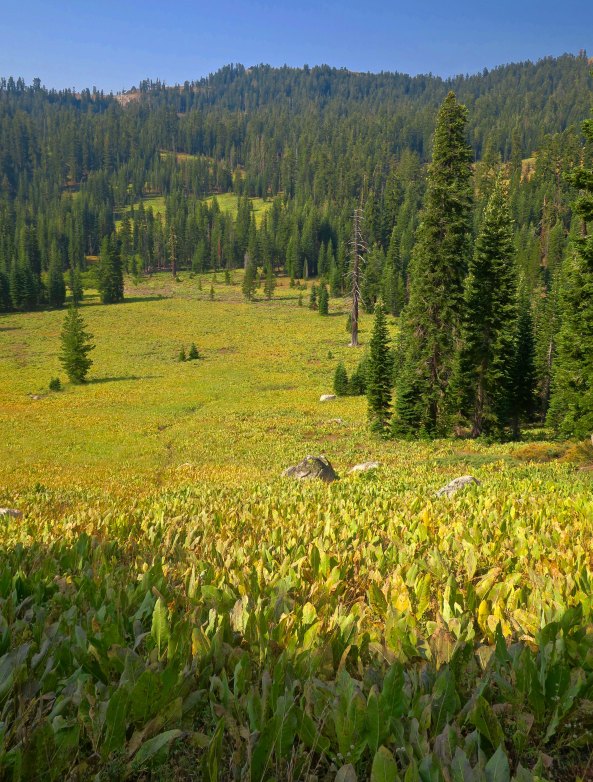
The PCT drops into a canyon going south from Squaw Valley. A month earlier, this field of mule ears would have been yellow with flowers. But now they were drying out, predicting the coming fall.

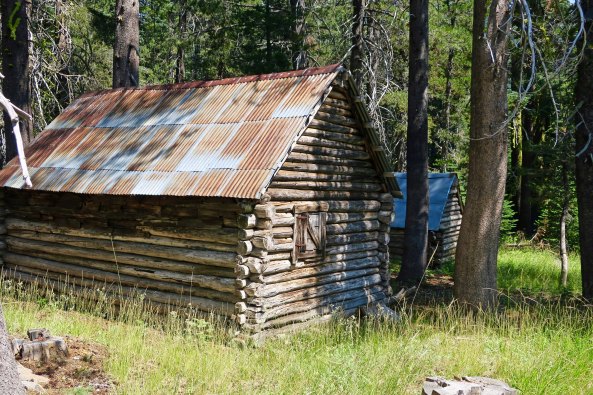
As the PCT returned to crest and climbed above the Five Lakes Basin behind Alpine Meadows Ski Resort, Ethan and I  continued down the canyon and followed Five Lakes Creek down to Diamond Crossing. Whiskey Creek Camp greeted us a quarter of a mile after we left the trail. Starting in the early 1900s, the camp had served as a resupply point for Basque sheep herders who were running flocks in the area.

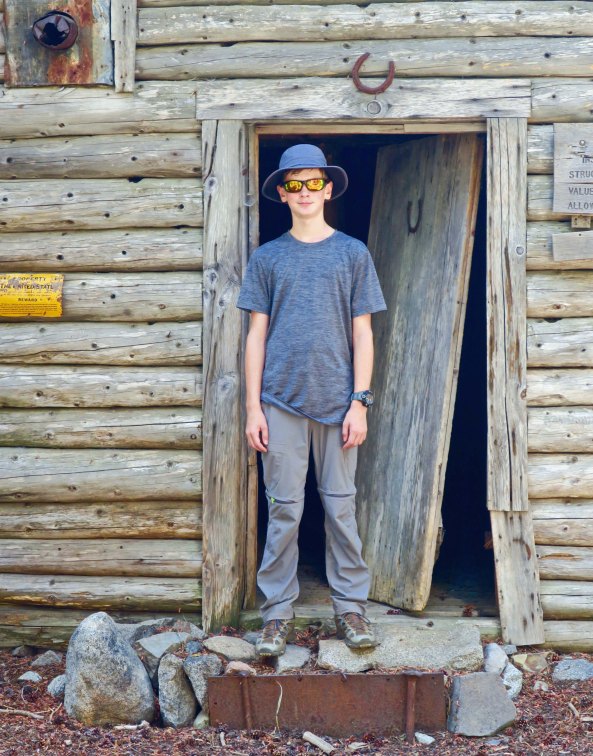
Ethan provides perspective on the height of the door in the cabin. I explained to him that the horseshoe above the door was for good luck.

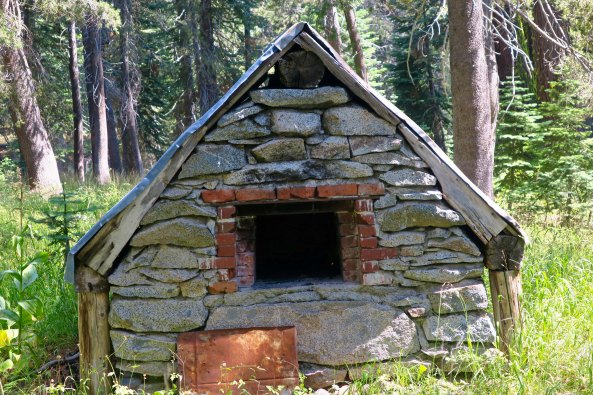
Fresh bread, baked in this oven, was on the resupply list for the Basque Sheepherders.

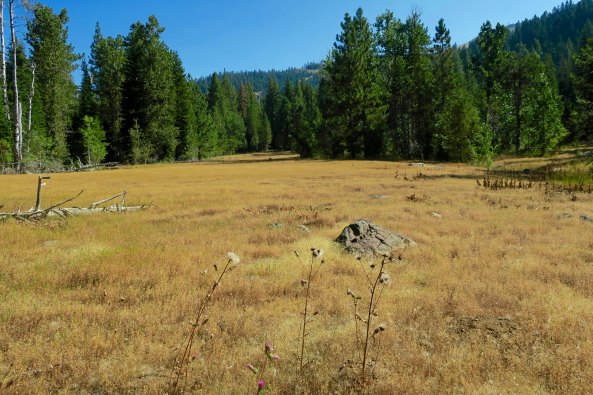
The PCT is like a freeway working its way from Mexico to Canada through California, Oregon and Washington. In comparison, most other trails are like country roads. The route along Five Lakes Creek would qualify as a rarely used dirt road— my kind of trail! This late summer meadow had turned to California gold. The Sierra thistles in the foreground were going to seed.

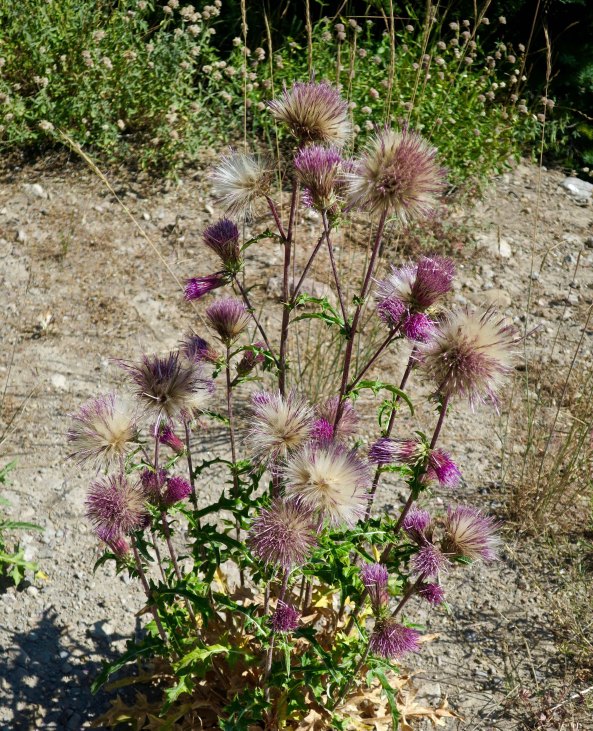
As was this Sierra thistle.

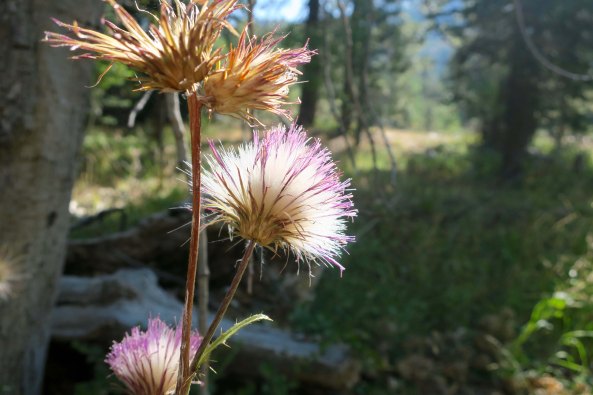
Backlit by the sun.

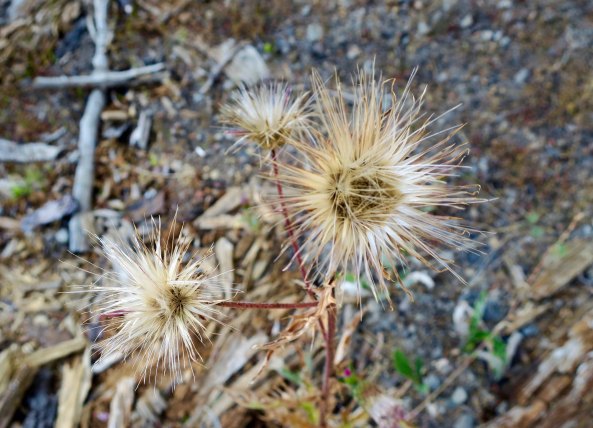
The seeds are disbursed. Another year in the life of a Sierra thistle is over.

One challenge of hiking in August in the Sierras is that water sources dry up. This can become a real problem along the PCT, which is noted for its lack of water to begin with.

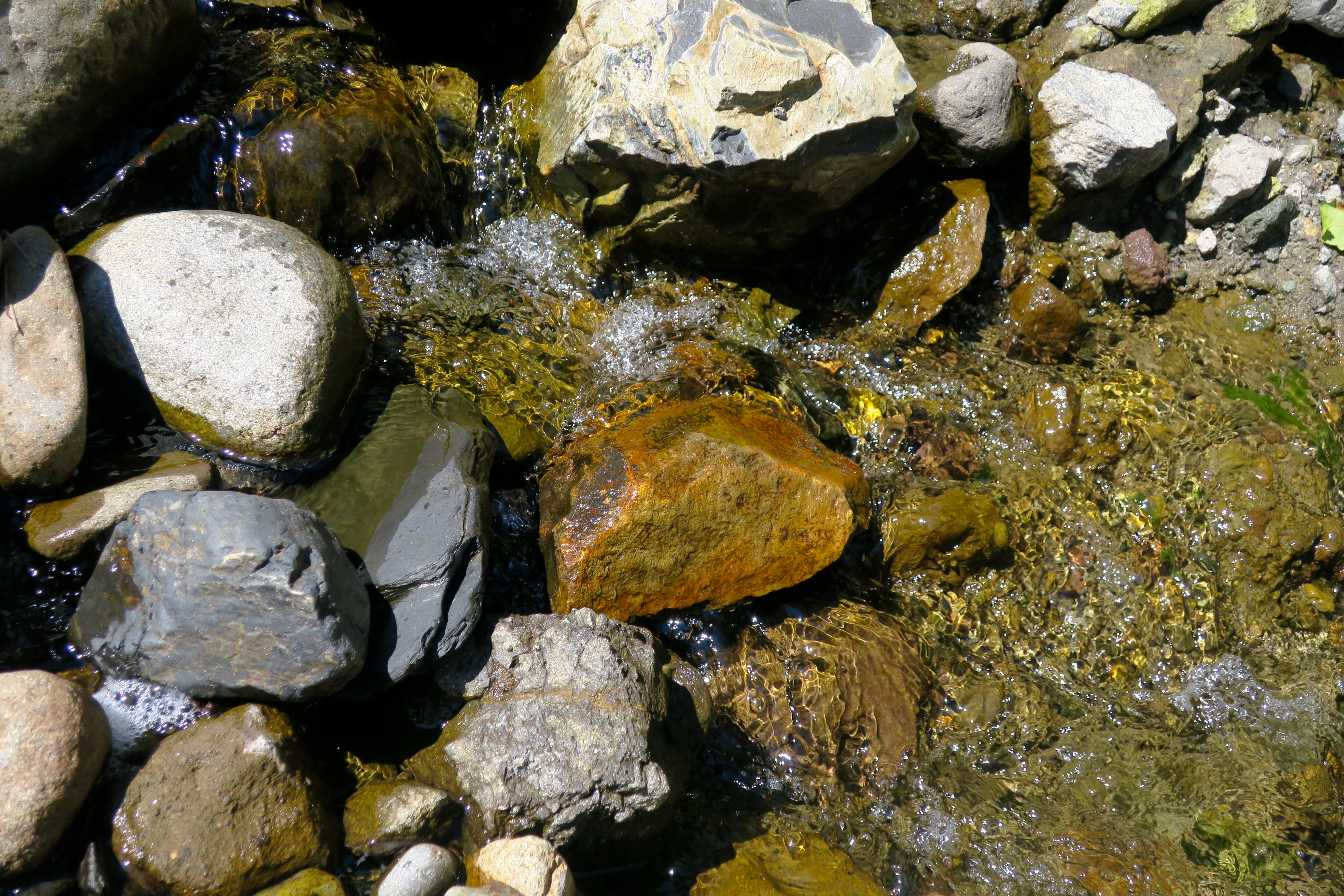
Fortunately, more water can be found hiking among creeks and lakes at lower elevations. Welcome water greeted us at Bear Pen Creek. (I’ve always wondered about the name.)

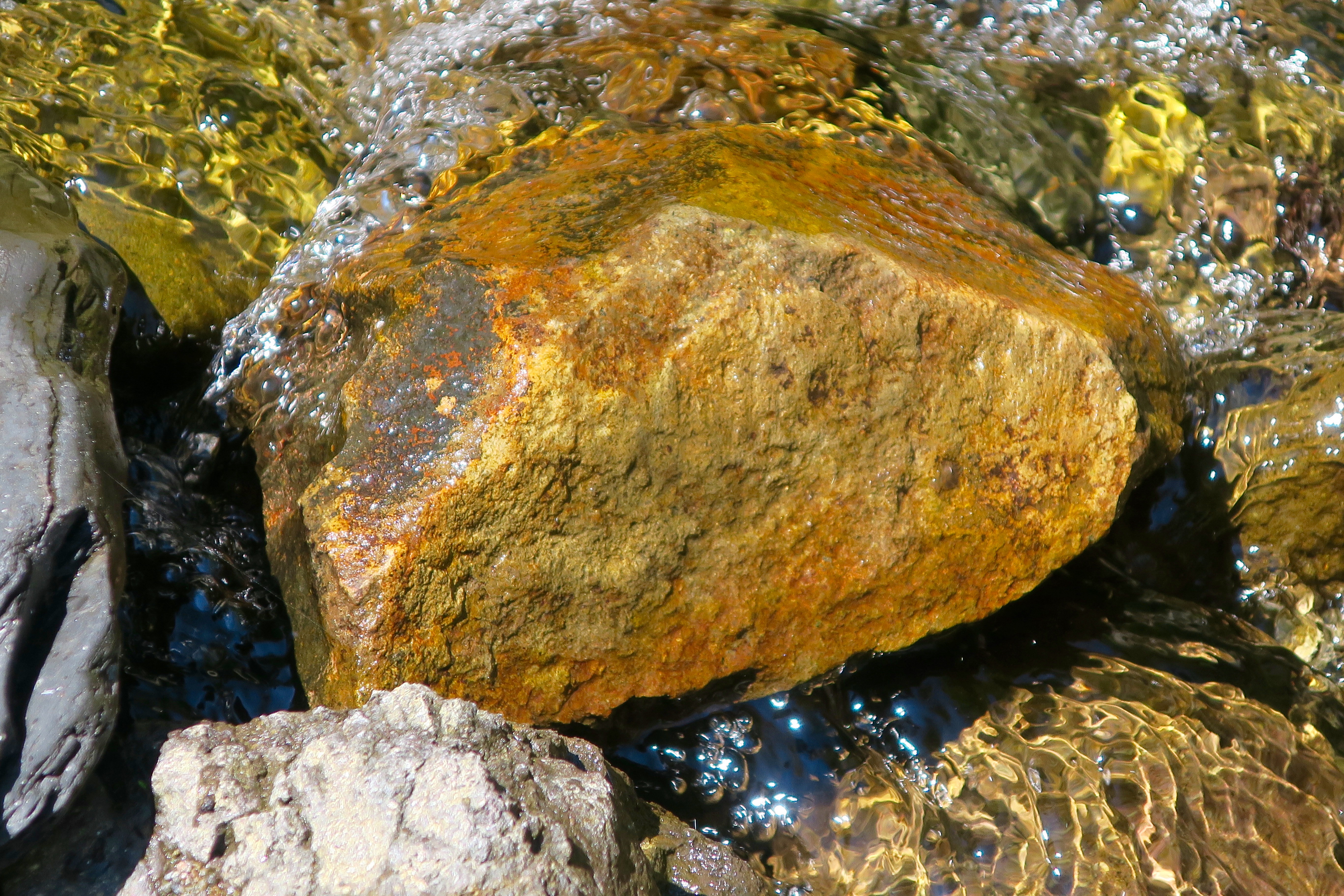
A close up.

Less water does make for easier stream crossings. The rocks here provided our bridge across Five Lakes Creek.

An old tree blaze on a downed snag would have been used to mark the trail in earlier times.

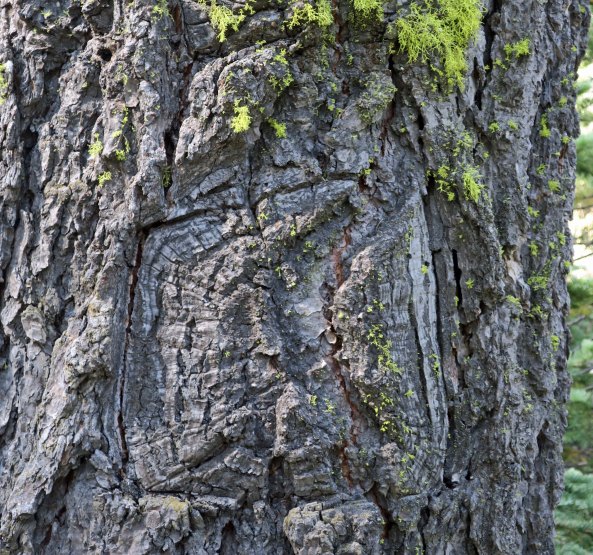
Bark had grown over this blaze, which is very rare.

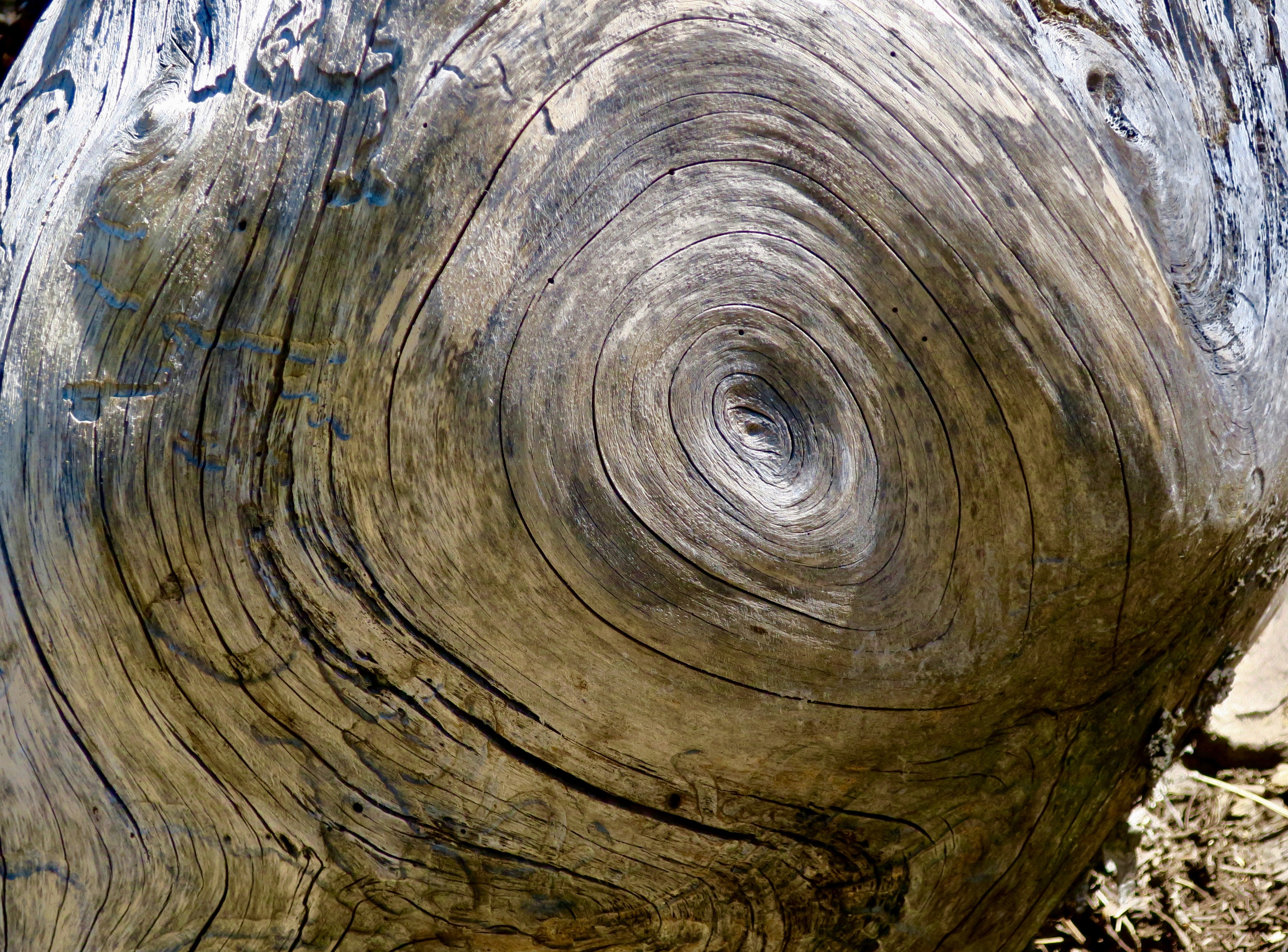
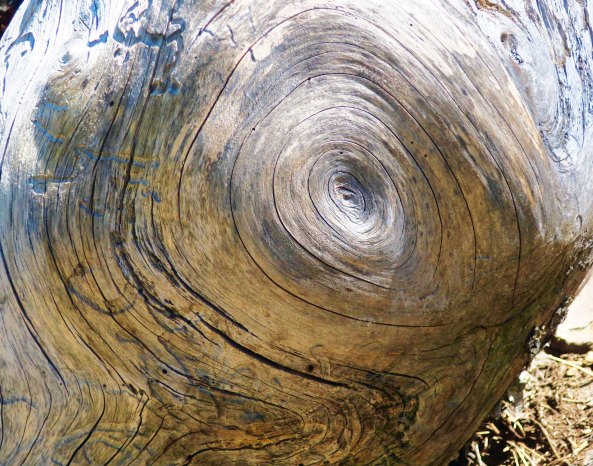
A ‘whirlpool’ of wood caught my eye.

Leaving Diamond Crossing, we followed Powderhorn Creek for four miles as it made its way up a very steep canyon toward Barker Meadows where we would rejoin the PCT. I think we counted two switchbacks on the whole trail. It was definitely not the well-graded PCT!

A basalt cliff entertained us along the way. I was teasing Ethan about having to climb it.

The hexagonal basalt columns are similar to Devil’s Postpile. These columns are formed when thick layers of flowing basalt cool slowly.

Photographing goldenrod also offered a break from the hard climb. It was one of the few flowers we found in bloom.

Ethan celebrated when we reached the top.

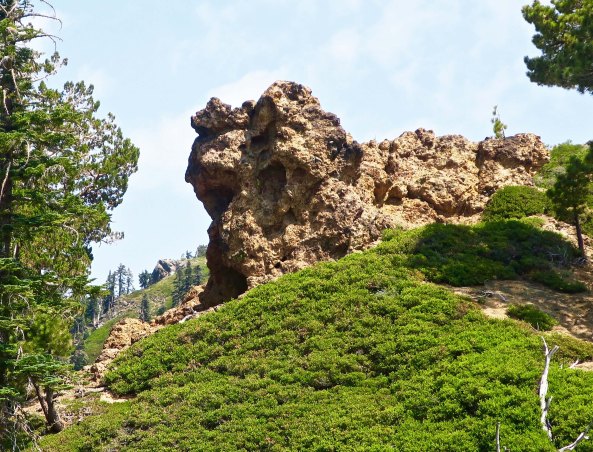
While I found other interesting rocks to photograph. I thought the outcrop looked a bit like a Scotty dog.

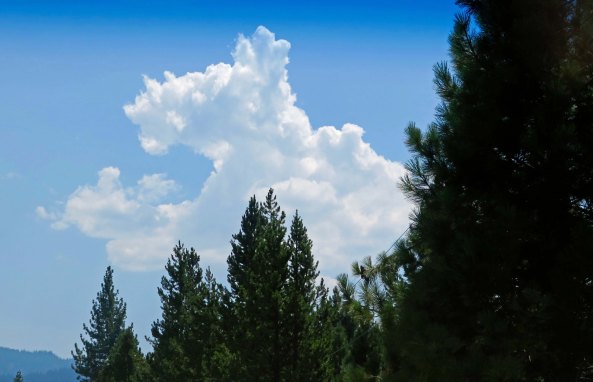
A couple of days later I found one in the clouds!

Back on the PCT, we found more flowers in a spring area. Ethan urged me to take his photo next to the monkshood. “My mom likes purple,” he explained. (Tasha has lots of purple clothes.)

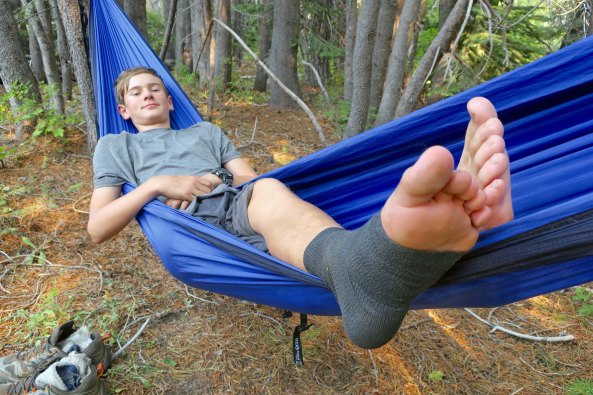
When we reached Richardson Lake the next day, Ethan’s foot was beginning to hurt. Apparently, he had a minor sprain.

Leaving the lake, it hurt more. A few more miles down the trail, we decided that hiking out seemed to be the best decision. We returned to the lake and followed a jeep trail that would take us down to Lake Tahoe.

We were fortunate to flag down a group of jeepers. It turns out they were from Motor Trend Magazine and were filming a TV special on taking a stock 1970s jeep and a stock pickup truck over the Rubicon Trail, one of the toughest jeep roads in the world, made famous by the annual Jeepers Jamboree. Bruce, who generously provided us with a ride, told us that it had taken a full day just to go three miles!

Ethan displays the ankle that I had bandaged. Not a bad job, I thought.

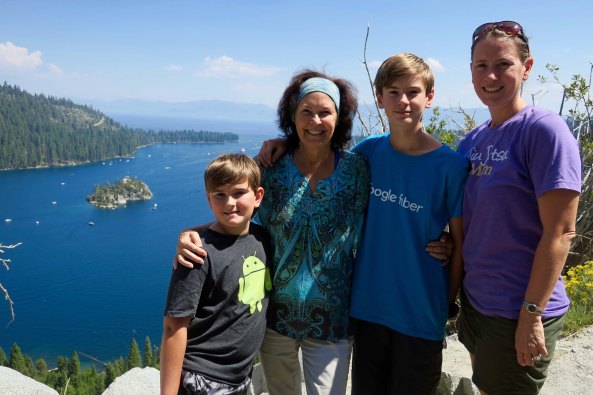
Reunited with his mom, Tasha, his little brother, Cody, and Peggy, the family hangs out above Lake Tahoe’s Emerald Bay.

NEXT POST: I’ll focus on Desolation Wilderness and Peggy and I will take Bone back to where Tom Lovering and I discovered him in 1974!


What Do Burning Down a Bank and the Sierra Trek Have in Common? … The Sierra Trek: Part 2

Waterfall and pool on Five Lakes Creek in the Granite Chief Wilderness area behind Squaw Valley, California.

The Granite Chief Wilderness behind Squaw Valley, home of the 1960 Winter Olympics, is an area of rugged terrain and natural beauty. This pool on Five Lakes Creek was an open invitation for a dip on a hot summer day. (Photo by Peggy Mekemson.)


The vision part of being a visionary is always the easy part, as any visionary will tell you. It is the execution of the idea that separates the mouse from the moose. In my first blog on the Sierra Trek, I told how Steve Crowle and I had come up with the crazy idea of raising money for the non-profit I was executive director of by running a 9-day, 100-mile backpack trip in the Sierra Nevada Mountains of California. I had six weeks to plan and run the event. It would have been a major undertaking even if I had six months!

A note on photos: I didn’t take any pictures during the first Sierra Trek. It was before I became interested in photography, plus I had my hands full shepherding 63 people across the mountains— as you will learn. The photos in this blog and in the rest of the series were taken on later Treks and on personal trips in the Sierra’s and other California mountain ranges where we trekked. They will give you an idea of why I fell in love with backpacking and the Sierras. 


My first challenge on the trek was selling it to Board of Directors. Running a backpack trip as a fundraiser was a huge leap from sending out Christmas seals. At 29, I was close to the youngest Lung Association Executive Director in the nation in 1974 and I had already ruffled some feathers. A research doctor from UC Davis was foaming at the mouth because I wanted our organization to focus on prevention programs as opposed to medical research. What would he think of me running off to the woods on a backpack trip?
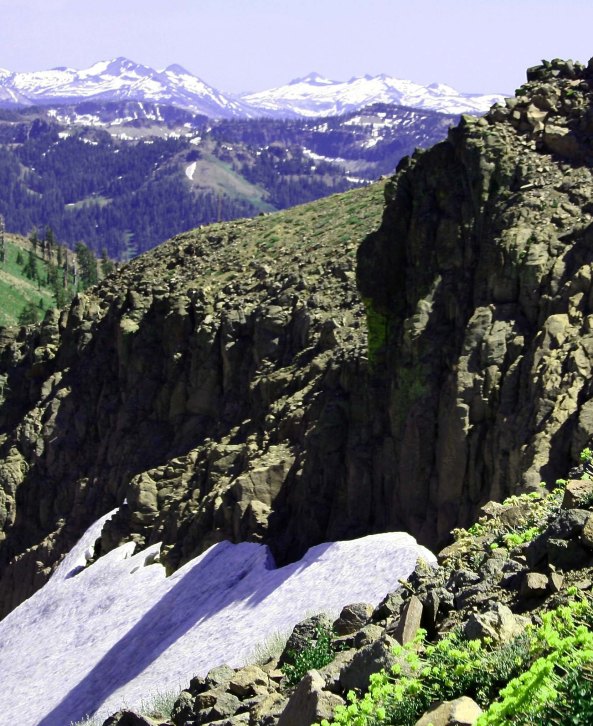
Leading a group of people through rugged terrain for long distances was a bit more scary than sending out Christmas Seals. Here we are looking south from the Granite Chief Wilderness to the Desolation Wilderness, a route we followed several times on the Sierra Trek.

Leading a group of people through rugged terrain for long distances was a bit more scary than sending out Christmas Seals. Here we are looking south from the Granite Chief Wilderness to the Desolation Wilderness, a route we followed several times on the Sierra Trek. Snow would often be a challenge on our adventures.

“You want to do what?” with a decided emphasis on the first and fifth words is the best way I can describe the Board’s reaction to my proposal. It was easy to translate: “Why would a 29-year-old executive director with less than a year of experience under his belt, want to risk his career on such a harebrained idea?”

I echoed wild Steve, “Why not?”

Actually I had a great Board. Once the members were convinced that this was something I really, really wanted to do, their final response was “OK, go for it!” I called Steve immediately. I had a wide range of responsibilities ranging from administration to program to fundraising. I would have a limited amount of time to devote to the project and I didn’t know anyone else who was crazy enough to take on the challenge.

I had originally talked Steve into replacing me as Executive Director of Sacramento’s Ecology Information Center with a sales pitch that included, “Look, I have this great job where you work 60 hour weeks, have a Board that likes to scream at each other, and has a starting salary of $200 per month. Are you interested?” Minus a screaming Board of Directors, organizing the Trek wouldn’t be all that different.

Steve had a bright, curious mind and was knowledgeable on environmental issues. He also seemed to have unlimited energy and was built like a bear. It had served his well as Executive Director of EIC. In addition to overseeing the Center’s ongoing projects, he had immediately set out to develop a community garden downtown. Initially known as the terra firma Garden and later as the Ron Mandela Garden, it would provide inner city residents with a touch of nature for over 30 years— all the way until the State of California decided to grow buildings on the site.

The downside about Steve was that he existed on the edge. I later learned that one of his friends who he recruited to volunteer on the Trek frequently flew to Columbia and returned with his cargo holds filled with pot. Steve was a ‘person of interest’ to the FBI.

A year after the Trek, Steve called me and told me that the FBI had showed up on his doorstep. My immediate thought was that they had tied Steve to the Colombia operation or that some of the terra firma/Mandela gardeners were growing marijuana. Steve’s concern was that his radical youth was catching up with him. He had been a little too close to the fire when the Bank of America had been burned down in Santa Barbara in 1970 as a protest against the Vietnam War. “And what were you doing with those matches?” Mr. Crowle. (Steve told me the Santa Barbara story a few years ago before he passed away.)

Actually, the FBI had bigger fish to fry. Apparently one of his gardeners had gone from farming her plot to plotting an assassination. Young Lynette Fromme grew up in Southern California where she was a star performer in a children’s dance group, performing at such venues as the Lawrence Welk Show and the Whitehouse.

At 19, a strong disagreement with her dad sent her scurrying off to Venice Beach where she found comfort from an older man, Charles Manson. She soon found herself one of Manson’s clan, taking care of an aging George Spahn at his ranch where the ‘family’ hung out. It was Spahn who gave Lynette her nickname “Squeaky,” because, as legend has it, she squeaked each time he tried to grope her.

Squeaky missed out on the murderous rampage the family undertook in 1969 killing Sharon Tate among others, but she remained intensely loyal to Charles, defending him to the press and anyone else who would listen. After Manson’s conviction and sentence to a lifetime in prison, she moved to Stockton where two of the people she was living with, James and Lauren Willett, mysteriously ended up dead.

Abandoning Stockton, Squeaky moved to Sacramento and rented an apartment with another Manson groupie, Sandra Good. The two of them adopted a new life style and persona as ‘nuns’ in Manson’s latest crusade, saving the earth. Manson even gave them new names with Squeaky becoming ‘Red’ and Sandra becoming ‘Blue.’ It was with her new name, persona, and purpose that Squeaky took up gardening at the Mandela Garden. Steve knew her, of course (she liked his intense eyes), but knew nothing about her background.

It was with her new purpose of ‘saving the earth’ that she left her apartment on the fateful morning of September 5, 1975 and strolled over to Capitol Park where she got within a few steps of the visiting President Gerald Ford before pointing her Colt 45 at him, creating immediate pandemonium. She later claimed she was “just trying to get the President’s attention.” She did. Three months later she found herself convicted of an attempted assassination and in prison.

As for Steve, he informed the FBI that he didn’t have a clue as to who Fromme was or what she was up to other than being a gardener. Like Pangloss, he went back to cultivating his garden.

But all of this was in the future. My phone call to Steve went something like the following:

“How would you like to go backpacking and get paid for it?” I asked.

“Give me a hard question,” Steve responded.

“Are you willing to work for two dollars an hour?” I casually threw in as fine print.

“That,” he replied, “is the question.”

I went on to explain that while the Board members had approved of the concept, they weren’t particularly enthusiastic about spending large sums of money to see if it worked. I could just barely squeeze out the minimum wage of the day for two months to see if we could pull it off. Steve, after ample groaning, allowed that it would supplement what he was earning at the Center and took the job.

My next responsibility was to come up with a name. While thinking of backpacking 100 miles in nine days the word trek popped in to my mind. So I looked it up in the dictionary. “A long, arduous journey” was the definition. That seemed appropriate, and since we were doing our long, arduous journey through the Sierra Nevada Mountain range, I decided to call it the Sierra Trek.

Where to go posed a more serious challenge. I came up with three criteria: one, it had to be 100 miles long; two, it needed be in our territory; and three, the trail should be easy to follow. The hundred miles was a given, and ‘being in our territory’ seemed feasible since several of ALASET’s (the American Lung Association of Sacramento-Emigrant Trails) nine counties encompassed a significant portion of the Northern Sierra.

The clinker in our selection process was the ‘easy to follow.’ I had nightmares of having Sierra Trekkers lost all over the mountains with Steve and me scrambling to find them. We’d be lucky if we could avoid becoming lost. Serendipity stepped in and helped out. I was reading the Sacramento Bee when I came across our solution.

The horse people were planning their annual 100-mile horse race across the Sierra Nevada, the Tevis Cup Race. The event started in Squaw Valley and ended in Auburn. Horses had to follow substantial trails, I reasoned. Squaw Valley had been the sight of the 1960 Winter Olympics and would provide an internationally known resort to kick off our event.
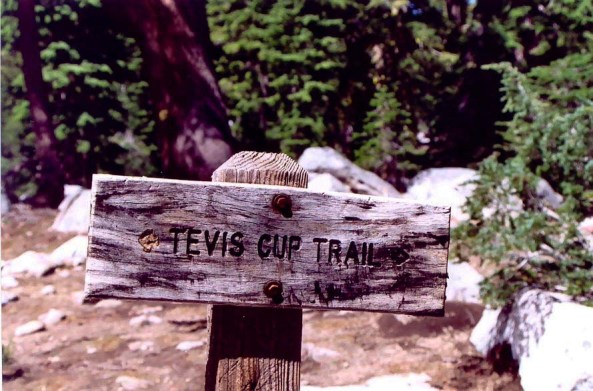
A trail sign for the Tevis Cup Trail behind Squaw Valley, California.

A trail sign marking the Tevis Cup horse race. The same route is now used for a 100-mile ultra marathon run across the mountains.

Auburn was one of the main foothill communities in the Association’s territory and would make an ideal ending place. The trail had the added advantage of being an early trail used by pioneers. We could use the historical angle and tie in with our name. My major concern was following a trail filled with horse poop.

Steve made contact with the woman in Auburn who was organizing the Tevis Cup Race. “Yes, the trail is easy to follow.” They marked it with yellow ribbons and the ribbons would still be up for our Trek. As for my concern about horse manure, “There should be plenty of time between the race and your trek for the manure to dry out.”

“Fine,” I said to Steve when he reported back, “our Trekkers will be shuffling down trails in dry horse shit up to there ankles.” On the other hand, I thought, we can tell them to follow the horse droppings if the ribbons run out. The important thing was we had a route and could begin publicizing the event. Steve and I agreed to preview the route in advance of the Trek to pin down campsites and reduce the possibility of nasty surprises.

So now, we had a route and a name. It was time to recruit participants, obtain food, and preview the route— all of which I will include in my next blog, where I will also learn a very valuable lesson from a 70-year old.
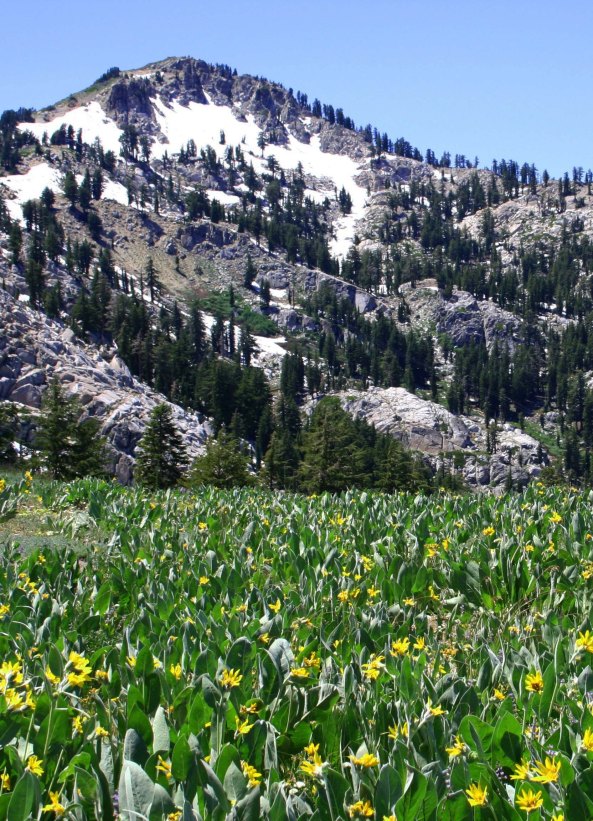
The Granite Chief Wilderness in the Sierra Nevada Mountains north of Lake Tahoe.

One of my favorite Granite Chief Wilderness views. Lake Tahoe, Squaw Valley, and Alpine Meadows are on the other side of the mountain. The flowers are called Mule Ears. (Photo by Peggy Mekemson.)

Another field of mule ears in Granite Chief.

Another field of mule ears in Granite Chief. The trail wound its way through here.
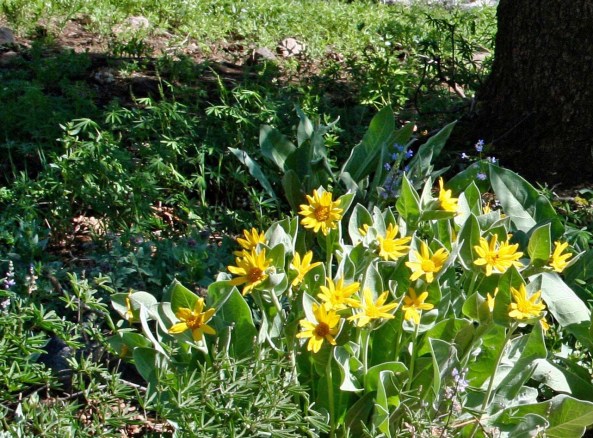
A close up of the Mule Ears blooming. There are few places in the Sierra's that can match the display of flowers in the Granite Chief Wilderness,

A close up of the Mule Ears blooming. There are few places in the Sierra’s that can match the display of flowers in the Granite Chief Wilderness.

Washington Lilies found in the Granite Chief Wilderness area behind Squaw Valley.

These Washington Lilies are found on the trail as it makes its way through the Granite Chief Wilderness down toward Five Lakes Creek.
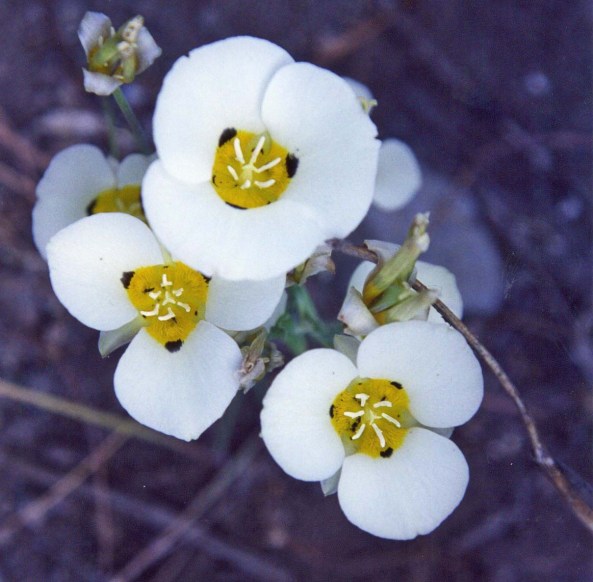
Mariposa Lilies found in dry areas behind Squaw Valley.

As are these Mariposa Lilies…

And Tiger Lilies.

Tiger Lilies.

Indian Paint Brush found in Granite Chief Wilderness behind Squaw Valley, California.

And Indian Paint Brush.

Lichens add color along the trail as well.

Lichens add color along the trail as well.

Snag found in the Granite Chief Wilderness north west of Lake Tahoe, California.

This old snag provided a different type of photo-op…

Lodge Pole Pines found in the Granite Chief Wilderness of the Sierra Nevada Mountains.

As did these weathered Lodge Pole Pines.
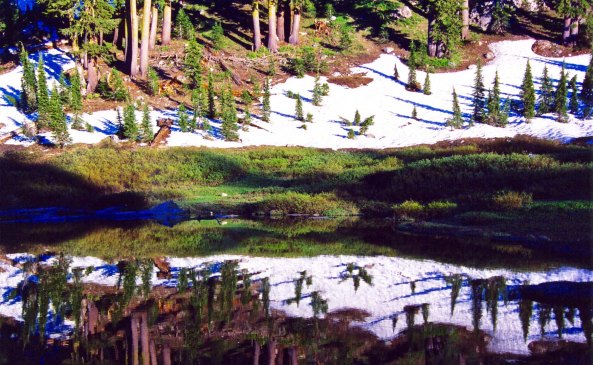
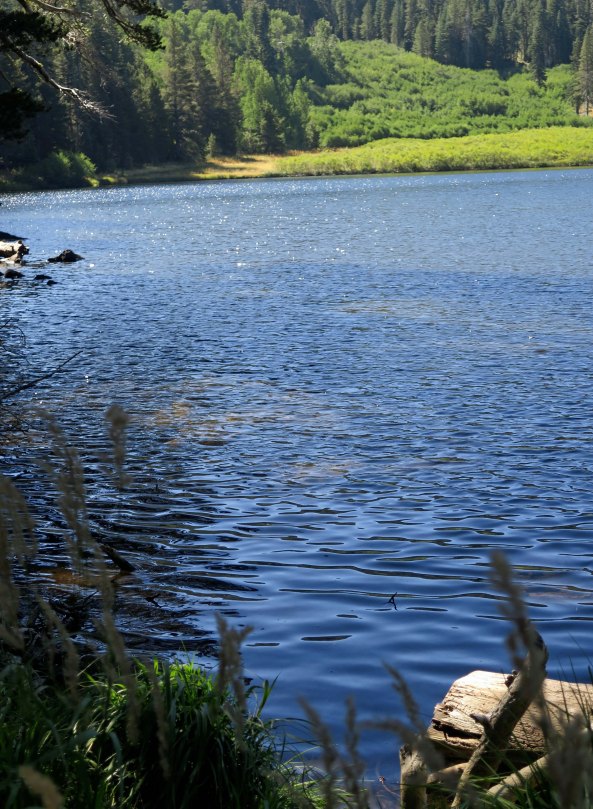
Little Needle Lake in the Granite Chief Wilderness.

Little Needle Lake is a short three-mile hike from the top of Squaw Valley. I enjoyed the reflection here. At night there is an amazing chorus of frogs. I’ve often camped beside the lake.

Five Lakes Creek in the Granite Chief Wilderness area behind Alpine Meadows ski area.

Five Lakes Creek flows along quietly here and provides and invitation to cool off in the middle of summer. Earlier it can be roaring with snow melt and icy water.

Peggy provides an example of how the creek should be enjoyed on a hot August afternoon.

Peggy provides an example of how the creek should be enjoyed on a hot August afternoon.

Canny on Five Lakes Creek near Diamond Crossing in the Granite Chief Wilderness.

The final photo of the day. Five Lakes Creek drops into a canyon a few miles below where Peggy enjoyed her cooling off. The top photo on this post provide a closeup. I often camped Treks at Diamond Crossing near here. (Photo by Peggy Mekemson.)